SPECIALIST www.medicalacademic.co.za
Bringing you medical news that matters
FORUM
Vol. 22 • No. 2 • February 2022
Reproductive health Endocrinology Oncology
THINK OUTSIDE THE LIVER
EZETIMIBE 10 TEVA + a statin is Synergy that Works
SYNERGISTIC THERAPY
EZETIMIBE 10 TEVA + a statin is Synergy that Works A statin works mainly with the liver. EZETIMIBE 10 TEVA works in your digestive tract. Adding Ezetimibe 10 Teva to a statin treats 2 sources of cholesterol and can help reduce LDL cholesterol by an additional 21 - 27 % 1
THINK OUTSIDE THE LIVER
EZETIMIBE 10 TEVA
Ezetimibe is recommended 2 • As second-line treatment in combination with a statin when the LDL-C target is not reached at the highest tolerated statin dose • When there is intolerance to statins • When there is a contraindication to a statin
S4 EZETIMIBE 10 TEVA (tablets) Reg. No. 50/7.5/0760. Each tablet contains 10 mg ezetimibe. For full prescribing information, please refer to the Professional Information approved by the Medicines Regulatory Authority. References: 1. Mach F, et al. 2019 ESC/EAS Guidelines for the management of dyslipidaemias: lipid modification to reduce cardiovascular risk. European Heart Journal (2019) 00, 1-78. 2. Klug E, et al. South African dyslipidaemia guideline consensus statement: 2018 update. A joint statement from the South African Heart Association (SA Heart) and the Lipid and Atherosclerosis Society of Southern Africa (LASSA). SAMJ November 2018, Vol. 108, No. 11. 3. EZETIMIBE 10 TEVA Professional Information approved by the Medicines Regulatory Authority (21 January 2021). 4. Department of Health Pricing schedule, effective 06 July 2021. TEVA PHARMACEUTICALS (PTY) LTD. Co. Reg. No. 2000/025840/07. Maxwell Office Park, Magwa Crescent West, Waterfall City, Midrand, 2090. Tel: +27 11 055 0200, Fax: +27 86 680 8988. Marketed by CIPLA MEDPRO (PTY) LTD. Customer Care line: 080 222 6662. [ZA00157-06-21] [745006093a]
SF | CONTENTS
CO NT E N TS
February 2022 | Vol. 22 No. 2 www.medicalacademic.co.za
4
12 15 20 34 MEDICOLEGAL Dental damage in anaesthetics
INFECTIOUS DISEASES
6
ONCOLOGY
Light at the end of the long Covid tunnel
The role of CDK4/6 inhibition in breast cancer
12 GASTROENTEROLOGY EDITORIAL EDITOR: René Bosman René.Bosman@newmedia.co.za SUB EDITOR: Gill Abrahams LAYOUT & DESIGN: Allison McCallum ADVERTISING ADVERTISING EXECUTIVE Charissa Piek | 063 281 1205 Charissa.Piek@newmedia.co.za DISTRIBUTION & SUBSCRIPTIONS Felicity Garbers Felicity.Garbers@newmedia.co.za PUBLISHING TEAM GENERAL MANAGER: Dev Naidoo PUBLISHING MANAGER: Johann Gerber Johann.Gerber@newmedia.co.za PRODUCTION MANAGER: Angela Silver ART DIRECTOR: David Kyslinger CONTACT Johannesburg Office: Ground Floor,
27
16
30 ORTHOPAEDICS
What causes infertility?
5
Reflux beyond the oesophagus
EPRODUCTIVE 15 RHEALTH
20 23 25
Pros and cons of available medical therapy for endometriosis How to treat PCOSassociated infertility Ejaculatory dysfunctionrelated infertility Banking sperm
272 Pretoria Avenue, Randburg 2194 Postal Address: PO Box 784698, Sandton, Johannesburg, 2146 T +27(0)11 877 6111 F +27(0)11 713 9024 www.medicalacademic.co.za PRINTING Printed by CTP Printers COVER PRICE Specialist Forum per issue R80,00 VAT Incl. ISSN: 2218-8282 Published by New Media, a division of Media24 (Pty) Ltd
Supplementation in pregnancy: Getting the balance right
Common sense supplementation can prevent bone loss
33 ENDOCRINOLOGY Online CPD summary: Versatile IDegAsp
34
MANAGEMENT TEAM CEO: NEW MEDIA: Aileen Lamb COMMERCIAL DIRECTOR: Maria Tiganis BRAND STRATEGY DIRECTOR: Andrew Nunneley CHIEF FINANCIAL OFFICER: Venette Malone CEO: MEDIA24: Ishmet Davidson HEAD OFFICE 8th floor, Media24 Centre, 40 Heerengracht, Cape Town 8001 PO Box 440, Green Point, Cape Town 8051 Tel: +27 (0)21 406 2002 www.newmedia.co.za
Disclaimer: Please take note that the products featured in this journal are available in South Africa. Products may be marketed under a different name or might not be registered in your country. For more information, contact your local representative. All content in Specialist Forum is sourced independently and under no circumstances should articles be considered promotional unless specified with a postscript.
Diabetes in numbers
Unless previously agreed in writing, Specialist Forum owns all rights to all contributions, whether image or text. SOURCES: Shutterstock, supplied images, editorial staff. While precautions have been taken to ensure the accuracy of its contents and information given to readers, neither the editor, publisher, or its agents can accept responsibility for damages or injury which may arise therefrom. All rights reserved. © Specialist Forum. No part of this publication may be reproduced, stored in a retrieval system or transmitted in any form or by any means, photocopying, electronic, mechanical or otherwise without the prior written permission of the copyright owners.
3
4
SF | MEDICOLEGAL
February 2022 | Vol. 22 No. 2
Photo credit: Shutterstock.com
This article was independently sourced by Specialist Forum.
www.medicalacademic.co.za
Dr Sarah Townley, Underwriting Policy Lead at Medical Protection Society, looks at one of the most common causes of claims against anaesthetists working in private practice in South Africa
Dental damage in anaesthetics
In 2020 the underlying causes for claims in clinical negligence involving anaesthetists included inadequate anaesthesia, incorrect placement of endotracheal tubes, nerve damage and corneal damage (due to inadequate protection of the eye during anaesthesia).
H
owever, the largest number of claims (43% of all anaesthetic claims) related to dental damage during the anaesthetic process. While these claims don’t always carry a high financial value, they cause significant stress to the members involved – so we are keen to reduce this impact on our members and their patients by providing risk prevention advice.
Anaesthetic process Half of all dental damage claims related to the use of a laryngoscope, and the remaining half involved the use of a supraglottic airway device (eg i-gel airway). With the supraglottic airway the damage mainly occurred when the patient bit down on the airway during removal of the airway. The commonest area of the teeth affected were the upper incisors. However, most claims occurred when previous dental work had already taken place (for example, crowns and bridgework).
Preoperative assessment While anaesthetists should always
undertake a preoperative assessment of the patient, in 50% of these claims there was no documented assessment of dentition. In addition, in 83% of claims no warning of the risks of dental damage were provided to the patient, which can make defence of the claims more challenging.
Risk prevention It can be very distressing to discover a patient has felt the need to bring a claim against you. However, there are several steps members can take to minimise these risks. These include: _ Ensure you have sufficient time to undertake a preoperative assessment of the patient’s airway and teeth. Remember to ask if the patient has had any dental work undertaken or has any dental problems, such as loose teeth. Questions should be specifically directed to checking for existing crowns or bridgework being present, which is more likely to lead to the tooth being more susceptible to fracture or damage
_ Remember to undertake a thorough consent process: ensure the patient is aware of the risks, benefits and complications of the chosen procedure, including the possible risk of dental damage _ Document fully in your records discussions regarding assessment and consent _ Consider the use of supporting information such as patient information leaflets to ensure full patient understanding. Use of these should also be documented in the records _ Consider what steps could be taken to reduce the risk of dental damage (eg bite gag), particularly in patients with fragile dentition or teeth that may be susceptible to damage _ If dental damage does occur, be open and honest with the patient by providing a clear explanation of what has happened and apologise if appropriate. Ensure you document any discussions for later reference. SF
6
SF | INFECTIOUS DISEASES
February 2022 | Vol. 22 No. 2
Photo credit: Shutterstock.com
This article was independently sourced by Specialist Forum.
www.medicalacademic.co.za
Light at the end of the long COVID tunnel
Dr Ashleigh Bhanjan, Specialist Neurologist, KwaZulu-Natal
Post-Covid syndrome is going to be a dramatic degenerative disease that we are going to be dealing with for years to come. Those that have been acutely affected by Covid-19 will likely suffer with long haul effects. Current global data state that between 10% and 87% of those infected will experience post-Covid symptoms.
W
hile most people with Covid-19 will get better within weeks of acquiring the illness, some people will experience post-Covid conditions. This refers to a wide range of new, returning, or ongoing health problems experienced four or more weeks after first being infected with Covid-19. Even people who did not have Covid-19 symptoms in the days or weeks after they were infected can experience postCovid conditions. These can continue for many months.
Symptoms of post-Covid syndrome Post Covid-19 Syndrome includes the following symptoms: � Fatigue � Sore throat � Breathlessness � Vertigo � Joint pain � Muscle ache � Chest pain � Diarrhoea � Vision problems � Brain fog � Cough � Haemorrhages � Loss of smell � Loss of taste � Lack of appetite � Dry eyes/mouth � Runny nose � Red eyes � Headache � Encephalitis � Sleep disturbances � Sputum � Hypoperfusion and cerebral hypoxia � Neuroinflammation � Loss of consciousness and cognition � Ageusia, anosmia and visual impairment � Chronic meningitis/meningeal irritation � Cerebrovascular disease � Neuromuscular agitation � Dysexecutive syndrome. People who have post-Covid syndrome may have one or more of the
following abnormalities: _ An ongoing level of inflammation in the brain _ An autoimmune condition in which the body makes antibodies that attack the brain _ Decreased blood flow to the brain, due to abnormalities of the autonomic nervous system _ Mitochondrial dysfunction, difficulty making enough energy molecules to satisfy the needs of the brain and body.
Treatment through neurological applications of LILT has provided amazing results. Some of the results included: _ Improvement on pulmonary indices _ Rapid recovery _ Patients did not require ICU admission _ Patients did not require mechanical ventilation _ No long-term reports of sequelae (pathological condition resulting from disease).
Emerging therapy
Conclusions
Photobiomodulation therapy (PBMT) – also known as low intensity laser therapy (LILT) – is an emerging and promising therapy that is well backed by science with more than 6000 research studies showing its effectiveness. In cases where people have been infected with Covid-19, current research shows that LILT – started earlier rather than later – helps them to not progress to advanced symptoms.
PBMT offers a safe, non-invasive approach to patients with Covid-19, as well as post-Covid syndrome. It targets the underlying pathophysiological mechanisms, particularly neuroinflammation, and mitochondrial dysfunction, making this form of therapy uniquely practical, and effective, without any potential side-effects. We already have much research in the realms of neuroinflammation with respect to neurodegenerative disorders like Parkinson’s and Alzheimer’s disease, and similarly, have much success with patients presenting with a variety of symptoms in post-Covid syndrome, particularly memory loss, brain fog, headache, and sleep disturbances. Patients usually respond positively within the first five sessions, in this regard. In the absence of any proven pharmacological therapy for post-Covid syndrome, anyone who presents with these symptoms should consider PBMT, earlier rather than later, in my opinion. SF
How does photobiomodulation work? PBMT is a kind of laser therapy, which uses visible light, near-infrared light in the range of 450-1000nm, and acts by the photochemical reaction in cells. Experimental studies showed that PBMT stimulated mitochondria and produced signaling molecules such as adenosine triphosphate, cyclic adenosine monophosphate, nitric oxide and reactive oxygen species and therefore could upregulate oxidative stress in cells and have an antioxidant effect.
SF | CPD: ONCOLOGY
February 2022 | Vol. 22 No. 2
This article was independently sourced by Specialist Forum.
The role of CDK4/6 inhibition in breast cancer Article reviewed by Prof Bernardo Rapoport, Specialist Physician and Medical Oncologist the Medical Oncology Centre of Rosebank (Johannesburg), and Department of Immunology, Faculty of Health Sciences, University of Pretoria Case vignette
Please note that our CPD activities are only for practitioners registered with the HPCSA. Any other health professional should apply to their own Council for CPD purposes.
PP-AL-ZA-0246
Photo credit: Shutterstock.com
www.medicalacademic.co.za
In 2013, a 55-year old female patient presented with a low malignant tumour (T1C N0 M0 grade 3 invasive ductal carcinoma) on her left breast. Her Ki-67 score was 33% and her Oncotype DX score 16 (low to medium risk of recurrence). The turmour was ER+/ PR+/HER2- BCa. Her metastatic workup indicated no lesions. She underwent wide local excision and RT. Tamoxifen 20mg a day was prescribed as adjuvant therapy. The patient underwent regular follow-ups and four years later she presented with an invasive 20mm grade 2 pleomorphic, lobular type tumour on the left breast. Her Ki-67 score was 25.5%, her E-cadherin score was variable and focally weakly positive. Additional investigations indicated no further metastatic lesions. The tumour was completely excised. Treatment with anastrozole was initiated. In 2018, the patient presented with a new primary tumour on the left breast (50mm), a biopsy was done and showed an invasive grade 2 invasive carcinoma. Her Ki-67 score is 33% and her E-cadherin score was positive. She again underwent surgical excision and was started on treatment with fulvestrant. A year later in 2019, she developed a local recurrence, which consisted of two inoperable lesions. Her metastatic workup showed no systemic disease and the CEA and CA153 tumour markers were normal. The patient was treated with six cycles of weekly paclitaxel. Six months later she presented with new local recurrences. In January 2020, anastrozole 1mg a day and oral Abemaciclib 150mg twice a day was initiated. During treatment, she tolerated anastrozole and abemaciclib well, experiencing mild diarrhea during the first cycle of treatment. During treatment, special investigations showed no haematological toxicity, thus no dose reductions or delays were required. The patient showed excellent disease control, and her QoL improved. Twelve months later the patient presented with a new skin lesion and treatment was discontinued. Her metastatic workup indicated no distant metastatic lesions, but this time her CEA level was elevated (25ug/mL). She underwent additional surgery and local radiation to areas not radiated before and she was re-started on ChT with carboplatin and gemcitabine.
7
8
SF | CPD: ONCOLOGY
B
reast cancer (BCa) is the most common newly diagnosed cancer in women in South Africa, making up 23.11% of new cancer diagnoses across all race groups, with an incidence of 33.07 per 100 000. In subSaharan Africa, BCa is the second leading cause of cancer-related death in women.1,2 Oestrogen receptor-positive (ER+) BCa represents about 70% of all BCa cases. ER+ BCa are further stratified into pathological subtypes, such as ductal or mixed ductal and lobular, mucinous, and tubular carcinomas, which are referred to as luminal BCa. 3 Luminal BCa are highly heterogeneous in terms of histology and response to treatment. Luminal A and B are two main ER+ BCa subtypes, based on different gene expression profiles, prognosis, and clinical therapy responses.3 The difference between luminal A and B mainly relates to the expression of hormone receptors (HRs). Luminal A tumours have higher levels of ER and progesterone receptor (PR) expression, and no levels of human epidermal growth factor receptor-2 (HER2) expression. 3 Luminal B tumours have lower levels of ER expression, lower or no levels of PR expression, but higher tumour grade and higher Ki-67-positive staining than luminal A tumours.3 The average five-year survival rate for women with non-metastatic invasive BCa is 90%. The average 10-year survival rate for women with non-metastatic invasive BCa is 84%. If the invasive tumour is located only in the breast, the five-year survival rate is 99%.4 Advanced/metastatic BCa is associated with a median overall survival (OS) of about three-years and a five-year survival rate of around 25%.5
Targeted therapy in BCa The 5th European School of Oncology/ European Society for Medical Oncology international consensus guidelines for advanced BCa (ABC5), published last year, recommend a cyclin-dependent kinases 4/6(CDK4/6) inhibitor combined with endocrine therapy (ET) as the standard of care for all patients with ER+/HER2metastatic BCa. CDK4/6 inhibitors have been shown to improve progression free survival (PFS), increase overall survival (OS) and either maintains or improves quality of life (QoL). CDK4/6 inhibitors can be combined with an aromatase Inhibitor (AI) or with fulvestrant, in de novo or recurrent metastatic BCa, in first- or secondline therapy, and in cases of primary or secondary resistance.5p7
February 2022 | Vol. 22 No. 2 www.medicalacademic.co.za
There is evidence that about 50% of HR+ metastatic BCa do not benefit from ET due to resistance. Mechanisms of resistance may include loss/alteration of ER expression, overexpression/activation of growth factor (GF) receptors or activation of downstream signal transduction pathways. The resistance induced by ET in ER+ BCa patients raised opportunities for the development of CDK inhibitors, said Prof Rapaport.
Abemaciclib has significant singleagent activity
Biochemical and biological properties of CDK4/6 inhibitors CDK4 and CDK6 share similar biochemical and biological properties, and CDK4/6 can be activated by the crucial initiator of the transition from pre-DNA synthesis (G1) to DNA synthesis (S phase), D-type cyclins.6 The level of the D-type cyclins increases with the response to proliferative stimuli in the early G1 phase, after which these cyclins interact with and activate CDK4/6.6 The cyclin D-CDK4/6 complex subsequently phosphorylates retinoblastoma protein (RB), which binds to the transactivation domain of the E2F family of transcription factors. The E2F transcription factor is released as a result of the phosphorylation of RB. In addition, the expression of the E-type cyclins is induced by the E2F transcription factor, which then interacts with CDK2.6 This cyclin E-CDK2 complex further accelerates RB phosphorylation, decreasing inhibition of E2F and facilitating the G1 to S phase transition. Thus, CDK4/6 are key initiators of the G1 to S phase transition, and it is important to inhibit both CDK4 and CDK6 to effectively impair the G1/S transition.6 If the level of cyclin D or the activity of CDK4/6 increases, the cyclin D-CDK4/6 complex will be hyperactivated, then the progression of the G1 to S phase transition and the cell cycle will be accelerated. Furthermore, uncontrolled cell proliferation resulting from an accelerated cell cycle
will lead to the development of cancer. Therefore, inhibition of CDK4/6 can cause G1 arrest of the cell cycle.6
Differences between third-generation CDK4/6 selective inhibitors A 2019 review investigated the comparative effcacy of palbociclib, ribociclib and abemaciclib in ER-positive metastatic BCa. Six studies (n=3743) were included in the study, of which three included patients with not previously treated metastatic ER+ BCa, and three included patients with pre-treated metastatic ER+ BCa and progressing while receiving adjuvant treatment or first-line therapy for metastatic disease.7 The team concluded that all three agents were equally effective and had a similar objective response rate (ORR) as either first- or second-line therapy for advanced ER+ BCa.7 Although the agents are similar in terms of efficacy and safety, they do have some differences. Abemaciclib is the least selective CDK4/6 inhibitor, interacting with four to five times more kinases than palbociclib or ribociclib. While palbociclib and ribociclib are most effective in combination with an ER antagonist, abemaciclib has significant single-agent activity.7 Abemaciclib is FDA-approved as monotherapy for the treatment of adult patients with HR+/HER2- advanced or metastatic BCa with disease progression following ET and prior chemotherapy (ChT) in the metastatic setting.7 The impact on human physiology with the drugs is also different. Palbociclib has primarily bone marrow toxicities (n=83, 65% neutropenia, 23% leukopenia, 7% anaemia) with little gastrointestinal (GI) toxicities (7% combined diarrhoea/vomiting/nausea) which is consistent with selective CDK4/6 inhibition.7 In contrast, abemaciclib has pervasive GI toxicities (57% nausea, 40% vomiting, 68% diarrhoea, 18% fatigue) as well as bone marrow toxicities (40% neutropenia, 32% thrombocytopenia, 28% leukopenia, 18% anaemia). Another difference is the tolerated dosing schedules. Palbociclib and RIB are dosed intermittently (three weeks on, one week off) while abemaciclib can be dosed continuously.7
Abemaciclib efficacy and safety studies
MONARCH 1 (2017): A Study of Abemaciclib (LY2835219) In Participants With Previously Treated Breast Cancer That Has Spread8 Abemaciclib initially gained approval
For more than 50 years, Lilly has been dedicated to delivering life-changing medicines and support to people living with cancer and those who care for them. Lilly is determined to build on this heritage and continue making life better for all those affected by cancer around the world.
Eli Lilly (S.A) (Pty) Ltd. Reg. No. 1957/000371/07, 1st Floor, Golden Oak House, Ballyoaks Office Park, 35 Ballyclare Drive, Bryanston, 2021. Private Bag X119, Bryanston, 2021, Tel: +(011) 510 9300. www.lilly.co.za
PP-ON-ZA-0046, October 2019
10
SF | CPD: ONCOLOGY
February 2022 | Vol. 22 No. 2 www.medicalacademic.co.za
based on results from the 2017 phase II MONARCH-1 study, which evaluated the single-agent activity and adverse event (AE) profile of abemaciclib in women with refractory HR+/HER2- metastatic BCa. Women with HR+/HER2- metastatic BCa, who had progressed on or after prior ET and had one or two ChT regimens in the metastatic setting, were eligible. Abemaciclib 200mg was administered orally on a continuous schedule every 12 hours until disease progression or unacceptable toxicity. The primary endpoint was investigator-assessed ORR. Secondary endpoints included clinical benefit rate, PFS and overall OS. Participants (n=132) had a median of three lines of prior systemic therapy in the metastatic setting, 90.2% had visceral disease, and 50.8% had ≥3 metastatic sites. At the 12 month final analysis, the primary objective of confirmed ORR was 19.7%, the clinical benefit rate (CR+PR+SD≥6 months) was 42.4%, median PFS was 6.0 months, and median OS was 17.7 months. The most common treatment-emergent AEs of any grade were diarrhoea, fatigue and nausea. Discontinuations due to AEs were infrequent (7.6%).
MONARCH 2 (2017): Abemaciclib in Combination With Fulvestrant in Women With HR+/HER2- Advanced Breast Cancer Who Had Progressed While Receiving Endocrine Therapy9 The study compared the efficacy and safety of abemaciclib plus fulvestrant and fulvestrant alone in patients with advanced BCa. MONARCH 2 was a global, doubleblind, phase III study of women with HR+/ HER2- advanced BCa, who had progressed while receiving neoadjuvant or adjuvant ET, ≤12 months from the end of adjuvant ET, or while receiving first-line ET for advanced BCa. Patients were randomly assigned 2:1 to receive abemaciclib or placebo (150 mg twice daily) on a continuous schedule and fulvestrant (500mg, per label). The primary endpoint was investigator-assessed PFS, and key secondary endpoints included overall OS, ORR, duration of response, clinical benefit rate, QoL, and safety. Abemaciclib plus fulvestrant significantly extended PFS, versus fulvestrant alone (16.4 versus 9.3 months). In patients with measurable disease, abemaciclib plus fulvestrant achieved an ORR of 48.1% compared with 21.3% in the control arm. The most common adverse events in the abemaciclib versus placebo arms were diarrhoea (86.4% v 24.7%), neutropenia (46.0% v 4.0%), nausea (45.1% v 22.9%), and fatigue (39.9% v 26.9%).
MONARCH 3 (2017): Abemaciclib As Initial Therapy for Advanced Breast Cancer10 This was a phase III study comparing the efficacy and safety of abemaciclib or placebo plus a nonsteroidal AI in 493 postmenopausal women with HR+/ HER2- advanced BCa who had no prior systemic therapy in the advanced setting. Participants received abemaciclib or placebo (150 mg twice daily continuous schedule) plus either 1mg anastrozole or 2.5mg letrozole, daily. The primary endpoint was investigator-assessed PFS. Secondary endpoints included response evaluation and safety. A planned interim analysis occurred after 189 events. Median PFS was significantly prolonged in the abemaciclib arm. In patients with measurable disease, the ORR was 59% in the abemaciclib arm and 44% in the placebo arm. In the abemaciclib arm, diarrhoea was the most frequent AEs (81.3%) but was mainly grade 1 (44.6%). Comparing abemaciclib and placebo, the most frequent grade 3 or 4 AEs were neutropenia (21.1% v 1.2%), diarrhoea (9.5% v 1.2%), and leukopenia (7.6% v 0.6%).
MONARCH 3 final PFS (2019): A randomised study of abemaciclib as initial therapy for advanced breast cancer11 In this study, the researchers analysed the final PFS data and updated the secondary endpoints of the 2017 MONARCH 3 study. The abemaciclib arm had a significantly longer median PFS than the placebo arm (28.18 v 14.76 months). The ORR was 61.0% in the abemaciclib arm versus 45.5% in the placebo arm. The median duration of response was longer in the abemaciclib arm (27.39 months) compared to the placebo arm (17.46 months). The safety profile was consistent with previous reports. The most frequent grade ≥3 AEs in the abemaciclib versus placebo arms were neutropenia (23.9% v 1.2%), diarrhoea (9.5% v 1.2%), and leukopenia (8.6% v 0.6%).
References 1. NHLS. Cancer Registry. https://www.nicd.ac.za/ wp-content/uploads/2020/12/NCR_2017_ Final_02dec2020.pdf
Breast Cancer in Southern African Women: Subtype Prevalence and Age-Incidence Analysis of Nationwide Cancer Registry Data. Cancer Epidemiol Biomarkers Prev, 2014. 3. Li Z, Zou W, Zhang J, et al. Mechanisms of CDK4/6 Inhibitor Resistance in Luminal Breast Cancer. Front Pharmacol, 2020. 4. CancerNet. Breast cancer statistics. https://www. cancer.net/cancer-types/breast-cancer/statistics 5. Cardoso F, Palauch-Shimon P, Senkus E, et al. 5th ESO-ESMO international consensus guidelines for advanced breast cancer (ABC 5). Annals of Oncology, 2020. 6. Yuan K, Wang X, Dong H, et al. Selective inhibition of CDK4/6: A safe and effective strategy for developing anticancer drugs. Acta Pharmaceutica Sinica B, 2021. 7. Petrelli F, Ghidini A, Pedersin R, et al. Comparative efficacy of palbociclib, ribociclib and abemaciclib for ER+ metastatic breast cancer: an adjusted indirect analysis of randomized controlled trials. Breast Cancer Research and Treatment, 2019. 8. Dickler MN, Tolaney SM, Rugo HS, et al. MONARCH 1, a phase II study of abemaciclib, a CDK4 and CDK6 inhibitor, as a single agent, in patients with refractory HR+/HER2- metastatic breast cancer. Clin Cancer Res, 2017. 9. Sledge GW Jr, Toi M, Neven P, et al. MONARCH 2: abemaciclib in combination with fulvestrant in women with HR+/HER2- advanced breast cancer who had progressed while receiving endocrine therapy. J Clin Oncol, 2017. 10. Goetz MP, Toi M, Campone M, et al. MONARCH 3: abemaciclib as initial therapy for advanced breast cancer. J Clin Oncol, 2017. 11. Johnston S, Martin M, Di Leo A, et al. MONARCH 3 final PFS: a randomized study of abemaciclib as initial therapy for advanced breast cancer. NPJ Breast Cancer, 2019. 12. Johnston S, Harbeck N, Hegg R, et al. Abemaciclib Combined With Endocrine Therapy for the Adjuvant Treatment of HR+, HER2−, Node-Positive, High-Risk, Early Breast Cancer (monarchE). Journal of Clinical Oncology, 2020. SF
To com plete the quiz , go t o w w w . medicala cademic .c o.za and clic k on t h e CPD ta b
2. Dickens C, Duarte R, Zietsman A, Cubasch H, et al. Racial Comparison of Receptor-Defined
Eli Lilly (S.A) (Pty) Ltd. Reg. No.: 1957/000371/07. 1st Floor, Golden Oaks House, Ballyoaks Office Park, 35 Ballyclare Drive, Bryanston, 2191. Tel.: +27 11 510 9300. © 2021 Eli Lilly and Company. All Rights Reserved.
12
SF | GASTROENTEROLOGY
February 2022 | Vol. 22 No. 2 www.medicalacademic.co.za
Photo credit: Shutterstock.com
This article was independently sourced by Specialist Forum.
Reflux beyond the oesophagus
Abdominal pain is the most common gastrointestinal (GI) diagnosis in the ambulatory setting followed by gastroesophageal reflux disease (GORD).
G
ORD is associated with complications such as stricture (the abnormal narrowing of the oesophageal lumen), Barrett’s oesophagus, a premalignant condition that increases the risk of developing oesophageal adenocarcinoma. The classic symptom of GORD is heartburn (burning sensation rising from the stomach or lower chest toward the neck or throat) caused by acid reflux. Heartburn usually occurs after eating large meals or spicy or citrus foods. Gastroduodenal contents (acid, pepsin, bile acid and trypsin) are the main causes of GORD. Mittal and Vaezi point out that acid and pepsin together are more injurious to the oesophageal epithelium than acid alone. The role of acid is to degrade proteins
and polysaccharides so they can cross the intestinal epithelium, while pepsin, an endopeptidase produced only in the stomach lining, breaks down proteins into smaller peptides, aiding digestion. According to Bardhan et al, reflux reaches beyond the oesophagus, where pepsin and not acid, causes damage. The Montreal classification includes several additional oesophageal symptoms within the spectrum of GORD. ‘Established’ associations include laryngeal symptoms such as chronic cough, asthma. ‘Proposed’ associations include recurrent otitis media, idiopathic pulmonary fibrosis, pharyngitis and sinusitis. Mittal and Vaezi state that other atypical symptoms include angina-like pain, dental erosions, and disordered sleep to the list of symptoms associated with GORD but
do point out that these associations are difficult to prove. Conditions that mimic GORD include achalasia, rumination syndrome and supragastric belching.
What causes GORD? The passage of content from the oesophagus to the stomach is controlled by the lower oesophageal sphincter. As part of its normal function, episodic sphincter relaxation is expected, yet in GORD these episodes become more frequent and allow the reflux of gastric contents into the oesophagus. Mittal and Vaezi explain that in GORD, the normal functioning of the lower oesophageal sphincter is affected by an imbalance between aggressive and defensive factors. Three mechanism are involved in the reflux of gastric contents:
The first once-a-day PPI with novel dual delayed release technology1,2 Coming soon!
l
og
q
ue
techno
2 ph a
Delayed release 4-5 hours
se
Rapid release 1-2 hours
24 r e l ehour a sHEARTBURN FREE DAYS are achievable1,2 ed
y
un
i
1 capsule daily
At last... a new chemical entity your patients can start on once-daily and stay on once-daily1
1 capsule daily 2,3
NEW
PPI = Proton pump inhibitor References: 1. Dexilant Professional Information. Takeda (Pty) Ltd, South Africa; August 2021. 2. Metz DC, Howden CW, Perez MC, et al. Clinical trial: dexlansoprazole MR, a proton pump inhibitor with dual delayed release technology, effectively controls symptoms and prevents relapse in patients with healed erosive oesophagitis. Aliment Pharmacol Ther 2009;29:742-754.
2,3
TAKEDA (Pty) Ltd. Reg. No.: 1982/011215/07. Building A, Monte Circle, 64 Montecasino Boulevard, Fourways, 2191, South Africa. Tel: +27 (0) 11 514 3000. Fax: +27 (0) 11 514 3001. Marketed by Adcock Ingram Healthcare (Pty) Ltd. Reg. No. 2007/019928/07. Private Bag X69, Bryanston, 2021, South Africa. Tel +27 (0) 11 635 0000. www.adcock.com. C-APROM/ZA/DEXI/0010.
14
SF | GASTROENTEROLOGY
February 2022 | Vol. 22 No. 2 www.medicalacademic.co.za
2
Transient relaxation of the lower oesophageal sphincter Low pressure of the lower oesophageal sphincter
3
Sliding hiatus hernia.
1
In healthy individuals and in patients with GORD, but without hiatus hernia, transient relaxation of the lower oesophageal sphincter is the major mechanism underlying belching and reflux. Longitudinal muscle contraction of the distal oesophagus and the inhibition of the crural diaphragm are associated with transient relaxation of the lower oesophageal sphincter. The main stimulus of transient relaxation of the lower oesophageal sphincter is gastric distention. Most day-time reflux symptoms occur while the lower oesophageal sphincter and the crural diaphragm are anatomically separate (sliding hiatus hernia). Patients with moderate-to-severe GORD (eg erosive oesophagitis and Barrett’s oesophagus) have hiatus hernia.
Risk factors One of the main risk factors for GORD symptoms, erosive oesophagitis, Barrett’s oesophagus, and oesophageal adenocarcinoma is obesity. Obesity increases gastric pressure, which results in more transient relaxation of the lower oesophageal sphincter. The waist-to-hip ratio is more important than body-mass index in association with GORD, according to Mittal and Vaezi. Weight reduction is recommended for obese patients as it reduces symptoms and oesophageal acid exposure. The role of dietary factors such as alcohol, carbonated drinks, and coffee intake in GORD is controversial.
Gastroesophageal reflux disease
Diagnosis As mentioned, the classic symptom of GORD is heartburn, also called acid indigestion. Other symptoms included regurgitation and dyspepsia. Regurgitation is defined as ‘perception of flow or refluxed gastric contents into the pharynx’. However, emphasise Mittal and Vaezi, regurgitation do not always accompany heartburn. Regurgitation may suggest the presence of a mechanical defect (eg a hiatus hernia), they add. They also point out that sensitivity (30% to 76%) and specificity (62% to 96%) of such symptoms for diagnosing GORD are suboptimal. The reason for this is because of a substantial overlap in symptoms among GORD, gastroparesis, functional dyspepsia, oesophageal motility disorders, and rumination syndrome.
If symptoms persist after six to eight weeks of acid-suppressive therapy, further testing such as ambulatory reflux testing, oesophageal manometry, and gastric emptying tests, is recommended. High-resolution manometry has a role in defining conditions that mimic GORD (mentioned above). Heartburn is present in 35% of patients with achalasia. If the results of a gastric emptying test are found to be abnormal, dietary modifications and possibly prokinetic agents may be helpful. In addition, recommend Mittal and Vaezi, mucosal integrity tests, performed during endoscopy while the patient is under sedation, can provide real-time determination of the integrity of the oesophageal epithelia as a surrogate marker for GORD-related damage.
Anti-reflux surgery
Obesity is one of the main risk factors for GORD symptoms because of increased gastric pressure
When is diagnostic testing indicated? Diagnostic testing is indicated if there are any alarm symptoms including dysphagia, weight loss, iron deficiency anaemia or bleeding. These patients should undergo an upper-endoscopy to rule out Barrett’s oesophagus, strictures or cancer.
Nissen’s fundoplication surgery is effective in treating GORD, but some patients (10%20%) have ‘bothersome’ side effects such as dysphagia, gas bloat, difficulty belching and vomiting. Candidates for surgery include patients who have concerns about long-term effects of proton pump inhibitor therapy, or those that have: _ Recalcitrant symptoms of GORD (confirmed by proper testing), especially in patients with hiatus hernia _ Regurgitation symptoms that do not respond to adequate medical therapy in patients with no clinically significant gastric or oesophageal motility abnormalities _ Moderate-to-severe GORD associated with aspiration, asthma, recurrent pneumonia or lung transplantation.
Conclusions GORD is a common GI disorder and have a number of manifestations that negatively affect patients’ quality of life. Pharmaceutical intervention is effective in the majority of patients, but some experience no improvement. These patients may be candidates for anti-reflux surgery.
References Azzam RS. Are the persistent symptoms to proton pump inhibitor therapy due to refractory gastroesophageal reflux disease or to other disorders. Arq Gastroenterol, 2018. Mittal R and Vaezi MF. Esophageal Motility Disorders and Gastroesophageal Reflux Disease. NEJM, 2020. Bardan KD, Strugala V and Dettmar PW. Reflux Revisited: Advancing the Role of Pepsin. Int J Otolarygol, 2012. SF
February 2022 | Vol. 22 No. 2 Photo credit: Shutterstock.com
www.medicalacademic.co.za
SF | REPRODUCTIVE HEALTH This article was independently sourced by Specialist Forum.
What causes infertility?
February is reproductive health month. In this section of Specialist Forum we discuss the most common causes of female and male infertility.
I
nfertility may be caused by a number of different factors, in either the male or female reproductive systems. However, it is sometimes not possible to explain the causes of infertility, states the World Health Organization. In woman, infertility may be caused by inflammatory uterine disorders such as endometriosis or disorders of the ovaries,
such as polycystic ovarian syndrome. In men, it can be caused by obstruction of the reproductive tract, which may lead to dysfunctionalities in the ejection of semen. This blockage can occur in the tubes that carry semen (such as ejaculatory ducts and seminal vesicles). Male infertility may also be caused by disorders that result in hormonal imbalance include pituitary or
testicular cancers. Environmental and lifestyle factors such as smoking, excessive alcohol intake and obesity can affect fertility. In addition, exposure to environmental pollutants and toxins can be directly toxic to gametes (eggs and sperm), resulting in their decreased numbers and poor quality, leading to infertility. SF
15
16
SF | REPRODUCTIVE HEALTH This article was independently sourced by Specialist Forum.
February 2022 | Vol. 22 No. 2 www.medicalacademic.co.za
Photo credit: Shutterstock.com
Pros and cons of available medical therapy for endometriosis
Endometriosis is associated with painful symptoms, infertility, sexological difficulties, and psychological suffering. All these symptoms have a negative impact on the overall quality of life (QoL) of women with the disease, with significant personal, social, and economic costs.
S
everal medical options are available to manage symptomatic endometriosis. The pharmacological treatment for endometriosis-related pain may be necessary for decades, or at least until there is a desire for pregnancy or physiologic menopause occurs. Clinicians should consider the efficacy, side-effects, tolerability, and costs, along with women’s preferences toward different treatments. In this mini-review, the pros, and cons of the available drugs for the medical therapy of endometriosis, such as oestrogenprogestins, progestins, gonadotropin hormone-releasing hormone (GnRH) agonist and GnRH antagonists, are reviewed.
Managing symptomatic endometriosis Several medical options are available to manage symptomatic endometriosis, a chronic inflammatory oestrogen-dependent disease characterised by the presence and proliferation of endometrium outside the uterine cavity. The rationale underpinning medical treatment for endometriosis is that endometriotic foci respond to ovarian
steroids similarly to the eutopic endometrium, despite the presence of endometriosis-associated peculiar endocrine pathways, such as for instance progesterone resistance. Thus, from a general perspective, the different pharmacological compounds available for treating endometriosis act by interfering with the pituitary-gonadal axis, determining a hypoestrogenic state, inducing anovulation, and reducing or suppressing the amount of menstrual flow. By definition, medical therapy for endometriosis is symptomatic and not curative, as the pharmacological approach is not cytoreductive and the hypo-oestrogenic milieu determined by the hormonal suppression is temporary. Consequently, the effect of the drug is expected to end after treatment discontinuation. However, this does not mean that medical therapy is ineffective. Like other chronic illnesses, such as hypertension or diabetes, the efficacy of pharmacological therapy on endometriosis-related symptoms should be assessed during treatment and not after discontinuation. Pelvic pain, in particular dysmenorrhea and dyspareunia, significantly affects
women’s experience of endometriosis and their QoL. It has been demonstrated that women suffering from endometriosisassociated pelvic pain had poorer QoL and psychological health as compared with women with asymptomatic endometriosis and the healthy controls. The medical treatment of endometriosis can ameliorate painful symptoms of the disease and, consequently, reduce the negative impact on QoL and on mental health. In addition, it should be considered that the pharmacological treatment for endometriosis-related pain may be necessary for years, or at least until there is a desire for pregnancy or physiologic menopause occurs. This also means that drugs for endometriosis-related pain should have a high safety profile, be well-tolerated, have few side effects, and have reasonable costs. Moreover, pharmacological therapies for endometriosis prevent pregnancies during their use and do not increase the likelihood of conception after their discontinuation. Therefore, women should be informed that medical therapies for endometriosis have no role in case of infertility. Thus, medical therapy for endometriosis
100 μ
NEW
triptorelin acetate 100 µg/1ml • GONAPEPTYL® DAILY is indicated for down-regulation and prevention of premature luteinising hormone (LH) surges in women undergoing controlled ovarian hyperstimulation for assisted reproductive technologies (ART)1 • The GnRH agonist GONAPEPTYL® DAILY is an analogue of natural hypothalamic GnRH2,3 • GONAPEPTYL® DAILY is provided in a convenient pre-filled syringe avoiding the need for patients to daily reconstitute a powder with solvent1
References: 1. GONAPEPTYL DAILY Registered Package Insert, dated 11 August 2020. 2. Ortmann O, et al. Gonadotrophin-releasing hormone (GnRH) and GnRH agonists: mechanisms of action. Reprod Biomed Online 2002;5 Suppl 1(3):1–7. 3. Millar RP, et al. Gonadotropin-releasing hormone receptors. Endocr Rev 2004;25:235–275 S4 GONAPEPTYL DAILY. Each syringe with 1 ml solution contains 100 µg triptorelin acetate equivalent to 95,6 micrograms triptorelin free base. Reg. No. 46/21.10/0169. NAME AND BUSINESS ADDRESS OF THE HOLDER OF THE CERTIFICATE OF REGISTRATION: Ferring (Pty.) Ltd. Route 21 Corporate Park, 6 Regency Drive, Irene Ext 30, Pretoria, South Africa. Tel: +27 12 345 6358. Fax: +27 12 345 1156. www.ferring.co.za. GONAPEPTYL, FERRING, and the FERRING logo are registered trademarks of Ferring B.V. For full prescribing information please refer to the package insert approved by the medicines regulatory authority. https://bit.ly/3hUP4km. 2021/019 Date of preparation: April 2021.
18
SF | REPRODUCTIVE HEALTH
February 2022 | Vol. 22 No. 2 www.medicalacademic.co.za
should be proposed to women with endometriosis-related pain with no wish for pregnancy and without surgical indications. Absolute indications for surgery include the presence of large endometriomas, adnexal masses of uncertain appearance at diagnostic imaging procedures, ureteral stenosis causing hydronephrosis, and bowel stenosis associated with sub-occlusive symptoms. According to several guidelines on endometriosis-management released by the most authoritative gynaecological societies, hormonal contraceptives, progestins, anti-progestogens, GnRH agonists, and GnRH antagonists should be used for the management of endometriosisrelated pain. A pragmatic and reasonable approach to medical treatment for endometriosis-related pain should involve a realistic balance with a long-term view between efficacy (in terms of improvement of the overall QoL of women affected by the disease), safety, tolerability, and costs, considering women’s treatment preferences and their wish for pregnancy.
Oestrogen-progestins and progestins Oestrogen-progestins
Combined hormonal contraceptives have been used for many years as first-line therapy for symptomatic endometriosis. Oestradiol has shown antiapoptotic and inflammatory effects on ectopic endometrial tissue, whereas progestins have antiinflammatory and pro-apoptotic properties. The combined oral contraceptives currently in use contain a low level of oethinylestradiol and have a prevalent progestin effect on ectopic endometrial tissue. In addition, they reduce or completely abolish the menstrual flow, thus limiting the amount of trans-tubaric reflux of endometrial cells. This should result in a reduction of the associated pelvic oxidative stress and inflammation induced by free peritoneal iron and heme resulting by erythrophagocytosis and lysis of erythrocytes by pelvic macrophages. Thus, oestrogen-progestins induce atrophy of the eutopic and ectopic endometrium, limit retrograde menstruation, inhibit ovulation, and have antiinflammatory and proapoptotic effects on endometriotic foci. Several studies have shown that at least two-thirds of women affected by endometriosis-related pelvic pain will benefit from the use of oestrogen-progestins combinations, in particular with regards to dysmenorrhea, with a reported significant amelioration in the overall QoL. However, onethird of the women with endometriosis do not
respond to oestrogen-progestins, which may be in part due to progesterone resistance. Oestrogen-progestins can be delivered through different modalities – such as oral, vaginal, or transdermal – according to women’s preferences. The different methods of hormonal administration, which allow for a daily or weekly drug administration, can increase patients’ compliance with treatment and adherence, which is particularly important when a pharmacological treatment is required for a long time, as is the case of a chronic disease such as endometriosis. In addition, oestrogen-progestins represent the only treatment for endometriosis that allows the occurrence of cyclic uterine bleeding. Monthly bleeding seems important for those women who strongly believe that amenorrhea represents a non-physiological state. Also this characteristic can increase women’s compliance with treatment and adherence. If dysmenorrhea persists with a cyclic use, women should be invited to use oestrogenprogestins continuously, and to tailor the cyclic suspension of the hormonal treatment based on the occurrence of spotting/ breakthrough bleeding, as well as their preferences and needs. An oestrogen-progestin combination containing the lowest dose of oestrogen and a second-generation progestin should be preferred to combine an optimal endometriosis suppression with minimization of the thrombotic risk. Moreover, the most frequent adverse effects of oestrogen-progestins should be explained to women, along with the other potential therapeutic alternatives (eg other pharmacological treatments, such as progestins, GnRH agonists and antagonists, or surgery), in order to increase women’s awareness of therapeutic choices and adherence to treatment. The European Society of Human Reproduction and Embryology guidelines on endometriosis pointed out that, although the evidence on the use of oestrogenprogestins for endometriosis is limited, combined hormonal contraception is extensively used as a treatment for endometriosis-associated pain. This may be due to pragmatic and reasonable benefits of the oestrogenprogestins therapy in women affected by endometriosis, including contraceptive action, few side effects, long term safety and good control of uterine bleeding. All these characteristics of the oestrogen-progestins have a positive impact on the overall tolerability of the medical treatment and in general on patients’ QoL.
Progestins Progestins (depot medroxyprogesterone acetate, medroxyprogesterone acetate, norethisterone acetate, desogestrel and dienogest) can be used as second line treatments. These compounds could represent a reasonable option in women with endometriosis who do not respond to oestrogen-progestins or in case of deep endometriotic lesions or in the presence of deep dyspareunia. Moreover, progestins can be safely used in women with contraindications to the assumption of oestrogens, as well as in those who do not tolerate oestrogens because of their side-effects. Progestins can be delivered through different modalities (eg via oral, intramuscular, subcutaneous, or intrauterine route) to increase women’s’ compliance with treatment and adherence. All available progestins seem to be similarly effective in managing endometriosis-related pelvic pain and ameliorate painful symptoms and the overall QoL in about 66% of women affected by the disease. As there is no clear evidence indicating the superiority of one progestin over the others, some authors suggested using norethisterone acetate (NETA) as the first therapeutic choice because of its safety and favourable cost-effectiveness profile. In particular, oral NETA (at the dose of 2.5mg and 5mg per day) was demonstrated to be effective in patients with deep endometriosis, such as rectovaginal or colorectal lesions. In these women, the reduction in the degree of deep dyspareunia during the treatment with oral NETA was gradual but progressive over time. As NETA is partially metabolised to oestradiol, unfavourable effects on bone mineral density due to a prolonged treatment were not observed. The most frequent side effects associated with the use of NETA are weight gain, acne, and seborrhoea, related to the androgenic activity of this compound or to the occurrence of erratic bleeding. In case of frequent or persistent breakthrough bleeding, amenorrhea can be achieved suggesting women discontinuing treatment for some days. Providing such information to women appears essential in order to improve adherence and satisfaction with therapy. Oral dienogest, 2mg/day constitutes a valid alternative in those women who experience androgenic side-effects during NETA use. In fact, due to its mild antiandrogenic properties, dienogest appears better tolerated then NETA, and its use
SF | REPRODUCTIVE HEALTH
February 2022 | Vol. 22 No. 2
19
www.medicalacademic.co.za
may increase tolerability and treatment adherence in a large number of patients. In general, although side-effects associated with progestins are relatively frequent, about 70% of women are satisfied with this therapy. Thus, high adherence and low dropout rates have been reported with the use of progestins for the management of endometriosis-associated pain.
GnRH agonists and antagonists GnRH agonists
GnRH agonists are highly effective for treating endometriosis-associated pain, despite their limited tolerability and safety. GnRH agonists create a deep reversible hypoestrogenic state, and evidence regarding dosage and duration of treatment is limited. Side-effects, such as hot flushes, sleep disturbance, and mood swings, are persistent and caused by the severe hypoestrogenic state induced by these drugs. Adding an add-back therapy (eg low-dose progestins or tibolone) should be strongly suggested to minimise the frequency of climactericlike symptoms and improve tolerability and adherence to therapy. In fact, the use of GnRH agonists as a monotherapy, especially in young women and adolescents, is limited by the unfavourable long-term safety profile, as well as by the frequency and severity of side effects.
GnRH antagonists An oral GnRH antagonist (elagolix) was recently marketed for treating women with endometriosis. The mechanism of action of elagolix is a dose-dependent suppression of the ovarian oestradiol production, and therefore the induction of a certain degree of hypoestrogenic state, avoiding the flare-up phase, typically associated with the use of GnRH agonists. Elagolix, at the oral daily dose of 150mg or 400mg, was found to determine a reduction in dysmenorrhea of about 46% in the lower-dose group and 76% in the higher-dose group, as compared to a menstrual pain reduction of about 23% in the placebo group. At six-month follow-up, 47%-66% of women taking the higher elagolix dose of 400mg experienced amenorrhea. Hot flushes were reported by 42%-48% of women in the 400mg elagolix-dose group. As elagolix does not completely suppress ovulation, women should be instructed to use non-hormonal contraception. However, unplanned pregnancies were observed in women who used elagolix. In theory, the need for barrier contraception and the fear of unplanned pregnancies may limit
women’s adherence to treatment. Other GnRH antagonists are currently being evaluated for the treatment of endometriosis, such as relugolix and linzagolix. In view of the above considerations, all these oral GnRH antagonists are now being studied in association with low-dose oestrogenprogestin combinations, similarly to the addback therapies used with GnRH agonists. It would be very helpful for women with endometriosis if GnRH antagonists will be compared with progestins in pragmatic trials. This would allow the definition of the incremental benefit of these novel drugs compared with first-line medications not only in terms of efficacy on pain symptoms and amelioration of the women’s QoL, but also of tolerability and adherence. Moreover, the cost of any long-term medical treatment has been demonstrated to be a determinant factor for adherence.
Conclusions In conclusion, when choosing medical treatments for endometriosis-related pain, clinicians should consider not only the efficacy, but also side-effects, tolerability, adherence to treatment, costs, and women’s preferences. This appears particularly important if one considers the chronic nature of the disease, potentially determining a long-term
impairment of women’s overall QoL, mental health, social activities, work, sexual and intimate relationships. Oral very-low-dose monophasic oestrogen-progestin combinations may be considered for women with peritoneal lesions and endometriomas, whereas progestins should be favoured for those with deep infiltrating lesions. A tailored shared-decision making process should guide the clinicians in the selection of the appropriate treatment. The choice between different available therapeutic options should be pondered considering lesion type and location, the most severe reported symptom, and the need for contraception. The rationale that should guide the clinicians in the management of women with endometriosis, as stated by the Practice Committee of the American Society of Reproductive Medicine, is the maximisation of the use of medical therapies for long periods of time in order to achieve adequate control of pain symptoms and amelioration of QoL, and to minimise the use of repeated surgery.
Reference Barbara G, Buggio L, Facchin F and Vercellini P. Medical Treatment for Endometriosis: Tolerability, Quality of Life and Adherence. Front Glob Women’s Health, 2021. https://doi. org/10.3389/fgwh.2021.729601 SF
20
SF | REPRODUCTIVE HEALTH This article was independently sourced by Specialist Forum.
February 2022 | Vol. 22 No. 2 www.medicalacademic.co.za
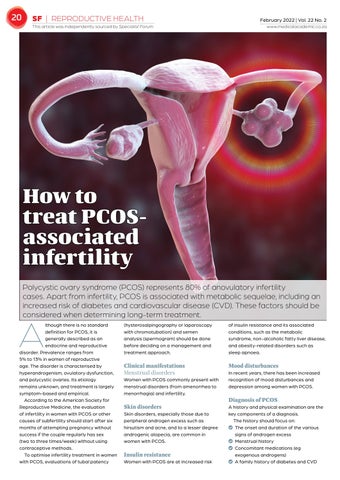
How to treat PCOSassociated infertility Polycystic ovary syndrome (PCOS) represents 80% of anovulatory infertility cases. Apart from infertility, PCOS is associated with metabolic sequelae, including an increased risk of diabetes and cardiovascular disease (CVD). These factors should be considered when determining long-term treatment.
A
lthough there is no standard definition for PCOS, it is generally described as an endocrine and reproductive disorder. Prevalence ranges from 5% to 13% in women of reproductive age. The disorder is characterised by hyperandrogenism, ovulatory dysfunction, and polycystic ovaries. Its etiology remains unknown, and treatment is largely symptom-based and empirical. According to the American Society for Reproductive Medicine, the evaluation of infertility in women with PCOS or other causes of subfertility should start after six months of attempting pregnancy without success if the couple regularly has sex (two to three times/week) without using contraceptive methods. To optimise infertility treatment in women with PCOS, evaluations of tubal patency
(hysterosalpingography or laparoscopy with chromotubation) and semen analysis (spermogram) should be done before deciding on a management and treatment approach.
of insulin resistance and its associated conditions, such as the metabolic syndrome, non-alcoholic fatty liver disease, and obesity-related disorders such as sleep apnoea.
Clinical manifestations
Mood disturbances
Menstrual disorders
Women with PCOS commonly present with menstrual disorders (from amenorrhea to menorrhagia) and infertility.
Skin disorders Skin disorders, especially those due to peripheral androgen excess such as hirsutism and acne, and to a lesser degree androgenic alopecia, are common in women with PCOS.
Insulin resistance Women with PCOS are at increased risk
In recent years, there has been increased recognition of mood disturbances and depression among women with PCOS.
Diagnosis of PCOS A history and physical examination are the key components of a diagnosis. The history should focus on: _ The onset and duration of the various signs of androgen excess _ Menstrual history _ Concomitant medications (eg exogenous androgens) _ A family history of diabetes and CVD
The first and ONLY GLP1-RA to Demonstrate Primary and Secondary CVD Prevention†,1,2,3
1.5 mg/0.5 mL
Trulicity® demonstrates primary and secondary prevention of major adverse cardiovascular events (MACE)* in patients with type 2 diabetes at cardiovascular risk.1
†
*3-component MACE in REWIND (nonfatal stroke, nonfatal myocardial infarction, or death).
Trulicity® significantly reduced the risk of MACE-3 by 12% despite a majority of patients not having established cardiovascular disease¹
ADA/EASD Guideline
Strongest evidence for Dulaglutide for primary prevention, but lacking for other GLP1-RAs2*
Powerful HbA1c Reduction
Trulicity® proves powerful HbA1c reductions of up to -1.6% across a range of head-to-head clinical trials3
No titration required³
Simple injection Hidden needle4 Once weekly3
ADA=American Diabetes Association; CV=cardiovascular; CVD=cardiovascular diseases; EASD=European Association for the Study of Diabetes; GLP-1 RA=glucagon-like peptide-1 receptor agonists; MACE=major adverse cardiovascular events; MI=myocardial infarction. Reference: 1.Gerstein HC et al. Lancet. 2019 Jun 7. pii: S0140-6736(19)31149-3. doi: 10.1016/S0140-6736(19)31149-3. [Epub ahead of print]. 2.TBuse, J.B., Wexler, D.J., Tsapas, A. et al. 2019 update to: Management of hyperglycaemia in type 2 diabetes, 2018. A consensus report by the American Diabetes Association (ADA) and the European Association for the Study of Diabetes (EASD). Diabetologia 63, 221–228 (2020). https://doi.org/10.1007/s00125-019-05039-w 3.Trulicity® (dulaglutide once weekly) Trulicity® Professional Information , Eli Lilly and Company, Johannesburg, South Africa - 2020. 4.Trulicity® Instructions for use , Eli Lilly and Company, Johannesburg, South Africa - 2020
S4
Trulicity®. Reg No. 51/21.13/0344 Dulaglutide 1,5 mg/ 0,5ml solution for injection.
For more product information, please email us at: za_medinfo@lilly.com For full prescribing information, refer to the Professional Information approved by the medicines regulatory authority Eli Lilly (S.A.) (Pty) Ltd. Reg. No. 1957/000371/07 1st Floor, Golden Oak House, Ballyoaks Office Park, 35 Ballyclare Drive, Bryanston, Johannesburg Tel: +27 (11) 510 9300 © 2020 Eli Lilly and Company. All Rights Reserved.
PP-DG-ZA-0332 Exp: 09/2023
No mixing or reconstitution required4
22
SF | REPRODUCTIVE HEALTH
February 2022 | Vol. 22 No. 2 www.medicalacademic.co.za
(especially first-degree relatives with premature onset of CVD [male younger than 55 years and female younger than 65 years]). The physical examination should include: _ Evaluation of balding _ The presence and severity of acne _ Clitoromegaly and body hair distribution _ A pelvic exam to look for ovarian enlargement _ Signs of insulin resistance such as hypertension, obesity, centripetal fat distribution, and the presence of acanthosis nigricans should be recorded.
Clinical considerations and recommendations Does weight loss improve ovarian function in obese women with PCOS? Obesity contributes substantially to reproductive and metabolic abnormalities in women with PCOS. Studies have shown that weight loss can improve aspects of the endocrine syndrome of PCOS by lowering circulating androgen levels and causing spontaneous resumption of menses. Reduction in body weight has been associated with improved pregnancy rates and decreased hirsutism, as well as improvements in glucose and lipid levels. Studies using pharmacologic weight loss agents, such as orlistat, an intestinal inhibitor of lipid absorption, and sibutramine, an anorexic agent, in women with PCOS have shown similar improvement in ovarian function. Morbidly obese women with PCOS who undergo gastric bypass surgery experience near normalisation of their reproductive and metabolic abnormalities. These changes have been reported with weight loss as little as 5% of the initial weight. The decrease in unbound testosterone levels after weight loss may be largely mediated through increases in sex hormone-binding globulin (SHBG). The effects of weight loss in normal weight women with PCOS are unknown. What is the best medical maintenance therapy to treat menstrual disorders in women with PCOS who is not attempting to conceive? Combined hormonal contraceptives offer benefits through a variety of mechanisms, including suppression of pituitary luteinising hormone secretion, suppression of ovarian androgen secretion, and increased circulating SHBG. Individual preparations may have different doses and drug combinations and thus have varying risk-benefit ratios. For instance, various progestins have been shown to have different effects on
1
2
circulating SHBG levels, but whether that results in a clinical benefit is uncertain. There is insufficient evidence to determine the most effective combination hormonal contraceptive for women with PCOS to treat menstrual disorders. No studies have addressed the long-term use of depot medroxyprogesterone acetate and intermittent oral medroxyprogesterone acetate to treat hirsutism. The regimen of cyclic oral progestin therapy or progestin-containing intrauterine devices (IUDs) that most effectively prevent endometrial cancer in women with PCOS is unknown. Progestin-only contraceptives or progestin-containing IUDs are an alternative for endometrial protection, but they are associated with abnormal bleeding patterns in 50%-89% of users. Agents initially developed to treat type 2 diabetes (T2DM) are sometimes used offlabel to treat PCOS. These agents include for example metformin and pioglitazone. None of these agents have been approved for treatment of PCOS-related menstrual dysfunction. What is the best medical maintenance therapy to reduce the risks of CVD and diabetes in women with PCOS who are not attempting to conceive? Lifestyle modifications are the best approach to modifying risks for CVD and diabetes. Lifestyle modification include exercise combined with dietary change. Weight loss may improve metabolic abnormalities associated with PCOS as mentioned above. In terms of weight loss, caloric restriction rather than the composition of the diet is the key factor. Smaller trials in women with PCOS have shown no other advantage to a particular hypocaloric diet. Thus, there is no ideal dietary modification for women with PCOS beyond caloric restriction. Another area where there is emerging support in the literature for a CV and endocrine benefit in women with PCOS is the use of statins. However, their long-term effects in preventing CVD in young women, especially adolescent girls, with PCOS is unknown. There is no convincing evidence to demonstrate an increased risk of adverse effects of combined hormonal contraceptives and progestins on diabetes and CV risk in women with PCOS and, therefore, these agents may be considered. Which methods of ovulation induction are effective in women with PCOS who are attempting to conceive? The American Society for Reproductive
3
4
Medicine and the European Society of Human Reproduction and Embryology recommend that before any intervention is initiated, preconception counselling should emphasise the importance of lifestyle modification (especially weight reduction and exercise in women who are overweight), smoking cessation, and reduction of alcohol consumption.
Clomiphene citrate Clomiphene citrate has traditionally been the first-line treatment agent for anovulatory women, including those with PCOS. Six-month live birth rates range from 20% to 40% depending on the population. One half of all women who are going to conceive using clomiphene citrate will do so at the 50mg starting dose, and another 20% will do so at the 100mg per day dosage. Most pregnancies will occur within the first six ovulatory cycles, although a constant monthly pregnancy rate was noted suggesting there may be continued benefit to longer use. Clomiphene citrate is contraindicated for use during pregnancy. Alternative clomiphene citrate regimens have been developed, including prolonging the period of administration, pretreating with oral contraceptives, and adding dexamethasone. Gonadotropins are frequently used to induce ovulation in women with PCOS for whom clomiphene citrate treatment has failed. Low-dose therapy with gonadotropins offers a higher rate of ovulation and monofollicular development, with a significantly lower risk of ovarian hyperstimulation syndrome. This low-dose regimen is recommended when using gonadotropins in women with PCOS. The value of laparoscopic ovarian drilling with laser or diathermy as a primary treatment for subfertile women with anovulation and PCOS is undetermined, and it is primarily recommended as second-line therapy. Neither drilling by laser nor diathermy has any obvious advantage, and there is insufficient evidence to suggest a difference in ovulation or pregnancy rates when drilling is compared with gonadotropin therapy as a secondary treatment.
References Legro RS et al. Polycystic Ovary Syndrome ACOG Practice Bulletin, 2018. Melo AS, Ferriani RA and Navarro PA. Treatment of infertility in women with polycystic ovary syndrome: approach to clinical practice. Clinics, 2015. SF
SF | REPRODUCTIVE HEALTH
February 2022 | Vol. 22 No. 2
This article was independently sourced by Specialist Forum.
www.medicalacademic.co.za Photo credit: Shutterstock.com
23
Ejaculatory dysfunctionrelated infertility
Ejaculatory dysfunction-related infertility is one of the most serious problems in young patients. If sexual intercourse is achieved successfully without any ejaculate, sexual partners/wives will not be able to conceive. Therefore, managing ejaculatory dysfunction is crucial for couples wishing for a baby.
M
ost men have some control over the timing of ejaculation during a sexual encounter. There are some men, however, that feel they have no control. They either ejaculate prematurely or take longer to ejaculate. As a result, they often experience a diminished sense of masculinity and disruption of pleasure from orgasm.
Spectrum of ejaculatory dysfunction The spectrum of ejaculatory dysfunction extends from premature ejaculation (PE), through delayed ejaculation (DE), to a complete inability to ejaculate. The latter includes retrograde ejaculation. PE and DE are the two most common forms of ejaculatory dysfunction. The American Psychiatric Association’s Diagnostic and Statistical Manual of Mental Disorders 5th edition (DSM-V) defines PE as a persistent or recurrent pattern of ejaculation occurring during partnered sexual activity within about a minute following vaginal penetration and before the individual wishes it. PE must be present
in 75% or more sexual encounters and persistent over at least the last six months. To be diagnosed, the man must experience personal distress related to the dysfunction and the condition cannot be better explained by a comorbid or concomitant diagnosis. DE is defined by the DSM-V as the condition in which a man experiences a marked delay in ejaculation or marked infrequency or absence of ejaculation. The disorder must be present in 75% or more partnered sexual encounters and persistent Table 1: DSM-V categorisation of PE Category Description Lifelong PE
Poor ejaculatory control, associated bother, and ejaculation within about two minutes of initiation of penetrative sex that has been present since sexual debut
Acquired PE
Consistently poor ejaculatory control, associated bother, and ejaculation latency that is markedly reduced from prior sexual experience during penetrative sex
over at least the last six months. The patient must not desire delay of ejaculation and he must experience personal distress. Furthermore, DE cannot be better explained by a comorbid or concomitant diagnosis or situation. The DSM-V categorises DE into generalised versus situational sub-types and also includes an ordinal severity scale based on the degree of subjective distress (eg mild, moderate, and severe) rather than any quantitative measure. The DSM-V does not include a definition of what constitutes a reasonable time to reach orgasm.
Other ejaculatory disorders _ Haematospermia: defined as the presence of blood in ejaculated semen. It may present as bright red blood, clots, or disintegrating blood products. Although alarming, haematospermia is almost always benign and may be found in association with other lower urinary tract conditions. Evaluation should proceed according to standard protocols based on associated symptoms and other risk factors (eg age, tobacco history,
24
SF | REPRODUCTIVE HEALTH
February 2022 | Vol. 22 No. 2 www.medicalacademic.co.za
presence of haematuria, lower urinary tract symptoms) _ Retrograde ejaculation: Defined as the condition in which semen is not ejected antegrade but rather flows into the bladder during climax. This is typically due to failure of the bladder neck to close during the emission phase and may be idiopathic or secondary to bladder neck surgery, pharmacological agents, or neurologic lesion. In most cases of retrograde ejaculation, orgasm occurs and feels pleasurable Table 2: DSM-V definition PE Severity
Definition
Severe
Ejaculation that occurs before penetration or within 15 seconds
Moderate Ejaculation that occurs between 15-30 seconds after penetration Mild
Ejaculation that occurs from 30-60 seconds after penetration
_ Anorgasmia: Defined as the absence or marked infrequency of the orgasm experience or markedly diminished intensity of orgasmic sensations. The pattern of absence, delay, or diminished frequency or intensity of orgasm occurs despite adequate sexual stimulation, including the desire for sexual activity and orgasm, has occurred episodically or persistently over a period at least several months, and is associated with clinically significant distress _ Anejaculation: Refers specifically to the absence of seminal ejaculation with sexual climax. Anejaculation may occur situationally or generally and may also occur with or without orgasmic sensation. It most commonly occurs in the context of neurologic injury (eg spinal cord injury, neurodegenerative disease, retroperitoneal lymph node dissection) _ Anhedonic orgasm: Ejaculation occurs but is not associated with subjective feelings of pleasure, intimacy or relaxation. This condition is poorly understood but may relate to medications (particularly antidepressants), neurologic lesions or psychogenic causes _ Painful ejaculation: A poorly understood condition that may have both psychogenic and organic elements. Pelvic lesion, traumas or surgery may be contributing factors and painful ejaculation is often comorbid with other types of chronic pelvic pain syndromes. Men with painful ejaculation should be evaluated for lower urinary tract dysfunction and other causes of chronic pelvic pain
_ Post-orgasmic illness syndrome (POIS): A provisional diagnosis, which has been applied to cases of somatic symptoms that occur in close association with sexual climax. POIS is distinguished from painful ejaculation by the presence of symptoms outside the pelvis, such as malaise, confusion, myalgias, fatigue, or other somatic concerns. The aetiology of POIS is unclear but may be an autoimmune, cytokinemediated, or allergic reaction to seminal components has been proposed. The condition may be empirically managed with antihistamines, selective serotonin reuptake inhibitors (SSRIs), and benzodiazepines.
8 9 10 11 12
Table 3: DSM-V definitions of DE Category Description Lifelong DE
Acquired DE
Lifelong, consistent, bothersome inability to achieve ejaculation, or excessive latency of ejaculation, despite adequate sexual stimulation and the desire to ejaculate An acquired, consistent, bothersome inability to achieve ejaculation, or an increased latency of ejaculation, despite adequate sexual stimulation and the desire to ejaculate
Recommendations
1 2 3 4
5 6 7
Assess the medical, relationship and sexual history, and perform a focused physical exam to evaluate a patient with PE and DE Use validated instruments to assist in the diagnosis of PE and DE Do not use additional testing for the evaluation of a patient with lifelong PE and DE Use additional testing, as clinically indicated, for the evaluation of the patient with acquired PE and DE. Men with acquired PE have a higher mean body mass index and a greater incidence of comorbid diseases including hypertension, sexual desire disorder, diabetes mellitus, chronic prostatitis, and ED compared to men with lifelong, variable and subjective PE Advise patients that ejaculatory latency is not affected by circumcision status Consider referring men with PE and DE to a mental health professional with expertise in sexual health Recommend daily SSRIs for men with PE. On demand clomipramine or dapoxetine (where available) and topical penile anaesthetics as firstline pharmacotherapies
13
14 15 16
17
Consider on-demand dosing of tramadol for the treatment PE in men who have failed first-line pharmacotherapy Consider treating men with PE who have failed first-line therapy with α1adrenoreceptor antagonists Treat comorbid erectile dysfunction in patients with PE and DE according to the AUA Guidelines on Erectile Dysfunction Advise men with PE that combining behavioural and pharmacological approaches may be more effective than either modality alone Advise patients that there is insufficient evidence to support the use of alternative therapies in the treatment of PE and that no currently available data indicate that invasive non-pharmacological strategies are of benefit in DE Inform patients that surgical management (including injection of bulking agents) for PE should be considered experimental and only be used in the context of an ethical board-approved clinical trial Advise men with DE that modifying sexual positions or practices to increase arousal may be of benefit Suggest replacement, dose adjustment, or staged cessation of medications that may contribute to DE Inform patients that there is insufficient evidence to assess the risk/benefit ratio of oral pharmacotherapy for the management of DE Offer treatment to normalise serum testosterone levels in patients with DE and testosterone deficiency.
Some men ejaculate prematurely or take longer and often experience a diminished sense of masculinity and disruption of pleasure from orgasm Reference Shindel AW, Althof SE, Carrier S et al. Disorders of Ejaculation: An AUA/SMSNA Guideline. https:// www.auanet.org/guidelines/disorders-ofejaculation SF
SF | REPRODUCTIVE HEALTH
February 2022 | Vol. 22 No. 2
25
This article was independently sourced by Specialist Forum.
Photo credit: Shutterstock.com
www.medicalacademic.co.za
Banking sperm
Testicular cancer (TCa) is the most common malignancy in men aged 15- to 45-years. Fortunately, it is also one of the most common curable malignancies when identified early and treated effectively.
E
pidemiological risk factors for the development of TCa include testicular dysgenesis syndrome, which encompasses cryptorchidism, hypospadias, decreased spermatogenesis and sub- or infertility, familial history of TCas among first-degree relatives and the presence of a contralateral tumour or germ cell neoplasia in situ (GCNIS). TCa represents 1% of adult neoplasms and 5% of urological tumours, with three to 10 new cases per 100 000 males/per year in Western societies. Its incidence has increased during recent decades particularly in industrialised countries.
Signs and symptoms According to the European Association of Urology (EAU), TCa usually presents as a unilateral scrotal testicular mass detected by the patient, or as an incidental finding on ultrasound. About 27% of patients experience scrotal pain, while around 1% of patients present with germ cell or sex cord/gonadal tumour of the testes, and 11% present with back and flank pain. When there is a suspicion of TCa, state the authors of the EAU TCa guideline, a physical examination must be
conducted and should include abdominal, chest and supraclavicular exploration.
Diagnosis Between 1%-2% of cases are bilateral at diagnosis and the predominant histology is germ cell tumours (GCT) (90%-95% of cases). Peak incidence is in the third decade of life for non-seminoma and mixed GCTs, and the fourth decade for pure seminoma. Sperm abnormalities and Leydig cell dysfunction are frequently found in patients with TCas prior to orchidectomy. Up to 24% of TCa patients are azoospermic and almost 50% have abnormal sperm counts (oligozo-ospemic) before treatment. Studies from developed countries, show that 75%-80% of seminoma patients, and about 55%-64% of non-seminomatous germ cell tumour (NSGCT) patients have stage I disease at diagnosis. True stage in situ (persistently elevated or increasing serum tumour marker levels after orchidectomy) is found in about 5% of non-seminoma patients.
Prognosis Compared to figures from 1997, the fiveyear progression-free survival (PFS) of non-seminoma patients was unchanged for
good- and intermediate-risk, but significantly improved for poor-risk patients (from 41% to 54%). The five-year overall survival (OS) was substantially better for all groups. In addition to the traditional components of the International Germ Cell Cancer Collaborative Group risk-prognostic groups previously described, older age and lung metastasis were confirmed as negative factors for PFS. In seminoma, the five-year PFS increased to 89% and 79% in good- and intermediaterisk patients with the corresponding OS rates of 95% and 88%. Lactate dehydrogenase (LDH) proved to be an additional adverse prognostic factor. Good-prognosis patients with LDH above 2.5 times the upper limit of normal had a three-year PFS of 80% and a three-year OS of 92%, vs 92% and 97% (in the group with lower LDH).
Treatment Treatment for TCa, including orchidectomy, may have a negative impact on reproductive function. Chemotherapy (CT) and radiation treatment (RT) can both impair fertility, although, long-term infertility is rare after RT and is dosecumulative-dependent after CT. Spermatogenesis occurs in the
26
SF | REPRODUCTIVE HEALTH
February 2022 | Vol. 22 No. 2 www.medicalacademic.co.za
seminiferous tubules of the testes and is the process by which the male primordial germ cells, spermatogonia, produce spermatozoa. It begins in puberty and persists throughout adult life. Spermatogonia differentiate to initiate meiosis, producing haploid spermatids and then spermatozoa, after complete differentiation. The maturation of sperm is completed in the epididymis. The entire process is controlled by Sertoli cells, which surround germ cells and promote their progression in response to testosterone, follicle-stimulating hormone (FSH), and multiple regulatory proteins. Spermatogonia are susceptible to apoptosis induced by ionising radiation and cytostatics. Spermatids are more resistant but have no DNA repair mechanisms. Tubular lesions are reflected by elevated serum FSH and are accompanied by a decrease in testicular volume and consistency due to germ cell depletion. CT can also damage Leydig cells and temporarily or permanently decrease steroidogenesis, leading to elevated luteinising hormone (LH) levels. Testicular volume, semen analysis and gonadotropin levels are the most useful tools for assessing the degree of testicular injury associated with gonadotoxic treatment. Spermatogenesis usually recovers one to four years after CT. In clinical stage I (see Table 1), adjuvant treatment (BEP [cisplatin, etoposide, bleomycin] x1, Carbo x1) does not appear to significantly affect testicular function compared to surveillance, with full recovery after one year.
Semen preservation The EAU strongly recommends semen preservation for all men who undergo cancer treatment. According to the association, semen preservation is the most costeffective strategy for fertility preservation, and pre-treatment fertility assessment (testosterone, LH and FSH levels) is advised. According to a multidisciplinary expert panel, the acute effects of genotoxic treatments include genetic mutation, sperm DNA fragmentation, chromosome breakage and sperm aneuploidy. With alkylating agents, the risk of genetic damage is greatest at day one of treatment and persists for at least one spermatogenic cycle (75 days). In the case of RT, the maximum risk occurs one week after the start of the doses, but it persists for up to two months. Topoisomerase II inhibitors act mainly on meiosis. Consequently, the greatest damage occurs between 30 and 50 days after administration.
Recommendations for semen preservation According to the panel of experts, semen freezing should be performed as soon as possible after ejaculation once liquefaction and semen evaluation have been completed. Rapid freezing (−50 °C per minute) is performed manually by depositing the containers in the nitrogen vapour phase for 30 min and then quickly immersing the straws/vials in liquid nitrogen. Sperm vitrification is an alternative cryopreservation method. It is indicated for low-volume samples with a low sperm count and poor sperm quality, as it seems to preserve vitality and DNA integrity better than classical cryopreservation. Sperm cryosurvival is assessed by measuring the degree of sperm motility in an aliquot after thawing and comparing the results to freshsample motility. According the EAU, If cryopreservation is desired, sperm banking should be offered before orchidectomy, maximising the chances of fertilisation, and avoiding the risk of a non-functioning remaining testicle after surgery. If not arranged before orchidectomy, it should be undertaken prior to CT or RT. Patients who are referred to a semen bank after they have started treatment may find that freezing is no longer an option due to the absence of sperm in the ejaculate or very poor semen quality. In young people who have entered puberty and are at Tanner stage >2 and have a testicular volume >8-10ml, it is possible to find mature sperm in semen. However, these patients can Table 1: Clinical staging and initial treatment Stage Description/initial treatment 0
Patients with germ cell neoplasia in situ. If untreated GCNIS has a risk of developing into TGCT after seven years in 70% of cases. Close surveillance with ultrasonography, orchiectomy and RT
I
Patients with tumour limited to the testis. Orchiectomy is the initial management strategy
IIA and IIB
Patients have lymph node involvement. Orchiectomy is the initial management strategy. Further management depends on the histopathological type
IIC Patients have distant metastases. and III Standard treatment regimens for advanced tumours include CT with BEP, etoposide, or cisplatin-based CT regimens such as etoposide, ifosfamie, cisplatin or vinblastine, ifosfamide, cisplatin
be very sensitive to the pressure of their environment (eg from family or professionals) during this period of the beginning of their sexual activity. In patients with unclear pubertal development (10-12 years), it is advisable to perform a hormonal assessment and a physical examination or ultrasound to estimate testicular volume. Examination of nocturnal urine for sperm (spermaturia) can be used as a non-invasive indicator of sexual maturity. If ejaculate collection is not possible and the examination suggests that pubertal development is advanced, a testicular biopsy may be performed. In men undergoing semen cryopreservation, it is advisable to use contraceptive measures from the beginning of cancer treatment until 18-24 months after its completion. Clinical and analytical follow-up (semen analysis, FSH, LH, testosterone) is recommended until the resolution of the underlying disease, additional recommendations include informing the attending physicians of the patient’s underlying disease and making an epicrisis report on residual fertility three to five years after the end of treatment. The degree of fertility recovery will determine whether the semen should be kept or cryopreservation can be ended. If there is a reproductive desire and the semen quality has returned to normal, natural reproduction can be allowed. If the patient has become azoospermic or severely oligozoospermic, the use of cryopreserved semen with assisted reproduction techniques appropriate for the quality of the semen can be considered. The decision to use cryopreserved gametes or those produced after successful treatment should be individualised according to the initial quality of the gametes and the clinical circumstances at the time of freezing compared to the current situation and parameters. The analysis of sperm DNA fragmentation and/ or aneuploidy can contribute to the most favourable decision.
References Gaddam SJ and Chesnut GT. Testicular cancer. StratPearls Publishing LCC, 2022. Laguna MP, Albers P, Algaba F, et al. EAU Guidelines on Testicular Cancer, 2021. https:// uroweb.org/wp-content/uploads/EAUGuidelines-on-Testicular-Cancer-2021.pdf Santaballa A, Marquez-Vega C, Rodriquez-Lescure A, et al. Multidisciplinary consensus on the criteria for fertility preservation in cancer patients. Clinical and Translational Oncology, 2021. SF
February 2022 | Vol. 22 No. 2 Photo credit: Shutterstock.com
www.medicalacademic.co.za
SF | REPRODUCTIVE HEALTH
27
This article was independently sourced by Specialist Forum.
Supplementation in pregnancy: Getting the balance right
Maternal diet is an essential component for the optimal development of the foetus, and the health and well-being of the expectant mother. Deficiencies in critical nutrients can lead to malformations and poor health outcomes for both the infant and mother.1
R
ecommended intake of nutrients during pregnancy includes amongst others iron, calcium, and folic acid – each play a role in optimising health outcomes.1
Iron deficiency negatively affects foetal development The risk of preterm birth and low birth weight is increased if the expecting mother has an iron deficiency, which can result in iron deficiency anaemia (IDA) during pregnancy. Iron is important for the development of the foetal brain and cognitive abilities of the infant.1,2 The increased burden of oxygen delivery to the foetus, exacerbates IDA and can result in intrauterine growth restriction, reduced iron for the infant and increased maternal and perinatal morbidity and mortality. The World Health Organization (WHO) defines IDA as a haematocrit of <33% and/or a haemoglobin of <11g/ dL at any time during pregnancy. Oral iron prophylaxis for pregnant women improves their iron status and prevents the development of IDA. 3,7
The WHO reports that the prevalence of anaemia in women of reproductive age in sub-Saharan Africa is around 57%. South Africa has the lowest burden (34%) in the region.1,3 According to Dorsamy et al, poor nutrition, chronic infections, lack of access to healthcare facilities and poor adherence to micronutrient supplementation all contribute to maternal anaemia in South Africa. 3 The WHO recommends daily oral iron with 30mg to 60mg of elemental iron for pregnant women to prevent maternal anaemia, puerperal sepsis, low birth weight, and preterm birth. The equivalent of 60mg of elemental iron is 300mg ferrous sulphate heptahydrate, 180mg ferrous fumarate or 500mg of ferrous gluconate.4
Calcium supplementation reduces adverse gestational outcomes Calcium supplementation in pregnancy has the potential to reduce adverse gestational outcomes by decreasing the risk of developing hypertensive disorders during pregnancy. Hypertensive disorders
are associated with a significant number of maternal deaths and considerable risk of preterm birth, the leading cause of early neonatal and infant mortality.5 The WHO recommends an intake of 1.5g-2g elemental calcium per day with the total daily dosage divided into three doses (preferably taken at mealtimes) from 20 weeks’ gestation until the end of pregnancy. Target group includes all pregnant women, particularly those at higher risk of gestational hypertension and in areas with low calcium intake.5
Folic acid supplementation prevents more than just neural tube defects Demands for folate increase during pregnancy because it is required for the foetus’ growth and development. Folate deficiency has been associated with abnormalities in both mothers (eg anaemia, peripheral neuropathy) and foetuses (congenital abnormalities).6 Dietary supplementation with folic acid around the time of conception has long been known to reduce the risk of for example neural tube defects (NTDs) in the foetus.6
28
SF | REPRODUCTIVE HEALTH
February 2022 | Vol. 22 No. 2 www.medicalacademic.co.za
Evidence suggests that folate may also play an important role in the timing of labour, reducing the risk of pre-term birth. In observational studies, a shorter duration of pregnancy has been associated with low serum folate levels and with the absence of folic acid supplementation during pregnancy.6 In addition to the prevention of NTD and reducing the risk of pre-term birth, supplementation with folic acid also appears to have other beneficial effects, including the prevention of pre-eclampsia, congenital heart disease and oral clefts.6 Folic acid should be commenced as early as possible (ideally before conception) to prevent NTDs. The WHO recommends folic acid supplementation with 400µg for pregnant women to prevent maternal anaemia, puerperal sepsis, low birth weight and preterm birth.4
How safe are supplements during pregnancy? Iron
Numerous studies have evaluated the safety of routine iron supplementation during pregnancy. Participants ranged from 45 to 1164 who were treated with an iron supplementation posology of 20mg to 200mg per day. The teams reported mild or moderate and impermanent adverse events (AEs), such as nausea, constipation and diarrhoea.7 No significant difference was observed when comparing iron supplementation and control groups. The rates of nausea ranged from close to 30% to a bit over 60% in both groups, and the vomiting rates were both a little over 10% to 41%.7 Similar results were reported for constipation (defined as three or less evacuations per week). Based on these results, the United States Preventive Services Task Force concluded that there is sufficient evidence that AEs associated with iron supplementation are virtually inexistent (at worse, little).7 Friedrisch and Friedrisch caution that iron supplementation during pregnancy can cause development of iron overload in iron-replete women and in patients with diseases that lead to iron overload, such as some haemoglobinopathies and hereditary haemochromatosis.
Calcium supplementation Brown and Wright recommend that all pregnant women should be encouraged to increase their dietary calcium intake. In instances where intake is suboptimal or dairy is excluded from the diet, supplementation should be recommended.1
Several large placebo-controlled trials using supplementation up to 2500mg per day exclusive of dietary intake, have shown no AEs in pregnancy. Increased cardiovascular risk with calcium supplementation is controversial and not well supported, state the authors.1 Most studies examined the risk between 500mg per day and 1g per day of calcium, but no risk is assumed with supplementation in generally healthy adults below the tolerable upper limit of 2500mg per day.1
Folic acid Supplementation at 40µg is largely considered safe. Evidence for AEs such as cancer, diabetes, thyroid disorders, and allergic disease below the tolerable upper intake level of 1000µg is weak or inconclusive.1 Experimental and observational evidence suggests that there may be risks related to changes in neurodevelopment with folic acid exposure above this level, but further studies are required in relation to dosage and timing.1 Traditionally, doses of 4mg have been used for high-risk patients. However, doses of 400µg-800µg of folic acid lower risk of NTDs, with no further reduction in risk with doses >1000µg.1 The 2020 Standard Treatment Guidelines and Essential Medicines List for South Africa caution that folic acid given to patients with vitamin B12 deficiency can mask vitamin B12 deficiency and lead to neurological damage unless vitamin B12 is also given.8
South African recommendations The guidelines do recommend supplements before and during pregnancy and lactation, which can help to prevent, or lessen the effect of several conditions or complications associated with pregnancy. Specifically:8 _ Folic acid, given for at least one month before conception and during pregnancy (particularly the first 12 weeks) can help to prevent NTDs _ Iron can help prevent anaemia _ Calcium can help prevent pre-eclampsia.
General measures Encourage pregnant women to: _ Eat a balanced diet to prevent nutritional deficiency _ Avoid unpasteurised milk, soft cheeses, raw or undercooked meat, poultry, raw eggs, and shellfish _ Cut down on caffeine _ Reduce tea intake (tea should not be
consumed within two hours of taking iron tablets).
Medical measures
Prevention of NTDs _ Oral folic acid 5mg daily is recommended for all women intending to become pregnant or pregnant women (first trimester of pregnancy). The guidelines caution that children born to women taking valproic acid (used to treat epilepsy, bipolar disorder and prevent migraine headaches) are at significant risk of birth defects (10%) and persistent developmental disorders (40%). Valproic acid is contra-indicated and should be avoided in pregnancy and women of child-bearing potential.
Prevention of anaemia _ During pregnancy, after delivery and during lactation: Ferrous sulphate compound BPC (dried), oral, 170mg (± 55mg elemental iron) 12 hourly with meals, or ferrous fumarate, oral, 200mg once daily (±65mg elemental iron). Taking iron tablets with meals decreases iron absorption but improves tolerability. (Note: Do not take iron tablets with milk) _ If daily iron is poorly tolerated (eg epigastric pain, nausea, vomiting and constipation), intermittent iron supplementation may be administered. The guidelines recommend oral ferrous sulphate compound BPC 340mg per week, (± 110mg elemental iron), with meals _ From confirmation of pregnancy: Calcium, elemental, oral, 1g daily (given as calcium carbonate) every 12 hours. Although the benefit is greatest in highrisk women, consider using this agent in all pregnant women. Calcium reduces iron absorption from the gastrointestinal tract. Supplements should therefore be taken four hours apart from each other. References available on request. SF
Save the Date
Reproductive Health Month February
30
SF | ORTHOPAEDICS
February 2022 | Vol. 22 No. 2
This article was independently sourced by Specialist Forum.
www.medicalacademic.co.za
Photo credit: Shutterstock.com
Common sense supplementation can prevent bone loss
To ensure its integrity and prevent fractures, the skeleton requires optimal development and maintenance throughout a person’s life. When the loads placed on bones exceed their ability to absorb the energy involved in performing an action, they can break.1
A
ccording to the International Osteoporosis Foundation (IOF), 4.28 million fragility fractures occurred in 2019 as a result of bone loss (osteoporosis). This figure is expected to increase to more than 5.34 million by 2034 – an increase of 24%. 2 The expected increase is largely due to the growing elderly (>75 years) population. IOF data indicate that the number of men and women >75 years will increase by 42.6% and 29.6%, respectively by 2034. 2 It is estimated that one in three women and one in five men aged >55 years will suffer from osteoporosis in their lifetime. Osteoporosis is defined as a metabolic bone disease ‘characterised by low bone mass and microarchitectural deterioration of bone tissue, leading to enhanced bone fragility and a consequent increase in fracture risk’.1,3
in 2019, but much still needs to be done to close the treatment gap, cautions the IOF.2
Treatment gap
Role of calcium
One of the challenges in preventing fragility fractures is the lack of effective treatment. In 2010 only 55% of patients who suffered a fragility fracture were initiated on treatment. This number increased substantially to 71%
Calcium is the most abundant mineral in the body. About 1.2kg is present in the human body, with 99% located in the bones and teeth. Calcium is also present in body fluids and soft tissues.1
Can bone loss be prevented? According to the IOF, osteoporosis prevention should start in childhood. A bone-healthy diet and plenty of exercise can help children achieve their highest possible peak bone mass.4 This is important because the more bone mass you have when you reach adulthood, the less likely you are to have weak and breakable bones at an older age. For women, early prevention is especially important. Bone loss accelerates rapidly after menopause when the protective effect of oestrogen is lost.4 The IOF recommends a healthy diet, which includes enough calcium, protein (two key nutrients for bone health) as well as vitamin D – especially for people >65 years.4
Calcium is a key raw material for the building of bone. Together with phosphate, it makes up the mineral component of bone, which is laid down within the collagen scaffold constructed by the osteoblasts.1 Calcium is extremely important for the cellular structure, intercellular and intracellular metabolic function, signal transmission, muscle contractions (including the heart muscle), nerve function, activities of enzymes and the normal clotting of blood.1
Role of vitamin D Low vitamin D status is associated with an increased risk of falling and a variety of other health outcomes and is an area that requires urgent attention. Vitamin D deficiency is common in older people. When present, it impairs muscle strength and possibly neuromuscular function.1,5 Vitamin D deficiency is usually the result of low sunlight exposure (eg in frail older people, those who are veiled, those with dark skin living at higher latitudes). The good news is that it is reversible.5 Vitamin D stimulates bone matrix formation and bone maturation. It also
THE BACKBONE TO YOUR PATIENTS BONE HEALTH & BONE SUPPORT The impact of nutrients on bone strength has been historically focused on minerals, vitamin D3 and proteins but vitamin K2 shows beneficial effects and promise as additive therapy in bone health.1b
• Complete the CPD: Regulation of bone remodeling by vitamin K2 by Myneni & Mezey, 2017. • Gain CPD points. • CPD article provides demonstrable evidence on the role of vitamin K2 on bone health. • Relevant to practice & reassurance to your patients.
Go to www.ascendiscpd.co.za to complete a CPD on ‘Regulation of bone remodeling’. Reference 1: Myeni, VD & Mezey, E. Regulation of bone remodeling by vitamin K2. Oral Diseases 2017;23:1021-1028. https://doi.org/10.1111/odi.12624.
32
SF | ORTHOPAEDICS
February 2022 | Vol. 22 No. 2 www.medicalacademic.co.za
enhances osteoclastic activity and there are some data to suggest that it may influence differentiation of bone cell precursors. Together with parathyroid hormone, it regulates calcium and phosphate metabolism and promotes calcium absorption from the gut and kidney tubules.1 The metabolite of vitamin D (1,25-dihydroxycholecalciferol) stimulates calcium transport across the intestinal cells by inducing the production of a calciumbinding protein. This process occurs within the villus cells through the normal process of receptor binding, DNA interaction and messenger RNA production. Hence, vitamin D is critical for effective calcium absorption.1
Role of vitamin K Vitamin K is another essential vitamin for bone health, taking part in the carboxylation of many bone-related proteins, regulating genetic transcription of osteoblastic markers, and regulating bone reabsorption.5 Vitamin K deficiency may occur as a result not only of an inadequate dietary supply but also because of many health problems, including liver disease, biliopancreatic disturbances, cystic fibrosis, alcoholism, or enteric diseases that may cause malabsorption (eg inflammatory bowel disease, short bowel syndrome). Most importantly, some medications are also a cause of vitamin K depletion.5
Reduced ability to absorb vitamins can be addressed with supplementation Unfortunately, with age, the body’s ability to absorb vitamins and minerals may be reduced. Therefore, the IOF recommends calcium and vitamin D supplementation when dairy consumption is low, and little time is spent outdoors.4 The American Geriatrics Society/ British Geriatrics Society Clinical Practice Guideline supports the use of combined calcium and vitamin D3 supplementation to reduce fracture rates in older people. Recommendations are based on the findings of several meta-analyses and randomised controlled trials (RCTs) in older people in long-term care, which have shown a beneficial effect of vitamin D supplementation in fall prevention distinct from its effect on bone health. Some of these trials have also shown benefit even in older persons with normal serum vitamin D levels.6 Given the low number needed to treat (15) and the evidence of significant fall risk reduction, as well as the fact that vitamin D is safe and inexpensive, older persons with suspected vitamin D deficiency should be routinely offered supplementation to reduce
fall risk. Moreover, vitamin D supplementation at appropriate levels should also be considered for all older adults.6 Vitamin D (800 IU) is recommended as a daily supplement for all older adults at risk of falls. Vitamin D is also recommended for all older adults with known vitamin D deficiency and should be considered for those suspected of having vitamin D deficiency. There is strong evidence for vitamin D supplementation (800 IU/d) in patients residing in long-term care who have known vitamin D deficiency. Vitamin D supplementation should also be considered for those with problems of gait or balance or who are otherwise at risk for falls residing in long-term care.6 Yao et al assessed the risks of fracture associated with differences in concentrations of 25-hydroxyvitamin D (25[OH]D) in observational studies and the risks of fracture associated with supplementation with vitamin D alone or in combination with calcium.7 In a meta-analysis of 11 observational studies (39 141 participants, 6278 fractures, 2367 hip fractures), each increase of 10.0ng/mL in 25 (OH)D concentration was associated with an adjusted relative risk (RR) for any fracture of 0.93 and an adjusted RR for hip fracture of 0.80. A meta-analysis of 11 RCTs (34 243 participants, 2843 fractures, 740 hip fractures) of vitamin D supplementation alone (daily or intermittent dose of 40030 000IU, yielding a median difference in 25[OH]D concentration of 8.4ng/mL) did not find a reduced risk of any fracture or hip fracture, but these trials were constrained by infrequent intermittent dosing, low daily doses of vitamin D, or an inadequate number of participants. In contrast, a meta-analysis of six RCTs (49 282 participants, 5449 fractures, 730 hip fractures) of combined supplementation with vitamin D (daily doses of 400-800IU, yielding a median difference in 25[OH]D concentration of 9.2ng/mL) and calcium (daily doses of 1000-1200mg) found a 6% reduced risk of any fracture and a 16% reduced risk of hip fracture. The authors concluded that intermittent nor daily dosing with standard doses of vitamin D alone was associated with reduced risk of fracture, but daily supplementation with both vitamin D and calcium was a more promising strategy.7
of Rheumatology (SER) and the Spanish Society of Endocrinology and Nutrition recommend an intake of 400-1000 IU/ day of vitamin D and 500-1200mg/day. In the case of patients with osteoporosis and vitamin D deficit, SER recommends a daily intake of 800-2000IU of vitamin D supplements, depending on their baselines.8 According to De Paz and Lizán supplementation/fortification with vitamin D and calcium seems to be cost-effective from the 70-80-year age range in the general public. In the case of people with osteoporosis, this intervention could be cost-effective from 60-70 years of age, and in people with a high risk of fracture, from 50-60 years. Regarding sex, the assessed strategies were even more cost-effective in women, except for the case of those men with high risk of fracture.8
References 1. Lanham-New SA (2008). Importance of calcium, vitamin D and vitamin K for osteoporosis prevention and treatment. Symposium on ‘Diet and bone health’. https://www. cambridge.org/core/journals/proceedingsof-the-nutrition-society/article/importanceof-calcium-vitamin-d-and-vitamin-k-forosteoporosis-prevention-and-treatment/ C30A29EDA3064CC8313079BAF4C486C6 2. IOF. Score 21. https://www.osteoporosis. foundation/sites/iofbonehealth/files/2021-06/ Infographic%20Fragility%20Fracture%20 Prevention_0.pdf 3. IOF. About Osteoporosis. https://www. osteoporosis.foundation/patients/ about-osteoporosis 4. IOF. Prevention. https://www.osteoporosis. foundation/patients/prevention 5. Rodríguez-Olleros Rodríguez C and Curiel MD. Vitamin K and Bone Health: A Review on the Effects of Vitamin K Deficiency and Supplementation and the Effect of Non-Vitamin K Antagonist Oral Anticoagulants on Different Bone Parameters. Journal of Osteoporosis, 2019. 6. American Geriatrics Society and British Geriatrics Society. Summary of the Updated American Geriatrics Society/British Geriatrics Society Clinical Practice Guideline for Prevention of Falls in Older Persons Developed by the Panel on Prevention of Falls in Older Persons. JAGS, 2011. https://geriatrictoolkit.missouri. edu/balance/AGS-BGS-CPG-Fall-PreventionJAGS-2011.pdf 7. Yao P, Bennett D, Mafham M, et al. Vitamin D and Calcium for the Prevention of Fracture: A Systematic Review and Meta-analysis. JAMA
Adequate intake Adequate intake of vitamin D and calcium is essential. To maintain adequate levels, the Spanish Society for Bone and Mineral Metabolism Research, the Spanish Society
Netw Open, 2019. 8. De Paz HD and Lizán L. Health and economic impact of the use of vitamin D/calcium for fracture prevention: literature review. Rev Osteoporos Metab Miner, 2021. SF
SF | CPD: ENDOCRINOLOGY
February 2022 | Vol. 22 No. 2
This article was independently sourced by Specialist Forum.
www.medicalacademic.co.za Photo credit: Shutterstock.com
33
Versatile IDegAsp
This is a summary of a CPD article that is available exclusively on our website. To read the full article and answer the quiz, go to www.medicalacademic.co.za and click on the CPD/Clinical tab.
F
or people with type 2 diabetes (T2DM) who fail to achieve optimal blood glucose levels with basal insulin and oral glucose-lowering agents, intensive treatment regimens, such as basal insulin with mealtime rapid-acting insulin (basal-bolus insulin therapy) or premixed insulin regimens are imperative. IDegAsp is a co-formulation of longacting basal (insulin degludec) and rapid-acting bolus (insulin aspart) insulin (70:30 ratio) and is one of the most often described pre-mix formulations worldwide. Results from the 2021 A Ryzodeg Initiation and Switch Effectiveness (ARISE) study, showed that IDegAsp, led to significant reductions in HbA1c levels, fasting plasma glucose, hypoglycaemic events, and weight. ARISE enrolled T2DM patients from
six countries (Australia, India, Malaysia, Philippines, Saudi Arabia, and South Africa). Adults with T2DM using any glucose-lowering agents and who were suitable for IDegAsp treatment at their physician’s discretion were enrolled. In the ARISE study, initiation with or switch to IDegAsp, led to: _ Significant decrease in HbA1c: An overall change from mean baseline (9.7%) to a mean of 8.3% _ Significant decrease in overall fasting plasma glucose (FPG): An overall mean change from 10.9% to 8.2% _ Decrease in body weight: Patients lost a mean of 1kg weight from baseline Please note that our CPD activities are only for practitioners registered with the HPCSA. Any other health professional should apply to their own Council for CPD purposes.
_ Lower daily basal but higher prandial insulin dose for previous insulin users _ Numerical reductions in severe hypoglycaemic events (except GLP-1RA prior users): from 51(n=31) to three (n=3) at the end of the study _ Decrease in resource utilisation observed 12 weeks prior to the end of the study: • Self-reported outpatient visits decreased from 1012 to 498 • Emergency visits decreased from 35 to 12 • Self-reported missed workdays decreased from 242 to 28. At baseline, only 4.3% of patients reached the recommended HbA1c target of <7%. At the end of the study, 14.9% of patients managed to reach target. References available on www.medicalacademic.co.za. SF
34
SF | ENDOCRINOLOGY
February 2022 | Vol. 22 No. 2
This article was independently sourced by Specialist Forum.
www.medicalacademic.co.za
Diabetes in numbers 537 million
people were living with diabetes in 2021
24 million
people in Africa were living with diabetes in 2021
10%
of the global health expenditure is spent on diabetes
1 in 8
live births in Africa are affected by hyperglycaemia in pregnancy
643 million
19 million
people will have diabetes by 2030 and
783 million
adults aged 20–79 years living with diabetes reside in Africa
by 2045
33 million
In 2021, there were
17.1 million
people in Africa will have diabetes by 2030 and
more men than women living with diabetes
55 million by 2045 – an increase of 143%
541 million
>1 in 2
adults have impaired glucose tolerance
(54%)
Africans living with diabetes are undiagnosed Diabetes is responsible for
1 in 5
people with diabetes are above 65-years
6.7 million Reference:
deaths in 2021 - 1 every 5 seconds
International Diabetes Federation. Diabetes Atlas 10th edition. https://diabetesatlas.org/idfawp/resource-files/2021/07/IDF_Atlas_10th_Edition_2021.pdf
For your patients with type 2 diabetes
Choose Victoza® for a range of proven benefits
The GLP-1 RA proven to prevent cardiovascular events in type 2 diabetes1
For adults with type 2 diabetes and established CVD, the 2021 ADA Standards of Medical Care in Diabetes clinical report recommends GLP-1 RA therapy with proven CV benefit2
Unsurpassed HbA1c reductions3-5*
Unsurpassed weight reductions3,5†
*Compared to Sitagliptin and Exenatide. Compared to Sitagliptin
†
CV = cardiovascular; CVD = cardiovascular disease; GLP-1 RA = glucagon-like peptide-1 receptor agonist; ADA = American Diabetes Association References: 1. Marso S.P., et. al. Liraglutide and Cardiovascular Outcomes in Type 2 Diabetes. N Engl J Med 2016;375:311-22. 2. American Diabetes Association. Cardiovascular Disease and Risk Management: Standards of Medical Care in Diabetes. 2021;44(Suppl. 1):S125–S150. 3. Pratley R, Nauck M, Bailey T, et al; for the 1860-LIRA-DPP-4 Study Group. One year of liraglutide treatment offers sustained and more effective glycaemic control and weight reduction compared with sitagliptin, both in combination with metformin, in patients with type 2 diabetes: a randomised, parallel-group, open-label trial. Int J Clin Pract. 2011;65(4):397- 407. 4. Buse JB, Rosenstock J, Sesti G, et al; for the LEAD-6 Study Group. Liraglutide once a day versus exenatide twice a day for type 2 diabetes; a 26-week randomised, parallel-group, multinational,open-label trial (LEAD-6). Lancet. 2009;374(9683):39-47. 5. Pratley RE, Nauck M, Bailey T, et al; for the 1860-LIRA-DPP-4 Study Group. Liraglutide versus sitagliptin for patients with type 2 diabetes who did not have adequate glycemic control with metformin: a 26-week, randomised, parallel-group, open-label trial. Lancet. 2010;375(9724):1447-1456. Scheduling status: S4 Name of the medicine: Victoza®. Qualitative and quantitative composition: Liraglutide 6 mg/ml. Therapeutic indications: Glycaemic control: Adjunct to diet & exercise to achieve glycaemic control in type 2 diabetes mellitus, as monotherapy, combination therapy with one or more oral antidiabetic medicines (metformin, sulphonylureas, SGLT2i or a thiazolidinedione) when previous therapy does not provide adequate glycaemic control or combination therapy with insulin in patients not achieving adequate glycaemic control with Victoza® and metformin. Prevention of cardiovascular events: Victoza® is indicated to prevent Major Adverse Cardiovascular Events (MACE) (MACE: cardiovascular death, non-fatal myocardial infarction, or non-fatal stroke) in adults with type 2 diabetes mellitus at high cardiovascular risk, as an adjunct to standard of care therapy. Posology and method of administration: Monotherapy: Administration SC once daily at any time. Initiate 0,6 mg for at least one week, thereafter increase to 1,2 mg based on clinical response and after at least one week, may be increased to 1,8 mg to achieve maximum efficacy. Daily doses higher than 1,8 mg are not recommended. Combination therapy: Victoza® can be used in combination with other glucose lowering agents and no dose adjustments are required for metformin, thiazolidinedione and SGLT2i therapy. When Victoza® is added to a sulphonylurea therapy or insulin, a reduction in the dose of sulphonylurea or insulin should be considered to reduce the risk of hypoglycaemia. No dose adjustment is required for patients with mild, moderate or severe renal impairment. There is no therapeutic experience in patients with end-stage renal disease, and Victoza® is therefore not recommended for use in these patients. Contraindications: Hypersensitivity to liraglutide or any of its excipients, a history of previous pancreatitis, Type 1 diabetes mellitus, pregnancy and lactation. Special warnings and precautions for use: Not to be used for the treatment of DKA and Type 1 Diabetic patients. Not for IM/IV administration. There is no therapeutic experience in patients with congestive heart failure New York Heart Association (NYHA) class IV and Victoza® is therefore not recommended for use in these patients, not recommended in patients with inflammatory bowel disease/diabetic gastroparesis. Blood glucose self-monitoring is advised when initiating therapy with sulphonylurea or insulin, possible development of anti-liraglutide antibody, warning of signs and symptoms of acute pancreatitis, discontinue therapy if suspected, reduce concomitant sulphonylurea or insulin dosage to reduce hypoglycaemia risk, no dose adjustment is required for patients with hepatic impairment, caution is advised in patients pre-existing thyroid disease. Safety and efficacy of Victoza® in patients below 18 years of age. There is no therapeutic experience in patients with end-stage renal disease, and Victoza® is therefore not recommended for use in these patients. The use of Victoza® has been associated with a risk of developing acute pancreatitis. Once acute pancreatitis is confirmed, Victoza® or any other GLP-1 receptor agonist should never again be restarted. Victoza® is not a substitute for insulin. Interaction with other medicines and other forms of interaction: Increased hypoglycaemia risk with concomitant sulphonylurea or insulin. Upon initiation of Victoza® treatment in patients on warfarin or other coumarin derivatives, more frequent monitoring of INR is recommended. Fertility, pregnancy and lactation: Victoza® is contraindicated during pregnancy and lactation. Treatment to be discontinued if a woman wishes to become pregnant/pregnancy occurs. Crossed the placental barrier in rabbits, reproductive toxicity in animals, excreted in milk of lactating rabbits. Undesirable effects: Fatigue, cholelithiasis, cholecystitis, increased lipase/increased amylase, malaise, anaphylactic reaction, urticaria, pruritus, renal failure, increased heart rate, dehydration, GI disturbances including eructation, headache, URTI, hypoglycaemia especially in combination with sulphonylurea, bronchitis, osteomyelitis, prostate/breast cancer, thrombocytopenia, decreased appetite, CVA, syncope, cataract, cardiac disorders including MI/CCF/supraventricular tachycardia, pulmonary embolism, appendicitis with perforation, inguinal hernia, pancreatitis, intervertebral disc protrusion, osteoarthritis, chest pain, fall, injection site reactions, thyroid adverse events including neoplasms, antibody formation. Overdose: With overdose, the patients reported severe nausea, vomiting and diarrhoea, but recovered without complications. Severe hypoglycaemia has been observed. Reg. No.: 43/21.13/0781. For full prescribing information, refer to the Professional Information approved by the Regulatory Authority.
Novo Nordisk (Pty) Ltd. Reg. No.: 1959/000833/07. 150 Rivonia Road, 10 Marion Street Office Park, Building C1, Sandton, Johannesburg, 2196, South Africa. Tel: (011) 202 0500. Fax: (011) 807 7989. www.novonordisk.com. 17516T. ZA21VZ00028 April 2021.
6 mg/ml