MEDChronicle www.medicalacademic.co.za
The doctor's newspaper
APRIL 2022
Blood cancer The SA experience
Too expensive to treat, inaccessibility to drugs, problematic funders, a shortage of haematologists, patients do not take priority when any kind of policy is made – in short, “they are not important,” said Dr Theo Gerdener. By Nicky Belseck, medical journalist
"T
HE MOMENT YOU are diagnosed with a haematological malignancy or a blood cancer the clock starts ticking,” said Dr Theo Gerdener. “Stem cell transplant can be a curative treatment whereas chemotherapy often won’t. Chemotherapy can drive the disease into remission, but it will invariably relapse.” Clinical Haematologist at Albert Alberts Stem Cell Transplant Centre and Medical director at DKMS Africa, Dr Gerdener was speaking at an Ethics Alive 2022 panel discussion hosted by DKMS (previously The Sunflower Fund) and the Wits Students' Bioethics Society. To commemorate Human Rights Day, DKMS Africa aimed to highlight that the right to
access a blood stem cell transplant should be considered a human right too. TOO EXPENSIVE TO TREAT “As with all cancers, haematological malignancies or a blood cancer are expensive to treat,” Dr Gerdener said. “Typically, in the government system we can treat one leukaemia patient with stem cell treatment for the same amount of money that we can treat about 500 patients with chemotherapy. So, our patients do not take priority when any kind of policy is made, when health decisions are made, they are not important. Not only by the state, but by the funders in private practice they are seen as a waste of money. But the outcomes with stem cell transplant are excellent. A stem cell transplant is no more expensive than providing dialysis to a
patient with kidney failure for one year, so our patients should not be discriminated against or swept aside. They have every right to a treatment that can cure them and help them to live a long and productive life. Dr Gerdener accused the Department of Health (DoH) as being the first problem. “The DoH promulgated the Medical Schemes Act 131 in 1998. There’s an addendum in that Act that defines what stem cell transplantation is and which patients qualify for it. It also says that this Act will be reviewed and updated every two years. We are now in 2022 and the Act has not been updated once. The indications for stem cell transplantation are dynamic and have exponentially increased since that time, but because our law states that these are the indications for transplant, we cannot challenge funders to provide
transplants to patients who desperately need it.” “Because the PMB regulations in the Medical Schemes Act haven’t been updated every two years those regulations still say that medical schemes only have to pay for familial matches, not non-familial matches,” said Elsabe Klinck (legal practitioner and managing director of Elsabé Klinck & Associates – a dynamic health care consulting service, focusing on law, regulation and policy in the health sector). Klink gave an example of a case she was involved in where a 16-year-old patient matched with a non-familial donor. “In spite of the law saying we must practice evidence-based medicine and the law recognising blood transfusions as PMBs in that particular case even though we started the process to fight for the treatment continued on page 3
Dangers to elderly skin
SARAH, consultant; Age: 43; BMI: 37 Patient portrayal.
liraglutide injection 3mg Your patients with obesity have the will. You can offer them the way.
22
Obesity is a chronic disease, and most patients want your help.7 Liraglutide 3 mg is similar to natural GLP-1, working in the brain# to decrease appetite and thereby reduce food intake1
Liraglutide 3 mg is 97 % similar to natural GLP-11
Liraglutide 3 mg works in the hypothalamus in the brain8
HUNGER
I had the will to start a business from scratch. But I still need help to lose weight and keep it off.
PD E
G PA
SATIETY
Liraglutide 3 mg is the only GLP-1 approved in South Africa for weight management1-6
continued on page 2C
Where it increases feelings of satiety and decreases hunger1
As a result, patients taking Liraglutide 3 mg feel satisfied and eat less food, leading to weight loss1
BMI=body mass index; GLP-1=glucagon-like peptide-1. #Shown in animal models. The exact mechanism of action is unknown. References: 1. Saxenda® Professional Information. 2. Victoza® Professional Information. 3. Xultophy® Professional Information. 4. TRULICITY Professional Information. 5. BYETTA Professional Information. 6. South African Health Products Regulatory Authority (SAHPRA). Registered Health Products [online 2022][cited 2022 January 21]; Available from URL: https://www.sahpra.org.za/registered-health-products/. 7. Bray GA, Kim KK, Wilding JPH; on behalf of the World Obesity Federation. Obesity: a chronic relapsing progressive disease process. A position statement of the World Obesity Federation. Obes Rev. 2017;18(7):715-723. 8. Secher A, Jelsing J, Baquero AF, et al. The arcuate nucleus mediates GLP-1 receptor agonist liraglutide-dependent weight loss. J Clin Invest. 2014;124(10):4473-4488. as a substitute for insulin.® There is no clinical experience in patients with congestive heart failure New York Heart Association (NYHA) class IV and Saxenda® is therefore not recommended for use in these patients. The safety Abbreviated professional information: Scheduling Status: S4 Name of the medicine: Saxenda® Qualitative and quantitative composition: One ml of solution contains 6 mg of liraglutide and phenol 0,55 % m/v as the preservative. Therapeutic indications: Adults: Saxenda® is2 indicated as an adjunct 2to a reduced-calorie and efficacy of Saxenda have not been established in the following patients, viz: • Treated with other products for weight management, • With obesity secondary to endocrinological or eating disorders or to treatment with diet and increased physical activity for medically supervised chronic weight management programme in adult patients with an initial Body Mass Index (BMI) of: • ≥ 30 kg/m (obese), or • ≥ 27 kg/m to < 30 kg/m2® (overweight) in the presence of at least one weight related comorbidity such as dysglycaemia (pre-diabetes medicinal products that may cause weight gain, • With severe renal impairment, • With severe hepatic impairment, • With inflammatory bowel disease and diabetic gastroparesis. Use in these patients is not recommended. and type 2 diabetes mellitus), hypertension, dyslipidaemia, or obstructive sleep apnoea. Adolescents: Saxenda can be used as an adjunct2 to a healthy nutrition and physical activity counselling for weight management in Acute pancreatitis has been observed with ®the use of GLP-1 receptor agonists. Patients should be informed of the characteristic symptoms of acute pancreatitis. If pancreatitis is suspected, Saxenda® should be discontinued; adolescent patients from the age of 12 years and above with: • body weight above 60 kg and • obesity (BMI corresponding to ≥30 kg/m for adults by international cut-off points)*. if acute pancreatitis is confirmed, Saxenda should not be restarted. In the absence of other signs and symptoms of acute pancreatitis, elevations in pancreatic enzymes alone are not predictive of acute pancreatitis. In clinical trials, a higher rate of cholelithiasis and cholecystitis was observed in patients treated with Saxenda® than in patients on placebo. Patients should be informed of the characteristic symptoms of cholelithiasis and cholecystitis. In clinical trials in type 2 diabetes, thyroid adverse events, such as goitre have been reported in patients with pre-existing thyroid disease. Saxenda should therefore be used with caution in patients with thyroid Age (years) 12 12.5 13 13.5 14 14.5 15 15.5 16 16.5 17 17.5 18 disease. An increase in heart rate was observed in clinical trials. Heart rate should be monitored at regular intervals consistent with usual clinical practice. Patients should be informed of the symptoms of increased heart rate Males 26.02 26.43 26.84 27.25 27.63 27.98 28.30 28.60 28.88 29.14 29.41 29.70 30.00 (palpitations or feelings of a racing heartbeat while at rest). For patients who experience a clinically relevant sustained increase in resting heart rate, treatment with Saxenda® should be discontinued.® Patients treated with Body mass index Saxenda® should be advised of the potential risk of dehydration in relation to gastrointestinal side effects and take precautions to avoid fluid depletion. Patients with type 2 diabetes receiving Saxenda in combination with 30 kg/m2 Females 26.67 27.24 27.76 28.20 28.57 28.87 29.11 29.29 29.43 29.56 29.69 29.84 30.00 insulin and/or sulphonylurea have an increased risk of hypoglycaemia. Fertility, pregnancy and lactation: Saxenda® should not be used during pregnancy and lactation. Undesirable effects: Gastrointestinal reactions ® were the most frequently reported adverse reactions during treatment with Saxenda . Very common side effects are nausea, vomiting diarrhoea, constipation, headache. Common side effects include: Hypoglycaemia, *IOTF BMI cut-off points for obesity by sex between 12–18 years insomnia, dizziness, dysgeusia, dry mouth, dyspepsia, gastritis, gastro-oesophageal reflux disease, abdominal pain upper, flatulence, eructation, abdominal distension, cholelithiasis, injection site reactions, asthenia & Posology and method of administration: The starting dose is 0,6 mg once daily. The dose should be increased to 3,0 mg once daily in increments of 0,6 mg with at least one-week intervals to improve gastro-intestinal fatigue, increased lipase/increased amylase. Uncommon side effects include: dehydration, tachycardia, pancreatitis, cholecystitis, urticaria & malaise. Rare side effects include: anaphylactic reaction, acute renal failure & tolerability. If escalation to the next dose step is not tolerated for®two consecutive weeks, consider discontinuing treatment. Daily doses higher than 3,0 mg are not recommended. Saxenda® is for subcutaneous use only. It must renal impairment. Overdose: With overdose, the patients reported severe nausea, vomiting and diarrhoea, but recovered without complications. Severe hypoglycaemia has also been observed. In the event of overdosage, ® not be administered intravenously or intramuscularly. Saxenda is administered once daily at any time, independent of meals. However, it is preferable that Saxenda is injected around the same time of the day. It should be appropriate supportive treatment should be initiated according to the patient’s clinical signs and symptoms. The patient should be observed for clinical signs of dehydration and blood glucose should be monitored. Reg. ® injected in the abdomen, thigh, or upper arm. Saxenda® should not be used in combination with another GLP-1 receptor agonist. When initiating Saxenda , consider reducing the dose of concomitantly administered insulin No.: 50/21.13/1091. For full prescribing information, refer to the Professional Information approved by the Regulatory Authority. Novo Nordisk (Pty) Ltd. Reg. No.: 1959/000833/07. 150 Rivonia Road, 10 Marion Street or insulin secretagogues (such as sulfonylureas) to reduce the risk of hypoglycaemia. Saxenda® is not recommended for use in children below 12 years of age or in adolescents with a body weight below or®equal to 60 kg due Office Park, Building C1, Sandton, Johannesburg, 2196, South Africa. Tel: (011) 202 0500. Fax: (011) 807 7989. www.novonordisk.com. 19207T. ZA22SX00005 January 2022. to lack of data. Contraindication: • Hypersensitivity to liraglutide or to any of the excipients listed under Composition. • Pregnancy and lactation. Special warnings and precautions for use: Saxenda must not be used
MEDICAL CHRONICLE | April 2022
Do your patients worry about PPG spikes because they don’t know how much they’ll eat? Nabil* does …and can be administered at the start of a meal, with the option to administer even 20 minutes after starting a meal1
Fiasp® demonstrates proven reductions in PPG1,2
The faster onset of Fiasp®1† means that Nabil can stop turning down those invitations to dinner
*Model shown is not a real patient and results shown do not reflect model’s experiences.
COMING SOON Fiasp® offers a faster† response1,2^ to keep up with how quickly life moves PPG: Post prandial glucose. Both dosed at mealtime; data from onset 1 trial in adults with type 1 diabetes. PPG measured at 1 hour (P<0.0001) and 2 hours (P=0.0375). † vs NovoRapid®. ^
References: 1. Fiasp® Professional Information, December 2020. 2. Russell-Jones D et al. Fast-Acting Insulin Aspart Improves Glycemic Control in Basal-Bolus Treatment for Type 1 Diabetes: Results of a 26-Week Multicenter, Active-Controlled, Treat-to-Target, Randomized, Parallel-Group Trial (Onset 1). Diabetes Care. 2017;40(7):943–950. Abbreviated Professional Information Scheduling status: S3 Name of the medicine: Fiasp Qualitative and quantitative composition: Contains insulin aspart 100 U/ml. Therapeutic indications: Maintenance treatment of diabetes mellitus in adults used alone or in combination with other insulins or metformin. Posology and method of administration: Fiasp® is a mealtime insulin for subcutaneous administration at the start of a meal or post-meal (within 20 minutes after starting a meal). Dosing with Fiasp® is individual and determined in accordance with the needs of the patient. The individual total daily insulin requirement in adults, may vary and is usually between 0,5 and 1,0 unit/kg/day. Fiasp® should be used in combination with intermediate-acting or long-acting insulin given at least once a day. Blood glucose monitoring and insulin dose adjustment are recommended to achieve optimal glycaemic control. Converting from another mealtime insulin can be done on a unit-to-unit basis. Close glucose monitoring is recommended during the transfer from other mealtime insulins and in the initial weeks thereafter. Fiasp® can be used for continuous subcutaneous insulin infusion (CSII) in pumps. If necessary, Fiasp® can be administered intravenously by health care professionals. Contraindication: Hypersensitivity to the insulin aspart or any of the excipients and during episodes of hypoglycaemia. Special warnings and precautions for use: The safe use of Fiasp in treatment of ketoacidosis has not been established. Omission of a meal or unplanned, strenuous physical exercise may lead to hypoglycaemia. Patients, whose blood glucose control is greatly improved, e.g. by intensified insulin therapy, may experience a change in their usual warning symptoms of hypoglycaemia, and should be advised accordingly. Usual warning symptoms may disappear in patients with longstanding diabetes. The fast onset of action should be considered in patients with delayed gastric emptying. Cases of congestive heart failure have been reported when pioglitazone was used in combination with insulin, especially in patients with risk factors for development of congestive heart failure. Patients should be observed for signs and symptoms of congestive heart failure, weight gain and oedema. The use of inadequate doses or discontinuation of treatment, especially in patients requiring insulin, may lead to hyperglycaemia and diabetic ketoacidosis. Pioglitazone should be discontinued if any deterioration in cardiac symptoms occurs. Patients must be instructed to always check the insulin label before each injection to avoid accidental mix-ups between Fiasp® and other insulin medicines. Concomitant diseases in the kidney, liver or affecting the adrenal, pituitary or thyroid gland may require changes in the insulin dose. Insulin administration may cause insulin antibodies to form. The presence of such insulin antibodies may necessitate adjustment of the insulin dose in order to correct a tendency to hyper- or hypoglycaemia. Patients must be instructed to perform continuous rotation of the injection site to reduce the risk of developing lipodystrophy and cutaneous amyloidosis. The patient’s ability to concentrate and react may be impaired as a result of hypoglycaemia. Pregnancy and lactation: Safety in pregnancy and lactation has not been established. There are no restrictions on treatment with Fiasp® during breastfeeding as insulin aspart does not cross into breast milk. Undesirable effects: Very common: Hypoglycaemia; Common: Allergic skin manifestations, injection/infusion site reactions; Uncommon: Hypersensitivity, lipodystrophy, eruptions, refraction, diabetic retinopathy, oedema; Rare: Peripheral neuropathy; Very rare: Anaphylactic reactions; Unknown: Cutaneous amyloidosis. Overdose: Hypoglycaemia may develop over sequential stages if a patient is dosed with more insulin than required. Reg. No.: 51/21.1/0733. For full prescribing information, refer to the Professional Information approved by the Regulatory Authority.
Novo Nordisk (Pty) Ltd. Reg. No.: 1959/000833/07. 150 Rivonia Road, 10 Marion Street Office Park, Building C1, Sandton, Johannesburg, 2196, South Africa. Tel: (011) 202 0500. Fax: (011) 807 7989. www.novonordisk.com. 19237T. ZA22FSP00006 January 2022.
NEWS but what they are actually doing is they are denying patients treatments because they have this sword hanging over their heads that if they want those treatments, they will have excessive co-payments or they will be denied altogether,” said Dr Gerdener. “So unfortunately, even if you are on a very good medical scheme in SA today, and you get a blood cancer that requires a specific therapy, if you do not have a car or a house you can sell you will not get that treatment.” STATE SERVICE Dr Gerdener said the DKMS worked very closely with the state service. “There are very few haematologists in SA and if you have a stem cell transplant, you will get exactly the same treatment in the state service that you will get in a private facility, because we are quite well integrated and we try to help one another with our various problems, he explained. “However, in the state service, unfortunately once again run by the DoH, haematology and blood cancers are not a priority – which I can understand because there are so many other pressing matters to attend to and diseases that are far more prevalent – but it is very difficult to explain that to our patients, that they are not prioritised the same as other patients.
continued from page 1
that child passed away.” Klink explained that they’ve abandoned so many cases because the process takes so long, and the disease simply doesn’t grant you the luxury of time to continue with chemotherapy and unfortunately the patients die before they are able to take the cases far enough to get them the lifesaving stem cell treatment they so desperately need.” INACCESIBILITY TO DRUGS “Many pharmaceutical agents are simply not available to state patients. In the private sector we have access to drugs, but most pharmaceutical companies are either US or European based.” Dr Gerdener explained that the prices can be so exorbitant that he recently had a patient who, when their medical scheme refused to pay for the medicine, and the patient was prepared to pay for it themselves they found themselves in a situation where it that it was cheaper for them to fly to Germany have a holiday and pay for the drug there than to pay for it in SA. “There’s just no logic there.” PROBLEMATIC FUNDERS “One of the largest medical schemes in SA has not increased their oncology benefits for the last 15 years. They use an excuse that very few patients will require more than those benefits,
SHORTAGE OF HAEMATOLOGISTS IN SA “If one looks worldwide at haematologists per capita, we have about 20-50 fewer haematologists in SA available to treat patients, and unfortunately universities are not training enough of them, so we are actively engaging with the universities to create more posts. Also, to spread our geographical availability, because it’s a major financial constraint for patients in rural areas to get to us and it can impede their treatment,” said Dr Gerdener. BOTH NOW AND THE FUTURE “Updating the PMBs is so important,” said Klink.” Making sure it’s included in the NHI Bill is another very important thing that we must do. And then making sure that this principle of evidencebased medicine, which is fluid, medicine develops over time, that we make sure that we can develop with it. We cannot be stuck in these rigid definitions that deny people the right of access to healthcare. Because we’ve got the right of access to healthcare in the Constitution that’s supposed to help us. We’ve got the right to human dignity. We’ve got the right to life. “And to say I’m not fulfilling my legal duties under the Medical Schemes Act because I’m working on something else (the NHI Act), I don’t believe is a defence. Because we’re going to sit with the medical schemes for a very long time still,” warned Klink. She was adamant that it was just as important to look to the future and NHI as it was to fix what we can fix now. “The NDoH is under that statutory duty to make sure that not only in a medical schemes setting but in the NDoH provinces that we get the right policies and the right budgets.”
Women’s pain
APRIL 2022
CONTENTS
All content in Medical Chronicle is sourced independently and under no circumstances should articles be considered promotional unless specified.
NEWS Blood cancer: The SA experience................ 1 New Data Prize just what the Dr ordered............................................................ 4 R&D Postdoctoral Challenge to accelerate scientific discovery...........................................6 Climate change a threat to human health.......................................................7
CLINICAL
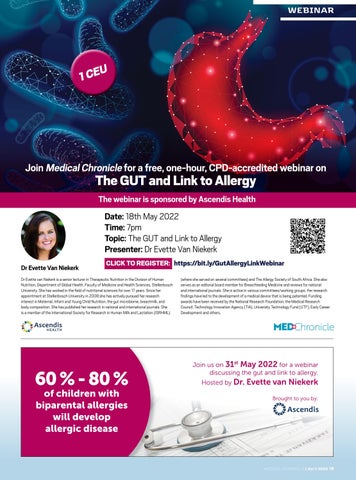
WEBINAR ANNOUNCEMENTS Save our Skin with Leukoplast Skin Sensitive................................................................5 A discussion on connective tissue disease......................................................9 The gut and link to allergy.............................19 Help me to help you: The ethics of offering medical treatment to obese or noncompliant patients..........................................37 PRACTICE MANAGEMENT Strategies to improve your medical billing and claim processes..........................10 WOMEN’S HEALTH Pain control during IUD insertion...............13 Putting the heart into HRT...........................30 DIABETES Optimised glycaemic control using insulin lispro pens.............................................14 WINTER AILMENTS Don’t forget to (flu) vaccinate.....................16 GASTROENTEROLOGY An effective oral formulation for UC........17 Probiotics boost brain and mood..............26 CARDIAC Combination therapy vs a double dose of statins...................................................18 Time to make a difference for your patients with PAH............................................27 ONLINE CPDS Adjustment disorder with anxiety: an overlooked danger area?.......................20
often overlooked
Understanding atopic dermatitis...............21 Dangers to elderly skin.................................22 OBESITY
TIME IS INDEED a brisk wind, as we are swept into April. In our lead story, clinical haematologist at Albert Alberts Stem Cell Transplant Centre and Medical Director at DKMS Africa, Dr Gerdener uncovers the sad state of blood cancer treatment in SA. Legal practitioner Elsabé Klinck weighed in on the role of PMB regulations in the expense of treating the condition. Climate change is not just a threat to the planet, it is a threat to human health. Professor Coleen Vogel (Global Change Institute) was the key-note speaker at a Wits Ethics Alive 2022 on Climate Change and Health and explains the impact it will have. Pain control during IUD insertion is often overlooked. It can be extremely painful and traumatic for women and needs to be addressed. A procedure that is sometimes described by women as the worst pain they have experienced, can be easily rectified. How are your CPD points tally? We have summary articles available – find the
C
full articles and CPD quizzes on www.medicalacademic.co.za. Here are the topics: Adjustment disorder with anxiety: an overlooked danger area, understanding atopic dermatitis and dangers to elderly skin. The skin loses elasticity, becomes thinner, and loses fat as we age. It also becomes far more susceptible to several skin problems, including skin tears, medical adhesive-related skin injuries and moisture-associated skin damage. In this article we look at solutions appropriate to the dynamics of elderly skin. Don’t miss out on these upcoming webinars, we look forward to having you there: • Save our Skin with Leukoplast Skin Sensitive (product webinar) • The gut and the link to allergy • A discussion on connective tissue disease • Ethics: Help me to help you. The ethics of refusing medical treatment to obese or non-compliant patients.
Obesity and lung function............................24 RESPIRATORY A paradigm shift in treating coughs........29 DERMATOLOGY Could fungal infections be a lifethreatening hidden epidemic?...................33 WEBINAR REPORT Diagnosis and prognosis of preeclampsia using biomarkers.............................................35 Optimising outcomes in depression.........................................................36 OPINION There can be no UHC without the private sector...................................................38 PLACEBO Five crucial points about informed consent in an emergency.............................39
Happy reading MEDICAL CHRONICLE | April 2022 3
NEWS
New Data Prize just what the Dr ordered
The Wellcome Data Prize offers the chance to better understand the mental health crisis among young South Africans. By Nicky Belseck, medical journalist
S
OCIAL FINANCE UK (a not-forprofit organisation) has partnered with global charitable foundation Wellcome, to launch the Data Prize in Mental Health in the UK and SA. The application process opened in April and will see the selection of multidisciplinary teams receive funding through the discovery,
prototyping, and sustainability phase, with a little over R10 million (£500 000) being shared among the three winning teams. What has been dubbed ‘the mental health crisis in SA’ by healthcare professionals, is nothing new, but is sadly growing in the face of the Covid-19 pandemic. The SA U-Report Survey,
released in June 2021, shows us that 55% of SA’s young people are anxious about growing violence and gangsterism, and how the pandemic has created fertile ground for these issues. “Anxiety and depression are already among the biggest causes of disability in the world and rising, but we still know very
S4
9152 Innuvair Advert_HR_Specs.indd 1
4 April 2022 | MEDICAL CHRONICLE
2022/02/04 12:40
little about what makes a difference when preventing, managing and treating these conditions. Wellcome wants to change that by increasing scientific understanding and developing new and improved early interventions,” said Dr Catherine Sebastian, head of Evidence: Mental Health Challenge Area, Wellcome. Open to any discipline that uses evidence in rigorous and transparent ways, the prize invites South Africans that work in fields such as mental health research, psychology, psychiatry and neuroscience to explore what existing longitudinal datasets can tell us about preventing, treating and managing anxiety and depression in young people. Zakariah Martah, who is part of Wellcome’s Youth Advisory Network in SA, shed light on the significance of the project for young South Africans: “Our youth in SA are currently facing major challenges in the shape of increased poverty, a lack of hope for the future and fewer opportunities to thrive – and yet, few of them seek help to deal with the complex emotions that arise as a result. We need to prioritise our youth’s wellbeing by supporting them and providing them with more opportunities.” Supporting the project, director of Population Science at Africa Health Research Institute (AHRI), Kobus Herbst says, “the mental health of young people is an important public health concern. The Data Prize is an exciting development to bring a fresh perspective to understanding and addressing this challenge. DSI-MRC SAPRIN is delighted to support this initiative.” To actively involve those that are most likely to benefit from this new research, Social Finance set up a Youth Advisory Network. This enables a group of young people from South Africa and the UK with lived experience of anxiety and depression to input on key decisions within the prize, from overall design to how proposals will be evaluated. The data prize will elicit input around the question: what are the active ingredients that make a difference in preventing, treating, and managing anxiety and depression in young people? What works, for whom, in what contexts, and why? “Through the prize, we want to encourage teams in South Africa to use existing data resources to develop new insights on youth anxiety and depression. But mainly, we’re hoping to hear from South African researchers and data scientists about the digital tools they need – and to fund multi-disciplinary teams to develop them. I can’t wait to see what the teams come up with,” said Dr Ekin Bolukbasi, Data Prizes manager, Wellcome. “We want to show how to build trustworthy digital tools that really make a difference to future research into youth anxiety and depression.”
PRODUCT WEBINAR
Join Medical Chronicle for a free, one-hour, Product webinar on
Save our Skin with Leukoplast Skin sensitive The Product webinar is sponsored by Leukoplast
Trish Idensohn
Topic: Save our skin from tears MSc. Clinical Skin Integrity and Wound management (Herts). International Interdisciplinary Wound Care Course (Toronto). Registered Nurse and Midwife. Principal Lecturer of the Wound Certification Course for the University of the Free State. Wound nurse specialist in private practice. Committee member of the International Wound Infection Institute (IWII) and International Surgical Wound Complications Advisory Panel (ISWCAP). Past African director of the International Skin Tear Advisory Panel.
Sr Liezl Naude
Topic: How Leukoplast Skin Sensitive prevents Skin Tears
Date: 26 April 2022 Time: 6pm Topics: Save our Skin with Leukoplast Skin sensitive Presenters: Sr Liezl Naude and Trish Idensohn CLICK TO REGISTER:
Liezl has been on the forefront of Wound Management in South Africa since the inauguration of the Wound Healing Association of Southern Africa (WHASA) in 2005 where she was part of the conference organising committee. Since 2005 she played a key role within WHASA in establishing the organisation and the official journal Wound Healing Southern Africa (WHSA). She is a past-president of the Wound Healing Association of Southern Africa (WHASA) and has been a member of the Executive Committee from 2005-2013. She is a member of the Advisory panel for the World Alliance of Wound and Lymphoedema Care (WAWLC) since 2009 and EXCO member for the Pan African Diabetic Foot Study Group since 2013. She was awarded Honorary Life Membership by WHASA in 2011 at the Wounds International Conference for her contribution towards Wound Care in South Africa. She is also received recognition as an International Nurse Leader in 2013 from the International Nurses Association (INA). In 2017 she won best e-poster award for her work on Intermittent vacuum therapy at EWMA. Liezl has presented several topics at national and international conferences and authors several publications in both national and international journals. Liezl also pioneered the South African Total Contact Cast system in collaboration with BSN Medical.
https://bit.ly/SaveOurSkinWebinar
MEDChronicle
Save Our Skin DESIGNED FOR FRAGIL E SKIN
The Leukoplast® skin sensitive family – Reliable, loving grip yet gentle removal.
Name and business address: BSN MEDICAL PTY (LTD) an Essity Company. Co. Reg. No. 2001/003941/07. 30 Gillitts Road, Pinetown 3610. Tel: +27 31 710 8111. Email: medical.za@essity.com, www.essity.com. Further information available on request from Essity. 22_BSN040.
www.leukoplast.co.za
MEDICAL CHRONICLE | April 2022 5
NEWS
R&D Postdoctoral Challenge to accelerate scientific discovery Successful proposals will secure fully funded postdoctoral research positions. By Nicky Belseck, medical journalist
L
OOKING TO HELP accelerate ideas to transform the treatment of some of the world’s most complex diseases, AstraZeneca has launched a global R&D Postdoctoral Challenge. “The events of the past two years clearly show the need to push the
boundaries of medical science has never been more urgent,” said Prof Sir Mene Pangalos, executive vice president, BioPharmaceuticals R&D, AstraZeneca. “Rapid progress in disease understanding, as well as scientific and technological advances are genuinely changing our
expectations of what is possible. We are delighted to launch the R&D Postdoctoral Challenge to support the next generation of science leaders and help them translate their ideas into meaningful benefits for patients.” The challenge, launched at EXPO 2020 Dubai, invites final year MD and/or PhD
Lower the blood pressure, not the adventure TRUST THE NOVARTIS VALSARTAN LEGACY *1-3
Uncomplicated hypertension4
Triple therapy
The first choice of therapy used as mono- or combination therapy is:4 Diuretic
I
ACEI or ARB
and/or
One third of patients will need ≥3 antihypertensive agents to reach BP goals.9 Preferred triple combinations in Guidelines include:4,10
Clone of the Novartis originator, Exforge® 6,7
R186.76†8
I
CCB
I
Diuretic
Co-Copalia® provides effective BP control when triple therapy is required11,12 Clone of the Novartis originator, Co Exforge® 13,14
Affordable treatment option8
Trust 24 Years of Novartis Valsartan legacy*1 R158.76†8
RAAS blocker
CCB
Copalia® provides effective BP control when dual therapy is required5
≥ 40% cost saving vs. originator§8
Single Pill Combination Improves compliance and provides better BP control vs. free combinations4 R173.88†8
R201.88†8
R172.76†8
R200.76†8
*24 years of valsartan monotherapy; §Amlodipine/Valsartan/HCTZ; †Prices include 15% VAT ACEI - angiotensin converting enzyme inhibitor; ARB - angiotensin receptor blocker; BP - blood pressure; CCB - calcium channel blocker; RAAS - renin-angiotensin-aldosterone system References: 1. Novartis. How a leader in healthcare was created out of Ciba, Geigy and Sandoz. Chapter 8 From life sciences to focus on healthcare. 1996-2013;160. 2. Novartis HTN Portfolio - BPA MIS 2018 Data Dosage Forms and Countries. 3. Novartis HTN Portfolio - Patients Treated Since Launch 4. Seedat YK, Rayner BL, Veriava Y. South African hypertension practice guideline 2014. Cardio Jnl Afri 2014;25(6):288-294. 5. Allemann Y, Fraile B, Lambert M, et al. Efficacy of the Combination of Amlodipine and Valsartan in Patients With Hypertension Uncontrolled With Previous Monotherapy: The Exforge in Failure After Single Therapy (EX-FAST) Study. Jnl Clin Hypertens 2008;10 (3):185-194. 6. Copalia® Professional Information, June 2015. 7. Exforge® Professional Information, October 2012. 8. Novartis SA, Annexure EPublication SEPA. Feb 2022. 9. Düsing R. Optimizing blood pressure control through the use of fixed combinations. Vasc Health and Risk Man 2010;6:321-325. 10. Williams B, Mancia G, Spiering W, et al. 2018 ESC/ESH Guidelines for the management of arterial hypertension. Eu Heart Jnl 2018;39:3021-3104. 11. Sison J, Assaad-Khalil SH, Najem R, et al. Real-world clinical experience of amlodipine/valsartan and amlodipine/valsartan/hydrochlorothiazide in hypertension: the EXCITE study. Curr Med Res Opin 2014;30(10):1937-1945. 12. Assaad-Khalil SH, Najem R, Sison J, et al. Real-world effectiveness of amlodipine/valsartan and amlodipine/valsartan/hydrochlorothiazide in highrisk patients and other subgroups. Vasc Health Risk Man 2015;11:71-78. 13. Co-Copalia® Professional Information, 28 June 2021. 14. Co Exforge® Professional Information, 28 June 2021. COPALIA® 5/160 mg tablet. COPALIA® 10/160 mg tablet. COPALIA® 5/320 mg tablet. COPALIA® 10/320 mg tablet. Pharmacological classification: A 7.1.3 Vascular medicines-other hypotensives. Composition: COPALIA® 5/160 mg: Each film-coated tablet contains 6,94 mg amlodipine besylate (equivalent to 5 mg amlodipine base) and 160 mg valsartan. COPALIA® 10/160 mg: Each filmcoated tablet contains 13,87 mg amlodipine besylate (equivalent to 10 mg amlodipine base) and 160 mg valsartan. COPALIA® 5/320 mg: Each film-coated tablet contains 6,94 mg amlodipine besylate (equivalent to 5 mg amlodipine base) and 320 mg valsartan. COPALIA® 10/320 mg: Each film-coated tablet contains 13,87 mg amlodipine besylate (equivalent to 10 mg amlodipine base) and 320 mg valsartan. Registration numbers: COPALIA® 5/160 mg tablet: 45/7.1.3/0850. COPALIA® 10/160 mg tablet: 45/7.1.3/0851. COPALIA® 5/320 mg tablet: 45/7.1.3/1013. COPALIA® 10/320 mg tablet: 45/7.1.3/1014. Before prescribing, consult full Professional Information approved 11 June 2015. EXFORGE® 5/160 mg; EXFORGE® 10/160 mg; EXFORGE® 5/320 mg; EXFORGE® 10/320 mg. Composition: EXFORGE® 5/160 mg: Each film-coated tablet contains 6,94 mg amlodipine besylate (equivalent to 5 mg amlodipine base) and 160 mg valsartan. EXFORGE® 10/160 mg: Each film-coated tablet contains 13,87 mg amlodipine besylate (equivalent to 10 mg amlodipine base) and 160 mg valsartan. EXFORGE® 5/320 mg: Each film-coated tablet contains 6,94 mg amlodipine besylate (equivalent to 5 mg amlodipine base) and 320 mg valsartan. EXFORGE® 10/320 mg: Each film-coated tablet contains 13,87 mg amlodipine besylate (equivalent to 10 mg amlodipine base) and 320 mg valsartan. Registration Numbers: EXFORGE® 5/160 mg: 41/7.1.3/0291. EXFORGE® 10/160 mg: 41/7.1.3/0292. EXFORGE® 5/320 mg: 41/7.1.3/0770. EXFORGE® 10/320 mg: 41/7.1.3/0771. Before prescribing, consult full Professional Information approved 26 October 2012. CO-COPALIA®: 5 mg/160 mg/12.5 mg tablets: Each film-coated tablet contains 6,94 mg amlodipine besylate (equivalent to 5 mg amlodipine base), 160 mg valsartan and 12.5 mg hydrochlorothiazide. CO-COPALIA®: 10 mg/160 mg/12.5 mg tablets: Each film-coated tablet contains 13,87 mg amlodipine besylate (equivalent to 10 mg amlodipine base), 160 mg valsartan and 12.5 mg hydrochlorothiazide. CO-COPALIA®: 5 mg/ 160 mg/25 mg tablets: Each film-coated tablet contains 6,94 mg amlodipine besylate (equivalent to 5 mg amlodipine base), 160 mg valsartan and 25 mg hydrochlorothiazide. CO-COPALIA®: 10 mg/160 mg/25 mg tablets: Each film-coated tablet contains 13,87 mg amlodipine besylate (equivalent to 10 mg amlodipine base), 160 mg valsartan and 25 mg hydrochlorothiazide. Pharmacological Classification: A 7.1.3 Vascular Medicines - other hypotensives. Registration No: CO-COPALIA®: 5 mg/160 mg /12,5 mg tablets: 48/7.1.3/0872. CO-COPALIA®: 5 mg/160 mg/25 mg tablets: 48/7.1.3/0873. CO-COPALIA®: 10 mg/160 mg/12,5 mg tablets: 48/7.1.3/0874. CO-COPALIA®: 10 mg/160 mg/25 mg tablets: 48/7.1.3/0875. Before prescribing, consult full Professional Information, approved 28 June 2021. CO EXFORGE® 5 mg/160 mg/12,5 mg: 44/7.1.3/0075; CO EXFORGE® 5 mg/160 mg/25 mg: 44/7.1.3/0076; CO EXFORGE® 10 mg/160 mg/12,5 mg: 44/7.1.3/0077; CO EXFORGE® 10 mg/160 mg/25 mg: 44/7.1.3/0078; CO EXFORGE® 10 mg/320 mg/25 mg: 44/7.1.3/0079. ® Composition: CO EXFORGE 5 mg/160 mg/12,5 mg: Each film-coated tablet contains 6,94 mg amlodipine besylate (equivalent to 5 mg of amlodipine base), 160 mg of valsartan and 12,5 mg hydrochlorothiazide; CO EXFORGE® 5 mg/160 mg/25 mg: Each film-coated tablet contains 6,94 mg amlodipine besylate (equivalent to 5 mg of amlodipine base), 160 mg of valsartan and 25 mg hydrochlorothiazide; CO EXFORGE® 10 mg/160 mg/12,5 mg: Each film-coated tablet contains 13,87 mg amlodipine besylate (equivalent to 10 mg of amlodipine base), 160 mg of valsartan and 12,5 mg hydrochlorothiazide; CO EXFORGE® 10 mg/160 mg/25 mg: Each film-coated tablet contains 13,87 mg amlodipine besylate (equivalent to 10 mg of amlodipine base), 160 mg of valsartan and 25 mg hydrochlorothiazide; CO EXFORGE® 10 mg/320 mg/ 25 mg: Each film-coated tablet contains 13,87 mg amlodipine besylate (equivalent to 10 mg of amlodipine base), 320 mg of valsartan and 25 mg hydrochlorothiazide. Before prescribing, consult full Professional Information, approved 28 June 2021. Novartis South Africa (Pty) Ltd. Company Reg. No.: 1946/020671/07. Magwa Crescent West, Waterfall City, Jukskei View, 2090. Tel: +27 11 347 6600. Kindly report all adverse events and quality complaints occurring with Novartis product within 24 hours • Email: patientsafety.sacg@novartis.com • Tel: 0861 929 929 • Fax: +27 11 929 2262 • Or report adverse events directly through our website: https://psi.novartis.com/ • To report Quality Complaints email: qa.phzais@novartis.com ZA2202166914. Exp.: 14/02/2024.
For full prescribing information refer to the approved Professional Information or scan the QR code.
00349_Copalia_Co-Copalia Advertorial (SAPJ) PRESS.indd 1
6 April 2022 | MEDICAL CHRONICLE
2022/03/16 11:22
students and postdoctoral researchers from across the world to propose their innovative ideas to help accelerate drug discovery and development across AstraZeneca’s core disease areas. “Participating in the R&D Postdoctoral Challenge has the potential to springboard careers whilst making a meaningful difference to patients and science,” said Christopher Rhodes, chair, AstraZeneca Postdoctoral Programme. “If you’re an outstanding final year MD/PhD student or Postdoctoral Researcher who’s excited to progress scientific discovery, here’s your opportunity to join our vibrant Postdoctoral community and translate your ideas into reality.” Successful candidates will be awarded a fully funded postdoctoral research position and join the vibrant scientific community within AstraZeneca. Working alongside a leading university, the researchers will also receive access to inhouse expertise, compounds, novel tools and technologies and mentoring support to develop their ideas and innovate. They will have the opportunity to conduct their research at one of AstraZeneca’s leading R&D facilities for two years (with an option for a third year) to pursue and develop the creative research ideas they propose – fully funded by AstraZeneca. They will be surrounded by a diverse group of amazing scientists, to stretch one another, to grow and develop. Both an academic and an AstraZeneca mentor will be assigned, offering post doctorates the freedom and autonomy to contribute known skills, plus the support to rapidly learn new approaches to follow the science, innovate, and make an impact. They will regularly present at internal monthly seminars and our annual workshop and attend external scientific conferences and seminars to present their work, eventually leading to quality publications in leading journals. Shortlisted applicants will have the chance to pitch their research ideas to a panel consisting of AstraZeneca and external life science leaders in October, with the selection of finalists decided later in the year. Proposals will be reviewed based on scientific merit, and potential to create real impact for patients, society and healthcare systems. The R&D Postdoctoral Challenge forms part of AstraZeneca’s Early Talent programmes, nurturing the science leaders of tomorrow and encouraging diversity of thought within an environment that enables science to thrive. Further information on the R&D Postdoctoral Challenge, including entry criteria and details on how to submit innovative research proposals, can be found at: https://openinnovation.astrazeneca. com/rd-postdoctoral-challenge.html.
NEWS
Climate change a threat to human health
“It’s not rocket science. The time for change and action is now,” – Professor Coleen Vogel (Global Change Institute, Wits) By Nicky Belseck, medical journalist
"I
N 2016 THERE was an extreme flash flood in Johannesburg affecting the concrete highway around Johannesburg and knocked out OR Tambo International Airport for a while. We unfortunately also lost life during this event,” said Professor Coleen Vogel (Global Change Institute, Wits). “Climate is very much with us, including the droughts that we’ve had in the Western Cape,” she said. Climate change was credited for ensuring the perfect conditions allowing the destructive wildfires to run rampant across Table Mountain last year in April. The 2021 Table Mountain fire saw residents being evacuated and several UCT buildings burnt. “In terms of health and wellbeing, it’s not really rocket science of where this is taking us,” said Prof Vogel. “The takehome message from the last seven years of science that’s been done on this in various publications is: Climate change is adversely affecting the physical health of people
globally and mental health of people in assessed regions.” A climatologist by training who has undertaken research in climate change, climate vulnerability and adaptation, with a particular focus on disaster risk reduction and climate variability, Prof Vogel was the key-note speaker at a Wits Ethics Alive 2022 on Climate Change and Health. CLIMATE CHANGE PROJECTED IMPACTS According to the Intergovernmental Panel on Climate Change (IPCC), Prof Vogel explained that in Africa, climate change and related extreme events will significantly increase ill health and premature deaths from near- to long-term (high confidence): • Population exposure to heatwaves: increase with additional warming, with strong geographical differences in heatrelated mortality (very high confidence). • Food-borne, water-borne, and vectorborne diseases: increase under all levels of warming without additional adaptation (high confidence) -D engue risk: increase with longer seasons and wider geographic distribution, billions of people at risk by the end of the century • Mental health (including anxiety and stress): increase in assessed regions, particularly for children, adolescents, elderly and those with underlying health conditions (very high confidence). “This report is a dire warning about the consequences of inaction,” Hoesung Lee, chair of the IPCC said at the release of the Working Group II contribution to the Sixth Assessment Report (AR6) report of the IPCC.
“It shows that climate change is a grave and mounting threat to our wellbeing and a healthy planet. Our actions today will shape how people adapt and nature responds to increasing climate risks.” EFFECTIVE ADAPTATION OPTIONS “The Covid pandemic has shown us where the weaknesses and stress points are,” said Prof Vogel. “Ethically, if we ignore those, and act as if nothing happened and we start from zero, we reset the clock and now we try to handle climate change, I think ethically that’s a huge problem and that’s something to ponder. “So, can we build on what we’ve learnt from Covid is the big thing?” Prof Vogel asked? “Protecting against exposure? Are we building in places where we shouldn’t be building? Are we putting people at risk because of massive densification as we build in flood zones, etc? Are we doing any action-planning? What are we doing to improve access to potable water? For many years after the change in government systems in the Eastern Cape, people are still struggling to get access to water in many areas. How do we make mental health an important issue so that it is put on the table with everything else? “Quite a lot to think about, not just from measuring climate. That is why most scientists are suggesting a synergistic approach where what you do on the one hand is reduce greenhouse gases and emissions, you’re also factoring in some good adaptation,” Prof Vogel explained. “So can you reduce the point sources
of emissions, coal-fired power stations etc, and then at the same time you are also cleaning the air so the marginalised communities and children can have a better life in terms of increasing active transportation. Can we not fix our lifestyles so that we walk, and we bike? It sounds very idealistic, but the time for change and action is now.” A NARROWING WINDOW FOR ACTION Climate change is a global challenge that requires local solutions and that’s why the Working Group II contribution to the Sixth Assessment Report (AR6) of the IPCC provides extensive regional information to enable Climate Resilient Development. The report clearly states Climate Resilient Development is already challenging at current warming levels. It will become more limited if global warming exceeds 1.5°C (2.7°F). In some regions it will be impossible if global warming exceeds 2°C (3.6°F). This key finding underlines the urgency for climate action, focusing on equity and justice. Adequate funding, technology transfer, political commitment and partnership lead to more effective climate change adaptation and emissions reductions. “The scientific evidence is unequivocal: climate change is a threat to human wellbeing and the health of the planet. Any further delay in concerted global action will miss a brief and rapidly closing window to secure a liveable future,” said IPCC Working Group II co-chair Hans-Otto Pörtner.
MEDICAL CHRONICLE | April 2022 7
ADVERTORIAL
New technology for ICU sedation Dahlhausen South Africa recently celebrated the successful launch of the MIRUS™ System.
I
NHALATION SEDATION WITH the MIRUS System has proven to be particularly useful in the management of patients throughout different disciplines. “We are excited and certainly proud of having been granted the opportunity to showcase the MIRUS system, especially within the public health sphere where the
value of the sedation technology can be put to good use” said Dahlhausen South Africa’s managing director Renette Julies. Questioned about the impact and effectiveness of the new sedation technology in practice, Prof Ivan Joubert, head of the Critical Care at Groote Schuur Hospital, and first to procure a MIRUS
Sedation System, said “the quality of sedation is superb and readily and rapidly titrated to the desired endpoint.” WHAT ARE THE BENEFITS OF THE SYSTEM? Volatile sedation has been around and used in Europe for approximately eight to 10 years
and significantly reduces the chance of organ damage. The MIRUS System provides sedation for all intubated patients, which is ideal for both short- and long-term sedation as well as accurate control and titration of sedation levels. Besides directly benefitting the patient, it also indirectly assists in improved bed retention management in hospitals as patient post-op recovery rates are reduced and almost immediate. As pressure mounts on healthcare organisations, hospitals, medical aids and other market participants with limited resources, these and many other health and cost benefits, can no longer be ignored from a cost management perspective. In many public and rural hospital settings, resources are scarce and open hospital beds are in constant demand. With quicker recovery rates, hospital management is able to process more patients on any given day, clear ICUs at rates far greater than would normally be the case with standard intravenous sedation protocols. One advantage is the closed and safe filling system, which means staff do not come into contact with the anaesthetic gas. In addition, excess exhaled gas is disposed of via a scavenger system, which means the system promotes workplace safety. Independent monitoring, via the MAC pilot function of the ventilation parameters, means the system can maintain the sedation depth, this as many anaesthetists will tell you, saves a lot of time and improves safety. A number of important benefits of inhaled sedation include: • Shortened and predictable recovery times • Quicker transfer from the intensive care to step down units • Reduction of the length of stay • Lowered treatment and additional costs due to lower incidences of delirium. Another practical benefit for both public, private hospitals and clinics is that the MIRUS™ System can be combined with commonly used intensive care ventilators by means of a universal interface designed to provide connectivity to the existing patient data management system. Besides the user and operator advantages as discussed above, the system provides a number of medical benefits to patients, including: • Organ protection • Controllable sedation depth • No cumulative effect or development of tolerance • Bronchodilation.
Contact Keshani Naidoo at Keshani.naidoo@dahlhausen.co.za or phone +27 78 461 9871 or +27 11 465 2998 for more information.
8 April 2022 | MEDICAL CHRONICLE
WEBINAR
U E C 1
Join Medical Chronicle for a free, one-hour, CPD-accredited webinar on
A Discussion on Connective Tissue Disease The webinar is sponsored by Thermo Fisher Scientific
Dr Ajesh Maharaj
MB.BS; (India); H.Dip.Int.Med.(SA); FCP(SA); Cert in Rheumatology(SA); FACR; Ph.D. (Universiteit van Amsterdam)
Date: 20 April 2022 Time: 7pm Topic: A Discussion on Connective Tissue Disease Presenter: Dr Ajesh Maharaj CLICK TO REGISTER: https://bit.ly/CTDwebinar20APR22
Dr AB Maharaj received his Ph.D. from the University of Amsterdam on psoriatic arthritis. He is currently on the co-morbidities committee of GRAPPA. He is a full member of ASAS, on the EULAR/ACR recommendation committee for polymyalgia rheumatica. He is one of the principal investigators of ILAR treatment recommendations for psoriatic arthritis in resource-
poor countries. He is a member of the International Psoriasis and Arthritis Research Team (iPART). He is widely published in psoriatic arthritis and spondyloarthritis and has presented at many local and international conferences. He is currently the coguest editor of Best Practice & Research: Clinical Rheumatology for 2021/2022.
MEDChronicle
MEDICAL CHRONICLE | April 2022 9
6
PRACTICE MANAGEMENT
Strategies to improve your medical billing and claim processes
As a healthcare professional, you know how important it is to have an effective medical aid claims billing process. If cracks in these processes develop, it opens the possibility for mismanagement, additional admin load and it adds a dent in your bank account.
Kobus Wolvaardt, CEO and development strategist of GoodX Sagteware
Training will, therefore, ensure that each role in your medical practice has the information necessary to expedite claims processing.
A
LTHOUGH THERE ARE challenges that can arise during the claims process, such as denied claims and complex procedures, there are several solutions to help speed up the process and increase the accuracy of your medical billing and claims. Here are six strategies that you can start implementing to improve your medical billing and claims process: 1 ACCURATE AND COMPLETE PATIENT INFORMATION It all starts with the patient. Getting accurate and complete information from all your patients is the first crucial step. This strategy already avoids a lot of simple, yet frequent, mistakes along the way. Ensure that staff are trained to check and validate demographic and medical aid information with every visit (this applies to new and existing patients). Why do this? • Patients can change from one medical aid provider or plan to another • Patients may opt to become dependants on their spouses’ medical aids • Patients can also move from one location or job to another. Always double-check patients’ information and ensure that the information matches the records of third-party payers. 2 HIRE A BILLING EXPERT Invest in your practice by hiring a billing expert who can assist you to monetise 10 April 2022 | MEDICAL CHRONICLE
5 DILIGENTLY FOLLOW UP WITH CLAIMS Having a strict follow-up procedure in place is the cornerstone of good cash flow. When claims are denied due to error, your income will be delayed. The billing department should regularly be in contact with medical aids and patients to conduct follow-ups to keep track of all claims. It is important to ensure that all claims are checked daily for the following reasons: • Maintain a steady and healthy cash flow • Reduce the amount of time that accounts remain outstanding • Ensure that all claims are submitted to the medical aids before they become stale • Reverse, redo and resubmit erroneous claims in a timely manner • Move any outstanding or rejected claims to the patient liable portion of the account so that patients get notified to pay any outstanding amounts. overlooked income opportunities. Choose a billing expert with advanced knowledge and experience of your speciality’s billing codes and rules to ensure accurate and optimal billing. By hiring a dedicated billing expert, you can rest assured that all billing and medical claims can be switched/sent out daily to ensure correct figures and a healthy cash flow. As a result, billing experts can solve various issues that may arise during the medical billing and claims processes. They are medical billing professionals that know what medical codes to use, and they will provide quick, accurate and efficient billing and claims services. Now you can devote all your energy to providing quality care to your patients. 3 AUTOMATE AND DIGITALISE In today’s day and age, using staff to do tasks that can be automated will be a drag on your medical practice. Opt for an automatic and digital approach that allows you and your staff to focus more on patientcentric and personalised care services. How exactly can you do this? Invest in medical software that not only fits your practice’s requirements but one that offers automated functionalities. A great start is identifying billing and claiming tasks that frequently occur in your practice that have become a mind-numbingly repetitive routine. Examples of automated and digital systems can include the following:
• Updating patient information through an integrated patient portal • Paperless filing – have all your patient information, clinical documents, communication, claims and accounts, for example, in one place • Setting up billing macros/combinations that consist of a set of medical codes that are always used for each specific treatment • Create multiple invoices simultaneously and send the batch to be claimed by their respective medical aids with one click • Sending mass communication to patients regarding their outstanding accounts with a click of a button. By utilising technology, you get to avoid discrepancies due to poor penmanship or misplaced files. 4 IMPLEMENT TRAINING SESSIONS Dealing with medical aids is no easy job. Each medical aid comes with its own set of rules and regulations when it comes to billing and claims. Implementing training sessions for your staff can be a wise move. Training that centre around billing and claims processing will have a ripple effect on each role in the practice. For example, if the receptionist understands the importance of accurate and complete patient information, they will understand that it plays a key role in the billing and claim processes, which may eliminate the risk of rejected claims due to inaccurate/incomplete patient information.
After claims have been approved by medical aids, the billing expert still needs to make sure that they are actually paid, and accurate receipts are processed. Electronic remittance advices (ERAs) save lots of time and prevent erroneous linking of receipts to invoices. All payments must be correctly allocated to invoices so that reporting can indicate which unpaid claims need to be followed up. 6 RECORD KEEPING Record keeping is an important part of accounting best practices and keeping an updated log of each patient’s bills, claims and receipts can be managed in software. Logs will assist bookkeepers and auditors to verify financial records. Logs should include the following information: • The patient’s full name • The patient’s account number at the medical practice • The receipt number • Date of service and/or referral reference number. CONCLUSION An electronic medical billing system is of paramount importance to achieve an efficient, patient-centred, and financially stable medical practice. Implementing the strategies will be well worth the effort and investment.
The first and ONLY GLP1-RA to Demonstrate Primary and Secondary CVD Prevention†,1,2,3
1.5 mg/0.5 mL
Trulicity® demonstrates primary and secondary prevention of major adverse cardiovascular events (MACE)* in patients with type 2 diabetes at cardiovascular risk.1
†
*3-component MACE in REWIND (nonfatal stroke, nonfatal myocardial infarction, or death).
Trulicity® significantly reduced the risk of MACE-3 by 12% despite a majority of patients not having established cardiovascular disease¹
ADA/EASD Guideline
Strongest evidence for Dulaglutide for primary prevention, but lacking for other GLP1-RAs2*
Powerful HbA1c Reduction
Trulicity® proves powerful HbA1c reductions of up to -1.6% across a range of head-to-head clinical trials3
No titration required³
Simple injection Hidden needle4 Once weekly3
ADA=American Diabetes Association; CV=cardiovascular; CVD=cardiovascular diseases; EASD=European Association for the Study of Diabetes; GLP-1 RA=glucagon-like peptide-1 receptor agonists; MACE=major adverse cardiovascular events; MI=myocardial infarction. Reference: 1.Gerstein HC et al. Lancet. 2019 Jun 7. pii: S0140-6736(19)31149-3. doi: 10.1016/S0140-6736(19)31149-3. [Epub ahead of print]. 2.TBuse, J.B., Wexler, D.J., Tsapas, A. et al. 2019 update to: Management of hyperglycaemia in type 2 diabetes, 2018. A consensus report by the American Diabetes Association (ADA) and the European Association for the Study of Diabetes (EASD). Diabetologia 63, 221–228 (2020). https://doi.org/10.1007/s00125-019-05039-w 3.Trulicity® (dulaglutide once weekly) Trulicity® Professional Information , Eli Lilly and Company, Johannesburg, South Africa - 2020. 4.Trulicity® Instructions for use , Eli Lilly and Company, Johannesburg, South Africa - 2020
S4
Trulicity®. Reg No. 51/21.13/0344 Dulaglutide 1,5 mg/ 0,5ml solution for injection.
For more product information, please email us at: za_medinfo@lilly.com For full prescribing information, refer to the Professional Information approved by the medicines regulatory authority Eli Lilly (S.A.) (Pty) Ltd. Reg. No. 1957/000371/07 1st Floor, Golden Oak House, Ballyoaks Office Park, 35 Ballyclare Drive, Bryanston, Johannesburg Tel: +27 (11) 510 9300 © 2020 Eli Lilly and Company. All Rights Reserved.
PP-DG-ZA-0332 Exp: 09/2023
No mixing or reconstitution required4
CLINICAL | WOMEN'S HEALTH
Pain control during IUD insertion
Increasing uptake of long-acting reversible contraception (LARC) is an important component of strategies to reduce the rates of unintended pregnancy and abortion.
I
NTRAUTERINE CONTRACEPTION IS a LARC method that is more cost effective, has higher user continuation rates and offers other benefits to women compared to other LARC methods. The procedure for the insertion of an intrauterine device (IUD) is associated with pain and/ or discomfort in some women, which is a known barrier to intrauterine contraception use. Health professionals differ in their opinions on women's perceptions of pain or discomfort, as well as about the use of local anaesthesia (LA) for IUD insertions. According to the WHO’s Family planning: A global handbook for providers (2018 edition), ibuprofen (200-400 mg), paracetamol (325-1000 mg), or other pain reliever may be given 30 minutes before insertion to help reduce cramping and pain. Do not give aspirin, which slows blood clotting. Pain control should be an objective of all health professionals in their routine practice when providing care. Maguire et al (2013) showed that providers underestimate pain during IUD insertion. A survey was undertaken using paper questionnaires to determine LA use for IUD insertion by UK health professionals. Overall, approximately one quarter (n=129) of all respondents use LA routinely. Use of LA was more prevalent among health professionals who worked in integrated sexual and reproductive health and contraception-only services, compared to general practice. Hutt (2011) proposes routine intracervical block with 8-10cm of 1% lidocaine for all IUD insertions, unless requested by the patient not to do so. The described technique is simple, low cost, requires no special equipment, and adds no more than 30-60 seconds to insertion time. The advantages of using a local anaesthetic are minimal discomfort felt during insertion; postinsertion cramping is eliminated or greatly reduced; elimination of cervical shock or vasovagal reaction during or just after insertion; maximal patient cooperation allowing easier attainment of absolute no touch technique and ensuring correct placement of the device; reduction in recovery and resting time following insertion; and a positive influence on patient acceptance of the device due to pain-free insertion. The routine use of intracervical local anesthesia (ILA) for IUD insertion is recommended as a means of achieving greater patient and doctor satisfaction and reduced insertion appointment time. “ILA is simple, safe, quick and painless to administer and immediately effective. Without overwhelming cervical pain there will be less cervical shock. This means surgeries are less likely to be clogged by women collapsing, experiencing unpleasant and avoidable vasovagal attacks,” Hutt stated.
A small 2017 study (Akers et al (2017) looked at adolescents and young women who had never given birth. About half of the group received a 10-milliliter injection of lidocaine, known as a paracervical nerve block. The other group received a placebo treatment (sham block). After an IUD insertion procedure, the researchers compared the pain scores of
the participants. The pain scores were significantly lower in the group that received the lidocaine treatment, compared to the group that didn’t. The median visual analogue scale score after IUD insertion was 30.0 (95% CI 20.0-58.0) in the lidocaine block group and 71.5 (95% CI 66.0-82.0) in the sham block (P<.001).
CONCLUSION A 10-mL 1% lidocaine paracervical nerve block reduces pain during IUD insertion in adolescents and young women compared with a sham block with pressure on the vaginal epithelium.
References available on request.
Giving women 10 years of worry free birth control1
For your patients who need an effective and cost-effective contraceptive method without the worry of forgetting to take it.2,3,4 PREGNA COPPER T 380 A A copper intrauterine device is one of the most effective contraceptives2 Proven 99% effective rate2 Immediate contraceptive protection3 Non-hormonal and long-acting reversible contraceptive (larc)1 Effective for 10 years1 Cost-effective4 Suitable for women who do not have heavy menstrual bleeding3 Suitable for women who do not want permanent sterilization1
AVAILABLE AT CLICKS AND SELECTED INDEPENDENT PHARMACIES NATIONWIDE
References: 1. Pregna Copper T Model T Cu 380 A Intrauterine Contraception Device. Professional information approved by the medicines regulatory authority. 29/11/2017. 2. World Health Organization (WHO). Family Planning - A global handbook for providers. 2018 edition. Available from https://www.who.int/reproductivehealth/ publications/fp-global-handbook/en/ [Accessed 17 April 2021]. 3. Nelson AL, Massoudi N. New developments in intrauterine device use: focus on the US. Open Access J Contracept. 2016;7:127-141. Published 2016 Sep 13. doi:10.2147/OAJC.S85755 . 4. Database of Medicines Prices 24 December 2021. Name and Business address of the holder of the certificate of registration. (Lic. No.: 00000039MD_v3) Population Services International, South Africa, Block L, 63 Regency Drive, Route 21 Corporate Park, Irene, 0152. Tel: +27 87 809 0087. P004/2022. Exp: 03.02.2024
320853 Pregna MC Ad_FIN2.indd 1
2022/03/22 11:13:26
MEDICAL CHRONICLE | April 2022 13
CLINICAL | DIABETES
Optimised glycaemic control
using insulin lispro pens
A rise in body weight or worsening insulin tolerance in diabetic patients nearly always results in an increase in their needed insulin dose over time.1 With the growing incidence of obesity around the world, more patients than ever are faced with the task of raising insulin doses to reach glycaemic targets.2
I
NCREASED INSULIN INJECTIONS, greater injection sizes, and more regular insulin pen shifts are among the obstacles.1 To
make matters worse, a large subcutaneous insulin depot may cause pain and irritation at the injection site.2 Patients with these medication problems can find it more
difficult to adhere to their insulin therapy, resulting in low glycaemic control.2 If dietary improvements and antihyperglycemic medications (oral or
injectable) aren't enough to reach glycaemic objectives, diabetic patients frequently switch to insulin therapy.3 In most patients with type 2 diabetes, the introduction of insulin begins with long-acting insulin (basal only) and progresses to prandial insulin (basal-bolus therapy).3 A basal-bolus regimen is always required for people with type 1 diabetes.3 Older age and a higher body mass index (BMI) with central obesity are causes that increase insulin resistance in people with diabetes, necessitating higher insulin doses to sustain near-euglycemia.1
Insulin lispro significantly improves postprandial blood glucose levels compared with regular human insulin when administered as prandial insulin in conjunction with basal insulin, leading to a lower rate of hypoglycemia events
TREATMENT FAILURE A complex diabetes regimen, polypharmacy, side effects, therapeutic inertia, and non-adherence are all causes that could contribute to insulin therapy failure.4 In addition, in patients who undergo several regular doses, improper insulin administration procedures and pen misuse may have a major effect on metabolic function.4 Insulin has a complex effect on metabolism, cell growth and differentiation.5 Insulin receptors are present in nearly all mammalian cells, and they react to insulin.5 Muscle, adipose tissue, the brain, and nerves are among the main tissues targeted by insulin's metabolic effects.7 Macrophages, endothelial cells, and insulin-producing pancreatic cells are among the most prominent insulin target cells with a metabolic role.7 In addition, PI3K and AKT, some of the key mediators of insulin signalling, are activated downstream of other growth factor receptors.7 Insulin stimulates several mitogenic pathways, such as growth factor receptor-bound protein 2 (GRB2) and ERK, resulting in a network of interconnected signalling pathways.7 Several concentrated insulins with various concentration levels have become
S3
MEHUM415 HUMALOG U200 MED CHRONICLES ADVERT 160 x 225 ®.indd 1
14 April 2022 | MEDICAL CHRONICLE
2022/03/24 13:31
CLINICAL | DIABETES available in recent years.1 A non-exhaustive list would include the following:7 • Decreased injection volume • Fewer injections • Less pain at injection site • Less frequent pen changes • Easier delivery of larger doses. As a result, concentrated insulins offer several advantages and more opportunities to provide personalised insulin therapy to patients who need it.2 Concentrated insulins are obvious good options for obese and extreme insulin-resistant patients who need comparatively larger doses of insulin.1 It's important to reach optimum glycaemic regulation early in the course of diabetes to prevent long-term complications.1 DANGERS OF INSULIN USE In the last 20 years, numerous studies have been conducted to see whether intensive blood glucose control will reduce the risk of major adverse cardiac events (MACE) in diabetic patients.7 The results of these studies showed that despite good glycaemic control, MACE did not decrease significantly, and in some cases, MACE increased.7 Hypoglycaemia has been suggested as a possible reason for the detrimental effects on heart events observed in these studies due to the use of many antidiabetic drugs, including insulin, to achieve better blood glucose control.7 Hypoglycaemia is the most common anti-diabetic medication side effect, particularly in people who take insulin or insulinotropic agents.7 Although mild hypoglycaemia is common and normally responds to patient self-treatment, severe hypoglycaemia (SH), which occurs infrequently, can be fatal to the cardiovascular (CV) system.7 Although the exact mechanism causing the negative CV outcomes associated with hypoglycaemia has yet to be established, a variety of negative CV outcomes have been proposed, including activation of myocardial ischaemia and injury, myocardial infarction, and changes in cardiac repolarisation, all of which can lead to an electrophysiological state conducive to cardiac arrhythmia.7 GLYCAEMIC CONTROL To avoid long-term complications, it's important to achieve maximum glycaemic control early in the course of diabetes.2 Overall glycemic control can be considered as a dual outcome of lowering mean glucose, while minimizing exposure to hypoglycemia.2 For most diabetics, intra-patient variability in insulin action, which can impede glycaemic control, is a source of frustration.3 Variability in dosing accuracy, variability in insulin absorption due to temperature
changes, insufficient priming before injection, injection procedure, and injection site selection are all potential triggers.3 The focus should not only be on the duration of insulin action, meal planning, and accurate insulin dose calculation, but also on giving the right dose to achieve optimal glycaemic control and a higher quality of life.3 Insulin pens are suitable for diabetics that need strict glycaemic regulation because they provide more reliable and precise doses.3 It is important to reach optimum glycaemic lowering early in the course of diabetes to prevent long-term complications.2 Insulins that reduce the frequency of hyperglycaemia and hypoglycaemia while also reducing the burden of daily therapy (fewer injections, improved delivery systems) are required, especially in insulin-resistant patients who are on high insulin doses.2 Insulin with a higher concentration has been regarded as a possibility.1 People who have higher insulin requirements will use more pens or cartridges.8 People that need higher doses of insulin can also be candidates for new higher concentrated insulin formulations, which are usually only available in a prefilled, dedicated pen/cartridge.8 ISULIN LISPRO Except for the penultimate lysine and proline residues on the C-terminal end of the B-chain at B28 and B29, which are reversed, insulin lispro (rDNA origin) is like human insulin.9 This shift has no effect on insulin receptor binding, but it does result in a faster onset of action for this analogue insulin.9 Insulin lispro is associated with fewer hypoglycaemic events than normal human insulin in patients with T1DM who undergo multiple daily injections.9 The receptor-binding domain of the molecule and its affinity for the insulin receptor are unaffected by structural changes at these locations.9 While insulin lispro has a slightly higher affinity for the insulin-like growth factor-1 (IGF-1) receptor than normal human insulin (RHI), the difference in affinity isn't important enough to cause a difference in cell-growthstimulating activity.5 Insulin lispro has basically the same effect on lipogenesis as RHI.5 Insulin lispro is one of the most studied and widely used rapid-acting insulins.5 Insulin lispro significantly improves postprandial blood glucose levels compared with regular human insulin when administered as prandial insulin in conjunction with basal insulin, leading to a lower rate of hypoglycemic events. This was observed even when insulin lispro was administered immediately before meals and
the RHI was injected 30-45 min before meals. However, as opposed to RHI, the benefits of insulin lispro on postprandial blood glucose levels and the occurrence of hypoglycaemic cases were not always followed by improvements in glycosylated haemoglobin (HbA1c).5 The most plausible reason for this is that the long-acting insulins used in insulin lispro and RHI were insufficient to have true basal coverage, resulting in elevated pre-prandial blood glucose concentrations in insulin lispro patients.5 Insulin lispro was used in combination with two or three frequent doses (instead of one) of neutral protamine Hagedorn (NPH) insulin, which resulted in a clinically and statistically important drop in HbA1c levels.5 The only rapid-acting analogue with a 200 U/mL dosage is insulin lispro.1 The PK/PD, effectiveness, and safety profiles of insulin lispro 200 U/mL (IL200) are similar to those of lispro 100 U/ mL, but the 200 U/mL pen has a lower glide force and is favoured by patients.10 More than half of the meal-time insulin patients were prescribed IL200 in a new survey study conducted by a group of German physicians specialising in treating diabetes and administering insulin therapies.1 Roughly 40.0% of their patients were on IL200 for more than a year.1 Since converting from a 100 unit/ml pen, the majority of the surveyed physicians felt IL200 was easy to use and dose/ administer.1 They were optimistic that when on IL200, their patients would hold to an MTI treatment plan.1 This survey indicated that IL200 was administered to patients with a wide variety of insulin criteria, which is consistent with an overall measurement of concentrated insulins.1 The majority of patients taking IL200 had T2DM and were likely to be severely insulin resistant.1 The majority of patients were on a lot of insulin and had to cope with a lot of injections from both basal and bolus therapies.1 IMPORTANCE OF GLIDE FORCE Diabetes patients often also have concomitant hand impairments, which can make injecting insulin complicated.10 As diabetes progresses, the risk of decreased flexibility and limited hand joint mobility increases.10 Increased insulin doses and reduced hand joint strength and dexterity are only two of the many reasons affecting insulin pen creativity.10 The injection mechanism design, the inner needle diameter, temperature, and injection speed both affect glide power, which is the amount of effort needed to depress the pen's injection handle (hydraulic flow through the needle).10 When injecting a big dose of insulin, a pen with a lower glide
force that requires less patient effort can be useful.10 The IL200 pen had slightly lower glide force and less glide force variability in a recently released analysis of glide force characteristics between two prefilled insulin lispro pens.10 The insulin lispro 200 units/ mL pen reduced overall glide force by 53% with the TW needle and 30% with the XTW needle when used at 30 units.10 The injection speed of nine units per second, which is considered a representative injection speed for patients, is equivalent to that used in previous research.10 The insulin lispro 200 units/mL pen's glide force characteristics can be useful for patients who need more than 20 units of mealtime insulin a day, with a special advantage for those with hand impairments.10 CONCLUSION Many of the most pressing dangers associated with long-term insulin use can be minimised with precision dosing and adherence strategies. A promising strategy to achieve and maintain glycaemic control among diabetics is the use of insulin pens, which are available in several formulations. The use of concentrated insulins results in reduced injection volume, fewer injections, and fewer split doses. The use of particular insulin pens is also significant since there is a marked difference in glide force between some pens and others. REFERENCES 1. Chen, J, et al, 2020. An assessment of physician reasons for prescribing Insulin Lispro 200 units/ml in Germany. Postgraduate Medicine 2020, Vol. 132, No. 8, 727–736. 2. Davies, J, et al, 2018. Management of Hyperglycemia in Type 2 Diabetes, 2018. A Consensus Report by the American Diabetes Association (ADA) and the European Association for the Study of Diabetes (EASD). Diabetes Care 2018 Dec; 41(12): 2669-2701. 3. Aanstoot, HJ, et al, 2020. Precision Dosing of Rapid-Acting Insulin Matters. Diabetes Technology & Therapeutics, Volume 22, Number 5, 2020 4. Mamza, J, et al, 2019. Clinical characteristics and patient treatment satisfaction with Humalog U-200 in patients with type 2 diabetes mellitus: an observational study. Journal of Drug Assessment, Vol. 9, No. 1, 8–12. 5. Candido, R, et al, 2018. A Review of Basal-Bolus Therapy Using Insulin Glargine and Insulin Lispro in the Management of Diabetes Mellitus. Diabetes Therapy volume 9, pages 927–949. 6. Haeusler, RA, et al, 2018. Biochemical and cellular properties of insulin receptor signalling. Nat Rev Mol Cell Biol. 2018 Jan; 19(1): 31–44. 7. Deedwania, P, 2018. Dangers of Hypoglycemia in Cardiac Patients with Diabetes: Time to Switch to Safer, Newer Drugs. J Am Coll Cardiol. 2018 Oct, 72 (15) 1787–1789. 8. Schloot, NC, et al, 2020. Patient characteristics of insulin lispro 200 units/ mL users in real world setting in Germany. Current Medical Research and Opinion, 2020, Vol. 36, No. 10, 1611–1617. 9. Thrasher, J, et al, 2018. Safety of Insulin Lispro and a Biosimilar Insulin Lispro When Administered Through an Insulin Pump. Journal of Diabetes Science and Technology, Vol 12, Issue 3, 2018. 10. Rees, TM, et al, 2015. A Comparison of Glide Force Characteristics Between 2 Prefilled Insulin Lispro Pens. Journal of Diabetes Science and Technology, Vol 9, Issue 2, 2015.
MEDICAL CHRONICLE | April 2022 15
CLINICAL | WINTER AILMENTS
Don’t forget to (flu) vaccinate This year's annual flu vaccine will offer protection against four of the influenza viruses expected to be in circulation this flu season.
I
NFLUENZA IS A respiratory infection that can cause serious complications, particularly in young children, older adults, and people with certain medical conditions. Getting an influenza vaccine is the best way to prevent the flu and its complications. The Centers for Disease Control and Prevention (CDC)
recommends annual flu vaccination for everyone aged six months or older. WHAT CAN BE EXPECTED AFTER THE VACCINE The flu vaccine does not increase your risk of Covid-19. Patients might develop flu-like symptoms for a variety of reasons, including:
• Reaction to the vaccine: Some people experience muscle aches and a fever for a day or two after receiving a flu vaccine. This may be a side effect of your body's production of protective antibodies •T he two-week window: It takes about two weeks for the flu vaccine to take full effect. If a patient is exposed to the
UE
NZA
VACCINATE YOUR PATIENTS AGAINST FLU NOW... FL
AND HELP PROTECT THEM AGAINST THE THREAT OF INFLUENZA THIS WINTER ZA
IN
influenza virus shortly before or during that time, they might catch the flu virus •M ismatched flu viruses: In some years, the influenza viruses used for the vaccine don't match the viruses circulating during the flu season. If this occurs, the flu vaccine will be less effective, but may still offer some protection •O ther illnesses: Many other illnesses, such as the common cold, also produce flu-like symptoms. So, patients might think they have the flu when they don't.
INFLU
EN
WHAT KIND OF PROTECTION DOES THE FLU VACCINE OFFER? The flu vaccine is generally more effective among people under 65 years old. Some older people and people with certain medical conditions may develop less immunity after receiving a flu shot. Reviews of past studies have found that the flu vaccine is about 50% to 60% effective for healthy adults who are between 18 and 64 years old. The vaccine may sometimes be less effective. Even when the vaccine doesn't completely prevent the flu, it may lessen the severity of illness, and reduce the risk of serious complications and serious illness requiring hospitalisation. It is especially important to get the flu vaccine because the flu and Covid-19 cause similar symptoms. Flu vaccination could reduce symptoms that might be confused with those caused by Covid-19. Preventing the flu and reducing the severity of flu illness and hospitalisations could also decrease the number of people needing to be hospitalised. It is possible to get a Covid-19 vaccine at the same time the flu vaccine.
During the flu season, flu vaccination will be important to reduce the overall impact of respiratory illnesses on the population and, as a result, reduce the burden on the healthcare system1 Public health authorities stress that it is more important than ever for people to get their flu shot!2 GIVE YOUR PATIENTS THE PROTECTION THEY DESERVE
SIYAENZA
References: 1. Centers for Disease Control and Prevention. Interim Guidance for Routine and Influenza Immunization Services During the COVID-19 Pandemic. Available from: https:// www.cdc.gov/vaccines/pandemic- guidance/index.html(accessed 28th May 2021). 2. Jaklevic MC, Flu Vaccination Urged During COVID-19 Pandemic. JAMA, 2020; 324(10): 926-927. S2 Influvac Subunit (Suspension for Injection). Each 0,5 ml inactivated influenza vaccine contains: A/Victoria/2570/2019 (H1N1)pdm09-like strain (A/Victoria/2570/2019. IVR-215) 15 µg, A/Darwin/9/2021 (H3N2)-like strain (A/Darwin/6/2021, IVR-227) 15 µg, B/Austria/1359417/2021-like strain (B/Austria/1359417/2021, BVR-26) 15 µg. South Africa: T/30.1/581. S2 Influvac® Tetra (Suspension for Injection). Each 0,5 ml inactivated influenza vaccine contains: A/Victoria/2570/2019 (H1N1)pdm09-like strain (A/Victoria/2570/2019. IVR-215) 15 µg, A/Darwin/9/2021 (H3N2)-like strain (A/Darwin/6/2021, IVR-227) 15 µg, B/Austria/1359417/2021-like strain (B/Austria/1359417/2021, BVR-26) 15 µg, B/Phuket/3073/2013-like strain (B/Phuket/3073/2013, wild type) 15 µg South Africa: 52/30.1/0094. For full prescribing information, refer to the professional information approved by the Regulatory Authority. Abbott Laboratories S.A. (Pty) Ltd, Reg. No. 1940/014043/07, Abbott Place, 219 Golf Club Terrace, Constantia Kloof, 1709. Tel No.: 011 858 2000. Date of approval: December 2021. Promotional Review Number: SAF2211198.
Source: Mayo Clinic Influvac trade Medical ac_ad 160X225_2022_SAF2211198.indd 1
16 April 2022 | MEDICAL CHRONICLE
2022/02/15 10:50
CLINICAL | GASTROENTEROLOGY
An effective oral formulation for UC Ulcerative colitis (UC) is a chronic, relapsing, remitting, gastrointestinal (GI) disease characterised by mucosal inflammation that can potentially extend from the rectum to the proximal colon.
A
CCORDING TO THE South African Gastroenterology Society, oral and topical 5-aminosalicylic acid (5-ASA) are considered first-line therapy for mild to moderately active UC. The choice of oral or topical therapy, or the use of both in combination, depends on the extent and activity of the disease. Multi-matrix (MMX) mesalazine is an oral, high-strength (1.2g/tablet), once-daily formulation of 5-ASA that incorporates a Eudragit-based, gastro-resistant, pH-dependent acrylic-based enteric coating, combined with a hydrogel-forming MMX core. The enteric coating is designed to delay the release of 5-ASA during transit through the upper GI tract, while hydrophilic and lipophilic excipients within the MMX tablet core are designed to prolong release of 5-ASA throughout the colon after the coating has dissolved. It is indicated for use in patients with mild to moderate UC. Brunner et al (2003) stated, “Mesalazine 5-ASA-containing formulations represent a cornerstone in the treatment of inflammatory bowel diseases.” In a first study, gastrointestinal transit was followed by gamma scintigraphy after single-dose application of tablets containing 1200mg mesalazine to 12 healthy male volunteers. Tablet erosion started after 6.9 +- 1.1 hour in the ascending or transverse colon. Radioactivity spread homogeneously throughout the colon, indicating the sustained release of active 5-ASA. According to Tenjarla et al (2007), 5-ASA mesalazine is the current first-line treatment for mild to moderate UC, which most commonly affects the distal part of the colon. MMX mesalazine was created to be a novel, once-daily 5-ASA formulation. MMX mesalazine in tablet form has a pH-dependent, gastro-resistant coating and is designed to delay the release of 5-ASA during transit through the upper gastrointestinal tract. It consists of hydrophilic and lipophilic excipients that are designed to prolong the release of 5-ASA throughout the colon. The oral 5-ASA tablet uses a pHdependent enteric coating to delay initial release of the active drug until it reaches the terminal ileum. This formulation has proved effective for the induction of remission in patients with active mild to moderate UC in two pivotal phase 3 clinical studies. Gamma scintigraphy imaging following oral ingestion of single tablets showed that radioactivity spread homogeneously along the entire length of the colon. This coating delays release of 5-ASA until the pH is 7.0 or higher (which is usually encountered in the terminal ileum). As the gastro-resistant coating disintegrates, it is thought that intestinal
fluids interact with hydrophilic excipients, causing the tablet to swell (like a sponge exposed to water) and form an outer viscous gel mass that is believed to slow diffusion of 5-ASA from the tablet core into the colonic lumen. As the tablet and its surrounding gel mass progress through the
colon, it is thought that pieces of the gel mass gradually break away from the core, releasing 5-ASA. It is supposed that the lipophilic excipient slows the penetration of aqueous fluids into the tablet core, reducing the rate of dissolution and prolonging
therapeutic activity. CONCLUSION “MMX mesalazine appears to be a valuable option in the management of patients with mild to moderate ulcerative colitis,” (Yang et al 2011).
Prolonged release mesalazine for patients with mild-to-moderate ulcerative colitis1,2
2
Mezavant® is a valuable option in the management of patients with mild to moderate ulcerative colitis3
MMX® TECHNOLOGY FOR PROLONGED DRUG RELEASE1,2,4,5
2 Large release Intestine Prolonged drug (Colon)
Stomach
Small
Intestine Gastro-resistant coating2
Hydrophilic matrix2,4
DELIVERS MESALAZINE 5-AMINOSALICYLATE (5-ASA) Rectum Sigmoid Colon Anus 1,2,4,5 THROUGHOUT THE COLON Scintigraphic images showing the passage of a single 1.2 g radiolabelled Mesalazine tablet in a healthy volunteer*4 Large Intestine (Colon)
Lipophilic matrix2
330 min
Stomach
Small Intestine
Rectum Anus
Sigmoid Colon
330 min
390 min
450 min Adapted from Brunner M, et al. 20034
* Gastrointestinal transit was followed by gamma-scintigraphy after single-dose application of tablets containing 1200 mg mesalazine to 12 healthy male volunteers.4 The approved Mezavant professional information should be consulted before prescribing. 5-ASA: 5-acetyl salicylic acid References: 1. Mezavant approved professional information, August 2013. 2. Tenjarla S, Romasanta V, Zeijdner E, Villa R, Moro L. Release of 5-aminosalicylate from an MMX mesalamine tablet during transit through a simulated gastrointestinal tract system. Advances in Therapy 2007;24(4):826-840. 3. Yang LPH, McCormack PL. MMX® Mesalazine: A review of its use in the management of mild to moderate ulcerative colitis. Drugs 2011;71(2):221-235. 4. Brunner M, Assandri R, Kletter K, Tschurlovits M, Corrado Me, Villa R, et al. Gastrointestinal transit and 5-ASA release from a new mesalazine extended-release formulation. Aliment Pharmacol Ther. 2003;17:395–402. 5. Tenjarla S, Abinusawa A. In-vitro characterization of 5-aminosalicylic acid release from MMX mesalamine tablets and determination of tablet coating thickness. Adv Ther 2011;28(1):62-72. Mezavant® (enteric coated, prolonged-release tablet.) Each tablet contains mesalazine 1 200 mg. Reg. No. 45/11/0463. TAKEDA (Pty) Ltd. Reg. No.: 1982/011215/07. Building A, Monte Circle, 64 Montecasino Boulevard, Fourways, 2191, South Africa. Tel: +27 (0) 11 514 3000. Fax: +27 (0) 11 514 3001. Marketed by Adcock Ingram Healthcare (Pty) Ltd. Reg. No.: 2007/019928/07. Private Bag X69, Bryanston, 2021, South Africa. Customer Care: 0860 ADCOCK/232625. www.adcock.com. For full prescribing information refer to the professional information approved by the medicines regulatory authority.
390 min
450 min
Adcock Ingram Limited. Reg. No. 1949/034385/06. Private Bag X69, Bryanston, 2021, South Africa. Customer Care: 0860 ADCOCK/232625. www.adcock.com. 2022021110184020. February 2022. C-APROM/ZA/MEZ/0003.
17512N MEZ Concept Advert Medical Cronicles 160x225mm R.indd 1
2022/03/25 10:23
MEDICAL CHRONICLE | April 2022 17
CLINICAL | CARDIAC
Combination therapy vs a double dose of statins
Yu et al (2020) compared and summarised the lipid-altering effects of combination therapy with ezetimibe and statins (E/S) and a double dose of statin (D/S) monotherapy on patients with hypercholesterolemia.
T
HE AUTHORS CONDUCTED search on two medical databases, PubMed and EMBASE to identify all relevant studies. A meta-analysis was
performed to clarify the efficacy in the two groups. Only double-blind randomised controlled studies (RCTs) of efficacy evaluation in the two groups with ezetimibe
and statins and a double dose of statin in participants with hypercholesterolemia that examined low-density lipoprotein cholesterol (LDL-C), total cholesterol (TC)
RESULTS A total of 11 double-blind, active or placebo-controlled studies with 1926 hypercholesterolemia adults randomised to ezetimibe 10mg added to ongoing statins (N = 994) or statin titration (doubling) (N = 932) were pooled for the global meta-analysis. The effect size between treatment groups within individual studies was assessed by weighted mean difference (MD) using a random- or fixed-effect model. The result showed that the participants in E/S group had obvious lower LDL-C [MD = -13.14mg/dL, 95%CI (−16.83, -9.44), p = 0.00001] and TC concentration [MD = -23.79mg/dL, 95%CI (−38.65, -8.93), p = 0.002] from baseline to followup, comparing to the D/S group. No significant between-group differences were observed for concentrations of HDL-C [MD = 0.46mg/dL, 95%CI (− 1.14, 2.06), p = 0.57]. According to subgroup analysis, the combination of ezetimibe and atorvastatin (10mg) or simvastatin (20mg) showed stronger ability of reducing LDL-C than combination of ezetimibe and rosuvastatin (10mg). The efficacy of short-term (endpoint time between six to 16 weeks) and long-term (52 weeks) treatment in the LDL-C between two groups did not show significant differences. Only participants from Asia treated with combination therapy were associated with a significant lower LDL-C concentration.
THE JOURNEY HAS BEGUN…
GOING BEYOND STATIN MONOTHERAPY …WITH LIPTRUZET®
LIPTRUZET® 10 /10 LIPTRUZET® 10 /20 LIPTRUZET® 10 /40
Indicated for: 1 PREVENTION OF CARDIOVASCULAR EVENTS HYPERCHOLESTEROLAEMIA HOMOZYGOUS FAMILIAL HYPERCHOLESTEROLAEMIA (HoFH)
(ezetimibe/atorvastatin)
SELECTED SAFETY INFORMATION: CONTRAINDICATIONS: Hypersensitivity to any component of this medication; pregnancy and lactation; active liver disease or unexplained persistent elevations in serum transaminases (> 3 times ULN); patients treated with the hepatitis C antivirals glecaprevir/pibrentasvir. WARNINGS AND PRECAUTIONS: If Creatine Phosphokinase (CPK) levels are signicantly elevated (> 5 times ULN) at baseline, treatment should not be started. Liver function tests should be performed before initiation of treatment and periodically thereafter. Should an increase in transaminases (> 3 times ULN) persist, dose reduction or discontinuation is recommended. LIPTRUZET is not recommended in patients with moderate or severe hepatic insufficiency. The safety and efficacy of ezetimibe administered with brates have not been established and coadministration is not recommended. If interstitial lung disease is suspected, statin therapy should be discontinued. LIPTRUZET contains lactose. Patients with rare hereditary problems of galactose intolerance, the Lapp lactase deciency or glucose-galactose malabsorption should not take this medicine. UNDESIRABLE EFFECTS: Common adverse reactions include: diarrhoea and myalgia. The following adverse events have been reported with some statins: sexual dysfunction, exceptional cases of interstitial lung disease and, especially with long term therapy, diabetes mellitus. RCN 000006607
REFERENCE: 1. LIPTRUZET approved package insert, July 2021.
CONCLUSIONS The addition of ezetimibe to statin appears to be more effective on reducing LDL-C and TC concentrations than doubling the statin dose. The ability to reduce cholesterol levels of combinations therapy with ezetimibe and different statins or to participants from different geographic location may vary, based on this meta-analysis, while more samples are needed to verify.
For full prescribing information refer to the package insert approved by the Medicines Regulatory Authority
MSD (Pty) Ltd (Reg. No. 1996/003791/07), Private Bag 3, Halfway House 1685 I Tel: 011 655 3000 I www.msd.co.za
Co-marketed by: Organon South Africa (Pty) Ltd Email: dpoc.zaf@organon.com
S4 LIPTRUZET®. Each lm-coated tablet contains 10 mg ezetimibe and 10, 20 or 40 mg of atorvastatin (as atorvastatin calcium trihydrate). Reg. No’s: 10/10 – 50/7.5/1171, 10/20 – 50/7.5/1172, 10/40 – 50/7.5/1173. Copyright 2022 Organon group of companies. All rights reserved. ZA-EZA-110014 01/24
18 April 2022 | MEDICAL CHRONICLE
and high-density lipoprotein (HDL) were included. Two reviewers extracted data from all primary studies independently. The primary data were the level of LDL-C, TC and HDL-C concentrations at the end point and are expressed as mean and standard deviation (SD).
REFERENCE Yu, M., Liang, C., Kong, Q. et al. Efficacy of combination therapy with ezetimibe and statins versus a double dose of statin monotherapy in participants with hypercholesterolemia: a meta-analysis of literature. Lipids Health Dis 2020 19,1. https://doi.org/10.1186/ s12944-019-1182-5
WEBINAR
U 1 CE
Join Medical Chronicle for a free, one-hour, CPD-accredited webinar on
The GUT and Link to Allergy The webinar is sponsored by Ascendis Health
Date: 18th May 2022 Time: 7pm Topic: The GUT and Link to Allergy Presenter: Dr Evette Van Niekerk Dr Evette Van Niekerk
CLICK TO REGISTER: https://bit.ly/GutAllergyLinkWebinar
Dr Evette van Niekerk is a senior lecturer in Therapeutic Nutrition in the Division of Human Nutrition, Department of Global Health, Faculty of Medicine and Health Sciences, Stellenbosch University. She has worked in the field of nutritional sciences for over 17 years. Since her appointment at Stellenbosch University in 2008 she has actively pursued her research interest in Maternal, Infant and Young Child Nutrition, the gut microbiome, breastmilk, and body composition. She has published her research in national and international journals. She is a member of the International Society for Research in Human Milk and Lactation (ISRHML)
(where she served on several committees) and The Allergy Society of South Africa. She also serves as an editorial board member for Breastfeeding Medicine and reviews for national and international journals. She is active in various committees/working groups. Her research findings have led to the development of a medical device that is being patented. Funding awards have been received by the National Research Foundation, the Medical Research Council, Technology Innovation Agency (TIA), University Technology Fund (UTF), Early Career Development and others.
MEDChronicle
MEDICAL CHRONICLE | April 2022 19
ONLINE CPD
Adjustment disorder
with anxiety: an overlooked danger area? According to global surveys of mental health professionals, adjustment disorder (AjD) is one of the most diagnosed mental disorders among psychologists and psychiatrists, and current studies estimate that it has 1%-2% prevalence in the general population. This is a summary of a CPD article available on www.medicalacademic.co.za
I
N GENERAL, ADJUSTMENT disorder is used to describe a maladaptive emotional and/or behavioural response to a psychosocial stressor. It applies to people who have trouble adjusting after a stressful event
to a degree that is disproportionate to the severity or intensity of the stressor. Stress responses that are out of sync with socially or culturally expected responses to the stressor, and/or produce significant anguish and impairment in everyday functioning, are
the hallmarks of the symptoms. TREATMENT Given that adjustment disorder is classified as a subclinical disorder, it's reasonable to believe that it could respond to low-
DEACTIVATE THE ANXIETY. NOT THE PATIENT.
Stresam deactivates the anxiety - not their lives
Efficacy that delivers the ability to cope Effective relief of anxiety1,2 Minimal effects on psychomotor performance, memory and vigilance3 No dependence or rebound after withdrawal1 Convenient dosing options2
STRESAM Etifoxine Hydrochloride 50 mg
References: 1. Stein DJ. Etifoxine versus alprazolam for the treatment of adjustment disorder with anxiety: a randomized controlled trial. Adv Ther 2015;32(1):57-68. 2. Stresam approved package insert, July 2006. 3. Micallef J, Soubrouillard C, Guet F, et al. A double blind parallel group placebo controlled comparison of sedative and amnesic effects of etifoxine and lorazepam in healthy subjects. Fund Clin Pharmacol 2001;15:209-217. S5 STRESAM Capsules. Each capsule contains etifoxine hydrochloride 50 mg. Reg. No. A39/2.6/0072. Under license from Biocodex, France. For full prescribing information refer to the package insert approved by the medicines regulatory authority.
Adcock Ingram Limited. Co. Reg. No. 1949/034385/06. Private Bag X69, Bryanston, 2021, South Africa. Customer Care: 0860 ADCOCK /232625. www.adcock.com. 2022030910189351 March 2022.
19077 Stresam CPD Medical Chronicle Advert R.indd 1
20 April 2022 | MEDICAL CHRONICLE
2022/03/24 14:11
intensity, brief intervention. This is in accordance with intervention findings, which suggest that self-help bibliotherapy and other online self-directed interventions can help people with adjustment disorder. Task shifting, or interventions designed to be given by non-specialists to promote accessibility, may be an option for adjustment disorder interventions.
Etifoxine Etifoxine is a benzoxazin medication that is not in the same family as benzodiazepines but has anxiolytic characteristics. Etifoxine interacts directly with the GABAA receptor complex's chloride channel, potentiating GABAergic synaptic transmission. Etifoxine may also have indirect antianxiety benefits by acting on peripheral benzodiazepine receptors (PBR) to enhance brain neurosteroids (pregnenolone, allopregnanolone). Potentiation of GABAAR function is implicated in its anxiolytic effect, but etifoxine's mode of action is unique in that it appears to utilise both direct and indirect channels. In contrast to benzodiazepines, direct positive allosteric modulation is detected following binding to a specific site. Etifoxine binds to GABAARs on the b subunits, with a strong predilection for the b2 and b3 subunits. The opening of GABAARs causes a positive allosteric regulation of chloride currents because of this binding. Since suicidal ideation and other more severe symptoms of AjD are often associated with AjDs with anxiety (ADWA), the use of anxiolytics like etifoxine is often indicated. Etifoxine was compared to lorazepam in a 2006 study. For four weeks, 189 outpatients with a DSM-IV diagnostic of adjustment disorder with anxiety were randomly assigned to receive either etifoxine (150mg/day) or lorazepam (2mg/day). The effect of etifoxine was comparable to that of lorazepam on the key efficacy outcome measure of the Hamilton Anxiety Rating Scale (HAM-A) (54.6% vs 52.3% decrease, respectively). On the other hand, etifoxine had a higher percentage of responders (defined as a 50% reduction in HAM-A) and was better tolerated, with fewer patients suffering a rebound in anxiety one week after stopping the drug. CONCLUSION Adjustment disorder merits closer inspection. While the milder, more common of form the condition can be managed with non-pharmacological interventions, the potential for harm posed by ADWA cannot be ignored and might require pharmacotherapy. In this respect, etifoxine is the most promising treatment currently available, with the ability to target anxiety symptoms directly with minimal adverse effects.
ONLINE CPD
Understanding atopic dermatitis Despite atopic dermatitis being an extremely common condition, especially among children, it has a surprisingly complex disease profile and needs a rigorous treatment regimen. This is a summary of a CPD article available on www.medicalacademic.co.za
A
TOPIC DERMATITIS (OR ECZEMA) is a common skin disorder that can have a significant impact on a patient's quality of life, requiring a lot of self-management. Most people with eczema have mild to moderate illness, which is treated by general practitioners in primary care.
TOPICAL CALCINEURIN INHIBITORS In terms of topical non-steroid therapy, topical calcineurin inhibitors (TCI), notably pimecrolimus and tacrolimus, are often prescribed. TCIs are anti-inflammatory drugs with a lipophilic structure that act by inhibiting calcineurin phosphatase. This
disrupts the activation of T cells and mast cells as well as the transcription and release of inflammatory cytokines. CONCLUSION Despite being extremely common, atopic dermatitis can be difficult to treat. Current
evidence favours the use of emollients as a first-line treatment and prophylactic method, as well as topical corticosteroids. Topical calcineurin inhibitors, however, are largely safe, don’t cause the type of side effects associated with topical steroid use and are largely easy to adhere to.
TREATMENTS Because a malfunctioning epidermal barrier causes dry skin, which is a characteristic of AD, hydrating the skin is the cornerstone in the care of the disease. Because it hydrates the skin and restores the epidermal barrier function, moisturising is considered the first stage in the treatment process. Complete emollient therapy is therefore the basis of eczema treatment, according to guidelines, and should be used in conjunction with topical corticosteroids or topical calcineurin inhibitors for flare-ups.
Emollients Emollients can be used in three ways: leave-on, where emollients are applied directly to the skin; soap replacements, where emollients are used instead of soap or other wash products; and bath additives, which contain oil, emulsifiers, or both, and are intended to leave a film of oil on the skin after being added to bath water. Omalizumab Omalizumab is an IgG-type monoclonal antibody that binds to an epitope in the IgE epsilon heavy chain (C3). When coupled to IgE, it prevents the immunoglobulin from binding to the high-affinity FcRI receptor found in mastocytes and basophils. Omalizumab reduces blood IgE levels and downregulates high-affinity FcRI receptors, impairing mastocyte and basophil degranulation and so preventing allergic type-1 hypersensitivity reactions in the early and late stages. Omalizumab is a viable alternative for severe refractory instances of AD because of its efficacy and safety. However, prohibitively expensive, with a course of treatment over one year costing up to R455 000. Topical corticosteroids Topical corticosteroids (TCSs) have been demonstrated to reduce flares associated with acute AD fast and efficiently. When TCSs are chosen correctly and used in the short term, there are rarely side effects for patients, but local consequences can arise when TCSs are taken for long periods of time or at an improper strength. Striae, skin shrinkage, purpura, telangiectasia, and reduced epidermal barrier function are all possible adverse effects.
European guidelines recommend pimecrolimus for the treatment of Atopic Dermatitis in children (>2 yrs old), as well as for sensitive skin, such as the face 1, 2
STRONG Pimecrolimus has been shown to be as effective as a mild-to-medium potency TCS. 3, 4
GENTLE • does not induce TCS-related side effects such as visible skin atrophy and barrier dysfunction. 2, 3, 4 • pimecrolimus helps in cases where corticophobia is affecting adherence to therapy. 2 TCS: topical corticosteroid
References: 1. Wollenberg A, Barbarot S, Bieber T, et al. Consensus-based European guidelines for treatment of atopic eczema (atopic dermatitis) in adults and children: part I. JEADV. 2018;32:657-682. 2. Kannenberg SM, Karabus S, Visser WI, et al. Paediatric atopic eczema (atopic dermatitis) in South Africa: A practical algorithm for the management of mild-to-moderate disease in daily clinical practice. S Afr Fam Pract. 2020;62(1):a5190. Available from: doi.org/10.4102/safp.v62i1.5190. 3. Sigurgeirsson B, Boznanski A, Todd G, et al. Safety and Efficacy of Pimecrolimus in Atopic Dermatitis: A 5-Year Randomized Trial. Pediatrics. 2015;135(4):597-606. 4. Reda AM, Elgendi A, Ebraheem AI, et al. A practical algorithm for topical treatment of atopic dermatitis in the Middle East emphasizing the importance of sensitive skin areas. J Dermatolog Treat. 2019;30(4):366-373. Available from: doi.org/10.1080/09546634.2018.1524823. S4 ELIDEL® 1 % (Cream). Reg. No.: 36/34/0522. Each gram contains 10 mg of pimecrolimus. Preservative: benzyl alcohol 10 mg/g. For full prescribing information, refer to the Professional Information approved by the Regulatory Authority.
Mylan (Pty) Ltd. Reg. No.: 1949/035112/07. 4 Brewery Street, Isando, Kempton Park, 1600. Tel: 011 451 1300 Fax: 011 451 1400 www.mylansa.co.za V0102 Exp: 3/2024
MEDICAL CHRONICLE | April 2022 21
ONLINE CPD
Dangers to elderly skin
The skin loses elasticity, becomes thinner, and loses fat as we age. It also becomes far more susceptible to several skin problems, including skin tears, medical adhesive-related skin injuries (MARSI) and moisture-associated skin damage (MASD), often because of incontinence in a geriatric population. It is vital to treat these conditions with solutions appropriate to the dynamics of elderly skin. This is a summary of a CPD article available on www.medicalacademic.co.za
T
HESE INJURIES CAN also occur without the knowledge of healthcare providers, and older people with cognitive impairments may fail to disclose new injuries promptly. The occurrence of
further tearing in elderly adults who already have skin tears is referred to as skin tear recurrence. Generally speaking, xerosis (dry skin), fungal infections, and various types of dermatitis are especially common
among elderly people in nursing homes. Of particular concern to wound care specialists are skin tears, moisture-associated skin damage (MASD), and medical adhesiverelated skin injuries (MARSI).
MASD AND INCONTINENCE-RELATED SKIN CONDITIONS Skin care is paramount to optimal incontinence care yet is often a forgotten element. It is commonly encountered among elderly people who live in nursing facilities. In fragile older adults, faecal incontinence frequently coexists with urine incontinence. Stool consistency, bowel-related problems, decreased mobility, functional impairment, dementia, neurological diseases, diabetes mellitus, chronic medical conditions, and depression are all significant risk factors for faecal incontinence.
Stool consistency, bowel-related problems, decreased mobility, functional impairment, dementia, neurological diseases, diabetes mellitus, chronic medical conditions, and depression are all significant risk factors for faecal incontinence Incontinence increases elderly patients' susceptibility to MASD. In MASD (previously called moisture lesions), the skin's integrity and barrier function can be compromised by excessive exposure to bodily fluids, making it more permeable and vulnerable to damage. Pain, burning and pruritis are common symptoms in people with MASD, and they can have a negative impact on their quality of life. Clinicians must be careful in maintaining optimal skin conditions as well as recognising and treating MASD in its early phases to avoid progression and skin disintegration. Incontinence-associated dermatitis is a common term for skin irritation in the pad occlusion area of an adult diaper, but the more inclusive term 'incontinenceassociated skin damage' may be more appropriate for skin problems on the buttocks, hips and sacrum, where skin surface damage can also be caused by pressure, shear or friction. Wetting and drying the skin repeatedly makes it more sensitive to substances that are normally harmless, such as bile salts. Excessive wetness from urine and faecal incontinence causes the skin to become overly hydrated or macerated, making it more vulnerable to microbial infections.
22 April 2022 | MEDICAL CHRONICLE
ONLINE CPD
PROTECTING AND TREATING ELDERLY SKIN Most moisture problems can be avoided by utilising skin-protecting products and being vigilant before a problem arises. Multiple barrier/skin protectant sprays and wipes have been developed in recent years to assist protect skin surrounding a wound or stoma from moisture. It is critical not to apply these treatments directly to the wound and to use products that do not sting
be clean and dry before applying a product. Without using too much force, the adhesive product should be smoothed into position without wrinkles or gaps. Flexible products should be used in areas that need to move. Pull the product taut but not so tight that it stretches the skin. Always withdraw the product slowly and steadily toward the wound's centre. The risk of stripping away the regenerating epithelium in the wound, as well as harming the healthy skin surrounding the lesion, is always present when adhesive dressings are removed.
References available on request.
DESIGNED FOR FR AGILE SKIN
P
ProO
Save Our Skin Product Overview The Leukoplast skin sensitive family – Adhesive-Related Skin Damage: Reliable, loving grip yet gentle removal. Adhesive-Related Skin Damage: 22% More Serious than it Looks 22% More Serious than it Looks Adhesive-Related Skin Damage: Adhesive-Related Skin Damage: Adhesive-Related Skin Damage: More Serious than it Looks 22 More Serious than it Looks 22% thanofitadhesives Looks Injuries More caused by Serious the traumatic removal may seem
Order
®
Fix
Order now – your solution for fragile and compromised skin Fixomull skin sensitive
Product code
Content
2 m x 10 cm
7996504
1 roll
5 m x 5 cm
7996501
1 roll
5 m x 10 cm
7996502
1 roll
5 m x 15 cm
7996503
1 roll
Product code
Content
7617300
24 per folding box
7617301
12 per folding box
120
7617500
12 per folding box
120
Injuries caused by the traumatic removal of adhesives may Leukoplast skin sensitive % Size seem like a minor issue. it happens daily and becomes InjuriesBut caused by the traumatic removal of adhesives may 1.25 cm x 2.6 m 2.5 cm x 2.6 m costly through time. Overall, the prevalence of skin daily tearsand becomes seem like aprevalence minor issue. But it happens Overall Injuries caused by the traumatic removal of adhesives may 2.5 cm x 2.6 m in skin tears costly through time. Overall, the prevalence of skin2.5tears cm x 1 m is up to 22%.1 seem like a minor issue. But it happens daily and becomes
7617306
is up to 22%. like a minor issue. But it happens daily and becomes costly through Injuries caused by the traumatic removal of adhesives time. Overall, the prevalence of skin tears is up tomay 22 %.1 1
costly through time. Overall, the prevalence of skin tears is up to 22%.1
Shipping unit 12 24
12
Overall prevalence 12 in skin tears
Overall prevalence Shipping unit in skin tears 240
12 per folding box
Fixation Products
Size
Leu
240
Leukomed T skin sensitive
More Efficient Treatment More Efficient Treatment of Fragile of Fragile Skin Skin of Fragile Skin More Efficient Treatment Leukoplast skin sensitive helps you to reduce the risk of adhesive-related skin damage – and thus saves treatment of Fragile Skin Leukoplast skin sensitive Technology enables: time and costs considerably. Size
Product code
More Efficient Treatment More Efficient seem like a minor issue. But it happens daily and becomesTreatment of Fragile Skin costly through time. Overall, the prevalence of skin tears
Content prevalence Overall 5 dressings per box in skin tears 5 dressings per box
Shipping unit
5 cm x 7.2 cm
7646400
8 cm x 10 cm
7646401
8 cm x 15 cm
7646402
5 dressings per box
36 36
Size
Product code
Content
Shipping unit
5 cm x 7.2 cm
7617800
5 dressings per box
36
8 cm x 10 cm
7617801
5 dressings per box
36
8 cm x 15 cm
7617802
5 dressings per box
36
7617803
5 dressings per box
36
Content
Shipping unit
20 dressings per box
10
20 dressings per box
10
20 dressings per box
10
36
Leukomed T plus skin sensitive
is up to 22%.
1 Leukoplast® skin sensitive helps you to reduce the risk of adhesive-related skin damage – and thus saves treatment time and costs considerably. ®
cm x 25 cm Leukoplast® skin sensitive helps you to reduce the10risk of
Leukoplast skin sensitive helps you to reduce the riskskinof Leukomed sensitive Leukoplast skin sensitive Technology enables: adhesive-related skin damage – and thus saves treatment time Size Product code ® adhesive-related skin damage – and thus saves treatment time 5 cm x 7.2 cm 7123900 and costs considerably. 8 cm x 10 cm 7123901 and costs considerably. Reliable adhesion 8 cm x 15 cm 7123902 ®
®
Leukoplast® skin sensitive Technology enables: Atraumatic removal
Leukoplast® skin sensitive helps you to reduce the risk of ® Reliable adhesion Leukoplast adhesive-related skin damage – and thus saves treatment time Repositionableand costs considerably. skin sensitive Reliable adhesion
10 cm x 25 cm
7123903
20 dressings per box
12
5 cm x 7.2 cm
7123904
5 dressings per box
36
8 cm x 10 cm
7123905
5 dressings per box
36
8 cm x 15 cm
7123906
5 dressings per box
10 cm x 25 cm
7123907
5 dressings per box
36
5 cm x 7.2 cm
7123908
10 dressings per box
20
8 cm x 10 cm
7123909
10 dressings per box
20
8 cm x 15 cm
7123910
10 dressings per box
20
10 cm x 25 cm
7123911
10 dressings per box
27
Technology enables: Leukoplast® skin sensitive Technology enables:
Strazzieri-Pulido KC, Peres GR, Campanili TC, Santos VL: Skin tear prevalence and associated factors: a systematic review. Rev Esc Enferm USP; 2015 Aug; 49 (4): 674–80
Atraumatic removal
Atraumatic removal Reliable adhesion
Repositionable Reduced pain at removal
Strazzieri-Pulido KC, Peres GR, Campanili TC, Santos VL: Skin tear prevalence and associated factors: a systematic review. Rev Esc Enferm USP; 2015 Aug; 49 (4): 674–80 Repositionable Atraumatic removal 1
Reference: 1. Strazzieri-Pulido KC, Peres GR, Campanili TC, Santos VL: Skin tear prevalence and associated factors: apain systematic review. Rev Esc Enferm Reduced at removal USP; 2015 Aug; 49 (4): 674–80
1
Strazzieri-Pulido KC, Peres GR, Campanili TC, Santos VL: Skin tear prevalence and associated factors: a systematic review. Rev Esc Enferm USP; 2015 Aug; 49 (4): 674–80
Repositionable
Name and business address: BSN MEDICAL PTY (LTD) an Essity Company. Co. Reg. No. 2001/003941/07. 30 Gillitts Road, Pinetown 3610. Tel: +27 31 710 8111. Email: medical.za@essity.com, www.essity.com. Further information available on request from Essity. 22_BSN039. 1
Leu
36
Reduced pain at removal
1
Leu
Reduced pain at removal
www.leukoplast.co.za
Strazzieri-Pulido KC, Peres GR, Campanili TC, Santos VL: Skin tear prevalence and associated factors: a systematic review. Rev Esc Enferm USP; 2015 Aug; 49 (4): 674–80
MEDICAL CHRONICLE | April 2022 23
Post-OP Dressings
PREVENTATIVE PROTOCOL According to the International Skin Tear Advisory Panel (ISTAP), the risk of skin tears can be greatly reduced in vulnerable populations by following a simple preventative system, focused on the patient’s skin, general health and mobility. Firstly, one should investigate whether the patient has a history of prior skin tears and/or dry skin. In both these cases, the use of emollients to rehydrate the skin is recommended. Elderly patients should be switched over to a skin-friendly cleanser (as opposed to soap) and should bath in warm, but not hot, water. Their use of adhesives, dressings and tapes should be monitored. Low allergy or silicone products may be of benefit here. Also, physicians should refrain from prescribing topical and systemic steroids in elderly patients, unless necessary. Particularly vulnerable patients should have their finger- and toenails trimmed regularly and should not wear jewellery.
or burn, especially if the skin is damaged or impaired. When it comes to skin tear treatment, physicians should avoid staples, sutures and hydrocolloids, transparent dressings, telfa-like dressings or gauze. If a medical adhesive-related skin injury becomes infected locally, health providers should follow clinical recommendations on how to treat it, which includes a comprehensive holistic assessment, wound washing, debridement and, if necessary, the use of antimicrobial dressings. To avoid MARSI on elderly skin, pressure-sensitive adhesives should be used whenever possible. The skin should
Fixation Products
MEDICAL ADHESIVE-RELATED SKIN INJURIES Tissue trauma caused using medical adhesive products or devices is known as medical adhesive-related skin injury (MARSI). Tapes, dressings, stoma barriers, ECG electrodes and medicine patches all contain adhesive. When skin-to-adhesive attachment is stronger than skin-to-skin attachment, skin injury occurs. Some epidermal layers (or the entire epidermis) may separate from the dermis because of this. Skin injury can occur if adhesive products are applied and removed repeatedly. Mechanical trauma can include anything from skin stripping to a tension injury, blister, or skin tear.
In terms of patient mobility, healthcare workers must ensure that patients with impaired mobility undertake frequent physical activity.
Post-OP Dressings
SKIN TEARS Skin tears are traumatic wounds that occur on the extremities. They are caused by friction and shearing forces. When these forces tear the dermis from the epidermis, it is referred to as a partial-thickness wound, and when both the dermis and epidermis are separated from underlying structures it is called a full-thickness wound. Skin tears are a clinically relevant and common occurrence, especially among elderly patients and those with chronic or serious illnesses. Blunt trauma, falls, equipment injury, or removal of adherent dressings can all cause skin tears, which can be caused by a range of mechanical forces such as shearing or frictional forces. Because less force is necessary to create a traumatic injury in skin that is already frail or weak (eg, skin that is old or very young), the incidence of skin tears is frequently increased. Pressure ulcers caused by deep tissue injuries are frequently misdiagnosed as superficial skin injuries such skin tears, incontinence-related dermatitis, or stage II pressure ulcers. A pressure ulcer is defined as localised skin and/or underlying tissue injury caused by pressure alone, or pressure combined with shear. Pressure ulcers most commonly occur over a bony prominence, but they can also be caused by a medical device or other object.
Leu
CLINICAL | OBESITY
Obesity
and lung function in menopausal women A new study evaluates effect of body mass index and waist circumference on chronic obstructive pulmonary disease and asthma.
O
BESITY HAS BEEN linked to a wide array of health problems. A new study suggests that abdominal obesity as measured by body mass index (BMI) and waist circumference, may result in a greater risk of chronic obstructive pulmonary disease (COPD) and asthma. Study results are published online recently in Menopause, the journal of The North American Menopause Society (NAMS). Previous studies have shown that women experience greater lung function impairment and have a higher risk of developing COPD than men, despite less exposure to smoke. In addition, female smokers, compared with male smokers, experience a more rapid decline in lung function between 45 and 50 years of age. The asthma incidence and hospitalisation rate because of asthma are also higher in women than in men. It is believed that female hormones contribute to the greater incidence of asthma in women. Obesity has been shown to affect the risk of these airway obstructive diseases and can lead to a decline in lung function. The incidence of COPD in people who are obese is significantly higher than in those of normal weight. In addition, women who are obese are more likely to experience asthma than men who are obese. Until now, little has been known about the effects of obesity on COPD and asthma in women before and after menopause. This new study, based on data collected from more than one million women, aimed
24 April 2022 | MEDICAL CHRONICLE
to determine the effect of BMI and waist circumference on COPD and asthma development in premenopausal and postmenopausal women. The researchers concluded that, regardless of menopause status, high BMI and waist circumference were found to significantly increase the risk of COPD and asthma. Moreover, the higher the BMI and waist circumference, the greater the risk. In addition, being underweight was also identified as a risk factor for COPD in postmenopausal women, suggesting that controlling weight and maintaining a healthy body shape are key to helping prevent COPD and asthma in women. Study results are published in the article, Obesity and abdominal obesity are risk factors for airway obstructive diseases in Korean women: nationwide populationbased cohort study. "This study highlights yet another detrimental effect of obesity and abdominal adiposity in women and specifically identified that women with a high BMI and/ or waist circumference had a greater risk of developing COPD and asthma. In addition to avoiding tobacco use, maintaining a healthy body weight and composition may help reduce the incidence of COPD and asthma in women," says Dr Stephanie Faubion, NAMS medical director. Sources: The North American Menopause Society, Turnberry Risk Management Solutions
THE COST OF OBESITY Obesity is a global public health challenge, and a significant issue in South Africa. Half of all South Africans are either overweight or obese, and this leads to an increased risk of heart disease, type 2 diabetes, certain cancers, and premature death. The high cost of obesity is not only felt by the healthcare sector and by medical schemes, but it also puts strain directly on the budgets of every individual as well as on the South African economy. THE BURDEN OF COMORBIDITIES One of the biggest challenges around obesity is that it can lead directly to other noncommunicable diseases, including heart disease, diabetes, chronic kidney disease, .musculoskeletal disorders, and specific types of cancer. All these conditions require ongoing, potentially lifelong care and treatment, and are costly for both the public and private healthcare sectors. These conditions can also lead to further complications, for example, diabetes can cause blindness and circulatory problems that can, in turn, cause other issues. Heart disease often requires expensive and risky open-heart surgery, and cancer needs ongoing treatment and often also requires surgery. While medical aids will cover the cost of treatment for these conditions, there is still the potential for shortfalls, for which the patient will be liable to pay. ADDED COSTS ON TOP Aside from the cost of care – including medication and health complications – obesity increases the risk of surgery, especially if the patient’s body mass index (BMI) is greater than 35. For this reason, surgeons in private hospitals are permitted by the Council for Medical Schemes to charge a modifier for these patients. This amounts to an additional 50% of the fee for surgeons, and a 50% increase in anaesthetic time units for anaesthesiologists. While again, this is covered by medical aids up to their specified rate, the patient will still be liable for any shortfalls over and above what their scheme will pay. BARIATRIC SURGERY IS NOT A QUICK FIX OPTION Reality television shows have normalised bariatric surgery (or ‘stomach stapling’) as a quick and easy solution to the challenge of obesity. However, this paints a very glamourous picture of a surgery that is, in fact, an absolute last resort. Bariatric surgery requires permanent lifelong changes to diet and exercise routine as well as constant monitoring of underlying diseases and risk factors. There are also very specific clinical entry criteria that need to be met before a surgeon will even consider the procedure for a patient. In addition to this, there are very few medical schemes in South Africa that will cover the costs for bariatric surgery, and then only on a few of the very top plans and only under extremely specific conditions. This means that, in most cases, should a patient opt for this route as a method of weight loss, the cost will fall to them. Even if the medical scheme pays, they may only cover a portion of the costs.
CLINICAL | GASTROENTEROLOGY
Probiotics
boost brain and mood Probiotics can do more than improve gut health. They may also indirectly enhance your cognition too.
R
ESEARCH SHOWS THAT the gut and brain are connected, a partnership
called the gut-brain axis. The two are linked through biochemical signalling between
the nervous system in the digestive tract, called the enteric nervous system, and the
central nervous system, which includes the brain. The primary information connection between the brain and gut is the vagus nerve, the longest nerve in the body. The gut has been called a ‘second brain’ because it produces many of the same neurotransmitters as the brain does, like serotonin, dopamine and gammaaminobutyric acid, all of which play a key role in regulating mood. In fact, it is estimated that 90% of serotonin is made in the digestive tract. In an article published by Harvard Health Publishing, of Harvard Medical School, the authors state that what affects the gut often affects the brain and vice versa. “When your brain senses trouble – the fightor-flight response – it sends warning signals to the gut, which is why stressful events can cause digestive problems like a nervous or upset stomach. On the flip side, flares of gastrointestinal issues like irritable bowel syndrome (IBS), Crohn's disease, or chronic constipation may trigger anxiety or depression.” The brain-gut axis works in other ways, for example, in regulating appetite by telling the brain when it's full. About 20 minutes after eating, gut microbes produce proteins that can suppress appetite, which coincides with the time it often takes to begin feeling full. THE GUT-BRAIN AXIS Some research has found that probiotics may help boost mood and cognitive function and lower stress and anxiety. A study (2016) by Frontiers in Aging Neuroscience found that Alzheimer's patients who drank milk made with four probiotic bacteria species for 12 weeks scored better on a test measuring cognitive impairment compared with those who had regular milk. A small 2013 study reported in the journal Gastroenterology found that women who ate yoghurt with a mix of probiotics, twice a day for four weeks, were calmer when exposed to images of angry and frightened faces compared with a control group. MRIs also found that the yoghurt group had lower activity in the insula, the brain area that processes internal body sensations such as those emanating from the gut. “It's too early to determine the exact role probiotics play in the gut-brain axis since this research is still ongoing. Probiotics may not only support a healthier gut, but a healthier brain, too,” the authors concluded. Source: Harvard Medical School
26 April 2022 | MEDICAL CHRONICLE
CLINICAL | CARDIAC
Time to make a difference
for your patients with PAH Changing practice can take a long time. In rheumatoid arthritis, the paradigm shift to early intervention to prevent damage took decades to affect.
Prof Brian Allwood Associate Professor Division of Pulmonology Stellenbosch University Stellenbosch
*Supplied content
N
OW, SIMILARLY, THE management of pulmonary arterial hypertension (PAH) is evolving to ‘keep the barn door closed’ before the proverbial horse bolts. In the case of PAH, the failing right ventricle would be analogous to the barn door, and keeping it together requires a two-pronged approach: the early diagnosis of PAH and aggressive evidenced-based treatment earlier in the disease course. The latter has thankfully been made possible through the 14 different medications now available for PAH treatment. Dr Gaine’s article highlights that pulmonary hypertension diagnosis frequently takes more than two years from symptom onset and provides clues to the diagnosis for physicians. Importantly, clinicians need to be aware of the 6th World Symposium on Pulmonary Hypertension’s recommendation to lower the definition of PAH from a mean pulmonary artery pressure (mPAP) of >25mmHg to >20mmHg (with an elevated pulmonary vascular
resistance). This important change was driven by right heart catheterisation data obtained from normal subjects and represents the upper limit of the 97.5th percentile. Naturally this is likely to facilitate diagnosis earlier in the disease course, and lowering this threshold now identifies an early-disease population who have subsequently been found to also be at risk of poor outcomes. Traditionally, the invasive measures of right atrial pressure and cardiac index (and not mPAP as commonly believed) have been the best predictors of outcome. However, robust evidence from registry data now shows the relatively simple assessments of WHO functional class (FC), 6MWD and serum BNP/ NT-proBNP measurement appear adequate in risk stratifying many patients with PAH. Striving for low risk is the new mantra of the PAH community. Thus, assessment of these simple objective measures at baseline and regularly throughout the disease course, will remind
4985M PAH Non Prescriber Banner Ad MC 215x76mm FA.indd 1
clinicians to be vigilant for opportunities to intervene and lower patient’s risk profile wherever possible. Dual therapy (endothelin receptor antagonist and phosphodiesterase-5 inhibitor) is now considered standard initial care for PAH patients in FC II (mild symptoms with exertion) and FC III (moderate dyspnoea with activities of daily living). But the initiation of the third class of therapy, prostacyclin pathway agents (PPAs), can be complex as they have conventionally been given parenterally. Enter the oral PPAs. But when should they be initiated? Certainly, their use is not advocated for PAH patient in WHO FC I (no symptoms with routine exertion), nor WHO FC IV patients (dyspnoea at rest) whom should be initiated directly onto intravenous PPAs, where available. In terms of the PIXEL consensus statement on the positioning of the oral PPAs in PAH, it is suggested that PAH patients with WHO FC II and adverse haemodynamic parameters,
recent hospitalisations or features of RV dysfunction; as well as most WHO FC III patients should be considered for selexipag in addition to dual therapy, but not oral Treprostinil, for which there is little data. This line of thought has largely been driven by the positive GRIPHON TRIAL of 1 156 PAH patients, 98% of whom were in WHO FC II and WHO FC III, with a third already on dual PAH therapy. Yet, repeated risk assessment is advised, and importantly caution should be taken against anecdotal experience, where lack of anticipated symptom improvement combined with well described side-effects profile, may jeopardise the evidence-based longer-term outcomes for the individual patient on selexipag, if therapy is withdrawn prematurely. PAH management involves complexities in both diagnostic accuracy and therapy selection, but hopefully as improved outcomes become more visible, the paradigm shift of ‘striving for low risk’ will gain further momentum.
2022/03/03 11:20
MEDICAL CHRONICLE | April 2022 27
CLINICAL | CARDIAC ASSESSING RISK TO MAKE TIMELY TREATMENT DECISIONS From: Modern patient management in SSc-PAH – early diagnosis and treatment initiation (Abstracts) Presented at: Actelion-sponsored Satellite Symposium, 6th Systemic Sclerosis World E-Congress, 13 July 2020. Prof Sean Gaine, Mater Misericordiae University Hospital, Dublin, Ireland. PAH affects approximately one in 10 patients with systemic sclerosis (SSc) and is responsible for almost 30% of all SSc-related deaths. When compared with patients with idiopathic or other connective tissue dis¬ease-associated PAH, patients
with SSc- PAH have higher mortality rates despite similar or less severe baseline haemodynamics. SSc-PAH patients can deteriorate rapidly, and disease progression events can occur frequently even in patients with mild or no PAH symptoms at diagnosis. Following diagnosis of PAH, risk assessment is essential both at baseline and at regular intervals during therapy to determine prognosis and to allow treatment decisions to be tailored to the patients’ status. Several methods of assessing risk have been proposed, including the Registry to Evaluate Early and Long-term Pulmonary Arterial Hypertension Disease Management
(REVEAL) risk calculator and the risk stratification parameters in the ESC/ERS 2015 Guidelines. The REVEAL risk score calculator factors in modifiable and non-modifiable parameters such as comorbidities, and gender provides a score that can be used to categorise patients as being at low, intermediate or high risk of death. The calculator was recently updated to include new and revised variables including allcause hospitalisations within the last six months. The REVEAL risk calculator has been validated in several patient populations including in those with SSc-PAH (n=292) enrolled in the PHAROS registry.
Spotting pulmonary arterial hypertension (PAH) early is key to changing your patient’s outcome.1 Symptoms like chest pain, dyspnoea & syncope could be a warning sign of this deadly disease.2,3 Get clarity. Check. Refer. Before time runs out. Visit the Janssen Medical Cloud for more information PAH, Pulmonary arterial hypertension 1. National Pulmonary Hypertension Centres of the UK and Ireland. Heart 2008; 94:i1–i41. 2. Galiè N et al. Eur Heart J 2016; 37:67–119. 3. Humbert M et al. Eur Respir Rev 2012; 21:306–312.
The ESC/ERS 2015 Guidelines proposed a set of modifiable invasive and non-invasive parameters to help stratify patients according to low, intermediate or high risk of one-year mortality. Based primarily on clinical evidence and expert opinion, these stratified parameters have since been validated in three European registries (COMPERA, SPAHR and the French Pulmonary Hypertension registry), comprising more than 3 000 incident patients. Results from the French registry showed that the number of low-risk criteria (WHO/ NYHA functional class I–II, 6MWD >440m, right atrial pressure <8mmHg and cardiac index ≥2.5 L·min-1·m-2) at baseline and follow-up accurately determined the risk of death or lung transplantation. Further analyses also showed that using only non-invasive criteria (WHO/ NYHA functional class I– II, 6MWD > 440 m, BNP <50 ng/L−1 or NT-proBNP <300 ng·L−1) were sufficient to discriminate for survival and clinical worsening-free survival in PAH patients (idiopathic, heritable and drug-induced) at baseline and follow-up. In the SPAHR and COMPERA analyses, PAH patients identified as low risk using composite scoring had a better prognosis at baseline and follow-up. Independent of the methods used, these studies highlight the importance of improving to or maintaining a low-risk status for improved prognosis. These methodologies for risk assessment based on the ESC/ERS 2015 Guidelines have also been specifically validated in SSc-PAH patients in two large cohorts including over 600 patients with SScPAH24. In both studies, a reduced risk of mortality was significantly associated with a low-risk status at baseline and follow-up. It is clear from the ongoing research in this area that regardless of which method is used for risk assessment, the most crucial aspect is that a patient’s risk is evaluated at baseline and regularly at follow-up, including in those patients with SSc-PAH. It is essential that the assessment is comprehensive and includes multiple parameters, which when viewed alongside clinical gestalt can give a good estimate of how the patient’s disease will progress, and consequently provide guidance on optimal therapeutic strategies. Each risk assessment method comes with advantages and disadvantages. Ultimately, it is up to the individual physician to decide which method is most suitable for their clinical practice. Delays in diagnosis adversely impact clinical outcomes and patients often wait too long for a PAH diagnosis. However, advancements in disease management, which include comprehensive risk assessment and combination therapy regimens, have led to encouraging improvements in patient outcomes. Attaining and maintaining a low-risk status in patients is the ultimate treatment goal in PAH.
JANSSEN PHARMACEUTICA (PTY) LTD/(EDMS) BPK; (REG. NO./REGNR. 1980/011122/07), No. 2, Medical Road, Halfway House, Midrand, 1685. www.janssen.com. Medical Info Line: 0860 11 11 17. EM-75618. November 2021.
Source: in PHocus: Latest developments in the management of Pulmonary Hypertension. 2021:1;3-4. 4985M Janssen PAH non-prescriber A4 Ad MC EM-75618 FA.indd 1
28 April 2022 | MEDICAL CHRONICLE
2022/03/03 11:09
CLINICAL | RESPIRITORY
A paradigm shift
Marshmallow root has been used is a remedy for thousands of years to treat respiratory conditions
in treating coughs
The motor act of coughing should not be considered only a protective brainstem reflex. Reducing the level of irritative stimuli, elicited in the pharynx by the inflammatory process and directed to the cortical neural network, could be an effective intervention choice to limit generation of the urge to cough (UTC) and consequently reduce the need for coughing.
R
ECENTLY, THERE HAS been a focus on the sensation of irritation that precedes the motor act of coughing, the UTC sensation, which triggers the cough. It was initially thought that cough could be only generated by a brainstem neural network. Instead, cough can also be initiated by pharyngeal stimulation. This indicates that sensory nerves in the pharynx may be also involved in generation of the cough reflex associated with URTI. “Because cough is an important mechanism for protection and clearance of the lower respiratory tract, it may be that sensory areas important for physiological initiation of swallowing are equally important and sensitive in generation of cough,” stated Murgia et al (2020). Upper airway irritatation, caused by mucosal inflammation, reaches the cerebral cortex and elicits voluntary cough. The cortical response to the information from the pharynx is important because tussigenic stimuli in turn increase the UTC. URTI and other organisms can cause acute cough by irritative stimuli acting on reflexogenic areas of the pharyngeal mucosa. “URTI-associated cough may be determined by inflammatory mediators acting on the sensory terminations of upper airways and enhancing the UTC sensation. Information coming from the pharynx can be encoded into a conscious awareness of airway irritations leading to generation of the UTC, which in turn may facilitate
behavioral or evoked coughing finalised to clear the airways,” the authors stated. Murgia et al (2020) postulate that a new, innovative therapeutic approach should be pursued that protects and hydrates the pharynx mucosa and modulates the sensory feedback from the upper airways to the cortical neural network, to control the UTC. The authors believe the ideal characteristics of cough syrup can be obtained by a complex mixture of natural substances with lubricant, demulcent, and protective barrier effects. “This ideal compound can act as a humectant and can, thanks to the natural sweetness of a component such as honey, stimulate salivation and send sweet gustatory stimuli to the brain. The sweet taste and the viscous nature of the syrup are fundamental properties of ideal cough medication. In fact, sweet substances stimulate C fibre sensory neurons through transient receptor vanilloid-1 channels that are involved in cough reflex,” they stated. There can be a number of factors that play a decisive role in triggering UTC, including: mucosal dehydration, and mechanical stimuli, caused by pharyngeal dripping of viscous nasal mucus, viruses, bacteria, inflammatory mediators and irritant substances, play a decisive role in triggering the UTC. A demulcent can form a soothing film over a mucous membrane, reducing pain and inflammation. Up to 85% of the benefit of cough syrups depends on the physical and chemical effects of
RELIEVES
ANY COUGH*
the syrup that exerts a demulcent action, namely smoothing. These features can be better obtained with complex natural substances such polysaccharides with bioadhesive and demulcent activity. These natural substances adhere to the pharynx mucosa and exert a mechanical barrier effect in addition to the demulcent activity, ultimately protecting the mucosa from irritative stimuli. An example of an ingredient with these properties is Marshmallow root (Althaea officinalis), that’s been used as a remedy for thousands of years to treat respiratory conditions. Previous studies showed that Althaea officinalis possesses antimicrobial, anti-inflammatory, immunomodulatory, demulcent, soothing, antitussive and many other pharmacological effects. Its therapeutic nature is due in part to the mucilage it contains. The demulcent effects of Althaea officinalis are due to its high content of polysaccharide hydrocolloids, which form a protective coating on the oral and pharyngeal mucosa, soothing local irritation and inflammation. Polysaccharides of Marshmallow exhibited statistically significant cough-suppressing activity (Al-Snafi, 2013). PROTECTIVE PROPERTIES OF MUCILAGE Mucilage belongs to a class of compounds that is made up of heterogeneous acidic polysaccharides. The adhesive and protective properties of polysaccharides on mucosae are well known. Mucilage adheres
1-3
to oral mucosae and accelerates healing of mucosa ulcers through two mechanisms: reinforcement of the resistance barrier and the oxygen radical scavenging activity. Bioadhesion is a well-known physical phenomenon whereby two materials are held together for an extended time by interfacial forces; if it concerns a mucosal tissue, it is named mucoadhesion. Aqueous extracts of polysaccharide-rich plants are used for treating cough due to their mucoadhesive properties. This is because these properties allow the formation of a polysaccharide layer on the upper airway mucous membrane. This is because Polysaccharides are too large to be absorbed in the pharynx or to be transported to the bronchial mucosa. This layer creates a barrier and therefore the polysaccharides may indirectly modulate the sensitivity of cough receptors and suppress cough. As a result, their effect, when applied to the pharynx, can be explained simply by a local protective and soothing action. European Scientific Cooperative on Phytotherapy agrees that the mucilage from marshmallow root and mallow flower can cover the mucosa of the mouth and pharynx, protecting them from local irritation. Such protective effect provides efficacy of polysaccharides use in cough management.
References available on request.
Bronchostop Cough Syrup Helps thin mucus1,3,17 Helps expectoration1,3,17 Eases breathing1,3,17 Relieves cough irritation1,3,17-19
* Children’s Cough Syrup - Cough associated with colds Refer to the professional information at www.inovapharma.co.za. For full prescribing information, references and legals, visit www.bronchostop.co.za. This unregistered medicine has not been approved by the South African Health Products Regulatory Authority (SAHPRA). Name and business address: iNova Pharmaceuticals (Pty) Ltd, Co. Reg. No. 1952/001640/07, 15E Riley Road, Bedfordview. Tel. No. 011 087 0000. IN4484/22
MEDICAL CHRONICLE | April 2022 29
CLINICAL | WOMEN'S HEALTH
Putting the heart into HRT Hormone replacement therapy (HRT) is the most commonly used treatment for managing menopausal symptoms and has been shown to be the most effective intervention in this context (The British Menopause Society & Women’s Health Concern, 2020).
A
CCORDING TO L’HERMITE et al (2008), HRT in young postmenopausal women is a safe and effective tool to counteract menopause symptoms and to prevent long-term degenerative diseases, such as osteoporotic fractures, cardiovascular disease, diabetes1 Femi_Utro_A4_AD (MC).ai
mellitus and possibly cognitive impairment. The decision whether to take HRT, the dose of HRT used and the duration of its use should be made on an individualised basis after discussing the benefits and risks with each patient. The different types of HRT may12:54 offer comparable efficacies 2022/03/15
on symptoms control. However, the expert selection of specific compounds, doses or routes of administration can provide significant clinical advantages. WHAT THE GUIDELINES SAY According to the NICE guideline’s (2015),
assessment of the long-term benefits and risks of hormone replacement therapy: • The risk of venous thromboembolism (VTE) associated with HRT is greater for oral than transdermal preparations • The risk associated with transdermal HRT given at standard therapeutic doses is no greater than baseline population risk for VTE • Consider transdermal rather than oral HRT for menopausal women who are at increased risk of VTE, including those with a BMI over 30kg/m2. In a Position Statement on menopause by the American Association of Clinical Endocrinologists and American College of Endocrinology, Cobin et al (2017) recommend: 1. The use of menopausal hormone therapy in symptomatic postmenopausal women should be based on consideration of all risk factors for cardiovascular disease, age, and time from menopause. 2. The use of transdermal as compared with oral estrogen preparations may be considered less likely to produce thrombotic risk and perhaps the risk of stroke and coronary artery disease. 3. When the use of progesterone is necessary, micronised progesterone is considered the safer alternative. The 2016 International Menopause Society’s Recommendations on women’s midlife health and menopause hormone therapy, states the risk of ischaemic stroke with MHT may be related solely to oral therapy, with lower doses having a smaller risk and no significant risk occurring with transdermal therapy, suggesting a primary thrombotic mechanism. Epidemiological studies have not found any increased risk of VTE with use of transdermal estrogen. Meta-analyses of these epidemiological studies have shown that transdermal estrogen did not increase the risk of VTE. Oral estrogen therapy is contraindicated in women with personal history of VTE. “Transdermal estrogen therapy should be the first choice in obese women suffering from climacteric symptoms,” the authors stated.
C
M
Y
CM
MY
CY
CMY
K
THE BENEFITS OF MICRONISED PROGESTERONE Studies suggest that micronised progesterone or dydrogesterone could be associated with a lower risk than synthetic progestogen. A large European observational study suggested that micronised progesterone or dydrogesterone used in association with oral or percutaneous estradiol may be associated with a better risk profile for breast cancer than synthetic progestogens. 30 April 2022 | MEDICAL CHRONICLE
CLINICAL | WOMEN'S HEALTH
Studies suggest that micronised progesterone or dydrogesterone could be associated with a lower risk than synthetic progestogen. A large European observational study suggested that micronised progesterone or dydrogesterone used in association with oral or percutaneous estradiol may be associated with a better risk profile for breast cancer than synthetic progestogens.
To the same extent, a growing literature suggests that the progestins used in association with estrogens may not be equivalent. Micronised progesterone displays a favourable action on the vessels and on the brain, while this might not be true for some synthetic progestins. Compelling evidence also exists that differences might also be present for the risk of developing breast cancer, with trials indicating that the association of progesterone with estrogens confers less or even no risk of breast cancer as opposed to the use of other synthetic progestins. “MHT continuously combining oral micronised progesterone with transdermal estradiol can presently be considered as the optimal MHT. It is not only safer than custom-compounded bioidentical hormones but also than oral conventional MHT and has the best breast profile; registered products for such optimal MHT are available around the world and must be preferred,” Simon (2014) stated. This was echoed by Newson et al (2018) who stated: “There is robust evidence demonstrating that transdermal oestrogen in association with natural MP could represent the optimal HRT regimen, particularly in women at risk of cardiovascular events. This combination should ideally be initiated by healthcare professionals at a primary care level. The costs of these products are comparable with other types and formulations of HRT.” THE BENEFITS OF TRANSDERMAL ESTROGEN L’Hermite et al (2008), described how nonorally administered estrogens, minimise the hepatic induction of clotting factors and other proteins associated with the firstpass effect. There is compelling data that avoiding the first-pass liver metabolism by
transdermal oestrogen therapy offers safety advantages over oral HRT, associated with potential advantages for the cardiovascular system. In particular, the risk of developing DVT or pulmonary thromboembolism (PE) is negligible in comparison to that associated with oral estrogens. There are also potential advantages for blood pressure control with non-oral estrogens. Simon et al (2016) examined VTE and cardiovascular disease complications in menopausal women using transdermal vs oral estrogen therapy. This large matchedcohort study based on real-world data showed that women receiving transdermal estrogen therapy have significantly lower incidences of CVD events compared with those receiving oral estrogen therapy, and that they also incur lower healthcare costs. According to L’Hermite (2017), the transdermal route of estrogen administration avoids excess venous thromboembolic and ischaemic stroke events. There is some indication that CEE are more thrombogenic and most likely induce some hypertensive responses. Estradiol might also be superior to CEE in terms of global cardiovascular health. In fact, Simon (2014) hypothesised, what if the Women’s Health Initiative had been performed using transdermal estradiol plus micronised progesterone in women who need uterine protection? The findings probably would have been quite different from those initially reported in 2002 and 2004. The data suggest that women treated with transdermal estradiol (instead of conjugated equine estrogens [CEE]) and with oral micronised progesterone (instead of medroxyprogesterone acetate) would probably have fared better with regard to CVD risk, stroke risk, VTE risk, and BrCA risk. This conclusion is based on a review of the recent literature, with a specific focus on
studies dealing with VTE risk. Pinkerton’s (2020) key messages are that observational studies suggest that the risk of thromboembolism and stroke is lower with transdermal therapy than with oral hormone therapy. Note that compounded bioidentical hormone therapies that have not been approved by the US Food and Drug Administration are not recommended owing to safety concerns. Closer to home, Davey (2014) found that transdermal estrogen has some clear advantages over oral estrogen, particularly in higher-risk patients such as the older woman who wishes to continue with HT, patients with mild hypertension, diabetes or metabolic syndrome, smokers, and in obese patients. “Given the many advantages of transdermal administration we should offer this form of HT as a first choice to all patients being considered for HT. In so doing we may lower the risk of adverse events and further increase the benefit vs risk profile with the use of HT in our management of menopausal patients,” he stated. According to Martin et al, 2020, oral estrogens should be avoided in women with hypertriglyceridemia, active gallbladder disease, or known thrombophilias such as factor V Leiden (with or without a personal history of VTE). “Transdermal estrogen is also preferred for women with migraine headaches with auras. First choice of progestin is oral natural micronised progesterone (200 mg/ day for 12 days/month [ie, a cyclic regimen that is designed to mimic the normal luteal phase of premenopausal women] or 100 mg daily [continuous regimen]). We advise taking progesterone at bedtime as some of its metabolites are associated with somnolence. There are reasons to believe that natural progesterone is safer for the cardiovascular system (no adverse
lipid effects) and possibly the breast,” the authors concluded. REFERENCES 1. Hamoda H, Panay N, Arya R, Savvas M. The British Menopause Society & Women’s Health Concern 2016 recommendations on hormone replacement therapy in menopausal women. Post Reproductive Health. 2016;22(4):165-183. doi:10.1177/2053369116680501. 2. L'Hermite M, Simoncini T, Fuller S, Genazzani AR. Could transdermal estradiol + progesterone be a safer postmenopausal HRT? A review. Maturitas. 2008 Jul-Aug;60(3-4):185-201. Doi: 10.1016/j. maturitas.2008.07.007. Epub 2008 Sep 5. PMID: 18775609. 3. National Institute for Health and Care Excellence. Menopause: diagnosis and management. NG23. London: NICE, 2015. 4. Cobin RH, Goodman NF. AACE Reproductive Endocrinology Scientific Committee. American Association of Clinical Endocrinologists and American College of Endocrinology Position Statement on Menopause-2017 Update. Endocr Pract 2017;23:869880. Doi: 10.4158/EP171828. 5. Baber RJ, Panay N & Fenton A. 2016 IMS Recommendations on women’s midlife health and menopause hormone therapy, Climacteric, 2016:19:2, 109-150, Doi: 10.3109/13697137.2015.1129166. 6. Simon JA. What if the Women's Health Initiative had used transdermal estradiol and oral progesterone instead? Menopause 2014;21:769-83. doi: 10.1097/ GME.0000000000000169. PMID: 24398406. 7. Newson LR, Lass A. Effectiveness of transdermal oestradiol and natural micronised progesterone for menopausal symptoms. British Journal of General Practice 2018; 68: 499-500. Doi: 10.3399/ bjgp18X699353. 8. Simon JA, Laliberté F, Duh MS, et al. Venous thromboembolism and cardiovascular disease complications in menopausal women using transdermal versus oral estrogen therapy. Menopause 2016;23:60010. Doi: 10.1097/GME.0000000000000590. PMID: 26953655. 9. L’Hermite M. Bioidentical menopausal hormone therapy: registered hormones (non-oral estradiol ± progesterone) are optimal. 2017 Climacteric DOI:10.108 0/13697137.2017.1291607. 10. Pinkerton JV. Hormone Therapy for Postmenopausal Women. N Engl J Med. 2020:30;382:446-455. doi: 10.1056/ NEJMcp1714787. PMID: 31995690. 11. Davey M. Transdermal estrogen - a first-choice option in hormone therapy. Menopause Focus 2014:3;12-14. 12. Martin K, Robert B. Treatment of menopausal symptoms with hormone therapy. UpToDate, 2020.
MEDICAL CHRONICLE | April 2022 31
32 April 2022 | MEDICAL CHRONICLE
CLINICAL | DERMATOLOGY
Could fungal infections be a life-threatening hidden epidemic?
When most healthy people think of fungal diseases, they often think of nappy rash, fungal nail infections, ringworm and athlete’s foot. Although these are very common, annoying and sometimes debilitating conditions, these can be treated.
H
OWEVER, THERE IS a group of people who are at risk for serious and often life-threatening fungal diseases. Globally, these fungal diseases are estimated to be responsible for 1.5 to 2 million deaths every year1. This number includes nearly half of those dying with AIDS and many of those dying of sepsis. Antifungal resistance now has an impact on treatment outcomes – more people are dying because they are infected with fungi that are resistant to first-line or even second-line of antifungal treatment. Over the last 10 years, the multi-drug resistant fungus Candida auris has spread across the world and caused large outbreaks in hospitals. In South Africa, we have diagnosed cases of Candida auris at almost 100 hospitals.2
Who is at risk for serious fungal diseases? • People living with HIV/AIDS • People with COPD or asthma • People with cancer • People on dialysis for failing kidneys • People who have had a bone marrow or organ transplant • People who are critically ill after trauma or surgery and need intensive care • Newborn babies who are born prematurely and need intensive care. Why is this epidemic silent? • Life-threatening fungal diseases are usually diagnosed among sick people who are at risk, so healthy people in the community are not always aware of these infections, unless they or their close relatives become ill • Some of these fungal diseases are not considered by doctors when they see ill patients. For example, invasive aspergillosis affects almost a fifth of people with severe influenza and is the most commonly missed infectious cause of death in intensive care • Other fungal diseases are very difficult to diagnose either because laboratory tests are not available or because they can be mistaken for TB • Healthcare-associated fungal infections (acquired in hospitals) are usually not reported to the public • No fungal infections are reportable by law. What are government and researchers doing to prevent life-threatening fungal diseases in South Africa? • The Department of Health provides guidance to healthcare workers on how to diagnose and treat people with serious fungal diseases • The National Institute for Communicable Diseases (NICD) monitors certain serious fungal diseases, including cryptococcal meningitis and fungal infections that
are diagnosed in hospitals and provides technical assistance for outbreaks • Our South African Essential Medicines List includes important medicines needed for treatment of fungal infections in the community and hospital
• The National Health Laboratory Service (NHLS) automatically screens people who have a CD4 blood test with a low CD4 count for cryptococcal antigen (a part of the fungus that appears in the blood with disease). People who screen positive in
the blood can then be offered immediate antifungal treatment, even if they are not ill. Source: The National Institute for Communicable Diseases
WHEN RINGWORM DOES THE ROUNDS, COVAREX® CREAM RUNS RINGS AROUND THE REST. RINGWORM FACT FILE Ringworm of the body is a common fungal infection, also known as tinea corporis.1 Symptoms typically appear between 4 and 14 days after the skin comes in contact with the fungi that cause ringworm.2
SYMPTOMS: • • • • • •
A scaly ring-shaped area, typically on the buttocks, trunk, arms and legs1 May itch1 A clear or scaly area inside the ring, perhaps with a scattering of red bumps1 Slightly raised, expanding rings1 A round, flat patch of itchy skin1 Overlapping rings1
HOW IT’S SPREAD: Ringworm is contagious, and it can spread in the following ways: • Human-to-human: direct, skin-to-skin1 contact with an infected person • Animal-to-human: direct contact with an infected animal, or while petting/grooming dogs and cats1 • Object-to-human: through contaminated clothing, towels, linens, combs and brushes1
THE SOLUTION: COVAREX® CREAM! • • • • •
Works fast3 Safe for use by the whole family (babies and toddlers included)3 Unique: it is the ONLY antifungal cream made using EMZALOID™ Technology, ensuring rapid absorption3 Essential fatty acids help restore the skin’s protective barrier and help reduce inflammation4 Affordable5
References: 1. https://www.mayoclinic.org/diseases-conditions/ringworm-body/symptoms-causes/syc-20353780. 2. https://www.cdc.gov/fungal/diseases/ringworm/symptoms.html. 3. COVAREX® product monograph. Data on file: Meyerzall Laboratories. 4. Weinstein A. Berman B. Topical treatment of common superficial tinea infections. Am Fam Phys 2002;65(10):2095-2102. 5. Database of medicine prices. March 2021. S1 COVAREX®(Cream). Reg. No.: 33/13.9.2/0124. Each 100 g of cream contains 2 g of miconazole nitrate. For full prescribing information refer to the professional information approved by the South African Health Products Regulatory Authority. HCR: Glenmark Pharmaceuticals South Africa (Pty) Ltd, 2nd Floor, Building D, Stoneridge Office Park, 8 Greenstone Place, Greenstone, Edenvale, Gauteng, 1609, Tel: (011) 564 3900. www.glenmarkpharma.co.za.
Covarex Medical chron 160x225.indd 1
2022/03/17 10:41
MEDICAL CHRONICLE | April 2022 33
WEBINAR REPORT
Dr Zane Stevens Specialist Physician and Endocronologist
Dulaglutide from science to practice Real-world evidence and case studies Dr Zane Stevens, endocrinologist in practice at Christiaan Barnard Memorial Hospital, Cape Town, recently presented a webinar for Medical Chronicle, sponsored by Lilly Diabetes. The following article is based on his presentation. Go to https://event.webinarjam.com/go/replay/387/n62z6uo1cw9c1yt1 to watch the replay of this webinar and earn your CPD point.
W
HEN APPROACHING MANAGEMENT of a person with diabetes, tasks can be divided into canonical and new tasks.
• Alpha cells: Decreases glucagon secretion • Stomach: Slows gastric emptying • GLP-1 is secreted upon the ingestion of food.
Canonical: • Control hyperglycemia • Reduce excess body weight • Reduce microvascular events (retinopathy, nephropathy, neuropathy) • Reduce macrovascular events (cardiovascular disease [CVD], myocardial infarction [MI], stroke, amputations) • Consider contraindications due to comorbidities (such as chronic kidney disease [CKD], liver disease, congestive heart disease [CHD]/heart failure [HF]) • Avoid adverse effects of glucoselowering therapy (including excess CV risk, hypoglycemia, weight gain, HF, genitourinary infections, bone loss).
GLP-1 RECEPTOR AGONISTS (RAS) GLP-1 RAs deliver on potential in T2D in terms of glucose lowering, low risk of hypoglycaemia and weight loss. GLP-1 RAs have shown multiple favourable effects. The targets are insulin secretion, glucagon suppression, naturiuresis and duriresis, appetite suppression and cell survival. Immediate effects include a decrease in inflammation, coagulation, postprandial lipids and an increase in LV function, beta cells survival and function and potential neuroprotection. Final effects are decrease in HbA1c, bodyweight, blood pressure, albuminuria, cardiovascular events, and hepatic injury. As per the ADA 2021, GLP-1 RA is the first line of therapy for patients with established CV risk or CV risk factors. A patient-centred approach should be used to guide the choice of pharmacologic agents. Considerations include effect on cardiovascular and renal comorbidities, efficacy, hypoglycaemia risk, impact on weight, cost, risk for side effects, and patient preferences.
New: • Prevent diabetes progression • Reduce mortality (CV and non-CV) • Prevent HF outcomes • Prevent CKD progression • Ameliorate non-alcoholic fatty liver disease/ non-alcoholic fatty liver • Help patients to maintain compliance and improve adherence and persistence to treatment • Reduce psychological burden of disease and improve QoL • Keep an eye on costs of healthcare. UNDERSTANDING THE INCRETIN EFFECT IN TYPE 2 DIABETES (T2D) The incretin effect is the increased insulin release observed after oral glucose ingestion compared to after intravenous glucose infusion. The incretin effect is diminished in T2D. Two hormones released after food ingestion are responsible: GLP-1 and GIP. In terms of the GLP-1 effects in humans, the gluco-regulatory role of incretins is: • Beta cells: Increases glucose-dependent insulin secretion • Promotes satiety and reduces appetite 34 April 2022 | MEDICAL CHRONICLE
CARDIOVASCULAR BENEFITS OF GLP1-RAS CVD risk starts before the diagnosis of type 2 diabetes but increases afterwards. While a majority of people with T2D do not have established CVD, most are at risk for a CV event. Individuals with T2D and established CVD represent only 32% of the individuals with type 2 diabetes. GLP-1 RA CVOTs: The REWIND study design was more representative of the general type 2 diabetes population. Onceweekly dulaglutide demonstrated 12% reduction of major adverse cardiovascular events (MACE) in a broad T2D population. Dulaglutide was the first and only GLP-1 RA to demonstrate both primary and secondary prevention in T2D patients. Caution should
be used when comparing GLP-1 RAs CVOT trials due to differences in study design, population, and key inclusion/exclusion criteria. Once weekly dulaglutide’s powerful and sustained efficacy can help patients maintain HbA1c of <7% for up to two years. In the REWIND study, HbA1c reduction with dulaglutide was sustained for >5 years. KEY TAKEAWAYS OF REWIND The majority of patients in the study had no established CVD. There was a statistically significant 12% reduction in MACE-3. Dulaglutide is the first and only GLP-1 RA to demonstrate primary and secondary prevention of major adverse CV events in patients with type 2 diabetes at CV risk. Adverse events in REWIND were consistent with those in the dulaglutide clinical trials. SAFETY Selected adverse events and precautions for use: Gastrointestinal events: The most frequently reported adverse events in clinical trials were gastrointestinal, including nausea, vomiting and diarrhoea. In general, these events were mild or moderate in severity and transient in nature. Set expectations that patients may experience nausea and use suggested methods to ease nausea, such as - eat smaller meals, eat slowly, and avoid fried or fatty foods. Nausea typically occurred upon treatment initiation with dulaglutide and subsided after the first two weeks. Dehydration: Sometimes leading to acute renal failure or worsening renal impairment, has been reported. Patients treated with dulaglutide should be advised of the potential risk of dehydration, particularly in relation to gastrointestinal adverse effects, and take precautions to avoid fluid depletion. Addition to sulfonylurea/insulin: When dulaglutide is added to existing therapy with a sulfonylurea or insulin, a reduction in sulfonylurea/insulin dose may be considered to reduce the risk of hypoglycaemia.
Self-monitoring of blood glucose is necessary to adjust the dose of sulfonylurea/insulin, particularly when dulaglutide therapy is started and insulin is reduced. Diabetic ketoacidosis has been reported in insulin-dependent patients after rapid discontinuation or dose reduction of insulin. A stepwise approach to insulin dose reduction is recommended. PERSISTENCE AND ADHERENCE In a study, 84% of patients preferred the dulaglutide pen over the semaglutide pen (12%), no device preference was 4%. Dulaglutide experience could give patients the motivation they need to start and stay on a new treatment. Once weekly, it starts working after the first dose, and has a preattached hidden needle, with a preset dose. THE TARGET PATIENT The target patient is a patient with T2D on oral medication and an HbA1c of between 8% and 10%. This is because of fasting plasma glucose (FPG|) and postprandial glucose (PPG) contributions to HbA1c. FPG correlates poorly with HbA1c levels. PPG contributes more to HbA1c levels than FPG at lower HbA1c levels, and vice versa. DULAGLUTIDE AS FIRST INJECTABLE Who is the right patient to benefit the most from once-weekly dulaglutide?
T2D patient characteristics: Inadequately controlled on multiple oral antidiabetic drugs and need to start injectable therapy. Struggling to get blood sugar under control over time HbA1C: 8%-10%. Weight gain is a clinical concern (BMI>25Kg/m2). Cardiovascular risk is a clinical concern (hypertensive, smoker, etc) The patient is looking for a simple therapy easy to fit into his/ her lifestyle, and is motivated to take ownership of long-term health. Watch the replay of the webinar to find out more about the case studies demonstrated by Dr Stevens.
WEBINAR REPORT
Diagnosis and prognosis of
preeclampsia using biomarkers
Prof Mushi Matjila presented a webinar for Medical Chronicle on diagnosis and prognosis of preeclampsia using biomarkers. This webinar was sponsored by Thermo Fisher Scientific.
Prof Mushi Matjila
Watch the replay and still earn a CPD point here: https://event.webinarjam.com/go/replay/406/4q31qaqwt2mc38c6
M
USHI MATJILA IS Professor and recently appointed head of the Department of Obstetrics and Gynaecology, Groote Schuur Hospital, University of Cape Town. He has extensive experience as Consultant Obstetrician and Gynaecologist at tertiary level Groote Schuur Hospital. Prof Matjila is serving a second term on the National Health Research Committee – the Ministerial Advisory Committee on Research for Health and is current chair of the Policy and Strategy Subcommittee of the NHRC. He is also serving a second term as chair of the Academic Liaison Committee of the South African Society of Obstetricians and Gynaecologists and is Senate Member of the Colleges of Medicines of South Africa and Council Member of the College of Obstetricians and Gynaecologists. The following is based on his presentation. Hypertensive disorders of pregnancy (HDPs) affect 2%-8% of pregnancies globally. Of HDPs, preeclampsia contributes the most to adverse maternal and perinatal outcomes. Preeclampsia is characterised by development of new-onset hypertension and proteinuria after 20 weeks’ gestation although proteinuria is no longer a necessary diagnostic requirement. It is a multi-factorial disorder, which manifests with systemic endothelial dysfunction in various organs. Preeclampsia contributes significantly to maternal and perinatal morbidity and mortality. The developing world bears the brunt of severe disease and adverse maternal and perinatal outcomes. About 99% of the estimated annual global maternal and perinatal pre-eclampsia-
related deaths occur in LMICs. For such an impactful disease, the diagnosis of preeclampsia is still based on non-specific signs: proteinuria and new onset hypertension, for which there exists a list of differential diagnoses or mimickers. IMITATORS OF PREECLAMPSIA Several disorders have previously proved to imitate preeclampsia since they share some of the clinical and laboratory findings. The pathophysiologic causes of these conditions include vasospasm, platelet activation or destruction, microvascular thrombosis, endothelial cell dysfunction, and reduced tissue perfusion. These imitators include acute fatty liver of pregnancy, thrombotic thrombocytopenic purpura, haemolytic uremic syndrome, systemic lupus erythematosus, severe hypothyroidism, sepsis, and now covid. Additionally, the prognostication in terms of prediction of adverse maternal and perinatal morbidity and mortality in women with the diagnosis of preeclampsia has remained a challenge.
cytoplasmic and trans-membrane domains, but conserves the ligand-binding domain. Towards term, the distinction between PET and normal pregnancy (sFlt-1/PlGF) becomes blurred. ESTABLISHING DIAGNOSIS AND BASELINE ASSESSMENT OF MATERNAL ORGAN SYSTEM FUNCTION AND FOETAL ASSESSMENT Initial hospital admission and work-up for confirmation of diagnosis includes the exclusion of organ dysfunction with biochemical and haematological testing and serial measurement of blood pressure and urine. Twenty-four two-hour urine collection is necessary for quantification of proteinuria or protein/creatine ratio. Foetal sonography will look at biometry, growth, amniotic fluid index and umbilical artery dopplers. Biomarkers can distinguish between type of disease (HTD) and onset.
THE POTENTIAL ROLE OF BIOMARKERS IN THE MANAGEMENT OF PREECLAMPSIA Placental hypo-perfusion and hypoxia result in release of circulatory factors into the maternal circulation. It is important to recognise that molecular pathways implicated in placental dysfunction are diverse.
A WORD OF CAUTION Placental-based disorders (PBD) are heterogeneous, hence other PBD and pathological entities may result in perturbed biomarker levels beyond preeclampsia. Disrupted angiogenesis only explains certain phenotypes of these disorders. Other pathways include lack of immune tolerance, permissive cell adhesion profiles, syncitiotrophoblast ageing and fatigue, placental programming, placental microbiomes, and non-coding RNAs.
VEGF FAMILY AND ITS RECEPTORS sFlt-1 is a soluble truncated variant of the VEGFR-1 receptor, which lacks the
Conditions associated with abnormal angiogenesis: • Hypoxia
• Inflammation • Vascular malformations: -T GF-B (AV malformations in hereditary telangiectasia) - Tie2 (venous malformations) -V EGF-R3 mutations (congenital lymphoedema) • Obesity – insulin and leptin have an effect on VEGF and FGF expression. SUMMARY AND CONCLUSION The definition for preeclampsia is constantly evolving. Maternal and perinatal morbidity and mortality are heightened in the presence of preeclampsia. The burden is most palpable in LMICs and relates to early onset disease. The pathophysiology for early onset disease involves dysfunctional placentation and its dissemination. The molecular pathways involved in dysfunctional placentation are numerous and complex. Recent focus has been on disturbance of the angiogenic pathway (mainly PlGF and sFlt-1). These are likely to enhance clinical precision, in conjunction with clinical acumen, particularly for the exclusion of preeclampsia in patients with suspected disease. This is also the case for characterisation of preeclampsia, and prognostication of maternal and perinatal outcomes. As a result, the classification of HDP and preeclampsia is likely to incorporate biomarkers. However, caution needs to be exercised in the presence of pathology involving the angiogenic pathway and other placental mediated disorders. This offers an opportunity for research, given the continental and national burden of preeclampsia. MEDICAL CHRONICLE | April 2022 35
WEBINAR REPORT
Optimising outcomes
in depression Dr Frans Korb, psychiatrist and clinical psychologist based in Johannesburg, recently presented a webinar on optimising outcomes in depression. This webinar was sponsored by Dr. Reddy’s. Dr Korb dived deep into antidepressants, the following is a summary, based on his talk. To watch the full presentation and earn a CPD point, go to https://event.webinarjam.com/go/replay/402/r46v4ioxfo8sp7bl
T
HE LIFETIME RISK for major depressive disorder (MDD) is 10% to 25% for women and 5% to 12% for men. Canadian annual prevalence rates for MDD are estimated in the range of 4.5% - 4.8%. The rate of depression in females is two times that of males. The highest rates of depression are seen in women of reproductive age. Cognitive symptoms may be more prominent in elderly MDD patients. Cultural features can have significant influence on the experience and communication of depressive symptoms. In terms of genetic features, family history is associated with an increased risk of depression. The average age of disease onset is in the mid-20s. Nearly two-thirds of MDD patients have multiple episodes. The risk of recurrence progressively increases with each successive episode and decreases as the duration of recovery increases. DEPRESSION = ‘WHOLE BODY ILLNESS’ Depression is a whole-body illness, as illustrated below. Psychological = depressed/sad and / or irritable mood, low motivation, reduced sexual desire, feelings of guilt failure and worthlessness, loss of interest or pleasure, hopelessness or helplessness, preoccupation with death and suicidal thoughts, illness as punishment. Biological/ Physical = sleep disturbance, fatigue, constipation, changes in appetite, weight loss or gain, generalised aches and pains; poor concentration. Social = social withdrawal, reduced interest in hobbies and leisure activities, poor performance at work/studies, difficulties in relationships, impaired role functioning. CLASSES OF ANTIDEPRESSANTS The following classes of antidepressants are available: • Tricyclic and tetracyclic antidepressants
(TCAs) - imipramine, clomipramine • Monoamine Oxidase Inhibitors (MAOIs + RIMAs) - tranylcypromine, moclobemide • Selective serotonin reuptake inhibitors (SSRIs) - fluoxetine, paroxetine, sertraline, fluvoxamine, citalopram, escitalopram • Selective soradrenaline reuptake inhibitors (NRIs) - reboxetine • Serotonin-noradrenaline reuptake inhibitors (SNRIs) - duloxetine, venlafaxine, desvenlafaxine • Serotonin-2 antagonist and reuptake inhibitors (SARIs) - trazodone • Noradrenergic and specific Serotonergic Antidepressants (NaSSA) - mirtazapine • Dopamine and noradrenalin reuptake inhibitors (DNRI) - bupropion • Melatonergic - agomelatine • Multireceptor - vortioxetine. NEUROTRANSMITTERS AND RELATED SYMPTOMS The following neurotransmitters deal with these symptoms: Serotonin: Mood, anxiety, pain, sleep, guilt and worthlessness, appetite and weight, suicidality. Noradrenaline: Interest, anxiety, hypersomnia, pain, concentration, fatigue, psychomotor retardation, appetite and weight. Dopamine: Sexual dysfunction, hypersomnia, concentration, fatigue, psychomotor retardation and anhedonia. HELPFUL RESOURCES Consider and measure functional outcomes, QoL and treatment progress, and be aware of adverse effects of antidepressants. To find out safety of medication during pregnancy and breastfeeding, go to: www.drugs.com/pregnancy To find out about clinically relevant drug-drug interactions, go to https://reference. medscape.com/drug-interactionchecker
Risk factors for depression treatment failure Bear in mind that the following could be risk factors for treatment failure in depression: • Addiction • Co-existing medical illness • Co-existing psychiatric illness • Cognitive impairment • Family history of treatment failure • Genetic polymorphisms in serotonin transporter proteins • History of physical or sexual abuse • Inadequate medication dose • Inadequate treatment duration • Incorrect diagnosis • Severity of depression • Treatment non-adherence. Pharmacological strategies for treatmentresistant depression (TRD) Table 1 illustrates how to deal with TRD. WHAT NOVEL TREATMENTS ARE BEING INVESTIGATED? There are non-pharmacologic treatment strategies for TRD. Neuromodulation treatment of major depression: • Electroconvulsive therapy (ECT) • Repetitive transcranial magnetic stimulation (rTMS) • Vagal Nerve Stimulation (VNS) • Psychosurgery/ deep brain stimulation (DBS). OTHER THERAPIES: • Psychotherapy • Partial sleep deprivation • Phototherapy.
Questions that Dr Korb addresses in the
Table 1: Pharmacological strategies for TRD Optimisation antidepressant. (monotherapy)
Increase the dose or duration or alter the timing of the primary
Substitution (switching)
Stop first medication, start next one as monotherapy. New drug can be within or across class.
Augmentation
Add a second drug (adjunct) that is not an antidepressant to the antidepressant that has not produced and adequate response.
Combination
Two antidepressants used together, typically for synergistic mechanisms.
36 April 2022 | MEDICAL CHRONICLE
webinar include: • How long do you wait for a response from an antidepressant? • How long do you continue an antidepressant? • How do you manage inadequate response to an antidepressant?
COMPREHENSIVE TREATMENT A comprehensive treatment approach includes: • Medication • Psychotherapy (cognitive behavioural therapy and group therapy – family) • Therapeutic goals • Social support • Life coaching • Physical wellness • Exercise and nutrition • Relaxation • Self-help (bibliotherapy) • Spiritual life
• Support group.
Dr Frans Korb
DEATH BY SUICIDE AND PSYCHIATRIC DIAGNOSIS Psychological autopsy studies done in various countries from over almost 50 years report the same outcomes. Approximately 90% of people who die by suicide are suffering from one or more psychiatric disorders: - MDD - Bipolar disorder, depressive phase - Alcohol or substance abuse - Schizophrenia -P ersonality disorders such as borderline personality disorder. WARNING SIGNS OF SUICIDE • Threatening to hurt or kill oneself or talking about wanting to hurt or kill oneself • Looking for ways to kill oneself by seeking access to firearms, pills, or other means • Talking or writing about death, dying, or suicide when these actions are out of the ordinary for the person • Feeling hopeless • Feeling rage or uncontrolled anger or seeking revenge • Acting reckless or engaging in risk activities – seemingly without thinking • Feeling trapped, like there’s no way out • Increasing alcohol or drug use • Withdrawing from friends, family and society • Feeling anxious, agitated or unable to sleep or sleeping all the time • Experiencing dramatic mood swings • Seeing no reason for living or having no purpose in life. PHYSICIAN BURNOUT AND DEPRESSION Stress, anxiety and anger are at a high in 2022. Family medicine ranks in the top five of physicians that are the most burned out. First place is emergency medicine (60%), then critical care (56%), obstetrics and gynaecologists (53%), and infectious diseases tied with family medicine, both 51%. If you as a healthcare worker need support, there is a 24-hour helpline available, by the Healthcare Workers Care Network. Call 0800 21 21 21, SMS 43001, or go to www.healthcareworkerscarenetwork.org.za. You can contact Dr Kerb on fakorb@telkomsa.net or go to www.sadag.co.za for additional resources.
WEBINAR
1
ICS ETH NT POI
Join Medical Chronicle for a free, one-hour, CPD-accredited Ethics webinar on
Help me to help you:
The ethics of offering medical treatment to obese or non-compliant patients
Date: 10 May 2022 Time: 18:00 – 19:00 Topic: Help me to help you: The ethics of offering medical treatment to obese or non-compliant patients Presenter: Dr Marietjie Botes Dr Marietjie Botes
CLICK TO REGISTER: https://bit.ly/HelpMeHelpYouWebinar
One of the most frustrating situations confronting a doctor is a patient not complying with medical advice. When a patient receives clear instructions, acknowledges those instructions, fails to follow them, and then slips into even worse difficulty than he or she had before, doctors sometimes want to throw up their hands and retreat. What is the ethical duty of care towards the patient in these circumstances? This webinar will explore and explain the ethical duties of medical professionals faced with obese or non-compliant patients. BIO: Dr Marietjie Botes has transitioned from a 20-year career as practicing attorney in South Africa specialising in health law and biotechnology to academia where she focusses on interdisciplinary research at the intersection between science, technology, law and ethics. She graduated with a PhD in Biotechnology Law from the University of South Africa in 2017. Marietjie’s research interests include
the regulation of gene editing technologies, data ownership and commercialisation from an intellectual property perspective, data governance in the context of geospatial information systems for global health emergencies, and the ethical, legal, social and technical issues around biotechnologies, including medical devices, vulnerability disclosures, and digital ethics. In April 2021 Marietjie moved to Luxembourg where she is currently working as a Postdoctoral Researcher at the SnT Interdisciplinary Centre for Security, Reliability Security and Trust of the University of Luxembourg. Details about Marietjie’s academic positions, memberships, funding awards, and publications can be found at: https://orcid.org/0000-0002-6613-6977 , or https://www.linkedin.com/in/ dr-marietjie-botes-71151b55/
Novo Nordisk (Pty) Ltd. Reg. No.: 1959/000833/07. 150 Rivonia Road, 10 Marion Street Office Park, Building C1, Sandton, Johannesburg, 2196, South Africa. Tel: (011) 202 0500. Fax: (011) 807 7989. www.novonordisk.com. 19256T. ZA22CO00031 March 2022.
MEDICAL CHRONICLE | April 2022 37
OPINION
There can be no UHC without the private sector
Ignoring the private sector in national efforts towards universal health coverage (UHC) is not an option.
I
N SUB-SAHARAN AFRICA, more than 60% of the healthcare is delivered by the private sector. Currently 3.6 billion people around the world do not receive the essential health services they need. That is half of the world’s population. It is reported that 100 million people each year are pushed into poverty by having to pay out of their pocket for healthcare services. The private sector provides a complex range of activities that are performed by various types of non-state players in the health sector. These include: 1. (Multi) national corporations 2. Non-government organisations 3. Private institutions, private individuals such as physicians, pharmacists, nurse practitioners and consultants. Their roles and activities may include the direct provision of healthcare, the management of healthcare institutions, the manufacturing of healthcare goods and services. These roles and services may be carried out within a publicly run health system, may take place through public-private partnership or via privatised contracts. “The majority of developing countries will fail to achieve their targets for UHC and poverty related Sustainable Development Goals (SDGs) unless they take urgent steps to strengthen their health financing.” [World Bank] When it comes to achieving UHC globally, how the private sector engages is crucial. We only have about eight years left to achieve the United Nations, Sustainable Development Goal of, ‘Ensuring that every person on earth has some basic healthcare financial package by 2030, so that no one is impoverished by getting sick’. A study in 2017 showed that spending on Healthcare by Developing Countries needs to increase by somewhere between US$274 billion and US$371 billion each year to achieve the SDG health goals by 2030. At the World Economic Forum, Dr Tedros of WHO called on all governments around the world to increase spending on healthcare by an average of 1% of GDP to inject US$200 billion per year into primary healthcare throughout the world. Dr Tedros went further to state, “This increase in healthcare spending would save 60 million lives and increase global lifespan by 3.7 years per person. When one reflects on spending on healthcare there is a disparity between what is spent on healthcare in high income countries compared with what is spent in
38 April 2022 | MEDICAL CHRONICLE
low-income countries. It is further noted that even as governments do have a key role to play in developing countries’ health system strengthening, what the Private Sector can contribute will be crucial. If one reflects on the sustainable development goals, the 2030 Agenda, the SDG 17 goal calls for cooperation, collaboration and partnership between government, civil society, and business. The WHO Bulletin (2019, Jan 1) states, ‘to reach the agenda’s objective, the international community needs to find ways to effectively harness the public and private sectors. The SDGs are integrated and indivisible where progress in one area is dependent on the progress in others. Both the public and private sectors are needed to meet the health-related SDG 3, including the target of UHC and related goals. It is important to note here that most countries around the globe have mixed health systems with goods and services provided by the public and private sector. But what the system should look like and what the balance should be, often remains unclear. What is interesting is that these initiatives have government oversight, and regulations in place directed to the participation of the private sector and various structural relationships. The private sector involvement in health systems is significant in scale and scope and includes the provision of health-related services, medicines, medical products, financial products, training for health workforce, information technology, infrastructure and support services amongst others. The WHO bulletin goes on, and I quote as it is relevant to the private sector: “The private sectors role in healthcare is growing because it offers solutions to many challenges that have a negative impact on health systems including health fiscal space constraints, increases in the disease burden, particularly in relation to non-communicable diseases, demographic shifts, including aging, population displacement and political and economic instability”. While government must lead when it comes to funding and structuring healthcare systems, the scale of the challenge, demands multiple players. The private sector must not only be viewed as a source of funding, but also as a source of experience and capabilities. It must be ready to support government achieving UHC – whatever shape that may
take, be it a provider. financer or contractor. It must also be attuned to the governments healthcare objectives and ambitions. Ideally it should be a partner on the same path as government, not an outsider. When one designs systems that helps people get care they need, at the right time and at the right place, one size does not fit all. Every country has its own unique health system, and this will require tailored approaches and timelines will need to be set. Therefore, it is important to better measure and understand the roles that different stakeholders play in achieving this goal. Nine principles were developed that should inform the design of the UHC policies. These are: equity, efficiency, quality, inclusiveness, evidence-based decision making, availability, affordability, funding and innovation. The path to UHC might be long and potentially challenging. But with clearer measurement, more strategic integration between public and private providers and strong leadership from government, we might be able to make that journey a little more quickly and smoothly. The private sector provision of health to citizens within the public sector can take two forms: 1. Privatisation 2. Public-private partnership. Privatisation This is a transfer of direct provision of healthcare services or healthcare financing from public authorities to private players. This is defined as: 1. The total or partial transfer from public ownership or control of a public undertaking. 2. The transfer to a private person or an activity previously carried out by a public undertaking or public authority, whether or not accompanied by a transfer of property. PUBLIC-PRIVATE PARTNERSHIP This is the relationship in which the partnership will vary in terms of quantum and spectrum. It is governed by a regulation and government oversight. Private sector participation in healthcare takes many forms and involves a wide range of players. It is not conclusive if all these participations have a negative or positive impact. Hence, there is need for strict regulatory framework, monitoring and evaluation. However, there seems to be an increased reliance on private players to provide finance
Prof Morgan Chetty, Visiting Prof: Health Sciences, DUT chairman, IPAF, CEO: KZNDHC
and supply healthcare goods and services. In Africa, the private sector already delivers about half of Africa’s products and services. There are various reasons for this: 1. The perceived lack of efficiency and quality in the provision of public healthcare 2. Increased costs and reduced budget for healthcare due to 2007-2008 financial crisis 3. The encouragement by the international financial institutions to rely on private actors to decrease the burden on national budgets. There are lots of discussions on what precisely the private sector can contribute, given the varying functions it can perform. The private sector may be better placed than government to deliver certain services and is able to make significant contribution to health financing. On the other hand, one must not lose sight that there is an urgency to uphold the government’s ultimate responsibility for health of its citizens and working with the private sector will help achieve this objective. FUNDING The private sector can work at it and assist the state with healthcare funding and can play an important role in the financing of healthcare. According to the WHO, financing plays a three-fold role: 1. Raising the required resources for health and healthcare 2. Removing financial barriers to healthcare and minimising the financial risks imposed by illness 3. Making better use of essential resources. Although financing of healthcare takes place primarily through taxation, the private sector has a role to play as there is a dire need for private financial support to help run the health system. Also, the private insurance companies can be engaged by the state to facilitate or complement existing public insurance system. In conclusion, with the implementation of UHC in a country with multiple resource constraints, it is important to engage with the private sector that can assist in several functions to successfully implement UHC. There is an obligation to protect, through the duty to regulate the conduct of actors involved in funding the proper implementation of UHC. Ignoring the private sector in the national effort towards UHC is not an option, especially in South Africa.
5
PLACEBO
crucial points
about informed consent in an emergency Katherine Graham on behalf of Medrisk
MEDChronicle © Copyright Medical Chronicle 2022
EDITORIAL EDITOR: Claire Rush McMillan Claire.Rush@newmedia.co.za NEWS WRITER: Nicky Belseck Nicky.Belseck@newmedia.co.za SUB-EDITOR: Gill Abrahams EDITORIAL CONTRIBUTORS Prof Morgan Chetty LAYOUT & DESIGN: Naresh Budraj ADVERTISING ADVERTISING EXECUTIVES Anel du Plooy - Tel: 082 786 9517 Anel.duPlooy@newmedia.co.za Cindy Riederer - Tel: 082 492 0229 Cindy.Riederer@newmedia.co.za DISTRIBUTION & SUBSCRIPTIONS Felicity Garbers Email: felicity.garbers@newmedia.co.za Update your details here: www.medicalacademic.co.za PUBLISHING TEAM GENERAL MANAGER: Dev Naidoo GROUP ACCOUNT DIRECTOR: B2B: Johann Gerber Email: Johann.Gerber@newmedia.co.za PRODUCTION MANAGER: Angela Silver ART DIRECTOR: David Kyslinger CONTACT Johannesburg Office: New Media, Ground Floor 272 Pretoria Avenue, Randburg 2194
I
F YOU'VE BEEN a medical specialist for some time, it probably feels like a lifetime ago that you were on rotation in the ER. But what if you're confronted with an emergency situation now in which you could potentially save a life? Here's a refresher on the correct informed consent protocol. Relationships between doctors and patients are based on mutual trust. That’s why it’s crucial that you give your patients sufficient information about their medical condition and obtain consent from them before proceeding with a proposed course of treatment. In the case of an accident or emergency, however, this may not be so streamlined, which is why it’s important that you bear the following pointers in mind. Assess the patient’s mental state According to Medrisk, the first step is to ascertain whether the patient is conscious enough to give consent in an emergency. If they can recognise the faces of those around them and know where they are, they may be able to give or withhold consent. Also bear in mind that should the patient not be in a fit state to give consent, you as the medical professional are not able to refuse them emergency treatment, as stated in Section 5 of the National Health Act.
COVER PRICE Medical Chronicle per issue R60.00 VAT Incl.
Obtain consent from next of kin If the patient is unconscious or not mentally aware, consent can be obtained from the next of kin in this order: a person mandated in writing by the patient to provide consent on their behalf, a person authorised by a court order to give consent, a spouse or partner, a parent, grandparent, adult child or sibling. Section 7 of the National Health Act explains this hierarchy in more detail. Do what is necessary to save the patient’s life The next step is obvious: do what you’re trained to do and attempt to save the patient’s life. You are fully authorised in an emergency to take control and make decisions where it is necessary to save someone’s life or prevent their health from rapid deterioration. Respect the patient’s wishes That said, you must do your best to respect the patient’s previously expressed wishes. The Health Professions Council of South Africa (HPCSA) advises that: “The healthcare practitioner must respect the terms of any valid advance refusal by the patient which they know about, or which is drawn to their attention.” For example, if
a patient, when conscious, said that they did not want to be treated with a certain drug, such as penicillin, because they were allergic to it, you must respect their wishes even though they are now unconscious.
Published by New Media, a division of Media24 (Pty) Ltd
Explain to the patient what has been done and why As soon as possible after the emergency treatment or procedure, the doctor will need to explain to the patient what was done to them in their best interests, and why. This can obviously only be done when the patient has recovered sufficiently, to be able to understand what is being said. Healthcare providers also need to inform the necessary provincial health authorities within 48 hours if a patient is admitted to a hospital without consent unless the patient can provide consent within a 24-hour period.
CHIEF FINANCIAL OFFICER: Venette Malone
Published and bound by CTP Printers - Cape Town. MANAGEMENT TEAM CEO : Aileen Lamb COMMERCIAL DIRECTOR: Maria Tiganis BRAND STRATEGY DIRECTOR: Andrew Nunneley CEO: MEDIA24: Ishmet Davidson HEAD OFFICE New Media, a division of Media24 (Pty) Ltd 8th floor, Media24 Centre, 40 Heerengracht Cape Town, 8001 www.newmedia.co.za Unless previously agreed in writing, Medical Chronicle owns all rights to all contributions, whether image or text. SOURCES: Shutterstock, supplied images, editorial staff. While precautions have been taken to ensure the accuracy of its contents and information given to readers, neither the editor, publisher, or its agents can accept responsibility for damages or injury which arise therefrom. All rights reserved. © Medical
Chronicle. No part of this publication be reproduced, stored in a retrieval system or transmitted in any form or by any means, photocopying, electronic, mechanical or otherwise without the prior written permission of the copyright owners. Attention
Source: https://www.hpcsa.co.za/Uploads/ Professional_Practice/Ethics_Booklet.pdf Norton Rose Fulbright: Ten things to know about informed consent and emergencies https://www.medicalprotection.org/docs/ default-source/pdfs/booklet-pdfs/sa-booklets/ consent-to-medical-treatment-in-south-africa--an-mps-guide.pdf?sfvrsn=47b64eac_4
MEDICAL CHRONICLE | April 2022 39
African readers: Please note that some products might not be available in your region and product names could vary. Please contact your local distributors, agents or pharmaceutical companies concerned for any discrepancies.
FREE content for CPD Medical Chronicle readers
Sign up for our CPD, It’s so easy you’ll have more time for other things... IT’S AS EASY AS: For more information, please contact us: Editor: Conrad.Strydom@newmedia.co.za Sales: Key Accounts Manager: Cindy.Riederer@newmedia.co.za | Tel: 082 492 0229 Key Accounts Manager: Anel.duPlooy@newmedia.co.za | Tel: 082 786 9517
• Visit www.medicalacademic.co.za • Click on CPD Portal • Fill out form