
NATIONAL ASSOCIATION of TEACHERS of SINGING inter nos VOL. 55, NO. 2 • Fall 2022 “Between Us” Cheers from Chicago! NATS.ORG
1–12, 2023
Our hosts: Diana Allan, Karen Brunssen, Allen Henderson in collaboration with AOTOS (Association of Teachers of Singing, UK) and EVTA (European Voice Teachers Association)

Travel with fellow NATS members and friends on this truly unique cultural and educational journey to expand your horizons! You’ll have the opportunity to share pedagogical perspectives, hear from English and European pedagogues and researchers, plus visit the sites of London, Windsor, Cambridge, Guildford, and Eton.
Together, we’ll experience an Evensong, see a West End show, and attend several concerts. You’ll even have the option to take in an opera at Garsington Opera with dinner on the grounds. We’ve also planned free time to explore, including a trip to Harrods — the world’s most famous department store!
12-Day Tour includes:
Accommodations (10 nights double occupancy)
Luxury motor coach per Itinerary

Meals: Breakfast daily, 9 lunches, 3 dinners (Welcome dinner, farewell dinner, and 1 additional dinner)
Voice Pedagogy Mini-Conference, Additional Pedagogy Events (in London, Greenwich, Eton, Guildford, Cambridge)
Sightseeing per itinerary (Admissions to Westminster Abbey and Windsor Castle)



West End Theatre Show
TOUR:
of 25 participants)
TO CHANGE.
In the spirit of international learning and active exchange in voice pedagogy.
◆
◆
◆
◆
◆
◆
GROUND
$3,458 per person $4,627 per person double occupancy single occupancy (minimum
June
ENGLAND Join us on the 2nd NATS Transatlantic Pedagogy Trip to AIRFARE NOT INCLUDED AND ARRANGED ON YOUR OWN. TOUR PROGRAM AND PRICES ARE SUBJECT
Space is limited.
For complete details and info, visit nats.org/england2023 REGISTRATION AND $600 DEPOSIT DUE: JANUARY 15, 2023
COLUMNS
Association Notes
Independent Voices Editor Column
International Notes: A Visit to Vienna, the World’s City of Music
Development Notes: GivingTuesday Will Launch ’Keep Our Students Singing’
NATS PROGRAMS
9 NATS 57th National Conference in Chicago Is a Success
2022 National Student Auditions Winners

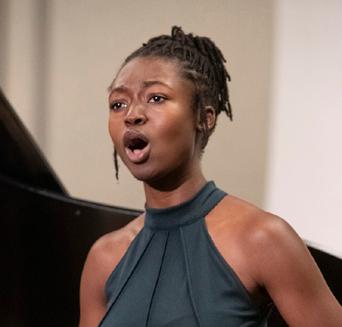
Improvements coming soon to National Student Auditions
Reflections on the 2022 NATS Intern
Over Coffee Was a 3rd-Time
NATS
CONTENTS 37 14 6 VOL. 55, NO. 2 • Fall 2022
4
6
39
40
14
19
22
Program 37 Mentoring
Hit at the National Conference 41 New
Award for Teachers Who Sing INDEPENDENT VOICES 25 Piano Skills for Singers and Voice Teachers 28 SNATS Chapters and the Uncharted Territory of the Independent Studio 30 The Italian Toaster 32 Rethinking the Multi-Teacher Studio UPDATES 5 Remembering Deborah Guess 9
inter nos
VOLUME 55, NO. 2
PUBLISHER
Allen Henderson Executive Director allen@nats.org
EDITOR
Beth Buchanan Marketing and Communications Manager beth@nats.org
INDEPENDENT TEACHER ASSOCIATE EDITOR
Cynthia Vaughn cynthiavaughn@mac.com
ADVERTISING TEAM advertising@nats.org
DESIGN
Carter Publishing Studio inter nos is the official newsletter of the National Association of Teachers of Singing. It is published two times per year (spring and fall) for all NATS members.
PLEASE SEND ADDRESS CHANGES TO:
NATS
Phone: 904.992.9101
Fax: 904.262.2587 Email: info@nats.org Visit us online at: nats.org
PUBLICATION DEADLINES:
All material for publication must be submitted to the NATS Executive Office by the following deadlines:
Spring issue Feb. 1
Fall issue Aug. 1
Mission: To advance excellence in singing through teaching, performance, scholarship, and research.
The National Association of Teachers of Singing, Inc. is a member of the National Music Council.
ASSOCIATION NOTES
Are we there yet?
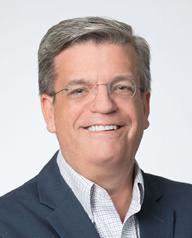
By Allen Henderson, NATS Executive Director
As a parent of four children, the question in the title of this column was asked innumerable times during our family travels, which were almost always by car. Our youngest, Clark, was of age (often prompted by older sisters) to ask this question in the heyday of the show “Barney and Friends” so we began answering with “It is (three) Barney’s until we get there.” Now that our children are all adults we get this question less, but it still often prompts a similar response, especially if Clark asks it.
At NATS, we are constantly asking ourselves this ques tion in a variety of contexts. Our work tends to move in repetitive cycles around events, the largest of which is the two-year cycle between our grandest event, the NATS national conference. Having just completed the 2022 conference and wrapping up paying the final bills, we start a new cycle moving toward the next conference in Knoxville in 2024. Certainly, the recent two-year cycle has been like none other in the history of NATS, and we were delighted to once again return to a live and in-person event. It was an event to remember, and we are grateful to all who made the event a success in so many ways. Right now, we are asking ourselves “Are we there yet?” Have we struck the right balance? What does our attendee feedback say? (You did fill out your conference survey didn’t you?) What elements do we want to replicate, and what needs replacing? I always tell those who ask me about program balance that we can’t feature every aspect of our industry at every conference, but if you come to three conferences in a row you should hopefully have a peek into just about all facets. The other leading programs that are in two-year cycles are: the Emerging Leaders Program, the Joan Frey Boytim Independent Teacher Fellowships, and the NATS Artist Awards and National Musical Theatre Competition. We ask the same questions of ourselves as each committee evaluates and refines these programs in our cycle of continuous improvement.
Other programs and services are on yearly cycles that primarily begin in late sum mer. As you receive this, the first chapters are preparing to hold student audition events as we kick off the National Student Auditions year. We just had our annual zoom meeting with all our auditions chairs and everyone is excited to return to primarily live and in-person auditions again. It clearly will take some adjustments to reserve facilities, make travel arrangements again, organize our students to arrive at the audition site, attend our adjudication meeting, and find the location for our adjudication assignments. I hope you will encourage and excite your colleagues and students to get back into the habit of preparing and receiving independent feed back on their performances. It is also time to apply for the NATS Intern Program if you are eligible. Have you or your students taken advantage of the Summer Program Auditions (SPA) program where online submissions can be made to a variety of summer programs for one small fee? Many of our mentoring initiatives have cycles that begin in the fall. Check them out on our website. Know composers who love art song? Share with them information about the Art Song Composition
Allen Henderson NATS Executive Director
4 INTER NOS | FALL 2022
Award and the NATS Mentoring Program for Composers
Our highest-level opportunity to ask ourselves the title question is through our NATS Strategic Plan. During the presidency of Linda Snyder, a strategic planning process was initiated and since its completion and introduction we have been constantly asking ourselves every quarter, “Are we there yet?” in relation to the 100+ action items. Of those, 77 are deemed short to medium term, and we have already completed 46 (59.7%) of them! This fall, various teams are at work meeting more of them, and we will be providing a more detailed update soon. I encourage you to peruse the entire plan, and see where our work intersects with your particular interests. We are currently at the half-way point of our current plan, which concludes at the end of 2024. Our world has certainly changed since we completed the current plan and introduced it in early 2020. It is a testament to our leaders who have remained focused on these tasks during a difficult time for our profession. My sincere thanks to all.
So “Are we there yet?” How many Barneys until we get there? I am not sure. But if we are really doing our job and living out the NATS vision state ment of “Transforming Lives Through the Power of Singing,” we may never fully get there because we will always be striving to improve our individual and collective impact in our world locally and globally — setting the bar higher and higher in years to come. That’s a LOT of Barneys.
As always, I welcome your comments and conversation on this or any other topic at allen@nats.org
Remembering Deborah Guess
Longtime member of the National Association of Teachers of Singing (NATS) executive staff, Deborah Guess, passed away on July 13, 2022, in Jacksonville, Florida.

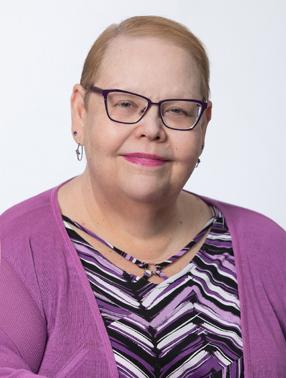
She first joined NATS as office manager in 1997 and was later appointed director of operations in 2006.
Guess was responsible for a variety of tasks, including the planning of the biennial NATS conferences. She also served as managing editor of Inter Nos for many of these years.
Family, friends, as well as past and present NATS executive office staffers attended her memorial service on July 25 in Jacksonville Beach, Florida. She will be missed. Read full obituary
If you would like to offer a tribute or memory of Deborah Guess to share with her family, please send your message to info@nats.org. In lieu of flowers, the family requested that contributions be made to NATS in memory of Deborah Guess. To contribute, please contact the NATS office or use our online form
NATS members also may know her daughter Mandy Ruddock, who joined NATS as a parttime clerical assistant in 2002, working wherever extra help was needed during the busy season. Most recently, Ruddock worked alongside the executive staff at the NATS 57th national conference in Chicago. Ruddock was stationed at the registration desk and also facilitated countless hotel and catering details.
IN MEMORIAM
March – August 2022
Mrs. Irvin (Pauline) Bushman
James Michael Derrick
Margaret George-Hahle
Sara McFerrin
Tannis Fast Vetter
Wendy Williams
nats.org INTER NOS | FALL 2022 5 UPDATES
Needs Must
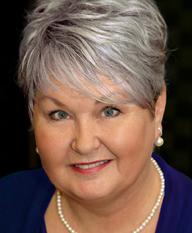
By Cynthia Vaughn, Associate Editor for Independent Voices
For many voice teachers the beginning of the fall semester is the busiest and most hectic time of the year. After a summer of travel, conferences, family time, and an irregular teaching schedule or break from teaching, Fall shouts, “Get to work! Get organized!” For most, fall semester marks a new academic year or independent studio school year and a renewal of order and routine. Schedules must be planned, music must be purchased, technology must be reviewed, new policies or rates must be decided, new students must be welcomed and onboarded, meetings must be scheduled with department chairs or colleagues. Ducks must be in a row. Must Must Must. There is an old English idiom — “needs must” — that means necessity compels you to do something that perhaps you might not want to do at that moment. “Needs must” is something I say to myself when I need to start, stop, or switch tasks.
Often the challenge is procrastination and difficulty in starting a task or activity. The bigger the project (a book) or the more looming the deadline (this column), the harder it is to begin.
I have always found transitioning from one activity to another to be challenging. Even as a child playing outdoors, when it was time to come in and practice piano it was a chore. Even though I loved both activities, I procrastinated and whined, “Just one more game, pleeeeeeeeeese!” Then when I was practicing piano, I’d get so caught up in the playing that I didn’t want to stop to come to dinner. “Pleeeeeeeeeese, just one more song!”
The worst transitions were from something I enjoyed to some thing I dreaded like washing after dinner dishes, cleaning my room, doing homework, or going to bed. “Pleeeeeeeeeese, just one more story before bed.”
A lot of scientific research has been done on transitioning between activities, especially in relation to behavior and atten tion, however, it’s not limited to people with ADHD.
“Transitions are hard for everybody,” says Dr. David Anderson, senior director of the ADHD and Behavior Disorders Center at Child Mind Institute. “One of the reasons why transitions may be hard is that we’re often transitioning from something we like to do to something that we need to do.”
If you have difficulty stopping an activity and find yourself going down a rabbit hole or endlessly scrolling social media, it may be helpful to set a timer. A visual timer can help you see how much time has passed so that you aren’t abruptly jolted from your hyper focus when the timer goes off. Move! Getting up and moving around the room helps me switch tasks when the timer goes off and creates a buffer before the next activity. Maybe you only need a min ute or so to switch tasks. I find that I need at least 15 minutes to switch from other activities (especially email) to get ready to teach voice lessons. My students deserve to have me fully engaged and present when I begin teaching, not thinking about the last email I answered or need to answer.
Often the challenge is procrastination and difficulty in starting a task or activity. The bigger the project (a book) or the more looming the deadline (this column), the harder it is to begin. Strategies that help me include implementing some elements of GTD®, David Allen’s famous Getting Thing Done method. I don’t go too deep into the methodology, but I always have something with me to write notes and get ideas out of my head. Writing things down or sending myself a note, photo, or voice message with the Braintoss app on my iPhone has been a life changer. When I’m in the middle of a big project, but my brain keeps reminding me that I need to buy laundry deter gent, that thought will keep looping until I write it down or ask “Alexa” to add laundry detergent to the shopping list. Allen states, “There is an inverse relationship between things on your mind and those things getting done.” Write it down! To get started I ask myself, “What is the first thing I need to do to begin this task?” It can be as simple as “Put paper in the printer,” or “Open laptop and load Mac Pages.” Once I get started, it is usually easy to find my groove and time flies by. Then, the chal lenge become stopping. (See above!)
Know yourself. Some people can work in noisy, cluttered spaces or a busy coffee shop or co-working space. I know that I need a quiet space away from distractions like the televi sion or refrigerator. That may be impossible if you are working from home with family, children, and pets! Some parents are able to set boundaries on when they are working (office door closed) and not working (office door open). When my children
Cynthia Vaughn Associate Editor for Inter Nos CynthiaVaughn@mac.com
6 INTER NOS | FALL 2022 INDEPENDENT VOICES
were young, however, I found that a closed office or studio or bathroom door was an invitation for little hands to knock on the door and cry “Mommy!” That is when I became a night owl, doing most of my creative and writing work late at night when I had the whole house to myself. Some colleagues find their most productive time is very early morning before the household wakes up. When I check my email at 9 a.m., I see the colleagues who emailed me at 5 a.m. — hello, Karen Michaels. Whatever works for you!
If you aren’t familiar with habit stacking, I highly recommend James Clear’s book “Atomic Habits — Tiny Changes, Remarkable Results.” Habit stacking has helped me establish a fairly steady routine for mornings and bedtime. When I’m truly stuck on a project, I step away. Sometimes a short walk, a drink of water, or a snack can recharge my ideas and I can return to the computer ready to write. It also may help to have an account ability partner. Who can you reach out to who understands your process? It could be a coach, a friend, or a family member.
A calendar or planner is an absolute necessity. I’ve tried them all, and I find I do best with a paper planner and an iPhone calendar and separate To-Do app. I like the Panda Planner paper calendar’s focus on gratitude; however, my current favorite paper planner is Monk Manual daily planner with two pages for each day and plenty of white space. The daily Prepare page on the left has space for three priorities, eight To-Do checkboxes, things I’m grateful for, things I am looking forward to, and a blank daily schedule. I map out my day in the morning or the night before, making sure that I schedule breaks or buffers between activities. At the end of the day, I complete the daily Reflect page on the right that includes spaces for ways I can give, three highlights, I was at my best when…, I felt unrest when…, one way I can improve tomorrow, and open space for notes about anything. Each month I choose a daily Monk Manual habit and theme. Habits are quantifiable (drink water). Themes are not quantifiable (delight). I love the Fantastical calendar on my iPhone that syncs with iCal on my desktop. My absolute favorite productivity and organization app is Things 3. For digital notes, I use the built-in Apple Notes that syncs between my devices. For handwritten notes and student lesson notes, I am a huge fan of erasable cloud-con nected Rocketbooks. It’s taken awhile to find my ideal tools and resources for staying organized. These work well for me, and I encourage you to search for tools that help your organi zation and productivity. I could write an entire article just about productivity tools, however that would keep me from finishing this column and getting ready for my next task. So instead, I’ll say, “Needs must.”
PS: If you’d like to go down a delightful historical rabbit hole about the grammar and etymology of the adverb turned idiom, “Needs must,” and the later proverb, “He must nedys go that the deuell dryues” (He must needs go that the devil drives), visit O’Conner and Kellerman’s Grammarphobia
This issue’s Independent Voices articles feature Brenda Earle Stokes’ “Piano Skills for Singers and Voice Teachers” with suggestions for revamping the way singers are taught piano in universities and private lessons. Nicholas Perna, NATS Vice President for Outreach, encourages independent studio teach ers to sponsor their own non-university Student NATS Chapters, and Michelle Markwart Deveaux shares a story with a message, “The Italian Toaster.”
— Cynthia Vaughn
Cynthia Vaughn, associate editor for Independent Voices, has been a NATS member since 1983. She has been active in leadership at the chapter and regional level and was an invited master teacher for the 2020 NATS Intern Program (postponed to 2021 due to COVID). She recently retired from Magnolia Music Studio, the multi-teacher studio she founded and directed in Colorado and Washington 2008 to 2022. Previously she was on the voice faculty of Colorado State University. Vaughn and the late Meribeth Dayme, PhD, co-authored three editions of “The Singing Book,” a leading college voice class textbook/anthology. A new fourth edition is in progress with editor Matthew Hoch. Vaughn and Hoch edited “The Essentials of CoreSinging: A Joyful Approach to Singing and Voice Pedagogy” by Meribeth Dayme which was released in June 2022.
nats.org INTER NOS | FALL 2022 7 INDEPENDENT VOICES
Missed the 2022 Na�onal Conference?
It’s not too late to see what the excitement was about! Packages are now available for purchase.
When you log in to the Live Learning Center, you'll experience a fabulous user-friendly platform. Our partners at Multiview have worked vigorously to update the site with new features including a faster load time, sleek look, and effortless navigation. Additionally, this website is entirely mobile friendly on all devices.
2022 NATS 57th National Conference Limited Time Offers

Full Conference Package $395 Members/Non-Members
Pick 20 Package $199 Members | $229 Non-Members
Pick 10 Package $109 Members | $119 Non-Members
All premium Workshops $60 Members/Non-Members
Email multiviewmediasupport@multiview.com for member access.

REMINDER to our 2022 National Conference attendees
All 2022 National Conference registrants have received an email providing FREE access to all of the session videos until February 28, 2023.
Email multiviewmediasupport@multiview.com for assistance.
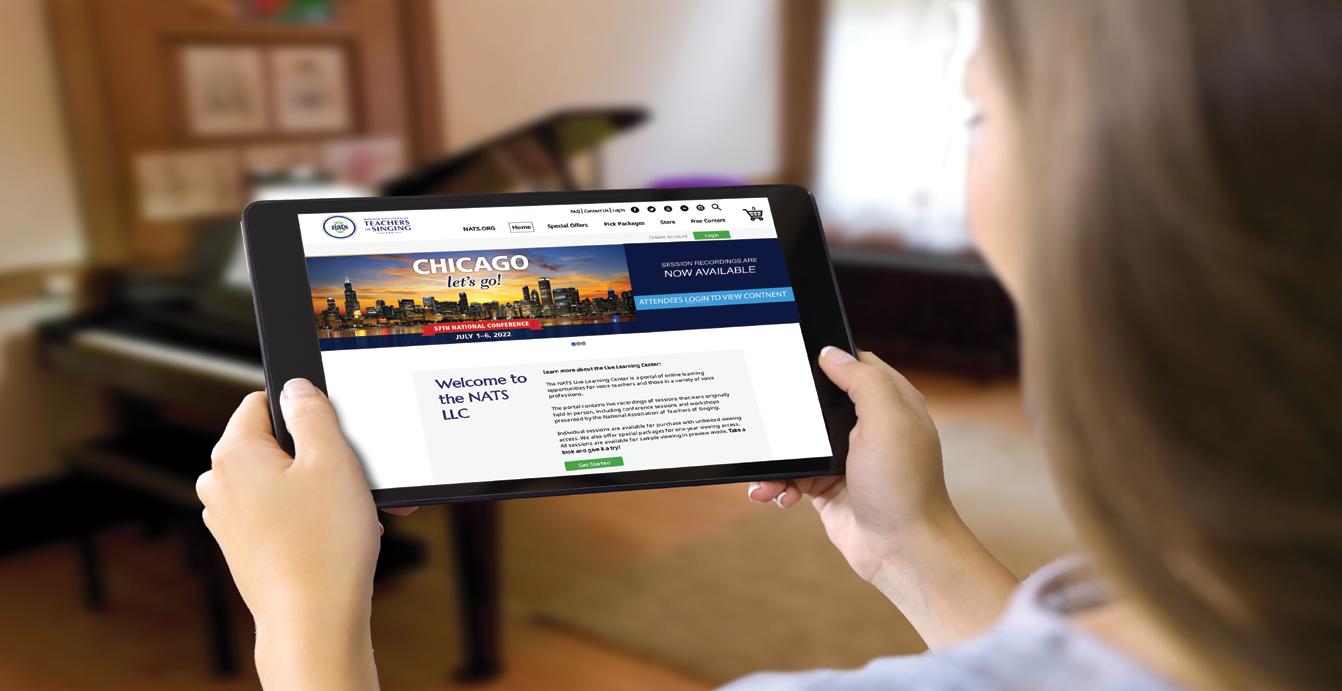 Studio photo courtesy of VOIX DE VIVRE.
To access the NATS Live Learning Center, please visit nats.sclivelearningcenter.com
NATS 57th National Conference in Chicago Is a Success
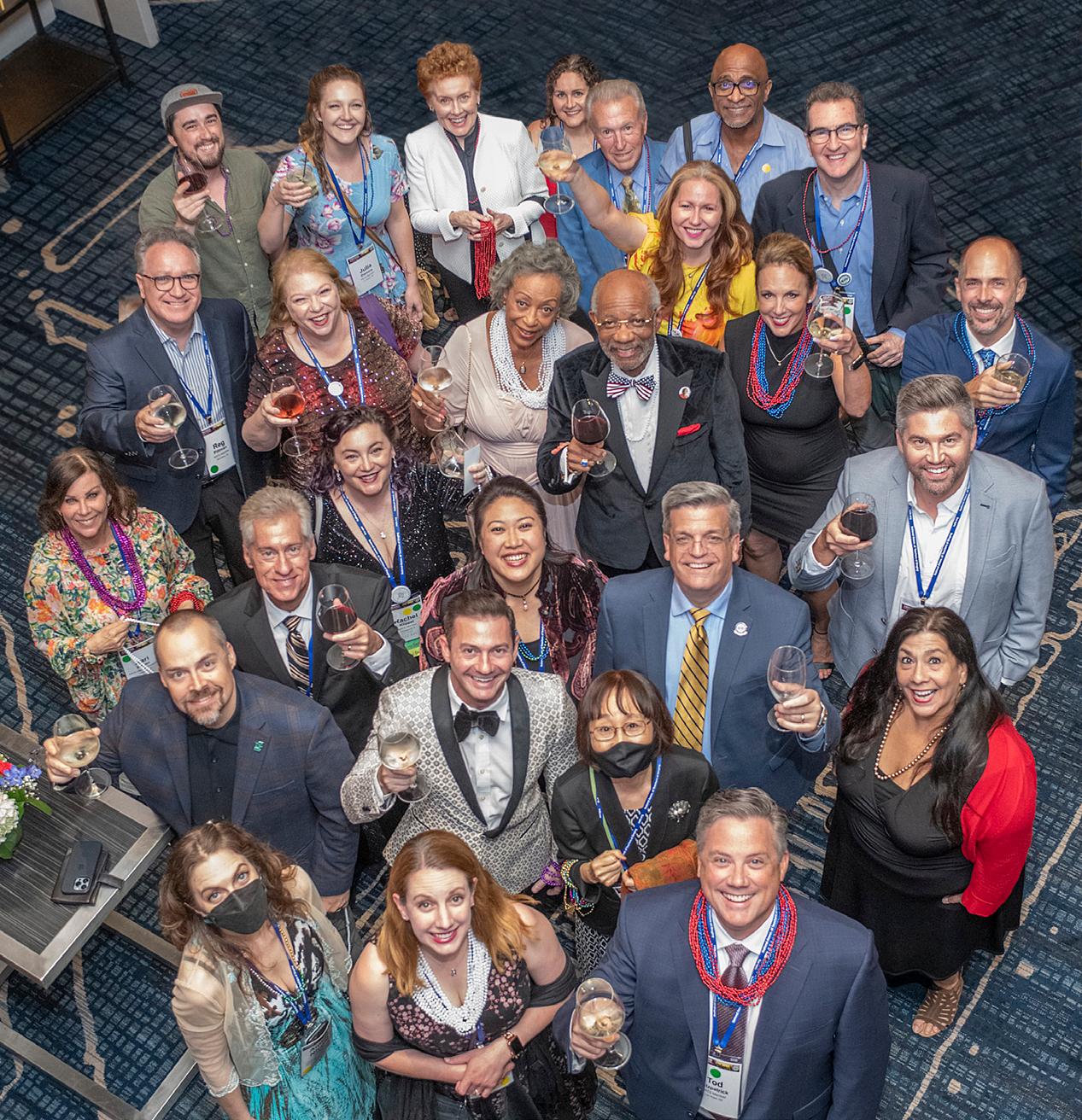
Hundreds of students and people from across the voice industry attended the 57th national conference of the National Association of Teachers of Singing (NATS) July 1-6 in downtown Chicago. Featured guests included countertenor extraordinaire John Holiday, the dynamic duo concert of composer Zina Goldrich and lyricist/author Marcy Heisler, collaborative pianist Craig Terry, laryngologist H. Steven Sims, composer and inventive vocalist Clarice Assad, as well as noted children’s performers Red Grammer, Jazzy Ash and Justin Roberts, among many others. The event also included the largest number ever of NATS members presenting at conference — with more than 200 total presenters! It was a wonderful time for NATS members to be together and sing together again in person.
Held at the beautiful Fourth Presbyterian Church in downtown Chicago, the July 5th concert featuring star countertenor John Holiday was one for the ages. Holiday, joined by pianist Kevin J. Miller, began the first half with a contemporary classical set. After a brief intermission, he performed timeless hits from several genres with some songs featuring Holiday’s creative director Neeki Bey on piano. After a rousing rendition of “All By Myself” to close the second half of the concert, Holiday
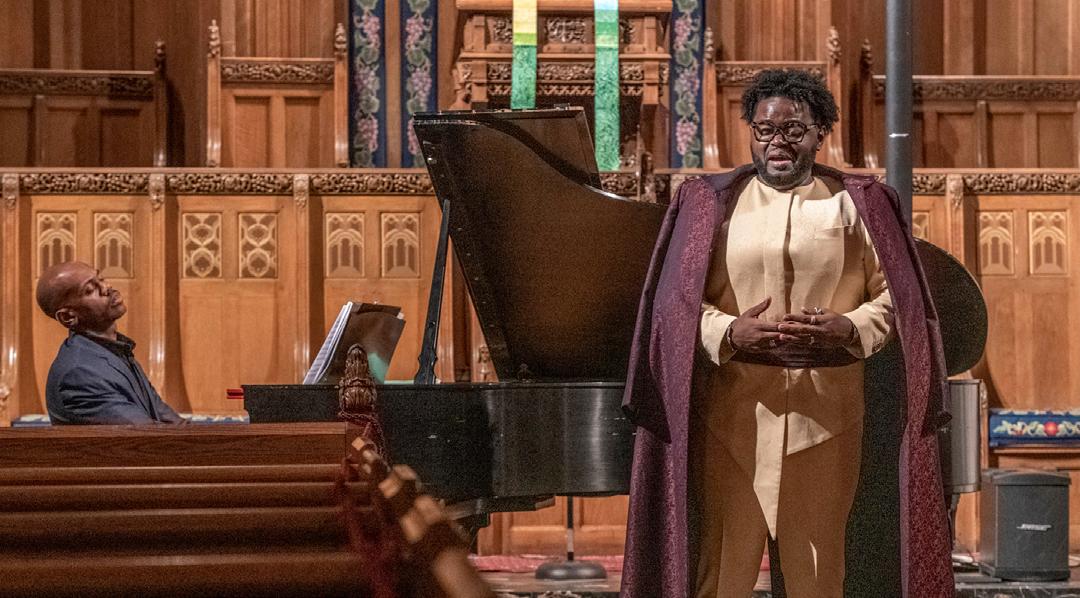
treated the appreciative NATS audience to encores of “Ain’t Misbehavin’” and a mashup of “This Little Light of Mine” with “Over My Head I Feel Music In the Air” and “Amazing Grace.” In addition to his concert, Holiday led a master class on the afternoon of July 4 at the Chicago Marriott Downtown Magnificent Mile.
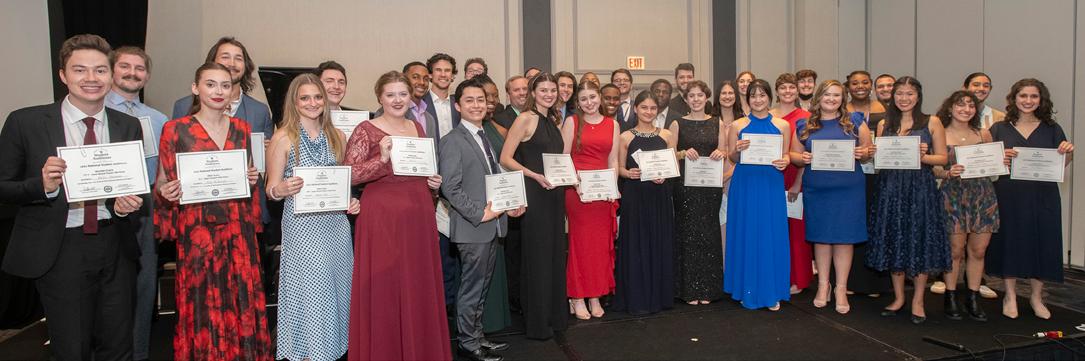
NATS announced the winners of the 2022 National Student Auditions (NSA), which was held live on July 1 and 2 in con junction with the national conference. Over these two days, more than 250 top young vocalists from the across the U.S. and Canada participated in the semifinal rounds, with 57 advancing to final rounds. In total, winners received more than $44,000 in prizes this year. The Hall Johnson Spiritual Competition was also included in this year’s NSA categories.
In addition to NSA, the conference programing highlighted all of the NATS competitions. The 2022 NATS Artist Award winner Claire McCahan along with pianist Barbie Noyes performed on the first half of the NATS Competition Winners Concert. The second half welcomed both 2020 National Musical Theatre Award winner Lauren Carr as well as 2022 NMTC winner David Young as they performed duets and solo works, with pianist Amanda Hopson.
nats.org INTER NOS | FALL 2022 9 NATS PROGRAMS
NATS PROGRAMS
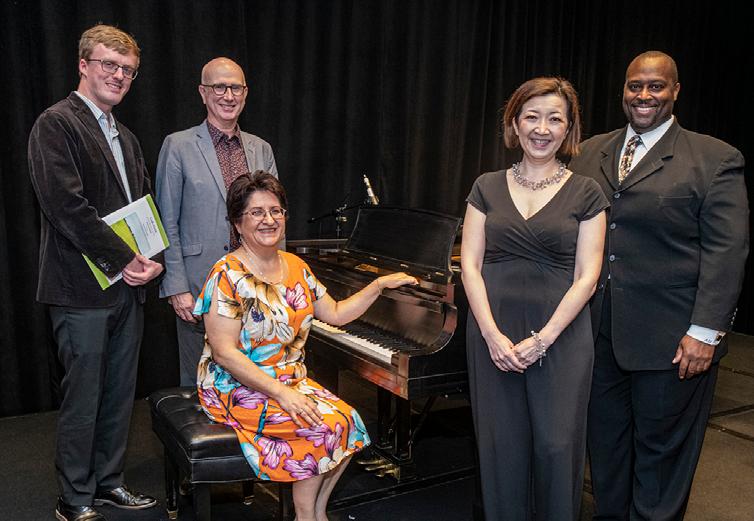
In another special concert event, the Art Song Composition Award Winners Recital, NATS featured the works of 2021 win ner Jeffrey Ryan and 2022 winner Ericsson Hatfield. Baritone Michael Preacely and pianist Valerie Trujillo performed Ryan’s art song cycle, “Everything Already Lost,” with the poetry of Jan Zwicky. Trujillo also played for the second work as she joined mezzo-soprano Sahoko Sato Timpone for Hatfield’s set of four songs, “God’s World,” which used the poetry of Edna St. Vincent Millay.
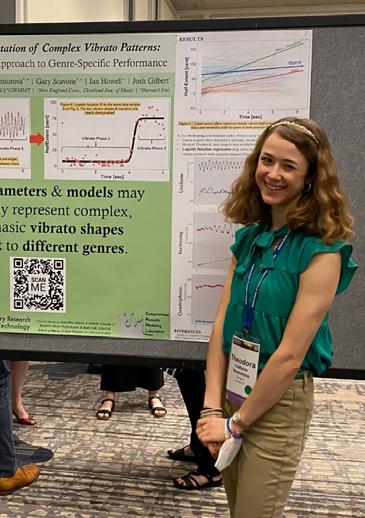
Theodora Nestorova was named the winner of “Best Poster Paper” at the national conference for her poster, “Analysis & Interpretation of Complex Vibrato Patterns: A Novel Parametric
Approach to Genre-Specific Performance.” Nestorova was one of more than 30 poster paper sessions that were accepted to present at the conference. This is her second win for best poster at a major conference, having won best student poster paper at PAVA’s virtual conference in 2020.
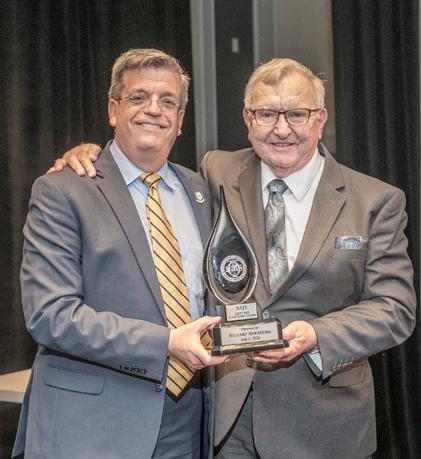
NATS also honored Journal of Singing Editor-in-Chief Richard Sjoerdsma and longtime NATS member Sharon Mabry with Lifetime Achievement Awards at the gala celebration ban quet on Sunday, July 3. Sjoerdsma announced he would be relinquishing his role after the 2022-2023 publication cycle concludes. At that time, he will have served in the position for 22 years. Mabry recently retired after teaching voice for 52
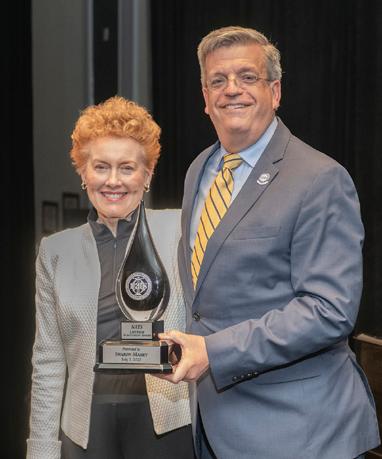
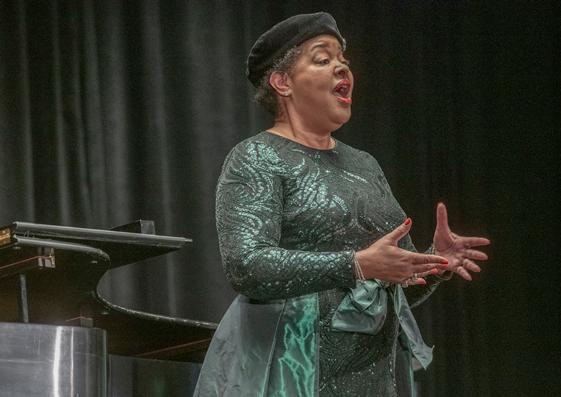
Left (L to R): Ericsson Hatfield, Jeffrey Ryan, Valerie Trujillo, Sahoko Sato Timpone, Michael Preacely. Below: Theodora Nestorova. Bottom (L to R): Allen Henderson with Richard Sjoerdsma. Sharon Mabry and Allen Henderson.
10 INTER NOS | FALL 2022
years at Austin Peay State University. For a quarter of a century, between 1985 and 2009, Mabry wrote a column called “New Directions” where she discussed trends in contemporary music.
Thanks to the generous support of the conference sponsors who help make this event possible every two years, NATS members and friends came away with many valuable experi ences from the conference. The association also commends the hard work of the national conference committee led by con ference chair Rebecca Schorsch and conference program chair Sam Handley for their outstanding contributions and efforts. NATS is planning to host its next grand gathering in Knoxville in 2024. For those who are not connected already with NATS on social media, we invite you to like the National Association of Teachers of Singing Facebook and Instagram accounts. Did you know that NATS also posts free content all year long on its NATS YouTube Channel? We invite you to subscribe today!
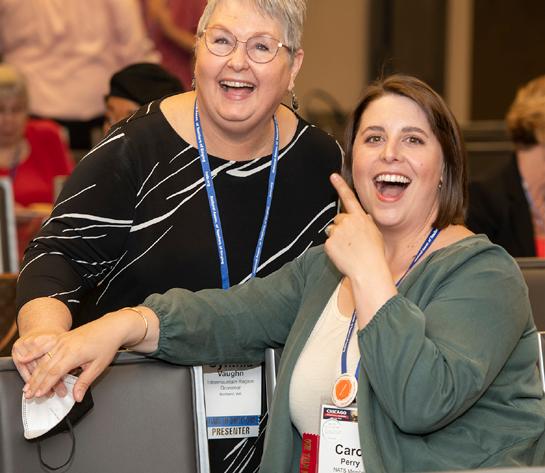
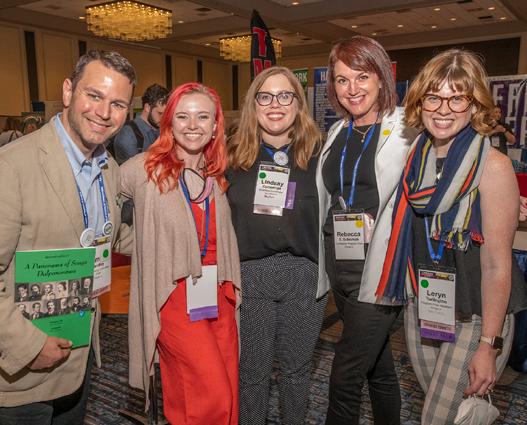
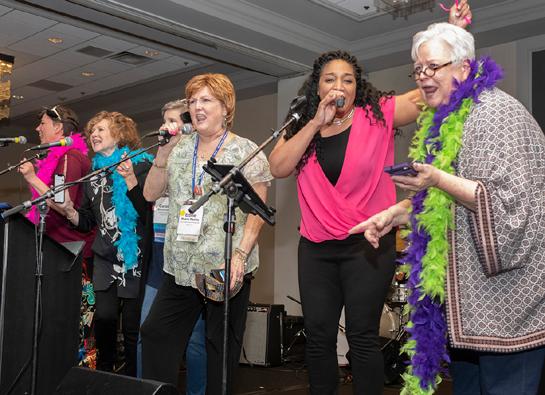
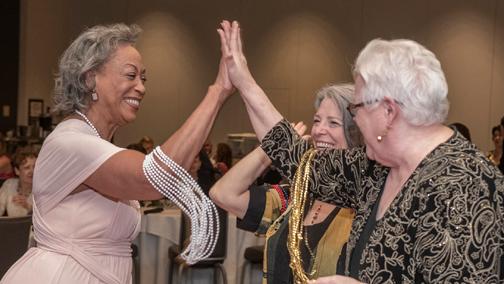
Top left (L to R): Sam Handley, Ginny Weant, Lindsay Cummings, Rebecca Schorsch, Leryn Turlington. Top right: Cynthia Vaughn and Carol Perry. Bottom left: Ollie Watts Davis. Middle right: Barbara Hill Moore high-fives Karen Brunssen in front of Joanne Bozeman. Bottom right (L to R): Ellen Pieterse, Diana Allan, Carole Blankenship, Edrie Means Weekly, Trineice RobinsonMartin and Karen Brunssen sing “We Are Family.”
nats.org INTER NOS | FALL 2022 11 NATS PROGRAMS
—
You to All Our Sponsors
BRONZE SPONSORS
Ipsilon Music Press
ADDITIONAL SPONSORS
Hal Leonard
Hal Leonard Corporation is the world leader in vocal music. Beyond its own extensive publications (The Vocal Library se ries and musical theatre titles), Hal Leonard is exclusive North American distributor for Schirmer, Boosey & Hawkes, Ricordi, Durand, Salabert, and Schott. Visit the Hal Leonard exhibit to see hundreds of publications, including new releases.
Ipsilon Music Press will be sporting its one-of-a-kind new pub lication of The Yiddish Folksong Project Anthology, Volume 1 — the first publication of the late, great Robert De Cormier’s classi cal arrangements of eighteen remarkable Yiddish folk songs. Dr. Lori McCann, former NATS Eastern Regional Governor, calls this ‘a superb anthology … songs eminently worthy of inclusion in the art song œuvre’. Copies of the anthology will be on display, and on sale, and an audio recording of all eighteen songs in the Anthology will be available to hear at the booth. A great addi tion to your song repertoire library!
American Academy of Teachers of Singing (AATS)


Sunday morning coffee break
The American Academy of Teachers of Singing is a select group of nationally recognized teachers of singing and voice experts. Members include those who are faculty at prestigious colleges, universities and conservatories, as well as teachers in indepen dent studios. Many members are esteemed performers of clas sical and/or contemporary commercial music, noted authors, and voice science researchers. The Academy offers professional advice and guidance to those interested in singing, the teaching of singing, the business of singing, and the science of singing.
VoiceLessons.com
VoiceLessons.com is an online real–time platform that delivers the most effective, highest quality singing lessons available on the Web. The Patented Vocaloop™ Technology was developed by Mike Elson, a USC graduate with dual degrees in vocal per formance (BM) and computer science (BS). Using remote net work keyboard instrument technology and full–duplex audio, its dynamic vocal exercise player provides accompaniment just like in a face to face lessons but without the audio lag. Each vocal exercise can be recorded and saved in the cloud under lesson history making it available for practice, study, and review by students online, anytime, anywhere. To start your vocal jour ney, visit our website at VoiceLessons.com and request a FREE, No Obligation Demonstration or call us at 844.5.LESSON.
SILVER SPONSOR
The SpeakEasy Cooperative
The SpeakEasy Cooperative (SECO) is the premier organization for business owners in the voice field. Founded for and by voice teachers and trainers, SECO is a for-profit community dedicat ed to embracing, engaging, and expanding the humans who run voice-related businesses, to bring maximum impact and intention to every income stream they touch. We are a brave space where you gain simplicity, confidence, and a league of SECOmpatriots who motivate you to ask questions and express opinions — without having to defend your expertise, skills, or techniques. We are honored to be a sponsor of NATS Chicago 2022 and represent the wide range of business owners in at tendance! Huzzah!

RCM Certificate Program

The RCM Certificate Program, considered one of the finest mu sic education systems in the world, includes comprehensive curricula for 20+ instruments, voice, speech arts/drama, theo ry, and history. Our Voice Syllabus and Series promote healthy vocal development for all ages and abilities, supporting singers and teachers as they build a solid foundation for success.
The RCM Certificate Program includes third-party examina tions conducted by professional musicians trained to provide students, parents, and teachers with measurable objectives for musical growth. RCM recognizes the achievements of all students and celebrates those who excel with Celebration of Excellence events held annually throughout North America.
RCM also supports teachers by providing innovative and time-saving resources. Teachers and students use the Online Portal to stream high-quality piano-accompaniment recordings, find useful teaching resources, watch webinars, access profes sional development tools, and more. RCM Online Ear Training provides access to multilevel training and support for practical examinations for a low monthly fee. RCM theory and history courses prepare well-rounded musicians.
Bastian Voice Institute
Bastian Voice Institute (www.bastianvoice.com) is a major re source for singers. As a laryngology sub-specialty institute, BVI is devoted to patient care above all, but also to teaching (see www.laryngopedia.com) and research. Comprised of 3 physi cians, a physician assistant, and a caring support team, BVI is located in the center of greater Chicago (in the western suburb of Downers Grove). Our clinicians can all interact with the sing ing voice, during the assessment of vocal capabilities and lim itations, as part of the diagnostic process. We offer diagnosis, medical, and behavioral treatments, and for otherwise irrevers ible injuries, vocal cord microsurgery.

Chicago Chapter NATS
Saturday morning coffee break
Driven by its mission statement, The National Association of Teachers of Singing (NATS) offers a variety of lifelong learning experiences to its members, with workshops, intern programs, master classes and conferences, all beginning at the chapter level and progressing to national events.
FULL VOICE Music SNATS gathering
FULL VOICE Music is a Canadian educational publishing compa ny. Working with music education experts and children’s music composers worldwide, we specialize in repertoire and teach ing resources that celebrate young singing students. The FULL VOICE Podcast, soon starting its seventh season, shares inter views about pedagogy, business strategies, and best practices for your voice studio. Please drop by the FULL VOICE Booth to peruse our resources, discover kid-inspired repertoire, and ex plore what happy singing is all about.

Roosevelt University

NSA semifinals and student sessions site
Comprising the Music Conservatory, the Theatre Conservatory, and the Center for Arts Leadership, the Chicago College of Performing Arts (CCPA) at Roosevelt University trains worldclass musicians and theatre professionals in the heart of one of the country’s most creatively accomplished cities.
GOLD SPONSORS
Thank
— NATIONAL ASSOCIATION of TEACHERS of SINGING • 57TH NATIONAL CONFERENCE •

58 June28–July2,2024
2022 National Student Auditions Winners
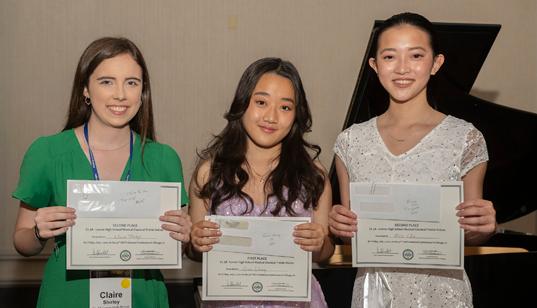
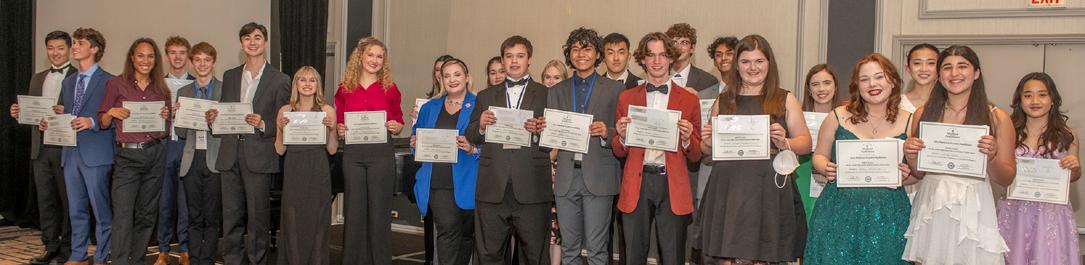
The National Association of Teachers of Singing held the final rounds of the 2022 National Student Auditions (NSA) live and in-person on Friday and Saturday, July 1-2 in conjunction with the NATS 57th national conference at the Chicago Marriott Downtown Magnificent Mile. High-school categories were held July 1, and college-age & up categories were held July 2.
NATS invited 14 singers from each of the 18 NSA categories (plus the Hall Johnson Spirituals Competition) to take part in the 2022 national semifi nals. Then, the top 3 singers from each category advanced to the national final round.
Over two days, between the high school and college & up categories winners, more than 250 top young vocalists from the across the U.S. and Canada participated in semifinal rounds, with 57 advancing to final rounds. In total, winners received more than $44,000 in prizes this year.
The Hall Johnson Spiritual Competition is part of this year’s NSA categories since it is a conference year (or even-numbered year), alternating with the American Negro Spirituals Categories in non-con ference years. Sponsors of the Hall
Johnson Spiritual awards included the Hall Johnson Estate, first place prize; National Association of Teachers of Singing, second and third place prizes; Bay View Music Festival, two full tuition scholarships to the American Spirituals Initiative at the Bay View Music Festival; and American Spiritual Ensemble, one full tuition scholarship to the American Spirituals Initiative.
Additionally, the Dorothy Sawatski Prize was awarded to the first place of the lower classical treble voice category. NATS member and former member of the NATS Board of Directors, Nita Herrick-Colpitts, provided the prize in honor of her teacher Dorothy Sawatski who was a charter member of NATS
Southern Region and served as its region governor for several years.
Staff collaborative pianists for 2022: Dana Brown, Paula Gelpi, Jonathan Gmeinder, Jodi Goble, Nick Graffagna, Steven Gross, Linda Madonia, Jeffrey Poindexter, Olga Slyanskaya and Nick Sula.
Special thanks to all NSA coordinators, NSA committee and subcommittee members, adjudicators at all levels, NATS donors, Roosevelt University for hosting semifinal rounds, collaborative pianists, and to all of the NATS members and student singers.
Congratulations to all for another wonderful year of NSA!
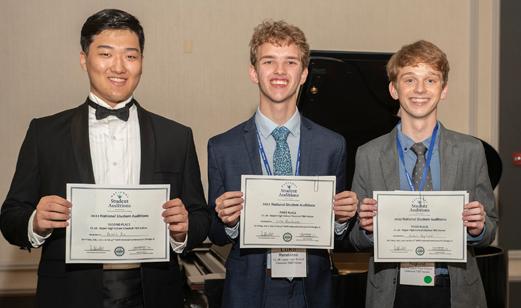
CL 4B - Upper High School Classical TBB. L to R: Dennis Xu (2nd), Luke Randazzo (1st), Anders Haglund (3rd).
CL 3A - Lower High School Classical Treble. L to R: Claire Shirley (2nd), Grace Chung (1st), Alicia Chu (3rd).
14 INTER NOS | FALL 2022 NATS PROGRAMS
2022 Winners of High School Categories
PLACE PRIZE $
WINNER
TEACHER REGION
CL 3A - Lower High School Classical Treble
2nd $525 Alicia Chu Lily Zhang Texoma
2nd $525 Claire Shirley Danielle Knox Mid-Atlantic
1st $1,200 Grace Chung Jihnwan Byun New England CL 4A - Lower High School Classical TBB
3rd $450 Owen Kilgore
Brad Barrett Central
2nd $600 Eddie Qiwu Yin Shan Han Northwestern
1st $1,200 Tejas Gururaja Brad Barrett Central CL 3B - Upper High School Classical Treble
3rd $450 Madeleine Zuckerman
Laura Brown Great Lakes
2nd $600 Sophia Stopyra Shelly Milam-Ratliff Mid-Atlantic
1st $1,200 Fangzhen Wang Teresa Winner Blume New England CL 4B - Upper High School Classical TBB
3rd $450 Anders Haglund Scott Blankenbaker North Central
2nd $600 Dennis Xu Summer Song Texoma
1st $1,200 Luke Randazzo Kathy Cammett Great Lakes MT 3A - Lower HS Musical Theatre Treble
3rd $450 Alivia Rowe Kim Lamoureux New England
1st $900 Rebecca Schledwitz Catherine Froneberger Siarris Mid-Atlantic
1st $900 Caragh Zeigler Regina Torres Southeastern MT 4A - Lower HS Musical Theatre TBB
3rd $450 Trey Logeman
David Clark Mid-Atlantic
1st $900 Keenan Friberg Christa Bowens Mid-Atlantic
1st $900 Wesley Geary Hugo Vera Cal-Western MT 3B - Upper HS Musical Theatre Treble
3rd $450 Paige Robinson
Rachel S. Hop Intermountain
2nd $600 Janessa Minta Beverly Park Northwestern
1st $1,200 Sydney Barnes Alisa Belflower West Central MT 4B - Upper HS Musical Theatre TBB
3rd $450 Jackson Daley
Stephanie Kreutz New England
1st $900 Andrew Bakun Erin G. McCarthy Northwestern
1st $900 Charles Eastman Beverly Blouin Southeastern
nats.org INTER NOS | FALL 2022 15 NATS PROGRAMS
PLACE PRIZE $
WINNER
HJ 7 - Hall Johnson
2nd $700 Matthew Merritt
TEACHER REGION
Barbara Hill Moore Texoma
2nd $700 Safiatou Souare Jessie Wright Martin Mid-Atlantic 1st $2,000 Franklin Espinosa Lynn Eustis New England CL 5 - Lower Classical Treble Voice
3rd $450 Abigail Arnold Pamela Hinchman Central
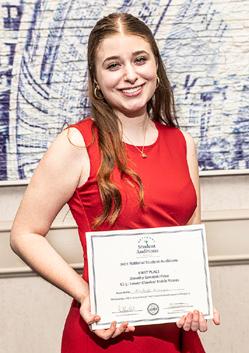
2nd $600 Caroline Carter Katherine Jolly Great Lakes **1st $1,200 Isabelle Kosempa Jeanne Fischer Mid-Atlantic CL 6 - Lower Classical TBB Voice
HM Matthew Dexter Stephen Morschek Texoma
3rd $450 Travis Guillory Salvatore Champagne Great Lakes 2nd $600 Jack Burrows Holly Boaz Northwestern 1st $1,200 Matthew Juhlin Chris A. Thompson Central CL 7 - Upper Classical Treble Voice
HM Payton Tanner Susan Hurley Southern
3rd $500 Halle Fish Leanne Gayle Freeman-Miller Central
2nd $900 Stephanie Chee Theresa Brancaccio Central
1st $1,600 Molly McDonough Leanne Gayle Freeman-Miller Central CL 8 - Upper Classical TBB Voice
HM Gabriel Lockheimer-Toso
David Hamilton North Central
2nd $700 Robert Wise Chad Sonka Central
2nd $700 Hugh Davis Holly Boaz Northwestern
1st $1,600 Kellan Dunlap Drake Dantzler Great Lakes CL 9 - Advanced Classical Treble Voice
3rd $500 Tess Ottinger Elizabeth Daniels Mid-Atlantic
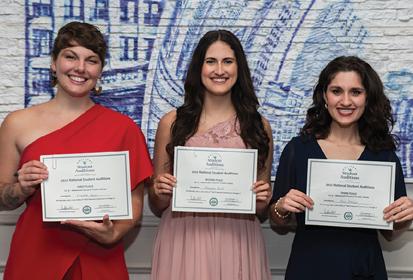
2nd $900 Alexandra Burch Daniel Johnson-Wilmot North Central
1st $1,600 Elizabeth Hayes Holly Bewlay Eastern (continued next page)
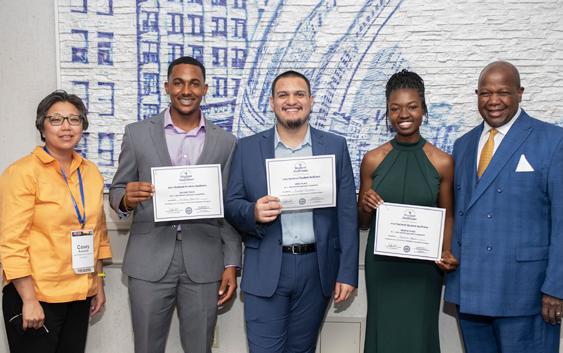
L to R: Casey Robards, Matthew Merritt (2nd), Franklin Espinosa (1st), Safiatou Souare (2nd), Everett McCorvey
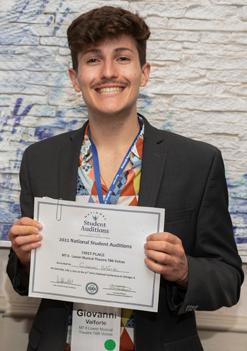
MT 6 - Lower Musical Theatre TBB Voice winner Giovanni Valforte (1st)
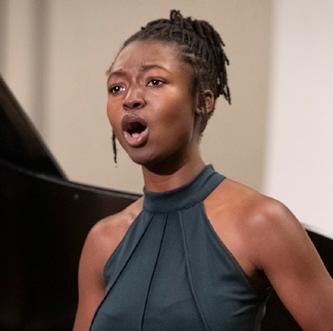
CL 5 - Lower Classical Treble Voice winner Isabelle Kosempa (1st)
16 INTER NOS | FALL 2022 NATS PROGRAMS
PLACE PRIZE $
WINNER
CL 10 - Advanced Classical TBB Voice
TEACHER REGION
HM Matthew Aiken Danielle Watson Southern
3rd $500 Nicholas Carratura Melissa Chavez Mid-Atlantic 2nd $900 Cameron Smith Michael T. Hix Texoma
1st $1,600 Dylan Glenn Jeffrey Springer Southeastern MT 5 - Lower Musical Theatre Treble Voice
HM Claire Marshall Anne Marie Daehn Central
3rd $450 Lily Brannigan Christi Amonson Southeastern 2nd $600 Sitare Sadeghi Polly Cornellius Mid-Atlantic
1st $1,200 Michea Walls Donna Hinds Sawyer Texoma MT 6 - Lower Musical Theatre TBB Voice
3rd $450 Henry Seifried Andrew Ryker Great Lakes 2nd $600 Iván Moreno Jeffrey Picon Texoma 1st $1,200 Giovanni Valforte Chris Thompson Central MT 7- Upper Musical Theatre Treble Voice
3rd $500 Danielle Major Kyle Stegall Central
2nd $900 Hannah Sapitan Erin G. McCarthy Northwestern
1st $1,600 Madison Stark Alisa Belflower West Central MT 8 - Upper Musical Theatre TBB Voice
3rd $500 Anthony Blatter
Steven Tharp Central
2nd $900 Blake Stevenson Thomas Michael Allen Cal-Western 1st $1,600 Matthew Robison Reginald Pittman West Central
** Dorothy Sawatski Prize; We’re proud that NATS member and former member of the NATS Board of Directors, Nita HerrickColpitts, has provided the first prize for the Lower Classical Treble Voice category in honor of her teacher Dorothy Sawatski. Professor Sawatski was a charter member of NATS Southern Region and served as its Region Governor for several years. She was also the national Vice President for Workshops, National Convention Chair, and Program Chair. Professor Sawatski taught for over 50 years and was the founder of the University of Arkansas, Little Rock programs in voice, opera, and musical theatre.
2022 Winners of College-Age & Up Categories
nats.org INTER NOS | FALL 2022 17 NATS PROGRAMS
NATS National Student Auditions are headed for San Diego!
The excitement of NATS National Student Auditions continues with a national round of competition and prizes at the NATS Summer Workshop in San Diego, July 7-8, 2023.
REGION – PRELIMINARY ROUNDS
Audition in YOUR Regional Event.
Five singers from each regional category with a national category equivalent will advance to National Online Screening.
NATIONAL ONLINE SCREENING
Friday, April 14, 2023 - Deadline for online digital submissions.
SEMIFINAL AND FINAL ROUNDS
Top three singers from each category advance to final round. 1st, 2nd, and 3rd place winners receive prize money.
ELIGIBILITY
All singers ages 14-30 as of your regional audition date.
Audition Categories
Category*
Age Limit Years of Study
MT 3-A Lower HS Musical Theatre Treble Voice 14-16 9th and 10th Grade
MT 3-B Upper HS Musical Theatre Treble Voice 16-19 11th and 12th Grade
MT 4-A Lower HS Musical Theatre TBB Voice 14-16 9th and 10th Grade
MT 4-B Upper HS Musical Theatre TBB Voice 16-19 11th and 12th Grade
CL 3-A Lower HS Classical Treble Voice 14-16 9th and 10th Grade
CL 3-B Upper HS Classical Treble Voice 16-19 11th and 12th Grade
CL 4-A Lower HS Classical TBB Voice 14-16 9th and 10th Grade
CL 4-B Upper HS Classical TBB Voice 16-19 11th and 12th Grade
MT 5 Lower Musical Theatre Treble Voice
22 0-2 post high school
MT 6 Lower Musical Theatre TBB Voice 22 0-2 post high school
CL 5 Lower Classical Treble Voice 22 0-2 post high school
CL 6 Lower Classical TBB Voice 22 0-2 post high school
MT 7 Upper Musical Theatre Treble Voice
MT 8 Upper Musical Theatre TBB Voice
CL 7 Upper Classical Treble Voice
25 3-5 post HS, all undergrad.
25 3-5 post HS, all undergrad.
25 3-5 post HS, all undergrad.
CL 8 Upper Classical TBB Voice 25 3-5 post HS, all undergrad.
CL 9 Advanced Classical Treble Voice
30 4+ post high school
CL 10 Advanced Classical TBB Voice 30 4+ post high school
14–19 No limit – all high school
23 1–3 yrs. post high school
Negro
25 4+ yrs. post high school
Contralto, Countertenor. TBB Voice: Tenor, Baritone, Bass
AS 3 HS American Negro Spiritual – All Voices
AS 7 1st–3rd yr. Post HS American Negro Spiritual – All Voices
AS 9 4th & 5th yrs. Post HS & Graduate American
Spiritual – All Voices
*Treble Voice: Soprano, Mezzo-soprano,
See complete rules, regulations, and repertoire information at nats.org
TOTAL PRIZES: MORE THAN $48,500 FIRST PLACE, SECOND PLACE and THIRD PLACE prizes will be awarded in each category.
Improvements coming soon to National Student Auditions
By Alisa Belflower, NATS National Vice President for Auditions
At NATS, we embrace all genres of vocal music as art to be respected and appreciated. As a part of the NATS mission to advance excellence in singing for all teachers and students of singing, our National Student Auditions (NSA) leadership team is working diligently to expand our NATS student auditions to include a broader spectrum of music. We want to welcome teachers and students whose singing art is not limited to opera, art song, spirituals, and musical theatre — our current NSA categories of entry. In the 2023-24 cycle of NSA, we will open 13 new national categories in our student auditions. Some NATS chapters and regions have already been pioneering similar categories of auditions. Their successes inspired and informed our new NSA categories. The 2023-24 cycle of auditions will mark the first time these new categories of auditions will advance to the national levels of NSA.
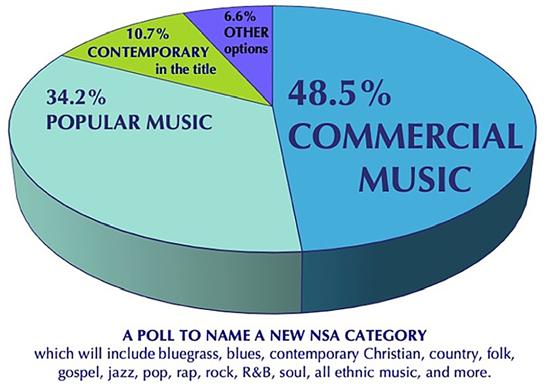
In an ideal world, every genre of vocal music would each have separate NSA categories. Considering that Spotify currently offers 5,071 different genres of music, more genres exist than we could ever hear and adjudicate individually at an NSA event. An umbrella category is our best initial step forward, but we were without a satisfactory name for the new category of auditions that will include bluegrass, blues, contemporary Christian, country, folk, gospel, jazz, pop, rap, rock, R&B, soul, all ethnic musics, and more. We turned to our NATS members for answers.
To gain their expertise, we polled the 54% of NATS members who designated that they teach genres of vocal music not yet included in the national levels of NSA. We were thrilled to receive an unprecedented, high percentage of responses to this poll. A significant majority of those responding agreed that “commercial music” was the best title for this new umbrella category. We heard you and we listened. Multiple new NSA categories for different ages/levels of training will be titled commercial music.
We were relieved to discover our poll resulted in a clear majority in response to this challenging decision. We openly acknowl edge commercial music is not an ideal name. Commercial could be viewed as implying that other genres of music have no commercial value, which is far from the truth. Commercial also could be viewed as implying that the music in these new
categories has only monetary value, which is also far from the truth. In considering “contemporary commercial music” or “CCM,” we do not want to limit this cate gory to contemporary music only, nor do we want further confusion with the several entities that CCM already represents including contemporary Christian music as well as the Cincinnati Conservatory of Music. We considered the title of popular music, but that could be viewed as implying that opera, art song, and musical theatre are not popular. As a potential title, pop music is complicated because pop is also the name of a sub-genre of music as sung by Ariana Grande and a plethora of other recording artists. What to name this inclusive category of auditions confounded us until NATS members provided their responses.
Our NSA events are also growing in a different direction, children and youth categories will welcome student entries from children ages 11 and younger enrolled below 6th grade in school. The new NSA youth categories will welcome entries from 11- to 14-year-olds in 6th through 8th grades. We want to recognize the vocal training these younger students are acquir ing. The new NSA children and youth categories will open in classical, musical theatre, and commercial music categories.
In other NSA news: to honor the many voice teachers who collaborate on a student’s vocal training, teachers entering students in NSA will submit the names of any additional voice teacher(s) contributing to a student’s vocal develop ment. NATS members should respect a student’s prerogative to obtain instruction from any teacher(s) of their choice, including concurrent study with other teachers. Transparency should be maintained among all parties involved. To maintain transparency in the NSA registration process, the teachers with whom the student currently studies must communicate directly with one another prior to registering their shared student in NSA only once, regardless of the number of categories that student will enter. When entering a student in our NSA — whether at the chapter, region, or national level of auditions — NATS members will be asked to enter the names of the following, as applicable:
• Primary voice teacher. The teacher who currently teaches a student the majority of their voice lessons in an independent studio or in an academic degree program.
nats.org INTER NOS | FALL 2022 19 NATS PROGRAMS
NATS PROGRAMS
• Concurrent voice teacher. A teacher, who in addition to a primary teacher, also currently teaches weekly voice lessons to the same student. Common examples: voice teachers addressing different genres of vocal music or having different areas of expertise desired by the student.
• Supplemental voice teacher. A teacher, who in addition to a primary teacher, also currently teaches voice lessons to the student on a less than weekly basis.
• Former voice teacher. A teacher who taught the student voice lessons within the previous eight months, but who no longer teaches the student being entered. Common examples: teachers of students who have changed voice teachers or voice teachers of students who have earned a diploma or degree and who have begun a subsequent vocal degree program at a different institution or with a different voice teacher.
The NATS NSA leadership team includes National Student Auditions Coordinator Dan Johnson-Wilmot, National Coordinator of Competitions and Auditions Mark McQuade, and your new National Vice President for Auditions Alisa Belflower. This team collaborates with other national NATS officers and
staff, the NSA regulations committee, and sub-committees of genre-specific experts — all of whom generously contribute their expertise to improve the NSA experience for teachers, collaborative pianists, and students. Our NSA will be forever growing and improving to meet the needs of our members and their students.
NATS WINTER WORKSHOP



LEVEL UP with TOP TECH
JANUARY 6-8, 2023
FLORIDA INTERNATIONAL UNIVERSITY, MIAMI
Whether you teach at a university or have your own studio, learn how to “level up” your tech for all kinds of settings. We’ll cover social media, website presence, technology for studio teaching, bookkeeping/scheduling software demonstrations for independent studios, and much more. Grab your sunnies, and join us in Miami!



 David Harris VoiceScienceWorks
Laurel Irene VoiceScienceWorks
Karen Michaels The Social Butterfly Group
Jon Skidmore Peak Performance
Michelle Markwart Deveaux FaithCultureKiss Studios and The SpeakEasy Cooperative
Renee Namakau Ombaba Soprano and Artist Consultant
David Harris VoiceScienceWorks
Laurel Irene VoiceScienceWorks
Karen Michaels The Social Butterfly Group
Jon Skidmore Peak Performance
Michelle Markwart Deveaux FaithCultureKiss Studios and The SpeakEasy Cooperative
Renee Namakau Ombaba Soprano and Artist Consultant
NATIONAL ASSOCIATION of TEACHERS of SINGING 2023
FEATURING #NATSinMIAMI NATS.ORG Early-bird deadline: Nov. 5, 2022 | $249 NATS member rate ($279 after Nov. 5)
Reflections on the 2022 NATS Intern Program

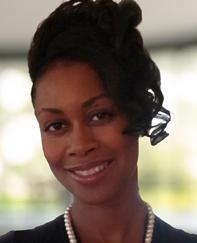
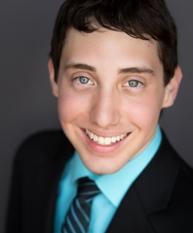 By: Nicole Jenkins, Nicky McGrath, Michael Bagby
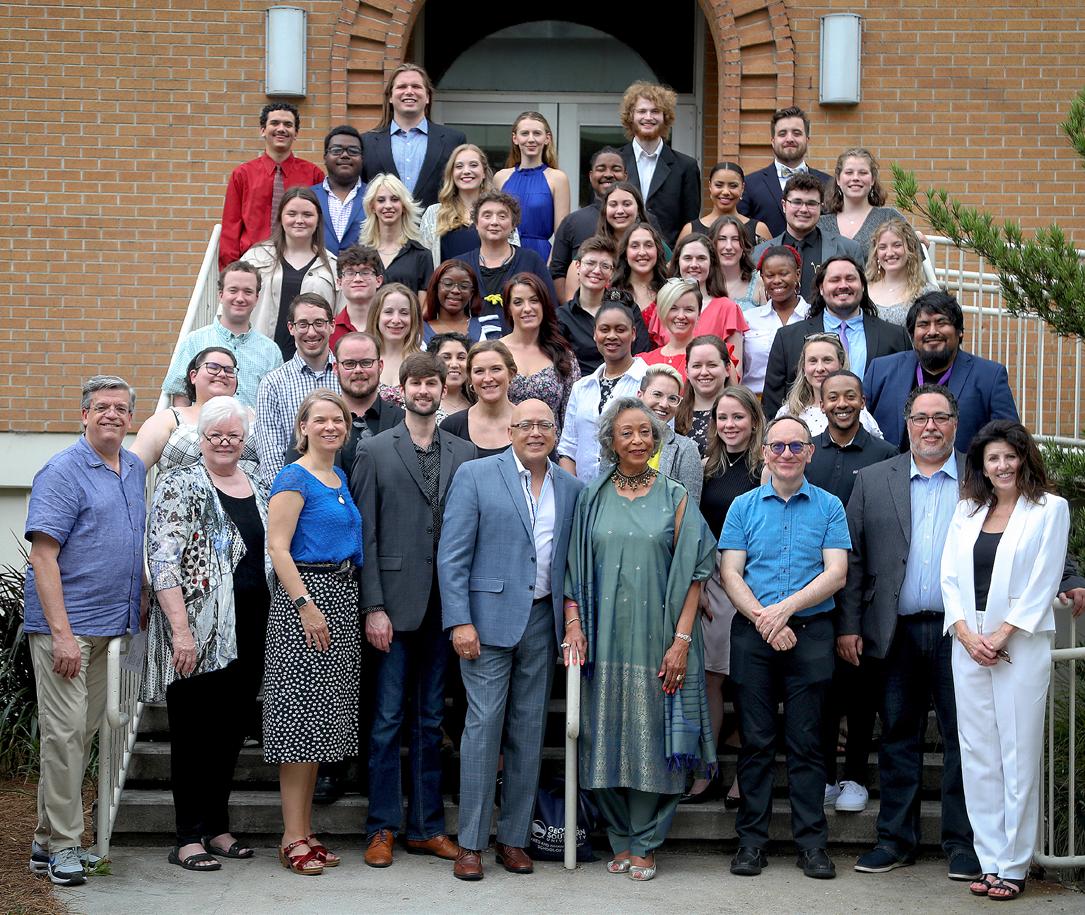
It’s hard to believe that the 2022 NATS Intern Program was more than 3 months ago. As we came together to write this article, each of us was filled with nostalgia, delighted to be smiling back at our time together. It feels like we’ve been friends for years, even though we shared just 10 days of learning, growth, and friendship at Georgia Southern University this summer. Ahead of the Intern Program, coordinator Karen Brunssen had warned that we were in for an exciting ride that would be intense, life-altering, and wildly fun. We really had no idea what was to come, but we were ready. Under the guidance and leadership of our hosts (Karen Brunssen, Tamara Watson Harper, and Allen Henderson) as well as the mentor teachers (Eden Casteel, Barbara Hill Moore, Scott Piper, and Darryl Taylor), many of us shared flows of admiration, gratefulness, and a spot of imposter syndrome. Thankfully, after a few days together, many of our insecurities began to fade as we found our groove and felt a sense of camaraderie among the cohort. Behind the scenes were the student assistants, Sarah McHan, Nick Porter, and Nehemiah Robertson to whom we owe a great deal of thanks for ensuring the entire event ran smoothly and according to plan.
Each day started with teaching and observing one another, followed by a lunchtime reflection with our mentor and the interns within our pods. Then, we were swept into afternoon and evening sessions covering an impressive array of topics. We were invited to present on topics of our choosing, allowing us to learn more about the varied experiences and expertise each Intern brought with them... We watched in awe and cheered loudly during the master classes where our fellow interns performed and were coached by the mentor teachers. We gained knowledge on voice science and vocal health and were generously gifted a dazzling collection of texts and repertoire from generous donors. The voice students were eager to learn and open to new ideas, not only about their voices and vocal performances, but also about our research and presentations. At the end of the 10 days, feeling full of knowledge (and maybe just a tad sleep deprived), we had the honor of watching all the student participants perform on a showcase. This culmination of expressiveness was deeply moving while also holding space for us to celebrate the entire program as an unforgettable and life-altering experience (just like Karen said it would be!).
What was one of your highlights?
A highlight for me during the Coaching Hour was being guided by the expertise of our contempo rary music mentor, Eden Casteel, while singing a jazzy improvisation of Gershwin’s “Love is Here to Stay.” Another highlight of the program was our complimentary excursion to see Giddens’ and Abels’ Omar, an opera presented at the Spoleto Festival. It was a wonderful opportunity for us to bond with other interns and enjoy a fun-filled day of shopping and eating in Charleston, South Carolina.
I especially enjoyed the feedback and guidance of our 2022 collaborative artist mentor, Alan Darling. It is quite rare to have the opportunity to get feedback on coaching singers, espe cially with someone who has such a distinguished career in both academia and opera theatres. Alan instantly had a great rapport with the pianists, and I will strive to have that kind of impact in my own career.
Narrowing it down to just one is a big ask; the entire program was filled with memorable experiences that I’ll always treasure. The discussions over lunch each day were where many close friendships were forged alongside deep reflections of our daily activities. The student showcase at the end of the program was a marvel. We were able to celebrate the singers we worked with as well as each other in a recital that covered an impressive breadth of repertoire and musical styles.
— Nicky McGrath
— Nicole Jenkins
— Michael Bagby
22 INTER NOS | FALL 2022 NATS PROGRAMS
From the bottom of our hearts, thank you, and congratulations again to all involved! We greatly appreciate the long hours spent in organizing our daily schedules, preparing our visit, and for all the tremendous support we received in making this year’s program a huge success. We highly recommend the NATS Intern program to early career voice teachers and collaborative pianists who need a boost of reassurance, a fresh set of eyes and ears, and most importantly, newfound friends, colleagues, and mentors with whom you will share life-long career experiences.
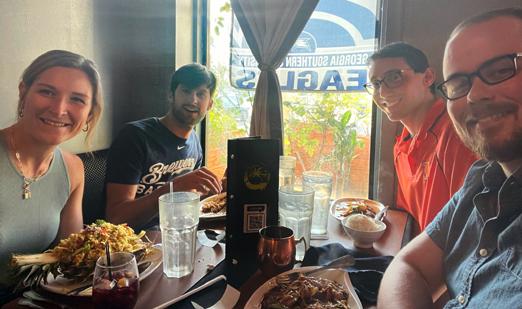 The four collaborative pianists from the 2022 NATS Intern Program enjoy a meal together.
nats.org INTER NOS | FALL 2022 23 NATS PROGRAMS
THE
NATS Intern Program
May 30 – June 9, 2023
West Chester University, West Chester, Pennsylvania
Carole Blankenship, Director of the NATS Intern Program Stephen Ng, Site Host | Tana Field, Literature Liaison
The NATS Intern Program is an exciting and innovative venture that seeks to pair experienced and recognized master teachers with talented early career members of NATS. We invite both independent and academic voice teachers and collaborative pianists to apply. Each voice intern teaches lessons to two students and performs in master classes under the supervision of a master teacher. Collaborative piano interns accompany lessons, master classes, and other sessions as appropriate, and coach students under the supervision of the collaborative piano master teacher.
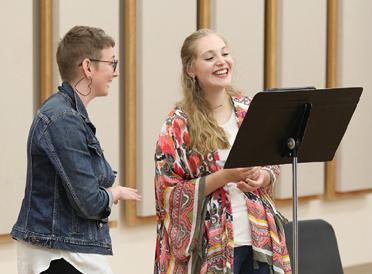
FACULTY: MASTER TEACHERS
VOICE
• Cindy Dewey (Utah State University)
• Lorna McDonald (University of Toronto)
• Trineice Robinson-Martin (Soul Ingredients Voice Studio)
• Nathan Gunn (University of Illinois)
COLLABORATIVE PIANO
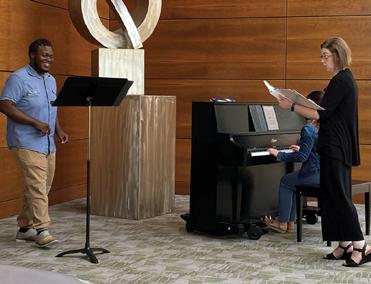
• Julie Gunn (University of Illinois)
REQUIREMENTS
A voice applicant must be a Full or Associate member of NATS in good standing with no more than five years of full-time teaching or the part-time equivalent. Working as a graduate teaching assistant does not count towards the five-year limit. Holding a master’s degree or higher is preferable but not required. A collaborative piano applicant does not have to be a NATS member (although preference is given to those who are), but membership is required if accepted into the program. Applicants should be at the beginning of their careers with no more than approximately five years of full-time collaborative work/teaching/coaching or the part-time equivalent.
APPLICATION PROCESS
Complete the application form online at NATS.org, which will include (1) the upload of a resume and headshot. (2) Two letters of reference (solicited and collected electronically during the application process). (3) A brief statement addressing the applicant’s teaching philosophy/philosophy of collaborative work with singers, and motivation for participating in the program. (4) Web links to performance recordings, and (5) web links to video recordings of a sample lesson or coaching.
Dec.
Testimonials from recent interns:
“The most valuable aspects of the program was the time spent with my cohort and master teacher. It was such a variety of experiences and skills that we were all able to learn a great deal from each other.”
“It was a wonderful, life-changing experience. Thank you!”
“Just thank you. I feel incredibly grateful and humbled to now include myself among the NATS interns. I learned so much . . . I feel like I am still processing the knowledge gained, and the relationships formed will last a lifetime.”
ANNOUNCING
2023
Applicants must apply online nats.org Deadline:
15, 2022
Piano Skills for Singers and Voice Teachers
By Brenda Earle Stokes, BFA, M.Mus
When I first got my professional start in New York City, I had no idea how lucky I was. I got multiple well-paid job offers, teaching singing classes and conducting choruses for several arts outreach organizations. At the time I had minimal choral conducting experience and had little working knowledge of vocal pedagogy, but I had no troubling winning these jobs against people with actual degrees in choral conducting and years of voice training. Why did they hire me?
Because I could play piano. I heard time and time again that these organizations didn’t have the budget to hire a voice teacher and an accompanist, so they hired the person who could do both. Even though both of my degrees were in piano, I was teaching more voice than any of my singer friends were.
I tell this story to my voice students all the time, because it shines a light on something that I feel is grossly overlooked in vocal music education: Singers need to be able to play the piano in order to make a living.
“What I have discovered is that many piano courses for singers are designed by pianists who don’t understand the actual skills that we singers need in order to function properly in our work.”
You want to teach voice lessons? You need to play piano. Conduct a community chorus? You need to play piano. Want to learn your music? Hiring a coach to learn every song is prohibi tively expensive. Think about all of the opportunities for singers to make a living, and you’ll see that they all require or would be enhanced by functional piano skills.
We could ruminate on the fact that there should be better fund ing for music programs so that accompanists can be hired, but in the current state of music education I think we need to face
the facts and act accordingly. We need to make sure that our singers are graduating with all of the skills they need to be com petitive and earn a sustainable income.
You might be wondering, since college voice programs require piano proficiency classes, why is this even an issue? Why do so many singers struggle at the piano?
I have taught hundreds of singers and voice teachers to play piano — a vast majority of whom have already taken their required piano proficiency courses. Unfortunately, they still can’t function properly at the keyboard, which is a source of great frustration and shame. This wasn’t a matter of laziness or lack of effort. What was the problem?
What I have discovered is that many piano courses for singers are designed by pianists who don’t understand the actual skills that we singers need in order to function properly in our work.

So, many piano classes resort to method books, hands-together scales, a plethora of technical exercises like Hanon and clas sical piano repertoire. (Bartók Mikrokosmos, anyone?). These skills are great if you want to be a piano player, but is this useful for singers? In my experience, the answer is a resounding NO.
Instead, I suggest that we put a heavier priority on building the actual skills that singers need in order to function in our work.
These primary skills include:
1. Playing voice exercises on piano
2. Accompanying ourselves and our students
3. Playing melodies on piano to learn and teach songs
Rather than insisting on a classical model of piano training, I have discovered a much more user-friendly method that consists of:
1. Learning to play voice exercises instead of Hanon
2. Learning major and minor chords in 12 keys
3. Learning a variety of strategies to “fake” accompaniments
4. Using vocal music to learn melodies — everything from their solo rep to choral music and fake book reading.
Brenda Earle Stokes
nats.org INTER NOS | FALL 2022 25 INDEPENDENT VOICES
The above skills can be easily learned and applied in 1-2 semes ters of group classes and will ensure that graduating singers will have useful training that will help them function as profes sional performers and educators.
If you are a college instructor, I recommend you investigate how the piano classes for singers are taught. Consider collab orating with the instructor of these classes to ensure that your students are learning the material they need.
If you are a voice major or current voice teacher who needs to improve their piano skills outside of a degree program, don’t fret! You don’t have to invest a lot of time or money to become more functional at the keyboard.
Find a local or online piano teacher who will teach you the four areas I describe above. Jazz and pop pianists can help you master chords and play from lead sheets. You also might con sider self-paced online courses, which are both cost and time effective and can help you develop your piano skills.
Just as you devote time every day to working on your voice, you can prioritize spending even a small amount of time each day to make your piano skills more functional. In a matter of weeks or months, you could make measurable progress.

In order to thrive as singers and voice teachers, it is crucial to have a solid foundation at the piano. The approach I describe is immensely effective and has helped hundreds of singers feel confident at the keyboard.
If you would like a more in-depth look at this approach, check out this blog post, “Piano for Singers: The Complete Guide.”
Brenda Earle Stokes is a singer, pianist and music educator based in New York City. In addition to her busy performance career as a jazz musician, she specializes in teaching piano and musicianship to singers through her bestselling online courses. Although both of her degrees are in jazz piano, she has extensive experience in the fields of vocal pedagogy, choral conducting and music education. She is an online course creator and runs a busy voice and piano studio.
Call for Submissions
Articles on relevant topics are being accepted for inclusion in the independent teacher section of future issues of Inter Nos. Approximately 1,000 to 4,000 words. Submissions should be sent by email to CynthiaVaughn@mac.com

26 INTER NOS | FALL 2022 INDEPENDENT VOICES
Let’s get social! Join and follow NATS on social media for the latest updates, videos, and engaging discussions with your fellow members.
REQUIREMENTS - The work must be:
(1) a song cycle, group of songs, or extended song between 13 and 25 minutes in length. Genres other than the classical “art song” are discouraged.
(2) composed for single voice and single acoustic instrument (solo instruments other than piano as the collaborative instrument will be accepted).
(3) English (or English translation), either in the public domain* or for which the composer has secured appropriate permission.
(4) composed within the past 2 years (after January 1, 2021).
ENTRY FEE - $30 for professionals; $15 for full-time students each entry (payable in U.S. funds to NATS).
ENTRY DATES - June 1, 2022 through December 1, 2022.
ELIGIBILITY - Open to anyone meeting prescribed requirements.
PROCEDURE - All applications must be submitted electronically via www.nats.org. Please read the complete details posted on the NATS website. The following are required materials for entry:
(1) A PDF copy of the song score(s). Copies must be legible and should include composition title; poet’s (or poets’) name(s); public domain status or information regarding permission; length and date of composition. THE COMPOSER’S NAME MUST NOT APPEAR ANYWHERE ON THE SCORE.
(2) Digital audio file(s) of the composition(s).
(3) Recordings must be of the highest quality possible (performance or working).
(4) The title of the composition should be the only labeling on the recording(s).
(5) The song order on the recordings must match the song order of the scores.
A dvA ncing QuAlity voc Al liter Ature
By Promoting new works For singers
1ST PLACE
$2,000 PLUS the composer’s expenses to the NATS 58th National Conference in Knoxville, TN, 2024, where the performance of the winning composition will be given.
2ND PLACE
$1,000
Cash prizes generously sponsored by composer Lori Laitman
NATS reserves a non-exclusive right to sponsor performances of the winning work for two years without additional remuneration to the composer.
* For U.S. publications, a summary of works in the public domain is available on NATS.org.
ENTRIES MUST BE RECEIVED BY DECEMBER 1, 2022 APPLY ONLINE AND VIEW COMPLETE DETAILS AT NATS.ORG
SNATS Chapters and the Uncharted Territory of the Independent Studio
By Nicholas Perna, Vice President for Outreach

A student NATS (SNATS) chapter is an organization of students that can meet, hold events and discussions, participate, practice, and learn more about voice teaching as a profession. Any associate or full member of NATS in good standing may act as an advisor for a SNATS chapter. Co-advisors are also welcome. — nats.org
One of my duties as vice president for outreach for NATS is to serve as coordinator for SNATS chapters. As an independent teacher you may be saying to yourself, “but I thought SNATS chapters were just for universities, what does this have to do with me, the busy independent studio owner?” It could potentially mean a great deal to you and your business. Before you shrug off the idea of SNATS and leave it to universities, let’s chat.
As NATS members, I believe we all have a responsibility to mentor the next genera tion of voice teachers. If we do not invest in our young potential teachers, the organization does not have a future. As of a recent membership report, independent teachers outnumber college and univer sity teachers by around 400 members. Yet, SNATS chapters are roughly 99% located in academic institutions. This means there is an untapped mentorship opportunity for SNATS chapters and student members to exist within inde pendent studios or within a metro area/ community.
A few notes as they relate to SNATS and student membership.
• A SNATS chapter only needs an advisor, who must be a full or associate member of NATS, and five students to start a chapter.
• Members of the chapter do not have to pay national dues or be student members of NATS but are eligible to do so to take advantage of more member benefits.
• If members want to join NATS as a student member, those dues are currently $46 annually.

• There are SNATS chapters that already exist outside of the academy. One example is SNATS Boston.
• Organizing a chapter makes those students eligible to apply for SNATS grants.
Certainly, in your teaching, you are always mentoring the next generation of singers, but what about the next genera tion of voice teachers? Have you considered the possibility of a multi-teacher studio? One potential obstacle is to find new teachers who you believe you can trust to become an integral part of your business. What if you had been foster ing growth in your young singers who you believe might be potential voice teachers through direct mentoring of advis ing a SNATS chapter for your independent studio? Starting a SNATS chapter within your own studio could be a fertile training ground to help raise the next generation of teachers for your multi-teacher studio.
“As NATS members, I believe we all have a responsibility to mentor the next generation of voice teachers. If we do not invest in our young potential teachers, the organization does not have a future.”
There could be further benefits in watching your students develop their own initiatives in their chapter. It could bring you an awareness of the sorts of topics that interest your students.
Nicholas Perna
28 INTER NOS | FALL 2022 INDEPENDENT VOICES
The students could lead an initiative to have a guest artist or teacher to share with chapter members and potentially with other students in your studio. Using a SNATS grant, there could be shared expenses between the studio and the SNATS chapter in funding a guest clinician. Or possibly, the SNATS chapter you advise and another SNATS chapter from an independent studio could swap teachers for a pair of online classes and help fund your time with mutual SNATS grants for each chapter. Most importantly, any SNATS chapter provides greater access to the network of experts within the whole NATS community.
Finally, if I can be of any help getting your chapter started or can provide assistance with any aspect of SNATS chapters, student NATS membership, or if I can help your existing SNATS chapter be aware of SNATS grants or all the wonderful mentoring opportunities we provide through NATS, please contact me at vpoutreach@nats.org. I am thrilled to assist you as we all inspire the next generation of voice pedagogues.
Dr. Nicholas Perna is associate professor of voice and voice pedagogy at Mississippi College. He is vice president for outreach for the National Association of Teachers of Singing (2022-2024). Perna is president of the Mississippi Chapter, and treasurer for the Southern Region. He is a Presser Music Foundation awardee and currently a voice research associate at the University of Mississippi Medical Center. His primary research areas are laryngeal manipulation and singing voice acoustics. Perna has presented research on four continents at notable events such as the International Congress of Voice Teachers, the Voice Foundation’s Annual Symposium on the Care of the Professional Voice, and NATS national conferences. Publications include articles in Journal of Singing, Journal of Voice, and VOICEPrints. He has served on the faculty of Donald G. Miller’s Singing Voice Science Workshop, and the New England Conservatory Acoustic Vocal Pedagogy Workshop. He is the creator and co-host of the VocalFri Podcast, your weekly dash of voice science, pedagogy, and pop culture.
2023 Van L. Lawrence Fellowship
Application Deadline: Nov. 15, 2022
The Van L. Lawrence Fellowship was created to honor Van L. Lawrence, M.D. for his outstanding contribution to voice, and particularly to recognize the importance of the interdisciplinary educa tion he fostered among laryngologists and singing teachers. The Fellowship is a joint award from the Voice Foundation and the Foundation Heritage Fund of the NATS Endowment.
Candidates for the Van L. Lawrence Fellowship shall be:
1. A member of the National Association of Teachers of Singing who is actively engaged in teaching.
2. The Fellowship shall be awarded to candidates who have demonstrated excellence in their professions as singing teachers, and who have shown interest in and knowledge of voice science.
Members of NATS wishing to apply for the fellowship should write a letter of intent to The Voice Foundation along with your CV — combined into one PDF. Include the area and methods of your proposed study plan. E-mail: office@voicefoundation.org
a. Current application of scientific knowledge in the studio;
b. The area of intended study and/or research project and the study plan and methods;
c. How the Fellowship and research project will benefit your teaching;
d. NATS Chapter to which you belong;
e. A detailed curriculum vita.
The fellowship will be awarded at the next Symposium: Care of the Professional Voice May 31– June 4, 2023, in Philadelphia
For more information, contact The Voice Foundation at 215-735-7999 or email office@voicefoundation.org. Visit nats.org for complete application instructions.
Foundation Heritage Fund of the NATS Endowment
nats.org INTER NOS | FALL 2022 29 INDEPENDENT VOICES
The Italian Toaster
By Michelle Markwart Deveaux
When I was 12 years old, I would walk around the corner to have breakfast with my neighbor Nikki. After breakfast, we’d walk the half-mile to school together.
We ate the same thing every day: toast, fruit, and protein.
Every day, she cooked the protein, I plopped the bread in the toaster and cut up the fruit.
I remember their toaster so vividly. It was heavy, and silver, and rounded. It was Italian. And it was expensive. And her par ents made sure we knew it.
The toast it made was PERFECT, unlike our family’s Woolworth’s hand-medown toaster. Their Italian toaster evenly browned the bread, never charred an edge, and when it popped up, nary a finger would be burned from grabbing the toast out of the slot.
It was a far cry from the disfigured icons of Jesus or Mickey Mouse (depending on how long the bread was in for) that my family’s toaster produced.
One day, I arrived a bit late, and Nikki was frantically getting break fast together, rushing to and fro in her galley kitchen — yelling at me, “The toaster is broken! The toaster is BROKEN!”
We did everything. We clicked it around, tried the lever, and emp tied out the crumbs into the sink.
Shook it. Prayed over it. As panic set in, I thought of how much trouble we would be in for ruining this toaster.
Her parents were yellers (I mean, which parents weren’t in 1989?) and they were gonna blame us FOR SURE.
How could we destroy this thing of beauty? How did we break it? This was the PERFECT toaster... the most expensive. The best
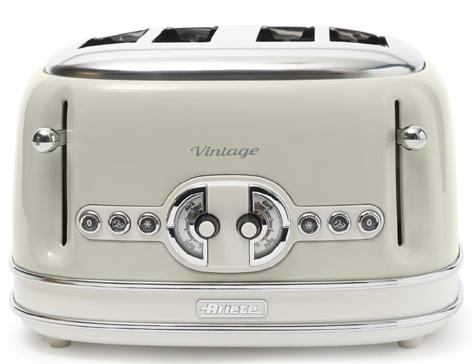
polished. The cleanest. The warmest. The SEXIEST. WHY WAS IT NOT TOASTING?
I slumped onto the floor, sliding down the wall, tears in my eyes.
Then I saw it.
The plug, dangling, right next to the outlet. The toaster wasn’t broken. It simply wasn’t plugged in.
I think of this story often whenever some thing looks broken in my life, my parenting, my business.
It’s so tempting to jump to the conclu sion that everything is broken. That we’ve ruined something beautiful, or have to invest in something completely new because our current thing no longer works, even after we’ve invested so much already.
Believing we are broken is easy — it’s dramatic and full of flair — and gives us some sense that we have some huge accomplishment in front of us when we figure out how to fix it. Most of the time, however, we just aren’t plugged in.

We have no power going into a perfectly working marketing plan, or a carefully crafted offer.
There’s no current running through our work — no movement. And so it all looks for naught. Next time you think something is broken, do me a favor, and check to see if you’re plugged in.
Maybe being plugged in looks like daily naps, or going to bed later and getting up later.
Perhaps it’s putting your phone down and closing your eyes.
Maybe it’s planning a family date, or calling an old friend, or going out for drinks with a bestie and the squad.
Michelle Markwart Deveaux
30 INTER NOS | FALL 2022 INDEPENDENT VOICES
Before you burn it all down and toss the toaster, check to see if it’s plugged in.

If you’re not plugged in, take care of that.
Maybe all you need is a little juice.
Michelle Markwart Deveaux FaithCultureKiss Studios, LLC © 2022 Reprint from The Friday Jr Email Business Newsletter, April 2021
NATS member Michelle Markwart Deveaux is the CEO of FaithCultureKiss Studios, LLC and Founder of The Speakeasy Cooperative. When she’s not teaching singers, actors, podcasters, and influenc ers to use their voice to change the world, Markwart Deveaux revels in the nitty-gritty of entrepreneurship, business shenanigans, and personal development. She’s been featured on numerous podcasts and is a frequent speaker and workshop leader. Markwart Deveaux has led seminars inter nationally on topics ranging from business development to pricing to operational management. She’s had the joy of working with universities, independent businesses, and NATS chapters. She has been a featured presenter for NATS conferences and was an invited master teacher for the 2021 NATS Intern Program. Based in Rancho Cordova, California, Markwart Deveaux and her hus band are raising their two amazing kiddos to be deep thinkers and strong leaders through careful study of The Fugees, Star Trek, and the MCU.
2021 Fiscal Year Audit Summary
The 2020 audit of the National Association of Teachers of Singing has been completed and published copies of the report were furnished to members of the Board of Directors by the independent auditing firm of Magers & Associates, LLC, Certified Public Accountants, Jacksonville, Florida. The entire unqualified report and opinion letter of the auditor is available for members to review in the Executive Office of NATS in Jacksonville, Florida, as well as from members of the Board of Directors. The following summary of the details of the audit are extracted and summarized below. The auditor’s report and the notes that accompanied the report are an integral part of the audit statements.
COMPARATIVE
STATEMENT OF FINANCIAL POSITION
Years Ended December 31, 2021 and December 31, 2020
ASSETS
December 31
Current Funds—Unrestricted 2021 2020
Account Receivable 3,200.00 32,736.00
Cash in Banks 1,467,885.00 839,543.00
Cash Restricted 25,000.00 25,000.00
Investments 1,082,620.00 270,234.00
Publication Inventory 15,000.00 15,000.00
Prepaid Expense 43,078.00 23,232.00
Other Assets 761.00 378.00
Total Current Assets 2,637,543.00 1,206,122.00
FIXED ASSETS – NET 218,129.00 227,853.00
TOTAL ASSETS – UNRESTRICTED $2,855,672.00 $1,433,975.00
LIABILITIES AND FUND BALANCE
Liabilities 2021 2020
Accounts Payable and Accrued Expenses 100,975.00 64,863.00
Deferred Revenue 41,881.00 32,726.00
Prepayment of Dues 368,120.00 424,773.00
Current Portion of long-term Debt 25,187.00 25,163.00
TOTAL CURRENT LIABILITIES 536,163.00 547,525.00
LONG TERM LIABILITIES
PPP Loan 73,312.00 71,494.00
EIDL Loan 102,164.00 100,100.00
Notes Payable less Current Portion 0.00 21,785.00
TOTAL LONG-TERM LIABILITIES 175,476.00 193,379.00
NET ASSETS
Net assets with donor restrictions 814,646.00 25,000.00
Net assets without donor restrictions 1,329,387.00 668,071.00
TOTAL LIABILITIES AND NET ASSETS $2,855,672.00 $1,433,975.00
nats.org INTER NOS | FALL 2022 31 INDEPENDENT VOICES
Rethinking the Multi-Teacher Studio
An interview with Liz Jackson Hearns, founder of The Voice Lab
 By Cynthia Vaughn
Liz Jackson Hearns was in her sec ond year of owning a multi-teacher studio when she attended a 2016 NATS Conference session in Chicago presented by Sharon Syzmanski and Cynthia Vaughn on “The Challenges and Rewards of a Multi-Teacher Studio”. Forward to 2022 and Liz is now the founder/owner/director of a thriving nationally known MTS (multiteacher studio), The Voice Lab, in Chicago. Liz now teaches other voice teachers about the business and art of team teaching.
InterNos: Tell us about The Voice Lab? What is your mission and what is unique about your MTS?
LJH: The Voice Lab’s mission is to cultivate transformational relationships through voice and music education. We are a proudly LGBTQ+ led organization and we mostly serve queer and trans adult singers and speech students. Our main area of specialty is gender-affirming voice services. I think there are a lot of things that are unique about The Voice Lab! What I see as the biggest difference is our culture. Honoring each individual person’s unique qualities and striving to continue to learn more about how our business culture can support our community is the highest priority for us.
InterNos: MTS have been around for quite awhile — at least since the 1980s. Recently there has been a surge in the number of independent studio owners who are interested in adding teachers to their private studios. It sounds simple. Your studio is full and you don’t want to turn students away so you contract another teacher to teach your overload? What could go wrong?
LJH: I’ll be honest, I don’t think this is a good way to start an MTS. When you decide to transition from a single service-pro vider as an independent teacher into being the owner of a business with a team, you choose to take on the responsibility of leadership and management of that team. If leading and managing and growing a business is where you want to invest your money, energy, and time--so that you can continue to support upcoming teachers in this industry--then that is a rea son to start an MTS. When teachers grapple with the guilt and
FOMO of a waitlist, it can seem like a good entrepreneurial move to take advantage of that waitlist by adding another teacher to the team. My loving suggestion would be to actually grapple with that discomfort, then research business management and team management, and then decide if what you really need to do is just make an adjustment to your pricing or create a referral list, rather than dive into a completely different way of engaging in your career. All of that said, being an MTS owner is incredibly reward ing work!
InterNos: Since the early days of MTS, teachers have often been hired as Independent Contractors instead of Employees. What’s the difference and why is it important to properly classify the teachers you hire?
“Teachers should absolutely not expect to make as much at an MTS as they would as a solo independent teacher.”
LJH: I can’t speak to any MTS’s specific model or give legal advice because I am not a lawyer. However, if workers are mis classified, it puts the business at risk of owing back taxes for all of its independent contractors. Many multi-teacher studios intentionally ride the line between independent contractor and employee, theoretically to save everyone money, but it’s risky. Michelle Markwart Deveaux has a brilliant and well-researched article about this topic that speaks much more eloquently than I could.
InterNos: MTS often get a bad rap for not paying teachers as much as the teachers would make if they were teaching in their own independent studios. How much should a teacher expect to make teaching for a MTS as an employee or independent contractor?
LJH: This is a brilliant question, because it highlights the fact that we are unclear as an industry about where working at an MTS belongs in an independent teacher’s career path. Teachers should absolutely not expect to make as much at an MTS as
Liz Jackson Hearns
32 INTER NOS | FALL 2022 INDEPENDENT VOICES
they would as a solo independent teacher. It has nothing to do with workload, or skill, or even student retention. The most advantageous thing about working at an MTS is that a teacher has the opportunity to spend time investing in their craft, and more importantly, investing in their life management skills.
Having worked with many teachers who are in the early part of their career, I see how much energy it takes to learn the skills of time, energy, and priority management. When an opportunity arises that conflicts with their teaching schedule, they have a chance to learn how to prioritize and to learn what really matters. The benefit of working at an MTS is that they don’t also have to learn about advanced customer service, marketing and recruiting if they lose a student over poor time management, budgeting if they have to give a refund, or capital acquisition if they need to just get through the next six months without going broke. What a gift, to be able to just focus on yourself, what you need, and how you want to build your life! The compensation for this opportunity to not be responsible for the rest of the business, then, is commensurate with the level of responsibility of the job itself. If the job is to teach without also having to run a business, then the question is not about how much a teacher should make; the question is how to budget the incredible opportunity to be focused on only teaching into your time and financial budget — which, in itself, is a way to practice the unique opportunity to build that life skill as a teacher at an MTS.
InterNos: You are a “numbers” person. What kinds of expenses should a new MTS owner expect to pay for overhead?
LJH: I am a numbers person! I love accounting. The expenses that seem to surprise folks the most are related to payroll. If you are hiring teachers as employees, which I would recom mend for most studios, the additional costs of payroll taxes, payroll services, unemployment insurance, paid trainings, health insurance if you’re going to offer it (which we do), etc. make owning a business very expensive. If I could start over again, I would start by figuring out what matters most in terms of the employee experience, and building the business around that.
InterNos: Do you own your studio commercial property or do you rent?
LJH: We rent a small commercial space. Our business is primar ily online at this point, so facilities cost is an overall low portion of our budget. This allows us the opportunity to hire teachers from all over the country and invest in our community through our internal team.
InterNos: Do you provide services and training for your MTS employees?
LJH: Yes! Quite a bit, actually, and being able to provide training and continuing education for our teachers was one of the big reasons we switched from contractors to employees. With con tractors, a business is not allowed to offer instruction or direct guidance about how to perform the work. When we made the switch to employees, however, that gave us a chance to signifi cantly expand our team onboarding and training systems, to create an actual supervisory/management role for the teachers, and offer in-depth continuing education opportunities. Our work is specialized and requires a specific set of skills, knowledge, and language tools.
“Taking on different roles within the business at different points of its growth has given me an enormous amount of insight into how I want my values as a manager and leader to show up in the systems of the business.“
InterNos: What do you look for in teachers you hire to work for The Voice Lab? Is it necessary to have a formal voice degree?

LJH: I don’t believe it is necessary to have a formal voice degree. For our team, it is helpful to have enough experience as a teacher and a person in the world to have developed opinions about things like lesson flow and emotional boundaries, in order to support students toward their aspirations. When we hire teachers, we look for congruency in our values, principal among which is student-centered teaching. We look for folks who have done a lot of self-reflecting and are secure in their desire to be a teacher in our areas of specialty. The students that come to The Voice Lab do their best work when their teachers are grounded in their passion for teaching, and are coming to the work with an open heart and focused attention.
InterNos: What are the challenges of being a voice teacher and simultaneously running a multi-teacher studio? How many
nats.org INTER NOS | FALL 2022 33 INDEPENDENT VOICES
INDEPENDENT VOICES
students do you teach? In the beginning did you do all of the administrative work or did you hire administrative staff?
LJH: I have learned over the years that attempting to teach while running a growing business is damn near impossible. I stopped teaching in 2019, after the business had been open for 5 years. In the beginning, I hired admin staff to help with sales and scheduling, but since then I have shifted my role back into a customer-facing sales position because I love it and I’m good at it. Taking on different roles within the business at different points of its growth has given me an enormous amount of insight into how I want my values as a manager and leader to show up in the systems of the business.
InterNos: What advice would you give a teacher who is considering starting their own multi-teacher studio?
LJH: Philosophically, if you are thinking about starting an MTS, it will be useful to process through your core values and how you want those values to show up in the systems of your business, from your student types to your cancellation policy to the way you pay your teachers to what your role looks like day-to-day.
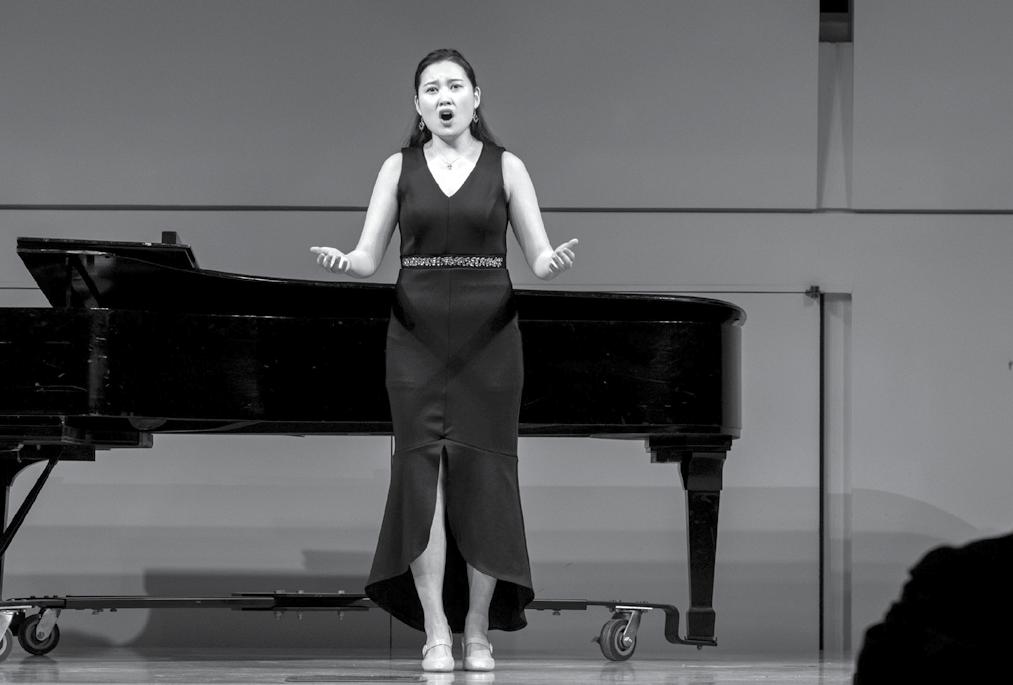
Most importantly, though, you need to start crunching numbers. How many students do you need, at what price point, so that you can achieve your business and personal financial goals with the business? None of this works without money, and getting comfortable with financials and spreadsheets is imperative to run a successful business. If you can find yourself in a program that will help you develop your business knowledge — led by your values — that would be an invaluable education.
Liz Jackson Hearns (she/they) is co-founder and owner of The Voice Lab, Inc., a multi-teacher voice studio in Chicago and virtually all over the world, specializing in gender-affirming voice care. She is co-author of “The Singing Teacher’s Guide to Transgender Voices” and author of “One Weird Trick: A Users Guide to Transgender Voice,” a personal voice training guide and resource for voice and gender perception, vocal exercises, and tips to help implement new voice and communication patterns in daily life.” Jackson Hearns, Jen Blanton, and Michelle Markwart Deveaux recently created an in-depth training program for multiteacher studio business owners, The MTS Taproom, hosted by The Speakeasy Cooperative.
34 INTER NOS | FALL 2022
CHICAGO IS OUR CLASSROOM Undergraduate and Graduate Auditions: February 11, 2023 | February 25, 2023 Graduate programs offered in vocal performance and collaborative piano (vocal coaching) For more information, contact: Erin Matonte Assistant Director of Music, Art, and Theatre Recruitment 773-244-4583 | ematonte@northpark.edu Rigorous, hands-on learning in a world-class city. Study with experienced faculty in a tight-knit community. Enjoy studying in a fully renovated state-of-the-art music facility, Hanson Hall. www.northpark.edu/music
SO YOU WANT TO SING


Guides for Performers and Professionals
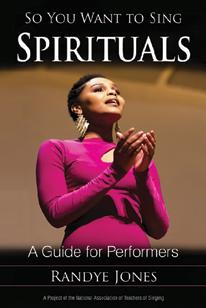









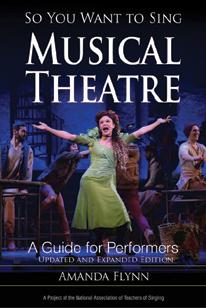



























Executive Editor: Allen Henderson

Series Editor: Matthew Hoch
So You Want to Sing is a series of 20 invaluable books devoted to providing a complete survey of what it means to sing within a particular style. Each contribution functions as a touchstone work for not only professional singers but also students and teachers of singing. All books in the series feature online supplemental material on www.nats.org.
Save on the Series! www.rowman.com | 800-462-6420 Save 30%! Use promo code 4S22SYWTS30 on www.rowman.com Save Over 50% When You Buy All 20 Books! Call 1-800-462-6420 and Order ISBN 9781538173534
2022/23 SEASON
SUNDAYS 7-8 P.M. ET*
(6-7 P.M. CT; 5-6 P.M. MT; 4-5 P.M. PT)
*Unless otherwise noted
NATS Chat invites participants to network and discuss various topics in an online webinar. Sessions are often held the second Sunday of each month of the academic year. The host and coordinator for NATS Chat is Kari Ragan.
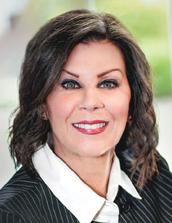
OCTOBER 9, 2022
Together Forever: Efficacy and Efficiency in Group-Voice Teaching
Featuring Clifton Ware and Amelia Rollings Bigler
We open the NATS Chat 2022-23 season with renowned author Dr. Clifton Ware, who in 1998 wrote the book “Basics of Vocal Pedagogy: The Foundations and Process of Singing” still discussed today. He is also the author of the class voice textbook, “Adventures in Singing: A Process for Exploring, Discovering, and Developing Vocal Potential.” We will be joined by Dr. Amelia Rollings Bigler, awarded the first-ever Clifton Ware Group-Voice Pedagogy Award. We will discuss the advantages and unique challenges of group-voice teaching in a variety of contexts (e.g., independent studio, community, virtual, academic) and include helpful strategies and references to relevant research.
NOVEMBER 13, 2022
Articulation = Physioacoustics
Featuring Angelika Nair
*Different time: 3 p.m. ET / 12 p.m. PT
Articulation may refer to architecture — a method of styling the joints; to botany — a joint between separable parts; to anatomy — the location at which two or more bones make contact; or to linguistics — the study of how humans produce speech sounds via the interaction of physiological structures. What all of them share in common is something being jointed or interrelated and its interaction. Phonetics is the study of speech sounds, their articulations, acoustics properties, as well as perception. As voice specialists/users (teachers, singers, therapists, etc.) we have to become phoneticians. All languages consist of strings of phonemes; a single language sound, regardless of how it is produced. Vowels and consonants are a result of the physiological changes within the vocal tract. Consonants result from a degree of obstruction/restriction through the combination of our articulators. This is true in particular with one of the most malleable active articulators within the vocal tract, the tongue. However, how does the tongue affect ones singing and how can one manipulate it for our purposes? Join this NATS Chat to hear author of “The Tongue as a Gateway to Voice, Resonance, Style, and Intelligibility” provide insight and answer the question.
DECEMBER 11, 2022
A Look into the Future: Research in Laryngology and Voice
Featuring Neel Bhatt, MD
Dr. Neel Bhatt is a laryngologist at the University of Washington Performance Voice Clinic. Bhatt will present exciting new areas of research in voice. Topics will include novel injectables, nerve stimulation, new devices, and future treatments for vocal scar and age-related vocal atrophy.
JANUARY 15, 2023
Water Bubbles for the Voice
Featuring Marco Guzman, PhD
Water bubbles created when performing water resistance therapy (WRT) are not only good for the voice because of the massage-like sensation, but also because they are able to move tissues in different ways. This oral, laryngeal, and pharyngeal tissue movement is attributed to the oscillation of oral pressure with a frequency of 12-40 Hz. The degree of massage-like sensation is dependent on practical variables that should be controlled when using this exercise for voice training. Please join us to learn more about the efficacy of using water bubbles with our singers.

FEBRUARY 19, 2023
Embodied Thought - Movement to Free the Voice
Featuring Frank Ragsdale, Matt Hoch, Elizabeth Blades, Marieke Schuurs
The February NATS Chat will host a panel of singing teachers to discuss the application of various kinesthetic modalities to voice pedagogy. Elizabeth Blades, coauthor of “Singing with Your Whole Self: A Singer’s Guide to Feldenkrais Awareness through Movement,” will represent the Feldenkrais Method; Frank Ragsdale will discuss Laban movement analysis (LMA); Marieke Schuurs is a certified Alexander Technique teacher; and Matthew Hoch is the editor of “So You Want to Sing with Awareness: A Guide for Performers.” The panel will engage in discussion on the use of these methods in studio, classroom, and performance situations and welcomes questions and interaction with NATS Chat participants.
See nats.org for March, April and May 2023.
Mentoring Over Coffee Was a 3rd-Time Hit at the National Conference
By Elizabeth Ann Benson
Mentoring Over Coffee ran for the third time during the national conference in Chicago.
The mentoring program runs during national conferences, costs “nothing but time,” and facilitates connections between established and emerging professionals, to build a stronger sense of community for all. Following Ian Howell’s establishment of the program in 2018, Elizabeth Ann Benson has facilitated the program since 2020.

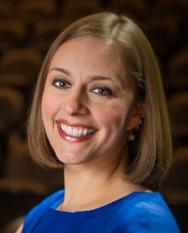
During the 57th national conference, 46 NATS members signed up to be mentors, and 30 signed up to be mentees, resulting in more than 100 mentoring partner ships. The option for reverse-mentoring was on the table this year, where established professionals could learn from emerg ing professionals in a mutually beneficial exchange.
“If you’re new to NATS, this is an ideal ice-breaker activity,” Benson says. “This year, we had a lot of conference first-timers who also took advantage of ‘Mentoring Over Coffee.’ The program enabled them to supercharge their networking right from the start.”
What are people saying about it?
According to participants, frequent topics of discussion included equity and inclusion, education and professional devel opment, research, work/life balance, how to run a business/ independent voice studio, how to navigate academic jobs, how to teach specific functional techniques, and how to teach or sing in musical theatre and CCM styles. There were several tangible outcomes noted by participants, including support to establish an SNATS chapter, letters of recommendation, editing CVs and cover letters, research collaborations, and the exchange of pedagogical resources.
Mentee comments
• These mentoring sessions were worth the price of the conference!
• The chance to talk to numerous professionals in our field from different countries and backgrounds is invaluable.
• Meeting with each mentor was so informative and frankly, the mentorship program was my favorite part of the conference.
• It was so nice to have a formal structure to help reach out to artist scholars that I admire.
• I REALLY loved this approach to mentoring. I was incredibly encouraged as an academic and most of all as a person.
• What a wonderful way to meet new people! This program was invigorating and validating.
• I felt like I was seen, heard, and truly helped in my sessions. One of the best parts of the conference!
• As an early career researcher and teacher, having this mentoring opportunity through NATS at the national conference was inspiring and very helpful — giving me directly actionable steps, for both collaborative projects and for my future career journey.
Elizabeth Ann Benson
L to R: Angela Brown with Barbara Hill Moore.
nats.org INTER NOS | FALL 2022 37 NATS PROGRAMS
NATS PROGRAMS
Mentor comments
• It was an opportunity to really of focus on what makes NATS so special: its people.
• I gleaned amazing insight about innovative ways to collaborate and create new works in academia from asking questions regarding my mentee’s experiences. We were both taking notes!
• This is the core experience of NATS — providing valuable connections with our colleagues.
• The effort to carve out a longer, focused conversation was really valuable, and wouldn’t have happened without this program.
• This is my first national NATS conference, so this was a great way to feel a connection and get to know new teachers and exchange ideas. It also helped me feel like I was making a contribution (no matter how small) to the process.
• It is always rewarding to give back to NATS, especially to new members.
• This is the third time I have participated in the mentoring program and each year the conversations are more fruitful and productive.
• These conversations are what makes this organization most worthwhile and move it forward
• It is such a valuable opportunity to connect with NATS members we may not normally have run into in our own regions.
• To be able to witness the change in focus to increased inclusivity in the members and students we support as well as opening up to more genres of music in teaching
and performance is truly exciting to see happen. We have a long way to go, but I am so grateful and proud to see NATS becoming a leader in the industry.
Looking ahead
Benson says the program is a great example of practicing the mission, vision, and values within NATS.
The connections made through mentoring bolster the NATS Diversity and Inclusion statement, “to be a welcoming and supportive community of members and students who celebrate the unique identities, varied backgrounds, and experiences of all individuals.”
There was a lot to celebrate this year!
The fourth Mentoring Over Coffee Program will run in 2024, during the Knoxville conference. If you have questions about the program, please contact Elizabeth Ann Benson
Dr. Elizabeth Ann Benson is recognized as a dynamic scholar, pedagogue, and performer. Her book, “Training Contemporary Commercial Singers” is hailed as “a remarkable and longawaited contribution to the world of voice pedagogy” (Journal of Singing). She has published research in Voice and Speech Review, Journal of Singing, and American Music Teacher. She is an associate professor of music theatre voice at Auburn University, and she is the founder and owner of Benson Music Studios, specializing in voice training for musical theatre, popular, and contemporary singers and teachers. She was a 2016 NATS Intern and currently serves on both the National Mentoring Initiatives and Diversity and Inclusion Initiatives committees.
Members: The fall membership renewal period is a good time to update your information on NATS.org. Keeping your contact information up-to-date ensures that you won’t miss any of our member benefits or upcoming events.

To make updates, log on to your Member Home Page (your email address for NATS correspondence is your Login). Then, click the “My Profile” link on the right.
You also can call the NATS National Office at 904-992-9101 for assistance.
Have you moved, changed your contact information, or your email?
38 INTER NOS | FALL 2022
A Visit to Vienna, the World’s City of Music 2022 ICVT | For the Sake of Music
 By Sarah Holman, International Region Governor
Melodious strains of Mozart met our ears in the incomparable acoustic of the Mozart-Saal at the Wiener Konzerthaus for the opening session of the 10th ICVT held in Vienna, the “world’s city of music,” August 3-6, 2022. Young opera singers and voice teachers from the University of Music and Performing Arts Vienna (mdw) performed scenes from Le nozze di Figaro followed by music of Arnold Schoenberg and Franz Schubert with collaborative pianists Pantelis Polychronidis and Oliver Stech. The grand courtyard of the Wiener Rathaus, a spacious and elegant setting, captured the significant history of Vienna for the opening dinner reception complimented by contemporary music performances.
Martin Vácha in coordination with Helga MeyerWagner and their committee tenaciously planned for five years to weave together a powerful program of Plenum Lectures including Peter Berne, Ken Bozeman, Christian Glanz, and Markus Gugatschka.

Working deftly in the wake of Thomas Hampson’s unfortunate need to quarantine due to COVID-19 exposure, baritone Adrian Eröd joined Professors Anne-Marie Speed and Claudia Visca in a skillful Plenum Masterclass series.
It was a joy to finally be able attend this conference after the need to postpone in 2021 due to COVID-19. We reveled in seeing our past ICVT friends and mar veled to meet in person our new international Zoom friends made during the pandemic. The program cluster arrangement featured rich and diverse break out sessions revolving around the themes of identity, life, methods, and repertoire. Participants from 32 countries and five continents (including 92 NATS members!) came together to share their research and expertise. We listened with intent, support, curi osity, and respect. We reflected, discussed, clarified, and grew. We bonded over Schnitzel and Sachertorte and found our way to the Heurigen in a celebratory Viennese tavern visit.
Attendees had the joy and privilege of honoring Marvin Keenze in his last year as the international coordinator of NATS. He worked diligently through his career with NATS, fostering the growth of international vocal organizations around the world
and the establishment of ICVT. Countless teachers and sing ers have had their careers molded and significantly shaped because of his vision and commitment. NATS President Diana Allen announced that NATS would host the next ICVT in Toronto in 2025. The closing ceremony of the 2022 ICVT conference brought us together in song not only for the sake of music but also for the noble art of singing!
Singers from University of Music and Performing Arts Vienna (mdw) perform scenes from Le nozze di Figaro at the opening session.
Lower photo: NATS International Coordinator Marvin Keenze (second from right) is recognized for his lifetime of service to ICVT flanked on the left by Martin Vacha, ICVT 10 Chair and right by Allen Henderson, NATS Executive Director.
nats.org INTER NOS | FALL 2022 39 INTERNATIONAL NOTES
GivingTuesday Will Launch ‘Keep Our Students Singing’
A new approach to NATS student aid focuses on service to chapters
A growing number of NATS members are working to fund stu dent aid for aspiring singers who cannot afford to rigorously pursue the vocal arts.
From Texoma where money is being raised for free lessons to New England where students are offered aid for National Student Auditions finals, NATS is providing transformational experiences for singers who need financial assistance.

Systematic support for these efforts is available and NATS will leverage GivingTuesday this November to help chapters reach out for funding. The effort is called, “Keep Our Students Singing.”
“We want to make sure that when a chapter or region decides to start a program to provide aid to students who need financial support, the tools are already in place,” said NATS Development Director Bob Bryan. “Chapters need templates and messaging so that they don’t have to navigate additional logistics, except who might donate and who needs the money.”
GivingTuesday is a movement that encourages collaboration and innovation to catalyze generosity, empathy, equity, and justice. None of that is new to NATS members who routinely
work to increase access to the vocal arts, often by paying their students’ way to auditions and discounting lesson fees.
This year NATS chapters will be able to use resources provided by national staff members to leverage GivingTuesday to raise funds for local student aid. This aid can be used to provide financial support for auditions programs, vocal music fellow ships, or any creative mission-driven opportunities for students who cannot afford to fully participate in NATS activities.
For the past two years, NATS has asked members to consider a gift during GivingTuesday to the NSA Scholarship Fund. This year in addition to making a personal gift, members have the opportunity to reach out to friends, family members, or colleagues with an invitation to support a student scholarship fund that helps local students of NATS members.
Every chapter now has a fund established for them in the NATS Endowment. Very few of these have been activated at this time, but it’s a resource available without having to request it. Each chapter will also have a donation page that can be linked from their website, posted on social media, and emailed to donors.
40 INTER NOS | FALL 2022 DEVELOPMENT NOTES
New NATS Award for Teachers Who Sing
Barbara Hill Moore issues challenge grant to establish award for emerging teaching artists
Barbara Hill Moore, senior associate dean for faculty and Meadows Foundation distinguished professor of voice at Southern Methodist University Meadows School of the Arts, is establishing the Barbara Hill Moore Award for Emerging Teaching Artists. Through a generous challenge grant, Hill Moore seeks to establish an endowment to support a biennial award to facilitate professional development of a NATS teacher of singing who is also pursuing an active performance career.
The award will be given to a NATS Artist Awards finalist with a minimum of five years of teaching experience. The NATS Artist Awards is a competition for singers whose artistry indicates that they are ready for a professional singing career and to encourage them toward that goal through participation in the competition. The winner of the Teachers Who Sing Award will be someone who has a bright future on a dual- career track.
”I am so blessed to be engaged in a profession I love, vocal music — singing and teaching singing,” Hill Moore says. “I hope that others will join me and that together we can continue to be the best example of our love for singers and for singing, by providing opportunities for our beloved students.”
Gifts to support the Barbara Hill Moore Award for Emerging Teaching Artists can be made through our donation form, or contact the NATS Executive Office at (904) 992-9101 for assistance.
“Barbara Hill Moore epitomizes what a true mentor and world class performer is in one brilliantly radiant force,” says Jeanai La Vita, herself a voice instructor and performer who has appeared with leading companies such as New York City Opera, Boston Lyric Opera and the Ravinia Festival. “She inspired me to pursue singing and teaching at the highest level. As a proud member of her voice studio family, I am following a path she lit for me early on. This award she has created will give tangible support at a critical stage in a teaching artist’s life so that they may balance the work necessary to teach and perform with excellence.”
Hill Moore has had a distinguished teaching and performing career. She began teaching at the SMU Meadows School of the Arts in 1974 and served as chair of the voice department from 1977 through 1992. A National Endowment for the Arts Grant recipi ent, she received a bachelor’s degree in music education from Lincoln University of Missouri and an master’s degree in music education from the University of Illinois.

Hill Moore has performed with orchestras throughout the United States and Europe. She was a frequent performer in Western Europe, especially Germany, where she sang in opera, concert and recital, premiering the works of many American composers.
Hill Moore was recently recognized with the “Lift Every Voice and Sing LEGACY AWARD” from the National Opera Association and the “Faculty Career Achievement Award” from SMU.
Barbara Hill Moore
nats.org INTER NOS | FALL 2022 41 NATS PROGRAMS
Many Voices, One Passion — SINGING!
WHEN YOU JOIN THE NATIONAL ASSOCIATION OF TEACHERS OF SINGING, you become part of the largest organization of voice professionals in the world with 7,000+ members in more than 35 countries. Whether working in independent studios, community schools, elementary and secondary schools, or higher education, NATS members represent the diversity of today’s music landscape — teaching and coaching in all vocal styles.
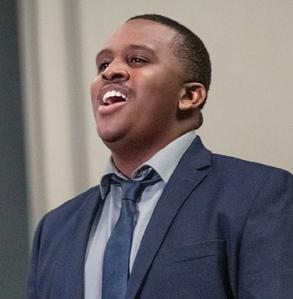
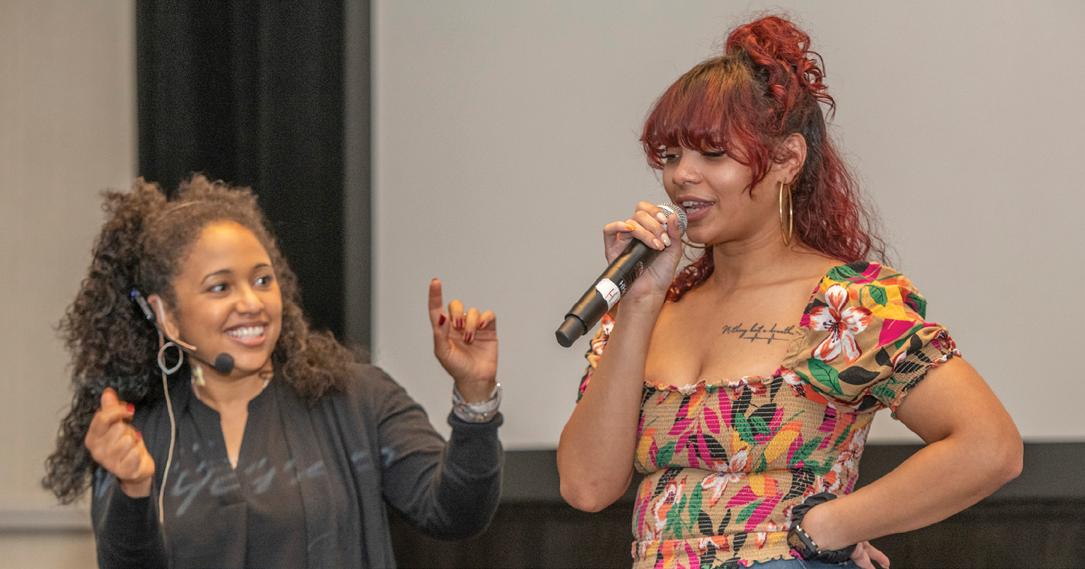
BENEFITS OF MEMBERSHIP
• Professional development & networking
• Timely webinars & trusted resources
• Journal of Singing subscription
• National competitions & student auditions (Expanded genres & categories coming in 2023!)
• Virtual & live events to meet your needs
• Access to the NATS Members-Only Facebook Group with feedback on the latest information & technology
• Access to members-only benefits such as discounts on teaching tools, health insurance, & small business tools
• Discounted member prices for NATS workshops & conferences
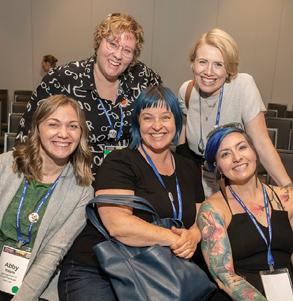
start

Student memberships
at just $46 per year! JOIN TODAY at NATS.ORG
Annual student membership for just $46!
Benefits include free, digital access to the Journal of Singing and more. Dedicated to the development of life-long learning, NATS has launched a student membership category. Now, full-time students pursuing an undergraduate, graduate, or doctoral degree can enjoy many of the same benefits as their teachers.
Available to new members only. For more information, log on to NATS.org
Membership Renewal Begins October 1, 2022
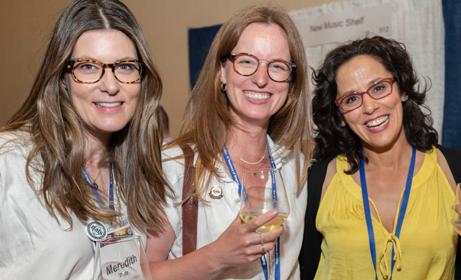
For those of you who have opted to take advantage of our new auto-renewal, thank you. You are all set for the 2023 year. Your dues will automatically renew midnight on December 31, 2022. Through this act, you have reduced the amount of time and expense needed for NATS staff to send out reminders and process renewals. You also have stopped email reminders, phone call reminders, and postcards you would normally receive during the renewal season.
For those of you who might wish to choose the auto-renew option, you can login to your NATS profile, click on update profile, scroll down to the automatically renew my dues section and select yes. However, if you wish to pay your dues through the online process, the process is easy.
• Go to NATS.org, enter your email address and password.
• If it doesn’t say “Welcome,” click on your email in the corner.
• From the welcome page you will see the “renew” button. Click on it, and follow through to the payment section.
Dues for full, associate and affiliate members are $125, student memberships are $46, and joint members are $80. Some member dues will be less after adjustments based on their country of residence. The adjusted pricing will be visible during checkout after you enter your country in the billing address. Joint members, your partner must renew first for you to see the renew button and be able to complete the renewal process.
If you have any questions or need any help, please contact the NATS office at 904-992-9101, Monday through Friday 8:30 a.m. to 4:30 p.m. ET. You also may email membership with any questions: membership@nats.org
Give the Gift of NATS
We all know that the last few years have been difficult for many in our community. You may personally have friends and colleagues that have had to make difficult choices on what they can afford and may either be considering not renewing their NATS membership or have already lapsed. Maybe you know someone who is just starting out in the field and needs to get connected and network for their first job as a voice teacher.
If you would like to help another teacher afford NATS, you can gift them a membership. If they are currently a member, the gift will pay for their renewal for the 2023 year. If they are not currently a member, your gift will allow them to join NATS as an Affiliate member. They can upgrade to another membership type when they are ready. All you will need is their name, city and state, and email address.
Gift a membership.
nats.org INTER NOS | FALL 2022 43
You don’t have to be wealthy
to leave a gift that will resound for generations.
Have you considered leaving a gift to NATS in your will or trust?
For many individuals, the bulk of our wealth is held in our estate – our retirement plan, property, life insurance, etc. This means that legacy giving might be the most impactful gift we will ever make.
How would you impact NATS? You could create a named scholarship for future NATS students or name a NATSAA or NMTC prize. You could advance the careers of young vocal teachers. You might provide permanent funding for the program you value most. Making a legacy gift to NATS advances our art in a lasting way.
A legacy gift to NATS makes you a member of the Encore! Society, created to recognize donors who have made a longterm commitment to NATS’ mission through estate gifts.
Encore! Society member benefits:
• Knowing your values will be carried forward by NATS
• Name recognition, with permission, in the NATS annual reports and on the NATS website
• The opportunity to name a scholarship or prize
• Invitations to NATS President’s Reception at the National Conference
• Updates on NATS programs and activities
Changing lives through the power of singing through:
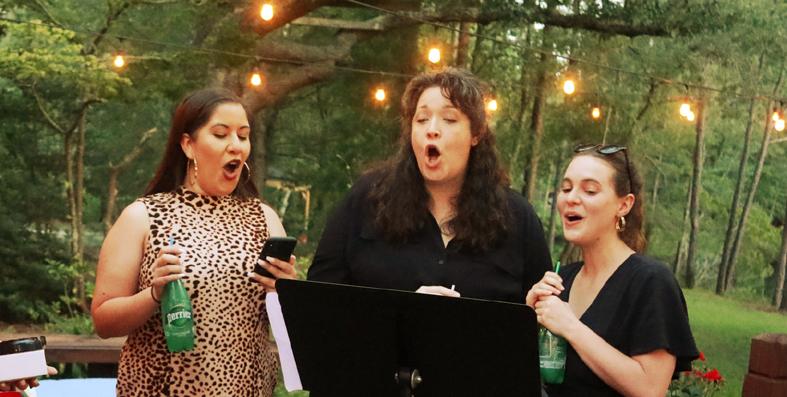
• Gifts In Your WILL OR TRUST
• A Gift of a LIFE INSURANCE POLICY
• Designate NATS as a beneficiary of BANK AND BROKERAGE ACCOUNTS
• LIFE INCOME PLANS
If you would like to discuss a charitable bequest, please call Bob Bryan at 904-992-9101 or email Bob@NATS.org.
NATS has been an important part of my life. I’m happy to know my gift will help transform lives for years to come.
— DIANA ALLAN, FOUNDING ENCORE! SOCIETY MEMBER
Encore! SOCIETY IMPORTANT • ENDURING
