
Volume 15 Issue 3 Summer 2019 www.nasa.gov
National Aeronautics and Space Administration
Sounding Rocket Program: Where Discovery Begins
Perhaps more so than for any other scientific discipline, NASA’s sounding rocket program has contributed significantly to Goddard’s Heliophysics Science Division. For scientists studying the Sun and its effects on Earth, the Wallops-managed program has contributed to scientific discovery and the demonstration of new technologies. Here, CuttingEdge shines a spotlight on some of the developments, including a new technology called Swarm that will give scientists a neverbefore-offered capability (see page 3) and three new sounding rocket missions expected to launch in 2020 and 2022 (see page 5). Although not selected as one of NASA’s next Small Explorer (SMEX) missions in heliophysics, two Goddard teams had submitted competing SMEX proposals — the Focusing Optics X-Ray Solar Imager (FOXSI) and the Mechanisms of Energetic Mass Ejection-eXplorer (MEME-X). Both had profited from the sounding rocket program.
in this issue:
Summer 2019
Continued on page 3
2 Sounding Rocket Program: Where Discovery Begins
3 Communicating with a Swarm: Enabling Simultaneous, Multi-Point Measurements
5 The Tradition Continues: Goddard Teams Win Three Sounding Rocket Missions
7 New X-Ray Optic Meets Ambitious Imaging Requirements; Demonstration Slated for 2021
8 NASA Technology That Enables X-ray Communications Could Also Save Lives
10 A GIANT Step Forward in Optical Navigation
12 Special Report: Emerging Technologies for Studying Earth’s Climate
12 Ride Needed: Team Builds CubeSat-Compatible Aerosol-Detecting Instrument
13 Shoebox-Sized Instrument Aims High to Look at Ice Clouds
15 3-D Printed Coronagraph Created; Undergoing Testing
About the Cover
This was a development flight test of the Terrier-Improved Malemute sounding rocket, the vehicle that will fly technology payloads integrated onto SubTec-8 in September 2019. During SubTec-8, Wallops engineers plan to demonstrate a new technology that could deploy multiple soda can-sized sub-payloads to varying altitudes where their onboard miniaturized instruments could gather multi-point measurements — a never-before-offered capability.

You can now share this issue with your friends and colleagues via your own social-media channels. Click the Share button to begin.

cutting edge • goddard’s emerging technologies PAGE 2 Volume 15 • Issue 3 • Summer 2019 www.nasa.gov/gsfctechnology
NASA’s sounding rocket program is scheduled to launch its SubTec-8 payload in September 2019. Its predecessor, SubTec-7, was launched on a Black Brant IX sounding rocket on May 16, 2017.
Photo Credit: Allison Stancil/NASA
Communicating with a Swarm
Sounding Rocket Technology Could Enable Simultaneous, Multi-Point Measurements

Wallops engineers plan to test a new avionics technology — called Swarm — that would give scientists a never-before-offered capability in sounding rocket-based research.
With Swarm technology, sounding rockets would deploy multiple soda can-sized sub-payloads to varying altitudes where their onboard miniaturized instruments would gather multi-point measurements. A Swarm radio receiver located on the main payload would then gather the sub-payloads’ data and multiplex them into one data stream that it would transmit to ground stations below.
This capability would simplify data gathering and payload tracking, and allow scientists to study multiple regions in space simultaneously, which they currently can’t do with existing sounding rocket technology.
“Currently, most sounding rockets gather data from only one point,” said Cathy Hesh, the Wallops project manager spearheading the technology-development effort. “Our scientists want more.”
The capability is just one of several to be tested during a technology-demonstration mission known
as Suborbital Technology Carrier-8, or SubTec-8, a payload canister that Wallops engineers developed to help mature emerging technologies. SubTec-8 will be integrated onto a Terrier-Improved Malemute sounding rocket, which will launch from the Wallops Test Range in Virginia in September 2019.
“We took a diverse set of Wallops engineers to put this system together,” Hesh said. “It’s really an enabling technology, a technology that we’ve never been able to do before. It’s really exciting.”
Similar to AZURE
The concept is similar in nature to one that the Wallops team launched in April from Norway’s Andøya Space Center. During that mission, called AZURE, short for the Auroral Zone Upwelling Rocket Experiment, two Black Brant XI-A sounding rockets deployed multiple visible gas tracers containing ingredients similar to those found in fireworks. The mixtures created colorful clouds that allowed researchers to track the flow of neutral and charged particles in the auroral wind via ground-based photography and triangulation of the clouds’ momentby-moment positions in three dimensions.
Continued on page 4
Volume 15 • Issue 3 • Summer 2019 cutting edge • goddard’s emerging technologies PAGE 3 www.nasa.gov/gsfctechnology cutting edge • goddard’s emerging technologies
Wallops engineers plan to test a new avionics technology — called Swarm — that would give scientists a never-before-offered capability in sounding rocket-based research. They are pictured here along with the technology’s components. From left to right (front row): Brian Banks, Taylor Green, Steve Bundick, Josh Yacobucci, and Cathy Hesh; (back row, left to right): Christian Amey, Scott Hesh, Chris Lewis, and Alex Coleman.
Photo
Credit: Berit Bland
But the SubTec-8 demonstration will take the technology to the next level, Hesh said.
“The AZURE mission flew the same sub-payload form factor, but it carried only a tracer ampule. It did not have the telemetry avionics that we developed for Swarm,” she said, adding that these technologies, including a radio receiver, a sub-payload antenna no larger than a quarter, miniaturized transmitters, and a highly efficient power-distribution system, were developed in part with Goddard Internal Research and Development (IRAD) program funding.
The SubTec-8 Demonstration
Within two minutes of the rocket’s lift-off, Hesh said the canister’s doors will open. A rocket-based release mechanism will deploy two sub-payloads equipped with university-provided instruments. These sub-payloads will travel at about 200 miles per second to a position roughly 12 miles away from the main payload. During their flight, they will measure various physical phenomena in Earth’s upper atmosphere.

A few seconds later, spring-loaded release mechanisms will deploy two additional sub-payloads, also equipped with instruments provided by another university researcher. Traveling at about 10 miles per hour to a position roughly two miles away from the main payload, these instruments will study thermalion plasma.
Once the sub-payloads eject, they will begin collecting and transmitting their data to the main payload receiver at a rate of about one megabit per second, she said, adding the sub-payloads should get about four minutes of data before reentering the atmosphere. Following the sub-payloads’ release, the receiver on the main payload will transmit the compiled data to a telemetry station below.
“Game-Changing” Capability
Work to further improve the system is ongoing, Hesh said.
Under an FY19 IRAD, Wallops engineers Christian Amey and Brian Banks are developing a custommade transmitter that would cost significantly less

than the commercially available transmitters currently used on the Swarm system. “Ultimately, we want to fly up to 16 to 20 of these sub-payloads in space at the same time,” Hesh said. Reducing the cost of the transmitters would make this technology more economical.
“This is a top priority for NASA’s Sounding Rocket Program Office,” she continued, referring to the overall Swarm system. “If implemented, it would be a game-changing technology to offer the sounding rocket science community.” v
Volume 15 • Issue 3 • Summer 2019 cutting edge • goddard’s emerging technologies PAGE 4 www.nasa.gov/gsfctechnology
CONTACT Catherine.L.Hesh@nasa.gov or 757.824.1408
A team of Wallops Flight Facility engineers will release these instrumented sub-payloads to demonstrate the Swarm technology. The devices should collect and transmit about four minutes of data before reentering the atmosphere.
Photo Credit: Scott Hesh
Colorful clouds formed by the release of vapors from the two AZURE rockets, which allowed scientists to measure auroral winds. The concept is a forerunner to the Swarm technology that will be demonstrated during the upcoming SubTec-8 sounding rocket mission.
Photo Credit: Lee Wingfield/NASA
The Tradition Continues
Goddard Teams Win Three New Sounding Rocket Missions
Goddard heliophysicsts, who have long benefitted from NASA’s sounding rocket program to gather data and demonstrate emerging technology, have won funding to develop three additional missions aimed at better understanding the Sun’s influence on Earth, and in one case, why life even exists on terra firma.
Funded by NASA’s Heliophysics Technology and Instrument Development for Science program, these missions trace their heritage to previous technology-development efforts funded under Goddard’s Internal Research and Development, or IRAD, program. “They represent a great return on our initial investment in these technologies,” said Nick Paschalidis, lead technologist for Goddard’s Heliophysics Science Division. “We’re going into space because of these IRADs.”
Endurance
Named in honor of the Endurance, the vessel that British explorer Ernest Shackleton and his crew sailed during their ill-fated attempt to cross Antarctica in 1914, Endurance will directly measure a particular component of Earth’s electrical field called the ambipolar electrical field that is generated by Earth’s ionosphere, the layer of Earth’s atmosphere that contains a high concentration of ions and free electrons.
“This is a pioneering mission,” said Principal Investigator Glyn Collinson, whose team also includes Endurance Project Scientist Alex Glocer. “This is discovery science.”
Could it be that the ambipolar electrical field determines how much oxygen is allowed to escape into space? Scientists aren’t sure. “All we know is that Earth is habitable,” Collinson said. “Why? We’ve measured Earth’s gravitational and magnetic fields, but never this particular component. Its strength or weakness “could give the kick to drive oxygen out of Earth’s atmosphere.”
Although Endurance will fly four instruments, perhaps the most important is the Photoelectron Spectrometer. This new instrument combines the Dual Electrostatic Analyzer developed by Goddard scientist Eftyhia Zesta and the Retarding Potential Analyzer developed by Goddard researcher Dennis Chornay.

“What we did was take two instruments and glue them together,” Collinson said, adding that Pas-

chalidis had originally suggested and promoted the idea. The end result is an instrument that will provide “phenomenal energy resolution” for determining Earth’s electrical field and its strength, Collinson said.
While the instrument hasn’t flown yet, laboratory tests indicate its performance exceeds requirements, he added. “The data produced played a key role in winning this proposal,” Paschalidis said.
Endurance is expected to launch from Ny-Ålesund, Norway in 2022
Loss Through Auroral Microburst Precipitation (LAMP)
Another mission that wouldn’t have been possible without IRAD support or NASA’s sounding rocket program is LAMP, headed by Goddard heliophysicist Sarah Jones. LAMP will carry five instruments provided by Goddard and the Japan Aerospace Exploration Agency (JAXA), along with contributions from the University of New Hampshire and Dartmouth College.
Volume 15 • Issue 3 • Summer 2019 PAGE 5 cutting edge • goddard’s emerging technologies www.nasa.gov/gsfctechnology
6
Continued on page
The Dual Electrostatic Analyzer, pictured here, is being combined with another Goddard-developed instrument to create the Photoelectron Spectrometer, a key instrument for measuring Earth’s electric field.
Photo Credit: NASA
“The sounding rocket program provides us with a platform that is particularly useful for answering certain questions about the Sun’s influence on Earth. For example, how do you measure something that changes 10 times a second in a fixed location?” Jones said, adding that a satellite-based mission would be inappropriate for LAMP.
This mission will for the first time directly measure microbursts in pulsating aurora, colorful light shows that occur 60 miles above the Earth in a ring around the magnetic poles called the auroral oval. The light results from collisions between gaseous particles in the atmosphere with charged particles caught in the Earth’s magnetosphere, the magnetic shield that protects Earth from harmful radiation.
Scientists believe that prolonged series of microbursts, each of which flash on and off in one tenth of a second, could contribute to the loss of electrons from the Van Allen Belts, donut-shaped radiation belts that encircle Earth.
One of the key instruments, the Neutral Wind Sensor, is a follow-on to the Ion Neutral Mass Spectrometer, or INMS. Since its development, INMS has flown on two CubeSat missions, including the debut flight of the Goddard-developed Dellingr. Other instruments include the Medium Energy Electron Spectrometer based on solid-state detectors and sophisticated read-out circuits provided by Paschalidis, two Japanese cameras, and a highenergy particle instrument, also provided by JAXA.
LAMP is scheduled to launch from Poker Flat Research Range, Alaska, in late 2020.
Dynamo-II
The Dynamo-II mission will explore a fundamental global process — the atmospheric dynamo — that occurs in the Earth’s lower ionosphere.
Led by Principal Investigator Rob Pfaff and coinvestigators Doug Rowland and Jeff Klenzing, Dynamo-II will investigate the poorly understood atmospheric dynamo, a pattern of electrical currents that are set up every day in the Earth’s lower ionosphere, driven by winds in the upper atmosphere. This mission builds on the successful Dynamo-I rockets launched from Wallops Island in 2011 and 2013. They investigated this process during quiet conditions at noon.
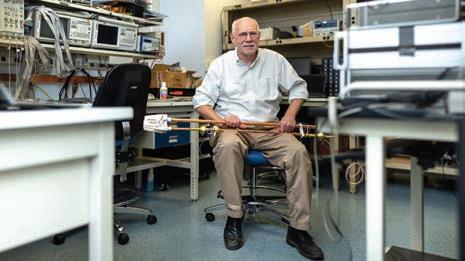

Dynamo-II will launch two rockets to obtain measurements at dawn and in the afternoon when the global meridional currents are near their peak and are much stronger than the noon currents explored by Dynamo-I. These data can only be obtained on sounding rockets because the dynamo occurs between 59-71 miles above Earth’s surface, Pfaff said. The unique data from these combined Dynamo investigations will answer key questions regarding this fundamental process, which occurs not only on the Earth, but also on other magnetized planets such as Jupiter and Saturn.
The Dynamo-II rockets will each carry a main payload and two sub-payloads, including a unique spherical payload with Goddard-designed tri-axial electric field booms. The Goddard-developed instruments include those that measure the DC and AC electric fields, magnetic fields, and plasma density, as well as innovative sensors to measure neutral density. The University of New Hampshire is providing instruments to measure neutral winds and ion mass properties.
Dynamo-II is scheduled to launch from the Wallops Test Range in 2020. v
Volume 15 • Issue 3 • Summer 2019 cutting edge • goddard’s emerging technologies PAGE 6 www.nasa.gov/gsfctechnology
CONTACTS Glyn.A.Collinson@nasa.gov or 301.286.2511 Sarah.L.Jones@nasa.gov or 301.286.6570 Robert.F.Pfaff@nasa.gov or 301.286.6328
Scientist Sarah Jones sits next to the vacuum chamber that will be used to calibrate the two Goddard instruments that will gather measurements during the LAMP rocket mission.
Dynamo-II Principal Investigator Rob Pfaff is holding a unique boom system developed at Goddard. Its dual sensors will measure AC and DC electric fields as part of the Dynamo-II sounding rocket mission in 2020.
Photo Credit: Taylor Mickal/NASA
Photo Credit: Taylor Mickal/NASA
New X-Ray Optic Meets Ambitious Imaging Requirements; First Demonstration Slated for 2021
Recent testing has shown that super-thin, lightweight X-ray mirrors made of a material commonly used to make computer chips can meet the stringent imaging requirements of next-generation X-ray observatories.
As a result, the X-ray mirror technology being developed by Goddard scientist Will Zhang and his team has been baselined for the Design Reference Mission of the conceptual Lynx Xray Observatory — one of four potential missions that scientists have vetted as worthy pursuits under the 2020 Decadal Survey for Astrophysics.
If selected and ultimately launched in the 2030s, Lynx could literally carry tens of thousands of Zhang’s mirror segments, which would offer a two orders-ofmagnitude leap in sensitivity over NASA’s flagship Chandra X-ray Observatory and the European Space Agency’s Advanced Telescope for HighEnergy Astrophysics, or ATHENA.
Nearer-Term Flight Opportunity

In another development, Zhang and his team have secured a nearer-term flight opportunity aboard a sounding rocket mission scheduled for 2021. This would represent the technology’s first demonstration in space.
The effort to develop the new-fangled optic began seven years ago when Zhang began experimenting with mono-crystalline — a single-crystal silicon that had never before been used to create X-ray mirrors (CuttingEdge, Winter 2012, Page 4). These specially fabricated optics must be curved and nested inside a cylindrically shaped container so that highly energetic X-ray photons graze their surfaces and deflect into an observatory’s instruments rather than passing through them.

His goal — given the cost of building space observatories, which only increase in price as they get
larger and heavier — was to develop easily reproducible, lightweight, super-thin mirrors, without sacrificing quality.
“What we’ve done is shown from a scientific perspective and empirically that these optics can be built” using an inexpensive, abundantly available material that is immune from the internal stresses that can change the shape of X-ray mirrors made of glass, the more traditional mirror-making material, Zhang said.

Reviews conducted by a NASA-commissioned panel of 40 experts deemed that Zhang’s optics made of the brittle, highly stable silicon material are capable of the same image quality as the four pairs of larger and heavier mirrors flying on Chandra.
Not only could the mirrors provide 0.5 arc-second resolution — comparable to the image quality afforded by ultra-high-definition television — they also met Zhang’s low-mass requirements. They are 50 times lighter and thinner than Chandra’s, Zhang said. This means future observatories could carry far more mirrors, creating a larger collection area for snagging X-rays emanating from highenergy phenomena in the universe.
Volume 15 • Issue 3 • Summer 2019 PAGE 7 cutting edge • goddard’s emerging technologies www.nasa.gov/gsfctechnology
Continued on page 8
LEFT - Goddard scientist Will Zhang holds mirror segments made of silicon. These X-ray optics have been baselined for the proposed Lynx X-ray Observatory. RIGHT - This particle beam polishes the surface of a new X-ray optic made of silicon.
Photo Credit: Chris Gunn/NASA
Now the Hard Part Begins
But Zhang said he and his team are still “far, far away from flying our optics.”
He and his engineering team now have to figure out how to bond these fragile mirror segments inside the canister, which protects the entire mirror assembly during a rocket launch and maintains their nested alignment.
“We have a lot to do, and not a lot of time to do it,” Zhang said. “This is now an engineering challenge.”
Just two years from now, Zhang’s team must deliver a 288-segment mirror assembly to Penn State Professor Randall McEntaffer, who is developing a sounding rocket mission called the Off-plane Grating Rocket Experiment, or OGRE, expected to launch from the Wallops Test Range in 2021. In addition to the mirrors, OGRE will carry a university-developed spectrograph equipped with next-generation X-ray diffraction gratings used to split X-ray light into its component colors or wavelengths to reveal an object’s temperature, chemical makeup, and other physical properties.
OGRE will do much to advance the mirror assembly, Zhang added. The mission will help determine whether the team’s design can protect the fragile nest of mirrors from extreme launch forces experienced during liftoff and ascent through Earth’s atmosphere.
Other Opportunities Available
Zhang envisions a bright future for the team’s optics. Even if Lynx isn’t chosen for development by the 2020 Decadal Survey, other proposed missions could benefit, Zhang said. These include a couple X-ray observatories now being investigated as potential astrophysics Probe-class missions (CuttingEdge, Fall 2018, Page 15) and another now being considered by the Japanese.
“Five years ago, people said it couldn’t be done, but we proved our ideas,” Zhang said. “My team is grateful to Goddard’s Internal Research and Development program for giving us the seed money. We couldn’t have achieved this without it.” v
NASA Technology that Enables X-ray Communications Could
Also Save Lives
When Goddard scientists developed a compact X-ray source that could turn on and off instantaneously, they never imagined how it could be used apart from astrophysics. Dr. Rajiv Gupta, director of the Advanced X-Ray Imaging Sciences Center at Massachusetts General Hospital (MCH) in Boston, had an idea, though.
Gupta is now using the patented Modulated X-ray Source (MXS) — a key technology in NASA’s planned demonstration of X-ray communications in space — to develop a more compact and faster computed tomography, or CT, scanner. CT scans, now used ubiquitously in medicine, combine a series of X-ray images taken from different angles to create cross-sectional images of bones, blood vessels, and soft tissues, allowing doctors to see inside a body without cutting into it.
Gupta’s interest in NASA technology began about five years ago when he participated in a NASAsponsored web conference featuring Goddard
scientist Keith Gendreau, the principal investigator of the Neutron-star Interior Composition Explorer/ Station Explorer for X-ray Timing and Navigation Technology (NICER/SEXTANT), the mission for which the MXS was developed.
“I was impressed by his presentation and the plans that he has. I was intrigued by it,” Gupta said. “I was at that time working on a system using a different method for the rapid turning off and on of X-rays.”
The current state of the art in CT scanning involves spinning a massive X-ray source around a patient lying on a gurney, Gupta said. These scanners employ a heated filament inside a vacuum tube to generate the X-rays. The MXS, on the other hand, uses a small ultraviolet light-emitting diode, or LED, to generate the X-rays, making it small enough to fit in your hand. Better yet, LEDs don’t require time to cool or heat, allowing the MXS to turn off and on billions of times per second.
Continued on page 9
Volume 15 • Issue 3 • Summer 2019 cutting edge • goddard’s emerging technologies PAGE 8 www.nasa.gov/gsfctechnology William.W.Zhang@nasa.gov or 301.286.6230 CONTACT
“Currently the speed with which you can scan somebody is the speed you can rotate a one-ton gantry, or about five revolutions per second,” Gupta said. That limitation affects where these machines can be used. “When you have no net angular momentum or rotational torque, you could operate a CT scan on a moving vehicle, like an ambulance, a ship or even a spacecraft in orbit.”
Genesis of the MXS
The MXS concept originated more than a decade ago when Gendreau and NICER Science Lead Zaven Arzoumanian began work on enabling technologies for a proposed black hole imager to directly image the event horizon of a supermassive black hole or the point of no return where nothing — neither particles nor photons — can escape. The idea was to use X-ray sources as beacons to synchronize the movements of fleets of spacecraft looking for the event horizon.
Gendreau reasoned that if he could develop an Xray source, he could encode digital bits of information on the modulated X-rays and transmit that data to a receiver. This summer, Gendreau and his team planned to test this communications application on the International Space Station (CuttingEdge, Winter 2019, Page 9), using NICER/ SEXTANT as the receiver.
Medical Applications
In medicine, Gendreau said, doctors could fine-tune the X-ray dose for the individual patient or body part being imaged, eliminating over- or under-exposure as well as scattered X-rays that blur the image. It would also enable freeze-action, super slow-motion imagery of what’s going on inside a patient’s body,
all in a potentially portable package.
Gupta said those same attributes that make MXS useful in astrophysics, communications, and synchronization offer promise for radiology. So far, he has built a proof-of-concept device that uses seven sources in a 15-degree arc, 1/24th of a circle, but still has to be spun around the target like a conventional CT scan.

He plans to make a stationary ring of 100 X-ray sources (and 100 receivers) that can be turned on and off in sequence to increase the speed, stability, and resolution of CT scans. This technology could reduce the amount of radiation patients receive, while providing higher resolution, real-time video imagery of what’s going on inside human bodies.
“We’re very excited about this sort of off-label use of a NASA technology” for something that the technology wasn’t originally designed to accomplish, Gupta said. v
Keith.C.Gendreau@nasa.gov or 301.286.6188
Volume 15 • Issue 3 • Summer 2019 PAGE 9 cutting edge • goddard’s emerging technologies www.nasa.gov/gsfctechnology
CONTACT
Working with the Modulated X-Ray Source are (from right to left): Jake Hecla, the Massachusetts Institute of Technology (MIT) undergraduate student who came to Goddard to build the first version of the source; Avilash Cramer, an MIT PhD student currently working on CT applications; Wolfgang Krull, from the MGH Center for Integration of Medicine and Innovative Technologies, and Achuta Kadambi, another MIT PhD student who worked on the source prior to joining the faculty at the University of California-Los Angeles.
Photo Credit: Dr. Rajiv Gupta
A GIANT Step Forward in Optical Navigation
Technology Enables Unexpected Bonus for OSIRIS-REx Scientists
A navigation tool originally developed to help plot OSIRIS-REx’s approach to asteroid Bennu ended up characterizing particles ejected from the object’s surface — an unexpected bonus for scientists interested in learning more about an ancient object that could collide with Earth late in the 22nd century.

The navigation and science teams weren’t expecting to find these specks of surface material, but ended up tracking them with some precision to determine what was happening and whether they posed a threat to the spacecraft. The Origins, Spectral Interpretation, Resource Identification, SecurityRegolith Explorer mission, known as OSIRIS-REx, is rendezvousing with Bennu where it will conduct a two-year detailed survey of the asteroid, collect NASA’s first-ever sample of an asteroid, and bring it back to Earth for analysis.
“For safety reasons, we need to be able to know where any large particles are to ensure they won’t
affect the spacecraft and predict when more particles may enter the environment around Bennu,” said Andrew Liounis, principal investigator for Goddard’s optical navigation team. “For science purposes, the particles can provide information about Bennu’s composition, gravity field, and the forces acting on the surface, along with many other fascinating scientific insights.”
The technology used to do this tracking is an optical navigation (OpNav) technology called the Goddard Image Analysis and Navigation Tool, or GIANT. In contrast to radar or laser-ranging tools that pulse radio and light waves at a target and then analyze the returning signals, GIANT analyzes images to more quickly and accurately measure the spacecraft’s distance from the target as well as the target’s size and other characteristics.
Continued on page 11
Volume 15 • Issue 3 • Summer 2019 cutting edge • goddard’s emerging technologies PAGE 10 www.nasa.gov/gsfctechnology
This image taken earlier this year shows asteroid Bennu as it ejects particles from its surface.
Photo Credit: NASA/Goddard/University of Arizona/Lockheed Martin
An Independent Check
Goddard technologists developed GIANT to independently check navigation data processed by OSIRIS-REx’s primary navigation team, mainly comprised of KinetX engineers. With images that the mission transmits to Earth, GIANT Principal Investigator Andrew Liounis and his team use their specially developed computer algorithms to analyze the images and then pass along their findings to the primary team. Having a second team helps the OSIRIS-REx mission validate its navigation information, offering additional confidence that nothing has been missed.
“The primary way that we are ‘independent’ is that we are using independent tools to do the processing,” Liounis said. “Many of our algorithms are similar, just with slightly different implementation details. We also have additional algorithms and methods that we have developed in-house through the IRAD (Internal Research and Development) program to provide an even more independent look at the data.”
For example, GIANT can determine direction to an object by locating its center in an image. This is done by predicting what the object should look like and then searching for it in the image using a process known as cross-correlation.
It can also figure out where the camera is pointing by identifying known stars in an image and it can employ another set of techniques that consider the outer edges or limbs of an object to provide information about both the direction to the target, as well as how far away it is. And it can identify and catalog features on the target’s surface and its distance and relationship to other features through a process known as stereophotoclinometry.
The results of these and other calculations enable science and engineering tasks that would not be possible using traditional ranging techniques, Liounis said. As more missions target less well known and more complex bodies, optical navigation will be an essential part of exploration.
“OpNav directly gives you information about the relative state between the spacecraft and the target to higher accuracy than can be inferred from the solutions given from more traditional tracking,” Liounis said.
Radars, laser range finders (LRF), and lidars can also give the relative state, he said, but compared to cameras, they generally cost more and take up more mass, making them unfeasible for some missions.
In addition, radars and LRF only provide distance information to the body’s surface — information in one direction — whereas OpNav can provide both the distance and direction, providing information in all three directions from a single detector.
While lidar can give information in all three directions, it’s generally considered riskier because the technology hasn’t fully matured for spaceflight. Furthermore, cameras typically have a much wider range, Liounis said. They can operate from a distance, while lidar, LRF, and radar need to be close to the body, but not too close. This limitation is particularly true for lidar, Liounis said.
Active range sensors complement OpNav, and many missions rely on both OpNav and particularly LRF if they have the budget and spacecraft size to carry both types of navigation technology. OSIRIS-REx uses both.
Seeking an Autonomous GIANT
The team isn’t finished with GIANT. With this year’s IRAD funding, the team is developing a new version of GIANT that would run autonomously onboard future spacecraft to extract and develop OpNav data from images captured by the spacecraft. As part of a fully autonomous fight system, it would then pass that information to an onboard navigation system to be included in the orbit determination solution.
This would help when the communications lag to Earth is too long for ground controllers to effectively guide spacecraft and when ultra-precise, real-time knowledge of the spacecraft’s relative position and velocity to the target is required for high-impact science observations.
Furthermore, onboard OpNav would reduce the amount of engineering data that needs to be downlinked to Earth, which would reduce the cost of communications for smaller missions and allow for more science data to be downlinked for larger missions. It would also reduce the number of people required to perform ground-based orbit determination and navigation.
“We’re always looking for ways to take this technology to the next level for navigating spacecraft in the space environment,” Liounis said. v
Volume 15 • Issue 3 • Summer 2019 PAGE 11 cutting edge • goddard’s emerging technologies www.nasa.gov/gsfctechnology Andrew.J.Liounis@nasa.gov or 301.286.2856 CONTACT
SPECIAL REPORT
Emerging Technologies for Studying Earth’s Climate
NASA’s Earth Science Technology Office, or ESTO, funds and develops new Earth sciencerelated technologies. Here, CuttingEdge reports on
Ride Needed
two that aim to help scientists understand the role of aerosols in climate change and the impact of cirrus clouds on climate.
Team Builds CubeSat-Compatible Aerosol-Detecting Instrument

A Goddard team has succeeded in building a miniaturized instrument that promises to measure more comprehensively the specks of naturally occurring and manmade matter that can adversely affect the climate and human health.
Now considered nearly ready for primetime, the team’s goal is to hitch a ride on a high-altitude scientific balloon, which would allow the team to demonstrate the performance of the Multi-Angle Stratospheric Aerosol Radiometer, or MASTAR, in a suborbital environment 19 miles above Earth’s surface.
Once demonstrated, the team envisions flying the instrument aboard a constellation of relatively inexpensive CubeSats to gather simultaneous, multipoint measurements of these ubiquitous specks of matter or aerosols, which can be found in the air over oceans, deserts, mountains, forests, ice, and every ecosystem in between.
Aerosols: The Good, the Bad, and the Ugly
Despite their small size, aerosols have major impacts, both bad and good, on Earth’s climate and human health.
About 90 percent of aerosols have natural origins. Volcanoes and forest fires inject huge quantities of ash and partially burned organic carbon, respectively, into the air. Once in Earth’s upper atmospheric layer, these aerosols can last for months, creating problems for commercial airliners that cruise at these high altitudes.
The remaining 10 percent comes from automobiles, incinerators, smelters, and power plants as well as from deforestation, overgrazing, drought, and excessive irrigation. Collectively, they create the pollution and poor air quality that are particularly harmful to those with respiratory diseases.
Although aerosols can adversely affect human health and commercial enterprises, they are
Continued on page 13
Volume 15 • Issue 3 • Summer 2019 cutting edge • goddard’s emerging technologies PAGE 12 www.nasa.gov/gsfctechnology
Matt Kowalewski is a member of the team building a miniaturized instrument for measuring the specks of naturally occurring and manmade matter that can adversely affect the climate and human health. The team is now looking for an opportunity to fly the instrument in space.
Photo Credit: Paul Padget/NASA
SPECIAL REPORT
Emerging Technologies for Studying Earth’s Climate
beneficial. They reflect sunlight back into space, essentially throwing a cooling blanket over the planet. This, in essence, offsets some of the global warming caused by increasing greenhouse gases that trap heat at the surface, preventing it from radiating back into space.
No Wonder NASA Is Interested
Given their potential for good and bad, it’s no wonder then that NASA is highly interested in measuring aerosols and determining where they’re located and how long they could last particularly in the stratosphere.
“Knowing where it’s going is important economically. Measurements from a single spot on the ground won’t give you the information you need,” said Matt DeLand, a scientist with Science Systems and Applications, Inc., who is leading the Goddard team developing MASTAR. “Flying these instruments on multiple spacecraft would give us the global measurements we need. This is one of the reasons Goddard’s Earth Science Division encouraged MASTAR’s development.”
Currently funded by NASA’s Earth Science Technology Office (ESTO) and other Goddard sources, MASTAR is inspired by the Ozone Mapping and Profiling Suite (OMPS) Limb Profiler, one of three instruments making up a suite of instruments flying on NASA’s Suomi NPP spacecraft. Launched in 2011, Suomi NPP is the forerunner of a next-generation Earth-observing system designed to study long-term climate change.
MASTAR’s Advantages
However, MASTAR offers two distinct advantages over its larger next-of-kin: its multiple viewing angles, which would give scientists a more comprehensive accounting of the type and distribution of aerosols in the stratosphere as viewed along Earth’s horizon, and its small size ideal for flying on a tiny CubeSat platform, DeLand said.
Unlike the Limb Profiler, which also observes along Earth’s horizon, but backwards behind the Suomi NPP spacecraft as it orbits Earth, MASTAR will gather measurements from eight positions or apertures, looking forward, backwards, and along the sides. “We’re looking in multiple directions,” DeLand said. “Aerosols reflect better from some angles.”
The light it gathers from these eight apertures is then directed via tiny lenses and a conical mirror to the instrument’s detector.
To fulfill the goal of gathering multi-point, simultaneous measurements via CubeSats often no larger than a loaf of bread, DeLand and his team also had to shrink the instrument’s size. It now fits on a 3U CubeSat, which measures roughly four inches on a side and a foot in length.
Once DeLand demonstrates MASTAR, he believes the instrument could be used for other scientific investigations. “With a slight modification to the instrument, we could measure water vapor and other properties,” he said. “There is more than one application for this instrument.” v

Volume 15 • Issue 3 • Summer 2019 PAGE 13 cutting edge • goddard’s emerging technologies www.nasa.gov/gsfctechnology CONTACT
or 301.867.2164
Matthew.Deland@ssaihq.com
MASTAR offers distinct advantages over larger aerosol-measuring instruments: its multiple viewing angles, which would give scientists a more comprehensive accounting of the type and distribution of aerosols in the stratosphere as viewed along Earth’s horizon, and its small size.
Photo Credit: Paul Padget/NASA
Emerging Technologies for Studying Earth’s Climate
Shoebox-Sized Instrument Aims High to Look at Ice Clouds
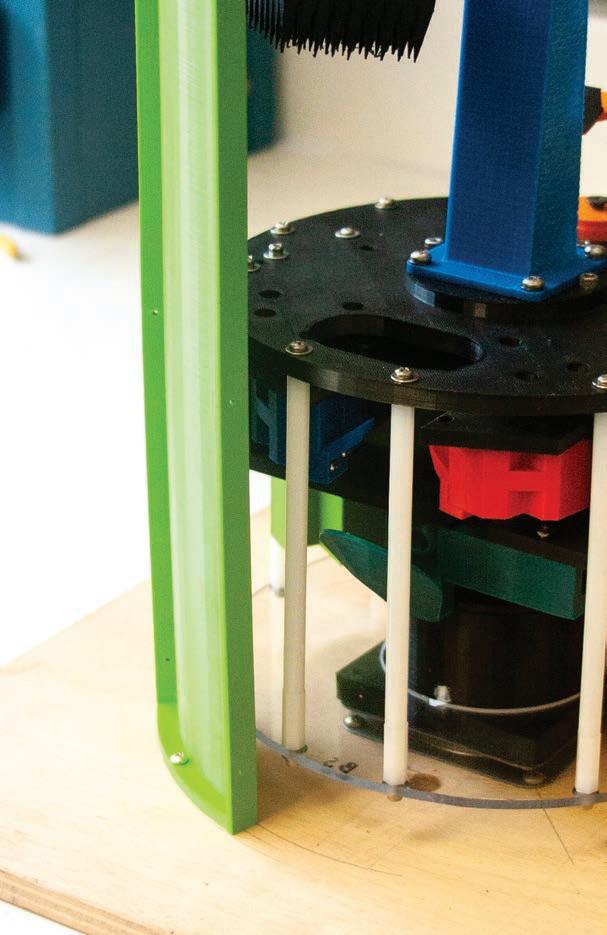
A next-generation instrument is expected to give researchers unprecedented insights into the ice crystals that form the wispy clouds that float high in the sky and play an important, but little-understood role in Earth’s climate.
The instrument, called SWIRP — short for the compact Submm-Wave and LWIR (longwave infrared) Polarimeters for Cirrus Ice Properties — combines for the first time multiple wavelengths to obtain information about the ice crystals making up cirrus clouds. The instrument will help scientists understand their role in regulating Earth’s energy balance, which can evolve with climate change, said Dong Wu, a Goddard scientist leading the SWIRP effort.
Wu and his team are now building the instrument and plan to demonstrate SWIRP on a high-altitude balloon or aircraft next year. Once proven, the shoebox-sized instrument would be ready to fly on a satellite mission, Wu said.
SWIRP follows another instrument, also led by Wu, called IceCube (CuttingEdge, Winter 2018, Page 10). During its 15-month sojourn aboard a 3U CubeSat, IceCube produced the world’s first map of the global distribution of atmospheric ice. It obtained this data in only one frequency band — 883-Gigahertz — while SWIRP will study the same phenomenon in multiple frequencies, ranging from the submillimeter or microwaves that fall between radio and longwave infrared on the electromagnetic spectrum.
What’s Up with Clouds?
Understanding ice clouds is important for interpreting Earth’s radiation budget.
Clouds determine how much sunlight gets in and how much gets bounced back into space. Clouds that sit at a lower altitude tend to reflect sunlight,
while colder, higher-altitude clouds let more sunlight in and create a greenhouse effect because they also prevent it from leaving. Scientists struggle to understand the impact of cirrus clouds because it’s difficult calculating how their plentiful and irregularly shaped ice crystals scatter sunlight.
Volume 15 • Issue 3 • Summer 2019 cutting edge • goddard’s emerging technologies PAGE 14 www.nasa.gov/gsfctechnology
15
This is a 3-D model of SWIRP, which Principal Investigator Dong Wu is now developing to measure ice crystals that make up cirrus clouds.
Continued on page
SPECIAL REPORT
Photo Credit: Paul Padget/NASA
A New Instrument on the Horizon SWIRP could help answer that question.
Funded by NASA’s Earth Science Technology Office and Goddard’s Internal Research and Development IRAD program, SWIRP would allow scientists to see ice clouds more clearly because it measures ice clouds in three different wavelengths — the 680-Gigahertz, 240-Gigahertz and infrared bands — which are sensitive to differently sized particles.
Although existing sensors can observe small and very large ice particles, SWIRP can see intermediate ice particles, which closes an existing gap in NASA’s observational capabilities. “Ice clouds are currently a knob you can adjust in climate models to make sure everything else fits,” Wu added.

SWIRP will also enhance the international capabilities of cloud-ice observations. The Ice Cloud Imager, or ICI, now being developed by the European Organization for Meteorological Satellites, is a millimeter/submillimeter wave radiometer that will also measure ice clouds to support long-term climate monitoring and validate the characteristics of ice clouds in weather and climate models.
ICI is much larger than SWIRP. Not only could it be built for less money, SWIRP would enable multi-point cloud observations from a constellation of SmallSats,
which would provide complete daily coverage, Wu said. v
3-D Printed Coronagraph Created; Undergoing Testing
If Goddard heliophysicist Nicki Viall has her way, it won’t be long before 3-D printing becomes de rigueur for fabricating a commonly used instrument that reveals faint objects that are normally hidden by bright starlight.
Under a Goddard Internal Research and Development (IRAD) program award, Viall and her team successfully redesigned an already-existing, highly innovative coronagraph and then hired a commercial 3-D printing company to deposit layers of aluminum to form a lighter, less expensive, and potentially more effective instrument. It is now undergoing vibration and materials testing to determine its structural integrity.
“A lot of people didn’t think this would work,” Viall said, referring to the “pathfinding” 3-D printed coronagraph. This type of instrument is used by heliophysicists to block bright light emanating from the Sun’s surface to reveal the Sun’s hotter outer atmosphere, the corona, and by astrophysicists to identify and
characterize very faint planets whose light is overwhelmed by the bright light of their parent stars. “But it did and here it is.”
3-D Advantages
The advantage of 3-D printing, which is already used to build rocket engines, is that it reduces the number of parts that make up an instrument and allows innovative designs not possible with traditional manufacturing. These pluses help drive down the costs and complexity of space instruments.
To demonstrate how NASA might benefit from advanced manufacturing, Viall’s former colleague, nowretired Goddard scientist Joe Davilla, received IRAD funding two years ago to redesign and ultimately print the BITSE telescope — short for the Balloon-borne Investigation of Temperature and Speed of Electrons in the corona.
Continued on page 16
Volume 15 • Issue 3 • Summer 2019 PAGE 15 cutting edge • goddard’s emerging technologies www.nasa.gov/gsfctechnology CONTACT Dong.L.Wu@nasa.gov or 301.614.5784
On May 21, 2015, the Moderate Resolution Imaging Spectroradiometer on NASA’s Aqua satellite acquired this natural-color image of cirrus clouds that formed off the coast of Chile. Cirrus clouds will be studied by a new instrument now being developed by Goddard scientist Dong Wu.
Photo Credit: NASA
BITSE is a coronagraph that will fly on a highaltitude research balloon in September 2019. It will detect for the first time the density, temperature, and speed of electrons in the corona, the source of solar wind that can travel as fast as a million miles per hour as it carries charged particles or plasma and embedded magnetic fields outward across the solar system (CuttingEdge, Fall 2018, Page 7)

No other coronagraph has ever measured all three properties at once. These measurements are important for understanding how solar wind forms. Although scientists know that these winds originate in the corona, they don’t know how it forms or accelerates. Understanding the source will help in prognosticating space weather events.
Another instrument called the COronal Diagnostic Experiment, or CODEX, borrows heavily from BITSE and is now being investigated with NASA funding as a potential instrument for the International Space Station.
Innovative Occulter and Baffles
According to Viall, who assumed responsibility for the project upon Davilla’s retirement, the team designed the instrument as one piece, in sharp contrast to the 12 pieces that comprise the flight BITSE. Following a computer-aided drawing, the Colorado-based vendor, Elementum 3D, deposited the aluminum in specific places to create the coronagraph’s overall cylindrical housing, support structures, and multiple internal baffles that inhibit straylight from bouncing around inside the instrument and blurring images.
Also fabricated directly into the coronagraph’s housing was the instrument’s most important component:
an occulter, which is a disk that blocks starlight. A naturally occurring occulter is Earth’s Moon when it moves between Earth and the Sun during a solar eclipse.
The advanced manufacturing technique allowed the team to design enhancements not possible with traditional manufacturing. The printer applied special edging on the baffles to further reduce straylight scattering and it fabricated the occulter’s structure to look more like a drinking straw that has been capped at one end. The structure is hollow, but the starlightblocking mask, or cap in this case, is solid.
Not only do these innovations improve performance, but they also make the instrument lighter, Viall said.
Once team members finish testing, they plan to design a less generic coronagraph, tuned for the latest science questions and upcoming flight opportunities. “We want to design a specific coronagraph that you would want to propose for flight,” Viall said. “We hope other principal investigators can infuse our lessons learned and explore other instrument applications.” v

Volume 15 • Issue 3 • Summer 2019 cutting edge • goddard’s emerging technologies PAGE 16 www.nasa.gov/gsfctechnology CuttingEdge is published quarterly by the Office of the Chief Technologist at the Goddard Space Flight Center in Greenbelt, Maryland. The publication describes the emerging, potentially transformative technologies that Goddard is pursuing to help NASA achieve its mission. For more information about Goddard technology, visit the website listed below or contact Chief Technolo-
Peter.M.Hughes@nasa.gov. If you wish to be placed on the publication’s distribution list, contact Editor Lori Keesey,
NP-2019-6-392-GSFC CONTACT Nicholeen.M.Viall@nasa.gov or 301.286.4054
gist Peter Hughes,
Lori.J.Keesey@nasa.gov.
Engineer Pat Haas (left) and Nicki Viall (right) redesigned an already innovative coronagraph and hired a 3-D printing vendor to fabricate the device to demonstrate the effectiveness of this advanced manufacturing technique for building space-based instruments. Dan Butler (center), a technology liaison for Goddard’s advanced manufacturing division, was instrumental in having the effort funded. Shown here are the housing and the mask, which blocks starlight.
Photo Credit: Taylor Mickal/NASA
