CAL POLY SAN LUIS OBISPO’S NEWS SOURCE JANUARY 17, 2023 | MUSTANGNEWS.NET ‘BOMB CYCLONE’ MUSTANG NEWS Page 6: How SLO County community has been responding to recent downpour and floods ‘BOMB CYCLONE’ SLO STRIKES

Chloe Lovejoy Editor
Amelia Wu Assistant Editor
Carly Heltzel
Ashley Bolter
Archana Pisupati
Emma Montalbano
Jeremy Garza
Leila Touati
Kate McHugh
Owen Lavine
OPINION
Rebecca Caraway Editor
Grace Schweitzer
Emma Hoffman
Shelbi Sullaway
Neta Bar
Zoe Denton
Eli Winn
Sarah Chayet
Erin Yarwood
Eden-Rose Baker
SPORTS

Diego Sandoval Editor
Miles Berman
Derek Righetti
Kylie Hastings
Nick Bandanza
Matthew Ho
Noah Greenblatt
Jonathan Sze
Sergio Romero
Jack Bynum
Abraham Alvarez
Jackson Inagi
Emma Robertson Editor
Lauren Emo Editor
Sarina Grossi
Mia Anderson
Maya Aparicio
Delaney Jacobs
Kate Hernandez
Makaylah Kahn
Claire Lorimor Creative Director
Kayla Olow
Olivia Frazier
Jacob Boyd
Kaley Schneider
Rain Mazumder
Caitlin Calhoun
Brady Caskey MNTV News Director
Nate Mills Sports Video Director
Matthew Bornhorst Producer
Ari Lopez
Gabrielle Downey
Angelina Salgado
Madison Vernon
Avery Elowitt
Ethan Telles
Shae Ashamalla Editor
Maddie Harrell
Fenn Bruns
Kayla Stuart
Chloe Kern
Mia-Isobel Craig
Bobby Groth
Ashley Spinoglio
Annabelle Fagans
Naomi Vanderlip Managing Editor Claire Lorimor Creative DirectorMorgan Fitzgerald
Payton Swanson Shalini Sinha

Chloe Chin MN Manager
Lily Tenner
Clover Hamilton
Alyssa Pacheco
Jackie Espitia
Sydney Spencer
Alina Jafri
Noel Lopez
Angela Passalacqua
Presley Allen

Elizabeth Wilson Editor
Amelia Wu
Victoria Bochniak
Jessa Rosenthal
Cole Pressler
Joshua Blank
Jadyn Ellis Brandon Kim Masato Nandate
Tejasree Kandibanda
EN ESPAÑOL
Yarely De La Cruz Editor
Bryanna Hernandez
Liv Collom
Kimberly Garcia
Emily Tobiason Content Director
Lauren Boyer KCPR News Director
Maddy Worth Art Director
Zoe Boyd Programming/Music
Director
David Aronson Marketing Director
DISC JOCKEYS
Zoe Boyd Director
Liv Collom
Jaxon Silva
Melissa Melton
Nathan Jackson
Maire O’Toole
Arianne Landers
Jordan Bates
Emily Duncan Charlotte Matthews
Alina Jafri
Cindy Nguyen
Ollie Lamkin
Maile Gardner
Emily Tobiason
Joshua Maxin
Dante Erz
Samay Shah
Maria Langlois
Penny Alioshin
Sam Kohn
David Aronson
KCPR NEWS
Lauren Boyer Director
Jordan Triebel Assistant Director
Nico Vinuela Assistant Director
Trevor Baumgardner
Ethan Telles
Liv Collom
Eden-Rose Baker
Natalie Levesque
Sophie Corbett
Zoe Boyd
Brady Caskey MNTV News Director Victoria Bochniak Digital DirectorSarah McElroy
Presley Allen
Victoria Bochniak
Ashley Tuell
Jada Griffith
Maddie Harrell
Avery Elowitt
Aidan Dillon
KCPR.ORG
Emily Tobiason Content Director
Cayley O’Brien Editorial Assistant
Summer Fitzgerald
Claudia Muñoz
Kaelyn Bremer
Sadie Beaumont
Ashley Oakes
Sydney Spencer
Kate Lowpensky
Emmy Burrus
Jaxon Silva
Lily Tenner
Maile Gardner
Samay Shah
Emma Hughes
Alina Jafri
Kaelyn Bremer
Jordan Bates
Emily Duncan Mckenna Rodriguez
Natalie Venable Casey James
DESIGN
Maddy Worth Director Reilly Yuen
Izzy Flint-Gonzales
Cindy Nguyen
Josie Doan
Lexi Berryhill
Jaxon Silva
Ollie Lamkin
Maire O’Toole
Penny Alioshin
Ella Tune
Raja Grossi
MARKETING & PR
David Aronson Director
Charlotte Matthews
Kailey Dodson
Maria Langlois
Sydney Osterbauer
Dante Erz
Nate Jackson
Arianne Landers
Jacquelyn Wong
Emily Duncan
PODCASTING
Samantha Riordan Manager
Ashley Oakes
Cameron King
Rachel Kupfer-Weinstein
Jordan Triebel
Kaitlyn Lam
Avery Elowitt
Cassie Duarte
Sam Kohn
Jacob Sarmiento
Sophia Martino
Emma Hughes
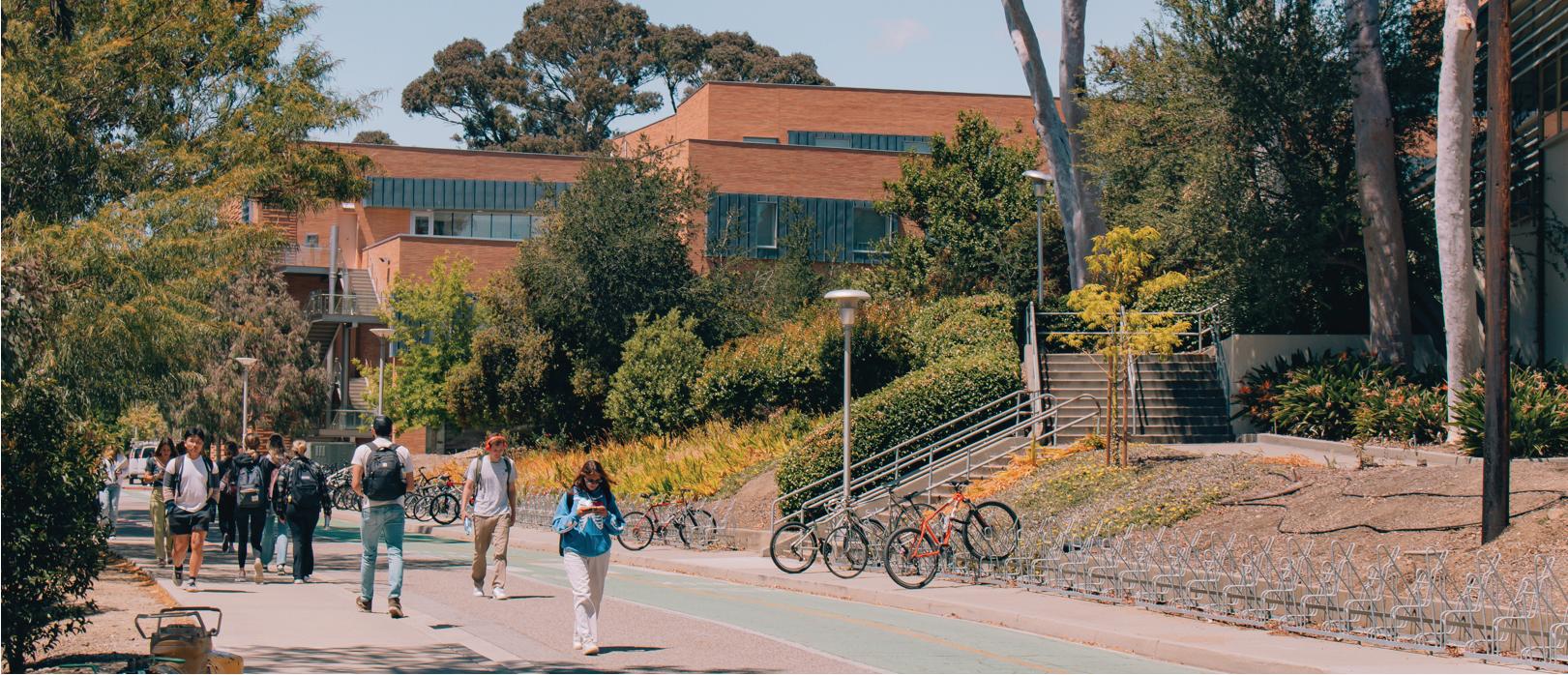


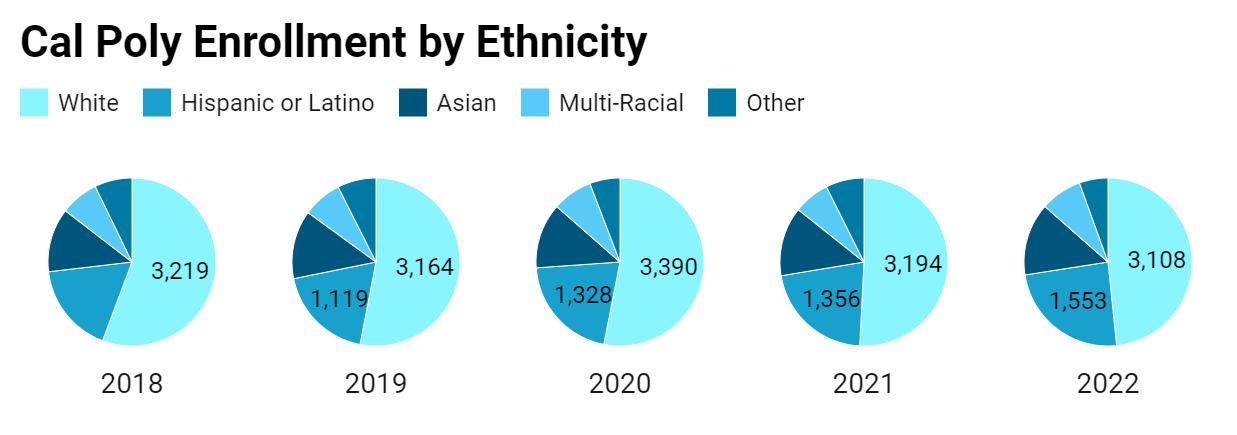
In November, Cal Poly announced that this year’s class of freshmen is the most diverse in university history, with percentages of women, Latino and Asian students at an all time high.
This is consistent with Cal Poly’s upward trends of diversity from the past couple of years.
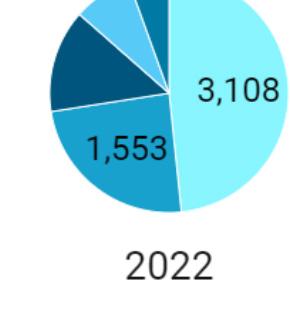
In Fall 2020, Cal Poly’s student body was 54 % white. This year, that has changed to 51.4 % white, according to enrollment data from Fall 2022.
But for Cal Poly, improving Diversity, Equity and Inclusion (DEI) is about more than just the numbers.
It’s about creating “an atmosphere of inclusivity” where people can “learn from and engage with people of difference,” Terrance Harris, Cal Poly’s Vice President for Strategic Enrollment Management, said. “It’s about continuously doing the work to foster a positive environment for everyone here.”
For Harris, this continuous effort to improve DEI is a point of pride.
“There are so many positive things happening,” Harris said.
One of the most recent efforts Cal Poly has made to improve DEI has been adjusting the College Based Fees.
According to Cal Poly Administration and Finance, due to this adjustment this year’s incoming class is paying six to 8.5 % more in tuition and fees than last year’s
incoming class. At least 60% of the revenue from this increase will be used to support financial aid and scholarships that help lower the cost of attendance for students of underrepresented groups.
Cal Poly has also been working to increase diversity in faculty and promote more inclusive teaching strategies through a series of cluster hires.
Additionally, Cal Poly has seen an expansion of cultural centers and resources for students of color including the opening of the Native and Indigenous Cultural Center in October 2021 and the Latinx Center in November 2022.
These cultural centers and resources are a key part of Cal Poly’s initiative to improve DEI, as the university is focused on serving the
students, Denise Isom, Cal Poly’s Interim Vice President for Diversity and Inclusion, said.
Animal sciences junior and student assistant at the Black Academic Excellence Center Mikayla Santiago is happy to have a space to get support as a student.
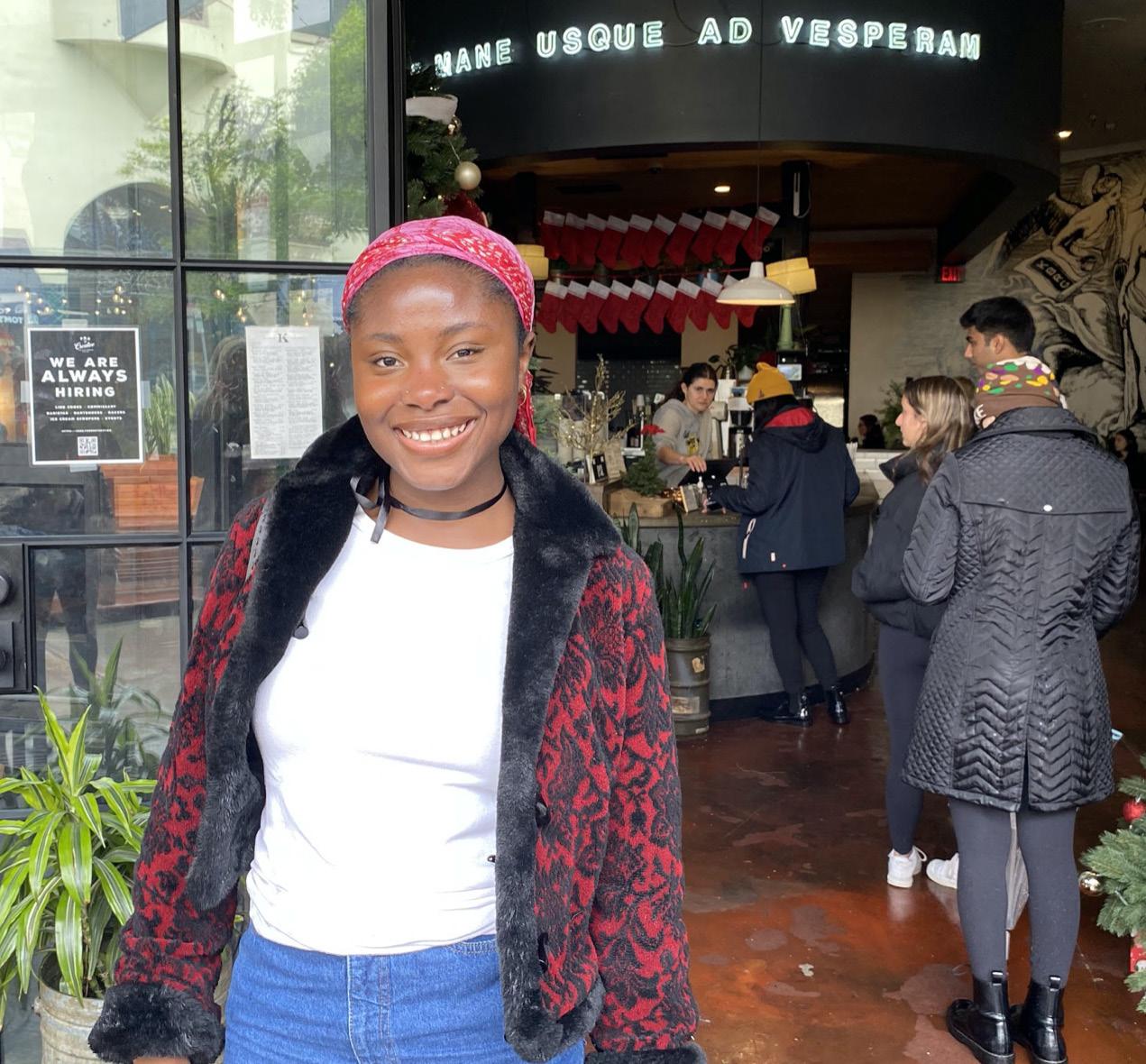
“As an underrepresented student, there’s just so much uncomfortability in not having someone who looks like you, who understands your experiences,” she said. To her, it’s really the students that make these centers safe places on campus.
“It’s very nice to have those centers as a place to go as an underrepresented student,” Santiago said.
Despite these efforts, Cal Poly remains the only predominantly white public university in California. With Proposition 209 prohibiting affirmative action in California, schools have had to find raceneutral ways to promote diversity. This has not stopped other public universities in California from successfully creating a diverse and inclusive school environment.
UC Davis, UC Santa Barbara, San Diego State University and CSU
Sacramento have all led initiatives to improve diversity at their respective campuses including detail DEI strategic plans that lay out specific goals and steps to achieve those goals, faculty hiring initiatives that looks for commitment to diversity and inclusion and antiracism and social justice resources.
Compared to these other schools, Cal Poly hasn’t made a lot of progress.
While UC Davis ranked no. 1 in the nation for diversity and internationalization in 2021 and UC Santa Barbara saw the percentage of students from underrepresented groups double over the past two decades, Cal Poly diversity stats have only improved by 8.2 % in the past ten years based on enrollment data.
“Clearly, not enough is happening,” Santiago said.
Santiago said she feels that Cal Poly’s biggest problem is retention rates and that Cal Poly is not doing enough to support the students already here.
“How are you going to bring in more students if you don’t allocate enough resources to support the students already here?” she said.
Santiago wishes Cal Poly
administration would “be a little bit more proactive rather than reactive,” and finds Cal Poly’s efforts overall to be “disappointing.”
Isom acknowledges that there is still a lot of work to be done, but is happy with the progress that has been made so far.
“DEI is an ongoing, continuous effort at the university,” Isom said.

Cal Poly has the lowest enrollment of Black students out of all California public colleges, CalMatters reported in November. For political science junior Gracie Babatola, Cal Poly’s ASI president, the CalMatters article captured a truth many people have come to know about Cal Poly — but she wishes more people were aware of the “amazing work” being done about it.
“There are people like Dr. Denise Isom, there’s people like Dr. Jamie Patton and there’s people like Terrance of Strategic Enrollment who have made it their mission at SLO to make this place a community for all students,” Babatola said. “So I think, yeah, it’s an issue, but we also want to focus on the positives.”
A year after the CSU board of trustees voted to divest from fossil fuels, Cal Poly’s endowment has maintained its investments in the fossil fuel industry.
On Oct. 6, 2021, the CSU board of trustees voted to start divesting from fossil fuels. At the time, the CSU system had $162 million worth of direct fossil fuel investments.
Since then the number of direct investments in fossil fuels that the CSUs hold has decreased by around $111 million according to Cal Matters. However, one key carveout was made in the pledge to divest –mutual funds were excluded. Mutual funds are large pools of financial capital that are operated by a broker who chooses a variety of securities, derivatives and other financial instruments to invest other investors’ money in.
Eleven million dollars, or 3.9%, of the foundation’s “diversified mutual fund holdings are comprised of energy sector securities (though not necessarily all are fossil fuel companies),”
Keegan Koberl, a university spokesperson said in an email to Mustang News. However, according to the 2021-2022 audited operating budget of the Cal Poly Foundation the university still has $21.7 million invested in mutual funds with direct and indirect investments in fossil fuel companies.
The Cal Poly endowment holds a $21.7 million investment in the Pacific Investment Management Company (PIMCO) Total Return Fund, the PIMCO High Yield Fund and the PIMCO Foreign Bond Fund. All three mutual funds have a variety of direct investments in fossil fuel companies, related industries and indirect investments in financial instruments and institutions that have investments in fossil fuel companies.
According to a report published by the fossil fuel watchdog group,
Reclaim Finance, PIMCO was found to have no coal, oil or natural gas policy. The same report found that PIMCO was among the top three asset managers holding fossil fuel bonds, holding a total of $17 billion worth of fossil fuel bonds.
KEEGAN KOBERL University spokespersonAllianz Capital, the firm that owns PIMCO, supported a resolution by TotalEnergies, a global energy company, to push the company to reach carbon neutrality by 2030. According to the PIMCO investor reports however, the company still holds bonds in fossil fuel companies such as Shell that don’t mature until 2050.
“The Foundation follows the policy set by the CSU last year: since we cannot selectively exclude fossil fuel investments without sacrificing the investment objectives of our endowment,” Koberl said in the same email.
The endowment’s investment objectives are defined as the “fiduciary responsibility to maximize investment returns on its endowment consistent with the level of risk while ensuring good stewardship of these assets that will enable continued financial support to further the educational mission of the University,” according to the Cal Poly foundation’s policy manual. Fiduciary responsibility is the responsibility that a broker has to their investors’ money. Brokers must make a return on investment and the Cal Poly foundation has very few strings attached when it comes to how that make that return on investment.
“The Foundation has not adopted any policy regarding fossil-fuel securities, it purchases fossil-fuel-free mutual funds when they offer equivalent or superior investment profiles, compared to other funds,” Koberl said. “The Foundation does not have a policy that addresses purchases of individual securities.”
The Cal Poly endowment also contracts with the asset management firm Teachers Insurance and Annuity Association of America Kaspick (TIAA Kaspick) to manage its portfolio according to Koberl. TIAA Kaspick came under fire earlier this month after the group TIAA-Divest sent a letter on behalf of the United Nations Principles for Responsible
Investment urging the asset manager to drop its $78 billion worth of fossil fuel investments. The firm is a major asset manager for other U.S. universities such as Princeton, Caltech, University of Oregon, Harvard and others, according to the TIAA Kaspick website.
“TIAA is committed to managing investments in line with a transition to a low-carbon economy. However, after due consideration, our view is that broad divestment from fossil fuels does not offer TIAA an optimal way to influence the policies and practices of issuers we invest in, nor is it the best means to produce longterm value for our investors and other stakeholders,” a spokesperson for TIAA Kaspick stated in response to the TIAA-Divest letter.
Beyond fossil fuel investments, the foundation also has no policy on investments that may violate U.S. sanctions.
“The Foundation cannot selectively divest or disaggregate currency investments, securities, derivatives, bonds, or any other financial instrument that may have a direct or indirect connection to the nations listed –Saudi Arabia, Russia, Qatar, Bahrain, Oman, the UAE, Iran, Azerbaijan, Turkmenistan – without compromising our investment objectives,” Koberl added.
In June of this year, PIMCO sent a “warning” to the US Treasury Department that sanctioning Russian government bonds would put PIMCO’s $1.8 billion investment in Russian bonds in jeopardy. The Treasury Dept. then decided against sanctioning Russian government bonds.
Cal Poly’s endowment still has a long road ahead of itself to decouple its investments from the fossil fuel industry.
The Foundation follows the policy set by the CSU last year: since we cannot selectively exclude fossil fuel investments without sacrificing the investment objectives of our endowment.

On Monday, Jan. 9, students returning to San Luis Obispo for winter quarter were met with a rainstorm that left roads, homes and classrooms flooded.
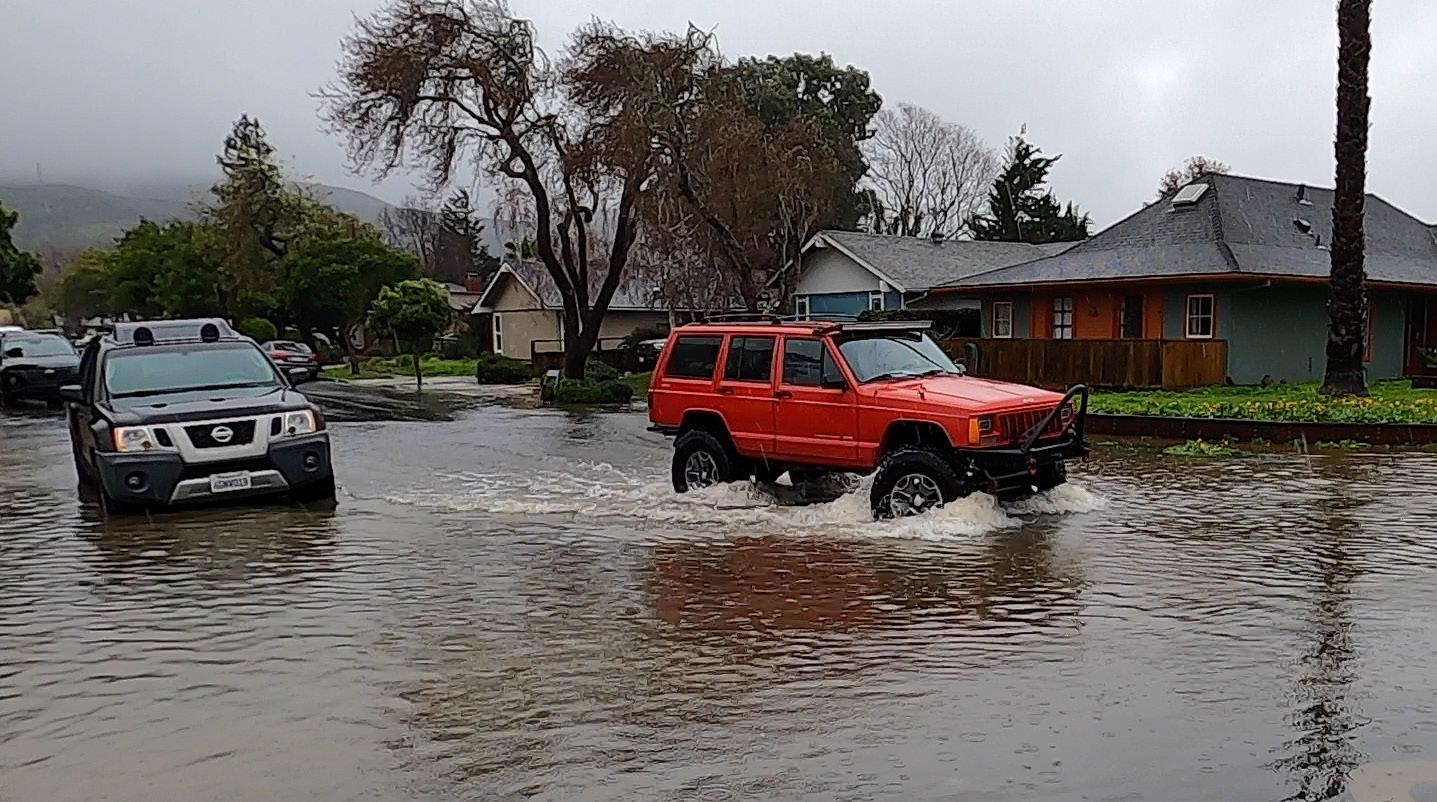

According to the SLO Tribune, season totals for rainfall this year have been between 200-500% of the normal amount.
Mike Anderson, the Los Padres District director of the California Conservation Corps, was on campus Monday and Tuesday leading a statehired clean up crew for the flooding. He was joined by Cal Poly employees, including custodial and public safety staff, who “worked diligently” to respond to damage across campus, according to Cal Poly’s Public Safety Executive Director Anthony J. Knight.
But Anderson’s work didn’t end with Cal Poly’s campus. From Cal Poly to Los Osos and statewide, communities were left to recover from the damage caused by the rare event.
Anderson was also in Los Osos on Wednesday, responding to the heavy damage done to people’s homes.
Cal Fire SLO Battalion Chief Paul Provence said a large stream of water ran through buildings and out onto
Los Osos Valley Road on Monday. By 4:45 p.m., they were concerned of potential flooding through the homes on Vista Court.
“About 15 houses have been affected, and so the community came out on Tuesday and started helping dig out the residences here,” Provence told Mustang News. “[They] started to clear debris and trash and sand and started to uncover what actually happened and what the level of damage is.”
Provence said the flooding had come from a retention basin storing storm water above the residential community. The flooding didn’t cause any injuries or deaths, but left “a lot” of structural damage, he said.
Sonya Choboian was one SLO resident cleaning up on Wednesday, overseeing her brother’s house renovation in Los Osos while he was out of town.
“It’s really softened my heart for the kindness we’ve seen out here in Los Osos,” Choboian said. “You don’t see that everywhere. It’s the small town feel. Everyone feels like family now. It was beautiful.”
The community is also still grappling with the effects of ongoing rainfall. A five-year-old boy from San Miguel, Kyle Doan, went missing after
being separated from his mother in the flooding. According to the SLO Sheriff’s Department, the search for Doan was halted for some time due to the weather conditions and water levels.
Complex and roadways, to close and people and animals to evacuate. In Cal Poly’s Agricultural Housing, 28 residents were also forced to evacuate.
For SLO Climate Coalition Director Laura Albers, this extreme weather phenomenon also marks a clear indicator of the worsening global climate crisis, clearly emphasizing the urgent call for action.
Albers said the important thing is for people to be prepared — armed with information and resources for when weather evenwwts such as this one happen.
SONYA CHOBOIAN SLO residentFor Cal Poly’s area, Shepard’s Reservoir near campus reached its maximum capacity due to surrounding water runoff. A partial breach of the reservoir caused parts of campus, including the Sports
“We need to be resilient in this reality that we have right now with our climate,” Albers said.
BY EDEN-ROSE BAKERBeloved local coffee shop chain, Nautical Bean, is set to open its fourth location on the Central Coast, with new features for their loyal patrons to enjoy.
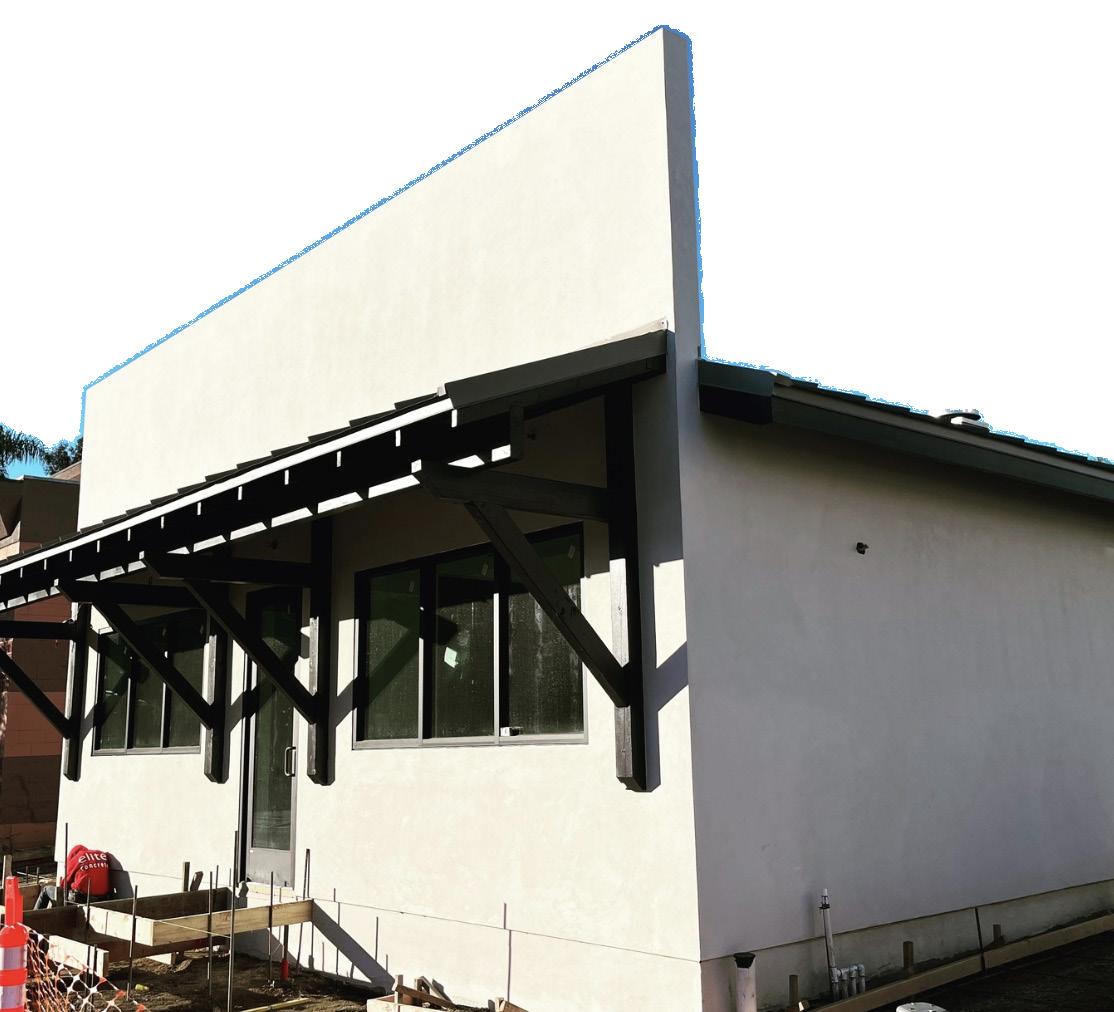
According to an Instagram post from the chain, the location will be opening on Orcutt Street.
Nautical Bean owner Brett Jones is teaming up with an art gallery, the Bunker SLO, on this project. The coffee shop will be located inside the new art studio so that patrons can grab coffee or a snack as they observe the art.
Aside from the art gallery being a new edition, another unique aspect about the Orcutt Nautical Bean is that there is only a breakfast menu, which will be served all day.
The shop has an outdoor area in the back where they are planning on hosting events, such as having food trucks, hosting makers’ markets and projecting movies onto the wall. The new location will also have about 13 on-sight parking spots, according to their Instagram post.
“Nothing is concrete yet, but there is a lot of opportunity to grow with the space,” Jones said.
Although there are a plethora of coffee shops throughout San Luis Obispo, including Kreuzberg, Scout, Field Day and Skippers Brew, Jones said aspects of Nautical Bean set it apart.
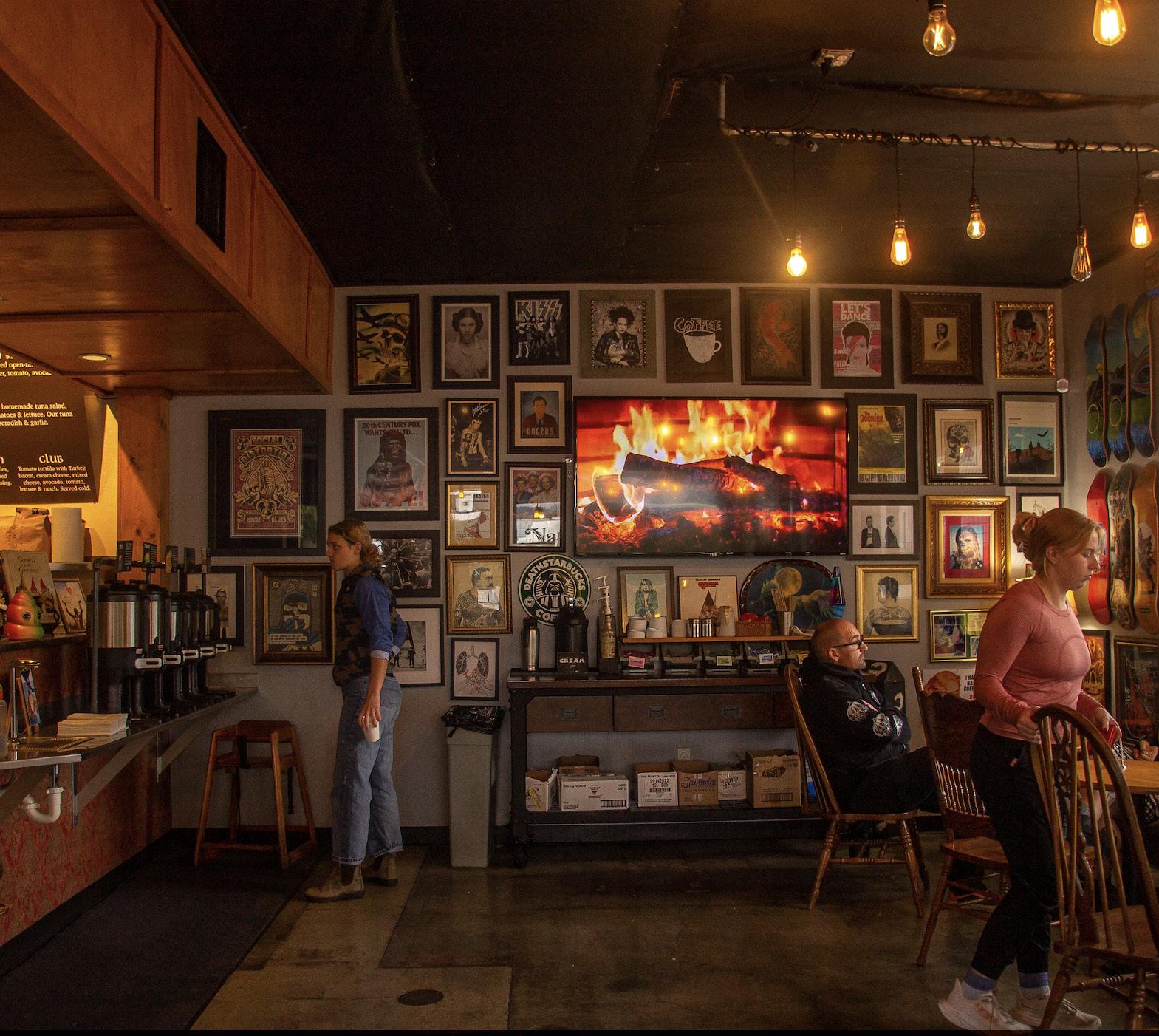
“What’s kind of lucky about us is that we’re a little bit different since we do so much food of our own, [like] the fresh-baked goods everyday, and we have a full menu,” Jones said. “I have a commercial kitchen where I supply all the cafés. We’re not just a coffee shop, so that’s always been a plus for us.”
The vast competition for customers amongst coffee shops does not necessarily mean that there are negative feelings between the owners.
“We all get along, even Black Horse, Scout and all those guys,” said Jones. “They’re all doing great stuff, so I like that the town can support all this.”
Jones is hoping to open up the Orcutt location around February 2023, but
for now, there are three more Nautical Bean locations. The original one is located off of Los Osos Valley Road, the largest one is located on Parker and High Streets and the newest one is located oceanfront in Baywood-Los Osos.
Everyone feels like family now.
Nashville-based Americana singer-songwriter, Jade Jackson, returned to California for a brief tour to reconnect with the state and county where it all started.

On Dec. 4, Jackson finished up the five-date solo tour at The Siren in Morro Bay. The crowd was warmed up with a captivating, full body solo performance by Sacha Carlson. Later in the evening, Jackson took the stage with Tyler Jackson Miller on drums, and Devin Hollister on upright bass.
Jackson came on stage wearing an old San Luis Obispo High School cheer uniform she found at a local thrift store, Castaway, earlier in the day. Early in the set, she invited Jacob Gearhardt, a longtime friend and fellow local musician to play fiddle with her band. She was quick to express her excitement and gratitude to be playing a home town show and be surrounded by her early support ers, from family to dear friends, before she heads back to Nashville.
Jackson was raised in Los Osos until she was 13, where she began piano lessons. She would later take the music theory she learned and pick up guitar. With an affinity for story telling and a passion for music, her journey into songwriting happened quickly. Jackson’s family eventually moved to Santa Margarita to open a restaurant called The Range and it was “all hands on deck” from there, she said.
“There were less than 1,100 people there and I rode the school bus with five kids. People don’t really think of that when they think of California,”
Jackson said in reference to living in Santa Margarita.
“I think it had so much to do with the sound of my music because of the landscape, it was so country and folk,” she decided.
Jackson spent several years waitressing at her family’s restaurant and eventually left to pursue an education at Cal Arts. She often played her songs at coffee shops in her free

Nashville, Tennessee, to continue pursuing music.
“Out there, you are surrounded by people who are doing exactly what you are doing, so it’s a lot easier to connect with people and keep the momentum going,” Miller said.
Jackson said getting dropped from her long-time record label, and the metamorphosis it entailed, played a role in conceptualizing her
track, the name was too unique and therefore too hard to market.
“I cried myself to sleep, but I still did what they told me to do … but now I’m playing it as Elavine so that’s pretty special to bring her back into the song and play it the way that I want to play it,” Jackson said.
The crowd at The Siren got to hear “Elavine” with the original lyrics and deeply moving performance.
reclaiming power in Jackson’s body of work.
Those interested in Jade Jackson’s musical journey can go to jadejackson.com or @jadejacksonband on Instagram to get updates on new music and tour dates.
Cal Poly Building 38 fails to meet air circulation requirements, new research shows.
BY LEILA TOUATIThe Mathematics and Science Building 38 at Cal Poly has severe problems with air circulation and quality, according to research from Cal Poly mechanical engineering professor Jennifer Mott-Peuker.
Mechanical engineering professor Mott-Peuker is in the middle of conducting a study on thermal comfort and CO2 levels on the older buildings of the university.
Her preliminary data from last fall shows that in Building 38, CO2 levels increased throughout the day and HVAC air systems were turning off at 5 p.m., when students and faculty were still in the building.
While this data may have changed from previous years, Building 38 was built before 1960 and thermal comfort is still a problem for students and faculty today. Staff working in the Grants Development office have reported that on the left side of Building 38, temperatures are too low for comfort, while the rooms on the right have issues with warm temperatures.
Dianne Dotson is a Grant Analyst and has been working inside Building 38 for 24 years. In Dotson’s case, her room is usually on the colder side, and the office has access to open windows and air conditioning.
“We’ve actually been having a war with the university these last couple of days because it’s really cold in here. They will not substantiate the cost of what it would be to keep the temperature at a higher level but they think that 68 degrees is the ideal temperature in a working environment,” Dotson said. “[With] the cold weather it’s been kind of chilly in here [but] when it’s hot [outside] it’s hot in here too. That’s a whole other thing and we’ll have all the doors and all the windows open so it’s hard to regulate.”
Heat rises, and with Building 38 containing two floors, inside temperatures are noticeably warmer in the second floor classrooms and hallways. This heat can cause students to lose focus and provide a difficult study and working environment, according to Mott-Peuker.
“Especially during finals week we should be much more attune to make
sure our buildings are comfortable for exams because there is research that [shows] poor learning and testing conditions do affect you,” Mott-Peuker said.
Mott-Peuker found a stark 5% difference when comparing outdoor conditions to indoor conditions during an exam. She pointed to her data in Building 38 from 15 years of Calculus courses with account for difficulty of class and professor.
“I’ve been in a classroom where I look at the students and I’m sweating tand I’m like, how can you think through this, how can you do your best when you’re sweating from not being stressed but from the room conditions?” Mott-Peuker said. “That’s my concern, it’s just the people.”
The uncomfortableness of a classroom is just the tip of the iceberg. With Mott-Peuker’s research of the increasing CO2 levels, this becomes a cause of concern for the spread of airborne diseases, including COVID-19.
“I can look at the CO2 through the day, and you can see that it builds up over the day so even though maybe the classroom is being open every hour and people are moving in and out, it doesn’t clear the CO2 out. Only when you see that the classroom is empty, does it go down,” Mott-Peuker said. “The later in the day the class you have, the more likely you’re going to have some type of COVID-19 or other airborne diseases in the classroom unless it’s being ventilated well.”
Mathematics senior Lindsey McMahon has taken over six courses in the Mathematics and Science building, and recalls her past three years of spending time in the classrooms.
“Mathematicians are partial to
can notice an air about the building towards the end of the day.”
The CSU system sets regulations for HVAC systems, requiring them to be on from 7 a.m. to 10 p.m. as well as set-point temperatures.
I’ve been in a classroom where I look at the students and I’m sweating and I’m like, how can you think through this, how can you do your best when you’re sweating from room conditions?
JENNIFER MOTT-PEUKER Mechanical engineering professor at Cal PolyNo one is to blame for the management of the Mathematics and Science building; Mott-Peuker said Cal Poly Facilities is overburdened with many different projects with varying priority levels. Cal Poly Facilities did not immediately respond to Mustang News’ request for comment.
There are many ways to bring change and create a better learning environment in Building 38 that wouldn’t overload the budget. One solution proposed by Mott-Peuker is to create a “flush-out” of the building — opening all doors and windows for the indoor air to be recirculated and for fresh, cool air to enter the building at night.

pretty beneficial, I know they don’t like keeping the classroom doors open, especially when classes are over because it gets really loud in the hallway. At night that doesn’t really apply when no one’s in the building,” software engineering freshman Sanaia Pierre said.
Bringing outdoor air into Building 38 is less simple due to the age of the structure. The building has certain windows that are inoperable or unable to open when rooms get uncomfortable for students and staff.
“I think for the most part people don’t even attempt to do things for the windows,’’ McMahon said. “And maybe all the professors have tried in the past and learned that they don’t open or close, but I’ve had professors comment on it being stuffy, and then don’t even go to open a window but maybe they can’t.”
chalkboards so we’re a big fan of the chalkboards in there,” McMahon said. “Because of all of the chalk, you
According to the Cal Poly Thermal Comfort Report by Solar Decathlon, it is required that “outdoor air must be brought into the space during the heating and cooling seasons when it is not advantageous with respect to energy usage,” in order to meet indoor air filtration needs.
“I think [the flush-out] would be
Switching to operable windows in older buildings can bring in outdoor ventilation and would capitalize on San Luis Obispo’s mild weather.
“I’m an engineer but I like thinking about how people are affected by stuff, and this is really something that I jumped on and said ‘okay this is more important to me’ — personally and professionally,” Mott-Peuker said.
As Cal Poly commits to hosting around 21,000 students, they undertake the commitment to create a successful and supportive atmosphere, while also meeting the needs of a variety of students and building an accessible environment for students with and without disabilities. However, tstudents have vocalized their frustrations with several inaccessible features on campus that make widespread inclusion unlikely.
Cal Poly is known by many for its hills and slopes, which can be difficult for students to travel through and may even pose a threat to their physical health.
Business freshman Jordan Garver has exercise induced asthma and, despite being housed in the South Mountain Residence Halls, her campus parking permit was only applicable for the Yakʔityutyu parking structure, meaning she had to hike uphill to get to her room. Once she showed proof of her asthma, her car was moved. However, she still has to walk uphill to her vehicle and had to pay an extra fee to accommodate the parking change.
“All I see ahead of me is a huge hill and I just have to take my time and force my legs to keep going,” Garver wrote to Mustang News.
Students that use wheelchairs also find it difficult to travel around campus. Sydney Lehr, an English junior, is a part-time wheelchair user and bought an electric wheelchair specifically because of Cal Poly’s campus. Lehr has said that they have not used the tram service available for students because of its restrictive means, such as the requirement to schedule the service in advance with no guarantee that it will be timely for more spontaneous requests.
Additionally, the tram service can only be used by one person at a time.
Lehr has found that this prevents students from having spontaneity in their choices, quick changes of plans or random invites to hang out with classmates and friends.
Once students are able to reach their building and residence halls, many lack a push start, a button that would automatically open the doors for students that are unable to open the door by pulling on the handles.
“With very few exceptions, I cannot open doors on campus,” Lehr said. “I cannot get into buildings by myself.”
With the functions specific to their wheelchair, Lehr struggles to open doors themselves and wishes for the campus to have push starts available for every building.
Additionally, many buildings also lack proper ramps and access or exit points for students with disabilities. The English building (22) has only one additional ADA-accessible emergency exit route for students. However, there is current construction taking place that would make it difficult for students to exit that side of the building in the case of an emergency.
The classrooms are also not as accessible as students and professors may have hoped.
Professor Alexia Arani, who teaches Race, Gender, and Disability Justice (WGQS 301) wrote in an email that “in general, most institutions of higher education tend to be very inaccessible.”
She notes that whereas many campuses tend to focus on bigger accessible points like elevators and ramps, other features of accessibility tend to be overlooked, such as the size of desks and the design of classroom spaces. For students that may have pain from sitting long hours or have larger equipment, the space within classes often does not allow students to move about freely. Additionally, Arani mentioned that the lighting within classrooms can prove to be difficult for students who experience migraines or who have light sensitivities.
There are many other features on campus that prove to be difficult for students with disabilities, such as bathroom availability and thorough ingredient lists printed for on-campus foods. For students that
have what many consider “invisible disabilities,” finding any accessible food is a very important and very challenging part of their day. At Cal Poly, the food on campus in both dining halls and markets, does not list an extensive list of all its ingredients. English freshman Sienna Neff explained that this proved to be the most impactful for herself.
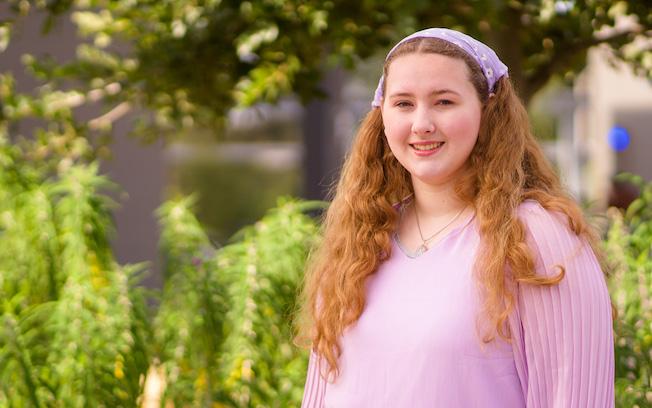
“Something could make me sick and I would have no idea…it’s just a guessing game,” Neff said.
sences will be harmful for students because of the unpredictability of disabilities and chronic illnesses, the possibility of students having to disclose private medical information and the possibility of students feeling isolated or discriminated against from unfulfilled accommodations.
“I don’t believe that disabled individuals should have to disclose every aspect of their disability to get access,” Neff said.
The club also feels that this new policy would be outside of the professors’ expertise to make a decision with the student on their medical background and the necessary accommodations, which may prove to be exceptionally difficult for students that cannot provide a doctor to work with them in discussing their disability and how the school can best accommodate it.
Poly shuttle and was turned away because the driver was not trained in using the wheelchair ramp.
In response to situations like Lehr’s, the Disability Alliance Club has been focusing on changing the culture of disability on Cal Poly’s campus. For example, the club has released a petition for the implementation of a disability cultural program for students and the petition has reached 500 signatures. The club is currently organizing a way that they can create this program and eventually a disability culture center while also pushing back against the recent disability-related absence policy.
They want to implement “a disability culture center that can be a safe place on campus for students to form community with other students that they have similar experiences to and support them,” Lehr said.
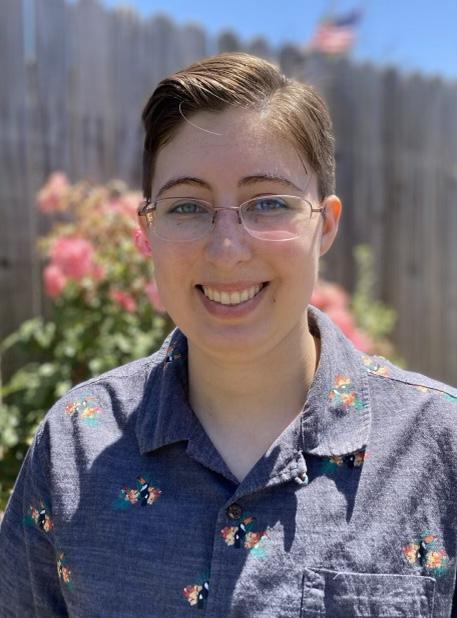 JORDAN GARVER Business
Housing has also been difficult for students with disabilities. With smaller rooms, students, including Lehr, struggle with holding their equipment and navigating around it in such limited space. Discussing possible accommodations with housing has also been a challenge for Lehr because of housing’s lack of communication, they said.
There are many policies that are currently being implemented into the school’s agenda, one of which would create a maximum amount of disability-related absences that students are allowed to use per quarter.
Students of the Disability Alliance raised concerns in an email to the Disability Resource Center (DRC) about this, explaining that limiting the number of disability-related ab-
Currently, Cal Poly has a Center for Teaching, Learning, and Technology, which, according to CTLT Instructional Designer and Accessibility Specialist Pam Dougherty, creates a team of faculty that hosts optional workshops and seminars which professors can take to learn how to make their curriculum more accessible for students. This includes learning the features of Canvas, Zoom and other platforms to make course materials more accessible to students with a variety of accommodation needs. Four of these workshops are self paced and available for students to access as well.
Working with the DRC, the CTLT is committed to helping faculty implement accessible and inclusive opportunities for students with online materials based on the 2006 CSU Accessibility Technology Initiative. Dougherty mentioned that this process is “not really difficult,” but rather that it’s a “change in practice.”
There are many other features around campus that students feel need to be addressed as well. Recently, Lehr tried to access the Cal
Disabled students on campus struggle due to several features on campus that prove to be inaccessible. Although many students will never know the experiences and struggles that their peers go through on a daily basis, Neff encourages her fellow peers.
“Fight for us to take up the space that you take up because we have earned to be here,” she said.
All I see ahead of me is a huge hill and I just have to take my time and force my legs to keep going.
Freshman
Many students and faculty have experienced driving in circles around Cal Poly’s parking lots in search of a spot. By noon, the parking lots are full and students aren’t able to use the permits they paid hundreds of dollars for so they wouldn’t have to walk to class.
“For my 12 to 2 p.m. class on Mondays and Wednesdays, it’s been really, really hard to find a parking spot,” liberal studies senior Brayden Schauer said.
Commuting students had the option of buying a quarterly or annual parking permit for this year. According to Transportation and Parking Services, Cal Poly sold more permits than parking spots.
Cal Poly had 2,998 commuter parking spots available. By week four of fall quarter, 3,105 commuter permits had been awarded to students.
“I lived downtown this year,” Schauer said. “It is necessary for me to have a parking pass because it would take me an hour to walk to school.”

Despite having the permit, Schauer said it takes her a while to find a spot — which she said made her late to classes the first week of school. Instead of sitting in classes, Schauer said commuters spend their time following people who are leaving in order to take their spots.
“It just really extends our time in the morning just to get to school be-
cause we have to plan out the time that it’s going to take to find a spot,” Schauer said.
Not being able to find parking causing students and faculty to be late for class is not a unique problem this quarter.
it’s in all the areas,” Cramer said. “We have the staff complaining that there [are] students parked in their area. It’s just a matter of trying to figure out where everyone needs to be.”
Despite the difficulties students and faculty have been having with accessing parking, Cramer said that Cal Poly would actually have to reduce parking spots in the near future.
ing for half the time she’s on campus.
“I can’t not park on campus because of where I live,” Schauer said. “I do kind of regret it because I feel like I could find a spot more in the neighborhoods or something, and not have to spend the money, just because that’s what I’m doing on Mondays and Wednesdays anyways, but it’s definitely nice to have a pass.”
Every fall we have this issue and it’s in all the areas. We have the staff complaining that there are students parked in their area. It’s just a matter of trying to figure out where everyone needs to be.
Cal Poly expects to make about $5.7 million through parking services for the 2022-23 fiscal year. This includes operating revenues, interest income, as well as revenue from fees. Of that total, parking fees are expected to contribute about $4.6 million to Cal Poly’s revenue this year, according to budget documents. About $612,000 in revenue is projected to be generated from parking fines, as well.
“We do oversell those areas because commuters are coming and going,” Cramer said. “There’s always an oversell in those areas so that we account for that turnover and are able to sell more permits for students.”
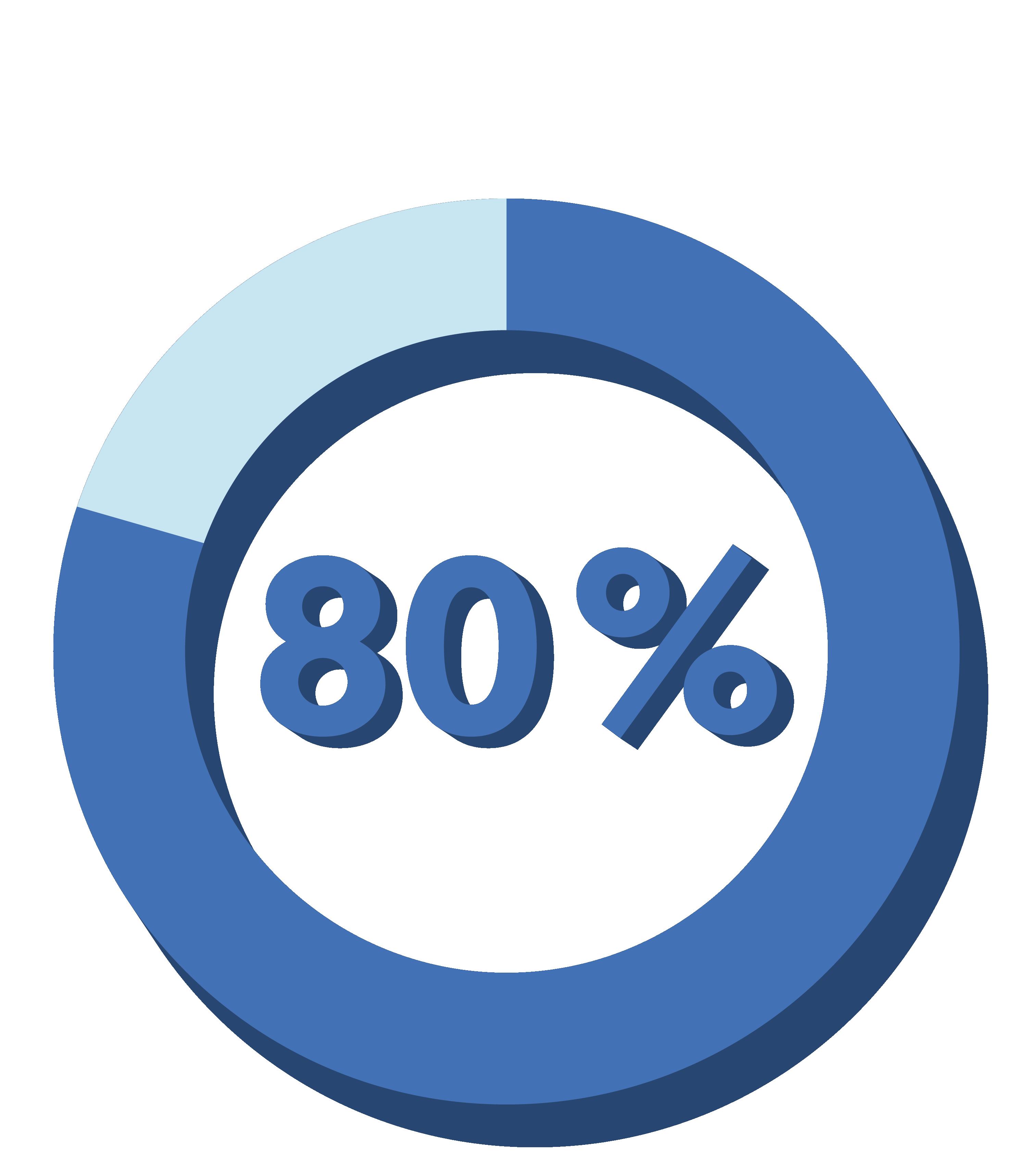
“We are going to lose more parking in the future and the campus is going to be growing, so that means that there’s going to be less and less options for parking on campus for students,” Cramer said.
Additionally, Cramer said that in order to allow students who live off campus to still park on campus, the school will eventually prohibit second year students required to live on campus from bringing their cars to school, just like the freshmen.
“If you’re living here on campus, the thought is you don’t need a car as much as a student commuter living off campus,” Cramer said.
According to the director of Transportation and Parking Services, Marlene Cramer, the beginning of every year always creates increased traffic to campus.
“Every fall we have this issue and
Cramer explained that the difficulties in parking are created by students who don’t follow the rules and take the risk of getting a ticket on campus. Other students simply may not know where to park. The three Orange lots located off of Highland, Via Carta and Village Drive are given to those with commuter permits.
“We have the issue of students that don’t have permits in those lots, parking in those lots,” Cramer said. “It’s a little bit of a learning curve in terms of making sure that those students that don’t have permits, don’t park in those lots.”
In order to help relieve the traffic and lack of parking on campus, parking services hopes students will take advantage of more sustainable modes of transportation. Cramer said the carpool permits and the Mustang Shuttle are good options to use to get around campus.
Industrial Engineering senior Mackenzie Henderson experienced the difficulty in searching for a parking spot daily. She had a parking pass last year, and never had problems looking for a spot. But this year, it’s worse.
Henderson had to cancel a school meeting at the last minute due to the lack of available parking, despite leaving her house an hour before her meeting started. She had to rely on a team member to fill in her spot.
“I just think it’s ridiculous,” Henderson said. “It feels like a waste of money because I view the parking pass as a guaranteed spot, and it’s not fair that I have to park far away or not even find a spot.”
this article.
“We would prefer not more cars to be on campus, but more students, staff and faculty to use sustainable transportation options versus driving, so trying to strengthen all the programs that we do in terms of slow transit, regional transit, van pools, carpools, Zipcar, which is very popular with the students,” Cramer said.
For commuter students like Schauer, having a permit is necessary, but she still has to find off-campus park-
 BY SERGIO ROMERO
As a sophomore guard for the Cal Poly women’s basketball team, Annika Shah wakes up at 4:45 a.m. for 6 a.m. practices that last until 10:30 a.m. Then, she goes to two classes that last until 6 p.m. — with homework and other responsibilities on top of that.
This is just a glimpse into Shah’s daily routine at a university that expects both athletic and academic focus from their student-athletes.
“No matter what kinda prep you have, you’re obviously investing a lot and you have to put the same amount of energy into your academics,” Shah said.
Recruiting the top high school players in the country is hard enough as it is, but Cal Poly Athletics has the added challenge of only recruiting players who meet certain academic criteria.
But why do they have this type of recruiting philosophy? Why not just recruit the best players available without regard to their academics?
It starts with Cal Poly’s athletic director, Don Oberhelman, as he has doubled down on this type of philosophy in Cal Poly athletics since he started here in 2011.
“We’re going to run an athletic program that mirrors the academic success of the university,” Oberhelman said. “I don’t ever want to deviate from that, either.”
And although this way of recruiting might hinder the program’s ability to bring in certain players, it’s something Oberhelman said is the way they want to run the program.
It’s also easy to point to recent lack of success by some teams on the field or court as a counterpoint to the way they recruit, but Oberhelman said it’s important to have true student-athletes at the forefront of the university.
“Just because you happen to be able to run really fast or can throw a football, doesn’t mean you have any sort of privileges over the regular students,” Oberhelman said.
This way of thinking is also shared with the coaches, who
will even check in with players about their grades from time to time.
“Our coaching staff stresses how important academics are for our life,” Shah said. “We even have study hall every Monday as a team.”
above-average GPA when coming out of high school.
Per NCAA requirements, players only have to achieve at least a 2.0 GPA in order to be recruited by schools. Specific GPA requirements vary per major, but Cal Poly usually won’t recruit players who go below a 3.0 GPA.
“I would say the difference between us and Michigan, North Carolina or USC is that we’re not admitting 2.2 GPA students to be student-athletes here,” Oberhelman said. “I would say we’re not admitting [any athlete] whose GPA starts with a two-point anything.”
With this in mind, the question turns to the true weight of academics during the recruiting and commitment process.
transcript, the coaches will then make a decision whether or not to attempt to recruit those players. “I think with Cal Poly, it’s kind of the standard,” Shah said. “And for me, the way I was raised, academics is super important.”
previously might not have been on Cal Poly’s radar.
“When they told me I needed to have a good GPA, that definitely helped me prioritize academics even more,” Cal Poly Football kicker sophomore Bryant Thao said.
Not only does recruiting based on GPA help narrow down exactly who the program can recruit, it also helps with their academic success once they get to Cal Poly.
According to Cal Poly Athletics, the 610 student-athletes enrolled earned a combined 3.10 GPA during the 2021 fall quarter.
“We’re not going to put someone in that position [who is] not going to do the work,” Oberhelman said.
DONIn order to be considered for recruitment, Cal Poly Athletics wants players who are in line with the same academic requirements for every other student, including earning an
“I would ask how many athletes from a high school’s graduating class would have the admission requirements to get into Cal Poly,” Oberhelman said. “That would obviously be a small number, [and] in some ways it’s helpful because we don’t have to waste our time talking to people we can’t get into this school.”
Based on the player’s academic
ANNIKA SHAHCal Poly women’s basketball sophomore
While this limits who the program can recruit, it helps motivate athletes to improve their grades who
Cal Poly student-athletes are also enrolled in 62 different majors, and it’s something the Athletics Department takes pride in.
“One of the other things to look at is the clusters of majors [athletes are in],” Oberhelman said. “I think you’d be hard pressed to find other athletic departments that have that kind of diversity.”
The athletic department wants players who not only embody the historic success of the department, but also the historic academic success of the university. The on-field results might not come quickly like most other schools, but Oberhelman understands that and is committed to a long-term build.
In the end, the goal for every Cal Poly athlete is to end their college years with a degree.
“The number one thing we look at when we recruit student-athletes is always going to be their ability to graduate with a Cal Poly degree,” Oberhelman said. “And I think that’s the difference between us and a lot of other places.”
We’re going to run an athletic program that mirrors the academic success of the university.
OBERHELMAN Cal Poly athletic director
No matter what kinda prep you have, you’re obviously investing a lot and you have to put the same amount of energy into your academics.
 BY MILES BERMAN
Emily Ackerman, Cal Poly’s No. 1 doubles player, walked off the tennis court one last time following a loss in the Big West Championship on April 30.
In the coming days, Ackerman looked ahead to graduation and joked that she is “retired.” Jokes aside, her competitive sport career appeared to be over.
Ackerman would still be around tennis, but never as a player again. She became a coach at the Paso Robles Sports Center.
Tennis is super cutthroat, 99% of the time you are on your own. In pickleball, everyone knows everyone.
EMILY ACKERMAN Cal Poly Tennis AlumWith the itch to compete after graduation, Ackerman signed up for a few pickleball tournaments. Between conversations with her dad, she realized the possibility of a future in the sport given her enjoyment and natural talent in a similar racket sport game.
She is currently the No. 5 ranked singles player in the West region for pickleball, according to Dynamic Universal Pickleball Rating (DUPR).
Ackerman isn’t the only athlete to follow this path. In recent years, pickleball has grown to be much more than just a sport grandparents play on the weekend.
The sport is in a state of competing tours, million-dollar investments
and battles with tennis for recreational space — and Cal Poly tennis grad and current pickleball pro Emily Ackerman is in the middle of it all.
There are currently two tours in the pickleball world: The Pro Pickleball Association (PPA) and its mirrored counterpart the Association of Pickleball Professionals (APP).
The PPA has signed the biggest names in pickleball to exclusive contracts where they can only participate in PPA events. The APP has no such restrictions and thus, inherently, makes it easier for professionals to crack into the pro world.
What makes the professional pickleball tours even more complex is Major League Pickleball (MLP), which Tom Brady, Drew Brees and LeBron James, among many more big names, have invested in.
MLP puts on events that the tours can host as a team-styled pickleball league. On Nov. 9, the MLP and PPA announced a strategic merger to unify the professional pickleball leagues. The merger is a huge step forward in pickleball’s growth.
“MLP is just one of the more fun events,” Ackerman said.
Before every MLP event, there is a multi-gendered draft to make teams of two men and two women. These teams are redrafted at every individual event. With the merger, fans can watch top players compete in “one of the more fun” events in pickleball.
The MLP wrapped up the 2022 season with its final event in Columbus, Ohio in October. Now, the league is expanding to 24 teams for 2023. Other team owners include entrepreneur Gary Vee and former tennis professional James Blake.
Ackerman is playing in the MLP Challenger League with the Chicago Slice for 2023. In the Challenger League, Ackerman will be with the Slice all season with the hope of making it up to the MLP Premier League.
To the naked eye, pickleball is in
a state of two competing pro tours. However, the wealth behind the scenes is the main driver of the future of pickleball.
MLP founder Steve Kuhn told SportsPro Media in December that they have up to $5 million in prize money available for 2023.
In January of this year, Carolina Hurricanes and Callaway Golf owner Tom Dundon bought the PPA along with Pickleball Central, the largest pickleball retailer in the U.S.
As the fastest-growing sport in America with two competing tours and the likes of LeBron James and Gary Vee putting millions in, pickleball has the resources to continue its upward trend.
For the fans, regardless of if the tour is PPA or APP, they get to see more high-level pickleball.
While the APP has seen time on ESPN, the PPA has had its mark on the Tennis Channel and, most notably for the sport, broke through with a two-hour live broadcast on CBS with the Skechers Invitational Summer Championship.
In golf, the PGA tour versus LIV Golf has created turmoil and lawsuits for players. Ackerman believes the youth of pickleball means the PPA and APP battle is not adversely affecting players.
According to Ackerman, most of the players that are contracted by the PPA chose to join because of the financial stability it provides.
“Even though there is competition [between the PPA and APP], I think it’s building the sport because it’s bringing a lot of attention to the sport,” Ackerman said. “Once the sport gets bigger they are going to have to figure something out.”
At this stage, the opportunity to play professionally, win prize money and make a living off pickleball is still very new — and just a dream for most.
Only the top players can play
pickleball full-time with no other job, as most players are looking for paddle deals and sponsors to financially aid them.
Ackerman used to pay out of pocket for travel, gear, hotels and tournament registration. Now, she’s earned her first career sponsorship from Volair Pickleball. Between Volair and her playing with the Slice, she has set herself up for a career in the sport.
In December, Ackerman made the move from SLO County to the Los Angeles area to build her pickleball career. As a
tennis and pickleball professional at the Westlake Athletic Club, Ackerman’s move to LA means she’s surrounded by family, main doubles partner and mentor Wesley Burrows, and — most important for her career — other pickleball professionals.
Pickleball country clubs have begun to pop up around the nation and are quickly becoming a hotspot for professionals. These country clubs
are not like the country clubs seen in the golf or tennis world. Dreamland in Dripping Springs, Texas and Chicken N Pickleball with multiple locations across the U.S. are two of the more notable country clubs, according to Ackerman.
Dreamland is an 86-acre recreational sports wonderland outside of Austin. It has a disc golf course, mini golf course, live music stage, beer garden and of course, plenty of pickleball courts.
The MLP has already hosted events at Dreamland and there will likely be more tour events held at locations like Dreamland.
Tyson McGuffin, the No. 5 ranked PPA player, calls Dripping Springs the “Pickleball Capital.”
McGuffin, one of the more outspoken pickleball players, embodies the sport. He is a tattooed, longhaired, mustached man that posts YouTube videos and podcasts about pickleball.
“A lot of the pros that play [at Dreamland] now have some sort of sponsor ship with Dreamland,” Ackerman said.

Vivienne David, Ackerman’s partner at the APP Atlanta Metro Open, moved to Dripping Springs to further her pickle ball career.
Chicken N Pickleball
embodies the playful, easygoing energy of pickleball. Like the name suggests, the company combines food with sports. According to their website, their newest location contains a restaurant, 11 pickleball courts, shuffleboard courts, a bar and entertainment space, an outdoor game yard and a game room with ping pong and TV screens.
On tour, Ackerman says pickleball events feel different than the tennis events she had been surrounded by her whole life, which is evident by venues like Chicken N Pickleball.
“Pickleball is just way more relaxed and I hope it stays that way,” Ackerman said. “Tennis is super cut-throat, 99% of the time you are on your own. In pickleball, everyone knows everyone.”
With that being said, it’s hard not to compare the two sports. On a recreational level, the real estate battle for more pickleball courts means tennis is getting the boot.
San Luis Obispo has only seven permanent public courts in the city and
a handful of temporary courts, where lines are painted on top of a tennis court. Such is done at French Park.
“On a Sunday afternoon at the IronOaks Country Club in Sun Lakes, Ariz., pickleball’s ascension is on full display,” John Walter said in his Sports Illustrated article on pickleball. “Nine of the club’s 10 pickleball courts are in use, each with four players. Just one of its 10 tennis courts is inhabited by two players.”
Pickleball’s popularity is true nationwide.

When Walters interviewed Ben Johns, the No. 1 player in the world, he said, “it’s simple real estate…you can fit four pickleball courts on one tennis court.”
The necessity for more courts is evident.
Tied to her roots, Ackerman backed tennis’ growth as well. According to Forbes, over 22.6 million people played tennis in 2021, an increase in about one million players compared to 2020.
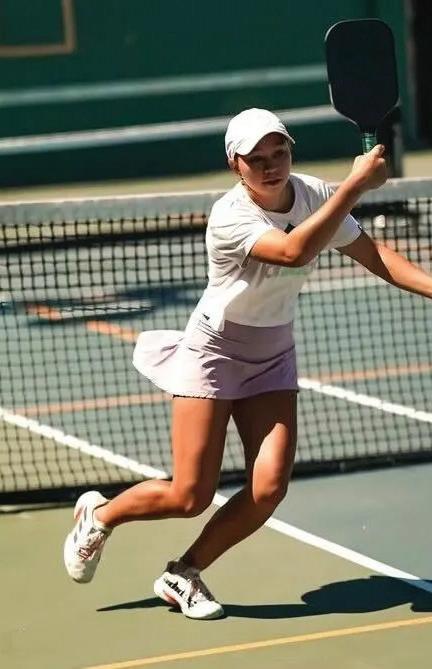
Brian Greenwood, a recreation, parks and tourism administration professor at Cal Poly is researching tennis and pickleball for San Luis Obispo County Parks & Recreation as an outside consultant.
“When there is an explosion in participation like what we’ve seen with pickleball, participants are obviously looking for places to play, and tennis courts become the most natural location,” Greenwood told
Mustang News.
But Greenwood pointed out that tennis also saw a “major boost” in participation during the pandemic.
that several parks would be developed in the Orcutt area of town — and would include both pickleball and tennis courts.
The annual report also featured a picture of children playing pickleball on the front cover – a recognition of the popularity of the sport.
The fastest-growing sport in America is here to stay.
“That obviously creates a perfect storm of controversy by way of recreational conflict, not only in San Luis Obispo County but nationwide — which is why we’ve been hired to try and help,” Greenwood said.
The City of San Luis Obispo 2021 General Plan Annual Report stated
Holiday highlights: Games you missed over winter break
Men’s Basketball vs. CSU Northridge on 12/29: 67-57 Win
In their first Big West action of the year, the Mustangs took down the Matadors behind 17 points from Kobe Sanders.
Women’s Basketball vs. CSU Bakersfield on 1/5 50-37 Win
Cal Poly grabbed its first conference win against the Roadrunners after the Mustangs outscored their opponent 21-11 in the fourth quarter.
Wrestling vs. Michigan on 1/6 30-11 Loss
In a face-off of two ranked teams, the Mustangs and the Wolverines battled to a 30-11 finish in favor of Michigan. Bernie Truax, Lawrence Saenz and Brawley Lamer each came out with big wins.
Basketball vs. UCSB on 1/7 Men’s: 62-57 Loss Women’s: 65-59 Loss In the men’s installation of the Blue-Green Rivalry, the Mustangs held a lead after a low-scoring first half but ultimately fell to the first-place Gauchos. The women’s side also ended in a losing effort, despite Taylor Wu, Maddie Willett and Oumou Toure all cracking double digits in scoring.
The annual audit of the Associated Students, Inc. and the University Union for fiscal year 2021–22 has been completed.
Public information copies of the financial statements are available at the ASI Business Office at the Cal Poly Recreation Center (Bldg. 43, Rm. 107) and at the Kennedy Library (Bldg. 35).

Visit asi.calpoly.edu to view

Content warning: This article discusses sexual assault.
Editor’s note: Eden-Rose Baker is a journalism junior and opinion columnist for Mustang News. The views expressed in this piece don’t necessarily reflect those of Mustang News.
The week that Joseph Castro was hired to teach at Cal Poly, I had four shows as a KCPR news reporter. So, for three days, I repeatedly heard about how he had dismissed the sexual harrasment complaints against Frank Lamas, an administrator from Fresno State. On my walk to campus, I saw a petition against Castro’s hiring hung up on a telephone pole. Every single time I heard or saw this man’s name, I felt a tug at my heartstrings.
In the following weeks, I have become hyper-aware of how women are treated throughout the community. Two weeks ago, I was walking to the Rec Center via Foothill and

crossed paths with another girl. Some construction workers working on a house began to whistle and cheer until we were both out of sight. In October, I was walking on California Boulevard and saw men roll down their truck window to whistle at a woman.
I feel that being whistled at and degraded for just existing and having a body is incredibly dehumanizing.
Picking out an outfit where you can see my legs does not mean that I am doing so to receive a man’s attention or that I owe a man my attention; it makes me feel like I have no control over my own body or how it is perceived.
Although whistling or shouting may feel passive, passive allowance of male control over the female body creates a sense of entitlement that leads to aggression.
Within the past year, I have gone on dates with two Cal Poly students that directly took control of my body. One made me kiss him and took my clothes off after I said no and another shoved his hand under my clothes without asking. Even though I left
before anything could progress, both times I felt used and helpless.
EDEN-ROSE BAKER Cal Poly Tennis AlumIn another instance, I passed out after being drugged by a Cal Poly student who I thought was a friend, only to remember having my pants taken off while I was barely conscious and don’t know what happened after that.
Because of these instances, I am still questioning whether or not I can trust men because I live with this fear that my body is not my own because they can take control of it at any given time. My body should feel like my home, and because I have not been able to dictate everything that happens to it, I sometimes feel like a stranger to myself.
This is not just an issue that I have run into. Fall quarter of 2021, two rape cases that occurred two weeks apart were reported. I would also like to reiterate, that this is just what is reported; many people, myself included, do not feel comfortable reporting these cases.
From personal experience, I do feel like this is a phenomenon that is larger than Cal Poly and San Luis Obispo.
Up until three months ago, I would sexualize myself and sleep with men — even if it didn’t feel right — because I wanted to be loved. For years, I have believed that the only way to get a man to love or notice me is through sex and that I have no control over this. The situations
I spoke about reinforced the belief that I am unlovable if I am not sexually desirable.
Until Castro was fired, I blocked all of those thoughts out of my head. I did—and still do—wish to never see or speak to the men I mentioned earlier again; I stopped talking to them immediately and did my best to never think about it.
The week it was announced Castro was coming to Cal Poly, though, I had a complete breakdown; I missed school, stopped leaving my room and cried for days. Every single memory came flooding back in: how those men had treated me, how I had treated myself and how I believed that having sex was the only way to be loved.
To me, Cal Poly adding Castro to their staff represents another win for a society that has drilled the belief into my—and other people’s—heads that we are not in control of our bodies.
In October, I was walking on California Boulevard and saw men roll down their truck window to whistle at a woman.
think of any other career that checked off all the important boxes to me: interest, income, only a few years of school. I also loved the fact that, at face value, engineering seemed like one of the few meritbased careers in a world of unfair advantages. You didn’t need generational wealth or privilege or have to “know a guy” to be an engineer. I also believed there would be an approximately equal level of challenges and fairness, regardless of gender.
Going through college hardened my naive ideas. I often found myself being a token female in my major of Mechanical Engineering, with many classes having less than five girls. This struck me as bizarre at first; however, it quickly became the norm to me, and I realized it was just something I had to get used to.
more diversity.
So yes, diversity is important. Diversity is important because it always feels safer and more comfortable for minority groups when one group is not dominating. Diversity is important because industries are better when a variety of views are considered and it is not just an echo chamber of white men.
Since its conception, engineering has been a male-dominated industry. The first strides in engineering came before women could vote or go to college. The first cars and planes were created in a world that had never heard of the female engineer. This male-dominated history is deeply rooted in the industry of engineering, and most STEM industries. The wealthiest 25 tech executives in 2018 were all men.
believe, differences in how boys and girls are raised.
Since toddler age, girls are primed to focus on skills that are very oriented towards being passive and nurturing, given toys like dolls, and all things pink and pretty and sparkly. Boys are the problem-solvers, game conquerors, truck operators, given toys that encourage qualities of strength, courage and leadership.
I didn’t realize until college how fundamentally behind I felt. I always excelled in the more general subjects especially in high school: math, physics, chemistry. But engineering requires a much different wheelhouse of the brain, which I had not practiced in any hobbies or activities.
BY SHELBI SULLAWAYEditor’s note: Shelbi Sullaway is a mechanical engineering junior and Mustang News opinion columnist. The views expressed do not necessarily reflect those of Mustang News.
“Woman in STEM” is a term you may hear often on the grounds of a college campus. It is like the word “girlboss” for those of us women in science, technology, engineering and mathematics, and because of that cringey association it is said ironically more often than not. However, “woman in STEM” is more than just a funny phrase, but one that carries with it the difficulties of being a gender minority in a male-dominated field.
it seem like there has been significant progress in making STEM more diverse. But in the spaces I’ve been in, and how I have experienced the industry, there is a long way to go, and it starts from childhood.
From a young age we hear about women who made incredible strides in STEM despite the odds being stacked against them: think Mary Curie, Sally Ride. I always admired women in STEM, as someone who identifies as a female and did well in math and science classes growing up. There was a sense of gratification in succeeding in those subjects, and it was a sense of gratification I wanted to chase.
Unsurprisingly I decided to major in engineering in college.
I often heard declarations of versions of the statement “engineering needs more women,” from faculty and recruiters at career fair booths.
Statements like that made me feel like I was enlisted in some kind of draft – like I could single-handedly make these industries operate better by bringing my difference to the table. Well into college, I am finding that this does not tell the full story.
For me, it doesn’t feel empowering to be few and far between in this industry, nor does it feel like I am changing anything. And often, I don’t feel needed.
When I walk into an engineering class and I’m one of a few girls, it feels completely different than walking into a majority female or gender-balanced GE class. I feel much less comfortable in a majority-male class, and much more susceptible to being treated differently.
It would be nice to say that I can see past gender and it doesn’t matter, but that is simply impossible and minimizes my experience. I have had male faculty single me out for my gender, lab partners completely tune me out and complete the experiment as I was not there and professors announce the average grade of their female students and point out how much lower it was than their male
Being in environments where I felt alienated, I second-guessed myself often. When I felt like I was taken less seriously I’d wonder: am I actually being treated differently or do I just expect to feel that way because I am the only girl on my team? Or is it both? It almost feels like the answer doesn’t matter because I wouldn’t expect to feel this way in the first place if my team had
It has already been shown that industries that lack diversity perpetuate a privilege for those who work in them. Products such as color film, developed in the early 20th century when racism in America was rampant, were skewed against darker skin tones for years.
The Institution for Engineering and Technology found toys with a technology focus were three times as likely to be targeted at boys. I did not know the inner-workings of a car or my electronic devices, and came to learn that these were activities many of my peers did for years.
“Moreover, men and women who come from families of engineers are encouraged to do the same, and there is a class element that can definitely set individuals up for success.
Sources show that around half of all engineers have at least one engineer in their family.”
I have had male faculty single me out for my gender, lab partners completely tune me out and complete the experimentas if I were not there, and professors announce the average grade of their female students and point out howmuch lower it was than their male students.
SHELBI SULLAWAY Mechanical engineering juniorWhen I hear from recruiters that engineering needs more women, I know a big motive is that these companies want more women so they can create an image of diversity. Along the lines of the girlboss wave, it is a corporate effort —an airbrushed image of performative feminism. While encouraging women to enter these industries is important, I think the systemic roots of the issue need to be talked about more. The roots are that the lack of diversity in this field is deeply linked to historical societal injustices and mainly, I
Even when hearing people celebrate and encourage women working in STEM, they often highlight the importance of more “feminine” soft-skills and communication as the strength that needs to be brought to engineering. This further feeds into the idea that men are doing the “real” or “important” work and aren’t as good at soft skills.
So while it is important to make space for women in jobs and educational spaces, I think it is even more important to address the social structures that are considered a norm to us that constantly reinforce the problem in the first place.
Pressuring women to enter jobs that significantly lack women is not the solution to the problem, but a remedy to the side effects of a broken system.
I have heard negative experiences from women in STEM, such as being the only woman in their office. Experiences like this can be so disheartening that it can cause the woman to leave that position altogether.
Companies should focus on making space for the women working for them. Companies should do outreach to even younger women, encouraging girls to get involved with problem-solving activities. And for women in STEM, we should work to find a space where we feel welcomed, comfortable and truly needed.