The politics of education







EDUCATION





Mt Hobson Academy: Every child is in the front row




Essential Reading for Principals • Department Heads • Teachers • Professionals Issue 61 | Term 2, 2023 | NZD $12 incl GST | schoolnews.co.nz The essential industry guide
SPECIAL REPORT
Pause Breathe Smile is a mind health programme that equips learners with tools to manage the ups and downs of life.

Children learn self-awareness, attention control and emotional regulation.


This allows students to manage themselves better by choosing their behaviours based on mindful attentiveness rather than impulse reactivity. It is curriculumaligned with resources in both English and Te Reo Māori.
Southern Cross’ support makes Pause Breathe Smile PLD FREE for any New Zealand primary or intermediate school.
Find out how.
Email coordinator@pausebreathesmile.nz



With so much going on in life right now, gift tamariki the skills to be present.
Delivered under licence from
NEW ZEALAND’S 5-STAR RATED




EXTENSIVE RESEARCH:
2 years of product development before launch.


RIGOROUS TESTING:
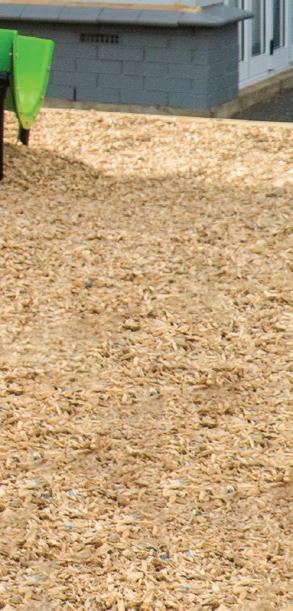
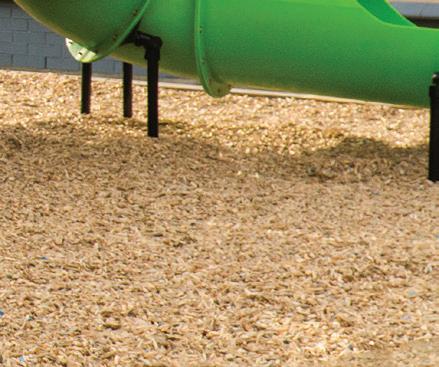
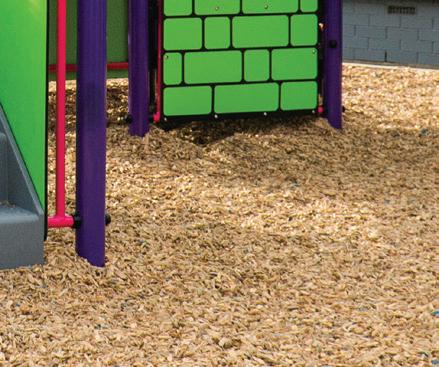
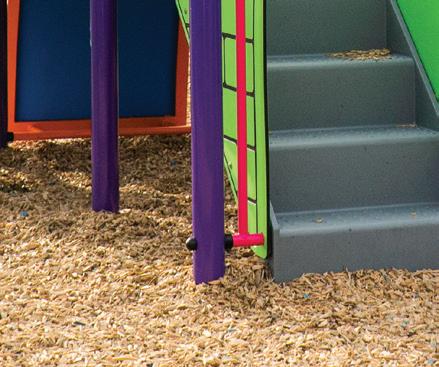
3 years testing of Cushionfall by 3 councils in 5 playgrounds before council approval.




ONGOING QUALITY TESTING:





More than 50 tests in the last 10 years alone!
HIGHEST IMPACT TESTS: In Australasia achieved.



PREFERRED CHOICE:



Councils, the Ministry of Education, Kindergarten Associations, Play Centre Associations and Preschool Centres.


We are so devoted to ensuring supreme quality and safety that we have spent 15 years perfecting our grinder that produces our wood chip so that it removes all traces of nails, staples and hazardous metals/materials, and has no “sharp edges”. Since safety is paramount - we implement an extensive testing regime every two to three years, evaluating the impact e ciency of the wood chips being produced.



SAFETY CONFIDENT
Manufactured exclusively by Reharvest Timber Products Ltd Phone (09) 299 3999 | info@reharvest.co.nz www.reharvest.co.nz | find us on facebook
NOHARM TO NATURE ENVIRONMENTALLYFRIEND L Y
School News is distributed to primary, secondary and intermediate schools throughout New Zealand by Multimedia Publishing Limited.
The views and images expressed in School News do not necessarily reflect the views of the publisher. The information contained in School News is intended to act as a guide only, the publisher, authors and editors expressly disclaim all liability for the results of action taken or not taken on the basis of information contained herein. We recommend professional advice is sought before making important business decisions.
Advertising Conditions
The publisher reserves the right to refuse to publish or to republish without any explanation for such action. The publisher, it’s employees and agents will endeavour to place and reproduce advertisements as requested but takes no responsibility for omission, delay, error in transmission, production deficiency, alteration of misplacement. The advertiser must notify the publisher of any errors as soon as they appear, otherwise the publisher accepts no responsibility for republishing such advertisements. If advertising copy does not arrive by the copy deadline the publisher reserves the right to repeat existing material.
Disclaimer
Any mention of a product, service or supplier in editorial is not indicative of any endorsement by the author, editor or publisher. Although the publisher, editor and authors do all they can to ensure accuracy in all editorial content, readers are advised to fact check for themselves, any opinion or statement made by a reporter, editor, columnist, contributor, interviewee, supplier or any other entity involved before making judgements or decisions based on the materials contained herein.
School News its publisher, editor and staff, is not responsible for and does not accept liability for any damages, defamation or other consequences (including but not limited to revenue and/or profit loss) claimed to have occurred as the result of anything contained within this publication, to the extent permitted by law. Advertisers and Advertising Agents warrant to the publisher that any advertising material placed is in no way an infringement of any copyright or other right and does not breach confidence, is not defamatory, libellous or unlawful, does not slander title, does not contain anything obscene or indecent and does not infringe the Consumer Guarantees Act or other laws, regulations or statutes. Moreover, advertisers or advertising agents agree to indemnify the publisher and its’ agents against any claims, demands, proceedings, damages, costs including legal costs or other costs or expenses properly incurred, penalties, judgements, occasioned to the publisher in consequence of any breach of the above warranties.
© 2023 Multimedia Publishing Ltd. It is an infringement of copyright to reproduce in any way all or part of this publication without the written consent of the publisher.

PO Box 5104, Papanui, Christchurch, 8542, NZ Phone: (03) 365 5575 Fax: (03) 365 1655 mail@schoolnews.co.nz www.schoolnews.co.nz
ISSN 1178-9964 (Print) ISSN 1179-2124 (Digital)
EDITOR
Gemma Easton, editor@schoolnews.co.nz

INDUSTRY REPORTERS
Naomii Seah & Sarah Davison
DESIGN & PRODUCTION
Richard McGill, production@schoolnews.co.nz
ADVERTISING
Dee Dawson, advertising@schoolnews.co.nz

CONTRIBUTORS
Cristian Rodriguez, Carole Gardiner, Richard Wallis and Adam Stride.
KEY
Commercially funded supplier profile or supplier case study
Supplier information or content
Suppliers share their views in one-off, topical pieces General editorial. Case studies and features may cite or quote suppliers, please be aware that we have a strict ‘no commercial content’ guideline for all magazine editorial, so this is not part of any commercially funded advertorial but may be included as relevant opinion. Happy reading!
04 Term 2, 2023 | schoolnews.co.nz FRONT DESK
Inside
54 Front Desk Editor's Note: What do educator’s really want? ............... 05 Education Special Report: The politics of education 06 Principal Speaks: Technology in the classroom – A tale of two schools 10 Profile: Effective online learning with Mt Hobson Academy 14 Administration All-round learning hubs: The many functions of school libraries 16 Extending your library beyond the books............................. 22 Teacher’s Desk Empowering educators with engaging PLD 26 Teaching Resources Solving the maths problem ............................................................ 28 Let students take centre stage 30 E.O.T.C. Discover and explore your local museum ............................ 32 Rotorua: A destination for exciting and enriched opportunities ...................................................................... 38 The mental health benefits of EOTC 40 Sport & Recreation Fun and functional sport surfaces ............................................. 42 Case Study: Multi-purpose court brightens school grounds and benefits community .............................................. 43 Increasing student opportunity and engagement in school sport ........................................................................................ 44 Health & Safety Ensuring your school meets health and safety standards .......................................................... 47 Safe, good looking floors 48 Food & Beverage Your school’s role in encouraging healthy eating ............ 50 Property Creating useable spaces with year-round weather solutions.................................................................................. 52 Firing up eco-friendly wood-pellet heaters for schools ................................................................................................. 54 Teaching sustainability while reducing, reusing & recycling school waste ......................................... 56 How composting will influence better informed climate policy ................................................................ 57 Why impact attenuation testing is essential 58 Case Study: Preventing accidents at Waimea College with SentryGlas skylights 59 30 44 06 Front Cover: Image courtesy of Mt Hobson Academy
our term two issue
What do educators really want?
The start to the 2023 school year has been somewhat turbulent. Though the pandemic, for the most part, is behind us, there remains some disquiet in the education sector.
Strikes and protests continue as educators and teachers demand a fair, equitable system of pay and conditions. Students and parents are also making their voices heard, unhappy with the constant upheavals to the school routine.
With a national election looming, education policy and spending are front of mind for schools around Aoteoroa. We have spoken to educators, and in our Special Report, we investigate the history of education policy in New Zealand, as well as
what the priorities are for educators. Our reporter Naomii Seah attended strike action in Auckland, and has provided a first-hand account of what educators on the ground want.
Our Profile this term takes us to Mt Hobson Academy, where we spoke with Principal Saira Boyle. Mt Hobson Academy is

an online school, though its model is vastly diff erent to the online learning experienced during the pandemic. With specially designed, well though out curricula, Mt Hobson Academy is revolutionalising learning and teaching, and removing some barriers for tamariki to access education.
In this edition, we also explore the changing nature of school libraries. More than just books, these spaces are now allround learning hubs, providing students with access to resources and staff to assist them in all aspects of their learning journey. Find out how you can make the most of your library space, and inspire a lifelong love of reading and inquiry in your students.
An holistic education includes access to extra-curricular activities like sport and
performing arts. Across several features, we look at the benefi ts of these activities for students, and explore how to get your students involved. Time-management, team work and improved mental wellbeing can all be fostered through ongoing engagement in less structured learning activities beyond the classroom.
As we approach the halfway mark of the school year, I hope you are all travelling well. I know our educators, principals and other school staff continue to support each other to navigate the challenges of working in a school. Though you may not always feel it, the support, guidance, and education you provide all tamariki is highly valued. Our next generation will be forever indebted to you all.
Outdoor canopy specialists for shade and shelter
Archgola™ has an unbeatable reputation for offering a quality all-inclusive package. installing a cost effective, long lasting and high-quality solution for shade and shelter.
of the Ministry of Education design standards for shade structures.
• All-weather canopies provide year-round protection for learning and play.

• Covered walkways, sandpits, decking and playgrounds.
99.9% UV protection.
• Outdoor curtains to enclose the space. sourced materials.
Term 2, 2023 | schoolnews.co.nz 05 FRONT DESK
EDITOR'S NOTE
Ngā mihi, Gemma
Gemma Easton, Editor, SchoolNews editor@schoolnews.co.nz
0508 272 446 l archgola.co.nz
By Naomii Seah , Industry Reporter
The politicsof education
School News asks the educators themselves.
In recent months, the education sector has been in the spotlight as schools come under scrutiny. Post-pandemic, students are appearing less engaged, have more pastoral and support needs, and are generally achieving less highly. For their part, teachers are overwhelmed as they’re being asked to take on higher workloads, provide social support and implement curriculum changes. Classroom sizes are also increasing, and teacher shortages are putting more pressure on the situation.
Earlier this year, an estimated 50,000 teachers – primary, secondary, area and ECE – were compelled to strike over poor working conditions. Many teachers expressed frustration over the lack of support and resourcing from the Ministry of Education. For the wider public, concerns over truancy and barriers to education are growing. Additionally, issues around education are intersecting with wider issues such as the cost of living and transport.
All this discourse about education is taking shape during an election year. To add fuel to the fire, Chris Hipkins, former Education Minister, has stepped into the role of Prime Minister. Although new to the job, Hipkins’ perceived inaction on issues of education has left many in the sector feeling abandoned. Many educators expressed hope for the future of education following the appointment of experienced principal Jan Tinetti to the role of Education Minister. However, since the beginning of the year when Tinetti stepped into the role, the new minister has faced criticism over the collection and release of attendance data, and the prolonged collective agreement negotiations between the MoE and education unions. At the teacher’s strikes on March 16, Tinetti was
booed by the crowd that she had previously marched with. Education has been an election issue in the past, and this year, it’s looking like education will be a key issue at the polls. In this term’s special report, School News unpacks the history of education policy in New Zealand; we also look at what education policies have been unveiled so far, and ask educators what they really need from our elected leaders.
Education as election policy

Education is a powerful tool. Often, curriculum and other education policy reflects the predominant values and ideology of the time. New Zealand’s modern school system has its roots in the British colonial system, and over the years, reforms have altered our education system in line with our evolving national identity.
In the 1980s, during a series of broad liberal reforms, education came to be viewed as a market commodity. The Education Act of 1989 reflected this ideological change, decentralising education administration and creating the Ministry of Education to oversee policy. Schools became locally administered, with the belief that self-managed schools would improve educational outcomes by creating a competitive environment. School results would then create accountability. The idea was that the education market would follow the model for other goods and services –“customers” or students would flock to the best schools.
Since this period of liberal reform, the school system in New Zealand has remained largely the same, and has faced the same general issues. Māori and Pasifika continue to underperform in the system, signalling an in-built inequity that has yet to be effectively addressed. For decades, there has been a worrying downward trend in literacy and numeracy rates, leading to educational policy such as National Standards and continuing achievement standard reforms. Although the liberalisation of the education system was a Labour policy, the National Standards, introduced by National in 2009, is a faint echo of the ideology that transformed our educational system into a competitive market.


06 Term 2, 2023 | schoolnews.co.nz EDUCATION
Education often becomes a “political football” in election years, with parties promising their educational policies will lead to the best outcomes – but what does the sector really need to support the next generation of New Zealanders?
SPECIAL REPORT
Images taken at Teacher’s Strike, March 16, Auckland CBD


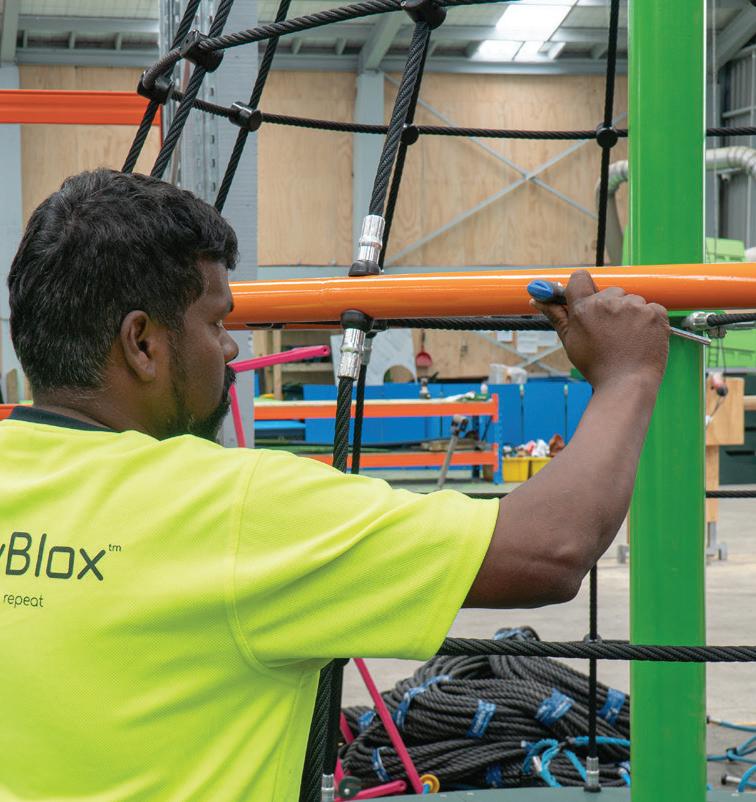
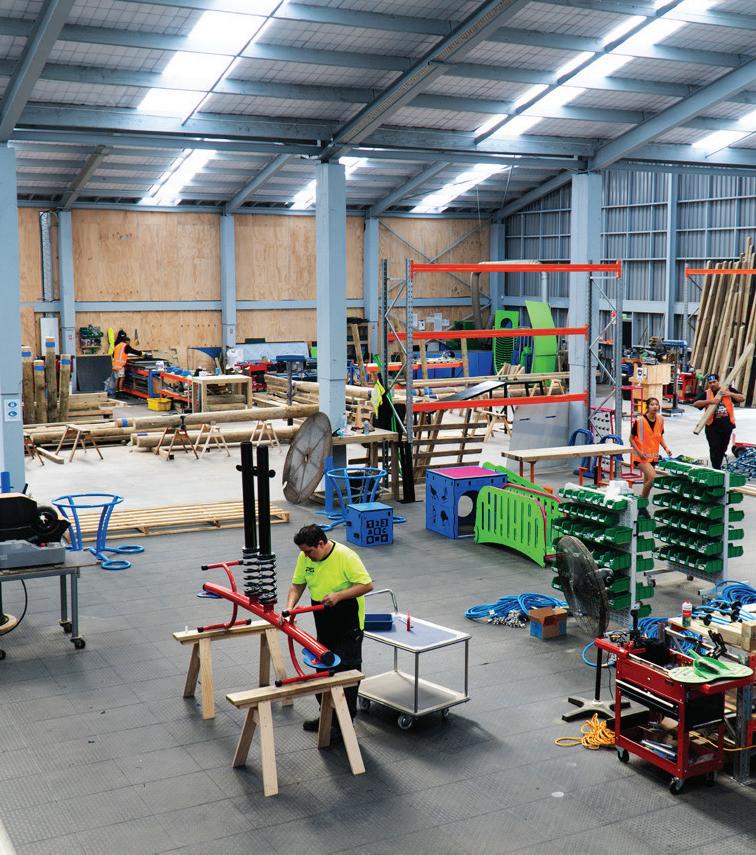
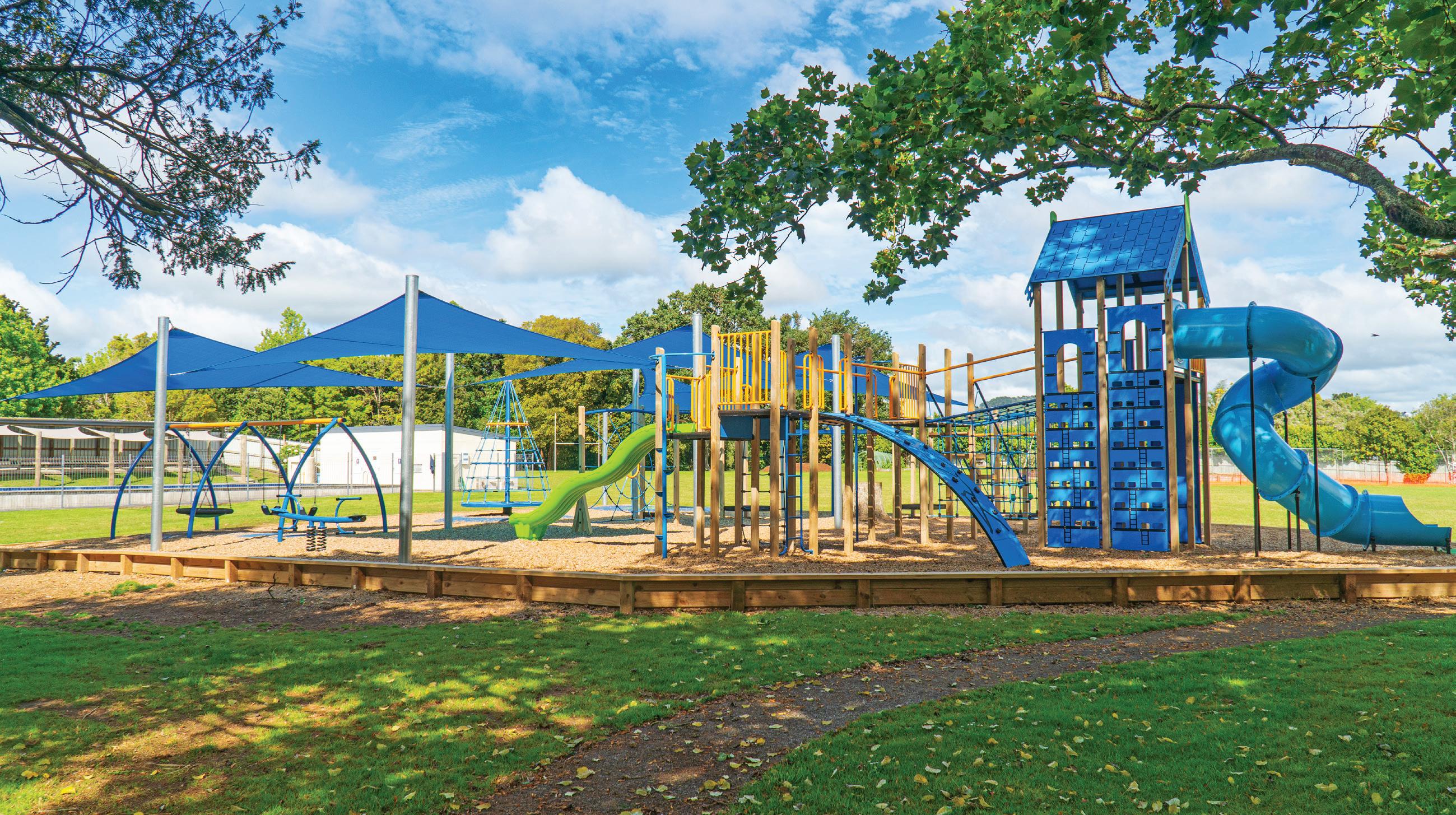








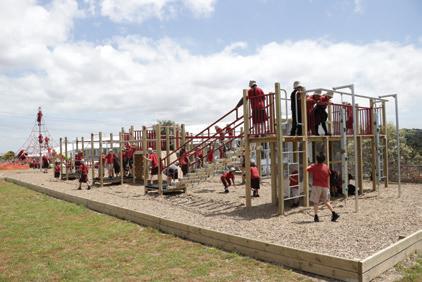
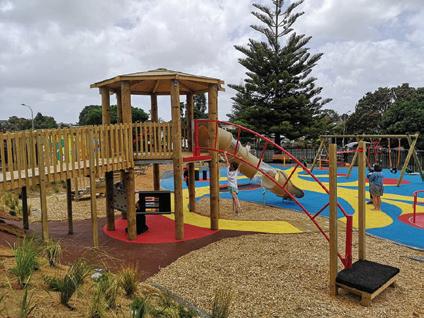
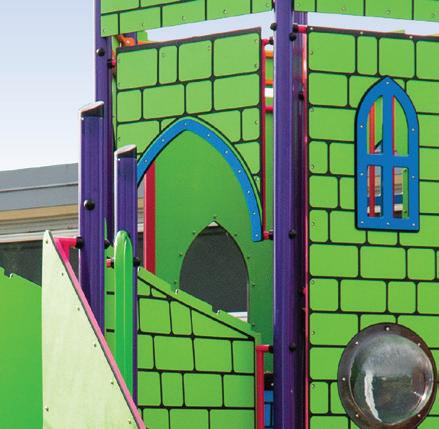
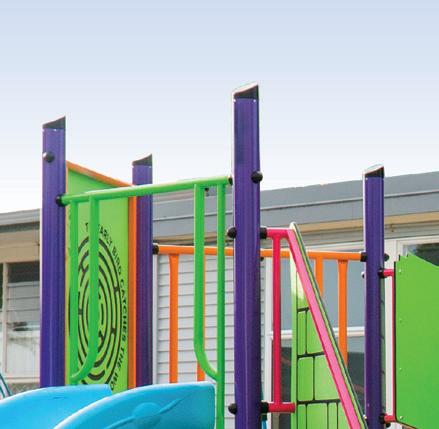
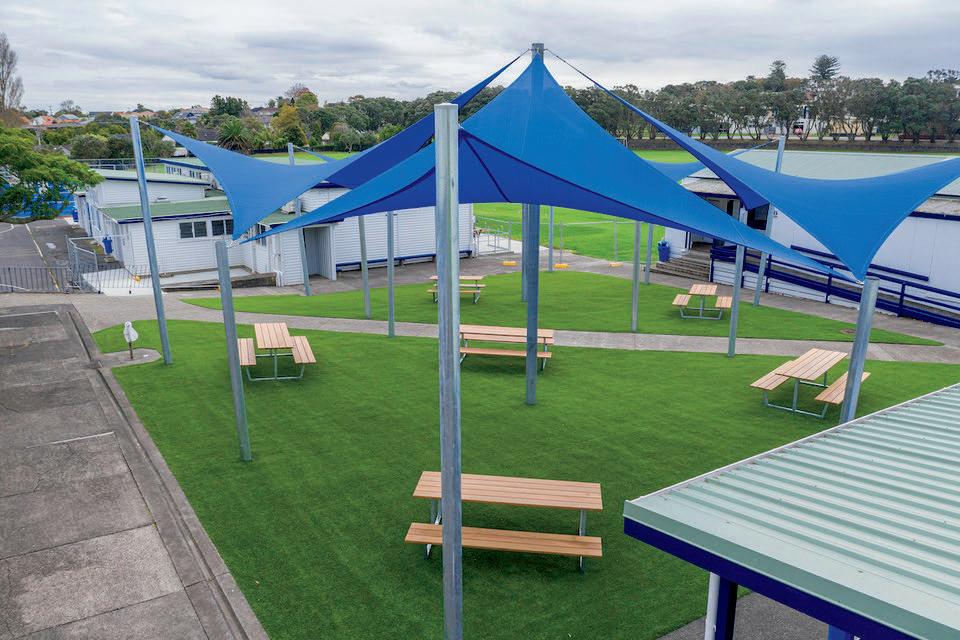
Park Supplies & Playgrounds create amazing play experiences for kiwi children with our New Zealand designed and manufactured playgrounds.
playground designs not only look fantastic but will meet all the needs of your students and your school. www.parksupplies.co.nz Melissa Cowie 021 502 220 melissa@parksupplies.co.nz Jenny Mullins 021 822 676 jenny@parksupplies.co.nz Dan Burger 021 080 53949 dan@parksupplies.co.nz Contact Park Supplies & Playgrounds today to begin your new playground journey (09) 527 4666 Park Supplies & Playgrounds provide imaginative and fun playground solutions that will aid in your student’s physical development, fitness, and learning. We value input from your staff and students and will involve you in the design process to ensure your playground needs and dreams are realised.
focus on delivering your school a complete playground package that includes the entire management of your project. Playgrounds designed and manufactured right here in New Zealand for more than 35 years.
Our
We
With its introduction, Primary and Intermediate schools had to report the progress of their ākonga in reading, writing and maths; this would be judged to a given standard.
In 2017, then Labour education spokesperson, Chris Hipkins, said of the National Standards expansion that “Kids in New Zealand are over assessed. What we need is less reporting, more teaching.” In 2020, the Labour government scrapped these standards, stating it would “give teachers more time with students”.
In 2019, Labour’s Tomorrow’s Schools review looked at the overhaul of the education system in 1989, and addressed some of the weaknesses of our current school system. In a press release, then Education Minister Chris Hipkins said the review would lead to a “reset of the way schools are led and supported. “It addresses the limiting factors, inconsistencies and inefficiencies in administration, governance and management that have built up over time, drives excellence and sets the compulsory schooling system up for the next 30 years.”
Reforms will include the establishment of an Education Service Agency, that aims to create a “more responsive, accessible and integrated local support”.
Although these policies were well received, it wasn’t long before Labour faced criticism over the post-pandemic decline in attendance and achievement in our schools. In an echo of policies past, National and ACT parties are proposing a more detailed reporting system for schools over attendance data. Erica Stanford said that National would require the Ministry of Education to publish attendance data in “real time”. ACT Party spokesperson said there should be mandatory daily attendance reporting and fines for parents whose children miss school. This goes against the ERO report which said that punitive measures for whānau whose tamariki missed school would likely worsen outcomes, as those missing school were more likely to be facing other barriers such as cost-of-living and transport.
Apart from these policies on attendance reporting, National has also recently unveiled its new education policy, “Teaching the Basics Brilliantly”, which has been widely criticised by educators as a return to the failed National Standards policy. If elected, National has promised to overhaul the education system. They would mandate an hour each of reading, writing and maths teaching for students Years 0 to 8, and require two tests a year for children Years 3 to 8. The aim of these policies was to improve the numeracy and literacy of children in New Zealand.
At the time of writing, no other political parties have created tangible education policy, though Labour has indicated that they would continue to support initiatives such as free lunches in schools, to help ease barriers to education caused by external factors such as the cost-of-living.
What educators want
As Lynda Stuart, May Road School Principal and NZEI Te Riu Roa principals’ negotiator, put it in the October 2014 issue of North & South: “I think educators know what they’re doing in New Zealand – and I don’t think they’re asked often enough about what should happen. When we have that conversation, when our politicians really listen to what we’re saying, then we will have the most wonderful education system in the world.”
In the spirit of Stuart’s words and the sentiment at the teacher’s strike – listen to educators –

School News put out the call, and asked teachers what they really wanted to see this election year. One theme of the responses to our survey was that schools were being given too much responsibility, and were expected to fix social issues beyond their scope. One respondent noted that “it has never been an educator’s responsibility to get tamariki to school. The educator’s role begins once the child enters the gate.” Another respondent agreed, noting that “employment of people in roles of truancy officers are at the opportunity cost of employing more teaching or support staff or providing more funding”. Yet another believed that truancy stemmed from poverty, and more should be done outside of education policy to address our attendance issue. There was also a huge outcry for increased support and funding. On the curriculum changes, one respondent said “Give us a serious pay increase and time allowance to really invest the quality that such a curriculum deserves”.
Teachers at the strikes in March held similar sentiments. Sav, a secondary school teacher, said she was unsure what party to vote for in the coming election as none of them had “a clear pro-teacher stance.”
Jackie, a secondary school teacher attending the strikes, noted that “There’s a lot of demands for reports, for results, for self-reviews, this and that. We’re the ones doing the mahi in front of the students, yet [the
government is] demanding things that take up a lot of time from our teaching... at this stage it’s hard [to know who to vote for] – who’s actually going to listen to us?”
Ana, Jackie’s colleague, added that in recent months the education sector had lost a lot of faith in the Labour administration, making it a tough call for the upcoming election.
Jason, another secondary school teacher with more than two decades of experience, agreed, noting “We have to do a lot of reporting back and data analysis, and it doesn’t make a difference.”
From these responses, it’s clear that for many of the hot-button issues in education, teachers agree: give schools and educators more resources, more social support and PLD for changes in the curriculum. Support tamariki and rangatahi and whānau doing it tough in the post-pandemic economy through economic and social policy. Decrease class-sizes and instate workload controls so that ākonga can have the best education possible. Decrease reporting requirements, and put the focus back on those who matter: our rangatahi and our tamariki, the future of the nation.
Through various surveys, news articles, radio interviews, union media releases and more, educators and teachers have been repeating themselves time and again on their needs, and in turn the needs of the education sector. Now, it’s up to those gearing up for the upcoming elections to listen.
08 Term 2, 2023 | schoolnews.co.nz EDUCATION
Image taken at Teacher’s Strike, March 16, Auckland CBD
Keyboards designed for children in primary education.

Clevy keyboards are the result of extensive professional research. Every keyboard offers high quality, colourful styling and a robust design.
Large Keys
Colour Coding / High Contrast










Solid Construction
Spillproof
A game changer for those living with dyslexia.
The ReaderPen is a convenient portable tool designed to support reading and literacy –empowering students to work independently.
Using the pen is super easy – simply scan your text and it will automatically be read aloud using a natural speaking voice.
Dyscalculia Maths Bundles
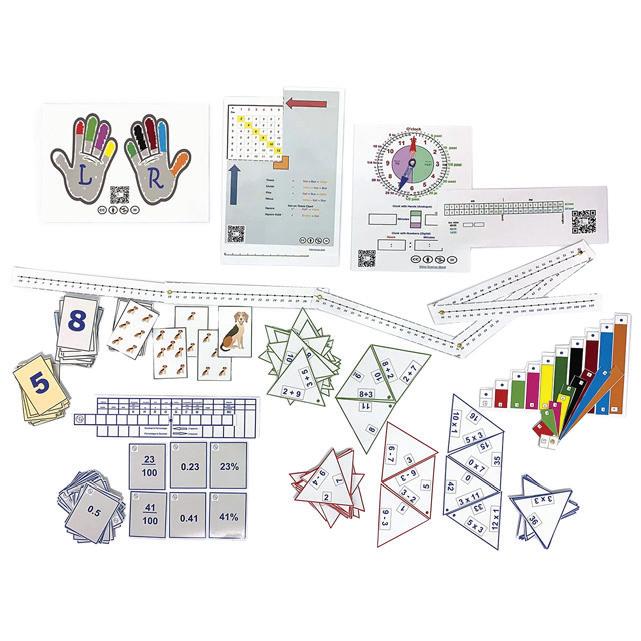
Support students with dyscalculia or maths anxiety.

A series of A4 Laminated Cards. Each card has a QR code linked to a video explaining how the resource works. Comprehensive bundle of tools with so many resources to assist students.




The original visual timer.



The visual depiction of “time remaining” provides stress-free time management, allowing students to focus on the task at hand and manage their time more effectively.

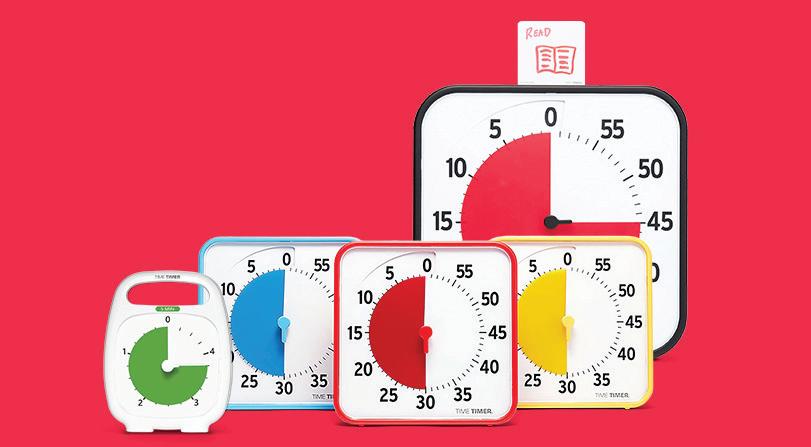
Easy To Set No Loud Ticking
Time Visually Disappears





Multiple Sizes / Durations


0800 864

lives
Making positive differences to enhance
382
assistive.co.nz
atinfo@dtsl.co.nz atstore.co.nz |
to Speech Voice Recorder Discreet
Text
A tale of two schools Technology in the classroom:
technological assemblages to organise their class notes or complete pieces of work.
By Cristian Rodriguez, Deputy Principal, Whangaparāoa College

So, I went back to University thinking that the solution was freeing the brain into this digital galaxy; letting it do its thing and then being able to re-trace that journey. The whole question of digital integration was, I thought, how to articulate technology effectively around these cognitive processes. However, a big surprise awaited me.
The story starts back in my original country of Argentina around 1996, when I came across an article by Roger Chartier discussing the idea that the digital text revolution is greater than that of Gutenberg. Digital texts, he argued, “enable an open, fragmented, relational articulation of the reasoning, made possible by hypertextual connections” (Chartier, 2004).
I remember thinking that this was like plugging the human brain into the internet. This idea was reinforced when I moved to New Zealand and ended up teaching at a high performing school. I could see students constructing ever more complex
What you know about knowing might not be that correct, after all. The more I read about cognition the more I realised that the ideas I had about learning were wrong. I learnt that those foundational concepts that we so closely follow as teachers were mostly based on a cognitive paradigm that is ever so slowly giving way to a new one.
The cognitive paradigm is also known as a computational theory of cognition that argues that our brain works a bit like a computer, which processes inputs to build representations of an ‘external’ reality, where the body plays a peripheral role.
However, back in 1991, Varela, Rosch and Thompsom published the ground-breaking The Embodied Mind: Cognitive Science and Human experience, intending to bridge the gap between the empirical study of the mind and our lived experience. The book
offered a vision of cognition that is more active, embodied and embedded. In other words, “cognition takes place, not only in a central system (Fodor 1983), but in the perceptual and motor systems as well” (Adams, 2010, p619). Knowing, therefore, is not something that happens in-spite of the body but, on the contrary, something intimately linked to body and brain actively interacting with the outside environment. …and there were also the red flags. On top of this shift to our understanding of cognition, particularly in relation to the role of the body and the environment, some cautionary tales relating to digital implementations started to emerge.
The 2021 EOCD report, 21stCentury Readers Developing literacy skills in a digital world looked at the relationship between reading performance and the type of school activities done on digital devices. “All countries/economies showed a negative relationship between playing simulations at school and reading performance even after accounting for students’ and schools’ socioeconomic profiles. The rest of the digital activities also presented negative relationships with reading performance across the vast majority of countries/economies” (p 133).
And some concerning papers were coming out of one of the top-performing PISA countries. In 2018, an article in YLE News,
researcher Aino Saarinen pointed out that “the more that digital tools were used in lessons, the worse learning outcomes were”. Saarinem also aimed at Finland’s curriculum phenomenon-based learning strategies, introduced in 2016, saying that “Proponents of this method have claimed it would even-out the differences between students with various [academic] backgrounds. But in light of the research it looks like exactly the opposite has happened.”
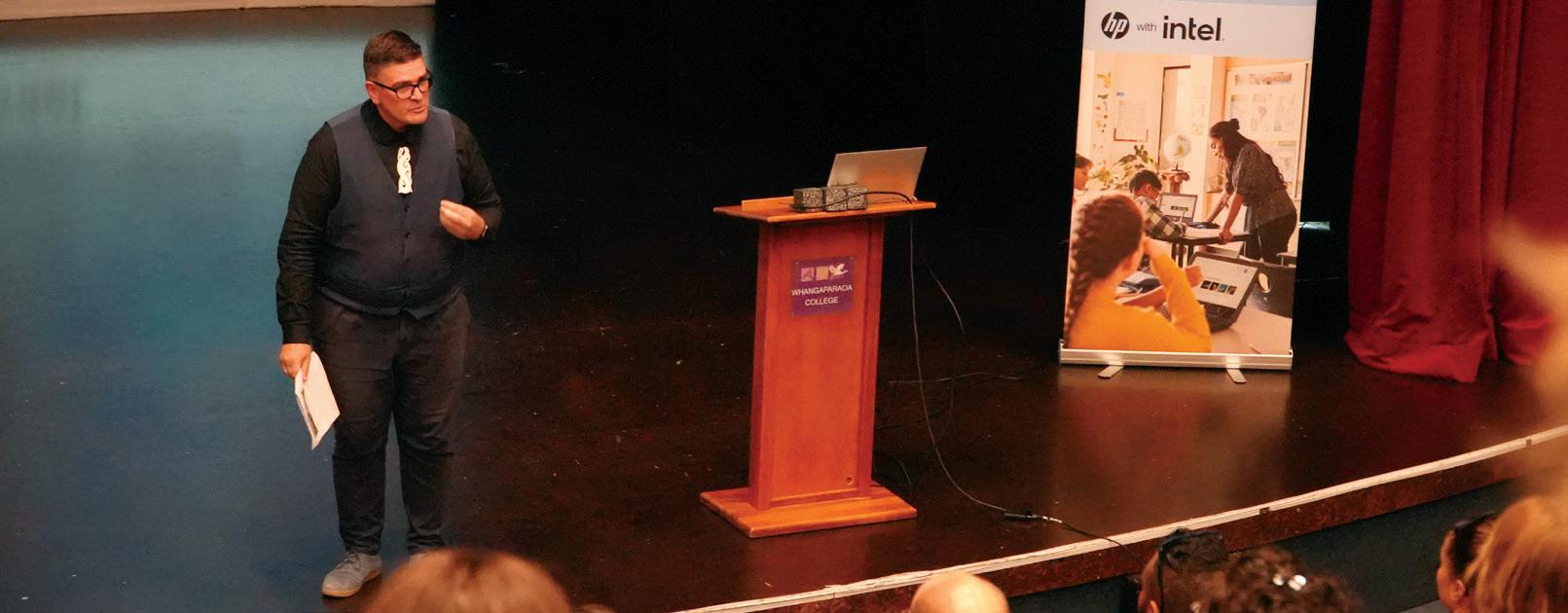
The two schools
The 21st-century movement invited re-thinking of the traditional roles of the learner, the teacher and the environment. It not only challenged the notion of knowledge transmission, but replaced it with one of knowledge creation and brought into the classroom the idea of an interconnected world in which mobile technologies have a great impact on individual learners and blur the boundaries between formal and informal learning. However, although emerging technologies can create a seamless, engaging integration between school and home life, therefore offering opportunities to learn outside the education, there seems to be a tension between that old Industrial school and a new 21st Century one.
Learning to thrive in a transforming world (Hannon & Peterson, 2017), requires moving away from a model in which students are merely qualified to enter the next step of their academic or working life, and into one in which the focus is on subjectification (Biesta, 2009), educating socially aware and committed individuals capable of adapting to changing environments.
This is only possible if we think of schools as ecosystems rather than systems, because “[n]o vision of learning that is lifelong and deep can be realised without radically reconnecting institutional systems that currently act in silos” (Hannon & Temperley, 2022; p. 81).
10 Term 2, 2023 | schoolnews.co.nz EDUCATION PRINCIPAL SPEAKS
Free the brain… I have always been fascinated by the impact that technology could have on education.
Image courtesy of Whangaparāoa College
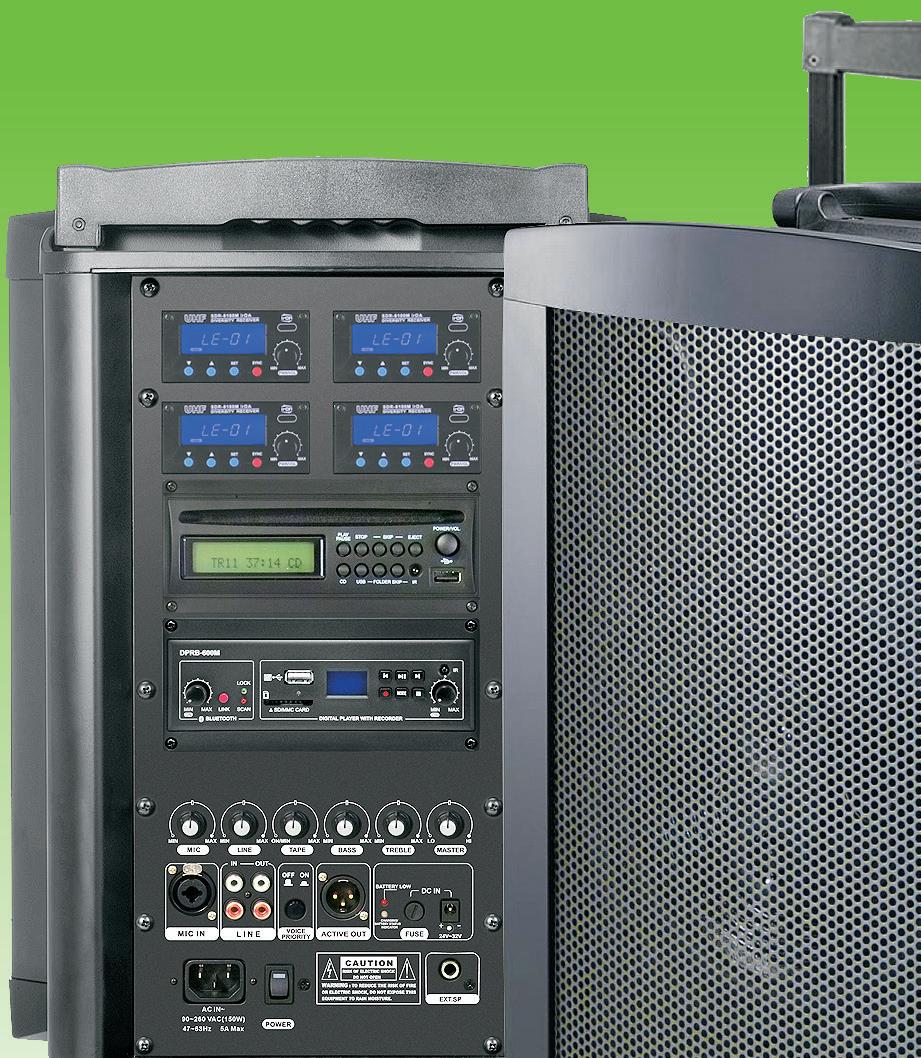



















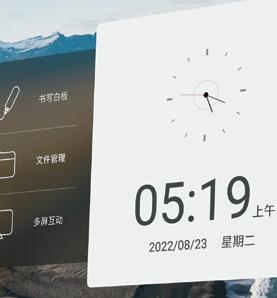


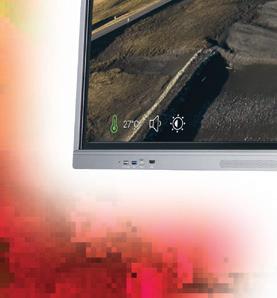











sales@edwardsnz.co.nz | edwardsnz.co.nz From 65” – 98” 4K Ultra-High De nition Electronic Whiteboard Touch Control Wireless Presentations Wall or Trolley Mountable BRAND NEW! Interactive Intelligent Flat Panel TVs Units are available with or without Camera/Speakers for Zoom or Teams The Challenger 1000 Portable PA system with stand and wireless microphone • Fully featured, top quality and easy to use. • Includes a weather cover for outdoor use. • Built-in trolley and powerful rechargeable batteries so you can take it anywhere. BEST SOUNDING PORTABLE PA IN NEW ZEALAND $2749 PLUS GST If it’s time to revamp the hall AV system we're got you covered with large automated electric screens, projectors with HDMI wall connection, lighting, sound systems and wireless microphones, please drop us a line! NEED A REVAMP? CONTACT US TODAY! ENQUIRE TODAY
We’ve refreshed our brand!




From April 2023, we will be known by our Māori name first – Tātai Aho Rau CORE Education.
Our new logo incorporates a matau (fish hook). This locates us in the Pacific, and connects us to fishers who select di erent matau for each fishing spot. Like them, we make sure we have the right tools and resources to support the many di erent communities we work alongside.
Our kaupapa remains the same though – contributing to an equitable and thriving Aotearoa through learning.





Read more about what shaped the refresh core-ed.org/brand-refresh
What are we trying to do at Whangaparāoa College
In 2022, we embarked on a year-long curriculum review. We gathered voice from learners, teachers, leadership and the community to understand what our stakeholders were requesting from us. At the same time, we looked into what was out there that could help us redesign our practice. We looked at different pedagogical models, the NCEA curriculum refresh and what was being done in other schools in Aotearoa and the world. Out of all of this, we came out with 4 foci: CRP (Culturally Responsive Pedagogy) Learning Agency, Personal Excellence and Literacy. From this complex scenario, a digital strategy emerged, weaving an updated understanding of cognition, a redefinition of the purpose of learning and a clear understanding of our community’s needs.
The plan
Our plan focuses on offering an articulated vision for technology. It comprises 4 areas: Curriculum,



culture and infrastructure, classroom and citizenship.
Technology and the curriculum, in turn, has two subsections. Technology as a subject area and Technology as a supporting structure for teaching and learning. Each one requires a different approach. Whilst Technology as a curriculum area allows for a more exploratory, trailblazing approach, when it comes to supporting teaching and learning, we have opted for a more conservative one.
Our vision statement: “thoughtful integration of digital technologies with effective teaching practices which can significantly improve learning outcomes” (Greaves, 2010 ) highlights the supportive aspect of EdTech. A focus on TPACK enables teachers to make informed decisions about their inclusion of technology in the classroom as they navigate technological, pedagogical and content knowledge.
Culture and infrastructure refer to creating a culture of perception and accessibility around technology. It also contains two sub-areas: coherence and accessibility.
12 Term 2, 2023 | schoolnews.co.nz EDUCATION
Image courtesy of Whangaparāoa College
The culture of perception relates to aspects of how “things are done” at Whangaparāoa College. This includes a preference for digital communication, the use of digital signage, a BYOD policy and optimised wi-fi access. Coherence, though, looks at vertical and horizontal equality of application. That means looking at ways in which different Faculties apply these principles (horizontal coherence), but also considering the implications of transitions between the junior and senior school (vertical coherence).
By Classroom, we refer to the use of EdTech in the classroom and its linkages to pedagogy. The school pedagogical approach (CRP) requires that we consider not only the student linguistic and ethnic identities, but also their global ones. This global identity includes not only personal history but also preferences in the way they see and interact with the world (digital vs analogue, for example). However, an important aspect of technology in the classroom has to do with our understanding of cognition and its links to action.
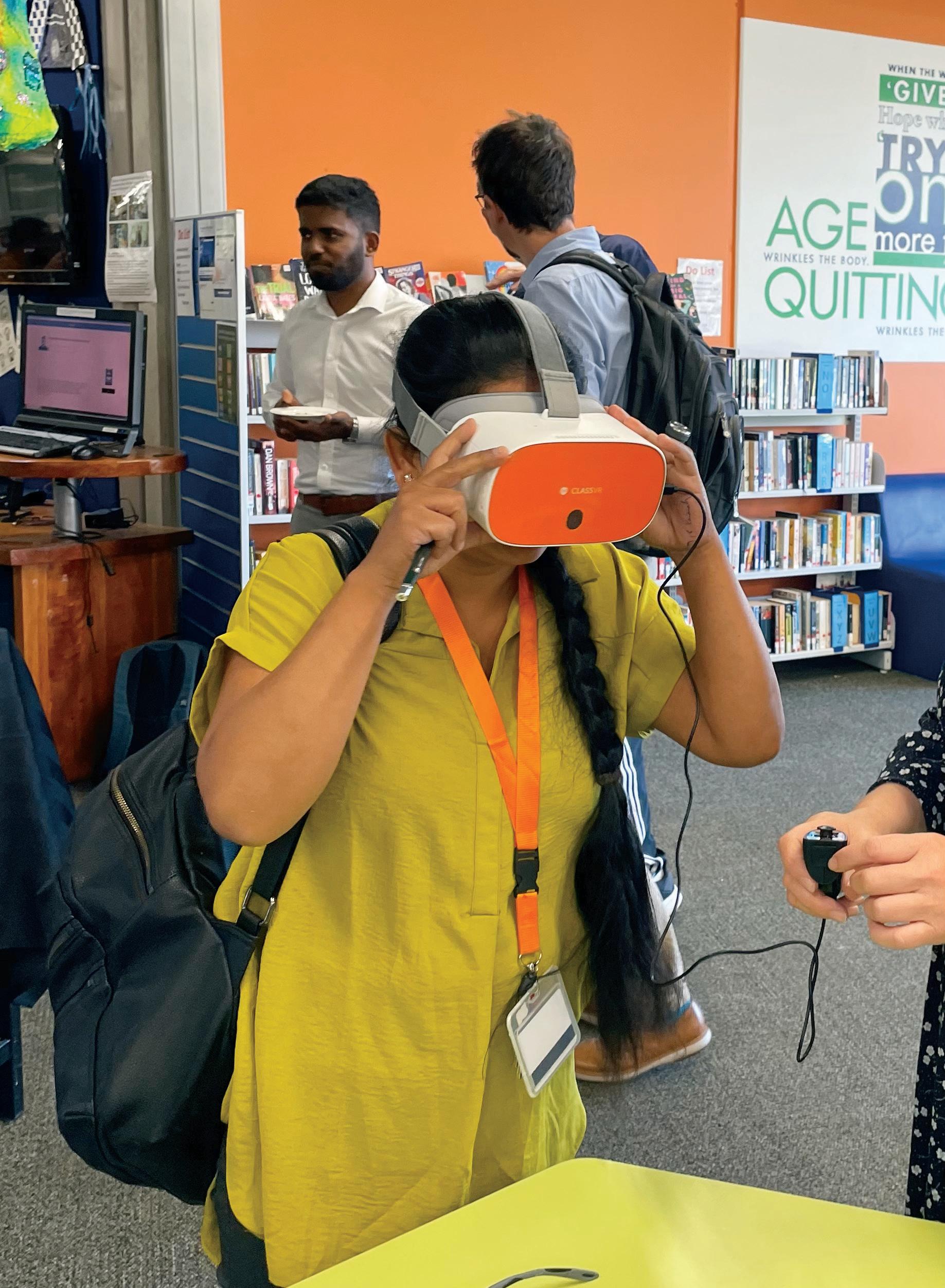
Therefore, we are starting to explore with the use of VR and AR in the classroom as a way to bring back the body into learning.
Finally, Citizenship is oriented towards developing an understanding of the implications of living our lives digitally. This extends from basic Digital Citizenship conversations about aspects of cybersecurity, safety and cyberbullying; to moving towards an understanding that de-virtualises that digital existence (realising that there are real people behind the screens).
Another essential aspect is developing a sense of balance between plugged and unplugged activities, from learning to socialising to sports. But we are just starting…and the road might be bumpy.

We have made some progress. We are focussing on setting the foundations for this vision. That means making sure that the infrastructure is there, and that slowly we are introducing new aspects of practice in the classroom (like VR and AR), supporting teachers to see the potential and providing PLD options.
We have also partnered with HP and are the first Reinvent the Classroom school in New Zealand. Together with HP and Using Technology Better we hosted the Delivering the promise conference on March 14 where we discussed the possibilities of these technologies in the classroom.
In order to activate our VR Hub and bring AR and the Metaverse into the classroom, our ICT PD has been organised into three strands: Digital Ecosystem (Google), VR & AR, and the Metaverse. Teachers can select the area they want to explore, and in order to support them, Sam (our wonderful Librarian) has become a VR expert that comes into the classroom to help teachers adopt the technology. Undoubtedly, there is still a lot to do. Staff are now asking for more opportunities to discuss what they are doing and seeing; to think about the ethical ramifications of including AI in the classroom... and that is exactly the way we wanted to go: empower teachers to make their own informed decisions in regard to meeting the students’
learning needs, whilst creating a frame of reference that better resembles their everyday lives.
References:
Adams, F. (2010). Embodied cognition. Phenomenology and the Cognitive Sciences, 9(4), 619-628.
Biesta, G. (2009). Good education in an age of measurement: On the need to reconnect with the question of purpose in education. Educational Assessment, Evaluation and Accountability (formerly: Journal of Personnel Evaluation in Education), 21(1), 33-46. Chartier, R. (2004). Languages, books, and reading from the printed word to the digital text. Critical Inquiry, 31(1), 133-152.
Hannon, V., & Peterson, A. (2017). Thrive: Schools reinvented for the real challenges we face. Innovation Unit Press.
Hannon, V., & Temperley, J. (2022). FutureSchool: How Schools Around the World are Applying Learning Design Principles For a New Era. Taylor & Francis.
1OECD (2021), 21st Century Readers: Developing Literacy Skills in a Digital World, PISA, OECD Publishing, Paris. http://doi.org/10.1787/a83d84cb-en.
Varela, F., Rosch, E., & Thompson, E. (2016). The embodied mind : cognitive science and human experience (Revised edition. ed.). MIT Press.

13 A R T I F I C I A L T U R F S P E C I A L I S T S I N F O @ T E A M T U R F C O N Z W W W T E A M T U R F C O N Z N Z W I D E
Effective online learning with Mt Hobson Academy
By Naomii Seah, Industry Reporter
“It’s nothing like lockdown learning... the results are just amazing,” says Saira Boyle, Principal of Mt Hobson Academy.
“I’ve been absolutely blown away with the opportunities that offering something different can give to our kids. There’s a whole number of children who this system isn’t working for... the nature of on-site schools just doesn’t meet the needs of all kids.”
Saira Boyle is the Principal of Mt Hobson Academy (MHA), a fully online school that offers its services to New Zealand tamariki nationwide. An educator for 25 years, Boyle

began her career as a teacher in the UK before coming to New Zealand. For years, Boyle taught at secondary schools in the country before moving into the primary school sector, where she
became a principal. For her entire career, Boyle had been based in the mainstream school system, teaching and working at on-site schools. She said becoming principal of an online school happened largely by accident.
“Because I was so connected with and thriving in the regular system, I hadn’t even considered how [online school] could be an option. However, in the regular school system, I was becoming increasingly frustrated and challenged by the many barriers that were there for our kids.”
So, when Boyle was approached by a hiring member of Villa Education Trust, who run MHA among other private and designated charter schools, Boyle saw a “serendipitous opportunity”.
Opening its doors near the beginning of the pandemic, MHA is already proving itself to be a leader in the online school community of New Zealand.
The school runs two models of online learning. The first is the “teacher-led” model. Students from Year 1 to 13 are supervised through the project-based curriculum by
a professionally trained and qualified teacher. Each class has no more than 15 students, with some classes having as few as four students. Boyle describes the project-based curriculum as “super engaging” and “really challenging”. This model of learning for Years 1 to 10 prepares students for NCEA, which is taught at MHA from Years 11 to 13.
The second model is a parent-led one, where parents teach their children under the supervision of the qualified teachers at MHA. This model means that parents are very invested in their children’s education, accessing the curriculum and designing it to suit the individual needs of their child. Boyle describes it as a “hybrid” between homeschooling and the online school. Parents also have regular meetings with teachers, where they’re supported to teach their child in subject areas like English and Maths.
Boyle says that this model of teaching has helped students at MHA to really thrive. She puts the success of the online model down to several factors, including a decreased burden
14 Term 2, 2023 | schoolnews.co.nz EDUCATION PROFILE
Saira Boyle, Principal, Mt Hobson Academy
Images courtesy of Mt Hobson Academy
on their teachers and the high engagement of whānau. Boyle describes the relationship between the teachers and parents as a “respectful, professional friendship”; she says that ākonga seeing their whānau invested in their education really thrive as a result.
For some ākonga, Boyle believes that the online model works because on-site schools have fundamental barriers to effective education.
“When you put 28 seven-, eightor nine-year-olds in a room with one teacher, the noise, the stimulus, the distraction [can] become a major barrier.
“There are a growing number of young people who have autism, or other learning delays... if you’ve got one teacher for more than 20 children, and each one has a specific set of needs, it’s really hard to have all those needs met.”
At MHA, the small class size and the online delivery means “every child is in the front row,” and they have a more accessible and personal relationship to the teacher. Additionally, Boyle says there “is no time wasted... there are no distractions and disruptions with all the things that happen in regular school, and so the curriculum is uninterrupted. It’s rigorous, it’s robust, it challenges students, but because it’s a project-based curriculum, it’s highly academic.”
MHA also seeks feedback from its students each term. Boyle says she regularly hears from ākonga that the online delivery feels more efficient, due to a lack of travel time, and the degree of comfort that studying from home affords.
The project-based curriculum also ensures that each ākonga has a degree of responsibility and agency for their learning. Boyle says that the combination of all these factors has led to some students achieving impressive levels of academic success.
“It’s amazing how engaged they are, and how quickly they pick up the online skills... I witnessed the junior teacher –teaching years two, three and four – doing work that I would expect year five students to be doing in an on-site school.”
Boyle also stressed that the learning at MHA wasn’t at
all like lockdown learning delivery, which she said was “a real quick and shock response to [the pandemic].
“This model is planned. The teacher learning is deliberately planned for the online experience, and I can see the difference because the results are amazing.”
Although the courses are delivered online, Boyle stresses that the ākonga aren’t on screens all day. MHA places an emphasis on wellbeing and mindfulness, and part of that is managing time spent on screens, and students’ relationship with technology. The timetable is structured to reflect that: classes are structured in 55 minute-blocks, and there are 10 minutes between classes for “brain breaks” where ākonga are encouraged to go outside, to stay hydrated, to go and talk to someone in-person.
For younger ākonga, all online learning happens before lunchtime. Of the four blocks, one is an independent project block, where a project coach is online if needed, but students aren’t on screen with a teacher. In the afternoon, ākonga are encouraged to do more arts, music and health and P.E activities. There’s even a community service block where students are encouraged to go out into their community and volunteer, whether that’s reading in a retirement home or collecting litter.
One of the common concerns new parents have is the lack of social interaction for their children in an online school, says Boyle. Students at MHA are far from isolated, though. Partly, the school connects parents in similar areas to each other, helping to form the school community. Boyle notes that parents in one area often get together and take
their children on their own field trips, visiting museums, or other social activities.
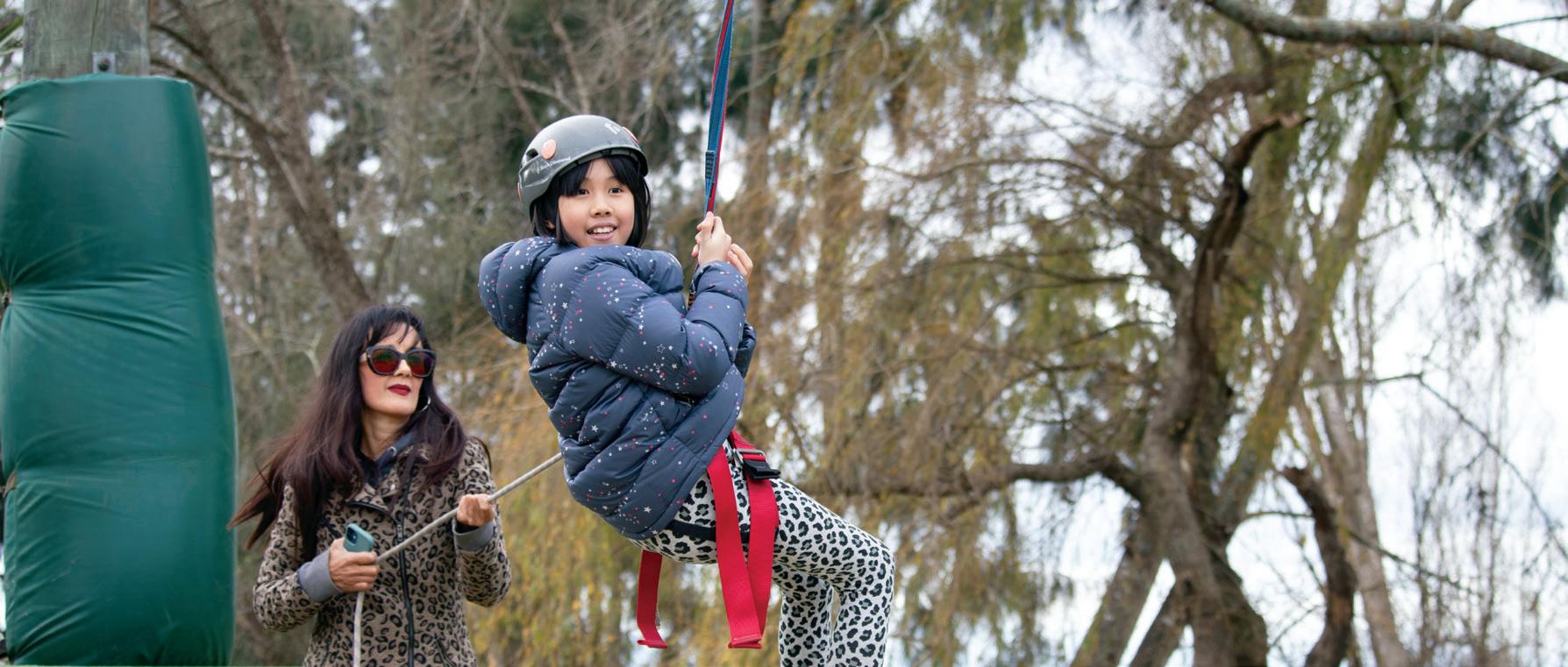
Ākonga also make friends and connections within the online classrooms. There’s also camps that happen each term, which build relationships between the students that span year groups.
Importantly, Boyle says that she wants the wider community to know that a school like MHA offers ākonga all the experiences that an on-site school provides, as well as other advantages.
“Screens are used as a tool for learning,” says Boyle. “Students are taught how to manage [technology] and
how to grow relationships both online and offline.”

In fact, Boyle even believes that online learning can create real strengths for ākonga, who quickly learn online etiquette, and develop technological skills that make them highly desirable for future employers. Although online school is a different model to the usual on-site one, Boyle is passionate about communicating that “it’s okay to try something different, to step outside what’s perceived as normal.”
“This is normal, and kids are thriving in this model.”
Term 2, 2023 | schoolnews.co.nz 15 EDUCATION
Image courtesy of Mt Hobson Academy
All-round learning hubs:
The many functions of school libraries
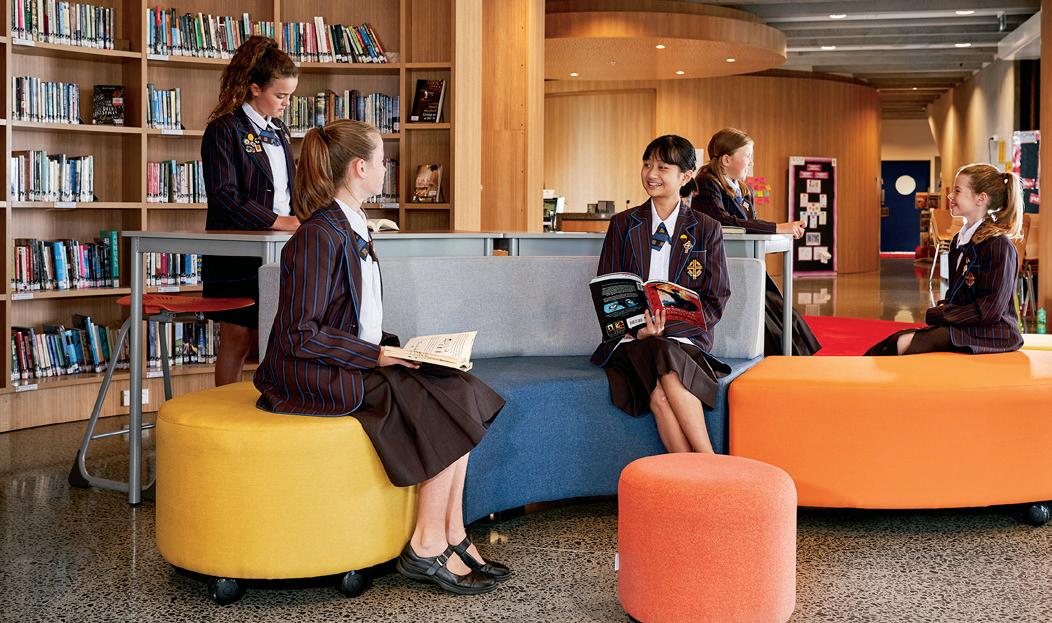
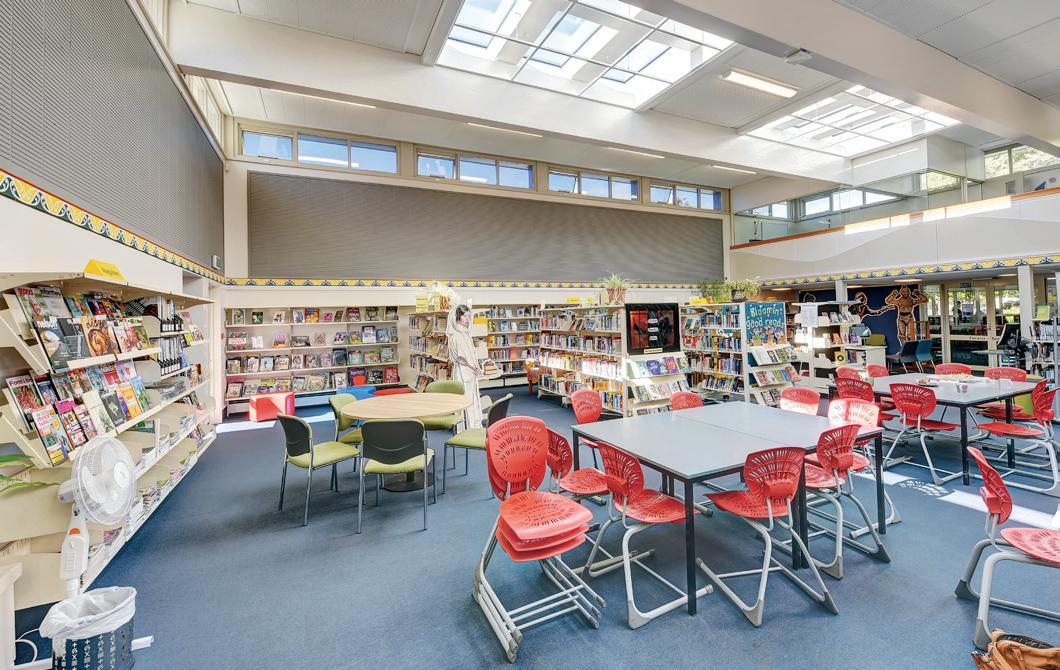
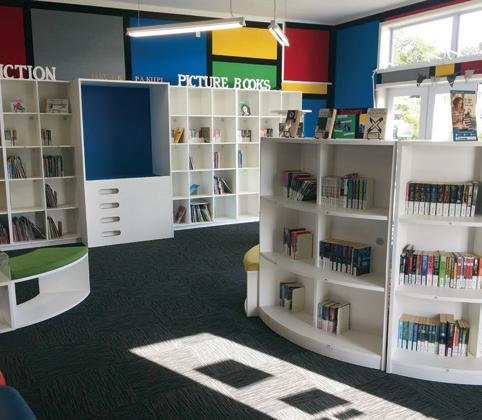
is a need for different zones. Quiet areas for independent reading or study, as well as space for collaborative group work, meetings, and community gatherings are just some of the zones libraries need. Specialist meeting rooms with access to interactive smart screens can replicate real-world spaces school leavers may find themselves in. Helping students become proficient in using this type of technology is essential to ensure they are ready for work or further study when they leave school.
Modern school libraries act as a meeting place for students, teachers, and in some instances, the community. The space needs to remain flexible to accommodate different groups, whether they be engaging in learning activities or meetings. The ability to easily transform a space is invaluable in a busy school environment. As with other flexible spaces in a school, furniture on wheels or that can be easily moved is key.
Building or thinking of redesigning your library?
School News asked some industry experts for their tips on creating the perfect space.
By Gemma Easton, Editor
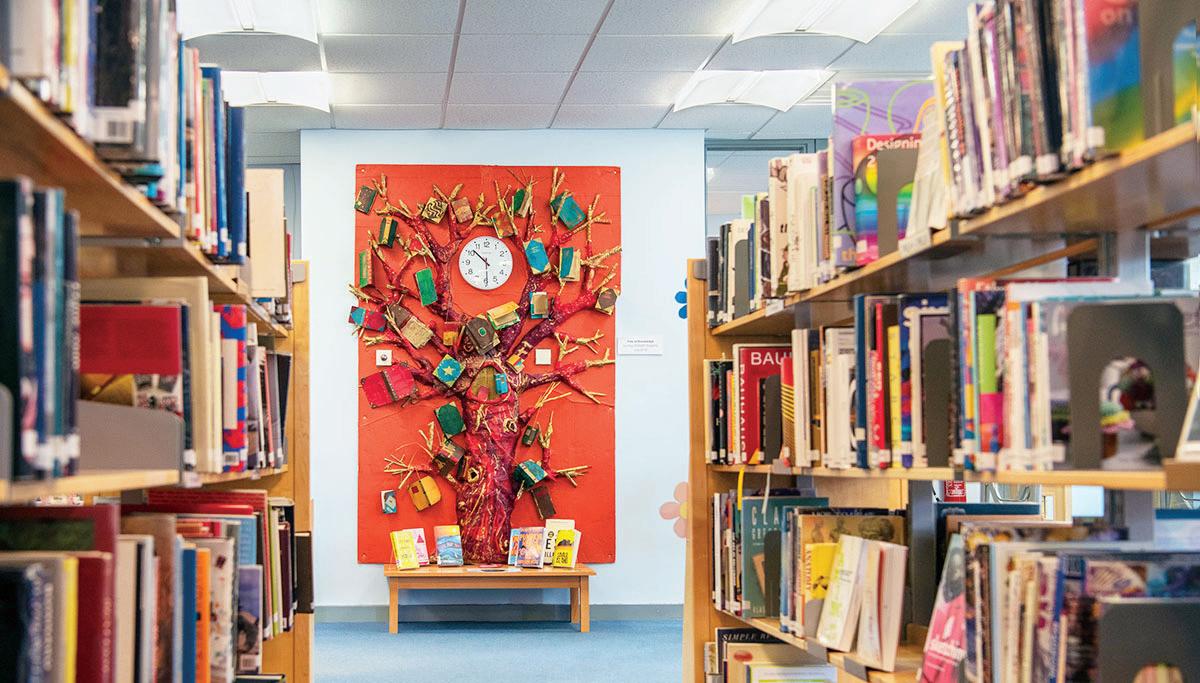
As education changes and evolves, the library remains one of the most important spaces in a school.
Of course, access to books remains integral to education for children of all ages. Books help children develop early literacy skills, understand history and culture, help to develop traditional research methods, and of course, foster a love of reading.
The modern school library, though, is home to more than just books. Technology, and the way students are taught and learn is changing. Access to digital resources and technologies is integral for all akonga. Increasingly, school libraries are becoming dynamic learning hubs, giving students access to technology and providing space for different activities and learning styles.
The National Library of New Zealand cites school libraries, digital literacy and reading engagement as interdependent. The school library and staff play a critical role in helping to create a school culture that supports and encourages reading for pleasure, and digitally literate students. Digital literacy, in turn, needs proficient and engaged readers. School libraries are most effective, then, when they combine specialised staff, resources, and space.
For students who might otherwise be disadvantaged, the library can provide the resources, technology, and stories they need. Books for reading or reference, as well as computers with internet access and digital learning tools can help ensure all students have the tools to learn. Libraries are a place where all are welcome, providing a safe place to share stories and ideas.
With the variety of activities taking place in the library, there
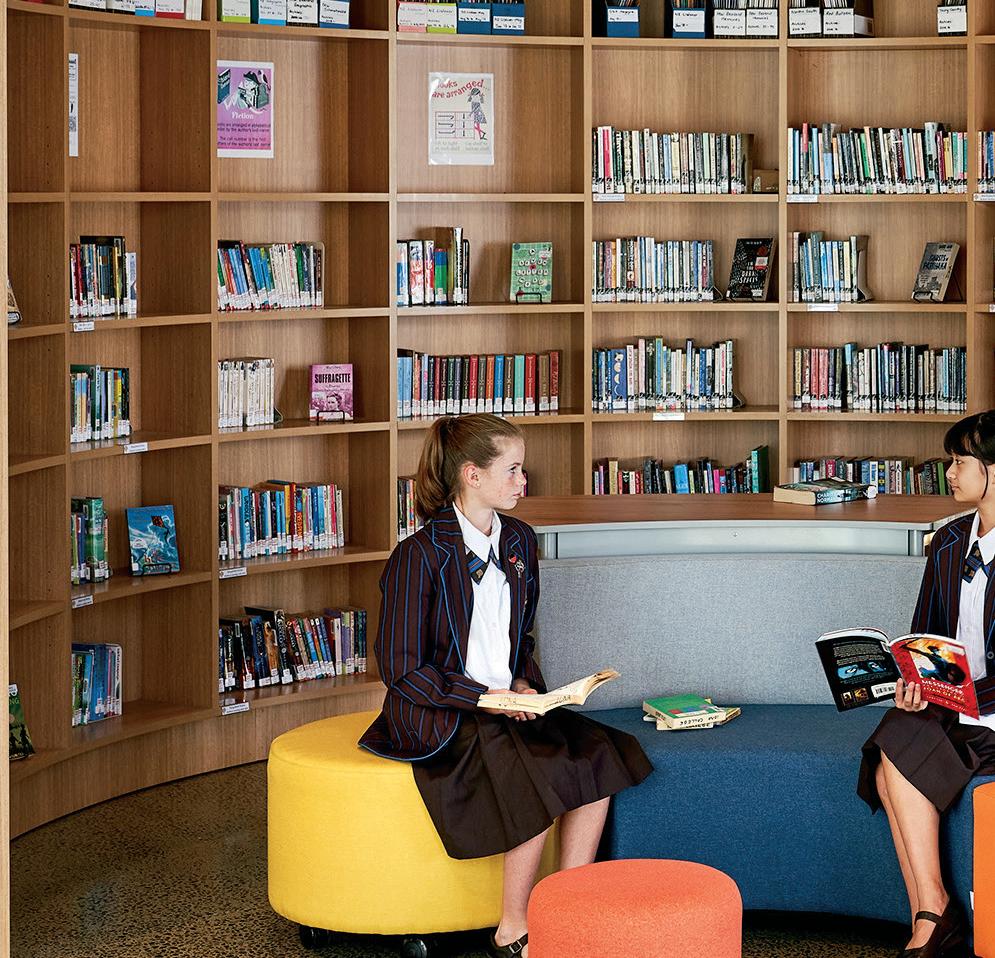
“The school library provides resources and services that support students, their parents and whānau,” Miriam Tuohy from National Library of New Zealand Te Puna Matauranga o Aotearoa said. “Equitable access to stories, information, technology, and services supporting reading and learning can make a tremendous difference to students’ achievement and their social and emotional well-being. School libraries can help students develop new knowledge, skills, interests, and dispositions for learning and personal growth that they will use throughout their lives.
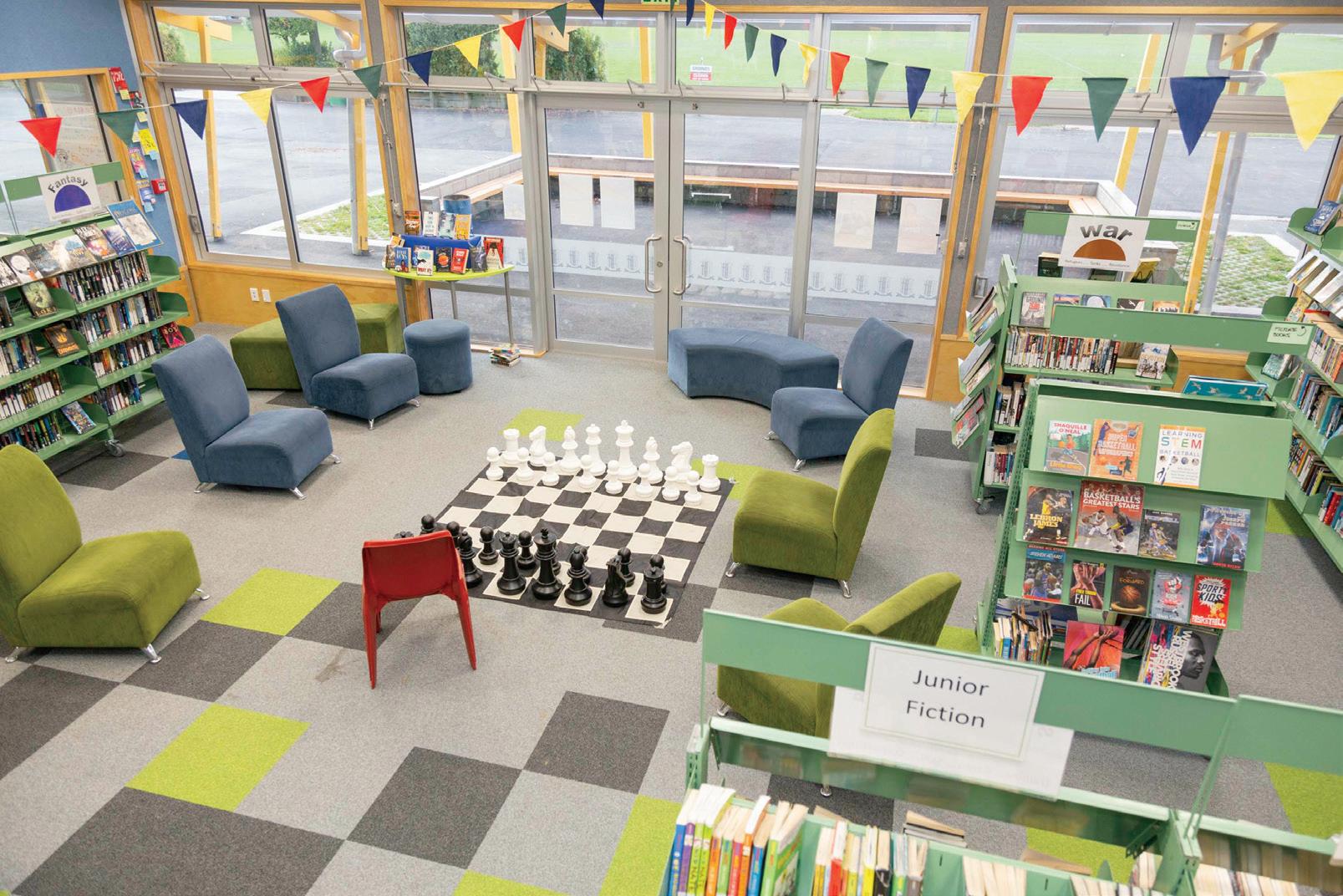
“Books and resources to support reading, teaching and learning, are essential for all school libraries. A space where everyone feels they belong is also important – it’s got to be welcoming and comfortable.
“Libraries also need staff with the passion and expertise to provide the library services the school needs. It’s crucial that those services align with the school’s over-arching plans and goals for learners.
16 Term 2, 2023 | schoolnews.co.nz ADMINISTRATION
Image courtesy of The National Library of New Zealand Te Puna Matauranga o Aotearoa
Image courtesy of Furnware
inspiring learning spaces...
support better learning outcomes.
learn more

We work in close partnership with you to deeply understand your school’s unique environment, and design solutions to meet your performance goals.








0800 655 155 | furnware.com
“Books are still the mainstay of school library collections, with stories and information students and staff want and need. Libraries enable equitable access for students who would otherwise be disadvantaged. This includes access to a wide range of books, but also to technology such as the internet, and devices. The library space is a safe haven without the stresses and pressures of the classroom, playground, or perhaps students’ home life. Library staff have an important function in supporting their teaching colleagues –curating resources, sharing knowledge and strategies about reading, research, and inquiry learning, and as instructional partners in the classroom.”
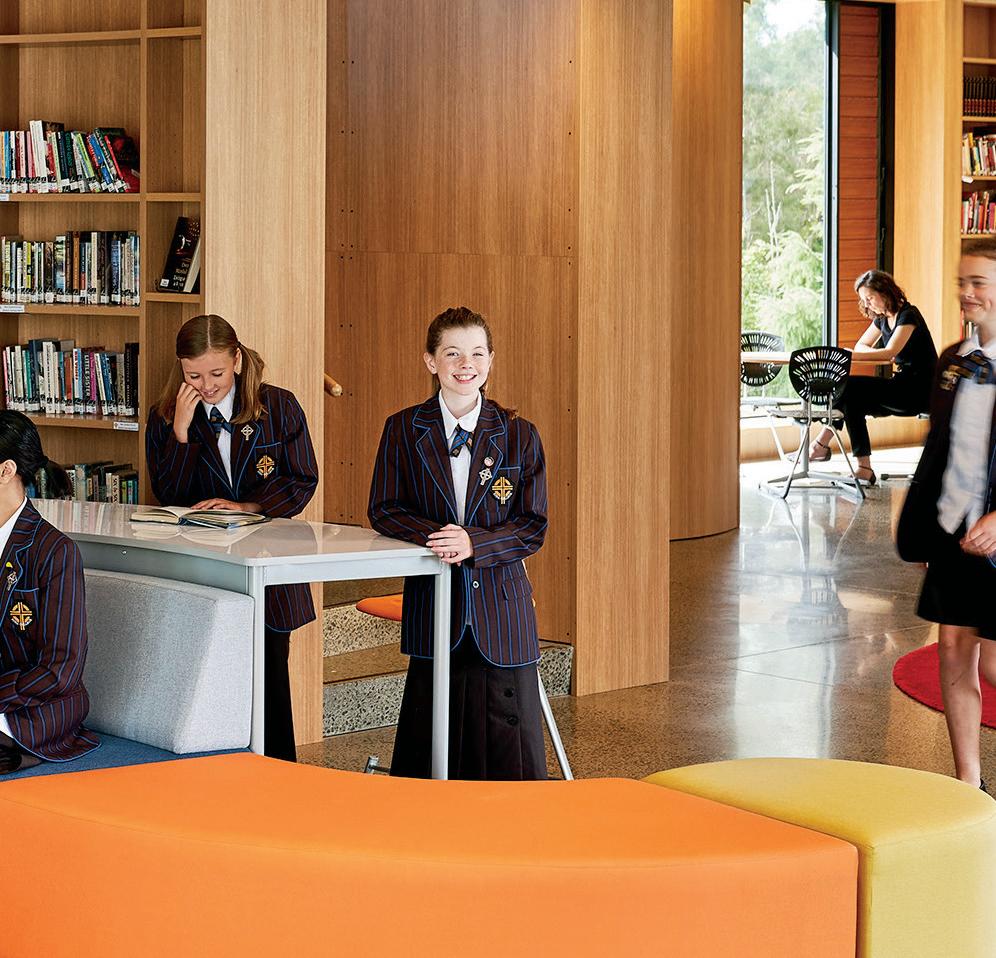
Michael Hellyer from Sebel said that modular furniture is important when designing the layout for a library as it allows educators to create settings for all ages. “Always ensure that the products selected are fun, flexible and comfortable,” he said.
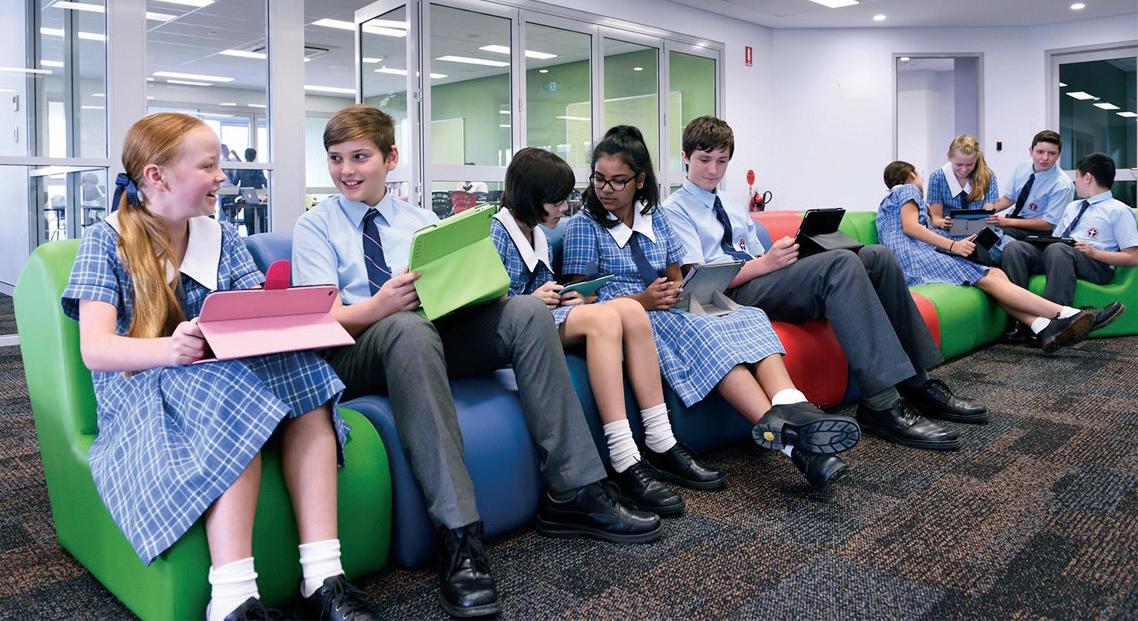
“Furniture choices can help to create zones in libraries for different modes of learning. Low level seating like floor cushions and mats can be used as a fun and comfortable way to create breakout areas
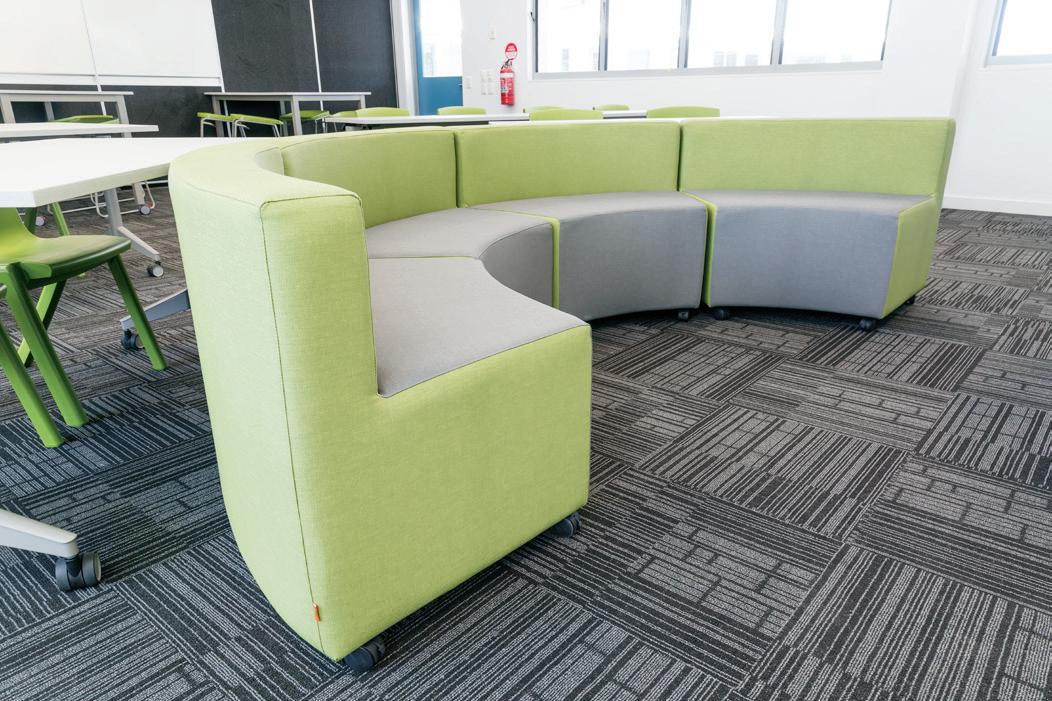
without compromising on space. Pulling apart modular seating settings can also create single seating that helps with individual learning.
“Modular furniture paired with tables that have castors can be easily moved around the room to create an environment for either collaboration or individual learning.
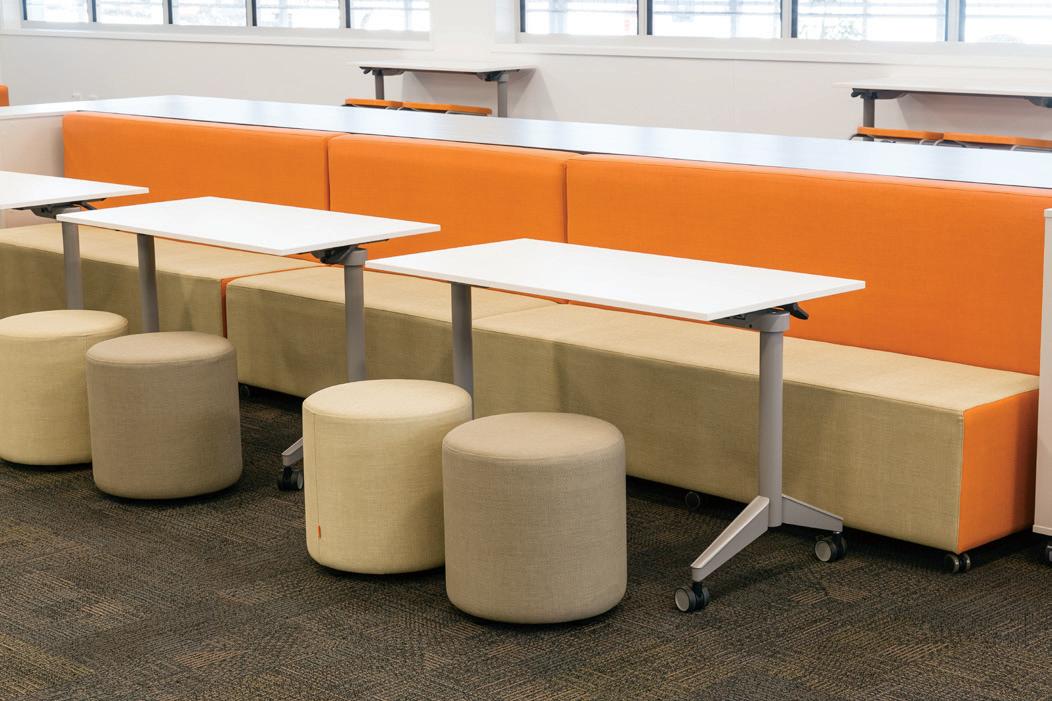
“Schools are choosing bright coloured furniture or patterned fabrics to bring fun and engagement into the learning environment. They are also going for vinyl finishes in vibrant colours as they are

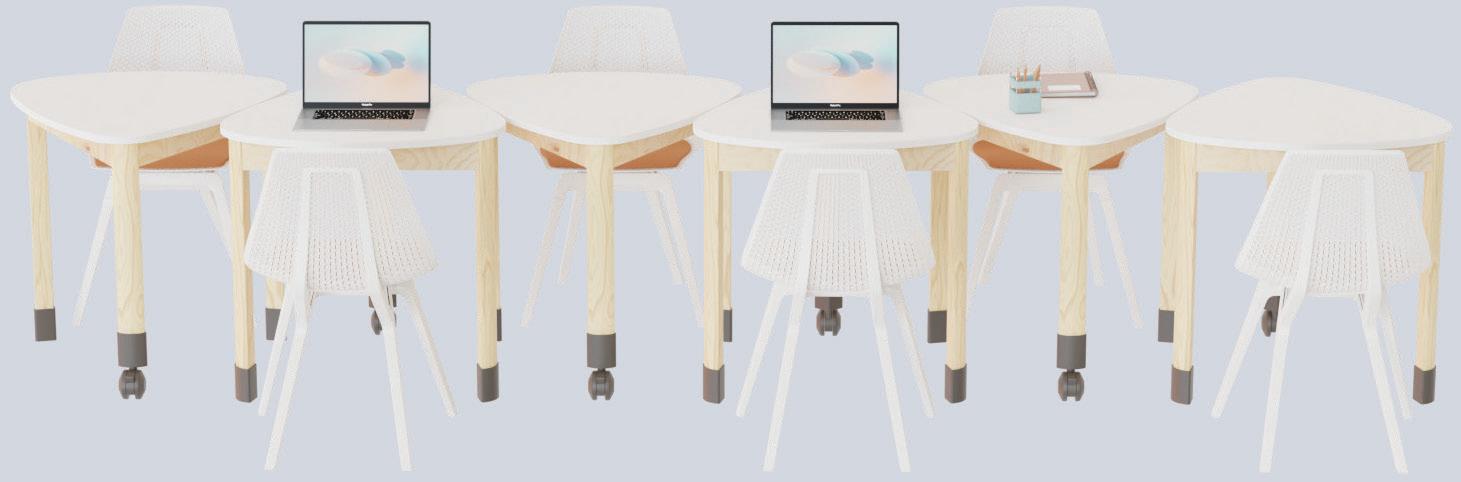
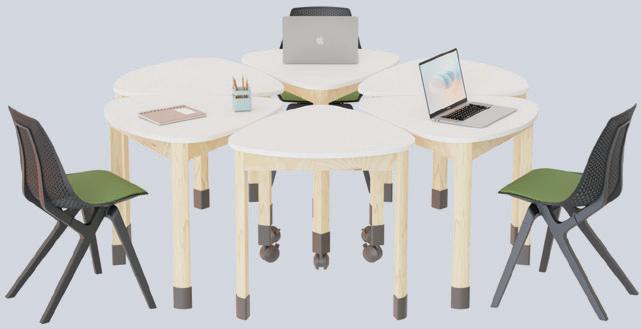
easy to clean. Seating that is light and easily moved is also often selected by schools to allow for multiple classroom and library layouts whilst still using the same furniture. “Tables that are different shapes and fit together for group learning, or can breakout on their own are popular among both junior and senior levels. We always recommend planning what happens in the space before selecting the furniture products that are right for you.”
Director of Lundia, Robert Stone, said different furniture is required for the library to fulfil
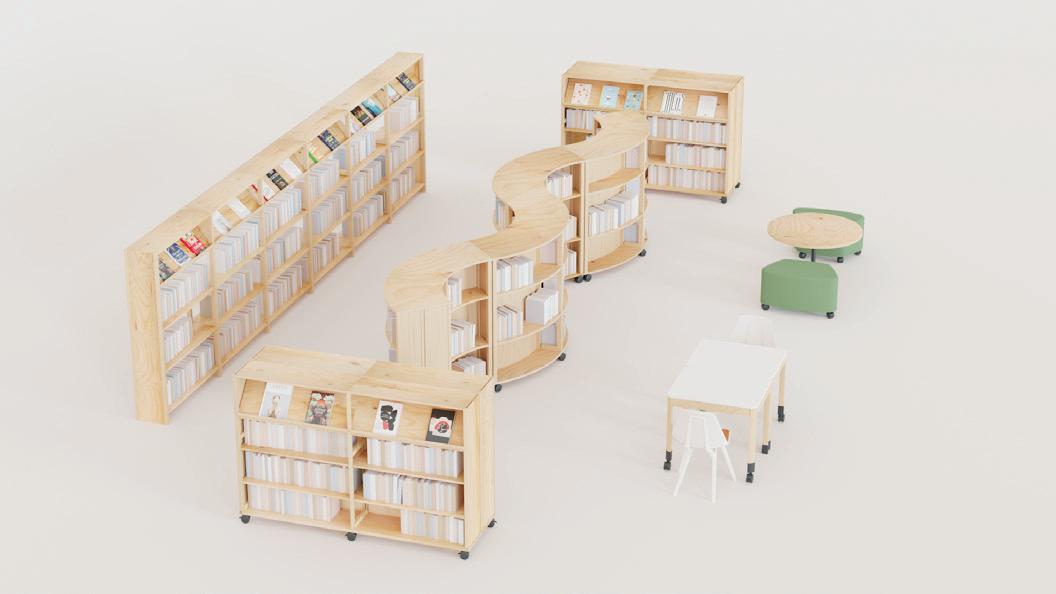
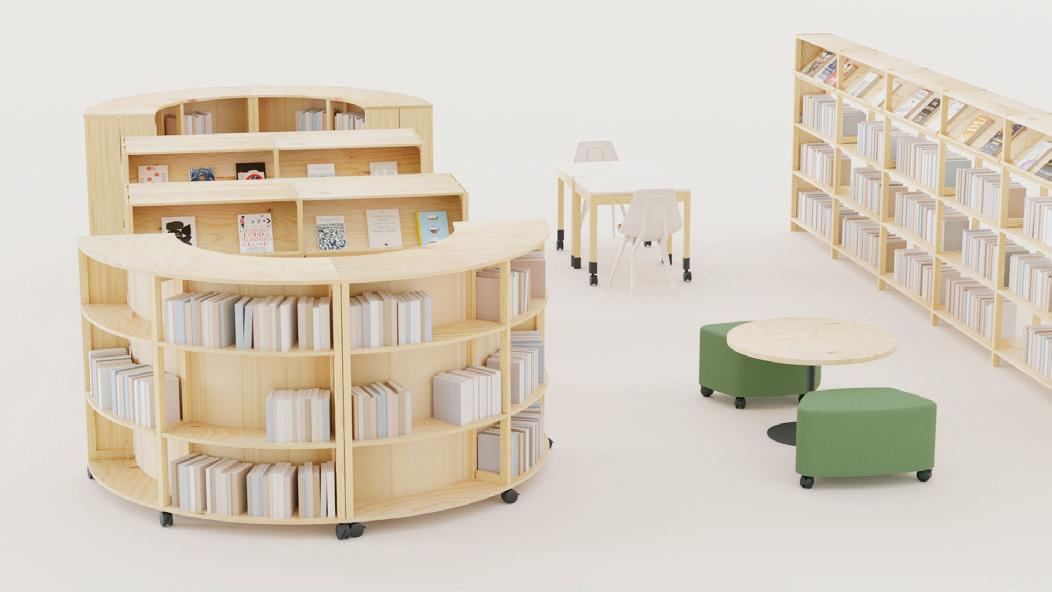
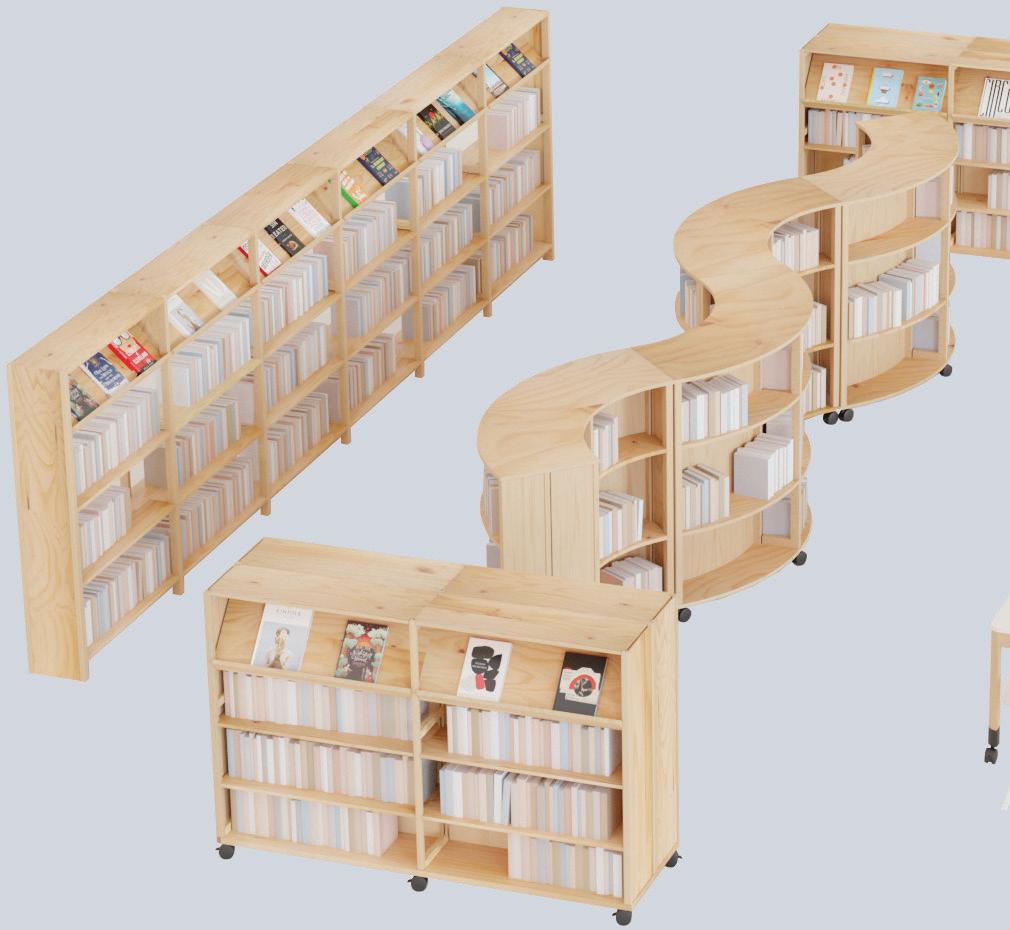
its varying functions. “IT Centres require access to software and learning for all age groups, through individual clustered study areas or continuous bench or table surfaces. Private study and a quiet place to read can be created using curved shelving. This acts as pathway guidance and separates areas, providing solitude with a place to sit. Reception or Help Desk spaces require support desk designs that complement the library composition, and storage to keep things organised with a security and privacy screen if necessary.
“Introduce furniture made from natural materials like pine and use sustainable fabrics. Modular wooden furniture stays in the circular economy and can be easily reconfigured, relocated, or repurposed. It is less likely to end up in landfill unlike fast furniture items.
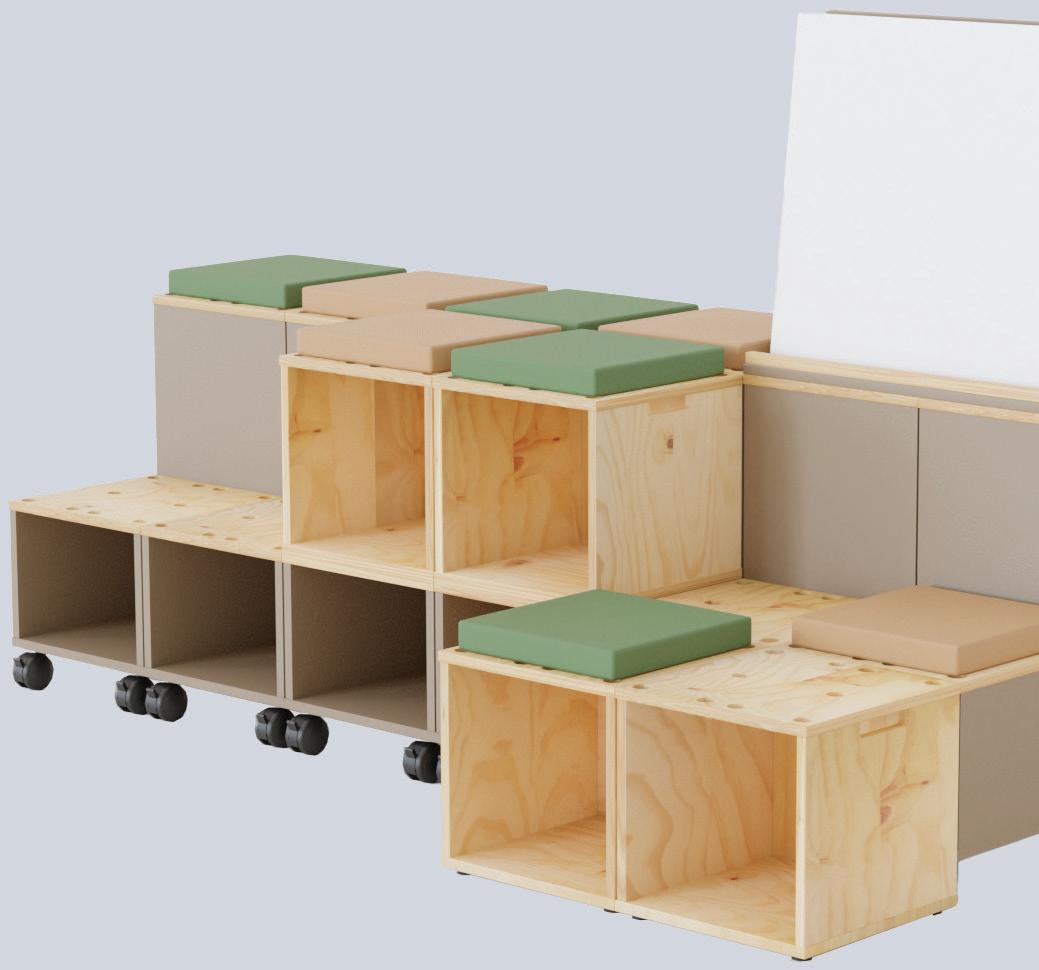
“Fixed tiered seating should be considered for assembly style classes complete with comfy cushion pads. Stackable cube seating with cushions can be easily reconfigured to achieve the same result as tiered seating. It can then be deconstructed and used as bag storage or individual seating.”
18 Term 2, 2023 | schoolnews.co.nz ADMINISTRATION
Images courtesy of Sebel Furniture
Images courtesy of Lundia
The modern school library is home to more than just books.
You thought we just did shelving...
but we do so much more
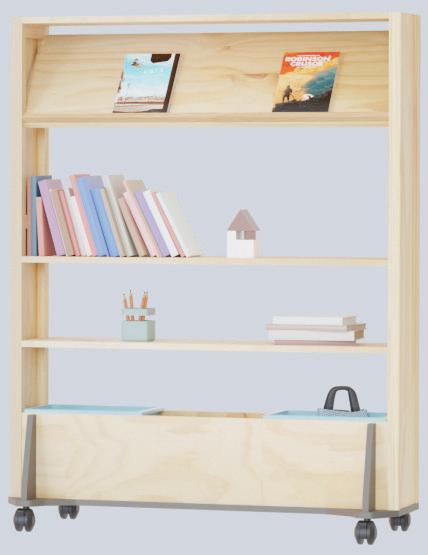
Lundia’s NEW Learning range has been several years in design development. The range is modular and flexible allowing multiple classroom solutions that assist teachers to facilitate all types of learning from Makers Spaces and Mobile TV, Whiteboard and Acoustic Walls to Softscapes and stackable or staged seating.


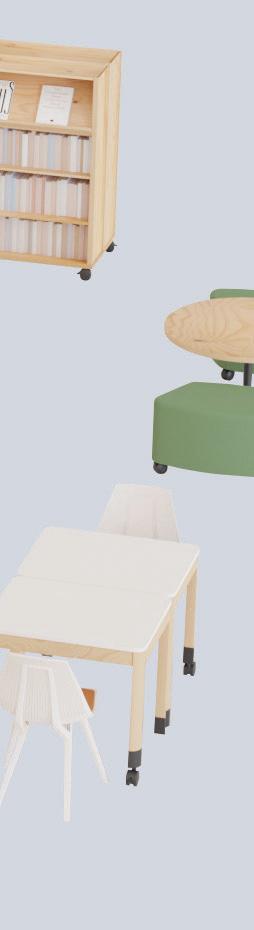
Our fixed and loose furniture also complements our Natural FSC certified Pine Mobile and Classic Shelving. Inspired by Biophilic Design principles with a new pallet of colours taken from nature we are sure this will bring a fresh approach to furnishing the learning environments throughout Aotearoa.


lundia.co.nz

wendy.c@lundia.co.nz
027 700 5936

Mr Stone said the latest colours are inspired by nature with a more restrained pallet. “Schools are choosing less of the jumping castle and jelly bean and more of the sea, earth, air, and colours occurring in nature.
“Comfortable and durable fabrics that don’t rub, stain or tear are suitable for the education environment. Bare legs need fabric that does not itch legs for a comfortable reading experience.”

Furnware Product Manager Christine Shing said libraries are transforming as education evolves. “Modern libraries

are places of experience and discovery with centrally located resources and easy technological access. The careful combination of various design elements brings a modern library vision to life.

“Some key aspects are colour, light, furniture, noise levels and connectivity. Soft furnishing, for instance, brings colour and comfort to the library and helps to soften noise. In a lively library, acoustics become very important – ceilings, walls, floors, and furniture all have a role to play in dampening sound.



“Choosing furniture of differing heights, innovative shelving solutions and combining hard surfaces with soft materials will help create zones that naturally attract students to engage in specific activities. For digital discovery, ensure easy online access throughout the library.
“Great libraries make everyone feel welcome. Mobile furniture that is flexible and agile accommodates multiple activities and supports students wherever they like to learn.
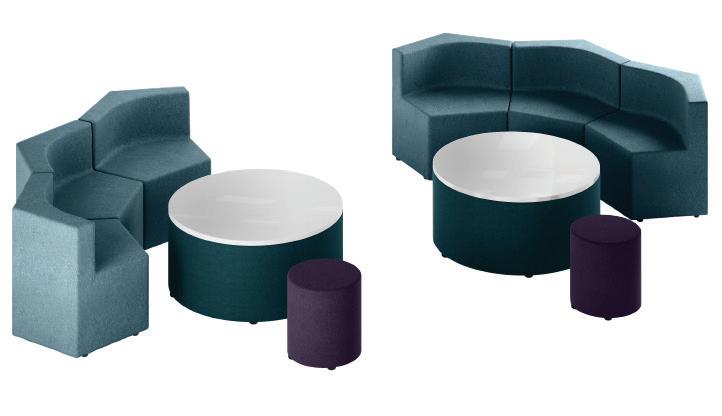
“Soft furniture, floor cushion pads and study nooks are perfect for


creating focus or social zones. Tables with whiteboard surfaces encourage collaborative learning, and Lego tables with built-in storage keep everything tidy.
“For flexible seating, there is a trend towards offering various seating options and heights, from cushion-type floor seating to sitting-height student chairs, to modular couches and ottomans, through to high stools. This creates a dynamic environment providing options for all learning activities and giving students a greater choice of where and how they best like learning.”
20 Term 2, 2023 | schoolnews.co.nz ADMINISTRATION
Image courtesy of Furnware
Image courtesy of Adlux
Image courtesy of
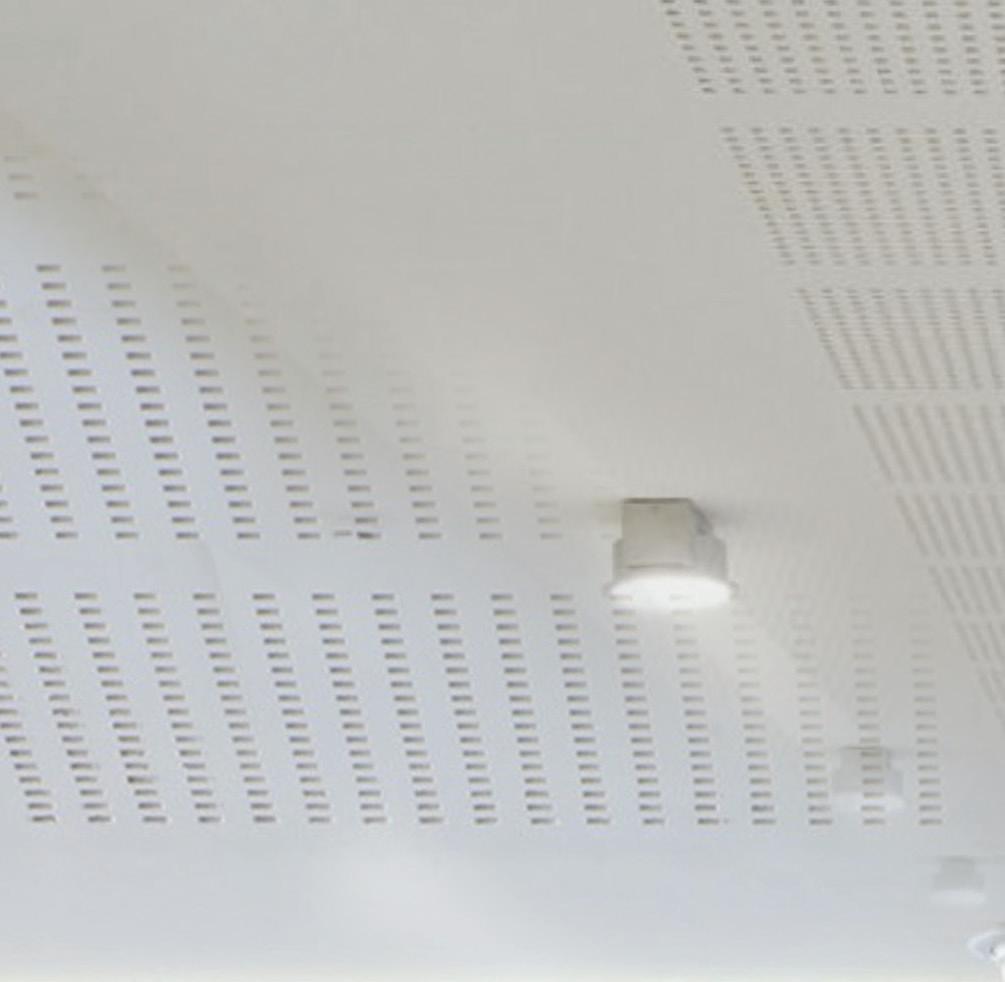
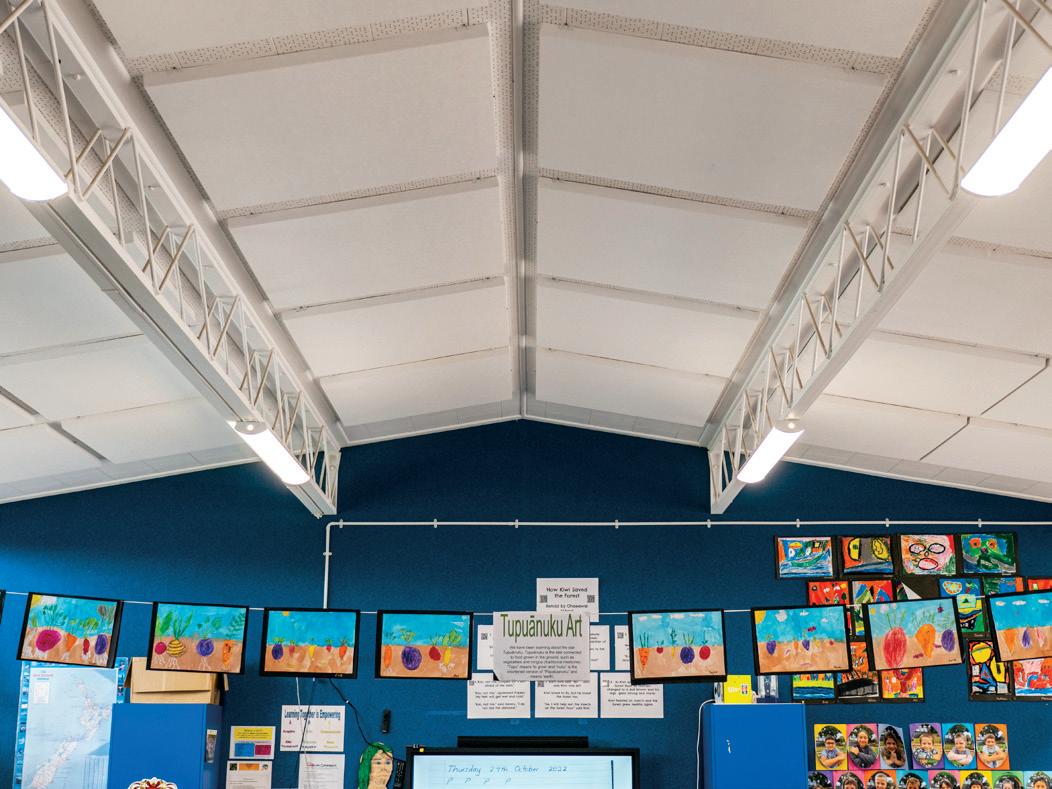
Asona technician Job Keen has observed changes in library design. “Since the introduction of the DQLS 3.0 standard back in 2020, good acoustic design in learning spaces including libraries has gone through a fundamental shift.
“With mandatory acoustic performance criteria now in place for new and refurbished spaces we have seen acoustic engineers be more engaged in new builds and a greater use of 50 mm thick broad band

Need help creating your ideal library?
sound absorbing ceiling and wall panels. The thicker panels are ideal to balance the room acoustics. In the past, thinner 10 to 15 mm direct fix acoustic panels were used. In most cases these do not meet the new room reverberation time limits.
“Schools can now easily upgrade library spaces to meet the DQLS standard. Simply direct fix 50 mm thick acoustic panels to 40 to 70 percent of the existing between lights and services.”
Whether your plans are for a purpose-built library, a classroom conversion, or integration into a larger innovative learning environment, we can help you:
• find inspiration, and create a vision for your school library
• involve the school community as you explore possibilities for your library
• use our planning tools, resources and guidance including information about furniture, fittings, and library technology. Developing your library environment and library services go hand in hand. To find out more about how we can help you create a library space and services that support teaching and learning, reading for pleasure and wellbeing, get in touch!
For more information please call 0800 LIBLINE (0800 542 5463) or email schoollibraryadvice@dia.govt.nz
Term 2, 2023 | schoolnews.co.nz 21 ADMINISTRATION LEARN MORE Cool, colourful and comfy Create the library environment you want with our Big Softies range Call us on 09 523 4092 Email us at nzsales@sebelfurniture.com Check out our full range at sebelfurniture.com Se
TM The National Library’s team of Capability Facilitators can help you create an exciting and engaging library space that your school community will love. Our service is free, and available nationwide.
be l
Asona
Extending your library beyond the books
 By Carole Gardiner, BA (Hons), MLIS, Accessit Library
Having made the step from fulltime librarian to working with Library software, it’s been amazing to see how different librarians work. So many of our colleagues across the country are firmly establishing the library as a cornerstone of their school’s learning journey.
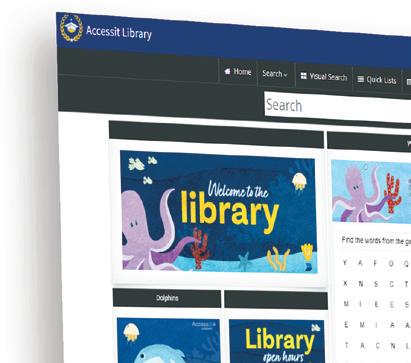
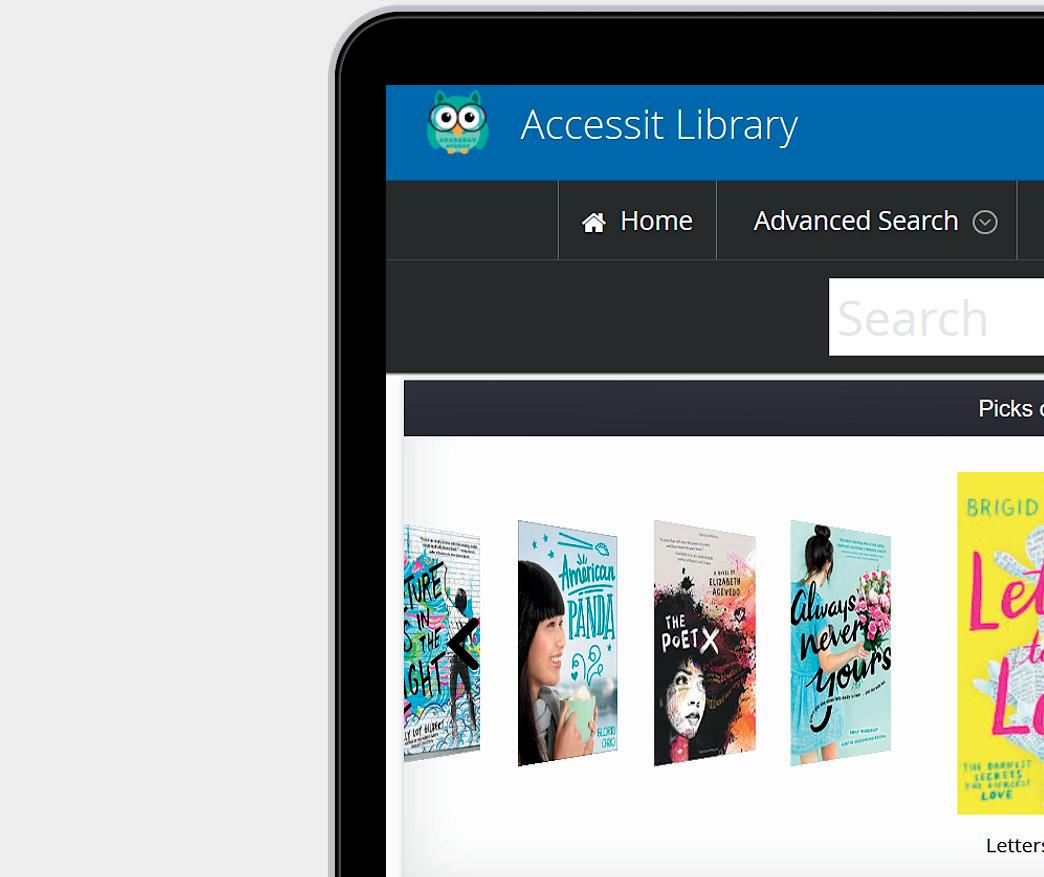
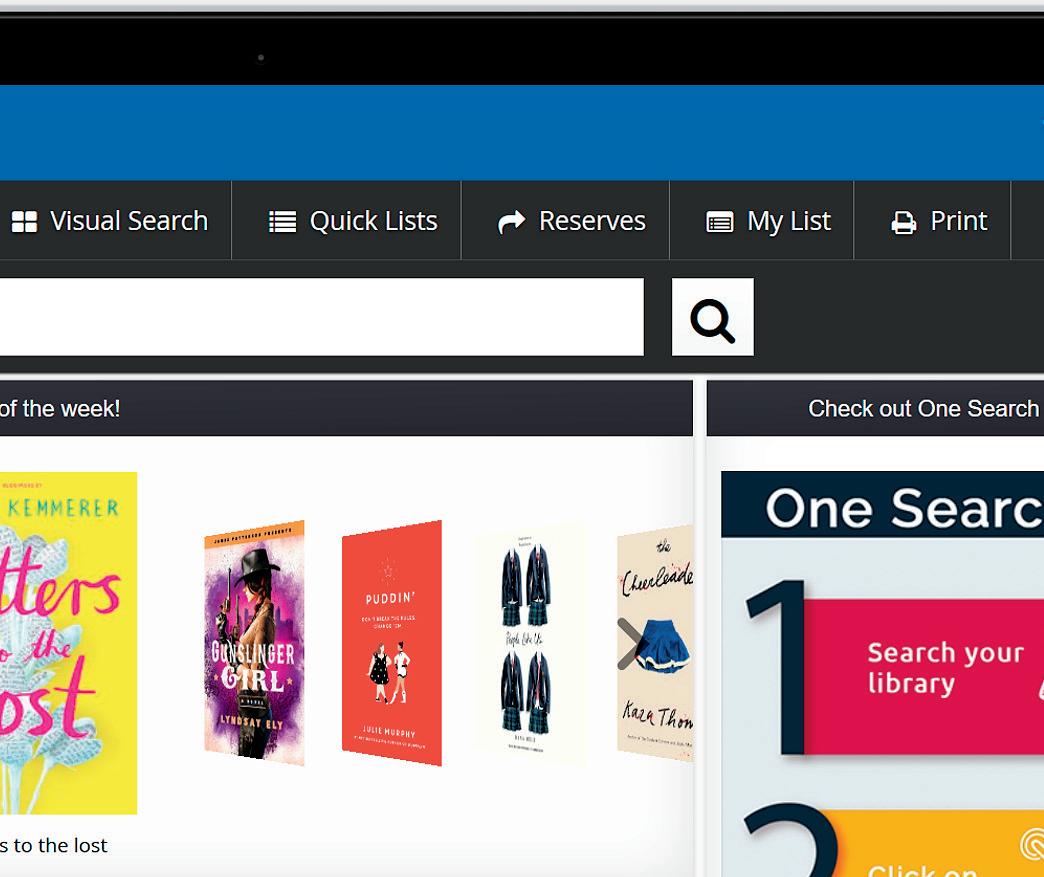
In this article, I want to inspire you with some of the best practices I’ve seen in action, and the features of library software that make it possible to enhance and improve literacy throughout the school, and clearly demonstrate that a library is about so much more than just books!
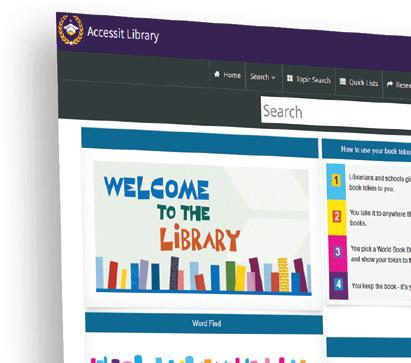
Librarians have the skills to be involved in all areas of learning throughout the school. In fact, we have the power to extend kids’ learning beyond the library walls. We do more than just issue and return books, and I’m inspired by the librarians I see every day who are taking charge and getting the library involved with a wide range of topics right across the curriculum. Take these ideas as inspiration to try something new, or see them as a positive reminder
that what you are doing is great for our tamariki and your teaching colleagues.
How can librarians use software to link with their wider school?

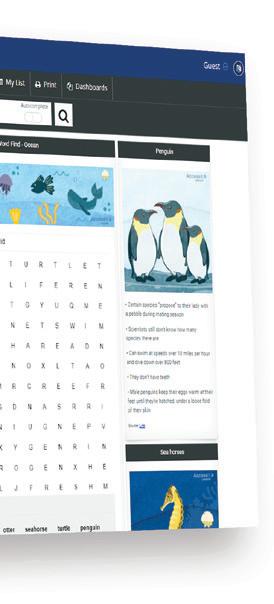
Content curation:
Creating separate dashboards for curriculum and inquiry topics can bring together library and other online resources in one easy to find place. This facilitates collaborative resource sharing between library staff and teaching colleagues.
Results:
U Gives students the chance to go beyond books and elevate their learning to the next level.
U Brings together all your physical and digital resources in one easy to use place.
U Builds your relationship with teaching colleagues through sharing of resources, generating reading lists for staff and learners, and improving awareness of library resources and services.
U Quick and easy to curate relevant resources, with the ability to copy between dashboards or even import a platforms ready-made dashboard.
Teaching Safe Searching:
With the quality of content found with a Google search now being more in question than ever, we need to teach smart and safe research skills. Search functions inside library software can help students find quality information from trusted sources, extending a search for library resources to your subscription databases
and free searchable websites.
Results:
U Helps your students find age appropriate and reliable information.
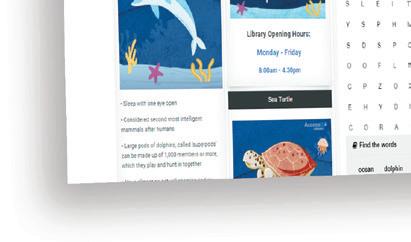
U Helps promote and make the most of your databases.
U Encourages searching in a safe way beyond the library’s physical resources.
Reporting for the Better
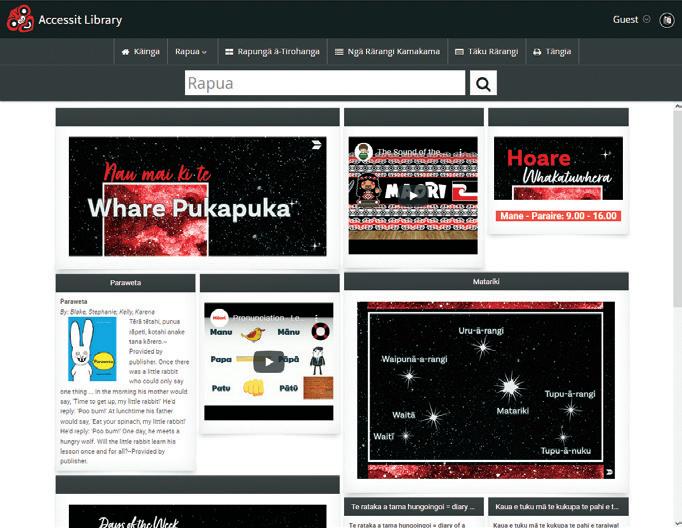
Reporting goes beyond just finding the most popular books or stocktaking, it can also be a really powerful tool to help librarians and teachers find out more about how our tamariki are using all the resources that your library provides.

Results:
U Let your colleagues see what their class is reading or interested in.
U Identify what learners are searching for, so you can quickly and easily see what is most popular, to help guide purchasing decisions and collection development.
U Advocating for the library and the role of the librarian. If you don’t tell and show your stakeholders, they won’t know how well your library is performing.
22 Term 2, 2023 | schoolnews.co.nz ADMINISTRATION
All Images courtesy of Accessit Library




































All of your resources in one easily searched Web App Design and share topic dashboards Easily inte-greats with your student management system accessitlibrary.com/great T a k e y o u r l i b r a r y f r o m g o o d t o GREAT Need a hand? Our local support team is growing and always ready to help! Call us on 0800 542 727 Terms & conditions apply.
The challenge of managing fixed asset registers

The requirement
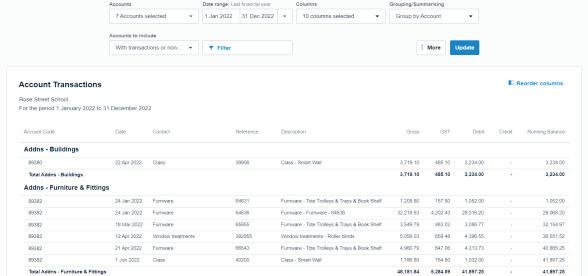
School Boards must ensure that their fi xed asset register is up to date and accurate. The fi xed asset register must reconcile to the ledger and is a significant aspect involved in the preparation of the annual accounts for audit. Stewardship of the school/ kura assets is an important responsibility, with budgeting for capital expenditure and planning for replacement of assets being a challenge for most organisations, but especially schools.
The need to capitalise items that are subject to finance leases, the recording of stock movements for the library resources, and the specific Ministry of Education (MOE) policies related to Board funded capital works,
Assistive Technology, and provision of equipment by the MOE, all add complexity. Even more of a challenge is the requirement for the asset register to be reviewed regularly and disposals to be recorded. Most schools struggle to achieve these checks or spend an immense amount of time on the process.
What is special about school fixed asset registers?


Many schools operate over various sites, and all have encountered the difficulty of tracking changes in physical location or department responsibility. Schools typically have thousands of asset items and often the asset
register has had very litt le detail to enable items to be identified easily. Principals and Business Managers wanted an efficient way for their budget holders to check fi xed assets and the register easily.
Introducing AssetAnnie
With almost 75% of NZ schools using Xero now, we decided to complete our appstack for schools by solving the fi xed asset register challenges. Our aim has always been to recommend solutions to improve efficiency.


AssetAnnie has been designed specifically for schools. The fields provided, the levels of user access, uploading and reporting options, have been well received with great feedback from users. AssetAnnie was certified by Xero in August 2022 and our assets team has now converted nearly 400 fi xed asset registers already.
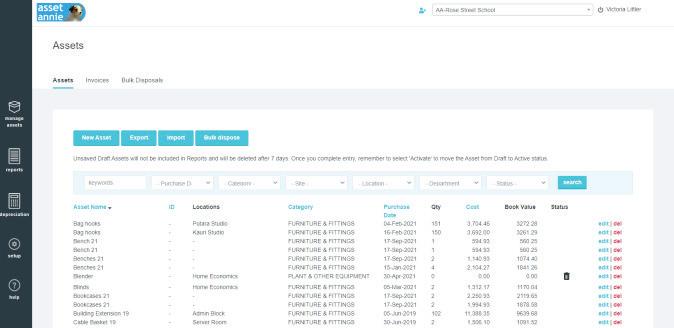


Contact us if you are keen to know more about AssetAnnie or the S&S Xero appstack. With 30 years of experience in school financial services we are happy to help.

24 Term 2, 2023 | schoolnews.co.nz ADMINISTRATION
The easy online
of Xero + A simple, straight forward user experience for end-to-end asset management! Secure data and features at an individual level using role based permissions Advisor Administrator Standard/Editor Reviewer Reporter Contact Only (eMail Reports) Easily review and update asset details (e.g. Serial #’s, Locations, Departments) Streamlined disposal feature facilitates request to approval workflow Manage Library Books asset annually based on stocktake Record leases and reduce value in line with contract/liability User defined data exports for staff review and budgeting Project estimated depreciation expense Core reporting for review and audit Designed with schools in mind AssetAnnie makes managing assets a lot easier! Unlimited asset records Robust filter and search functions Convert transaction details from selected Xero codes to auto populate new draft asset records Includes import of any files attached to the transaction Upload additional files (e.g. Image, Warranty Doc) Single, partial or bulk disposal capability Define default depreciation settings per Category and edit at individual asset level where needed Post draft disposal and depreciation journals directly to Xero Email: admin@solutionsandservices.co.nz Phone: (03) 331 6210 Web: www.solutionsandservices.co.nz
fixed asset management solution utilising the power
Southern Cross supports international students
With international students returning to Aotearoa New Zealand, Southern Cross Travel Insurance (SCTI) is working with schools to make sure they have the necessary insurance in place to start their studies.


All international students are required to have medical and travel insurance complying with the New Zealand Qualifications Authority’s (NZQA) Code of Practice for the Pastoral Care of Tertiary and International Learners.
SCTI CEO Jo McCauley says its International Student travel insurance is designed to meet those requirements, offering support to inbound students attending secondary schools and tertiary institutions here in New Zealand.



“We’re New Zealand’s most trusted travel insurer and the winner of




the ITIJ International Travel and Health Insurer of the year 2022. This means we have your back. We believe we are the best choice based on our reliability, experience, and service. Being New Zealand owned and operated means we’re also in-country and better able to support students and their caregivers, should something not go according to plan.
“Acknowledging the extra pressure international students have faced in recent years, we have expanded coverage in some important areas. For example, we have increased mental health cover from $20,000 to $30,000 per person, per year.”
The SCTI International Student travel insurance policy includes cover for:
• unlimited medical and evacuation, including cover for Covid-19
• changes to a journey
• personal accident


• personal liability



• cash and travel documents
• baggage and personal items
Students are also covered if they return to their home country for a visit of up to 90 days while still studying in New Zealand. SCTI also offers cover for travel that relates to the student’s course anywhere in the world.
Parents and guardians can also take out their own International Student policy if they are accompanying an international
student with a student visa and hold a guardian visa themselves, while other friends and extended family wanting to visit a student while they are in Aotearoa can access SCTI’s Visiting New Zealand policy. McCauley says, “We’re about being ‘with you’ as you travel, regardless of where you are in the world and it’s our privilege to be able to support students, their families and their friends as they soak up everything Aotearoa New Zealand has to offer.”
Term 2, 2023 | schoolnews.co.nz 25 ADMINISTRATION
Find out more about our International Student travel insurance or how to join us. Call Jay Alleje, National Sales Manager on 027 274 9529 or email jay.alleje@scti.co.nz. Find out more about the policy visit www.internationalstudent.co.nz or email agent@scti.co.nz to request a brochure.
Empowering educators with engaging PLD
By Naomii Seah, Industry Reporter
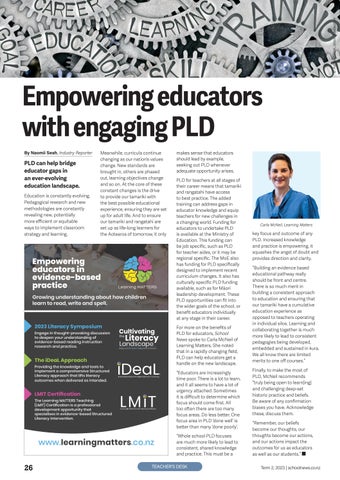
PLD can help bridge educator gaps in an ever-evolving education landscape.
Education is constantly evolving. Pedagogical research and new methodologies are constantly revealing new, potentially more efficient or equitable ways to implement classroom strategy and learning.
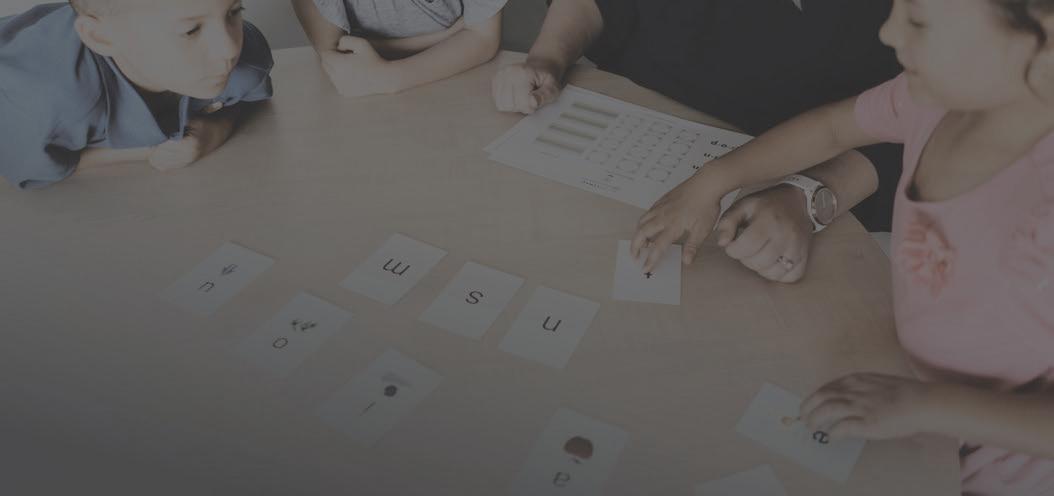
Meanwhile, curricula continue changing as our nation’s values change. New standards are brought in, others are phased out, learning objectives change and so on. At the core of these constant changes is the drive to provide our tamariki with the best possible educational experience, ensuring they are set up for adult life. And to ensure our tamariki and rangatahi are set up as life-long learners for the Aotearoa of tomorrow, it only
makes sense that educators should lead by example, seeking out PLD whenever adequate opportunity arises.
PLD for teachers at all stages of their career means that tamariki and rangatahi have access to best practice. The added training can address gaps in educator knowledge and equip teachers for new challenges in a changing world. Funding for educators to undertake PLD is available at the Ministry of Education. This funding can be job specific, such as PLD for teacher aides, or it may be regional specific. The MoE also has funding for PLD specifically designed to implement recent curriculum changes. It also has culturally specific PLD funding available, such as for Māori leadership development. These PLD opportunities can fit into the wider goals of the school, or benefit educators individually at any stage in their career.
For more on the benefits of PLD for educators, School News spoke to Carla McNeil of Learning Matters. She noted that in a rapidly changing field, PLD can help educators get a handle on the new landscape.


“Educators are increasingly time poor. There is a lot to learn, and it all seems to have a lot of urgency attached. Sometimes it is difficult to determine which focus should come first. All too often there are too many focus areas. Do less better. One focus area in PLD ‘done well’ is better than many ‘done poorly’.
“Whole school PLD focuses are much more likely to lead to consistent, shared knowledge and practice. This must be a
key focus and outcome of any PLD. Increased knowledge and practice is empowering, it squashes the angst of doubt and provides direction and clarity.
“Building an evidence based educational pathway really should be front and centre. There is so much merit in building a consistent approach to education and ensuring that our tamariki have a cumulative education experience as opposed to teachers operating in individual silos. Learning and collaborating together is much more likely to lead to consistent pedagogies being developed, embedded and sustained in kura. We all know there are limited merits to one off courses.”
Finally, to make the most of PLD, McNeil recommends “truly being open to learn[ing] and challenging deep-set historic practice and beliefs. Be aware of any confirmation biases you have. Acknowledge these, discuss them.
“Remember, our beliefs become our thoughts, our thoughts become our actions, and our actions impact the outcomes for us as educators as well as our students.”
26 Term 2, 2023 | schoolnews.co.nz TEACHER’S DESK Empowering educators in evidence-based practice Growing understanding about how children learn to read, write and spell. 2023 Literacy Symposium Engage in thought-provoking discussion to deepen your understanding of evidence-based reading instruction research and practice. The iDeaL Approach Providing the knowledge and tools to implement a comprehensive Structured Literacy approach that lifts literacy outcomes when delivered as intended. The Learning MATTERS Teaching development opportunity that specialises in evidence-based Structured Literacy intervention. www. .co.nz Learning MATTERS Intervention Teaching Certification Cultivating the LiteracyLandscape Powered by Bridging research to practice in reading instruction and support. CHCH 28 & 30 AUGUST 2023 AKLD Cultivating the LiteracyLandscape Powered by Bridging research to practice in reading instruction and support. CHCH 28 & 30 AUGUST 2023 AKLD
© Adobe Stock, stock.adobe.com
Carla McNeil, Learning Matters
Life Education launches Digital Wellbeing PD to support teachers
Schools are facing an increase in negative behaviours online from bullying to porn to general distraction from social media platforms. While digital technology can enhance and simplify our lives, it also has the potential to overwhelm, distract and create harm.
Life Education has launched Digital Wellbeing Professional Development for teachers and educators as part of its Nurturing Healthy Minds workshop series. The workshops will be hosted by experienced facilitator Cat Levine with input from Digital Wellbeing experts Anjie Webster (Generation Online) and Neysa Koizumi (Digital Waitaha).
Life Education Chief Executive John O’Connell acknowledges that digital wellbeing is becoming a bigger issue for teachers and principals. Statistics from the organisation’s Research NZ survey in February 2023 when asked what the pressing issues for children the response from teachers was 47% concerned about students being distracted by personal devices, while 63% noted that online bullying was a concern.
“Many schools are dealing with negative online behaviours and classroom distractions from digital devices. We regularly heard from schools of the impact of online bullying and social media platforms on students during the school day,” says O’Connell.

“We see students having negative interactions with other students online outside the classroom, but that’s then coming inside the classroom and impacting students’ wellbeing and sense of security within the classroom, especially if they are surrounded by students that are bullying them online,” says Neysa Koizumi, Lead Facilitator at Digital Waitaha.
The Nurturing Healthy Minds workshops are designed to explore digital wellbeing from a personal and professional perspective and learn how to give students
the confidence and skills to manage themselves online.
They will explore how young people are engaging online and the impact on their physical, emotional, and mental wellbeing. Teachers will come away with practical strategies and resources to understanding students’ engagement online, and the opportunities, and challenges they face.
Sessions will also focus on how teachers can play a positive and crucial role in supporting students to become resilient, thoughtful, resourceful, and empowered as digital citizens.
“We want to encourage teachers to consider ways that might work for them to embed positive learning opportunities around digital wellbeing, safety, and citizenship into what they do already in the classroom,” says Digital Wellbeing expert Anjie Webster from Generation Online.

Many young people are still figuring out the world around
them, and, and where and how they fit in. While their worlds move seamlessly across online and offline spaces, it’s a complex environment online as many of the platforms and content are not designed with the safety and wellbeing of young people at the fore.
Anjie notes that it’s important to help young people develop digital skills, knowledge, attitudes, and values that support them to safely participate and confidently navigate online environments and contexts is critical when their social, emotional, and cognitive capabilities are still developing. There is an increasing worry about online bullying, which is essentially about behaviour. However, there are distinctions when this is occurring online that can make it difficult and damaging.
“Having clear policies and procedures that include ‘online’ contexts, and ensuring all teachers are confident in the steps to take when first learning of an incident is important. In the same way we do ‘First Aid’ courses, having a clear map of what to do, who to talk to, how to evaluate the seriousness of an incident, what pastoral supports are needed. This enables schools and leaders to confidently move through stages to resolving actual incidents,” says Anjie. Webster further explains “We teach swimming lessons, how to cross the road safely etc, and
now we need to have steps that give young people agency in managing complexities online.”
For the past three years, young people have found solace and community in online spaces as the world around them has been in turmoil. These platforms and virtual experiences have been both helpful and harmful and many young people recognise how much they depend on them for their wellbeing over this time, but they also acknowledge how much they’re reliant on these spaces to keep up this support.
“We can’t just ‘expect’ young people to just ‘switch off ’ and ‘pay attention’. We need to help them learn about what’s happening to their brain and emotions, and learning about the online environment and how it all works are ways that help to build positive strategies.
“We must involve our young people in ways to better manage their learning time to get the best out of each lesson or day,” says Webster.
Life Education’s Nurturing Healthy Minds Digital Wellbeing workshops will enable teachers and educators to navigate the balance of the real world and digital world in the classroom, and put in place practical strategies and resources to help guide and support students’ engagement online. To register, go to lifeeducation.org.nz/teacher_pd
Term 2, 2023 | schoolnews.co.nz 27 TEACHER’S DESK
Anjie Webster
Solving the maths problem
By Naomii Seah , Industry Reporter
There is mounting concern over the state of numeracy skills among ākonga in New Zealand – fortunately, there are a myriad of effective math programmes, resources and PLD available to help kaiako.
New Zealand is facing an “ongoing and long-term declining achievement in Mathemathics”.1
Since the 1980s, despite continued investment in the area, our average maths achievement has continued to trend downward. So, what gives? Why does New Zealand’s maths performance consistently lag other countries in the OECD, and how can we reverse this trend?
Research shows that maths specialisation might be required to have effective maths teaching. Anecdotally, evidence suggests teachers struggle with teaching maths confidently in New Zealand. The data shows that 79 percent of Year 5 students are taught by non-specialised teachers. Only 59 percent of these had any maths training in the past two years.2
Reports have recommended professional development programmes for teachers to improve national numeracy standards, by creating more teachers with specialist mathematics knowledge.
In their paper “The big subtract: Can we improve our maths performance?” Wills and Hogan advocate for specialised maths teachers in primary schools. They believe primary school “is a time when some degree of specialisation is likely to be critical to prevent a lack of confidence being passed on from teacher to student to ensure a wider range of skills are developed.”
Though increasing available specialist teachers is a more long-term, structural goal for our education system, there are a number of agencies that provide specialised PLD for teachers and kaiako looking to improve their maths teaching. These programmes are supported by the Ministry of Education, and can help improve outcomes at the primary level.
Apart from PLD, there are a few known strategies that teachers can employ to further learning in any subject, and particularly maths. Effective teachers ensure that students’ current knowledge and interests are at the centre of learning, helping students retain confidence and build resilience in any areas they may struggle with. Student
engagement with mathematics principles can also be improved by connecting the skills being learnt to real-world applications. Other effective strategies for improving maths learning include using and normalising mathematical language; effectively implementing group learning to support individual confidence; effective mathematics tasks (rather than repetitive and menial tasks); supporting connection-making and problem-solving; and using everyday contexts in teaching. These strategies and more have been extensively researched. The Ministry of Education’s website, Te Kete Ipurangi, NZ Maths also has suggested strategies for improving student engagement with the subject. It notes the first step is to ensure ākonga feel comfortable speaking in class; one suggested method is splitting students into subgroups. Revoicing is recommended, to clarify students’ responses –reiterating what a student has said to bolster confidence and engage the other students. Using partner talk and extending response wait times are also suggested methods.
NZ Maths also has resources for tracking ākonga progress to best plan lessons for individual and group maths learning and skills development.
There are several externally provided maths programmes for students. These providers range from targeted interventions for selected ākonga, to supporting high achievers to reach their full potential. Programmes may also work together with teachers to identify learning needs and develop an effective maths pedagogy within the classroom. To learn more about how maths teaching could be supported in your school or kura, School News spoke to some providers below, who are on a mission to improve maths learning across the motu. Janine Trembath, from the IT Education Company NZ said, “Improving mindsets around math is a key starting place for greater engagement in the subject.”
“Students need to be encouraged that they can do math, that it is useful, and to embrace mistakes. Teaching students to embrace mistakes encourages them on a journey of math discovery and enjoyment. Scientific research has shown that synapses in our brains grow when we make mistakes, and that no growth occurs for right answers.”
Mrs Trembath believes that developing a sound understanding of number during primary years would help to
www.mathsnoproblem.com

28 Term 2, 2023 | schoolnews.co.nz TEACHING RESOURCES Maths No Prob em! Maths No Prob em! Full NZ Curriculum Independent Practice Teacher Guides Professional Development A B Built in Assessment Extension Resources
Since the 1980s, average maths achievement has trended downward.
improve overall student math skills. “Number is the basis of all mathematics. Students need to be taught and allowed to experience what number relationships are, as well as the language around math.”
Adaptive online tools, Mrs Trembath said, can be useful in assisting teachers to reach the varied needs of their students. Online work should be supported by teacher contact time and wide discussion. “Math programmes should be highly visual, include multiple ways of learning, and aid students to develop a conceptual understanding of math.
“Good teaching programs will provide detailed student progress reports that make it easy for staff to identify the math concepts mastered, and any currently posing a challenge, as well as suggestions staff can use to support students over hurdles as they arise.”
Maryanne Tipler OMNZ and Sue Timperley from CaxEd NZ said that when selecting a maths programme to support students, it must reflect the objectives of the New Zealand curriculum, and meet the needs of the



students in the classroom.
“Students will truly understand the concepts being taught by engaging in practical activities and discussing their work and their reasoning. Programmes should be flexible, allowing teachers to adapt activities to meet the needs of their students. Acknowledging the different ways students learn means that a diverse range of tools should be used to cater for different learning styles.
“Student engagement is best achieved when activities and resources being utilised are ones that students and their wider community can relate to. Whanau engagement will enhance student learning and successful outcomes if they can see the relevance of maths to their future lives,” they said.
“There is a wide range of resources available to track student progress, but some are better than others. Ongoing teacher observation and monitoring of students’ work is of more value than a oneoff point in time assessment. Resources should allow for teacher-student interaction
AWARD WINNING MATHS TEXTBOOKS


WITH free ONLINE TEACHER SUPPORT
on a regular basis to achieve a broader view of student progress.
“Ongoing teacher professional development will support teachers in providing a rich learning environment.”
Alex Laurie from Maths No Problem believes one of the difficulties teachers face when teaching maths is the lack of support materials for creating a consistent and high-quality programme for a whole school.
“Often, we expect generalist primary school teachers to be involved in curriculum development, meaning we expect them to create and source their own lessons. We also expect them to decide the correct order to teach concepts in,” Ms Laurie said.
“Autonomy to create a localised maths curriculum that meets the specific needs of learners in different schools is important. In my experience, though, it is easier to change the contexts of expertly designed maths problems that are given in the correct developmental sequence in good support materials.
“Conventionally, children are









placed in different groups and given content matched to their perceived ability. From an early age, then, children can be unintentionally labelled as those who can do maths and those who can’t. These labels can become self-fulfilling prophecies and can negatively impact children’s achievement,” Ms Laurie said.
“Whole class teaching offers all pupils access to the full maths curriculum. This inclusive approach and its emphasis on promoting multiple methods of solving a single problem builds self-confidence and resilience in pupils. Whole class teaching builds the expectation that all children will achieve, and be exposed to the learning appropriate for their age.”
References:
1 Morrow, Neil, Elizabeth Rata and Tanya Evans. “A Study of the New Zealand Mathematics Curriculum”. (2021)

2 Wills, Olivia and Sarah Hogan. “The big subtract: Can we improve our maths performance?” (2021).
3 Anthony, Glenda, and Margaret Walshaw. “Characteristics of Effective Teaching of Mathematics: A View from the West”. Journal of Mathematics Education. (2009). 2(2), 147 – 164.

Curious about Caxton Educational
Give your students the best advantage to excel at maths. They use our textbooks, while you have all our free online teacher support. YOUR STUDENTS DESERVE THIS!
mel@caxed.co.nz www.caxed.co.nz
CaxEd publishes the popular NZ Curriculum Mathematics –Stages numeracy series and the award-winning NZ Curriculum Mathematics – Connecting All Strands series, which weaves all the NZ Curriculum strands into one Student Text per year (Years 3-8) establishing a solid backbone for your maths programme.







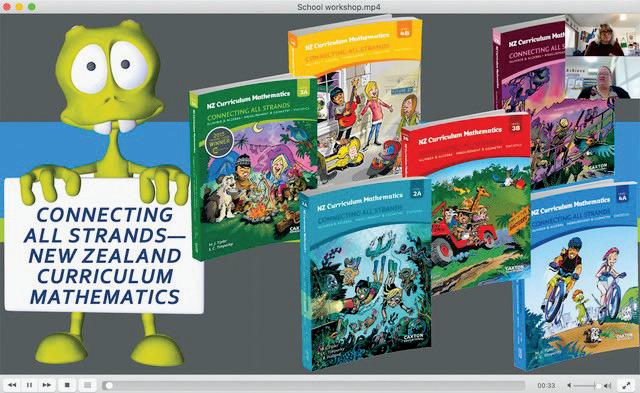
CaxEd off ers Online Teacher Support via their website to complement the Connecting All Strands texts.


Printable masters, interactive games, teaching strategies, and extra tasks for every
chapter add more excellent activities for extension or extra practice to the highquality tasks in the books.


Schools that have purchased this series can access these online resources at no cost.











The Ministry of Education’s latest study shows that textbooks outperform computer or tablet-based learning.
Email mel@caxed.co.nz or visit www.caxed.co.nz.
Term 2, 2023 | schoolnews.co.nz 29 TEACHING RESOURCES
Let students take centre stage
By Gemma Easton, Editor
Theatre, including school productions and theatre incursions, is a valuable educational tool.


Helping students to develop new skills, and explore aspects of the curriculum in different ways, the advantages of theatre are wide ranging.

Perhaps the most obvious benefit of staging a school theatre production is the extension of students in the performing arts, allowing them to share their talents in drama, music, dance and voice. Performing helps students to

build confidence in these areas, which will in turn build their confidence more broadly. Students who are not involved in the performing arts through their classroom subjects may be encouraged to try something new, and step outside their comfort zone to appear on stage in a production. This can help students discover new interests, and explore hobbies and pastimes beyond their usual activities.
Of course, a school production, goes beyond the people on stage. Students who are not performers can be involved in different aspects of the

production, including set and costume design, sound and lighting, and promotion of the production. There is also the opportunity for students to sell tickets, or assist on the night with ushering. Opportunities, then, are available for all students to become involved.
This large-scale involvement in a shared project can help students build a sense of pride in their school, helping them to feel more connected to their school, their teachers, and their classmates. This will in turn help students to feel happier at school, positively impacting all areas of their learning, as well as their social and emotional development.
This sense of connection can extend to the wider community, as parents and families help out with the production, or come and watch a performance.
A musical brings together the discrete learning areas within the creative and performing arts, blending elements from each discipline. This can allow for teacher collaboration and coteaching across subject areas. From collaboration, teachers may learn new ideas or consider different ways of approaching a subject. Co-teaching can help lighten the load for individual teachers, as the responsibility of preparing and delivering a lesson can be shared.
The performing arts can help develop a range of skills which will benefit multiple subject areas, including improved communication skills, giving and receiving feedback, working in a team and collaborating, and effective time management. The unpredictable nature of live performance helps students develop the ability to think quickly and improvise when things do not go to plan, and to stay calm in difficult situations.
Engaging an external company to present a theatre production to students is another way to incorporate theatre in learning. Productions can complement history or social science studies, bringing subject matter to life in different and interesting ways. Students may better connect with content when presented in this way, leading to improved learning outcomes.
30 Term 2, 2023 | schoolnews.co.nz TEACHING RESOURCES
© Adobe Stock, stock.adobe.com
© Adobe Stock, stock.adobe.com
Through theatre productions, students may be exposed to different cultures or philosophies, challenging them to consider things from a different point of view. This helps build their capacity to approach tasks with an open mind, considering the impacts of their actions on a global, rather than individual level.

Whether you are staging a school production or hosting a guest performance, there are important things to consider. Firstly, the intended audience will impact the choice of performance. All productions should be age appropriate and engaging for students, and the links to curriculum clearly established. For in-house productions, schools must ensure they have obtained the necessary licenses and permissions to stage the performance. The size of the space to perform, as well as the capacity to hold an audience should also be considered. If audiences are to be seated for a long time, ensure seating is comfortable, and the space is adequately cooled or heated.
Access to technology, including sound, lighting and special effects can impact your choice of performance. Some schools choose to install professional sound and lighting boards, allowing students to learn how to operate these. If performances are to be held at night, ensure there is adequate lighting of the performance area, and for audience members to take their seats.
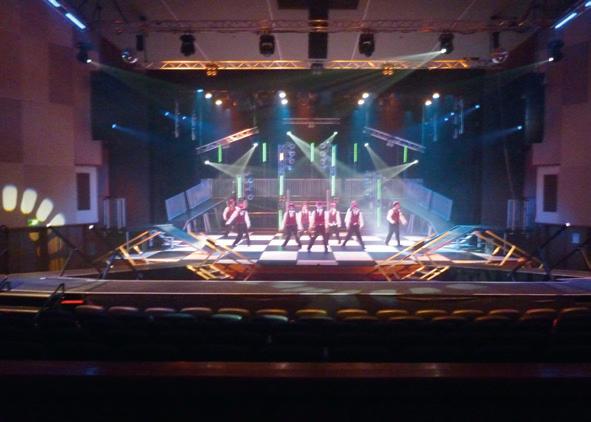
Provide external companies with a clear brief, outlining their
“In


Hires or Sales - One call can do it all!
Portable grandstands, stage sections, choir, orchestra and audience risers, kapa haka stages, drapes, steps, lecterns, ramps and ballet barres designed and manufactured by Stronglite Staging® Ltd. Top quality, safe, easy to handle and store. Guaranteed to perform every time.
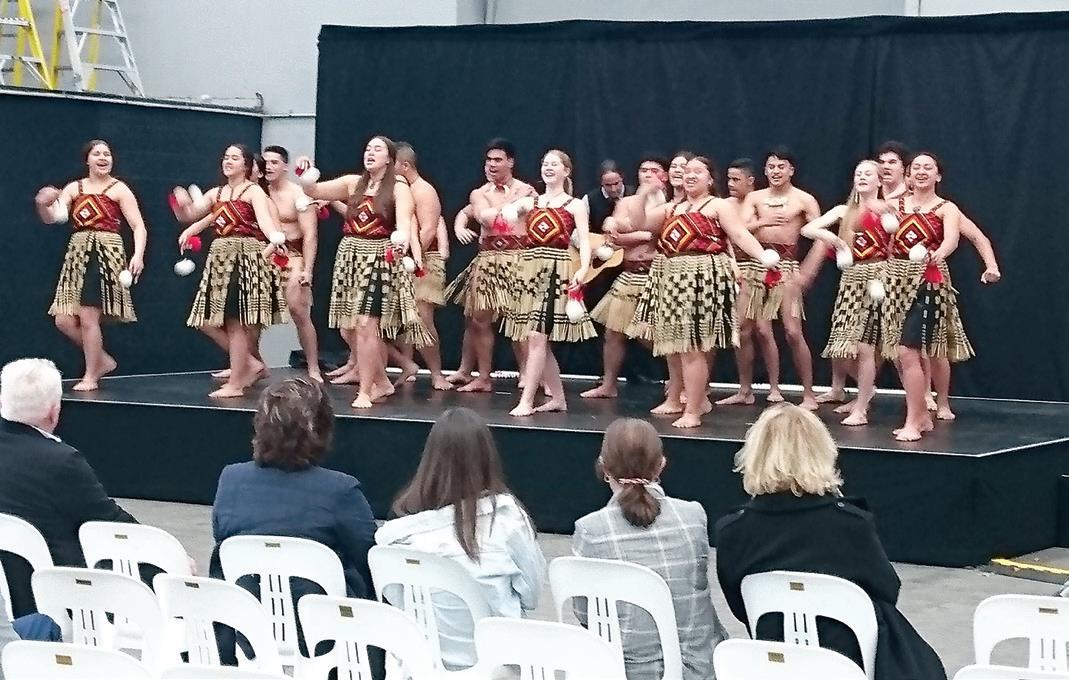
Proudly installed in many schools, universities and performance venues throughout New Zealand.
The New Zealand distributors for and products.
requirements and expectations before they arrive to perform. In some instances, a site visit ahead of the performance may be useful to ensure the space is appropriate.
When it comes to choosing a stage for your school, Lloyd Sutton, Stronglite Staging Managing Director thinks portable staging is a great option for schools. “No matter whether the school has a dedicated theatre or performance venue or uses a multipurpose venue or
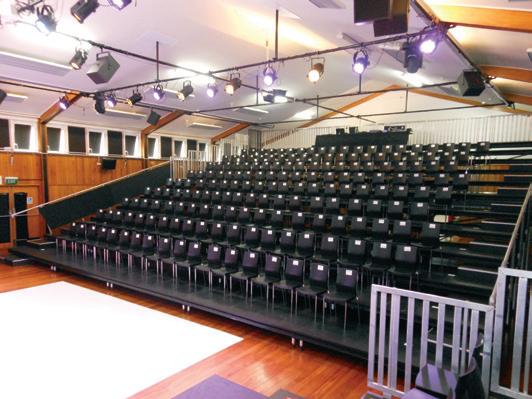
gym, portable stage sections add great versatility and allow a large variety of events to be supported.
“A permanent stage restricts the use of the stage to that one area. The size of a permanent stage is also unable to be changed, and has a fixed width, depth and height,” Mr Sutton said.



“Depending on how many sections of portable staging are used, the set up can be a large Kapa Haka/Performance Stage, a catwalk, tiered seating risers, orchestra risers or structure for show sets. Stage sections can be easily stored and transported. “Leg heights are easily changed to suit a specific use including outdoor set ups, ramps, stage extensions to permanent stages or platforms for performers. Experts should be involved if high platforms are required.”
Mr Sutton’s most important advice is to choose your portable stage solution wisely. “There are a variety of options out there but remember, the bitterness of poor quality remains long after the sweetness of low price is forgotten.”
Term 2, 2023 | schoolnews.co.nz 31 TEACHING RESOURCES www.stronglite.co.nz
the supporting role” THE STAGE IS SET! SALES 0800 78 78 99 HIRES 0800 12 12 33
© Adobe Stock, stock.adobe.com
Discover and explore your local museum
students’ understanding of specific subjects, but att itudes to learning in general.
Many museums are also accredited with the Ministry of Education’s Enriching Local Curriculum (ELC) programme. That means their specialist educators are trained to deliver educational programmes for your ākonga that align with a broad range of NZC outcomes. Many museums can also provide educational programmes focused on a variety of subject and learning areas, so educators can feel confident that they’ll find a programme tailored to your school or kura’s needs.
Of course, it’s important that museum visits, as with any other education outside the classroom (EOTC) experience, are supported by structured activities before and after the experience to consolidate learning.
By Naomii Seah , Industry Reporter
A museum visit can bring subjects to life for ākonga of all ages; read along to discover how a museum visit could enrich your curriculum.
In Aotearoa New Zealand, we’re fortunate to have many museums that display collections of artefacts and other objects on all manner of subjects. Whether the subject of interest is art, culture, history or science, there’s bound to be a museum or exhibit dedicated to the field.
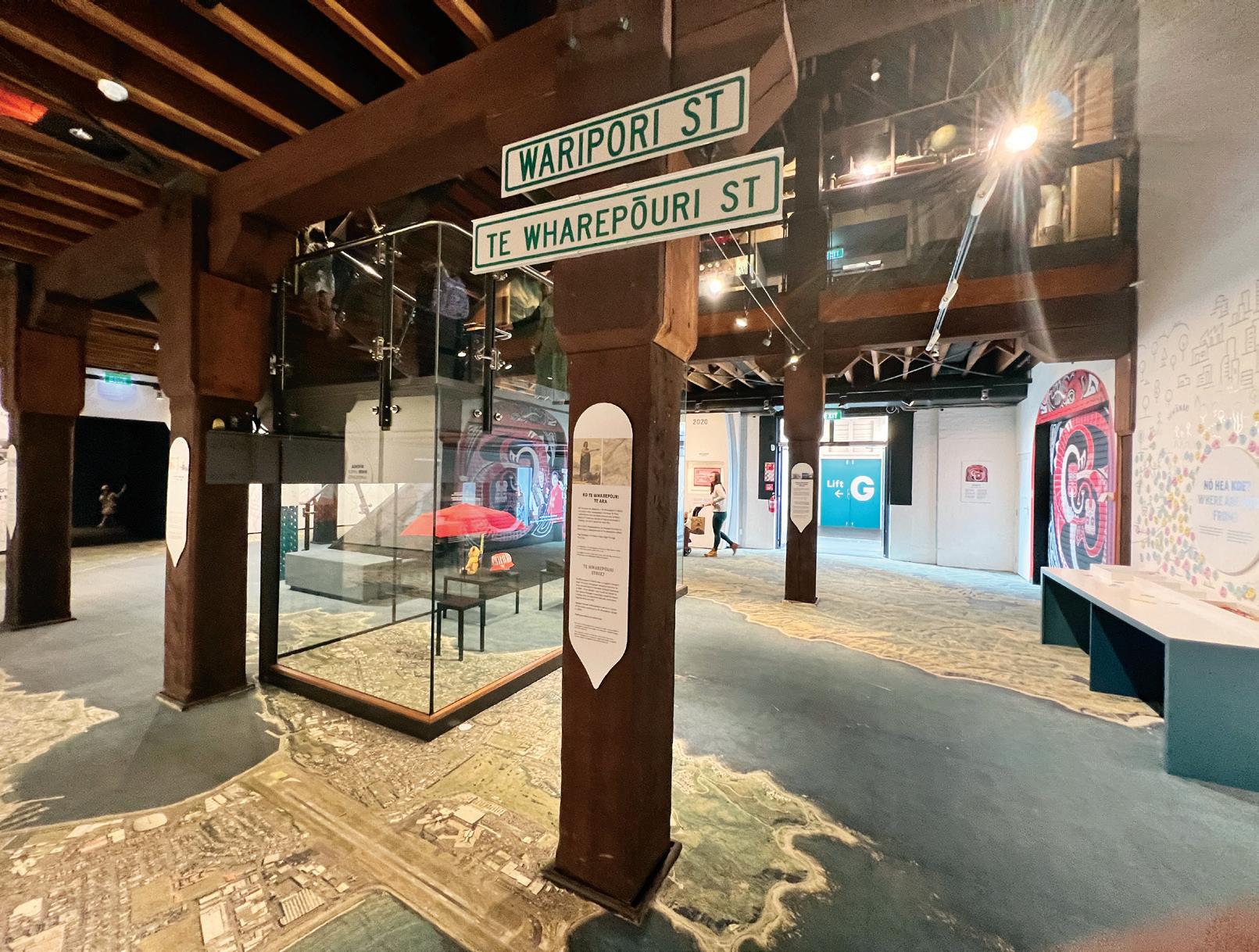
For educators, museums present a wonderful learning opportunity as they provide ākonga with close interactions with objects related to a given learning inquiry. Often, the physicality of an object, the interactivity of exhibits, or simply the delight of a school excursion can strongly engage students and further their
understanding of a subject. Museums are unique because they provide a type of tangible learning experience; ākonga can see history unfolding through material artefacts, or understand complex processes such as geological formations through models and videos. The multi-sensory experience of a museum visit provides information through many pathways and inputs, leading to a more complex articulation of understanding.
In a museum, ākonga are also given a degree of autonomy over their learning as they explore exhibits, make connections between the artefacts and their area of learning, and interact with displays. Through a museum visit, students are encouraged to take an active role in their learning as they move through the space.
In an article on museum sett ings as opportunities for sensory and aesthetic encounters in learning, David Raymond Bell of
the College of Education at the University of Otago noted that “sensory discovery in museums is fun, and may enhance learning and positive att itudes in other curriculum subjects”. Seeking museum experiences therefore not only benefi ts
Many museums have digital resources to prepare ākonga for their visit, or to synthesise the learning done post-visit. For a full list of ELC resources provided by museums, visit the Ministry of Education’s website, eotc.tki.org.nz
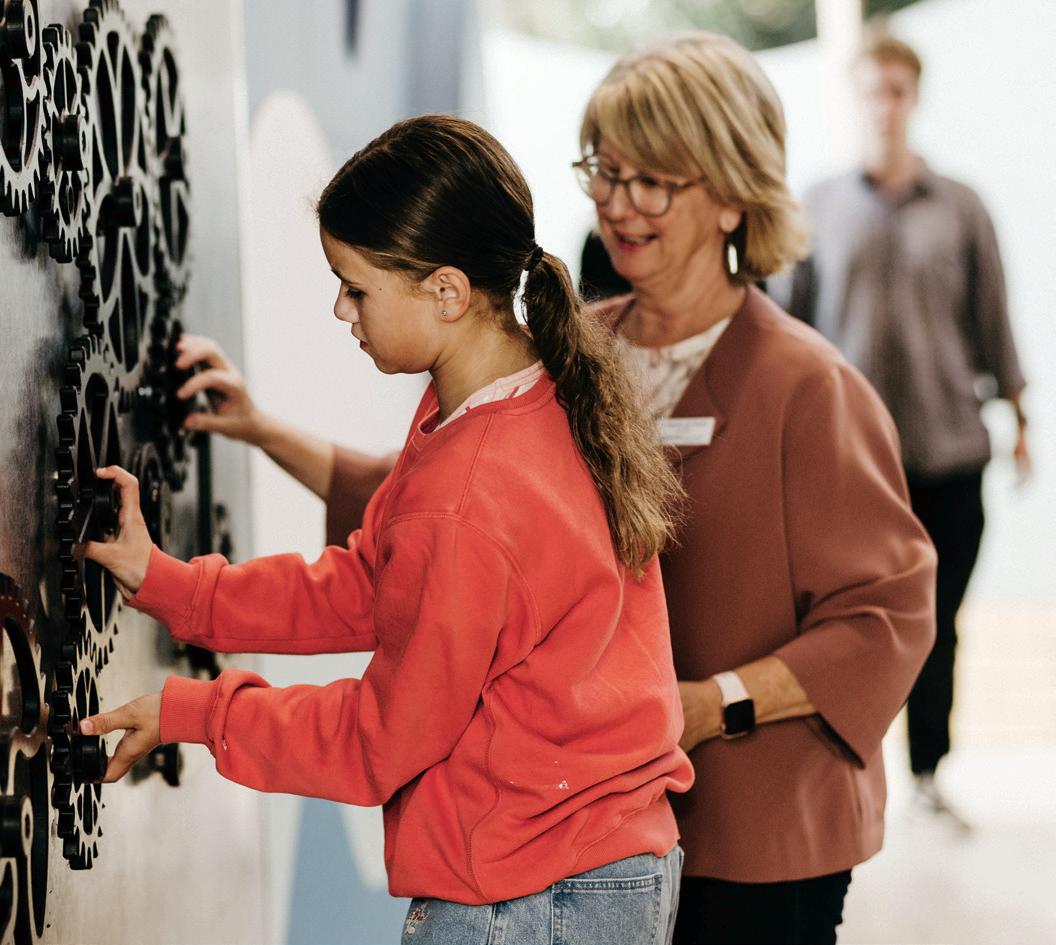
32 Term 2, 2023 | schoolnews.co.nz EOTC
Image courtesy of Te Waka Huia o Ngā Taonga Tuku Iho Wellington Museum
Images courtesy of Waikato Museum
Our much loved interactive centre for discovery has taken a major evolutionary step. The fresh new experience is called “Exscite: Home” and it’s an immersive, tactile space which showcases the way science is an integral part of our everyday lives.
Bring the curriculum to life

www.waikatomuseum.co.nz/exscite
Nau mai, haere mai
Bring your students to explore Waikato Museum’s engaging range of programmes covering visual arts, history, science, and tangata whenua. From hands-on interactives to tailored exhibition experiences, our Education team is here to take learning to the next level.
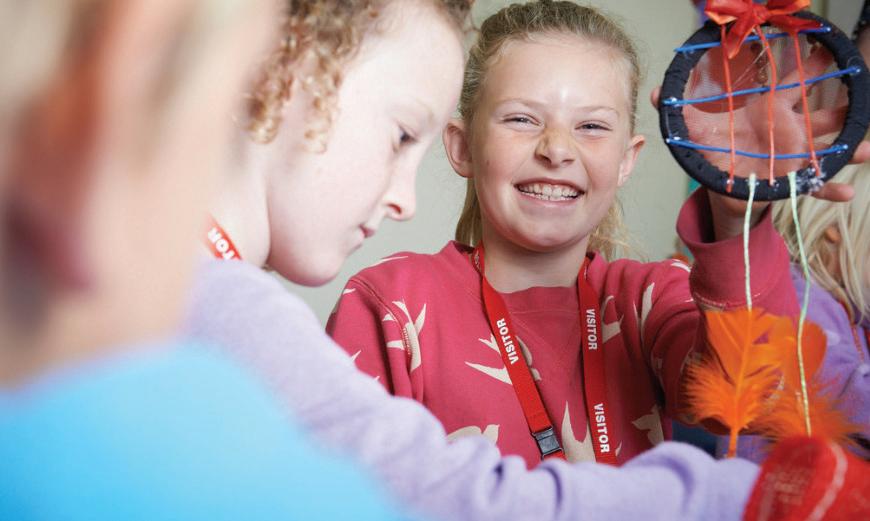
Term 2, 2023 | schoolnews.co.nz 33 www.waikatomuseum.co.nz/education
Available activities and resources to download range from arts and craft s activities, where ākonga learn about patterns, linking to geometry and maths; to video resources and online images of materials from indigenous cultures, linking to history and social sciences. There are even resources on local flora and fauna, which ākonga can use to explore the ecology of their surroundings.
Ready to plan a museum visit for your students? We asked a range of providers what they off er for school groups.

Place names are fascinating because they can describe, claim, and illustrate the histories of Aotearoa New Zealand. Te Ūpoko o Te Ika a Maui, a learning programme at Te Waka Huia o Ngā Taonga Tuku Iho Wellington Museum,
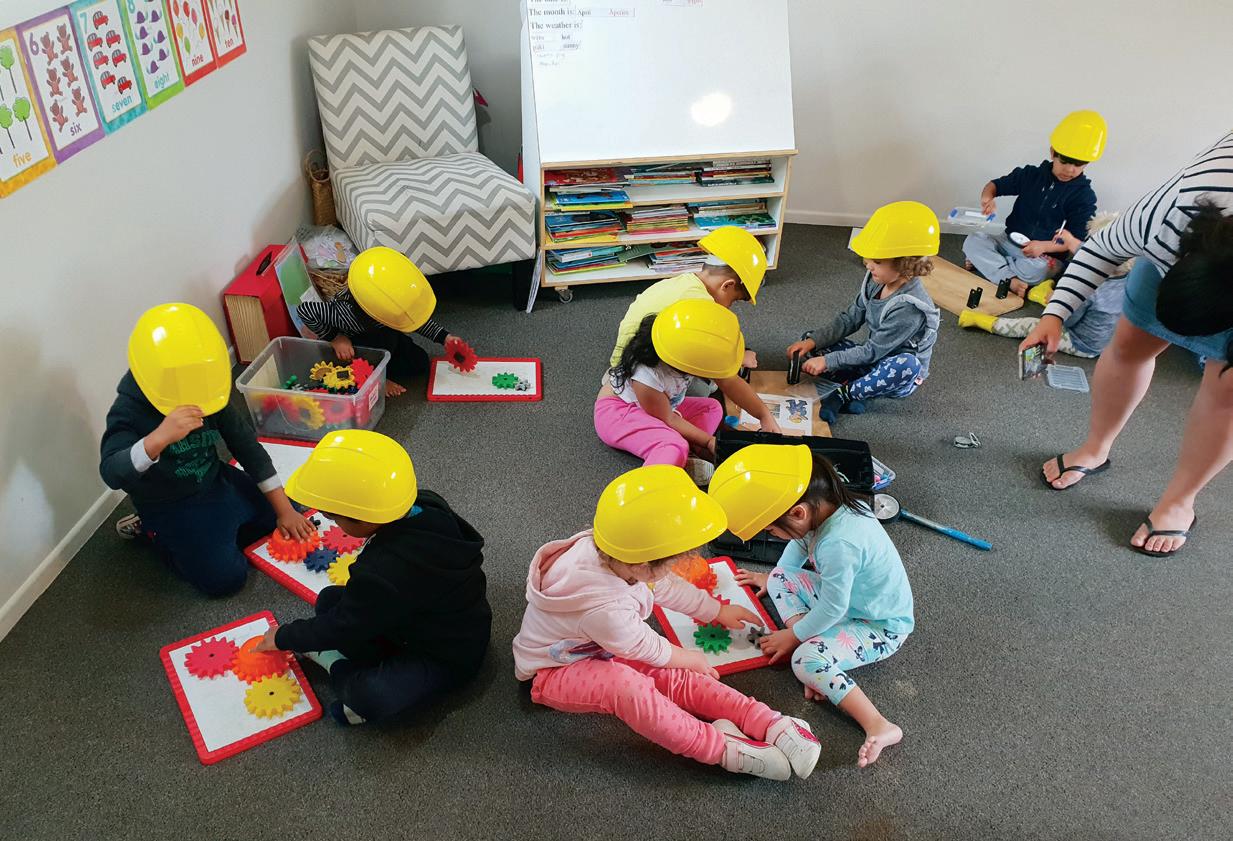

invites ākonga to explore the naming and renaming of places in Te Whanganui a Tara. The programme is responding to increasing kaiako and ākonga eagerness to access stories about local place names, and a desire to strengthen connections with our capital city and Wellington region.
Te Ūpoko o Te Ika a Maui aims to ignite and support ākonga curiosity about place names in their own rohe. A focus on Māori place names in Te Whanganui a Tara illustrates how tangata whenua have sett led, shaped, and storied local landscapes. Ākonga use their critical thinking skills, explore narratives about the past, and enrich their ideas about colonisation as they consider how place names have changed over time and can tell more than one story.
34 Term 2, 2023 | schoolnews.co.nz EOTC
Image courtesy of Waikato Museum
Images courtesy of MOTAT
In a museum, ākonga are given a degree of autonomy over their learning.

Term 2, 2023 | schoolnews.co.nz 35 EOTC Solve for Tomorrow In partnership with To find out more, visit www.samsung.com/nz/solvefortomorrow Solve for Tomorrow is a nationwide competition challenging New Zealand’s next generation of innovators to change the world for good. Open to students in Years 5-10, the finalists will share $20,000 in prizes, including prize money and Samsung tech for them and their school. No experience needed. Just an idea that uses STEAM and a desire to make a difference.
for
Show us your creativity and innovation!
$20,000 in prizes up
grabs
The programme is adaptable for diff erent age groups, and suitable for local schools and those coming to Wellington for a capital city experience.
Museum of Transport and Technology (MOTAT) off ers a range of experiences and programmes.
School groups can visit MOTAT at Western Springs and engage in a programme of learning that is tailored to specific learning intentions. Students
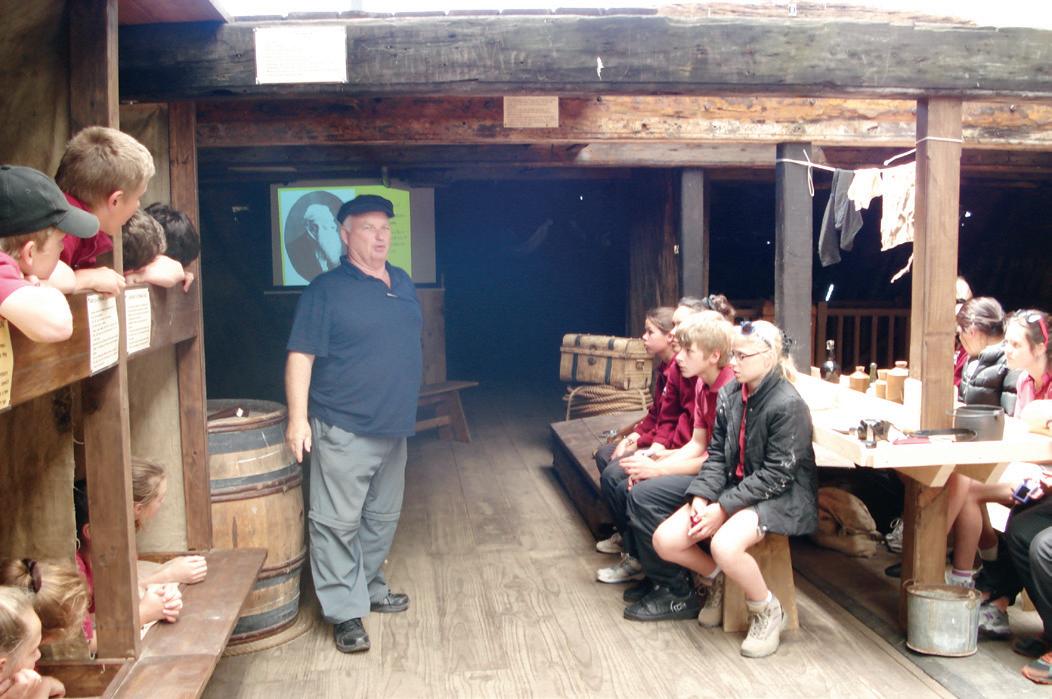

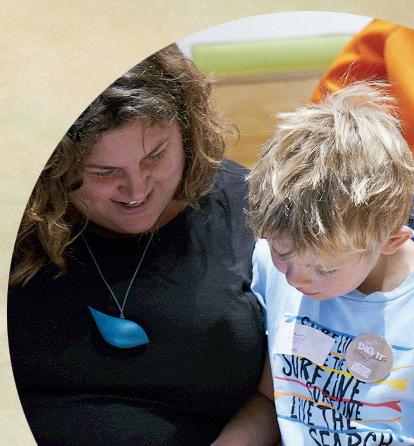
and teachers can enjoy an historic tram ride and visit many exhibitions that extend the classroom experience and provide hands-on experiences.
If coming to MOTAT isn’t an option, STEAM Cells bring the learning experience to you. MOTAT educators arrive at your school with a trailer full of STEM resources .The MOTAT educators will engage students in a highly customised learning experience.

STEAM cells can be a single workshop or longer multi-day workshops.


A third option is MOTAT’s online workshops, delivered via Zoom. These are designed to meet your specific learning intentions. Using MOTAT educators’ expertise, as well as MOTAT’s wealth of resources, the team delivers a highly engaging experience.


Hireable kits are also available from MOTAT. These kits, called Learnables, are full of STEM equipment and are supported by online resources and
lesson
use straight out of the box.
The Edwin Fox Ship & Visitor Centre on Picton waterfront allows students to explore a unique piece of New Zealand and World Maritime Heritage. The ship has a rich history, and is the last wooden immigrant ship to bring emigrants to New Zealand; the last convict ship to take convicts to Australia; the last ship of the Dunbar shipping fleet, once one of the largest shipping fleets in the world; and the last of this ship design anywhere in the world.

36 Term 2, 2023 | schoolnews.co.nz EOTC Local and national For more info email: leotc@waipadc.govt.nz Phone: 07 8720085 Website: www.tamuseum.org.nz/education TE AWAMUTU MUSEUM Now opera ng from our new loca on, o ering progra es here, at signi cant sites, online and more! More than just hands on history!
plans for teachers to
Image courtesy of The Edwin Fox Ship & Visitor Centre
Image courtesy of MOTAT
Image courtesy of The Edwin Fox Ship & Visitor Centre
The ship has travelled an estimated equivalent to 34 times around the world, finally ending its days in Picton as a freezing hulk and coal store.
Local heritage education provider Marlborough Museum can supply educators to teach students on board the ship, focussing on specific learning areas relevant to your class. These could include ship building, New Zealand immigration, Australian convicts, and Captain Cook and early encounters.

Experiences can be fully immersive, with students
becoming some of the passengers that travelled on the Edwin Fox.
Located on the banks of the Waikato River in the heart of Hamilton, Waikato Museum is home to a programme of exhibitions, public events, and education off erings. The museum’s collections and exhibitions have strengths in tangata whenua, visual arts, social history, and science.
Waikato Museum’s education programmes link to and develop the curriculum through exhibition tours, activities, and classroom-based sessions.

A unique educational experience
The Edwin Fox Ship on Picton waterfront is a fantastic piece of New Zealand and World Maritime Heritage. From Florence Nightingale to famous train robbers the ship has seen it all…
• The last wooden immigrant ship to bring emigrants to New Zealand.
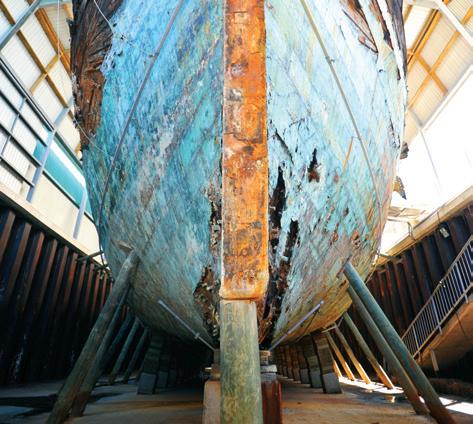
• The last convict ship to take convicts to Australia.
• The last ship of the Dunbar shipping fleet, once one of the largest shipping fleets in the world.
• The last of this ship design anywhere in the world.
The ship has estimated to have travelled the equivalent of 34 times around the world finally ending its days in Picton as a freezing hulk and coal store.
Local heritage education provider, Marlborough Museum can supply educators to teach your class on board the ship with a fully immersive experience.

For more information please contact the Marlborough Museum on 03 5736868 or email info@edwinfoxship.nz.
As well as long-term off erings, programmes are refreshed to align with new touring exhibitions as they arrive, and can be tailored for a wide age range.
Recent curriculum changes mean that Aotearoa New Zealand’s histories will now be taught in all schools. Waikato Museum is uniquely positioned to enable educators and akonga to make the most of these topics with a wealth of taonga, objects, and documents that can provide nuanced and authentic learning experiences.

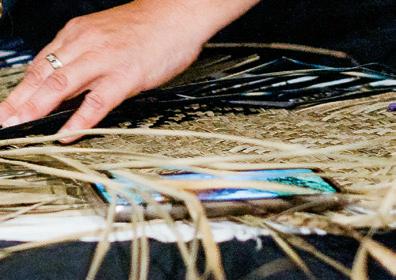
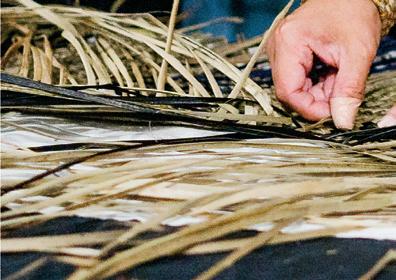



The Early Childhood Education programmes cater to tamariki
aged from 3 to 5 years and are designed to engage younger children in active exploration of the Museum and its stories. For older students, there is specifically developed programmes ranging from ‘Awa and Whenua: A Living Taonga’ to ‘It’s Electrifying!’ and ‘Art in Context’. These sessions can also incorporate a visit to Exscite, the interactive centre for discovery which has been recently refurbished. To support kaiako and educators in the important work you do, the museum off ers teacher resources and professional development.

Term 2, 2023 | schoolnews.co.nz 37 EOTC
Image courtesy of The Edwin Fox Ship & Visitor Centre
Image courtesy of Waikato Museum
Rotorua: A destination for exciting and enriched opportunities
By Naomii Seah, Industry Reporter
Located in the middle of Aotearoa New Zealand’s most populated island, Te Ika a-Māui, in the Bay of Plenty region, Rotorua is an educational destination both beautiful and accessible, and rife with learning opportunities in all disciplines, for ākonga of all ages.
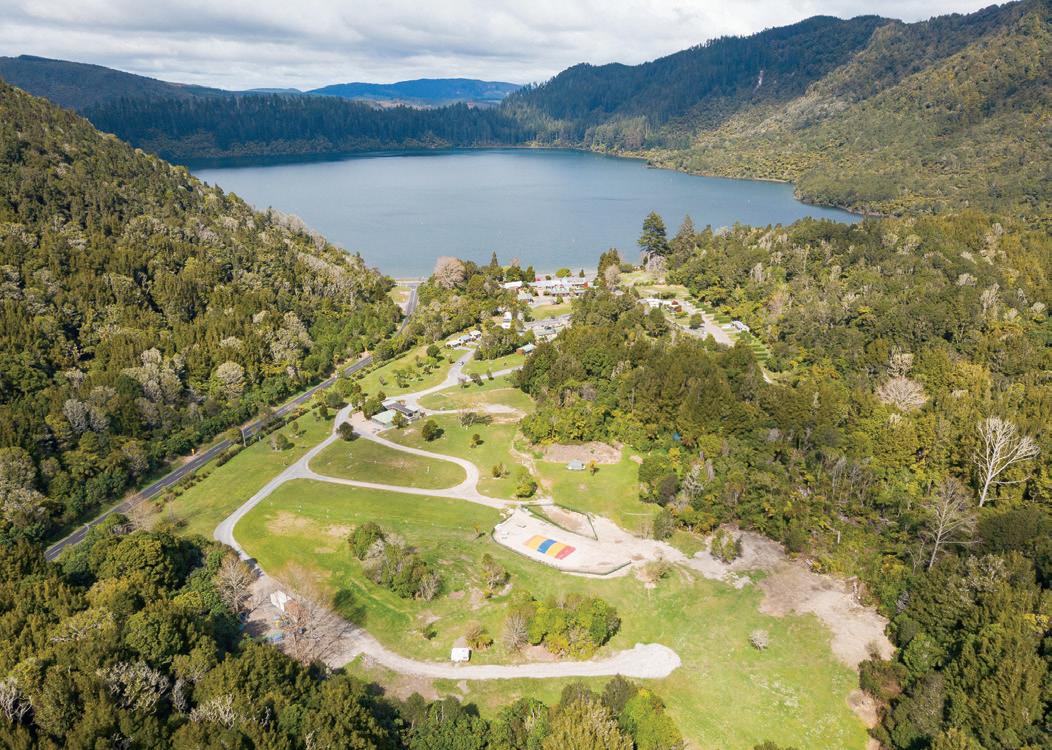
A famous geothermal area, Rotorua is rich in history and geography. The local iwi of Rotorua, Te Arawa, trace their ancestry back to Arawa, one of the seven canoes of the great migration. According to oral tradition, the name Te Arawa comes from a shark that rescued their waka from a sea creature they encountered during their journey. The people of Te Arawa then settled in the Rotorua region in the 14th century. In the early 2000s, the Waitangi Tribunal recognised the mana of Te Arawa over the Rotorua area, and the iwi manage the lakes of Rotorua to this day through Te Arawa Lakes Trust.
In the early 1880s, the relatively newly established New Zealand government began work on Rotorua city as a tourist destination on land leased from Ngāti Whakaue. However, relationships broke down soon after and by 1888 the town was crown-owned. By 1894, railway access increased growth in Rotorua, seeing the development of European spas and gardens in the fledging town. Some of these historic buildings are still in use today, housing the museum and art galleries.
The unique history of Rotorua is also inextricably linked to its unique geography. Less than an hour from the main city is Mount Tarawea, which, in 1886, produced the largest and most destructive eruption in New Zealand’s modern history. Beginning early on June 10, the eruption lasted for 6 hours, creating an ash column of 10 km. The explosion was heard as far away as Blenheim in the South Island. This explosion destroyed one of New Zealand’s most famous tourist attractions, the Pink and White terraces. The terraces were instrumental in driving tourism to the area before their destruction. These structures were formed from upwellings of geothermal springs which carried silica-saturated chloride water. Antimony and
arsenic sulfides, as well as some gold, gave the springs their distinctive colouration.
Despite the loss of the Pink and White Terraces, there are still plenty of famous geothermal formations in the area, including the famous Pōhutu Geyser. It’s the largest in the Southern Hemisphere, and extremely active, errupting up to 20 times a day, to heights of 30m. The geyser resides in the Whakarewarewa area, which is home to the famous fortress Te Puia, known as being an impenetrable stronghold.
Adventure seekers will also find plenty in the region, which is home to the Redwoods and the Whakarewarewa Forest. There are plenty of walking tracks and mountain biking trails, and the famous Redwoods Treewalk, which will lead ākonga through century old trees. Along the way, ākonga will learn of the unique ecology and history of the forest.
Many of the tourism providers in the region also offer education
experiences, many with their own curricula tailored to all levels of NCEA, complete with worksheets and educational leaders. There are also many accommodation options for large groups in Rotorua, including campgrounds and hostels. In some cases, operators can also offer transportation options and meal plans.
Being a central location, Rotorua is also the gateway to many other hotspots in Te Ika a-Māui such as Taupō, where students can engage with the wai, or see the mighty Tongariro and its surrounding national park. The possibilities are truly endless with a EOTC trip to Rotorua! For more suggested learning opportunities, School News reached out to a few providers in the region.
The Rotorua Heritage Farm introduces art and animals to students of all ages.
The indoor 3D Trick Art Gallery is a one-of-a-kind experience in New Zealand. Demonstrating to students that art is not boring,

38 Term 2, 2023 | schoolnews.co.nz EOTC
There’s nothing like a school trip to up engagement and enthusiasm amongst students of all ages; and what better destination than our very own RotoVegas?
Image courtesy of Heritage Farm
Image courtesy of Blue Lake Top 10 Holiday Park Rotorua.
Photo: Adrian Hodge Photography
the gallery features more than 50 life-size and super realistic 2D murals, which change to 3D through your cameras. Students’ creativity can run wild, posing, performing, and laughing for the camera. Capture images of escaping a great white shark, fighting a giant octopus, traversing a thundering waterfall, falling out of a hot air balloon and so much more.
Encouraging team work and cooperation, students are placed into groups and must work together to capture the best creative photo, with the chance to win a small prize. The activity also builds photography skills, and develops innovative thinking. Being with animals brings out the best in people, and the farm is an exciting educational experience for all ages. Some children have never been close to a large animal. The Farm Tour allows children to interact with the farm animals, and enjoy getting up close and personal with the animals, feeding and patting them. Guides will share stories with students throughout the tour, to enrich the learning experience, and will answer any
questions students may have.
Blue Lake Top 10 Holiday Park provides accommodation for groups of any size. The site is popular for school camps and sports teams looking to spend time in nature for teambuilding and training.
A wide variety of accommodation options are available to suit a range of budgets, from powered and non-powered tent sites, and standard and self-contained cabins, to motel units. Indoor recreation facilities provide an ideal venue for workshops, seminars, and meetings.
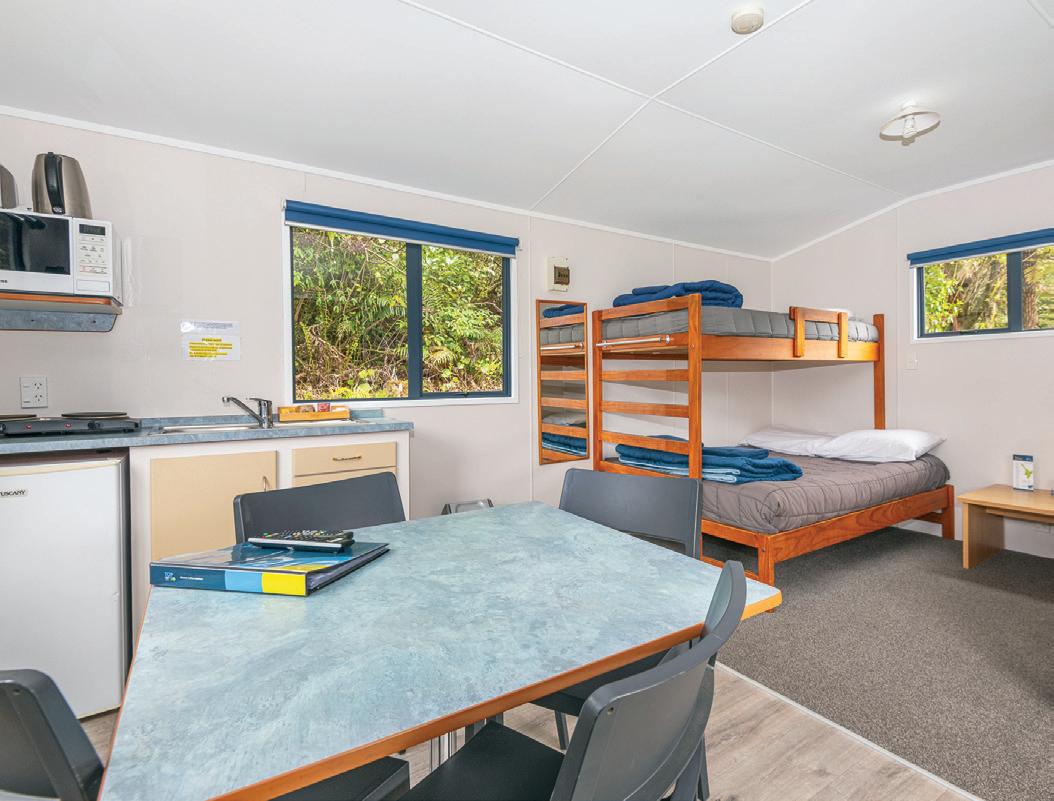
The park is central to a variety of local attractions making it an excellent base to explore the region. Lakes Tarawera, Okareka and Rotokakahi are all within 2km of the park. For those looking to travel further a field, a short 8km drive will find you in the centre of Rotorua, where you can experience a range of geothermal, cultural and adventure activities to entertain your group.
The team at Blue Lake Top 10 will work with schools to meet requirements to accommodate any size group within a budget.
An hour-long guided tour, travelling over a farm environment on covered trailers.
The farm is educational for all ages, as the Farm Tour does not only allow visitors to interact with the farm animals, they also can enjoy getting up close and personal with the animals by feeding and patting them.

TRICK ART GALLERY

Art, not as you would expect it to be! A perfect place for memorable photos for your family and friends. Being the only 3D Trick Art Gallery in New Zealand you will not be disappointed with the 53 pieces of artwork that you will find yourself a part of. Where else can you find yourself climbing mountains, riding Alpacas, standing stranded on an ice edge, trying to stop yourself becoming a crocodile’s dinner then flying away in a hot air balloon, all in one day? This indoor activity is great to visit in any weather, get out of the rain, or cool down on those hot days in our air-conditioned areas, the 3D Trick Art Gallery is the place to be.
For any enquiries or bookings email info@3dtrickart.co.nz or call Robyn Van den Hurk, Operations Manager on 027 215 8190
Group accommodation in the heart of Rotorua

Blue Lake TOP 10 have a wide variety of accommodation options available to suit every budget, from 180 powered and non-powered tent sites to standard and self-contained cabins.
The facilities at the park will keep your group entertained and active. We offer a private or sole use marquee with attached kitchen and BBQ that can accommodate up to 80 people.
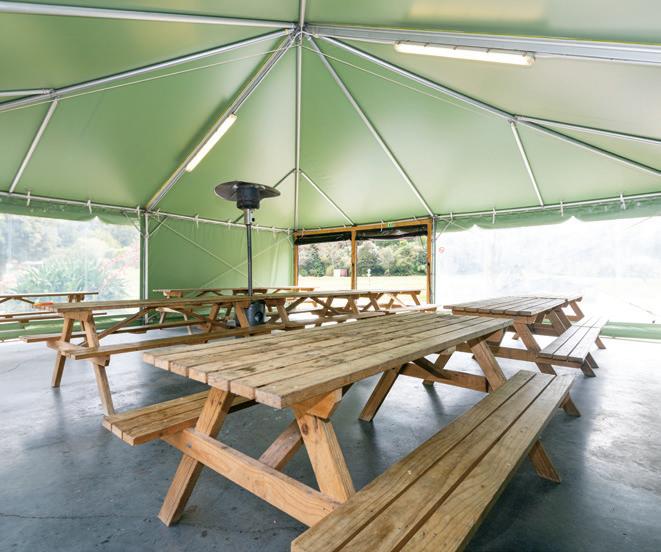
The park is central to a variety of local attractions. Lakes Tarawera,
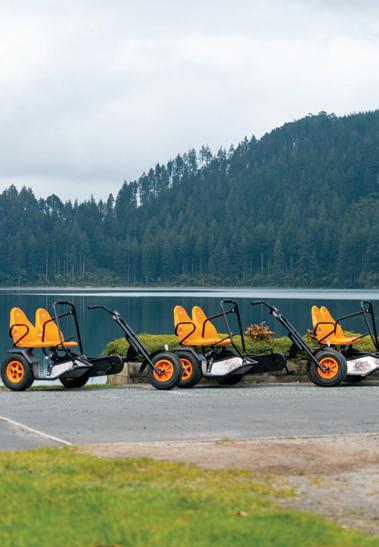
Okareka and Rotokakahi are all within 2km of the park, and a short 8km drive will find you in the centre of Rotorua.
Blue Lake TOP 10 offer large groups heavily discounted rates from February – November (excluding peak season only) and can work with you to accommodate any size group and any budget.
For more information please call 0800 808 292 or visit www.bluelaketop10.co.nz
Term 2, 2023 | schoolnews.co.nz 39 EOTC
The mental health benefits of EOTC
By Naomii Seah, Industry Reporter
All tamariki love a chance to get out of the classroom – but can EOTC have wellbeing benefits, too?
Many of us will remember the excitement of a school excursion from our own school days.
Whether it was a sports trip, a visit to the local museum or park, there was something about getting out of the classroom that always put the spark back into learning for a classroom of kids.
Maybe it was the fresh air, or the novel experiences that accompanied field trips: the smell of cut grass, a sharp breeze or the excitement of the unknown that always prompted a fresh enthusiasm for learning. Once back in the classroom, books didn’t seem as dreary, and tasks not as arduous as before.
There’s no doubt that field trips are a refresh, a brain break that can help some tamariki with their intrinsic motivation for schoolwork.
Anecdotally, many kids and
teachers will extoll the benefits of an EOTC excursion for increased focus and improved attitude among learners. But can EOTC have tangible wellbeing benefits?
A few small studies have shown a correlation between EOTC and improved mental health and wellbeing in children. One study, involving 511 Danish students aged 9 to 13, showed that psychological wellbeing was improved in students who were regularly exposed to EOTC as compared to those who had much less frequent contact with EOTC. Here, EOTC was defined as any out-of-classroom activity, which could also mean learning which incorporated the external environment. This meant artclasses in the field, statistics involving use of school grounds, and so on. The study ran for a year, and compared classes which were frequently exposed to EOTC with classes which were exposed to EOTC less frequently, around two hours a week.
Wellbeing was self-evaluated via questionnaire, so results are to be taken with this caveat, but the benefits of EOTC were shown to be the greatest in pupils of low socioeconomic status, and those with hyperactivity-inattention conditions. Results were most pronounced when pupils were exposed in fewer, but longer sessions of EOTC. These results may indicate that an increased frequency of EOTC may create more equitable learning conditions in the classroom. Regular EOTC was found to increase prosocial behaviour for all students. 1
Another study, also done in Denmark, showed EOTC was associated with improvements in physical activity for boys, though not for girls. The study measured PA by using accelerometers, which were attached to children for a week. This allowed researchers to compare physical activity between EOTC days and non-EOTC days. The study found that days with EOTC increased physical activity in boys, and on those days, more physical activity was recorded during EOTC time than in class time. 2
Another study, conducted more recently in 2021, found that there were no gender differences in increased physical activity associated with EOTC learning. It also posited that EOTC may promote physical activity due to the nature of learning opportunities when outside, or in “greenspace”. The study reads:
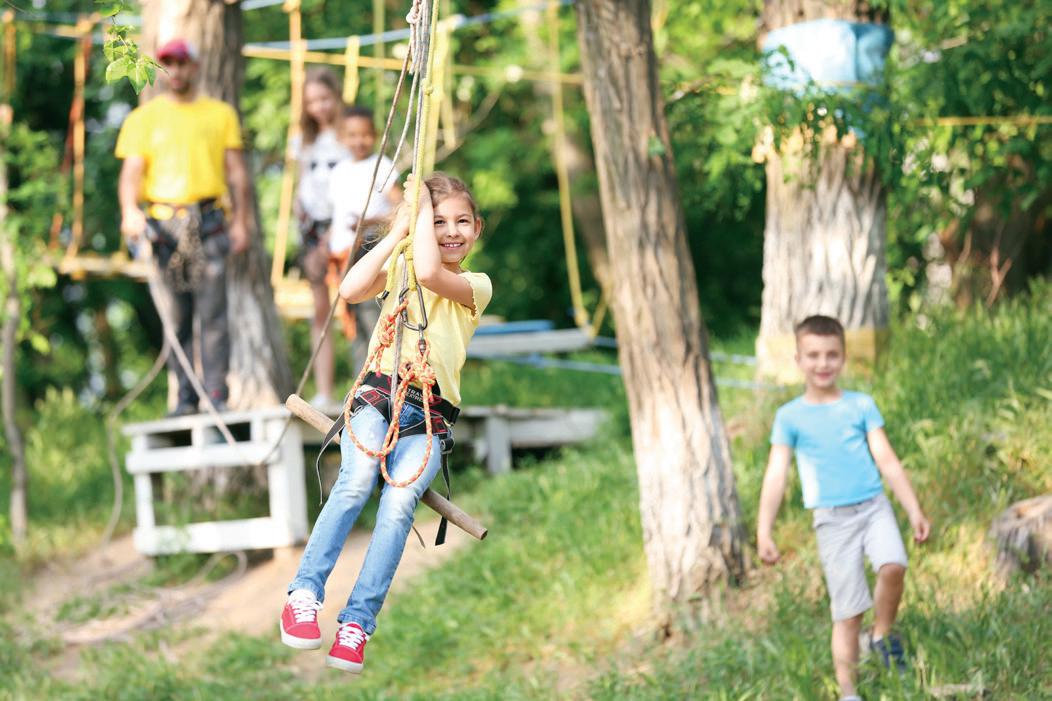
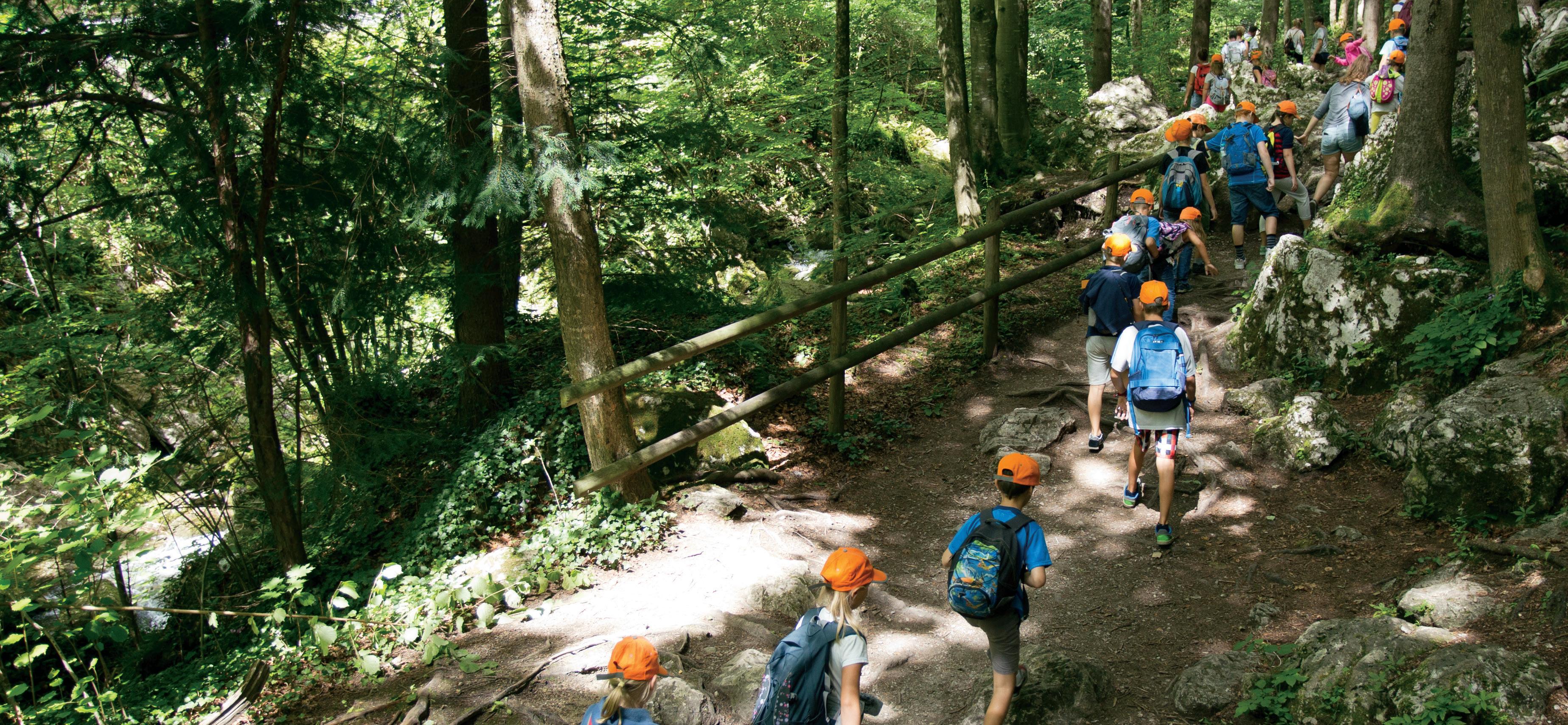
“Often, EOTC includes learning activities that demand pupils to move, e.g., measuring and estimating the volume of trees in maths class or incorporating tag-and-relay races in language lessons.” 3
In current Western classroom models, children may spend much of the day sitting. Physical activity is treated as an “extra”, meant for cocurricular activity or infrequent P.E sessions. In some schools, increasing physical activity during the day is imperative as children may face barriers to physical activity outside of class. These may include cost barriers to getting involved in cocurricular sport and time-poverty, among others.

40 Term 2, 2023 | schoolnews.co.nz EOTC
© Adobe Stock, stock.adobe.com
© Adobe Stock, stock.adobe.com
© Adobe Stock, stock.adobe.com
This means that some of our vulnerable tamariki and rangatahi cannot access the myriad benefits of physical activity, such as improved cognition, academic achievement and overall wellbeing. Therefore, EOTC as a method of promoting physical activity may create a more equitable learning environment in some cases.


These studies indicate that increasing physical activity may be one of the mechanisms by which EOTC improves tamariki and rangatahi wellbeing.


Another possible mechanism of EOTC improving tamariki wellbeing is simply being outside. Exposure to natural environments has been associated with lowered stress and can help with symptoms of depression and anxiety. Those with attention-deficit disorders can also improve their symptoms by spending time outdoors. Although what counts as a “restorative” environment is contested, most research agrees that being in nature has some wellbeing benefits. 4
In conclusion, it seems that the excitement that comes from that special excursion feeling at school is backed up by real benefits to mental and physical health. No matter what


the occasion, whether it’s a short trip to the school field, a longer sports excursion to the local park or beach, or even an overnight camp or flight, tamariki and rangatahi stand to reap long-term benefits from added EOTC time. So, for educators looking to cheer up their ākonga, or inject fresh excitement into the school day, consider adding some EOTC to the curriculum.




References




1 Bølling, Mads, Janni Niclasen, Peter Bentsen, Glen Nielsen. (2019) “Association of Education Outside the Classroom and Pupils’ Psychosocial Well-being: Results from a school year implementation.” Journal of School Health 89(3): 210 –218. https://doi.org/10.1111/josh.12730
























2 Schneller, Mikkel Bo. (2017). “Effects of education outside the classroom on objectively measured physical activity: results from the TEACHOUT study”. University of Southern Denmark.
3 Bølling, Mads, Erik Mygind, Lærke Mygind, Peter Bentsen and Peter Elsborg. (2021). “The Association between Education Outside the Classroom and Physical Activity: Differences Attributable to the Type of Space?” Children (8) 486. https://doi.org/10.3390/children8060486

4 Pearson, David G. and Tony Craig. (2014). “The great outdoors? Exploring the mental health benefits of natural environments.” Frontiers in Psychology 5(2014). https:// doi.org/10.3389/fpsyg2014.01178






Funding available




Please ask us about funding for active recreation, well-being and leadership.



Kokako Lodge (Ak)

Kokako Lodge is only 30 minutes from South Auckland. We are surrounded by 17,000 hectares of tranquility, challenge (high ropes) and adventure.

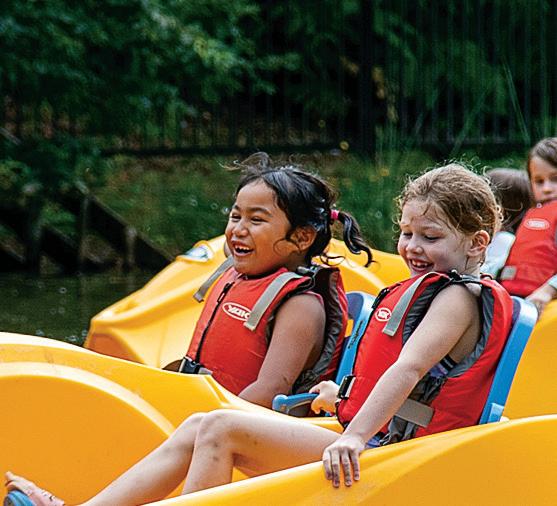

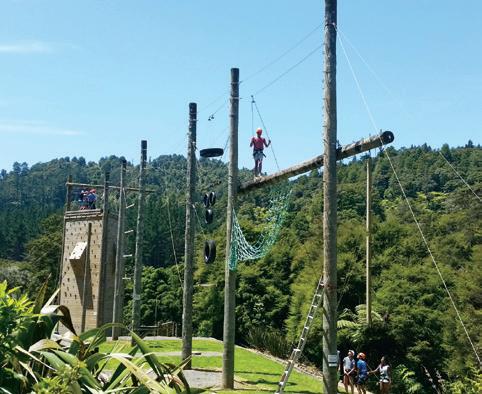




Spoken Word, Reflection Journals, team building games and personal challenge (by choice).



















Term 2, 2023 | schoolnews.co.nz 41 EOTC visit o visit ou living clas living clas our our om om FREE Animal Encounters FREE Education Resources Dinosaurs and Mythical Creatures Tropical Butterflies Kiwi and Wētāpunga Farm animals and more! lliiv www.butterflycreek.co.nz/school-visits Save up to 25% I am me I am worthwhile A time to refocus Help your students get back on track by a change of environment, EOTC and even team building to grow their support structures.
For more information please contact Kokako Lodge on 09 292 4349 or visit www.KokakoLodge.org.nz CYC HAVE YOUR NEXT 148 Waingaro Road Ngaruawahia 07 824 8495 info@cyc.org.nz cyc.org.nz ADVENTURE AT cycnga christianyouthcamps Qualworx certication shows that our camp has met the highest standard in safety in the adventure activities industry.
Fun and functional sport surfaces
By Gemma Easton , Editor

The benefits of exercise as part of a healthy lifestyle are well documented. School sport is a great way for students to stay active, make friends and have fun.
From hockey to netball, tennis and athletics, the opportunity for young people to become involved in sport are wide
ranging. Sport can give students a break from study, helping them to relax and unwind.
The New Zealand Ministry of Health says that young people need to be active as often as possible. They should do at least one hour of moderate or vigorous exercise over the course of a day. Regular exercise, the ministry says, can help children develop strong muscles, bones and joints, develop and maintain healthy lungs, and maintain a healthy weight. Regular exercise
can also help to reduce stress, and promote better sleep, which are both important for developing minds and bodies.
Participation in school sport can help build friendships and foster a sense of belonging within the team, and the school community. Connectedness and sharing experiences is important for young people, and helps to combat feelings of loneliness and isolation. Through sport, students may interact with people outside their usual social circle, helping to broaden their friendship group and expose them to new people, ideas and interests.
As well as boosting their physical fitness and wellbeing, participation in extracurricular activities, like sport, helps students develop a range of skills. Time management, teamwork, personal responsibility, as well as a sense of belonging and shared identity within the team and the school can be fostered. School sport can also help to develop a love of sport and exercise more broadly, setting students up for a lifetime of healthy habits.
To help keep students excited about school sport, it is important to have the right equipment
and playing surfaces. Students who practise and train on the same type of surface on which they will compete may perform better. A familiarity with how the surface will behave will provide a competitive advantage. Providing the right playing surface may also minimise injuries, as surfaces are tailored specifically to the activity they are being used for. This is particularly important for young, developing bodies.

Before deciding on the best court options for your school, consider which sports are most played at your school, and what facilities are already available. Planning for the future is important, so make sure there is the ability to upgrade courts, or install more playing surfaces as necessary, as the student body grows.


As well as courts for specific sports, like hockey, netball, basketball or volleyball, schools may choose to install multipurpose courts. Multi-use courts can be used for more than one sport, and can be an eff ective way to maximise space and still provide professional playing surfaces for students. The ability to be used for multiple sports means multi-purpose
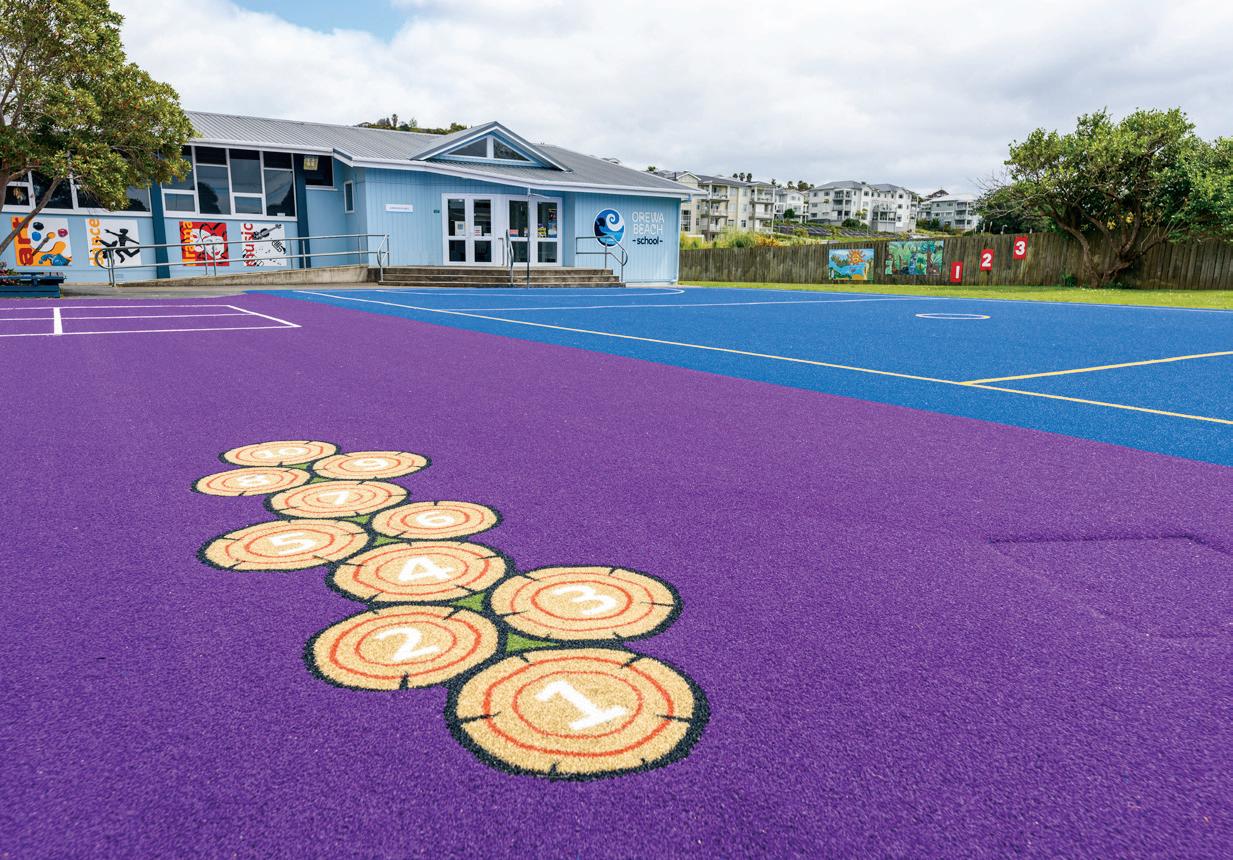
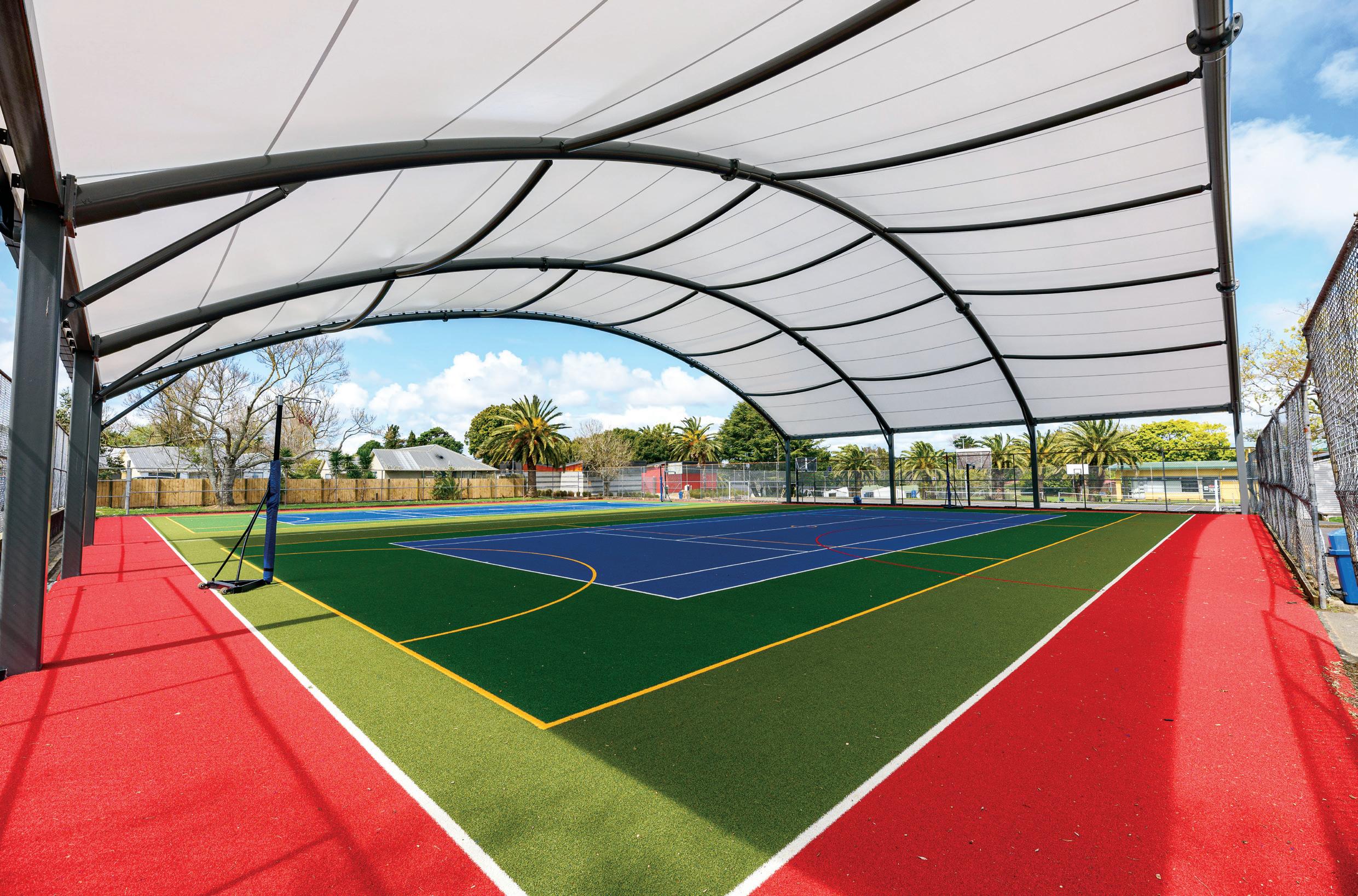
42 Term 2, 2023 | schoolnews.co.nz SPORTS & RECREATION
Images courtesy of Teamturf
courts will be used by students year-round, catering for both summer and winter sports.
Installing and maintaining suitable playing surfaces can demonstrate to students the school’s commitment to school sport, and the pride the school places in its sporting teams. Providing an elite level surface raises the esteem of the sport, and may encourage greater student participation.
Beyond the immediate school community, suitable playing surfaces may make your school an attractive venue for hosting inter-school competitions, or community sporting clubs. This will again raise the profile of the school and its sporting teams. Hiring out your playing facilities to external organisations may help generate extra revenue for the school.
Design options for playing surfaces can add some fun. Consider making a focal point of your surface, giving your school community something interesting to look at even when a game is not being played!
Is it time to install or upgrade playing surfaces at your school? We asked an industry expert for their advice.
Case Study:
Phil Lewis, Managing Director at Teamturf, said sports specific surfaces are great for one individual sport, though with classroom space at a premium, many schools are opting for multi-use courts.
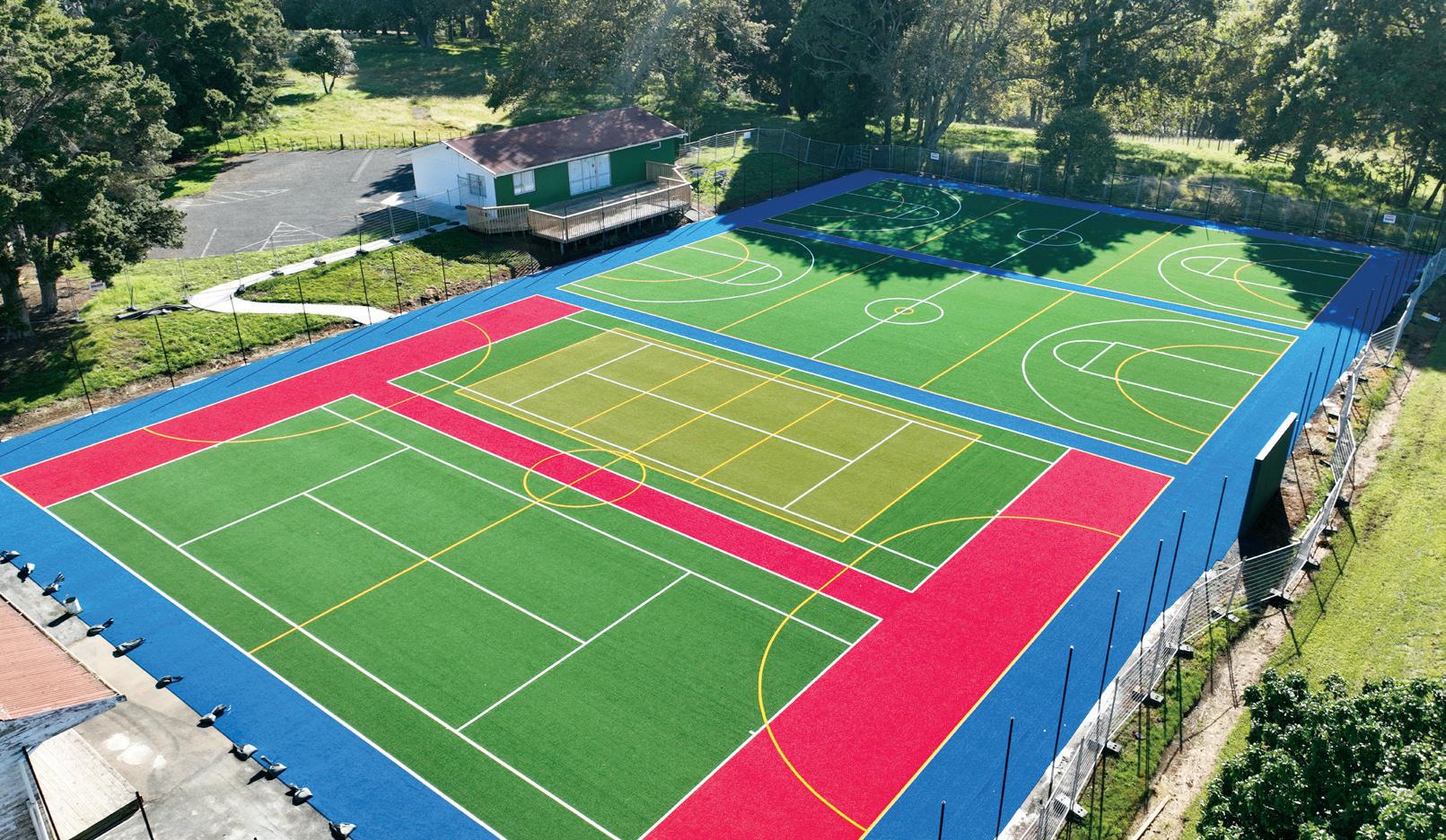
“Schools are incorporating as many sports codes into their multi-use court areas as possible to maximise space. Budgeting for shade structures is a good idea, to extend the life of the court and facilitate court usage at any time, day or night. The space can then
Multi-purpose court brightens school grounds and benefits community
Teamturf Brand Manager Lara Campbell said artificial turf was a popular choice for schools in this context.
“Artificial turf is really low maintenance, it requires minimal upkeep compared to natural grass. It’s also a safe playing surface for students, with no uneven terrain or holes that could lead to injuries,” she said.
also double as an all-weather teaching space. We have seen a big move within schools towards brighter, contrasting colours on multi-use areas. This can define the different sports codes or just to create a contrasting court surround. It’s also a great way to incorporate the school colours within the court,” Mr Lewis said.
“When resurfacing an old and worn asphalt or concrete surface, it’s important to undertake a thorough check of the surface and complete
remedial work as required before installing the new surface.
“Good drainage is an important part of drying the surface as quickly as possible, preventing wet and slippery surfaces. As a court ages and wears, moss and algae can build-up on the low side of the court, or where it may remain shaded during winter months. Regular maintenance of these areas is important to prevent or remove algae and moss, which can be a slip hazard.”
hockey and superior underfoot traction for netball and basketball. It’s perfectly suited to a school environment where a multitude of sports are offered.”
Mr Wilson said that the refurbishment had “revolutionised” the area and received positive feedback from the school community.
Located on Auckland’s North Shore, Takapuna Normal School has around 630 students. With old concrete netball courts, the school was in desperate need of a modern solution to brighten up the space and enhance sports performance.
“From a financial perspective, artificial turf is a great solution for schools as it is more cost-effective in the long term. Artificial turf can withstand heavy use and constant foot traffic, meaning
it lasts for many years with no ongoing maintenance.”
For the project at Takapuna Normal School, Teamturf used their top-of-the-line Elite Coolplus surface.
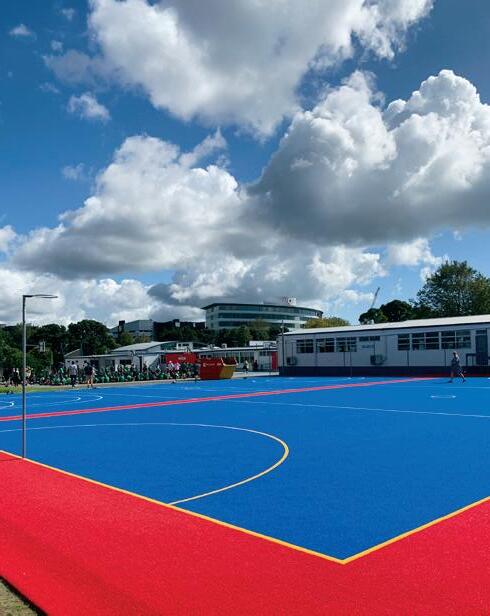
“This is an 18mm texturised monofilament surface designed for the ultimate sports performance at the highest level,” Ms Campbell said.
“The product is designed to provide a soft surface with proven ‘dry play’ performance for
“It looks bright and vibrant, and offers protection for learners when playing competitive and non-competitive sports on it,” he said.
“The project has produced an outstanding multi-purpose court that has brightened the school grounds, is more protective for learners, and is always in use during and after school.
“Feedback from the wider school community has been great and it is always being used on evenings and weekends, and used by sports teams from our school, and clubs in the community.”
Term 2, 2023 | schoolnews.co.nz 43 SPORTS & RECREATION
Image courtesy of Teamturf
When Takapuna Normal School was looking to revitalise its outdoor sporting area, Principal Zane Wilson sought the advice of Teamturf, a company he knew and trusted from a previous project.
By Naomii Seah , Industry Reporter














School sports are a quintessential part of every student’s school experience.
Gett ing involved in a sports team at school is an enriching experience for a developing child or teen. Not only does it teach good fi tness habits and teamwork – skills which a child or teen will likely take into their

Increasing student opportunity and engagement in school sport
young adulthood and beyond –being in a sports team can also help rangatahi build a sense of community and identity. Additionally, sports are fun, and can get rangatahi engaged in school. For some, school sports teams may even be the start of a more illustrious sporting career.
But even though most ākonga won’t be the next Sophie Devine or Steve Adams, participating in school sports still provides a myriad of benefi ts for rangatahi.
Below, we examine the benefi ts of playing school sports, the extra-curricular programmes available, funding options, sports equipment for schools, available excursions and sports trips, and how schools can acknowledge participation and achievement in sports. Anecdotally, school sports are said to be good for rangtahi and tamariki, building discipline, teamwork and social skills. A student’s soft skills are
developed through participation in extra-curricular school sport, including time management, confidence and organisation. These are valuable skills which will benefi t students throughout their educational journey, and beyond.
A recent study done in New Zealand provides qualitative evidence for the benefi ts of sport. The study, which surveyed a sample of New Zealand adolescents (11 to 17 years old)





Sports First Aid Kit



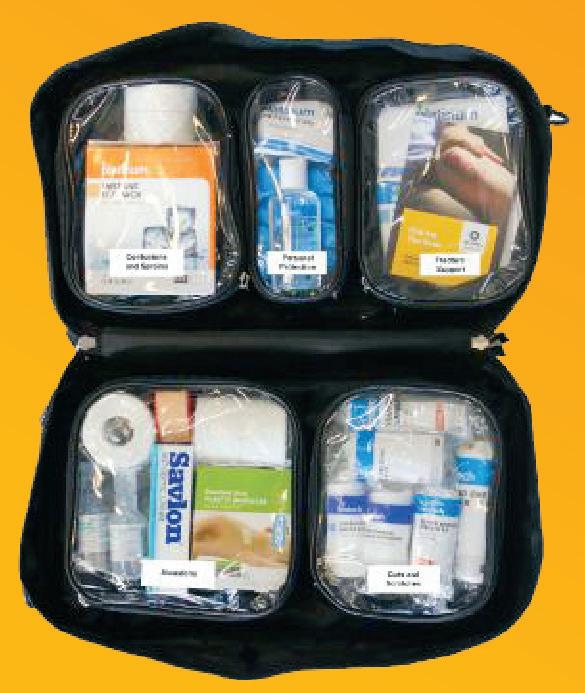



44 Term 2, 2023 | schoolnews.co.nz SPORTS & RECREATION
Innovative injury-specific concept Features A Injury-speci c compartments that are removable, designed to help you quickly respond to and treat injuries A A black sturdy carry bag with four drink bottle compartments and rubber feet for added protection A Clinically approved by Hato Hone St John A Receive 5% discount o your purchase when you use promo code SportsKit5 buy.stjohn.org.nz 0800 FIRST AID (0800 347 782) I firstaidkits@stjohn.org.nz
© Adobe Stock, stock.adobe.com
found that organised sport appeared to provide a unique boost to wellbeing beyond the benefi ts associated with physical activity on its own. In other words, although participating in any physical activity was positively associated with better wellbeing, organised sport was even more strongly correlated with wellbeing. This suggests that organised sport has unique characteristics that promote wellbeing.
One hypothesis is that sports enmesh students in their community, creating a strong sense of “relatedness”.

Another suggestion is that sports promote a healthier relationship to physical activity – one that goes beyond extrinsic motivations like appearance and weight. Sport may also improve children’s self-esteem, as children have fun during sport.
Dream big, work hard
Netball is a fantastic sport that offers a wide range of opportunities for players of all ages and abilities to pursue their dreams. Whether you want to play at the highest level, coach or umpire, there’s something for everyone. One of the great things about netball is that it’s a team sport, which means you can develop your physical skills, teamwork and communication abilities. These are valuable skills that
can be applied in all areas of life. It’s also important to stay positive and never give up on your dreams, even when faced with setbacks or challenges.
Remember, success in netball (and in life) is not just about talent, but also about hard work, dedication, and perseverance.
So, keep dreaming big and working hard, whether you’re just starting out in futureFERNS or aiming to play for the Silver Ferns one day, who knows where your love for netball might take you!

For more information visit us at: www.aucklandnetball.co.nz






This improved self-esteem and enjoyment from participating in sports may increase motivation for participation in the game. Certain small-scale studies have even shown a positive relationship between sports participation and cognition.


In New Zealand, a case-study at a high-performing girls school also found that sports was both regarded as a way to “give back” to the school, and a



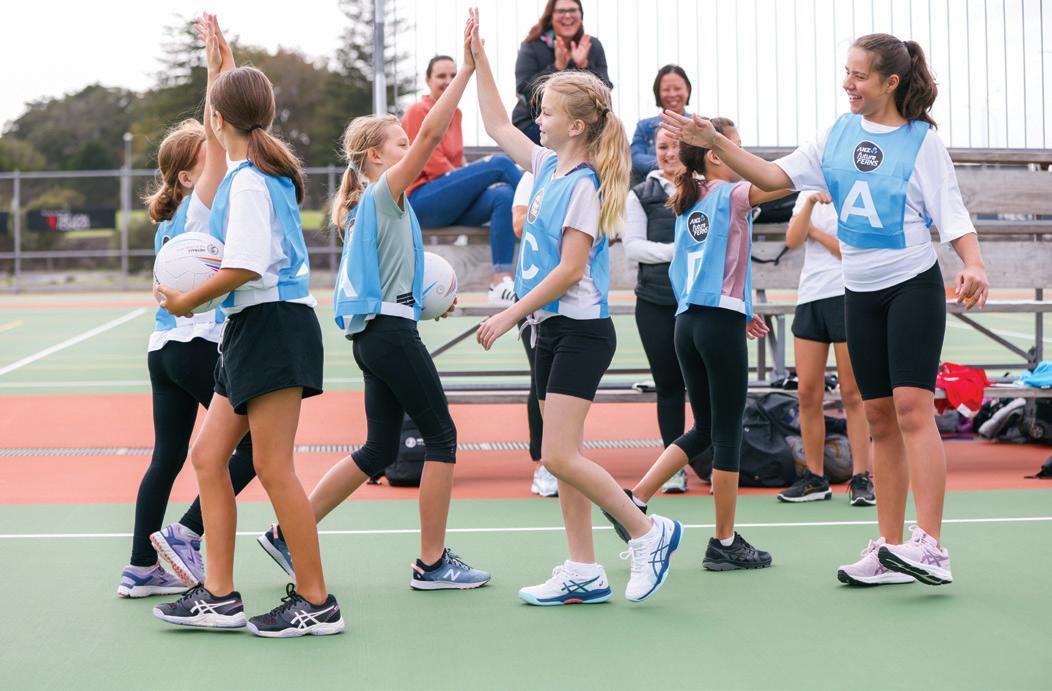
vehicle for socialisation. Sports teams were also considered a break from academia, providing “balance” to students’ lives.
In Aotearoa New Zealand, one of the biggest funding providers is KiwiSport, introduced by the New Zealand government in 2009.


KiwiSport funding comes both directly from the Ministry of Education, and from Sport New Zealand.





Term 2, 2023 | schoolnews.co.nz 45 SPORTS & RECREATION
Photo: Michael Bradley
© Adobe Stock, stock.adobe.com
Schools can apply for KiwiSport funding through quarterly operations grant, and the funding can be used for both hiring teaching staff such as a sports coordinator or finding external sports programmes providers. Schools must also report on how the KiwiSport funding has been used to meet KiwiSport’s objectives – increasing student participation in organised sport.
One study conducted in New Zealand schools suggests that external sports programme providers could add immense value to the curriculum.

Teachers said that external providers were experts in the field, and they often felt more comfortable letting them lead the curriculum in this area.
Teachers also considered external providers in sport and PE to be a PLD opportunity.
In the same study, some teachers mentioned that for some students, opportunities to participate in sport may be limited. Barriers may include financial and time factors.
As external school sport providers often bring their own equipment, and sessions occur during the school day, some of these barriers can be removed for rangatahi by contracting external providers. Using external providers can therefore enable some less advantaged students to access the benefits of organised sport.
For schools and teachers looking to run sports programmes in their school or kura, the SportNZ website has resources for both primary and secondary schools. Additional resources include tips on encouraging leadership in tamariki and rangatahi, and creating a safe and inclusive environment during sports activities. There are also links to the “Balance is Better” website, which guides educators to help their rangatahi develop a lasting passion for sport and recreation. The site includes case studies, and evidence to demonstrate the value of sport, including statistics on physical and social wellbeing measures correlated to sports participation.

As for external providers, many regions have locally operated initiatives which may offer tailored programmes to suit your school or kura’s needs. Different sports associations may also provide specialised sports
programmes, and have educators trained to teach the specifics of their sport to tamariki and rangatahi. For specific sports, external providers may also be able to provide best practice guidelines, such as proper form and technique. This ensures a safe and effective sporting environment for all ākonga. In terms of sports equipment, a wide variety is available depending on your school or kura’s needs. For primary schools or recreational use, basic and affordable equipment is available from a variety of department stores. These might suffice for school excursions to the beach, where schools might participate in some light intraschool volleyball or cricket. For more formal sporting occasions, however, affordable sporting equipment is also available from wholesale suppliers. These range from athletics equipment such as rubber discuses, to a
wide array of balls, cricket bats, badminton rackets and shuttles. Many schools may also choose to invest in durable sets of sporting equipment to be shared between classes. This ensures that a wide variety of sports are accessible to all students. Sports participation can provide many opportunities for ākonga, which may increase engagement and school spirit. For example, sporting excursions can be an exciting opportunity for both physical activity and a break from academics. These excursions may be to local sporting facilities, or even the local park or beach. As well as getting the kids outside, these excursions may also serve to help tamariki and rangatahi feel a part of their local community by familiarising them with community facilities. Finally, schools or kura may choose to recognise sporting participation or achievement with certificates and awards ceremonies. With a little effort and some graphic design skills, certificates can be an excellent way to build school spirit, as well as an enthusiasm and motivation for sports. A little recognition could go a long way to building a long-standing love for sport and recreation, ensuring healthy and active tamariki and rangatahi develop into healthy and active adults.
46 Term 2, 2023 | schoolnews.co.nz SPORTS & RECREATION
© Adobe Stock, stock.adobe.com
© Adobe Stock, stock.adobe.com
By Naomii Seah Industry Reporter
,



Ensuring your school meets health and safety standards

Given the unsettled start to the school year, health and safety may feel like the least of a school’s concerns as Term 2 rolls around.

Although it can sometimes feel like a chore, in the best case, health and safety can be a quick check box exercise which ensures your school or kura is prepared in the event of an emergency and compliant with national standards. Completing a health and safety check also ensures school sta are aware of their rights, responsibilities, and best health and safety practice.
Schools and kura are workplaces, and so are obligated to meet the requirements of the Health and Safety at Work Act (HSWA) 2015. Luckily, information about health and safety obligations are readily available at the Ministry of Education website, as well as Worksafe New Zealand.
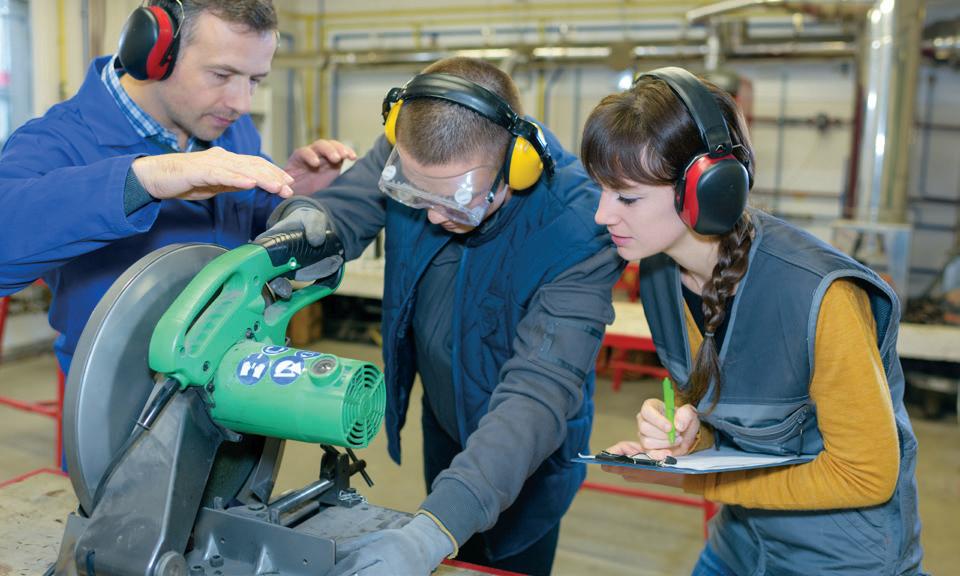
Under the HWSA, school boards and early learning organisations are required to “provide and maintain a work environment that is without health and safety risks”. That means school boards have a duty of care to all sta in the school or kura. Obligations include but are not limited to:


U “Providing and maintaining a work environment that is without risks to health and safety,
U Providing and maintaining safe structures,

U Providing and maintaining safe systems of work, Providing adequate
U Providing adequate facilities for the welfare of workers when doing work, including ensuring access to those facilities,
U Providing any information, training, instruction or supervision that is necessary to protect everyone from risks to their health and safety arising from the work of your school or early learning service, and
U Monitoring the health of workers and the conditions at the workplace for the purpose of preventing injury or illness of workers.”
These obligations apply to physical spaces where work is being carried out, including EOTC.
All schools and kura are obligated to have a health and safety policy, which may require review a er a period.
The Ministry of Education provides a checklist to outline best practice for health and safety policies.
Items include:




U “A commitment to comply with HSWA, regulations, NZ standards and Approved Codes of Practice;



U School Board commitment to health and safety;
U Worker responsibilities for health and safety;
U Commitment to engaging with workers, including union and worker representatives, on health and safety;
U A commitment to providing health and safety induction, training and supervision of all new and existing workers;
U A commitment to supporting continuous improvement in our health and safety performance
U Workplace incidents, near misses and injuries are accurately reported, recorded and considered, and appropriately responded to. If appropriate, notified to Worksafe NZ;
U Provision of support for safe and early return to work of injured or ill workers;
U Commitment to ensuring that emergency plans and procedures are in place.”
Health and safety policies should generally have sections pertaining to:

U Worker participation,
U Managing risk,
U Property and equipment,
U Injury and illness,

U Health and wellbeing,
U Induction training and information, and
U Monitoring, reporting and assurance.
The Ministry of Education also has resources pertaining to health and safety around emergencies and traumatic incidents, EOTC, overseas trips and exchanges, and COVID-19.
Additionally, with the new Kāhui Ako initative, where schools or kura share health and safety policies, it’s never been easier to ensure your school’s compliance with health and safety standards, providing a safe and secure environment for ākonga and sta alike this Term.
Term 2, 2023 | schoolnews.co.nz 47 HEALTH & SAFETY
© Adobe Stock, stock.adobe.com
© Adobe Stock, stock.adobe.com
© Adobe Stock, stock.adobe.com
Safe, good looking floors
By Sarah Davison , Industry Reporter
The cooler months make ensuring floor safety and aesthetics a greater challenge as surfaces become wet and dirty.

Muddy, wet floors create a safety hazard with the risk of slips and falls for students, teachers, and parents. Airborne allergens and illness can also wreak havoc on schools during the cooler months. Choosing the correct flooring provides additional protection.
A recent study by independent biomedical research group Airmid Healthgroup found that “eff ectively cleaned carpets can trap allergens and other particles, resulting in fewer particles escaping into the air. These studies challenge the long-held belief that carpet must adversely impact indoor air quality as it pertains to asthma and allergy suff erers,” researcher Bruce Mitchell said.
“Eff ectively cleaned carpets have the capacity to trap allergen


and microbial particles, making these particles less available to become airborne and thus maintaining indoor air quality. This makes regularly cleaned carpet a choice for those impacted by asthma and allergies.”
When it comes to selecting the correct flooring for a school environment, the key focus is enhancing the learning experience for students. Noise from shoes and chairs scraping on the floor can make it diff icult for students to hear the teacher’s instructions and concentrate in class.
A UK study of 2000 school-aged children, aged 7 to 10, confirmed noise levels influence children’s performance, adversely aff ect national test results and can have lifetime consequences. To help counteract this, carpet has been found to absorb up to 10 times the amount of noise as hard flooring- leading to a better learning environment for both teachers and students.
To find out more about flooring trends in schools, we spoke
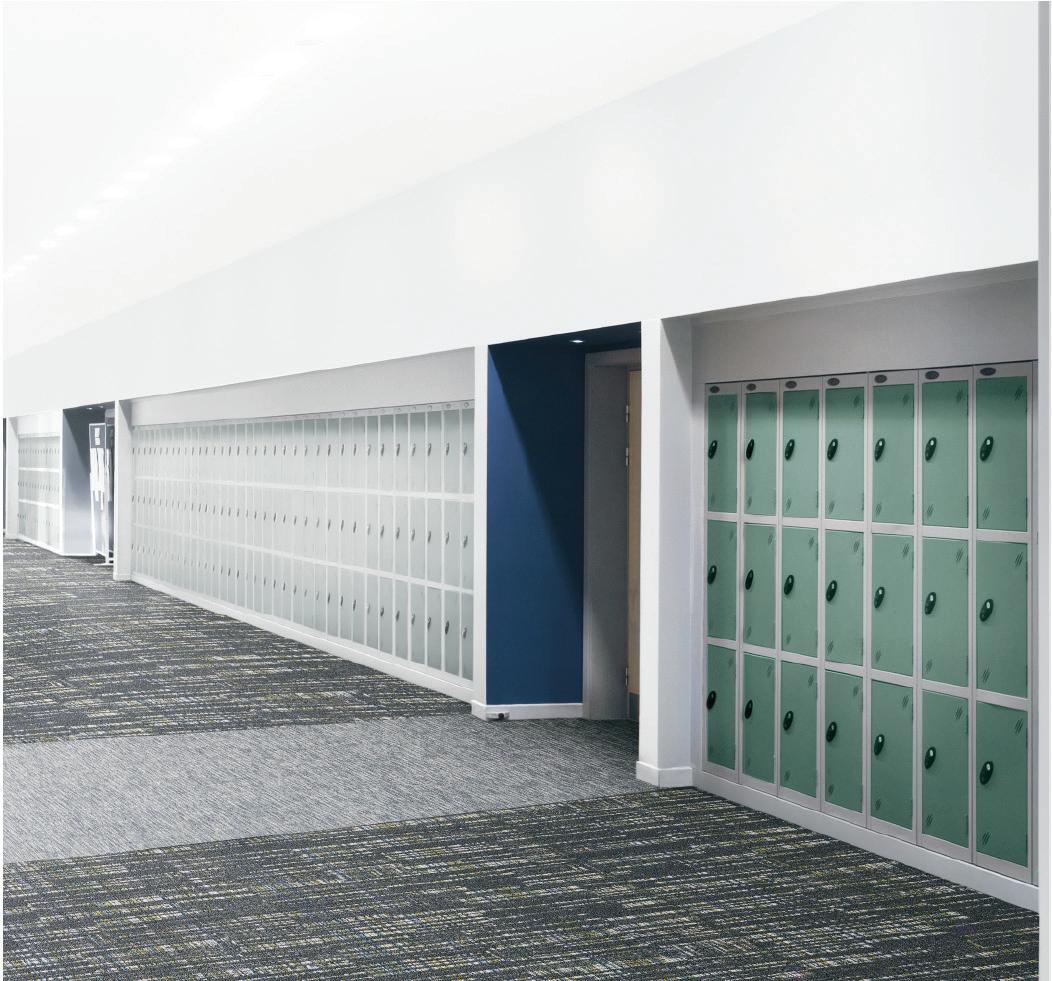
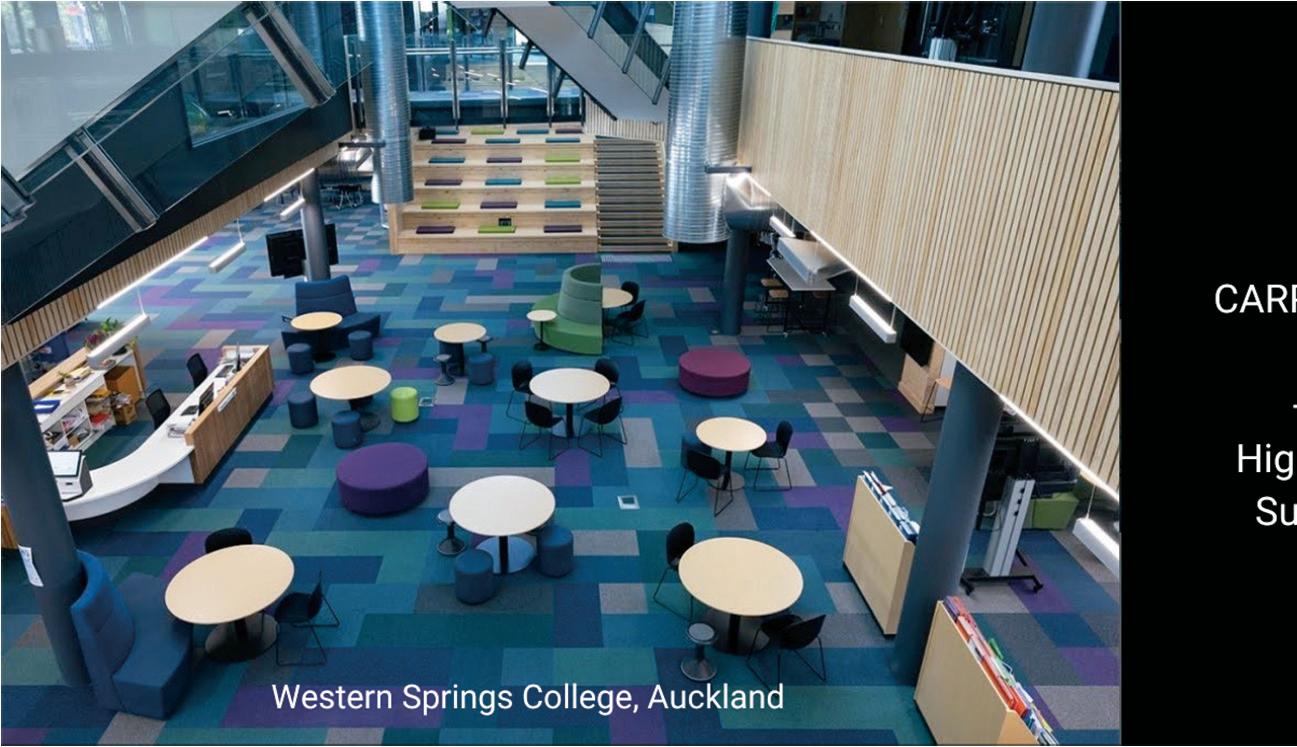
48 Term 2, 2023 | schoolnews.co.nz HEALTH &
SAFETY
Image courtesy of Heritage Carpets
© Adobe Stock, stock.adobe.com
to Umesh Dayal, owner/ operator of Heritage Carpets.
































Mr Dayal said there is a ‘revolution’ in flooring trends.




“Education spaces are consciously more inclusive of diverse needs, and are designed with flexibility around the changing requirements and processes of learning. Wellness and neuroaesthetics are becoming commonplace for designers to consider. Learning spaces are incredibly important

to promote wellness and inspire learning. Flooring is such a huge piece of that landscape, getting that right is vital.
“Aesthetically, the move is away from bright, distracting and overstimulating colours. Bold colours are still popular, speckled or plain. Varying colours in the same design between spaces or zones helps to support wayfinding,” Mr Dayal said.












“The right backing – one that










































































































































































































































































































is free from nasty chemicals is important. A quality backing will help with durability, acoustics, and under-foot comfort.

































































































“Carpet tiles are the ultimate in practical solutions for highuse areas. They can easily be lifted and replaced if damaged. Using recycled, sustainable, solution-dyed nylons mean they are commercially warranted and extremely hard-wearing. Specific weaves are designed for high traff ic and entry areas






to grab and hold dirt and dust, keeping the air clean.”






























To maintain your floor surfaces, Mr Dayal said regular cleaning according to the manufacturer’s instruction is vital. “For soft floors, look for yarns that are bacteria resistant, stain resistant and extremely durable, like 100 percent recycled nylon. This is not only key for longevity, but also for wellness, keeping air quality high and free of contaminants.”
First Aid for the School Environment (FASE)
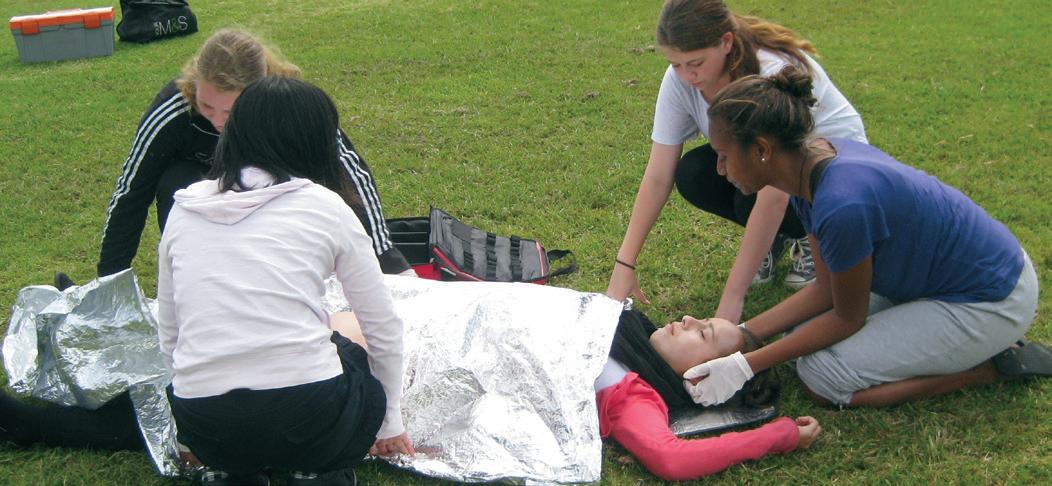
























4-hour course held at your premises at times to suit you. This is a cost effective course designed to give teachers con dence to cope with medical emergencies and accidents at school or on suburban trips. This ts with staff development and is based on Ministry of Education guidelines.

Term 2, 2023 | schoolnews.co.nz 49 HEALTH & SAFETY 23 Mahinui Street, Feilding PH: 0800 625 826 sales@mckeeplastics.co.nz www.mckeeplastics.co.nz 130L & 230L Wheelie Bins also available $288.50+gst POST OR WALL MOUNT INCLUDED ALSO DYNA BOLT OR INGROUND POSTS ARE AVAILABLE Available in a range of colors:
SAVE
A FUN & INTERACTIVE ENVIRONMENT
WE TEACH PEOPLE TO
LIVES IN
For further information and pricing for all rst aid courses please email team@ rst-training.co.nz or call us 0800 1ST AID www. rst-training.co.nz
Image courtesy of Heritage Carpets
© Adobe Stock, stock.adobe.com
Your school’s role in encouraging healthy eating
By Gemma Easton, Editor
As a key provider of food and drink for students, it is essential that school canteens offer healthy options. These should align with nutritional messages taught in the classroom.

The New Zealand Ministry of Health recommends young people enjoy a range of food each day. Options including fruit and vegetables, grains and cereals, dairy, and leans meats and protein all form part of a balanced diet. Foods which are high in fat, sugar and salt should be eaten occasionally.
Food choices on offer at school canteens and tuckshops will impact the messages students are receiving about healthy eating. Ensuring your school provides a range of nutritious foods including fruits and vegetables and food rich in wholegrains, is vital to reinforce healthy eating messages taught in the classroom. Portion sizes should be suitable for children, who need to eat less than adults.
Good nutrition has many benefits for children. These include healthy brain development, stabilised mood and energy, increased focus and concentration, maintenance of a healthy weight, and learning good eating habits for life.
Online lunch ordering systems can provide a simple solution for families. Generally accessed through an app or website, online ordering services allow families to view the tuckshop menu, order and pay online. In some cases, customisable menu options are available. This allows your school to have different menu items like ‘specials’ each day, or add a bespoke menu for a school sports carnival, or to align with an activity such as Harmony Day.
Online ordering systems mean students do not need to take
money to school, and will not risk losing it before they place their lunch order. Making tuckshop choices at home, before your child is at school ensures you know what they are eating, and that you are happy with their choice.
Looking to make healthy eating fun and tasty at your school?
School News spoke to an industry supplier for their tips and tricks.
Menu Development Manager at Libelle, Anya Bell, stresses the importance of a good diet for children. “Eating nutrient

dense wholefoods is critical for children’s overall health, academic performance and wellbeing. As a key gatekeeper of children’s nutritional choices, schools play an important role providing nutritious meal options and guidance to healthy eating that make a difference in their overall wellbeing now, but also lifelong wellbeing outcomes.”
Ms Bell said schools should develop a nutrition culture that is firmly embedded in your schools values. This will help children learn
the skills to make well informed choices later in life.
“Sticking to water and plain milk are better drink choices. Schools should ensure that there is a range of balanced meal options available that cover a range of food groups. Consider how your school will manage treat foods and the messages that you are sharing. There are healthier options of sweet foods and there are manufacturers who wholeheartedly support the opportunity to supply better choices.
“We know that children in Aotearoa generally do not achieve their RDI of vegetables and the important micronutrients that they get with these foods, so anything that heroes vegetables will make a difference. Wholegrains provide more sustained energy than refined grains. Any meal or snack that contains a balance of wholegrains, vegetables, quality protein and healthy fats will go a long way to sustaining children throughout their school day. Within that framework there are plenty of enjoyable options!”
50 Term 2, 2023 | schoolnews.co.nz FOOD & BEVERAGE
Images courtesy of Libelle
FEEDING LEARNERS HUNGRY GREAT FOOD
APPROVED LUNCH SERVICE SCHOOL PROVIDER

Healthier food options for New Zealand’s hungry learners.










• Top quality, freshly made lunches for learners.



• On-site or delivery service, tailored to suit you.



• Professionally audited food control plan.



• Trained, qualified, local sta .
It’s simple: Let our professionals feed hungry students, while your professionals feed hungry minds.

FOOD & BEVERAGE
BE PART OF THE JOURNEY. LET’S TALK. +64 21 709 138 | www.libelle.co.nz
Creating useable spaces with year-round weather solutions
 By Naomii Seah, Industry Reporter
elements.
Installing coverings for outdoor areas is a practical choice for many schools. It enables ākonga to be active outside even during those winter months and reduces UV exposure from the harsh sunshine in Aotearoa. In some cases, shade can protect and extend the lifetime of other investments, such as astroturf.
Covered outdoor learning spaces can also increase student engagement and be a beneficial addition for many areas of the curriculum. Not only does it provide a space for physical education or outdoor activities, covered outdoor areas also create an assembly point with natural ventilation; a useful feature in today’s pandemic landscape. But with a variety of shade solutions available, which one is the best for your school or kura, and what are some key considerations for such a project?
Firstly, the Ministry of Education specifies that New Zealand schools need warm shade, not cool. That means orientation, shade material, height and depth need to be considered when planning a shaded area. This is to ensure UV is blocked without making the space too cold. The material of the covering, and the tint will affect how warm or cool the shade is. With shade sails, the polyethylene mesh can offer up to 98 percent UV block, as well as waterproofing.
When designing and installing shade structures, it’s important to evaluate and design around any
potential climbing risk. Climbing the structure inappropriately can create a fall hazard, as well as damage the equipment.
Verandas, popularly used as covered outdoor learning spaces, should be attached to a main building structure, and covered with a permanent material or translucent plastic sheeting, according to the Ministry of Education. Covered outdoor learning spaces can be used to reduce glare on surrounding classrooms and create an indoor-outdoor flow. For more information on the considerations required when designing an outdoor covered area, School News sought the advice of some industry experts.
Katrina Evans from Archgola said when planning for long lasting shade solutions, it is important to select a company who can offer certification by
a structural engineer for both its design and materials. “This is essential to ensure that the canopy can withstand the wide range of weather conditions we are now more regularly experiencing in New Zealand. UV Protection is usually inbuilt in the roofing solution, and eliminates 99 percent of harmful rays.
“Second, consider the design of the structure carefully. Is the location warm, sheltered or low light and windy? Is there an opportunity for good indooroutdoor flow? This will ensure you get lots of use and benefit from the investment. Adding outdoor blinds means you can gain further protection from wind and rain.
“Third, use a company that is both experienced in providing a quote and design in the format that is required for funding approval.
“Often schools prefer to have canopies installed in the school
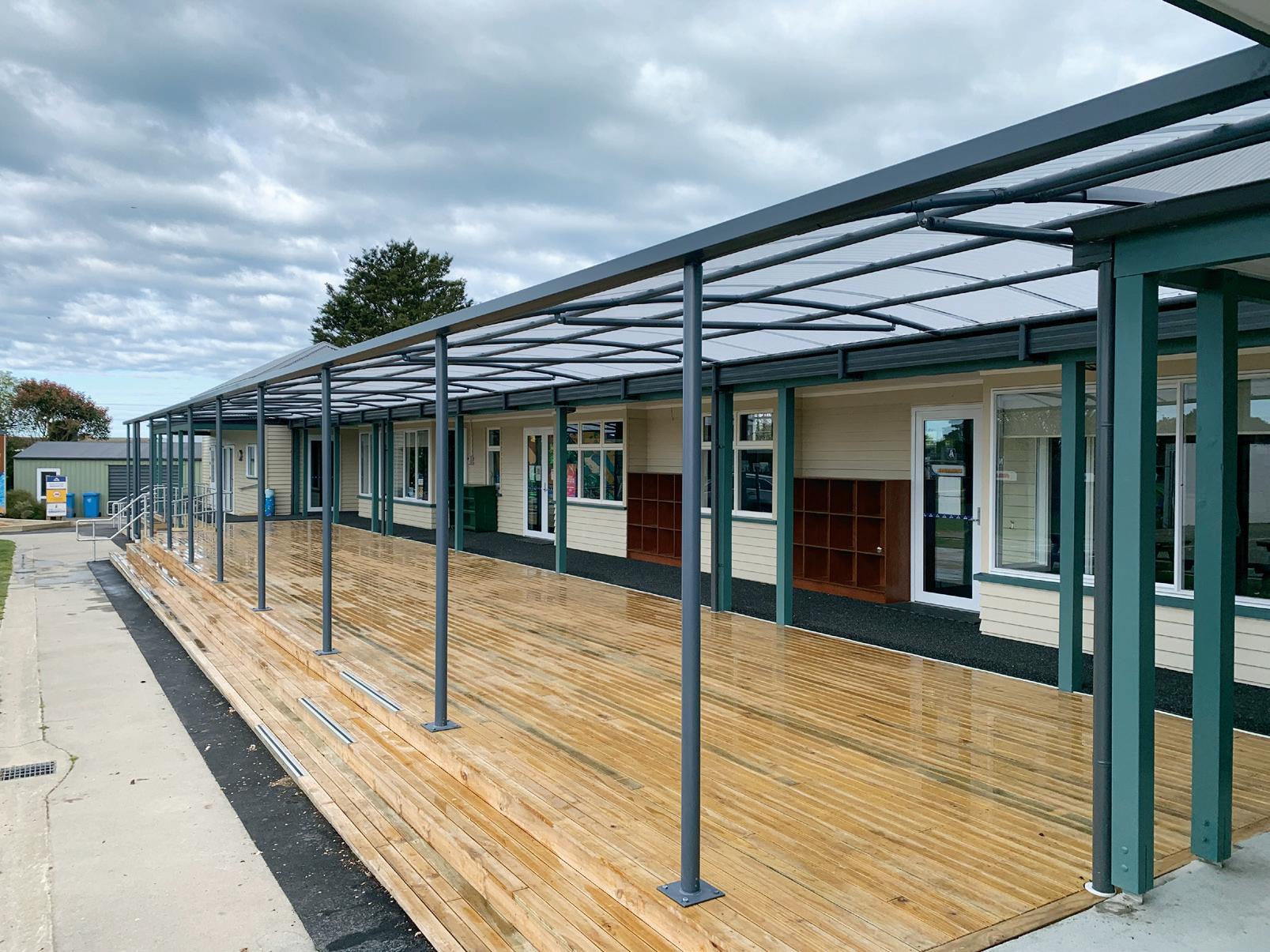
holidays. Make sure you allow plenty of time to complete planning and approval process to achieve this. Typically, once a quote is accepted, and council permits received, it will take 8 to 12 weeks to manufacture the canopy. The installation time at the school takes 2 to 4 days depending on the size of the structure.”
Derek Suckling, founder of Shade Systems NZ ltd recommends customising a shade solution. “Every school has different needs, so opt for a purposebuilt, customised product that will maximise the benefits and justify your investment.
“With a large waterproof canopy structure, there are many considerations to weigh up so ensure your provider has the experience to advise and deliver. Consider if you need sides to keep balls in, ability to use the area at night, or even a PA system.
52 Term 2, 2023 | schoolnews.co.nz PROPERTY
Covered outdoor spaces can ensure usability year-round for outdoor learning and playing, maximising space while providing shelter from the
Image courtesy of Archgola
“Smaller projects such as shading a playground also require careful planning -- how high will the sails need to be to avoid unwanted access or vandalism and still provide shade? Do you want the sails easy to remove in the winter months? Will the sails be designed so they will not sag or flap and be able to withstand up to cyclone rated winds?” Mr Suckling said.
“Think long-term when designing your shade solution. Consider what you need now, and the needs you anticipate in five, 10- and 20-years’ time. Check

the credibility of the supplier, ensure they have a track record and good experience in this specialist industry.





“My biggest recommendation would be to get in touch with other schools who have already installed these structures. Ask the Principal or board members how the project ran, was it on time, how did they get on with the supplier, and what was the overall experience. Observe the structures in use and consider what things you like about them and what things you might want to do differently.”
Outdoor canopy specialists for shade and shelter




Term 2, 2023 | schoolnews.co.nz 53 PROPERTY shelter for aiming high? shelter for generations. Find projects like yours here: www.shadesystems.co.nz 0508 272 446 l archgola.co.nz
Archgola™ has an unbeatable reputation for offering a quality all-inclusive package. installing a cost effective, long lasting and high-quality solution for shade and shelter. of the Ministry of Education design standards for shade structures. • All-weather canopies provide year-round protection for learning and play. • Covered walkways, sandpits, decking and playgrounds. 99.9% UV protection. • Outdoor curtains to enclose the space. sourced materials.
Image courtesy of Shade Systems
Firing up eco-friendly wood-pellet heaters for schools
By Naomii Seah, Industry Reporter
The Ministry of Education is planning on phasing out coal boilers by 2025 – one of the eco-friendly alternatives could be wood-pellet burners.
Last May, Climate Change Minister James Shaw announced that all coal boilers were to be removed from schools by 2025. Coal boilers are notorious polluters, releasing emissions that may pose health and safety risks to students as well as accelerating climate change.
In the announcement, Shaw clarified that heating replacements would either be “woody biomass or electric heating sources.” The move is expected to reduce emissions by 35,400 tonnes over 10 years. Given this announcement, what exactly are “woody biomass” heating sources, and what are the benefits to the environment?
Generally, “woody biomass” heating sources refer to woodpellet heaters. Pellet burners can look like conventional wood burners, but they burn much cleaner, are usually electrically started for convenience, and some models can be controlled remotely through online monitoring systems. They burn compressed wood pellets, which can be bought in bulk to reduce costs.
Once loaded, an automatic system will load the pellets into the fire, ensuring efficient and constant heating. The rate of loading pellets controls the heat of the fire, and
most models have a thermostat and timer, which allows automatic control of the room temperature.
Advantages of pellet burners include ease of use. They produce less ash than wood burners, and release less smoke and particulate matter, minimising health hazards, especially in communal spaces. This means less time is needed to manage wood pellet boilers as compared to coal boilers. Pellets are also carbon neutral, as they are made from wood and logging waste products. This makes them a renewable and energy efficient source of heat, utilising a “circular” model, where waste products are recycled back into the economy.

Additionally, wood ash can be composted on-site, whereas coal ash had to be sent to landfill.
Sam Fowler, Ministry of Education Head of Property, told School News that as of the end of March 2023, 56 boilers in 52 schools have been replaced. Around 84 state schools still use coal boilers, but the programme is on-track for its goal of replacing all coal boilers by 2025.
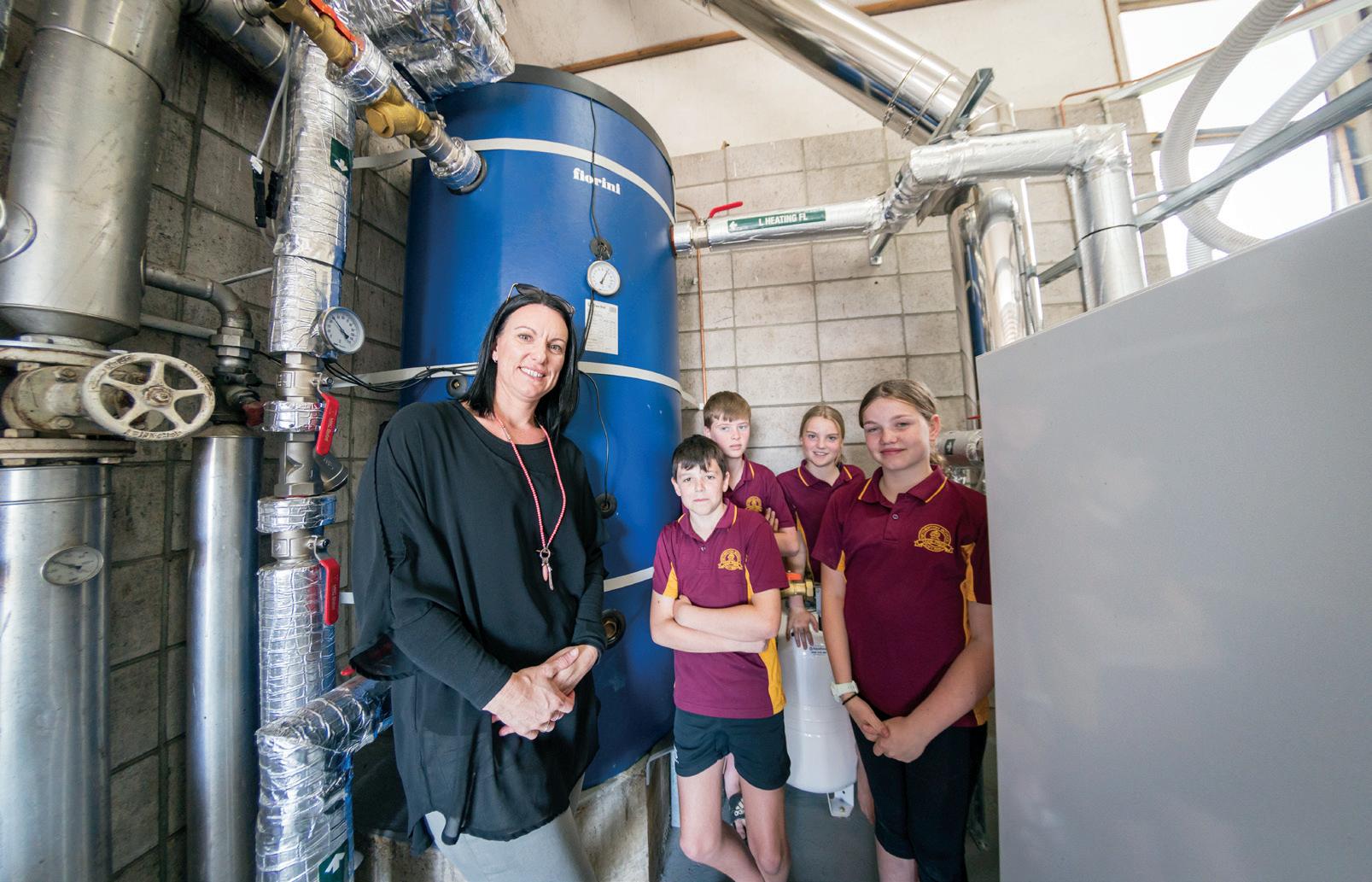
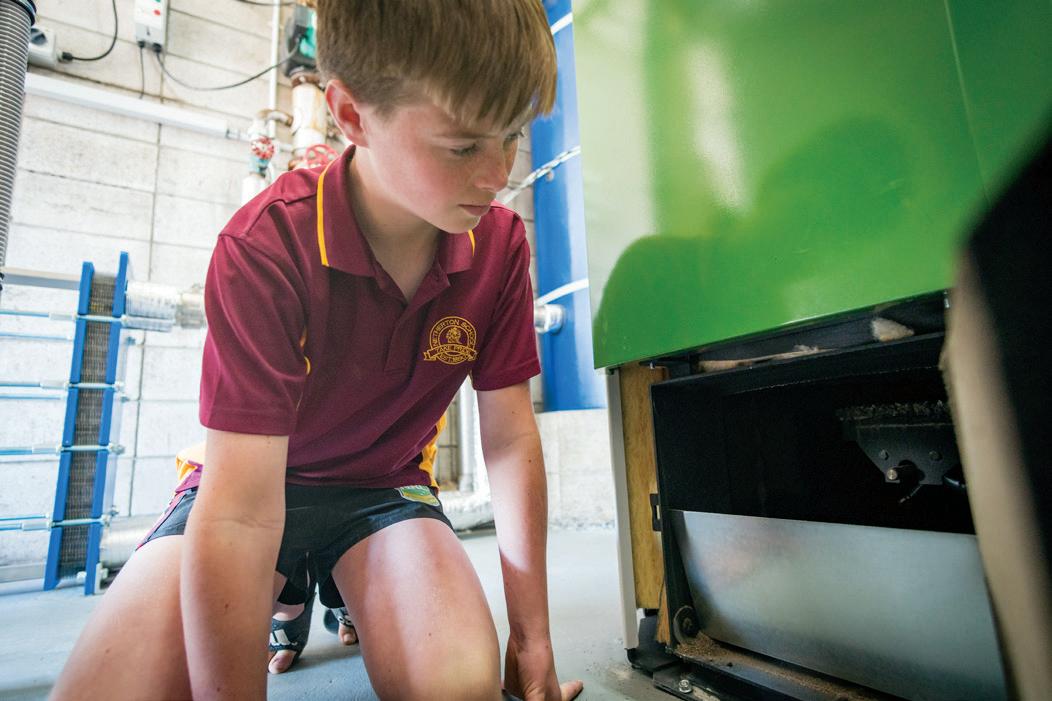
Whether a school receives an electric or wood pellet heater as a replacement is dependent on factors such as location, availability and site-specific features. The Ministry stated that this ensures each school
receives the most efficient and practical heating solution.
According to a February press release from the EECA, schools are using the programme as a teaching tool for students. Installers are encouraged by the Ministry to provide some environmental education during the installation process, giving students a sense of agency and involvement in their school’s sustainability journey. Some of the educational opportunities provided to schools have included “artwork on new containerised pellet boilers, native plantings around the new equipment and even QR codes that the students and parents can
54 Term 2, 2023 | schoolnews.co.nz PROPERTY
Images courtesy of ApricusEco
scan,” said Ismael Costa, acting national programme manager for the Ministry of Education at the time of the release.

Some installation providers have also developed educational resources for teachers to ensure tamariki and rangatahi understand how the heating technology works and appreciate the environmental benefits of the boiler replacement programme. Additionally, as the plant rooms of pellet burners are much safer and cleaner than the old coal boilers, they make suitable learning environments to bring tamariki for lessons, given adequate supervision. With some models, online controls of the heating system will also produce monitoring data – including graphs and numbers – that can be utilised as a real-world example in mathematics and statistics lessons.
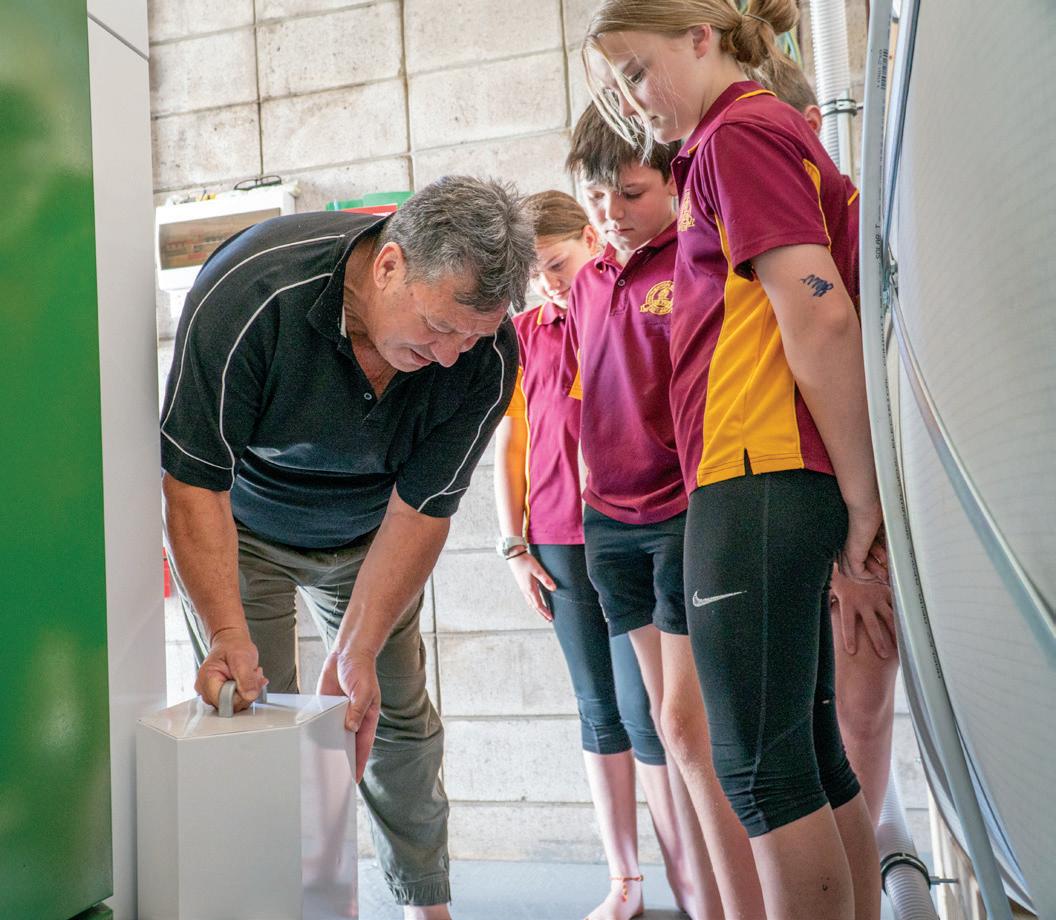
For more on the benefits of wood-pellet heaters, we asked industry expert Marcus Baker, of Apricus Eco Hot Water and Heating, for more details.
















Baker said that wood-pellets could provide a range of environmental benefits as compared to traditional sources of heating.
“Wood pellets are made from sawdust and wood shavings and are a great example of the new circular economy in which energy and resources are used permanently and renewably. Compared to burning coal and diesel, wood pellets emit 99 percent less greenhouse gases because they are made from wood processing materials which ultimately comes from pine


trees that are continually being harvested and replanted in NZ.
“The pellet boilers have extremely low combustion emissions, meaning the local air quality is improved compared to fossil fuels. For example, all the ÖkoFEN pellet boilers meet the Environment Canterbury Ultra Low Emission Boilers standard enabling them to be installed anywhere in the country.



“The pellet boilers for schools are fully automated with no manual handling of fuel required and easy to use, online control systems. The principals and property managers have an app installed on their phones so they can monitor the temperature of the school from anywhere. They use their phone app if they need the heating to run for longer during a particularly cold snap or for a parent teacher interview evening.
“Because they are so efficient, and the heating system is so well controlled, the pellet boilers almost always use less fuel than the existing fossil fuel system.” As for maintenance, Baker says that wood pellet burners require minimal effort to keep running efficiently.





“The boiler and pellet store should have a quick visual check once a week, this takes 1 minute. The automatic ash removal systems will generally need to be emptied every couple of weeks or so. Pellets need to be ordered when they are running low for delivery by a blower truck. All boilers will require an annual service by the installer or local service agent.”

Term 2, 2023 | schoolnews.co.nz 55 PROPERTY
Image courtesy of ApricusEco
Teaching sustainability





















































































































while reducing, reusing & recycling school waste


 By Naomii Seah, Industry Reporter






















































Globally, climate change is becoming increasingly urgent. One study, published in The Lancet in 2021, showed that 70 percent of young people globally were either very worried, or extremely worried about climate change. Locally, young people have been showing up to climate strikes across Aotearoa since 2019. With all this talk about climate change, especially in the younger generations, it’s evident there’s a demand for learning about sustainability in schools. That’s where waste management comes in; effectively managing waste at your school or kura is a relatively easy and tangible way to tackle climate change in a school.







In New Zealand, we generate 17.49 million tonnes of waste a year. Around 72 percent of that, or 12.59 million tonnes goes to landfill. Some of this waste is hazardous, and can leech into the environment, causing harm to flora and fauna.










































One of the most famous examples is plastics: over time,
































































plastics break down into small components, called “microplastics” which are contaminating every corner of the globe.
Proper waste management, such as adequate composting schemes, recycling and waste minimisation, can drastically reduce the amounts we send to the landfill, and therefore environmental contamination. The first step to reducing the impact of your school’s rubbish is a waste
audit. There are several providers, including local councils and nonprofit organisations. However, smaller schools or kura can conduct their own waste audits, perhaps involving ākonga, giving them agency and empowering them to identify problems and create solutions. A waste audit involves identifying waste streams (organic, inorganic, recyclable) and disposal systems to ensure waste is properly sorted and managed. There are many online resources to help schools and kura looking to conduct a waste audit. Larger schools also have the option of hiring a consultant.
Once you know the types of waste going into bins, quick and simple changes can be made. For example, more than one bin might need to be put in certain areas, like a scraps or compost bin in addition to a general waste bin. Creating waste streams can be an easy and efficient way to minimise waste, by ensuring that items being sent to the landfill cannot be composted, recycled, or reused.

Waste streams are also important when you consider that food, paper, and other organic waste is a key generator of emissions. Organic waste sent to the landfill decomposes in an anaerobic (oxygen poor) environment, producing methane and carbon dioxide.



Composting and/or creating worm farms is a cost-effective and environmentally friendly solution to sending organic waste to the landfill. Instead of generating emissions, schools can generate nutrient-rich, fertile soil which can be recycled back into the earth by the community. Worm-farms and compost-piles can also be great educational resources, as students can see chemical reactions and decomposition happening in real time.
Organisations that offer waste audits also often offer educational experiences for ākonga and school staff on waste management. Some councils offer tours of local dumps, and other organisations have composting specialists.
56 Term 2, 2023 | schoolnews.co.nz PROPERTY
23 Mahinui Street, Feilding PH: 0800 625 826 sales@mckeeplastics.co.nz www.mckeeplastics.co.nz 130L & 230L Wheelie Bins also available $288.50+gst POST OR WALL MOUNT INCLUDED ALSO DYNA BOLT OR INGROUND POSTS ARE AVAILABLE Available in a range of colors:
Reducing waste is not only good for the planet, it’s an opportunity to teach waste management and environmental principles to ākonga.
© Adobe Stock, stock.adobe.com
How composting will influence better informed climate policy
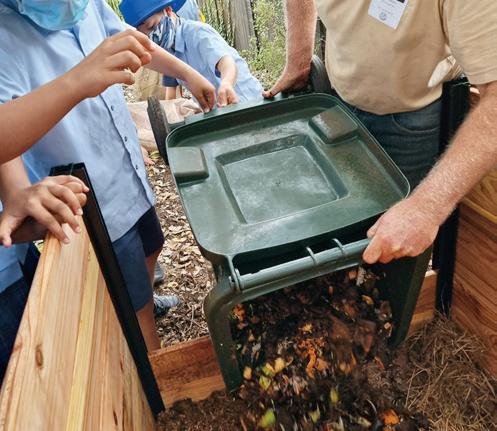
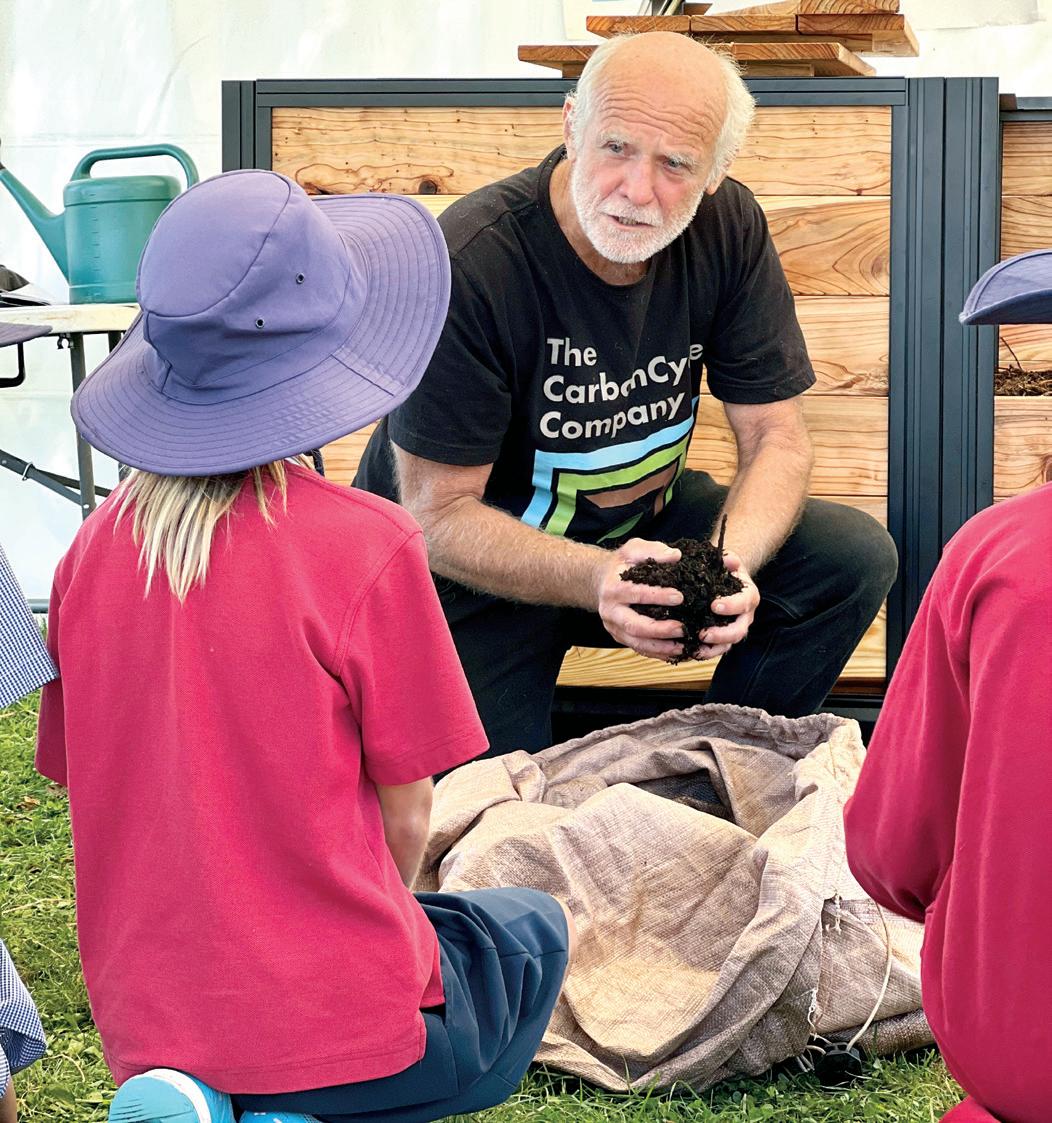

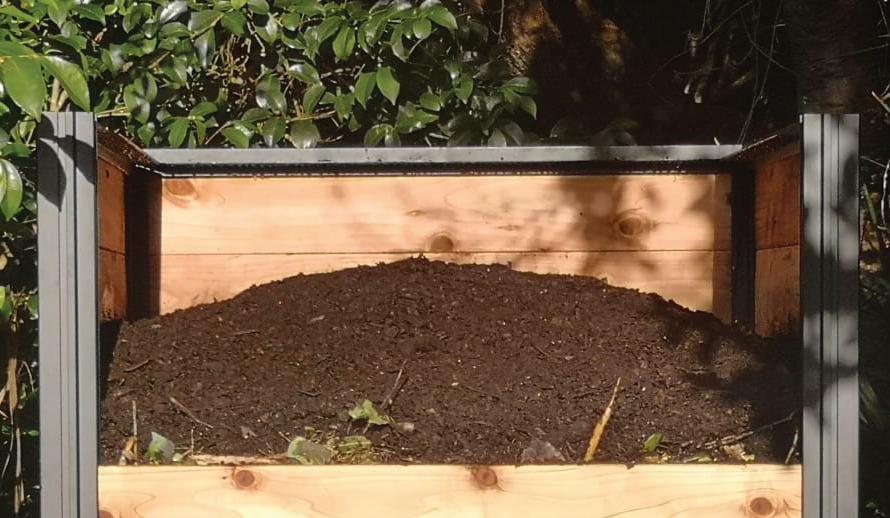 By Richard Wallis, Director, The CarbonCycle Company
Newly revealed soil carbon losses almost double carbon emissions from 40 to 70bt pa.
Recently carbon accountants realised the carbon models shaping our response to global warming do not take account of carbon respired from the soil, nor the knock-on effects: less soil water holding capacity; impaired ability of parched landscapes to support vegetative cover; less capacity for photosynthesis; less CO2 drawn down from the atmosphere into stable ecosystems, and ultimately into porous soil carbon structure. The combined effect of burning fossil fuels as well as the emission of soil carbon to the atmosphere as CO2; and reduction of photosynthetic drawdown is that net annual emissions of CO2 to the atmosphere jump from 40bt to 70bt.
This goes a long way to explain why in the last few years warming is occurring far more rapidly than predicted. This development highlights the need to rectify the loss of soil carbon structure.
Advances in scientific understanding of plant nutrition suggest that the efficiency with which plants photosynthesise CO2 and water into carbohydrate is determined by the form in which their nitrogen requirements are satisfied. Photosynthesis is more efficient when plants feed on nitrogen that is first metabolised
by a large diverse biomass of bacteria and fungi, in particular amino sugars. Conversely photosynthesis is significantly less efficient when fertilised by nitrates.

More efficient photosynthesis returns more carbohydrate to the soil by way of root exudates and greater levels of diverse organic matter in the soil. This greater carbon-based biomass sustains larger, more diverse populations of bacteria and fungi and that immobilises the preferred nitrogen and feeds it back into the plants as it simultaneously maximises
the residue of resistant organic carbon deposited in the soil. This is mostly a dead microbial necromass. That carbon is not respired. It is sticky and remains in the soil where it holds compacted mineral particles apart to form spacious porous mineral carbon structure which enables the soil to exchange gases. This means that ever larger populations of bacteria and fungi can respire and live in the soil. It also enables the soil to absorb and hold the large volumes of water needed for vigorous photosynthesis.
By contrast when plants receive their nitrogen in the form of nitrate fertilisers, photosynthesis becomes substantially less efficient resulting in less exudates, less organic matter in the soil and a decrease in volume and diversity of bacterial and fungal populations. The building and maintenance of soil carbon structure is lost and over time soil carbon structure degrades and is respired back into the atmosphere in a vicious downward spiral. This degenerative process accounts for the increase of 30bt of atmospheric CO2 which has only recently been discovered. Our mission is clear. We need to increase the volume of soil organic matter by diverting food-waste from landfill to make compost, grow food and restore the necessary soilbuilding biology. This will restore the efficiency of photosynthesis and build soil carbon structure across our landscapes. When this practice is firmly established in schools, a common understanding of how soil carbon structure is regenerated will better inform climate policy that will lead to lower carbon dioxide emissions, better food security and better nutrition.
Term 2, 2023 | schoolnews.co.nz 57 PROPERTY Experience the joy of making compost, building life in the soil and growing fresh food With Carboncycle compost boxes you can make healthy compost for a thriving ecosystem. carboncyclecompost.com The CarbonCycle Com pany CarbonCycle Composters CarbonCycle Compost
Images courtesy of The CarbonCycle Company
Why impact attenuation testing is essential



Therefore, it is essential to test playground surfaces for impact attenuation to reduce the risk of life-threatening head injuries, in compliance with the NZS 5828:2015 standard


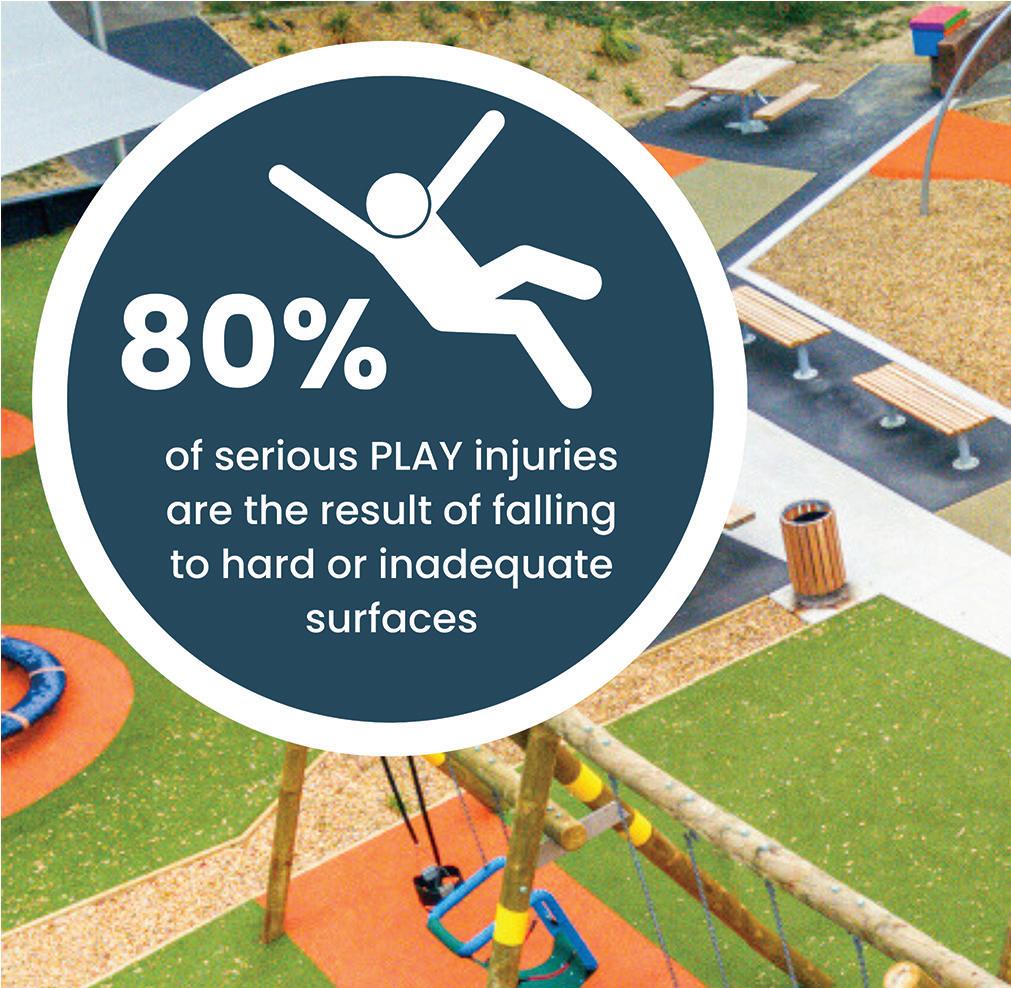
including loose-fill materials such as wood/bark products, sand, and pea gravel, and synthetic surfaces such as rubber tile, poured-in-place, artificial turf, and other artificial surfaces.
 By Adam Stride, Director, Principal, RPII L3 Outdoor & L4 Enclosed Play Area Inspector M#1074A / M#1023AF

Ensuring the safety of children is a top priority in any environment, including playgrounds.

Unfortunately, falls are the primary cause of serious injuries on playgrounds, often due to inadequate or hard surfaces.


The purpose of impact attenuation testing is to measure the shock-absorbing properties of a playground surface. This testing method simulates the impact of a child’s head with the surface and quantifies shock absorbency by two scores: g-max and Head Injury Criterion (HIC). G-max measures the maximum acceleration or shock produced by an impact, while HIC is an empirical measure of impact severity based on the relationship between the magnitude and duration of impact accelerations and the risk of head trauma.
Different materials can be used for playground surfaces,
Loose-fill materials can improve impact performance at a relatively low cost, but they require regular top-ups, which can be significant maintenance costs. Synthetic surfaces, on the other hand, require a more significant initial investment but little to no maintenance, but do require impact testing to verify ongoing performance.
Regardless of the surface material used, playground surfaces should be tested and certified compliant for the Critical Fall Height (CFH) impact attenuation performance of NZS 5828:2015 and EN1177 If the equipment’s fall height exceeds the critical fall height

performance of the surface, it may fail to provide protection against head, neck, and back injuries. Additionally, synthetic materials are prone to degradation over time, including weathering and UV exposure, which can lead to a loss of impact performance. Therefore, regular impact testing is the only way to verify the impact performance over time.
In conclusion, regular impact testing of playground surfaces every two years is crucial to maintaining impact safety standards and reducing the likelihood of serious injuries, particularly to the head, neck, and back. The safety of children on playgrounds should never be compromised, and playground operators should prioritise investing in impact attenuation testing to ensure the playground’s safety.
58 Term 2, 2023 | schoolnews.co.nz PROPERTY
Preventing accidents at Waimea College with SentryGlas skylights
Getting a call about an accident is something no school wants. Unfortunately, it happened at Waimea College one weekend – a child had fallen through a skylight, sustaining injuries.
Skylights, though they provide many benefits like increased natural light, pose a significant fall risk. Students may accidentally or intentionally access the roof, and skylights can be easy to miss, blending in with other roofing materials. Skylights may also present a false sense of security due to their double glazing. They are not, though, meant to bear loads, and skylights may unexpectedly give way, leading to accidents.
Waimea College had around 75 domes over its plastic roofing, which were old and brittle. The roofs were on low, one storey buildings which were easily climbable.
Fortunately, when Waimea College contacted Adlux, they were able to replace the skylights with new, safe “SentryGlas”. This new glass is a
type of laminate safety glass, which is five times stronger and 100 times stiffer than traditional sky-light materials. The laminate lies under the glass, meaning that even if the skylight breaks, the laminate will hold the glass in place and prevent a fall from height, minimising injury and potentially saving lives.

Matthew Church, General Manager at Adlux, said: “you can argue that children shouldn’t be on the roof but the unfortunate fact is that children do go on the roof... preventing someone getting on the roof in the first place is the best option, but if you can’t guarantee someone’s not going to get on the roof, the next best option is something that won’t break.”
Diane Chapman, Resource Manager at Waimea College said: “The process of installing the skylights was seamless – Adlux provided the units in batches and a timely manner, and in so doing enabled the actual installation to be completed in an orderly manner.

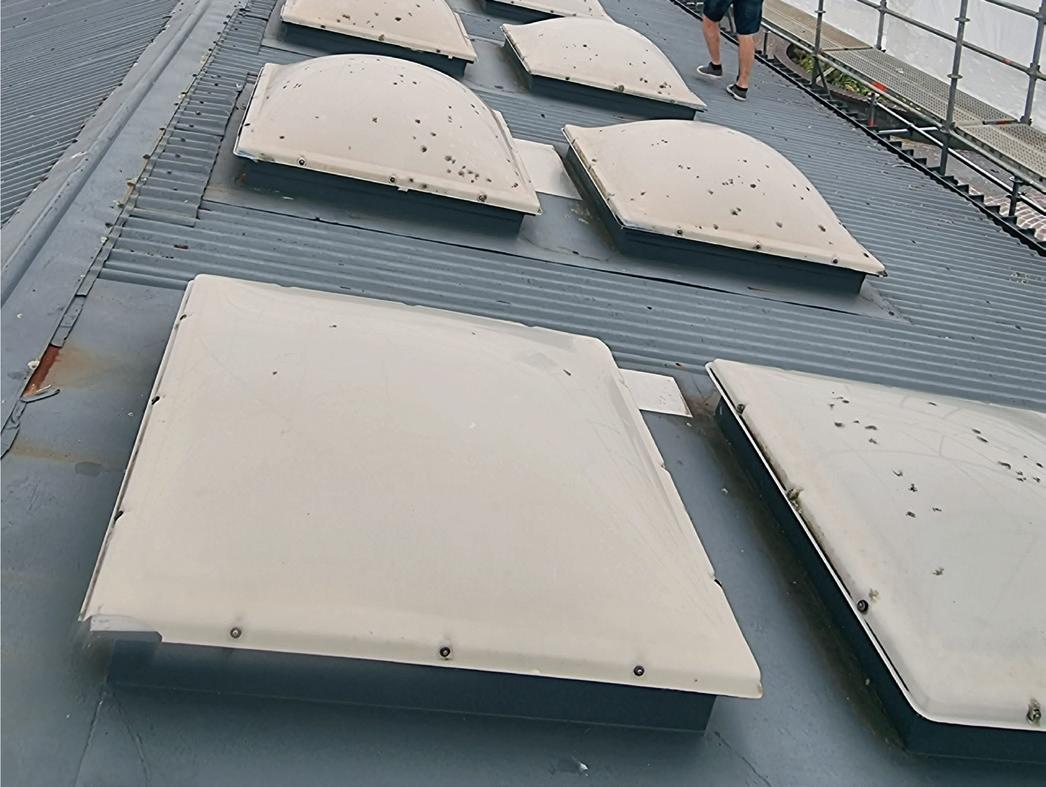
“The skylights are modern more flattering than many of our old dome ones, enabling easier roof cleaning, and providing better light in some areas.”

PROPERTY Term 2, 2023 | schoolnews.co.nz 59 Phone: 0800 500 557 Email: sales@adlux.co.nz www.adlux.co.nz Minimize Fall Risk Laminated Sentry Glass Option Custom Made To Replace Domes Natural Ventilation Options Double Glazed Improve The Building’s Appearance UPGRADE YOUR OLD SKYLIGHTS SKYLIGHTS An often overlooked Fall Hazard
Case Study: All
of Adlux BEFORE AFTER
images courtesy