PRINCIPAL SPEAKS


Tumaki Maria Dunn: Ensuring the best for our rangatahi


LITERACY SUCCESS FOR EARLY READERS


Principal amazed with progress from Better Start Literacy Approach

Essential Reading for Principals • Department Heads • Teachers • Professionals Issue 60 | Term 1, 2023 | NZD $12 incl GST | schoolnews.co.nz
The essential industry guide
Southern Cross will fund Pause Breathe Smile for your school




Pause Breathe Smile is a mind health programme that helps tamariki to regulate their emotions, build self-awareness and relate positively to others.



Southern Cross funds teacher training for any primary or intermediate school in Aotearoa. With this support, Pause Breathe Smile has reached more than 88,000 children in over 320 schools since September 2020.

coordinator@pausebreathesmile.nz
pausebreathesmile.nz
Delivered under licence from
NEW ZEALAND’S 5-STAR RATED




EXTENSIVE RESEARCH:
2 years of product development before launch.


RIGOROUS TESTING:
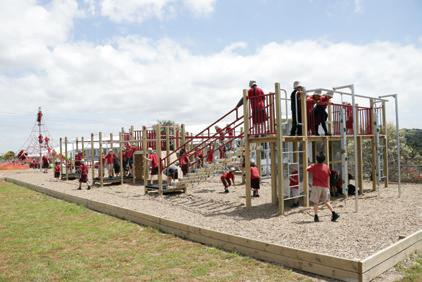
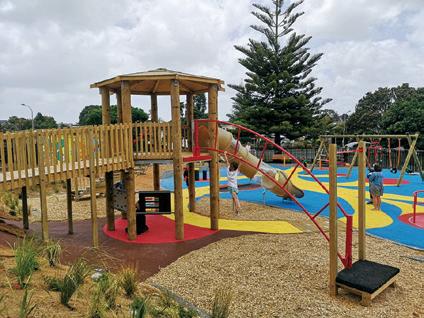
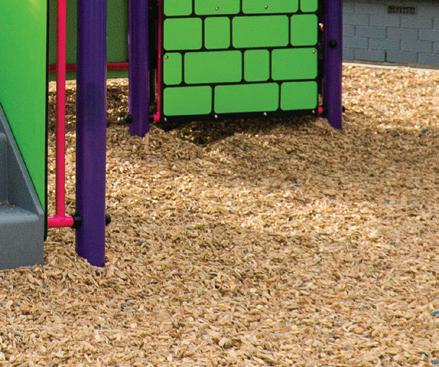
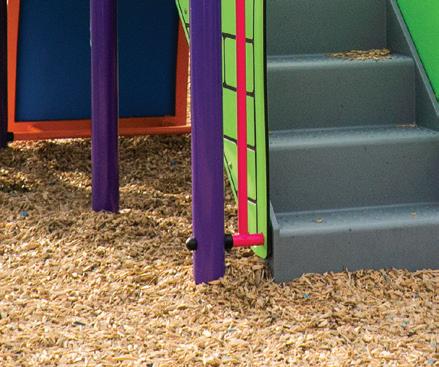
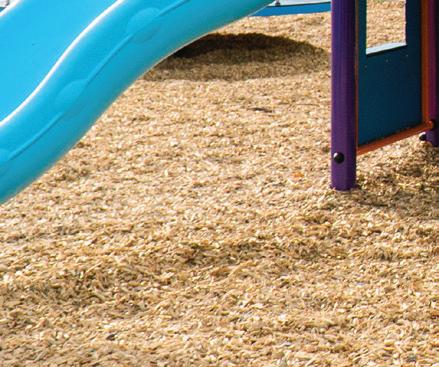
3 years testing of Cushionfall by 3 councils in 5 playgrounds before council approval.


ONGOING QUALITY TESTING:





More than 50 tests in the last 10 years alone!
HIGHEST IMPACT TESTS: In Australasia achieved.



PREFERRED CHOICE:



Councils, the Ministry of Education, Kindergarten Associations, Play Centre Associations and Preschool Centres.


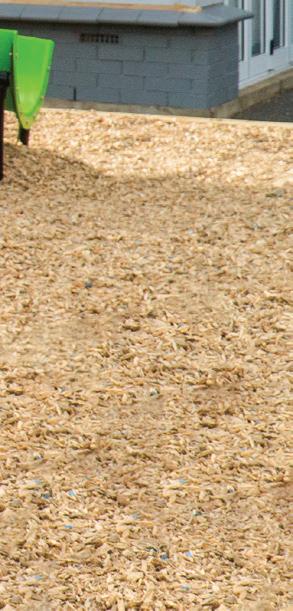
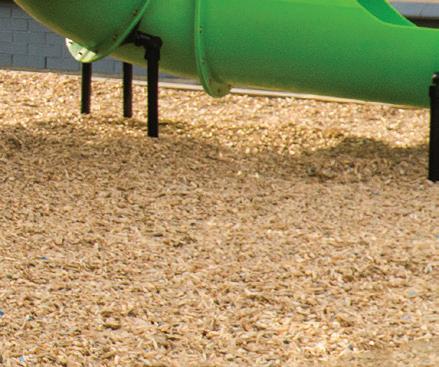
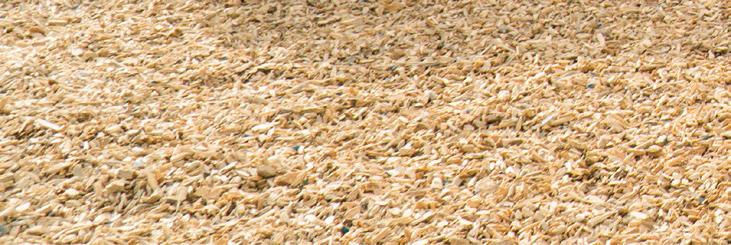
We are so devoted to ensuring supreme quality and safety that we have spent 15 years perfecting our grinder that produces our wood chip so that it removes all traces of nails, staples and hazardous metals/materials, and has no “sharp edges”. Since safety is paramount - we implement an extensive testing regime every two to three years, evaluating the impact e ciency of the wood chips being produced.


SAFETY CONFIDENT
Manufactured exclusively by Reharvest Timber Products Ltd Phone (09) 299 3999 | info@reharvest.co.nz www.reharvest.co.nz | find us on facebook
NOHARM TO NATURE ENVIRONMENTALLYFRIEND L Y
School News is distributed to primary, secondary and intermediate schools throughout New Zealand by Multimedia Publishing Limited.

The views and images expressed in School News do not necessarily reflect the views of the publisher. The information contained in School News is intended to act as a guide only, the publisher, authors and editors expressly disclaim all liability for the results of action taken or not taken on the basis of information contained herein. We recommend professional advice is sought before making important business decisions.
Advertising Conditions
The publisher reserves the right to refuse to publish or to republish without any explanation for such action. The publisher, it’s employees and agents will endeavour to place and reproduce advertisements as requested but takes no responsibility for omission, delay, error in transmission, production deficiency, alteration of misplacement. The advertiser must notify the publisher of any errors as soon as they appear, otherwise the publisher accepts no responsibility for republishing such advertisements. If advertising copy does not arrive by the copy deadline the publisher reserves the right to repeat existing material.
Disclaimer
Any mention of a product, service or supplier in editorial is not indicative of any endorsement by the author, editor or publisher. Although the publisher, editor and authors do all they can to ensure accuracy in all editorial content, readers are advised to fact check for themselves, any opinion or statement made by a reporter, editor, columnist, contributor, interviewee, supplier or any other entity involved before making judgements or decisions based on the materials contained herein.
School News its publisher, editor and staff, is not responsible for and does not accept liability for any damages, defamation or other consequences (including but not limited to revenue and/or profit loss) claimed to have occurred as the result of anything contained within this publication, to the extent permitted by law.
Advertisers and Advertising Agents warrant to the publisher that any advertising material placed is in no way an infringement of any copyright or other right and does not breach confidence, is not defamatory, libellous or unlawful, does not slander title, does not contain anything obscene or indecent and does not infringe the Consumer Guarantees Act or other laws, regulations or statutes. Moreover, advertisers or advertising agents agree to indemnify the publisher and its’ agents against any claims, demands, proceedings, damages, costs including legal costs or other costs or expenses properly incurred, penalties, judgements, occasioned to the publisher in consequence of any breach of the above warranties. © 2023 Multimedia Publishing Ltd. It is an infringement of copyright to reproduce in any way all or part of this publication without the written consent of the publisher.
PO Box 5104, Papanui, Christchurch, 8542, NZ Phone: (03) 365 5575 Fax: (03) 365 1655 mail@schoolnews.co.nz www.schoolnews.co.nz

ISSN: 2624-2389 (Print) ISSN: 2624-2397 (Digital)
EDITOR
Gemma Easton, editor@schoolnews.co.nz
INDUSTRY REPORTERS
Naomii Seah & Sarah Davison
DESIGN & PRODUCTION
Richard McGill, production@schoolnews.co.nz
ADVERTISING
Dee Dawson, advertising@schoolnews.co.nz
CONTRIBUTORS
Maria Dunn & Carla McNeil
KEY
Commercially funded supplier profile or supplier case study
Supplier information or content
Suppliers share their views in one-off, topical pieces General editorial. Case studies and features may cite or quote suppliers, please be aware that we have a strict ‘no commercial content’ guideline for all magazine editorial, so this is not part of any commercially funded advertorial but may be included as relevant opinion. Happy reading!
Inside our term one issue
04 Term 1, 2023 | schoolnews.co.nz FRONT DESK
44 Front Desk Editor's Note: Ch.. Ch.. Ch.. Changes! 05 Education Special Report: A more equitable education system for Aotearoa? 06 Pricipal Speaks: Tumaki Maria Dunn – Ensuring the best for our rangatahi ...................................... 10 Profile: St Margaret’s College Christchurch ........................ 14 Confidently teaching students with dyslexia ...................... 16 Administration Modern classroom design: How furniture can create the perfect learning space 20 Tips for planning the perfect school fundraiser 26 Teacher’s Desk Positive wellbeing tools for schools in 2023 28 Teaching Resources STEAM: Creating future problem-solvers 32 Te Takanga o Te Wā and Aotearoa: New Zealand’s anging Histories Curriculum 38 Technology Creating that wow factor: broadcasting studios for schools 41 E.O.T.C. Explore Ōtautahi Christchurch: A city rich in opportunities.............................................................. 44 Enriching learning environments with education outside the classroom 46 Health & Safety Automated External Defibrillators in Schools .................... 53 Property Maximising the benefits of play with playground design 54 Solar power solutions for schools 56 Casestudy: Hawkes Bay’s solar revolution 56 Casestudy: Forrest Hill School’s Solar a “Proven Performer”.......................................................................... 58 10 20 06 Front Cover: Better Start Literacy Approach
Ch.. Ch.. Ch.. Changes!
As the now former editor of School News, I want to extend a sincere thank you for reading, collaborating, and sharing your stories with me over the past few years. I have been endlessly inspired by the vital work schools have been doing around the country, particularly during the height of the pandemic. It was a great privilege to interview so many principals and teachers during lockdowns, teacher strikes and floods, in the lead up to curriculum changes. No industry works harder than this one, and I am thrilled to have been part of a magazine dedicated to showcasing that hard work and innovative spirit. I look forward to reading this issue alongside you all, having now left School News in highly capable hands. A very warm and official welcome to Gemma, Naomii, and Sarah, our fabulous new School News editorial team. I hope the new
school year brings plenty of joy and exciting stories to share.
Kindly, Rosie
Clarke
Kia ora! My name is Gemma and I am the new editor of School News. Thank you to Rosie for her kind words, and the work she has put into so many editions of School News, ensuring it is a valued publication throughout the industry.

I have spent the past few years working in schools, in a non-teaching role. This has given me an insight into how schools operate and the issues aff ecting both teaching and non-teaching staff. Above all, though, I know how incredibly hard everyone works in a school. My background is in writing and editing, and I am thrilled to be back doing what I love! I feel fortunate to have the opportunity through School News to showcase and celebrate the wonderful things happening in schools and kura across Aotearoa. There is no such thing as a quiet time in schools, but the back-to-school period can be particularly busy. Ensuring everyone is okay as the year commences is important, so in this issue of School News, we explore wellbeing, and discuss ways to keep staff, students and the wider community mentally healthy.
Change is coming this year, with the roll out of the NZ curriculum refresh. This is the focus of our Special Report . We also take a closer look at the Histories Curriculum, and resources for engaging ākonga of all ages. In our Principal Speaks section, we meet Maria Dunn, Tumuaki (principal) of Te Kura Takiwā O Mangakahia, or Mangakahia Area School, the first wāhine Māori principal in the school’s history. Ms Dunn discusses how she has been working to build a sense of belonging in the school, creating connections across year levels, cultures and learning areas. Go gently as we embark on a new school year.
Ngā mihi, Gemma
Got plans for your school in 2023? Write in and let us know so we can feature you!
• All-weather canopies provide year-round protection for learning and play.
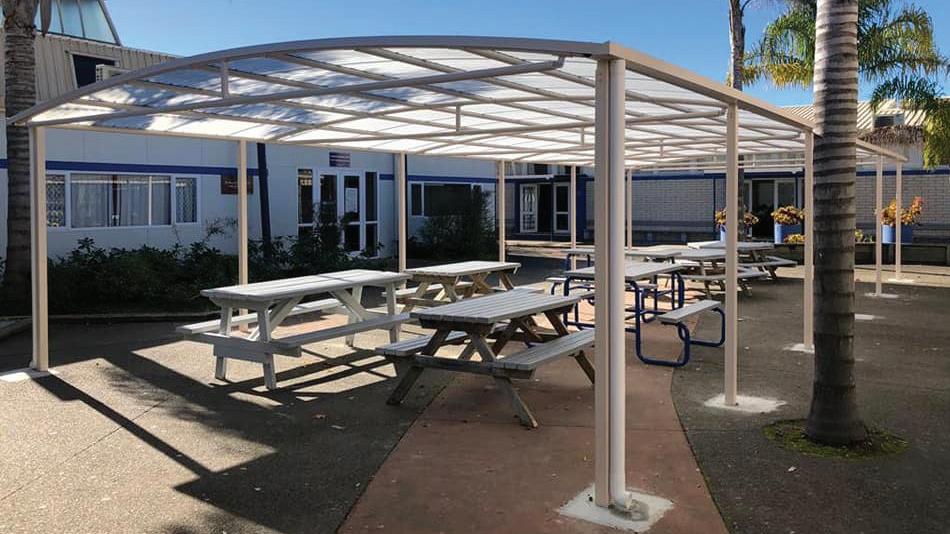
• Covered walkways, sandpits, decking and playgrounds.
99.9% UV protection.
• Outdoor curtains to enclose the space. sourced materials.
Outdoor canopy specialists for shade and shelter
Archgola™ has an unbeatable reputation for offering a quality all-inclusive package. installing a cost effective, long lasting and high-quality solution for shade and shelter.
of the Ministry of Education design standards for shade structures.
Term 1, 2023 | schoolnews.co.nz 05 FRONT DESK
EDITOR'S NOTE
Gemma Easton, Editor, SchoolNews editor@schoolnews.co.nz
0508 272 446 l archgola.co.nz
A more equitable education system for Aotearoa?
2024
Curriculum refresh:
• Refreshed Technology, Arts and Science curriculums will be available for teaching.
• Learning Languages, Health and Physical Education curriculums will undergo design and feedback processes.
NCEA change programme:
• NCEA Level 1 subjects.
• TMoA NCEA Level 1 Wāhanga Ako will be implemented.
• NCEA Level 2 subjects will go into pilot stages.
• Mini-pilot of NCEA Level 3 Te Reo Māori.
By Naomii Seah, Industry Reporter
As the 2023 school year begins, educators are looking toward the rollout of the curriculum refresh; hopes are high, but so are concerns of inadequate resourcing, inequitable implementation, and poor timing, as the NCEA change package continues simultaneously.
In many ways, 2023 is set to be a year of change, turbulence, and uncertainty in the education sector of Aotearoa. Term 1 marks the first term that the new Aotearoa New Zealand Histories curriculum will be taught nationwide, marking the first of a wider New Zealand curriculum refresh that will unfold over the next three years. Additionally, pilot programmes will begin for the National Certificate of Educational Achievement (NCEA) change programme, described by the Ministry of Education on their website as “the most significant reform of NCEA since the
qualification was introduced”. While the Ministry of Education describes the National Curriculum refresh and NCEA changes as being “well aligned”, those on the ground have their doubts, as new NCEA standards look to be developed before changes to the curriculum are implemented.
Although the commitment to Te Tiriti and mana ōrite frameworks have been praised, educators are concerned over the support available for implementation of a new curriculum amidst ongoing changes to certificate standards. Educators are worried that a rollout that is too generalised, inadequately supported and resourced will lead to continued inequitable outcomes.

The timeline 2023
Curriculum refresh:
• Aotearoa New Zealand Histories curriculum will now be taught in all schools.
• Mathematics and Statistics and English curriculums developed over 2022 will now be
available for teaching.
• Technology, Arts and Science curriculums will undergo design and feedback stages.
NCEA change programme:
• Pilot of NCEA Level 1 subjects (developed 2021).
• Mini-pilot of NCEA Level 2 Te Reo Māori
• Pilot of Te Marautanga o Aotearoa (TMoA) NCEA Level 1 Wāhanga Ako .
• Mini-pilot of TMoA NCEA Level 2 Wāhanga Ako.
• Development of materials for NCEA Level 3 NZC subjects.
• Develop TMoA NCEA Level 3 Wāhanga Ako materials.
• Te Ao Haka implemented across all three NCEA levels.
• Te Reo Matatini me to Pāngarau | Literarcy and Numeracy, implemented across all three NCEA levels dependant on sector readiness.
• Vocational Pathways refresh phased in.
• Full pliot of TMoA NCEA Level 2 Wāhanga Ako.
• Mini-pilot of TMoA NCEA Level 3 Wāhanga Ako.
2025
Curriculum refresh:
• By the end of 2025, all schools will be operating on the refreshed New Zealand curriculum.
• Ongoing implementation and support.
NCEA change programme:
• NCEA Level 2 subjects implemented.
• TMoA NCEA Level 2 Wāhanga Ako implemented.
• Full pilot of NCEA Level 3 subjects.
• Full pilot of TMoA NCEA Level 3 Wāhanga Ako.
2026
NCEA change programme:
• NCEA Level 3 subjects implemented.
• TMoA NCEA Level 3 Wāhanga Ako implemented.
06 Term 1, 2023 | schoolnews.co.nz EDUCATION
SPECIAL REPORT
© stock.adobe.com
• Park Supplies & Playgrounds design and manufacture playgrounds right here in New Zealand and have been doing so for more than 30 years.

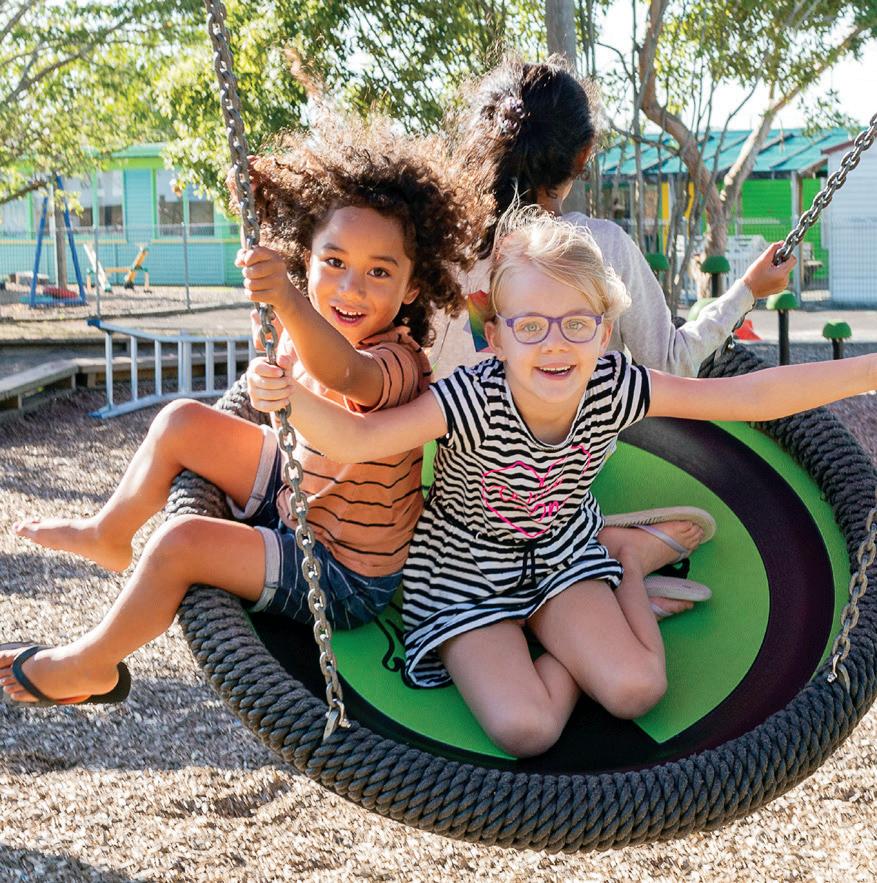
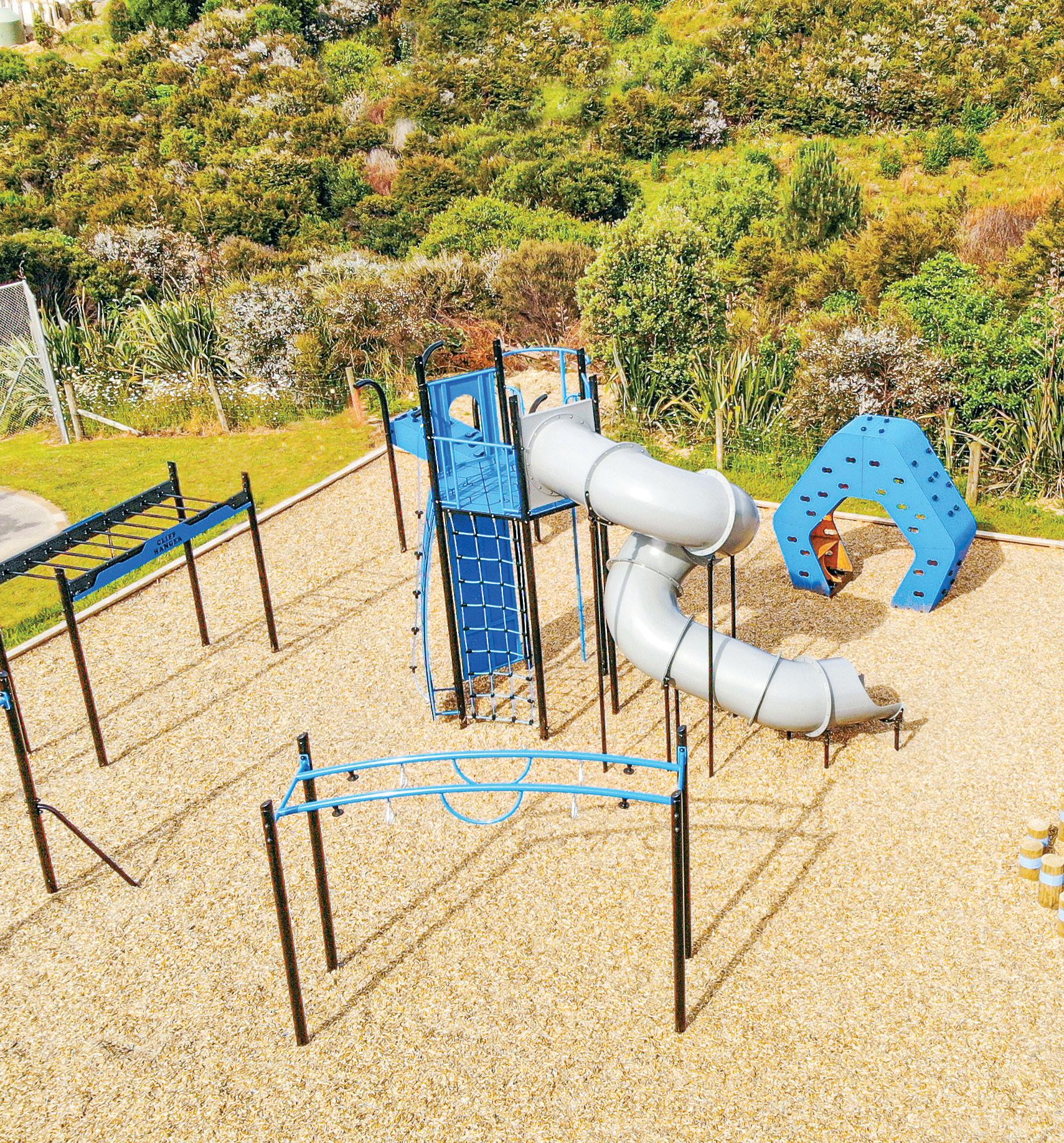
• rather than importing componentry from overseas and you have the reassurance that our equipment is robust and made for New Zealand conditions.
Our
• Park Supplies & Playgrounds provide imaginative and fun playground solutions to aid in development,

• We value input from your staff and students and will involve you in the design process to ensure your playground needs and dreams are realised.

amazing play experiences to Support local with our New Zealand designed and manufactured playgrounds.
Expertsin delivering
playgrounds are designed to meet the needs of your students at your school. Contact Park Supplies & Playgrounds today to begin your new playground journey Melissa Cowie 021 502 220 melissa@ parksupplies.co.nz Jenny Mullins 021 822 676 jenny@ parksupplies.co.nz www.parksupplies.co.nz 09 527 4666 Kiwi kids for more than 30 years
The positive

Leanne Otene, Tumaki of Manaia View School in Whangārei, and part of the design team for the new Aotearoa New Zealand Histories curriculum, describes the curriculum refresh as “absolutely necessary to bring us into the 21st century”.
“We need to change our traditional approach to education, and the curriculum refresh is definitely moving us toward ensuring our young people have the knowledge, the skills and the attributes that are required for future focused employment,” Otene said.
Crucially, the refresh is underpinned by the values of Te Tiriti. Schools are being encouraged to reach out to local hapū and iwi to begin a process of local curricula codesign, which aims to address existing inequities and ensure the values of te ao Māori are present throughout learning environments.
In the original announcement of the curriculum refresh, Associate Minister of Education Kelvin Davis said the most important changes were to “address equity, trust and coherence through integrating the He Tamaiti Hei Raukura framework”.
Davis continued: “Ākonga need to learn from a curriculum that is rich in te reo and tikanga Māori, is meaningful to them and their whānau, and equips our tamariki with the skills and wellbeing they need in this ever-changing world.”
Davis said the curriculum would “strengthen Te Marautanga o Aotearoa in partnership with whānau, hapū and iwi, grounded in the key values and aspirations of te ao Māori.”
And it seems that aim has been met, with Otene describing the whakapapa of the curriculum as “absolutely well thought through”.
“The framework has been developed and co-designed with mana whenua. It’s a wonderful framework.”
Patrick Gale, principal of Rangitoto College, New Zealand’s largest secondary school, agrees. He said “it’s great we’re now teaching local histories, and this has been mandated by the Ministry –we’re very supportive of that.”
Another welcome aspect of the curriculum refresh is its aim to “provide greater clarity”. Gale notes that “people are eager to embrace a much more detailed and challenging curriculum”. He said that “students need to be challenged and to perform better on both national and international levels. And the curriculum is the key founding document that guides us through that process”.
Liam Rutherford, president of NZEI Te Riu Roa, concurs. He noted that across the board, he’s seen that people “are really excited about the evolution of a new curriculum, particularly around that greater focus on the development of local curriculum”.
Otene said she’d also like to recognise the extensive consultation that occurred ahead of the rollout, acknowledging that “the Ministry of Education is listening to the sector, and it’s important that continues. They have been proactive in ensuring the various sector bodies are involved. As that continues, we’ll continue to tell them what’s needed. That needs to be heard too”.
The challenges
Although the ministry and the wider sector agree about what changes are needed – clearer learning objectives at each level; localised, culturally specific curriculums; greater equity of educational outcomes – it seems the implementation of said changes remains contentious.

Gale notes that although Rangitoto College is well placed to enact the curriculum changes, not every school would have had the connections or resources to develop relationships with local mana whenua, as they have.
“So many schools are suddenly scrambling for information,” he notes. Gale also points out that, somewhat ironically, through the very process of trying to embed te ao Māori in our kura, “potentially some of the tikanga that are associated with forming those good relationships have been lost”.
Gale said he would have liked to see “a more considered, well designed, supportive approach which had engaged with those local historians and iwi before the rollout.”
Otene agrees, noting that her school and others which have had the support of MAC, the Māori Achievement Collective, will be well placed to seek the support of local mana whenua, but not every school will be in the same position.
“There is going to need to be more support in regions where they haven’t got these relationships in place. Particularly in larger urban centres, especially Auckland, there isn’t always that historic relationship.”
She said that in many areas, there’s a “need to develop a relationship first with mana whenua before [schools] start asking and demanding they work with them. That takes trust and hui, and it won’t happen overnight.”
Rutherford raised similar concerns, noting: “there’s quite a big gap between those people that are on the journey, and those that aren’t yet.” He said it’s about making sure that support is available to ensure “people have got the space and time to be able to engage properly”. Rutherford believes this support will be
08 Term 1, 2023 | schoolnews.co.nz EDUCATION
SPECIAL REPORT © stock.adobe.com
“Term One marks the first term that the new Aotearoa New Zealand Histories curriculum will be taught”
“vital for success”, especially in the light of past curriculum changes where support has not been adequately placed.




Otene, who is also the president of the New Zealand Principals’ Federation, concurs. She said principals have had various demands placed on them over the past few years, especially over the pandemic, “so to meet the deadlines for consultation, to critically look at them and see how they can give the best quality feedback to the ministry – it’s been a real big ask. As individual principals, I don’t think we have given them enough opportunity.”
Although the ministry has announced four teacheronly days over 2023 and 2024 to support the curriculum changes, Otene and Gale agree schools need more.

Otene’s biggest worry is that there won’t be enough people to support schools, especially in the timeframe laid out by the Ministry. Schools that must rely on Ministry of Education or external professional development support may find themselves
missing out, says Otene.
“Every school is at a different stage and understanding with the various different curriculum documents,” Otene points out. Currently, the Ministry is considering a “cluster” approach with the teacher-only days, aggregating professional development supports for schools in similar areas. But different schools will need different support, even within “clusters”, notes Otene, and this approach negates the emphasis on school-specific curricula.
In addition to the concerns around professional development, Gale raises questions on the timing of rollouts. He says that because
the NCEA refresh is coming ahead of the curriculum refresh, it will inevitably drive the new curriculum.
“There is no way that should have been allowed to happen,” says Gale. “While we appreciate teacher only days and those sorts of things, the whole process would have been eased if it’d been effectively managed from the outset, with the curriculum refresh coming first and then the assessment tools coming second.”
Gale also believes that the new standards are “still too generic and therefore lack depth”. He would like to see more specific criteria put in place for each year group. He believes the
current model, which groups some years together, will “require teachers to make their own decisions about what sits where”, leading to potential disparities in standards between schools, and inequitable outcomes.
Although all three educators who spoke to School News were hopeful for the changes ahead for the sector, all had doubts about how the changes would play out.
As Rutherford put it: “[educators] would be really disappointed if we didn’t achieve that vision of the refresh because we didn’t ensure schools were in a position to implement it.”
Term 1, 2023 | schoolnews.co.nz 09 EDUCATION SWEET
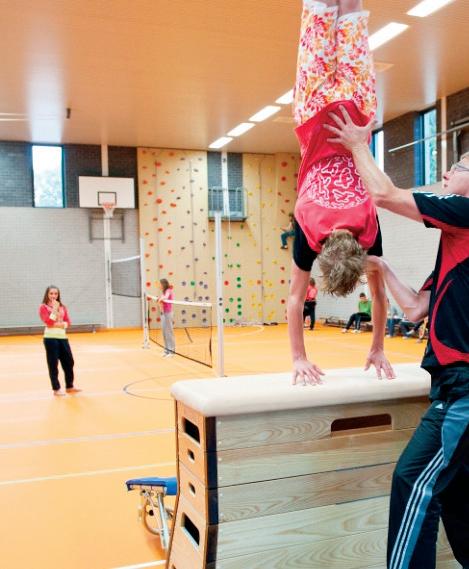
IN OVER 125 NZ SCHOOLS! Pulastic shock absorbing sports floors reduce sports injuries and o er a high level of comfort for athletes of all ages. Pulastic floors are also extremely durabletheir life expectancy exceeds wooden gym floors. For more info Scan the QR Code or call Sika on 0800 745 269. Sika 1552
ON FEET
“We need to change our traditional approach to education”
Ensuring the best for our rangatahi
By Maria Dunn, Principal, Mangakahia Area School
Education is about opportunities, about providing young people with the tools and skills to fill their kete (basket) with a whole lot of opportunity to navigate through a challenging and ever-changing world.
I have been in education for 23 years, most recently gaining a Principalship at Mangakahia Area School. As I reflect on the educational changes that have taken place over the past 23 years, whether as a teacher, middle leader, senior leader or principal, what remains the same is that education matters, and children matter. Crucially, creating an educational environment of equity and excellence for all learners
continues to be challenging. In some respects, the issues and challenges we would like to tackle in education have remained the same for an extended period. We’re still discussing ways to empower our rangatahi, to provide adequate pastoral support and to ensure their wellbeing not just in the classroom, but that the wider community is being catered for. Equitable educational outcomes for all our students is the focus.
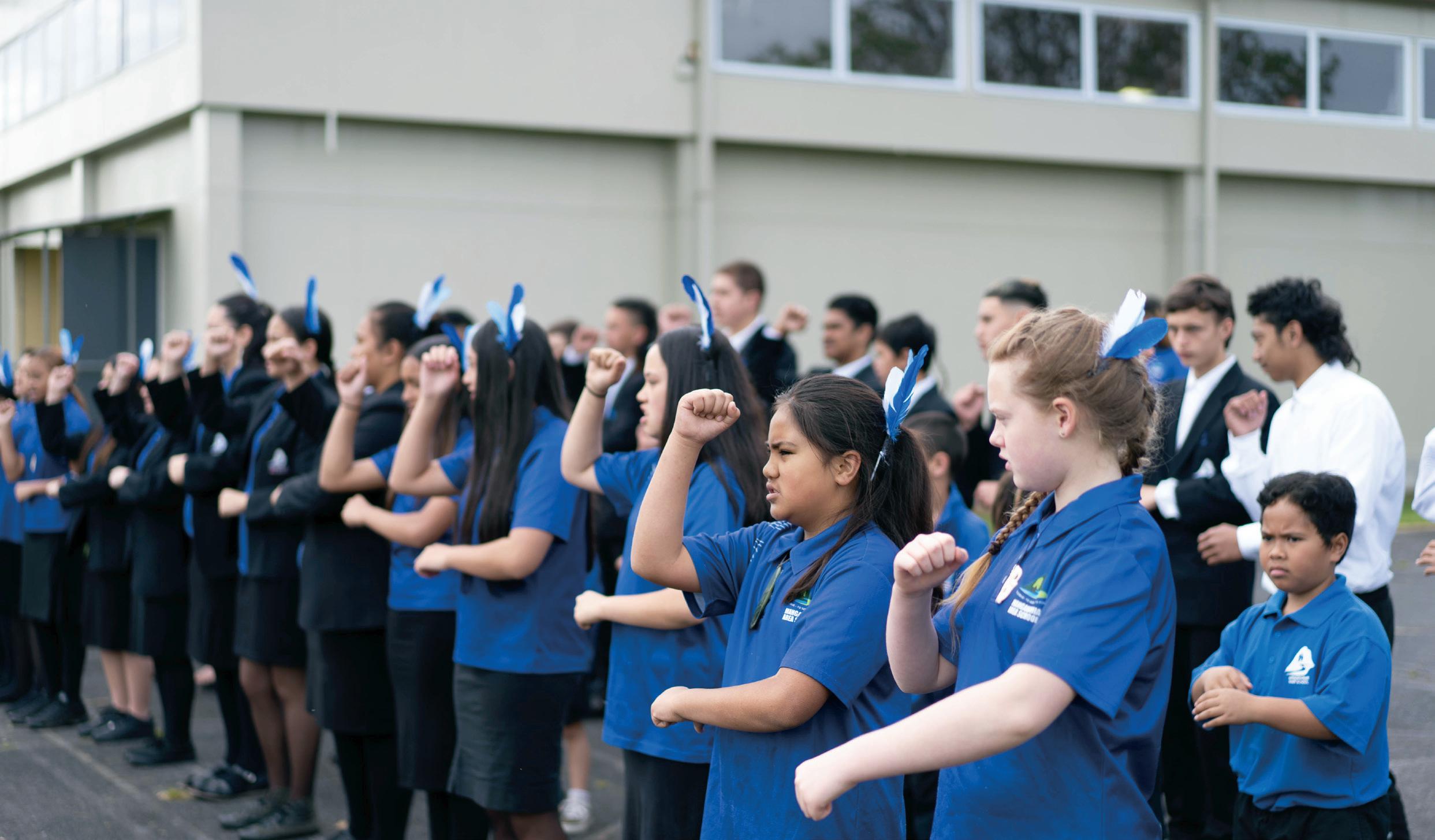
I believe in structures, systems and processes. But it’s about having a really clear vision. Why are we implementing these programmes? What do we currently see happening? It’s about identifying what is and isn’t working for our rangatahi. And that doesn’t necessarily mean starting from scratch, but identifying how we can add value, and enrich our systems to ensure the very best outcomes for our young people.
Building a collective identity
From the beginning of my time in education, I always thought secondary school was the place to be. But coming to Mangakahia Area School, I realised: what a wonderful opportunity. Area schools can truly be localised, and that’s a real strength.
What’s unique about area schools is that there’s opportunity to be fully engaged. You have ākonga from the time they’re nohinohi (little). This presents us with the opportunity to fully put that korowai around them and provide a robust, purposeful, and relevant curriculum for them. That’s what’s exciting for me. We’re sitting on a goldmine, and I think that’s yet to be fully tapped into.
Coming to the school, I wanted to capture the “low hanging fruit” straight away. From a kura which had so much whakamā (shame)
in its past, I wanted to build pride, relevance and identity for students. On my second day, I made a point of addressing our uniform. Now we have beautiful uniform standards, and it’s a way of instilling pride in the cohort.
Additionally, we are a small school of 93 students, and we have a primary, intermediate and high school. I wondered, ‘why are they sitting in isolation from each other?’ I began thinking about ways of bringing the schools together. How could we create a community across schools? I began thinking about our shared spaces, and creating days of shared activities where the older students and the younger children were able to interact with each other.
The vision of a shared community across our primary, intermediate and high schools have also driven our staffing appointment decisions. We recently hired a teacher who brings expertise both in primary and secondary. Notwithstanding the importance of a thorough appointment process, we saw this as an opportunity to create continuity across the year groups. Here is an educator who understands the context from which older students come from, and the context which younger ākonga will mature into.
10 Term 1, 2023 | schoolnews.co.nz EDUCATION PRINCIPAL SPEAKS
Tumaki Maria Dunn:
Image courtesy of Mangakahia Area School
FEEDING LEARNERS HUNGRY GREAT FOOD
Healthier food options for New Zealand’s hungry learners.



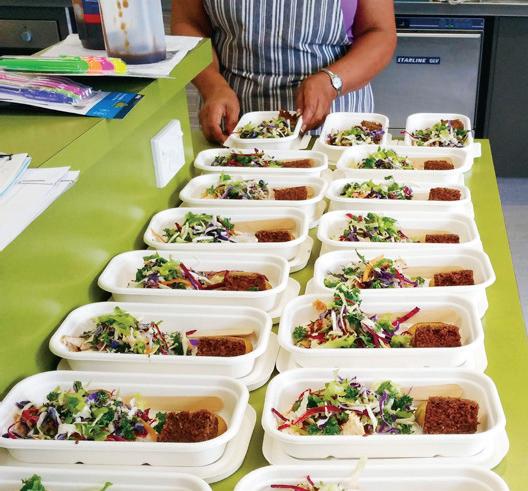

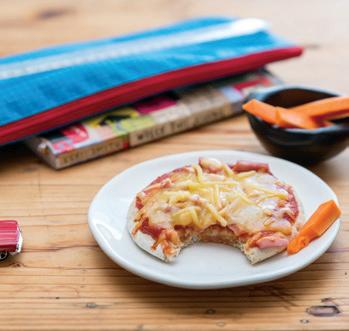




• Top quality, freshly made lunches for learners.




• On-site or delivery service, tailored to suit you.



• Professionally audited food control plan.


• Trained, qualified, local sta .
It’s simple: Let our professionals feed hungry students, while your professionals feed hungry minds.

BE PART OF THE JOURNEY. LET’S TALK. +64 21 709 138 | www.libelle.co.nz
APPROVED LUNCH SERVICE SCHOOL PROVIDER
In just a short time, building a collective identity to be proud of has made a huge difference in our kura.
Mana ōrite
Mangakahia Area school is 93 per cent Māori. That’s a collective identity and an aspect of our kura that hasn’t been fully explored. If we can do kapa haka in the afternoon, and we can do waiata, then why can’t we tap into the whakapapa of this takiwā (area)? There are five
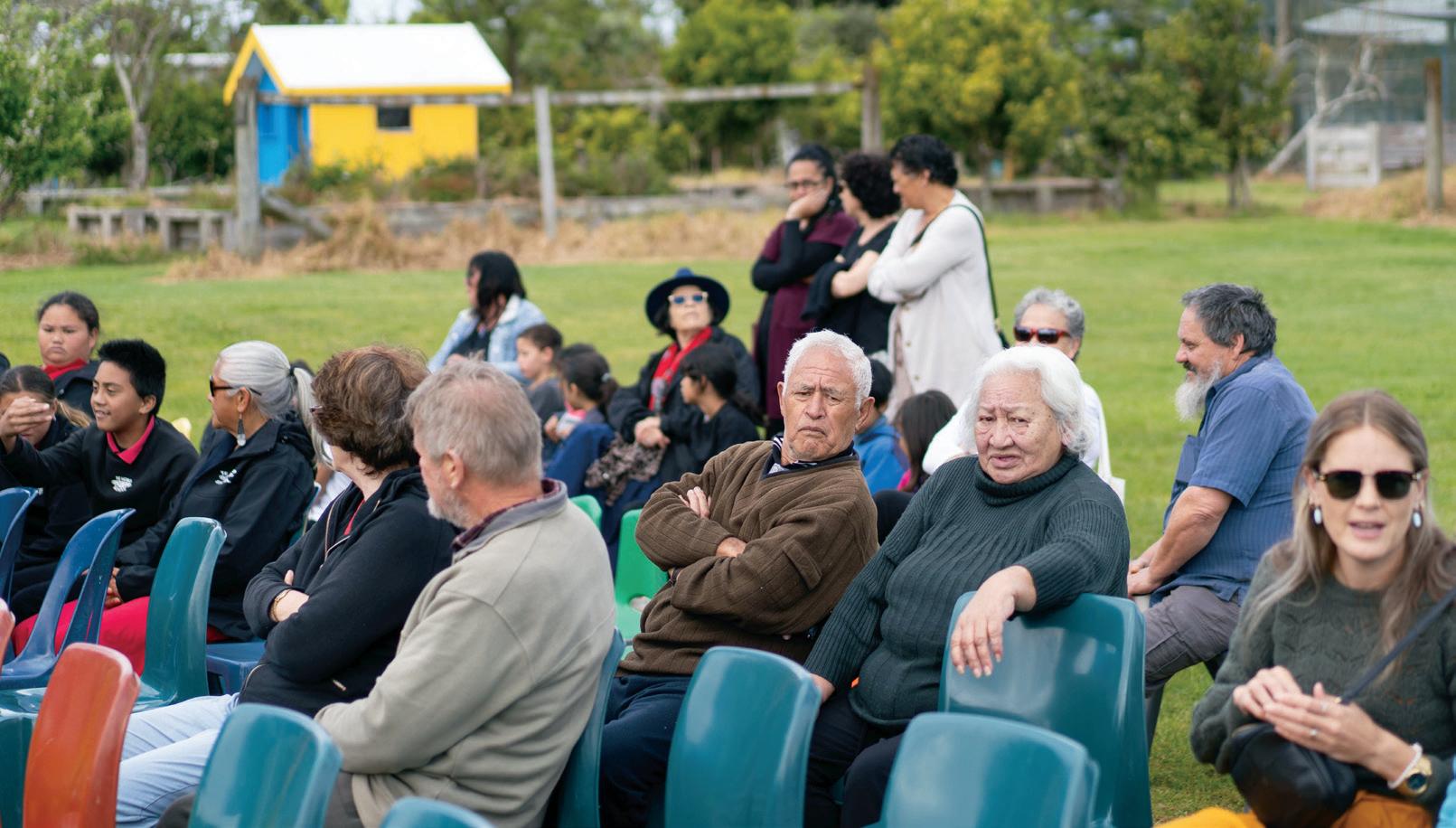
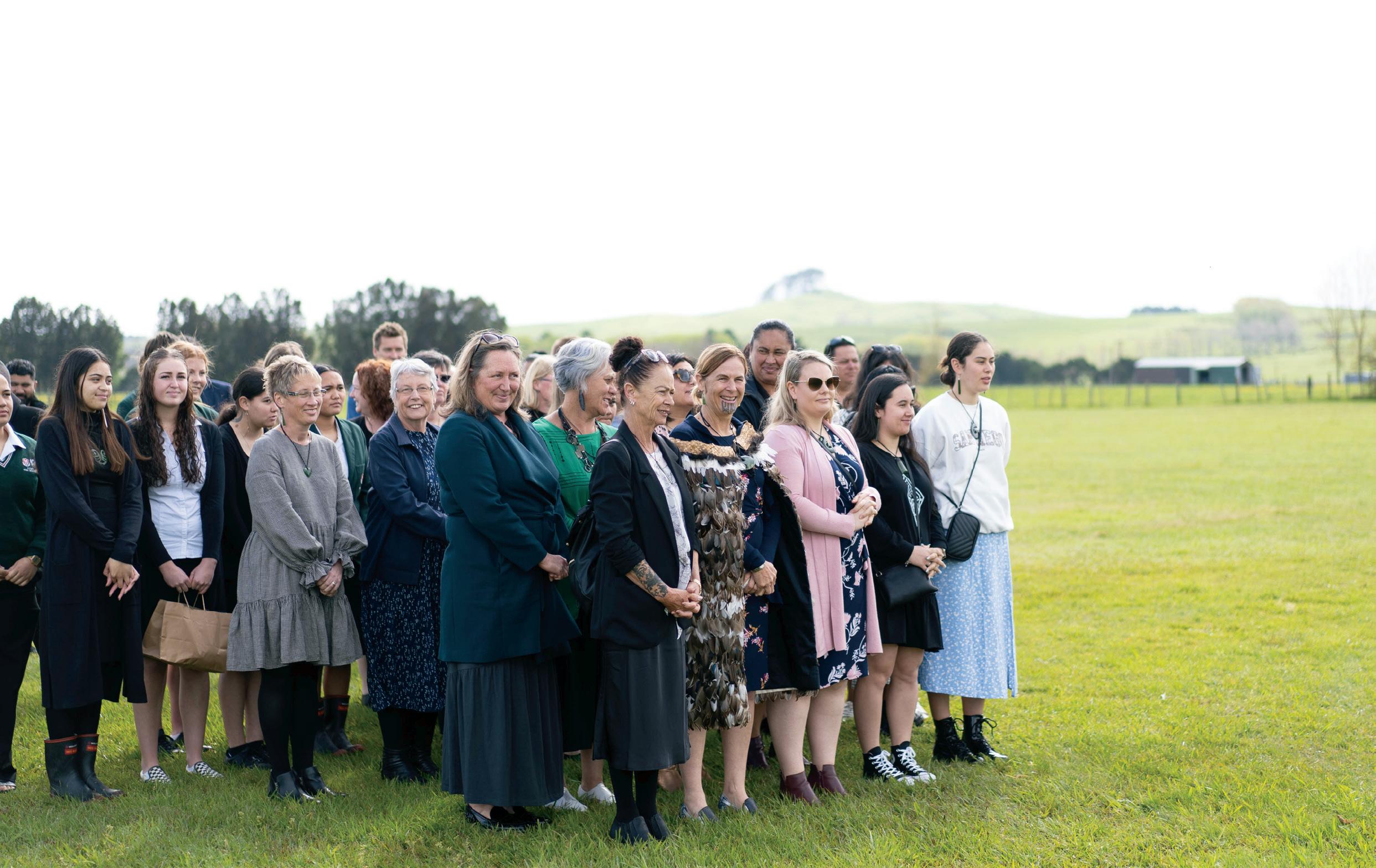
hapū around this takiwā, and they whakapapa to Ngāpuhi and Parawhau iwi. Kupe, Nōkutawhiti and Rāhiri have strong links in this area. The pūrakahu and pakiwaitara (stories) from this area are rich and plentiful. We need to dip into these stories and think about how we can build leaders for the future.
For Mangakahia Area School, it makes complete sense to have Te Ao Haka going across the school. The achievement standards are good for the
older students, but I wanted to get the kuia in for the younger kids, so they’re learning things like how to look after the flax trees, and having that kind of experience in the māra (garden). And then you have the kuia teaching some of the babies how to weave, or make poi. Next year, we will be providing kai by setting up our own cafeteria. That means we can eat together. As well as eating together, the older students who want to take hospitality can serve the
community. They’re not only achieving standards in the classroom, they’re bringing those skills into a practical context. That weaves together learning and community building, creating a wānanga model that embodies mana ōrite by prioritising and drawing on students’ indigeneity.
Cultural responsiveness is essential
Of course, every school’s cultural context will be different, and that’s important to note. Although we have all these new initiatives, such as the current curriculum refresh, they will only be effective if they are culturally responsive to the climate of the school. I believe that’s why we’re still trying to address the same issues in the education space. There has been a plethora of educationally focused initiatives delivered across schools over the years, however, the impact of these initiatives is only as good as the leadership implementing them; are they authentically and meaningfully fit for purpose, well understood, and delivered in response to the school’s cultural climate? For a curriculum to truly serve our rangatahi, it needs to be culturally responsive at a local level in relation to a school’s needs.
12 Term 1, 2023 | schoolnews.co.nz EDUCATION
Images courtesy of Mangakahia Area School
At Te Kura Takiwā O Mangakahia, we’re putting in four new subjects next year, because we want the curriculum to be meaningful and purposeful to the students here. Although we’re a small school, we do need choice. The option of studying via correspondence where options are not readily available for our students is an area we are looking at to better serve. We’re rejigging the curriculum, rethinking our staffing and having key people with the expertise to give deliverables. We want to make sure the curriculum is fit for purpose. We’ve had this education system for 108 years. My adage is that I always say education is like a car: every new initiative is a coat of paint on that car. We’ve just painted the car again, and it’s beautiful – but it’s the same car. Those tires are bald now, the system’s not working, and the door handles are nearly falling off. We need to change our direction around implementing the mana ōrite space of education in Aotearoa, as well as having a mātauranga Māori model. We’re going that way, but we need the opportunity to deliver those initiatives in the way that fits a school.























Our values: manaakitanga, mātauranga Māori, pono (honesty, sincerity), whakamana (empowerment), speak to the position we wish to take as a learning community. Our next step is to unpack these with our students and community. I want to represent those principles not just as words, but as an identity and a kaupapa that carries through not only our curriculum, but all teaching and learning experiences. I do this by questioning how an action
or strategy creates mana and demonstrates manaakitanga. I want to build a real dialogue and share power with our young people in our education systems. He waka eke noa –we’re all in this together.
Mā te pā ka taea te whakatipu te tamaiti | It takes a village to raise a child





























































































































































































One of my key concerns is also around re-engaging stakeholders. Not just students and staff, but other key people like the caretaker, the gardener, whānau, the wider community.






It takes a village to raise a child, and teachers are raising children. But that doesn’t excuse significant others from the table. The onus is on educators to provide the skills and tools for rangatahi to be global citizens, and the curriculum talks about confident, lifelong learners – but we only get them for school time. So how do we work together and ensure all stakeholders are at the table?
If we are to have high expectations and hopes for our young people, we also need to be clear and transparent with our whānau, who probably have the same high hopes and expectations, but need to be at the table so





























they truly understand where we’re heading and why.























































































































































































































I don’t see myself as the principal. I see myself as the person who has been given the privilege and the honour to sit on the chair. I’m just a part of the team, helping to collaboratively guide this exciting space. We want the whānau back here, and for us it’s about creating that welcoming space. Nau mai, haere mai to Te Kura Takiwā O

Mangakahia. We are focusing on creating open communication, sending out messages to the wider community. I believe that’s what it means to look after this space: to champion key values and principles, and to consult with whānau to ensure our systems are fit for purpose and create the best outcomes for our youth.


We shouldn’t keep putting ambulances at the bottom of the cliff – we should be building fences at the top: creating strong communities to protect our vulnerable as they become the leaders of tomorrow.

As Dame Whina Cooper once said: “Take care of our children. Take care of what they hear, take care of what they see, take care of what they feel. For how the children grow, so will be the shape of Aotearoa.“
Maria Dunn is the Tumuaki (principal) of Te Kura Takiwā O Mangakahia, or Mangakahia Area School. She is the first wāhine Māori principal in the school’s history, and brings with her an extensive career in education, as well as a background in nursing and defence. She is currently completing a PhD, and has served as deputy principal at other schools including Kamo High School, Hamilton Girl’s High School, and Fairfield College.
Term 1, 2023 | schoolnews.co.nz 13 EDUCATION 23 Mahinui Street, Feilding PH: 0800 625 826 sales@mckeeplastics.co.nz www.mckeeplastics.co.nz 130L & 230L Wheelie Bins also available $288.50+gst POST OR WALL MOUNT INCLUDED ALSO DYNA BOLT OR INGROUND POSTS ARE AVAILABLE Available in a range of colors:
“He waka eke noa – we’re all in this together”
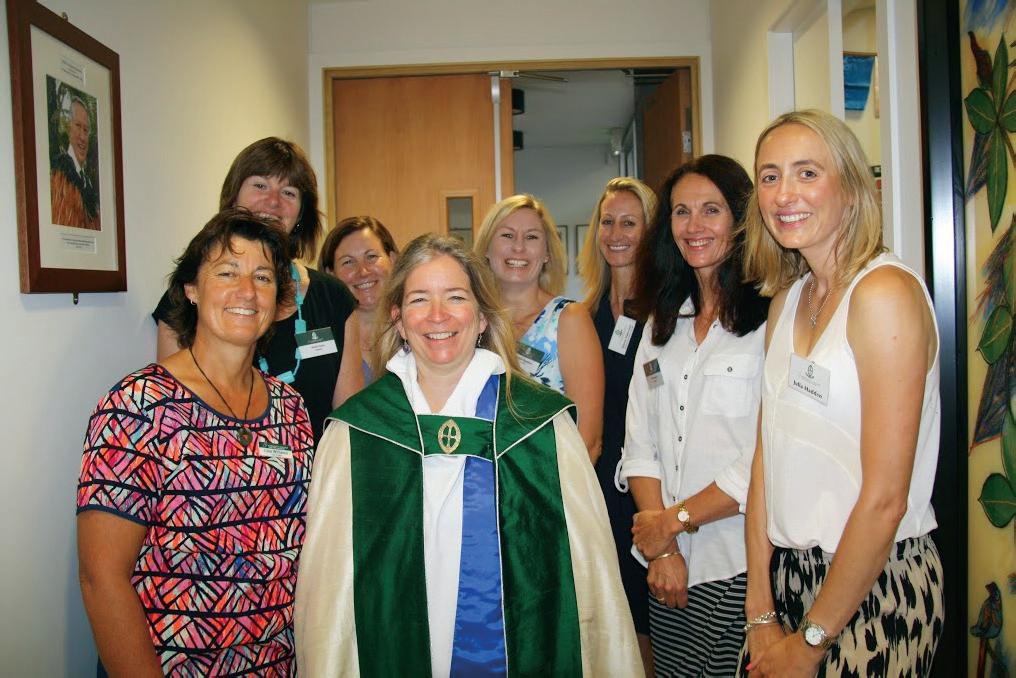
St Margaret’s ensures students are on the Rite Journey
 By Naomii Seah, Industry Reporter
Founded more than a century ago in 1910, St Margaret’s College in Christchurch is a private girls’ school with many long-standing traditions and history. Yet, Aotearoa and the wider world have changed significantly in the 112 years since the school was established, creating a need for innovation alongside the strength of tradition.
Lisa Williams, Deputy Head of the middle school at St Margaret’s, says the need to keep up with a changing society is why she introduced the Rite Journey Programme. Williams believes the programme provides “real world teaching”, which she sees as the key to student success in the modern age.
Williams, who has spent 18 of her 30 teaching years at the college, is the current leader and founder of the Rite Journey programme at St Margaret’s. The programme,

conceived by Australian educator Andrew Lines, is described on its website as a year-long course designed to “support the development of self-aware, vital, responsible and resilient adults”.
Recently, St Margaret’s College was recognised with The Rite Journey Lead School award, which is given to schools that implement best practice of the programme for more than five years. As well as an acknowledgement of the longevity of the programme at St Margaret’s, the award recognises the innovation that Williams and her team have shown, being one of the first girls’ schools in the world to implement the programme.
At St Margaret’s, the programme is undertaken by every girl in Year 10. Williams describes the programme as a way to “bridge that awkward time between being a child and being an adult”—around the ages of 14 to 15. “It’s that awkward age where we need to be doing something special with them,” says Williams. That’s why the Rite Journey programme is seen as both the flagship and the pinnacle of St Margaret’s College middle school, which runs from Years 7 to 10.
Williams said she first heard of the programme in 2010 during a pastoral care conference in
Australia, which she attended with a few colleagues. At that stage, Williams said that the college was searching for “something” to integrate the key skills learnt over the middle school period. In the past, Williams said Year 10 could often turn into a “year of disengagement... we were doing lots of great things, but we weren’t connecting them all together.” After hearing The Rite Journey’s presentation, Williams said “[my colleagues and I] all walked out and said: ‘that’s what we’ve been looking for.’”
At St Margaret’s, the programme is built on the foundation of the five “Cs”: consciousness, connection, communication, celebration and challenge. The cohort spends three fiftyminute periods per week on the programme, beginning in Term 1 with the goal “consciousness,” which is addressed in the module “Who Am I”. Williams says that this period is about the students “exploring themselves and selfidentity” through subjects such as “birth stories, family trees, influential people in their lives, what their strengths are” all the way through to more complex topics like “the role that body image plays in self-confidence”. The group then moves onto the goal of “connection”, where students foster relationships with their cohort, whānau, and a chosen adult mentor.
Williams says the girls are tasked with completing a project with their nominated mentor, who is usually a grandparent, aunt, uncle or a close family friend. “It’s not really about the project,” Williams laughs, though she notes there’s been some “amazing” projects from the programme. Instead, it’s about making connection with nonparental adults, and introducing positive role models to our rangatahi. “Most teenagers go through a patch where the last person they want to be talking to is their parents,” notes Williams.
14 Term 1, 2023 | schoolnews.co.nz EDUCATION
“Real world teaching” is the key to student success, says middle school Deputy Head Lisa Williams.
Images courtesy of St Margaret’s College
PROFILE
Lisa Williams
“Having another adult that is significant to the family is really helpful.”
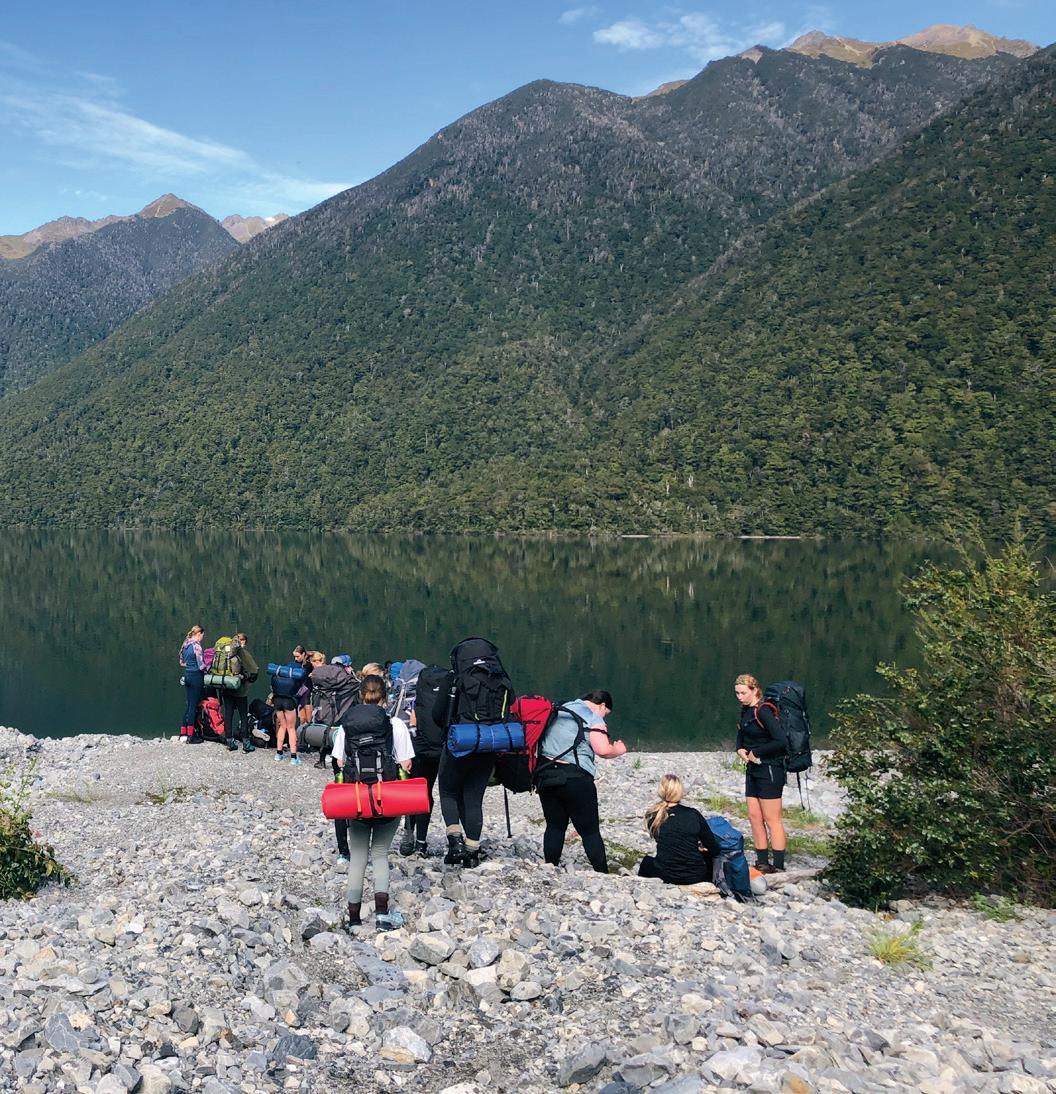
Year 10s will also face a series of challenges, which “test and extend them in different ways”. Some challenges remain the same over the years, while other challenges change to meet the specific needs of each cohort. One of the constants, and the culmination of the year, is a sixday camping trip to the Rotoiti Lodge in the Nelson Lakes area. The year group leaves their phones behind, and reflects on the past year, says Williams.
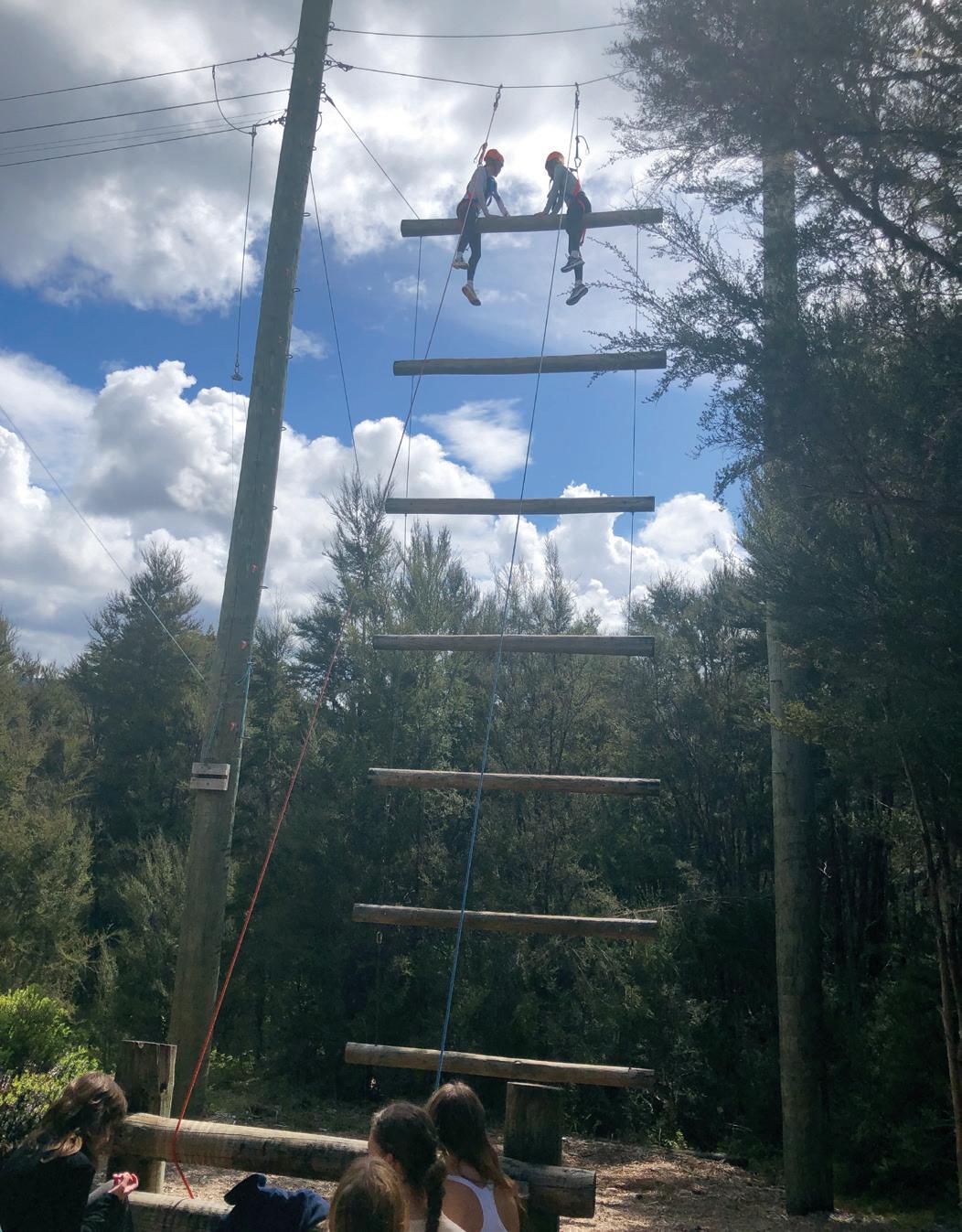
During the camp, the cohort also completes an 18-hour overnight “solo”. The students are given pre-packed provisions for the duration of the solo, and they’re regularly checked on, but otherwise, the girls are left to their own devices in individual tents. During those hours alone, the students complete assigned tasks that prompt them to think about “the sort of woman they want to be, and what their strengths and weaknesses are”.
Williams describes the impact of the trip like this:
“The depth of reflection that you get from these girls after they’ve been on their own, without people, without phones and without distractions is truly incredible. Some of them come back almost like a different person.
“They start to believe in themselves a lot more,” Williams continues, noting that it’s often not until the end of the year that they begin to see big changes in the cohort. She describes much of the year as a process of “planting seeds”, which continue to grow even after the year has ended. Mostly, Williams
sees the girls begin to have “a greater degree of confidence and belief in themselves; they are much more capable than they realise.” Other outcomes Williams sees are healthier and more productive relationships, increased self-awareness, and increased resilience.
“Often, teenagers think their life is going to go a certain way, and that route is going to go on a straight line upwards. You know, life is just not like that,” Williams points out.
The final goal of the programme, “celebration,” is fulfilled by the ceremonies that bookend the year. The first ceremony marks the beginning of their journey, where the girls are called upon to practise gratitude for their life thus far. Parents attend the ceremony, and girls give speeches. This ceremony
is then mirrored at the end of the year, where the work throughout the year is wrapped up and presented to the cohort’s caregivers and mentors.
At St Margaret’s, Williams notes these ceremonies are adapted to incorporate Māoritanga as an acknowledgement of the bicultural foundation of Aotearoa. It’s one example of the inbuilt flexibility of the Rite Journey Programme, and how the course can be modified to suit the cultural and social contexts that it’s taught in.
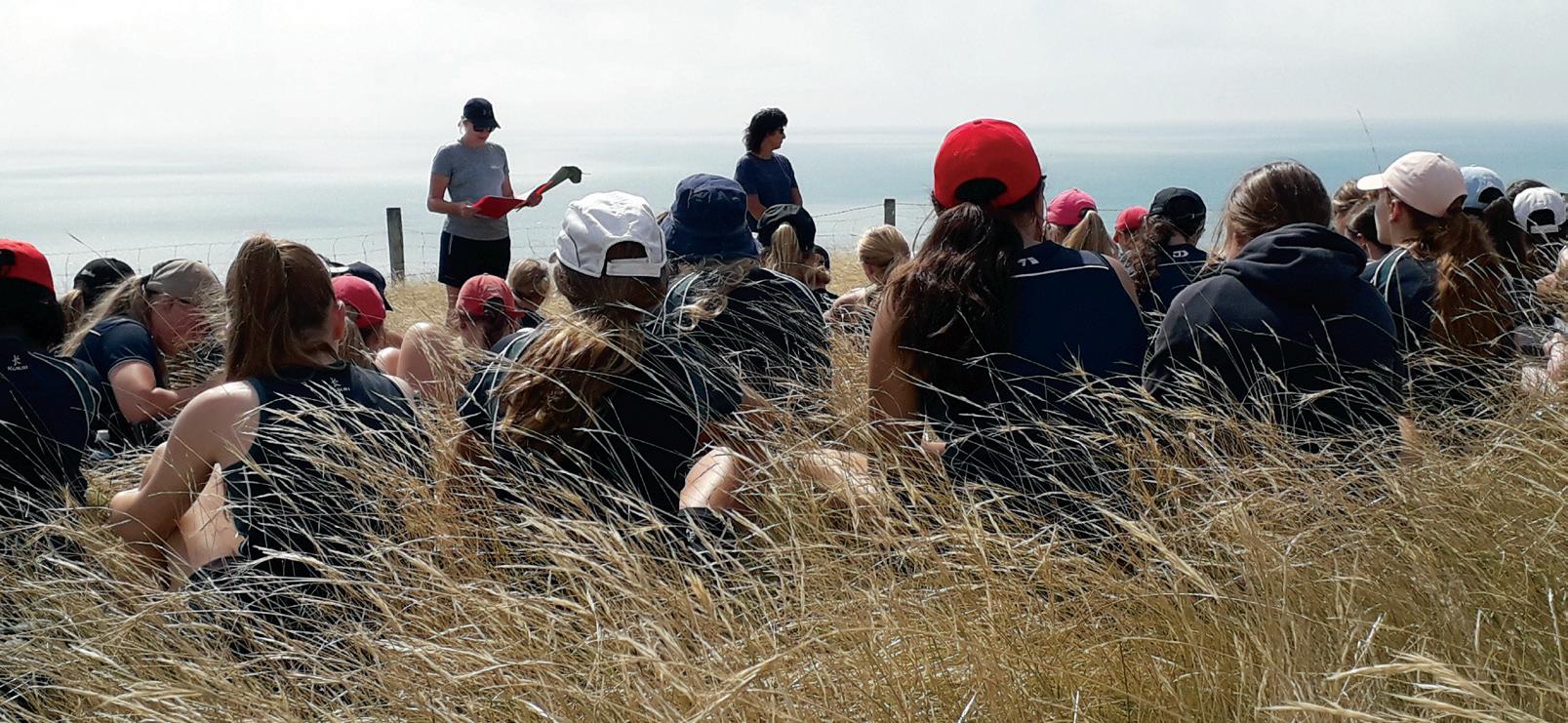
“To me that’s the beauty of the programme,” says Williams, who notes that the Rite Journey is not only adaptable, it’s responsive to the cohort’s needs, which can change from week to week.
“Whatever’s going on, we can adjust our programme at that particular time, even if we’ve
got something else planned.”
The teaching team can respond to the challenges students are facing in real time, whether its “social media, friendships, parties and alcohol or making good decisions”. Williams says she believes it’s this ability to meet students’ needs that has gained St Margaret’s the recognition of the The Rite Journey’s Lead School award. Williams notes that “life for teenagers is forever changing, [and] it’s becoming more and more challenging.” She gives the example of mental health issues, which are on the rise for our young people. As a result, Williams says:
“The programme is forever changing, and we will never sit on our laurels. We’ll keep on pushing forward and adapting and making it the very best programme we can have for our middle school students. I think that’s what Andrew and the Rite Journey have seen in us: that we’re really proactive with the way we do things.”
Williams is proud of the way her teachers “push the boat out. We like to role model what we’re expecting from the students, so we want to be out of our comfort zone, and we want to be able to push ourselves so that we’ve got an amazing programme.”
For Williams, that constant evolution includes letting someone else “take the reins” next year, although she still plans on being involved. “It’s been my baby for 12 years,” she says, “but it’s time for someone else to have that experience of leading it”.
In the future, Williams hopes that programmes like The Rite Journey will become more widely adopted.
“Too often – and it’s no school’s individual fault – we’re just assessment driven. And if we spent more time on character, mental health, mindfulness, all those sorts of things, then when life gets hard, you have the strength to be able to deal with it. Every school should be doing some sort of similar programme.”
“It’s an absolute privilege to be a part of the programme,” Williams concludes. “It’s the thing that gets me out of bed in the morning. It’s coming to school and being able to do real life teaching and really feel like you’re making a difference in these young people’s lives.”
Term 1, 2023 | schoolnews.co.nz 15 EDUCATION
Images courtesy of St Margaret’s College
Confidently teaching students with dyslexia
Dyslexia is a lifelong literacy learning difference that can result in struggling to keep up with the demands of the curriculum, low selfesteem, low confidence, and disengagement at school. These elements are a by-product of dyslexia. At the core of dyslexia is difficulty learning to read words or spell them.
We are not born to instinctively understand the printed word. It is our job as educators to help all children, but if we don't have the appropriate knowledge and tools to support those with literacy learning differences such as dyslexia we can't do so. Here are some key things to consider:
Educating
Early identification of literacy learning differences is crucial
Remove elements that do not align.
Understand
how the brain learns to read.
Neuroscience is continually advancing. We now know brains learn to read in the same way, however, this doesn't mean they learn at the same pace. Understanding ‘Why’ and
educators in evidence-based practice.
Growing understanding about how children learn to read, write and spell.
Professional Learning
We offer a range of professional learning opportunities including in-school consultancy and teacher only days, plus our 2023 workshops held across New Zealand.
The iDeaL Approach
Providing the knowledge and tools to implement a comprehensive Structured Literacy approach that lifts literacy outcomes when delivered as intended.
Resources
knowing 'How' we learn to read is vital to be able to support students with a literacy learning difference such as dyslexia. Know what the warning signs look like.
Early identification of literacy learning differences is crucial. We must not wait for failure. As educators it’s not our role to diagnose, but we do need the confidence to recognise warning signs and know the steps to intervene. An early universal screening assessment that aligns with evidencebased practice can be used to determine a student’s risk of a literacy learning difference.
If warning signs are identified, this does not necessarily mean the student has a literacy learning difference. It may indicate the student has not received sufficient instruction. If effective evidence-based instruction is delivered with fidelity and the student continues to struggle, they may have a literacy learning difference.
Align teaching practice with research and evidence.
Conflicting practices just aren’t going to work for our students with literacy learning differences. We need to be sure intervention (within and outside school) aligns with current research and evidence. Students with significant challenges in literacy will likely require a combination of quality mainstream Tier 1 teaching, the opportunity for repetition with an experienced intervention educator (Tier 2 and Tier 3), and external specialist support. These teaching practices need to align and complement one another (not compete with one another) for the betterment of the student.
Be equipped with the appropriate resources and teaching materials.
When you have the knowledge and understanding, you also require tools to be able to deliver a gold-standard evidence-based teaching approach. Look for appropriate supporting resources and teaching materials that align with how the brain learns to read.

www. learningmatters .co.nz
We offer a wide range of resources to support the implementation of evidence-based Structured Literacy. admin@learningmatters.co.nz |
When it comes to our most vulnerable learners, it is essential that we have embedded a teaching practice that aligns with what the research and evidence tells us is the most effective. The International Dyslexia Association recommends a Structured Literacy approach. This approach is not just about what we teach, but how we teach, and it’s so positive to see the introduction of Structured Literacy in many schools across New Zealand.
Self-esteem and motivation can change when students receive the right type of evidence-based teaching as early as possible. For this to occur we need a mass of skilled educators who are knowledgeable in the complexities involved in learning to read. As a profession, we must be able to speak to what is going on with our students with dyslexia and support them to be literate, after all, dyslexia is a literacy learning difference.
16 Term 1, 2023 | schoolnews.co.nz EDUCATION
027 532 7646
Carla McNeil, Managing Director, Learning MATTERS
Simplifying the day at school with SALTO
SALTO is simplifying the school day with access control solutions trusted by hundreds of schools around ANZ. Managing a school campus, with multiple teaching areas and large numbers of people moving between them, can be complex, costly and time-consuming. Schools need to ensure that pupils and staff can access the premises easily, but at the same time keep out unwanted visitors. Teachers need to get from classroom to classroom, often whilst carrying laptops and other teaching materials. You may also have facilities such as sports or drama areas that are used by external groups.
With this level of complexity, traditional locks and keys simply don’t cut it in today’s schools. That’s why over 800 educational establishments in Australia and New Zealand
have turned to SALTO, a leading global provider of Electronic Access Control (EAC) solutions.
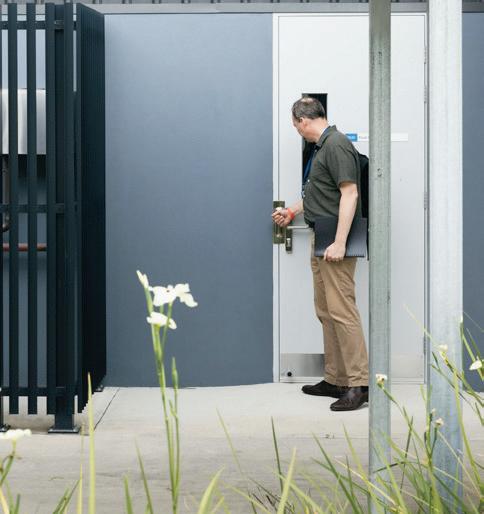

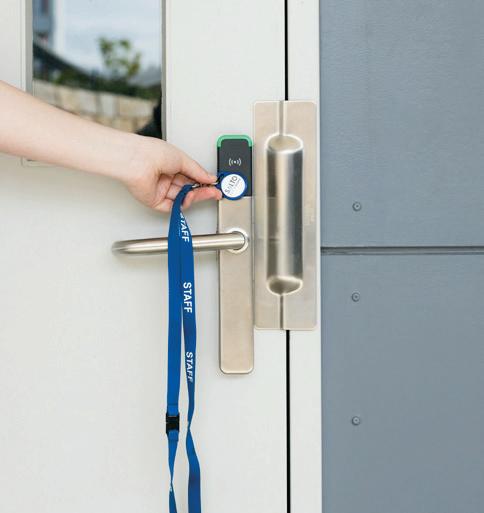
SALTO provides schools with electronic locks, which are opened with a ‘credential’ such as a keycard or wristband fob. The credential (which can double up as, for example, an ID badge or photocopier card) is programmed to only give each user access to the areas, and at the times, for

which they are authorised. Doors and gates can be programmed to automatically lock and unlock at pre-defined times. The card or wristband fob simplifies life for teachers. They don’t have to carry multiple cards and keys, and they don’t have to put down the teaching materials they are carrying in order to unlock a door – they simply touch their credential to the lock.
For school managers, SALTO simplifies things too – no more sending someone round the campus locking and unlocking doors; it’s much easier to give, for example, sports clubs access to facilities, and SALTO’s reporting gives them an audit trail of who has accessed (or tried to access) each area.

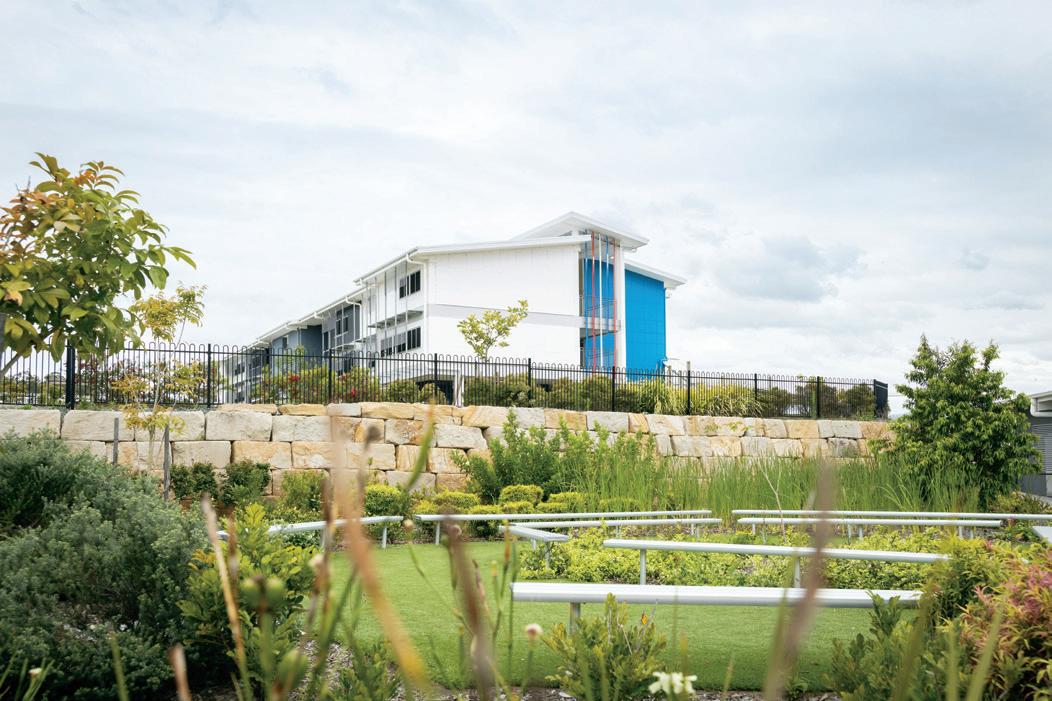
Yarrabilba, a high school on a large campus in southeast Queensland, is one of those benefitting from the SALTO EAC. Deputy principal Janelle Whatmore explains: “Our staff love the SALTO system and particularly using the fobs, which really simplifies their working day. Teachers simply have to touch their wristband against the door lock which makes access easy, even if they are carrying multiple objects.”
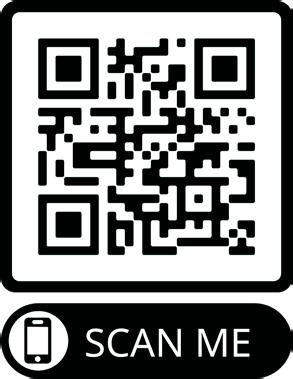
View the 2-minute Yarrabilba case study film now by scanning the QR Code below.
Term 1, 2023 | schoolnews.co.nz 17 EDUCATION Simplify the day at school. Join the SALTO family, trusted by 800+ schools across Australia and New Zealand. info.oceania@saltosystems.com +61 3 8683 9782 View the Yarrabilba SSC Case Study Video
Better Start Literacy Approach extends nationwide and to Year 2 students

The Better Start Literacy
Approach (BSLA) – which has already helped more than 33,000 Year 0 and 1 students significantly improve their reading, writing and oral language skills – is expanding to include Year 2 children and their teachers.
University of Canterbury researchers developed the BSLA to ensure all children can develop the foundational skills critical for literacy success. They conducted tightly-controlled research studies of the approach in schools in Canterbury and Auckland, then from 2021 the Ministry of Education funded it for adoption in schools nationwide. Since then more than 700 schools and 33,000 students have become involved.
In February 2023 a further 1,100 teachers will begin training in the structured, well-researched, home-grown literacy approach.
Professor Gail Gillon is director
of the University of Canterbury’s Child Well-being Research Institute and co-led the development of the BSLA programme with Professor Brigid McNeill.
Professor Gillon says the team is thrilled that teachers are reporting amazing results in children’s foundational literacy learning after just one term of teaching BSLA. Ongoing research supports teachers’ feedback.
One example is data from 6,000 five-year-olds who were taught with the BSLA for 10 weeks. It found those students scored significantly higher on phoneme identity; letter sound knowledge; and phoneme blending than children not taught that way. For students who scored below the mean at their initial assessment and were identified as requiring extra BSLA teaching, the approach further improved their literacy skills after 20 weeks, including listening comprehension, length of sentences used in an oral narrative task, and letter sound knowledge.
Professor Gillon says the national data we are collecting confirms
findings from previous controlled research trials showing the BSLA significantly improves children’s foundational literacy skills including those who enter school with lower levels of oral language.
Professor Gillon says our data from BSLA suggest that the approach is reducing inequity in literacy.
“Children of Māori ethnicity, Pasifika ethnicity, greater socioeconomic deprivation, and males scored lower across measures of phonological awareness and oral language at school entry. However, variability in scores was much reduced after just 10 weeks of BSLA teaching.”
Professor Gillon says results the team are seeing in ‘the real world’, through ongoing research of the approach, are actually better than the initial controlled research studies – something rarely seen previously . This is ‘very exciting as it essentially means Kiwi children’s reading, writing and oral language skills are improving across the country in response to our talented teachers
implementing the approach.’
The BSLA team has also developed an innovative online assessment platform where students complete interactive activities in oral narrative, phonological awareness, reading and spelling tasks.
Dr Amy Scott supports teachers and literacy specialists around the country to implement BSLA teaching and assessments tasks and interpret the data for their teaching. She says teachers are enthusiastic about the usefulness of the assessment tasks to monitor children’s growth over time, identify each student’s next literacy learning steps, and help identify those at risk for persistent learning and literacy difficulties such as dyslexia.
18 Term 1, 2023 | schoolnews.co.nz EDUCATION
www.betterstartapproach.com
Find out more at
Better Start Literacy Approach raises achievement for all students

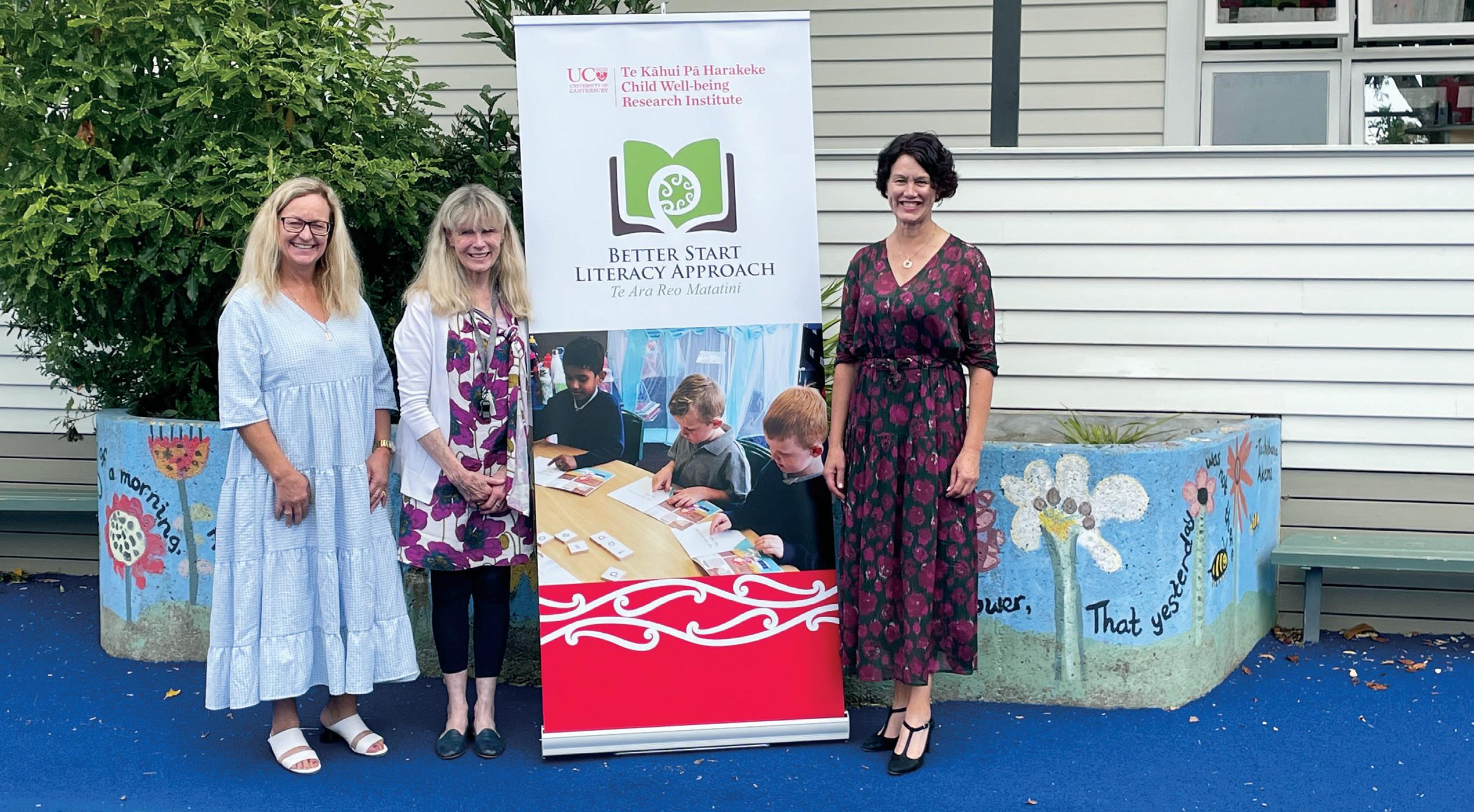
Marian Meehan is the principal of Khandallah School in central Wellington. The school began using the Better Start Literacy Approach (BSLA) in 2021 after Meehan researched potential programmes to meet the changing literacy needs of junior students.
“We are seeing more children starting school without basic literacy skills compared to 10 or 20 years ago and as the needs of our learners and our community change we need to evolve too. Schools can’t stand still.”
Meehan says she sett led on the BSLA as it ‘came out of the University of Canterbury, was developed for Aotearoa New Zealand students and teachers, and was very well researched’. Since introducing BSLA, the reading, writing, and oral language skills of all students


involved in the programme have significantly improved - including those for whom English is a second language.
“We have children who after a term (of doing BSLA) are writing sentences of well-constructed words and can sound out words like enormous or amazing.”
Meehan says Khandallah School has a diverse community of students and a lot of variation in levels of reading, writing and oral language skills on starting school.
“The Better Start Learning Approach meets the needs of our diverse population.”

She says a key part of the approach’s success at the school is the involvement and committ ment of all junior teaching staff.
“My whole junior teaching team have done the training. They did it together and, while it was a lot of work, they have supported each other and learnt together.
The ongoing support provided
by the BSLA team is also comprehensive; a support person based at the university and a local expert to help problem solve or answer questions.”




Meehan says while the programme does require time and energy to embed, ‘when you have children in their first year confidently reading and writing, it feels worth it and you know they can only grow from there’.
In the past year Meehan says she and the school’s leadership team have made a point of acknowledging and celebrating the eff orts and success of teachers and students involved in the Better Start Literacy Approach.
Meehan says online and hard copy resources provided with the programme are comprehensive and relevant for New Zealand students. The resources are funded by the Ministry of Education.
“All the books and learning resources are based in New


Zealand and have recognisable vocab such as puku and kai. They are beautiful and te reo is threaded throughout.”
Online assessments done on iPads engage students and allow teachers to easily identify next steps for each child, Meehan says.
BSLA also provides information to help parents and whānau feel involved and understand what their child is learning, Meehan says.
“Each BSLA book has information at the back to show what students are learning and how it fi ts with their growing skills in literacy.”
Term 1, 2023 | schoolnews.co.nz 19 EDUCATION
From left to right: Marian Meehan, Principal Khandallah School, Linda Kingston, Junior Assistant Principal Khandallah School with Professor Gail Gillon, Child Well-being Research Institute. Photo courtesy of Khandallah School
Modern classroom design:
How furniture can create the perfect learning space
 By Sarah Davison, Industry Reporter
In decades past, classroom design was often an afterthought and followed a standardised layout. Plain boxed shaped classrooms, with identical chairs and tables throughout were commonplace in many schools.
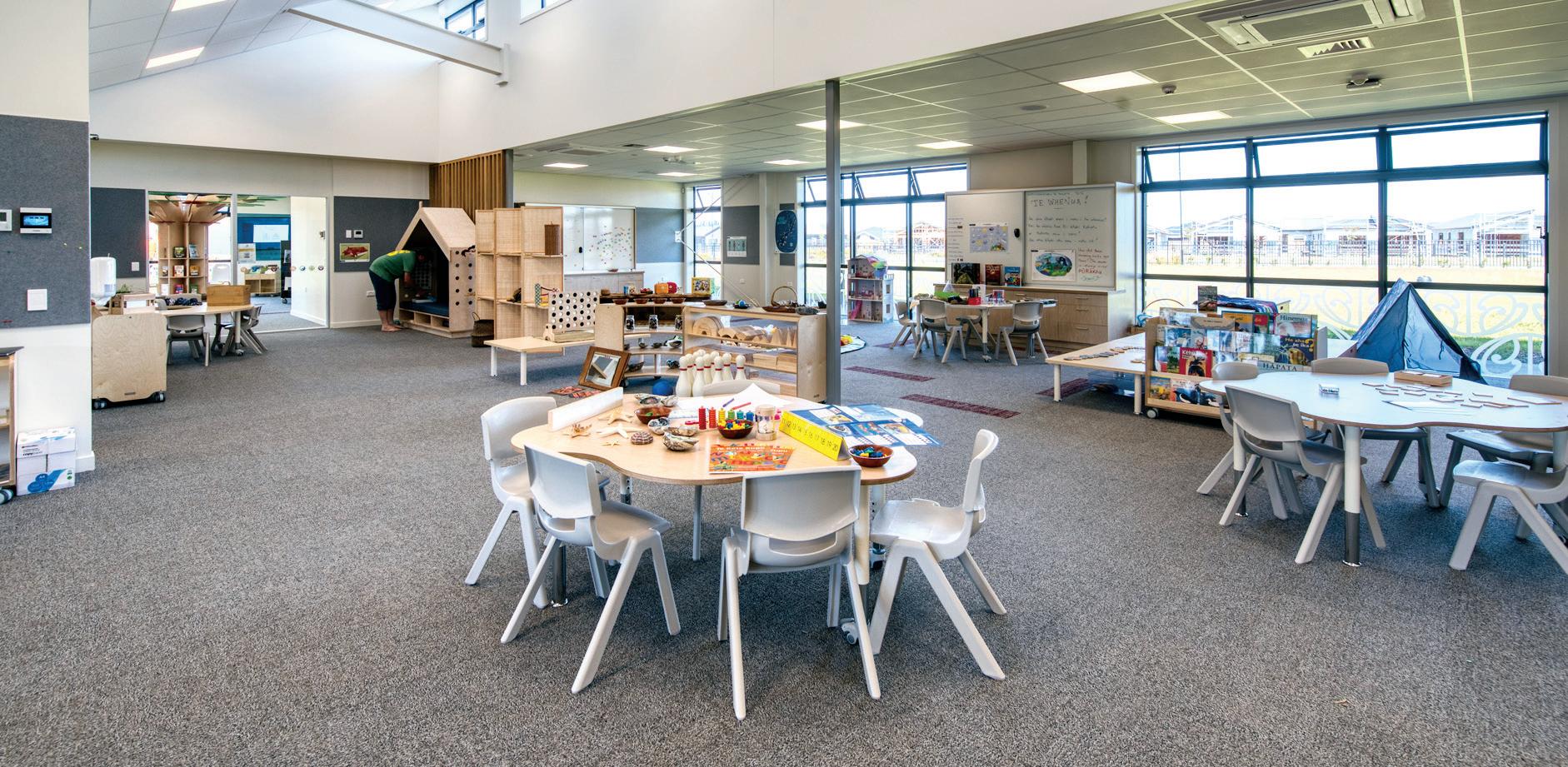
Recently, though, there has been a shift away from this one-sizefits all approach to classroom design, with recognition that an engaging classroom design can help enhance the education experience for students. The design of a classroom and furniture choices made have a strong influence on creating a positive, productive learning environment. Tailoring furniture to suit a space can provide increased flexibility in learning spaces, encourage alternate methods of learning and teaching, and strengthen student engagement with their classroom subjects.
Researchers at the University of Salford Manchester found that classroom design can boost student learning. According to the results of the study, the physical characteristics of a classroom can affect how successful a class is. The study identified that design parameters including light, temperature, air quality, flexibility, colour and ownership of a classroom space all affected student outcomes. These factors, then, should be incorporated into plans for new classrooms, and redesign of existing spaces.
Arch Daily, an online platform for architects, said the design of a classroom forms part of the “fundamental trilogy” for successful learning. “There is a fundamental trilogy for successful learning: the qualifications of the teaching staff, the interest of the students, and the quality of the physical environment – the classroom,” Arch Daily said.
When considering the design of a 21st century classroom, flexibility is key. This can be achieved through furniture that

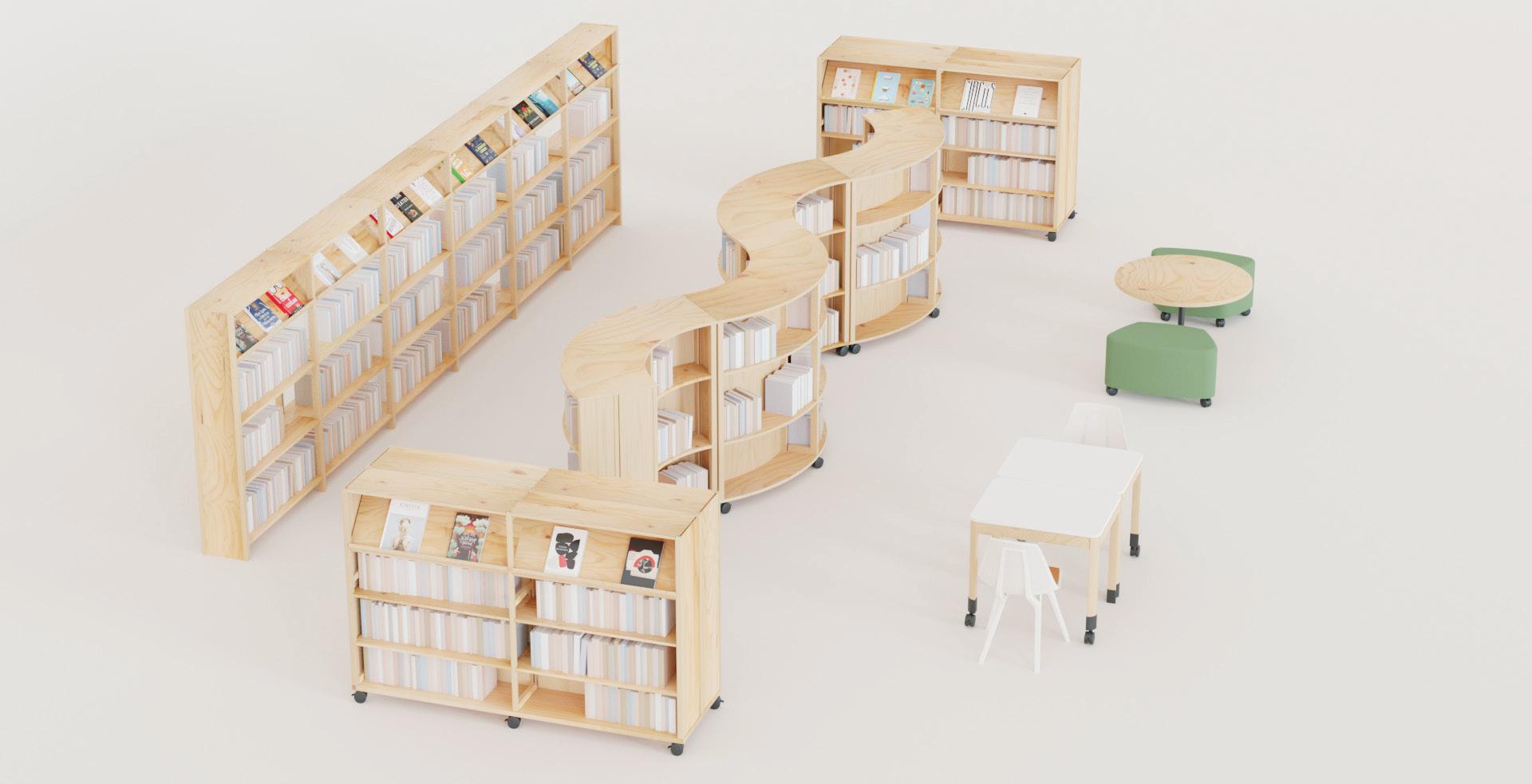
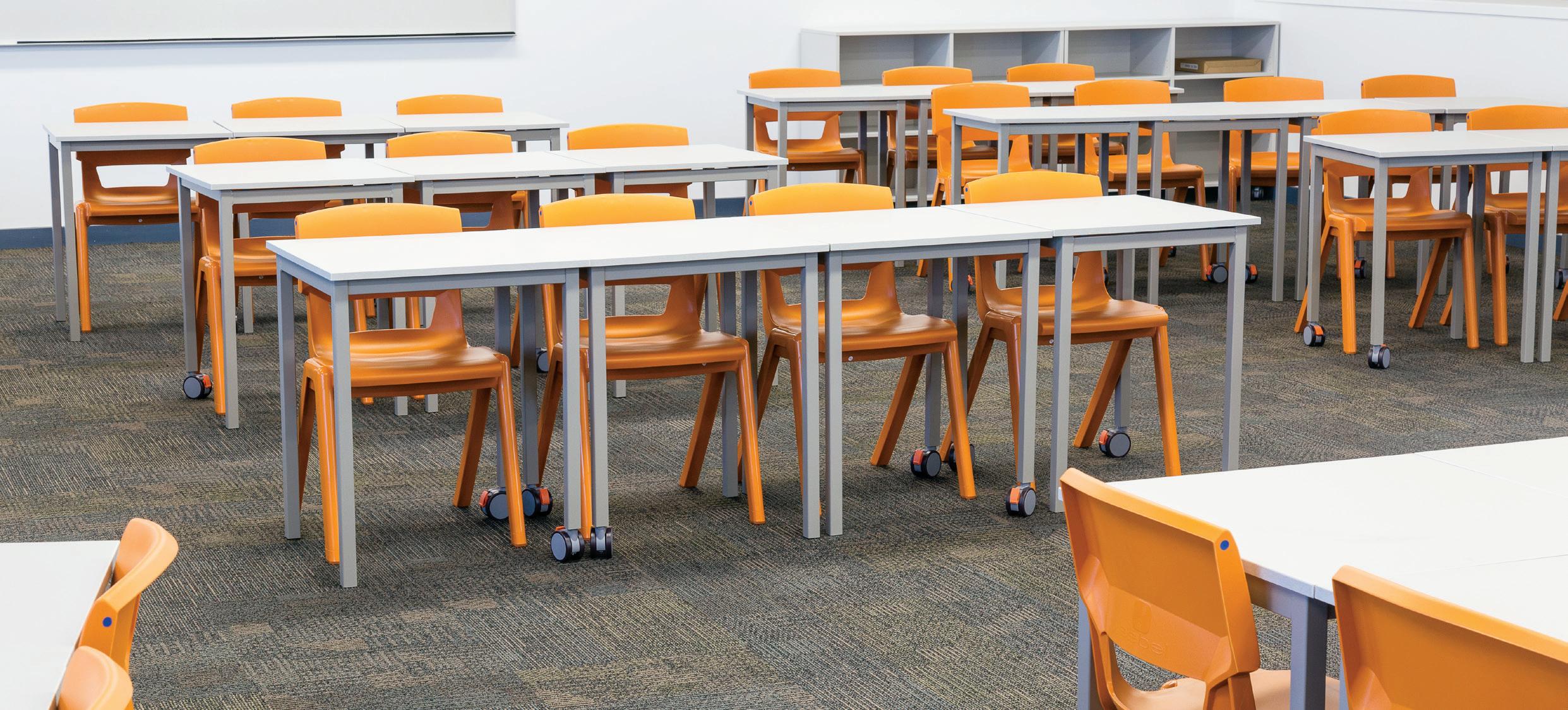
allows educators and students to experiment with classroom layout and design. Furniture like desks and cupboards that are on wheels, for example, allow the classroom set up to be adapted for different learning activities. Individual, small group work and wider collaboration can all be facilitated when a space can be easily reconfigured. This flexibility means spaces can also be used as venues for other activities, not just as classrooms. School or community groups may utilise the space for meetings, students can showcase their work to their peers and wider community, or students or staff can come together in the space for workshops and team building experiences.
With student numbers in many schools increasing without a comparable growth in physical space, furniture which provides storage solutions can be particularly useful. Tables or seats with storage compartments, and slimline cabinetry can help accommodate learning tools in a functional way, without occupying valuable floor space.
20 Term 1, 2023 | schoolnews.co.nz ADMINISTRATION
Lundia Classic Library Shelving in Natural Pine, Fig Table and Ottomans and the Noho chair by Formway. Images courtesy of Lundia
You thought we just did shelving...
but we do so much more
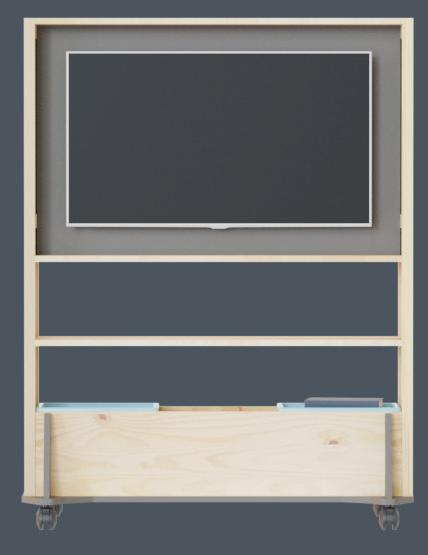
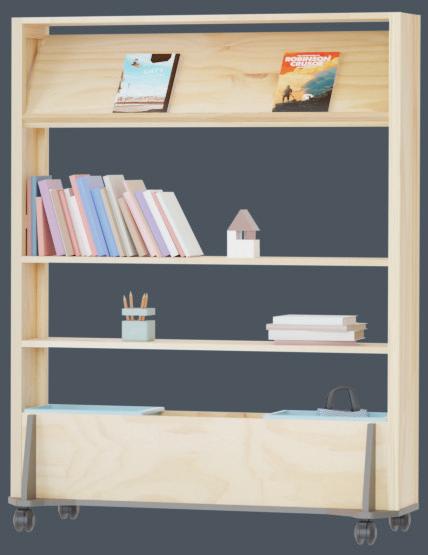
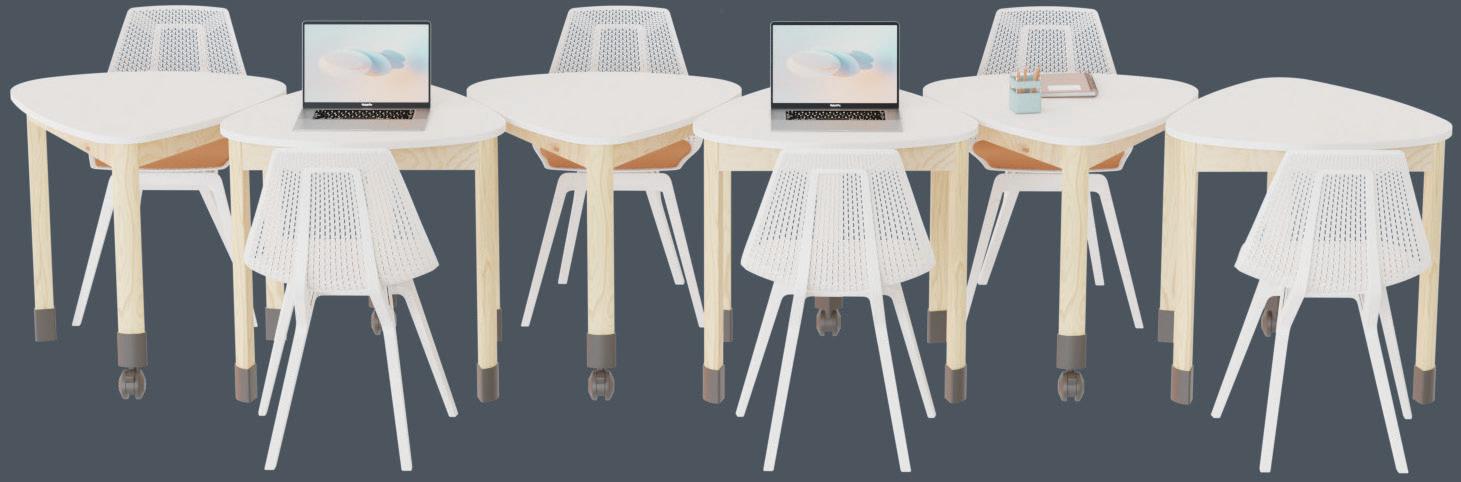
Lundia’s NEW Learning range has been several years in design development. The range is modular and flexible allowing multiple classroom solutions that assist teachers to facilitate all types of learning from Makers Spaces and Mobile TV, Whiteboard and Acoustic Walls to Softscapes and stackable or staged seating.
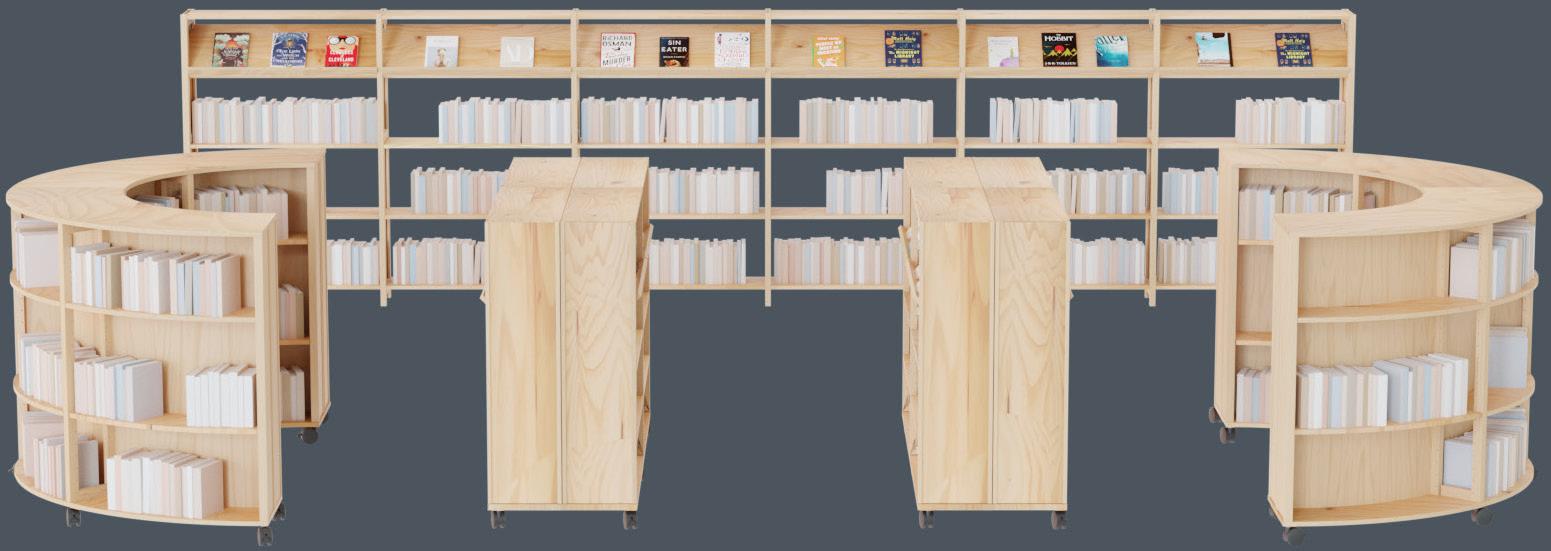
Our fixed and loose furniture also complements our Natural FSC certified Pine Mobile and Classic Shelving. Inspired by Biophilic Design principles with a new pallet of colours taken from nature we are sure this will bring a fresh approach to furnishing the learning environments throughout Aotearoa.



lundia.co.nz
info@lundia.co.nz
0800 860 460
For many schools, sustainability will be important in any classroom redesign. Furniture products can now be sourced that are made from recyclable materials. Schools may also wish to consider incorporating the use of renewable energy like solar power into their design. Utilising natural light sources can help reduce electricity costs, while helping students stay connected to the outdoors.
Introducing elements which mirror the school’s natural landscape, culture or traditions can help build a sense of community for students’ and their families. Furniture shapes which reflect the shapes of landscapes outside the windows, for example, can bring the outside in. Sourcing furniture from local suppliers, or made using local materials can help give the classroom and the school a sense of place, comparable to the broader setting.
Research published in Tikrit Journal of Engineering Sciences revealed that colour can influence learning. The use of colour, the study found, can create associations in a student’s brain, preparing them to learn. Designing classrooms with cool colour palettes including white, green and blue work well to stimulate learning and promote knowledge retention.
Colour can also be used to imbue a space with an element of fun. For junior classrooms particularly, the use of bright colours can help promote school as a place of excitement and discovery.
In large spaces, colour can be used to zone areas, with different colours indicating the activities to take place in a given space.
The focus on STEAM (Science, Technology, Engineering, Arts and Maths) learning has also influenced the furniture needs of classrooms. Students may need space to stand, sit around a table in small groups, or get on
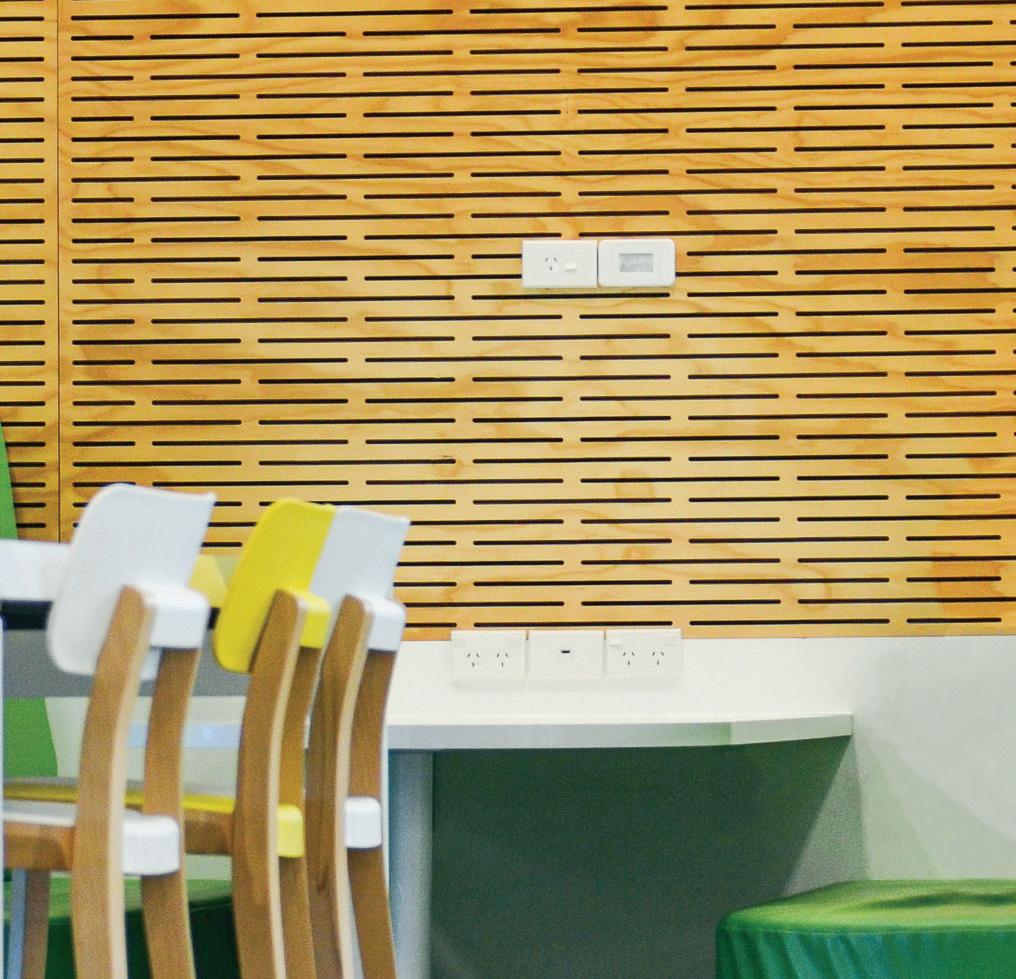
the floor to create. Facilitating technology in these spaces is also important. Access to charging stations and internet points should be considered.
To help you select the perfect furniture for your classroom, School News spoke with industry experts about the latest trends and what to consider when curating your classroom.
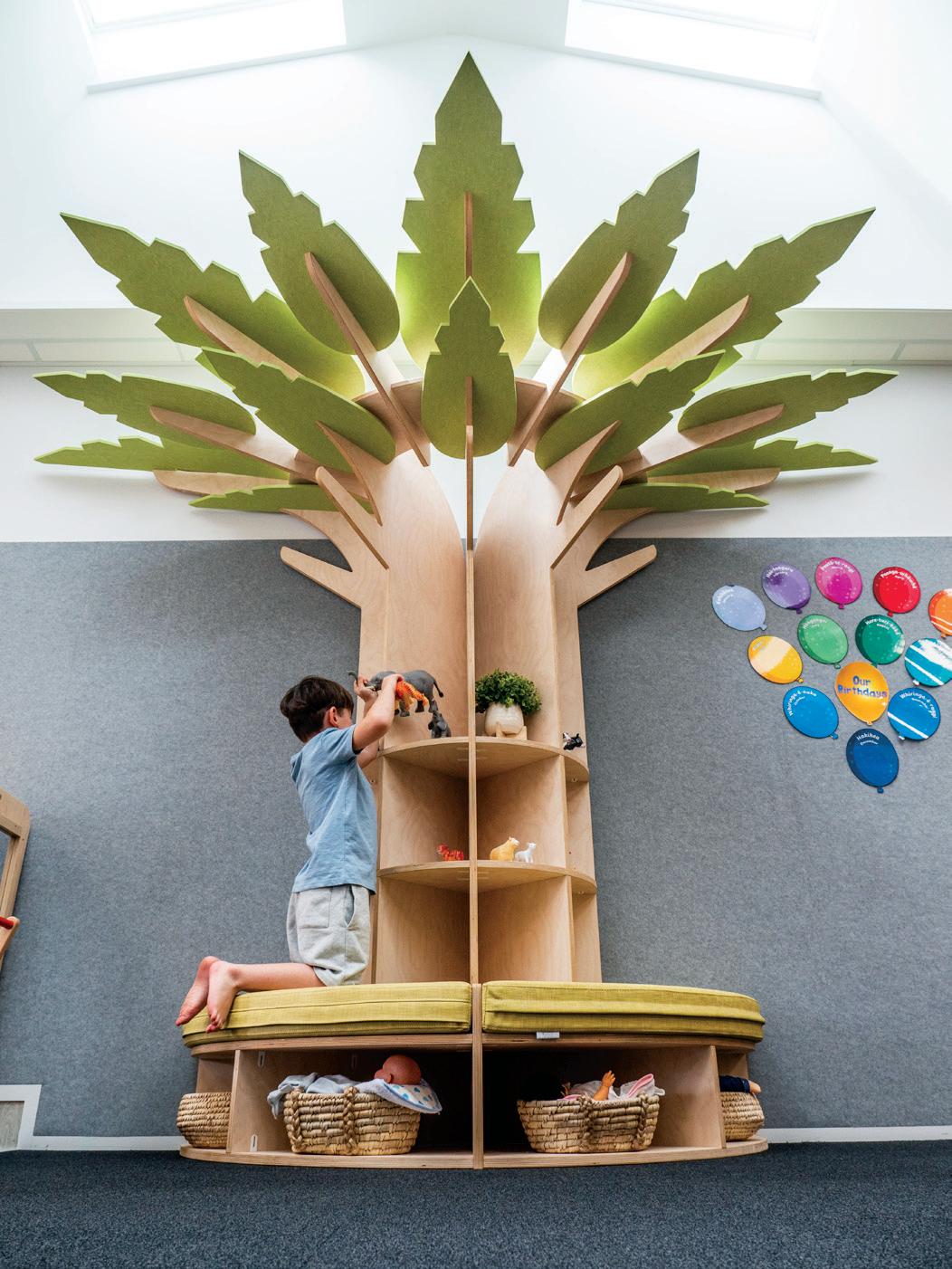
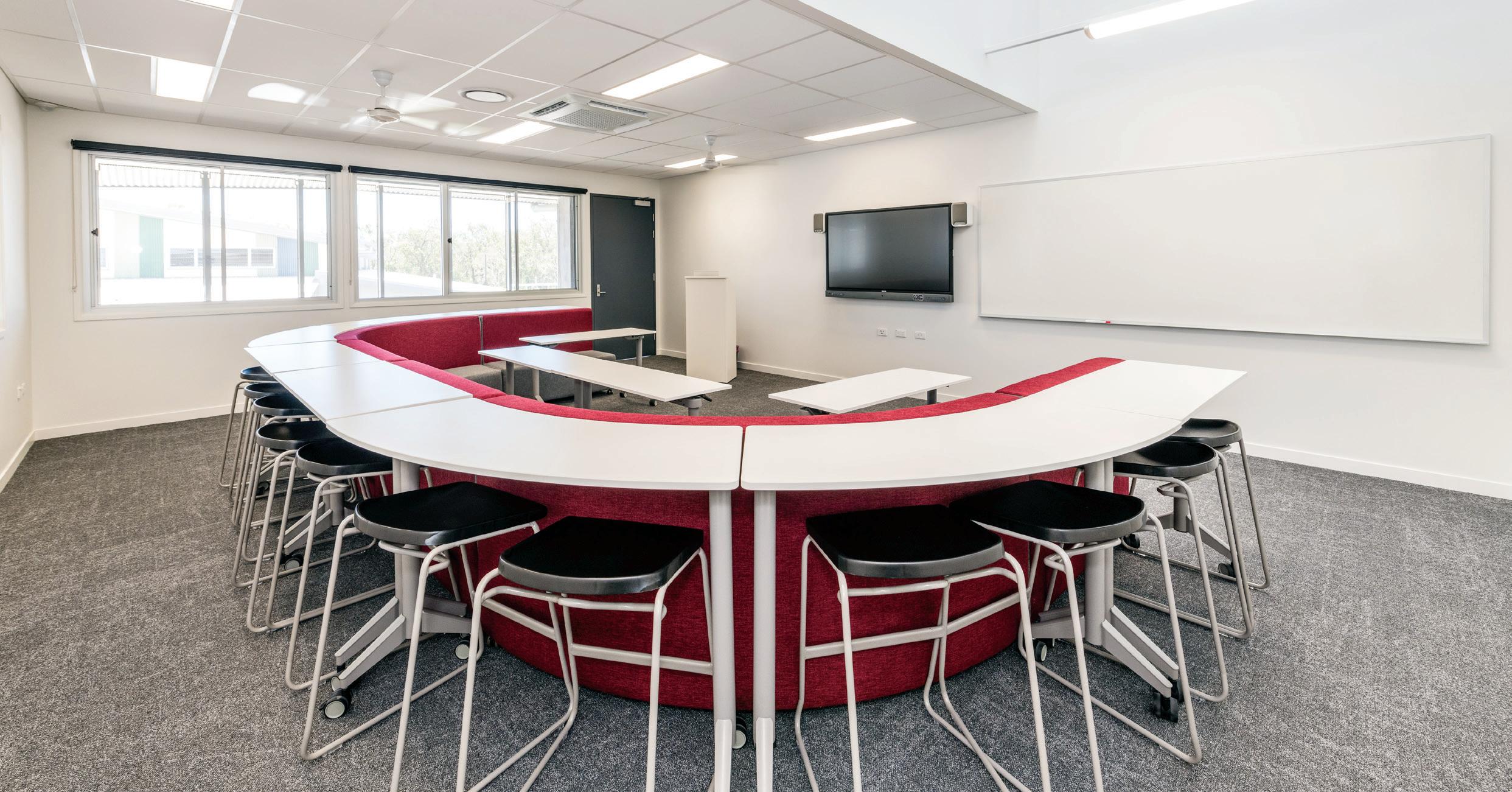
Sebel representative Jaime Hallett said flexible seating options have become popular. “Consistently, furniture and seating must be able to move easily between different groups and group sizes so the room may be used for multiple activities. This can involve stools in different heights and shapes, with and without backrests, as well as soft ottomans, side chairs, and armchairs with different upholstery options.”
Additionally, Ms Hallett said a growing trend was high schools providing senior students a dedicated area that reflects the world they will be stepping into.
“Classrooms do not need to be full with furniture, pick some great foundational pieces and keep the classroom simple. Pieces that can be reconfigured quickly, are flexible and have many uses are a great place to start.”
“Like other aspects of modern learning environments, flexibility and mobility are paramount and specialised storage, such as that used for tech spaces and devices, are often shared between spaces or relocated based on need,” Ms Hallett said. “Since schools have transitioned towards more open plan learning, storage units are increasingly being used as room dividers to create specific zones like quiet reading corners or collaborative nooks. Having products on castors makes them easy to be moved allowing free space for group activities and things like robotics.”
22 Term 1, 2023 | schoolnews.co.nz ADMINISTRATION
Images courtesy of Learning Spaces Global
















Building Futures Enriching Life Visit: learningspacesglobal.co.nz Bringing the natural environment into your learning spaces. Call: 0508 476 227
When designing a STEAM space, Ms Hallett said storage is overlooked. “STEAM is more than just coding and classroom learning; there’s a lot of hands-on work, and projects that may span multiple days or weeks. Just as with art projects, there must be space to safely store this work in between sessions, clearing the room for the next group.”
Director of Lundia, Robert Stone, predicts innovative, wood based, ecofriendly furniture will be the biggest classroom furniture trend this year. “Currently, fast furniture is like fast fashion – it is ending
up in landfill. Products that can be recycled, repurposed and relocated, and have a circular economy approach so they do not end up in landfill will be key in reversing this trend.”
When redesigning a classroom, to ensure it is future-proof, Mr Stone said schools should make sure they allow for sufficient power from walls, ceilings and floor for charging devices, and ensure adequate wifi access. To help reduce costs long term, Mr Stone recommends allowing for natural light in spaces, and suggest schools explore solar power.
Flexibility is also key for a classroom design with long term efficiency. “Keep spaces open plan to allow maximum use of the space and allow for indoor and outdoor flow,” Mr Stone said.
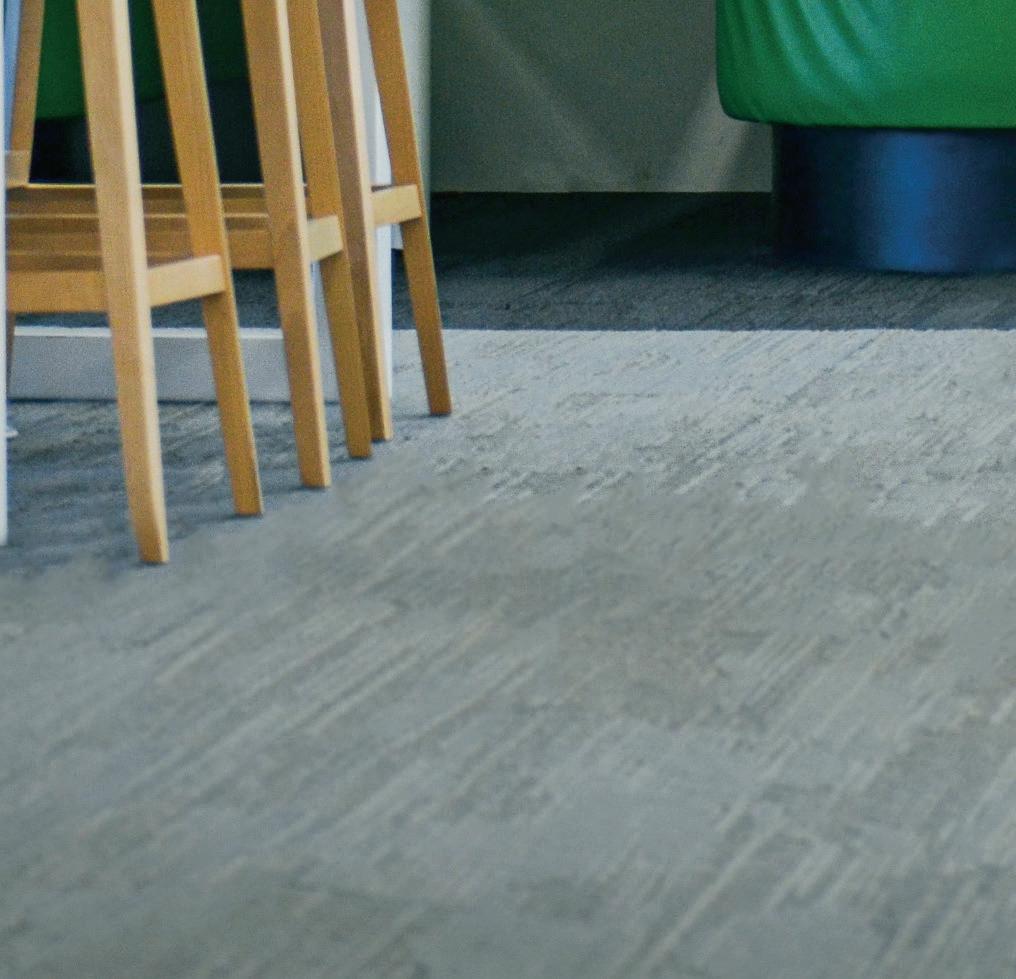
Floor surfaces should be durable to enable easy movement of furniture on castors, and allowance made for acoustics in the walls, floor or ceiling.
In STEAM spaces, “Schools are choosing furniture that is flexible, easy to move and maximises the amount of space, providing a safe and easy to manage
shared learning and making environment. Furniture that will simplify tool and material storage as well as equipment placement, and allow for growth are good choices.” Modular furniture units which can be customised to suit a particular classroom setting can help facilitate this.
Beatrice Guy, Interior Designer with Learning Spaces Global, agrees that flexibility remains a focus of classroom design. “Flexible seating, natural colours, and open-plan learning space trends will continue to surge in 2023,” Miss Guy said.
24 Term 1, 2023 | schoolnews.co.nz ADMINISTRATION
Images courtesy of Sebel
“The greater part of a student’s life is spent inside a classroom so it is crucial to bring the calming and creative benefits of nature in with deliberate colour choices and bespoke furniture pieces. Flexible seating and open learning spaces gives the student a sense of empowerment and control through the choice of where they would like to sit and how they would like to learn.”
To future proof and save money, Miss Guy recommends obtaining a scale room plan proposal from suppliers for your renovated or new classroom space. This ensures the furniture not only fits in the classroom but fits in a beautiful yet functional layout, reducing the risk of ordering furniture that does not fit or suit your space.

“Schools should also consider what materials are used for the furniture. Avoid colourful laminates and chipboard or MDF materials. These tend to fade and show marks and scratches more than plywood-based laminates that are more structurally sound and are more sustainable to manufacture,” Miss Guy said. “Creating learning zones with mobile furniture is essential for STEAM learning environments. Flexible seating and mobile furniture can create an environment which fosters creativity, collaboration and problem-solving.”
“A growing trend within the Makers Space is stainless steel tables with large loose parts bins underneath that can be wheeled out for large groups to get creative,” Miss Guy said.
be

STerm 1, 2023 | schoolnews.co.nz 25 ADMINISTRATION Same great team, same great quality, new name.
e lT M Check out our NEW WEBSITE
Design of a classroom forms part of the “fundamental trilogy” for successful learning.
Tips for planning the perfect school fundraiser

 By Gemma Easton, Editor
Fundraising
Sport and cultural trips, specialist learning equipment and extension experiences are just some examples of the benefits fundraising can provide. Fundraisers can also support scholarship opportunities for students, or subsidise the cost of materials for students who need additional financial support. Professional development for teachers and facility upgrades can also be made possible by successful fundraising activities.
Beyond financial support for schools, the benefits of fundraising can extend to the wider community, encouraging relationships and parent participation in schools.
When parents and members of the community come together to work toward a common goal, it can build a shared identity and sense of pride.
For students, fundraising can help develop soft skills like responsibility, teamwork and time management, and encourage students to give back to the school, volunteering their time or expertise.
Finding fundraising ideas, though, that are simple to organise and profitable can be a challenge, particularly in a school context. Often relying on the help of volunteers, it is important for school fundraising to provide maximum return.

And fundraising is not just the remit of schools. Families and businesses are increasingly asked to donate money, for state or nation-wide appeals, specific causes, and local sport or community clubs. It is essential, then, that your school fundraiser stands out.
The success of any fundraising venture is linked to its efficient
organisation. Often, school parent communities, like the Parents and Friends Association will take the lead in this. Schools should work collaboratively with parent communities to facilitate fundraisers. Clear parameters should be established, including what the fundraiser is for, how and when details will be communicated with the school community and, if appropriate, wider community, and the monetary goal. All fundraising must comply with relevant state laws, so schools are encouraged to consult with relevant authorities to ensure this.
Parent associations, while comprised of volunteers, often
contain many parents with expertise in a certain field, which can be drawn on to enhance fundraising efforts. A person proficient at utilising social media platforms, for example may be tasked with coordinating social media content to promote the fundraiser; an individual with links to a local business may be asked to approach the business for support. School staff, as well, can support fundraising efforts. Helping to explain the benefits the fundraiser will have for the school community or specific links to learning opportunities may assist in validating the fundraiser, deeming it worthwhile to students, parents and their families.
26 Term 1, 2023 | schoolnews.co.nz ADMINISTRATION
is an important activity for all schools, helping to provide resources and fund opportunities for students outside the scope of the annual school budget.
© stock.adobe.com © stock.adobe.com © stock.adobe.com
Engaging the school community is also integral to the success of any fundraising endeavour. Students who can see direct benefits for themselves may be more inclined to volunteer their time or services to assist with fundraising. Similarly, parents who can identify a need and recognise the benefit of a school fundraiser may be more likely to lend their support.
When considering the best items and events for a school fundraiser, the opportunities for schools are vast.

Consumables such as chocolates, bakery treats and pies have long been a staple of the school fundraiser. With broad appeal, these items can be easily sold by students to family and friends. Collaborations with local businesses such as bakeries can provide benefits for the wider community.




Keepsakes can make excellent gifts for occasions such as Mother’s Day, Father’s Day and Christmas. Photo frames and photo keyrings, coffee mugs and pens all provide mementos the whole family can cherish. Fundraising around Easter could involve the sale of hot cross buns or chocolate; hand


painted ornaments or specialist wrapping paper would serve well at Christmas. Linking a fundraiser to an occasion and selecting appropriate products may help to make the fundraiser profitable, as families work to support the school and use the convenience of the school fundraiser to ease the burden of gift shopping that special occasions can bring.
Raff les are also a popular choice for school fundraisers and provide an

additional opportunity to support local businesses and showcase the strengths of a school’s locale and community. Approaching local businesses to donate items or offer vouchers for their services can be a good way to promote small and local businesses to the school community. Raff le sales provide revenue for the school, and the ability to advertise their goods or services make raff les an easy buy-in for donated goods.
For added efficiency, fundraisers can incorporate school curricula. For example, auctions of student artwork could be held. Alternately, schools could utilise the talents of parent associations and hold craft fairs, challenging students and parents to use their creativity for good.
Recent shifts in community consciousness towards caring for the planet make reusable items a great choice for fundraising. A variety of products are available to schools, including reusable coffee mugs, shopping bags and food containers. Other household items like hand sanitiser, sunscreen and band aids are also popular fundraising items. These products can include school-specific branding, thus serving the dual purpose of fundraising and marketing. Most importantly, remember to have fun with your fundraising! Often the simplest ideas, that are easy to organise, prove the most successful. Planning, organisation and a great product will help your fundraiser to be a hit with students, their families and the broader community.
Term 1, 2023 | schoolnews.co.nz 27 ADMINISTRATION Fundraise with us Traditionalrecipe HotCrossBuns! For more information visit www.couplands.co.nz/fundraising or email the team fundraising@couplands.co.nz Terms and conditions apply. Availability is subject to change. RAISE PROFIT $1 .20 PER PACK for your school or team in term one with Coupland’s Hot Cross Buns.
© stock.adobe.com
Positive wellbeing tools for schools in 2023
 By Naomii Seah, Industry Reporter
For students, teachers, principals, administrators and other school staff, life can feel overwhelming. Between Covid-19 disruptions and increased costs of living, it can be hard to cope. But 2023 doesn’t have to be another year of anxiety and turmoil, especially when one has the tools and resources to cope with adversity. Now, more than ever, self-care, mental health awareness and wellbeing are important skills to learn and implement.
First, what is wellbeing? Although a widely used term, wellbeing has often been loosely defined. The Mental Health Foundation NZ (MHFNZ) defines wellbeing as “hav[ing] the tools, support and environments we need to be who we are and to build and sustain lives worth living”.
A commonly used model to conceptualise wellbeing, which is widely used in schools and educational contexts, is Te Whare Tapa Whā, which
conceptualises wellbeing as a wharenui. Its foundations are the whenua, or one’s connection to the land and environment, including not just the physical environment, but the social one. A school or kura and its culture can serve as the foundation of staff and students’ wharenui.
If one conceptualises the school or kura as the whenua of an individual’s wharenui, then the school community serves as a foundational environment in which to promote wellbeing. By normalising wellbeing strategies and incorporating them into the school routine, as well as fostering open environments and adequate social supports, schools can create “a culture of wellbeing” that equips the community with the resources and skills required to face adversity.
Fostering a culture of wellbeing could be especially important considering the downward trend in youth mental health and wellbeing in New Zealand. Present before the pandemic, the disruption of the past few years is likely to have made the mental health crisis even worse. One 2020 study found that psychological distress in young adults (15 to 24) rose significantly over the pandemic period. Although this trend is concerning, one review found “caring relationships between parents, schools, and the community” were an important factor in the wellbeing of rangatahi. This means schools could play an important role in helping wellbeing recovery in our rangatahi and the wider community.
Some wellbeing strategies
schools or kura can implement are outlined by the MHFNZ website as the “Five Ways to Wellbeing”.
The first of these is termed “connect” and is defined as positive interactions which make individuals “feel happy, connected and secure”. The second way to wellbeing is termed “give” or “tukua”, defined by giving back to the community. The third is “learning”, or “me ako tonu”, which posits that an attitude of growth is required for an overall sense of wellbeing. Then, there’s keeping active, or me kori tonu, as “being active is proven to boost our wellbeing and decrease stress, depression and anxiety”. The fifth and final way to wellbeing outlined by the MHFNZ is termed “take notice,” or “me aro tonu.”
MFHNZ notes that “paying more attention to the present moment, to our thoughts and feelings and to the world around us boosts our wellbeing. It helps us to behave in ways that make us feel good about ourselves... taking notice can include gratitude, forgiveness [and] reflection.” In other words, “taking notice” could refer to mindfulness practices. Thus, to promote a “culture of wellbeing” in a school, schools should ensure that there are opportunities to connect, give, learn, be active and practice mindfulness throughout the school day. P30
28 Term 1, 2023 | schoolnews.co.nz TEACHER’S DESK
© stock.adobe.com
Incorporating strategies into the school routine can create a culture of wellbeing.
Teacher wellbeing builds collective resilience

“I
The culture at Waitati Primary School (Dunedin) has been transformed since teachers participated in a wellbeing programme from CORE Education, in partnership with the New Zealand Institute of Wellbeing and Resilience (NZIWR).
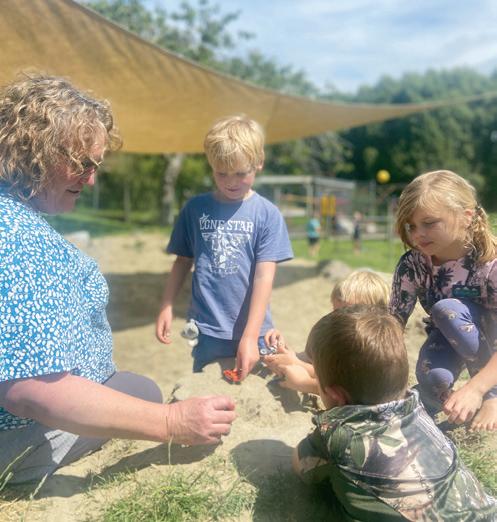
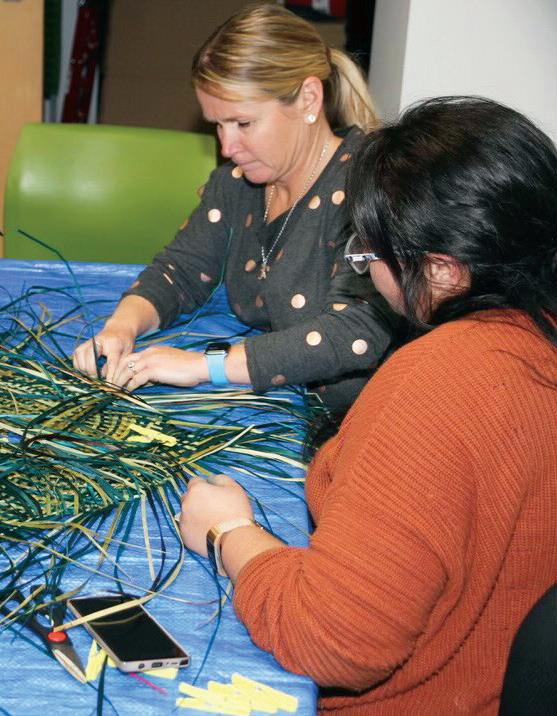
Last year leadership at the school took action to address supporting teacher wellbeing. They chose the wellbeing programme delivered by CORE facilitator, Anne Kenneally.
The programme is designed with evidence-based strategies that support maximum impact for whole learning communities.
“Our strategies are beginning to be embedded. Resetting our classroom culture is the greatest
benefit for our ākonga. We take a strengths approach, building the language of wellbeing so that it’s spoken, seen and caught. Enabling ākonga to be their best selves is our shared goal.” says principal, Tara O’Neill.
Anne worked with the school to customise and develop personalised strategies that worked to build collective resilience. The course design helps teachers find ‘aha’ moments, giving permission to focus on ‘self’, slowly putting their own wellbeing into practise. The culture of the workplace is re-prioritised.
“I loved how practical it is. We found our walks groundbreaking. Buddying up with another teacher, going for an hour's walk to connect and share.
Leadership releases teachers for these walks and we now make it part of our routine,” says Tara. Participants found that ākonga benefitted as well. They discovered that observing teachers' modelling and living wellbeing is extremely powerful. The school’s advice for those considering this programme would be:
• We need to look after ourselves, treasure our ākonga and colleagues.
• It brings such joy to be able to prioritise wellbeing in our profession.
• Just do it – it is at the heart of supporting teachers as professionals.
Term 1, 2023 | schoolnews.co.nz 29 TEACHER’S DESK Find out more: Contact Ngaire Shepherd-Wills, Professional Learning Manager ngaire.shepherd-wills@core-ed.ac.nz 021 166 0158 Visit core-ed.org/wp In partnership with Become a resilient and thriving learning community
collective wellbeing for your learning setting. Our accredited facilitators can work with your group on a wellbeing programme customised for your context. We use the highly-regarded New Zealand Institute of Wellbeing and Resilience (NZIWR) programme, designed specifically for Aotearoa New Zealand.
Develop
don’t think we understood how essential it was for ourselves and our ākonga to have wellbeing as the foundation piece of learning”.
You can find more information about the NZIWR wellbeing programme at: https://core-ed.org/wp
Waitati Primary School Principal Tara O’Neill with ākonga at the school
On mindfulness, one research paper noted there is “growing evidence of the efficacy of schoolbased mindfulness intervention for improving mental health and social-emotional skills.” The study, conducted in New Zealand schools, found some evidence that even a short mindfulness intervention of eight weeks was enough to help students regulate emotion, reduce stress and increase self-esteem. Teachers also self-reported a decrease in classroom disruptions. Students self-reported using these mindfulness techniques in external relationships such as with parents and siblings, resulting in strengthened relationships.

Mindfulness strategies taught included breathing exercises, concepts of mindful eating and moving, and techniques for interpersonal interaction. The strategies were taught to ākonga over the intervention period, and monitored via self-assessment questionnaires, interviews with students and teacher observation. Integrating these mindfulness techniques into the school day, such as reminding students of mindful eating and movement concepts before meal-breaks and physical education respectively,
could help to reinforce the hauora of the school community. Importantly, social connection and fostering a sense of community within the school is also integral to wellbeing. This could look like team-building experiences such as sports days, as well as creative practices like arts fairs, or promoting extracurricular activities for both students and teachers.
Beyond general integration of wellbeing practices into the school day, specific mindfulness
and wellbeing interventions can involve external providers who specialise in teaching wellbeing strategies. In some cases, mental health and wellbeing strategies require extensive research and have been developed over time to ensure efficacy by external providers specialising in wellbeing strategies. Schools may therefore consider the use of an external wellbeing provider to ensure educators are properly guided to implement wellbeing strategies and ensure the optimal
benefits for ākonga and the wider school community.
Even with all these methods of wellbeing deployed at a school or kura, one might wonder how to measure wellbeing. How can you track the progress of a community’s wellbeing to see measurable differences? One study came up with a student well-being model based on prior wellness research. The wellbeing model is based on seven domains, which can be used to create school-specific standards of wellbeing, whether that be a self-reported questionnaire or guidelines for teacher observation. External providers delivering wellbeing interventions may also provide guidance on wellbeing measures that schools can use to monitor community response over the course of the intervention and beyond.
Finally, schools might like to refer to the Ministry of Education’s “Wellbeing in Schools” webpage, which outlines the national youth wellbeing strategy and provides advice for bullying prevention and pastoral care in schools. Although not direct measures of wellbeing, schools may use these documents as guidelines for creating their own metrics with which to judge wellbeing in their community.
30 Term 1, 2023 | schoolnews.co.nz TEACHER’S DESK P28
©
© stock.adobe.com
stock.adobe.com
Free wellbeing programme already helping 100,000 Kiwi kids

Pause Breathe Smile is a mind health programme for primary and intermediate schools, proudly sponsored by Southern Cross.
It is locally developed, mindfulness-based and researched. Research shows that this programme helps kids to find calm when they’re feeling anxious or upset. It helps them to notice and pay attention to the important stuff in life, better regulate their emotions and effectively manage thoughts. Findings show that PBS helps kids to resolve conflicts more effectively, to build positive relationships with others and leads to statistically significant increases in childhood wellbeing.
The Pause Breathe Smile Charitable Trust operates the programme originally developed at the Mental Health Foundation in 2013 by Grant Rix, who is co-founder of the PBS Trust and works as the Director of Mindfulness Training and Development.



"We saw the need for an initiative that can help children flourish now, while also learning skills to help them manage life’s ups and downs as they grow and face future challenges. Right now, the challenges are huge. Pandemics, climate change, global conflict. We really don’t have any time to waste in helping tamariki learn these important skills.”
Thankfully, with the funding and support of Southern Cross, Pause Breathe Smile is now being taught to 100,000 primary and intermediate school children throughout Aotearoa.



Dr Matthew Clark, Chief Medical Officer for Southern Cross Healthcare said, “In under three years, the PBS team has taught thousands of teachers and their students how to de-escalate anxiety and stress, and to better navigate the weirdly uncertain times we’ve all been facing.



When you’re pint-sized, problems can seem much bigger, so teaching our tamariki to manage their emotions and reactions in a positive way helps them in so many areas. The results we’re seeing in the independent survey speak for themselves,” he added.
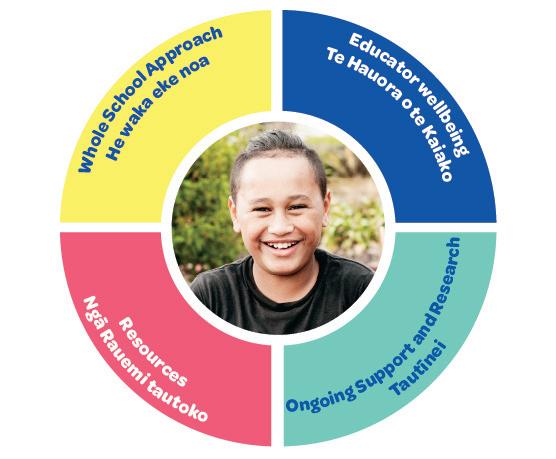
Dr Reuben Rusk, founder of Mindquip, has monitored Pause Breathe Smile since the partnership with Southern Cross began in 2020. “The results suggest it’s having a positive impact on tamariki and their teachers. We’ve seen significant improvements in how the teachers who engage in the programme and complete the follow-up surveys describe their students’ wellbeing and behaviour. They describe learners as more focused, considerate, self-motivated, perseverant, supportive, hopeful, interested, and engaged, and less anxious, pessimistic, upset, and withdrawn.”
Uniquely New Zealand
Pause Breathe Smile has always been rooted in Aotearoa’s bicultural identity, but recently has taken some big steps toward ensuring that it is fully accessible for kaiako and ākonga who teach and learn in Māori immersion settings.
Within the pilot phase, PBS has developed a whole new
suite of te reo Māori resources, including an updated handbook for educators, audio practices, and video resources for mindful movements in te reo. The training workshop for Māori medium is delivered bilingually and follows the procedures of tikanga Māori, for example, starting with whakatau, karakia, and mihimihi.

How it works

Pause Breathe Smile PLD provides everything needed to implement this robust, evidence-based wellbeing programme. Whether you already have wellbeing initiatives or you’re just starting out, PBS will meet you where you are to layer, enrich, and embed wellbeing experiences and approaches. By building the capacity of your team, we support you to build the wellbeing outcomes for your ākonga. Following training, the programme is facilitated by the classroom teacher and is designed to be delivered flexibly as either eight full lessons, or 15 mini lessons. Key topics included alongside core mindfulness practices are emotion regulation, kindness, interconnectedness, attention regulation and gratitude. Each module supports learning towards multiple curriculum achievement areas.
A newly developed range of enrichment lesson plans, guided mindfulness practices and mindful movement videos are available for your use after the completion of the core programme to ensure that the wellbeing gains made are sustainable over the long term.


Facilitators are available to discuss your school requirements. Email Lindy at coodinator@pausebreathesmile.nz to register your interest.

Term 1, 2023 | schoolnews.co.nz 31 TEACHER’S DESK
STEAM: Creating future problem-solvers



 By Sarah Davison and Naomii Seah, Industry Reporters


AWARD WINNING MATHS TEXTBOOKS




WITH free ONLINE TEACHER SUPPORT
STEAM encourages ākonga to think outside of the traditional, siloed disciplines of Science, Technology, Engineering, Arts and Maths. Instead, students combine these subject areas to investigate new fields like bioengineering. That means a curriculum that incorporates STEAM is a future-focused one, as many areas of investigation, and even new disciplines, are being born from investigating any number of combinations of STEAM. For example, data
visualisation and data science combine design principles, mathematics and technology. The inclusion of the arts, or the “A” in STEAM, is a natural progression from STEM pedagogies. In a recent literature review of international STEAM learning, researchers noted that the addition of arts may help student understanding of STEM subjects, improving student performance in all areas of the curriculum. Researchers also noted that arts integration is not limited to creative design, but may also incorporate language and humanities as subjects of interest in a wider STEAM project. This ensures STEAM inquiries result in “meaningful expressions and applications of engineering, maths and science”, which strengthens student learning by developing connections between inquiry and real-world problem solving.
As a field, the arts is broad and diverse, covering areas including photography, architecture, history and performance. This allows educators the opportunity to blend STEAM thinking into many subject areas in a variety
Curious about Caxton Educational
Give your students the best advantage to excel at maths. They use our textbooks, while you have all our free online teacher support. YOUR STUDENTS DESERVE THIS!
mel@caxed.co.nz www.caxed.co.nz
CaxEd publishes the popular NZ Curriculum Mathematics –Stages numeracy series and the award-winning NZ Curriculum Mathematics – Connecting All Strands series, which weaves all the NZ Curriculum strands into one Student Text per year (Years 3-8) establishing a solid backbone for your maths programme.







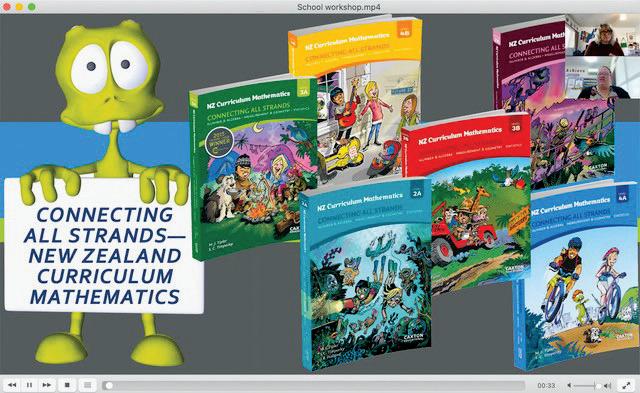
CaxEd off ers Online Teacher Support via their website to complement the Connecting All Strands texts.








Printable masters, interactive games, teaching strategies, and extra tasks for every
chapter add more excellent activities for extension or extra practice to the highquality tasks in the books.




Schools that have purchased this series can access these online resources at no cost.










The Ministry of Education’s latest study shows that textbooks outperform computer or tablet-based learning.
Email mel@caxed.co.nz or visit www.caxed.co.nz.

32 Term 1, 2023 | schoolnews.co.nz TEACHING RESOURCES
The benefits of STEAM (Science, Technology, Engineering, Arts and Maths) learning are well-documented. Interdisciplinary at its core, STEAM weaves subjects together to engage and inspire students, while bringing these concepts to life using real world examples.
© stock.adobe.com
of ways. The wide spectrum of arts education opportunities can help teachers integrate elements of the arts into their lessons. Similarly, the variety of disciplines within the arts allows teachers to incorporate STEM principles into their arts classrooms. Students who struggle with principles of maths and science, or find technology daunting may be encouraged to engage with these subjects through their arts practice. Shifting the focus from science or maths, for example, in isolation and adopting an integrated approach can make concepts more accessible.
Recontextualising STEM learning
within an arts framework can encourage students to engage with these concepts.
According to the Ministry of Education’s eLearning website, Te Kete Ipurangi, STEAM encourages students to: think flexibly; feel safe expressing new ideas; become familiar with handson learning; take ownership over learning; build teamwork; understand the connections between science, technology, engineering, arts and math and how they can work together and; foster curiosity about the world and how they can change it.
One of the documented benefits
Light, Pa ern, Identity: Tour and Gli er Pa ern Workshop
In terms 1 and 2 City Gallery Wellington Te Whare Toi has a major exhibition by renowned artist Reuben Paterson (Ngāti Rangitihi, Ngāi Tūhoe, Tūhourangi), whose artworks capture the dynamic properties of light through glitter and diamond dust.
Reuben Paterson: The Only Dream Left is the largest exhibition of the artist’s work to date.
Encounter large-scale paintings, sculpture and animation that range from kaleidoscopic compositions of kōwhaiwhai to a life-sized tree in sparkling gold, and explore themes around light, pattern, and identity.

Students will create their own artworks inspired by


the exhibition, conducting experiments with repetition and reflection, and devising kaleidoscopic patterns to make glittering designs.
We’ll be running tours and workshops for students of all ages and recommend booking early to secure a session with one of our Gallery educators.
Book now at citygallery.org.nz
of STEAM education is a more effective pedagogy, resulting in demonstrably improved application and understanding of science and mathematics. These two subjects are notoriously difficult to teach, and it’s been internationally noted that standardised assessment in these subject areas often encourages rote learning and memorisation rather than meaningful understanding.
The effectiveness of STEAM in engaging students has also
been demonstrated locally. One New Zealand study piloted a co-creationary and open-ended project-based STEAM curriculum for Year 4 students, and observed that “the level of engagement for students began to lift because of the hands-on nature of sessions”. By emphasising the learning process rather than outcomes, the study found many students were achieving well and discovering intrinsic motivation to engage with the exercises. Students also felt empowered through the co-creation of inquiry.
Term 1, 2023 | schoolnews.co.nz 33 TEACHING RESOURCES
Reuben Paterson The Golden Bearing 2014. Photograph courtesy of Bryan James and the Govett-Brewster Art Gallery.
© stock.adobe.com
The main goal behind STEAM education is to assist students develop the skills needed for the future.
The importance of STEAM for the next generation
The Ministry of Education’s Te Kete Ipurangi recognises the importance of providing STEAM learning opportunities within the New Zealand curriculum.
“STEAM-based programmes take an integrated approach to learning and teaching, which requires an intentional connection between curriculum learning objectives, standards, assessments, and lesson design/implementation,” the website reads.

“STEAM learning applies meaningful maths, science, and technology content to solve real-world problems through hands-on learning activities and creative design.”
Te Kete Ipurangi also touches on the importance of using STEAM to equip students for the future workforce.
“STEAM learning will not only produce tomorrow’s designers and engineers; it will develop innovative mindsets and the ability to problem-solve, ensuring that our students become creators of technology, not just passive consumers.”

Through exposure to the arts,
students’ cultural and social awareness is increased. This in turn can help foster an appreciation and understanding of other world views. Remaining open to alternative viewpoints and different lived experiences may encourage new approaches to problems. Shifts in social consciousness and a recognition that problems should often be viewed in a global, rather than local context make this educational exposure valuable. Today’s young people will require the ability to look beyond their own backyard, and incorporate broader contexts in their approach to tasks.
Incorporating the arts and humanities into STEM learning
is therefore essential not just to learning, but for the next generation of innovators and creators. By incorporating and considering the effects of technologies on society, STEAM creates flexible problem solvers that can approach problems in multi-faceted ways, creating thinkers who may solve future problems such as AI bias, technological discrimination and other inequalities that currently exist within our digital and technological landscape. When teaching interdisciplinary topics, requiring flexible thinking, the arts and humanities are necessarily essential to effective learning, as it encourages metacognitive thinking, examining how we as
society and people interact with the technologies we create.
How can I incorporate STEAM learning in my classroom?
STEAM activities often emerge from real-life problems, allowing for student-driven projects. The 2022 inquiry into the benefits of STEAM in a New Zealand context successfully raised student engagement with STEAM inquiries into waste, product design and more. Significantly, the New Zealand curriculum recently added resources for adding STEAM learning to Pasifika Education. Added to the Pasifika Education Community website, the new series uses posters and videos to demonstrate how Pacific peoples were always scientists, technologists, engineers, artists and mathematicians. Five short videos and downloadable posters illustrate how Pacific peoples embody innovation, creativity, and resourcefulness. The resources provide specific examples of STEAM within traditional Pacific Island culture and practices.
Educators can use the resource to “encourage students to study STEAM subjects and carry their ancestors’ legacy into the future”.
34 Term 1, 2023 | schoolnews.co.nz TEACHING RESOURCES
© stock.adobe.com © stock.adobe.com
A one-of-a-kind Makerspace










































Baradene College of the Sacred Heart has a one-of-a-kind Makerspace. It is a space for all students and subject areas to utilise high-tech equipment such as a laser cutter, 3D printers, vinyl cutters, vacuum formers, green screen room and CADcapable computers.
During our planning phase, the most vital piece of equipment on our list was a large laser cutter.
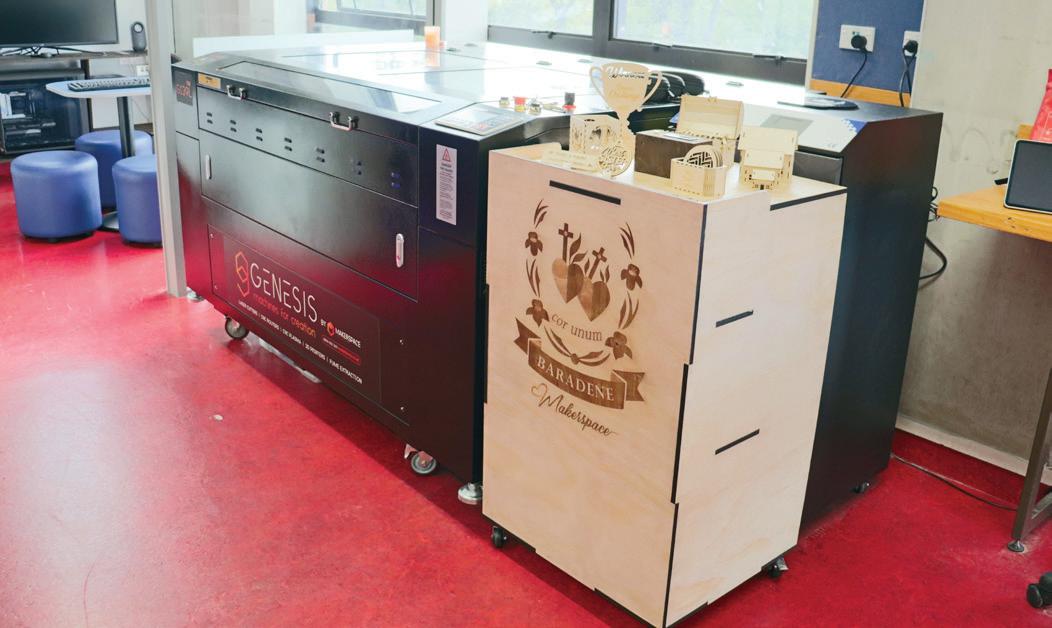
Our requirements included: A large cutting bed, speedy cutting and engraving, safe to use around students, and reliability. Makerspace NZ delivered the perfect machine for our Makerspace and met all the requirements listed above. The installation and PLD took a day and within a few weeks, we were running the Genesis G139L every day. The speed combined with ease of use, made the laser cutter perfect for running single lesson activities, right up to Term long projects.

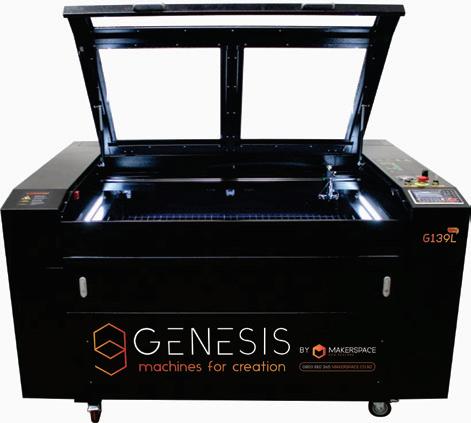


Our students are using CAD to make small projects such as candle holders, right up to 3D topographic maps and scale models of buildings. We’ve put through plywood, pine, acrylic, cork, cardboard, paper and felt. The accuracy of the equipment means that we rarely need to re-cut, which leads to less wastage and a quick turnaround. Our students use the laser cutter in their own time and leave with a piece that they can show off to their peers and gift to their friends and whānau.

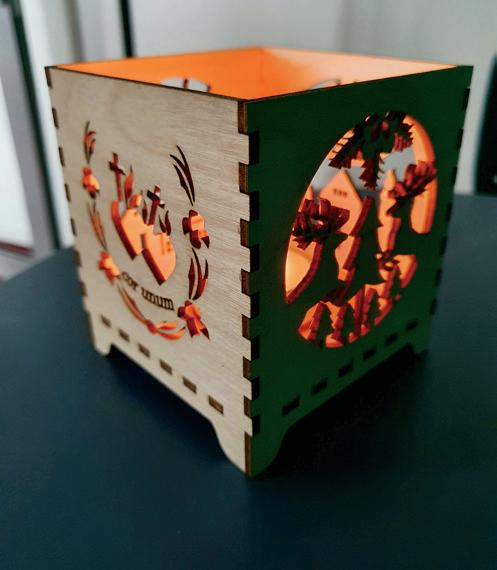
Every success story is made up of many stages. Ours started when the Makerspace truck made its first delivery to our School. The laser cutter was the first piece of equipment installed and the one that gets the most requests from staff and students. We’ve had Year 7s right up to our Baradene College Sister (93 years old) using the laser cutter!
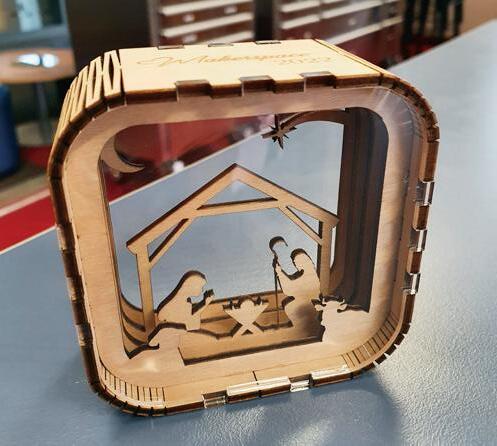
Term 1, 2023 | schoolnews.co.nz 35 TEACHING RESOURCES
INTRODUCING THE NEW GENESIS GEN2 RANGE OF LASER CUTTERS, FEATURING 2X FASTER ENGRAVING & CUTTING* AND MUCH MORE! G630L G750L *MATERIAL DEPENDANT **ALL PRICES ARE EXCLUSIVE OF GST, DELIVERY, INSTALLATION AND TRAINING G960L 600X300 (50W) $6980* 700X300 (80W) $9380* 900X600 (80W) $134 80* 1300X900 (100W) $16290* G139L GEN2 0800 810 365 MAKERSPACE.CO.NZ LASER CUTTERS | CNC ROUTERS | CNC PLASMA | 3D PRINTERS | FUME EXTRACTION
Inspiring STEM curiosity the fun way in primary ākonga
Have a blast and gain confidence teaching STEM by signing up for the Wonder Project Rocket Challenge in 2023.
‘A fun way to learn’ is the most commonly cited reason why teachers sign up to participate in the Wonder Project Rocket Challenge – a sentiment frequently echoed by their students, and the industry professionals who support the challenge in classrooms across Aotearoa.
The free schools programme seamlessly blends the thrill of fun, hands-on activities, like launching rockets, with STEM learning aligned to The New Zealand Curriculum. And by connecting classes with volunteer STEM industry professionals, as well as supplying teaching resources, student resources, and a challenge kit for free, participating schools are empowered to teach STEM with confidence.
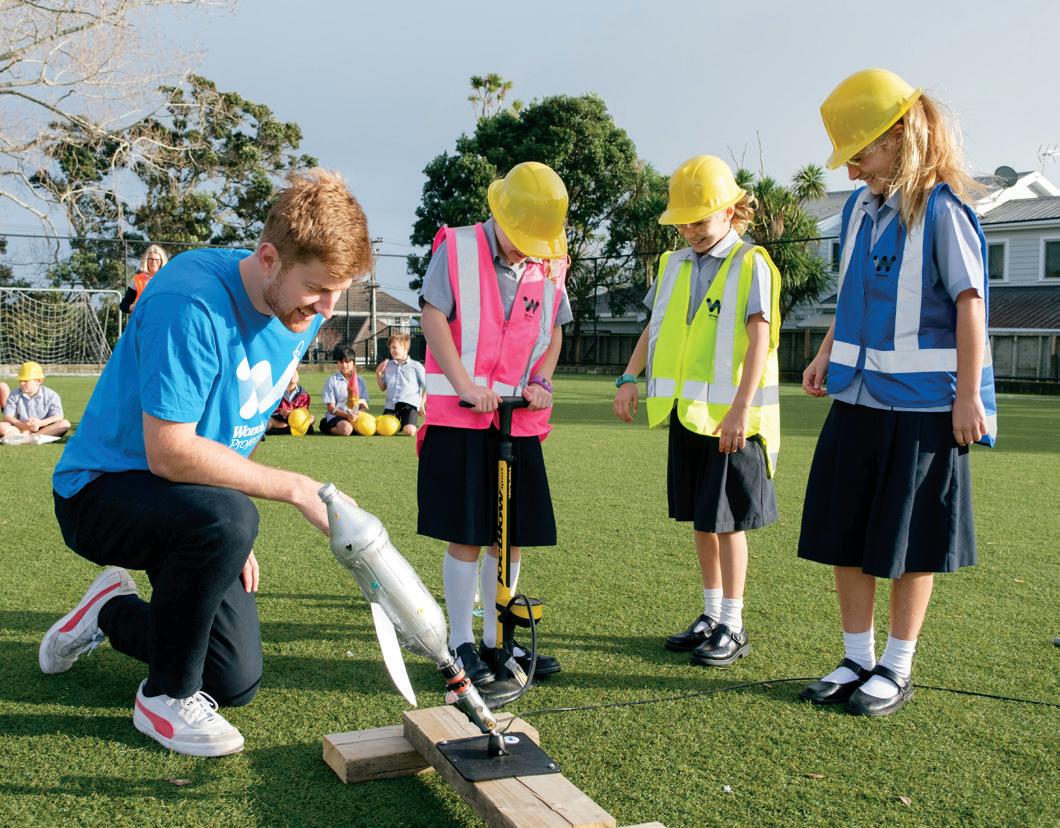
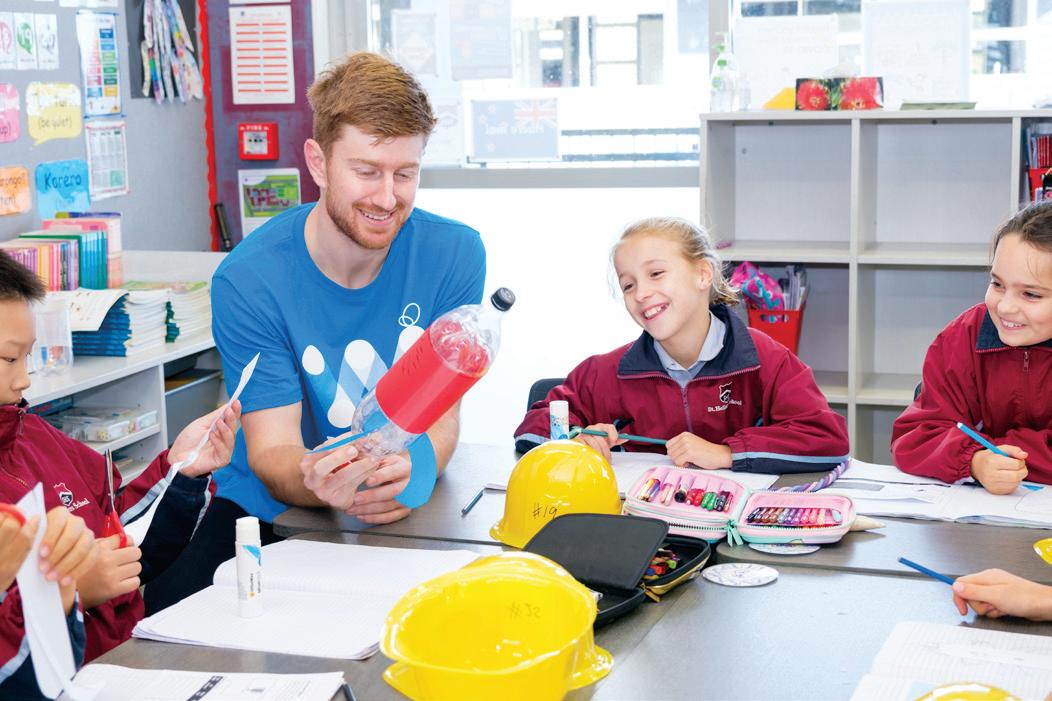
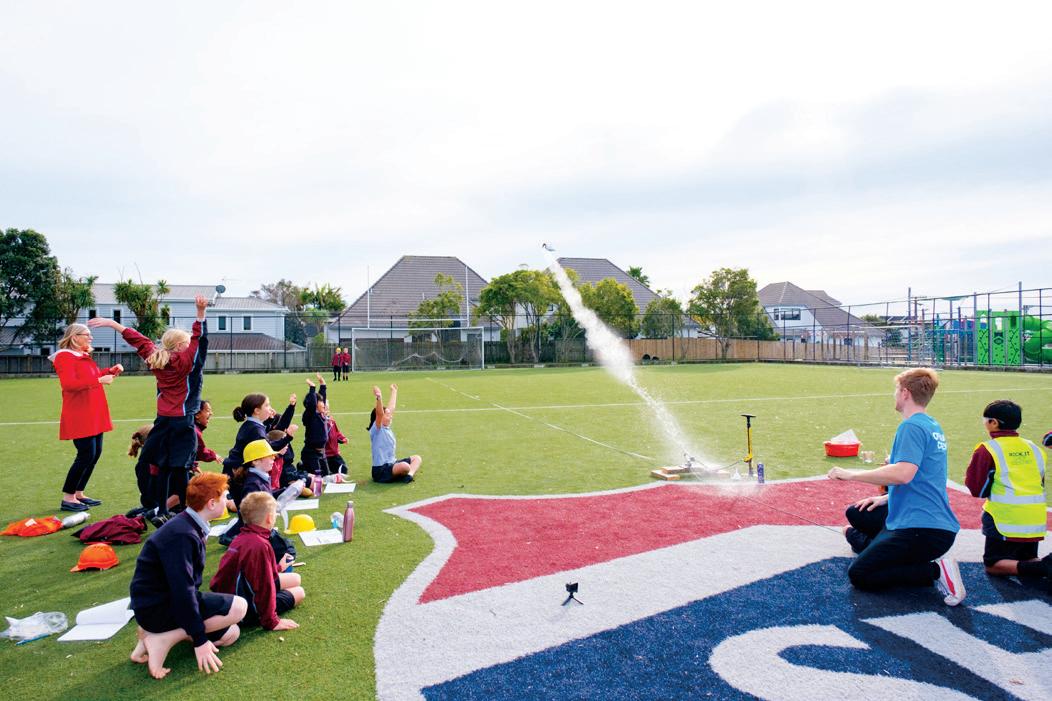
“From a teacher who was always a bit scared to teach STEM with great confidence, I now absolutely love it thanks to the guidance in the Rocket Challenge!” says a teacher from Bankwood School.
Feedback on last year’s challenge was overwhelmingly positive, highlighting that the opportunity to deliver a fun and dynamic hands-on learning challenge
has not only kept students engaged with STEM, but also made the experience teaching STEM more enjoyable.
Impact:
• 93% of teachers and 79% of students said they would do it again
• 95% of students were fairly or completely engaged in the learning
• 57% of students were more interested in STEM jobs after the challenge
• 96% of teachers said their confidence in teaching STEM was increased.
“[The Rocket Challenge] was one of my favourite units of work over my teaching career thus far” says a teacher from Raumati Beach School.
Wonder Project challenges are designed to be accessible for kids from all backgrounds to encourage all ākonga to form a connection with STEM. To support this, everyone that signs up for the Rocket Challenge in 2023 will have the option of using student activities in English, or te reo
Sign up now for 2023
Māori. All learning material is developed alongside teachers, industry professionals and students, and aligned to Level 3 of The New Zealand Curriculum, to take some of the pressure off planning for the school year.
Curriculum links: Rocket Challenge achievement objectives include:
Science: Physical world: Physical inquiry and physics concepts. Identify and describe how movement and forces effect the motion of rockets.
Technology: Technological knowledge: Technological modelling. Undertake functional modelling of rocket prototypes to inform decision making. Evaluate rocket prototype fitness of purpose to refine further developments.
Mathematics and statistics: Geometry and measurement: Measurement and shape. Represent rockets through drawings and models. Use metric units to find length, volume, weight (mass) of the rockets and the angle of rocket launch.
The Wonder Project Rocket Challenge is live for registrations. Sign up to be part of the wonder today at wonderproject.nz or contact wonder@engineeringnz.org for a kōrero with our advisors.
36 Term 1, 2023 | schoolnews.co.nz
TEACHING RESOURCES
Images courtesy of The Wonder Project
Funded by Callaghan Innovation, The Wonder Project is Engineering New Zealand’s free programme for schools, designed to get young Kiwis excited about science, technology, engineering & maths (STEM).
Take STEM learning to new heights

… and have fun doing it!




Having a fun and engaging experience teaching STEM is written in the stars when you sign up for the Wonder Project Rocket Challenge, aligned to Level 3 of the curriculum.
We supply everything you need for a flying start –student modules, detailed lesson plans, challenge kit, and an industry professional to help you teach STEM the fun way.

Take the pressure off planning for the school year and sign up now for the Term 2 challenge. wonderproject.nz


























POWERED BY @WonderProjectNZ
Te Takanga o Te Wā and Aotearoa New Zealand’s Changing Histories Curriculum
By Naomii Seah, Industry Reporter
As the Aotearoa New Zealand Histories
Curriculum is implemented nationally from Term 1 of 2023, School News looks at the new learning framework, and what resources are available to ensure effective learning outcomes.
In 2023, schools across the motu will implement the new Aotearoa New Zealand Histories curriculum. The rollout of the new curriculum is part of the wider New Zealand Curriculum refresh under the social sciences learning area. The new curriculum framework, Te Mātaiaho, based on the “Understand, Know, Do” progressive learning model, will be put into practice nationally for the first time.
At the core of the new Aotearoa New Zealand Histories curriculum are the big concepts covered by the “understand” branch of the new framework. These concepts include: Māori history as the foundation of Aotearoa New Zealand’s past, the influence and consequence of colonial government, power
relationships in society and New Zealand in the global context. The “understand” aspect of the framework will be taught alongside and interwoven with the “know” and “do” aspects of the curriculum, which cover specific contexts and case studies for exploring the big ideas, and outline inquiry processes to help support robust learning. The Ministry of
Education’s dedicated Aotearoa New Zealand Histories website has more guidance on the national curriculum content, including teaching resources, strategies and suggested topics to help educators get started. Although codesign of local curricula in partnership with local hapū and iwi are a major component of the new Aotearoa New Zealand Histories content,
The Ministry of Education and curriculum leads also understand that these relationships may need time to develop, and curriculum content will likely evolve and change. Every school, too, will be on a unique journey when developing or strengthening relationships with mana whenua, and will have different cultural contexts and needs to be addressed.
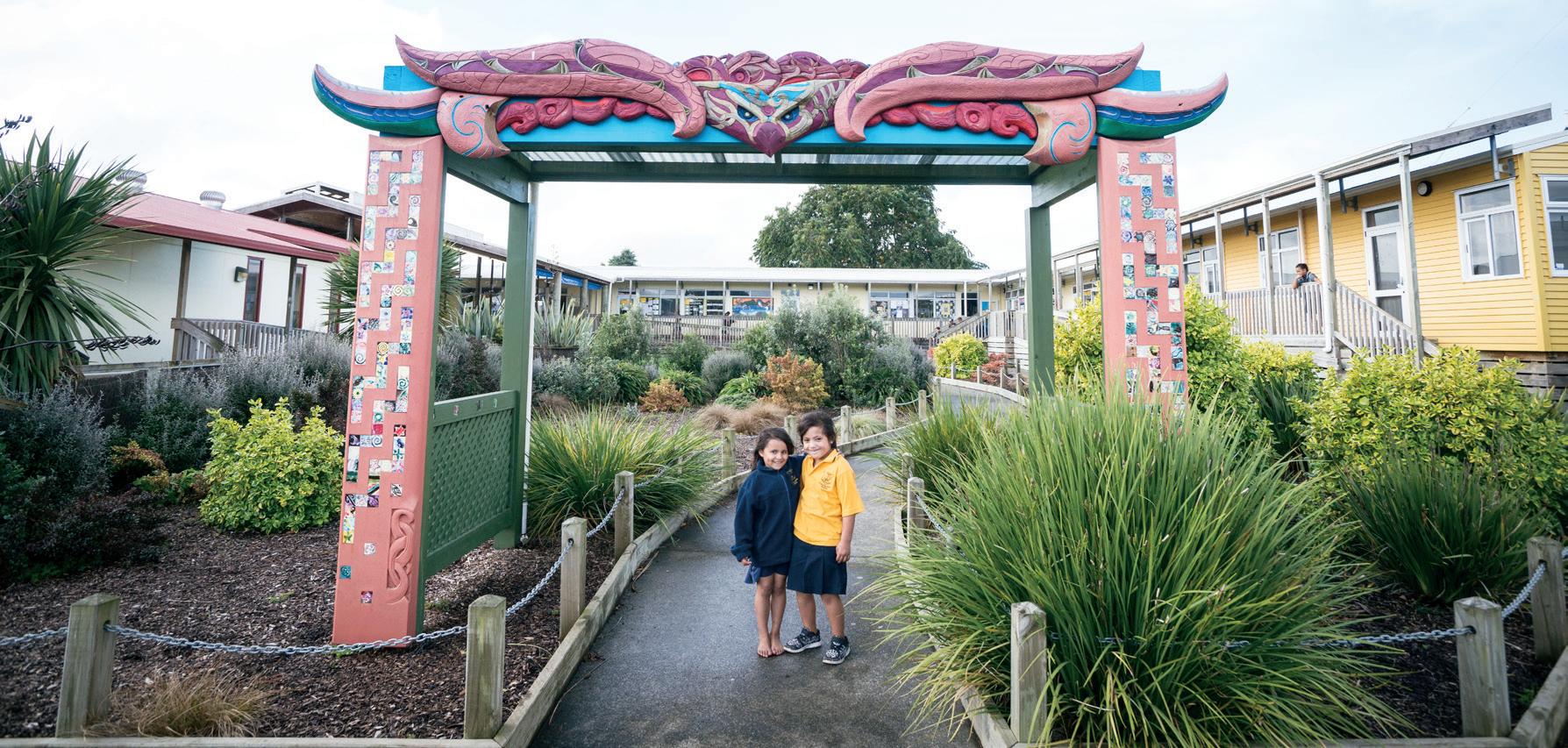
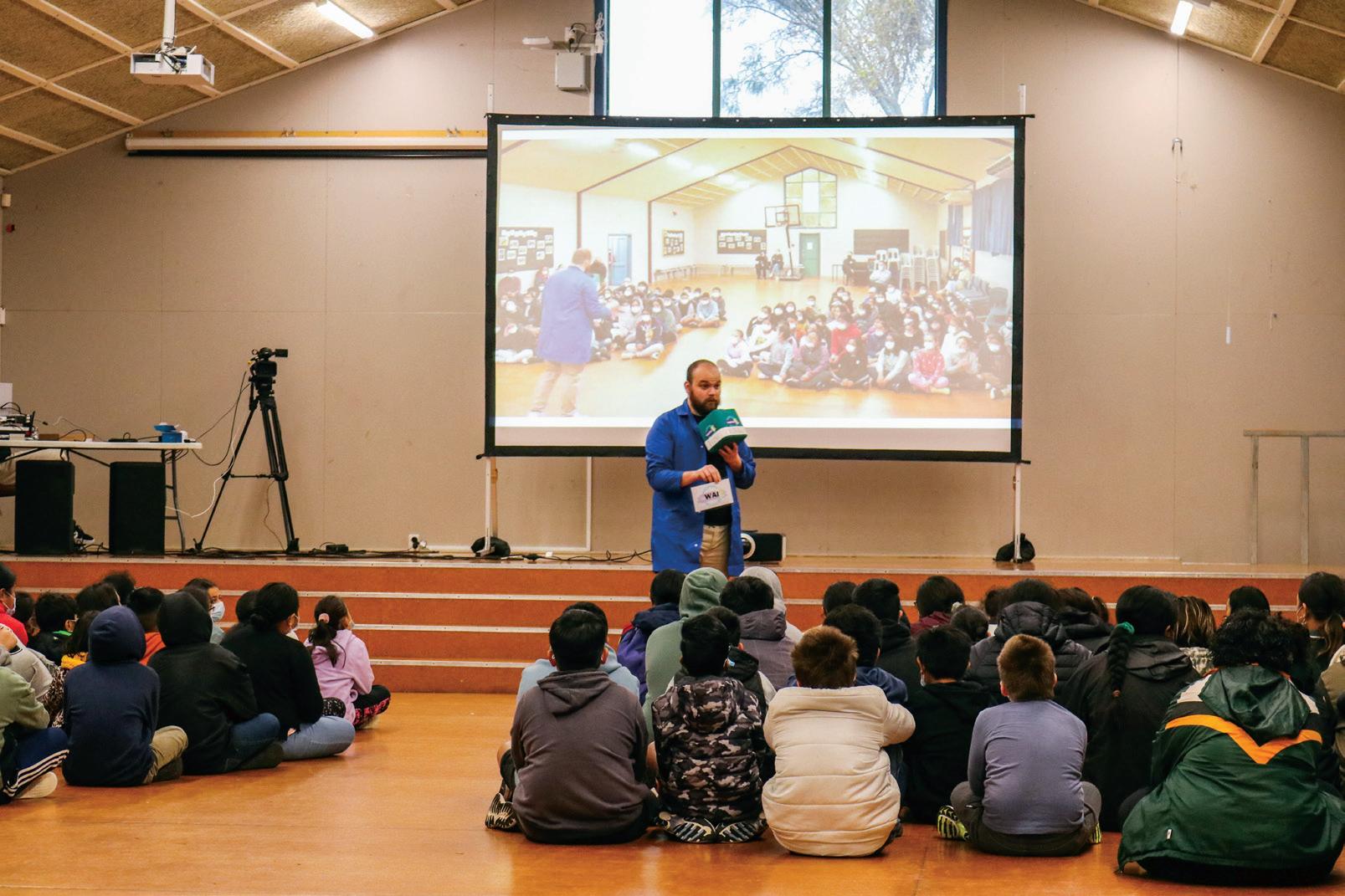
Educators will require professional development to deliver expected learning outcomes, and localised content will need to be continually reviewed and refined. This year therefore marks the first in a longer journey toward creating rich understandings of New Zealand’s history in our ākonga.
To gain a deeper understanding of the professional development resources and support available for teachers, and to spark inspiration for educators looking to strengthen their Aotearoa New Zealand Histories content, School News reached out to some providers helping to shape ākonga learning across the country.
38 Term 1, 2023 | schoolnews.co.nz TEACHER’S DESK
Capital E’s Story Studio Live: Aotearoa performance at Corinna School, Porirua. Image courtesy of Experience Wellington
Image courtesy of Core Education
New Zealand History Teacher’s Association (NZHTA) Chair, Graeme Ball:


What this curriculum has done is provide a coherent framework of what aspects should be taught, when. There are four progressions in the compulsory sector, Years 1 to 3, 4 to 6, 7 to 8, and 9 to 10. Teachers, and, importantly, resource creators, now know ‘learning is too important to be left to chance’ and, as the resource bank grows, will have the support to do this. The situation where the Treaty or ANZAC Day are covered similarly every year (as we hear they are) should now not happen. Furthermore, the curriculum’s focus on local iwi/hapū and other communities’ histories is another great strength.

All young New Zealanders will finally have a coherent understanding of our country’s past, which will fit them to be much more informed citizens in our democracy. However, schools/kaiako shouldn’t feel that they need to rush implementation. There is a threeyear implementation period and even after that timeframe there should be an ongoing process of reviewing and refining teaching programmes. Nor do teachers have to become immediate experts or create a great swathe of resources—help is already available on both counts and more is coming in 2023.

There is concern amongst some teachers about finding time to teach this new material; however, the best way is to integrate the required content into other learning areas. This is already common practise amongst primary educators. Schools/kaiako should be wary of inadvertently souring relations with local iwi/hapū as they look to engage with them. These relationships will need to be handled carefully and patiently as many iwi/hapū do not have the capacity to immediately meet schools’ needs, especially in rohe where there are many schools. Some schools already have well-developed relationships with their local iwi/hapū and will build on those. Others that do not yet have these relationships will need to take time and care to begin to build them. A first step is to do online research.

In terms of resources, NZHTA has already been providing online PLD sessions (Zoom) to support kaiako understanding of the curriculum and, in conjunction with the Social Studies Teachers’ Association, more will come next year, both online and in-person. The Ministry is also producing resources and other supporting materials and will continue to do so. Other organisations, such as National Library, are also gearing up to support the curriculum. Some iwi, such as Tainui/Waikato, have already produced resources that share their histories.
CORE Education, Tātai Aho Rau Spokesperson
At CORE, we understand the uptake and understanding of any new curriculum is a process. For our histories curriculum however, there is a heightened sense of anticipation. Questions are posed daily on social media channels, schools and kura are proactively engaging facilitators, and many others are interacting with websites, webinars, workshops and presentations.
When CORE is approached by schools to work alongside them, we tell them that there is mahi to be done before the mahi. This means we ask educators to start with themselves. What do they know of their own history, what worldview do they bring to their analysis of Aotearoa New Zealand history, and importantly what have they done to learn about their cultural location? Our organisation aspires to meet people where they are, to deeply understand their needs, and then consider how we might be able to support them.
We recommend heading to the Ministry of Education websites for English medium Aotearoa New Zealand Histories and for Māori medium Te Takanga o Te Wā. The Māori History website has a good range of resourcesfrom video, to planning examples and activities for both mediums. The Tangata Whenua: A History book is essential reading. For more localised suggestions, there is no better resource than people. Start with your own community – this is where relationships are key. Be open to seeing and hearing multiple perspectives. There is power in storytelling and much to be learnt from one another.
Te Takanga o Te Wā and Aotearoa New Zealand’s Histories are here.
Our accredited facilitators can work with you as you design and implement an authentic curriculum for your learning community.
If you’re looking for ways to implement Te Takanga o Te Wā or Aotearoa New Zealand Histories, talk to us.
core-ed.org/curriculum-refresh

Term 1, 2023 | schoolnews.co.nz 39 TEACHER’S DESK
Implementing the refreshed curriculum
National Library of New Zealand:
Many schools have been teaching Aotearoa New Zealand history topics for several years, though we have had an upswing in interest and requests for Aotearoa New Zealand related resources over the past few years. Areas of particular interest are local histories and te ao Māori.
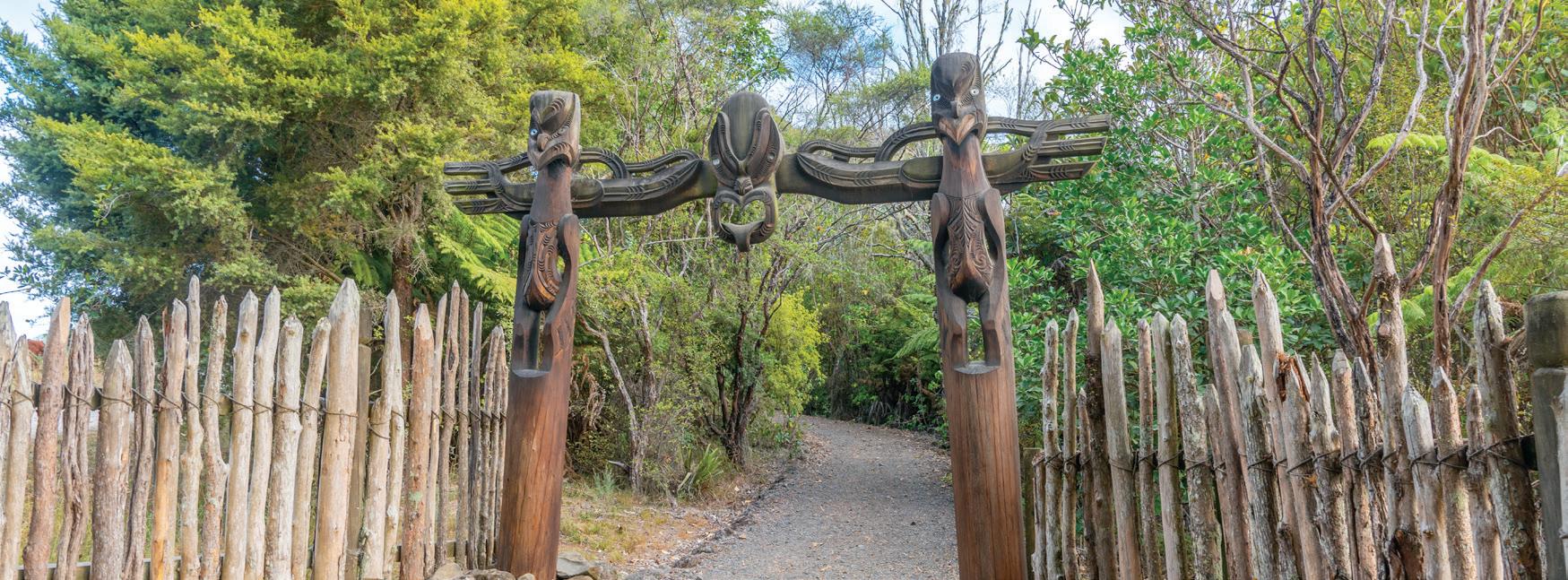

The National Library provides access to quality print resources, digital resources, and tools to support teaching and learning across the curriculum. We build the capability of school librarians as key partners for kaiako as they plan and resource their Aotearoa New Zealand’s histories programmes.
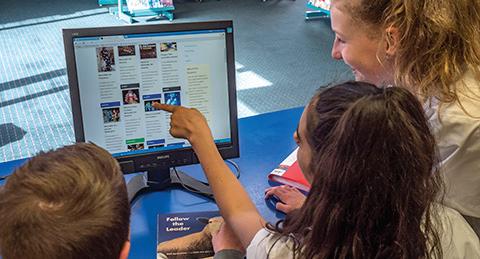
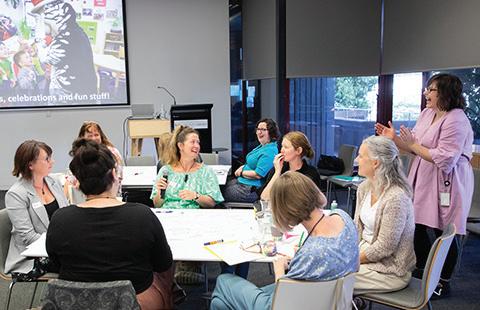
Research help, and information literacy development, is available directly to students through AnyQuestions. This online platform draws on the expertise of a network of librarians from across the country. Additionally, we provide a range of professional development opportunities, open to school librarians and kaiako,
to build their understanding of how to find and use a range of quality resources.

When looking for resources, we recommend borrowing books from our schools lending service. Our staff, who are trained librarians and former teachers, can assist in curating loans with relevant and engaging books for learners of all ages.

Our online resources include: Topic Explorer, which has curated resources including a variety of perspectives; Tuia Mātauranga, which highlights local people, places, and events that have helped shape our nation; Te Kupenga: Stories of Aotearoa New Zealand, images and stories from the Alexander Turnbull Library;
Primary source analysis tools, which are designed to be used by ākonga from Years 1 to 13.
Experience Wellington:
Kaiako are eager to find resources and performances to help them start conversations about New Zealand history with their ākonga.
Capital E’s production, Story Studio Live: Aotearoa aimed to start conversations about our complicated history in Aotearoa as a colonised bi-cultural nation of tangata whenua and tangata Tiriti, with a multi-cultural population. The performance acknowledged that our history is nuanced. We did not provide easy answers or tell tamariki how to feel, the performance was more interested in asking
questions and allowing tamariki to form their own opinions. Our show was specifically about tapa whenua | naming places. Part of our show was teaching tamariki various kupu Māori which tell the story or geography of the area. For example wai means water and nui means large so Wainui indicates a large body of water.
NZ History and Te Ara offer robust and well researched articles on tapa whenua.
https://teara.govt.nz/en/tapawhenua-naming-places
https://teara.govt.nz/ en/place-names




https://nzhistory.govt.nz/culture/ maori-language-week/1000maori-place-names.
Services to Schools
We
natlib.govt.nz/schools
40 Term 1, 2023 | schoolnews.co.nz TEACHER’S DESK
provide a range of resources and support to inspire and inform literacy and learning across the curriculum.
Teaching and learning resources Professional learning and support Lending service AnyQuestions Topic Explorer
Creating that wow factor: broadcasting studios for schools
The aspects of creative design that come with audio and visual production are important skills. With them comes an awareness of media consumption, which can be used to illustrate concepts of media literacy. The possibilities of learning with a broadcast studio are vast, with the potential to create a shared culture and identity through production of school specificpr ogrammes like video yearbooks, sportgames tapes, documentaries, podcasts and more.
But what exactly does settingup a broadcasting studio entail, and can it really be done on a school budget? School News asked industry expert David Barnard, Managing Director of Gencom Technology, for his advice.
 By Naomii Seah, Industry Reporter
The possibilities are endless with a school broadcasting studio, which can engage students and present different learning opportunities, as well as preparing them for an increasingly digital workforce.
Video and audio production is a valuable skill in today’s digital


landscape. Familiarity with broadcasting equipment and production can be an asset in the workforce, particularly as social media continues to become an integral part of day-to-day life. That’s why many schools are considering the installation of a broadcasting studio. Not only is it in-demand in the current and future workforce, video and audio production can also engage students differently, facilitating learning in a practical, hands-on capacity.
As far back as 1993, the potential of having audio and

video production in schools was being recognised. One study noted “video production can be particularly useful for ‘at-risk’ students. For students of all ages and classifications, video production links learning to the real world.

The same study found that video production “can be incorporated into the classroom to enhance motivation, creative thinking, visual literacy, and non-linear thinking. In addition, the process broadens student attention to other areas.”





Firstly, what’s most important to consider for a school broadcasting studio?
“The number one mistake is not providing a dedicated space. Having a studio which is acoustically treated to be quiet and non-reverberant makes a huge differ ence in producing high quality content. “Plus, having a separate space allows students to focus on the production. Classrooms have many distractions, and it can be hard to keep kids focused on the project.
Delivering outstanding audio & visual solutions to schools and universities
For more info contact the Webb Group Education team on 0800 775 226 or vip@webbgroup.co.nz
Term 1, 2023 | schoolnews.co.nz 41 TECHNOLOGY
Image courtesy of Gencom
“It’s also really important to get an AV specialist involved early in the project. AV production has specific requirements in terms of acoustics, lighting, power and network and it’s a lot easier and less expensive to make the right choices at the outset than it is to fix things that were designed and built incorrectly.”
What equipment is needed?
“The heart of the studio is a vision mixer which allows students to switch between multiple cameras and other video sources (such as a PC), add transitions between shots and overlay graphics.

“Once upon a time technology like this was very expensive and difficult to use, but in recent years there has been a strong focus on simplifying the user
experience and bringing down the cost so that the technology is accessible to students, hobbyists and other non-professional users looking to incorporate live video into their communications strategy. Many of these systems integrate audio mixing and web streaming to provide a complete solution in one box. Some of the latest products take this a step further, enabling a show to be produced on an iPad, using mobile phones as the cameras.
“In a general education environment, rather than focusing on having fancy equipment, it’s much more important that students think about workflow and how they’re crafting their message. This can be done very well with consumer-grade video cameras, a simple 3-point lighting setup
and a couple of inexpensive podcasting microphones. However, if you’re producing live content, such as a performance, a student news bulletin, an interview or a podcast, you need to pay attention to how it all comes together. Do you have standalone audio and vision mixers or do you use a combined AV mixer? How are you creating and overlaying graphics? Are you going to stream live or record for later distribution?
“Obviously, students can be rough on equipment, so you need tools that can stand up to heavy treatment. My best advice is to make a list of your key requirements – how many students will be involved? How will their productions be distributed? Are we using video and if so how many
cameras do we want? Two or three cameras, plus a PC for graphics, powerpoint, playback of pre-recorded material or video games, etc is usually a good start.
“Come up with a budget. There are solutions for any size budget, from less than $1000 to tens of thousands of dollars. From there, talk to someone who can translate those requirements into a system design.”
Why should schools consider including a broadcasting studio in their curriculum?
“Kids today are ALL broadcasters, whether they know it or not. Thanks to social media, everyone has a public image and a platform to say what’s on their mind. The right message (or the wrong one) can go viral without warning, and can have a significant impact on the person creating the message as well as their community. Media literacy should therefore be an essential part of the curriculum at any level, and students should have the opportunity to learn to craft professional content. Thanks to advances made in video production technology in recent years, this is now very feasible on a limited school budget.”
42 Term 1, 2023 | schoolnews.co.nz TECHNOLOGY
Familiarity with broadcasting equipment and production can be an asset in the workforce.
Image courtesy of Gencom
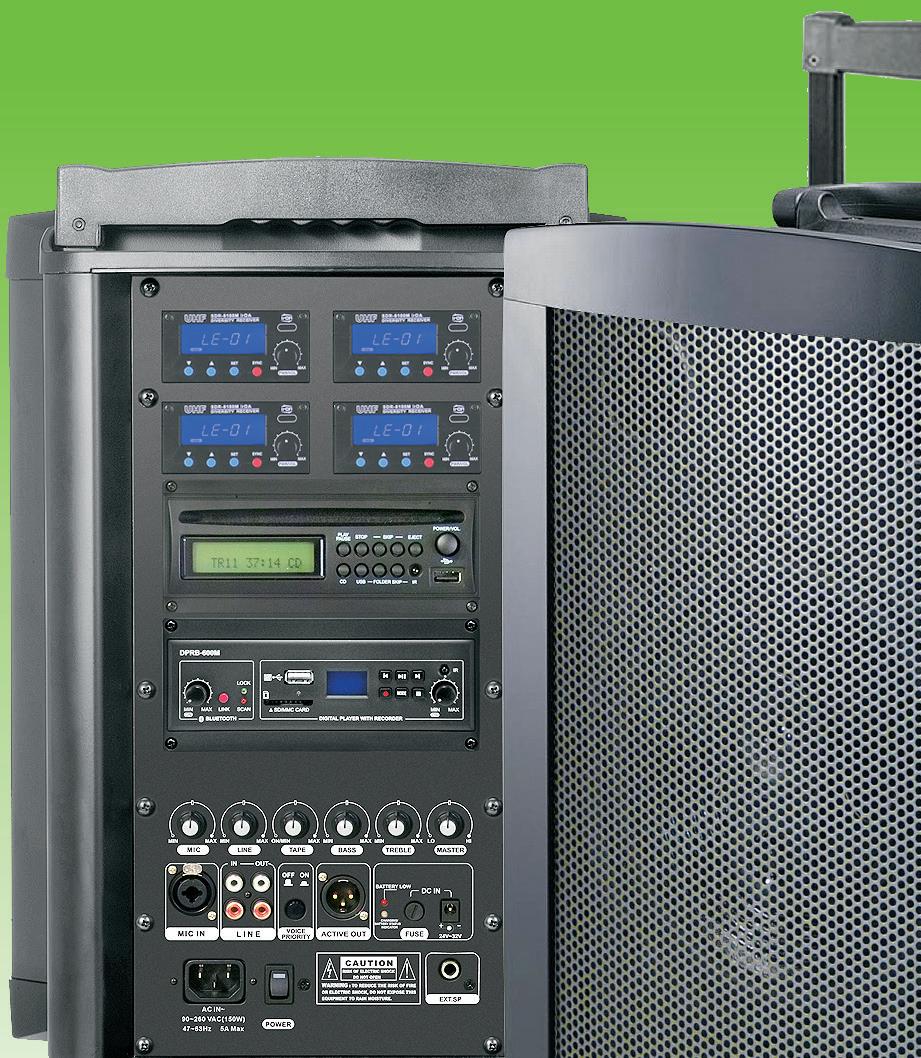







































sales@edwardsnz.co.nz | edwardsnz.co.nz From 65” – 98” 4K Ultra-High De nition Electronic Whiteboard Touch Control Wireless Presentations Wall or Trolley Mountable BRAND NEW! Interactive Intelligent Flat Panel TVs Units are available with or without Camera/Speakers for Zoom or Teams The Challenger 1000 Portable PA system with stand and wireless microphone • Fully featured, top quality and easy to use. • Includes a weather cover for outdoor use. • Built-in trolley and powerful rechargeable batteries so you can take it anywhere. BEST SOUNDING PORTABLE PA IN NEW ZEALAND $2749 PLUS GST If it’s time to revamp the hall AV system we're got you covered with large automated electric screens, projectors with HDMI wall connection, lighting, sound systems and wireless microphones, please drop us a line! NEED A REVAMP? CONTACT US TODAY! ENQUIRE TODAY
A city rich in opportunities




 By Naomii Seah, Industry Reporter
Situated on the East Coast of the wild and beautiful South Island, New Zealand’s Garden City is brimming with exciting learning opportunities for ākonga of all ages.
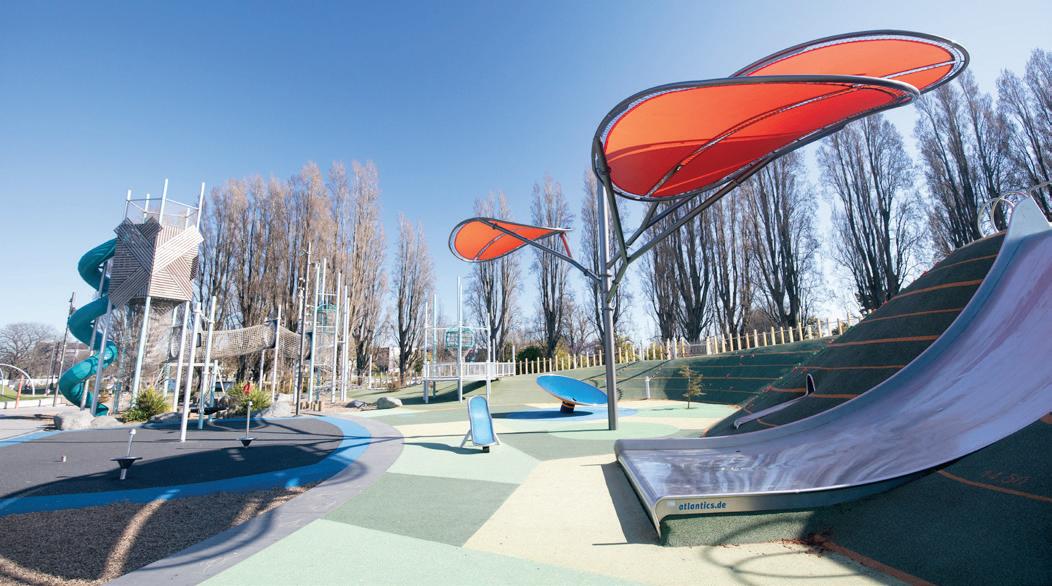
The largest city in Aotearoa New Zealand’s South Island, Ōtautahi Christchurch is full of history, and surrounded by the unequalled landscapes of the South Pacific and Canterbury Plains. Since the 2011 earthquakes, the city has undergone rapid growth, restructuring and revitalisation, making the city distinctive from other urban centres of Aotearoa. Its landscapes, cultural and historical significance means Christchurch brims with learning opportunities for students of all ages.

The oldest established city in New Zealand, Christchurch’s origins are steeped in colonial history, making it a rich locale to explore the new Aotearoa New Zealand Histories curriculum. Significant history of the area includes Kemp’s deed, the largest in a series of land purchases between Ngāi Tahu/Kāi Tahu and Europeans in the mid 19th century. Kemp’s deed saw 20 million acres of Kāi Tahu land sold to Europeans for settlement on 12 June, 1848,
with some reserves and traditional mahinga kai (food resources) kept in Kāi Tahu custody. Later, government surveyor Walter Mantell deliberately reneged on the agreement, reserving less than the agreed upon land for Kāi Tahu settlement, and keeping some Kāi Tahu cultivated land and mahinga kai. Over a period of 150 years, Kāi Tahu have continued to fight for redress, resulting in many Waitangi Tribunal hearings and a settlement act in 1998. Christchurch City Libraries Ngā Kete Wānganga o Ōtautahi hold many rich resources on the history of Christchurch and the Canterbury Plains, and its continuing legacy.
Christchurch has an abundant cultural heritage that continues to grow and thrive. The Arts Centre Te Matatiki Toi Ora is one example, being a national taonga, home to New Zealand’s




largest collection of category one heritage buildings. Following the extensive damage of the 2011 earthquakes, strengthening and restoration has been ongoing, and more than two thirds of the 22 heritage buildings are again open to the public. The Giant’s House, another popular attraction, is a garden filled with mosaic sculptures, sure to spark student’s imaginations. There are also rose, vegetable and citrus gardens for ākonga to learn about cultivating. Befitting its arts heritage, the city is also home to many significant figures of New Zealand, including esteemed children’s author Margaret Mahy. The Margaret Mahy playground – the largest playground in the Southern Hemisphere, built on managed risk principles – is named in her honour, and is a great place to visit for younger ākonga. While a playground visit is inherently fun,
children can also be engaged in Mahy’s legacy. She is the author of more than 100 picture books, 40 novels and 20 short story collections, which have been translated into many languages. Christchurch is also home to varied ecological systems and science centres. The Travis Wetland in the north-eastern suburb of Burwood, is home to an ecological restoration project on land that was once a dairy farm. Accessible by a 4 km walk, it is the largest freshwater wetland in Christchurch. The wetland is home to many bird species, and there have also been reported sightings of the rare and endangered Canterbury mudfish. These interesting fish have been shown to survive for 85 days out of water by burrowing into holes made in riverbanks, and can breathe air.
Of course, “The Garden City” has many opportunities to expand students’ botanical knowledge, with the famed Botanic Gardens offering guided tours. Plenty of exotic and native plant species can be seen in the garden, as well as the impressive Peacock Fountain, exported and installed in the early 20th century from England. The Curator’s house is an impressive example of historical architecture, built from local volcanic basalt and constructed in Old English style.
44 Term 1, 2023 | schoolnews.co.nz EOTC
Explore Ōtautahi Christchurch:
Christchurch Tram. Credit: FiledIMAGE, stock.adobe.com
The Christchurch Art Gallery. Credit: FiledIMAGE, stock.adobe.com
© stock.adobe.com
The Margaret Mahy Playground. Credit: FiledIMAGE, stock.adobe.com
Beyond the city itself, Christchruch is a gateway to a myriad of exciting opportunities and landscapes in the Canterbury Plains. Just two hours from Christchurch, Hanmer Springs is a popular destination for its gorgeous surrounds and walking trails. The nearby Hanmer forest boasts many short walks, and some of New Zealand’s oldest exotic plantings, mostly pine and fir for timber production.
Hanmer Springs provides a teaching opportunity on geological processes. The water is 173 years old, beginning as rainfall in the mountains. Underground reservoirs 2km






Outdoor fun in Hanmer Springs



beneath the surface hold water, which is warmed with heat from the earth’s core. Local legend says that the springs were a result of the ariki (chiefs) of the North Island volcanoes Tongariro and Ngauruhoe, responding to the warrior Tamatea. He called upon them to save his party from freezing on a return journey North. Flames from Ngaruruhoe flowed down the Whanganui River and landed in Hanmer Springs, giving rise to Te Whakatataka O Te Ngarehu O Ahi Tamatea, or ‘where the ashes of Tamatea’s fire lay’. Archaeological digs showed that the spot was used as a campsite.
Hanmer Springs is an ideal location for school trips and camps, with plenty of accommodation and activity options.




















Hanmer Springs Attractions operates a range of fun-filled outdoor adventures perfect for school groups. Their actionpacked jet boat rides offer plenty of thrills for those aged 3 years and over, and a river rafting adventure is an enjoyable group activity for participants








6 years and over: great fun for both primary and high school aged groups. The company also operates bungy jumping and paintballing for guests 10 years and over, as well as quad bike treks and clay target practise for customers 16 years and over. The health and safety of customers and guests is at the heart of their operation, and Hanmer Springs Attractions has been awarded a Qualmark Gold award for their top operating and safety procedures.

Term 1, 2023 | schoolnews.co.nz 45 EOTC
the team for options for your school group visit to Hanmer Springs by email at info@hanmerspringsattractions.nz or visit hanmerspringsattractions.nz.
Contact
The Travis Wetland. Credit: FiledIMAGE, stock.adobe.com
Enriching learning environments with education outside the classroom
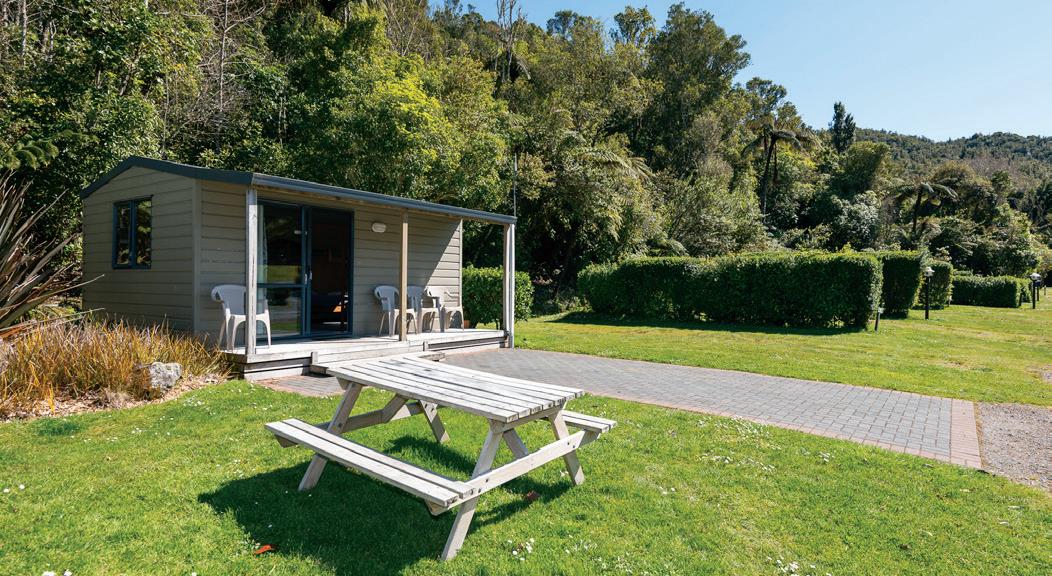 By Naomii Seah, Industry Reporter
There are few educational experiences more exciting to students than a stint out of the school grounds. Whether it’s the novelty of being outside a classroom, having new experiences, or deepening peer bonds, there is an undefinable quality about school trips that creates immense value in the educational space.

While some students may see school excursions as a “break” from learning, clever planning can ensure EOTC contributes to the learning goals of wider curricula. EOTC can be particularly effective when educators engage with specialist staff at off-site venues, collaboratively planning around learning outcomes.
EOTC experiences encompass a wide range of venues and learning
areas, including museums, artgalleries, and learning centres, covering areas of social sciences, arts and science. These sites offer enriching experiences such as access to specialised equipment and interactive exhibits not replicable in a classroom setting. Even reluctant learners can be engaged through EOTC. Positive connection is made through direct participation, encouraging students to form links within and between subjects, deepening understanding and empowering ākonga to enjoy learning. To meaningfully embed EOTC experiences into the curriculum, links must be made between the experience
and prior learning. For specific classroom contexts, the timing of an excursion can be tailored to the aims of a module to build upon prior and future learning.
School camps or overnight stays can provide valuable EOTC experiences. Here, students can be pushed outside their comfort zone and challenged to try things they may not otherwise encounter. These experiences can help develop students’ soft skills, such as teamwork, risk management, confidence, and social and emotional maturity. Developing interpersonal and communication skills, critical thinking and self-responsibility will have
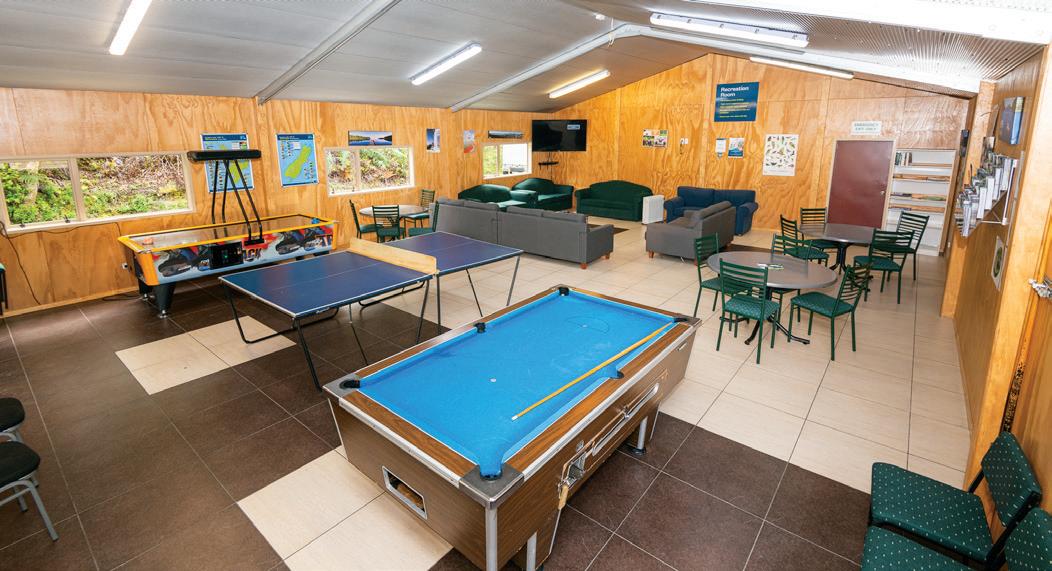
impacts for students’ general learning, positively influencing all areas of the curriculum.
Outdoor education experiences can ground Aoteaora within a te ao Māori worldview, centring concepts of whakapapa and whakawhanaungatanga. Connecting students to themselves, each other, their communities and nature can provide culturally specific outcomes and deeper understanding of tikanga and te ao Māori. To strengthen cultural understanding outcomes of an EOTC experience, educators may reach out to local iwi and hapū, as some local marae offer overnight stays.
46 Term 1, 2023 | schoolnews.co.nz EOTC
Images courtesy of Blue Lake TOP 10 Holiday Park
While some students may see school excursions as a “break” from learning, clever planning can ensure EOTC contributes to the learning goals of wider curricula.




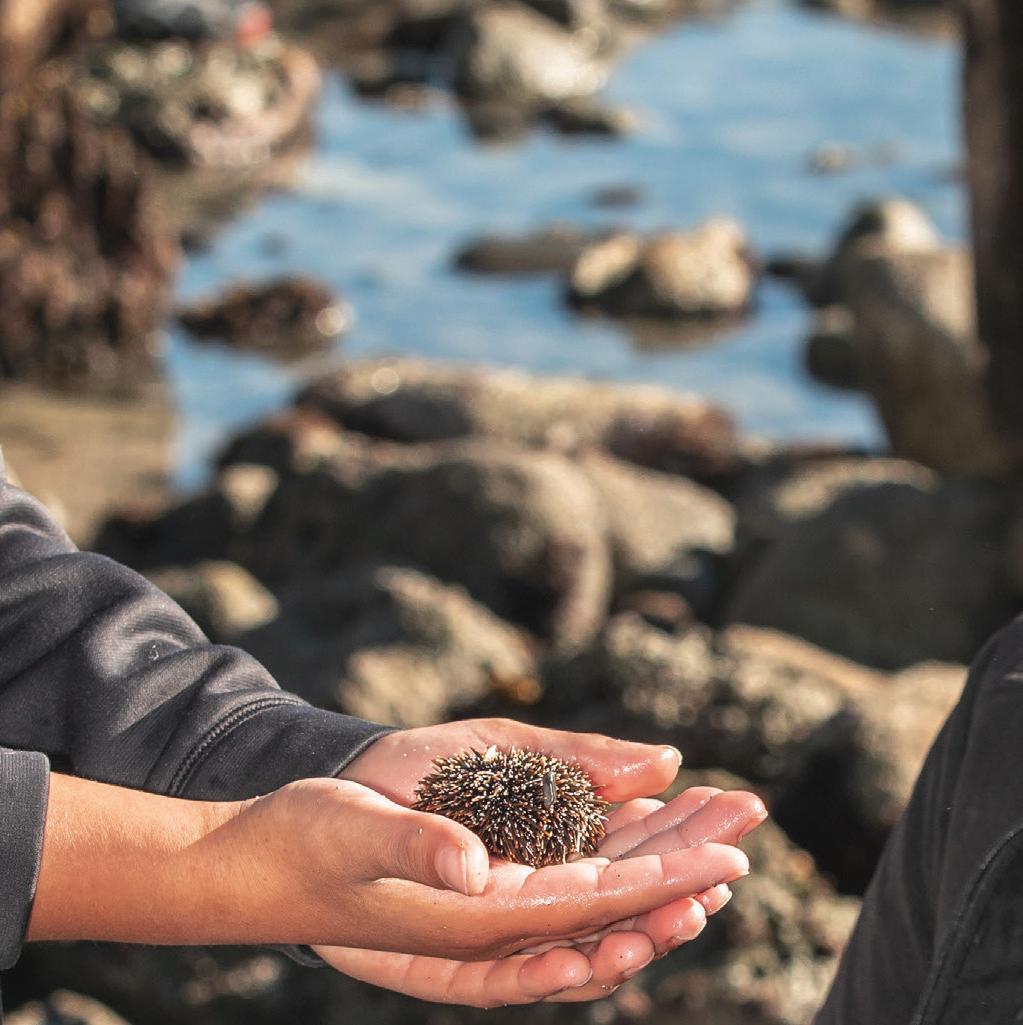














Immerse your class. They’ll experience the awe and wonder of the ocean. Inspire them with nature and the environment. Marine Parade, Napier 06 834 1404 nationalaquarium.co.nz Book your on-site, off-site or virtual education classes today!
To find out more about the EOTC experiences on offer in Aotearoa, School News asked some EOTC providers to explain what they offer for school groups.
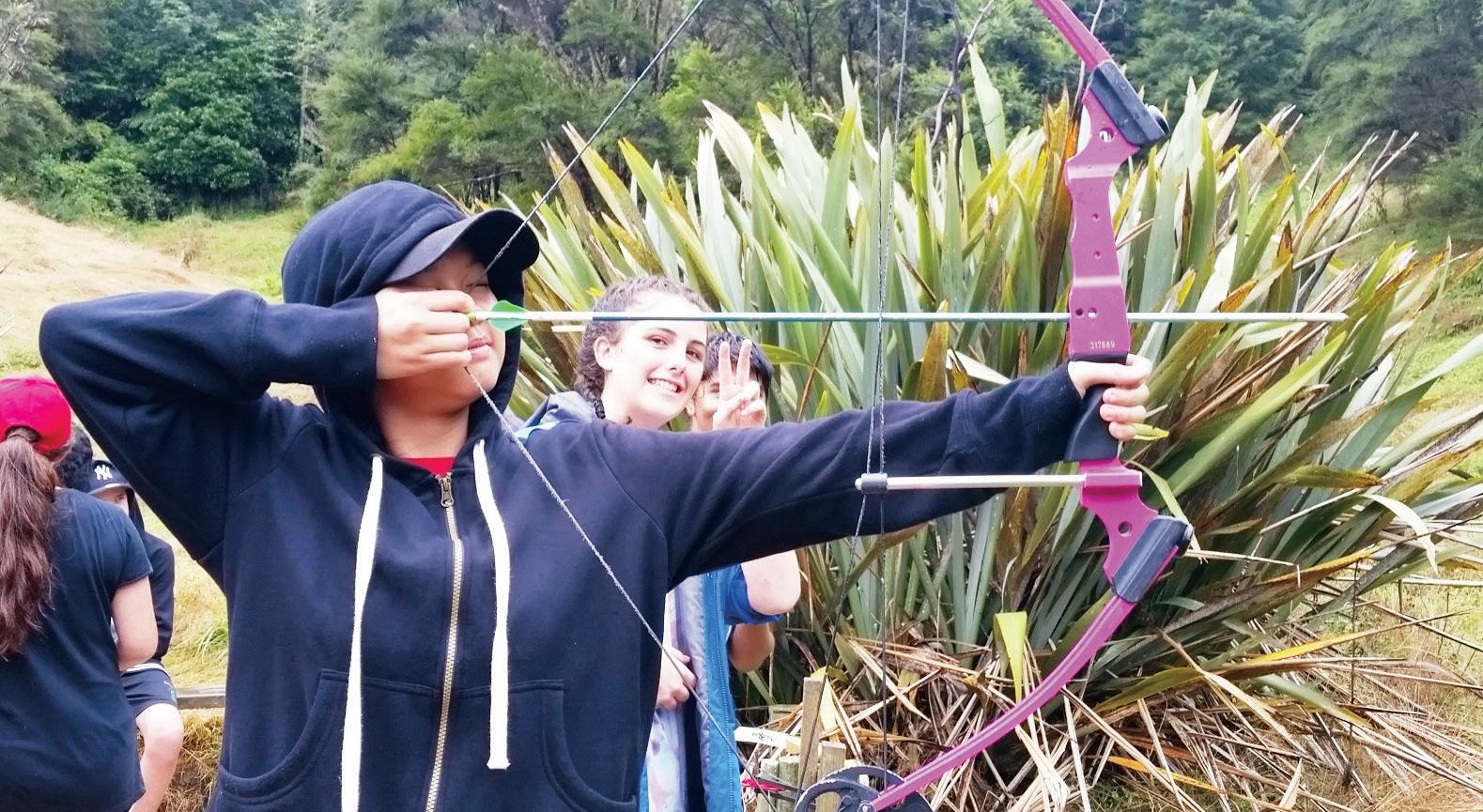
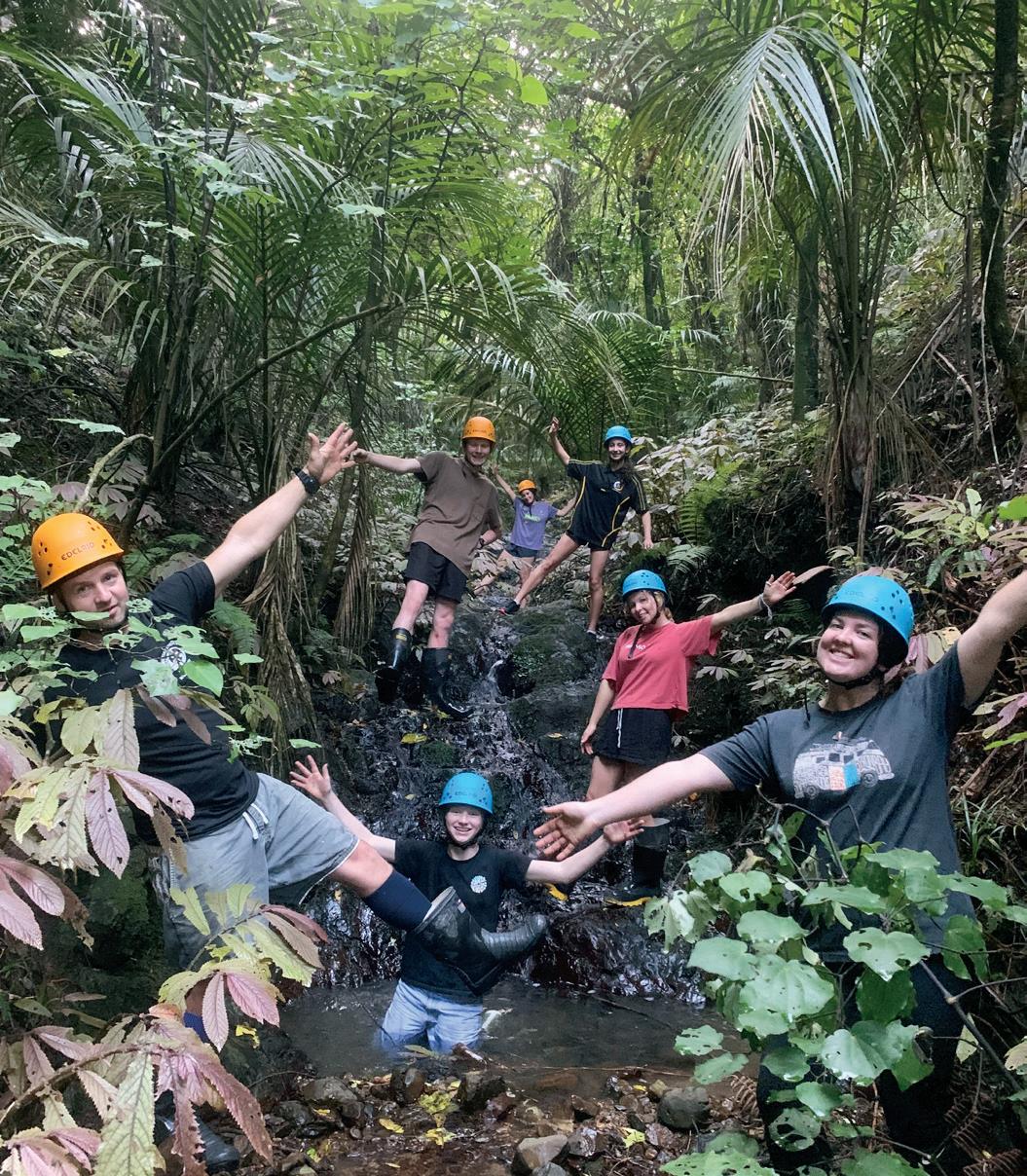
Blue Lake TOP 10 Holiday Park provides accommodation for groups of any size. The site is popular for school camps and sports teams looking to spend time in nature for teambuilding and training.
A wide variety of accommodation options are available to suit a range of budgets, from powered and non-powered tent sites, and standard and self-contained cabins, to motel units. Indoor recreation facilities provide an ideal venue for workshops, seminars, and meetings.
The park is central to a variety of local attractions making it an excellent base to explore the region. Lakes Tarawera, Okareka and Rotokakahi are all within 2km of the park. For those looking to travel further a field, a short 8km drive will find you in the centre of Rotorua, where you can experience a range of geothermal, cultural and adventure activities to entertain your group.
Discount rates are available
to school groups and sport teams between February and November. The team will work with you to meet requirements to accommodate any size group within a budget.
Christian Youth Camps (CYC) allows students to get hands on with outdoor experiential learning. With the Hakarimata Ranges on the doorstep, students can learn about and have personal experiences with all the best parts of Aotearoa. A variety of activities are available to suit your camp and age group, including hiking, indoor rock climbing, overnight campouts, BMX, waterslides, campfires, glow worm walks, crate climbing, ziplining and much more.
Covid restrictions in recent years have meant many students have lacked opportunities to try new things and connect with their classmates. CYC gives students opportunities to grow together as a team, through shared experiences, learning social skills and pushing themselves outside their comfort zone. In conjunction with classroom learning, this drives students to unlock their potential.
Through learning new skills and building confidence, CYC helps
strengthen relationships, as students experience community and create memorable shared experiences. As well as fulfilling EOTC requirements, this helps students grow as a whole. Located an easy one-hour drive south of Auckland, CYC works with your group to provide an exciting, tailored adventure, excellent catering options, passionate staff, great accommodation, and tidy facilities.
Kokako Lodge is a 100 bed residential camp based at the Hunua Falls, back of Papakura, Auckland. It offers a vast range of activities from bush tramping, camping and climbing, high and low ropes, kayak and rafting, archery and more.
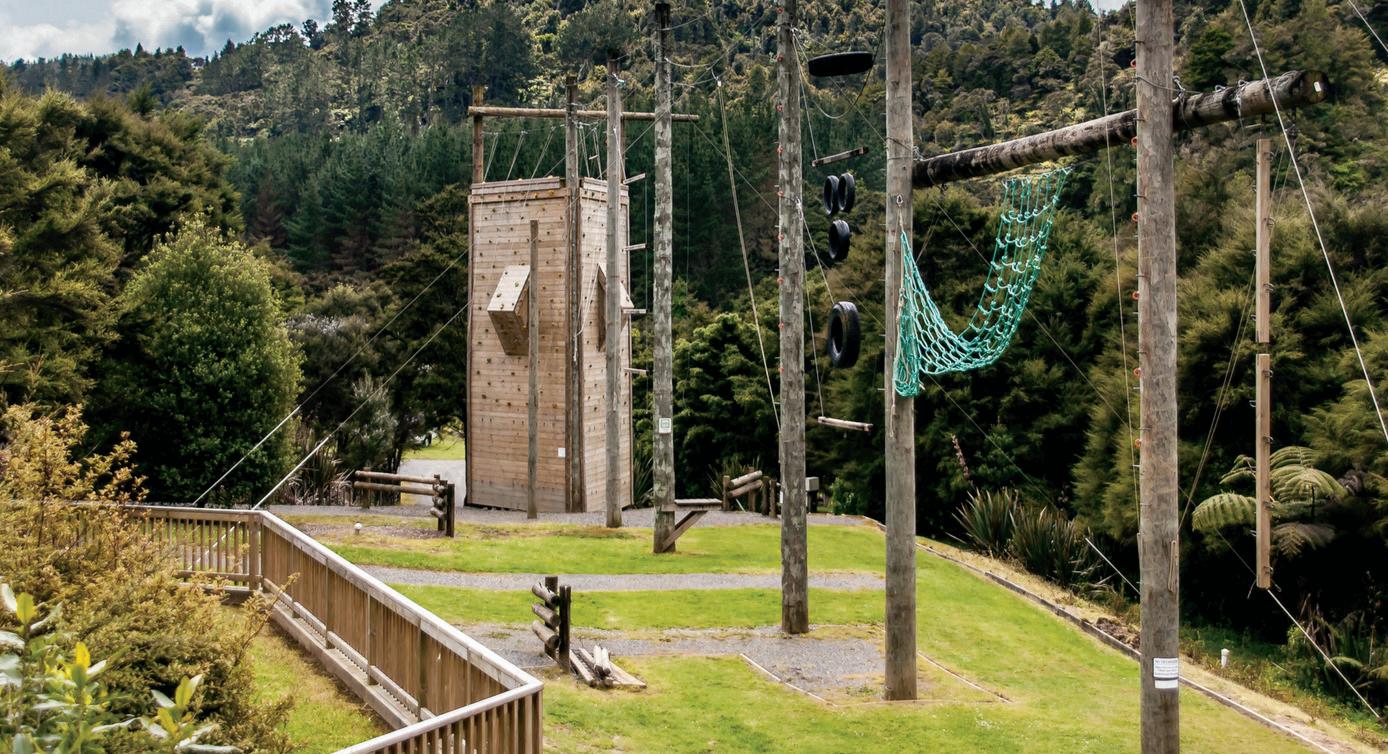
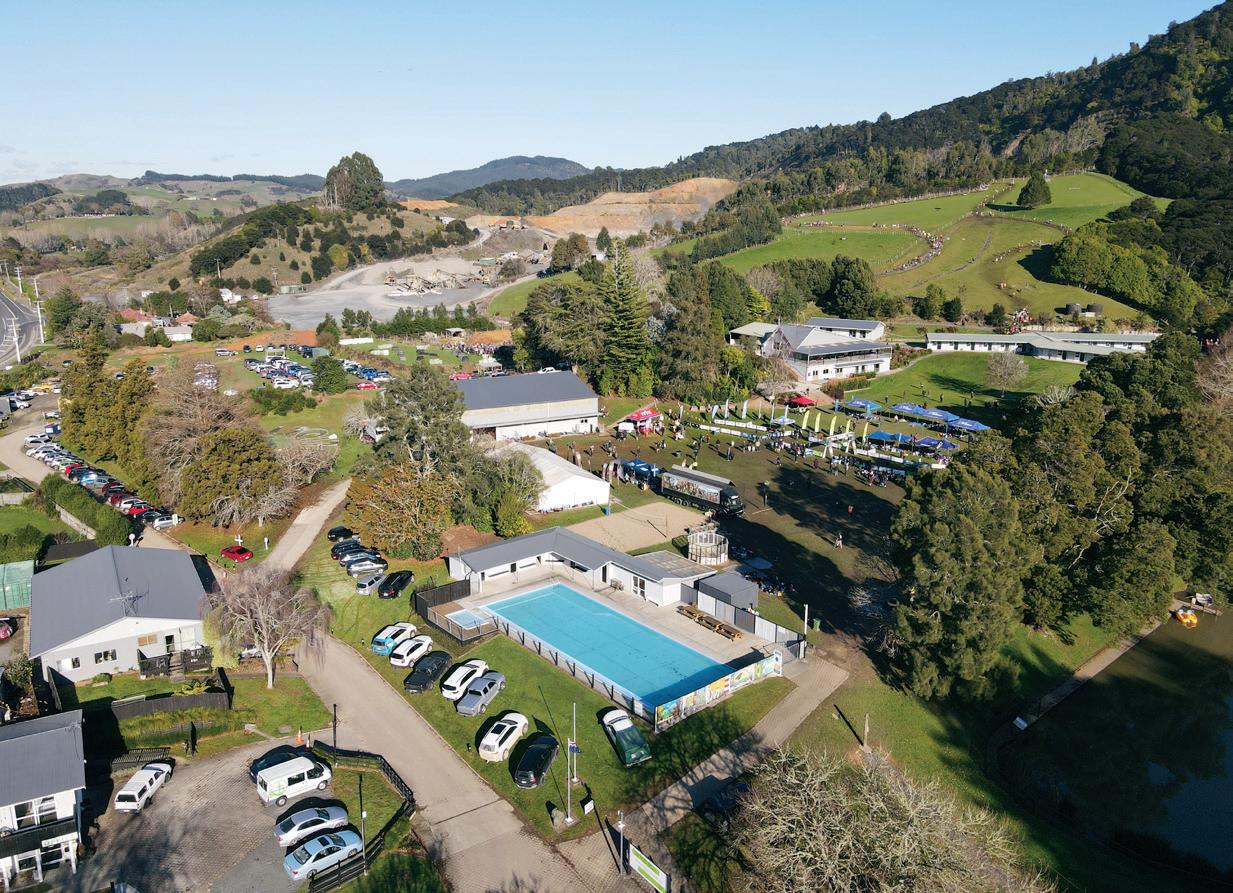
The Kokako Lodge team see EOTC as bringing traditional academic subjects out into a ‘real world’ setting, helping to develop the soft skills of a student.
Rurally located with virtually no cell coverage, students
feel like they are in an entirely different world, a true Narnia. This fresh reset allows staff to get to know individuals and their classmates better.
The Lodge operates by a kaupapa of “I am Me – I am Worthwhile”, championing self-awareness and self-acceptance, and use a “challenge by choice” model; push yourself as hard as you want to.
Post Covid, the Kakako Lodge team say they have seen amazing results in grounding and 2023 is an excellent opportunity to build on this to the next level.
Located in Auckland, Butterfly Creek offers children the chance to explore and connect with nature and learn about the animal world. The site is easy to walk around, and perfect in all weather, with 75 per cent of the exhibits undercover. Popular attractions at Butterfly Creek include Dinosaur Kingdom, the Butterfly House, Mythical Creatures, Buttermilk Farm, Kiwi Forest and the playful train ride. P50
48 Term 1, 2023 | schoolnews.co.nz EOTC
Images courtesy of Christian Youth Camps
Images courtesy of Kokako Lodge
Discover a world of wonder at Butterfly Creek


More than a zoo, there’s a surprise around every corner. Located in Auckland, Butterfly Creek is a wonderful place to bring students of all ages.
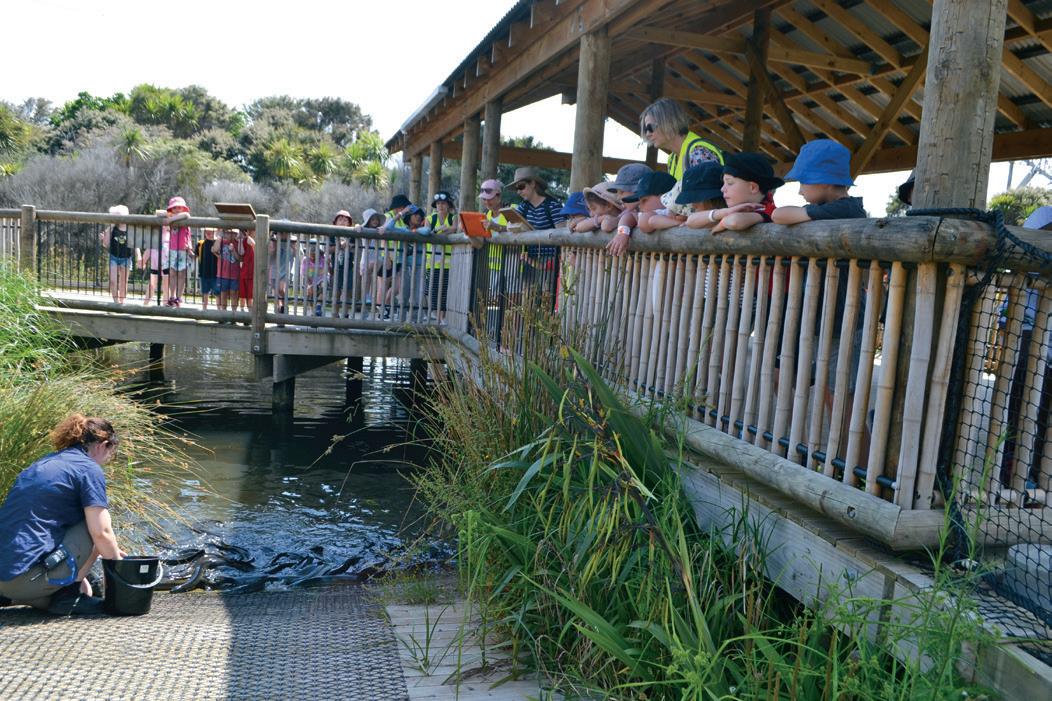
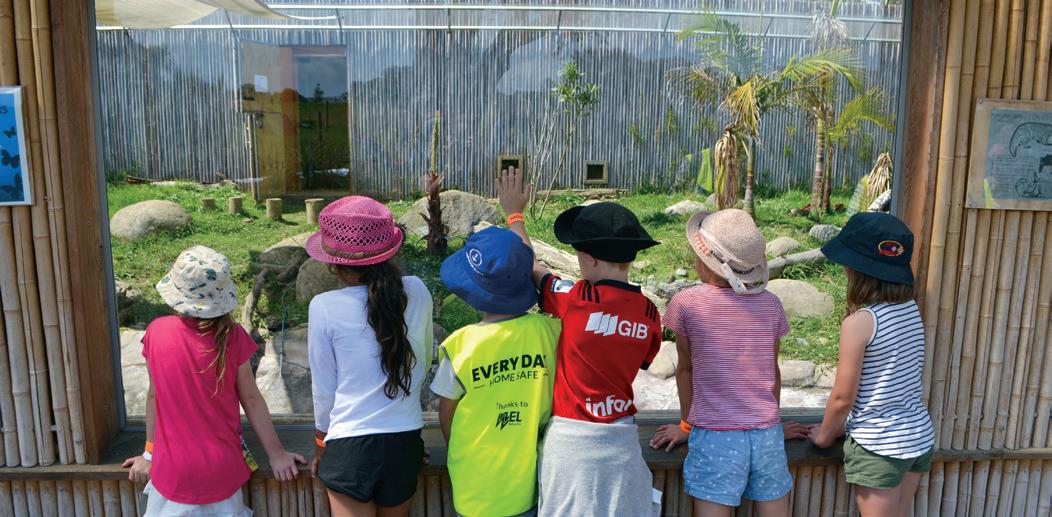


Every year, their living classroom offers children the chance to explore and connect with nature and learn about the animal world. It’s easy to walk around, and a perfect day out rain or shine, as 75% of their exhibits are undercover. Their popular attractions include Dinosaur Kingdom, the Butterfly House, Mythical Creatures, Buttermilk Farm, Kiwi Forest and their playful train ride. Travel back in time to when dinosaurs roamed the earth. With more than 50 life-size models including animatronics that roar and move, Dinosaur Kingdom is a great way to bring prehistory to life for young palaeontologists. Enter mythical lands where unicorns and dragons come alive. Their Mythical Creatures display is perfect for supporting tamariki who are learning about myths and legends from around the world. Take a walk around the park and find life-size dragons, unicorns, serpents, aliens, Egyptian deities, mermaids and many more magical creatures.
The Butterfly House is filled with over 700 butterflies providing an immersive experience for students interested in insects and lifecycles. Kiwi Forest is home to young kiwi that are part of a national breeding programme, and provides an amazing opportunity to see kiwi in a special nocturnal environment.
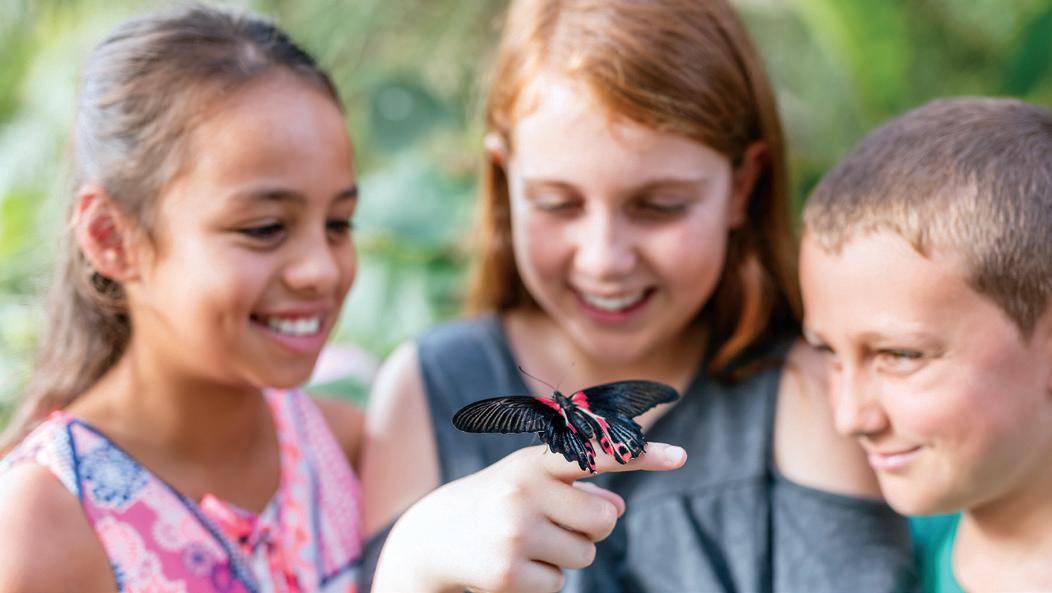




Groups can plan their visit around several free animal encounters, the most exciting being the giant crocodile feeding encounter – an experience sure to impress! Teachers can book 15-minute education sessions with our knowledgeable keepers to help students learn about dinosaurs, butterflies, or conservation.
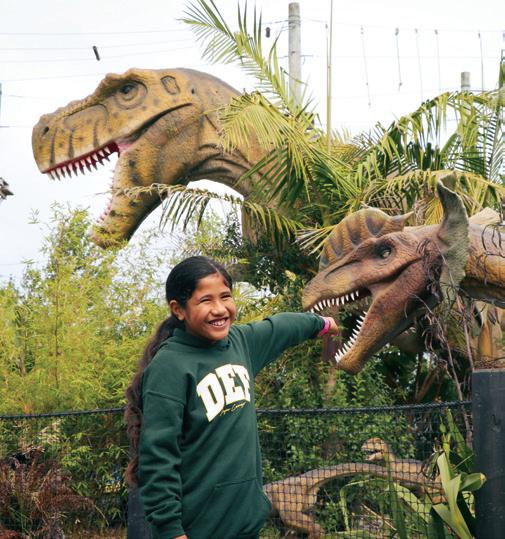
from www.butterflycreek.co.nz/education-hub.

For more information on how to plan and to book your visit www.butterflycreek.co.nz/school-visits.
KIWI, WETAPUNGA, Meerkats, MINI BEASTS,













SAVE up to 25% MYTHICAL CREATURES, DINOS & MORE





FREE Educational resources Mention this ad & get a FREE keeper talk*




ENQUIRE: butterflycreek.co.nz/school-visits
 Immerse yourself in their tropical butterfly house and feel the brush of fluttering butterflies.
A fantastic collection of free educational resources can be downloaded
Term 1, 2023 | schoolnews.co.nz 49 EOTC
P48
With more than 50 life-size models including animatronics that roar and move, Dinosaur Kingdom brings prehistory to life for young palaeontologists. The Butterfly House is filled with more than 700 butterflies providing an immersive experience for students interested in insects and lifecycles. Kiwi Forest is home to young kiwi that are part of a national breeding programme, providing an opportunity to see kiwi in a special nocturnal environment.
Groups can plan their visit around several free animal encounters, the most exciting being the giant crocodile feeding encounter –an experience sure to impress!

Teachers can book 15-minute education sessions with knowledgeable keepers to help students learn about dinosaurs, butterflies, or conservation.
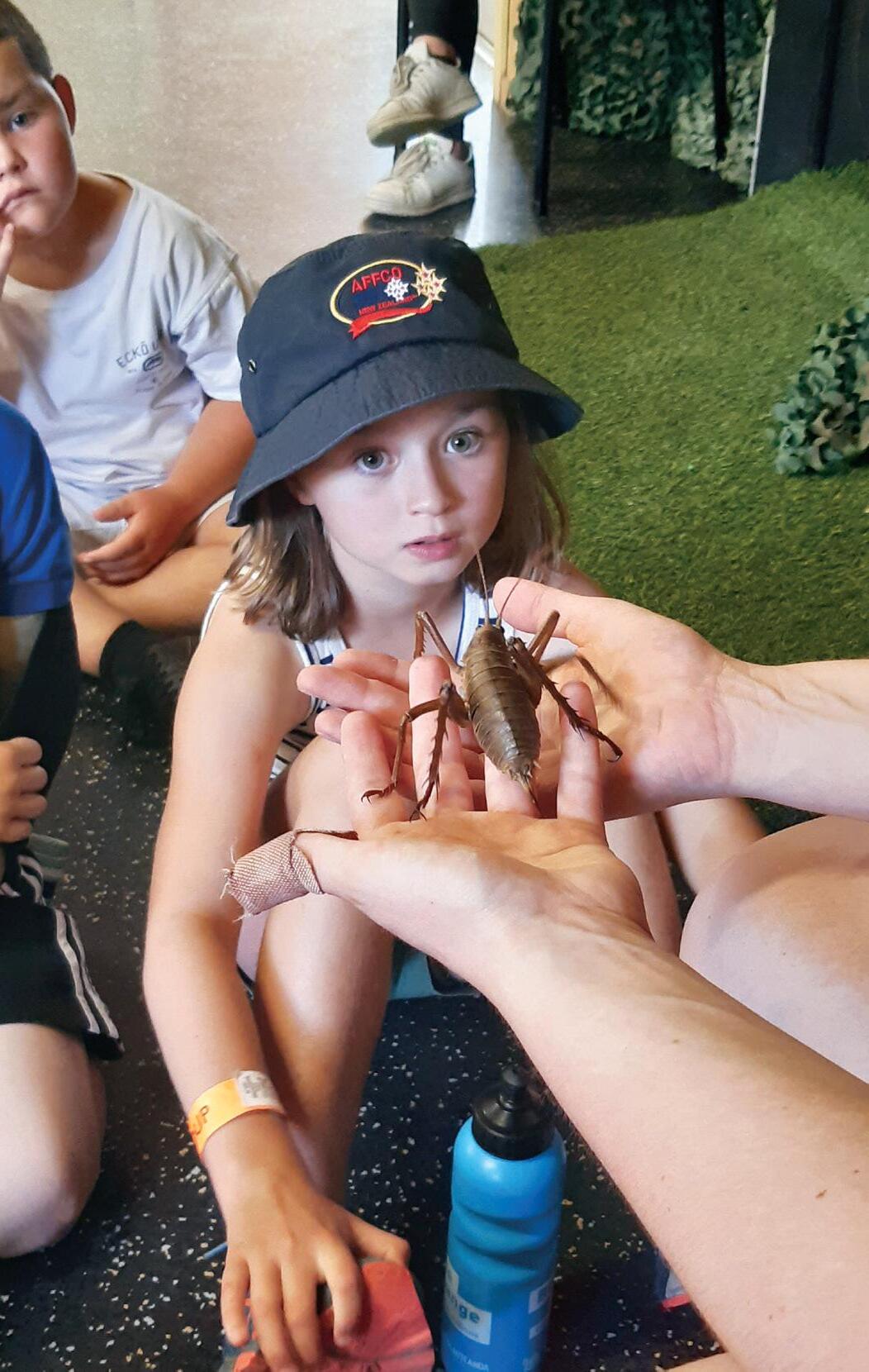
Beautiful Bay in May (BBiM) comprises of 31 exciting activities to inspire teachers and students to get out and about in nature. A collaboration between Biodiversity Hawke’s Bay and the National Aquarium of New Zealand, BBiM provides excitement to get outside, with ideas that are easy to modify for a range of teaching purposes and curriculum topics, in any region of Aotearoa. Teachers can choose to involve their students in as many of the activities as they like – even if it’s just one!
Group accommodation in the heart of Rotorua
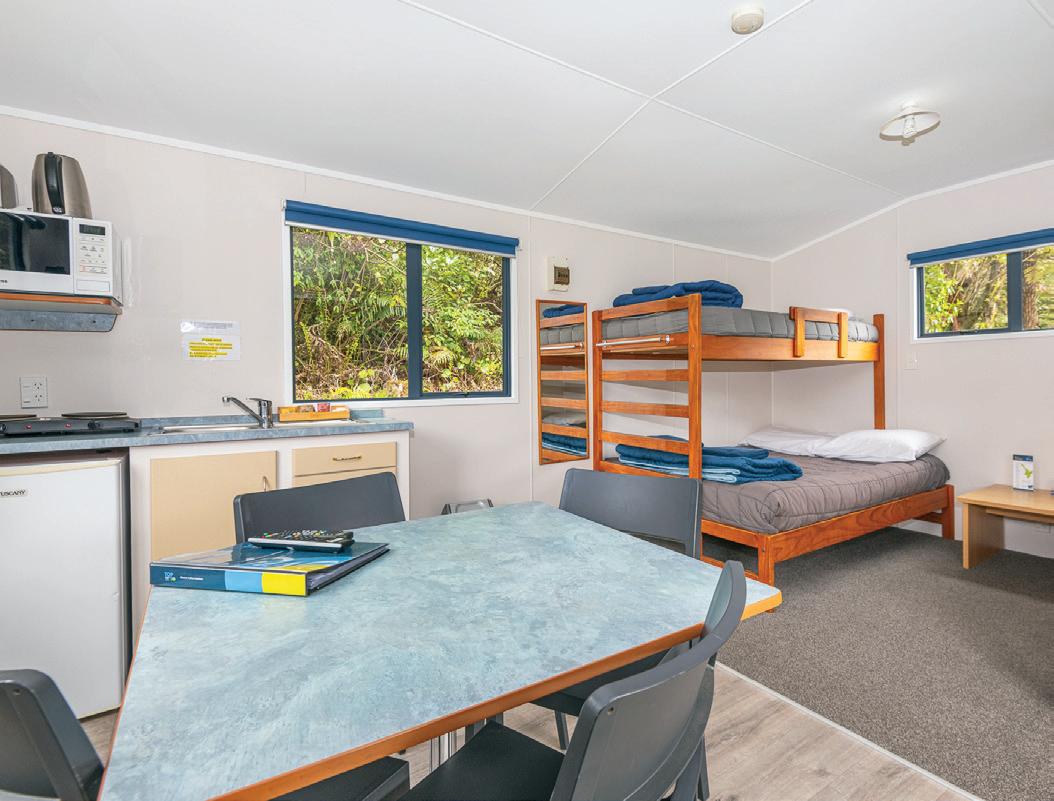

Blue Lake TOP 10 have a wide variety of accommodation options available to suit every budget, from 180 powered and non-powered tent sites to standard and self-contained cabins.
The facilities at the park will keep your group entertained and active. We offer a private or sole use marquee with attached kitchen and BBQ that can accommodate up to 80 people.
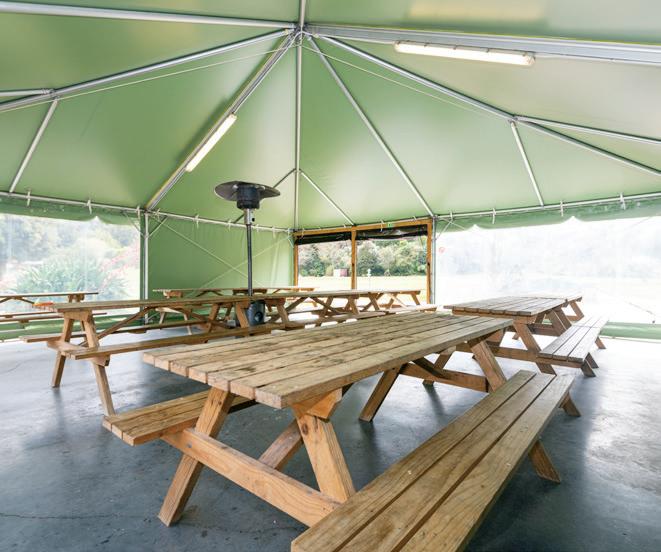
The park is central to a variety of local attractions. Lakes Tarawera,
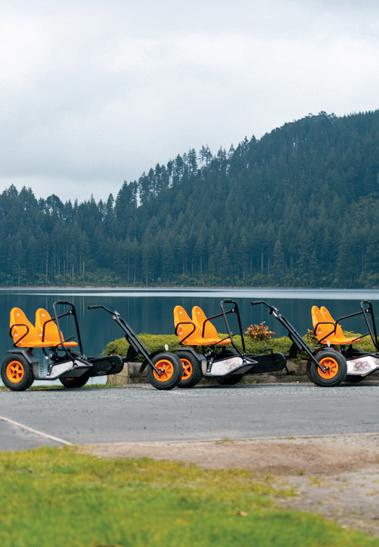
Okareka and Rotokakahi are all within 2km of the park, and a short 8km drive will find you in the centre of Rotorua.
Blue Lake TOP 10 offer large groups heavily discounted rates from February – November (excluding peak season only) and can work with you to accommodate any size group and any budget.
For more information please call 0800 808 292 or visit www.bluelaketop10.co.nz
50 Term 1, 2023 | schoolnews.co.nz EOTC
Images courtesy of Butterfly Creek
The activities aim to build connection with nature, which describes our lasting relationship with nature, including emotions, attitudes and behaviour, through the Five Pathways of Nature Connection.

Specific resource packs will be available to motivate and support schools, which include the 31 activities, extra resources and ideas to extend these, as well as some simple evaluation to provide teachers with assessment for learning.
3D Trick Art Gallery encourages visitors to interact with immersive
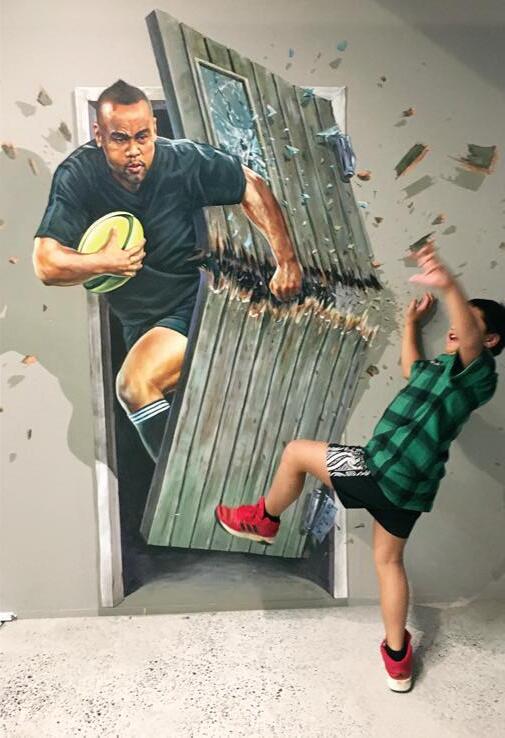
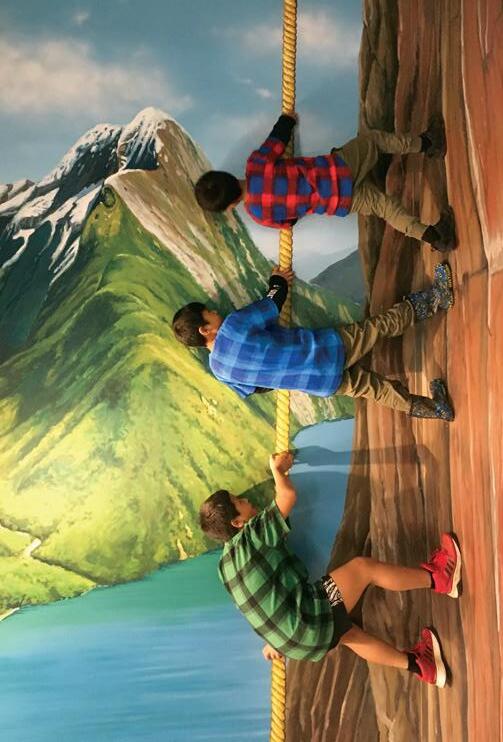

artwork. Visitors are free to touch and pose with the artwork, as long as they remain respectful and do not damage the artworks.
Upon arrival, the staff will provide a quick introduction to all groups to explain the concept of the artwork and provide instructions on the best way to take photos.
This process usually takes around 2 to 3 minutes. The visit is then self-guided, with assistance available if required. A minimum of 1 hour is recommended for a visit to 3D Trick Art Gallery, depending on the size of your group.
Grow Core Skills
Use
Funding available
Please ask us about funding for active recreation, well-being
Kokako



Kokako Lodge is only 30 minutes from South Auckland. We are surrounded by 17,000 hectares of tranquility, challenge (high ropes) and adventure.
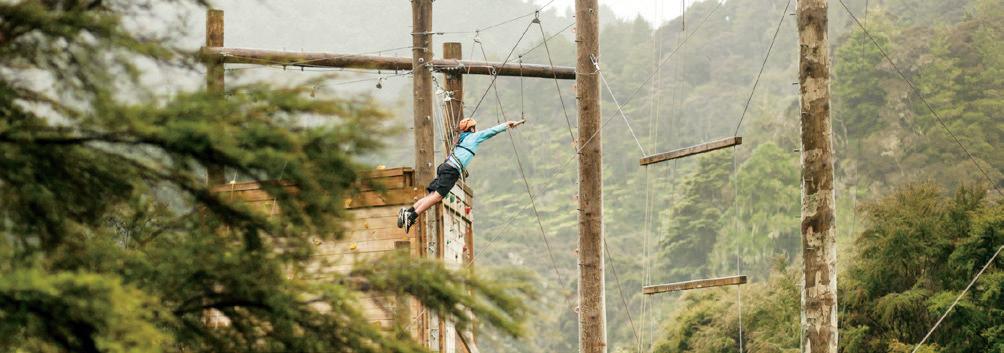
and leadership. water, ropes and much more.
Tailored programmes from ‘Boot Camp’ to meditation. Bush, For
Term 1, 2023 | schoolnews.co.nz 51 EOTC
Iam
am worthwhile
me I
EOTC to find a sense of ‘self’, grow relationships and push through the glass ceilings.
Lodge (Ak)
more information please contact Kokako Lodge on 09 292 4349 or visit www.KokakoLodge.org.nz
Images courtesy of 3D Trick Art Gallery
Image courtesy of the National Aquarium of New Zealand
The gallery is happy to assist with activities for different learning outcomes and ages, with the responsibility to facilitate any activities resting with the supervising teacher or organisation.
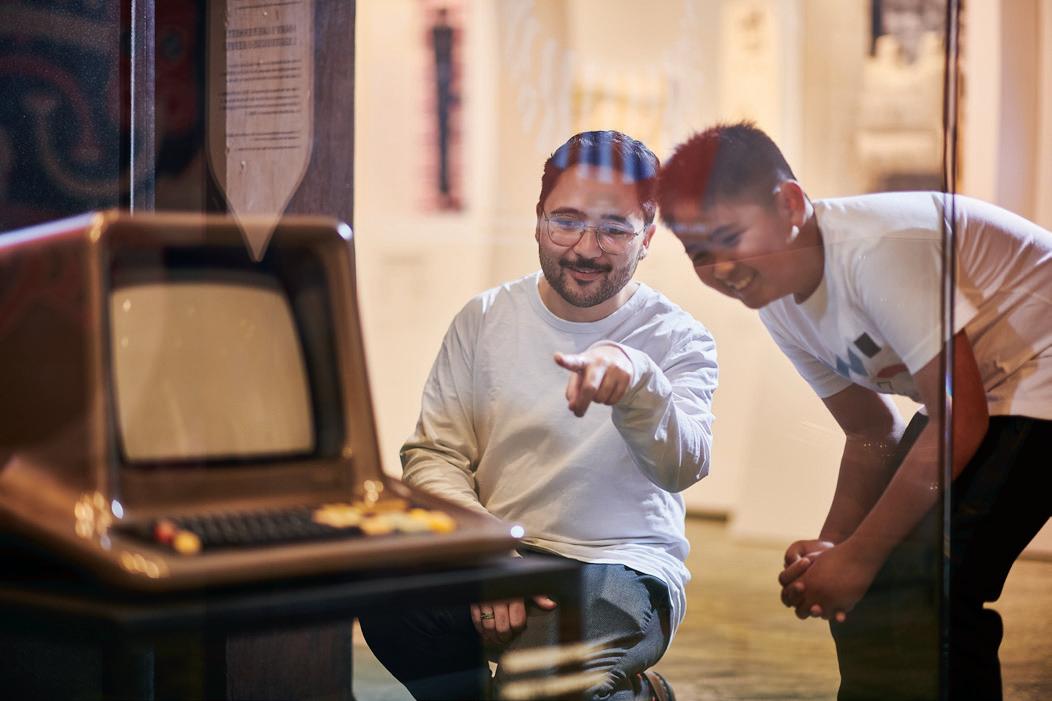








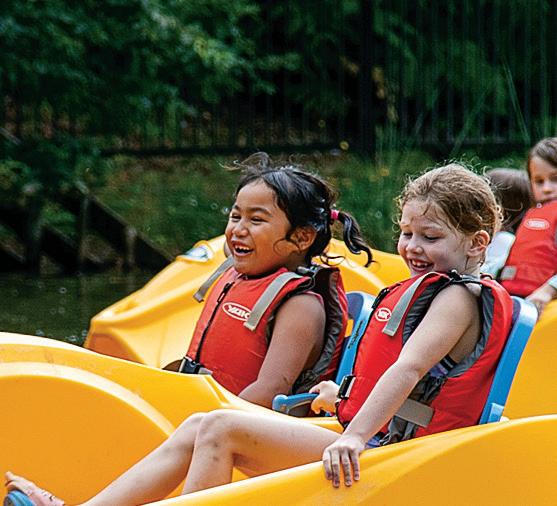
Group leaders or teachers can arrange a time to visit in advance for planning purposes. Students should bring their own or school supplied smartphones or cameras and any other materials required as these are not supplied by 3D Trick Art Gallery.



Experience Wellington offers ākonga tailored, hands-on learning at six iconic and inspiring learning institutions: Capital E, Space Place at Carter Observatory, City Gallery Wellington Te Whare Toi, Nairn Street Cottage, Wellington Museum and Cable Car Museum. Through these experiences, ākonga can learn from worldclass museums, cutting-edge contemporary art, the region’s only publicly accessible space science experience, and a learning environment dedicated to digital learning and creativity, Capital E.
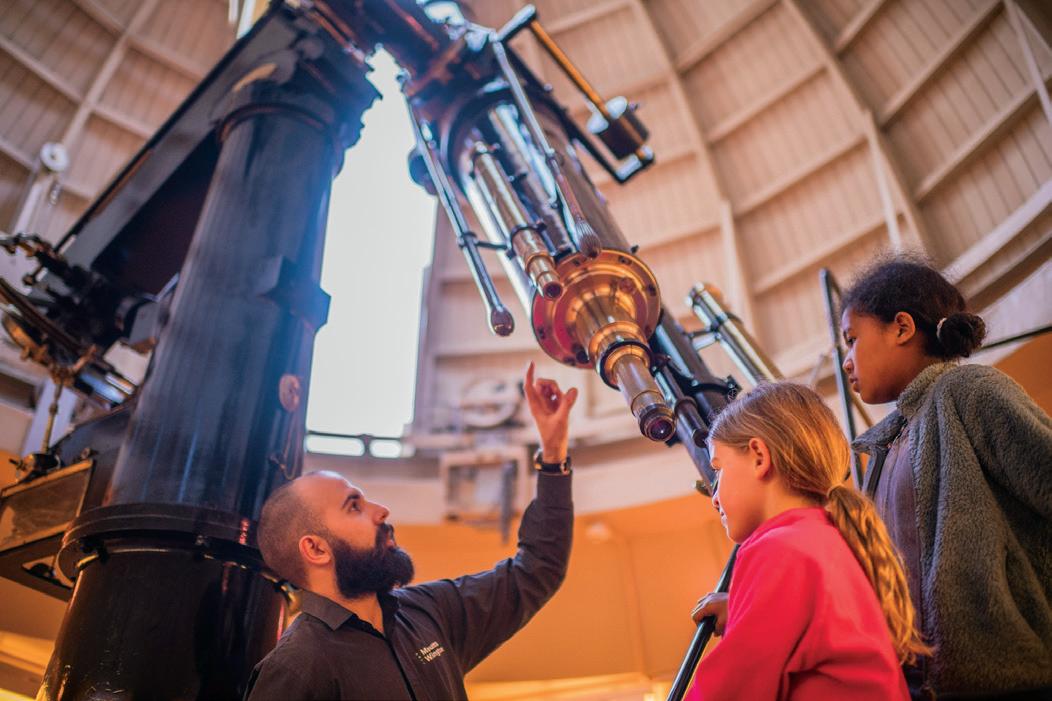
Andrea Milligan, Experience





Wellington’s Manager, Learning and senior lecturer in teacher education at Victoria University of Wellington shared her insights about the benefits of education outside the classroom. “Our research with teachers and schools shows that visits can fuel ākonga inquiries and interests. The opportunities to connect learning across EOTC sites are enormous. Stories about how our histories have shaped our present-day lives, for example, can be shared through Experience Wellington’s toi, taonga, and
exhibition spaces. This sparks curiosity, creativity, and ideas about contributing to change”.



Ms Milligan’s advice to teachers for getting the most out of education outside the classroom is about collaboration: “Working with Experience Wellington learning specialists to reach a shared understanding of your learners and their questions is key. Talk with us about your local curriculum and learning focus so that we can help to bring that to life.”
TRICK ART GALLERY


An hour-long guided tour, travelling over a farm environment on covered trailers.





The farm is educational for all ages, as the Farm Tour does not only allow visitors to interact with the farm animals, they also can enjoy getting up close and personal with the animals by feeding and patting them.
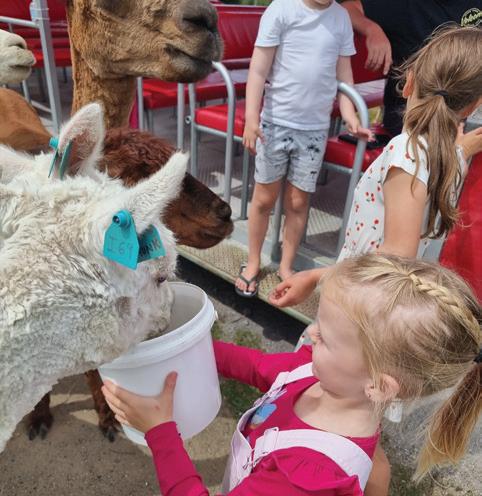
Art, not as you would expect it to be! A perfect place for memorable photos for your family and friends. Being the only 3D Trick Art Gallery in New Zealand you will not be disappointed with the 53 pieces of artwork that you will find yourself a part of. Where else can you find yourself climbing mountains, riding Alpacas, standing stranded on an ice edge, trying to stop yourself becoming a crocodile’s dinner then flying away in a hot air balloon, all in one day? This indoor activity is great to visit in any weather, get out of the rain, or cool down on those hot days in our air-conditioned areas, the 3D Trick Art Gallery is the place to be.
For any enquiries or bookings email info@3dtrickart.co.nz or call Robyn Van den Hurk, Operations Manager on 027 215 8190

52 Term 1, 2023 | schoolnews.co.nz EOTC CYC HAVE YOUR NEXT 148 Waingaro Road Ngaruawahia 07 824 8495 info@cyc.org.nz cyc.org.nz ADVENTURE AT cycnga christianyouthcamps Qualworx certication shows that our camp has met the highest standard in safety in the adventure activities industry.
Images courtesy of Experience Wellington
Automated External Defibrillators in Schools
By Naomii Seah, Industry Reporter
Is your school or kura equipped to deal with a cardiac arrest?
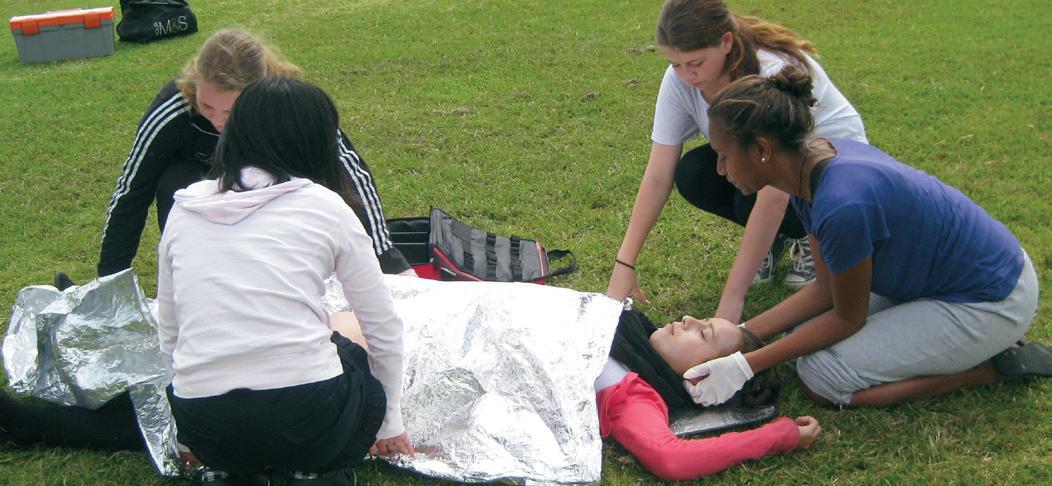
Cardiac arrest is a leading cause of death in Aotearoa New Zealand, with approximately five people a day requiring treatment for an outof-hospital cardiac arrest. That’s more than 2000 people a year, with only 10 per cent of New Zealanders surviving to 30 days, or four weeks after the incident. Sudden cardiac arrest can happen to anyone of any age, including children.
Cardiac arrest is a highly timesensitive medical event, with survival rates dependent on bystander action and rate of emergency response. In addition to CPR, early defibrillation of patients was shown to improve outcomes, with 45 per cent of those receiving defibrillation from an automated external defibrillator (AED) surviving to 30 days, compared to only 8 per cent of those that did not receive early defibrillation from an AED.
With schools often being the centre of communities, having an accessible AED could mean the difference between life and death should a sudden cardiac arrest occur on or near school grounds. AEDs are designed to be useable by someone with little to no training. They deliver visual and voice prompts to guide a user through an emergency. All AEDs have the same essential function, so when considering an AED to purchase, consider your school or kura’s specific needs. Some may be smaller for ease of transport, and some may have a more user-friendly design.
The safe operation of AEDs is typically covered by standard first aid courses, which are required to meet a school’s minimum health and safety requirements.

In the “Chain of Survival”, which describes the events that need to happen in rapid succession to increase chances of survival after a cardiac arrest, the first step is early recognition and rapidly alerting emergency services
through dialing 111, followed by access to CPR, and an AED.
On purchase, AEDs will have an instruction manual which should be read carefully to ensure proper set up. All staff will need to be shown where it is located, so that it can be easily accessed in an emergency. AEDs should be positioned in an accessible place within the school or kura; they should be in a publicly accessible space, and within reach of wheelchair users, in an unobstructed area. They should also be clearly marked and in a well-lit area.
AEDs will require monitoring and maintenance to ensure that they will work properly in the event of an emergency. AEDs will run self-checks to ensure they are functioning properly. If they beep, or show a fail status, the battery may need replacement. Beeps may also indicate disconnected or expired electrode pads and/or an internal circuitry issue. In terms of maintenance, electrode pads have a shelf-life of one to five years, so will require regular checks of the expiration date and replacements. Once used, electrode pads cannot be reused. Paediatric electrode pads are recommended for children under 25 kg.
Term 1, 2023 | schoolnews.co.nz 53 HEALTH & SAFETY WE TEACH
TO SAVE
IN A FUN & INTERACTIVE ENVIRONMENT First Aid for the School Environment (FASE) 4-hour course held at your premises at times to suit you. This is a cost effective course designed to give teachers con dence to cope with medical emergencies and accidents at school or on suburban trips. This ts with staff development and is based on Ministry of Education guidelines. For further information and pricing for all rst aid courses please email team@ rst-training.co.nz or call us 0800 1ST AID www. rst-training.co.nz
PEOPLE
LIVES
Image credit: PixelAway, stock.adobe.com
Maximising the benefits of play with playground design
By Naomii Seah, Industry Reporter
Play is universally recognised as an important part of childhood and development. Research in the field suggests that children play to explore their boundaries, discover the world around them and learn new skills.
During play, children may refine their motor skills, social skills, hand-eye coordination, and problem-solving skills. With such rich evidence of the essential nature of play, playgrounds cannot be dismissed as simply a way to pass the time during lunch breaks. Instead, they are the locus of a different, yet crucial type of learning.
Playgrounds offer children exposure to many different sensory experiences, and qualitative research finds that this is what attracts children to playing on playgrounds. Having different sensory stimulations can also be important for children with sensory, social or emotional difficulties.
Playgrounds offer children novel sensations such as being up high and are usually the intersection of many textures such as sand
and grass. Children interact with playgrounds directly, indirectly and symbolically.
Increasingly, playground design is moving away from the “traditional” post-and-platform type, and more toward themed and adventure playgrounds. The latter involve purposefully leaving loose parts in the play area, such as tyres and other items adults may consider junk. This encourages creative, open-ended play in children, and can be enriching.
Recently, conversation about
playground design has also focused on inclusivity, which recognises the essential nature of play and the rights of all children to access play. In 2012, Canadian researchers found that children with disabilities were often excluded from playing on playgrounds due to access barriers. This may cause them to lag developmentally. Playgrounds should therefore consider accessibility in flooring and equipment. Incorporating universal design can help overcome barriers between differently abled children,
allowing them to play alongside each other. For example, entry to the playground should be accessible for all children, rather than having two separate entryways, such as a ramp and stairs, and there should be access to all playable parts of the playground. An inclusive playground also needs to be usable rather than simply accessible.
So, what are some key considerations when planning a new or improved play-area, and enhancing an outdoor environment to promote wellbeing? It is prudent to consider the basics before all else: shade, water, maintenance and budget. Shade is not only sensible for both hot and rainy days, it is also important for those with temperature regulation issues. Playground design should also complement the natural landscape, taking into consideration how features such as trees, boulders and slopes can be incorporated into the design.
As for safety standards, research in the New Zealand context has found that rates of injury on playgrounds are low overall, and rubber or bark surfacing is associated with a low rate of injuries. Padded flooring,
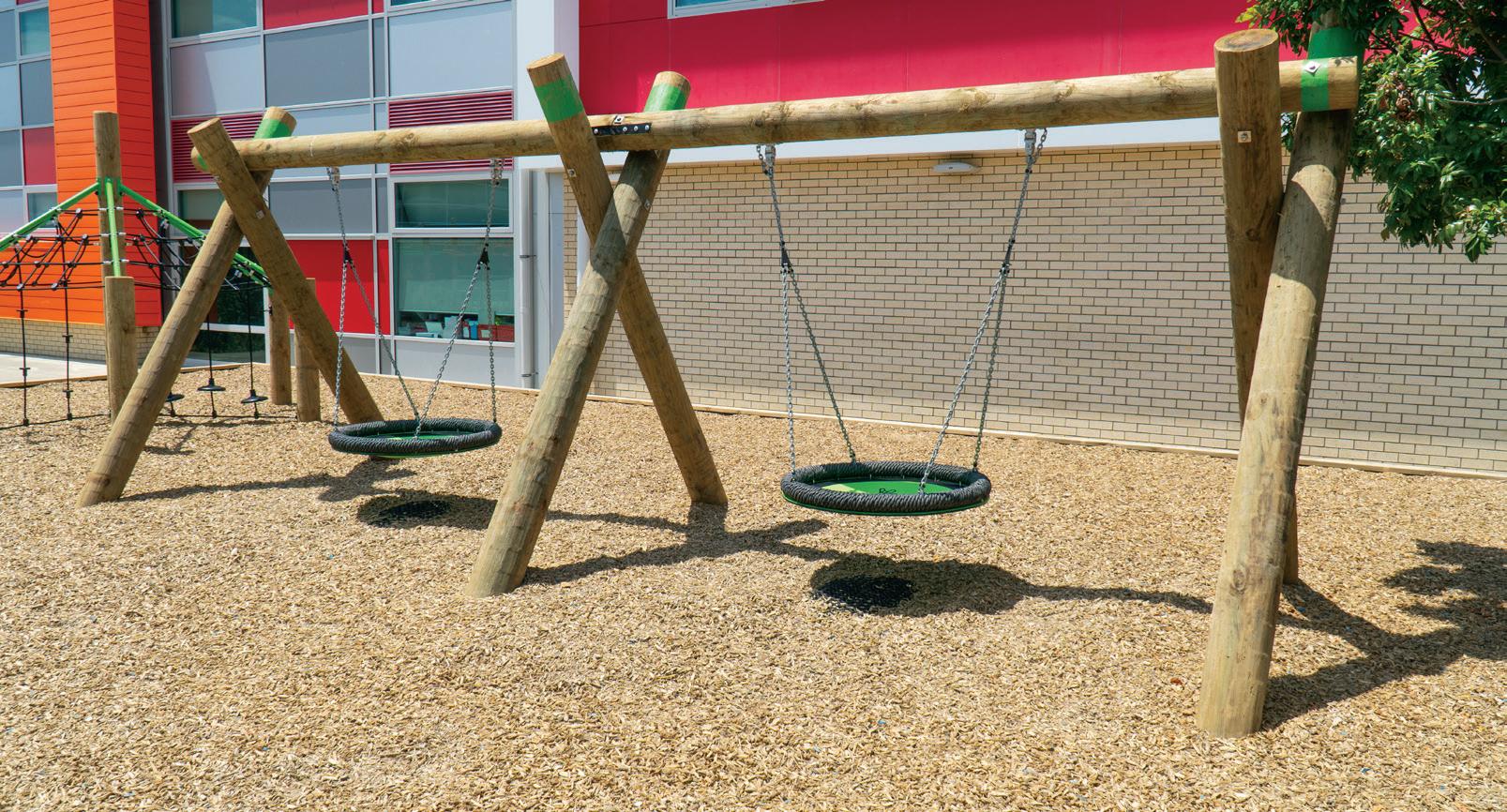
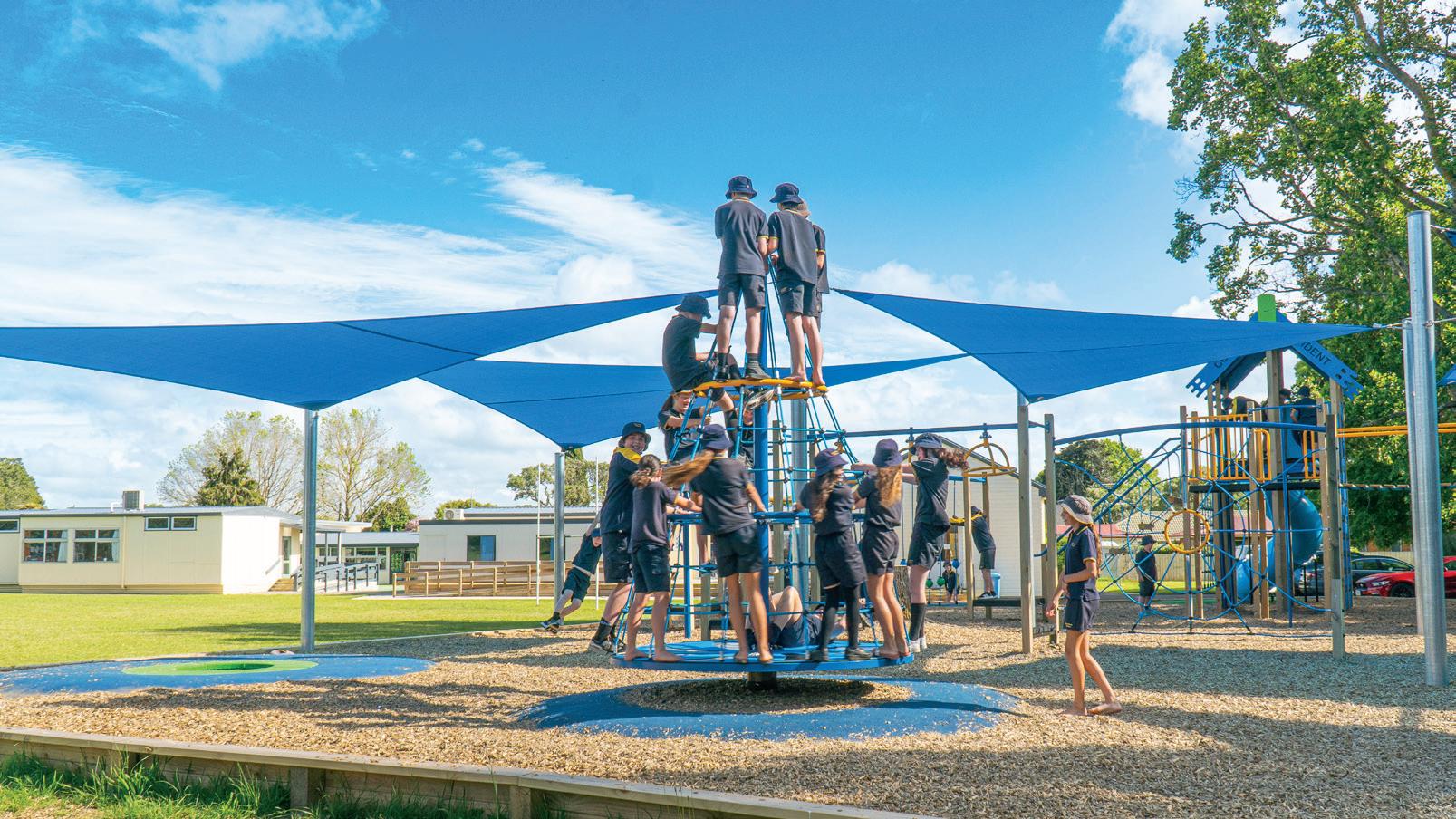
54 Term 1, 2023 | schoolnews.co.nz
PROPERTY
Images courtesy of Park Supplies & Playgrounds
although sensible for areas of fall risk, is inaccessible to wheelchair users, so it may be prudent to consider having varied flooring in play areas. Specific safety standards for playgrounds should be considered by the manufacturer. Finally, playgrounds should be challenging for all ages, as older children use playgrounds too. Educators may also consider the key competencies of the NZC when looking at playground design, as play areas can enrich children’s development in unexpected ways.
How can you get the most out of your play space? School News asked industry experts their top tips for creating the ultimate play space for all young people.
Melissa Cowie, Playground Consultant with Park Supplies & Playgrounds said recent trends have leaned toward inclusivity, allowing all ages and abilities to be part of the fun. As a result, more all-inclusive items are being added into suppliers’ range and designs, allowing schools to integrate these items as part of a standard playground.
CASE STUDY:
“A welcoming play environment needs to consider the longterm ‘play value’ children will get from the space. There are several important aspects to delivering play value and this includes physical development (does the equipment build strength and technique appropriate to the target age), social development (are there suitable group interaction areas as well as individual play areas) and imagination (are there fun and inspirational elements),” Cowie said.
Primary’s new
“The aesthetics and fit with the local area are also very important. A well-designed space will combine these factors and ensure the installation delivers not just in the short term but for years to come.”
When it comes to safety needs, Cowie advises to leave it to the professionals. “Safety in a playground is not worth guessing as there are many regulations to abide by within the NZ Playground Safety Standards. Some general wear and tear checks can be taught
to school maintenance staff, however, when in doubt contact your playground supplier.”
Michael Klaja from ReHarvest Timber Products Limited said playgrounds have changed dramatically over the past ten years. “They are becoming more like assault courses that challenge kids of all ages and make the whole experience more fun,” he said. A mulch playground surfacing specialist, Michael says: “It never ceases to amaze me that a discarded waste product dumped in the yard can be completely re-engineered into premium mulch we see cushioning the fall for children across the North Island.
“There is a feel-good component for everyone involved in the process. Installing surfacing material made from recycling pallets that would have ended up in landfill, in round figures 100,000m3 that didn’t go into the ground every year, that in itself is good news and resonates with schools passionate about sustainability.”
So, when Alexandra Primary School received their funding from the Schools Investment Package, students overwhelmingly voted to replace their old playground, which had been closed for safety reasons. The vote led Principal Fiona Mackley to begin the search for a suitable playground provider.
Mackley knew she wanted the new playground to “be fit for younger students as well as provide challenges up to Year 8”. The aim was for the new design to “encourage safe risk taking and to develop students’ strength and coordination”.
With these goals in mind, Fiona reached out to Park Supplies & Playgrounds via their website and was quickly put in touch with resident Playground Consultant Melissa Cowie. Despite the challenges of the Covid-19 period, Fiona and Melissa were able to have a successful consultation over Zoom.
Mackley said: “Mel got really creative with the
playground design and was able to utilise our available funding to the absolute maximum. The proposal was very comprehensive; it included all health and safety considerations as well as options for ground cover.”
Three proposals were considered, but Alexandra Primary ultimately chose Park Supplies & Playgrounds’ design. The decision came down to a matter of quality, and the school’s Board of Trustees was particularly drawn to the fact that all Park Supplies & Playgrounds’ equipment is made in New Zealand.
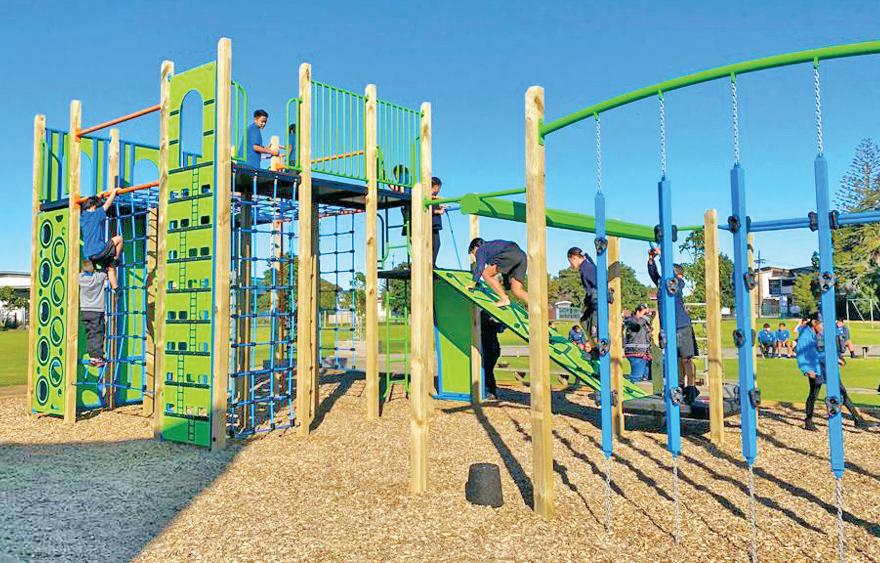
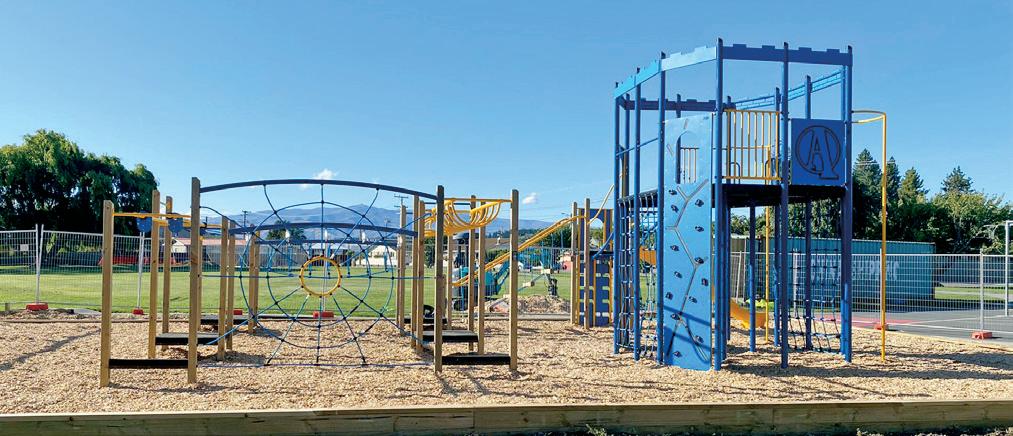
During the installation, Managing Director Jon
Hooper ensured the job was done efficiently and safely, despite an initial hiccup with a Dunedin-based subcontractor. Hooper ended up flying in their Auckland-based team to ensure a smooth installation. Fiona says the students were kept informed and engaged throughout the process, and that the finished playground has already had a positive impact on their community.
“It’s amazing to see how the children are so supportive and work together as a team. I would definitely go back to [Park Supplies & Playgrounds] for my next playground project. All the key people were fantastic to work with [and] communication was seamless.”
Term 1, 2023 | schoolnews.co.nz 55 PROPERTY
Playgrounds are an essential part of any primary school. They are the locus of lunchtime socialising, and they provide opportunities for students to develop motor control and problem-solving skills.
Image courtesy of Park Supplies & Playgrounds
Alexandra
playground is a hit with the community
Image courtesy of Reharvest Timber Products
Solar power solutions for schools
By Naomii Seah, Industry Reporter
Last year, it was announced that all coal-boilers in schools would be replaced with renewable energy sources by 2025. This is one of the latest in a series of initiatives aimed at achieving a carbon-neutral public sector by 2025. A popular, accessible and successful way for schools to contribute to this vision is through the use of solar panels. Schools looking to install solar should start with practical questions, such as whether your school or kura is in an area of the motu with sufficient sunshine hours.
The property must have a suitable roof for solar-panel installation. Metal roofing is generally the simplest for solarpanel installation, and tile or flat roofing may have increased costs associated, due to specialist mounting equipment. The proposed roof should also be in
good repair, as solar panels are generally designed to last for a long-term period, up to 25 years. Another important question is the amount of energy used during daylight hours, as solar-generated power is most cost effective when used as

generated. Schools and kura should investigate the cost per unit of generated electricity. This can be sold back to the grid, which increases the proportion of renewable energy available to all households in Aotearoa. However, the cost of buying a unit of electricity
CASE STUDY: Hawkes Bay’s solar revolution
A growing number of schools across Hawkes Bay and beyond are taking a lead in sustainability and installing solar systems through a different payment model.

The system is paid back through the solar energy generated and then used by the school as an alternative to energy from the grid. Solar system supplier Integrated Energy said this model allows schools to achieve more sustainable practices by installing, maintaining, and managing the entire process for schools, at no capital cost.
In 2022, Integrated Energy worked closely with the Ministry of Education to develop an approvals process and energy contract which is standardised for all schools and allows all parties to have a thorough
understanding of what’s involved. Integrated Energy worked with several schools in 2022 including the oldest state secondary school in Hawkes Bay, Napier Boys High School who stated that there
was “minimal disruption and a really quick and easy process for the school to go through.”
Both Onekawa School and Tamatea Intermediate in Napier were keen to see the benefits of solar for their schools, along
with being able to use the data provided by Integrated Energy’s solar monitoring systems to educate students on the impact of solar. The 40kW system installed at Onekawa School will produce around 80 per cent of the school’s overall energy use annually.
Jo Smith, Principal of Tamatea Intermediate in Napier, said “We are delighted with our new solar panels and the learning opportunities this has created for our tamariki.” Students of today are our future leaders and decisionmakers. Making sustainable practices more accessible can foster imagination for future projects and, hopefully, the protection of the planet.
Solar energy solutions will be key to achieving New Zealand’s goal of 100 per cent renewable energy by 2030.
56 Term 1, 2023 | schoolnews.co.nz PROPERTY
Image courtesy of Integrated Energy
© stock.adobe.com
is generally up to three times higher than the cost of selling a unit of electricity. This means recuperated costs will largely be made up from self-consumption, the savings associated with using the generated electricity.

Battery storage may be an attractive option. Batteries can provide flexibility in utilising the electricity generated by panels when the school is closed, that is, during weekends and school holidays.

When evaluating costs, schools may consider a large capital investment upfront to purchase and install the solar panels, in comparison to leasing. Leasing solar panels means there are no upfront costs, and schools and kura pay a fixed price to the solar panel company, usually at a rate lower than existing energy costs. Alternatively, schools may apply for funding through the Ministry, meaning the panels will be owned by the Ministry.
To learn more, School News gained the perspective of two different solar power providers.


 Laura Caccioppoli, Project Coordinator at Integrated Energy
said that when looking for solar, schools should consider their current electricity use from the grid. “It’s also important to consider roof space and any planned building or renovation works which might affect an installation. A good solar installer will be able to work with you on these and they should be asking for at least six months’ worth of
electricity bills, ideally 12, so they can get a measure of electricity use across the year. You should also think about whether you might like to add battery storage at any point as this may affect the type of system most appropriate for the school.”
At the design stage, Ms Caccioppoli said it is important to look at how much electricity
your system is predicted to generate – too little and your system isn’t going to have much of an impact, too much and you’re going to be sending a lot back to the grid where rebates aren’t very high. This is important for schools where there are large periods of time when the school is closed, and electricity use will be at a minimum.
Term 1, 2023 | schoolnews.co.nz 57 PROPERTY
© stock.adobe.com
“For schools, leasing solar systems is a great option. With minimal investment, schools are free to spend budgets on their students whilst being confident that the savings they make on solar will also contribute. By developing a partnership with their installer, schools can be confident that any issues with the solar system, will be taken care of by the installer with minimal inconvenience to the school. It also ensures they’ll remain
clean, which we recommend doing around once a year.”
Finally, Ms Caccioppoli said a good solar monitoring system provides fantastic educational opportunities for students who can use the data produced in a range of different ways and in several subjects.
Hamish Littin from Power Technology said Solar PV systems should be considered by schools, as they have long operating life spans. Guarantees are in
place for optimal performance, so it is important to note the guarantees the manufacturers of the system components offer.
Mr Littin said it is important to balance the current and future needs of the school’s energy as much as practicable, without oversizing. “Solar power is highly modular and schools can always add more power as they grow. This does not make any existing system equipment redundant so there is no lost investment if the school grows in stages.
CASE STUDY: Forrest Hill School’s Solar a “Proven Performer”
“We prefer to assist our schools with outright ownership of their solar system. While this has higher initial capital outlay this can be offset with a loan.
“Schools enjoy the full benefits of their solar PV system and maximise the long-term savings and benefits to the school, including increased savings, and greater control.
“After the system has been installed, we recommend regularly checking the solar power data monitoring system to confirm the system is working properly, and if there is any sign of reduced performance, the school should have the system inspected.
“Maintenance usually consists of cleaning of the panels and inspection of electrical components. As there are no moving parts to solar panels, maintenance is relatively minimal and therefore costs are generally low.
“The panels should be cleaned annually, the same time as the school roof, however this greatly depends on the environment.”
Completed in mid-April 2019, Forrest Hill School has 64 solar panels which provide 19.2 kWp of solar power. The school is benefiting from cost savings and the sustainability of solar PV.
Since its commissioning the system has delivered 89,968.91 kWh (89.96 MWh) of energy to the school. That’s an equivalent energy cost savings of over $19,637 (excl GST), with 22-years remaining of the solar module power performance warranty.

Power Technoloy said with the data available from its schools monitoring systems, it can assess the total performance, and subsequent gains made by the school in terms of cost savings over the life of the systems.
Solar system provider Power Technology says solar photovoltaics (PV) can help schools to save money, and the environment. While the initial outlay for a PV power system

can be considerable, there are many benefits in both the environmentally clean energy produced, and the long-term savings gained. Funds can be
diverted from the operating cost back into other areas of the school, helping to improve educational outcomes and opportunities for students.
Solar is a proven performer for schools, allowing them to generate, consume and trade their own renewable energy and save money. The system has flexibility to grow with the school, and provide silent, long-life operation of renewable energy generation that can be relied on for decades.
58 Term 1, 2023 | schoolnews.co.nz PROPERTY
The past decade has seen a significant drive for schools to improve both their environmental and economic positions. This can be a daunting task, as schools work to balance available funding against expected outcomes, which need to meet current and future demands of the school and its infrastructure.
© stock.adobe.com
Image courtesy of Power Technology
SOLAR POWER WILL ALWAYS BE PERFECT FOR SCHOOLS
Power Technology
09 836 6744 | 0800 POWER NOW sales@powertech.co.nz | powertech.co.nz
Schools are perfect for solar. A solar array produces energy during daylight hours when students are in school, which means that electricity is used to assist in educational activities.
Solar on the roof of a school enhances this long-term investment with impressive guarantees.
Under the NEW ZEALAND SOLAR SCHOOLS programme Power Technology has successfully installed many different sized solar arrays on to over 80 schools in New Zealand with impressive guarantees.

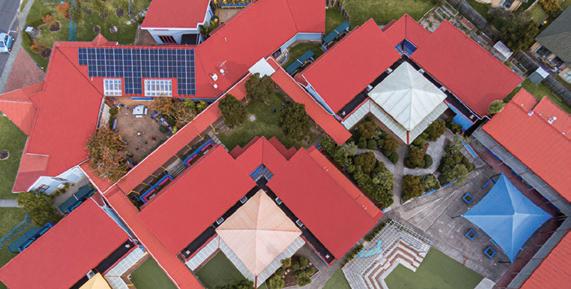
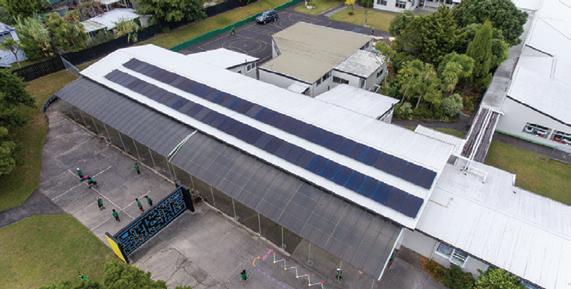
Every facet of the programme is managed by our experts, and the NEW ZEALAND SOLAR SCHOOLS programme is available to EVERY school across New Zealand.

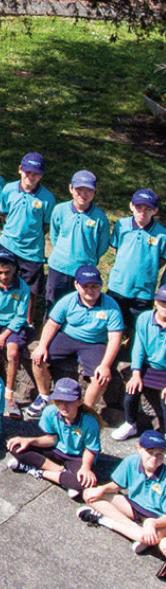
Design, supply, and installation of a solar power system:
Our experts design a solution to meet the school’s energy demand. The requisite components are then supplied and installed by our crew to ensure optimal performance, minimal disruption to school activities and ensure the long-life operation of the system in each school.
Finance:
We provide highly flexible solar finance. Each school is different, and our purchase options provide a variety of solutions to enable every school to go solar.
Monitoring & Data sharing:


The performance of the school’s solar power and (optionally) energy consumption at the school is monitored and reported live in real-time data.
Educational Learning Experience: Our team includes highly experienced professional educators who will guide your schools nominated staff through a solar learning programme and interactive experience for your students.
STEM:
The Solar Energy and Energy Efficiency education programme revolves around all aspects of STEM as it is based on Science, Technology, Engineering and Maths.
HOW TO FUTURE PROOF YOUR SCHOOL
Schools are now installing larger solar arrays with five of the most recent schools installing more than 20 kW solar arrays.
There is a huge impact having a solar array on the school roof as it is a great visual example of a percentage of the school’s electricity being produced from a renewable source right where the students can see it, use it, and learn about it.
New Zealand schools are already investing in the future of energy. Where to next?
As the popularity of electric vehicles soars, EV charging stations are emerging everywhere. But there are few places
where EV chargers are used more often than schools and universities.
Adding EV charging stations to your school Solar PV system will have multiple benefits.

We are thrilled to be helping schools here in New Zealand on their journey to optimise their Solar PV + EV asset relationship.
If you also want to encourage sustainability at your school and have an extra source of income, EV charger stations are a perfect addition to your school with or without a Solar PV system.
It is an exciting time as New Zealand schools embrace Solar Energy and Power Technology will continue to lead the way.
PROPERTY
The programme consists of five main components to ensure there is a tailored solution for every school
DECARBONISATION AND EDUCATION FUNDED BY THE SUN