













9:00AM-12:00PM, SAT 6 JUNE 2026
Ever dreamed about living on the Gold Coast and running your own business?
Management rights could be your ticket - these dynamic businesses deliver excellent returns on investment while also providing a home to live in.
If you’re keen to get into this incredible industry, this information seminar is for you.
Join the leading agency in management rights for an expert introduction to the sector. With over 40 years of experience, we’ve helped thousands of people like you acquire secure, successful businesses in the management rights industry.


Learn from our expert panel:
• What management rights are
• Why they are secure, low-risk businesses
• Which types of management rights may suit you
• How to leverage your purchasing power through partnerships and syndicates
• A data-driven overview of the Gold Coast management rights market
• Current management rights opportunities available for purchase
Everything you need to confidently take your first step toward securing your own business in this thriving industry.




The views and images expressed in Resort News do not necessarily refl ect the views of the publisher. The information contained in Resort News is intended to act as a guide only, the publisher, authors and editors expressly disclaim all liability for the results of action taken or not taken on the basis of information contained herein. We recommend professional advice is sought before making important business decisions.





















The publisher reserves the right to refuse to publish or to republish without any explanation for such action. The publisher, its employees and agents will endeavour to place and reproduce advertisements as requested but takes no responsibility for omission, delay, error in transmission, production defi ciency, alteration of misplacement. The advertiser must notify the publisher of any errors as soon as they appear, otherwise the publisher accepts no responsibility for republishing such advertisements. If advertising copy does not arrive by the copy deadline the publisher reserves the right to repeat existing material.

Any mention of a product, service or supplier in editorial is not indicative of any endorsement by the author, editor or publisher. Although the publisher, editor and authors do all they can to ensure accuracy in all editorial content, readers are advised to fact check for themselves, any opinion or statement made by a reporter, editor, columnist, contributor, interviewee, supplier or any other entity involved before making judgements or decisions based on the materials contained herein.
Resort News, its publisher, editor and sta , is not responsible for and does not accept liability for any damages, defamation or other consequences (including but not limited to revenue and/ or profi t loss) claimed to have occurred as the result of anything contained within this publication, to the extent permi ed by law.
Advertisers and Advertising Agents warrant to the publisher that any advertising material placed is in no way an infringement of any copyright or other right and does not breach confi dence, is not defamatory, libellous or unlawful, does not slander title, does not contain anything obscene or indecent and does not infringe the Consumer Guarantees Act or other laws, regulations or statutes. Moreover, advertisers or advertising agents agree to indemnify the publisher and its agents against any claims, demands, proceedings, damages, costs including legal costs or other costs or expenses properly incurred, penalties, judgements, occasioned to the publisher in consequence of any breach of the above warranties. It is an infringement of copyright to reproduce in any way all or part of this publication without the wri en consent of the publisher. © 2026, Multimedia Publications Pty





There is a lot to be said for businesses, places and people who know exactly what they are.
There is also a lot to be said for writer and poet Maya Angelou’s line: When someone shows you who they are, believe them the first time. It is usually used as a warning, but I think it works just as well the other way around.
When someone consistently shows you character, reliability and substance, believe that too. In an industry that can get distracted there is something reassuring about those who are good at what they do and honest about who they are.
That feeling runs quietly through this edition. There is a strong sense of businesses and people who are not trying to be all things to all people. They know their value. They know














Mandy Clarke, Editor editor@resortnews.com.au
their market. It comes through beautifully in this month’s profile on Lazy Lizard Motor Inn in Port Douglas. It reminds you success is not always




about scale, polish or who can shout the loudest. There is confidence in a business that knows what it is and does it well.
On a personal note, this month we are hoping to welcome our daughter back from living in the United States. Like many families with loved ones overseas, we have been watching events unfold with more than a litt le unease. It also brings me back to that old line about believing people when they show you who they are the first time. Frankly, the world might have done well to take that advice a litt le earlier.
It has also been a timely reminder of just how wonderful it is to be this side of the world.
I say that as someone who has lived in other countries and knows full well the temptation to imagine life elsewhere must be better. The grass is
greener on the other side? Sometimes it looks that way. Sometimes it sells itself that way. But not in my experience.
Diff erent, yes. Interesting, absolutely. Eye-opening, definitely. But greener? Not where it counts.
There is a quiet greatness to life here that can be easy to overlook until the wider world starts wobbling.
Perhaps that is why I find myself drawn to stories of grounded, well-run businesses and people who quietly get on with it. There is something very Australian in that.
As always, thank you for reading and for being part of an industry that continues to adapt, endure and surprise.
Mandy Clarke, Editor, Resort News











Six years after our sister publication, AccomNews first reported on the impact of disputed Booking.com reviews, accommodation operators are still sharing similar frustrations, with fresh reader comments suggesting the issue remains unresolved for some small businesses.
The original 2020 story centred on Redcliffe bed and breakfast owner Lynne Boucher, who said she was left “totally shattered” after a run of low-scoring reviews affected her Booking. com rating and ultimately led her to delist from the platform.
Now, that same article continues to attract responses from readers describing disputes they say involved reviews they believed were unfair or damaging, and which they were unable to have removed.
One of the most recent comments, posted on April 14, 2026, came from an operator named Sophie, who said she had experienced a similar situation. She alleged the incident was serious and disruptive, and said it affected other bookings
When review volume is limited, a single low score can have an outsized impact on visibility, guest confidence and future bookings
at the property. Despite that, she wrote: “Booking.com won’t remove this review.”
Another reader, Andrew, commented on May 2, 2025, describing what he called “a long running dispute” with Booking.com over “a disgraceful review”. He wrote that he had been unable to resolve the matter through Booking. com’s review process.
While the individual circumstances differ, the comments point to a recurring concern among some operators: that reviews they believe do not fairly reflect the circumstances can still affect a property’s public score and reputation, even where they feel there is strong evidence to challenge them.
For smaller operators, the stakes can be especially high. When review volume is limited, a single low score can have an outsized impact on visibility, guest confidence and future bookings.
Booking.com’s published review standards state that contributions should be “genuine and unique to the guest”, and that reviews may only be accepted within three months of check-out. The platform also says abusive, threatening, discriminatory and irrelevant content is not permitted, and that accommodation providers can respond publicly to reviews. Its policy allows operators to request a review assessment, but says removal is limited to specific circumstances,
including offensive content, fake or spam content, privacy breaches and off-topic material.
Even so, the experiences shared by AccomNews readers suggest some operators remain dissatisfied with the outcome of the review assessment process.
The issue also comes at a time of broader scrutiny around Booking. com in Australia. In March 2026, ABC reported that Booking. com was the fourth most complained-about company to Fair Trading NSW last year, with complaints involving refunds, cancellations, customer support and dispute handling.
For the operators continuing to comment under AccomNews’ original 2020 article, the concern remains much the same. When a review causes serious damage to a small business, the ability to post a public response does not always feel like an adequate remedy.
Accommodation operators with experience of review disputes on Booking.com or other platforms are invited to get in touch to share their perspective.
AccomNews has reached out to Booking.com for comment.
ASTRA chair Yoav Tourel has responded to Trevor Rawnsley’s March Resort News column on short-term letting and housing supply.
In his column, Trevor Rawnsley, CEO of ARAMA, argued that detached Class 1 suburban homes should remain in the long-term housing pool and called for councils to ban shortterm letting in those properties. At the same time, he maintained that strata apartments are better placed to move between short-stay and long-stay use depending on demand.

















Yoav Tourel, chair of the Australia and New Zealand Short Term Rental Association (ASTRA), said the discussion was worth having, but argued the policy response should also reflect the varied and changing ways residential property is used in practice.
“This flexibility is not a flaw, it is a feature of a functioning housing and accommodation system, and it should be recognised as such,” he said.



Yoav Tourel
said, alternative mediumterm accommodation “simply does not exist”.
In his view, short-term rental accommodation (STRA) reflects the reality that homes are not always used in a single, fixed way. A property may at different times serve as a primary residence, a holiday home, a temporary base for work or family reasons, or an income-producing asset that helps a household manage mortgage costs, rising living expenses or retirement planning.
At the same time, Tourel made clear that flexibility should not mean a lack of oversight. He said the sector benefits from “clarity, consistency and appropriate regulation”, while drawing a distinction between professionally managed properties and more occasional hosts.
Tourel also pointed out that the role of STRA extends beyond leisure travel. In regional and growth areas, he said, it can provide practical accommodation for tradespeople, teachers, healthcare workers, contractors and project teams who need somewhere to stay for weeks or months, especially where dedicated mediumterm accommodation is limited or does not exist.
In many locations, he
He also called for a more coherent state-based approach to STRA, including registration, data and enforceable codes of conduct, stating that “governments first need to understand the sector through data to enable evidencebased policy decisions.”












through proportionate, evidencebased measures rather than blanket restrictions that fail to recognise how housing is actually used in practice.
Where a property is managed on behalf of others, Tourel said it should continue to sit within existing licensing frameworks under state-based consumer and fair-trading laws. For other hosts, he pointed to lighter-touch tools such as registration, certification or accreditation as ways to improve transparency, minimum standards and understanding of who is operating in the sector and at what level.
That marks a different policy emphasis from ARAMA’s column, which focused on restricting detached suburban homes from short-stay use in order to support long-term rental supply, while preserving greater flexibility for strata apartments.
That marks a different policy emphasis from ARAMA’s column, which focused on restricting from short-stay use in order supply, while preserving greater flexibility for strata apartments.






to be precise about the role of dwellings, he argued, are



Tourel said it was also important to be precise about the role of residential property. Residential dwellings, he argued, are designed to accommodate people and may, over time, be owner-occupied, rented long-term or used more flexibly to meet changing household and community needs.
While the two perspectives differ on where limits should apply, the exchange highlights a bigger question for the accommodation sector and policymakers alike: how to balance housing supply pressures with the varied ways residential property is used by owners, workers, visitors and communities.


a fundamental characteristic of residential property and should not be undermined by

That flexibility, he said, is a fundamental characteristic of residential property and should not be undermined by broad or poorly targeted policy responses. Where issues do arise, they should be addressed
Tourel said the debate was worth having if it helped reinforce a more balanced and practical policy framework, one that recognises the diversity of the sector, supports professionalism and preserves the flexibility that communities, workers and households increasingly rely on.












By Trevor Rawnsley, CEO, ARAMA
A pilot is never more thankful for his education and training than when turbulence strikes.
So it is with the most successful operators in the management and letting rights industry (MLR) as the world experiences savage economic headwinds.
During this time of financial upheaval across the globe, it’s prudent for every business to take a close, critical look at its expenditure and reduce costs in a careful manner. Like the rest of the world faced with rising fuel and transport costs, the MLR industry must save the pennies and ride out the storm. But be careful where you cut spending.
You can’t put a price on the education and training that is essential for MLR operators, and it’s never more vital than in days of economic stress. Our industry is becoming more complex and more sophisticated. It requires more education, not just for those who are starting out in the business, but also for MLR veterans who realise that they constantly need to work on improving themselves to improve their business. Even experienced airline captains regularly go back to school to keep up with an ever-changing industry, and if you want to fly high in an MLR business you need the knowledge to stay at the top.
You can’t put a price on the education and training that is essential for MLR operators
As managers running your own business, the last thing you want to do is skimp on training. Knowledge is power and education is the foundation for success. When it comes to learning the MLR business and navigating your way through tough times, ARAMA has all the maps, all the guides and all the experts to make your journey in the MLR industry enjoyable and extremely rewarding.
Recently, Australian tourism accommodation operators have faced a perfect storm, with the effects of a faraway war combined with opportunistic local governments, driving up costs for tourists and small businesses. MLR businesses have been faced not only with rising prices for transport and goods because of the Middle East conflict but also plagued by local councils viewing shortterm strata accommodation as a cash cow and introducing increased taxes to milk it.
To counter these and any other problems, though, ARAMA’s 4,000 members have access to sharp tools and guides to not only survive but thrive against economic pressures. Our training programs are the key to success in the industry. ARAMA has designed a variety of successful, highly regarded classes and seminars to give MLR operators the skills, knowledge, confidence and contacts to make their businesses both successful and profitable.
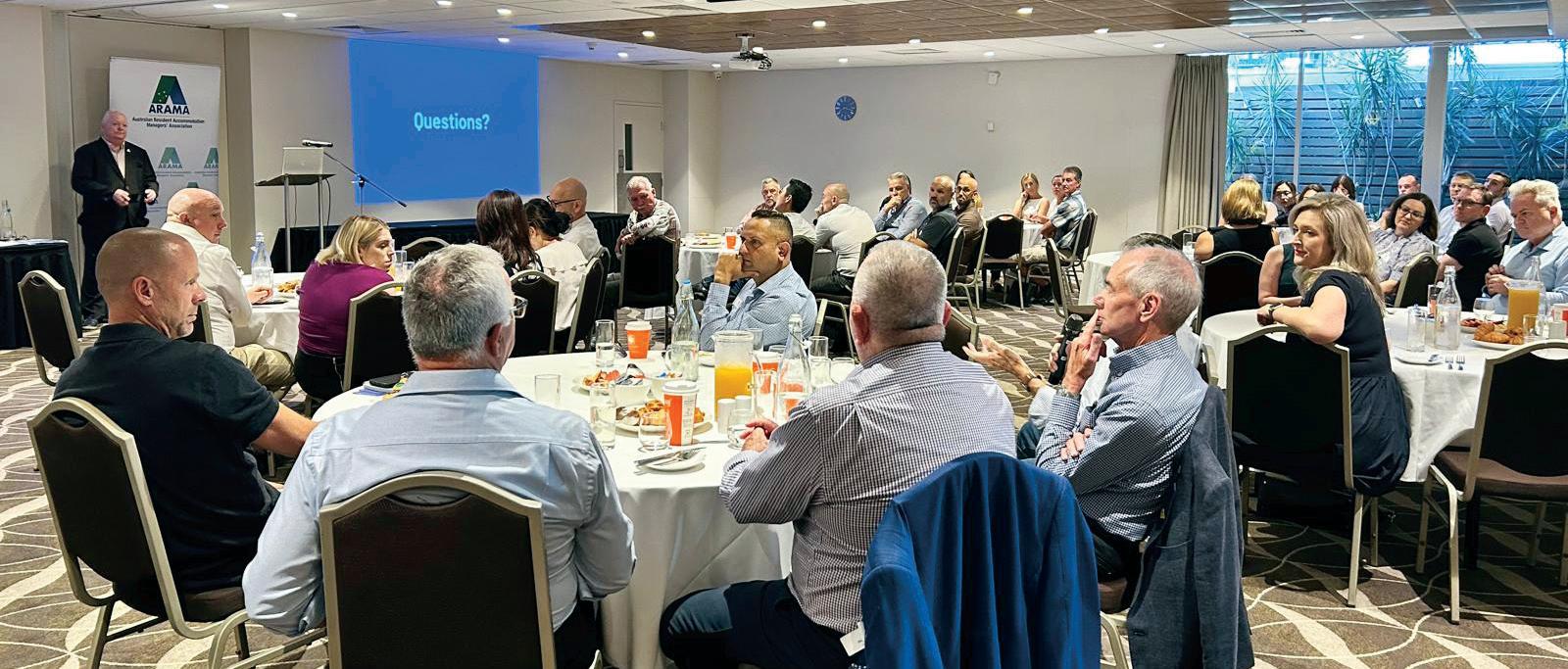
Recently, in Brisbane, ARAMA hosted a breakfast to launch our new training program called AMROM (ARAMA Management Rights Operational Masterclass). It’s a one-day, fully interactive training program designed to strengthen the operational capability of MLR businesses, reduce risks and build confidence. AMROM is accredited for Type 2 CPD in Queensland and provides participants with a practical understanding of the systems, legal mechanisms, financial responsibilities and operational frameworks that support compliant and wellmanaged MLR operations. This masterclass is delivered by experienced industry specialists and focuses on reducing risk, supporting compliance and enhancing long-term business performance.
The modules cover industry frameworks: operational governance, compliance systems and legal processes including top-ups, extensions, variations, remedial action notices and practical law. We look at property management software, building management software and financial oversight, including tax, GST and superannuation, as well as operational readiness, stakeholder expectations and sale preparation. There is also an expert panel discussion and an open forum to answer all questions.
At our launch breakfast, it
was fantastic to have such a strong mix of industry voices in the room. It was a true representation of the “Triangle of Management”. What stood out most was the willingness to share experiences and help shape something that genuinely supports the future of the MLR sector. That spirit of collaboration is exactly what will make these programs meaningful as we continue to roll out AMROM and keep the momentum going. For those who joined us at the launch, thank you again for being part of the conversation, but if you couldn’t attend, we have upcoming masterclasses on June 25, August 26 and December 3. I can’t recommend them highly enough.
AMROM is broken into three sessions throughout the day:
This deals with how to improve and protect your agreements and includes top-ups/extensions, variations, RANs, and your duties.
This deals with property management software, and the importance of a specialist accountant including the role of the auditor, tax, super, GST, and capital gains.
This explains building management software, with an expert panel featuring a valuer, finance broker, sales broker, experienced operator, and MLR consultant discussing “What does MLR success look like?” And finally, the session ends with an expert panel hosting a Q&A. Expert advice is key to these masterclasses.
If you want to know about cost cutting, for example, or profit preservation, there is a session
with an accountant that will cover that. There's a session with a lawyer who talks about avoiding costly legal battles. Importantly, the expert panel talks about what success looks like in MLR. A valuer will point out that if you want to maximise the value of your business, these are the things to always look at, to make sure you get the best capital gains. There will be a finance broker, who can save you a lot of money and make your business better by helping you understand how to improve your lending profile which might result in a lower interest rate, with a wider selection of finance options or explain how you can make your business more appealing to both the lender and borrower. There will be advice on how to prepare your business for sale. Reducing costs is an important thing and so is preserving profit, and you will get a lot of advice on making sure your capital gain is maximised.
AMROM involves important things that are sometimes forgotten by operators, such as getting all your forms and tools in place, or simply keeping your agreements up to date.
In most management rights businesses, operators are very good at maximising cash flow by reducing costs and increasing revenue, but they are not always as strong when it comes to thinking strategically about a future sale. Our experts will tell you that you should start preparing for the eventual sale of your business on the day you settle. It sounds quirky, but our experts will tell you that you should make sure you run your business with a view to somebody coming in and offering you a motza for it. So, you've got to have it in a good saleable condition all the time.
They’ll tell you not to neglect your paperwork, your staff, or your relationship with the body corporate. AMROM is going to be an excellent program for our members.
As the industry body, ARAMA has a renewed focus on training and professional development because it is the key to MLR success. About seven years ago ARAMA revolutionised the MLR industry when it designed a one-day industry
training program called MRITP (Management Rights Industry Training Program). It has proved very popular, and from that, we've also developed ARM (ARAMA Relationship Masterclass) workshop. It is a half-day relationship management masterclass tailored specifically for management rights. We sold out with the last two MRITP courses, showing the value placed on them by people wanting to succeed in the MLR industry.
Completion of the MRITP, AMROM and the ARM will each deliver a full year of Type 2 CPD requirements in Queensland at no extra charge. This is more than is needed in a single year.
The MRITP is ideal for:
• First-time management rights operators who are thinking of entering the industry or just about to.
• New operators in their first year of operation.
• Experienced operators looking to refresh their industry knowledge and improve their industry IQ.
• Professionals, suppliers or service providers who want to understand more about this fascinating and vibrant industry.
This program is unique to ARAMA, the first of its kind designed specifically for the management rights industry. It will help to prepare purchasers for the assignment process and help ensure a smooth sales transaction.
Modules covered include:
• Management rights legislation explained.
• Letting agreements/ caretaking service agreements explained.
• Understanding the role of
the on-site letting agent.
• Understanding the role of the onsite building manager.
• Understanding the role of the government regulators.
• Understanding the role of the committee.
• Understanding the role of the body corporate manager/strata manager.
Given the success of these programs and the demand for training, ARAMA has now designed a five-day training program which combines all our major workshops and provides the students with a mentor, an experienced, successful MLR operator.
The first three days involve classroom work such as the MRITP, AMROM and ARM. On the fourth day students spend a full day working onsite with their chosen mentor working in their business. On the fifth day, the mentor comes to the student’s site for face-to-face coaching depending on the settlement circumstances.
The lessons taught by proven performers in the MLR industry, including some TOP Award winners, are priceless. This vital education is something every operator can bank on as they build a successful business in a wonderful industry.
Knowledge is a powerful weapon in tough times.












By Ben Ashworth, Small Myers Hughes Lawyers
If you have bought or refinanced a management rights business in Queensland since 2015, there is a reasonable chance that you have heard there are things called “Gallery Vie issues” that can be found in caretaking and letting agreements. Gallery Vie issues do not directly affect the manager, but they can have a significant impact on whether a manager is able to get finance for their management rights business.
Since the infamous Gallery Vie Queensland Civil and Administrative Tribunal decision in 2015, the ripples caused by that decision have affected the financing of management rights businesses all over Australia. Although many years have passed, Gallery Vie issues still affect businesses to this day.
So, what is a Gallery Vie issue?
When a manager uses finance to purchase or operate their management rights business, the bank providing that finance understandably wants security to protect the money it has provided to the manager. One of the most common forms of security the bank will want is an

opportunity to sell the business in the future if the manager fails to pay their debts. The bank will also want the opportunity to step in and take control of the business if the actions of the manager are reducing the value of the business.
If a manager is failing to perform their duties under the caretaking and letting agreements entered into with the body corporate, there is a risk that the agreements will be terminated. If the agreements are terminated, it will drastically reduce the value of the business and potentially there will be no business left for the bank to sell. This is a significant risk for someone providing money to a business that they have no control over. This results in banks not being willing to provide finance unless they have some peace of mind that this outcome can be avoided.
In Queensland, to help prevent this outcome and provide confidence for investment in management rights businesses, laws were specifically created to allow banks special rights. These
rights ensured that banks would have an opportunity to step in to fix the manager’s mistakes when the manager is failing to perform their duties, and an opportunity to sell the business. These special rights effectively press pause on the body corporate’s ability to terminate agreements while the bank attempts to fix the problems caused by the manager or, failing that, sells the business to a new manager who can perform the duties.
What the Gallery Vie decision identified was a gap in the laws granting these special rights to banks. Some agreements give the body corporate a right to terminate the agreement, or prevent the sale of the agreement, due to circumstances that do not relate directly to the performance of the duties under the agreements. For example, if the manager has fallen into debt and is unable to pay their bills for a while, in some agreements this gives the body corporate a right to terminate the agreement even if the manager is still performing all their duties
under the agreements. In these circumstances, the special rights the law granted to banks do not apply. This means the agreements can be terminated without the bank having an opportunity to fix the issue or sell the business.
When a caretaking or letting agreement includes clauses that allow the body corporate to terminate the agreement or prevent the assignment of the agreement, without the manager’s financier having an opportunity to step in to rectify the manager’s failures or sell the business, this is what we call a Gallery Vie issue.
Since 2015, it has become common practice for agreements that contain Gallery Vie issues to be varied to remove these problems. Although it has been over 10 years, I still regularly find agreements that have Gallery Vie issues in them that need to be fixed in order for banks to provide finance. Until they are addressed, these Gallery Vie issues can make it difficult for managers to refinance or sell their business.
The impact of the Gallery Vie decision in Queensland has also affected other states in Australia. When offering finance outside of Queensland, banks will typically require that the manager and the owners corporation enter into a deed with the bank. These deeds grant the bank special rights mirroring the rights found in Queensland law, while also closing the door on Gallery Vie issues that could enable an owners corporation to terminate an agreement before the bank has had an opportunity to exercise its special rights. If you suspect the agreement you have entered into with the body corporate or owners corporation still has a Gallery Vie issue in it, you should seek legal advice to ensure it will not impact your ability to obtain finance or sell your business in the future.
Disclaimer: This article is provided for information purposes only and should not be regarded as legal advice.



Guest expectations are changing, the benefits of upgrading your building’s internet:
Tourism Impact: Discerning visitors now view fast and reliable internet as a key factor when choosing accommodation.
Online Reviews: Guest feedback increasingly reflects internet performance, which can influence future bookings.
Real Estate Appeal: Buyers and tenants are seeking homes that support remote work — high-speed internet is now essential.
Holiday Letting Performance: Buildings with excellent internet tend to enjoy be er reviews, stronger brand recognition, and increased occupancy and revenue.



What internet upgrade options should I choose?
Option A: New CAT cabling to each room. Improves speed over traditional lines but doesn’t support gigabit performance. Installation is costly.
Option B: Wireless distribution across the building. Cost-e ective but unreliable due to interference from building materials and layout.
Option C: Fibre optic cabling to each apartment.
O ers excellent performance but comes with high installation costs and device upgrade requirements.
Option D – Recommended: Gigabit fibre delivered via existing TV coaxial cables. This solution:
o Delivers speeds up to 1.5 Gbps (1,500 Mbps).
o Involves minimal disruption and cost.
o Is fully managed and warranted.
o Has proven success with existing installations.
…with the flick of a switch our internet services moved to world class Gigabit capable internet. Resident and guest satisfaction has skyrocketed with the availability of fast, reliable industry leading internet, which allows our resort to include phone, video and streaming services never before offered. Absolutely Brilliant!”
– Eric van Meurs, Manager Atlantis Marcoola Beachfront Resort and past ARAMA President (Australian Resident Accommodation Managers Association.)













For many bodies corporate, insurance is one of the biggest ongoing costs. While the body corporate is responsible for arranging insurance, each lot owner contributes to the premium through levies. Understanding how these contributions are calculated is essential for both committees and owners.
Under the Body Corporate and Community Management Act 1997 and associated regulation modules, a body corporate is required to insure buildings and other required assets within the scheme. It must also hold public liability insurance to cover injury or damage to others on the property.
The cost of that insurance, known as the premium, is shared among all lot owners. Each owner contributes to this cost through levies paid into the administrative fund.
Importantly, the law sets out specific rules for how each owner’s share of the insurance premium must be calculated. These calculation rules differ

from those used to divide most other body corporate expenses.
The total insurance premium is determined by the insurer based on risk factors such as:
• replacement value of the building, based on professional valuations
• location and exposure to risks, such as storms and flooding
• building materials, age and condition
• claims history of the scheme
• the amount of excess the body corporate agrees to.
To ensure the insurance covers the full cost of rebuilding, the body corporate must obtain an independent professional valuation at least once every five years.
Each lot owner pays a proportionate share of the insurance premium. How that share is calculated depends on the type of survey plan registered for the scheme.
1. Building format plan
(e.g. apartments, townhouses with shared structures)
For schemes registered under a building format plan, or volumetric format plan, each owner’s share of the building insurance premium is based on their lot entitlement listed in the interest schedule.
Lot entitlements are set when the scheme is created and recorded in the community management statement. They reflect, among other things, the relative value of each lot.
Example:
If a lot has an interest entitlement of two out of a total of 20, the owner pays 10 percent of the building insurance premium.
2. Standard format plan (e.g. townhouse complexes, duplexes)
For schemes registered under a standard format plan, where the lots share a common wall, the calculation is different. Each owner’s contribution is based on the cost of reinstating the buildings on their own lot.
Example:
If one lot has a higher rebuild cost, due to size or construction, that owner will pay a higher
share of the premium. For lots in a standard format plan where there are no shared walls, owners can take out their own building insurance. The body corporate can set up a voluntary insurance scheme to cover these types of lots. However, it is the lot owner’s decision whether they participate in the scheme.
The legislation recognises that strict application of these methods may not always give a fair outcome. As a result, insurance contributions may be adjusted to reflect a lot’s specific circumstances.
Adjustments may be made where a lot owner informs the body corporate that they have:
• higher-quality fixtures or finishes in their lot that increase the insured value
• made improvements to common property that benefit their lot more than others
• engaged in activities within their lot that may increase the insurance risk, such as commercial or hazardous use.
Example:
If a lot owner upgrades their unit with premium fixtures that increase the replacement value, they need to inform the body corporate of the changes and their share of the insurance premium may be increased accordingly.
The body corporate includes the cost of insurance in its administrative fund budget each year, which is approved at the annual general meeting.
Once approved, each owner receives a contribution notice showing their share of the levies, including the insurance premium.
Sometimes the insurance levy is shown separately to the administrative fund levy and sometimes they are combined. If you want to find out the premium, this information can usually be found in the body corporate records or in the annual general meeting documents.
Although most body corporate costs are based on contribution
schedule lot entitlements, insurance is a key exception and follows the rules outlined above, which is often why it is listed separately on the notice.
An insurance excess is the amount that must be paid when making a claim under an insurance policy before the insurer contributes.
If a claim totals $20,000 and the excess is $5,000, the insurer will pay $15,000, and the excess of $5,000 must then be covered either by the body corporate or, in some cases, an individual owner.
Although the excess is not part of the premium itself, it is still important for lot owners to understand, as it can affect their potential out-of-pocket costs. The level of the excess chosen by the body corporate can also influence the overall insurance premium.
Who pays the excess depends on the circumstances of the claim:
• if damage affects only one lot, that owner will usually pay the excess
• if multiple lots or common property are affected, the body corporate will usually pay the excess
• responsibility may shift depending on fault or maintenance issues.
Insurance contributions can vary significantly between lots, even within the same scheme. Key factors influencing what each owner pays include: the type of survey plan, the lot’s entitlement or rebuild value, improvements or upgrades and risk factors associated with the lot.
For committees, applying the correct method is a legislative requirement. For owners, understanding how contributions are calculated can help explain why levies differ and when adjustments may be appropriate.
Insurance in a community titles scheme is not always divided equally. It is allocated according to legislated principles designed to reflect value, risk and fairness. By understanding how premiums and excesses are calculated, both committees and owners can make informed decisions and reduce the likelihood of disputes about contributions.


The difference between those who succeed and those who struggle often comes down to mindset




By Mandy Clarke, Editor
Matthew Manz did not grow up dreaming of management rights law. In fact, when he first started practising, he didn’t even know what management rights was.

What he did know was that he had a law degree, had spent a considerable amount of money on it, and probably should see where it led. What followed was not a grand calling but something far more practical: he found the work interesting. Challenging. Occasionally uncomfortable. Mostly in a good way.

And he stayed.
When you chat to Matt hew, two things become clear. He does not take himself too seriously, yet he takes his clients very seriously indeed.
I’ll admit I was surprised that someone whose career now centres on management rights started out not even knowing what it was. “Funnily enough, I had no idea,” he told me. What followed was less a lightning-bolt moment and more a steady realisation that


he genuinely enjoyed both the law and the industry behind it. It was commercially nuanced, rarely predictable and, for him, exactly the right fi t.
Growing up, Matt hew’s time was dominated by sport. Cricket, hockey and athletics filled his days outside school. Law was not a childhood ambition; it was a practical decision. He chose a path that did not involve too much maths or science and, having invested in a law degree, decided to give it a proper go.
Once in practice, the challenge became the hook. Management rights, in particular, proved anything but dull. It is a sector that demands legal precision, commercial awareness and a steady temperament. That mix suited him.
These days, discipline still plays a role. Most mornings start with CrossFit or weightlift ing. It is his daily reset. Music fills the gaps when time allows, a reminder that even commercially focused professionals need space to think beyond contracts.
Friends and family would likely describe him as relaxed and hardworking, someone who looks for balance rather than drama. That sense of fairness carries into his professional life.
Management rights transactions are rarely neat. They involve layered agreements, strong personalities, expectations on all sides and, occasionally, shift ing goalposts. Matt hew’s starting point, however, is straightforward: what does the client actually want?
“It’s about ascertaining what the client wants from a transaction, then discussing whether that’s possible and reasonable,” he explains. “It’s just as important to understand
One principle guides him: never take anything personally
what is not a priority for a client as it is to understand what is.”
Understanding what truly matters, and what does not, shapes the entire approach. He believes clients deserve a clear, black-and-white view of the legal position. If a particular event occurs, what are the consequences? What is the range of outcomes? Only once that framework is clear does he move to the practical overlay: how often does this actually happen, and what is most likely?
Management rights clients vary widely in their appetite for risk. Some are cautious. Others are commercially bold. His role is not to decide for them, but to ensure they understand the risks so they can make informed decisions.
One of the most satisfying parts of his work is seeing two parties reach agreement and walk away broadly satisfied. Facilitating that outcome comes naturally.
What has taken more work is becoming comfortable in conflict. In a sector where emotions and livelihoods are often intertwined, that skill he says, is essential.
One principle guides him: never take anything personally. “You rarely know what is going on in someone’s life,” he says. Difficult behaviour is often driven by circumstances far removed from the transaction itself. Maintaining that perspective keeps negotiations focused on solutions rather than personalities.

Having worked with clients across Queensland, New South Wales and beyond, Matt hew has watched management rights evolve significantly.
Two decades ago, transactions were comparatively straightforward. Today, they

are layered, technical and often slower. The timeframe from contract to completion has eff ectively doubled. There are more hurdles, more scrutiny and more moving parts.
A common misconception outside the sector is that a management rights deal is just another conveyance that should neatly sett le within 45 days. Those inside the industry know it is far more complex. The legal environment continues to shape outcomes. Decisions from QCAT or the Commissioner can influence how particular provisions are interpreted. The Gallery Vie decision is one example that left a mark.
From his perspective, the diff erence between those who succeed and those who struggle often comes down to mindset. Those who approach management rights like a job tend to find it difficult. Those who treat it as a business, focus on service and act in the best interests of the building generally perform well.
His advice to newcomers is simple: be friendly, provide great service and do what the complex needs to be at its best. Agreements matter. So does reputation.
Matt hew’s professional journey has been closely linked with Mahoneys and with John Mahoney, who he describes as a key influence and mentor. Working within a specialist management rights practice, supported by a broader firm, gives clients depth when they need it. If a manager receives a remedial action
notice, for example, there is a litigation team ready to guide them through the process.
Since becoming a partner, his role has expanded to leading the Gold Coast office and team. By his own account, that part is made easier by the strength of the people around him.
Collaboration is central to the firm’s approach. Weekly meetings within the management rights team allow experienced practitioners to discuss emerging or legally grey issues. Clients may not see those discussions, but they benefi t from the collective experience behind them.
As for legacy, he hopes to be remembered as someone people could call, work through a problem with and ultimately reach a mutually satisfactory outcome. In this sector, relationships endure long after a matter sett les.
If law disappeared tomorrow, he might find himself in counselling or psychology. It is not as far removed as it sounds.
The best work advice he has received remains grounded: look after your clients and the work will follow. And, as one client once told him, you make your money on the way in.
Professionally, he expects more of the same. The sector will continue to evolve, transactions will remain nuanced and decisions will keep practitioners on their toes. Personally, he is planning more travel and more music.
In management rights, steadiness counts and Matt hew brings plenty of it.








In any management rights sale process, there are a million and one items to keep track of, and one of the most important can often fall off the radar: informing the body corporate about your plans.
This is traditionally left until the contract is unconditional as to matters within the buyer’s control, but it can (and should) sometimes happen much earlier in the sale process. This article isn’t about that, though.
Everyone is familiar with the need to seek body corporate approval in the sale of a management rights business, but did you know there are also circumstances where you might need to seek consent to changes in directorships or shareholding?
We have had a few instances recently where clients have charged on with changes, usually in a family-style partnership arrangement, such as mum and dad resigning as directors and the kids coming on, or a brother buying out

a sister in the shareholding, without informing the body corporate of those changes.
A change in control or, for example, the sale of 51 percent of the shareholding in the corporate holder of a management rights business may be regarded as a deemed assignment, possibly triggering body corporate approval requirements similar to those that apply to a standard assignment.
Deemed assignments are not regulated by the BCCM Act but by the agreements themselves. Each management rights agreement can be diff erent and there are no hard and fast rules, but if we were asked to guess, we would say that at least 80 percent of agreements have some form of deemed assignment provision.
The standard assignment process requires consent from the body corporate, which has the right to assess the proposed new contractor’s character, finances, capabilities and training. The same assessment rights more than likely apply with any deemed assignment too.
If control changes without the consent of the body corporate and if there is a deemed assignment provision, then it is a breach of the management rights agreements to give eff ect to the changes in directorship or shareholding
before that consent is sought. Clearly, that is not somewhere anyone wants to go.
While a body corporate must act reasonably and not use any change of control provision as an opportunity to renegotiate terms (no matter how tempting that might be), it is always much better to bring the body corporate along the journey of change than seek forgiveness later. The key takeaway is this: keep the body corporate informed about your plans.
If you're considering any change in company ownership or control, seek legal advice before doing anything else.
Apart from the body corporate issues, any change in control has other implications, such as potentially being in breach of facilities with your bank as well as creating some diff erent tax consequences from a Capital Gains Tax perspective when the whole business is ultimately sold.
Share sales or corporate restructures are seldom vanilla, with downstream consequences often a nasty and unexpected outcome.
Clear, early communication with your legal advisor and with the body corporate are necessary prerequisites for a smooth and painless sale or change in control.

By Jonathan Hanaghan, Principal, Count Gold Coast
Today I will be discussing what most of you will be wondering when contemplating selling your small business. Will I have to pay Capital Gains Tax?
Well, this depends on how you paid for the business and how much you end up selling the business for. The potential capital gain (or loss if you’re unlucky) will also be reduced (or increased with a loss) by your associated purchase and sale costs, for example stamp duty, sales agent’s commission, legal fees and accounting fees. If after taking these calculations into account you have made a capital gain then Capital Gains Tax may apply.
On selling a business, small and medium-sized business owners may be able to access one or more of six tax breaks to reduce or eliminate the taxable capital gain that otherwise arises. Outlined below is a summary of the concessions and some of the important conditions that must be met to access them.
The first question to consider is whether the business commenced before September 20, 1985. If it did and essentially the same business has been carried on since inception, there is no capital gain on the sale of business goodwill.

Whilst not available to companies, a general 50 percent CGT discount is eff ectively available to all other business (and non-business) owners who have held the relevant assets for more than 12 months.
Although a company selling its business cannot access this 50 percent discount, an individual shareholder selling shares in the company may be able to.
Regardless of whether or not the above concessions apply, the remaining capital gain might be further decreased by the CGT Small Business Concessions.
To qualify for the “SBC” the small business owner or owners must have turnover of less than $2 million or have a net worth of less than $6 million. The asset sold must also be an active asset as opposed to a passive asset e.g. goodwill.
The four CGT small business concessions are: 15-year exemption – a full CGT exemption on the disposal of a
business held for 15 years. If this concession is not applied, one or all of the remaining three CGT concessions can be applied.
50 percent active asset discount – a further 50 percent discount on any capital gain. This means that if the general 50 percent discount also applies, the taxable capital gain can be reduced to 25 percent.
Retirement concession – to the extent any capital gain remains (say, 50 percent or 25 percent, as noted above), it is not subject to tax if it is paid into a superannuation fund, as a non-concessional contribution. This payment does not att ract the 15 percent superannuation fund “contributions tax” but has a lifetime limit of $500,000. If the recipient of the remaining capital gain is over 55 at the time their tax return needs to be lodged, there is no requirement to cash flow any amount into superannuation to get this exemption. Though strict timing conditions apply, and care must be taken.
Replacement asset rollover
– finally, where the remaining capital gain (say, 50 percent or 25 percent, as noted above) is reinvested in a replacement active business asset or
assets, tax on the remaining capital gain can be deferred until the replacement active asset or assets are sold. Beware though, as with the retirement concession, strict timing conditions apply.
The interaction of the small business CGT concessions, other than the 15-year exemption, means that a small business owner could make a capital gain of $2 million on the sale of the business and pay no tax in the year the gain is made. This is achieved by claiming the 50 percent general discount, the 50 percent active asset discount and the retirement exemption of $500,000. It may also be possible to access additional rollover deferrals.
Whilst these concessions off er generous access to opportunities to eliminate capital gains on the sale of small and medium-sized business, correct structuring, especially on establishment, remains critical. Business owners should always consult with their professional accountant prior to signing any purchase contract as gett ing it wrong initially can be infinitely more expensive than your initial consultation.

By Andrew Morgan, Motel Broker/Partner, Qld Tourism & Hospitality Brokers
The current strength of the hospitality market has created a significant resurgence in demand for freehold motel ownership.
As the industry continues to demonstrate robust growth, it is timely to revisit and analyse the factors driving this sustained interest. For many investors and owner-operators, the primary allure lies in the absolute autonomy that freehold tenure provides. The transition from a leasehold arrangement to freehold ownership is often compared to the move from renting to owning a private residence; it represents the ultimate shift from being a tenant to complete ownership.
This tenure appeals to those seeking:
1. Total operational independence: Freehold owners have the final say in all business decisions, capital improvements and daily operations without the need for landlord approval.
2. Long-term asset security: Beyond the business revenue, the underlying land value provides a significant capital gain opportunity and longterm security that leasehold interests cannot match.
3. Elimination of third-party conflict: By removing the landlord-tenant dynamic, owners eliminate the risk of lease disputes, rent hikes or conflicting interests regarding the property’s future.

We have seen a surge in demand for freehold going concerns
In a market where stability and control are highly prized, the freehold motel remains a gold standard for those looking to secure both their financial future and their professional freedom.
In a freehold model, the owner has total authority. Every strategic choice, from minor aesthetic upgrades to major property redevelopments, is made without the need for external approval or the frustration of being second-guessed. This autonomy allows operators to truly back themselves, finding immense personal and professional satisfaction as they watch their own vision drive the business towards success.
While leaseholds have dominated the last 30 years due to their lower entry costs and higher immediate returns, the market landscape has shifted. We have seen a surge in demand for freehold going concerns, fuelled by outside investors who have recognised the sector’s resilience. This influx of capital, combined with a persistent shortage of quality
assets, has further cemented the value of owning both the business and the land and buildings.
The traditional model of the freehold owner-operator is evolving. While historically these businesses were run by individuals or families, a modern trend has emerged: savvy individual, group and corporate investors are now accumulating multiple motels and placing them under professional management. This shift allows owners to transition into an oversight role, gaining significant lifestyle flexibility while scaling their portfolios.
The long-term popularity of leasehold tenure has inadvertently led to a diminished supply of available freehold operations. This inventory shortage, coupled with rising demand, is placing upward pressure on property values. While capitalisation rates have remained relatively stable in the scheme of things, highquality, modern assets continue to command lower yields due to their desirability and lower
risk profile. Expectations for ROI vary based on geography and asset quality, generally falling within a 12 percent to 18 percent range for freehold motels.
Beyond these figures, factors such as presentation standards, clientele type (corporate vs. leisure), and building age significantly influence the final yield. Newer or recently refurbished properties remain the “flavour of the month”, attracting competitive bidding from both seasoned operators and new market entrants.
Opportunities for savvy investors exist in acquiring underperforming freehold motels where neglect or “caretaker” management has suppressed the asset’s value. By purchasing these properties at a lower entry point, new owners can unlock significant upside through professional management and strategic refurbishment. While the current shortage of tradespeople has made renovations more challenging recently, those who reinvest time and capital can achieve strong rewards and rapid growth in market share.
As industry dynamics evolve, market shifts are forcing changes in ownership behaviour. In an active market where separate leasehold or freehold sales may be available, a strategic amalgamation of both can be the most effective way to attract buyers and drive value.
Ultimately, the true strength of freehold ownership lies in the unparalleled flexibility it offers when the time comes to transition. Whether you choose to install professional management to retain long-term control or sell the leasehold to secure a passive income stream, the decision rests entirely in your hands. While each path carries its own unique balance of rewards and responsibilities, owning the freehold ensures that you remain the architect of your own path.

By Mike Phipps, Mike Phipps Finance
There has been much talk lately around social cohesion and a need for us all to share common values and aspirations. This seems fair enough. But it’s also true that our interests, hobbies and obsessions are as diverse as the very country we live in. It is a fundamental part of human nature to want to identify with something and be part of a group that does the same. How do you explain organised religion or political affiliations for example?
The characteristics of groups or tribes that identify with each other in one way or another tend to be easily observed but often misunderstood. It seems to me that businesses, including accommodation providers, would do well to understand the needs and wants of our distinct social groups and be ready to offer an experience to suit. Of course, some tribes are best avoided. The managing director and her cohort call themselves the Girl Tribe. Based on casual observation I believe this particular tribe is descended from an Amazonian group of female head-hunters whose rituals and customs are designed to scare the living daylights out of any man foolish enough to challenge them. I fear even this vague reference to them will cause an ill wind to blow my way, but I digress…

There’s a little coastal town in northern NSW which provides an interesting study in tribal activity. To me it’s always been an enigma. I love order, neatness and adherence to social norms. I should hate Byron Bay, but I don’t. It’s been doing my head in, man. The MD and I recently stayed in Byron and I had the lightbulb moment. It’s still a hippie kinda place full of fit young suntanned persons who appear to live a life of leisure. For that I hate them of course!
Here’s the thing though. Byron is also a place where the tribes of the seriously rich get about in bare feet, harem pants and tie-dye T-shirts while swigging Dom Perignon out of a paper bag. This cohort looks back with fondness on their youth as a time of dropping out, no cares, cool music and few responsibilities. Now they’ve got money, so while they might look and act like beach bums, they can afford some seriously up-market accommodation. Byron is that niche market where those with no dough create a vibe that attracts those who can afford the finer things in life. The boutique accommodation operators in the area know this and appear to do very well as a result.
A few weeks after our Byron visit, we attended a regional
event for which the MD had been most looking forward to. I speak of course of Rockynats, the three-day revhead fest that takes place annually in the regional Queensland city of Rockhampton. To say this event attracts a different tribe from Byron would be to wildly understate the obvious. The event is the biggest car and bike festival in Queensland and a serious money spinner for the city. All accommodation is booked out well in advance, with tariffs reflecting the level of demand. The MD could barely contain her excitement at the prospect of burnouts, street drags, mullet and tattoo competitions and much more. In fact, she was so enthusiastic she barely left our unit all weekend. The fact that she could observe the street parade and drifting from the balcony while throwing back a wine or two seemed to brighten her mood considerably.
What accommodation providers in Rocky know is how much we love our modified cars. To that end they take great care to advertise safe and secure parking, driveways with easy access and options for people towing car trailers. They also know that these mainly workingclass people who sometimes look a bit wild are generally
exceptionally well behaved, well-mannered and appreciative of the service they receive. The modified car tribe could easily be dismissed by those who judge. To do so in business would be a distinct error.
There are, of course, countless other tribes and subgroups therein. Accommodation providers will never be able to appeal to them all but playing to your strengths in terms of property type, amenity and location seems like a good idea. On the other hand, being openly hostile to any particular group would seem like poor management to say the least. I’ve been involved in various sports and hobbies for a good part of my life and I’m still amazed that special interest and sporting events are not always embraced by the very businesses who benefit from them.
To me the special interest guest is gold in terms of future marketing opportunities. You know who they are, where they are from and what tribe they belong to. If they are anything like me, maybe they belong to multiple tribes. If I’m running a hotel in Melbourne and a guest stays for the Formula 1 Grand Prix, I’m going to note that. Then I’m going to put them on a marketing list and advise them of any upcoming motoring events in Melbourne. I’ll even suggest they bring the whole tribe.
I’ll leave you with some life advice. It is 1,040 km from Noosa to Rockhampton and back. Under no circumstances should the journey be attempted in a very low rough-riding Holden Monaro, via the potholed joke that is our national highway and with an increasingly perturbed navigator on board. A two-door coupe is a very small space when occupied by a defensive man and an unhappy MD.
That’s it from me. I’m off to put 50psi in my tyres and remove my roof racks. Dead set, you couldn’t make this stuff up. I suspect the tribes are getting restless.


By Greg Litzner, Broker, Ras360
Before going any further, it is worth being clear about one thing. I am not a doctor, a psychologist or a wellness expert.
I do not have formal qualifications in this space and I am not here to hand out instructions on how people should live or work. What I do have is a long career spent around high-pressure environments, performancedriven roles, and businesses where the margin between thriving and burning out is often thinner than people realise. Health, balance, and performance have always been close to home for me. My wife has built her career in the health and wellness world, and over the years I have absorbed many of the principles she lives by, often without even noticing at
the time. Ideas around recovery, routine, boundaries, and sustainability have never been framed as soft concepts in our household. They were practical tools for showing up better, more consistently and for longer. Those same principles have shown up repeatedly in my professional life. I spent years in senior sales roles in industries that were not exactly known for restraint. Late nights, long lunches, constant entertaining, and a general acceptance that excess was part of the deal. And yet, the teams that performed best over the long term were rarely the ones leaning hardest into that culture. They were the ones who quietly built structure around the chaos. They trained, they rested, they protected time with family, and they understood that energy was a finite resource, not an unlimited one. That lens is what I now bring into the management rights world, or at least aim for.
I write this not as an owner, but as a broker who spends a lot of time inside buildings, sitting at kitchen tables, and having unguarded conversations with onsite managers. Over time, patterns become hard to ignore. One of the clearest is that it is
not just guests who can become checked out. Managers do too.
The always-on nature of management rights is often worn as a badge of honour. Availability, responsiveness, and reliability are rightly valued. But there is a quiet shift that happens when always-on turns into never off. From the outside, you can often feel the weight of it. It does not usually show up as something dramatic. It shows up in small ways. Lingering fatigue. Shorter patience. Conversations that drift toward exhaustion rather than enthusiasm. A sense that rest is something to be earned, rather than something that enables better performance.
When you live where you work and work where you live, the line between commitment and depletion becomes very thin.
Burnout rarely announces itself. It arrives politely. It looks like skipping movement because
there is always one more thing to deal with. Meals chosen for convenience rather than nourishment. Sleep that never quite resets because part of the mind is always on duty. Over time, these behaviours become normal. And once something feels normal, it stops being questioned, even when it is quietly unsustainable.
One of the strongest insights I have picked up through observation is that balance is often misunderstood. It is not about doing less, caring less, or stepping back from responsibility. The most effective operators I meet are deeply committed. The difference is that they are intentional. They protect small pockets of time. They build routines that create certainty in unpredictable days. They rely on systems rather than carrying everything in their heads. And they give themselves permission to step away without guilt.
Interestingly, these are often the same people running calmer, more profitable businesses. This matters commercially, not just personally. Fatigued managers tend to make slower decisions. Stressed managers are more likely to defer maintenance, delay improvements, or avoid proactive conversations. Burnt-out managers often struggle with clean records, committee relationships, and buyer engagement. During inspections, tension can be felt even when nobody can quite articulate why. Over time, these factors quietly erode value.
From what I see, balanced operators tend to run calmer businesses. Calmer businesses are easier to understand, easier to transition into, and easier for buyers to visualise themselves running. That clarity attracts stronger buyers. Stronger buyers support better outcomes. The link between personal sustainability and commercial value is rarely direct, but it is very real.
This is not a call for radical change or rigid routines. It is simply an observation that


small, consistent choices compound. The way someone works today often leaves clear fingerprints on how their business presents tomorrow.
For managers, a useful question is whether the current way of working feels comfortably sustainable over the next five years. If the answer feels uncertain, that is not a failure. It is information.
For committee members, it is


worth recognising that a healthy manager is not a nice-to-have. It is an asset. Supporting sustainability is not generosity. It is risk management.
I may not be qualified to prescribe solutions, but I am qualified to notice patterns. And from where I stand, the managers who last the longest, perform most consistently, and exit on the strongest terms are rarely the ones burning the candle at both ends. They are
the ones who work out how to keep the flame steady.
And if you are reading this and unsure where to start, feel free to reach out. I genuinely enjoy talking about this space, and over the years I have met some great people across different corners of health, fitness, and performance. Depending on what you are into, there is usually someone worth speaking to. Sometimes the first step is just a conversation.



Australia is set to introduce significant changes to its AntiMoney Laundering and Counter-Terrorism Financing (AML/CTF) framework from July 1, 2026, marking one of the most important regulatory shifts for the property and professional services sectors in recent years.
As professional services and advisory firm website, Grant Thornton advises, these reforms, commonly referred to as “Tranche 2”, expand the existing AML/CTF regime, which previously focused on banks and financial institutions, to include a broader group of “gatekeeper” professions such as real estate agents, lawyers, accountants and others involved in high-value transactions.
The expansion of the AML laws is designed to strengthen Australia’s ability to detect and prevent financial crime, particularly money laundering through property transactions. Real estate has long been identified as a high-risk sector due to the large volumes of money involved and the relative ease with which illicit
funds can be channelled into property assets.
Globally, many comparable countries already regulate these industries under AML frameworks, and these reforms aim to bring Australia into alignment with international standards set by the Financial Action Task Force (FATF).
With these changes on the horizon, education and preparation are critical. I was fortunate to attend a full-day roadshow hosted by the Real Estate Institute of Queensland (REIQ), which provided an indepth overview of the upcoming reforms. The session was incredibly informative, offering practical insights into how the legislation will operate in realworld scenarios. It also fulfilled all my required 2026 Continuing Professional Development (CPD) points, a double bonus!
What became very clear throughout the day was that while the reforms introduce additional compliance, they are also about protecting the integrity of the industry and ensuring that property professionals play their part in safeguarding Australia’s financial system.
From July 2026, businesses that fall within the scope of these reforms will be required to:
• enrol with AUSTRAC, Australia’s financial intelligence agency
• implement an AML/CTF compliance program
• conduct customer due diligence, including identity verification
• monitor and report suspicious transactions
• maintain appropriate records.
The key point for the property sector is that the reforms are activity-based, not industrybased. This means that AML obligations apply specifically to “designated services”, particularly those involving:
• the sale or transfer of real estate
• acting on behalf of buyers or sellers in property transactions.
As a result, from July 1, 2026, real estate sales agents and buyer’s agents will be required to comply with AML/CTF obligations when facilitating property transactions.
At this stage, the AML/ CTF obligations:
• do not apply to residential tenancy agreements
• do not apply to property management or leasing activities
• do not apply to short-term or holiday letting operations.
For those operating in the management rights or short-term accommodation sector, this means that day-to-day letting activities currently remain outside the scope of the legislation.
However, there is an important distinction.
If an onsite manager or operator is also involved in:
• selling units
• acting as a sales agent
• facilitating property transactions.
Then those specific activities will trigger AML obligations,
and the individual or business will need to:
• enrol with AUSTRAC
• implement compliance processes
• undertake due diligence on buyers and sellers.
In simple terms:
• letting = not captured
• selling = captured.
The July 2026 AML/CTF reforms represent a significant shift for the real estate industry, particularly for those involved in property sales. While they introduce new responsibilities, they also bring Australia into line with global best practice and reinforce trust and transparency in property transactions.
For those in the management rights and short-term accommodation sectors, the current position provides some relief, with core letting activities remaining outside the scope. However, any involvement in property sales will require careful consideration and compliance moving forward.
As with any regulatory change, early understanding and preparation will be key to navigating the transition smoothly.
Disclaimer: This article is provided for general information purposes only and does not constitute legal, financial or professional advice. It reflects my opinion and understanding of these reforms. Readers should undertake their own research and seek independent advice from qualified professionals to understand how the AML/CTF reforms may apply to their specific circumstances.
If you have thoughts on this article or other subjects you would like to see discussed, or if you have a story or event to share, please contact me at: marion@boulevardnorth.com.au






By Sam Steel, Co-Founder, Resly





Let’s be clear: the card surcharge, as we know it, is on borrowed time.
From October 1, 2026, Australia’s payments landscape will shift following the Reserve Bank of Australia’s payments reform. The practical outcome for accommodation businesses is simple. Visa, Mastercard and EFTPOS will be able to impose no-surcharge rules on the cards they cover. For most resorts and hotels, that means the familiar “add 1–1.5 percent at checkout” model is effectively over.
For years, surcharging has been allowed but tightly regulated. Businesses could only pass on what it actually cost them to accept a card, and only if there was a clear alternative payment method. The ACCC has been actively enforcing those rules, particularly around excessive surcharges and misleading pricing. Now the direction is shifting entirely.
The RBA’s view is that surcharging no longer works as intended. Cash is used less, card payments are unavoidable, and surcharges have increasingly become a point of frustration rather than a tool for transparency. At the same time, the reform package aims to reduce the underlying cost of accepting cards, with the RBA estimating a reduction of around $910 million per year in merchant payment costs.
But for operators, the headline remains the same. You are losing the ability to pass this cost through as a visible line
This isn’t a compliance change. It’s a structural shift in how revenue is built
item. And that is where the real challenge begins. Because for years, the industry has treated card fees as something external to pricing. Something that could sit on top of the guest bill and be dealt with at the final step.
That separation is disappearing.
Payment costs are now firmly back where they arguably always belonged, inside your core pricing model. And that is not just an operational tweak. It is a structural shift.
Many operators do not fully control their pricing in the way they think they do. Between brand standards, OTA parity pressures and owner expectations, pricing is often negotiated rather than engineered. Which means this change forces a different conversation.
If you can no longer pass through a surcharge, the conversation has to move upstream to owners.
Operators should be getting ahead of this now. That means revisiting management agreements, budgets and owner reporting assumptions. It means clearly identifying the cost of card acceptance and formalising how it is treated.
For many, the most practical step will be issuing an updated schedule of fees or an addendum that incorporates a credit card processing component within the overall cost base.
As Vanessa Sciortino from Quartz Legal explains, “We’re advising accommodation operators to formalise payment costs through an updated schedule of fees or addendum. If it’s not clearly documented and agreed with owners, you run the risk of margin erosion or disputes later. This
change is less about compliance and more about alignment.”
From there, it becomes a pricing exercise. Revenue managers will need to account for this shift in rate strategy. Whether that is a marginal uplift in ADR, adjustments across segments or changes to inclusions, the goal is straightforward. Recover the cost without damaging competitiveness. What will not work is a blunt approach. Simply adding a flat percentage across all rates ignores how pricing actually behaves in market. Some segments will absorb increases. Others will not. The operators who handle this well will be the ones who integrate payment costs thoughtfully into their yield strategy, not just spread them evenly.
There is also a systems layer to this that should not be overlooked. In a world without surcharges, inefficiencies in your payment setup become more visible. Multiple providers, inconsistent routing, unclear reconciliation and hidden fees all start to matter more.
This is not about shopping around for the cheapest rate. It is about having a payment and property management setup that is consistent, transparent and aligned with how your business operates day to day. Because complexity is where margin quietly disappears. It is also worth noting that not everything changes overnight.
The current surcharge rules still apply until October 2026. Businesses must not charge more than their cost of acceptance, and if there is no surcharge-free option, the minimum surcharge
must already be included in the displayed price. Regulators have also made it clear that relabelling a surcharge as a “service fee” or “processing fee” will not avoid scrutiny if it operates in the same way.
After October, the expectation is even clearer. The price presented to the guest should be the price they pay. And that is where this reform becomes more than compliance. Accommodation businesses do not just compete on product anymore. They compete on perceived fairness.
Guests compare across channels instantly. They notice inconsistencies. They remember surprises. And they reward operators who feel transparent.
Removing the surcharge is not just about losing a revenue lever. It is an opportunity to simplify the buying experience. A price that is the price. No last-step additions. So yes, the surcharge is going away. But the real shift is this.
Payment costs are no longer something you can deal with at the end of the transaction. They have to be built into the business from the start.
That means better alignment with owners.
Stronger collaboration with revenue teams.
And a more deliberate approach to pricing strategy. Handled properly, this does not have to be a margin hit.
Handled poorly, it will be.
Disclaimer: This column reflects general industry commentary only and does not constitute legal advice. Operators should seek independent legal and financial guidance when reviewing their pricing structures and agreements.
Why the growing trend for real-time feedback is becoming essential for Australian accommodation providers.
In accommodation, problems aren’t the biggest threat to your business — silence is.
Research shows 96% of unhappy customers never complain. They don’t visit reception or raise concerns during their stay — they simply leave. And later, many share their experience publicly, where it can influence countless future bookings.
By the time you’re reading that review, the damage is already done.
A single negative review doesn’t just refl ect one guest’s stay — it shapes perception, impacts booking decisions, and a ects revenue. In fact, a one-star increase in review ratings can li revenue by 5–9%, underlining just how valuable your reputation really is. For properties operating on tight margins, even small shi s in rating can translate into significant gains or losses over time.
shift toward realtime feedback
Forward-thinking accommodation providers are closing this gap by capturing feedback during the stay, not a er it. The results are significant:
• 15% higher guest satisfaction scores
• 18% increases in revenue
• 32% higher guest retention rates
And when issues are resolved in the moment, 89% of guests say they would recommend the property.
The takeaway is simple: when you act in real time, you don’t just fi x problems — you build loyalty, strengthen relationships, and create experiences worth sharing for the right reasons.
One of the biggest barriers to in-stay feedback has always been friction. Guests don’t want to download apps, wait on hold, or go out of their way to report an issue.
Pulsi addresses this with small, discreet beacons placed in guest rooms and shared areas. Guests simply tap their phone to instantly open a short “pulse” — a mini survey. No app, no login, no hassle. If a guest flags a concern, sta receive immediate alerts via SMS or email, including exactly where the feedback came from. This allows teams to act quickly and resolve issues before they escalate into something more serious.
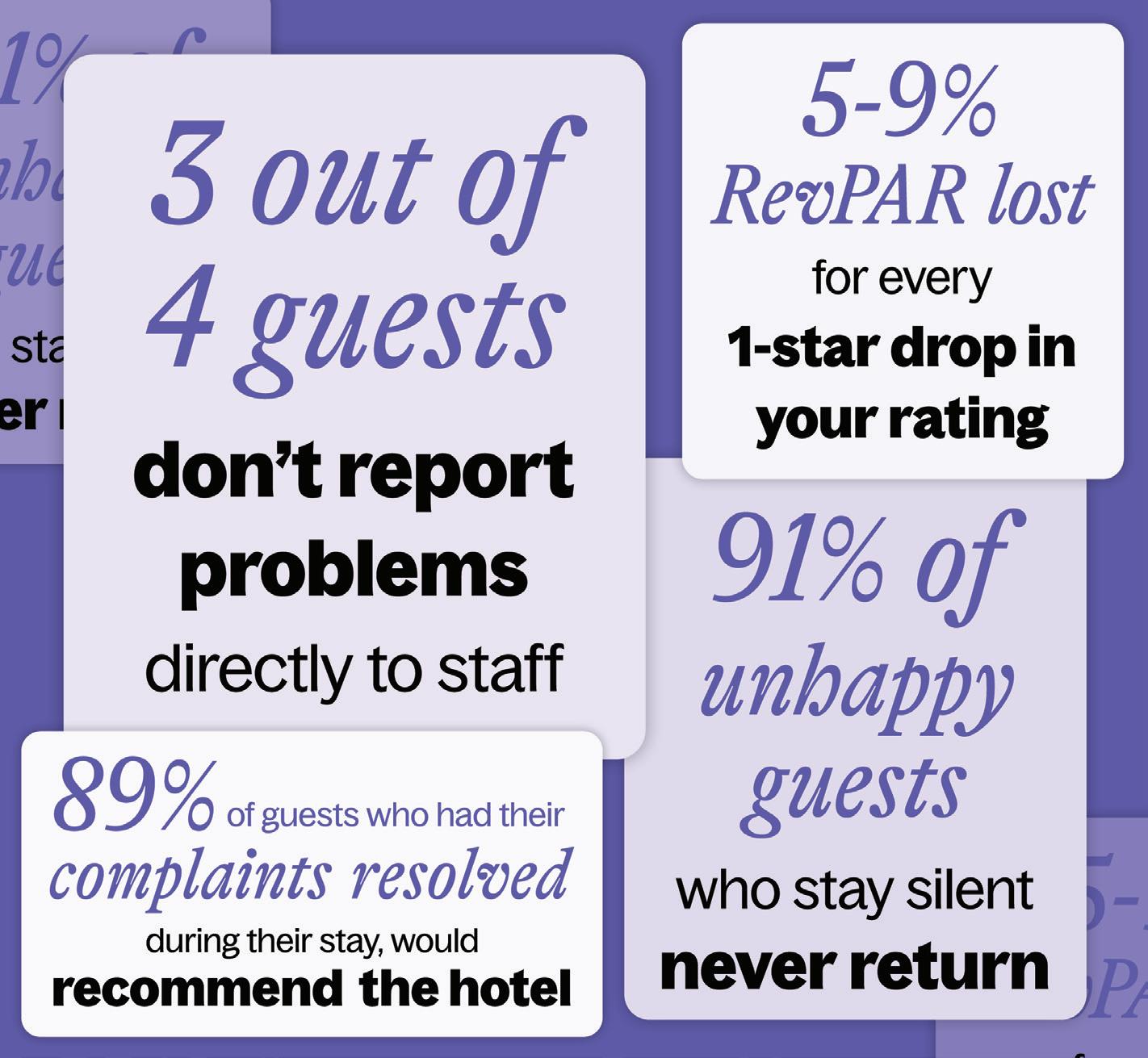
Importantly, feedback stays private — giving guests a safe, low-e ort way to speak up without turning to public platforms, where the impact is far more di cult to control.
There’s a well-known concept in hospitality — the service recovery paradox — where resolving a problem well can actually leave a guest more satisfied than if nothing had gone wrong.
But this only works if you know about the issue in time.
A minor issue fi xed quickly is o en forgo en. The same issue ignored can become a permanent online review, influencing future guests long a er the original stay has ended. Timing isn’t just important — it’s everything.
Pulsi has introduced a Starter Kit designed to make real-time feedback easy to trial, without long-term commitment. At $119, it’s a simple, low-cost way to test receiving real-time alerts from
Pulsi beacons, placed across guest rooms or key touchpoints. Quickly see where improvements can be made and discover the value of intercepting and resolving poor guest experiences.
A er the trial, providers can continue from $19 per month and expand as needed — or walk away without any obligation.
Today’s guests expect to be heard — 78% say the opportunity to off er real-time feedback improves their experience, and many prefer mobilebased options that are quick and convenient.
For accommodation providers, the opportunity is clear:
• Protect your review ratings
• Increase repeat bookings
• Improve operational visibility
• Resolve issues before they escalate
Because in today’s market, the real cost isn’t a bad experience — it’s not knowing about it until it’s too late.
Get started today... visit pulsi.co


4 months access unrestricted (worth $76)
5 Pulsi beacons (worth $95)
5 Pulsi strut cards (worth $20) Zero commitments (option to choose a plan later)

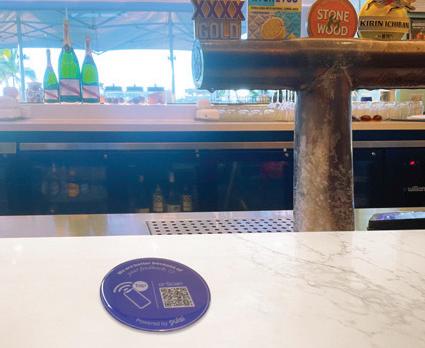

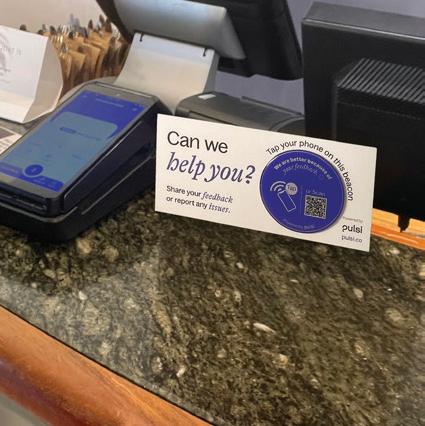























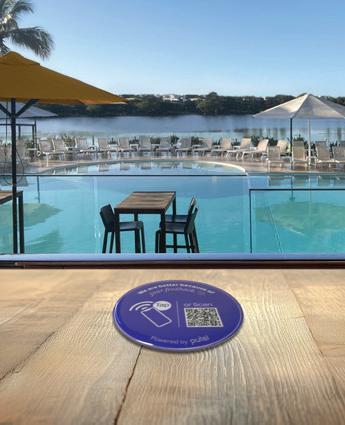











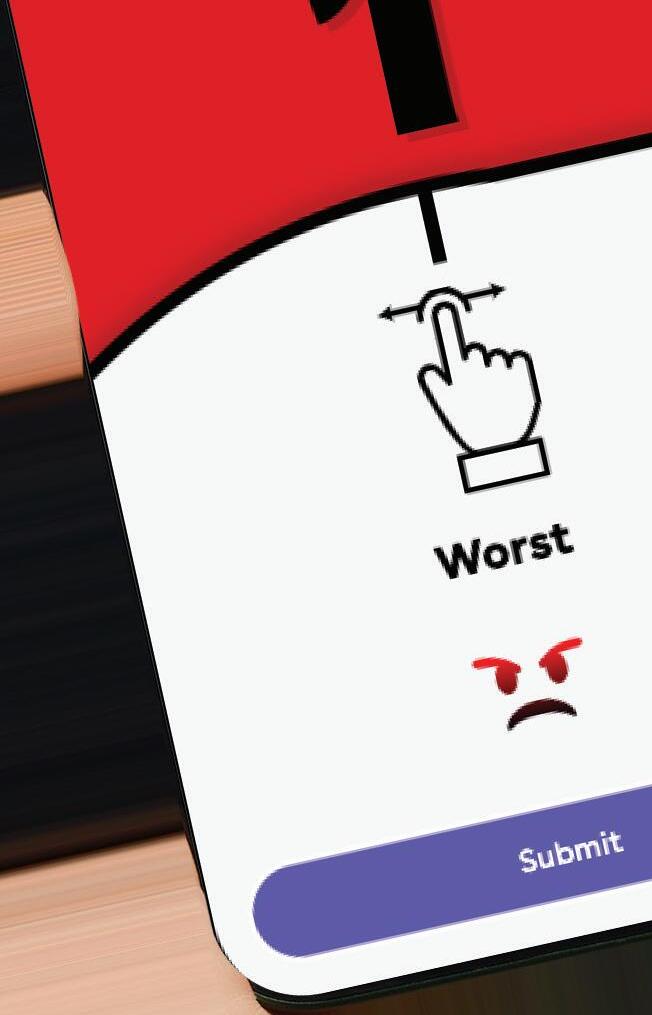












By Roland Franz, General Manager, Body Corporate Headquarters Strata Consulting Services (Qld)
Strata communities function best when rules are applied consistently, decisions are transparent and committee members act with integrity.
By-laws regulate how people use their lots and common property, while the committee code of conduct governs how elected representatives must behave when carrying
out their duties. When either framework is ignored, conflict and governance breakdown inevitably follow. The Body Corporate and Community Management Act 1997 (BCCM Act) provides a clear pathway for addressing these issues, and understanding that pathway is essential for committees, owners and residents.
The principles of consistency, permission and reasonableness remain central. Fair and uniform enforcement encourages voluntary compliance, strengthens community confidence and reduces disputes. These principles apply equally to residents and committee members.
Most by-law issues arise from misunderstanding rather than deliberate misconduct. A respectful conversation often resolves concerns quickly, especially where a by-law requires prior approval and the resident simply did not realise permission was needed. Informal steps are
not mandatory, but they are sensible and frequently eff ective. When they fail, the body corporate must move to the formal statutory process.
Under the BCCM Act, the first formal step in enforcing by-laws is issuing a by-law contravention notice. The committee or the body corporate at a general meeting may decide to issue the notice. There are two types of contravention notices, also known as breach notices.
BCCM Form 10: A continuing contravention notice is used when a by-law is currently being breached and the breach is likely to continue. It identifies the by-law, explains how it is being breached, sets a timeframe for rectification and warns that failure to comply may result in Magistrates Court proceedings or conciliation.
BCCM Form 11: A future likely contravention notice is used when a by-law has been breached and the breach is likely to be repeated. It instructs
the person not to repeat the behaviour and includes the same statutory warnings.
A breach notice must be sent to the person who committed the breach. If the person is a tenant, the notice must name the tenant and a copy must also be sent to the owner.
If the breach continues or occurs after the notice period, the body corporate may commence proceedings in the Magistrates Court. However, most matters proceed first to conciliation through the BCCM Office. Conciliation is usually conducted by phone conference with a trained conciliator who assists the parties to reach an agreement consistent with the by-laws and the BCCM Act. If no agreement is reached, a conciliation certificate is issued and the matter may be progressed to adjudication of the dispute. Similarly, if an agreement is reached but not honoured, the next step is adjudication.


The aggrieved party, whether an individual or the body corporate, applies to the BCCM Commissioner for an adjudicator’s order. The application must outline the nature of the dispute, how the conduct breaches the by-laws or the Act, evidence of attempts at self-resolution or conciliation, and the outcome sought. If the respondent does not comply with the adjudicator’s order, enforcement action can be sought through the Magistrates Court, which may impose a fine of 20 penalty units, being more than $3,000 as at July 1, 2025.
How can owners or occupiers enforce the by-laws?
The BCCM Act recognises that committees do not always act. An owner or occupier who reasonably believes another person has breached a by-law, and that the breach will continue or be repeated, may initiate enforcement by giving the body corporate a Form 1 Notice of By-law Contravention Request. This is a mandatory first step.
The committee then has fourteen days to advise whether a contravention notice has been issued or to explain why it does not consider a notice warranted. If the committee does not issue a notice, or does not respond, the complainant may apply for conciliation against the person alleged to have breached the by-law, provided they have attempted to resolve the issue directly. If the committee issues a notice but fails to enforce it, the complainant may apply for conciliation against the body corporate.
Owners cannot commence Magistrates Court proceedings unless they first obtain an adjudicator’s order.
In special circumstances, a
person may apply directly for dispute resolution without a contravention notice or a Form 1. This applies where the breach poses a risk to safety, is likely to cause serious property damage, creates serious nuisance or constitutes an emergency. It also applies where the application seeks orders for repairs or reimbursement under section 281 of the Act, or where an interim adjudicator’s order is required.
While by-law enforcement deals with owner and resident behaviour, the committee code of conduct (Schedule 1A of the BCCM Act) governs how committee members must behave when performing their duties. The code requires committee members to act honestly and fairly, act in the best interests of the body corporate, comply with the Act, avoid nuisance or harassment, disclose conflicts of interest and refrain from improper use of their position.
When a committee member breaches these obligations, the enforcement pathway is diff erent but structured.
The first step is internal action. The committee may pass resolutions directing the member to cease certain behaviour, restrict their authority, such as removing invoice approval rights, or require all contractor instructions to be issued through the body corporate manager. These measures help restore order without immediately escalating the matter.
If a committee member fails to attend two consecutive meetings without leave, they may be automatically removed under the regulation module applying to the scheme. This mechanism is often overlooked
but can be eff ective where a member refuses to participate, obstructs decision-making or disengages entirely.
The body corporate may also remove a committee member by ordinary resolution at a general meeting. This is the most direct and democratic method for addressing persistent misconduct.
If internal measures fail, an owner or the committee may lodge a dispute resolution application with the BCCM Commissioner. Adjudicators may order the member to comply with the code, restrict their ability to act unilaterally, overturn improper decisions or remove the member from office. Behaviour that constitutes
nuisance, harassment or misuse of position can also be addressed through this process.
By-law enforcement and code of conduct enforcement are essential components of healthy strata governance. The BCCM Act provides a clear, structured pathway for both. When committees apply these processes consistently, reasonably and transparently, they strengthen the integrity of the scheme and reduce the likelihood of disputes. Strata communities thrive when everyone understands the rules and the pathways for enforcing them. Applying these pathways faithfully is the foundation of fair, stable and harmonious community living.
Further information is available on the Queensland Government website under body corporate disputes and removing committee members.
Suggested topics for future comment are welcome contact via editor@resortnews.com.au






















By Lynda Kypriadakis, The Diverse Group of Companies & DPX Projects
Balconies are a defining feature of resort and strata living, offering amenity, views and value to both owners and guests.
However, they also represent one of the most significant life-safety risks within a building when not properly maintained. In the management rights and strata environment, routine safety checks of balustrades and fall arrest systems are not simply good practice; they are a critical component of risk management and regulatory compliance.
Balustrades, handrails and associated fall protection
systems are exposed elements. Over time, they are subject to environmental degradation, corrosion, structural fatigue and, in some cases, poor original installation or noncompliant modifications. Coastal environments, which are common in resort settings, accelerate deterioration through salt exposure, while high occupancy rates increase wear and tear.
A failure in any part of a fall protection system can have catastrophic consequences. Even minor defects such as loose fixings, cracked glass panels, rusted anchors and similar defects can rapidly escalate into serious hazards. Routine inspections enable early identification of these issues before they compromise structural integrity. For caretakers and strata managers, this is not just about maintenance; it is about safeguarding lives.
Under the Body Corporate and Community Management Act 1997 (Qld) and equivalent legislation in other jurisdictions, a body corporate has a clear
statutory duty to maintain common property in good condition. This includes ensuring that structures forming part of the common property, such as balustrades on common balconies, walkways and shared areas, remain structurally sound and compliant with applicable building standards. Importantly, this duty extends beyond visible defects. The body corporate must take a proactive approach to maintenance, which includes regular inspections and, where necessary, engaging qualified professionals to assess structural integrity. Courts and adjudicators have consistently reinforced that a “set and forget” approach is insufficient; ongoing vigilance is required.
In many schemes, the delineation between private lot balconies and common property can become blurred. While the balustrade itself may form part of the lot, the body corporate may still retain responsibilities where the element contributes to the building’s overall structural integrity or external appearance.
Regardless of the exact boundary, the body corporate must ensure that risks to occupants and visitors are appropriately managed. Failure to do so may expose the body
corporate to significant liability in the event of an incident.
Establishing a structured inspection regime is essential. This typically involves periodic visual inspections by onsite management, supplemented by scheduled detailed assessments conducted by qualified professionals such as structural engineers or building inspectors.
Key elements of an effective inspection program include:
• Checking for corrosion, cracking, movement or deformation.
• Inspecting fixings, anchors and connections.
• Assessing compliance with current building codes, particularly when repairing or replacing in older buildings.
• Reviewing any unauthorised alterations or repairs. Equally important is maintaining a comprehensive audit trail. Documentation of inspections, identified defects, remedial actions and follow-up works provides evidence of due diligence. In a risk management context, this recordkeeping is
invaluable. Should an adverse incident occur, the ability to demonstrate a consistent and proactive maintenance regime can significantly mitigate legal and financial exposure.
When defects are identified: engaging the right professionals
Once defects or potential compliance issues are identified, remedial works must be carefully managed. This is not an area for ad hoc repairs or informal contractor engagement. Given the life-safety implications, a coordinated approach involving appropriately qualified consultants is essential.
A typical project team may include:
• Building inspector: to conduct an initial inspection or maintenance inspections and identify issues requiring a structural engineer’s interpretation.
• Structural engineer: where a maintenance issue identified by the building inspector is considered structurally concerning, the structural engineer can be engaged to assess the condition of the balustrade system, determine the root cause of defects and design compliant remediation solutions.
• Private certifier: to advise on regulatory requirements, approvals and certification pathways under the Building Act.
• Project manager: to coordinate the works,

A failure in any part of a fall protection system can have catastrophic consequences
manage contractors, control costs and ensure timelines and quality standards are met.
This multidisciplinary approach ensures that repairs are not only effective but also compliant with current legislation and building standards. It also provides the body corporate with an added layer of professional oversight and accountability.
It is critical to understand that replacing or substantially altering balustrades is not considered routine maintenance. Under the Building Act 1975 (Qld), such works are generally classified as assessable building work. This means that appropriate approvals and permits must be obtained from the relevant local consent authority before works commence.
Depending on the scope, this may involve:
• Development approval or building approval.
• Engagement of a licensed builder.
• Compliance with current National Construction Code requirements.
• Certification upon completion, including the issuance of Form 12 (Aspect Inspection Certificate), Form 11 (Certificate of Classification) and other relevant documentation.
Attempting to bypass these requirements can lead to regulatory action, costly rectification works and increased liability exposure. For strata managers and caretakers, ensuring that all works are properly approved and certified is a fundamental responsibility.
From a governance perspective, the maintenance of balustrades and fall arrest systems sits squarely within the broader framework of risk management. Bodies corporate are expected to identify, assess and mitigate risks that could impact the safety of occupants and visitors.
Regular inspections, timely maintenance and professional oversight are key components
of this process. However, equally important is fostering a culture of vigilance. Caretakers and onsite managers are often the first to observe emerging issues, and their role in reporting and documenting concerns cannot be overstated.
An effective risk management strategy also includes:
• Periodic independent audits of building safety systems.
• Clear communication with lot owners regarding maintenance responsibilities.
• Budgeting for longterm capital works and asset replacement.
• Ensuring adequate insurance coverage.
Balustrades and fall protection systems may appear to be simple building elements, but their importance in ensuring occupant safety cannot be overstated. For the management rights and strata sector, routine safety checks are not merely a maintenance task; they are a critical safeguard against potentially catastrophic incidents.
In an environment where safety, compliance and liability are increasingly under scrutiny, vigilance is not optional. It is a fundamental duty that protects not only the physical integrity of the building but also the people who live in, work in and visit it.
Project: Gemini Court CTS 9731, Burleigh Heads QLD
Principal contractor: Building Rectification Services (BRS Contracting Pty Ltd)
Scope: Window & door replacement and balcony balustrade upgrades
Gemini Court, a prominent dual tower residential strata complex in Burleigh Heads, Queensland, embarked on a major rectification and upgrade program to improve safety, compliance, performance, and long term durability. The project centred on the replacement of aging windows, doors and balcony balustrades, combining two substantial scopes of work into a coordinated, high access remediation effort.
Building Rectification Services (BRS Contracting Pty Ltd), established in 1985 and known for complex remedial works, delivered both projects in alignment with stringent Workplace Health and Safety (WHS) regulations, Australian Standards and strata operational requirements.
Delivering façade level upgrades in an occupied Class 2 residential building presents unique challenges.
At Gemini Court, works had to be undertaken:
• Across two towers, each with di erent construction timelines.
• At height, requiring engineered swing stage access systems.
• Within privately owned apartments and common property areas.
• While maintaining resident safety, daily building operations and amenity.
Both projects required external access, controlled internal access, and close coordination with building management to ensure minimal disruption while maintaining compliance and productivity.
Safety underpinned every aspect of the Gemini Court works. BRS implemented a comprehensive access and WHS strategy that included:
• Engineered swing stages, erected and dismantled by certified advanced sca olders.
• IRATA and ARAA qualified personnel for working at heights.
• Static line systems for safe tethering during balcony works.
• Ground level exclusion zones with temporary fencing.
• Restricted access to balconies, podiums, pools and amenities as required.
• Noisy works limited to reduce resident impact. Temporary loss of access to certain communal facilities was carefully staged and communicated in advance, ensuring transparency and resident confidence throughout the project lifecycle.
The balustrade scope involved the complete removal of existing aluminium balustrades and replacement with a modern frameless glass system across all balconies.
Key features included:
• Heat strengthened laminated glass with SGP interlayer.
• Duplex stainless steel friction mounted spigots.
• Nano technology dirt shedding glass coating.
• Fully compliant with current codes.
All installations were engineered and certified to meet Australian Standards including AS 1170, AS1288:2021, and NCC wind load requirements, with certification provided on completion. Particular care was taken to avoid balcony hob damage and water ingress, with contractor led remediation allowances factored into the works
The window and door upgrade represented a significant long term investment in building performance, weatherproofing and aesthetics. All window and door joinery was supplied by G.James Glass and Aluminium.
Installation methodology prioritised:
• Detailed unit by unit dilapidation reporting.
• Extensive internal protection measures, including dust walls, corflute flooring and furniture covers.
• Careful removal to minimise damage to existing finishes.
• Advanced waterproofing systems using Ardex membranes.
• Compliance with manufacturer installation tolerances and marine grade fixings.
Each unit was returned to a clean, habitable state a er works, supported by a structured quality assurance and defect management process.
Clear communication proved essential on a project of this scale. BRS appointed a full time onsite foreman, supported by weekly site meetings involving project management and building representatives.
Residents were provided with advance notice of:
• Access requirements and possession periods.
• Furniture and window covering removal responsibilities.
• Anticipated disruptions and safety restrictions. This proactive engagement significantly eliminated delays and ensured smoother coordination across individual lots and common property areas.
The Gemini Court Window, Door and Balustrade Upgrades demonstrate how complex strata projects can be successfully delivered through careful access planning, rigorous safety systems and disciplined project management.
By coordinating both scopes of work—particularly where balustrade replacement occurred simultaneously with window and door upgrades—the project achieved operational e ciencies, reduced repeated access costs and minimised resident disruption.
Most importantly, the upgrades have:
• Elevated safety and compliance standards.
• Enhanced façade performance and durability.
• Future proofed the building against environmental exposure.
• Preserved the value and liveability of the strata asset.
For strata commi ees and managers considering major refurbishment works, Gemini Court highlights the value of integrated planning, experienced contractors and uncompromising safety standards when working at height in occupied residential buildings.
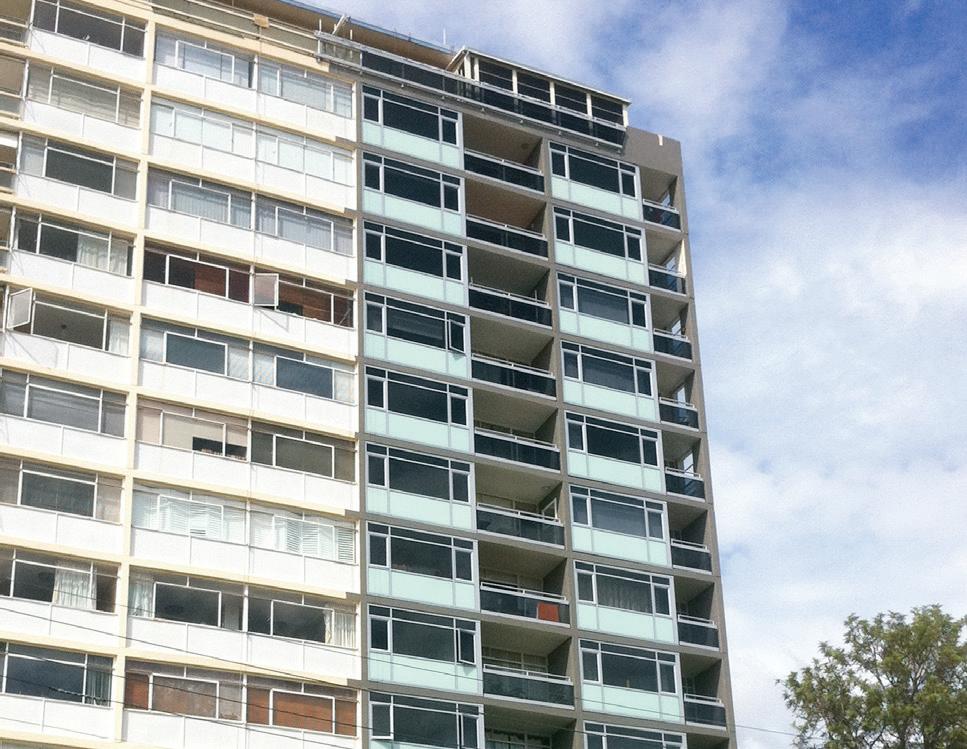




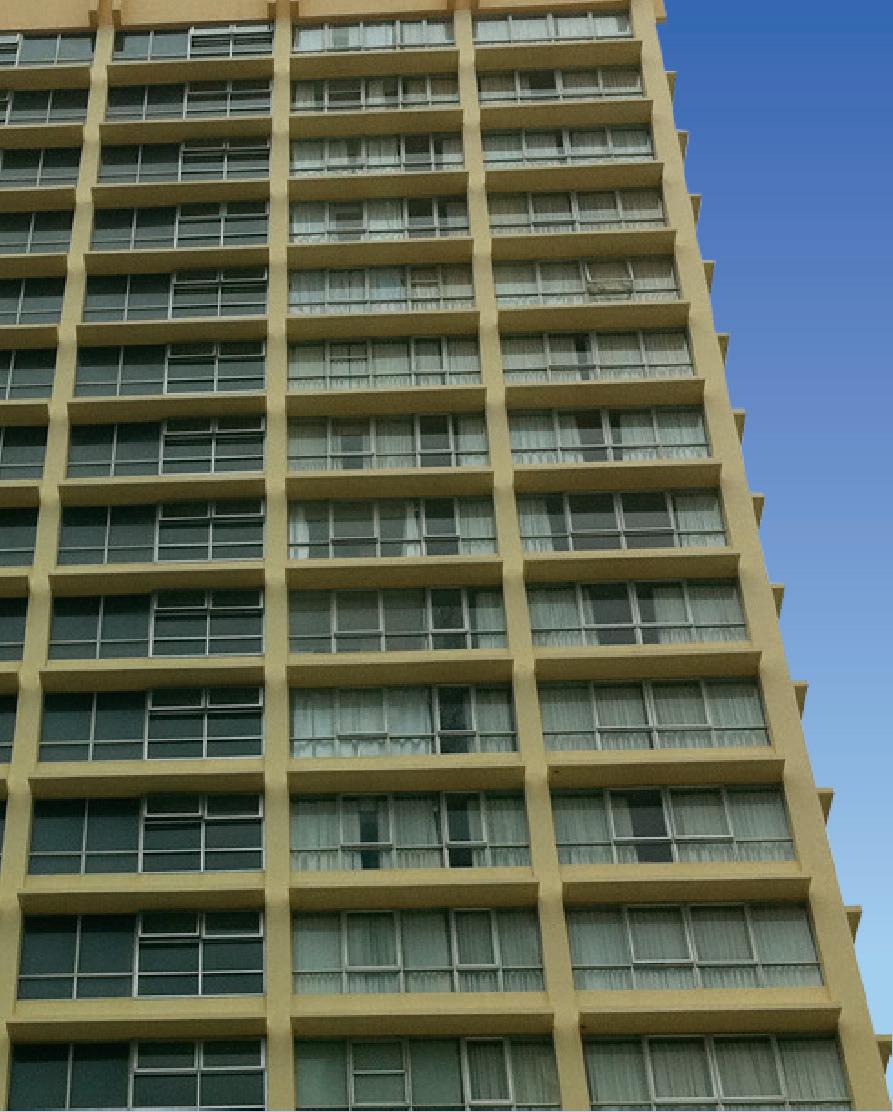
Whilst Queensland is one of the most beautiful places to live, it also has some of the harshest conditions for building maintenance and corrosion. The combination of strong wind, rain and salt air leads to rapid deterioration of all external surfaces and nishes to buildings in particular windows and doors.
We work closely with major supplies such as G.James Glass and Aluminium a manufacturer based in Queensland. G.James commercial products achieve a higher water penetration and wind ratings which is critical in the harsh Queensland environment. All products are installed by our highly trained & experienced installers ensuring the highest quality nish that also fully complies with all current Australian Standards. Contact Us: (07) 5539 3588

This type of work is quite often carried out in conjunction with other refurbishment works such as concrete repairs, facade repainting, handrail replacement etc. We are able to provide you with many references of completed projects.
By Mandy Clarke, Editor
Windows and doors do not usually make the committee agenda until something starts going wrong. A leak shows up after heavy rain. A sliding door becomes harder to move. Wind noise gets worse. Rust appears. Seals start to fail. By that point, the issue is often bigger than it first seemed.
For many strata buildings, especially coastal schemes and taller exposed properties, ageing windows and doors are becoming a more pressing concern. What starts as a maintenance issue can lead to a much larger project involving compliance, safety, access, waterproofing and product selection. In a hi-rise environment, replacement works are rarely as simple as removing one system and installing another.
Reece van Vilet, Sydney GM at Express Glass, said the most common reasons strata buildings need window or door upgrades are operational issues, worn seals and water leaks. He said many older
Images
systems are now discontinued, which can make sourcing parts difficult, while in coastal environments components often deteriorate more quickly through corrosion or general wear.
That is a familiar problem in beachfront and near-coastal buildings, where windows and doors are exposed to salt spray, strong winds and driving rain year after year. Daniel Oostendorp, Estimator/Project Manager at BRS (Building Rectification
Services), said those conditions can take a real toll over time. He said salt affects aluminium and rubber seals, which can then allow water ingress and wind noise to penetrate through the building envelope.
That kind of deterioration is not only a comfort issue for residents and guests. It can also affect presentation, ongoing maintenance costs and, if left too long, the wider condition of the building.
Window and door upgrades can sound simple on paper. In practice, particularly in hi-rise buildings, they can be anything but.
Reece van Vilet said: “Vertical material movement is the main access challenge.”
He explained that many window systems are too large to fit into passenger lifts, so they may need to be dismantled into smaller components and then reassembled on the floor where they are being installed. He also said external access is often required on larger projects to achieve a quality installation, with swinging stages or fixed scaffolding forming a significant part of the cost.
Daniel Oostendorp said safety must remain a priority, particularly when work is taking place in occupied holiday or residential buildings. He said high-risk projects require full hoarding to each window, exclusion zones and the right access equipment to make sure the work is carried out safely.
That is where these projects quickly become more involved than many committees first expect. It is not just a question of choosing a product. There are residents or guests onsite, trades moving through the building, access equipment to manage and risks that need to be controlled throughout the works.
Another issue is that replacement projects cannot simply assume the original design can be replicated without question. Buildings may have been constructed under very different standards, and current compliance requirements can affect both product choice and installation method.
Reece said committees and building managers need to make sure National Construction Code requirements are met, compliant products are used and the building’s specific exposure conditions, including wind loads, are properly understood.
He also pointed to other factors that may affect the scope of works, including updated child safety requirements, Bushfire Attack Level (BAL) ratings, asbestos-containing materials, lead paint and heritage considerations.
Daniel said it is best to engage an independent project manager with experience in high-rise window replacement before the project gets underway. He said an experienced consultant can prepare a full scope of
works, run a tender process with qualified contractors and make sure all pricing is based on the same quality and products, helping to reduce the risk of inferior systems being used.
That can make a real difference on larger or staged replacement projects, where variations in product quality, methodology and waterproofing detail may not always be obvious in a quote.
Choosing replacement windows and doors is not simply about appearance or selecting the strongest system available. The right product still needs to match the building, its location and the conditions it faces.
Reece said strata schemes should begin by understanding the building’s actual performance requirements.
“What wind pressure has been calculated? What water penetration resistance is needed? Is thermal efficiency a factor? Is acoustic performance required?” he said.
He said window and door systems can be configured in different ways to meet or exceed those requirements, but there is no benefit in over-specifying where it does not add value. A system designed for more extreme conditions may cost considerably more without offering a practical advantage if the building is not exposed to those conditions.
He also said thermal performance deserves proper attention, with
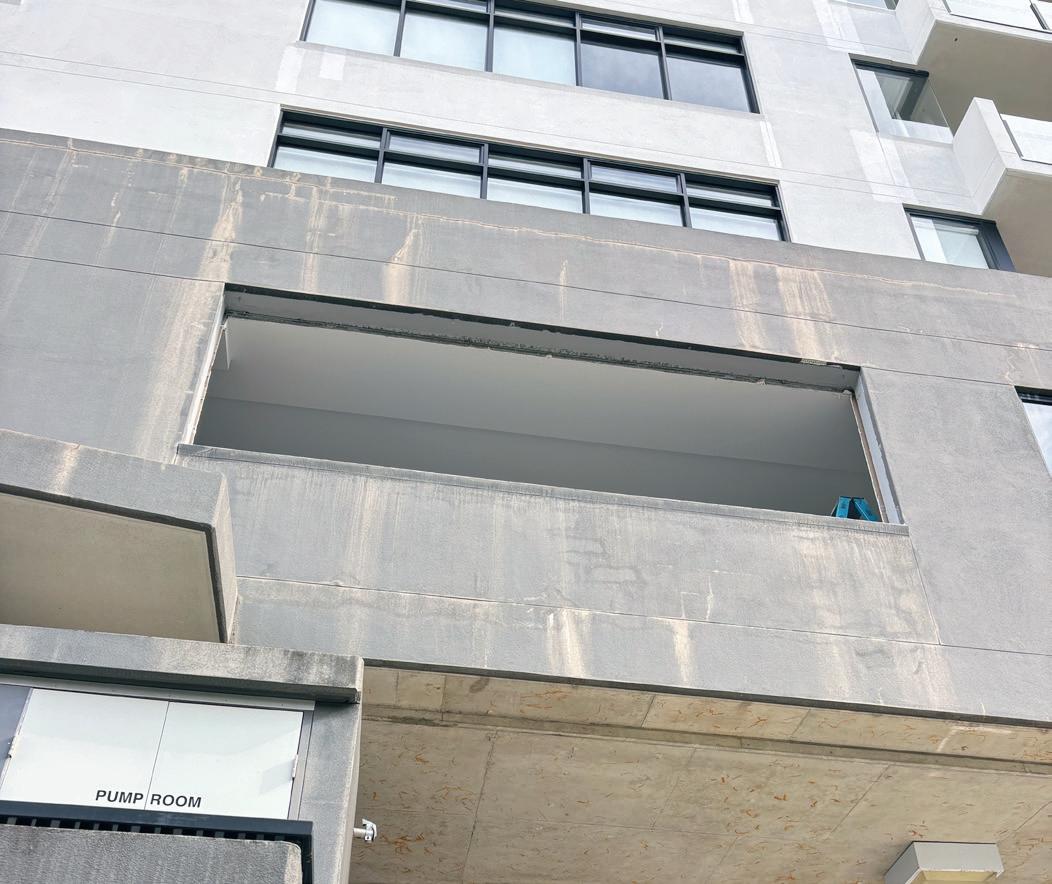
U-values and SHGC values used to measure how a system performs. Improved thermal efficiency, he noted, can help reduce reliance on artificial heating or cooling. Acoustic performance is another area that is often overlooked, despite the impact it can have in buildings affected by traffic, aircraft or other surrounding noise.
Daniel said products should be chosen from reputable manufacturers with strong wind and rain ratings, and that experienced project guidance can help committees select a system suited to the building’s location and exposure.
Even a good product can underperform if the installation is poor. In many window and door upgrade projects, the long-term result depends heavily on the details around waterproofing, flashing and sealing.
Reece said quality installation can extend the service life of a window or door before maintenance is needed.
He also noted that poor flashing and waterproofing work can cause defects to appear far earlier than expected, leading to costly intrusive repairs. In the same way, an energy-efficient product can lose much of its benefit if gaps remain around the perimeter after installation.
Daniel made the same point from a rectification perspective. He said that after choosing a high-quality window, it is
equally important to ensure waterproofing and sealant works are carried out to a high standard, because wind-driven rain can enter through even very small gaps or joins.
That is often where projects are won or lost. The specification matters, but so does the standard of installation. One without the other is not enough.
For many older strata buildings, window and door replacement is becoming part of a broader discussion about façade renewal, rectification and long-term asset planning.
That is particularly the case where isolated failures begin to reveal wider problems with ageing systems, discontinued product lines or years of environmental exposure. In those situations, committees may need to look beyond a single leaking window or faulty door and ask whether the building needs a more coordinated upgrade plan.
Taken together, the advice from both experts points in the same direction. These projects need to be properly scoped, properly specified and properly installed. In a hi-rise strata environment, there is too much risk, too much access complexity and too much money involved to treat window and door replacement as a routine maintenance item.
Because once water gets in, or a system starts to fail, the problem tends not to stay neatly contained.
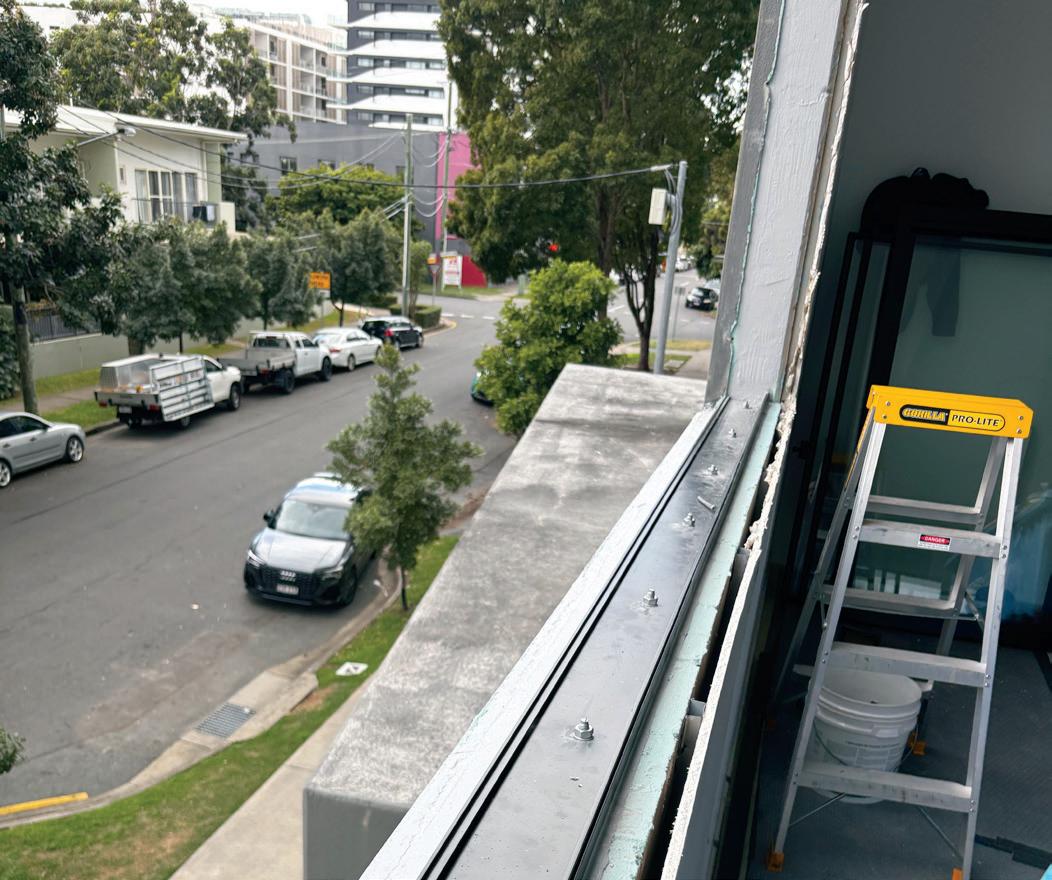

In many strata and accommodation buildings, window and door upgrades don’t begin as major projects.
They start with small signals such as windows that no longer close cleanly, recurring water ingress during heavy weather, or growing maintenance requests from residents.
Over time, these issues shift from inconvenience to risk, prompting committees and managers to move from patch repairs to full upgrades.
On paper, the process appears straightforward: assess the requirement, select a compliant system and replace like-for-like. In reality, upgrades in occupied buildings are far more complex.
Strata buildings are live environments. Residents remain in place, common areas stay active, and access is rarely simple. What looks

like a contained construction task quickly becomes an operational exercise. It must be carefully staged to avoid unnecessary disruption.
Access is often the first constraint. Window and door systems are not always easily transported through lifts or corridors, particularly in older buildings. External access may be required, introducing scaffolding, elevated work platforms or rope access solutions. These decisions do not just influence how the
work is completed. They affect cost, safety planning and the overall timeline of the project.
From there, sequencing becomes critical. Upgrades are rarely completed in a single pass. They are delivered across multiple units, levels or elevations, often requiring coordination with residents, caretakers and building management. Without a clear plan, even well-specified projects can become drawn out, disruptive and difficult to manage.
This is where many upgrade projects begin to unravel. It is not because the product selection was wrong, but because the delivery was not fully considered. Understanding performance requirements remains important. Buildings exposed to wind, rain and coastal conditions need window and door systems that respond appropriately to those environments. However, selecting a compliant product is only one part of the equation. If installation methods, access constraints and staging are not aligned with the building, performance can be compromised over time.
In this context, upgrades are not just technical decisions. They are coordination challenges. There is also an administrative layer that cannot be overlooked. Committees and building managers are often required to make decisions on behalf of multiple stakeholders, balancing cost, risk and longterm outcomes. Clear scope definition, well-structured

“From there, sequencing becomes critical. Upgrades are rarely completed in a single pass — they are delivered across multiple units, levels or elevations, often requiring coordination with residents, caretakers and building management.”
project planning and a considered delivery approach can make the difference between a project moving forward efficiently or stalling in extended approval cycles.
When upgrades are presented clearly, including what will be done, how it will be delivered and how disruption will be managed, confidence increases. Without that clarity, even necessary works can be delayed.
As more strata buildings reach the point where upgrades are required, the focus is shifting. It is no longer just about replacing windows and doors. It is about how those upgrades are delivered within the constraints of a live environment.
The difference between a smooth project and a problematic one
is rarely the product itself. More often, it comes down to planning, coordination and control, ensuring that what is specified on paper can be delivered effectively on site without compromising safety, performance or the day-to-day operation of the building.
When engaging a provider, it’s worth understanding how the project will be delivered, not just what will be installed.

For more information contact: Ian Simeon, Account Manager, Express Glass Brisbane, on 0438 111 211 or visit expressglass.com.au

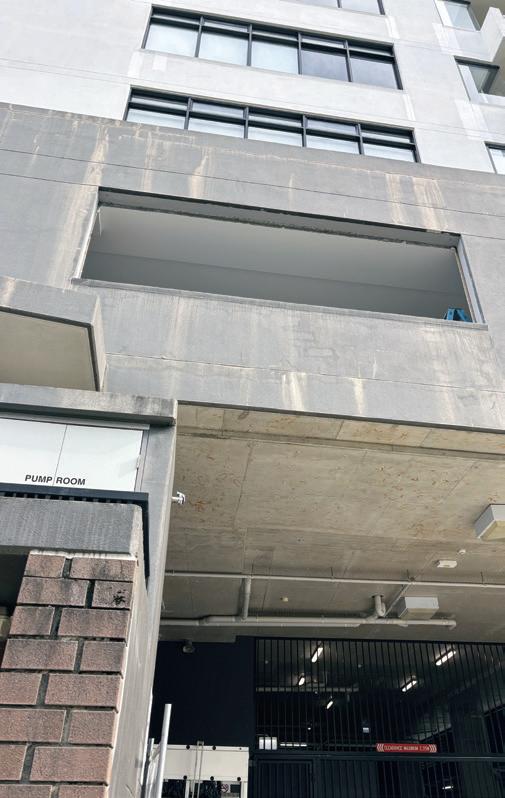
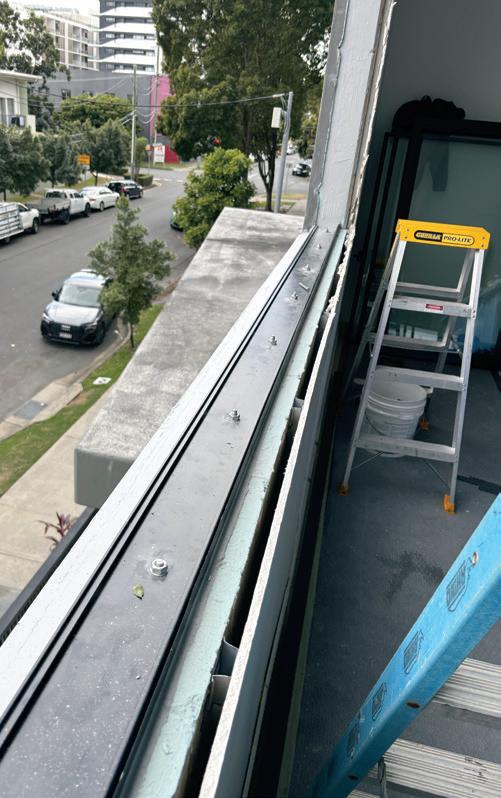

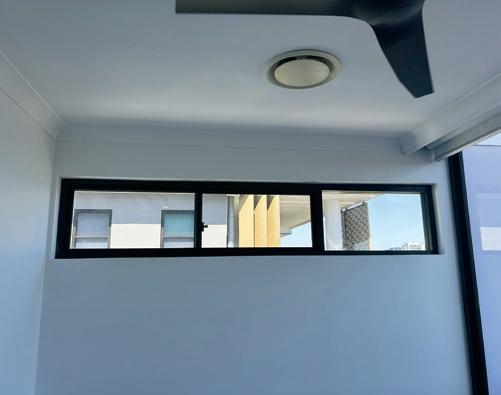
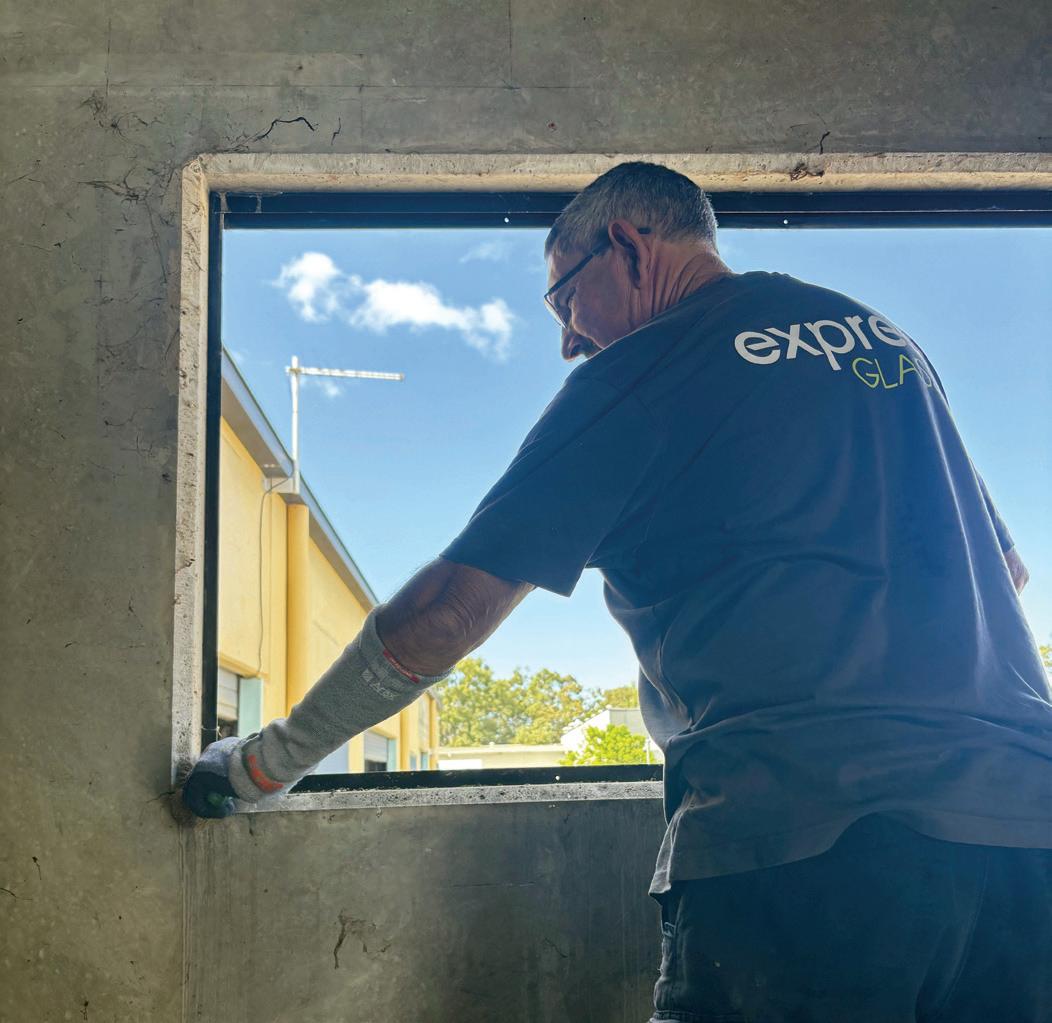
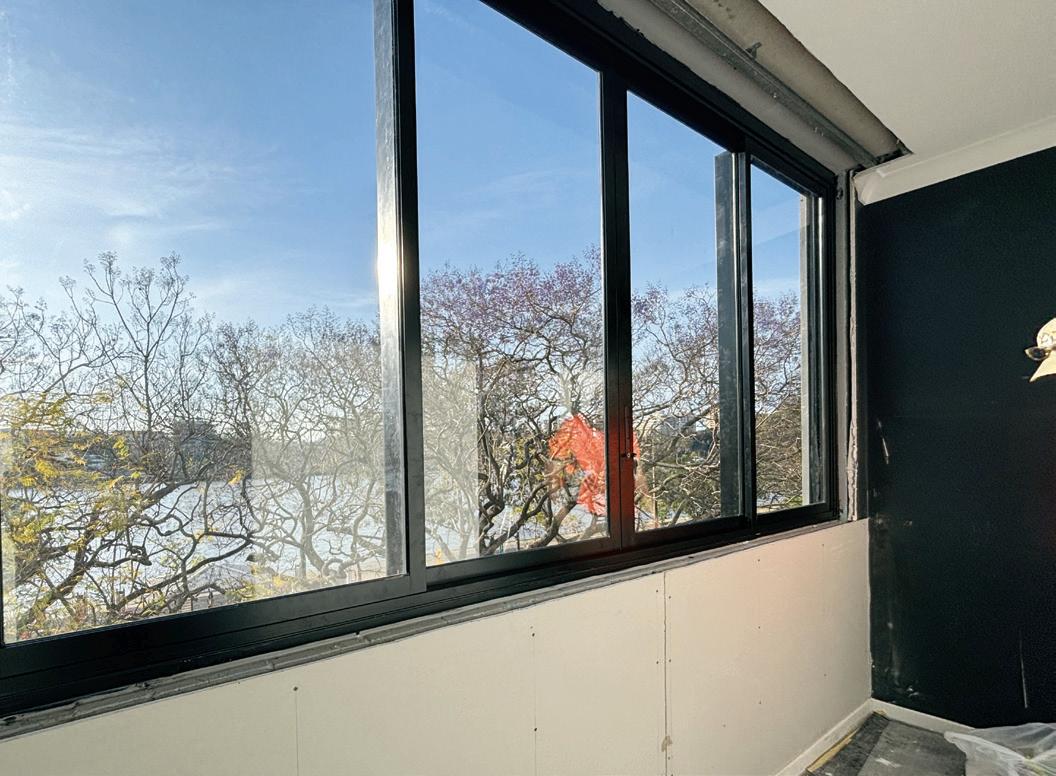
Round One of the 2026
Accommodation Industry Golf Series teed off on Thursday, March 26 at Lakelands Golf Club, with players enjoying excellent course conditions and exceptional weather.
The day featured a 4 Player Team Irish Foursomes competition, with John Christopher, Michael Newton, Mike O’Farrell and Sue O’Farrell taking first place with a score of 166. Second place went to Matt Salvesani, Connor Gibbs-Patterson, Kevin Tsai and Leo Hsieh on 178, followed by Sam Daley, Brendan Turnbull, Ben Nicoll and Tony Bull in third place with 181.
Attention now turns to Round Two, which will be held at Maroochy River Golf Club on Friday, May 22 with a 12pm shotgun start. Players will compete in a Texas Scramble team event, with the day set to include golf, cart, sponsored holes, giveaways, prizes, food on course and a build-a-burger barbecue after play.
A special thank you goes to Lannock Strata Finance for sponsoring the pizza van.
Entry remains $120 per player, with individuals welcome to register and be placed into a team. Ladies are also encouraged to take part.




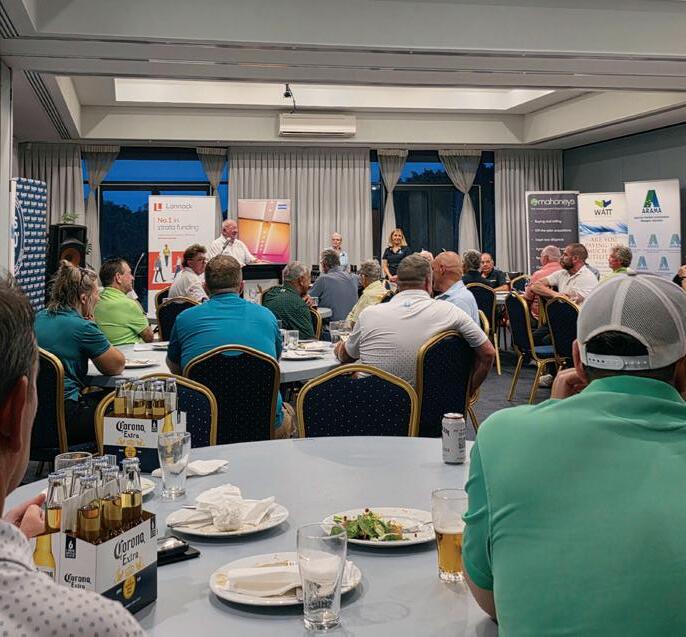
Ras360° Property Solutions will host a free industry event, Discover Management Rights: 360° Insights for Every Buyer, at The Full Moon Hotel, Sandgate QLD, on Saturday, May 30, 2026, from 9am to 11am.
Designed for first-time buyers and experienced operators, the session will bring together industry specialists including solicitors, accountants, finance brokers, licensing experts, consultants and brokers.
The event will cover key legal, financial and operational considerations, with a live Q&A session and first-release Brisbane and South East Queensland listings also on the agenda. To register email: support@ras360.com.au.

of
The Best of Tourism Awards will return in 2026 for its fifth annual gala and awards night, promising its biggest and most impactful celebration yet.
When: Friday, October 30
Where: The Star Gold Coast Early-bird tickets are now available, with more details to be revealed soon.


Know someone doing amazing things in tourism or accommodation? Nominations opened on May 5, so don’t miss the chance to celebrate the people and businesses making their mark.
ResortBrokers welcomed a packed house of more than 100 operators to its latest Mastering Management Rights seminar, held at Victoria Park on March 25. The event was the agency’s second of its kind, following its inaugural seminar in November 2025.
Attendees heard from industry experts John Mahoney and Amy O’Donnell of Mahoneys, Lel Parnis of Holmans, Sophie Ham of MYBOS, and ResortBrokers director Alex Cook, along with Brisbane brokers Jessie Shi and Jeff Keast.
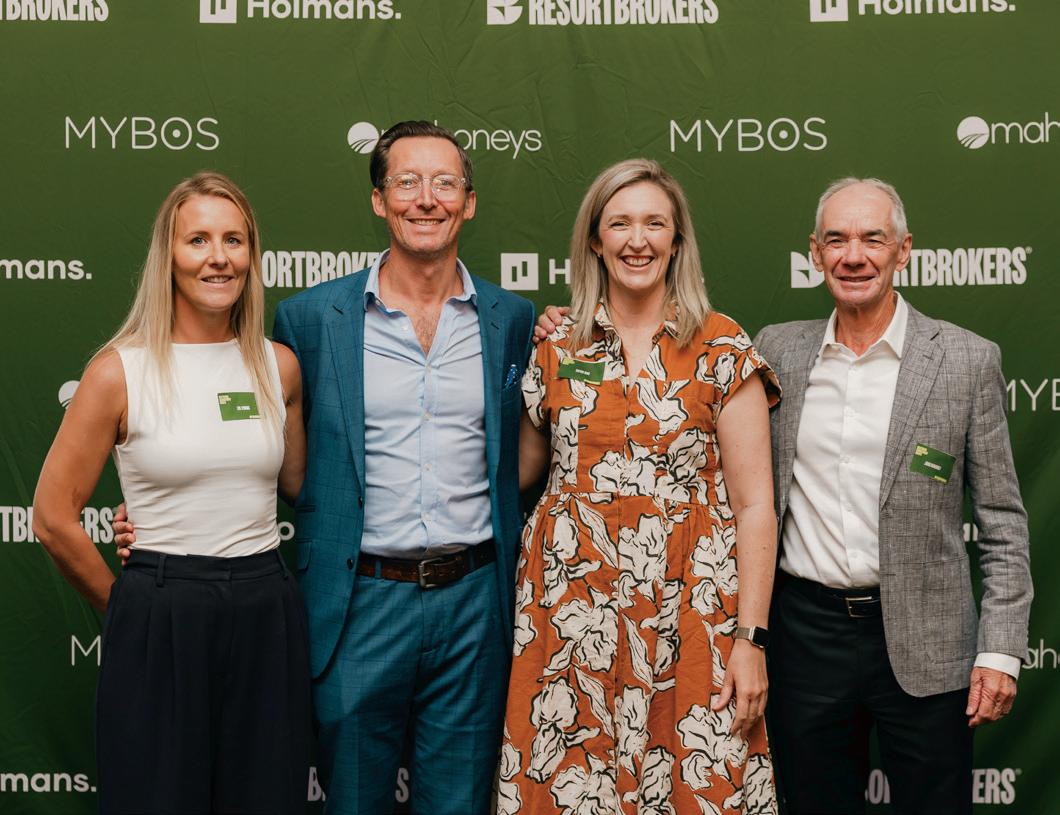
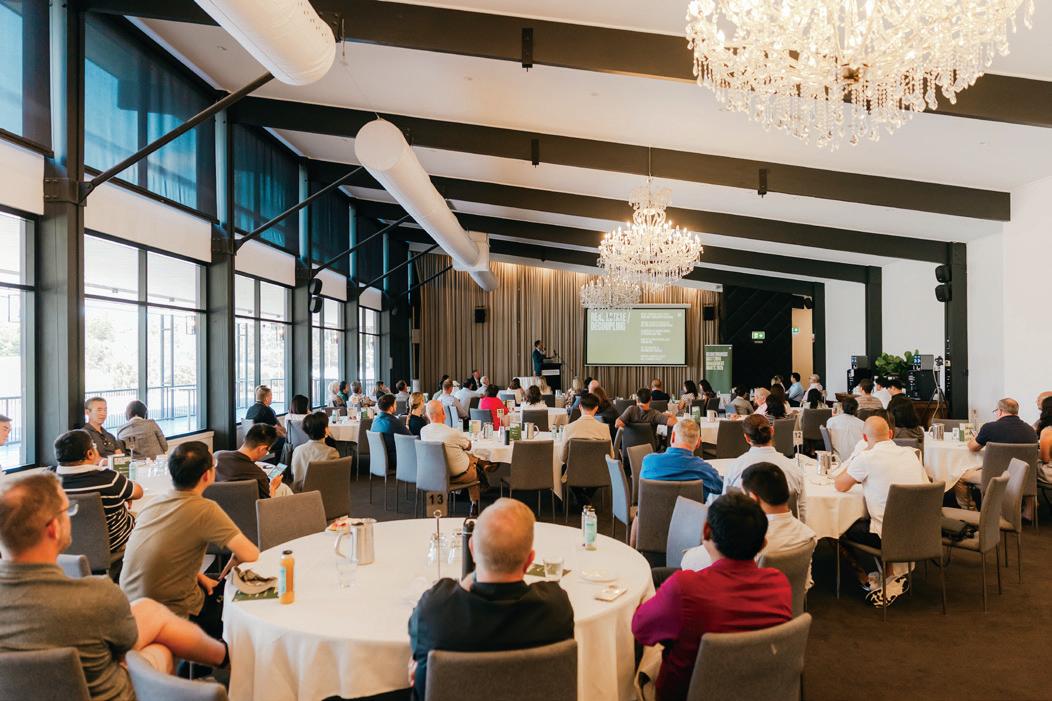
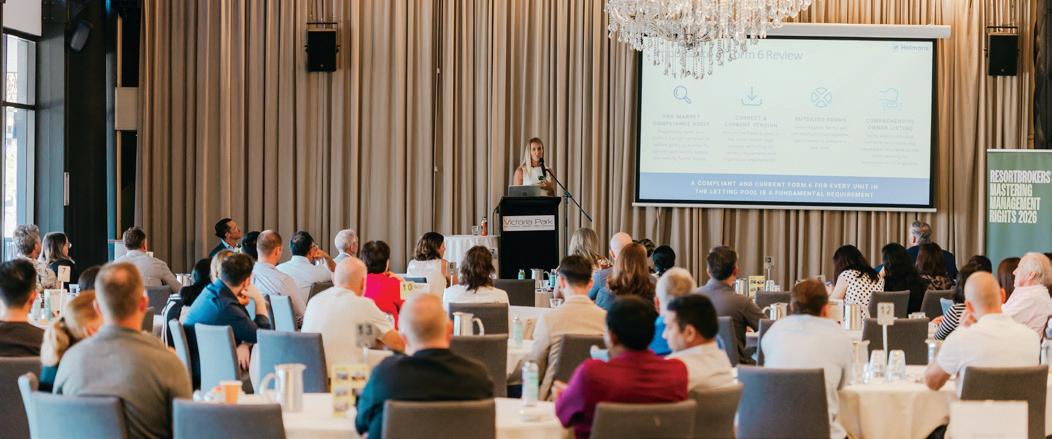
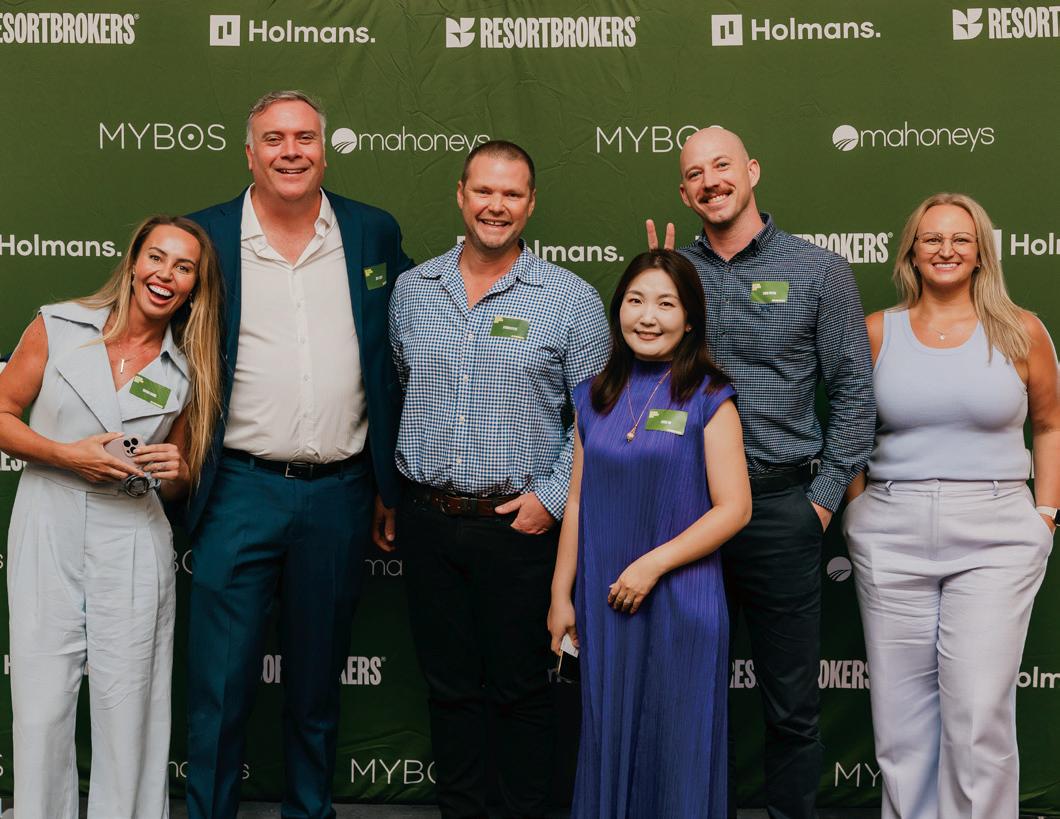
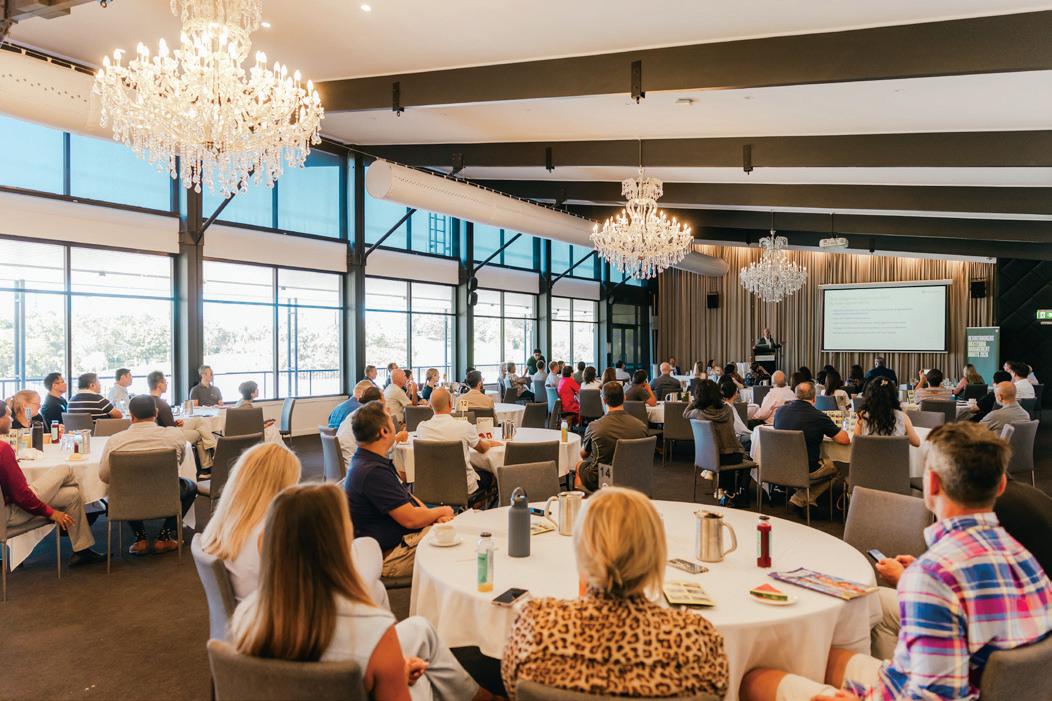




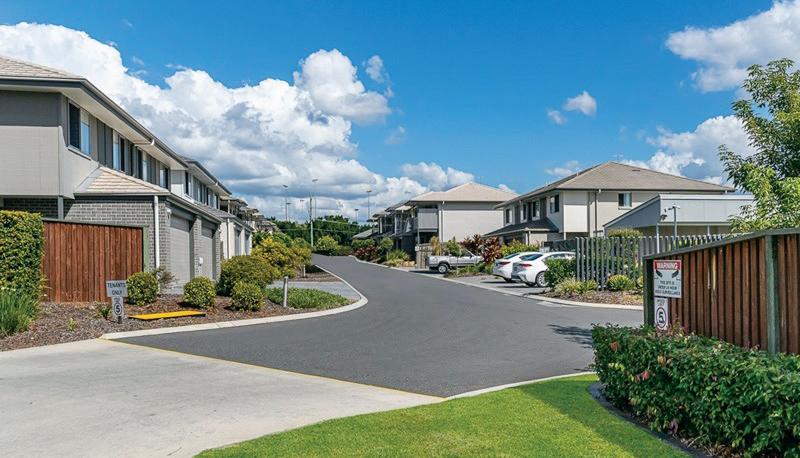
Plains QLD Permanent Management Rights ID: 9157
Asking Price: $2,640,000


Permanent Management Rights ID: 9224
Asking Price: $1,375,000
Profit: $152,500
Zsofi Popplewell 0459 693 160





Heads VIC

Holiday Management Rights ID: 9136
Asking Price: $2,665,000
$322,693
Andrew Cronin 0433 091 971


Holiday Management Rights ID: 8502
Asking Price: $1,615,000 Net Profit: $285,000
Antonio Curulli 0488 030 853




By Mandy Clarke, Editor
Belmo Group has added another standout asset to its growing Queensland portfolio, acquiring Brisbane CBD’s iconic Royal Albert Hotel.
The heritage-listed boutique property on Albert Street features 73 rooms and apartments and is one of Brisbane’s most recognisable hotel addresses. First opened in 1913, the Royal Albert is known for its historic character, generous room sizes and strong operational performance.
The acquisition marks another milestone in Belmo Group’s expansion and strengthens its position as one of Queensland’s fastest-growing hospitality operators.
Belmo Group chief executive officer David Assef said the purchase fits squarely within the company’s strategy to grow a portfolio of high-quality assets in key markets.
The acquisition marks another milestone in Belmo Group’s expansion
“The Royal Albert is an iconic Brisbane property with a rich history and a strong operating platform,” he said.
“This acquisition reflects our bespoke management company’s confidence in the Brisbane market and our focus on building a portfolio of distinctive hotels that deliver long-term value.”
Assef said the property was well placed to benefit from Brisbane’s next phase of growth, pointing to major infrastructure projects, the Queen’s Wharf development and the future Albert Street Cross River Rail station.
“This exceptional connectivity positions the property strongly
for sustained corporate and leisure demand as Brisbane enters a transformative growth phase ahead of the 2032 Olympic and Paralympic Games,” he said.
“With record infrastructure investment, a rapidly evolving dining and cultural precinct, and growing international recognition, Brisbane is cementing its reputation as one of the Asia-Pacific region’s most exciting urban destinations.
“The Royal Albert Hotel is ideally placed to capture this momentum, offering guests an authentic and refined base from which to experience everything the river city has to offer.”
Belmo Group said it would apply its integrated operating model to the property, with a focus on revenue optimisation, direct booking growth and enhanced global distribution.
“The group’s in-house capabilities across sales, marketing, revenue management and guest experience will be deployed to further strengthen the hotel’s market position,” Assef said.
The deal builds on Belmo Group’s strategic growth across Queensland. From its beginnings in the Brisbane market 15 years ago, the company has grown into a diversified operator spanning luxury hotels, corporate and leisure accommodation, and premium residential facilities management.
Steeped in architectural and cultural heritage, the Royal Albert remains one of Brisbane’s most distinctive boutique hotel assets, blending historic grandeur with contemporary refurbishment in one of the city’s most tightly held locations.






































































































Geoff Hatchman, 0427 938 444 geoff@ras360.com.au

Calvin Bailey, 0414 889 593 calvin@cbmr.com.au
Craig
0493 108 073

Gavin Mattig, 0409 608 854


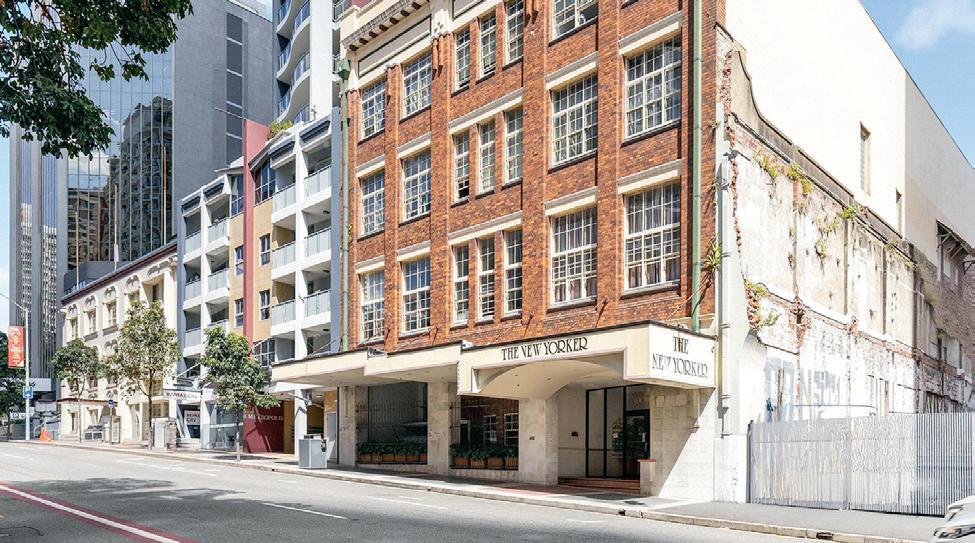

By Mandy Clarke, Editor
Port Douglas, Lazy
Lizard Motor Inn has built a strong reputation by focusing on what matters most to its guests: comfort, consistency and a genuinely welcoming stay.
Set on Davidson Street, the boutique motel-style property offers a combination that continues to resonate with travellers. It is close to town, Four Mile Beach and the region’s major attractions, yet far enough removed to feel peaceful at the end of the day. That balance has helped shape its appeal, giving guests a relaxed and
Lazy Lizard… was not a business they needed to reinvent, but one they could continue to refine
reliable base from which to enjoy one of Australia’s most loved holiday destinations.
Since purchasing the management rights in 2015, Aidan Mulcahy and Alex Scott have focused on strengthening that foundation.
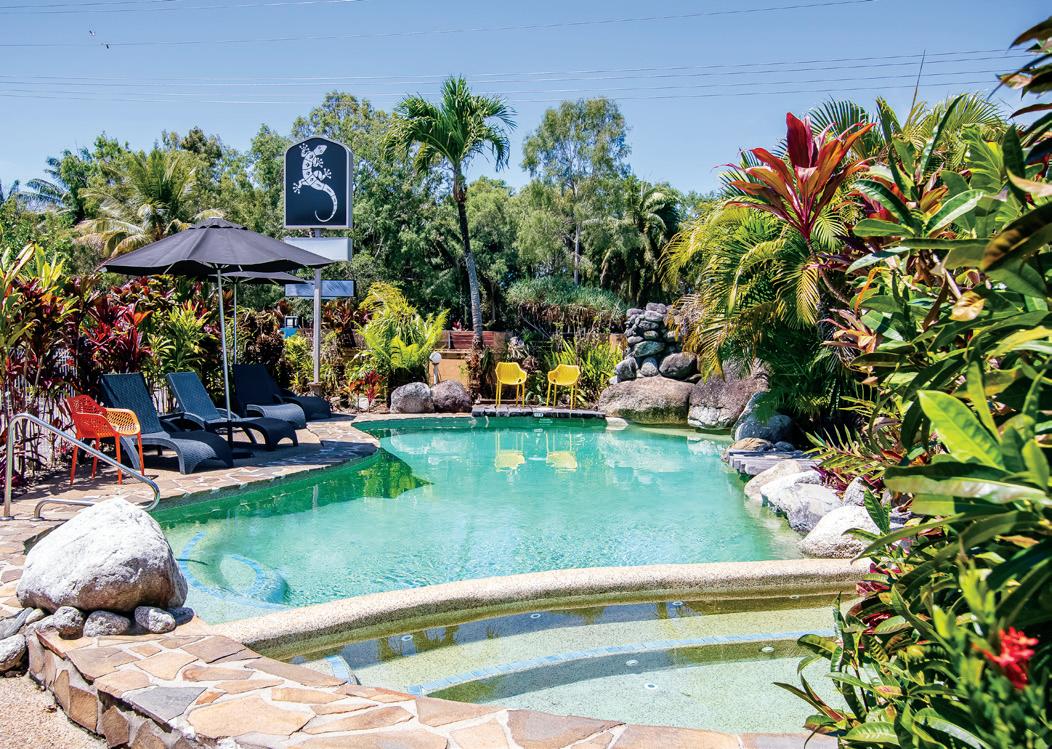
Their approach has been one of steady refinement, centred on maintaining standards and strengthening the guest experience over time.
Aidan came from a nursing background, while Alex had experience in hotel front office
operations and conference management. Between them, they worked in London, Melbourne and Port Douglas before taking on Lazy Lizard, and both see the move into accommodation as a natural progression. Their earlier roles were all centred on people, understanding needs, managing expectations and delivering a dependable experience, which made management rights a natural fit.
When they bought the management rights, what stood out was the property’s reputation and its place in the market. Lazy Lizard had already built a solid foundation around cleanliness, comfort and consistency. It was not a business they
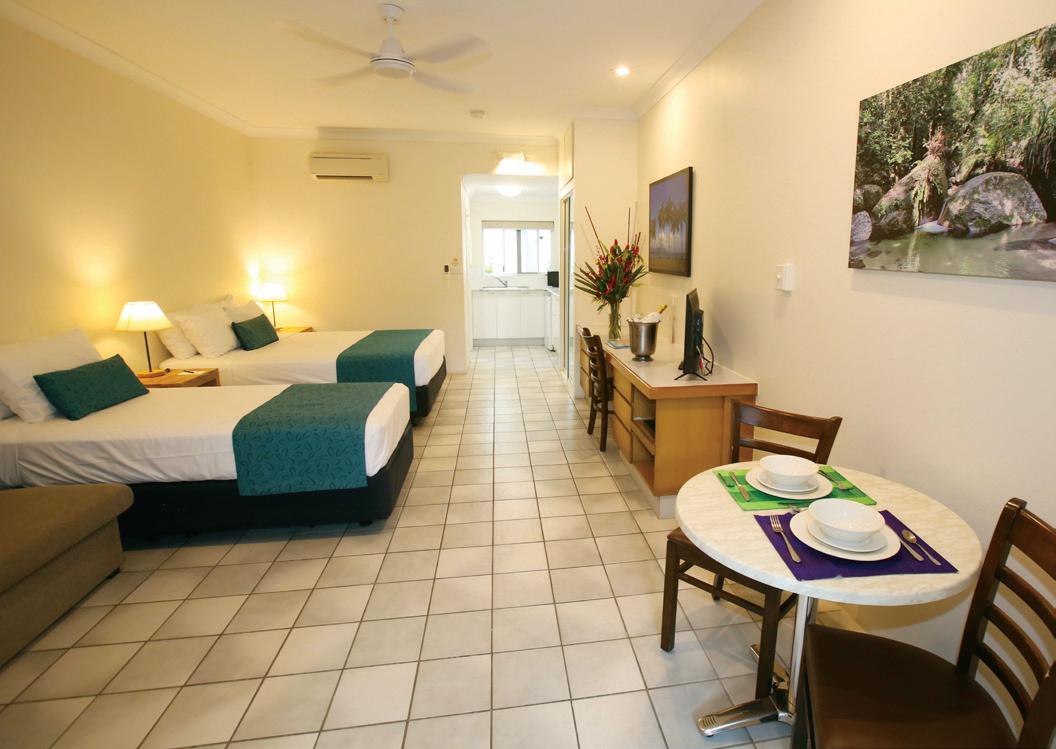

needed to reinvent, but one they could continue to refine. For Aidan and Alex, that was a major part of its appeal.
They were also drawn to the location. From here, guests can easily access Port Douglas’s main attractions, cafes and beach, while still enjoying a quieter setting away from the busiest parts of town.
For readers unfamiliar with the property, Lazy Lizard is a motel-style management rights business that offers clean, comfortable accommodation with a straightforward, guestfriendly layout. The rooms are easy to access, parking is convenient, and the overall feel is relaxed and unpretentious. There is a tropical pool area, landscaped surrounds and the kind of simple, well-kept presentation that gives guests confidence from the moment they arrive.
That simplicity is part of the appeal. Aidan and Alex are confident in what the property offers and focused on delivering it well. Guests are not being

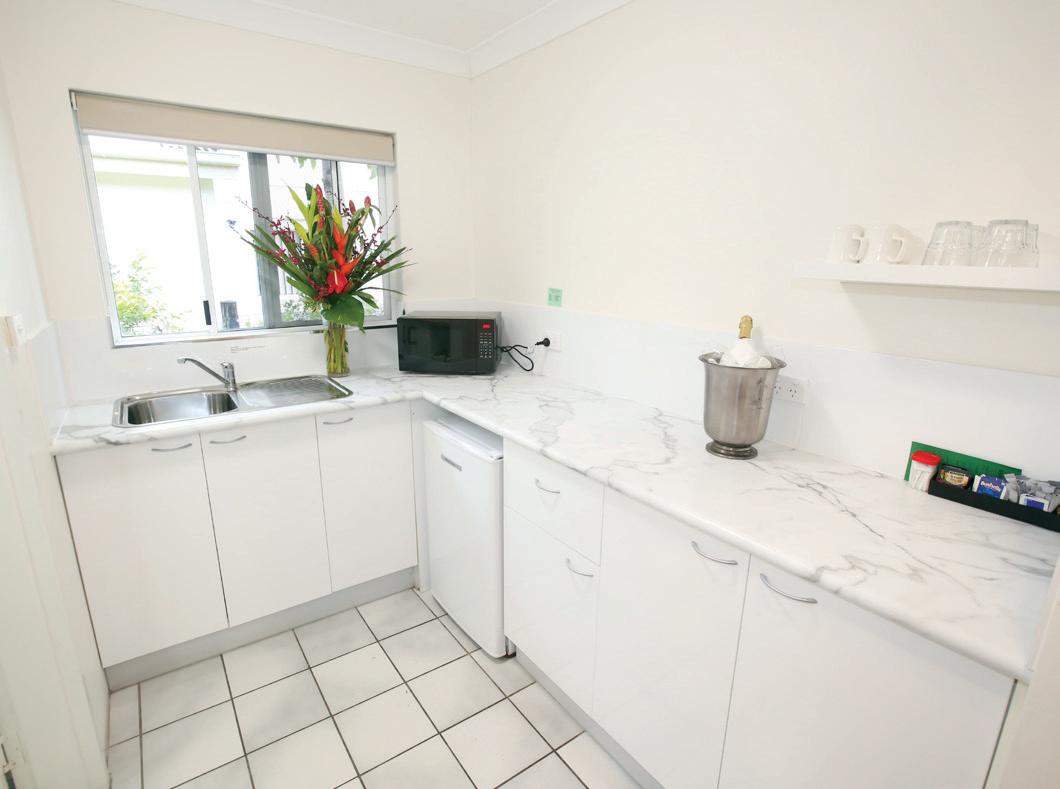

promised something overblown or overly styled. What they get is a clean, quiet, comfortable place to stay, managed with care and attention to detail.
It also speaks to the type of business they wanted to run.
The pooled management rights structure also suited the way they think about accommodation. All 22 attractive and well-maintained holiday units sit within the resident managers’ letting pool, giving
the business a strong and consistent operating base.
Aidan says the structure has been one of the business’s biggest strengths: “Lazy Lizard is a motel-style building with all 22 units owned by investors, and because it is zoned for holiday accommodation, no owners can live onsite. That gives the business a strong and secure footing for the future. We’re also fortunate to have a fantastic body corporate committee.”
Their strengths as a management team are complementary. Alex focuses on operations and the day-today running of the property, while Aidan takes the lead on guest experience, marketing and forward planning.
Together, they balance the detail with the bigger picture, which has helped them maintain standards while continuing to improve the business over time. They also live onsite in a twobedroom, two-bathroom unit with a private courtyard, adding another layer to their day-to-day connection with the property.
It is very much a hands-on role. No two days are exactly the same, and there is always plenty to do. A typical day starts with reconciling accounts and checking arrivals and departures, then shifts into guest interaction, housekeeping, reservations, enquiries, suppliers and tour bookings. The day usually finishes with final checks across the property and systems so everything is ready to go again the following morning.





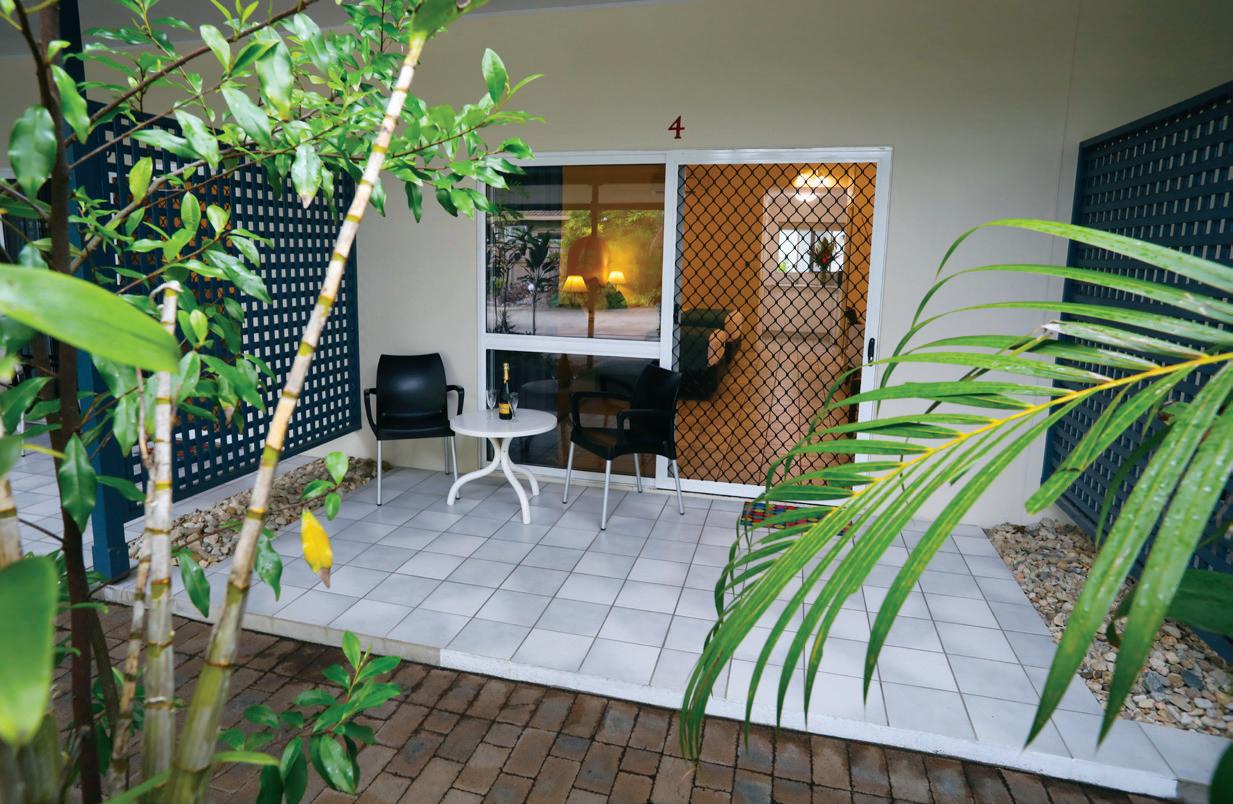
There is real satisfaction in running a tight operation and seeing guests respond positively to it. Like any business, there are challenges, but being able to shape the property around their own standards and values has been one of the most rewarding parts of the journey.
Over the years, they have made a number of important improvements to the property. With the support of owners in the letting pool, they have refurbished all kitchenettes, installed solar and introduced heat pumps. More broadly, they describe their approach as one of refinement rather than overhaul. The focus has been on maintaining presentation, lifting standards where needed and making thoughtful upgrades that improve the guest experience without losing sight of what made the property work in the first place.
Sustainability has become a growing priority as well. In Port
Douglas, where the natural environment is central to the destination’s appeal, that focus feels especially relevant. Aidan and Alex are continuing to improve the property’s energy efficiency and reduce waste where possible, including through the rollout of heat pumps and a move towards refillable in-room amenities. They are also in the sourcing phase for two EV charging stations within the existing parking area, a practical upgrade they see as an important way to future-proof the property for changing guest expectations. What guests seem to appreciate most is the same mix of qualities that first attracted the managers to the business: cleanliness, quiet, comfort and genuine hospitality. Those themes come up time and again in guest feedback, along with the friendly interaction and even the resident wildlife. Alex jokes that the reviews sometimes read like the “Aidan fan club”, but for both of

them, that kind of response is a strong sign they are getting the important things right. Guests also value the simplicity of the stay. What they see is what they get, and it is done well.
The property has also received strong industry recognition, including Best of Queensland Experience status for 2025 and Gold at the 2025 QTIC Tourism Awards in the Best 3 to 3.5 Star Accommodation category, following Silver in 2022. For Aidan and Alex, though, the most meaningful recognition still comes from guests who leave happy and mention the cleanliness, comfort and care that sit at the heart of the Lazy Lizard experience.
Their view of the industry is just as practical. They know success in accommodation comes from consistency, attention to detail and genuinely caring about the guest experience. They also value being part of ARAMA for the industry knowledge,

support and shared experience it offers, along with the regular opportunities to connect with other operators and complete their annual CPD requirements.
They also speak highly of Victoria and Robert Cuda from Caatz Management Rights Accountants, who have been their trusted accountants since 2015. Aidan and Alex describe them as responsive, easy to deal with and a reliable source of practical advice backed by a strong understanding of the management rights sector. They say Caatz has become an important part of their support network, helping ensure the business remains well managed, compliant and financially sound.
Outside work, when they get the chance, they enjoy making the most of the region themselves. Whether it is the reef, rainforest, local creeks or the tablelands, that connection to place has become part of their life in Port Douglas and something they are able to pass on to guests through local knowledge and recommendations.
Looking ahead, they are optimistic about both the property and the region. Tourism always moves in cycles, but they remain confident in Port Douglas as a destination and in the ongoing appeal of a wellrun property that understands its market. Their focus is on continuing to refine the guest experience, maintain high standards and keep the business well positioned for the future.
Aidan and Alex have taken a considered, steady approach to Lazy Lizard Motor Inn. In Port Douglas, that has helped turn a well-regarded property into one that continues to earn trust, loyalty and recognition.




































































9:00AM-12:00PM, SAT 6 JUNE 2026
Ever dreamed about living on the Gold Coast and running your own business?
Management rights could be your ticket - these dynamic businesses deliver excellent returns on investment while also providing a home to live in.
If you’re keen to get into this incredible industry, this information seminar is for you.
Join the leading agency in management rights for an expert introduction to the sector. With over 40 years of experience, we’ve helped thousands of people like you acquire secure, successful businesses in the management rights industry.
Learn from our expert panel:
• What management rights are
• Why they are secure, low-risk businesses
• Which types of management rights may suit you
• How to leverage your purchasing power through partnerships and syndicates
• A data-driven overview of the Gold Coast management rights market
• Current management rights opportunities available for purchase
Everything you need to confidently take your first step toward securing your own business in this thriving industry.