14 Visiting The Smokies Summer 2020 From page 13
Browns do not displace brookies like rainbows do. Once they reach 8 inches, browns eat other fish as well as insects. They can live eight to 10 years and get to be 25 to 30 inches long. They are extremely hard to catch. Smallmouth bass are found in the lower elevations of the park, around 2,500 feet elevation, and they are plentiful beginning in Townsend and downstream on the Little River. As the three river branches approach the park boundary near Townsend, rainbow and brown trout dominate, and warm-water species appear: smallmouth bass, rock bass (redeye) and various shiners, minnows and darters.
Tips for anglers
While the entire ecology of the park is pristine and fragile, the waters are especially susceptible to invasive species brought in by visitors. Kulp stressed the importance of thoroughly cleaning all equipment that will touch the water, especially shoes, waders and tackle. Kulp named the algae didymo (nicknamed “rock snot”) as a major threat to the park’s stream habitat for aquatic insects, mainly because it is so widespread in this country, but there are many more pests to watch for: whirling disease in trout, gill lice, New Zealand mud snail, quagga mussels and zebra mussels. “Catch-and-release is not necessary in the park,” Kulp said. “The limiting factor on the population of fish is food: aquatic insects. Annual mortality for trout is about 55% to 65%, mostly from wildlife; anglers account for no more than 15% of that total. Typically, once brook trout get to 10 inches, they have difficulty eating enough to stay alive and often die the following year.” No stocking from fish hatcheries is done in the park. From Townsend downstream to Walland, the native trout habitat is marginal, but rainbows are heavily stocked in the spring and fall by the Tennessee Wildlife Resources Agency. Summer water
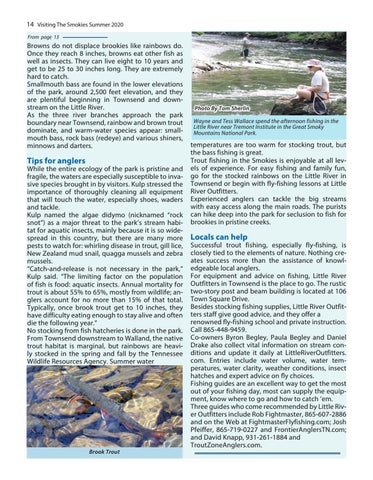
Brook Trout
Photo By Tom Sherlin Wayne and Tess Wallace spend the afternoon fishing in the Little River near Tremont Institute in the Great Smoky Mountains National Park.
temperatures are too warm for stocking trout, but the bass fishing is great. Trout fishing in the Smokies is enjoyable at all levels of experience. For easy fishing and family fun, go for the stocked rainbows on the Little River in Townsend or begin with fly-fishing lessons at Little River Outfitters. Experienced anglers can tackle the big streams with easy access along the main roads. The purists can hike deep into the park for seclusion to fish for brookies in pristine creeks.
Locals can help
Successful trout fishing, especially fly-fishing, is closely tied to the elements of nature. Nothing creates success more than the assistance of knowledgeable local anglers. For equipment and advice on fishing, Little River Outfitters in Townsend is the place to go. The rustic two-story post and beam building is located at 106 Town Square Drive. Besides stocking fishing supplies, Little River Outfitters staff give good advice, and they offer a renowned fly-fishing school and private instruction. Call 865-448-9459. Co-owners Byron Begley, Paula Begley and Daniel Drake also collect vital information on stream conditions and update it daily at LittleRiverOutfitters. com. Entries include water volume, water temperatures, water clarity, weather conditions, insect hatches and expert advice on fly choices. Fishing guides are an excellent way to get the most out of your fishing day, most can supply the equipment, know where to go and how to catch ’em. Three guides who come recommended by Little River Outfitters include Rob Fightmaster, 865-607-2886 and on the Web at FightmasterFlyfishing.com; Josh Pfeiffer, 865-719-0227 and FrontierAnglersTN.com; and David Knapp, 931-261-1884 and TroutZoneAnglers.com.