OUR 29TH YEAR OF WEEKLY INDEPENDENT NEWS, ARTS & EVENTS FOR WESTERN NORTH CAROLINA VOL. 29 NO. 16 NOV. 16-22, 2022

NOV. 16-22, 2022 MOUNTAINX.COM 2
news tips & story ideas to NEWS@MOUNTAINX.COM letters/commentary to LETTERS@MOUNTAINX.COM sustainability news to GREEN@MOUNTAINX.COM a&e events and ideas to AE@MOUNTAINX.COM events can be submitted to CALENDAR@MOUNTAINX.COM or try our easy online calendar at MOUNTAINX.COM/EVENTS food news and ideas to FOOD@MOUNTAINX.COM wellness-related events/news to MXHEALTH@MOUNTAINX.COM business-related events/news to BUSINESS@MOUNTAINX.COM
venues with upcoming shows CLUBLAND@MOUNTAINX.COM get info on advertising at ADVERTISE@MOUNTAINX.COM place a web ad at WEBADS@MOUNTAINX.COM question about the website? WEBMASTER@MOUNTAINX.COM find a copy of Xpress DISTRO@MOUNTAINX.COM WWW.MOUNTAINX.COM FACEBOOK.COM/MOUNTAINX follow us @MXNEWS, @MXARTS, @MXEAT, @MXHEALTH, @MXCALENDAR, @MXENV, @MXCLUBLAND
STAFF

PUBLISHER & EDITOR: Jeff Fobes
ASSISTANT TO THE PUBLISHER: Susan Hutchinson
OPERATIONS MANAGER: Able Allen
MANAGING EDITOR: Thomas Calder
NEWS EDITOR: Daniel Walton
ARTS & CULTURE EDITOR: Thomas Calder OPINION EDITOR: Tracy Rose
STAFF REPORTERS: Edwin Arnaudin, Thomas Calder, Justin McGuire, Sara Murphy, Brooke Randle, Jessica Wakeman, Daniel Walton




COMMUNITY CALENDAR & CLUBLAND: Andy Hall
CONTRIBUTING EDITORS: Lisa Allen, Peter Gregutt, Mary Jean Ronan Herzog, Rob Mikulak







REGULAR CONTRIBUTORS: Mark Barrett, Blake Becker, Morgan Bost, LA Bourgeois, Carmela Caruso, Nikki Gensert, Bill Kopp, Linda Ray, Kay West
STAFF PHOTOGRAPHERS: Cindy Kunst


ADVERTISING, ART & DESIGN MANAGER: Susan Hutchinson
LEAD DESIGNER: Scott Southwick
GRAPHIC DESIGNERS: Olivia Urban
MARKETING ASSOCIATES: Sara Brecht, Vicki Catalano, Scott Mermel, Braulio Pescador-Martinez
INFORMATION
ADVERTISING COPYRIGHT 2022 BY MOUNTAIN
ALL RIGHTS RESERVED
MOUNTAINX.COM NOV. 16-22, 2022 3
CONTACT US:
251-1333
in whole or in part without permission is prohibited. Mountain Xpress is available free throughout Western North Carolina. Limit one copy per person. Additional copies may be purchased for $1 payable at the Xpress office in advance. No person may, without prior written permission of Xpress, take more than one copy of each issue. To subscribe to Mountain Xpress, send check or money order to: Subscription Department, PO Box 144, Asheville NC 28802. First class delivery. One year (52 issues) $130 / Six months (26 issues) $70. We accept Mastercard & Visa.
(828)
Reproduction
XPRESS
COPYRIGHT 2022 BY MOUNTAIN
XPRESS
NEWS FEATURE WELLNESS A&C A&C NEWS CONTENTS FEATURES PAGE 40 FEEDING THE NEED
on turkey drives, financial contribu tions, dedicated volunteers going the extra mile — sometimes liter ally — and increased support from the community at large. COVER PHOTO Deerfield Episcopal Retirement Community COVER DESIGN Scott Southwick 4 LETTERS 4 CARTOON: MOLTON 7 CARTOON: BRENT BROWN 8 COMMENTARY 10 NEWS 24 BUNCOMBE BEAT 30 COMMUNITY CALENDAR 34 WELLNESS 40 ARTS & CULTURE 58 CLUBLAND 62 FREEWILL ASTROLOGY 62 CLASSIFIEDS 63 NY TIMES CROSSWORD 17 COMMUNITY SERVICE Long-standing clubs face challenges recruiting younger members 29 Q&A WITH ALFRED D. GREEN Young Struggle founder talks about bringing chess to the community 34 FORGET ME NOTS Local dementia groups help individuals, caregivers 44 NEW BEGINNINGS Arts nonprofits share insights on finding success 48 GIVING THANKS Ashley Heath, W.O.R.M., Barrett Davis and Ivy Eld release new albums 10 CORPORATE CARING Local companies prioritize hands-on giving www.junkrecyclers.net 828.707.2407 36,000 SQ. FT. OF ANTIQUES, UNIQUES & REPURPOSED RARITIES! P urge Unwanted Junk, Remove Household Clutter! call us to remove your junk in a green way! Greenest Junk Removal! Asheville’s oldest Junk Removal service, since 2010 26 Glendale Ave • 828.505.1108 regenerationstation.com TheRegenerationStation Open Everyday! 10-5pm Junk Recyclers Team Best of WNC since 2014! When you support local, you support families like ours! ~ Nicole and her daughter, Nova
TECHNOLOGIES & WEB: Able Allen BOOKKEEPER: Amie Fowler-Tanner ADMINISTRATION, BILLING, HR: Able Allen, Mark Murphy DISTRIBUTION: Susan Hutchinson, Cindy Kunst DISTRIBUTION DRIVERS: Leah Beck, Desiree Davis, Tracy Houston, Marlea Kunst, Amy Loving, Henry Mitchell, Angelo Santa Maria, Carl & Debbie Schweiger
With the holidays around the cor ner, local food security nonprofits are counting more than ever
Editor’s Note
For our fall Nonprofit issue, we invited local nonprofit leaders to reflect on the successes and challeng es of operating a 501(c)(3) in Western North Carolina. You will find their responses featured throughout the issue as individual boxes with the headline “Whatever it takes.”

We need truly local news

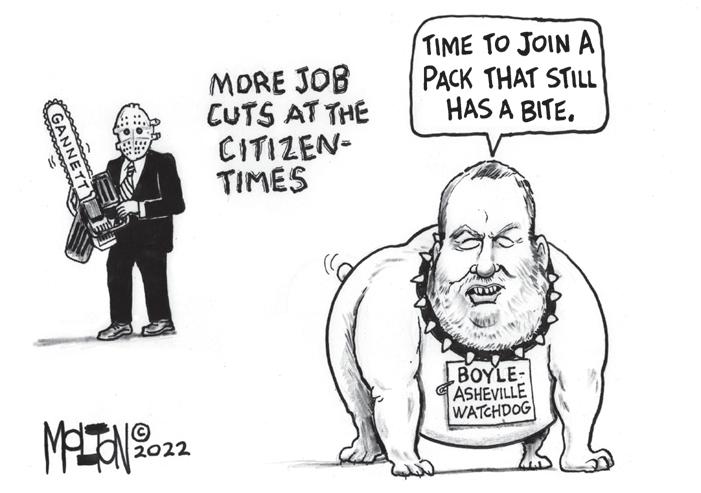
Columnist John Boyle had great points in his recent piece about leav ing the very corporate Citizen Times “From Asheville Watchdog: Why I Really Left the Asheville CitizenTimes,” Nov. 7, Xpress website]. It shows why local journalism is critical to a community’s holistic health.
Our lives in this democratic country do not exist in a void, and we need to know about the institutions that pro vide essential services and a safe, liv able environment — like government, schools and hospitals.
Corporations, too, need to be held accountable to the consumer, and so it is hard when the newsroom itself is run by corporate interests — by a bottom line.

The average working person does not have time to research ethical con cerns at a public agency or safety issues associated with a neighborhood’s water supply, so the closer news can get to a community, the more useful the media is to residents’ lives.
I am not trying to portray the Citizen Times as all bad; I see them trying to provide transparency in the HCAMission Health merger, for example. But compared with Asheville Watchdog and Mountain Xpress, which are
CARTOON
BY RANDY MOLTON
hyperlocal and reader-driven, Gannett does not compare. Even a social media site like Nextdoor has value because it is so locally focused.
As many organizations in our coun try go corporate, we must remember corporations are not bad in them selves, but when profit is put over people, the devil is in the details.
Like with government, local news affects our lives more than national news, and we need local news now more than ever!
— Aaron Kohrs Alexandria, Va.
Editor’s note: The writer reports being a Western North Carolina native and lifelong resident who just moved to northern Virginia but still keeps up with WNC happenings.
Duke shouldn’t pocket our excess solar energy
I am a Duke Energy user but also have a 7.68 kilowatt-hour photovoltaic
system that exports electricity to the grid. For years, I have wanted to have a PV system for the environment and the coming generations, but my husband and I checked out the cost back in 2007 and could not afford it. We did purchase a solar hot water system then, which helped to reduce our electric bill. When my aunt passed away in 2019, she left me enough money that, with the reduction in the price of panels, I was able to purchase the system I have now. It went online in April of 2020 and, so far, I have not had any problem with it.
However, since I have SolarEdge on my phone, I am able to keep records of the export of my energy and the import from Duke, and I was quite dismayed when I received a bill for July-August for over $100. I’m 75, on a fixed income, and this is troubling. I have found out that Duke has a cutoff date of May 31 for each year, and then they pocket my excess energy. There is no reimbursement to North Carolina solar customers; however, South Carolina and Florida both are reim bursed monetarily for their excess. Why is the N.C. Utilities Commission penalizing North Carolina citizens?
I have done some research and have found that the N.C. Utilities Commission is actually the entity to contact about this, as it is the one that will say yes or no to the Duke request, which includes Duke’s attempt to impose an extremely disadvantageous new NEM (net energy metering) tariff upon North Carolina rooftop solar customers in NCUC Docket No. E-100 Sub 180. [The non profit] NC WARN cares passionately about these issues, and it is fighting to
NOV. 16-22, 2022 MOUNTAINX.COM 4
Send your letters to the editor to letters@mountainx.com.
OPINION CONTINUES ON PAGE 6
NOW! 48 local nonprofits and get stuff back! DONATE NOW AT GIVELOCALGUIDE.ORG

MOUNTAINX.COM NOV. 16-22, 2022 5
Tapping into volunteer skills
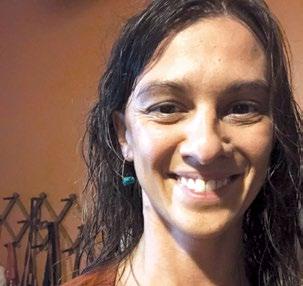
Stephanie Kane is a board mem ber of Asheville Tool Library.
Xpress: What about this year’s volunteer/staff work gives you hope about your nonprofit’s mission and its overall impact on the community?
Kane: Our tool library manager, Tay Zarkin, has done some amazing work connecting us to other nonprofits and collectives in our area. With them running things, we’ve been able to tap into the skills our volunteers have, such as grant writing, fundraising and tech support. Also, our maintenance team repairs and maintains our tools — not a common skill these days. What has been the most chal lenging aspect of operating your nonprofit this year?
We had some sudden changes in 2022: new board members, our first staff person and our new location. With only one part-time staff, we rely on volunteers to make time in their lives to keep things rolling. Our new manager, Tay, stepped up to run our operations while the board had a mis sion to do some deep organizational work and look for a new location in our city, which is becoming increasingly unaffordable. We have some pretty specific needs — a storefront with the ability for members to drive up to load tools and a workshop for repairs where we could also pressure-wash tools on the street. Our new location at Smith Mill Works offers us the convenience of West Asheville with the freedom of the warehouse space
In March of 2020, we had to reduce contact with members. Luckily, our software already had a reservation system that allowed members to reserve tools from home and pick up their orders from the sidewalk. Because of this, we were able to reopen two months later. Simply underutilized before, this reservation system has made our service better for our members who no longer have to come in unsure of what’s available.
We also saw how critical our ser vice was to residents in Asheville. We made things possible — be it the repair or building projects of so many homeowners, or members building out vans and hitting the road. And we saw our scholarship program increase. Seeing this impact led to the strengthening of our organization.
prevent this type of unfair treatment in several different legal proceedings.
I’m not asking for cash reimburse ment; I just did not spend $23,000 for a PV system to “gift” Duke my electricity.
— Teri Stahara Marion
Could we please rename Spooks Branch Road?
I used to live in your fine city and found it to be a magical place. It made me wonder how a road could still bear that name.
I looked into it and found a 100 years of history article by the Citizen Times [“Visiting Our Past: 100 Years of Spooks Branch Stories”], and it says the name is either about a wagon wheel or some folksy esoteric nonsense.
So I looked up other articles. I found only a blog post from a Black Ashevillean writing about present-day racism. She refers to the fact it contains a slur, but misses the broader point.
This name is a blatant reference to lynching. One hundred percent. No debate about it.
This street was named in 1915. That is the height of the lynching.
This road flies under the radar as a small stretch of mountain road where people could be dragged up in the dead of night and hanged.
Please get someone to rename the road. It’s too much of a blatant ref erence to anti-Black terrorism at the hands of the Klan for 2022.
Short Coxe is a two-block stretch of road everyone knows about. Everyone’s got a joke about it.
Spooks Branch is slightly longer, but more tucked away. Shrouded from view by trees and cloaked by mountains, the road is a relic of the past that haunts us to this day.
So please do a story about it. Try to do some good and have this street renamed.
not far from Pack Square), Hezekiah Rankin (in 1891 somewhere along the French Broad River) and Bob Brachett (in 1897 at Reems Creek).
Violence prevention law would help WNC workers
As a nurse with over 10 years of experience, I would like to bring people’s attention to the Workplace Violence Prevention for Health Care and Social Service Workers Act. This is a piece of federal legislation that has overwhelmingly passed the House (254-166) and hopefully the Senate in the coming months. The bill requires the Department of Labor and the Occupational Safety and Health Administration to issue and enforce occupational safety and health stan dards that would protect front-line health care workers such as nurses, doctors and social service workers from violence in the workplace.
Opposition to the bill is coming from powerful organizations with deep pockets that claim there are already plenty of mechanisms and resources in hospitals and elsewhere to keep their workers safe. The fact is that hospitals often cut support staff such as security to improve their bottom line. Also, if effective systems were already in place, then health care workers wouldn’t represent almost three-quarters of all workplace violence occurrences, according to the Bureau of Labor Statistics. I can personally attest to the fact that many violent events go undocumented, and this bill would establish a standard ized method of reporting.
— Nick Rehwaldt Milwaukee,
Wis.
Editor’s response: Thank you for the suggestion. In the 2015 Citizen Times article mentioned above, Rob Neufeld wrote: “A trace of African American life in Beaverdam may reside in the name Spooks Branch — which, according to Helen Nelon, either refers to a wagon-maker and his spokes or to the phosphorescent glow that emanated from the cove’s damp area, to which Baird slaves had once taken cows to pasture.”
Current research hasn’t found evidence of a lynching around the Beaverdam road. In Buncombe County, there are three known lynch ings, as Thomas Calder noted in a 2020 Xpress article (avl.mx/c63): John Humphreys (in 1888 near the old jail,
This bill is long overdue and rep resents a proactive strategy to protect nurses and other health care workers who are trying to care for their com munity members. The bill is not a solution to workplace violence but is a first step in the right direction. Although this is federal legislation, it will be impactful for front-line health care workers here in Western North Carolina. Supporters of this bill include several health care orga nizations like the Emergency Nurses Association and American College of Emergency Physicians. Sens. Thom Tillis and Richard Burr could use a nudge to encourage their support of our front-line health care workers.
— Eric Sjoden, R.N. Candler
Don’t stereotype ‘climate refugees’
There’s a conservative streak in the Mountain Xpress’ comic strips. Even so, I was shocked by the explic
NOV. 16-22, 2022 MOUNTAINX.COM 6
Send your letters to the editor to letters@mountainx.com. OPINION
How have the last 2 1/2 years reshaped the way your nonprof it operates, and do you see these changes as permanent?
Whatever it takes VOTED WNC #1 KAVA BAR OPEN DAILY • 828.505.8118 268 Biltmore Ave • Asheville, NC WWW.ASHEVILLEKAVA.COM LARGEST KAVA BAR ON PLANET EARTH Keeping Asheville Weird Since 2010
it xenophobia in Brent Brown’s “The New Exotic” [Nov. 2].
The strip depicts two bees — resi dents of “Bee City,” a play on “Beer City” — complaining that, due to environmental warming, migrants may be drawn to Asheville’s climate. The bees are concerned about “new residents” and their “baggage.” The last frame shows a newcomer, depict ed as a mosquito, carrying a suitcase labeled “West Nile virus” and a bag labeled “vector-borne diseases.”
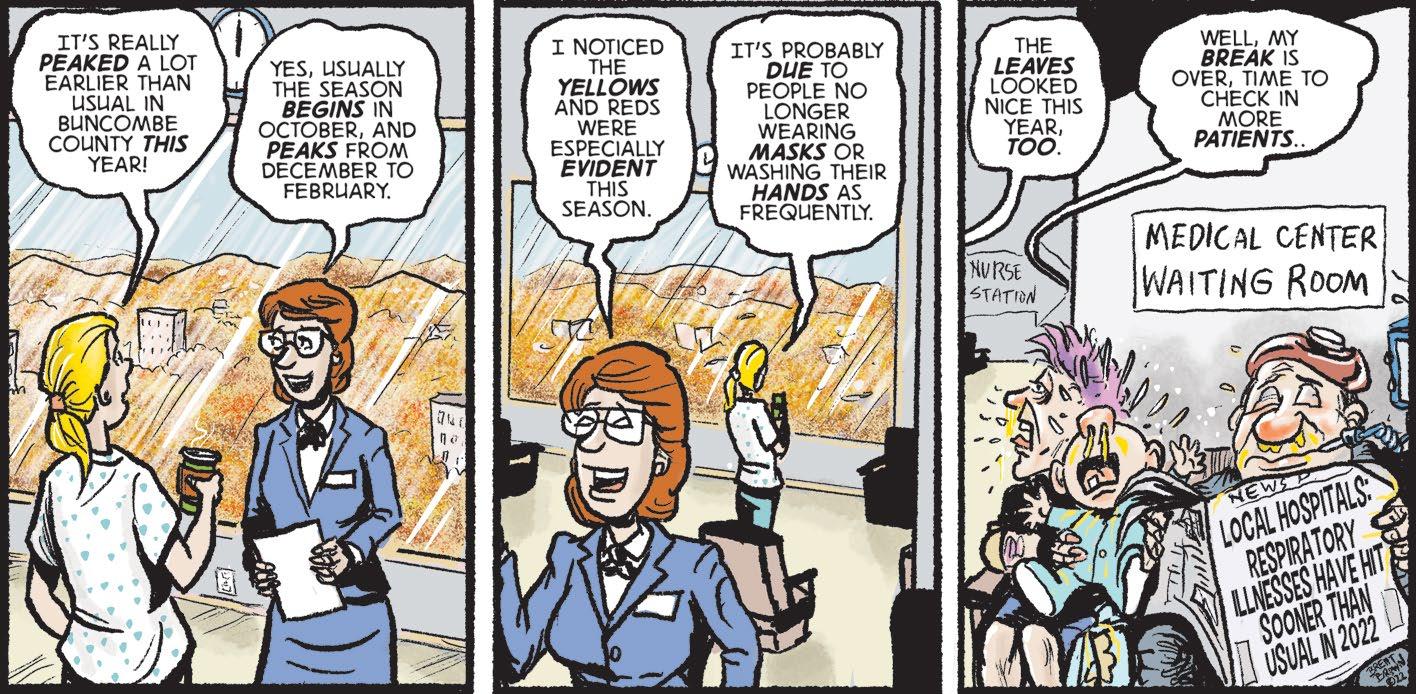
How did it become acceptable for a cartoonist at Asheville’s long-stand ing alternative weekly to stereotype “climate refugees” in this way?
Of course, there’s a history in this country of depicting outsiders as con tagious pests. And concerns about foreigners have always intermingled with concerns about nature and the environment. A hundred years ago, Jews and Asians were thought to breed disease because they had set tled in dense urban areas, and their “rootlessness” was contrasted against the healthy Protestants who were more “tied to the land.” A half-centu ry later, racist environmentalists Paul Ehrlich and Garrett Hardin famously compared the growing South Asian population to a bomb that would explode the Earth’s equilibrium and unleash disease and starvation.
In Brown’s defense, he may have been simply parroting back to read
ers what has become a ubiquitous provincialism in Asheville’s political discourse. Residents across the ideo logical spectrum lament the presence of outsiders, declare that Asheville should be “closed” and spout fears about population growth.
The city’s commonsense provin cialism shows up in subtler ways than as in Brown’s comic. For example, it manifests in opposition to new multi family homes and in the scapegoating of workers who move in from out of state — blaming them for Asheville’s rising cost of living. Like Ehrlich and Hardin, our provincialists resent migrants and urban populations, pro claiming them threats to “nature.”
But if this resentment leads to such gross generalizations as “refu gees will bring diseases,” it’s clear ly past time to rethink Asheville’s exceptionalist, insular worldviews.
Some political scientists have a term for an orientation that draws upon mythic, pastoral, romanticized ideas that define a group of people as special because of that group’s con nection to the land where they live; an orientation that presents outsiders as spoilers of their idyllic home; and one that fearmongers about refugees and population growth, and exploits global warming as a justification for zero-sum contests over control of a place’s climate and resources. They call it “far-right ecologism.”

Other political scientists use a shorter phrase: “eco-fascism.”
Brown’s comic may have inadver tently trafficked in some of the lan guage that fuels eco-fascism. But it’s incumbent on the rest of Asheville to consider how we do the same.
— Andrew Paul Asheville
Editor’s note: Thank you for your feedback. Brown offers the follow ing response: “Mr. Paul has the cartoon’s intentions backward. The bugs in the comic weren’t meant to represent human climate change refugees as disease-carrying pests in a metaphorical way; their discussion of the new residents/baggage was
about the literal nonnative mosqui toes and concerns of ‘local transmis sion of an exotic ailment’ such as viruses found in warmer climates, as reported in a local news story (avl.mx/c64).
“Realizing that as the intent of the comic does depends on the read er having knowledge of that bit of information, in hindsight, I probably should have put that somewhere in the final panel (loath as I am to do such a cliché) as a newspaper headline reading: ‘West Nile Virus Cases Could Set NC Record in 2022’ to avoid such misunderstandings. I shall try to keep that in mind for future strips.” X
MOUNTAINX.COM NOV. 16-22, 2022 7
ASHEVILLE’S FIRST KRATOM DISPENSARY NOW OPEN! SAKTIBOTANICALS.COM - EXCLUSIVE PRODUCTS AND MORE! - LOUNGE - ETHICALLY SOURCED - LAB TESTED BROUGHT TO YOU BY SAKTI BOTANICALS, ASHEVILLES LEADING KRATOM VENDOR 481 HENDERSONVILLE RD MON-FRI 12-5PM
CARTOON BY BRENT BROWN
A walk on the calm side
BY DENNIS DRABELLE
Frederick Law Olmsted, the famed landscape architect who designed the grounds of Biltmore, wrote that enjoying natural scenery “employs the mind without fatigue and yet exercises it; tranquilizes it and yet enlivens it.” Those paradox es accompany me whenever I visit Asheville’s Beaver Lake.
About five days out of seven, I park my car at the adjacent bird sanctuary and make the roughly 2-mile waterside circuit, sometimes tacking on an extra mile by turning around and doubling back at the Little Free Library across the water from the warden’s cabin. Having yet to see a specimen of Castor canaden sis on my treks, I’ve coined my own name for the place I love so much: Writer’s Lake.
By the time I get there, you see, I’ve finished my writing for the day and am ready to take suggestions from the morning’s work: a fat sen tence willing to be slimmed down, an inconsistency begging to be fixed, a gap to be filled, a right word itching to elbow out a wrong one. The process, I imagine, is much the same for nonwriters with something work-related or personal on their minds — for them, in other words, it may be Potter’s or Yoga Instructor’s or Algebra Student’s Lake.
My suggestion is to avoid a headon attack but clear a small mental runway for insights to land on if they so desire. Meanwhile give the rest of yourself up to the curving, gently rising and falling trail, its mountain views reminding you what
a treasure the lake is in corrugated Buncombe County.
In this space, however, I want to zero in on those who use the lake, not on its conduciveness to literary triage. We walkers share the trail with lots of runners and a few bicyclists, most of whom are consid erate enough to holler “Passing on your left!” as they approach from behind. I’ve become lake friends with a couple of runners and even know one, Brett, by name, though we converse in snippets that make tweets seem verbose. “Great day,” answered by “Couldn’t be better,” is a typical exchange.
TEAM SPORTS
One Saturday during COVID-19’s second semester (the fall of 2020), a van pulled up in the parking lot just as I was locking my car. Out stepped a dozen boys in running togs, and I asked what school they represented. The answer came as a surprise: a high school in Pomona, Calif., which they’d fled because the disease was rampant there and Asheville offered a less toxic alternative. (As I remem ber it, a friend of one runner’s family had lined up rooms in local houses for the refugees to inhabit.)
The boys started warming up, and I went on my way. A couple of min utes later, I heard them coming up behind me. As they ran by, I shouted out the best welcome I could think of: “Go Pomona!”
To understand another memora ble lakeside chat I took part in, you have to know that I’m a dyedin-the-red-wool St. Louis Cardinals fan. Three or four years ago, as summer wound down, the Cubs held first place in the National League’s Central Division, with the Cards a couple of games back and a fourgame series between the archrivals coming up. As I neared the part of the lake where the trail veers west from Merrimon Avenue, a mid dle-aged man and woman wearing Cubs caps came toward me.
They smiled. I smiled back and said, “You looked like fine people until I noticed your headwear.”
They knew exactly what I was getting at. “You must be a Cardinals fan,” the man replied with a laugh. “The next few days will tell the tale.”
“May the best team win,” I said.
“We’re happy with that way of putting it,” the man said.

I never saw the pair again, so I’ll do my gloating here: The Cards swept the series.
TIME’S UP
Weather and baseball talk are about as deep as lakeside con versation tends to get, but there are exceptions. I walk with a limp and have a scar on my right leg to account for it. One summer day — a hot one calling for shorts and a T-shirt — I was about halfway between the parking lot and the warden’s cabin when someone said from behind, “If you don’t mind me asking, what happened to your leg?”
I turned around to see a young man of about 25. As we fell into step, I told him the story: a childhood accident with a sharp object.
He informed me that he was a healer. “And thanks to Jesus I’ve had some success.”
“Have you?” I responded, to be polite.

“Maybe I can help you,” he went on. “You may not see improvement right away, but I’ll give you my card, and if something happens later, you can let me know.”
I don’t believe in miracles, but my Catholic mother did. When my par ents got me to the emergency room of a St. Louis hospital for treatment of my “big hurt” (my youngest broth er’s term for it), no surgeons were on duty, so she began silently praying

NOV. 16-22, 2022 MOUNTAINX.COM 8
OPINION
The enduring joys of Beaver Lake
specialty shops issue 2022 Publishes December 7! advertise@mountainx.com
DENNIS DRABELLE
for one. She looked up and there was Dr. Bowdern, our family physician, on his way to visit his sister, who was hospitalized with tuberculosis.
Mom begged him to sew me up first, which he did with consider able skill, given that surgery was not his specialty. She was sure that her prayer had been answered, but I have my doubts. That would imply, would it not, that God gave Dr. Bowdern’s sister TB so he could save my leg?

Back at the lake, I accepted the young man’s card, but he wasn’t done with me. “Would it be all right if I laid a hand on your leg?” he asked.
In Washington, D.C., where I spent most of my adult life, the answer would have been an automatic “No.” But this was laid-back Asheville, the fellow had a way about him, and I told him to go ahead.
He grasped my scarred calf and implored Jesus to heal me. When he let go, the leg looked and felt the same as always, but I promised to be in touch if anything changed.
I kept that card for two or three years, but the limp and the scar stayed as they were. One day not long ago I decided I’d given the young man a fair chance and threw away his card.
During my six years of lake walk ing, I’ve admired Canada geese, great blue herons, little green herons, pileated woodpeckers, cormorants, the occasional hawk and hundreds of turtles. I’ve said hello to bird-watchers, dog walk ers, baby stroller pushers, fishers, the tattooed and the plain-skinned, the young and the old, the head phone-equipped and the bare-eared. Occasionally my interlocutor or I will say something clever, but most of the time our back-and-forth is pretty mundane.

That’s all right. As we cope with new COVID variants and more polit ical divisiveness than the country has known since the 1960s, it seems more important than ever to use a fleeting encounter as an oppor tunity to exchange pleasantries and respect.
Asheville resident Dennis Drabelle’s most recent book is The Power of Scenery: Frederick Law Olmsted and the Origin of National Parks. X

MOUNTAINX.COM NOV. 16-22, 2022 9
“My suggestion is to clear a small mental runway for insights to land on.”
BY SARA MURPHY
Corporate caring
For many years, Whit Zeh believed that working for nonprofits was the only way she and her husband could make a difference in the world. “We thought that we needed to have the same struggles as the nonprofit world,” she says.
That changed when her friend Meredith Ellison , co-founder of Symmetry Financial Group, invited her to come build the local insurance company’s philanthropic arm back in 2017.
“Meredith sat me down on the couch and said, ‘You are going to be able to make a larger impact coming to a for-profit company that cares,’” Zeh recalls. Ellison stressed that her company’s workforce, which was larger than those of most local nonprofits, could be mobilized not just for financial donations but for regular community service.
Under Zeh’s leadership as senior director of corporate well-being and community outreach, the company and its employees have raised over $1.4 million for various communi
ty-based organizations across the country and an additional $1 million for the Make-A-Wish Foundation, according to the company’s website.
“Insurance is a wealth-producing industry,” says Zeh, adding, “If we’re bringing in wealth, we have got to push it back out.”
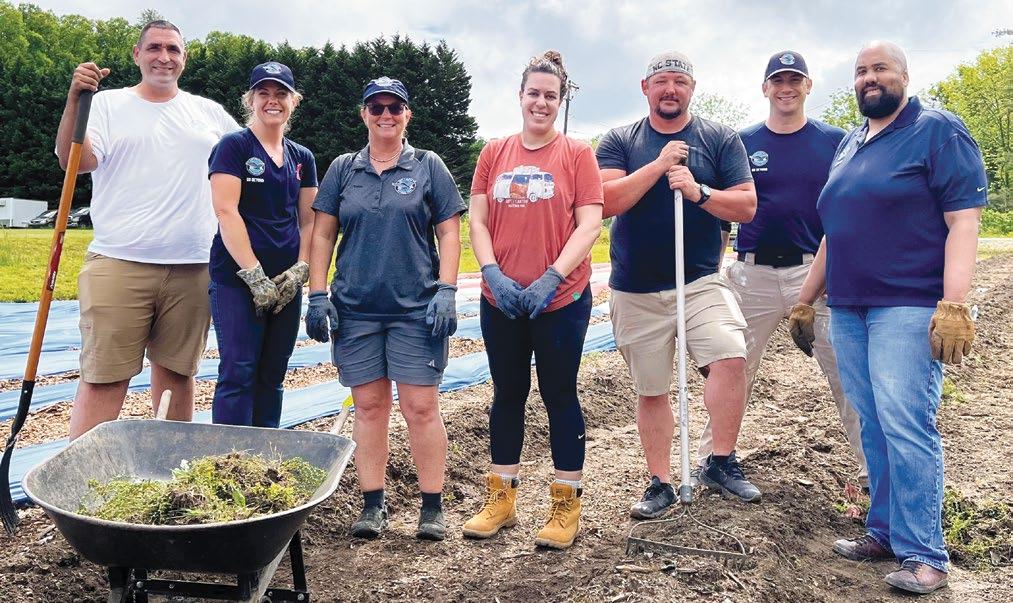
The dollars, however, tell only part of the story. Zeh’s employer is one of a number of local businesses that are making community service a fundamental part of company culture. Whether it’s helping build microhomes in BeLoved Village or pulling weeds at the Veterans Healing Farm near Hendersonville, these enterprises are redefining cor porate philanthropy.
THE CIRCLE OF GIVING
When Zeh began working at Symmetry, the company had 65 cor porate staff members and roughly 2,600 contracted insurance agents. A 2020 merger with the Roseville, Calif.-based Asurea created Quility, which now boasts over 5,200 agents and more than 200 corporate staff
members nationwide. Meanwhile, the one-two punch of the expansion and the pandemic compelled Zeh to get creative about how to scale up the volunteering process, she explains.
To that end, she recently piloted a virtual giving circle — a philan thropic mechanism in which a group of people comes together to pool their resources and determine which causes and organizations they want to support. Zeh opted for this model, she says, because Quility’s focus on empowering women aligned with the fact that 70% of giving circle mem bers in the U.S. are women.
The pilot project led to a collabo ration with BeLoved Asheville. On Sept. 29, one of Quility’s volunteer teams spent a day helping build affordable homes at the BeLoved Village. Two employees flew in from California to be part of the event.

“The work that they did that day really moved the village forward in terms of what we’re trying to do,” Amy Cantrell, BeLoved’s co-direc tor, told Xpress.
And though Brook van der Linde wasn’t part of the giving circle, the digital content specialist also pitched
NOV. 16-22, 2022 MOUNTAINX.COM 10
NEWS
Local companies prioritize hands-on giving
smurphy@mountainx.com
• Folkmoot LIVE! shows in the Queen Auditorium! • Local Artist/Businesses in our Folkmoot Studios! • Folkmoot Life Long Learning program. • Event venue rentals in our historic school house! • Come explore the history of Folkmoot, NC’s International Folk Festival since 1983. Folkmoot is a nonprofit 501(c)3 organization that fosters the vibrancy of many cultures into one community. Folkmoot programs are based on cultural exchange and designed to build global relationships, foster cultural understanding and develop community prosperity. 112 VIRGINIA AVE, WAYNESVILLE, NC Folkmoot.org 828.452.2997
PLANTING SEEDS: Pratt & Whitney employees help garden at the Veterans Healing Farm near Hendersonville. Photo courtesy of Pratt & Whitney Communications
in that day. The Asheville resident, who came to Quility after five years working for The Haywood Street Congregation, says she couldn’t pass up the opportunity to work with another organization that’s dedicat ed to empowering homeless people. “To jump in and have my hands in the world that I’m most familiar with … is very meaningful to me,” she explains. “Those are the days I very much look forward to.”
To encourage that spirit, Quility plans to establish more giving cir cles next year. Helping to coordinate them will be 30 cultural ambassa dors, a position the company just created this fall. These employees will focus on building company cul ture around three pillars: women’s empowerment, personal growth and well-being, and community outreach, notes Zeh.
Another local beneficiary is Bounty & Soul. “Our roots with Quility run deep,” says Karla Gardner, the organization’s director of community engagement. In the last few years, she continues, Quility staffers have probably volunteered with the nonprofit more than a dozen times. Besides packing and deliv ering produce boxes to people in need, they’ve helped out at Bounty & Soul’s community markets, distrib uting healthy meals cooked by the nonprofit’s staffers and working the kids activity area.
“Every time I’ve worked with a team, they’ve been superengaged and asked a lot of thoughtful ques tions,” says Gardner. “You can tell that the energy and enthusiasm are there.”
Meanwhile, Quility’s audiovi sual team has donated staff time and equipment to help various local organizations put together promo tional materials.
Zeh estimates that each of the company’s roughly 30 teams put in three to five hours per quarter. And when contracted agents can’t

make it to their teams’ events, they’re encouraged to do some kind of ser vice wherever they are.
“My husband’s in the military, so I’m passionate about food insecurity around military families,” says com munity marketing specialist Carlin Ellis, who’s based in Wilmington. Accordingly, Ellis has adopted a shelf at a local food pantry and keeps it stocked for families in need. “I was able to do that from afar and connect it back to our team,” she explains.
EXPANDING THE CIRCLE
When Pratt & Whitney operations manager Michelle Walker relocated from the company’s headquarters in Hartford, Conn., to Asheville in October, she was determined to cre ate the kind of onboarding process for new hires that she would have liked to have had in the various posi tions she’s held during her 23 years with the firm.
As she began thinking about how to do that, says Walker, “Community service ran across the paper.” Although the company had organized both volunteering and fundraising opportunities for its salaried staff in Connecticut, she and quality opera tions manager David Ray wanted to establish comparable options for the Asheville facility’s hourly employees.
Each of the three onboarding weeks they’ve organized thus far has concluded with a community service project. One time, new hires helped MANNA FoodBank sort donated
Whatever it takes
Never lose hope
Lori Garcia-McCammon is the founder of True Ridge. The non profit works primarily with local Latino communities to ensure they feel seen, safe, integrated, respected and valued.

Xpress: What about this year’s volunteer/staff work gives you hope about your nonprofit’s mis sion and its overall impact on the community?
Garcia-McCammon: The dedica tion and selfless work of staff and volunteers is what has brought us through the tough times, not only this year but since the COVID pan demic started. Everyone in the orga nization came together to do what it takes to serve our community, which was disproportionately impacted over the years. True Ridge made its mark, and the impact was over whelming. The number of people served directly and indirectly has tripled. We never lose hope — we hold onto it for dear life, and we are blessed in the process.
What has been the most chal lenging aspect of operating your nonprofit this year?
There have been so many challeng es this past year. I believe I can speak not only for our nonprofit, but others as well, when it comes to the chal lenges of multiyear funding opportu nities for operations, mental health challenges, struggling to keep quality staff (bilingual and bicultural) and being able to pay a living wage due to the ever-present increase of inflation. Self-care has gone on the back burn er, which has led to burnout. And of course, illness — especially the longterm effects of COVID-19, such as fatigue, brain fog, respiratory issues and other symptoms — has also been a major challenge.
How have the last 2 1/2 years reshaped the way your nonprof
it operates, and do you see these changes as permanent?
I believe that the past 2 1/2 years have definitely reshaped the way we operate our nonprofit. Due to the population we serve, we made choic es to accept funding and to expand our services in ways that best serve our community. We partnered with other local and statewide organiza tions (WNC Health Network, N.C. Department of Health and Human Services, N.C. Counts Coalition, our local health department, Hispanic Federation, United Way and others) to provide culturally and linguisti cally appropriate messaging to our Latino/Hispanic population.
Additionally, True Ridge staff delivered face coverings and sanitiz er to our community; staff was also present at multiple events encourag ing vaccinations, sharing information and other resources in the commu nity that could help with emergency funds for rent, medical expenses, utilities, etc., for those affected by loss of work or illness.
I am not sure of the permanence of all of these changes as funding has started dwindling for those specific areas. But our core mission continues: advocacy in courts for victims of crime, immigration and always education.
MOUNTAINX.COM NOV. 16-22, 2022 11
CONTINUES ON PAGE 12
“If we’re bringing in wealth, we have got to push it back out.”
— Whit Zeh of Quility
food. And on two occasions, most recently Nov. 3, they spent a day at the Veterans Healing Farm.
“They’ve helped us a lot with this year’s needs,” Megan Landreth, the nonprofit’s farm administrator, told Xpress via email. “They helped paint our deck, prepared our large field for planting, laid gravel in our rose garden and fire pit.”

For Ray, who started out at Pratt & Whitney as an hourly employee 17 years ago, this work is personal. Having been on the receiving end of community support when he experi enced a major health emergency, he makes it a point to bring his family to scheduled community service days whenever he can and has returned to the farm on his own time as well.
“It would be fantastic if this just becomes part of how they live their lives,” says Walker. “If they think, ‘Wow, I could get my family to come and volunteer on a Saturday at MANNA FoodBank or at a festival.’ We want to instill in our people that this is how we do business.”
Since Ray arrived in Asheville in the summer of 2021, he’s helped orga nize service projects for various local organizations, including Asheville Buncombe Community Christian
Ministry, Habitat for Humanity, Eliada and Asheville GreenWorks.
On Nov. 23, his team will partner with Eblen Charities on the nonprof it’s Thanksgiving meal giveaway. These opportunities, notes Walker, help team members get to know one
another better and create a sense of teamwork that carries over to the factory floor. And Ray says that Pratt & Whitney’s community involvement has made the company more attrac tive to job applicants. “It’s definitely mentioned during the interview pro
Whatever it takes
Staying true to the vision
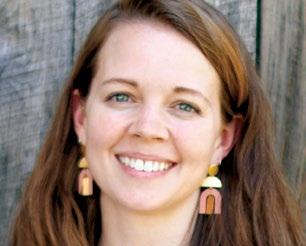
Cameron Farlow is the executive director of Organic Growers School. The nonprofit provides ongoing opportunities for farmers and home growers of all levels. The following answers, she notes, were written in collaboration with fellow leadership members Mike Higgins, Nicole DelCogliano and René Foster.
Xpress: What about this year’s volunteer/staff work gives you hope about your nonprofit’s mission and its overall impact on the community?
Farlow & Co.: Our staff brings a lot of enthusiasm, dedication and creativ ity about how to support people who want to grow food, fiber and medicine. The vision of a thriving food commu nity is always the goal as we develop existing and new programs.

What has been the most chal lenging aspect of operating your nonprofit this year?
How to balance our passion for the work and programs we offer with staff capacity and an eye toward our strategic vision.
How have the last 2 1/2 years reshaped the way your nonprof it operates, and do you see these changes as permanent?
OGS transitioned to a lateral execu tive team in 2020, with a team of four staff sharing the roles and responsibil ities of a traditional executive director. This has created an incredibly dynam ic leadership team invested in the organization’s health and longevity, as well as our staff’s. The last two years have allowed us to dig deeper into the mission and strategic work we aim to do by asking, “What does it mean to actually create a thriving food commu nity of farmers, growers and eaters?”
As we enter our 30th year in 2023, we are committed to supporting farmers, gardeners and conscious eaters in their quest to be resilient, well-resourced, adaptive and empowered.
cess, as people love the commitment we show and want to be a part of it.”
A GROWING TREND
Local nonprofit leaders say they’re seeing more companies prioritize vol unteering and service projects rather than just giving money. They’re also seeking long-term relationships with specific organizations rather than just one-off collaborations.
“I love that people are taking the time to create community over a series of months,” says Cantrell, adding, “I often call volunteers that persistent drip that creates a sea change.” East Fork Pottery, for example, recently partnered with BeLoved for an entire quarter. Similarly, Walker and Ray are hop ing to set up ongoing partnerships with Asheville GreenWorks and MANNA as part of their orientation for new hires.
Gardner, meanwhile, says some companies that partner with Bounty & Soul not only pay their employees for a certain amount of community service time but even make a dona tion corresponding to the value of those hours. “It’s been inspiring to see this kind of corporate philanthro py model taking shape — for-profits and nonprofits teaming up to under stand each other’s work and how they can support it,” she says.
Zeh agrees, noting that she serves on the boards of some local non profits as a way of “helping them find other corporations like ours to partner with.” To fully realize the potential of this approach, Zeh main tains, “We need other companies to jump on board.” X
NOV. 16-22, 2022 MOUNTAINX.COM 12
in the spirit issue Publishes December 14th For advertising, contact 828-251-1333 x 1 advertise@mountainx.com
NEWS
IT TAKES A VILLAGE: Twenty Quility employees came together Sept. 29 to help out with construction at the BeLoved Village. “We at BeLoved believe that community is the solution to everything,” says Amy Cantrell. Photo courtesy of Quility
MOUNTAINX.COM NOV. 16-22, 2022 13
BY EDWIN ARNAUDIN
Maybe you’ve heard one read aloud before a meeting or perfor mance. Or perhaps you’ve seen one posted in a lobby, prominently featured on an organization’s web site or shared on a business’s social media account.

Whatever the case, the odds are good that you’ve encountered a land acknowledgment: a formal recogni tion that your current location was taken from its original Indigenous inhabitants. In Western North Carolina, that’s the Anikituwagi, the people more commonly known as the Cherokee, who once occupied much of what is now the southeast ern United States.
Such reminders can offer a means of connecting with a group that the country has marginalized for centu ries. But if a land acknowledgment isn’t paired with action, say many Indigenous people, the connection can be fleeting — and unintentional ly cause more harm than good.
Xpress spoke with several Indigenous activists to gauge their thoughts on a trend that has recently gathered local momentum, as well as learn what components are neces sary for a successful statement.
PLAYING CATCHUP
Trey Adcock, a citizen of the Cherokee Nation and director of American Indian & Indigenous Studies at UNC Asheville, has noticed a rise in land acknowledgments over the past decade, and especially in the last five years. But he stresses there are two ways to interpret the phrase.
“There’s a differentiation between these bureaucratic land acknowledg ments — these read statements — and the way Indigenous people have always acknowledged their presence in the land when visiting someone else’s territory,” Adcock says. “In terms of the bureaucratic stuff, they have their own history [dating back to the 1970s] in Australia, New Zealand, Papua New Guinea and Canada. So, the United States is sort of late to the game.”
Those pioneers among Canadian First Nations people, Aboriginal Australians and the Māori of New Zealand inspired Wayne Ducheneaux, executive director of the nonprofit Native Governance Center and a citizen of the Cheyenne River Sioux Tribe. His organization created an online guide to land acknowledg ments that informed the “statement in support of Indigenous land own ership” used by Asheville’s Different Strokes Performing Arts Collective.
The guide’s tips for crafting a land acknowledgment include starting with self-reflection; putting in time to research key topics; using appro priate language to avoid sugarcoating the past; and using past, present and future tenses so that Indigenous peo ple aren’t treated as a relic. Suggested action steps to pair with a land acknowledgment are likewise provid ed, such as supporting Indigenous organizations through donations of time and/or money and committing to some form of returning land.
Ducheneaux believes the recent increase in such statements stems from “the hunger for true, authentic understanding of Indigenous people.” In line with the social justice uprising of the Black Lives Matter movement, he feels that people want to be in bet ter relation with their fellow humans.
“For us, it’s fundamentally getting people to acknowledge that kernel of truth that … your right to occupy that land germinates from tribal sovereign ty,” Ducheneaux says. “Whether it’s through treaty and cessation or out right theft of land, that deed you have to your land that’s dictated to you now through a modern instrument of legali ty
tribal sovereignty.”
NOV. 16-22, 2022 MOUNTAINX.COM 14
… it comes from
Words’ worth The rise of Indigenous land acknowledgments NEWS Why I support Xpress: “I depend on Mountain Xpress every Wednesday for keeping me in the know. Can’t imagine life without it!” – Susan Roderick Join Susan and become a member at SupportMountainX.com earnaudin@mountainx.com
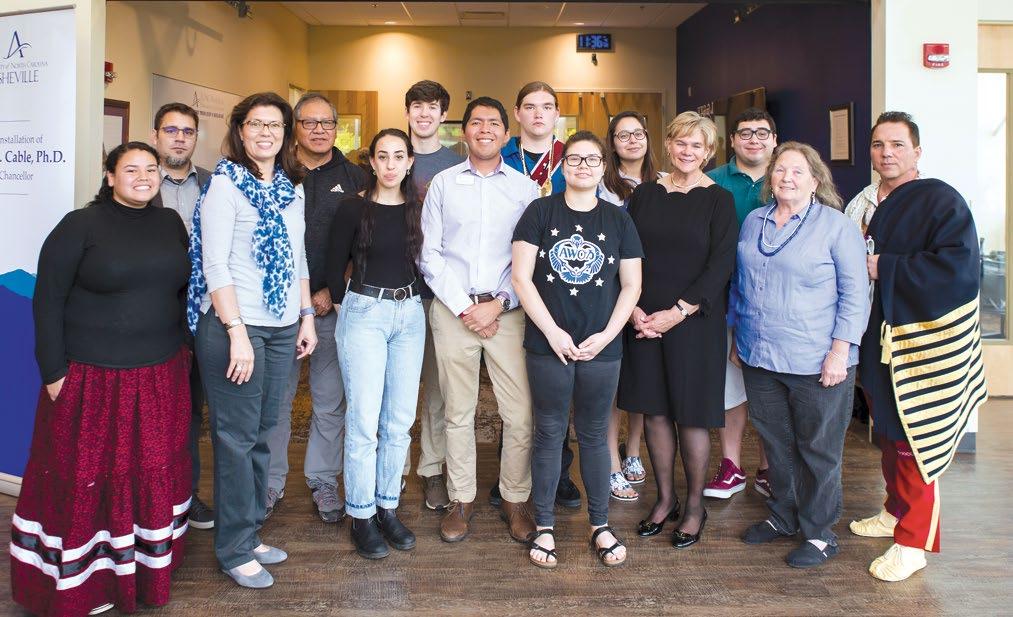
WORDS MATTER: A year before formally adopting a land acknowledgment, UNC Asheville named a room in its student union To Ki Ya Sdi, which means “the place where they race” in Cherokee. Pictured are members of UNCA’s Cherokee language program faculty, as well as members of the Eastern Band of Cherokee Indians. Photo courtesy of UNCA
LOCAL LANGUAGE
Stephanie Hickling Beckman, founder and managing artistic direc tor for Different Strokes, says she and her board “relied heavily” on the Native Governance Center guide while creating the nonprofit’s land acknowledgment. The statement is read before each performance and included in the playbill.



“We hope our statement also encourages folks to learn the truth,” Hickling Beckman told Xpress in September. “It is a shame that our children are being taught the same history I was — that Native Americans gave the land to the U.S. as a trade, leaving out the part where the U.S. did not keep their end of the bargain.”

Meanwhile, Adcock helped UNCA officials craft their own statement, which the university formally adopt ed in fall 2020. As a Cherokee person living in Cherokee territory, he says that he doesn’t need a land acknowl edgment, which led to some trepida tion in working with his employer in this capacity.
“I didn’t really want to do one,” Adcock says. “I think there were questions of ‘Who is this actually for? Who is it supposed to be benefiting? What’s the intention behind them?’”
But Adcock’s concerns were eased as UNCA worked with a community advisory group that consisted almost exclusively of native people, primarily Cherokee, to help write the statement.
“A lot of the elders in that group thought it was an opportunity to teach people about the land and about Cherokee people,” Adcock says. “I don’t think any land acknowledg ment is perfect, but I do appreciate that about ours. We wanted to talk about the history of the land, because a lot of times, they just generally say ‘land,’ but they don’t actually talk about the specific history.”
Bo Lossiah, a member of the Eastern Band of Cherokee Indians and a curriculum and instruction super visor for the Kituwah Preservation and Education Program in Cherokee, helped guide the Asheville Community Theatre board of directors through various drafts of its own land acknowl edgment. That language was submit ted to the Cherokee Tribal Council for its approval this year and accepted. Fellow EBCI member Garrett AxeLong provided the translation from English into Cherokee.


“A part or all of the statement will be recognized before each performance in order to acknowledge and show respect for the Cherokee people,” Tamara Sparacino, managing direc tor for ACT, told Xpress in September.

Lossiah says the experience was a positive one and that the theater’s
popularity means a fair number of people will encounter the statement. ACT will display the land acknowl edgment, currently available on its Facebook page (avl.mx/c60), on a plaque in the theater lobby written in both Cherokee and English.
“It’s a first step,” Lossiah says. “[On its own,] it doesn’t do a whole heck of a lot. It’s a gesture, but as long as the gesture is respectful, I’m all for it. Ultimately, though, you do want some big goal to happen.”
UNINTENDED CONSEQUENCES
The frequent lack of action asso ciated with land acknowledgments has prompted certain groups to demand revisiting the concept. The Association of Indigenous Anthropologists, for example, has requested that the American Anthropological Association stop conducting land acknowledgments and “welcoming rituals,” the prac tice of opening events with blessings from Indigenous people.
That pause, the AIA suggested, would let the anthropologists recon sider and improve the field’s rela tionship with American Indians and Alaska Natives. The controversy, says Duchenaux, exemplifies why the Native Governance Center includes suggestions in its guide for going beyond land acknowledgment.
“It offers an opportunity for opti cal allyship,” Ducheneaux says of acknowledgments. “So, some people who are not wanting to do that deeper work, that more meaningful work, can feel like they can simply put a few sentences on paper and then move on from the work that has to be done.”
He notes that examples of that work are being launched around the U.S., including a voluntary honor tax that residents of California’s Humboldt County are paying to the displaced Wiyot Tribe. Ducheneaux also applauds efforts in California, Oregon, Washington, North Dakota, Montana, South Dakota and Minnesota, where Indigenous education is being imple mented throughout the year, rath er than merely during November’s Native American Heritage Month.
Adcock supports such actions. At UNCA, as he noted in an October 2021 commentary for Xpress, the Faculty Senate has provided specific recommendations for the university to offer scholarships for Indigenous students and hire more Indigenous faculty. But he stresses that such steps and other efforts beyond aca demia can be accomplished with or without a formal statement.
“The work is the work,” Adcock says. “You don’t need a land acknowl edgment to be a good ally.” X
MOUNTAINX.COM NOV. 16-22, 2022 15
Emergency Visits • Tele-Dentistry Calls • Fri. & Sat. Openings Health Focused Mercury Safe Dentistry • Safe Mercury Amalgam Removal Technique Certified • Biological Dentistry & Products • Ozone Therapy • Digital X-rays = Less Radiation • Bio-Compatibility Test Kits Dr. Anders and Dr. Armistead’s Dental Office 3094 US 70 Hwy, Black Mountain, NC 28711 Includes cleaning, x-rays & exam Call 828-365-0194 New Patient Special $222 Build with Quality, Live with Quality For 30 years, we’ve been getting the job done on time and on budget, in a way that is respectful of the clients, the trades people and the environment. I care deeply that you are happy with your home! Mary Stewart, Owner Remodels | Additions BEFORE AFTER
clean
Looking for meaningful work?






Make a difference! Liberty corner Enterprises (LCE) is seeking full-time and part-time workers to be direct support professionals for people with intellectual and developmental disabilities.
Our employees are caring, responsible, enthusiastic professionals who support people in communication, socialization, employment, and personal care and help them develop independent living skills. LCE offers competitive wages and benefits. Applicants must be at least 18 years old and have a valid driver’s license, proof of vehicle insurance, and a minimum of a high-school diploma or GED.

NOV. 16-22, 2022 MOUNTAINX.COM 16
Save Money Conserve Energy Protect the Planet Setting the
for
energy Visit bluehorizonsproject.com to support Buncombe County’s clean energy future
Blue Horizons Project is a Program of Green Built Alliance. In partnership with the City of Asheville and Buncombe County
course
Learn more and apply today at www.lcewnc.org
We are hiring to support people with disabilities
Community service
Long-standing clubs face challenges recruiting younger members
BY JUSTIN M c GUIRE
jmcguire@mountainx.com
Before becoming a member of the Rotary Club of Asheville this year, Skyler Duncan didn’t know much about the venerable ser vice organization.
“I remember they gave scholar ships in high school and that sort of thing,” says the 30-year-old Merrill Lynch financial adviser. “My percep tions were your stereotypical ones: older members, maybe a little bit behind the times, maybe a good old boys club, for lack of a better term.”
Since joining at the urging of his neighbor, Duncan’s ideas about the club and its mission have changed. But his experience illustrates the challenge Rotary and other long-standing local groups face in recruiting millennials and Gen Zers to fill their aging ranks.
“If you break it down by age, our largest category is still people over 60 years old,” says Ross Sloan, president of the Asheville Rotary. “There has been some movement in terms of get ting in younger members, but it’s slow.”
For more than a century, local chap ters of nonprofit service groups have been a part of community life across Western North Carolina. The Rotary Club of Asheville was founded in 1915. The Asheville Kiwanis Club started out in 1919. The Canton Lions Club dates to 1938, making it a compara tive newcomer.
Like so many other institutions that trace their roots to the early 20th cen tury, these clubs are rethinking how and where they fit in an increasingly diverse, digital-driven world. As Sloan points out, Rotary started as an all-male networking group for professionals. In practice, that meant its members were almost entirely white men for decades.
“We kind of were set up for not being a terribly diverse organization,” Sloan admits. “We have for some time now been open to everybody, but I’m not sure that’s well known in the community.”
For some groups, the social disrup tion of COVID-19 created an addition al barrier to growing membership. The Asheville Kiwanis, for instance, is down to 12 members from about 30 just before the pandemic.
“Our challenge has been more awareness and people’s willingness to become reengaged in anything, whether it’s volunteering or partici
pating in meetings,” says club mem ber Jeff Pearsall.
FORGING BONDS
For Duncan, however, the pandem ic served as a motivator to get involved in Rotary. After working from home for 18 months in response to COVID19, he became worried that such long-term isolation could have serious mental, physical and spiritual ram ifications, and he vowed to become more active in the community.
Duncan’s path to Rotary member ship highlights one reason service clubs have traditionally been import ant — and what could be lost if they fail to appeal to younger generations.

Peter Nieckarz, an associate pro fessor of sociology at Western Carolina University, says membership in service organizations increases “social capi tal.” Just like the financial kind, social capital represents value: the strength of communities where people have multiple meaningful relationships out side work and family. Churches and political campaigns, Nieckarz adds, provide a similar benefit.
“It helps people feel a stronger sense of connection and a stronger sense of duty to their community,” he says. “I think these organizations do a better job of getting people to adopt similar values, much more so than people are going to get from just sitting on their couch and watching CNN or Fox or MSNBC.”
Ashley Huggins, who joined the Asheville Kiwanis Club in 2017, has
welcomed the chance to work on volunteer projects with people she never otherwise would have met.
“Often we tend to gravitate towards people who are like us: peo ple who like the same things, think the same ways,” says Huggins, a 33-year-old who works for First Bank in Fletcher. “That can cause division, which I think we’ve especially seen over the last few years. It’s helped me broaden my interactions.”
BEYOND BROOMS AND BULBS
As a woman under 40, Huggins remains a rarity in the world of local service clubs. Each is addressing age and gender diversity in various ways.
Max Bumgardner, president of the Canton Lions Club, says the group has had to brand itself differently to appeal to potential younger members. It currently has about 40 members, four of whom are in their 20s.
The Lions hold one business meeting a month at BearWaters Brewing Co. in Canton, an atmosphere seen as more welcoming to young people than the traditional downtown luncheon spots. And the group emphasizes to potential recruits that its members fundraise by working concessions for concerts at the Harrah’s Cherokee Center – Asheville.
In December, for example, members will be serving at Warren Haynes’ popular Christmas Jam. “If young er folks like to listen to music, they can sure do that while they work,” Bumgardner says.
The Lions, like other clubs, have dropped mandatory meeting atten dance requirements, which they saw as a barrier to attracting young people who value flexibility in their schedules. Some groups, including the Asheville Rotary, also offer hybrid meetings, with both remote and in-person options.
But ultimately, Bumgardner believes the best selling point for
MOUNTAINX.COM NOV. 16-22, 2022 17
AT YOUR SERVICE: In the midst of the pandemic, Rotary Club of Asheville members supported the Salvation Army’s efforts to feed and shelter hungry individuals and families. Photo courtesy of the Rotary Club of Asheville
NEWS
CONTINUES ON PAGE 19
God.
A Place To Belong. A Community That Serves. Growing In God’s Abundant Grace.
We exist to share the love of
And…we love the spiritual but not religious, local businesses, ALL neighbors, students, schools, the recovery community, artists, and elders. Sunday worship 10:45AM trinitywavl.org



NOV. 16-22, 2022 MOUNTAINX.COM 18 > edwardjones.com | Member SIPC FDI 1867L A © 2022 EDWARD D. JONES & CO., L.P. ALL RIGHTS RESERVED. AECSPAD Call or visit your local financial advisor today. Compare our CD Rates Bank-issued, FDIC-insured % APY* % APY* % APY* * Annual Percentage Yield (APY) effective 11/11/2022. CDs offered by Edward Jones are bank-issued and FDIC-insured up to $250,000 (principal and interest accrued but not yet paid) per depositor, per insured depository institution, for each account ownership category. Please visit www.fdic.gov or contact your financial advisor for additional information. Subject to availability and price change. CD values are subject to interest rate risk such that when interest rates rise, the prices of CDs can decrease. If CDs are sold prior to maturity, the investor can lose principal value. FDIC insurance does not cover losses in market value. Early withdrawal may not be permitted. Yields quoted are net of all commissions. CDs require the distribution of interest and do not allow interest to compound. CDs offered through Edward Jones are issued by banks and thrifts nationwide. All CDs sold by Edward Jones are registered with the Depository Trust Corp. (DTC). Frankie L Adkins Financial Advisor 84 Coxe Avenue Suite 100 Asheville, NC 28801 828-252-2032 6-month 4.45 1-year 4.65 2-year 4.9
SWEEP DREAMS: Members of Li ons Clubs throughout the world hold annual broom sales to benefit the blind and visually impaired and support other Lions Club charities.

Photo courtesy of the Canton Li ons Club
Lions is the work the club does in the community. Among other things, the group takes disadvantaged children on shopping trips at Christmastime and provides financial help for food-inse cure students.
Last year, the Canton Lions Club partnered with Clyde Lions Club, the town of Canton and others to put on a benefit concert for victims of the dev astating flooding in Haywood County. And the group is partnering with the Waynesville Kiwanis Club to raise funds for an inclusive playground at the Canton Recreation Park to replace one destroyed by the flooding.
“I think when younger folks see that, they say, ’Oh, these aren’t the guys that just sell light bulbs or sell brooms to raise money,’ ” Bumgardner explains.
Other groups have similar service efforts to trumpet. Kiwanis has a mis sion of “improving the world one child and one community at a time,” says Pearsall of the Asheville chapter.
Locally, that has meant adopting Johnson Elementary School and raising money to help build the Kiwanis Family Care Center at Mission Hospital’s neonatal intensive care unit. The club has also provided $50,000 in funding
and manpower to build a playground at Asheville Buncombe Community Christian Ministry’s Transformation Village, which provides transitional housing for homeless women, mothers with children and veterans.
OPEN ARMS
Rotary, Kiwanis and Lions have all allowed women members since 1987 — the result of a national antidiscrim ination lawsuit — and each organi zation says it now makes recruiting female members a priority. Sloan points out that 53 of the local Rotary’s 150 members are women.

“We would like it to be more reflective of the overall population in Asheville, but it is moving in the right direction,” he says. Rotary also has a Diversity, Equity and Inclusion Committee and has partnered with Black Wall Street AVL to offer busi ness coaching and other programs.
But it’s not enough to simply hang up an “All are Welcome” sign, Sloan says. “You’ve got to be deliberate about reaching out to people in all segments of the community to let them know who you are and what you’re about, and encourage them to visit and consider joining you.”
That approach worked for 26-yearold Cassidy Harbison, who initially figured the club wasn’t particularly welcoming to young professionals. But a chance meeting with the thenclub president at a UNC Asheville basketball game convinced her to attend a meeting.
“There were a few young profes sionals in the room, and that is when my perception immediately changed,” says Harbison, assistant director of athletic advancement and game day operations at UNCA. “I knew that I did not have to look for other service clubs to fit my season of life, that Rotary could do just that.”
Since joining the club in March, Harbison has become active in sev eral Rotary activities, including head ing up its Public Image Committee. Fellow newcomer Duncan likewise serves as co-chair of a committee that addresses climate and the environ ment, issues of particular interest to him. That committee has engaged with local actions such as a proposed Asheville city ordinance that would regulate single-use plastic.
Equally fulfilling, Duncan says, has been his work with the International Committee, which has raised grant money for Rotary chapters in South America and Asia to support recycling and telemedicine efforts in rural areas.
“That international presence is real ly impressive to me,” Duncan says. “I never knew that that was something that Rotary was part of.” X
Welcoming new team members
Sam Ruark is the executive director of Green Built Alliance. The nonprofit is dedicated to advancing sustainable living, green building and climate justice through community education, inspired action and collabora tive partnerships.
Xpress : What about this year’s volunteer/staff work gives you hope about your nonprofit’s mis sion and its overall impact on the community?
Ruark : We are fortunate to have a bright, passionate and dedicated staff at Green Built Alliance, which is also supported by our powerful board of directors and caring crew of volunteers. Each person on our team has a personal and profes sional commitment to sustainabil ity and strives each day to make our community and world a better place. Our efforts to serve the community include weatherizing and repairing vulnerable homes through Energy Savers Network; facilitating the installation of solar energy systems on low-in come homes through Neighbor to Neighbor Solar; charting the course for our region’s clean ener gy future through Blue Horizons Project; certifying high-perfor mance residential construction through Green Built Homes; and funding solar energy systems on local schools and nonprofits through Appalachian Offsets. These combined efforts give me hope in fulfilling our mission for the community.
What has been the most chal lenging aspect of operating your nonprofit this year?
The most challenging aspect of running Green Built Alliance this year has been navigating staffing changes we experienced in the spring. Four staff departed, and
we hired five in the course of two months. That dynamic tran sition led to creating better sys tems for managing and growing our staff. Fortunately, we have hired, trained and integrated a fantastic team that I am proud to work with each day in serving this community.
How have the last 2 1/2 years reshaped the way your nonprofit operates, and do you see these changes as permanent?
Going from working full time in the office together to all remote for most of 2020 and 2021, to hybrid work this year, elevated our need to adapt while navigating uncer tainty. During this time, our team grew, took on new projects and programs, moved offices, navigat ed multiple cases of COVID, let go of all in-person events for an extended period and sought to diversify our funding with more support from private donors. These times have tested our resilience, and I am happy to say that we have navigated these times well despite the various challenges. While we are back to hosting and tabling at in-person events, many meetings are still being held virtually, which probably will continue.
MOUNTAINX.COM NOV. 16-22, 2022 19
NEWS
Whatever it takes
Community reflection
BY EDWIN ARNAUDIN
earnaudin@mountainx.com

Plenty of structures in Asheville have housed various businesses over the years, but if the walls of the Conabeer Motor Building could talk, they’d share some of the city’s most diverse tales.
However, with steady foot traffic to and from neighboring breweries and restaurants in the popular South Slope area, plus the 500-unit Ironwood mixed-use complex on Asheland Avenue currently under construction, odds are most locals and tourists alike walk by the building unaware of its storied past.
“I think in a city like Asheville, with so many historic buildings that have been preserved and reused for various purposes over the years, it’s always a positive thing to examine and share the history of a space,” says Katherine Calhoun Cutshall, collec tion manager for Buncombe County Special Collections. “Knowing the story of a structure brings it life and character that can encourage folks to continue to care for the building for years to come.”
FLOOR MODELS
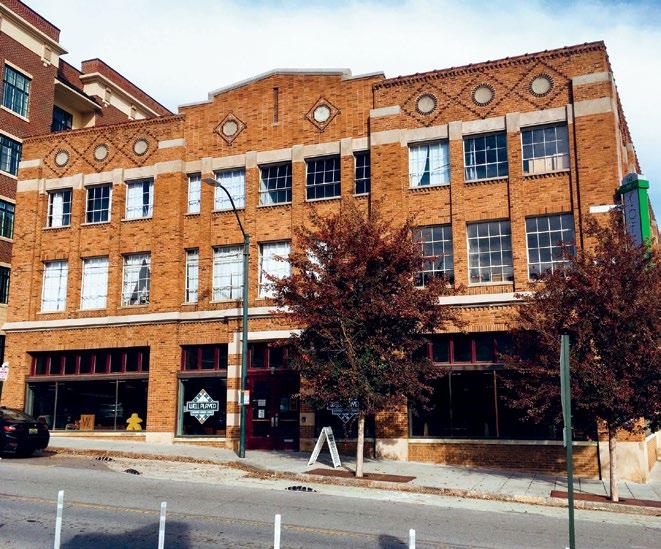
Built in 1928 and designed by the architectural firm of Beacham and LeGrand, the three-story space at 162-164 Coxe Ave. has been home to Well Played Board Game Café since the summer. But true to its name, it was originally the site of a car dealership — part of the city’s first “motor mile” that included numer ous automotive businesses. The street’s namesake, the Coxe family, developed the property and leased it to the Conabeer Motor Co., a local Chrysler dealership whose tenure eventually changed the site’s name to the Conabeer Chrysler Building.

Well Played owner Kevan Frazier, who’s also an urban historian, sees evidence of that initial purpose in the ground-floor space, now designated as Suite 101. Of particular interest is the floor itself, composed of a checkered square pattern with each
shape containing hundreds of small er individual squares.
“This was the showroom, thus the beautiful tile floor — which for a board game café, we were like, ‘Hell yeah!’” he says.
Like the floor, the tall glass windows that increased the former cars’ visibil ity to passersby remain intact, and the curved walls behind Well Played’s main counter are also original.
“From what we understand, they brought the cars in from the back to set in the display. There’s no sign that the front doors were wide enough,” Frazier says. “The second floor was parts, and the third floor was storage for the cars.”
Though Frazier notes that mul tiple buildings in town had car ele vators — 192 Coxe Ave. still has an operational one — the Chrysler
Conabeer Motor Building sports an unusual history
Building used a ramp system to move cars from floor to floor. But in the 1950s and ’60s, the nationwide trend of suburbanization had moved many residents and businesses out side Asheville and coincided with car dealerships needing more land and moving out of downtown showrooms.
NEW IDENTITIES
By 1953, Charlotte-based shirt man ufacturing firm Kar-Lyn took over the space, opening a garment plant at 162164 Coxe Ave. that employed 100 peo ple. As late as 1958, it shared the build ing in some capacity with local dealer Dorato Motors, but in November 1974, with the shirt company gone, furniture store Factory Sales & Surplus took over the lease and occupied it until closing in February 1999.
Various charity organizations then had a presence in the building. The Asheville Citizen Times reports that Asheville Buncombe Community Christian Ministry hosted its Sharing Affair Auction there in July 2000, followed by the Asheville Jaycees sponsoring a holiday charity auction in November 2001. And a December
2003 article mentions the space as the headquarters of the Asheville Optimist Club’s Santa Pal project, which pro vided toys to families in need.
In February 2001, developer George Morosani announced that work should begin in the next couple of months to turn the structure into an office building with a parking deck next door. Though he anticipated the project’s completion by the end of the year, it wasn’t until six years later when developer Alexander Reagan LLC made that plan a reality.
“Historic buildings are inherent ly sustainable because they reuse something that is already built, while at the same time preserving the architectural soul of the community,” Jack Shrode, director of construc tion for the company, told the Citizen Times in May 2007.
BEER TO BOARD GAMES
The Conabeer Chrysler Building was listed on the National Register of Historic Places in 1979. Frazier notes that the U.S. Department of the Interior, which awards such distinc tions, primarily protects the exterior
NOV. 16-22, 2022 MOUNTAINX.COM 20
NEWS
BLAST FROM THE PAST: The historic Conabeer Motor Building maintains its original floor tile, columns and several other features in its current iteration as the home for Well Played Board Game Café. Photo by Josh Davis
Give online to 48 local nonprofits & get stuff back! GIVELOCALGUIDE.ORG NOW!
of buildings. In turn, he says, 162-164 Coxe’s zoning within the central busi ness district allows for a fair amount of interior changes. Upon moving in, Frazier found a floor plan for tallwalled cubicles that were installed, as well as other evidence of moderniza tion during the building’s office era.
“We have lots of weird electrical that doesn’t make sense,” Frazier says. “We have all these boxes that have nothing attached to them. We found an old hole where they had run the power down on a column. I don’t know if it distributed to the cubicle’s cubes or not, but all of it got pulled out.”
When Tasty Beverage Co. leased the space in 2014, just as the South Slope beer district was coming into its own, Johnny Belflower moved his business into an open room. The bot tle shop and taproom’s pilot location in Raleigh is likewise in a century-old building — a former freight depot — and while Belflower feels that historic spaces have a lot of charm and beauty, being a tenant can come with headaches and limitations.
“To increase our maximum occu pancy [at 162-164 Coxe], the doors — which had always swung into the building — needed to swing out, but because of the historic designation, that required a special exemption,” Belflower says. “And while all that natural light is wonderful, sin gle-pane glass isn’t the most efficient for that many windows, so electricity bills were fairly costly.”
Other than repainting and adding its own logos, the Well Played team didn’t change much after Tasty vacat ed the space in fall 2020 due to the COVID-19 pandemic. Frazier says he and his colleagues did some reconfig uration of the bar to increase space, turned the small dish pit where Tasty cleaned glasses into a kitchen and, in what required the most work, convert ed what had been an employee break room into the dish room.
Far less effort was required to find space for Well Played’s game collec tion. Tasty had housed its coolers on the far wall that runs parallel to Coxe, and in that vacated space, the shelving that houses the games slid in remarkably well.
“It fits within 8 inches,” Frazier says. “We have a little 4-inch gap on each side. We were like, ‘This is meant to be.’”
PRESERVATION GAMES
Since 2012, the building has been owned by Mark Maynard of Wilmington-based Tribute Properties. His son Matt Maynard, co-executive managing director of investment and development, only had two requests for Well Played: Don’t destroy the columns and keep the floor as intact as possible.
“This floor has had very little major damage to it. You’ll see a missing tile here or there, but even the way we’ve got the bar in, if the next folks pull it, the most they’re going to have are a few broken tiles from some screws or things,” Frazier says. “We designed on purpose not to put in a floor drain or anything like that. This floor has made it almost 100 years, and I’m not going to be the guy who keeps it from getting to 100.”
What do you remember?
Frazier adds that, based on the cornice molding and row of windows atop the main large plates of glass, the space’s ceiling would have initially been open and wouldn’t have had exposed pipes, which provide sewer and HVAC services for the condos that are current ly on the second and third floors.
The mix of new and old works well for Frazier, despite such quirks as the thick original walls that he says, “beat our Wi-Fi to pieces.” Considering the breadth of history that’s passed through the space, he feels it indicates Asheville’s changing nature and thinks it’s healthy that so many different busi nesses have called the building home.
“I appreciate in cities when you do see that sort of evolution,” Frazier says. “I think part of the reason why when the Department of Interior stan dards were created, the compromise was about the focus on the outside rather than the inside. The insides are going to change in buildings, but to be able to preserve that architectural style outside is more important.” X
This look at the history of 162-164 Coxe Ave. is far from a complete one, and what better way to fill in the gaps than to consult our readers? In particular, we’re curious to find out:
• When did the Conabeer Chrysler Building stop being an automobile showroom?
• Which businesses rented space during its office/cubicle era?


• Did multiple businesses occupy it at the same time on different floors?
• If you have answers or know other interesting facts about the building, please email them to news@mountainx.com with the subject line “Conabeer Chrysler Building.”
MOUNTAINX.COM NOV. 16-22, 2022 21
CENTURY STATUS: As it closes in on its 100th year, the Conabeer Motor Building seems likely to remain a South Slope staple for decades to come.
Photo by Thomas Calder
WNC Nature Center opens new exhibit

The latest addition to the Western North Carolina Nature Center isn’t a cuddly red panda or slithering snake — instead, it’s focused on life that grows up from the ground. In partnership with the WNC Farmers Market, the Nature Center launch es its Educational Farmers Market Garden starting Wednesday, Nov. 16.
The new exhibit focuses on sus tainable relationships between agriculture and nature. Using eco logically friendly practices such as rainwater harvesting, composting and companion planting, the garden generates produce for the Nature Center’s animals.
An educational kiosk outlines the garden’s life cycle, explains how the zoo uses fruits and vegetables and describes potential agricultural careers in kid-friendly language. The WNC Farmers Market is also explor ing other ways to partner with the Nature Center, such as sourcing local watermelons, pumpkins and trees to use in animal activities.
“The WNC Nature Center’s mis sion is to connect our guests with the plants and animals of the Southern Appalachian Mountains,” said Chris Gentile, the center’s director, in a press release announcing the exhib it. “Because of this partnership, we now have the opportunity to show how agriculture as an industry has shaped our region.”
Buncombe composting program celebrates successful year
A residential composting program managed by Buncombe County and the city of Asheville has diverted roughly 56 tons of food scraps from the county landfill since launching last September. The initiative, which began with a single drop-off point for organic material at Asheville’s Stephens-Lee Recreation Center, now serves four locations and is slat ed to add up to three more over the next year.
Other drop-off points include the Buncombe County Landfill in Alexander (which also accepts used cooking oil for recycling), the Murphy-Oakley Community Center and the West Asheville Library. The county encourages residents to follow @BuncombeRecycles on Instagram for regular updates and visit avl.mx/c5f for more information.
A recently released report sug gests that Buncombe has plenty of opportunity to expand its compost offerings. According to a waste characterization study completed for the county by consulting firm SCS Engineers, nearly 37% of the county’s residential waste stream — nearly 113,000 tons in 2020 — con sists of compostable matter, such as food scraps, compostable paper and yard waste.
Composting all the organic material that currently ends up in the landfill would avoid the equivalent of 13,390 tons of carbon dioxide emissions per year, the approximate impact of tak ing 2,800 cars off the road.
Energy Savers Network expands offerings
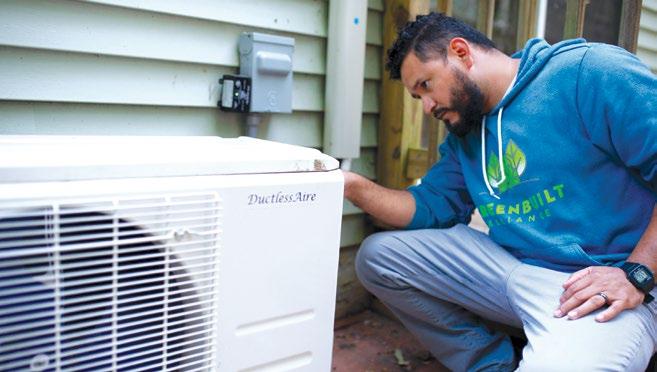
Programs available through the Energy Savers Network, an initiative of Asheville nonprofit Green Built Alliance, are offering new ways for low-income residents to save money on energy costs while combating climate change. Households with income at or below 200% of the fed eral poverty limit ($27,180 for a single person, $55,500 for a family of four) can receive free energy efficiency upgrades, heating system repairs and new electric heat pumps.
ESN is also expanding its Neighbor to Neighbor solar program, which provides free solar energy systems to low-income households. Roughly 16 systems will be installed by Asheville’s Sugar Hollow Solar over the next three years.
“Addressing climate change has to include everyone, especially those who pay the highest price for it, in order to make meaningful change and create a better future for all,” says Kelvin Bonilla, ESN’s project manager, in a press release. “The ease of signing up for the program brings down barriers that these fam ilies typically face when trying to access services in the community.”
Since its founding in 2016, ESN has provided energy efficiency upgrades to over 850 homes, in total eliminating 620 metric tons of carbon emissions. More information and applications for services are available at avl.mx/aiz.
Community kudos
• Barnardsville resident Reid Woolsey set a new world record for the most elevation gained by trail running over the course of a month. From Oct. 1-31, Woolsey ascended over 500,000 feet while running more than 990 miles on the Woody Ridge Trail and other trails in Pisgah National Forest. The previous record, set by Colorado resident Chris Fisher last year, was just over 400,000 feet.
• Two local nonprofits, the Southern Appalachian Highlands Conservancy and Conserving Carolina, recent ly celebrated the opening of the Strawberry Gap Trail, a 3-mile hik ing path in Gerton. The route ter minates at Blue Ridge Pastures and connects with the Trombatore Trail; the nonprofits eventually hope to connect over 100 miles of area trails through the Upper Hickory Nut Gorge Trail Loop. More information is available at avl.mx/c5b.
• Mountain BizWorks announced that 11 local outdoor businesses will be supported as part of the Ashevillebased nonprofit’s Waypoint Accelerator Program. The initiative provides coaching, networking and access to capital for startup enter prises seeking to grow. Chosen businesses include sleeping bag manufacturer Lucky Sheep, e-bike tour company The Flying Bike and therapeutic adventure program PIVOTPoint WNC. A full list of par ticipants is available at avl.mx/c5a.
• Multiple WNC projects received grants from the N.C. Department of Environmental Quality as part of a $6.8 million investment in elec tric vehicle infrastructure. Funded work includes a rapid charging sta
NOV. 16-22, 2022 MOUNTAINX.COM 22
NEWS GREEN ROUNDUP
GRAB IT AND GROWL: Produce grown at the WNC Nature Center’s Educa tional Farmers Market Garden provides nutrition and fun for the zoo’s many animals. Photo courtesy of Friends of the WNC Nature Center
COOL JOB: Kelvin Bonilla inspects a heat pump as part of the Energy Savers Network’s effort to improve energy efficiency for low-income local residents. Photo by Pat Barcas, courtesy of Green Built Alliance
tion on Hendersonville Road near Interstate 40, three charging points in Waynesville and three public charging points in Brevard. More information is available at avl.mx/c5c.
• This year’s U.S. Capitol Christmas Tree is being harvested from Pisgah National Forest. The 78-foot red spruce, known as Ruby, is currently traveling throughout the Southeast and is scheduled to arrive in Washington Friday, Nov. 18.
Save the date
• The Asheville-based nonprofit Blue Ridge Parkway Foundation cele brates its 25th anniversary with a fundraiser at Highland Brewing Co. on Thursday, Nov. 17, 5:30-7:30 p.m. Attendees will enjoy drinks, hors d’oeuvres and live music, along with updates on projects throughout the park. Tickets are $25 and may be purchased at avl.mx/c58.




• The No Man’s Land Film Festival returns to New Belgium Brewing on Tuesday, Nov. 29, at 7 p.m. The free event, presented in partnership with Asheville nonprofit MountainTrue, features adventure and outdoors films made by women, with the goal
of providing “a platform for pro gressive thought and movement in the outdoor industry.” An online screening will also be offered for those who cannot attend in person. Registration and more information are available at avl.mx/c59.
• Bullington Gardens, the Hendersonville horticultural edu cation center, holds its 18th annual Holiday Craft and Greenery Sale on Friday-Saturday, Dec. 2-3. Locally grown holiday plants such as cycla men, amaryllis and poinsettia will be available, as will fresh-cut WNC Fraser firs, garlands and wreaths. Christmas trees and other greenery must be ordered by Monday, Nov. 21, at avl.mx/c56.
• The Creation Care Alliance, a faithbased initiative of MountainTrue, hosts a symposium and retreat Monday-Tuesday, Feb. 6-7. The event features workshops on climate resilience, eco-grief support, solar power and engaging with Indigenous communities, as well as a keynote address by Avery Davis Lamb, co-director of the national nonprofit Creation Justice Ministries. Early registration is available through Friday, Dec. 9, at avl.mx/c57.
 — Daniel Walton X
MOUNTAINX.COM NOV. 16-22, 2022 23
Caring, Compassionate, Kindness to Native Wildlife
South
wildforlife.org southasheville.wbu.com
Sponsored by Wild Birds Unlimited
Asheville
Junior: Wildlife Ambassador since 2005
Five takeaways from Buncombe’s 2022 general election
Regardless of political affiliation, Buncombe County residents can feel good about one result from this year’s midterms: The county’s voter turnout of almost 57% substantially exceeded the statewide rate of 50.5%. While less than the high-water mark of 60.4% set in the 2018 midterms, the rate of democratic participation was still strong compared to that of previous years.
Preliminary results from those voters show clear victories in local races. Buncombe’s Election Services emphasizes that those wins won’t be official until certi fication by the county Board of Elections, slated for Friday, Nov. 18. The vote totals listed on the N.C. State Board of Elections website (avl.mx/c61) may change slightly before that point as mailed bal lots and military/overseas ballots are counted.
The unofficial results, released Nov. 8, still have much to say about the future of Buncombe’s leader ship. Below are five key takeaways from the night; more coverage is available through the Xpress elec tion live blog at avl.mx/c62 and the voter guide at avl.mx/xmasjbi.
EASY BEING BLUE

The last Republican to represent Buncombe residents at the county level, Robert Pressley, is out of a job. The incumbent lost his District 2 seat on the county Board of Commissioners to Democrat Martin Moore, a first-time candidate and chair of Buncombe’s appointed Board of Adjustment, by nearly 10 percentage points.
“I think the community’s ready for some change,” Moore told Xpress at an election night watch event sponsored by the Buncombe County Democratic Party.
Granted, many incumbents main tained their seats, including Al Whitesides and Amanda Edwards in their respective District 1 and 3 reelection campaigns. The county’s governing body now consists solely of Democrats; the party also retained the countywide position of sheriff with incumbent Quentin Miller’s
24-point win over Republican Trey McDonald
Constituent conversations had revealed public safety as a major issue, Moore noted in speaking with Xpress . The newly elect ed commissioner said he hoped to work with Miller on initiatives that would be “effective, inclusive and transparent.”
BEACH-FERRARA BEATS EXPECTATIONS
At the federal level, however, Buncombe County will be represent ed by a Republican. Chuck Edwards won the U.S. House District 11 contest, having previously defeated incumbent Madison Cawthorn and other GOP hopefuls in an eight-way May primary.
Yet Edwards’ Democratic oppo nent, Jasmine Beach-Ferrara , mounted a stronger campaign than many outside observers antic ipated. While political analysis outlet FiveThirtyEight estimated that the district favored a generic Republican by 14 percentage points this year, Edwards’ margin of victo ry was less than 10 points. In 2020, Cawthorn defeated Democratic challenger Moe Davis by more than 12 percentage points.
Beach-Ferrara did particularly well among early voters, besting Edwards by about 4 percentage points among that group. But as noted by Western Carolina University political science pro fessor Chris Cooper , registered Republicans are more likely to vote on Election Day; those votes ulti mately earned Edwards the win.

COUNTY CHA-CHING
Buncombe’s government will have $70 million more to spend fol lowing voters’ approval of two bond referendums. The two measures authorize $30 million in borrowing for land conservation projects, as well as $40 million in bonds to sup port affordable housing. The county projects that the median household will pay roughly $32 per year in additional taxes to support the debt.
NOV. 16-22, 2022 MOUNTAINX.COM 24
NEWS BUNCOMBE BEAT in the spirit issue Publishes December 14th For advertising, contact 828-251-1333 x 1 advertise@mountainx.com
Both measures passed by mar gins of over 23 points, in line with April polls conducted for the coun ty by the nonprofit Trust for Public Land. Many powerful communi ty institutions had campaigned on behalf of the bonds, includ ing the Asheville Area Chamber of Commerce, RiverLink and the Land of the Sky Association of Realtors. Opposition, coming from figures such as urban planner Joe Minicozzi , largely focused on cri tiques of the county’s fiscal man agement and tax policy.
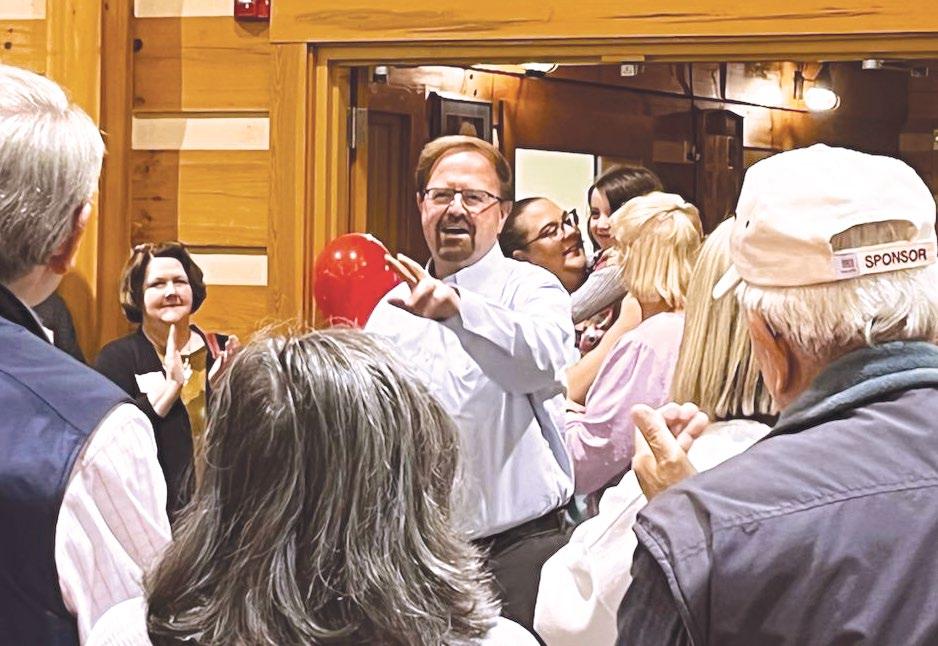
“I’m glad that the voters of Buncombe County understand the value of those investments for the long term,” said Julie Mayfield after preliminary results were announced. Mayfield, a Democrat who won her reelection campaign to represent Buncombe in the state Senate, also serves as co-director of Asheville nonprofit MountainTrue, which endorsed the bond campaign.
FRESH FACES IN RALEIGH
The county’s General Assembly delegation remains mostly Democratic, but three of those seats will be held by first-time can didates. Democrats J. Eric Ager , Lindsey Prather and Caleb Rudow all carried their House races in Districts 114, 115 and 116, respec tively. (Although Rudow was an incumbent, having been appointed in January to replace retiring Rep. Susan Fisher , Nov. 8 marked his first election.)

“I worked really hard to build a reputation in the community as somebody who cares mostly about democracy and voter participation overall,” said Prather, when asked about her approach to the cam paign. “Education is and should be bipartisan, and my background as a teacher, I think, told people they could trust me and that I cared about the community.”
Some county voters will also have new state Senate represen tation in Republican Warren Daniel. The Morganton incumbent, whose District 46 was redrawn this election cycle to include much of Buncombe’s east, earned a 20-point
win over Democrat and Marion City Council member Billy Martin. Senate District 49, covering the city of Asheville and western Buncombe, will continue to be represented by Mayfield.
The balance of power in Raleigh continues to be split between the Republican-dominated legislature and Democratic Gov. Roy Cooper. Republicans were hoping to win two-thirds of General Assembly seats, thereby gaining the authority to override Cooper’s veto, but are projected to miss that mark by one seat in the House.
THE POWER OF ENDORSEMENTS
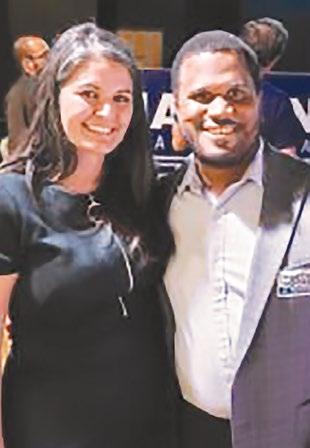
Local candidates backed by influential community groups did well in this year’s midterms. In the Asheville City Council race, all three of those endorsed by the Western North Carolina Sierra Club — incumbents Antanette Mosley and Sheneika Smith , along with former city sustainability director Maggie Ullman Berthiaume — earned seats on the city’s governing body. Mayor Esther Manheimer was endorsed by the club as well
and prevailed in her reelection campaign against Council member Kim Roney
Area educator organizations also saw most of their preferred candi dates picked for local school boards. Kim Plemmons , Judy S. Lewis and Rob Elliot , who each won their contests for the Buncombe County Board of Education, had been endorsed by the Asheville City Association of Educators, Buncombe County Association of Educators and Asheville-Buncombe North Carolina Retired School Personnel. That backing may have been particularly important for Elliot; his race against Sara Disher Ratliff was the closest of the three, with less than a four-point margin of victory.
In the first election for the Asheville City Board of Education, three of the four candidates support ed by the educator groups earned a seat: Amy Ray , Liza EnglishKelly and Rebecca Strimer. The last of those endorsed candidates, Jesse J. Warren, finished fifth in the eight-person field, with Sarah Thornburg filling the other avail able school board slot.
— Daniel Walton X
MOUNTAINX.COM NOV. 16-22, 2022 25
SAY HELLO: Republican Chuck Edwards will represent Western North Caro lina in the U.S. House of Representatives, replacing incumbent Madison Caw thorn. Photo by Jessica Wakeman
FIRST TIME’S THE CHARM: Demo crat Martin Moore, right, bested in cumbent Republican Robert Press ley to earn a seat on the Buncombe County Board of Commissioners in his first campaign for public office.
20 2 2 20 2 2
Photo by Able Allen
Buncombe schools welcome Superintendent Rob Jackson
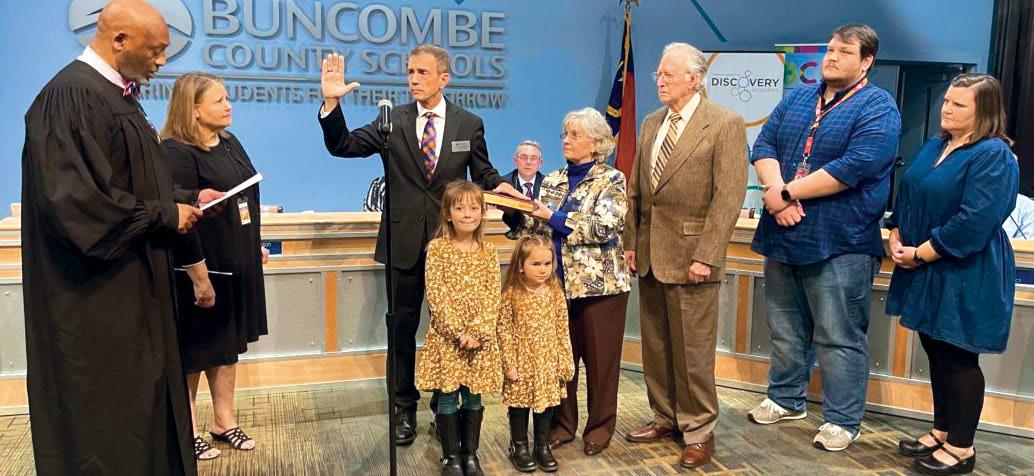
The Buncombe County Board of Education’s Nov. 3 meeting was full of warm welcomes and heartfelt goodbyes as school leaders embraced newly appointed Buncombe County Schools Superintendent Rob Jackson and paid tribute to outgoing board members Cindy McMahon and Pat Bryant Jackson’s selection had been announced in September, but his oath of office during the meeting marked the official start of his tenure as super intendent. Jackson follows former Superintendent Tony Baldwin, who retired Nov. 1 after serving over 13 years in the position and almost 40 years as an educator in North Carolina.
As outlined in a Sept. 23 press release, Jackson is a Buncombe County native and grew up in Swannanoa. He graduated with a teaching degree from Western Carolina University and worked in Buncombe County Schools for nine years, then moved into leadership positions in Gaston and Union county schools. His most recent role was superintendent of Carteret County Public Schools, near Morehead City.
“As a former student, as a former employee of this great school sys tem, I know the caliber of teachers, administrators and staff that the school system has brought together to serve the children of Buncombe County. I’m looking forward to get ting to know each one of them, to get to know our school system,” Jackson said during the meeting. “Even though this is a year of change, even though there are challenges before us, still I am confident that this will be our finest year ever.”
Acknowledging some of those changes, the board then recognized the departing Bryant, who has rep

resented the Erwin District for the last 16 years, and McMahon, who has represented the Reynolds District for the last eight years. Both board mem bers told Xpress in September that the board was ready for fresh voices.
“It has been a pleasure to serve with both Pat and Cindy,” said board Chair Ann Franklin. “And I will say at the beginning that we haven’t always agreed. But we have always worked for the good of the students in this county and for Buncombe County Schools in general.”
Buncombe midterm voters picked Kim Plemmons and Rob Elliot to fill the respective vacancies in the Erwin and Reynolds districts. (Judy Lewis, the only incumbent to seek reelec
tion this year, also won her race and will continue to represent the Enka District.) All three candidates were endorsed by the Buncombe County Association of Educators and other local teacher groups.
BCS adopts 2022-23 budget
The school board also unanimously approved its $405.5 million 2022-23 operating budget, with no comment from board members. The budget includes an $81.6 million allotment from Buncombe County, represent ing an $8.7 million increase over the county’s fiscal year 2021-22 allocation.
That increase will be used to raise average wages for teachers and other certified staff by 2.5%. Pay for non certified staff, such as custodians, will be bumped by 2.5% or to at least $15 per hour to help attract and retain those employees.


Unfunded this year are nearly $8.1 million in cost-of-living pay increas es that had been recommend ed in a salary study by Hickorybased HIL Consultants. Baldwin had requested money to support those raises from the Buncombe Board of Commissioners, but the county instead plans to fund the increases gradually through fiscal year 2024-25.
— Brooke Randle X
NOV. 16-22, 2022 MOUNTAINX.COM 26
BUNCOMBE BEAT NEWS specialty shops issue 2022 advertise@mountainx.com Publishes December 7!
SWEARING-IN SCHOOL: Buncombe County Schools Superintendent Rob Jackson, hand raised, takes his oath of office from Chief District Court Judge Calvin Hill during the Buncombe County Board of Education meeting Nov. 3. Photo courtesy of BCS






MOUNTAINX.COM NOV. 16-22, 2022 27 Integrating learning with the outdoors we inspire our students to be their best selves. Come be part of our community! Teaching grades K-8 in an engaging, challenging way thelearningcommunity.org | 828.686.3080 where children love to learn Accepting Applications Now Learn more at thelearningcommunity.org








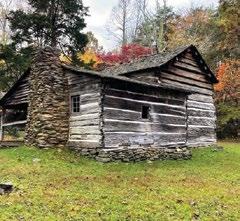
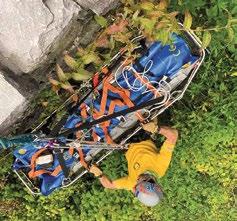



NOV. 16-22, 2022 MOUNTAINX.COM 28 Become a Friend! Your support funds special projects and programs of Great Smoky Mountains National Park. Trail Rehabilitation | Visitor Amenities | Conservation | Historic Preservation Education | Search & Rescue | Wildlife Management FriendsoftheSmokies.org Friends of the Smokies is an official 501(c)3 nonprofit partner of Great Smoky Mountains National Park.
Q&A: Alfred D. Green on bringing chess to the community
After years in and out of prison, Alfred D. Green knew he had to make a change. “I started studying myself [while incarcerated in 2009],” he says. “I sat down, opened up my eyes to the destruction that I had already did and started paying attention [to myself and my surroundings].”
He and his fellow inmates, he observed, rarely received positive feedback. “I noticed when guys were doing good things, like getting a GED, no one was really praising them or let ting them know they did a good job.”
In response, Green launched a mag azine to highlight such achievements. “I wrote it on state paper, made copies and sent it by way of other inmates to other wings and pods,” he explains.

Upon his release in 2014, the Asheville native and former Hillcrest Apartments resident continued his quest to be a force for positive change. Connecting with Michael Hayes, founder of the local nonprofit Umoja Health, Wellness and Justice Collective, Green became a certified peer support specialist.
This work ultimately led to the formation of his nonprofit, Young Struggle, which officially launched in 2021. Along with working with area youths, the organization is active in feeding the area’s homeless population and providing emotional support to these community members.
“I look at people as a part of me,” he says. “Whatever their struggle may be is a struggle that I’ve gone through, a struggle I recognize or a struggle that I’ve seen. If I have the education and lived experience of what’s going on, I can help them to navigate the situation without going through what I went through.”
Earlier this fall, Green hosted his first — of what he hopes to be many — chess tournaments at the Hillcrest Apartments community center. The event, he explains, aimed to bring the community together while introducing youths of color to the game. Among the 18 in attendance were Buncombe County Sheriff Quentin Miller, Keynon Lake of My Daddy Taught Me That and Rob Thomas of the Racial Justice Coalition.
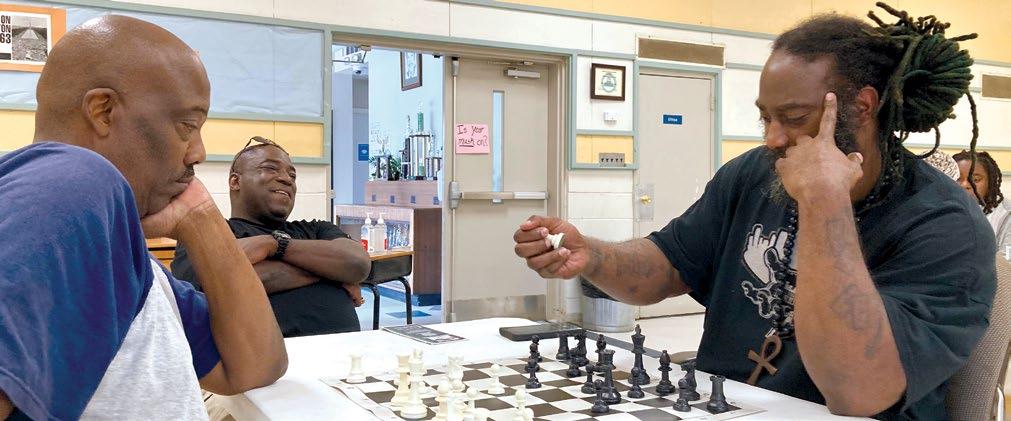
“It was a great vibe. It was great con versations and dialogue on ways that we can come together and bring unity in our communities with law enforce ment and nonprofits,” Green recalls.
Xpress recently sat down with Green to discuss Young Struggle, what it means to be proactive within the
community and how chess is more than just a game.
This interview has been condensed and lightly edited.
Xpress: What inspired you to launch your nonprofit?
Green: I want to bring unity into the community. We can ask for solutions to help change teens who are shooting at each other and fighting in schools, but if we can’t give them something or someone positive to look at, then it’s like there’s no one there for them.
Through heart, mind and soul, we’re able to put stuff together and make it work. I’m one of those people that is going to help put it together. I want to work with my city to come up with solutions. It may take time, but I’m going to chip away at it because it’s in my path to make this work.
What was it that led you to host a chess tournament?
I wanted to have a citywide com munity chess match. The hope was to get all the kids and adults from Asheville to come together to show these kids something different than the aggression, the anger and the violence that’s going on in our city.
When it comes to African American culture, kids only look up to sports fig ures or rappers. I wanted to give them something different to look at. Chess is a noncontact, thinking situation. And you know, chess is a part of life. It is the perfect game for life. It teaches you how to strategically move through obstacles and barriers. It gives you the
ability to sit down and put together a calculated move that’s positive. What most surprised you about the chess tournament?
I had a dialogue with an officer from the sheriff’s department. He wanted to know how I related chess with life. I told him you just look at it as you would life. He asked me to walk him through it — to show him the most important piece on the chessboard.
I was like, it varies between different people. It depends on how you move in life and what you value the most. If you value your kids the most, then a lot of people see the pawns as their kids. If you value your mother the most, then a lot of people value the queen. It’s really all how you look at life and what you value.
He wanted me to give him other scenarios like parenting and the police structure and how chess could apply to these situations. That conversation shocked me. And I shocked him with moving pieces and having a conversa tion that he was able to relate to.
What’s the most important aspect of your work?
That it’s not about me. I’m just a reflection of who these people are. I’m a reflection of their greatness because we’re all equally moving. Some of us just have the platform, and some of us don’t. For those who don’t have a plat form, I’m standing on a platform that is yours. We’re standing on it equally.
— LA Bourgeois X
MOUNTAINX.COM NOV. 16-22, 2022 29
FEATURES
YOUR MOVE: Alfred D. Green, right, plays a game of chess against Buncombe County Sheriff Quentin Miller during a tournament Green organized in September. Also pictured is Chief Deputy Don Eberhardt, center, of the Buncombe County Sheriff’s Office. Photo courtesy of the Buncombe County Sheriff’s Office
WELLNESS
Therapeutic Recre ation: Wednesday Morning Movement
A variety of physical activities such as active games, aerobics and dancing. Open to indi viduals ages 17+ with disabilities - participants who cannot meet eligibility requirements can attend with a 1:1 worker. Contact the Therapeutic Recreation Program at (828)2324529 for additional information.
WE (11/16, 23), 10am, Tempie Avery Montford Community Center, 34 Pearson Ave
Zumba Gold for Adults 50+
This free class helps work on mobility while moving to the beat to burn off calories. Every Wednesday and Friday.
FR (11/19), WE (11/16, 24), 11am, Linwood Crump Shiloh Community Center, 121 Shiloh Rd
Men's Cancer Support Group

Safely meet in a large conference room and stay socially distant while wearing masks. RSVP to Will at (412)913-0272 or
acwein123@gmail.com.
WE (11/16), 6pm, Woodfin YMCA, 40 N Merrimon Ave, Ste 101 Dementia Partners Support Group AVL
Providing a social setting for individuals to meet and discuss coping techniques, share experiences, and present resource speakers from a variety of agencies.
TH (11/17), 6pm, Scenic View Terrace Clubhouse, 60 Fallen Spruce Dr
Old School Line Dancing
Featuring instructor-led dances with video backup.
TH (11/17), 6:15pm, Stephens Lee Recreation Center, 30 George Washington Carver Ave
Yoga for Everyone
For all ages and abili ties, led by registered yoga instructor Mandy from Burning Sage Yoga. Presented by Bounty and Soul. Registration required.
SA (11/19), 9:30am, Black Mountain Pres byterian, 117 Montreat Rd, Black Mountain Yoga in the Park Asheville
Join together alongside the French Broad River

for this all-level friendly yoga class based on Hatha and Vinyasa traditions.
SA (11/19), SU (11/20), 1:30pm, $10, Carrier Park, 220 Amboy Rd
Wild Souls Authentic Movement Class
A conscious movement experience in a 100-year old building with a community of like-minded women at all life stages.
SU (11/20), 9:30am, Dunn's Rock Com munity Center, 461 Connestee Rd, Brevard
The Blood Connection Community Blood Drive
Donors need to be at least 16 years old, weigh at least 110 pounds, have ID and be in general good health. Each blood donor will receive a $20 Archetype Gift Card.
MO (11/21), 3pm, Archetype Brewing, 265 Haywood Rd
Winter Yoga Series Led by Lori with Mindful Movement.
MO (11/21), 5:30pm, $5, Homeplace Beer Co., 6 S Main St, Burnsville
ART Jazz '22 Story Walk
This exhibit of informational panels about NC jazz greats is designed to share the history of jazz. Open daily 7:30am.
Stearns Park, 122 E Mills St, Columbus
Explorations in Heritage & Nature: Paintings by Lelia Canter
A unique and colorful collection of over 25 years of work that illustrate Cherokee, Celtic, Appalachian, and various cultural legends. Meet the artist and exhibit sale Nov. 17, 4-6pm and Dec. 15, 4-6pm. Open 8am, closed Sunday.
Zuma Coffee, 7 N Main St, Marshall
HOW YOUR GARDEN GLOWS: The N.C. Arboretum’s Winter Lights event kicks off Friday, Nov. 18, at 6 p.m. The outdoor walk-through light show, which is the Arboretum’s largest annual fundraiser, will be held nightly through Dec. 31. Photo by Andy Hall

With Gratitude
An interactive exhibit, through Nov. 30. Jot down what you are grateful for on one of the paper snippets and pin it to the board on the easel. Open daily 10am.
Trackside Studios, 375 Depot St
Augmented Reality and Oil Painting Exhibition: Big, Bold, and Colorful
Contemporary artist Jaime Byrd will be featured for the months of October and November, exhibiting her larger scale works. Open daily 10am. Through Nov. 30.
Trackside Studios, 375 Depot St
Place and Wonder Opening Reception
Featuring five American artists whose work explores the things we know and cannot entirely know about a place - real, imagined, or rememberedaccessing humor, amazement, mood, and narrative to poetic representations of landscape and direct observation. Exhibit through Jan. 8, 2023. Gallery open 10am, closed Monday. FR (11/18), 5pm, Tyger Tyger Gallery, 191 Lyman St, Ste 144
Rebel/Re-Belle: Explor ing Gender, Agency, and Identity Combines works,
primarily created by women, from two significant collections of contemporary art to explore how artists have innovated, influ enced, interrogated, and inspired visual culture in the past 100 years. Through Jan. 16, 2023. Open 11am, closed Tuesdays.
Asheville Art Museum, 2 S Pack Square
Tiny Art Show Opening Reception
A community show, with light refreshments. Art will be on display through Jan. 2023. SA (11/19), 2pm, Leicester Library, 1561 Alexander Rd, Leicester
Matewan as Metaphor by Jean Hess
Mixed-media artist creates a personal story by combining real and imagined resources with the intention of healing her own memo ry and transcending lim its on what is possible and allowed in creative and scholarly endeavors as well as in visual art.

Open Monday through Friday, 11am.
Flood Gallery Fine Art Center, 850 Blue Ridge Rd, Unit A-13, Black Mountain
North Carolina Works by Martin Pasco Paintings from Bar nardsville-based artist.
Open daily 11am.
Asheville Gallery of Art, 82 Patton Ave
Natural Collector | Gifts of Fleur S. Bresler
Features around 15 artworks from the col lection, which include important examples of modern and contemporary American craft including wood and fiber art, as well as glass and ceramics.
Open 11am, closed Tuesday.
Asheville Art Museum, 2 S Pack Square
COMMUNITY MUSIC
Hub New Music
A quartet of winds and strings with a distinct combination of flute, clarinet, violin, and
cello. WE (11/16), 7pm, Free-$15, Blue Spiral 1, 38 Biltmore Ave
Soweto Gospel Choir A 30-member South African vocal ensemble. WE (11/16), 7pm, Diana Wortham Theatre, 18 Biltmore Ave
Metropolitan Opera’s Eric Owens
A peformer with a reputation as an interp,reter of classic works and a champion of new music.
TH (11/17), 7:30pm, Brevard Music Center, 349 Andante Ln, Brevard
Womansong: Rise Up! Fall 2022 Concert
Concerts help fund the operation of our nonprofit organization including the choir’s New Start Program, which provides schol arships and emergency funds to local women in need. See p53
FR (11/18), 7:30pm, Unitarian Universalist Congregation of Asheville, 1 Edwin Pl Alan Mearns
A classical guitarist who studied at ASU and was born Belfast, Northern Ireland.
FR (11/18), 8pm, White Horse Black Mountain, 105 Montreat Rd, Black Mountain
Christian Harmony Singing on the River Shaped note singing from the Christian Harmony Book and dinner on the grounds.
NOV. 16-22, 2022 MOUNTAINX.COM 30
COMMUNITY CALENDAR
NOVEMBER 16 - 24, 2022 For a full list of community calendar guidelines, please visit mountainx.com/calendar. For questions about free listings, call
opt. 4. For questions about paid calendar listings, please
1. Online-only events Feature, page 22-23 Feature, page 53 More info, pages 54-55 More info, page 56-57 NO JOB TOO LARGE OR SMALL 100 Edwin Place, AVL, NC 28801 | Billy: (828) 776-2391 | Neal: (828) 776-1674 FATHER AND SON Home Improvement Billy & Neal Moxley Give online to 48 local nonprofits & get stuff back! GIVELOCALGUIDE.ORG NOW!
828-251-1333,
call 828-251-1333, opt.
For more information (828)649-1301.

SA (11/19), 10am, The Arts Center, 90 South Main St, Marshall
Beginner East Coast Swing Dance Lessons
Learn how to remember steps and how to tran sition seamlessly from one step to the next. Singles are welcome. No partner needed.
SA (11/19), 11am, The Grey Eagle, 185 Clingman Ave
Beginner Waltz Dance Lessons
Taught by UCWDC World Champions Richard & Sue Cicchetti.
SA (11/19), 12:30pm, The Grey Eagle, 185 Clingman Ave
Blue Ridge Symphoic Brass
Feautring a variety of musical styles.
SA (11/19), 3pm, Trinity Presbyterian Church, 900 Blythe St, Hendersonville
Dance Night in Fines Creek
Clogging, line dancing, two-step, swing, and mountain dancing with traditional and country rock music from Running Wolfe and the Renegades. One hundred of proceeds go to FCCA in sup porting scholarships, community needs, and Manna FoodBank.
SA (11/19), 6pm, Fines Creek Community Cen ter, 190 Fines Creek Rd, Clyde
Dances of Universal Peace
An evening of simple melody and movement set to sacred phrases from a number of spiritual traditions.
SA (11/19), 7:30pm, Haw Creek Commons, 315 Old Haw Creek Rd
Masterworks 3: Night at the Opera
A curated selection of operatic works explor ing the experiences and emotions that all of humankind shares through the combined power of the stage, voice, and orchestra. Featuring three guest vocal soloists and the voices of the Asheville Symphony Chorus.
SA (11/19), 8pm, Thomas Wolfe Auditori um, 87 Haywood St
Family Folk Dance
A dance leader will teach each dance while a live band plays, draw ing from the American folk tradition and a few international favorites. All ages are welcome, no experience neces sary. Children must be accompanied by an adult.
SU (11/20), 3pm, Harvest House, 205 Kenilworth Rd String Trio Concert Members of the Asheville Symphony Orchestra will perform contemporary and classical music in the showroom. Light refreshments, limited
seating.
SU (11/20), 4pm, Acoustic Corner, 105 F Montreat Rd, Black Mountain
LITERARY
Edible North Carolina: A Journey across a State of Flavor University of North Carolina food historian and editor Marcie Cohen Ferris and other essayists will discuss the book, which provides a 360-degree view of a state known for its farming and food, with essays from leading North Carolina writers, cooks, farmers, entrepreneurs, and food equity activists.
WE (11/16), 6pm, East Fork Pottery, 15 W Walnut St
Donald Davis: Storyteller Donald Davis, the father of family tales, shares his recollections of growing up in Waynesville, attending the old Hazelwood School, and living the small-town mountain life.
WE (11/16), 7pm, Queen Auditorium, 112 Virginia Ave, Waynesville
Soul Writing: A Conversation With The Divine Within
This form of meditative writing provides you with a profound con nection to the Divine within, and enables you to tap into the collective consciousness where answers to all of life’s, and death’s, questions can be found.
WE (11/16), 7pm, visit avl.mx/8u5
Virtual Come Write-In A dedicated writing time to work on your word counts. Registra tion required for Zoom link.
WE (11/16), 7pm, visit avl.mx/c5z
Come Write In: In Person Gathering for National Novel Writing Month
A quiet space to work on your novel.
TH (11/17), 3pm, East Asheville Library, 3 Avon Rd
THE MOTH Presents the Asheville StoryS LAM: Leftovers
Prepare a five-minute story of what remained. Feelings, dinners, or lingering guests; cold pizza for breakfast, family heirlooms.
TH (11/17), 7:30pm, The Grey Eagle, 185 Clingman Ave
NaNoWriMo: Come Write-In Work on your novel in the community room, in support of National Novel Writing Month.
FR (11/18), 10am, Pack Memorial Library, 67 Haywood St
WNCHA History Hour: Discovering Carl Sandburg
The talk will employ images, quotations, and visual and audio record ings by Sandburg, and by those that wrote about his life and work or knew him personally.
FR (11/18), 5pm, OLLI/ Reuter Center, UNCA, 300 Campus View Rd
Write Local, Read
Local! Author Fair
Connect with local authors and other read ers as they talk about their books and writing, sell copies of their work, and get to know you, the readers, living in their community.
Cash only. See p57
SA (11/19), 1pm, Black Mountain Library, 105 N Dougherty St
Tellabration
Featuring Kim Weitkamp and Asheville Storytelling Circle members Catherine Yael Serotta, Charlie St Clair, Candler Willis, Elena Diana Miller and with Roy Harris, emcee.
SU (11/20), 2pm, Folk Art Center, MP 382, Blue Ridge Parkway
A History of Saints: Author Event with Julyan Davis Local author and artist will read and discuss his
award-winning novel.
TU (11/22), 6:30pm, North Asheville Library, 1030 Merrimon Ave
THEATER & FILM
Be Here Now
A quirky, unexpected romantic comedy about Bari, who has always been a bit of an angry, depressed misanthrope - and losing her job teaching nihilism in New York to work at the local fulfillment center in her rural hometown has sent her into despair. Mature language and content. Also Nov. 17, 18, 19, 23 at 7:30pm and Nov. 20 at 2pm.
WE (11/16), 7:30pm, NC Stage Co., 15 Stage Ln
TheaterUNCA
Presents: A Wrinkle in Time
Adapted from the award-winning young adult novel first published in 1962, this production tells the story of Meg Murry, a teenager transported on an adventure through time and space to rescue her scientist father from the evil forces that hold him prisoner on another planet. Also Nov. 18, 19 at 7:30pm and Nov. 20
at 2pm.
TH (11/17), 7:30pm, Belk Theatre, UNC Asheville, One Universi ty Heights
The Addams Family Musical: School Edition
A collaborative school production, featuring the Summit Chorus. Also Saturday, Nov. 19 at 7pm and Sunday, Nov. 20 at 2:30pm.
FR (11/18), 7pm, Tuscola High School, 564 Tuscola School Rd, Waynesville
Mountainfilm on Tour
A selection of adventure-packed doc umentary films curated from the Mountainfilm festival held every Memorial Day weekend in Telluride, CO. All event proceeds benefit Muddy Sneakers, a nonprofit organization that supports fifth grade public school stu dents and teachers via experiential, outdoor science education.
SA (11/19), 6pm, New Belgium Brewing Co., 21 Craven St
Once Upon a Mattress A Kids at HART produc tion. Also Sunday Nov. 20 at 2pm.
FR (11/18), SA (11/19), 7:30pm, HART Theatre, 250 Pigeon St, Waynesville
Neurons to Nirvana: Understanding Psyche delic Medicine With Pearl Street Psychedelic Institute. A conversational question and answer session will follow the film. Donations accepted.
SU (11/20), 6pm, One World Brewing West, 520 Haywood Rd
MEETINGS & PROGRAMS
Learn to Sew on a Button
Bring in an item of clothing that's missing a button and learn to fix it yourself at this mini-mending workshop drop-in event for all ages. All sewing sup plies will be provided.
WE (11/16), 4pm, Weaverville Library, 41 N Main St, Weaverville
Well Played Wipeout Players will be tasked with playing games that often use their hands and require skill beyond strategic prowess - from flicking and throwing to sliding and catching.
TH (11/17), 8am, Well Played Board Game Café, 162 Coxe Ave
MOUNTAINX.COM NOV. 16-22, 2022 31
NOV. 16-22, 2022 MOUNTAINX.COM 32
Weaverville Library
Knitters & Stitchers
A morning of crafting and conversation. This is not an instructional group, but newcomers are welcome.
TH (11/17), 10am, Weaverville Library, 41 N Main St, Weaverville
Hominy Creek Comfort Makers
Working on projects that provide comfort items to anyone struggling. Questions: (828)250-4758 or hominycreekcomfort makers@gmail.com.
TH (11/17), 10:30am, Enka-Candler Library, 1404 Sandhill Rd, Candler
An Evening with Rebecca Nagle
A discussion with Nagle, a member of the Cherokee Nation and host of podcast This Land. Registration required. See p57 FR (11/18), 6pm, Pack Memorial Library, 67 Haywood St
Make a Corn Husk Doll
A drop in event for all ages. All supplies will be provided.
SA (11/19), 2pm, Weaverville Library, 41 N Main St, Weaverville
Skyland Library Knit ting & Crochet Club
Bring your needles or your hooks and work on your current project. No registration necessary.
SA (11/19), 3pm, Sky land/South Buncombe Library, 260 Overlook Rd
Scrabble Club
All gear provided, just bring your vocabulary. Every Sunday.
SU (11/20), 12:15pm, Stephens Lee Recreation Center, 30 George Washington Carver Ave
Quilting Bee
Bring your own sewing machine and project or work on a community project. Quilters of all ages welcome.
TU (11/22), 10am, East Asheville Library, 3 Avon Rd
Spanish Language Conversation Practice Group
Geared towards people with intermediate level Spanish skills, this session offers an immersive and support ive chance to practice and sharpen skills.
TU (11/22), 5:30pm, Pack Memorial Library, 67 Haywood St
LOCAL MARKETS
YMCA Mobile Market
Bring your grocery bags and get fresh food. All are welcome, regardless of income or family size. Distributions are free and no paperwork is required.
WE (11/16), 1pm, Leicester Library, 1561 Alexander Rd, Leicester
RAD Farmers Market
Winter Season
Providing year-round access to fresh local foods, with 25-30 ven dors weekly. Handicap parking available in the Smoky Park lot, free public parking available along Riverside Dr. Also accessible by foot, bike, or rollerblade via the Wilma Dykeman Greenway. See p54 WE (11/16, 23), 3pm, Smoky Park Supper Club, 350 Riverside Dr Leicester Farmers Market
Local produce, sweets, flowers, bath items, fried chicken, burgers and more. See p54 WE (11/16, 23), 3pm, Leiceter Community Center, 2979 New Leicester Hwy, Leicester Mercado comunitario de Sherwood
Este mercado al aire libre sin costo es para nuestra comunidad Latinx.
WE (11/16), 4pm, Sherwood, 21 Sherwood Park Dr, Swannanoa
Nite Market
Local craft and makers market.
TH (11/17), 6pm, Different Wrld, 701 Haywood Rd
East Asheville Tailgate Market
Local goods. See p54 FR (11/18), 3pm, 954 Tunnel Rd
Bounty & Soul Friday Market
No-cost drive-through market. Everyone welcome.
FR (11/18), 4pm, Bi-Lo, 205 NC-9, Black Mountain
Sunset Market
Fall cocktails, hot cider, a bonfire and local vendors.
FR (11/18), 5pm, Oak and Grist Distilling Com pany, 1556 Grovestone Rd, Black Mountain
North Asheville Tailgate Market
The oldest Saturday morning market in WNC. Over 60 rotating vendors.
SA (11/19), 8am, North Asheville Tailgate Market, 3300 University Heights
Asheville City Market
Over 50 vendors and local food products, including fresh produce, meat, cheese, bread, pastries, and more. See p54
SA (11/19), 9am, 52 N Market St
Black Mountain Tailgate Market
Seasonal community market event featuring organic and sustainably grown produce, plants, cut flowers, herbs, locally raised meats, seafood, breads, pastries, cheeses, eggs and local arts and handcrafted items. See p54
SA (11/19), 9am, 130 Montreat Rd, Black Mountain
Frost Moon Bazaar
A rotation of local artists, makers and merchants.
SA (11/19), 12pm, Catawba Brewing South Slope, 32 Banks Ave, Ste 105
Sip and Shop
Highlighting local boutiques, shops, and vendors; with live music, games and food features.
SA (11/19), 12pm, Bold Rock Asheville, 39 N Lexington Ave
Makers Market
Featuring vendors and artisans selling housewares, vintage clothing, original art, handmade crafts, fair trade imports, and more.
SA (11/19), 12pm, Atelier Maison & Co., 121 Sweeten Creek Rd
Open Hearts Art Center Holiday Market
Original art from local artists.
SA (11/19), 1pm, Open Hearts Art Center, 217 Coxe Ave
Sun & Moon Makers Market
Handmade leather goods, an array of jewelry items, blown glass treasures, vintage treasures, candles and more. Half of the vendor fees go directly to Helpmate. Rain or shine.
SA (11/19), 1pm, plēb urban winery, 289 Lyman St
Local Makers Market Art and craft, jewelry, vintage clothing, food items, CBD and more; with live pop and soul music from Leisureville.
SA (11/19), 2pm, One World Brewing West, 520 Haywood Rd
West Asheville Tailgate Market
Over 40 local vendors, every Tuesday. See p54 TU (11/22), 3:30pm, 718 Haywood Rd
FESTIVALS & SPECIAL EVENTS
Venardos Circus
An animal-free circus act in a Broadway musical-style format. Various dates and times through Nov. 20. Visit avl.mx/c55 Asheville Outlets, 800 Brevard Rd
Educational Farmers Market Garden Exhibit
Using ecologically friendly practices such as rainwater harvesting, composting and companion planting, the garden generates produce for the Nature Center’s animals. Open daily 10am. See p22 WNC Nature Center, 75 Gashes Creek Rd
An Evening on Broadway Presented by Broadway Arts District Businesses and neighbors, including: Momentum Gallery, Moogseum, L.O.F.T. Boutique,
Center for Craft, and Asheville Gem Mine.
In collaboration, these businesses and others will offer extended hours, refreshments, and special program ming.
TH (11/17), 5:30pm, Downtown Asheville, Biltmore Ave/College St Blue Ridge Parkway Foundation 25th Anni versary Celebration
The event will highlight the projects and programs within the national park that have been made possible thanks to the support of donors, volunteers, and com. See p23
TH (11/17), 5:30pm, Highland Brewing Co., 12 Old Charlotte Hwy
AVL Revue: Festival Night
A showcase of Asheville’s dynamic art groups and collectives brought together for a celebration of both community and story telling through art.
FR (11/18), 7pm, Story Parlor, 227 Haywood Rd
WNC Affordable Housing Fair
Find affordable housing information for renters, potential homeowners, and people experienc ing homelessness or other housing barriers.
SA (11/19), 12pm, East Asheville Library, 3 Avon Rd
FernLeaf's FrondFest & Craft Fair
With local craft vendors, live music, DJ Nathan, food trucks, bouncy houses, and carnival games. All proceeds benefit FernLeaf.
SA (11/19), 3pm, FernLeaf Community Charter School, 58 Howard Gap Rd, Fletcher
BENEFITS & VOLUNTEERING
Chiliders, Carson Sloan, Josh Dunkin and Steve Durosetaking turns telling the stories behind their songs and then performing them. This event will benefit Hen dersonville Theatre’s projector fund to raise money to bring film to downtown Hendersonville.
SA (11/19), 7:30pm, Hendersonville Theatre, 229 S Washington St, Hendersonville
HOLIDAY EVENTS
Handmade Holiday Sale
This event features high-quality, hand made gifts created by students, staff, and alums. Items for sale include artwork, candles, ceramics, wearable accessories, woodwork, and other handmade crafts.
TH (11/17), 12pm, WCU Bardo Arts Center, 199 Centennial Dr, Cullowhee
Thankful Thursday Pot Luck
Early Friendsgiving - the turkey will be provided. RSVP which dish you are bringing: (828)350-2062.
TH (11/17), 3pm, Grove St Community Center, 36 Grove St
Hendersonville Holiday Market
With 30 vendors, live music and kids’ activities.
SA (11/19), 9am, HIstoric Downtown Hendersonville Holiday Art Market
Thirty five artists vend ing a variety of crafts, as well as live music, snacks and a fundrasing raffle basket composed of one piece of art from each vendor.
SA (11/19), 10am, Asheville Community Yoga Center, 8 Brook dale Rd
76th Annual Asheville Holiday Parade
With the Grand Marshal entry, decorated floats, our Honored Veterans float, marching bands,
performances, and of course, Santa and Mrs. Claus, brought to you by the NC Arboretum’s Winter Lights. See p57
SA (11/19), 11am, Downtown Asheville
Friendsgiving Pot Luck
Gather for the Thanks giving holiday and bring a dish to the annual community potluck.
SA (11/19), 1pm, Bur ton Street Community Center, 134 Burton St
Winter Wonderland: Grove Arcade Tree Lighting Ceremony
The annual lighting of a 20 ft tree, with live music and Santa Claus. SA (11/19), 5:30pm, Grove Arcade, 1 Page Ave
MANNA FoodBank: Lighting of the 30th Annual Ingles Giving Tree
With live holiday music and a celebration of 30 years, with Mrs. Laura Ingle lighting the tree. In the food court. See p55 MO (11/21), 5pm, Asheville Outlets, 800 Brevard Rd
Winter Lights
An open-air, walkthrough light show in the gardens, featuring live performances, a model train, educa tional exhibits and food and beverages available for purchase. Visit ncarboretum.org for more info on tickets and pricing. MO (11/21), 6pm, NC Arboretum, 100 Frederick Law Olmsted Way
Meadowlark Motel Annual Thanksgiving Dinner
Turkey, ham, Boyd’s elk chili and all the traditional sides as well as Joseph’s pineapple upside down cake and Barber Orchard fruit pies. Mike Ogletree will be playing Scottish and Irish folk songs. The Speakeasy will have the football games and live music.
TH (11/24), 5pm, Meadowlark Motel, 2878 Soco Rd, Maggie Valley
Nonprofits Why we help
Volunteers are our lifeblood
J Hackett is the founder of Black Wall Street AVL. The nonprofit works to expand Black-owned busi nesses and networks.
Xpress: What about this year’s volunteer/staff work gives you hope about your nonprofit’s mission and its overall impact on the community?
Lynx Bergdahl, from Bountiful Cities, will be guiding the group.
Extra tools and hand sanitizer available; but any gloves, loppers, pruners or weeding tools brought are appreciated.
FR (11/18), 2:30pm, 30 George Washington Carver Ave
Santa Paws
Santa will be taking pictures with pets, kids, families, friends, and anyone interested, in order to raise money for the pets in need in Buncombe County. Presented by Asheville Humane Society and 4 Seasons Plumbing.
SA (11/19), 3pm, Petco, 825 Brevard Rd
Master Songwriters in Concert Showcasing four local songwriters - David
Hackett: Black Wall Street has ben efited from hundreds of volunteers that have supported our mission from before our day one. In fact, one of our volunteers stayed on board to become a board member. We’ve had over 38 members from the Rotary Club of Asheville volunteer their expertise through consulting and valuable services. Over 200 volunteers make GRINDfest possible yearly. Volunteers have been the lifeblood of our program and make our mission possible.
What has been the most chal lenging aspect of operating your nonprofit this year?
The uncertainty of the pandem ic and changing dynamics of the economy have been a challenge. This, while establishing ourselves as a solid nonprofit organization, has given us growing pains. We have to provide the service while also build ing capacity without having paid staff — another reason our volun teers are so critical.
How have the last 2 1/2 years reshaped the way your nonprof-
it operates, and do you see these changes as permanent?
Our nonprofit started in 2021, born in the midst of tragedy. Still, we have built a solid program, served over 125 BIPOC businesses, strengthened dozens of partnerships and scaled our program regionally. What did not kill us only made us stronger.
It was Pema Chödrön who said, “Only to the extent that we expose ourselves over and over to annihila tion can that which is indestructible in us be found.”
One hundred and one years ago they burned down Tulsa’s Black Wall Street. But we assert that it will never be destroyed. Black Wall Street still lives.
MOUNTAINX.COM NOV. 16-22, 2022 33
Dr. George Washing ton Carver Edible Park Work Day
COMMUNITY CALENDAR
WELLNESS
Forget me nots Local dementia groups help individuals, caregivers
BY JESSICA WAKEMAN
jwakeman@mountainx.com
In 2004, Joyce Robinson and her siblings watched as their mother was diagnosed with dementia. “We strug gled with it because we had never seen this before,” Joyce recalls. “We saw the effect it took on the family.” They cared for their mother until she died in 2012.
In 2018, Joyce’s father-in-law also was diagnosed with dementia. He died in 2019. Joyce and her husband, Vernon Robinson , moved from Beaufort, S.C., to Asheville to retire that same year.

The Robinsons’ experiences, and what they describe as a lack of dementia-related support services in Beaufort, led them to start a non profit in Asheville for caregivers of loved ones with dementia called Dementia Partners AVL. The couple host twice-monthly support groups, as Vernon puts it, “to be a beacon of light for one another as we come together to share and give support for loved ones with this disease.” An average of 10 people attend each meeting. (For more information about Dementia Partners AVL, contact dementiapartnersavil@gmail.com.)
According to the Dementia Friendly WNC, there are approxi mately 20,000 people with dementia living in Western North Carolina. But dementia affects even more people: the loved ones who provide unpaid work as caregivers and like the Robinsons, are suddenly coping with cognitive impairments in people they’ve known their whole lives.
Navigating a dementia diagnosis in the family can be a confusing and lonely experience for both the patient and the caregiver. In

DIFFERENT DIAGNOSIS, DIFFERENT PROGNOSIS
Dementia itself is not a disease. Rather, “dementia” refers to the gen eral memory loss, cognitive impair ment and lack of problem-solving ability in aging individuals, according to the Centers for Disease Control and Prevention.
“Dementia is an umbrella term for many different types of cogni tive impairment — it could be
Alzheimer’s disease, vascular dis ease, a mixture of those [or] a dif ferent type of dementia altogether,” explains Elizabeth Lackey , lead care manager at MemoryCare, an Asheville-based nonprofit that pro vides support for individuals with dementia and support for their care givers. “Each diagnosis comes with a different prognosis and a different picture of what’s going to happen in the future.”
As people age, they forget names or retell stories. However, the signs of dementia are different because they impact daily life, Lackey says. This includes repeatedly asking the same questions, misplacing items, getting lost in familiar places and having difficulty with functional tasks like cooking.

A long-term study published in October in the journal Neurology found that one-third of individuals ages 65 and older have dementia or mild cognitive impairment. (Mild cog nitive impairment is in between the expected changes to memory with aging and the more serious signs of dementia, the Mayo Clinic explains.)
The study also found prevalence rates were similar by gender, but dementia was more prevalent in Black individuals. Mild cognitive impairment was more prevalent in Hispanic people, compared with White people.
NOV. 16-22, 2022 MOUNTAINX.COM 34
Buncombe County, there are numer ous nonprofits to provide education and support.
BEACON OF LIGHT: Vernon Robinson, left, and his wife, Joyce Robinson, founded a support group called Dementia Partners AVL after experiencing dementia on both sides of their family. Photo courtesy of the Robinsons
‘AMPLE TIME WITH FAMILIES’

The nonprofit MemoryCare, which has an office at Givens Estates Retirement Community and a satel lite office in Waynesville, helps fam ilies assess the degree of memory impairment and establishes a care plan. After a doctor’s referral to MemoryCare, the patient is assigned to a team composed of a social worker and a doctor for an initial meeting that can last three-four hours.
The social worker conducts cogni tive testing with the patient to assess “what domains of memory, attention, focus — all the things that make up our cognitive processes — may be impaired on a clinical level,” Lackey explains.
The doctor then interprets that testing, performs a basic neurological exam and provides a diagnosis. From there, the social worker guides the patient and family members to avail able resources and educates them on how dementia may progress, Lackey explains. Patients and families follow up with MemoryCare with three-four appointments each year, which allows the care team to adjust resources as needed.
Dr. Amy Cohen, a geriatrician with MemoryCare, appreciates the positive effect she’s able to have on patients’ lives and the bonds they create. “I’m given ample time with families,” she says, explaining that caregivers are often relieved “to hear all of these things that they’re seeing are linked to a diagnosis” and that there is help available.
“Money is never a reason why a person can’t come here,” Cohen con tinues. According to MemoryCare’s website, health insurance reimburse ments cover only about one-fourth of clinical costs. Families are asked to contribute for care, but the nonprof it offers payment schedules and fee waivers. In 2020, the nonprofit reports it waived 26% of caregiver fees.
COMMUNICATION DIFFICULTIES

Another local group, Dementia Friendly WNC, raises awareness among the public about dementia. It is a volunteer-run, grassroots group, not a nonprofit.
Effective communication is an important skill not only for dementia patient caregivers but for anyone who may interact with a person with dementia, like a bank teller, says steering team member Telle King. The group recently provided an edu cational session to the bus drivers at Asheville Rides Transit as well.
MOUNTAINX.COM NOV. 16-22, 2022 35
CONTINUES ON PAGE 36 The Mission The mission of the Center for Native Health is the reduction of health disparities for Native communities through engagement in the preservation and respectful application of Indigenous Knowledge Systems (IKS). Tohi • Education and Consulting • Cultural Preservation and Application — Birthing & Doula Programs, Annual Medicine Walk • Community Based Partnerships • Training and Mentorship — Medical Careers & Technology Pathways (MedCaT) As a 501(c)3 your contributions are tax deductible and will contribute directly to CNH’s work to integrate community-based knowledge into all facets of Native health care and education and to promote individual, family and community wellness for Indigenous peoples. For more information, visit instagram centerfornativehealth501_c_3 www.CenterForNativeHealth.org
Combating stigmas

Amy Upham is the execu tive director of Eleanor Health Foundation. The nonprofit works to support individuals in finding access to recovery.


Xpress: What about this year’s volunteer/staff work gives you hope about your nonprofit’s mission and its overall impact on the community?
Upham: This year, our small but mighty staff of four have worked to provide over $200,000 in practical assistance to those with substance use disorder. Most notably, they have helped to house or maintain in hous ing over 100 individuals with sub stance use disorder, both in recovery residences and in their own homes. That is no small feat in today’s eco nomic and political climate. That those 100-plus stories are still possi ble, and that we have such amazing, compassionate and dedicated staff meeting individuals where they are, gives me hope that perhaps there is a roadmap to address the rise in sub stance use which opioids and COVID brought with them. Seeing the suc cess of our programs, I am more con vinced than ever that the roadmap includes addressing basic needs first without requiring sobriety.

What has been the most chal lenging aspect of operating your nonprofit this year?
I think for us the biggest challenge has been stigma. It’s always around for the people we work with, but the rise in challenges that came with COVID have really hardened some people to
others’ suffering more than I’ve ever seen. This shows up in ways that make it harder for someone wanting recov ery to actually maintain it, because they are houseless or unemployed, and this of course and unfortunately increases their risk for overdose death. As the saying goes, stigma kills.
How have the last 2 1/2 years reshaped the way your nonprofit operates, and do you see these changes as permanent?
We began in 2020, right as COVID hit. We started with a framework to address the overdose crisis and pretty immediately had to pivot to an even larger burgeoning need. One thing we have learned in that time is that our staff need caseload caps. We receive upwards of 100 referrals for assistance a month, and while we’d love to help everyone — and have tried — the reality is that there are needs going unaddressed that our small nonprofit cannot tackle without more funding.
Dementia Friendly WNC provides free dementia awareness education al sessions to businesses and faith communities where it explains how people with dementia can be inde pendent enough to run errands, but they might be slower asking for what they need and be easily disoriented.
The group recommends that busi nesses display clear signage that is visible from all heights (so it can be read by an older person in a wheel chair), keep bright lights, music and noise to a minimum and remove obstructions like unpacked boxes or shopping carts clear from aisles, King says.
She also recommends that busi nesses provide a quiet seating area where people with dementia can collect themselves when feel ing overwhelmed.
CHOICES, CHOICES
“Our resources in this area are extremely robust,” says Council on Aging of Buncombe County Executive Director Heather Bauer. “We are very fortunate to have the services we do.” In fact, resources are so diverse, she continues, that the myriad options can be confusing to navigate.
“More is not always better, espe cially when there is confusion,” Bauer says. “Too many choices can be just as problematic as not having enough choices.” The Council on Aging of Buncombe County can help people with dementia and caregivers to nar row down their options and find the right care.
For caregivers, this can mean sup port groups, which are held several times each month, or respite care via an adult day care to allow the caregiver a break. For people with dementia, care can include food delivery, minor home repairs and several dining sites that provide exercises, games and socializa tion. (Council on Aging of Buncombe County services are available to anyone who meets eligibility requirements, not only those with dementia.)
LIFE DOESN’T END
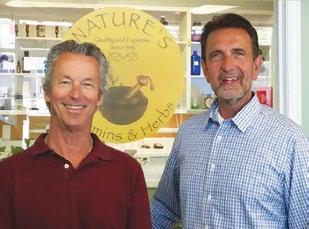
Local dementia experts anticipate that services, though robust, need to be strengthened in coming decades, as Buncombe is an aging county. According to a county aging profile published by the N.C. Department of Health and Human Services, 56,767, or 21%, of the county’s residents were ages 65 and older in 2020. That age group is projected to increase by 49.3% by 2040 to 84,765 people.
Above all, those who work in dementia nonprofits want to reduce the stigma around dementia and
LIVING HISTORY: Dr. Amy Cohen, a geriatrician for MemoryCare, a nonprofit in Asheville, says she hears “amazing stories” about the lives of her patients with dementia.
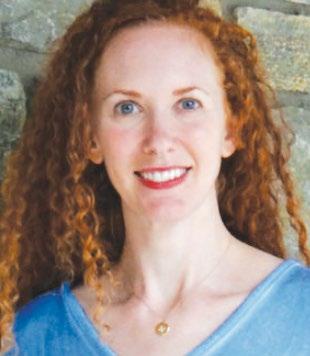
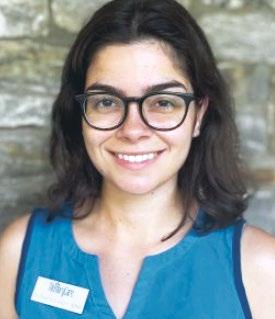
promote the dignified and respectful treatment of people with dementia. “People who live with dementia, their life doesn’t end with the diag nosis of dementia,” says King from Dementia Friendly WNC. “They still want to be involved and live as full a life as possible.”
Cohen, the doctor with MemoryCare, says that acquaintanc es sometimes comment that her job working with people experiencing dementia must be sad or difficult. Instead, Cohen tells Xpress, she finds it rewarding to work with people during this stage of life’s journey.
“I hear amazing stories,” Cohen recalls. “There still is a person behind all these diagnoses. There’s still a person in there who’s lived a whole life and created great things in the world.” X
NOV. 16-22, 2022 MOUNTAINX.COM 36
752 Biltmore Avenue • 828-251-0094 • naturesvitaminsandherbs.com MONDAY-FRIDAY 10-4 Nature’s Vitamins & Herbs [FORMERLY NATURE’S PHARMACY] Setting the Standard for Excellence Owners: Mike Rogers, PharmD Bill Cheek, B.S. Pharm 26 YEARS Professional Advice on CBD Oil, Supplements Top CBD Oil Brands: Charlotte’s web • SunsOil • Plus CBD • Palmetto Harmony Products Available by Mail, Curbside, or In Store Professional advice since 1996 We stock great vitamin brands: Pure Encapsulations • Thorne Research Metagenics • Professional brands & more! Bring this ad in for 10% off WE CARRY PURE ENCAPSULATIONS and other professional brands of supplements
Photo courtesy of MemoryCare
EXPLAINING THE TERMS: “De mentia is an umbrella term for many different types of cognitive impair ment,” explains Elizabeth Lackey, lead care manager at MemoryCare. Photo courtesy of MemoryCare
WELLNESS
Whatever it takes
Dedicated to serving persons living with brain injury




Hinds’ Feet Farm provides services to adult brain injury survivors in North Carolina and has a day program located in Asheville. If you are interested in joining this program as a member or volunteering with us, please call our office at 828-274-0570 or visit us online at www.hindsfeetfarm.org.
MOUNTAINX.COM NOV. 16-22, 2022 37
Mountain Xpress’
campaign to raise funds for local nonprofits has grown each year, raising more than a quarter million dollars
for
organizations, earning
more
and
easy
and with your
to
Help Give!Local have its biggest impact ever in 2022! Thank you for supporting Give!Local nonprofits growth How high can we go? $75,000 $150,000 $225,000 $ 300,000 2015 2016 2017 2018 2019 2020 2021 $263,939 $233,564 $141,879 $112,371 $108,210 $60,986 $36,989 $300,000+ ? 2022 DONATE NOW AT givelocalguide.org $50,000 $1,007,938 All time total as of 11/14/22
annual
in 2021
46 amazing
even
in matches
total impact. This year, the $1 million threshold in all-time individual donations is an
target,
help
keep the momentum going, we can reach even higher.




NOV. 16-22, 2022 MOUNTAINX.COM 38 Auto Service Excellence You Can Trust 23 Sardis Rd, Asheville, NC 28806 (828) 670-9191 precisionInternational.com Explore with Peace of Mind We Specialize in all Makes and Models Introducing THERMIva: Non-Invasive, Non-Surgical, Vaginal Rejuvenation Elizabeth Garbarino, MD Grace Evins, MD Gynecological Care, Hormone Therapy, Sexual Medicine LivingWellWNC.com • 828.575.9562 Welcoming New Patients!
Q&A: Future hopes and plans for Esther Neonatal Kitten Rescue
Kittens run Andee Bingham ’s life. “I have not had a good night of sleep in probably six years,” says the executive director of Esther Neonatal Kitten Rescue. “I take home the ones that are just a few days old, severely sick or injured. It’s definitely all consuming.”
When Bingham moved to Western North Carolina from New England in 2015, she discovered a cultural shift along with the milder climate. “There’s a lot less outdoor cats up north because of the weather. There’s also a different culture around spaying and neutering [in New England], and there’s just more resources,” she says. “When I came down here and started working in rescue, everyday people would walk through the doors with these tiny kittens who didn’t have moms.”
Bingham realized that if she want ed to work at a neonatal kitten res cue in the Asheville area, she would have to start one. She says, “I had all this neonatal kitten experience and I had already worked in rescue for many years in many different positions. I’d worked in adoptions, basic medical care, fundraising, grant writing, marketing. I started thinking, ‘Can I really do that?’ And it all fell into place.”
Esther Neonatal Kitten Alliance opened in 2019. Two years into its operation, the organization is cur rently fundraising to purchase the building that houses the nonprofit’s nursery and resource center at 21-B Pond St., Arden.
Xpress sat down with Bingham to discuss the organization’s future, advice she’d offer those launching a nonprofit and her favorite kit ten story.
This interview has been condensed and lightly edited.
Xpress: How did the prospective building purchase come about?
Bingham: We tried to buy the building before we moved into it. At that point, we were only a year old. We didn’t really have much of a tax history. We had a few donors willing to co-sign for us, but the bank saw it as a big risk because we weren’t able to prove on our own that we had support and revenue. So, we talked to the owner of the building, and he agreed to allow us to sign a two-year lease with the option to buy. A couple months ago, we had a deadline to tell him for sure that we
were purchasing. Since then, we’ve been fundraising. As of [Oct. 24], we’re about 75% of the way to our goal, and we have a closing date set for the middle of November.
What did you have to do to prepare for this latest fundraising drive?
One good thing about having the fundraising and donor relations background is that I know how important it is to keep people up to date with what we’re doing, thank them and be very transparent. I’ve spent the past few years making sure that our supporters trust us, love what we’re doing and want to give. When we finally announced publicly that we were starting this campaign, the amount of support we got was really incredible. I think that the preparation was just what any nonprofit should be doing, which is just really showing how much you appreciate the people who give support.
Is that the No. 1 piece of advice that you would give to a nonprofit starting a fundraising drive?
Yes, I think it would be that. But I’d also advise that nonprofits be realistic about what their supporters can give. If their donors are gener ally giving $20 or $25, then maybe expecting them to give $10,000 is not reasonable. You don’t want to set goals that are unrealistic and unattainable. Knowing your donors, what their capacity is, what they’re excited about and connecting with
them as people rather than piggy banks is important. Connect with them as humans who just want to support what you’re doing.
How do you balance the needs of these newborn kittens with your own?
Very badly! My mindset has been to just get through these first few years until we have the resources to hire more staff. Once that hap pens, I’ll be able to step back to a reasonable amount of hours per week. What I’ve been doing is taking home the most critical kittens. Once we can hire more staff, do a more effective job of training our fosters and bring in more fosters who are wanting to take care of those kinds of kittens, then I can finally sleep. Buying this building will free up enough revenue to bring our parttime foster coordinator on full time next year. Hopefully by sometime next year, I will not be taking kittens home every single night. That’s what I’m passionate about and that’s what I want to be doing. But I definitely could use more sleep than I get.
Do you have a favorite kit ten story?
Last year, we got a Facebook mes sage from this woman who worked with a trap, neuter and release orga nization. Three of the five kittens had their umbilical cords wrapped around their legs for a few days. We had dealt with umbilical stran gulations before, but normally the cats had only been strangled for a few hours.
But in this case, the kittens were in really, really bad shape. After a few days, the antibiotics start
ed working. The swelling started to come down, but unfortunately, the circulation had been cut off for too long and their feet ended up going necrotic.
One cat, Toby, wasn’t able to gain weight. He would nurse all day but kept burning his calories to fight his infection. So at night, I would take him home and tube-feed him in an effort to help him gain weight.
On one night, probably around 3 in the morning, I was sitting in front of his incubator, bottle-feeding another kitten. And suddenly, he just stepped out of his foot like he was stepping out of a shoe. It was the craziest thing I’ve ever seen. For a moment, he was like, “What just happened?” and then he carried on like nothing was wrong. He and I bonded, and I adopted him. He is a goofy, lovey, gentle creature.
— LA Bourgeois X
MOUNTAINX.COM NOV. 16-22, 2022 39
specialty shops issue 2022 Publishes December 7! advertise@mountainx.com FEATURES
PALS: Andee Bingham poses with her adopted kitten, Toby. Photo courtesy of Esther Neonatal Kit ten Rescue
Feeding the need
Nonprofits strive to bring bounty to the Thanksgiving table
BY KAY WEST
kwest@mountainx.com
Jessi Koontz’s plate is full, but her pantry is severely depleted. The executive director of Beacon of Hope, Madison County’s 25-yearold nonprofit providing hunger relief to low-income residents, says demand for its services has continued to increase since the onset of the COVID-19 pandemic.
“There was no recovery period after the peak of the pandemic,” she explains. “All the residual effects are still with us, and now food costs increase that need and affect our operations.”
Monthly, the group serves about 1,000 families in Madison County, with distribution of food boxes tak ing place Mondays, Wednesdays and Fridays. Dry foods, shelf-stable products, bread and baked goods are among the featured items; meats and dairy are included when available.
“In 2021, we spent $12,000 for the entire year on dry food,” says Koontz. “With rising costs, we spent $22,000 the first six months of this year.”
In previous years, continues Koontz, Beacon of Hope ordered turkeys or hams from partners like MANNA FoodBank for holiday meals. But this year, all food insecu rity organizations are facing the same increased need and mounting chal lenges to meet them. For the upcom ing holiday, Koontz notes, families can expect side dishes such as sweet potatoes and squash to be included in their boxes, but the centerpiece of the meal is in short supply.
Paula Sellars, interim executive director of Bounty & Soul in Black Mountain, echoes the tricky math her nonprofit faces. “We track the num ber of participants and the amount of food we receive in donations,” she explains. “We are up about 280% in participants from pre-pandemic levels and down by about 53% in food donations.”
Unlike Beacon of Hope, Bounty & Soul does not provide meats with in its boxes. Instead, the nonprofit focuses on supplying residents with fresh produce — an ongoing chal lenge at this time.
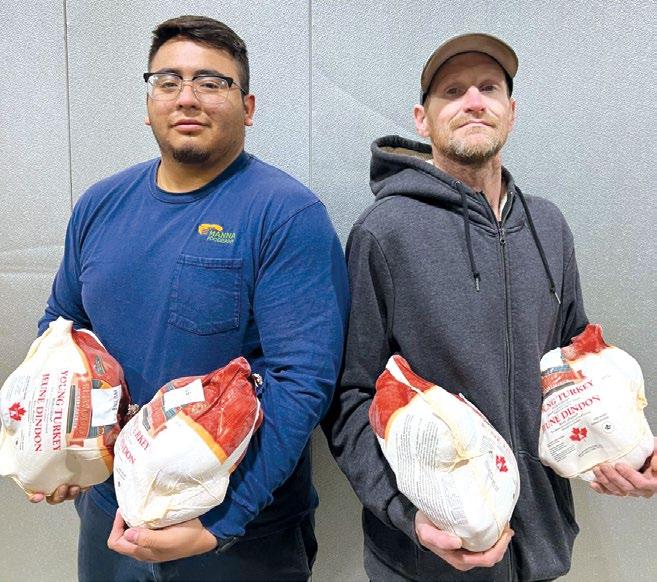
“We used to pick up from MANNA twice a week but can only do once weekly now,” she explains. “And what we pick up from retail grocers like Trader Joe’s, Whole Foods and Sam’s Club is way down, too, as
they purchase more conservatively to avoid the food waste and surplus we used to benefit from.”
With the holidays around the cor ner, nonprofits are counting more than
ever on turkey drives, financial con tributions, dedicated volunteers going the extra mile — sometimes literally — and increased awareness and support from the community at large.
TOP-DOWN STRUGGLES
Kara Irani, director of marketing and communications for MANNA FoodBank, confirms the dire land scape. In September, MANNA served over 120,000 people through its various food relief programs.
“We are all sitting in a true perfect storm right now,” she says. “Our partners continue to tell us they see new faces every week, and we are experiencing astronomical food costs. I have never seen it like this. It’s a little scary, and there’s a bit of heartburn going on.”
Currently, Irani says the non profit is attempting to source a full range of items for people to build traditional meals for Thanksgiving and Christmas. “It is so vital for people to be able to celebrate this special occasion as they would have in better times,” she states. “A hol iday meal can really be a luxury for many people.”
MANNA’s Virtual Turkey Drive kicked off Oct. 3 and will continue through Dec. 16. Despite its name, the focus is not just on the big bird, but also hams, chickens and even tofurkey. Irani adds that so far, MANNA has purchased several truckloads of turkeys for distribution to partner agencies and will continue to buy more as donations come in.
“Donating to that drive goes a long way because we are able to purchase turkeys and other proteins at whole sale prices,” she explains.
SENIORS HELPING SENIORS
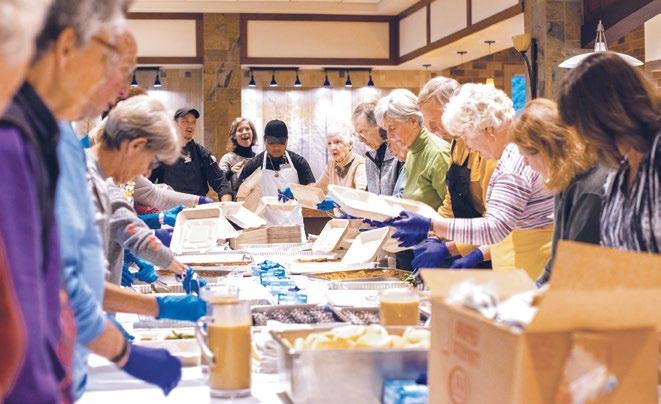
Thanks to a 22-year partnership with Deerfield Episcopal Retirement Community, turkey and all the fixin’s are also on the menu for Meals on Wheels of Asheville and Buncombe County clients.
In early 2000, “We were looking for ways for our residents to do out reach in the area,” recalls Michelle Wooley, director of philanthropy.
“We contacted Meals on Wheels, and a rotation of our volunteers began picking up and delivering packaged meals to the Shiloh neighborhood five days a week.”
By fall, Deerfield completed an expansion of its dining space and community center, which opened another opportunity to serve. Literally. “We decided to take on Thanksgiving for all Meals on Wheels clients that needed it,” Wooley explains. “Before we served our first meal to residents, we prepared 300 meals to be delivered Thanksgiving Day in 2000.”
Deerfield dining services cooked the meal — turkey, stuffing, mashed potatoes, gravy, green beans,
NOV. 16-22, 2022 MOUNTAINX.COM 40
rolls
ARTS & CULTURE
DRIVEN: MANNA FoodBank’s Virtual Turkey Drive kicked off Oct. 3 and will continue through Dec. 16. Along with turkeys, the nonprofit is attempting to source a full range of items for people to build traditional meals for Thanks giving and Christmas. Pictured, from left, are MANNA staff members Jose Romero and Chris Hughes. Photo courtesy of MANNA FoodBank
THE SCOOP: Residents of Deerfield Episcopal Retirement Community package 300 traditional turkey dinners every Thanksgiving for distribution to Meals on Wheels clients. Photo courtesy of Deerfield Episcopal Retirement Community
and pie — and Wooley put a note in the resident newsletter seeking volunteers to package the meals in individual containers. “I was wor ried that first year I wouldn’t have enough volunteers,” she recalls with a laugh. “That was definitely not the case, and now they start asking me about it weeks before Thanksgiving.”
Each year, she says, they set up two long prep tables with the same items, staging a friendly competi tion between two teams of volun teers. Whichever group gets to 150 filled containers first wins. “I think the record is 27 minutes,” Wooley says. “They have so much fun doing this together.”
Ma-Rita Alexander , Meals on Wheels volunteer coordinator, arranges for drivers to pick meals up at Deerfield and deliver them to clients who are unable to celebrate Thanksgiving with family or friends. Since the partnership launched, res idents at the retirement community have participated every year, except in 2020 due to the pandemic.
Throughout its history, notes Wooley, there has only been one mis hap. “One year we somehow forgot the stuffing, and there was a bit of an outcry,” she says. “Never again!”
GIVING THANKS
Community involvement like the work at Deerfield is one silver lining in this roiling storm, say nonprof it leaders who spoke with Xpress. Volunteers consistently help navi gate choppy waters; and though names and faces have changed, over all numbers are consistent and have even increased in some areas.
“We have long counted on retir ees as warehouse volunteers, but of course, that changed during the pan demic,” remembers Irani. “We saw younger people come in, including college students. But now many of our retirees are back, and we are able to accommodate more volunteers in the warehouse, almost to pre-pan demic capacity.”
Irani also notes that this year’s Empty Bowls fundraiser, held in October, was record breaking in terms of ticket sales and funds raised. Adding to the good news, in early November, the nonprofit learned that Jerry Sternberg and Marlene Joyce-Berger of the Sternberg Cos. committed $10,000 in dollar-for-dol lar matching funds for every dona tion to the turkey drive.
In Black Mountain, Bounty & Soul prides itself on including fresh flow ers (a donation from Trader Joe’s) in every food box. During the holidays, Sellars notes, the floral bounty is even more generous in an effort to
add cheer when it is especially need ed. “I know the people we serve are grateful for the food, but the flowers give them the emotional boost they need,” she says. Recipes for healthy seasonal sides are included in the produce boxes as well.
Bounty & Soul has also received assistance from a corporate sponsor, Cottonwood Properties, which has conducted a “turkey brigade” for the past couple of years. “They purchase turkeys and add them to the seasonal produce in our Benevolent Boxes, a home delivery program for people with medical or transportation issues that cause them to be homebound,” Sellars explains.
Three-year Capacity Building grants from WNC Bridge Foundation have added more reasons to give thanks this season for Meals on Wheels and Beacon of Hope as well.
Meals on Wheels — which pre pares and delivers about 450 meals a day — is using its three-year grant to cover the salary of Charles Jett, a professional, formally trained chef that the nonprofit hired in August. “He has been wonderful,” Sprouse enthuses. “We have a six-week cycle now of 30 different meals, better food nutrition and are using more fresh produce in what I call our farm-toelder program.”
Meanwhile, Beacon of Hope will use its three-year $150,000 grant to hire a fund development coordinator. The position has been a longtime need, says Koontz, especially right now as the organization is in the midst of seeking a new home once its lease expires in March.
“It’s a lot — serving our families, seeking grants, figuring out finances and now finding a new building,” says Koontz. “But we have been pro viding this vital service to Madison County for a quarter century. We just take a leap of faith every day that we can continue to do all we can for all we can, and that somehow it will all come together. It has to.” X
Whatever it takes
Making it work despite costs and delays
Ryan Reardon is the executive director of Asheville Music School. The nonprofit works to strengthen local communities through music education and outreach.

Xpress: What about this year’s volunteer/staff work gives you hope about your nonprofit’s mission and its overall impact on the community?
Reardon: Both our staff and teach ers’ abilities to adapt this year have given me hope for our mission and our ability to continue our positive impact. We faced a lot of challenges with renovating our new facility, and it took longer than expected. But we were able to continue lessons, student band rehearsals and summer camps at various satellite locations around town. Our teachers and families rolled with it, and our music community stepped up to help get us through.
What has been the most challenging aspect of operating your nonprofit this year?
We had a great crew working on building out our new facility, but we faced a lot of challenges with rising prices and the city’s slow and antiquat ed permitting processes. Waiting mul tiple weeks for simple permitting led
to delayed construction and a delayed move-in, which cost us over $20,000. That’s a lot for a small nonprofit.
How have the last 2 1/2 years reshaped the way your nonprofit operates, and do you see these changes as permanent?
We haven’t been able to connect as much as we’d like with our coun ty, city and charter schools. I hope that changes! On a positive note, the past 2 1/2 years have forced us to cre ate new user-forward online systems and an interactive website to make it easier for the public to inquire and enroll in music programs.
Equinox Ranch is a comprehensive program which empowers combat veterans that struggle with the daily hardships of readjusting to civilian life. Please read more about us at www.equinoxranch.org
We welcome your donations to help us, help veterans.
P.O. Box 2586 Cullowhee, NC 28723 828-356-8307 equinox.ranch@yahoo.com
MOUNTAINX.COM NOV. 16-22, 2022 41
48
Downtown AVL
NEW CATERING MENU
BUNS &
MEAT
College St.
ORDER ONLINE: zellasdeli.com 828-505-8455
HOT
TASTY
Q&A: The benefits of participatory grant-making
Food has been part of Gina Smith’s professional life for years. As Xpress’ former food editor, she regularly assigned and worked on stories con cerning food policy from 2013-20.
In early 2021, soon after leaving her post with the paper, Smith became staff coordinator for the Asheville Buncombe County Food Policy Council.

Since that time, Smith has seen firsthand the benefits of participatory grant-making, also known as shared gifting. The concept allows organi zations and community members to determine where funding goes.
“It really focuses on personal connections, equity and story-shar ing as opposed to relying on hard data and top-down decision-making like traditional, competitive funding models,” says Smith. “It promotes stronger, more collaborative relation ships among nonprofits and grass roots community groups because it eliminates competition and promotes resource-sharing.”
Xpress sat down with Smith to dis cuss food policy, shared gifting and
recommendations for how other non profits might integrate new models of fundraising into their operations.
This interview has been condensed and lightly edited.
Xpress: What drew you to work ing with organizations focused on food policy?
Smith: I worked with Habitat for Humanity in Catawba County for a while, and I volunteered with them overseas. I like grassroots, communi ty-based work. And when I moved to Asheville, I got together with a group of folks in my neighborhood to start the Oakley Farmers Market, which is no longer happening. That was the first time I really dipped my toes into food policy.
Can you speak more to participa tory grant-making and how it differs from traditional grants?
Instead of there being a funder, sitting at the top of a hierarchy, doling out money and making the decisions, the decision-making is in the hands of the groups who need the funds.
The program that our food policy council has participated in for the past three years is a shared gifting circle program through Community Food Strategies, a statewide organi zation. Community Food Strategies facilitates this by doing all the hard work of writing these big grants to get a big pot of money.
We were paired with five other food councils in similar organizations from all over the state. The six organizations who were part of this cohort each had a certain amount of money that we were allotted to award to the other groups. Each group did a pitch. We talked about what we wanted to fund, why it was important and why it should be funded. And then we all decided how we were going to dole out our funds.
WHERE CREDIT IS DUE: “Policy isn’t often recognized as an import ant part of food security work,” says Gina Smith, staff coordinator at the Asheville Buncombe County Food Policy Council. “But it really is.”
Photo by Veda Sands
In the end, each of us received money, and each of us also gave away money. They put the power in our hands to give that money away to each other as we see fit.
If other nonprofits wanted to engage in this practice, what would you recommend?
Research participatory grant-making to see how the model works. Connect with Community Food Strategies, even if it’s not a food-related nonprofit, and find out what the model looks like in practice because I think they have it nailed down. It works really smoothly the way they do it.
When I talk about it to other organi zations across the country, people are always like, “Wow, I want to do that.”
Another good starting point would be participatorygrantmaking.org.
What has been the most rewarding experience in your food policy work?
The shared gifting process itself has been one of the most rewarding because it is so beautiful, so empowering. And it really strengthens the community. But also, I am nourished by working directly with the communities here in Asheville that we collaborate with. The folks that we work with are doing incredible things for their communities. And I just follow along and support however I can. It’s very inspiring.

Policy isn’t often recognized as an important part of food security work or food systems work, but it’s really important. It’s a little-recognized but crucial part of increasing food security in our community because it’s chang ing policy to meet the needs of the people experiencing food insecurity.
When you change policy, it chang es people’s lives. And having people involved in that process and their voic es being heard — that’s everything.
What do you do to elevate those voices?
Anyone is welcome to be part of the Asheville Buncombe County Food Policy Council’s work. We have work ing groups who are on the ground doing things in the community. The council itself meets monthly, and any one’s welcome to participate in those meetings and hear what’s going on.
And actually, part of the funding that we requested in this round of shared gifting was to support stipends for community members who want to be involved. It can be really hard for people to donate their time, espe cially those who are working multi ple jobs and have all of these other responsibilities. We want to be able to compensate people for their time, attending meetings and being part of the working groups.
So hopefully, that will help us build representation from the communities we collaborate with. That lived expe rience is so valuable in the work we do. Our staff are already being paid to participate. It’s one thing, if I’m being paid as a coordinator for the food policy council to attend a meeting. But it’s entirely different if there’s somebody else who’s working in food service or as a nurse having to take extra time out of their day to attend a meeting. So, it’s fantastic to get that lived experience and be able to compensate people for sharing that. I think it’s becoming more and more of a thing for funders to try to provide. But it’s newish. And hopefully, it’s going to gain more traction.
NOV. 16-22, 2022 MOUNTAINX.COM 42
— LA Bourgeois X FEATURES

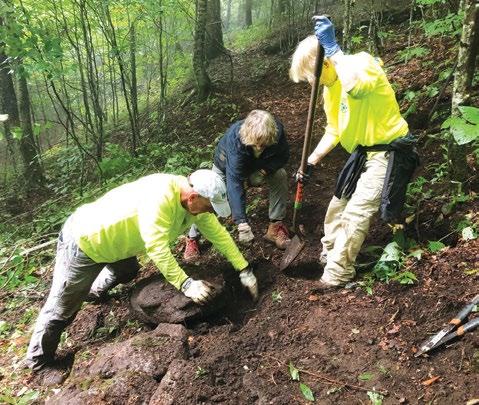
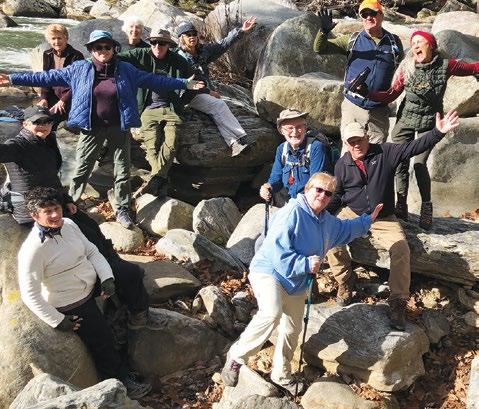

MOUNTAINX.COM NOV. 16-22, 2022 43 CAROLINA MOUNTAIN CLUB | www.carolinamountainclub.org Celebrating 100 years: 1923-2023 CMC was voted #1 Hiking Club or Group in this year’s Mountain Xpress “Best of WNC”.
New beginnings Arts nonprofits share insights on finding success
BY EDWIN ARNAUDIN
earnaudin@mountainx.com
Starting out and starting fresh aren’t that different, especially when it comes to arts nonprofits — or nonprofits in general. Whichever position a group finds itself in, a similar level of planning, community outreach and tempering expecta tions is necessary to achieve its goals. Otherwise, it’s easy to become over whelmed and overmatched, resulting in the disappearance of an important local service.
Xpress spoke with leaders from the new nonprofit All Together Art, as well as the established Local Cloth. While the latter organization has benefited from greater visibility on account of its decadelong run, it turns out both nonprofits have more in common than people may think.
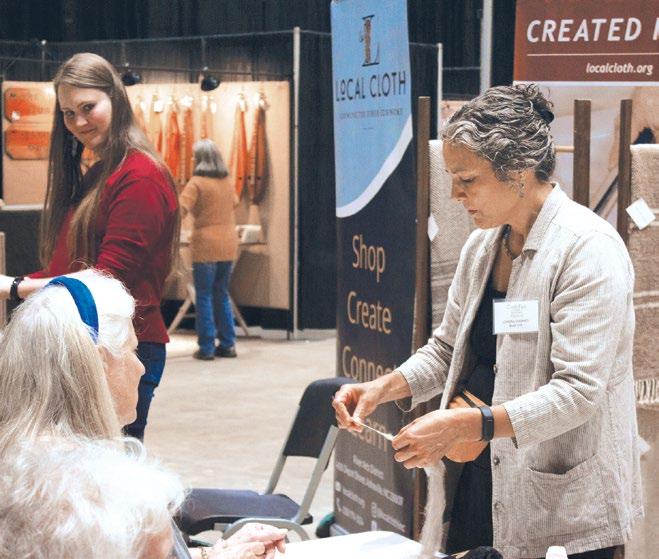
TO SERVE, WITH LOVE
Forty years gone, Brandon Daughtry Slocum returned to her native Blue Ridge Mountains in 2021. And upon her homecom ing, she discovered her latest call ing thanks to a pottery course at Odyssey Clayworks.
While enrolled, Slocum befriended the organization’s director, Gabriel Kline. As the two got to know each other better, Slocum shared her experiences as a Humanist Society chaplain and a former military spouse. These stories soon led Kline to invite Slocum to join Odyssey’s therapeutic pottery program for mili tary veterans.
“I took part in the class, and it was just incredible,” Slocum remembers.
But she quickly discovered that funding for the program had been cut. “Gabriel was trying to do it on his own,” she says.

No stranger to the nonprof it sector (in 2003, while living in Knoxville, Tenn., Slocum co-founded Shakespeare in the Square), she got to work and launched All Together Art earlier this year.
“It was just an idea in July, and now we have our 501(c)(3), and our first program is up and running,” says Slocum, who also serves as the group’s board chair.
Thanks to a generous donation from an individual donor, the new nonprofit has been able to fund a free, eight-week ceramics course for veterans. The series began on Oct. 16 and is led by local artists Sara Ballek and Paige Janeri
“We want to make sure that we’re paying our teachers and instructors and partners a living, fair market wage for their work,” says Slocum. “We’re not asking them to work for free, and we want to open up this type of experience to everyone in our community.”
To continue to accomplish these goals, All Together Art plans to part ner with other local arts organiza tions. In doing so, it hopes to grow its offerings while still maintaining a strong focus on pottery. Events already planned for 2023 include the Great Pottery Throwdown fundraiser on Feb. 25, and an eight-week course in spring for LGBTQIA youths, ages 13-16, whom Slocum notes are at a particularly high risk for suicide.
According to a 2020 study by the national Centers for Disease Control and Prevention, suicide is the sec ond-leading cause of death among young people ages 10-14. And The Trevor project — the world’s larg est suicide prevention and mental
health organization for young lesbi an, gay, bisexual, transgender, queer and questioning people — reports that LGBTQ youths are four times more likely to attempt suicide than their peers.
“We’re losing way too many of these kids,” Slocum says. “The numbers are staggering, so that’s what’s motivating us to make that our next project.”
Though Slocum notes it’s always a challenge to launch and sustain a nonprofit, now is particularly tough with a recession looming and eco nomic apprehension leading to tight er pockets. Fortunately, her grass roots group isn’t looking for “huge donations from the superrich,” but in $5-$10 increments as well as through grant writing and, eventually, corpo rate sponsorships.
With only five board members, no overhead and funneling “every dime” raised into programming, Slocum feels that All Together Art is built to succeed. By following that modest blueprint, she believes that others interested in starting arts nonprofits can likewise accomplish their dreams. In her experience, keeping operations small at first, getting programs up and running before building an infrastructure and making connections in the com munity will gradually attract donors and volunteers.
“I think nonprofits are what defines a community,” Slocum says. “If you want to know what kind of community you’re in, look to the nonprofit work going on and that will tell you where you are. And Asheville, of course, is just a remark able community.”
To learn more, visit avl.mx/c5d.
LOCATION, LOCATION, LOCATION
Among the nonprofits that have helped shape Asheville’s identi ty over the years is Local Cloth, which launched in 2012 with the goal of showing area residents that they could have and wear handmade garments made by local artists. The organization was founded by tex tile artist Judi Jetson as a way to help carry on the efforts started by Western North Carolina crafts non profit HandMade in America, which closed in 2015 and where Jetson worked after moving from Florida to Asheville in 2010.
“We’re not exactly a new nonprof it,” she says. “But we moved to a
NOV. 16-22, 2022 MOUNTAINX.COM 44
ARTS & CULTURE
SPINS A GOOD YARN: Local Cloth’s Lenora Shepherd offers a demonstra tion during the Craft Fair of the Southern Highlands in October. Photo by Maralena Shepherd
ARTS
new location, so we sort of became public — would be a good way to say it — last year.”
Before 2021, Local Cloth ran its operations and held its classes in a 900-square-foot space in the back of The Refinery arts incubator on Coxe Avenue. Though rent was rea sonable, Jetson notes that being in the beer district instead of the arts district had its drawbacks, as did the limitations of the space itself.
“It wasn’t a place where people actually could see us,” she says. “We didn’t have a storefront. It was just a place where we could go mess around and make things.”
In April 2021, Jetson signed a lease on the ground floor of 408 Depot St., reopening Local Cloth that June. The space, she notes, is just over three times as large as the nonprofit’s previous location.
“We now have about 35 different fiber artists and farmers that raise fiber animals who are vendors in the shop, and our class numbers and attendance have grown,” Jetson says. “It’s a great location and it’s made us visible in the community.”
One area organization that’s taken notice is The Community Foundation of Western North Carolina, which approached Local Cloth about help ing make more opportunities for farmers. Through a Natural and Cultural Resources Grant, the Blue Ridge Blankets project was funded to make blankets out of local fiber and colored with natural dyes. The first sample batch was finished in September and was displayed at Local Cloth’s shop, the Craft Fair of the Southern Highlands and the Southeastern Animal Fiber Fair.
Such funding, however, has been rare. Jetson notes that Local Cloth’s approach has been to focus on earned income as a revenue source rather than grants or contracts, which she says are too unpredictable to rely on, especially in the current climate. Furthermore, she adds, the Asheville community is “notoriously reluctant
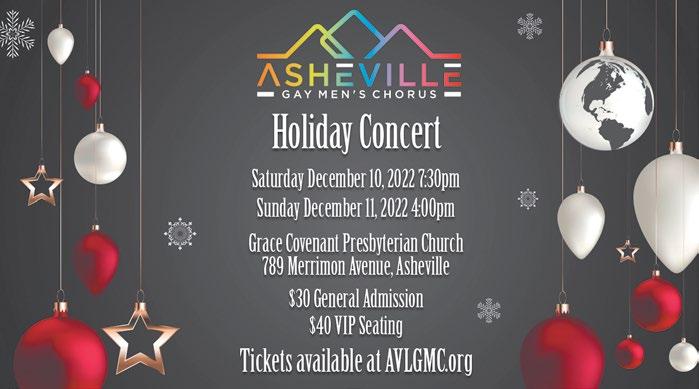
to fund new nonprofits.” In turn, she stresses patience.
“It takes a while to get estab lished,” she says. “You have to really start small — not that I’m against big dreams. Big dreams are great, but you have to be comfortable start ing small and doing things where you can generate enough revenue through ticket sales or classroom registration or memberships to begin to grow.”
Jetson also highlights the impor tance of having a business plan, pointing to nonprofits and small businesses having a comparable fail ure rate. For-profit businesses, she notes, have more local support orga nizations than nonprofits do, which makes Mountain BizWorks and the Service Corps of Retired Executives all the more valuable.
“SCORE has people who’ve retired here who have had experience either in business or nonprofits that they offer for free,” she says. “I’ve got a team of people with expertise in retail and marketing and in busi ness management that are all advis ing us about things we could do to have our nonprofit stay on a steady growth path.”
With the new location running smoothly, Jetson is currently work ing to expand community outreach and cultivate a more diverse group of customers. In the coming year, she plans to engage the residents of surrounding neighborhoods, either at Local Cloth’s building or meeting those neighbors where they live. And over the next couple of years, her goal is to transition from an all-vol unteer-led organization to one with paid staff positions.
“We’ve had a lot of success with an all-volunteer leadership group and people working in the shop and help ing with workshops,” Jetson says. “But when you’re grassroots, people move on, their interests change, they get burned out — so we need to figure that out.”
To learn more, visit avl.mx/c5e. X
Whatever it takes
Moving out of survival mode
Debbie Harris is the co-executive director of Open Hearts Art Center. The nonprofit works to empower adults with varied abilities to con nect through the arts.
Xpress: What about this year’s volunteer/staff work gives you hope about your nonprofit’s mission and its overall impact on the community?
Harris: I think now more than ever staff and volunteers are more driven; they know what’s at stake and how quickly things can turn sideways. We are slowly moving out of survival mode and into a place where we can refocus on our mission and be excited for what lies ahead.
What has been the most challenging aspect of operating your nonprofit this year?
Our organization continues to be impacted by the critical nation wide shortage of direct support professionals. Like so many other businesses, we have struggled with retaining employees, which in turn has hindered our service capabil ities. Also, for the first time in the history of our organization, we have had to operate out of our reserved
funding. This has brought on new challenges and concerns as we try to budget for the new year.
How have the last 2 1/2 years reshaped the way your nonprof it operates, and do you see these changes as permanent?
In 2021, we began offering tele health services, which allowed artists to participate in virtual art classes. We saw the need for everyone to stay connected and maintain some sort of normalcy. Telehealth became a per manent flexibility and will continue to allow us to serve individuals long after the public health emergency ends.
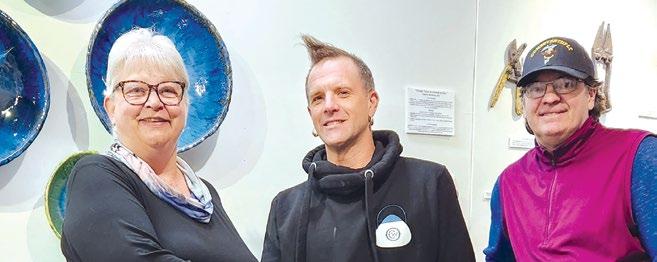
MOUNTAINX.COM NOV. 16-22, 2022 45
in the spirit issue Publishes December 14th For advertising, contact 828-251-1333 x 1 advertise@mountainx.com
(POTTERY) WHEELS OF PROGRESS: From left, All Together Art founder and board chair Brandon Slocum, Odyssey Clayworks owner Gabriel Kline and ATA board member Keith Blum are among the driving forces of the collabora tive ceramics course for veterans. Photo courtesy of All Together Art
got a friend in me
BY BILL KOPP
The joys, benefits and mysteries of friendship is a topic that writers, phi losophers, musicians, physicians and psychiatrists have explored for centu ries. More often than not, the matter concerns relationships between indi viduals. But as leaders of various local historic sites and special collections will note, camaraderie can also take the form of nonprofit friends groups. And these groups, local leaders point out, are essential for community pro grams and events.
BACK INTO THE COMMUNITY
A massive and growing historical archive is housed on the lower level of the Pack Memorial Public Library in downtown Asheville. Home to more than 400 manuscript collec tions, 25,000 images and a 5-terabyte digital collection, the Buncombe County Special Collections preserves nearly 400 years of history. Assisting with this work is the nonprofit group, Friends of the Buncombe County Special Collections, which supports the librarians and archivists involved with the ongoing project.
The archival material covers a wide swath of local and regional history. Some of the featured collec tions include official records of the Asheville Fire Department from 1893 to 1925; written records of Asheville businessman E.W. Grove’s invest ments; and more than 2,000 historic images from the Asheville Post Card Co. While all items and documents can be explored in person at the special collections, an ongoing digi tizing program has helped decrease barriers to public access as well.
With a $15 annual fee, the friends group boasts more than 200 members, says Catherine Amos. In 2021, Amos became the nonprofit’s treasurer and soon thereafter took on the additional role of secretary. The organization itself has been supporting the work of the special collections for more than a
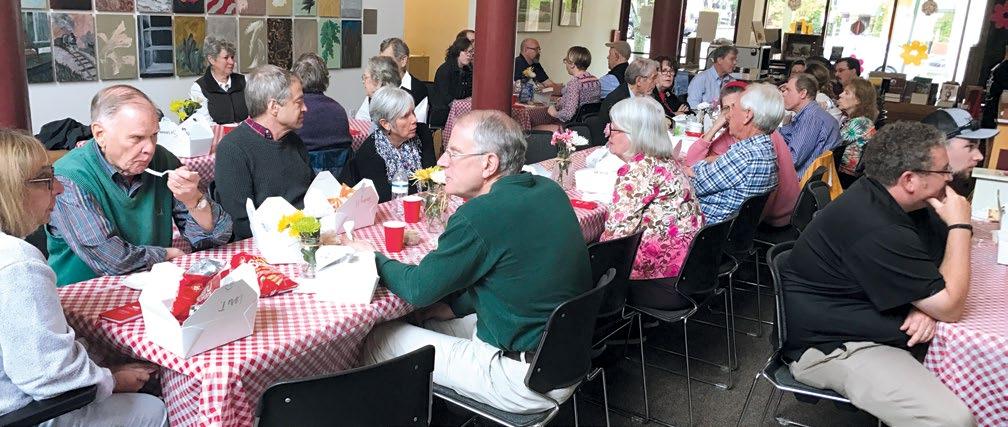
decade. And while Amos says that her group’s efforts are pretty straightfor ward, they take on many forms.
“We support exhibits, internship opportunities, archival projects and professional development for staff,” she explains.
Additionally, Amos points out, the friends group purchases all books required for the ongoing communi ty learning circle — an initiative led by Katherine Cutshall, manager of the special collections. “Rather than being a traditional book club,” Amos explains, “we’ve put all the ‘curricula’ into circulation in the libraries, so folks don’t have to purchase those books.”
That, she emphasizes, is a nice example of how the nonprofit spends its money: by putting it back into the county.
Of all the challenges the group faces, Amos says, the biggest is let ting people know that the Buncombe County Special Collections exists. “There’s such a wide breadth of his tory captured in that one little base ment area,” she says. “A lot of folks don’t remember it’s there. But when they do, there’s a lot to be learned.”
For more information, visit avl.mx/c5o.
Nonprofits play essential roles at local historic sites
HOME AGAIN
“Few buildings are vast enough to hold the sound of time,” wrote Thomas Wolfe in his novel You Can’t Go Home Again, published posthu mously in 1940.
Wolfe’s actual home is one of lit erature’s most famous landmarks. The author set many of his autobi ographical fictional works in his home on North Market Street in down town Asheville. The Thomas Wolfe Memorial (also known as “the Old Kentucky Home”) has been open to visitors since 1949, and was designat ed as a National Historic Landmark in 1972. An arsonist set fire to the struc ture in 1998, but after a major resto ration initiative, the house opened again in 2004.
The Thomas Wolfe Memorial Advisory Committee was incorporat ed in 1987 as an independent, non profit support organization for the historical site. The advisory commit tee’s efforts are exclusively charita ble and educational, says Anastasia Clare, board member since 2017 and president since 2020.
The nine-person committee was organized to promote interest in lit erature, “particularly, but not limited to, literature and writings authored by Thomas Wolfe,” Clare says. She notes that because Wolfe’s home in Asheville figures so prominently in the author’s novels, visitors “walk within the pages of a story.”
Like many other historic sites in North Carolina and beyond, the
Thomas Wolfe Memorial was forced to restrict in-person activities during the height of the pandemic. That decrease in activity and lower profile impacted the work of the advisory committee as well. “It limited some of the organic interest that often blos soms into a new ‘friend,’ volunteer or board member,” Clare says.
The membership arm of the advisory committee is the Friends of Thomas Wolfe. The group, Clare notes, currently totals around 50 members (including the committee).
“We develop programs, partnerships and activities to keep Wolfe’s works alive and attract visitors to the site,” she says.
During the pandemic, some of the committee’s activities were placed on hold, including an annual summer multiday teacher training program.
“But with the help of our partner organizations, we pivoted some events online,” Clare says. Most recently, the annual Student Writing Contest concluded; students in grades four12 were invited to write their own stories inspired by Wolfe’s short story “The Return of the Prodigal: The Thing Imagined.”
Come 2023, the group will partner with the Wilma Dykeman Legacy as part of its annual Thomas Wolfe short story book club. “And since the ses sions have moved to Zoom, there is an opportunity to connect with readers from around the world,” Clare says.
Tom Muir is the Thomas Wolfe Memorial historic site manager; he’s also a nonvoting member of the advi
NOV. 16-22, 2022 MOUNTAINX.COM 46
ARTS & CULTURE
GRATITUDE: A volunteer appreciation luncheon at the Thomas Wolfe Memorial recognizes the work community mem bers provide to assist the historic site. Photo courtesy of the Thomas Wolfe Memorial
You
bill@musoscribe.com
HISTORY Why I support Xpress: “Xpress represents the heart of Asheville and I want it to always be here.” – Michele Bryan Join Michele and become a member at SupportMountainX.com
sory committee and works closely with that group. “In addition to gener ating funding, [the committee] works with me about programming and as a conduit for connecting the site with community resources,” he says.
Clare encourages anyone interest ed in the Thomas Wolfe Memorial to join the Friends of Thomas Wolfe. “Whether you’re a lover of literature, an aspiring historian, or someone who firmly believes in the power of place and community, we’d love for you to get involved,” she says.
For more information, visit avl.mx/c5p.
A MORE INCLUSIVE HISTORY
From a historical perspec tive, Zebulon Vance has a mixed record. Twice elected governor of North Carolina, during his life the Buncombe County native was consid ered forward-looking, even progres sive. But in the 21st century, acknowl edgment of the former slaveholder’s racist views led to the dismantling of a downtown Asheville obelisk erected in his honor.
A nuanced view of his contributions to the state — one that doesn’t shy
away from the problematic side of his legacy — is part of the goal at the Vance Birthplace, a North Carolina historic site in Weaverville. And the Mountain History and Culture Group, launched in 2017, aims to sup port the work of the site and its site manager, Kimberly Floyd

“The Vance Birthplace is histori cally and culturally significant due to the breadth and reach of the narra tives that unfolded on this land that still impact us today,” says Floyd. She emphasizes that the Cherokee, Europeans and people of African ancestry all helped shape the region.
A previous support group, Friends of the Vance Birthplace, operated from 2000-22. Fundraising, howev er, became difficult in recent years “because they had ‘Vance’ in their name,” says Steven Nash, an asso ciate professor of history at East Tennessee State University and president of Mountain History and Culture Group. “A second support group was necessary.”
The Vance family enslaved more than two dozen people. “The men and women of color associated with the Vance family experienced all the social, economic and political impacts of slavery,” Nash states. He says that
the MHCG board “believe that the current staff’s commitment to an inclusive interpretation allows the site to continue to serve as a place of dialogue and exchange of ideas within the community.”
Like all organizations, the pandem ic forced Vance Birthplace to pivot, offering online and digital program ming. “And they did that in a way that allowed the site — and the MHCG — to emerge from the pandemic stron ger than ever,” Nash explains.
Nash says that plans for the site call for “more permanent exhibits fur ther highlighting African American history and more programming around Native American and wom en’s history.”
Nash concedes that the most sig nificant challenge facing his organi zation is public perception. “A lot of people in the community view the site with suspicion,” he says. “As a board, we are sympathetic to that fact.”
While the Vance Birthplace site was established as a “shrine” to glorify Vance, today Nash’s group supports the site staff’s work to present a view that takes in “the site’s full history.”
For more information, visit avl.mx/c5t. X
MOUNTAINX.COM NOV. 16-22, 2022 47
Giving thanks
Ashley Heath, W.O.R.M., Barrett Davis and Ivy Eld release new albums
BY EDWIN ARNAUDIN
earnaudin@mountainx.com
Online distribution? Someone running her merch table at shows? Well-rounded feedback on songs?
Ashley Heath could get used to this. Such semiroyal treatment has been the norm since the blues/rock singer-songwriter signed to Organic Records earlier this year. Home to such revered regional Americana art ists as Amanda Anne Platt & The Honeycutters, Acoustic Syndicate and Aaron Burdett, the Ardenbased company took notice of Heath through, well, carbon-based ways.
Currently based in Black Mountain, the Madison County native recorded her previous two albums with engi neer Clay Miller and wanted to do the same for the songs that would become her latest release, Something to Believe.
“He moved out to Crossroads [Recording Studios], so I went out there, loved it and recorded the songs with [my band] in 2021,” Heath says. “And Crossroads had the label upstairs, Organic Records, and so when they heard the songs, they were like, ‘We want to talk about working with you.’”
Over the subsequent year, notes Heath, there was plenty of talk with Organic, which is one of several divi sions under Crossroads Label Group. Ultimately, the musician signed on. She says the label’s family feel and understanding of the music industry gives her hope moving forward.
“They really want to put an empha sis on online distribution and radio,” she says, pointing out Organic’s suc cess with landing some of its other artists on noteworthy Spotify and iTunes playlists. “I don’t know how to do that, you know?”
Heath’s latest EP seems easy to pitch to such tastemakers. Though the six songs in the collection were written before the COVID-19 pan demic, and Heath has penned plenty more tunes as her musical life has largely returned to normal, she pri oritized keeping the pre-lockdown creations together. In turn, listeners get a glimpse at an artist wrestling with a difficult yet ultimately tran scendent time in her life.
“A lot of times, I think songwrit ing is therapeutic for the hard stuff — relationships and breakups and things like that,” Heath says. “[These songs] felt powerful and strong, but there’s also a sense of pain or hurt. It’s not necessarily uplifting; it’s more about getting it out.”
Heath notes that she didn’t realize her lyrics were so cathartic until she sought the help of a therapist in late 2020. Though she’s journaled since she was young, regularly consulting a mental health professional has helped unlock more of herself and better understand what she was processing while writing Something to Believe
“I’m starting to learn so much more about myself by taking the steps to do therapy that now, as I look back on those songs, I can see what was actually going on,” Heath says. “I had no idea I was going through that. But now that I know, I don’t necessarily feel differently, but I am aware of the patterns and I’m aware of more of what I want to feel like instead of what I have felt like.”
To learn more, visit avl.mx/c46.
ALLOW ME TO REINTRODUCE MYSELF
With Born Legend, Brevard-based hip-hop artist (and former Xpress film critic) Anthonye Smith has established himself as one of the Asheville area’s top MCs. But while the eight tracks serve as an intro duction to his talents for most of the musical world, they’re supported by a firm foundation that’s been build ing since his youth.
Smith released the album under the pseudonym W.O.R.M., a handle that harkens back to his days as a middle school entrepreneur, selling sports cards and candy to his class mates. Impressed by his go-getter mentality, Smith’s uncles likened him to a junior version of Big Worm, the money-collecting drug dealer from the 1995 comedy Friday, and the name stuck.
Smith later turned the nickname into its current acronym, which stands for Working on Receiving Money, but remains committed to the tenets of ’90s hip-hop in his own music. He thanks his uncle Lemmy Smith for fostering that love when the younger

NOV. 16-22, 2022 MOUNTAINX.COM 48
ARTS & CULTURE Come Sing W ith Us! 4-Par t A Cappella Har mony info@AshevilleBarbershop.com facebook.com/landofskychorus 800-280-6261
MUSIC
Smith was a preteen. The two would ride around in Lemmy’s car listening to music. His uncle’s sound system had plenty of bass, the hip-hop artist recalls, but it was equalized so that the songs’ most important element was at the forefront.
“He always had it so perfect to where it would be balanced out and you would hear every single word, and that’s why I’ve always done what I’ve done with my music,” Smith says. “I pay attention to every single word that I say. I want to make it sound exactly how it’s supposed to sound and enunciate. That came from my mom as well. She didn’t let me talk in any type of broken English at all.”
At that time, Smith notes that hip-hop was still relegated to New York City, whose MCs con sidered themselves far superi or to those from other regions. But with the release of Atlantabased duo Outkast’s 1994 debut, Southernplayalisticadillacmuzik , Smith had an epiphany.
“Just listening to how they attack the songs — they came with it, and we hadn’t heard Southern emcees do that. So, listening to Big Boi and André [3000], it gave me a sense of self and made me proud,” Smith says. “That, UGK’s Ridin’ Dirty and
[Nas’] It Was Written made me want to be a rapper.”

Citing UGK’s Pimp C as his favor ite rapper, with birthday twin Nas a close second, Smith employs his heroes’ layered rhyming in his own distinct way, working in fun refer ences to his beloved Florida Gators football team and various pop culture mentions, as well as reflections on life as a single father of two girls.
Working with beats primarily from Austin, Texas-based producer 183realchance, the album’s tracks vary from the cultural critiques of “Social Media” to the lyrically dense yet sonically pleasant “Black Samurai,” which gives even savvy listeners new delights on the fourth or fifth spin.
Though Born Legend was just released, Smith already has his sights on the next W.O.R.M. album, which he’s aiming to make exclusively with Western North Carolina talent.
He’s already got a head start, con necting with Davaion “Spaceman Jones” Bristol and Larry “Po’folk” Williams over the past year, and would love to have a guest verse from a different local MC on each track.

To learn more, visit avl.mx/c42.
HONEST AESOP
When Barrett Davis sings, you believe every word.
That degree of authenticity is rooted in a mountain ances try. His great-grandfather grew up in Buncombe County during Prohibition. Meanwhile, Davis’ father, a history professor who turned to animal trapping in the 1970s to pay rent, educated the musi cian about the region’s past. Then there are Davis’ own experiences as a carpenter, which further taught him the value of hard work and brought him in contact with others with deep ties to the region.
All of the above come together on the Brevard-based singer/songwrit er’s new album, The Ballad of Aesop Fin, which he hopes assists in the preservation of Appalachian culture while also showing support to indi viduals enduring the daily struggle of rural poverty.
“My personal background is the driving force behind my desire to tell the tale of modern Appalachian hard ships,” Davis says. “In writing, I hope to expose the truth and to shed light on the whole story of modern Appalachia, both the good and the bad.”

The album was produced by Aaron Aiken, guitarist/vocalist of Asheville-based indie rockers Pink Beds and Davis’ former bandmate in the folk group Foxfire. The two formed Foxfire while still teenagers with Clint Roberts and JT Linville (Pretty Little Goat), all of whom have remained close while pursuing their own musical endeavors in Western North Carolina.
The Ballad of Aesop Fin addition ally receives an assist on the song “Quiver” from Woody Platt, former frontman of Steep Canyon Rangers and a fellow longtime Transylvania County resident. The two met early during Davis’ time in Foxfire and
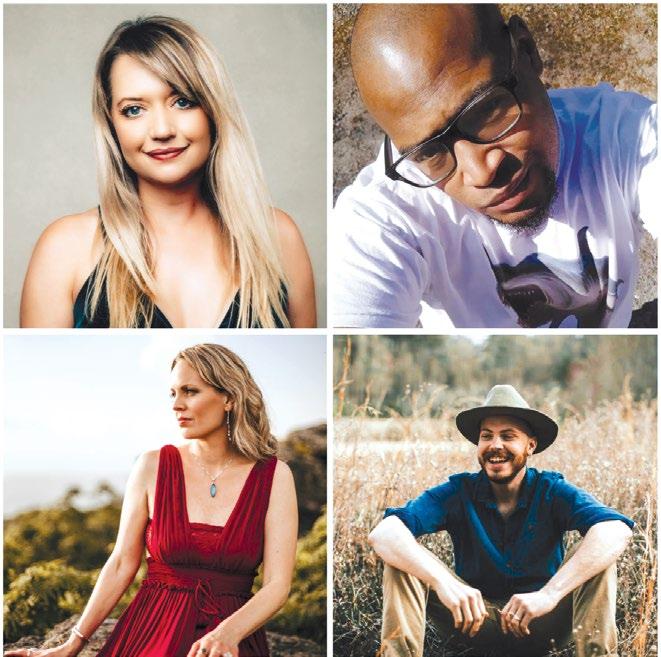
MOUNTAINX.COM NOV. 16-22, 2022 49
Daily Specials Mon: All you can eat pork ribs Tue: Taco Tuesday (Brisket Nachos & Tacos: Brisket, Pork Belly, Chicken or Shrimp) Wed: Wine bottles 1/2 price Thu: All you can eat mussels 1st NC Restaurant to have Brewers & Distillers permits CURRENTLY FEATURING 14 DIFFERENT BEERS & 8 DIFFERENT SPIRITS Dry aged boneless ribeyes, tomahawk ribeyes & fillet mignon available on the menu or for retail sale. 868 Merrimon Ave, AVL ryeknotco.com
CONTINUES ON PAGE 50 Give online to 48 local nonprofits & get stuff back! GIVELOCALGUIDE.ORG NOW!
INSTANT
PLAYLIST:
Clockwise from top left, Ashley Heath, W.O.R.M., Bar rett Davis and Ivy Eld bring an eclectic mix of music to area listeners. Heath photo by Sandlin Gaither; W.O.R.M. photo by Anthonye Smith; Davis photo by Capturing WNC; Eld photo by Jacqueline Franquez
reconnected a decade later through Davis’ carpentry work.
Complementing Davis’ lyrical prowess, the instrumental interplay throughout the album is likewise strong, especially on “Carolina Still,” in which Jackson Dulaney lays his lap steel over the same solo sections as Derrick Gardner’s keys.
“The combination was definitely unplanned, so Aaron used some mix ing techniques and kept all the good stuff,” Davis says. “The outcome was quite pleasant, and very much repre sentative of a Bob Ross moment.”
As for the fictional title character, Davis says Aesop Fin represents the passing of things and the coming of change.
“With respect, I try to make sure that some things stay remembered while I focus on positive change and allow a healthy amount of friction/ tension for improvement in my life,” Davis says. “I wish to invoke in my listeners a very similar experience to life as a carpenter, musician and father in rural Appalachia — sensa tions of extreme cold, hot and humid, discomfort, pain, injuries, mistakes, drunkenness, forgiveness, mourn ing … wood debris in the lungs, relationship problems and the very
soothing sensations of music over open wounds.”
To learn more, visit avl.mx/c40.
SCANDINAVIAN FIRE
Had exhaustion and burnout not driven Ivy Eld to the emergency room in 2017, she’s convinced that her self-titled debut EP wouldn’t exist.
The Minnesota native and her husband moved to Asheville in 2006, after which she enrolled in Western Carolina University’s Master of Social Work program. Though she’d played music throughout her life and written songs on and off since elementary school, her creative side became deeply buried for a good portion of her 20s and most of her 30s.


“Between being a psychotherapist, a mom and just a chronic helper-type in general — always trying to rescue others and never myself — I had lost track of my inner artist some where along the way,” she says. “But a decade into a career working for the U.S. Department of Veterans Affairs and not long after my second child was born, I had a wake-up call. The intensity and demands of the job were taking a toll on my little family and on my own mental and physical health.”
Following the ER visit, Eld laid the groundwork for her private psycho therapist practice and began what she calls “the reclamation of [her] creative self.” In 2018, she started writing and playing out again on guitar and keyboards and promised herself that she would finally create an album of her own.
“It took a few hard years of juggling many challenging life circumstances at once — parenting my two young kiddos, providing psychotherapy to my caseload of clients during a pan demic, my brother [Nathan Webb] getting sick and passing away in 2021, not to mention dealing with all sorts of doubts, imposter syndrome and other inner critics — but the album came to fruition this year,” she says. “That has been a lifetime dream come true. I turned 45 this year, but I feel like I’m just getting started.”
Produced by Adam McDaniel and Lawson Alderson at West Asheville’s Drop of Sun Studios, and tracked alongside drummer Kevin Rumley and multi-instrumentalist Alan Weatherhead, the EP’s five songs are deeply personal and touch on Eld’s experiences throughout the past four years.
“Blue Jay” was written after Christine Blasey Ford’s testimony accusing then-Supreme Court nom inee Brett Kavanaugh of sexual assault; “Wild North” is about releas ing toxic religious, generational and societal patterns and returning to the healthy parts of her Scandinavian roots; and “Dragon’s Tail” similarly explores self-care in the form of draw ing boundaries.
Likewise restorative, the album’s other two songs are now forever inter twined with the positive male influenc es in her life. “Horizon” is Eld’s love song for Rick Brown, her husband of 20-plus years. Meanwhile, the album’s opening track, “Magic in the Blue,” is a reflection on the healing power of art. Though she wrote it a few years before her lone sibling’s death, she now views the song as prophetic in helping her navigate the loss.
“I had written it for future me,” she says. “I don’t think I ever made it through that song in 2021 without crying. Just about every time I sat down at my piano and opened up my mouth to sing it, I would burst into tears. ‘Magic in the Blue’ was my life raft and my solace.”
To learn more, visit avl.mx/c44. X
NOV. 16-22, 2022 MOUNTAINX.COM 50
ARTS & CULTURE

MOUNTAINX.COM NOV. 16-22, 2022 51



NOV. 16-22, 2022 MOUNTAINX.COM 52 8 0 L ake Eden Rd . , B lack Mount ain (828) 686 -3 451 Helping children who have been abused, ab andoned , an d neglected have a safe, loving home. BlackMoun tai nHome.org /donate & c afe for great deals & delicious homemade goodies . Glorif ying God by ca ring for child ren and fa milie s AtPromiseKids!
Q&A: Womansong choir sings for community causes
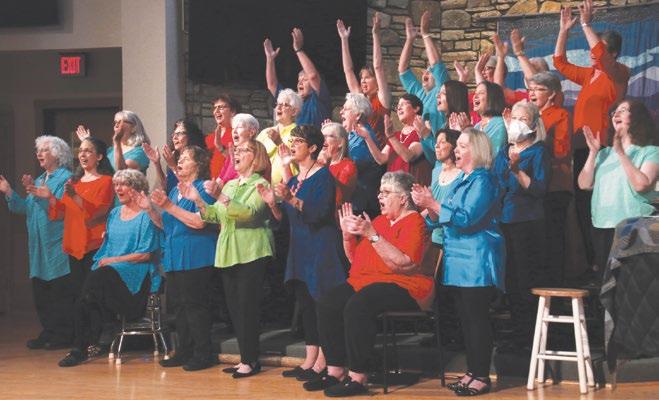
As a child in Bellingham, Wash., Jennifer Langton was surrounded by music. “My family always sang, just as a part of life.”
That tendency continued into her adulthood and followed Langton across the continent. For over a decade, she’s been a member of Womansong, a local women’s commu nity choir. This November, she notes, the nonprofit will celebrate its 35-year anniversary during its annual fall concert at the Unitarian Universalist Congregation of Asheville, 1 Edwin Place. The performance runs Friday, Nov. 18, at 7 p.m. with an encore Saturday, Nov. 19, at 3 p.m.
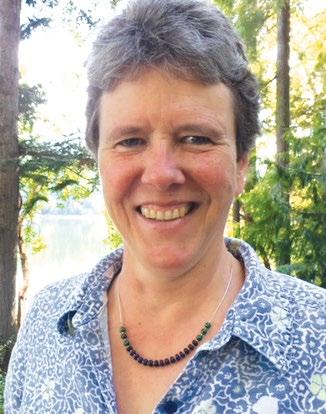
The gathering, Langton continues, will also mark Allison Thorp’s debut as the nonprofit’s new artistic director.
“She has an extensive technical background in conducting and vocal teaching,” says Langton, who served as a member of the search committee. “She has taught quite a few different and diverse choirs. And since we’re wanting to have more diverse music as we move forward, she brings that as well.”
Xpress sat down with Langton to discuss Womansong’s mission, the challenges women choirs face and the benefits of being a nonprofit.
This interview has been edited and lightly condensed.
Xpress: Your organization’s mis sion goes beyond singing in public. Tell me more about Womansong’s role within the broader community.
Langton: We’re centered on the themes of joy, social justice and com munity. We’re not a professional cho rus. We have a lot of heart in how we sing and in what we sing. We’re also committed to exploring social justice and showing up at social justice events.
For instance, Rev. [William] Barber II [of the Poor People’s Campaign] and his team recently came to Asheville for a voting rally in October. We participated in the event.
We’re also regulars at certain events. For example, we typically show up at the annual Helpmate event, where the organization’s lead ers read the names of people who have been victims of family and inti mate partner violence.
Womansong is also really unique because we give a lot of support to each other. It’s almost like a nonre ligious church in a way. We come together for community and a com mon cause and support each other
ONE

through challenges. We have potlucks and really just celebrate together.
As a member of the search com mittee that selected Allison Thorp as the nonprofit’s new artistic director, can you tell me more about what the chorus was looking for in the leadership position?
We were looking for specific musi cal skills like piano and, obviously, a vocal background — someone who
had actually had experience directing community choirs.
But we were also looking for some one who was passionate about our mission and values. Someone who had a passion for promoting women’s empowerment, sisterhood and social justice. And someone who had strong interpersonal skills, who could commu nicate clearly and responsively, who was positive, centered and inclusive.
Were there any surprises amid the search?
We ended up raising the salary more than we had planned, just because expenses are getting higher. Frankly, women’s choruses tend to underpay their artistic directors. We know that people do it out of passion and to be part of the community, but people also have to pay for expenses. So, we upped the salary a bit. That was a challenge, making sure that we had secured that in our budget.
What do you think are the benefits of Womansong being a nonprofit?
Some choirs aren’t nonprofits, and they kind of ebb and flow. For us, it enables us to be more stable and to get people involved who aren’t neces sarily active members. People and the community really come together as a small village, and that provides a lot of richness. The nonprofit status provides ongoing support and continuity so that people can be engaged and help sup port us in a lot of different ways.
— LA Bourgeois X
MOUNTAINX.COM NOV. 16-22, 2022 53
FEATURES
OF A KIND: “Womansong of Asheville is the only choir I’ve joined that is female centered and that provides support to each other beyond just singing,” says longtime member Jennifer Langton. Photo courtesy of Langton
GOING STRONG: In celebration of its 35-year anniversary, the nonprofit Womansong will perform two shows at the Unitarian Universalist Congrega tion of Asheville on Friday, Nov. 18, at 7 p.m. and Saturday, Nov. 19 at 3 p.m.
Photo by Michael Rogers
What’s new in food
These days, following the stock market is likely to trigger some high anxiety. So, consider following local tailgate markets instead. Granted, the summer’s harvest is behind us, but most weekly tailgate markets in Buncombe County are segueing into the holiday market season. Alongside winter greens and squash, shoppers can expect to find décor such as wreaths and garlands, as well as craft and gift vendors in the mix.
One big item shoppers won’t find at weekly markets is Christmas trees, advises Sarah Hart, communications manager for Asheville Sustainable Agriculture Project. “Some tailgate markets have tried it in the past, but tree farms generally want to set up at places where they can stay seven days a week. We encourage people to check out nearby U-pick farms or local sellers in the region,” she says. Holiday markets will be held at the following locations:
• Asheville City Market, 52 N. Market St., Saturdays Nov. 26-Dec. 17, 9 a.m.-noon, avl.mx/bfk


• Black Mountain Tailgate Market, 130 Montreat Road, Saturday, Nov. 19, 9 a.m.-noon, avl.mx/c5u
• East Asheville Tailgate Market, 954 Tunnel Road, Friday, Nov. 18, 2:30-5:30 p.m., avl.mx/c5v

• Leicester Farmers Market, 2979 New Leicester Highway, Wednesdays through Nov. 23, 3-6 p.m., avl.mx/c5y
• The Holiday Bazaar, 3300 University Heights Drive, Saturdays, Nov. 26-Dec. 17, 10 a.m.–1 p.m, avl.mx/c5w

• River Arts District Farmers Market, 350 Riverside Drive., Wednesdays through Dec. 21, 3-5:30 p.m., avl.mx/9ki
• Weaverville Tailgate Market, 60 Lakeshore Drive, Wednesdays through Dec. 14, 3-6 p.m., avl.mx/c5x
• West Asheville Tailgate Market, 718 Haywood Road, Tuesdays, Nov. 29-Dec. 20, 3:30-5:30, avl.mx/bwh
Bundle up
In other market news, the North Asheville Tailgate Market recently announced it will reopen on Saturday mornings in February, rather than wait until May as it has done in the past.
“The winter market was born of a combination of customers desiring to shop more year-round with us and vendors who are not relying on produce seasonality as much to sell goods like value-added foods, chees es, meats, teas, spices and more,” says NATM Executive Director Oakley
Brewer
Sarah Hart of ASAP confirms that motivation. “Basically, it’s a story of supply and demand,” she says. “Customers want to buy local food all year round, and we have farmers who have found ways to do it, as well as bakers and food makers. This has been slowly happening over the last 10 or so years, and it makes sense not to close it all out in September.”

The North Asheville Tailgate Market is at 3300 University Heights. For more information, visit avl.mx/bei.
Meat up
For over a decade, The Chop Shop Butchery has been selling region ally sourced and on-site butchered beef, pork and lamb to customers and local restaurants. More recently, with the launch of its Department of Agriculture-inspected processing facility at 52 Clayton St. in North Asheville, the shop’s operations have increased significantly.
“We were maxed out on space and production capabilities in the shop and struggling to meet the needs of the retail and wholesale communi ty,” says P.J. Jackson, butcher and co-owner. “In the shop, we could handle four to six hog carcasses and one to 1 1/2 cows a week. Now we are already up to three beef and nine hogs a week.”
Additionally, small farmers can contract with The Chop Shop’s USDA facility to butcher and pack age their meats for personal or retail purposes. “Those farmers can trailer their hog or cow or lamb to Apple Brandy Beef in Wilkesboro, where we get all our beef,” Jackson explains. “The owner, Seth Church, also has an abattoir [slaughterhouse] there. He will process your animal, bring that carcass to us on Clayton, and we’ll make whatever you want from it.”
Along with pork chops, the new facility will turn ham into sliced deli meat and belly into smoked bacon. And because the facility also has
NOV. 16-22, 2022 MOUNTAINX.COM 54
ARTS & CULTURE
@Camdenscoffeehouse • 40 N Main St, Mars Hill, NC FOOD ROUNDUP It’s time to GE T COVER ED! Health Insurance is within your reach Open enrollment is Nov. 1st - Jan. 15th Get FREE impartial help to review your options, avoid pitfalls and get great, affordable coverage. N C n av i g at o r. n e t /s c h e d u l e a s s i s t a n c e | (855) 733 37 11 The project described was supported by Funding Opportunity Number CA-NAV-21-001 from the Center for Medicare & Medicaid Services. The contents provided are solely the responsibility of the authors and do not necessarily represent the official views of HHS o r any of its agencies. S C H E D U L E A F R E E A PP O I N T M E N T
Tailgate markets segue to holiday markets
a large commercial kitchen, it can turn trim into dry-cured Italian-style salami and bones into broth.
“It’s a whole other level of oppor tunity for small local farmers to have a more in-depth, valued product for their personal use or to sell,” Jackson says. “With an on-site USDA inspec tor, we take care of all the regulations and keep everything safe.”
To learn more, visit avl.mx/9d0.
Crowded table
This year, let the profession als take care of the Thanksgiving meal — not just the centerpiece but starters, sides and dessert. That way all the good host has to do is pour the drinks, set the table and load the dishwasher.
• Bedazzle your guests with a tandoori turkey from Andaaz restaurant. The full meal, which feeds 10-14 people, includes a 14- to 16-pound bird roasted in a tandoor (clay oven) with Indian spices, cranberry apple chutney, mango chutney and butternut squash bharta. Call 828-552-3200 to order by Friday, Nov. 18. Pickup is by 1 p.m. Thanksgiving Day, Nov. 24, at Andaaz, 28 Hendersonville Road.
• Newstock has your sides cov ered with a menu of elevated traditional dishes, including sourdough dinner rolls, cran berry sauce with citrus and ginger, foraged wild mushroom dressing and mushroom gravy. For pickup Tuesday, Nov. 22,
or Wednesday, Nov. 23, at 191 Lyman St., Studio 115. Orders must be placed by Thursday, Nov. 17. avl.mx/c5i
• Gospel Ice Cream and pastry chef Beth Kellerhals have part nered to create a dessert to give thanks for — ice cream and pie. Consider salted caramel pecan pie with a scoop (or three) of panna cotta ice cream or butter milk brown butter custard pie with cinnamon ice cream. Five types of pie and five flavors of ice

cream can be ordered online for pick up in designated locations on the following dates: Saturday, Nov. 19; Tuesday, Nov. 22; and Wednesday, Nov. 23. avl.mx/c5n
• Rocky’s Hot Chicken Shack offers appetizers, sides and des
Wednesday, Nov. 23, at either of Rocky’s two locations: 1455 Patton Ave. or 3749 Sweeten Creek Road. avl.mx/c5s
Ingle bells
Kick off the gifting season by donating a jar of peanut butter, can of soup or any number of other nonper ishable items during the 30th annual Ingles Giving Tree. The yearly event benefits MANNA FoodBank, a local nonprofit that serves more than 120,000 food-insecure residents each month in Western North Carolina.

The lighting of the tree — con structed of close to 20,000 pounds of nonperishable, shelf-stable food items — takes place inside the food court at Asheville Outlets on Monday, Nov. 21, at 5:30 p.m.
Every person who brings a food donation Monday, Nov. 21, 5-8 p.m., or Tuesday, Nov. 22, 10 a.m.-8 p.m., will be entered to win a $500 Ingles gift card. Donations should be dropped at the MANNA table inside the Asheville Outlets food court. On Wednesday, Nov. 23, a single win ner will be drawn from all entries, and the winner will be contacted by MANNA FoodBank.
Additionally, Ingles stores across WNC will sell holiday icons at the register for $1 each, giving shoppers

MOUNTAINX.COM NOV. 16-22, 2022 55
Handcrafted in Nepal, this HAMMERED BRASS SINGING BOWL embodies two of its richest traditions, metalwork and meditation. Singing bowls help clear your mind, cleanse your heart and comfort your soul. What a beautiful gift for you or someone else you love this holiday season! 111622
DECK THE WALLS: Locally made
decor
such as
wreaths
from Green Toe Ground Farm will be
available
for
purchase
at holiday markets throughout Buncombe County in November and December. Photo by Hilary Shuler
Around Town
NC Glass Center to open Black Mountain location
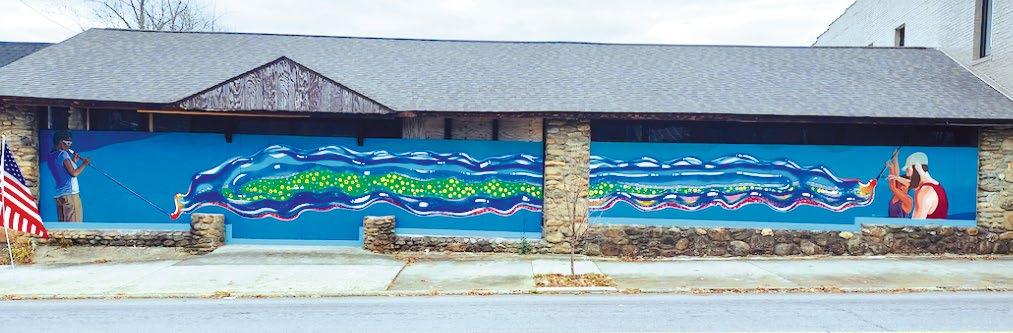
Glass expands when it heats up. The N.C. Glass Center likewise is about to grow beyond its current boundaries.
“We are at a point where we have run out of capacity, and people — artists and the public — continue to want us to do more,” says Executive Director Janice Gouldthorpe
The nonprofit River Arts District studio, which opened in 2015 with a mission of helping emerging artists, will build a second location in the former Rug and Jug novelty shop building in Black Mountain. The $2.7 million project is scheduled to be completed by early 2024.
The center hopes to have more class es taught by nationally recognized art ists in the new space, which will feature a state-of-the-art hot shop, flame shop and gallery, Gouldthorpe says.


“We will also have two furnaces, which means we could be in operation seven days per week,” she explains. (The RAD studio closes once a week,

she notes, so that its single glass fur nace can be charged.)
The Buncombe County Tourism Product Development Fund, financed through the county occupancy tax, awarded the glass center a $330,000 grant to help it purchase and install equipment at the East State Street building.
The RAD studio, at 140 Roberts St., Suite C, will continue to offer classes, artist rental equipment and retail space.
Currently, it welcomes more than 47,000 people each year, Gouldthorpe says, with classes offered to more than 2,200 people, including veterans and low-income youths through a commu nity outreach program.
“These classes help participants express themselves in a positive way while also building confidence and healthy coping skills,” she says.
Additionally, the center showcases the work of more than 50 local artists.
The N.C. Glass Center is open Mondays, Wednesdays, Thursdays and Sundays, 10 a.m.-5 p.m., and FridaysSaturdays, 10 a.m.-6 p.m. For more information, go to avl.mx/51k.

World gone wrong
As an ecologist, Lloyd Raleigh has studied climate change. As a world traveler, he has witnessed firsthand its devastating effects on the planet, people, animals and plants.
Those experiences helped inspire the Asheville author’s debut novel, Welcome to the Free World, recently published by Bowker. The dystopian book tells the story of a 23-year-old who lives in the Southern Blue Ridge in a violent world forever altered by cli mate change and a metaverse orches trated by an artificial intelligence.
“I hope that readers will enjoy this book as an entertaining novel, but also will be haunted by it,” he says.
In 2005, Raleigh quit his job, sold most of his belongings and left on a 3 1/2-year overland journey from Hong Kong to Jerusalem. On the way, he talked with thousands of people and made a promise that he would share what he learned.
“A substantial focus of my life has been sustainability and living mindful ly, and that focus helped to shape the novel and the main theme of how we relate to ourselves and others when nothing seems sustainable anymore,” he explains. “Even if we are living in a utopian village such as the fictional setting of Firefly Cove, are we safe from the effects of climate change?”
For more information, visit avl.mx/c5j.
NOV. 16-22, 2022 MOUNTAINX.COM 56
ARTS & CULTURE
ROUNDUP
GLASS HOUSES: The N.C. Glass Center’s second location is set to open in early 2024 in the former Rug and Jug build ing in downtown Black Mountain. Photo courtesy of the NCGC
828.232.2879 WWW.TOWNANDMOUNTAIN.COM Residential Ac tivity Oc t . 1st - Nov. 1st Real Estate Market Update Re ach out a nyti m e 226 Homes Just Listed Median Sold Price $450,000 Median Days on Market 11 196 Homes Under Contract 195 Homes Just Sold *All info from Canopy MLS. A S H E VIL L E CI T Y L IMI T S
Author, author
Black Mountain Public Library will host Write Local, Read Local, a fair featuring more than 20 authors and illustrators, Saturday, Nov. 19, 1-4 p.m.
Participating authors will have a designated spot inside the Education Room at the library where they will sell and sign copies of their books and talk to readers. The library also will have copies available for checkout.
“This is the first year, and we’re hoping that it serves as an opportu nity to connect our community with local writers and illustrators,” says Clint Bowman, recreation coordina tor for the town of Black Mountain. “We hope this event highlights just how talented, diverse and large our literary community is.”
Participating authors will be Elizabeth Acree , Harry Bryan , Thomas Calder (managing edi tor of Xpress), Jim Carillon, John Casper , Peggy Ellis , Michael Hettich , Sheridan Hill , Ruth Cassel Hoffman , Jeff Hutchins, David Madden , Nancy Poling , Jerry Pope, Frank Remkiewicz, Anne Chesky Smith, Betty Nance Smith, Sarah-Ann Smith, Laura Staley, Joe and Mary Standaert, Saro Lynch Thomason and Jack and Judy Williams
The event is at capacity for par ticipating authors, says Melisa Pressley, branch manager of the Black Mountain Public Library. Submissions for the 2023 event will open in the spring, she says.
The Black Mountain Public Library is at 105 N. Dougherty St. For more information, go to avl.mx/c5l.
Cherokee author to speak at Pack library
Pack Memorial Public Library will host a talk with Cherokee writer and advocate Rebecca Nagle on Friday, Nov. 18, at 6 p.m. in the Lord Auditorium.
Nagle hosted the award-winning documentary podcast This Land, which focused on the success of the Indigenous tribes’ ability to protect their sovereignty.
The talk will be presented by the Buncombe County Register of Deeds, the UNC Asheville Indigenous Studies Program and The Center for Native Health.

Seating will be limited, and reser vations are required.
Pack Memorial Public Library is at 67 Haywood St. To reserve a free ticket, go to avl.mx/c5k.
Welcome, Santa
The 76th annual Asheville Holiday Parade will make its way through downtown Saturday, Nov. 19, 11 a.m.1 p.m. The official performance stop is at the corner of Biltmore and Patton avenues, but attendees will find view ing areas along both streets.

The parade ends on Patton Avenue at South French BroadAvenue.
Local chefs and restaurateurs Katie Button and Meherwan Irani will serve as grand marshals. Button’s Cúrate and Irani’s Chai Pani were the recipients of the prestigious James Beard Foundation Awards earlier this year. Cúrate was the recipient of the Outstanding Hospitality Award, and Chai Pani was named Outstanding Restaurant.
The parade, a downtown tradition since 1946, will include decorated floats, adoptable pets from area rescue organizations, an honored veterans float, marching bands, performances and appearances by Santa Claus and Mrs. Claus.
The Asheville Holiday Parade is produced by the Asheville Downtown Association in partnership with the city of Asheville.
For more information, go to avl.mx/c5m.
— Justin McGuire X
MOVIE REVIEWS
Local reviewers’ critiques of new films include:
BARDO: Two-time Oscar-winning director Alejandro G. Iñárritu (Birdman; The Revenant) crafts a mesmerizing, surreal and highly personal look at life as an artist, and asks whether it’s compatible with social norms. Grade: A — Edwin Arnaudin
BLACK PANTHER: WAKANDA FOREVER: Writer/director Ryan Coogler and his team have created a touching tribute to the late Chadwick Boseman while continuing the story of King T’Challa’s family in entertaining fashion. Grade: B-plus — Edwin Arnaudin
Find full reviews and local film info at ashevillemovies.com patreon.com/ashevillemovies

MOUNTAINX.COM NOV. 16-22, 2022 57
For questions about free listings, call 828-251-1333, opt. 4.
WEDNESDAY, NOVEMBER 16
185 KING STREET
Trivia Theme Night: Fun with Words, 7pm
ASHEVILLE BEAUTY
ACADEMY
Ashevillians: A Local Comedy Showcase, 7pm
ASHEVILLE GUITAR
BAR Christine Havrilla (roots, folk, funk), 7:30pm
ASHEVILLE MUSIC HALL
Disclaimer Stand-Up Lounge Comedy Open Mic, 8pm
BLACK MOUNTAIN BREWING Jay Brown (roots), 6pm
BOLD ROCK
ASHEVILLE Survey Says, 7pm
BOLD ROCK MILLS
RIVER Trivia Night, 6pm
FLEETWOOD'S Shutterings, Sleeping Jesus, Rhinestone Pickup Truck (indie rock), 8pm

GRATEFUL ORGANIC DINER Open Mic, 6pm
HI-WIRE BREWING RAD BEER GARDEN Game Night, 6pm
HIGHLAND BREWING CO.
Well-Crafted Wednesdays w/Matt Smith (Americana, singer-songwriter), 6pm
HOMEPLACE BEER CO.
Vinyl Night w/Doran Todd ft painting by Johannes-XIV, 6pm
ISIS MUSIC HALL & KITCHEN 743
• Galvezston (surf rock and roll), 6pm
• Rod Picott & Wild Ponies (Americana, folk), 7:30pm
OKLAWAHA BREWING CO.
French Broad Valley Mountain Music Jam Session, 6pm
OLE SHAKEY'S Sexy Tunes w/DJ Ek Balam & DJ Franco Niño, 9pm
ONE WORLD BREWING WEST
Latin Night Wednes days w/DJ Mtn Vibez, 8pm
SIERRA NEVADA BREWING CO. Purple (pop, jazz, soul), 5pm

SILVERADOS Wednesday Night Open Jam hosted by Hamza Vandehey, 6pm
SOUTHERN APPALACHIAN BREWERY
Jazz Night w/Jason DeCristofaro, 6pm
SOVEREIGN KAVA Poetry Open Mic w/ Host Caleb Beissert, 8pm
STATIC AGE RECORDS Venus Twins, Seismic Sutra, and Dead Legggs (alt/indie), 8pm
SWEETEN CREEK BREWING Witty Wednesday Trivia, 6:30pm
THE BARRELHOUSE Open Mic Hosted by Kid Billy, 8pm
THE FOUNDRY HOTEL Andrew Finn Magill (acoustic), 7pm
THE GREY EAGLE Tim O’Brien and Jan Fabricius w/Paul Burch (Americana), 7pm
THE ODD Halloween Costume Contest, Paper Pills, Diana Superstar (punk, indie, rock), 8pm
THE SOCIAL Wednesday Night Karaoke w/LYRIC, 9pm
TURGUA BREWING CO Trivia Night, 6pm
CLUBLAND
RENDEZVOUS Albi (vintage jazz), 6pm
SALVAGE STATION Porangui w/Namtik (edm), 6pm
STATIC AGE RECORDS
The Convenience, Tan Universe, and Bendrix Littleton (, 7pm
THE BARRELHOUSE Trivia w/Po' Folk, 8pm
THE FOUNDRY HOTEL The Foundry Collective ft Pimps of Pompe (jazz, acoustic), 7pm
THE GETAWAY RIVER BAR Rum Punchlines Come dy Open Mic, 6pm
THE IMPERIAL LIFE DJ Lil Meow Meow (house, hip hop, dance, R&B), 9pm
THE ODD Graveyard Shift Goth Dance Party, 8pm
THE OUTPOST Ned Collette ft Elisabeth Fuchsia w/ Shane Justice McCord (alt/indie), 6pm
STRINGS: Grammy-nominated fiddle player Casey Driessen will play at Little Jumbo Sunday, Nov. 20, 7-10 p.m. Driessen will perform every Sunday through December as part of a residency at the cocktail bar. Photo courtesy of Driessen
SUNDAY
TWIN LEAF BREWERY
Wednesday Open Mic, 5:30pm
VINTAGE KAVA Rooted Radio (lofi chill hop), 7pm
THURSDAY, NOVEMBER 17
185 KING STREET
The Wilder Flower (bluegrass, old-time), 7pm
27 CLUB
Jonny & The Black Frames w/Faster On Fire (rock), 9:30pm
ASHEVILLE GUITAR BAR Blue Ridge Jazzway, 7:30pm
BLACK MOUNTAIN BREWING The Blushin' Roulettes (modern old-time), 6pm
BLUE GHOST BREWING CO.
Disney Trivia, 6:30pm BOLD ROCK ASHEVILLE Trivia Night, 7pm
FLEETWOOD'S Cam Girl, Minka, Cloud City Caskets (punk), 8pm
FRENCH BROAD RIVER BREWERY Jerry's Dead (Grateful Dead & JGB Tribute), 6pm
FROG LEVEL BREWERY Carolina Freightshak ers (rock and roll), 5:30pm
GIGI'S UNDERGROUND Mr Jimmy "After Hours" (blues), 10pm
HIGHLAND DOWNTOWN TAPROOM Lady and The Lovers (funk, Top 40), 6pm
HOMEPLACE BEER CO. Cody Fair (country & rock classics), 9:30pm
ISIS MUSIC HALL & KITCHEN 743
• Ben Krakauer Band (bluegrass, jazz, new acoustic), 7pm
• The JLloyd MashUp: A Tribute To Paul Simon, 8:30pm
JACK OF THE WOOD PUB Bluegrass Jam w/Drew Matulich & Friends, 7pm
MAD CO. BREW HOUSE Kevin Reese (country, blues, rock), 6pm
MILLS RIVER BREWING Seth & Sara (modern Western & covers), 6pm
OKLAWAHA BREWING CO. Karen Clardy (sing er-songwriter), 7pm
OLE SHAKEY'S
Karaoke w/DJ Franco Niño, 9pm
ONE WORLD BREWING Isaac Hadden (jazz, funk-rock), 7pm
ONE WORLD BREWING WEST Chase, Pastorius & Stanton ft Chris Bullock of Snarky Puppy (jazz, jam), 9pm
PULP Slice of Life Comedy Open Mic, 8pm
QUEEN AUDITORIUM Darren Nicholson (bluegrass, Americana), 7pm
TWIN LEAF BREWERY Thursday Night Karaoke, 8:30pm
WICKED WEED WEST Totally Rad Trivia w/DJ Kipper, 6pm
FRIDAY, NOVEMBER 18
185 KING STREET The Get Right Band (psychdelic indie rock), 7pm
27 CLUB Night Beers, Indus Valley Kings & Kalgon (metal), 10pm
ASHEVILLE GUITAR BAR
Mr Jimmy's Big City Chicago Blues, 7:30pm
BIG PILLOW BREWING The Knotty G's (soulful roots rock), 4pm
BLACK MOUNTAIN BREWING Ashley Heath (Ameri cana), 6pm
BOLD ROCK MILLS RIVER
Iggy Radio (rock, metal, blues), 6pm
CEDAR MOUNTAIN CANTEEN Jazz w/Jason DeCristo faro, 2pm
CITIZEN VINYL Appa-Laffin' Mountain Revue, 8pm
CORK & KEG
3 Cool Cats (vintage rock-n-roll), 8pm
DIFFERENT WRLD Lava Gulls & Friends (noise, dance), 10pm
DRY FALLS BREWING CO.
CPR (current & classic rock), 7pm
FEED & SEED
Catawba Bluegrass Band, 7pm
FLEETWOOD'S
The Swell Fellas, Mister Earthbound & The Silver Doors (psych rock, doom), 8pm
NOV. 16-22, 2022 MOUNTAINX.COM 58
GUIDON BREWING
Donald Yelton and Bill Loftus (blues), 7pm

HIGHLAND BREWING CO.
Brady Turner (pop, soul, R&B), 7pm
HIGHLAND DOWNTOWN TAPROOM
Drag Music Bingo w/ Divine the Bearded Lady, 7:30pm
MAD CO. BREW
HOUSE
Big Ivy Project (originals & covers), 6:30pm
MEADOWLARK MOTEL
Friday Night Karaoke, 7pm
MILLS RIVER BREWING
Dirty Dawg (acoustic Grateful Dead & Jerry Garcia tribute), 7pm
NOBLE CIDER & MEAD TAPROOM
Crisp Comedy: Live in Leicester, 8pm
OKLAWAHA BREWING CO.
90s Throwback Throwdown w/Awake in the Dream, 7pm
ONE WORLD BREWING WEST
• Patrick Lopez Experience Trio (world, instrumental, smooth jazz), 6pm
• Amino & Tomato Calculator (electronic, instrumental, improvisa tional), 9pm
RIVERSIDE RHAPSODY BEER CO.
Fresh Phish Friday (Phish music), 6pm
SALVAGE STATION
The Red Clay Strays (blues, country), 8pm
SOVEREIGN KAVA
Chris Cooper Trio (drip noise), 8pm
STATIC AGE RECORDS
Paraflu.x w/Funkti (edm), 8pm
THE 2ND ACT
Gypsy Jazz w/Albi & the Lifters, 7pm
THE GETAWAY RIVER
BAR
Getaway Comedy: Eitan Levine, 8pm
THE GREY EAGLE
Ty Segall (acoustic), 9pm
THE IMPERIAL LIFE
DJ Press Play (disco, funk and lo-fi house), 9pm
THE ODD
Bold Burlesque
Presents: AS IF: A 90s Show, 8pm
WXYZ BAR AT ALOFT
Christina Chandler (folk, soul, Americana), 7pm
SATURDAY, NOVEMBER 19
185 KING STREET
• Oyster Pop Up w/ Katurah AllGood (folk), 12:30pm
• Sam Burchfield & the Scoundrels w/Alma Russ, 5pm
305 LOUNGE & EATERY
Old Men of the Woods (folk, pop), 3pm
ASHEVILLE BEAUTY ACADEMY

Beauty Parlor Comedy: Jay Light, 7pm
ASHEVILLE CLUB Mr Jimmy (blues), 8pm
ASHEVILLE GUITAR BAR
Miami Gold (rock), 7:30pm
ASHEVILLE MUSIC HALL
Black Carl! X Saka w/ Chmura & Vera Fox (edm), 6pm
BATTERY PARK BOOK EXCHANGE
Dinah's Daydream (Gypsy jazz), 5:30pm
BIG PILLOW BREWING Doss Church and The Unholy Noise (alt-coun try), 5pm
BLUE GHOST BREWING CO.
Tim Nave (folk), 6pm
BOLD ROCK
ASHEVILLE
• Bluegrass Brunch, 10am
• Jeb Rogers Band (funk, soul, bluegrass), 7pm
BOLD ROCK MILLS
RIVER
Friendsgiving w/Super 60s, 4pm
BOTTLE RIOT DJ James Nasty, 7pm
CORK & KEG
The Old Chevrolette Set (classic country), 8pm
DIFFERENT WRLD
Latinx Dance Party w/ DJ Evelyn B, 10pm
DSSOLVR Country Club Disco Pizza Party w/DJ Bran don Manitoba, 7pm
FEED & SEED
Split Rail Bluegrass, 7pm
FROG LEVEL
BREWERY
Blackwater Band (Southern rock, blues, country), 6pm
GUIDON BREWING
Daniel Sage (rock), 6pm
HIGHLAND BREWING CO.
Heavenly Vipers (jazz, honky tonk, rock), 6pm
HIGHLAND DOWNTOWN
TAPROOM
Shane Meade (folk rock), 7pm
HOMEPLACE BEER CO.
The Wilder Flower (bluegrass, old-time), 6:30pm
ISIS MUSIC HALL & KITCHEN 743
• Dallas Ugly (pop country, indie folkrock), 7pm
• Time Sawyer w/ Zachary Warren Briggs (Americana, folk rock), 8:30pm
MOUNTAINX.COM NOV. 16-22, 2022 59
Mountain Xpress’ annual fundraising campaigns have grown each year, raising more than a quarter million dollars in 2021 alone for 46 amazing local nonprofits. This year, we have crossed the $1 million threshold in all-time individual donations, and with your help to keep the momentum going, we can reach even higher. Help Give!Local 2022 have its biggest impact ever for nonprofits! Thank you for supporting Give!Local nonprofits growth How high can we go? DONATE NOW AT givelocalguide.org $1,007,938 All time total $75,000 $150,000 $225,000 $ 300,000 2015 2016 2017 2018 2019 2020 2021 $263,939 $233,564 $141,879 $112,371 $108,210 $60,986 $36,989 $300,000+ ? 2022 $50,000 as of 11/14/22
NOV. 16-22, 2022 MOUNTAINX.COM 60
JACK OF THE WOOD
PUB
• Nobody’s Darling String Band, 4pm
• Left Lane Cruiser w/ George Shingleton (blues rock, country rock, singer-songwriter), 9pm
MEADOWLARK MOTEL
Kevin Dolan & Paul Koptak (singer-songwrit er), 6pm
MILLS RIVER BREWING
• Carvre, Carmody & McIntire (blues, country), 2pm
• Cast Iron Bluegrass, 7pm
OKLAWAHA BREWING CO.
Abby Elmore Band (rock), 8pm
ONE WORLD BREWING WEST
Buffalo Kings (blues country, soul, rock), 9pm
SALVAGE STATION
Jerry Garcia Band Cover Band, 8pm
SOVEREIGN KAVA
Will Franke & The Space Fiddle (folk, world, hip-hop), 9pm
STATIC AGE RECORDS
Shayla McDaniel, Mad Mike, and Cam Stack (indie pop), 7pm
THE GREY EAGLE
• Beginner Waltz Dance Lessons, 12:30pm
• Stop Light Obser vations w/Little Birds (rock), 9pm
THE IMPERIAL LIFE
DJ Nex Millen (classic hip hop, funk, R&B), 9pm
THE ORANGE PEEL
Somewhat Petty (Tom Petty tribute), 8pm
THE ROOT BAR
Blackwater Voodoo (rock, blues, country), 8pm
URBAN ORCHARD CIDER CO. SOUTH
SLOPE
Coustin TL (throwback hip-hop dance party), 7pm
VINTAGE KAVA
Lex Live (acoustic singer-songwriter), 8pm
WXYZ BAR AT ALOFT Asheville AV Club, 7pm
WHITE HORSE BLACK MOUNTAIN
Asheville Jazz Orches tra, 8pm
SUNDAY, NOVEMBER 20
ASHEVILLE GUITAR
BAR
Mark's House Jam and Beggar's Banquet, 3pm
ASHEVILLE MUSIC
HALL
Rainbow Full of Sound (Grateful Dead tribute), 7pm
BLACK MOUNTAIN BREWING

Dark City Kings (outlaw country, rock), 3pm
BLUE GHOST BREWING CO.
Sunday Open Jam hosted by Bear Creek Spring Bandits, 4pm
BOLD ROCK
ASHEVILLE
Bluegrass Brunch, 10am
BOTANIST & BARREL TASTING BAR + BOTTLE SHOP Walking Medicine (roots), 3pm
FROG LEVEL
BREWERY
Robbie Rosado (classic rock, reggae, funk), 3pm
HIGHLAND BREWING CO.
Angela Easterling & The Beguilers (singer-song writer), 2pm
HIGHLAND BREWING DOWNTOWN TAPROOM
Mr Jimmy Duo Blues & Brews, 1pm
ISIS MUSIC HALL & KITCHEN 743
• King Margo (folk pop), 6pm
• Christie Lenée (folk rock, singer-songwriter), 7:30pm
JACK OF THE WOOD PUB
• Bluegrass Brunch, 12pm
• Traditional Irish Jam, 4pm
LITTLE JUMBO
Casey Driessen's Sunday Experiment (folk), 7pm
MILLS RIVER BREWING
Hope Griffin Trio (acous tic, folk, blues), 2pm
OKLAWAHA BREWING CO.
Mr Jimmy (blues), 3pm
ONE WORLD BREWING WEST Sunday Jazz Jam Brunch, 1pm
SILVERADOS Karaoke Sunday Nights w/Lyric, 9pm
SOVEREIGN KAVA
Aaron "Woody" Wood (Appalachian soul, Americana), 7pm
STATIC AGE RECORDS
Ed Schrader’s Music Beat w/Powder Horns (rock), 8pm
THE FOUNDRY HOTEL
Daniel Shearin (singer songwriter), 6pm
THE GREY EAGLE
• Burlesque Brunch, 11am
• Pedal Stroke Fundrais er, 4pm
THE IMPERIAL LIFE
DJ Ek Balam (hip hop, soul, funk, disco), 9pm
THE ORANGE PEEL
The Mersive Experience w/VCTRE + Super Ave. & Kyral x Banko (edm), 5pm
HARRAH'S CHEROKEE
CENTER - ASHEVILLE
Nate Bargatze (come dy), 8pm
VINTAGE KAVA
VK Nights by the Fire Drum Circle, 7pm
WEST ASHEVILLE
Don't Tell Comedy: West Asheville, 7pm
MONDAY, NOVEMBER 21
27 CLUB
Monday Night Karaoke hosted by Ganymede, 9:30pm
305 LOUNGE & EATERY
Old Men of the Woods (folk, pop), 5pm
GREEN MAN BREWERY
Old Time Jam, 5:30pm
HAYWOOD COUNTRY CLUB
Taylor Martin's Open Mic, 6:30pm
HIGHLAND BREWING CO.
Totally Rad Trivia, 6pm
JACK OF THE WOOD PUB Quizzo! Pub Trivia w/ Jason Mencer, 7:30pm
LITTLE JUMBO The Core (jazz), 7pm
NOBLE CIDER DOWNTOWN
Freshen Up Comedy Open Mic, 6:30pm
OKLAWAHA BREWING CO. Oklawaha Synthesizer Club, 6pm
ONE WORLD BREWING Open Mic, 7pm
ONE WORLD BREWING WEST Mashup Mondays (funk, soul, jazz), 8pm
SILVERADOS
Bluegrass Jam Mondays w/Sam Wharton, 7pm
THE IMPERIAL LIFE DJ Short Stop (soul, Latin, dance), 9pm
THE JOINT NEXT DOOR
Mr Jimmy at and Friends (blues), 7pm
THE SOCIAL Line Dance Mondays w/ DJ Razor, 9pm
WHITE HORSE BLACK MOUNTAIN Local Live Series w/ Jay Brown and Friends (roots), 7pm
TUESDAY, NOVEMBER 22
185 KING STREET
Travis Book Country Band, 6:30pm
5 WALNUT WINE BAR
The John Henrys (jazz, swing), 8pm
BOLD ROCK MILLS RIVER Cider Bingo, 6pm
FROG LEVEL BREWERY
Kind, Clean Gentlemen (acoustic roots rock, soul blues), 5:30pm
HIGHLAND DOWNTOWN TAPROOM
Not Rocket Science Trivia, 6pm
HOMEPLACE BEER CO.
Stephen Evans (rock), 6:30pm
LITTLE JUMBO
Jay Sanders, Zack Page & Alan Hall (jazz), 7pm
OLE SHAKEY'S Booty Tuesday: Queer Dance Party, 10pm
ONE STOP AT ASHEVILLE MUSIC HALL
Early Tuesday Jam (funk), 8pm
ONE WORLD BREWING WEST Grateful Family Band Tuesdays (JGB, Dead tribute, rock, jam), 6pm
SOVEREIGN KAVA Weekly Open Jam hosted by Chris Cooper & Friends, 8pm
THE GREY EAGLE
The Dirty French Broads (Americana grass), 8pm
THE SOCIAL Travers Freeway Open Jam Tuesdays, 7pm

TWIN LEAF BREWERY Tuesday Night Trivia, 7pm
WAGBAR Tuesday Night Trivia With Your Dog, 6pm
WHITE HORSE BLACK MOUNTAIN Open Mic Night, 7pm
ASHEVILLE BEAUTY ACADEMY
Beauty Parlor Comedy: Will Foskey, 7pm
ASHEVILLE MUSIC HALL
Disclaimer Stand-Up Lounge Comedy Open Mic, 8pm
BLACK MOUNTAIN BREWING Jay Brown (roots), 6pm
BLUE GHOST BREWING CO. Rooster (Americana), 4pm
BOLD ROCK ASHEVILLE Survey Says, 7pm
BOLD ROCK MILLS RIVER Trivia Night, 6pm
GRATEFUL ORGANIC DINER Open Mic, 6pm
HI-WIRE BREWING RAD BEER GARDEN Game Night, 6pm
HIGHLAND BREWING CO.
Well-Crafted Wednesdays w/Matt Smith (Americana, singer-songwriter), 6pm
OKLAWAHA BREWING CO.
• French Broad Valley Mountain Music Jam Session, 6pm
• Nick Mac & The Noise (blues rock), 7pm
OLE SHAKEY'S Sexy Tunes w/DJ Ek Balam & DJ Franco Niño, 10pm
ONE WORLD BREWING WEST Latin Night Wednesdays w/DJ Mtn Vibez, 8pm
SILVERADOS Wednesday Night Open Jam hosted by Hamza Vandehey, 6pm
SOUTHERN APPALACHIAN BREWERY
Jazz Night w/Jason DeCristofaro, 6pm
SOVEREIGN KAVA Poetry Open Mic w/ Host Caleb Beissert, 8pm
SWEETEN CREEK BREWING Witty Wednesday Trivia, 6:30pm
THE BARRELHOUSE Open Mic Hosted by Kid Billy, 8pm
THE FOUNDRY HOTEL Andrew Finn Magill (acoustic), 7pm
THE GREY EAGLE Asheville All-Stars: The Last Waltz Anniversary, 8pm
THE SOCIAL Wednesday Night Karaoke w/LYRIC, 9pm
TWIN LEAF BREWERY Wednesday Open Mic, 5:30pm
WHITE HORSE BLACK MOUNTAIN Traditional Irish Music Session, 7pm
THURSDAY, NOVEMBER 24
BOLD ROCK ASHEVILLE Trivia Night, 7pm
DOUBLE CROWN Gospel Night w/The Highway QCs, 9pm
FRENCH BROAD RIVER BREWERY Jerry's Dead (Grateful Dead & JGB Tribute), 6pm
GIGI'S UNDERGROUND
Mr Jimmy "After Hours" (blues), 10pm
JACK OF THE WOOD PUB
Bluegrass Jam w/Drew Matulich & Friends, 7pm
OLE SHAKEY'S Karaoke w/DJ Franco Niño, 10pm
RENDEZVOUS Albi (vintage jazz), 6pm
THE BARRELHOUSE Trivia w/Po' Folk, 8pm
THE FOUNDRY HOTEL The Foundry Collective ft Pimps of Pompe (jazz, acoustic), 7pm
THE GETAWAY RIVER BAR
Rum Punchlines Comedy Open Mic, 6pm
TWIN LEAF BREWERY Thursday Night Karaoke at Twin Leaf, 8:30pm
MOUNTAINX.COM NOV. 16-22, 2022 61
CLUBLAND
FREEWILL ASTROLOGY BY ROB BREZSNY
ARIES (March 21-April 19): Virginia Woolf wrote a passage that I suspect will apply to you in the coming weeks. She said, “There is no denying the wild horse in us. To gallop intemperately; fall on the sand tired out; to feel the earth spin; to have — positively — a rush of friendship for stones and grasses — there is no getting over the fact that this desire seizes us.” Here’s my question for you, Aries: How will you harness your wild horse energy? I’m hoping that the self-pos sessed human in you will take command of the horse and direct it to serve you and yours with constructive actions. It’s fine to indulge in some intemperate galloping, too. But I’ll be rooting for a lot of temperate and disciplined galloping.
TAURUS (April 20-May 20): “The failure of love might account for most of the suffering in the world,” writes poet Marie Howe. I agree with that statement. Many of us have had painful episodes revolving around people who no longer love us and people whose lack of love for us makes us feel hurt. That’s the bad news, Taurus. The good news is that you now have more power than usual to heal the failures of love you have endured in the past. You also have an expanded capacity to heal others who have suffered from the failures of love. I hope you will be generous in your ministrations!
GEMINI (May 21-June 20): Many Geminis tell me they are often partly awake as they sleep. In their dreams, they might work overtime trying to solve waking-life problems. Or they may lie in bed in the dark contemplating intricate ideas that fascinate them, or perhaps ruminating on the plot developments unfolding in a book they’ve been reading or a TV show they’ve been bingeing. If you are prone to such behavior, I will ask you to minimize it for a while. In my view, you need to relax your mind extra deeply and allow it to play luxuriously with non-utili tarian fantasies and dreams. You have a sacred duty to yourself to explore mysterious and stirring feelings that bypass rational thought.
CANCER (June 21-July 22): Here are my two key messages for you. 1. Remember where you hide important stuff. 2. Remember that you have indeed hidden some important stuff. Got that? Please note that I am not questioning your urge to lock away a secret or two. I am not criticizing you for wanting to store a treasure that you are not yet ready to use or reveal. It’s completely understandable if you want to keep a part of your inner world off-limits to certain people for the time being. But as you engage in any or all of these actions, make sure you don’t lose touch with your valuables. And don’t forget why you are stashing them.
LEO (July 23-Aug. 22): I know I don’t have to give you lessons in expressing your sensuality. Nor do you need prods and encouragement to do so. As a Leo, you most likely have abundant talent in the epicurean arts. But as you prepare to glide into the lush and lusty heart of the Sensuality Season, it can’t hurt to offer you a pep talk from your fellow Leo bon vivant, James Baldwin. He said: “To be sensual is to respect and rejoice in the force of life, of life itself, and to be present in all that one does, from the effort of loving to the breaking of bread.”
VIRGO (Aug. 23-Sept. 22): Many Virgos are on a lifelong quest to cultivate a knack described by Sigmund Freud: “In the small matters, trust the mind. In the large ones, the heart.” And I suspect you are now at a pivotal point in your efforts to master that wisdom. Important decisions are looming in regards to both small and large matters. I believe you will do the right things as long as you empower your mind to do what it does best and your heart to do what it does best.
LIBRA (Sept. 23-Oct. 22): Social media like Facebook and Twitter feed on our outrage. Their algorithms are designed to stir up our disgust and indignation. I confess that I get
semi-caught in their trap. I am sometimes seduced by the temptation to feel lots of umbrage and wrath, even though those feelings comprise a small minority of my total emotional range. As an antidote, I proactively seek experiences that rouse my wonder and sublimity and holiness. In the next two weeks, Libra, I invite you to cultivate a focus like mine. It’s high time for a phase of minimal anger and loathing—and maximum reverence and awe.
SCORPIO (Oct. 23-Nov. 21): Scorpio author Sylvia Plath had a disturbing, melodramatic relationship with romance. In one of her short stories, for example, she has a woman character say, “His love is the twenty-story leap, the rope at the throat, the knife at the heart.” I urge you to avoid contact with people who think and feel like that — as glamorous as they might seem. In my view, your romantic destiny in the coming months can and should be uplifting, exciting in healthy ways, and conducive to your well-being. There’s no need to link yourself with shadowy renegades when there will be plenty of radiant helpers available.
SAGITTARIUS (Nov. 22-Dec. 21): I like Sagittarian healer and author Caroline Myss because she’s both spiritual and practical, compassionate and fierce. Here’s a passage from her work that I think will be helpful for you in the coming weeks: “Get bored with your past. It’s over! Forgive yourself for what you think you did or didn’t do, and focus on what you will do, starting now.” To ensure you make the most of her counsel, I’ll add a further insight from author Augusten Burroughs: “You cannot be a prisoner of your past against your will — because you can only live in the past inside your mind.”
CAPRICORN (Dec. 22-Jan. 19): How would you respond if you learned that the $55 t-shirt you’re wearing was made by a Haitian kid who earned 10 cents for her work? Would you stop wearing the shirt? Donate it to a thrift store? Send money to the United Nations agency UNICEF, which works to protect Haitian child laborers? I recommend the latter option. I also suggest you use this as a prompt to engage in leisurely meditations on what you might do to reduce the world’s suffering. It’s an excellent time to stretch your imagination to understand how your personal life is interwoven with the lives of countless others, many of whom you don’t even know. And I hope you will think about how to offer extra healings and blessings not just to your allies, but also to strangers. What’s in it for you? Would this bring any selfish benefits your way? You may be amazed at how it leads you to interesting connections that expand your world.
AQUARIUS (Jan. 20-Feb. 18): Aquarian philos opher Alfred North Whitehead wrote, “The silly question is the first intimation of some totally new development.” He also said, “Every really new idea looks crazy at first.” With these thoughts in mind, Aquarius, I will tell you that you are now in the Season of the Silly Question. I invite you to enjoy dreaming up such queries. And as you indulge in that fertile pleasure, include another: Celebrate the Season of Crazy Ideas.
PISCES (Feb. 19-March 20): We all love to follow stories: the stories we live, the stories that unfold for people we know, and the stories told in movies, TV shows, and books. A dispropor tionately high percentage of the entertainment industry’s stories are sad or tormented or horren dously painful. They influence us to think such stories are the norm. They tend to darken our view of life. While I would never try to coax you to avoid all those stories, Pisces, I will encourage you to question whether maybe it’s wise to limit how many you absorb. The coming weeks will be an excellent time to explore this possibility. Be willing to say, “These sad, tormented, painful stories are not ones I want to invite into my imagination.” Try this experiment: For the next three weeks, seek out mostly uplifting tales.
MARKETPLACE
REAL ESTATE & RENTALS | ROOMMATES | JOBS | SERVICES ANNOUNCEMENTS | CLASSES & WORKSHOPS | MIND, BODY, SPIRIT MUSICIANS’ SERVICES | PETS | AUTOMOTIVE | XCHANGE | ADULT
Want to advertise in Marketplace? 828-251-1333 advertise@mountainx.com • mountainx.com/classifieds
If it sounds too good to be true, it probably is. Remember the Russian proverb: “Doveryai, no proveryai,” trust but verify. When answering classified ads, always err on the side of caution. Especially beware of any party asking you to give them financial or identification information. The Mountain Xpress cannot be responsible for ensuring that each advertising client is legitimate. Please report scams to advertise@mountainx.com
RENTALS APARTMENTS FOR RENT
SERVICES
AUDIO/VIDEO
DISH TV SPECIAL $64.99
For 190 Channels + $14.95
High Speed Internet. Free Installation, Smart HD DVR Included, Free Voice Remote. Some restrictions apply. Promo Expires 1/21/23. 1-866-566-1815 (AAN CAN)
ANNOUNCEMENTS
ANNOUNCEMENTS
ATTENTION HOMEOWNERS If you have water damage and need cleanup, call us! We'll work with your insurance to get your home repaired and your life back to normal ASAP! Call 833-664-1530 (AAN CAN)
DON'T PAY FOR COVERED HOME REPAIRS AGAIN
American Residential Warranty covers all major systems and appliances. 30 day risk free / $100 off popular plans. Call 855-731-4403 (AAN CAN)
DONATE YOUR CAR FOR KIDS Fast free pickup. Running or not. 24 hour response. Maximum tax donation. Help find missing kids. Call 855504-1540. (AAN CAN)
2 BED 2 BATH APARTMENT NEAR BILTMORE PARK (ASSUME LEASE) Assume lease of 2 bed 2 bath corner ground floor apartment. Walking distance from Biltmore Park, pool/hot tub, up to 3 pets. $1950/mth. Contact Joel at 828-393-0072

EMPLOYMENT
HUMAN SERVICES
DISH TV SPECIAL $64.99 For 190 Channels + $14.95 High Speed Internet. Free Installation, Smart HD DVR Included, Free Voice Remote. Some restrictions apply. Promo Expires 1/21/23. 1-866-566-1815 (AAN CAN)
BUSINESS
NOTARY PUBLIC PROFESSIONAL - WNC AND NC STATEWIDE Chalk Notary provides professional, prompt and reliable notary services. Document certifications: in person, remote and e-Notary. Fees vary depending on day/time and area. Call 828-551-1197. Email Chery@ chalkNOTARY.com
BATH & SHOWER UPDATES In as little as ONE DAY! Affordable prices - No payments for 18 months! Lifetime warranty & professional installs. Senior & Military Discounts available. Call: 1-866-370-2939 (AAN CAN)
BATHWRAPS IS LOOKING FOR HOMEOWNERS We update bathtubs with new liners for safe bathing and showering. Specialize in grab bars, non-slip surfaces and shower seats. All updates are completed in one day. Call 866-531-2432. (AAN CAN)
DONATE YOUR VEHICLE TO FUND THE SEARCH FOR MISSING CHILDREN Fast free pickup. 24 hour response. Running or not. Maximum tax deduction and no emission test required! Call 24/7: 999-999-9999 Call 855-504-1540
LONG DISTANCE MOVING Call for a free quote from America’s Most Trusted Interstate Movers. Let us take the stress out of moving! Call to speak to our Quality Relocation Specialists: Call 855-787-4471. (AAN CAN)
YOUR CAREER STARTS HERE WITH MHC! Get paid to do good! Assessment/ Youth Counselors are needed to support at-risk youth in our residential facility in Asheville. We offer paid training and excellent benefits. Apply at bit.ly/MHCCareers 919754-3633 vpenn@mhfc.org mhfc.org/opportunities
COMPUTER/ TECHNICAL
COMMUNICATIONS SPECIALIST First Presbyterian Church Asheville (FPCA) is a dynamic, progressive church in the heart of downtown Asheville which has many important ministries in the local community. We are currently searching for qualified candidates for a Communications Specialist position. This is a full-time position, with excellent benefits. We are looking for an individual that is interested in working with a creative and energetic team at FPCA, including staff and church members. The purpose of the position and primary work of the Specialist is engaging our congregation and community with the image, mission and news of FPCA. A job description is attached. To learn more about our mission, work and activities, please visit www. fpcasheville.org. The position will remain open until filled. Any questions regarding the position should be directed to lthurston@fpcasheville.org

TENANT & EMPLOYEE
BACKGROUND CHECKS
- $50 Credit, Criminal, and Eviction - King Background Screening has been serving the needs of business owners and the rental industry since 2006. Quick results! Denise Anderson (owner) call/text 941-284-4612 KingScreening@gmail.com See web site for full details and prices. avl.mx/c6f
HOME
4G LTE HOME INTERNET NOW AVAILABLE! Get GotW3 with lightning fast speeds plus take your service with you when you travel! As low as $109.99/mo.! 1-866571-1325. (AAN CAN)
TRANSPORTATION
PART TIME DRIVER NEEDED Looking for a ride from Old Lee Walker Heights apartments to Ingles Distribution, Swannanoa. Couple times a week. Mid-afternoon 1.30pm pickup, 10pm evening dropoff. Pay negotiable. Contact Tom on 828-712-3403
BCI WALK-IN TUBS ARE ON SALE Be one of the first 50 callers and save $1,500! Call 844-514-0123 for a free in-home consultation. (AAN CAN)
BEGIN A NEW CAREER AND EARN YOUR DEGREE AT CTI Attention Active Duty & Military Veterans & Family. Online Computer & Medical training available for Veterans & Families. Computer with internet required. Call 866243-5931. (M-F 8am-6pm ET). AAN CAN.
COMPUTER & IT TRAINING PROGRAM Train online to become a computer & help desk professional. Grants and scholarships available for certain programs for qualified applicants. Call CTI 888-2811442. Computer with internet is required. (AAN CAN)
CREDIT CARD DEBT RELIEF! Reduce payment by up to 50%! Get one LOW affordable payment/month. Reduce interest. Stop calls. FREE no-obligation consultation Call 1-855-761-1456 (AAN CAN)
DIRECTV SATELLITE TV Service Starting at $74.99/ month! Free Installation! 160+ channels available. Call Now to Get the Most Sports & Entertainment on TV! 877310-2472 (AAN CAN)
DON'T PAY FOR COVERED HOME REPAIRS AGAIN American Residential Warranty covers all major systems and appliances. 30 day risk free - $100 off popular plans. Call 855-731-4403. (AAN CAN)
PAYING TOP CA$H FOR MEN'S SPORT WATCHES! Rolex, Breitling, Omega, Patek Philippe, Heuer, Daytona, GMT, Submariner and Speedmaster. Call 888320-1052
SPECTRUM INTERNET AS LOW AS $29.99! Call to see if you qualify for ACP and free internet. No Credit Check. Call Now! 833-955-0905 (AAN CAN)
WATER DAMAGE TO YOUR HOME? Call for a quote for professional cleanup & maintain the value of your home! Set an appt. today! Call 833-664-1530 (AAN CAN)
MIND, BODY, SPIRIT COUNSELING SERVICES
ASTRO-COUNSELING Licensed counselor and accredited professional astrologer uses your chart when counseling for additional insight into yourself, your relationships and life directions. Stellar Counseling Services. Christy Gunther, MA, LCMHC. (828) 258-3229
AUTOMOTIVE
AUTOMOTIVE SERVICES
CASH FOR CARS! We buy all cars! Junk, high-end, totaled – it doesn’t matter! Get free towing and same day cash! NEWER MODELS too! Call 866-535-9689. (AAN CAN)
NOV. 16-22, 2022 MOUNTAINX.COM 62
Sports trainer’s concern, for short

Tracy Chapman hit with the line “I had a feeling I could be someone” (1988)

Modern music staple that’s a punny description of 17-, 24-, 38and 48-Across
Available, as a London cab
Prefix with city or state
People that built the Temple of Kukulkan
Moistened, in a way
Janis Joplin’s final recording, which had an anticonsumerism message (1970)
MOUNTAINX.COM NOV. 16-22, 2022 63
1
5
8
14
15
16
17
19
20
21
23
24
27
30
31
32
34
37
38
40
41
42
43
44
46
48
52
53
54
57
60
62
63
64
65
66
67
color DOWN 1 Crush (it) 2 Foofaraws 3 Like some PG-13 language 4 Home of the body’s vestibular system 5 Supercool individual 6 Smartphone notification 7 Turkey is on top of this 8 Expert with flags, perhaps 9 “___ más!” 10 Caterpillars and such 11 Many messages in spam folders 12 Palace resident 13 “ur joking, right?!” 18 Waking announcement 22 Tempt 24 Sport with cage matches,
25 Lady ___ 26 Get
round
punch? 27 “Right now” 28 Bonkers 29 Unpleasant realities 32 Some stage whispers 33 “Catfish” airer 35 Friend of Telly and Zoe 36 Name hidden in “paleontology” 38 Prix ___ 39 Gray-haired, say 43 Woodcarving tool 45 Doesn’t just pass the test 46 “Get outta here!” 47 “___ the Wild” (2007 film) 48 Minimum wage employment, informally 49 Kagan of the Supreme Court 50 Sudden wave 51 Obscures 54 Docking spot 55 Singer born Eithne Ní Bhraonáin 56 Many a diploma signer 58 Before, poetically 59 Actor Danson 61 Cable option for cinephiles edited by Will Shortz | No. 1012 | PUZZLE BY DREW SCHMENNER THE NEW YORK TIMES CROSSWORD PUZZLE ANSWER TO PREVIOUS NY TIMES PUZZLE 1234 56 7 89 10 11 12 13 14 15 16 17 18 19 20 21 22 23 24 25 26 27 28 29 30 31 32 33 34 35 36 37 38 39 40 41 42 43 44 45 46 47 48 49 50 51 52 53 54 55 56 57 58 59 60 61 62 63 64 65 66 67 OS LO AT BA T MEME RI EN RO AC H OV AL ARA B EL IT E LE GO LI FE AN DL IM BO IR ON S IT SO N FI NE TO OT HC OM BO FA NG S NE E VA IN LI C OC T AR C LS U OL AS AR F HE LP S JU STPLA IN DU MB O OP ER A CH IR P AL IT T LEL AM BO CA IN SH IF T TO ON BL OG NO VA E HE DY DA NE TR EN D ST YX
ACROSS
Vegetable rich in vitamin K, appropriately
Undergrad conferrals, for short
Sticks around a classroom?
“I have no ___”
Gymnast Raisman
Captivate
Top 10 funk hit from War with an iconic bass line (1975)
Initial attempts
Inspiration for some psychedelic music
___ Kondo, organizing guru
Serum vessel
Classic Wilson Pickett cover (1966)
Bad streaks
Some damning evidence
Garment traditionally woven from white wool
Close chica
Cartoon collectible
What “XXX” might represent in comics
Small dog
“You got me this time!”
Water balloons on a hot day, say
Wore out
Seeks at an auction
“I have no ___”
Water balloon sound
Proof finale, in brief
Rich, fashionable sorts
Winter hrs. in Boston
Printer toner
in brief
a
of