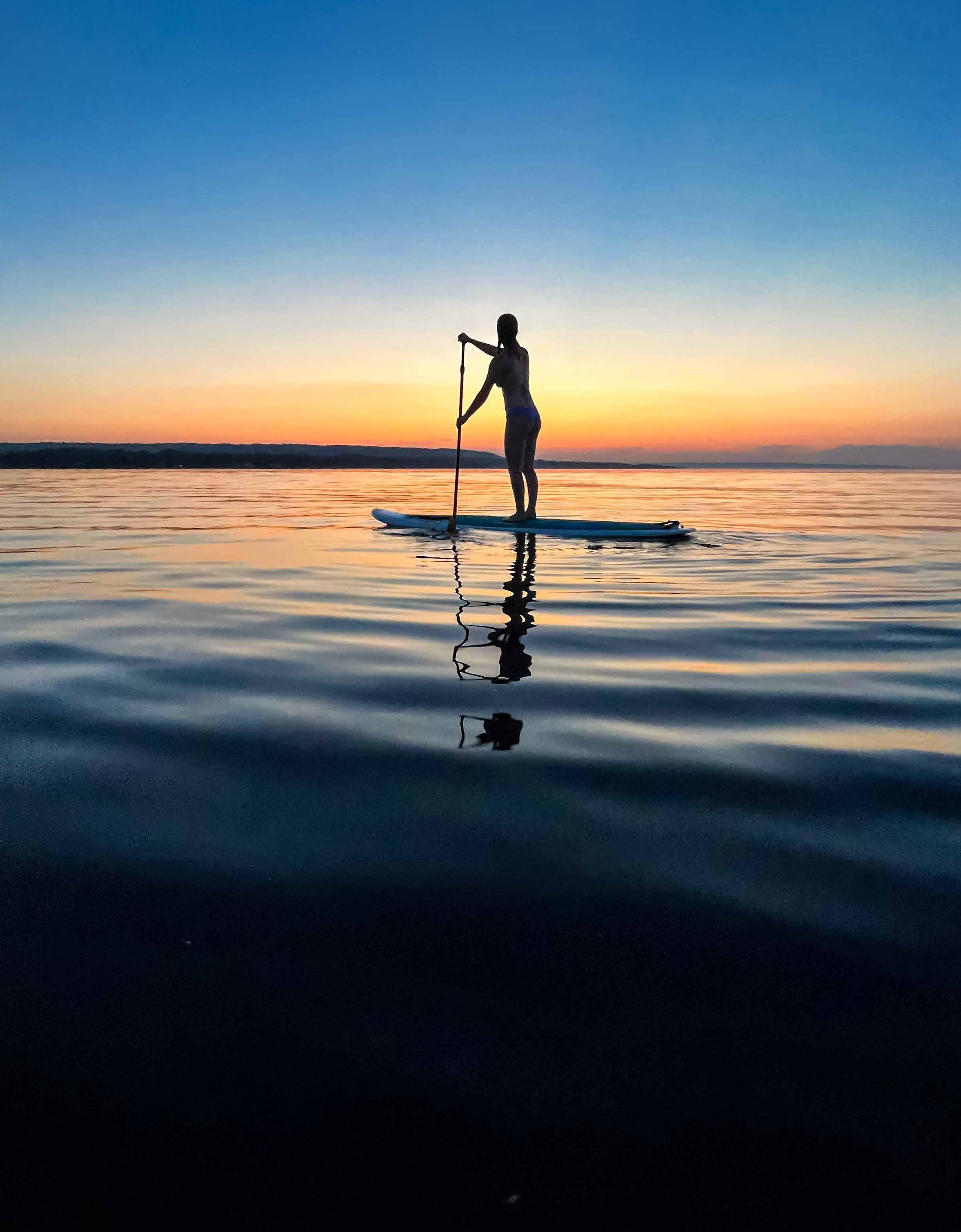
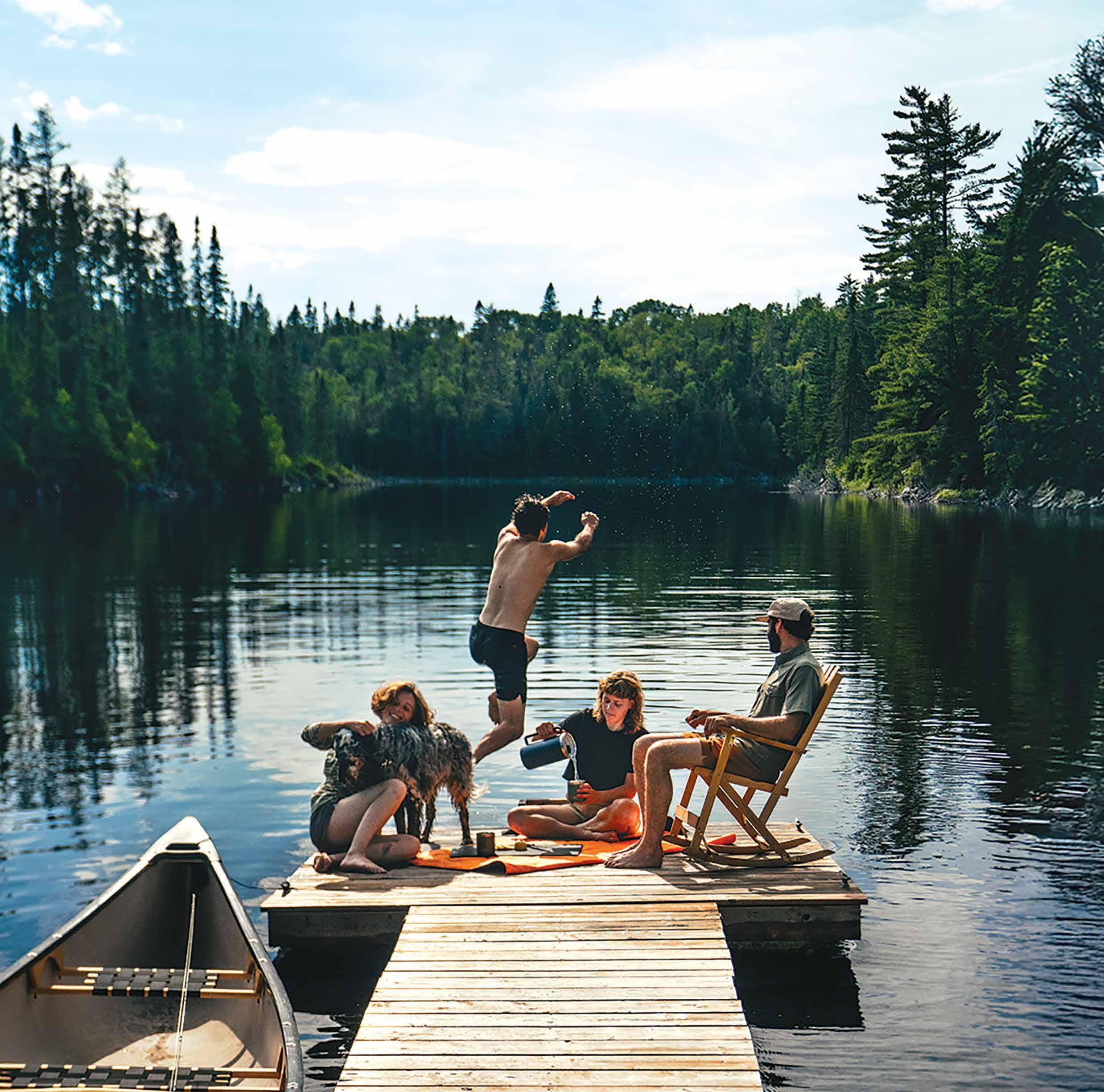
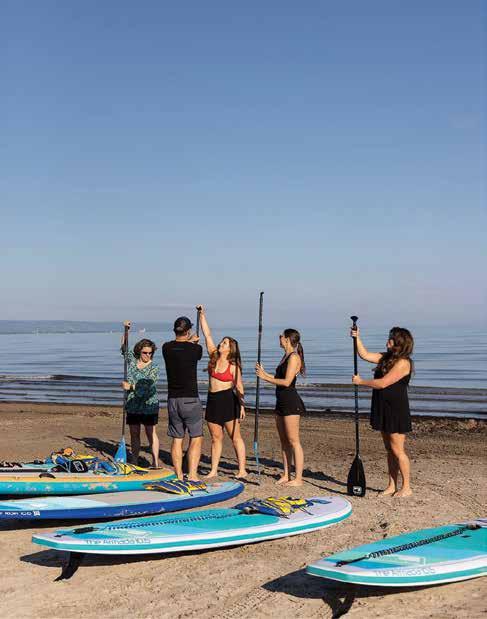
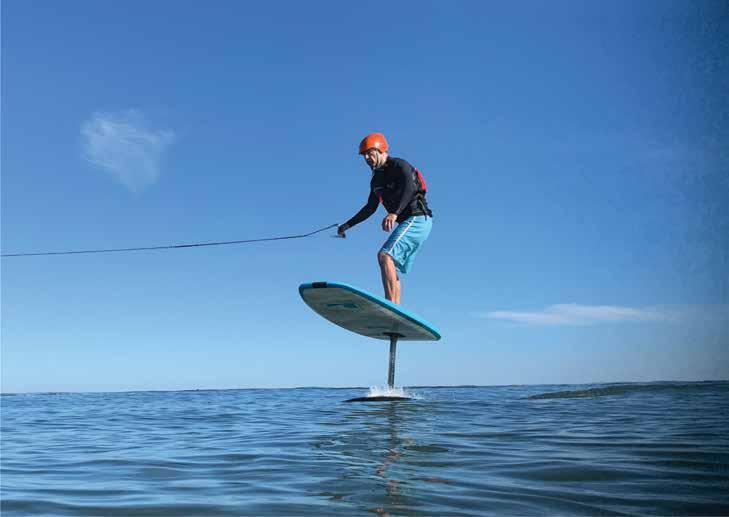
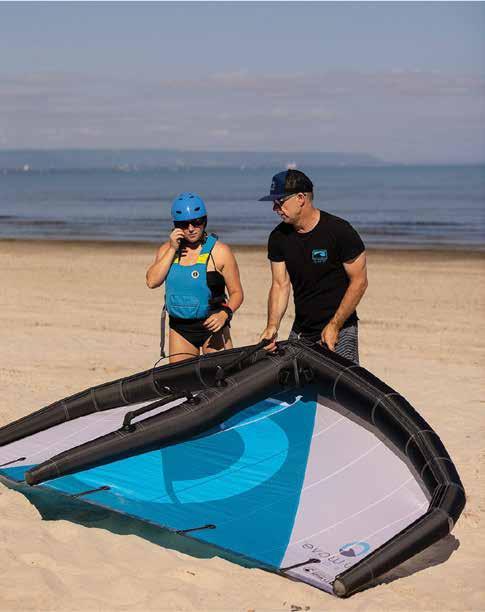
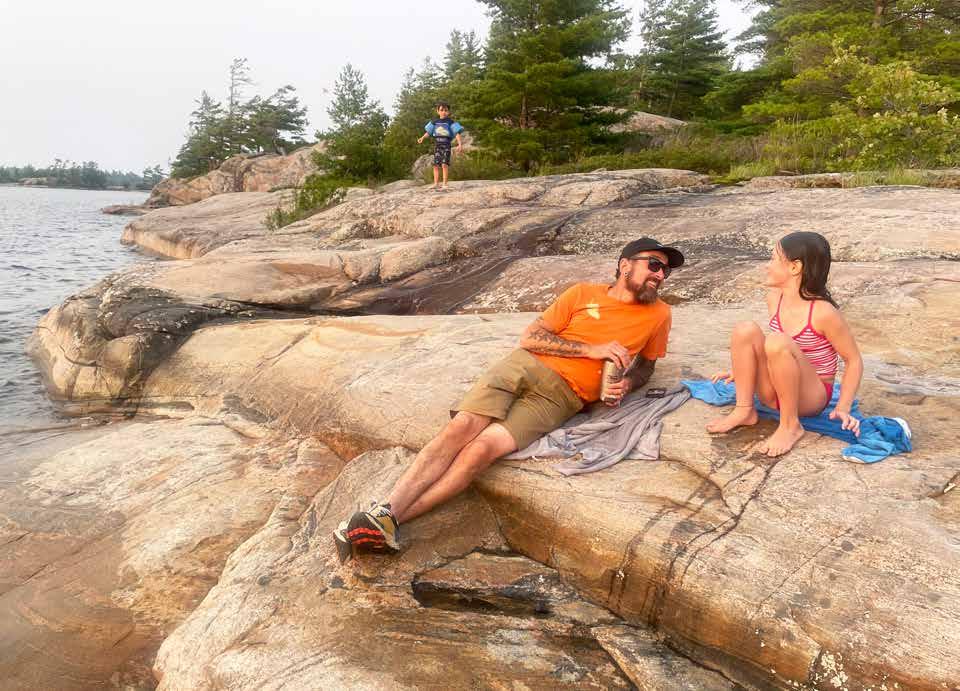
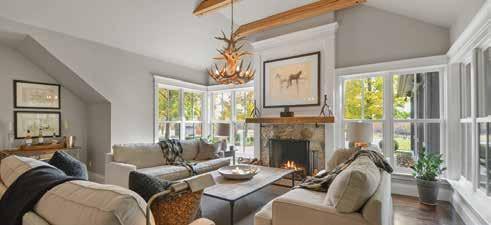
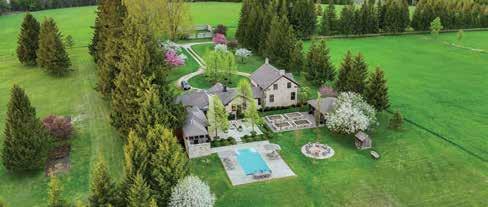
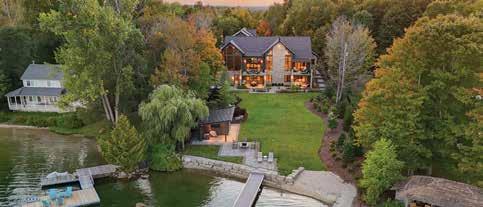
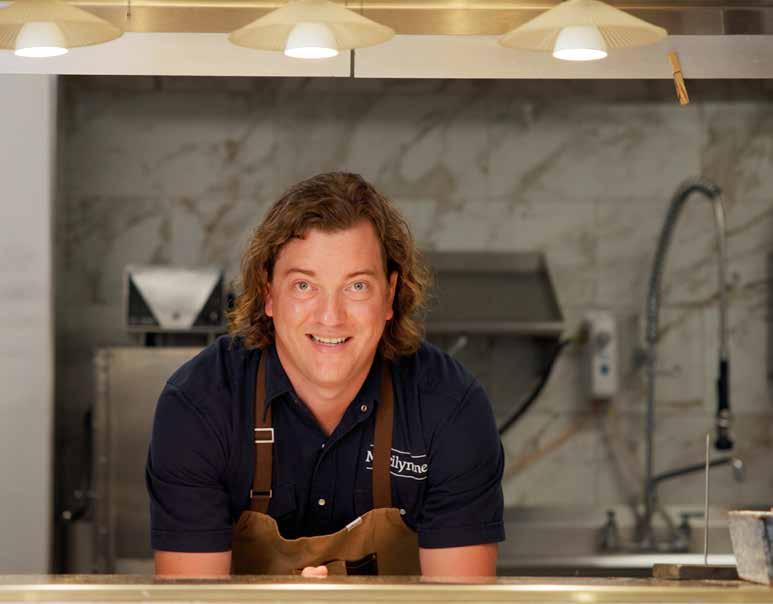
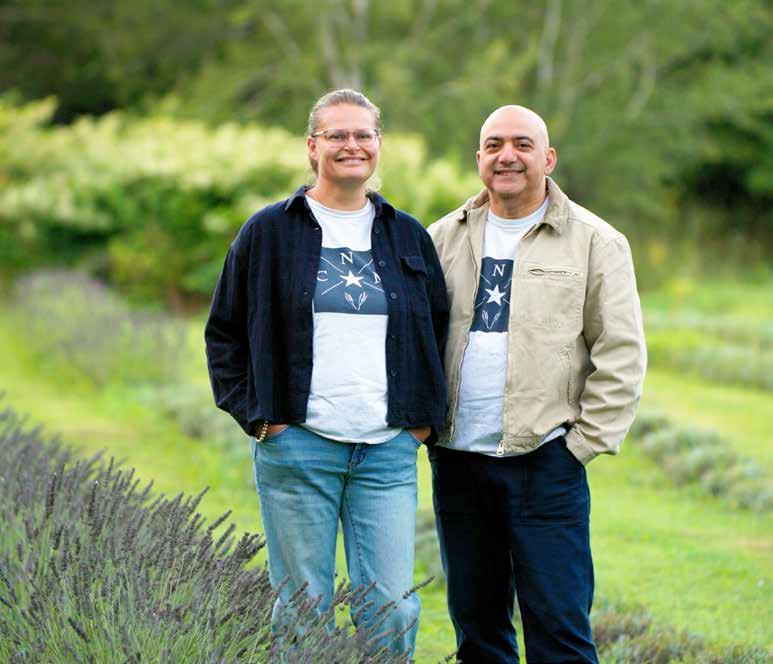
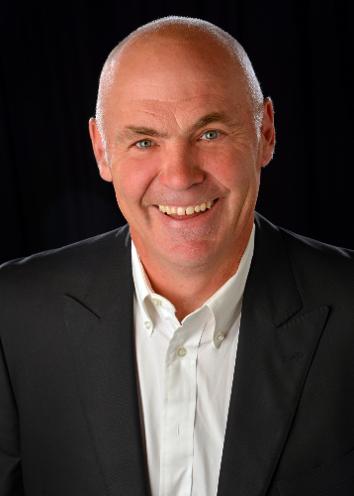
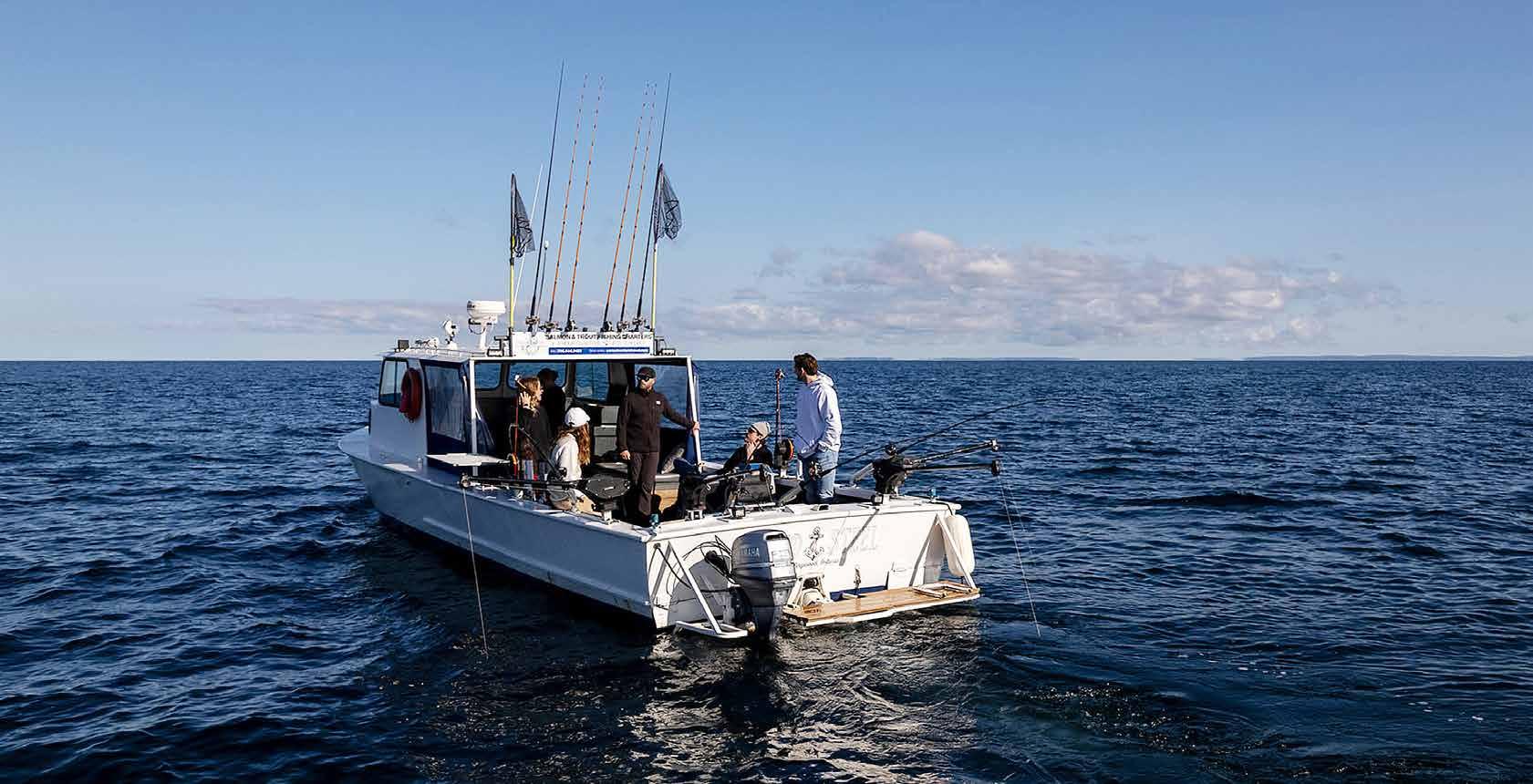
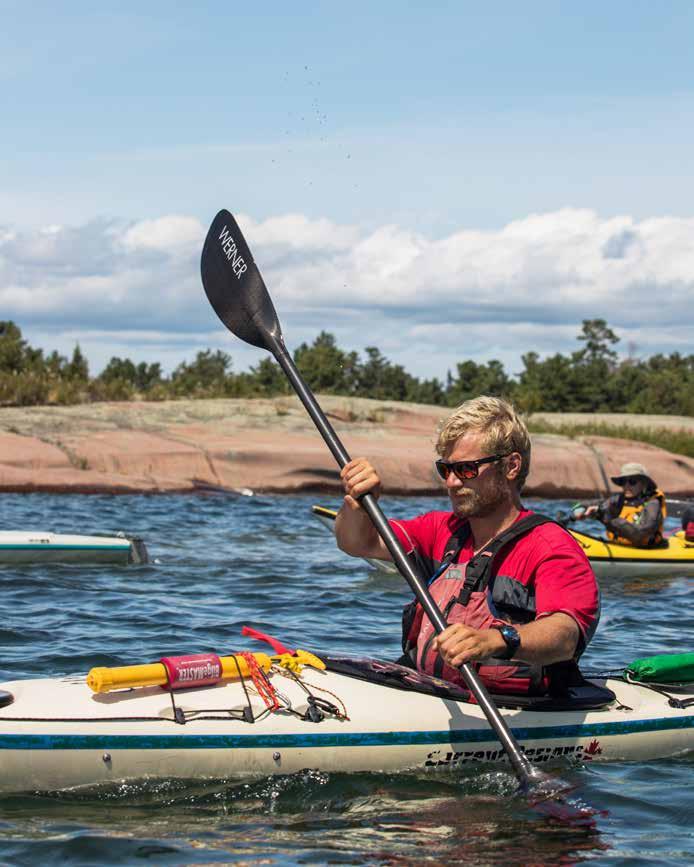
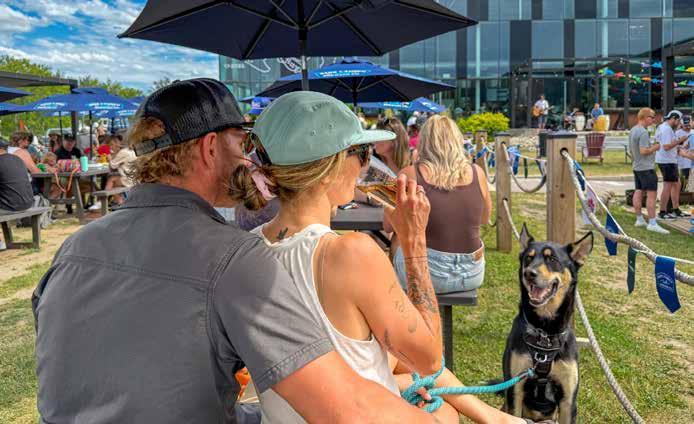
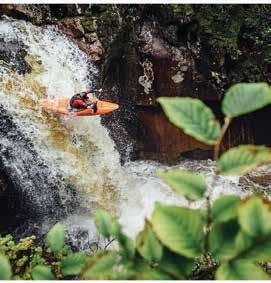
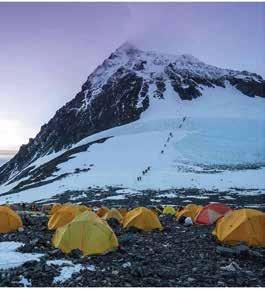
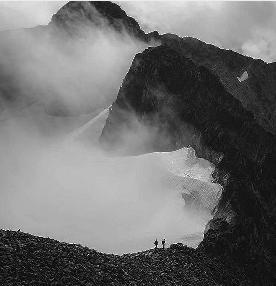
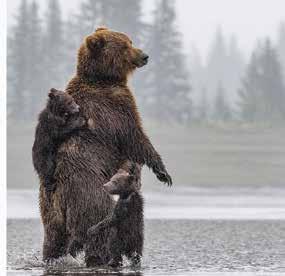
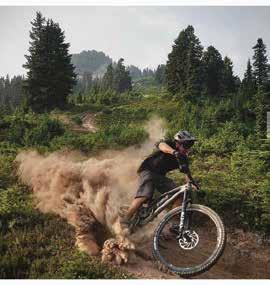
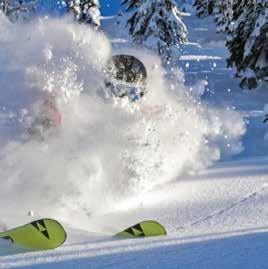
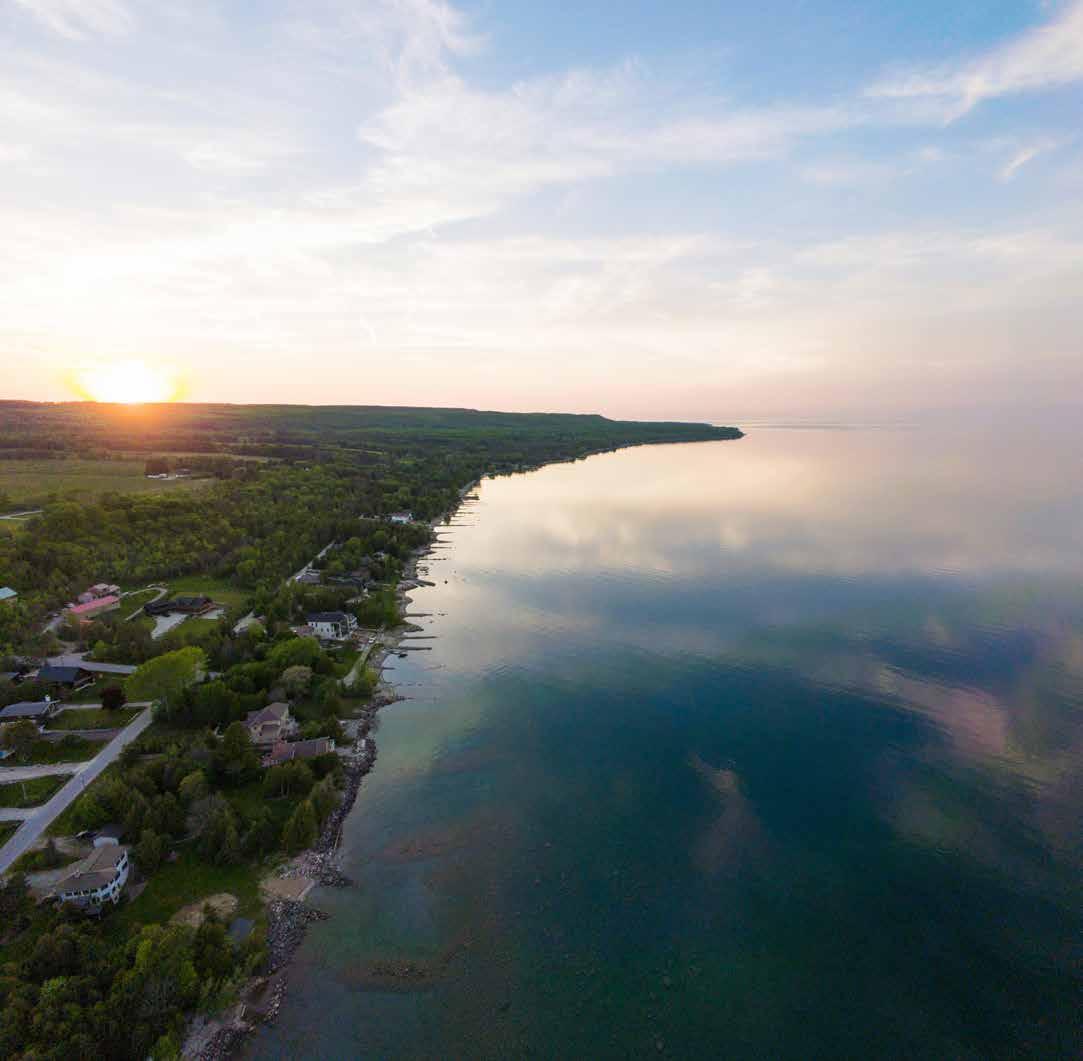
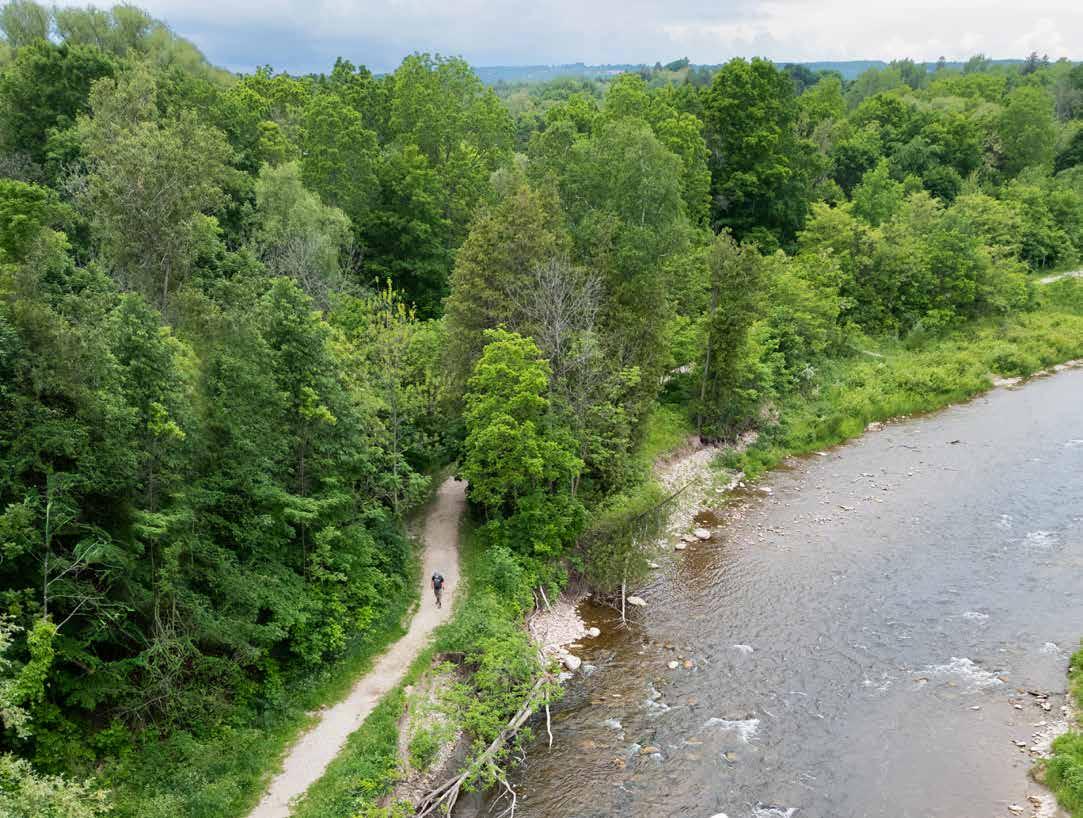
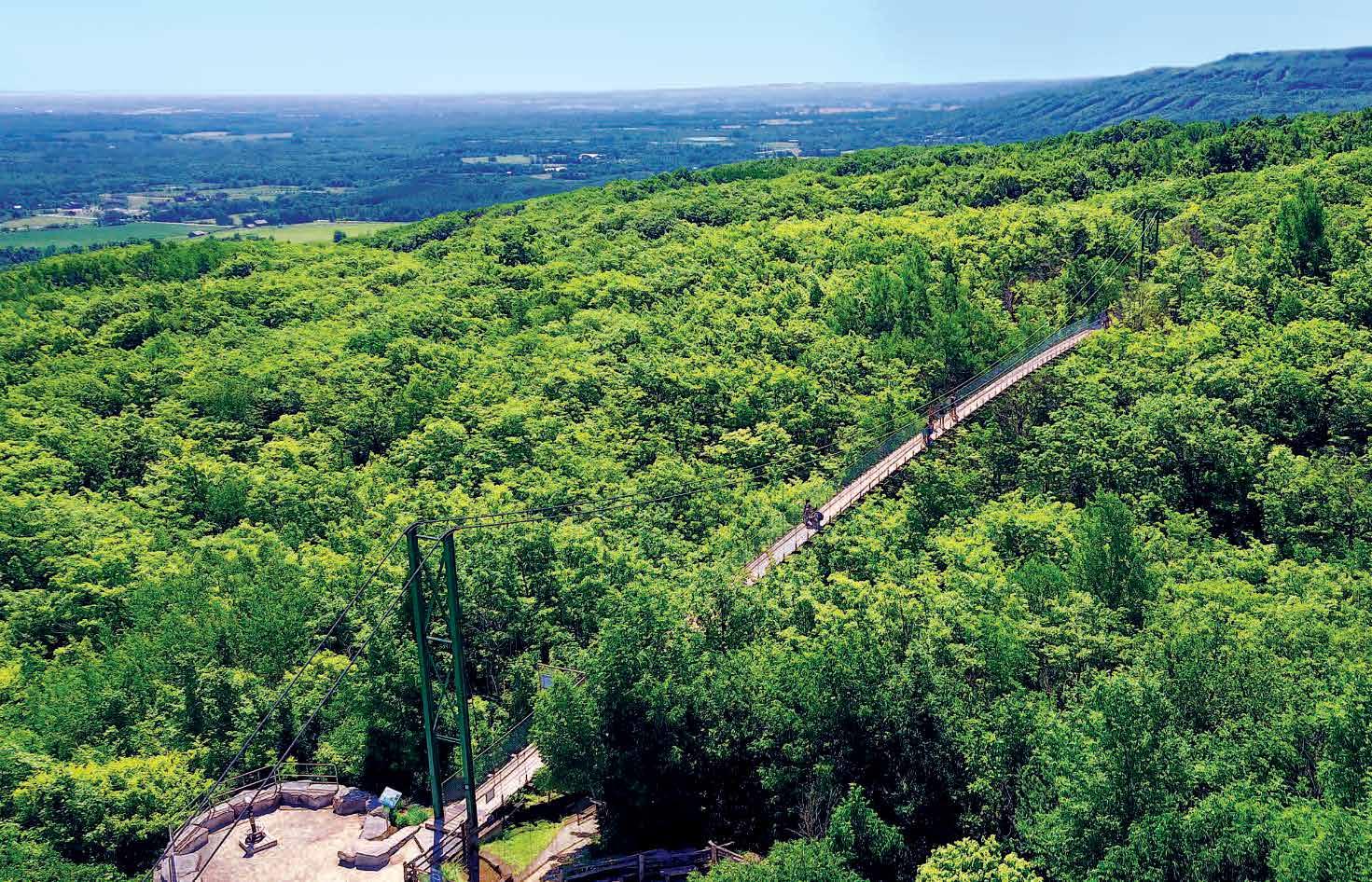
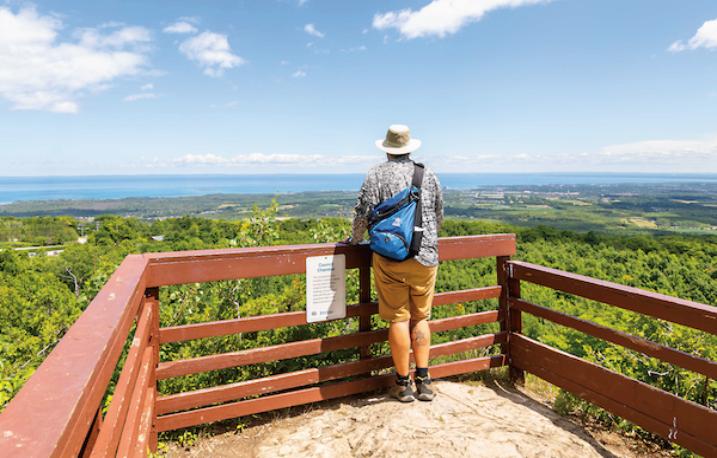
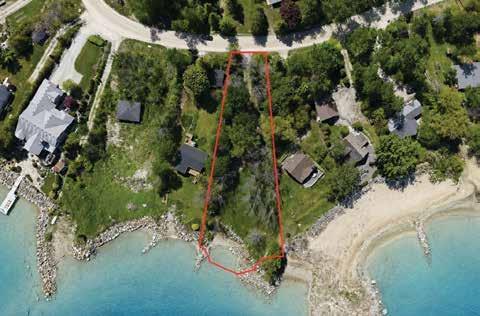
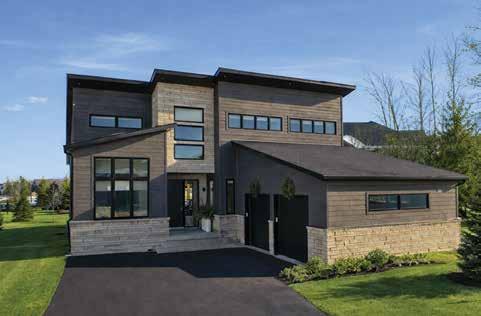
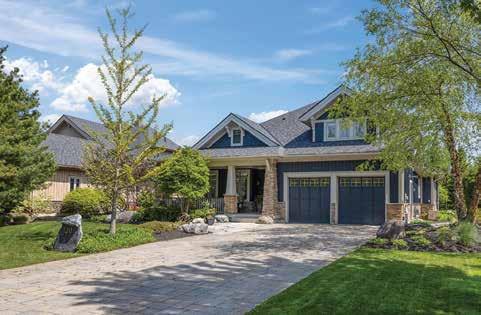
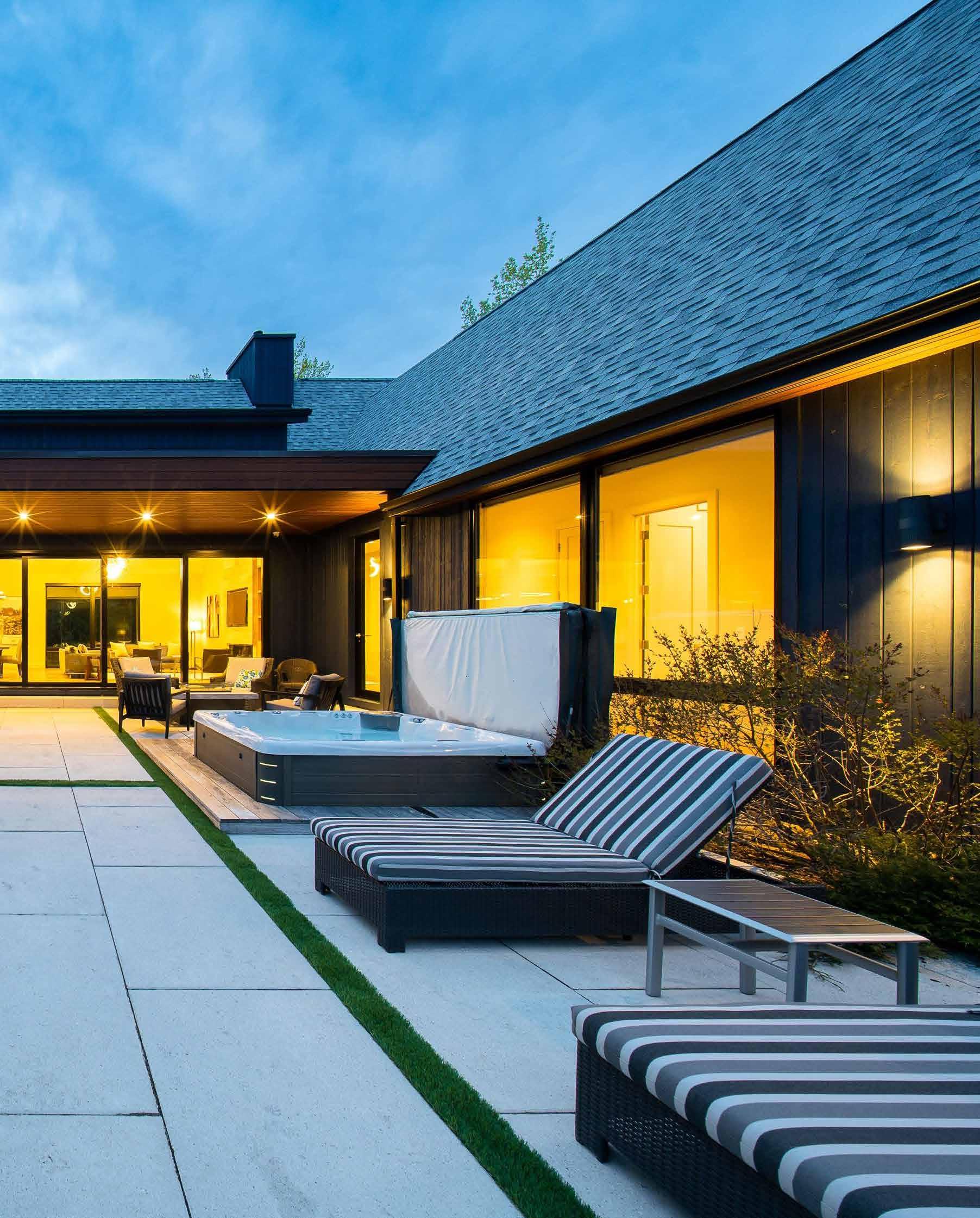
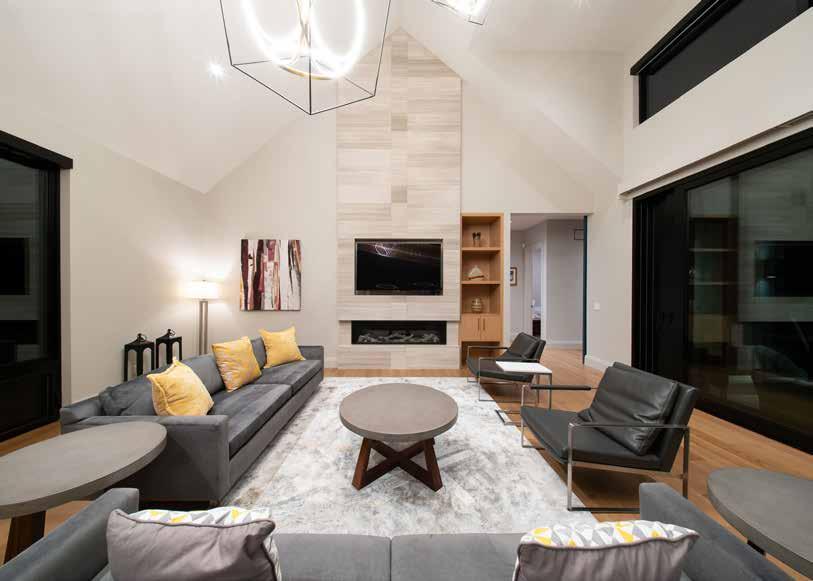
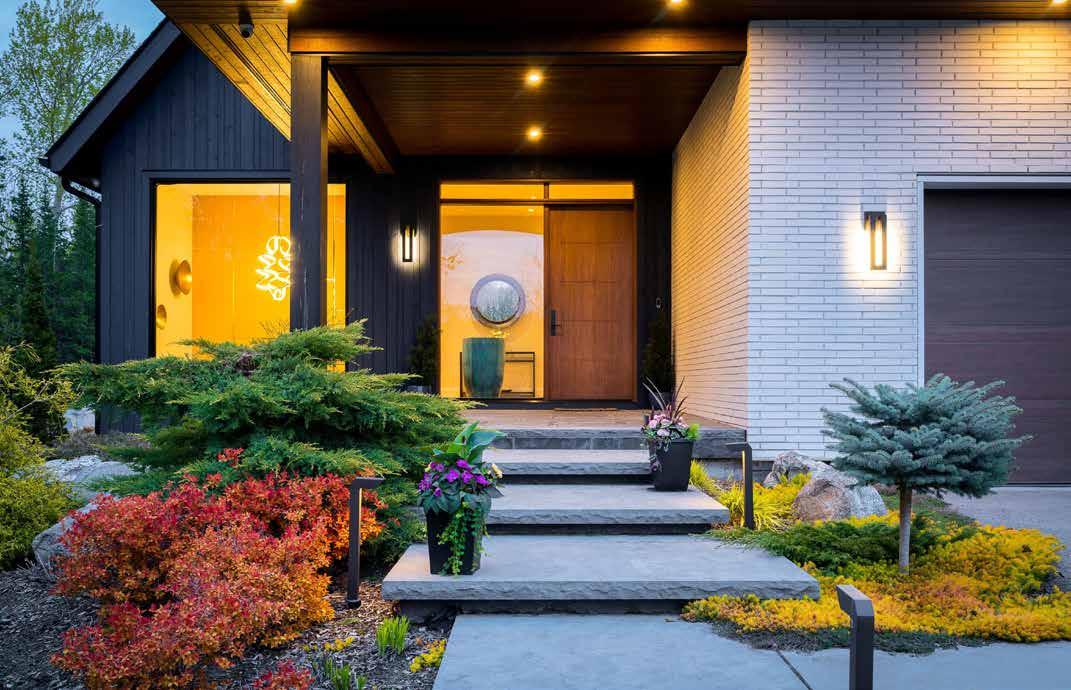
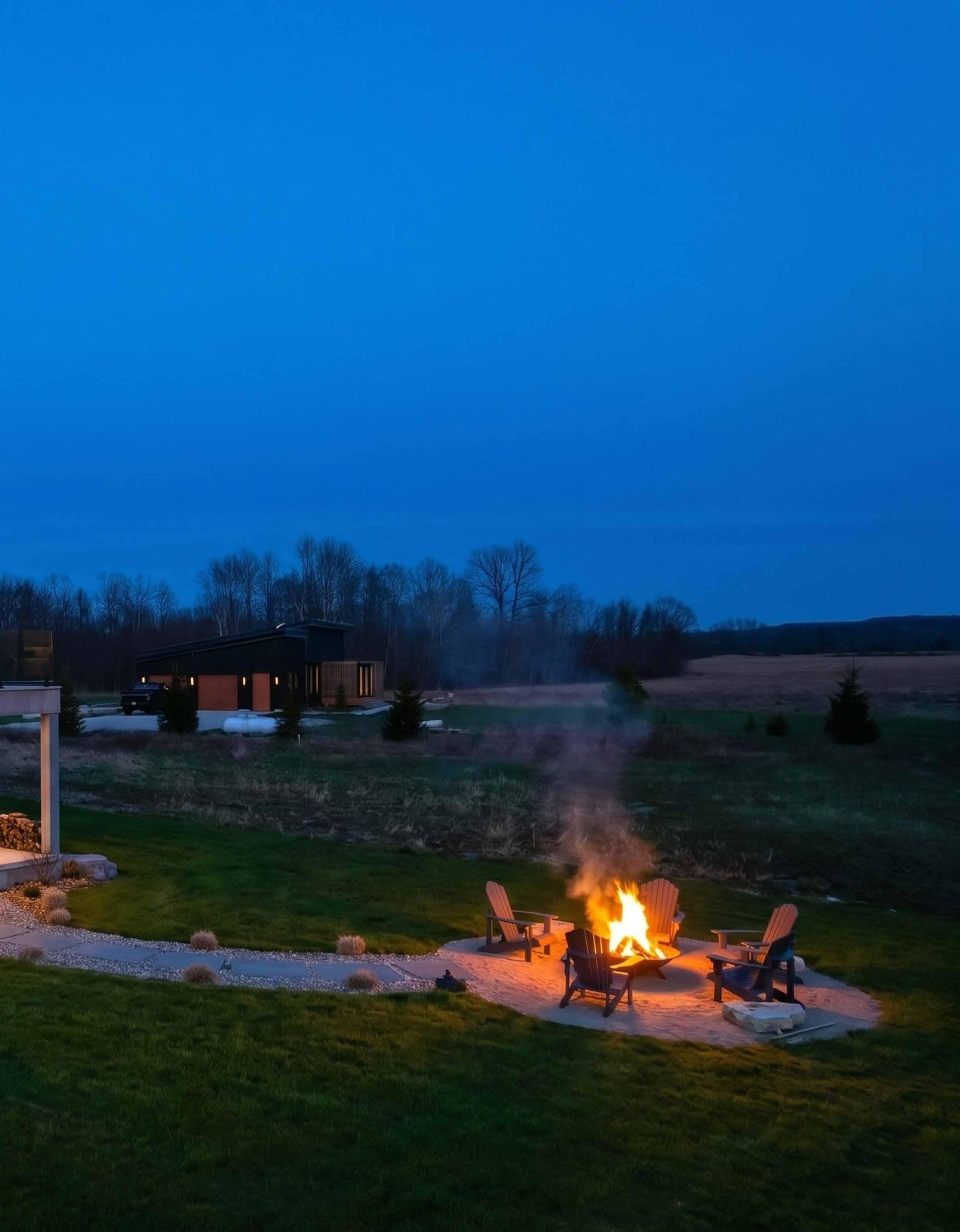
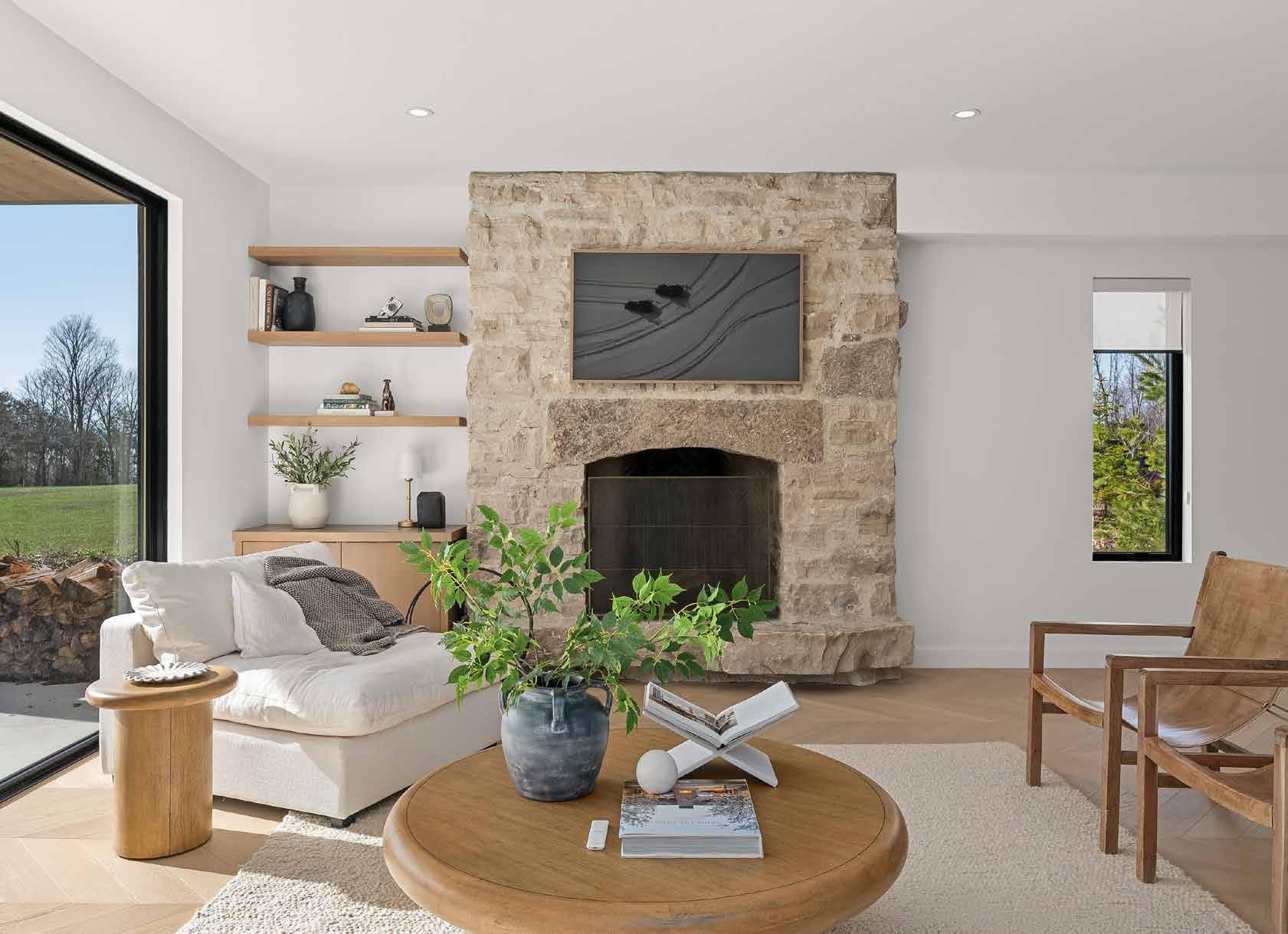
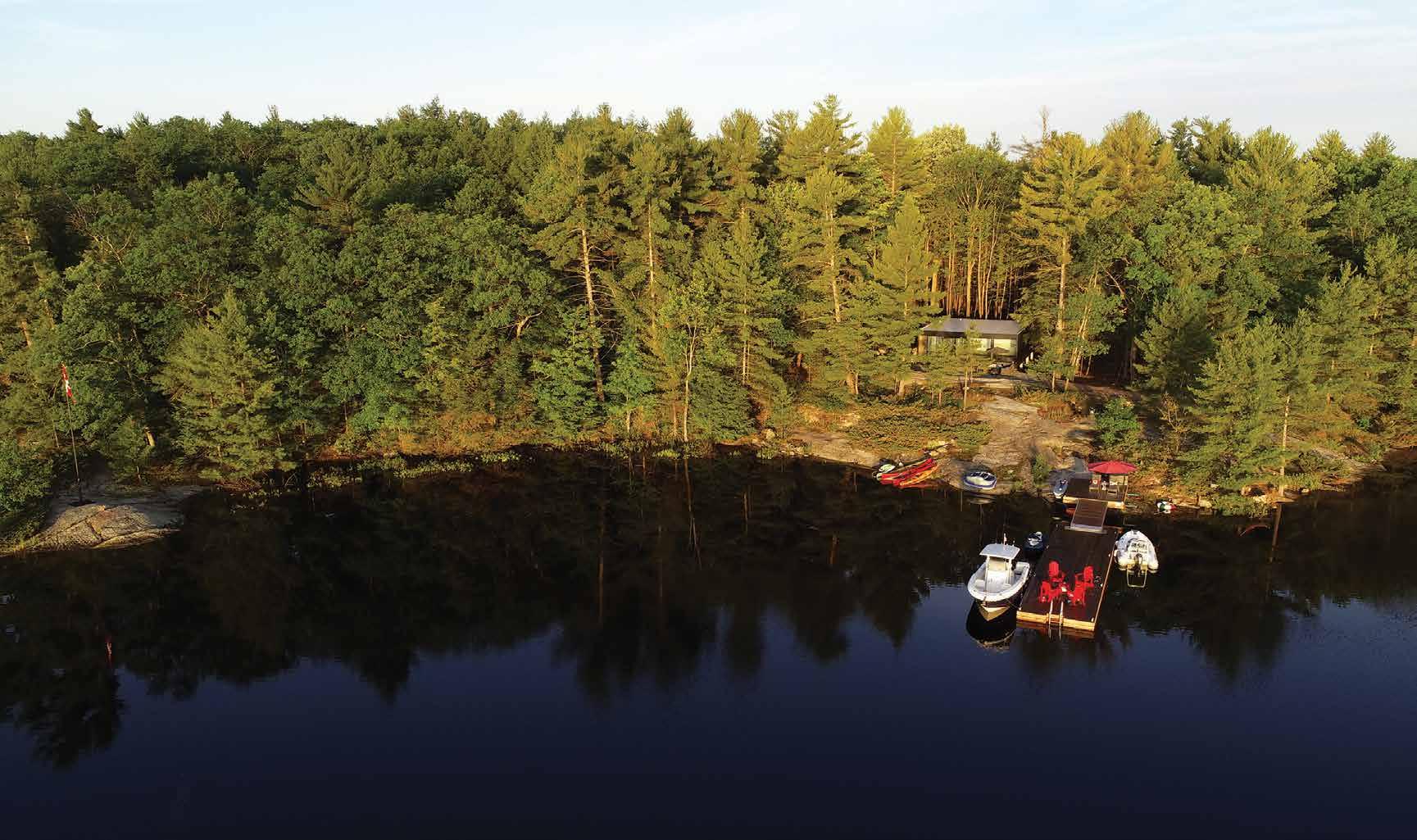
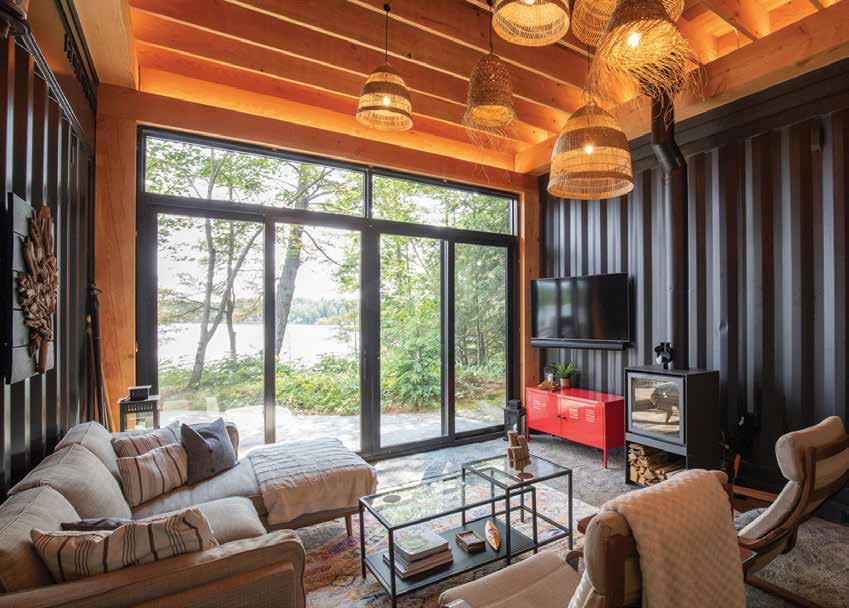
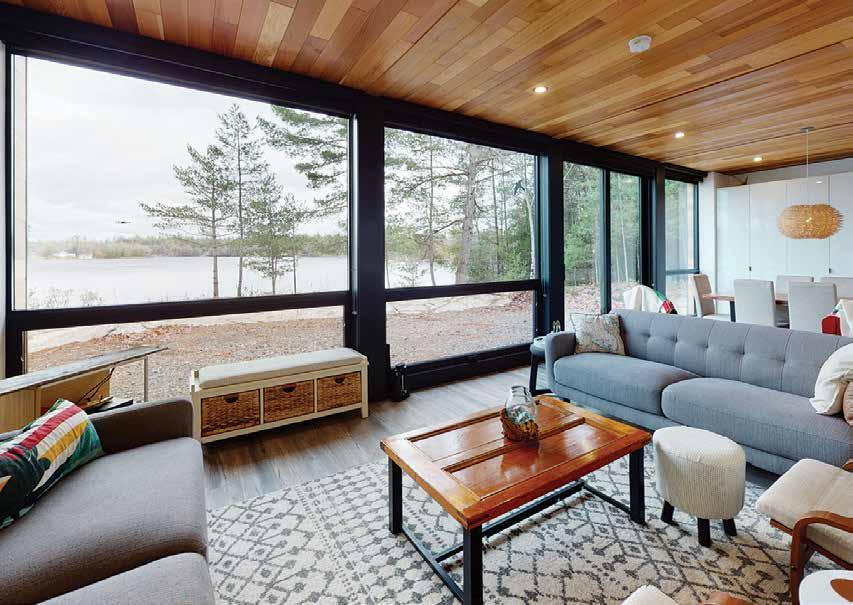
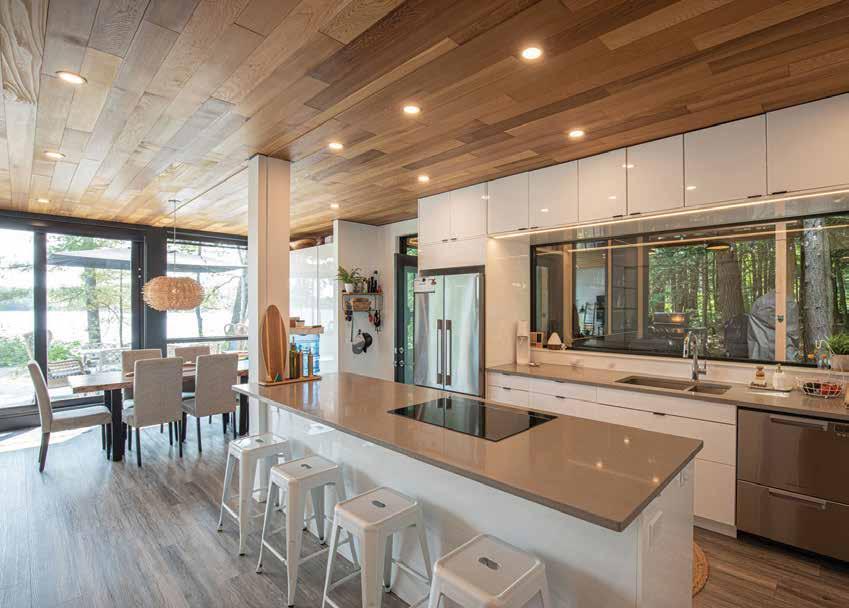
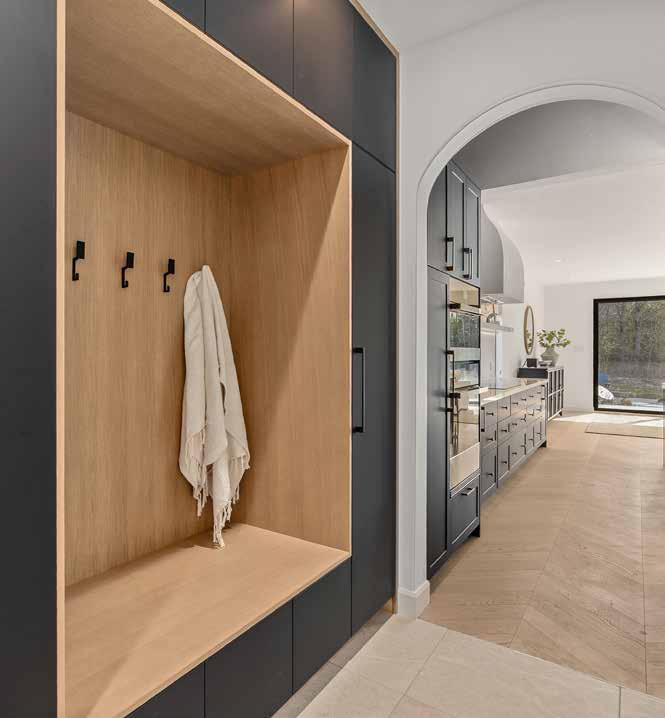
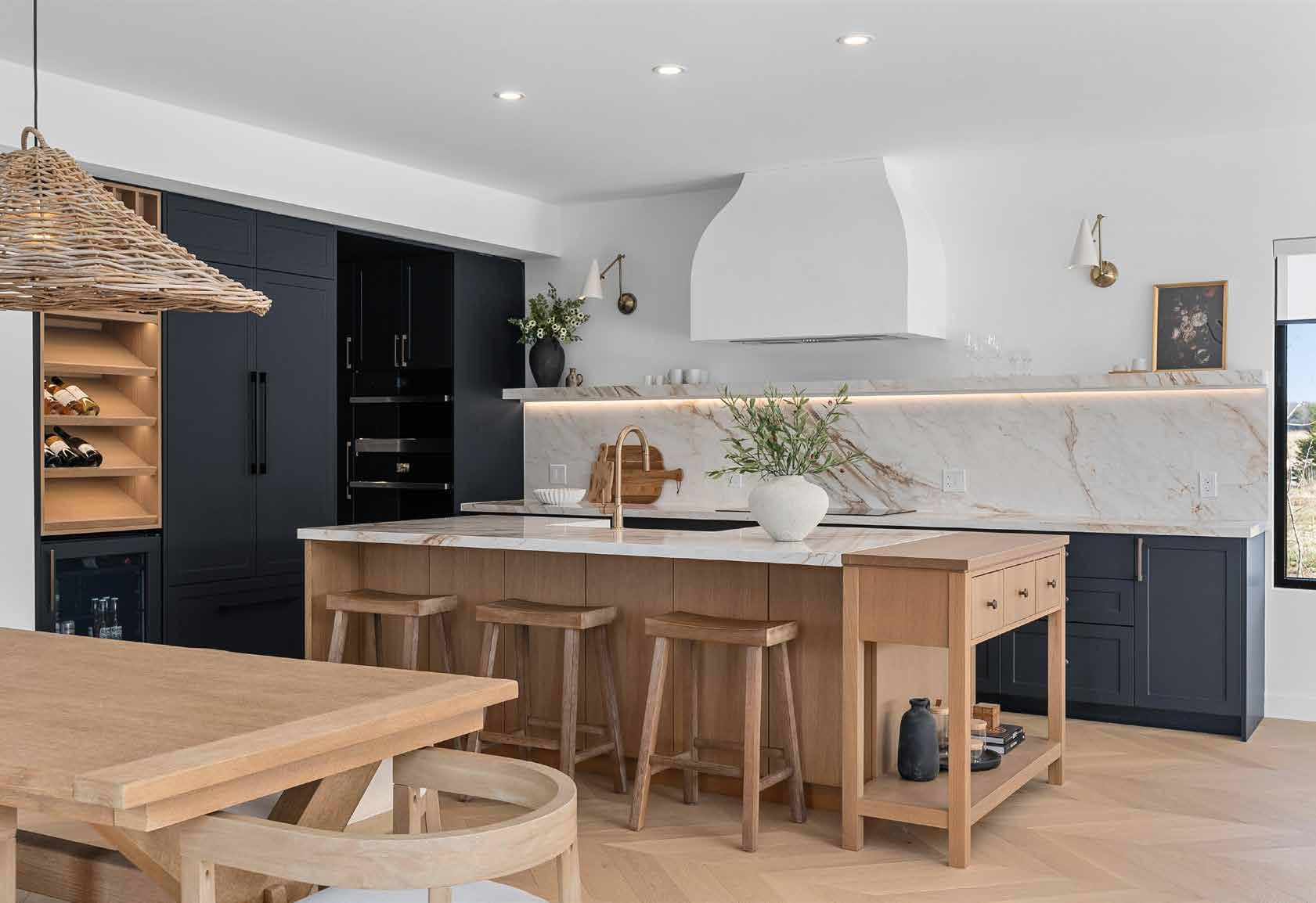
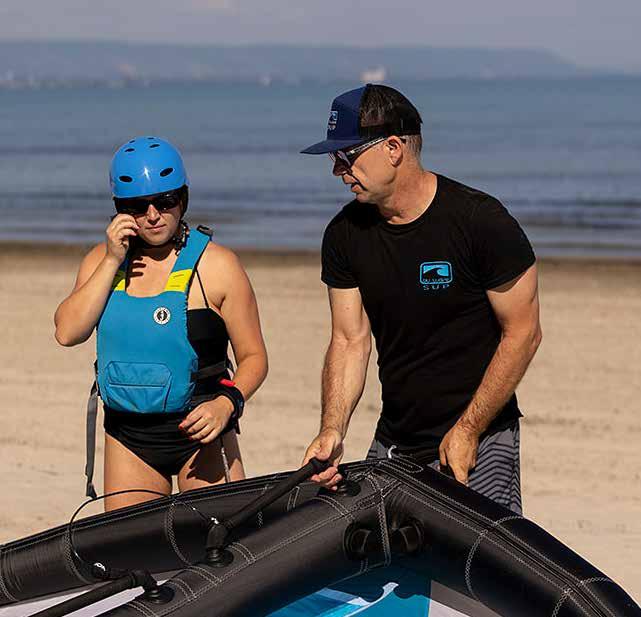
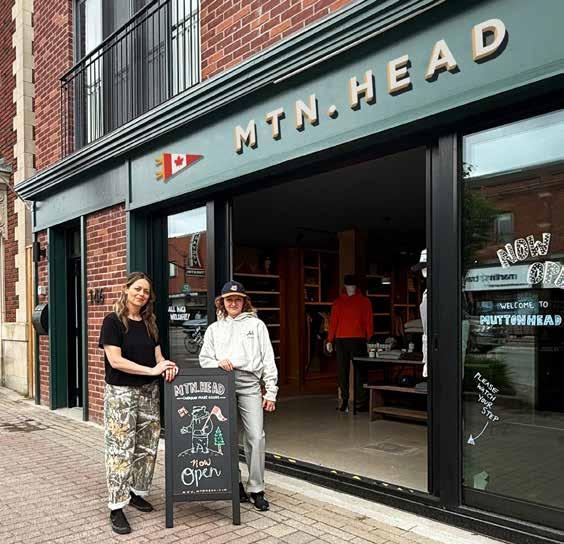
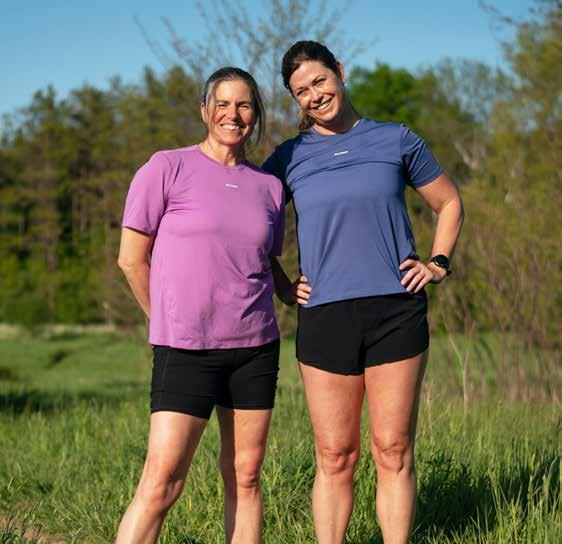
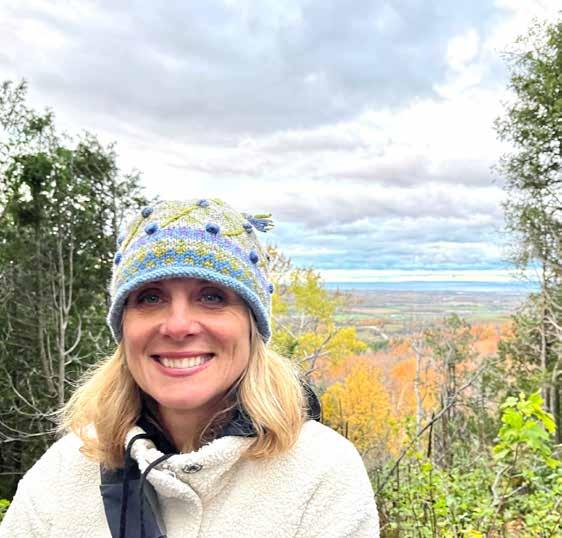
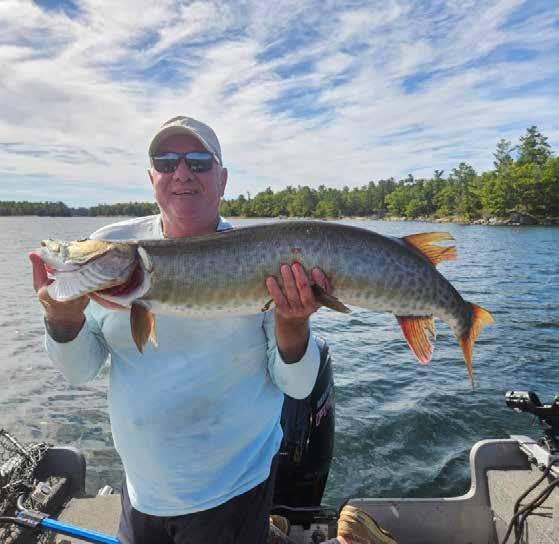
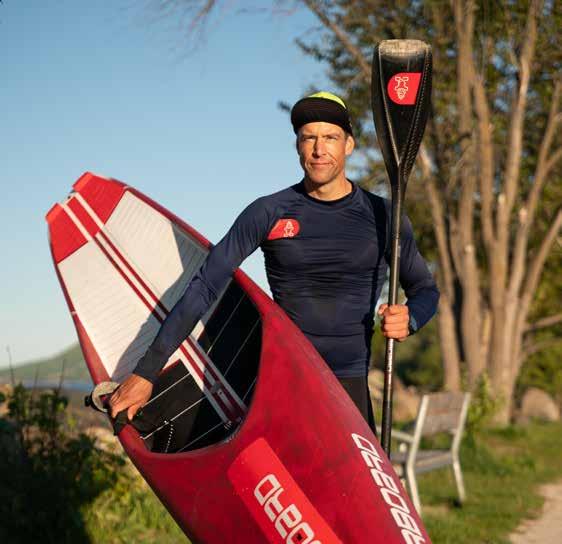
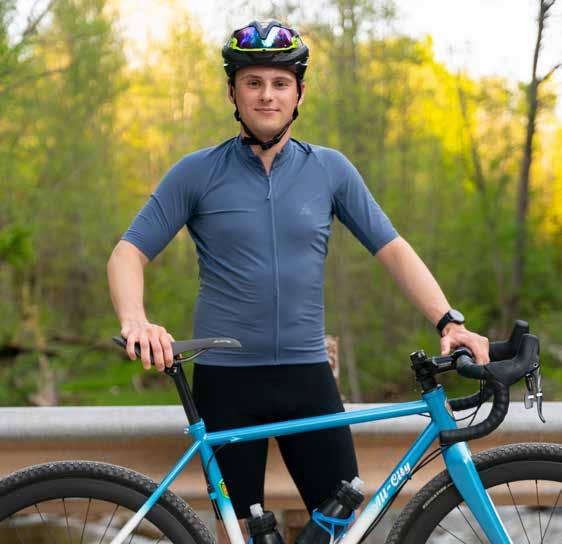
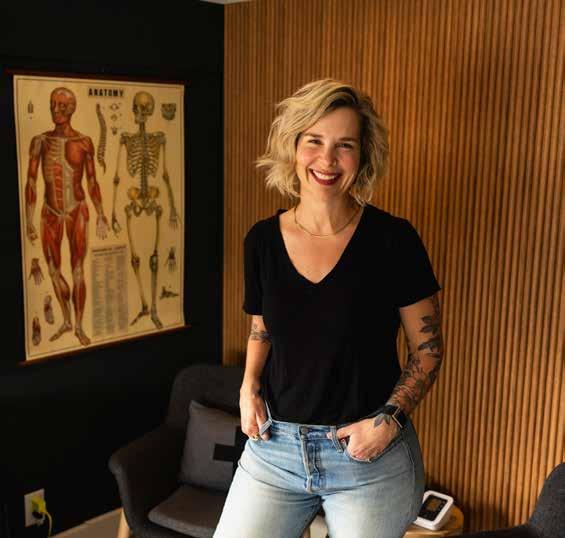
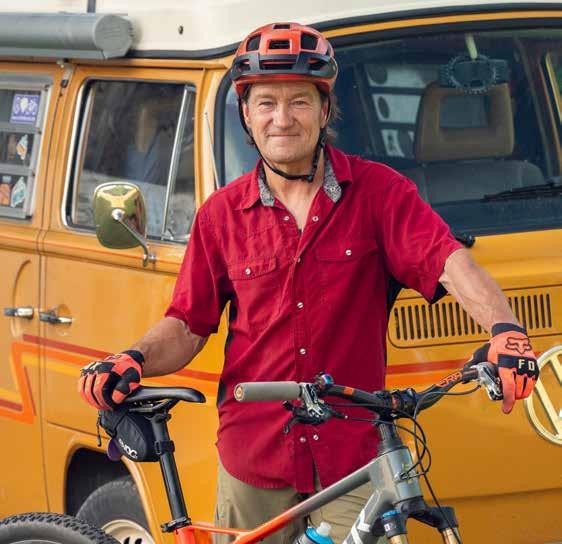
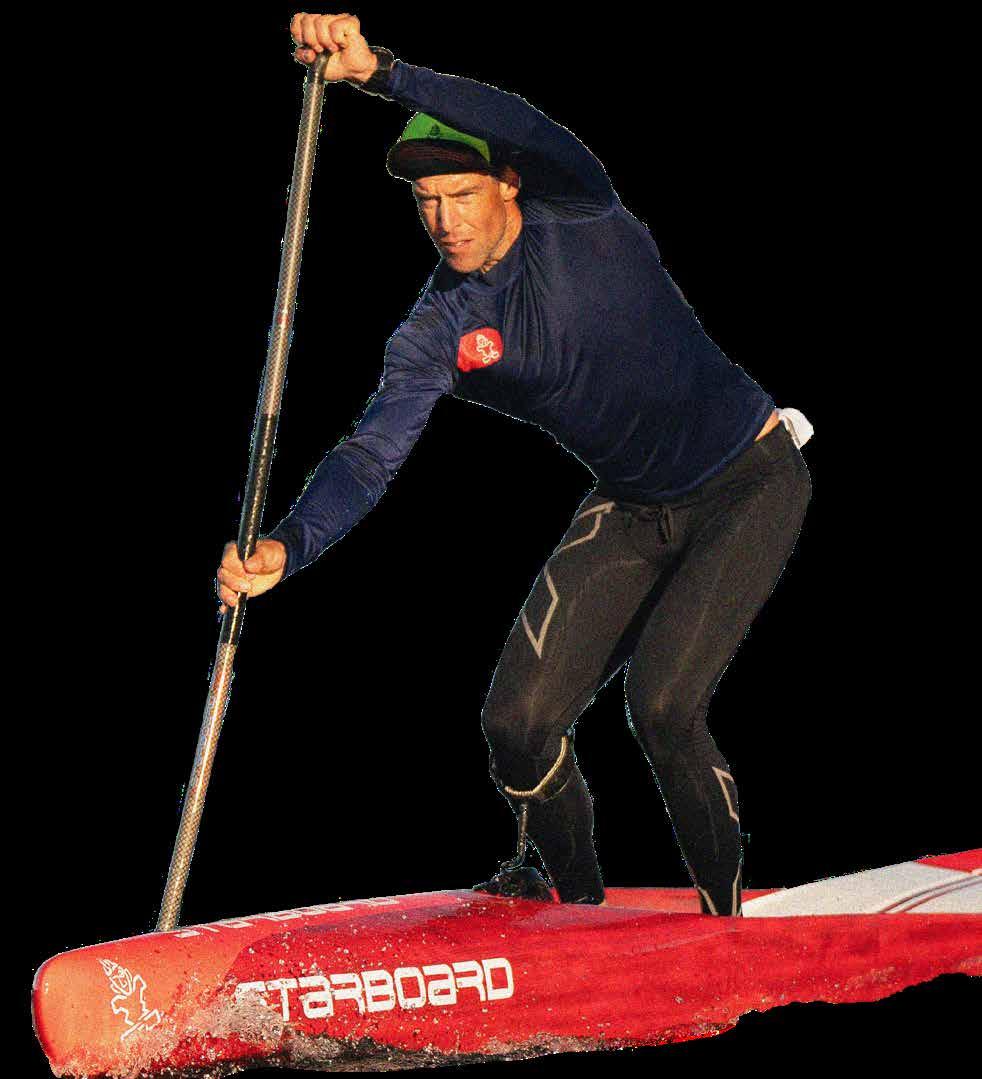
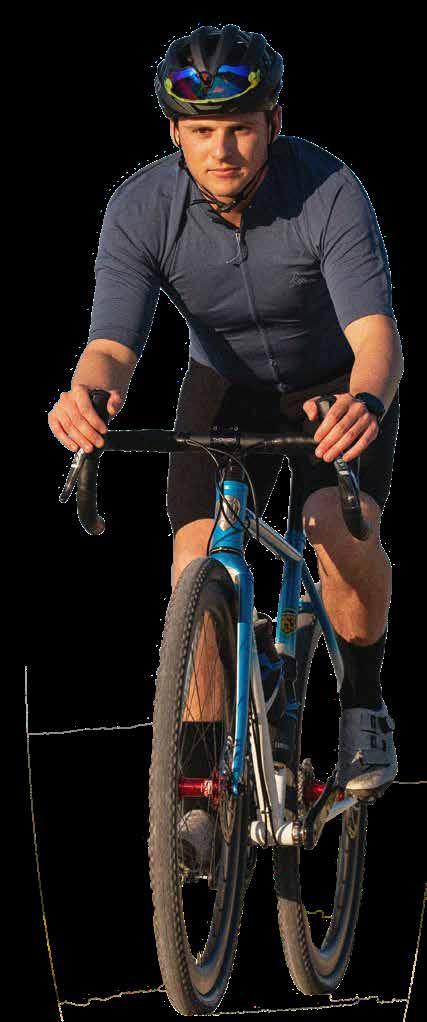
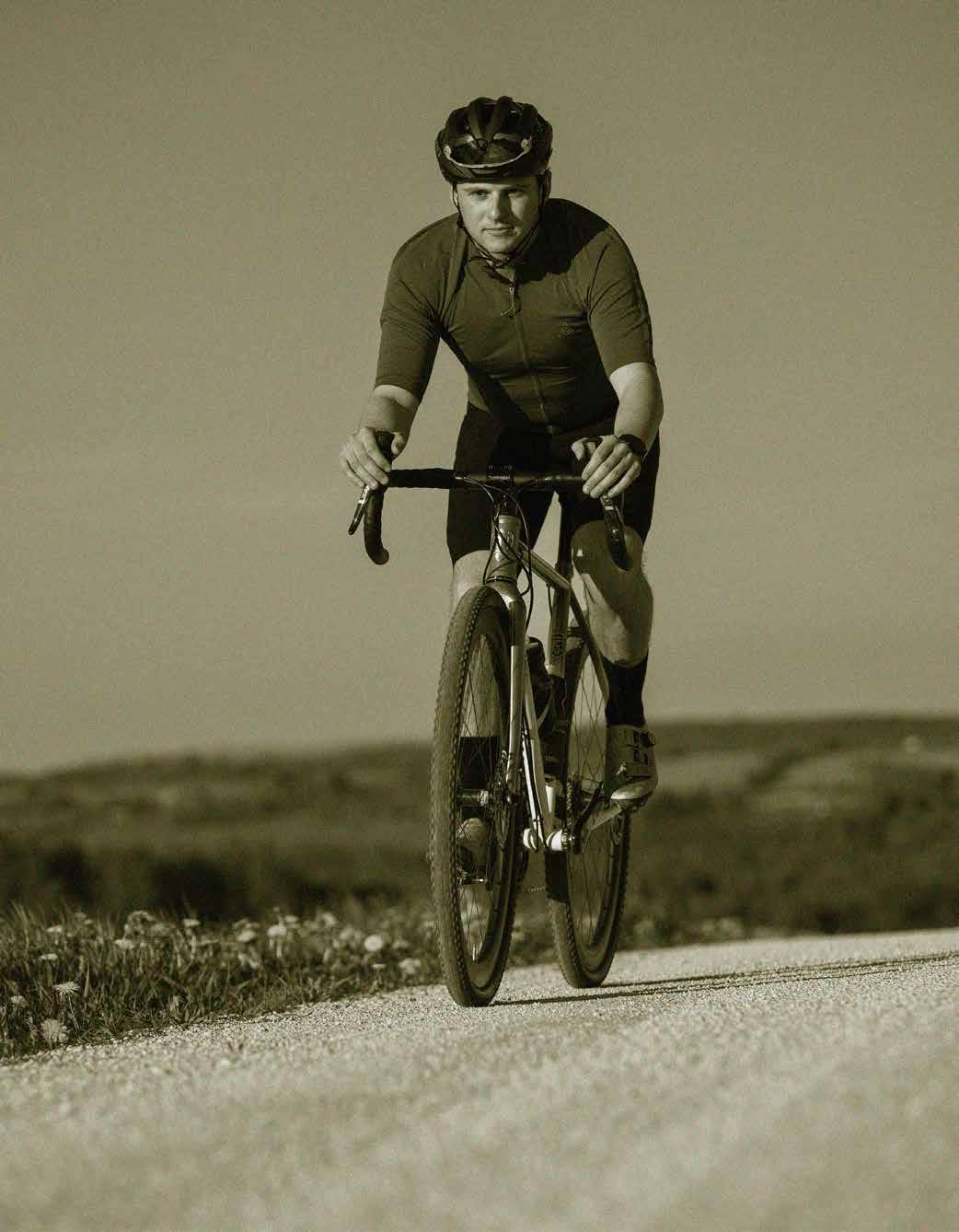
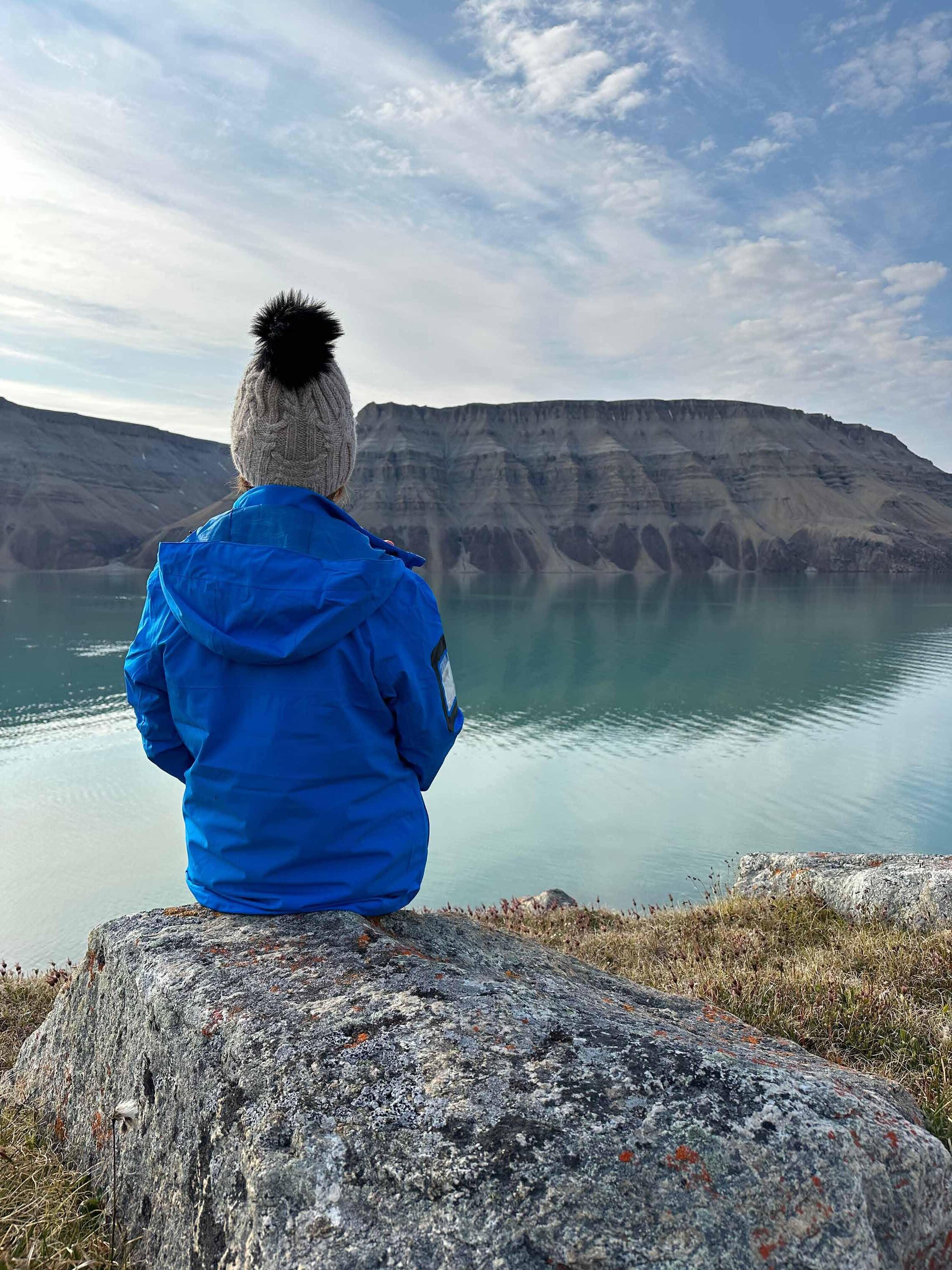
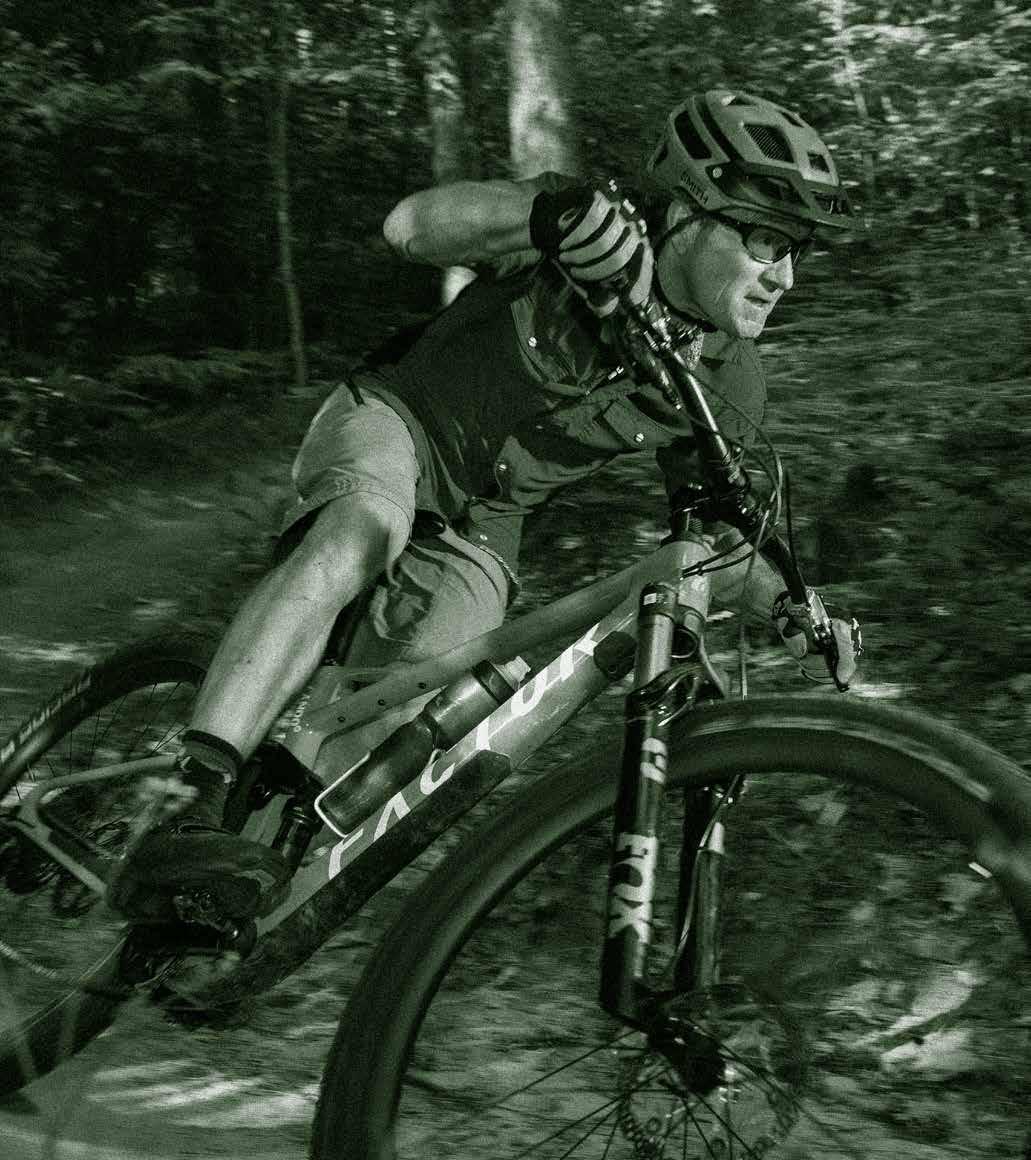
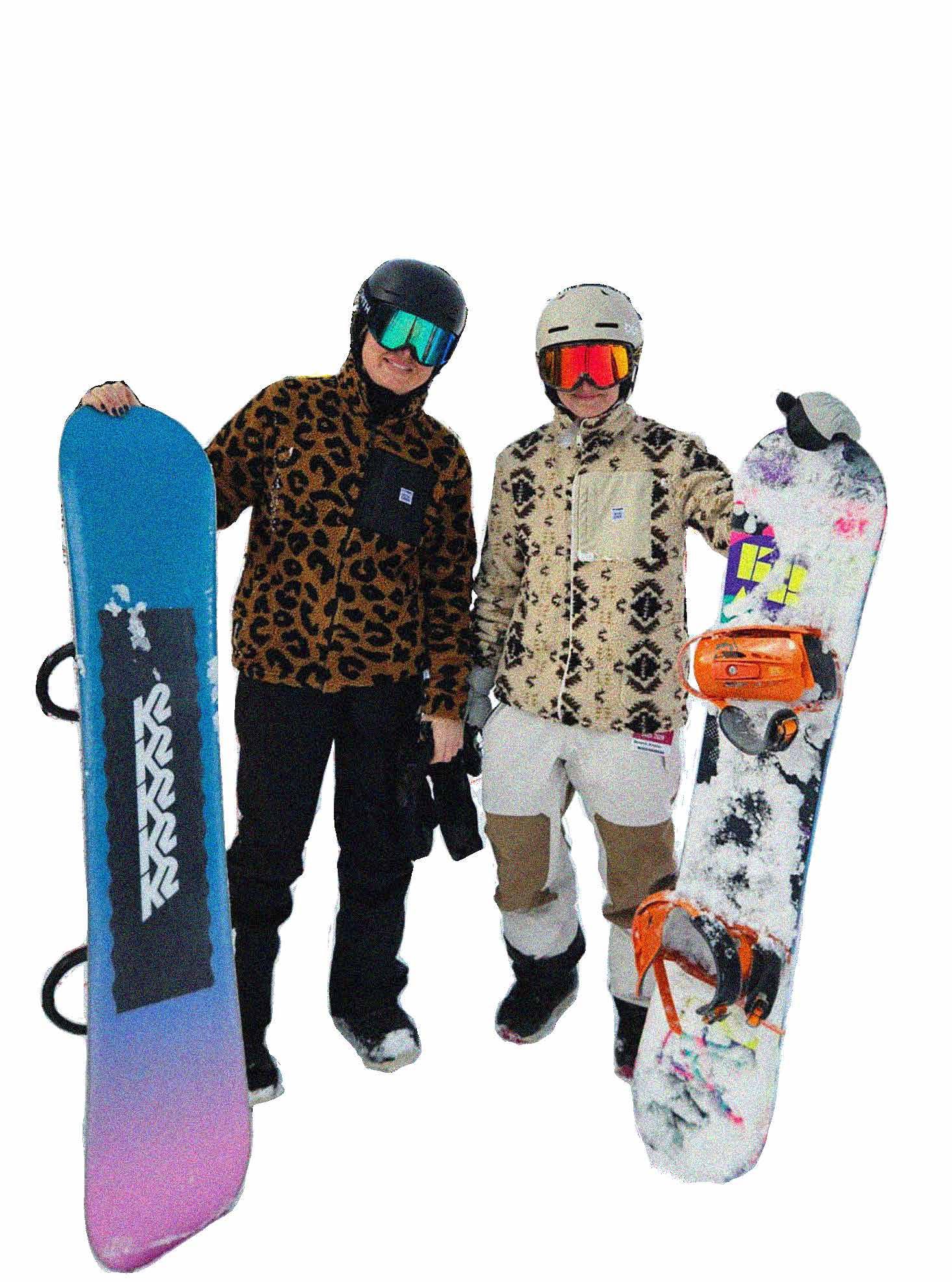
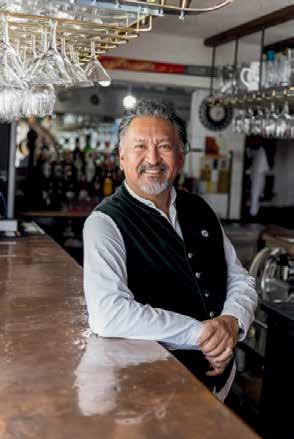
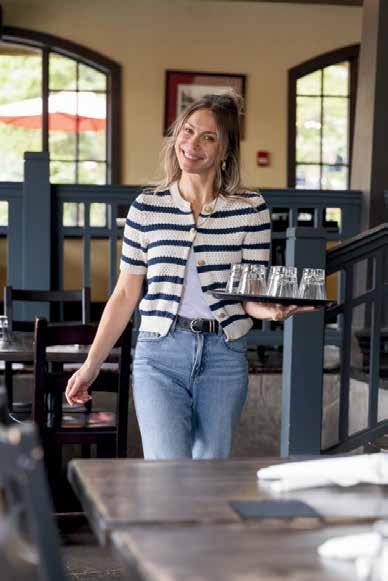
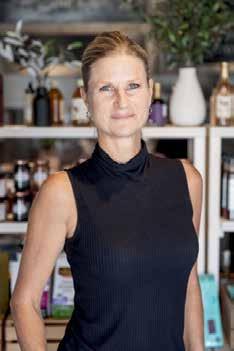
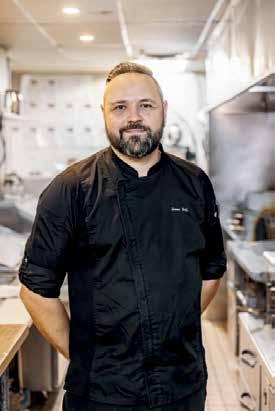
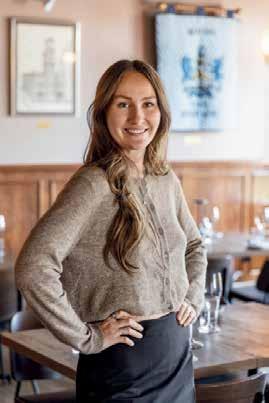
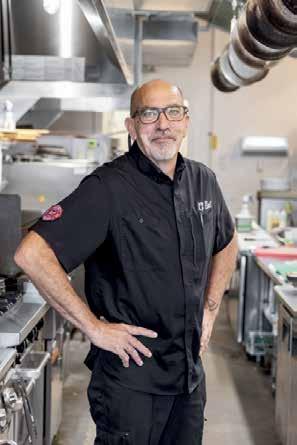
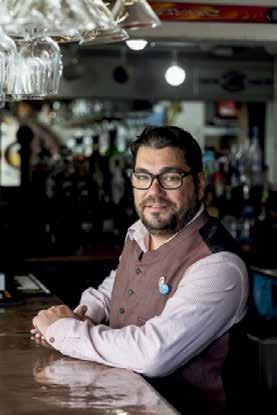
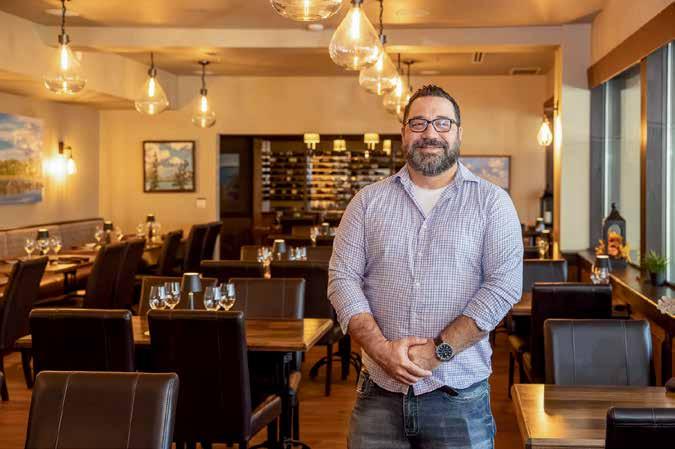
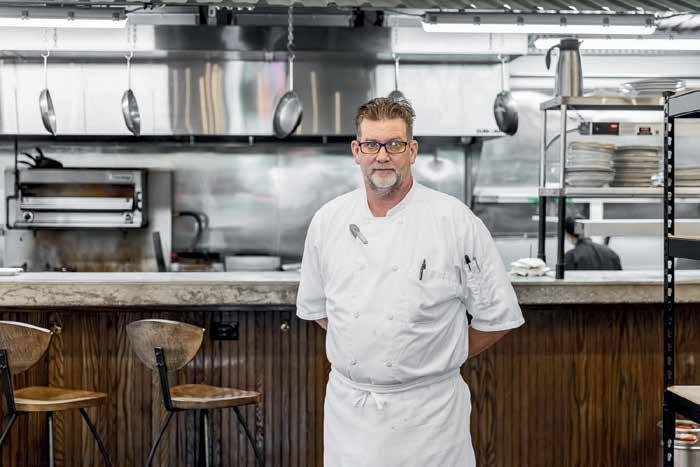
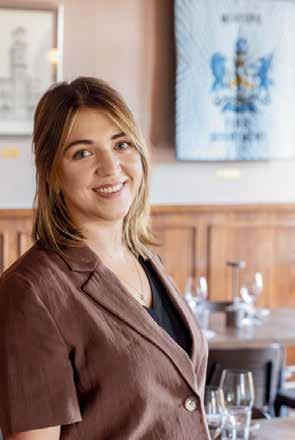
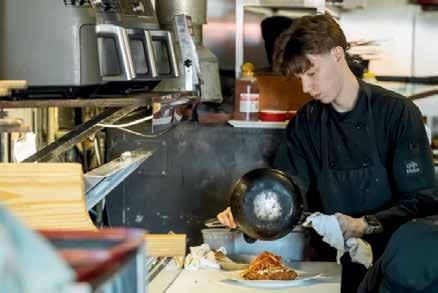
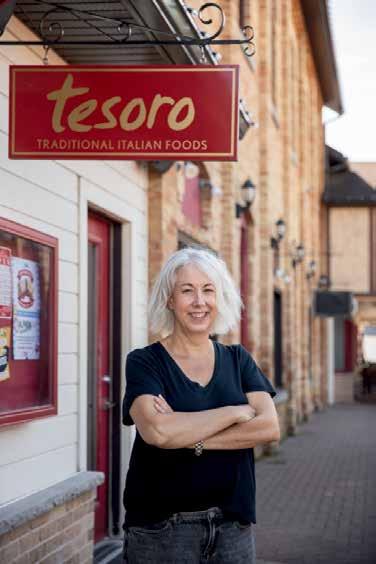
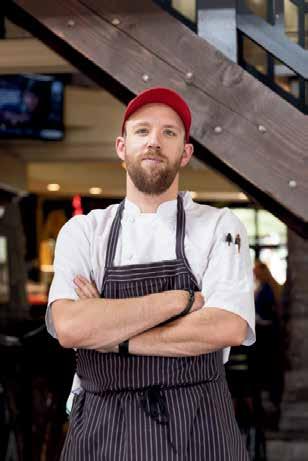
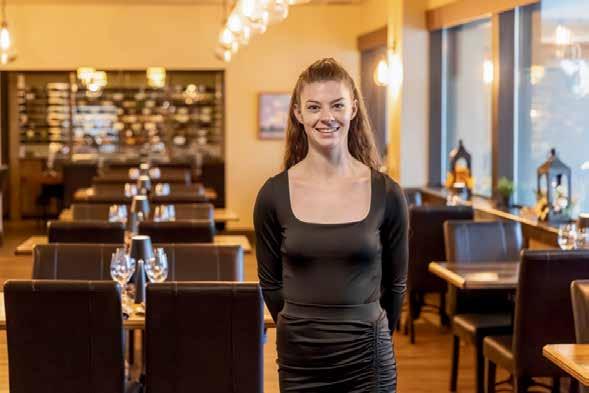
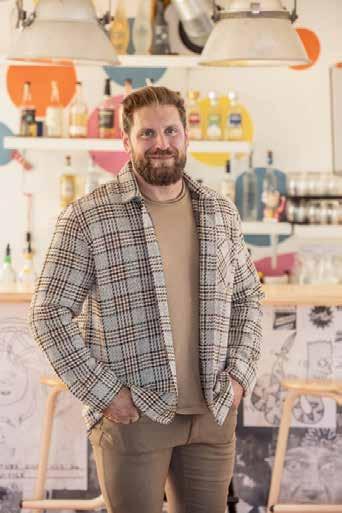
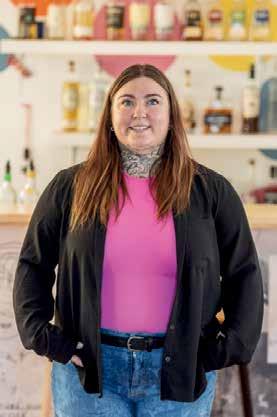
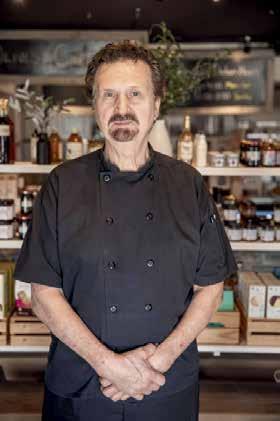
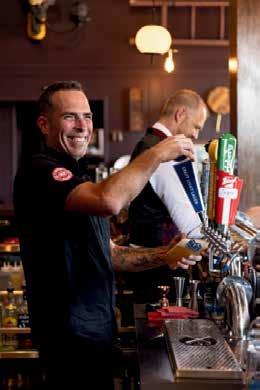
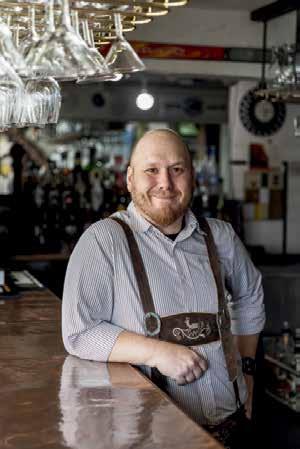
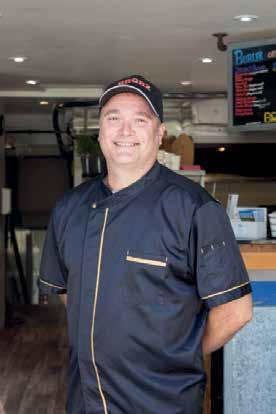
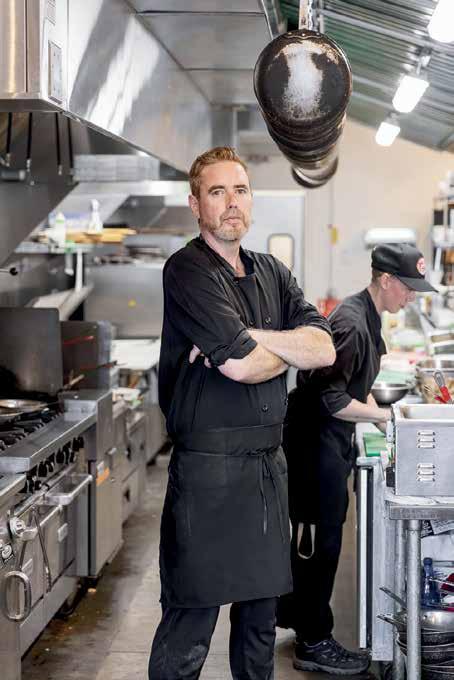
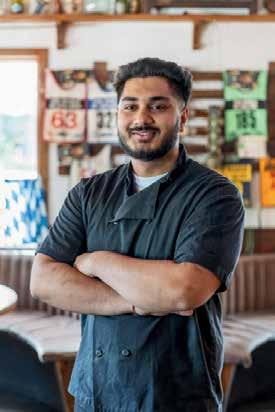
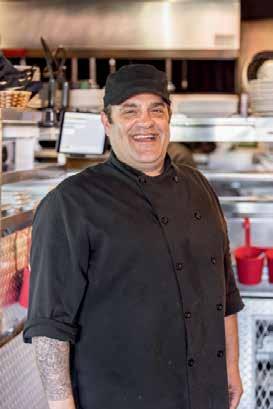
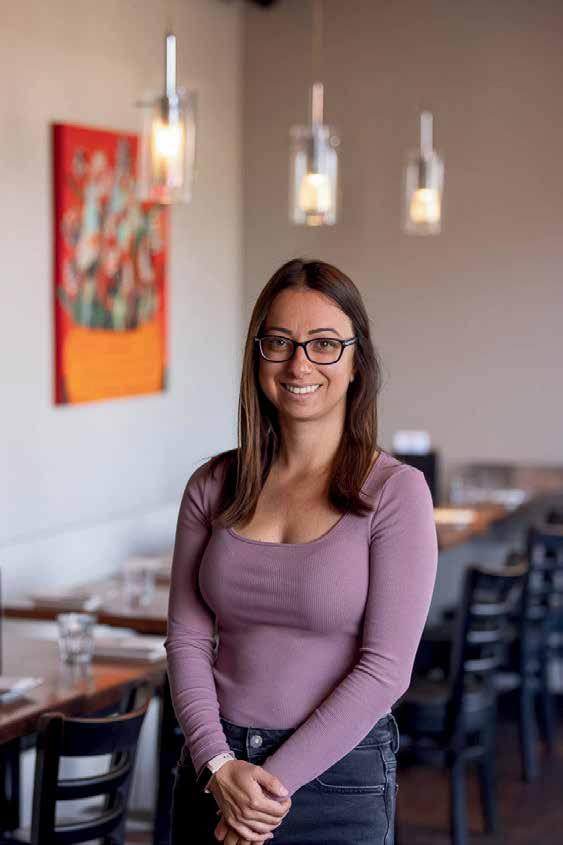
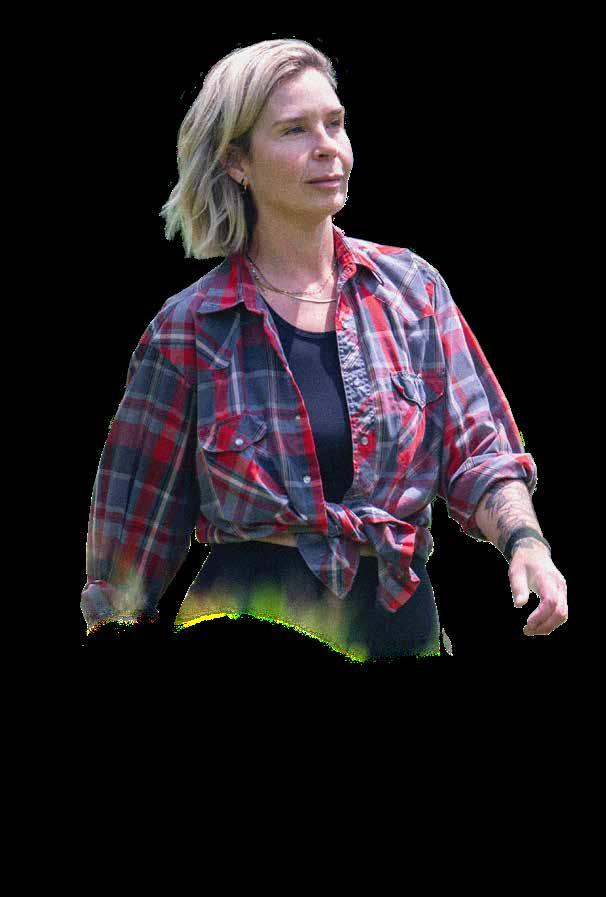
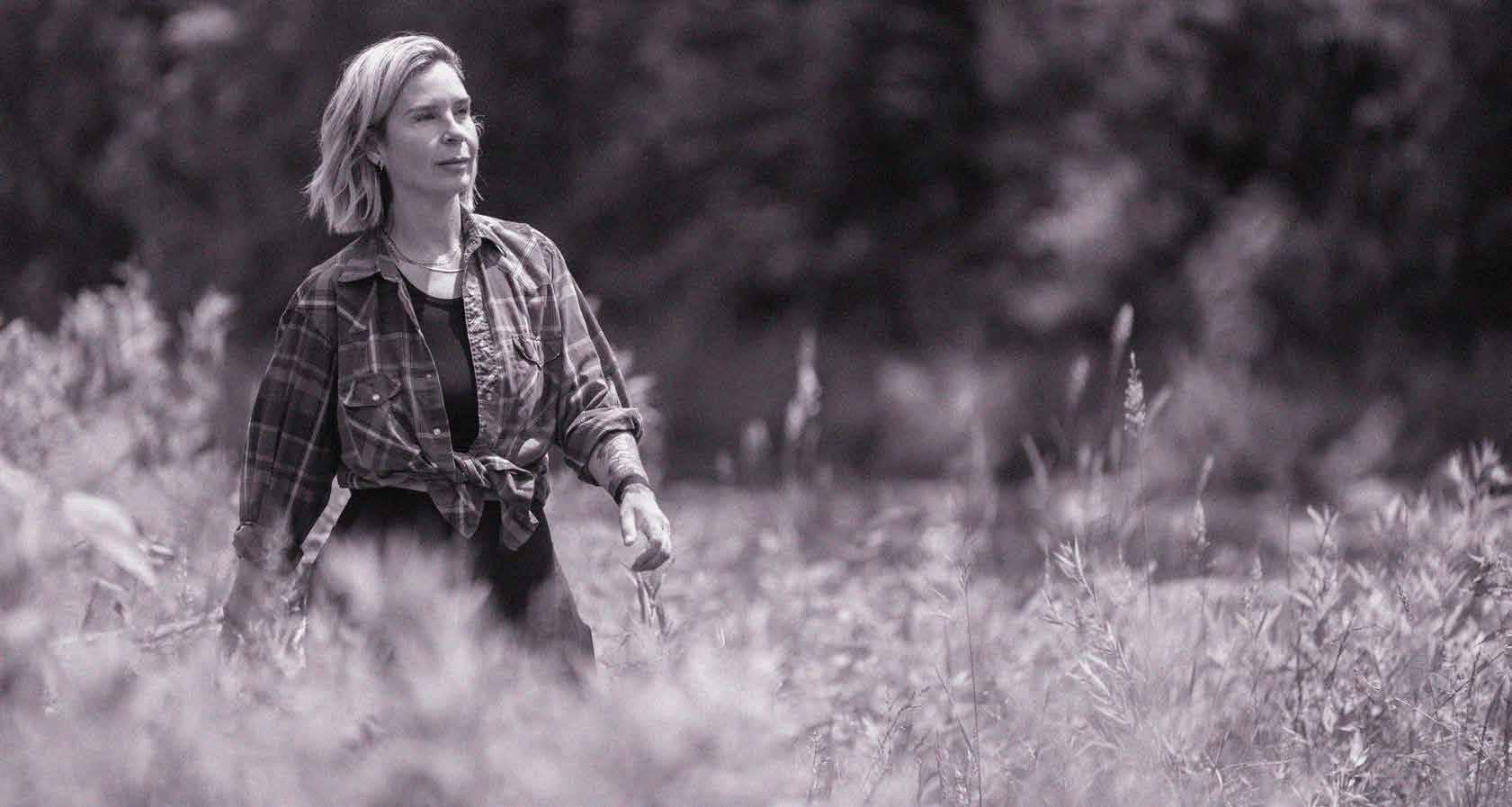
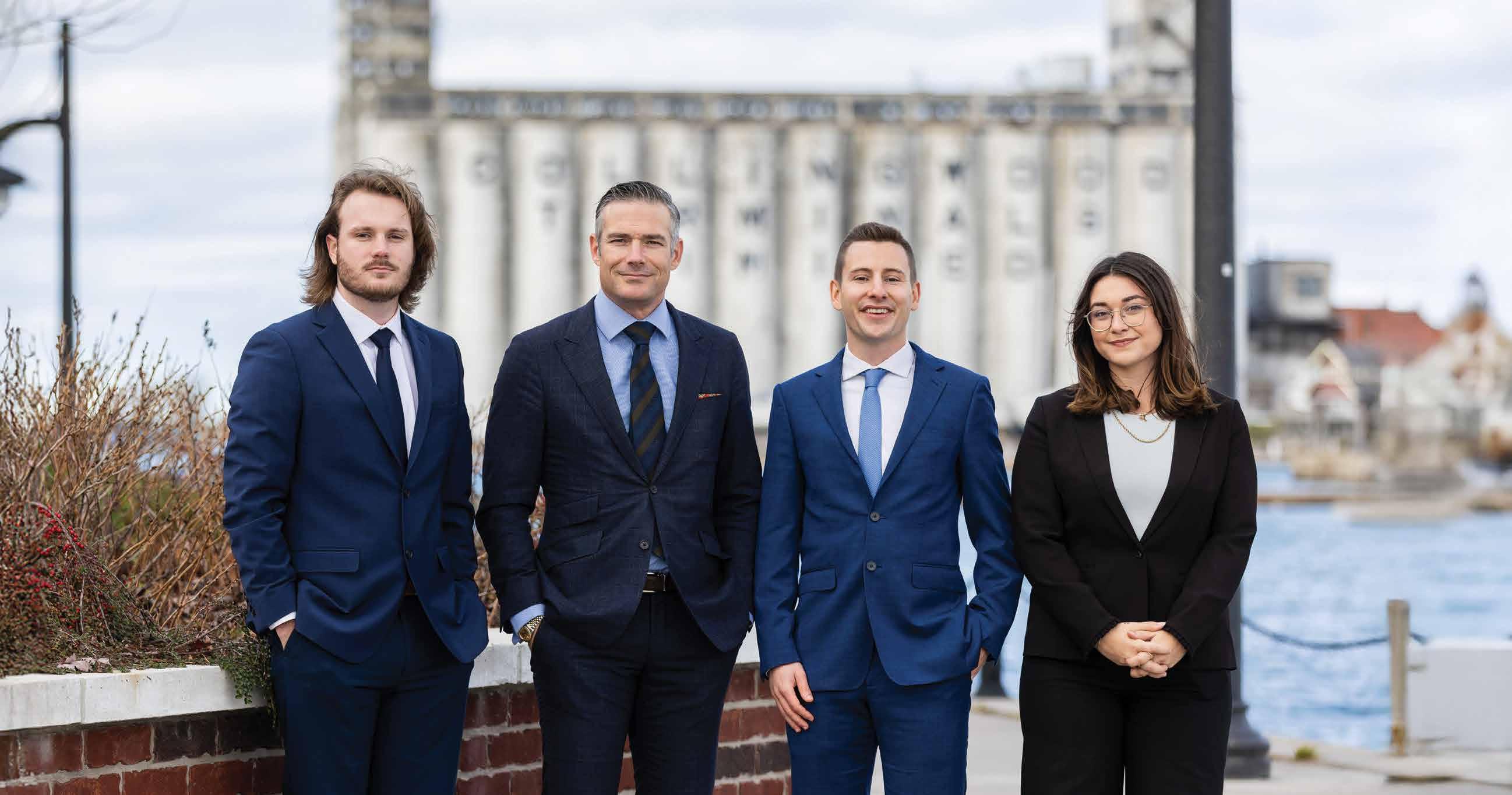
Meet 13 community builders who prioritize good living and inspire you to do the same. P.86
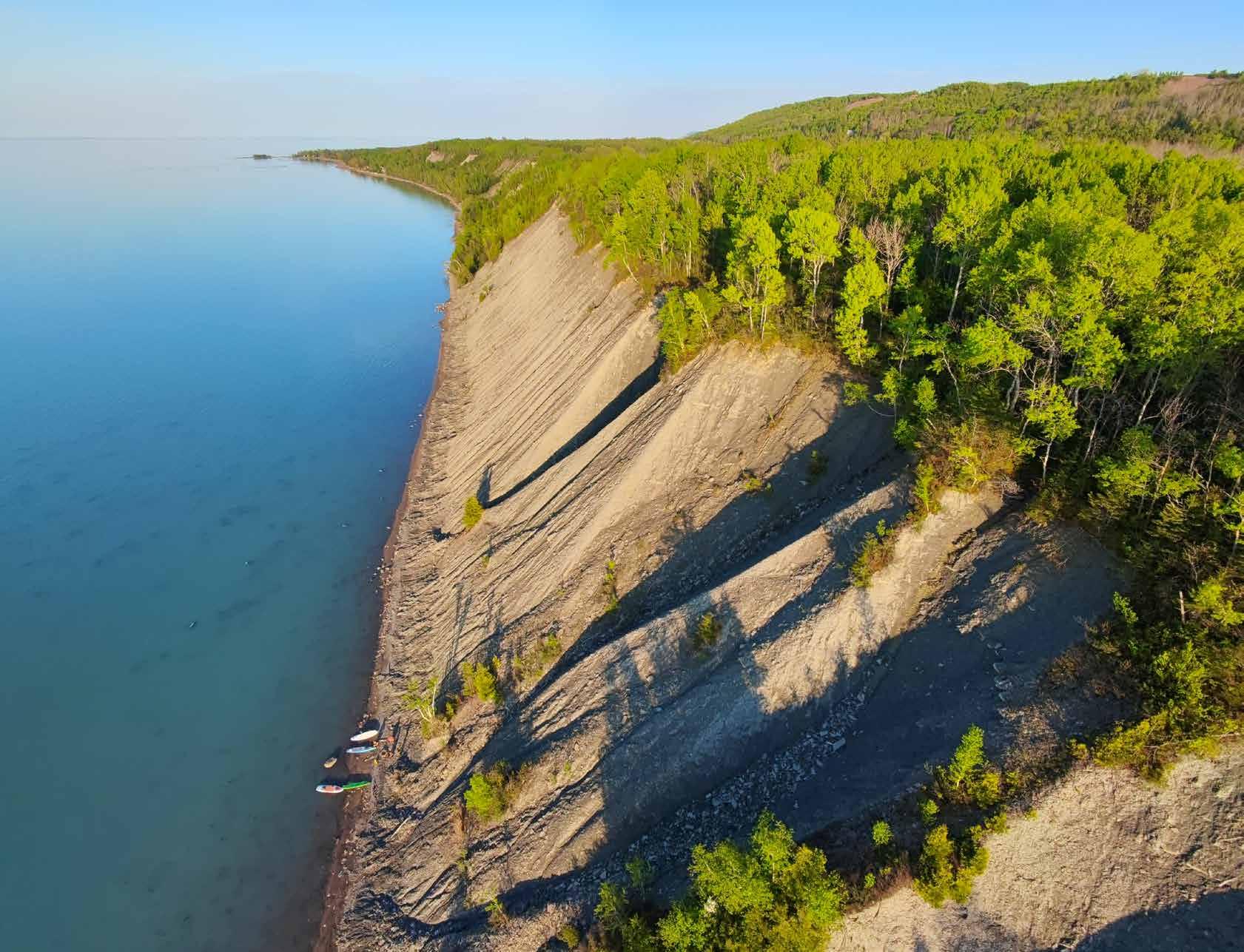
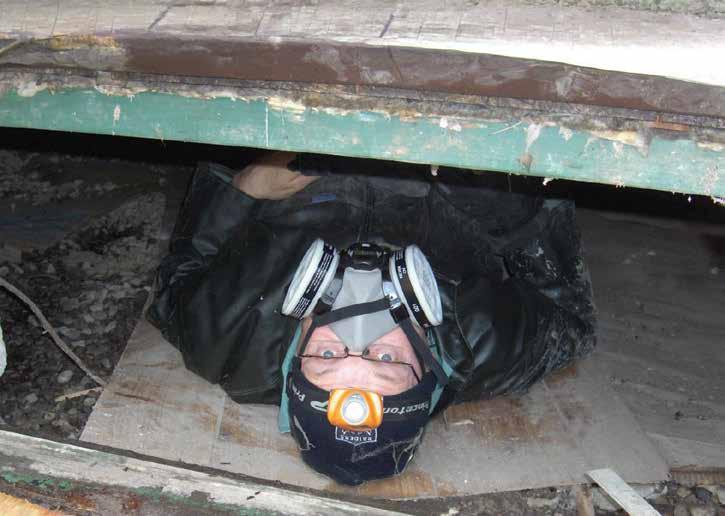
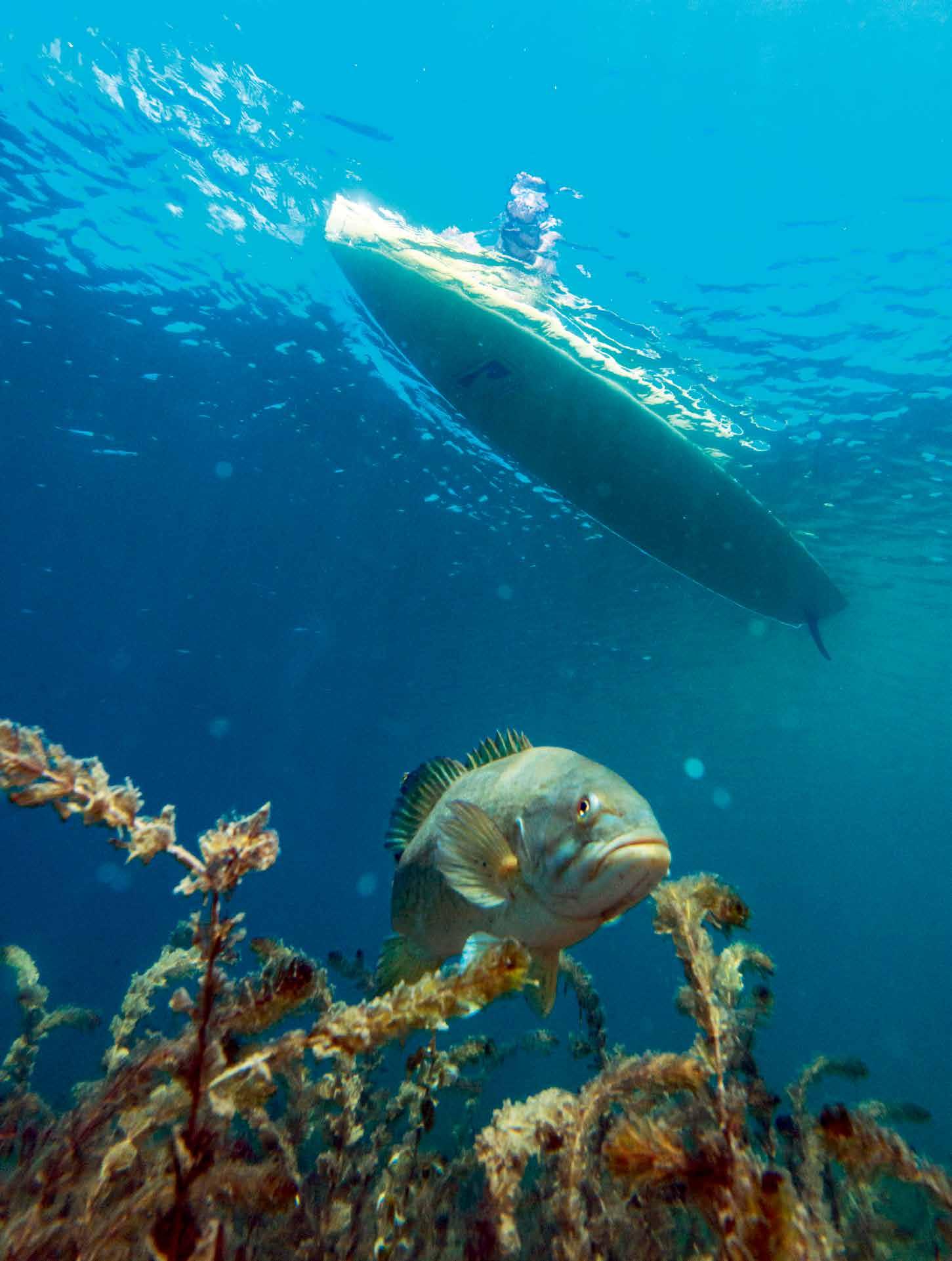
ZOMBIE FISH & SINKHOLES
A new documentary explores never-before-seen depths of the Great Lakes. P.46
CULINARY ART
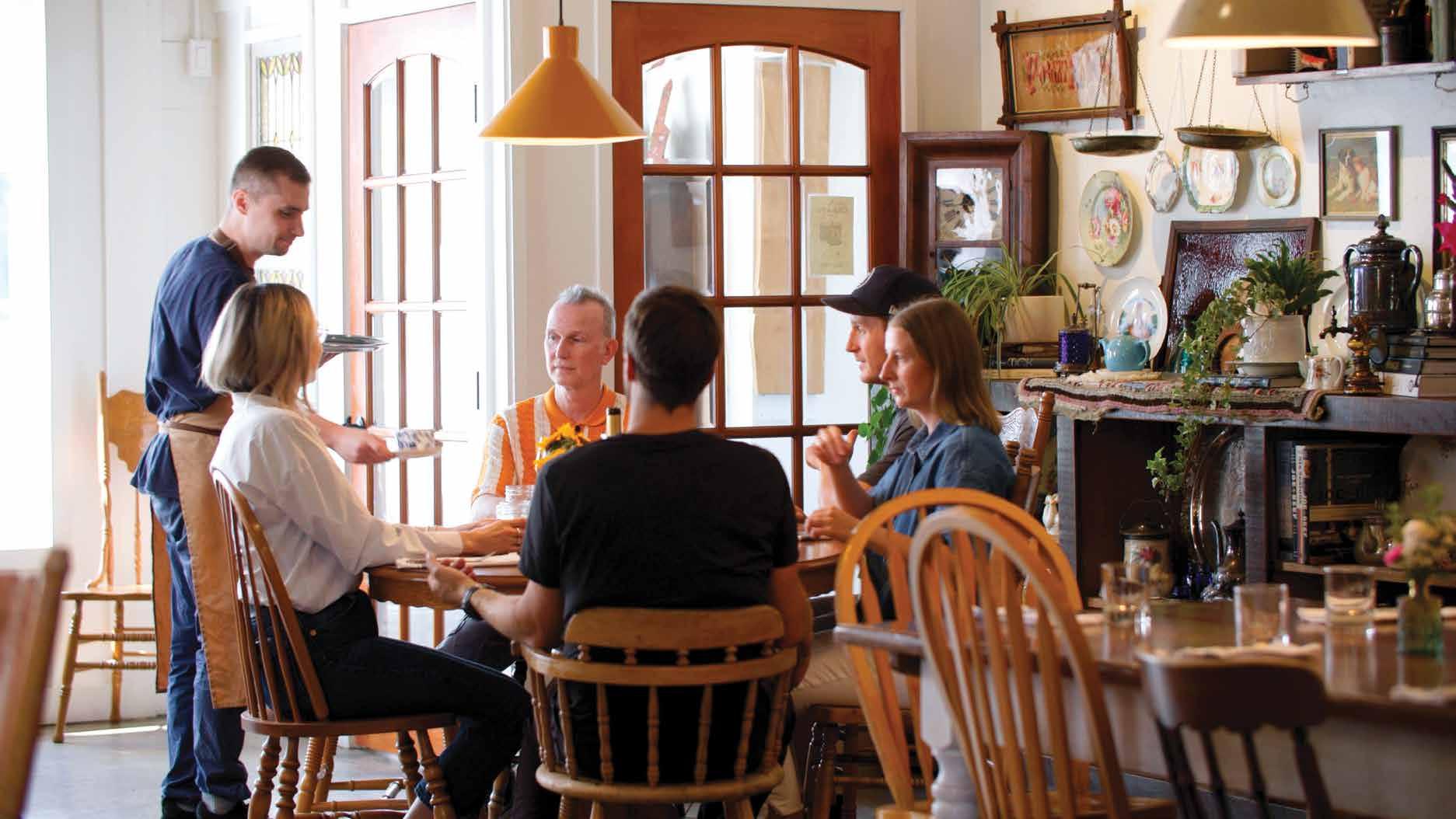
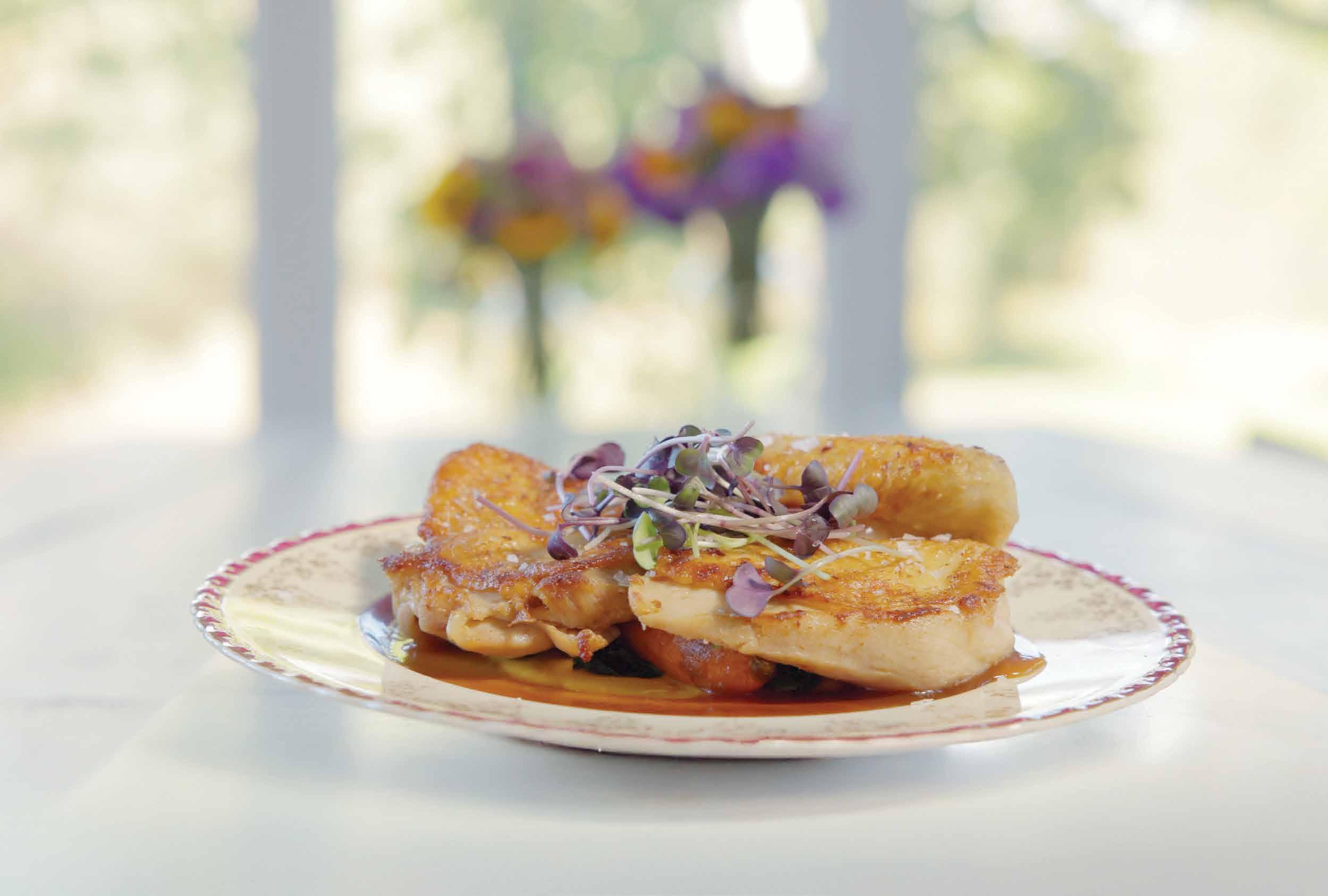
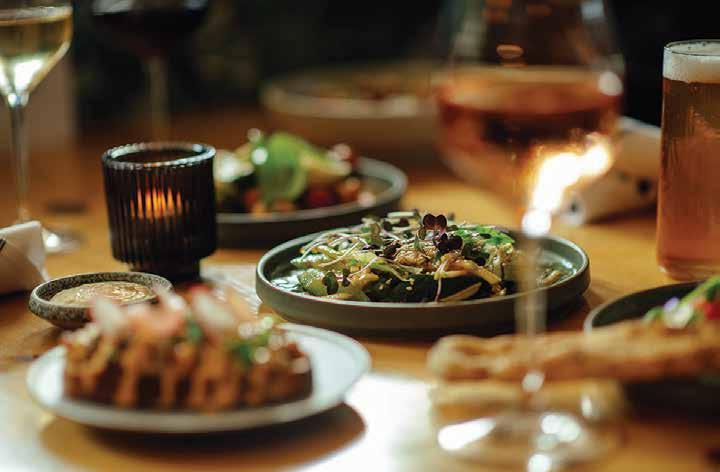
A discovery of exceptional food culture in Grey County. P.30
ENVIRONMENTAL ALARM BELLS
A federal agency raises red flags over proposed mega-power plant on Georgian Bay. P.85
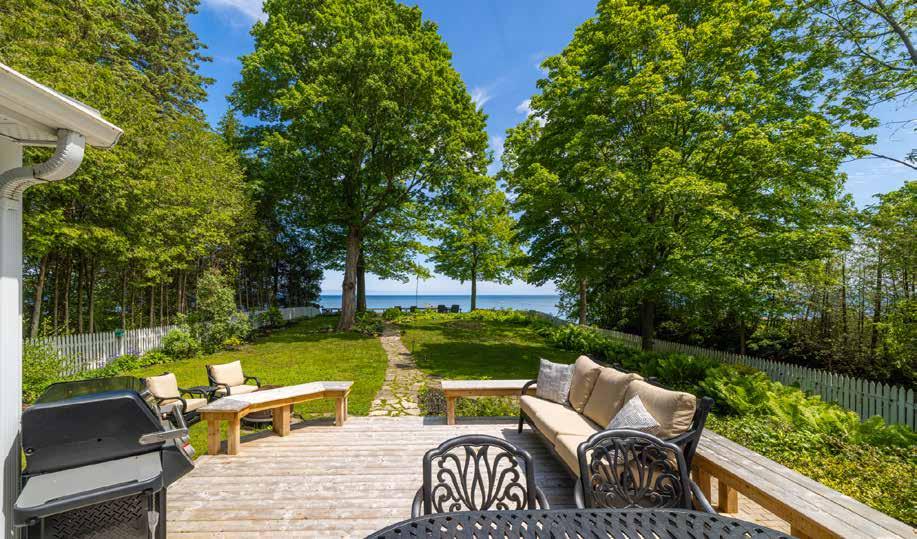
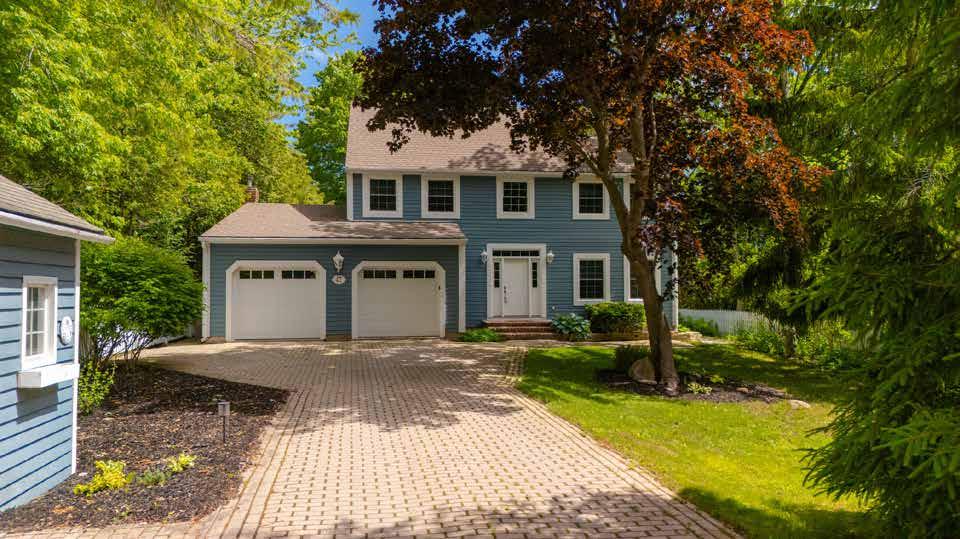
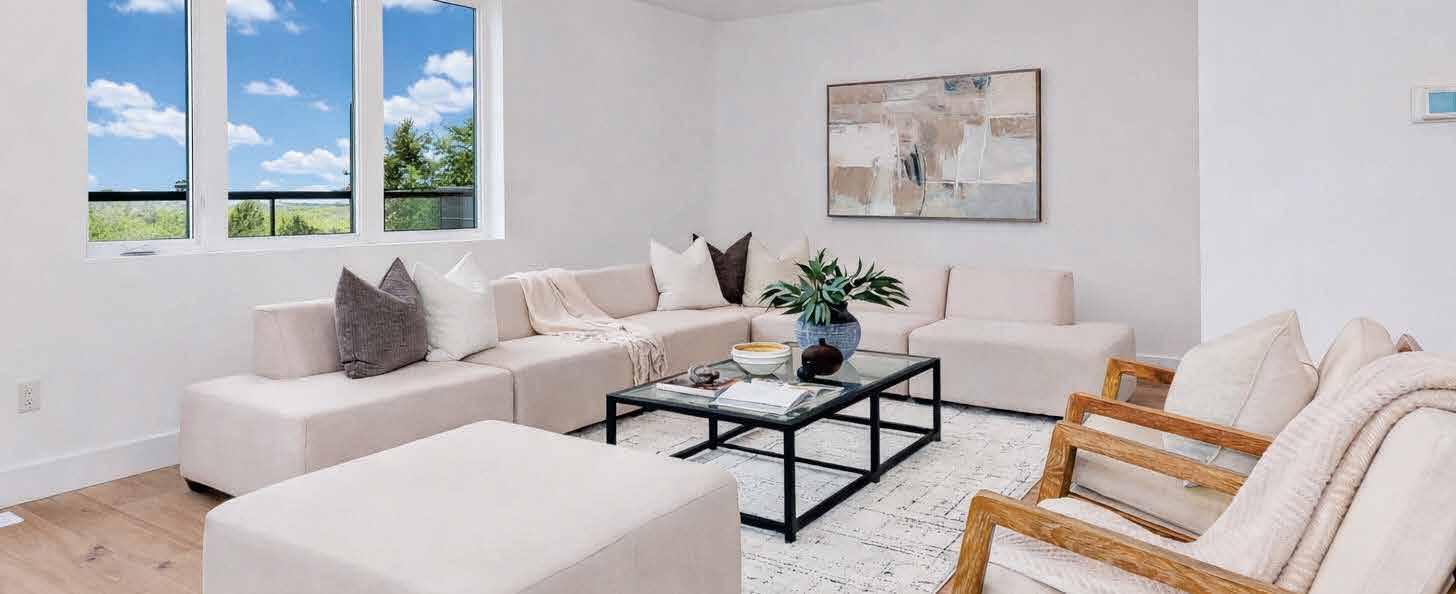
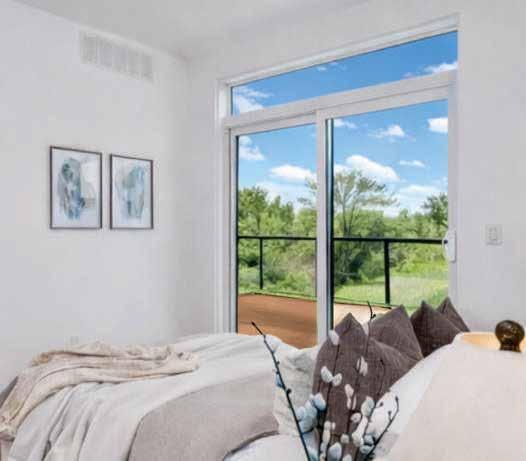
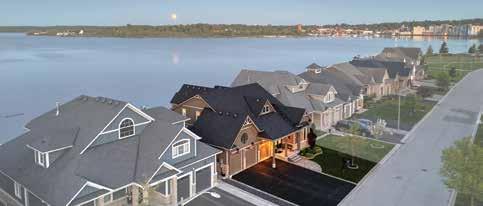
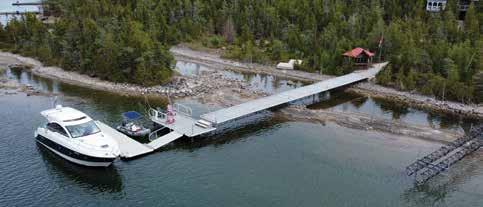
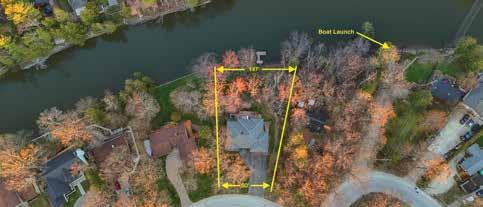
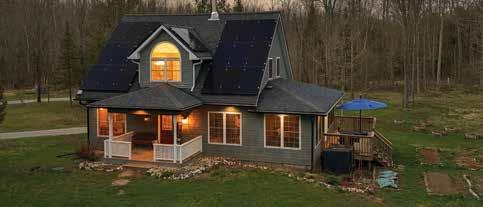
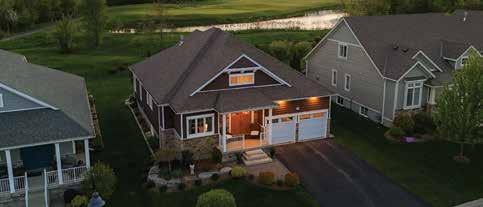
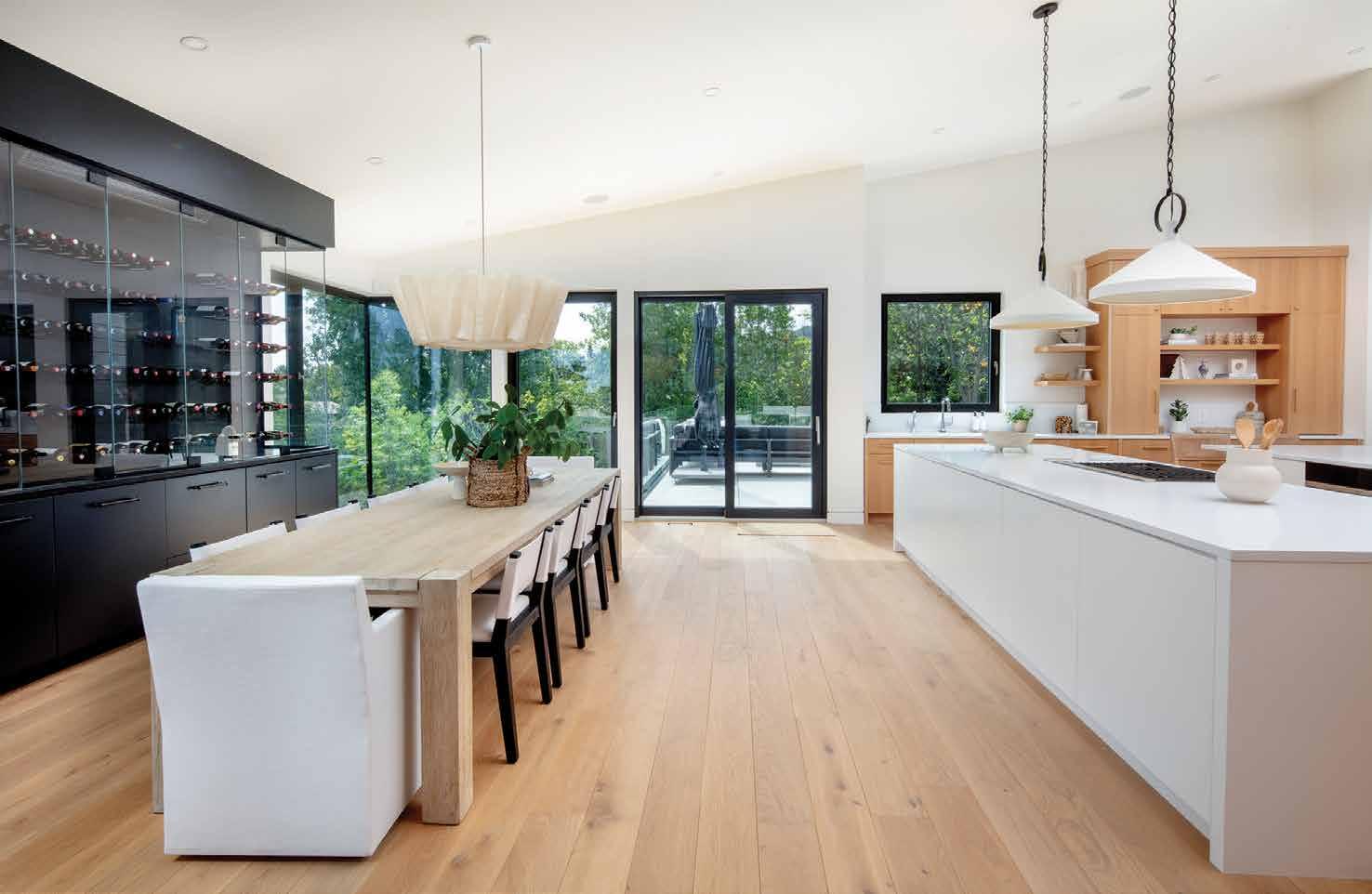
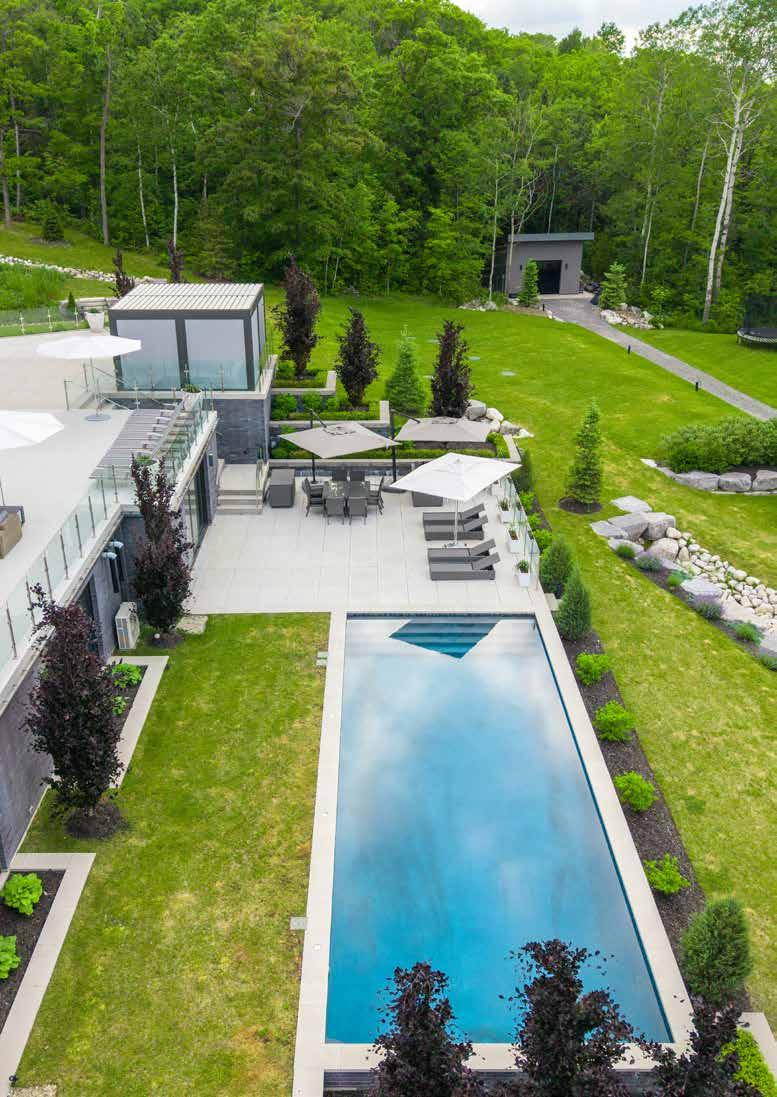
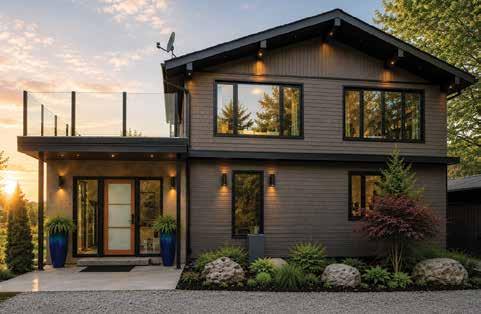
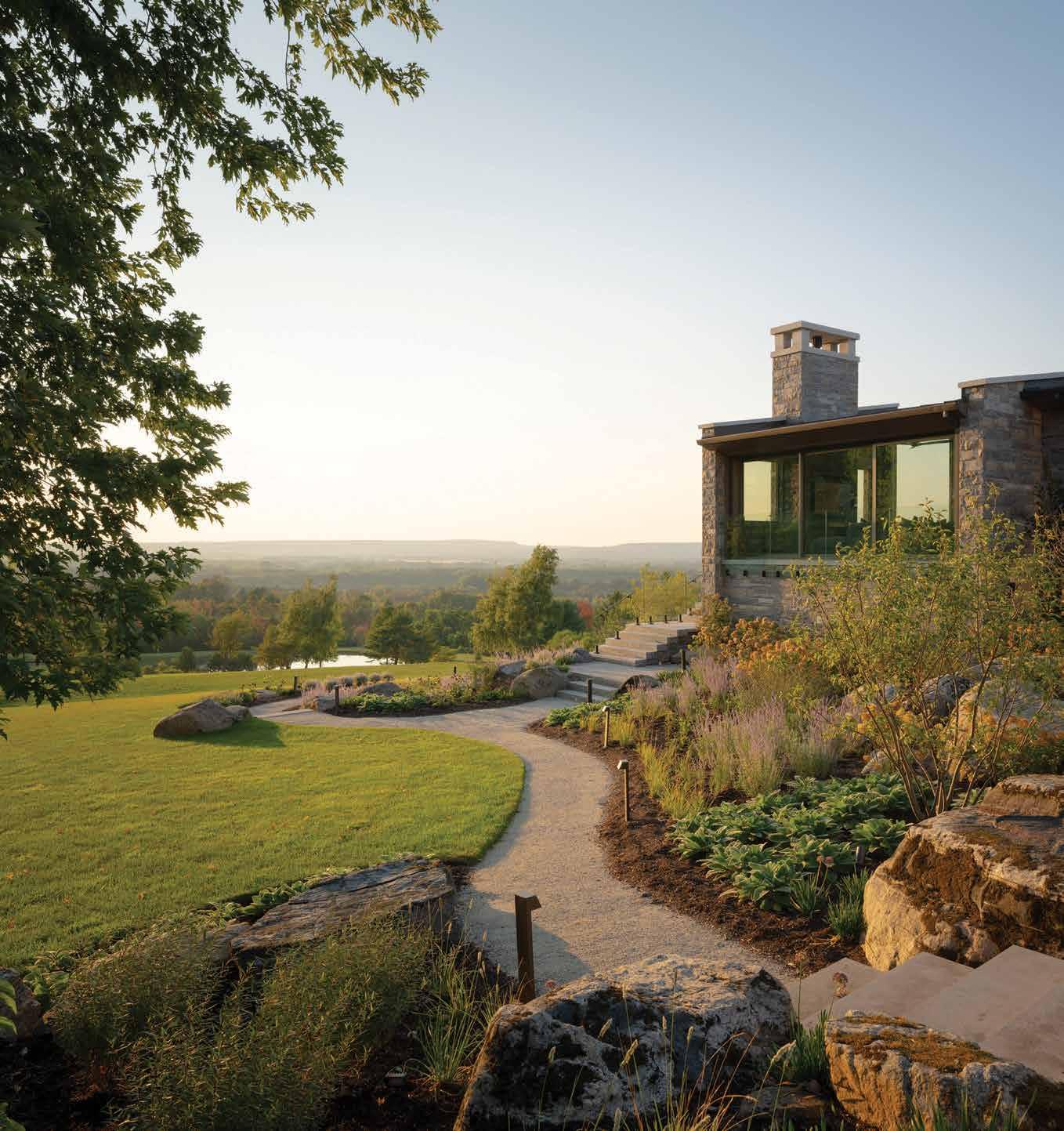
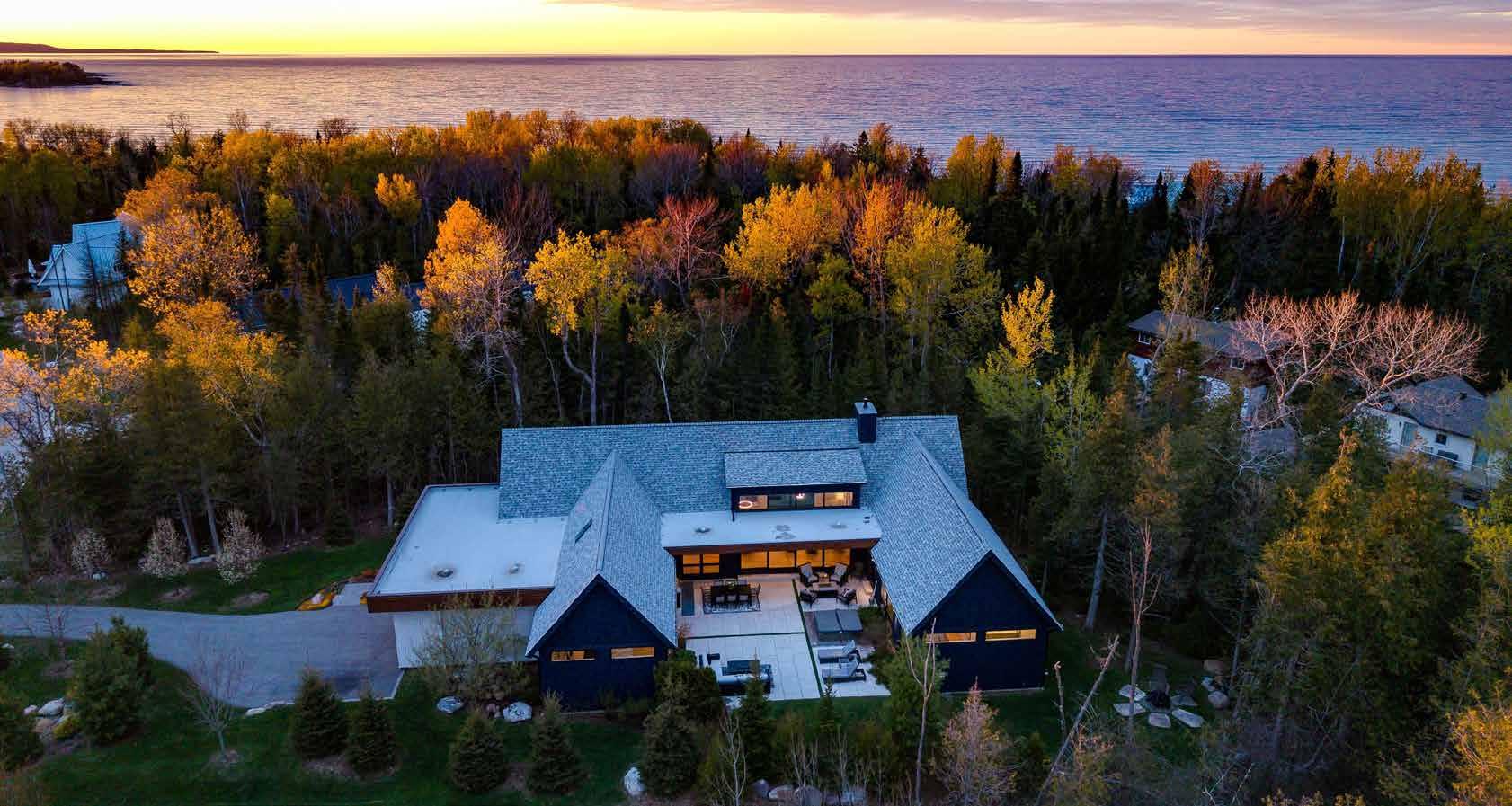
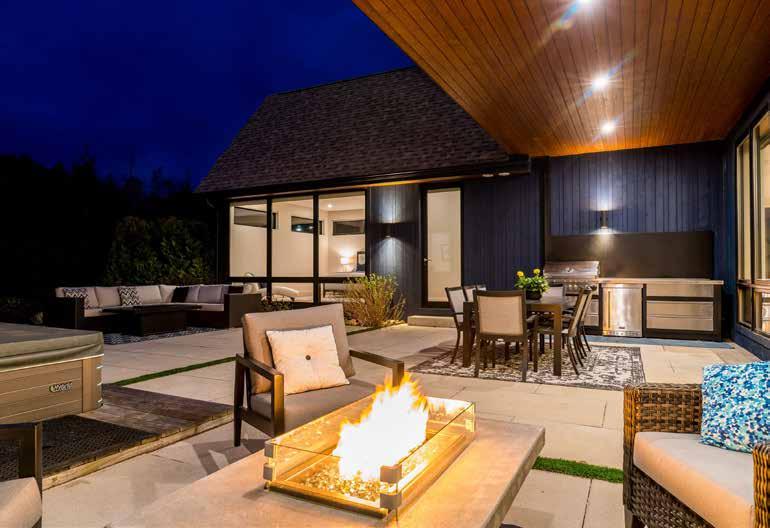
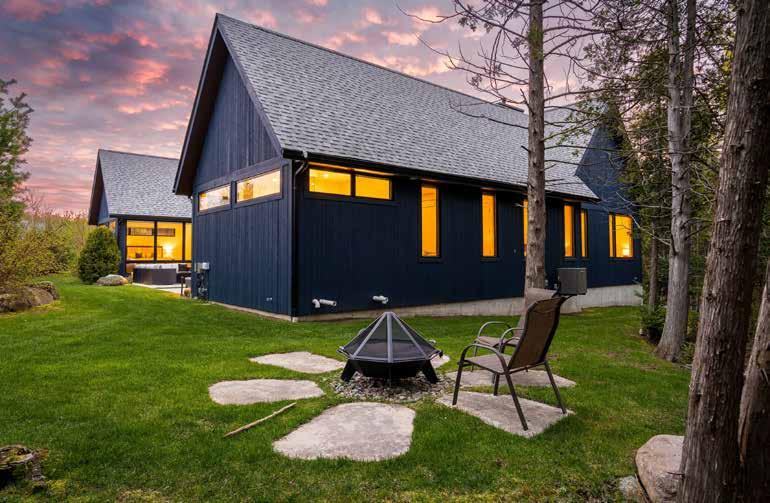
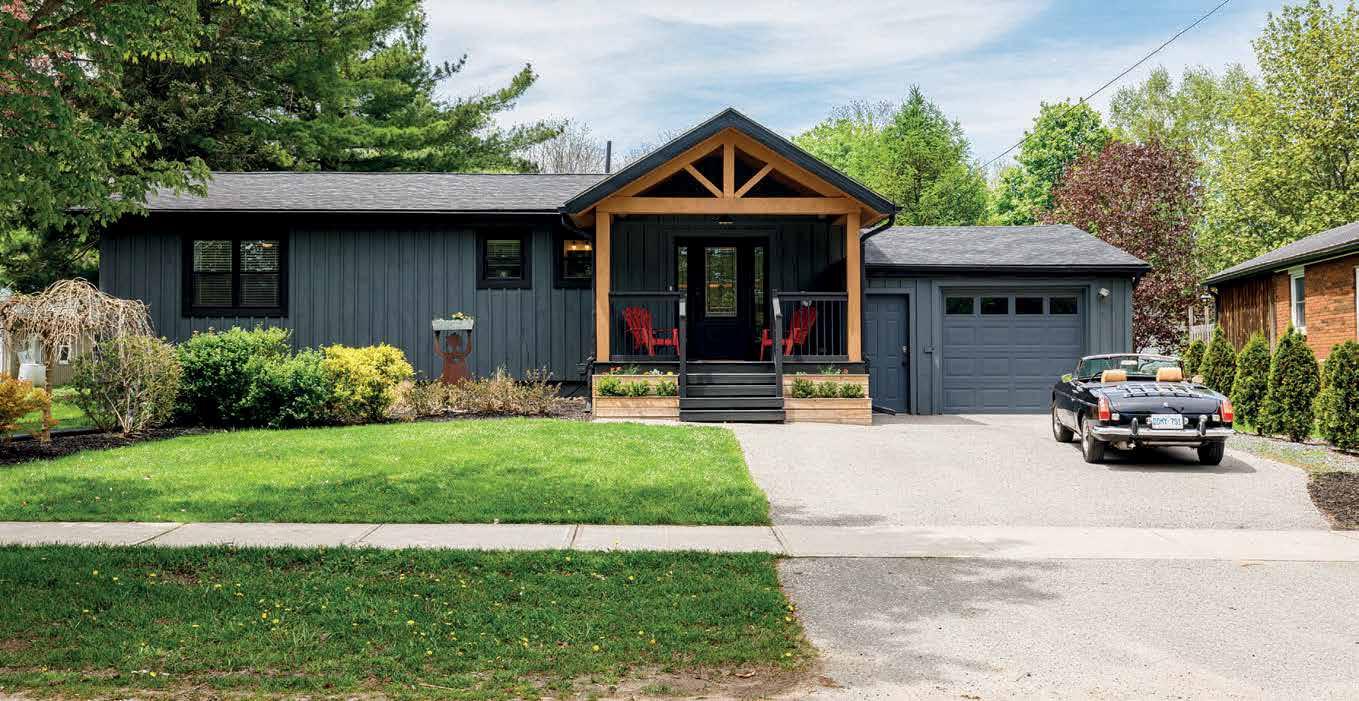
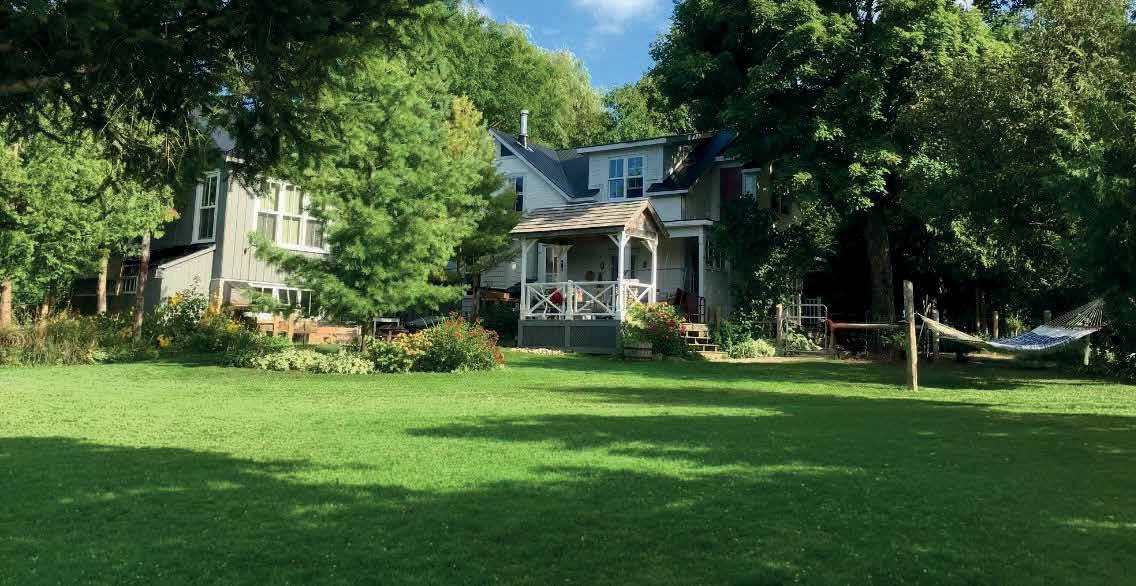
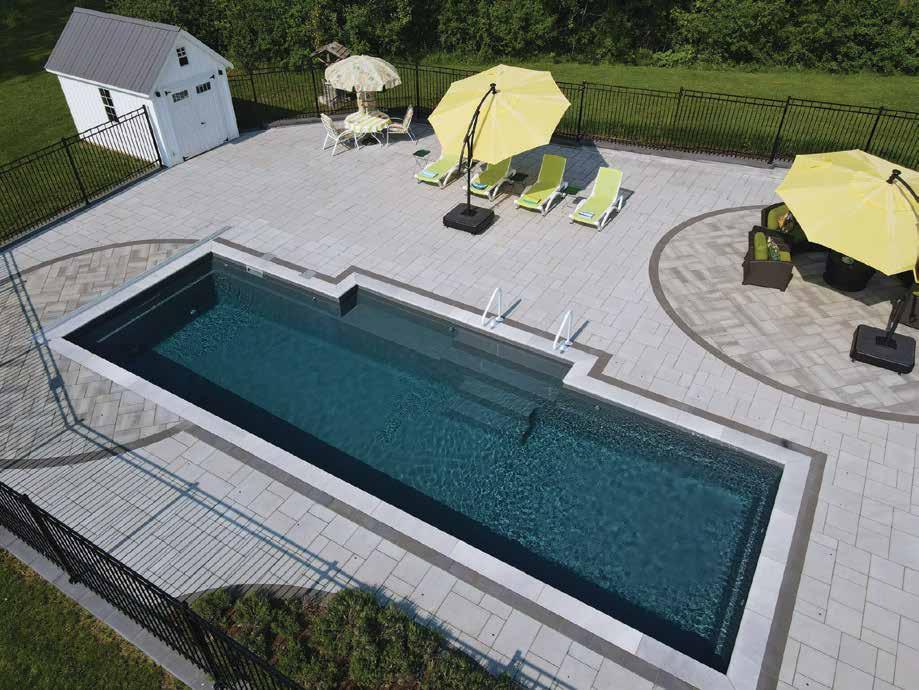
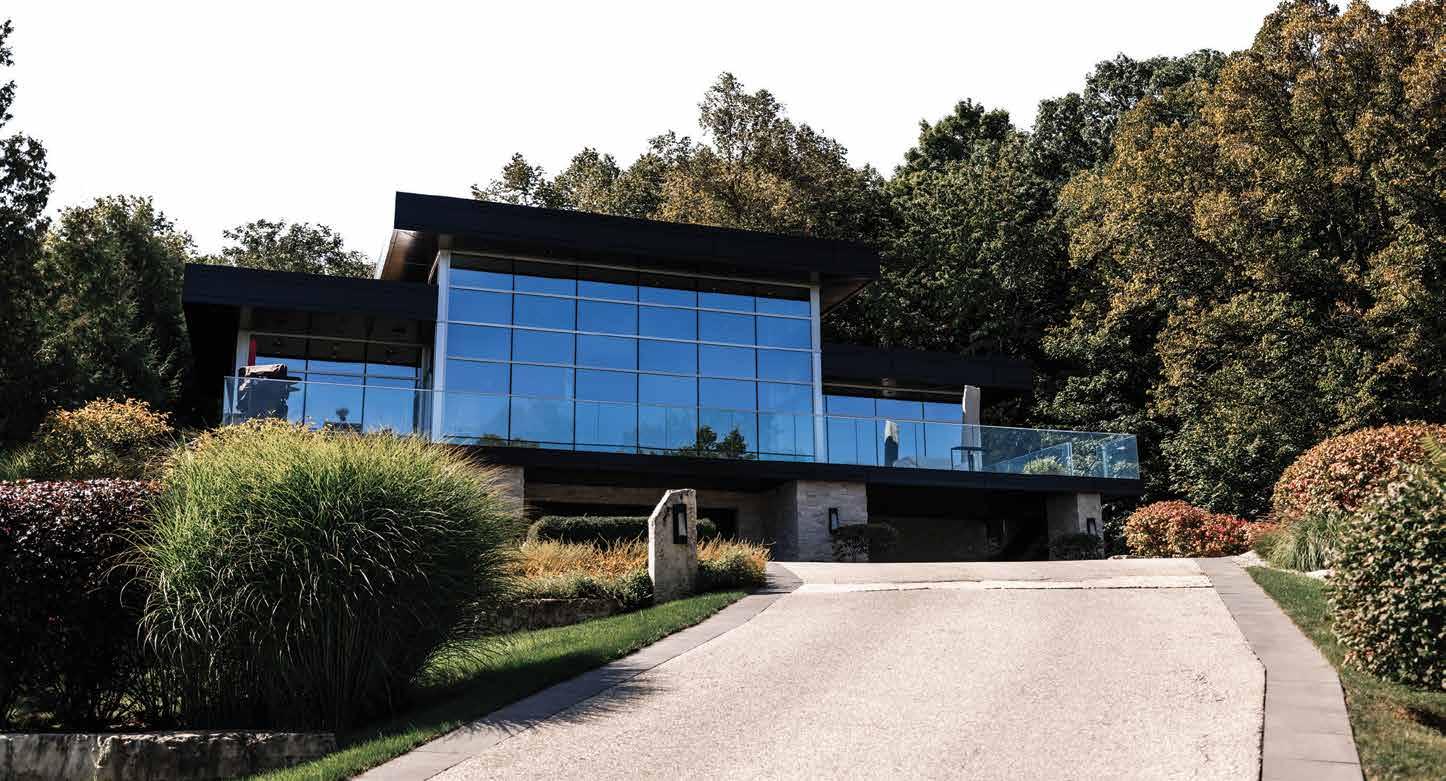
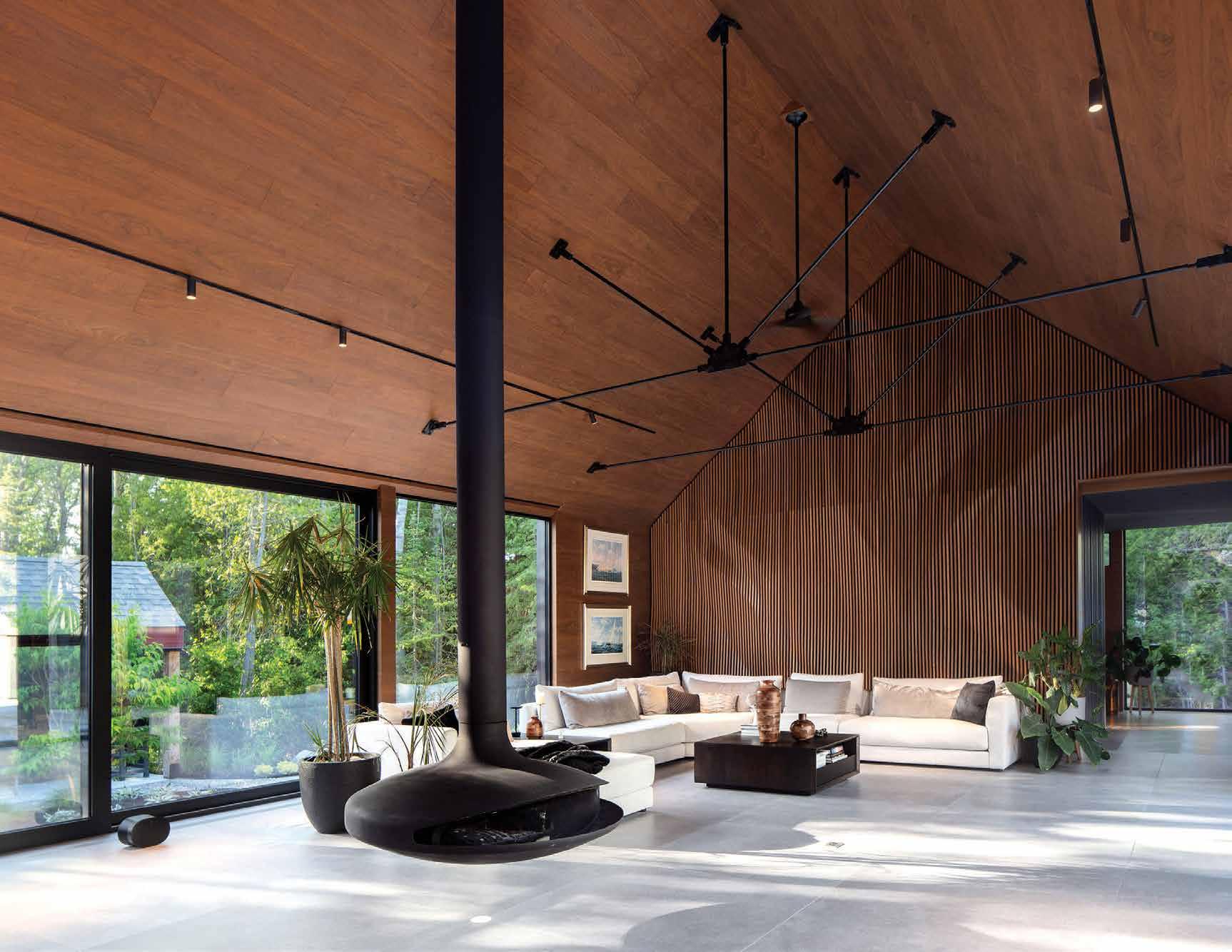
MOUNTAIN HOMES
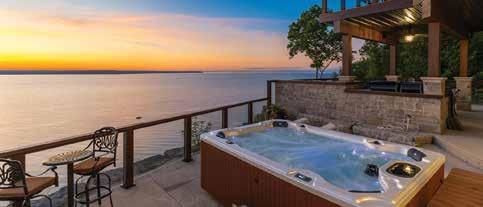
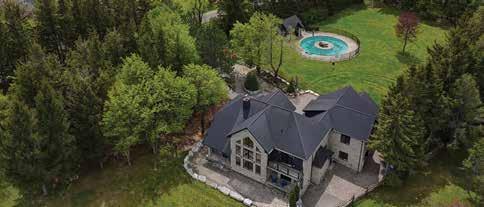
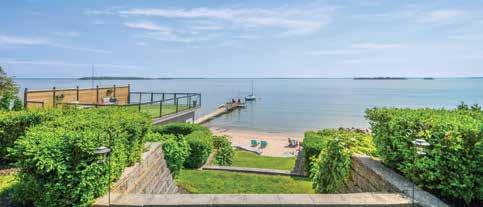
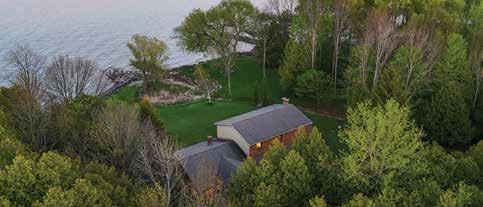
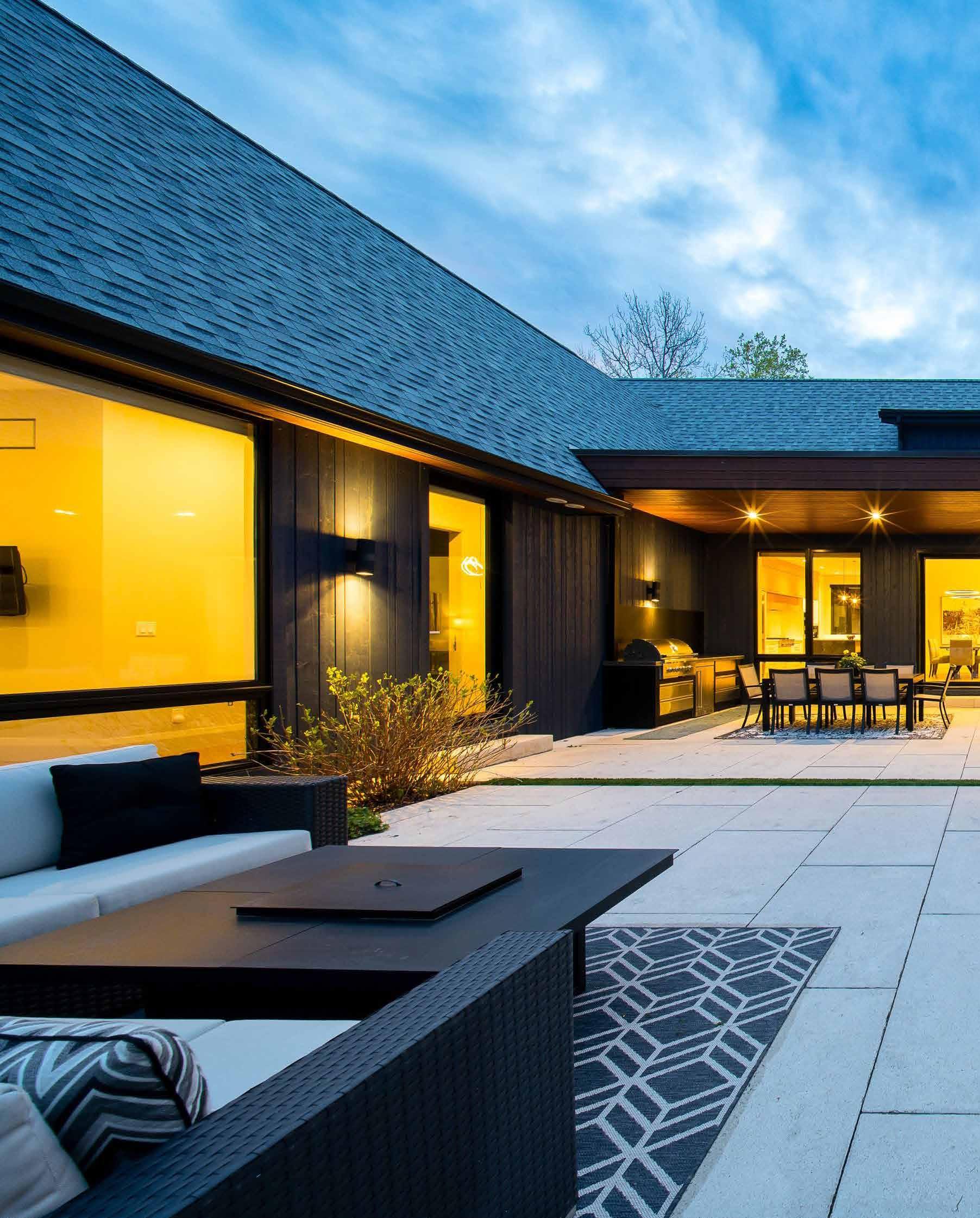
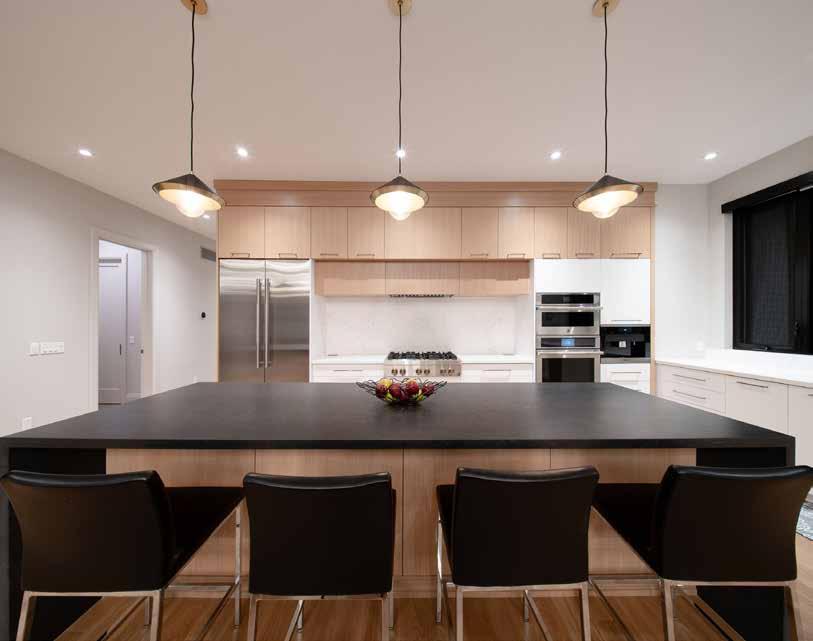
Four homes, four incredible designs. P.70
GEAR MADE FOR GATHERING BY THE LAKE AND IN THE WOODS.
WELCOLME TO Summer Reimagined
Quality craftsmanship
“Arrives razor sharp, ready to tackle any job.”
- Justin S. Verified Buyer
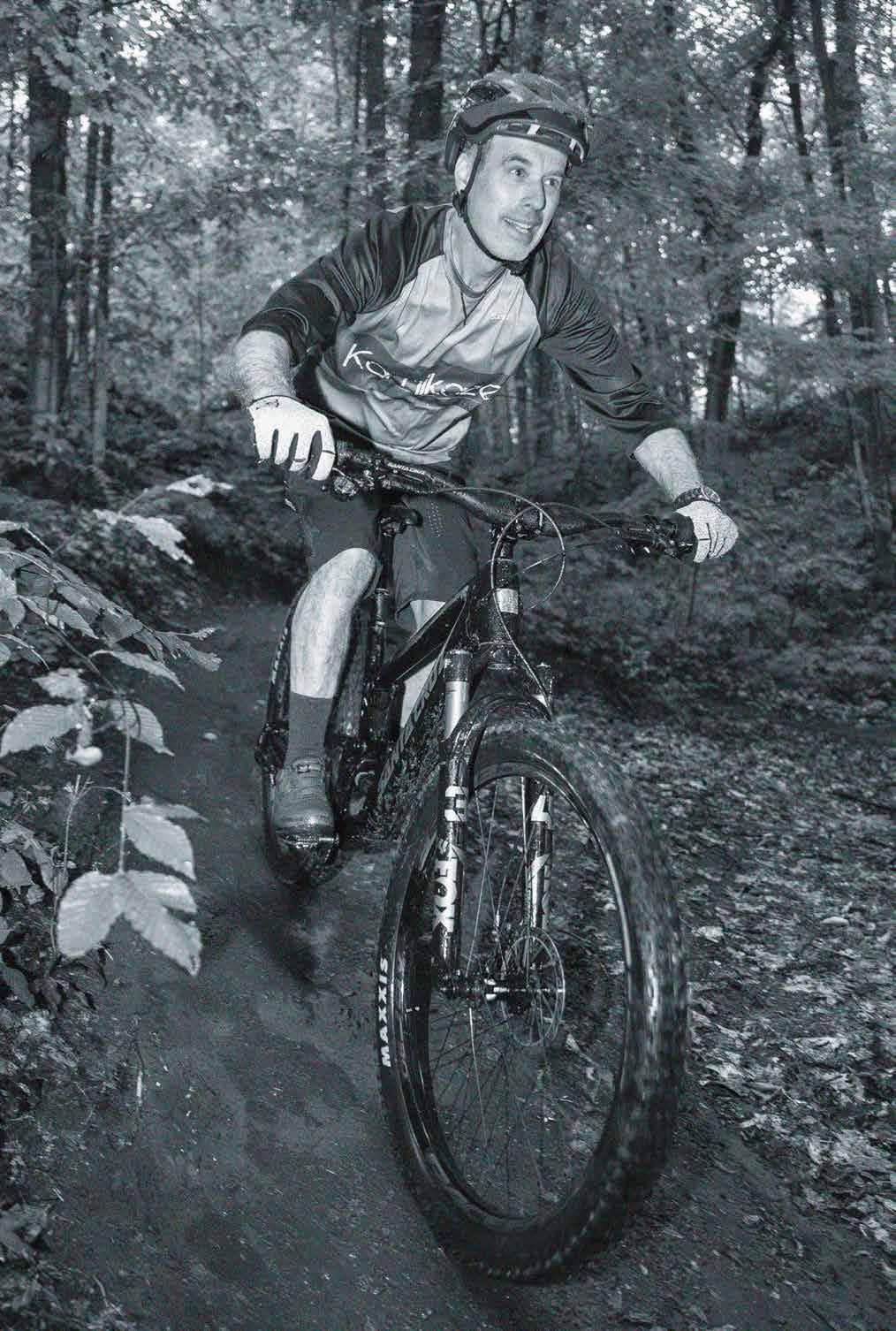
Salty Marie Trails Fest
July 24-26
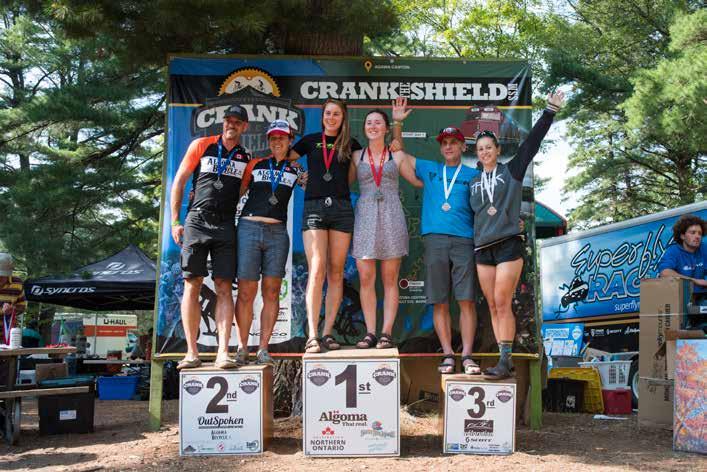
Crank The Shield
August 21-23
Canadian XCM MTB Champs
Sept 5
Ontario Ocup
Sept 6
STAND THE TEST OF TIME.
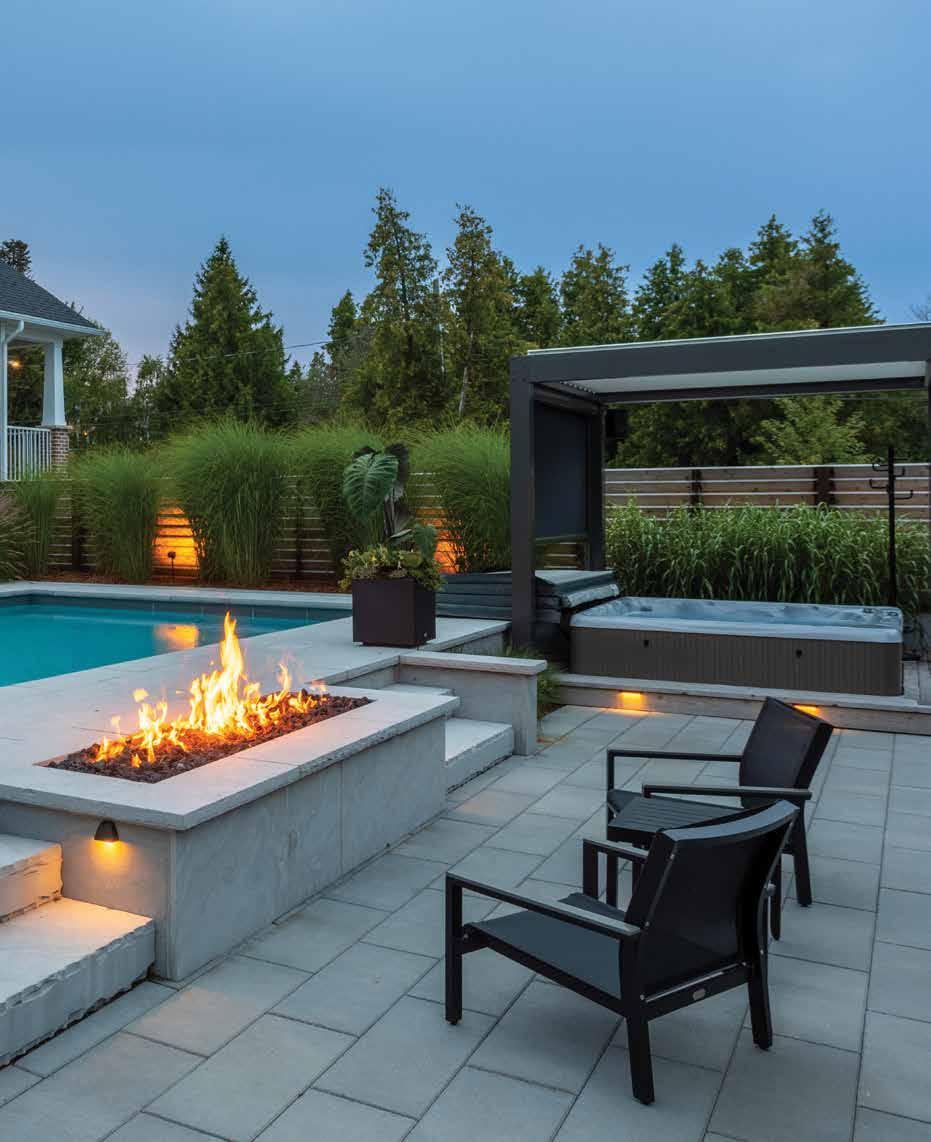
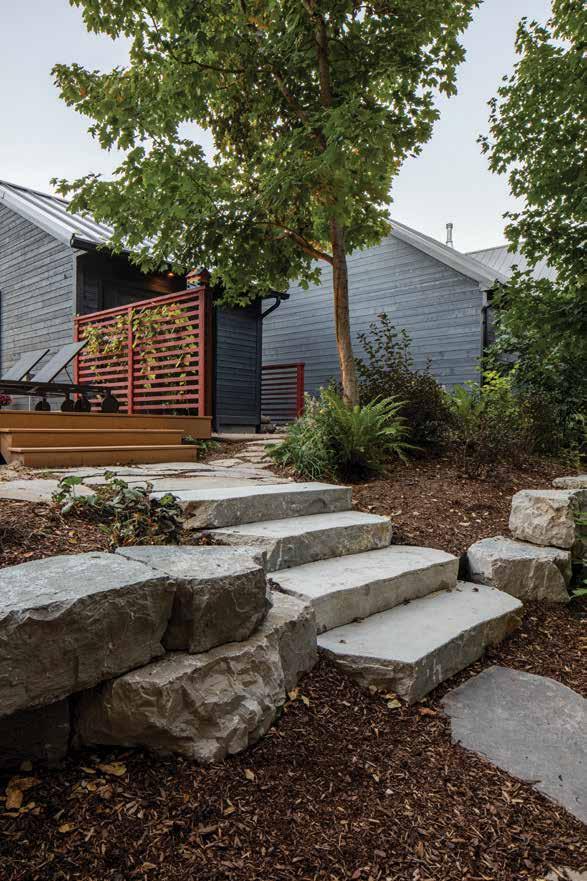
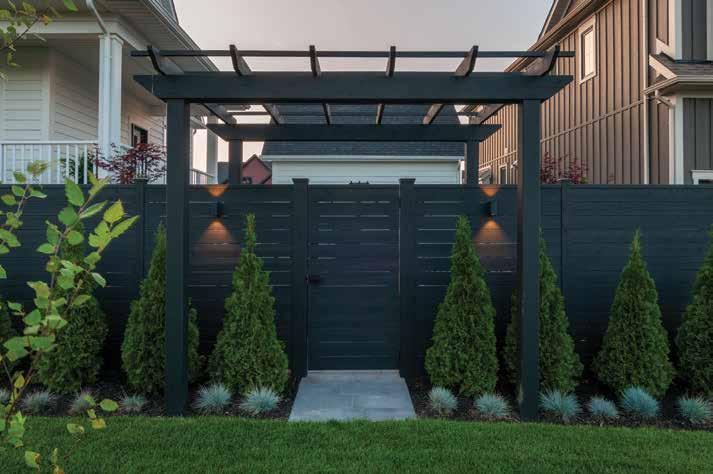
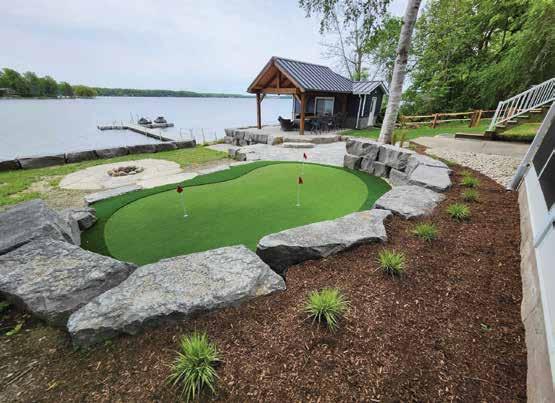
WE DESIGN AND BUILD LANDSCAPES THAT FEEL LIKE A NATURAL EXTENSION OF THE OUTDOORS.
Finding Peace in Chaos
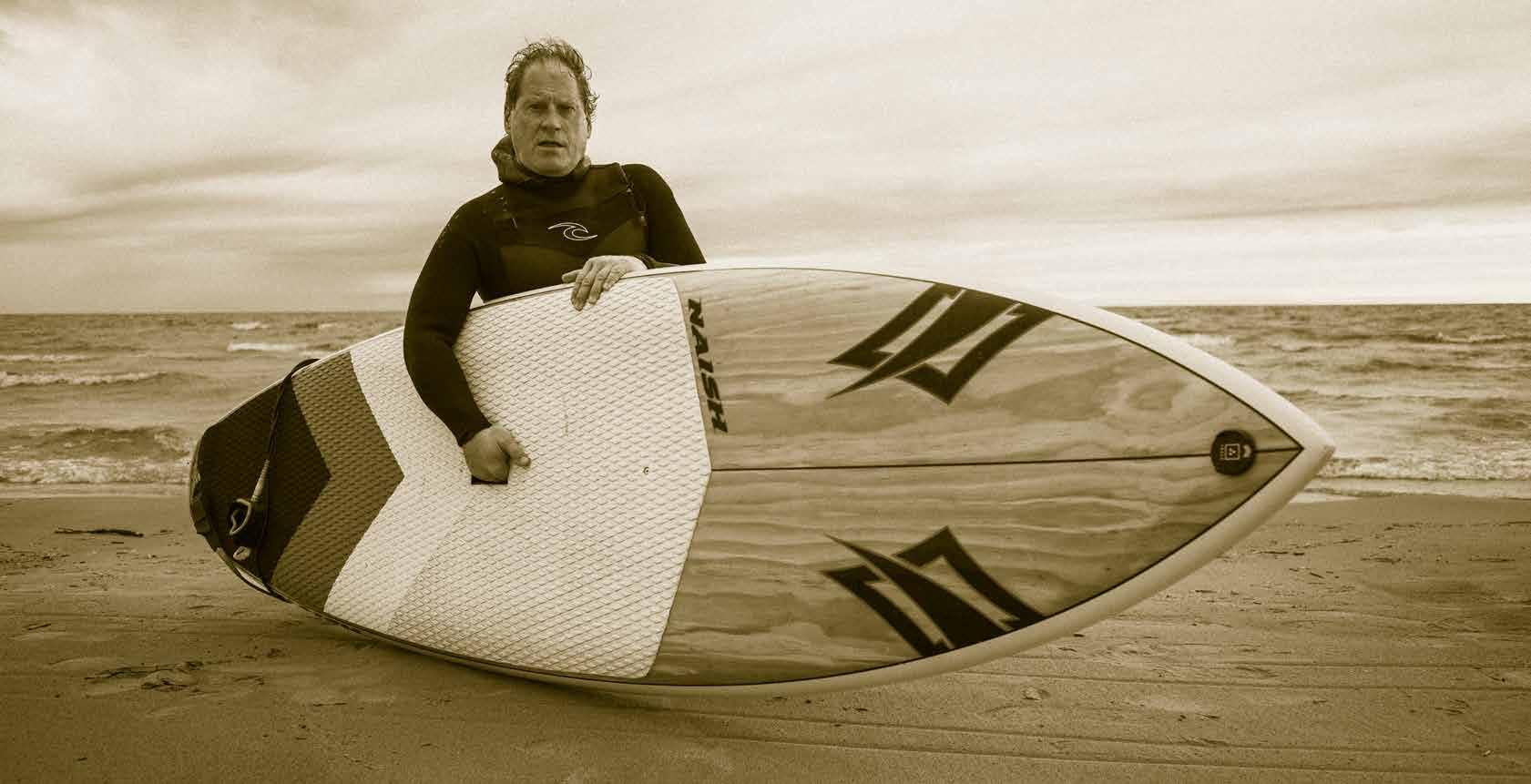
Pretty sure that when this photo was taken I was overwhelmed with life.
I know our readers can relate—the feeling that you are not enough. It’s worth looking at for a moment. First, there’s the steady stream of unnecessary alarmism from mainstream media for your anxiety levels, then there’s endless to-do lists, domestic tasks, bills to pay. When that subsides, legitimate concerns fill the vacuum: wars, social injustices and always another corporation planning to bulldoze another forest and probably call the project "green."
Plus, I’m from the FOMO generation where there usually is an activity more meaningful than the one you are currently engaged in. My social media feed is a non-stop guilt-trip to live my best life NOW—and have six pack abs, be spiritually awakened, grow an organic garden, turn a shipping container into a tree-house and maybe buy a van and live on some breathtaking stretch of abandoned coastline (those videos never seem to show cops banging on the van window at 2 a.m., relegating the dwellers to a Wal-Mart parking lot).
Add to that the amount of work (yes, a job) we must do to keep up with inflation and produce enough money to pay the exorbitant amount of provincial and federal tax they charge—then generally feeling too overwhelmed to do anything about it.
I often wonder when I’m going to slow down and simplify. I promise myself it will happen once I get this current thing done.
But maybe that’s all just life. Maybe I just need to accept it and enjoy small moments when they happen.
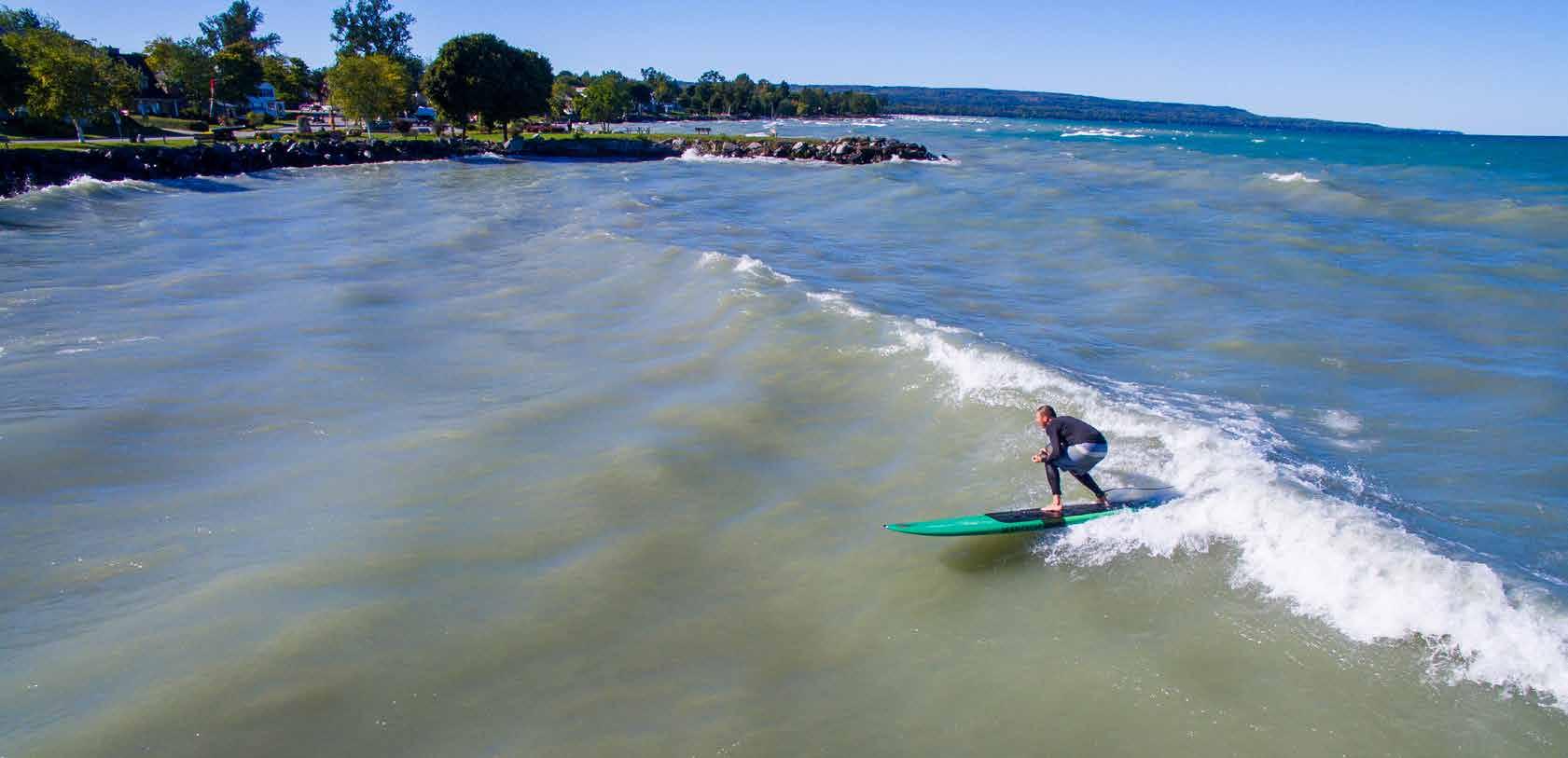
When this photo was taken, over a decade ago, I was managing a business, my kids were little and we were moving houses. My phone’s notifications were nonstop. No doubt I was overwhelmed.
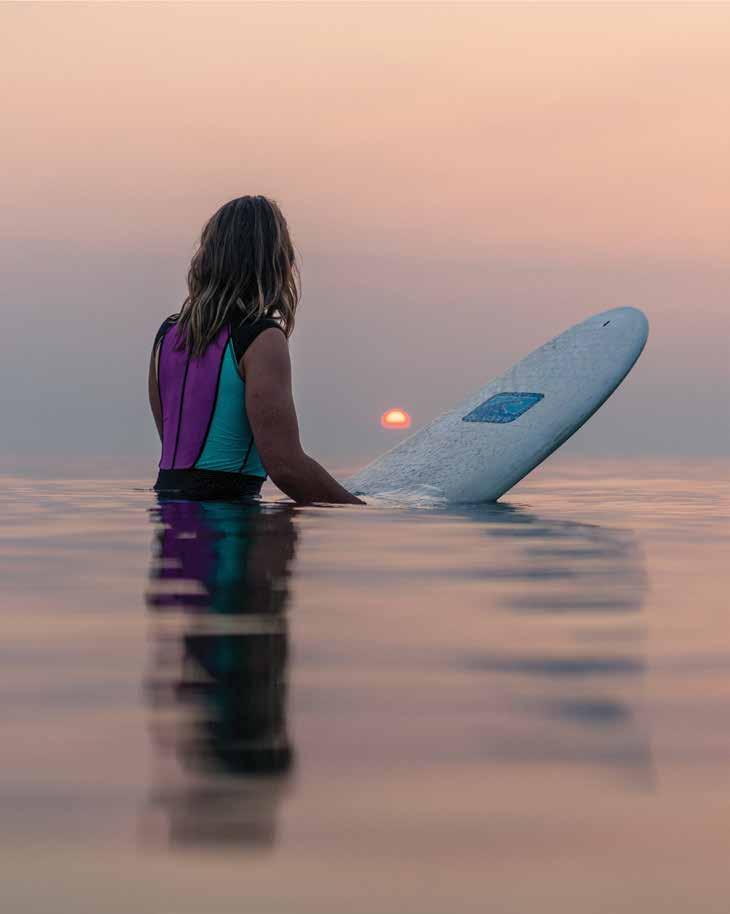
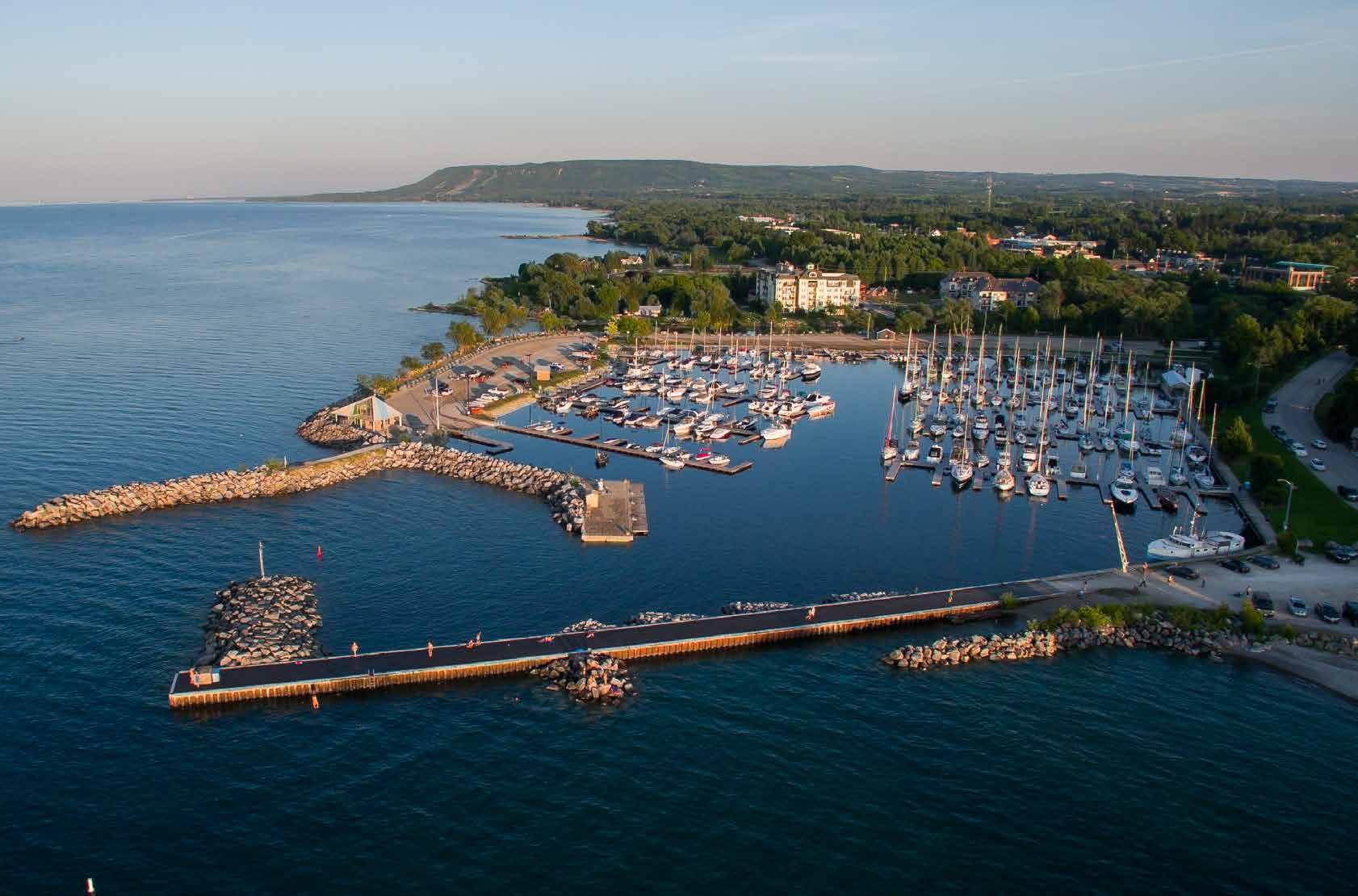
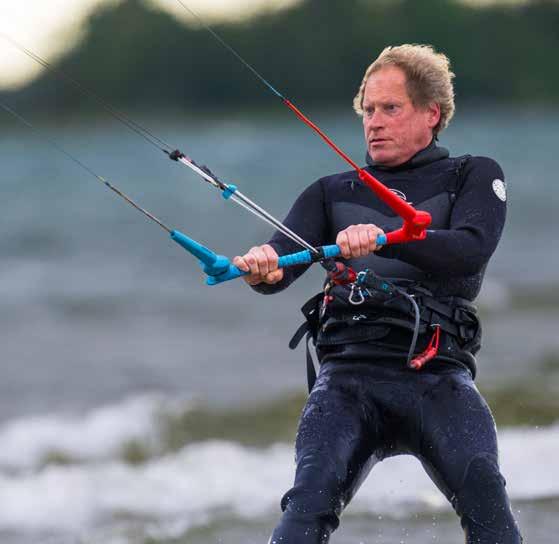
But the wind had blown all day and waves were set up perfectly right in front of Meaford harbour, rolling in. Ironically, the thought of missing out probably had me stressed.
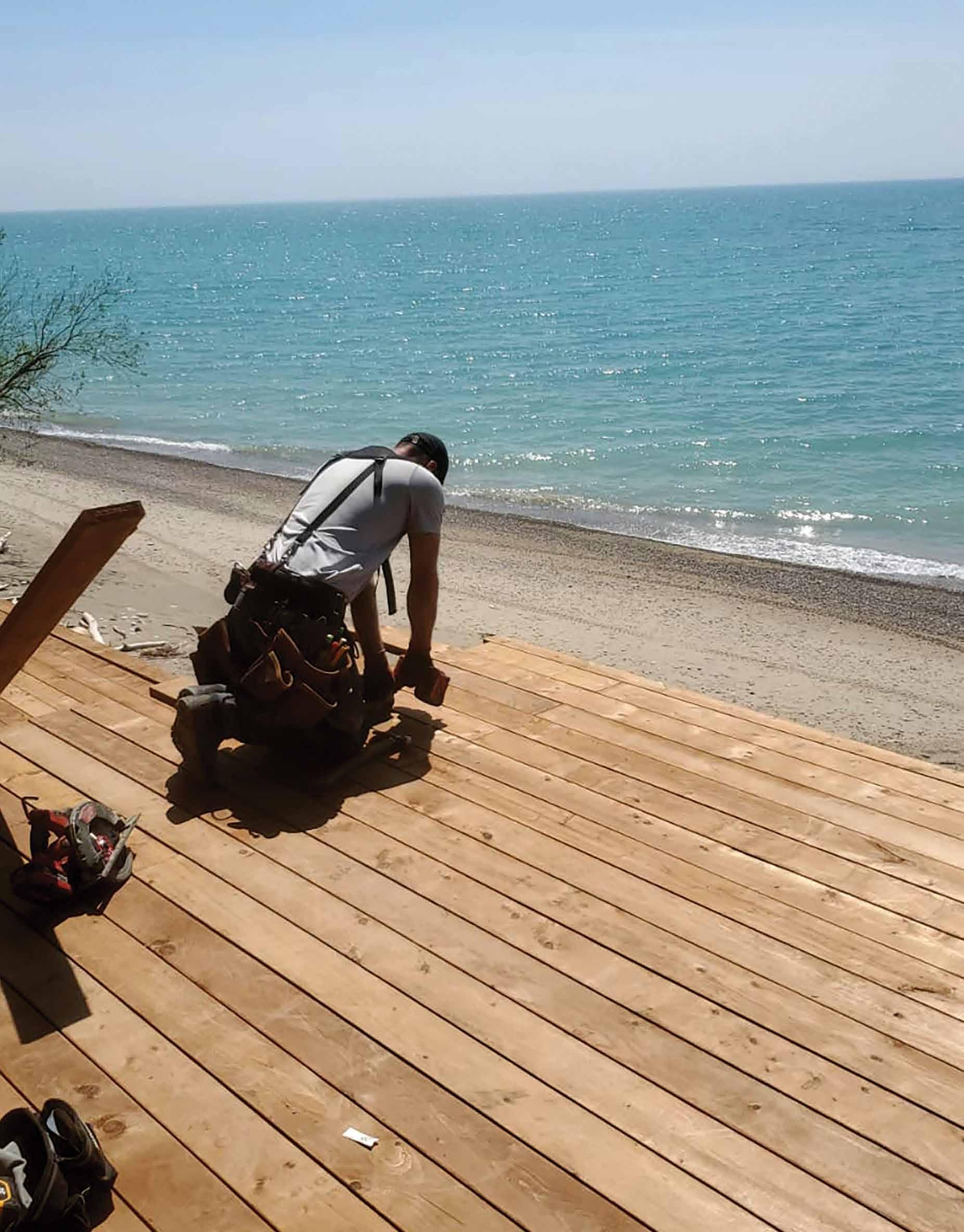
So I turned off my phone, threw on my wetsuit (it was September) and had an epic afternoon. Just like that. In the middle of all the chaos. After surfing, the rest of the day flowed more easily, the tasks seemed less overwhelming, and I saw more opportunities than problems. That's the power of recharging in nature, and it happens when you make it happen. I survived that period of life, and I’m still going, sneaking in little epic moments when I can.
This issue we celebrate inspiring members of our community who prioritize those small moments, and also succeed in navigating the busyness of their lives: giving back, building businesses, competing, being parents, being friends. Because we’ve all felt overwhelmed. But it’s the small moments that matter. Grab ‘em when you can.
Enjoy our summer issue.
–Dave Loopstra, Publisher
"I turned off my phone, threw on my wetsuit and had an epic afternoon." COLIN FIELD
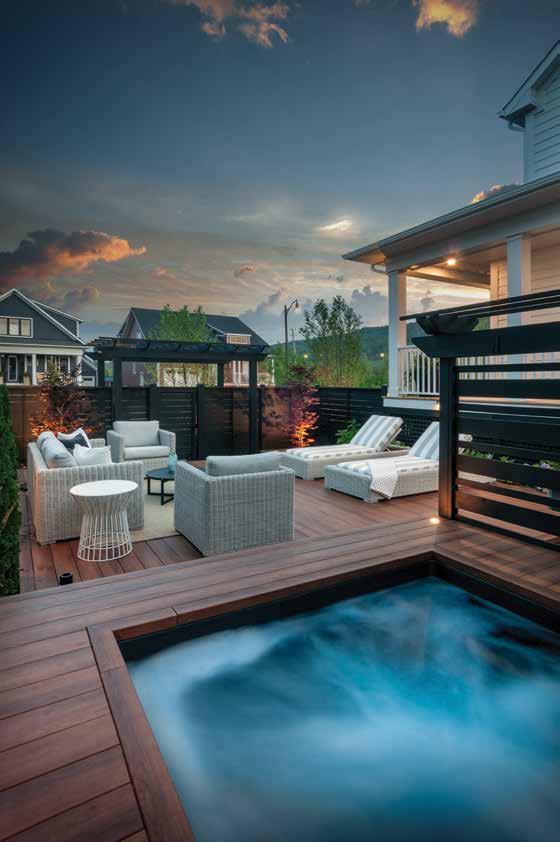
Landscapes for Conversation and Comfort
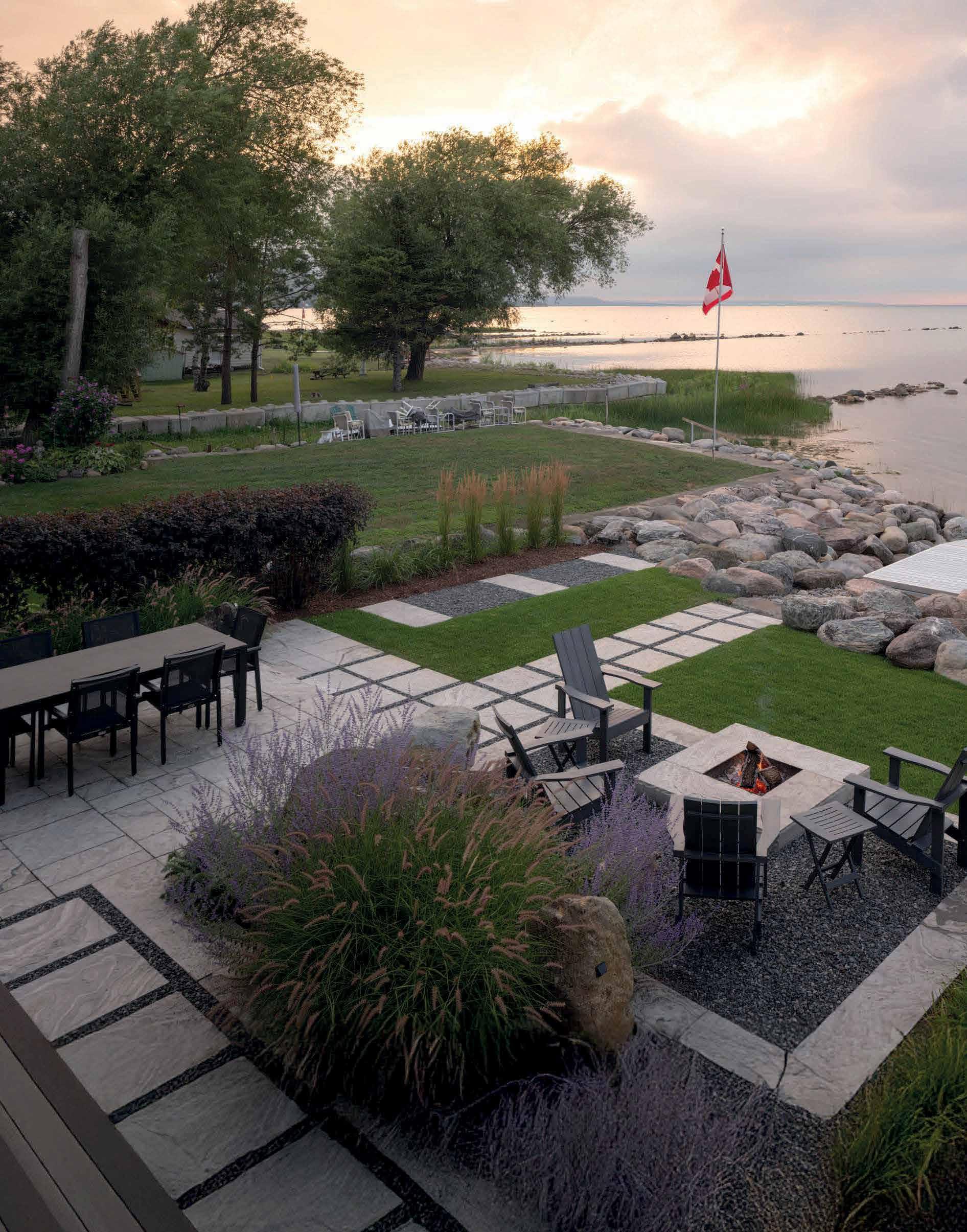
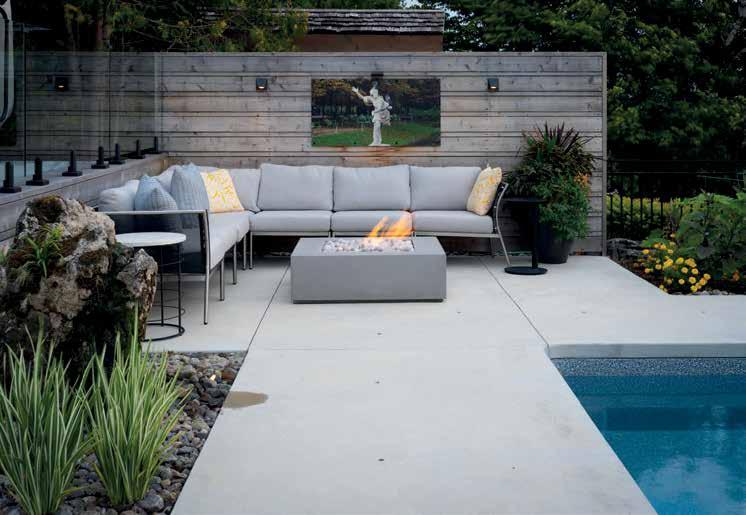
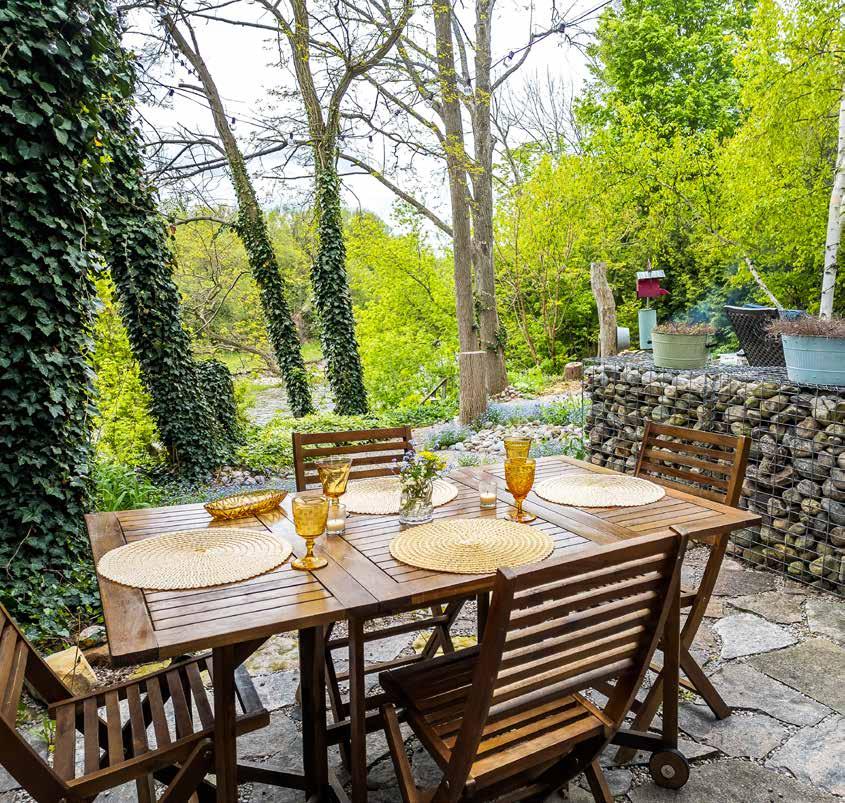
Spaces that draw you in and bring people together. Where the seating is easy, the atmosphere is warm, and conversations flow as naturally as the setting. A landscape designed for shared moments, quiet laughs, and lasting connection.
Megan Bennett, Andrew Fearman, Shjaane Glover, Bryn Honeywood, Brian Hunt, Nick Iwanyshyn, Jenna Kitchings, Sam Kolber, Paulo LaBerge, Carl Michener, Mark O'Grady, Mike Penney, Nadia Pestrak, Aaron Pilon, Aidas Rygelis, Andrew Ryzebol, Kirsten Schollig, Phil Szczepaniak, Ashley
operates within and shares stories primarily set upon the traditional lands and treaty territory of the Anishinabek Nation. We acknowledge and celebrate the past, present and future People of the Three Fires, known as the Ojibway (Chippewas), Odawa and Potawatomi Nations, who join
The Vault Markdale 24 Main St W.
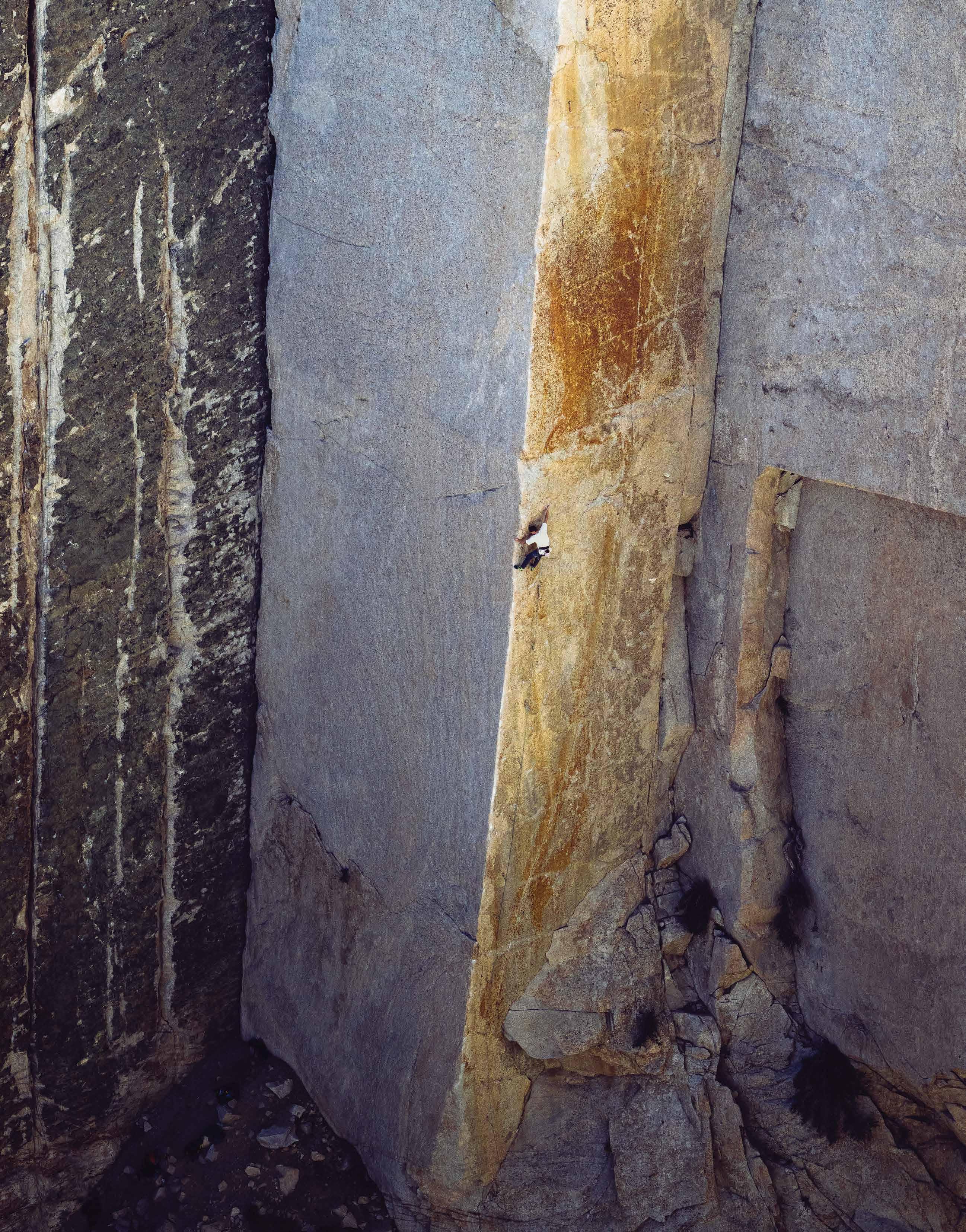
Jonathan Siegrist Payahuunadü Pine Creek Canyon, Californie
Photos : Taylor Shaffer
Table of Contents
UPFRONT
P.20 Mountain Mama
THE MOUNTAIN LIFE - EVENTS
P.23 Riding Into Battle
P.24 Ultimate Kitchen Party
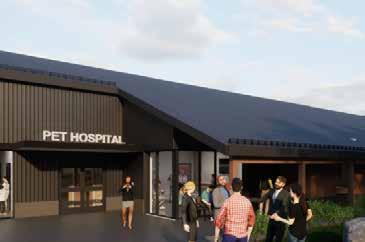
P.26 Pets in Need
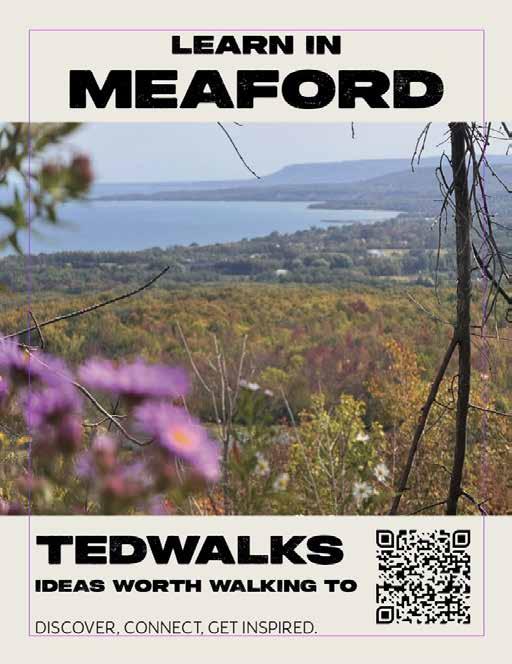
P.28 Meaford Hall + TED Walks
GOIN’ PLACES
P.30 Gather in Grey
P.32 Saturday in the Valley
P.35 The Scenic Route
P.38 Boat, Paddle, Sip
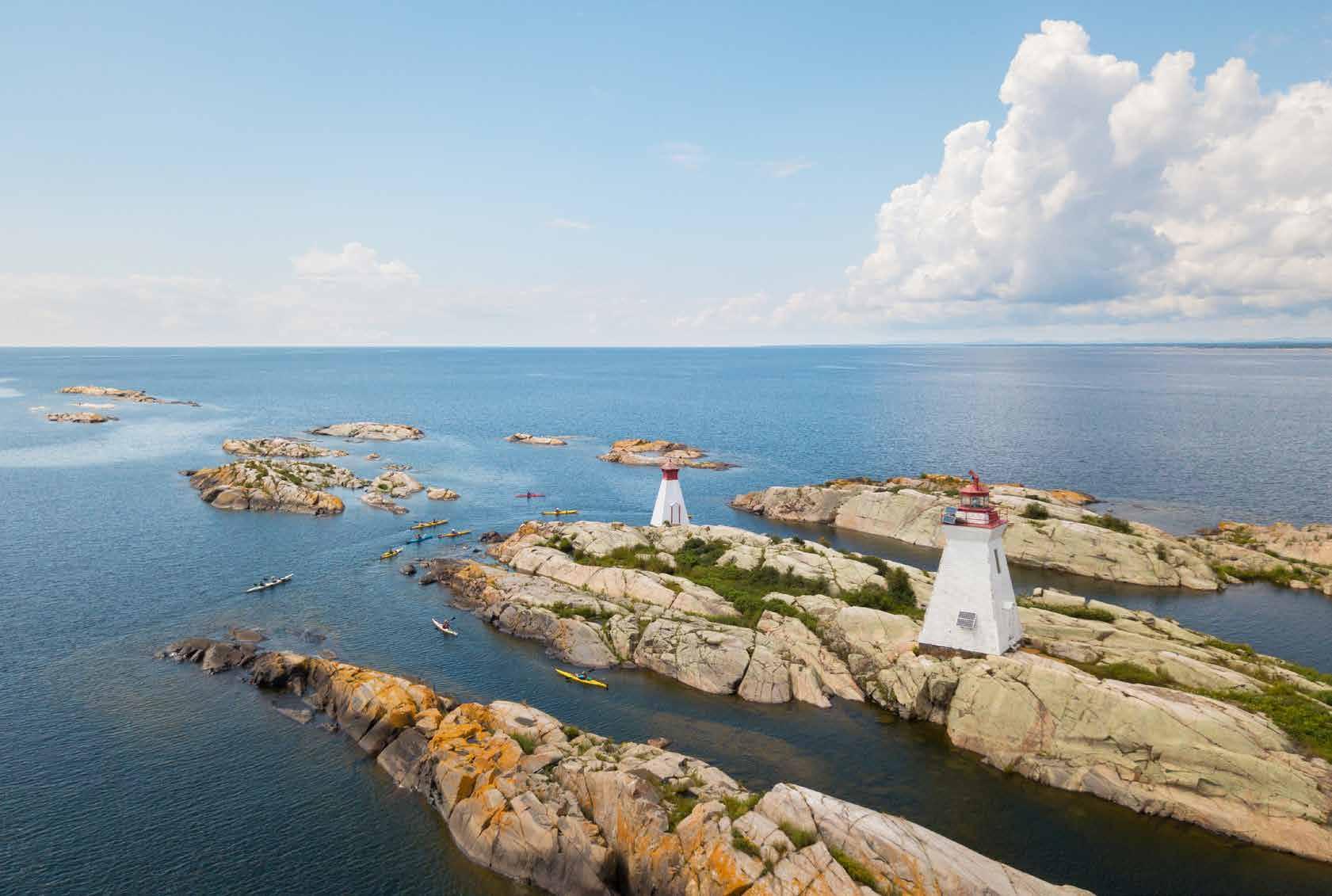
P.40 MTB The Soo
P.42 Charlevoix Escape
FEATURES
P.86 The Mountain Lifers
P.108 Photo Gallery
BETA - NEWSWORTHY
P.46 Into the Deep
P.50 Hundred Acre Wood + Dam Pub
P.52 Whither the Water?
P.54 Tale of Two Markets
P.55 Pumped Storage Project Update
P.56 Beaver River Trail
GEAR SHED
P.59 The Latest Premium Schwag
MTN HOMES
P.62 From Pow to Patios
P.70 Framed by Nature
P.76 The River House
P.80 Quebec-Inspired Estate
APRÈS
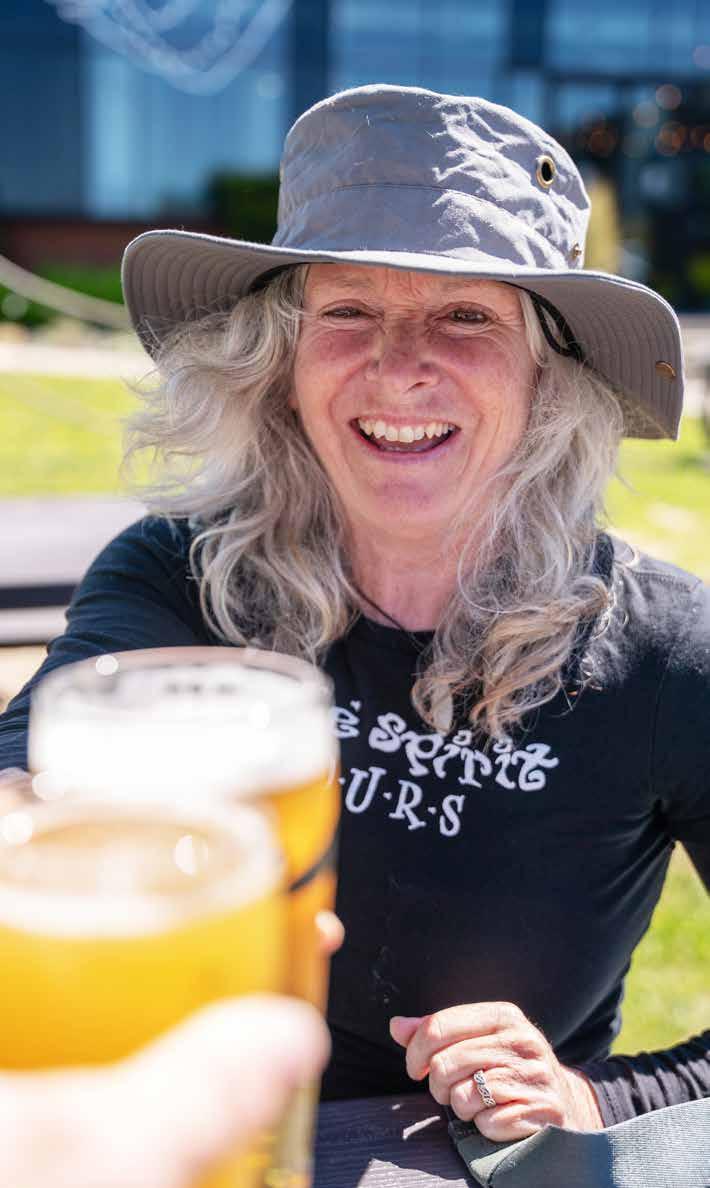
P.114 Free Spirit Tours
THE ART OF DOING NOTHING OUTSIDE
Bryn Honeywood COLUMNIST
The older I get, the more suspicious I become of overly optimized leisure.
Somewhere along the line, even rest started feeling performative.
Summer now arrives organized in spreadsheets, packed into carefully curated “snackle boxes,” and a lowgrade pressure to make every moment meaningful, optimized, elevated. Paddle board at sunrise. Listen to this podcast while hiking. Cold plunge before kids wake. Journal. Host an outdoor dinner party featuring locally sourced stone fruit and a signature cocktail with thyme…
Meanwhile, some of my children’s best summer memories seemed to involve absolutely nothing.
Not exactly nothing, but the kind of days adults (and many kids) have become weirdly bad at tolerating.
Drifting. Waiting. Puttering.
Sitting by the water long enough to notice the light changing.
I’ve started to learn there’s an art to doing nothing outside in this dopamineseeking day and age, and like most worthwhile arts, it takes practice.
Because let’s be honest, doing nothing still requires effort. Especially for those of us who struggle to experience anything without turning it into content, accomplishment or cardio.
But children, especially around here, still seem to understand something we’ve forgotten.
The landscape helps with the raising of them.
Between the escarpment, the valleys
and the Bay, childhood still unfolds mostly analog.
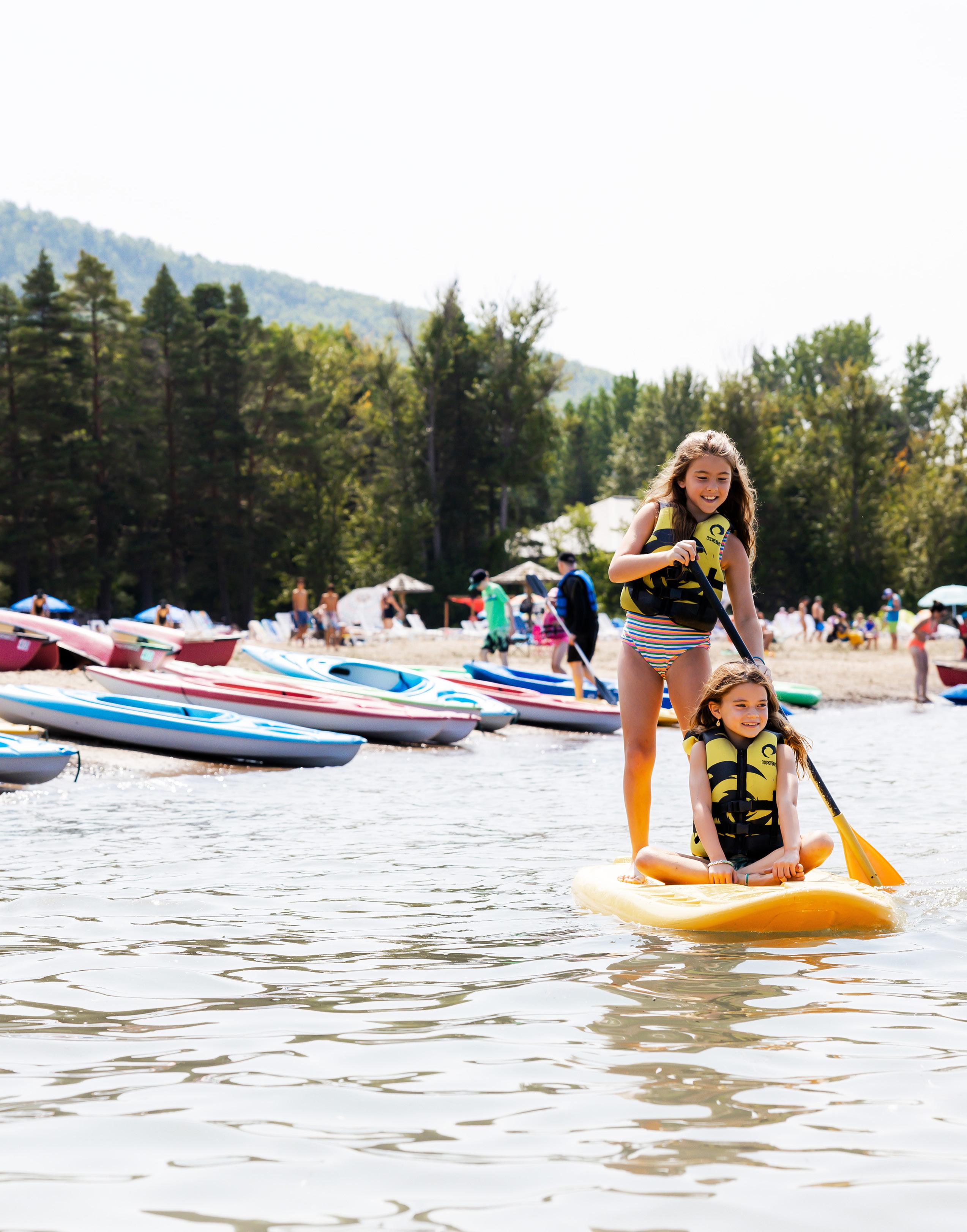
Free-range bike gangs roaming between houses. Pier jumps that stretch for hours. Flat rocks collected in dripping swimsuit pockets. Tiny Blundstones abandoned beside muddy creeks. Kids lying belly down on paddle boards with nowhere particular to be.
The best days rarely announce themselves as important as they’re happening. No one says, “this will become a core memory.”
It’s usually just a bag of apples, a block of cheese, and a pocketknife. Someone’s dog weaving through camp chairs. Waiting out weather under a tarp while rain moves across the lake in silver lines. Someone asking for snacks 12 minutes after lunch.
And maybe that’s the point.
Kids don’t build memories around grand gestures nearly as much as we think they do. They build them around ordinary moments repeated with enough presence to become meaningful.
The walk for ice cream after dinner.
The creek behind the campsite.
Neighbours dropping by unannounced. The feeling of falling asleep waterlogged and sun-kissed after a day that technically accomplished nothing.
Children have a way of disappearing completely into the world around them. Into water. Into weather. Into play.
Maybe that’s what the art of doing nothing outside really is. Not inactivity, but receptivity. A willingness to stop gripping the day so tightly.
To leave room for surprise.
To let boredom open the door to imagination instead of immediately trying to fill it.
To sit still long enough for something to arrive.
Summer always tries to convince us it should be bigger. Better. More curated. But the older I get, the more I suspect the good life is built mostly from ordinary afternoons. With people you love. Outside long enough to remember who you are again.
4
486-acre
107 Maple Lane, Blue Mountains 4 BEDS | 4 BATHS | 10.66 AC | 3,711 SQ. FT. Spectacular estate perched atop Blue Mountain,
107 Maple Lane, Blue Mountains
4 BEDS | 4 BATHS | 10.66 AC | 3,711 SQ. FT. Spectacular estate perched
Concession 2 WGR, Durham
Riding Into Battle
Pedalling through the past for the future of CGMH
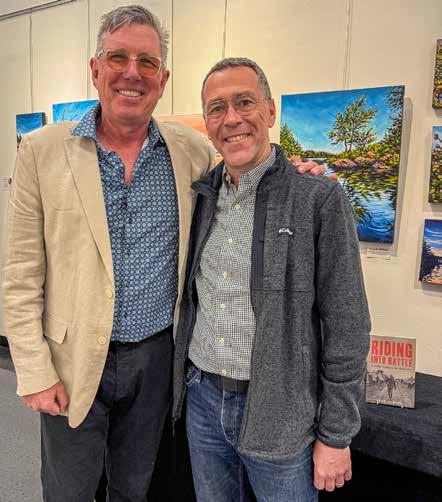
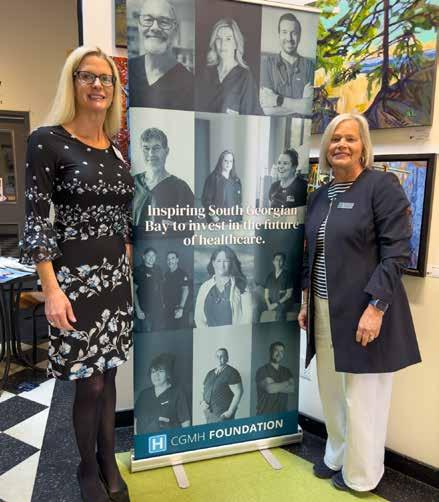
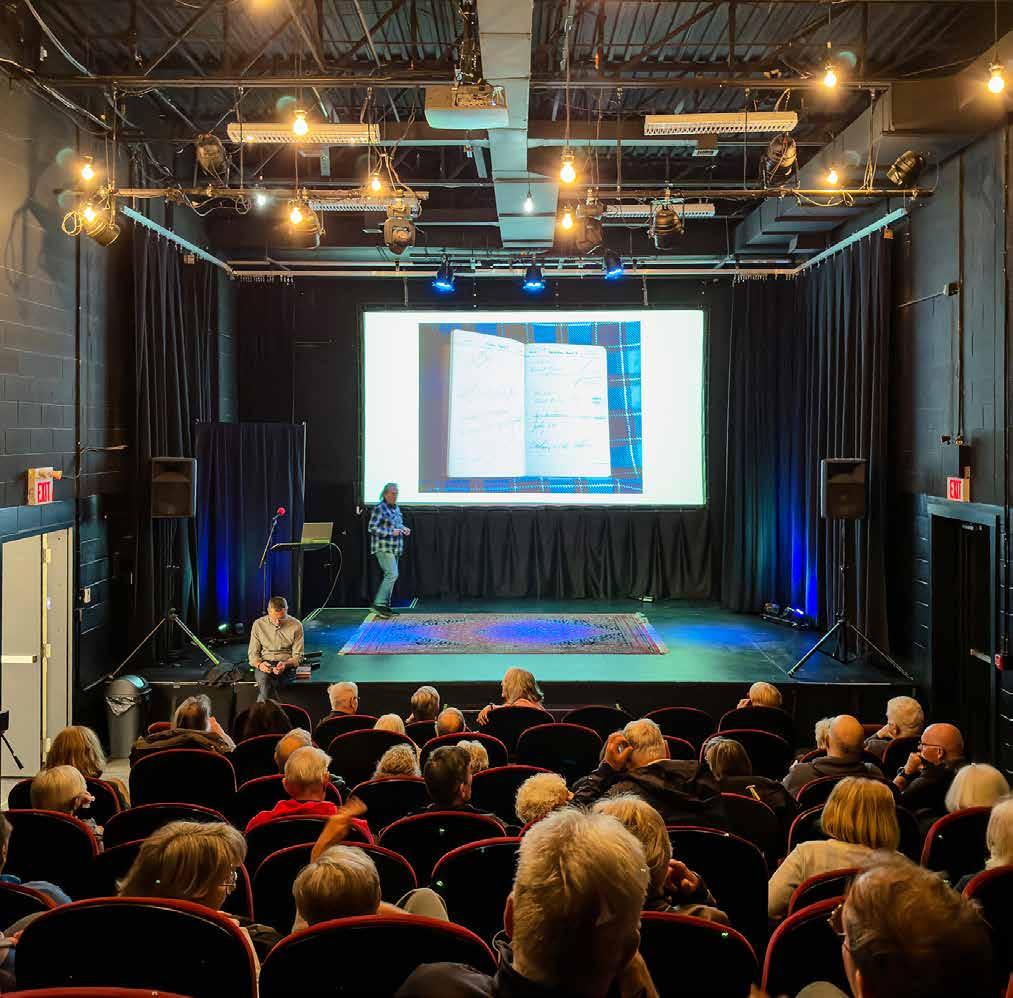
History filled every seat in the house as Riding Into Battle rolled into Collingwood’s Simcoe Street Theatre in support of the Collingwood General and Marine Hospital Foundation's Tomorrow's Hospital campaign. Author Ted Glenn captivated the crowd with insights from his book Riding Into Battle: Canadian Cyclists in the Great War, shining a light on the little-known story of Canada's Cyclist Corps during the First World War. From history buffs to bike devotees, the audience was fully engaged throughout the evening. The fundraiser demonstrated the community's continued commitment to supporting local healthcare—as the CGMHF advances its fundraising goal of $100 million toward a new regional hospital—while celebrating a remarkable and overlooked chapter of Canada's past. –Ashley Warrington
TOP LEFT Geoff Taylor (L) with author Ted Glenn. Taylor's great uncle served in the Cyclist Corps in the First World War. ABOVE The presentation in Simcoe Street Theatre. LEFT Melissa Davis (L) and Alison Sheffer, CGMH Foundation. ASHLEY WARRINGTON
The Ultimate East Coast Kitchen Party
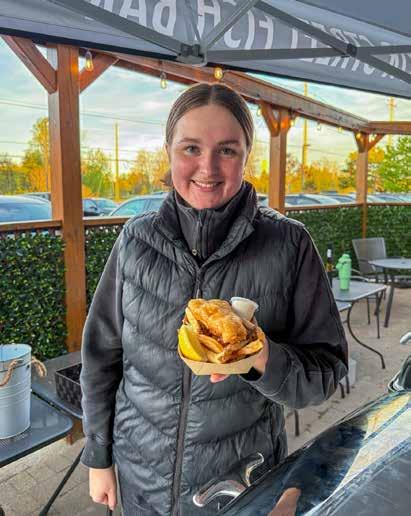
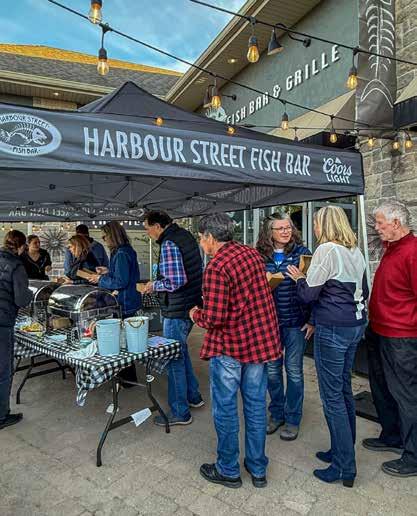
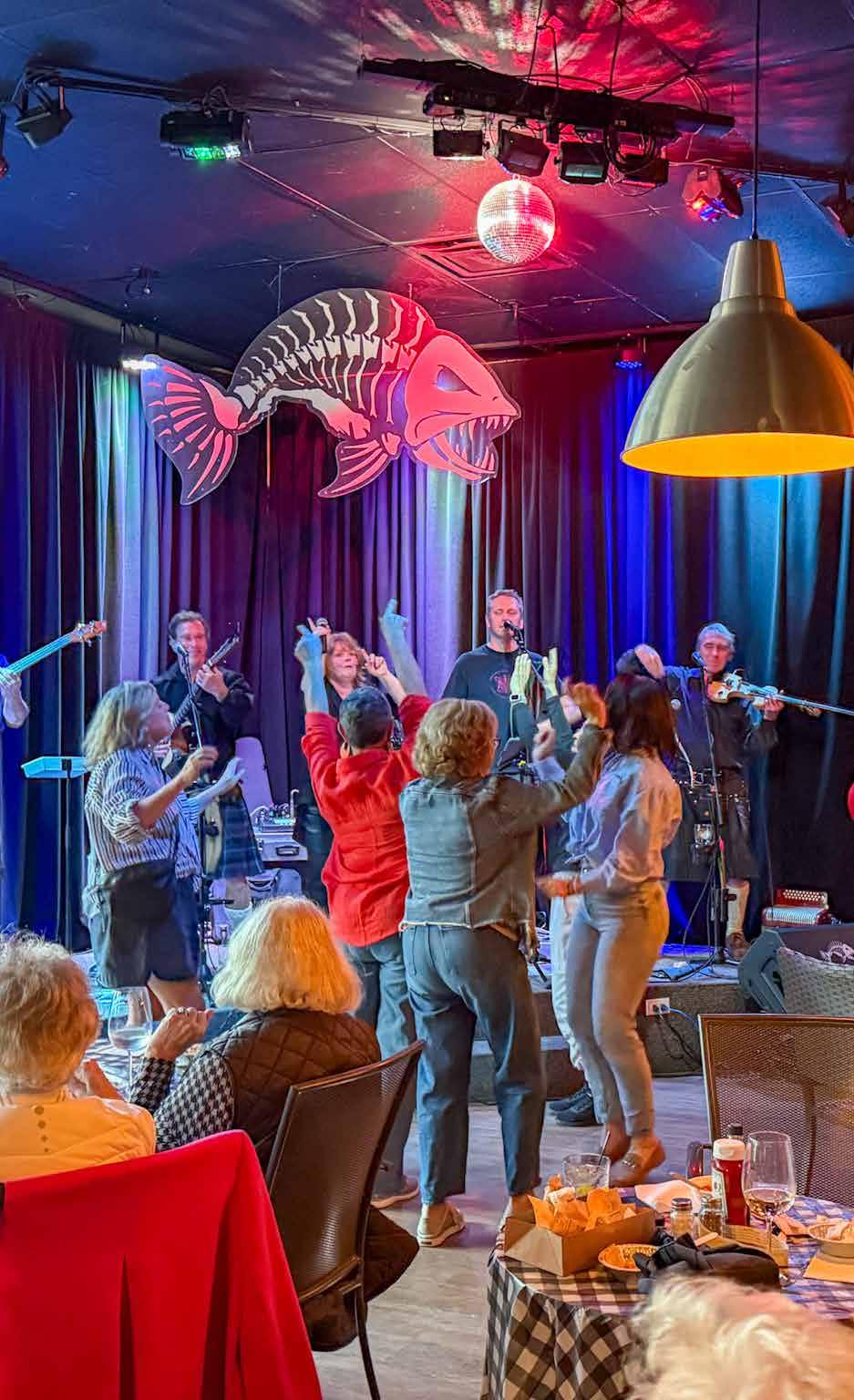
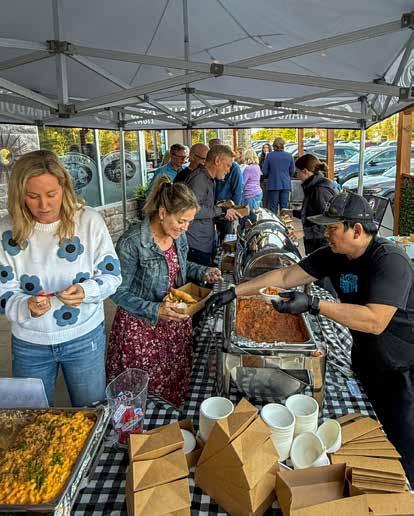
On May 20, Collingwood's Harbour Street Fish Bar transformed into a lively celebration, bringing a taste of the Maritimes to Southern Georgian Bay. In support of My Friend’s House, a local organization providing shelter, hope and resources for women and children in need, The Ultimate East Coast Kitchen Party once again proved why it has become one of the region’s favourite fundraising events. With the help of premier sponsor Paul Chapman and Chapman Private Wealth Group, the evening featured great food, cold drinks and an abundance of local support. The Fish Bar team kept everything running seamlessly, while Strange Potatoes delivered an energetic performance that had guests singing along and packing the dance floor throughout the night.
-Ashley Warrington
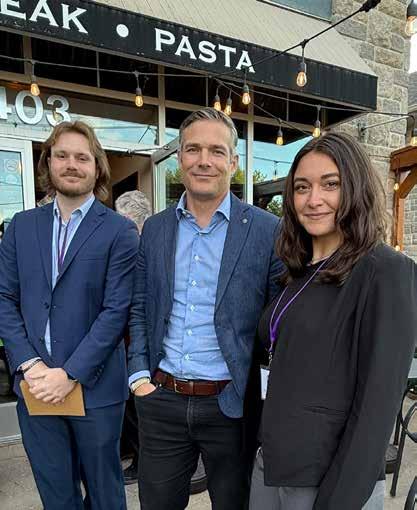
TOP LEFT Jocelyn, Harbour Street Fish Bar staff. CENTRE Strange Potatoes rock the Fish Bar. TOP RIGHT (L-R) Robert Amos, Paul Chapman, Desiree Thurman of Chapman Private Wealth Group of RBC Dominion Securities, the premier sponsor of the event. BOTTOM An open-air kitchen party for the ages. ASHLEY WARRINGTON
Behind Simcoe County’s Growing Wellness Ritual
The Finnish Philosophy Behind Simcoe County’s Growing Wellness Ritual
As summer settles across Simcoe County , more people are rethinking what recovery actually looks like
As summer settles across Simcoe County , more people are rethinking what recovery actually looks like
Not the once -a-year escape kind The kind woven into everyday life before exhaustion forces the issue
Not the once -a-year escape kind The kind woven into everyday life before exhaustion forces the issue
In a culture that often celebrates busyness , there is something quietly radical about slowing down An evening outdoors A few hours away from a screen ime s ent resting before feeling de leted Increasingly, those sim le choices are sha ing a broader conversation about wellness across Canada
In a culture that often celebrates busyness , there is something quietly radical about slowing down An evening outdoors A few hours away from a screen ime s ent resting before feeling de leted Increasingly, those sim le choices are sha ing a broader conversation about wellness across Canada
“Sauna was never intended to be a luxury. In Finland, it’s simply part of life.”
– ERIC HARKONEN , O N ER
“Sauna was never intended to be a luxury. In Finland, it’s simply part of life.”
Much of that conversation traces back to Finland , where sauna has long occupied a unique place in daily life
Much of that conversation traces back to Finland , where sauna has long occupied a unique place in daily life
With more than three million saunas serving a population of roughly 5 5 million people , the tradition extends far beyond relaxation auna is where families gather, friends connect , and communities come together It is as ordinary and essential as sharing a meal or spending time in nature
With more than three million saunas serving a population of roughly 5 5 million people , the tradition extends far beyond relaxation auna is where families gather, friends connect , and communities come together It is as ordinary and essential as sharing a meal or spending time in nature
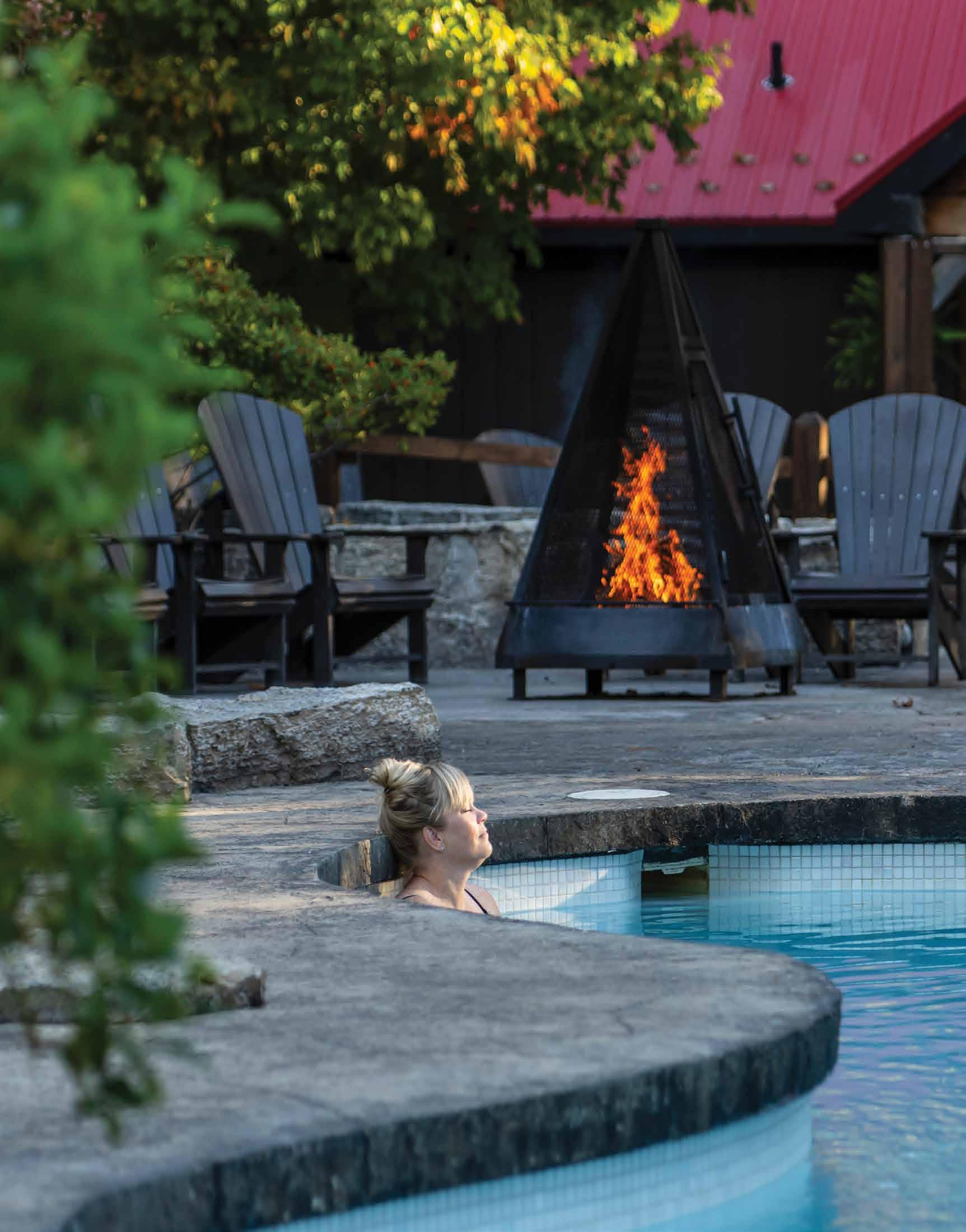
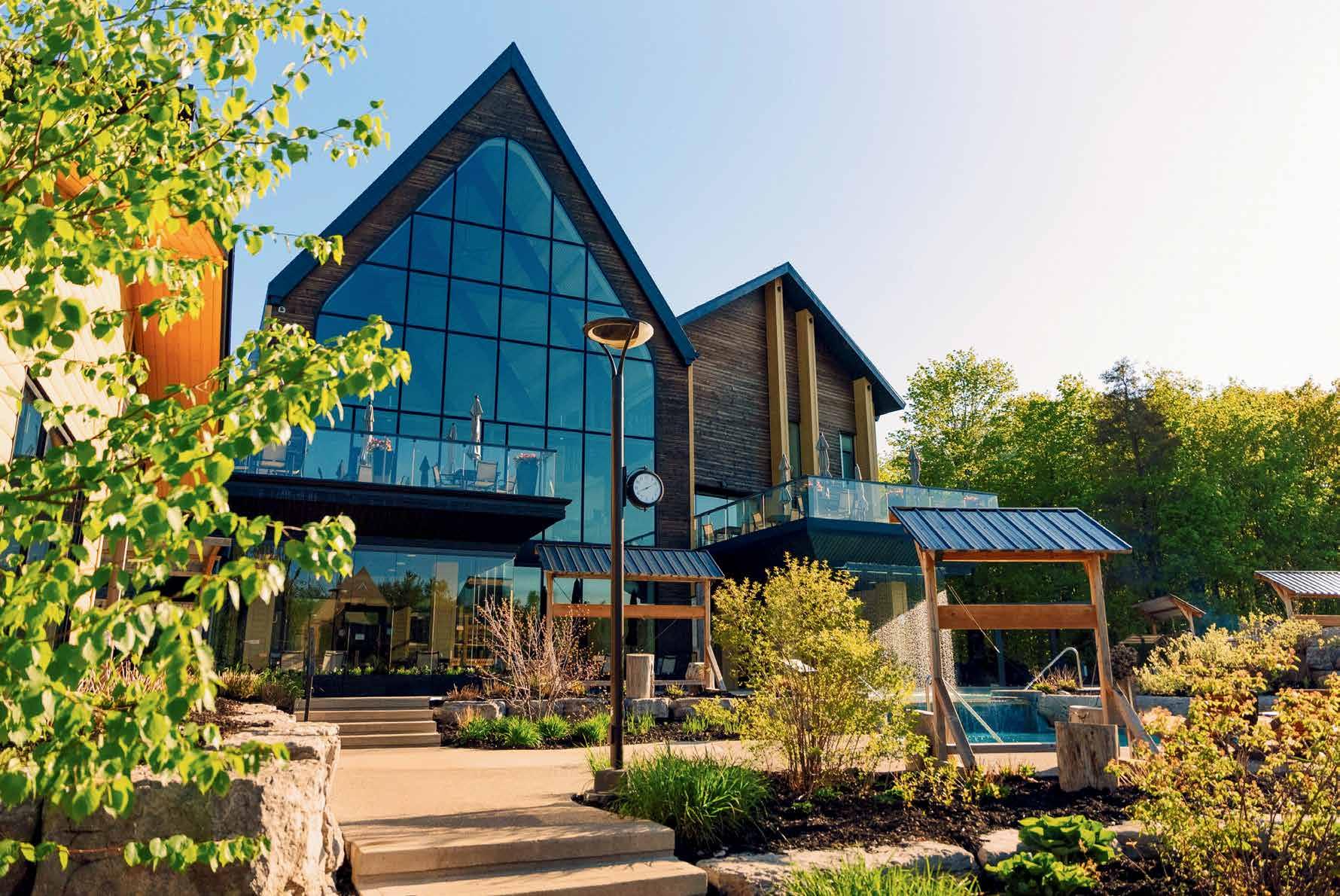
The philosophy that recovery is not a luxury but a regular part of life sits at the heart of Vett ä Nordic Spa in Horseshoe Valley nspired by centuries -old Finnish customs , Vettä Nordic Spa invites guests to move through the traditional Nordic cycle of hot , cold , and rest uthentic Finnish saunas , built with materials sourced from Finland , are paired with cold plunges , indoor and outdoor relaxation spaces , and forest surroundings that encourage a slower pace
The philosophy that recovery is not a luxury but a regular part of life sits at the heart of Vett ä Nordic Spa in Horseshoe Valley nspired by centuries -old Finnish customs , Vettä Nordic Spa invites guests to move through the traditional Nordic cycle of hot , cold , and rest uthentic Finnish saunas , built with materials sourced from Finland , are paired with cold plunges , indoor and outdoor relaxation spaces , and forest surroundings that encourage a slower pace
The appeal reflects a broader shift in how people approach well -being Rather than viewing recovery as something reserved for wee ends or special occasions , many are see ing sustainable rituals that support physical and mental health throughout
The appeal reflects a broader shift in how people approach well -being Rather than viewing recovery as something reserved for wee ends or special occasions , many are see ing sustainable rituals that support physical and mental health throughout
the wee ractices such as hydrotherapy , meditation , and mindful time outdoors offer opportunities to step away from constant stimulation and reconnect with the present moment
As wellness continues to evolve , the Finnish approach offers a simple reminder : recover is not something that happens after life t is part of life itself
As wellness continues to evolve , the Finnish approach offers a simple reminder : recover is not something that happens after life t is part of life itself
At Vett ä Nordic Spa , that philosophy is reflected in initiatives such as Take Your Time Tuesdays , Twilight Special , seasonal discounts for the community, and memberships that encourage regular engagement with wellness practices
The goal is not simply to visit a spa , but to embrace habits that support well -being long after the visit ends
At Vett ä Nordic Spa , that philosophy is reflected in initiatives such as Take Your Time Tuesdays , Twilight Special , seasonal discounts for the community, and memberships that encourage regular engagement with wellness practices The goal is not simply to visit a spa , but to embrace habits that support well -being long after the visit ends
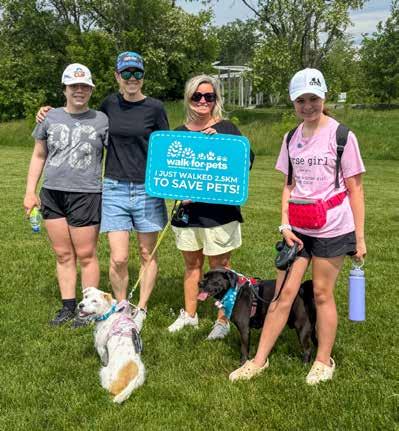
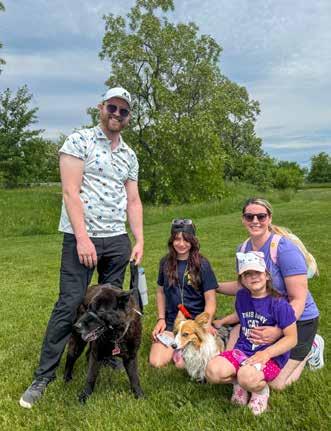
Stepping Up for Local Pets in Need
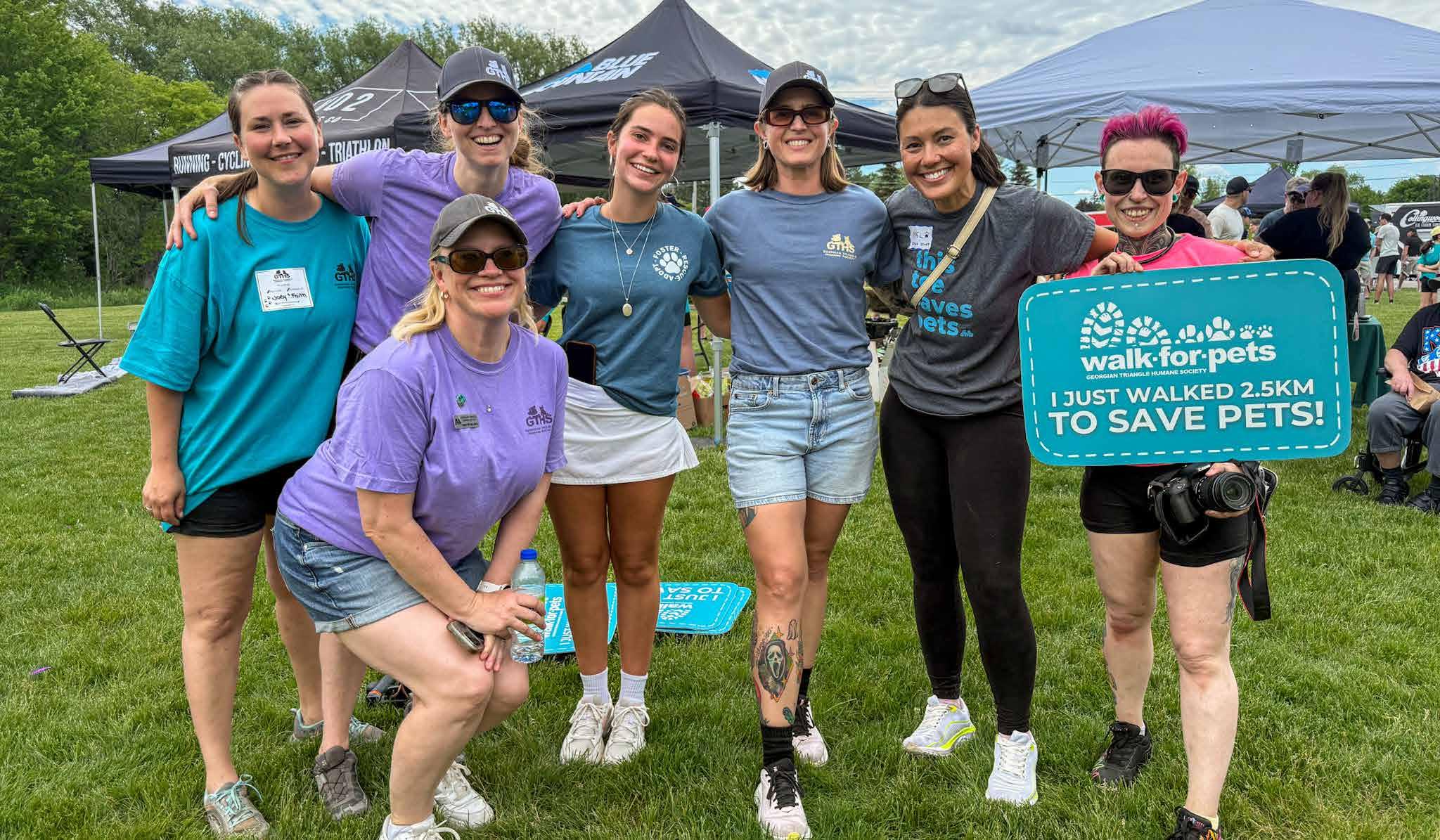
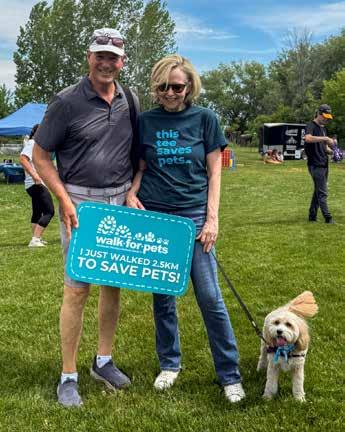
More than 250 participants laced up their shoes, clipped on leashes and hit the waterfront trails at Harbourview Park in Collingwood on June 13 for the Georgian Triangle Humane Society’s Walk for Pets. The annual 2.5K walk and run brought together animal lovers and their four-legged companions in support of GTHS’s mission to provide care, rehabilitation and second chances for animals in need. Later, Yappy Hour kept the celebration going as participants gathered to soak up the beer garden and browse local vendors while a DJ kept the energy high for everyone crossing the finish line. A few tailwagging VIPs were also on-site to steal the spotlight, including Asher, who charmed everyone he met while searching for his forever home. The event’s success reflected the passion and dedication of the entire GTHS team, volunteers, sponsors and community supporters who continue to make a lasting difference in the lives of local animals. -Ashley Warrington
ABOVE The GTHS Team, L-R: Taryn Baker, Danielle White, Rileigh Lewitt, Amanda Taylor, Melanie MacDonald, Cass Keeling, Kristin Holmes. BELOW (L-R) The Greers and Molly. Sophia, Catherine, Shannon and Avery with dogs Sugar and Harley. Asher: looking for a forever home. Team Manley. ASHLEY WARRINGTON
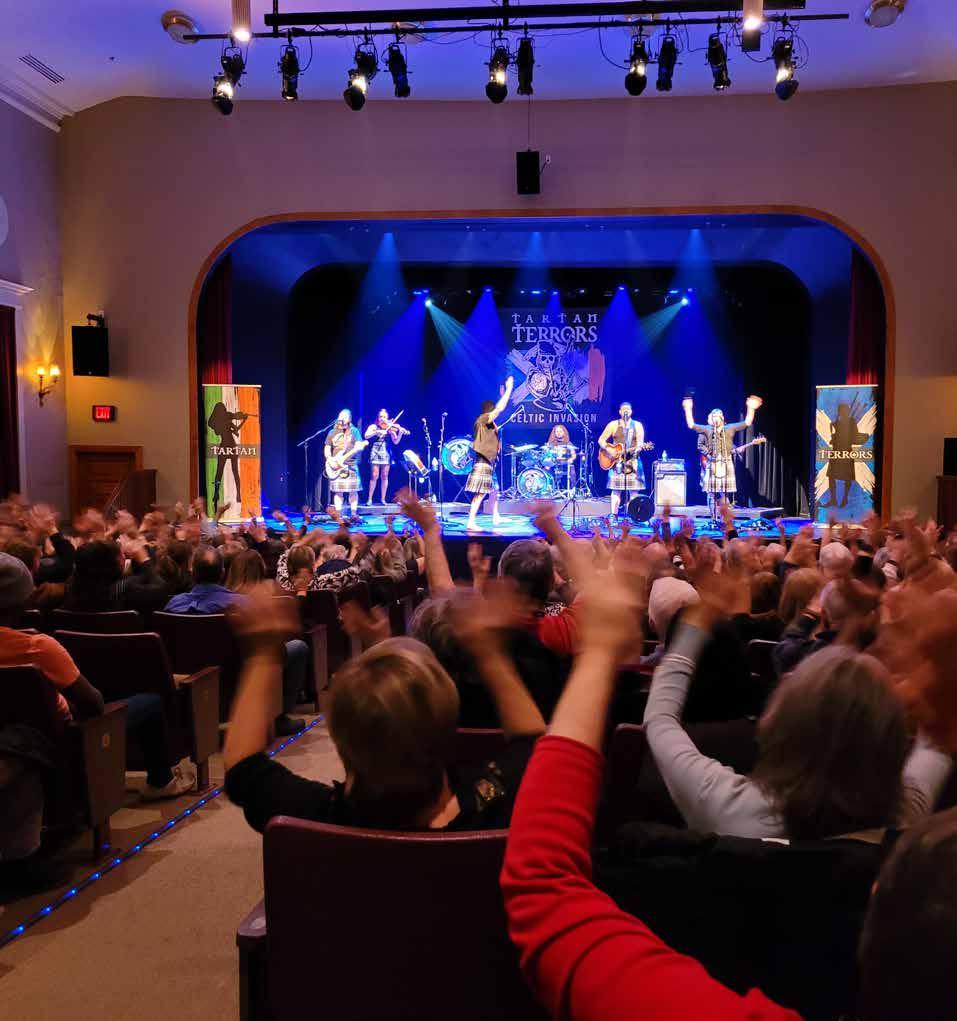
Music. Theatre. Community.
When Meaford’s original town hall burned to the ground in 1907, townspeople saw it as an opportunity to build something truly grand. The stately new Edwardian hall and opera house opened in 1909 and quickly became an anchor of the community.
More than a century later, it still is. At 331 seats, Meaford Hall Arts & Cultural Centre offers an intimate performance experience where audiences are close to the stage and the sound carries effortlessly. Its stellar acoustics and scale make it well-suited for concerts, theatre, film and community events.
Programming is deliberately balanced: nationally recognized acts like Bahamas share the stage with local bands such as Moondoggy and independently-produced theatre. The result? A venue that captures the creative energy of our area and the broader Canadian cultural landscape.
“Accessibility is central to our approach,” says Cultural Services Manager Jennifer Perks. “We price tickets within reach, and initiatives like the new summer Patio Sessions will provide emerging artists with a platform to develop their craft and connect with audiences.”
Much more than a concert hall, Meaford Hall remains what it has always been: a gathering place at the intersection of culture, community and live music. -Carl Michener
TED Walks in Downtown Meaford
Ideas are meant to move. On July 18, TED Walks will transform downtown Meaford into a mobile showcase of possibility. Hosted by Straw Hat Renovations—community builders dedicated to revitalization, innovation and local engagement— this immersive experience will feature talks on housing, design, sustainability, entrepreneurship and the future of small towns. Throughout the day, attendees will move between local hotspots such as Lovebird, Savvy Co. and other downtown gathering places, where guest speakers including Net Zero Guy and Krystal Valencia will share fresh ideas and practical solutions. Alongside art installations and storytelling initiatives, the event will explore how culture, participation and imagination shape the places we call home. Attendees can choose between a TED Walks day pass or an enhanced experience that includes an evening dinner and social gathering at The Studio. TED Walks is an invitation to connect, collaborate and think boldly about the future while helping position Meaford as a model for community-led regeneration. . -Ashley Warrington
The Tartan Terrors brought their max-octane Celtic music, comedy and Highland dancing to Meaford Hall on Robbie Burns Day, 2026. SUPPLIED BY MEAFORD HALL
GOIN' PLACES
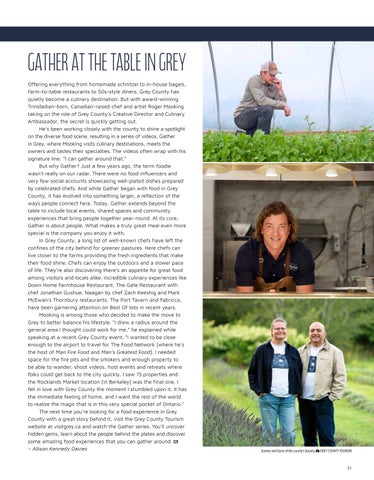
Gather at the Table in Grey
Offering everything from homemade schnitzel to in-house bagels, farm-to-table restaurants to 50s-style diners, Grey County has quietly become a culinary destination. But with award-winning Trinidadian-born, Canadian-raised chef and artist Roger Mooking taking on the role of Grey County's Creative Director and Culinary Ambassador, the secret is quickly getting out.
He’s been working closely with the county to shine a spotlight on the diverse food scene, resulting in a series of videos, Gather in Grey, where Mooking visits culinary destinations, meets the owners and tastes their specialties. The videos often wrap with his signature line: “I can gather around that.”
But why Gather? Just a few years ago, the term foodie wasn’t really on our radar. There were no food influencers and very few social accounts showcasing well-plated dishes prepared by celebrated chefs. And while Gather began with food in Grey County, it has evolved into something larger, a reflection of the ways people connect here. Today, Gather extends beyond the table to include local events, shared spaces and community experiences that bring people together year-round. At its core, Gather is about people. What makes a truly great meal even more special is the company you enjoy it with.
In Grey County, a long list of well-known chefs have left the confines of the city behind for greener pastures. Here chefs can live closer to the farms providing the fresh ingredients that make their food shine. Chefs can enjoy the outdoors and a slower pace of life. They’re also discovering there’s an appetite for great food among visitors and locals alike. Incredible culinary experiences like Down Home Farmhouse Restaurant, The Gate Restaurant with chef Jonathan Gushue, Naagan by chef Zach Keeshig and Mark McEwan’s Thornbury restaurants, The Port Tavern and Fabricca, have been garnering attention on Best Of lists in recent years.
Mooking is among those who decided to make the move to Grey to better balance his lifestyle. “I drew a radius around the general area I thought could work for me,” he explained while speaking at a recent Grey County event. “I wanted to be close enough to the airport to travel for The Food Network [where he’s the host of Man Fire Food and Man's Greatest Food]. I needed space for the fire pits and the smokers and enough property to be able to wander, shoot videos, host events and retreats where folks could get back to the city quickly. I saw 15 properties and the Rocklands Market location [in Berkeley] was the final one. I fell in love with Grey County the moment I stumbled upon it. It has the immediate feeling of home, and I want the rest of the world to realize the magic that is in this very special pocket of Ontario.”
The next time you’re looking for a food experience in Grey County with a great story behind it, visit the Grey County Tourism website at visitgrey.ca and watch the Gather series. You’ll uncover hidden gems, learn about the people behind the plates and discover some amazing food experiences that you can gather around.
– Allison Kennedy Davies
Scenes and faces of the county's bounty. GREY COUNTY TOURISM
GOIN' PLACES day
Trips
A Perfect Saturday in and Around the Beaver Valley
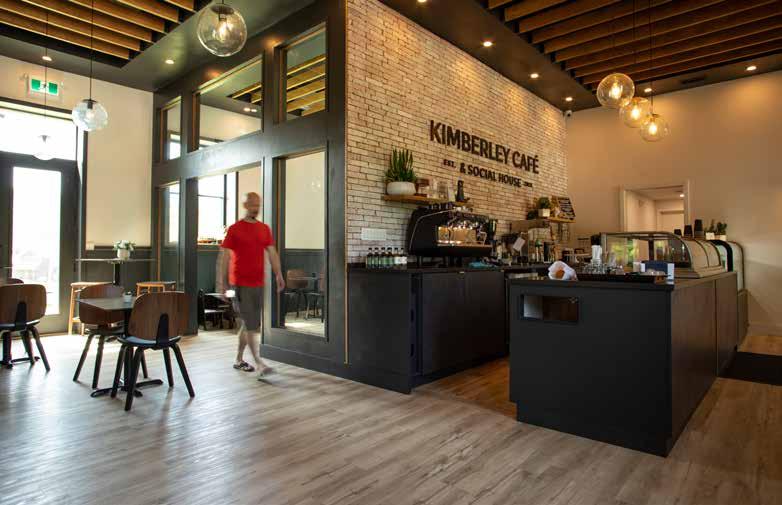
My perfect Saturday is a sunny day. Once the bed relinquishes me, I’ll be out in the sunshine looking for a croissant. A real croissant. You can tell a lot about a café by its croissants. Those served at the Kimberley Café & Social House, our first stop, are crispy on the teeth, with that warm, chewy softness inside. Buttery.
We look for a place to sit down and enjoy our beverages, but it’s Saturday morning and the place is hopping. It’s an outsized café, and seems too big for the tiny town of Kimberley. And yet it’s full, with people spilling out onto the sleek patio.
My croissant, paired with a strong, bold flat white, delivers a few minutes of bliss in the warm air. There’s a buzz all around us. People talking, catching up. Less than a year after opening, the Kimberley Café has become a meeting place, a manifestation of community in this welcoming blip of a town nestled in the Beaver Valley.
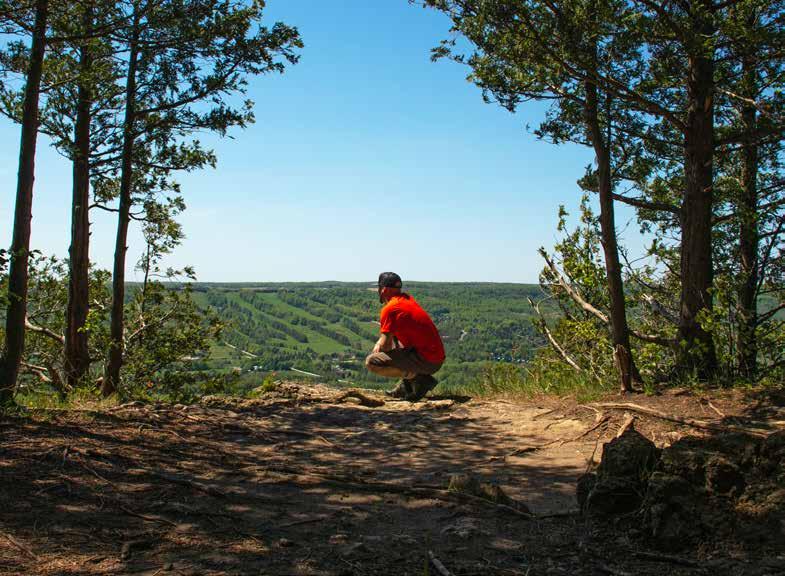
Appetites temporarily sated, we set off up the eastern flank of the Valley for a hike on Old Baldy. This is a prominent dolomite cliff that climbers love to scale. We’re going to hike it. One thing I love about the Old Baldy Side Trail hike is that you’re already up the Escarpment when you begin. Yes, the trail goes up, but it’s a mild ascent. And if you want to keep it short, the minimum loop is all of 40 minutes, including the most magnificent views of the Valley you can get standing on terra firma. Today, we’re going to stretch our hike into a couple of hours.
On our walk, knobs of limestone and roots dot the way, forcing us to pick our path. We wind through young growth and into the luminous green of a mature maple canopy. There’s a diminutive log bench and we sit, listening for a moment to the forest sounds. As a treat, an oriole looses its intricate, liquid-sounding trill.
As we approach the edge of the Escarpment, I’m half expecting fairies or elvensong. The views are a more-thanadequate stand-in.
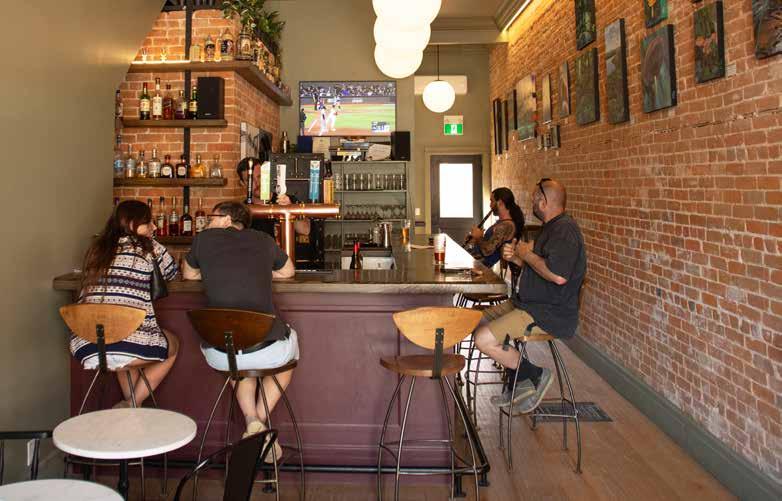
Our next and final stop is Markdale, home to The Vault, a skinny bar on Main Street opened a year ago by Jordan DesRoches, a youthful Oliver & Bonacini veteran. We saunter along the two principal streets. We find classic vinyl, handcrafted lamps, assorted treasures, toys and games and a post office with used books in the window.
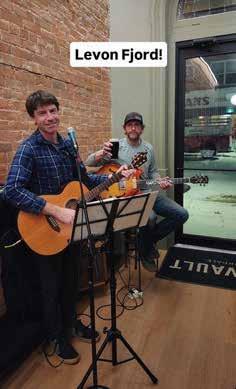
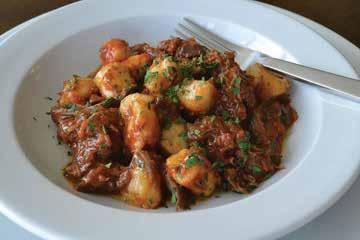
The Vault serves local craft beer, a pretty nice selection of wines (bottle shop in the actual vault) and handcrafted cocktails. This place made it into our perfect Saturday because four nights a week, Markdale’s K8R Foods serves gourmet dinners in the bar to go with the drinks. Tonight it’s a black bean and garlic egg noodle stir-fry with morels, pheasant back mushrooms, wild leeks, asparagus and crispy pork belly. After a delicious spring fling cocktail, quite an exceptional charcuterie board and lots of chatter with local patrons, we tuck into dinner along with a glass of standout Rioja.
Back outside in the warm evening air, all that’s left is to go home after a perfect day in the Beaver Valley. -Carl Michener
TOP The Kimberley Cafe & Social House: You can tell a lot about a cafe by its croissants. MIDDLE On top of Old Baldy overlooking the Beaver Valley. BOTTOM The Vault on Markdale's Main Street boasts a bottle shop, handcrafted cocktails and exceptional charcuterie boards. MARK O’GRADY
An Exceptional New Executive Chef, for an Exceptional Resort.
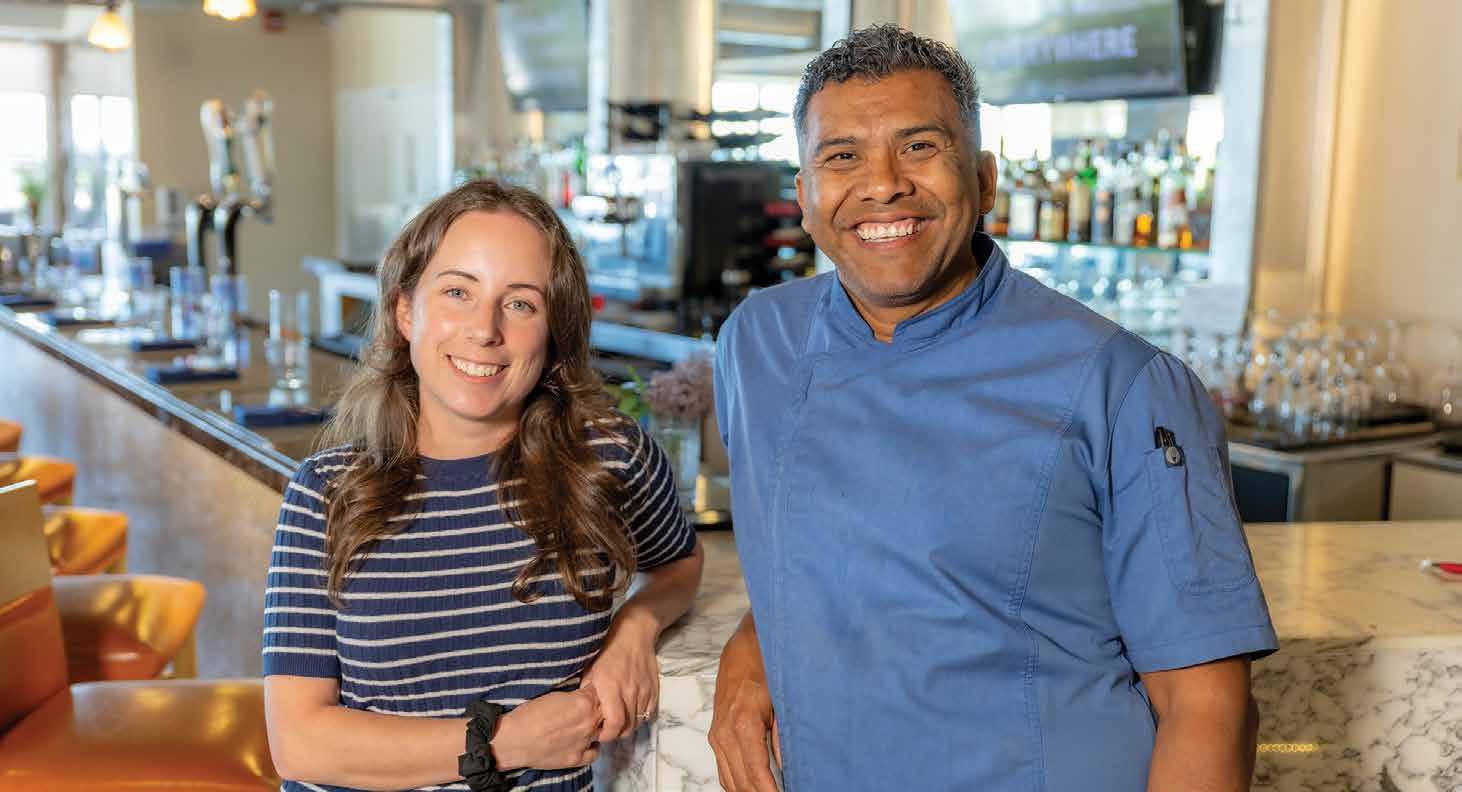
WhenCarlos Alvarez is asked why he’s thrilled to join Living Water Resorts as their new Executive Chef, his face lights up.
“So many reasons,” he says. “This is such a positive place and the culture here really is remarkable.” Alvarez was born in Nicaragua where his culinary early years were influenced by his mother and grandmother.
“When they were cooking, everyone would show up. It was very social. They would use an animal from tip to tail.”
It taught Alvarez resourcefulness. After his move to Canada he soon worked his way up in the culinary industry, logging hours of hard work and learning from mentors. He earned a Red Seal in culinary arts, the highest standard of professionalism in Canada and a tribute to his excellence in the trade.
Alvarez’s resourcefulness was put to use at his most recent posting, working as the executive chef for HGTV’s Bryan Baeumler building the 5-star resort Caerulamar from scratch in the Bahamas. “Working there reinforced my ability to respect and care for ingredients,” he says, due to the remoteness of the location.
“In 2018, I challenged myself to earn Caerulamar a Michelin Green Key” he says. “In 2025, I got it.” Alvarez has the same aspirations for Living Water Resort. “A restaurant has to keep evolving,” he says. “It’s a living thing.”
Here the evolution includes Emily Mallen, the other half of the Lakeside dynamic duo. Emily began with Lakeside 10 years ago as its first executive chef. Today, she’s the restaurant manager, working alongside Carlos to guide Lakeside into the next decade.
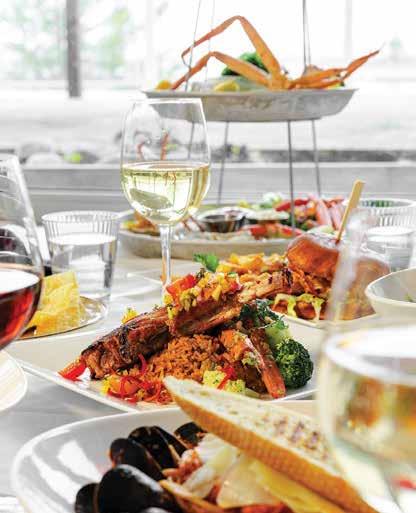
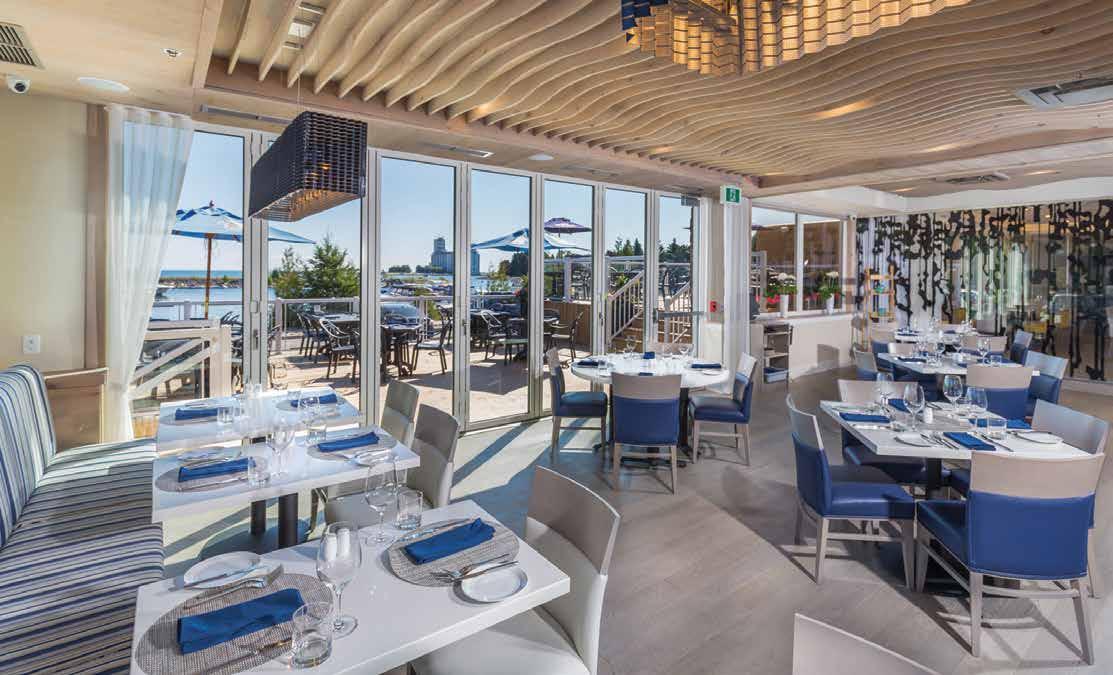
Lakeside Seafood & Grill celebrated its tenth anniversary in May and was recently awarded the top 100 best patios in Canada by Open Table, and it’s easy to see why—with its spectacular waterfront (it’s Collingwood’s only waterfront patio, as a matter of fact), and sweeping open marine-fresh-air views of Georgian Bay. Add to that Station on the Green’s expansive, open-to-the public patio—with the most breathtaking views of the escarpment—Living Water Resorts indeed offers the best patios in the region. Both restaurants have live music from incredibly talented local musicians 4 days a week.
Alvarez oversees all dining outlets at Living Water; Lakeside Seafood & Grill, Station on the Green, Living Water Retirement Residence and Banquet Services (corporate, weddings, social events).
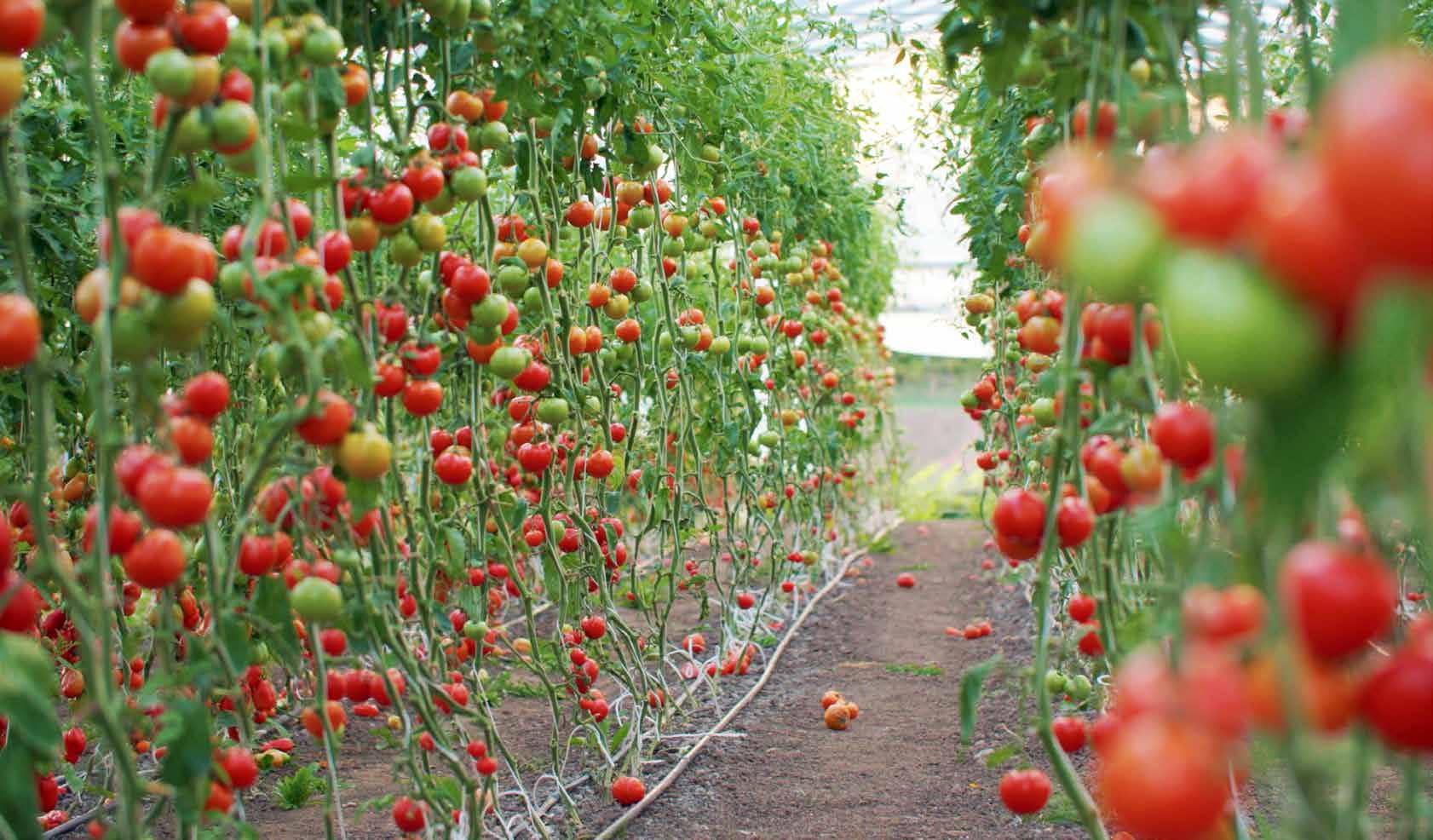
“This place is special,” says Alvarez, smiling with the confidence and satisfaction of a true expert who has found his home. “We have a greenhouse on site for the freshest organic produce. Our extensive composting program turns food waste into rich soil. We purchase eggs from a local Amish farmer. Nutrition is monumental for your well-being. Clean organic eating.”
Larry Law, the resort’s visionary and philanthropist president, abides by a business philosophy that creates a positive workplace by taking care of staff and customers.
Living Water Resorts’ culture of “serving with caring hearts” guides all decisions, and permeates through staff. From subsidized staff meals to shared holidays banquets, they look out for their people.
Alvarez is a tribute to this. His calm and caring demeanor, his humble confidence, his energy—he’s the perfect fit as the new Executive Chef at Living Water Resorts.
Trips
The Scenic Route
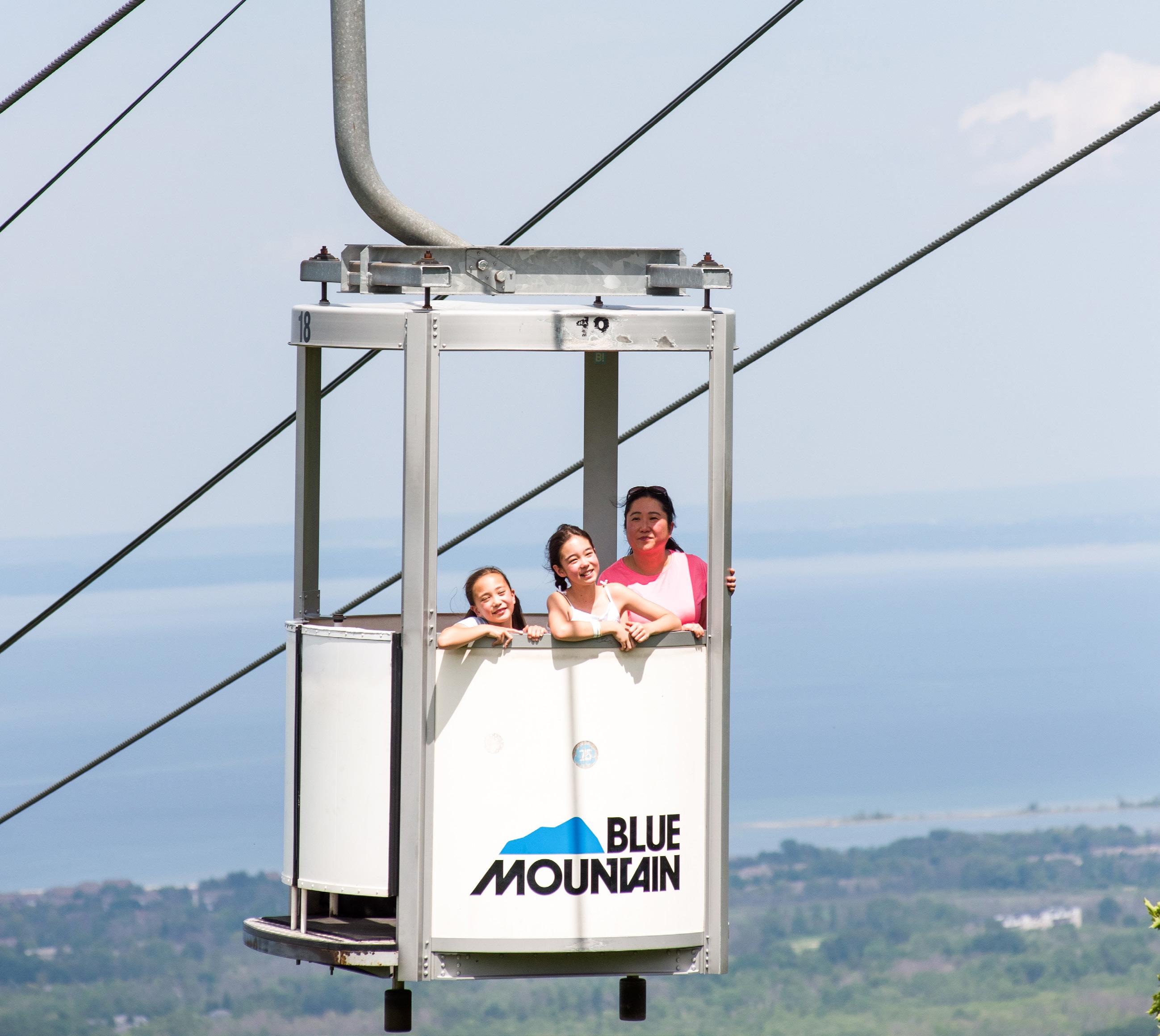
Blue Mountain Resort and the Bruce Trail Conservancy team up for an Explore the Escarpment Getaway package and more
Some people travel overseas to climb Kilimanjaro or hike the Pacific Crest Trail, while others set their sights on completing the Bruce Trail end to end. Canada’s oldest and longest marked footpath runs right through our backyard, and while it may not have the same global fame, it offers world-class hiking along the Niagara Escarpment with incomparable Georgian Bay views.
Spanning over 900 kilometres from the Niagara River to Tobermory, the trail is maintained by the Bruce Trail Conservancy (BTC) and volunteer-run clubs including Blue Mountain, Beaver
Valley, Sydenham and Peninsula.
Recently there’s been a surge in interest in the trail. Local club group hike calendars are packed, special events are on the rise and the BTC now offers a budget-friendly youth membership (ages 18-29) for just $30 per year.
In the Beaver Valley, the BTC recently purchased the long-contested former Talisman Resort property and its Talisman Forever fundraising campaign seeks to raise funds to restore the property to its original state by removing old ski lift structures, demolishing the dilapidated resort buildings and reforesting the slopes.
Along with these initiatives, a new partnership between the Blue Mountains Bruce Trail Club, the BTC and Blue Mountain Resort (BMR) seeks to educate visitors about the trail while offering a curated experience for guests.
“You can’t really talk about hiking in our area without mentioning The Niagara Escarpment, the Bruce Trail system and the conservancy that protects it,” explains BMR's Jen Cummings, Marketing Account Manager. “They were a natural fit for a partner to bring a hiking experience to the guests visiting the Blue Mountains. We collaborated directly with the BTC team who got their cartographer involved to create four specific hikes for the package along with exclusive maps for visiting guests. The goal was to create a variety of hikes that would appeal to different abilities, show off the incredible vistas and scenery of the area and include locations easily accessible from the resort.
Josi Hewgill in Duncan. COLIN FIELD
GOIN' PLACES dAY Trips
We also want to encourage guests to explore the region. We created a passport with local partners who own cideries, breweries, markets and bakeries with the intention of highlighting all that this area has to offer beyond the resort.”
“We highlighted routes with varying levels of difficulty for visitors to explore the biodiversity and geology of the Niagara Escarpment with the hope that their experience will build on an appreciation for what it has to offer now and in the future.”
The result is BMR’s new offering: The Explore the Escarpment Getaway. This two-night package (which must include a Friday stay) includes accommodation, a Friday Evening Summit Social with local hiking experts from the Bruce Trail, a selection of self-guided hikes on the Bruce Trail, a passport to local businesses with insider tips and an Escarpmentthemed gift. The package can be booked until October 31, 2026.
We were excited when BMR approached us about the concept of an Explore the Escarpment package,” explains Marsha Russell, VP of Fund Development with the BTC. “We know that people really need to experience nature and the trail to feel compelled to take care of it. BMR wanted to share the best outdoor experiences the region has to offer and asked the BTC to develop hiking routes to showcase the natural wonders. Working with our local Bruce Trail club, we highlighted routes with varying levels of difficulty for visitors to explore the biodiversity and geology of the Niagara Escarpment with the hope that their experience will build on an appreciation for what it has to offer now and in the future.”
If you haven’t explored the Bruce Trail lately, make this the summer you do. Epic hikes, scenery and terrain await.
-Allison Kennedy Davies
Explore the Escarpment on the Bruce Trail. COLIN FIELD
Boat, Paddle
& Sip
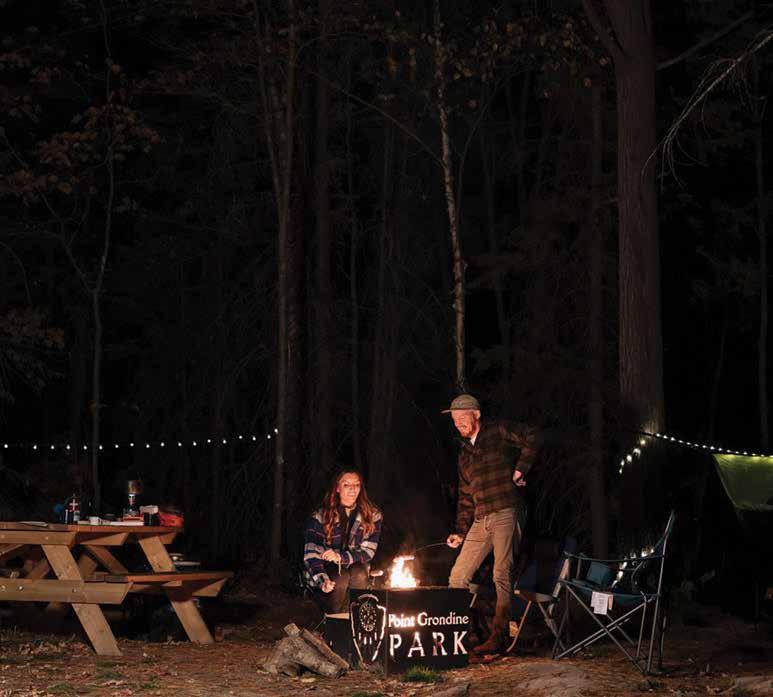
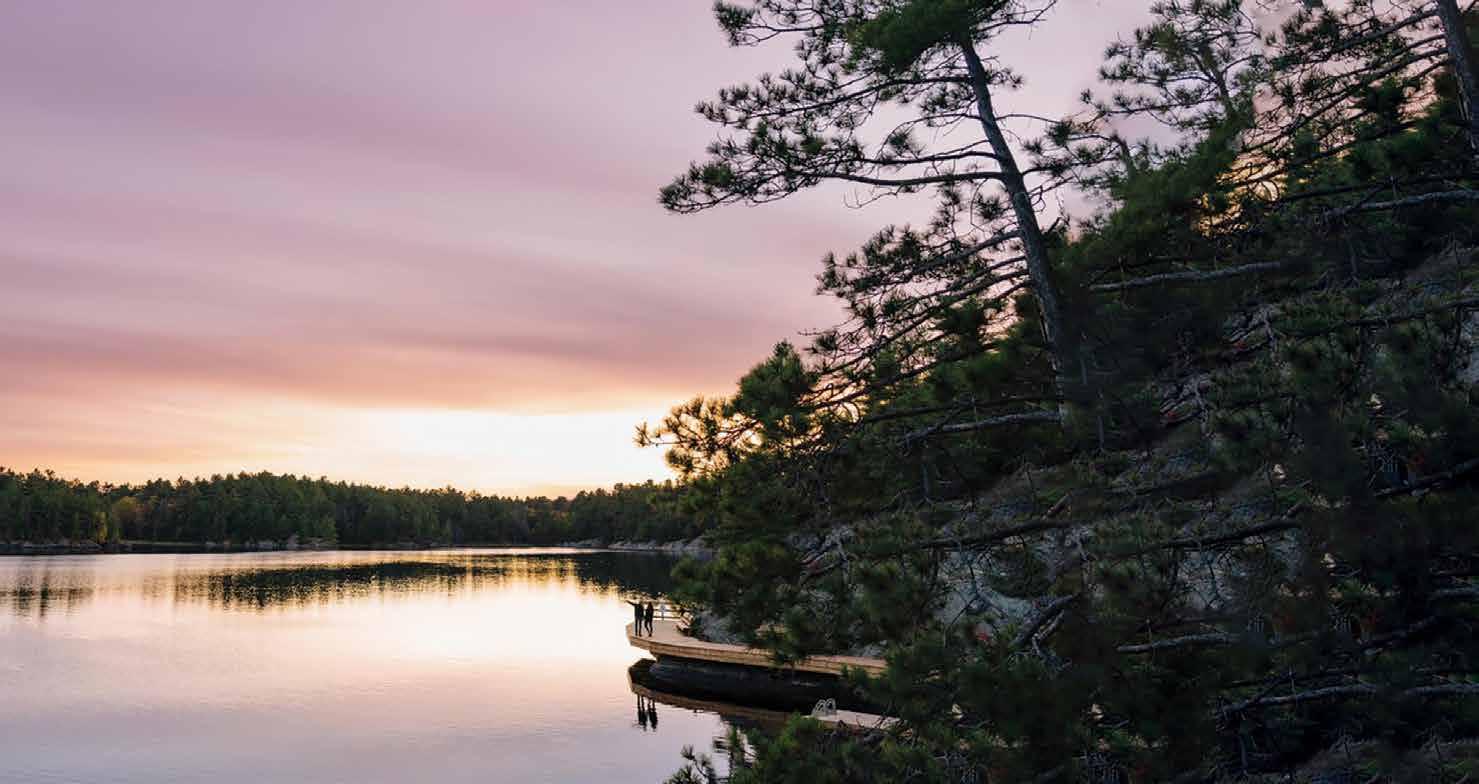
POINT GRONDINE PARK
Long before trails were marked and maps were drawn, the winds, waters and ancient granite of Point Grondine shaped a place of profound significance along Georgian Bay’s northern shore near Killarney. With views of the undulating ridgelines of the billion-year-old La Cloche mountain range to the north, and the geometric, majestic bluffs of the Niagara Escarpment on Manitoulin Island on the to the west—complete with smatterings of islands all around—the big water landscape is vast and untamed. For generations, the Anishinaabe maintained a spiritual connection to this land and are now sharing it with visitors. With so many provincial parks overcrowded (and hard to reserve), the Wikwemikong First Nation-run Point Grondine Park is an 18,000-acre answer that provides solitude and deep wilderness connection. Car-camp, or paddle in, the adventure awaits.
OSM ADVENTURES
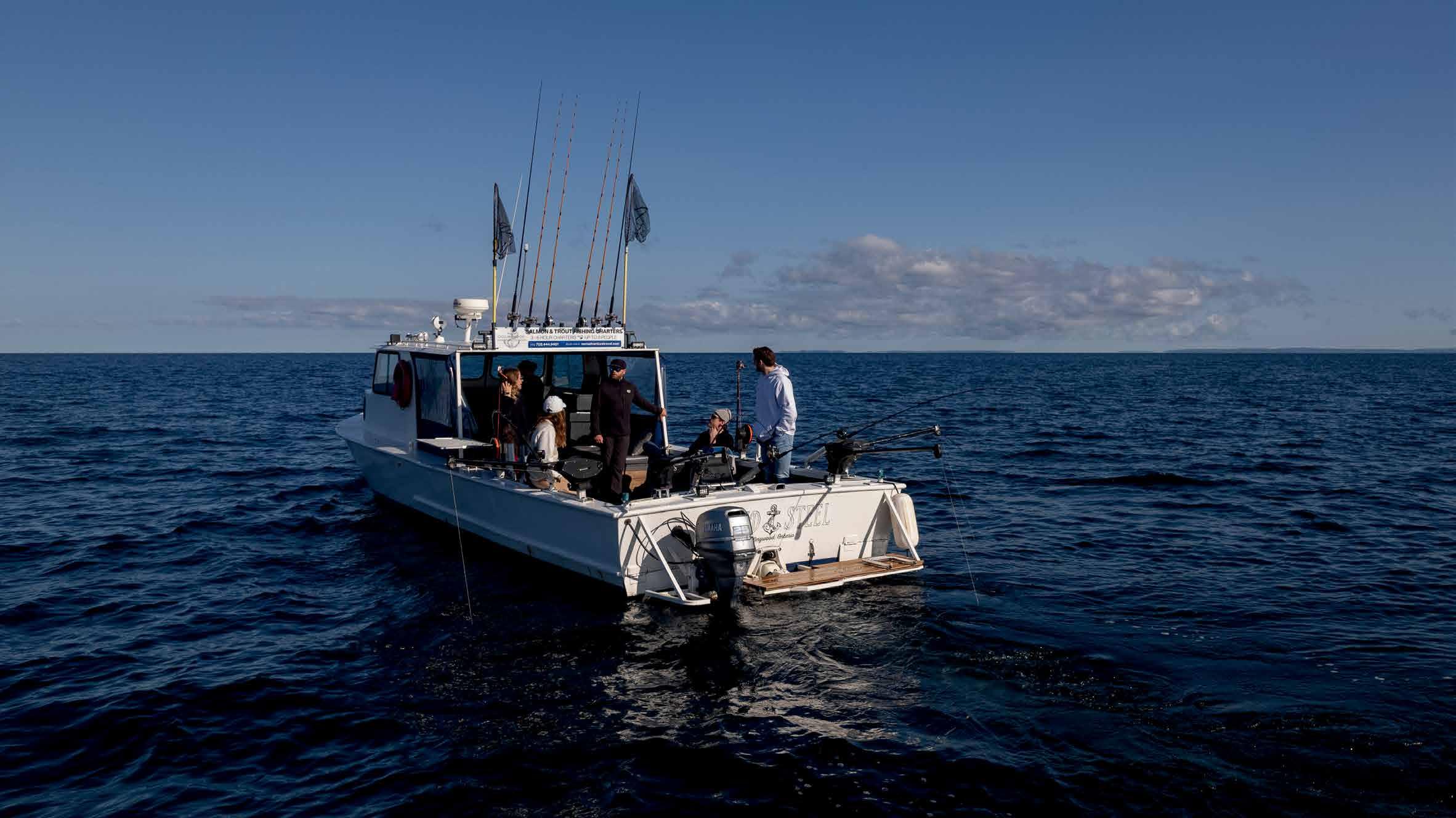
The best adventures on Georgian Bay begin with someone who knows its waters by heart. Collingwood-based OSM Adventure Travel offers unforgettable voyages aboard a solid steel expedition vessel designed to explore the bay’s scenery. From sunset cruises and island-hopping excursions to unforgettable fishing adventures, every trip is shaped by owner Kevin Johnston’s passion, knowledge and genuine love for the bay. Whether you’re travelling with family, friends, or celebrating a special occasion, OSM delivers the kind of authentic experience that creates lasting memories and a deeper connection to Georgian Bay.
SIDE LAUNCH BREWING COMPANY
Side Launch has become part of the weekend routine. The sounds of live music drift across the patio as pints are poured, tacos arrive hot from the Mamacita Tacoria food truck, and groups of friends settle beneath the Toja Grid shade structures.
Collingwood's OSM Adventure Travel is an amazing way to explore the bay’s scenery. CAPTURED BY KRISTEN
Paddling at Point Grondine. COLIN FIELD
Cyclists fresh off the trails, boaters in from the bay and weekend adventurers naturally find their way to this summer watering hole. Inspired by the historic side-launch shipbuilding site that helped shape Collingwood’s heritage, the brewery’s recent brand refresh introduces an exciting lineup of new products while enhancing an outdoor space that feels equal parts gathering place and summer escape. Side Launch has become a weekly ritual for locals and a must-visit destination for visitors.
SPY CIDER HOUSE AND DISTILLERY
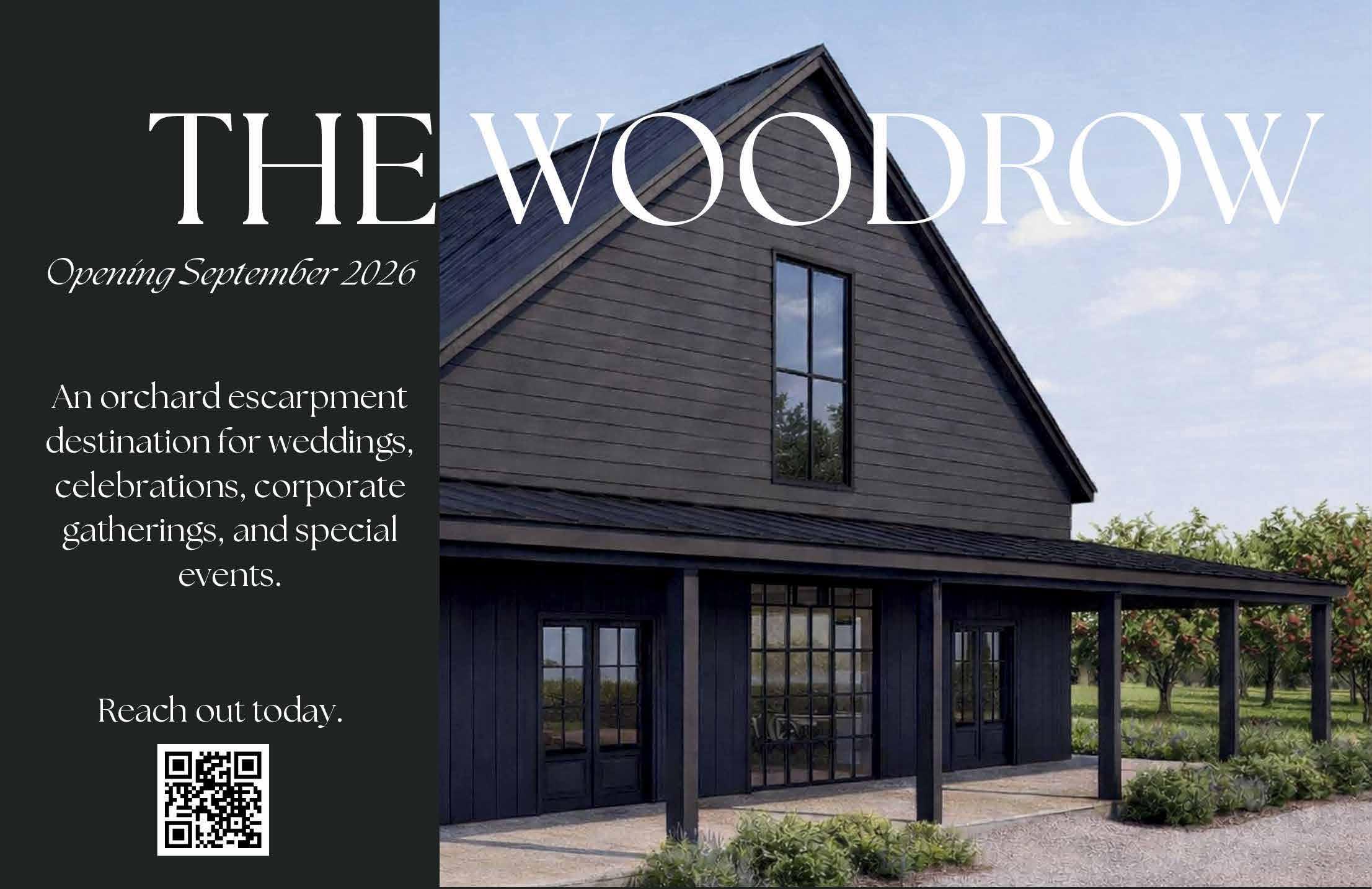
The most memorable gatherings happen when the setting does half the work. At Spy Cider House and Distillery in rural Clarksburg, rolling orchards, sweeping views and the easy rhythm of cider country create the perfect backdrop for bringing people together. This August, the highly anticipated launch of The Woodrow adds an exciting new chapter to the property—a thoughtfully designed event space created for weddings, celebrations, corporate retreats and unforgettable occasions. While Spy has long been a favourite destination for locals and visitors, The Woodrow elevates the experience, offering a place to celebrate milestones, share stories and make connections. – Megan Essland
The Spy Cider House. MEGAN ESSLAND
The Soo’s Mountain Bike Boom Keeps Rolling
The Salty Marie Trails Fest has quickly become a marquee summer event as riders discover the growing trail network in Sault Ste. Marie
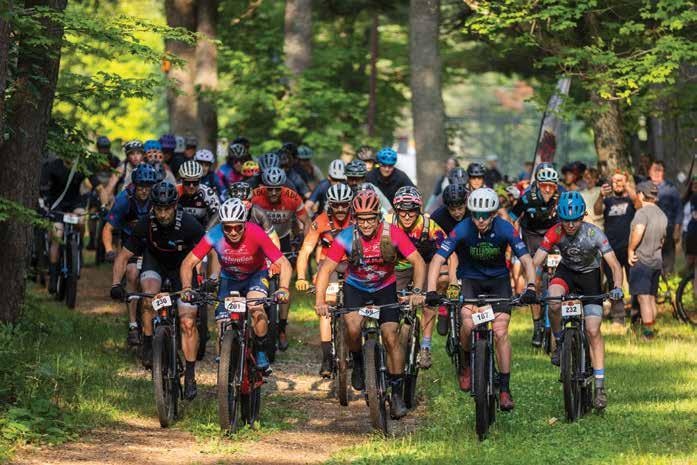
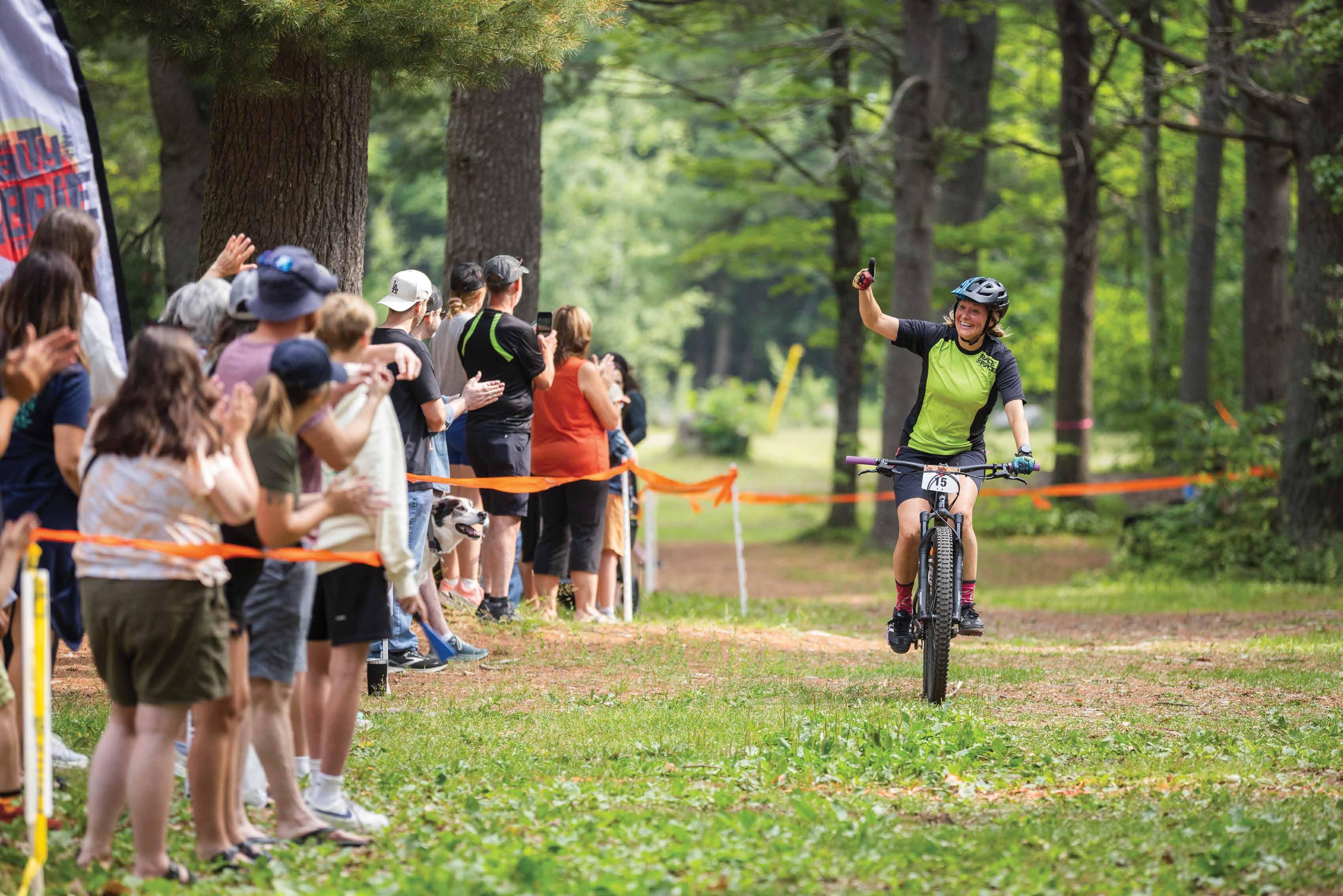
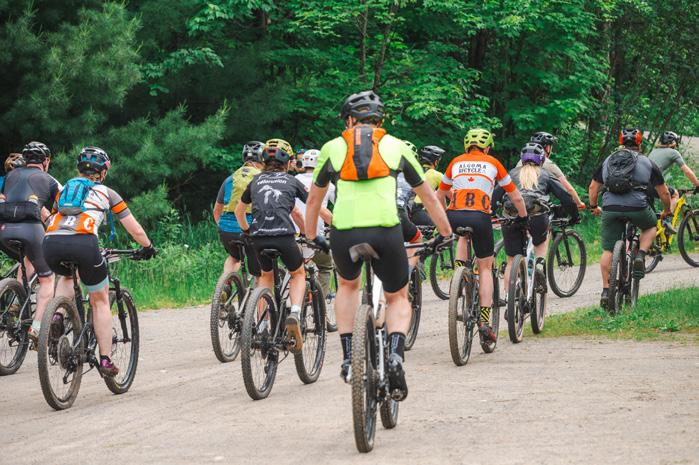
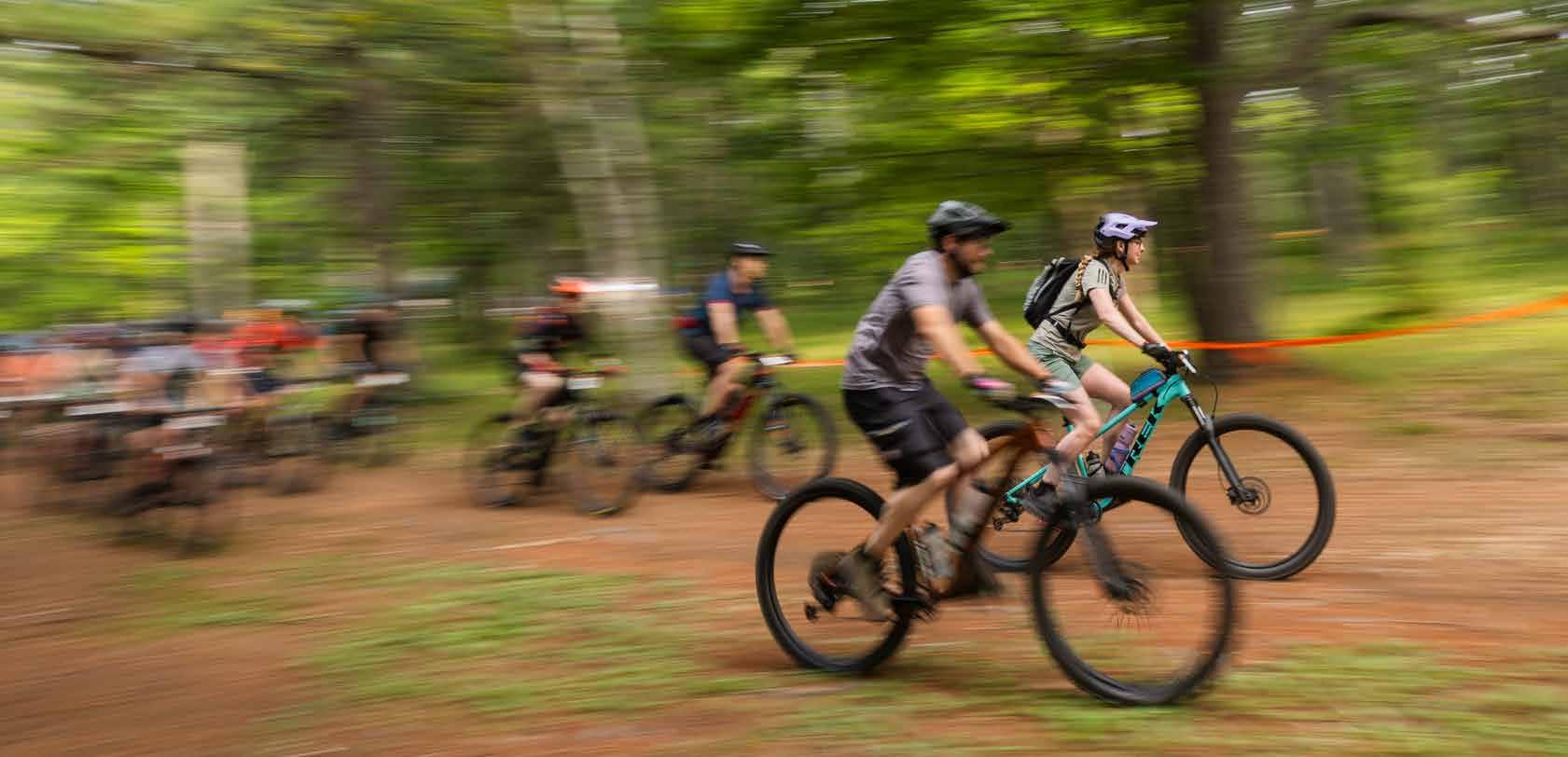
At the Salty Marie people ride hard during the day, then spend the evening eating, listening to music, drinking beer and talking bikes. That vibe is intentional. Race results aren’t important. It’s more like a community gathering than a traditional race weekend. And that’s the point.
The Salty Marie Trails Fest started because a group of locals wanted to show off the Soo. Their trails, their friendly scene and their welcoming nature creates a community that’s enviable. Now in its fourth year, the Salty Marie is part race weekend, part community festival and part ultra-endurance sufferfest.
The festival runs July 24-26 at Hiawatha Highlands and centres around a growing list of mountain bike and trail running events. There are 10, 25 and 50-kilometre races for riders and runners, plus kids’ events, vendors, food, music and enough trail chatter to fill an entire weekend.
The 10-kilometre race is called the Low Sodium. The 25 is the Saline Short. The 50? The Big Pickle. And then there’s The SaLTRA.
The self-supported ultra-distance ride sends participants off from downtown
Sault Ste. Marie on Friday night. They ride for more than 200 kilometres through the night and into the backcountry before finishing back at Hiawatha Highlands the next day.
“There are no aid stations on the route,” the event website states. “This is a self-supported event.” Last year only six riders started the event and three finished.
“It was intentionally hard,” Atkinson says. “You’re forced to ride through the night because of the start time.”
This year, interest has exploded. Organizers originally capped the SaLTRA at 12 riders. They’ve expanded that to 16, with more riders sitting on a wait list. The festival has grown quickly since its first edition. Organizers hoped maybe 75 riders would show up that year. More than 200 did. Now they expect 400 participants across the regular race categories.
Despite the race format, Atkinson insists the weekend is designed for more than podium hunters and suffering specialists. “The event is billed as a festival,” he says. “There’s an accepted role for people who just want to tour the course and play it at their own pace.”
The Salty Marie also shows off what Sault Ste. Marie has quietly become. Over several years, the city and trail groups have invested in building one of the strongest trail networks in Ontario. Between Hiawatha Highlands and the trail systems surrounding the Soo, riders can spend days there without repeating much.
“The idea is they come for the event and either stay or come back to ride the trails on their own,” Atkinson says. Increasingly, people are doing exactly that. Riders now travel from across Ontario, Quebec, the American Midwest and as far as Kansas to take part.
And the Salty Marie is only part of a busy summer calendar in The Soo. Crank the Shield returns August 21-23, while the cross-country marathon Canadian Championships land September 5, followed by an Ontario Cup.
The Soo has quietly become a legitimate mountain bike destination. And honestly, it all goes back to the old Field of Dreams line: If you build it, they will come.
The Soo built it. Riders are showing up. – Colin Field
Getting salty in the Soo. NICK IWANYSHYN
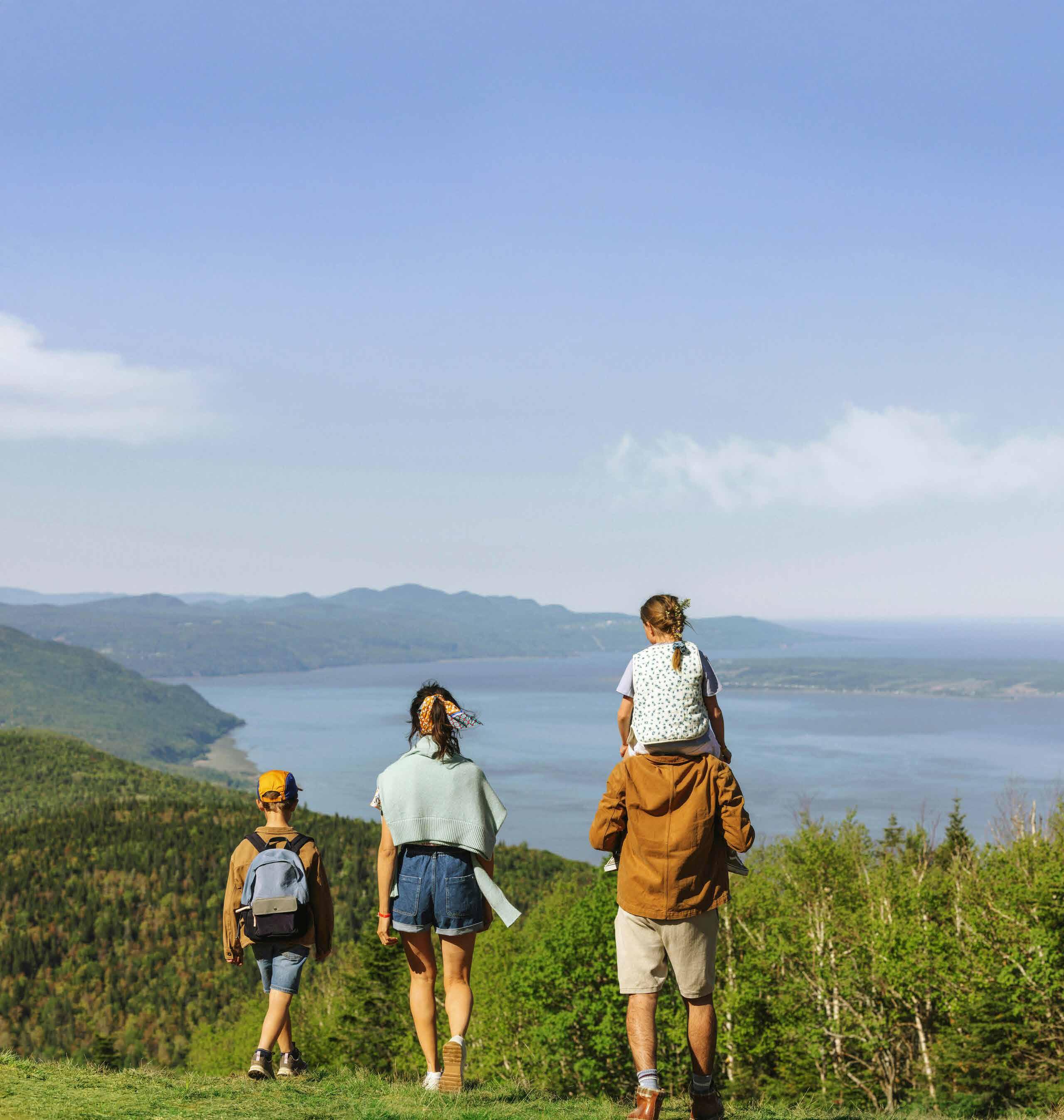
Reinventing summer in Charlevoix
The mountainous Quebec region boasts endless vistas, quiet forests and a unique Club Med experience
Perched between the heart of Le Massif de Charlevoix and the St. Lawrence River, Club Med Québec Charlevoix feels designed for those who refuse to choose between adventure and wonder. The only destination of the renowned French company in Canada, the resort has established itself as a true four-season basecamp.
Summer, however, reveals one of its most beautiful sides. The forests come alive, the peaks emerge and the mountainous landscapes of Charlevoix—a region recognized by UNESCO since 1988—display their full splendour. Here, from June to
October, it’s time to explore, slow down and reconnect with the natural environment.
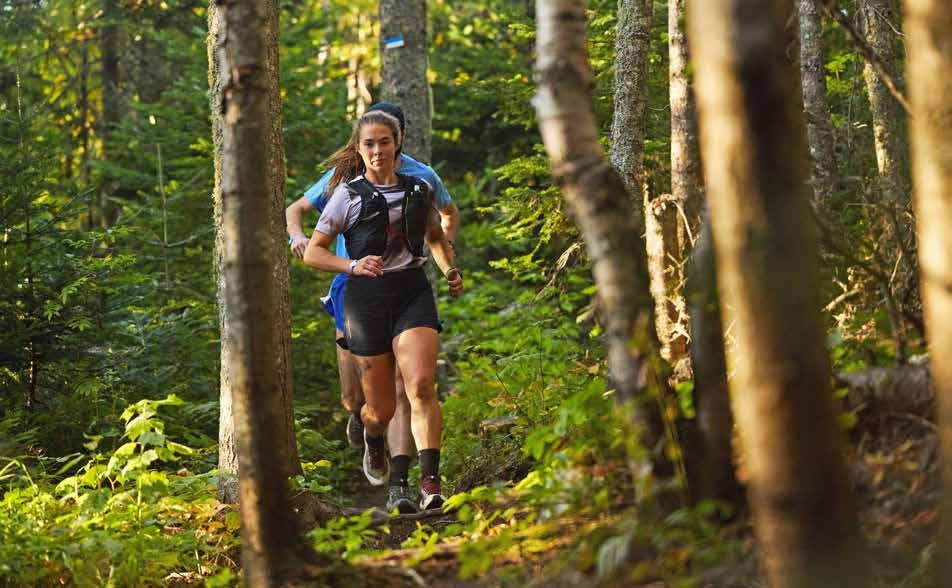
At the heart of the experience, trail running holds a special place. The resort’s trail running clinics showcase the exceptional trails located near the Village, while highlighting the sport’s deep roots here and Charlevoix’s status as a premier destination for practicing it.
In partnership with Ultra-Trail Harricana athletes, whose flagship event Club Med Québec Charlevoix sponsors, they offer training camps designed for every level. Participants benefit from
expert guidance while discovering worldclass trails and the expansive natural beauty that makes Charlevoix unique.
The summer experience is not limited to trail running. From June to October, resort programming invites vacationers to explore the region’s many facets. Hiking, mountain biking, kayaking, outdoor survival workshops and day excursions are among the activities that celebrate the valuable connection between people and nature.
It is well known that adventure stimulates imagination and creativity. Meetings with local artisans, painting workshops, art exhibitions and even immersive astronomy experiences offer opportunities to view the region from a different perspective.
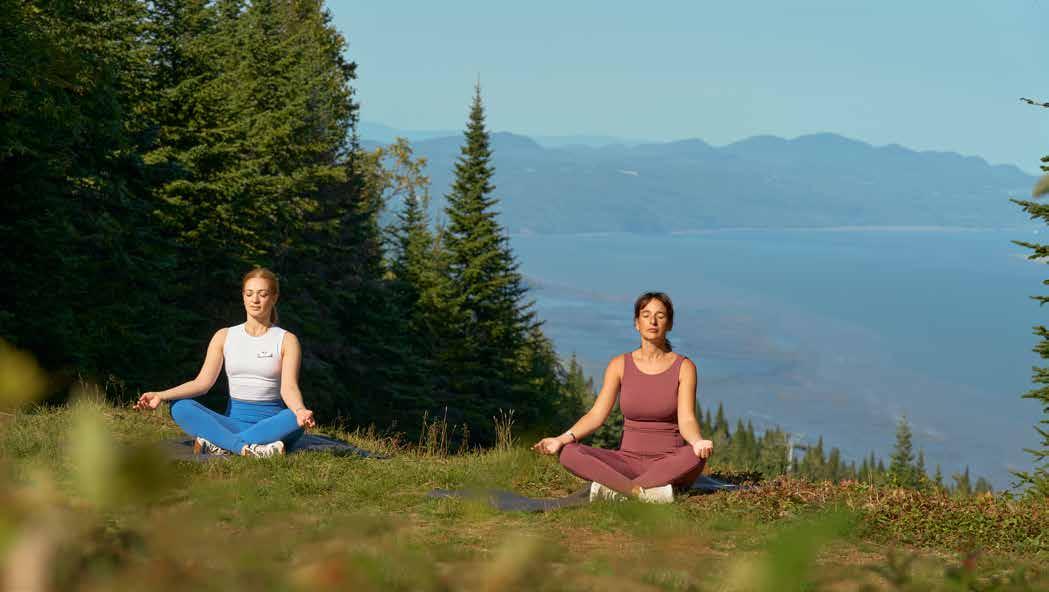
Well-being forms the other pillar of this summer offering. Outdoor yoga sessions, nutrition talks, fitness activities and holistic approaches punctuate the stay, reminding visitors that athletic performance often finds its balance in rest and reconnecting with oneself.
Then come the moments of sharing: concerts, convivial meals, campfires and festive evenings extend the days. In Charlevoix, summer is to be experienced in all its diverse richness. Between personal achievement, nature, wellness and human connections, the region reinvents the mountain experience. – Maxime Bilodeau
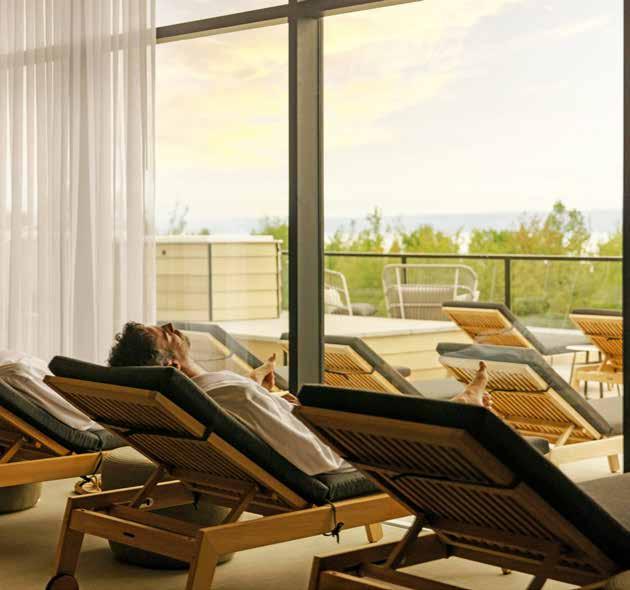
After the trail, find balance in rest and reconnection, Charlevoix-style. SUPPLIED BY CLUB MED
The resort’s trail running clinics showcase the exceptional trails located near the Village, while highlighting the sport’s deep roots here and Charlevoix’s status as a premier destination for practicing it. SUPPLIED BY CLUB MED
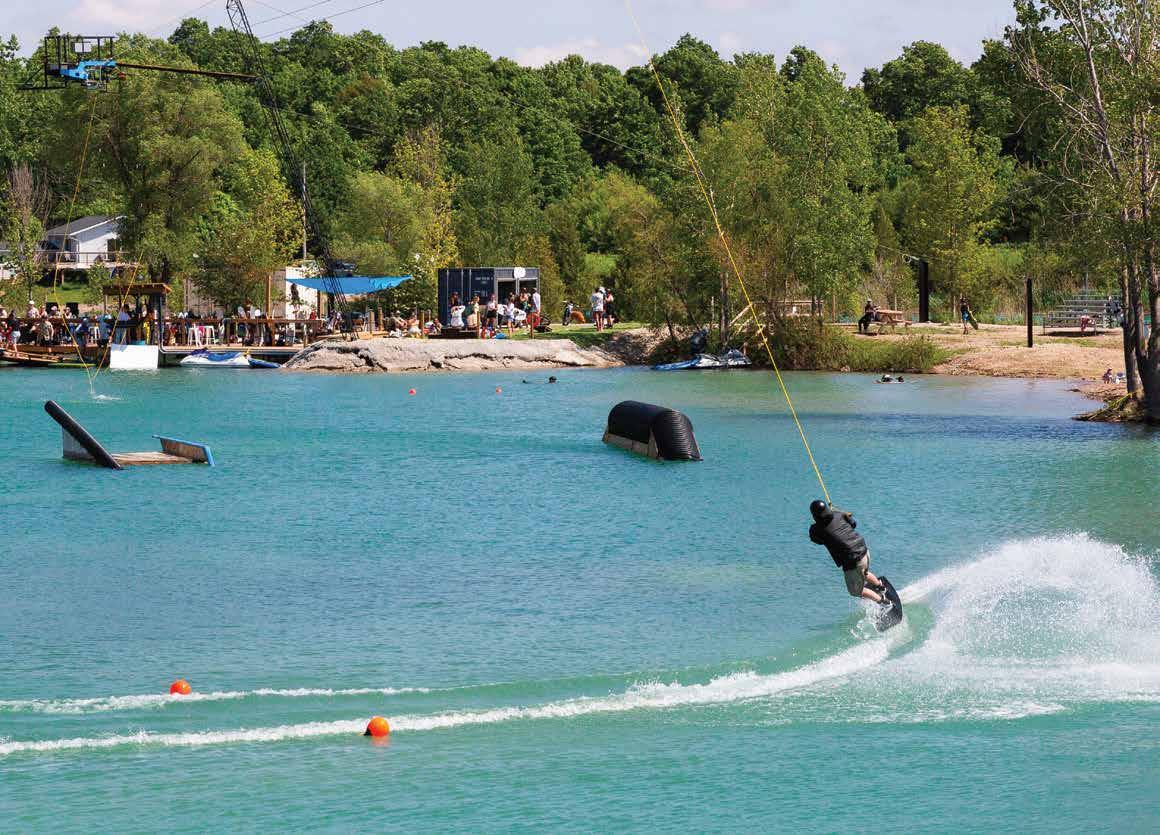
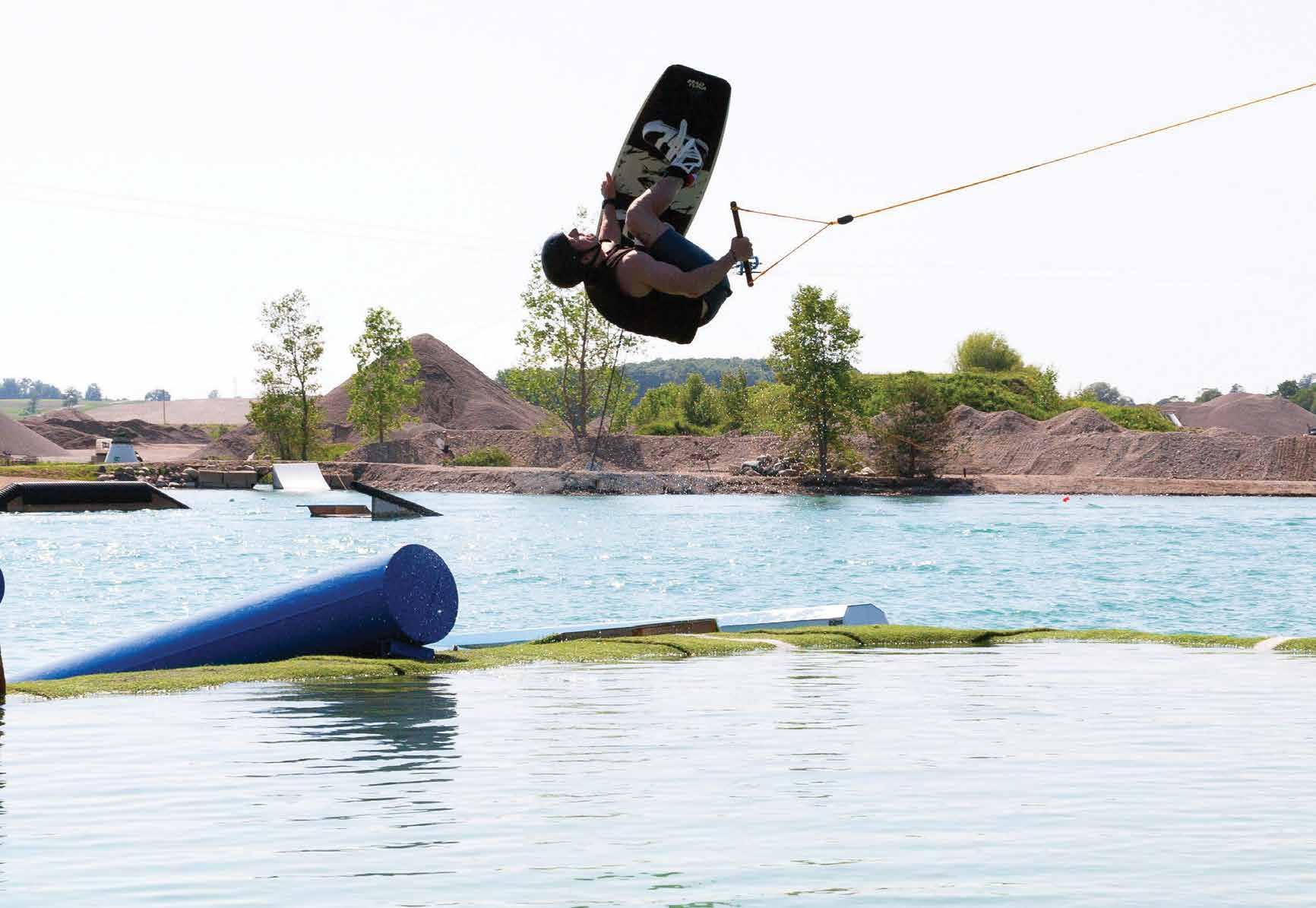
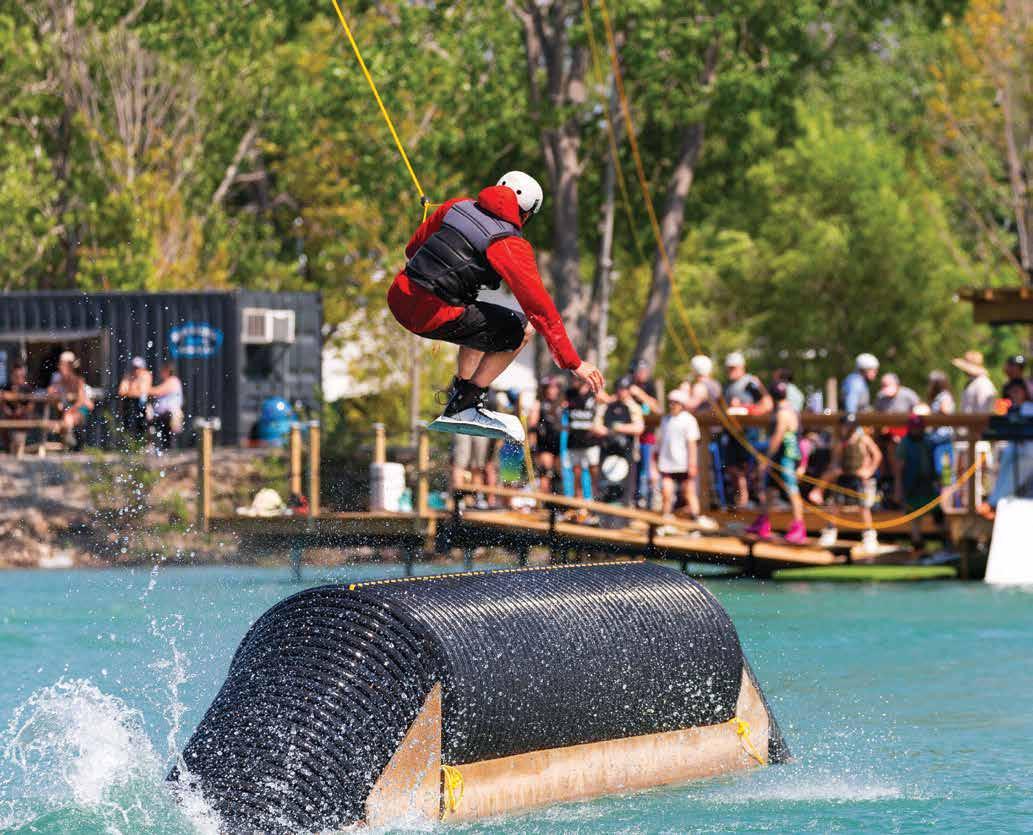
• Full size cable with two elevated pools in the pass. One on the right hand side and one on the left hand side
• Two straight line cables for beginners
• Big inflatable obstacle course
• Week long kids camps
• Bar available featuring Side Launch Brewing Company
SPRING HOURS
June - Thursday & Friday’s 12-7, Saturday & Sunday’s 10-7
SUMMER HOURS
July & AugustOpen everyday 10-7
FALL HOURS
September - Open Thursday & Friday’s 12-7, Saturday & Sunday’s 10-7
October - Open Friday’s 12-6, Saturday & Sunday’s 10-6
*WEATHER PERMITTING*
Photo: Blake Jorgenson
INTO THE DEEP
From the deepest point in the Great Lakes to underwater sinkholes to zombie fish and beyond, a new documentary project explores one of North America’s last frontiers
What’s left to explore here on earth? More than you might think—especially in our watery backyard. The Great Lakes comprise the world’s largest freshwater ecosystem, providing drinking water for roughly 40 million people. Beyond keeping us hydrated, the lakes offer a wealth of “blue space” that improves our physical and mental health. When we’re navigating Georgian Bay’s well-mapped channels and islands, we may feel we know it well. But beneath the surface is an underexplored universe.
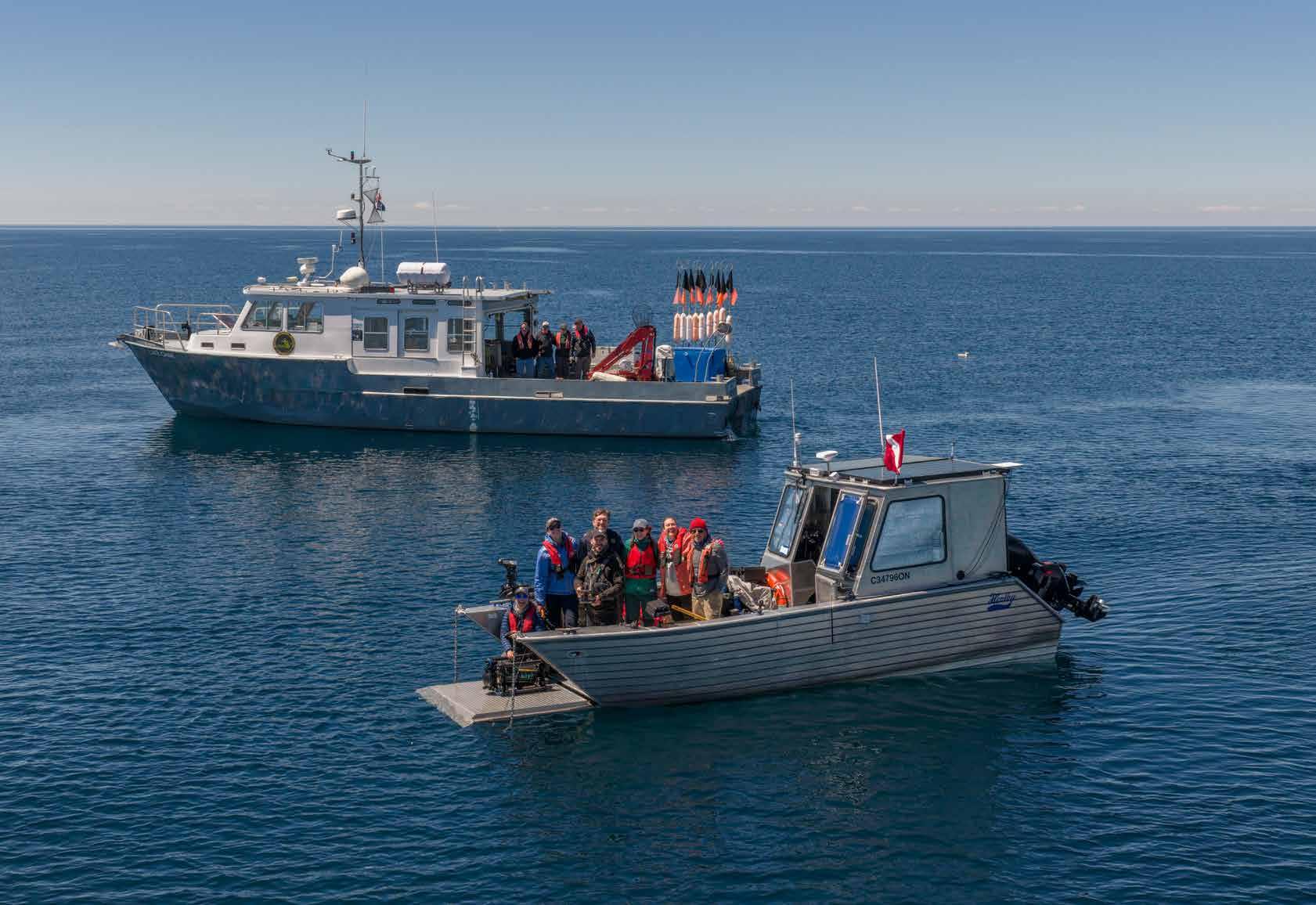
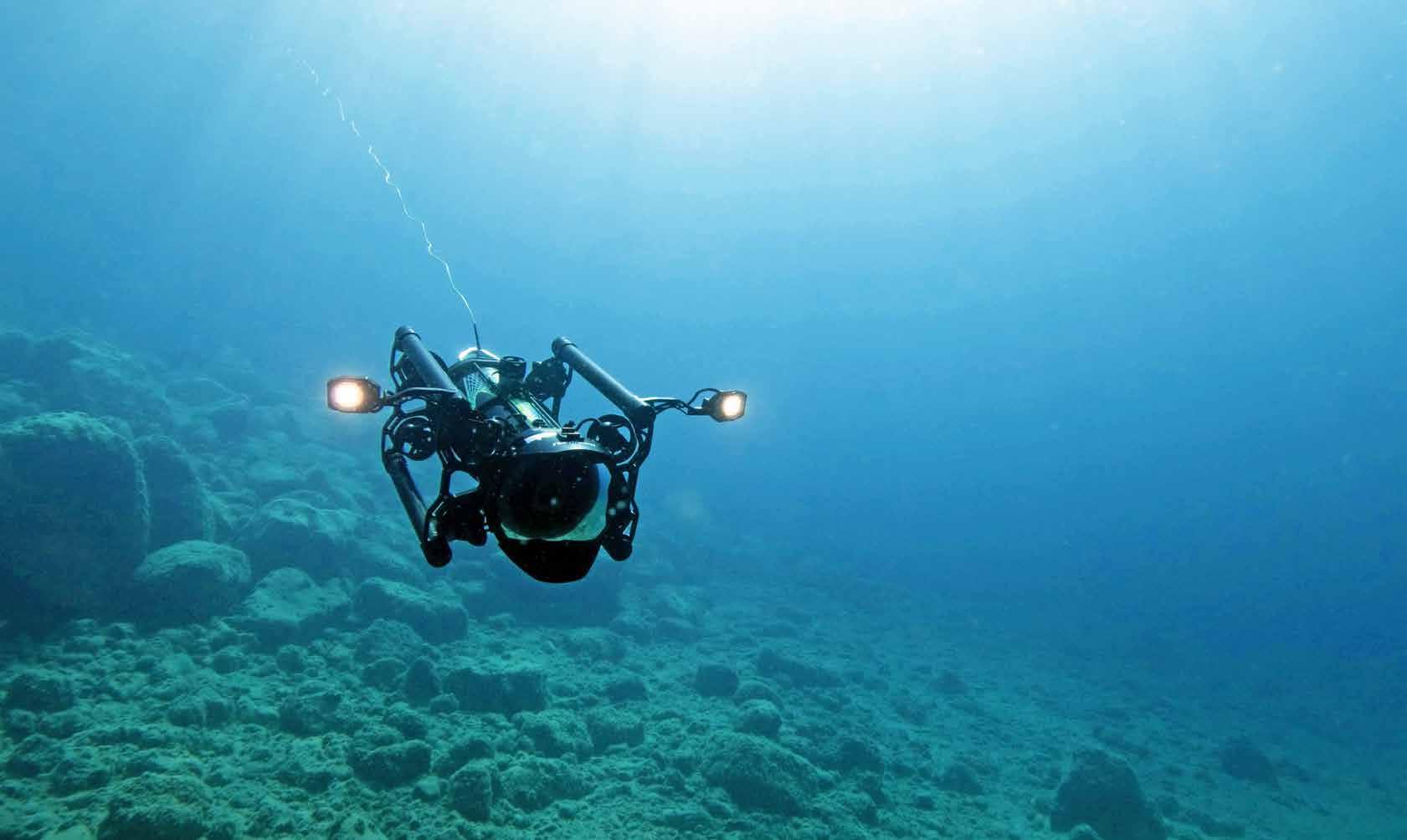
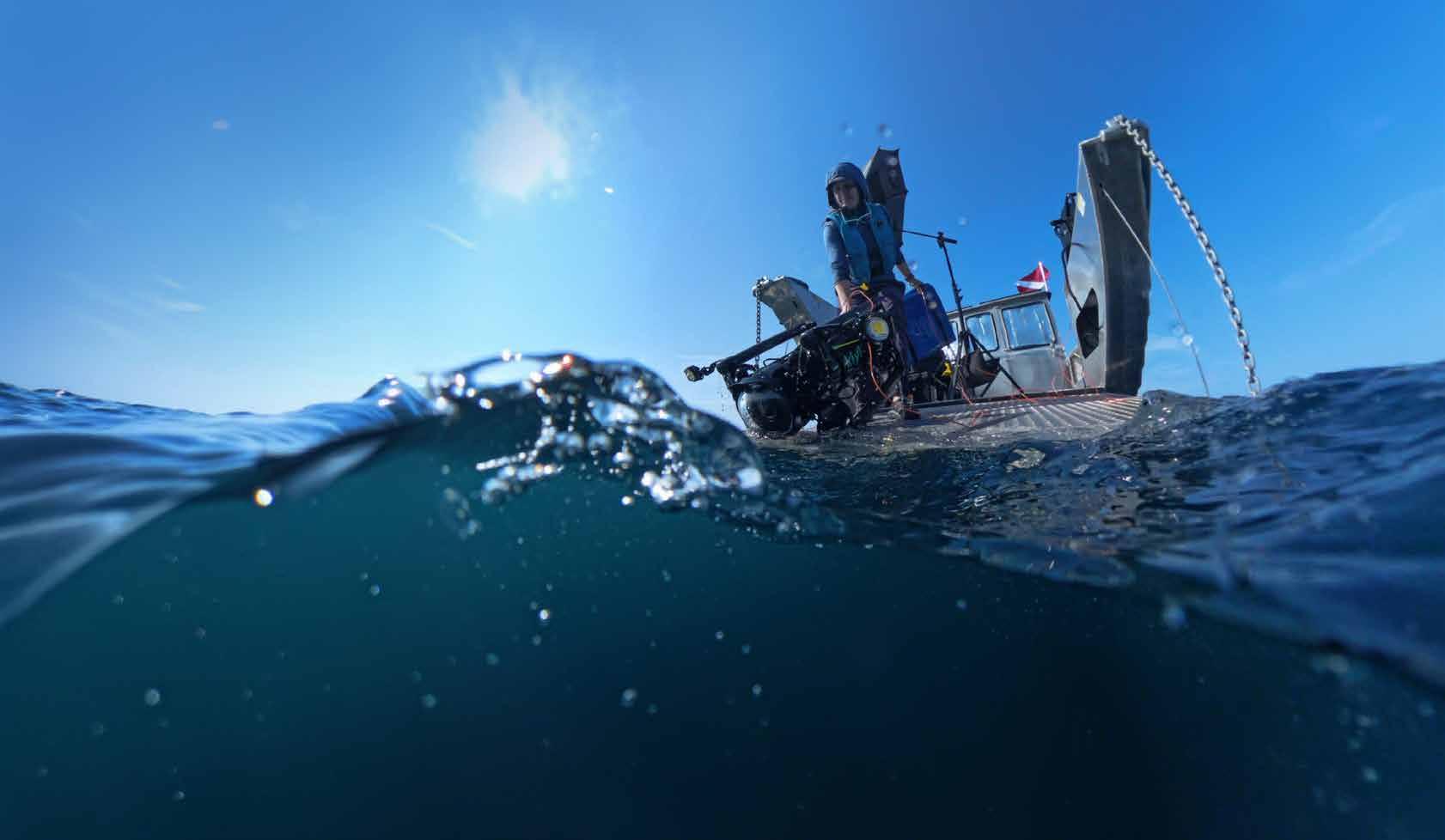
Underwater explorers and Fellows of the Royal Canadian Geographical Society Yvonne Drebert and Zach Melnick bring the deep blue realm into view with Hidden Below: The Great Lakes, a documentary project slated for release in 2028. The couple, who live on the Saugeen Bruce Peninsula and collectively form the core of Inspired Planet Productions, are in the thick of filming with their cinema-grade Boxfish Luna remotely operated vehicle (ROV). I caught up with them when they were aboard their research vessel the day after their “Superior Maximus” livestream from the deepest point in the Great Lakes.
Located on the U.S. side of Lake Superior, the glacier-carved, sunless basin bottoms out at more than 400 metres (1300 feet). While Zach piloted the ROV, Michigan DNR biologist Shawn Sitar sat nearby as Yvonne and the Hidden Below team managed the tether from the deck. Throughout the livestream, Zach, Shawn and Yvonne fielded questions from viewers.
The Hidden Below team in the Tail Spinner (foreground) supported by Lake Char, a research vessel from the Michigan Department of Natural Resources. INSPIRED PLANET PRODUCTIONS
Mountain Life: Yesterday lined up well.
Yvonne Drebert: The weather was perfect, and I’m so glad we waited, because the day before [the scheduled livestream date] was pretty rough. It would have been miserable and people watching might have gotten seasick too!
ML: How did it go from a mission perspective?
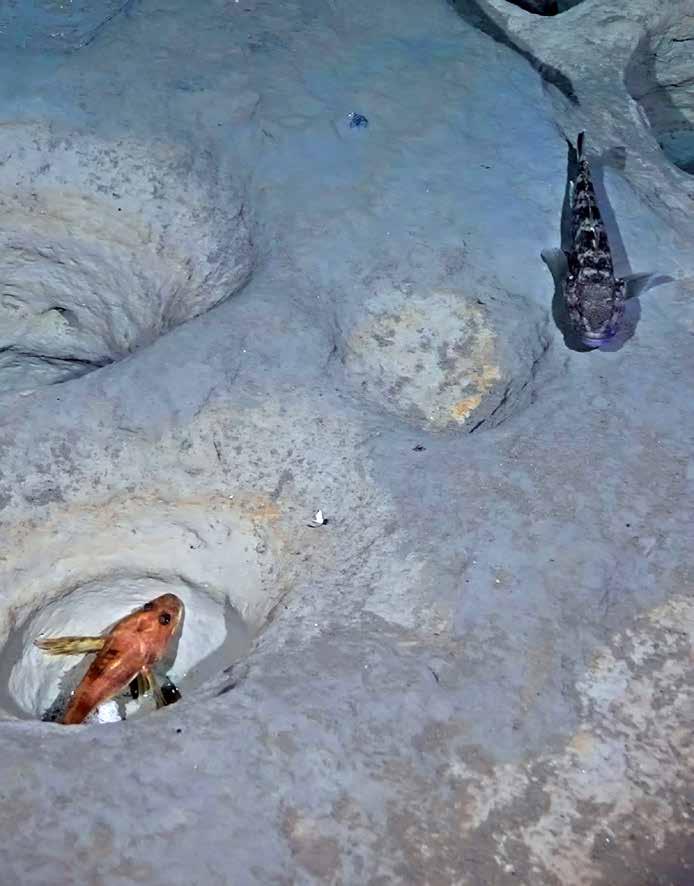
Zach Melnick: Trying to get down there and do this kind of work is one thing; trying to do it live in a way that we can interact with people is a whole other level of technology, and everything has to go right with the weather. So that went perfectly. And the Michigan DNR had a large support boat for us. When we’re operating that far offshore, we do like having some support… So it was interesting that we saw a lot of deep water sculpin, maybe 100 or so. I don’t think anyone knew there was such a high density of these fish down there. And then there were the mysis [native shrimp-like crustaceans] interacting in this benthic ecosystem. There’s quite a bit of life down there.
ML: How did you decide where exactly to dive?
ZM: We had to make a choice between the actual deepest spot and areas nearby with more interesting geology and fish habitat. It was a trade-off: Do we go where it’s deepest, or where there’s a lot more geology? We decided on the deepest spot because that’s what we told folks we’d do, but there’s a lot of environment out there to explore. The challenge is that
Deepwater sculpin nests. BELOW Kiyi the ROV exploring the Superior Shoal on a tether.
the livestream is only an hour [due to the ROV battery power]. We’re out there day after day, but you don’t always find the magic within that one hour.
ML: Did you see any “zombie fish”?
YD: We didn’t see them during the livestream, but one reason we’ll be out there every day this week is that we want to find them. [“Zombie fish” are deepwater siscowet lake trout with mysteriously large heads and emaciated bodies.] We’re hoping to help our scientific partners better understand their behaviour— whether they’re acting like normal fish, hanging out with other fish or eating different things than expected.
ML: You did spot one plastic bag and one beer can.
YD: In these offshore environments, it’s less likely that we find a ton of garbage. These areas are less visited.
ZM: We see human junk sometimes, and we don’t like it when we do. We’ve also seen a few ghost nets [on other explorations]. So that is a problem, and maybe in the future we can coordinate getting those things out of there.
ML: Yvonne said during the livestream that your ROV isn’t equipped with an arm, so…
YD: We’re getting more robotics attachments put on it next month, so we should actually have the tools necessary to pull off and drop off. But it depends on how big it is and how much of a mess it is. If you imagine a ghost net a few hundred feet long… it is challenging. But we will be able to do a little bit, like pick up that can or garbage bag or whatever.
ML: Could you talk about the last two livestreams, “Freshwater Everest” and “Fish City”?
ZM: Last September was our first attempt at a livestream. Superior Shoal, which we call the Freshwater Everest, is the biggest underwater mountain in the Great Lakes and quite possibly in the freshwater world. [The site is in the middle of Lake Superior near the international border.] And we were just dipping our toe into it. We saw many different lake trout morphs around these mountains, and they were very friendly with the camera. And it looked like they were exhibiting spawning behaviour.
For “Fish City” we wanted to do a livestream in a more humanimpacted landscape, so that’s why we went to Bruce Power [nuclear facility], to the outflow [in Lake Huron]. It does bring in an abundance of fish, for good or bad. The water clarity wasn’t as good that day but we did see a lot of different species, including bigmouth buffalo. They regularly live to over 100. So we were able to share that with viewers and allow them to ask questions about what they’re seeing.
YD: Often, we’re just alone on the boat, looking at fish. During the livestreams, it is so fun for us to hear how people are engaging with what we’re all seeing.
ML: When can we expect another livestream?
YD: In September we’re going to explore the Lake Huron sinkholes near Alpena, Michigan. There are rare freshwater vents here, with cool purple and white mats, and filamentous growth around them. The kind of life you would have seen at the beginning of the planet starts here at these sinkholes. –Ned Morgan
HUNDRED ACRE WOOD HAS BIG PLANS AND BIG ANNOUNCEMENT
Something huge is happening at Hundred Acre Wood (HAW).
The nature-based childcare and learning organization is hosting a fundraising concert on August 29 at Spy Cider House and Distillery in Clarksburg. Featuring Grey County-based singer-songwriter Danny Michel with the Ruthven Sisters, the concert promises an evening of music, community and celebration. Organizers are also teasing a major announcement about the organization’s future.
For now, details remain under wraps. What HAW Founder and Executive Director Kim Edwards will confirm is that the lease is up at their flagship location on Kimbercote Farm and HAW is preparing to relocate. The move will secure its longterm future serving families across Grey Highlands, Meaford and The Blue Mountains.
The organization currently provides 42 licensed childcare spaces, along with summer camp programming that serves more than 200 local families each year. Protecting and growing these programs is the driving force behind the fundraiser.
The need goes beyond childcare. Yesterday, Edwards attended a citizen science workshop where participants were asked why they cared about nature.
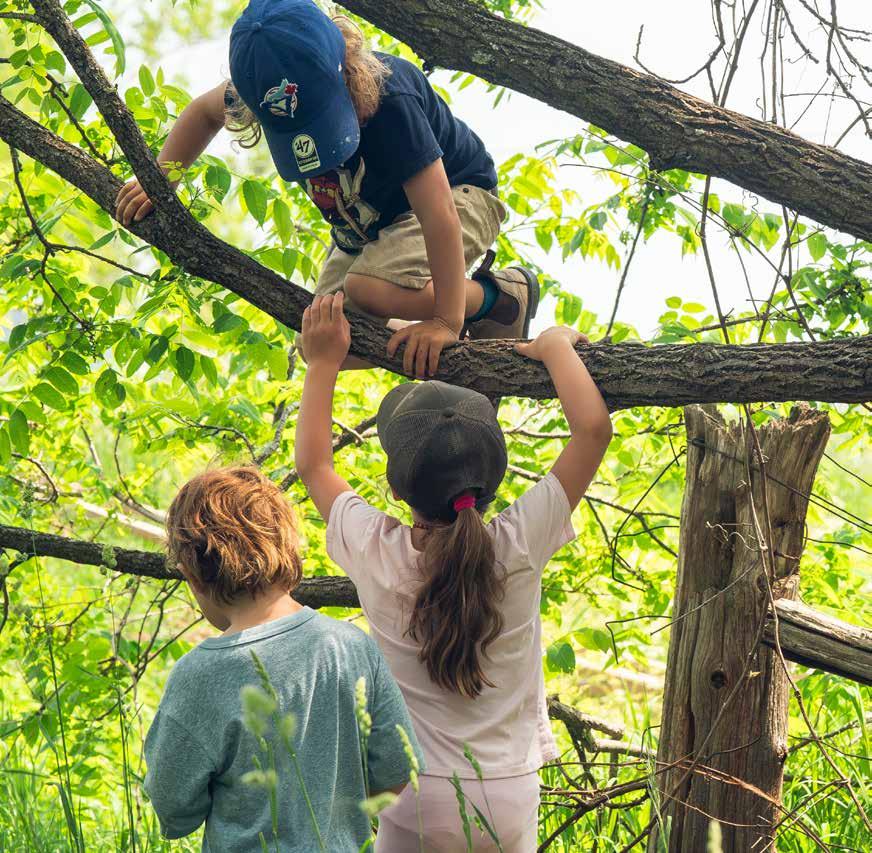
“Every single person said they were there because in childhood they had some sort of core memory made in nature,” she says. That’s exactly what Hundred Acre Wood aims to create. “We’re helping so many children form core nature memories so that when they grow to be adults and someone says, ‘Oh, but what about the environment?’ they have this visceral memory of when they were immersed in nature.”
Those experiences happen through outdoor play, exploration and hands-on learning that encourages independence, curiosity and connection to the natural world.
“If you care about the environment as an adult and you want the next generation to care as much as you care, that’s what we’re doing here,” says Edwards.
The fundraiser will help support that mission while offering supporters a chance to hear what’s next for one of the region’s most unique educational organizations. –Colin Field
A TOAST TO THE DAM PUB
A South Georgian Bay institution has earned national recognition after being named Best Whisky Bar in Canada in the 2026 Whisky Explorer Awards.
The awards are a Canadian-based competition that evaluates whiskies through blind, experience-driven judging. Founded by Canada’s Whisky Ambassador, Mike Brisebois, the awards celebrate craftsmanship while recognizing the people and establishments that help shape whisky culture across the country.
This year, the People’s Choice Award for Best Whisky Bar in Canada went to The Dam Pub in downtown Meaford.
Known for its wall of more than 1,000 whiskies, Scottish-inspired cuisine and welcoming atmosphere, The Dam Pub has become a destination for whisky enthusiasts from across Canada and beyond. Located just steps from Meaford Hall, the cozy gastropub has been welcoming guests since 2005, when it began its life in Thornbury.
Owner Stephanie Price has spent two decades building the pub’s reputation while deepening her own whisky expertise. Her travels have taken her to distilleries around the world, including the Bruichladdich Whisky Academy on Scotland’s Isle of Islay, where she earned certification as a Single Malt Ambassador. That knowledge informs the pub’s tasting events, food pairings and carefully curated back bar.
Award voters praised the pub’s unmatched selection, knowledgeable staff and friendly service. One supporter called it “the finest whisky bar in Canada if not the world.” Enough said. –ML Staff
With over 1,000 whiskies, The Dam Pub has become a destination for whisky enthusiasts from across Canada and beyond. SUPPLIED BY DAM PUB
HAW is helping children form core memories of nature. COLIN FIELD
GEORGIAN BAY: WHITHER THE WATER?
Remember ‘Stop the Drop’? Looking at Georgian Bay water levels, it seems like we might need such a campaign again. But really, is there a point? Can we truly control the rise and fall of the Great Lakes?
The Bay's levels can feel unpredictable—and they are. A snowy winter in northern Ontario, drought in the American Midwest, hotter summers, evaporation rates over Lake Michigan, even shifting wind patterns—they all matter.
Christened “La Mer Douce” by explorer Samuel de Champlain and sometimes referred to as the Sixth Great Lake, Georgian Bay is really the wild northeastern arm of Lake Huron, scooped out and filled by glaciers roughly 11,000 years ago. Today, snowmelt, rainfall, rivers, creeks and groundwater feed the Bay. Its water levels and health, however, are closely tied to those of the other Great Lakes.
Hydrologically, Michigan and Huron behave as one. The Bay rises and falls in lockstep with its larger cousins because the entire Great Lakes basin is effectively one enormous plumbing system reacting to weather and climate in real time.
The swings can be dramatic. Around 2013, Georgian Bay hit record lows. Marinas sat stranded, wetlands dried up and shorelines stretched outward into rocky moonscapes. By 2020, record high water was flooding docks, battering shorelines and swallowing beaches. Both
extremes occurred naturally—and will be amplified by climate change. As the Great Lakes climate becomes more volatile, scientists expect “wilder weather, lower lows and higher highs”.
Nobody simply “controls” Georgian Bay water levels. Existing control structures on the St. Mary’s River regulate inflow from Lake Superior. But there is nothing controlling outflow from Lakes Michigan and Huron down the St. Clair River to Lake Erie. Dredging in 1960 and subsequent erosion increased outflow on the St. Clair, causing a permanent drop in average Georgian Bay levels. But since the greatest lowering occurred prior to 1962, the lakes’ only outflow is clearly not the culprit, given that the Lakes swallowed beaches and retaining walls in 2020.
Can we predict what comes next? Sort of. Seasonal forecasts can estimate trends based on snow levels, precipitation and evaporation, but long-range predictions remain difficult because the lakes respond to so many interconnected variables.
That could change. Organizations like Georgian Bay Forever have explored concepts ranging from inflatable dams to flow-control gates and in-stream turbines in the St. Clair River system to moderate future extremes. As climate volatility reshapes the shoreline experience across cottage country, these options become more compelling. Our greatest hope? Climate stabilization on a global scale. -Carl Michener
The Bay rises and falls in lockstep with its larger cousins because the entire Great Lakes basin is effectively one enormous plumbing system reacting to weather and climate in real time.
The Chicken Islands in northern Georgian Bay. COLIN FIELD
A TALE OF TWO MARKETS
Collingwood and The Blue Mountains may share a region, but current real estate market conditions tell two distinct stories
Markets rarely move in unison. Even within the same region, different communities, price points and property types can behave very differently at the same time. That is exactly what we are seeing across Southern Georgian Bay today.
The current market is increasingly bifurcated. In plain English, some segments are holding up reasonably well, while others are struggling under the weight of softer demand, higher inventory and more cautious buyers.
Collingwood is a good example of a market that has shown relative resilience. While activity is not booming, it continues to benefit from a broader base of demand. Families move up,
downsize, relocate for lifestyle or transition through different stages of life. These are not always purely discretionary decisions. As a result, Collingwood has been outperforming some of the more recreational and retirement-oriented markets nearby.
The Blue Mountains, by contrast, remains more heavily influenced by discretionary buyers. Many purchases in this market are lifestyle-driven, including recreational properties, weekend homes, retirement plans, ski-season properties and higher-end lifestyle moves. In more uncertain economic times, these buyers are often the first to pause. They may still want
to buy, but they tend to become more selective and price-sensitive.
The data supports this split. Yearto-date sales in Collingwood are up from last year, while new listings and active listings are both down. That has helped the market move toward better balance.
The Blue Mountains, on the other hand, continues to carry significantly more inventory relative to the pace of sales. Buyers there have more choice, more negotiating power and less urgency.
This is not to suggest that Collingwood is suddenly a seller’s market. It is not. Both markets remain buyer-favoured. But there is a clear difference in the depth of demand and the level of inventory pressure.
Layered on top of this is the broader economic backdrop.
Canada is now described as being in a “technical recession,” a phrase that has quickly become a popular media headline. Technically, this usually means the economy has contracted for two
The iconic Thornbury Harbour in soft light. Many real estate purchases in this market are lifestyle-driven, including recreational properties, weekend homes, retirement plans, ski-season properties and higher-end lifestyle moves. COLIN FIELD
consecutive quarters. In this case, the change in GDP was very small. The economy is not falling off a cliff.
There was also one important bright spot beneath the headline. On a per-capita basis, GDP actually improved in the first quarter. In other words, when adjusted for population, economic output per person moved higher. This does not erase the broader economic weakness, but it does suggest that the recession headline is more nuanced.
However, headlines matter. Consumer sentiment was already fragile. When buyers hear the word “recession,” many naturally become cautious. They may worry about job security, interest rates, future home values and whether now is the right time to make a major financial decision. That hesitation can be especially meaningful as we move into the softer summer months, when real estate activity often slows as buyers shift their attention toward travel, cottages and family time.
There is also ongoing uncertainty surrounding Canada’s trade relationship with the U. S. and Mexico as discussions around CUSMA continue. For many consumers and business owners, the unknown can be just as unsettling as bad news. Even an imperfect resolution can sometimes help restore confidence simply because people have a clearer sense of what lies ahead.
For sellers, this means strategy matters. The market is rewarding strong presentation and clear value. Aspirational pricing is becoming harder to defend, especially in segments where inventory is elevated and buyers have multiple options.
For buyers, however, this environment may create some of the best opportunities we have seen in several years. As the scales continue to tip in favour of buyers, sellers are becoming more motivated and buyers who are willing to weather some shortterm turbulence may be rewarded.
The key is perspective. Uncertainty does not eliminate opportunity. It simply changes where that opportunity sits. In today’s market, the advantage belongs to those who understand the difference between price and value, and who recognize that not all markets are moving the same way.
–Mike Kearns
MEAFORD PUMPED STORAGE PROJECT ADVANCES IN FEDERAL REVIEW
The Pumped Storage Project proposed at the Department of National Defence’s 4th Canadian Division Training Centre north of Meaford has reached another milestone. Though far from approved, it is moving forward in its federal impact assessment process.
On May 29, the Impact Assessment Agency of Canada (IAAC) announced that the TC Energy project will advance to the next stage of the planning phase. But it would be misleading to assume this is another hurdle that TC Energy has cleared on the road to approval. That’s because the IAAC determined the project could cause adverse effects, including on fish habitat, migratory birds, federal lands (e.g., the training centre itself) and Indigenous communities. And that’s why the process is continuing.
Opponents of the project hope the IAAC will find the potential for adverse effects so overwhelming that it will move to scuttle the plan once and for all. Meanwhile, proponents may assume that the IAAC is just conducting its due diligence as expected.
If built, the 1,000-megawatt project would act as a large-scale energy storage system by pumping water from Georgian Bay to an upper reservoir during periods of low electricity demand and releasing it through turbines when demand rises, losing approximately 25 per cent energy in the process, but providing a viable business model for TC Energy due to the difference in energy prices between day and nighttime.
Though no one denies that southern Ontario needs more energy storage, the project is highly divisive and complicated by its location on federal land. Ultimately, the IAAC decision does not really give a lot of extra hope to either camp, though opponents could view this next stage as a prolonged death knell for the project. In any case, federal regulators require further study of the negative impacts, and environmental assessments and public consultations are expected to continue. –ML Staff
Cape Rich, on the 4th Canadian Division Training Centre, site of the proposed pumped storage project. NED MORGAN
RESIDENTS PUSH TO PERMANENTLY PROTECT THE BEAVER RIVER TRAIL CORRIDOR
Fifteen years after its establishment, the Beaver River Trail is still a work in progress. Its nearly 11-kilometre route, linking Clendenan Dam Conservation Area in Clarksburg to Thornbury Harbour, meanders more than the river itself. For example, at the midway point, the trail veers east, far beyond sight of the river, onto the pavement of residential roads (Clark Street and Arthur Taylor Lane).
The detour reflects the obstacles that confronted the original trail builders, including large numbers of private riverfront properties and unsuitable ravine and floodplain areas.
The Beaver River Trail remains a nonetheless valuable addition to local life, bringing users closer to the river in areas with little “official” access before Town of the Blue Mountains (TBM) established the network.
But since 2011, development pressures in Thornbury/Clarksburg have increased, as have property values. Today, a group of residents is working to ensure the trail remains protected
from development—an effort kickstarted when a developer sought access to a road allowance adjacent to the trail.
“The owner of an old orchard property wanted the town to open a portion of the Alice Street road allowance to provide services to this lot,” says Curtis McDonnell, a lawyer, TBM resident and member of the local chapter of the Climate Action Now Network.
Another resident living near the lot, Sarah Waggott, spearheaded opposition to the proposal, arguing to TBM council that cutting into the existing public trail to provide services and access to just one private residence sets a dangerous precedent for how the town prioritizes the value of public amenities and natural assets. (Among other native species, the road allowance includes a stand of century-old red oak and sugar maple.)
The proposal was ultimately not approved, but it prompted residents to examine the status of portions of the trail that run along unopened road allowances. While these corridors function as trails, they remain legally
classified as highways under Ontario’s Municipal Act. That designation leaves them vulnerable to future development proposals, McDonnell points out.
In response, McDonnell, Waggott and other residents formed the Beaver River Trail Working Group last year and began advocating for the town to formally “stop up and close” road allowances in the trail corridor (three in total: Alice, Arthur and Russell streets).
The process, if followed through, would remove their highway designation and permanently designate them as open space or parkland.
“The important thing is that ownership remains with the town,” McDonnell says. “We’re not asking for a sale of the property. We’re asking for an added layer of protection.”
“We’re advocating to council the value of this trail as a corridor park,” adds Waggott. “Preservation of the natural resources along its length, enhancement of residents’ access to naturalized walkable spaces and increasing TBM’s active transportation routes are all goals of our work to connect the BRTrail.”
Council has already approved zoning changes that designate the affected lands as open space and has directed staff to continue the stopup-and-close process. According to McDonnell, that additional step would provide longer-term protection than zoning alone.
Beyond protecting existing trail sections, the group has a broader vision.
“The bigger picture is connectivity,” McDonnell says. Members of the working group hope to eventually connect the trail’s fragmented sections to create a continuous route, including an official link to the Georgian Trail, while rerouting it off residential Clark Street and Arthur Taylor Lane if possible.
“Connectivity is really taking hold as a concept,” he adds. “It’s good for neighbourhoods, good for tourism and good for the environment.” –Ned Morgan
The upper section of the Beaver River Trail, where the route closely follows the waterway before diverting onto residential roads. COLIN FIELD
FIN D YOURSELFINNATURE. Just a few minutes from Collingwood in one of Canada’s18 UNESCO biosphere reserves, are 370 unspoiled acres of mature hardwoodforest Weare here,high atopthe NiagaraEscarpment, wherean incrediblecollectionof experiencesandmemories waitsforyou, andforevery memberofyourfamily. ABreathtakingWorldofAdventureinNature!
SCENICCAVES.COM
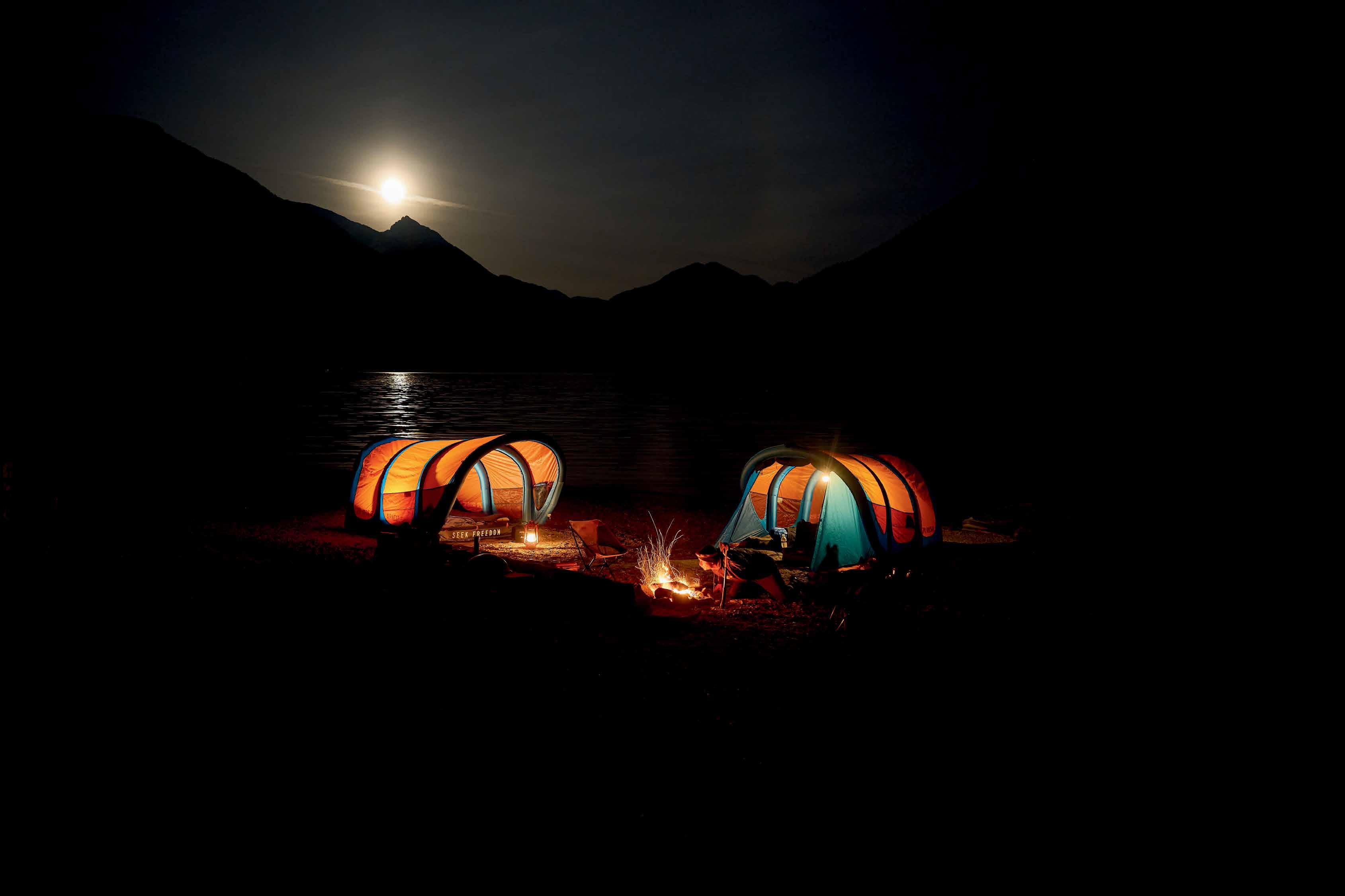
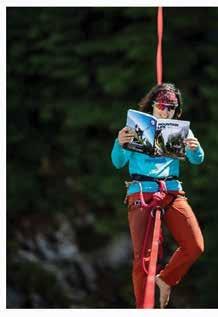
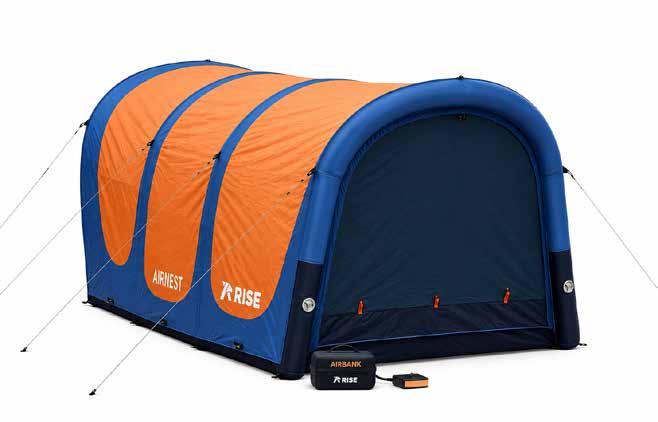
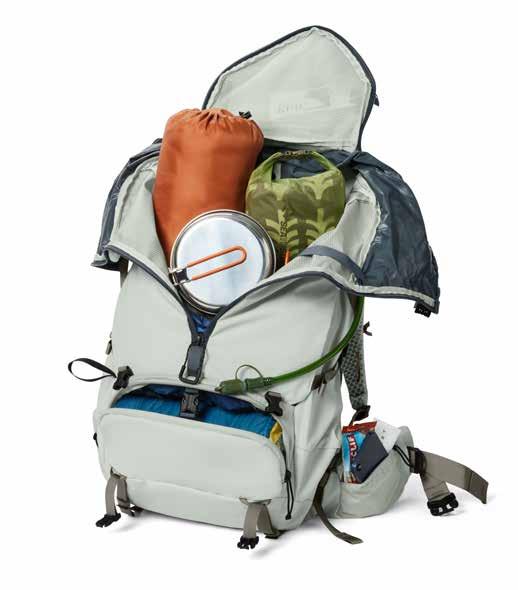
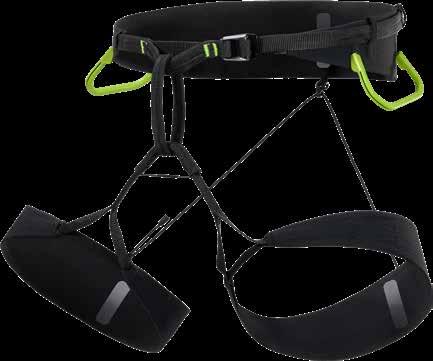
1. Camp life gets easier with the RISE AIRNEST 3+ Inflatable Shelter System. Simply roll up to the spot, connect the inflator, and start enjoying the scenery while your tent does all the work itself. Roomy, and with an included zip-in inflatable mattress, this thing sleeps like a dream. riseoutdoor.ca // 2. HOMETOWN HALL and SON’S BREWING TOWNLINE LAGER just make sense together—local, effortlessly cool and dialled in. The lager is crisp, clean, and easy-drinking with a smooth finish that keeps you coming back. It’s refreshing, no fuss—made for your glass and the kind of place you want to hang out. Nice folks and cold beer. hometownhall.ca // 3. The YETI SKALA HIKING PACK is engineered to improve summit pushes and alpine climbs. A lightweight AlumaLite Frame provides structural support, load lifters and an adjustable harness ensure a perfect fit, and a vented mesh back panel provides a cooling air channel. Weather-resistant lightweight guarded nylon keeps the elements out and an easy-access RipZip opening lets you get to your most needed items whether they’re at the top of your pack or somewhere in the middle. YETI.ca // 4. Perfect for little adventurers, the KINDERFEETS TINY TOT CONVERTIBLE BALANCE BIKE grows with your child, transforming from a trike to a balance bike as confidence develops. Lightweight, eco-friendly, beautifully crafted from sustainable bamboo and is available in a variety of stylish colours. Designed to encourage balance, coordination and independence, it provides years of active outdoor fun. mindsalive.ca // 5. Dynamic, lightweight and precision-engineered for sport climbing, the ARC'TERYX LITHOS SL HARNESS feels almost weightless on the wall. Featuring the latest evolution of Warp Strength Technology, it delivers the ideal balance of support, comfort and durability. Its innovative sizing system allows climbers to customize the waist-to-leg-loop ratio for a precise, comfortable fit all day long. arcteryx.com
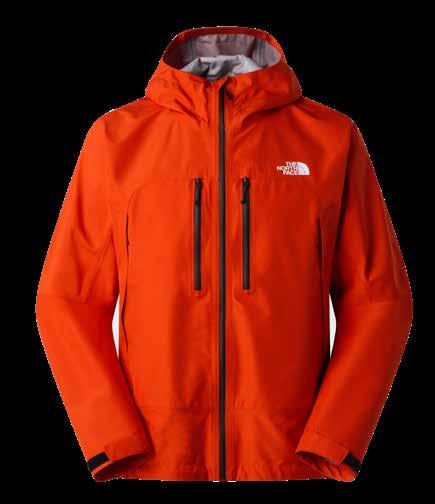
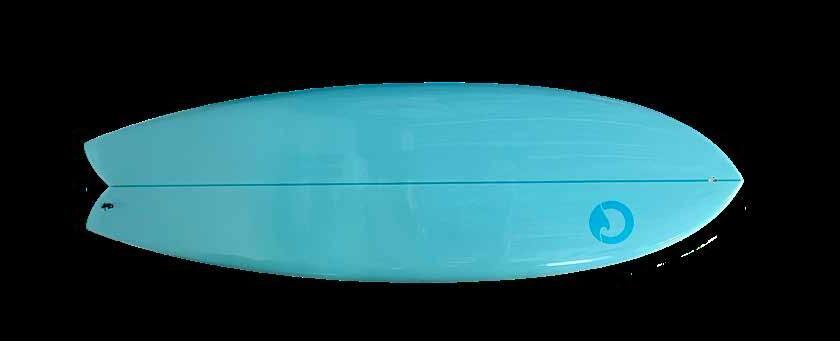
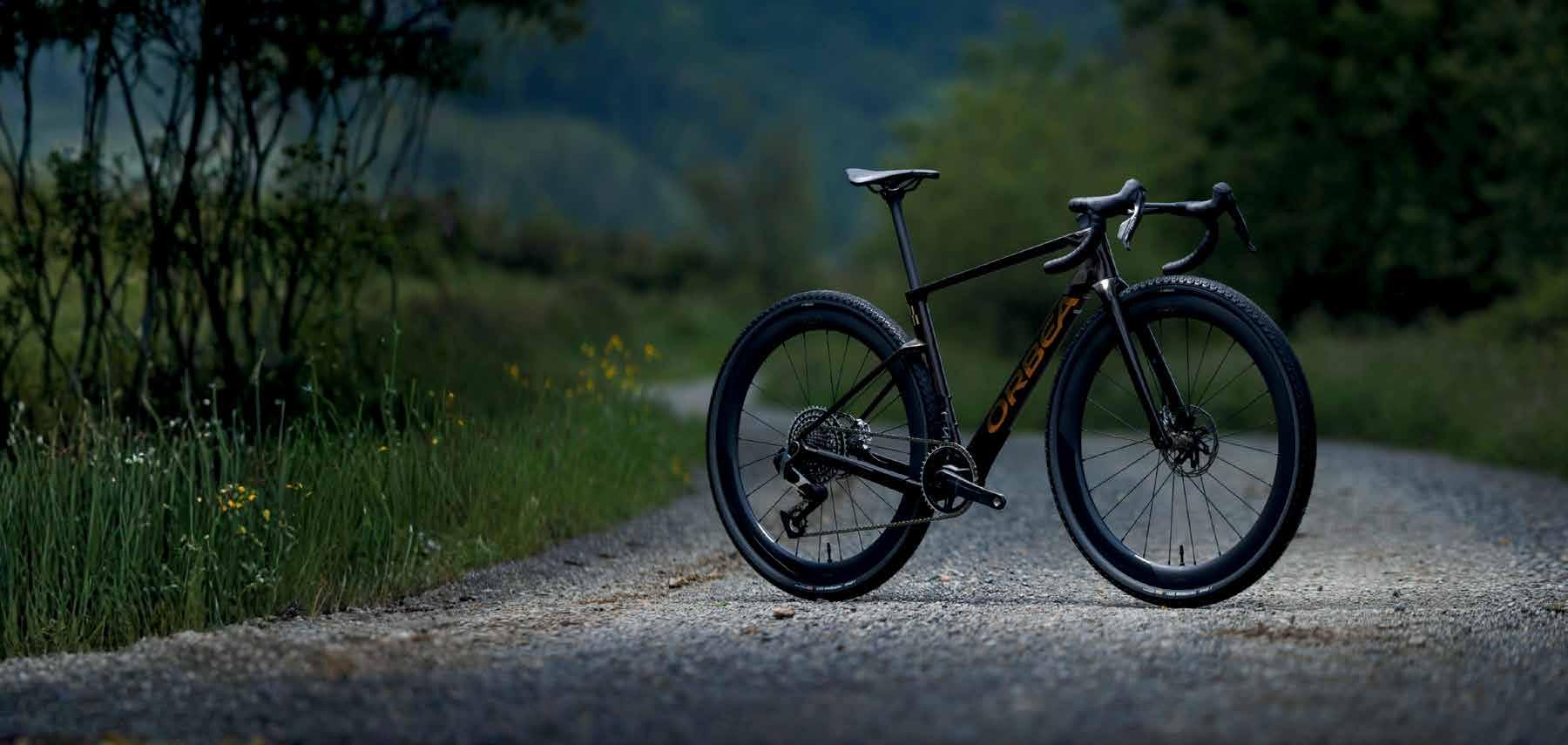
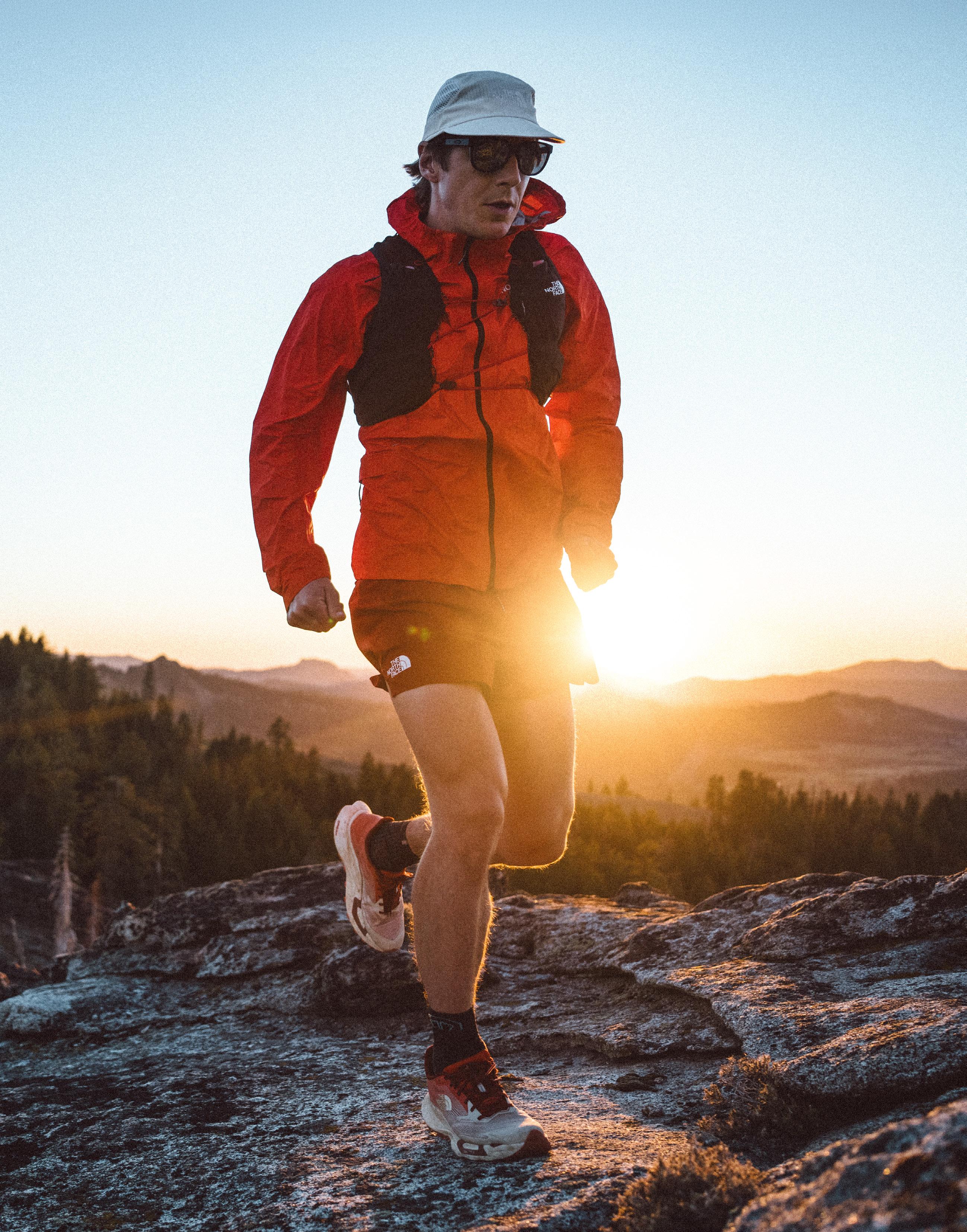
6. THE NORTH FACE MEN’S VALLEY VIEW JACKET is built for the trail. Equipped with seam-sealed DryVent fabric and a water-repellent finish, this jacket keeps wet weather at bay. Adjustable cuffs, pit-zip venting and water-resistant zippers give this layer the functionality of a jacket born for the elements. Wherever the hike takes you, the Valley View has your back. thenorthface.com // 7. From camp kitchens to backyard grilling, the BENCHMADE STATION KNIFE is a minimalist workhorse built for open-fire cooking and everyday meal prep. The blade features proprietary technology for exceptional cutting performance, while the durable handle develops a unique patina over time. A molded sheath is included for safe storage and easy transport wherever the next meal happens. benchmade.com // 8. The best hats tell a story before you say a word. MUTTONHEAD'S LOCAL QUACK CAP does exactly that, pairing playful embroidery with a classic fit that's equally suited to canoe launches, campsite mornings, and post-adventure pints. Crafted from 100% cotton, it's a lighthearted staple for days spent outdoors. mtnhead.com/ // 9. The ORBEA TERRA RACE is a gravel bike built for speed, blending road-bike efficiency with off-road capability. Its ultra-light 910g OMX carbon frame delivers exceptional stiffness, responsiveness and control, making it a race-ready machine designed to perform on everything from smooth pavement to rugged gravel roads. littleeds.com // 10. The STURG 6.4 BY BLU WAVE BOARD CO. is the ultimate shortboard surfboard designed for the Great Lakes. Generous width and thickness make this board rideable in smaller less powerful surf, like at our home break on Georgian Bay. Moderate rocker profile will get you into waves earlier and provide speed. bluwave.ca // 11. A powerful rechargeable mini pump, the TREK AIR RUSH fits in your pocket or seat pouch and can inflate up to four tires per charge. Its digital display shows target pressure, current pressure, battery charge and pressure units, while three simple buttons make operation easy. kamakizebikes.com
From Powder to Patios
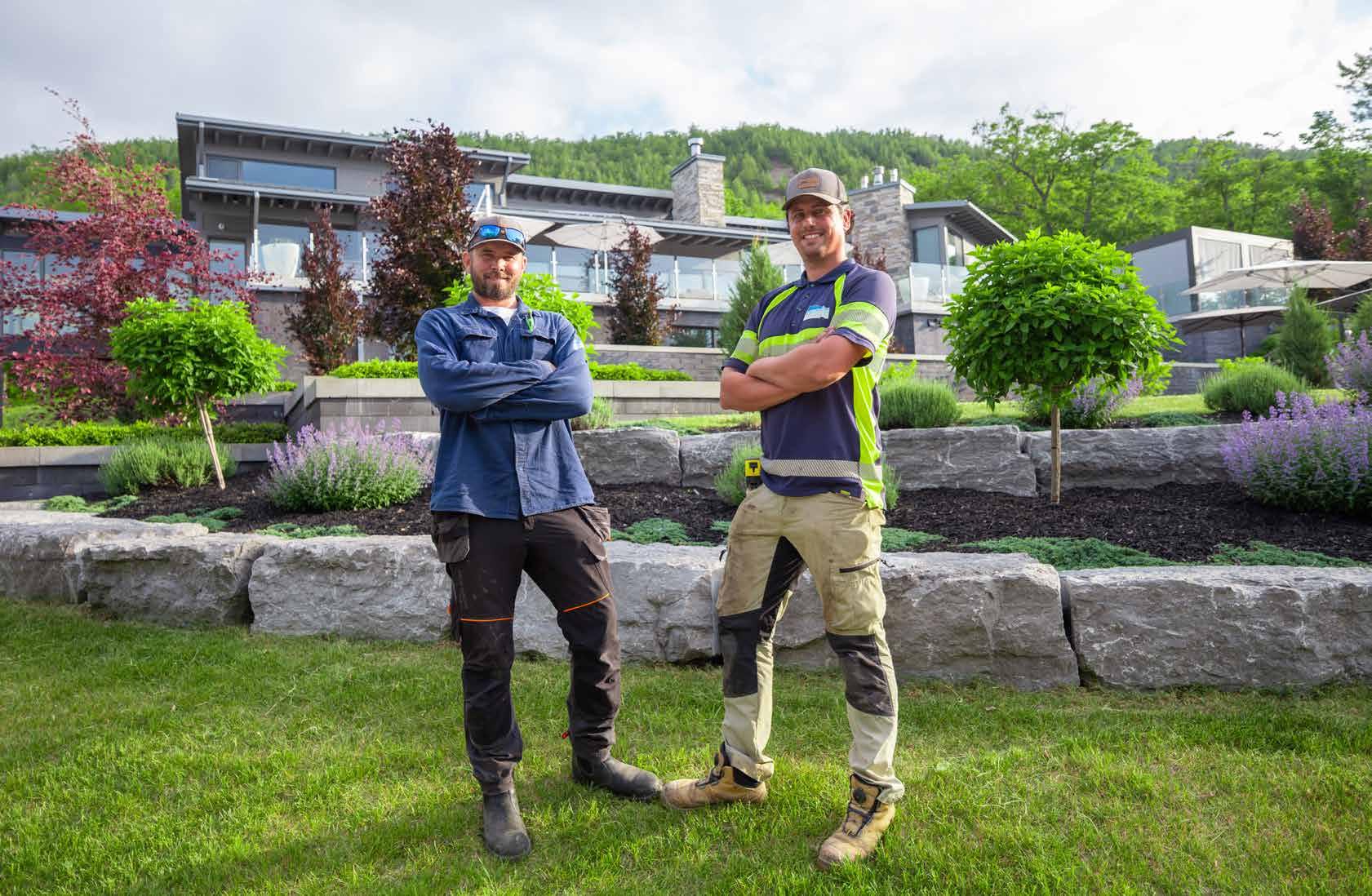
An Australian ski instructor followed winter across the world, eventually building an innovative landscape construction company in Southern Georgian Bay
words :: Carl Michener // photos :: Alan Shisko
Alot of Canadian teens would give just about anything to live the surf life in Australia. The same goes for Australian kids dreaming of Canadian powder. That’s the genesis story for Matt Godwin, owner of Bluescape Contracting Inc. The youthful 40-something grew up in Sydney and spent his summers during uni skiing in Whistler. He loved it so much that he spent the next decade and a half in Western Canada.
Unusually for an Australian, Matt grew up skiing. Thanks to his Norwegian ancestry, his family would regularly make the sixhour trek from Sydney to the Snowy Mountains. As chairs of the Cross-Country and Bushwalking Committee for their ski club, his grandparents provided a program of mostly hut-to-hut crosscountry. But skiing is skiing. And Matt was hooked.
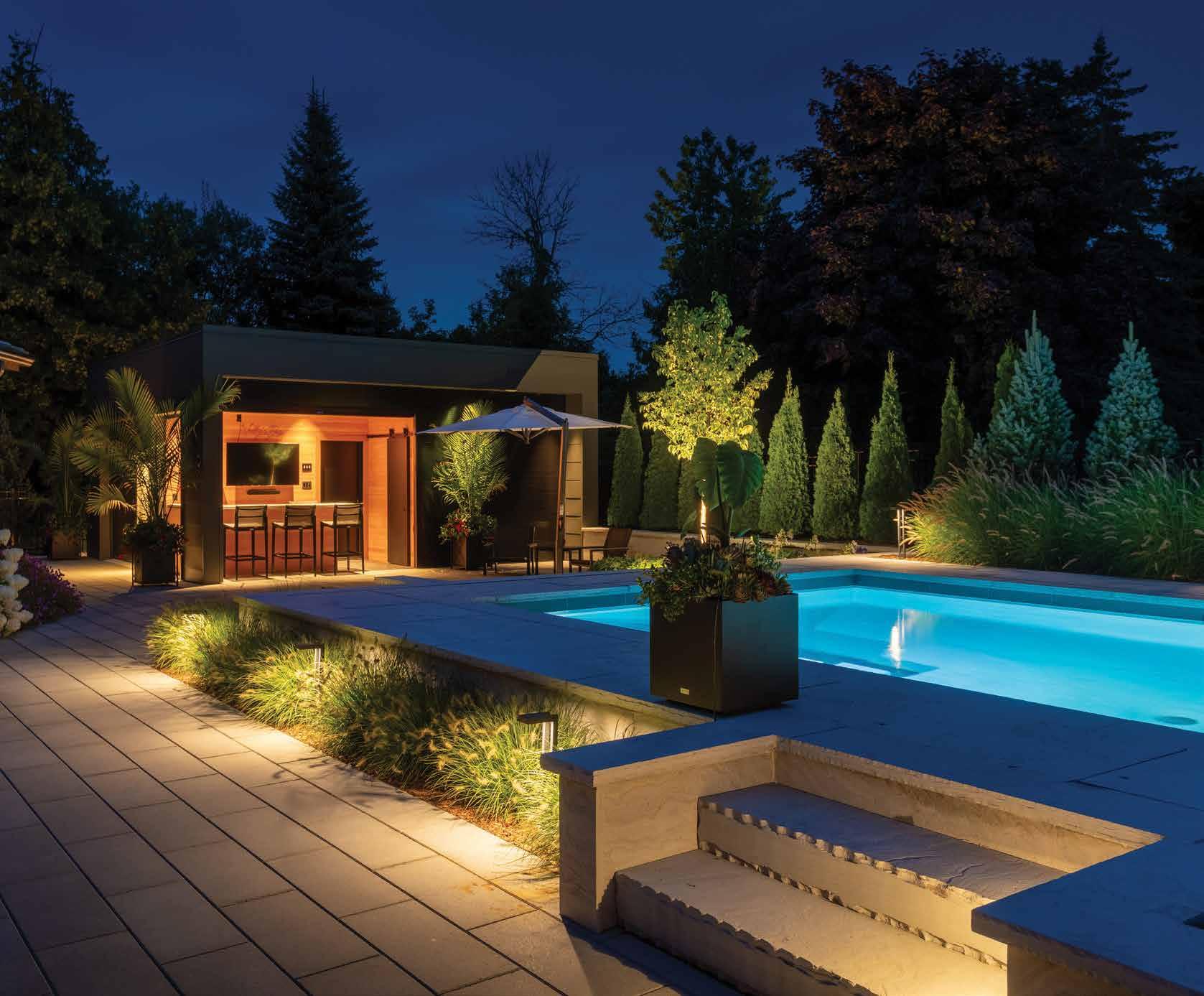
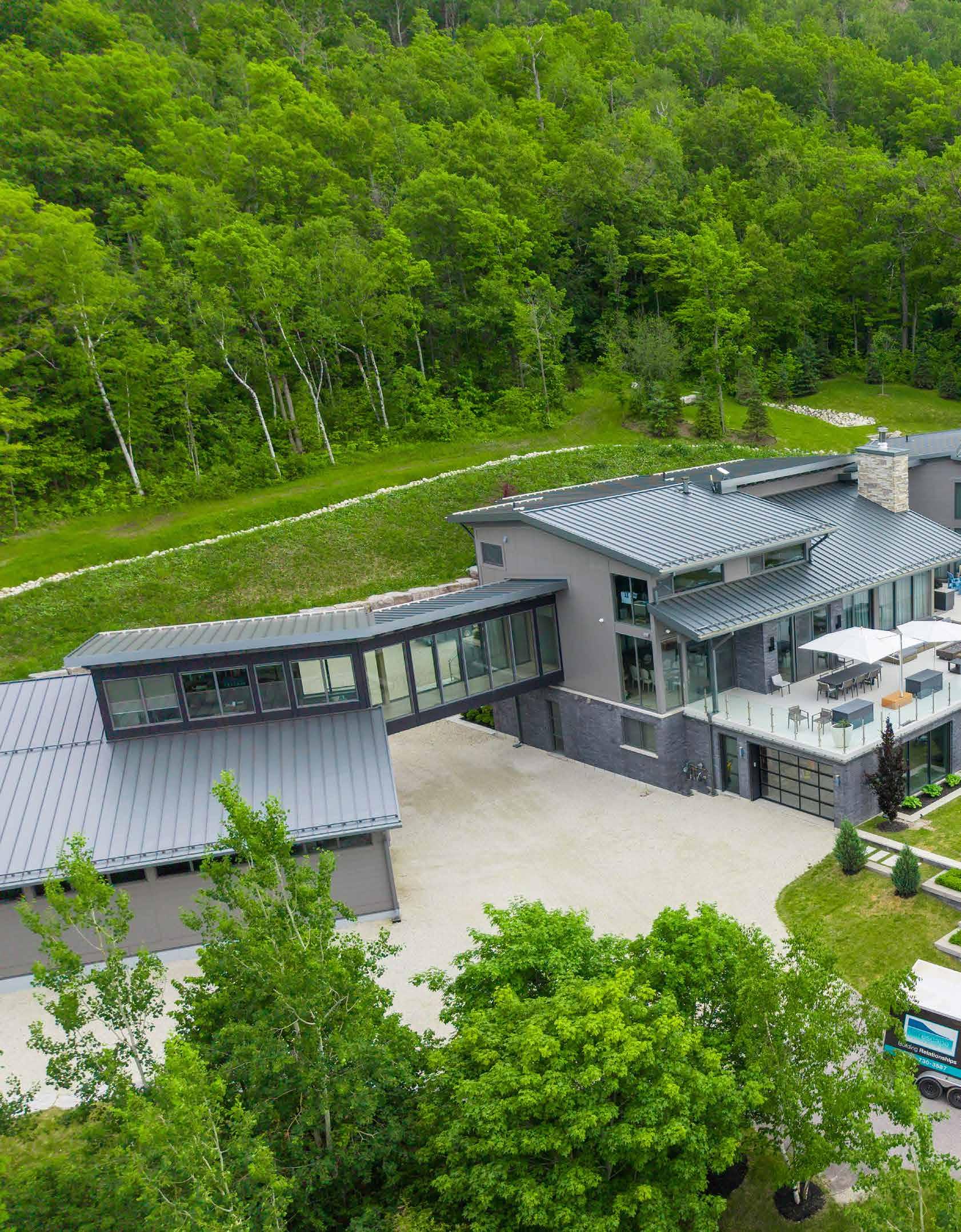
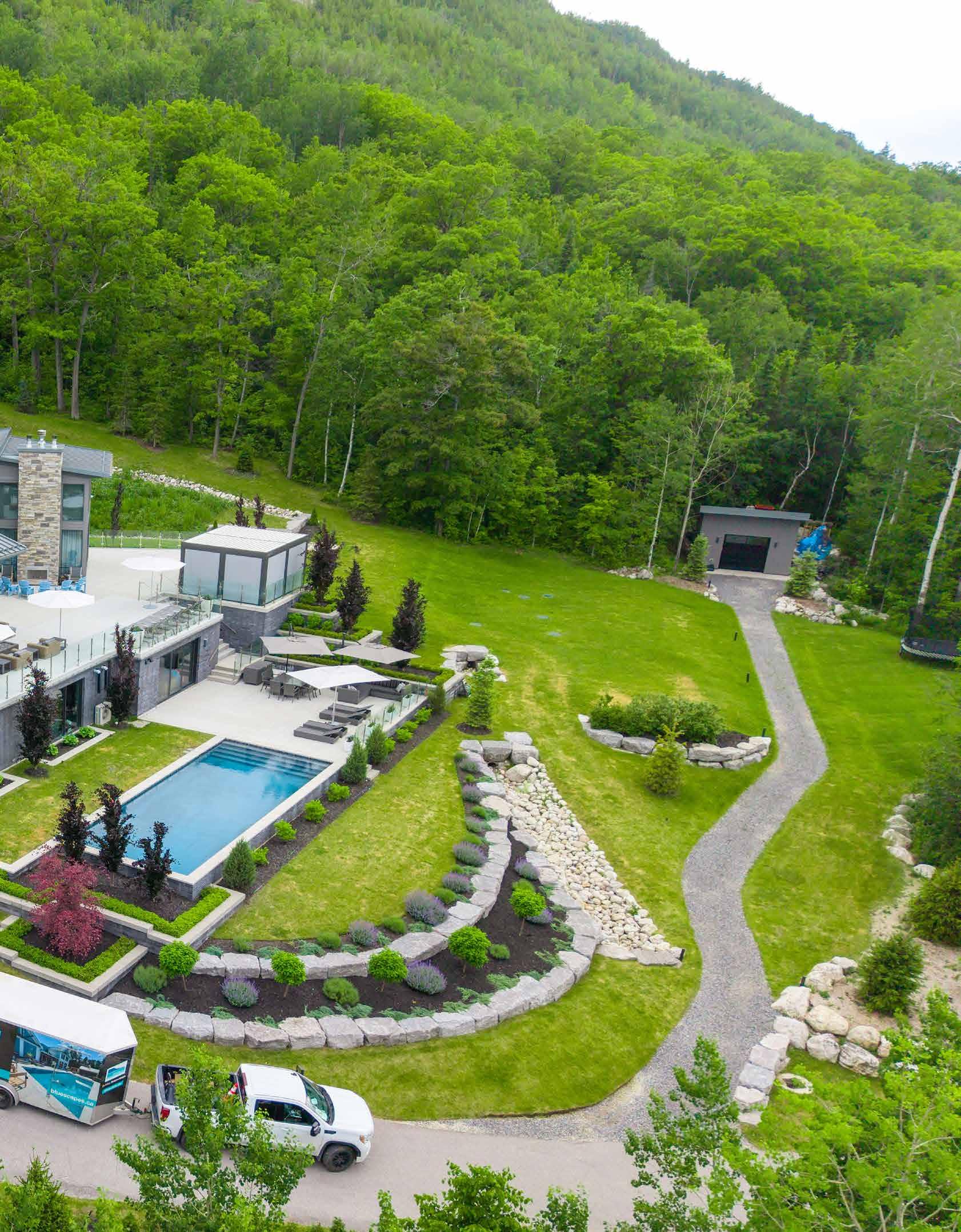
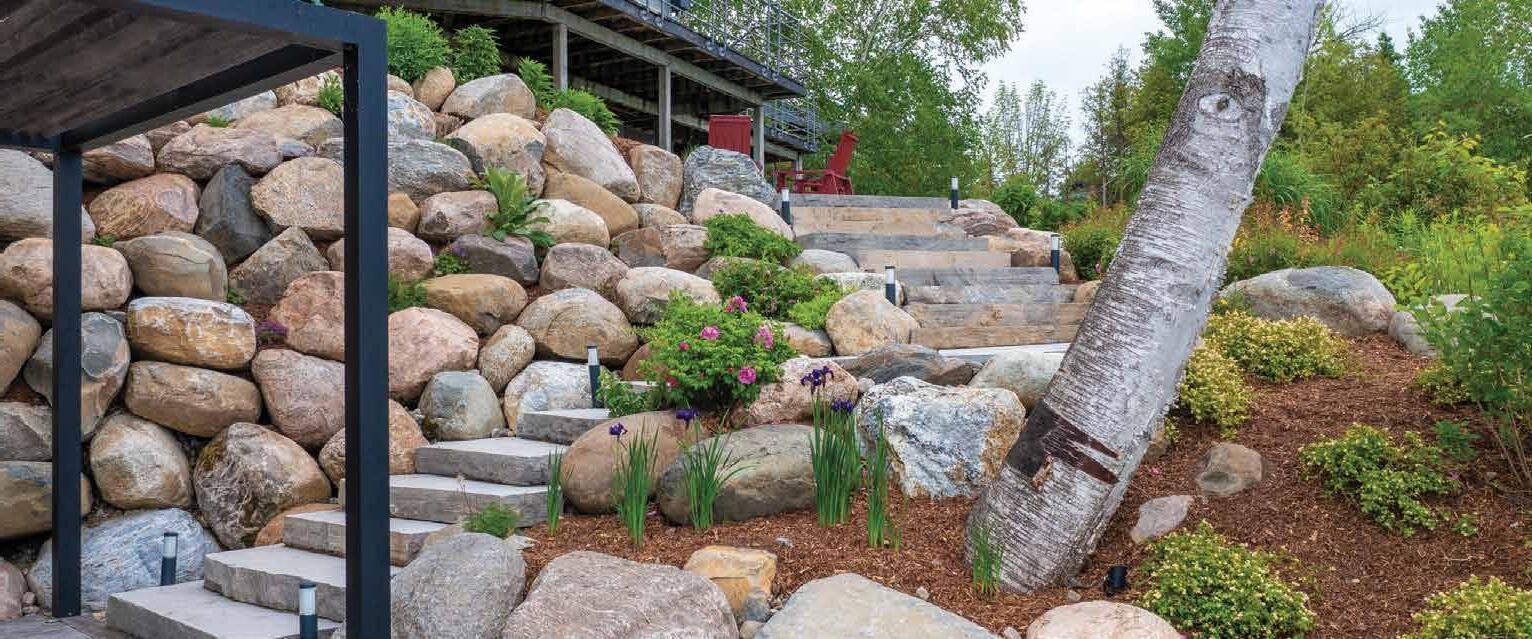
As we walk around the knockout property that Matt and his team are working on in the Blue Mountains, he comments on this and that, a spring in his step and a twinkle in his eye. He points to expansive staircases, enough outdoor lighting to require four SMART HUB transformers and rebuilt drainage channels that divert runoff and stormwater from the mountain, safely around the property and away from the home.
Matt heads up a tight team of 15 landscape, carpentry, concrete and steel fabrication experts across several job sites. On this rugged 30-hectare property, water management is serious business. Swales and ditches lined with gabion stone converge at what looks like a dry creek bed. Not so dry in stormy weather, he assures me.
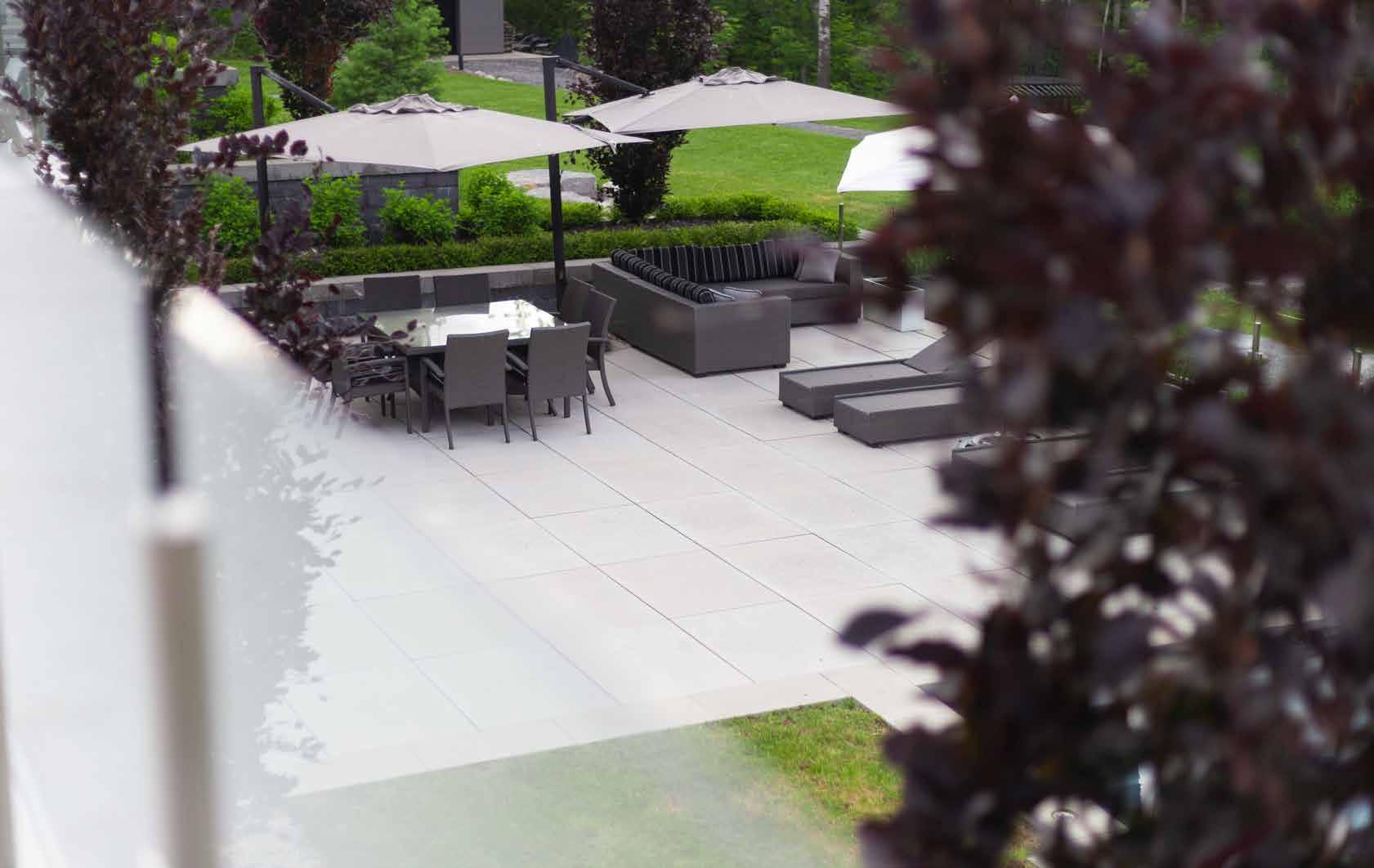
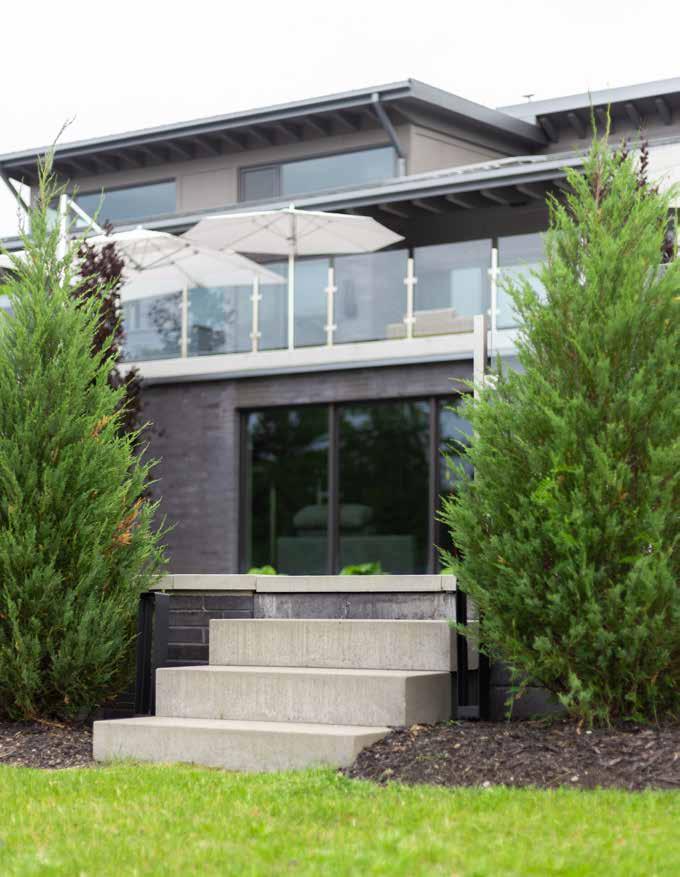
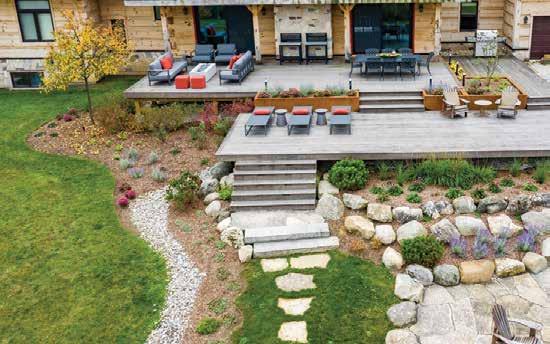
ABOVE What looks like an acre of patio with massive pavers slants almost imperceptibly towards the house, where rain and snowmelt run into drainage grates along the patio’s inner edge. BELOW From stairs to swales, Matt's team made everything look seamless.
NEXT MOVE STARTS WITH
Whether buying or selling, trust a team that puts you first. Personalized service and unmatched local knowledge. Let’s make your next move unforgettable.
Bringing 28+ years of experience, integrity, and a passion for finding you the perfect home and building futures in Southern Georgian Bay.
Matt first tasted Canadian powder in 1999, in Whistler. In 2001, Australian teaching degree in hand, he switched it up and landed in Banff. “I looked up, saw a ski hill with lifts and the next thing you know I was teaching at Mount Norquay,” he recalls. That summer he worked at the Town of Banff skate park, and for the 2002-2003 season he kicked off Norquay’s freestyle ski program. A few years later, he got his Level 3 instructor’s certification.
On this rugged 30-hectare property, water management is serious business.
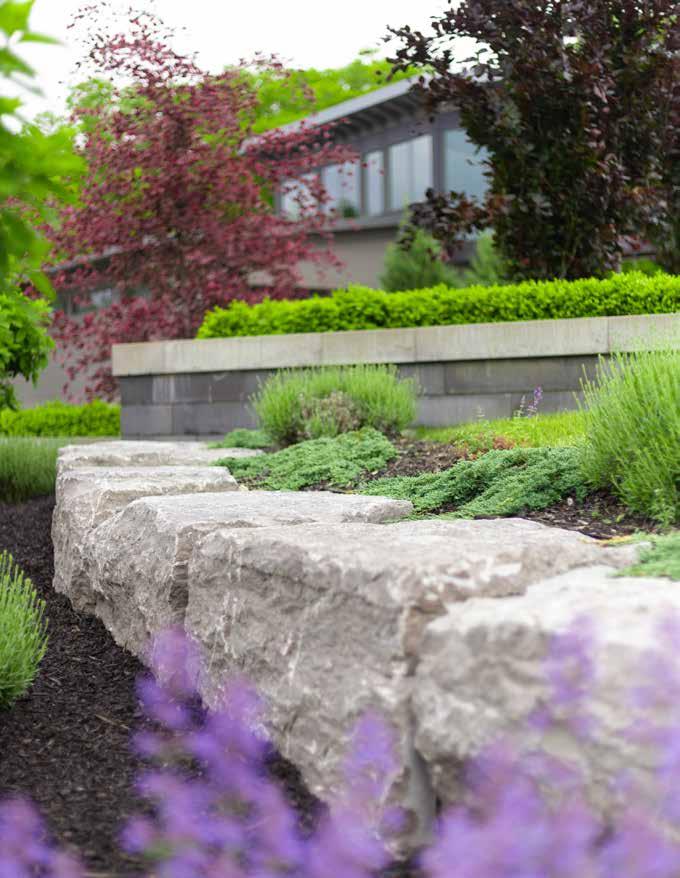
“Matt and his team have done terrific work,” says Jason Santomero, owner of the property we are touring. Jason has substantially renovated the home and the grounds over several years. Now, there’s an unobtrusive golf course alongside the house, no mean feat on an Escarpment-side property. It took substantial regrading, armour stone retaining walls, and gardens strategically placed so that stone-lined drainage channels form attractive borders. Now, you can toodle safely around in a golf cart.
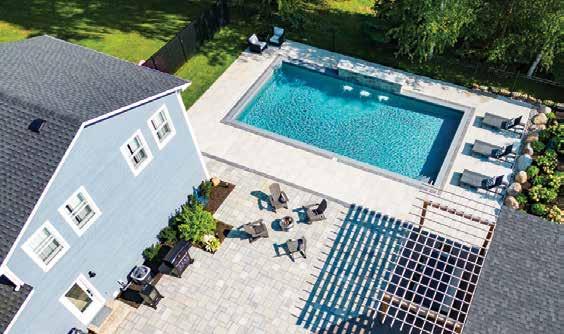
What looks like an acre of patio with massive pavers slants almost imperceptibly towards the house, where rain and snowmelt run into drainage grates along the patio’s inner edge. On the other side of the house, a wall of glass overlooks a sunken garden of pea gravel bordered by stepped stonework walls and shrubbery. The landscaping is impressive, the effort enormous.
ABOVE Stepped stonework walls shape the sunken garden.
BELOW Matt Godwin (left), owner of Bluescapes, and Dillon Pierce.
It was skiing that got Matt into landscaping in the first place. By that time, he was living in Canmore, working as a ski instructor at Lake Louise. Come summer, Matt was planning to move on, sailing superyachts in Spain. He never quite got there. To fill a gap, he pitched in on a job with Lake Louise Ski School Director Mark Ridgely. That first landscaping job turned into a wide variety of work and the beginnings of a carpentry apprenticeship: putting up Parks Canada signs from Banff to Tofino, laying fibreoptic cable along highways, as well as lots of landscape design and construction. “It was really varied,” remembers Matt. “That’s what kept it so interesting.”
Matt heads up a tight team of 15 landscape, carpentry, concrete and steel fabrication experts across several job sites.
Ten years later, Matt was finishing up his last year of skiing in the winter and building in the summer in Alberta. “My wife Liv’s family is in Ottawa, mine’s in Australia, my son Charlie was living in Thornbury, so Collingwood just made sense,” explains Matt. While the ski hills are smaller, Matt loves the water sports that Georgian Bay makes possible, as well as the variety of outdoor pursuits that come with having a real spring and a real fall.
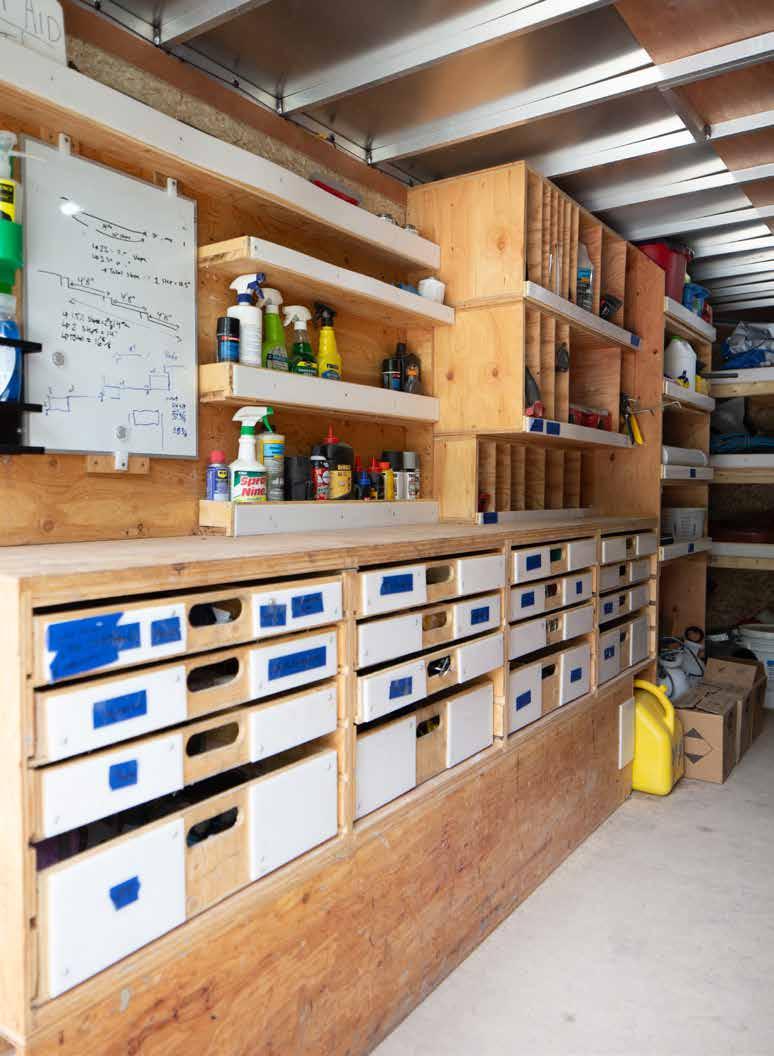
“I’ve set up a construction division led by a journeyman carpenter,” says Matt. “His first job was to build out three trailers like this one.” Every trailer, I learn, is identical. Power tools on the left, lawn stakes in this drawer, landscape rakes over there. That way, crew members can find what they’re looking for, no matter what site they’re at. “I used to spend half my day driving around, delivering tools or running to the hardware store,” he smiles.
Matt and Liv moved to Ontario in 2019. He started working for Steve Young, a Level 4 ski instructor at Craigleith who’s also a builder. (Matt is nothing if not consistent.) The Bay was eating up shoreline at the time, so boulder-centric landscaping was the order of the day. After working with Steve, and snowboarding / motorcross guru Lance Webb, Matt started up Bluescape in 2021. Since then, Liv, graphic designer for Blue Mountain Resort, went back to school for landscape design and now handles in-house design and marketing along with a few other “hats”—not the least of which being a wonderful mom.
Now that Bluescape’s residential construction roster is filling up, the skilled workers that Matt has added to the team have solid projects to work on year-round. And life is good. Matt and Liv own a comfortable home. While Charlie is racing through the gates, their two-year-old daughter, Amelia, enjoys being towed along the trails at Kolapore all winter long. In a decade or two, you might find her wielding a rake. Or hitting rails at Blue.
194552 Grey Road 13Grey Highlands
129 Sunset Blvd (LOT) -
on over half an acre in the heart of Thornbury, this extraordinary waterfront property offers 110 feet of private shoreline, breathtaking west-facing sunsets, and the rare opportunity to create a home that is uniquely yours.
110 Cattail CrescentBlue Mountains
Rarely
76 Trowbridge Street WMeaford
149 Landry LaneThornbury
Situated on a professionally landscaped corner lot in the sought-after Lora Bay community, this striking custom 4-bedroom, 4-bathroom residence blends modern Scandinavian design with refined luxury across more than 4,000 sq. ft. of thoughtfully crafted living space.
149 East Ridge DriveThornbury
Experience the best of Lora Bay living in this exceptional custom 5-bedroom, 4-bathroom residence. Thoughtfully designed and beautifully finished, this home offers access to Lora Bay’s premier amenities, including the golf course, clubhouse, private fitness centre, waterfront, and picturesque trails.
A PRIVATE RETREAT, FRAMED BY NATURE
Anchored by an elaborate courtyard, this custom bungalow offers a rare blend of privacy and connection to the outdoors
words :: Scott Hunter photos :: Sebastian Petrescu - Elevated Photos Canada
There are plenty of beautiful homes in Southern Georgian Bay. There are fewer that make you immediately slow down. This custom bungalow tucked into a quiet, luxury enclave minutes from Thornbury, does that.
Before you even walk through the front door, the property feels different. Mature landscaping softens the edges. Trees frame views instead of blocking them. The home sits comfortably on its oversized lot, confident without feeling showy. It’s the kind of place that conveys luxury but doesn’t need to shout.
Inside, the scale becomes apparent almost immediately. The main floor spans more than 3,400 square feet, wrapped in oversized windows that pull natural light deep into the home. Every room feels connected to the outdoors. In many ways, the landscape becomes part of the architecture.
The centrepiece is a remarkable courtyard that anchors the entire design. The great room, office and primary wing wrap around a private 1,200-square-foot outdoor living space that feels more resort than backyard. Massive retractable glass doors stack down to one panel, blurring the line between inside and outside. On a warm summer evening, it’s easy to imagine dinner stretching late into the night while friends gather around the fire and kids move freely between house and courtyard.
The current owners describe it simply as one of their favourite parts of living here. It’s hard to argue.
The home’s layout strikes a balance that many large homes never quite achieve. It feels expansive without feeling disconnected. The primary suite occupies its own private wing complete with a spa-inspired ensuite and enough separation to feel like a retreat. Three additional bedrooms and an office occupy the opposite side of the home and can be closed off entirely by a sliding barn door. It’s a clever design solution for a region where many homeowners regularly host extended family and visitors. And this home was clearly designed with visitors in mind.
In many ways, the landscape becomes part of the architecture.
The home's layout strikes a balance that many large homes never quite achieve. It feels expansive without feeling disconnected.
When family arrives, there’s room for everyone. The finished lower level mirrors the spaciousness of the main floor. Two additional bedrooms, a sprawling recreation room, a games area and multiple flexible-use spaces ensure guests never feel like they’re sleeping in a lower level.
In fact, the owners specifically point to that as one of the home’s biggest surprises. Natural light pours through oversized windows below grade, creating bright, welcoming spaces that feel like a continuation of the home rather than an afterthought.
Of course, location matters too.
This property sits just steps from Georgian Bay and the Georgian Trail. Bike rides into Thornbury for coffee become routine. A quick paddle, a trail run or an evening stroll along the harbour can all happen without much planning.
That connection to Thornbury’s shops, restaurants and waterfront gives the home an unusual combination of privacy and accessibility. It feels tucked away without feeling isolated.
Perhaps the best endorsement comes from how the home performs when it’s full.
Many houses look impressive when empty. This one seems designed for the opposite. The owners talk about family gatherings, evenings around the firepit and the simple luxury of never feeling crowded.
“There’s room to breathe even when all of the extended family is here.”
In a region increasingly defined by active lifestyles and multigenerational gatherings, that may be the home’s greatest luxury of all.
This home is listed for sale with Royal Le Page Locations North Brokerage, KW Collaborative Real Estate. To book a private viewing, please Jane Moysey, Broker, at 705-888-1982, or Karen E. Willison, Realtor, at 705-888-0075.
ABOVE The property sits just steps from Georgian Bay and the Georgian Trail. BELOW Evenings around the firepit? Yes, please. BOTTOM The home feels tucked away without feeling isolated.
729297 21ST SIDEROAD | BLUE MOUNTAINS
1880’s farmhouse set on almost 15 acres of privacy near Loree Forest with Georgian Bay views and potential for a future custom estate on the edge of the escarpment.
The River House
Set alongside the Beaver River in the heart of Clarksburg, this four-bedroom home offers gardens, privacy and a front-row seat to the changing seasons
words ::
The river murmurs past backyards and beneath old bridges. GLEN HARRIS
Scott Hunter
The river is what gets you. Not immediately. At first it’s the gardens, the mature trees and the quiet street. Then you hear it. The river slips through the backyard, and suddenly the rest of the property starts making perfect sense.
Tucked above the banks of the Beaver River, this four-bedroom Cape Cod-style home is the kind of place that encourages you to slow down.
The Beaver River is one of those defining features of the Southern Georgian Bay landscape. It tumbles out of the Niagara Escarpment, winds through
farmland and villages, then eventually spills into Georgian Bay. Here in Clarksburg, the river moves at a gentler pace. It murmurs past backyards and beneath old bridges. It attracts hikers, kayakers, fly fishers and anyone looking for an excuse to spend a little more time outside.
Sitting above its forested banks, the home boasts the kind of English garden that clearly didn’t happen overnight. It feels established. Lived in.
Follow the garden toward the river and you’ll find what might become your favourite part of the property. A private outdoor dining area overlooks the water,
offering front-row seats to changing seasons, passing wildlife and the simple pleasure of listening to moving water while sipping a glass of wine.
Inside, the home continues the theme.
At just over 2,600 square feet, the house strikes a balance between spacious and comfortable. Large windows frame river views throughout the main living spaces, constantly pulling your attention back outside. Sunlight bounces across floors. Trees become artwork. The river becomes part of the décor.
The heart of the home is an openconcept living area anchored by a
Perched above the forested banks of the river, the home boasts the kind of English garden that clearly didn't happen overnight. ALAN SHISKO
wood-burning fireplace. It feels appropriately Canadian. You can imagine snowy winter evenings here after a day skiing at Georgian Peaks or hiking the trails around nearby Clendenan Dam.
The kitchen embraces a country aesthetic with Pinetiques cabinetry that suits the character of the house. It’s functional, warm and refreshingly
Trees become artwork. The river becomes part of the decor.
unpretentious. This isn’t a home trying to be a downtown Toronto penthouse. It’s a river house.
Upstairs, three generous bedrooms provide room for family and guests. A fourth bedroom on the main level offers flexibility for visitors, a home office or that hobby you’ve been promising yourself you’ll finally pursue once life slows down.
Of course, life doesn’t really slow down in Clarksburg. It just looks different.
From the front door, you’re walking distance to local galleries, cafés and shops. Thornbury’s restaurants and harbour are minutes away. Georgian Bay sunsets remain available whenever required.
That’s part of what makes this location so appealing. You get the feeling of being away without actually being away. Need groceries? Easy. Want a paddle before breakfast? Also easy. Need to disappear into the woods for an hour after a difficult Zoom call? You’re in the right neighbourhood.
The home’s lower level offers additional flexibility with plenty of room for guests, hobbies, storage or entertaining. Like many homes in this area, its layout underscores an important reality: people tend to visit.
Especially once they discover you live on the river. In a region increasingly filled with modern builds and bold architectural statements, there’s something refreshing about a home with this much personality. It doesn’t need dramatic cantilevers or floor-to-ceiling minimalism to make an impression. It has a river.
This home is listed for sale with Realtor Brendan Thomson, Chestnut Park: 705-606-1270
Scenes from The River House. ALAN SHISKO
A Charlevoix-Inspired Estate Above the Bay
Evoking the mountain region of Quebec, this modern home near Georgian Bay mesmerizes with its attention to detail
words :: Robert Artspool // photos :: Nat Kay
The Charlevoix region just east of Quebec city along the mighty Saint Lawrence River is steeped in Old World charm.
With its sweeping panoramas, stately architecture and rugged natural beauty, it is a a timeless mountain landscape.
Here in one of the region’s villages that seem to cling to dramatic rocky hillsides, that Jake Baranski and his wife found the inspiration for the perfect home for their lot at 120 Mimi Crescent, just west of Meaford in the hamlet of Balaclava above Georgian Bay.
“My wife and I were in Charlevoix for holidays,” said Baranski, who is the principal of Hartman Projects, a custom build firm based in Oakville. “And we saw these beautiful modern farm homes out in meadows above the Saint Lawrence and it made such an impact on us. So stately and grand. We wanted to do something similar.”
So they built it. Listed with Kevin McLoughlin and Kerri-Ann Brownlee of Kevin & Kerri-Ann Associates—of Sotheby’s Realty in Collingwood—this newly built four-bedroom, three-bathroom residence feels deeply connected to the three acres on which it
sits. Georgian Bay glimmers beyond the trees, and the Bruce Trail winds through the forest nearby.
“This is a rare, no-compromise sanctuary offering a brandnew, worry-free luxury build with a full Tarion warranty,” says McLoughlin. “It instantly elevates lifestyle into a private, fourseason playground with the trout stream Waterton Creek in the backyard and the Bruce Trail at the doorstep. Best of all, futureproof engineering like hydronic radiant flooring and a pre-framed elevator shaft guarantees they can comfortably enjoy this private estate forever.”
Inside, the design narrative is one of craftsmanship and restraint. Rather than relying on trends, the interiors focus on enduring materials and thoughtful detailing. The heart of the home is the main living area, anchored by a striking Frenchcountry-inspired Rumford fireplace clad in stone and finished with a herringbone brick inlay. It serves as both a visual focal point and a gathering place, bringing warmth and character to the open-concept space.
“The moment you step inside, there is an immediate sense of calm,” says Brownlee. “The home feels both grounded in its natural surroundings and thoughtfully elevated in its design.
What’s most striking is the balance between luxury and comfort. Every space feels intentional. The home is beautifully designed yet super inviting and livable.”
Natural light moves effortlessly throughout the home, highlighting warm textures, refined finishes and architectural details that invite you to slow down and take it all in. The interior evokes a feeling of retreat.
“It’s the kind of home that immediately encourages you to settle in,” Brownlee adds.
Chevron and plank-engineered white oak flooring flow from room to room, the rich texture complemented by expansive large-format tile surfaces. The combination strikes a balance between rustic warmth and contemporary refinement.
The kitchen, however, may be the home’s most impressive expression of luxury living. Anchored by Nile Gold sintered stone countertops, an oversized island and a matching backsplash, the space is both functional and sculptural. A Parisian plaster range hood adds artisanal character, while a fully integrated JennAir NOIR appliance suite maintains the kitchen’s clean architectural lines. Custom white oak cabinetry provides warmth and craftsmanship, creating a space that feels equally suited to family gatherings and entertaining.
ABOVE The heart of the home is the main living area, anchored by a striking French country-inspired Rumford fireplace clad in stone and finished with a herringbone brick inlay. BELOW The primary ensuite is particularly noteworthy, offering a spa-like retreat defined by walnut accents, champagne bronze fixtures and a custom trough sink that elevates the room beyond the expected.
A custom white oak staircase serves as a sculptural design feature, while integrated LED accent lighting and a Lutron dimming system create atmosphere at every hour of the day. The primary ensuite is particularly noteworthy, offering a spa-like retreat defined by walnut accents, champagne bronze fixtures and a custom trough sink that elevates the room beyond the expected.
“The home feels both grounded in its natural surroundings and thoughtfully elevated in its design.”
Rockcliffe Estates itself remains one of the region’s most coveted addresses. With only 42 estate lots, the community offers a level of exclusivity rarely found along this coveted stretch of Georgian Bay coastline. Combined with proximity to Owen Sound, Meaford and countless outdoor recreation opportunities, it represents an ideal balance between seclusion and convenience—a modern country retreat designed not just for today, but for generations to come.
This home is listed for sale with Kevin & Kerri-Ann Associates, Sotheby's International Realty Canada, 705-416-1499, kandka.ca
ABOVE Custom white oak cabinetry provides warmth and craftsmanship. BELOW A Parisian plaster range hood adds artisanal character, while a fully integrated JennAir NOIR appliance suite maintains the kitchen’s clean architectural lines.
The Mountain Lifers
They are the people that make up the fabric of the community—business leaders, entrepreneurs, visionaries. They have inspiring stories to tell, not only about the careers they have built, but also how they give back to the community and how they inspire others to live their best Mountain Life—Ontario style.
The SUP Master: Tim Oliver
words :: Dan Rubinstein
In the 15 or so years since SUP racing became a fixture on the international sports scene, the best paddleboarders in the world have been mostly European. A handful of North Americans, mostly athletes who live on the West Coast, have reached the podium of major events. Which makes Tim Oliver’s success even more impressive.
Last year, the 47-year-old firefighter from Thornbury finished first overall in a pair of gruelling SUP races: Molokai 2 Oahu (M2O), a 50-kilometre crossing of Hawaii’s notoriously challenging Ka’iwi Channel; and the SUP 11-City Tour, a 220 km, five-day stage race along canals and across lakes in The Netherlands. The oldest man to win the M2O and the first Canadian to win either event, Oliver credits both his background in competitive cycling and the ideal training ground 100 feet from his house: the temperamental waters of Georgian Bay.
With a fleet of Starboard SUPs in his garage and a generous lakefront neighbour across the street, Oliver paddles on gnarly days that replicate ocean conditions, when strong northwest winds kick up big waves. “It’s such a dynamic environment and it’s different every time you go out,” he says. “You’re playing in a three-dimensional plane, constantly adjusting technique.” Sometimes, Oliver drives up the shore for the downwind run home, then hops onto his bike to retrieve his vehicle. Other days the bay is glassy, and he revels in being alone in the middle of an expanse of blue.
To maintain his edge, Oliver leans into the endurance tricks he developed through cycling—“I never let off the gas in terms of fitness”—and bio hacks that produce small gains. His approach to nutrition and recovery is scientific, and he trains with paddleboard stroke guru Larry Cain, a former Olympic canoeist in Oakville who has coached several international SUP champions. “Larry has an innate ability to grab water with his blade,” says Oliver. “He’s helped me become much more efficient.” Oliver got into SUP after his daughters were born. It was a way to stay active that didn’t involve five-hour bike rides. Working eight 24hour shifts every four weeks gives him enough bandwidth to hit the water and stay in shape on Nordic skis in the off-season. This year’s race schedule will feature Scotland’s Great Glen Paddle Challenge and the ICF World Championships in Italy. Although SUP is not on the docket for the 2028 Olympics, 2032 is a possibility. “I’ll be well into my 50s by then,” says Oliver, “but I’d still go through the process of trying.”
shaped by place: marni moreau
words :: Ned Morgan
Marni Moreau’s perfect summer day begins with a hike up the punishing ”1940” trail at Blue Mountain Resort, and winds down with oysters and a cocktail at Penny’s outdoor patio in Thornbury followed by evening croquet in her yard with friends.
Life under the sun comes easily to the born-and-bred Clarksburger. “My childhood home backed onto several acres of forest
and the Beaver River,” she recalls. “As one of four kids, my mom wanted us outside as much as possible. Rubber boots and jean shorts comprised my uniform for the first 10 years of my life—mucking around the river, hunting crayfish, building forts, sleeping in tents and chasing fireflies.”
Behind this charmed young life stood a family rooted in community service. Marni’s father Peter Moreau is a former town councillor who helped lead
fundraising efforts for the Beaver Valley Community Centre, Moreau Park and the LE Shore Library. Her mother, Barbara, was a registered nurse at Errinrung Long Term Care and a volunteer with Beaver Valley Outreach and the Beaver Valley Athletic Association.
A graduate of Western University with an Honours Degree in History, Moreau worked in Japan before building her career in Toronto, managing partnerships for major brands including Tim Hortons, Ford and TD Bank. She also held a senior role at Rogers Sportsnet and as a top-performing sales rep at CMH Heli-Skiing. She is a co-founder of the Blue Mountain Film + Media Festival and a non-denominational wedding officiant.
More than a decade ago she returned to the Blue Mountains, as did many who had left and then found themselves wanting to be back here for more than just weekends. “I reengineered my life so that I could live here full time,” she says. ”I love the active outdoor lifestyle, the involved and caring community and of course all my old friends—those who never left and those that like me, returned as soon as they could.”
Marni is running for mayor of Town of the Blue Mountains (the municipal election is scheduled in October) and I asked her how she would seek a balance between housing needs, recreation spaces, services, sustainability and agriculture. “The secret is out,” she responded. “This is an amazing place to live, but it needs to be liveable to a broad range of demographics. I would approach my term at council with a commitment to mixed housing initiatives—and this might lead to a greater densification so that we can protect the land that is designated as Special Crops agriculture. We will need to take a hard look at our finances and decide what can be delayed or phased in. My priority is infrastructure that keeps us safe and preserves the town’s character. I am a recent member of the Escarpment Corridor Alliance and I think their approach to protecting vulnerable wetlands and wilderness is absolute genius. I would be compelled to cooperate with them as much as I could.”
And that all sounds very reasonable to me.
"The secret is out. This is an amazing place to live, but it needs to be liveable to a broad range of demographics." Marni in her happy place. GLEN HARRIS
Between Race Gates and Bike Repairs: Mike Nazwaski
words & photo :: Colin Field
Walk into Smitty’s Bike Shop in Thornbury and there’s a strong chance Mike Nazwaski will be quietly wrenching in the back. And if you have any technical questions, he’s the man for the job.
Nazwaski grew up in Toronto, but like a lot of kids whose families skied at Beaver Valley, the area slowly became home long before he moved here. “I grew up coming every weekend to Beaver Valley,” he says. Now he splits his time between working
full-time at Smitty’s, training for and racing alpine snowboard events around the world and squeezing in as much riding as possible in Grey County.
Nazwaski is on the Canadian national snowboard team in alpine snowboard disciplines. His winter schedule is relentless. Training camps in Europe. Trips to China. Racing blocks in Austria and Italy. Preseason glacier camps stretching weeks at a time.
“All the World Cups and all the major races are in Europe,” he said. “We’re kind of semi-based out of Europe.”
Nazwaski missed qualifying for the Milano Cortina Olympic Games after a frustrating run of results. But his snowboard resume is stacked. Second at Junior Worlds. He won the North American overall title and claimed a Canadian national championship last season. Still, after years of constant travel, he admits things are shifting slightly.
“This year I just needed a break because I’ve been doing this for so long,” said the 25-year-old. “I wanted to have a full spring here.”
And “here” matters to him. Nazwaski currently rents a place near Arrowhead Road and has spent the last four years fully immersed in the Collingwood-Thornbury scene. The riding around here is part of the reason he lives here. Gravel and mountain biking opportunities are top notch. Originally Nazwaski fell into mountain biking through Toronto’s Don Valley trail scene. He started joining weekly rides with the Don Vivants bike club as a teenager.
“I was like 14 riding around with a bunch of 50-year-olds in the Don,” he laughed.
Eventually that turned into O-Cup series mountain bike racing and cyclocross. Although these days, riding is less about racing and more about exploration.
Nazwaski has been working in shops since he was 14. He used to sweep the floor at Duke’s Cycle. Then he was at Bateman’s before working at the Trek Store. Then he got tired of the city.
“I realized I keep coming up here every weekend and all of my friends have moved up here,” he says. Eventually he walked into Smitty’s looking for work.
“I don’t even think I had a resume,” he says. Like most mechanics today, Nazwaski has watched bikes become dramatically more complicated in just a few years. Electronic drivetrains, wireless shifting and phoneconnected diagnostics have transformed modern repair work.
Still, he clearly loves the culture surrounding bike shops as much as the bikes themselves. The constant conversations. The weird parts searches. The community that develops around rides, trails and hanging out for beers afterward.
This place slowly grabs hold of people over years of weekends, winters and dirtbag adventures. Until eventually they realize they’ve quietly built an entire life here. That’s what happened to Mike Nazwaski. And he’s fine with it.
“It’s honestly a perfect location,” he says.
Mike loves the culture surrounding bike shops as much as the bikes themselves.
The Waterman: aaron pilon
words :: Will Shelley
For Aaron Pilon, the path from Bay Street to life on Georgian Bay started with a surf lesson in Hawaii and a case of burnout. The founder/owner of Blu Wave—the board sports company headquartered in Wasaga Beach—grew up in landlocked Listowel, where water sports were not really part of his childhood (though his grandfather was a commercial fisherman on Lake Erie).
After attending Western University and Ivey Business School, Pilon moved to Toronto and launched a successful career in commercial real estate until the pace of the Bay Street industry began to wear on him. “It was a high-pressure, commission-based job,” he says. “I got to the point where I was looking for something different. I never really envisioned myself [in Toronto] for life.”
Around the same time, a surf lesson in Hawaii sparked an interest in board sports, and by the late ‘00s he was standup paddleboarding on vacations in Mexico. “It appealed to me because I had gotten into surfing and kayaking. So [SUP] was a melding of those disciplines.”
He launched Blu Wave in 2010 while still working his day job. Initially HQ’d in Toronto, the company was an early player in the SUP industry at a time when few in Canada
knew the sport. “I would paddle along the waterfront in Toronto and get people yelling at me, ‘What is that?’”
Blu Wave quickly established a dealer network across Canada and grew to a size that Pilon could leave commercial real estate to focus on the company full-time.
After spending weekends in Collingwood, he realized there was significant potential for Blu Wave in the region. In 2014, Pilon, his family and his company made a permanent move here.
Originally he planned to find warehouse space and continue wholesaling. “But we couldn’t find the right space in Collingwood, so our broker suggested the old Giant Tiger location in Wasaga Beach. At first I thought it was way too big. But we needed space quickly, so we rented it. After the first summer, we realized it was actually a great location—close to the beach and a central location to serve the Southern Georgian Bay area.”
The move also changed the scope of the business from a wholesale-only brand/ manufacturer to one that now includes a retail presence and experience-based programming offering rentals, lessons and tours.
In the intervening years, the board sports waterscape has changed. Blu Wave has evolved into a broader brand, designing
surfboards specifically for Great Lakes conditions and moving into foil. “We now design foil boards, wings and foils, the whole setup,” says Pilon. “Wing foiling has grown at the same time the SUP market has plateaued. Today, I’d say foiling is probably the fastest-growing water sport in the world.”
The conditions on Lake Huron and Georgian Bay are ideal for wing foiling. Blu Wave teaches wing handling on the beach near their shop in Wasaga and offers foil lessons behind a jet ski in Collingwood.
In closing, we asked Pilon to recount his most memorable local on-water adventure.
“Shortly after my 50th birthday, I finally did something that had been on my bucket list for years: paddleboarding solo and unassisted to Beckwith Island. One weekend, the weather lined up perfectly: super-calm winds in the morning with a slight south breeze, then a north wind developing midafternoon, allowing for a window of time to make the crossing. I called a friend who was boating over and told him I might paddle there if conditions held. I also told him I’d need a ride back because I definitely wasn’t paddling both ways. I left around 6:30 in the morning and paddled roughly 50 kilometres. It took me about seven hours. My friends and their boat were waiting with a cold beer when I arrived.”
Pilon paddling the locally designed Catalina Ex 14 in front of Beckwith Island. SCOTT PARENT
Reading the Water: Neal Owen
words :: Robert Artspool
On most mornings, before the calls begin and the markets start moving, Neal Owen is thinking about rivers. Not in the abstract sense, but in the way an angler reads current, light and structure. Where the seams form. Where a fish might hold. Where patience, perseverance and respect for the environment are rewarded. As the president of BlueRock Wealth Management, and as a man who gives back to the community in a big way, Neal embodies those attributes.
It’s a mindset that has followed him through a very different current: four decades in wealth management, building BlueRock into a firm that now serves multiple generations of families across Canada.
Neal takes a minute to stress the importance of each charity his firm supports: Home Horizons, combating homelessness; My Friend’s House, supporting vulnerable women and
children from abusive homes—”So important in the community,” he says; The Collingwood and Marine Hospital Foundation; Ducks Unlimited; a wellthought-out fund at Georgian College focused on supporting kids at risk—and the list goes on.
Helping people comes naturally to Neal.
“It’s very satisfying helping people achieve what’s important to them,” he says. “And seeing them grow—not just financially, but as people.” That idea of growth beyond numbers shows up often when Neal talks. In his telling, clients don’t simply “build portfolios,” they evolve. Goals shift. Families expand. Businesses succeed. And sometimes, wealth planning becomes less about accumulation and more about continuity.
Today, BlueRock works with fourthgeneration clients—families where Neal has advised grandparents, then parents and now children stepping into adulthood. “It’s gratifying,” he says. “We’ve watched
the journey unfold across generations. Now we’re starting it again with the next one.”
Neal grew up in Owen Sound, where early ambitions briefly leaned toward hockey. At 17, he headed west to Edmonton for a tryout—an experience he now laughs about with a mix of honesty and understatement. What followed was a pivot that took him into finance, first selling insurance. Soon, however, he saw a need for independent, unbiased, conflict-free advice and decided to strike out on his own.
He moved to Collingwood in 1990, where the business found its footing. BlueRock grew alongside the town itself, shaped by a simple focus: Work with people who are building something meaningful.
At the office today, that philosophy extends through a team of 15 people. But Neal is quick to deflect credit.
“The team shows up every day wanting to excel at helping clients achieve their financial goals,” he says. “They inspire me. They inspire each other.” That culture— steady, collaborative, quietly ambitious— mirrors Neal’s love for fly fishing.
On the river, there are no shortcuts. Success depends on reading water, matching conditions and paying attention to details most people miss. It’s called “matching the hatch.” It’s also a fitting metaphor for financial planning.
“You’re standing in nature, it’s peaceful,” he says. “But it’s also a challenge. You’re constantly thinking, adjusting.”
Neal pursues steelhead, salmon and trout across rivers and streams that thread through Southern Georgian Bay. The tug on the line, he says, still feels like a small kind of surprise every time.
In winter, when rivers are frozen and work continues indoors, he ties his own flies—an old habit born from necessity and solitude in his teens. “It was something to do instead of watching TV,” he says. “And I needed flies to fish.”
That blend of patience and selfreliance carries through everything he does.
Even his advice for younger generations sounds less like strategy and more like instinct: “Just do it,” he says. “Don’t let fear of trying something hold you back.”
It’s simple, almost blunt. But like a wellplaced cast into moving water, it lands cleanly.
Because for Neal Owen, whether in business or on a river, the principle is the same: You learn by showing up, paying attention and letting experience do the rest.
Patience and perseverance. Neal Owen caught this giant Georgian Bay Muskie with "an ice fishing jig the size of my baby fingernail fishing for walleye, after spending all day hunting muskie throwing 12-inch bucktail spinners."
NEAL OWEN
The Trail Builder: Johnny Yeaman
words & photo ::
Colin Field
Roll around Mansfield Outdoor Centre (MOC) with Johnny Yeaman and you’re likely to meet just about everyone. Everyone knows Johnny. And that’s probably because he’s been around here, building trails and riding bikes since the beginning. Long before MOC became one of Ontario’s fastest-growing mountain bike destinations, Johnny Yeaman was already building trails.
The 58-year-old Mansfield resident has spent decades helping shape mountain biking in the area. If you’ve headed to Dufferin County for dry trails, chances are you’ve ridden something he helped create. He’s a volunteer advocate and trail builder in Dufferin Forest. Now he’s the trail manager overseeing the revival of MOC’s trail network.
“I’ve lived in Mansfield forever and I’ll never leave,” says Yeaman.
Mountain biking looked very different when he started riding in the 1990s.
“There was Dufferin Forest, Three Stage and Kolapore,” he says. “That’s what was around.”
He and friends like Ken Klowak used to build mountain bike trails through the 1500-acre property at Dufferin. But when the county realized its forests had become a patchwork of competing users, horses, mountain bikes, dirt bikes and hikers all sharing the same space, Yeaman became one of the mountain bike representatives. Along with others from all user groups, the committee was tasked with creating a longterm recreation plan. Together, the group helped establish separate trail networks for different user groups, a major step forward.
The result was a designated network for human-powered recreation and a separate system for equestrian use, helping reduce conflict while creating opportunities to build better trails.
Yeaman and a small group of volunteers formalized their efforts through Team Van Go, a grassroots club that operates on donations and volunteer labour. They cleared trails, built beginner-friendly routes and gradually improved
“We all have a huge passion for riding and building and have a very strong sense of community.”
the riding experience throughout the forest.
When MOC changed ownership about five years ago, the property’s new owners wanted to revive mountain biking, which had largely disappeared after an early experiment in the late 1990s. They approached Yeaman after seeing the work his volunteer group had done throughout Dufferin County. His answer was immediate.
“I’ve been trying to get back on this property for 25 years.”
The opportunity felt personal. He lives just seven kilometres away. What followed was part trail building and part archaeology. Many of the trails hadn’t been touched in nearly 20 years. Yeaman and his volunteers gradually cleared them, linked them together and built new sections to create a modern trail network. Today, MOC has become a yearround riding destination, with growing summer trail use and one of Ontario’s most established fat bike networks.
Despite working as trail manager, Yeaman still talks like a volunteer.
“It’s a really good crew. A large number of them are firefighters, paramedics or retired people. We all have a huge passion for riding and building and have a very strong sense of community.”
These days, Yeaman’s 7- and 8-yearold grandsons help build trails and ride on the property. The trails he’s helped create across Dufferin County and Mansfield are, in many ways, his and the crew’s legacy on the landscape.
The work was never about recognition. For Yeaman, it was always about community. And the riding. His favourite moments are the simple ones.
“When we’re down at the bottom having a beer at the patio and someone pops out of Happy Hour trail hooting and hollering, then I feel like our job is done.”
Amen, Johnny. Thanks for the singletrack.
“When we’re down at the bottom having a beer at the patio and someone pops out of Happy Hour trail hooting and hollering, then I feel like our job is done.”
Hours: Tues–Sun | 7:30am–3:30pm
Kimberley, ON @kimberley.cafe
Kimberleycafe.ca
"A
Riding Waves of Change: Jason Schnurr
words :: Ned Morgan
Over the last 30 years, Jason Schnurr has built Jack n Jill’s Surf Shop in Sauble Beach into a local institution by doing what he loves most: getting on the water.
The journey started long before he opened a store.
Raised in Walkerton, Schnurr spent summers at Sauble Beach, where his grandparents and later his parents owned cottages. As a teenager in the 1980s, he taught himself to windsurf with help from neighbours and also drew inspiration from an unlikely source: the tractor-tire inner tubes kids used for casual wave-surfing.
“I was on one of those, thinking, If I can get pushed by waves on this, why can't I get pushed by waves on a windsurf board?” So he began surfing on his mastless board.
At the time, Great Lakes surfers (and proper surfboards) were rare. But in the coming decade, thanks in no small part to Schnurr’s efforts, that would change.
While attending Western University in 1994, Schnurr opened Beachin’ in Port Elgin to help pay for his tuition. “As I was finishing my degree in Economics, the business was becoming more successful,” he says. “So I decided to continue it full-time.”
The shop initially carried only a handful of surf apparel brands, but Schnurr expanded
his offerings alongside his knowledge of the industry. He opened the first Sauble location in ‘96.
The next two decades saw stage after stage of boardsports growth. “This was the first wave of surfers in the Sauble area,” he recalls. “So many people wanted to surf and soon grabbed up the BIC boards we sold.” Those durable, affordable boards helped make surfing accessible to a wider audience and contributed to a surge in surfing along North America’s “fifth coast.”
As the businesses grew, he continued exploring new watersports himself. He moved from surfing into wakeboarding and then kiteboarding after a friend showed him the ropes. “Lieuwe’s two-line kite was quite a thrill, and difficult to start, before the days of safeties.” Soon he was retailing kites and helping introduce more people to the sport.
The pattern repeated itself when Schnurr discovered stand-up paddleboarding. “Now I had a no-wind sport. I could be on the water every day.” For Schnurr and his customer base, paddleboarding's appeal was simple: “Here was a sport which most people could participate in.”
Today, Jack n Jill’s boasts three locations, including a boardshop offering equipment and rentals, and storefronts focused on apparel and Schnurr’s own clothing brand. Over three decades, he has watched Ontario’s boardsport
community evolve. “The Ontario boardsport industry definitely has its ebb and flow,” he says. “But what we have seen is more people on the water.”
The progression hasn’t been straightforward: Surfers became paddleboarders and then returned to surfing. Windsurfers became kiteboarders—and now many are embracing wing foiling. “The trend is definitely still in the winging and foiling direction,” Schnurr says, noting that the learning curve is steeper.
Schnurr credits his success to staying connected to both customers and the sports themselves. “The best way I have stayed competitive is by listening to our customers and other retailers, and just getting on the water.”
But one of the challenges of running a business is spending less time on the front lines. “There’s that one downfall,” he says. “You go behind the scenes more instead of being at the forefront. So you miss the excitement and joy when people come off the water and say, ‘I just did...’ whatever it is for the first time. They're just so happy.”
His own happy on-water moments are straightforward. He loves dawn patrol sessions at Sauble Beach, getting on the water before 6 a.m. and watching the sun rise. “A perfect day is to get out early and start on the water.”
perfect day is to get out early and start on the water." Jason Schnurr is right at home with the wind, waves and sand. SCOTT PARENT
University in Toronto when she began developing a collection of unisex outerwear. At the time, outdoor apparel felt heavily divided. Men's clothing prioritized function and performance, while women's focused on
While MTN.HEAD will maintain its flagship store in Toronto, the brand's newest chapter is unfolding in the community that helped shape its founders.
trends and traditional expectations.
What started as a school project quickly became something more. The clothing brand Muttonhead. Over the years, the company's name has evolved. While many longtime customers still know the brand as Muttonhead, the shortened MTN.HEAD is now the official brand identity, reflecting an evolution without abandoning its roots.
Return to Roots: Meg
Its customers are people who bike to work, spend weekends on trails, chase snow throughout the winter and keep outdoor adventure as part of their everyday identity. For the last 15 years the brand has built a loyal following in Toronto. While MTN.HEAD will continue operating its longtime flagship store in Toronto's Roncesvalles neighbourhood, the brand's newest chapter is unfolding in the community that helped shape its founders.
and Mel Sinclair
words :: Kellie Wilkinson
For twin sisters Meg and Mel Sinclair, Collingwood and Beaver Valley have been woven into their story since childhood.
"We grew up ski racing at Beaver Valley and spending summers mountain biking throughout the area," says Meg Sinclair. "The outdoor lifestyle here has always been a huge part of who we are."
Like many local kids, weekends revolved around snow and trails. The sisters eventually traded ski racing for snowboarding, borrowing their brother's gear and embracing a sport that was still finding its place on Ontario hills. Those experiences would later influence a business built around simplicity, functionality and life outdoors. Back in 2009, Meg was completing a fashion design program at Ryerson
The new store at 146 Hurontario St. in Collingwood places MTN.HEAD directly within one of Ontario's most active outdoor communities—a place where ski culture, mountain biking, hiking, paddling and fourseason living are not marketing concepts but everyday realities.
For Meg and Mel Sinclair, bringing the brand to Collingwood isn't simply about opening another store. It's about returning to the hills, trails and winters that helped shape who they are.
And for a company built on authenticity, there may be no more fitting place for its next chapter to begin.
Mel (L) and Meg Sinclair at Beaver Valley Ski Club. DIANA SINCLAIR
Lindsay Constantin, Rehab Assistant, CGMH
type-a fun: jaimie arthur and sarah swackhammer
words & photo :: Colin Field
Turning 50 can make people do strange things. Some book a trip. Some buy a new car. Others throw a party and quietly pretend they aren’t thinking about mortality.
Jaime Arthur decided to run 50 kilometres through the woods. And then she convinced her friend Sarah Swackhammer to join her.
This fall, Arthur and Swackhammer will line up for The Bad Thing 50K, a point-topoint trail race on the Maitland Trail near Goderich. It’s not exactly a casual birthday jog. The course is long, rugged and more than 60 per cent technical singletrack. Runners start near Goderich, follow the Maitland Trail through roots, rocks, climbs, descents and a river crossing, then finish at Auburn Riverside Retreat.
Arthur, a Clarksburg massage therapist, turns 50 this year. Swackhammer, a local real estate agent, turns 50 within six months of Arthur. Both have spent much of their lives outside, moving through the world under their own power. Running, skiing, training, racing. This seemed like a fitting way to mark the occasion. Or at least it seemed fitting once they were already signed up.
“I’m turning 50,” Arthur says. “I just asked her if she would join me.” At first Swackhammer was thinking about a
shorter version.
“In the beginning I told Jaime I’d run 25 kilometres with her,” Swackhammer says. “I was gonna sign up for the 25K and then by the time I went to sign up it was full, so I said, OK, that’s fine. I’ll do the 50K with you.”
That is either true friendship or delayed decision-making. Probably both. Neither woman has run a 50K before. Arthur’s longest run is 25. Swackhammer has run seven marathons and spent years chasing a Boston Marathon qualifier, getting painfully close before missing the secondary cutoff by less than a minute.
“I think probably what happened was I stopped at the porta-potty and I should definitely not have done that,” she says.
Runners understand this kind of setback. But this upcoming race isn’t really about speed. Nobody is pretending there’s a podium plan.
“Good God, no,” Swackhammer says. “We’re just trying to finish it.”
Arthur puts it even more plainly. “We’re aiming to finish without injury.”
The race itself sounds like the kind of event designed by people who enjoy watching other people suffer in beautiful places. The 50K course includes aid stations spread eight to 12 kilometres apart, a mandatory headlamp at the start and a nine-hour cutoff. At 14.6 kilometres,
runners leave the main trail and climb something actually called The Bad Thing before returning to the course.
Arthur and Swackhammer have been training mostly on local networks: the Bruce Trail, Kolapore, Beaver Valley and the stretch from Georgian Peaks toward Loree Forest. Arthur calls the Peaks-toLoree route one of her easier go-tos, which says a lot about her definition of easy.
“You just hike the hill and then Loree’s flat,” she says. Right. Easy.
The plan is to train smart. More time on feet, more hiking hills and more backto-back efforts. Less hammering pavement and blowing up knees before race day.
For Arthur, running changed after her mother died at 58. What began as a fivekilometre habit became something deeper. “It’s more like therapy,” she says.
Swackhammer understands that too. She started running with her father. Both lost those parents before meeting each other.
“We honour them through running,” Swackhammer says. That’s the part that makes this more than a birthday stunt. Sure, there will be hills, headlamps, race snacks and probably a few dark moments where one of them questions every decision that led to this. But there’s also friendship, memory, gratitude and the simple privilege of still being able to do hard things outside.
What began as a five-kilometre habit became something deeper. "It's more like therapy..."
words & photo :: Colin Field
Roll into Kamikaze Bikes in downtown Collingwood on almost any day of the year and there's a good chance Kris Baumgarten is solving somebody's problem. Maybe it's a flat tire. Maybe it's a creaky suspension pivot. Whatever it is, chances are he's seen it before.
Baumgarten helped start Kamikaze Bikes back in 1993. He bought the shop outright in 2001 and has been running it ever since.
The shop's name comes from the legendary Kamikaze downhill race at Mammoth Mountain in California. Back when mountain biking was still figuring out what it wanted to be, the Kamikaze was one
of the sport's most iconic events. Fast. Wild. A little reckless.
The name stuck. So did Baumgarten. Mountain biking was exploding when he got into it in the late 1980s. Back then, Collingwood's riding scene looked very different.
"There was just a handful of trails and a lot of them were like 4X4 trails and a little bit of singletrack," he says.
Three Stage and Kolapore were already attracting riders. Today, riders travel from across Ontario to sample the area's trail network. Baumgarten has watched it happen from behind the service counter.
"Collingwood is not the same town it was 20 years ago," he says. "It's exploded." The growth has been good for business, but it's also changed the way people move around town.
"Collingwood has done a great job," he says. "There are bike trails everywhere. Not mountain bike trails, but I can ride my bike to work all on trails. And I live out in the country." Of course, the bikes themselves have changed just as much. When Baumgarten started wrenching, mountain bikes were relatively simple machines. Now they're packed with electronics, software updates, batteries and diagnostic systems.
A modern bike mechanic needs to be part technician, part computer programmer and part financial advisor. Baumgarten has adapted. He's also stayed focused on the basics.
"I think we're still here because we're a consistent, dedicated shop. We really want to help people," he says.
That philosophy extends beyond the shop walls. Over the years Kamikaze has supported local rides, fundraisers and cycling events throughout the region. Baumgarten sees it as part of the job.
"We try to do our share," he says. "It's important just to support the community because the community is supporting you."
The result is a shop that serves just about everybody.
"There are 2-year-old riders and there are 90-year-old riders in town," says Baumgarten. “We help them all."
At 56, he isn't quite ready to slow down. “At some point I’ll have to pass the torch, but not for a while still."
There are still bikes to fix. Riders to help. And trails to ride when time allows.
"We're doing what we're passionate about," he says. "Sometimes that's a problem because you don't get to ride as much, but that's okay. Keeping riders happy makes us happy."
After 33 years, that simple formula seems to be working just fine.
Kris Baumgarten dropping in on Happy Hour at Mansfield Outdoor Centre.
rooted in place: patrice butterfield
words : Nadia Pestrak
A naturopathic doctor who hangs her shingle in Thornbury, Patrice first took notice of the area when her father, a stone mason, described it as “like the rolling dales of the Shire.” After years of increasingly stepping into the area, Patrice and her family moved here in 2020.
Being active outdoors was a major draw. Patrice describes hiking long sections of the Bruce Trail as meditative. She snowshoes and skis, and paddleboards in the summer. “I try new things to keep things fresh. I dabble in cross-country skiing but I’m terrible. I ski into trees.”
Patrice’s curiosity and lack of pretension carry over into her practice.
“I’m a kind of private investigator for your health,” says Patrice. “When you go to your GP, they've got five minutes for two queries because of a burdened health system. But I have the privilege of time and an endless appetite for understanding
how the pieces of your health fit together.”
Along with detailed health histories, Patrice looks to labs. “As a naturopathic doctor, we don't have to justify lab work through OHIP. It’s private pay, but we can do robust blood panels and if we need to, look at hormones or autoimmune markers.” Patrice is so invested in her patients that she admits she often ponders cases, “even as I'm falling asleep.”
While some people perceive naturopathy as “woo-woo,” Patrice emphasizes how regulated and evidencebased the profession is. She also knows when to refer. “There's a time and a place for all medicine.”
Still, she takes a long view of science. “The only thing you know about science is that it will change.” Patrice attends naturopathic grand rounds, where doctors are presented with the latest updates in medicine. “We thought the earth was flat until better evidence told us otherwise. It’s the same with medicine. It’s constantly changing and evolving.”
While naturopathic doctors don’t specialize, Patrice’s passion project is aging wellness or “longevity medicine.”
“Maybe we’re all going to live to be 90 or 100, but there's a difference between lifespan and health span.”
But her approach to healthy aging is not puritanical. “If you're going to have some wine, then let’s talk vitamin B levels, or how we are going to optimize while doing that.”
Patrice has always loved the intersection of science and the mystical, but remains grounded and relatable. She finds as much wonder in discovering a grouping of puffball or lion’s mane mushrooms in the woods as in the car: “When I’m driving home from soccer with a full moon behind you, it’s a glorious place to be.”
That same perspective shapes her approach to health. Just as wonder can be found in unexpected places, health isn't one-size-fits-all. It looks different for everyone and can be cultivated in many ways.
“I like to meet people where they are. Together we work to uncover root causes of health concerns, and to find realistic and achievable change,” she adds. “You can have a decent life, or you can have an epic life where you're out engaging with the world around you.”
Patrice describes hiking as "meditative." COLIN FIELD
UNRAVEL
photography :: Jessica Crandlemire
"Over a three-year period, this project evolved into something far better than I initially intended. It took on a voice of its own during the process—one that could not have been foreseen at the beginning. It began as an exploration of bodies and connection to nature in a physical, more aesthetic sense. What happened was a far more spiritual connection, both to the environment and to the women themselves. I wanted to explore the ways that a woman’s body in particular melts into the shapes of rocks and trees and natural elements. In the interest of protecting the privacy of those who chose to be a part of it, I thought I would be quite abstract in the imagery.
Instead I was witness to a sort of unfolding that (with permission of my subjects) expanded the frame and really enhanced the story. I love the femininity mixed with the raw elements of the earth. I love that they feel powerful and that the story doesn’t reveal itself all at once. I think the images speak to a reclaiming of a complicated time in our lives as women in particular, and also the importance of the bonds that form when things are shifting and growing. Those relationships are vital."
Jeff Fletcher, Windy Island, Lake Huron. SCOTT PARENT
Adventures in Almaguin. PAULO LABERGE
From the fish-eye view, a SUP paddled by Thalassa Parent passes overhead like a cloud in the heavens. SCOTT PARENT
Jennie Elmslie
A longtime guide and tour operator reflects on the restorative power of nature
words and photo: Colin Field
For nearly three decades, Jennie Elmslie has helped connect people to caves, cliffs, forests and each other through Free Spirit Tours. We caught up over Sidelaunch patio pints with the longtime guide, community builder and nature wellness advocate. We talked about how she ended up in South Georgian Bay and why she still believes getting outside can change people.
ML: How did you end up in this area originally?
JE: I came up to this area to pick apples. I was working just outside of Ravenna and pitched my tent on Jean Bowser’s property. That’s what brought me here. I was completely blown away by the area and then didn’t want to leave.
I met a woman named Clementine Phillips from the Blue Mountain Auberge and she became a mentor for me. She really opened my eyes to tourism and introducing people to the area.
We used to do three-day tours. Then we broke it down to two-day tours, one-day tours and now we’re doing things that are two hours long. You know, if somebody comes up with an idea and we can do it, we’re going to work with that. That’s always been the approach.
ML: Was Free Spirit always part of the plan?
JE: Not really. It just kind of evolved naturally. Now we do everything from caving and climbing to paddling, school groups, corporate groups and kids camps. In spring we’re super busy with schools. A lot of teachers bring students out as preparation for bigger trips. They come out to learn climbing skills or paddling skills before heading off on multi-day adventures somewhere else. I give those teachers a ton of credit because they have to jump through a lot of hoops to make that happen.
ML: You seem to have a really strong community of guides around Free Spirit.
JE: Yeah, we’re really lucky. We’ve got a lot of people who’ve been with us for years: Jim Samis, Tim Sproll, Mike Holmes, Chris Green, Dave Fleisher, Barefoot Brian, Rosa Furness and Denise Baranski. Plus my husband Tom Fitzpatrick. Some of them have been with us for over ten years. You’re never going to get rich off of it, but you know, it’s a good gig.
ML: You’ve talked a lot lately about “nature wellness.” What does that mean exactly?
JE: It’s going outside and having a connection. It’s recognizing that when I’m outside and I’m doing something in nature, I feel really good. But I also feel like I’m building a relationship with nature and know that if I do stuff indoors, I’m not going to get the same feeling. So yeah, nature wellness is doing anything that’s outside and makes you feel well.
It’s the reason people are coming here, right?
We used to call ourselves an adventure tour company, but now we’re an outdoor experience tour company, and our focus really is on nature wellness. We want to make this area the number one spot for nature wellness.
ML: What do you love about what you do?
JE: The people, honestly. The people and the nature, those two things. But it’s the relationships. The relationships with the people, the relationships with the land and water. When people get outside and actually connect with the land, they leave feeling different. And honestly, that’s why I still love doing this after all these years. –Colin Field
"We used to call ourselves an adventure tour company, but now we’re an outdoor experience tour company, and our focus is on nature wellness." COLIN FIELD
Tell us your goals and your dreams.
We’ll help you get there.
Your money should be working hard to help you achieve more—more quality time with the people you love, more adventures, more meaningful moments and memories. My team and I can help with that.
With over 25 years of institutional investment experience, I bring sophisticated strategies to every portfolio and wealth plan I manage.
I take the time to listen to your goals, and what motivates and excites you. As part of RBC, my team and I then draw on a vast pool of resources, a wide network of specialists, and extensive knowledge of alternative investments to help you secure the financial future you have envisioned.
Paul Chapman, CIM®, MBA, B.Sc. (Eng)
Senior Portfolio Manager & Wealth Advisor
I was born and raised in the Collingwood area, and I’ve put my expertise to work in the community I love, helping clients locally, throughout the GTA, and across the country. I’d be pleased to help you, too.
Let’s connect and determine if a partnership makes sense for both of us.