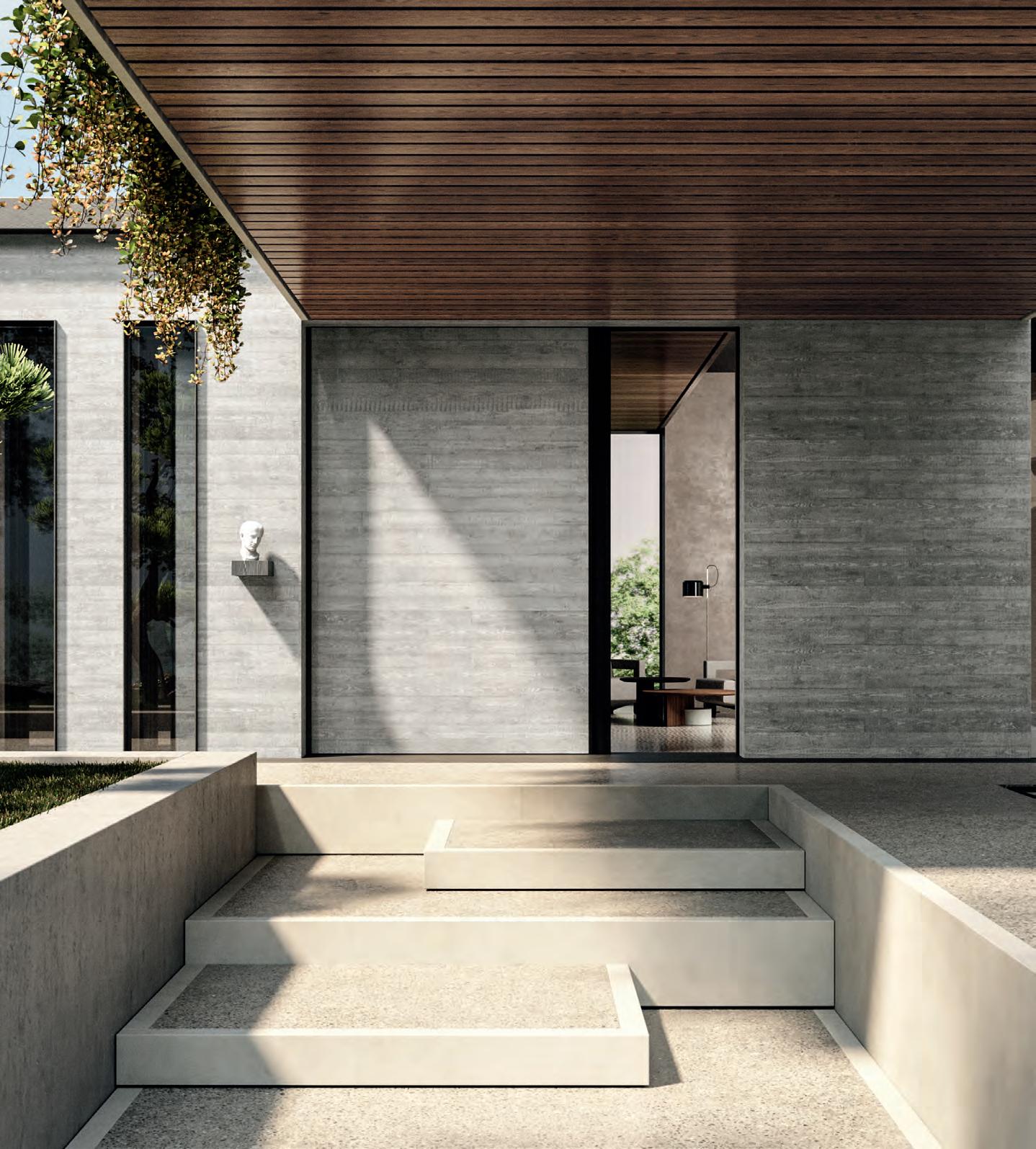
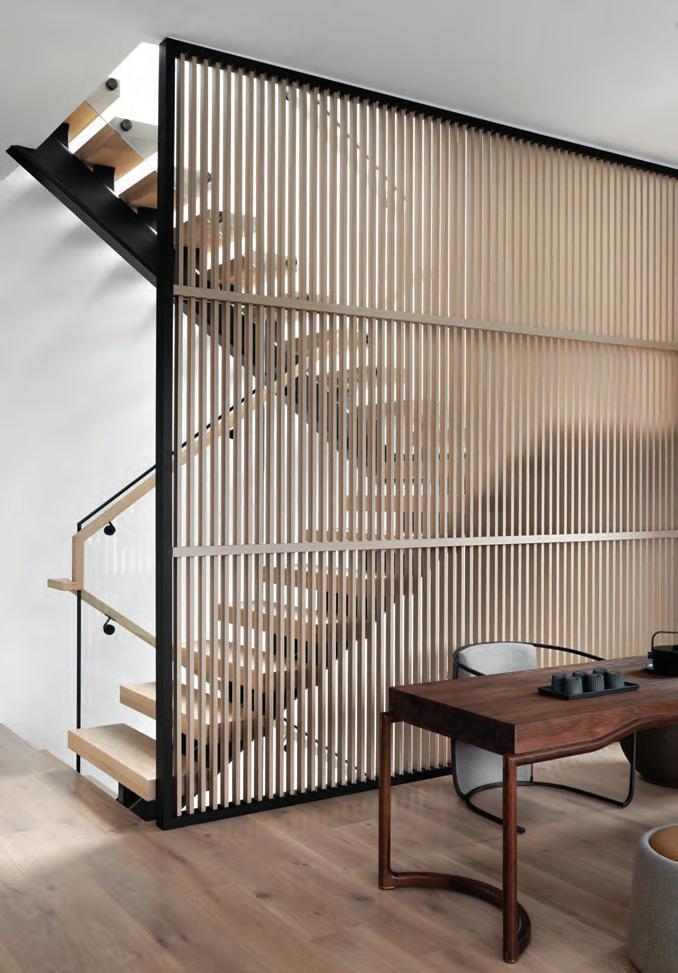
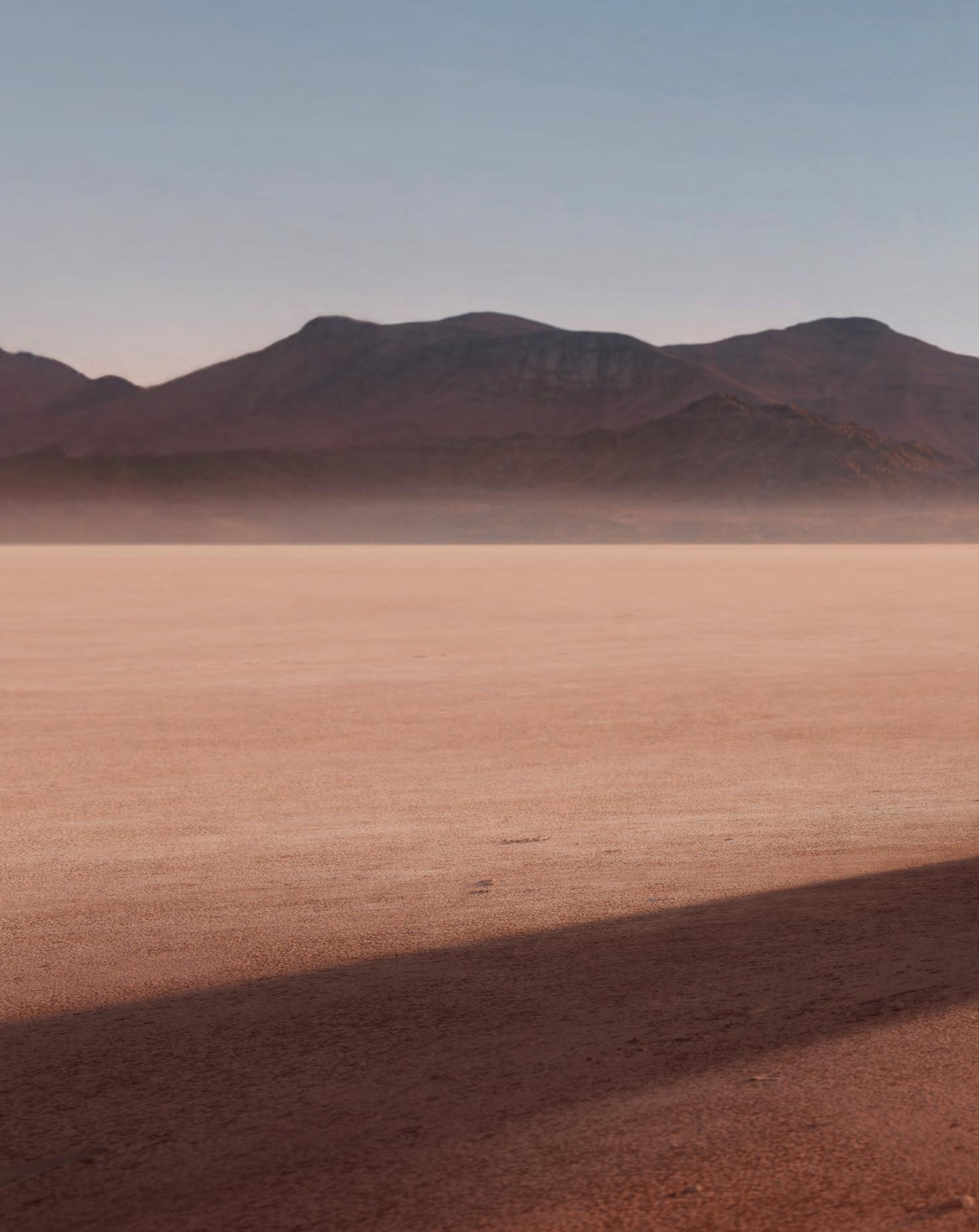
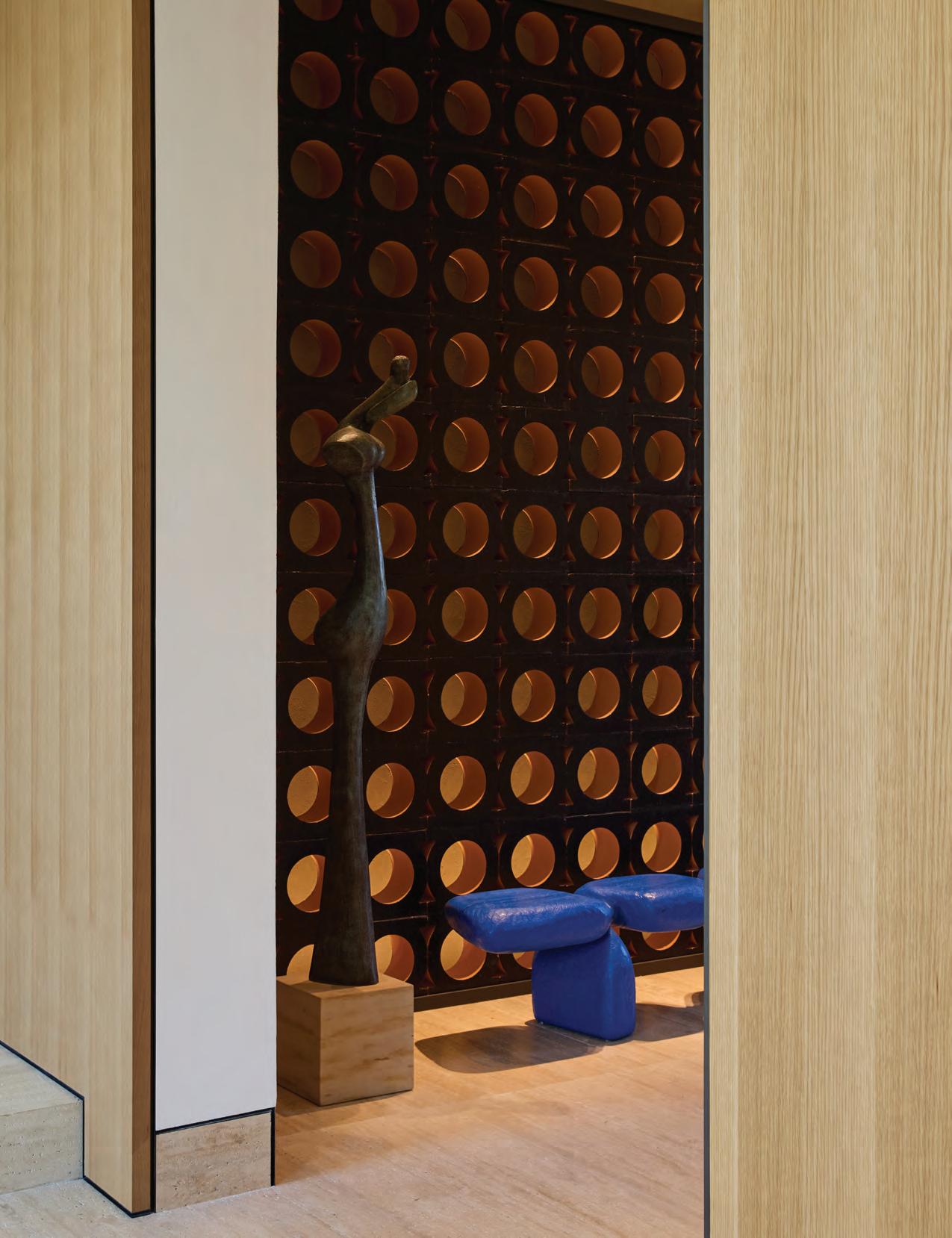
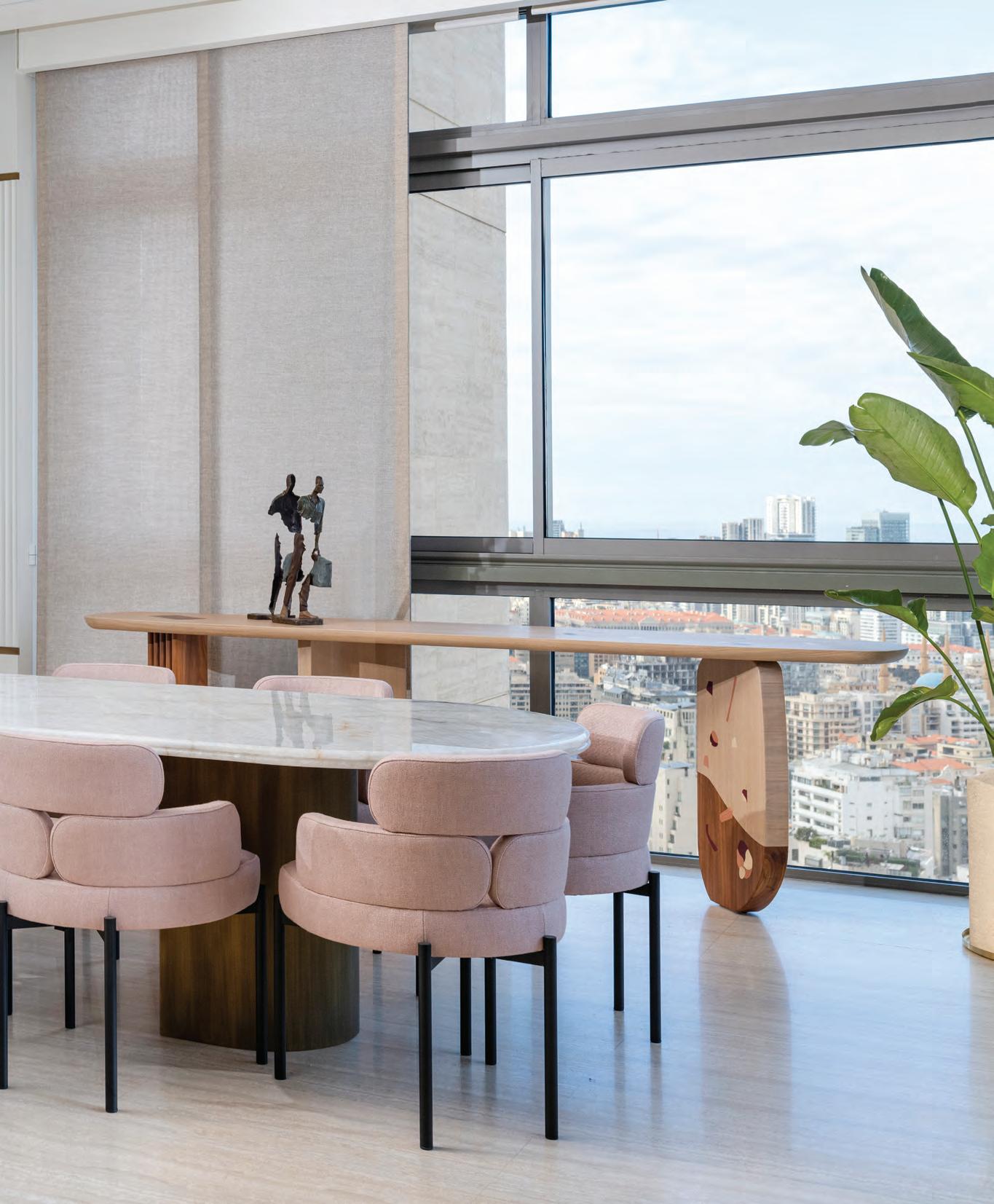
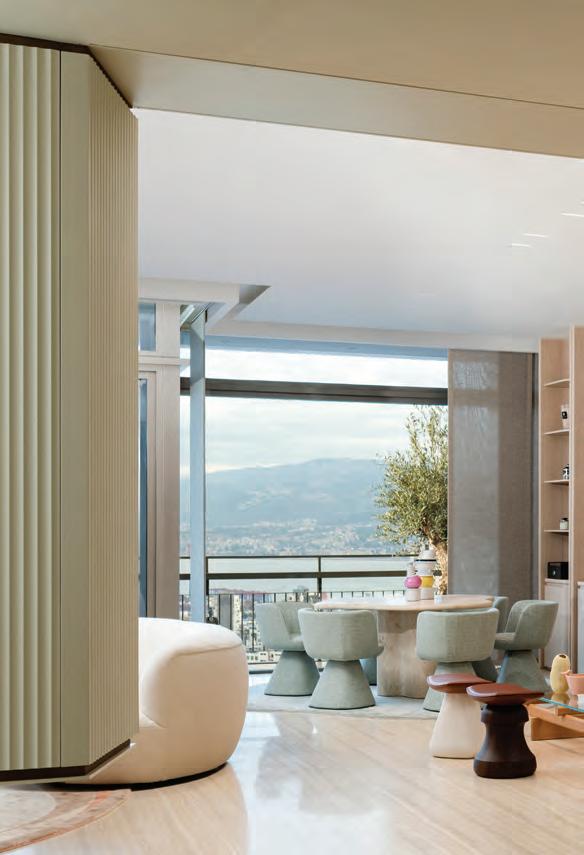
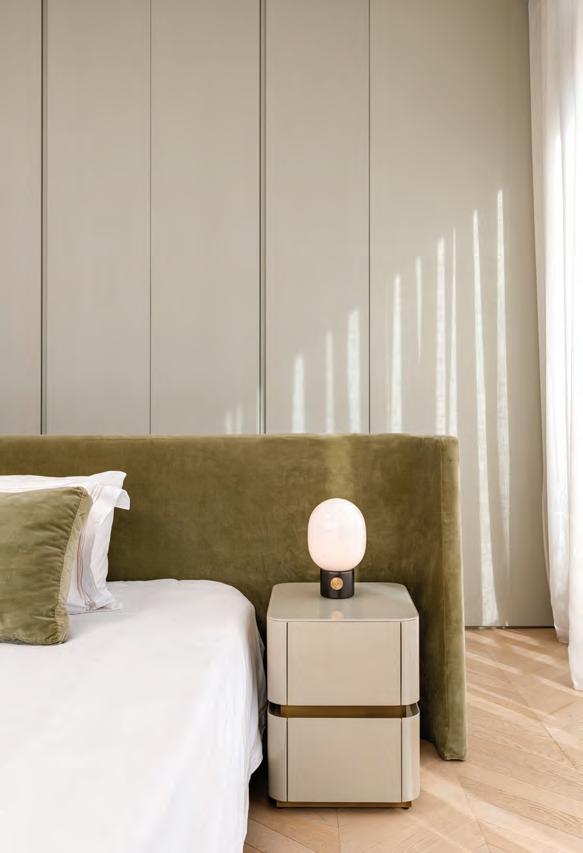
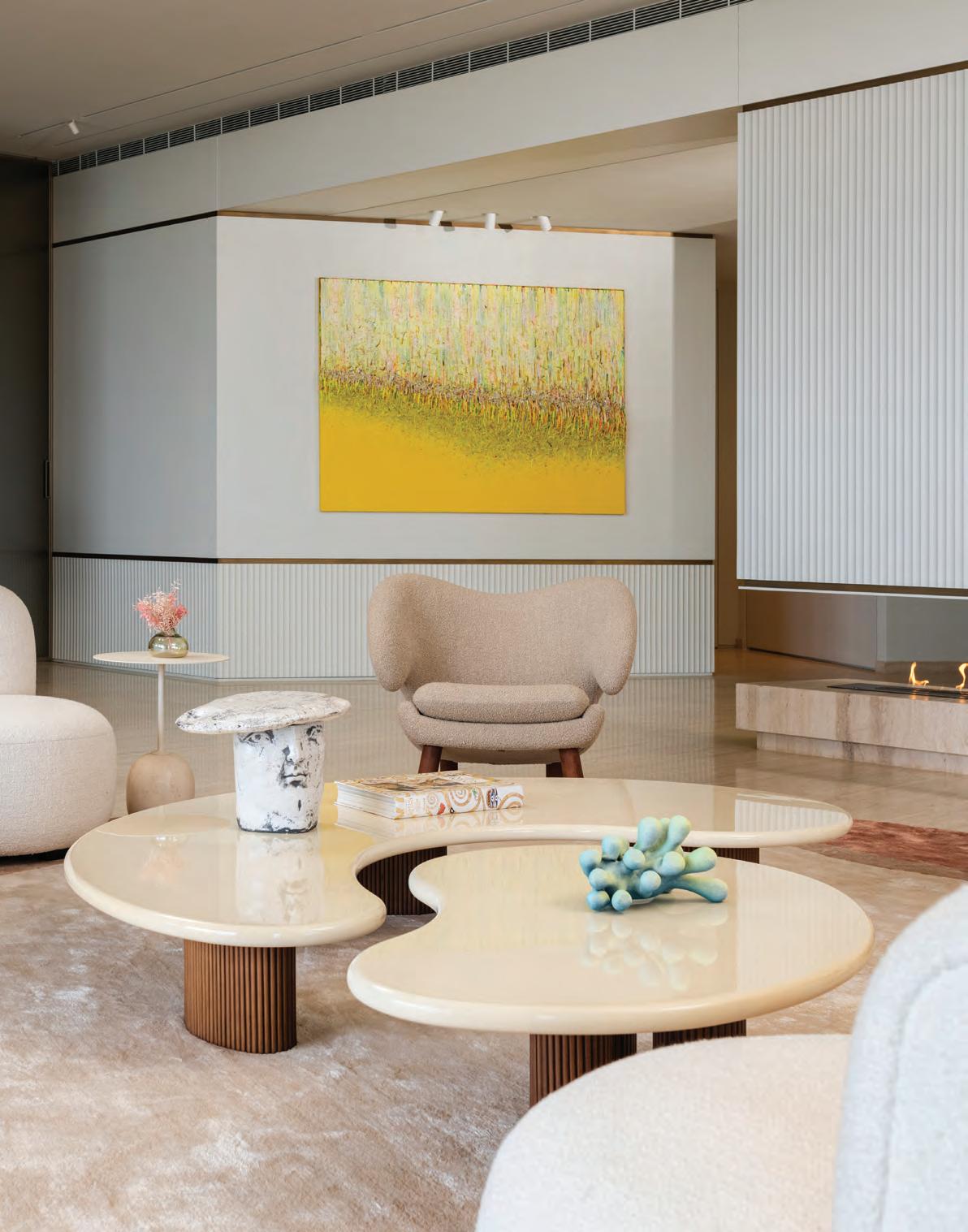
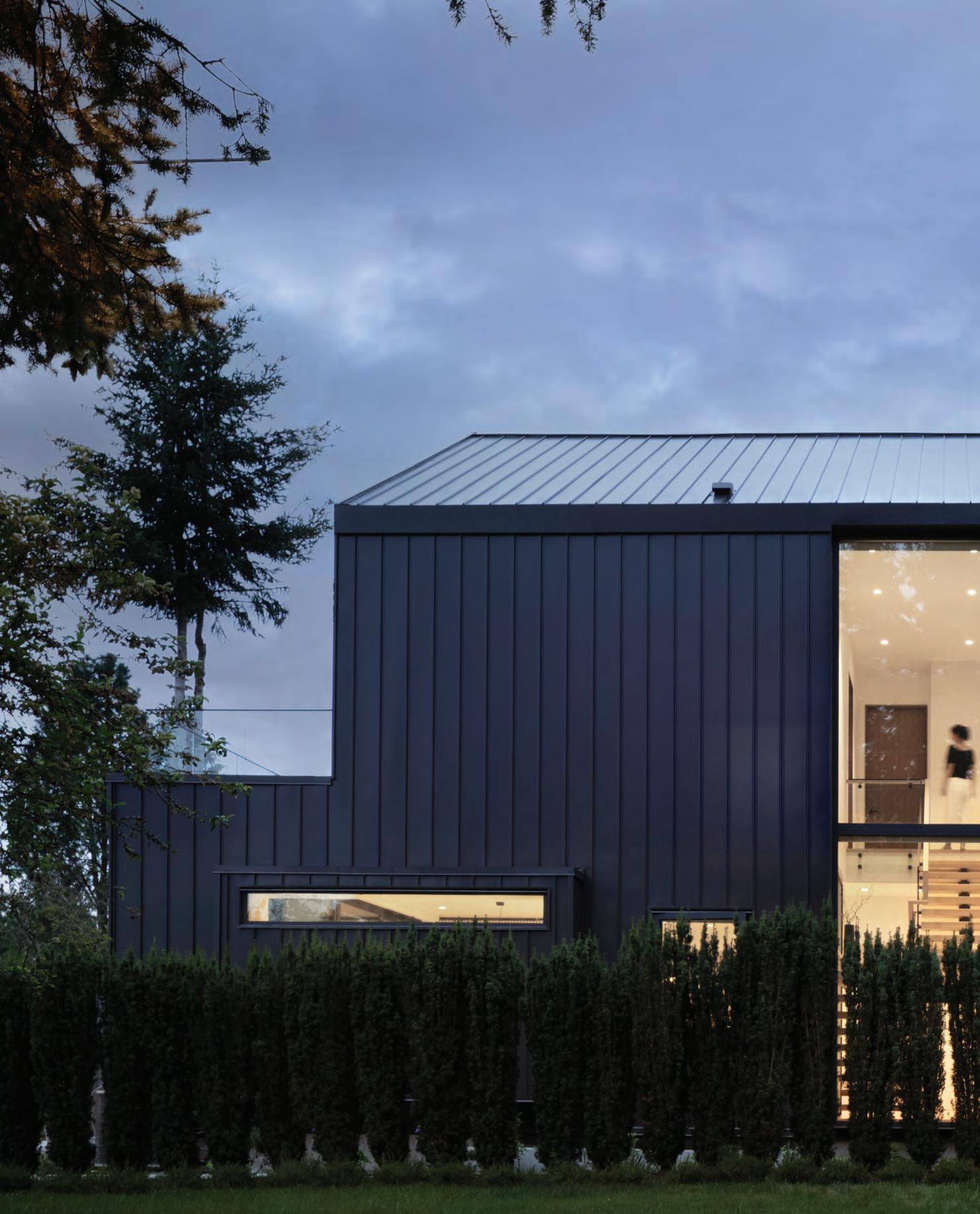
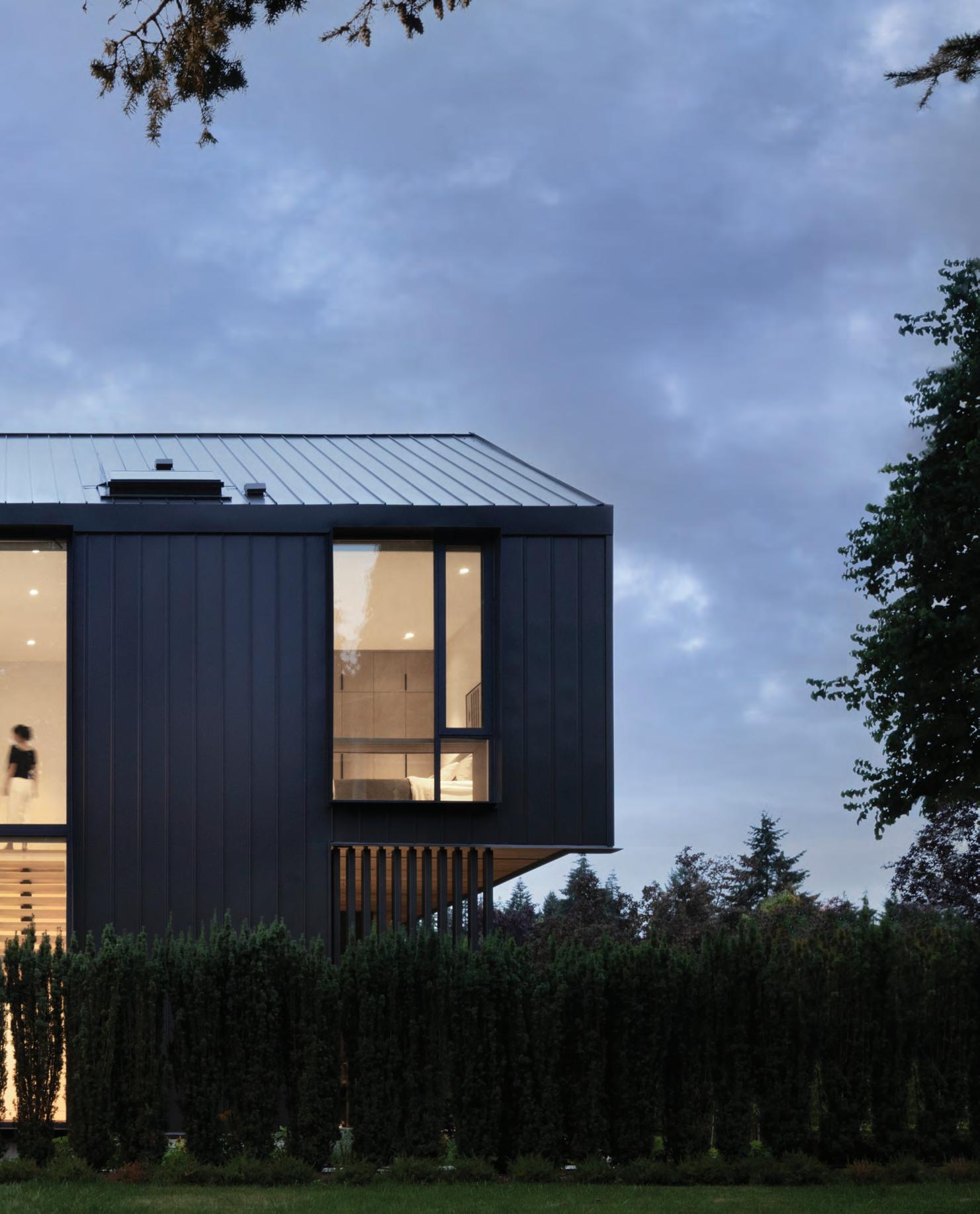
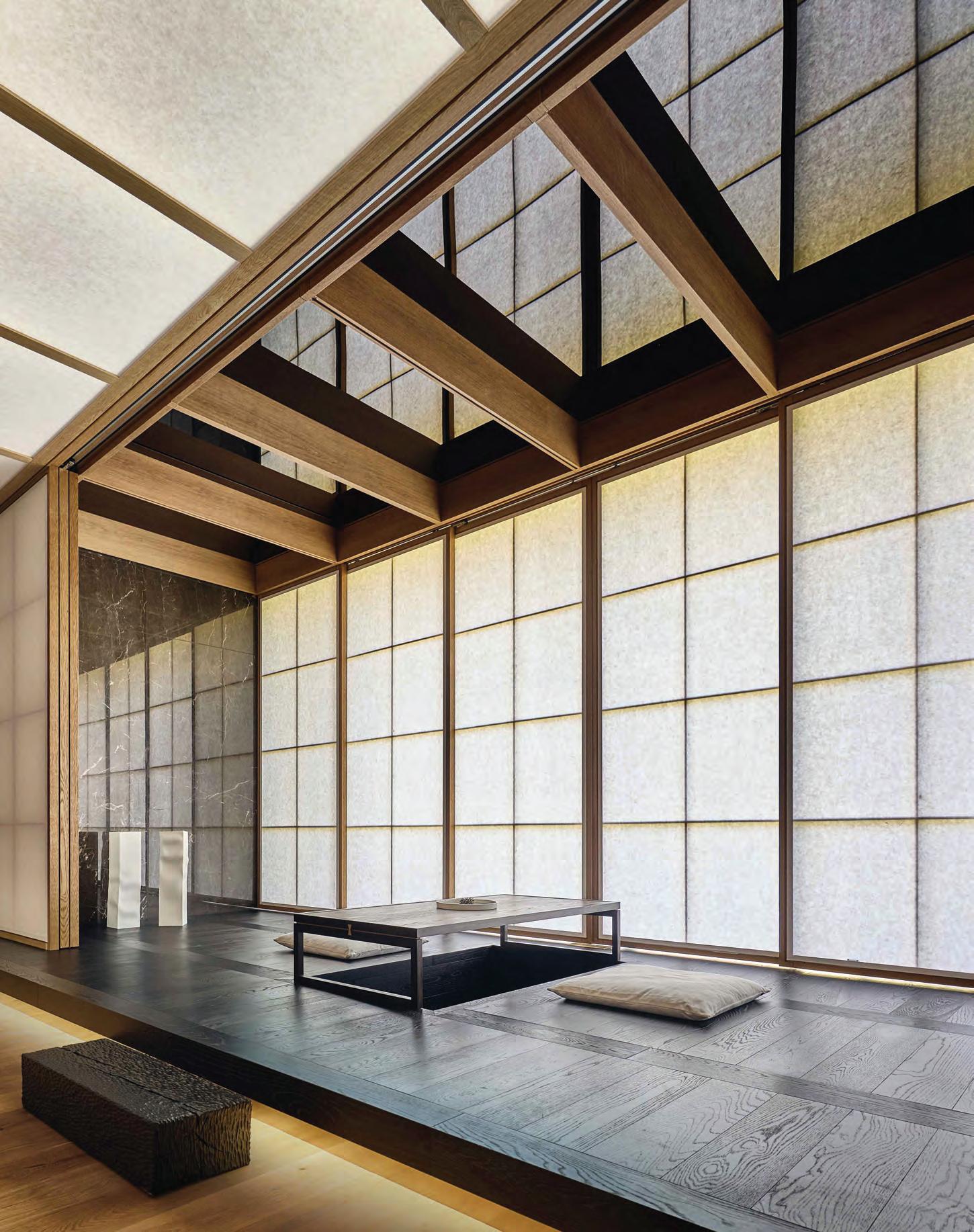
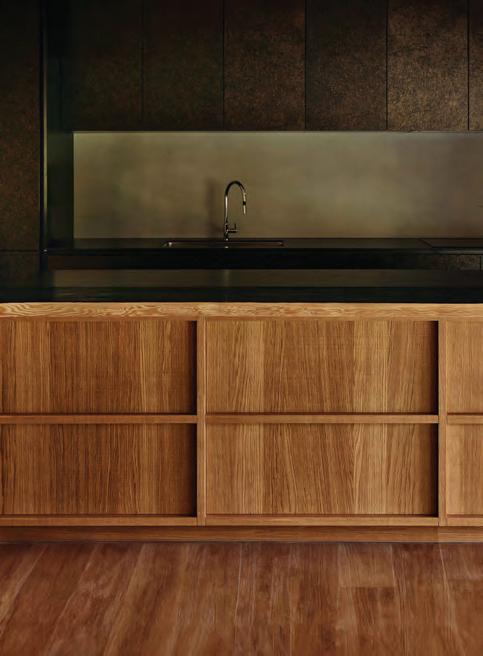
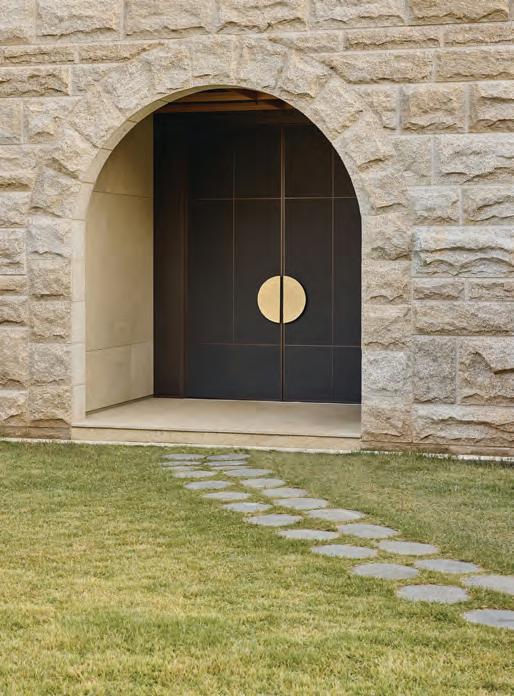
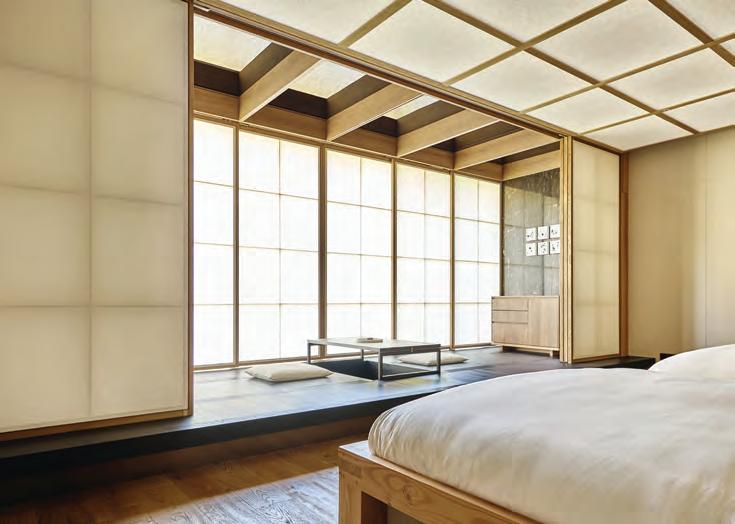
This monolithic style home in Esfahan, Iran has a wall that encourages connection rather than separation
24 id50 – The List
We celebrate the interior designers, architects and product designers that shape the design landscape region; from emerging talent to the visionaries and the global firms with local presence
52 House of Paloma
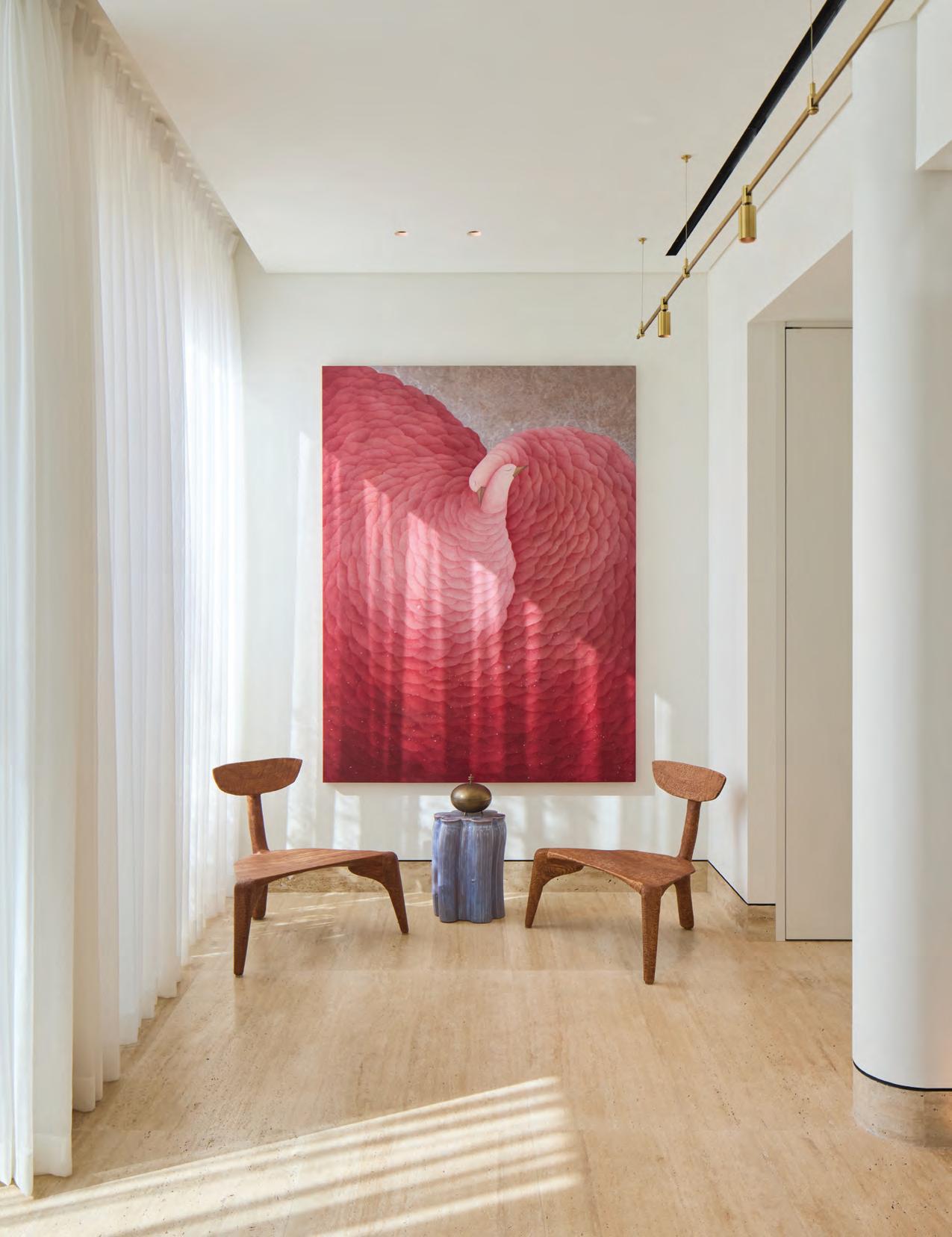
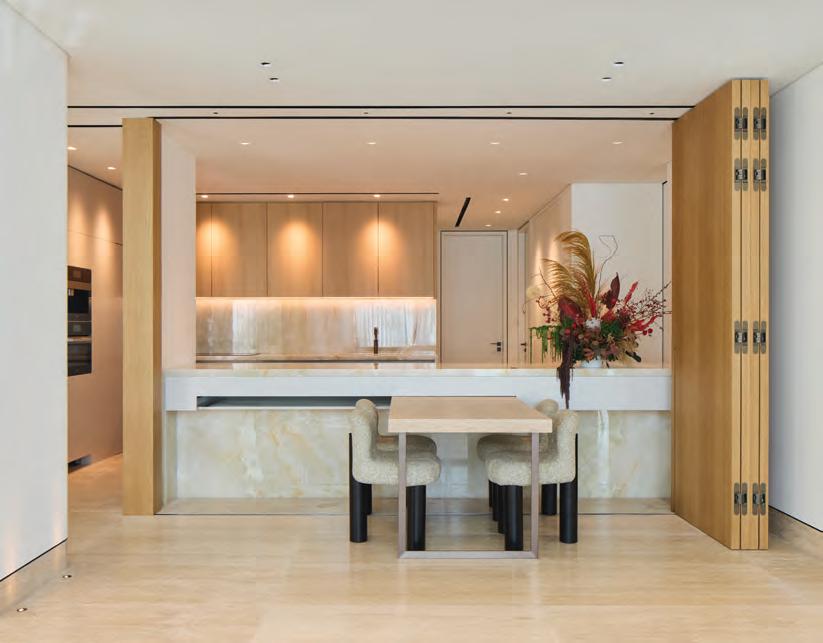
Tee Vee Eff and its partners worked on a comprehensive redesign of a Palm Jumeirah townhouse, resulting in an open-plan home finished with artistic flair
66 A Mo dern Ode to Korean Heritage
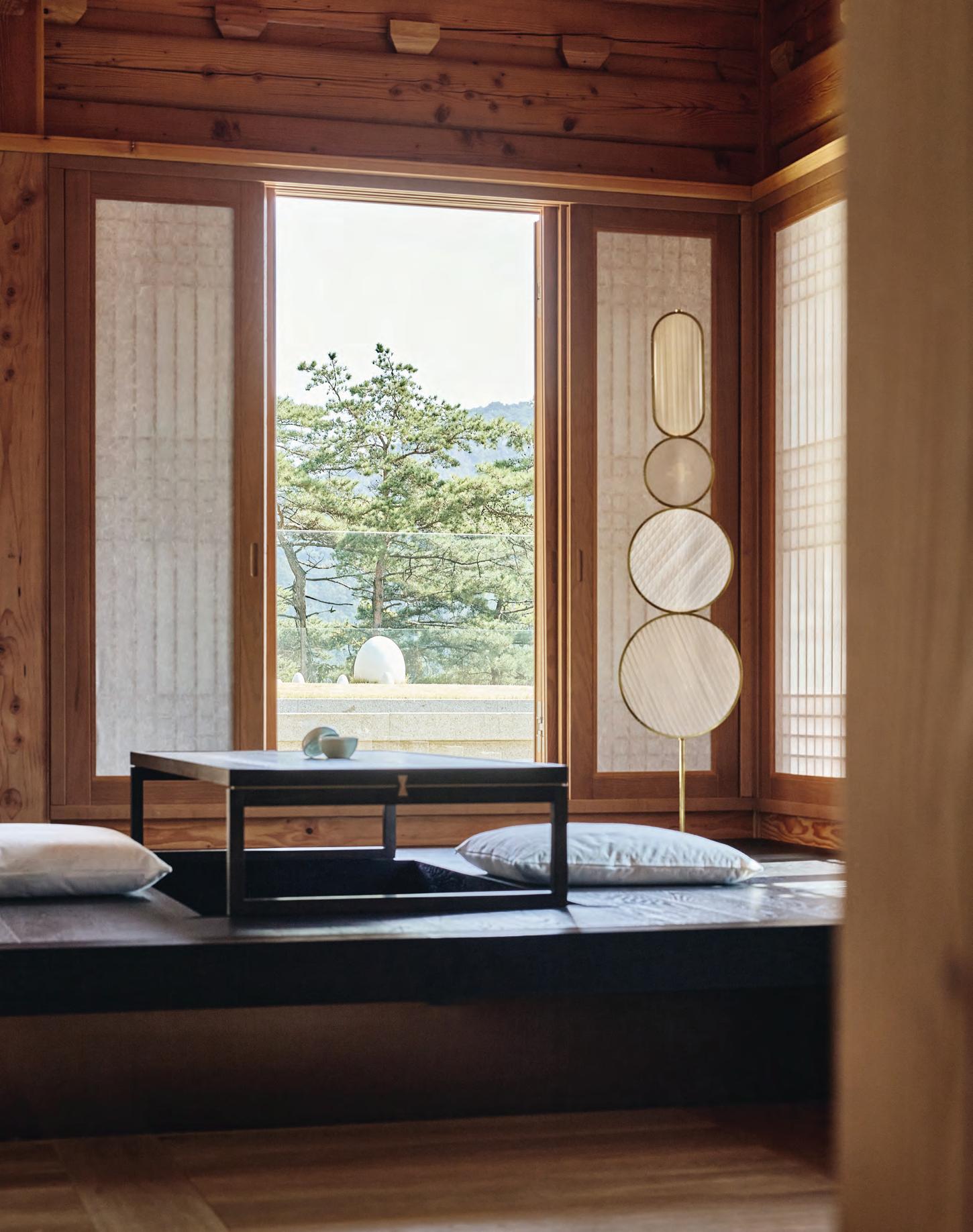
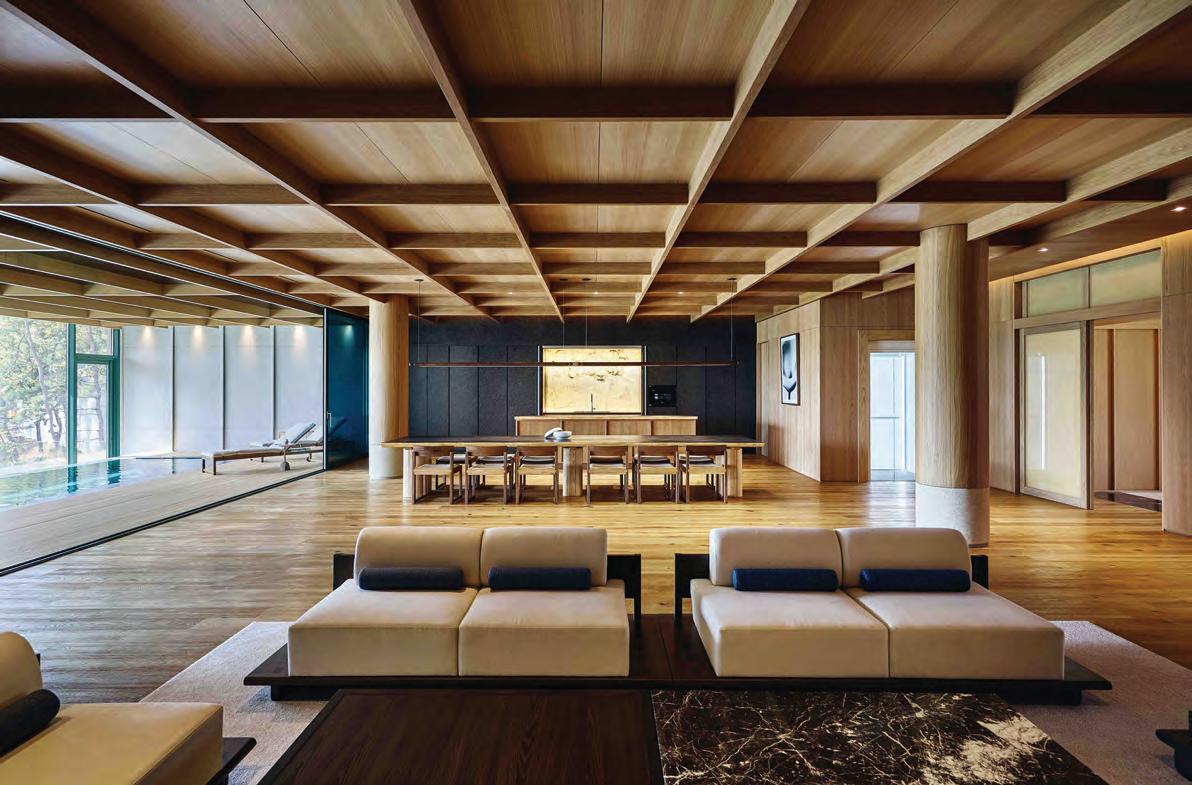
Blending traditional architecture with modern sensibilities, Seondoljung – the latest addition to the awardwinning Hanok Heritage House –forges connections between the past and present
Surface Solutions, Designed
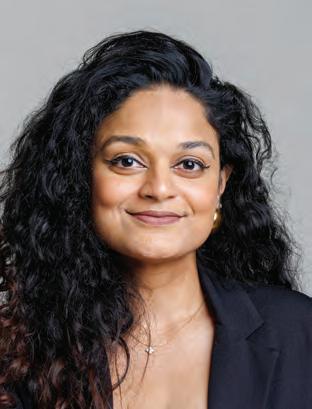
Editor-in-Chief
Obaid Humaid Al Tayer
Managing Partner and Group Editor
Ian Fairservice
Chief Commercial Officer
Anthony Milne
Editor
Aneesha Rai
Senior Art Director
Olga Petroff
Designer
Vibha Monteiro
Sub-editor
Max Tuttle
Senior Sales Manager
Sharmine Khan
Sales Representative - Italy
Piero Mezzanzanica
General Manager - Production
Sunil Kumar
Production Manager
Binu Purandaran
Production Supervisor
Venita Pinto
Head Office: Media One Tower, PO Box 2331, Dubai, UAE; Tel: +971 4 427 3000, Fax: +971 4 428 2260; E-mail: motivate@motivate.ae
Abu Dhabi: PO Box 43072, UAE, Tel: +971 2 677 2005, Fax: +971 2 677 0124; E-mail: motivate-adh@motivate.ae
Saudi Arabia: Regus Offices No. 455 - 456, 4th Floor, Hamad Tower, King Fahad Road, Al Olaya, Riyadh, Kingdom of Saudi Arabia; Tel: +966 11 834 3595 / +966 11 834 3596; E-mail: motivate@motivate.ae
London: Acre House, 11/15 William Road, London NW1 3ER, UK; E-mail: motivateuk@motivate.ae
Editor’s Note
When I set out to curate the id50 this year for our milestone 250 th issue, my goal was not to merely shine a spotlight on the most influential figures in the A+D industry but to delve into the philosophies that drive them. In speaking with these accomplished individuals whose work has already garnered widespread acclaim, I was interested in their past accolades, but more curious about their aspirations. What dream projects still spark their imagination? What challenges would they embrace if given the chance to shape their ideal vision?
This inquiry was driven by a dual purpose. First, I wanted identity to play its role in celebrating the incredible talent thriving in this region. Second, I wanted to highlight the foresight it takes to be a designer in today's ever-evolving world. By capturing these dreams on paper, I hope they might resonate with the right entities who could help bring them to life. After all, designers aren’t just shaping spaces; they’re shaping societies, responding to the complexities of our time with ideas that are as thoughtful as they are transformative.
In this context, ‘power’ takes on a different meaning. It’s not about dominance or individual gain, which so often accompany the word, but about the ability to serve communities and create meaningful, enduring connections. This issue is a special one for this reason as well. On our website throughout this month, you’ll find candid conversations with the individuals on this year’s id50 list – leaders who are not only creative powerhouses but also mentors and role models for the next generation of design professionals. These insights reveal what drives them, what challenges them and what keeps their passion alive.
Beyond the id50, this issue also brings you a curated selection of great projects, from a stunning Palm Jumeirah home to a characterful apartment in Beirut. We also dive into the growing trend of nostalgia in design and explore luxury design as a focus.
In a world overwhelmed with information, perhaps this issue can help make sense of it all – offering you a curated look at the people, ideas and projects that truly matter. Together, we celebrate those that dare to dream.
Aneesha Rai Editor identity
On the cover
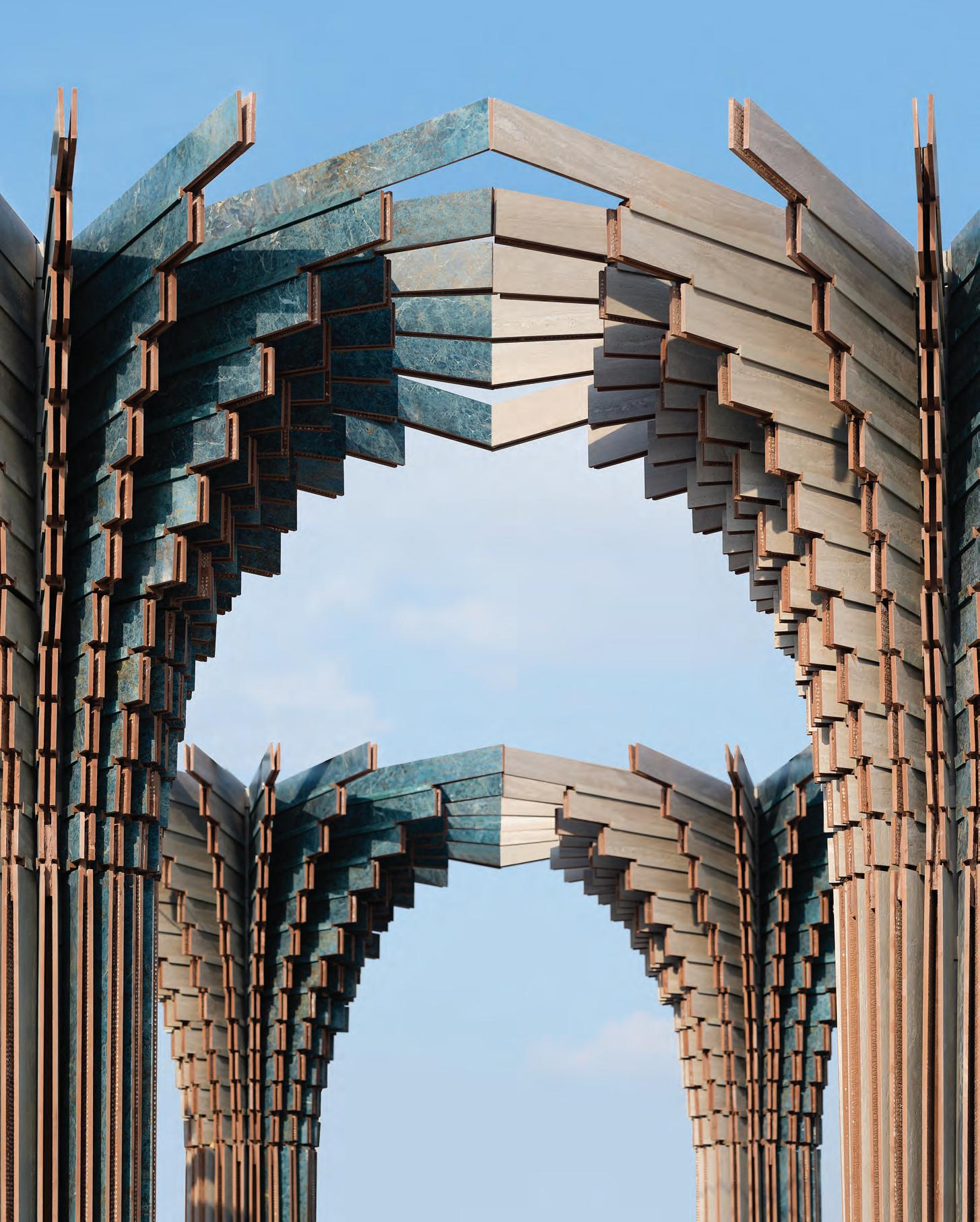
Citadel of Cairo: Seat of Design Power for Gemma Ceramics designed by Dar Arafa Architecture as part of Cairo Design Week. Photography: Nour El Refai
if you want to know more about the product contact us +971 50 942 4868 or visit our website www.gaggenau.com/ae The difference is Gaggenau
WALL HOUSE
This monolithic style home in Esfahan, Iran has a wall that encourages connection rather than separation
WORDS – ANEESHA RAI
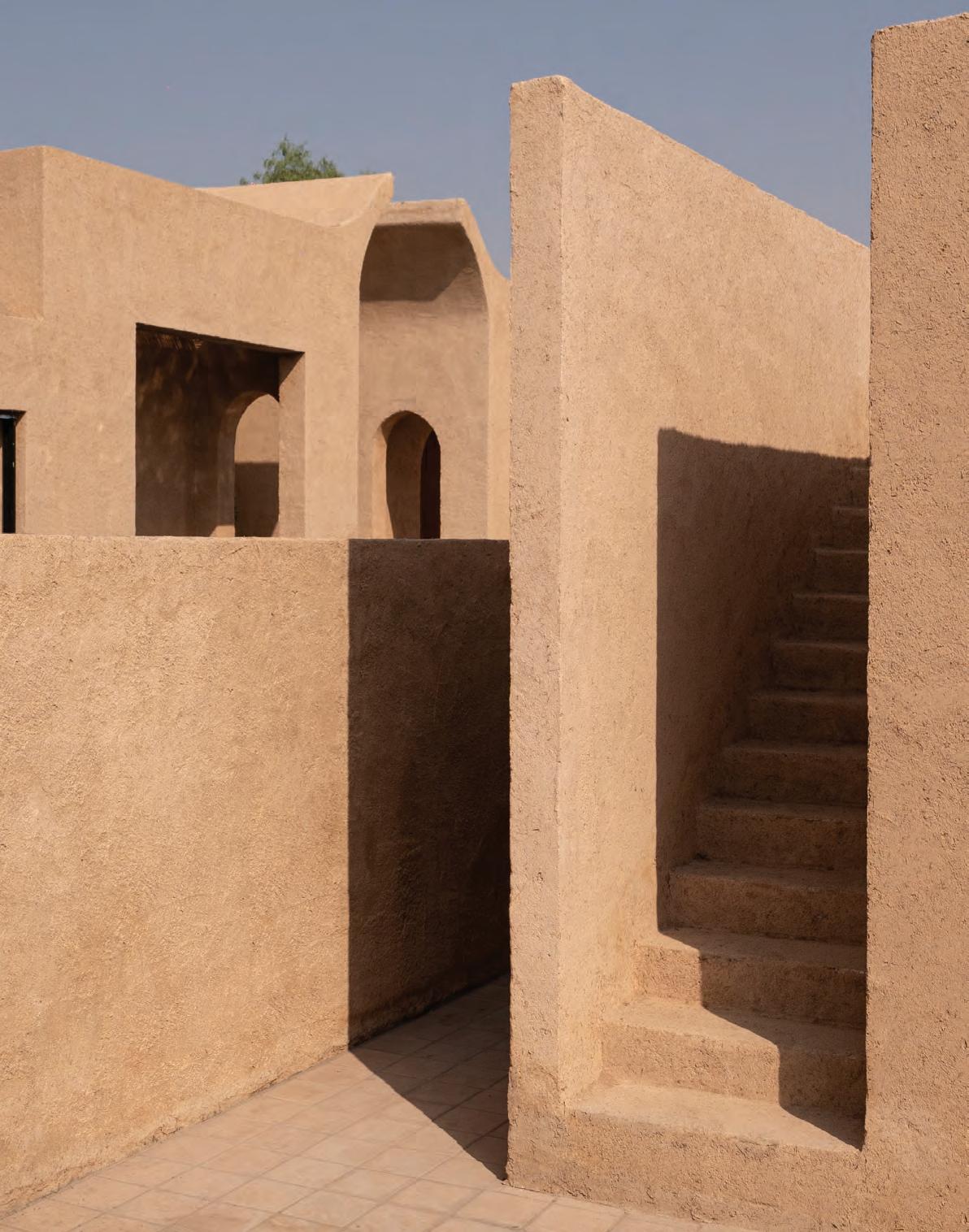
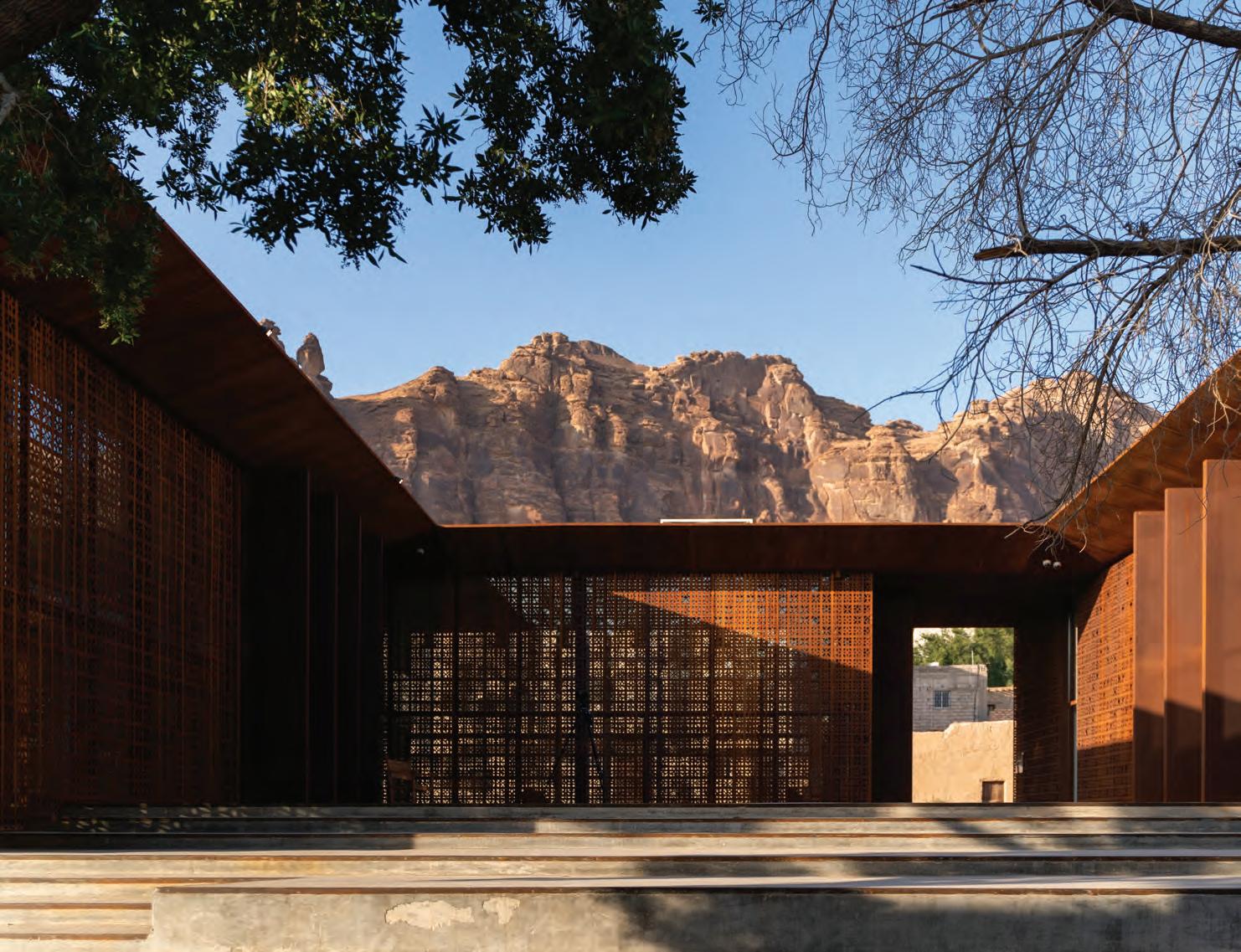
Left page – Externally, the house features a monolithic façade, with walls tinted in earthy hues that resonate with the surrounding landscape; This page – The home offers a spatial narrative that is both poetic and functional
Designed for a family of four by Pedram Ezadi Bourojeni of Ezadi Architecture, this 350-square metre duplex home reimagines traditional Persian architecture by fusing traditional elements with modern design sensibilities, offering a spatial narrative that is both poetic and functional.
This home features at its heart its defining feature – a wall that transcends a conventional role. More than a physical divider, the wall becomes a symbolic and literal organiser, creating a dialogue between the public and private realms. It challenges traditional notions of barriers, evolving into a liminal, interactive space that invites curiosity and reflection.
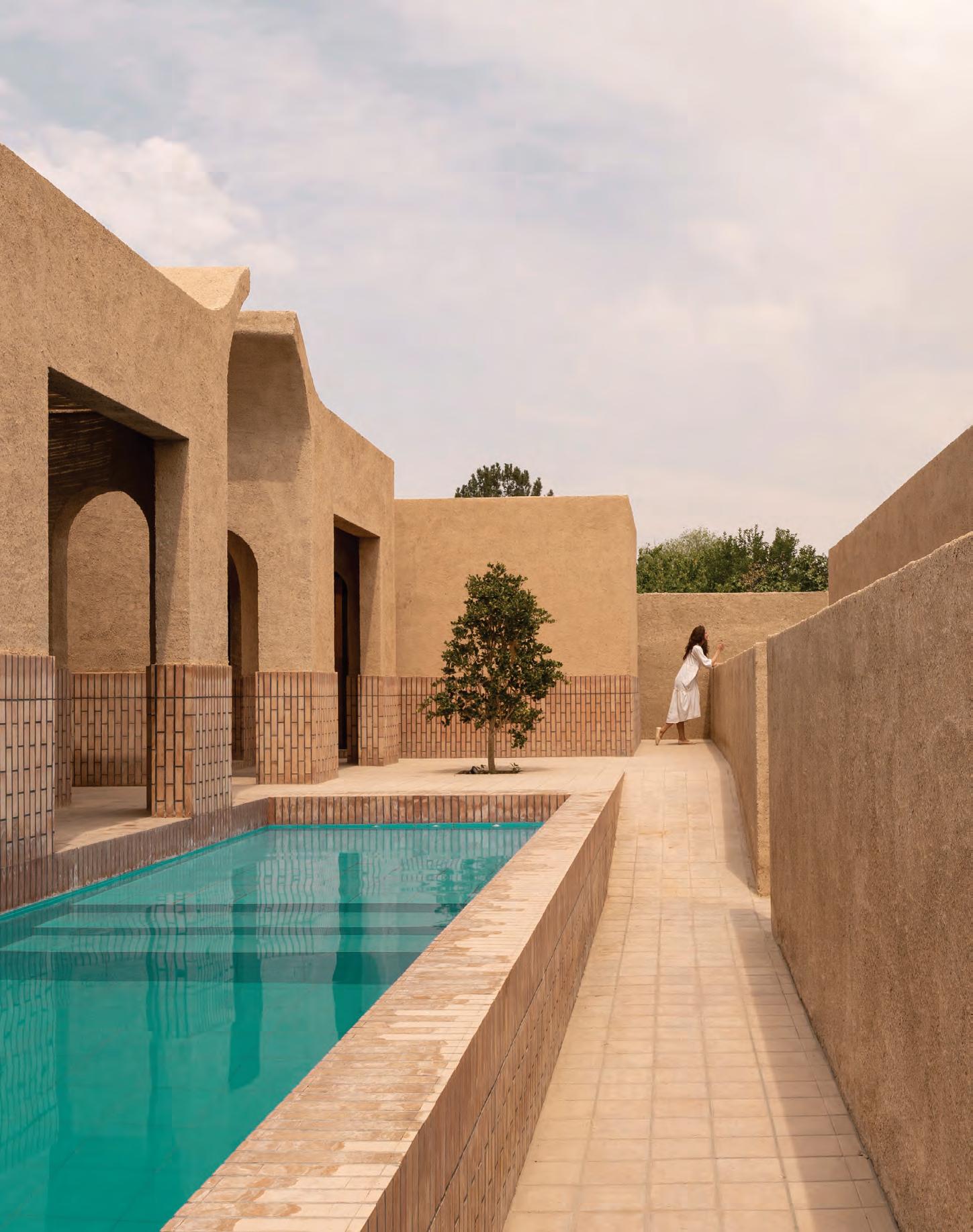
As opposed to its traditional role as a static enclosure or structural backdrop, the wall becomes an active participant in shaping the home’s spatial character. The central concept begins with a linear core wall, which delineates zones and establishes a framework to host three master bedrooms, a sunroom, living area and climatic courtyards. Additional layers of walls parallel to the core create interstitial spaces, transforming transitions into meaningful thresholds. These thresholds, far from
being mere connections, become expansive spatial conditions. The in-between spaces –neither fully here nor there – blur the boundaries between interior and exterior, fostering a sense of discovery. The result is an intricate web of architectural relationships where every journey through the home becomes an exploration of light, form and purpose. The dynamic interplay of walls extends the concept of liminality, turning mundane transitions between the space into moments of wonder and introspection. These zones invite pause and contemplation, acting as hubs for social interaction or quiet retreat. The wall interacts with its surrounding spaces, influencing how inhabitants move, engage and connect within the home.
The design pays homage to Esfahan’s rich architectural heritage through its materiality, geometry and cultural references. Arched ceilings echo the curves of Persian domes, while courtyards – a staple of traditional Persian architecture – are reinterpreted to provide natural light, ventilation and a balance of communal and contemplative spaces. Externally, the house features a monolithic façade, with walls tinted in earthy hues that resonate with
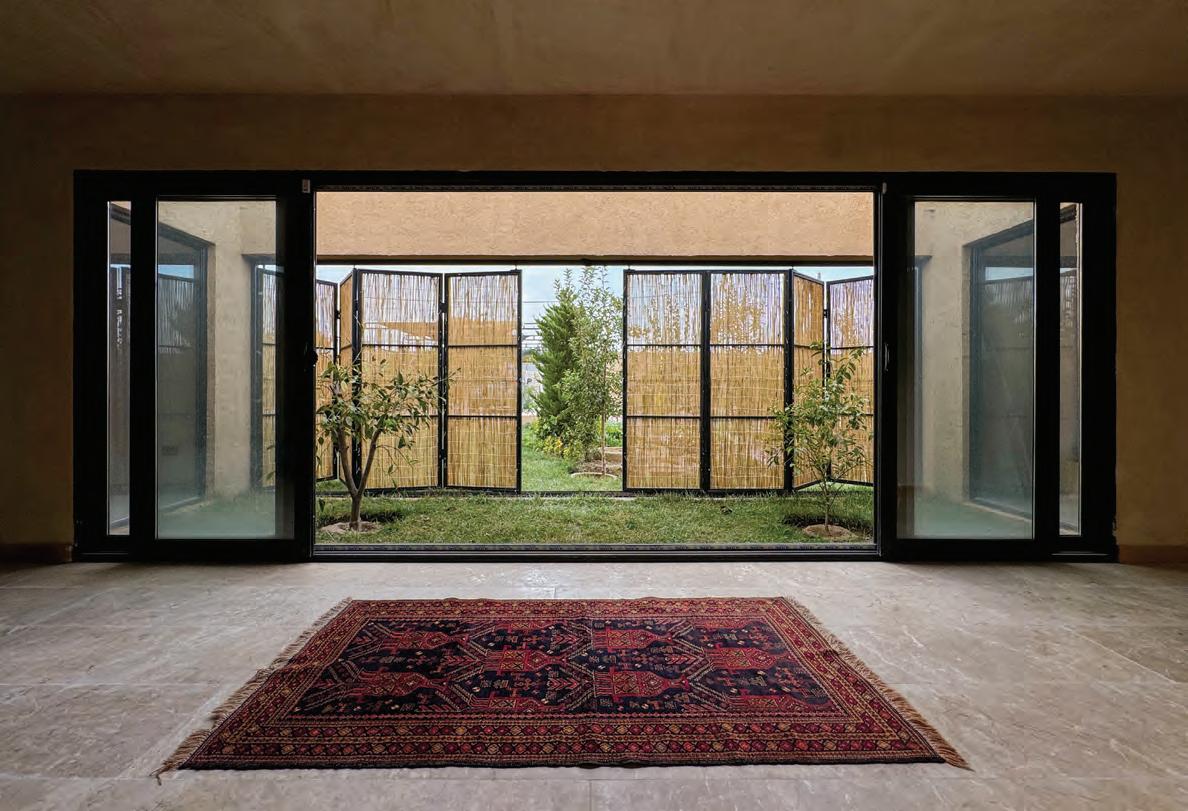
– Inside, warm tones and natural light infuse the spaces with an atmosphere of calm and introspection, creating a sanctuary that invites reflection and connection
the surrounding landscape. The textural quality of the construction material enhances the visual harmony, connecting the house to its environment. Inside, warm tones and natural light infuse the spaces with an atmosphere of calm and introspection, creating a sanctuary that invites reflection and connection.
The Wall House is not merely a residence but an architectural statement that challenges perceptions of space and purpose. By rethinking the role of walls, it transforms the mundane into the extraordinary, blending centuries-old Persian traditions with the aspirations of contemporary design.
Above
Photography: Ali Gorjian (A.D.D Studios)
Redefining Coastal Luxury
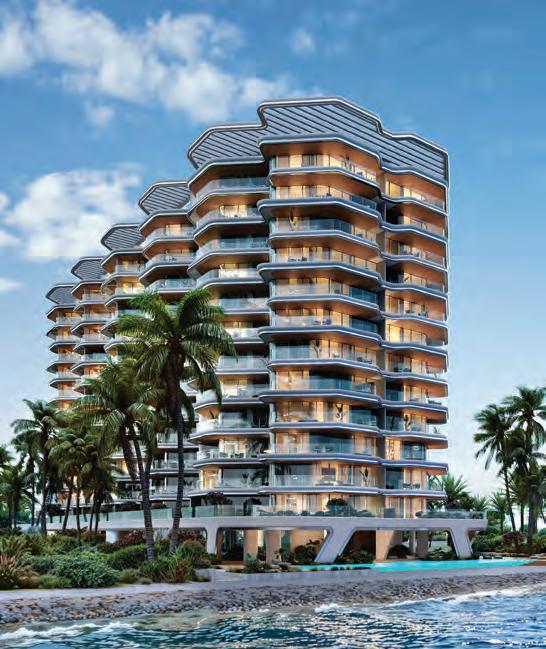
Sunshine Bay on Al Marjan island combines seaside views, exceptional design, and world-class amenities to create a unique waterfront haven
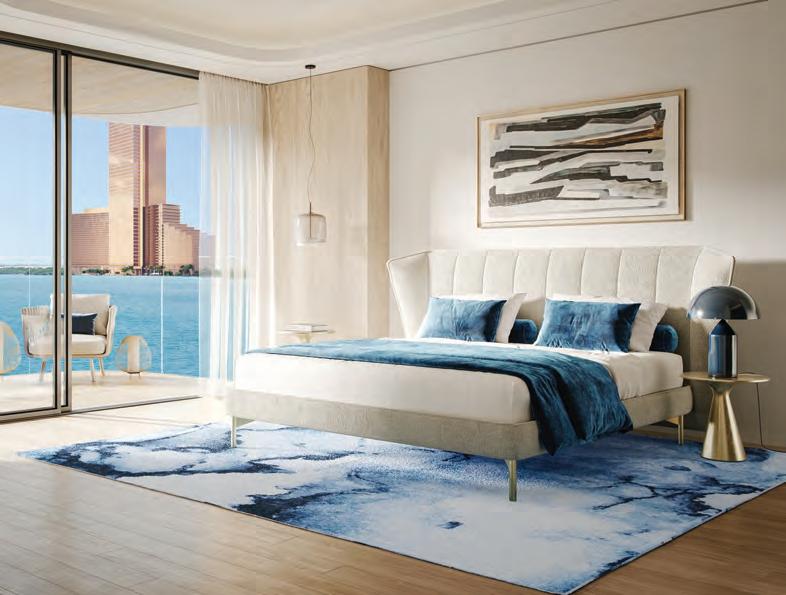
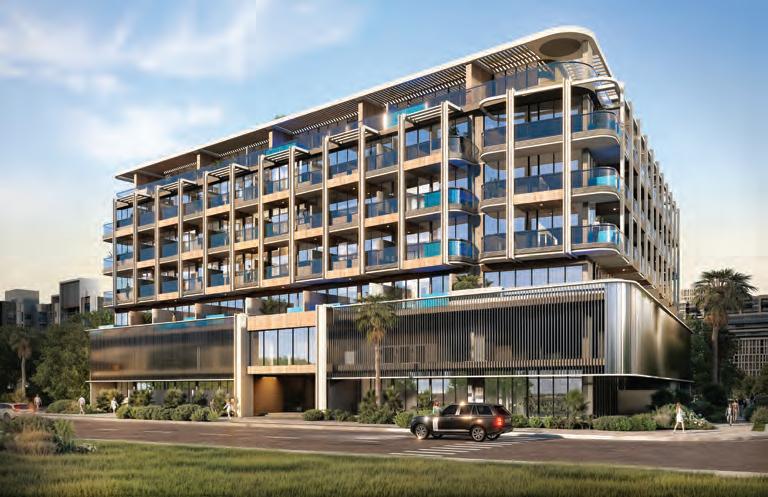
Source of Fate Properties has partnered with Italian architecture and design firm Mercurio Design Lab (MDL) for Sunshine Bay - an upcoming development in Al Marjan island in Ras Al Khaimah, which will be ready to welcome residents in Q1 2027. Source of Fate Properties envisioned Sunshine Bay ‘as a destination where nature, luxury, and community come together.’ The development team has global real estate experience, deep expertise in architectural design, engineering and project management, and are crafting what promises to be a sophisticated, high-end development. Positioned on the Al Marjan seafront, residents are minutes away
from dozens of restaurants, beach clubs, and the UAE’s first casino at the Wynn Casino and Resort Al Marjan Island.
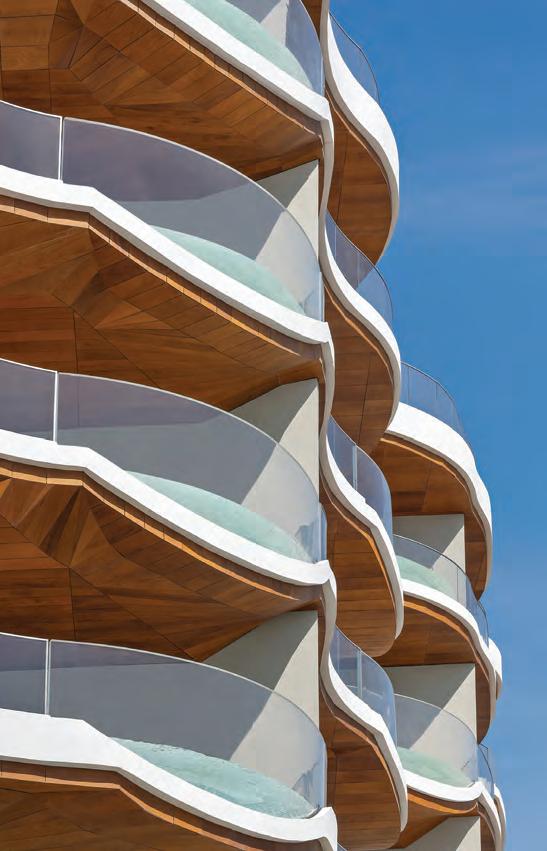
Inspired by the tranquility and beauty of its seafront location, the 240 residences echo the fluidity of ocean waves and the sleek lines of a sailboat, creating a visual masterpiece. Beyond aesthetics, each home is designed to maximise natural light and space, offering residents an environment that is both luxurious and effortlessly practical. Public areas transition seamlessly into private resi-
dences, ensuring comfort and convenience for every homeowner.
The residences comprise of a range of studio, one and two-bed residences available from AED 980,000, plus more exclusive options including the Bay Collection which have private swimming pools, jacuzzis and garden terraces.
At the heart of Sunshine Bay, is its commitment to fostering connection and belonging. The development features communal green spaces, outdoor terraces, and barbecue areas where residents can gather socially. The interior atrium, adorned with tropical greenery and water features, provides an inviting space to relax and interact with the community. World-class amenities include an infinity pool overlooking the Wynn Casino and Resort, state-of-the-art gyms, yoga platforms, swimming pools, and scenic running tracks, and a business lounge.
Sustainability also remains a focus in this development. Source of Fate’s team said they understand that creating a community doesn’t end with handing over the keys. “Its design should stand the test of time, and each element should come together to create a friendly place that people call home,” the company shares. Sunshine Bay is part of the Source of Fate Properties portfolio, which has a pipeline of more than AED 10 billion in luxury real estate investments across the UAE.
To learn more about Sunshine Bay and to explore this extraordinary community, visit sourceoffate.com or sof-sunshinebay.com.
Things to Covet
Here are this month’s pieces that will evoke comfort and style in your living spaces
WORDS – ANEESHA RAI
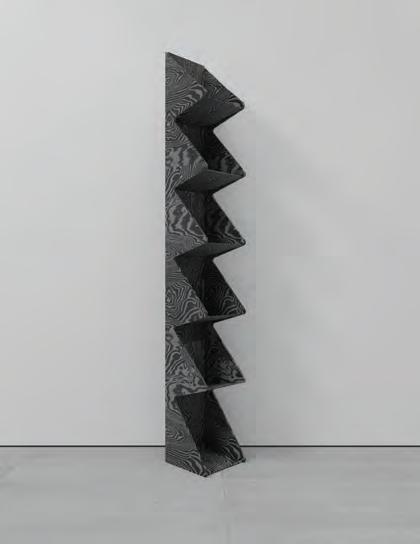
2. Object 2.0 by Dana Kharash
This sleek geometric shelf by Dana Kharash is a reimagination of a piece from his previous series, the Object 1.0 chair. By deconstructing the chair leg, the designer has transformed it into Object 2.0 – a sleek, geometric shelf. The shift in purpose highlights the versatility of design. What once held up a seat now holds your essentials, proving that minimalism isn’t just about simplicity, but also the ability to reinvent and redefine.
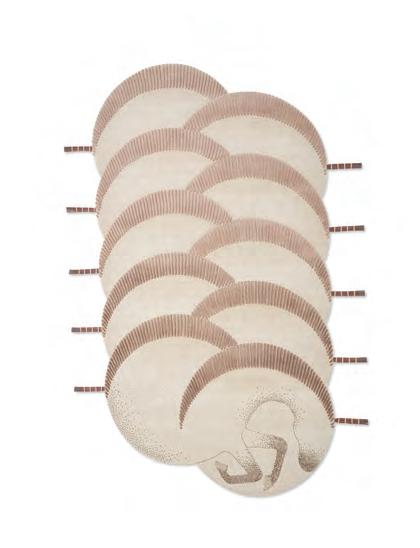
3. Tulpar rug from the Terra Incognita collection by Faberhama for NODUS
Inspired by the mythology of winged horses from Central Asia that were often depicted on top of yurts, each element of the Tulpar rug is able to express its dynamic nature through a unique shape, in contrast with the more widespread view of the carpet as a planar and static element. The rug is made up of a series of interlocking discs, similar to feathers in a large wing, while side-strings recall traditional harnesses and ornaments worn by Asian horses.
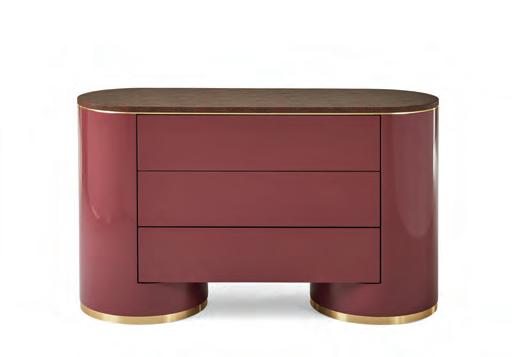
4. Rotunda drawer unit by Etro Home
The Rotunda drawer unit effortlessly blends vintage inspiration with contemporary refinement, creating a piece that feels both classic and modern. Its clean lines and thoughtful details evoke a sense of nostalgia, while the updated materials and finishes ensure its relevance in contemporary interiors. Crafted from curved multilayer poplar wood, the unit's flowing silhouette is enhanced by a luxurious glossy lacquered finish in a rich wine colour.
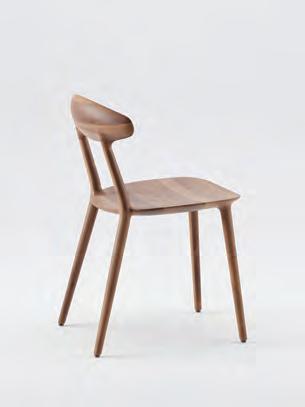
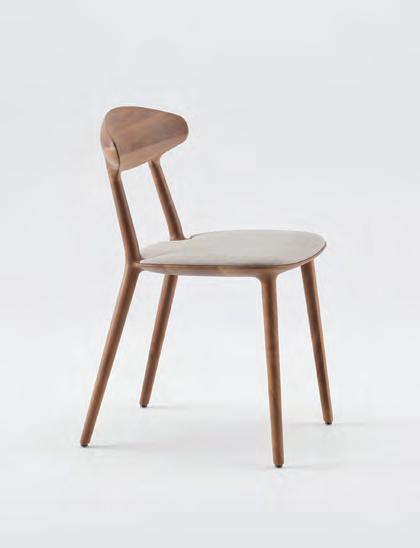
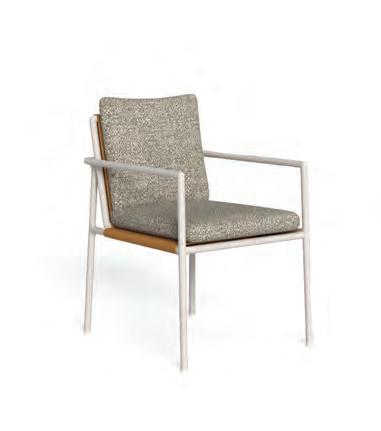
Quietly elegant, the defining feature of this piece is its oval backrest – minimalist in dimensions yet ergonomically contoured to perfection. The backrest not only defines the chair’s visual identity but also ensures functional comfort, qualities that are mirrored by the similarly curved seat. Both elements are interconnected by vertical supports of spherical cross-section, reinforcing structural integrity while maintaining 4
a sense of lightness. The design’s overarching principle is curvature, present in every detail. The curves soften the form, eliminating sharp edges and imbuing the chair with a gentle yet commanding presence. The nearly invisible joints enhance this effect, creating a seamless impression of unity and compactness. Crafted from solid wood, the chair also celebrates the raw beauty of natural materials, which are accentuated by a level of craftsmanship that transforms simplicity into an art form.
1. Wu chair by studioPANG for Artisan
Unveiling Attainable Luxury
Kamdar Developments has launched 105 Residences, a new high-end development in Jumeirah Village Circle
For nearly 40 years, Kamdar Developments has quietly become a trusted international name to the who’s who of real estate. The family-run operation works with household name partners to plan and implement its high-end developments,
which up to now have been built exclusively for private buyers or the Kamdar family’s own private investment portfolio.
Now, for the first time ever in the UAE, Kamdar Developments is bringing its expertise to the table for all investors and prospec-
tive homeowners, with the launch of 105 Residences in Jumeirah Village Circle (JVC). It’s part of a renewed vision for the business under Director’s Mahomed and Tazmeen Kamdar, siblings who are driving forward operations after the hugely successful tenure of Founder and Chairman Yousuf Kamdar.
Yousuf, the patriarch of the business, started as an independent textile trader in the heart of Dubai’s old town, Deira, and gradually expanded operations right across Europe, Africa and the Middle East. This included a diversification into IT hardware and software (SSE Dubai) and real estate. “Our family has benefitted from long-term investment in the UAE and particularly Dubai. The city has given us so much and we are proud to launch 105 Residences as a quality project that will last generations,” said Tazmeen Kamdar.
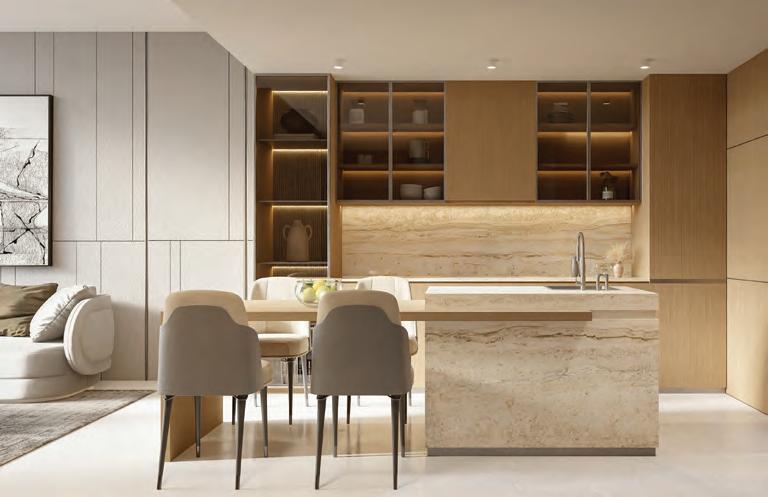
105 Residences is nestled in the popular JVC community and its prime location is matched by premium quality design from award-winning architects. Its 105 units include premium studio, 1-bed and 2-bed apartments, finished with hand-picked interiors. Mahomed Kamdar adds, “There are many developers in Dubai, but this project truly matters to us – it is a flagship to our father’s legacy and relentless determination.”
Stunning amenities include a relaxing swimming pool and garden podium, a rooftop sky garden with outdoor cinema, barbecue area for social gatherings, and indoor and outdoor children’s play facilities. Sporty residents will also benefit from a multi-purpose sports court onsite, as well as fitness studio and gym.
Positioned just minutes from popular hubs such as Circle Mall, Mall of the Emirates and Dubai Hills Mall, 105 Residences will be constructed sustainably and provide next level craftsmanship. 105 Residences offers bona fide luxury from just AED 640,000 – an attainable price tag for investors and prospective homeowners. Furthermore, the developer is fully funding the project, guaranteeing end-to-end delivery and underlining Kamdar Development’s commitment to build the UAE’s most desirable properties now, and for generations to come.
To learn more about Kamdar Developments and to discover 105 Residences, visit kamdardevelopments.com/105residences-by-kamdar/.
A Celebration of Art, Culture and Heritage
The much-anticipated AlUla Arts Festival has made its grand return and will run until 22 February 2025
WORDS – ANEESHA RAI
Offering visitors a vibrant journey through contemporary art, public installations and immersive cultural experiences, the AlUla Arts Festival 2025 is one for the books. Set against the dramatic landscapes of the ancient city of AlUla, this year’s festival showcases a dynamic programme of exhibitions, performances, artist residencies and workshops, uniting global talent with Saudi Arabia’s rich heritage.
At the heart of the festival lies the Gathering Square in the AlJadidah Arts District, a bustling hub for creativity and community engagement. From hands-on workshops to thought-provoking talks, the space captures the essence of AlUla’s vision as a global cultural destination. One of the festival’s most anticipated highlights was the world premiere of ‘Thikra: Night of Remembering’, a site-specific
Image
performance commissioned by Wadi AlFann. Created by renowned choreographer Akram Khan and Saudi artist Manal AlDowayan, the performance explored themes of memory, collective healing and the interplay of past and future. Featuring an international ensemble of 14 dancers, original music by Aditya Prakash and bespoke designs by AlDowayan, ‘Thikra’ entered into a stunning artistic dialogue with the natural landscapes of Wadi AlFann.
This year’s festival also features a series of exhibitions and installations that blend tradition with contemporary innovation, including light and space artist James Turrell, whose exhibition highlights include renders, plans and a constellation map for the artist’s upcoming site-specific commission in Wadi AlFann. Also on view is a ‘Cross Corner’ ‘Projection’ and a ‘Glasswork’ from the Royal Commission for AlUla’s contemporary art collection. Agnes Denes, Michael Heizer and Ahmed Mater have also created new, large-scale, site-specific commissions for Wadi AlFann.
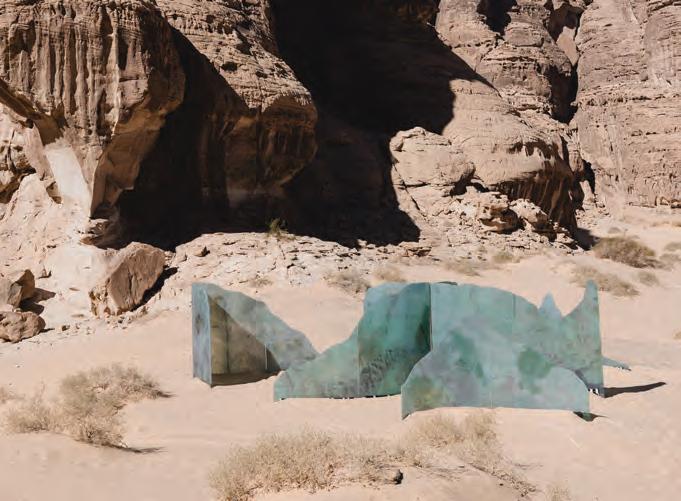
Cinema AlJadidah is an open-air cinema showcasing art-house films and introducing audiences to diverse cinematic cultures. If you’re in Al Ula, do not miss Neuma: The Forgotten Ceremony, which is a collaboration between Saudi artist Sarah Brahim and French artist Ugo Schiavi that embodies the identity of Villa Hegra – the Saudi-French institution set to open in central AlUla. The project features an indoor exhibition at Dar Tantora and an outdoor installation at Wadi Al Naam, including a minimalist glass temple for reflection. The exhibition also showcases blown glass sculptures inspired by local stones, and a film of their research process.
Beyond exhibitions, the festival comes alive with performances at the AlUla Music Hub, showcasing regional and global talent in genres spanning jazz, fusion and Arabic music. Visitors can also immerse themselves in hands-on arts and crafts at Madrasat Addeera, ensuring a rich and engaging experience for all ages. The AlUla Arts Festival 2025 continues to affirm AlUla’s role as a cultural hub where history, innovation and artistic dialogue converge.
Above – Alamaat by Daniah Alsaleh and Susanne Kriemann, curated by Salma Al Khalidi. Image courtesy Royal Commission for AlUla; Left page – Design Space, AlUla Arts Festival. Image courtesy Royal Commission for AlUla
Left – NEUMA: The Forgotten Ceremony by Sarah Brahim and Ugo Schiavi.
courtesy Royal Commission for AlUla
Poetic Placemaking
This abode in Costa Brava, Spain furnished by Flexform offers the perfect setting to connect without compromising privacy
WORDS – ANEESHA RAI PHOTOGRAPHY – MATTEO IMBRIANI
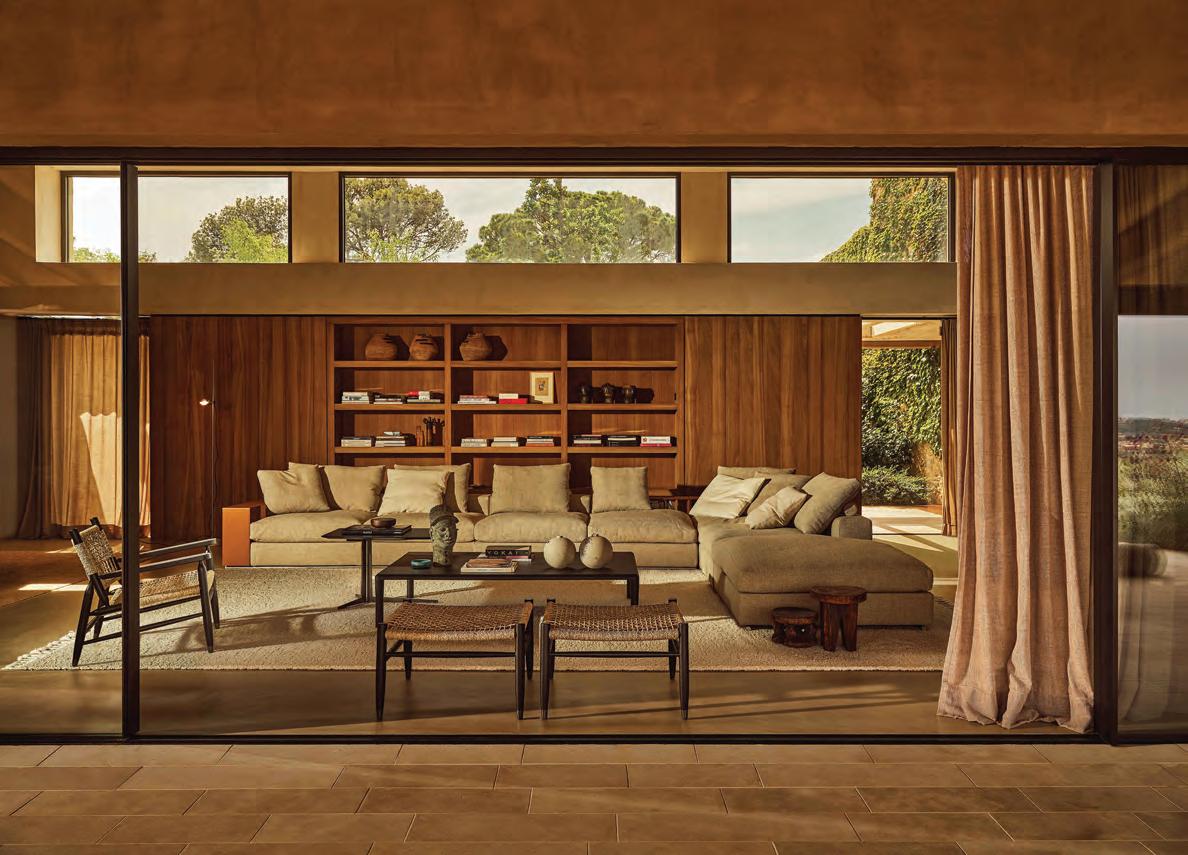
Offering an idyllic retreat that balances luxury with introspection, this residence is a space where every detail tells a story of thoughtful design a nd timeless elegance. The architectural plan follows the natural curves of the hillside, creating a dynamic interplay between the villa and its environment. Outdoor alcoves and shaded patios offer refuge from the sun and are furnished w ith Milos sofas and Crono Outdoor armchairs, providing serene spots for contemplation or socialising. A fountain, almost hidden by dense foliage, adds a soothing layer of sound, echoing the philosophy of Mexican architect Luis Barragán, whose work inspired the home’s design.
The Mediterranean panorama unfolds around the pool, where vegetation provides natural privacy. Minimalist furnishings, including daybeds and an Alcamo side table by Antonio Citterio, transform the area into an oasis of relaxation. Covered walkways connect different parts of the home, offering secluded nooks with armchairs, ideal for reading or simply absorbing the breathtaking views.
Inside, the villa reflects a harmonious balance of comfort and sophistication. The living room features the iconic Groundpiece sofa, paired with coffee tables from the Fly and Kobo series. The dining room, a true focal point is framed by expansive windows that open onto the distant horizon. The furnishings, blend effortlessly with the earth-toned palette and natural textures. Each room is designed to offer a unique experience. The bedrooms are tranquil sanctuaries, with walls wrapped in warm earth tones, transforming them into havens of peace. Large windows frame the surrounding landscape, inviting light and nature into every corner of the home. The villa’s design fosters a deeper connection with its surroundings, offering spaces for both shared experiences and private reflection. Shaded patios, furnished with a rmchairs and sofas in terracotta-toned aluminium, echo the hues of the landscape. The careful interplay of light and shadow is created through strategically placed openings and walkways; a place where the rhythm of life finds its most harmonious expression, just like poetry.
Left page – Ottavia armchairs by Flexform; This page –Groundpiece Sofa by Flexform Project credits: GCA Architects and A-studio
(Andrea Arqués)
The allure of retro revival in contemporary interiors – and why we seek the familiar in interiors
WORDS – ANEESHA RAI
Nostalgia-Core
The resurgence of retro-style décor is in full swing, making waves across fashion, film and now, interiors. As we navigate an increasingly fastpaced, tech-forward world, many find solace in the familiar comforts of the past, even if it may just be a past that we have not lived.
“The designs from the 1970s and ‘80s offer a tactile, vibrant counterbalance to our screencentric lives,” shares Professor Louise Valentine, Professor of Design and Head of School at the School of Textiles and Design at Heriot-Watt University Dubai. “In today's world, where algorithms and standardised templates
often shape trends, aesthetics and interactions, many designs and experiences share a unified aesthetic; they serve a purpose, but at what cost? This can lead to monotony or, in some cases, detachment, prompting people to seek individuality and warmth through retro interiors that feel more personal, tactile and unique.” From the bold patterns of the ‘70s to the eclectic charm of the ‘80s, this nostalgic trend is redefining contemporary living spaces. But what is it about retro design that continues to captivate us? “Nostalgic interiors evoke memories of simpler, more secure times, offering emotional solace amid today’s global
uncertainties. Just as people turned to baking and gardening during the pandemic, retro designs provide a tangible connection to the past, creating grounded and reassuring spaces,” shares Valentine.
Bringing Nostalgia into Contemporary Design
Retro-inspired interiors are more than a visual homage to the past – they evoke a mood of warmth and familiarity. “Retro design is not just about adding a few vintage or retro-style furniture pieces; it’s about creating a nostalgic mood through a thoughtful combination of ele-
Left page – SOUB – a social club in Khawaneej designed by VSHD, carries elements of nostalgia, yet retaining a contemporary feel; This page – Origami in Jumeirah designed by VSHD
ments,” says Rania Hamed, Founder of VSHD Design. She explains that blending past and present requires attention to layout, lighting and colour palettes to create an atmosphere that feels both timeless and contemporary.
“Vibrant patterns, wood panelling, artistic lighting and geometric shapes are some of the key elements that define the retro aesthetic,” notes Rabah Saied, Founder of Styled Habitat. “This style brings a unique balance between nostalgia and sophistication, making it perfect for contemporary homes.”
In the Middle East, the trend holds special significance. “It allows designers to root their work in cultural history while blending it with contemporary aesthetics,” says Hamed. “There’s something deeply satisfying about connecting to the past while creating something new.” Saeid believes the resurgence is driven by a shift towards self-expression and mindfulness. “As people become more conscious of their personal spaces and their impact on wellbeing, there’s a growing trend towards curated homes that reflect personality and unique stories,” she says. She also credits the success of brands like Soho House for propagating this aesthetic. “Soho House interiors lean into retro and cultural elements, creating
a sense of belonging that resonates with many. This has inspired clients to adopt similar aesthetics in their homes, blending nostalgia with contemporary sensibilities.”
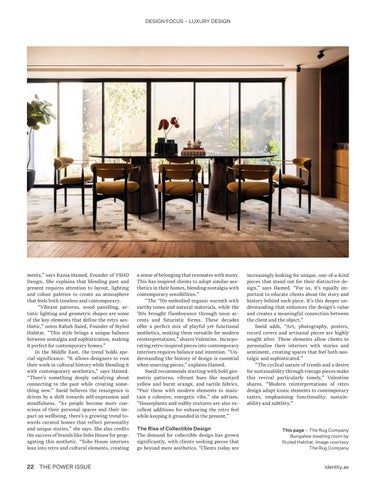
“The ‘70s embodied organic warmth with earthy tones and natural materials, while the ‘80s brought flamboyance through neon accents and futuristic forms. These decades offer a perfect mix of playful yet functional aesthetics, making them versatile for modern reinterpretations,” shares Valentine. Incorporating retro-inspired pieces into contemporary interiors requires balance and intention. “Understanding the history of design is essential when sourcing pieces,” explains Hamed.
Saeid recommends starting with bold geometric patterns, vibrant hues like mustard yellow and burnt orange, and tactile fabrics. “Pair these with modern elements to maintain a cohesive, energetic vibe,” she advises. “Houseplants and nubby textures are also excellent additions for enhancing the retro feel while keeping it grounded in the present.”
The Rise of Collectible Design
The demand for collectible design has grown significantly, with clients seeking pieces that go beyond mere aesthetics. "Clients today are
increasingly looking for unique, one-of-a-kind pieces that stand out for their distinctive design,” says Hamed. “For us, it’s equally important to educate clients about the story and history behind each piece. It’s this deeper understanding that enhances the design’s value and creates a meaningful connection between the client and the object.”
Saeid adds, “Art, photography, posters, record covers and artisanal pieces are highly sought after. These elements allow clients to personalise their interiors with stories and sentiment, creating spaces that feel both nostalgic and sophisticated.”
“The cyclical nature of trends and a desire for sustainability through vintage pieces make this revival particularly timely,” Valentine shares. “Modern reinterpretations of retro design adapt iconic elements to contemporary tastes, emphasising functionality, sustainability and subtlety.”
Sustainability Meets Style
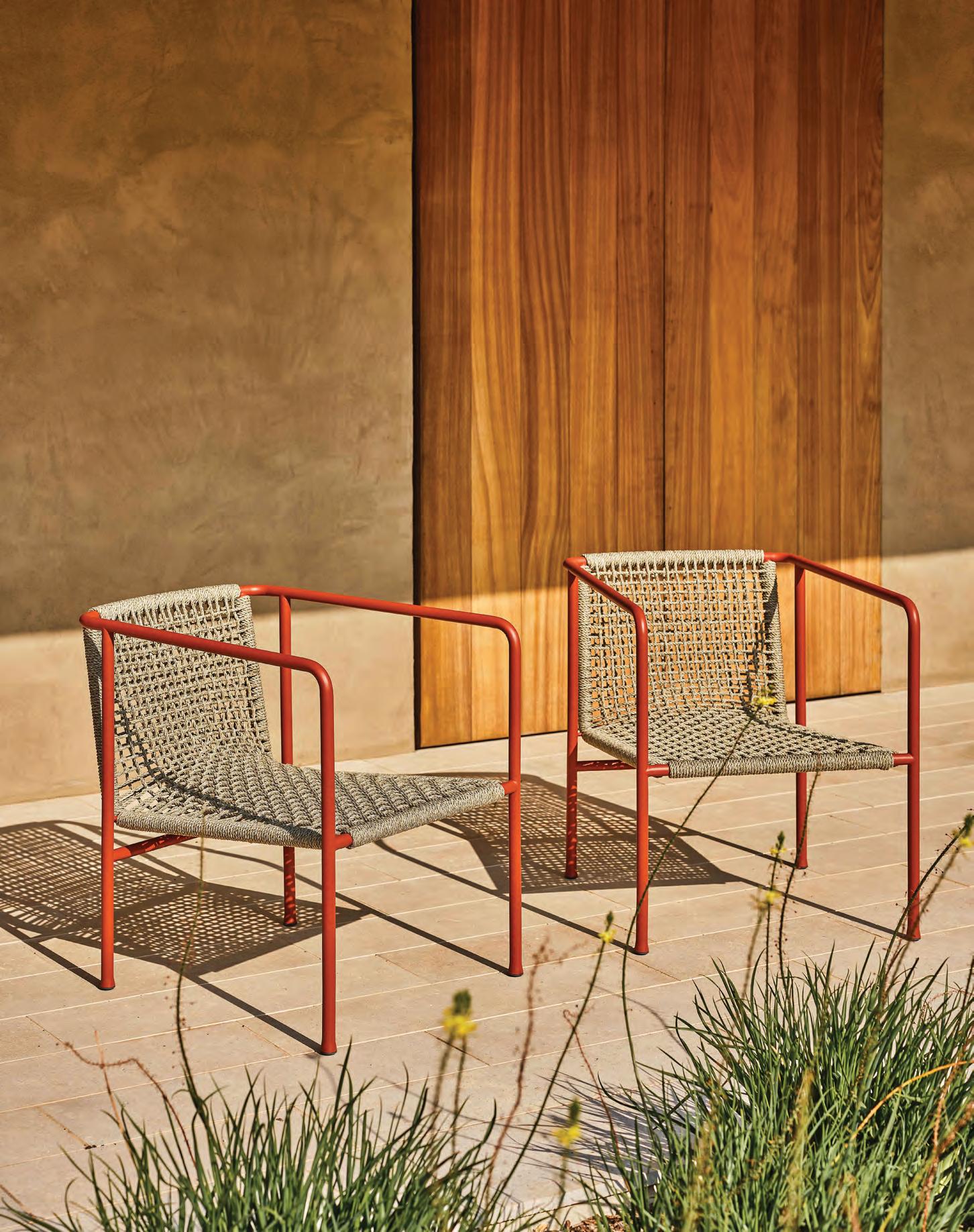
Talenti offers two diverse offerings in its outdoor collection – Carlo Colombo’s Tressé and Ludovica+Roberto Palomba’s Venice
WORDS – ANEESHA RAI
From Colombo’s fashion-forward approach to Palomba Serafini’s poetic elegance, these collections invite us to rethink our relationship with outdoor spaces – allowing style, sustainability and innovation to converge.
Tressé: Carlo Colombo has revisited his acclaimed Tressé collection for Talenti, propelling it into 2025 with a fresh perspective. Known for its tubular aluminium frames and eco-leather weaves, the collection imbues outdoor spaces with sophistication. Inspired by
the interwoven designs that dominated 1990s fashion – epitomised by Bottega Veneta –Tressé captures the essence of modern luxury while remaining rooted in functionality. Characterised by its modular versatility, the collection offers customizable options across seating, tables and loungers. Highlights include its sustainable yet stylish eco-leather weaving and Accoya wood. Colombo says, “Every component is crafted to endure. Tressé isn’t just furniture – it’s a statement of longevity and beauty.” With bold yet understated colours like silk grey, Siena earth tones and the newly add-
ed silver eco-leather, Tressé embraces timeless elegance. Complementary bouclé fabrics and vibrant Missoni-inspired cushions enhance its adaptability across diverse outdoor settings.
Venice: Venice by Ludovica Serafini and Roberto Palomba takes inspiration from the ethereal beauty of the city, capturing the lightness and fluidity of gondolas drifting on water. The wide seats with soft lines rest on solid wooden bases from which emerge, like the handcrafted parapets of a vessel, backrests and armrests upholstered in full nautical style. These backrests become elegant sails, ready to take advantage of the breeze to embark on a voyage into the unknown. The collection features 18 meticulously designed pieces, including sofas, tables, chairs and sun loungers. Anchored in craftsmanship and innovation, Venice combines teak and Accoya wood basis, lava stone tabletops in polished ceramic finishes that reflect sunset and seascape hues, and nauticalstyle upholstery. With Tressé and Venice, Talenti demonstrates how the fusion of visionary design and eco-conscious practices can redefine outdoor living without compromising on sustainability or style.
Tressé by Carlo Colombo
Venice by Ludovica Serafini and Roberto Palomba
WORDS – ANEESHA RAI
This year, we celebrate the interior designers, architects and product designers from the region on our radar; from emerging talent to the visionaries and the global firms with local presence. We uncover the projects past, present and their aspirations for the future in shaping the region’s design landscape.
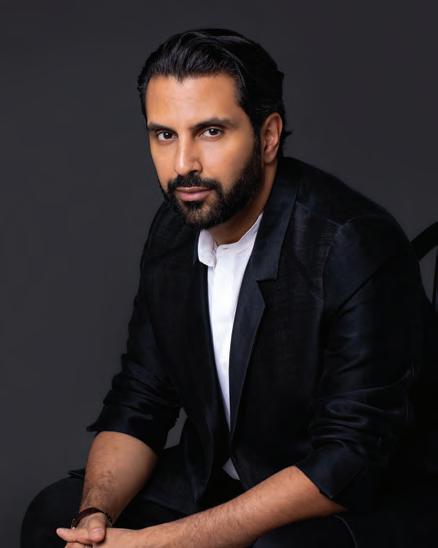
Reem Al Qamzi, R.qitects
As founder and lead architect of her firm, Dubaibased R.qitects, Reem Al Qamzi’s design philosophy focuses on meaningful, timeless spaces that reflect cultural authenticity. “We believe in creating spaces that resonate with their users, blending local traditions with global influences to craft environments that are both personal and enduring,” she says.
As an Emirati architect growing up in a city that is constantly changing, Al Qamzi is excited for the future. “I feel like architecture in the UAE over the past few years has been greatly focused on the modern and the contemporary and on creating something very ‘different’,” she says.
THE DEBUTS
“But nowadays I find that a lot of the designs are going back to the fundamentals, back to contextualising architecture to the city’s heritage and culture but with a contemporary/modern aesthetic and in a manner that suits our times.”
While celebrating 10 years of design, R.qitects also won a highly commended award at the identity Design Awards 2024 for Villa OL – a villa where the paradigm of the traditional Arabic courtyard is explored and where climate and context ensure the courtyard plays a vital role, modulating internal private space and evoking the memory of ancient Arabic architecture.
Another standout project by Al Qamzi is the HMS Mirdif Hospital, completed in December 2021. This project was meticulously designed to meet international quality and safety standards, as well as global hospital regulations. At its heart, the design reflects a deep understanding of Emirati culture, emphasising hospitality and privacy.
When asked about a dream project she would like to pursue, Al Qamzi said she would like to design a nursery, school or hotel. Currently, she and her team are working on diverse projects to kick off the year, including a new hospital, a mosque that will begin construction soon and a new F&B outlet, as well as a luxury residence due to be handed over shortly. On being asked her what empowers her, the architect shares, “The ability to transform abstract ideas into tangible, meaningful designs empower me by giving me a deep sense of purpose and fulfilment. Knowing that through our work we impact and shape people’s lives – whether it's through creating beautiful, meaningful spaces or inspiring designs – empowers me to keep going. I find empowerment in overcoming challenges with resilience and learning from every experience, as each hurdle strengthens my perspective and adaptability.”
HMS Mirdif Hospital
With a research-driven approach, Altqadum led by Marwan AlBalushi was the recipient of the 2024 Dubai Design Week Urban commissions for ‘TukTukDum’, which received citywide acclaim for its playful take on the table and Omani musical culture. The firm this year also launched ‘DumTukTuk’ at Oman Design Week. The interactive installation brought the joy of playing traditional Omani Mesendu drums, which were created with the help of local drum-makers.
The firm’s meticulous archival skills and cultural insights became the cornerstone of the studio’s approach, leading the firm to explore Omani identity, documenting the nuances of traditional architecture. The striking Bab Al Salam Mosque, also designed by the studio, continues to draw international acclaim. As Altqadum expands its portfolio, the trio is currently working on projects across the UAE, including a mosque in Sharjah, the redesign of an office building in Dubai Media City, homes in Jumeirah and Abu Dhabi, and a new restaurant in Dar Al Wasl.
Jassim AlSaddah, Founding Partner and Creative
Director at Babnimnim Design Studio
After garnering attention and recognition for the Mamluki Lancet Mosque, AlSaddah and his Kuwait-based studio have announced the commencement of construction for the Arch Mosque in Bahrain and a newly completed Padra Hair Clinic. AlSaddah cites the Kuwait-based Dar Hamad restaurant as another of the studio’s cherished projects – and one that embodies authentic Kuwaiti hospitality. Babnimnim is also overseeing the construction of residential projects. The Founding Partner describes its design philosophy as one that
emphasises the seamless integration of interior and exterior elements. “We adopt a comprehensive approach that merges colour and context to reflect the unique lifestyle of each homeowner. Our designs are distinguished by their ability to enhance the living space with vibrant colours and thoughtful architectural continuity, ensuring each one is not only functional but also a vivid expression of personal style,” he says. On being asked what drives him and his team, AlSaddah shares, “Our drive at Babnimnim Design Studio stems from a mix of persistence and consistency, anchored by loyalty and an unyielding curiosity about our craft. Transparent communication is key, both within our team and with our clients. This openness fuels our ability to realise the vision of each project, enabling us to deliver designs that are not only unique but also narratively rich, revealing stories woven into the very DNA of our creations.”
Marwan AlBalushi, Abdulrahim AlKendi and Najd AlBalushi, Altqadum
From top: Najd AlBalushi, Abdulrahim AlKendi, and Marwan AlBalushi
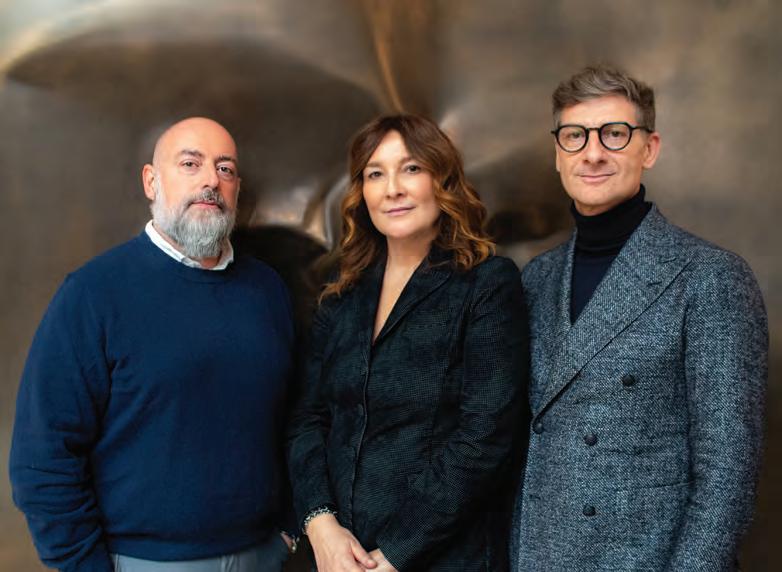
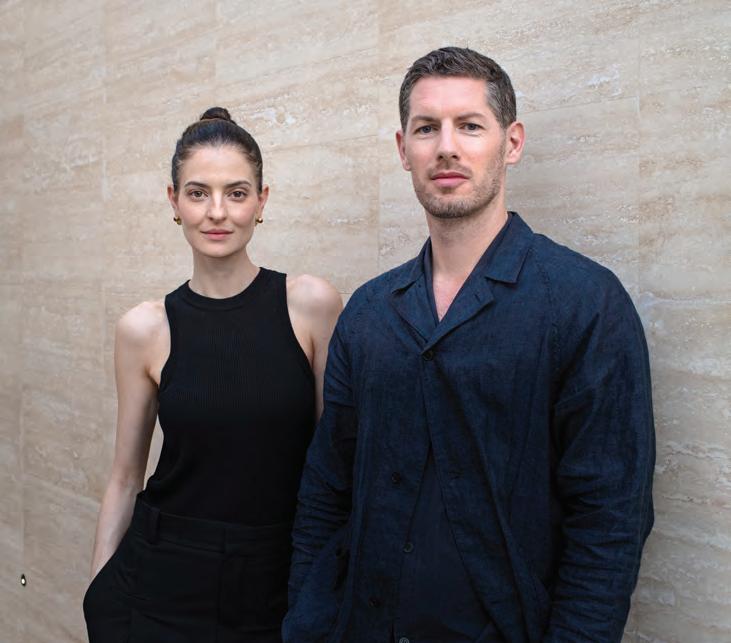
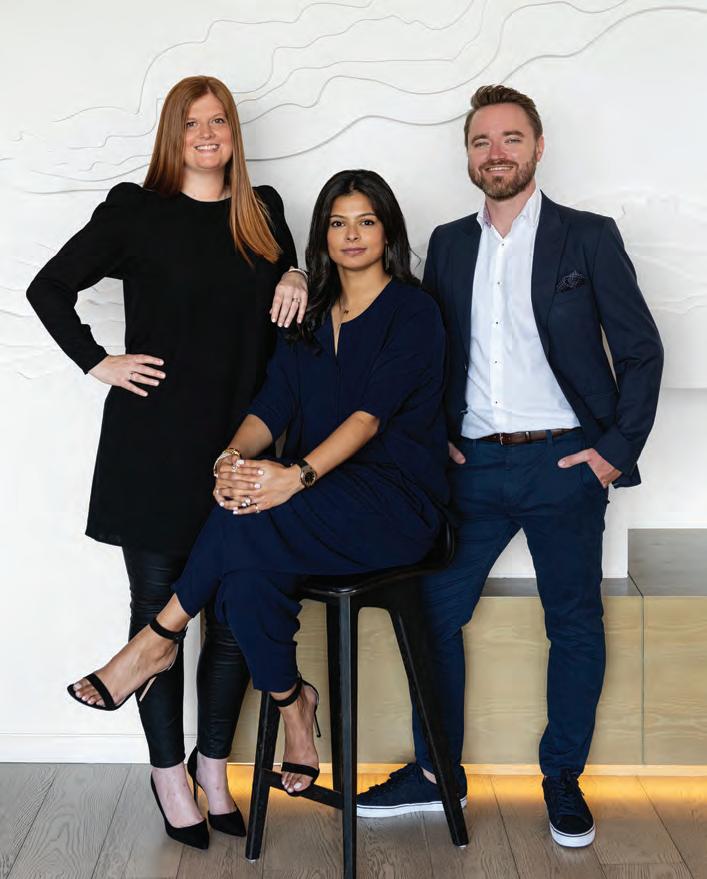
Marco Mangili, Dorotea De Simone, and Alessandro Vaghi, MMA Projects
An architecture and interior design firm founded in Italy in 1999 by Marco Mangili, MMA Projects has consistently embarked on some spectacular projects in both the Middle East and China. Their multicultural team made up of architects, designers, engineers, and researchers provide integrated solutions to clients, ranging from residential complexes to commercial spaces, headquarters, and hotels. Marco Mangili handles the Middle Eastern projects, Architect Alessandro Vaghi oversees the Italian and Chinese markets. Interior Designer Dorotea De Simone oversees the interior design projects and communications aspect of the business. The studio works closely with a carefully selected network of established Italian professionals and artisans with whom they collaborate on project development and execution.
With a focus on contemporary design and expressions, the design philosophy of MMA projects seeks the dialogue between design and scenography, as well as architecture and technology. They then apply this to the context and needs of the client to create both functional and poetic spaces. Harmony and balance are the foundation of the creative code that characterises the minds at MMA Projects – a high visual and aesthetic approach that blends with practicality, functionality, precision, and attention to detail.
Some of the firm’s most notable projects include the soon to be open Mama Shelter hotel in Business Bay for which they worked on the façade design, a contemporary villa in Ajman, the 198,877 sqm Sci-Tech Innovation Prism Park in Shanghai, Hotel Radisson Collection Lingang Shanghai which draws inspiration from the ocean and the galaxy, and a residential stone-clad villa in Pearl Jumeirah that is cantilevered above the water to reveal a stunning sea view. The firm has also notably designed the Axiom headquarters in Dubaian iconic building divided into three key zones with a central garden by melding sustainability, greenery and technology. The project uses three key materials – cement, black glass and corten steel to give a strong visual impact akin to a large stone viewed from afar.
The studio is currently working on the Ritz Carlton Residences in Business Bay in Dubai; a tower in Shanghai aptly named ‘The Flow of Music’ because of its fluid façade design, and several high-end residential villas in Dubai for local ultra-high net worth families.
Villa ABK Photography by Natelee Cocks
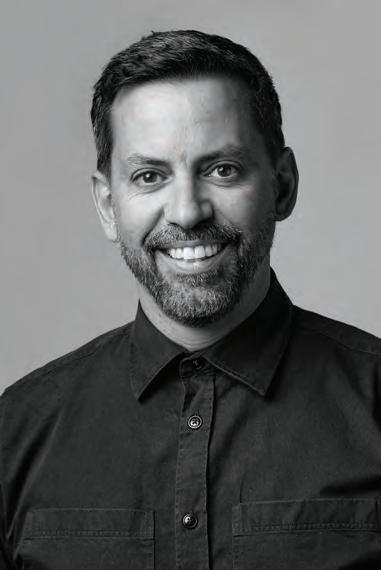
From left: Alessandro Vaghi, Dorotea De Simone and Marco Mangili
Founder and Creative Director of Blush International, Kate Instone has had a packed year. As well as designing Blush’s new design studio in Al Barari in collaboration with De Gournay, the designer has also designed a large multigenerational home in Al Barari, which involved a global journey in in sourcing the finest finishes, furniture and lighting. Instone has also collaborated with local celebrity Caroline Stanbury on her exciting new portfolio of apartments called Stanbury Towers, where each apartment is designed with a dynamic energy, reflecting Stanbury’s vibrant vision and fashion-forward style. At the core of Instone’s design philosophy is that design matters. “Thoughtful design has the power to make a genuine difference in people’s lives, enhancing how they live and experience their spaces,” she shares. Instone is currently focused on a deeply personal space – her very own home in Dubai. “I see this space as my laboratory, my creative playground. It’s an evolving experiment, and I’m not sure it will ever truly feel ‘finished’,” she shares. When Instone is asked what empowers her and her team, she replies, “We’re incredibly fortunate to have a powerful, dynamic team – that alone is a huge source of inspiration. The collaboration, creativity and energy within our team drive everything we do. Each person brings their own unique perspective, and together we push boundaries, challenge ideas, and elevate every project we take on.”
Waleed Arafa, Founder of Dar Arafa Architecture
Founded in 2006, Dar Arafa Architecture has been creating waves across the world of architecture. This design-build studio, focused on tracing and reviving the Egyptian, Arab and Islamic chains of transmission in the field of architecture and building guilds, is writing an original chapter without negating its rich and successful architectural heritage. In 2024, the studio completed La Maison d’Égypte – a students’ residence in the International University City, Paris, France, while its ‘Seat of Design Power’ pavilion, installed at the historic Cairo Citadel, has received kudos worldwide. The firm has been awarded, shortlisted for and nominated for a total of 20 international architectural awards for its design and build work on Basuna Mosque and Community Center.
The firm has quite a few projects in progress, such as: the first project in Historic Cairo, the Darb al-Labanna Cultural Center; a masterplan and architectural design for an indoors and outdoors art gallery overlooking the pyramid of Sakkara and the pyramids of Abu Sir; a resort in Siwa; a social and sporting club for a multinational in the west of Cairo; and a private resort to the south of Riyadh, near al-Muzahimyya. They are also in the design phase with a couple of mosques in Bahrain, an Islamic Cultural Complex in the east of Cairo, an educational/administrative building in Aswan and a high-rise overlooking the Nile in Cairo, as well as a housing project in Sohag, in the south of Egypt – among others. When asked what empowers him and his team, Arafa shares, “Observing our designs, after having been constructed and in-use, [and] finding out that our design research, assumptions and decisions were generally accurate and are now efficiently and pleasantly serving the people and communities they were design and built for. We are also empowered by our mistakes; they make us eager to further improve with every new project.”
Kate Instone, Founder of Blush International
Claire Craig, Design Director WA International
WA International is a Dubai-based awardwinning interior design studio of luxury hotels and resort properties worldwide, with over 20 years of experience in the hospitality market. Established in 1993, the firm has worked with top hotel and resort brands in Dubai, London, Abu Dhabi, Bahrain, Riyadh, Luxor, Mumbai, Buenos Aires, Addis Ababa and Zanzibar to name a few. With a focus on timeless interiors, the firm has built a reputation of innovation, originality, and exceptional style. The talented team brings diversity of experience, fresh perspectives, and excellent technical expertise.
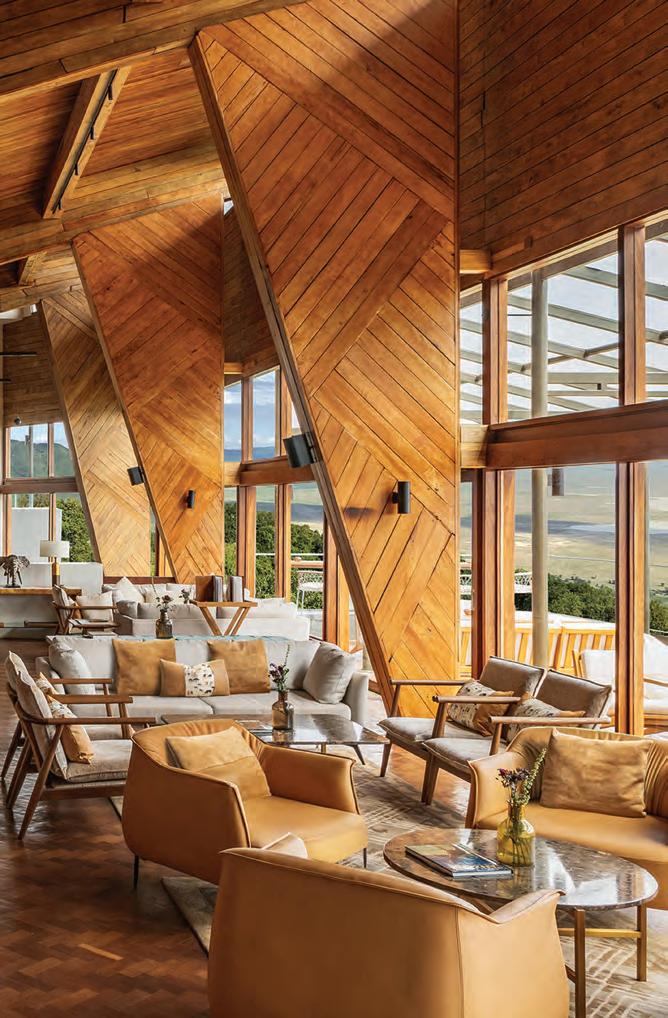
Noteworthy projects include the Park Hyatt Zanzibar, where the firm undertook the restoration of a UNESCO World Heritage Site, and the Park Chalet Autograph Collection and Pik Palace Autograph Collection in Azerbaijan, drawing inspiration from the majestic Caucasus Mountains for both resorts. Among the firm’s latest projects is the Ngorongoro Lodge Meliá Collection in Tanzania, which is particularly exciting as it lies on the edge of a crater. “Due to its remote location on the edge of the Ngorongoro Crater, restoring and refining existing features was our conscious decision.” shares Craig. “Considerable replanning of all the interiors also exposed the unique qualities of the existing structure.” The firm has also completed over 20 hotels, resorts and branded apartments in Dubai including One&Only The Palm, The St. Regis Downtown Dubai and Sofitel Dubai The Obelisk.
Looking ahead, 2025 promises to be another fascinating year for WA International, with several projects underway. “We always love working on projects in locations with clients who share our view of designing destinations which celebrate the local culture and complements its natural environment. We have several exciting projects we are working on at the moment which includes properties in Luxor, Jaipur, Lusaka, Saudi Arabia and Dubai,” shares Craig. On being asked what empowers Craig and her team, she shares, “The embodiment of enthusiasm, energy and inspiration provided by our clients and their trust and confidence in us to deliver their vision.” When being asked what the firm’s house style is, Craig shares, “It’s always been about respecting our clients’ brief and creating spaces that people love to visit and spend time in.”
Ngorongoro Lodge, Meliá Collection
David Lessard, Design Director and Stas Louca, Managing Director at H+A
After winning both ‘Design of the Year: Architecture’ and the ‘Architecture Hotel of the Year’ at the 2024 identity Design awards, H+A’s star is on the rise. The firm is working across a variety of projects across the hospitality, healthcare and wellness sectors. “In 2025 we are breaking ground on some very exciting projects: a new build for a 12,000-square metre outpatient cancer treatment centre referred to as ‘The Advanced Oncology Centre’; a 5-star 300-key beach resort in Fujairah; and the Kings College Hospital London expansion in Dubai Hills,” shares David Lessard, Design Director at H+A.
The firm is also working on several projects under design, including a state-of-the-art wellness project that combines luxury accommodation with world-class clinical services; an interior design project for a new super-tall signature tower on Sheikh Zayed Road that includes ultra-luxury branded and non-branded residences; as well as carrying out ongoing architectural and interior design work for the Ritz Carlton Ras al Khaimah where H+A is designing 35 new branded residences.
Lessard terms H+A as a human-centric practice. The firm works predominantly on healthcare, hospitality and residential projects, with a design philosophy that is focused on the user’s experience of the space. “Our projects tend to manifest as a collection of intimate moments that eventually create an overall project vision –from the bottom-up rather than the top-down.
Charlie Wu, Founder of Ecru Elements
Guided by a design philosophy that involves working with nature, Charlie Wu and her team at Dubai-based Ecru Elements are currently crafting visionary master developments that aim to redefine how communities experience space, particularly for Gen Z – a demographic with a unique perspective on urban living. “With a focus on cities that boast a young and dynamic population, we’re exploring how this generation responds to new approaches in home and community design,” shares Wu.
Some of Ecru Elements’ significant projects include Dubai-based entrepreneur Mona Kattan’s Kayali headquarters, where Wu and her team translated Kattan’s spiritual vision into a high-energy workspace. The studio also designed Keturah, a luxury residential master development by MAG developers in District 7, MBR City. Drawing from the harmony of nature and the essence of wellbeing, Keturah re-
imagines modern living with a transformative approach that resonates deeply with today’s lifestyle needs. Conceived during the Covid-19 pandemic, the Regalia tower by local-based developer Deyaar responds to the evolving needs of modern lifestyles by emphasising adaptable and multi-purpose spaces. The design recognises the importance of creating homes where residents can live, work and thrive comfortably. “From co-working spaces and wellness areas to recreational zones and communal gathering spots, Regalia provides a holistic environment that fosters well-being and flexibility,” shares Wu.
When asked what the studio’s design philosophy is, Wu shares that it revolves around creating spaces that shape how people feel, interact and grow. “From fostering spiritual connection to driving economic success, every project is a journey that begins with understanding and ends with meaningful impact,” she states. By putting people at the heart of everything the studio does, Wu says that adaptability is the studio’s greatest strength.
We have very few preconceived ideas about style and allow our designs to evolve organically as a direct response to the project brief, site location and cultural context. Our guiding principles encourage restraint over excess, with a minimalist ethos that strives to achieve more by doing less – exploring all opportunities to promote health and well-being in our projects,” Lessard shares.
When asked what empowers him and his team, Lessard shares, “A deep knowledge and passion for our subject matter. Our specialisation in healthcare, hospitality and wellness empowers us to pursue larger and more complex briefs that demand a verified interest and expertise in how to deliver projects that exceed client expectations and promote wellbeing for every human.”
From left: Stas Louca and David Lessard
Fady Chams, Owner of Prospect Design International
Focused on creating immersive design concepts that centre around the F&B industry, Prospect Design International –the firm behind the design of the well-loved Brass Monkey in Dubai – has many exciting new projects in the works, including Elaia, a Greek-dining concept at Pier 7 in Dubai Marina, Ce La Vie’s first European outpost in West London, and an immersive cricket and hospitality pop-up that’s set to open later this year. Now in its 21st year, the firm takes pride on being involved with some of Dubai’s most loved homegrown brands. “Dubai is our home, so for us to be involved in these local concepts and see them thrive means a lot to us,” shares Fady Chams, owner of Prospect Design International. On the firm’s wish list is a more international footprint, not just in Saudi Arabia but also Europe. In terms of their house style and design philosophy, Chams shares, “When talking about aesthetics, we really enjoy being bold and colourful, creating spaces that are full of energy! Photo-worthy spots are gold dust in today’s day and age – we consider these a Prospect Design signature!” Chams says he and his team are empowered by seeing people in the venues they designed, which are now some of Dubai’s busiest establishments. “A space can be incredibly beautiful but unsuccessful, but we know that our spaces welcome thousands of guests every year. We take great pride in the role we have to play there,” he shares.
Olga Melnikova, Founder of OL Interior
The founder both of OL Interior and Russian Design Forum, Olga Melnikova is well-known amongst the Russian interior design community. She works with and fosters a sense of belonging in Dubai and the UAE, holding regular sessions throughout the year that connect designers, suppliers and the wider interior design community. With more than 350 projects running simultaneously across nine countries, the entrepreneur takes pride in her latest undertaking – an apartment conceived in calm beige tones, but with textured art objects, custom art, fur chairs handmade in France and a Courbes Alléchantes floor lamp by Axel Chay. The result is a fantastic bold interior with exclusive furniture, decor and lighting. With a design philosophy that is centred around harmony, Melnikova shares that she feels empowered by making the world more beautiful, one space at a time.
Abdulla Al-Shamsi, Founder of Shape Architecture Practice + Research
Shape has become an award-winning firm under the tutelage of founder Abdulla Al-Shamsi. Founded in 2006, the company’s approach is rooted in creating something unique for every project – whether that’s through innovative spatial design, the thoughtful use of materials, or the way a building interacts with its surroundings. “Our work leans toward a contemporary aesthetic – but at its core, it’s about designing spaces that excite, are practical and are deeply rooted in their context,” shares Al-Shamsi. The firm is currently
working on a diverse range of projects, including residential and commercial developments, urban regeneration initiatives, an iconic mosque, a vibrant public park, and a sustainable village in Africa. When asked about a dream project that he would like to execute, Al-Shamsi replies, “Rather than focusing on a specific type or scale of a project, we’d love to collaborate with a visionary client –someone who shares our ambition to create something extraordinary and is open to exploring innovative ideas together. The synergy between the client and the design team can elevate a project far beyond what either imagined.” On being asked what empowers Al-Shamsi and his team, he shares, “Seeing our designs come to life: completed projects that are not just occupied but genuinely loved by the people who use them. It’s incredibly fulfilling to achieve the goals we set as a team, especially when the path to get there is full of challenges.”
Studio Baab is currently immersed in a range of exciting projects, each offering its own distinct narrative and design approach. Among them, two that stand out are: a Qatari-based café called OBLO, which is a celebration of wood in all its forms and its versatility through a minimalist design; and TWLV, an interconnection of concrete warehouses integrated with selective greenery, merging raw industrial elements with the contemporary. This past year, the studio has expanded into the Middle East, with projects across Qatar, Saudi Arabia and Oman.
On founder Ghida Chehab’s wish-list is to create a boutique hotel and to explore a furniture and product design collection. Chehab’s design philosophy is centred on creating warm, inviting spaces that reflect personal identity through thoughtful material choices. “I particularly love using wood in its various forms, as it adds both warmth and timeless beauty. Ultimately, a home should be a sanctuary – grounded, yet inspiring, where every detail fosters a sense of ease and individuality,” she shares.
On being asked what empowers her and her team, Chehab states, “What truly empowers us is the strong, supportive bond we’ve built as a team. This shared understanding and mutual respect allow us to navigate the complexities of design with confidence. We also believe in the power of balance between work and play. This harmony fuels not only our creativity but also the joy we find in the process. When work feels fun, it’s always refreshing, and that energy translates into every project we take on.”
Ghida Chehab, Founder of Studio Baab
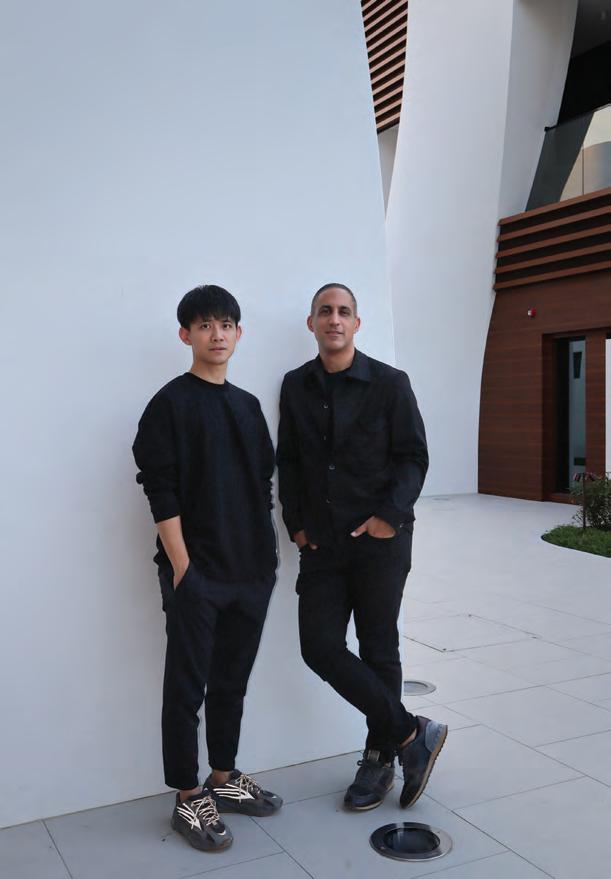
Tariq Khayyat and Xiaosheng Li, Co-founders of tkdp
With a design philosophy that revolves around continuous research and innovation, tkdp focuses on developing visionary architectural solutions that respond to the ever-changing demands of the market and the evolving lifestyles of communities. “Our approach prioritises functionality, cultural relevance and sustainability, ensuring our designs are both meaningful and impactful,” share Khayyat and Li. The firm’s most significant projects include: The Fold and The H Residence in Dubai; a luxury private residence in the prestigious Meydan area of Dubai; and a luxury residential project in the south of Spain. tkdp is currently working on a lifestyle mall in Al Ain, a high-end residential development in Dubai and a residential master plan in Abu Dhabi. On being asked what empowers the team, the duo shares, “Our empowerment comes from an unwavering passion for design, relentless research and a dedication to creating human-centric projects. This drive inspires us to enhance the experiences both of our clients and the communities we design for, ensuring that every project contributes meaningfully to its environment and users.”
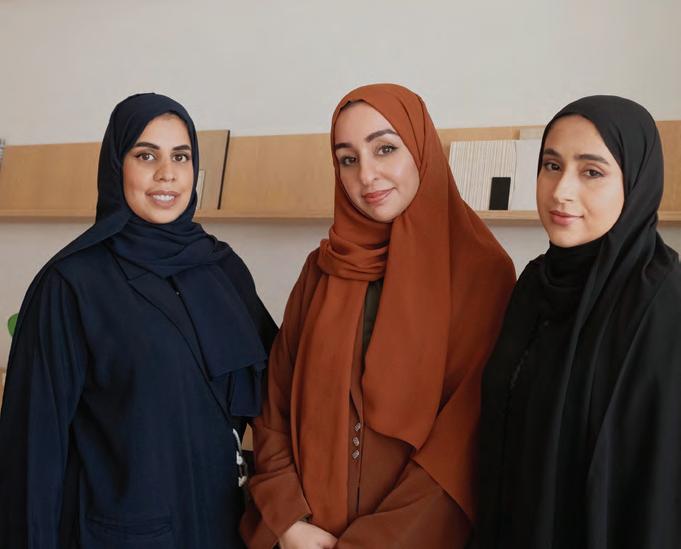
Over the past year, Studio d04’s star has been on the rise. The trio has been featured on HH Sheikh Maktoum bin Mohammed's social media as reputable architects and designers in the region and recently took on the challenge of designing saddling boxes for JARC [Jebel Ali Race Course] under A.R.M. Holding. They are currently working on creating a secluded private getaway that reimagines traditional design elements through a modern lens. “It’s all about weaving timeless patterns and techniques into contemporary spaces, creating an environment that feels both nostalgic and innovative,” the three designers share.
Their dream project would be to design a public building that embodies Emirati culture and heritage, reimagined through a contemporary lens from end to end. Their design philosophy is deeply rooted in a client-centric approach, where the narrative and vision of each client define the style and direction of their work. “We are highly design-oriented, drawing inspiration from our surroundings and cultural heritage, which we reimagine and translate into contemporary forms. For us, it’s about creating spaces that are not only aesthetically pleasing but also meaningful, and creating functional spaces that seamlessly blend practicality with luxury, ensuring every design exudes sophistication and purpose,” the team shares.
Noora Al Awar, Fatima Al Zaabi and Afnan Amin, Studio d04
From left: Xiaosheng Li and Tariq Khayyat
From left: Afnan Amin, Noora Al Awar, and Fatima Al Zaabi
GLOBAL FIRMS, LOCAL PRESENCE
Aedas
Insights by Ignacio Gomez, Global Design Principal
Aedas has undertaken some of the most ambitious projects worldwide, including a transformative project in Egypt. “We are collaborating with MODON Holdings on the visionary Ras El-Hekma project, which is redefining coastal living through transformative design,” Gomez shares. Another standout project is the prestigious Rixos Branded Residences in Dubai’s Financial Centre Road, which Gomez describes as “setting new standards for luxury and functionality.”
The firm has also built a legacy of impactful work that Gomez reflects on with pride. “Recent highlights include reimagining The Red Palace Boutique Hotel, where we seamlessly blended historic preservation with modern functionality,” he says. Another hallmark is Trojena, the revolutionary ski village
envisioned as part of NEOM’s futuristic landscape. Additionally, the SLS Dubai Hotel and Residences exemplifies the firm’s expertise in creating vibrant urban spaces.
Aedas’ design philosophy is deeply rooted in research, with a focus on architecture’s power to shape cultural and environmental contexts. “In the Middle East, we focus on integrating historical influences into forwardthinking designs. We view each project as equally significant, prioritising emotional connections between people and spaces,” the Global Design Principal explains.
For Gomez and his team, empowerment is a cornerstone of Aedas’ culture, owing to knowledge-sharing and a hands-on leadership approach. “We are committed to continuously raising the bar through agility, innovation and proactive adaptation. Senior leaders, including myself, remain deeply involved in every project, ensuring accessibility and collaboration at every level,” he says. “Empowering our teams means fostering an environment of trust, creativity and growth.”
Dewan Architects + Engineers Insights by Ammar Al Assam, CEO
With a strong portfolio spanning hospitality, residential and entertainment sectors across the UAE, Saudi Arabia and Southeast Asia, Dewan Architects + Engineers is at the forefront of delivering innovative and sustainable projects that leave a lasting impact.
Among the firm’s latest projects, Dewan has unveiled La Mazzoni, a luxury residential development on Al Marjan Island, Ras Al Khaimah, following the success of La Mer by Elie Saab. The latter, in collaboration with the renowned Lebanese couturier, reflects Dewan’s commitment to blending high-end design with cultural sophistication. In Saudi Arabia, the firm is the lead design consultant for the Aquarabia water park in Qiddiya City, set to be the largest water park in the Middle East upon its launch this year.
“Witnessing the opening of two landmark resorts in the Red Sea last year – The St. Regis Red Sea Resort and Nujuma, a Ritz-Carlton Reserve – was a proud moment for us,” shares Ammar Al Asam, CEO of Dewan Architects + Engineers. Beyond project delivery, Dewan continues to innovate and diversify. The firm has expanded into landscape design and theme park developments, showcased its advancements in AI-augmented BIM and automation at Autodesk University 2024, and acquired a majority stake in Singapore’s DesignLab, bolstering its expertise in hospitality design. Dewan’s design for the flydubai Campus also earned it the best Architecture – Commercial award at the 2024 identity Design Awards.
At its core, Dewan’s philosophy is rooted in creating sustainable, community-focused spaces that resonate with the people they serve. Empowerment drives the firm’s team – whether through adopting emerging technologies, nurturing young talent or fostering a collaborative environment where future leaders can thrive. “By going the extra mile for our clients and investing in innovation and people, we aim to continue setting benchmarks in the industry,” shares Al Assam.
Arquitectonica
Insights by Philip Gillard, Managing Director
Arquitectonica is now paced to work on the newly announced Mr. C Residences in Downtown Dubai in collaboration with ALTA Real Estate and Cipriani. The firm is also working on a luxury branded residential tower on Palm Jumeirah. “We love designing for this sector and it’s one Arquitectonica has made a name for itself in across the globe. We deeply value
and understand the unique experience that branded residences offer to both developers and owners, blending the finest aspects of a luxury resort with the comfort and intimacy of home, all within a single, spectacular destination,” shares Gillard. The firm is also shaping skylines and cities in Saudi Arabia through ambitious architecture and master-planning projects.
The firm has also significantly grown its Dubai team in the past 12 months and have already won three property and construction awards. On being asked about what’s on their project wishlist, Gillard reveals that it is already unfolding. “Our dream projects involve holistic partnerships where designers, operators, architects, and creatives all bring their expertise to the table. When everyone’s contributions are truly valued, we create something exceptional together. As cliché as it might sound, we consider the projects we are already working on to be manifest-worthy! I’m very excited, both as I reflect and look ahead to-
wards the future,” he says. The design culture at Arquitectonica is driven by the energy of the firm’s global experience and the collective process. “I’m a huge believer in the importance of culture. Our people are our success,” shares Gillard. When it comes to the firm’s design philosophy, Gillard shares, that Arquitectonica is, quite simply human-first. “Our Founding Principal Bernardo Fort-Brescia is very much at the helm of our global network of offices, driving our collective design philosophy and vision for the future,” he says.
The firm focuses on ecologically sensitive, yet commercially viable design and have a profound impact on their clients ROI and economic success. “When we talk about ‘house style,’ Arquitectonica is well-known for a bold modernism that redefined Miami’s urban landscape following its inception in 1977. We continue building on this legacy, with a liberated use of shape and form, creating iconic landmarks across the world,” says Gillard.
Mr. C Residences Jumeirah
Photography by Alex Jeffries
Insights by Jason Burnside, Managing Director – Partner
Godwin Austen Johnson (GAJ) is a renowned architectural practice that has been shaping the UAE’s skyline for over three decades. Founded in 1989, the firm has a rich history of pioneering designs, with a commitment to innovation, sustainability and community engagement. One of its proudest achievements is celebrating 35 years in the UAE, marking a significant milestone in a region that has undergone tremendous growth. “Our journey began with the iconic Dubai Creek Golf & Yacht Club project, which set the foundation for everything that followed,” Burnside reflects. Another landmark project is the Sharjah Art Museum, which earned the prestigious Aga Khan Award for Architecture. “Receiving this award shows our commitment to designing while addressing the needs of communities and responding to their cultural expectations,” the partner adds. Looking ahead, GAJ is excited about several ongoing projects. “This year, we will be handing over the Serenia Living Residences, while also developing a new residential project in Jumeirah Islands,” says Burnside. The firm is also focused on luxury boutique hotels and an art museum project, further expanding its diverse portfolio.
In 2025, GAJ plans to continue exploring the intersection of tradition and innovation. “My team and I aim to focus on projects that do more than preserve history – they should inspire movement, progress and exploration. We want to create spaces that honour traditional designs while embracing contemporary elements, enabling people to experience a narrative that spans from the past, through the present and into the future,” Burnside explains.
Gensler Middle East
Gensler Middle East, a regional arm of the global design powerhouse, continues to make waves with its groundbreaking projects across diverse geographies. Rooted in a collaborative, human-centred philosophy, the firm consistently delivers innovative solutions that balance functionality, sustainability and cultural relevance.
Among its most notable ongoing projects is the Nikki Beach Resort & Spa in Ras Al Khaimah, UAE. Situated on Hayat Island within the Mina waterfront development, the resort reflects Ras Al Khaimah’s natural and cultural heritage through fluid, organic forms and maritime-inspired design elements. With 156 accommodations, including luxurious sky villas boasting private plunge pools, the resort promises to elevate the emirate’s hospitality offerings, seamlessly blending relaxation with RAK’s distinctive landscape. In the commercial realm, Gensler is leading the design of RAK Central, an ambitious premium business hub slated for 2025. This mixed-use development will feature 288,000 square metres of office space, 4,000 residential units and three hotels. Anchored by a community-focused approach, the project integrates sustainability, wellness and flexibility, with design elements like elevated plazas, modular interiors and future-proofed infrastructure aiming to position Ras Al Khaimah as a leading business destination.
On a larger scale, Gensler’s Turkana Spatial Plan in Kenya exemplifies its commitment to regenerative design. Covering 77,000 square kilometres, the project tackles environmental restoration, water security and economic revitalisation through nature-based solutions. By healing the land, the firm aims to heal the people, creating a sustainable future for Turkana County. Gensler’s guiding principle, “designing for impact,” is evident in its diverse portfolio. Empowered by a collaborative culture, the firm focuses on transforming human experiences and fostering communities.
Godwin Austen Johnson (GAJ)
Nikki Beach Resort & Spa Ras Al Khaimah
International Design Associates (IDA)
Insights
by
Shahzad Azam, Founder
International Design Associates (IDA) has firmly established itself as a leader in luxury hospitality design and is known for its storytelling approach and human-centric design philosophy. The firm’s commitment to crafting meaningful, context-driven spaces is evident in its latest projects. Among the standout ventures are Durrakah Island – Autograph Collection in the Red Sea, KSA, Kempinski Marina Residences in Dubai, UAE, and Hyatt Place Hotel in Diriyah, KSA, alongside international projects like Kempinski Hotel Resorts in Marrakesh and Tangier, Morocco.
Shazad Azam, Founder of IDA, reflects on the firm’s philosophy: “Our design philosophy is deeply rooted in storytelling, context and human connection. We believe that every project should tell a story – a narrative that speaks to the culture, environment and aspirations of
LWK + PARTNERS
Insights by Kerem Cengiz,
Managing Director – MENA
LWK + PARTNERS is at the forefront of transformative architecture that balances cultural heritage, modern innovation and sustainability. The firm is committed to creating spaces that inspire and endure, grounded in a design philosophy that prioritises contextual sensitivity, human-centricity and innovation.
Among the firm’s most exciting current projects is a cultural exhibition space in Saudi Arabia that redefines biophilic design, integrating greenery and architecture to create a seamless ecosystem for learning and leisure. LWK + PARTNERS is also pioneering a smart city initiative, marrying AI-driven infrastructure with urban design to demonstrate how technology can harmonise with cultural heritage. Another standout project is a sculptural hospitality tower, drawing on the intricate geometry of Hejazi art and merging craftsmanship with functionality.
The key milestones that define the firm’s success highlighted by Cengiz include the groundbreaking Pulse Wadi mixed-use development in Riyadh, which embodies a contemporary reinterpretation of the Salmani Code, and the Agri Oasis Resort Project in Saudi Arabia, a perfect blend of traditional and modern design celebrating cultural heritage.
its users.” This ethos has translated into some of the firm’s most significant achievements, including the Raffles Al Areen Palace in Bahrain, which opened in December 2023. The resort has already become a renowned luxury destination and has been nominated for several prestigious global awards.
Other notable projects include Jumeirah Al Sahel Resort, Bahrain, which combines modern elegance with traditional Bahraini craftsmanship, and the upcoming Accor-Mantis Collection, Hawar Island Hotel & Resort, Bahrain. IDA’s success is also reflected in its impressive growth, having secured over 60 projects in the last two years and expanded its global team to over 100 professionals across Bahrain, Pakistan and Thailand.
Azam emphasises that what empowers IDA is the team’s diversity, creativity and shared commitment to designing spaces that leave a lasting impact. “Empowerment at IDA comes from a fusion of passion, people and purpose, allowing us to create impactful designs that stand the test of time,” he shares.
Looking ahead, Cengiz envisions a “holistic urban wellness hub” as a dream project – a self-sustaining community integrating biophilic design, smart city technologies and advanced healthcare infrastructure. “This project would serve as a beacon for sustainable and regenerative design, demonstrating how architecture can be a catalyst for human well-being. It’s something we have been dipping in and out of over the last five years but has never quite come to fruition; however, it feels like the time if we can find the right development team to work with us,” he shares.
For Cengiz and his team, empowerment stems from collaboration, innovation and the opportunity to address pressing challenges like sustainability and urbanisation in the dynamic MENA region.
Zaha Hadid Architects (ZHA) Insights by Melodie Leung,
Director
ZHA continues to push the boundaries of architectural innovation, staying true to its late founder’s legacy of fluid geometries and groundbreaking design. Among the firm’s latest projects is The Henderson in Hong Kong, set to be completed soon. The 36-storey tower redefines urban design by integrating technology such as a smart management system and air-quality monitoring, while also featuring a Sky Garden with aquaponic planting to purify the air. Its striking double-laminated glass façade not only enhances thermal efficiency but also can withstand the region’s intense summer typhoons.
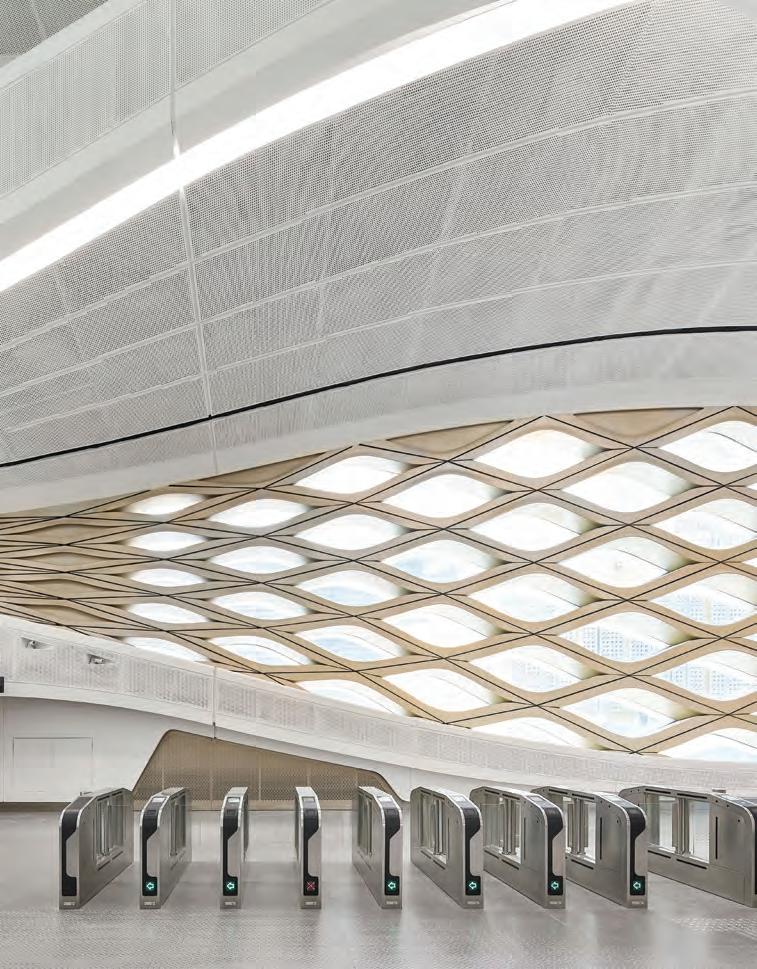
Recent achievements underscore ZHA’s global influence. The Romeo Roma hotel in Italy exemplifies its expertise in blending historic preservation with modern design. While transforming the 16th-century Palazzo Capponi, ZHA collaborated with Italian craftsmen to create interiors that harmonise tradition and innovation. In Riyadh, Saudi Arabia, ZHA’s King Abdullah Financial District Metro Station has become a symbol of sustainable urban connectivity. Opened in late 2024, the LEED Gold-certified station optimises energy use with passive design and renewable-powered cooling systems while managing high passenger volumes seamlessly. Another standout is the Zhuhai Jinwan Civic Art Centre in southern China. This multipurpose cultural hub features a performing arts centre, a science centre and an art museum unified under latticed steel canopies. The design prioritises sustainability through thermal optimisation, solar shading and integration with Zhuhai’s rainwater management initiative.With a bold vision and dedication to innovation, ZHA continues to shape the architectural landscape worldwide through working on transformative spaces that work in synchronicity with their surroundings.
RSP
Insights by
Michael
Managing Director
Magill,
– RSP Dubai & Global Design Lead
“We believe that architecture is more than just design. Collaborating with some of the world's most prestigious brands means understanding that it’s not just about creating something visually striking, it’s about capturing the brand DNA,” says Michael Magill, Managing Director – RSP Dubai & Global Design Lead.
The firm’s latest projects exemplify this philosophy, with works like the Nobu Hotel and Residences in Abu Dhabi, UAE, where RSP is involved from concept through to construction, ensuring every detail aligns with the luxurious brand’s identity. Another standout is the Armani Hotel and luxury Branded Resi-
dences in Diriyah Gate, Saudi Arabia, where RSP was appointed as the design architect after winning a competitive design bid. Additionally, the Karl Lagerfeld Villas project merges architectural and interior design expertise, creating luxurious living spaces that reflect Lagerfeld’s iconic legacy. The Palm Tower and Nakheel Mall stand as symbols of RSP’s design and delivery excellence, marking key moments in the Dubai skyline.
“Power comes from collaboration and a shared vision. What empowers us is the diversity of our team and the trust we build with our clients,” Magill reflects. The firm celebrated its 15th anniversary recently, a testament to its growth from a team of four to 100, emerging as a regional powerhouse in addition to establishing a new Global Design Studio in Dubai late last year.
KAFD Metro Station Photography by Hufton+Crow
THE VISIONARIES
Agata Kurzela
Designer Agata Kurzela is currently focusing on a stunning cultural space and several interventions in a heritage building, set to be unveiled throughout the year. “The opportunity to explore the relationship between tradition and contemporary practice is educational and rewarding at the same time,” she says. Kurzela is currently working on the delivery of Kempinski Residences in Dubai, UAE along with other hospitality projects and smaller-scale residential and product design projects. Over the past year, she was recognised internationally by various publications for her work on the Abu Dhabi Government Office. Her firm has also participated at the Nomad Circle in Capri and the UAE Designer Exhibition during Dubai Design Week, where she showcased her Game of
Jonathan Ashmore, Founding Principal and Militza Ashmore, Executive Director, ANARCHITECT
Based in Dubai and London, ANARCHITECT “manifests modern architecture across diverse scales of design with superlative detail and contextual materiality.” The studio’s architectural narrative is spread across the disciplines of architecture, interiors and design to create highly resolved buildings, spaces and objects that are beautifully balanced in form, function and refined execution. The firm has several projects across the world in final stages of construction, including: a private duplex interior in the Lana Residences, Dorchester Collection in Dubai; a newbuild private home for a multi-generational family on a leafy hillside overlooking Uganda’s capital, Kampala; the restoration, renovation and regeneration of a 1926 urban villa into a contemporary-sensitive family residence in the heart of the bohemian quarter in Belgrade, Serbia; a 45-key hillside beach and wellness resort on the eastern coast of the UAE; and two brand new contemporary high-end villas sitting side-by-side in Dubai Hills. Many will be familiar with the practice’s work, especially for their identity Design Award-winning ‘Blue Copper Loft’, in addition to the eight exclusive Desert Villas at Bab Al Shams Resort and The Serai Wing, Chedi Al Bait Hotel, Sharjah.
The practice’s cohesive architectural narrative emotionally connects its work to a physical place, a context and a moment in time. “We view design as a powerful pathway between ideas and the physical world, where creativity meets responsibility. Every project is an opportunity to solve complex problems while making thoughtful predictions about the future – creating solutions today that will have a lasting positive impact,” shares the practice.
Life concept. On Kurzela’s wish list is a project that combines cultural relevance with sculptural experimentation in building form. “This could involve exploring unconventional materials – whether high-tech or low-tech – or experimenting with impermanent modular structures, including inflatables. The focus would be on creating spaces focused on pure experience, such as a contemplative environment for meditation or worship,” she shares. Kurzela also expresses a desire to design a space in a dramatic natural habitat. Her approach centres on exploration and oscillates between minimal and maximal; layered yet also stripped to the bone. It is research-driven and intuitive. She states that discovering fresh perspectives and transforming them into tangible designs is a constant source of empowerment.
Photography by Sebastian Boettcher
From left: Militza and Jonathan Ashmore
Paul Bishop, Founder of Bishop Design
Bishop Design has been working across continents, with a significant number of concepts coming to life. “Collaborating with Major Food Group has been transformative for Bishop Design,” shares Paul Bishop, the firm’s Founder. “Expanding their portfolio and bringing exceptional venues like Carbone Vino in Miami and the upcoming Carbone Dubai to life has been a defining milestone. With exciting future projects already in the pipeline, we are eager to see where this partnership takes us.” Locally the firm is collaborating with Sunset Hospitality on bringing an F&B-meets-entertainment venue to the region and a much-anticipated five-star Intercontinental hotel in Rabat, Morocco. Bishop Design is also working with renowned restaurant brands such as Sumosan and Akira Back, who are launching in Cyprus and Morocco respectively. Bishop Design is upgrading its Miami office to support their expansion and growing presence in the U.S., which includes a luxury resort in South Beach. “From day one, we knew this would be a game-changer, a project that would redefine the luxury resort concept and embody everything South Beach should be – luxurious, elegant and steeped in refined hedonism,” he shares. With a style that is “unapologetic, bold and distinctive,” the studio’s design philosophy is about breaking the mould and crafting spaces that leave a lasting impression. “What drives us is the desire to create something truly exceptional. Watching our designs come to life, seeing people engage with the spaces we’ve crafted, and knowing we’ve contributed to something meaningful –that’s what fuels our passion,” says Bishop.
Michael Melnick, Managing Director of BW Interiors
Michael Melnick leads a team known for redefining luxury and innovation in Dubai’s interiors scene. With 2025 already shaping up to be an exciting year, the firm is engaged in some of the city’s most prestigious projects.
One highlight is Scott’s Dubai, the iconic London restaurant that is making its UAE debut in DIFC. “Scott’s Dubai will bring the timeless charm and elegance of its London counterpart to a prime location in Dubai’s culinary scene,” says Melnick. The company is also involved in the refurbishment of Nusr-Et Steakhouse, where they are enhancing the brand’s globally recognised opulence. Beyond hospitality, the firm is working on bespoke high-end residential projects in coveted areas like Palm Jumeirah and Emirates Hills, as well as premium office spaces at Expo City and ICD Brookfield Place. Recent successes include the vibrant fit-out of the popular Sexy Fish in DIFC, the sleek design of 1920 at ICD Brookfield Place, and luxury hospitality spaces like Bar des Prés and Il Gattopardo. The firm’s work at J1 Beach, delivering standout venues such as Ninive Beach and Chouchou, and at FIVE Luxe JBR with projects like Paradiso and Ronin, exemplifies its expertise in creating unique, high-end spaces.
“What empowers our team is a shared passion for excellence, creativity and collaboration,” Melnick shares. The team’s drive is fuelled by trust from clients and a commitment to pushing the boundaries of craftsmanship while adapting to the industry’s evolving demands.
Carl Gerges, Carl Gerges Architects
Carl Gerges Architects is making waves across hospitality, nightlife, fashion and residential design, with a portfolio that spans Europe, the Middle East and Africa. Gerges’ collaboration with Bottega Veneta’s then Creative Director Matthieu Blazy in Dubai, titled ‘Waves’, created an otherworldly experience. Gerges also worked work on the AlUla Music Studio in Saudi Arabia. Among their latest projects, the team is particularly excited about a gym and wellness space they are working on. The firm is also shaping new urban living experiences and unveiling fresh ideas for hospitality in Lebanon and the UAE, reflecting a diverse and visionary approach.
Despite Beirut and Lebanon's challenging circumstances, Gerges and his team remain focused, translating their belief in the power of design into tangible spaces that bring people together. “It’s been incredibly fulfilling to see our projects come to life; places where people can gather, share moments and celebrate life,” the architect and musician shares.
On Gerges’ wish-list is designing a wellness retreat nestled in nature; one where wilderness takes centre stage and where all the building materials are native to the land. “The fewer restrictions, the more I would go back to basics – creating something that is centred around experiences and rituals related to our wellbeing. I think we could all benefit from that,” he shares.
Gerges roots his design philosophy in experiences. “I always want to create spaces around rituals that provide a sense of wellbeing by engaging the senses,” he says. Guided by simplicity and refinement, his work celebrates quality and timelessness, ensuring that spaces interact harmoniously with their surroundings as they age. Empowered by working as one, the firm draws strength from Lebanon’s resilient artisans and designers. “Our power comes from collaboration, both within our team and with the incredible craftsmen and communities we work with,” he shares.
Shaun Killa, Founder of Killa Design
As a pioneer in architecture who blends sustainability, innovation and artistic vision, Shaun Killa is known for his deep respect for cultural and environmental contexts. Killa’s designs honour heritage while pushing the boundaries of contemporary architecture, and the firm’s projects are often inspired by fluid geometry and organic forms, creating spaces that seamlessly connect with nature and inspire future generations.
Killa Design’s portfolio is exciting as it is striking. The Museum of the Future, with its torus-shaped form adorned with Arabic calligraphy, stands as one of the firm’s latest highlights, along with the Address Beach Resort, whose twin towers are connected by the world’s tallest occupied skybridge. The off-grid Shebara Resort in Saudi Arabia looks like an otherworldly experience, powered by renewable energy and setting a global standard for sustainable luxury.
Currently, Killa Design is working on several ground-breaking projects, including One Central in Dubai, an avant-garde hyper-luxury development featuring branded towers and luxury hotels. In Saudi Arabia, the firm is crafting Leyja, a tranquil tourism destination framed by dramatic mountains, while further afield, Killa Design is creating Zamani Islands, a 100% renewable energy-powered eco-luxury development in the Maldives, and a signature tower in Baku, Azerbaijan. Their upcoming projects also span museums, educational centres and masterplans across the UAE, Saudi Arabia and beyond. Killa aspires to design hyper-sustainable projects that challenge convention and leave a meaningful impact. “A dream project would be a hyper-luxury eco-safari lodge. We’d also love to design waterfront masterplans that harmonise leisure, yachting, marinas and biophilia. Another exciting project would be designing a superyacht,” he shares.Killa’s commitment to sustainability and bold design is fuelled by the diversity and creativity of his team. “Competing on a global stage and winning against some of the world’s leading firms
is both humbling and empowering,” he shares. For Killa, the future is about designing extraordinary spaces that resonate emotionally, touch lives and inspire wonder.
Photography by Karim Ghorayeb
Kristina Zanic, Founder of Kristina Zanic Consultants
With an ethos rooted in inspiration through travel, Zanic and her team approach each venture as a journey of discovery. “We’re kicking off the year with projects in new locations like Albania and Tanzania, which is always thrilling for the team,” shares Zanic. These new landscapes offer opportunities to learn and create designs infused with local character and authenticity.
The firm’s current portfolio reflects its versatility and creative ambition. The team is working on a high-profile project in Azerbaijan, skilfully balancing vast public areas with a sense of human scale. Closer to home, the upcoming Emirati café Gerbou celebrates local culture and sustainability. Later this year, there are much-anticipated openings of the Intercontinental The Red Sea Resort and the renovated St. Regis Kuwait. Additionally, the firm is diving into branded residences projects that showcase its ability to blend hospitality and home design seamlessly.
2024 was a landmark year for the firm. The completion of the St. Regis Red Sea, the transformation of the Sheraton Mall of the Emirates, and the revamp of IHG’s Dubai office stand out as highlights. The launch of a London office and the establishment of an in-house studio for luxury residential projects demonstrate the firm’s growing global presence. Looking ahead, Zanic dreams of working on projects with unique architecture or extraordinary locations, like the safari lodges in Tanzania her team is currently designing. “Exciting, unique projects and open-minded clients who encourage us to dream and push boundaries empower us,” she says.
Thomas Castagnet and Rim Guirari, Co-founders of Mustard & Linen
Having recently celebrated its 10th anniversary, Mustard & Linen has more than doubled the size of its team in the past year and has opened a new studio in Saadiyat Island, Abu Dhabi, UAE. The studio has played a significant role in shaping the architectural scenery of the island’s Cultural District and its latest projects include two residential developments – The Source and Mamsha Palm – and a nursery for the Abu Dhabi Department of Education and Knowledge. “Our signature style fuses sculptural gestures, bold proportions and layered textures, resulting in spaces that are timeless, dynamic and purposefully designed. By combining functionality with aesthetic beauty, we craft environments that feel custom-tailored and leave a lasting impact,” share the duo. The studio collaborates closely with clients and architects to turn their vision into reality, necessitating a deep intuition for their needs. On being asked what empowers them and their team, Guirari and Castagnet share, “Our team is empowered by a shared commitment to creativity, collaboration and a deep understanding of design. Trust and respect are at the core of everything we do, allowing us the freedom to experiment and grow together. As an international, close-knit team, we celebrate individuality while working collectively to bring fresh ideas to life.”
Pooja Shah-Mulani, Andrew Harms and Rachel Kidd, LW Design Group
After the monumental celebration of LW's 25year milestone, the firm enters the new year with renewed vigour, staying true to its promise of growing stronger. Its quarter-century milestone marks not just a celebration of the past but a commitment to the future, ensuring that the LW legacy continues to thrive through visionary leadership and a dedicated next generation.
As new Partners take their places, their roles have been clearly defined to fortify the firm’s foundation: LW’s powerhouse of globally recognised design excellence. The firm’s philosophy of being “stronger, not bigger” is taking centre stage as it focuses on enhancing
expertise, operations and leadership to uphold and elevate its unparalleled standards in the design world. The firm is currently diversifying their hospitality with the opening of its first luxury lodge project in Kenya, a collection of dynamic F&B spaces within the new Mandarin Oriental in Dubai, an upscale restaurant in downtown Toronto, and several large-scale hospitality developments in Saudi Arabia in collaboration with leading operators.
Leadership for the Next Generation
To further secure its legacy, LW has strategically appointed Pooja Shah-Mulani and Andrew Harms as Managing Partners. Their leadership represents the perfect blend of leading creative innovation with commercial and operational proficiency.
Shah-Mulani will lead as Managing Partner with a focus on creative strategy, expanding LW’s reach into exciting new markets. Her role embodies the LW DNA, championing innovation and collaboration with clients to craft a bold vision for the brand while ensuring every project reflects the firm’s hallmark of excellence.
Managing Partner, Harms, meanwhile, will steer the firm’s commercial and operational strategy, focusing on optimising delivery and enhancing performance across all levels. With an emphasis on pushing LW’s operational systems to meet market trends even more completely, Harms’s leadership will be pivotal in refining LW’s reputed attention to detail, including the continual growth of its in-house BIM department for delivering seamless, fully coordinated design packages. Together, ShahMulani and Harms will now manage LW's global Interior Design practice, overseeing operations across Dubai, Denmark and Hong Kong. Their combined leadership ensures a unified vision, fostering collaboration across studios and upholding the firm’s unwavering commitment to excellence. By continuing to strengthen this integrating bond of creative innovation and operational proficiency, they aim to set new benchmarks in delivering world-class design.
Expanding Design Excellence
Rachel Kidd, as Partner and Senior Design Director, will play a global design-focused role, further strengthening LW’s stronghold on FF&E standards worldwide. Her vision will ensure that LW’s design DNA continues to evolve, creating timeless, innovative spaces while upholding the firm’s renowned aesthetic. In addition, LW’s longstanding senior design team exemplifies the firm’s commitment to nurturing talent and expertise, ensuring that its DNA is passed down through mentorship and collaboration.
Gina Munro, Design Director, has over 15 years of experience at LW, having worked in both the Dubai and Hong Kong studios. Now based in Cape Town, Munro rejoined the team two years ago, bringing her unparalleled passion and years of expertise to lead and inspire the firm’s growing team.
Jesper Axel Petersen, Associate, hails from Denmark and is a key figure in LW’s F&B design offering. Known for his meticulous attention to detail and creative space planning to transform places into unique destinations, Jesper’s talents reflects LW’s commitment to embedding its design philosophy into every project.
Debra Parkington, Associate and Studio Lead in the Hong Kong office, joined LW with extensive experience and leadership skills. Her strong aesthetic vision and strategic approach will be instrumental in expanding LW’s presence and impact across the APAC region.
The Road Ahead: Building on Strength
As LW steps into this new chapter, the firm is poised to uphold its legacy while redefining its future. With its leadership firmly in place and the next generation empowered, LW continues to focus on pushing boundaries, elevating standards and inspiring innovation in every project it undertakes.
From left: Rachel Kidd, Pooja Shah-Mulani, and Andrew Harms
Niko Kapa
Niko Kapa is an architect dedicated to blending the cultural, social and ecological values of the Arab world through innovative, socially responsible design. His practice integrates local heritage with modern aesthetics, creating designs that are visually striking and deeply connected to their environment. Kapa’s work emphasises sustainability, adapting to local climates and materials.
One of his latest projects is a tower in Doha, which features a shaded public area at the building's base, creating a seamless connection with the surrounding urban landscape. A patterned metalwork shell moderates light and noise, offering respite from the external environment. “This project aims to understand the principles of operation under specific climatic conditions and material choices, and to apply them suitably in the building’s design,” Kapa explains. In Dubai, he is working on an office complex that celebrates the
structure itself, with a ‘mashrabiya’ exoskeleton serving both as the building's main support and a functional shading system.
Kapa’s firm has received significant recognition for its socially responsible approach, including being finalists for the Arab World Institute Design Prize and winning the AlUla Design Award. “By using local materials and techniques, we believe in the designer’s social responsibility to contribute to an environmentally sustainable world,” Kapa says. The firm also received the Iris Ceramica Award at Dubai Design Week for a project promoting cultural exchange through sustainable design. Looking ahead, Kapa expresses a desire to work on art installations that merge design and art, as well as research-driven projects. “We aspire to be part of a group of innovators committed to advancing the industry through the discovery and recognition of tangible and intangible heritage,” he shares, reflecting his vision for an inclusive and innovative design landscape.
Omar Nakkash, Founder and Design Director at Nakkash Design Studio
Nakkash Design Studio continues to leave its mark on the regional and international design landscape through a diverse range of projects that embody its philosophy of individuality and depth. Among the studio’s current ventures is the redesign and refurbishment of a villa in The Meadows, which promises a balance of sophistication and comfort. Adding to this is a curated F&B space in Dubai’s One Central district, and the transformation of a historical building in Lisbon, where the studio is merging contemporary design with the city’s rich historical context.
Recent accomplishments highlight the studio’s versatility and creative edge. One recent notable achievement is the executive floors of the iconic Dubai Chambers building, where Nakkash Design Studio crafted spaces that marry functionality with a timeless aesthetic. A Japaneseinspired apartment in One Za’abeel, blending minimalism with warmth, underscores the studio’s ability to create serene, thoughtful environments. Expanding regionally, the firm marked its Saudi debut with a Levantine-inspired restaurant celebrating heritage through a harmonious mix of culture and design.
At the core of the studio’s approach is a determination to champion individuality. “Our design philosophy is rooted in developing concepts with depth and individuality, resisting the allure of standardisation. Every project is crafted with a unique narrative while always placing the human experience at the heart of our spaces,” Nakkash shares.
Empowerment for Nakkash and his team comes from the trust their clients place in their process. “It’s incredibly motivating to see their confidence in our ability to bring their visions to life,” he explains.
Pallavi Dean, Founder and Creative Director at ROAR
This year looks to be another exciting one at ROAR, where identity ’s January cover star and Founder Pallavi Dean and her team are working on a workplace in Chicago, U.S., a leisure hotel in Rabat, Morocco and a luxury residential development in Bali, Indonesia. Locally, the firm is working on residential towers, workplaces for blue-chip companies and three mosques. Recently, ROAR set up a Saudi Arabia office and completed the award-winning Ajman Ruler’s Court. On Dean’s wish-list is a wellness-focused, mixed-use development. Dean also shares an interest in designing a community with schools, homes, offices and hotels that have wellbeing at the core. “Everything we do is empathy-based – from our process to the final design,” the designer says of the studio’s design philosophy. “We don’t have a signature style and that is reflected in the diversity of our portfolio, where we have projects that are minimalist, maximalist and everything in between. Our process and approach to design is what sets us apart. We also believe in prioritising functionality and budget over chasing the aesthetics.” Dean also shares that kindness and gratitude empower her team as their approach towards each other, their work and their clients.
Joakim de Rham, CEO and Co-founder at Swiss Bureau Interior Design (SBID)
SBID is currently working on a diverse range of projects across various sectors, including offices projects across the UAE and Saudi Arabia, a 5,575-square metre ultra-luxurious residential project in Dubai’s Emirates Hills, a university innovation centre, a couple of high-end clinics and a new hospitality build project in Dubai Creek Harbour, as well as a coffee shop. With more than 22 years in the business, the firm has received over 20 awards for its work. “Our design philosophy is simply crafting timeless creations that authentically reflect the identity of our clients and, most importantly, ensuring they remain relevant and stylish for years to come,” shares de Rham.
“We carefully select finishes and FF&E that are less influenced by current trends, rather emphasising longevity and sophistication. At the heart of our approach lies the principle of ‘less is more’, embracing simplicity and ele-
gance to achieve enduring and lasting beauty.” De Rham takes pride in the team he has built: “Together, we truly inspire and challenge one another, always pushing boundaries and finding joy in the process. It’s this culture of trust, support and a shared vision that allows us to consistently deliver projects that are not just exceptional but meaningful.” de Rham shares a very poignant thought on what empowers him and his team. “What empowers us, quite simply, is the ability to collaboratively transform spaces into something extraordinary –environments that inspire, elevate and shape the way people work, live and connect with one another. This is where design becomes more than aesthetics; it becomes life itself,” he says.
Photography by Imran George
Laila Al-Yousuf, Design Director and Partner at SAY Studio
SAY Studio has carved a niche in creating meaningful, impactful spaces that elevate the way people live and work. Specialising in workplace design, the studio has collaborated with global giants like LinkedIn, Apple and Google, shaping innovative environments that redefine productivity and collaboration. This year, the studio will unveil projects with DMCC, Crédit Agricole and others, alongside expanding their hospitality portfolio with ventures like the recently completed Grand Mercure.
Among SAY Studio’s proudest achievements in the past year is their work on Siemens Energy, a sprawling LEED Gold-certified campus spanning five buildings. “It challenged and inspired us in equal measure,” Design Director and Partner Laila Al-Yousuf says, highlighting the team’s ability to blend complexity, scale and sustainability. Beyond the projects themselves, she treasures the lasting impact their designs have on clients and the relationships built along the way.
Looking ahead, Al-Yousuf expresses a desire to design projects with a deeper emotional connection. “After suffering a late-term miscarriage, I was approached to design a high-risk pregnancy clinic. It was one of the most rewarding experiences of my career,” she shares. She dreams of pursuing similar projects for children’s, women’s or animal organisations, and even expresses an interest in set design – intrigued by creating spaces that delve into a character’s psyche.
Underpinning SAY Studio’s ethos is a commitment to quality, innovation and sustainability. “Design impacts how people feel and behave,” Al-Yousuf explains. This belief, coupled with a team-focused culture that fosters growth and exploration, empowers SAY Studio to push boundaries and use design as a force for good, creating spaces that truly transform lives.
Abboud Malak, Founder of Studio M
As the founder of Studio M, Abboud Malak has cultivated a reputation for creating spaces that blend elegance, integrity and timeless appeal. His portfolio spans a wide range of projects, each defined by a dedication to user-centric design and well-being.
Currently, Studio M is engaged in a series of exciting ventures. These include a cutting-edge hotel concept in DIFC, a luxurious villa in Nad Al Sheba in collaboration with DXB Lab, and a residential community with Loci Architects for a prominent UAE developer. The firm is also designing a sales centre for a five-star hotel and residences in Dubai, expanding the range of The Espresso Lab coffee shops across the UAE, and creating a sophisticated Presidential Workspace for high-end government offices. Additionally, Studio M is crafting a sleek and contemporary penthouse retreat in Dubai Marina for a young couple. Among the firm’s proudest achievements are the introduction of boutique coffee shop culture to the UAE through the first The Espresso Lab in 2016, the transformation of Palm Villas into minimalist, light-filled beach residences, and the execution of high-profile projects that consistently push creative boundaries while championing good design in the region.
On Malak’s wish list is to design a body and mind retreat on a remote island for Aman Resorts. “We believe interior architecture plays a crucial role in shaping the way we live, with a profound impact on our wellbeing. A project like this would align perfectly with our vision of creating tranquil spaces that inspire rejuvenation and harmony,” he explains. Studio M’s design philosophy reflects a commitment to creating pure, innovative and enduring spaces. On being asked what empowers him and his team, Malak shares, “We are empowered by our ability to create spaces that prioritise well-being and timeless appeal.”
Studio Meshary Al Nassar
Founded in 2018 in Kuwait by Meshary AlNassar, Studio Meshary AlNassar opened its Dubai office in 2023. Since then, the studio has grown significantly, undertaking multiple collaborations with international brands as well as representing the region through its work. The studio has also recently completed designing the interiors for a mixed-use commercial and residential tower in the financial district of Kuwait City. The team is also designing several high-end residential projects in the GCC and working on the design of its first coffee shop; it has also completed several F&B concepts. For their next challenge, the team members shared that they would like to take on a boutique hotel or hospitality project. The studio’s design philosophy lies in “Creating personalised spaces that feel intimate, contextual and have a story to tell, yet maintain a sophisticated and timeless look.” The team is empowered by honesty in design and collaboration with clients and peers.
Paul Nulty, Founder of Studio Nulty
With its Dubai-studio completing its 10th year, Nulty is geared to strengthen its presence across eight studios, following its acquisition of Klaasen Lighting Design at the end of 2024. Some of Nulty’s larger projects in Saudi Arabia include Qiddiya, The Red Sea Project, along with developments in Jeddah and Al Ula, among others. “What I love is the sheer variety of our work. We’re involved with global headquarters, setting the standards for what great workspace design looks like, and hotels all around the world, redefining luxury. Asia is a great market for retail right now and the momentum of the Middle East gives us the scope to work on city-wide masterplans. We’re also designing the lighting for a truly innovative car showroom. It’s an exciting time to be
part of the team,” shares Paul Nulty. With Isambard Kingdom Brunel one of his greatest inspirations, Nulty says that illuminating a bridge would be on his project wish-list. “Bridges are where the science of engineering and the beauty of architecture meet – to enhance that with light is arguably one of the ultimate tests for a designer,” he shares. With a design philosophy of using light to breathe life into a space and emotionally connect people with that environment, Nulty says the studio’s approach is constantly shifting. “The sectors that we specialise in are more fluid, due to the rise of experiential design and broader issues like wellness, inclusivity and sustainability. Projects are more complex as a result, so there’s a lot of problem-solving and new fields of research to master.”
From left: Meshary AlNassar and Mishari AlAwadhi
Rabah Saied, Founder of Styled Habitat
Having recently completed The Rug Company Bungalow in Jumeirah, Dubai, UAE – which pays homage to the cherished mid-century villas on Al Wasl Road that were built in the 1980s – Saied and her team are currently pursuing several projects. These include a new international health and wellness centre envisioned as ‘an Eden of high-tech cosmetics’, F&B projects in Al Ain and Abu Dhabi and a select number of residential renovation projects in Dubai. She also was behind the new Nordic Homeworx showroom on Sheikh Zayed Road in Dubai. Saied and her team have additionally completed a new F&B Concept in Al Maryah Island, Abu Dhabi, focused on building a community.
“We have a profound appreciation for the exceptional and the extraordinary, we constantly seek projects that push our creative limits, and we revel in the exquisite allure of genuine originality,” she shares. The studio’s design philosophy can be defined by designing in the tension that plays out between restrained, understated elegance, sensual attraction and the warmth of belonging. “Our creative journey begins with understanding context and history. This often drives our design narrative and guides us on how best we can weave this into a space,” Saied notes, adding that working in alignment with the studio values – which are defined by individuality, passion, discretion and intimacy – as empowering.
Rania Hamed, Founder of VSHD Design
The designer behind the successful co-living building Upside, the Origami Sushi restaurant in Jumeirah and the brutalist-style Soub, Hamed is currently working on a Bulgari residence in Dubai, UAE and a coffee shop in California, U.S. called Intuition. A dream project for her and her team would be to design a museum. “As museums are repositories of history, art and culture, we would be thrilled to contribute to the preservation and celebration of human creativity and knowledge – which are two aspects our studio is quite fond of,” she shares. The studio has a very distinctive house style and design philosophy that focuses on the presence of form in bold brutal proportions. The studio’s design process is also characterised by meticulous research. “I am drawn to materials that age gracefully and develop a patina over time, such as concrete, timber and stone – authentic materials that tell a story as they interact with their environment, adding depth and character to the space,” Hamed comments. When asked what empowers her and her team, Hamed states, “Myself and my team are empowered by our combined creative vision, strategic planning, skilled execution and our client-focused practices.”
Photography by Siddharth Siva
Mohamadreza Ghodousi, Founder of ZAV Architects
ZAV Architects is currently working on several interesting projects, including the Roodi Bazaar in Gonbad-e Kavus, Iran, where the studio is transforming the concept of a shopping mall into a vertical bazaar. ZAV is also continuing to work on the Tangrah Orchard that forms part of a memorial for environmental activist Baba Beski, as well as on a live-work complex for artists in Detroit, USA, drawing inspiration from the adaptable structures of Iranian bazaars, which use fixed elements to create diverse spatial configurations – a project that Ghodousi says is a dream project.
“Our ‘house style’ could perhaps be defined by its absence,” shares the studio founder. “At
ZAV, we focus on a process-driven approach to design, emphasising the journey rather than the final object. This allows us to arrive at outcomes that are flexible, open and often surprising – even to ourselves.”
When being asked about what empowers the practice, Ghodousi states, “In our experience, what gives us an edge and amplifies our impact is the ability to find and refine our own lens through a process of observation, exploration and understanding. This lens allows us to see the world differently and approach challenges with a unique perspective.
“Moreover, our power exceeds the sum of its parts, thanks to the structures we’ve developed both within and through our office. Internally, sections like the Think Tank and Crafts Lab have evolved into entities in their own right. These frameworks, combined with the process-driven approach of our designs, generate processes that become agents of change in their own capacity.”
Firas Alsahin, Founder of 4SPACE
With a bold, innovative and story-driven style, 4SPACE is known for creating spaces inspired by the future, cultural stories or unique parts of the world. “It’s about blending aesthetics and functionality in a way that feels fresh and memorable. We always seek to design with a forward-thinking mindset that embraces immersive and smart solutions,” shares Firas Alsahin, Founder of 4SPACE.
Currently, the firm is designing three distinct F&B outlets at the Taj Hotel in Dubai, in addition to a pan-Asian dining experience at one of Jumeirah Group’s iconic hotels, blending a rich narrative with immersive design. The studio is also working on a mystical beach club that redefines the boundaries of luxury and escapism, a corporate office project for Huawei and an immersive theme park powered by AI, where cutting-edge technology and creativity merge to offer visitors a transformative experience.
Known for being extremely tech-forward, the firm offers a holistic approach where it oversees projects from concept to completion. A dream project for the firm would be to create an eco-futuristic city hub. “Think of a space where sustainability, AI, and human-centric design converge – a place that’s as functional as it is inspiring,” shares Alsahin. He claims his team’s empowerment stems from its collaborative spirit and the relationships they’ve built – within the team and with clients and the wider design community. “Seeing how our designs transform spaces and lives keeps us inspired,” he concludes.
PRODUCT DESIGN
Karim+Elias
Karim+Elias is a dynamic duo of product designers based in the UAE, known for their innovative approach to local materials and traditional techniques. Their work bridges history and modernity, focusing particularly on desert sand and rammed earth – materials that are both abundant and culturally significant in the Arab world. Since founding their studio in 2022, they have sought to preserve ancient crafts while reimagining them for contemporary contexts. Their latest project, ‘The Desert Drops’, marks an exciting chapter in their exploration of sand and glass. This series delves into the gestural form of ‘droplets’, blending sand and melted glass to create visually captivating pieces. As part of this exploration, they debuted their first collectible piece at Maison&Objet 2025 in Paris, France, showcasing the unique relationship between glass and sand, inspired by the desert landscape.
Besides their product work, Karim+Elias have worked on ‘The Desert Relics’, a land art installation that debuted at the inaugural Tanween Festival at the Mleiha archaeological heritage site in Sharjah. The installation is a contribution to Sheikha Bodour Al Qasimi's vision of preserving Mleiha’s cultural and desert heritage. Twelve modular totems rise to monumental heights against the mountain backdrop – taking the symbolic form of stacked vessel vases, a grand bejewelled necklace or a set of ancient stones. Each piece is unique in colour and form and, like all ancient crafts, fully handmade of and from the earth.
Looking to the future, the duo is keen to create spaces with deeper meaning. As Karim and Elias share, “We’ve always envisioned our contextual work translating into spaces of spirituality or prayer. Our work is born from a narrative that honours the past and the primal significance of geo-heritage.” The duo roots their design philosophy in connecting to the land and honouring the past while reimagining it for the future.
Omar Al Gurg, Founder of Modu Method
Known for creating interactive, purposeful objects that foster deep connections between people and their environments, Al Gurg was recently the curator of the fifth iteration of the UAE Designer exhibition at Downtown Design 2024, where he worked with over 30 UAEbased designers. Currently, Al Gurg is working on an exciting project: a new show villa/majlis for Modu Method that he hopes will become a hub for creatives. “I hope to have a new community space where I can host other creatives and be able to develop the sort of environment that influences people to share their ideas more freely, without judgement,” he shares. This new project will be a coworking-friendly space that builds upon previous experiences while nurturing an open exchange of ideas.
From a creative standpoint, Al Gurg and his team are planning to shift their focus in 2025. “The team and I are going to be crafting
smaller products that are more space-friendly. We went all out in the previous years with articles that are ‘large and in charge’, so now we want to create something just as playful, but more fun-sized for people to be able to enjoy,” he says. One of his dream projects involves creating a one-stop hub where people can collaborate and push the boundaries of material use. “I'd love to get to know what people are developing with all the technology that we have in today ’s world,” he adds.
At the core of Al Gurg’s design philosophy is the motto ‘Get Personal’. He believes that interactive design leads to a more meaningful, sentimental connection with objects. “We always try to design to solve certain inconveniences, [and] that makes for thoughtful design that becomes interactive in return,” he says. What empowers Al Gurg and his team is a commitment to lifelong learning. “When we stop learning, we stop pushing ourselves to be the best we can be,” he reflects, underscoring the importance of continuous growth both in design and life.
Visionary designer KAMEH is renowned for pushing the boundaries of product design through the use of unconventional materials. Currently, they are immersed in creating a new piece that promises to surprise both themself and their audience. “I’m currently creating a new piece using a very unconventional medium. The unpredictability of working with such materials makes the process especially thrilling, as I'm never quite sure how the final result will turn out,” KAMEH says. This dynamic approach to design is a key characteristic of their work.
When asked about their dream projects, KAMEH envisions two exciting collaborations. “The first would be with a performance artist, because I’d love to see how my objects interact in a live, dynamic context. Watching them in action adds a whole new dimension to my work,” they share. Additionally, KAMEH dreams of collaborating with a brand, which they believe would allow them to co-create and step beyond their usual aesthetic. “Embracing a fresh perspective often leads to unexpected ideas, and I find that incredibly inspiring.”
KAMEH’s design philosophy revolves around the concept of ‘perfectly imperfect’. “It’s important to me that people find beauty in imperfection and form a genuine connection with the objects in their homes,” they explain. They view furniture not just as a functional item but as a form of art, bringing a deeper sense of connection to the daily lives of those who interact with it.
Ultimately, what empowers KAMEH is the people they encounter. “I love people; I draw inspiration from the spectrum – whether they’re musicians, artists, designers, architects, everyone has a story to share,” they say, reflecting the diverse sources of influence that fuel their creativity.
Aljoud Lootah
Aljoud Lootah is an acclaimed Emirati designer with a visionary approach to modern luxury. Based in Dubai, she leads Aljoud Lootah Design, a studio where traditional craftsmanship meets contemporary aesthetics in a harmonious fusion of innovation and elegance.
The studio’s portfolio spans diverse design disciplines, including furniture, lighting and object design. Lootah’s masterful use of textures and materials distinguishes her work, resulting in the creation of sophisticated, one-of-a-kind pieces. Her recent Falaj collection, featuring sofas and tables, draws inspiration from the UAE’s verdant oases. These designs pay homage to the organic curves, separations and reconnections of falaj water streams – a modern tribute to nature’s fluidity. Rooted in cultural heritage, Lootah’s design philosophy embraces a balance of tradition and experimentation. She consistently explores novel forms and techniques, crafting pieces that seamlessly merge functionality with artistic expression. Through her studio’s creations, Lootah has established herself as a trailblazer in the design world, earning widespread recognition for her ability to imbue contemporary design with timeless elegance.
Nada Debs’ work seamlessly blends heritage with innovation, creating pieces that tell stories of duality – where East meets West, craft intertwines with technology, and tradition embraces modernity. For her, design is not just about aesthetics, but about forging meaningful connections. “At its core, we are about duality – an interplay between contrasting worlds,” Debs explains. “This duality is not a tension but a dialogue: a conversation between heritage and innovation, East and West, craft and technology – creating a design language that is both timeless and contemporary.”
Looking ahead, Debs and her team are excited about the launch of their new space in Alserkal Avenue this spring, which promises to bring her vision to an even larger audience. “We are working on a new furniture collection called Bulbous, focusing on the carving technique,” she shares, also hinting at some secretive collaborations soon to be revealed. Debs’ dream project would be to design a boutique hotel, a venture that would allow her to expand her design language into a holistic, immersive experience. At the heart of Debs’ design process is her strong relationship with her craftsmen. “Our connection to our craftsmen is the source of our energy,” she says, acknowledging that this bond fuels both her and her team's creative drive.
KAMEH
Nada Debs
Photography by Natelee Cocks
Photography by Natelee Cocks
Photography by Yasmina Hilal
This page – Mutina’s Jali bricks and Crazy Najjar’s Pablo Escobar bench; Right page –
The transformation converted a once dimly lit, sectioned-off home into an open-plan art gallery-like space
House of Paloma
Tee Vee Eff and its partners worked on a comprehensive redesign of a Palm Jumeirah townhouse, resulting in an openplan home finished with artistic flair
Nestled on the seaside, House of Paloma emerges as a harmonious blend of modernity, cultural richness and personal narrative. Renovated by design studio Tee Vee Eff, with fitout by Cherwell Interiors and lighting consultancy from John Cullen Lighting, the home gets its name from an olive tree in the garden, frequently visited by white doves. The studio has been transformed from an initially sectioned-off and dimly lit, arabesque-style house into an open-plan, high-ceilinged and bright, habitable art gallery.
“Our clients dreamed of a contemporary home on the Dubai Palm Jumeirah, [one] infused with light, where modern aesthetics blend seamlessly with artistic flair without sacrificing cultural vibrancy,” shares Rima Chalha, Lead Interior Architect at Tee Vee Eff. The goal was to create a dynamic space that shifts seamlessly between vibrant family mornings and intimate evening gatherings. Functionality was paramount – spaces had to adapt without rigid partitions, encouraging open interaction while retaining moments of privacy.
INTERIORS
Above – The show kitchen was designed for flexibility, integrating smoothly into the family space but can be sectioned off or enclosed for privacy and cleanliness during formal gatherings
Tee Vee Eff began by analysing the townhouse’s existing structure, carefully identifying opportunities to enhance natural light and spatial flow. The transformation converted a once dimly lit, sectioned-off home into an open-plan gallery-like space with high ceilings and a focus on flexibility. Windows along the façade were expanded, framing breathtaking sea views and infusing the interiors with natural light. Ceilings were raised, and the once-conventional staircase was replaced with a travertineclad floating structure, transforming a purely functional feature into an architectural statement. Strategic spatial reconfigurations allowed for the addition of functional rooms, such as a yoga studio and a guest suite, while balconies in the master and guest bedrooms were enclosed to create luxurious ensuites. Outdoors, the landscaping seamlessly extends the living areas, fostering a connection to nature and a sense of tranquillity.
“Whilst the direction of the renovation did not follow a strict style, the inspiration of the design is a profound reflection of the client's Persian heritage, that’s intricately woven into each space,” shares Chalha. Bespoke wallpapers in the bedrooms narrate sentimental stories, while spaces curated for art collections invite conversation and contemplation.
Nature-inspired materials and tones create a calming backdrop, complemented by furniture that eschews uniformity in favour of a curated collection of pieces with personal significance. The interiors reflect this connection to nature, with hues drawn from the vibrant sunsets that are visible from the property. Leathered travertine floors echo the natural textures of the outdoors, fostering a sense of continuity between the interior and the landscape. The home also incorporates symbolic
design elements, such as the ‘Nenufar Blooming ’ chandelier by Serip in the dining room, which evokes memories of the clients’ wedding in Portugal.
The interiors showcase an impressive collection of design masterpieces, selected for their craftsmanship and personal significance. Among the highlights are Patricia Urquiola’s iconic creations, including Mutina’s Jali bricks and the Tufty-Bed by B&B Italia. Custom marble tables by Budri add an extra layer of sophistication, while bespoke sofas by Pierre Augustin Rose and sculptural lighting from Apparatus elevate the living spaces. Further accentuating the eclectic yet cohesive design, pieces like Crazy Najjar’s Pablo Escobar bench and Beem chairs inject contemporary flair, making each corner of the home a celebration of design and storytelling.
The renovation’s most significant challenges lay in modernising the staircase and addressing structural columns. The staircase, originally a heavy, enclosed structure, was reimagined as a travertine-clad, floating piece. This engineering feat required balancing aesthetics with structural integrity, resulting in an airy yet robust centrepiece. Similarly, structural columns were transformed into design elements, some clad in marble brick compositions and others softened into rounded forms. These solutions seamlessly integrated functional components into the home’s aesthetic narrative, enhancing both form and function.
The entrance stands out as a favourite space, setting the tone for the entire home. With its geometric brickwork, glass pivot door and earthy tones, it blurs the line between interior and exterior, creating a welcoming gallery-like ambiance.
Contemporary Luxury
WORDS – ANEESHA RAI PHOTOGRAPHY – WALID RASHID
Timeless design meets sculptural elements at this highrise apartment in Lebanon
Previous pages – The dining area is defined by its centerpiece, a Patagonia Glace marble table surrounded by soft, pink-toned Meridiani chairs; This page – (left) Adjacent to the bar, a sculpted, multifunctional travertine table with an organic form takes center stage, paired with mint green swivel Flair O’ chairs by B&B Italia. Beneath this table lies a custom-made rug mirroring the organic shape of the table; Right page – The main seating area draws inspiration from mid-century modern design, featuring Pierre Augustin Rose sofas and Finn Juhl Pelican armchairs. These are set atop a bespoke silky rug designed by Meawad
This apartment, crafted by Jeffrey Meawad – founder of the eponymous Jeffrey Meawad Design & Architecture studio – seamlessly blends minimalist aesthetics with artful design, creating a harmonious balance of elegance and warmth. Meawad’s signature approach to refined living is evident in every detail, resulting in a home that feels both sophisticated and inviting.
The journey of the home begins at the entrance, where a back-to-back carved French oak wall system immediately captures the attention. Both sculptural and functional, this striking feature serves as a partition, subtly delineating the reception area from the private living quarters. Beyond its architectural presence, the wall transforms into a stylish bar and lounge display. In the reception area, a sculptural travertine table with organic lines commands the room. Paired with mint-green swivel chairs, this multifunctional centrepiece is anchored by a custom rug that mirrors its form, harmonising effortlessly with B&B Italia’s Flair O’ chairs. The seating area pays homage to
mid-century modern design, featuring Pierre Augustin Rose sofas and Finn Juhl Pelican armchairs, all set atop a bespoke silky rug designed by Meawad himself. Neutraltoned, textured wall panelling provides a serene backdrop, while integrated features like a sleek travertine chimney, a discreet wine cellar and an art wall create layers of visual and functional intrigue.
The dining area is a celebration of materiality and form. A striking Patagonia Glace marble table takes centre stage, surrounded by soft pink Meridiani chairs. This inviting setup combines tactile luxury with an air of understated elegance, making it perfect for intimate gatherings or grand dinners. Throughout the apartment, bursts of vibrancy punctuate the neutral palette. Carefully curated artwork and sculptural pieces inject energy and playfulness, creating moments of joy and surprise that enliven the space. These artistic elements, juxtaposed against the monochromatic backdrop, highlight Meawad’s talent for balancing restraint with bold expression.
cabinetry designed by Piero Lissoni for Boffi and appliances by Gaggenau and Miele.
Penthouse Living
The Mark Hotel in New York has expanded its penthouse collection designed by Jacques Grange
WORDS – ANEESHA RAI
On Manhattan’s Upper East Side, nestled within a 1920s landmark building, The Mark Hotel has long been a paragon of understated elegance. Renowned designer Jacques Grange, who masterfully redesigned the hotel’s interiors in 2009, has now completed three whole penthouses to round out the collection.
The bi-level Mark Penthouse is a triumph of luxury and design, blending Grange’s signature French sophistication with New York’s urban grandeur. This extraordinary
1,115-square metre space encompasses five bedrooms, six bathrooms, two powder rooms, a library lounge, a conservatory and a grand dining room. The pièce de résistance is the 232-square metre rooftop terrace, offering panoramic views of Central Park and the Manhattan skyline. With its expansive layout and thoughtful design, the living area transforms seamlessly into a full-size ballroom, making it an ideal setting for glamorous gatherings or intimate soirées. The penthouse also boasts a state-of-the-art chef’s kitchen, featuring sleek
The five-bedroom Central Park Penthouse offers breathtaking views of the city’s iconic green expanse and can also be configured as a one- or two-bedroom suite for more intimate stays. Meanwhile, the Madison Penthouse provides a sophisticated three-bedroom retreat overlooking Manhattan’s storied avenue.
For guests seeking an elevated experience, The Mark’s penthouse collection includes exclusive benefits. Each day begins with a sumptuous full breakfast and concludes with unparalleled cultural experiences, such as private afterhours tours of the Metropolitan Museum of Art. These intimate tours, a nod to The Mark’s role as the unofficial headquarters for the Met Gala, offer guests an insider’s view of the museum’s world-class exhibitions. Personalised butler service and complimentary airport transfers further enhance the seamlessness of the stay.
Beyond the opulent suites, The Mark tempts visitors with its exceptional culinary offerings. The Mark Restaurant, helmed by Michelin-starred chef Jean-Georges Vongerichten, serves elevated European classics with a modern twist, making it a magnet for the city’s fashionable crowd. Guests can also indulge at Caviar Kaspia, the iconic Parisian eatery’s New York outpost, which has become a destination in itself for connoisseurs of fine dining.
Left page – The living room at the Central Park Penthouse; This page – (from left)
The Mark Penthouse living space; Bedroom at the Central Park Penthouse
Floating atop the main level of the house, a prominent gable form creates a cantilevered cover over a large, recessed entry patio
Yin and Yang
Inspired by the natural beauty of both the Pacific Northwest and Asian design elements, this house harmoniously merges the best of two styles and cultures
WORDS – KARINE MONIÉ
This page –(top left) The Arclinea open kitchen hosts Miele appliances, a Santa & Cole island pendant and Ply 729 Desalto stools; (bottom left) The wood slatted walls help to separate the spaces and create a calming backdrop for the entry area, tea table and dining table, as a nod to the traditional Chinese “ping feng,” or room divider
Right page –The house combines West Coast modern architecture with traditional Chinese design details in a personalised way as an homage to the owners
The primary intent for this project was to create a space that balances aesthetics and function, while utilising aspects from traditional Chinese culture and modern West Coast living,” say Jerry Liu and Jesse Basran, principals at BLA Design Group. Spread over 380 square metres, this newly built four-bedroom quiet retreat sits on a corner lot, a few steps from the 860-hectare Pacific Spirit Regional Park, in the Dunbar area of Vancouver, British Columbia.
The contemporary architecture was imagined as a response to the region’s climate and lifestyle. Evident in the palette of earthy tones comprising brown, beige and grey, the home evokes the colour of the surrounding forests – through the use of naturally stained
cedar siding on the front and rear façades –and moody skies. Floating atop the main level of the house, a prominent gable form creates a cantilevered cover over a large, recessed entry patio. The metal cladding that wraps the building provides a durable shield to protect from the elements: rain and sun.
Floor-to-ceiling windows were installed throughout to maximise natural light and create a cosy, warm and bright atmosphere inside. Large sliding glass doors at the rear of the house open to create one expansive and interconnected space consisting of the main living areas and patio. An MDF Italia sofa and Ligne Roset Pumpkin armchair offer inviting places in which to sit in front of the Minotti Torii coffee table for a relaxing moment. The dining corner
hosts the hanging B.lux Keshi S pendant light, near Saarinen chairs from Knoll that surround the Porro Materic table. These combine with the tones of the Arclinea open kitchen with Miele appliances, a Santa & Cole island pendant and Desalto Ply 729 stools for maximum practicality. Owned by a Chinese-Canadian family (a couple, their two daughters and a cat), the house also had to honour the dwellers’ heritage and culture – reflected through Asian-inspired design elements which add a personal layer to the decor. For example, the slatted wood panels in the entryway showcase a topographic sculpture of Hangzhou, where the owners are originally from; the wood slatted walls that help to separate the spaces and create a calming backdrop for the entry area, tea table and dining
table are a nod to the traditional Chinese ping feng, or room divider; and several furniture and decor pieces come from Asia.
“By reintroducing memories from the past into the present, the house combines West Coast modern architecture with traditional Chinese design details in a personalised way that elevates the owners’ daily comfort and experiences,” Liu says. “As cultures influence each other, different architectural styles merge, creating new ideas and trends of modern living.” By marrying the West and the East, and combining functionality and aesthetics, this house exemplifies – in its own way – the yin and yang philosophy that interconnects opposing yet complementary forces for the best possible result.
Photography: Ema Peter Photography; Design: BLA Design Group
Seondoljung presents a reinterpretation of tradition that differentiates itself from the Jongtaek, showcasing a fusion of traditional elements with modern sensibilities
A Modern Ode to Korean Heritage
Blending traditional architecture with modern sensibilities, Seondoljung – the latest addition to the Hanok Heritage House –forges connections between the past and present
WORDS – ANEESHA RAI
Nestled within the 73-acre Hanok Heritage House near Seoul, Seondoljung redefines traditional Korean hanok architecture for the modern era, offering a seamless blend of cultural heritage and contemporary luxury. As the largest hanok within the resort, this recently completed space bridges centuries-old design principles with cutting-edge innovation, creating an environment that honours tradition while addressing modern needs. The Hanok Heritage House project, has won the Prix Versailles, making it “The Most Beautiful Hotel in the World” for 2024.
Named after a scenic spot nearby, the upper level of Seondoljung houses two independent guest rooms flanking a central lounge, ensuring privacy and ease of circulation, with each room featuring a private living area, minibar and hinoki bathtub for an indulgent stay.
The lower level extends this luxury with additional guest rooms, a living and dining area, a dual kitchen setup, a dry sauna, a multi-purpose room and a private indoor pool. A lift connects the two levels through the central lounge on each floor, maintaining a seamless flow while allowing guests to experience the unique atmosphere of each level. This design
Above – The upper level of Seondoljung houses two independent guest rooms flanking a central lounge, ensuring privacy and ease of circulation; Below – (from left) Walls adorned with Hanji light panels infuse the spaces with a serene elegance, while natural materials like wood and marble underscore the hanok ’s inherent harmony with nature; Seondoljung’s bespoke furniture collection, created by interior designer Sangyoon Kim, highlights artisanal craftsmanship
Right – Unique facilities such as the garden offer moments of tranquility and inspiration; Left and opposite page – The inclusion of Hanji flooring and marble infused with earthy elements balances tradition with modern sophistication
allows guests to easily and comfortably utilise all the amenities of Seondoljung. The spatial configuration meets the needs of modern individuals seeking a balance between tranquil relaxation and communication, while also allowing them to experience the unique spacious beauty of the hanok. Seondoljung presents a reinterpretation of tradition that differentiates itself from the Jongtaek, showcasing a fusion of traditional elements with modern sensibilities. Here, visitors can experience both the spirit of hanok and contemporary convenience and sophistication. Seondoljung’s bespoke furniture collection, created by interior designer Sangyoon Kim, highlights artisanal craftsmanship, blending modern functionality with the delicate beauty of Korean heritage. The need arose for bespoke materials and furniture to resonate with the place’s cultural significance while fulfilling contemporary function requirements. The studio innovated with materials and designed furniture that appeals to Korean heritage, collaborating with artisans who specialise in traditional Korean craftsmanship and prioritising the use of natural materials to reflect authentic aesthetics. Walls adorned with Hanji light panels, a custom creation by the design team, infuse the spaces with a serene elegance, while natural materials like wood and marble underscore the hanok’s inherent harmony with nature. The inclusion of Hanji flooring and marble infused with earthy elements balances tradition with modern sophistication, embodying both the modern sophistication of the house and the inherent nature-friendly sentiment of a hanok. Unique facilities such as the garden, the cultural performance venue and the indoor swimming pool further enrich the guest experience, offering moments of tranquillity and artistic inspiration amidst breathtaking natural surroundings. Seondoljung is more than a retreat – it invites guests to immerse themselves in a harmonious blend of history, culture and contemporary comfort.
Below – The spatial configuration meets the needs of modern individuals seeking a balance between tranquil relaxation and communication
BloomingBox launches The Market
This floral collection encourages creative expression and self-love
WORDS – ANEESHA RAI
BloomingBox, the premium online gifting platform, has unveiled The Market, a unique floral collection designed to inspire self-love and creativity. This concept empowers customers to craft their own floral arrangements, offering a curated selection of fresh flowers, greenery, fillers and preserved elements at close-to-farm prices, offering them an avenue to channel their creativity.
With an array of premium blooms, including roses, hydrangeas, tulips, lilies, sunflowers, chrysanthemums and gerberas, customers can select their preferred number of stems to enjoy as-they-are or enhance with comple-
mentary greenery and fillers that add depth and texture to arrangements. The preserved elements feature diverse options like natural palm leaves, preserved hydrangeas, dried cotton and pampas grass, allowing for the creation of long-lasting or mixed arrangements. To complete the experience, The Market includes elegant vases and essential floral tools, ensuring that every arrangement can be crafted with ease and style.
The Market offers an opportunity to engage in a meaningful and creative process, whether as an intimate act of selfcare or a thoughtful gift for loved ones.
www.bloomingbox.com
Right – Paintings by Sean Scully and Ugo Rondinone flank Zaha Hadid’s Aqua table. Across the rest of the home, works by Sam Gilliam, Sol LeWitt, Glenn Ligon, Andy Warhol, Julie Mehretu, and Hans Hofmann similarly have a starring role in this modern, art-driven interior
Effortless Elegance
Discovering the
art
of relaxed luxury with Chad Dorsey
In interior design, it’s time to meet “relaxed luxury,” an of-the-moment décor movement coined by renowned architect and designer Chad Dorsey, who details what it means to live laidback (yet still elevated) in Relaxed Luxury, which is being released by Assouline on 25 February.
In his latest book, the renowned architect and designer introduces readers to this concept, providing an insightful guide to creating spaces that are understated yet deeply impactful. Dorsey takes us on a visual and conceptual journey through more than a dozen of his most iconic projects, spanning penthouses, historic homes and modern bungalows, primarily across his home state of Texas.
Alongside the stunning imagery, the book is filled with actionable advice, including rec-
ommendations on paint colours, clever spacesaving solutions and mood boards to inspire readers to bring the essence of relaxed luxury into their own homes. The central idea, as Dorsey explains, is to create spaces that feel approachable yet sophisticated, where the tactile and sensory experience of materials plays a starring role. “Relaxed luxury is understated,” he writes. “Often quiet, it can go unnoticed, but the user with a discerning eye will appreciate the details and the soothing feeling.” His ethos resonates with the growing desire for homes that exude authenticity and ease, favour ing thoughtful details over ostentation.
The book offers a fresh perspective on what it means to live beautifully, proving that true luxury is not in excess but in the details that make life more meaningful. Assouline.com
WORDS – ANEESHA RAI
Photography: Douglas Friedman
Photograph by Yousef Al Harmoodi
Painting by Faisal Abdul Qader
Interfered coffee table by Nourhan Rabah, High Sense Studio
The Interfered coffee table was first unveiled at Dutch Design Week. Rooted in cultural nuances, it draws inspiration from the dynamics of coffee gatherings, where conversations weave unique narratives. The design features intersecting circles that symbolise the lively exchange of ideas, with its sculptural, wave-like form achieved through cutting-edge 3D printing techniques. Its concrete base showcases a gradient finish, transitioning from rich pink at the base to a lighter hue at the top, while a sleek glass top adds refinement. Marrying raw, industrial textures with elegant detailing, the table serves as both a practical centrepiece and a striking statement.