012 2021
T C F T
H E H A N G I N G A C E O F E C H
As the tech industry evolves, women are expected to play a greater role in determining its future
P.24 DOING DIGITAL
TRANSFORMATION RIGHT
P.28 HOW ISRAEL IS
RETHINKING MOBILITY
Discover the serene, ethereal desert landscape through this beautiful collection of images
S A N D
“My wish is to offer different frames of reference that transport you to a place that is suspended between reality and your imagination.” A N T H O N Y
L A M B
F I N D T H E B O O K AT A L L M A J O R R E TA I L E R S A C R O S S T H E U A E A N D O N B O O K S A R A B I A . C O M
www.motivatemedia.com
MOTIVATEBOOKS
MOTIVATE_BOOKS
MOTIVATEBOOKS
C O N T E N T S
07
The Feed
The GCC is expected to play a significant role in technology, which will boost the growth of the non-oil economy
012
18
2021
Cover Story Women in Tech: Adopting gender diversity can assist businesses in reaping far-reaching benefits
A CHIEF INFORMATION SECURITY OFFICER ASPIRING TO BE SUCCESSFUL SHOULD BE A CROSS FUNCTIONAL LEADER ” – Head of information security (CISO), Bank of Sharjah
36
The Views Digital disruption raises stakes for technologists
40
Interview
Osama Nawayseh, Middle East Sales Manager at Vision-Box 0 0 3
CONGRATULATIONS TO THE WINNERS
CIO OF THE YEAR
ARTIFICIAL INTELLIGENCE
TOP VAD
Jayakumar Mohanachandran Easa Saleh Al Gurg Group
Uniphore
Spire Solutions
INTERNET OF THINGS
MARKETER OF THE YEAR
HPE
TOP SI
Sweta Kanoria Regional lead Middle East region - Huawei CONSUMER TECH
AR/VR
Takeleap
Finesse MANAGED SERVICES
Digital Okta
BLOCKCHAIN
OPPO
DLT Ledgers
ENTERPRISE TECH
FINTECH
Cisco
EFG Hermes (valU)
AGROTECH
CYBERSECURITY
Netafim
Entrust
DIGITAL TRANSFORMATION
DATA ANALYTICS
TOP RESELLER
Business Experts Gulf STARTUP OF THE YEAR
Immensa TECH ENABLER OF THE YEAR
Human Logic
Xerox
NetApp
CLOUD
TOP VENDOR
BEST PAYMENT SOLUTION PROVIDER
Oracle
Nutanix
Euronet Middle East
47
The Review Editor-in-chief Obaid Humaid Al Tayer Managing partner and group editor Ian Fairservice Group director Andrew Wingrove andrew.wingrove@motivate.ae
EDITORIAL Editor Aarti Nagraj aartin@motivate.ae aartinagraj
Tech editor Divsha Bhat divsha.bhat@motivate.ae
Deputy editor Varun Godinho varun.godinho@motivate.ae varungodinho
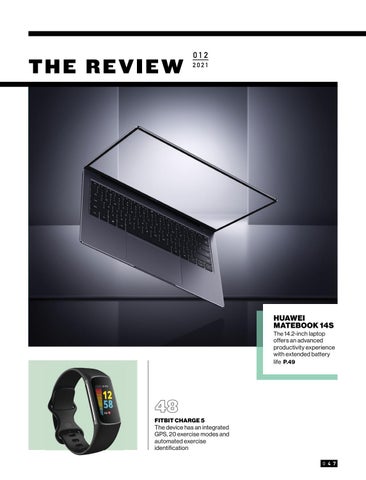
P.48 Fitbit Charge 5
Contributor Zainab Mansoor
The device features an EDA sensor, which detects the body’s response to stress
editorial.freelancer@motivate.ae zzainabmansoor
Art director Freddie N. Colinares freddie@motivate.ae
P.49 Huawei MateBook 14s It features 16GB RAM for a more robust multitasking experience
Photographer Joachim Guay
PRODUCTION General manager – production S Sunil Kumar Assistant production manager Binu Purandaran Production supervisor Venita Pinto
SALES & MARKETING HEAD OFFICE: Media One Tower, Dubai Media City, PO Box 2331, Dubai, UAE, Tel: +971 4 427 3000, Fax: +971 4 428 2260, motivate@motivate.ae DUBAI MEDIA CITY: SD 2-94, 2nd Floor, Building 2, Dubai, UAE, Tel: +971 4 390 3550, Fax: +971 4 390 4845 ABU DHABI: PO Box 43072, UAE, Tel: +971 2 677 2005, Fax: +971 2 677 0124, motivate-adh@motivate.ae LONDON: Acre House, 11/15 William Road, London NW1 3ER, UK, motivateuk@motivate.ae
Issue 2 | December 2021 Printed by Emirates Printing Press, Cover: Freddie N. Colinares Follow us on social media: Linkedin: Gulf Business/GBTechTalk Facebook: GulfBusiness/ GBTechTalk; Twitter: @GulfBusiness; Instagram: @GulfBusiness
A GULF BUSINESS INITIATIVE
Chief commercial officer Anthony Milne anthony@motivate.ae
Group sales manager Manish Chopra manish.chopra@motivate.ae
Senior advertising manager Ravi Dutt ravi.dutt@motivate.ae
Group marketing manager Joelle AlBeaino joelle.albeaino@motivate.ae
Group marketing manager Dominic Clerici dominic.clerici@motivate.ae 0 0 5
MOTIVATE MEDIA GROUP CONGRATULATES THE WINNERS
BUSINESSWOMAN OF THE YEAR
DISRUPTOR OF THE YEAR
BANKING BUSINESS LEADER OF THE YEAR
Khadija Al Bastaki, Executive Director, Dubai Design District
Anghami
Rola Abu Manneh, CEO, Standard Chartered UAE
LIFETIME ACHIEVEMENT AWARD
TOURISM AND HOSPITALITY COMPANY OF THE YEAR
Colm McLoughlin
Nidal Abou-Ltaif, President – Avaya International (EMEA and APAC)
Millennium Hotels and Resorts
BANKING COMPANY OF THE YEAR
Abu Dhabi Commercial Bank
ENERGY COMPANY OF THE YEAR
Masdar
HEALTHCARE COMPANY OF THE YEAR
Paddy Padmanathan, CEO and President, ACWA Power
Dr Shamsheer Vayalil, Chairman and Managing Director, VPS Healthcare
INVESTMENT COMPANY OF THE YEAR
Yas Holding
INVESTMENT BUSINESS LEADER OF THE YEAR
REAL ESTATE COMPANY OF THE YEAR
Bal Krishen, Chairman, Century Financial
Aldar Properties
RETAIL COMPANY OF THE YEAR
Noon.com
TECHNOLOGY COMPANY OF THE YEAR
Huawei Middle East
TRANSPORT AND LOGISTICS COMPANY OF THE YEAR
DP World
ASSOCIATE SPONSOR
ENERGY BUSINESS LEADER OF THE YEAR
HEALTHCARE BUSINESS LEADER OF THE YEAR
G42 Healthcare
HEADLINE SPONSOR
TECHNOLOGY BUSINESS LEADER OF THE YEAR
ASSOCIATE & AFTER PARTY SPONSOR
TRANSPORT AND LOGISTICS BUSINESS LEADER OF THE YEAR
Captain Mohamed Juma Al Shamisi, Chairman of the Hope Consortium Executive Committee, Group CEO, Abu Dhabi Ports TOURISM AND HOSPITALITY BUSINESS LEADER OF THE YEAR
Issam Kazim, CEO, Dubai Corporation for Tourism and Commerce Marketing SUSTAINABILITY COMPANY OF THE YEAR
PepsiCo AMESA
REAL ESTATE BUSINESS LEADER OF THE YEAR
INSPIRING ENTREPRENEUR
Hussain Sajwani, Founder, DAMAC Properties
SME OF THE YEAR
Dariush Soudi Dubizzle
RETAIL BUSINESS LEADER OF THE YEAR
YOUNG BUSINESS LEADER
Mohammad A Baker, Deputy Chairman and CEO, GMG
PROMISING NEWCOMER
ACTIVATION SPONSOR
VENUE PARTNER
Adel Sajan
Atif Rahman
FOOD & BEVERAGE PARTNER
PARTNER
PRESENTED BY
THE FEED
012 2021
THE DIGITAL DISRUPTORS GCC nations are making significant efforts to diversify their economies by investing in advanced digital technologies p.08
10
UNITED ARAB EMIRATES The country is attracting interest from global tech entrepreneurs
11
QATAR The Gulf state is preparing to host a high-tech FIFA World Cup next year
12
SAUDI ARABIA The kingdom is creating giga projects that will serve as cities of the future
F E AT U R E S THE FEED
THE DIGITAL DISRUPTORS IN THE COMING YEARS, THE GCC IS EXPECTED TO PLAY A SIGNIFICANT ROLE IN SECTORS SUCH AS HEALTHCARE, MANUFACTURING, EDUCATION AND RETAIL, WHICH WILL HELP BOOST THE GROWTH OF ITS NON-OIL ECONOMY
0 0 8
W
hile still strongly reliant on oil and gas production and exports, GCC nations, including the private and public sectors, are making significant efforts to diversify their economies by investing in advanced digital technologies such as 5G, artificial intelligence (AI), virtual reality (VR) and internet of things (IoT), among others, to make way for new business models in the region.
G B T E C H TA L K
WO R D S : D I V S H A B H AT
0 0 9
F E AT U R E S THE FEED
United Arab Emirates he UAE government recognises the pivotal role of emerging technologies in the modern world. Aiming to become a diversified knowledge-based economy, it has established various visions and initiatives geared towards investing in digital technologies and preparing future generations with the skills and knowledge needed to succeed in this rapidly evolving environment. Earlier this year, the country – which is celebrating its golden jubilee this year – unveiled the ‘Principles of the 50,’ a document that will define its future over the next 50 years. The Principles of the 50 was launched to lay out a strategic roadmap for the UAE’s new era of economic, political and social advancement. Ten principles are outlined in this document, which all government agencies, including the legislative system, police and security institutions, and scientific bodies must use as guidelines when making decisions. The UAE government has also announced the launch of the Fourth Industrial Revolution Network to promote innovative technologies in the country’s industrial sector. According to Sarah Al Amiri, Minister of State for Advanced Technology, if the UAE meets the programme’s goal, it will add Dhs25bn to the national economy by 2031. The country also launched the National Programme for Coders and marked October 29 as the National Coders Day, intending to have the world’s largest per capita percentage of coders within 10 years.
T
0 1 0
The Principles of the 50 was launched to lay out a strategic roadmap for the UAE’s new era of economic, political and social advancement. Ten principles are outlined in this document, which all government agencies, including the legislative system, police and security institutions, and scientific bodies must use as guidelines when making decisions In line with the government’s visions, the private sector is also rolling out new initiatives. Recently, Majid Al Futtaim announced a coding programme designed specifically for women. The company will provide a platform for women in tech to make their mark in the industry. With an aim at training 5,000 women over the next five years, the programme will target university students, new graduates and career women. The UAE is also attracting interest from tech entrepreneurs and startups eager to invest in this innovative economy. For example, Beanburds, a UAE startup, has introduced augmented reality to improve the online purchasing experience for coffee fanatics. With this innovation, customers can view products in real-time, from wherever they are. A complete 3D visualisation enables shoppers to picture how coffee machines might look in their homes before purchase. It also enables contactless and safer shopping, as customers get to see products close up.
Qatar
atar’s National Vision 2030 outlines a longterm and ambitious strategy with investments in transport, education, sports, healthcare, telecommunications and hospitality. Furthermore, the country has been actively adopting new technologies and claims to have reached the highest level of internet penetration, supported by 5G. The country has also introduced Tasmu Smart Qatar, which is aligned with the Ministry of Transport and Communication and aims to transform Qatar into a smart city with digital solutions to boost living standards and international competitiveness.
Q
G B T E C H TA L K
In November this year, driverless electric minibuses took to Qatar’s streets for testing. Several advanced technologies are equipped into the buses to ensure safety, including radars, lidars, and advanced cameras that allow the vehicle to identify its surroundings and react accordingly when motion is detected. This provides the bus with high visibility up to 250m, allowing it to safely navigate the road. Although a driver is not required, one can be present as a backup in an emergency. Additionally, the country will use electric vehicles for public transportation during the FIFA World Cup, which it is set to host in 2022. To gradually transform the electric transport system, the ministry has also announced plans to establish an integrated network of electric car chargers across various locations. The region’s largest solar-powered and connected electric charging station will soon open in Lusail City.
Kuwait uwait’s 2035 vision aims to transform the country into an international financial and trade hub and make it more attractive to investors. The development of the southern and northern banks of the Sheikh Jaber Al-Ahmad Al-Sabah Causeway and two artificial islands are also part of the vision. These will be converted into centres of trade, work, leisure activities, and tourism. The public sector is also undertaking various digital
K
transformation initiatives. Recently, the Ministry of Finance announced the launch of its new Estamp application. The application allows individuals and companies to pay the fees for their transactions at the Ministry of Health, Ministry of Foreign Affairs and the Public Authority for Applied Education and Training quickly and securely. Meanwhile, the National Bank of Kuwait has launched Weyay, the first fully digital bank in Kuwait, for the country’s youth.
0 1 1
F E AT U R E S THE FEED
Saudi Arabia he technology landscape in Saudi Arabia is on the cusp of rapid growth. In line with its Vision 2030 objectives, the country is aggressively supporting innovation and entrepreneurship. As a result, billions of dollars have been invested in high-tech infrastructure and economic reforms to strengthen the digital sector. Saudi Arabia also claims to be among the first nations in the world whose financial institutions have started to experiment with the usage of blockchain technology. The Saudi Central Bank (SAMA) has created a regulatory sandbox for local and foreign enterprises interested in testing innovative digital solutions in a live environment to deploy them in the kingdom in the future. The goal is to analyse and assess the influence of new technologies on Saudi’s financial sector and transform it into a smart financial hub. The country’s AI strategy seeks to help the kingdom become a global leader in AI and data by 2030. It will oversee the training of 20,000 specialists and experts, encourage a minimum of 300 active startups, and seeks to attract $20bn in national and foreign investment within the AI sector. Neom, Saudi Crown Prince Mohammed bin Salman’s flagship project, is a $500bn futuristic city that is aimed at
T
The Line will be powered wholly by renewable energy, making it pollution-free and sustainable. Robots will play an essential part in security, logistics and home deliveries 0 1 2
relying primarily on smart technologies. In January 2021, the Prince Mohammed also announced the establishment of a zero-carbon city named The Line as part of the Neom initiative. The Line will consist of three layers, including one on the surface for pedestrians, one underground for infrastructure, and another underground for transportation. The transportation layer will contain a high-speed rail system intended to get passengers anywhere in the city in under 20 minutes. The city will be monitored by AI, which will employ predictive and statistical models to find out how to enhance inhabitants’ daily lives. The city would be powered wholly by renewable energy, making it pollutionfree and sustainable. Robots will play an essential part in security, logistics, home deliveries, and healthcare delivery. The estimated construction cost is $100–200bn. The Saudi government claims it will generate 380,000 jobs, promote economic diversification, and contribute $48bn to its domestic GDP by 2030. Saudi Arabia has also unveiled plans to construct an eight-sided port city that would float on the Red Sea. The project, Oxagon, will integrate robotics and AI and serve as an industrial port centre for Neom. Other giga-projects in the kingdom, such as Qiddiya Entertainment City, which will focus on culture and creativity, and Red Sea and Amaala projects that aim to redefine luxury tourism, are also being designed as smart destinations with technology elements.
Oman
lthough Oman lags behind many of its Gulf neighbours in the implementation and adoption of technologies, the country is quickly gearing up to create better public services using technology. According to a whitepaper by SAP, Oman Vision 2040’s digital transformation will boost the sultanate’s ICT market to $5.6bn by 2024 and drive new levels of citizen engagement. The country has also launched the National Programme for Artificial Intelligence and Advanced Technologies in 2020, within the Ministry of Transport, Communications and Information Technology’s framework.
A
G B T E C H TA L K
The aim is to enhance productivity of the sectors targeted for economic diversification by adopting AI and smart technologies in fisheries and agriculture, transportation and logistics, energy, mining and tourism. Oman already has some prominent examples of tech implementation, including the Deem smart water metre project, which is a qualitative leap for calculating the water consumption bill. It implements a new system which can read individual water metres remotely and reduce water losses. In addition, the Million Palm Tree Planting project uses self-flying aircraft technology and AI to detect diseases and agricultural pests in palm trees and carry out the palm pollination process. Furthermore, the e.Oman 2030 strategy aims to build a solid foundation to benefit from the digitalisation and technology changes driven by the Fourth Industrial Revolution.
Bahrain
ver the last two decades, Bahrain’s GDP has nearly quadrupled as the country has embraced the digital economy as a critical driver for growth and development and made innovation in key technologies a top priority. Earlier this year, Bahrain became one of the first countries in the world to accomplish nationwide 5G coverage. Two of its three mobile operators now provide high-speed internet service to all of the nation’s 1.5 million population. As part of efforts to create its workforce of the future, Bahrain’s semi-autonomous government agency, Tamkeen has joined forces with Microsoft and Bahrain Polytechnic to
O
establish an AI Academy to offer resources and training to youth in the country. Meanwhile, Kuwaiti Finance House, located in Bahrain, has developed the first robotic assistant to process loan applications. The robotic assistant – Baitak – handles applications of loan applicants and prepares a report on the credit score for the faster processing of applications. Numerous central authorities in the country, including the Information and eGovernment Authority, Tamkeen, the Central Bank of Bahrain and the Economic Development Board are supporting the growth of AI and robotics for the advancement of the country.
0 1 3
F E AT U R E S B I G D ATA
MINING BIG OIL’S BIG DATA FOR BIG BATTERY NEWER ENERGY TECHNOLOGIES, SUCH AS SOLAR POWER AND BATTERIES, MAY NOT REQUIRE TANKERS OF FUEL TO WORK, BUT THEY DO NEED MINERALS TO BUILD THEM
0 1 4
G B T E C H TA L K
I
t’s easy to conclude oil and batteries don’t mix, as the latter power the electric vehicles challenging the former’s grip on getting around. There’s more complexity beneath the surface. For example, the company that first commercialised the lithium-ion battery in the late 1970s – before abandoning it – was none other than Exxon Mobil. Four decades on, big oil could provide another big, if not obvious, boost to the battery revolution. Newer energy technologies, such as wind and solar power and batteries, may not require tankers of fuel to work, but they do need minerals of all types to build them. Large rechargeable batteries, in particular, use a range of metals, with lithium being the obvious one. Another is cobalt, used in the cathodes of lithium-ion batteries for its high energy density and thermal stability. More than 40 per cent of refined cobalt sulfate goes into batteries for vehicles and stationary storage today, and that proportion will rise, especially if decarbonisation efforts intensify, as they must. Considering a net-zero scenario in its latest long-term electric vehicles outlook, Bloomberg NEF concluded that known reserves of cobalt would be exhausted by the mid-2040s. The price has almost doubled this year. In response, battery developers have sought to reduce the amount of cobalt needed. One chemistry, lithiumiron-phosphate, dispenses with it altogether and has gained in popularity, including in Tesla’s vehicles made in China. However, it also packs less energy – and therefore range – for a given weight and so is best suited to smaller or cheaper models. Moreover, unless cobalt is eliminated entirely from batteries, there is another problem. Four fifths of today’s supply is mined in the Democratic Republic of Congo, where the industry is dogged by corruption and weak safety and ethical standards, including use of child labour. Moreover, a similar proportion of cobalt refining capacity is located in China, which not only also makes the ESG crowd a bit queasy but tends to get the attention of national security hawks too. Beyond tweaking battery chemistry and improving recycling, therefore, it would help to just find more cobalt in more places. Drake Bennett wrote a feature for Bloomberg Businessweek on a startup called KoBold Metals Co. Founded three years ago, it attracted investment from the likes of Andreessen Horowitz and Bill Gates’ Breakthrough Energy Ventures LLC. of refined While the name makes it sound like a regular cobalt sulfate miner, KoBold is a software and analytics goes into company. It uses artificial intelligence to pore batteries for over geological observations in order to spot vehicles and potentially commercial deposits of metals, stationary cobalt included, that might otherwise be storage today missed. BHP Group, the world’s largest miner by market cap, recently reached an agreement
+40%
with KoBold to jointly explore in Western Australia. What any big data operation needs above all else is a big amount of data. And this is where Big Oil could get involved. Oil companies have been exploring for more than a century. While their primary interest was finding black gooey stuff or invisible gas, the data gathered on subsurface conditions and composition would almost certainly be useful in the hunt for a wider range of minerals. And there must be an unimaginable amount of such data filed away, especially at the majors, which have inspected virtually every corner of the world at one time or another, including beneath the sea. Three-dimensional seismic imaging using sound waves has been around for roughly half a century.
OIL COMPANIES HAVE BEEN EXPLORING FOR MORE THAN A CENTURY. WHILE THEIR PRIMARY INTEREST WAS FINDING BLACK GOOEY STUFF OR INVISIBLE GAS, THE DATA GATHERED ON SUB-SURFACE CONDITIONS AND COMPOSITION WOULD ALMOST CERTAINLY BE USEFUL IN THE HUNT FOR A WIDER RANGE OF MINERALS
The complexities involved mean it’s no accident that oil companies feature regularly toward the top of rankings of the world’s most advanced supercomputers (one used by Italy’s Eni SpA is the highest ranked for an oil major in the latest, taking ninth spot). And there is undoubtedly a trove of older data and field notes, valuable in their own way for the insights provided by geophysicists on the spot. Such data have always been jealously guarded in this business, not least because they can be sold to other oil companies. Today, though, at least for the western majors, financial, political and societal pressures combine to constrain exploration. The zeitgeist is to milk available reserves as long as possible rather than plowing billions into new hunts. On that basis, a growing proportion of the data vaulted inside the oil majors constitutes a stranded-asset-in-waiting. Companies such as KoBold offer one way of monetising this. There may well be complications, not least sensitivities around sovereignty, which are never far away in oil. On the other hand, petrostates need money and potential new industries, too. Above all, letting Silicon Valley types mine Big Oil’s big data to address a critical battery bottleneck could offer a bonus. Namely, a relatively straightforward ESG win for an industry that needs them. Bloomberg 0 1 5
W O R L D
N E W S
THE LATEST TECH NEWS FROM ACROSS THE WORLD
Yandex self-driving cars rely on in-house sensors to see the road Yandex, the self-driving company founded by Russian-based Yandex NV, has said that its new generation of vehicles will rely on sensors developed in-house to better see the road in Russia’s often harsh driving conditions. A software defined lidar system capable of seeing 500 metres away and operating in frigid weather will be the main sensor on new cars from the Yandex Self-Driving Group, the company announced in a blog post. About 70 cars in Russia, US and Israel will be equipped with the sensors, which bounce light off of objects and compare the results to a 3D map in order to create a real-time image on the road.
0 1 6
Amazon’s cashierless tech will power Sainsbury market in London J Sainsbury is preparing to open a cashierless market in London using Amazon’s system of people-tracking cameras. The grocer’s pocket market in the High Holborn district is already open to Sainsbury employees. The store is stocked with small groceries with stations on the way in for shoppers to scan a mobile phone. Angled cameras are suspended from the ceiling track to see what shoppers pick from the shelves, and then they are charged upon exit.
Fintech lender Oportun to acquire online banking platform Digit Oportun Financial, a fintech lender, has agreed to buy online banking platform Digit to boost its artificialintelligence and digital capabilities. Oportun will pay about $212.9m in equity and cash, it said in a statement. Digit will continue to be led by its founder and chief executive officer, Ethan Bloch, and all of its employees will join Oportun. The deal will help Oportun expand into online banking three to five years faster than if the company built it on its own, CEO Raul Vazquez said in a statement. The deal is expected to close late this year or early in 2022.
th
Millions of spam messages blocked in Philippines as scams surge Philippine telecommunications provider Globe Telecom said it has blocked nearly 71 million spam messages and deactivated 5,670 mobile phone numbers this year, amid public complaints about dodgy job offers they receive on their gadgets. The Ayala-owned unit has invested $7.25m to boost its anti-spam capability since the pandemic started. It has also partnered with banks as well as online stores Lazada and Shopee to minimise spams, scams and phishing by reporting fake numbers, spoofed sender names and websites.
Twitter’s Parag Agrawal is youngest CEO in S&P 500 Twitter’s new chief executive officer Parag Agrawal is now the youngest CEO in the S&P 500. Agrawal, who succeeds Twitter founder and CEO Jack Dorsey, is 37, the same age as Meta Platform CEO Mark Zuckerberg. Citing security concerns, Twitter wouldn’t disclose Agrawal’s date of birth, but confirmed he was born later in 1984 than Zuckerberg’s May 14 birthday. Agrawal joined Twitter in 2011. The average age of a CEO among the 500 largest companies was about 58 years, data shows.
Porsche drives ahead in e-mobility with electric bike deal Porsche is acquiring a majority stake in Greyp, a Croatian electric-bike maker linked to its affiliate Rimac Automobili, to expand mobility offerings beyond sports cars. Porsche’s venture capital arm already held a stake of about 10 per cent in Greyp and the automaker now exercised an option to boost its holding following a takeover offer from a third-party investor, the German manufacturer said in a statement. The automaker introduced two electric bikes in March 2021and seeks to adopt the expertise it gained in building battery-powered cars for luxury two-wheelers as well.
- WITH INPUTS FROM BLOOMBERG
0 1 7
F E AT U R E S WOMEN IN TECH
WOMEN IN TECH
AS THE IT INDUSTRY GROWS, SO WILL OPPORTUNITIES FOR EVERYONE – INCLUDING WOMEN, WHO OFTEN DO NOT HAVE THE SAME OPPORTUNITIES AVAILABLE TO THEM IN AN ARGUABLY MALE-DOMINATED FIELD
T
echnology has no gender and yet we cannot deny that women are under-represented in this field. Kaspersky’s 2021 Women in Tech report shows that despite the opportunity to use problem-solving skills (44 per cent) or to work in a well-paid profession (40 per cent), the majority of women in the sector have not been encouraged to do so by outside sources such as family and society. As you will see from the following essays by women in technology leadership roles, they were unanimous in their belief diversity is essential within the industry. In addition, they believe that collaboration between genders and nationalities can lead to better problem solving skills and increased innovation. According to the TrustRadius 2021 Women in Tech Report, which surveyed over 450 tech workers (66 per cent of whom identified as women), the main issue highlighted by women in tech was the need to work harder than their male peers to establish their value (78 per cent).
0 1 8
Meanwhile, 39 per cent of women in tech also believe gender prejudice is a barrier to advancement in 2021. Up to 78 per cent of the respondents believe organisations should promote more women to senior roles while also considering mentorship opportunities, flexible working hours, and equal maternity and paternity leave. The report also found that gender-diverse teams can be more efficient and are capable of making critical choices twice as fast and in half the time. Previous studies have also shown that having more women in leadership positions can aid a company’s financial performance and improve organisational outcomes. The good news is that change is happening; according to the Kaspersky report, 53 per cent of the respondents agree that the number of women in senior IT or technology roles in their organisation has increased over the past two years. What is required now is for that pace of change to be accelerated and for regional tech operators to champion gender diversity as a priority.
G B T E C H TA L K
0 1 9
F E AT U R E S WOMEN IN TECH
HODA A. ALKHZAIMI PRESIDENT OF EMIRATES DIGITAL ASSOCIATION FOR WOMEN/WOMEN IN AI
F
or the field of emerging technologies and advanced manufacturing, 2021 has been a transformational year where the focus on creating digital assets has been the prominent focus. As per UNCTAD’s Technology and Innovation Report 2021, frontier technologies already represent a $350bn market, with an anticipated rise to $3.2 trillion by 2025. This is subdivided into a surge in investments in sensors, IoT-based sectors, AI, robots, and big data, as well as developing initiatives that create a human impact while also accomplishing sustainable development goals. When it comes to forecasting the industry’s direction of growth over the next year and the decade to come, we must be mindful of the long-term impact of technological trends in general and the industry-specific trends that come into play to fulfil a sustainable global need. The pandemic has reshuffled economic priorities to generate local and nationalised assets and cultivate global alliances and investments for countries and international organisations. As a result, we are seeing new investment models geared at developing sectors to improve people’s lives. This surpasses the current focus on next-generation process automation solutions within IoT platforms, visualisation technologies that create twining realities in digital spaces for various physical assets, reshaping the future of connectivity with 5G and constellations’ satellites, and developing nextgeneration computing beyond quantum computing devoted to power and Neuromorphic Chips. The reality is that we will concentrate on bio revolutionary computer concepts based on bio augmentations, sophisticated generations of nanoparticles, while the world will focus on circular and sustainable technology that will facilitate human
0 2 0
prosperity on all levels. This will include trading platforms for renewable energy fusion and storage facilities.We are walking towards user-centric technology that will enable users to become the decision makers when it comes to data governance and computing choices. This technology will allow users to block analytics and customise and monetise their shared data via any digital data trading platform that offers economic independence for these users. When it comes to strategic leadership directions within the economic environments of the leading technological industries, we have seen a strong emphasis on using diversity and inclusion policies across the board to enable good talent integration. However, we must keep in mind that paying close attention to these behaviours should not create further hurdles for females in achieving leadership positions in their fields. The focus should remain on improving the quality of advocacy, support systems and framework s we are building to create high calibre and fair opportunities for women to lead and compete within this portfolio of the technology industry. Given the present context in the digital sector, which is focused on eliminating biases and promoting equitable access to opportunities, the global call that we are making now necessitates that we are engaged in establishing impactful global and local ecosystems. This should be customised and not generic for each organisation, focusing on improving rewards, working conditions and promotions pathways across boards.
When it comes to forecasting the direction of growth of the industry for the next year and the decade to come, we must be mindful to the long-term impact of technological trends in general and the industry specific trends that comes into play to fulfil a sustainable global need
G B T E C H TA L K
IBTISSAM OUASSIF CO-FOUNDER, CASHEW
T
he isolation of society during the peak of Covid-19 has definitely fast-tracked AR and VR; where digital social interactions and screen time experiences can be drastically improved through the latest of these technologies – we are seeing many of the Fortune 500 companies pivot or gain exposure to the Metaverse, which I think will be a big theme in the next decade. There is so much exciting technology coming to life in these years, and we are seeing that both on a global and local scale. Now more than ever before, the local industry is quick to welcome these new technologies – and we are seeing that with the plethora of incubators and investments coming out of this region into local startups and companies. It is definitely an exciting time to be building for the future. Banking and payments is one of those areas that stands to be heavily disrupted. It is one of few industries that has clung to its old ways of running despite all the tech advancements over the years, especially in this region. With the repercussions of cash flow since Covid-19, and the continual growth of shopping online, consumers are welcoming that disruption more than ever before. We are excited to be right in the middle of this, innovating and changing the way people think about their finances, and how payments can put less stress and burden on them.
NANDINI JOSHI CHIEF OPERATING OFFICER, STASHAWAY 2021 was a year of two halves; people either accepted or rejected the changes that Covid-19 pushed on them last year. Nevertheless, it was also a year that saw some major changes in the fintech industry, and we also saw the continued rise of the female leader. Overall, in the digital wealth management industry, we have seen more people join the investing world, which is fantastic, and interestingly we saw an increase in financial literacy and investing literacy. I was especially thrilled to see our women clientele grow; this year, 50 per cent of our new clients were women, and I predict that this number will continue to grow through 2022.
Besides the growth of fintech, we are at the intersection of some of the greatest tech innovations since web and social – where we are seeing technologies such as AR, VR, and e-vehicles disrupt so many industries. As a woman leader, I actually believe that women have been getting a lot more recognition as leaders in business, and that has been a wonderful thing to see over the years. My struggle probably came at the intersection of not only being a female leader, but also being in the banking industry, one that is generally dominated by men. The biggest difference maker for me is that I fight my battles with delivery. I believe that delivering a great product or service overcomes whatever stereotype or obstacle a person may face. So for me personally, I just focus my energy on trying to build a great product and business. Opportunity and recognition are probably the most powerful tools to attract more women into the tech industry. I do believe opportunity has significantly improved over the years and will continue to do so. I do think some improvements or initiatives for investments in women-founded business can help elevate that further. Secondly, proper recognition of success stories would encourage other female leaders to follow the path and innovate more. It would be nice to have networking events of similar minds to share experiences and help answer questions from females that have yet to take the first step.
As a company, we saw huge growth in the past year. There was a rising demand for robo advisors in many markets. StashAway went from operating in two countries to five, and we welcomed over 60 new team members, with the total global workforce now comprising 42 per cent women and 58 per cent men. Personally, it’s been really rewarding to see our product and teams succeed and thrive through a lot of hard work. As we look forward to the new year, we are committed to reaching out to more people and empowering their life goals through investing. With the growth in fintech, there has also been a surge to get women seats in the boardroom and higher leadership positions. For any industry in these modern times, having women leaders is a must, especially in the tech-sphere, and it should be demonstrated from the top that women have a seat at the table and can fulfil and excel in these roles. Every woman wants to know that she belongs in the company and industry. If the C-suite is only men,
0 2 1
F E AT U R E S WOMEN IN TECH
it doesn’t show young women the path to success – why would aspiring women want to waste their talent and years on you if there is no ladder to climb. While women in leadership can face many challenges, especially when they reach the top, there are ways of overcoming them. For starters, personality traits that are seen as positives in men can at times work against us. In my early career, getting the opportunity to be trusted with new challenges was tough. However, I have continually gained from working on my ‘emotional intelligence’ (EQ) capacity with the help of others around me, including women and men. This has helped me assess situations, people, emotions, and then (every time) have a strategy to overcome them, whether through pointed communication or ideas. For example, I learned not to see the path to success by mimicking the behaviours of successful men around me but to stay true to my style while listening carefully, analysing and being empathetic.
LUCY AZIZ SENIOR PR AND COMMUNICATION MANAGER – GCC OPPO
D
espite challenges experienced by all industries, we are grateful to say that OPPO flourished in 2021. We saw a 300 per cent increase in pre-orders of our Reno6 series, compared with its predecessor and were also ranked first in global 5G smartphone shipments among Android manufacturers in H1 2021. Canalys, a global technology market analyst, also revealed that in the Middle East and Africa, OPPO has climbed to the fourth place in market share with a 106 per cent growth. Additionally, we had a clear presence in the ICC Men’s T20 World Cup which took place in the UAE and Oman with OPPO as the global partner. OPPO also hosted a gaming tournament in collaboration with PUBG MOBILE following a long-standing partnership with the gaming platform and had a strong presence at Gitex. Personally, it’s been a remarkable year with OPPO. From launching two iterations of the Reno Series that were received exceptionally well by the media and influencers, and winning OPPO’s ‘Best Dedication Award of the Year’ in an annual event, I am more excited than ever to see what 2022 will bring. Regionally, we are witnessing the economy bounce back following the pandemic. Through 2022, we will see the resurgence of industry events like Mobile World Congress, which we are taking part in, as well as optimism about what the year will bring. It’s an inspiring time, especially in the technology industry. Underpinned by our brand mission ‘Technology for the mankind, Kindness for the world’, in 2022 we will actively roll out unique campaigns and initiatives to convey our message to a wider audience. Additionally, we’ll continue to provide impeccable customer service and strengthen our brand presence with our premium product offering. 0 2 2
With the growth in fintech, there has also been a surge to get women in the seats of the boardroom and higher leadership positions” For any woman aspiring to be a leader or entrepreneur, I would advise them to lead with EQ and prioritise it as much as the ‘intelligence quotient’ (IQ). This will help you stay true to your personality and bring out your most unique self. Then pay it forward, the road is long, and you never know what paths might meet.
From a personal perspective, I am thrilled to continue my journey in the industry with OPPO. I’ll be working on even more exciting campaigns with a goal of leaving a lasting impact on the industry as a woman passionate about technology. As a woman leader, I am grateful to have found a company and live in a country that works hard to ensure that highly influential female business leaders are at the forefront of its business model to share their valuable contribution. The UAE is a standout country to work in as a woman, especially for traditionally maledominated careers like technology and corporate services which have seen a 2.5 per cent year-on-year growth of female talent joining the ranks. Even more promising this year in media and communications, 51.95 per cent of new hires were women, in education 56.42 per cent and in healthcare 45 per cent were women. However, an increasingly feminised digital media environment means that smartphones must be manufactured with female customers in mind, and this can only be done with more women at the helm of the industry. Gender diversity must become a core component of hiring, not an afterthought. Consider what women are looking for from their employer and not just the role that is advertised. For example, while we see much more of a cohesive parenting approach, women are still the predominate primary caregivers in most instances, so flexible working would take some of the pressure off juggling work and home. My biggest piece of advice to women in the industry is to support one another, champion each other’s successes and lean on one another for support. As women, the biggest asset we have in the sector, is each other. Making a conscious effort to network with other female leaders, understanding their struggles and triumphs and using their experiences to grow and learn will help you build a thriving career.
G B T E C H TA L K
CATHY MAUZAIZE VP AND GENERAL MANAGER, EMEA SOUTH AT SERVICENOW
T
here’s a lot that I have learnt from my 20 years in the tech industry – from navigating complex organisations to the need to put customers first, and the critical importance of strong, motivated teams. But perhaps the most important lesson I’ve learnt in recent years is that digital transformation is not simply a tech discussion; it’s a business output discussion that will be judged solely on the value technology can provide. Digitalisation is driving growth in companies in terms of changing their businesses, changing how they work with their employees and how they address their customers and drive operations. My goal primarily is to put customers at the centre of everything and bring strategic value to them. The Middle East has been my hyper growth region and I believe it will be the fastest growth engine for ServiceNow because of our market equation. As a female senior leader, to give back and to create a space for emerging females to take the stage is vital for me. We cannot deny that we are in a male dominated world. But being a female gives me a different prism in terms of being unique and creating a different kind of connection. When I was younger, it was difficult, and I did face challenges and that’s why it’s
CINDY CHANG REGIONAL MARKETING MANAGER, XIAOMI
T
he year 2021 was challenging for everyone, and I was no exception. Travel restrictions, curfews and limited social interactions were the most significant challenges I faced. However, professionally speaking, we enjoyed a successful year at Xiaomi. Despite the global shortage of critical components, Xiaomi solidified its market position by optimising global market resource allocation and reinforcing its channels in accordance with local market conditions. According to Canalys, Xiaomi’s market share of smartphone shipments in the third quarter ranked number one in 11 countries and regions and among the top five in 59 countries and territories globally. In 2022, I expect that people worldwide will focus
important for me to create the space and to push other females and support them. We need to create an environment that’s truly diverse, which is supported by men to promote females in this technology industry. Attracting women in tech is one of the biggest challenges. We need to create a diverse space – a flexible and hybrid working environment. Flexible working is so important, when a female needs to embrace a family and a career, while also pushing themselves to provide that kind of environment to everybody. Leaders, be it male or female, need to push women from a young age into STEM. The tech industry needs female workers. The image of tech is not sitting behind a computer coding but to be in front of customers and partners. There is plenty of space in technology for females to come and embrace this career. As a woman, my goal is to make sure we get this message across louder than ever before. Personally, I spend a lot of my time speaking about diversity in forums, women forums, webinars and ministries. As a company, ServiceNow is supporting and creating the environment of openness, making sure we value and uphold diversity. We are looking into expanding the talent pool and creating a pleasant environment of remote and hybrid work models. We also make sure to respect everybody from every background and job profile.
more on their internal strength and adaptability for external effects. The most important thing we have learned in the past two years is that we cannot interfere with external factors, but we can change ourselves internally. Xiaomi is a global company with great diversity, and I am glad to be a part of this amazing team. I can honestly say that there is no particular obstacle I needed to overcome in Xiaomi, and I feel fortunate in this regard. However, traditionally, almost every industry has male dominance, and the technology industry is one of the prominent ones in this regard. Therefore, a rise in companies that care about diversity, like Xiaomi, will help to break the prejudices on this subject. My advice will be the same for everyone, whether male or female, to progress in the tech industry: Keep investing in yourself and always keep improving your skillsets no matter the position you’re holding. We live in an ever-changing world, and one needs to be agile in every aspect to progress in your professional career.
0 2 3
F E AT U R E S GITEX
T H E P O W E R H O U S E O F
I N N O V A T I O N DIGITALISATION HAS BEEN PROVEN TO IMPROVE ORGANISATIONAL PERFORMANCE AND ENHANCE BUSINESS VALUE BY HELPING COMPANIES MEET CUSTOMER EXPECTATIONS. AS MIDDLE EASTERN COUNTRIES TRY TO DIVERSIFY THEIR ECONOMIES, A GROWING EMPHASIS IS BEING PLACED ON DIGITAL TRANSFORMATION ACROSS VERTICALS
DIV BY 0 2 4
S
BH HA
AT
G B T E C H TA L K
riven by national visions and ICT goals, the public and private sectors in the region have made significant progress in developing a solid digital infrastructure that promotes innovation and offers new economic opportunities. The government sectors have also implemented strategies and prioritised the incorporation of digital transformation in their plans. NEW PROJECTS SHAPING THE FUTURE Recently, Omar Sultan Al Olama, the UAE’s Minister of State for Artificial Intelligence, Digital Economy and Remote Work Applications, discussed plans for the UAE Coders’ Society at Gitex Global. The initiative will bring together the 60,000 coders who are already residing in the UAE. He also stated that the country is focusing on developing women coders, thus bringing new employment opportunities to the female population throughout the Emirates. In Dubai, the government is progressing rapidly towards achieving the goals of its paperless strategy. The strategy has met 98.86 per cent of its goals, with 43 government agencies going completely paperless. Wesam Lootah, CEO of Smart Dubai Government Establishment, Digital Dubai, stated at Gitex Global that December 12, 2021, when the Dubai government will issue its last paper transaction, will mark the completion of the Dubai Paperless Strategy, which began in 2018. He claimed that the strategy had saved 13 million hours of manual transactions and 325 million sheets of paper, equivalent to 39,000 trees. Meanwhile, Dubai Police has outlined new initiatives to make the emirate the safest city globally, including the launch of a GPS vehicle camera tracking system and the world’s first floating smart police station on the World Islands. Dubai’s Roads and Transport Authority is also implementing new technologies to improve facilities such as an AI-powered platform to ensure safer cycling tracks. THE DIGITAL REVOLUTION Along with the public sector, the private sector has also taken major steps in creating a robust digital
infrastructure that fosters innovations and opens up new economic opportunities. Gartner predicts that IT spending in the Middle East and North Africa (MENA) region is forecast to total $1.7bn in 2022, an increase of 2.6 per cent from 2021. GB Tech Talk spoke with regional professionals to understand how the technology industry is evolving in the Middle East and hear about the new products and services set to disrupt the landscape. Data: It is predicted that in 2021 alone, there will be 74 zettabytes of generated data, and it is expected to reach 149 zettabytes by 2024. The critical job of every organisation is to analyse data and incorporate it into company strategy. At Gitex Global, Pure Storage unveiled two new solutions – Pure Fusion and Portworx Data Services – to suit the expectations of modern businesses by making data infrastructure easier to install and manage. James Petter, VP International, Pure Storage explains: “With Pure Fusion, data placement may be automated, removing the need for manual intervention. End users will be able to consume volumes, file systems and data services such as replication quickly without having to wait for back-end manual effort, thereby making hardware invisible. “Modern applications are made up of several microservices, which are frequently supported by multiple data services. Unfortunately, each of these data services is hard and time-consuming to manage in a Kubernetes environment. The Portworx Data Services – the data-as-a-service Kubernetes management platform for containers – enable organisations to drive automation into maintaining various databases, once again eliminating the need for manual intervention,” adds Petter. Digital transformation: Meanwhile, One Global has developed Og Stack, a digital transformation and corporate innovation platform that allows entrepreneurs to integrate their services into an ecosystem. This service facilitates the dissemination of ideas to worldwide markets, incubators, investors and others. “The firm may sign up for the platform, develop a media communication profile, add video explanations, create membership levels, and then go on to pricing
James Petter
With Pure Fusion, data placement may be automated, removing the need for manual intervention. End users will be able to consume volumes, file systems and data services” 0 2 5
F E AT U R E S GITEX
We also provide them with a sandbox in which to test and verify the platform, as well as security-as-a-service and encryption-as-a-service”
Mohammed Al-Rashidi
services. We also provide them with a sandbox in which to test and verify the platform, as well as security-as-a-service and encryption-as-a-service. We then make it available on the Og Stack marketplace,” explains Mohammed Al-Rashidi, executive chairman, One Global. Designed primarily for the utility sector, Nokia has unveiled its private wireless solution to assist the vertical in its digital transformation journey. The solution, which includes private wireless, IP/MPLS, microwave, and Gigabit Passive Optical Networks (GPON) technologies and Nokia’s 4G and 5G devices, is designed for vital communications in extreme environments. Dr Muneer Zuhdi, head of Cognitive Cities and Industries at Nokia, believes that while the UAE, Saudi Arabia and Qatar were the first in the GCC to deploy 5G, the rollout was limited to a basic layer. “While 5G gives a better consumer experience, it was designed and built for industrial automation. Therefore, the next wave of 5G deployment will target vertical industries such as logistics, oil and gas,” he says. Furthermore, to understand the themes of the region such as energy saving and consumption, Epson is helping the region’s organisations boost efficiency, cost-savings and lower environmental imprint. “Our printing technology uses heat-free microbial technology, which can save up to 83 per cent less energy. As a result, Epson inkjet can save $3.6m in a year which can be reinvested in sustainability,” says Neil Colquhoun, vice president – CISMEA, Epson Europe. COMBATTING THE CYBER PANDEMIC The rollout of new technologies has various advantages, but it also broadens the attack surface for hackers, thus making it critical to have a strong cybersecurity posture. The damage that cyberattacks may cause has already been seen. For example, the SolarWinds attack saw hackers rip through organisations’ networks via a supply chain attack. In the UAE, the National Cybersecurity Strategy, launched in 2019, aims to create a safe cyber infrastructure. In line with the country’s robust
0 2 6
cybersecurity foundation, several experts are helping organisations safeguard their data and increase their security posture. “With the pandemic introducing a new business paradigm – work from home – organisations were unprepared for this sudden transition. Hackers attempted to exploit this as an opportunity, which is why cyberattacks are on the rise. Companies are now aware that they must strengthen their security posture. We are here to assist and educate people. I believe in providing the best solution based on the need rather than what the partner offers. We innovate to help customers in bridging the security gap,” says Firas Ghanem, regional director, Middle East and Pakistan, ThreatQuotient. Meanwhile, ManageEngine claims it is augmenting its solution to include a greater emphasis on cybersecurity. “We recognise that data breaches and phishing may be severe challenges with work from home models. Organisations must stay one step ahead of attackers, which necessitates a comprehensive security strategy built from the bottom up and enhanced with techFiras Ghanem nologies that have intelligence and real-time data to prevent every attack,” says Rajesh Ganesan, vice president - product management, ManageEngine. “Our anti-ransomware solution helps organisations leverage insights to recover affected endpoints, learn from attacks and proactively secure endpoints by preventing similar attacks in the future,” he adds. Organisations must have a solid security foundation and address risks proactively. It is beneficial to detect and identify threats, have complete network visibility, and enable continuous monitoring of linked devices. The sooner the identification, the greater the capacity to mitigate it. For example, setting strong passwords, coupled with robust authentication mechanisms and verification questions can act as the first layer to protection. Looking ahead, the region looks set to become a global driver of innovation, led by the strong market potential and the enabling ecosystem.
With the pandemic introducing a new business paradigm – work from home – organisations were unprepared for this sudden transition”
ITALIAN TRADE AGENCY
EARLIER THIS YEAR, ITA PARTNERED WITH DUBAI FUTURE FOUNDATION FOR A BILATERAL INCUBATION PROGRAMME. CAN YOU PROVIDE MORE DETAILS ABOUT IT? Earlier this year, 11 Italian innovative startups were accelerated for two months at Area2071, the accelerator programme of Dubai Future Foundation. The collaboration supported the Italian companies with a better understanding of the
CAN YOU ELABORATE ON THE MAIN TECHNOLOGIES THAT YOU SHOWCASED AT GITEX GLOBAL? At the 2021 edition of the event, the Italian pavilion hosted 47 startups and innovative SMEs. Amongst
the Italian expertise showcased there were innovative solutions for challenges relating to blockchain, healthcare, smart cities, mobility and augmented reality. LASTLY, WHAT WERE YOUR EXPECTATIONS FROM GITEX GLOBAL, AND WHAT DID YOU ACHIEVE FROM THE SHOW? The Italian pavilion more than doubled in terms of number of participants (comapred to 2020), showing that Italy is ready to do business again. In addition, participating in North Star Dubai showed the strength and commitment of Italy’s startup sector to explore partnerships and share knowledge with their peers and to explore more significant opportunities for growth in the world’s largest tech event of the year.
GELLIFY
Massimo Cannizzo, CEO and co-founder, Gellify Middle East
HOW DO YOU SEE THE GROWTH OF STARTUPS IN THE MIDDLE EAST AND AFRICA? The startups in the Middle East are quite promising. Firstly, because of the country’s vision: imagining a future with new services and a lifestyle that is heavily reliant on digitalisation. And, secondly because it serves as a crossroads for several African and Asian countries. As a result, many investors arrive here in search of talent and invest in companies that are on the cutting edge of technology. CAN YOU ELABORATE ON YOUR PRODUCTS AND SOLUTIONS? Gellify helps corporates and
government entities in their efforts to innovate. We provide clients with innovative advisory services and solutions and, in certain circumstances, implement them using our digital factory. We don’t merely market licences; we generate digital transformations by partnering with selected entrepreneurs. We put our expertise and effort into assisting them in expanding their commercial and technical capabilities. In addition, we administer an investment fund focused on B2B tech SaaS startups. Recently, we announced the launch of a $50m VC fund for the Middle East and North Africa region in partnership with Azimut. The new VC fund will target business-to-business startups in the Middle East and North Africa. It will target a wide spectrum of entrepreneurs, from seed-stage through marketphase to those ready to scale up. These firms will be able to
INTERVIEW
Amedeo Scarpa, Italian Trade commissioner to the UAE
UAE market and best practices while gaining experience in the innovation and entrepreneurship sector. The programme represented a great experience for the 11 participating startups which led to one commercial partnership subscription and 10 pilot projects in the pipeline. The whole group also received UAE golden visas. Some of these startups were present at North Star Dubai (previously known as Gitex Future Stars) at Italy’s official pavilion to further enhance their commercial and strategic partnerships in the UAE.
develop disruptive innovation in smart cities, healthcare, digital commerce, finance, Industry 4.0, and tourism by utilising cuttingedge technologies such as AI, IoT, blockchain and cybersecurity. GELLIFY RECENTLY PARTICIPATED AT NORTH STAR DUBAI (PREVIOUSLY KNOWN AS GITEX FUTURE STARS). WHAT WERE YOUR MAIN OBJECTIVES AT THE PLATFORM? We had three objectives at the show, one was to create awareness about Gellify in the Middle East ecosystem. The second was to connect with innovative startups and talents that North Star Dubai had gathered here this year, and third was to meet corporates and government entities and collaborate with them, by assisting them with our expertise in advancing their digital transformation, venture building and innovation hubs strategies.
0 2 7
F E AT U R E S SMART MOBILITY SUMMIT
ESTABLISHING ITSELF AS A TECHNOLOGICAL POWERHOUSE, ISRAEL OWNS THE WORLD’S SECOND-BIGGEST NUMBER OF HIGH-TECH ENTERPRISES AFTER SILICON VALLEY AND THE LARGEST NUMBER OF STARTUPS BY POPULATION. BUT HOW DID THIS COUNTRY OF NINE MILLION INHABITANTS BECOME A TECHNOLOGICAL BEHEMOTH AND A HUB FOR IT CORPORATIONS?
TOMORROW’S TECHNOLOGY, TODAY B Y D I V S H A B H AT
0 2 8
REVOLUTIONISING MOBILITY Although Israel does not have a car manufacturing industry, it is quickly becoming a source of future mobility tech and events like the Smart Mobility Summit are fuelling this progress. The summit, a global event focusing on the automotive and transportation sectors, drew 5,000 attendees including automakers and government leaders. The speakers dicussed aspects such as vehicle electrification, artificial intelligence and big data and their influence on transportation, the transition to Mobility as a Service (MAAS), and more. “Spearheaded by the Prime Minister’s Office and launched in 2011 as a joint government effort of 13 government ministries and authorities, the Smart Mobility initiative aims to establish Israel as one of the world’s leaders of know-how and industry in the field of smart mobility,” says Daniella Gera Margaliot, deputy managing director, The Smart Mobility Initiative. Several announcements were made at the conference, including Israel and Hungary’s first scientific-technological partnership and Mobileye’s president, Amnon Shashua, stating that his company will debut a robotaxi (autonomous taxi) in 2022 and expand its operations in this sector by 2024. WORKING TOGETHER TOWARDS SUCCESS Nicknamed as ‘the startup nation’, Israel stands out as one of the world’s most innovative and technologically advanced countries. “Israel’s most
COMPANIES
and ingenuity contribute greatly to the world. If we channel our efforts, our energies and invest in tackling real-life problems, we in Israel can make a huge difference,” the country’s Prime Minister, Naftali Bennett, said at the Smart Mobility summit, which was held at Tel Aviv on November 8-9. True to his words, Israel is making a significant impact and transforming into a global technological and entrepreneurial powerhouse. According to Reuters, the country’s GDP is anticipated to increase 7.1 per cent in 2021 and 4.7 per cent in 2022.
5 YE A
“Israel’s innovation
valuable source of energy is the energy of our people. This is what fuels our innovation and ingenuity. And this is where our greatest contribution to the world can be made,” adds Bennett. “Talented Israelis across the country are developing groundbreaking technologies that are providing solutions to the world’s most urgent mobility challenges. Just in the last five years, the number of smart mobility startups has increased ten-fold in Israel, from 60 companies to 600. Billions of dollars in investment capital have poured in here, and there have been quite a few blockbuster exits and acquisitions.” The summit welcomed dozens of Israeli startups who exhibited their innovations in the field of smart transportation. GoTo Global presented its multi-mobility solution to the audience, with the goal of improving environmental quality, making cities greener, and reducing traffic congestion. The company demonstrated its app, which allows users to access a myriad of modes of transportation, including kick scooters, mopeds, and cars, based on their needs. “The company is a one-stop-shop for a wide variety of vehicles, providing consumers with mobility confidence – the confidence that they can get to their destination using just one app and a choice of hourly-rented vehicles. We are the solution to reducing our reliance on private automobiles and addressing urban transportation issues,” says Gil Laser, CEO, GoTo Global. Meanwhile, ElectReon showcased its shared energy platform that provides electric charging for vehicles on-the-go. “We understand that the world is going
RS
G B T E C H TA L K
60 600 SMART MOBILITY STARTUPS
Gil Laser, CEO, GoTo Global 0 2 9
F E AT U R E S SMART MOBILITY SUMMIT
Autonomous car
“WE HAVE 1.4 BILLION VEHICLES ON THE PLANET. AND IF WE NEED TO SUSTAIN IT, WE WILL NEED 1.4 BILLION BATTERIES”
0 3 0
electric. We have 1.4 billion vehicles on the planet. And if we need to sustain it, we will need 1.4 billion batteries, which I doubt the world can handle. As a result, the planet’s resources are insufficient to support this change. So, we need to provide energy to those vehicles during the daytime and not just overnight and think about how we can reduce the size of the battery. This is what wireless charging does. As wireless charging can be deployed everywhere, we can provide energy to the vehicle anytime,” comments Oren Ezer, co-founder and CEO, ElectReon. Ezer believes that Israel will continue to see the mushrooming of innovative startups in the coming years. “Israel has a nice ecosystem that supports startups. We have venture capital firms, government support and a huge market. So, if you combine all of them, this is the right place to be.” ElectReon expanded its partnership with the Tel Aviv-Jaffa Municipality and the Dan Bus Company earlier this year, with plans to undertake a large-scale commercial deployment of its wireless charging infrastructure to electric buses in Tel Aviv. The $9.4m deal includes a five-year agreement to provide 200 public buses operated by Dan with active charging at city terminals between bus trips while passengers board and disembark. In the first stage, ElectReon will integrate its charging systems into 100 buses at the Reading public transport terminal in north Tel Aviv, after which the charging infrastructure will be expanded to other major terminals in the city and the southern region of Israel for a total of 200 buses. Another interesting showcase at the event was Watergen’s Mobile Box device which generates “pure” drinking water “out of the air”. The Mobile Box can produce up to 25 litres of fresh drinking water every day, eliminating the need to transport bottled water and decreasing plastic waste. “Our technology extracts water from the air, goes through multiple filters to clear dust particles, odour and taste and then adds minerals to it. The
water also passes through a UV light to kill the bacteria, which produces fresh quality drinking water,” says Yaniv Fainshnaider, global CMO, Watergen. “The unit needs a 12V power supply and access to fresh air to produce the drinking water. The Mobile Box unit is mounted externally on various types of vehicles, including trucks, trailers, buses, RVs, motorhomes and all modes of luxury land and sea transport. At only 30kg, the unit’s impact on fuel consumption is minimal. All the system requires for optimal water production is access to fresh air, a temperature between 59–113°F and 20-99 per cent humidity. The device is equipped with replaceable filters and a mineralisation system to ensure a constant and reliable supply of water,” explains Netanel Benishai, mobility product manager, Watergen. Watergen aims to address the issue of water scarcity and hopes to be able to help more people in the future.
Yaniv Fainshnaider, global CMO, Watergen and Netanel Benishai, mobility product manager, Watergen
SECRET TO SUCCESS Israel’s strong economy and innovative approach, backed by strong government support are just a few factors that make its ecosystem one of the most successful in the world. The nation’s tech sector broke capital-funding records, with firms raising a total of $17.78bn in 575 deals since the start of 2021, almost double the capacity raised in all of 2020. “Israel invests about 4.3 per cent of its GDP in R&D, which is one of the highest in the world,” says Ran Natanzon, head of Innovation and Brand Management,
$9.4
MILLION DEAL INCLUDES A FIVE-YEAR AGREEMENT TO PROVIDE 200 PUBLIC BUSES OPERATED BY DAN WITH ACTIVE CHARGING AT CITY TERMINALS
G B T E C H TA L K
25 LITRES OF FRESH DRINKING WATER EVERY DAY that MOBILE BOX can produce, eliminating the need to transport bottled water and decreasing plastic waste
MOBILE BOX HAS TECHNOLOGY THAT EXTRACTS WATER FROM THE AIR
4.3% THE PERCENTAGE OF ITS GDP THAT ISRAEL INVESTS IN R&D, WHICH IS ONE OF THE HIGHEST IN THE WORLD
Ran Natanzon head of Innovation and Brand Management, Ministry of Foreign Affairs
Ministry of Foreign Affairs. Natanzon further discloses the Israeli high-tech sector’s top four achievements – global recognition as a leading innovative technology centre; Israel’s position as being second only to Silicon Valley in innovation; the economy’s growth engine; and human capital emerging as the principal Israel resource. He also states that 10 per cent of Israeli employees work in high-tech, and they pay 25 per cent of all income tax. Moreover, 15 per cent of the country’s GDP is generated by high-tech companies. Further supporting the high-tech sector, the Israel Innovation Authority helps fund R&D projects for its diverse range of clients such as first time entrepreneurs, startups, growth companies, industrial corporations, and others in all fields of technological innovation. The authority offers them varied, designated and personalised funding programmes, some of which include additional services. For instance, young startups at a very early stage can participate in technology incubators that offer both funding for R&D and a comprehensive support framework. The authority also provides numerous funding options for collaboration in
Israel has a nice ecosystem that supports startups. We have venture capital firms, government support and a huge market. So, if you combine all of them, this is the right place to be” R&D with researchers in academia, global partners’ testing sites for conducting pilots and more. Most of the R&D programmes are technologically neutral, and the grant is based on technological innovation and its commercial feasibility. “Approximately 70 per cent of projects fail, indicating that either the technology is not achieving the capabilities required to enter the market or, in most cases, technology is succeeding, and the majority of failures are introducing the development into the market,” says Sagi Dagan, executive VP, head of Growth, Finance and Strategy, Israel Innovation Authority. “Currently, we are working with the government to create a larger project which might fail, but if it succeeds, we can change the way the economy works.”
Sagi Dagan executive VP, head of Growth, Finance and Strategy, Israel Innovation Authority
0 3 1
F E AT U R E S SMART MOBILITY SUMMIT
Meital Lehavi deputy mayor, Tel Aviv-Yafo Municipality
Meanwhile, in support of the new emerging companies, Tel Aviv-Yafo Municipality offers its city lab to startups to create a technology. “If a company provides us with a technology that fits our vision and needs, we provide them with a space to develop it while simultaneously offering them the opportunity to test it in real-time,” says Meital Lehavi, deputy mayor, Tel Aviv-Yafo Municipality. Also, investment platforms such as OurCrowd are empowering institutions and individuals to invest and engage in emerging companies. The company assesses and picks businesses, invests in them, and allows its global network to co-invest and offer connections, talent and deal-flow. “Our team of investment professionals see 150-200 new opportunities every month, meet 20-30 management teams, conduct in-depth due diligence, then select, on average, two or three companies to invest in,” says Yakir Machluf, VP business development, OurCrowd.
Our team of investment professionals see 150-200 new opportunities every month, meet 20-30 management teams, conduct in-depth due diligence, then select on average two or three companies to invest in”
Drones on display
0 3 2
Ride Vision technology in a motorbike
“We have invested in about 40-45 companies from the Israeli ecosystem and are currently investing in new modes of transportation, micro-mobility electrification, charging stations and more,” he adds. Machluf believes that public transport will be driven by artificial intelligence in the next few years, and cities will see a massive increase in micro-mobility usage and bike lanes compared to personal transportation.
Yakir Machluf VP business development, OurCrowd
POWERING AHEAD Karin Chen, head of Sectors – Automotive and Industry 4.0, Israel Export Institute says that although the country doesn’t have a car manufacturing industry, Israel has all the technologies to help vehicles become more efficient, save more energy and move towards the autonomous sector. “We see traction worldwide, including from Europe, Southeast Asia and the US,” she says. Chen believes that having Israeli technology installed in a car and the user not knowing is Karin Chen, key to the success of the Israeli head of Sectors ecosystem. “You may have an – Automotive Israeli technology embedded in and Industry 4.0, the car radio, and the user would Israel Export not even know,” she adds. Institute Call it the ridesharing era, the age of on-demand transportation, the autonomous vehicle revolution, or the connected car revolution. Terminologies aside, the way individuals travel from one place to another is fundamentally changing. The world is on the verge of a mobility revolution, and Israeli technology is hoping to play a key role in supporting this transition.
THE V IE WS
012 2021
34 VIMAL MANI
36 JOE BYRNE
THE TALK
38 STEVEN YI
Featuring top IT decision makers, vendors and partners from the region who are responsible for the growth and continued development of their organisations
0 3 3
T H E V I E W S | C I S O TA L K
Mastering the skills APART FROM BEING A CROSS FUNCTIONAL LEADER WITH GOOD COLLABORATION AND PROBLEM-SOLVING ABILITIES, AN ASPIRING CISO SHOULD ALSO HAVE SOME EXPERT SKILLS SAYS VIMAL MANI
In conversation with
VIMAL MANI
Head of information security (CISO), Bank of Sharjah
In today’s world, what is your opinion on the role of cybersecurity and what it should entail? Cybersecurity practices play a crucial role in an organisation in protecting the various kinds of data elements possessed by the organisation and ensuring its confidentiality, integrity and availability. Also, cybersecurity plays a vital role in strengthening the overall business resilience capabilities of the organisation.
Q:
What does it take to be a chief information security officer? What are the necessary skills required? A chief information security 0 3 4
officer (CISO) aspiring to be successful should be a cross functional leader with good collaboration and problem solving skills. In addition to these, they should also have the following skills to be known as an expert CISO: Strategy planning Project and programme management Change management IT and network infrastructure management Application security and risk management IT and Information security GRC (Governance, Risk and Compliance) Intellectual property management Supply chain security and risk management Secured development models such as DevSecOps, SDL and OWASP Technology and innovation management Vendor management We have seen a plethora of attacks all across the world, and they’re just getting worse. What are the top threats to organisations you see right now? I foresee the following as very critical and emerging cyberthreats to any organisation: Supply chain security risks Digital extortion (ransomware attacks) Hardware hacking and side
channel attacks Cyberattacks targeting industrial IT systems such as SCADA Digital security risks which are triggered by digital transformation initiatives What advice would you give companies in the event of a breach? Firstly, organisations should initiate the execution of the ‘Incident Management Plan and Procedure’ and make sure it is established in place. Then they should start implementing the appropriate playbooks established in place based on the nature of the breach. In parallel, they should inform their key internal and external stakeholders and regulators as required. They should further inform their incident response partners to come on board to initiate the digital forensics investigation and the recovery activities as per the IT DR procedure established. Lessons learned must be documented and retained once the investigation and recovery phases are done. What areas would you advise organisations to focus on when developing a new security programme or rebuilding an existing one? CISOs should focus on the following areas of practice in their organisations: The risks to which ICT and services supply chain of their organisations are exposed to and the controls required Potential cyber risks that can be triggered through the introduction of remote computing (work from home model) and new technology platforms such as fintech, blockchain, cloud computing, mobility and others used in the digital transformation initiatives of the organisations
G B T E C H TA L K
DevSecOps, container security and other new age security practices as well as the feasibility of implementing them New security architecture models such as zero trust architecture and the feasibility of implementing the same Improving the incident response capability of the organisation by implementing solutions such as EDR/MDR, SOAR and security analytics
A CHIEF INFORMATION SECURITY OFFICER (CISO) ASPIRING TO BE SUCCESSFUL SHOULD BE A CROSS FUNCTIONAL LEADER WITH GOOD COLLABORATION AND PROBLEM SOLVING SKILLS” Periodic benchmarking of the existing cybersecurity practices against peers in the industry as well as against best practices from the industry Continuous security awareness to staff, partners, service providers and suppliers
Looking ahead, what are your top priorities for the year 2022? Strengthening the existing security architecture of the organisation with the potential inclusion of zero trust kind of new security architecture models Identifying and preventing the potential security risks of digital transformation initiatives adopted by the organisation Identifying and addressing the potential cyber risks targeting ICT and services supply chain of the organisation Improving the competencies of team members handling security related responsibilities Improving the security awareness of general staff Improving the overall cybersecurity posture and cyber resilience capabilities of the organisation Lessons learned must be documented and retained once the investigation and recovery phases are done
0 3 5
BRAND VIEW
V E N D O R TA L K
Digital disruption raises stakes for technologists A total of 98 per cent of UAE IT teams report that they currently have some monitoring tools in place, but only 36 per cent expressed total confidence in those tools to meet their needs
Great digital experiences and their continual enhancements need to be deployed quickly and deliver consistently crisp performance. In the UAE, which is bouncing back from the economic backlash of Covid-19, enterprises cannot afford a major incident or service disruption. To assess the situation, AppDynamics conducted a global survey of 1,000 IT decision makers across 11 countries, including the UAE. The intent was to gauge the level of concern surrounding digital disruption to their organisations and the measures they have in place to mitigate such issues. JOE BYRNE Executive CTO, AppDynamics
W
hen Facebook and its associated services went down in early October, it was an unexpected reminder for everyone – end users and tech leaders alike – that this type of incident can happen in the blink of an eye. But it also shone a light on how difficult it can be to get it back under control and limit the damage in terms of reputation.
We live in an always-on era. Expectations towards the availability of applications and digital services have only intensified during the pandemic, putting unimaginable pressure on the IT teams that deliver these services.
0 3 6
Mounting pressure In the UAE, 90 per cent of respondents said they were concerned to some degree about the impact of a major outage of their digital services, and 87 per cent indicated they were under pressure from their leadership to prevent performance disruption. It seems that technologists across all industries are in for some sleepless nights as they respond to the expectations which users now have. Technologists are facing skyhigh customer expectations as a consequence of changing behaviours during the pandemic. This challenge is compounded by increasing complexity across their IT stack. The IT environment has morphed into a vast patchwork of legacy and cloud technologies. So, the platforms on which digital services
are created, enhanced, tested, and deployed now reside in a complex hybrid environment that needs to be understood before teams can start guaranteeing deliverables such as performance and uptime. It is a lot to deal with for UAE technologists, 95 per cent of whom see this heightened complexity as the direct cause of delays in troubleshooting performance issues. They do not have the visibility required to drill down and identify the causes of issues, much less predict them before they impact the end user. The tools we have versus the tools we need For those tasked with preventing major incidents, this presents a problem, unless they have the tools in place to deliver actionable insights in a timely fashion. Encouragingly, 98 per cent of UAE IT teams report that they currently have some monitoring tools in place, but only 36 per cent expressed total confidence in those tools to meet their needs. This is likely because many monitoring tools still fail to cover the entire technology stack, including legacy, hybrid, and cloud environments. Technologists in the UAE are not blind to this capability gap, with 81 per cent indicating that their company should deploy a fullstack observability solution within the next 12 months to help them manage complexity across their IT estate and to identify and fix the root causes of performance issues. Full-stack observability puts technology teams back in control of their ecosystems, allowing them to monitor up and down the stack and proactively manage performance issues before they impact the end user. Unified, realtime visibility into performance issues from one end of the digital estate to the other means delivering monitoring capabilities from customer-facing applications right through to core infrastructure such
G B T E C H TA L K
IN THE UAE...
90%
concerned to some degree about the impact of a major outage of their digital services
87%
indicated they were under pressure from their leadership to prevent performance disruption
as compute, storage, network, and the public internet, as well as every dependency between services. This comprehensive coverage is the only way to guarantee quick identification of issues and where their root causes can be found. Metrics for prioritisation But even if technologists manage to deliver the visibility needed to track issues in real time, they also need a monitoring platform that will sift out the issues with the highest impact on business outcomes such as sales, transactions or customer experience. To prioritise actions, each identified issue must be analysed through a business lens. Full-stack observability will best serve its goal
by allowing technologists to tie IT performance to customer-centric business metrics. When you experience a very public outage, your brand reputation takes a hit. Every UAE business should consider how IT could have a central part in their development strategy in order to help them meet their business goals and use full-stack observability to deliver competitive experiences for all.
98%
OF UAE IT TEAMS REPORT THAT THEY CURRENTLY HAVE SOME MONITORING TOOLS IN PLACE
TECHNOLOGISTS ARE FACING SKY-HIGH CUSTOMER EXPECTATIONS AS A CONSEQUENCE OF CHANGING BEHAVIOURS DURING THE PANDEMIC. THIS CHALLENGE IS COMPOUNDED BY INCREASING COMPLEXITY ACROSS THEIR IT STACK”
0 3 7
T H E V I E W S | V E N D O R TA L K
Enabling a better future for the Middle East As core infrastructure like 5G grows across the region, optimising ICT infrastructure with a focus on sustainability is critical to building a flourishing digital economy, says Steven Yi
and have made ICT a cornerstone of their growth strategies and national visions even before the pandemic. Key to realising these gains in the year ahead will be the expansion of 5G applications for industry, the greening of ICT infrastructure, and the fostering of digital talent across the Middle East.
STEVEN YI President, Huawei Middle East
A
s we look to the close of 2021, the digital economy has truly taken shape in the Middle East. The backbone of this digital economy is a new era of hyperconnectivity; one that is enabled by robust investments in digital infrastructure.
This evolution is not by chance. It results from deliberate efforts by regional industry and government leaders to lay a foundation for economic and social transformation. At the government level, in particular, Middle East countries have recognised the transformational power of the digital economy 0 3 8
BEGINNING AT THE NETWORK The Middle East has in fact made significant progress in the adoption of digital technologies over the last decade. A great example of this is how organisations in the region have prioritised 5G rollouts. Several regional telecom operators were among the earliest adopters of the technology globally. The number of 5G subscribers in GCC countries alone is estimated to exceed 10 million by the end of 2021. Underpinning this investment is the realisation that 5G goes beyond mere communication. Since the pandemic, industry digitisation and online business have gained strong momentum. The next important step in 5G development is 5GtoB – applying 5G technologies to all industries. In this model, 5G will have a lasting impact on national economies, employment, and industrialisation. Already we see incredible 5G use cases emerging in the region in domains such as
Industry 4.0, smart city services, and much more. Other 5G applications in manufacturing, mining, and ports have already passed the trial phase and are being replicated at scale. At the same time, 5G enables social change and progress through advancing education, healthcare, and inclusion. We estimate that there are already 10,000 projects exploring B2B applications of 5G worldwide in the enterprise space. LEANING INTO SUSTAINABILITY As core infrastructure like 5G expands across the region, optimising ICT infrastructure with sustainability in mind is necessary to achieving a prosperous digital economy. By 2030, humanity will enter the era of YB (1 YB = 1000 ZB) data. The proliferation of data will result in increased energy consumption challenges to ICT infrastructure. According to data economy forecasts, the world’s data centres will consume a fifth of the earth’s power by 2025. In parallel, the cloud is now central to the realisation of the digital economy. Because of developments in cloud and digital sovereignty, many countries have accelerated the construction of data centre facilities. These realities highlight the urgent need to build green, efficient, and intelligent ICT infrastructure that transforms resources like data centres into sustainable, low-carbon engines of the digital economy. For example, through a combination of AI and power electronics technologies, we can now reduce power usage effectiveness (PUE) for data centres from 1.45 to 1.2, which is very competitive in the industry. DEVELOPING FUTURE TALENT When we consider the anticipated growth of ICT infrastructure – and
G B T E C H TA L K
We estimate that there are already 10,000 projects exploring B2B applications of 5G worldwide in the enterprise space
BY 2030, HUMANITY WILL ENTER THE ERA OF YB (1 YB = 1000 ZB) DATA. THE PROLIFERATION OF DATA WILL RESULT IN INCREASED ENERGY CONSUMPTION CHALLENGES TO ICT INFRASTRUCTURE. ACCORDING TO DATA ECONOMY FORECASTS, THE WORLD’S DATA CENTRES WILL CONSUME A FIFTH OF THE EARTH’S POWER BY 2025 the need for this to be managed sustainably – we come to an issue that is at the crux of the digital economy equation: talent development. All countries in the region now recognise that more robust skills development is essential for the digital economy. Of course, closing the digital skills gap is multifaceted. Digital enterprises are increasingly investing in technologies such as robotic process automation, AI and machine learning capabilities to ease pressure on tech talent. Accelerated public investment in STEM education – such as the examples given in coding, AI, and others – is also redesigning knowledge exchange for the digital
era. Equally important is how technology companies engage with the broader ICT ecosystem to help develop talent. At Huawei alone, programmes such as our Seeds for the Future initiative, our annual ICT competition, the ICT Academy, and others are now producing skilled digital practitioners together with the public sector. Many of these individuals are quickly embraced within the region’s digital economy. A NEW ECONOMIC PARADIGM The expansion of 5G applications for industry, the greening of ICT infrastructure, and the fostering of digital talent across the Middle East are important foundational
elements of the digital economy. These subjects have never been more important to the world as our society has become more connected and more interdependent than ever before. As these three forces create a new economic paradigm in the Middle East, the prosperity of nations will depend on continued advancements in knowledge, innovation, and technology. At Huawei, we are in a position to help drive this next wave of innovation in the digital economy. We are leveraging R&D investments that have exceeded $110bn over the past decade. We are also directing many investments into joint innovation programmes – including many in the Middle East – together with governments, academia and private sector partners. Through open collaboration and seeking shared success, these efforts will not only help countries reach underserved segments of their populations, but will have far-reaching impacts on economic competitiveness, employment creation and sustainable development.
10
MILLION+
Estimated number of 5G subscribers in GCC countries by the end of 2021
$110 BILLION+ Huawei’s R&D investments over the past decade
0 3 9
DECEMBER 2021
INTERVIEW
TOUCHLESS AIR TRAVEL HAS ARRIVED Although the pandemic has affected the air travel industry, new technologies and contactless systems can eliminate the bottlenecks, says Osama Nawayseh
Q: OSAMA NAWAYSEH MIDDLE EAST SALES MANAGER
How has the pandemic impacted the travel and tourism industry? How do you see 2022?
The biggest setback from the pandemic has not been the lockdowns forcing the industry shut, but the loss of consumer confidence in VISION-BOX travel and tourism. Covid-19 has been an unprecedented crisis and has affected both domestic and international travel. While vaccinations and testing have scaled up, the travel sector still has a lot of red tapes for people to navigate – from PCR testing before travelling to mandatory quarantine. While there is a pent-up demand brewing, there is also a new hesitancy involved when thinking about travel, and it is no longer something spontaneous. So the industry needs to work on instilling confidence in the consumers to resume travel once again. Seamless technologies and contactless systems which can eliminate some of the bottlenecks such as the additional paperwork, would be crucial in getting the industry back up and running. How did Covid-19 fast track biometric contactless technologies at airports?
Long before Covid-19, airports and airlines had started implementing biometric contactless technologies, transitioning to a seamless passenger experience from check-in to boarding, without having to interact with any people. The pandemic undoubtedly catalysed the biometric transformation as governments and travel facilities had to swiftly adapt to the new necessities. As airports implemented social distancing measures and cut their capacities significantly, biometric technologies were relied upon to deliver touchless processing and seamless travel experiences. Vision-Box deployed a contactless passenger experience based on facial recognition for Emirates Airline at Terminal 3 at Dubai International Airport. Vision-Box’s 0 4 0
Orchestra Digital Identity Management Platform is a touchless and contactless passenger processing system which provides passenger safety and security. The contactless technology offers a sophisticated traveller experience, comprising biometric identification, clearance, and safety monitoring environment. The new infrastructure offers a suite of digital tools that reduces or eliminates passenger contact with touchscreen surfaces, and physical interaction with airport and airline staff. How has biometric changed the airport environment?
The passenger experience has significantly changed for the better with the introduction of biometric and contactless technologies. Airports and airlines with manual processing were long notorious for creating bottlenecks, and Vision-Box focused on eliminating this with biometric and contactless technologies. Today, you can walk into airports such as Terminal 3 at Dubai International Airport, Schiphol in Amsterdam or Kansai International Airport in Japan, and have a seamless experience from check in to boarding – eliminating the need for physical contact. Once you consent to opt in to the biometric and contactless path, you are no more required to exchange any physical travel documents. The solutions improve the passenger experience when travelling while also optimising passenger processing times for airlines and travel operators. What do you think the future airports will look like?
The airport of the future will be powered by the biometric and contactless technologies, that prioritise the passenger experience, through minimal interventions. Many of the world’s biggest airports including Terminal 3 at Dubai International Airport, London Heathrow, London Gatwick, Kansai International, Schiphol, and JFK are already transitioning to this. There are still many areas of opportunity for airports of all sizes to join the biometric technology transformation as these solutions are available – not only to international travel hubs – but can be of great benefit for regional travel facilities alike. Can you elaborate on your recent implementations in the Middle East region?
After being present in the Middle East for many years in countries such as the United Arab Emirates and Qatar, Vision-Box has consolidated its presence in the region with some of its main business partners being Dubai Immigration, Dubai International Airport (DXB) and Emirates Airline. Vision-Box’s solutions as Automatic Border Control Smart Gates and Biometric Contactless Technologies can be seen across Dubai International Airport, which is usually ranked very high on the world’s biggest airports lists. Vision-Box has similar implementations at Hamad international Airport in Qatar, Bahrain International Airport, as well as at some airports in Saudi Arabia.
G B T E C H TA L K
INTERVIEW
TIME TO PROTECT THE CYBERSPACE According to Group-IB’s data, at least 12 victims suffered publicly known ransomware attacks in the Middle East in 2020
ASHRAF KOHEIL DIRECTOR, BUSINESS DEVELOPMENT GROUP-IB MEA
Q:
How do you see the Middle East cybersecurity landscape? Does digitalisation mean a higher risk of cybercrime?
The Middle East is home to some of the world’s biggest financial and industrial hubs and is experiencing a rapid digitalisation wave. Naturally, this turns the region into an attractive target for cybercriminals, including financially motivated nation state threat actors, as they take advantage of the pandemic-driven full-scale migration to the online space. Regional organisations have experienced a “scamdemic” with Group-IB analysts unveiling elaborate scam campaigns targeting the region. Moreover, we have identified increasing threats to the UAE’s public and financial sectors ranging from account compromise to the sale of compromised payment records issued by UAE banks, according to the Threat Intelligence & Attribution (TI&A) system. Cyberthreat number one, ransomware, continues to rise. According to Group-IB’s data, at least 12 victims suffered publicly known ransomware attacks in the Middle East in 2020, most of them in the UAE. Three ransomware gangs published information about successful attacks on UAE companies in Q2 2021. Currently, we do not see any signs of ransomware of slowing down. It’s very important for companies to study and understand ransomware operators’ tactics, techniques and procedures as most attacks on enterprises are human operated. How is Group-IB helping companies enhance their cybersecurity posture?
We are committed to reducing the impact of cybercrime in the region and beyond. For this purpose we’ve opened our Threat Intelligence and Research Center in Dubai in May. We’ve introduced our award-winning solutions for detecting and preventing cyberattacks, identifying online fraud, investigating high-tech crimes, and protecting intellectual property, to empower our customers and partners to navigate an increasingly complex threat landscape and protect their assets. Our products and services are designed to provide tailored and comprehensive
protection for our customers by leveraging our unique cyber intelligence, in-depth attack analysis, and years of incident response and cyber investigations, whose battletested experts carried out more than 1,200 successful investigations worldwide over 18 years. Can you tell us about your threat intelligence center in Dubai?
Dubai is one of the regional strongholds for coordinating cross-border efforts against cybercrime and researching threat actors and their techniques. By launching our regional threat intelligence and research centre, we’re developing world-class research, monitoring, incident detection, and response capabilities in Dubai and adapting them to the needs of the regional market. Our Threat Intelligence & Research Center enabled more customers within the banking, government, insurance, and energy sectors to take advantage of Group-IB’s distinctive organisational structure and technology ecosystem that includes equally strong product and service arms. It doesn’t only operate as a sales hub but it’s a full-scale regional HQ offering all core technological competencies. It hosts all the company’s key units: hi-tech crime investigations, Digital Forensics and Incident Response (DFIR) lab, Threat Intelligence, security assessment, Computer Emergency Response Team (CERT-GIB), Threat and Fraud Hunting teams, Digital Risk Protection department, and other major divisions. How can organisations protect their business from online scams risks?
Scams are now more prevalent than ever as bad actors have exploited our reliance on digital platforms. The scam market is turning into the fastest-growing economy in the world. Each year, the number of scammers as well as damage caused by them skyrockets. For well-known brands, banks, and service providers, it’s just a matter of time before they catch the scammer’s eye. The scale of fraudulent activity is increasing, which imposes new requirements for tools designed to fight it. The overarching digital risk protection should constantly monitor all digital assets and be able to uncover and block scam actors’ entire infrastructure as opposed to handling individual links to phishing and scam resources. Group-IB’s patented DRP technologies are based on the deep understanding of cybercriminals’ logic and behavioural patterns that our experts accumulated in numerous investigations of high-tech crimes globally. 0 4 1
DECEMBER 2021
COLUMN
WHY PRIVILEGED ACCOUNT SECURITY SHOULD BE A PRIORITY In almost every breach event, a privileged account is a major link in the attack chain, so it should follow that the protection of privileged accounts, whether used by humans or machines, should be ‘job number one’ in any lucid security strategy
T
echnical teams, often because of glaring cybersecurity skills gaps, just don’t know what to do about the increasingly aggressive cybercriminal. This is especially the case amid the complexity of new-normal architectures in which visibility of IT assets and identities from the endpoint to the cloud has become a challenge. But not everyone is taking the cyber-onslaught lying down. In the GCC, enterprises and governments are fighting back with everything they have. But even among the top-ranked cybercombatants, work still needs to be done to optimise defences against would-be attackers. One way to do this is to look at successful attacks and see what they have in common. In almost every breach event, a privileged account is a major link in the attack chain, so it should follow that the protection of privileged accounts, whether used by humans or machines, should be ‘job number one’ in any lucid security strategy. Here is a list of the most important privileged accounts to discover: Domain admin accounts These have access to every nook and cranny – your digital estate’s crown jewels. Administrator accounts are the keys to the kingdom and organisations should keep them, and the number of employees that have access to them, to a minimum. 0 4 2
MICHAEL BYRNES DIRECTOR SOLUTIONS ENGINEERING, IMEA, BEYONDTRUST
SCRIPTS, CONFIG FILES, OR COMPILED CODE can all embed identities, especially in the DevOps age of automated, agile development
Non-human automation accounts Any account that accesses applications, operating systems, databases, services, network devices, or any other important asset for the purposes of data sharing can result in compromise if one asset in the chain can be used for an authenticated ‘hop’ to others. Hops will continue until higher privileges can be captured. In most cases, shared accounts are unnecessary but convenient. Their persistence, however, can represent a large security hole, so they should always be placed under privileged-access management. Management solutions Any tool used to manage, monitor, configure or automate the environment should not use shared accounts. In keeping user access to these solutions on a one-to-one basis, organisations block a significant attack vector. All administrator accounts used to oversee and maintain applications, networks, and other software-based assets should be placed under access management, whether the admin work occurs on premises or in the cloud, and whether it is performed by employees, contractors, vendors or auditors. Service accounts Services are the backbone of Windows setups and the accounts that run them often have credentials that can be repurposed to compromise the
OS or an application, even though they cannot log in locally. Service accounts can be shared across multiple assets. PAM solutions will synchronise changes to ensure the efficient restart of services, so identifying locations for service accounts and linking shared ones together is vital during the asset-discovery phase. Cloud accounts These accounts are mainly responsible for creating runtime instances of assets, and so they should be registered in an inventory, given the complexity of modern environments. It is vital to manage their credentials in the context of determining when they are overprovisioned, out of use, or have a history of misuse. Specialty accounts Specialty accounts traditionally lack strong password practices and are commonly shared. One best practice is to enforce unique, strong passwords on all such accounts. Password management solutions are typically incapable of tracing a network path to remote hosts to manage specialty credentials, which presents a challenge. However, PAM agents and their unique discovery functions can overcome these problems. Accounts with embedded credentials Scripts, config files, or compiled code can all embed identities, especially in the DevOps age of automated, agile development. But developers are less able to predict the attributes of modern runtime environments, so onboarding these credentials for appropriate management is crucial. Code may need to be redesigned and recompiled. PAM solutions can discover and replace embedded identities with API calls or dynamic credentials.
G B T E C H TA L K
COLUMN
FOCUS ON PROTECTION, NOT CURE Runtime protection, where all runtime actions are monitored, is the optimal solution for protecting your business from cybercrime, writes Danny Kim
A
nother day, another high-profile ransomware attack. That’s how the rolling news of the last year has played out as bad actors exploit new vulnerabilities in remote working infrastructures. There were 2,084 ransomware attacks in the US in the first half of 2021, a staggering 62 per cent increase from the same period in 2020. And that’s just the complaints that are reported to the FBI. What’s more, given its relatively low risk and high reward nature, ransomware techniques are often highly successful. With the emergence of cryptocurrencies, cyber criminals can be difficult to trace. Since the Covid-19 pandemic, ransomware has burgeoned into a multibillion-dollar industry. Collective global ransomware costs to businesses for 2021 are estimated to exceed $20bn, with the average breach yielding a ransom of $4.6m. The truth is cybersecurity incidents involving corporate data being withheld through criminal infiltration or ransomware have been carried out for years. So much so, that any single organisation is often violated more than once.
DANNY KIM PRINCIPAL ARCHITECT VIRSEC
2,084 RANSOMWARE ATTACKS IN THE US IN THE FIRST HALF OF 2021
RISKS AT SOFTWARE RUNTIME Ransomware attacks can be executed in a matter of seconds. Malware varieties often gain system access though SQL injection, stealing credentials, phishing and other social engineering methods. Once inside, threat actors access data, hijack operations, deploy encryption tools, encrypt data, and, once they have the data, demand a ransom. Such attacks do the most damage when they move from desktops to servers. Inside servers, the malicious code runs at the same time as applications, infiltrating application architecture, data sets and complete workloads. Enterprise applications in runtime are among the most vulnerable to the threats posed by ransomware malware. Multistep kill chains, fileless malware and remote code execution are now able to bypass conventional, signature-based, probabilistic security tools. FOCUS ON PROTECTION, NOT CURE The good news is that continuous innovation has now yielded a
breakthrough solution to prevent ransomware malware from running in-memory alongside runtime applications. Protection of runtime applications requires that every action be fully mapped and understood. Such protective solutions should monitor every step of application execution and only permit predetermined actions. This is known as ‘deterministic protection’. These types of innovative solutions do not permit any runtime applications that are not predetermined including malware that is loaded in-memory. The malware routine in-memory will appear as a deviation from the concurrent runtime and will be prevented from execution. By comparison, conventional cybersecurity tools cannot distinguish between expected and deviant behaviour. Such tools also fail to prevent ransomware because they do not have application runtime visibility. Conventional tools often only control, protect and provide visibility before and after application runtime – and not when the application deviates from its intended performance. This breakthrough approach protects the software workload while it is in runtime and prevents ransomware attacks on applications and workloads. It also creates a snapshot of all critical applications, including files, scripts, binaries, container images, libraries, and only allows predetermined processes to execute. No matter which platform is being used by applications, such as cloud, on-premises, containers, hybrid, or air-gapped, runtime application protection ensures pervasive high security levels. This type of deterministic protection promises to temper the present-day threats of ransomware, no matter what level of advanced malware sophistication is being used. 0 4 3
DECEMBER 2021
COLUMN
REVOLUTIONISING THE EDUCATION ECOSYSTEM WITH AI The pandemic broke our long-held notions that a good education can only take place in a physical classroom with a teacher imparting lessons to all students
L
ast year, as the Covid-19 virus engulfed the world in a critical pandemic, 1.5 billion students were impacted due to the closure of schools in 190 countries across the globe, according to UNESCO. While the initial shocks jolted our education sector, schools and teachers rapidly adapted their lessons for a virtual setting. This transition wasn’t without issues – from technological challenges to concerns about the quality of education being imparted. The students were, perhaps, the most impacted by this sudden shift. The pandemic broke our longaccepted beliefs that a good education can only happen in a physical classroom, with a teacher imparting lessons to all students. It underscored the importance of a new approach to learning. While virtual lessons were a crucial stop-gap solution, we need 0 4 4
GEOFFREY ALPHONSO CEO ALEF EDUCATION
to recognise that this crisis has presented us with an opportunity to change the way we educate our children – that we can herald a new future of education with the help of innovative technologies like artificial intelligence (AI). With new technologies available, teaching can be done in a different, even more effective way. Every student has unique abilities, learning styles and ways of thinking. Our role as educators should be to nurture them and harness their skills, knowledge and imagination. In the traditional education system, it is difficult for a teacher to detect knowledge gaps of every
individual student and to formulate a specialised intervention for them. Furthermore, in such a system, measuring the hidden cognitive ability of students and helping them achieve mastery of their subject matter is almost impossible. However, with digital education platforms, learning experiences can now be personalised using AI to adjust the content and instructions based on students’ individual learning capacities and performance. In our experience, connecting students’ previous knowledge, experiences, and abilities with learning materials has made the learning process engaging, faster and more effective. AI-powered and data-driven education technology solutions can deliver personalised learning to students, cultivating a sense of ownership amongst students over their learning while motivating them to connect with relevant, engaging, actionable and memorable learning materials. With AI-powered personalised learning, students can retain information for a much more extended period as the learning process is aligned to their specific levels and needs. With the help of personalised learning platforms, students can achieve better learning outcomes. We can create a generation of individuals equipped with the right skills that will enable them to become productive members of society. At the end of the day, education is not just about imparting knowledge. As educators, we need to contribute to the growth of individuals to ensure that they are fully equipped to lead in a digitally enabled future.
WITH DIGITAL EDUCATION PLATFORMS, LEARNING EXPERIENCES CAN NOW BE PERSONALISED USING AI TO ADJUST THE CONTENT AND INSTRUCTIONS BASED ON STUDENTS’ INDIVIDUAL LEARNING CAPACITIES AND PERFORMANCE. IN OUR EXPERIENCE, CONNECTING STUDENTS’ PREVIOUS KNOWLEDGE, EXPERIENCES, AND ABILITIES WITH LEARNING MATERIALS HAS MADE THE LEARNING PROCESS ENGAGING, FASTER, AND MORE EFFECTIVE
G B T E C H TA L K
COLUMN
05
Predictive and proactive networks
ARTIFICIAL INTELLIGENCE – KEY TO 5G TECHNOLOGIES’ SUCCESS Only after leveraging the relationship between AI and 5G technologies will the GCC be able to maintain and advance in its position as a leader in technological advancements within the Middle East
T
he UAE is moving full steam ahead towards 5G, with Abu Dhabi ranking amongst the fastest cities to adopt it globally. While 5G promises better prospects for accessibility and convenience, it is important to understand what is needed to assure its success. According to Bruce Kelley, CTO and senior vice president of Netscout, 5G is a data fire hose. The analogy of a fire hose captures the speed at which a 5G network receives data. However, it also points to the ongoing difficulty of handling vast amounts of data. According to research from McKinsey & Company, the shortfall of data scientists in the United States alone will reach a quartermillion by 2030. This problem is reflected regionally, as only onethird of UAE firms have teams of data scientists allocated. Simply put, 5G is generating data at a rate with which humans cannot keep up. One way to bridge this gap is through artificial intelligence (AI). HERE ARE SEVEN REASONS 5G NEEDS AI TO SUCCEED:
01
Optimum customer experiences
To ensure consistent customer experiences, AI can be applied to
vast amounts of data to evaluate swiftly, apply reason, data fit, cluster, and optimise findings in a reliable and impactful manner.
02
Exponential data growth
GAURAV MOHAN VP SALES SAARC & MIDDLE EAST, NETSCOUT
The Internet of Things (IoT) will propel the exponential rise of 5G data from the factory floor to autonomous vehicles, and each IoT device sensor will lead to additional data. AI modules can optimise this vast volume of data to achieve intelligence for business benefit.
03
Diagnostic checklists
Diagnostic checklists can be automated using AI to facilitate quick troubleshooting of issues such as video quality, latency issues and audio gaps, allowing staff to focus on higher-value activities for which they are more qualified.
04
Always-on remote operations
5G IS A DATA FIRE HOSE The analogy of a fire hose captures the speed at which a 5G network receives data
Because of the dramatic changes in network service demands and operational processes resulting from the global Covid-19 pandemic, remote operations are critical. AI can automate tedious jobs and improve coordination in-person or over the internet, making 5G networks scalable for the future workplace.
The 5G ecosystem is drastically more complex than prior technology iterations. Distinct from the varied group of players – service providers, core and edge cloud providers, and enterprises – 5G requires diverse and multidimensional session elements, from location to software version, device type, etc. AI routines can quickly navigate the complexity of the 5G networks – and do so more accurately than human recognition can – yielding more-predictive and proactive networks and resulting in viable universal enterprise-grade mobile networks.
06
Cybersecurity and automatic detection
Vectors for attacks have the potential to significantly increase in a decentralised 5G network due to a large attack surface and applications hosted at the edges. The applications at the edge are more difficult to protect. Implementing AI modules is vital for supporting automatic detection of potential tampering for 5G-sensitive applications.
07
Visibility and organisational culture
From different cloud categories to service types, a broad 5G universe must incorporate a visibility strategy with end-to-end capabilities into all AI modules for 5G network components. Transitioning persons and processes from manual to more automated approaches is likely to present cultural issues. Comprehensive visibility can aid with a seamless and progressive transition from 4G to 5G by providing actionable insights. To get the most out of 5G, businesses should look for a vendor with deep domain understanding across various disciplines who can help them integrate AI into their networks. 0 4 5
DECEMBER 2021
COLUMN
GROWTH OF DATA CENTRES IN THE MIDDLE EAST The pandemic has highlighted the critical role of data centres in ensuring that IT companies not only function well, but are also ready to embrace a digital future
T
he Middle East is on the path of rapid cloud growth in the coming years. Various governmental initiatives across the region reinforce how promising the cloud landscape in the Middle East will likely be in the foreseeable future. Initiatives include New Kuwait 2035’s nationwide digital roadmap and the UAE Vision 2021 towards a fully digitalised society, Bahrain’s Cloud First utilising cloud computing services and the $18bn plan to build a network of large-Scale data centres across Saudi Arabia.
HASAN AL NAQBI CEO KHAZNA DATA CENTER
LOCATION MATTERS Businesses must consider what they need from a data centre and incorporate those requirements into their data centre location strategy. Various data centres in the CLOUD COMPUTING INVOLVES THE DISTRIBUTION OF DATA ACROSS SERVERS LOCATED ANYWHERE IN THE WORLD. THE WAY THE CLOUD SURPASSES NATIONAL BOUNDARIES CREATES POTENTIAL RISKS BY MOVING DATA INTO, OR ALLOWING ACCESS TO DATA FROM, COUNTRIES WITH RESTRICTIVE DATA PRIVACY AND PROTECTION LAWS 0 4 6
Middle East are being developed in prominent locations, especially within the GCC countries. Rapid development in network connectivity, government support, and growth in the adoption of cloud, big data, and IoT services have been strong drivers for the growth of the UAE data centre industry. As data centres strive to deliver efficiency that can bring value to clients, one of the most challenging tasks in a hot and dry environment such as in the UAE, is cooling. The more advanced and efficient cooling technology is, the lower the power bill and the more environmentally friendly the data centre will be. In cold climates such as Northern Europe and some parts of the US, data centre providers rely on fresh air as the main source of cooling or have free cooling with chillers to compensate during the summer season. However, here in the Middle East it is quite the opposite, with most data centres relying on the chiller almost 100 per cent of the time. Modern indirect evaporative technologies require only one third of the water supply compared to
traditional economisers. They are available as single units without the need for mechanical cooling. The Middle East is fully capable of providing secure and resilient infrastructures to ensure minimum risks and maximum uptime. REGULATORY AND LEGISLATIVE FRAMEWORKS Cloud computing involves the distribution of data across servers located anywhere in the world. The way the cloud surpasses national boundaries creates potential risks by moving data into, or allowing access to data from, countries with restrictive data privacy and protection laws. There is no international consensus on data sovereignty, so countries are entitled to create privacy and data-hosting laws as lenient or as strict as they like. Thus, businesses must comply with several different legal systems if they wish to transfer personal data across borders. While some countries in the GCC have successfully established comprehensive cloud computing frameworks that regulate the issues pertaining to data gathering, data utilisation, and data sharing on the state and interstate levels, others still have no effective regulations to tackle these issues. The UAE government banks on Abu Dhabi Digital Authority and Dubai Digital Authority to accelerate technological advancement and adopt the latest ICT initiatives to support social and economic prosperity of businesses and individuals, as well as boost the value of the digital economy. With the right local knowledge, as well as the tools and partners inclined to walk the path of digital transformation together, enterprises in the Middle East can be ready to fully embrace a digital future.
THE RE V IE W
012 2021
HUAWEI MATEBOOK 14S The 14.2-inch laptop
offers an advanced productivity experience with extended battery life P.49
48 FITBIT CHARGE 5
The device has an integrated GPS, 20 exercise modes and automated exercise identification 0 4 7
P R O D U C T
DECEMBER 2021
R E V I E W
Stress management score shows the body’s physical response to stress
KEY FEATURES • Keeps track of heart health with an ECG app • Daily readiness score shows if the person is ready to workout or prioritise recovery • Smart Track automatically recognises and records workouts • Quick replies to notifications available for Android users • Built-in GPS • 20 exercise modes • Breathing rate – shows average breaths per minute • Swimproof
FITBIT CHARGE 5
T
he Fitbit Charge 5 fitness tracker is designed to help keep a pulse on fitness, stress, heart health, sleep and overall wellbeing – all in a slimmer and sleek design. With a brighter colour touchscreen and up to seven days of battery life, Charge 5 is in-built with useful features for everyday use. Charge 5 also has an integrated GPS, 20 exercise modes, automated exercise identification, and an estimation of your V02 max. Charge 5 also features an EDA sensor, which detects the body’s response to stress through minute changes in the sweat glands on your fingertips. 0 4 8
• Android users can Google Fast Pair to help streamline setup • Stress management score shows the body’s physical response to stress • Do not disturb mutes call, text, calendar and app notifications during the day • Upto seven day battery life
G B T E C H TA L K
P R O D U C T
HUAWEI MATEBOOK 14S Huawei recently unveiled its MateBook 14s, a 14.2-inch laptop that offers an advanced productivity experience with extended battery life, AI noise cancellation and personal voice enhancement. We reviewed the MateBook 14s, and here’s our first impression
DESIGN AND PERFORMANCE Regarding the build quality of this notebook, the metallic finish body on the Matebook 14s makes the laptop feel premium. The laptop weighs 1.43kg and measures 16.7mm thick, so it can easily be put into a bag or carried around. It has a backlit chiclet-style keyboard, which was very responsive and pleasant to type on. In terms of performance, the MateBook 14s has the 11th Generation Intel CoreTM CPU and Iris Xe graphics card. It also has a performance mode that will boost the CPU TDP to 45W. It also features 16GB RAM for a more robust multitasking experience and 512GB SSD ROM. In addition, the laptop’s read and write speeds
allow it to manage large-file storage and compression requirements. The Huawei Matebook 14s has 1 USB-C, 1x Thunderbolt 4, USB3.2 Gen 1 Type-A, HDMI, and a 3.5mm audio connector for connectivity. The laptop also has a fingerprint sensor and face recognition feature. The device comes with a large 60Wh (rated capacity) battery which allows 13 hours of continuous 1080p video playback. The MateBook 14s comes with a pocketable 90W power adapter that charges the laptop quickly. In just 15 minutes of charging time, it supplied me enough battery for three hours of use.
R E V I E W
DISPLAY The MateBook 14s features a 2.5K HD touch screen display with a screen-tobody ratio of 90 per cent and a colour gamut of 100 per cent sRGB (typical). Running mobile apps on the laptop was fun because of the touchscreen display. The laptop also has improved audio, with an integrated quad tweeter/woofer speaker sound system. The MateBook 14s also comes with Huawei Sound Personal Voice Enhancement technology, which eliminated noise during my online meetings. Using bluetooth connection, with a pair of Huawei earbuds, I could tune into podcasts or listen to my favourite songs when commuting, shopping or chilling out in a café. In addition, it allowed me to quickly check the battery level of the earbuds when connected with a device, which is user-friendly and convenient.
ADDITIONAL NEW FEATURES The MateBook 14s also has PC-Tablet multi-screen collaboration features, which includes three modes: mirror, extend and collaborate. As the name implies, mirror mode could mirror the MateBook 14s screen to the
tablet display, which allowed me to directly work on files and annotate documents with the Huawei M Pencil of the tablet. The notebook’s extend mode turns the Huawei MatePad Pro into a second screen,
giving an additional screen area to display more material, perfect for online shopping or browsing the internet. The collaborate mode supports cross-platform communications by dragging and dropping text, photos,
and documents between linked devices. Huawei MateBook 14s in Spruce Green and Space Grey is now available in the UAE, with prices starting from Dhs5,299, including Huawei MatePad and earphones. 0 4 9
PREVIOUS WINNER
COMPETITION
WIN THIS! p.32
Starring Saudi: The kingdom’s new script
p.42
INDRA PRATAP SINGH Lead Systems, G42
SPECIAL REPORT: EMERGING TECH OPPORTUNITIES IN THE GCC
GB Tech Awards: Celebrating innovation BD 2.10 KD 1.70 RO 2.10 SR 20 DHS 20
MARCH 2021 2 5
Y E A R S
1 9 9 6 – 2 0 2 1
gulfbusiness.com / S E P T E M B E R 2 0 2 1
Flying high 2 5
How can you protect and boost your investments? By looking to the future, says AIX Investment Group
Y E A R S
1 9 9 6 – 2 0 2 1
gulfbusiness.com / O C T O B E R 2 0 2 1
THE WORLD’S GREATEST SHOW IS HERE
YOUR COMPANY STARTS HERE
Expo 2020 Dubai opens its doors even as the world emerges from one of the toughest periods in history. How can we create opportunities for the future while ensuring our planet’s survival?
Why is the UAE the perfect example of a successful startup? Virtuzone’s top executives tell the tale
p.38
Exclusive: Landmark Group boss Renuka Jagtiani on going digital
SPECIAL REPORT: THE TOP TECH LEADERS IN THE MENA GB Cover FINAL_Sep2021.indd 1
8/31/21 5:30 PM
p.43
BD 2.10 KD 1.70 RO 2.10 SR 20 DHS 20
p.50
Racing ahead: Tech firm Micro Focus on new Jaguar deal
BD 2.10 KD 1.70 RO 2.10 SR 20 DHS 20
01 Cover March 2021 FINAL.indd 1
A glimpse at some of the country pavilions
2/28/21 11:47 AM
p.70
The culinary experiences on offer at the Expo
Tech quiz whiz
Do you pride yourself on being a tech genius? Do you code in your sleep? Do you know why SSDs are superior to standard hard drive technology?
AVAIL SIX MONTHS FREE SUBSCRIPTION TO OUR MAGAZINES
If that’s you, make sure to participate in our quiz – which will be at this same spot in every GB Tech Talk issue – and stand a chance to win exciting prizes. Just email your answer along with your name, designation and contact details to divsha.bhat@motivate.ae and wait to hear from us. Stay tuned to our social media platforms GB Tech Talk on LinkedIn and Facebook and find out if you have won. Here’s the question
HAL, the computer in the film 2001: A Space Odyssey (1968), encrypts to IBM using the cipher of which Roman emperor? Augustus
0 5 0
Nero
Galba
Claudius
Exclusive paintings, sculptures and photography from award-winning international artists. Painting by Mai Majdy
Photograph by Jorge Ferrari
Timepiece by David Galbraith
We need women at all levels, including the top, to change the dynamic, reshape the conversation, to make sure women’s voices are heard and heeded, not overlooked and ignored” — Sheryl Sandberg, COO, Meta Platforms (Facebook)