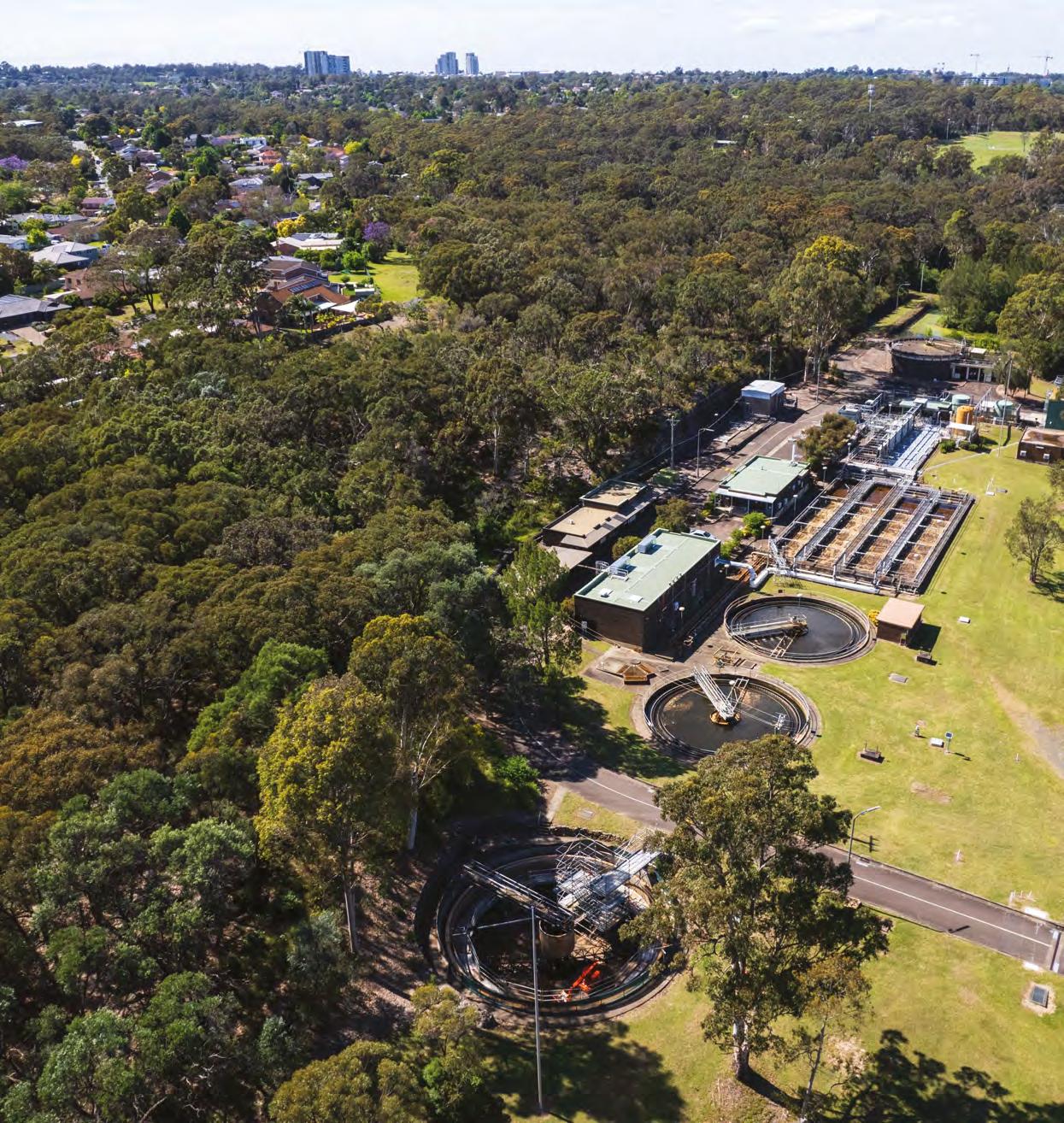

WATER SEWER ELECTRICITY GAS www.utilitymagazine.com.au Issue #37, February 2023 ADVANCES IN WASTEWATER RECYCLING AT SYDNEY WATER DEVELOPING A DIGITAL STRATEGY IN PARTNERSHIP WITH CUSTOMERS WESTERN POWER’S CEO ON THE JOURNEY TO DECARBONISATION



reach utility industry decision makers? Scan this code to learn how we can help you ensure your marketing is always on. www.utilitymagazine.com.au In B2B, the sales cycle is long. You’ll always have people at different stages of the buying cycle, so your marketing needs to be always on. We also have a team of editors, designers and marketing experts who specialise in the energy sector and can help make the most of your campaign. ● Brand building ● Educating the market ● Generating leads ● Creating engaging content ● Managing your social media and SEO ● Setting up marketing funnels Decision makers in the utility industry gain information from a wide range of sources. The team at Utility are able to provide a complete range of marketing solutions:
Want to
Published by
Monkey Media Enterprises
ABN: 36 426 734 954
C/- The Commons 36–38 Gipps St, Collingwood VIC 3066
P: (03) 9988 4950 monkeymedia.com.au info@monkeymedia.com.au utilitymagazine.com.au info@utilitymagazine.com.au ISSN: 2203-2797
Editor
Mikayla Bridge
Journalists
Stephanie Nestor, Holly Tancredi, Rebecca Todesco, John Thompson Design Manager Alejandro Molano Senior Designer Luke Martin
Designers
Danielle Harris, Ozlem Munur National Media and Events Executives Rima Munafo, Brett Thompson, Christine Circosta Marketing Manager Radhika Sud
Marketing Associate Andie James


Digital Marketing Assistants James Holgate, Jackson Barnes, Natalie Ta, Bella Predika, Rhys Dawes
Publisher Chris Bland
GM Growth and Strategy
Laura Harvey
Managing Editor
Jessica Dickers
This document has been produced to international environmental management standard ISO14001 by a certified green printing company.
FROM THE EDITOR
Welcome to the first issue of Utility for the year – I hope you all had a relaxing New Year break and are feeling refreshed for a big 2023. We’re getting straight into it with this edition, focusing on some of the most pressing issues facing water and energy utilities in Australia, from strategies to prevent dam overflow during flooding events, to addressing skills shortage in the transition to clean energy, developing digital strategies in partnership with customers, and much more.
With the increasing role pumped hydro storage is playing in the energy sector, we’ve talked to Genex about the Kidston Pumped Storage Hydro Project and its role in the renewable landscape. We also have a major feature on the state of solar, including a look at new renewable investments around the country and the world.
It’s usually around this time of the year that Sydney Water has finished hosting its Innovation Festival, which creates an environment for collaboration and innovation to solve water challenges. The utility has kindly shared some of the biggest learnings from the event and the important discussions that occurred. Sydney Water is also undertaking its own innovative projects, with recent milestones for the Upper South Creek Advanced Water Recycling Centre (AWRC) promising exciting new approaches to sustainable water management.
This issue also takes a deep dive into the biggest projects and developments in mapping, GIS & surveying; sewer rehabilitation; distributed generation; and customer experience, with a focus on changing customer behaviour with technologies, as well as the utilities making the biggest impact in customer engagement.
We’re also lucky to be partnering with several key industry events to distribute
this edition of the magazine including WIOA Queensland, Locate23 and Australia Wind Energy 2023.
On a more personal note, the start of a fresh year brings some exciting news from the Utility Magazine team. I will be moving away from the Editor role and our current Assistant Editor Mikayla Bridge will be stepping up as Utility Magazine’s new Editor. I will still be involved in the utility space in my new role as Managing Editor of Utility and our sister publications, Infrastructure and Energy
Many of you would have already seen Mikayla’s name across the magazine over the last year producing some fantastic articles, or perhaps you have met her in person at an industry event – she has been heavily involved in the sector and I’m thrilled to see her take the reins of the magazine and continue to deliver exceptional content that makes Utility the premier voice of Australia’s utility industry.
I’d like to take this opportunity to thank our readers for their support over the years and I look forward to seeing the amazing ideas and direction Mikayla takes with Utility. Don’t be shy to get in touch with her if you have a story idea or would just like to discuss any big industry issues. Her contact details are below.
Drop Mikayla a line at mikayla.bridge@monkeymedia.net.au or feel free to call her on 03 9988 4950 to let her know what you think.
Don't forget to follow Utility Magazine on social media – find us on LinkedIn, Twitter and YouTube.
February 2023 ISSUE 37 1
welcome
Jessica Dickers Managing Editor
Utility Magazine acknowledges Aboriginal Traditional Owners of Country throughout Australia and pays respect to their cultures and Elders past, present and emerging.
Scan to subscribe to Utility magazine’s weekly newsletter – delivered to your inbox every Thursday morning.
CONTENTS
INDUSTRY INSIGHTS
Community-oriented strategies to prevent New South Wales dam overflow 28

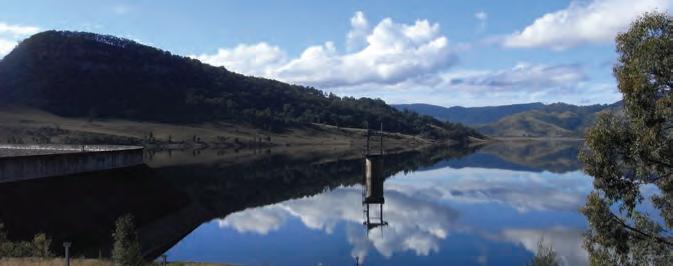
The wettest Spring on record across the Murray Darling Basin and New South Wales has brought tremendous hardship for thousands of people, and extreme vigilance by WaterNSW in safely managing the state’s inland dams. What’s the best approach to investment planning? 30
Addressing skills shortages in the clean energy industry 32
New Australian Pyrolysis technology delivers breakthrough in biosolid to biochar conversion ...................... 34
Utilities supporting global water, sanitation, and hygiene efforts 36

For the last 18 years the Australian water sector has been helping change the lives of the world’s poorest and most marginalised people through their support of WaterAid Australia, a not-for-profit dedicated to improving worldwide access to safe water, sanitation, and hygiene.
Remote or unmanned assets don’t have to be invisible 38
Pumped storage hydro’s vital role in Australia’s renewable future .......................... 40
Vacuum excavators have become the tool of choice in council fleets 42
BIG DATA
Developing a digital strategy in partnership with customers 46 Presenting at the 2022 Digital Utilities conference, Goulburn Valley Water’s General Manager for Technology and Transformation, Tony Wulff, discussed how developing customer-led data strategies for utilities can offer greater efficiencies and unlock new community value.
Water quality measurement and monitoring using data insights 50 Sensing the future of data technology in water networks 52
Expanding nbn connectivity to just about anywhere ............... 54
SEWER REHABILITATION
New technology helps Melbourne Water prepare for the future 82
Aging pressure pipelines come to life with innovative trenchless technology.................. 86
DISTRIBUTED GENERATION
Western Power CEO Sam Barbaro discusses the journey to decarbonisation 88
CUSTOMER EXPERIENCE
Supporting customers to be waterwise with digital meter data 92
Customer technology developed specifically for the water sector .................................. 96 Embracing difficult stakeholder conversations 98
How new versatile equipment is reducing risks to project delivery in microtunnelling
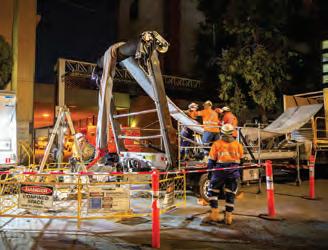
Microtunnelling projects often encounter a variety of complex challenges that can prove costly and push out project delivery timelines. However, contractors with versatile equipment can easily adjust to unexpected issues – by changing drilling heads, and being able to install a wide range of pipe materials and diameters – to ensure a project is delivered on time and on budget.
2
UTILITY • FEBRUARY 2023 WWW.UTILITYMAGAZINE.COM.AU
82 92 28 102
46
CYBER SECURITY
Operational environments are evolving, and so is the risk 56

SYDNEY WATER
Sydney Water’s advanced wastewater recycling centre to enable growth 58
Sydney Water’s Upper South Creek Advanced Water Recycling Centre (AWRC) in the Western Parkland City will set the stage for a more sustainable approach to water management by producing recycled water, renewable energy and bio-resources at a single site.
Innovation Festival makes a successful return 60
Partnerships built on collaboration and innovation 62
SOLAR
Signals are green for new investment in renewables transition 64
Australia's energy challenges are getting a lot of airtime. With so much happening, there is no shortage of commentary and unprecedented attention on power markets. And, for those with patience and tenacity, there will also be plenty of commercial opportunities.
Strategies for renewable transition success: stock, speed, and reliability 68
Success shines for SA Water’s bright solar future ........................ 70

MAPPING, GIS AND SURVEYING
SouthPAN: How accurate and reliable satellite positioning impacts utilities 72
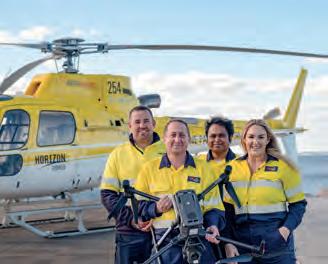
With highly accurate positioning services, SouthPAN is set to offer Australian utilities a new way of looking at asset management, particularly when it comes to monitoring and surveying physical infrastructure and equipment.
Enhancing field worker safety with wearable hazard technology ........ 76 Geospatial Intelligence Program focuses on innovation 78
SWITCHGEAR
A smart solution for guaranteed power supply 80
February 2023 ISSUE 37 3 UTILITY • FEBRUARY 2023 WWW.UTILITYMAGAZINE.COM.AU In each issue Welcome from the Editor ������������������������������������������������������������������������������������������������������������� 1 A word from Energy Networks Australia ���������������������������������������������������������������������������������� 4 A word from WSAA ����������������������������������������������������������������������������������������������������������������������� 6 News briefs ������������������������������������������������������������������������������������������������������������������������������������ 8 Advertisers’ index �������������������������������������������������������������������������������������������������������������������� 104 Editorial schedule �������������������������������������������������������������������������������������������������������������������� 104 56 72 64
SA STORM RESPONSE –NAVIGATING CLIMATE CHANGE IMPACTS THROUGH THE TRANSITION
by Dor Son Tan, Head of Distribution, Energy Networks Australia
The 2016 state-wide blackout occurred when cyclonic winds brought down multiple transmission lines in SA’s mid-north. The chain reaction sent the entire state black, though most of the 1.7 million South Australians affected had their power back within eight hours.
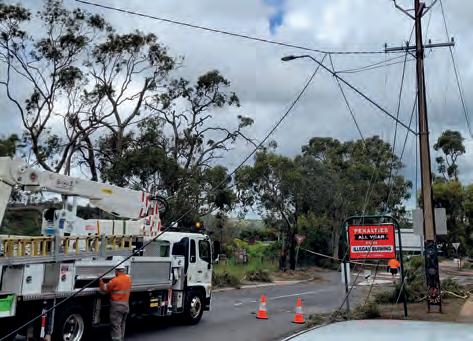
In this most recent storm in November, 163,000 customers were impacted by widespread destruction of the distribution network due to a combination of lightning strikes and storm cells that brought many trees down onto powerlines.
WHAT HAPPENED?
On Saturday 12 November 2022, a major storm impacted both the transmission and distribution networks that supply SA customers. More than 420,000 lightning strikes and winds exceeding 100kmph were recorded. The major damage occurred when a cyclonic storm cell moved across populated areas at about 4pm, leaving a swathe of destruction in its path.
A tower on the interconnector with Victoria was flattened on a section of the Heywood Interconnector near Tailem Bend (~90km southeast of Adelaide), prompting the Australian Energy Market Operator (AEMO) to invoke an emergency security-of-supply response. The distribution network was extensively damaged with reports of more than 500 wires down and
outages stretching right across the state affecting 163,000 customers or 20 per cent of the customer base.
The Heywood Interconnector is currently the only AC transmission link between South Australia and the rest of the National Electricity Market – but more on that later.
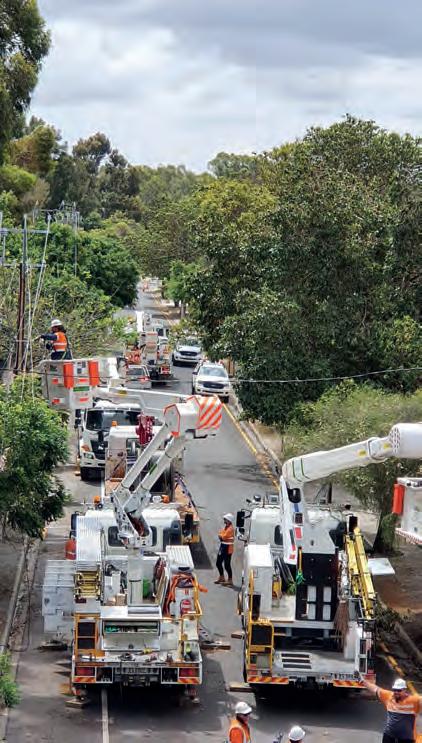
In addition to the mass response from SA Power Networks (SAPN) and its contractors, Essential Energy provided 24 additional three-person field crews from NSW to help get customers back on supply as quickly as possible.
The lack of interconnection mentioned earlier meant there was nowhere for excess solar generation (which is usually exported to Victoria) to go. This contributed to a phenomenon known as minimum demand.
Early in the event, AEMO issued several market notices and directed SAPN to exercise emergency backstop measures made possible by the South Australian Government’s Smarter Homes legislation.
WHAT DOES THIS TELL US ABOUT THE FUTURE?
This event has highlighted consequences of increasingly severe weather that until now have not been as well documented and understood. One of these issues gaining a lot of media attention is curtailment of residential solar.
Some quick numbers for context of the event:
• Total installed solar capacity in SA is ~1.9GW
• Projected output was expected to peak at ~1.4GW, this number also includes large scale solar farms.
• The total peak amount of solar PV curtailed was ~400MW, only about 100MW of which came from large-scale solar farms
• For perspective, this means only ~300MW of the 1.4GW (or ~21 per cent) of customer solar production was curtailed for this relatively infrequent event
To add another perspective, there is no textbook answer for managing a power system with as much variable renewable energy powering the grid as South Australia. It is literally being written as you read this article.
But like any new skill, we must learn to walk before we can run. From an engineering perspective, some level of curtailment is part and parcel of running in a high renewables grid now and into the future.
It’s likely that as our understanding grows, we’ll get a lot better at minimising the ‘wasted’ energy (like through Dynamic Operating Envelopes or Flexible Exports), but we’re just not there yet.
What is not often spoken of, but keeps governments and grid operators awake at night, is the counterfactual
UTILITY • FEBRUARY 2023 WWW.UTILITYMAGAZINE.COM.AU 4
A WORD
FROM ENERGY NETWORKS AUSTRALIA
The recent storm activity in South Australia brought back memories of the 2016 ‘system black’ event. Here, we look at the important things this recent event tells us about the future and how networks, governments and market bodies are working together to create an electricity system more resilient to climate change impacts.
IMAGE PROVIDED BY SA POWER NETWORKS.
where a blackout affects an entire state (or worse). If the choice is curtailing a small number of customers to keep the lights on, or causing a blackout by not curtailing solar, the answer is a no-brainer.
HOW IS INDUSTRY PREPARING FOR THE FUTURE?
There is a lot of focus by networks throughout Australia on making the grid more resilient to climate change impacts.
This starts by ensuring a strong and positive working relationship between industry stakeholders. In SA, a lot of preparation between AEMO, Electranet, SA Power Networks and the state government happens before, during, and after events like this. We shouldn’t take the importance of this for granted.
The concept of ‘stronger together’ also applies for the grid, and with the Project Energy Connect (PEC) Interconnector coming online in 2025/6, there will be a greater margin of safety for South Australians.



In the industry ‘summer bushfire preparation’ is now known as ‘seasonal
preparation’, particularly in the lead up to the South Australian spring season (lots of solar output and not much load).
Voltage management sometimes gets a bad rap, but in SA it has doubled the amount of solar hosting capacity on the distribution network. This outcome was also recognised by the SA Premier’s energy innovation award.
Energy Networks Australia has also contributed by helping our members get a better grasp on understanding the expected effects of climate change through ‘layperson’s interpretations’ of authoritative reports like the Intergovernmental Panel on Climate Change (IPCC).

While the impact of major weather events on a system with very high renewable penetration may currently look like a South Australian problem, it’s only a matter of time before it becomes an Australia-wide problem.
This stresses the importance for state and federal governments, industry and society in general to learn from the SA experience, and work together to deliver a future we need, not just the individual outcomes we want.
UTILITY • FEBRUARY 2 023 WWW.UTILITYMAGAZINE.COM.AU 5 No. 407319937 Key management Meter security seals Contact us for more information about our comprehensive range of key cabinets. Trackable Serial Numbering Expose Unauthorised Access
IMAGE PROVIDED BY SA POWER NETWORKS.
A WORD FROM WSAA
BUILDING UTILITY RESILIENCE TO CLIMATE SHOCKS
In November 2022, WSAA released its report Building utility resilience to climate shocks: Lessons from global case studies . The report presents the preparation and synthesis of ten global case studies that demonstrate how diverse actors are increasing resilience by adapting their assets to climate-induced shocks.

Sydney Water originally commissioned the UTS Institute for Sustainable Futures to prepare the report. It is now being shared through WSAA to provide water utilities with a better understanding of which climate-related shock impacts are relevant to their assets, which resilience strategies could be deployed, and how best to make the business case stack up by using regulatory and policy drivers, and/or demonstrating the broader triplebottom-line benefits.
The ten case studies cover locations from almost all continents, and across several sectors (e.g. water, transport and electricity) and actors (e.g. companies, utilities, and government). For many of the cases, previous experience with climate induced disruptions was a key motivator for considering future climatic impacts on their operations and investment planning.
It builds on the earlier WSAA publication Towards Resilience that illustrated how the urban water industry is being impacted by climate change and extreme events, and how the industry is responding.
The main objective of the report is to provide examples that will:
• Provide a learning opportunity for Australian and New Zealand water and wastewater service providers (water utilities)
• Provide an opportunity to consider alternative approaches for responding to climate shocks
• Identify methods to make the business case for resilient infrastructure within water utilities and with the relevant state/territory regulatory bodies
CASE STUDIES, KEY ENABLERS AND RECOMMENDATIONS
The following six enablers were used in the case studies and the report to frame the key enablers and drivers that supported the implementation of resilient measures (based on the One Water Paradigm Shift framework): 1. Leadership 2. Regulations 3. Economics 4. Engagement and expectations 5. Collaboration and co-benefits 6. Knowledge and experience
The ten case studies are:
• Copenhagen Metro: Integrating climate adaptation
• Brisbane Airport: The New Parallel Runway
• SSEN UK: Flood mitigation of electricity substations
• Santiago: Adapting to high turbidity in raw water
• Cape Town: Stormwater management
• Victoria: Healthy Homes Program
• New York City: Wastewater Resiliency Plan
• Copenhagen: Cloudburst solutions
• Northumbrian Water: Collaborative Flood Alleviation
• United Utilities: Improving Operational Response and Recovery
The report also includes the development of 17 recommendations that aim to support water utilities in better adapting their operations and assets to climate shocks.
WSAA expects that the urban water industry will use the lessons and key recommendations from the case studies to refine their climate adaptation and resilience approaches.
The report and case studies are available on the WSAA website at www.wsaa.asn.au/publication/building-utility-resilience-climate-shocks-lessons-global-case-studies.
UTILITY • FEBRUARY 2023 WWW.UTILITYMAGAZINE.COM.AU SECTION 6

1800 062 064 | polymaster.com.au Secure IBC storage & decanting solutions Polymaster’s unique Enclosed IBC Bund solves many of the problems associated with IBC storage and chemical/fluid decanting in a weather resistant, purpose-built enclosure. Æ Full weather protection – stops rain entering the enclosure Æ Easy forklift loading with wide forklift access from both side and back Æ 250ltr day tank Æ Lockable cabinet to keep system secure Æ Venting by two sides Æ Viewing windows incorporated into the doors Æ 110% bund capacity complies with AS3780 Æ Sight tube and low-level alarm available Æ Chemical resistant – high grade polyethylene construction View Video
The Clean Energy Finance Corporation (CEFC) has pledged an investment of $175 million to develop Stage One of the Golden Plains Wind Farm in Victoria, a project which will include 122 wind turbines and generate 756.4MW of clean energy to replace coal-fired generation.
TagEnergy has acquired the 30-year development contract, with AusNet appointed to connect the farm’s initial 756MW to the grid over four years.
The estimated annual emissions abatement is an average 770,000 tonnes CO2-e, or more than 23 million tonnes CO2-e over the project’s 30-year lifetime.
TagEnergy, part of the Impala SAS Group, has acquired Stage One of Golden Plains Wind Farm from WestWind Energy, which will manage the development for 30 years and work to bring Stage Two to fruition.
TagEnergy estimates that, when complete, the 1,300MW Golden Plains Wind Farm will generate enough clean energy to power more than 750,000 homes, the equivalent of every home in regional Victoria.
AusNet Services (AusNet) has been appointed by WestWind Energy and TagEnergy to connect the first 756MW stage of the Golden Plains Wind Farm to the grid, following four years of collaborative effort.
AusNet, along with its construction partner Consolidated Power Projects Australia, will design, build, own and operate the transmission assets for the wind farm, including a new 500kV terminal station, two 500/220kV transformers, a 5km transmission line, and a new 220kV switching station.
UTILITY • FEBRUARY 2023 WWW.UTILITYMAGAZINE.COM.AU 8
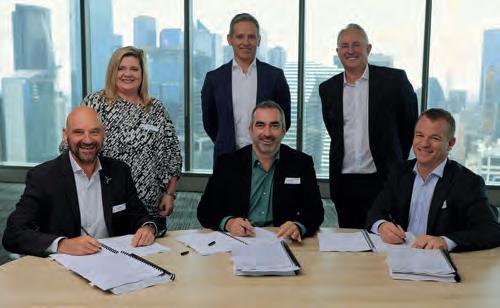
NEWS CEFC INVESTS $175M IN VICTORIAN WIND FARM URD ELECTRICAL PILLARS +61 8 9378 1077 sales@rimco.net.au www.rimco.net.au ● Manufacturing Pillars in Australia for over 40 years ● Quality Assured to ISO 9001:2015 ● Pillars comply with AS/NZS 61439 ● Manufactured from proven, durable materials for Australian conditions ● Residential and Commercial applications. ● Minimal installation area required for Pillars ● Supplied Australia Wide STANDING: MARLA BRAUER, CHIEF OPERATIONS OFFICER, WESTWIND ENERGY; TONY NARVAEZ, CEO AUSNET; CHAD HYMAS, CHIEF DEVELOPMENT OFFICER AUSNET. SEATED: TOBI GEIGER, MANAGING DIRECTOR, WESTWIND ENERGY; FRANCK WOITIEZ, CEO TAGENERGY; ANDREW RIGGS, MANAGING PARTNER TAGENERGY.

The Australian Energy Market Operator (AEMO) has awarded the contract to design, construct, own and operate the Mortlake Turn-in Project, as well as a System Support Agreement (SSA) contract as part of the Victorian Government’s Renewable Energy Zone (REZ) Development Plan (RDP) in the Western Victoria region.
Following a competitive process, Transmission Operations (Australia) 3 (TOA3), a subsidiary of Australian Energy Operations, has been awarded a System Support Agreement to provide up to 600MW of services to
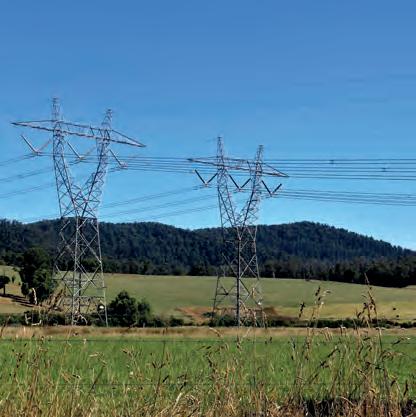

TOA3 will provide services from a synchronous condenser tailored solution located at the Ararat Terminal Station. The project is expected to commence commercial operations in late 2025 with a contracted service life of 20 years.
In August 2021, a competitive tender process commenced, calling for expressions of interest. After evaluating responses, shortlisted parties were requested to submit detailed submissions and participate in subsequent discussions with a tender evaluation team.
Based upon these interactions, and input from the State on the Social Procurement and Local Jobs First
tender response, TOA3 was identified as the preferred tenderer.

AEMO has also contracted AusNet Services to design, construct, own and operate the Mortlake Turn-in Project.
The Mortlake Turn-in Project will connect the existing Tarrone to Haunted Gully 500kV transmission circuit at the Mortlake Terminal Station.
Connecting both circuits at the Mortlake Terminal Station will allow a more balanced sharing of power between the two parallel circuits, making the network in the area more stable, which is expected to allow up to 1,500MW of additional generation output by the end of 2025.
UTILITY • FEBRUARY 2023 WWW.UTILITYMAGAZINE.COM.AU 10
NEWS Link-Seal Link-Seals offer hundreds of solutions to seal pipe penetrations ranging in size from 10mm to 3.6 metres diameter. Link-Seals are suitable for most types of pipes including PVC, HDPE, Copper and Steel. Resistant to water, oil, gas, aggressive chemicals and fire. Projex Group helps calculate the right Link-Seal size and model for your application. Link-Seal Pipe Penetration Seal Solutions mail@projex.com.au 1800 001 114 AEMO AWARDS TWO RENEWABLE ENERGY ZONE CONTRACTS


Contact Us - Email: AU.enquiries@yokogawa.com Website: www.yokogawa.com/au Phone: +1300 558 965
$58M WATER
BOOSTING JOBS AND MANUFACTURING IN WA
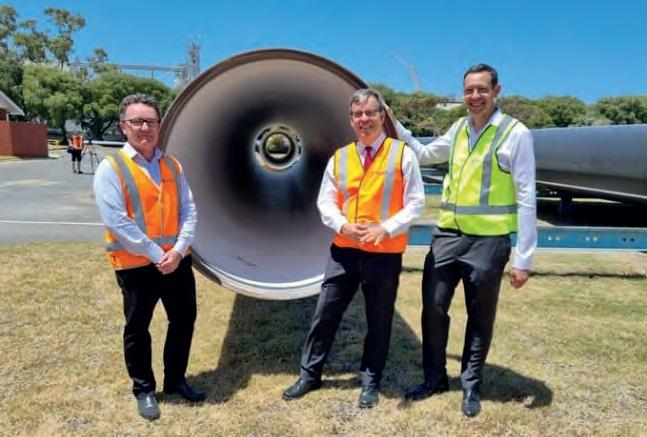
Anew $58 million Water Corporation contract will see extra-large steel water pipes produced in Western Australia for the first time, supporting local jobs and manufacturing in Kwinana Industrial Area.
The contract with Steel Mains will see 1,600mm diameter water pipes manufactured in Kwinana rather than at their plant in Victoria, mitigating supply chain risks and significant freight costs, while also eliminating the emissions that would be created by transporting the pipe across the country.
The first locally produced extra-large pipe is expected to roll off the production floor in 2024 and be used during construction of the new Alkimos Seawater Desalination Plant (ASDP) to convey water from the plant into the network.

Announced in June 2022, ASDP will have capacity to provide 100 billion litres of safe, secure drinking water to millions of Western Australians each year, with the first 50 billion litre stage being commissioned in 2028.

Using 1,600mm diameter pipes at ASDP will reduce the amount of energy needed to pump water, lowering greenhouse gas emissions by 21 per cent compared to the use of smaller pipes.
The pipe will be produced using Australian steel with iron ore from the Pilbara and lined with cement from Cockburn Cement in Kwinana. Each 12m long section of the 1,600mm pipe weighs around 9t and has an expected lifespan of around 120 years.
In the 2021-22 financial year, 83.5 per cent ($878 million) of Water Corporation’s procurement is with Western Australiabased businesses, supporting the State Government’s Western Australia Buy Local Policy and Western Australian Industry Participation Strategy.
UTILITY • FEBRUARY 2023 WWW.UTILITYMAGAZINE.COM.AU 12
NEWS
CONTRACT
better way to seal your next pipeline
A
range now includes our new patented compact design.
innovative with features that provide simple and speed of installation.
standard sizes
request. Innovative Compact Design
Installation COMPACT DISMANTLING JOINT AS4087 AS/NZS4158 WSAA: PA 2056 www.steelmains.com Designed and Made in Australia WSAA Appraisal
Steel Mains’
Highly
Available in
DN100 to DN1800 in both PN16 and PN35 pressure ratings. Larger sizes are also available on
Simple
STATE WATER MINISTER DAVE KELLY, WATER CORPORATION CEO PAT DONOVAN AND STEEL MAINS CEO DEAN CONNELL.
NT ‘BIG BATTERY’ CONSTRUCTION MILESTONE
Civil and building works have been completed on the $45 million Darwin-Katherine Battery Energy Storage System (DK BESS), with Hitachi Energy being mobilised to site at Territory Generation’s Channel Island Power Station to carry out the next phase of construction.
Hitachi Energy is delivering the build of the battery, with local companies City Earthmoving and T&M Concreters having carried out the civil and foundation works for the project.
The 35MVA battery is expected to deliver cost savings of around $9.8 million per year, paying for itself within approximately five years from connection to the grid. It will also reduce emissions by about 58,000t per annum.
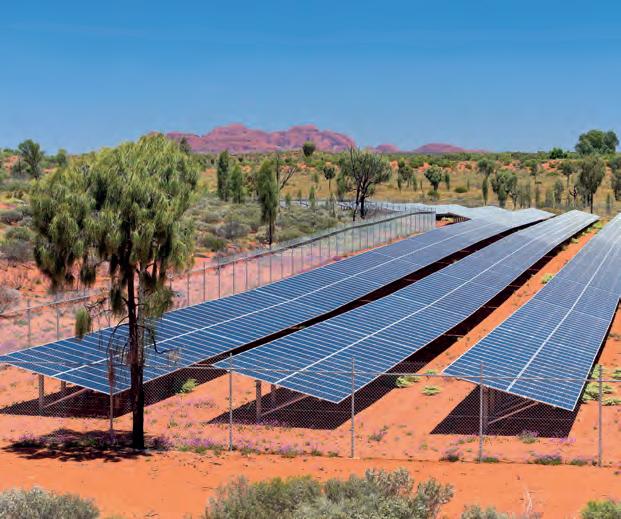


The Darwin and Katherine Electricity System provides energy to 150,000 Territorians, and the DK BESS is the first significant step towards reducing the use of gas generators for the system.
Works have started on the new 132/11.5kV power transformer, with a new dedicated switch room under construction and the first tranche of inverter enclosures installed on site.
Delivering a BESS for the Darwin-Katherine electricity grid is a major part of the Darwin-Katherine Electricity System Plan, and fits into the Northern Territory Government’s ‘Ready’ stage of the plan. It is also a cornerstone investment of Territory Generation’s Fleet Transition.
UTILITY • FEBRUARY 2023 WWW.UTILITYMAGAZINE.COM.AU 13
NEWS
SA Water will conduct pipeline upgrades to over 40km of regional water mains in its 2022-23 regional program, realising the utility’s $155 million water main management program.
Regional centres including Whyalla, Tanunda and Yankalilla will benefit from the upgrade program, alongside smaller towns such as Hamley Bridge and Curramulka.

SA Water’s General Manager of Sustainable Infrastructure, Amanda Lewry, said, the program builds on the 60km’s of water mains that were
replaced across country areas of the state during 2021-22.
“Our ongoing program of works aims to maintain the structural integrity of the water network, including helping to reduce the potential for water main leaks and breaks,” Ms Lewry said.
“A comprehensive prioritisation system helps to identify which water mains need replacing, based on factors including likelihood of future breaks and the potential impact of a break on customers and commuters.



“The 2022-23 regional program also includes the installation of network valves, to help minimise the number




of properties affected when water is temporarily disrupted during any pipe repairs.

"Water mains have long service lives of up to around 100 years, helping to maintain a reliable supply of drinking water for regional and metropolitan communities well into the future.”



As each water main replacement is planned and carried out, SA Water will ensure local residents are given advance notice of any temporary water supply interruptions, which can be necessary when their connection is moved over to a new water main.
UTILITY • FEBRUARY 2023 WWW.UTILITYMAGAZINE.COM.AU 14
NEWS SA WATER’S $155M PROGRAM TO UPGRADE 40KM OF WATER MAINS

Surveillance Communications And more…
1300
www.spectur.com.au
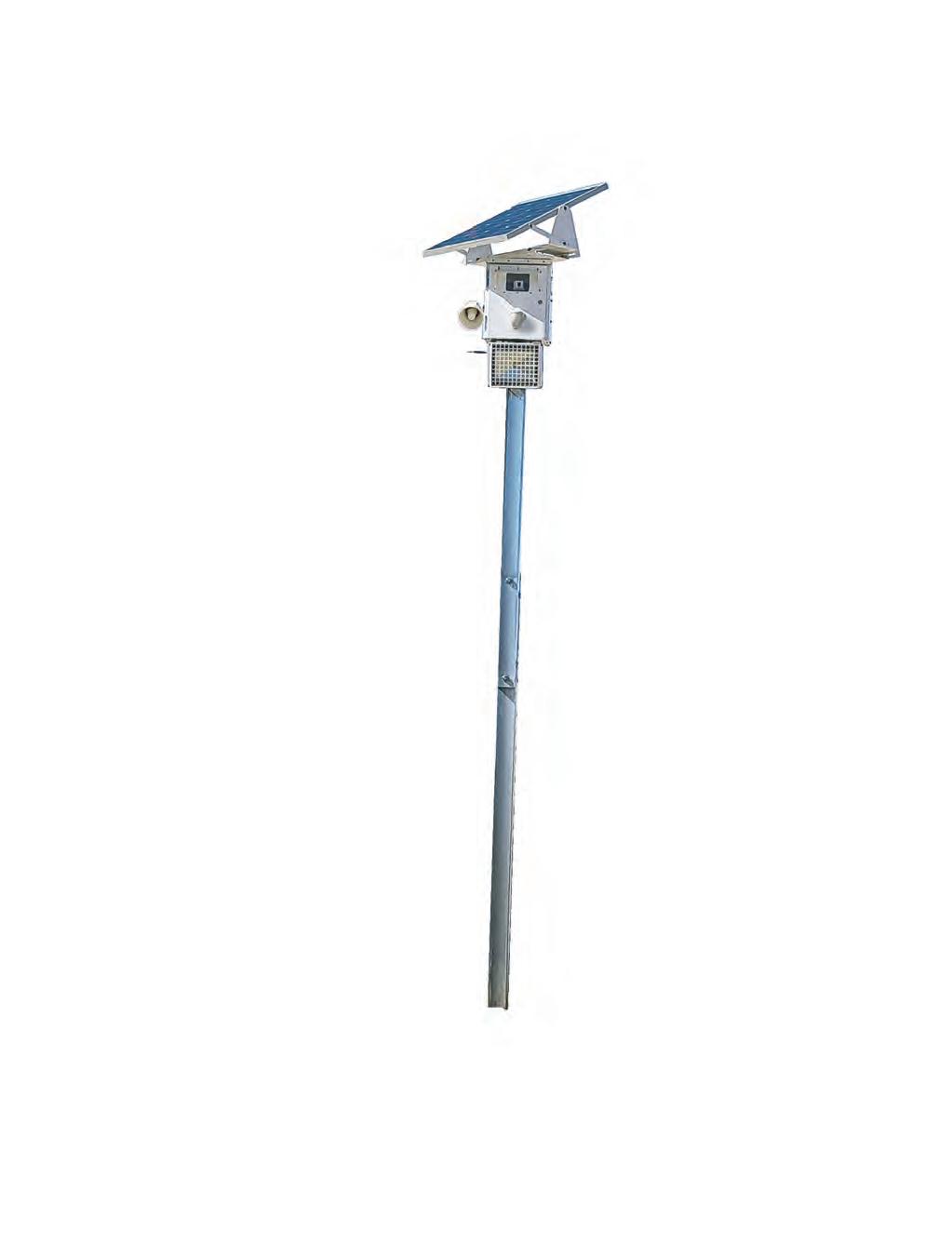
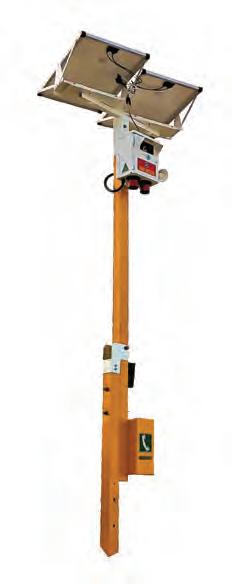
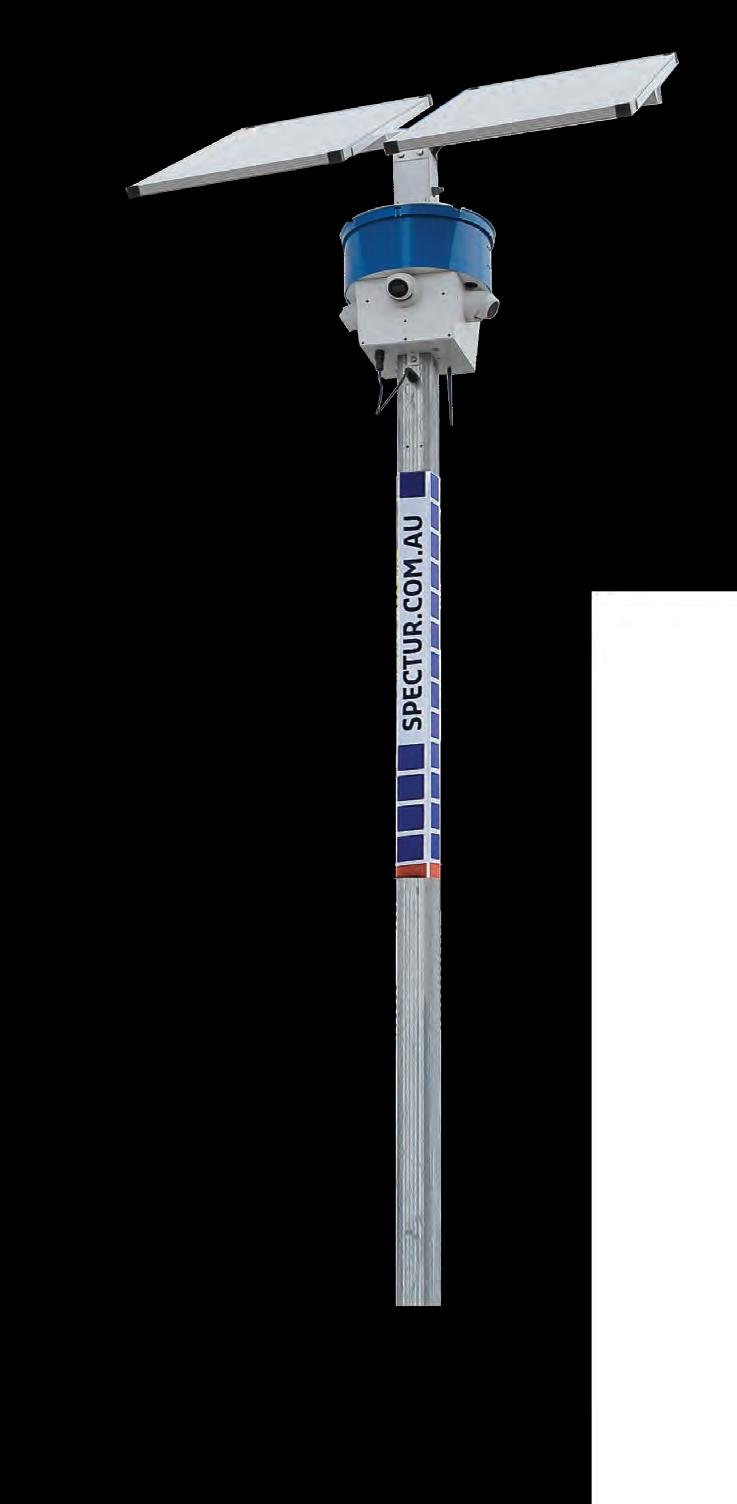
Harnessing the power of natural resources to make autonomous sensing, thinking and action available anywhere, anytime... for more information
802 960
WA REACHES MAJOR RENEWABLE HYDROGEN STRATEGY TARGETS
Western Australia has marked the opening of a new high-speed hydrogen refueler and renewable hydrogen blended into the natural gas network, reaching the final two 2022 targets in Western Australia’s Renewable Hydrogen Strategy.
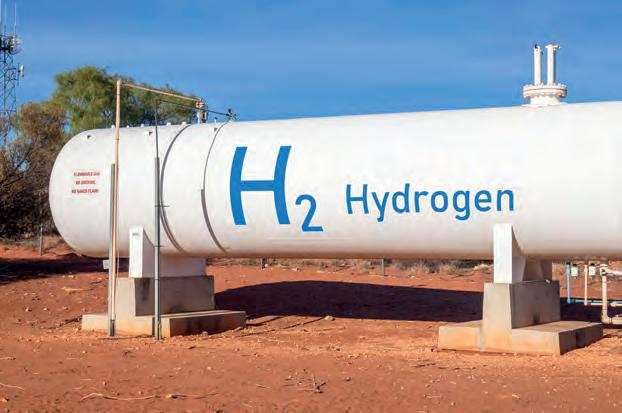
The strategy set out four clear targets for completion in 2022 – refuelling facility available in Western Australia, distribution of hydrogen into the gas network, use of hydrogen in a remote location, and approval of an export project.
The milestones mean the Western Australian Government has hit all four 2022 targets on time, following the commissioning of the Denham hydrogen plant in October and the commencement of construction on the joint Yara/ ENGIE Yuri project in the Pilbara.

In December 2022, natural gas company ATCO began blending a small percentage of renewable hydrogen into a portion of the natural gas distribution network within the City of Cockburn, marking the first time in Western Australia that renewable hydrogen has been used in the natural gas supply.

ATCO plans to increase and test blend percentages from two per cent to working towards up to ten per cent.


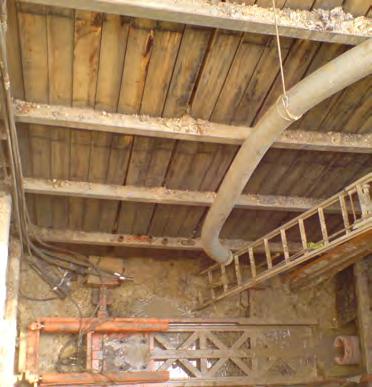
The station will be used by ATCO and FFI to refuel their fleet of Toyota Mirai, as well as agreed third parties, such as Western Australia Police.
The station and blending project will use renewable hydrogen produced onsite in Jandakot at ATCO’s Clean Energy Innovation Hub from renewable electricity through electrolysis.
The State Government has invested in both projects, contributing $1.97 million towards the Hydrogen Blending Project and $1 million to the hydrogen refuelling station.
UTILITY • FEBRUARY 2023 WWW.UTILITYMAGAZINE.COM.AU 16
NEWS
tenders@lancogroup.com.au | www.lancogroup.com.au | 1300 1 LANCO (1300 152 626) Civil and Infrastructure Engineering | Project Management


2023 Water Industry Operations Conference & Exhibitions QLD 19 & 20 JULY SUNSHINE COAST SA 1 & 2 MARCH MURRAY BRIDGE NSW 1 & 2 NOVEMBER CANBERRA VIC 29 & 30 MARCH BENDIGO Anyone involved in the operation and maintenance of water industry or related infrastructure would benefit from attending these conferences. A great forum for all involved in water operations to: • Listen and learn from the experience of others through the technical presentations • View and discuss technical equipment, products, and services with suppliers • Update your knowledge and skills through interaction with other water industry personnel SAVE THE DATES www.wioaconferences.org.au info@wioa.org.au 03 5821 6744 BE COVIDSAFE
WORK BEGINS FOR NSW $8M SEWAGE TREATMENT EXPANSION
Construction has begun for an $8 million expansion to Orange City Council’s Sewage Treatment Plant, with new more efficient equipment expected to deliver yearly energy savings of about $30,000.

In early 2022, Orange City Council awarded the construction contract for the project to Precision Civil Infrastructure. The company established a construction site at the plant in November 2022 and the project is expected to be completed by the end of 2023.
To avoid possible equipment delivery delays, the major equipment for the project, worth $913,000 was ordered last year and has since been delivered. The project also includes pipe relocation and an internal road upgrade.
The project is funded by Orange City Council through sewer charges. Orange City Mayor, Jason Hamling, said the project is funded from Council’s sewer charges and welcomed the start of the project.
The upgrade will replace equipment at the inlet side of the Sewage Treatment Plant at the stage where wastewater first reaches the plant.
Filtering screens which date from the 1990s will be replaced by contemporary filters, which remove finer levels of waste. The new equipment is also more energy efficient with expected savings of around $30,000 a year.
The upgrade of the inlet works will also improve efficiencies and effectiveness of the whole treatment cycle across the plant.
The new screens will also be able to cater for greater peak volumes of wastewater that occur when heavy rain sends unwanted stormwater into the city’s sewerage network.
TRANSGRID UNLOCKS 170MW FOLLOWING $45M VNI UPGRADE
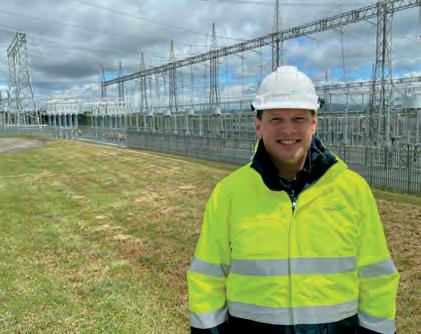
TRANSGRID CEO, BRETT REDMAN, VISITING THE RECENTLY UPGRADED YASS SUBSTATION. PHOTO: TRANSGRID.
budget and features world-leading SmartValve technology from US-based grid enhancing technology company, Smart Wires.
“The speed at which the energy transition is accelerating means we must embrace new technology and innovate and SmartValve is a perfect example of how Transgrid is doing just that,” Mr Redman said.
“This clever technology benefits both customers and the environment and will allow renewable energy from Victoria to flow into New South Wales and the Australian Capital Territory when demand is greatest.”
Nine SmartValve units were installed at Transgrid’s Stockdill substation in the Australian Capital Territory to unlock 120MW of additional energy, while six units at Yass substation will provide another 50MW.
“By using power flow controller technology we can unlock additional energy without needing to build new lines or upgrade existing transmission lines, which minimises environmental and community impact,” Mr Redman said.
Upgrades totalling $45 million have increased capacity by 170MW at Transgrid’s VictoriaNew South Wales Interconnector (VNI).
Transgrid CEO, Brett Redman, said the project was delivered on
Transgrid is the first large-scale user of SmartValve technology in Australia. The technology detects congestion on the transmission network and redirects power off overloaded lines onto transmission lines with spare capacity and enables substations to be upgraded using existing infrastructure.
The project was the preferred option identified to increase transfer capacity between New South Wales and Victoria in the 2020 Project Assessment Conclusion Report (PACR) by the Australian Market Energy Operator (AMEO) and Transgrid.
The PACR found the VNI upgrade is expected to deliver net benefits of up to $268 million to electricity customers.
UTILITY • FEBRUARY 2023 WWW.UTILITYMAGAZINE.COM.AU 18
NEWS
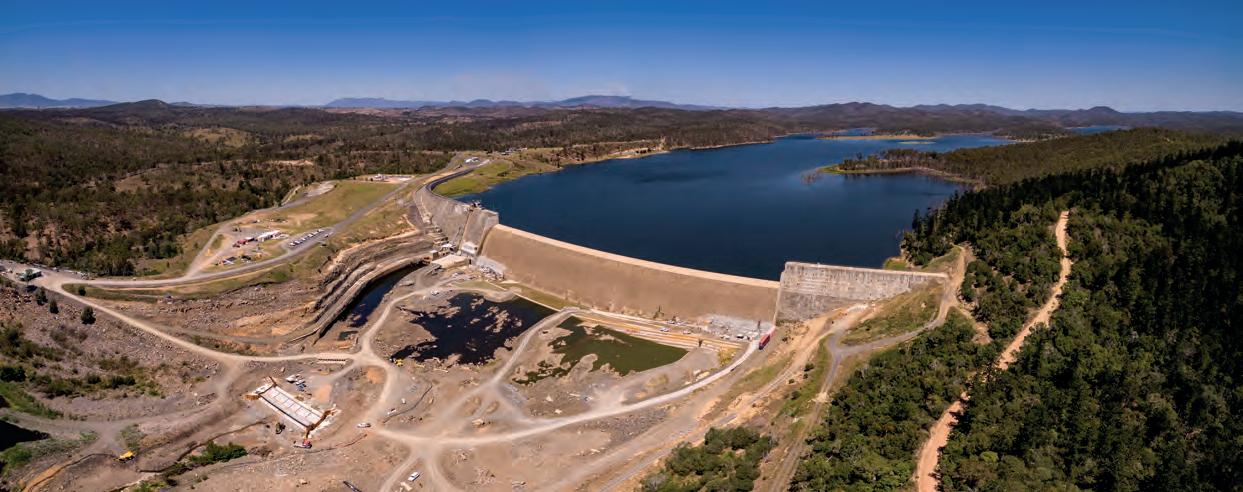
The Paradise Dam Improvement Project will be jointly funded by the Queensland and Federal Governments, following a $600 million funding commitment from the Federal Government in the Budget under the National Water Grid Fund, with the project set to expand irrigated agriculture in the region and secure Bundaberg’s water supply.
Originally built in 2005, Paradise Dam experienced unanticipated damage during the 2011 and 2013 floods and an Independent Commission of Inquiry report from 2020 confirmed structural and stability issues. The
dam wall was lowered due to these structural concerns.
Sunwater is completing the new engineering design and detailed work, supported by geotechnical activities.











Early works to commence this financial year include planning, design and upgrades of existing roads, investigations into suitable aggregate and other construction materials and planning the mobilisation and establishment at the construction site.
Enabling works for the project are expected to start in 2023, including local road upgrades, with major


works at the dam expected to commence in 2024.


Queensland Minister for Water, Glenn Butcher, said the federal funding, which matched the state budget funding of $600 million, will return the dam to its original height of 67.6m, as part of significant safety improvement works.
“This massive $1.2 billion Paradise Dam Improvement Project will restore the dam to its full 300GL capacity and will provide a safe, reliable and secure water supply to local agricultural, industrial and urban communities,” Mr Butcher said.
UTILITY • FEBRUARY 2023 WWW.UTILITYMAGAZINE.COM.AU 19
NEWS INSTRUMENTATION & CALIBRATION PTY LTD SPECIALISTS AMS have been suppliers of instrumentation and calibration equipment to all industries since 1973 representing some of the world’s leading manufacturers of the equipment in their field. www.ams-ic.com.au Flow Measurement Specialists www.ams-ic.com.au sales@ams-ic.com.au $1.2B PARADISE DAM RECEIVES FEDERAL FUNDING COMMITMENT
HOW CAN UTILITIES PREPARE FOR BUSHFIRE SEASON?
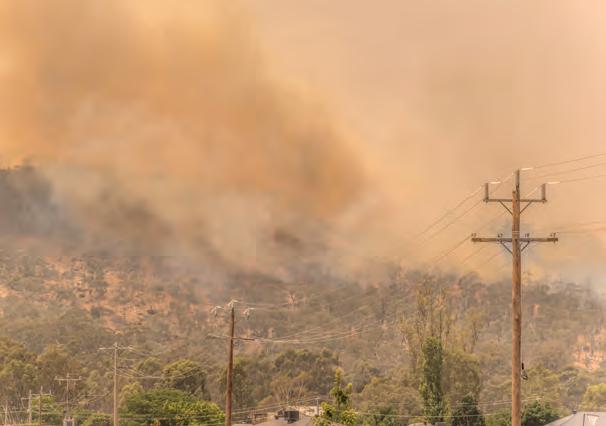
As summer brings hot weather, Australians start cleaning out the pools, going on holiday and most importantly, preparing for bushfires. It’s vital for utilities to take the necessary precautions with bushfire season approaching for most of the country to prevent their equipment and infrastructure from accidentally causing a fire. For network operators, this means clearing vegetation near assets and equipment. But without a comprehensive management system to keep track of overgrown trees or fallen branches, utilities can fall short of their obligations.
TAKING PREVENTATIVE MEASURES
The two main influencing factors on bushfires in Australia are climate and poor vegetation management.
Preparing for bushfire season involves organisations and individuals clearing vegetation around their properties and public spaces, as dry leaves and branches on the ground can act as kindling for a fire and cause it to spread out of control.
For utilities, this involves regularly trimming branches or clearing grass near powerlines as bushfires can start from a branch accidentally touching a powerline, especially when the weather conditions are hot and dry.
But in order to prevent such a thing from happening, utilities need a system to monitor everything from excess foliage and faulty powerlines.
HOW XUGO CAN HELP
Xugo is comprehensive work management software (WMS) used by utilities across Australia to keep track of their regulatory compliance requirements, including bushfire preparation and vegetation management.
Vegetation management is one of the most expensive recurring tasks for electricity network operators in Australia. Even though regulations can vary state-to-state, Xugo provides a single authoritative system to streamline compliance and make what is normally a complex process, easy to accomplish.
Using Xugo, utilities can have all the information needed to effectively meet obligations, especially if they have to consider environmental protection, Indigenous cultural heritage, chemical handling and safety regulations.
Xugo stores all information needed to prove compliance, including reports, incidents and maintenance history and can automate tasks such as data entry to give utilities real-time updates, providing consistent information for both the organisation and regulatory authorities.
Not only can Xugo help utilities keep track of where foliage and plants need to be cleared, but also point out infrastructure that is in poor condition and could pose a potential safety risk, including faulty powerlines. This helps to understand what needs to be done up to and during those dangerous bushfire season months.
STREAMLINING COMPLIANCE
If utilities fail to mitigate the risks of accidental fires caused by their assets, it will mean significant penalties, damage to property, environmental destruction or even the loss of human life.
Using Xugo, utilities can prevent oversights and enable immediate incident response when it comes to meeting their obligations.
A comprehensive work management system should encourage good decision-making with a single system for all information that can automate tasks and keep everyone informed at all times.
For utilities, Xugo offers the tools to make vegetation management easy, giving the best chance to prepare for bushfire season and keep communities safe.
UTILITY • FEBRUARY 2023 WWW.UTILITYMAGAZINE.COM.AU NEWS | Sponsored editorial 20
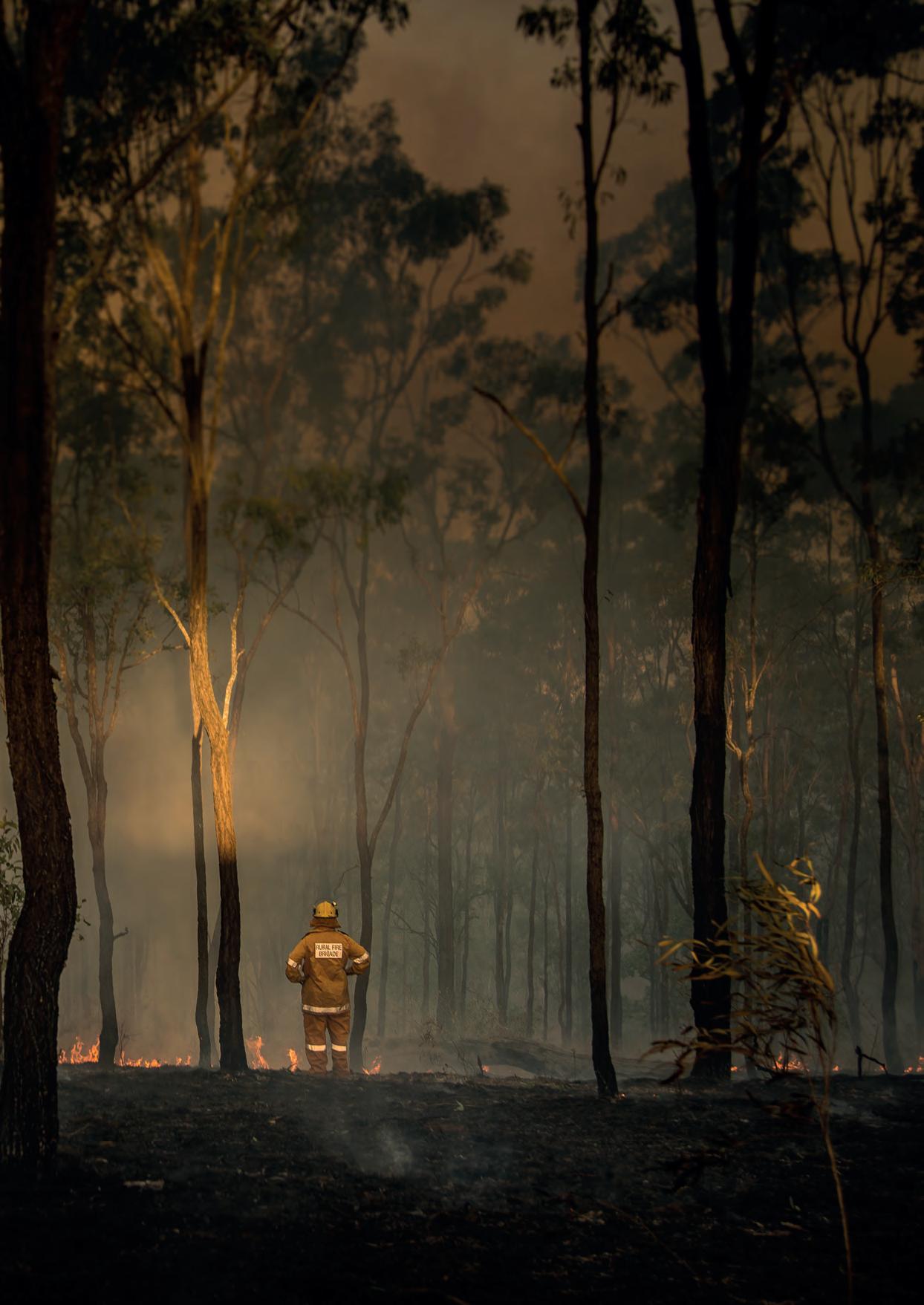
Using Xugo, utilities can prevent oversights and enable immediate response when it comes to meeting vegetation management obligations – thus minimising the risks that come with the summer bushfire season in Australia.
| NEWS
Sponsored editorial
21
CONFERENCES IN 2023
WIOA stages major water industry conferences where leading exhibitors display products, services, and innovations. If you’re an operator, manager, engineer, consultant or professional, or someone who is working in the water industry, these are must-attend events.
This year, WIOA’s conferences include:
• Murray Bridge, SA – 1 and 2 March 2023
• Bendigo, VIC – 29 and 30 March 2023
• Sunshine Coast, QLD – 19 and 20 July 2023
• Canberra, NSW – 1 and 2 November 2023
The conferences feature both state and national awards, including the award for Best Exhibition Site – Ron Bergmeier Award. The criteria for this award looks at the presentation and innovation in the exhibition, the use of interactive
displays and equipment that delegates can touch, and the novel ideas and engagement of attendees.
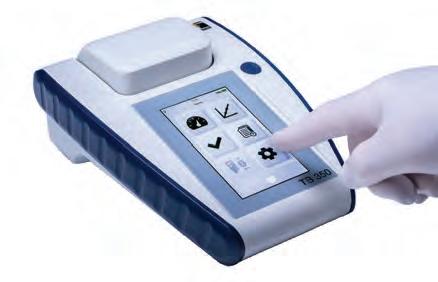
In 2022, the winners of this award included:
• Thermo Fisher Scientific – NSW
• Remtron – VIC
• Control Components – QLD WIOA is a national association with a primary role of facilitating the collection, development, and exchange of quality information between people undertaking operational roles in the water industry.

These conferences are a great forum for anyone working in water operations to learn from the experiences of others through technical presentations; view and discuss technical equipment, products and services with suppliers; and update your industry knowledge and skills.

UTILITY • FEBRUARY 2023 WWW.UTILITYMAGAZINE.COM.AU 22
The Water Industry Operators Association of Australia (WIOA) will
again
conferences
For Research Use Only. Not for use in diagnostic procedures. © 2022 Thermo Fisher Scientific Inc. All rights reserved. Trademarks used are owned as indicated on thermofisher.com/trademarks COL100319AU Learn more at thermofisher.com/waterqualitybrochure With product solution experts on hand to support your needs across wastewater, drinking water, surface water and ground water analysis • Portable with the capabilities of a lab instrument • ISO and US EPA compliant Trust us to assist with your water analysis • Innovative technology to eliminate stray light • Full colour graphic touchscreen display Featuring the NEW TB350 Lovibond ® Turbidimeter COL100319AU WIOA half page print ad.indd 1 6/12/2022 10:49:42 AM
INDUSTRY OPERATIONS
NEWS For more information, please visit wioaconferences.org.au.
once
host
and exhibitions around Australia in 2023.
WATER
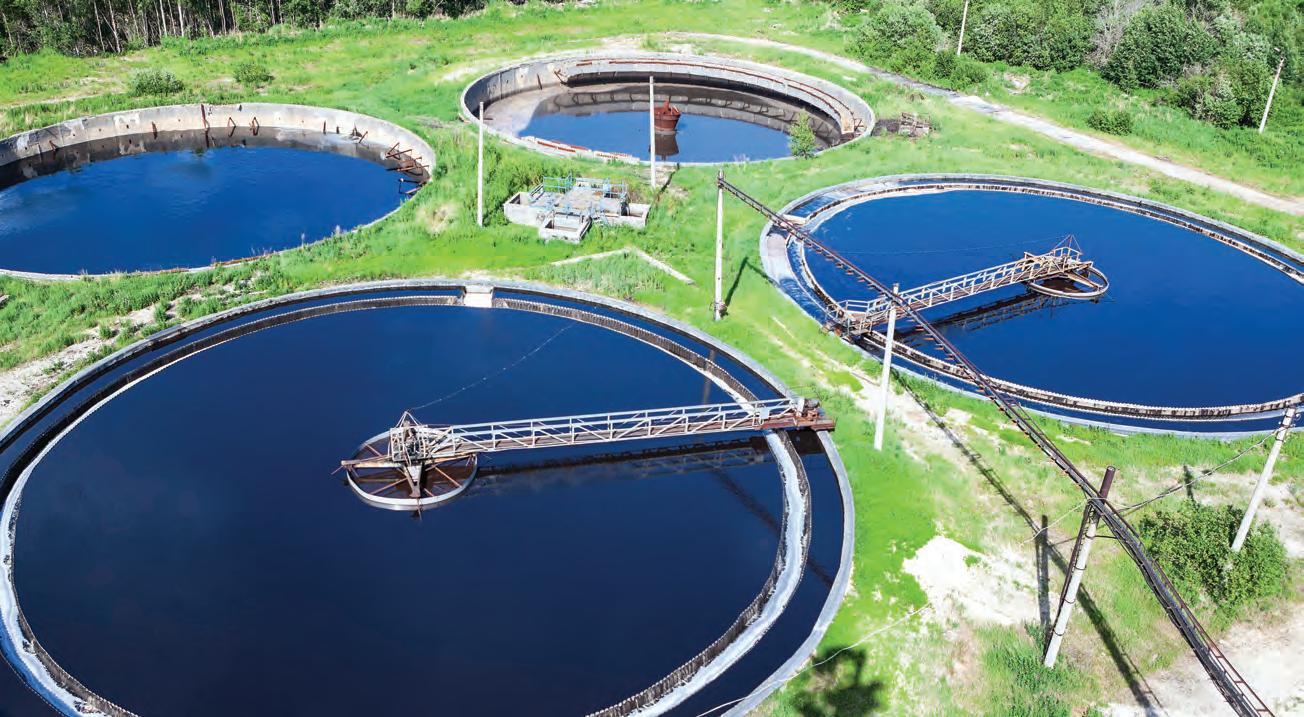







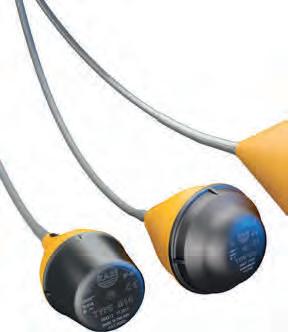

See the sludge level… ...rather than trying to hear it! PROVEN NEAR INFRARED (NIR) TECHNOLOGY • Directly measures total suspended solids concentration (mg/L, ppm or %TSS) • Choice of 2% or up to 5% TSS (e.g. primary or thickened sludge) models • Not an indirect, compensated ultrasonic echo or turbidity sensor FULLY AUTOMATIC (MOTORISED) CBX • Measure Sludge Blanket & Fluff (unsettled or rising solids) when triggered by rake, SCADA or timer • Real-time TSS concentration vs depth for full sludge profile • Continuous 4-20mA or Profibus DP (including temperature) • Tilt switch for tangle prevention & self-cleaning (cable + sensor) for low maintenance HANDHELD MULTITRACKER UNIT • Plug ‘n play Sludge Blanket Profile, DO & RAS / WAS (5% TSS) • Backlight display, datalogging (with PC sync) & alarm points WASTEWATER SYSTEMS CCEZY.COM.AU +61 2 9542 8977 Distributors through Australia and New Zealand Control Components KARI FLOAT SWITCHES WEKA MAGNETIC VISUAL LEVEL INDICATORS Reliable pump / valve control with multiple level alarms from a single float for tangle free operation • Custom made locally • +GF+ PVC & PVDF • 316SS • Measuring scales & level alarms. CERLIC SLUDGE BLANKET PROFILE SENSORS MEASURE IT, IF YOU CAN’T YOU CAN’T CONTROL IT SEETHEMINACTION!
ENSURING A PERFECT BALANCE IN WATER NETWORKS –PRESSURE MANAGEMENT WITH CUTTING-EDGE PRVS
Pressure regulating valves (PRVs) can combat non-revenue water by preventing unnecessary mechanical stress and improving the longevity of networks with modern materials, a simple construction, and digital functionality.
Every year, utilities worldwide lose 126 billion cubic meters of water and $39 billion in revenue1. From a business perspective, this is classified as non-revenue water (NRW) due to the discrepancy between the volume of water that is introduced into a water network and the volume that is actually billed to customers.
In many cases, NRW is caused by physical losses such as inadequate pressure management or the material and age of the pipes which can lead to leakage pipe bursts.
NEOFLOW BY GF PIPING SYSTEMS
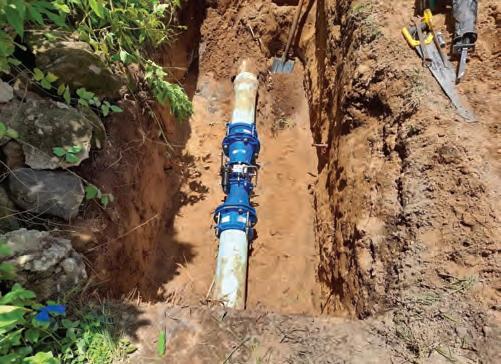
As a response to current challenges in the water sector, Swiss flow solutions provider GF Piping Systems has developed NeoFlow, the company’s newest pressure regulating valve. NeoFlow is designed to prevent overpressurised pipes by ensuring an accurate and stable flow, as well as increased flow capacity. Thanks to its axial flow construction, the valve does not require an actuator stem or diaphragm and only consists of three primary components. Crucially, the valve is also less prone to cavitation damage.
With a very compact polymer body, NeoFlow is corrosion-free and, in combination with its mechanical simplicity, has significantly longer maintenance intervals than metal alternatives. As the newest generation of PRV, the valve is also fitted with an integrated pilot valve that allows parameters such as flow and water quality to be monitored and controlled with additional equipment.

AWARD WINNING PROJECT - A COMPLETE NETWORK OVERHAUL IN AUSTRALIA

Mer Island in the Torres Strait at the very northern end of the Great Barrier Reef is home to 500 people. Previously, the community only had access to water for three to six hours a day as the highly volatile network could not meet demand and was difficult to operate and maintain.
As a result, losses were significant, and a proactive approach to preventing water loss was urgently required in order to scale up supply while meeting local logistical challenges. To achieve a rapid reduction in disruptions and establish an ongoing, reliable supply, the decision was made to overhaul the network.
NeoFlow pressure regulating valves were chosen to equip new pressure supply zones and could be installed by local operations teams following online training. The two new pressure supply zones formed a basis for advanced pressure controllers. Once the system was up and running, the network could immediately operate at the calibrated target pressure, with volatility a thing of the past.
Within the next four to six weeks, levels at the rain-water catchment and water storage lagoons reached nearly 100 per cent, while expensive and energy-hungry portable desalination units could be switched off. The community of Mer Island now has access to round-the-clock water for the first time in 20 years. Mer Island project won the Infrastructure Project Innovation Award (Regional) of Australian National Water Awards 2022.
UTILITY • FEBRUARY 2023 WWW.UTILITYMAGAZINE.COM.AU 24 NEWS | Sponsored editorial
As the need to strengthen water networks rises due to increasing urbanisation and the impact of climate change, effective pressure management is becoming indispensable.
Find out more about NeoFlow at www.gfps.com/com/en/products-solutions/valves/plasticvalves/water-distribution-control-valves/neoflow-pressure-reducing-valve.html.
Discover Solving Water Loss for Life at www.gfps.com/com/en/about-us/events/2021/solving-water-loss-series.html.
IS THE NEWEST GENERATION OF PRESSURE REGULATING VALVES BY GF PIPING SYSTEMS (CROSS-SECTION).
TO NEOFLOW, THE COMMUNITY OF MER ISLAND NOW HAS ACCESS TO ROUND-THE-CLOCK WATER FOR THE FIRST TIME IN 20 YEARS.
¹ Roland Liemberger & Alan Wyatt, Quantifying the global non-revenue water problem.
NEOFLOW
THANKS
At
SUEZ – your trusted partner for circular solutions in water www.suez.com/en/australia-new-zealand




CREATING CYCLES. FOR LIFE.
SUEZ, we exist to improve the lives of our communities, wherever we operate in the world.
SUEZ SECURES ITS PLACE AS A LEADING PLAYER IN WATER AND WASTE MANAGEMENT
BY DOUBLING ITS INVESTMENTS
To help manage these challenges, leading water and wastewater management solutions company, SUEZ, has released a new strategic plan for 2027, focusing on the water and waste markets.
Launched by the SUEZ Group in September, the plan includes a 50 per cent increase in the company’s research and development (R&D) budget. It also aims to boost investment by €860 million (circa $1.3 billion AUD) in circular solutions for the water and waste sectors over the next five years.
The new strategic plan is centred around improving people’s quality of life on a day-to-day basis through water and waste innovations. This will help utilities in Australia, and
around the world, better understand how to combat growing challenges, including flooding, droughts, energy challenges, pipeline leaks and more.
INVESTING AND INNOVATING THE ‘SMART’ WAY
One of the most significant developments in the water sector is the implementation of digital technologies such as IoT-connected devices and smart meters. These can increase asset efficiency, improve customer experience, as well as ease communication between utilities and end-users.
SUEZ’s new strategic plan will harness digital technologies to help strengthen solutions for preserving water resources,
UTILITY • FEBRUARY 2023 WWW.UTILITYMAGAZINE.COM.AU 26 NEWS | Sponsored editorial
The global water and waste sectors are facing significant environmental challenges with the move to net zero carbon and impacts of climate change. Utilities must now focus on innovation and the integration of digital technologies to mitigate these risks and meet service demand.
combating pollutants, recycling, producing green energy from wastewater and reducing customers' carbon footprints.
The plan also highlights a continued investment in technology that preserves water by detecting leaks in networks, as well as advising users on consumption, behind the meter leakage and providing the utilities a tool to interact with users through mean like gamification.
These approaches will increase SUEZ’s global footprint, leading to improved recovery of wastewater for reuse, energy harvesting and carbon footprint reduction and of course, improving water resilience in markets like Australia and around the world.
GREEN ENERGIES FOR A GREEN FUTURE
A prime example of how SUEZ is spearheading ecological transition is with the Pau Béarn Pyrénées Agglomeration Community. Located in France under a consortium led by SUEZ, the project involves producing renewable energy through the recovery of energy from wastewater.
It achieves this through the operation of a wastewater treatment plant, as well as the construction of methanisation and methanation plants. These facilities work together to reduce biomethane emissions by 50%, playing a key role in the region’s ambitious initiative in adapting to climate change.
This “Biofactory” is helping to develop ten green resources; biomethane, synthetic methane, Biochar, heat, electricity, nitrogen fertiliser, oxygen, green hydrogen, reused water, and vegetable crops.
The project also features two global technological firsts:
• “Ultra-dehydration” through hydrothermal carbonisation: Reduces sewage sludge volume by a factor of four. It does this by consuming three to four times less energy than a conventional thermal dryer.
• Energy optimisation: The production of synthetic methane from the methanation of carbon dioxide (CO2, a greenhouse gas). This transforms all the CO2 emitted into synthetic methane, a renewable green gas.
THE IMPACT ON AUSTRALIAN UTILITIES
The new strategic plan and global research and development projects will provide new insights, supporting local utility operations in Australia to implement the most efficient methods of water management under a streamlined operating model. These insights and new models will provide clients with a comprehensive approach to managing their utility assets across their entire lifecycle.
Australia also has strong plans in place to achieve carbon neutrality, and utilities can play a significant role in this by reducing the emissions produced and creating green energy from their wastewater resource. Focusing on developing innovations and new technologies that can support these goals will put Australian utilities one step ahead.
SUEZ ANZ said these new research and innovation projects aim to add value for the company’s clients.
“Our strategic plan is about looking holistically at water and wastewater, and how we can revolutionise its management in Australia, supporting our customers in their journey of achieving carbon neutrality,” he said.
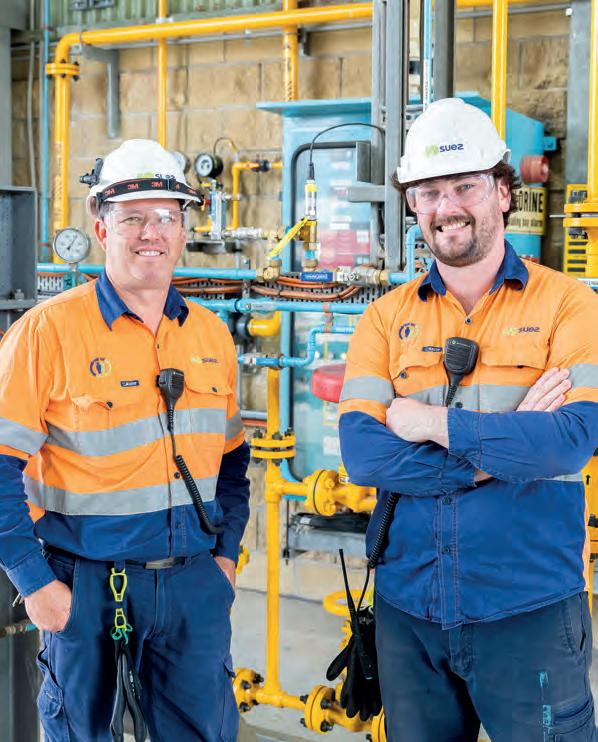
“It also explores how new innovations can deliver long-term value to utility projects, and to the people and communities they serve. Given the impacts of climate change, we also need to be thinking about how to make operations sustainable, and how to optimise the efficiency of both existing and new assets. SUEZ has references and solutions ready to deploy in the local market.”
This all-inclusive approach ties in with SUEZ’s strategic plan, which provides societal inclusion benefits, with investments in skills. It also encompasses ‘Fondation SUEZ’, which supports projects in developing countries that provide residents with greater access to water, sanitation and waste.
By the end of 2022, SUEZ will publish a sustainable development roadmap, which proactively addressed climate, nature conservation and social matters.
By innovating the way utilities manage water, SUEZ can help them mitigate the impact of environmental challenges, whilst improving the lives of their communities for generations to come.
For more information, please visit www.suez.com/en/australia-new-zealand.
27 UTILITY • FEBRUARY 2023 WWW.UTILITYMAGAZINE.COM.AU Sponsored editorial | NEWS
COMMUNITY-ORIENTED STRATEGIES TO PREVENT NEW SOUTH WALES DAM OVERFLOW
The wettest Spring on record across the Murray Darling Basin and New South Wales has brought tremendous hardship for thousands of people, and extreme vigilance by WaterNSW in safely managing the state’s inland dams.

INDUSTRY INSIGHTS
28
The recent exceptional weather has helped drive the devastating flooding from which communities across much of regional New South Wales are still recovering, while others brace for their turn for floodwaters to arrive.
As manager of the state’s major supply dams, including the dozen or so across regional New South Wales, WaterNSW operations have been centred on flood operations for many months.
Dam personnel on site – often living in flooded communities themselves – and expert planners have been working to manage huge volumes of water that have flowed into dams over the past 12 months, reaching a peak in spring.
As back-to-back rain events and major storms created these large inflows into the dams and generated equally high levels in the creeks and rivers downstream, WaterNSW staff worked hard to grab the severely limited windows of opportunity to protect local communities.
RECORDS BREAKING ALL AROUND
Here is a brief snapshot of the challenges WaterNSW dam operators faced in 2022:
Copeton Dam, near Inverell, exceeded capacity and spilled more times in the latter part of 2022 than the previous 40 years combined
Throughout 2022, Keepit Dam – the main storage on the Namoi River near Gunnedah that ran dry during the most recent drought – received and released water equivalent to near 2.5 times its storage capacity

If dams like Burrendong, on the Macquarie River near Wellington, and Burrinjuck on the Murrumbidgee River near Yass, had both been empty in July 2022, they would have received enough water – since winter - to fill and spill almost three times
The spectacular footage of Wyangala Dam spilling into the Lachlan River in November 2022 became an iconic image of the devastating flood throughout the region.
Once the dams are at capacity, the water must be released, but this is carefully managed so it rarely reaches the rate of what’s flowing into the dam. By holding the water back while uncontrolled downstream tributaries peak and begin to recede, the full intensity of the flood height is reduced.
EMPTYING THE BATH WITH THE TAP RUNNING
A common suggestion from flood-weary communities is that dam storages should be lowered to capture the flood. While these sentiments are entirely understandable, there are many pieces to this difficult puzzle.
Firstly, dams only capture water flowing from one part of the upstream catchment. The rivers on which our dams are situated are fed from multiple creeks and rivers. Some of these flow into the dams, but many don’t. Instead, they flow downstream of the dam and into its catchment area. It is these uncontrolled tributaries that have caused the worst of the flooding across inland New South Wales.
At times, these tributary flows have been enormous.
For example, in 1971 the previous highest rate of flow ever recorded in the Horton River, a tributary which feeds into the Gwydir River downstream of Copeton Dam, was almost 250GL per day – more than the spectacular spill from Wyangala Dam in November 2022.
In October 2022, the same Horton River easily broke that record of half a century, by flowing at a peak rate of 330GL per day.
Secondly, even if we had a 15 per cent or 20 per cent storage buffer, the huge volume of inflows experienced in the later part of 2022 would have filled this up in little more than a weekend in several cases, and some dams have received more water than the equivalent of their entire storage, in a few short months.
To mitigate flooding, WaterNSW’s dam managers set out to create as much capacity as possible in the storage between rain events to receive the next round of inflows, a relatively modest accomplishment in most circumstances, but a very challenging one during the rolling La Ninas of 2022.

However, the image could not convey the months of careful calculations and success WaterNSW dam operators had in creating space in the dam between rainfall events to hold back huge amounts of water, before the frightening November deluge finally pushed the dam beyond capacity.
Over the previous six months, Wyangala – which can expect average annual inflows of 560GL – had received almost four times that amount (2,071GL), with WaterNSW operators managing to hold the majority of the water back during flood peaks.
Catchments saturated from months of rain not only flood rivers by generating high downstream flows; the volume is larger and it flows for longer, instead of soaking into the earth. In those conditions, reducing the storage is like trying to empty a bath with the taps running.
Dams are often the unsung heroes during floods, even where extraordinary weather has pushed them to the limit. WaterNSW, in partnership with local communities and emergency agencies, has worked hard to hold water back and protect communities living with a dam located upstream.
UTILITY • FEBRUARY 2023 WWW.UTILITYMAGAZINE.COM.AU 29 INDUSTRY INSIGHTS
CARCOAR DAM
Investment planning often involves a tension between top-down and bottom-up approaches. A top-down approach begins with a holistic view, working from an understanding of organisational objectives and how best to invest to meet them, resulting in a set of KPIs that can be vague and unattainable.

A bottom-up approach begins with a set of investments that deliver on the needs of individual business units, oftentimes leading to an investment plan that is misaligned with organisational objectives.
A middle-out approach combines bottom-up and top-down methods – enabling strategic alignment to organisational objectives and operational alignment to ensure deliverability.

MEETING OBJECTIVES WHILE ENSURING ACHIEVABILITY


The middle-out approach works on the premise that desired investment plan outcomes and achievability are broadly understood by the people within an organisation,
allowing for investments that are both achievable and aligned to the organisation’s objectives. Once initial ideas have been generated, investments need to be quantitatively linked to organisational objectives to ensure KPIs are met, and objectives are neither overrepresented nor neglected.
An example of this is seen in Environmental, Social, and Governance (ESG) KPIs where there is often an overrepresentation of environmental investment and underrepresentation of social investment. This quantitative link is achieved through the implementation of a value framework which enables organisations to value dissimilar investments on a common scale and defines how investments quantitatively contribute to strategic goals.
In parallel, constraints such as funding, timing, and resources are added to ensure the organisation can deliver the investment plan. A middle-out approach ensures a portfolio of investments will meet strategic objectives and is achievable within the organisation’s capabilities and constraints.
30 UTILITY • FEBRUARY 2023 WWW.UTILITYMAGAZINE.COM.AU INDUSTRY INSIGHTS | Sponsored editorial
Top-down? Bottom-up? What about middle-out?
TO INVESTMENT PLANNING? Contact Copperleaf Technologies to learn more! www.copperleaf.com.
WHAT’S THE BEST APPROACH
Making decisions is hard.
Understanding value changes everything.
Copperleaf is transforming how organisations define and deliver value. • Manage risk • Improve performance • Drive strategy • Maximise value with Copperleaf Decision Analytics Solutions. www.copperleaf.com
Learn more now!

ADDRESSING SKILLS SHORTAGES IN THE CLEAN ENERGY INDUSTRY
 By Mikayla Bridge, Editor, Utility Magazine
The Clean Energy Council (CEC) has released a new report, Skilling the Energy Transition, which makes six recommendations to fix the skills and labour challenges that could endanger the success of Australia’s clean energy transition. Utility spoke to Dr Anita Talberg, CEC’s Policy Director for Workforce Development, to explore her recommended solutions to the current skills shortage.
The CEC report, published ahead of the Job and Skills Summit in early September 2022, explored the different ways that businesses and governments can improve worker access to clean energy jobs. The report’s six recommendations lay out the major barriers that limit the pool of talent entering the industry.
CEC’s six recommendations include:
1. Calibrating higher education to meet the needs of clean energy interests
2. Anticipating the future needs for the clean energy workforce
3. Raising the profile of the clean energy sector as an opportunity for all Australians
4. Establishing an authority to manage the clean energy transition
5. Enhancing the Vocational Education and Training Sector’s capacity to understand and meet the demands of industry
6. Establishing Australia’s reputation abroad as a global centre for clean energy expertise
Dr Talberg leads the Clean Energy Council’s Skills and Training Directorate, a group designed to bring CEC members together and address challenges around skills and training, as well as other issues that resonate across the whole sector.
“Essentially, what I'm trying to do is make sure that we have the workforce to support the continued and accelerated growth of renewable energy in Australia. That can present lots of different facets, but at the core of it, we really need the headcount. We need the right number of people with the right skills in the right place at the right time. It's not rocket science,” Dr Talberg said.
This approach formed the basis of the Skilling the Energy Transition report. Targeted at businesses and government bodies, the report aims to answer the question of how we ensure that the industry has the talent needed to carry out its development plans over the next five to ten years.
MAJOR CHALLENGES AND PRESSURES WITHIN THE INDUSTRY
Dr Talberg consulted with CEC members to understand the greatest challenges facing the current workforce and the impact these pressures can have on the future of the clean energy industry.
From these discussions, it became clear that many of the industry’s in-demand skills can come from not just one discipline, but a range.
“As it becomes more difficult to source a role, you start to become a bit more creative about how you do that. So, you might start thinking about tangential skills or other people that could be cross-skilled, or different ways of bringing people in through what types of pathways exist. Bringing all of that information together is really helpful in starting to understand what the skills shortage is, in which areas,” Dr Talberg said.
Though some in-demand roles require specific training, such as power systems engineers, the majority of roles require skills that exist in various other industries. This includes electricians, general technicians, mechanical and electrical tradespeople and other trades roles that support the industry.
“A lot of people don't realise that we already have three times the number of people working in clean energy, rather than coal-sourced electricity. For domestic thermal coal – the
UTILITY • FEBRUARY 2023 WWW.UTILITYMAGAZINE.COM.AU 32
INDUSTRY INSIGHTS
coal used for electricity – there are around 10,000 people employed in Australia, and we've now got more than 30,000 people in renewable energy,” Dr Talberg said.
“This story about how we shouldn't be transitioning to clean energy because of the jobs we’ll lose is a little shortsighted, because we're already past that. Not to say that it's not important, it's absolutely important to help those people transition, but we also need to be providing jobs for other people.”

This idea of highlighting the transferable nature of industry skills was the primary reason for the Skilling the Energy Transition report. The secondary reason was to “demystify” the existing roles within the clean energy industry.
“It's really clear to me, in my role, that people don't understand what a job is in clean energy; they don't know what that means and they don't know how to get it. So yes, we have a lot of engineers, but we don't only have engineers. We also have legal professionals, community engagement professionals, energy traders, and more. We have a whole gamut of people,” Dr Talberg said.
“The human capital is a huge part of the success of the energy transition. It's not all about technology and regulation.
“We're not trying to make recommendations that fine-tune how the clean energy sector can access talent. What we're saying is that there are these pathways. You need to fix the systems, and then we can, as an industry, do the rest.”
PLACING WORKERS AT THE CENTRE OF THE SOLUTION
In order to fix these systems, Dr Talberg makes a number of recommendations. These include:
• Improving local education and training
• Changing higher education business models
• Fixing skilled migration
“If you can fix these, we can do the rest. We're not asking for favouritism. We're an industry, just like any other,” Dr Talberg said.
Encouraging workers to transfer to the clean energy industry through environmental, social and governance incentives is another major focus for the CEC.
“A lot of research shows that things like offering genuine career progression opportunities and pathways through the industry, having a diverse and inclusive workforce, having really good ESG principles in general, attracts people,” Dr Talberg said.
For businesses looking to attract a larger workforce, Dr Talberg suggests improving job visibility.
“These organisations should be going out to schools and local councils, and having that public face and creating an employer brand so that we can be telling a more cogent and more coherent story about career opportunities within the industry.
“We know that people who make career decisions are actually quite young. So, if it's something that they can see, then it makes it a lot easier to convert them. It's a long game. You're not going to reap the benefits straight away, but in ten years' time, they will have chosen that pathway.
“So that's the piece that's missing; for businesses to actually go and do that footwork, and be seen in public.”
When asked if there was anything that she’d like to say to potential employees, Dr Talberg said when we talk about a job in clean energy, we're actually talking about a career.
“This is the future. This is where those future opportunities exist. This is how you are part of the future; by being involved in the energy transition. It's not a decision you're ever going to regret,” Dr Talberg said.
To read the Skilling the Energy Transition report, visit the CEC website at www.cleanenergycouncil.org.au.

UTILITY • FEBRUARY 2023 WWW.UTILITYMAGAZINE.COM.AU 33 INDUSTRY INSIGHTS
CEC SKILLS REPORT 2022 COVER
NEW AUSTRALIAN PYROLYSIS TECHNOLOGY
DELIVERS BREAKTHROUGH IN BIOSOLID TO BIOCHAR CONVERSION

Biosolids conversion is fast becoming an integral part of the circular economy. In partnership with Intelligent Water Networks (IWN) and Greater Western Water, South East Water and its commercial arm Iota have proved the effectiveness of PYROCO, a breakthrough pyrolysis technology developed by RMIT University that converts biosolid to biochar while eliminating PFAS.
Armed with solutions such as PYROCO, water authorities have an opportunity to drive the shift to a circular economy.
WASTEWATER SLUDGE CREATES ENVIRONMENTAL AND OPERATIONAL CHALLENGE
Growing populations are driving water utilities to produce increasing volumes of wastewater sludge. The worldwide production of biosolids is estimated to be in the range of 100 to 125 million tonnes and is expected to increase. Australia alone produces over 300,000 tonnes of dry solids each year. Currently, around 30 per cent of global biosolids resources are stockpiled or sent to landfill, creating a huge environmental challenge.
Globally, water authorities’ options for managing wastewater by-products are increasingly limited.
“Most treatment facilities manage sludge waste through drying, stockpiling and transporting for spreading on land. A deeper understanding of the impact of microcontaminants on the environment is driving water authorities to seek alternatives. They are increasingly conscious of the environmental implications of perfluoroalkyl and polyfluoroalkyl substances, microplastics and other emerging contaminants,” Eamon Casey, Technical Director at Iota, said.
In previous years, South East Water has distributed up to 6,000 tons of dewatered treated biosolids. Diminishing landfill options and the environmental impact of microcontaminants led South East Water to develop a sustainable solution for disposing of wastewater sludge.
“The disposal of biosolids is a challenge across the water industry. South East Water is continually looking for ways we can work with others to create innovative solutions to protect our environment and help our customers and community,” Lara Olsen, Managing Director at South East Water, said.
PYROCO REACTOR DELIVERS A SCALABLE, SUSTAINABLE AND ENERGY EFFICIENT SOLUTION
RMIT has worked with South East Water over the last five years to develop a more sustainable pyrolysis technology based on patents developed by RMIT. The highly efficient PYROCO reactor destroys 100 per cent of contaminants using low energy requirements.
In the pyrolysis process, gases and biosolids converge on a fluidised bed at approximately 600 degrees Celsius to efficiently convert organic biosolids into high quality biochar.
The pyrolysis gases and oils produced in PYROCO are converted into thermal energy to sustain the high temperature process. The elevated temperatures make it possible to
34 UTILITY • FEBRUARY 2023 WWW.UTILITYMAGAZINE.COM.AU
INDUSTRY INSIGHTS | Sponsored editorial
Sponsored editorial | INDUSTRY INSIGHTS
convert biosolids to high quality biochar. The fluidised bed ensures consistent heat transfer, as well as high product quality at lower emissions than alternative approaches. During the conversion process, PYROCO removes contaminants such as PFAS, residual pharmaceuticals, and pesticides.
POWERFUL SOURCE OF ENERGY
As utilities seek to achieve climate neutral footprints, the process sequesters carbon, making it possible for water utilities to become carbon negative and achieve carbon offsets.
“We can produce enough heat to dry incoming biosolids for a thermal energy neutral plant,” Mr Casey said.
“This emerging thermal technology space is new for the water industry. The next generation of operational engineers will need training in new techniques and methodologies,” Aravind Surapaneni, Senior Research Scientist at South East Water, said.
“Biochar is the next important development for the global water industry.”
PORTABLE PLANT WITH A SMALL FOOTPRINT
Amongst its game changing differentiators is PYROCO’s ability to convert organic material efficiently and sustainably into high-quality biochar within a scalable and portable plant structure. Built for all water authorities, the PYROCO plant fits into a modular and portable structure that can scale for future commercial needs. Its small footprint is a great fit for regional water authorities managing smaller-scale stockpiles.
“This scalable technology is a key benefit of the solution for urban and regional water utilities,” Ms Olsen said.
WATER UTILITIES, THE AGRICULTURE SECTOR AND INDUSTRY TO BENEFIT
The reactor converts waste products into a highquality biochar.
“The biochar we are creating through pyrolysis has an incredible pore structure. It has the capacity to hold materials within the structure,” David Bergmann, Research and Development Manager at South East Water," said.
Repurposed for agriculture
Due to its high-grade qualities, as well as its bioavailable and slow-release nitrogen and phosphorus nutrients, PYROCO biochar is particularly beneficial for farmers seeking to enrich nutrient-deficient farmland, and to optimise soil health.
Opportunities for infrastructure and construction
PYROCO biochar can be repurposed as a binding agent in road pavements and can work as a cement replacement. Its porous structure also serves as a more cost-effective and sustainable filler for building structures. Additionally, PYROCO biochar can be used as a polishing filter for contaminated discharges due to its excellent absorption traits.
New environment-friendly battery
In future, the carbon formed biochar has the potential to be repurposed for producing sodium-ion batteries, offering better environmental credentials than mainstream lithiumion batteries.
NEXT STEPS
South East Water has commissioned a large-scale PYROCO demonstration plant to process up to 3,000 tonnes of dewatered biosolids a year and produce approximately 650 tonnes of biochar. The plant is expected to be operational in mid-2024.
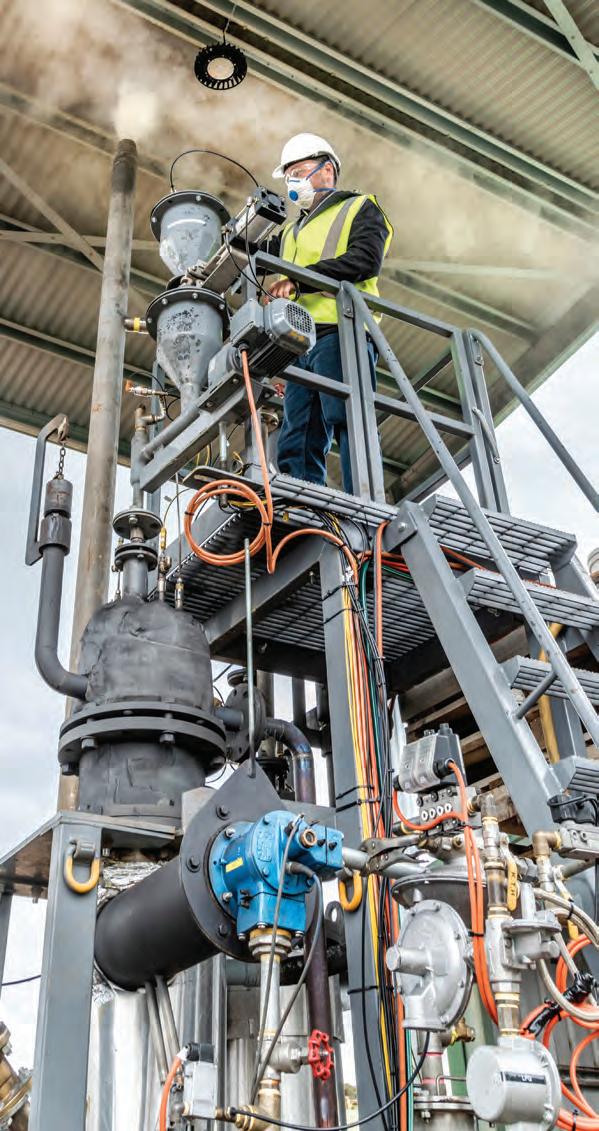
“Overall, the business case for conversion of biosolids to biochar using the PYROCO solution is positive on every assessment measure which includes NPV, Net Zero Impact, PFAS destruction and Risk Mitigation,” Mr Casey said.
For more information, please visit iotaservices.com.au.
35 UTILITY • FEBRUARY 2023 WWW.UTILITYMAGAZINE.COM.AU
UTILITIES SUPPORTING GLOBAL WATER, SANITATION, AND HYGIENE EFFORTS

Australians are blessed with some of the best water services in the world. But right now, 771 million people worldwide don’t have access to safe drinking water. It’s a frightening statistic, especially considering the population of the whole of Australia is just under 26 million.
It is for this very reason that WaterAid Australia exists. Founded in 2004 in collaboration with the Australian water industry and the international aid sector, WaterAid focuses on providing water, sanitation, and hygiene (WASH) to some of the world’s poorest and most vulnerable communities. It works with local partners and governments to introduce safe and sustainable WASH services to these communities, ultimately hoping to reach a point where their support is no longer needed at all.
WORK UNDERTAKEN AROUND THE WORLD
WaterAid is guided by a commitment to the United Nations' Sustainable Development Goals (SDGs), which lay out a plan for a better world by 2030. Of the 17 goals, its work specifically relates to Goal six, to “ensure availability and sustainable management of water and sanitation for all”.

This goal is vital, both in itself and as a key contributor to other goals such as ending poverty, improving nutrition, securing good health, and quality education.
The world is still a long way off reaching this goal, and progress so far has been far too slow. Factors like climate change continue to exacerbate the problem with an increase in extreme weather events like flooding and droughts having a dire effect on WASH access in countries all around the world, including some of Australia’s closest neighbours.
WaterAid Australia fundamentally focuses its work in Papua New Guinea, where more than half of the population lacks access to basic drinking water, Timor-Leste, where more than two thirds of the populations don’t have a handwashing facility at home, and Cambodia, where almost one in four people do not have a decent toilet.
WaterAid has offices and local teams based out of each of these three countries, who work alongside local partner organisations, local and national governments, and communities, to advocate for WASH and ensure projects are undertaken in a contextually considerate way. WaterAid is a firm believer that its best work is done when led by
own
UTILITY • FEBRUARY 2023 WWW.UTILITYMAGAZINE.COM.AU 36
colleagues and communities in their
countries.
INDUSTRY INSIGHTS
For the last 18 years the Australian water sector has been helping change the lives of the world’s poorest and most marginalised people through their support of WaterAid Australia, a not-for-profit dedicated to improving worldwide access to safe water, sanitation, and hygiene.
RITA OLIVEIRA GONCALVES AND HER SON HENRIQUE COLLECTING WATER FROM THE RIVER IN THE DRY SEASON.
IMAGE CREDIT: WATERAID/TARIQ HAWARI.
SOKHA WASHING HER HANDS IN FRONT OF THE THLORK VIEN HEALTH CENTRE, CAMBODIA.
IMAGE CREDIT: WATERAID/REMISSA MAK.
While water, sanitation and hygiene are always at the forefront of WaterAid’s work, projects also focus on other critical issues such as climate resilience, gender equality, healthcare, and social inclusion for those living with a disability and other minority groups.

THE WATER SECTOR TAKES ACTION
Since contributing to the establishment of WaterAid Australia in 2004, the Australian water sector has been both a constant supporter of the charity and an integral part in its ability to undertake life-changing work. The sector primarily stays involved through memberships. Through an annual donation, the memberships offer organisations a unique opportunity to engage staff, customers and stakeholders, and increase their understanding of the challenges facing communities without access to clean water, decent toilets and good hygiene.
Through yearly events such as Gala Balls and corporate challenges, members also have access to marketing and networking opportunities with influential players within the sector, as well as meaningful development opportunities for staff.
WaterAid Australia currently has 46 members from across the water sector, and many more sponsors. In addition to the valuable contribution they make to WaterAid Australia financially through donations and fundraising, these organisations also have valuable skills and insights into how to service communities with safe drinking water.
IMAGE CREDIT: WATERAID/DION KOMBENG.

Chief Executive of WaterAid Australia, Rosie Wheen, said WaterAid was founded by the water sector; by people who knew the transformation that happens when people have access to the human right to water and sanitation.
“Those people and organisations continue to make our impact possible. As the impacts of climate change mean vulnerable communities become even more vulnerable, our work becomes more urgent. Having the water industry behind us to respond to these challenges and deliver on our mission is invaluable,”Ms Wheen said.
Managing Director of Yarra Valley Water, Pat McCafferty, has been a supporter of WaterAid Australia since the very beginning. He is a proud Board member, a signatory of the UN Global Compact, and a passionate advocate of the SDGs.
“Being a member of WaterAid provides an opportunity to contribute to the health and wellbeing of current and future generations on a broader scale,” Mr McCafferty said.
“It also serves to remind us not to take for granted the role our essential water and sanitation services play in achieving the best result for our community and planet.”
MAKING A DIFFERENCE WITHIN THE NEXT GENERATION
WaterAid’s goals for the future are equal parts ambitious and inspiring. A key focus moving forward will be influencing governments, international donors and the private sector to increase funding for WASH, something that will be critical to sustaining and expanding WASH access.
IMAGE
It will continue to put an emphasis on locally-led projects and expertise, while also recognising the huge role its partners in Australia will continue to play. It knows that achieving SDG6 will take a team of diverse players coming together to make a difference.
UTILITY • FEBRUARY 2023 WWW.UTILITYMAGAZINE.COM.AU 37
INSIGHTS
INDUSTRY
WaterAid Australia offers a number of varied partnership opportunities to anyone in the utility sector and beyond wishing to get involved. Any interested parties can contact corporate@wateraid.org.au for more information on how they can help ensure everyone, everywhere has access to clean water, decent toilets and good hygiene within the next generation.
ZELMONIA, 8, AND ISRAEL, 12, SPLASH WATER FROM THEIR NEW WATER TAP IN DALUBO, TIMOR-LESTE.
CREDIT: WATERAID/TARIQ HAWARI.
KIDS FROM YIWUN VILLAGE POSING NEAR THEIR TIPPY TAP AND NEWLY BUILT VIP TOILET.
REMOTE OR UNMANNED ASSETS DON’T HAVE TO BE INVISIBLE
Many utility assets around Australia are either remote or unmanned, which can make security or even checking on the site difficult. But with advanced and smart surveillance technology, it’s possible to have an active set of eyes anywhere in the country.
One of the great challenges of managing a utility network across a country as large as Australia is that many utility assets have to be remote and unmanned. While drones are great for undertaking asset surveys, this is a sporadic assessment and can only be done with human intervention.
Since issues can arise on a network at any time, many operators would love to have visibility of their network at all times to gain a better view of what might be causing any problems, without needing to travel to an asset that might be hundreds of kilometres away.
This is where remote asset surveillance can come in to play a critical role in assessing what is happening on a network.
Spectur offers one such solution that can monitor a variety of assets – including gas metering stations, pump stations, dams and water catchment, telecommunications towers, power generators, transmission towers and substations – to provide visibility in places where traditional vision systems cannot reach.
PREVENT DAMAGE AND INTRUDERS IN REMOTE LOCATIONS
Being solar-powered, Spectur’s camera and surveillance systems can give network operators a reliable set of eyes on their assets, even at sites far away from power and internet connection.

Even when power is available, the cost and complication of excavations and tie-ins to existing infrastructure can make traditional wired solutions uneconomic or simply impractical. Spectur solutions can be mounted above ground or even to fences to avoid any ground intrusion along with other permit-requiring works.
For utilities and critical assets located in bushland and the outback, these remote sites often have limited internet access and depend on wired electricity. For many operators, there is little they can do in such remote and harsh locations. Some may deploy drones for condition surveys or limited security staff, fences and locks, but most of the time, they just have to do nothing and deal with intruders or damage after the fact.
Spectur systems can offer utilities in remote locations self-reliant surveillance, crime deterrence and even communications. Spectur camera stations consist of up to four cameras and are entirely wireless, with rechargeable batteries and solar panels, which means they can be placed anywhere – even if there is no wired power connection available.
Additionally, Spectur systems have in-built storage and a 3G/4G modem to store data and send alerts, even when set up in areas where wired internet, mobile reception or satellite connection is not an option, making these systems dependable. For particularly challenging areas of reception,
UTILITY • FEBRUARY 2023 WWW.UTILITYMAGAZINE.COM.AU 38
INDUSTRY INSIGHTS | Sponsored editorial
Spectur use amplified antenna systems and can even move to satellite connectivity if required.
SEEING WHERE NO ONE ELSE CAN SEE
For remote locations, using advanced wireless surveillance is the only way to create a reliable system that can automatically respond to threats in isolated areas. In addition, installing a Spectur system is easier and less damaging to the local environment.
Since no cables are involved, there is no need for trenching or excavation which may damage the environment or require permits. While this is important for ecologically significant sites, this also makes it possible to set up surveillance in areas where it would be traditionally unfeasible to bring in excavation equipment.
With easy installation and technology designed to withstand harsh conditions, Spectur camera stations require less maintenance, making them ideal for remote locations where cameras and equipment are left without human personnel monitoring them for weeks or months.
As a result, Spectur solutions are frugal with power and data, requiring less resources to function day-to-day. Even in overcast conditions, the camera stations can operate for up to five days.
AUTOMATIC RESPONSE ANYWHERE
Whether a utility is located in dense bushland, near the coast or the remote outback, Spectur cameras can capture and respond to threats without demanding human resources through the use of artificial intelligence (AI) and cloud computing technologies.
For isolated locations, Spectur’s advanced solutions can detect humans and vehicles, determine whether there is a real threat and respond accordingly – all without human intervention. With a system that can sense danger and make decisions, Spectur surveillance platforms can sound an alarm or verbal warning to deter intruders before they enter the property and send out alerts to operators and local authorities.
With a Spectur surveillance system, there can be a set of eyes anywhere to not only keep a lookout for threats, but also act to prevent damage and intruders even when personnel are not on-site.
RESPONDING TO EMERGENCIES
When it comes to emergency response, having an automatic sense and response system in place can protect both assets and people when disaster strikes. When a site is too remote for nearby emergency responders to reach in time, having a solution like Spectur’s AI-enabled and solarpowered warning systems can save lives.
Spectur systems can be configured to sense noise, vibration, weather, air quality and flood waters – with the ability to integrate other measuring equipment and systems, such as an accelerometer or a seismometer – all without requiring drones or human personnel risking their lives on the ground.
In floods, fires or even earthquakes, Spectur systems offer technology that can understand fast-changing situations and provide two-way communication to keep everyone informed, even when the power is cut and the internet is down.
Spectur systems can be used to broadcast evacuation orders, remotely survey what’s happening using a live feed, send out alerts to local authorities and open communication between responders.
This means for natural disasters, authorities can detect water levels to accurately determine whether flood waters are rising or falling or even capture visual data to track bushfires as they happen. With advanced technology, local governments, utilities and emergency responders can give early warnings and ongoing updates to keep communities safe.
Instead of leaving sites unprotected, Spectur cameras and warning systems offer visibility for critical assets at all times. Even in the remotest part of Australia, Spectur systems can be relied on by utilities to keep both assets and people safe.
For more information, visit spectur.com.au.

UTILITY • FEBRUARY 2023 WWW.UTILITYMAGAZINE.COM.AU 39
INDUSTRY INSIGHTS
Sponsored editorial |
SPECTUR’S TECHNOLOGY ALLOWS UTILITIES TO KEEP AN EYE ON REMOTE ASSETS ALL AROUND THE COUNTRY.
PUMPED STORAGE HYDRO’S VITAL ROLE IN AUSTRALIA’S RENEWABLE FUTURE
By Sean Novis, Office and Project Assistant, Genex
Pumped storage hydro projects can play an increasingly vital role in the future of Australia’s renewable energy landscape. They provide a number of functionalities which are an essential complement to Australia’s growing solar and wind fleet. Pumped storage hydro (PSH), acting as a giant water battery, can provide large-scale storage capacity, energy balancing capability and ancillary grid services, all being important factors that will facilitate Australian states in meeting aggressive renewable energy targets.
UTILITY-SCALE STORAGE
Whilst the abundant solar and wind resources in Australia provide great opportunities for developers, these resources are -- by nature -- intermittent, and are often generated during periods of low consumer demand. During these times, a large amount of generated energy is essentially wasted –unless it can be stored at a large scale. Accordingly, there is an urgent need for utility-scale storage solutions in Australia.
Compared to conventional batteries that are typically smaller and can only store enough energy for a few hours
of electricity, PSH is a larger, longer-term solution. Genex Power’s Kidston Pumped Storage Hydro Project (KPSH) in Kidston, Far North Queensland, will have up to 2GW of storage capacity (eight hours of storage) and will store excess energy including that generated from the company’s adjacent solar and wind projects.
As solar and wind projects continue to be built in increasing numbers around Australia, PSH has emerged as the most viable solution to address the need for utility-scale storage.

UTILITY • FEBRUARY 2023 WWW.UTILITYMAGAZINE.COM.AU 40
INDUSTRY INSIGHTS
ENERGY BALANCING
To function properly, power grids need to match electricity supply and demand in real time to avoid shortages or overloads in the system. However, the generation and subsequent supply of solar and wind energy into the grid is unpredictable and does not fully align with energy demand at any given time. As Australia continues to transition to a solar and wind dominated electricity system, the ability to store energy and dispatch it at optimal times is essential for a functioning electricity grid.
PSH provides this capability at a large scale and in a cost-efficient manner. Using Genex Power’s KPSH as an example – water is pumped from a lower reservoir to an upper reservoir when prices and demand are low, and then during times of high pricing and demand, water is released back into the lower reservoir. By simply channelling water through rotating turbines and into the lower reservoir, energy is produced quickly and cheaply, and is always available for dispatch into the grid.

The capacity firming capability of PSH enables the variable output from large-scale solar and wind farms to be maintained at a committed level. This provides much needed assistance in reducing the volatility of renewable energy generation, as the storage ability of PSH can control the output and ramp rate of generators, thereby eliminating rapid voltage and power swings on the electrical grid. In this way, the supply and demand of electricity in the power grid continuously remains in equilibrium.
ANCILLARY GRID SERVICES
A significant benefit of PSH is its ability to service the Frequency Control Ancillary Services (FCAS) markets. Similar
to the energy market, the FCAS markets are operated by the Australian Energy Market Operator in order to maintain the frequency of the system and provide stability to the grid. By bidding into these markets, PSH can respond to large electrical load changes within seconds.
Furthermore, in the event of a power station shutdown, the black start capability of PSH projects allows them to restore large power stations to full operation without reliance on external power transmission networks. Restoring large power stations rapidly will prevent the prolonged loss of power caused by blackouts for many homes and businesses across Australia.
Another useful application is during extreme weather events, where the operating reserve capacity of PSH can meet energy demands in the case that supply is disrupted. When generators stop working due to extreme weather, entire communities may lose electricity for several hours, and technologies such as PSH can step in to supply these loads.
CONCLUSIONS
This article has discussed three key capabilities of PSH that highlight its critical role in Australia’s renewable energy future. Its ability to provide large-scale energy storage ensures that as Australia relies more heavily on solar and wind energy, losses due to inefficient generation will be minimised.

Furthermore, PSH can balance load on the energy system, allowing clean generating sources to operate at peak efficiencies, which is particularly useful in a renewables environment characterised by intermittent energy generation.
Finally, by integrating into FCAS markets, PSH projects can quickly remedy extreme disruptions to power supply across Australia.
UTILITY • FEBRUARY 2023 WWW.UTILITYMAGAZINE.COM.AU 41 INDUSTRY INSIGHTS
VACUUM EXCAVATORS
For the uninitiated, vacuum excavation, also known as non-destructive digging or hydro excavation, is a modern alternative to traditional excavation. By combining high-pressure water with an air vacuum, vacuum excavators can remove significant amounts of earth with minimal damage.
Vacuum excavators started as support machines for horizontal drilling operations, locating existing buried utilities prior to drilling and managing the drilling slurry. This role continues to gain prominence as the network of underground assets expands, particularly with the advent of the National Broadband Network and buried distribution power lines.
But in addition, a range of uses beyond the traditional trenchless market are ensuring that councils which invest in a vacuum excavator have their machine in constant use –making it a valuable addition to the fleet.
These versatile tools excel in applications that range from digging around utilities to efficiently excavating small holes, cleaning up storm drains, assisting with water main breaks and much more. The vacuum excavator can be used to replace more labour-intensive and inefficient methods of working.

“In Australia and New Zealand, communities are becoming less tolerant of works that impinge on their daily lives. They expect local governments and contractors to utilise construction methods that reduce the area required to carry out any works,” Jeff Lawson, Vermeer Australia’s General Manager of Sales, said.
“They also expect their local government to employ construction methods that are sustainable and minimise the damage caused to the surrounding environment.
“We’re also finding that councils are becoming more aware of the potential safety risks that come with digging trenches, or excavating close to dangerous environments like busy roads. They are looking for automated solutions which keep their employees out of harm's way, and vacuum excavators are just one example of this.”
NON-DESTRUCTIVE DIGGING HELPS PROTECT SENSITIVE ENVIRONMENTS
Vacuum excavators are becoming the preferred method to excavate in many applications where existing infrastructure
exists. Excavating footings for poles, signs and fence posts has become common.
One task that is often a challenge for councils is digging up and replacing existing utility poles that have either been damaged or exceeded their useful life. Using an excavator or backhoe to dig up the poles without disrupting surrounding utilities can present a difficult challenge. The vacuum excavator is well suited to this task. It can dig around the pole, even when buried utility lines are tied into the pole.
Vacuum excavation excels in digging tasks where either a small hole is required or there may be hidden infrastructure. Holes can be dug for new trees and stumps can be removed around existing utilities.
Vacuum excavation can also access tight spaces. It allows councils to dig short runs where a backhoe may struggle with access. Vacuum excavation also proves useful for removing roots and debris around water meters and valves.
VACS CLEAN UP
Many of the applications for vacuum excavators don’t even involve digging. The vacuum technology can be used in clean-up operations and aid in water main repair.
When water mains break and a pump can’t keep up, vacuum excavators can handle the job. They also prove useful to exercise water valves and jet sewer pipes when properly equipped.
Vermeer manufactures a range of vacuum excavators which save time, labour and material handling costs. Whether it’s potholing for a fibre installation or supporting a HDD rig, Vermeer has the vacuum excavator for the task. With units ranging between 400 and 11,000 litre spoil tank capacity and the CFM to match, we have your vac ex requirements covered. For more information on the ways vacuum excavators can be used in the local government space, and in construction generally, contact your local Vermeer Australia team at 1300 VERMEER or www.vermeeraustralia.com.au.
UTILITY • FEBRUARY 2023 WWW.UTILITYMAGAZINE.COM.AU 42
HAVE BECOME THE TOOL OF CHOICE IN COUNCIL FLEETS
INDUSTRY INSIGHTS | Sponsored editorial
Vacuum excavators are the often unsung hero of the trenchless technology world, quickly and effectively moving soil when needed so that horizontal directional drilling can take place. But now, local governments across Australia and New Zealand are discovering a multitude of uses for vacuum excavators.
MEET YOUR MOST UTILISED FLEET ASSET.


Take a good look at your Vacuum Excavator when your product specialist delivers it - because you won’t see much of it in your yard. With a multitude of municipal and asset management applications beyond non-destructive excavation, Vermeer Vacuum Excavators represent the ultimate in ROI for teams that need to deliver, every day of the year. Contact your local Vermeer Australia team to learn how to make them part of your fleet.
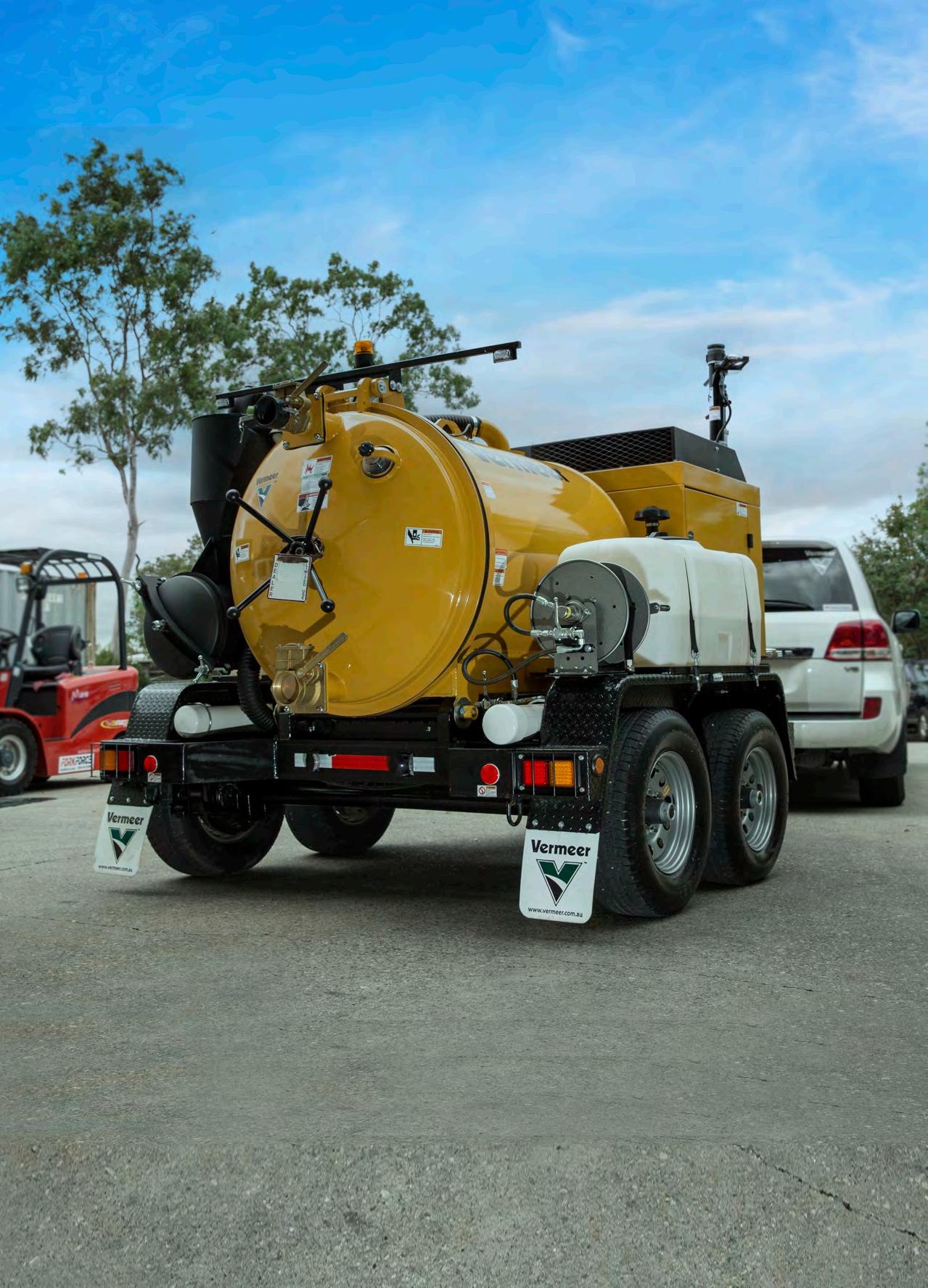
VERMEERAUSTRALIA.COM.AU




| 1300

VERMEER
Vermeer and the Vermeer logo are trademarks of Vermeer Manufacturing Company in the United States and /or other countries. © 2022 RDO Equipment Pty Ltd (trading as Vermeer Australia). All Rights Reserved.
COMPLETE YOUR FLEET

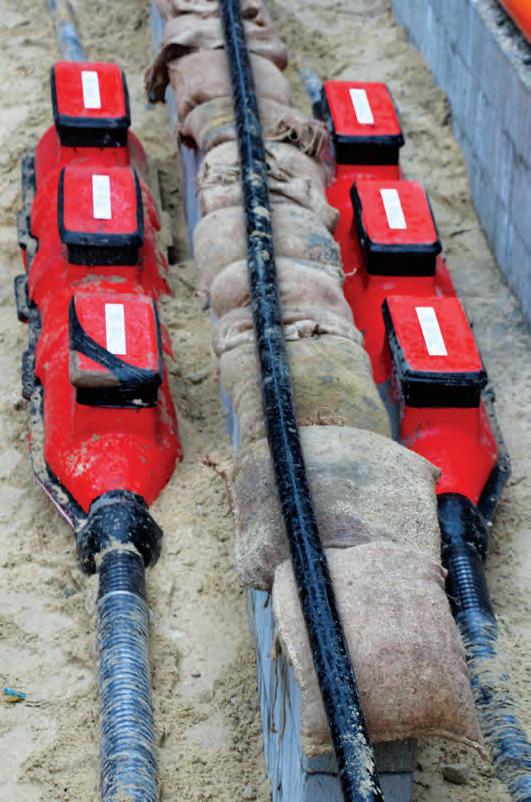
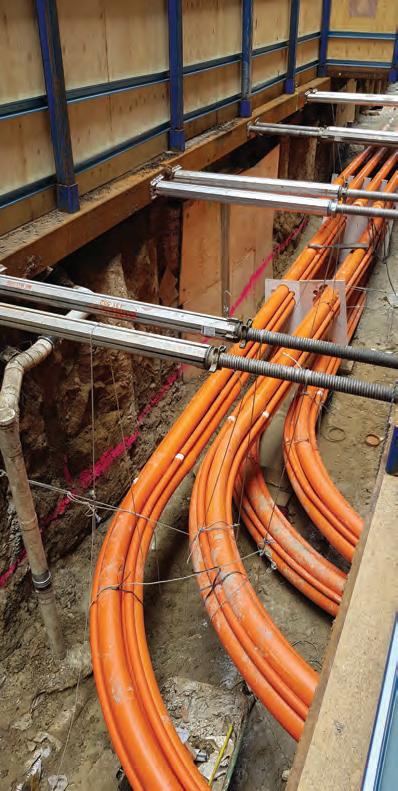
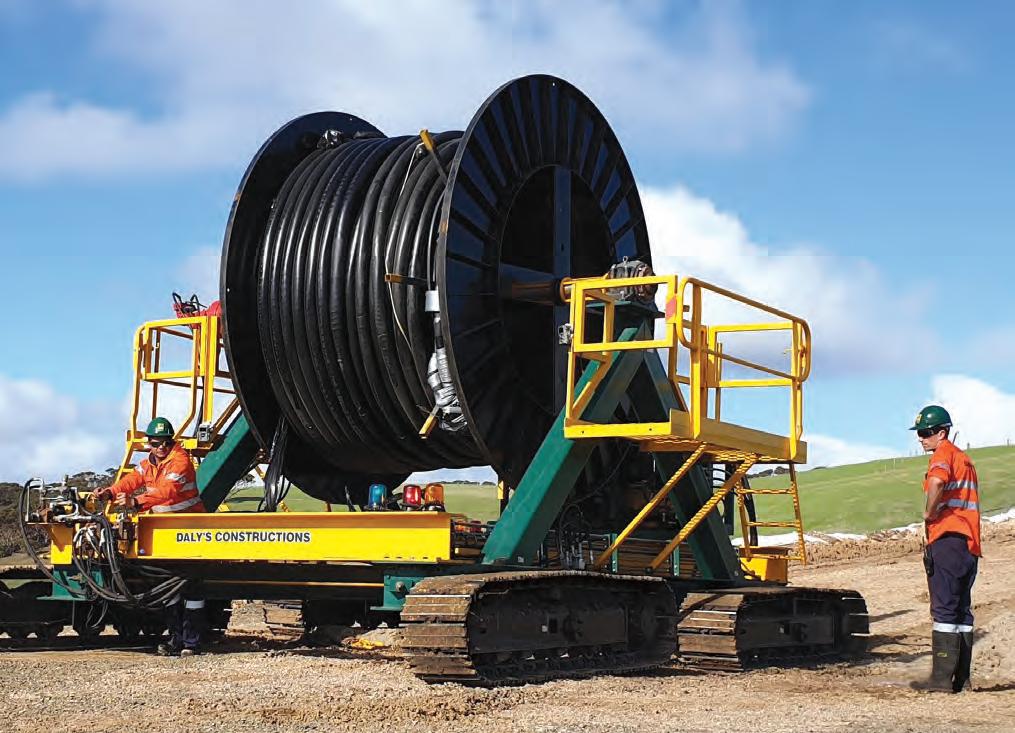

MELBOURNE OFFICE 20-26 Cyanamid Street, Laverton North (03) 9360 9485 BRISBANE OFFICE 441 Wondall Road, Tingalpa (07) 3907 0001 EMAIL cable@daly.net.au WEB www.daly.net.au PROVIDING SPECIALIST CIVIL AND ELECTRICAL DESIGN AND CONSTRUCTION SERVICES THROUGHOUT AUSTRALIA & NZ. FOR MORE INFORMATION CONTACT DALY’S CONSTRUCTIONS (AUSTRALIA)
About Daly’s We provide specialist design, civil works, cable installation, jointing and terminating services to the energy infrastructure industry across Australia and New Zealand, specialising in major sub-transmission and transmission design and construct underground projects. Our company has a strong value system based on principles that include commitment to safety, quality of service, integrity in our relationships and client satisfaction. DALY’S CONSTRUCTIONS AUSTRALIA ARE A FAMILY OWNED AND OPERATED ENTERPRISE ESTABLISHED IN 1971. OUR REPUTATION REFLECTS OUR CAPABILITY AND PERFORMANCE. Our Key Services CABLE SYSTEM, ELECTRIC AND HYDRAULIC DESIGN CABLE INSTALLATION XLPE AND OIL FILLED CABLE JOINTING AND TERMINATING DIRECTIONAL DRILLING AND BORING CABLE AND ACCESSORY PROCUREMENT AND LOGISTICS TESTING AND COMMISSIONING TRENCH EXCAVATION AND CONDUIT INSTALLATION CIVIL AND STRUCTURAL DESIGN REINFORCED CONCRETE JOINT BAY CONSTRUCTION H IGH A ND L OW V OL TAGE UNDERGROUND RETICUL ATION REINFORCED CONCRETE AND STEEL STRUCTURE CONSTRUCTION TERMINAL AND ZONE SUBSTATION CIVIL WORKS PROJECT MANAGEMENT STAKEHOLDER AND CUSTOMER MANAGEMENT PUBLIC LIGHTING
DEVELOPING A DIGITAL STRATEGY IN PARTNERSHIP WITH CUSTOMERS
By John Thompson, Journalist, Utility Magazine
Presenting at the 2022 Digital Utilities conference, Goulburn Valley Water’s General Manager for Technology and Transformation, Tony Wulff, discussed how developing customerled data strategies for utilities can offer greater efficiencies and unlock new community value.

BIG DATA
46
Goulburn Valley Water not only supports the residents of the Goulburn Valley, but also Central Victoria’s massive agricultural industry, made up primarily of dairy, fruit and vegetable farmers. Serving such high-value clients led to an organisational shift in the utility’s role within the community, with management realising it wasn’t just a supplier of water; it was an enabler of community services.
“Our strategy's now fundamentally changed to be a high value community enabler. Part of that shift is our organisation moving from an asset delivery business – a business that invests in building assets that then provide a service to the community – to a genuine service delivery based organisation,” Mr Wulff said.
“What that really means is we now start all our decision-making as an organisation at our strategy level, with an understanding of the impact we can have all the way through to the community level.”
This new approach demanded greater flexibility in its customer-facing systems, such as customer support and online messaging, and supporting infrastructure, some of which is more than twenty years old.
“For us, that really looked like rethinking our whole architecture; enterprise IT architecture,” Mr Wulff said.
THE FOUR TOUCHPOINTS FOR UTILITY CUSTOMERS
Goulburn Valley Water’s aging IT infrastructure required a complete overhaul, which was made possible through targeted and informed investment.
“We hadn't invested in our technology for quite some time. Some systems we have here are 20-plus years old, so we decided that a technology investment was fundamentally critical to enabling a new strategy and delivering new value to the community,” Mr Wulff said.
“Our organisation has our technology and our transformation functions in the one business unit, so I'm responsible for both elements, and the reason that's important is I need to understand and implement a model of how our business operates and then ensure we make the right technology decisions to enable that structure.”
The utility’s customer-led approach to its technology investment strategy allowed it to make informed and targeted investments that would deliver customer value.
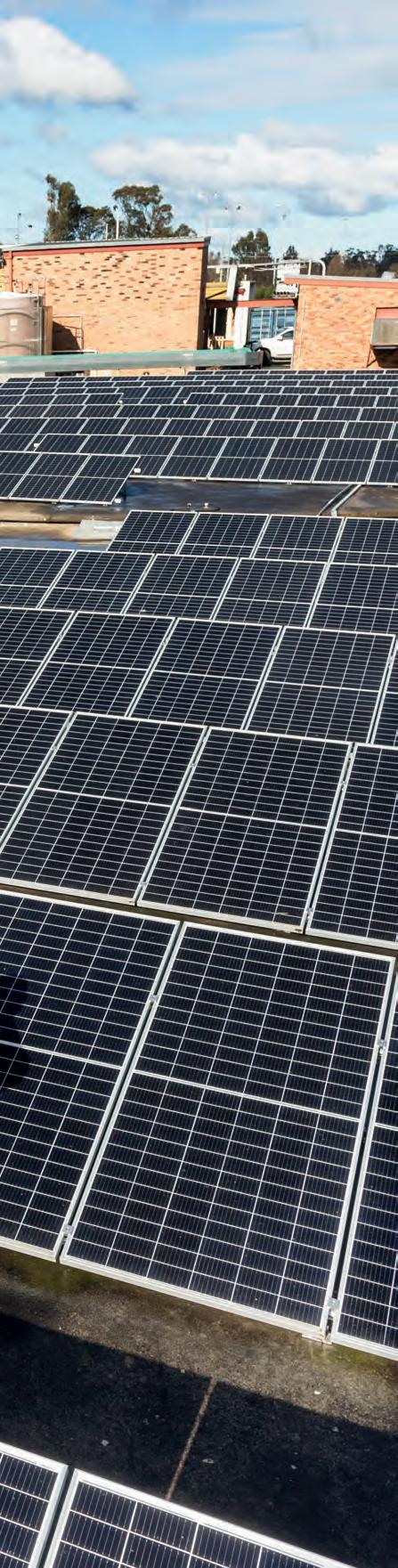
“We developed our technology investment strategy from the outside in. We started with our customers' experience and what the touchpoints our customers have with a water utility are,” Mr Wulff said.
Mr Wulff said the project team quickly found that customer engagement primarily took place at four key areas or ‘touchpoints’ within the utility’s day-to-day operations.
“The first is a technology digital touchpoint, whether that's a website or social media. The second touchpoint is our meters in the ground at every residential house and commercial business that then generates a bill.”
“The third place where we connect with our customers and our community is our operators in the field. Then lastly, our customer contact centres. Whether that's the contact centre that works with land developers or plumbers, or our enterprise customers, or our front desk and contact centre for our residential customers,” Mr Wulff said.
IDENTIFYING AND PRIORITISING ISSUES
Goulburn Valley Water implemented a ‘traffic light’ system for ranking the digital enabled service experience delivered through the previously identified touchpoints; green was good, amber was average, and red was poor.
This method of assessment allowed Mr Wulff’s team to quickly identify and prioritise its efforts, soon determining that while its social media presence and website functioned relatively well, more work was needed in its three remaining touchpoints.
“We had a digital meter strategy in the infancy when we put this together, but it hadn't been delivered, designed or deployed,” Mr Wulff said.
47 WWW.UTILITYMAGAZINE.COM.AU
BIG DATA
“More importantly, we were very manual in how we generated bills and how we got our bills to our customers. We had very little penetration in email billing; it was a lot of paper and envelopes at the point in time we did this assessment.
“We saw that we were amber in that space only because we had an intelligent metering proposition and funding in a project.”
Though scoring relatively well in its metering strategy, Goulburn Valley Water quickly found several flaws in its customer-facing technology infrastructure and human engagement.
“Our last two touchpoints were reds,” Mr Wulff said.
“The human engagement with technology was terrible. Technology should integrate and talk to each other behind the scenes to drive efficiencies in the business, which links directly to our prime goal of building capability and capacity using technology, but it was the opposite for our field team and our customer-facing teams.”
Such inefficiencies incurred not only an operational cost in reduced productivity, but severely limited Goulburn Valley Water’s ability to achieve effective and timely results for its customers.
CHANGE FROM THE BOTTOM UP
Addressing these challenges required a bottom-up approach, where management sat through a ‘day-in-thelife’ of its business teams using the full-breadth of their employees' experience and skills to help determine the most efficient outcomes.
“My team spent a lot of time doing what we call ‘day-inthe-life experiences’; sitting with these parts of the business and understanding the flow of data, the flow of action, the different interactions with people and different teams to get that outcome,” Mr Wulff said.
The final touchpoint Mr Wulff and his team addressed was customer service, quickly finding similar issues in legacy IT infrastructure that impeded workers’ ability to perform their jobs in a timely and efficient manner.
These systems required operators to reference and collate data from several different sources for even the most basic of customer queries.
“When our customer service team went to answer a phone call from a customer, they'd have seven different applications open on their computer screen at any given time,” Mr Wulff said.
“When a customer answered the phone, they had to get all of that basic data from the customer first, then type that into a system and then cut and paste it across systems to make sure they had all the right data for that customer in front of them.”
Despite these issues, Goulburn Valley Water’s customer support team had found various solutions to these technology system challenges.
“It was actually a really interesting piece of work because we worked out that the technology was enabling inefficiency, but the people worked out ways to most efficiently leverage what they had to get the best outcomes for the customers,” Mr Wulff said.
“They were so driven and passionate about delivering the outcome for the customer, they were working out innovative ways of making this process easier to deliver, but ultimately, we let them down from a technology perspective by not having a proper technology architecture.
“So moving forward, we worked out that we needed to invest in parts of technology in our business using the red, amber, green assessment of how customers engage or the community engage with our business and how we use technology to deliver those outcomes, then prioritised where we should spend our money.”
BUILDING MORE EFFICIENT OPERATIONS
Goulburn Valley Water’s customer-led digital strategy allowed the company to streamline its investments, procuring technology and developing systems that were tailored to the company’s unique needs and position within the community.
But the results of Mr Wulff’s digital strategy hasn’t just improved the utility’s existing services or systems, it has produced new data that fundamentally improved the organisation’s understanding of its operations and revealed new opportunities for growth and innovation.

“We use technology to deliver our water, our core ecosystem, but there's all these one-step-removed opportunities that a water utility has that add value in the community and you need data from your technology to help you prioritise and determine which one's the right one for you and your customers,” Mr Wulff said.
“As an example, we could do a completely different energy management program within our operations by leveraging real time data from our internal and external sources.
UTILITY • FEBRUARY 2023 WWW.UTILITYMAGAZINE.COM.AU 48
BIG DATA
GVW’S OUTCOMES FOCUSED DIGITAL STRATEGY.
“We can do leak detection by using technology and we can help customers on their side of the meter detect leaks, which means that they have a better customer experience by using our technology. We can help customers think differently about how they may use water in a farming or a commercial operation and then improve the downstream effects on the wastewater side.
“We could do preventative healthcare programs by analysing the waste in our system and helping the healthcare providers get ahead of outbreaks like we did with COVID or gastro-type situations.”
Mr Wulff said taking advantage of the data produced by Goulburn Valley Water’s new systems could even allow it to undertake carbon-abatement projects, including opportunities for the utility to deliver renewable energy to its industrial and agricultural consumers.

atmosphere and we can use that on farms or to make energy in other ways.

“We also have fairly large farming operations, about 1,800 hectares, where we use our waste to farm cows, sheep, wool, grow crops and seed,” Mr Wulff said.
“We have this massive carbon problem, and by addressing this, we can deliver renewable energies to the community and factories to help them run more efficiently.

“We've got biochar and energy-based value we can deliver from our waste plants, turning methane into power or turning our biosolids into biochar. This sequests carbon out of the
Mr Wulff said that all utilities – not just those in water –could benefit from digitalising their systems with customer value at the heart. He stressed that customer-led and bottom-up reviews streamline investments and capitalise on existing knowledge. Investing in these systems doesn’t just deliver benefits to the company but to the community at large, all while producing new platforms for innovation.
“If you use data from within the whole ecosystem of technology, it can enable other value propositions for your community and your customers, just one step removed from your customer and your core business. That's how Goulburn Valley Water’s leveraging technology and why we're investing in it,” Mr Wulff said.
UTILITY • FEBRUARY 2023 BIG DATA
49
GVW’S HIGH RATE ANAEROBIC LAGOON COVER GENERATING POWER FROM GAS.
WATER QUALITY MEASUREMENT AND MONITORING USING DATA INSIGHTS
Melbourne-based company, Eco Detection, is closing the gap of data and insight with a world-first automated laboratory-grade solution designed to increase efficiency in critical infrastructure, remote operations, wastewater processing, food production and environmental monitoring.
LABORATORY-VALIDATED WATER QUALITY MONITORING SYSTEM
Eco Detection’s systems are proving to be of significant value to customers in environmental monitoring, where the real-time data generated by the platform gives an unparalleled window into the dynamic nature of river systems.
Professor David Hamilton, Deputy Director of the Australian Rivers Institute, Griffith University, said Eco Detection’s data captured at a river adjoining agricultural land was absolutely fantastic, as the extremely high frequency data tells us a lot about the river system and response.
“If you’re only sampling once a month and trying to interpret that data for mitigation, it takes years to develop an understanding because it gives a very coarse average; you simply don’t have the relationship with some of the key drivers,” Professor Hamilton said.
Eco Detection has automated lab-grade measurement for dissolved inorganics in the field using capillary zone electrophoresis (CZE), most predominantly used in laboratories because it gives faster results and provides high resolution separation.
The Ion-Q+ is a revolutionary, self-calibrating dual channel multiparameter system designed for the direct measurement of anions and cations of interest including nitrate, nitrate, phosphate and ammonium. It has an expandable measurement platform to target an array of analytes, including heavy metals, emerging contaminants and organics, across proposed future product iterations.
The benefits of installing an Eco Detection Ion-Q+ are many, including ease and convenience of use and the elimination of lag time in obtaining results, empowering critical decision-making before conditions in the field have changed. Easily accessible via the cloud, or integrated into existing SCADA systems, the data is more accurate, not only because the potential for human error involved in manual sampling is eliminated, but because the results represent near real-time analysed data over multiple days and times rather than a single snapshot.
To
The automated sampling and laboratory grade measurements from the Eco Detection system are also being used to supplement, or indeed replace, existing sampling practices in wastewater treatment applications. In these cases, the requirement for weekly, or sometimes daily water sample testing carries a significant operational cost, while still not providing the level of granularity achievable with an Eco Detection system.
Other applications for Eco Detection’s Ion-Q+ include ammonia-based aeration monitoring and control for the optimisation of energy to reduce costs and GHG emissions in wastewater treatment plants and water quality monitoring in the fish pens and adjoining environment in aquaculture operations. The ability to communicate with plant operations and process control systems allows for improved data integration to enhance plant performance and help meet reporting requirements.
Eco Detection’s laboratory-validated water quality monitoring system has proven operation and accuracy and is used by major infrastructure operators, councils and universities in Australia and New Zealand.
The Derwent Estuary Program is supported by The Ian Potter Foundation

50 UTILITY • FEBRUARY 2023 WWW.UTILITYMAGAZINE.COM.AU
BIG DATA | Sponsored editorial
find out more about how Eco Detection can complement your
water quality measurement and monitoring programs, please contact David Clinton, Head of Regional Sales, APAC at david.clinton@ecodetection.com or visit ecodetection.com.
DR BERNADETTE PROEMSE, CATCHMENT SCIENTIST, DERWENT ESTUARY PROGRAM AT TURRIFF LODGE STP.

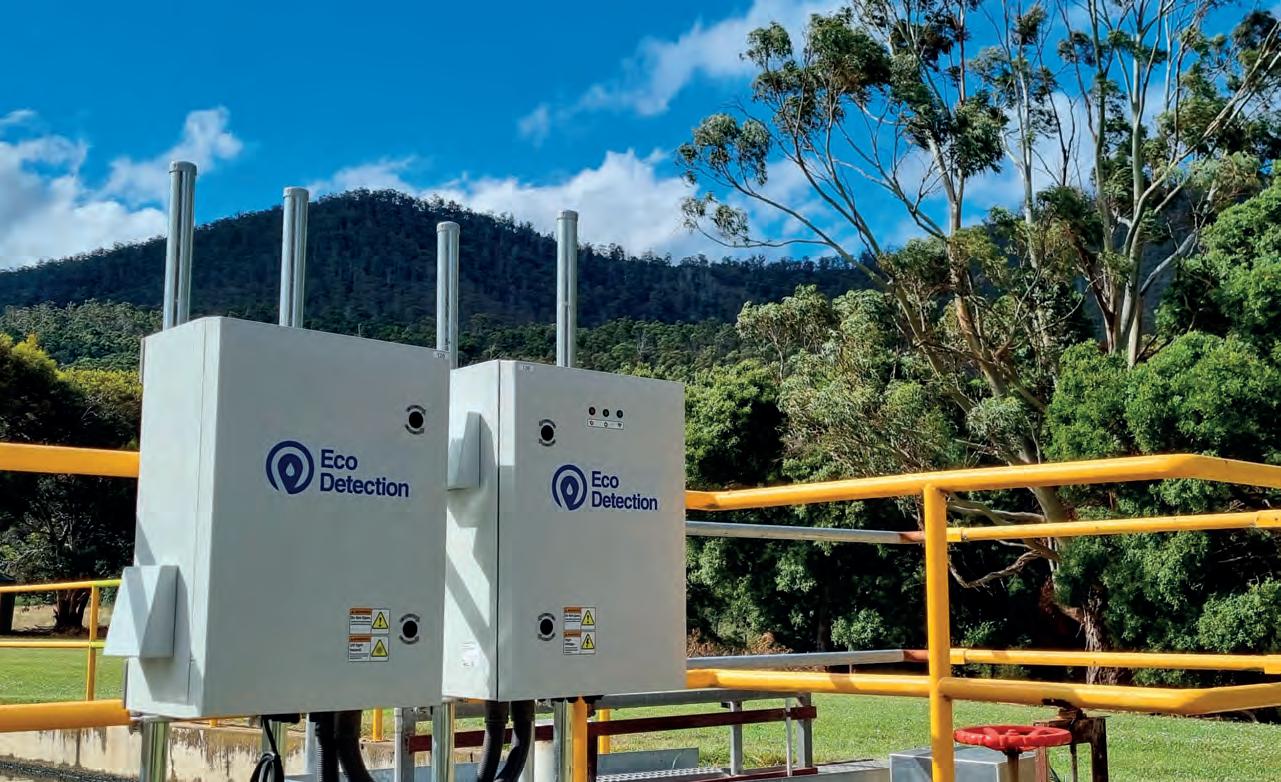
Reduce cost, risk and delay. High frequency automated measurement at a fraction of grab sample analysis cost. More information ecodetection.com Fully integrated solution Nitrite (NO2-) Nitrate (NO3-) Phosphate (PO4-) Chloride (Cl) Carbonate (CO3) Fluoride (F) Sulphate (SO4) Ammonium (NH4+) Magnesium (Mg) Potassium (K) Calcium (Ca) • Automated water quality testing • Multiparameter system • Laboratory grade precision and accuracy • Self-calibrating and resistant to biofouling • Automated cloud-based reporting • Easily integrated into SCADA systems • Early warning system in near real-time • Mains and solar powered autonomous operation • Low cost user-replaceable reagent fluids and consumables • Designed to enable installation of additional parameter sensors YOUR LAB IN THE FIELD
SENSING THE FUTURE OF DATA TECHNOLOGY IN WATER NETWORKS
By Stephanie Nestor, Journalist, Utility Magazine
monitoring future water assets
natural water
With many water assets located in remote areas, and unprecedented rainfall and floods compromising natural water processes, it is difficult to understand the full extent of Australia’s hydrology.

In an effort to fill knowledge gaps, the New South Wales Smart Sensing Network (NSSN) has published a report to investigate the potential of adopting both physical and remote sensors alongside probabilistic modelling for monitoring water resources.
For New South Wales in particular, NSSN’s report endeavoured to reduce unaccounted for differences in knowledge, by employing various methods to measure and model natural water processes, as well as bring together organisations and researchers.
According to the report, collecting data from multiple types of sensors as well as predictive modelling can reduce uncertainty and inform decision-making. The future of data technology in water utilities will combine various sensors and modelling to understand what is really happening to water in New South Wales.
COLLABORATION TO FILL IN THE GAPS
This report is the culmination of NSSN’s “Where is All the Water?” Project, which aimed to help New South Wales Government agencies and organisations monitor water assets. The project intended to create a technological framework for managing water resources in New South Wales.
NSSN turned to a number of academic and scientific partners to conduct research and tests, showcasing the possibilities that come with collaboration between agencies and universities.
Partners included:
• The Australian National University (ANU), which led two sub-projects – a local gravity sensing trial and an investigation into satellite gravity measurements for water
• Macquarie University, which offered expertise in low-cost monitoring
• The University of Sydney, which provided probabilistic modelling with its ARC Training Centre in Data Analytics for Resources and Environments (DARE)
• The University of New South Wales (UNSW), which offered background knowledge regarding hydrology and led an investigation into aquifer recharge mechanisms
NSSN Industrial Futures Theme Leader, Dr Don McCallum, said the project aimed to overcome the imbalances in data across New South Wales through collaboration.
“Given Australia’s immense size and the remoteness of many of our rural areas, there are often gaps in water data, often with government reports simply stating imbalances in the water equation as ‘unaccounted for differences’,” Dr McCallum said.
“The NSSN is an expert in multiparty projects, collaboration and stakeholder engagement. The NSSN works with clients,
UTILITY • FEBRUARY 2023 WWW.UTILITYMAGAZINE.COM.AU 52
BIG DATA
A new report suggests that setting up and
will require a clearer understanding of the complexities of
systems, which can only be achieved with advanced sensors.
to help nurture, simplify and guide complex projects to make them crisp and straightforward, yet with often advanced and complex underlying science and engineering.”
NEW METHODS OFFERING NEW INSIGHTS
The project combined existing data with innovative lowcost sensing technology and analytical modelling, bringing together different methods that could provide a clearer picture of New South Wales’ water.
Despite using complicated science, the report was created to be understood and applied by network operators, agencies, and other organisations.
“The report contained some very complex science: quantum physics, satellite gravitational measurements and Bayesian probabilistic modelling,” Dr McCallum said.
“The report worked hard to make this work accessible to the broadest readership, without ‘dumbing it down’.”
Following these research projects, the report outlines five new ways for network operators and agencies to understand water in catchments:
1. Bayesian modelling
2. Low-cost telemetry sensors
3. Quantum sensors
4. Satellites
5. Groundwater recharge
Bayesian modelling uses probability to represent all uncertainty within the model, including any uncertainty regarding both the output and input data. This type of modelling is ideal when data is limited.
As part of the project, the University of Sydney's DARE Centre formulated a prototype framework using Bayesian modelling to quantify losses and uncertainties in New South Wales river systems. This framework could offer organisations a tool to explain unaccounted for differences.
Additionally, UNSW conducted an investigation into aquifer recharge mechanisms and determined that direct rainfall on fields may not be a considerable factor for groundwater recharge. Instead, focussed recharge, from sources such as inflows from surface water, is the predominant recharge mechanism in areas near intermittent streams.
This offers a mechanism to explain surface water transmission losses in dry streams since UNSW identified that flow is mostly generated by rainfall further upstream for New South Wales water catchments.
COMBINING PHYSICAL AND REMOTE SENSORS
The report recommended that in order to better understand water resources in New South Wales, organisations should use a combination of low-cost physical sensors and remote sensors.

Macquarie University tested telemetry sensors in the Namoi catchment. This trial proved that these sensors are able to gather data at a lower cost and are easy to install. Paired with remote sensors, strategically placed telemetry sensors across the state could provide better insight into state water catchments and supplies.
In another part of the project, ANU investigated how using quantum sensors can accurately measure gravitational signals from near surface groundwater. This method avoids digging,
tunnelling, boreholes or any other contact. Not to mention, a gravity signal cannot be shielded or blocked by anything.
Using these sensors, ANU could detect a leaking pipe underground in an urban environment and measure total water mass changes in a catchment.
The project also tested how satellites can be used to show the movement of groundwater, surface water and soil moisture by measuring changes in the gravitational pull of water. This could provide global communities with early warnings of floods or detect water deposits.
WHAT THIS MEANS FOR UTILITIES
Following the report, the NSSN recommends continuing collaboration between agencies and researchers to switch efforts from a researcher-push to industry-pull when it comes to understanding water. Utilising the report’s five innovative sensing and modelling methods will offer the right tools to tackle future problems.
Dr McCallum said that data will be key to monitoring networks, as better analytics can help to predict and prevent the problems that come with floods, droughts and unprecedented rainfall.
“To help improve monitoring networks, the adoption of low-cost sensing, use of quantum sensors, satellite gravity measurements, better knowledge of groundwater-surface water interactions, and use of advanced data analytics techniques can all be used,” Dr McCallum said.
Particularly for New South Wales utilities, embracing low-cost sensing can help with all forms of monitoring water networks, including asset management, quality control, and safety.
“Australian utilities are welcome to work with the findings as they see fit. In many cases, further implementation work is required. Utilities wanting to adopt the work should contact the NSSN to see how this work can be applied to their particular situation,” Dr McCallum said.
By collaborating with researchers and deploying sensors, water utilities will be able to reduce uncertainty and gain a greater understanding of New South Wales’ hydrology to better prepare for what the future has in store.
UTILITY • FEBRUARY 2023 WWW.UTILITYMAGAZINE.COM.AU 53 BIG DATA
EXPANDING NBN CONNECTIVITY TO JUST ABOUT ANYWHERE
nbn
If you can imagine it, you are halfway to making it.
Picture a new park in a new estate in Western Australia.
In that park, there's a small device no bigger than your thumb connected to a light pole. And through that device, the community benefits from the power of broadband connectivity via nbn® fibre.
That park could have high-performing Wi-Fi for anyone who visits there. A new father could sit in the fresh air video-calling his parents while his newborn sleeps in a pram. Kids could play e-games against each other while taking a break from the BMX track. A university student could write her assignment on a smart bench that has USB ports and wireless chargers for her devices.
You could even work from home – not shackled to your dining table – but in the outdoors, surrounded by the grass and trees, living your best life. At the same time, you're leveraging everything you need from the cloud.
Suppose you push your imagination further – this small device and its fibre connectivity power a small weather station, allowing the developer to regulate the irrigation at the park and at one of its display homes just down the road. It's saving water and money – and sparing all of us the spectacle of sprinklers watering grass that's about to be soaked by rain.
Property developers, the people building future communities, would know they're creating an environment where people want to live, and businesses want to trade. And that's great for developers, business owners and your way of life.
You don't have to imagine that because that's already happening with nbn's newest product, nbn® Smart Places*.
THE POWER OF THE NBN NETWORK OUTDOORS
Brabham Estate, built by leading national property developer Peet and in collaboration with Development WA, is located 20km north-east of Perth’s CBD. This innovative community is one of the program locations where an nbn Smart Places device has been installed on a light pole in a public park.

This WA example is one of 35 trials across the country. nbn Smart Places is a fascinating product that proposes to take the power of nbn beyond homes and businesses. It proposes to deliver broadband services via nbn fibre to just about anywhere. It’s designed to allow nbn to satisfy the current thirst for digital connectivity that will only grow into the future. But, because it's essential, nbn must stay ahead of that demand.
If you look at the last six years, data use has tripled. As a result, the need for broadband will reach levels never seen before over the next decade as the internet continues transforming the world and how we live.
One of the ways nbn plans to meet that demand is through nbn Smart Places. This new equipment – miniaturised, ruggedised and reverse-powered network connection devices – can create fibre connections just about anywhere. It will enable the power of the nbn network to be delivered to demanding outdoor locations that aren't serviceable using standard equipment.
As you can now imagine, the possibilities are just about limitless.
*nbn Smart Places is under consultation and subject to change. NBN Co is now accepting orders for the construction of nbn Smart Places infrastructure for eligible new property developments with construction starting after March 2023. Service connectivity including timing, will depend on phone and internet provider offering nbn Smart Places.
54 UTILITY • FEBRUARY 2023 WWW.UTILITYMAGAZINE.COM.AU
is making some great leaps forward in innovation, but imagination can be just as important.
BIG DATA | Sponsored editorial
Find out more about nbn Smart Places and apply for your new development today, by visiting www.nbnco.com.au/develop-or-plan-with-the-nbn/new-developments/smart-connect.
Made with experience
As one of Australia’s largest broadband networks, our dedicated and experienced nbn® New Developments team has delivered nbn network access to more than 1.2 million new development premises nationwide. Make nbn part of the plan Visit nbn.com.au/newdevelopments

We can do more for your build

OPERATIONAL ENVIRONMENTS ARE EVOLVING, AND SO IS THE RISK
It’s time to update our definition of operational technology (OT). OT once described a group of technologies that directly monitored and controlled our equipment, assets, processes and events. Today, it is far more complex.

The addition of sensor networks, embedded computing, feedback loops and external stimulus allows our process plants to self-activate communication, control and compute functions. OT today is better defined as a cyber physical system (CPS) which includes any device that exists in both the cyber and physical worlds. You have one in your pocket and possibly on your wrist, if you use a smartphone or smart watch.
WEAPONISATION OF OPERATIONAL ENVIRONMENTS
The proliferation of CPS into operational environments is accelerating. Internet of Things (IoT) devices are collecting data everywhere, robots are walking our plants reading gauges and smartphones are being used to listen to machine noise. Most operational networks were not designed or built for CPS, and their mere presence creates new security risks which cyber attackers have noticed.
Gartner recently predicted that by 2025, cyber attackers will have weaponised OT environments to harm or kill humans. The threat is serious, and our operational environments are the new target.
OBSCURE IS NOT SECURE
Gone are the days of security through obscurity and isolation. Cyber attacking is big business, driven by profit and innovation with attackers constantly in search of easier, softer targets. With the government and industry investing significant resources into securing IT systems, attackers are
turning their attention to operational environments. Cyber attackers have recognised OT as being easier to access, with more serious potential impact, and therefore more lucrative.
GOVERNMENT INTERVENTION INCREASING AWARENESS
The Securing of Critical Infrastructure (SOCI) Act recently expanded coverage of specific entities from four sectors to eleven sectors, capturing almost all entities with operational environments. Utilities are classified as critical infrastructure and systems of national significance, requiring positive security obligations to be met or harsh penalties be imposed, and directors held responsible for cyber incidents. The Federal Government focus is helping to motivate change at the highest levels within organisations, and the increasing awareness is increasing knowledge of our vulnerabilities.
NOT AN IT JOB
Many organisations have been forced into a firefighting mode and tasked the IT department with the job of securing – what is to them – a foreign environment. IT cyber security skills, methods and techniques are rarely transferable to operational environments. Our process plants are built for safe and reliable production, often at the expense of cyber security.
Retrofitting cyber security capabilities therefore requires an engineered approach. Deep asset visibility, process knowledge, as well as safety and control systems expertise, are critical. You cannot secure an environment you don’t
UTILITY • FEBRUARY 2023 WWW.UTILITYMAGAZINE.COM.AU 56
CYBER SECURITY | Sponsored editorial
understand, and the specialist skills required are not easy to come by. Increasingly, organisations are seeking partners that can provide operationally focused, engineered cyber security services.
INDEPENDENT INTEGRATED APPROACH
Over the past 20 years, IT/OT convergence outcomes have been varied. What we have learnt is that some functions should not be converged, and cyber security is one of them. The solution is independent but integrated cyber security operations. Leading organisations are establishing a dedicated operational technology security operations centre (OT SOC) that sits parallel to their information technology security operations centre (IT SOC). The key to success is the integration and ongoing optimisation of common functions, such as threat intelligence, monitoring, planning, governance and incident response. The two SOCs work ‘hand in glove’ in proactively defending the organisation and reactively responding to cyber incidents.
LOOK AFTER THE BASICS
Your cyber defence is only as strong as your weakest point, which for most organisations, is the hygiene of the operational technology environment. Unidentified, unpatched, or unsupported software and hardware create easy to exploit vulnerabilities within the operational network.
Zero-day flaws, uncontrolled IoT deployments and increasingly sophisticated social engineering attacks are exposing new vulnerabilities daily, often requiring immediate action. Operational teams tasked with safe production rarely have time to address these vulnerabilities, meaning the risk

remains neglected when it shouldn’t be. This type of routine work is easily outsourced as a managed service to cyber security capable automation vendors.
START WITH INTELLIGENT CYBER RECOVERY
Recent events have demonstrated that all organisations will experience a cyber incident at some point. Postincident reviews have painfully exposed the inadequacies of enterprise backups for rapid recovery of operational environments. IT back-up solutions are built for data protection and the restoration of IT capability. Configuration of operational environments is sometimes excluded or only partially backed up by IT. The result is a slow, manual and time-consuming recovery to pre-incident production capacity.
New cyber vault solutions are available and can be purpose built for the rapid recovery of operational environments. Advanced features including artificial intelligence (AI), hybrid deployment, automation and orchestration allow backups to be isolated, immutable and intelligent, greatly reducing recovery time and effort.
The evolution of our operational environments is ongoing. Each day comes with new cyber physical systems and new cyber security threats targeting our operations. The choice to neglect these threats has been taken from us and we now need to act urgently to reduce our risk.
Thankfully, many of the solutions are readily available and easy to adopt. The key is ensuring the changes are engineered and supported by people who really understand your operations.
For more information, please visit www.yokogawa.com/au or email Luke Davey (Digital Solutions Consultant) at au.enquiries@yokogawa.com.
UTILITY • FEBRUARY 2023 WWW.UTILITYMAGAZINE.COM.AU 57
YOKOGAWA’S MODEL FOR INTEGRATED IT AND OT SECURITY OPERATIONS.
Sponsored editorial | CYBER SECURITY
ADVANCED WASTEWATER
RECYCLING CENTRE TO ENABLE GROWTH
Sydney Water’s Upper South Creek Advanced Water Recycling Centre (AWRC) in the Western Parkland City will set the stage for a more sustainable approach to water management by producing recycled water, renewable energy and bioresources at a single site.

Located between Kemps and South Creeks in the heart of the Aerotropolis, the largest growth area in New South Wales, the sophisticated centre will treat around 70ML of wastewater per day through a mix of biological treatment and reverse osmosis when operating at full capacity. The modular design of the AWRC will allow it to be developed in stages to meet the growing needs of the region, without requiring additional space.
Sydney Water’s Head of Western Sydney Development, Renee Ingram, said the AWRC will play a vital role enabling development, supporting growth, and creating sustainable communities in Sydney’s west.
“The Western Parkland City presents a rare opportunity to design a liveable city that is also prosperous and sustainable, and water will be central to delivering that,” Ms Ingram said.
“By 2026 Sydney Water will have invested $3 billion in infrastructure across the Western Parkland City, leading the way for future growth and development.

“At the heart of our work is the AWRC, which will use industry-leading water and resource recycling technology
to generate an estimated $10 billion in social and economic benefits in Western Sydney.
“The construction of the AWRC and pipelines will provide 400 construction jobs.”
While the AWRC will primarily treat wastewater from residents and businesses across the Aerotropolis, including the new Western Sydney International Airport, Sydney Water is exploring opportunities to supply high-quality recycled water for a wide range of non-drinking uses in homes, for industry and business, in agriculture and for greening public open spaces.
A COOLER AND GREENER WESTERN SYDNEY WITH RECYCLED WATER
Waterways in the Western Parkland City, like the Nepean River and South Creek, will come under increased pressure from climate change and the urbanisation of the region.
Ms Ingram said the AWRC can provide innovative solutions to enable growth while maintaining the health of waterways across Western Sydney.
UTILITY • FEBRUARY 2023 WWW.UTILITYMAGAZINE.COM.AU 58
“We’re pleased that the AWRC will produce high-quality recycled water which can be discharged safely into waterways to maintain healthy flows, create cool and green vegetated corridors, and help regenerate the environment and protect the catchment.
“The recycled water can also be used by councils for irrigating street trees, greening open spaces and playing fields, and to generally help cool the city for its residents and visitors.
“There is so much potential and we are talking to customers who want to take this recycled water for use in manufacturing, in place-making, or for agriculture,” Ms Ingram said.
BUILDING RESILIENCE
Greater Sydney has a low level of rainfall-independent water supply, and future climate risks and extreme weather events may pose a challenge to traditional water supply approaches.
“The AWRC will be Sydney Water’s largest investment in water resilience in a decade and will provide a secure source of rainfall-independent water for Western Sydney, reducing dependence on drinking water to achieve the cool and green aspirations we share for the region,” Ms Ingram said.
UNLOCKING A CIRCULAR ECONOMY HUB
In addition to providing recycled water services, the AWRC has the potential to activate a broader circular economy hub for water, waste and energy in the Western Parkland City with benefits for emissions, jobs and the wider economy.
“Sydney Water is taking a bold new approach to managing organic waste from households and businesses,” Ms Ingram said.
“By harnessing the synergies between organic waste and wastewater processing, the AWRC will be able to divert food waste, fats, oils and greases from landfill and process them to create biogas and biosolids.”
Economic modelling commissioned by Sydney Water and completed by the UTS Institute for Sustainable Futures revealed the direct and indirect economic benefits that can be unlocked by co-digesting wastewater and organic waste from Western Sydney at the AWRC.
“Every $1 million spent turning food waste into energy generates $2.67 million worth of value,” Ms Ingram said.
“We can generate enough renewable electricity through biogas power to reduce cumulative emissions by 140,000 tonnes by 2036, as well as promote skills and create jobs in the state’s largest growth area.”
Co-digestion would generate enough electricity for 10,000–20,000 homes and save the AWRC between $6–13 million in energy costs by 2036, as well as produce $2.8 million of biosolids annually.
Partnerships with major waste producers and councils could help unlock high-value and sustainable markets like bioenergy and liquid biofuel.
Sydney Water is engaging stakeholders and potential partners to explore the feasibility of an organic waste biorefinery as part of the circular economy hub.
The AWRC is designated critical state significant infrastructure by the New South Wales Government and will be one of the first major projects in Australia to attain accreditation of the new rating system of the Infrastructure Sustainability Council of Australia.
Construction and initial operation are being delivered by a consortium of John Holland, TRILITY, GHD and Jacobs. The centre is due to be operational in 2026.

UTILITY • FEBRUARY 2023 WWW.UTILITYMAGAZINE.COM.AU 59 SYDNEY WATER
INNOVATION FESTIVAL MAKES A SUCCESSFUL RETURN
After a successful debut in 2021, the Sydney Water Innovation Festival made a triumphant return at the end of 2022. The event provided an environment for connection, collaboration and innovation to solve some of the greatest challenges facing the water industry and broader society.

The festival delivered live presentations from the Australian Maritime Museum in Sydney, which were also broadcast online to provide a multi-day celebration.
The series of keynote presentations, panel sessions, fireside chats, ‘tech tanks’ and design sprints challenged and inspired audiences.
Chris Gould, General Manager of Business Development at Sydney Water said, “Our Innovation Festival has once again delivered with both ideas and inspiration. We are so grateful to our many sponsors who helped to make it such a success.”
TECHNOLOGY OPPORTUNITIES – ‘TECH TANKS’
Dr Michael Storey, Managing Director at Isle Utilities, the delivery partner for the festival, said there was a real focus on the importance of innovation in driving both technological and behavioural change.
“Isle Utilities’ global innovation ecosystem was able to identify and source 27 innovative technologies which were pitched at six ‘Tech Tanks’,” Dr Storey said.
Standout technologies that secured the Judges’ Choice or People’s Choice Awards included:
• Organica Water has developed a cost and space efficient, botanical garden-like solution for biological wastewater treatment
• Daupler has developed intelligent incident response management software for water and wastewater utilities
• Overlay brings stability and accuracy to augmented reality in the field. It combines data from a precision GPS device and a smartphone to build a geodetic model of the world and is primarily used for GIS data collection, visualisation of buried assets, 3D models, and associating events to failed assets
• Typhon Treatment Systems has a UVC-LED Treatment System which allows for high flow rate, energy-efficient, disinfection and Advanced Oxidation Processes
• Sedron Technologies is a US-based company that has developed the Varcor System. This technology combines sludge dewatering, drying, and nutrient removal in a single system which provides clean, pathogen-free water, class AA biosolids and a concentrated solution of low boiling point constituents
• Sulfilogger is a Danish company that developed a sensor that continuously measures H2S directly in the wastewater and air. It provides reliable insights in rough environments for data-driven and proactive odour and corrosion control in wastewater
UTILITY • FEBRUARY 2023 WWW.UTILITYMAGAZINE.COM.AU 60
SYDNEY WATER
DESIGN SPRINTS
Design Sprint teams examined current challenges in the local water sector and then generated and tested new solutions.
The Diversity and Inclusion design sprint built two prototypes – Language Hub and Water Stream Ambassadors. These aim to increase trust by building better ways to communicate with and engage culturally and linguistically diverse (CALD) customers.
The Virtual Emergency Control Centre (ECC) design sprint built an operating centre prototype that aims to create (and further enhance) existing emergency management capability, where staff and other stakeholders can operate as part of an effective team in a virtual environment.
The Superior Environmental Performance design sprint built an integrated data platform, which with continuous feedback eliminates sewer overflows under wet and dry conditions through intelligent monitoring and a risk-based approach.
The Urban Greening and Cooling design sprint determined that engaging indigenous communities is critical to embedding green infrastructure in policy and design as ‘Business as Usual’. The solution concept Demonstrating Value for Change is a program for collaborative partnerships taking a landscapefirst approach to water industry-owned land.
The Liveability (Water Balance) sprint built a ‘River Custodian’ protype that takes a more holistic and wholeof-river approach to management and governance of the Hawkesbury-Nepean River system in Sydney to deliver better environmental outcomes.
The Customer Experience (CX) data sprint (hackathon) generated water use behavioural insights on seasonal, demographic and other factors contributing to water consumption that can be used to better target water efficiency campaigns.
IN-DEPTH DISCUSSIONS AND CALL TO ACTION
There were four panel sessions at the event, looking at why we need to work in networks, planning for a Circular Economy, achieving resilience in water supply, and a CEO panel about making innovation real.
Why we need to work in networks
Our society is facing some major challenges and the way we plan, design and deliver our cities will require new ways of thinking. Innovation is key, but meaningful change will require individuals and groups to work together in networks to achieve a successful transformation at scale.
Planning for a Circular Economy
How we might build assets to create broader community value and future-proof the city with a focus on resilience and sustainable approaches to resources management. Also, how we get organisations working more collaboratively to minimise community impacts from development, and to build assets that are resilient to changing conditions and expectations.
Achieving resilience in water supply
An opportunity to share global and local experiences where purified recycled water has been adopted as part of creating a resilient water supply, and to learn about how innovation and other aspects of the journeys of others contributed to implementing purified recycled water.
CEO panel – making innovation real
An insightful panel session led by Adam Lovell, Executive Director of the Water Services Association of Australia (WSAA), on how each organisation is harnessing innovation, fostering open innovation and making innovation real.
When it came to keynote speakers, Stan Grant provided an inspiring call to action for the water sector to draw on First Nations’ deep connections to land and waters as we move towards innovative approaches to water management for a sustainable future.
Todd Sampson provided a gripping presentation on improving brain plasticity to be open to innovation, and Naomi Simson from the Big Red Group spoke on the importance of listening to customers to achieve and maintain business success in an increasingly market competitive world.
First Nations’ innovations and perspectives were weaved throughout the festival, with Brett Leavy’s digital song lines and immersive technologies which aim to preserve culture, and Shirley Chowdhary’s talk on diversity and inclusion, and how it leads to innovation.
THE URBAN PLUNGE SUMMIT, THE SPLASHES AND EDUCATION SECTOR ENGAGEMENT
Sydney Water Innovation Festival 2022 had a key focus on reconnecting people with urban waterways, with the opening of swim sites as part of Sydney Water’s Summer of Swimming, in conjunction with the Urban Plunge Initiative.

The Urban Plunge Tech Summit held on the first day of the festival, showcased techniques and innovations that can make swimming and aquatic recreation in our waterways easier, cheaper and safer to deliver.
One of the lighter highlights of the festival was the debate between Australia and the UK – ‘The Splashes’, which was hosted by leading Australian comedian Claire Hooper. The teams debated the topic: ‘Are British bathing pools or Aussie swimming holes better?’ Team Australia was victorious, taking home the coveted miniature toilet trophy.
The festival also played host to an amazing presentation from the students at St Aloysius Catholic Primary School, Cronulla, who have developed an app that will alert the Sutherland Shire Council when the salinity level of the irrigation water, collected in pipes at Gunnamatta Bay and affected by high tides, is too high.
“The Innovation Festival is an opportunity to enhance water sector innovation and to celebrate the fantastic and diverse ideas that can come to life when we are pushed outside our comfort zone,” Mr Gould said.
“While the festival may be over, the new ideas don’t stop here. Innovation is a big part of our corporate culture that is encouraged all year. The future is bright!”
UTILITY • FEBRUARY 2023 WWW.UTILITYMAGAZINE.COM.AU 61 SYDNEY WATER
Jemena and Sydney Water are partnering to develop Australia’s first biomethane-to-gas-network project. The demonstration project, co-funded by the Australian Renewable Energy Agency, is intended to show how carbonneutral biomethane can help to supplement domestic gas supplies and support the decarbonisation process for the gas network. Executing the project on behalf of Jemena, Zinfra was required to create a partnership of trust and transparency between the utilities.
The Malabar Biomethane Injection Project (MBIP) involves constructing a biogas upgrader facility to process raw biogas from the anaerobic digestion plant at Sydney Water’s Malabar Wastewater Treatment Plant (WTP), with the biomethane to be blended into Jemena’s New South Wales gas distribution network.
Zinfra is engaged for project management, engineering, procurement, and construction. Currently, procurement is almost complete and equipment is in the last stages of fabrication and assembly, with early construction works underway on site as well.
Zinfra’s client is Jemena, but the project is a collaboration between Jemena and Sydney Water – Jemena is the owner of the assets, Sydney Water the owner of the land and supplier of the raw biogas, and Zinfra the developer.
Working with Jemena and Sydney Water, Zinfra needed to be a trusted partner to both utilities, which meant building trust and finding innovative ways to incorporate new technology.
THE ROLE OF BIOMETHANE IN CIRCULAR ECONOMIES
The MBIP is an Australian-first and the project is expected to initially avoid 5,000 tonnes of carbon emissions annually, with the potential to scale up to 11,000 tonnes.
The core idea behind the MBIP is creating a circular economy – through turning waste into energy, and re-using products rather than disposing of them.
Sewage from southern Sydney is treated at Sydney Water’s Malabar WTP. The treatment process produces biogas as a by-product, which is made up of approximately 60 per cent methane and 40 per cent carbon dioxide. The methane is then processed through Jemena’s upgrader facility on site before being blended into the existing natural gas network as renewable gas.
Zinfra Operations Manager, Gas Projects, Justin Anderson, said Sydney Water currently use some of the biogas to generate electricity and heat for use on their site, and the excess, that is currently burnt in their flare, is what the biomethane project will utilise.

UTILITY • FEBRUARY 2023 WWW.UTILITYMAGAZINE.COM.AU 62
SYDNEY WATER | Sponsored editorial
“At this stage, it's flared and sent into the atmosphere, so by reusing the methane within the network to displace natural gas it’s a great thing for the environment” Mr Anderson said.
Zinfra understands the strategic importance of this project as it will offer an innovative approach to reducing emissions from natural gas, which means they have to give the project its best chance of success by working alongside not only its client Jemena, but Jemena’s partner Sydney Water.
BUILDING TRUST FOR BOTH PARTNERS
With this proof of concept project, Jemena and Sydney Water are learning from each other through the entire process, with Zinfra leading the early development.
Zinfra has a long track record of delivering natural gas and renewable gas projects across Australia, including the Atlas project for Senex, the Western Sydney Green Hydrogen Hub for Jemena and the Port Kembla Energy Terminal to Eastern Gas Pipeline for Squadron Energy (construction starts later this year).
All of these projects require close stakeholder management and Zinfra knows to keep everyone on board throughout the whole process. On the Malabar project, Zinfra must ensure that both Jemena and Sydney Water are in the loop when it comes time for handover to operations.
“A very important piece is the handover of the new assets to the Jemena asset management organisation. They start the ball rolling with initial concept development, we do the project execution in the middle, then they come in and take over the asset after commissioning,” Mr Anderson said.
“We need to make sure that Jemena comes along for the ride and ensure that they understand what they're going to be inheriting when we do the handover.”
Working with Sydney Water, particularly constructing on their site, has been a process of trust-building for Zinfra.
“Zinfra taking on the main contractor role on that site over the course of a year has been all about building trust and demonstrating that our systems and processes, in particular around health and safety management, were up to the standard that Sydney Water would set for themselves”, Mr Anderson said.
ADAPTING TO NEW TECHNOLOGIES
In Europe, according to the Future Fuels Cooperative Research Centre, there are approximately 300 biomethane projects underway. Zinfra engaged Brisbane-based innovative solutions company Eneraque to deliver the upgrader


package, who in turn contracted a biomethane specialist in the Netherlands, Bright Biomethane, to provide the major equipment.
However, Mr Anderson said it’s not possible to directly accept European packages because they are not made to meet Australian standards.
“The conversion of the electrical parts of our packages that we buy from Europe to meet the Australian standards is quite a complex task,” Mr Anderson said.
Mr Anderson said Zinfra has particular expertise in bringing in technology from the US and Europe, so they are well prepared to ensure the equipment meets Australian standards.
When it comes to a first-of-its-kind project, Zinfra understands the importance of bringing not only innovative technology, but new ways of encouraging others to follow suit.
CAMPAIGNING TOGETHER FOR INNOVATION
A unique part of Jemena and Sydney Water’s partnership for this project has been to work with ARENA to introduce innovative technologies and prove that renewable gas can be an efficient energy source.
In Australia, biomethane and green hydrogen are emerging renewable energy sources and research and development continues into how best to integrate them into our current energy systems. By using the infrastructure already in place, we can significantly reduce the cost of bringing renewable gases to market.
Biomethane from Malabar will be the first renewable gas to go through a pilot certification process being led by renewable energy accreditor GreenPower, similar to the system in place for renewable electricity. The goal of this pilot is to verify and certify the origins of the renewable gas and ensure that certificates can only be generated for renewable gas injected into the network.
"Part of the proof of concept is not just the application of the technical equipment and engineering and showing that it actually works, but the concept of having the renewable gas certification offering traceability,” Mr Anderson said.
“Having that certification system in place is what's really going to encourage others in the industry to get renewable gas into the network, allowing bioenergy to play a much bigger part in the future energy mix.”
The MBIP was expected to start producing biomethane by the end of 2022 with the certification pilot to begin in early 2023.
As the project continues development and construction, the way forward for Zinfra to ensure a smooth handover and the project’s success will be to continue fostering partnerships based on trust, innovation and collaboration.
UTILITY • FEBRUARY 2023 WWW.UTILITYMAGAZINE.COM.AU 63
SYDNEY WATER
Sponsored editorial |
SOLAR SIGNALS ARE GREEN FOR NEW INVESTMENT IN RENEWABLES TRANSITION
 By Katie Barnett, Partner, Energy Transition - Deals, PwC Australia

Australia's energy challenges are getting a lot of airtime. With so much happening, there is no shortage of commentary and unprecedented attention on power markets. And, for those with patience and tenacity, there will also be plenty of commercial opportunities.
There are operational challenges with an aging thermal fleet (coal and gas), global gas shortages sparked by the war in Ukraine, the rising cost of power bills, the decreasing reliability and impending retirements of coal generation, and the pressing need for firming/ storage solutions.
The energy sector was firmly in the spotlight in the lead-up to Australia’s May federal election, with power prices and cost of living, along with grid stability and commitment to renewables, key policy battlegrounds. The Federal Government’s energy platform included the $20 billion ‘Rewiring the Nation’ program, a national electric vehicle strategy, amendments to the safeguard mechanism to incentivise emissions reductions, commitments to community battery storage systems and solar banks, as well as enthusiasm for green hydrogen and green metals.
Having received public endorsement for these policies, the challenge now is to ensure they are swiftly and successfully implemented, so Australia can realise its net zero ambitions –because there is no time to waste.
NATIONAL ELECTRICITY MARKET DISRUPTIONS
In June, there was a profound disruption in the National Electricity Market (NEM) due to the Russian-Ukrainian War, outages in a third of the NEM’s coal capacity and floodrelated impacts on coal logistics. Additionally, cold weather and soaring gas prices led power prices to spike to three to five times higher than they stood in Q1 of 2022 (gas-fired plants being the marginal generator).
On 15 June, the Australian Energy Market Operator (AEMO) took the unprecedented step of suspending electricity wholesale trading and activating the $300/MWh administered price cap (APC) (which exists to protect
consumers from surging electricity costs), throwing the urgent need for more transmission, storage and renewables into sharp relief.
Whilst under the APC, some participants withdrew their supply sparking claims of anti-competitive behaviour. In response to these, in late June the ACCC led an inquiry into electricity market trading, investigating whether participants were participating in market misconduct and manipulating the spot market.
FIGURE 1: NEM AVERAGE MONTHLY WHOLESALE ELECTRICITY SPOT PRICES AND EAST COAST WHOLESALE GAS PRICES TO SEPTEMBER 22. SOURCE: AEMO QUARTERLY ENERGY DYNAMICS Q3 2022.
Discordance in the energy market continued into July, with a rule change request submitted to the market rule-maker the Australian Energy Markets Commission (AEMC), seeking to double the NEM's APC to $600/MWh to better reflect thermal fleet input costs. The request followed claims by coal and gas generators that the current APC (set in the

UTILITY • FEBRUARY 2023 WWW.UTILITYMAGAZINE.COM.AU 64
1990s) inadequately reflects their input costs and should be increased to prevent the supply withdrawal events in June from reoccurring.
In mid-November, in its final rule change determination, the AEMC accepted the APC be raised to $600/MWh from 1 December 2022 onwards, in a transitional arrangement applying until 30 June 2025 – after which date changes may be made following recommendations from the Reliability Panel (and any others who request a rule change). The $300/ MWh increase was deemed necessary to improve NEM reliability and cost outcomes for consumers as the revised APC is likely to reduce the compensation costs payable to directed generators in future administered price periods.
While the June 22 'coal (not gas) crisis' is over, demonstrable pressure will remain in the Australian power market while the war in Ukraine continues, global gas prices remain elevated, and the aging coal and gas fleet continues to be marred by operational issues.
Between January and July 2022, east coast gas prices and NEM power prices rose more than 400 per cent, while by the end of September, demand for domestic gas in New South Wales was over three times recent levels (notwithstanding a fall in energy prices from their June highs as coal plants came back online). The 25 October Federal Budget forecast energy price increases will continue in the next 20 months with electricity prices to rise 56 per cent and gas prices 44 per cent. The Federal Government is currently considering a range of options for tackling rising energy prices, without stoking inflation.
The options include introducing a wholesale market price cap on natural gas, enacting Petroleum Resource Rent Tax reforms, introducing a temporary windfall tax on gas exports or subsidising gas users. Importantly, (temporary) price relief for trade-exposed industries is critical. The chosen mechanism is expected to be announced by Federal Treasurer Jim Chalmers before the end of 2022.
THE CLIMATE CHANGE BILL, NATIONAL ELECTRICITY OBJECTIVE REFORMS, SAFEGUARD MECHANISM AND COP27
In early September 2022, the passing of the Federal Climate Change Bill through the Senate enshrined in law national commitments to achieve net zero by 2050 and a 43 per cent emissions reduction (on 2005 levels) by 2030, marking the first successful passage in a decade of Australian climate change legislation.
In mid-August 2022, we saw Federal and State Energy ministers meet at the Energy Ministers Meeting (EMM)1 and agree on re-incorporating environmental and emissions reduction considerations into the National Electricity Objective (NEO), critical to the National Electricity Law. Once enacted, this landmark change will see electricity regulatory decisions, investments and rule-making decisions appraise climate impacts when the AEMC considers electricity rule changes and power infrastructure investments. This will remove the sometimes perverse outcomes under the
¹energy.gov.au/government-priorities/energy-ministers
²consult.industry.gov.au/safeguard-mechanism-reform-consultation-paper
current NEO and enable further decarbonisation momentum for power markets.
A week later, the Federal Government released an industry consultation paper2 for its proposed reforms to the ‘safeguard mechanism’ (SM). The Abbott government introduced the SM in 2016, requiring Australia’s 215 largest greenhouse gas emitters (who accounted for 28 per cent of Australia’s total emissions in 2020-21), to keep their net emissions below an emissions limit or ‘baseline’. The paper is the first step in another momentous reform process. It reflects the Federal Government’s commitment to strengthen the SM and ensure Australia meets its 2030 43 per cent emissions reduction target and net zero commitments.
The consultation paper outlines a suite of proposed reforms to change how emissions baselines are set and how to lower baselines over time. Indicative emission reduction rates for big emitters are expected to be between three and a half and six per cent, per year to 2030. The consultation paper also considers introducing tradeable credits for facilities that emit below their baseline and providing support to emissions-intensive, trade-exposed businesses (such as steelmakers and alumina refiners), including financial assistance and differentiated baseline ratchets.
The economy-wide consultation works to a tight deadline; submissions were due by the end of September, (a response from Climate Change and Energy Minister, Chris Bowen, is expected early December 2022) with a more detailed design released for feedback in late December. The current aim is for the reforms to be legislated by March 2023 and come into effect from 1 July. This timeline exemplifies a real urgency by the Federal Government to transform the SM into an effective and credible emissions reduction tool, balanced to support big emitters to transition and decarbonise in an orderly yet demonstrative and prompt way. Of course, there are and will be a plethora of stakeholders in this consultation process, and many opinions and good ideas will be articulated before the final design is legislated. Watch this space.
The Federal Government has also announced a $1 billion ‘Powering Australia Technology Fund’ will be established to support the commercialisation of clean energy technologies. The fund, which rebadges a previous fund proposed to be administered by the Clean Energy Finance Corporation (CEFC), will comprise $500 million in Federal Government funding and $500 million in private sector support. In line with CEFC eligibility rules, carbon capture and storage, nuclear technology and nuclear power projects will no longer be eligible for funding.
COP27, which ran from early to mid-November 2022, highlighted how crucial system-wide changes are (such as those occurring in Australia to support the energy transition) if net zero targets are to be achieved. Despite COP27 reaffirming commitments to keeping global warming below 1.5°C, 2021’s global decarbonisation rate was the lowest it’s been in a decade at just over 0.5 per cent. Decarbonisation efforts need to accelerate rapidly if the 1.5°C target is to be maintained, and COP27 was marked by renewed calls for
UTILITY • FEBRUARY 2023 WWW.UTILITYMAGAZINE.COM.AU 65 SOLAR
more ambitious national targets and stronger implementation measures. Australia used COP27 to advocate for greater global ambition and officially launch its bid to co-host CO31 in 2026 with Pacific nations.
CHANGES SIGNAL OPPORTUNITY FOR ENERGY INFRASTRUCTURE INVESTORS AND DEVELOPERS
There's little doubt of an increased national appetite for a rapid transmission, storage and renewables roll-out and a cleaner, greener energy future. But there's still a massive task ahead. To achieve the widely accepted 'step change' scenario outlined in the AEMO’s most recent Integrated System Plan (ISP)3, the pace of new renewables, storage, and transmission developments will need to dial up to maximum – as will the level of investment.
All of these factors are needed for successful projects in the renewable energy revolution. As the new energy picture takes shape, it will also remain important to keep a watching-brief on the implementation of new energy policies and programs and the progress of long-awaited energy market reforms.
RENEWABLE ENERGY ZONES ARE UNDERWAY
In New South Wales, Victoria and Queensland (and soon Tasmania), there is solid progress advancing Renewable Energy Zones (REZ), the transmission 'highways' connecting areas of good solar, wind and pumped hydro resources to the NEM. Tenders are underway to build the transmission infrastructure, and auctions will soon commence for generator access rights to connect and dispatch. The first tender to build the transmission infrastructure for the Central West Orana REZ in New South Wales closed at the end of November 2022, with the tender process currently expected to conclude mid-2023.
FIGURE 2: FORECAST NEM CAPACITY TO 2050, STEP CHANGE SCENARIO. SOURCE: AEMO, 2022 ISP.

There's plenty of cause for energy infrastructure investors and developers to be optimistic in this opportunity-rich time and place. But can we be confident that energy markets are changing in the right way and at the right pace and scale? Given the interrelatedness of all energy system components, it's easy to solve one problem and find another has been created.
In our view, change is never simple, but it must happen. The success of the energy transition will rest on three critical components:
1. More transmission build-out
2. More storage build-out
3. More renewable energy build-out
And, all three builds need to happen quickly. To move at pace, the sector will need to:
• Remove lengthy transmission approval processes
• Streamline generator grid connection processes
• Resolve current (and likely future) supply issues across the energy value chain (personnel, materials, equipment, shipping, critical minerals)
• Build trust with communities and improve environment, social and governance performance
• Obtain the all-important revenue offtake arrangements needed to make projects bankable
Under New South Wale’s Long Term Energy Service Agreement (LTESA) scheme, projects deploying renewable generation over 30MW, firming/storage and long duration storage are eligible for option contracts which offer stable long-term revenue (20 years for generators, 40 years for pumped hydro and 14 years for chemical batteries) and “zero price floors”, protecting proponents from low or negative wholesale prices. The first stage of non-financial bidding in the first competitive tender process for LTESAs, indicatively 2500GWh pa (approximately 1,000MW) for generation and 600MW for long duration storage, closed 28 October 2022. AEMO Services is now assessing the non-financial elements of Proponents’ bids, with a shortlist expected by the end of 2022 for stage two financial bidding likely to close in March 2023 with LTESA awards currently expected to be announced by April 2023.
State governments have also announced a suite of new energy targets and investments in recent months to support the required renewables build out. In September, the Victorian Government announced a target of 2.6GW new energy storage capacity by 2030, and 6.3GW by 2030, alongside $157 million in funding to support renewables build out. The targets are aimed at supporting both short and long duration storage systems, including chemical batteries, pumped hydro and hydrogen technologies.
Also in September 2022, the Queensland Government released the Queensland Energy and Jobs Plan, which outlined plans for $62 billion of investment in the energy system to 2035 and a target of 70 per cent of Queensland’s capacity to be from renewable sources by 2032. The plan includes commitments for 25GW of large-scale wind and solar to be online by 2035 (over eight times the current 3GW) and over $270 million in funding to projects capable of delivering 7GW of 24 hour pumped hydro.
Australian governments are also mobilising around offshore wind (OffSW) with a spate of recent announcements following the formative Offshore Electricity Infrastructure Act 2021 and the Offshore Electricity Infrastructure (Regulatory Levies) Act 2021 (collectively, the OEI) enacted in June
³aemo.com.au/energy-systems/major-publications/integrated-system-plan-isp/2022-integrated-system-plan-isp
UTILITY • FEBRUARY 2023 WWW.UTILITYMAGAZINE.COM.AU 66
SOLAR
2022. The relevant OEI regulations and guidelines are being released in stages – the first, which covers the licensing schemes, fees and treatment of existing infrastructure, was released in final in early November 2022. The draft second tranche is expected in early 2023 and will cover management plans, financial security, protection zones and work health and safety.
Federal Climate Change and Energy Minister, Chris Bowen, also recently announced six ‘designated OffSW zones’ spread between New South Wales, Victora, Western Australia and Tasmania in order to commence the regulatory process around the granting of OffSW feasibility licences. Applicants must apply for these seven-year feasibility licences within the declared zones and applications are assessed against new merit criteria. Market sources suggest the first round of applications for feasibility licences is currently expected to commence in December 2022 with a five to six month application period closing May-June 2023, with licences currently expected to be granted in the September quarter 2023.
At the state level, Victoria has been first mover with its March 2022 ‘Offshore Wind Directions Paper’ which set targets including 2GW of OffSW power by 2032 increasing to 9GW by 2040. Victoria subsequently released its ‘Offshore Wind Implementation Statement’ in October 2022, outlining various efforts to enable and facilitate these targets with focus on coordinated transmission, preferred ports, local content, workforce training and the interface between State and Federal legislation. This is likely to be closely followed by NSW, which is currently exploring setting OffSW generation targets, particularly following the significant OffSW representation amongst the Illawarra REZ registrations of interest.
CAPACITY MECHANISMS DIVIDE OPINION
Another policy subject of particular interest and divided opinion is the need for a so-called 'capacity mechanism'4 being assessed by the Energy Security Board (ESB). Currently proposed to be operational by July 2025, State and Federal Energy Ministers also discussed the capacity mechanism at their mid-August EMM. Energy Ministers have agreed to take 'more active control' of the NEM 2025 redesign process from the ESB, focusing more on coal closures and new technologies, however, what this means going forward is yet to be determined.
Wildly unpopular with many in the power market, a capacity mechanism creates a new revenue stream for 'firm' (non-intermittent) generators (coal, gas, hydro and batteries). These entities would be rewarded for having generation capacity/plant available (but not necessarily operating) during certain periods, theoretically ensuring that supply will be adequate to meet demand. Although similar mechanisms exist in other international markets that are transitioning to renewables, there is disagreement over how successful such a mechanism will be at improving supply security (refer to
what happened in June with coal plant unreliability) while potentially extending the lives of thermal plants.
If a capacity mechanism does prevail, the devil will be in the detail of the design. To achieve net zero goals, while there is a circa ten-year transitional role for more flexible gas plants to play, it will be critical to ensure the lives of thermal generators are not prolonged unnecessarily and the exit of coal (and later gas) is orderly.
Arguably, the mechanism should only be applied to newbuild firm plants and will only be successful for net zero goals if it includes an emissions element, such that generators only receive a ratcheted capacity payment if they are below a certain emissions level.
Given the design difficulties of the capacity mechanism, consideration is also due to alternative options and technologies for providing firming capacity and improving energy security. Perhaps the most promising of these alternatives is what some are calling a Renewable Energy Storage Target (REST) – a target much like the Renewable Energy Target but designed to incentivise storage (and in particular deep/long duration storage) rather than generation.
ADDRESSING ENERGY STORAGE IS KEY
If we are to reach Australia's renewable targets and ensure the energy grid is capable of handling the growth anticipated by the ISP, storage capacity will need to grow by 59GW (20 times the current capacity) by 2050. Although we know storage is a challenge, it is currently the least advanced part of the renewables value chain.
Deep storage chemical batteries (of long-duration 12+ hours) are likely to be the quickest to deploy and easiest to site, but they are currently uneconomic and underdeveloped at this long-duration.
A REST could provide a form of subsidy to storage facilities, helping to overcome some cost-curve issues and incentivising the development of larger and deeper storage systems. The introduction of a REST would provide a subsidy and broader market for storage technologies, incentivise research and development into new storage innovations, and provide certainty around storage demand, supply and development. Contemporaneously, the value chains of the critical minerals which comprise chemical batteries also need to develop and accelerate.
OPPORTUNITY IN COMPLEXITY
Reshaping the energy market to deal with the deeply complex challenges of the rapid shift to renewables will take time, patience and collaboration across all parts of the sector. We eagerly await the outcomes of these and other energy market reforms, which will give investors greater clarity and confidence to make the most of the opportunities to help build a clean, affordable and reliable energy future for a more sustainable Australia.
To learn more about the opportunities inherent in the Australian power market today, or to discuss your utility-scale renewable energy project, please reach out to Energy Transition Partner, Katie Barnett at www.pwc.com.au.
4www.energy.gov.au/government-priorities/energy-ministers/priorities/national-electricity-market-reforms/post-2025-market-design/capacitymechanism/post-2025-market-design-capacity-mechanism-high-level-design-consultation-paper-june-2022
UTILITY • FEBRUARY 2023 WWW.UTILITYMAGAZINE.COM.AU 67 SOLAR
STRATEGIES FOR RENEWABLE TRANSITION SUCCESS: STOCK, SPEED, AND RELIABILITY
The Federal Climate Change Act mandates a reduction in emissions of 43 per cent by 2030. This has serious ramifications for the future of Australia’s energy market, and the speed at which the Act demands the transition to renewables.
Over the next ten years, utilities will work towards the federal and state legislated targets to reach net zero emissions for a renewable and reliable energy sector.
These goals have led to the development of substantial projects, such as Renewable Energy Zones (REZs). The Climate Council has called REZs the “modern-day, renewables-based equivalent of a power station, combining generation, transmission and storage to make sure our energy system is secure, affordable, clean and reliable”.
Other major projects, such as Queensland’s SuperGrid and SuperHub – the scale of which have never been seen before in Australia – will require a substantial inventory of high-calibre and reliable equipment and cables.

REZs and these super projects, which represent only a small portion of Australia’s current renewable projects, depend on a plethora of work, highlighting the need for high-quality, trusted equipment to bring plans to life.
STRONG NEED FOR RELIABLE AND FAST EQUIPMENT SUPPLY
There are a number of other infrastructure challenges hindering utilities' plans to reach net zero targets. Supply chain problems remain exacerbated from the COVID-19
pandemic, and supplies coming into Australian ports can be unpredictable and off-schedule.
Since 1916, MM Electrical Merchandising (MMEM) has been a house-hold name in the Australian energy industry, and its evolution continues into the infrastructure and utility supply space with its brand Cabletech.
Backed by MMEM’s century of experience, Cabletech sources and stocks full ranges of conductors from specialised factories around the world. Its significant number of highly stocked warehouses around Australia allows Cabletech to support the largest cable and energy infrastructure projects with engineering, shorter lead times and cost control.
As Australia’s trusted copper and aluminium cable supplier, Cabletech’s expertise and experience is ready to turn renewable projects plans into reality. Its specialist team has the expert knowledge to ensure the right, total cable solution.
With over $15 million in stock in Sydney alone, Cabletech’s trusted supply comes from its choice of Class Five multistranded equipment, competitive pricing, and the additional benefit of in-house cable management and logistics.
Its multiple sheath offers from PVC, EXPE, silicone, low smoke halogen free, corrugated steel tape and more.
Australia is facing unprecedented renewable targets and faces a decade of increased project development, but MMEM’s 100 years of experience can support this demand and ensure projects have the right equipment and cables when they need it.
68
SOLAR | Sponsored editorial
With net zero emission goals and the consistent and early closure of coal-fired power plants demanding replacement energy projects, there has been a significant increase in the demand for renewable energy technologies and supplies. This means an unprecedented need for renewable equipment – and fast.




















































































SUCCESS SHINES FOR
SOLAR SA WATER’S BRIGHT SOLAR FUTURE
The utility’s significant shift towards renewable energy is highlighted by its Zero Cost Energy Future initiative, an internally conceived project rarely seen on such size and scope in the global water industry.
Recently recognised with both national and global award recognition, the utility’s efforts to deliver more than 360,000 solar panels, battery storage and demand scheduling technology is set to play a key role in its goal towards achieving net zero carbon emissions by 2030.

A SOLAR JOURNEY
With more than 27,000km of water mains and 9,000km of underground sewers, SA Water’s statewide pumping operations are significant in size and scope.
SA Water’s General Manager Strategy, Engagement, and Innovation, Nicola Murphy, said, “The energy required to service our customers makes us one of South Australia’s highest users of electricity, with our 2021-22 operating electricity bill reaching approximately $74 million.”
“This also makes us the second largest consumer of electricity among our fellow water utilities across Australia, consuming almost one-fifth of the national total.
“As a result, this reliance on the national electricity grid exposes us to the fluctuations in price and flow-on impacts to our bottom line.
“Driven by a desire to deliver sustainable benefits for our customers and business, our own people came together and conceived our Zero Cost Energy Future project as a means to slash operating costs and carbon emissions, while providing a behind-the-meter electricity supply to reduce our reliance on the power grid.”
The project focuses on key initiatives including demand scheduling, energy efficiency, energy storage and generation, and energy market levers designed to effectively manage long-term energy usage.
The project’s largest feature includes a sizable investment of around 370,000 solar photovoltaic panels integrated at 33 SA Water locations, ranging from regional depots, pipelines, and water pumping stations, to the tens of thousands of panels installed at the Adelaide Desalination Plant in the city’s southern suburbs.

UTILITY • FEBRUARY 2023 WWW.UTILITYMAGAZINE.COM.AU 70
SA Water continues to integrate sustainable and innovative energy management practices into its large-scale water and wastewater pumping operations.
MORE THAN 360,000 SOLAR PANELS ARE BEING INSTALLED AT SA WATER LOCATIONS AS PART OF THE UTILITY'S ZERO COST ENERGY FUTURE INITIATIVE.
SA WATER'S ANDREW JACKSON AND NIMA VAHIDI AT THE AUSTRALIAN INSTITUTE OF ENERGY SA AWARDS
“In a similar way that you see Australians experiencing the benefits of solar panels at home, we’re making some of our physical assets work harder for us, taking advantage of our large buildings, roof spaces and landholdings as the perfect platform to generate a sustainable source of energy for years to come,” Ms Murphy said.

“Since constructing the project’s first solar panel in 2019, we have energised and connected the majority of our solar sites to the national electricity grid, which is a terrific achievement to deliver a project of this size despite the challenges presented by the COVID-19 pandemic.
“When all connected, these 33 sites will generate 242GWh of clean, green solar energy per year, which is around 70 per cent of our annual electricity needs in an average weather and water consumption year.”
The flow-on benefits for the environment are also clear, with an estimated 89,000t reduction in estimated carbon emissions every year of operation.
“There will still be times when we draw electricity from the grid to power our pumping operations, but we’ll offset those costs by storing and selling energy we produce at other times, to bring our net external electricity expenses down,” Ms Murphy said.
GAINING GLOBAL RECOGNITION
As one of the largest renewables projects in the global water industry, SA Water’s focus on solar continues to gain the attention of both the national and international water industry.
Most recently, SA Water was awarded Energy Project of the Year at the 2022 Australian Institute of Energy (SA Branch) Awards. The annual event recognises the milestones and successes achieved in South Australia’s energy industry.
“To be recognised by the state’s energy industry is a feather in the cap for our team and contract partners working to deliver this exciting project for the benefit of our business and the wider community,” Ms Murphy said.
“This is off the back of two other major accolades in the past year, having claimed Infrastructure Project of the Year at the Australian Water Awards, and a distinction at the Global Water Awards in Spain.
“Going up against our counterparts working in Saudi Arabia, Israel, Mexico and the Philippines was always going
to be a tough task, but to be awarded a distinction is a terrific recognition for the efforts of our people.
“Being the only Australian water utility awarded a prize helps us to reflect on the achievements of our team, and the important role they play in making a difference for our customers and South Australia as a whole.”
SA WATER'S GENERAL MANAGER STRATEGY ENGAGEMENT AND INNOVATION, NICOLA MURPHY
ACHIEVING ZERO NET EMISSIONS BY 2030
As the world shifts towards a low-carbon economy, water utilities like SA Water recognise the importance of moving with it.
As part of its refreshed corporate strategy, the utility has developed a suite of ambitious -- yet achievable -- goals, including achieving net zero emissions by 2030, net zero waste by 2040, and continued improvements in achieving biodiversity on its landholdings.
“It’s clear that one of the most significant challenges facing our business is climate change, and it’s important we have clear and tangible goals towards reducing our carbon footprint for the benefit of our customers and the environment,” Ms Murphy said.
“On top of Zero Cost Energy Future, we’re also taking small but immediate actions where we can, including expanding our use of electric vehicles as part of our fleet vehicles stationed around South Australia.
“These actions won’t happen overnight, but we know a continued effort and focus will help our business be more resilient in the face of a changing climate.”
UTILITY • FEBRUARY 2023 WWW.UTILITYMAGAZINE.COM.AU 71
SOLAR
For further information, please visit www.sawater.com.au or contact SA Water’s media team on 08 7424 2477.
SOUTH PAN: HOW ACCURATE AND RELIABLE SATELLITE POSITIONING IMPACTS UTILITIES
 By Stephanie Nestor, Journalist, Utility Magazine
MAPPING, GIS & SURVEYING
72
With highly accurate positioning services, SouthPAN is set to offer Australian utilities a new way of looking at asset management, particularly when it comes to monitoring and surveying physical infrastructure and equipment.

GIS & SURVEYING 73
MAPPING,
In September 2022, the Federal Government announced a $1.18 billion 19-year contract with Lockheed Martin Australia to develop and operate the Southern Positioning Augmentation Network (SouthPAN).
SouthPAN is a Satellite-Based Augmentation System (SBAS) consisting of reference stations, telecommunications infrastructure, computing centres, signal generators and satellites. When combined, the system will provide highly accurate positioning and navigation services in Australia, New Zealand and surrounding maritime regions.
While many industries are expected to benefit from the improved services, what will SouthPAN mean for utilities across Australia when it comes to construction, asset management and drone surveying?
WHAT CAN SOUTHPAN DO?
The SouthPAN project is a joint collaboration between Geoscience Australia and Toitú Te Whenua Land Information New Zealand. Trials of the SBAS were carried out for various industries between 2017 and 2019 in a test-bed project, assessing the economic, social and environmental benefits.
Geoscience Australia’s Branch Head of Positioning Infrastructure, Dr Martine Woolf, said the SBAS Test-bed project proved that various industries could benefit from more reliable and accurate positioning services because it would increase safety, productivity and innovation.
“The EY SBAS Test-bed Demonstrator report showcases a range of industry case study projects from the test-bed. For example, the report highlights the immediate benefits to the water utilities sector, specifically reducing accidental strikes, reducing delays in underground asset digging and minimising expenditure on survey equipment,” Dr Woolf said.
“Better understanding of the network through services such as those provided by SouthPAN can help with asset maintenance planning, reducing incidents of strikes, and enable faster recovery following force majeure events.”
With precise point positioning (PPP), SouthPAN will provide accuracy of as little as 10cm, which is 50 times greater than the current 5-10m accuracy. Most importantly, the service will not require a mobile phone signal or internet connection, assisting multiple industries, including agriculture, maritime shipments, utilities and more in remote settings.
SouthPAN will be able to provide PPP by utilising distributed ground stations and uplink facilities to monitor signals broadcasted by Global Navigation Satellite System (GNSS) satellites. By comparing each station's location with data from multiple satellites, SouthPAN positioning services
will be able to pinpoint movement and locations in less than six seconds.
Under the new contract, Lockheed Martin Australia will help establish a network of GNSS infrastructure, including letting SouthPAN use its Second-Generation SBAS, to augment signals from the US’s GPS and the European Union’s Galileo system.
TECHNOLOGY FOR A WIDE RANGE OF INDUSTRIES
With this new satellite infrastructure network, SouthPAN is set to assist a variety of industries in daily operations.
Dr Woolf said the greater positioning accuracy will bring widespread benefits across agriculture, shipping, resources and utility sectors.
“SouthPAN has a wide range of uses ranging from vehicle guidance and tracking maritime shipments to enabling navigation for drones and other unmanned vehicles,” Dr Woolf said.
“Independent economic analysis estimates the economic benefits of SouthPAN to be more than $6 billion over 30 years – it’s a real game changer for our economy.”
Dr Woolf said SouthPAN will boost economic productivity, particularly in regional Australia.
“The agriculture industry can use the service for things like precision spraying of crops, yield mapping, controlled traffic farming, inter-row seeding, and livestock management. The big winners will be our agricultural regions outside of southeastern Australia that don’t have mobile phone or internet coverage,” Dr Woolf said.
“SouthPAN will also increase safety and reduce accidents in the transport, aviation and maritime sectors.
“On our roads, it can support cooperative intelligent transport systems as well as future industries such as autonomous vehicles. On our seas, the service improves safety of navigation, especially in congested waters.
“And in our skies, from 2028, SouthPAN will be capable of safety of life services, enabling aircraft like the Royal Flying Doctor Service to land safely and more reliably in adverse weather conditions, improving accessibility and safety, particularly in regional and remote areas.
“SouthPAN is also supporting efficiencies and increasing worker safety in the resources sector. On mine and construction sites it can be used for things like smart geofencing technologies that accurately identify the location of workers operating vehicles and heavy machinery, and alert if they come into close proximity.”

UTILITY • FEBRUARY 2023 WWW.UTILITYMAGAZINE.COM.AU 74 MAPPING, GIS & SURVEYING
POSITIONING FOR UTILITIES
For utilities, SouthPAN’s highly accurate services will be able to assist network operators, government agencies and other organisations with planning, construction and asset management.
“As the provider of electricity, telecommunications, gas and water to the Australian people, the utilities sector relies on positioning technology to efficiently build and manage infrastructure and equipment,” Dr Woolf said.
Despite the technology being in development, utilities are already turning to Geographic Information Systems (GIS) to provide data on the location, status and functionality of physical assets.
“Location-based services as a market are anticipated to grow exponentially with this new technology. I’m sure we’ll see new and innovative uses in the utilities sector to come. Importantly, these technologies will be usable anytime and anywhere throughout Australia and New Zealand,” Dr Woolf said.
MONITORING UNDERGROUND ASSETS
One particular benefit that SouthPAN is expected to provide for utilities is the ability to detect underground assets and avoid accidental strikes when digging or excavating.
“Detecting and working with underground assets, such as pipes and cables, can be challenging,” Dr Woolf said.
“With improved positioning technology from SouthPAN, the sector can display underground assets faster and more accurately, reducing the number of accidental strikes.
“SouthPAN-enabled GNSS devices can be used in combination with augmented reality applications. Prior knowledge of the underground assets is needed to support these applications.”
Industry trials testing SouthPAN’s SBAS determined that utilities across New South Wales are already relying on GIS to monitor assets. Making PPP more widely available will enable network operators to accurately map out underground assets.

Being able to locate underground assets -- such as pipes and cables -- will mean a reduction in costs associated with repairing accidental damage. Not to mention, during planning stages, it will enable site works or construction to begin earlier without having to worry about costly or timeconsuming surveying equipment.
DRONE NAVIGATION
By setting up an advanced positioning system using international satellites, SouthPAN offers Australian utilities
the technology to use drones for surveying physical sites and assets.
Unmanned aerial vehicles (UAVs) or drones function using a global navigation system known as trilateration, where an object’s location is determined by measuring distance and time using multiple satellites to give a precise position. This allows for autonomous flying since waypoints can be set to create a flightpath for the drone and then return to its station.
For utilities, drones can provide a more efficient and safer method to survey assets, especially ones in remote locations.
Dr Woolf said SouthPAN will play a key role in the development of cutting-edge drone equipment and services for utilities and other industries.
“SouthPAN can support UAVs by providing wide area precise positioning services, enabling new applications such as safe flights beyond visual line of sight (BVLOS), and supporting corridors for safe navigation of drones,” Dr Woolf said.
“This is known as UAV traffic management (UTM). SouthPAN will enable increased use of drones in utilities, for example undertaking linear surveys such as on pipelines and railways corridors.”
LOOKING TOWARDS THE FUTURE
SouthPAN is expected to be operational with Safety-of-Life certification in both Australia and New Zealand from 2028 and will provide positioning services for 19 years, with the chance to extend if necessary.

For now, industries can access SouthPAN’s accurate positioning services with the early Open Services. These early services are intended for any users that need better positioning who do not rely on Safety-of-Life certified services. Capabilities using data obtained from stand-alone GPS and Galileo can include heavy vehicle automation, precision agriculture applications and personnel safety on construction sites.
“We are still in the early days of what SouthPAN has to offer the future of digital infrastructure. What we do know is that it will pave the way for innovation,” Dr Woolf said.
“SouthPAN enables a digital footprint for the utility sector, with precise point positioning supporting a comprehensive view of the infrastructure network.
“There are great opportunities to integrate SouthPAN with a range of technologies to deliver efficiency, automation and cost reduction in all aspects of industry applications.”
UTILITY • FEBRUARY 2023 WWW.UTILITYMAGAZINE.COM.AU 75
GIS & SURVEYING
MAPPING,
ENHANCING FIELD WORKER SAFETY WITH WEARABLE HAZARD TECHNOLOGY
Focused on innovative digital solutions to address the challenges of the utility sector, the Altavec team developed AIMS Zero, a wearable application designed to improve the safety of field workers operating across the utility sector.
AIMS Zero application, available on the IOS platform phones and wearables, provides workers with rapid, accurate and targeted access to -- and notification of -- surrounding field hazards. Underpinned by geospatial data, the application delivers accurate asset location, critical site information, and back to base alert functionality for critical incidents.

Utilising existing network hazard information and the current location of field workers, AIMS Zero makes real-time alerts available, allowing critical risks to be assessed by field resources prior to commencing work. GPS polling via the AIMS Zero Application Programming Interface (API) means that field users are not tracked. Instead they are alerted of nearby hazards based on user configurable distances. Business sensitive data is encrypted in transit and further secured through Single Sign On, easily integrating with a network’s identity provider.
CRITICAL BENEFITS OF WEARABLE TECHNOLOGY

Recently adopted by AusNet Services and their field contractors, AIMS Zero delivered critical back to base alerts for two lone worker fall incidents, ensuring the field workers were attended to quickly and efficiently. The application also provides AusNet field workers an average of 125 advanced warning notifications of proximity field hazards each week, enabling workers to stay alert and prepared. Hazard visualisation in the app enables users to proactively evaluate the level of risk around them with visual context of the hazard to their current location.
More than 3,000 hours of manual end users’ updates have already been saved at AusNet, as the AIMS Zero app enables field workers to input instant feedback and updates on hazard severity, location, and relevance. Reliance on post field reports and spreadsheeting is redundant, as site information, GIS locations, and hazard accuracy updates are automated.
With a user adoption rate of 98 per cent, AusNet’s field workers value the ease of use, ready access, and flexibility of the application.
Feedback from an AusNet meter reader stated, “I love how the defaults are set up and how I can change my settings at any time.”

With 50 users across AusNet now benefiting from the application, proximity safety for field workers is being realised at scale.
The AIMS Zero application won the Workplace Health and Safety Solution of the Year 2021. The WorkSafe Awards recognises excellence in workplace health, safety and return to work, an encouraging validation of Altavec’s focus on innovation is helping utilities realise their digital potential.
For more information, please visit www.altavec.com.
UTILITY • FEBRUARY 2023 WWW.UTILITYMAGAZINE.COM.AU 76
MAPPING, GIS & SURVEYING | Sponsored editorial
Field workers across the utility sector remain integral for critical maintenance, inspections, and metering activities. While the adoption of digital inspections and smart metering is well underway, the safety and wellbeing of workers when deployed to the field remains a critical priority for utility networks.


GEOSPATIAL INTELLIGENCE PROGRAM FOCUSES ON INNOVATION
The entire Horizon Power electrical network, sprawled over a massive 2.3 million square kilometres of beautiful and rugged terrain, is being digitally mapped using a combination of drones, a helicopter and a vehicle fitted with advanced sensors.

MAPPING, GIS & SURVEYING 78
The Geospatial Intelligence Program, launched in November 2021, is yet another example of Horizon Power’s digital transformation – in this case to help keep its network safe and ensure reliability of power supplies right across regional Western Australia. Data captured from the survey will create a digital twin rendered in 2D and 3D, matched to Horizon Power’s assets, and tagged with defects or vegetation encroachments.The utility operates 38 power systems delivering power to more than 48,000 customers, including homes, communities, and businesses. This includes 34 microgrids which are tailored to meet the unique needs of some of the most isolated and remote communities in the state.
Horizon Power’s General Manager Technology and Digital Transformation, Ray Achemedei, said the Geospatial Intelligence Program is part of a broader digital transformation program which was enabling the business to reduce costs by improving asset maintenance, outage response times, and planning for the future of its assets.
“This program is transforming our ability to quickly understand the state of the network across a vast service area, optimise asset performance, and help us keep the network safe and reliable,” Mr Achemedei said.
“In the space of a few months we have captured our entire network, combined large amounts of geographic data from overlapping sources into a single data management repository, to create a common operational view of the network and assets. Stakeholders across the entire organisation are now able to easily explore, analyse, and visualise the network to make informed decisions.
“We can identify defects, improve our understanding of the state of our assets right down to the specific conditions of equipment on an asset and also importantly, the environment around them, such as vegetation.”
UTILISING ARTIFICIAL INTELLIGENCE AND MACHINE LEARNING
Horizon Power has partnered with geospatial specialist Altavec to deliver the program which will continue until June 2023. Altavec’s technology processes LiDAR (for network realignment, vegetation analysis and network clearance analysis) and high-precision imagery (for asset condition monitoring) in a highly automated fashion.
“The innovative use of imagery and other remote sensing technologies, the cloud and AI/ML technologies is helping us move rapidly towards predictive data-driven maintenance strategies, to optimise our maintenance activities and minimise network failures and damages,” Mr Achemedei said.
“Artificial intelligence and machine learning techniques are allowing us to scan thousands of images collected across thousands of kilometres of the network in minutes and be guided to immediate areas of concern.
“Streamlined analytics mean decision makers will then be provided with actionable insights and promptly get the right team to the right place at the right time.”
Mr Achemedei said the program’s safety benefits were also significant.
“Currently we inspect our network by having our crew drive or walk alongside powerlines over long distances which can sometimes involve accessing land that is environmentally sensitive, could damage crops or is generally difficult to access,” he said.
“The ability to fly a drone reduces the need for people to work at heights in among live wires for inspection activities and means we can continue to do a good job managing employee safety and wellbeing, minimising the time they need to work in extreme weather conditions.
“It will also improve our ability to respond and recover from events such as bushfires, cyclones and floods and manage vegetation to reduce the risk of unplanned outages.”
Mr Achemedei said he was looking forward to being able to explore the temporal aspects associated with the data being collected and updated on a regular basis.
“We don't think it will be too long before we can confidently predict the rate of degradation and the associated risk of failure and business and customer impact relating to the specific asset and location and then schedule maintenance and vegetation management activities accordingly,” Mr Achemedei said.
ADVANTAGES AND ADDRESSING CONCERNS
Other benefits of the program include:
• Virtual inspections that provide the ability to plan beyond near run-to-failure model and gain visibility into the health of assets and equipment that cannot be seen from the ground
• Accurate identification and quantification of noncompliant asset conditions, prioritisation of asset maintenance/repairs and targeted preventive maintenance that will increase the life of assets and reliability across the network
• Access to geospatial information which will assist in planning and prioritising before crews begin field work and also reduce site assessment visits and field travel time
• The information will also improve permitting workflows, resulting in better data and time savings for both office and field crews
• Reactive maintenance costs will be reduced with improved system reliability and fault response efficiency
• Improved safety for the community through detailed analysis providing awareness of assets and safety clearances
• Reduction in unplanned outages both number of events and duration
Horizon Power notifies communities and customers ahead of the surveying work, ensuring it can manage any concerns about the noise from drones, helicopters or aircraft.
“Horizon Power is making significant investments in developing its renewable energy capability and expertise,” Mr Achemedei said.
“This program is just one of a number of initiatives underway, exploring new and innovative ways of providing our customers and communities with better outcomes and equipping our workforce with the tools and data to do so.”
UTILITY • FEBRUARY 2023 WWW.UTILITYMAGAZINE.COM.AU 79
MAPPING, GIS & SURVEYING
A SMART SOLUTION FOR GUARANTEED POWER SUPPLY
The power distribution infrastructure at Monash Medical Centre in Melbourne was at its end-of-life and needed to be replaced. NHP met with the hospital to understand their requirements and recommended a smart closed transition switch solution, made possible by the Terasaki TemPower 2 air circuit breaker (ACB), which guarantees a seamless transition from mains power to generator.
Monash Medical Centre is an internationally renowned 640-bed teaching and research hospital in Melbourne’s southeast. Since it was opened in 1987, there have been upgrades to the front of house and in the wards, but only minimal upgrades to its power distribution.
Senior Project Manager, Capital Projects at Monash Health, Simon Early, said, “The hospital had a couple of issues. One was the bus ducts, and the other one was that the electrical infrastructure was at the end of life. It needed to be upgraded.”
The hospital’s regular testing of its generators would require a five to six minute downtime, which could potentially cause issues with the hospital’s operating procedures, as they could not afford to lose power. The need to find the right time for testing could cause delays in the servicing of the generators. Before NHP became involved, generator testing required two to three months of planning to organise the shutdowns and put procedures in place.
“The one that has the most clinical impact is the yearly ‘black start’, where we actually turn off the mains power and let the generators work naturally and kick in. That takes months of coordination with the hospital in making sure no-one’s on the operating tables with equipment that’s going to lose power,” Mr Early said.
DESIGNS BASED ON CUSTOMISED REQUIREMENTS
Business Development Consultant from NHP, Jeff Davis, met with the hospital to learn about their requirements. He explained the technology behind Terasaki TemPower 2 ACBs, which are ideal for closed transition switching and allow for the hospital to maintain power at all times. They also have superior short circuit clearance time performance due to their unique double break contact technology.
“The technology involved in the project was the latest technology. In terms of the switchgear, the bus tie, the switchboards, the generator, the transformers. There were whole levels of solutions that NHP provided,” Mr Early said.
The project involved contractors from Downer Nuvo installing 69,000m of cable in a neat and tidy cable tray, requiring time and effort to design.
NHP worked with the contractors to design a CUBIC Modular Switchboard system with transformers and medium voltage switchgear, with a great deal of work going into the measurements within the switchroom to ensure that it would meet current standards.

NHP’s smart switchboard, with closed transition functionality, allowed the hospital to maintain power at all times during generator testing.
“The step change from the old infrastructure is that there was a very small generator backed of 20-30 per cent to what will almost be 95-100 per cent generator backed for the site. It also means the infrastructure is better linked to the Monash Children’s in terms of the same systems,” Mr Early said.
“The systems, the structure of NHP’s equipment is absolutely wonderful. The NHP gear within this site is some of the best gear, recommended by our consultants, because it makes a much better, simpler process.”
For more information, please call 1300 NHP NHP or visit nhp.com.au.
80 UTILITY • FEBRUARY 2023 WWW.UTILITYMAGAZINE.COM.AU
SWITCHGEAR | Sponsored editorial

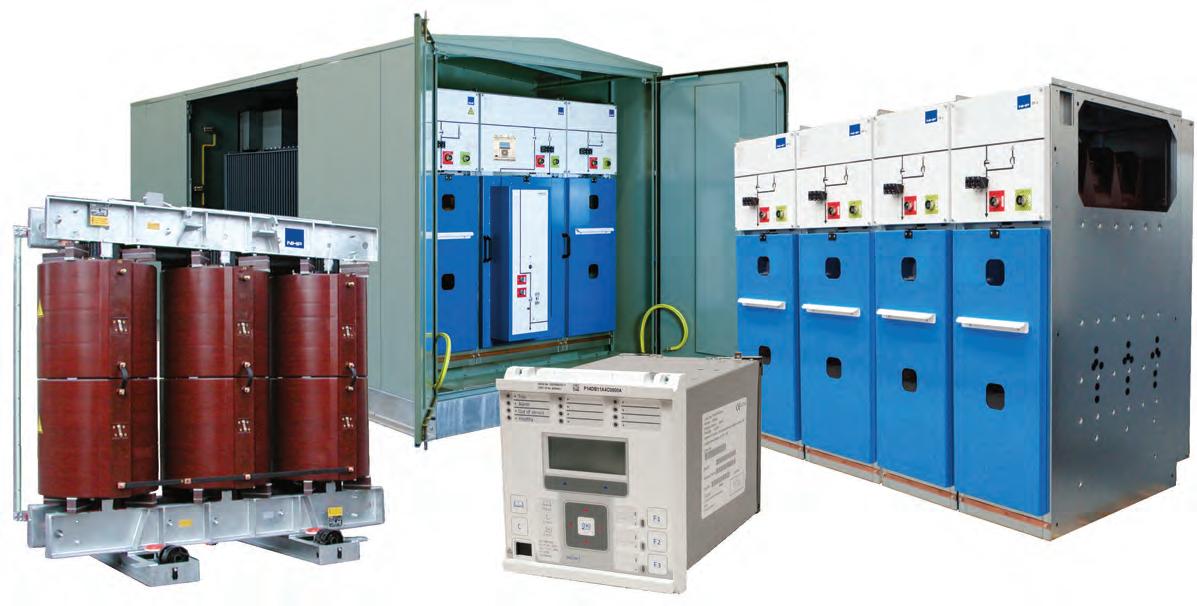

Medium Voltage solutions that are built to last 1300 647 647 | 0800 647 647 nhpsales@nhp.com.au | sales@nhp-nz.com nhp.com.au | nhpnz.co.nz
NHP has a range of transformers, switchgear and customised kiosk solutions that maximise safety and are built to last. To find out more, go to nhp.com.au/MV
NEW TECHNOLOGY HELPS MELBOURNE WATER PREPARE FOR THE FUTURE
 By Tim Wood, General Manager, Asset Management, Melbourne Water
Melbourne’s population is growing. By 2030, more than six million people are expected to call the city home. A booming city means greater demand on services and infrastructure and this includes the sewerage system. Here are two projects that demonstrate how we are embracing technology to help us meet demand and achieve our goals in a safe and efficient way.
UTILITY • FEBRUARY 2023 WWW.UTILITYMAGAZINE.COM.AU 82
SEWER REHABILITATION
Population growth is not the only challenge for Melbourne Water –the organisation which manages Melbourne’s extensive network of underground pipes and tunnels. Some sections of this sewerage system were built more than a century ago and are coming to the end of their working life.
With these challenges in mind, Melbourne Water is taking big steps forward to improve and innovate the sewerage system to continue to successfully transfer sewage to our treatment plants. We recognise the actions we take now will define our future. Our mission is to ensure Melburnians have a secure and reliable sewerage service today, tomorrow and for generations to come.
EPSOM ROAD SEWER RELINING
Melbourne Water has recently completed upgrade works to 1.6km of the Epsom Road Main Sewer. The 100-year-old sewer transfers sewage flows from Melbourne's inner western suburbs to the North Yarra Main to the Western Treatment Plant in Werribee.
Melbourne Water and the service provider’s project team worked on this project night and day, every day, for more than four months. Given it was in a highly trafficked area, we aimed to minimise disruption to the local community and key stakeholders including the Melbourne Showgrounds.
Approximately 3.5km of bypass HDPE pipe were installed during the works to manage up to 550L/s flows. The unique bypass methodology was a combination of surface mounted and immersed electric pumps. Confined space personnel had to traverse up to 150m of sewer pipe, downstream of 5m head surcharged sewer pipe. A mechanical plug (plug valve) was fabricated specifically for the ovoid shaped pipe, providing a safer environment for the workforce and to control the flows to prevent sewer spills.
Sewer access manholes were located in major roads and had to remain trafficable for trams throughout the works. Prior to the relining works, 150 tonnes of built-up rubble was removed from the sewer.
To renew the sewer, we used a trenchless technology technique called Cured in Place Pipe (CIPP) relining. Installed up to 23m deep in the ovoid brick sewer pipe was 1.2km of UV (Ultraviolet) CIPP liner. A unique methodology was developed to install the CIPP liner within an offset chamber 276m away from the nearest access point, making it the longest liner in Australia.
The relining technology allowed us to reline the inside of the existing sewer with a new, structurally sound liner which became the new wall of the sewer. The benefits of the trenchless approach were:
• Disruptions and inconveniences at street level were kept to a minimum, and residents and businesses weren’t impacted by the method of open trenching
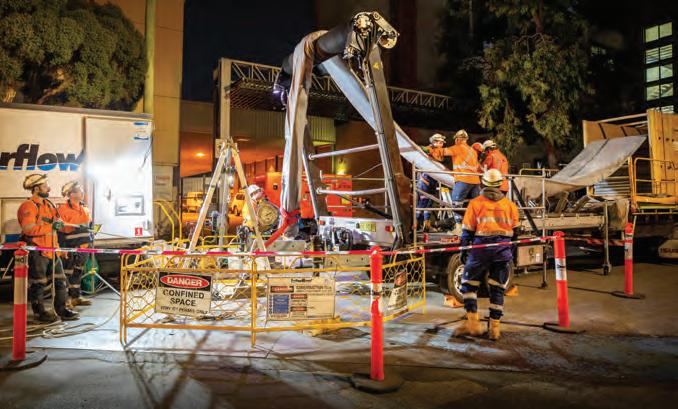
• Upgrade works were completed more efficiently
Melbourne Water’s project was successfully delivered by service provider John Holland KBR, Interflow and Welltech.

UTILITY • FEBRUARY 2023 WWW.UTILITYMAGAZINE.COM.AU 83 SEWER REHABILITATION
CIPP LINER BEING LOWERED AT THE EPSOM ROAD SEWER RELINING PROJECT.
BAY MAIN SEWER
Deep beneath the Yarra River, Melbourne Water’s biggest sewer project is underway. The Hobsons Bay Main, which was built in the 1960s, is being upgraded.
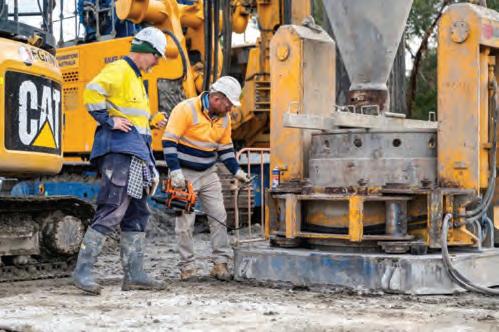

This involves building a duplicate sewer, which will allow sewage flows to be diverted. The duplicated sewer will be used in the future to build capacity for our growing population, particularly in the Fishermans Bend precinct.
The project began in September 2021 and is expected to take three years to complete. The completed Hobsons Bay Main Sewer will be 720m long and cross beneath the Yarra River from Spotswood to Westgate Park at depths of 30-35m. It’s a critical part of Melbourne’s sewer network, transferring around 30 per cent of the city’s wastewater to the Western Treatment Plant.
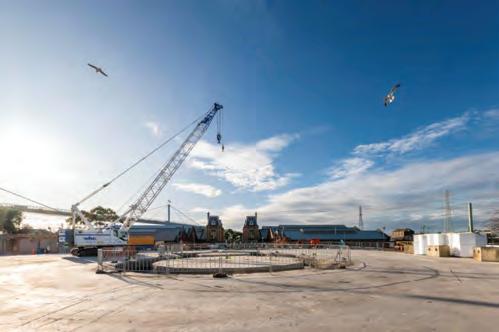
One of the challenges with planning construction works on this historic site is the outdated drawings and inability to accurately assess the condition of the surrounding sewer and structures. To safely gather further asset information, the Flyability Elios 3 drone was trialled because it can safely operate in dark, GPSdenied environments and can travel several hundred metres negotiating bends, obstacles and terrain that typical crawlers cannot overcome.
The team chose to investigate using this drone as it features a protective cage, which not only enables the collection of data from previously inaccessible and dangerous environments but also captures CCTV footage of a very high quality – 4K Video at 30 frames. Footage can be viewed directly at the surface by the operator. The device features LEDs providing 10,000 Lumens of light, as well as a rotating LiDAR sensor capturing up to 300,000 points per second. Although it is not as accurate or precise as a terrestrial scanning system, it can still generate very high-quality data and a clean 3D point cloud to support design workflows.
It flew from the surface down through the opened ‘gatic’ lid whilst the pilot remained on the surface. No personnel were required to intervene during the flight. The scanned data is dimensionally relatively accurate and the point cloud can be used to generate further 2D/3D deliverables such as a CAD drawing, BIM model and 2D plan.
The drone demonstrated its ability to negotiate within a sewer conduit as well as a complex drop structure. This method offered a very low risk and efficient way for capturing accurate as-built data in sewer structures. The information gained through this process will be used to assist with detailed design. It can also assist Melbourne Water assess existing conditions of assets.
The Hobsons Bay Main upgrade will be carried out in several phases including shaft construction and tunnelling beneath the Yarra. For more information, visit www.melbournewater.com.au.
The project is being delivered by John Holland. Work is happening at the back of Scienceworks, so visitors can look at the construction area through in-built viewing windows in a hoarding, which also has colourful information presented on it about the sewer lifecycle and water literacy, providing a great educational opportunity.
UTILITY • FEBRUARY 2023 WWW.UTILITYMAGAZINE.COM.AU 84 SEWER REHABILITATION
HOBSONS
HOBSONS MAIN SEWER SITE BEHIND SCIENCEWORKS.
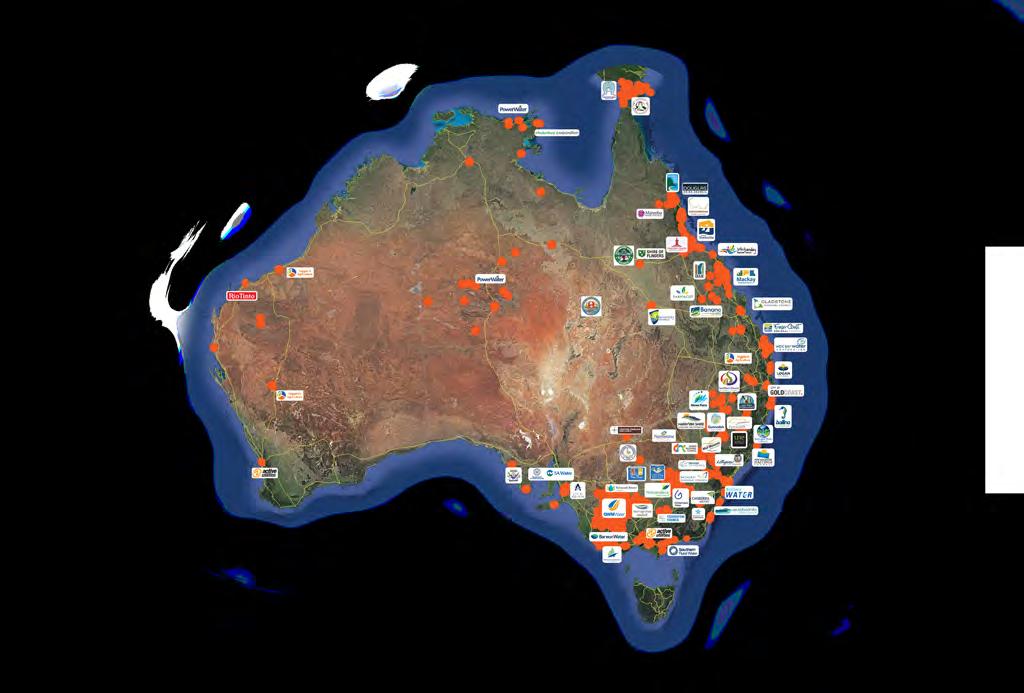


AGING PRESSURE PIPELINES COME TO LIFE WITH INNOVATIVE TRENCHLESS TECHNOLOGY
Primus Line, a flexible liner reinforced with aramid fabric, is getting buzz for all the right reasons. The tried and tested lining technology provides a practical, high-quality lining solution for aging pressure pipelines that is both environmentally friendly and cost-effective.


Fergus Meyer, a Project Manager at Interflow, a leading provider of pipeline infrastructure solutions, understands the challenges many asset owners face when tackling the problem of aging infrastructure.
Interflow has partnered with Primus Line to provide the innovative system to the Australia and New Zealand market. Leveraging their five-year exclusivity agreement, the two companies have made a significant impact throughout the year, rehabilitating some of Australia and New Zealand’s most challenging pressure pipelines.
PRIMUS LINE IN ACTION
In early 2022, Interflow was given the challenge of rehabilitating a deteriorating section of steel water pipe supplying the remote mining town of Paraburdoo. The pipeline runs through an area of environmental and cultural significance, so a non-invasive solution was needed. Using Primus Line, Interflow relined a kilometre of watermain in a single pull, meaning no digging or disturbance along the alignment.
The project took just over a week, and only a single truck was needed to transport the spool of liner and associated fittings – a significant benefit when the nearest major city is 1,500km away.
One of Interflow’s more challenging projects in 2022 involved 1.4km of pipeline that transports raw water from a dam to a nearby town. Located deep within a state park and traversing steep and rocky terrain, replacing the pipeline would have been a costly exercise with unacceptable risk to the environment.
“A lot of projects have been sitting in ‘too hard’ baskets for years, waiting for the right technology and delivery partner to come along,” Mr Meyer said.
“Environmental constraints, budget limitations and delivery risk are all factors that can stop a project getting off the ground.
“The key is engaging suppliers early, and coming up with solutions together. So is keeping an open mind to alternate proposals at the time of tender. This can really open the door to affordable, and eco-friendly solutions, like Primus Line.”
Having access only to the ends of the line, Primus Line was installed in one continuous pull. This marked the longest single pull of Primus Line in Australia to date and opens the opportunity for longer pulls of a similar nature in the future. The project was recently recognised as the winner of an Infrastructure Project Innovation award from the Australian Water Association in Victoria.
Innovative technology like Primus Line presents an exciting opportunity for the water industry to overcome current challenges and extend the life of aging infrastructure for decades to come. With local supply right here in Australia, Interflow is ready to support high priority projects without supply-chain setbacks.
86 UTILITY • FEBRUARY 2023 WWW.UTILITYMAGAZINE.COM.AU
REHABILITATION | Sponsored editorial
Kilometres of aging water and pressure sewer pipelines across Australia and New Zealand are in need of renewal. Until recently, some of the more challenging pipelines have left asset owners in need of a practical, affordable, long-term solution.
SEWER
For more information, please visit www.interflow.com.au.
Ageing pressure pipelines come to life with Primus Line ®




WESTERN
POWER CEO
SAM BARBARO DISCUSSES THE JOURNEY TO DECARBONISATION

DISTRIBUTED GENERATION
88
Appointed CEO of Western Power in August 2022 after 15 years in the business, including eight years in executive roles, Sam Barbaro has played a pivotal role in the transformation of the Western Australian energy sector. However, Mr Barbaro says it’s the current unparalleled pace of change in the industry that will deliver the greatest opportunities for the community, environment and economy.

DISTRIBUTED GENERATION 89
Apassion for community outcomes and growth led to Mr Barbaro leaving the corporate sector to join Western Australia’s largest electricity network operator in 2007. Supporting customer outcomes has been a constant mission for Western Power and this will not change going forward. As Western Australia prepares for a climateresilient and decarbonised future based on a shift to net zero emissions by 2050, Mr Barbaro says Western Power will be a critical enabler of electrification.
“The network has continued to evolve to enable growth in renewable energy since I joined the business, with Western Power making the changes required to support the rapid growth of rooftop solar and now planning for the work required to enable the network to support the electrification of Western Australian industry and businesses,” Mr Barbaro said.
“Decarbonisation will influence our work over the next decade and beyond. Like all successes, collaboration is key – we are working with Government, local government, industry, associations, traditional owners and community associations to deliver the best energy outcomes for all customers and stakeholders,” Mr Barbaro said.

“We are supporting the State Government-led South West Interconnected System (SWIS) Demand Assessment, due for release by 2025, which will provide a better understanding of future industry demand, the changes in generation that will occur following the Government-targeted reduction in coal, and the scale of network transition that will be needed.
“This is important as it will allow us to ensure that the right capital investments are made at the right time to facilitate good social, economic and environmental outcomes.”
Mr Barbaro said Western Power’s decarbonisation pathway was already producing positive results for communities through innovative solutions like stand-alone power systems and microgrids, which utilise greater levels of renewable energy, while at the same time providing a more reliable and safer supply.
INDUSTRY CHALLENGES
Like many other organisations across the globe, Western Power’s supply chain has been impacted by the effects of COVID-19.
“There will be a significant increase in demand from Western Power’s network to levels never contemplated before. We are planning and investing for this now to provide the backbone of how we will continue to deliver energy effectively and efficiently in the future – and that means reliably, affordably and green.”
Western Power is investing in forecasting and modelling to understand changing loads and the impacts of the continued growth of rooftop solar, the increased numbers of electric vehicles and the volume of energy needed by its customers to meet their decarbonisation goals.

“We have had delays to our projects and works programs due to the difficulty of sourcing items such as transformers, switchgear and metering units. However, we have not let this hold us back and we have taken proactive steps to address this issue and prioritise our work so that we can continue to deliver the work programs required to improve reliability ahead of the coming summer,” Mr Barbaro said.
Another of the continuing challenges faced by Western Power, like all businesses, was the tight job market.
“Unfortunately, or fortunately, there is a worldwide demand for electricity sector expertise given the global response to climate change. We need to maintain our highly skilled workforce to meet this growing demand. We’ve ramped up our attraction and retention strategies, both locally and
UTILITY • FEBRUARY 2023 WWW.UTILITYMAGAZINE.COM.AU 90 DISTRIBUTED GENERATION
overseas, but it’s a challenge we expect we will continue to face in the coming years as various local and global 2030 and 2050 decarbonisation targets are pursued,” Mr Barbaro said.

Despite the challenges of securing a larger workforce, Mr Barbaro says the safety and wellbeing of Western Power’s people remains at the organisation’s core.
“While there are many new challenges and opportunities over the coming years, the one thing that we will not compromise is our commitment to safety -- it’s our core value. No matter what, our commitment to our people and their families is that each and every one of our employees goes home healthy, well and safe each day.”
A FOCUS ON RELIABILITY


Western Power’s network, spanning 255,000km2, is subject to various environmental factors, which can make the priority of maintaining a reliable supply for customers a difficult challenge.

“We know that 100 per cent reliability cannot be guaranteed – but we strive to get it as close as possible and work to minimise any disruption. This challenge continues to grow as the impact of climate change increases. As such, we must improve how we communicate with customers and stakeholders in relation to outages,” Mr Barbaro said.
“We have reviewed and improved our customer and stakeholder communications in the lead up to, and during, outage events to keep customers better updated with timely and effective information, including greater SMS capability.
“We understand the role we play as an important contributor to the state’s economy and we’ll continue to listen to and engage with community and industry as we work towards a shared energy future.”
ABOUT WESTERN POWER
Western Power is a Western Australian Governmentowned corporation responsible for building, maintaining and operating an electricity network connecting 2.3 million customers to traditional and renewable energy sources. The South West Interconnected System (SWIS) is one of the world’s largest stand-alone grids, spanning from Kalbarri in the north to Albany on the south coast and east to Kalgoorlie; an area around the same size as the United Kingdom.
UTILITY • FEBRUARY 2023 WWW.UTILITYMAGAZINE.COM.AU 91 DISTRIBUTED GENERATION
optionxgroup.com.au optionxgroup.com.au PART OF THE BUILDING BETTER UNDERGROUND OPTIONS WHEN ACCURACY MATTERS Edge Underground is a precision microtunnelling contractor that operates in Australia and the USA. With a focus on innovative technology and expertise, Edge Underground designs and enhances the performance of trenchless equipment. Full factory backing here in Australia means solutions can be created when they’re needed most. MICROTUNNELLING • PIPE JACKING THRUST BORING • LASER TUNNEL BORING BOX CULVERT JACKING • CANOPY TUBES
WESTERN POWER CEO, SAM BARBARO
SUPPORTING CUSTOMERS TO BE WATERWISE WITH DIGITAL METER DATA
Most water customers in Australia say water efficiency is important to them, but how can utilities actually support their customers to make the changes needed to conserve water and reduce costs? South East Water has partnered with the University of Melbourne on several technology-based trials to see what impact real-time data from digital meters can have on reducing household water usage, and the results have been surprising.

CUSTOMER EXPERIENCE
92

CUSTOMER EXPERIENCE 93
South East Water’s partnership with the University of Melbourne started around seven years ago, with the goal of understanding how customers use water and how water utilities can offer an enhanced experience.
Alana Jones, Customer Research and Development Project Manager at South East Water, said the broader research goal was to look at how the utility could use its digital metering information to deliver real-time water usage data back to its customers in a meaningful way via different technologies. Some of these included an app that showed appliance-based usage, an in-home shower meter, and another app that offered incentives – all technologies that gave customers a range of ways to save water.
“Our customers tell us that they want to understand their water usage and how they can make changes in their everyday lives to not only save on their bills, but also to conserve water, as there is a heightened awareness around the scarcity of water and how precious it is as a natural resource,” Ms Jones said.
Andrew Forster-Knight, South East Water’s General Manager Digital Utility, agrees.
“If we know our customers are looking to us for help with household water efficiency, we can assess the best ways to help them without being invasive. We need to ask ourselves, ‘What are those potentially simple things that we can do that are going to be effective and drive the result that our customers are looking for around reduced water consumption?,” Mr Forster-Knight said.
Each trial took around 12 months to set up and involved detailed product development and a minimum three month trial implementation. As the trials continued, each one built upon the previous results and grew larger in terms of customer participation. As the trials were conducted with South East Water digital meter customers, the trials also developed alongside the utility’s rollout plan.
washing machine or shower, could encourage them to then reduce consumption on these higher use appliances.
Surprisingly, the results revealed no dramatic change in water usage behaviour, besides some reductions between 11am – 12pm day-to-day. Ms Jones said the South East Water team was shocked that this trial didn’t find any water efficiency impact.
“We were shocked because we'd always been told by customers, ‘If you give me my usage by appliance, then I can really target my behaviour’, which was a common customer insight at the time,” Ms Jones said.
“We ended up debunking that, but the alternate finding was that the app was incredibly helpful at driving awareness of usage, and this did help customers digest what's happening. Previously, if you didn’t know what your usage was, you could be quite shocked at a bill which might then have driven an adverse reaction into our contact centre. This app could possibly stop that customer reaction, so while it didn't encourage reduction, it did give awareness.
“If something doesn't pan out as we anticipate, that's not a bad thing, it’s something for us to learn from as an organisation.”
TRIAL 2 - AMPHIRO
The second trial was undertaken in 2017 and saw the Amphiro B1 shower meter implemented across 700 households, in seven different experimental conditions.
This was a pivot away from trial one, as instead of a mobile app, this involved a device that customers attach to their shower. The device displayed data such as the temperature of the water, the litres of water the customer has used, as well as the energy used; so it was a combined water and energy data offering.
This trial found a 13.3 per cent reduction in customer shower water usage, driven by a 42 second reduction in shower times. Ms Jones said customers responded best to intermittent feedback, reflecting the development of changing habits.
“The biggest finding was that habits can be created over time. We had 700 customers in this trial and each group of 100 customers got a different version of the visual device. Researchers were really interested, and hence we were, about how habits form. Do they form if people are shown the information every single day, or every week, or intermittent days, intermittent weeks etc.?
“The surprising finding was that it wasn't every day. The group that did the best was not given information every single day; they were one of the groups that was just given an intermittent packet of information,” Ms Jones said.
TRIAL 3 - WATER SAVERS
TRIAL 1 – MYSEW
The first trial conducted as part of this research in 2016/2017 looked at providing around 200 customers with water usage information – specifically water usage at the appliance level – via a newly created mySEW phone app. The idea was that showing customers where they were using the most water around the house, whether that was their

South East Water’s most recent trial took place in 2022 and tested the effectiveness of the Water Saver smartphone app, which encouraged households to save water as a response to combinations of goals, feedback, and incentives.
Ms Jones said the utility learnt a lot from the app in Trial One that they leveraged into this one, especially as there were several years between the two trials.
“This was a different type of app as it was about displaying information to customers, helping them set a goal or achieve
UTILITY • FEBRUARY 2023 WWW.UTILITYMAGAZINE.COM.AU 94 CUSTOMER EXPERIENCE
a target, and then with that target, customers were qualified for a financial incentive,” Ms Jones said.
“So that was a sort of iteration from project one. The technology landscape had also changed so quickly which meant that we had lots of bells and whistles in this trial that weren't in project one.”
The Water Savers app trial was conducted with more than 850 customers, across three different conditions and found that the first six weeks of the trial resulted in a 14 per cent water usage reduction amongst customers who had downloaded the app and had received the feedback and earned rewards, with usage effects plateauing in the final six weeks.
THE CRITICAL ROLE OF REAL-TIME DIGITAL METERING DATA
Through these and other trials South East Water has conducted, the utility has been able to highlight the economic value of real-time digital meter data in achieving large-scale water conservation.

Ms Jones said real-time data from digital meters was the key enabler of these programs and without these capabilities, these initiatives would look very different.
“It's really the cornerstone of what we can offer and that’s because we can help customers more closely to the time of actual usage, and that's been the biggest gap. Customers go bill-to-bill in a three month period without much knowledge of what they're using, and so we can use that data in a variety of ways to offer different things depending on customer preferences.”
Ms Jones said South East Water can also use this information to send notifications if there's a leak or really high unexpected usage, and that can be at the point of consumption or close to, and that's something they’ve never been able to offer before, but has been so in demand.
“When customers get a really high bill and it's because a leak under their property has gone unnoticed, that's a really stressful moment, so that's a real key feature for us,” Ms Jones said.
IT ALL COMES BACK TO CUSTOMER EXPERIENCE
With the Water Savers App trial completed in 2022, the research partnership between South East Water and the University of Melbourne is now applying for additional funding for the next phase and scale of research trials. Ms
Jones said there is currently a lot of strategy work happening within the utility’s digital teams, and there's now the opportunity to take this work even further.
“Eventually, we want to go from these smaller pilots into developing things at scale. So if we've got 200 customers in a trial with an app, the next step is to think about how we get it across to our whole customer base in a sustainable, agile and flexible way, and that’s a long journey between those two extremes.
“I would say we're 30 to 40 per cent through that journey because that's going to run alongside the digital metering rollout, with both happening in sync,” Ms Jones said.
Besides the mySEW, Amphiro and Water Savers App trials, South East Water has also conducted other trials with its customers based on digital meter data over the years, using the learnings from these.
Some of these included Continuous Flow Trial in 2020 –when a possible leak was detected, the customer was sent a notification to raise awareness of the usage, with these notifications delivering a 61.8 per cent reduction in billed water compared to them only becoming aware through the traditional quarterly billing cycle. A continuous flow event is triggered when the digital meter has detected continuous usage of 120L per day or greater for a period of at least 24 hours.
Also, the Spike in Usage Trial in 2021/2022 assessed the effectiveness of an early notification when a spike in usage was detected among 400 customers (i.e. an increase of 1520 per cent beyond seasonal variation). This reduced average daily water usage by 22.4 per cent for tenants.
Ms Jones said that what’s most interesting about all of these programs around the implementation of digital metering data, is how the utility can use this to enhance customer experience in a number of different ways.
“Collecting data is great, but it’s using it to improve customer experience that is more important. This could be through getting a notification if there's high usage at that property that might be unexpected, which could indicate a leak on the property, or it could be around helping people to understand what their bill is telling them and how they can actually make changes around that should they want to,” Ms Jones said.
“We want to empower our customers to have a strong relationship with water and build their understanding around that as well.”
95
CUSTOMER EXPERIENCE UTILITY • FEBRUARY 2023 WWW.UTILITYMAGAZINE.COM.AU
CUSTOMER TECHNOLOGY DEVELOPED SPECIFICALLY FOR THE WATER SECTOR
For a water utility, billing can be the extent of communication between supplier and customer, and lengthy gaps between engagements certainly don’t help when you’re trying to develop a relationship. It just means you need to work smarter to make a long-lasting connection that’s valued equally on both sides.
While technology is revolutionising how we communicate, it’s also raising customers’ expectations when it comes to service provision.
“Put your customer at the heart of everything you do” Matt Bowd, General Manager at Aptumo Australia, said.
“It sounds obvious, but understanding your customers’ wants and needs is essential. Embrace systems and solutions that help you to provide the service your customers expect, invest in attracting, training, developing and retaining talent in your customer service teams, and always listen to customer feedback.”
Recent years have seen rapid developments in technology and how we use it. Greater exposure to online shopping has increased consumer confidence in digital transactions and ushered in the expectation to be able to do almost anything online.
“Solutions like Aptumo are helping water utilities catch up with the digital experience customers are now used to. If they can shop, manage their bank account or their relationships with other service providers online, then why not their water company?,” Mr Bowd said.
“It should be as easy for customers to ask questions, manage their account or make payments online for their water supply as it is for any other service.”
GIVING CUSTOMERS CONTROL OF COMMUNICATION
The winning combination is cutting-edge technology; comprehensive, well managed, customer data; and skilled customer service teams to provide that all important human touch when a customer needs extra support or reassurance.

“Flexible, scalable, and easily configurable software like Aptumo uses AI to analyse customer signals and trigger personalised service improvements, while carefully managed customer data – from what’s collected, to how it’s managed and stored – can be used to tailor communications to a customer’s own situation.
“Making use of technology this way can give the customer the control they want over how and when they engage with their water supplier, and tailored messaging removes that feeling of being ‘just a number’,” Mr Bowd said.
Behind the scenes, specialist technology that’s been developed specifically for the water sector can put everything you know about your customer at your agents’ fingertips in real time. This gives them the tools they need to help your customer when they have a more complex enquiry or are handling a sensitive situation – like financial hardship or the effects of family violence.
“Getting the customer experience right is the driving force behind success and reputation. Aputmo can help you get it right the first time, more of the time,” Mr Bowd said.

96 UTILITY • FEBRUARY 2023 WWW.UTILITYMAGAZINE.COM.AU
CUSTOMER EXPERIENCE | Sponsored editorial For more information about how Aptumo – the billing solution created by the water sector, for the water sector – can help you deliver exceptional customer service every time, please contact Matt Bowd at matthewbowd@echo-ms.com.
The phrase ‘the customer is king’ may not be as widely used as it used to be, but the sentiment behind it is stronger than ever. Delivering a quality product or service is no longer enough to guarantee business success; faultless customer service is essential, and when opportunities to engage with your customer are limited, each one should be used to exceed their expectations.


aptumo.com hello@aptumo.com Aptumo is flexible, scalable, and customisable – make life easier for you and your customers. The next generation billing solution that puts you in control
Managed Services, the UK utility billing specialist.
Powered by Echo
DIFFICULT STAKE CONVERSATIONS EMBRA

CUSTOMER EXPERIENCE
98
EMBRA CING
HOLDER
For a long time, energy technologies have been stable, customers uninterested, and energy services affordable and reliable enough to keep networks back of mind. Now, customers have more skin in the game, with the take-up of solar, batteries and electric vehicles, and the electrification of everything.

CUSTOMER EXPERIENCE
99
There is more interest than ever in energy networks and, given the volume of change, more opportunities for customers and stakeholders to influence strategic planning processes.
Along with other regulated utilities, AusNet is facing increased pressure from regulators to better engage with customers, and provide more evidence that networks understand and are acting in customers’ long-term interests (consistent with the ultimate test; achieving the National Electricity Objective).
AusNet is regarded as a leader in engagement, having participated in the landmark ‘New Reg’ trial in 2019-20, where it negotiated key elements of its Electricity Distribution Price Review (EDPR) 2021-2026. Together with AGIG, AusNet took out the 2022 Energy Networks Australia/ Energy Consumers Australia Consumer Engagement Award for the challenging conversations they had on the future of gas networks.
This achievement was the result of open and honest conversations with customers and stakeholders, and an emphasis on direct research with customers to better understand their motivations, interests and experiences.
A key theme in recent engagement activities was AusNet’s openness to difficult conversations, and willingness to be challenged on aspects of their business planning and operations activities that typically haven’t been open for discussion.
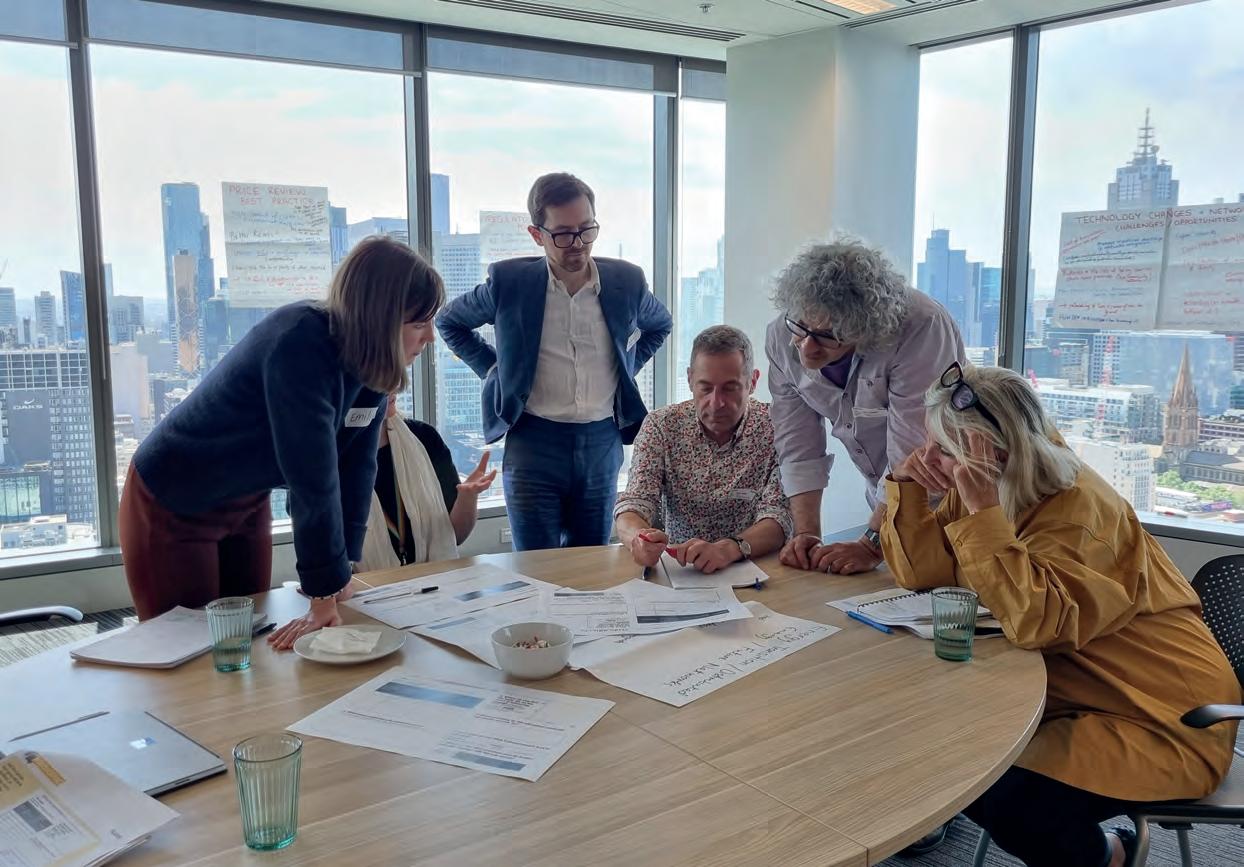
AusNet has also begun reporting more transparently on progress against commitments made to customers in the annual Customer Interactions & Monitoring Report, established a forum for large transmission customers to
discuss areas of concern, undertaken targeted engagement on improving the distribution system connection process for generators, and co-designed the engagement approach for the Electricity Distribution Price Review (EDPR) 2026-28.
BECOMING COMFORTABLE WITH DIFFICULT CONVERSATIONS
It’s been a conscious process for AusNet to reach a point where the company is comfortable having challenging conversations on its regulated networks, though there have been a few factors that have contributed significantly.
Charlotte Eddy, AusNet’s General Manager Regulation (Electricity Distribution) said, “We are embracing these challenging conversations, and what it means for customers and the business.”
“The nature of our networks makes us very conspicuous. We own and operate the Victorian transmission network as well as the electricity distribution network in Eastern Victoria, servicing a widely dispersed population that is prone to extreme weather events and reliability challenges, and a gas network that we are trying to plan for in a net zero emissions future. We have some high-profile challenges that are hard to hide from, so we choose not to shy away from discussing them.”
“We put our hands up to participate in the ‘New Reg’ trial – undertaken in partnership with the Australian Energy Regulator and Energy Consumers Australia – for our last EDPR 2021-2025. This trial was a step-change in the level of control we gave to customer representatives on what conversations we opened ourselves up to.”
UTILITY • FEBRUARY 2023 WWW.UTILITYMAGAZINE.COM.AU 100 CUSTOMER EXPERIENCE
PARTICIPANTS AT A RECENT WORKSHOP DISCUSS HOW AUSNET SHOULD APPROACH
RELIABILITY DISCUSSIONS WITH CUSTOMERS
PREPARING FOR DIFFICULT CONVERSATIONS
While acknowledging that there is certainly room to improve, AusNet has learnt some valuable lessons in how to have challenging customer and stakeholder conversations. These include:
• The importance of having the right culture and support from senior leadership cannot be underestimated. This ensures the business is prepared for external challenges and is flexible in what and how they go about engaging and developing solutions
• Customer research is powerful. AusNet has put a significant focus on customer research, with an in-house research team collecting customer insights
• Help your customers and stakeholders participate by providing the right information and tools
“In the past, AusNet has spent a lot of time discussing what customers think and want. By doing research, this is taken off the table, and the focus is then on the detail, nuance, and complexities of issues at hand, rather than hearsay,” Ms Eddy said.
“Ask them what they need. Customer research is a key component, along with clearly explaining our negotiating position, outlining what is in and out of scope for discussions, and sharing operational data and organisational insights.
“Building credibility is important. Closing the loop by clearly showing how you are using customer input, and then actually delivering on what you say you’ll deliver on, is key to ensuring longevity. To support this feedback loop, AusNet recently launched an engagement portal, Community Hub, which publishes customer research and engagement materials. Goodwill from participants is a must-have for difficult conversations to be productive, and building it means being credible and genuine in your engagement over the long term.”
ARE DIFFICULT CONVERSATIONS HERE TO STAY?
AusNet is now comfortable talking about a much broader range of topics. As well as getting some great outcomes for customers, the organisation is also achieving improved outcomes for the business.
“First and foremost, it’s the right thing to do, but incorporating the customer voice more deeply into our planning process is also a great risk management strategy,” Ms Eddy said.
“We know what their priorities, needs and expectations are. By working with our stakeholders, we get our plans and strategies right the first time, which can save a huge amount of time in the long run. It also generates ideas that we might not have thought of ourselves. We don’t think we have all the answers. It’s certainly not the path of least resistance, but we think it’s a win-win for everyone,” Ms Eddy said.
The Next Generation in Trenchless Technology
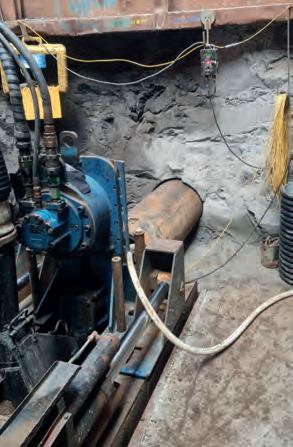
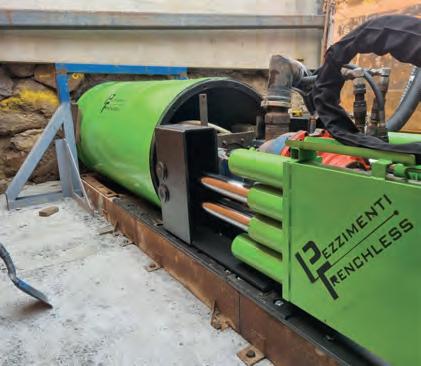
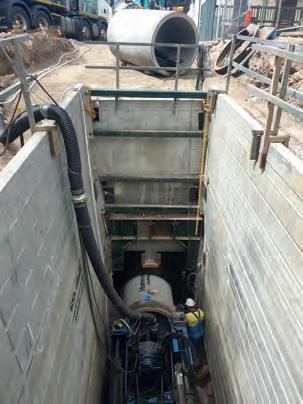
101 UTILITY • FEBRUARY 2023 WWW.UTILITYMAGAZINE.COM.AU CUSTOMER EXPERIENCE Unit 2 / 85 Heatherdale Road, Ringwood Vic 3134 PO Box 2500, North Ringwood Vic 3134 P: (03) 9872 4596 | F: (03) 9872 3293 | E: info@pezztrenchless.com.au | W: pezztrenchless.com.au Still the market leaders in laser guided microtunnelling Bore diameters from 325mm up to 2800mm Used for gravity sewers, water mains, storm water, gas and electrical conduits. Specialists in “free bore”, sleeve boring and pipe jacking in all sizes
Microtunnelling projects often encounter a variety of complex challenges that can prove costly and push out project delivery timelines. However, contractors with versatile equipment can easily adjust to unexpected issues – by changing drilling heads, and being able to install a wide range of pipe materials and diameters – to ensure a project is delivered on time and on budget.
When working with versatile equipment, contractors are able to adapt and adjust their approach whilst using their knowledge around the existing ground conditions and their equipment, to dramatically reduce risk in a microtunnelling project.
Versatility is especially important given the geotechnical information provided at the start of a project isn’t always 100 per cent accurate, and contractors often arrive on site to find different conditions than anticipated –with unexpected ground conditions a common reason for project delays or installation failure.
VISUAL INSPECTIONS WITH AXIS
Even in cases where contractors can’t predict what lies beneath them, they can be assured that with the right equipment at their disposal, they can get the job done, despite unforeseen issues.
For example, the AXIS laser guided boring system is a versatile pitchlaunched microtunnelling machine, designed to provide contractors with a versatile solution that combines productivity, accuracy and efficiency.
Rather than jacking into unconfirmed ground conditions, which can be risky, the AXIS uses vacuum extraction to perform a pilot line, allowing the contractor to visually inspect the ground and select the best drill head for the prevailing ground conditions, before committing to jacking the final line.
CHANGING GROUND CONDITIONS AND THE AIR HAMMER
Another factor for contractors to consider are ground conditions, which can cause major issues during microtunnelling projects. Different ground conditions – such as varying
soil types, groundwater conditions, the presence of rock and debris, and fractured rock and sand – require different drill heads and approaches.
This means an unexpected change to the ground midway through jacking can be time consuming and costly, as most machines are only designed to move forward and the drill head will need to be dug out from above in order to change it.
The AXIS system has the unique ability to retract. This means any changes in ground conditions not picked up by the pilot line will not cause a problem as the drill head can be retracted and swapped out with minimal time wasted and with no additional cost.
Furthermore, very hard rock conditions are no longer a challenge, no matter if it is known before a project or partway through the drill. The air hammer is a drilling tool that provides microtunnelling contractors with a solution for very hard rock conditions, increasing rates of successful pipeline installation, while still maintaining accuracy, productivity and efficiency.
The technology uses air-driven hammers (similar to vertical DTH heads) on the AXIS laser-guided system or AdaptX – manufactured in Australia by Bournedrill, part of OptionX Group.
RITELINE AND THE ACCURACY OF TRENCHLESS INSTALLATION
A new spacer innovation from OptionX Group that is purpose-built to improve the accuracy of trenchless pipeline installations, Riteline casing spacers assist the carrier pipe during installation by maintaining its position relative to the bored hole or encasement pipe. The spacer’s design
means its height can be incrementally adjusted from 30mm up to 125mm, allowing multiple configurations from the one unit.
Riteline’s adjustable design means contractors who use them don’t need to have multiple products on hand – they can be installed to suit the project’s needs, even if requirements change at the last minute.
Unlike other spacers on the market, they are also spring-loaded, which means you can adjust the tension as required, and they flex when they hit rock – so they won’t break. Riteline enables you to spring on centre, so the grouting risk of float or not has been eliminated.
ADAPTX – VARIETY OF OPTIONS IN THE ONE MACHINE
Most drilling machines are only capable of utilising one or two drilling techniques. However, there is a new drilling machine on the market that boasts capabilities that are unmatched across the globe. AdaptX is a modular drilling platform that allows the contractor to use most drilling techniques all in the one machine, including: vacuum, pressure air vacuum, slurry, HDD, displacement pilot, auger boring, bed boring, pipe jacking, pipe assist, pipe bursting and canopy tunnel drilling.
This gives contractors more options for different methods all in the one machine, allowing them to not only take on more jobs but be flexible on the job site if unexpected circumstances occur to ensure the best method for the job is used. The AdaptX name says it all, it truly is a machine that can adapt to suit the changes on your job site.
ABOUT STUART HARRISON
Global microtunnelling pioneer Stuart Harrison is the CEO of OptionX Group and is driving the group of companies towards innovation in the drilling, tunnelling and boring industries.
He remains the Managing Director of Edge Underground, where he specialises in on-grade microtunnelling installations with millimetre accuracy.
Stuart is also the inventor of the AXIS Guided Boring system, and he is constantly working to improve the effectiveness of this and other trenchless systems used in the installation of gravity sewers. To discuss your next microtunnelling installation, contact Stuart on 1300 JACKED or at stuart@optionxgroup.com.au.
102 UTILITY • FEBRUARY 2023 WWW.UTILITYMAGAZINE.COM.AU
How new versatile equipment is reducing risks to project delivery in microtunnelling
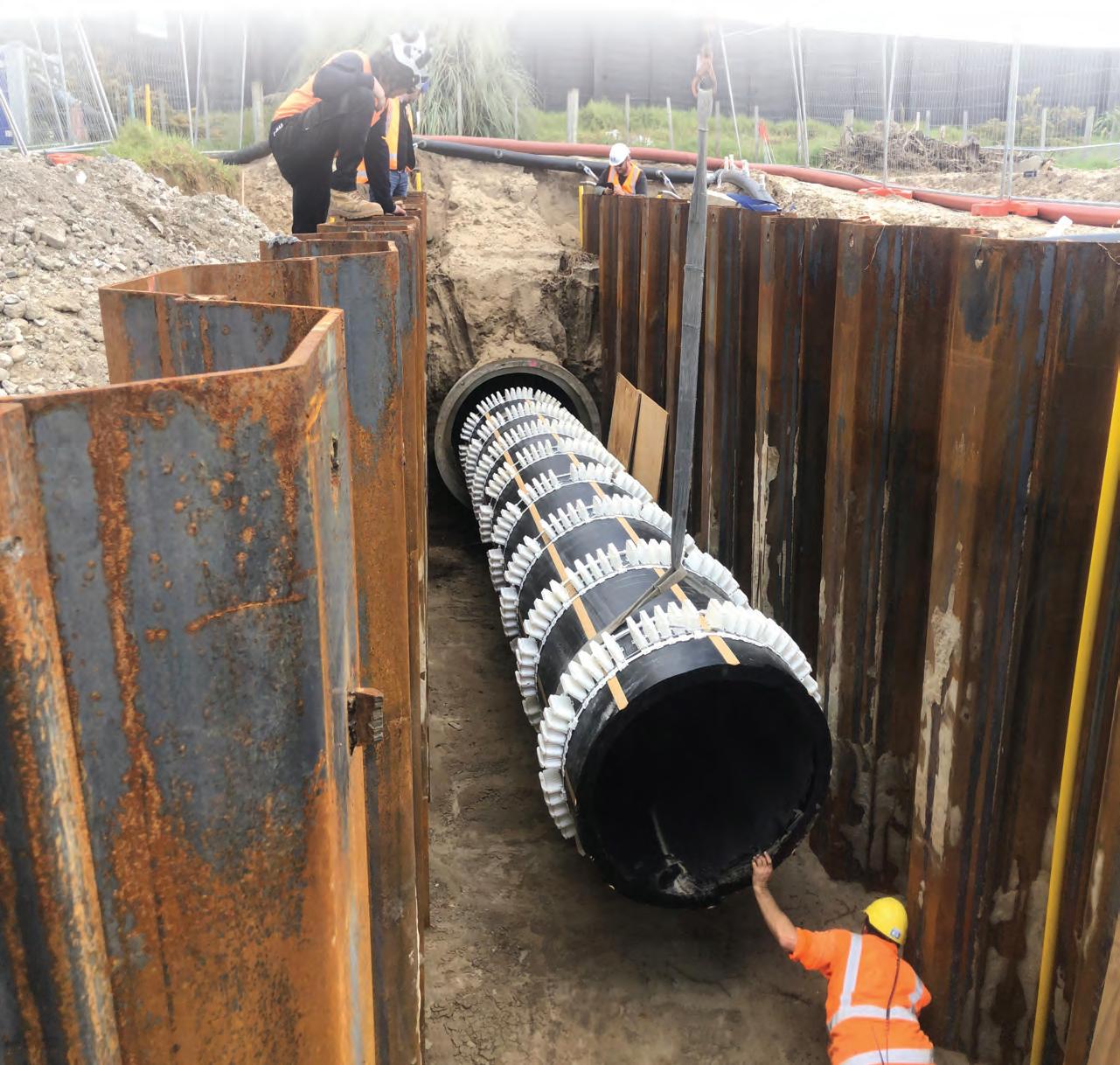

Is your pipe spacer compliant? Call us for details on ordering P (08) 9725 4678 sales@kwikzip.com www.kwikzip.com The only casing spacers successfully appraised by WSAA HDX and HDXT KWIK-ZIP’S HDX & HDXT CASING SPACERS COMPLY WITH WSAA PRODUCT SPEC #324 - CASING SPACERS; REFER WSAA PRODUCT APPRAISAL REPORT #1523
SECTION 104 UTILITY • FEBRUARY 2023 Access Detection 13 Altavec 77 AMS Instrumentation & Calibration 19 Aptumo 97 Cabletech 69 Compliance Quarter 9 Control Components 23 Copperleaf Technologies 31 Daly's Constructions (Australia) 44-45 Eco Detection 51 Edge Underground 91, 102 Emtivac Engineering 30 FMT-Field Machine Tools IBC GF Piping Systems 24 Harcor 5 Interflow 87 Iota Services 34-35 Kwik-Zip 103 Lanco Group 16 Monkey Media IFC NBN Co 55 NHP Electrical Engineering Products 81 Pezzimenti Trenchless 101 Polymaster 7 Projex Group 10 RIDGID Australia 14 Rimco 8 Spectur 15, 38-39 Steel Mains 12 SUEZ 25-27 Taggle Systems 85 Thermo Fisher Scientific 22 VEGA Australia OBC Vermeer Australia 43 WIOA 17 Xugo 20-21 Yokogawa Australia 11, 56-57 Zinfra 62-63 EVENT DISTRIBUTION IMARC AUGUST 2023 MAJOR FEATURES WATER OPERATIONS AND TREATMENT STORMWATER ASSET MANAGEMENT SMART GRIDS SPECIAL FOCUS GAS PIPELINES TRENCHLESS TECHNOLOGY IoT AND SCADA WASTE MANAGEMENT IRRIGATION EQUIPMENT & MACHINERY PIPE & CONDUIT PUMPS, VALVES & FILTERS SALES DEADLINE 23 JUNE 2023 MAJOR FEATURES BIG DATA CYBER SECURITY SOLAR WATER SPECIAL FOCUS MAPPING, GIS & SURVEYING UTILITY LOCATION SEWER REHABILITATION EMBEDDED NETWORKS DISTRIBUTED GENERATION CUSTOMER EXPERIENCE EQUIPMENT & MACHINERY DRONES SWITCHGEAR FEBRUARY 2024 SALES DEADLINE 8 DECEMBER 2023 MAY 2023 MAJOR FEATURES WATER MANAGEMENT DEMAND MANAGEMENT ENERGY NETWORKS SUSTAINABILITY SPECIAL FOCUS INSPECTION, CCTV & CONDITION ASSESSMENT MOBILITY VEGETATION MANAGEMENT ENERGY STORAGE FUTURE FUELS EQUIPMENT & MACHINERY SMART METERS MICROTUNNELLING SALES DEADLINE 31 MARCH 2023 EVENT DISTRIBUTION WIOA QLD OZWATER LOCATE23 AUSTRALIA WIND ENERGY 2023 EVENT DISTRIBUTION WIOA NSW ALL ENERGY NOVEMBER 2023 MAJOR FEATURES RENEWABLES DISASTER MANAGEMENT CORROSION RETAIL, BILLING & CRM SPECIAL FOCUS LAND ACCESS TRANSFORMERS & SUBSTATIONS PIPELINE INTEGRITY & LEAK DETECTION SAFETY DAMS EQUIPMENT & MACHINERY HORIZONTAL DIRECTIONAL DRILLING (HDD) SALES DEADLINE 15 SEPTEMBER 2023 EVENT DISTRIBUTION WIOA SA WIOA VIC INTERESTED IN WORKING WITH UTILITY MAGAZINE? SCAN TO DOWNLOAD OUR MEDIA KIT. EDITORIAL SCHEDULE & ADVERTISERS INDEX
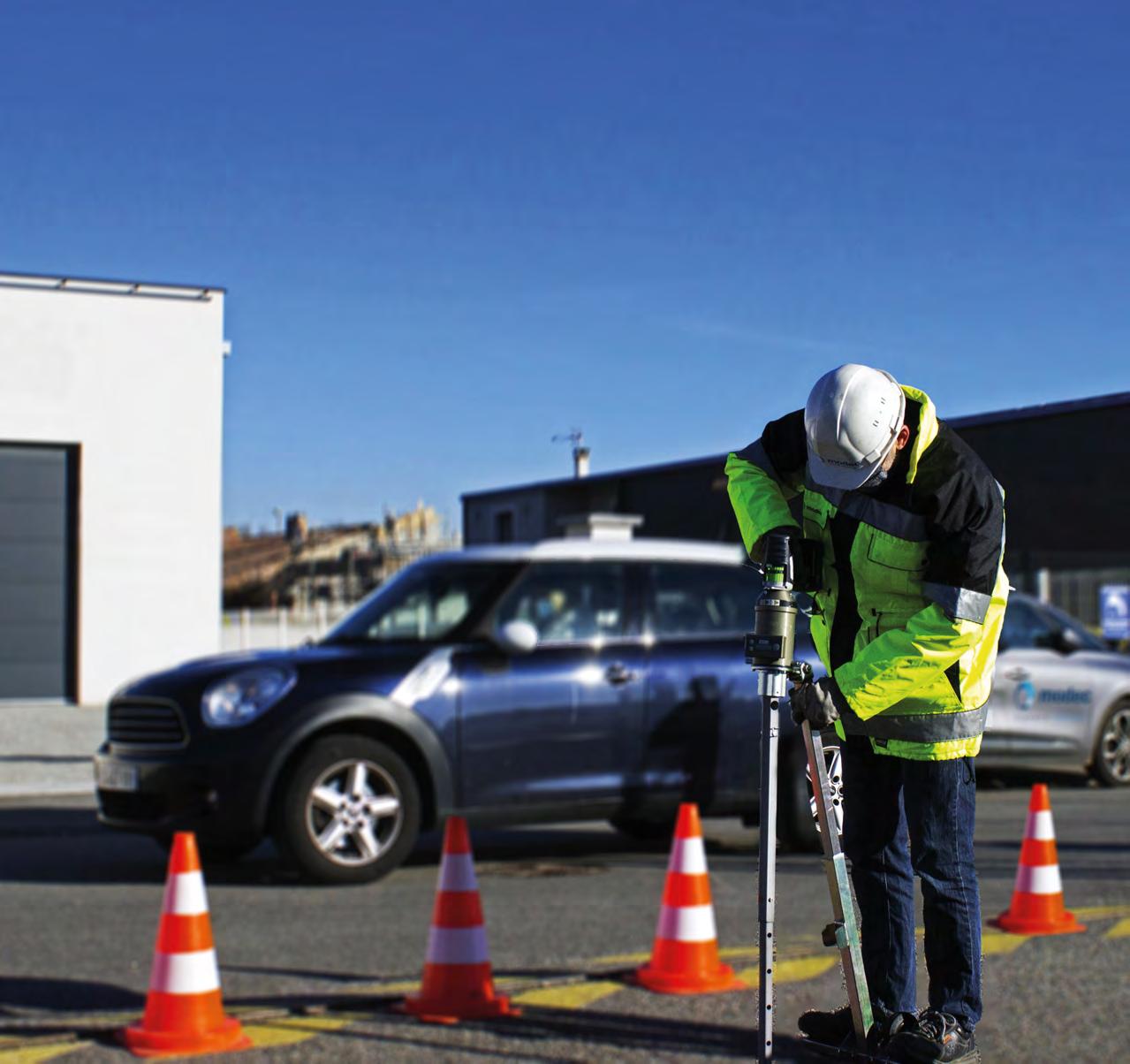


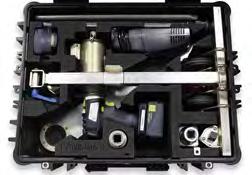
Easy transportation Simple implementation Operator and equipment safety 1300 FMT FMT (368 368) Melbourne 1/53-57 Rimfire Drive Hallam VIC 3803 Brisbane 2/5 Percy Drive Brendale QLD 4500 Perth 3/48 Hardey Road Belmont WA 6104 The water supply operator’s kit H2O WATER KIT






IT DOESN’T JUST MEASURE VALUES. IT HAS VALUES. THE 6X ® . AVAILABLE NOW! The VEGAPULS 6X: A radar level sensor that is not only technically perfect, it also takes the user into account. It’s easy to set up and at home in virtually any process or industrial environment. Made by a company that bases its decisions on values that are good for everybody. VEGA. HOME OF VALUES. www.vega.com/radar
