Patricia Urquiola designs a home at sea that emphasises tranquillity, connection and an ocean state of mind.
Orient Express Corinthian 028
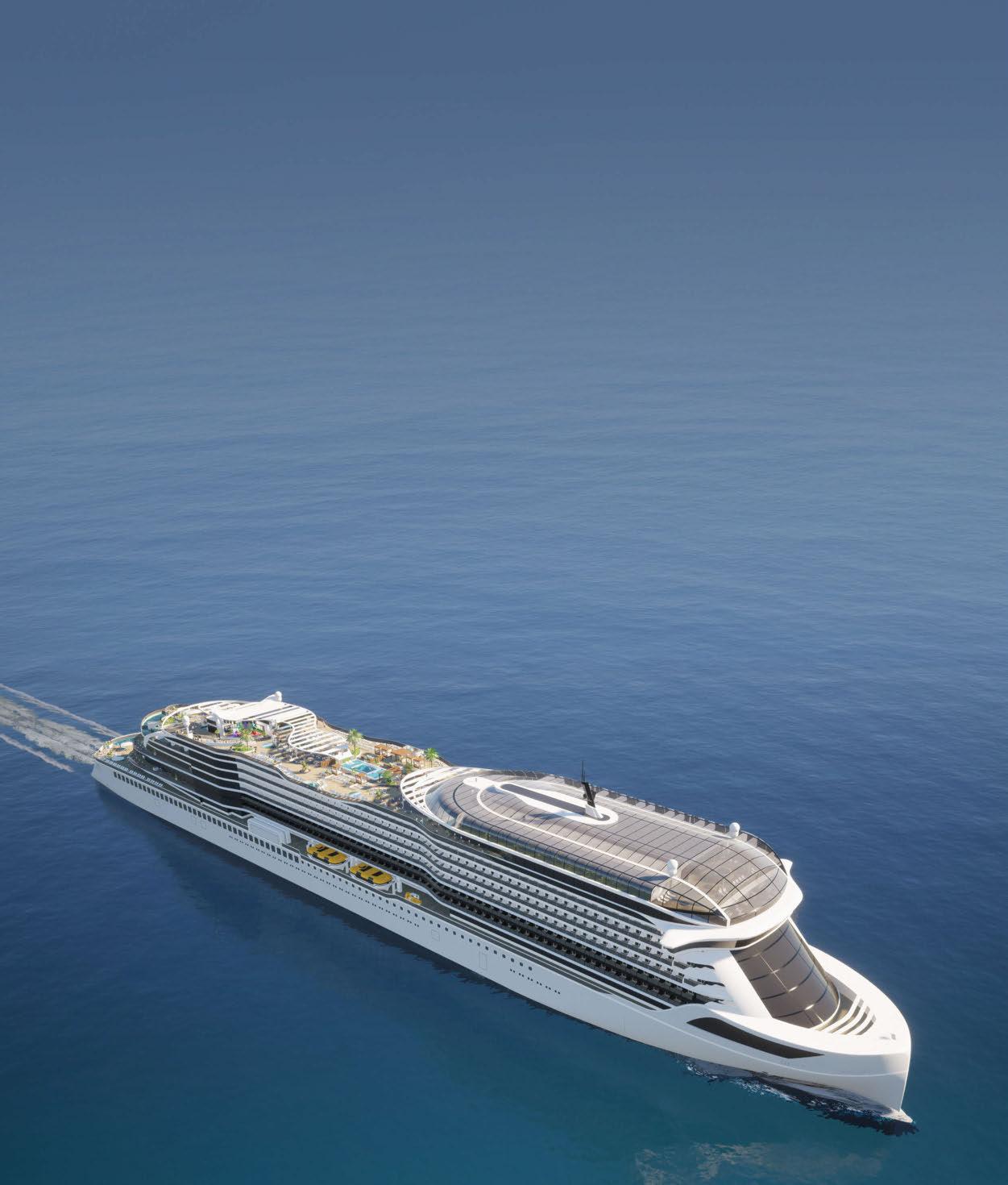
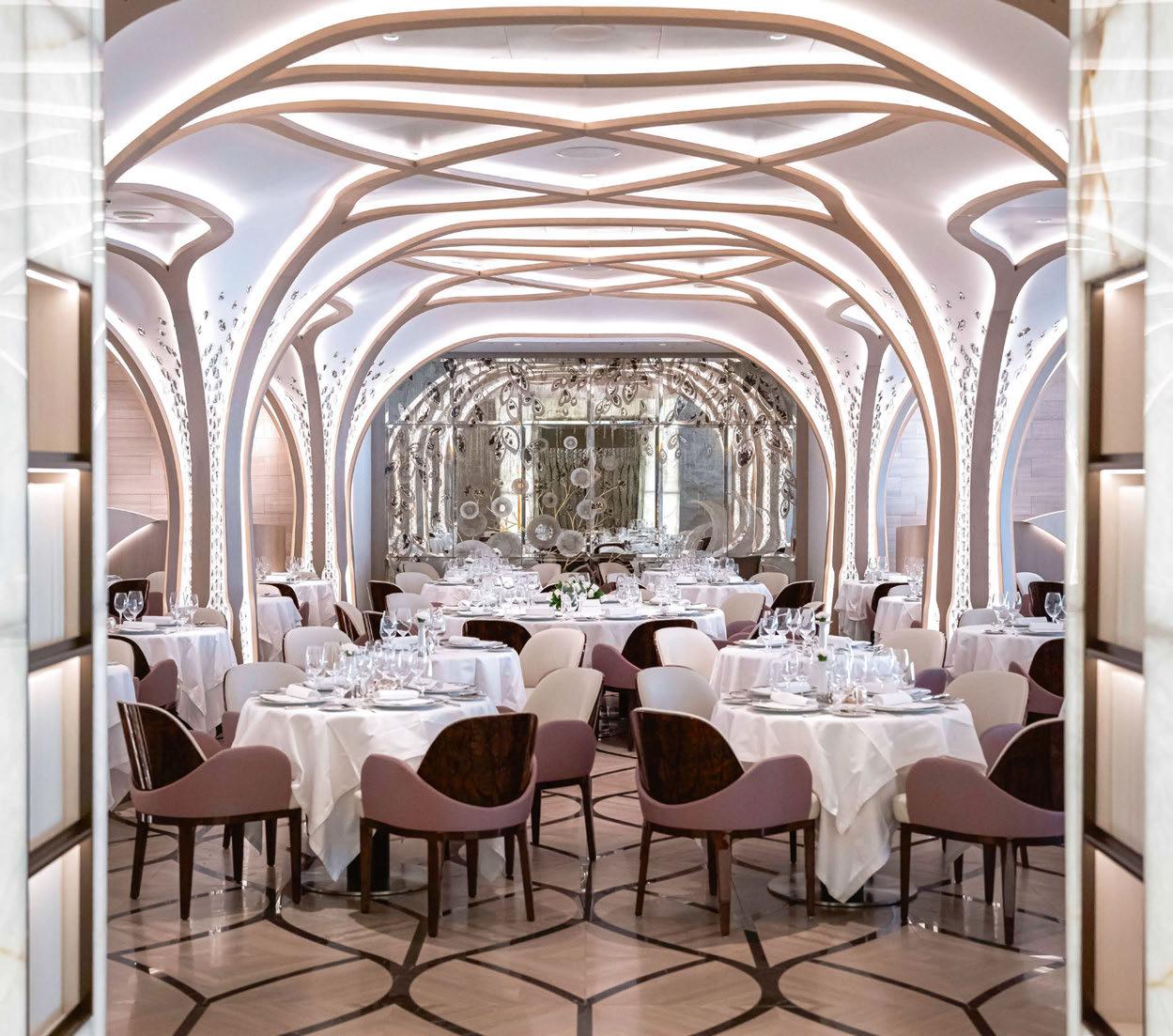
As Orient Express celebrates the baptism of its debut sailing yacht, Executive Chef Yannick Alléno offers a preview of the cuisine to be served on board.
As Seatrade Global highlights the food and beverage trends shaping the culinary landscape, cruise lines are responding with immersive dining and drinking experiences at sea.
ON LAND
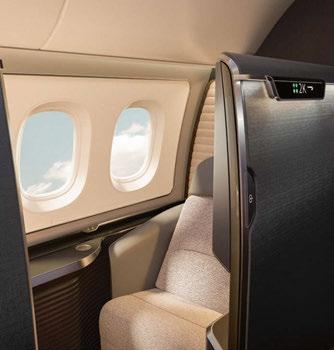
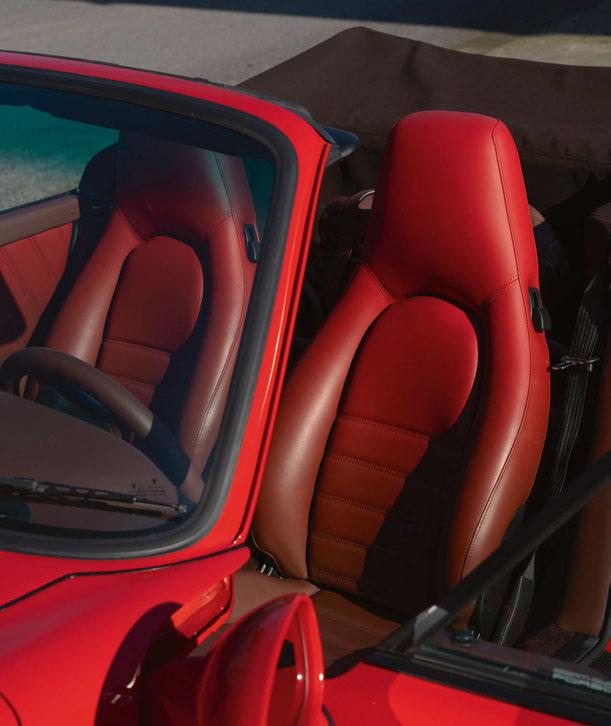
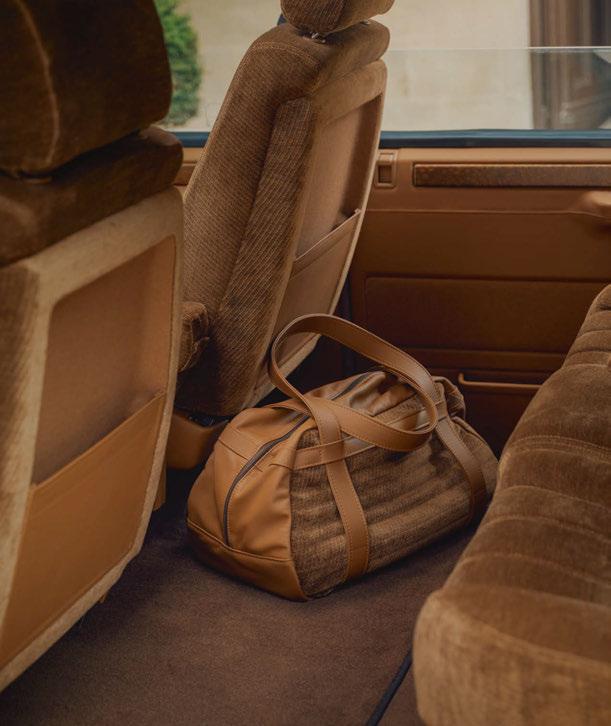
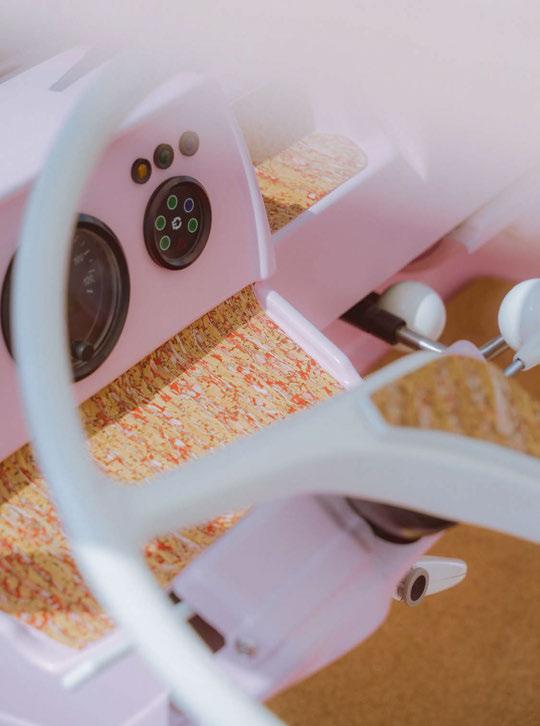
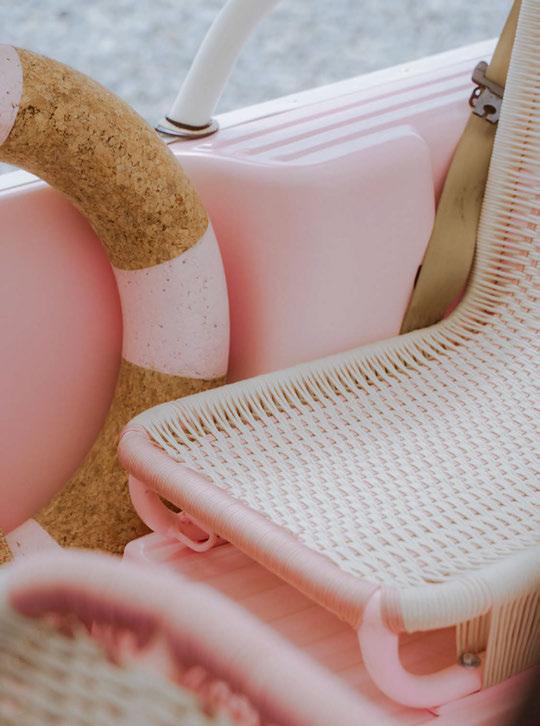
Having designed some of the world’s most luxurious hotels, Tristan Auer is now bringing his multisensory approach to mobility, blurring the line between transport and hospitality.
IN THE AIR
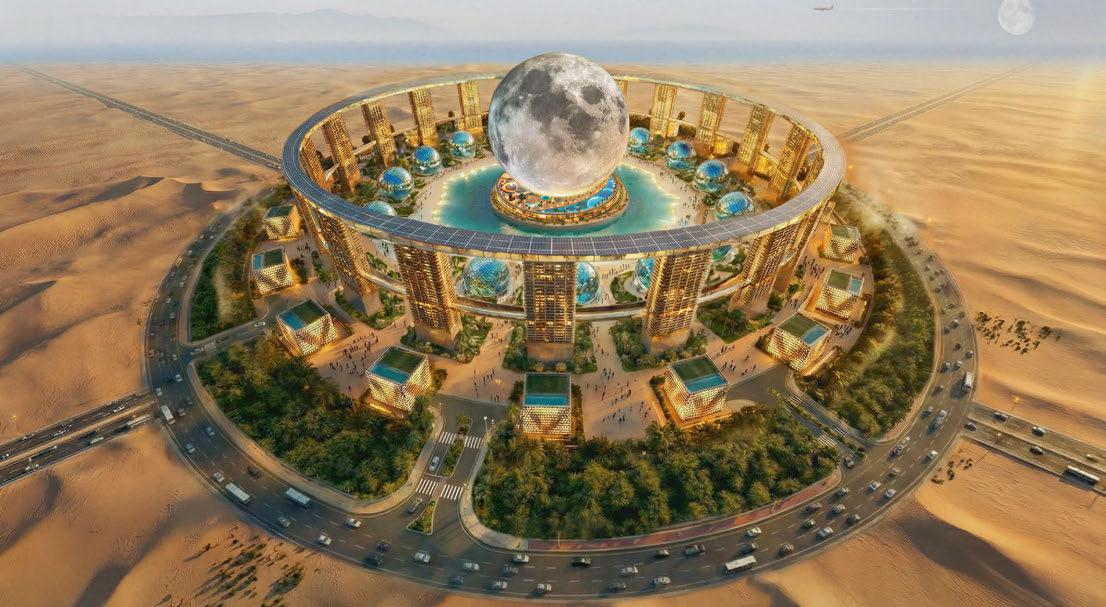
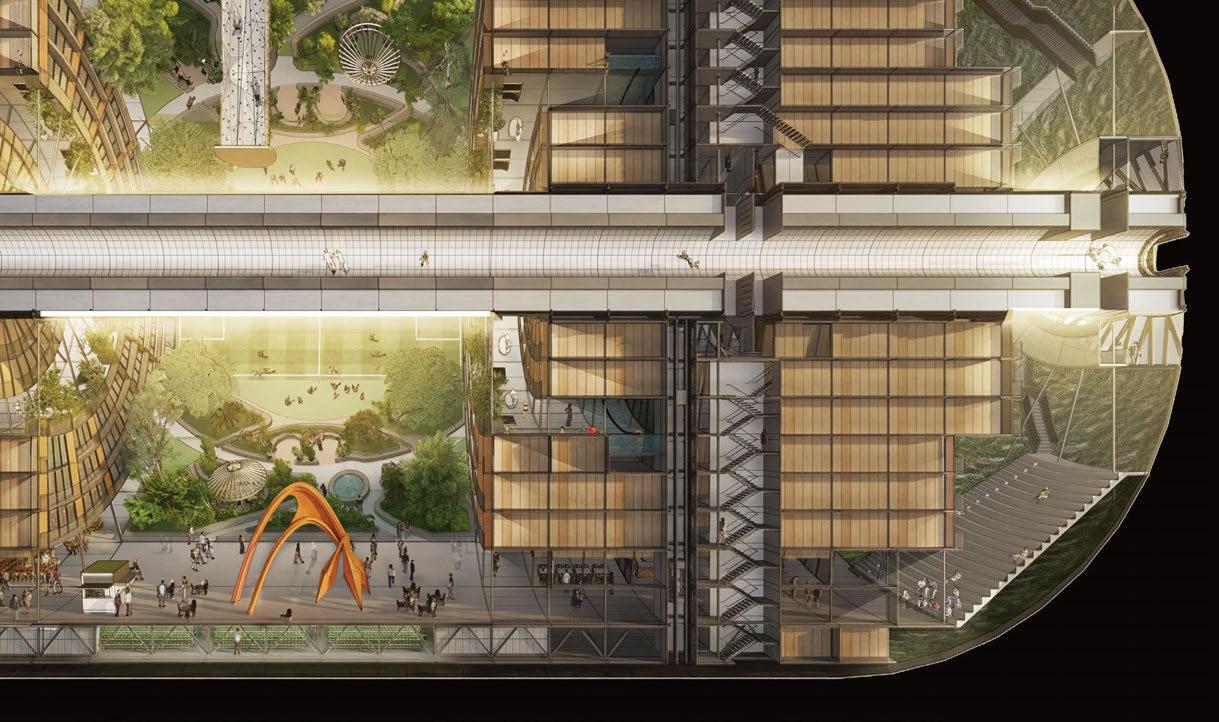
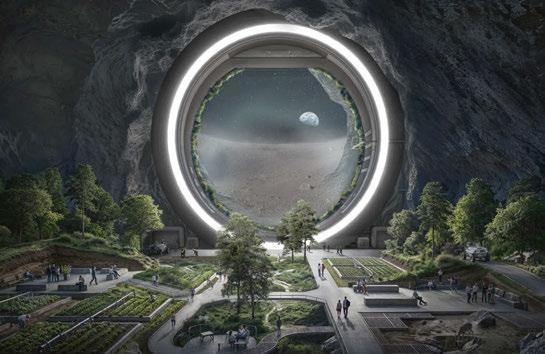
The inaugural Aurelia Prize in Design for Space Urbanism names its winner.
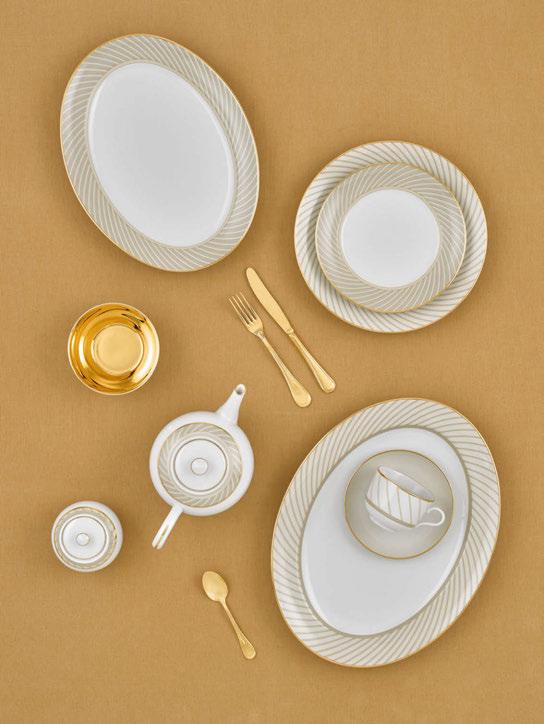
CASACERAMICA,
PHOTO: MICHAEL SANDMAIER
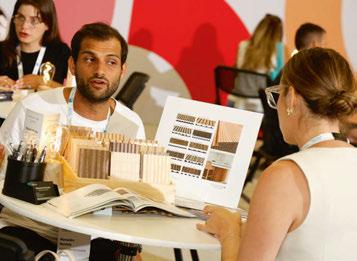
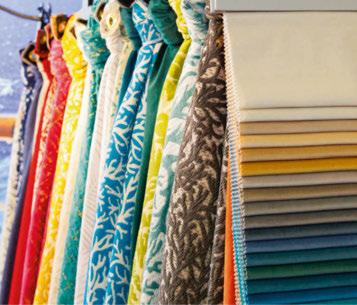
Richloom Cruise, family-owned with nearly 70 years of expertise, delivers high-quality, sustainable fabrics and finished products tailored for specifiers and purchasers in the cruise industry.
Uncharted Territory
Travel has always been shaped by humanity’s desire to explore new horizons, yet today, the sector finds itself entering truly uncharted territory, as innovation on water, on land and in the air is redefining how we experience the world around us.
In this issue of Starboard, we explore the evolving world of mobility, where the boundaries between transportation and hospitality are increasingly blurred, and great strides are being made to open access to experiences and forms of exploration that once felt out of reach. Driven by technological innovation, sustainability goals and changing lifestyles, emphasis is shifting away from simply reaching a destination, towards creating meaningful, immersive experiences along the way.
On water, Meyer Werft offers a glimpse into the future of sailing with the world’s first battery-electric ship, while cruise lines are venturing into uncharted territory by way of recordsetting amenities and new accommodation categories. And Silversea is breaking ground in a different way, soon to make its debut on terra firma with a hotel in Patagonia.
On land, the automotive sector is pushing boundaries with concept vehicles that cater to all demands of modern life, from work and play to rest and relaxation. And we speak to designer Tristan Auer, who is rethinking car interiors as living spaces tailored to emotion and sensory experience – an extension of the passenger rather than simply a mode of transport.
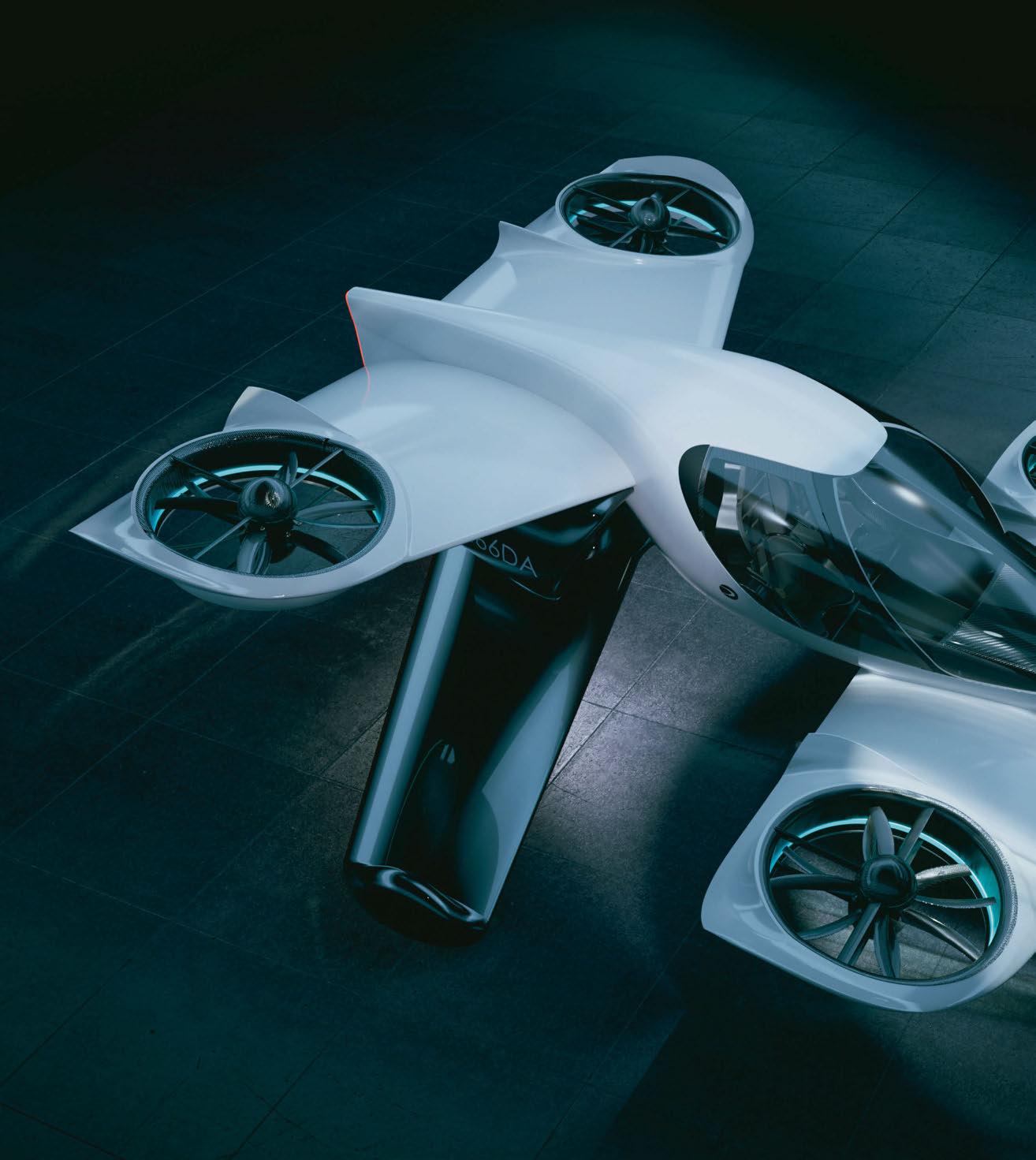
In the air, innovation is accelerating at remarkable speed. Once considered futuristic, air taxis are promising to reshape short-distance travel and urban infrastructure, and after a decade of research and development, Doroni Aerospace has built a full-scale prototype of its eVTOL, bringing everyday personal flight closer to reality.
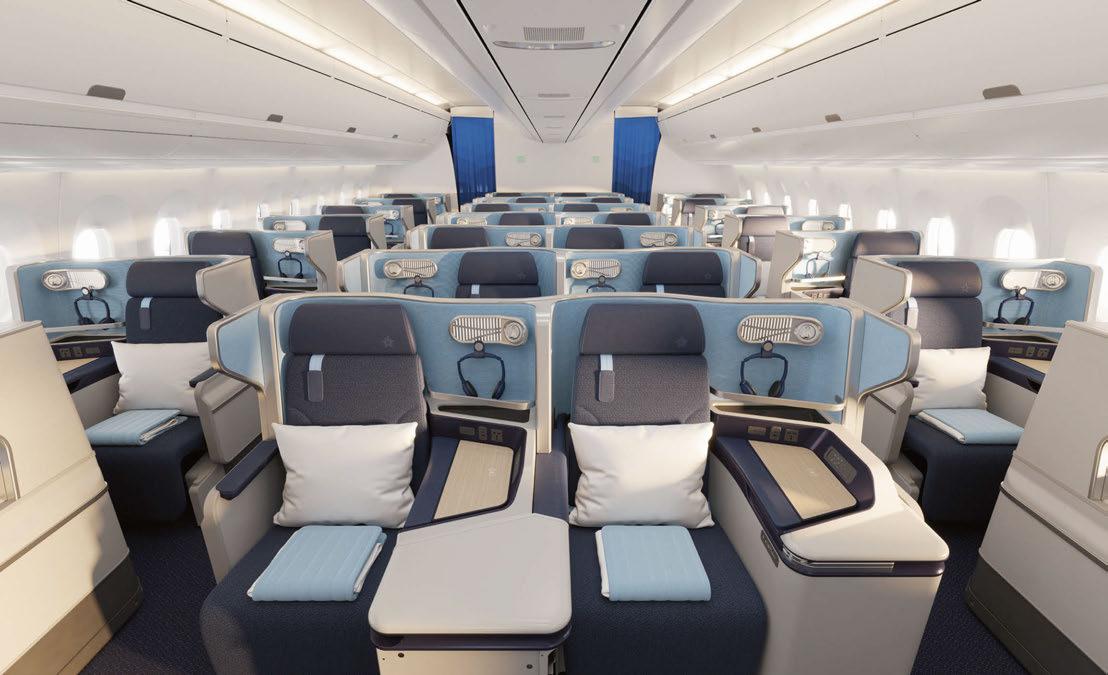
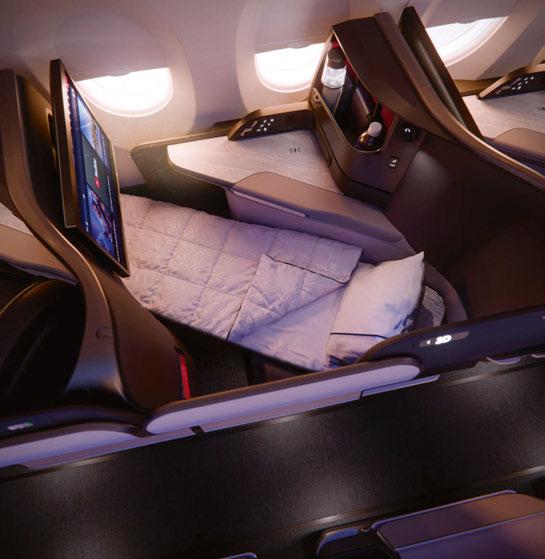
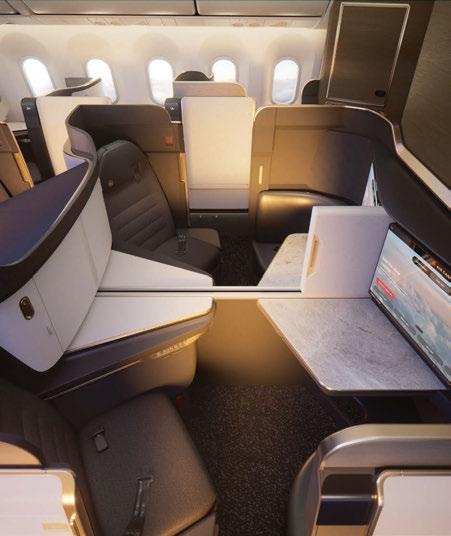
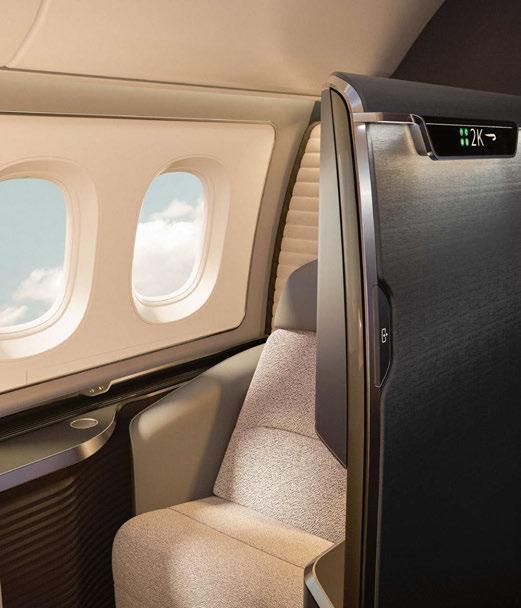
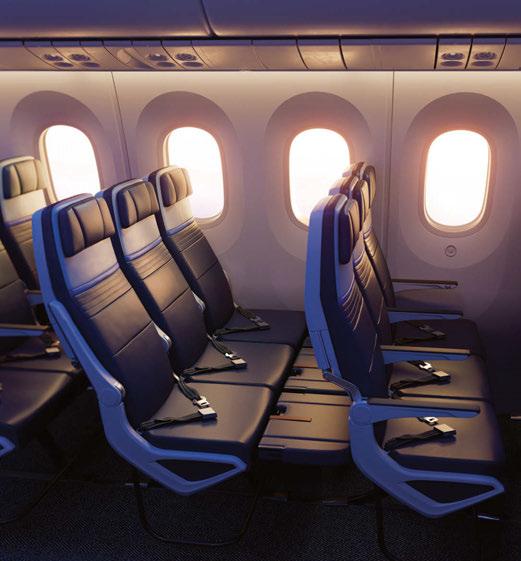
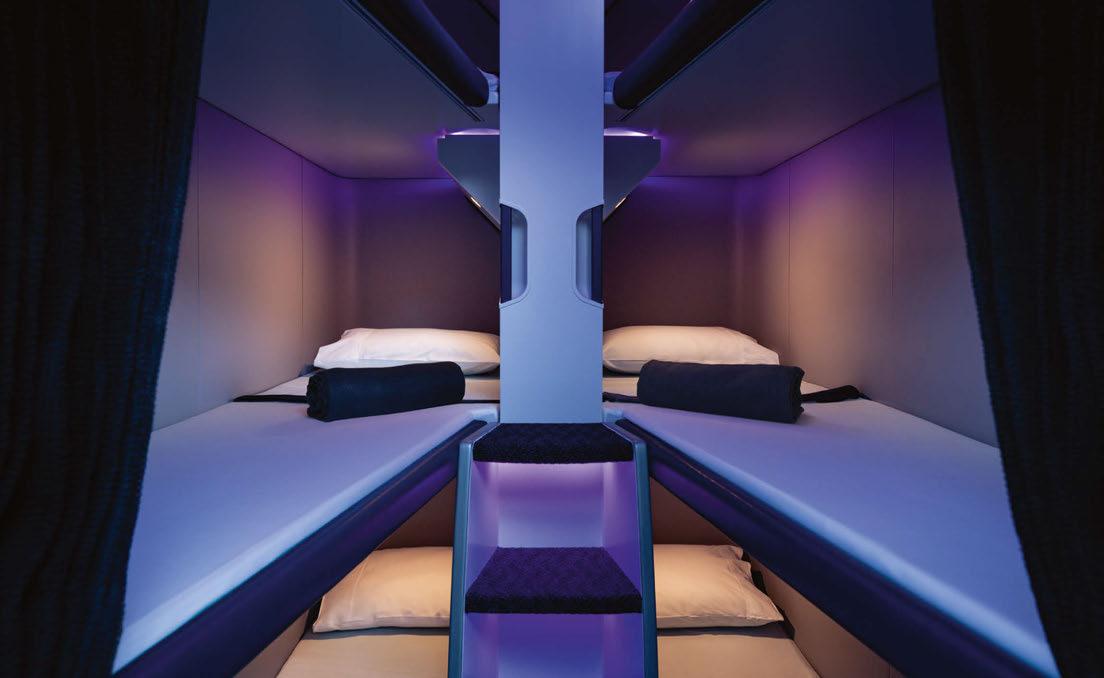
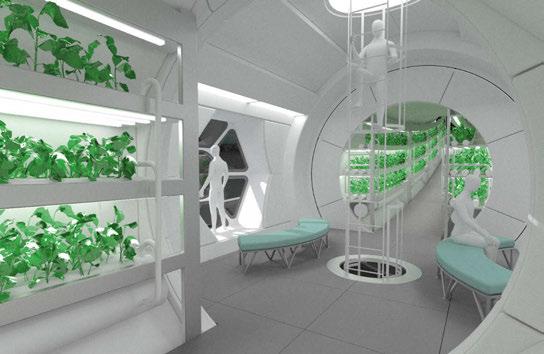
In commercial aviation, next-generation aircraft cabins are hitting the mainstream, with lie-flat beds and sleep pods now available in economy class. And beyond that lies perhaps the most ambitious frontier of all: space tourism. Recent missions have demonstrated that travel beyond Earth is no longer restricted to astronauts, and though still in its infancy, the emergence of civilian space travel raises profound questions about the future of exploration. Architects, designers and engineers are already beginning to imagine what comfort, service and human connection might look like in orbit. Entrants to the inaugural Aurelia Prize in Design for Space Urbanism propose landscaped public plazas lined with restaurants, cafés and bars, much like on Earth, taking architecture and food production into consideration
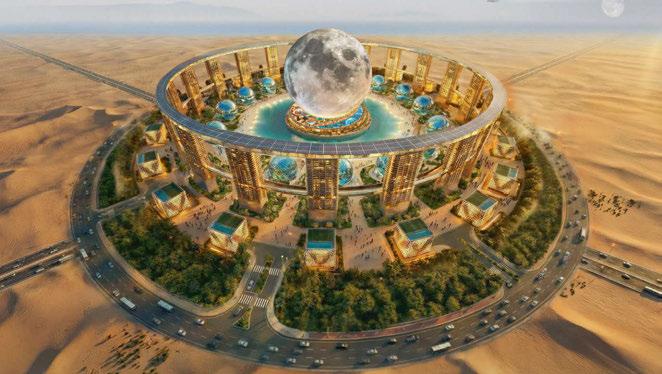
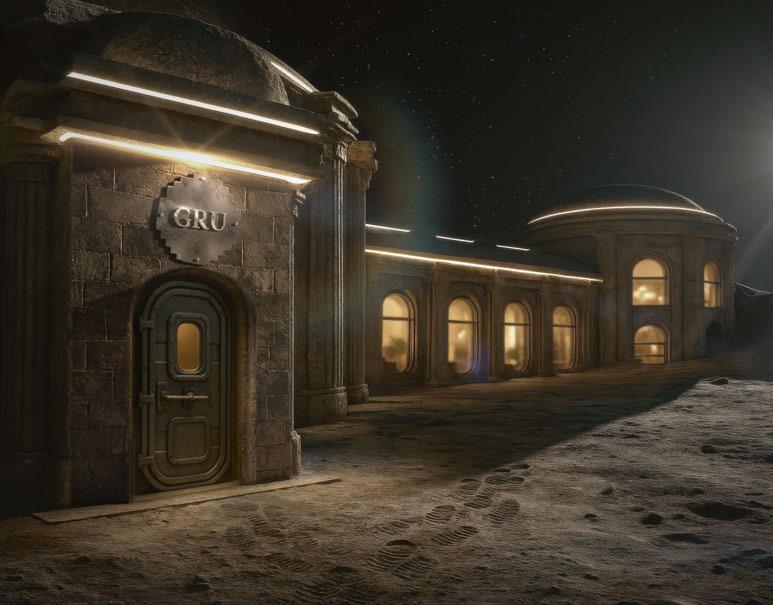
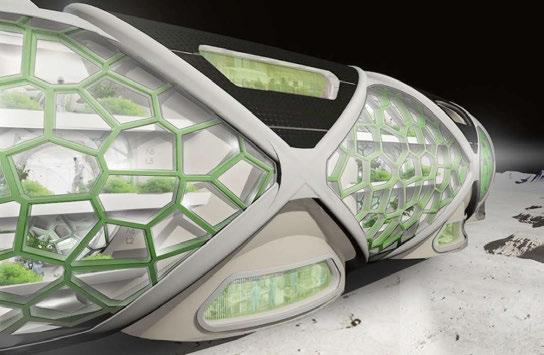
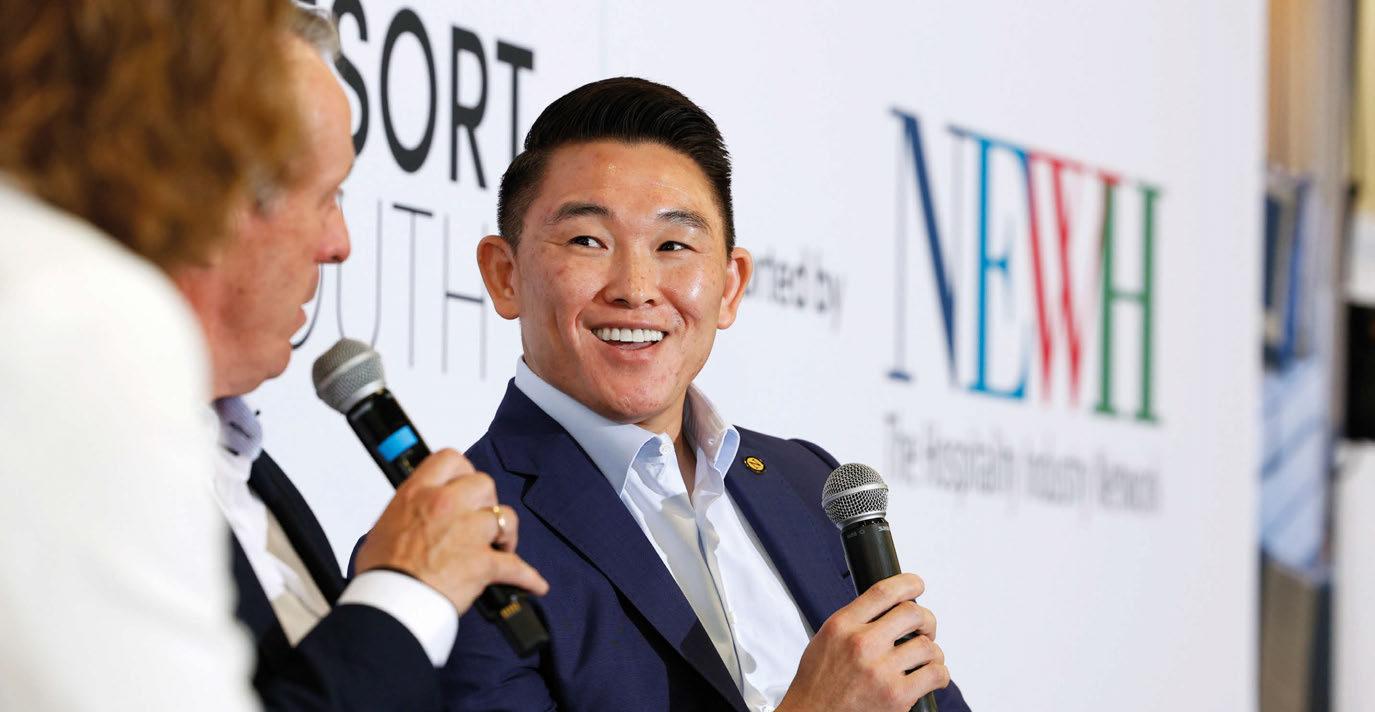
Beyond low-Earth orbit, plans are also emerging for lunar tourism, with a new generation of start-ups hoping to turn journeys to the Moon into the next frontier of luxury travel. GRU Space has ambitions to open a hotel on the Moon by 2032, and has set out a roadmap for permanent infrastructure and off-planet construction. The company’s entrepreneurial founder believes that humanity’s transition to a space-faring species is not a question of if, but when.
Welcome to the new issue of Starboard. We are entering uncharted territory, and the journey is only just beginning.
Visit the online store to subscribe and save across all Sleeper Media magazines.
Subscription records are maintained at Sleeper Media. For address changes, email enquiry@sleeper.media
EVENTS
Commercial Lead
Kieran Dean k.dean@mondiale.co.uk
Events Manager
Ellie Brown e.brown@mondiale.co.uk
Events Co-ordinator
Charlotte Yiatrou c.yiatrou@mondiale.co.uk
Marketing & Events
Olivia Mavers o.mavers@mondiale.co.uk
Data & Marketing
Adam Cymbaluk a.cymbaluk@mondiale.co.uk
DESIGN
Design Manager
David Bell
CORPORATE
Chairman Damian Walsh
Chief Operating Officer
Amanda Giles Accounts ar@mondiale.co.uk
SUBSCRIPTIONS
enquiry@sleeper.media
SUSTAINABILITY
Natural • Renewable • Recyclable
Starboard is printed by Buxton Press on FSC Mix-certified paper using 100% vegetable-based inks. Magazines mailed from Spatial Global are packaged in FSC-certified wrap that is fully recyclable.
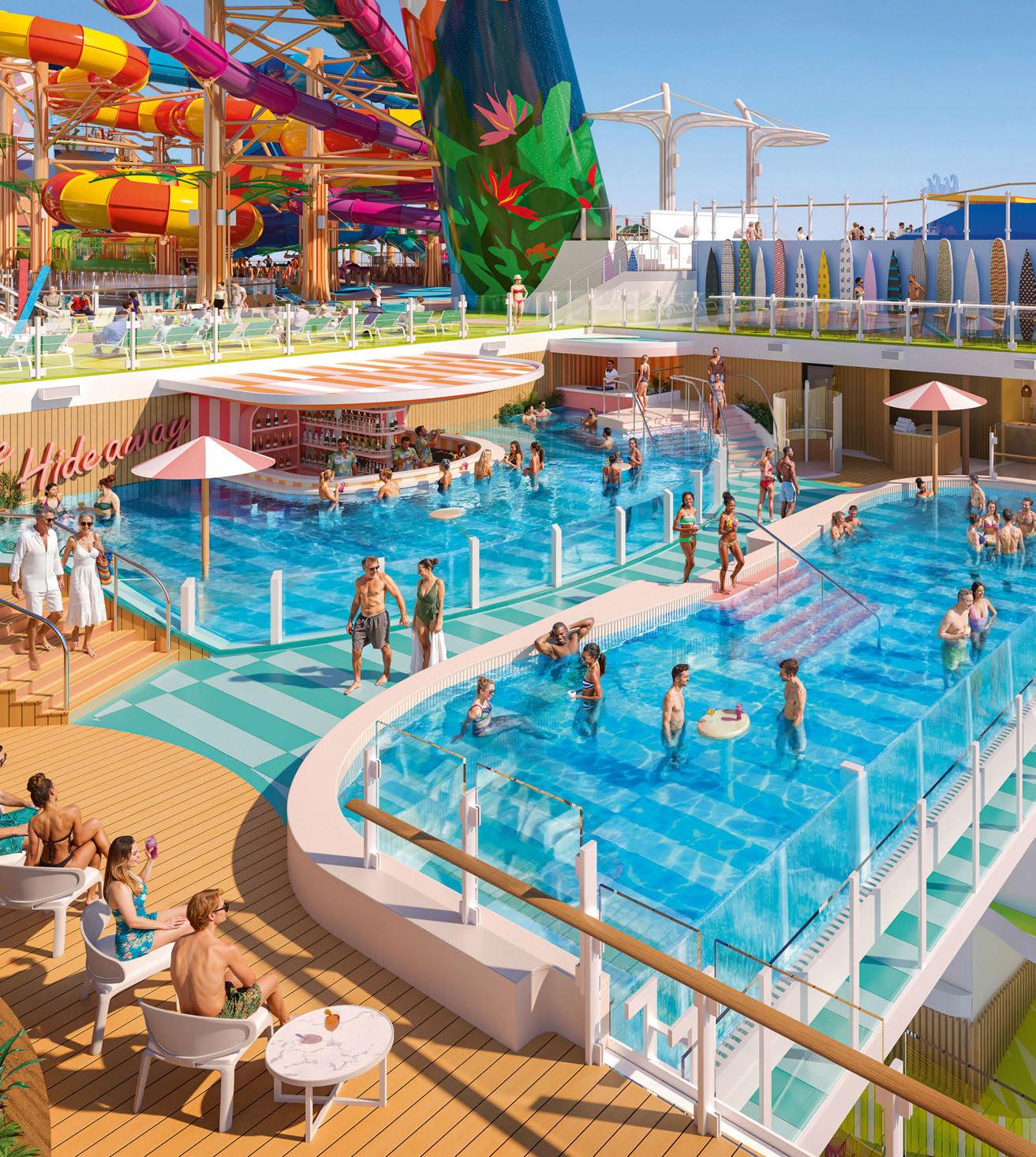
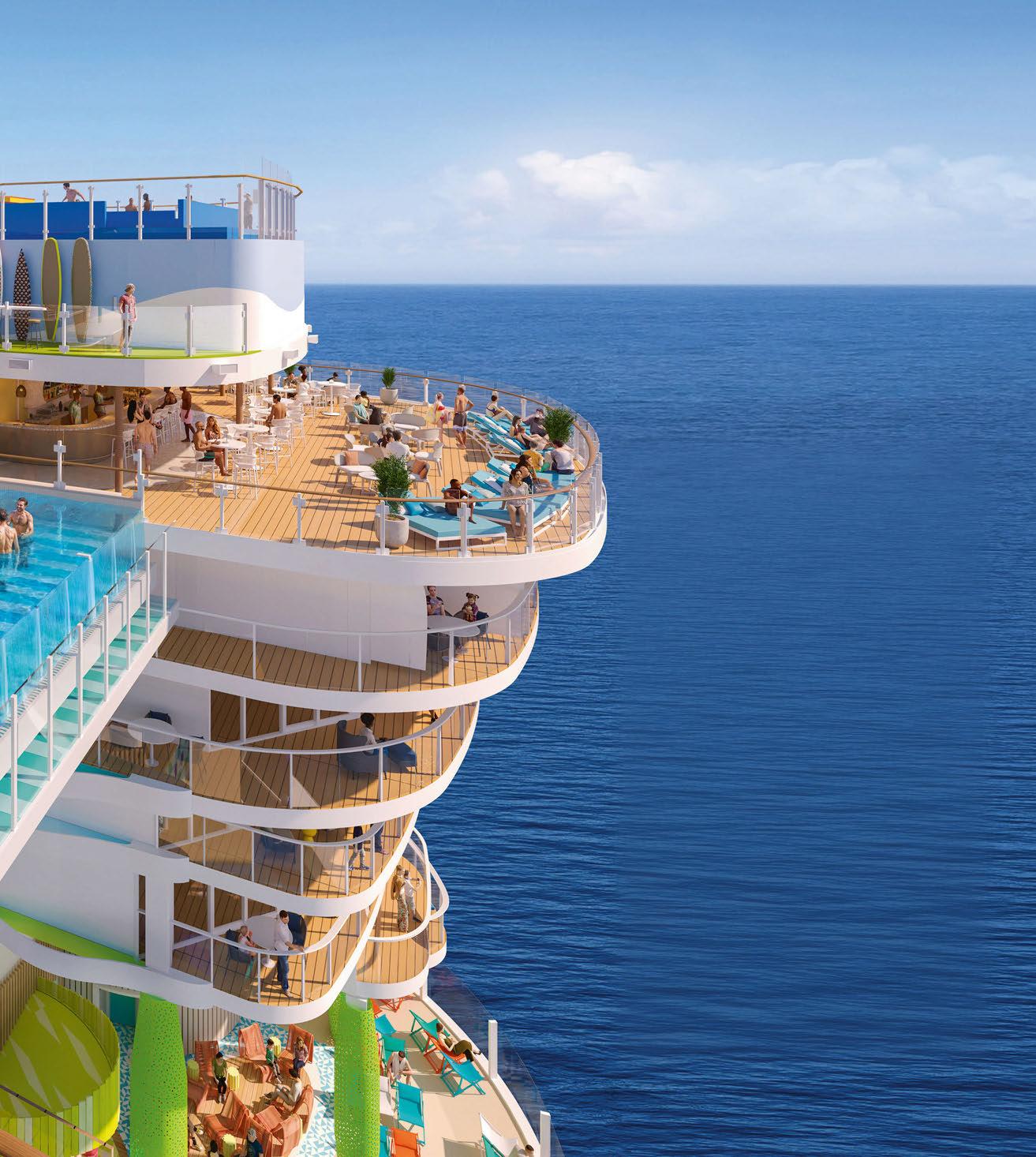
Royal Caribbean has revealed further details of its fourth Icon Class ship, billed as a bold evolution of family adventure.
Setting sail from Miami in 2027, Hero of the Seas will follow the lead of its game-changing predecessors, raising the bar with new features and experiences. Spanning 18 decks, the eight distinct neighbourhoods will be home to 2,814 staterooms, a record-breaking 28 dining venues, nine swimming pools – the most at sea – and the world’s largest kinetic art sculpture.
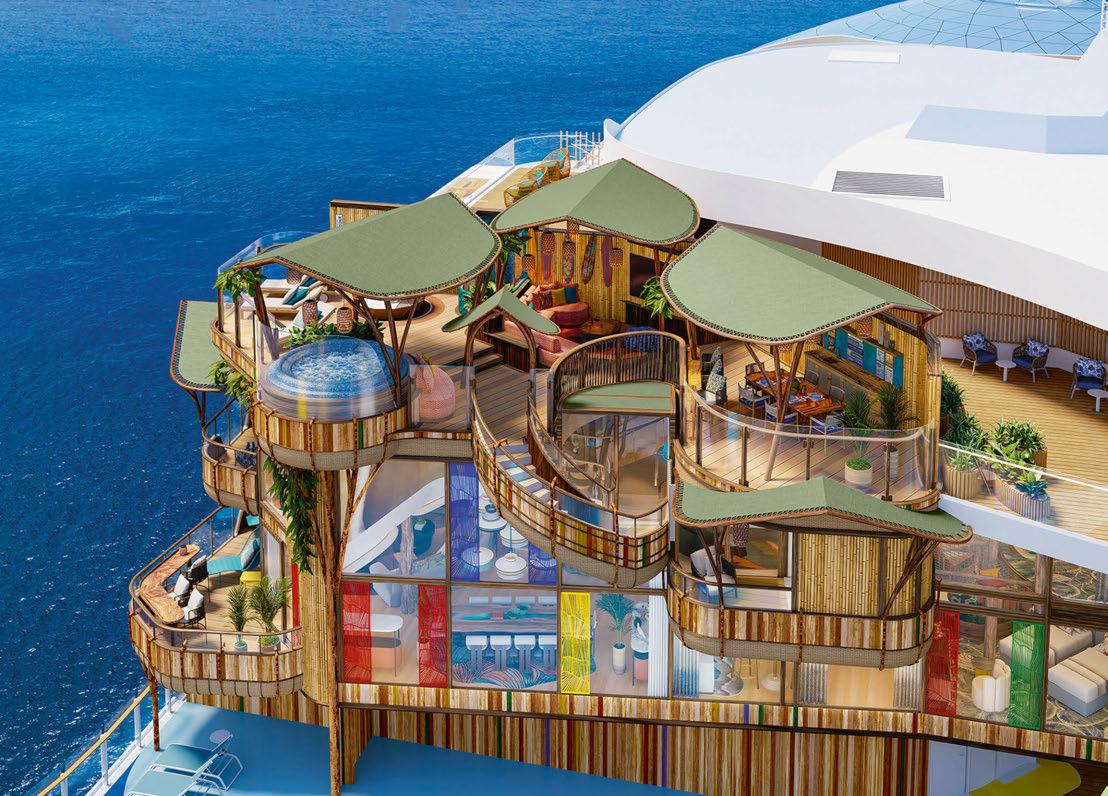
Signature Icon Class favourites such as the Royal Promenade and open-air Central Park will return, while new additions include Coconut Cove – a tropical pool with in-water loungers and a Caribbean bar; two new raft slides for the whole family to experience together; and a range of accommodations for multigenerational groups, including townhouses, surfside suites and the three-storey Ultimate Family Treehouse.
The all-encompassing dining line-up spans world cuisine and ranges from grab-and-go to fine dining, with fleet favourites such as Giovanni’s Italian Kitchen, Hooked Seafood and the Aqua Dome Market food hall. New concepts for Hero of the Seas include Orleans Parish Supper Club, serving Cajun and Creole cuisine to live jazz music; family friendly cooking classes; a swim-up bar; and Royal Railway – an immersive dining experience on board a train carriage, transporting adventurous diners through its combination of entertainment, food and technology.
“Icon Class truly set a new standard for family vacations, and Hero of the Seas takes that vision even further,” comments Michael Bayley, President and CEO of Royal Caribbean. “With more water, more thrills and more choices for all ages, we’re continuing to build on what our guests love about Royal Caribbean and delivering the experiences families are looking for when vacationing together.”
ROYAL CARIBBEAN
Amangati
AMAN AT SEA
ON DECK
Route: Mediterranean
Maiden Voyage: Summer 2027
Owner: Aman Group, Cruise Saudi
Operator: Aman
Architecture and Interior Design:
Sinot Yacht Architecture & Design
Shipyard: T Mariotti
www.amanatsea.com
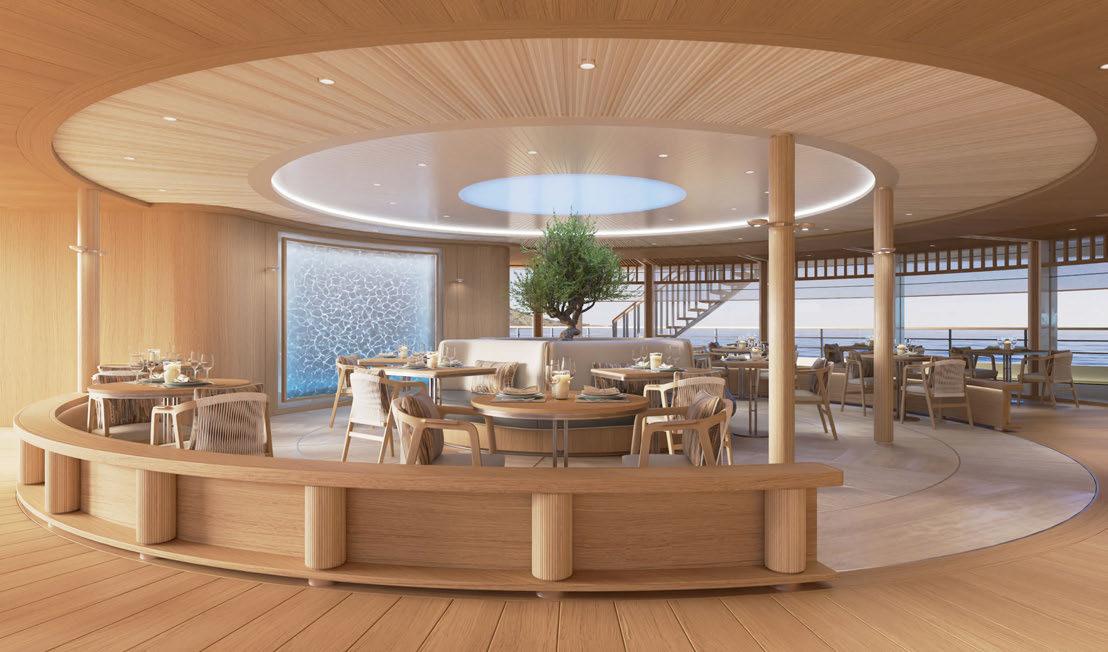
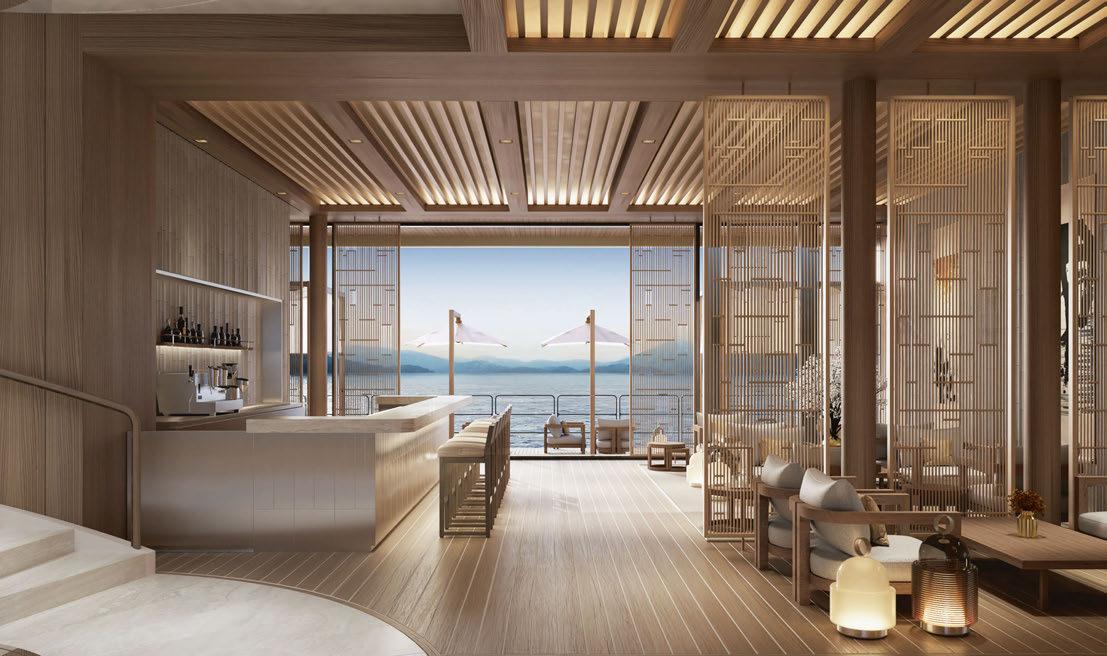
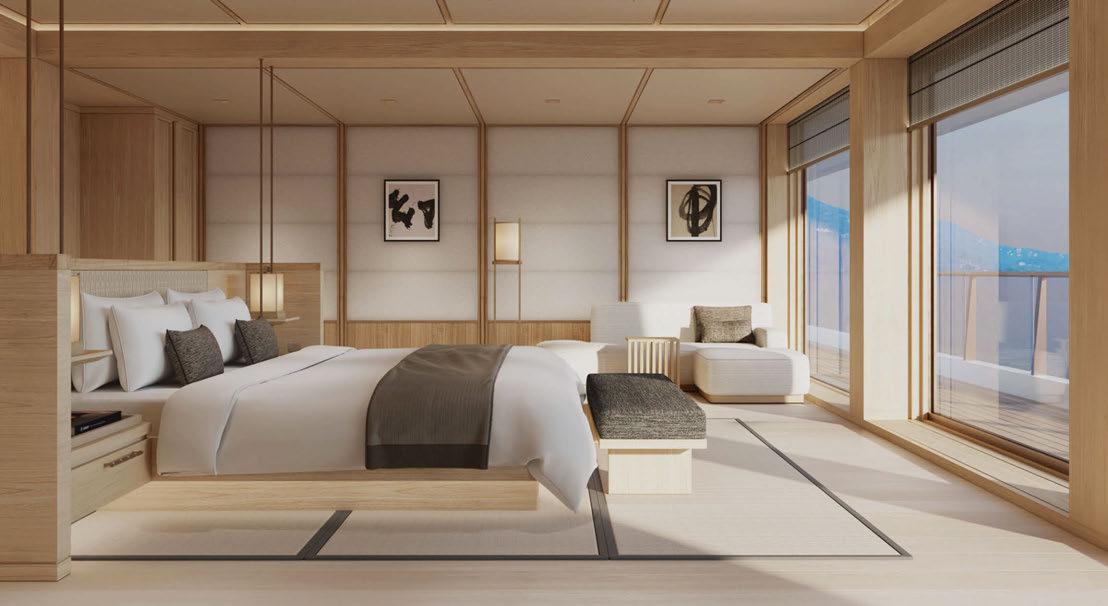
Ahead of its 2027 launch, Aman has offered a first look at the interiors of its debut yacht, designed to reflect the group’s signature principles of space, privacy and tranquillity.
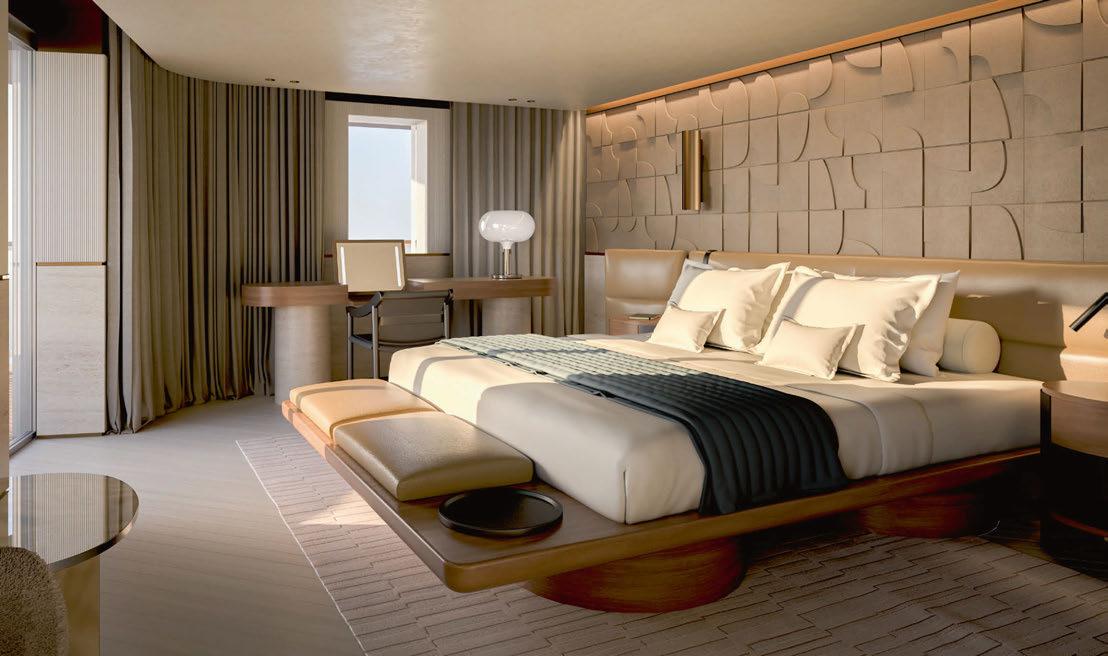
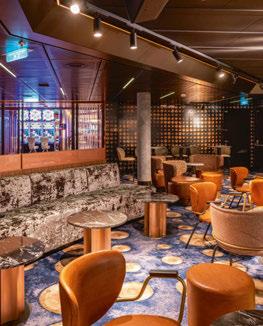
Currently under construction at T Mariotti in Genoa, the 180m vessel has been conceived in a joint venture between Aman Group and Cruise Saudi, with Sinot Yacht Architecture & Design taking the creative lead. The Netherlandsbased studio has drawn inspiration from the minimalist aesthetic of Aman’s existing hotels and resorts, translating it to the ocean for a new expression of the superyacht experience. The atmosphere is of calm, quiet elegance, while interiors honour the graceful restraint of a Japanese ryokan, with full-height windows and private terraces throughout, ensuring light, openness and a constant connection to the sea.
Named after the Sanskrit phrase for ‘peaceful motion’, Amangati spans nine decks and accommodates 94 guests across 47 expansive suites, all with a private terrace. Soaring ceilings
and full-height windows bathe timber-toned interiors in light, while textured materials bring tactility and warmth.
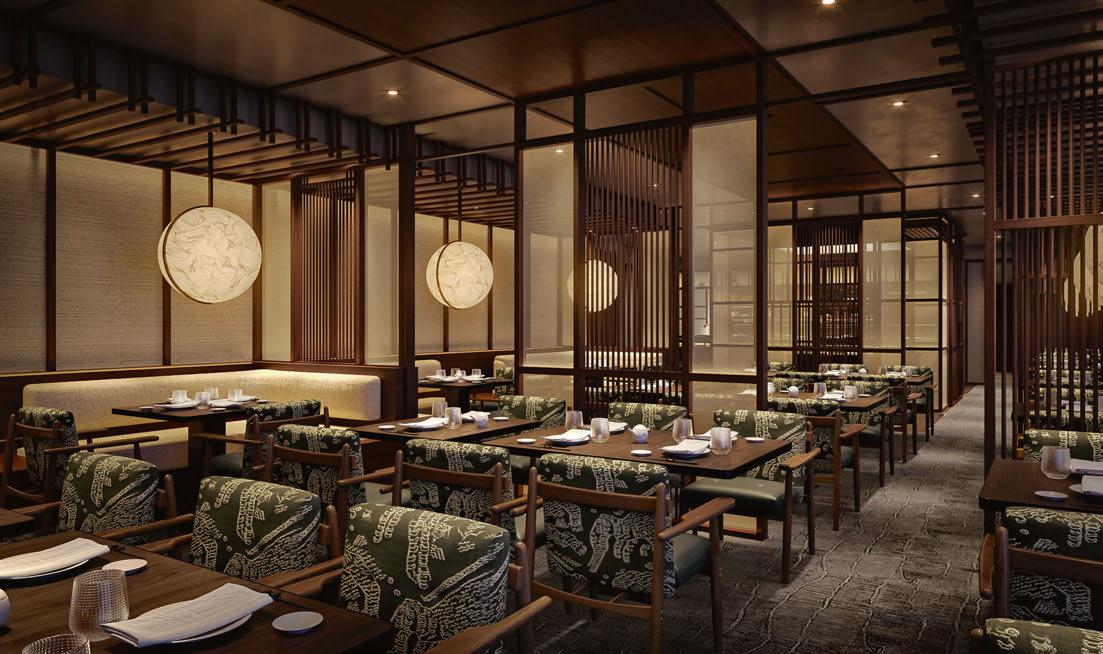
Across the 10 restaurants, bars and lounges, dining is guided by seasonality, provenance and culinary tradition. Highlights include Alira, serving Mediterranean fare; Akari – a Japanese speciality restaurant with its own sake bar; and The Jazz Club, designed in homage to its namesake at Aman New York.
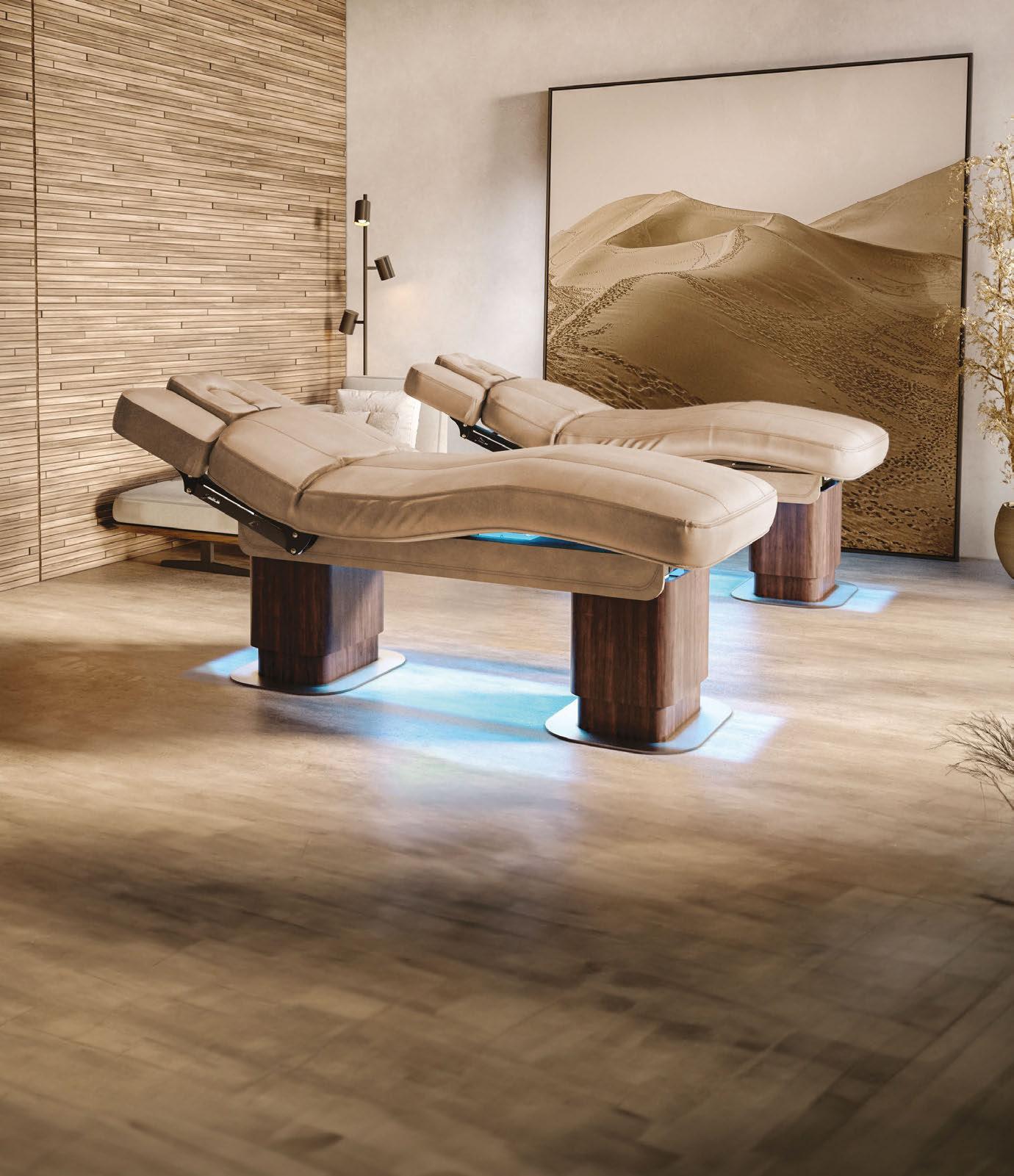
Wellness is integral to the experience too. The 1,190m2 spa is spread across two decks and features eight ocean-facing treatment suites, as well as open-air whirlpool baths, a hammam and banya with dedicated serenity zones. There’s also a 16m infinity pool and a marina with direct access to the water.
True to Aman’s philosophy of honouring the spirit of place, itineraries eschew traditional routes in favour of deeper immersion. Both onboard and ashore, Amangati reimagines the brand’s emblematic lifestyle in motion.
Crystal Grace
ON DECK
Maiden Voyage: May 2028
Owner: Abercrombie & Kent Travel Group
Operator: Crystal Cruises
Architecture: GEM
Interior Design: Tillberg Design of Sweden, Studio Ibsen (suites and common spaces)
Shipyard: Fincantieri
www.crystalcruises.com
Crystal has shared details of the speciality dining destinations aboard its forthcoming ship, due to debut in 2028. As the first vessel to launch under the ownership of Abercrombie & Kent Travel Group, Crystal Grace will introduce three updated venues, each a collaboration between Tillberg Design of Sweden and their respective culinary partner.
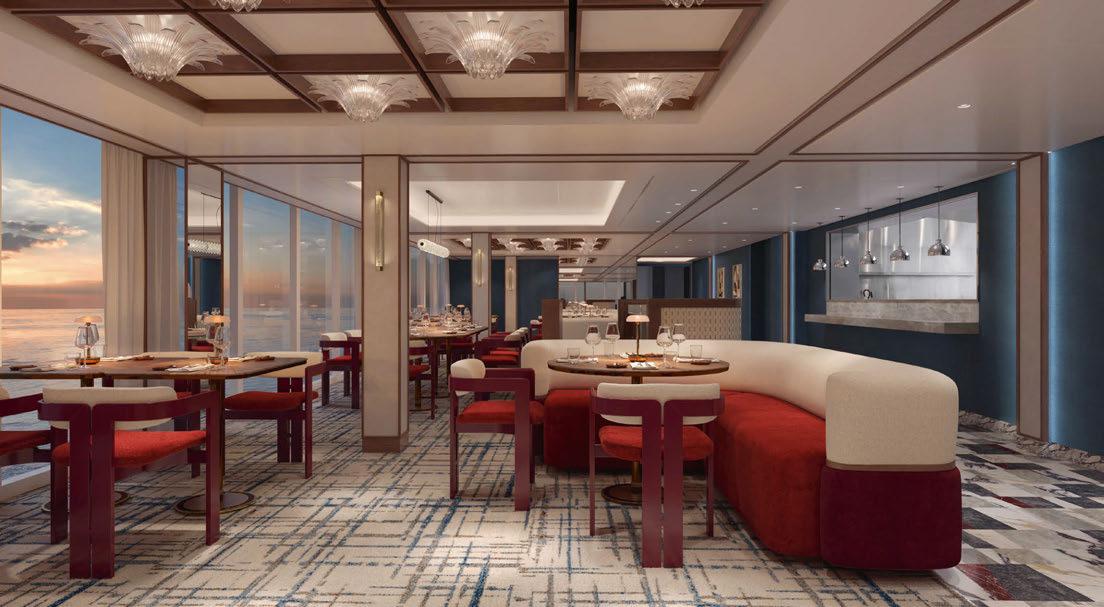
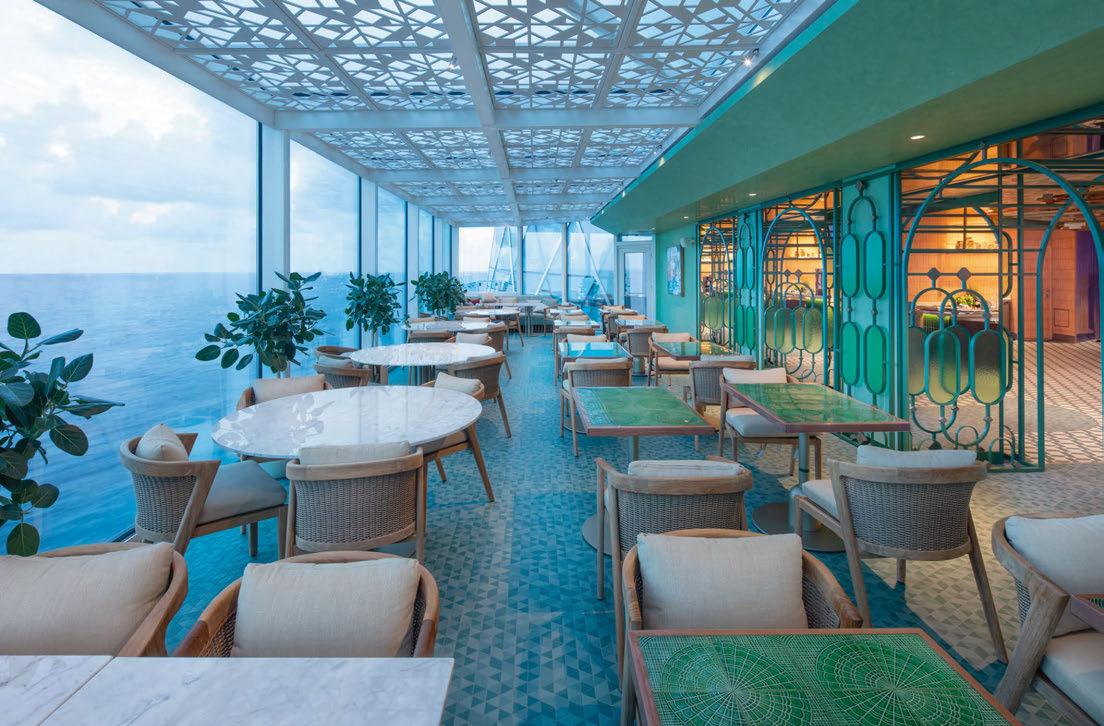
On Deck 5, Umi Uma from Nobu Matsuhisa makes a return, with interiors designed to reflect the understated elegance of the chef’s landbased restaurants. The 84-cover JapanesePeruvian comprises a sushi bar and formal dining room, the latter framed by full-height glazing offering unobstructed ocean views.
Continuing a collaboration with Michelinstarred chef Massimiliano Alajmo and restaurateur Raffaele Alajmo, Osteria d’Ovidio will also feature. Located on Deck 10, the sophisticated yet relaxed setting is inspired by the Italian Riviera, with the venue extending out to an open-air terrace.
Finally, Beefbar by Riccardo Giraudi will sit adjacent, with the modern steakhouse expected to become one of the most dynamic dining environments aboard the ship.
“From the beginning, our vision for Crystal Grace was to build on the strength of our culinary partnerships while giving each venue a renewed sense of place and design,” comments Gunter Lorenz, Vice President of Food & Beverage Operations. “Working closely with our partners, Chef Nobu Matsuhisa, Chef Massimiliano Alajmo and Riccardo Giraudi, we’ve refreshed each restaurant with thoughtful design updates and the flexibility to introduce new menu elements over time. The result is a collection of dining experiences that feel both familiar and excitingly new for our guests. We’re especially excited about the beautiful outdoor dining spaces, which will allow guests to enjoy exceptional cuisine in the open air –something we know will become a favourite part of the experience at sea.”
Oceania Sonata
OCEANIA CRUISES
ON DECK
Maiden Voyage: August 2027
Owner: Norwegian Cruise Line Holdings
Operator: Oceania Cruises
Interior Design: SMC Design
Shipyard: Fincantieri
www.oceaniacruises.com
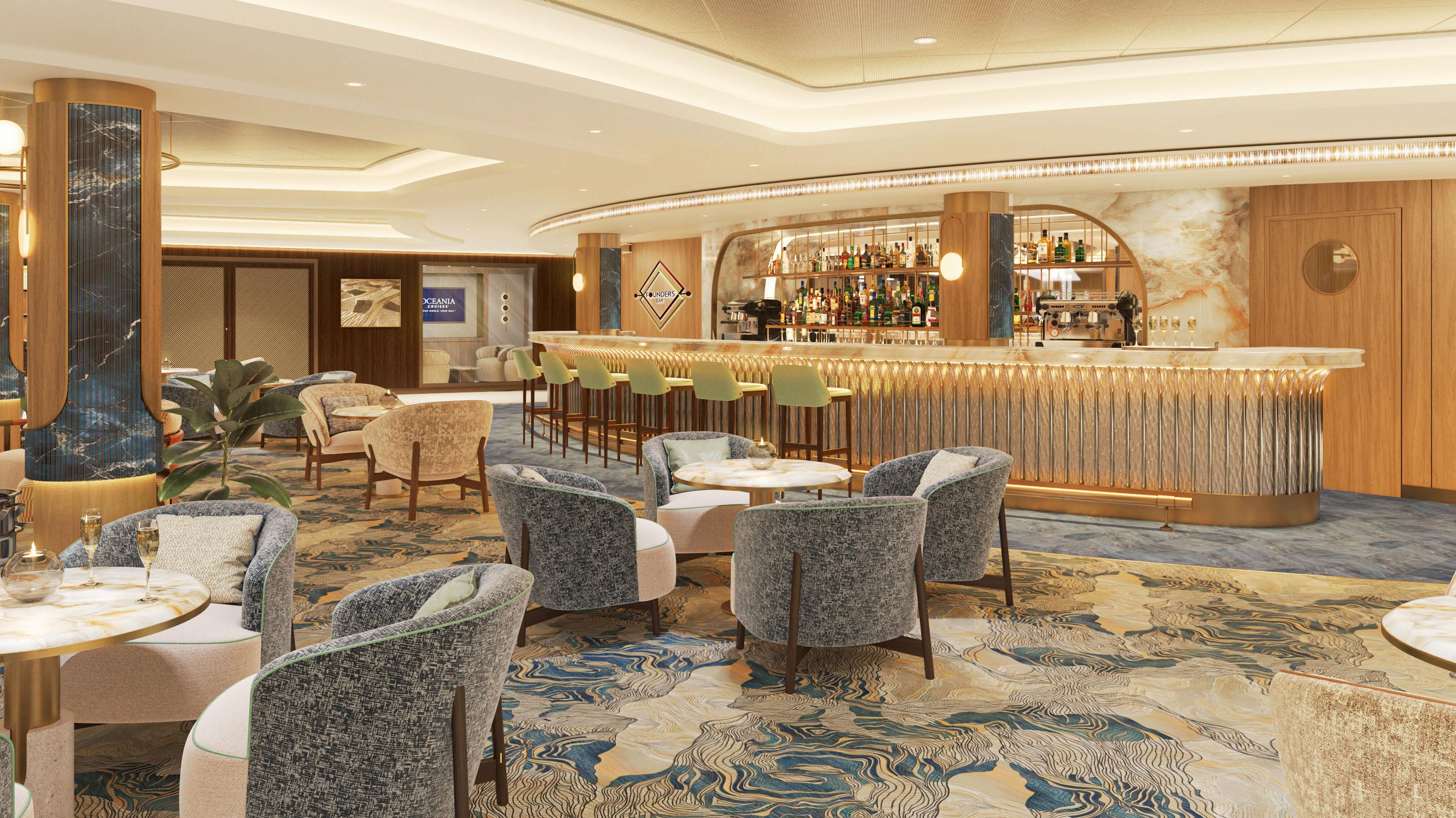
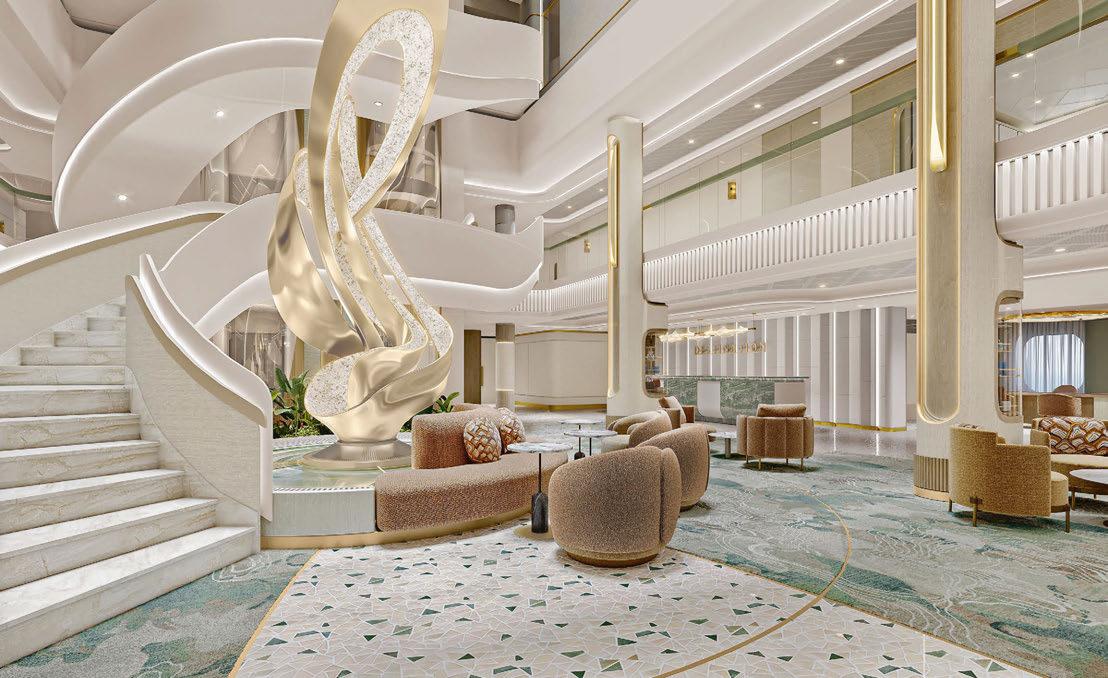
SMC Design has revealed further details of its atrium concept for Oceania Sonata, the first of a new fleet from Oceania Cruises.
At 86,000 gross tonnes and 1,390 guests, the newbuild ship will be the largest in the fleet, with interiors designed to set a new standard of luxury at sea. Currently under construction at Fincantieri, the vessel is slated to embark on its maiden voyage in August 2027.
SMC Design was appointed to envision two bars, retail outlets and lift lobbies, as well as the atrium at the heart of the ship. According to the London-based studio, the mandate from Oceania Cruises centred around proportion, quality and an uncompromising residential feel; with approximately one-third of accommodation dedicated to suites, Sonata has been conceived from the outset as a ship where space is the luxury.
This approach begins in the atrium – the guest’s point of arrival and the architectural
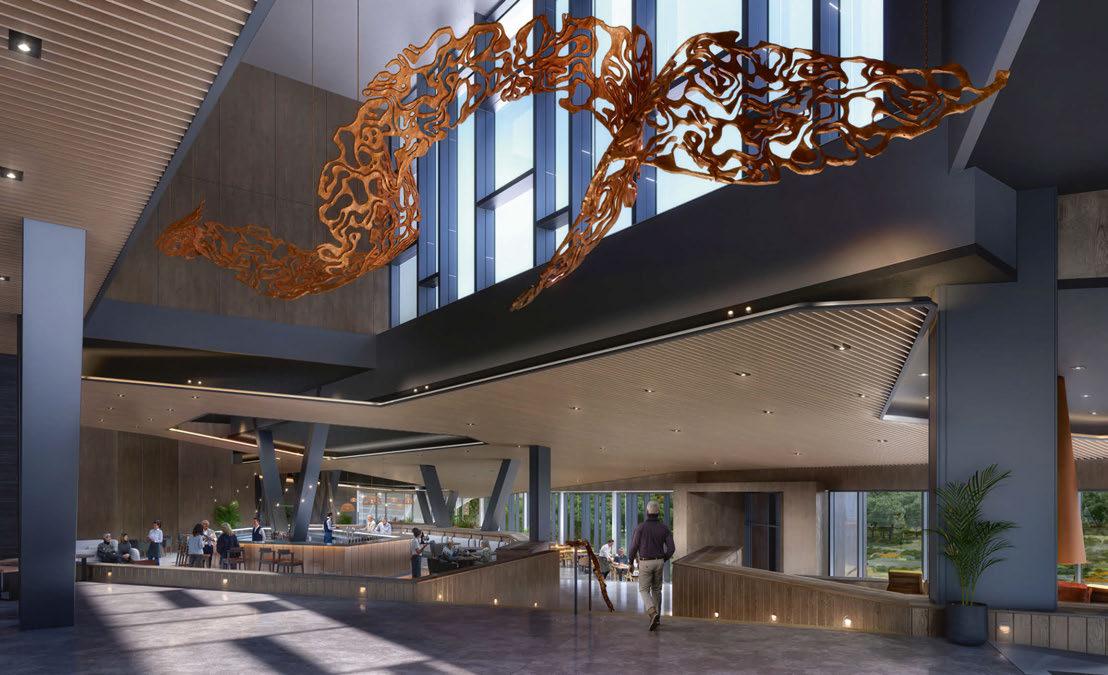
moment that sets the tone for everything that follows. SMC Design’s vision sees a flowing, ribbon-like staircase wrapped around a central art installation, introducing movement and vertical drama without sacrificing the clarity a space of this function demands. The materiality pairs natural stone with layered textures and elegant bronze detailing, while the colour palette is characterised by warm neutrals and muted mineral tones. The result is an environment that is more akin to an art gallery or a wellconsidered private residence than the heavily orchestrated atriums of a previous era.
“The atrium is the natural focal point of the ship,” comments Matt Fyvie, Senior Associate at SMC Design. “The design aims to create a strong sense of arrival while maintaining a clear and easy-to-navigate space. The architectural forms and sculptural staircase introduce movement and identity, while the overall palette maintains a sense of calm.”
Marguerite
BELMOND
ON DECK
Route: Burgundy, France
Maiden Voyage: Summer 2026
Owner: LVMH
Operator: Belmond www.belmond.com
Following the successful launch of Coquelicot in 2023, Belmond has announced plans to debut Margeurite, a new riverboat sailing through the Burgundy region of east-central France.
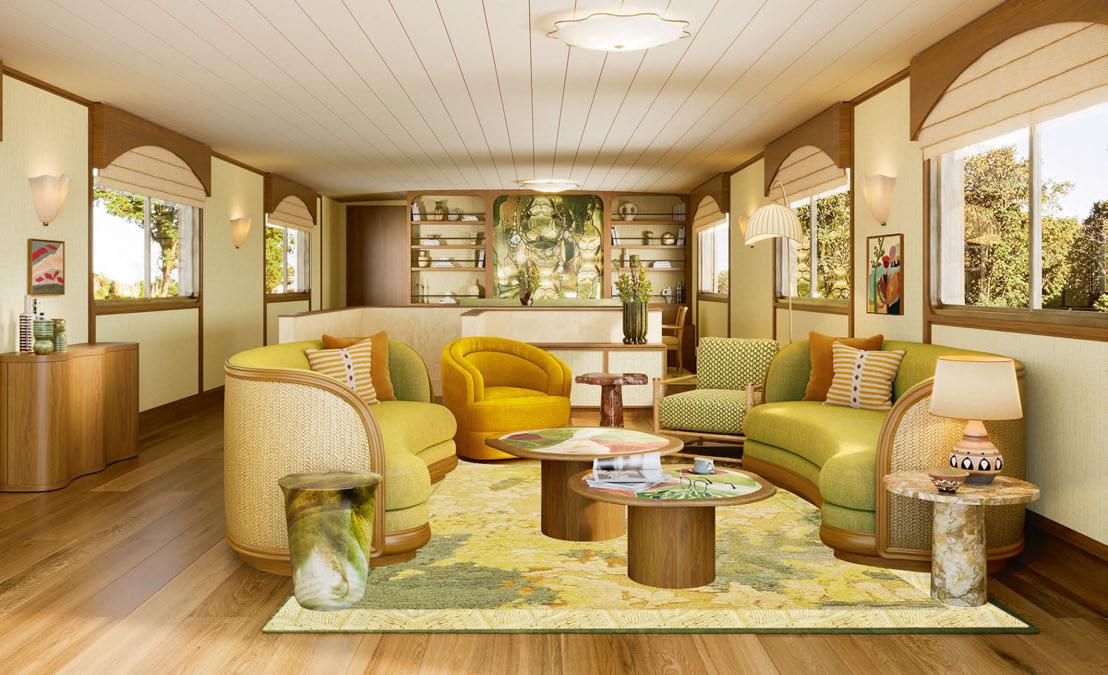
Joining the fleet from Summer 2026, the vessel is the reimagining of the former Amaryllis, with refurbished interiors inspired by the golden fields of blossoming marguerite. Honey-hued architecture, a soft yellow palette and delicate floral motifs honour the boat’s namesake, while fine textiles and artisanal crafts celebrate the natural beauty of Burgundy.
Described as a floating villa, Marguerite accommodates just eight guests across four elegantly appointed double suites, each with its own en suite bathroom. At the heart of the boat, an open-plan salon serves as a welcoming haven for relaxation and convivial gatherings, while an al fresco dining area offers French cuisine overseen by Michelin-starred chef Dominique Crenn.
Interiors are a harmonious blend of elegance and regional character. A dining table inlaid with a floral mosaic takes centre stage, complementing bespoke rugs that reference the playful act of plucking daisy petals. Contemporary stained-glass accents by Atelier Loire in Chartres add a further layer of French craft, accompanied by natural materials and curated objects that inject a sense of place. Large picture windows maintain a constant connection to Burgundy as it passes by, as does the expansive deck, framed by local flora.
“We are immensely proud to unveil Marguerite - the result of a true French collaboration, uniting our teams here in Saint Jean-de-Losne, our in-house architect and exceptional artisans from across France,” says Maxime Brun, General Manager of Les Bateaux Belmond. “Marguerite is a testament to our ongoing commitment to Slow Luxury, where time is not simply spent, but invested.”
Explora III Owner’s Residence
EXPLORA JOURNEYS
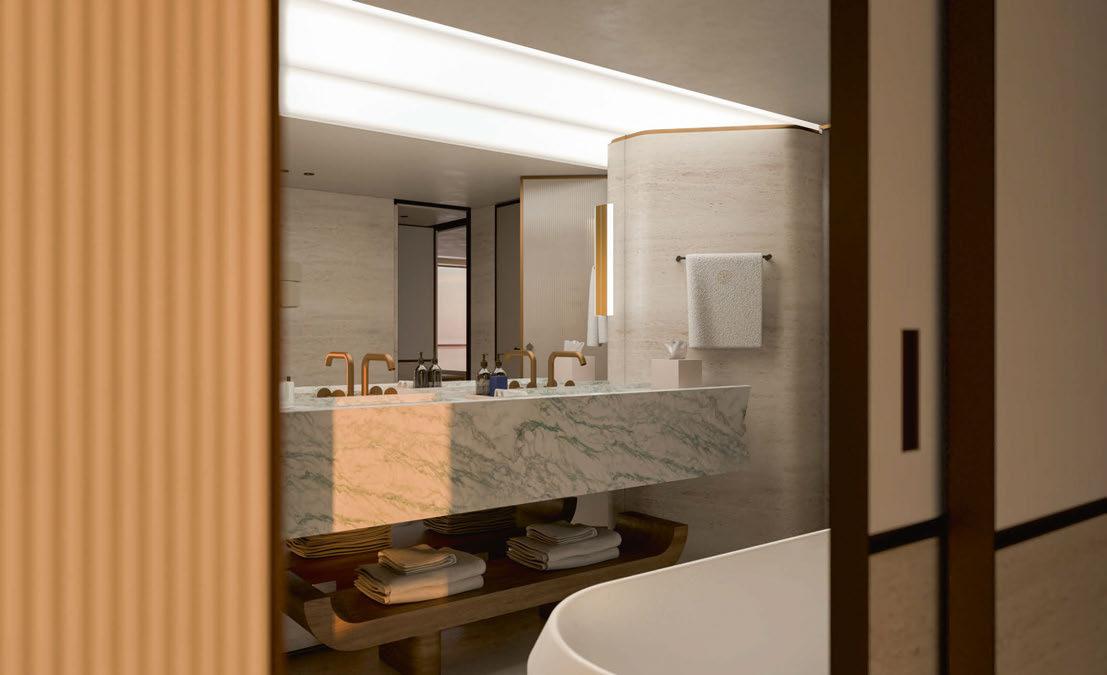
Patricia Urquiola designs a home at sea that emphasises tranquillity, connection and an ocean state of mind.
Words: Hannah Wintle
With the launch of its first vessel in 2023, Explora Journeys sought to redefine the cruise experience, charting a new course for luxury at sea. Designed to feel like a private yacht, Explora I combined fine art with culinary riches, each space embodying an elegant, cosmopolitan atmosphere that solidified the ship as a pinnacle of on board indulgence.
Now in its fifth year, the MSC Group brand shows no sign of slowing down on its luxury-leading voyage. Setting sail in Summer 2026, Explora III will bring a new sense of sophistication to the seas, with the addition of a second Owner’s Residence designed by Patricia Urquiola. Unveiled in Milan at an exclusive event at Casa Brera – a Marriott Luxury Collection Hotel also designed by Urquiola – Starboard heard from key leadership as to how the new accommodation came to life. “Working with an icon like Patricia enabled us to think more deeply about the guest experience,” shares Anna Nash, President of Explora Journeys. “The Owner’s Residence is centred around generosity of space and a sense of freedom, and Patricia has brought that to life with the sea as the ever-changing art that centres the design.”
Much like its predecessors, Explora III aligns with the brand’s ‘Ocean State of Mind’ – an overarching concept that shapes the entire approach. It is based on the idea that the ocean relaxes you, creating an energy that inspires inner and outer discovery, broadens horizons and triggers new connections – not least a connection to the ocean.
This connection came naturally for Urquiola; having spent her childhood in the north of Spain, she speaks fondly of the Mediterranean. “To me, the sea is alive. It’s moving, it’s changing, it has life,” she exclaims. Translating this thinking into a physical space therefore involved consideration of light and fluidity, evoking a sense of connection to an environment in constant flux.
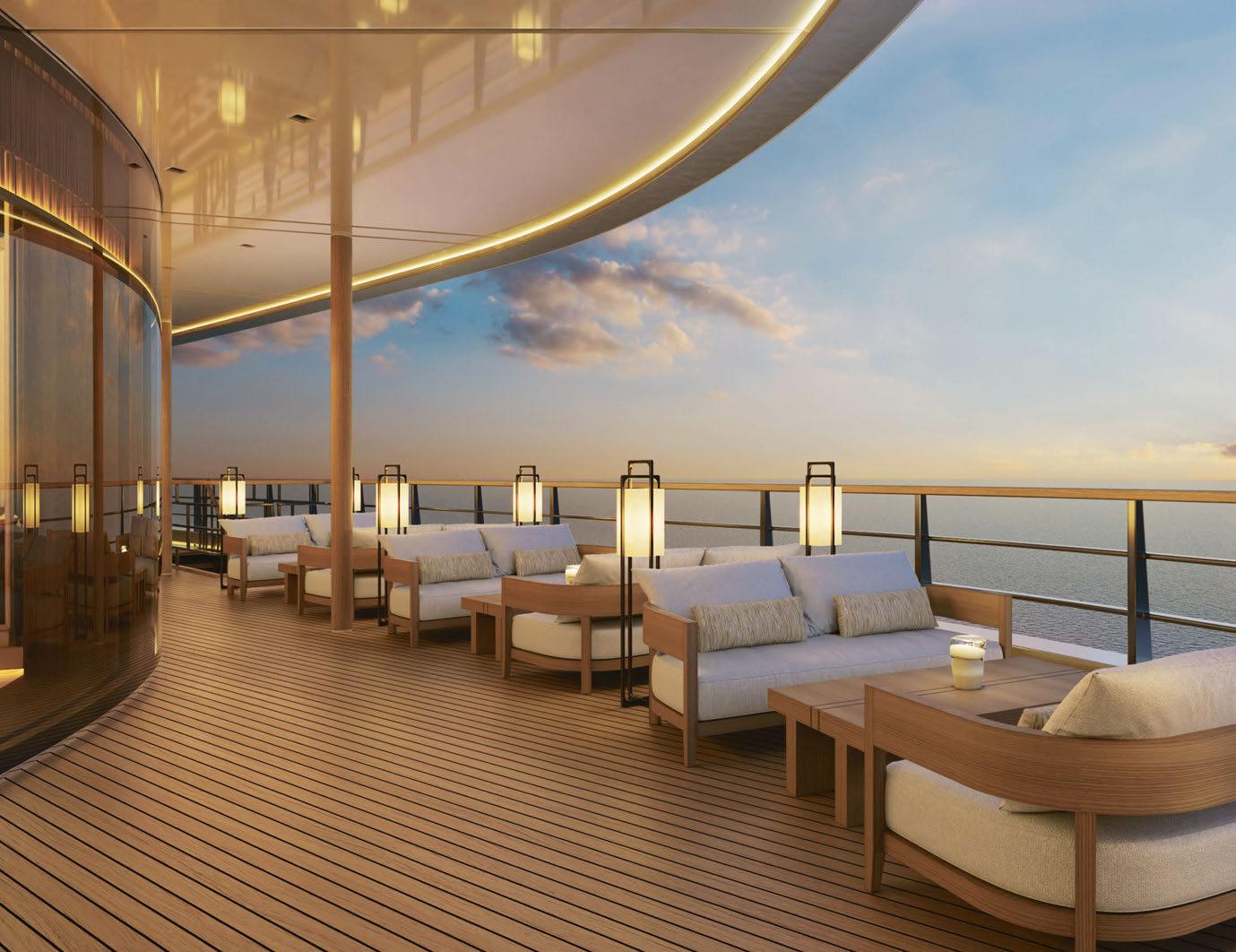
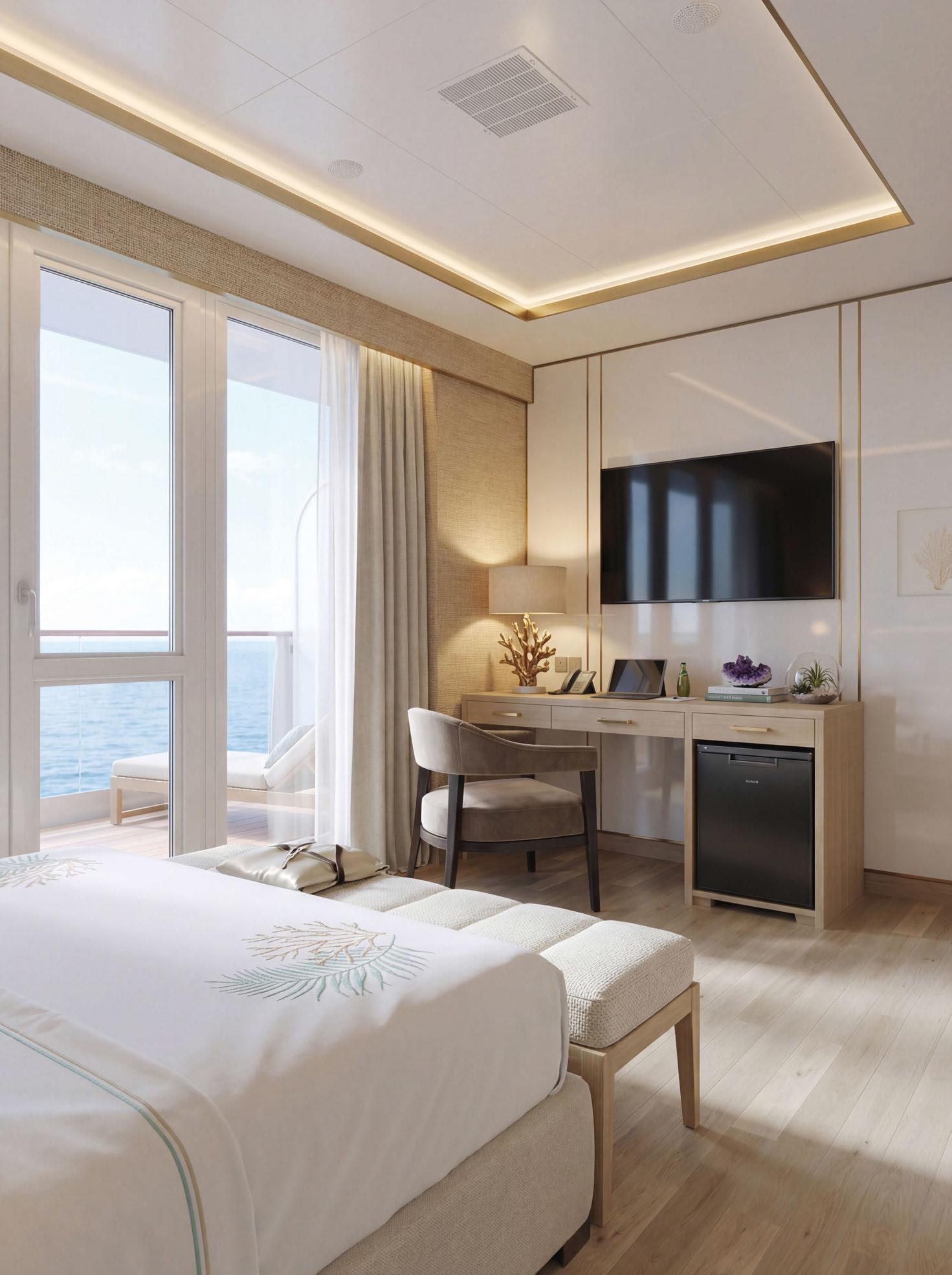
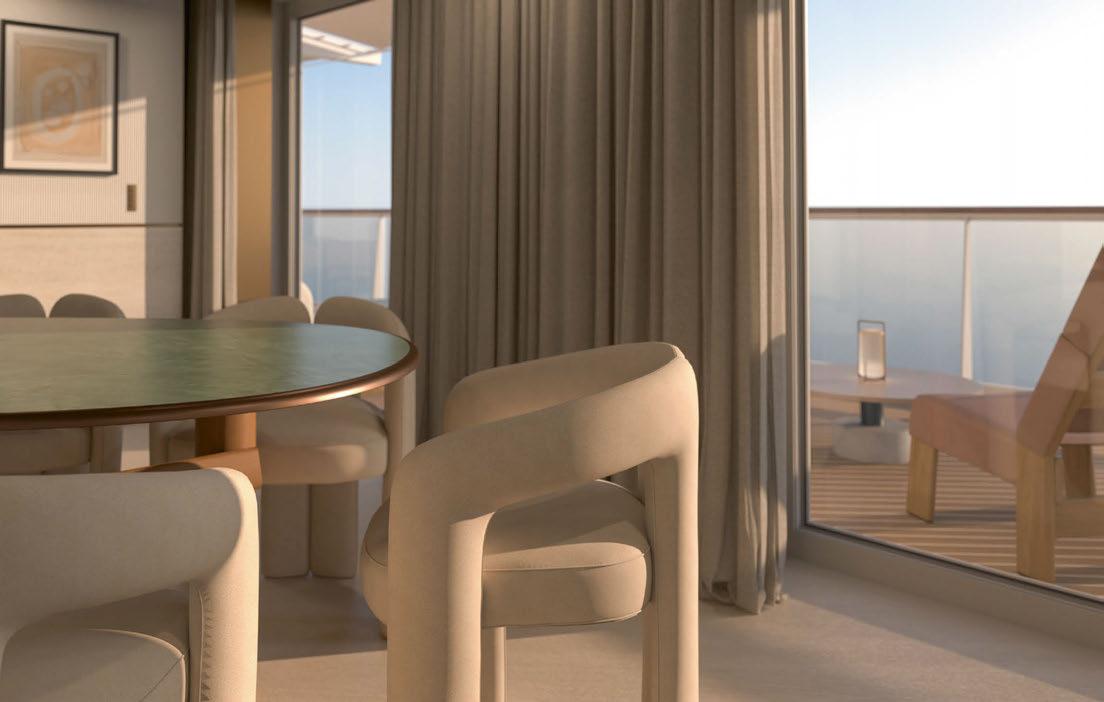
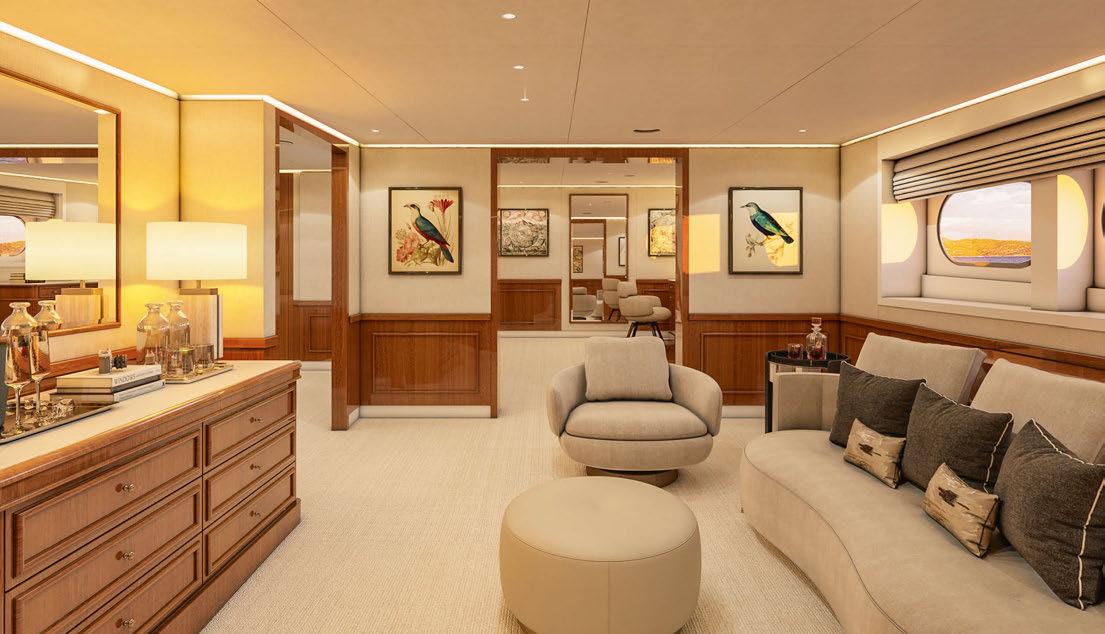
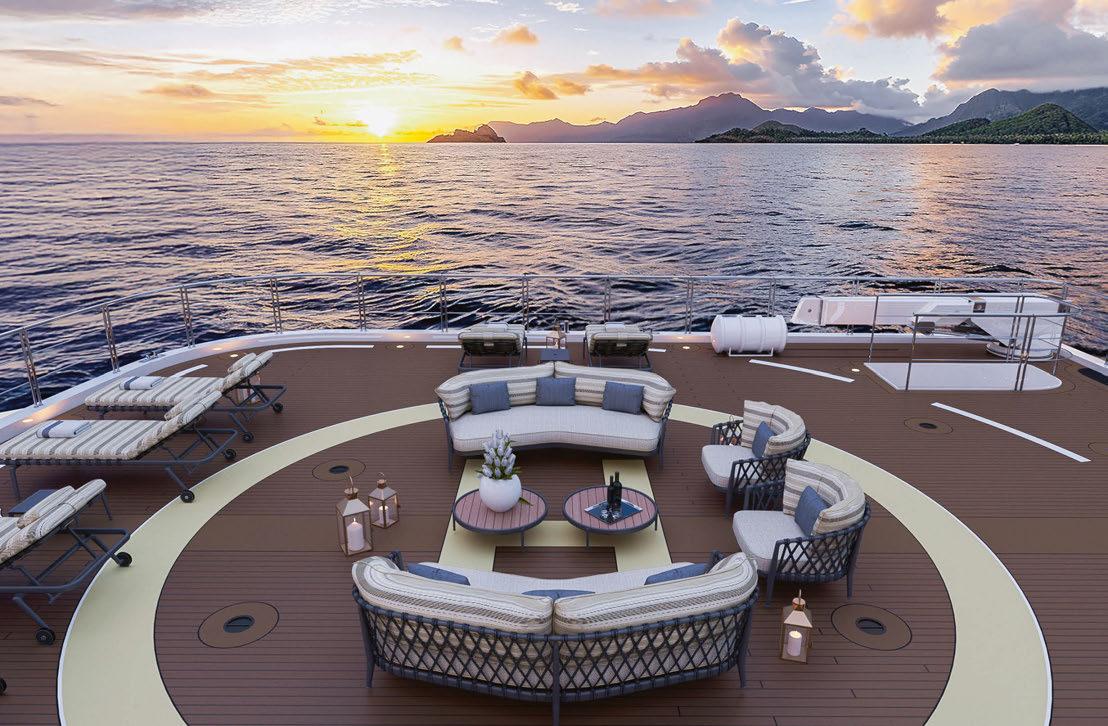
Positioned aft on Deck 7, the resulting Owner’s Residence is designed as a home at sea, in constant dialogue with the water; vast windows frame the waves as living art, and a 125m2 sweeping terrace spans the ship’s full width, offering uninterrupted views across the stern.
“The views to the surroundings play an important role,” Urquiola notes. “The apartment is designed to be fluid, giving importance to the sea and letting the guest relate to the changing horizon.” Indeed, the apartment’s composition is key, with each zone transitioning seamlessly to the next, aided by a common design language. Furniture from Kettal, Moroso and Cassina – including many items by Urquiola herself – bring together a sense of craftsmanship and Italian design heritage against the backdrop of rolling waves.
In the living area, a Sengu sofa system invites quiet relaxation, while Andreu World’s Oru stools provide seating at the bar counter, making the space equally suited to entertaining. In the bedroom, a bespoke king-sized bed layered in fine linens takes centre stage, and a large dressing room provides ample storage. In continuation of the brand’s
A palette of earthy tones, sun-warmed neutrals and natural textures complements the surrounding seascape
ethos of wellness, the bathroom features a double vanity, generous bathtub, separate rainshower and a private steam room. “At Explora Journeys, ocean wellness is a feeling that we want our guests to experience,” Nash explains. “This suite is an extension of space and privacy; our journey is a tool that enables guests to switch off from the world.”
Nash’s favourite part of the apartment, however, is situated at its centre: “I can see the dining area becoming a space for conversations, conviviality and gatherings,” she shares. Defined by a Sengu table encircled by Dudet chairs, the space encourages the act of coming together, ensuring that connection remains at the heart of the residence.
Finally, to accentuate the apartment’s natural flow, a sculpted marble boiserie extends nearly 90 linear metres, encouraging movement from the interior to the terrace, where a whirlpool, al fresco dining table and lounge seating offer additional moments of connection.
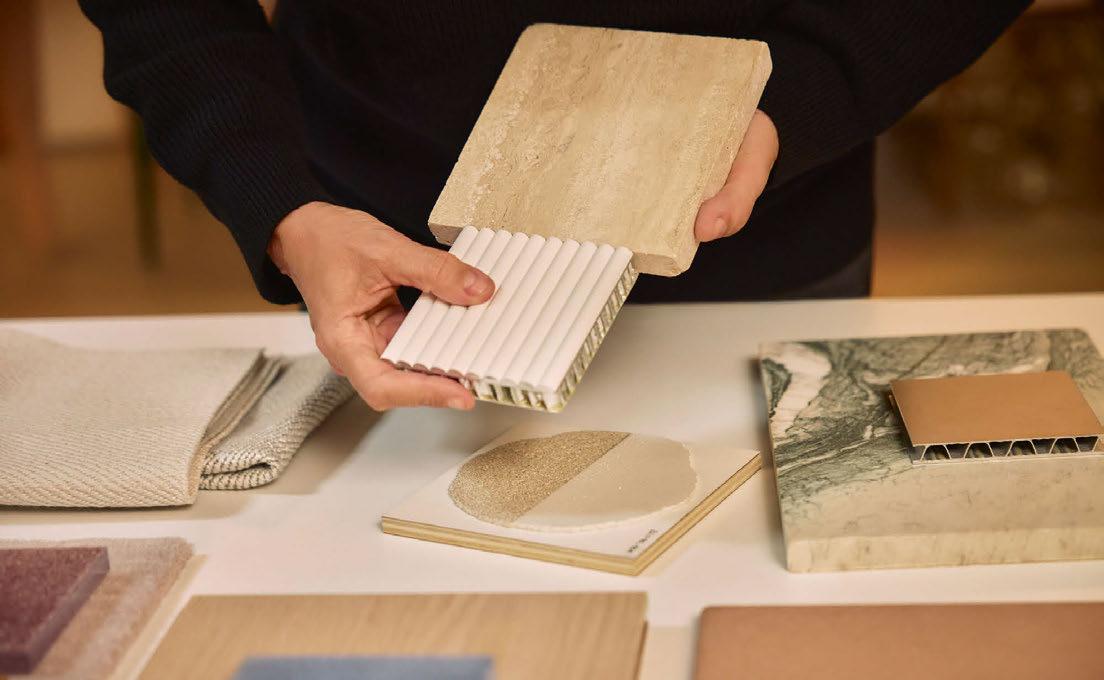
In every space, the focus lingers on the seascape, so a palette of earthy tones, sun-warmed neutrals and natural textures has been curated to complement the surroundings, rather than detract from them. Metallic accents feature throughout, while warmth is introduced through materials such as oak, terracotta and marble. Tactility is found in various finishes, from soft fabrics to ribbed wood, each chosen for how it responds to light. “I imagined the Owner’s Residence as a space to be experienced by the body as much as the eyes, where materials are to be touched and the interiors remain open to the ocean,” explains Urquiola. “I chose a neutral palette so that the interiors don’t feel overstimulating; I want guests to connect to the view.”
It’s a decision that has proved a hit with Explora Journeys.
“I love the use of natural materials, they bring life to the suite,” says Nash. “The woods, the marbles and the muted palette puts guests at ease immediately. From the moment of arrival, they feel this incredible sense of space. There’s an effortless flow, resulting in a calming feeling, which is exactly what we wanted to achieve.”
For Explora Journeys, this vessel marks the halfway point in a fleet of six ships to be delivered by 2028. “That’s why we wanted to offer something different for our guests,” Nash explains. “Working with designers like Patricia and creating spaces that look like they belong in a hotel demonstrates that we can do the same at sea.”
Positioning the fleet as ‘luxury ocean travel’ rather than a line of cruise ships is a deliberate choice – it distances any preconceptions about the quality of design and experience on board, and ushers in a new era of hospitality at sea. An extension of this ethos, the Owner’s Residence emblemises true luxury, where considered design enters a dialogue with the shifting light and rolling seascape. “For me, this project is about creating a sense of belonging on the water,” Urquiola summarises. “It developed through a relationship of trust and dialogue with MSC Group and the Aponte family.”
Ultimately, in designing a space that feels generous, grounded and deeply attuned to the sea, Urquiola has epitomised the ‘Ocean State of Mind’ that Explora Journeys strives to deliver, curating an atmosphere that encourages ease and connection. “With today’s busy world in mind, Patricia has designed a space that feels very calming,” Nash concludes. “The Owner’s Residence lets you breathe, without overstimulating your mind. It allows the ocean, the seascape, to be front and centre – it’s an incredible sense of freedom.”
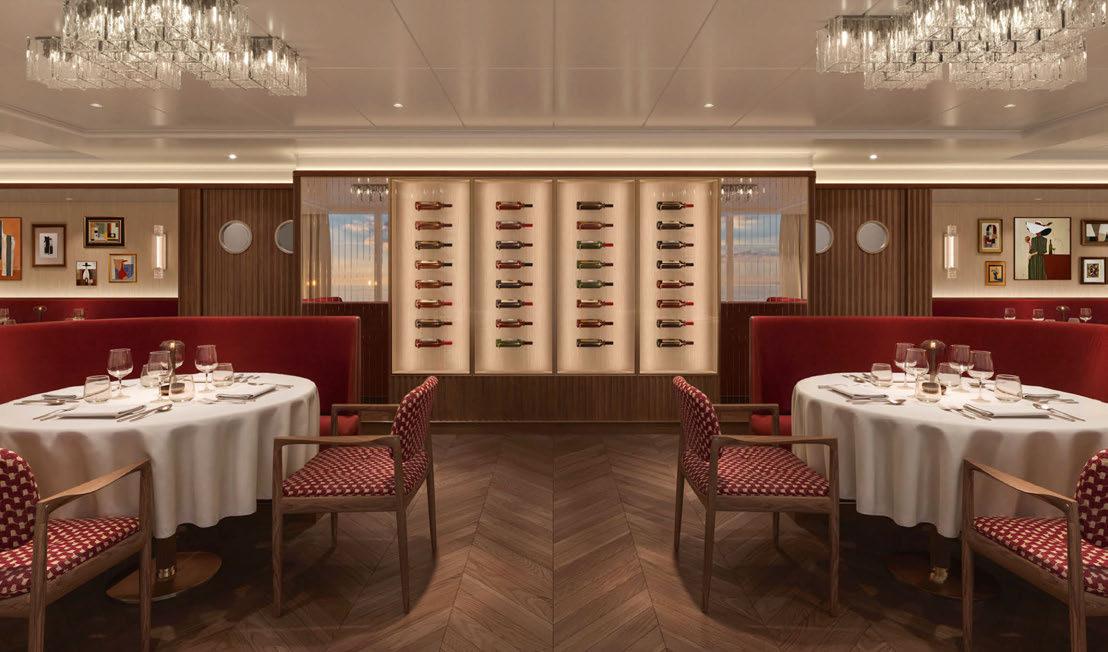
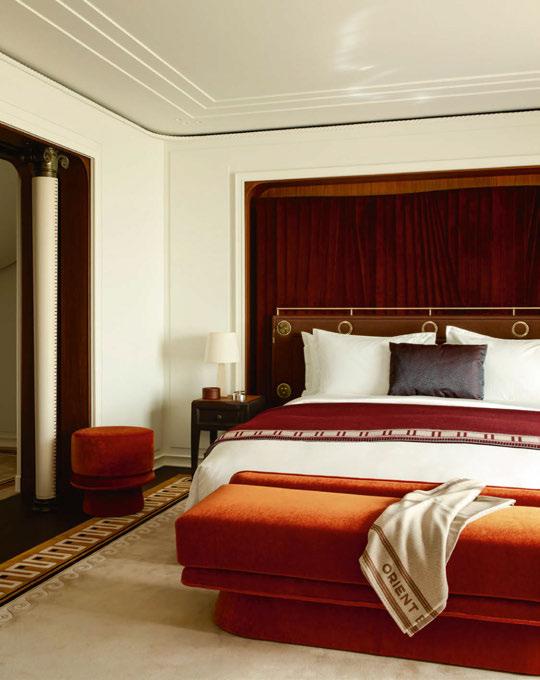
Orient Express Corinthian
ORIENT EXPRESS
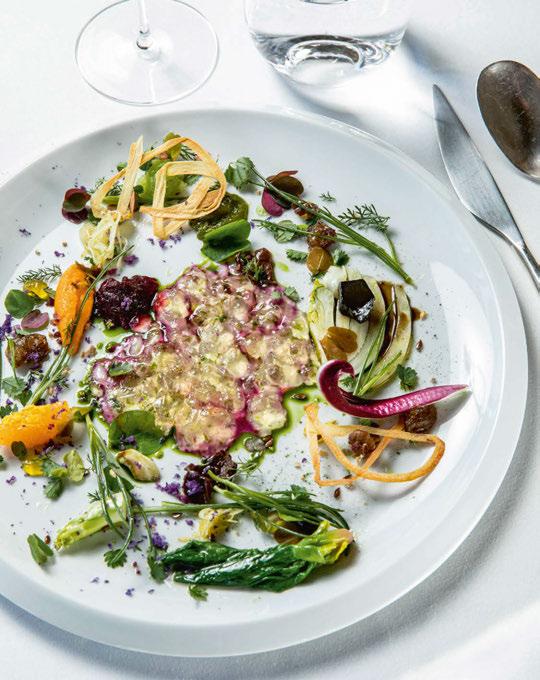
As Orient Express celebrates the baptism of its debut sailing yacht, Executive Chef Yannick Alléno offers a preview of the cuisine to be served onboard.
Words: Catherine Martin
Ever since Orient Express announced its move into maritime, anticipation has been building over how the ‘Artisan of Travel’ will translate its Golden Age aesthetic to the high seas.
In 2023, Accor and Chantiers de l’Atlantique signed a letter of intent to build the world’s largest sailing yacht – a 220m ocean treasure with a revolutionary SolidSail rig system and hybrid propulsion. 2024 revealed renderings of the interior design – an evolution of the brand’s classic aesthetic, envisioned by Artistic Director Maxime d’Angeac. And 2025 brought news that two-time, three-Michelin-starred chef Yannick Alléno would lead the culinary journey.
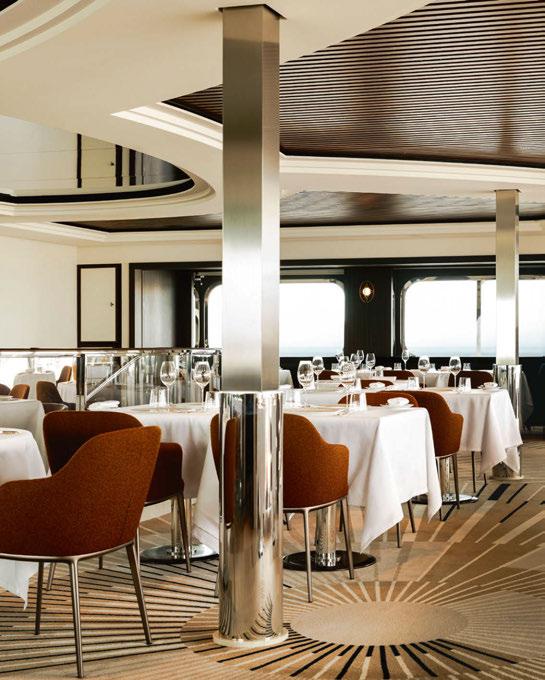
Now, as the newly baptised Orient Express Corinthian nears completion, an exclusive preview reveals the ‘Art of Living’ to be experienced when the vessel sets sail on its maiden voyage. On a trip to Chantiers de l’Atlantique in Saint-Nazaire, Starboard embarked on a hard-hat tour with Maxime d’Angeac, exploring the 54 suites, five restaurants, eight bars and Guerlain Spa. The designer’s approach is based on the opposing forces of breaking with convention and remaining true to the very particular codes of the Orient Express brand. A rich heritage is evident in the bespoke finishes and exquisite craftsmanship, yet d’Angeac has also achieved a contemporary elegance, combining precious veneer, marble and leather for an interior of quiet refinement.
The trip was also an opportunity to sample the cuisine set to be served onboard. In Paris, a dinner at Musée des
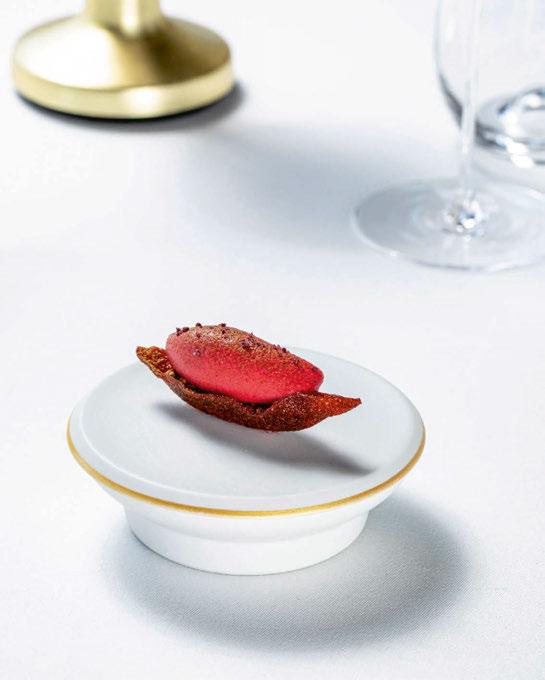
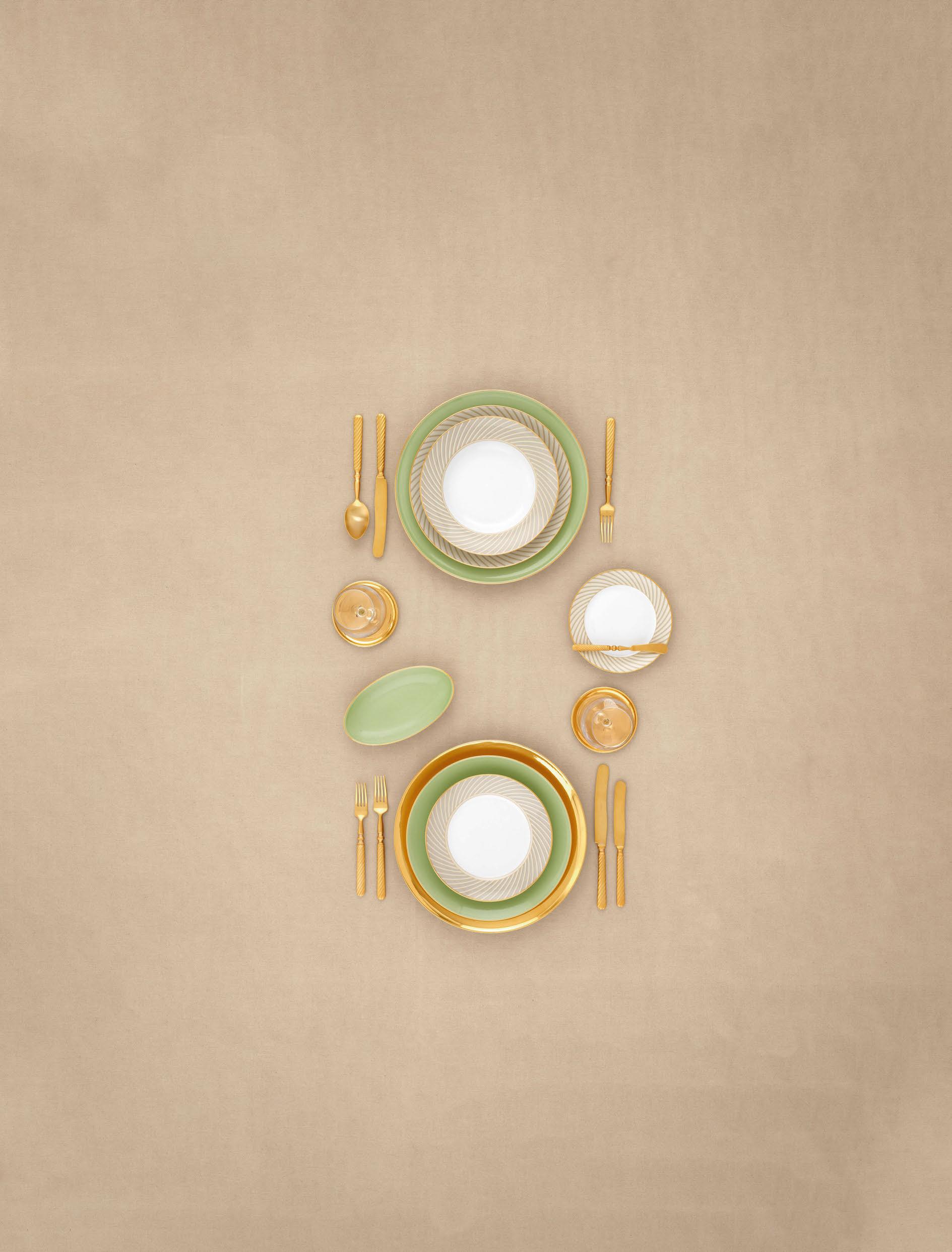
Arts Décoratifs – where a meticulously restored Orient Express carriage was recently on display – showcased the French fare of Yannick Alléno. Following a champagne reception of Ruinart Blanc de Blancs, the chef presented his first dish: Seasonal Ballad – a vibrant display of fresh harvest, accompanied by a delicate jelly compote made using his signature extraction method. The main course of sea bass ‘aiguillette’ – another Alléno signature – comprised a delicate layer of squid atop melt-in-your-mouth fish. And to finish, the chef served an affogato-style fine mousse with roasted almond ice cream.
With leadership from Accor and Orient Express in attendance, as well as the visionary designers, the event further whet the appetite for the forthcoming launch.
“Bringing Orient Express to the sea fits naturally within the imagination of this legendary brand: a journey rooted in discovery, unhurried time, excellence and elegance,” comments Sébastien Bazin, Chairman and CEO of Accor. “Orient Express Corinthian embodies this vision with majesty and boldness. Thanks to its sail-powered propulsion, spaces enhanced by rare materials, and by offering a unique experience designed for an international clientele, we have met a three-fold challenge: industrial, architectural and artistic. This sailing vessel, born from the collaboration and trust built over the past two years between Accor and Chantiers de l’Atlantique, now proudly showcases the very best of French expertise and craftsmanship.”
WITH STAYNU®, A CRUISE BECOMES A VACATION – EVEN FOR THE CREW
Breakfast in bed, cocktails at the bar, and unwinding in the spa — out at sea, cruise ships offer virtually endless opportunities to indulge. And thanks to Continental’s innovative staynu® technology, all of this comes without compromises or worries about stains. In the premium upholstery fabrics skai® Tovega EN and skai® Toronto EN — both engineered to meet the demanding requirements of the cruise segment — staynu® ensures outstanding stain resistance, high abrasion resistance, and disinfectant resistance, making cleaning remarkably easy. The result? Relaxation for passengers and crew alike, because these materials are truly designed for life.
Learn more about staynu® here www.skai.com
SHIPPING FORECAST ON WATER
Project Vision
Meyer Werft offers a glimpse into the future of sustainable sailing with the world’s first battery electric cruise ship.
For seafaring holidaymakers, onboard indulgences need no longer come with a side of environmental guilt, now that Meyer Werft has unveiled plans to deliver the world’s first 100% battery electric cruise ship. The best part? It could be ready to take to the waters in as little as five years’ time.
In a concept study entitled Project Vision, the German shipyard demonstrates the feasibility of reducing CO 2 emissions by up to 95%. “With battery-electric cruise ships, we offer a competitive product that relies on existing technologies,” explains Johannes Bade, Project Engineer Concept Design at Meyer Werft. “We are opening up entirely new opportunities for our customers to operate sustainably and profitably in the long term.”
The concept ship – measuring 275m long and accommodating up to 1,856 passengers – is powered by a battery system from Corvus Energy, a leading supplier of zero-emission solutions
for the maritime industry. With the technology available today, Project Vision demonstrates that scaling to a fully electric cruise ship could be feasible by 2031.
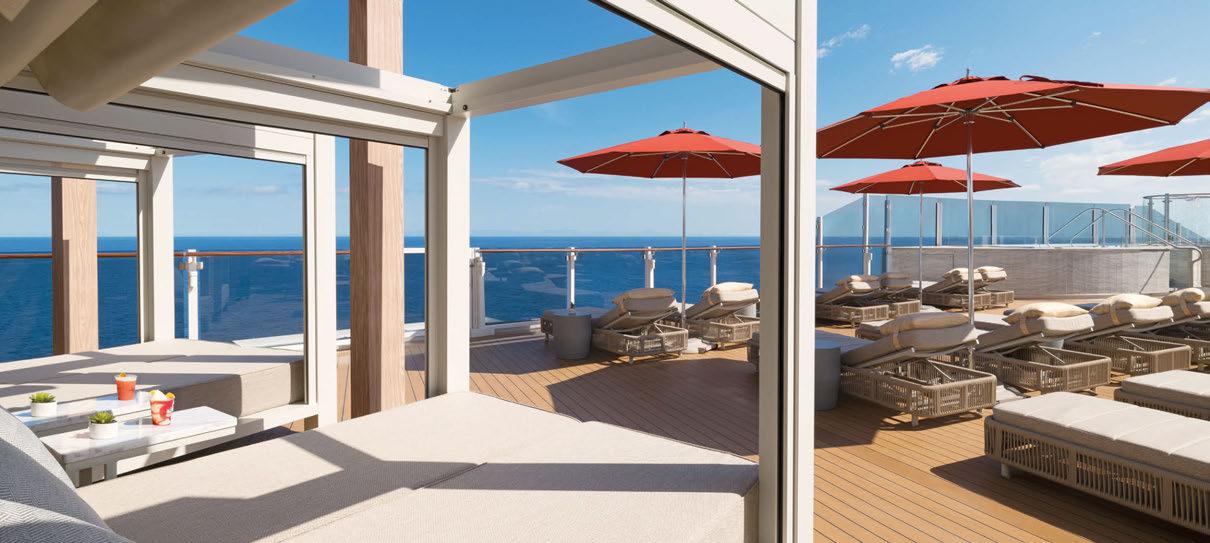
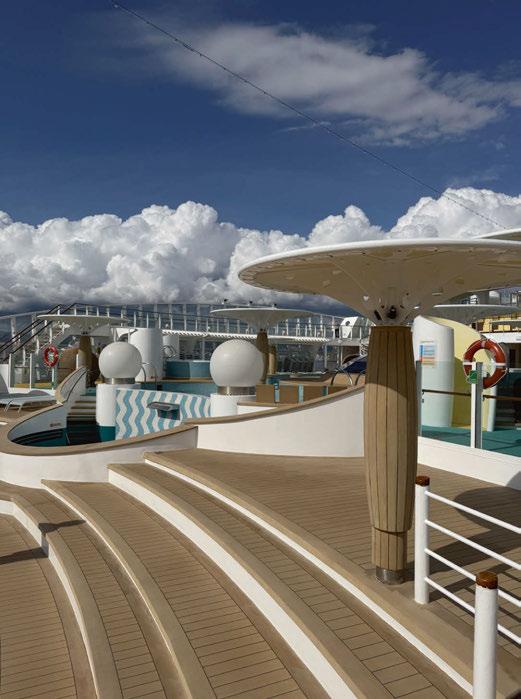
The concept also introduces new architectural approaches to cruise ship design. The vertical shaft and funnel – which typically occupies a large proportion of the deck – can be eliminated, enabling an entirely new sun deck with unobstructed views.
The new battery system has the capability to cover a wide range of European routes. Furthermore, it is estimated that around 100 ports across the continent will offer the required charging infrastructure by 2030.
Describing the concept as a defining moment for the cruise industry, Fredrik Witte, CEO of Corvus Energy, concludes: “Scaling to fully electric cruise ships shows the world that the technology is safe, mature and ready to change the game.”
The Cormorant at 55
South
Silversea makes the move from sea to shore with a luxury hotel that offers the world’s southernmost stay.
With itineraries that span all seven continents, Silversea has transported its guests to some of the world’s most remote locations in the name of luxury expedition. Now, the cruise line is stepping off the ship and onto solid ground with The Cormorant at 55 South, the world’s southernmost hotel and gateway to Antarctica.
Named for its location and the resilient seabird that calls the region’s freezing waters home, the 150-key property will open in October 2026 as a cornerstone of Silversea’s Antarctica Fly Cruise programme. Designed to foster relaxation, reflection and discovery, interiors blend Silversea’s signature elegance with the spirit of the far south.
The Fireplace Lounge, inspired by Patagonia’s reverence for fire as a symbol for gathering, will serve as a place of retreat with plush seating, a one-of-a-kind fireplace and expansive windows that frame sweeping landscape vistas. The views continue in guestrooms, with serene forestscapes or the watery expanse of the Beagle channel
taking centre stage. Warm wood tones and earthy elements create an authentic and calming environment, while handcrafted items by Chilean artisans celebrate local culture.
The hotel also features F&B venues Latitude 55 and Bar Sur, each honouring the region’s ingredients and traditions through welcoming social atmospheres and culinary experiences rooted in Chilean flavours. And finally, lasting cultural mementos can be purchased at Uncharted, The Cormorant’s boutique.
“The Cormorant at 55 South represents an exciting new chapter for Silversea, extending our commitment to luxury travel to Antarctica,” says Bert Hernandez, President of Silversea. “This unique property will offer our guests the same hallmark comfort and personalised service they expect while on board our ships and will immerse them in the rich culture, traditions and natural beauty of the region. The interior spaces are thoughtfully designed to reflect the spirit of this extraordinary destination.”
In 2026, it isn’t just guest expectations that are shifting, but the guest profile itself. More than ever, cruise lines are welcoming aboard a wide variety of travellers, and being able to offer spaces and experiences that meet differing needs has become an art in itself. In anticipation of the year ahead, MSC Cruises has highlighted key trends that demonstrate how the guest profile is evolving, making the case for how intentional design, experiences and itineraries can cater to every kind of passenger.
First on the list, with 2026 slated to be a standout year for sporting events, MSC predicts a growing number of fans extending their trip to maximise time in and around host destinations.
All Aboard
From sporting events to digital detoxes, MSC Cruises reveals the trends shaping passenger expectations in 2026 and beyond.
This opens an opportunity for cruise lines to capitalise on the sporting spirit through onboard facilities such as football pitches, tennis courts and even mini-golf courses. To up the immersion even further, themed cabins that capture the energy of a match are an additional way to bring the game into the guest experience.
The rise of the ‘me-kend’ is another new phenomenon, with more travellers embracing indulgent trips in the name of self-care. Weekend getaways defined by relaxation mean shorter itineraries for maximum results, and are a clear indication that onboard wellness amenities such as spas are crucial.
Next up, with a staggering 87% of parents letting their children help plan their trip according to a Priceline survey, catering to those who prioritise play and exploration has emerged as a key trend for 2026 travel. ‘Kidfluenced’ holidays are often fuelled by curiosity, creativity and inspiration, so designing spaces that grant younger guests freedom and entertainment is
paramount. Over the years, MSC has introduced dedicated kids’ clubs and Sportplex arenas for activities from basketball and roller-skating to cinemas and bumper cars. The fun doesn’t have stop there, however. Further opportunities to capture the imagination of young guests lies in the design scheme, tapping into a growing desire for themed rooms bursting with popular cartoon characters and fantasy worlds.
Another growing trend amongst 2026 travellers is the digital detox. Land-based hotels are already embracing the desire for peace and quiet, creating serene sanctuaries equipped with mood lighting, noise management systems and climate control, yet dedicated sleep suites go one
step further. By designing curated environments that combine science-backed technologies with circadian lighting and slumber-inducing scents, cruise lines can welcome aboard a growing number of screen-weary passengers.
Finally, increased demand for luxury means that affluent travellers are seeking all-inclusive experiences and hyper-personalisation. Offering exactly this, MSC Yacht Club features premium amenities, from 24-hour butler service to thermal spa access. Pillow menus, mini-bars stocked with a personalised selection of snacks and even monogrammed bed linens up the ante, demonstrating more ways to transform cabins into luxury experiences.
As 2026 sees a shift in the guest profile, these trends exemplify how the cruise experience can cater to a variety of market niches. Embracing the nuances of today’s travellers presents an opportunity to approach design from a new angle, culminating in experiences that feel considered and relevant for everyone who steps on board.
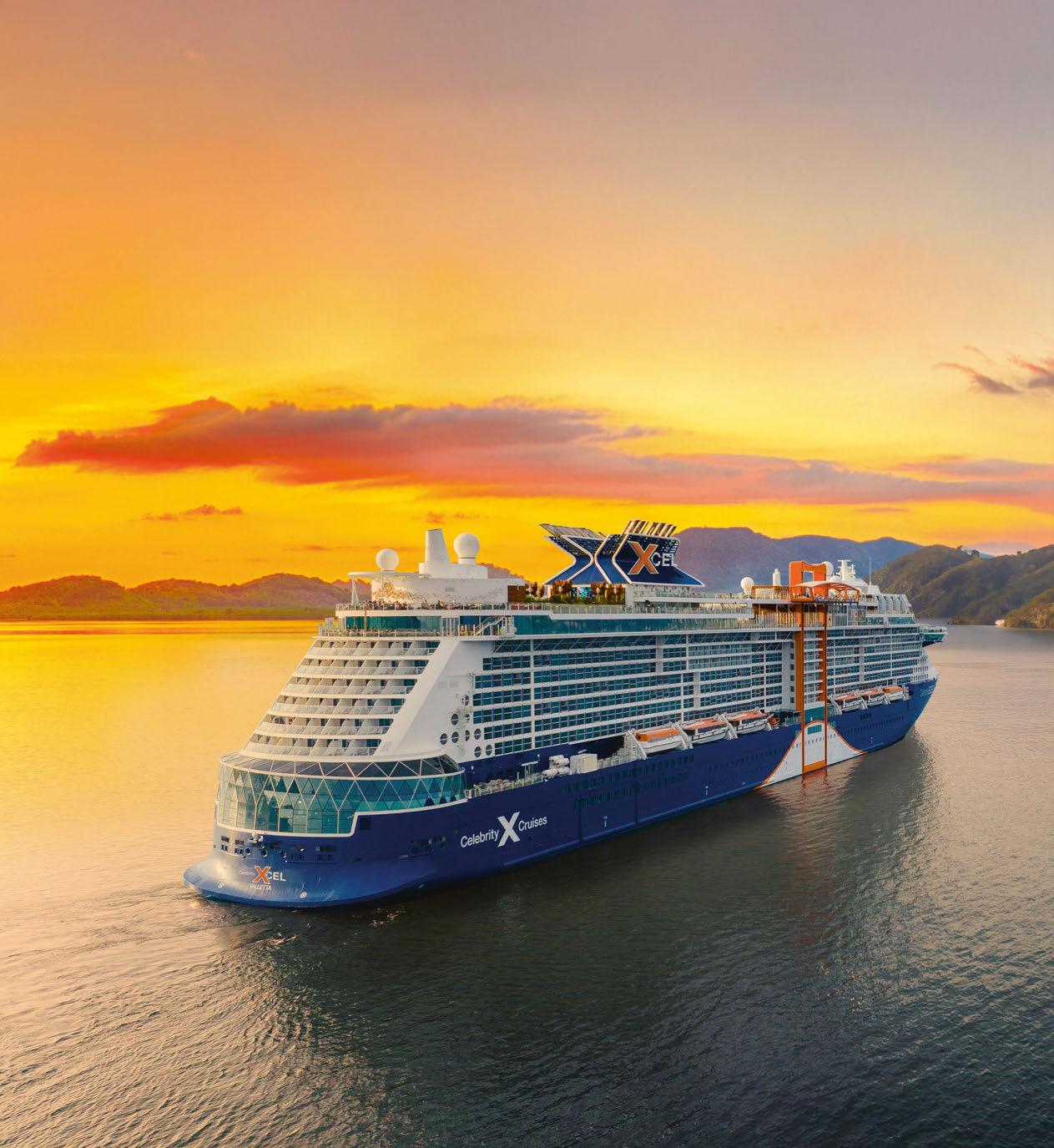
Celebrity Xcel
ROYAL CARIBBEAN GROUP
Blurring the line between ship and shore, the fifth Edge Series vessel redefines cruise design by inviting guests to shape the onboard experience.
When you’re known for operating innovative ships created by worldleading designers, some might consider it a bold move to hand over design decisions to guests.
Yet Celebrity Cruises embraced this exact approach in the planning of its latest ship, Celebrity Xcel. In an industry-first, the cruise line invited loyal sailors to play a role in finalising many elements of the onboard experience. Thousands of travellers participated in the Dream Makers programme; through online polls and in-person events, the community tried, tested and voted on new experiences, ultimately having the final say on aspects of the ship’s seven new spaces, ranging from Mediterranean rooftop restaurant Bora to the cruise line’s largest spa yet and first-ever flagship retail space.
“The Dream Makers concept is rooted in our belief that the best ideas come from listening. It reflects our commitment to putting guests at the heart of every design decision and empowering our teams to collaborate across
disciplines such as design, food and beverage, entertainment, wellness and technology to create experiences that feel truly original,” says Jeannette Coto Dou, Vice President of Product Development at Celebrity Cruises. “Our guests are our North Star, and we’re continuously guided by their feedback, which plays a central role in how we evolve our ships. With Xcel, we listened carefully to them to dream up more immersive experiences that feel both familiar and excitingly new.”
As the fifth vessel in the Edge Series, built in close collaboration with Chantiers de l’Atlantique, the challenge was for Xcel to sit harmoniously alongside its stablemates, yet display a personality of its own, staying true to the playful, outward-facing design while introducing fresh concepts.
Taking the lead on the masterplan, Wilson Butler Architects collaborated with Royal Caribbean Group and Celebrity Cruises on the early development of new concepts and their implementation within the General Arrangement. Having worked on the previous
Courtesy of Royal Caribbean Group
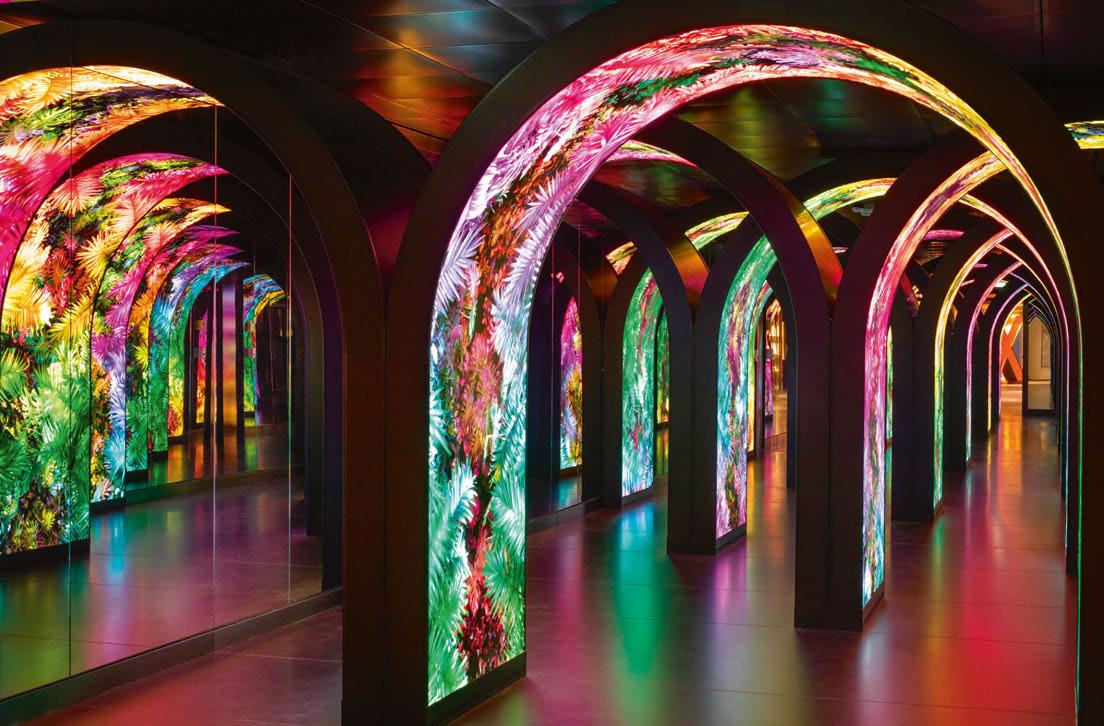
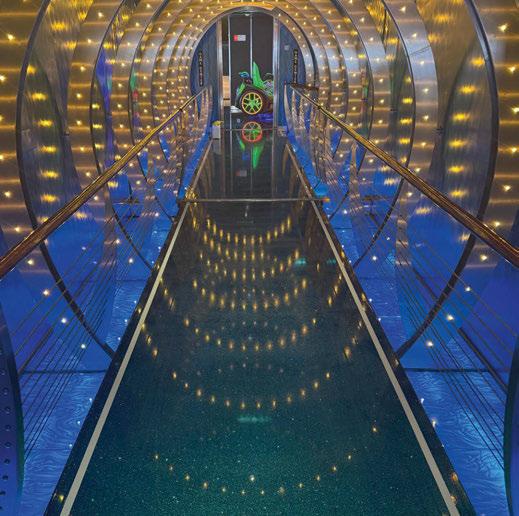
An immersive festival-inspired walkway comprising LED archways leads to The Baazar
four vessels, the design team had a deep understanding of what guests were seeking, allowing them to revisit and refine ideas that had never been realised.
Principal Ben Marcionek believes the key difference between Xcel and earlier ships lies in the heightened focus on elevating the guest experience. From new venue concepts and enhanced F&B offerings to refinements in service, every aspect has been thoughtfully considered, positioning Xcel as the most evolved and guest-centric ship in the class to-date.
“Xcel pushes the boundaries of cruise ship design by proving that a fifth-in-class vessel can still feel fresh, distinctive and forward-looking, rather than being a carbon copy of its predecessors,” explains Marcionek. “We struck a thoughtful balance, introducing meaningful changes where they would have the greatest impact, while layering in more nuanced details that reward closer attention and elevate the overall experience.”
The Edge Class DNA is still evident on board, from the public spaces to the staterooms and suites, which were once again envisioned by interior designer Kelly Hoppen. Tasked with cultivating a residential, calm
and effortless atmosphere, Hoppen has redefined expectations, treating the accommodation with the same approach she would a luxury hotel or apartment. “The idea is that when you close the door, it feels like your own beautifully considered space: intuitive, quietly luxurious and, of course, completely relaxing,” Hoppen explains. The Infinite Veranda staterooms, she believes, are a game-changer – their design aiding a blurring of lines between indoor and outdoor living to create an enhanced sense of space and connection to the sea. “My inspiration always comes back to considered simplicity and comfort –a refined palette, layered materials and a sense of balance,” she continues. “And of course, at sea, the view is everything, so we designed the interiors to complement the horizon, not compete with it.”
Navigating setbacks along the way was par for the course: Coto Dou reveals that one of the greatest creative challenges was reimagining spaces guests know and love, with a blank canvas mindset. A great example is The Bazaar – formerly known as Eden; the three-storey multi-sensory space blurs the line between ship and shore through destination-driven
activations, a marketplace offering items from local artisans and regionally influenced culinary offerings. “Delivering our vision required close collaboration across multiple departments, including product development, culinary, entertainment and technology teams,” says Coto Dou. “From destination‑inspired festivals on each sailing, to pop‑up activations throughout the day, every element had to work together seamlessly. Technology plays a key role in bringing this environment to life, from immersive LED installations in The Tunnel to custom scents that change with each festival, all designed to transport guests the moment they step inside.”
The Bazaar is not the only notable enhancement on board – others include an expanded Retreat Sundeck, and a 180% increase in the footprint of Sunset Bar. Inside, there’s the introduction of Le Voyage by Daniel Boulud; a larger, more dramatic Grand Plaza; and the debut of a new secret speakeasy designed by Wilson Butler Architects in collaboration with
Matt Goodrich, named If You Know You Know (IYKYK) due to its hidden location accessed via a photobooth.
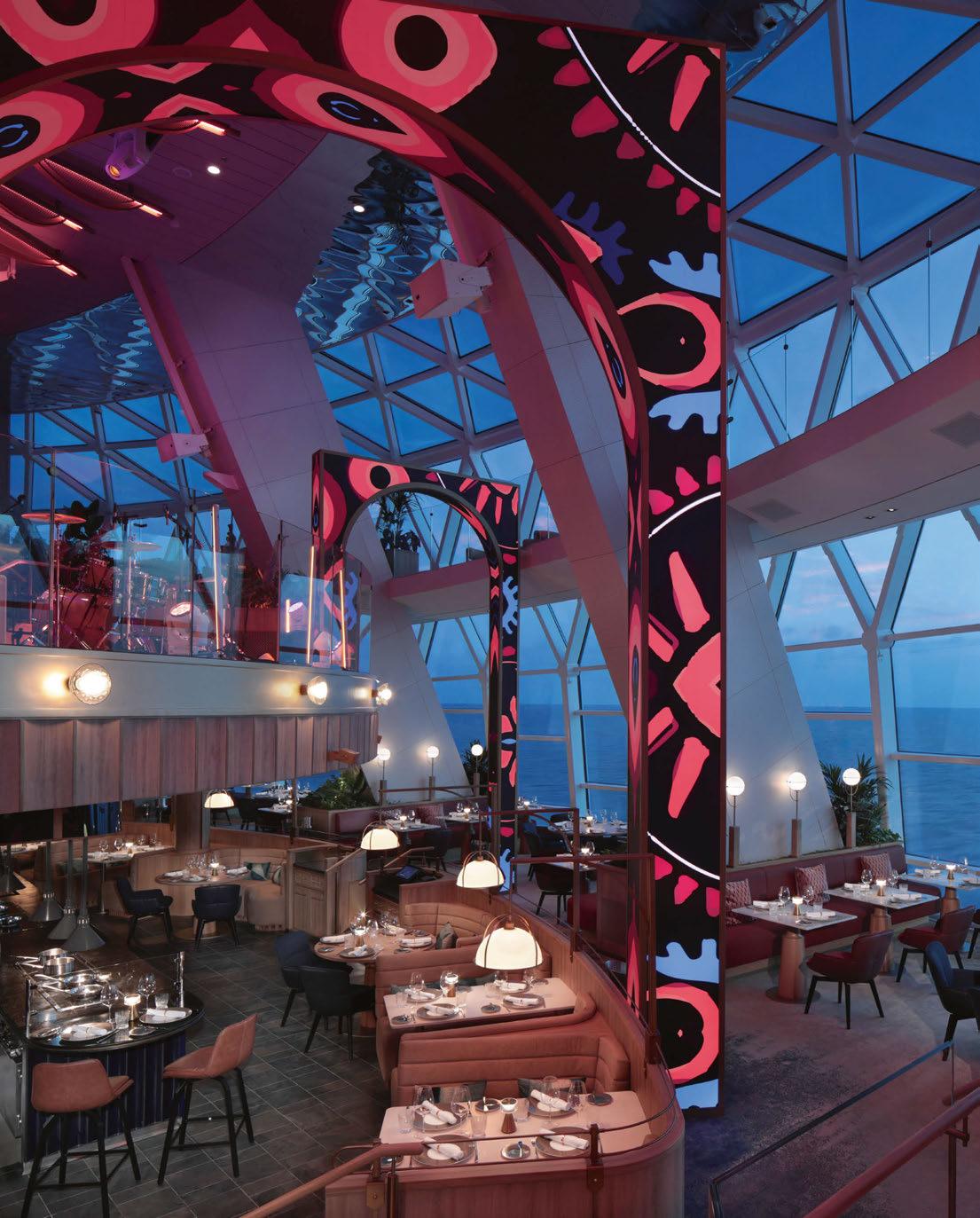
Marcionek believes that new concepts –including the Celebrity Pool Club, which now offers more shade and more entertainment options, and Bora, the coastal insp ired al fresco dining venue – stand out because they create moments of discovery and connection for guests. “These spaces feel inviting and intuitive, encouraging people to explore, spend time and engage in ways that feel natural rather than scripted. The design supports storytelling and experience, not just appearance, which helps create memorable moments and a stronger emotional connection to the overall journey.”
The final word goes to Hoppen, who is a firm believer in practicality as well as aesthetics: “From my perspective, what evolves ship to ship is the level of refinement – small adjustments that make spaces feel even more seamless, more considered and more in tune with how people use them.”
ON DECK
Route: Caribbean, Mediterranean
Maiden Voyage: 2025
Owner: Royal Caribbean Group
Operator: Celebrity Cruises
Architecture: Tom Wright
Interior Design: Wilson Butler Architects, Kelly Hoppen
Shipyard: Chantiers de l’Atlantique www.celebritycruises.com
SMART WINDOW
COVERING SOLUTIONS
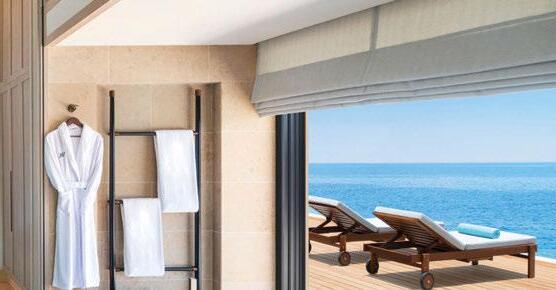
Forest Group offers a variety of drapery hardware solutions specifically designed for cruise ships and liners. Whether you choose our motorised curtain tracks or rods, roller blinds or roman blinds, your guests will experience ‘the Forest Factor’ – a unique combination of beautifully hanging curtains, luxurious comfort, and optimal ease of use.
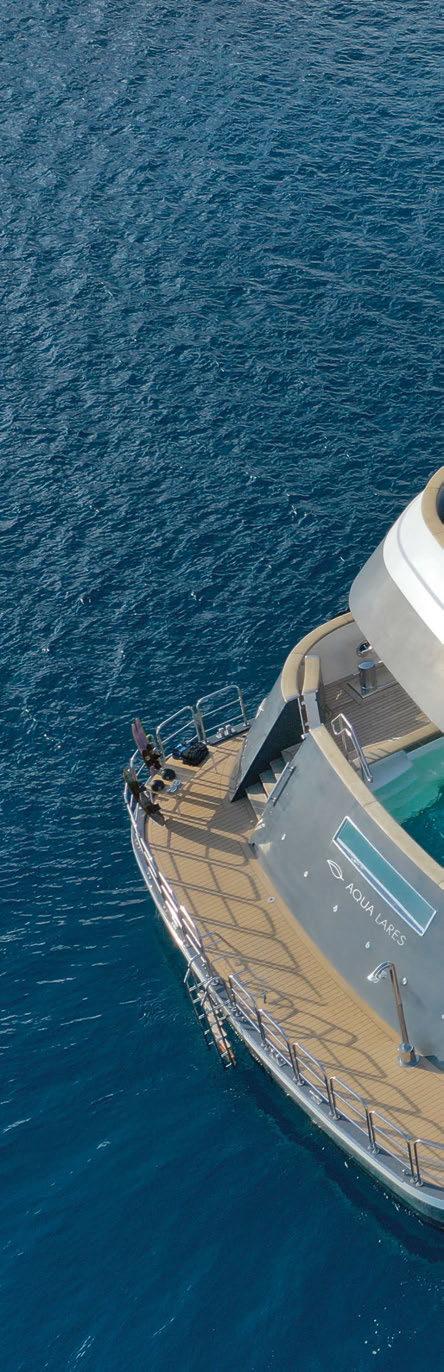
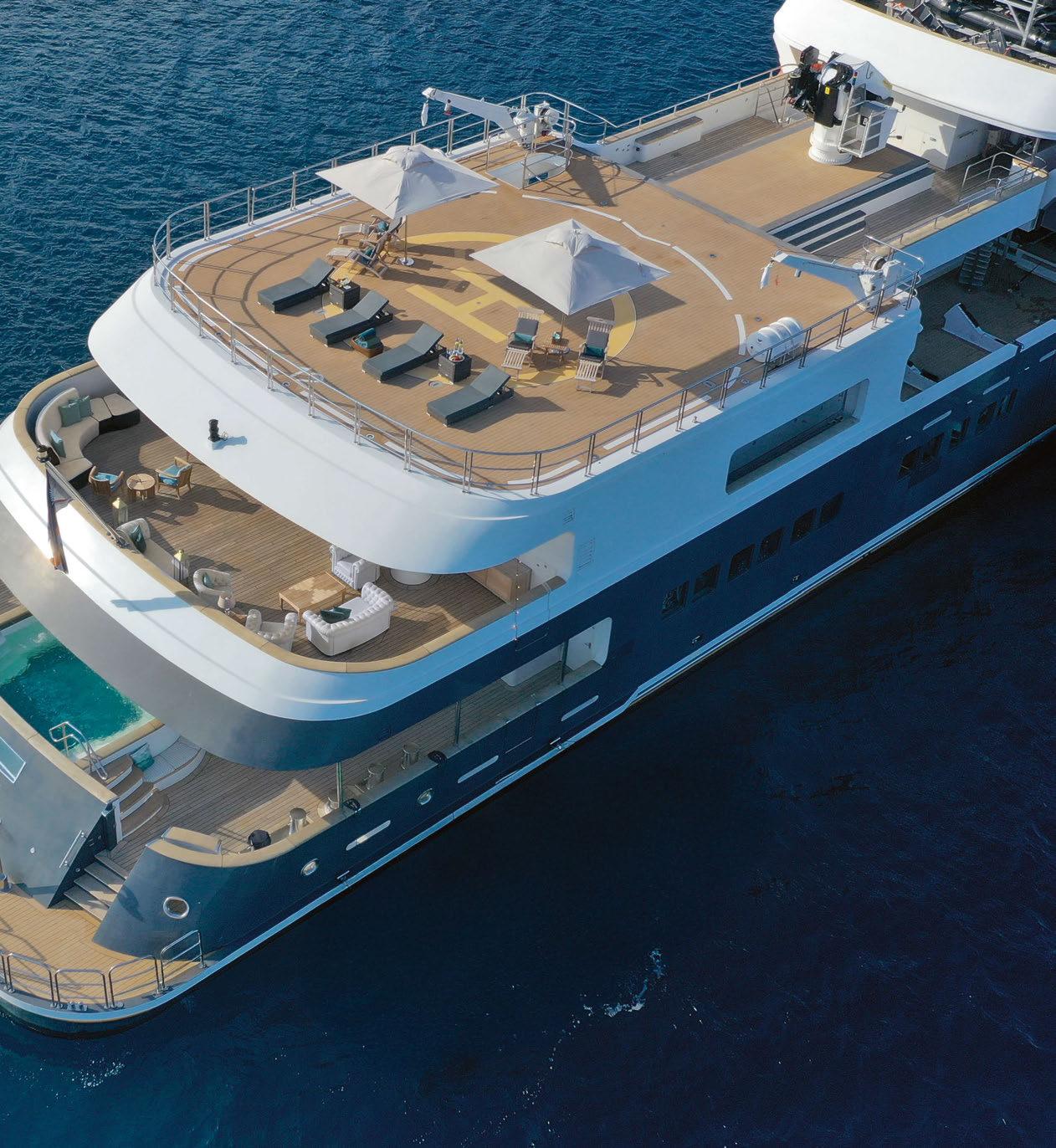
Aqua Lares
AQUA EXPEDITIONS
The small-ship expeditions group adds to its fleet with a luxurious icebreaker that blends timeless heritage and contemporary sophistication.
Words: Emma Love • Photography: Courtesy of Aqua Expeditions
Being named after a protective Roman deity feels entirely fitting for Aqua Lares, the newest vessel from Aqua Expeditions. Known as protectors, the mythical guardians were believed to offer safety and prosperity for travellers exploring uncharted waters – a reassuring sense of comfort that is now reflected on board.
Purpose-built for exploration, the 77m vessel was constructed in the 1970s as an icebreaker rescue tug, before later being extended for conversion into a superyacht. It was acquired by Aqua Expeditions in 2025, subsequently undergoing a refit to join the boutique cruise line’s now six-strong fleet. In a departure from the usual practice of specialising in a single destination – Aqua Blu is based in Indonesia, for example, while Aqua Mare explores the Galapagos Islands – Aqua Lares takes a different approach, alternating between the Norwegian Arctic and East Africa. The 5-14-night itineraries might navigate the fjords between Tromsø and Svalbard, or sail the Seychelles in the Indian Ocean; regardless, the small-ship sailing
experience pairs adventure and exploration with the comforts of a five-star hotel.
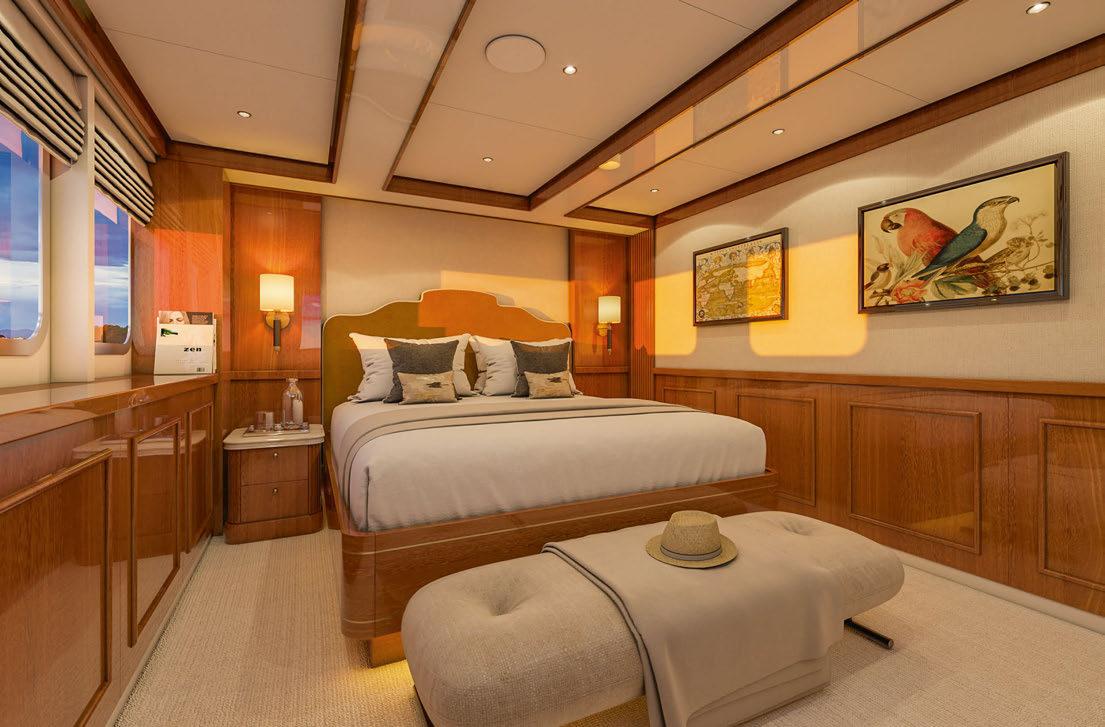
During a three-month renovation, the ship’s previous primary colour palette and functional aesthetic were stripped away and replaced with high-gloss teak veneer wall panelling. It is the vision of Design Director Birgit Galli Zugaro, working in collaboration with consultant David Cole. Together, they have reimagined the interiors to channel the brand’s luxurious yet laidback DNA, while honouring the vessel’s former life. “We instantly fell in love with the ship; she has a great presence about her,” recalls Galli Zugaro, whose husband Francesco founded Aqua Expeditions in 2007 to specialise in biodiverse destinations. “She’s beautiful, especially the exterior, but interiors-wise, there were parts that needed to be elevated.”
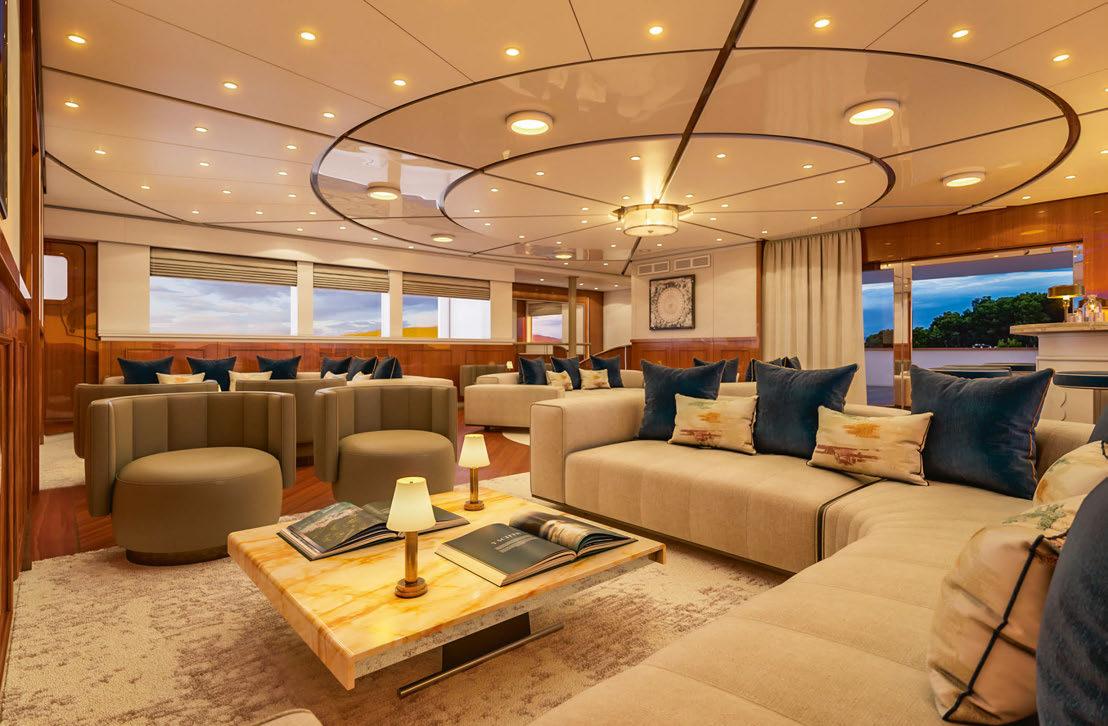
The resulting interiors blend European prestige with the earthy elegance of African craftsmanship. The greatest transformation has been the social spaces on the two main decks. The first is the saloon, where Italian quartzite with amber-and-grey veining tops the bar and
Refurbished interiors feature highgloss teak veneer wall panelling, accompanied by European furniture and original ink drawings
a trio of tables, set within an intimate dining area.
“We love the quartzite, so one of our boldest decisions was to use it in so many places; we decided just to go for it,” says Galli Zugaro, who tasked Milan-based yacht design studio Hot Lab to execute her vision. In the same space, quartzite has also been used for a focal point fire surround in the inviting living area, alongside oatmeal Minotti sofas, bespoke cream wool rugs, reeded glass wall lights by Ralph Lauren, and shelves of tomes themed around East Africa and the Arctic, curated by The Wandering Book Collector.
Opposite is a 22-seater, oval teak and burl wood dining table inherited from the previous owner, which is paired with tan leather Poltrona Frau chairs for communal suppers. “The craftsmanship is beautiful,” continues Galli Zugaro. “We have tried to honour the history of the ship; that’s what gives her quirkiness and soul.” Custom-designed tableware by Bali-based Gaya Ceramics is a signature design element on all Aqua vessels and, alongside plates depicting the family crest, each has its own motif: for Aqua Lares, it’s the octopus. The sea creature also appears on the velvet slippers in the cabins, made by Italtrim.
Equally central to life on board is the upper-deck lounge, where briefings on the next day’s excursions take place. Ideal for whiling away afternoons at sea, the calming space features textured wallpaper from Dedar, bronze-topped side tables by Thai workshop Muse Design, and velvet and silk cushions atop bouclé sofas by Minotti. Sliding glass doors open out to a wooden deck, furnished with simple yet elegant pieces from B&B Italia. “The idea is that guests aren’t distracted by the interior, so this lounge is very serene,” says Galli Zugaro. “The highlight is what’s happening outdoors.”
Given the yacht’s itinerary, a major design consideration was ensuring that the aesthetic works equally well in hot and cold climes. Key to this are the fabrics, most of which are by Dedar. For instance, a rich burgundy upholstery velvet from the Mariaflora outdoor collection was chosen for the cosy cinema to match the enveloping colour drenched walls and ceiling. “The velvet looks luxe but it’s practical too. We’ve paired it with cream alpaca cushions from Dedar and blankets by Australian brand Bemboka, which will be replaced with heavier versions in the Arctic,” says
Galli Zugaro. “There are furnishings that we can add or remove, depending on where we are in the world.”
Decorative objects in the corridors, such as an inherited glass table with a fish base and beaded African headdresses, also work well in both locations. Here, the notion of blending old and new is especially evident: blueprints of the ship discovered during the refurbishment hang on the walls, accompanied by original maps and ink drawings dating back to the 17th, 18th and 19th centuries, sourced from Argosy Book Store in New York. Further character in the public spaces comes from objects that Galli Zugaro and Cole have found on their travels, such as a bronze crocodile head and a bust of a Roman god, placed next to modern elements like Guaxs glass lamps. “It’s very much how we would design our homes: we fall in love with something and at first it might not make sense, but when we put everything together it works,” explains Galli Zugaro.
The 15 outside-facing accommodations range
in size from the 13m2 entry-level cabins to the 66m2 Owner’s Suite. All have been renovated to some degree, and a handful have been refurbished completely. Traditional dark wood has been replaced by lighter teak wall panelling; Dedar wallpaper and Minotti sofas now furnish the living areas; and beds feature curving bedheads designed by Galli Zugaro.
One area that has been left untouched is the small spa on the lower deck, where a sauna and treatment room add a wellness element. There’s also a hot tub out on the swim deck, and an al fresco exercise area that transitions to an idyllic setting for sunset drinks. “We always try to elevate and hope that our joy in doing that comes through in the glamorous yet comfortable design,” Galli Zugaro concludes.
Aqua Lares is the first vessel to launch since Ponant Explorations Group acquired a majority share in Aqua Expeditions. Backed by Artémis Group, the partnership is widely expected to pave the way for further sailing adventures in the years ahead.
Route: Norwegian Arctic, East Africa
Maiden Voyage: February 2026
Owner: Ponant Explorations Group
Operator: Aqua Expeditions
Interior Design: Birgit Galli Zugaro, David Cole, Hot Lab www.aquaexpeditions.com
ON DECK
Apsara Cruise
BANYAN TREE
A historic rice barge has been sensitively reimagined as a design-forward dining experience sailing the Chao Phraya River.
Words: Naomi Chadderton
Photography: Courtesy of Banyan Tree (unless otherwise stated)
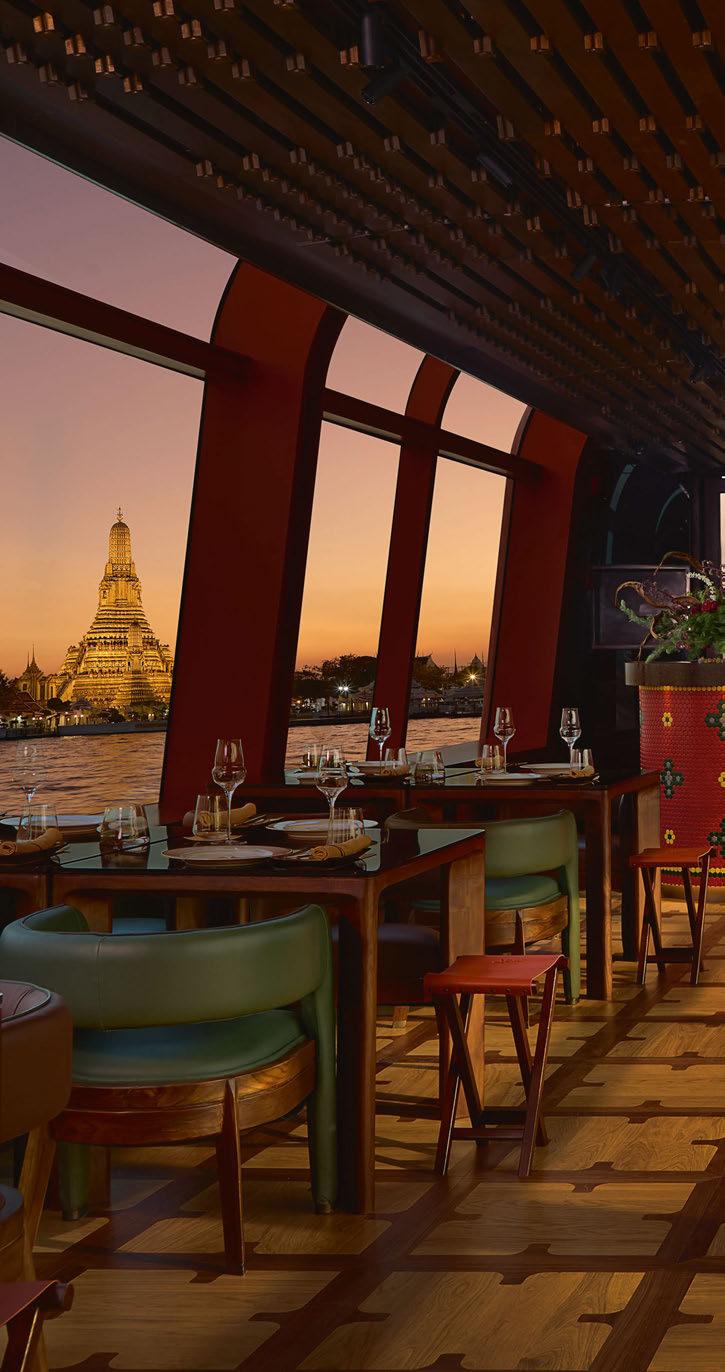
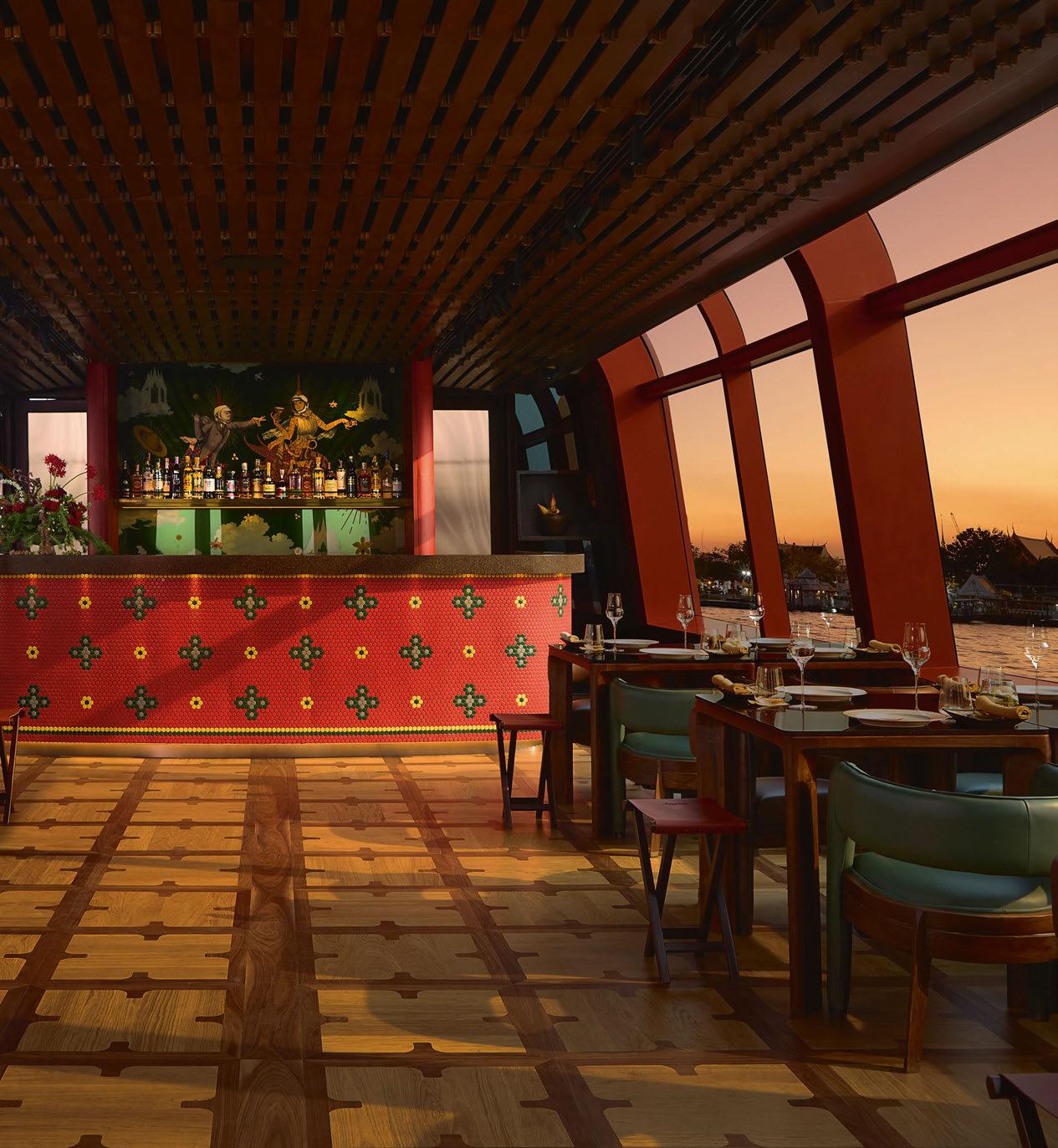
Long before Bangkok became the bustling metropolis it is today, the Chao Phraya River served as a key trade route. During the Ayutthaya Kingdom, wooden barges sailed the 372km route, transporting goods such as rice, sugar and oil from the inland fertile plains to the coast. And while the river – lined with historic landmarks such as Wat Arun, The Grand Palace and Phra Sumen Fort – remains a working trade route, many of its former rice barges have been thoughtfully reimagined for the modern day. Among the most notable is Banyan Tree’s Apsara Cruise, which now carries guests along the river in a setting that pairs refined interiors with authentic Thai cuisine.
The traditional teakwood vessel was constructed in the historically significant province of Ayutthaya, known for its generations of wood carving. It was welcomed into the Banyan Tree family in 2024, revealing a comprehensive refit led by Studio Locomotive, and has recently been named Bar & Restaurant of the Year at the 2025 World Architecture Festival Interiors.
In line with Banyan Tree’s approach, the redesign ushers in the highest standards of luxury and comfort, while retaining a deep respect for heritage and craftsmanship.
The cuisine served on board is rooted in Thai culinary wisdom, reinterpreted through modern techniques and sophisticated presentation
“The original components of the rice barge were restored through traditional wooden boat-building wisdom and contemporary engineering techniques, such as fiberglass lamination, for a longer service life,” Thanart Chanyu, Design Director of Studio Locomotive, tells Starboard. “While modern in materiality, the reimagined structure honours the unique curvature of the woven bamboo canopy.”
Interiors are similarly considered, with the design team looking to the nation’s architecture and creative arts to develop their scheme. “We incorporated a colour palette of green, yellow and red from the glazed terracotta roof tiles on Thai temples,” Chanyu explains. “There’s intricate mosaic work, as well as Prajam Yam floral motifs on the façade and interior ceiling, believed to offer protection and good fortune.”
The contrasting light and dark tones of the wood flooring add interest throughout, though it’s the glass murals that take centre stage. Created in collaboration with illustrator Nakrob Moonmanas, the captivating works draw on stories of the Rice Goddess, with appearances from other mythical deities associated with agricultural abundance.
Apsara is first and foremost a luxury dinner cruise and, as to be expected, the cuisine served on board reflects that ambition. The brigade is helmed by Chef Chophet Panklat, who was born and raised in a farming family in Nakhon Sawan. The menu changes every three months, though remains rooted in Thai culinary wisdom, reinterpreted through modern techniques and sophisticated presentation. “My approach begins with a deep respect for classic Thai cooking, honouring its origins and heritage,” Panklat reveals, adding that there’s room for refinement. “By elevating recipes through a contemporary lens, we can make them more
approachable to international guests while staying true to authentic flavours and preserving its soul.”
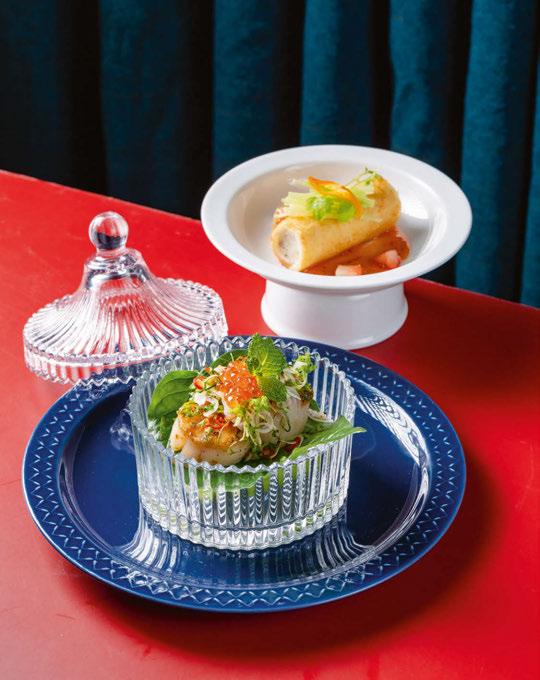
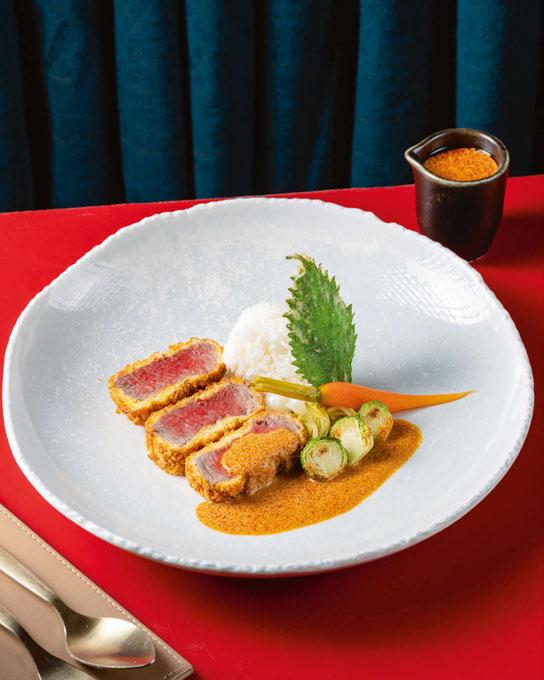
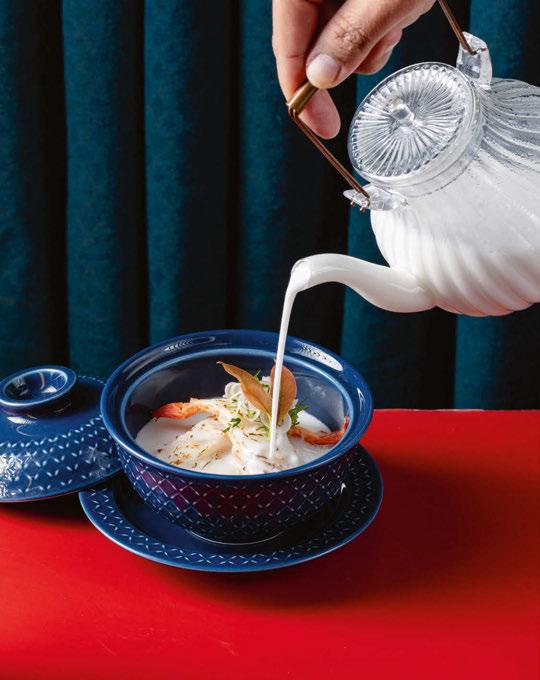
High-quality ingredients are a given, and Panklat is committed to supporting local farmers, with dishes shaped by seasonality, locality and sustainability. Starters could include Long Siam (deep-fried breadcrusted squid mousse with ‘Royal Project’ strawberry sauce) and Saeng Arun (grilled scallop topped with citrus-cured salmon roe and Thai herbs), leading to a fragrant river prawn soup with coconut, Bai Chamuang and lotus stem. One pre-main option is Hom Phrai (grilled snow fish with red curry knifefish mousse and forest fern shoots), followed by Tawan Chai, a Wagyu Massaman that reflects Panklat’s balance of tradition and technique. “The Massaman curry remains rooted in tradition,” she explains. “The Thai-raised Wagyu beef is paired with rice cultivated in the highlands of Chiang Rai and Mae Hong Son; it truly showcases the quality of Thai produce.”
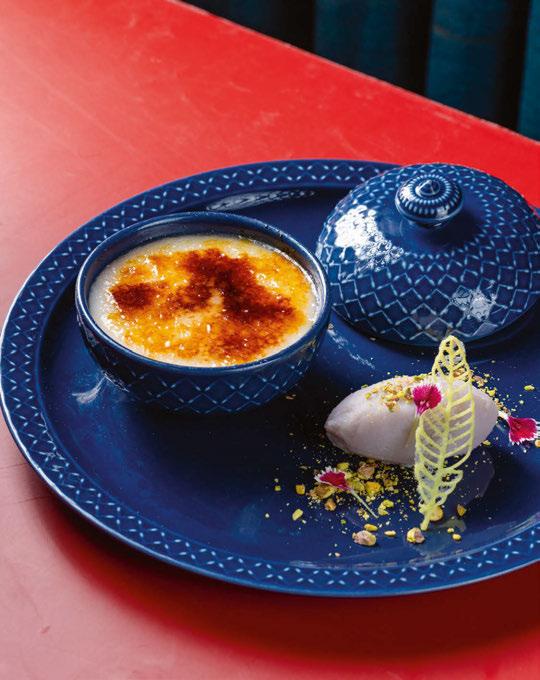
And to finish, desserts like Wan Lamun – a black sticky rice crème brûlée – offer a refined take on Thai classics. “It features Khao Leum Pua, a GI-certified product from Phetchabun, and is enhanced with taro and longan harvested from local farms, then served alongside subtly sweet taro ice cream,” says Panklat.
In many ways, Apsara succeeds not simply as a restaurant, but as a considered continuation of the river’s long commercial and cultural legacy – one that once carried goods, and now carries stories, craft and cuisine. As Chanyu reflects: “The restaurant becomes a truly unique confluence of dining experiences: offering creative Thai cuisine, the moving panorama of Bangkok’s riverscape and the enduring, intimate bond between the rice barge and the Chao Phraya River, now revived in a contemporary relationship.”
The F&B Forecast
As Seatrade Global highlights the food and beverage trends shaping the culinary landscape, cruise lines are responding with immersive dining and drinking experiences at sea.
Words: Hannah Wintle
In the wake of Seatrade Global’s annual F&B@ Sea event in April 2026, food and beverage professionals across the cruise industry have come away with much to digest. The enduring question however, remains: with so much innovation already taking place in the gastronomic landscape, what’s next? According to Seatrade’s Cruise Food & Beverage Trends Report 2026, the answer lies in two key priorities. With a growing desire for immersive experiences and culinary connections to destinations already shaping onboard offerings, experiential dining and global flavour exploration emerge as primary trends for the year ahead.
Combining the two, Silversea is well aware of how discovery and taste converge to create memorable moments, with the S.A.L.T. (Sea and Land Taste) programme transforming voyages into gastronomic adventures. On the recently refurbished Silver Spirit, passengers get a flavour for each Northern European destination they dock at, thanks to daily evolving menus from S.A.L.T. Kitchen that reflect the local territory. In S.A.L.T. Lab, meanwhile, interactive masterclasses offer a hands-on connection to regional traditions, while cocktails inspired by
the botanicals and spirits of each port of call can be ordered at S.A.L.T. Bar.
Regent Seven Seas Cruises has also taken an immersive approach to destination-dining with the introduction of the Epicurean Enrichment Studio. Hosted within dedicated state-ofthe-art culinary theatres on board Seven Seas Mariner and Seven Seas Voyager, the cornerstone of the experience is the Epicurean Passport Series, offering immersive lectures on a region’s gastronomic history, signature ingredients and recipes. Participants will receive a keepsake passport, stamped upon the completion of each region, along with illustrated recipe cards. Chef-hosted tours, dinners, cooking demonstrations and even culinary film screenings are also on the menu.
“Our guests want to see the world through a culinary lens,” says Kathryn Kelly, Executive Chef and Director of Culinary Enrichment for Regent Seven Seas Cruises. “The Epicurean Enrichment Studio is the natural evolution of our programme – blending history, flavour and authentic experience into every voyage.”
Crystal, too, is exploring an interactive approach to dining, with an exclusive journey
that continues the line’s partnership with the Alajmo brothers. Setting sail in September 2026, Crystal Serenity will embark on a seven-night voyage, during which three-time Michelinstarred chef Massimilano Alajmo, joined by restaurateur brother Raffaele, will host Q&A sessions, book signings and exclusive dinners. The next generation of the family is getting involved too, with Giovanni Alajmo on board to host guided wine tastings. “For us, cooking has always been about sharing emotion, culture and a sense of place,” says Massimiliano. “We are very much looking forward to meeting Crystal’s guests in person, exchanging ideas, and bringing the spirit of our kitchens to life on board.”
A more commemorative approach to this growing trend of experiential dining is taking shape aboard P&O Cruises flagship, Britannia. In celebration of a 20-year partnership with Marco Pierre White, the operator is hosting a series of exclusive experiences through its 2026 Food Heroes programme, including special menus and events curated by White himself, as well as hosted tastings, intimate talks and immersive events. The festivities will culminate in a
dedicated anniversary cruise in August, though it is far from the end of the partnership, with P&O and White confirming that new concepts and experiences are already in the works for the years ahead. “I’ve always believed that great food should be for everyone, and that philosophy has sat at the heart of my relationship with P&O Cruises from day one,” White reflects. “Over the past 20 years, we’ve created something genuinely special – bringing proper cooking, great ingredients and a sense of theatre to life at sea. Celebrating this anniversary on Britannia and looking ahead to what we’re building next feels incredibly special.”
In a more experimental undertaking, Holland America Line and Jefferson’s Bourbon are
joining forces to make history with the first bourbon aged on a cruise ship. The spirits brand has loaded 11 liners with a barrel of its finest tipple, where shifting climates, rolling waves and ocean air will influence the final flavour.
While all this innovation puts the industry in good stead to keep delivering the dining experiences passengers crave, one milestone is particularly demonstrative of how far cruise ship dining has come. Exemplifying the narrowing gap between land-based restaurants and those on the waves, 2026 marks the first ever five-star rating for a restaurant at sea. Awarded by Forbes Travel Guide, Le Voyage by chef Daniel Boulud on Celebrity Xcel achieved the accolade for its explorative menu of global flavours. “This industry-leading recognition reflects our unwavering commitment to culinary excellence,” says Laura Hodges Bethge, President of Celebrity Cruises. Echoing these sentiments, Boulud concludes: “Le Voyage is the culmination of our years-long partnership, and we are thrilled to be recognised with Forbes Travel Guides’ Five Stars. Together we look forward to continuing to redefine the possibilities of dining at sea.”
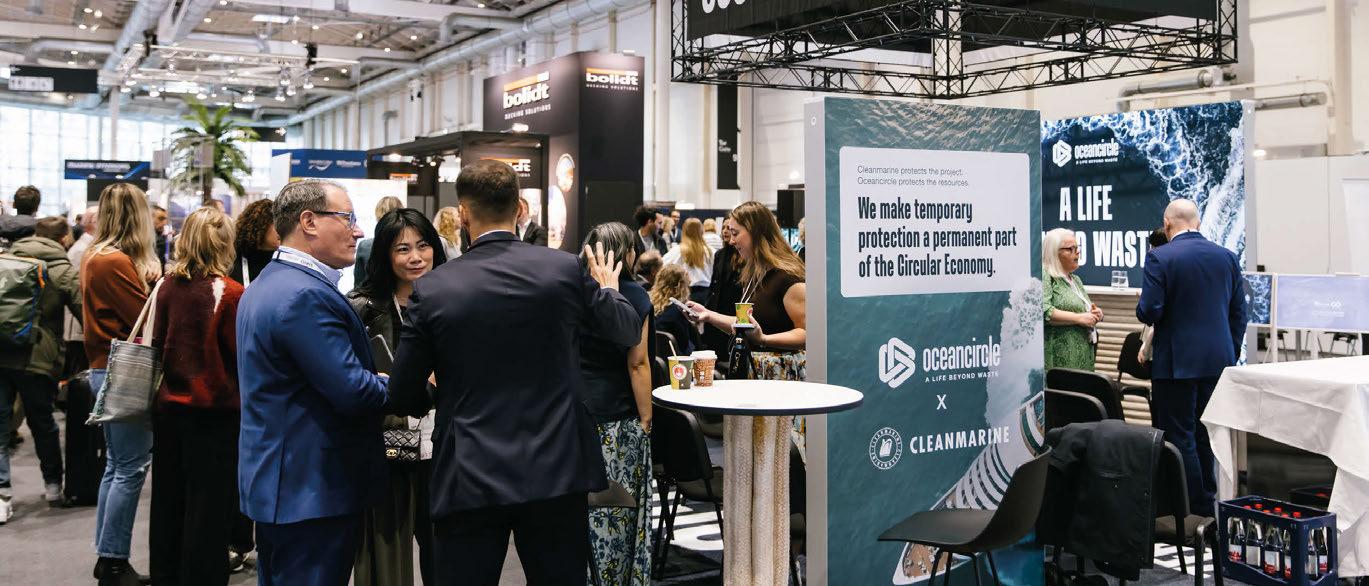
CSI Design Expo
Americas
9-10 June 2026
MIAMI
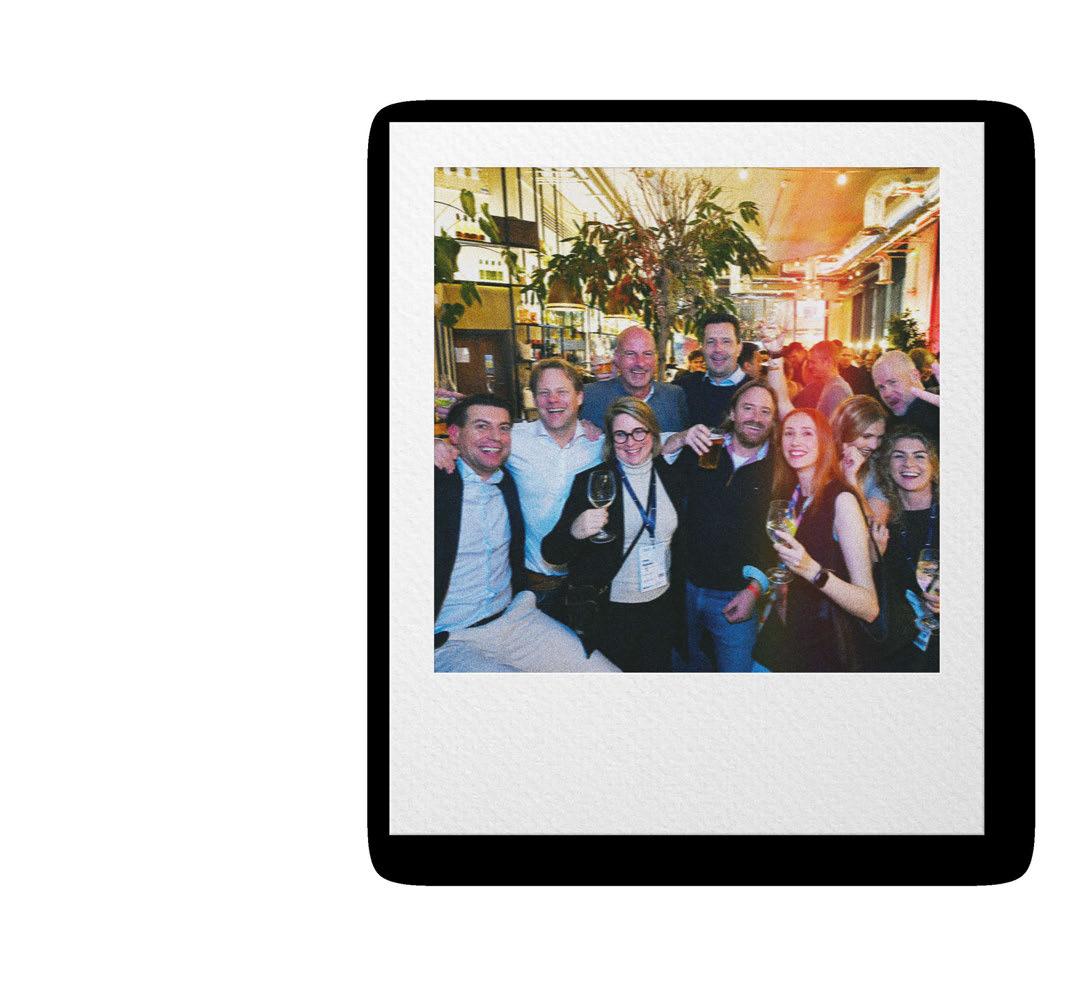
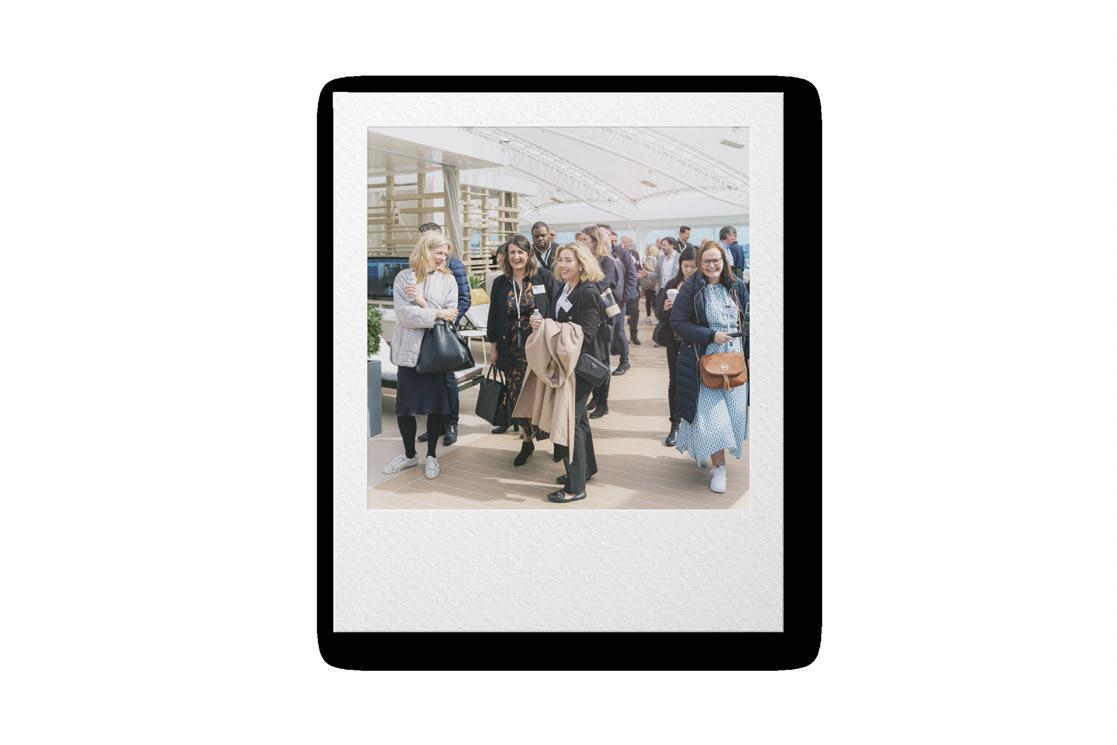
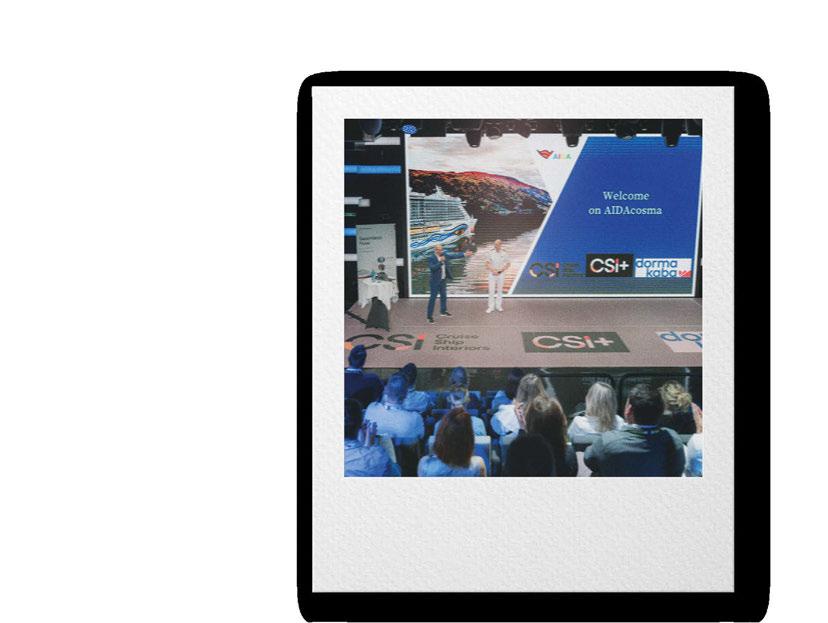
As the world’s only event that connects the people and products bringing cruise ship projects to life, Cruise Ship Interiors Design Expo Americas is not to be missed.
Taking place at Miami Beach Convention Center, the 2026 edition boasts several new features, including a gamified Discovery Trail that guides attendees through mustsee exhibitors, standout sessions and key networking moments. Plus, those looking for inspiration can explore the cutting-edge Sustainable Materials Library, a Collage Art Workshop challenge and Design Deck – a curated showcase of top interiors projects.
The IDCEC-accredited schedule of content puts industry professionals at the forefront of cruise design, spotlighting everything from technology and guest experience to the shipyards reshaping the refurbishment market. And with sustainability now a growing expectation across marine and hotel interiors, the Sustainable Design Summit Working Group brings together sustainability specialists, specifiers, trusted suppliers and key stakeholders to workshop what it takes to design a genuinely eco-friendly
space. Expert speakers from Royal Caribbean Cruises, Virgin Voyages, Regent Seven Seas, Carnival Cruise Line, SMC Design, YSA Design and many more will offer insight throughout the conference programme as they explore the forward-thinking innovations leading to the next generation of cruise ship environments. With 250+ exhibitors showcasing their latest products and services, CSI condenses months’ worth of research into two efficient days. Attendees can discover a marketplace of innovation from design studios, outfitters and product suppliers who understand the intricacies and regulations required by the cruise industry. Exhibitors include Tillberg Design of Sweden, Marine Interiors, Serge Ferrari, Janus et Cie, Sekers, PS Interiors, Chelsom and more. Finally, a dynamic programme of networking experiences runs throughout the two-day event, fostering meaningful connections at every turn. From Happy Hour and Peer-to-Peer Networking to the NEWH Lunch & Learn, each interaction is designed to spark conversations that turn into long-term collaborations.
www.cruiseshipinteriors-expo.com
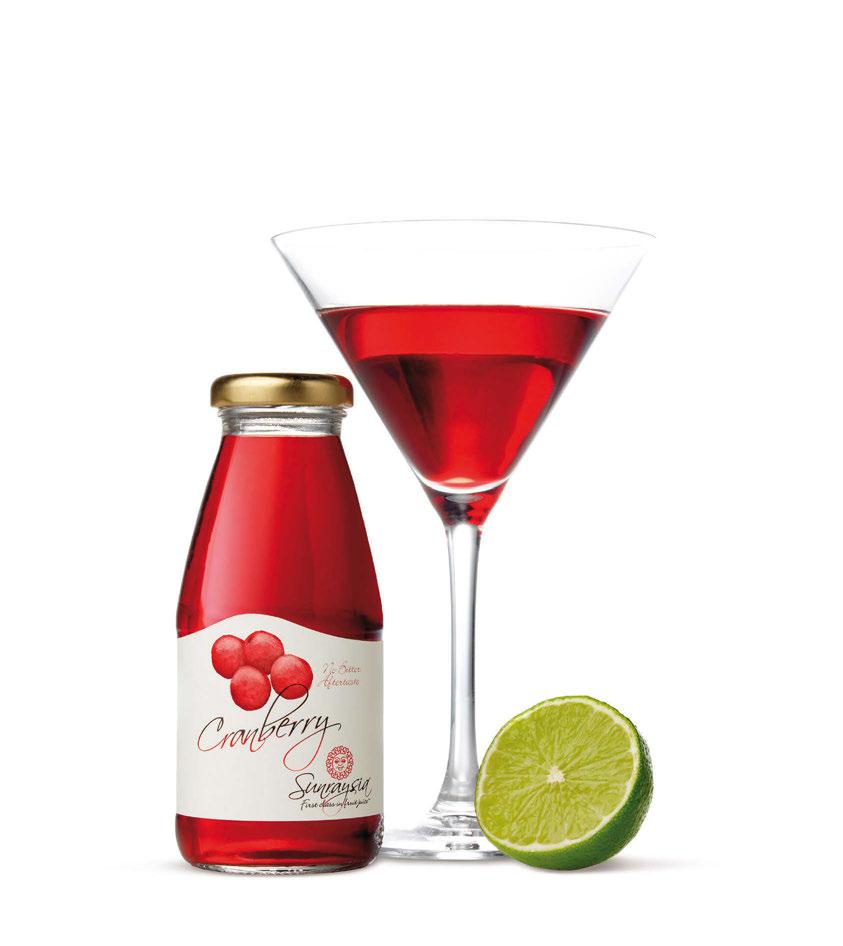
Fine Drinking.
Sunraysia Five Star Cranberry is currently enjoying residency at the following fine hotels: The Lowell New York, Boston Harbor Hotel, Four Seasons Hotel Philadelphia, The
Setai Miami, Park Hyatt New York, The Langham Chicago, L’Ermitage Beverly Hills…
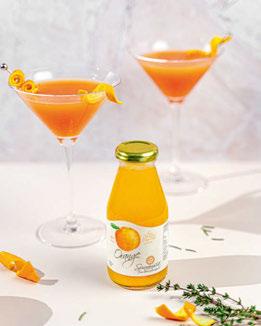
(Pictured Cocktail: Sunraysia Cosmopolitan, mix it from your hotel minibar.)
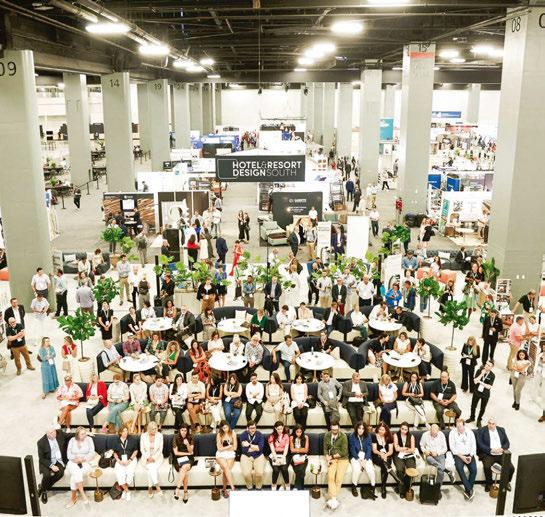
Hotel & Resort
Design South
9-10 June 2026
MIAMI
Catering to those involved in the design of hotels, resorts, island destinations and branded residences across the Southern States, Caribbean and Latin America, Hotel & Resort Design South (HRDS) has announced the schedule of content for its forthcoming show.
Developed in partnership with NEWH, the curated programme features a dynamic line-up of learning experiences, from panel discussions and collaborative working groups to Q&As and real-world case studies – all led by those making an impact across one of hospitality’s fastest-growing markets. Kicking off proceedings will be The Role of Branding, which sees representatives from The Parker Company, Experiential Hospitality, The Loren Hotels, Marriott International and Curioso explore how branding influences design narrative, purchasing decisions and operations.
The distinct Southern States flavour is spotlighted in a session unpacking how culture, place and local identity influence design, with leaders from Four Seasons, Palisociety and Kobi Karp providing insight into how regional character is translated into memorable design.
And Wyndham Hotels & Resorts takes centre stage in a Meet the Brand session, with Geniane Tonoli, Director of Design & Construction, sharing insider knowledge of the group’s newbuild and conversion projects across the US, Mexico and Peru.
Plus, a cross-sector session entitled From Ship to Shoreside will explore how destinations are becoming true extensions of the cruise experience, with speakers from Grupo Vidanta, Adeko & Co, Holland America Line and Sandals Hotels & Resorts offering insight. Closing the programme, The Secrets of Sourcing explores the business of bringing designs to life, featuring case studies on procuring at scale versus boutique projects, balancing creativity with budget constraints, and the evolving landscape of materials and products.
Furthermore, with a strong focus on connection, HRDS will feature a series of networking events designed to foster new relationships and business opportunities, from the popular opening party to a range of intimate socials taking place throughout the event. www.hotelresortdesign-south.com
Speakers at HRDS 2026 include (clockwise from top left): Javier Rojas Rodriguez, Experiential Hospitality; Geniane Tonoli, Wyndham Hotels & Resorts; Patti Seay, Four Seasons Hotels & Resorts; and Aliya Khan, Marriott International
The continents only trade fair catering exclusively to cruise interior design
Dedicated to connection and collaboration, CSI Europe brings together the cruise interiors supply chain with esteemed cruise lines, shipyards, and designers working on major refurbishment and newbuild projects.
“I walked in hoping to find fresh inspiration and walked out with a notebook full of ideas, a stack of business cards, and the firm belief that the design world is in very good hands.” Industry Buyer
“This is the best forum in the marine interior segment to meet the most important stakeholders.” Exhibitor
“I found the schedule extremely well organized, with plenty of opportunities for meaningful networking. I discovered several exciting new products and suppliers that will be valuable for future projects.” Industry Buyer
Featuring:
2 – 3 December 2026
Hamburg Messe + Congress Apply to exhibit
MAIDEN VOYAGE ON LAND
Rest, Play, Work
Citroën reimagines the minivan as a highly adaptable living space that meets the demands of modern life.
As the boundaries between rest, play and work continue to blur, a vehicle that caters to all three modes is in high demand. In response, Citroën has declared ELO - a compact minivan with a spacious cabin – as the solution.
Developed in partnership with Decathlon and Goodyear, ELO – derived from rEst, pLay, wOrk, – measures just 4.1m in length, yet features an ultra-modular interior ready for anything life has in store. The concept car is capable of accommodating up to six people and is designed to facilitate life on the move.
In the cockpit, the driver’s seat rotates 360° to adapt to different configurations, be it to converse with passengers or work at an attachable desk. In fact, if catching up on emails is the priority, ELO transforms into a sleek personal office whenever the need arises, with a digital screen displaying conference calls and meeting schedules. Furthermore, cleverly integrated trays are equipped with cup holders and headphone storage, enhancing the feeling of being in the office.
When it’s time to rest, the minivan transitions into an intimate lounge. The three rear seats can be removed to create a sleeping space for two, and for movie nights, a retractable projector screen converts the cabin into a home cinema.
ELO takes play just as seriously. Designed to accommodate all manner of outdoor leisure pursuits, the boot has been reworked to provide a generous seat on the sill for hikers to change their shoes, and hooks for an awning have been added to all four doors. Plus, removable seating finds another use as lawn chairs, and there are even a set of pétanque balls tucked in a side panel inscribed with an invitation: ‘Ready to play?’
Multifunctional by nature, Citroën has designed ELO with adaptability at heart. Whether used for commuting, family activities, teleworking or impromptu getaways, the vehicle adapts to its passengers, ensuring it meets the demands of modern life in its own compact and colourful way.
The Drive to Design
The automotive industry returns to Milan Design Week with a host of installations to showcase their latest launches.
For years, Milan Design Week has welcomed influential figures from across the creative industries to offer a glimpse into the future of product design. Now, as more and more automotive brands become involved in the trade fair, a wave of immersive experiences and curated roomsets take place throughout the city, translating design philosophies into the language of interiors. In 2026, the trend continued, demonstrating how all aspects of design are shaping the way cars are conceived, presented and experienced.
AUDI: ORIGIN
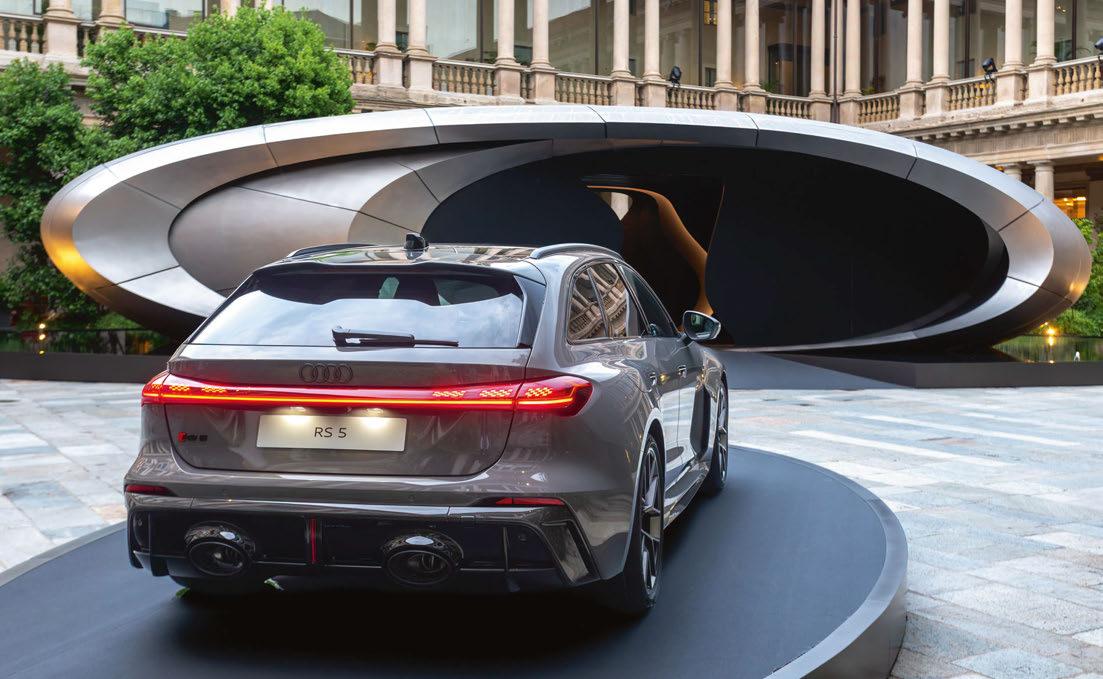
Offering a moment of pause amidst the festivities, Audi partnered with Zaha Hadid Architects to present Origin, an art installation that reinterprets the car-maker’s design philosophy of clarity, technicality, intelligence and emotion. Located in the courtyard of Portrait Hotel on Corso Venezia, the ovoid sculpture was conceived as a living spatial experience, with visitors invited to step inside for a sensory escape of shifting light and sound. The metallic shell – reminiscent of manufacturing materials such as titanium – created a dialogue between contemporary design and the rich architectural heritage of Milan. Origin also ushered in a new era for Audi, with two milestone vehicles presented alongside the installation. First up was the Audi RS 5 – the first high-performance plug-in hybrid from Audi Sport. And, marking the brand’s entry into Formula 1, the Audi R26 was also on display, showcasing a commitment
to technological progress, competitive excellence and broader cultural reach.
MINI: A GARDEN OF CURIOSITY
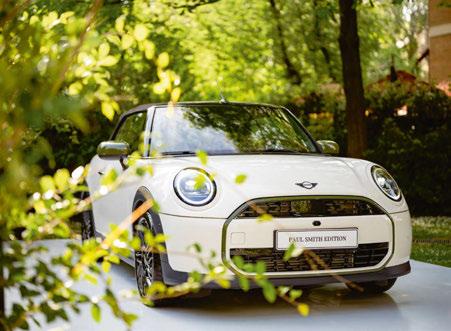
In a continuation of their ongoing collaboration, Mini and Paul Smith presented A Garden of Curiosity – an immersive experience celebrating optimism, curiosity and innovative spirit. Beyond a wooden footbridge and bold red door, visitors were immersed in the enchanted garden of Palazzo Borromeo d’Adda, where various installations explored architecture, texture, colour and sound. Nestled among the greenery, the Colour Theory Room encouraged experimentation with Smith’s signature hues, while the Listening Room played voice recordings from the designer to highlight the importance of colour theory. The experience culminated in the discovery of three vehicles, including the new Mini Cooper Convertible Paul Smith Edition. Capturing the essence of ‘classic with a twist’, this latest model features
the specially created colour Nottingham Green, which adds stylish accents to the mirror caps, octagonal radiator grille and wheel hub covers. Its appearance and details not only reflect Paul Smith’s distinctive style, but also captures the brand’s playful and independent spirit.
HYUNDAI: UNFOLD STORIES
An immersive installation entitled Unfold Stories guided visitors through Hyundai’s unique design process, presented as a sequence of interconnected experiences. The journey began in the Art of Steel Exterior Space, where a sheet of paper evolved through sculptural forms into a finished object, illustrating the car-maker’s paperto-steel approach. In the Furnished Interior Space, Hyundai’s interior design philosophy was expressed through materiality and interactive elements, reflecting a human-centric design approach that prioritises comfort, emotion and personal rituals over mechanical expression. The
installation concluded with the reveal of Ioniq 3, a vehicle that epitomises Hyundai’s design philosophy through strong proportions, clean surfaces and a 1970s-inspired interior conceived as a ‘furnished space’.
RANGE ROVER: TRACES
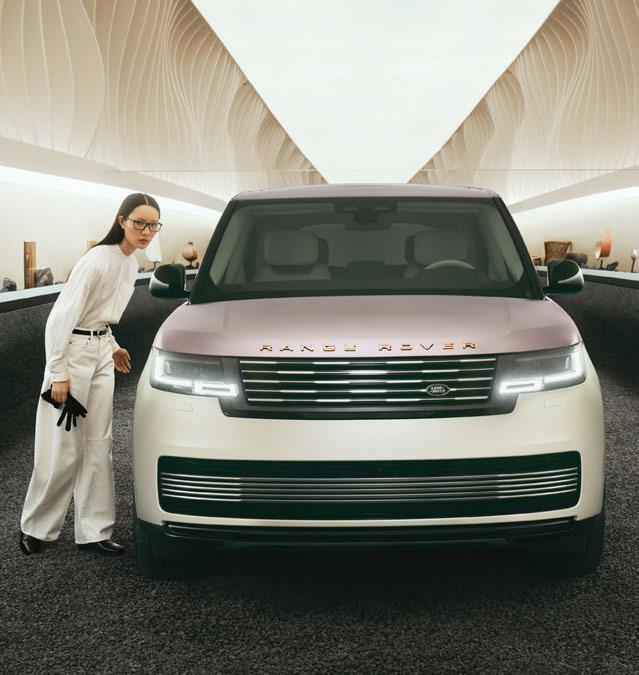
Bringing together spatial design, original film, commissioned artwork and bespoke sound, Range Rover returned to Milan with Traces, a sensory installation conceived by Storey Studio. The experience unfolded across three chapters: Memory & Colour immersed visitors in a Felipe Sanguinetti film depicting the bright hues of nature; Memory & Motif comprised a gallery of original artworks that draw from memories of Milan; and Memory & Material revealed a oneof-a-kind Range Rover Bespoke. Inspired by the freshwater pearl of River Tay, the vehicle was surrounded by objects emblematic of the landscapes and craftsmanship of Scotland.
Taking to the tracks in 2027, a new overnight service is offering a fresh take on the sleeper train aesthetic.
In theory, boarding a train in one country, drifting off to sleep and waking up refreshed at a new destination sounds like the perfect way to travel. In reality, however, overnight rail journeys can be far less appealing, with shared cabins, cramped beds and costly tickets among discouraging factors.
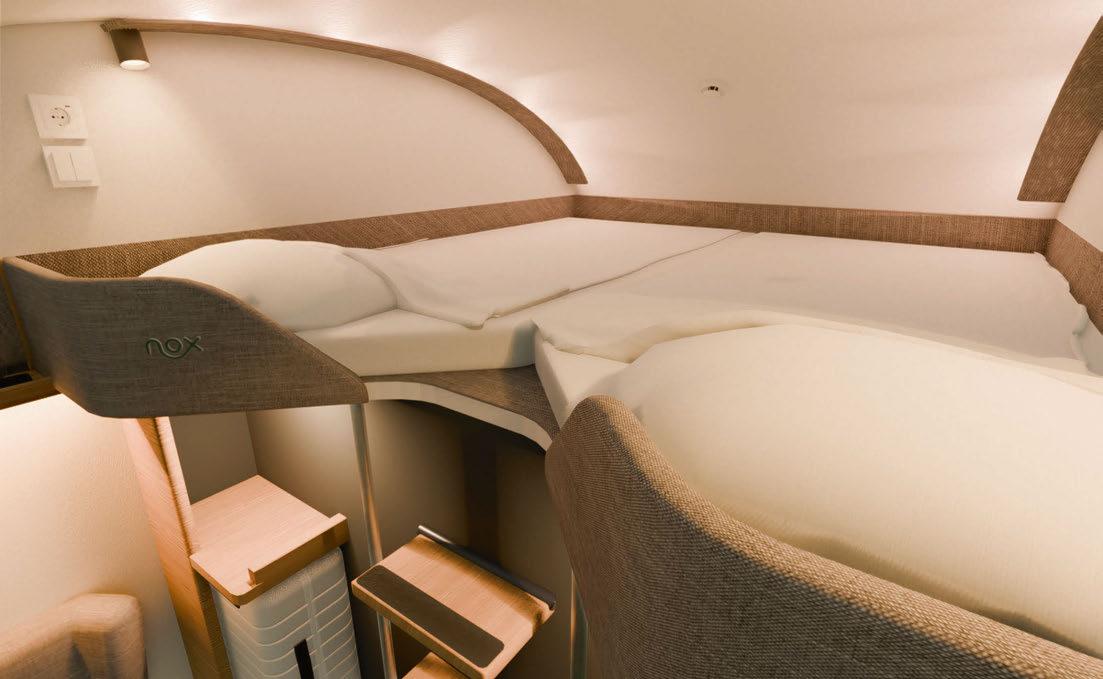
From 2027, the landscape of intercontinental rail could look very different thanks to Nox Mobility, a Berlin-based start-up with plans to operate a Europe-wide overnight train service with individual cabins. Across three room categories, passengers can enjoy the luxury of true privacy and a comfortable night’s sleep in a full-length bed. Each room also features luggage storage, separate seating and space to stand up, and there are even plans to offer double beds and panoramic views.
“Our room design allows us to fit more people into our trains than traditional operators can,” says founder Janek Smalla. “This, paired with a strict focus on standardisation and operational
excellence, will allow us to offer affordable fares on over 35 European routes.”
If the allure of privacy isn’t enough to entice passengers from air travel, competitive pricing means that lengthy security queues and airportto-city transfers could become a thing of the past. By combining airline-grade reliability with a hospitality-first experience, leisure travellers can unlock a night’s rest without an extra hotel stay, while business travellers – who already make up 30% of night train users in France –avoid early morning departures and lost working time. Plus, every passenger can sleep easy knowing their carbon footprint is smaller on the rails than in the air.
“Nox Mobility is the result of years of riding night trains, discussing with customers and seeing what works and what doesn’t,” concludes co-founder Thibault Constant. “Sleeping while a train gets you across Europe is a great concept. We want to make night trains an essential part of European travel.”
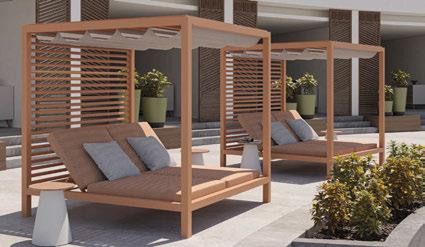
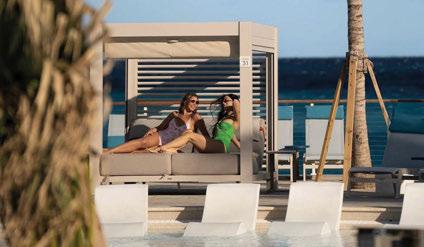
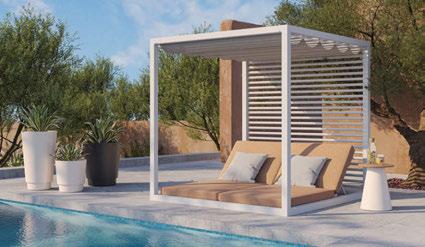
A PRIVATE OASIS AT SEA
When it comes to finding the perfect place to relax on board, there are countless options. Yet few can rival the allure of a cabana. A cabana offers the perfect blend: the freedom of being outdoors paired with the comfort and elegance of a five-star resort. Cabanas are designed to add an extra luxurious experience on
ROBOS. Making ideas happen. Discover the power of custom made furniture – visit www.robos.nl
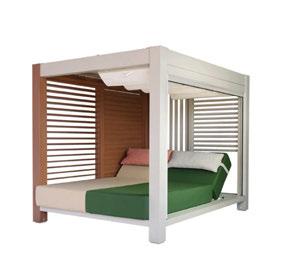
board. They not only offer shade and privacy, but also exclusive services. The ROBOS cabanas are designed to extend indoor life to the outdoors with an architectural style. Each cabana can be fully customized to your vision – from fabrics and materials to dimensions and finishes. Learn more at www.cruiseshipcabanas.com
A Midsummer Night’s Dream
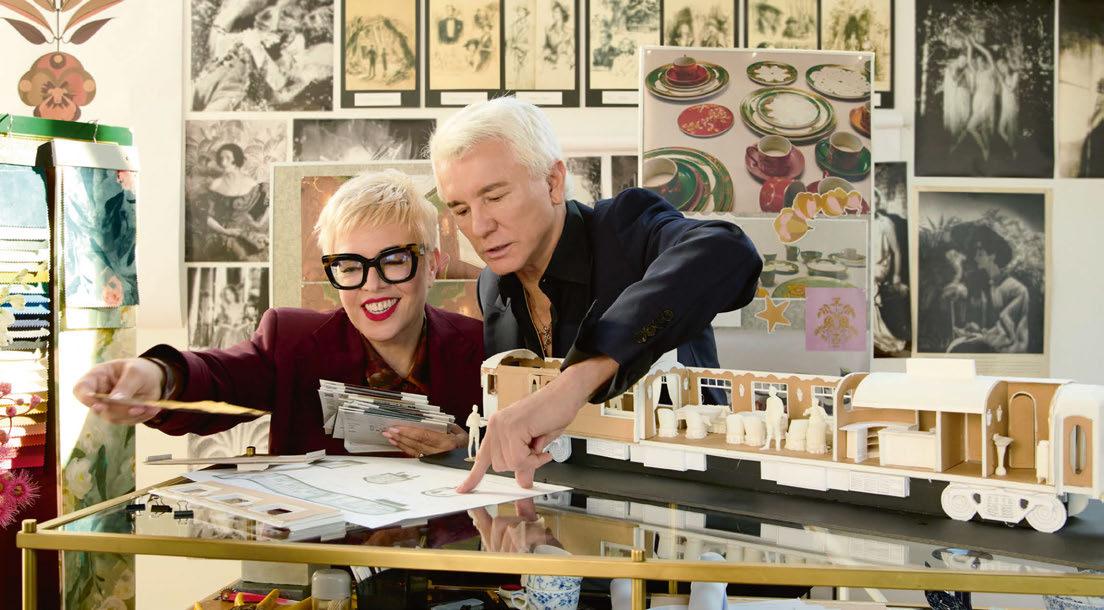
The British Pullman presents a dazzling new carriage designed by Baz Luhrmann and Catherine Martin.
Few filmmakers can tell a story with the same flair as Baz Luhrmann. From the mesmerising magic of Moulin Rouge to the glitz and glamour of The Great Gatsby, the writer, director and producer has created a cinematic language defined by theatricality and maximalism. And it’s this spectacle that is coming to The British Pullman.
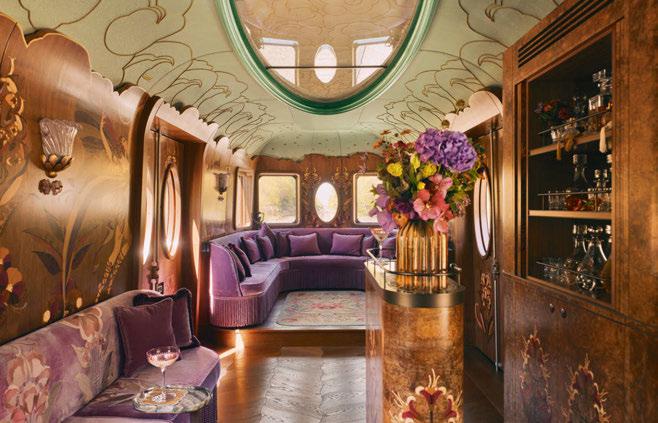
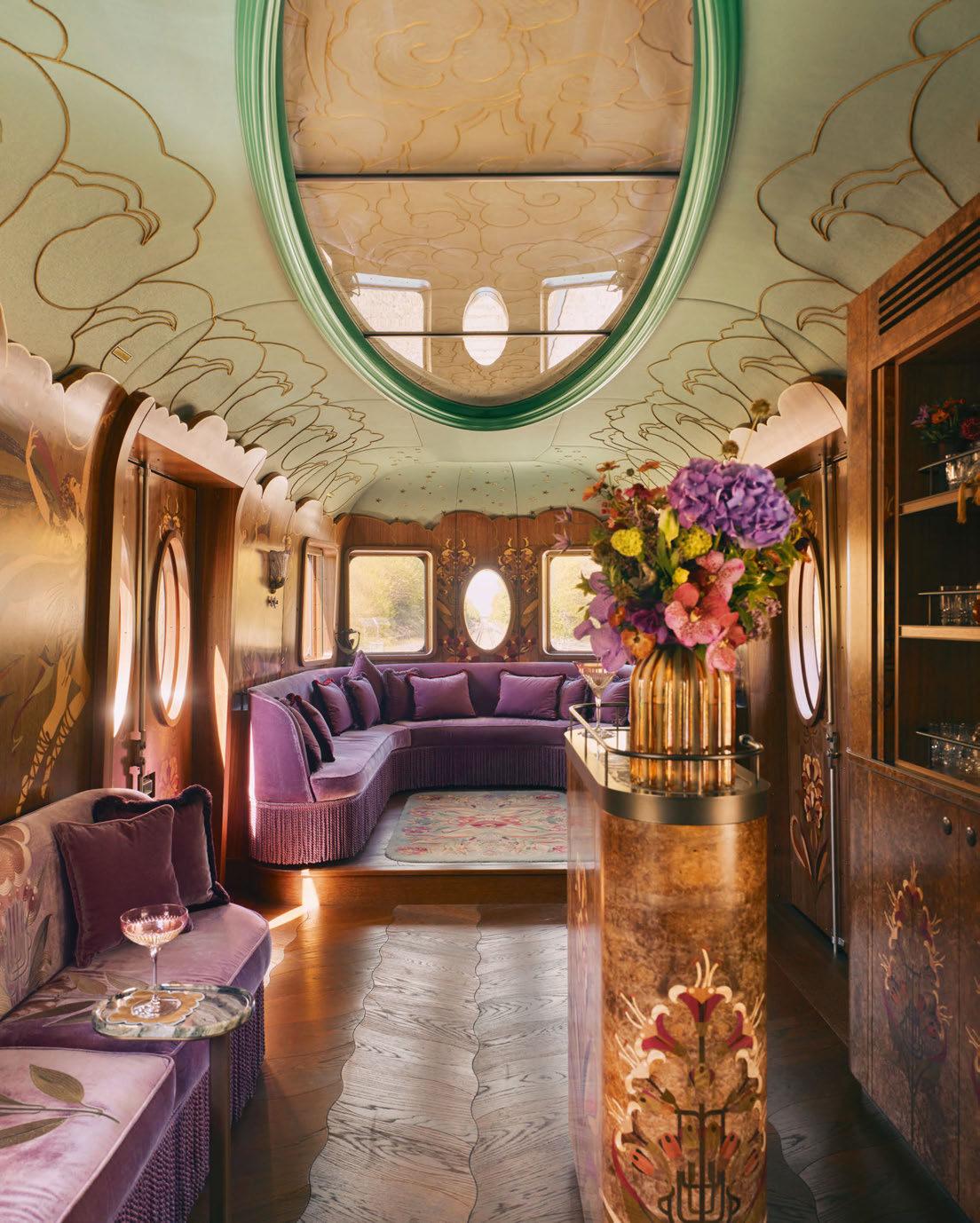
In Summer 2026, the Belmond train will introduce Celia, a new private dining carriage designed by Luhrmann together with Oscar-winning costume and production designer, Catherine Martin. Set within an original 1932 Pullman carriage, Celia features its own cocktail bar, lounge and dining area, offering up to 12 guests a chance to experience one-of-a-kind events that unfold like the scenes from a film.
The design is based on the life of Celia, a fictional muse who was gifted the carriage in honour of her West End role as Titania, Queen of the Fairies, in A Midsummer Night’s Dream. As such, the scheme unites the life story of a leading lady with Shakespeare’s fantastical world. Guided by Luhrmann and Martin’s artistic vision, interiors are brought to life through British craftsmanship, with skilled artisans selected to conjure a dream-like scene that takes cues from the nation’s flora and fauna. Collaborators include A Dunn & Son for the intricate marquetry, Bill Cleyndert & Company for the bespoke furniture, Tony Sandles for the glass finishes and Hand & Lock for the embroidery. Martin chose the tableware too, opting for Tom Dixon
glassware and David Mellor cutlery, while the fine bone china is a collaboration with Duchess China. Materiality and texture take centre stage throughout the carriage. Theatre-style curtains separate the dining room and lounge, while decorative fabric lines the ceiling. Plush velvet upholstery in playful shades of violet and crimson accompanies floral motifs, and the veneered marquetry is etched with dreamscapes.
“Creating Celia was a once-in-a-lifetime experience, allowing us to push the boundaries of creativity, luxury and uniqueness,” comments Luhrmann. “Stepping inside the carriage is like being transported into another world, and one in which guests are invited to become part of the story. Celia, at its heart, is a magical mystery tour – a travelling experience filled with food, music, wine, laughter and performance. All of this unfolds as you drift through the countryside, feeling as though you’ve stepped inside A Midsummer Night’s Dream. It’s a playful and exceptionally unique way to explore the UK, at your own pace and according to your own rhythm and story.”
Martin concludes: “Celia gives travellers the rare opportunity to inhabit the nostalgia of another era. The carriage offers the ultimate luxury – the time and space to truly connect with the journey itself – and it allows the mind to decelerate, opening the possibility of deeper connection not only to oneself and to others, but also to new cultures, new perspectives and different ways of seeing the world.”
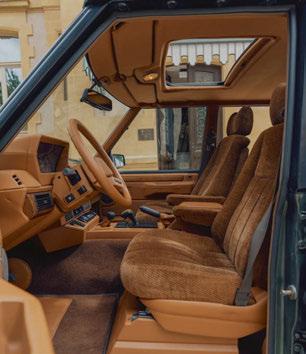
Having designed some of the world’s most luxurious hotels, Tristan Auer is now bringing his multisensory approach to mobility, blurring the line between transport and hospitality.
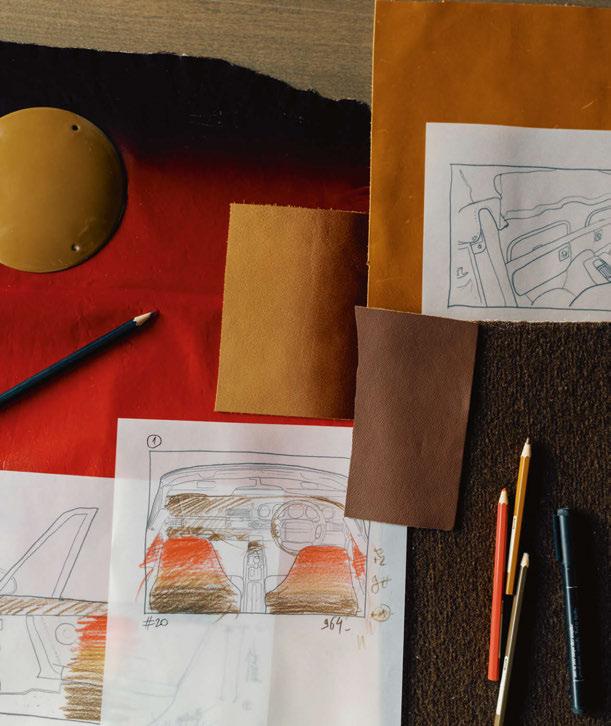
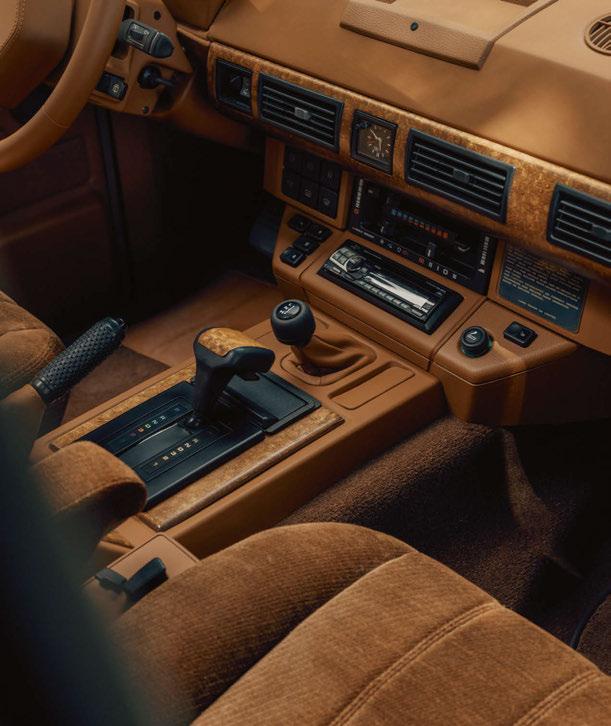
For decades, Tristan Auer has shaped the identity of some of the world’s most prestigious hotels, creating refined interiors that balance elegance, emotion and sensual experience. But beyond the lobbies and suites lies a lesser-known dimension of his practice: transport design and bespoke automotive tailoring. Over the past ten years, the interior architect has quietly built a reputation for ‘design in motion’ – expanding from static spaces to the mobility sector, where cars, trains, yachts and private jets are an extension of his creative vision.
A graduate of Penninghen in Paris, Auer honed his craft under the likes of Christian Liaigre and Philippe Starck, before establishing his own studio in 2002. With projects spanning hospitality, retail and high-end residential, the French designer has developed a distinctive approach that is rooted in materiality, craftsmanship and considered composition. It can be seen in the plush velvet and intricate marquetry of his signature suite at Four Seasons Hotel George V in Paris. And at Pic within Beau-Rivage Palace in Lausanne, where the softly poetic interiors reflect the culinary language of Michelin-starred chef Anne-Sophie Pic. The beauty of heritage-meets-modernity characterises Carlton Cannes, winner of the coveted AHEAD Europe Hotel of the Year in 2023. And at the recently opened Rosewood Courchevel, Auer’s touch is evident in the thoughtful interplay between timber and stone, mirror and copper.
However, it’s another of his luxury hotel projects that served as the driving force for a move into transport design. “I was designing Hôtel de Crillon in Paris and convinced the owner to have a courtesy car with interiors that reflect the identity of the hotel,” Auer reveals. “It turned out to be the best investment they made; the car is the biggest talking point, acting as an ambassador for the hotel.”
Of course, this isn’t your typical courtesy car. Taking guests on stylish jaunts around the city, the 1973 Citroën DS Pallas cuts a striking figure thanks to its aerodynamic body and Parisian Grey paintwork. The interior has been fully reimagined by Auer, with premium textiles replacing the utilitarian finishes of the original. A velvety alcantara lines the ceiling, door panels are clad in velour, seats are upholstered in the softest leather, and the carpet is a woven wool-blend moquette. “We respect the original design of the car, but there’s a new sense of harmony to the finishes,” the designer explains. “You can smell the fabrics and touch the details, it makes a big difference.”
The car has made such an impact that a miniature Citroën DS is now on display in every guestroom, while the hotel’s chef pâtissier has recreated the model in chocolate form. Furthermore, Auer was asked to design a second car for Hôtel de Crillon in 2019, this time a Citroën CX Prestige in regal navy hues, with the double chevron logo appearing in stitching to mark the automobile brand’s centenary.
For Auer, the collaboration also marked the beginning
of a different venture – “a new art de vivre in motion”. Car Tailoring was established in 2015 to offer bespoke design services to individual and commercial clients, and though the launch coincides with the increased convergence between hospitality and mobility, a move into transportation wasn’t necessarily intentional. “Hospitality is about welcoming people, making them feel good and providing an experience; transportation should do the same,” the designer explains. “I’m not a strategist; I just do what I love.”
This passion for transport began at an early age, from playing with toy cars as a child to travelling across France by train, making the long journey between parents living on opposite sides of the country. The obsession with cars continued through his teenage years, eyeing coupes and convertibles he could only dream of being able to afford. At the age of 33, Auer was eventually able to buy his first set of wheels: an old Porsche 911 from the 1980s. “It was cheaper than the new Renault Clio, but it was ugly,” he laughs. “I didn’t want to be stuck with someone else’s bad taste, so I decided to repaint the body and change the interiors.”
Modifications are considered something of a faux pas in the classic car world, with many enthusiasts committed to preserving authenticity, however Auer persevered. At the time, he was designing private residences, so began experimenting with the fabrics and finishes to hand. The risk paid off, and the car was crafted to reflect the designer’s taste, lifestyle and personality. This philosophy now defines the Car Tailoring experience, with Auer viewing a vehicle’s interior much like a private home – a space that should be deeply personal and tailored to the individual owner. To achieve this, he invites every new client on a road trip, conversing on a wide range of topics to uncover their individual style and spirit. This is then channelled into a narrative, enriched by Auer’s own love of French savoir-faire.
The overarching idea is to reimagine mobility through atmosphere and sensory engagement rather than simply a mode of transport. The
“Hospitality is about welcoming people, making them feel good and providing an experience; transportation should do the same.”
It has a coordinating scent – a sweet and fruity strawberry aroma – and features a cool box stocked with drinks and snacks for leisurely days at the beach.
Projects come in a wide variety of styles for private clients too, from a Lamborghini Urraco to a Ford Mustang to a Land Rover Defender. There’s a 1939 Delage in soothing dove grey; a Ferrari Dino 308 GT4 with interiors inspired by the tailoring of a brown checked suit; and a 1971 Alfa Romeo Junior Zagato clad dashboardto-boot in electric blue, selected to reflect the owner’s dynamic personality. Many come with bespoke accessories, such as travel holdalls and umbrellas, and for one particular client, a pair of driving slippers. “The floor mat is crafted from a fur coat from the 1920s, so it’s not a car to drive with dirty boots,” Auer quips.
designer talks with passion about the multisensory experience, stating that although visual appeal is important, sound, smell and touch are paramount. “Whether you’re the driver or a passenger, you don’t look at the interiors of the car; attention is on the road or the passing scenery,” Auer attests. “You hold the steering wheel, smell the leather of the seats and hear the closing of the glovebox.”
Indeed, every sense and surface is considered. The designer explains the use of cashmere on the inner lining of a pocket, for example, noting that “you don’t see it, but when you take out your sunglasses, you feel it”. And every finish is bespoke. “I designed a Porsche 964 America Roadster with leather upholstery that graduates between brown and Guards Red,” Auer explains. “I found only one atelier able to do this; she works in haute couture and spent one month staining the leather to my design. So it’s really a form of haute decoration that I do.”
Another standout in the Car Tailoring portfolio is a Citroën Méhari for Hôtel Martinez in Cannes. Auer reimagined the vehicle for its French Riviera setting, opting for a distinctive strawberry sorbet colour scheme alongside playful cork detailing and a parasol-style roof.
His latest project, both in hospitality and transport, is Villa Pétrusse in Luxembourg’s old town. The 22-room hotel occupies a Maison Bourgeoise dating back to the late19 th century, and following refurbishment, features contemporary interventions alongside faithful restorations that honour the spirit of the historic house. There’s a quiet luxury about the interiors, and the same can be said for the hotel’s courtesy car – a Range Rover LSE furnished in tan suede and leather with exquisitely tailored details.
Further projects are in the works, notably a Mercedes SLS with gullwing doors, which will bring the portfolio up to 30 vehicles, many for hotels. In fact, Auer now proposes a courtesy car to the majority of his hospitality clients, who typically seize the opportunity. “They love the idea,” the designer reveals. “I’m well-known for hotel interiors, but when I talk about car tailoring, clients are amazed because no-one else is doing it. They trust me to deliver the project and say yes without any persuasion.”
A visit to Auer’s studio in Paris shows just how deep his passion for design in motion runs. Of course, there are design tomes and lookbooks, along with a beautifully curated material library, but there’s also racing memorabilia and miniature models of classic sportscars lining
Auer’s Car Tailoring projects are comparable to haute couture, with bespoke finishes and crafted detailing
shelves, not to mention the museum-worthy display trays of sketches, moodboards and fabric samples –one for each Car Tailoring project.
As a member of the prestigious Automobile Club of France and regular attendee at Concours of Elegance, Auer is clearly passionate about classic cars. He’s part of a “family” of enthusiasts, often arranging rallies and adding to his own collection. So, what is he currently driving? “I cycle; it’s by far the fastest way to get around Paris,” he laughs. Cycling is also used as an analogy to explain the workings of the studio – “like cyclists, we work as a team to help one another move forward,” he describes, demonstrating with an orderly display of figurines on bikes, each one representing a member of the team.
And movement, it seems, is a recurring theme. Even the lamp launched at Maison & Objet’s January edition – a reimagining of the Muse collection for Contardi Lighting – is characterised by its mobile nature, able to be moved around as the user pleases. There are other modes of transport too – a highlight being two suites
aboard The Royal Scotsman, A Belmond Train. The interiors again channel the sensory emotion that Auer himself experienced on his travels through Scotland. “I was inspired by the beauty of the landscape and harmony of natural colours of the flora, skies and stone. I wanted guests to be in tune with Scottish heritage, surrounded by strong emotions, satisfying not only sight but all the other senses as well.”
Auer has completed the interiors of two private jets, as well as a yacht – sectors he hopes to explore further as luxury travel becomes increasingly experiencedriven. He hints at further transport designs in the works too – courtesy cars for forthcoming hotels and a soon-to-be-announced project that takes him in a new direction. Whatever the mode of transport, there’s a common thread. For Auer, the future of mobility lies not in speed or convenience, but in emotion, atmosphere and the art of slow travel – a philosophy he describes as “design in motion”, where transportation becomes as immersive, personal and sensory as the world’s finest hotels.
The Citroën Méhari has been reimagined for its French Riviera setting, with cork detailing and a distinctive strawberry sorbet colour scheme
Experience impressive architecture and design from unique perspectives, with professional photography of your maritime projects
Contact Alexander Rudolph: +49 170 1501710 • mail@marine-interior-images.com www.marine-interior-images.com
Regent Seven Seas Grandeur
MAIDEN VOYAGE IN THE AIR
Soul Of The Sky
Doroni Aerospace brings everyday personal flight closer to reality with the unveiling of an AI-assisted eVTOL.
Since humans first took to the skies, many have fantasised about what flight would look like as part of daily life. Now, with the unveiling of the H1-X Personal eVTOL, Doroni Aerospace seems to be inching closer to that reality.
Backed by a decade of research and development, the company has developed a two-seat model designed with everyday living at heart. Compact enough to fit inside a standard two-car garage and chargeable through existing EV infrastructure, the H1-X can taxi into position before gearing up for take-off. The aircraft ascends vertically with a zerotilt flight approach thanks to its bespoke propellers, before transitioning into wing-borne flight once at altitude. With a payload of 500lbs and a range of 100 miles, the eVTOL is slated to reach top speeds of 120mph, all while offering far-reaching views through a 270° panoramic canopy.
Up in the sky, piloting the H1-X is an intuitive experience thanks to its joystick-based controls, and it is here in the cockpit that the aircraft’s digital copilot comes to life for further flight-enhancing features. Soul AI, an intelligent human-machine interface, is a dramatic breakaway from the complex controls and systems traditionally associated with aircraft. Governed by a three-pronged approach spanning protection, guidance and experience, Soul AI is constantly working in the background to deliver critical insights and alerts, provide accurate navigation and send real-time updates to the user’s phone, keeping them in the know about weather conditions and battery life. “To truly make personal flight accessible, beautiful and intuitive, the hardware is only part of the story,” says Chief Operating Officer Rami Arbili. “The future of flight is not just about building a machine that can fly, it is about building a machine that can work with you, naturally, intelligently and seamlessly.”
With flight testing scheduled for 2027, founder and CEO Doron Merdinger foresees the first deliveries of the H1-X as early as 2028. “It was never just about getting from A to B faster,” he explains. “We wanted to expand what’s possible, make hard-to-reach places accessible, turn exotic destinations into weekend trips and make going to work or shopping feel extraordinary.”
Next Stop: Space
A new start-up aims to make lunar tourism the first sustainable business on the Moon.
“Humanity’s transition to a space-faring species is not a question of if, but when,” according to Skyler Chan, founder of Galactic Resource Utilization (GRU) Space, who is planning to open a hotel on the Moon by 2032.
In a newly released whitepaper, the YC-backed start-up has outlined its end-to-end strategy for lunar habitation, beginning with high-end tourism then scaling into permanent infrastructure on the Moon and Mars. “While current industry leaders have successfully reduced the cost of orbital launch and solved the transportation problem, a gap remains in architecting civilisation expansion,” the report explains. “There is currently no established playbook for a lunar or martian economy, nor is there a closed-loop infrastructure capable of sustaining human life independent of Earth.”
Assessing the challenges and opportunities of living in space, the whitepaper sets out a technical and economic roadmap to building a lunar tourism business, stating: “Our mission is to engineer the infrastructure required to harness resources and sustain life on new worlds,
ultimately creating a self-sufficient industrial autonomy on the Moon, Mars and beyond.”
While the ultimate goal is to build cities in space, the immediate economic driver is the first hospitality infrastructure on the Moon. The first hotel is expected to be manufactured on Earth then transported via heavy lander; on touchdown, it will be robotically deployed and inflated. The location is selected to offer direct sightlines to the surrounding lunar terrain, not to mention unparalleled views of Earth, while the interior is large enough to accommodate four guests for several days. The hotel will be equipped with a full Environmental Control and Life Support System (ECLSS), which includes oxygen generation, carbon dioxide removal, water reclamation and thermal control, as well as an emergency evacuation system in case of rapid depressurisation.
Subsequent missions will implement insitu resource utilisation (ISRU) technology, so rather than sending further hotel modules built on Earth, GRU Space will send machines that transform lunar soil into durable bricks. This will be done at scale, with robotic equipment building the rigid outer structure around interior inflatable modules. As shown in new renderings, the architectural design of the hotel is inspired by the Palace of Fine Arts in San Francisco, characterised by Beaux-Arts architecture drawn from Roman and Greek classical ruins.
Construction is targeted to begin in 2029, pending regulatory approval, and if successful, the lunar hotel would be the first ever permanent off-Earth structure built in history. In a mark of confidence, GRU Space recently announced that its booking system is open, with applicants invited to put down a US$1,000,000 deposit to be among the first guests to stay. This capital will then be reinvested into infrastructure to build entire civilisations. “We live during an inflection point, where we can actually become interplanetary before we die,” concludes Chan. “If we succeed, billions of humans will be born on the Moon and Mars and be able to experience the beauty of lunar and martian life.”
Out Of This World
Billed as the bridge to space tourism, a lunar-themed resort is set to bring the interstellar experience to the heart of Las Vegas.
Paving the way for future lunar surface missions, Artemis II made history in April 2026 when it took four astronauts the furthest into space that any humans have ever travelled. Looping around the moon before returning for a splashdown on Earth, Orion became the first crewed flight beyond low Earth orbit since Apollo 17 in 1972. With any luck, the next generation of lunar explorers won’t have to wait 50 years to come into such close proximity with the moon, especially when they may be able to experience the next best thing –right here on planet Earth.
Slated to touch down in the Nevada desert as soon as 2032, Moon is an aptly-named integrated resort defined by a distinctly lunar-looking orb at its centre. Developed by Canadian studio Moon World Resorts, the 312m structure is set to break records as the world’s tallest true sphere, all while evoking the interstellar and becoming the bridge to space tourism.
According to Moon’s smart city masterplan, the cosmic construction will feature a 4,000key all-suite hotel, accompanied by a 200room boutique property and a base comprising
restaurants, wellbeing facilities and an events centre. The star of the show however, is on the upper levels, where an authentically designed lunar surface and moon base will give guests a taste of space exploration without ever having to leave Las Vegas. There’s even a lunar shuttle and moon buggy for a true astronaut adventure.
Orbiting the resort’s celestial centre, beyond lush parks and lagoons, 10,000 branded residences will be housed within 16 smaller spherical buildings and 20 towers, atop which a panoramic sky walk encircles the entire resort. Above, an exclusive AAA commercial real estate offering is available for Tier 1 companies from within the space and aerospace sectors.
“Wellbeing and longevity form the cornerstone of Moon’s masterplan, as will the inclusion of the sensory environment, transforming guests in a profound, meaningful and memorable way,” concludes Sandra G Matthews, co-founder and President of Moon World Resorts. “It is our mission from day one to connect guests to themselves, to others, to planet earth, to the galaxy and beyond.”
Swiss-Style Soaring
PriestmanGoode delivers a Swiss-inspired cabin in line with Edelwiess Air’s wider brand transformation.
What better start to a holiday than the feeling of stepping off the plane into a new destination, ready to explore? For Edelweiss, it’s the stepping onto the plane that kickstarts the excitement, and with a new cabin design by PriestmanGoode, travellers can immerse themselves in the Swiss spirit before they’ve even left the runway.
The updated cabin, delivered in line with the airline’s wider brand transformation, combines modern design notes with warmth, comfort and a refreshed expression that reflects Edelweiss’ core values. With a deep rooting in Swiss sensibilities expressed through a colour palette developed in extension of the airline’s branding, the result is a light and contemporary interior designed to be relaxed and welcoming.
Central to the scheme is the cabin’s distinctly Swiss design language. Inspired by modern architecture, interiors and the destinations Edelweiss flies to, PriestmanGoode has added character with subtle design details throughout
the cabin. For a sense of movement and continuity, wave motifs derived from the airline’s livery and linear flowing patterns referencing Swiss architecture feature throughout.
Meanwhile, tailored stitching and textured fabrics reference Swiss quality and care, with many material choices and finishes selected from European suppliers and chosen specifically to imbue a sense of quality and craftsmanship. A calming palette of blue tones are present across seat upholstery and cushions, while considered sunset lighting further supports a relaxed and comfortable flight experience.
“It is always a pleasure to work with a Lufthansa Group airline, collaborating closely with the Edelweiss team to create a cabin experience that truly brings the essence of their brand to life,” comments Rachel Blackmoore, Senior CMF Designer at PriestmanGoode. “The result is a new palette crafted with quality and care, infused with a subtle sense of holiday.”
The Suite Spot
A decade after its launch, the next generation of Delta One suites is on its way, informed by customer insights and a two-year design process. As part of the airline’s fleet-wide upgrade totalling more than US$1 billion, the suites will debut in 2027 on the Airbus A350-1000 – Delta’s newest and largest aircraft – with a 50% premium seat mix, before later arriving on board Delta’s Airbus A330-200/300 with privacy doors – a first for the fleet.
The new suites have been designed in partnership with Thompson Aero Seating and feature the studio’s customised VantageNova seats equipped with a pillow-top cushion that adds a further layer of comfort. And, with three extra inches when laid flat, passengers can stretch out on a bed of more than 6.5ft when it’s time to get some shut-eye. Smart stowage options have also been carefully integrated, such as a cubby for shoes, an easily reachable tray and a hook for eyeglasses. Cinephiles will find themselves equally at home, with a 24-inch screen – the airline’s largest ever – ready to stream movies, games and sports in high definition. For snacks on demand, Delta One passengers will also have access to a dedicated refreshment station, granting a sense of on-board autonomy.
“Every time a customer boards a Delta flight, the experience and surroundings should feel familiar – creating a sense of home and comfort when they’re away,” explains Mauricio Parise, Vice President of Brand Experience. “That was the driving factor behind every intentional design feature and investment we made in developing our brand new A350-1000 experience, which we extended through nose-to-tail upgrades of our A330200/300s and will continue to roll out across our fleet.”
See Thee Rise
With its new Glowing Hearted cabins named in reference to the national anthem, it is no secret that Air Canada seeks to deliver a truly Canadian experience.
In the airline’s most significant investment to-date, the new long-haul cabin designs are set to appear on two aircraft classes. While the Airbus A321XLR becomes the first to offer a true lie-flat Signature Class experience on a single-aisle aircraft, the Boeing 787-10 will feature the Signature Plus Suite, comprising a larger bed, quartzite-topped table, dedicated guest seat and higher wall for additional privacy.
The Glowing Hearted experience is grounded in a deep sense of Canadian identity, with a design that features bespoke fabrics and Air Canada’s signature red stitching against a palette of greys and stone. Natural wood grain details are complemented by bronze accents, while leather-grain surfaces and metal finishes balance refined aesthetics and quality.
“Details matter: we challenged ourselves to create an experience defined by a strong Canadian sense of place, alongside a commitment to craftsmanship, functionality and long-term durability,” says Mark Nasr, Executive Vice President and Chief Operations Officer. “This investment is about fundamentally redefining the experience of flying with Air Canada. From the moment of stepping on board, we’re setting a new standard for how Canadians and the world connect with our brand.”
A British Brand of Luxury
Ushering in a new era of British luxury, Tangerine Design Consultancy has delivered an updated First Class cabin for British Airways, combining elegant design with a modern hotel feel. As part of the airline’s A380 retrofit plans, the new cabin champions British craftsmanship, with manufacturers from across the nation, including London, Glasgow, Yorkshire and Dublin.
Throughout the cabin, references to the airline’s speedmarque are complemented by elegant curves inspired by British Airways’ Concorde wings, lending the space a natural flow. The seat itself, delivered by Collins Aerospace, measures in at 36.5 inches for ultra-wide comfort, with a bed length of 79 inches. Cocooned within a curved wall for ultimate privacy, the interior is spacious and flexible, featuring a 4K TV screen and adjustable mood lighting, with pre-programmed scenes for relaxing, dining or watching a movie. In addition, the blinds for all three of the seat’s windows are operated via an internal central control panel, while soft surfaces help manage acoustics.
British Airways’ Chief Customer Officer, Calum Laming, comments: “We’re incredibly proud to launch the next era of First that pushes the boundaries of comfort, luxury and modernity, taking into consideration customer preferences and expectations to the finest detail.”
Lie Down For Less
For many Economy flyers, flexible seating with lie-flat configurations might seem too good to be true. From 2027, however, United Airlines promises to offer precisely this, providing more room for families, solo travellers and couples within the footprint of a three-seat row.
With individually adjustable leg rests that fold up at a 90º angle, the United Relax Row converts adjacent seats into a couch, creating larger space for stretching out. Additional amenities include a custom fitted-mattress pad, a specially sized blanket and two additional pillows, transforming the reclined seats into a lie-flat bed and unlocking a comfortable sleep experience within the Economy cabin. Rolling out on more than 200 Boeing 787 and 777 widebody aircraft by 2030, the seats will be located between United Economy and United Premium Plus, with up to 12 United Relax Row sections on each plane.
“As a leading premium airline, we’re committed to delivering new, industry-leading experiences for all of our customers – and the United Relax Row is the perfect example of that,” comments Executive Vice President and Chief Commercial Officer Andrew Nocella. “Customers travelling in United Economy on long-haul flights deserve an option for more space and comfort, and this is one way we can deliver that for them. United is the only North American airline offering a product like the United Relax Row and is one of the many reasons why we’re continuing to win brand loyal customers.”
Flat-Out Flying
Air New Zealand offers Economy passengers a chance to lie down with Skynest, a new bookable sleep-pod experience.
Upon reaching their destination and settling into holiday bliss, many long-haul flyers regard the journey there as ultimately worth it, if not entirely relaxing. Though many airlines, and indeed travellers, have developed methods of making the flight more comfortable – whether by providing blankets or opting for the ubiquitous U-shaped neck pillow – none have been quite so radical as Air New Zealand’s latest innovation.
Driven to provide the ultimate comfort on some of the world’s longest commercial flights, the airline has developed the first-ever lie-flat sleep pods in the sky for Economy and Premium Economy travellers. Skynest, available on board the airline’s new Boeing 787-9 Dreamliner from November 2026, comprises six pods in a bunkstyle cluster at the centre of the cabin, offering passengers a chance to stretch out, lie down and get a few hours of proper rest in the air.
Initially, two four-hour sessions will be bookable per flight, designed in accordance with natural sleep cycles to allow time to settle, sleep
and wake gradually. For each session, the pod’s full-length mattress is freshly made with clean bedding including a pillow, sheets and blanket. Privacy curtains can be drawn across each space, immersing the passenger in a cocoon of ambient light designed for rest and wake, and a ‘Nestcessities’ kit includes an eye mask, ear plugs, socks and Aotea skincare. To ensure safety and comfort, the pods feature a crew call button and in-pod seatbelt, and there’s also a reading light and charging ports, as well as personal stowage space and a ventilation outlet.
“For a country as remote as New Zealand, the journey matters,” says Air New Zealand Chief Executive, Nikhil Ravishankar. “Skynest is designed to help make that easier. It reflects the practical innovation New Zealand is known for, and shows how thoughtful design can improve the travel experience. By giving more people the chance to properly rest on ultra long-haul flights, it helps make travel to and from New Zealand more manageable.”
Life In Space
The inaugural Aurelia Prize in Design for Space Urbanism names its winner.
Words: Catherine Martin
Once confined to fantasy and fiction, life in space is fast becoming a tangible reality.
Driven by rapid technological advancement, a surge in private investment and the ingenuity of architects and engineers, orbital stations and lunar bases are emerging as a plausible extension of humanity’s urban footprint.
With this in mind, Aurelia Institute – a non-profit architecture R&D lab dedicated to building a future in space – has announced the winner of its inaugural Prize in Design for Space Urbanism. The global competition called for architects, engineers, designers and enthusiasts to submit concepts for near-future space stations, lunar habitats and autonomous industrial facilities. Their envisioned structures could be for low-Earth orbit, the lunar surface or a Lagrange point, and were required to consider utility, benefit to Earth and efficiency in the space environment.
In total, the Aurelia Prize drew over 200 submissions from around the world and across disciplines. “We’ve been overwhelmed by the level of interest and expertise from across industry and academia,” says Ariel Ekblaw, CEO of Aurelia Institute. “My fellow judges and I were so impressed with the quality, variety and sheer creativity of the submissions we received.”
In addition to Ekblaw, who earned her PhD in aerospace structures from MIT, the judging panel included NASA Artemis
II astronaut Victor Glover; Bjarke Ingels, founder of BIG; British designer Thomas Heatherwick; visual artist Andrew Zuckerman; and Olga Bannova, Director of the Space Architecture Graduate Program, University of Houston. After assessing the entries, they awarded the first prize to Tycho: The Architecture for Permanent Space Civilization, envisioned by Will Root. His concept proposes a scalable architecture for a permanent human settlement, allowing for larger habitable volumes with the capacity to support thousands of people in low-Earth orbit in the near future.
“Tycho is exactly the kind of well-considered, aspirational, and yet still near-term credible concept we were hoping to find and support with the Aurelia Prize,” Ekblaw says of the winning concept. “Humanity is at an inflection point as we become a truly space-faring species in this century. There are a lot of incredibly talented people out there putting serious work into designing humanity’s future in space, and it’s been thrilling to see some of their best work through this prize.”
In addition to winning the US$20,000 prize pot, Root will be invited to join an upcoming parabolic research flight as part of Aurelia Institute’s Horizon Zero Gravity Program, and to submit his concept to the Space Architecture Trade Study – a public resource to gather innovative approaches to space habitat design for academics, industry professionals and the broader space architecture community.
By Will Root
As winner of the inaugural Aurelia Prize in Design for Space Urbanism, Tycho is a scalable architecture for permanent human civilisation in orbit. Designed by Will Root, founder of Tycho Space, it has been conceived to grow incrementally, operate continuously and support life and industry at civic scale.
The origami-inspired settlement is based on the patent-pending RootShell, a rigid yet foldable structure that can be deployed by a single starship before unfurling at its destination to offer 250,000 cubic meters of space. Made from lightweight carbon composite, the pod utilises pressure-vessel technology and operates in Terminator Orbit to achieve near-continuous solar generation. It docks at a central spine, which acts as a single-launch space station and a backbone for future growth.
Life aboard Tycho is defined not by confinement,
but by multistorey neighbourhoods organised around shared ‘outdoor’ spaces of landscaped parks and a public plaza. Each RootShell accommodates thousands of residents across a range of suites and villas, while amenities include restaurants, cafés and bars, as well as retail outlets, a spa and an ‘infinity’ pool. Crucially, the structure concentrates rotation within lightweight internal centrifuges, meaning that the living components are non-rotating to allow for the familiar rhythms of daily life.
“The Aurelia Prize comes at a pivotal moment: large-scale human access to orbit is nearly within reach, but the station architecture to support it does not yet exist,” Root comments. “Tycho is developing a new class of dramatically larger deployable pressure vessels to enable that future, and we’re honoured to have that vision recognised by Aurelia.”
TYCHO
GRAND PRIZE WINNER
HONOURABLE MENTIONS
ORBITAL EMERGENCY GRANARY
By Filip Śledź and Maciej Jamrozik
Orbital Emergency Granary is a scalable orbital factory designed as Earth’s strategic food reserve. In an era of increasing climate instability and geopolitical tensions, conventional food aid systems face mounting limitations. The designers address this vulnerability by enabling industrial-scale food production in space and rapid delivery to regions affected by humanitarian crises.
BIOARK
By Christopher Maurer, Lynn Rothschild and James Head III
BioARK builds on research from NASA’s Innovative Advanced Concepts programme to grow architecture offplanet. Moving beyond the cradle will require an all-of-life effort, so BioARK’s creators propose working together – leveraging fungi for radiation attenuation, bacteria for atmospheric transformation, and animalia for construction, exploration and stewardship beyond Earth.
PROJECT LOOP
By
Silvio De Mio
Project Loop proposes a pioneering model for lunar settlement, transforming a lava tube into an expansive, pressurised habitat that protects against the harsh surface environment while supporting long-term human life.
ZEPHYR
By Hugo Shelley and JP Hastings-Edrei
Zephyr is an orbiting laboratory specialising in bioregenerative life support technologies. The rotating station houses bio-reactors and hydroponic farms, enabling crews to investigate how gravity affects crop development, cell growth, gene expression and other biological processes.
Orbital Emergency Granary
BioARK
Project Loop
Zephyr
The space to connect
Be part of the world’s only expo dedicated to connecting leading cruise lines, shipyards, and design studios with the global cruise interiors supply chain.
Register for your free pass
Design Expo Americas 9 - 10 June 2026
co-located with
Miami Beach Convention Center
CARGO
Richloom Cruise
IMO Type II Wallcoverings
Richloom Cruise has introduced a new collection of IMO Type II wallcoverings crafted for the cruise market. Featuring large-scale moiré and brushstroke designs alongside raw silk and metallic textures, the decorative wallcoverings bring refined style and sophisticated colour to marine interiors. The range meets IMO Part 2, IMO Part 5 and the industry’s top sustainability standards, making it easy to specify wallcoverings for any cruise project. www.richloomcontract.com
1. Bagnodesign
La Dolce Vita and Bijoux
Drawing on more than 25 years’ experience, Bagnodesign brings together craftsmanship, refined aesthetics and elevated finishes with new mixer collections La Dolce Vita and Bijoux, enabling designers to create distinctive bathroom spaces. La Dolce Vita unites the brand’s Made in Italy brassware ranges within a single, defined collection, each piece showcasing its specialist artisan expertise. Meanwhile, Bijoux serves as the brand’s most decorative collection. Expertly produced in Europe, the mixers are defined by sculptural, jewelleryinspired detailing, from faceted Murano glass handles to stone-effect accents and striking metallic finishes. www.bagnodesign.it
2. Barlow Tyrie
Aura Dining
Aura Dining is an elegant, lightweight range that combines powder-coated aluminium frames and teak tabletops with aluminium inlays. Available with or without teak armrests, the stackable dining chairs feature Textilene slings for added comfort. Dining tables come in several sizes to accommodate different needs, including circular, extendable and narrow designs, alongside a complementary serving table. Durable and low-maintenance, Aura Dining is available in three colourways – Graphite / Charcoal, Arctic White / Pearl and Champagne / Titanium. Additional pieces include high dining and occasional furniture with a stackable lounger. www.teak.com
3. Skai
Tovega EN and Toronto EN
Skai upholstery materials combine look, feel and function to provide enhanced comfort on cruise ships. While Skai Tovega EN stands out with its refined micropore look, Skai Toronto EN takes a more classic approach with its leather grain texture. Each material is available in 38 shades, ranging from light nudes and pastels to bold tones. In addition, both artificial leathers are equipped with Skai’s Staynu technology – a special surface finish that adds a robust protective layer that is highly resistant to dirt and wear, whilst also being easy to clean. As such, materials maintain their appearance over time, even in high-traffic environments such as cruise ships. www.skai.com
4. Lemi
Sorrento Head Spa
Serving as a multifunctional treatment bed, Sorrento Head Spa is designed to combine two essential configurations –massage and head spa – into a single luxury solution. This approach allows wellness settings to optimise on space while maintaining the highest standards of comfort, transforming every treatment into a complete care ritual. Sorrento Head Spa features a memory foam mattress with an adjustable horseshoe headrest, as well as an integrated retractable washbasin, merging scalp-washing and massage into a single configuration. Made from FSC-certified timber, the wood and metal base combines aesthetics with environmental responsibility. www.lemispa.com
2. Sunraysia Five Star Fruit Juice
Offering a refined interpretation of romantic and nostalgic design, the Nicole collection has been developed to balance decorative appeal and professional performance, exclusively for the HoReCa industry. Elegant relief details and distinctive forms bring a sense of timeless charm, while modern functionality ensures suitability for service demands. Designed as a canvas for elevated presentations, Nicole supports fine-dining concepts with its versatile plate forms and a coffee series created exclusively for the collection. The result is a cohesive and expressive tabletop experience that enhances food presentation across different service styles. www.bonna.com.tr
3. Indel B
For over 20 years, Sunraysia Five Star has been dedicated to sourcing, producing and distributing a handcrafted range of natural juice and drink products, bottled in a sustainable, 100% recyclable packaging. Driven by the belief that exceptional cocktails are made with not only the best liquor, but the best ingredients, the brand has partnered with chefs and mixologists in luxury hospitality establishments and fine-dining restaurants across the globe to create many delicious beverages. Made from ripe crop and a wide variety of fruits, Sunraysia Five Star juice is a high-quality choice for crafting elevated cocktail and mocktail recipes.
www.sunraysiafivestar.com
Developed with safety, efficiency and guest experience in mind, Indel B presents the Safe 10 Smart Plug In. While compact, its double security system – featuring a wired keyboard, backlit display and interior mat – ensures protection and ease of use. A dedicated data kit allows staff to analyse up to 300 openings, easing onboard management and monitoring. Ideal for cruise ships, the safe’s direct connection to the power grid (100–240V) via an external adapter eliminates the need for batteries and reduces maintenance requirements, meaning fewer technical interventions, and less hazardous waste, as well as resource and operational cost savings.
www.indelb.com
Inspired by the harmony of spirals, Flare captures the subtle movement of light, creating fine golden lines over soft beige tones. Metallic gold flows across the surface, while delicate hand-gilding adds a touch of refinement. With its classic shapes, Flare combines tradition and simplicity, resulting in a collection where luxury is revealed through subtle detail. For greater distinction at the table, it can also be combined with other Porcel collections, such as Matcha. Designed for refined HoReCa environments, Flare combines aesthetic sophistication with the high-end service practicality, including dishwasher-safe performance suited for professional use.
www.porcel.com
1. Bonna Nicole
Safe 10 Smart Plug In
4. Porcel Flare
Q&A
Bolidt
Robert Van Aarle
With a strong track record for delivering innovative and durable decking solutions on vessels around the globe, Bolidt’s Maritime Director highlights the company’s refurbishment expertise through the lens of its work on Aida Bella.
How does Bolidt’s work complement the vessel’s overarching design scheme?
On Aida Bella, the focus was on replacing traditional teak decking with a more durable and innovative solution to give key locations, such as the Dome Deck 12 pool area, a fresh new appearance. Maintaining and enhancing the original aesthetic was key – the Anytime Bar, for example, already featured LED elements in its original design. During the re-fit, we installed Bolideck Future Teak with fully integrated Bolidt LED, creating a flush lighting solution within the decking system, an approach driven by the designer’s vision to create a stronger connection between interior and exterior spaces. In addition, elements such as circular patterns on the outer decks were brought inside.
Tell us about the innovation behind the Bolideck LED system. The concept originates from safety considerations, and was developed to ensure visibility at floor level in situations such as a fire, where smoke can obstruct sight. It was first applied in helideck systems on superyachts, where strict functional and safety requirements meet the refined aesthetic and design expectations of high-end yacht environments. The technology has since evolved to deliver aesthetic appeal – for Aida Bella, the Bolidt LED solution was a natural fit. By integrating the Bolidt LED within our Bolideck Future Teak, we created a fully unified and multifunctional decking solution with a smooth, seamless finish that enhances durability in areas of heavy foot traffic. Designed for efficient maintenance, repairs can be carried out locally without replacing large sections. Further innovations, in both the Bolidt LED technology and the compound itself, have led to a more stable and sharper light distribution, significantly reducing blind spots and improving functionality and visual quality.
How does Bolidt support the refurbishment market?
While newbuilds typically involve a greater overall scope and scale, re-fits represent a larger share of our projects due to our integrated approach and in-house expertise for deck covering systems and prefab parts. In 2025, Bolidt strengthened this capability by acquiring two specialised prefab companies in Europe and the USA, enabling us to support our clients locally while maintaining control over the quality, planning and execution of the project. On newbuild projects, the same specialised teams can be deployed for future re-fits, ensuring continuity, efficiency and a deep understanding of the vessel, and we are also able to adapt our systems based on client needs. Our multiple highly trained teams can execute several projects simultaneously, making us both flexible and scalable. This combination of experience, innovation and operational capacity enables us to fully support clients throughout the entire lifecycle of their vessels. www.bolidt.com
The Members-only networking & product sourcing platform exclusively serving the global cruise interiors market.
Official community for the cruise interiors industry
Being part of the CSI+ network has provided several opportunities to network and engage with new suppliers and companies across the industry. Learning and sharing ideas of best practice, discussing shared challenges and barriers, and looking at innovative solutions has been a hugely rewarding opportunity particularly when focusing on the sustainability components. I continue to be inspired by the wider network and look forward to being involved with future events.
Great to meet the people representing the suppliers and outfitters. Got to know new outfitters. Got to discuss new products with suppliers that I already use. Now I have a better understanding of the state of the industry by listening to other concerns and sharing mine.
SkyPrincessShipTour
MeyerWerftTour
Explore upcoming events
Great opportunity for a first timer to get an insight into the industry and start to meet people and create relationships.
Olivia Wells, Sustainability Manager, TUI Group
Ricardo Dantas e Sa, Architect, Meyer Werft GmbH
James Le Voir, Managing Director, Cristina Marrone Fabrics
Miami
Nautical Meets Nature
Blending childhood nostalgia with modern-day comfort, treehouses have emerged as a crowdpleasing accommodation category in land-based hospitality. Whether built between branches or perched atop a leafy canopy, the elevated escapes offer a unique opportunity to take in the surroundings while immersed in nature.
Spanning three decks, the one-of-a-kind stay features a lounge, games room and two master bedrooms, each with their own private balcony. Plus, a split-level teen room sleeping up to four guests brings the fun-factor, with hammocks and climbing nets ready to be explored.
Royal Caribbean Group reveals plans for a treehouse at sea aboard its game-changing Icon Class ship.
And now, in a bid to appeal to multigenerational family travellers, Royal Caribbean Group is taking the concept offshore, creating a towering treehouse aboard the forthcoming Hero of the Seas. Setting sail in 2027, the fourth vessel in the game-changing Icon Class will introduce a range of new accommodation options, from ocean-view family suites to a multi-level townhouse. The most majestic however, is the Ultimate Family Treehouse – an adventurous retreat for both the young, and the young at heart.
Interiors are designed to resemble the rainforest, with natural materials such as wood, rattan and cotton accompanying a verdant colour palette in a spectrum of green. Trunk-like pillars appear to grow up through the space, while branches sprout from corners to meet living walls and lush planting. There’s even the occasional monkey hanging from the vines.
The crowning glory is a sprawling treetop terrace furnished with loungers and daybeds, where the vertiginous climb is rewarded with aerial views of the surrounding seascape.