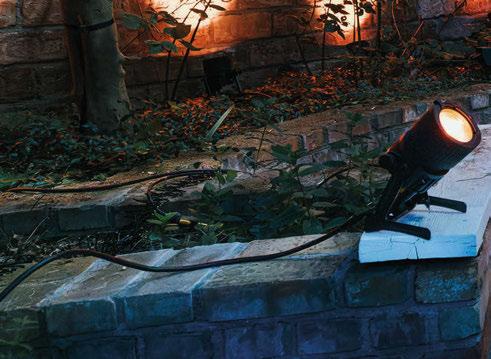
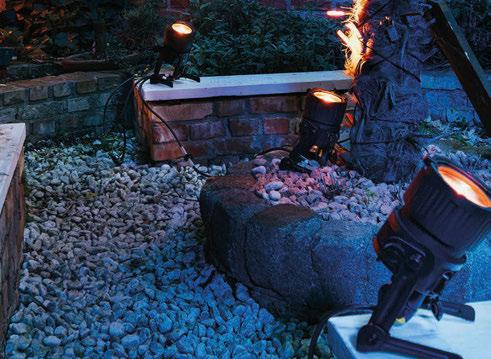
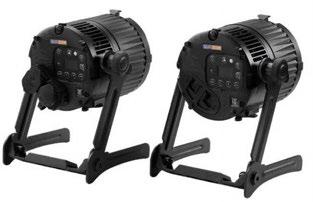
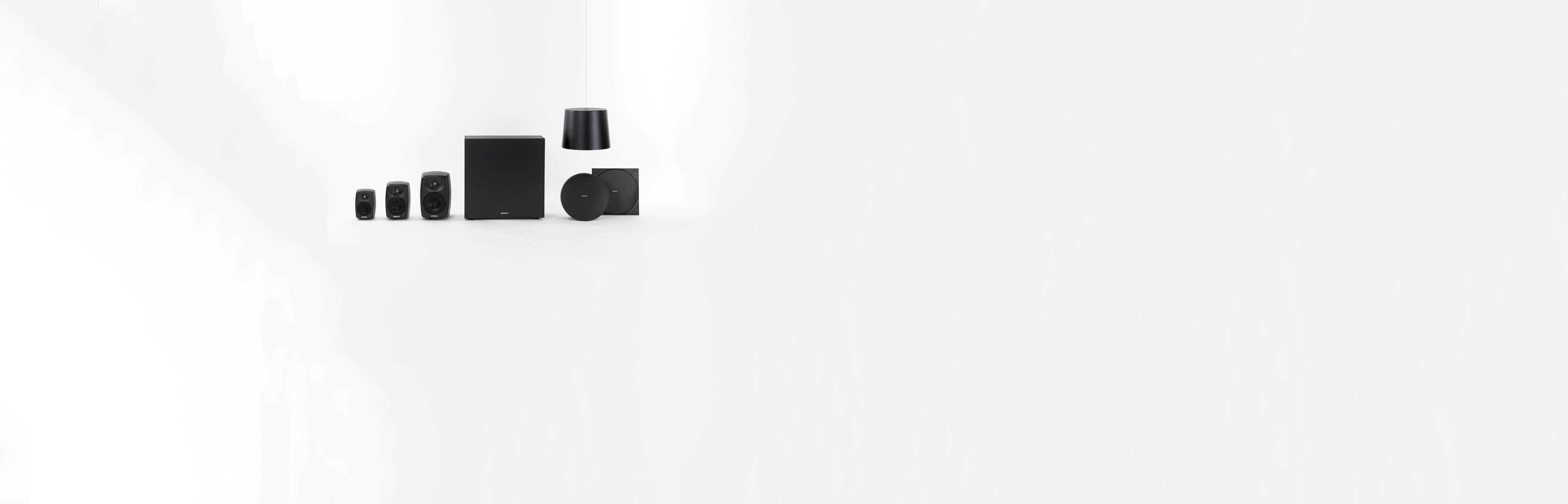
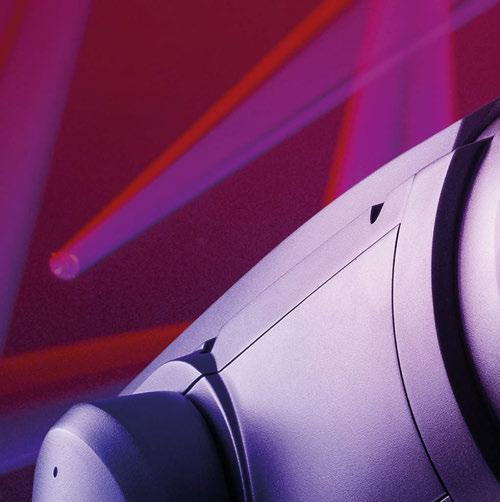
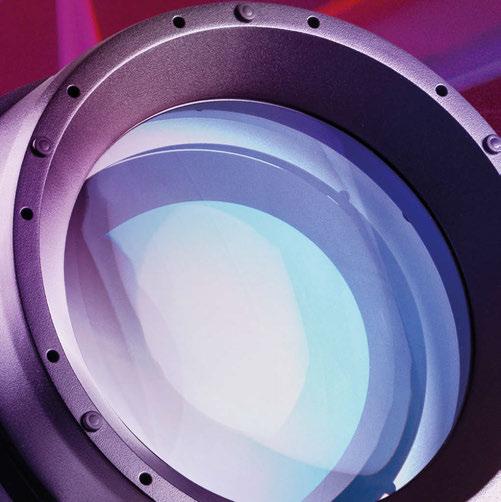
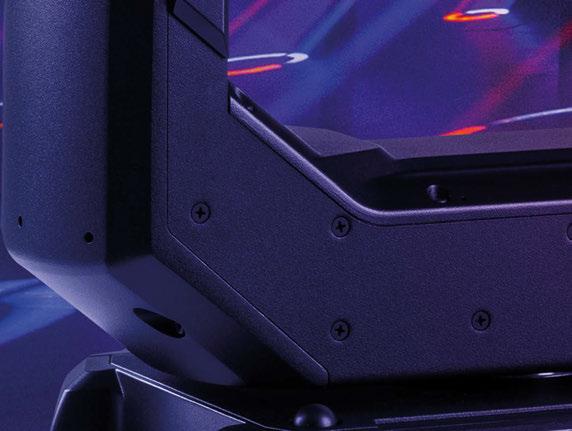
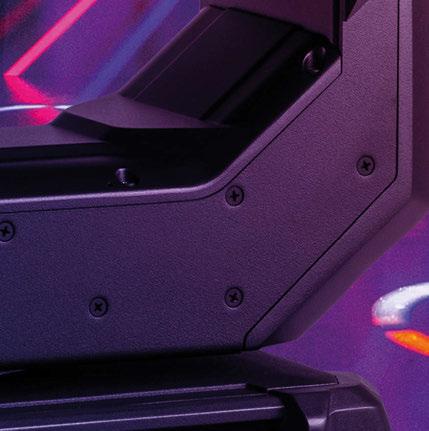
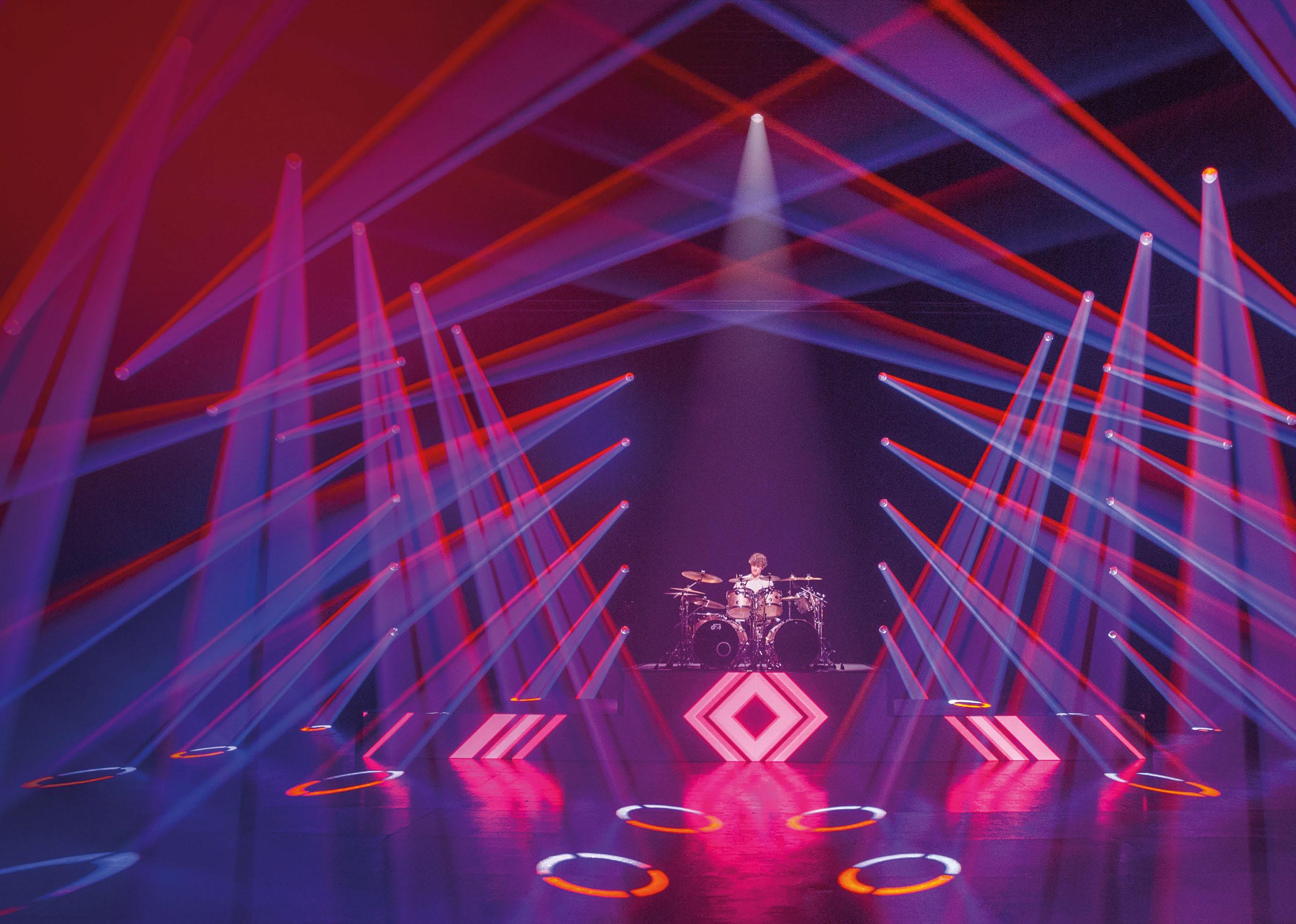
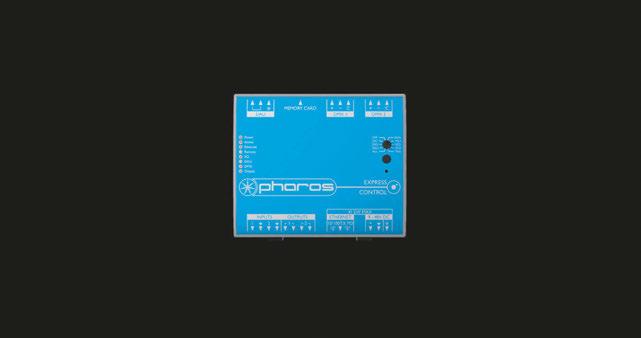
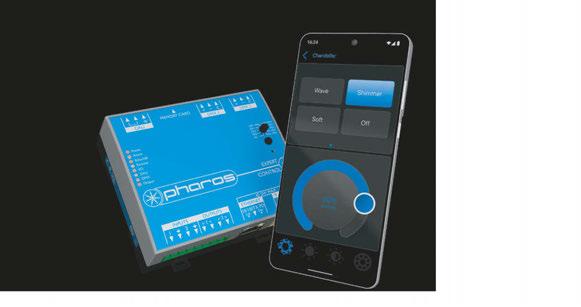
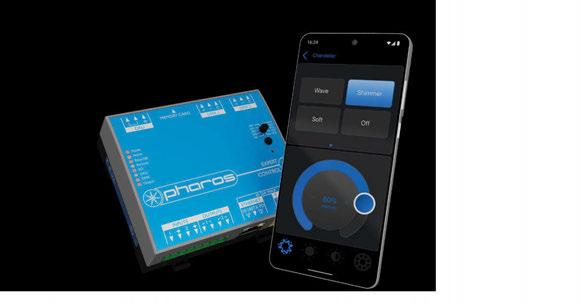
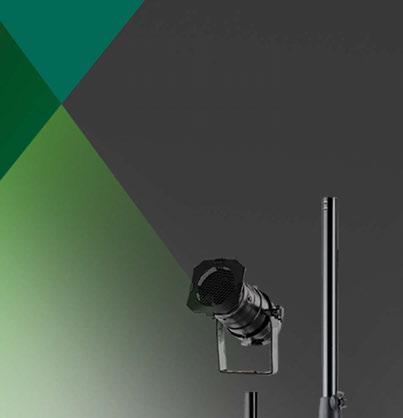
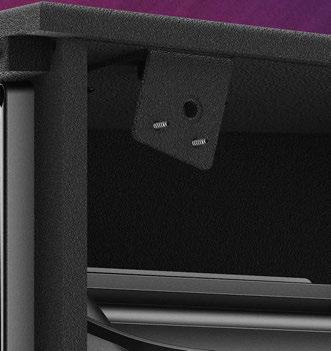
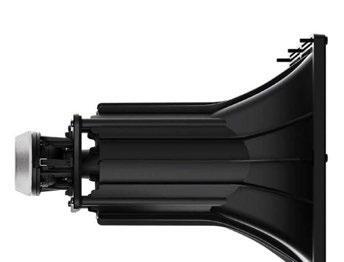
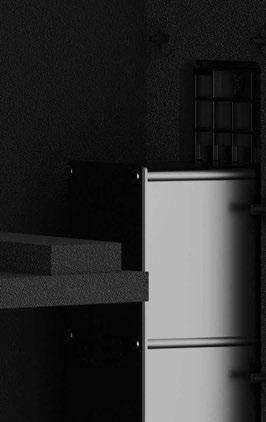
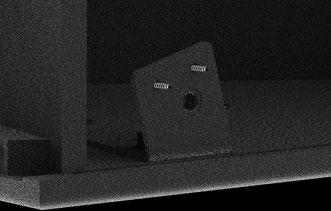
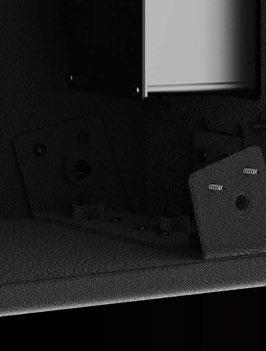
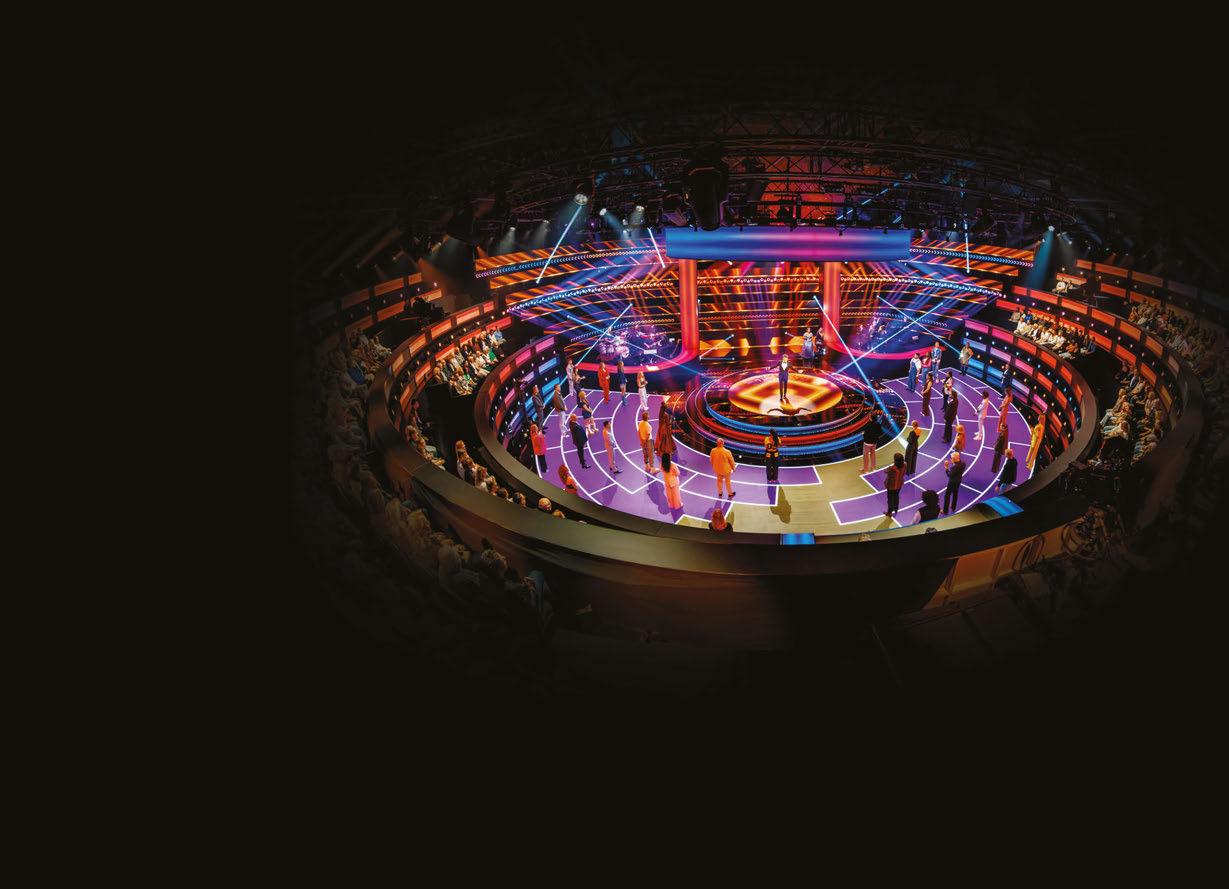
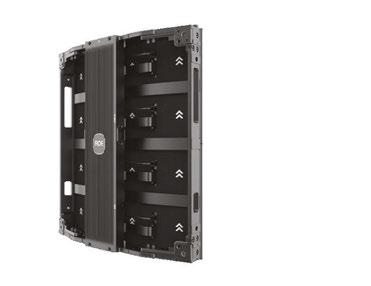
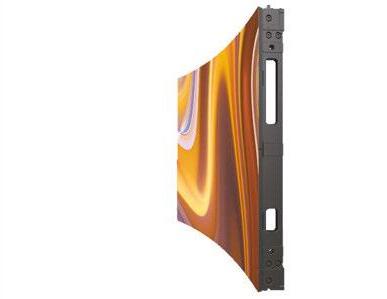
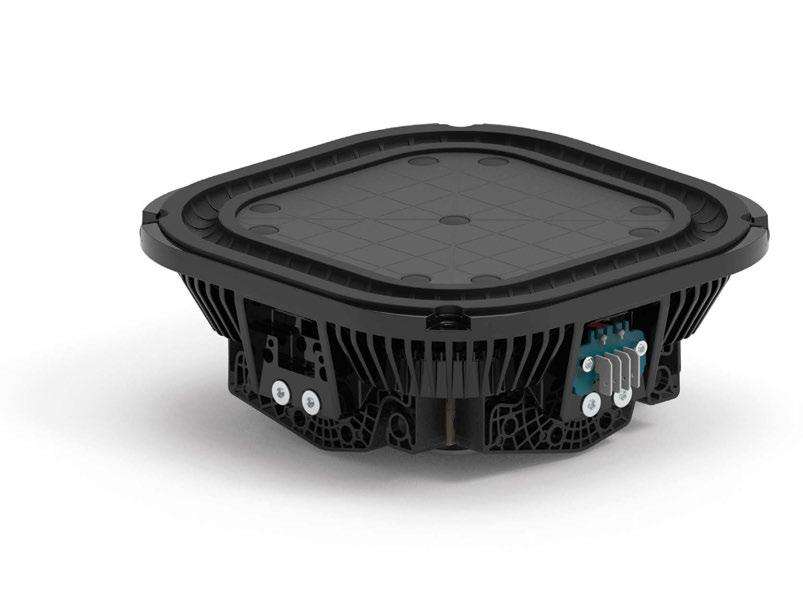
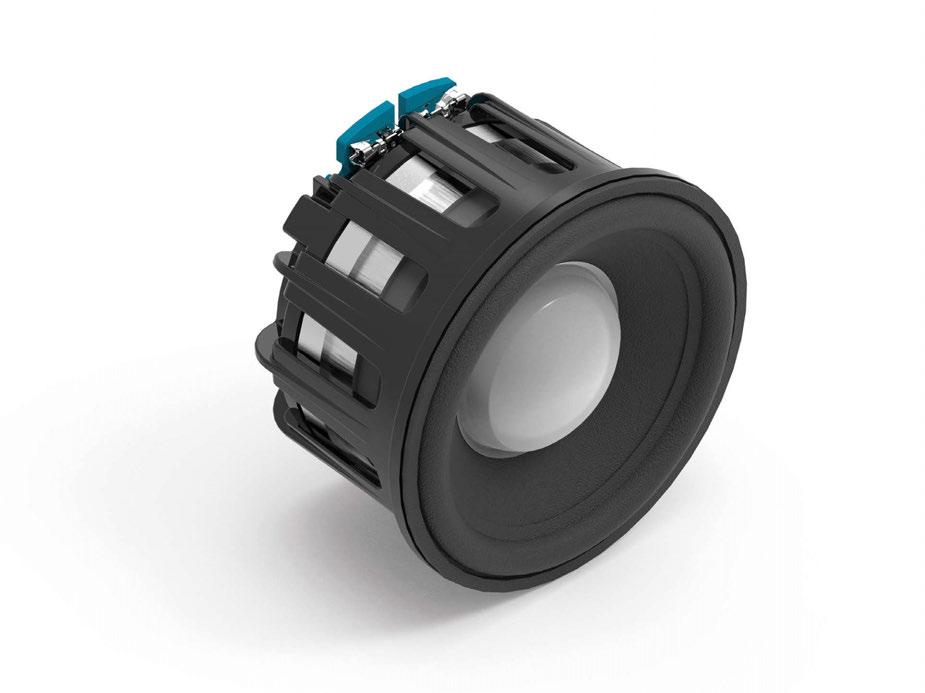
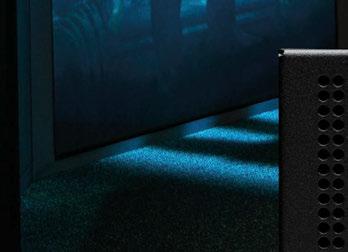
QuikBeam features a 13°–60° Fresnel zoom and delivers full 200 W tungsten-equivalent output with three flexible power options: QuikBrick for wireless freedom, PoE for power and data over a single cable, or PowerFlow for continuous AC mains power with daisy-chain capability.
QuikBeam with QuikBrick and PowerFlow One fixture covers multiple workflows.
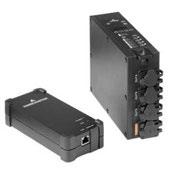
NetBox and PowerInjector
The devices to use PoE with QuikBeam.
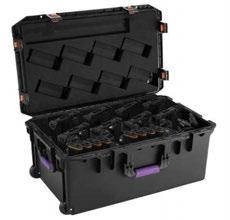
8-Unit QuikCase Kit
Everything you need to light an event, packed into one QuikCase.
Bring every guest closer to the performance with seamless, personalized audio.
In live performance, every detail matters. But distance, acoustics, and background noise can make it difficult for some guests to fully experience the moment.
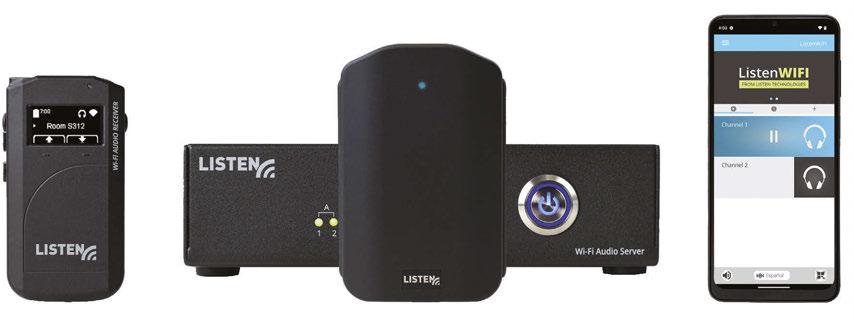
ListenWIFI transforms how audiences hear—delivering clear, low-latency audio directly to smartphones, Bluetooth® hearing aids, or dedicated receivers over your existing Wi-Fi network.
From front row to balcony, every guest can enjoy the performance as it was meant to be heard, without barriers, without complexity.
KEY FEATURES & BENEFITS
Personalized Listening
Stream crystal-clear audio directly to personal devices for a more immersive experience.
Multilingual Access
Offer interpretation and multiple audio channels for diverse, global audiences.
Seamless Operation
Automatic channel connection with simple, network-based deployment and management.
BECAUSE GREAT PERFORMANCES SHOULD BE HEARD BY EVERYONE.
Two year rates are available on request. Subscribe online at www.mondiale.co.uk or call +44 (0)161 476 5580 ISSN: 1476 4067
Mondo DR (ISSN 1476 4067) is published in January, March, May, July, September, November and December by Mondiale Publishing Ltd, Strawberry Studios, Watson Square, Stockport, SK1 3AZ, UK
Subscription records are maintained at Mondiale Media Ltd, Strawberry Studios, Watson Square, Stockport, SK1 3AZ, UK
FROM THE EDITOR...
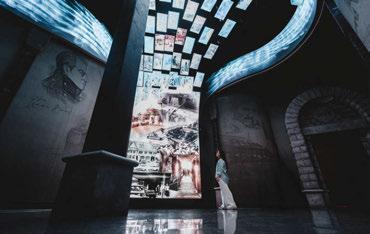
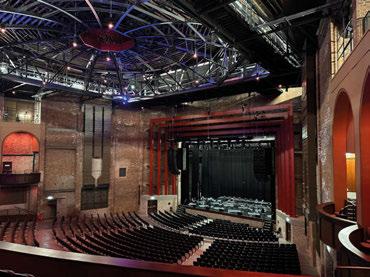
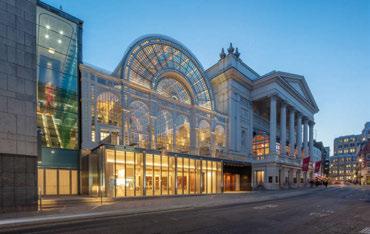
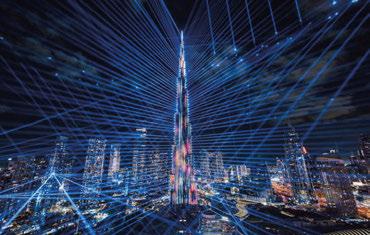
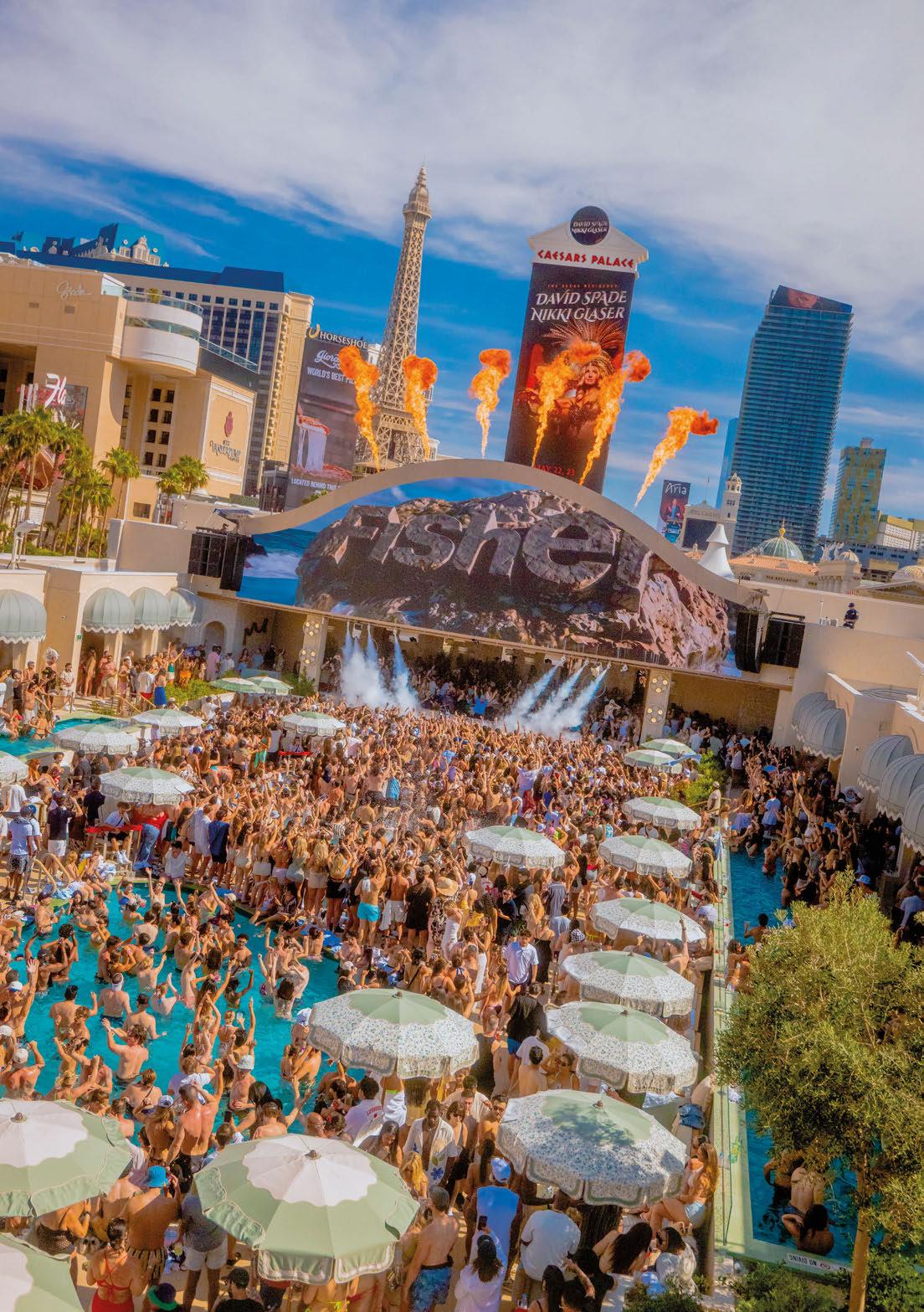
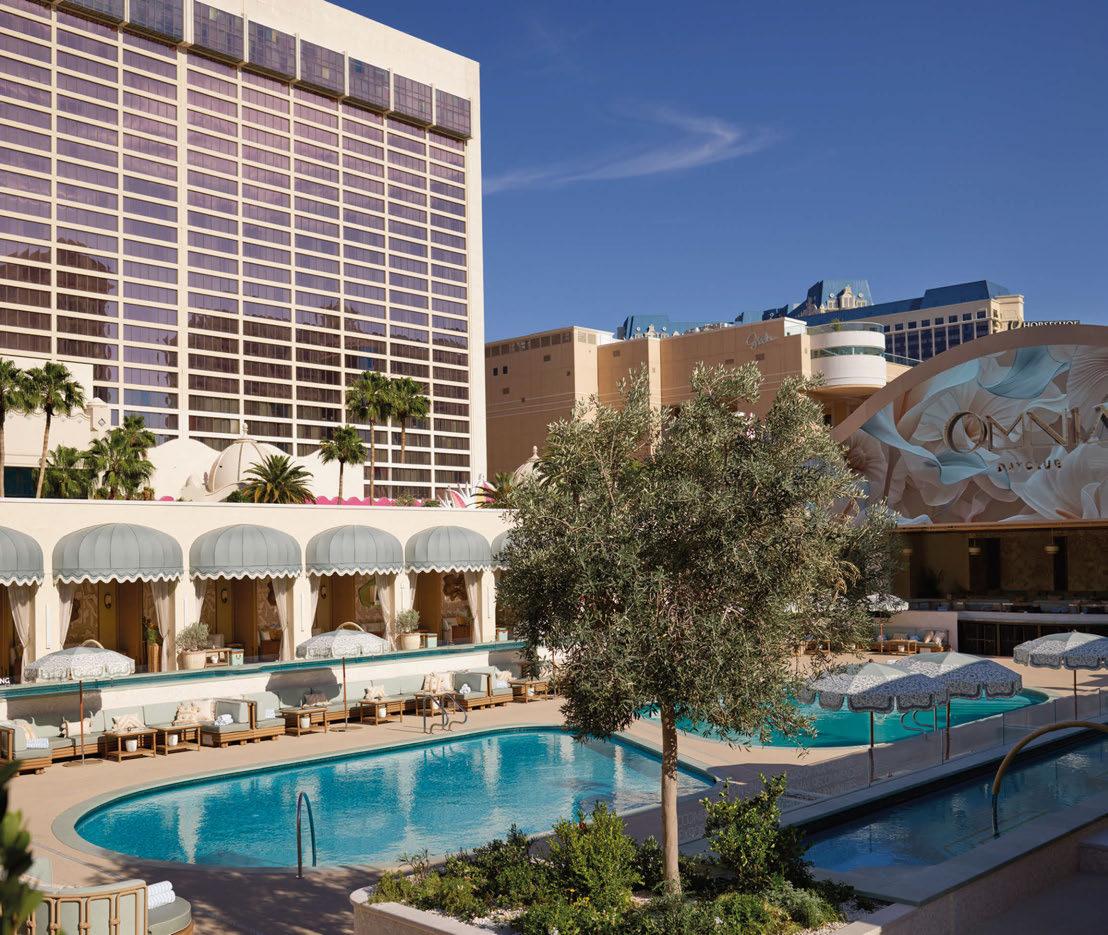
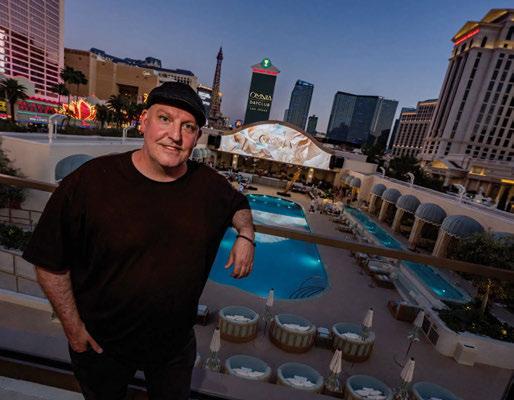
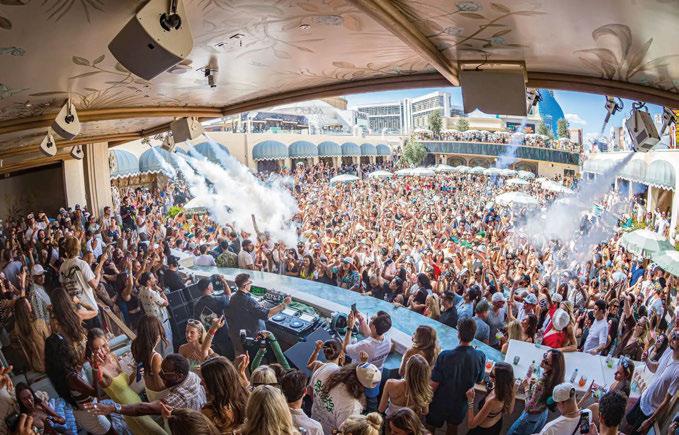
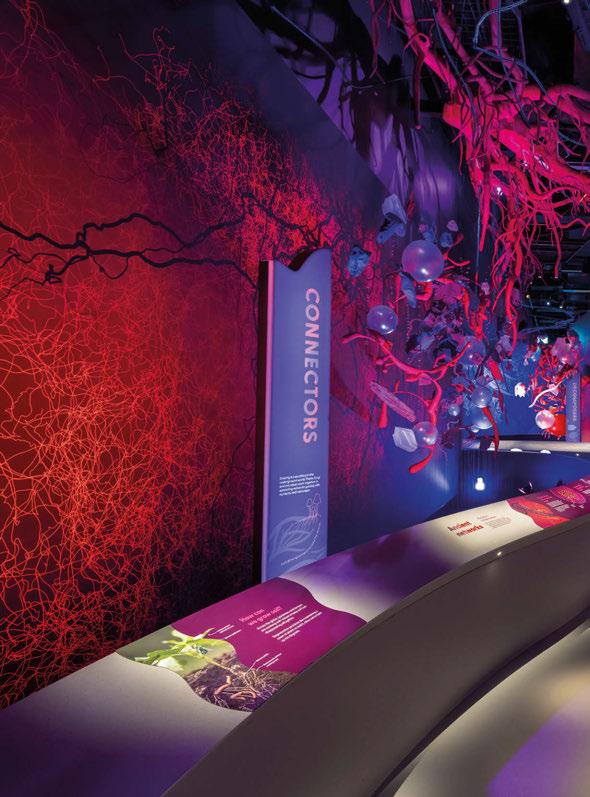
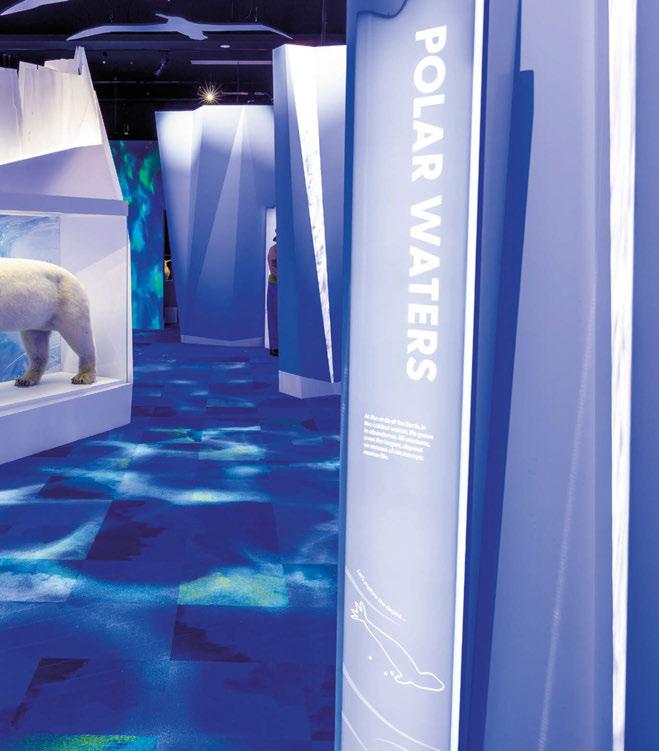
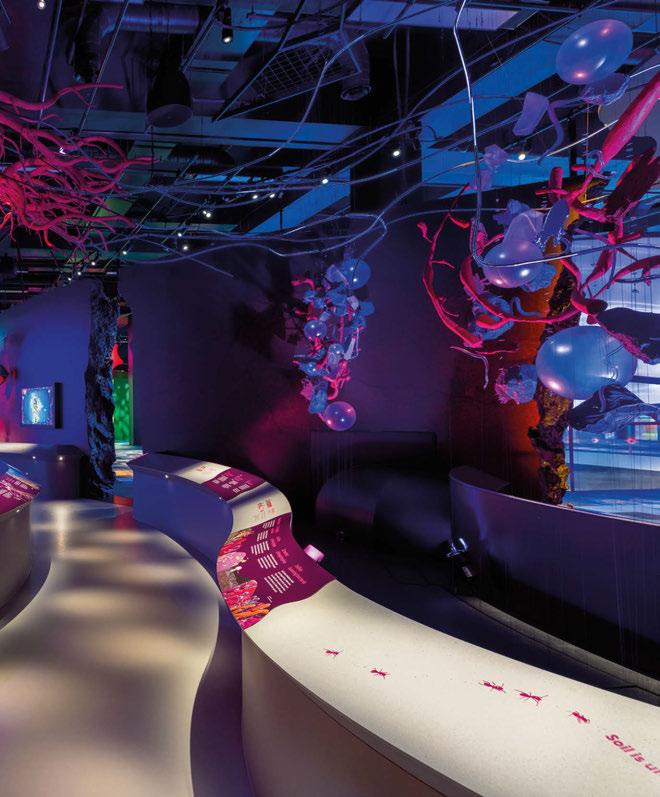
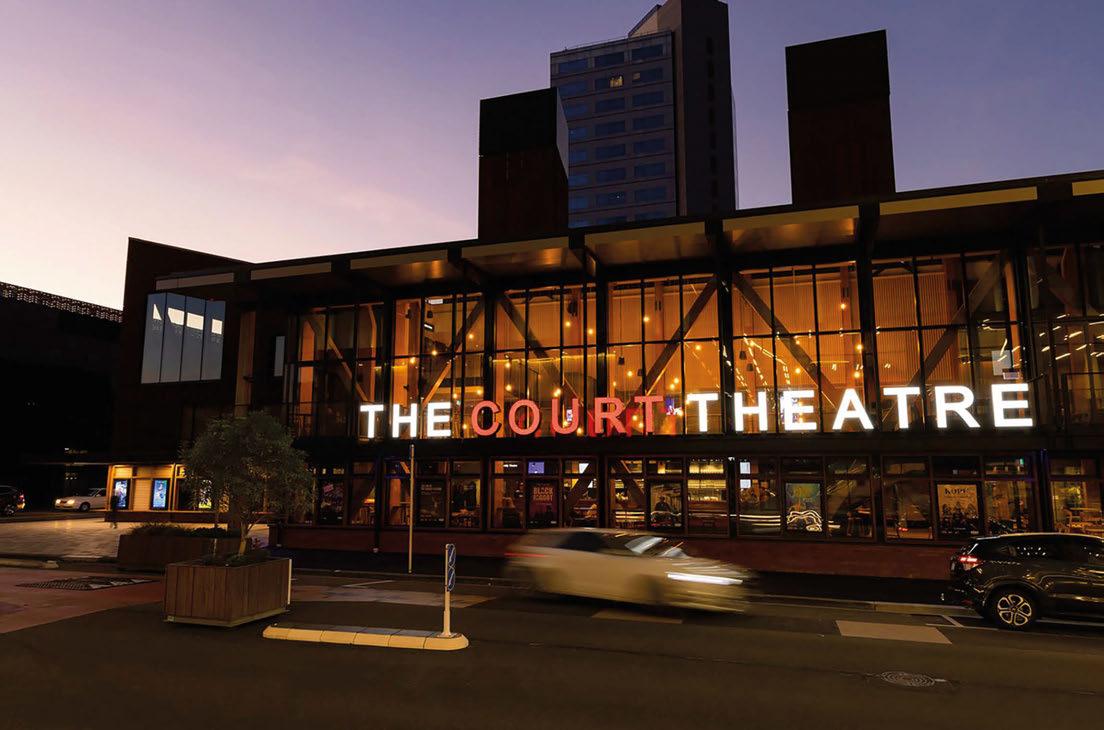
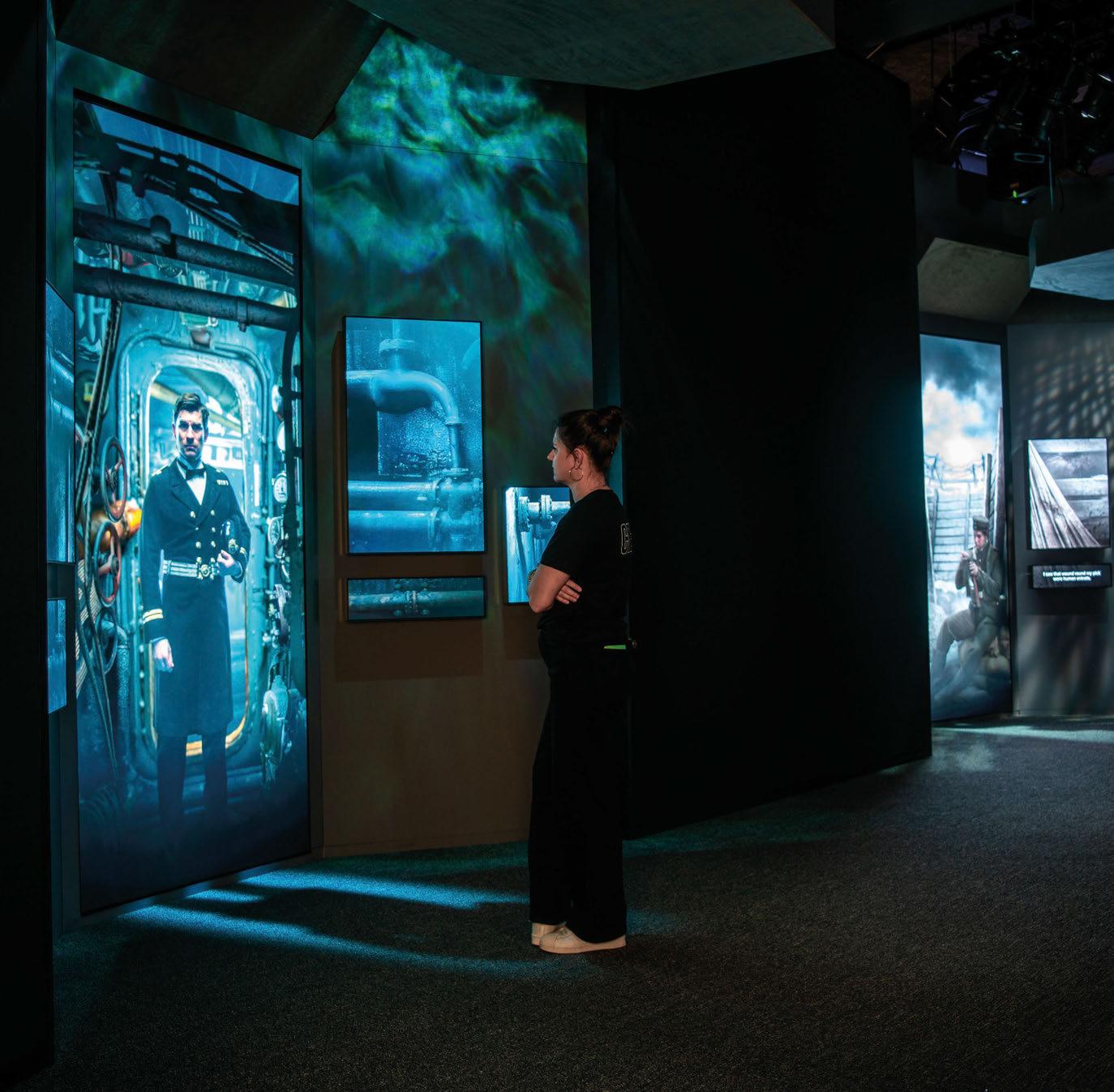
Welcome aboard the good ship MONDODR as we set sail off into the summer months able to reflect on an intriguing first half to 2026. While geopolitical uncertainty continues to cause some hesitation across markets, we’re delighted to report on some stunning recent projects and engaging expos. Inside, we feature three performance venues of varying purposes in the UK, a sparkling new dayclub just off the Las Vegas Strip, an expansive Australian museum exhibition, and a whole lot more. Our Big Interview comes from Tuscany where we sit down with the cofounders at loudspeaker manufacturer K-array, while the Venue Report focusses on the always fascinating Retail & Leisure sectors.
The annual MONDO-DR Awards concluded during the week of InfoComm in June, and I’d like to congratulate all of the winning and shortlisted projects and thank everyone who shared the evening with us. Information on next year’s event, which will include two new categories, will be shared soon, so watch this space. As ever, feedback on all our content is encouraged, so don’t hesitate to get in touch.
Enjoy the issue.
TODD STASZKO EDITOR
mondo@mondiale.co.uk www.mondodr.com www.mondodrawards.com Printed by Buxton Press, Palace Road, Buxton, UK
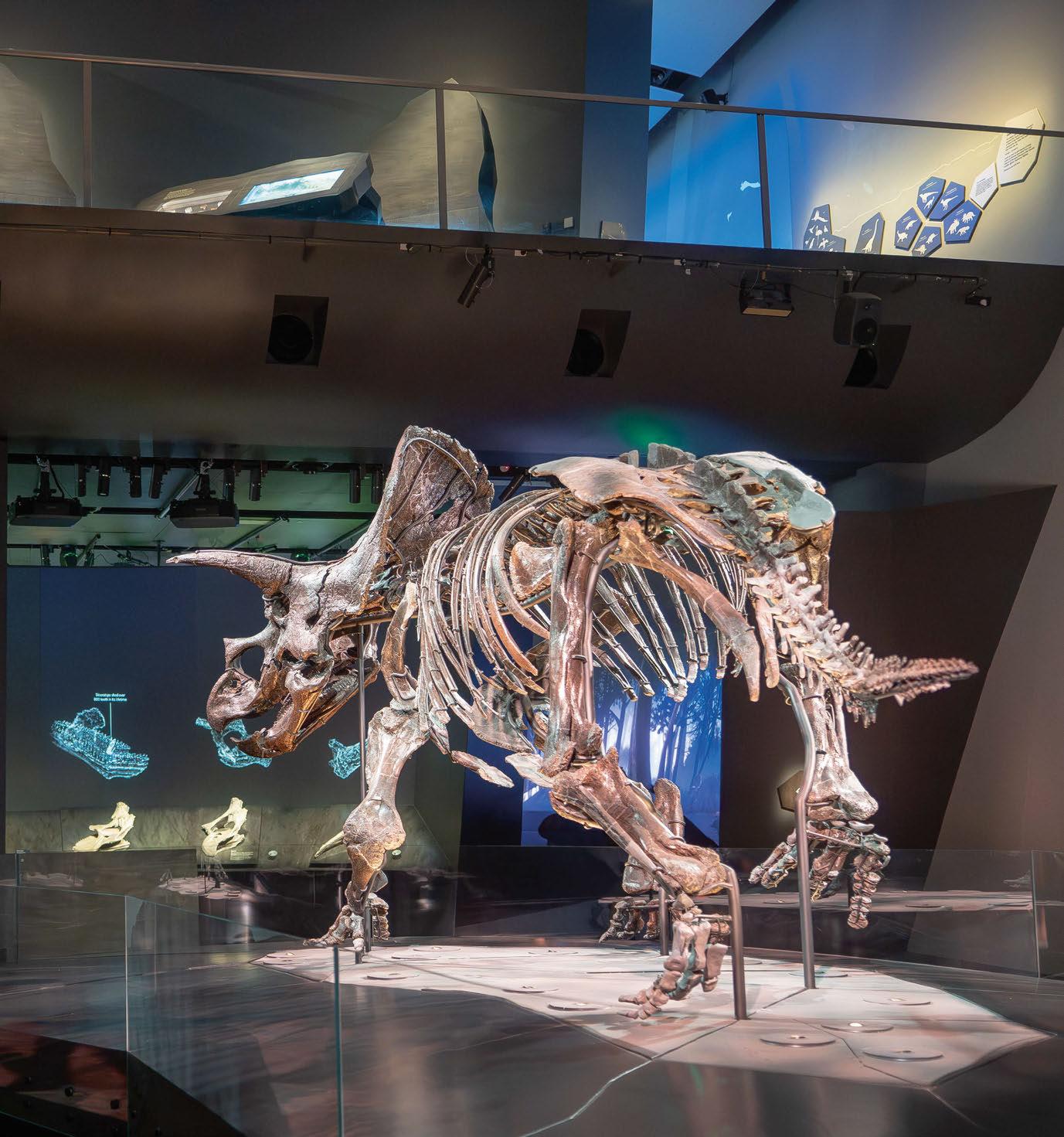
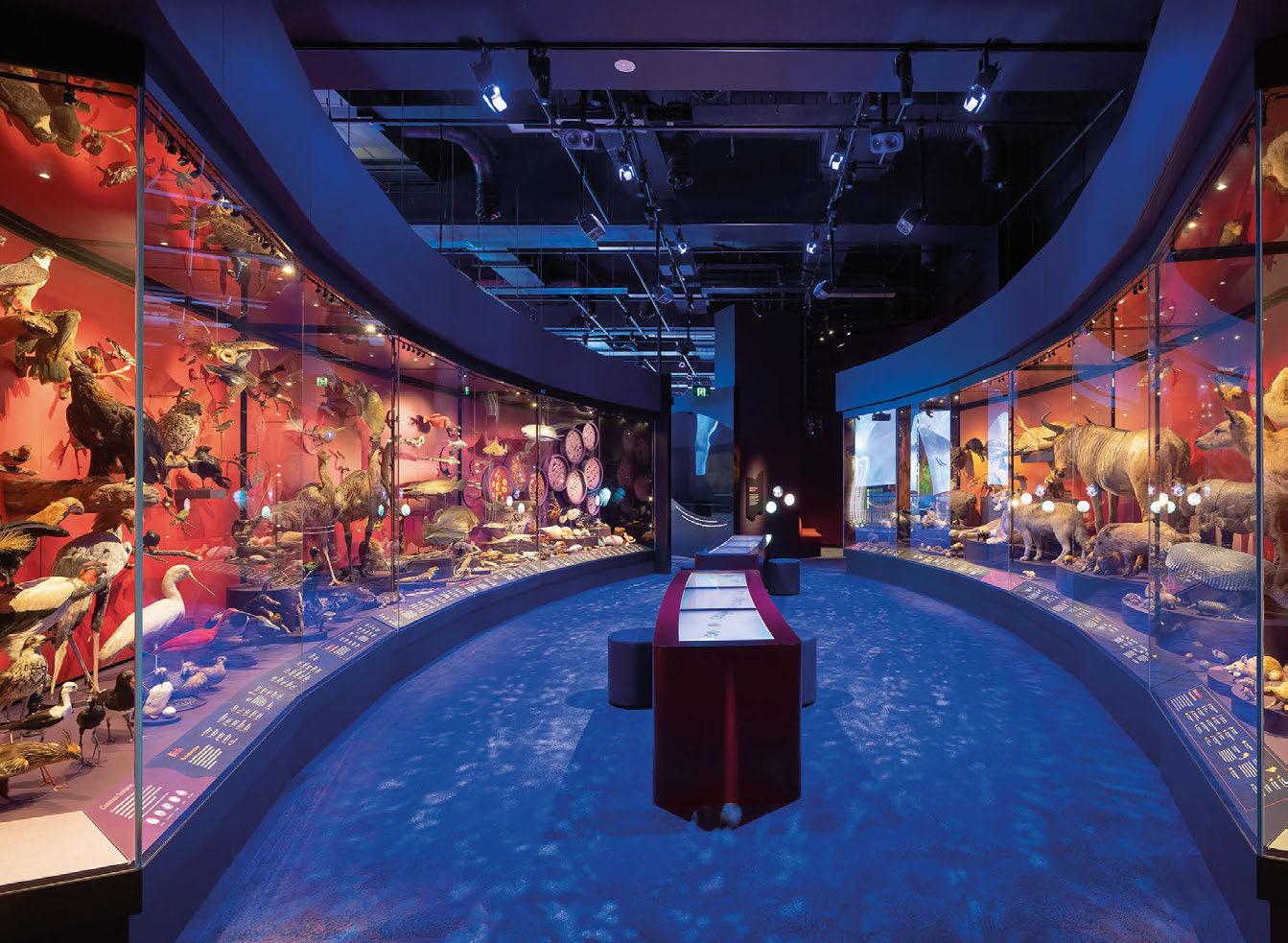
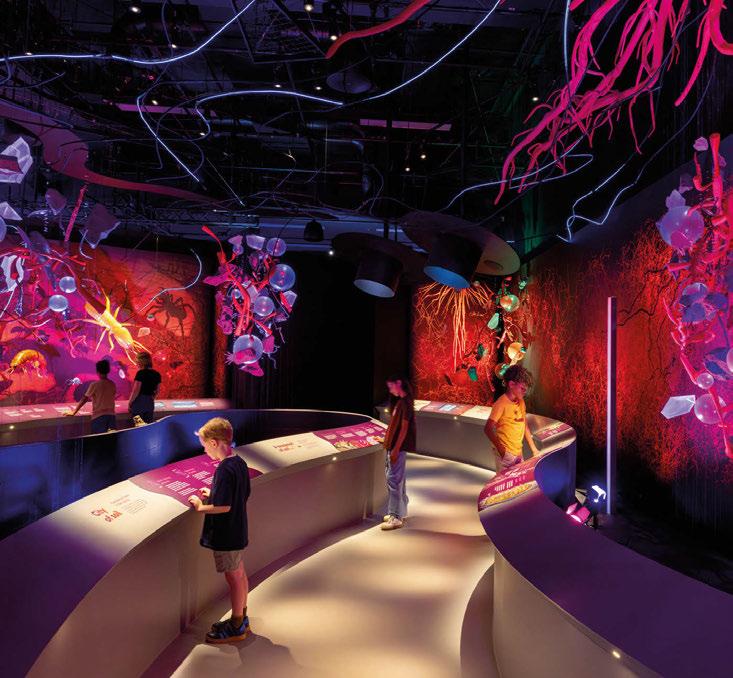
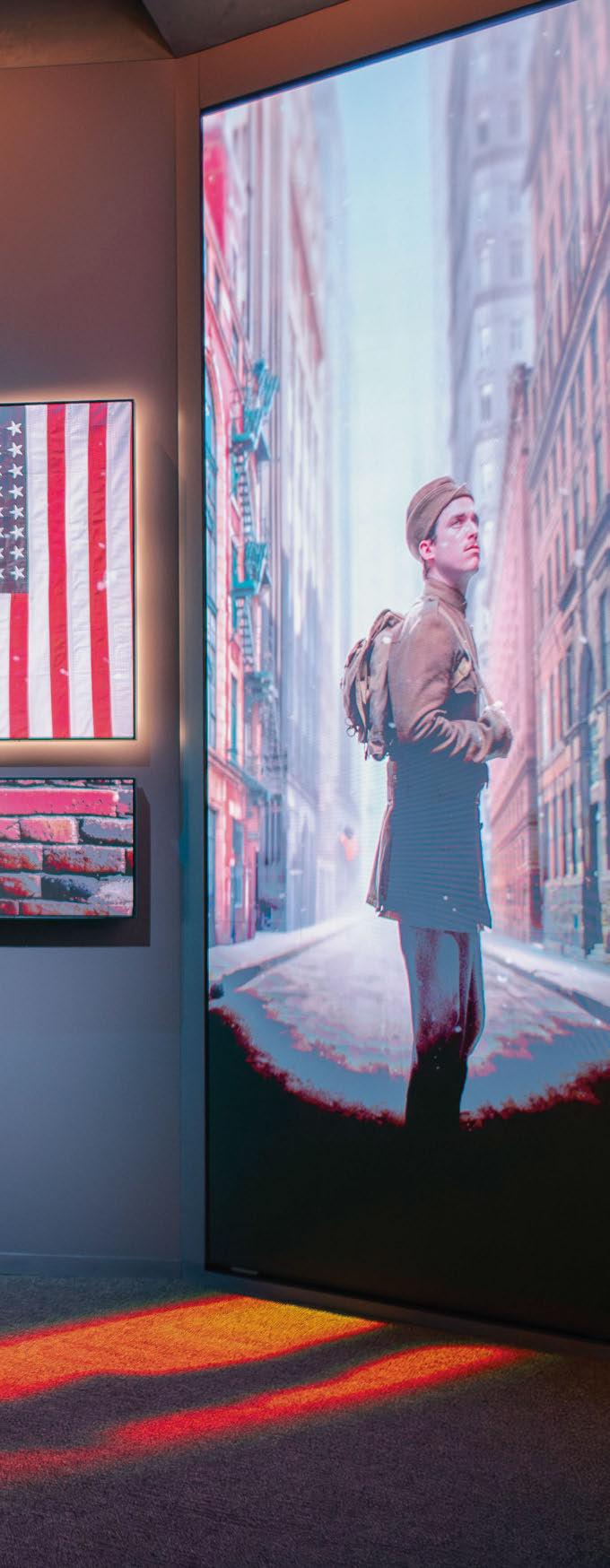
Photo courtesy of Museums Victoria
IN THIS ISSUE...
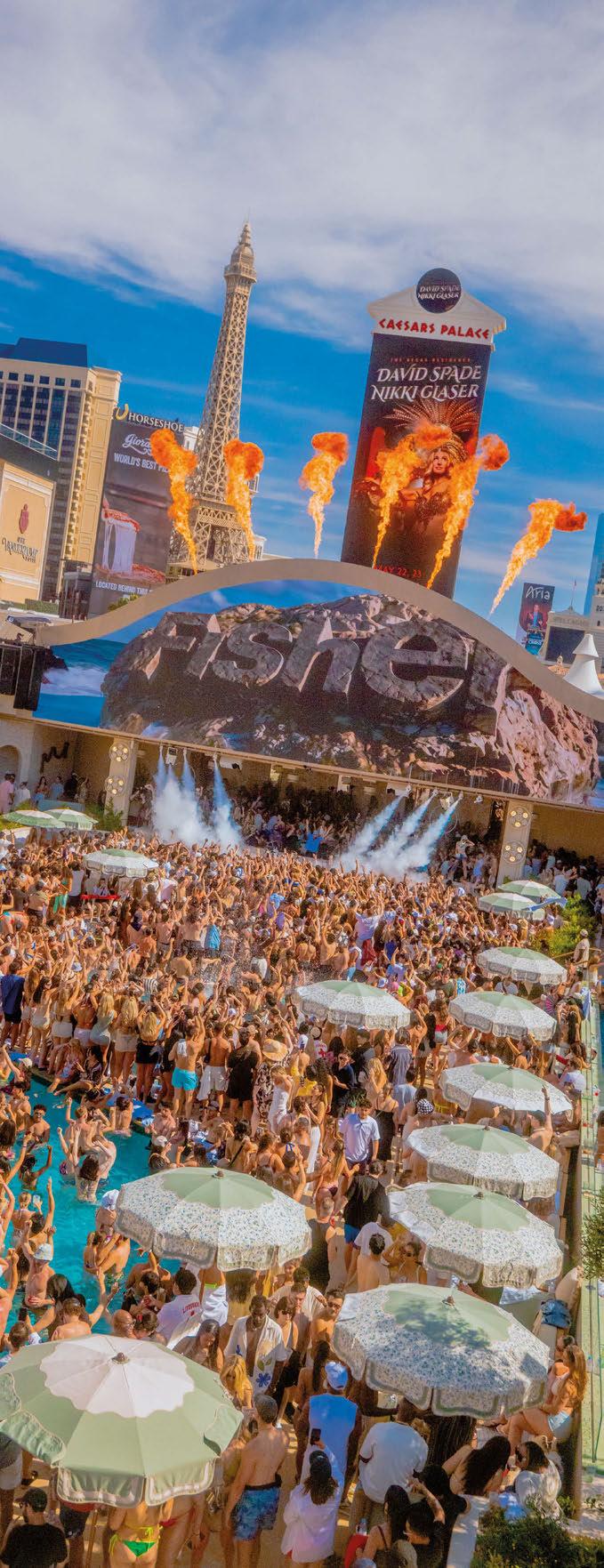
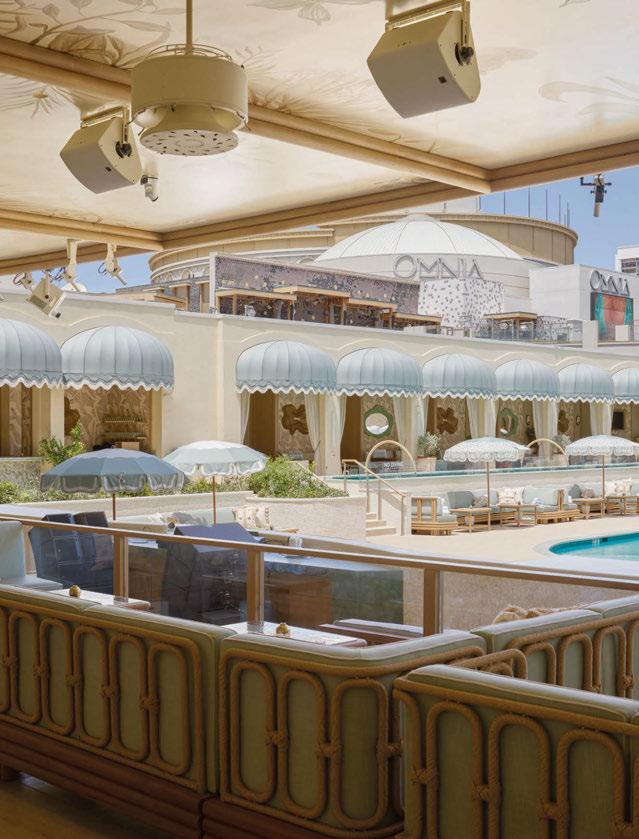
OMNIA Dayclub, Las Vegas
JULY
JULY 15-17
INFOCOMM ASIA BANGKOK, THAILAND www.infocomm-asia.com
JULY 28-31
PRO AVL INDONESIA EXPO JAKARTA, INDONESIA https://proavl-indonesia.com
SEPT 2-4
INTEGRATE SYDNEY, AUSTRALIA www.inter-bee.com
SEPT 6-8
PLASA SHOW LONDON, UK https://plasashow.com
SEPT 11-14
SEPT 14-16 AUGUST
AUG 18-19
MIDDLE EAST EVENT SHOW DUBAI, UAE https://informaconnect.com/middle-east-event-show/
IBC AMSTERDAM, THE NETHERLANDS https://show.ibc.org
CHURCH FACILITIES EXPO BIRMINGHAM ALABAMA, USA https://www.churchfacilitiesexpo.com
NOVEMBER
NOV 18-20
6-8
Extremely Compact Long-throw Powerhouse
easy to handle and well equipped
Your everyday go-to IP65 LED WashBeam, easy to handle and well
RISE AV: ELEVATE
Following the success of its inaugural Elevate programme in 2025, Rise AV has launched the second year of its UK-based leadership initiative, designed to accelerate the employment and career progression of women across the AV industry. Elevate builds on Rise AV’s mission to support women working in, or aspiring to enter, the AV sector, through a high-impact, six-week development programme. MONDO-DR spoke to Rise AV Managing Director Rachael Hamilton to find out how the programme has evolved for its second year, what was learned from 2025, and why initiatives like Elevate are vital for the future of AV.
Why was it important for Rise AV to launch the Elevate leadership programme, and what are you hoping participants take away from its second year?
Rachael Hamilton: When we created Elevate, it came from a very clear gap we kept seeing across the AV industry. So many women were stepping into management roles, often successfully, often because they were exceptional at what they did, but they weren’t being given the tools to actually lead. There’s still an assumption in our industry that if you’re technically strong or commercially successful, leadership will just follow naturally. But that isn’t how leadership works. It’s a completely different skillset, and without support, many people are left figuring it out alone.
For women in particular, that challenge is often amplified. They’re more likely to be the only woman in the room, more likely to experience self-doubt, and more likely to carry additional invisible responsibilities around culture, communication, and team wellbeing. There is also the added pressure of feeling that you have to work harder than your male counterparts to be seen as credible. This toocommon experience is a big part of why Elevate exists. For the second year of Elevate, what we really want to build on is confidence and connection. The tools matter, of course, things like feedback, influence, managing teams, and leading through change, but what delegates consistently tell us is that the biggest shift is realising they are not alone in their experience. Just as importantly, we want this year’s Elevate to help shift the perspective within AV businesses themselves. It’s not just about asking whether female talent should be supported through programmes like this, it’s about recognising that they need to be if organisations want to retain and progress them.
The first Elevate programme received very positive feedback from delegates. Were there any comments from the first year that really stood out to you?
Hamilton: There were so many moments that stood out, but what really stayed with me was the consistency of feedback across such a diverse group of women. What we saw was not just positive responses to the content, but a shift in confidence, perspective, and connection. Attendees talked about how the programme helped them gain clarity in their leadership direction, strengthen their communication skills, and better understand what effective leadership looks like in practice, not just in theory. We also heard how important it was for participants to feel more visible and more supported in what is still a heavily male-dominated environment. And importantly, the impact was very practical too. Many participants spoke about immediately applying what they had learned, from handling conversations differently to leading teams with more confidence and being more intentional about how they use their time and influence.
From your perspective, what are the biggest barriers women in AV are still facing in 2026, and where are you beginning to see meaningful progress?
Hamilton: We are starting to see progress, but it is still inconsistent, and in many parts of the industry, it still isn’t being taken as seriously as it needs to be. One of the biggest barriers is that we bring women into the industry, but we don’t build environments where they stay, develop, and progress into leadership roles. And that has consequences. The AV industry is growing fast, around 6% year on year, yet at the same time we are seeing redundancies and experienced people leaving, while companies continue to say they cannot find skilled talent. There is a clear
contradiction there: we are talking about a skills crisis, while pushing women out who are already in the system. Women make up just 9% of the AV workforce, and around 2% in technical roles. Despite that, women are still being lost through a combination of factors: limited progression pathways, pay gaps, and restrictive, unsupportive cultures. It’s the slow grind of being talked over, questioned, and underestimated. It is being seen as ‘too much’ or ‘not enough’. It’s the unspoken rules, the side comments, the double standards, the boys’ clubs. It’s unconscious bias shaping who gets hired, who gets promoted, and who gets listened to, even when people believe they are being fair. And that is part of the challenge: most of this is not driven by bad intent. It is driven by blind spots. But blind spots are creating the barriers. On the positive side, there is a shift happening in ‘awareness’. But awareness is not the same as change. What we still need is action that matches the conversation, from how people are hired and promoted, to how inclusive cultures are actually built and measured, not just stated. This is what Rise AV is here to do.
Looking ahead, what are your ambitions for Rise AV, and what changes would you ultimately like to see across the AV industry?
Hamilton: Fundamentally, we want to shift how
the industry thinks about talent, specifically female talent. Not just in terms of recruitment, but in terms of what happens after people join, development, retention, and progression. Because the reality is that the challenges we keep talking about, skills shortages, lack of progression, and loss of experienced talent are all connected. And too often, that loss is happening once people are already inside the industry. That is where Rise AV focuses its work.
What this looks like, well, we are expanding programmes like our Mentoring Programme and Elevate for Women in Management internationally, this year we launched into APAC, and we have an upcoming launch into the US. We are now working on our third programme, Amplify, for women in leadership, plus launching the Rise AV Awards in 2027. We plan to support organisations through initiatives like our Strive to Rise accreditation, helping them develop their inclusion policies. But ultimately, the bigger ambition is cultural. We want to see an industry that recognises the value of women at every level, and acts on it. Where women are not the exception in leadership, but a normal part of how the industry operates. And in the long term, if we get this right, the goal is that organisations like Rise AV don’t need to exist, because it means our job is done!
www.rise-av.com
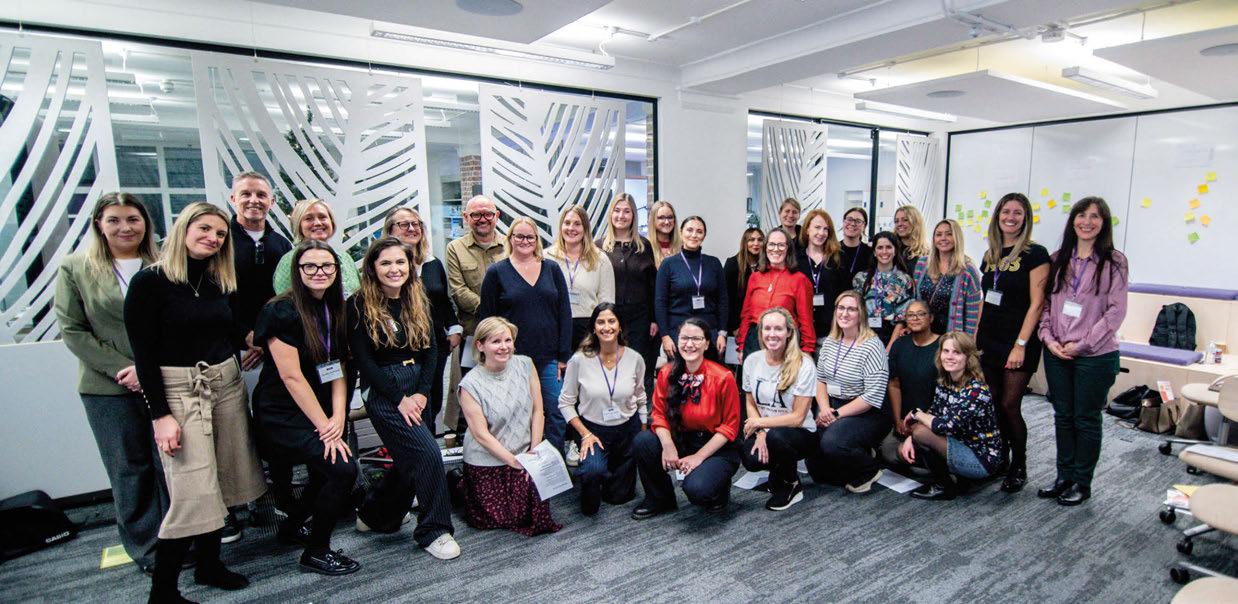
The final 2025 inperson Elevate event hosted at the Neat London Showroom.
Founder Sadie Groom launching the 2026 UK Mentoring Programme.
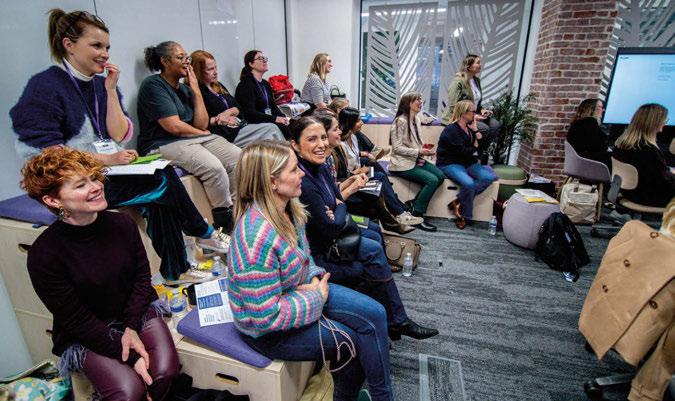
Elevate delegates are placed into active learning groups and present their real life challenges back to the group.
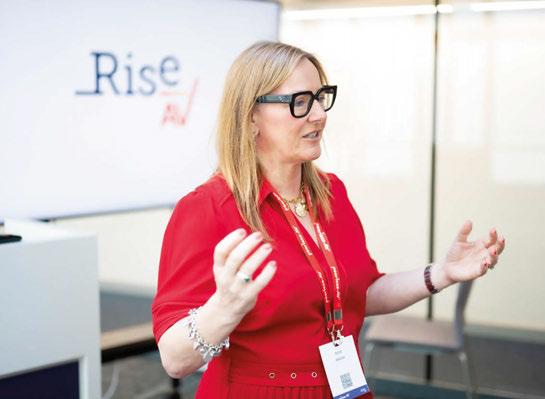
Clockwise from left: Rise AV Managing Director, Rachael Hamilton.
BY TIRSO LIGHTING
BY SOUTH EVENTS
BY VESTEC ELECTRO
BY D&B SOLUTIONS
CONGRATULATIONS TO ALL OF OUR WINNERS
“INVENTION AND INNOVATION NEEDS AN AUDIENCE TO SURVIVE. WE WOULD STILL HAVE SQUARE WHEELS IF NOBODY CARED THAT SOMEONE HAD CREATED A ROUND ONE...”
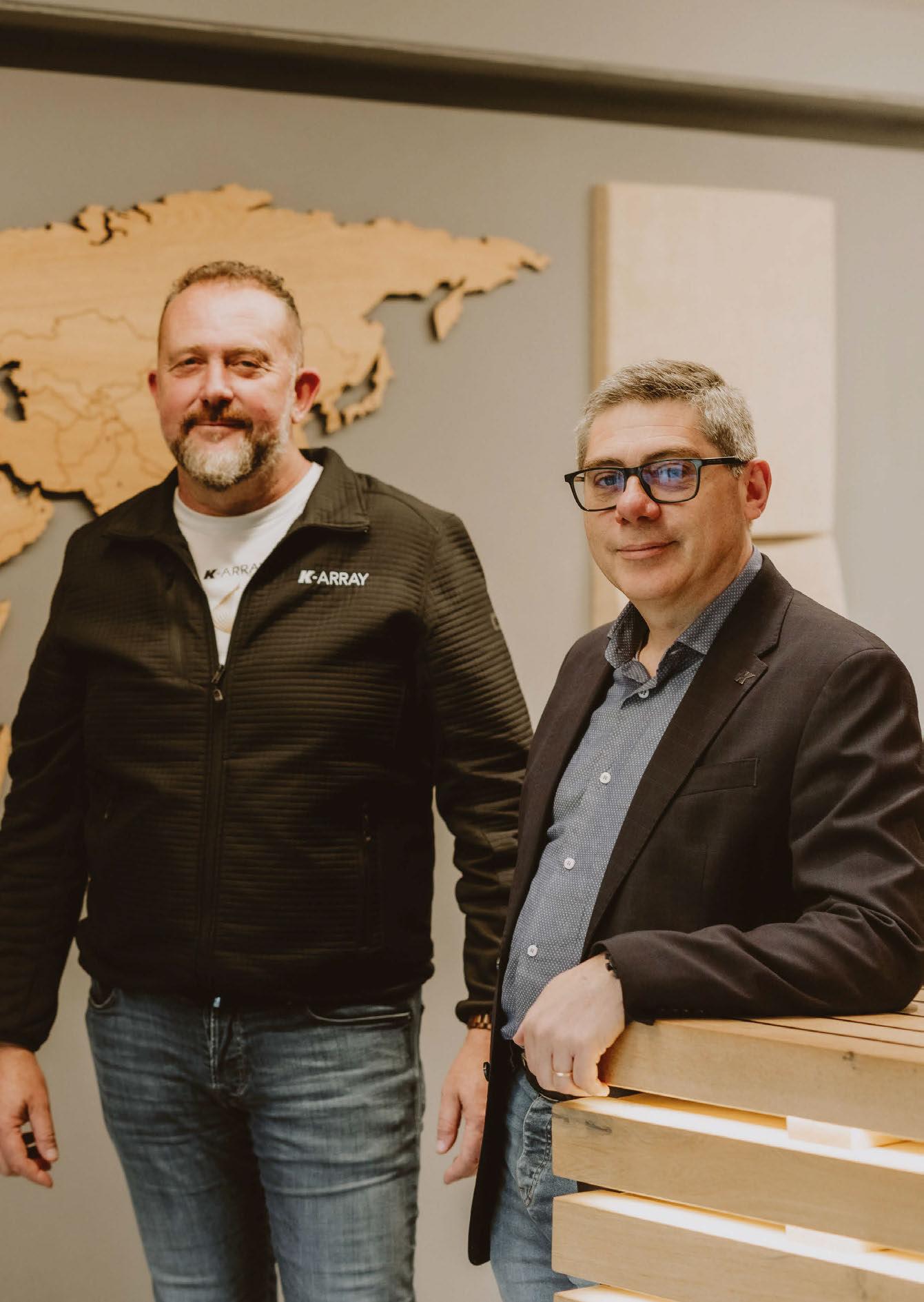
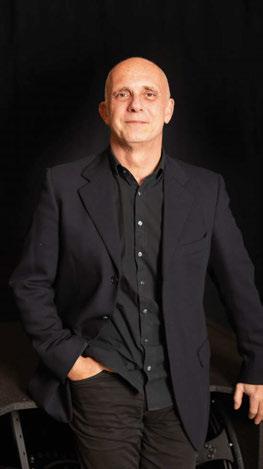
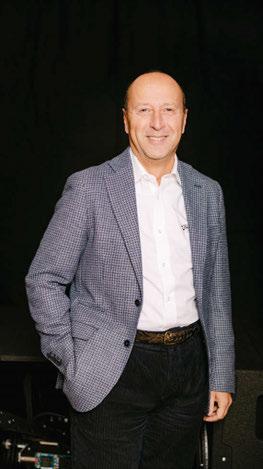
ALESSANDRO TATINI AND MASSIMO FERRATI
K-array co-founders
As a loudspeaker manufacturer, K-array has been pushing the boundaries of what is possible in sound reproduction since 2006, but the origins of the company – and many of its ideas – date back to 1990, when its co-founders, Alessandro Tatini and Massimo Ferati, went into business together.
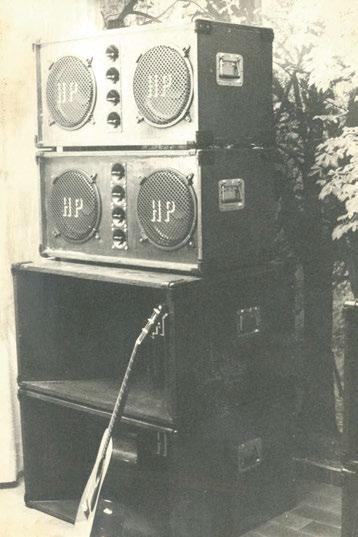
Having met in 1987 while working at a regional rental house in Florence, they set up their own rental company, HP Sound Equipment, which later expanded to conducting R&D for their own products and other existing manufacturers.
“For a long time in my younger days I was passionate about sound, and sound reproduction,” began Tatini. “I would work over the busy summer season and it was during this time I met Massimo, and towards the end of 1989 he outlined his plans to leave and go it alone – and he asked me to be his partner.
“As we made our journey as an equipment rental business, there came a time in the mid 1990s when we started to undertake R&D for other companies, and it was at this point that we began to seriously approach the pro audio market.
“During this period we stayed true to the idea that we had held since the beginning of our venture together – that of trying to make the lives of technicians at rental and integration companies easier with smaller, easier to deploy solutions – because we had first-hand experience of dealing with heavy equipment. However, at the time, it wasn’t easy to implement these concepts with other brands.”
Frustrated by a lack of openness to new ideas, a new brand – XXL – was born in 2000, which was primarily focussed on the MI market in Italy with a line of microphones, mixers, outboards and loudspeaker boxes for mobile applications and small installations.
“A few years later in 2004 we noticed a lot of Chinese products coming into the domestic market. We saw it getting saturated and thought that in a few years there would not be room to evolve in this field,” noted Tatini.
“I can remember a meeting in a rehearsal room, surrounded by instruments, where it was decided that the only way we can continue evolving and growing as a company was to return to our roots with focus on the pro audio markets –both install and rental – and step back to our original DNA, to reconsider product designs with the focus on designing solutions for specific needs, and not reacting to what was already in the market.”
Taking on feedback from architects and consultants, Tatini and Ferrati learned that neutral, small form-factor loudspeakers was the biggest need, and so, with R&D pivoting in that direction, new products came to the fore.
“We felt that there was no need for the market to have another standard loudspeaker manufacturer,” continued Tatini. “Nowadays there are even more, but looking back to 20 years ago, there were so many good products in the market – so why would we try and muscle our way into that?
“We assessed the market and thought we could become suppliers of solutions outside of the norm instead – ones which would help architects and integrators solve the particular challenges they were facing.
“Most of the time, if the loudspeaker is ugly, it is hidden as much as possible – but this probably isn’t the correct position for it to be installed. That was part of our mission, and we have since developed several solutions – such as digital steering – but our DNA hasn’t changed.”
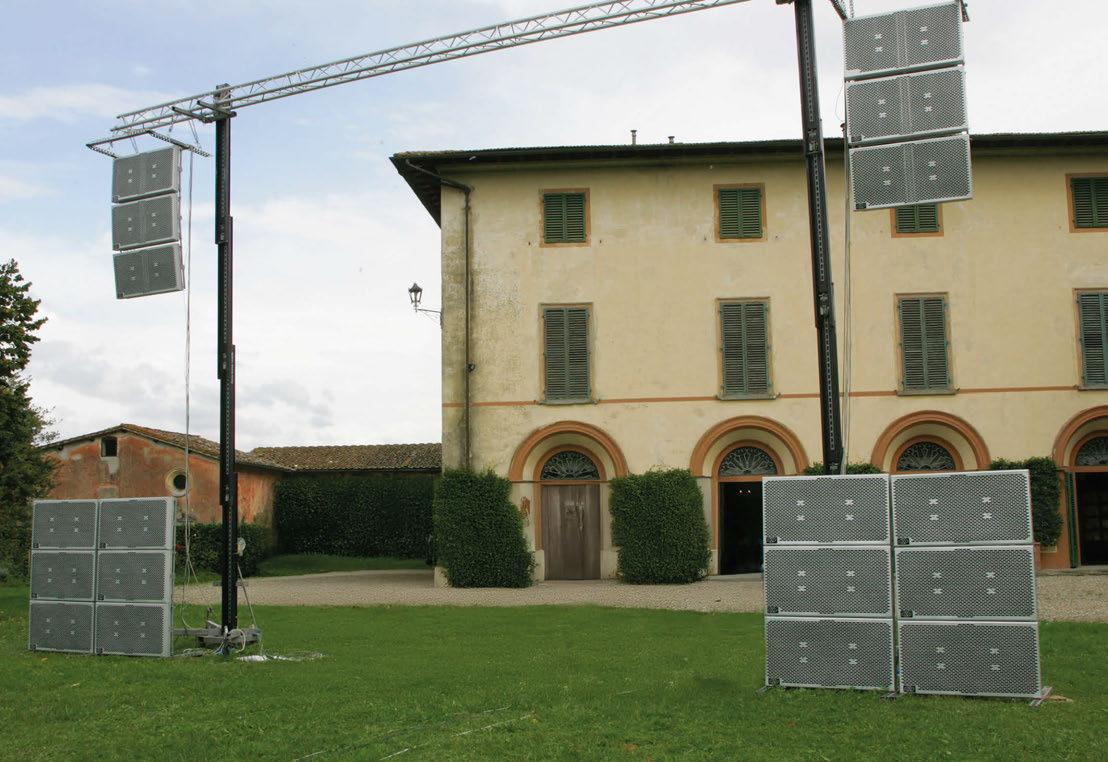
The first major innovation was the release of KH4 for the rental market, an ultra-compact large-scale line array element. “Back in 2005 this was very ahead of its time as it had onboard power and DSP, which was not common on the market,” said Ferrati. “It was lightweight and had a depth of only 16cm, making it look almost like an LED wall.”
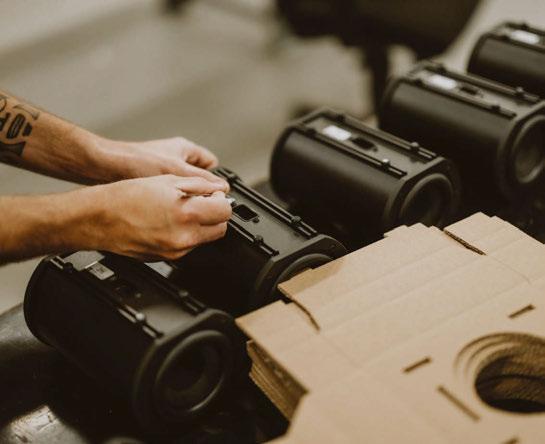
Above: K-array products on the production line.
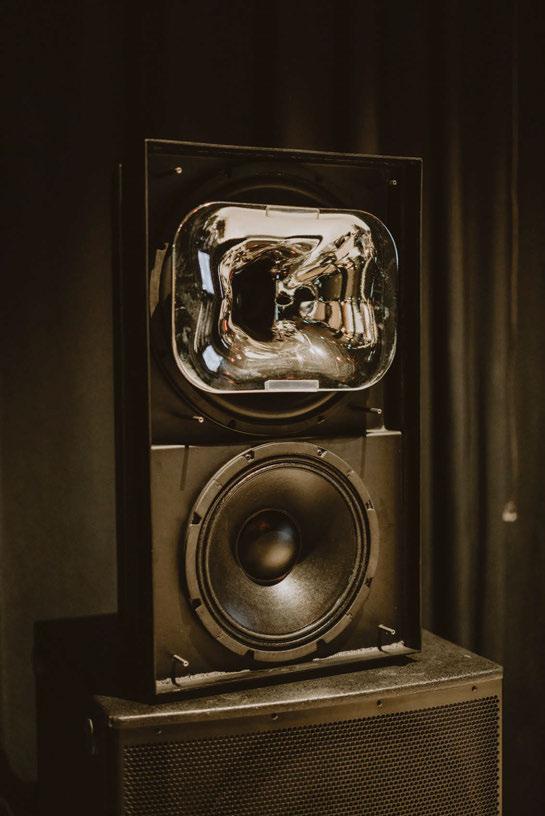
Below: The Dragon-KXT12P, a high-performance point source loudspeaker within the K-array Dragon portfolio.
“WE ARE BOTH SUCH DIFFERENT PEOPLE, AND THIS PROBABLY PLAYS A PART IN THE SUCCESS OF OUR RELATIONSHIP.”
With a subwoofer made at the same depth, the product was a success and deployed at festivals and events around the world. Its first use domestically was at Battiti Live in Bari, which was organised by a local TV company and held in the centre of its town square.
In 2006 the decision was taken to register the new brand –K-array, because its products were for a different market to the offerings of XXL. Two years later, the XXL brand was sold and Tatini and Ferrati moved forward with K-array.
“The KH4, and also the Vyper and Lyzard series, triggered the attention of Sennheiser who then became almost completely worldwide distributors of our products over the next couple of years,” said Tatini. “Back then, the K-array brand name was on the products, but we didn’t register K-array as a company until 2012.”
Throughout all their twists and turns, Tatini and Ferrati stuck together and they continue to stay as true as possible to their original vision, which is evident in their innovative products such as the flexible Anakonda series, and the compact Tornado loudspeaker.
“It has been a nice path together,” reflected Ferrati. “We are both such different people, and this plays a part in the success of our relationship. Alessandro has more of a technical approach and therefore is more outward facing, whereas I have been more focussed on the internal factors such as finance, management and administration.”
Tatini added: “We complement each other. There has been a few heated discussions, but all is fair in love and business. It hasn’t been a completely easy path and we have faced difficulties for various reasons. To grow a company out of nothing, starting in a garage, is challenging. We overcame a lot of challenges over the years and we have always tried to approach them together.
“In the beginning we would work together on the same things, and along the way, we divided the workload up a little and I became involved in market development, and Massimo crunched the numbers.
“Italy is known for its bureaucracy, so he took on a lot of the load when it came to admin at a company level, which was fine by me!”
Looking ahead, the company has recently begun working on a new five-year plan following its majority stakes acquisition last year by neighbouring pro audio industry leader, Powersoft – something which had been in the pipeline for several years after an eye-opening experience shared by Tatini and Ferrati.
“Some time ago, Alessandro and I were travelling together by car, and at one point a truck almost hit us while overtaking,” said Ferrati. “We narrowly avoided an accident.
But from that moment, we started reflecting on the fact that a lot depends on us as the people running the company.
“We said to ourselves: ‘OK, we now have around 100 people with families working with us, and we can’t afford to have the leadership disappear, so how do we build a structure that’s more robust and ready to face the challenges ahead?’
“And with that, we started opening our minds to what the various options might be, and we liked the idea of developing, alongside those needs, industrial-scale growth – more solid foundations, but also bigger ambitions for the future. In Powersoft, we found a perfect partner for that kind of industrial growth.”
Left: The exceptionally space and weight conscious KH4 system, set up for a demo session.
Above: Some of the first products developed by HP Sound Equipment.
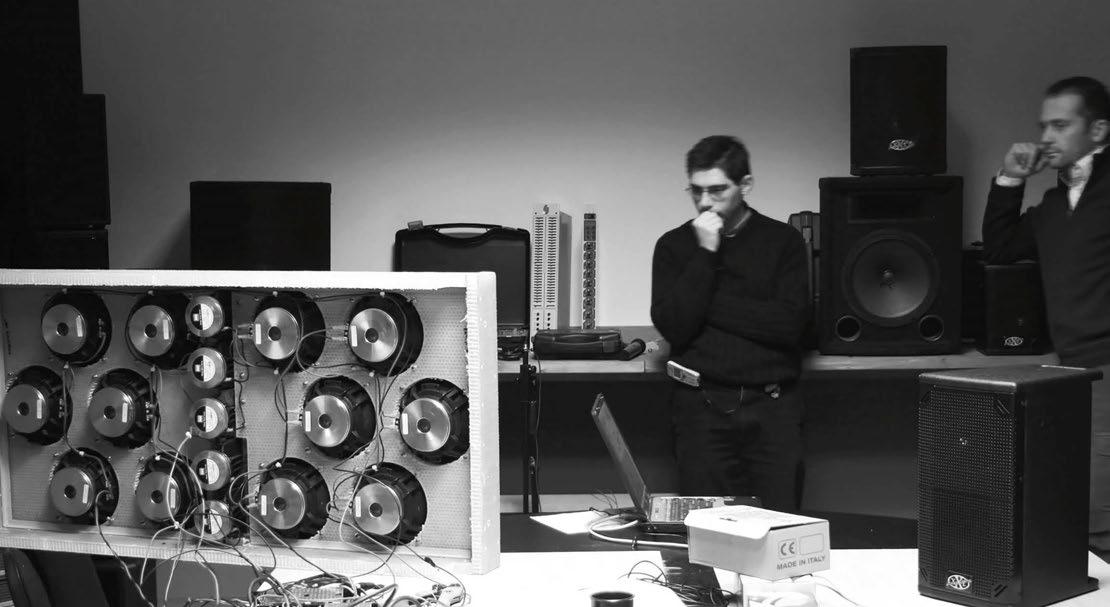
Above Top: Massimo and Alessandro testing new products during the early days of their careers at HP Sound Equipment.
Tatini added that prior to that incident, very little thought had gone into the company’s next steps. “We still feel quite young and have immense passion for what we do, but recently we started to realise that our own kids were not interested in getting involved in the company, which is fine,” said Tatini. “I have had the opportunity to lead my own life, my parents didn’t push me in any direction, and so I didn’t feel any pressure from my parents. It was my life, my decisions and my future, and I wanted to offer the same freedom to my two sons, and Massimo also to his daughter. They were welcome to it, but their passions lie elsewhere, so there is no need to push or direct them.”
Having quickly discarded options to float on the stock market or consider selling to an investment company, the pair began to field offers from like-minded brands within the industry. “With some cases there was an industrial plan, and it was very interesting,” continued Tatini. “We started discussions with Powersoft, which is a company we have known for a very long time. I was at university studying engineering when I met two of its founders – Claudio Lastrucci and Antonio Peruch – and we remained in touch from that moment. We have been customers of theirs since the early days, using Powersoft electronics, and we have been friends for a long time, and when we started the discussions about finding a partner to set a future for K-array, they showed us their interest and proposed a plan. “Both companies share similar backgrounds, and we both experienced reticence from the industry about technologies that were probably ahead of their time. They are game-changers, and we are so focussed on loudspeaker technology that it was obvious that it’d be a perfect match. “It took some time to reach an agreement, and now just over a year later, a lot of things have happened, and we are starting to see the benefits. In terms of the market and
“ I HAVE HAD THE OPPORTUNITY TO LEAD MY OWN LIFE, MY PARENTS DIDN’T PUSH ME IN ANY DIRECTION.”
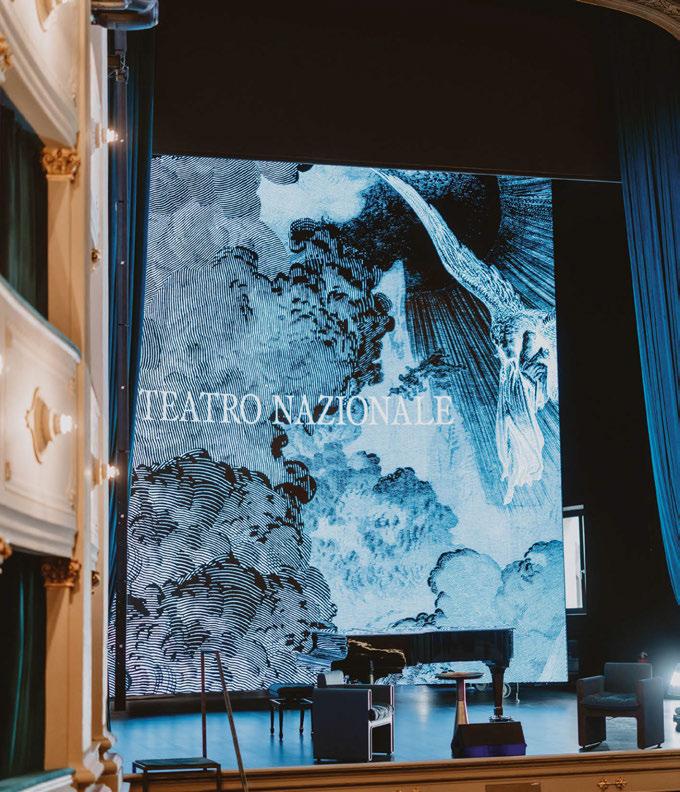
Below: A discreet installation at the Teatro Nazionale in Florence.
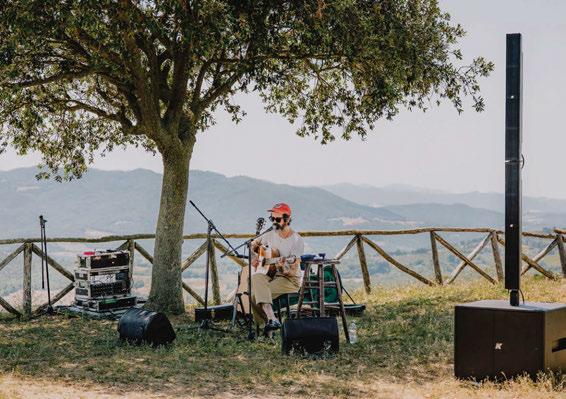
Left: The 2026 Festival of the Sun in Tuscany, an intimate, multidisciplinary event curated by music producer Rick Rubin, utilsed K-array solutions.
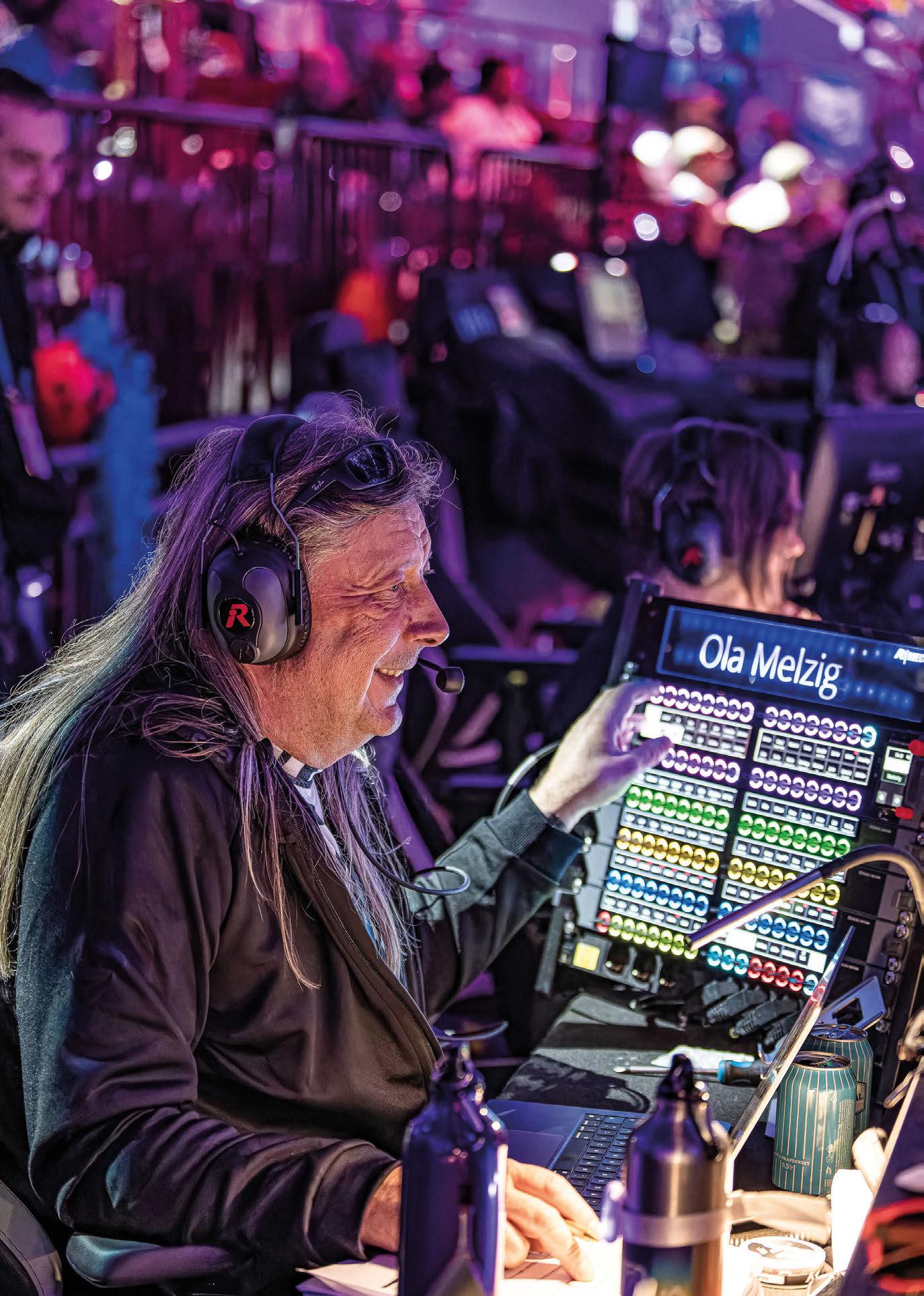
I just love the new generation of the Artist user interfaces. The SmartPanel‘s intuitive workflow and its very visual layout are simply fantastic.
I can customize it in any way I need, which is absolutely crucial for the big live events I typically work on.“
ARTIST INTERCOM
Professional and reliable live communications. Seamless integration of Riedel‘s SmartPanel and Bolero wireless intercom. Easily scaling from 16 to 1024 ports with flexible licensing.
Photo by Ralph Larmann
R&D, we have attained a lot of extra power, with clear strategy in place, and we feel like one team.”
One element of the company’s internal five-year plan is on maximising its efficiency in brand recognition in different markets. “The world is a huge and varied place, any every country and market is different,” reflected Tatini. “There is not one set rule that will satisfy everyone, and that is a cultural thing, and distributors can often be more focussed on certain verticals and unable to develop others.
“In Italy, for example, we have more than one commercial partner to develop the market, as they are focussed on specific verticals. This is something we are considering for other countries, and a big focus for us is the United States, which is our largest market.”
One of the company’s biggest differentiators is its culture, and the development of the K Experience, where guests are welcomed to its headquarters in Tuscany, has given customers a chance to taste Italian hospitality. “This has been, for a long time, a point of strength for K-array,” said Tatini.
“Firstly, we had to create what we have now, and that took time after we moved to this location – which is 20km outside of where we were previously – very close to central Florence.”
“There is an element of K-array which is related to the philosophy prevalent in our work, and part of our passion is to let everybody understand and enjoy it, and so we set up a welcoming environment which allows us to host dinners, lunches, academies and events during the year,” Tatini added.
“It’s very important because staying close to the customers in non-formal settings means that they can open up, and from that relationships build. We have created a comfortable setting to stay
in touch with real users, and many of our distributors benefit from bringing their clients here.”
Maintaining those relationships is done with the assistance of consistently producing innovative solutions, and Ferrati and Tatini have their ear close to the ground when it comes to thinking of directions to take. “The market is hungry for innovation, but sometimes it is not fully ready to receive big changes in a short space of time because the pro audio industry can be quite conservative,” said Tatini.
“Over the years I’ve heard people say: ‘if that was possible, someone would have done it already,’, and it drives me crazy, because we would still have square wheels if nobody cared that someone had created a round one – because invention needs an audience to survive.
“We didn’t care about what was the standard, and we focussed on the needs and listened to people, and then looked at meeting those needs in the best way. Perhaps this could be seen as a slightly complicated method – and different to what people are accustomed to – but it didn’t matter to us. Creating a market is difficult, and in my opinion it is the only way to develop a brand. What was important 10 years ago, may not be important today.
“Previously, we were designing products and then trying to understand which market to push them in. Now, we are much more market oriented, targeting certain channels to understand what it is we need to design to develop that market.”
With an established product portfolio, offices in the USA and China in addition to HQ in Italy, and a structure to move forward effectively, Tatini and Ferrati have created a brand and legacy well-placed to take its innovation to the next level.
www.k-array.com
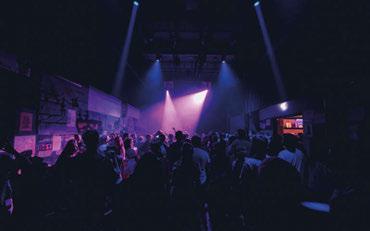
Above: A cornerstone of Italian club culture, Tenax in Florence chose K-array, its long-time audio partner, for a complete system upgrade in its main room in 2025, particularly focussed on K-array’s Dragon-KXT18P models.
RETAIL & LEISURE
Forward-thinking installations in retail outlets and leisure facilities around the world.
Parakiore
COMPANY: Pharos Architectural Controls
LOCATION: Christchurch, New Zealand
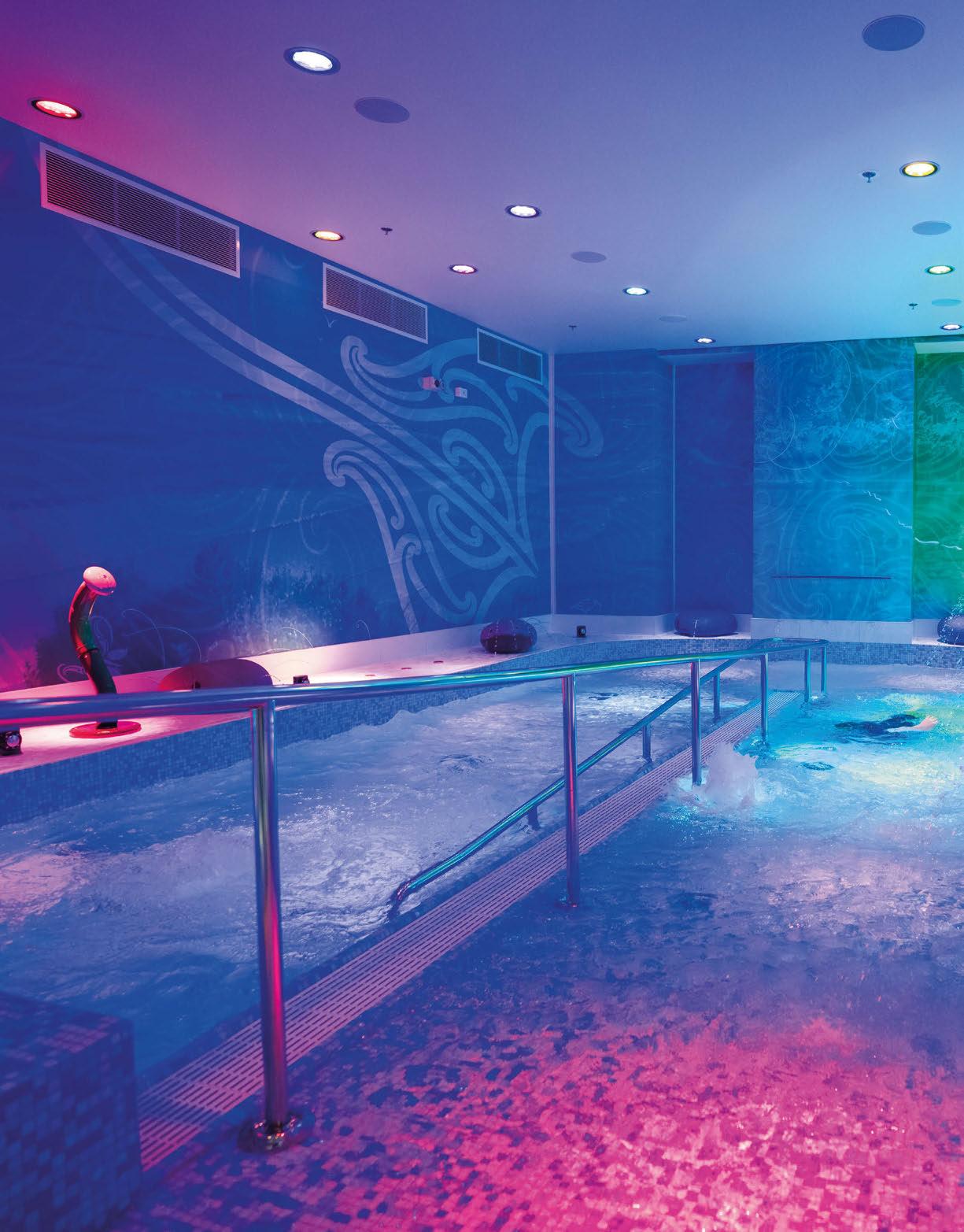
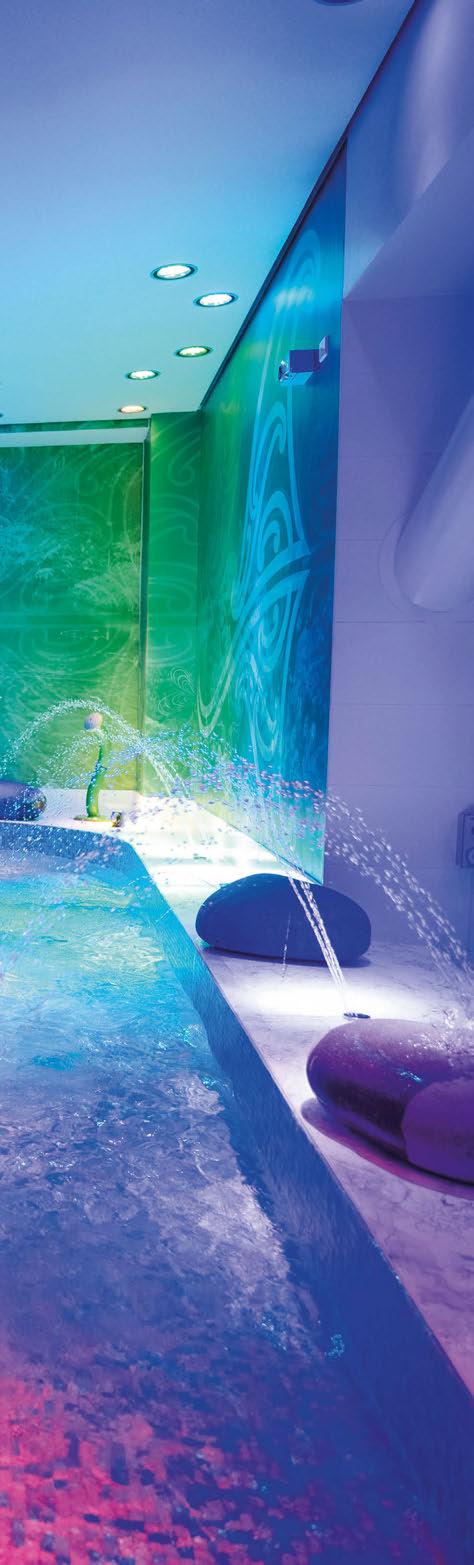
Advanced lighting control technology from Pharos Architectural Controls is helping deliver an inclusive and immersive sensory experience at the new Parakiore Recreation and Sport Centre in Christchurch, New Zealand. Started in 2018 and completed in 2025, the redevelopment is a cornerstone of post-earthquake regeneration in the city. Now set to become one of New Zealand’s premier aquatic and recreation destinations spanning 32,000 sq m, the Parakiore facility has been designed to provide accessible and engaging experiences for visitors of all ages and abilities. As part of the development, a new Sensory Aqua Centre was created to deliver a dedicated interactive sensory room. Combining lighting, water effects and integrated control systems, the space offers a safe, adaptable environment that promotes relaxation, sensory stimulation and meaningful interaction for its users. Lighting controls specialist Annelise Goodwin of LS Group was appointed to deliver the lighting controls solution for the sensory room via Grant Robertson of The Light Site.
The design brief called for a highly flexible and intuitive system capable of supporting multiple room states, interactive experiences and personalised user settings, while integrating seamlessly with wider building operations. At the heart of the installation is a singleuniverse Pharos Designer LPC controller with two Pharos four-port DMX repeaters. Combined with a Q-SYS integration platform, the system enables sophisticated control across interactive water features, lighting zones and sensory elements. The Designer LPC provides the processing power and reliability required for the complex installation, managing more than 100 custom scripts and over 400 commands across the sensory environment. Through a combination of LUA scripting and the Pharos API, the project team developed advanced control
functionality that allows dynamic timeline shuffling for the bubble wall installation, as well as simplified recall of individual timelines without the need to create hundreds of separate triggers.
The system controls 10 interactive water features, four non-interactive water features, lighting across four separate zones and an integrated bubble wall feature. Q-SYS is utilised to trigger commands within the Pharos system, allowing the various sensory experiences to operate seamlessly together while providing intuitive control for staff and users. To enhance accessibility and ease of operation, the installation includes five customisable user presets for regular instructors and returning guests, alongside five base room states (Calm, Colourful, Full Room, Party, Interactive). These presets allow the sensory environment to adapt quickly to different users, activities and therapeutic requirements. The system also integrates with the wider building management system (BMS), using relay triggers to automatically respond to occupancy and operational states, including open, closed, cleaning and unoccupied modes. This intelligent automation ensures the room remains both energy efficient and easy to manage as part of the wider facility.
Annelise Goodwin of LS Group, said: “The goal was to create a sensory space that was immersive, adaptable and easy for staff and visitors to interact with. Pharos gave us the flexibility to develop highly customised scripting and control functionality, while still maintaining a reliable and intuitive user experience throughout the installation.”
The result is a future-ready sensory space that combines lighting, water and automation to deliver calming, interactive and engaging experiences, reinforcing Parakiore Recreation and Sport Centre’s commitment to accessibility, wellbeing and inclusive community design.
www.pharoscontrols.com
Duinrell
COMPANY: Robe
LOCATION: Wassenaar, the Netherlands
Photo: Louise Stickland
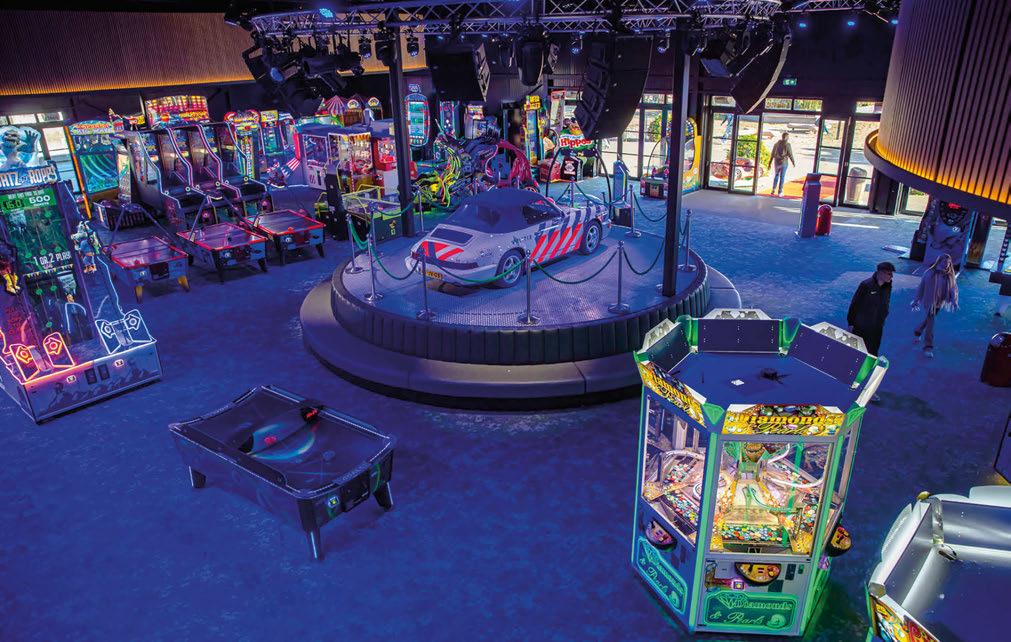
Duinrell is a combined holiday, amusement park and water park in Wassenaar, South Holland, which celebrated 90 years of operation in 2025. One of the Netherlands’ best-loved and most successful theme parks, the attraction draws some 1.4 million visitors a year, and in recent years, Robe moving lights have started to make an impact, contributing to the positive vibes.
Roy van Zutphen is the electrician and engineer in charge of lighting and he leads a team of 29 who look after all things technical and operational, including all the venues and rides. Their work also covers mechanical, carpentry and set building.
When a brand-new Arcade Game Hall was opened in 2023, van Zutphen reached out to Controllux’s Maikel Sakkers, one of the company’s main sales managers, who had a connection at Duinrell.
He asked for some advice on the best lighting options for the Arcade Hall, which was a hybrid design to also accommodate events of up to 1,500 people. Sakkers arrived on site and, when he realised the scale of the new building, recommended a combination of Robe moving lights in the form of PAINTEs, LEDBeam 150s and CUETEs.
“We needed the most flexible and adaptable lighting and also a reliable solution,” explained van Zutphen. Reliability was a major consideration as the Arcade is open eight to 10 hours a day, every day, so the lights had to be robust and well-built.
Four PAINTEs were chosen for the staging area in the middle of the Arcade venue, as that is the main area used for events. These fixtures give the option of great quality light, have plenty of scope for effects and are also capable of excellent key lighting. Deployed around the stage
and around the room on roof trusses are 24 LEDBeam 150 fixtures, and van Zutphen also wanted some additional fixtures for the space that could produce great gobo effects and colours but didn’t need to be as complex, so for this he chose CUETEs, which have complementary CMY colour mixing to the PAINTEs but no zoom. They are also both TE fixtures, benefitting from Robe’s TRANSFERABLE LED engine – something van Zutphen described as “a huge advantage” in this scenario.
“I also wanted a system with fixtures that any incoming LD would be happy to use for their event,” he commented.
The lights also needed to be delivered in a short timescale – around six or seven weeks – so once van Zutphen confirmed the specification and placed the order, Sakkers co-ordinated with Robe in the Czech Republic to ensure that the kit would be there to meet the deadline.
The day-to-day Arcade Hall lighting is run via a Mosaic show controller, but the lights can be hooked into external consoles and controlled independently for events.
Pleased with the results of the Game Arcade lighting, van Zutphen again turned to Controllux last year when it came to refurbishing the classic Duinrell Express train ride, which had been running for 47 years.
He selected 16 Robe iBar 15s and iParFects. The iBar 15s are used to light the walls and the scenery, and the iParFect was needed for the opening of the cave, for which a zoomable light was required.
“There’s never a dull moment here; everything is dynamic, different and it is almost like a hyper-busy vacation for me working here,” enthused van Zutphen, who has worked at Duinrell for 15 years. www.robe.cz
Arc Community
COMPANY: Martin Audio LOCATION: London, UK
Arc Community is redefining the wellness club in the heart of London’s Canary Wharf, combining relaxation and contrast therapy within a vibrant, social setting. To create a soundscape capable of moving seamlessly from calm, unobtrusive daytime ambience to DJ‑driven evening sessions, Arc turned to integrator Evolve AV and Martin Audio’s CDD Series loudspeakers.
“It’s a very fresh concept; there hasn’t really been anything like it in the UK on this scale,” said Elliot Patterson of Evolve AV. “It’s an amazing space.”
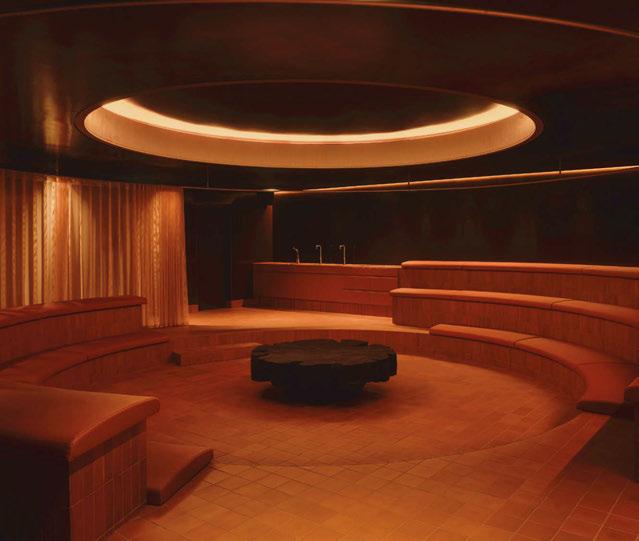
Focussing on contrast therapy – the alternation between intense heat and cold exposure to activate the body’s natural stress and relaxation responses – the venue features a vast communal sauna seating up to 65 people, multiple ice baths, and a lounge area for relaxation and socialising. Music plays an essential role throughout the venue, but it was in the Lounge that Patterson’s team faced their most specific acoustic challenge.
“It’s a multifunctional area that needs to be calm and relaxing during the day but capable of a big, immersive sound at night,” he explained. “They have sessions called ‘Arc After Dark’, which are evening socials where DJs come in on certain nights.”
The Arc After Dark events – “blending the invigorating power of contrast therapy with immersive soundscapes and aromatherapy” – transform the venue into a sauna party for up to 95 people.
To meet the audio demands, Evolve AV specified a combination of four Martin Audio CDD6 loudspeakers, supported by a compact Martin Audio SX210 subwoofer.
“The CDD6 is such a versatile box; it’s a six‑inch driver but it’s incredibly punchy for its size,” continued Patterson. “The cabinet design just works.”
The Lounge itself is a square room, with seating arranged in a circle for breathing exercises and meditation, and maintaining a clean aesthetic was essential.
“We didn’t want anything to take away from the aesthetic of the space,” said Patterson. “The CDD6s are very discreet – you can walk in and you won’t even notice them – but when you turn the system up, it sounds massive.”
www.martin-audio.com | www.evolve-av.co.uk
Kia showroom
COMPANY: Full Production
LOCATION: London, UK
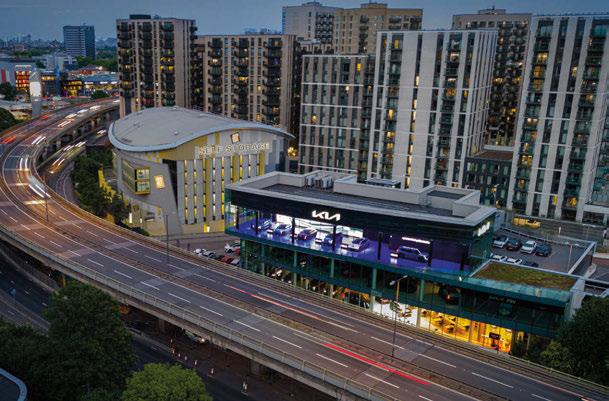
Peering over Chiswick Flyover, the Kia showroom forms a familiar landmark for drivers on the M4 motorway in West London. Its technical refit, designed and installed by Berkshire-based entertainment solutions specialist, Full Production, was intended to create a modern display on the building’s upper floor, but with a ‘theatrical’ touch thanks to an extensive lighting scheme, designed to add depth and atmosphere, while carefully complementing the on-screen content. In this, Full Production’s extensive background and experience in theatrical and experiential lighting and was a major benefit.
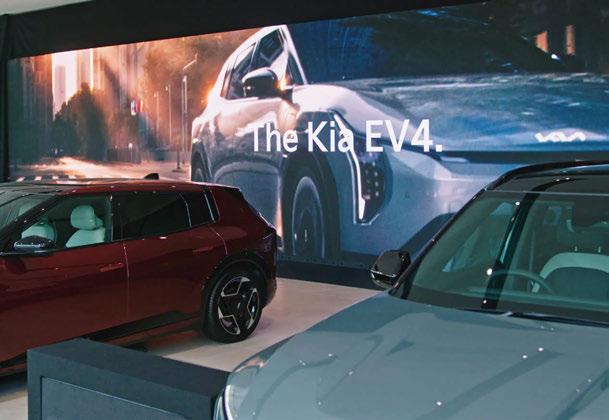
“The whole design intent was that we introduce strong, saturated colour around and behind the cars and then pick out the cars in white –with minimal spill – to add depth between the cars and the screen, and to create that sense of ‘theatre’ in terms of cuing and movement,” said Full Production Managing Director Steve Richardson. “Using theatrical lighting techniques, we aimed to really maximise the impact of the display, with the cars themselves taking centre stage in front of the striking screen – effectively the stars of the show.”
In creating and evolving the design with the clients, Full Production built the environment virtually within Syncronorm’s Depence platform and shared pre-viz views with the client. Once agreed, its installation team began on site and took an environmentally conscious approach. The old screen, lighting and tracks were all removed and sustainably recycled under TÜV Austria’s “OK” scheme, before the new main screen, totem screen, control equipment, lighting fixtures and tracks (manufactured from recycled aluminium) – were installed in just 10 days.
This was achieved despite the challenging logistics of the building itself, plus coinciding with one of the showroom’s busiest periods of car movement, all of which demanded detailed coordination with the site manager. Richardson explained: “The building is three floors and –typically for a car showroom – where there’s a space, there’s a car. So we had to deliver everything to the basement, off-load from an 18-ton HGV into a service bay, then move the kit with a small van for careful shuttle-runs up three stories.”
The solution sees a large, high-resolution main LED screen covering more than 60 sq m, complemented by a separate 17 sq m ‘totem’ screen off to the right, both driven by Novastar processing. The showroom’s previous setup had featured a semi-transparent, 16mm pixel pitch screen, with purely functional white lighting on the cars. “We wanted a screen with far greater impact,” Richardson continued, “so chose solid, high-resolution 3.9 mm pixel pitch modules.”
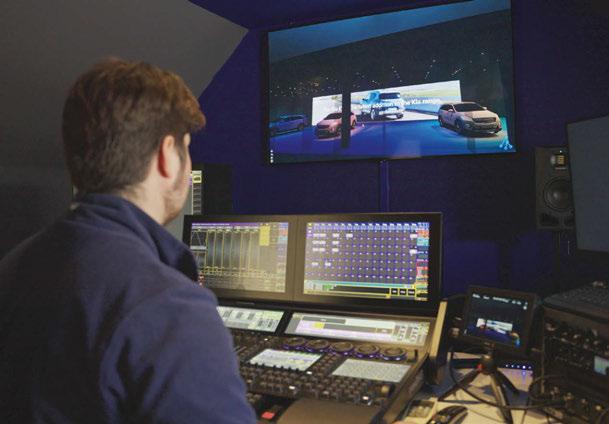
The lighting scheme uses 140 Jade model luminaires from CLS – 60 of the Tunable White versions, plus 80 of the ColourFlow RGBW, which offer quality colour reproduction from soft pastels to saturates. A CueCore3 solid state controller from Visual Productions provides playback of lighting cues, while central control of the whole system is via Q-SYS.
The completed installation is remotely monitored daily by Full Production’s team. Status updates are issued by Q-SYS, and an automated system sends short video clips (from two PTZ cameras) to support staff, which can either approve, reject or take further action as necessary. “The installation is fully automated,” Richardson said, “including the remote monitoring and reporting to our team, but there’s always a human element at the end of the process.”
The project was handed over just before Christmas 2025, and the client is delighted with the results. Maaike De Vries, Events and Sponsorship Manager for Kia Motors UK, commented: “The new screen is absolutely perfect – so much brighter, with so much more clarity, and the lighting has really helped to create more depth, more theatre. It gives us good options to change the whole look and feel of the space.”
On working with Full Production, she added: “They communicated so well. I feel that they kept me informed through the whole process – and from start to finish it was done smoothly.”
www.fullproduction.co.uk
BAKH Vitoria
COMPANY: EAW | Zentralmedia
LOCATION: Araba, Spain
The renowned BAKH Vitoria, official sports centre of Baskonia and Deportivo Alavés, recently teamed up with Zentralmedia to completely revamp its sound system across several key areas of the facility using EAW technology.
Covering more than 38,000 sq m dedicated to wellness, athletics, and recreation, Bakh Vitoria stands out as one of northern Spain’s premier sports facilities. Its expansive fitness room, which spans over 1,200 sq m and hosts 500 guided classes each month, required a high-performance sound solution, with clear, powerful and uniform coverage to accompany the centre’s demanding programme of activities.
Zentralmedia’s engineering team worked closely with BAKH Vitoria’s technical staff to develop a custom EAW audio solution to meet the specific acoustic needs of each space in the facility, including the cycling, fitness, and cardio rooms. This approach ensured consistent audio coverage to support the centre’s diverse programming.
The systems include a range of EAW products selected for their performance and adaptability. In high-energy spaces such as the fitness room, 24 MKC120 point source speakers were installed, while 25 MKC50 two-way coaxial point source loudspeakers enhance coverage in more focused zones.
Additionally, a single SB150zP subwoofer was placed in the spinning room to deliver tight, controlled bass. Finally, 30 CIS400 recessed ceiling speakers provide uniform sound distribution in the larger, more open areas.
The upgraded sound system has elevated both the acoustic quality and the overall experience at BAKH Vitoria, and with EAW’s high-performance speakers discreetly integrated, instructor-led classes now benefit from dynamic and engaging audio that supports member motivation and activity.
With Zentralmedia’s choice of EAW, BAKH has reinforced its position as one of the most innovative and comprehensive sports centers in Spain, with a commitment to excellence in both sports equipment and audiovisual technology. www.eaw.com | www.zentralmedia.com
Westfield Les 4 Temps
COMPANY: APG | Videlio
LOCATION: Paris, France
Photo: Westfield Rise
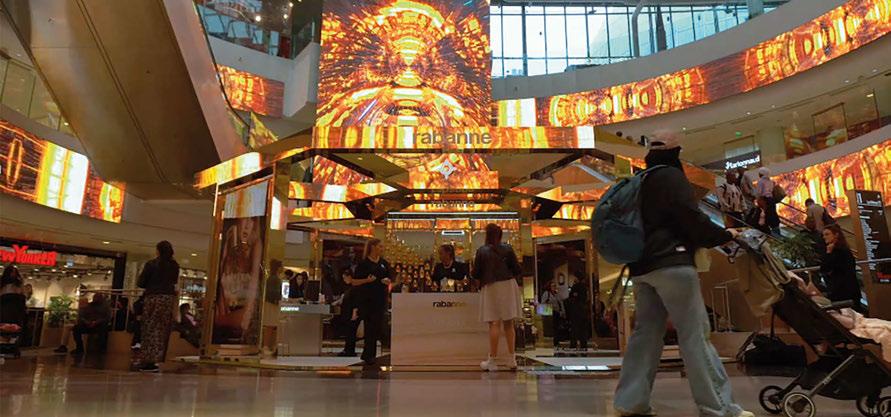
As part of a huge AV overhaul at the Westfield Les 4 Temps (Paris) shopping centre, integrators Videlio have deployed APG’s iX series of loudspeakers and Active Audio column speakers to enhance the shopping experience.
Located in La Défense, the business district to the west of the French capital, Westfield Les 4 Temps is one of Europe’s largest shopping centres, and the audio upgrade was designed make the audio experience an integral part of a shopping trip.
Stéphane Le Roux, head of digital media for Videlio’s specialist complex-projects division, Videlio-Scénotechnique, has been working with Westfield Les 4 Temps owner Unibail-Rodamco-Westfield for 10 years, overseeing maintenance of its existing AV systems and advising on future upgrades. He explained that Westfield Les 4 Temps’ owners were converted to the experiential possibilities of spatial audio after Videlio demoed TADAMM, an ‘immersive experience box’ showcasing the possibilities of immersive audio and video solutions.
“As a technological partner of TADAMM, we invited Westfield to witness the added value of an immersive sound system complementing the video system originally planned for this project,” said Le Roux. “We demonstrated how the visual component’s impact on the LED screens coupled with the sound system could significantly improve visitors’ attention, preventing them from looking at their phones on escalators or during down time, and instead engaging with the content.”
Having already been commissioned by Westfield to integrate ‘Digital Dream’ – a series of three curved LED screens which with a total surface area of 250 sq m at Les 4 Temps – Videlio turned to APG for the immersive audio component, entrusting the French manufacturer with delivering an impactful soundscape that would grab the attention of busy shoppers.
The design of both the Digital Dream display and the immersive audio system were overseen by creative agency TETRO, which commissioned Acoustique & Conseil (AC) to consult on the latter aspect of the project. AC’s recommendations were that any new audio system should be able to offer clear, intelligible sound at a consistent volume within a defined area around the LED wall, as well as create a fully spatialised audio environment – a demanding brief, but one for which the iX series was the perfect choice. The decision to specify APG loudspeakers
was, says Le Roux, driven by four factors: its technological expertise, the strength of its bid, the fact its products are designed and manufactured in France, and the support the company is able to offer its integration partners.
“We appreciate APG as a company with real expertise,” he explained. “Having partners like APG – who understand the project’s challenges and actively contribute to the experience – was invaluable, and APG’s tender more than convinced us.
To create the desired audio environment, Videlio integrated a 12-channel audio system comprising 28 iX5, APG’s ultra-compact indoor coaxial loudspeaker, distributed across the two convex LED screens that loop around Les 4 Temps’ first- and second-floor balconies for even, object-based immersive sound coverage. A miniature two-way, full-range loudspeaker that offers studio monitorlike compactness and sound quality, the iX5 is the smallest member of the iX family.
Elsewhere, R210TC column speakers by APG’s sister company, Active Audio, are strategically positioned on either side of the main Digital Dream display (a curved, totem-shaped central screen), further ensuring precise and intelligible sound projection.
On the need for the high-quality audio provided by APG and Active Audio at Westfield Les 4 Temps, Perceval de Saint-Seine, UnibailRodamco-Westfield’s senior media manager for Europe, said: “We want to offer a complete experience to our customers and positively surprise them. This drives us to choose top-tier technology and partners to ensure no compromise on quality.”
De Saint-Seine adds that, thanks to the iX5’s range of custom finishes, the audio elements of the install are “extremely discreet and perfectly integrated into the environment”, making little visual impact while delivering maximum sound coverage.
Reflecting on the successful integration of Westfield Les 4 Temp’s first immersive audio system – which is, according to Perceval de SaintSeine, already being utilised with “spectacular” results by advertisers –Videlio’s le Roux is proud to have partnered with APG to deliver a world first in Paris: “The largest and most innovative retail LED wall in Europe – and the only one integrating immersive, 3D, interactive audio.” www.apg.audio | www.videlio.com
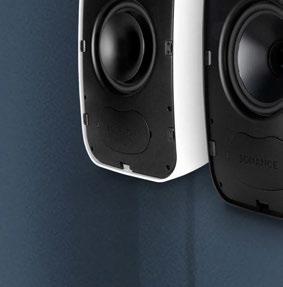
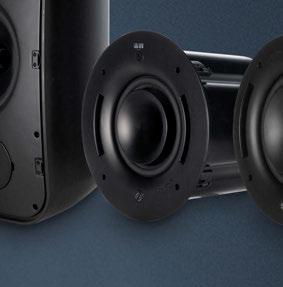
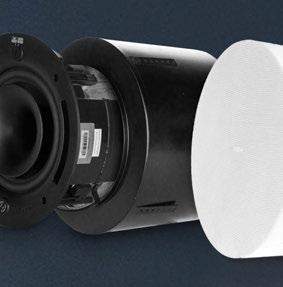
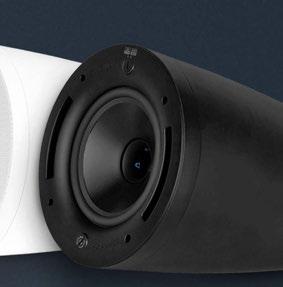
BUILT FOR MORE
The new High Output family of loudspeakers expands the Sonance Professional Series into spaces that demand greater SPL, variable coverage control, and low-frequency performance.
sonance.com/highoutput
The High Output family is available in pendant, surface mount, blind mount in-ceiling, and two-piece in-ceiling configurations, all sharing consistent voicing for seamless mix-and-match deployment. Built for foreground music in environments with high ambient noise, the compression driver delivers the clarity and SPL headroom to keep music clean and intelligible. Interchangeable horn assemblies ship in the box, allowing installers to adjust between 80° or 120° coverage in the field without special tools. A high-excursion 8-inch woofer extends low-frequency response to 41 Hz on select models, reducing system complexity.
Paris Hotel & Casino
COMPANY: 1 SOUND | Global AV Group
LOCATION: Las Vegas, USA
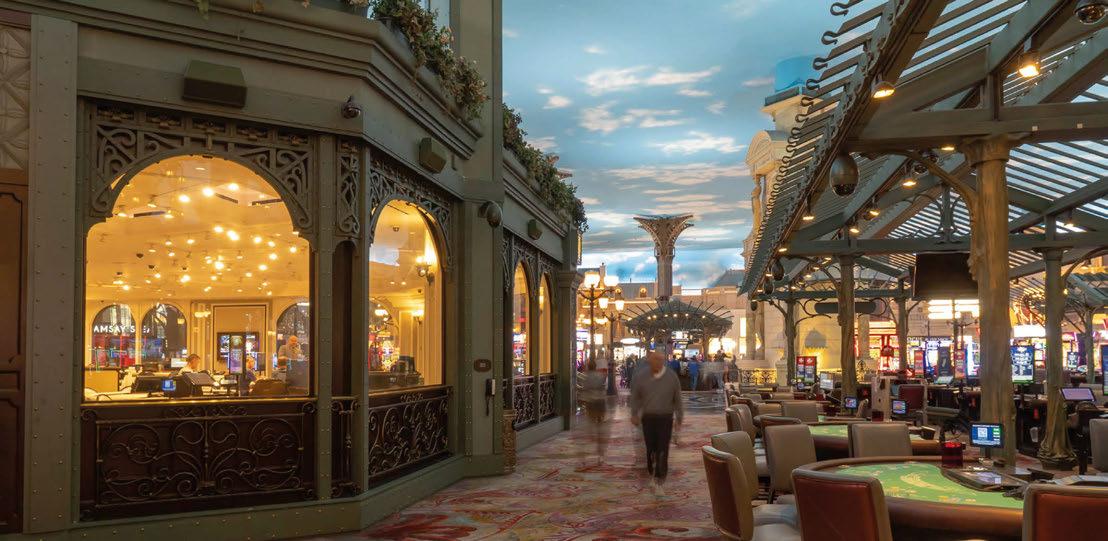
Following a major renovation at Caesars Palace, Caesars Entertainment sought to elevate the guest experience throughout Paris Las Vegas with a modern audio system capable of delivering consistent, high-energy sound across the casino floor, lobby, and retail corridors. Having specifically requested to hear 1 SOUND, Caesars Entertainment was introduced to Global AV Group, which partnered with 1 SOUND to design and integrate a distributed audio solution tailored to the property’s architectural and operational requirements. The existing system had served the property for decades, but the goal was not simply to replace aging equipment –Caesars wanted to create a more engaging environment that matched the energy of the venue while maintaining clarity throughout the expansive space.
“The system at Paris Hotel had been in use for around 30 years,” explained Jason Ojeda of Global AV Group. “After the renovation at Caesars Palace, the team really wanted to engage the customer in a different experience with high-level, high-impact audio.”
Before finalising the design, Global AV Group was asked to showcase a design approach in an on-site loudspeaker shootout, bringing a custom-finished 1 SOUND Level 35 that performed against an alternative solution already under consideration. Through the 1 SOUND Custom Shop, Global AV Group provided the extra detail, finishing the Level 35 to match the surrounding aesthetic, where 1 SOUND provided a colour match and the custom loudspeaker within a week’s time, allowing Caesars Entertainment to evaluate both the sonic performance and visual integration within the space.
“We chose the Level 35 because it fit the columns perfectly,” said Ojeda. “Once we got one in the air for the demonstration, with its sound and the aesthetic, the decision was pretty much made.”
That successful test run became the foundation for the property’s new audio strategy, because the casino floor presented several acoustic challenges. Large open areas, decorative columns, and expansive dome ceilings required a system capable of delivering intelligibility and impact without allowing sound to become lost within the architecture.
Using Auralis acoustical modeling software, Global AV Group developed a distributed design centred around 1 SOUND’s Level Series loudspeakers and subwoofers. The system was designed to keep sound close to guests rather than relying on loudspeakers mounted high above the floor.
“The progressive horn really mattered,” said Ojeda. “It helped provide intelligibility throughout the entire casino floor.”
Mounted throughout the casino floor and integrated within the property’s architectural elements, the Level loudspeakers provided the coverage required without visually dominating the space.
The final deployment incorporated Level 35 and Level 38 loudspeakers, Cannon C6 loudspeakers, SUB28 subwoofers, and WSUB45i wall subwoofers, creating a distributed audio system tailored to the different needs of the casino floor, hospitality areas, and retail environments throughout the property. Level 35 loudspeakers and SUB28 subwoofers were utilised throughout the casino floor and lobby. In higher-energy areas such as the property’s main bar, Level L38 loudspeakers provided additional output, while wall-mounted subwoofers helped deliver lowfrequency support where floor-space constraints limited traditional subwoofer placement.
“The Level 35s fit in between the decor,” said Ojeda. “The SUB28s are able to hide behind different machines and furniture.”
Beyond the gaming floor, the project extended into Le Boulevard, Paris Las Vegas’ collection of boutiques, restaurants, and cafés. Cannon loudspeakers were deployed throughout the retail promenade, creating a consistent audio experience as guests move between shopping, dining, and gaming environments.
From the moment visitors enter the property, the audio experience remains cohesive and uninterrupted, helping establish a unified atmosphere throughout the resort.
The result is an environment where music contributes to the overall guest experience and marks a refreshed energy standard for the brand rather than simply serving as background noise. www.1-sound.com | www.globalavgroup.com
Atomic Golf
COMPANY: Biamp | Simply Connected LOCATION: Las Vegas, USA
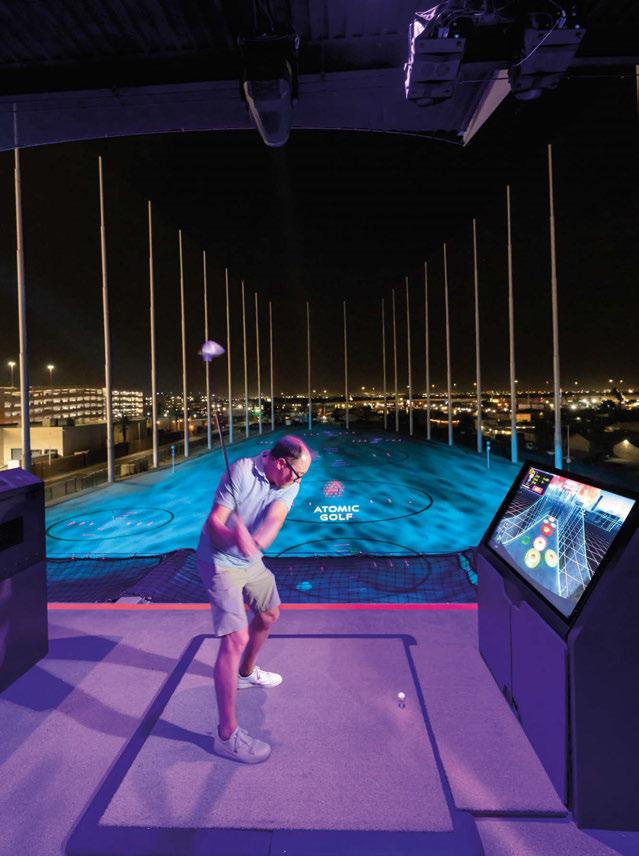
High-energy entertainment venue Atomic Golf combines a state-of-the-art driving range with nightclub vibes and private event capabilities, and features a fullyintegrated audio system courtesy of Biamp, as completed by local AV integrator Simply Connected and Coherent Design.
The system delivers powerful, flexible audio across every zone. Atomic Golf’s owner Bobak Mostaghasi commented: “With how important audio is to our venue, we needed a solution that would allow us to truly tap into entertainment. We’re able to blast music with DJs, host concerts, and even MCs with mics for large groups and special events. We needed our system to be great, and Biamp nailed it.”
To achieve that level of performance, the venue deployed the Biamp Tesira DSP platform with Tesira SERVER and SERVER-IO at its core, providing intelligent digital signal processing to manage zoning, routing, and control throughout the complex. TesiraXEL 1200.2 amplifiers deliver clean, consistent power, while Tesira EX-UBT expanders and Bluetooth integration offer plug-and-play flexibility for DJs and performers. A wide array of Biamp loudspeakers ensures seamless coverage across the venue’s diverse spaces. Desono EX-S8-UB eight-inch surface mount loudspeakers provide rugged yet sleek sound reinforcement throughout the hitting bays and walkways, while Desono CM60DTD ceiling speakers deliver crisp background audio and paging in social zones.
For high-energy performance areas, Desono ENT-FR and ENT-LF column speakers maintain intelligibility in acoustically challenging spaces, while deep low-frequency bass is supplied by Community IS6-215B and IS6-118B subwoofers to create a club-like experience. With top-tier technology from Biamp, the Atomic Golf team has created an unmatched audiovisual atmosphere that delivers for every type of guest – from highenergy weekend revellers to private event hosts and everyday golfers. www.biamp.com | www.scilv.com
BODYROK
COMPANY: ADI | Snap One | Rave Lighting & Technology LOCATION: Various, USA
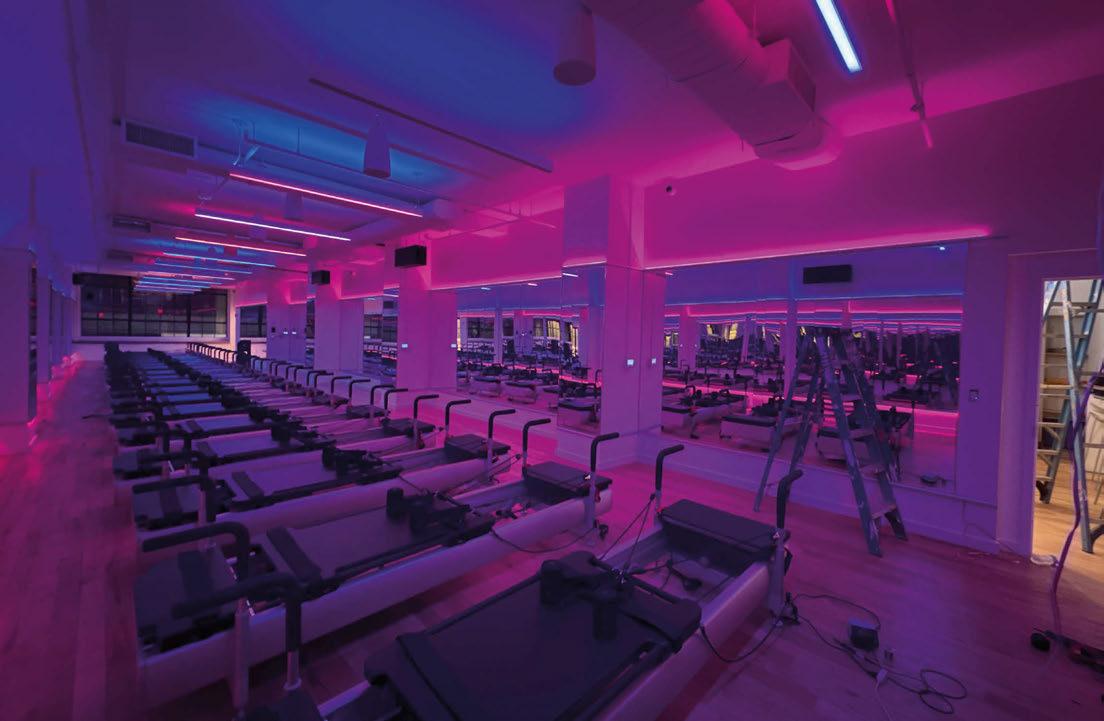
RAVE Lighting & Technology is making its mark across the United States, outfitting dozens of BODYROK Pilates studios with dynamic lighting, mood-enhancing music, security, and more.
With approximately 67 locations nationwide, and more planned to open, BODYROK turned to RAVE Lighting & Technology for a technological overhaul, simplifying routines for instructors, as well as bolstering remote management, connectivity, and security.
To efficiently manage this large-scale rollout, the RAVE team streamlined its design and installation process, creating a repeatable, standardised system of products. To maximise efficiency and reduce costs across the products, RAVE thoughtfully selected key suppliers to source products. With its nationwide reach and strategically located distribution centres, ADI Snap One emerged as a perfect partner for this ambitious project, offering the reliable support and expanded product portfolio needed to create exceptional experiences.
RAVE Lighting & Technology understood that the extensive BODYROK project would require a hybrid approach to automation. The technology needed to be visually discreet to minimise distractions during workouts, while the controls had to be intuitive enough for all employees to use while maintaining a consistent style and process across all company and franchise locations.
“Thanks to Control4’s range of control options, we were able to implement a solution that met the standardised requirements of the BODYROK franchise and gave us the flexibility to easily conform the tech package to each facility’s own unique structural and design parameters,” said RAVE Lighting & Technology COO Ryan Charon. “Most commercial control systems would have been overkill, but Control4’s flexibility and scalability suited BODYROK’s needs perfectly.”
An enhanced range of options is a critical aspect of ADI Snap One’s combined business – providing customers with an expanded portfolio of solutions and services, a result of their investment into innovation.
Control4’s native integration with the OvrC remote monitoring and management platform was another major advantage to this ambitious
multi-location endeavour. With RAVE Lighting & Technology’s systems installed at approximately 60 BODYROK locations currently, and more in the pipeline, having a reliable, remote support system was critical. Through OvrC, RAVE Lighting & Technology is able to monitor all network devices in every BODYROK location, receive proactive alerts if a device goes offline, and immediately login to reboot or reset the device – or, they can allow OvrC’s self-healing functionality to reboot the device automatically. The technology bundle customised for BODYROK is robust and reliable enough to operate with minimal maintenance, with streamlined and economised lighting control by utilising its own patented, Control4-compliant full-spectrum linear light system and consolidating customised colour and brightness settings into three buttons on a single, custom-engraved keypad.
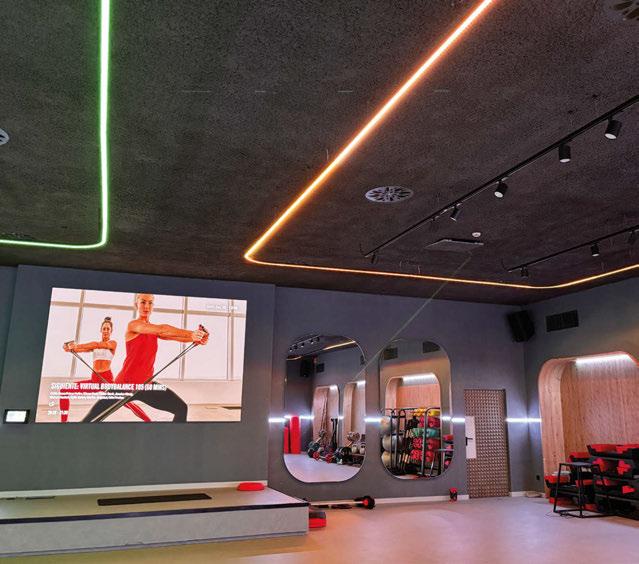
Pressing the “Class” button initiates a timed sequence of colored effects from linear ceiling-mounted light fixtures, transitioning to match three different workout phases – warm-up, main session, and cooldown.
After class, instructors tap the “Celebrate” button to foster team bonding and motivation.
“At times, this was pushing the limits of the controller we had originally specified,” Barnett said. “Fortunately, with Control4’s expansive product family, we quickly and easily scaled up to the CORE 1 when necessary.”
Similarly, ADI Snap One’s choice of Wi-Fi networking systems suited the diverse nature of the BODYROK locations. A solid network foundation is essential for reliable performance, which is why Araknis was selected for their professional-grade, OvrC-enabled hardware, featuring the latest networking technology.
With a well-integrated technology system, BODYROK studios have elevated the fitness experience, blending dynamic lighting, energising audio, and intuitive control.
Thanks to the collaboration between RAVE Lighting & Technology and ADI Snap One, BODYROK locations across the US are flexing not only physical strength but also the muscle of cutting-edge automation. www.snapav.com | www.ravelightingandtechnology.com
Shinsegae Premium Outlets
COMPANY: Powersoft
LOCATION: Busan and Yeoju, South Korea
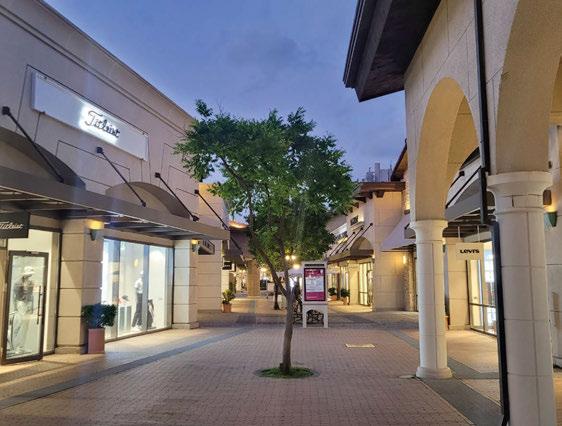
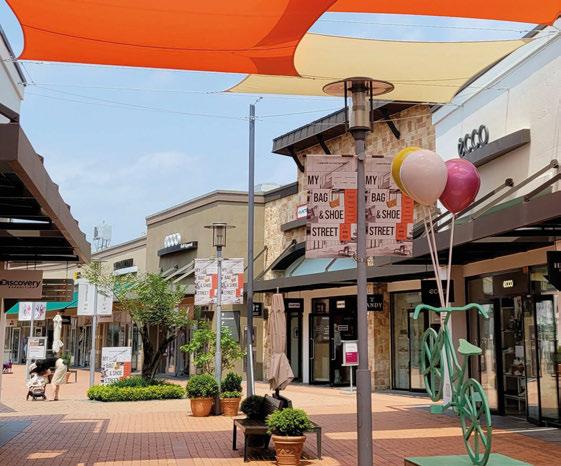
A major audio upgrade utilising Powersoft’s Mezzo and Quattrocanali amplifiers has enhanced both the background music (BGM) and public-address (PA) systems at Shinsegae Premium Outlet shopping centres in the cities of Busan and Yeoju in South Korea.
Both sites are open-air outlet malls operating 365 days a year, where any interruption to PA announcements or background music is unacceptable, and Powersoft’s South Korean distributor, DasanSR, enlisted system integrator LCS Global to design and deliver the project.
The new system replaces ageing amplifiers with modern, networked Powersoft amplifier platforms, restoring coverage in hard-to-reach areas and delivering an improvement sound quality, operational convenience and system stability.
At Busan, the upgrade – to a fully live system – was completed by LCS Global over the course of a fortnight, while at Yeoju the main phase of work was carried out over five nights, all with no disruption to day-time trading.
The two shopping centres share a similar layout, with multiple smaller buildings lining pedestrian ‘streets’ and amplifiers distributed in insulated rooms throughout each site. From the outset, both locations were built around digitally networked infrastructures using the now-obsolete CobraNet platform from source to amplifier.
The 2025 upgrade (which followed an initial phase completed in December 2023) focussed on replacing failed and at-risk amplifiers with new Powersoft models while simultaneously modernising the network architecture. The Yeoju mall now combines CobraNet and AVB, with AVB audio expanders feeding analogue signals to the Powersoft amplifiers, while the Busan site has been migrated to a Dante and QLAN architecture, with Dante audio expanders providing both analogue and Dante outputs in a redundant configuration to ensure uninterrupted operation.
Across both malls, LCS Global deployed a large fleet of Powersoft amplifiers, including Mezzo 322 A/AD, 324 A/AD, 602 AD and 604 A/AD, Quattrocanali 1204 DSP and 2404 DSP/DSP+D, and Duecanali 804 DSP+D and 1604 DSP+D units, in combination with a mixture of Bose, JBL, QUAD and Biamp loudspeakers. The compact 1U form factor of Mezzo and the flexibility offered by the Quattrocanali amplifiers allowed LCS Global to maximise channel count while saving valuable rack space, in some cases achieving eight channels in just one rack unit (1U) with paired Mezzo amplifiers.
“The client asked us to maintain high performance, ensure broad compatibility with existing components and make the system easier to service,” said Project Team Leader Jeong Wang-ho, outlining the brief from Shinsegae. “By switching to Powersoft, we were able to restore coverage in zones that had gone quiet due to amplifier failures, reduce heat generation and offer operators real-time monitoring of every output channel. The experience at the Shinsegae Premium Outlets has really confirmed our belief that, for us, ‘digital amplifiers mean Powersoft’.”
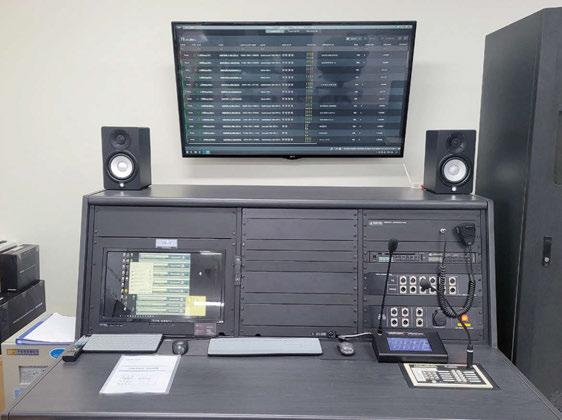
For real-time monitoring, LCS Global leveraged Powersoft’s ArmoníaPlus as a central control and monitoring hub, allowing staff to manage power, mute status, levels and output impedance across both sites from a single interface.
According to Jeong, the real-time impedance monitoring offered by ArmoníaPlus is one of the most valued features, enabling early detection of line or loudspeaker issues before they become audible problems. At the larger Busan site, dual-path signal routing using both Dante and analogue outputs ensures that audio continues even in the event of a network fault.
With additional rack space freed up by the compact, efficient Powersoft amplifiers, both sites are now well placed for future expansion and redesign.
“Although it wasn’t an easy decision to prioritise sound quality in a non-performance environment, the combination of superior audio, ease of maintenance and operational reliability proved that it was a highly worthwhile and justifiable investment from the end customer,” concluded Jeong.
www.powersoft.com
POWERFUL SOUND
32-bit DSP with FIR filter – precise sound reproduction
PLUG & PLAY
4 on-board presets: Music, Monitor, Voice, Ext. Sub
WIRELESS FREEDOM
Bluetooth audio streaming with True Wireless Stereo (TWS)
PURE POWER
1,200 W peak – fanless, silent operation
RIGHT SIZE FOR EVERY GIG
BUILT TO LAST
Pitch Dublin
COMPANY: Panasonic
LOCATION: Dublin, Ireland
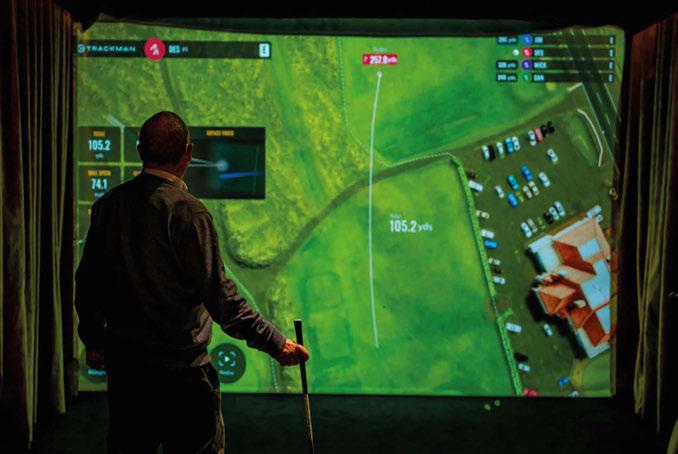
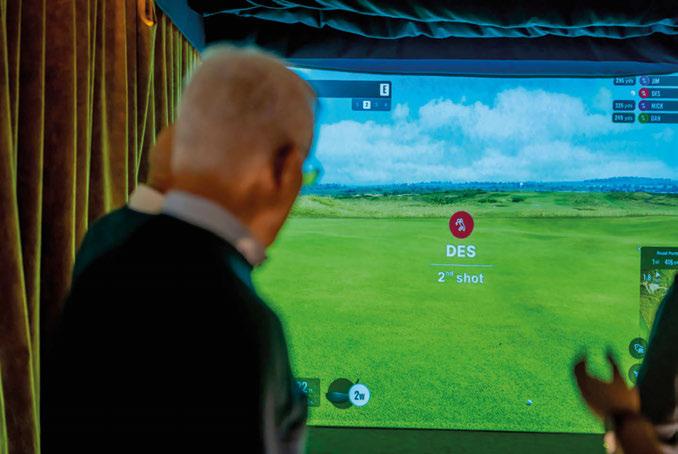
Located on Dublin’s bustling Dawson Street, Pitch Dublin represents a new generation of hospitality venue. Combining indoor golf simulation with a premium social environment, the venue is part of a fast-growing category often referred to as “competitive socialising” –where technology, entertainment, and shared experiences converge.
With 10 TrackMan-powered golf bays, a fullservice bar, and a steady flow of corporate and social bookings, Pitch Dublin has established itself as a destination for both seasoned golfers and complete beginners.
At the heart of this experience is a carefully integrated technology ecosystem, in which projection plays a central role.
“This is a tech business,” explained Christopher Best, CEO of Pitch Ireland. “It’s a hospitality business, but it’s driven by good tech. If you come here, you’re expecting a 10 out of 10 experience on the technology – and that includes TrackMan and Panasonic.”
Delivering that level of performance required careful planning from the outset. The venue, located in a basement space beneath one of Dublin’s busiest streets, presented a series of
structural and technical challenges.
“When we first came in, it was essentially a blank space,” said Martin Kelly, Director at MKS TEC. “We had to work from architectural plans to design the layout of each bay, the positioning of the equipment, and the overall system.”
One of the most significant challenges was the lack of traditional ceiling structures in the venue. Instead of solid mounting surfaces, the installation team had to work around acoustic panels and open infrastructure, requiring creative solutions for both projector placement and TrackMan mounting.
Each bay needed to support not only golf simulation but also broadcast content, requiring seamless integration between projection, computing, and AV systems. The result is a multifunctional environment capable of switching effortlessly between use cases throughout the day.
At the core of each bay is TrackMan’s IO system, which captures detailed ball and club data and feeds it into high-performance computers. The visual output – whether a virtual golf course, interactive game, or live sports broadcast – is delivered via Panasonic laser projectors.
“The data is almost instantaneous,” said Kelly. “As soon as the ball hits the screen, it’s processed and displayed straight away. Everything has to work together smoothly.”
For MKS TEC, the decision to specify Panasonic projectors was based on long-term experience and practical considerations.
“We’ve been using Panasonic projectors for about six years,” said Kelly. “We know they’re reliable, we know they’re flexible, and we know they deliver the quality customers expect.”
In a venue like Pitch Dublin, where each bay has slightly different dimensions, installation flexibility is critical. Features such as lens adjustment and geometric correction allow each projector to be precisely aligned, even in non-uniform spaces.
“Not every room is the same,” Kelly explained. “The Panasonic projectors make it easy to adjust everything so that it fits perfectly.”
Both the venue and integrator report strong performance from the Panasonic projectors.
“We haven’t had any problems with them,” said Kelly. “They run smoothly, and from a maintenance point of view, it’s very simple.”
https://eu.connect.panasonic.com/
Future Stores
COMPANY: Green Hippo
LOCATION: London, UK
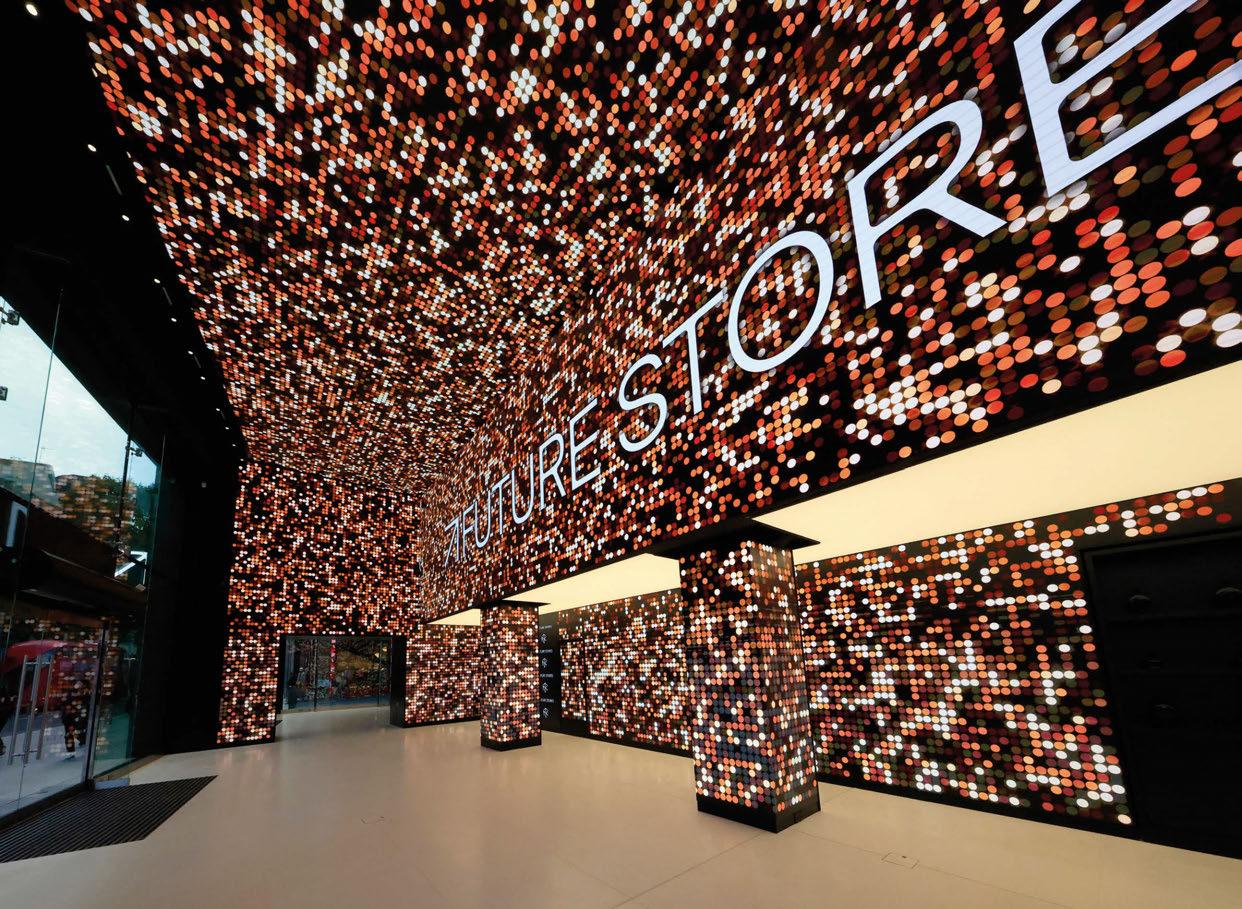
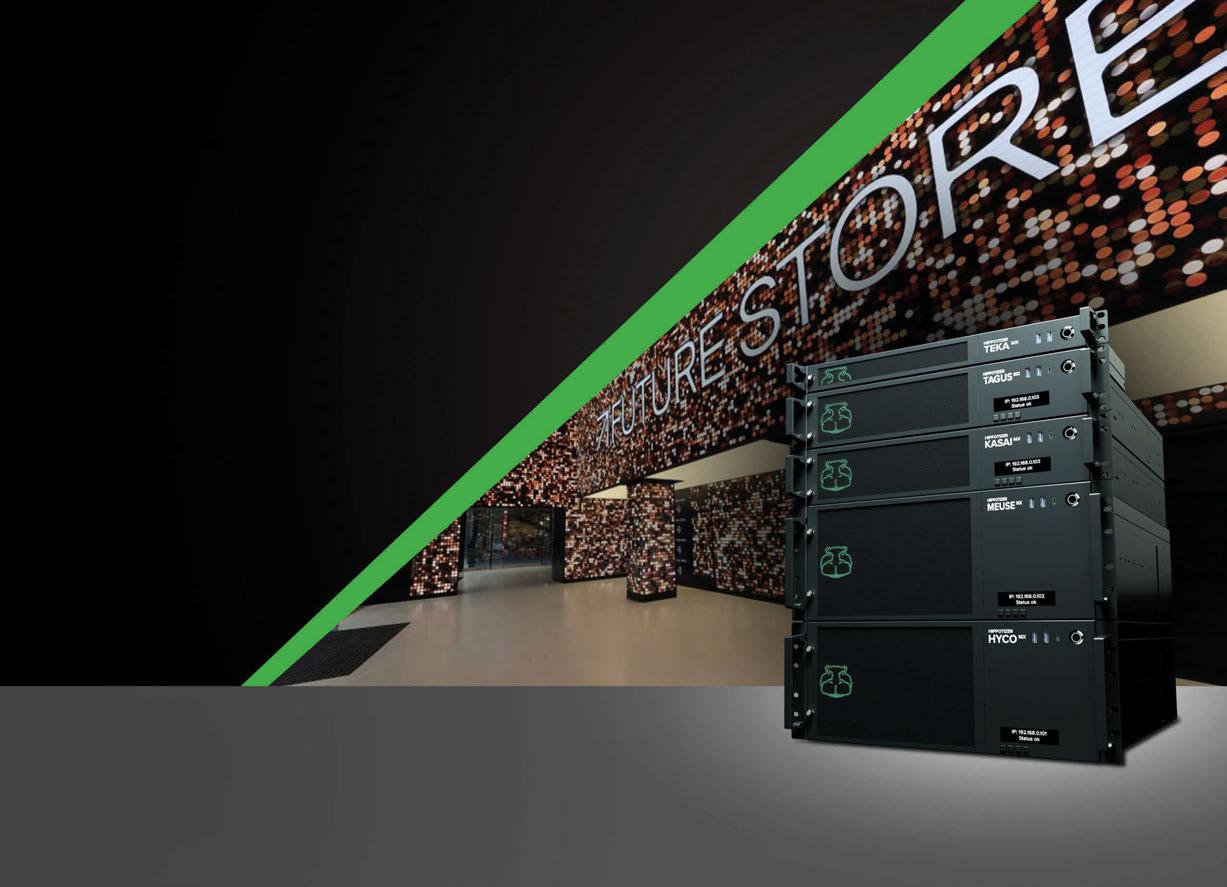
The Future Stores brand activation space on Oxford Street is an immersive environment with 400 sq m of state-of-the-art programmable LEDs, powered by Hippotizer Media Servers. Designed as a blank canvas for innovation, Future Stores provides an adaptable platform for brand activations, product launches, and experiential marketing. With rotating residencies every two to six weeks, retailers use the space to deliver campaigns that blur the line between digital storytelling and physical shopping.
“Mapping 153 million pixels onto irregular LED surfaces required an ultra-reliable, high-performance solution,” said Nick Phillips, VP of Solution Engineering at Mood Media, the global AV content and brandexperience company behind the project. “Hippotizer gave us the power and precision we needed – and Green Hippo’s team provided incredible on-site support to ensure flawless execution.”
To achieve this, seven Hippotizer Boreal+ MK2 Media Servers were deployed, managing six synchronised 8K feeds across 10 surfaces. The
venue’s 1.5mm MIP (Micro LED in Package) LED walls and COB (Chip on Board) panels enable breathtaking visuals with ultra-fine resolution. Hippotizer’s Genlock synchronisation ensured pixel-perfect alignment, even for fast-moving content.
Brands such as Intel and Snapchat have already used the venue to debut campaigns and leverage real-time visitor analytics – including footfall tracking, dwell time, heat mapping, and gender recognition, to measure impact and optimise experiences.
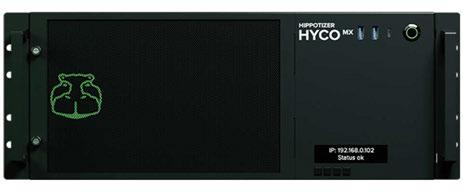
Looking ahead, Phillips plans to integrate an MA Lighting grandMA console for advanced live control, and is exploring Hippotizer’s new MX Series for enhanced performance, including 10-bit colour support and expanded storage.
“Future Stores sets a new benchmark for experiential retail,” Phillips added. “It’s where immersive storytelling meets intelligent data –powered by Green Hippo.” www.green-hippo.com | www.moodmedia.com
Rituals
COMPANY: First Impression
LOCATION: Various, Europe
Photo: Jules van Iperen
Over the past decade, Rituals and Dutch experience technology specialist First Impression have worked together to develop a connected ecosystem of digital experiences spanning flagship destinations, travel retail locations and high-street stores across Europe. Unlike many retail environments, where screens compete for attention and digital experiences are designed to increase pace, Rituals takes a different approach. The brand’s stores are built around a philosophy of slowing down, encouraging visitors to pause, explore and engage with products in a more mindful way.
The partnership has evolved from digital signage deployment into a broader exploration of how audiovisual technology can support wellbeing, storytelling and customer engagement, without disrupting the atmosphere that defines the brand.
Across hundreds of locations, First Impression manages a global digital signage network that connects stores, campaigns and customer experiences through a single infrastructure. From hardware integration and international rollouts to content distribution, remote monitoring, and lifecycle support, First Impression oversees the technology behind Rituals’ visual instore communication strategy. The result is a network capable of supporting everything from daily product messaging to flagship experiences, ensuring a consistent brand presentation regardless of location.
For the House of Rituals flagship in Amsterdam, First Impression integrated audiovisual technology across multiple floors, combining digital storytelling, sensory experiences and immersive wellness
concepts within one connected environment. The challenge was never to make technology visible. Instead, it was to ensure every technical element contributed to the atmosphere of the space.
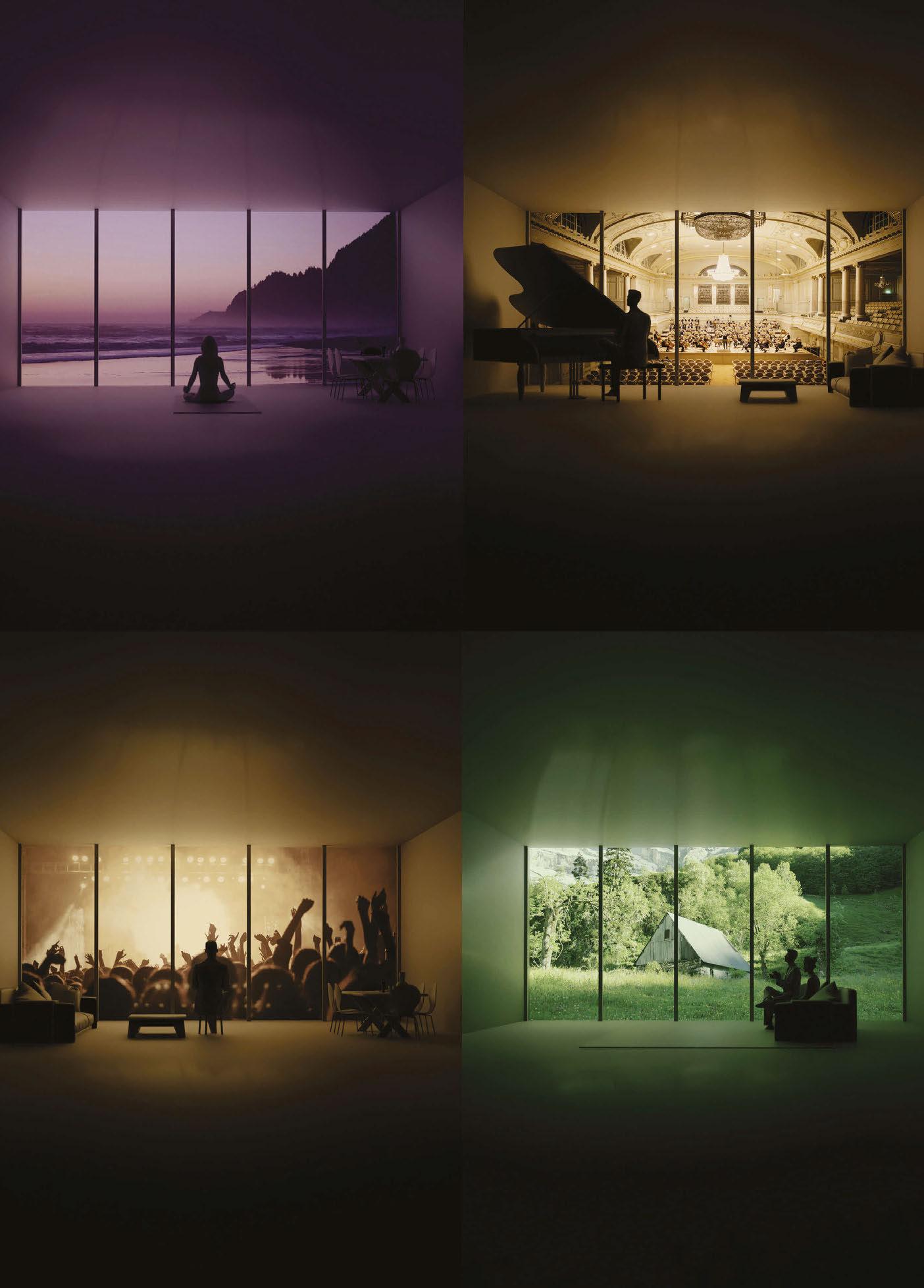
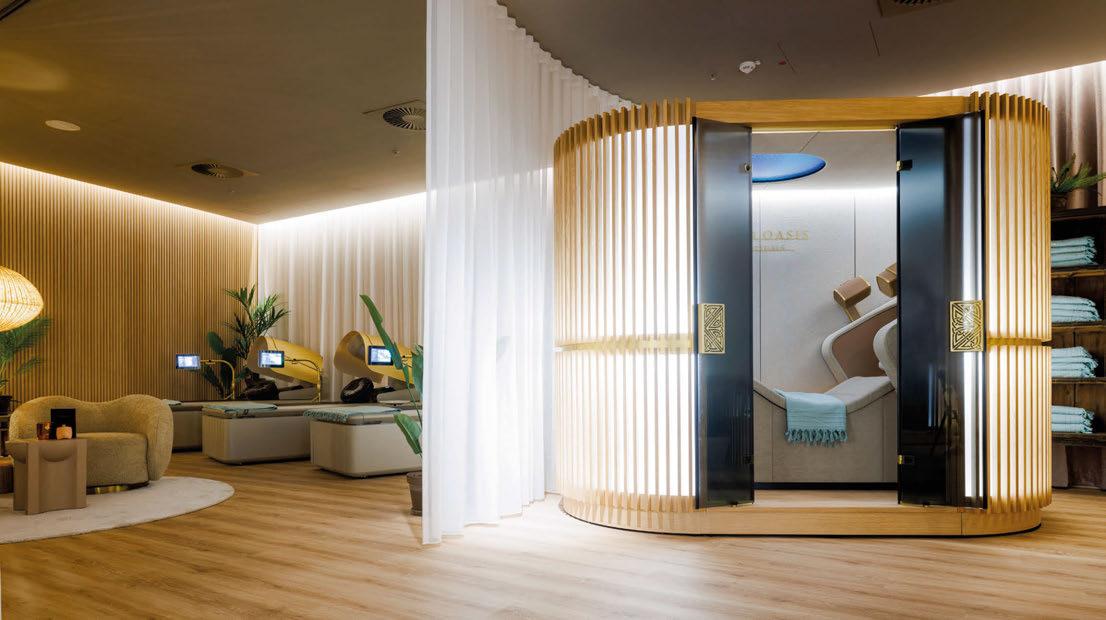
This philosophy reached a new level with the introduction of Mind Oasis, Rituals’ immersive wellness concept. Developed as a guided experience designed to help visitors disconnect from daily distractions, Mind Oasis combines spatial audio, lighting, visual content and environmental control to create moments of calm within busy urban environments. Originally introduced as part of the House of Rituals concept, the experience has since expanded into dedicated locations across Europe, demonstrating how experiential technology can support entirely new retail formats.
Innovation within the partnership continues to explore new ways of bringing products to life. One recent example is the Perfume Genie Carousel, developed for the House of Rituals flagship store. Combining motion control, mechanical engineering and advanced forcedperspective content, the installation transforms a product display into a kinetic visual experience. Taken individually, each project represents a different application of audiovisual technology. Together, they form something larger. From digital signage infrastructure and immersive wellness environments to kinetic storytelling installations, each solution contributes to a retail ecosystem where technology operates quietly in the background, helping create meaningful moments for millions of visitors every year.
www.firstimpression.com
WIRED. RELIABLE. DESIGNED FOR LIVE EVENTS.
The Broadweigh ecosystem — now wired.
BD-S325
Compact
BD-S475
Versatile
3250kg WLL, ideal for smaller chain hoists and lighter weight in tight spaces.
4750kg WLL, the industry workhorse for a wide range of live event applications.
From touring productions to permanent installations, Broadweigh Digital delivers real-time load monitoring where a wired solution is preferred.
Using a simple daisy-chained architecture, load cells connect to a central hub via a robust digital bus, enabling fast setup with auto-addressing and minimal configuration.
Built on proven Broadweigh technology, it offers a scalable, accurate solution as part of the wider Broadweigh ecosystem.
BD-S475-TL Twist Link
Optimised for permanent installations and fast rigging integration of touring productions.
Mégarex
COMPANY: INFiLED
LOCATION: Haguenau, France
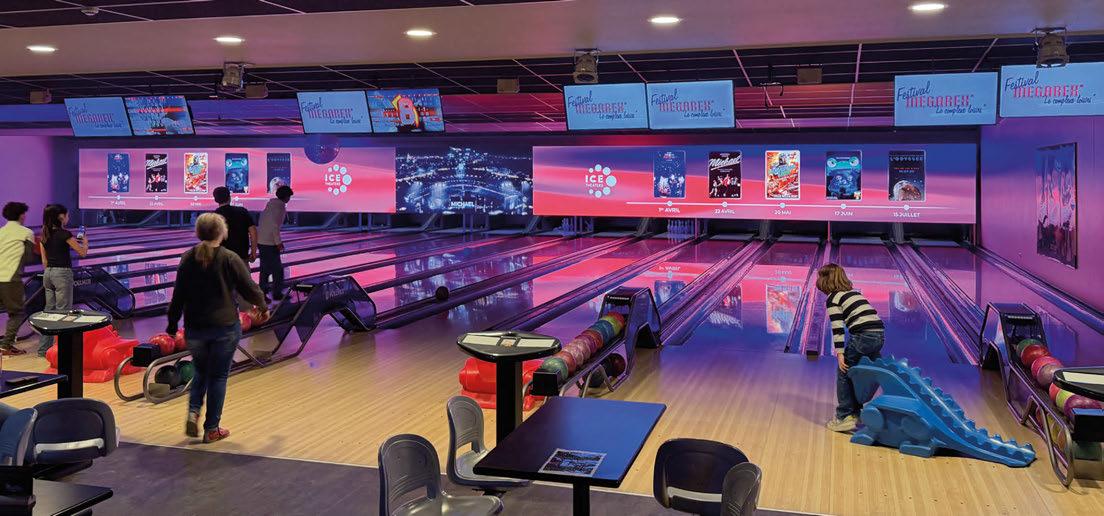
In Haguenau, north of Strasbourg in France’s Alsace region, the Mégarex leisure complex has long been a popular destination for family entertainment. The venue combines a cinema, billiards tables, bar, arcade games and a 16-lane bowling alley under one roof, drawing visitors from across the region.
Seeking to refresh the bowling experience, Mégarex set out to create a more dynamic and visually striking environment. To achieve this, the venue installed a 28m wide INFiLED MV Series LED display spanning the entire length of the bowling area.
To deliver the project, Mégarex partnered with Lyon-based cinema equipment integrator ADDE, a family-run company known in France for its expertise in cinema and entertainment technology installations.
Led by president Marion Rosset, who has been with the company for more than two decades, ADDE brought extensive structural and integration experience to the project. The company also designed and manufactured the custom support structure for the LED wall in-house, drawing on one of its core capabilities, an in-house fabrication workshop that produces bespoke mounting and integration solutions.
“The client wanted to achieve several goals with the renovations,” said ADDE sales director Eric Le Cadre. “Firstly, they wanted
to enhance the excitement, pace and memorability of the customer experience. The client also wanted to ensure that they had a flexible space where the atmosphere could switch depending on the time of day or type of event. And since they wanted this space to be a long-term marketing and branding tool, they needed the bowling alley to look visually striking every day for at least the next decade.”
Installing a 28m LED display in a public entertainment venue presented both technical and logistical challenges. Structural planning was essential, particularly in an environment where vibration and potential impact are constant considerations. At the same time, the installation timeline had to remain short enough to minimise disruption to customers.
“To make the installation quick and foolproof, we ensured everything was planned and coordinated precisely,” Le Cadre explained. “We needed to keep downtime to a minimum and ensure the LED panels were ready for use as soon as possible. And obviously, we didn’t want to compromise safety.”
Working alongside the local INFiLED team and the Mégarex staff, ADDE completed the installation in three days.
The display uses INFiLED’s MV Series LED panels, which are engineered for reliability
across demanding environments. The panels feature a durable aluminium frame that offers greater structural stability than traditional magnesium designs, helping the system withstand the vibrations typical of high-traffic leisure spaces.
High brightness, high refresh rates and strong contrast ensure clear visuals regardless of lighting conditions within the bowling area.
Combined with a high pixel density delivering nearly 8K resolution across the 28m canvas, the display provides crisp graphics and text visible from the far end of each lane.
For bowlers looking down the full 25m length of each lane, the result is detailed imagery that remains sharp, even at a distance.
“Installing a massive screen safely like this in a busy public space required a lot of teamwork between ADDE and the client,”
Rosset concluded. “We’re really proud of how this project came together in the end.”
Since the installation was completed, the LED wall has become a defining visual feature of the bowling area, and allows the venue to adjust visuals throughout the day, from family-friendly graphics to more energetic content for evening events and promotions. For visitors, the result is a bowling experience surrounded by dynamic digital scenery that transforms the atmosphere of the space. www.infiled.com | www.adde.fr
COMPACT STAGE
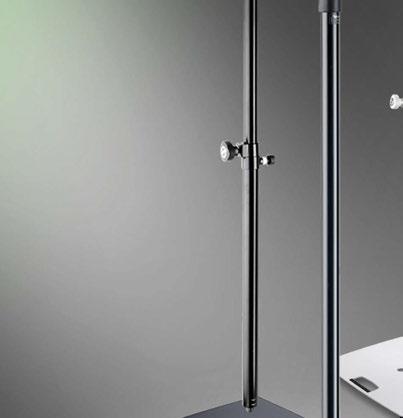
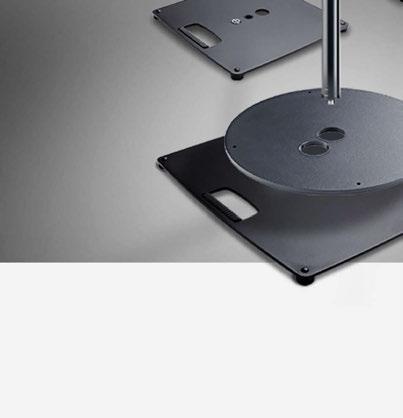
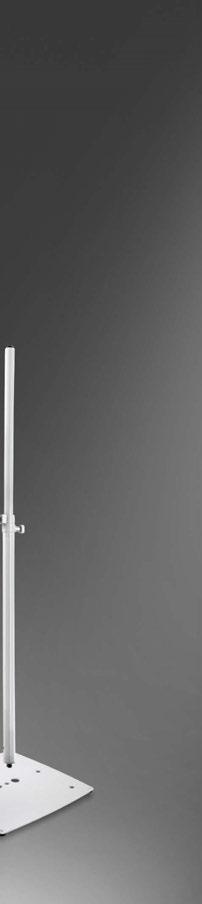
Create your ideal lighting or speaker stand with durable base plates in various sizes and matching extension rods – or choose a complete stand from the K&M Compact Stage series. With smart design, exceptional stability, and optional weight plates, this system offers maximum flexibility for stage, rehearsal room, or studio. Convenient carrying bags ensure safe and easy transport. Discover space-saving stands tailored to your needs.
Csepel Island Handball Court
COMPANY: Optimal Audio
LOCATION: Szigetszentmiklós, Hungary
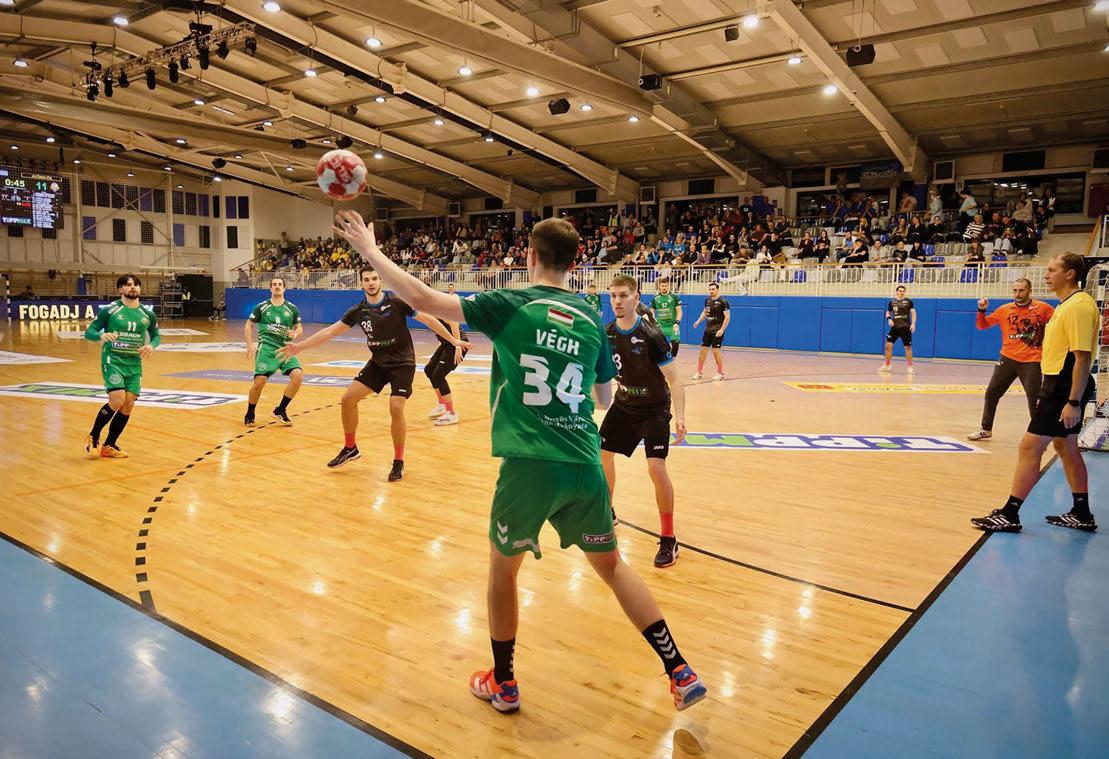
Optimal Audio hit the target at Szigetszentmiklós’ local handball court, with a multi-zone installation that was timed to perfection. The longawaited audio refresh – supplied by Hungarian distribution partner, BG Event Ltd, and installed by Zoltán Csukay, lead technical specialist at the local cultural centre, improved sound quality and simple day-to-day control for the venue, which is operated largely by a non-technical staff. Simple and practical to use, the Optimal Audio ecosystem supports both match day action and wider community use. From the outset, the arena was clear about its requirements, with better audio quality topping the list, followed closely by ease of operation for staff.
Around the playfield, a total of four Optimal Audio Cuboid 10 fullrange loudspeakers were mounted in portrait mode to ensure clear announcements and even coverage across the court.
The main audience zone also featured Cuboid 10 enclosures supported by two Optimal Audio Sub10 subwoofers for the delivery of impactful, full-range sound for spectators. Supplying focussed coverage along
the side seating area, Optimal Audio’s four-inch, two-way UP series of loudspeakers were accessorised as pendant enclosures to create a modern look with the provision of high-quality audio.
System control for the four zones is provided by Optimal Audio’s Zone 4, installed conveniently in the technical room, whilst a ZonePad 4 wall controller allows full yet easily navigable system control.
Loudspeaker selection was guided by practical listening tests set up by Audio-Technica, comparing Cuboid 8, 10, and 12 models alongside subwoofer options, before settling on the final configuration. The result delivers the required impact and clarity without unnecessary complexity. With a tight installation window and multiple maintenance activities taking place simultaneously, the speed and straightforward deployment of the Optimal Audio system proved critical. The result is a handball arena now equipped with a system that sounds better, works smarter, and empowers every user.
www.optimal-audio.co.uk
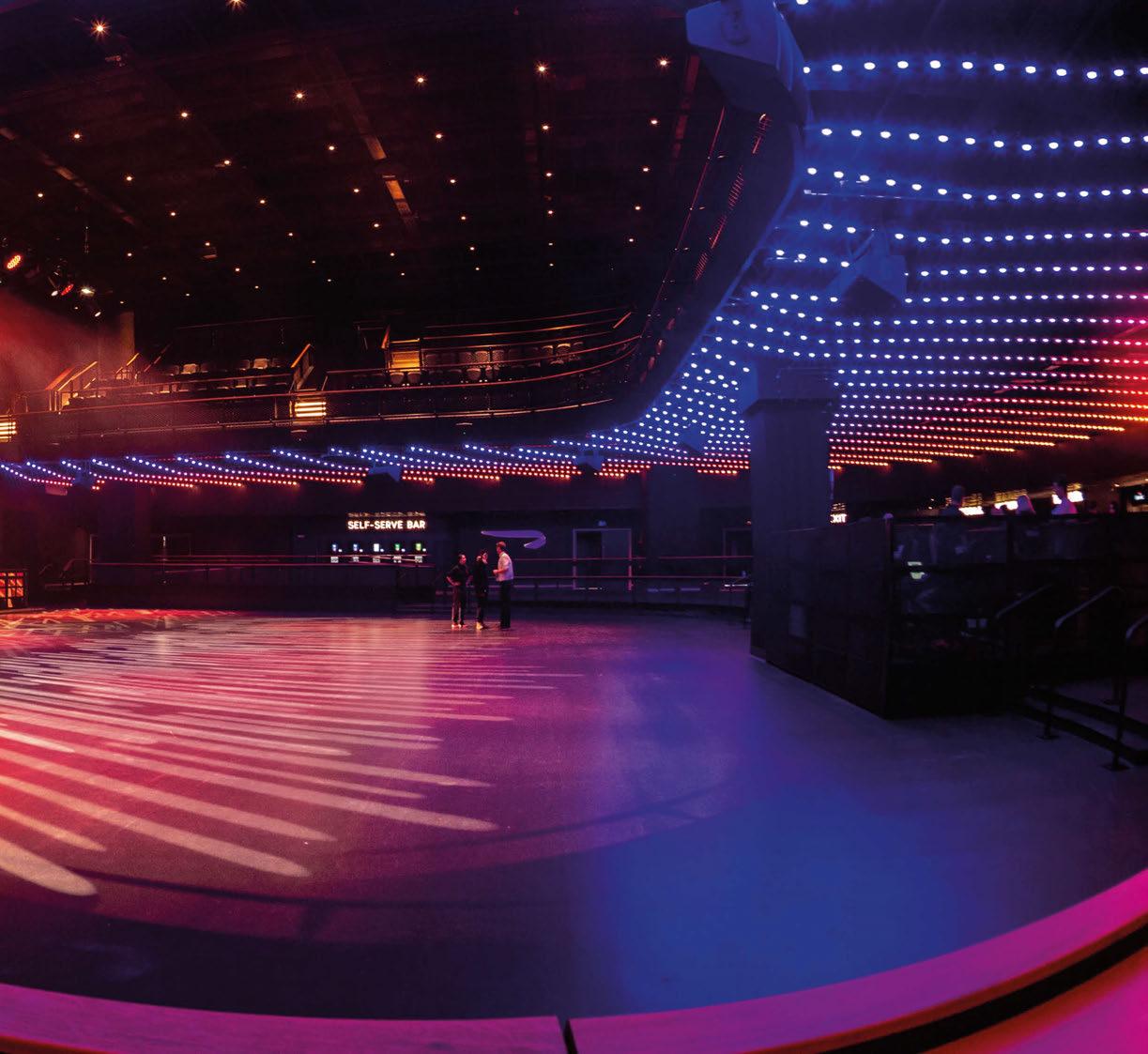
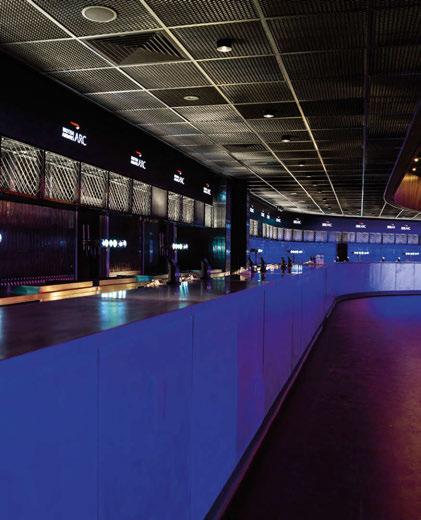
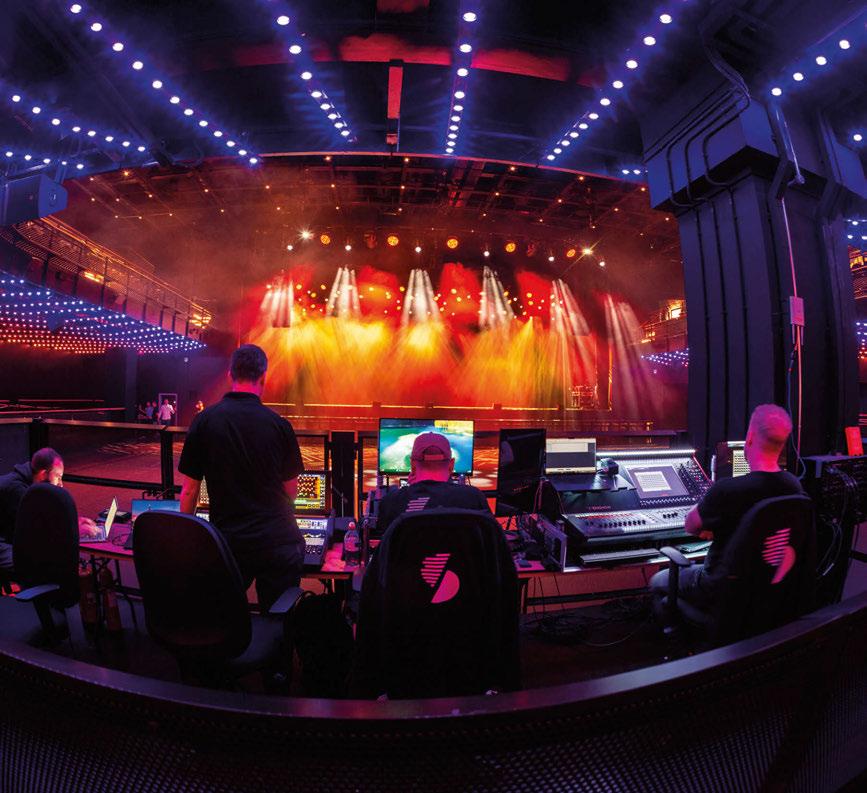
British Airways ARC, London.
IN BRIEF
Wild West over IP at Pullman City
On the surface, Pullman City adventure park in Germany evokes memories of a simpler, bygone era. But if you look a little closer, you’ll find that this Wild West theme park has a very modern AV backbone.
Originally opened in 1997, the popular 200,000 sq m theme park burned down in 2024. As the park was rebuilt, the opportunity to completely reimagine the AV infrastructure became apparent. “We started from scratch,” recalled Tom Söhl, Co-Partner at systems integrator Graffiti-Club. “Not even a metre of microphone cable remained from the previous sound system.”
The first stage was to move the park to an IP-based audio system that would give operators the functionality and control they needed. “It was clear to us from the start that we would rely on products from Electro-Voice and Dynacord for the project,” said Söhl. “They are robust, powerful and offer an incredible number of options.”
The brains of the new solution are based on equipment from Dynacord. The Dante networked system features five MXE5-64 Matrix Mix Engines which process all commands and audio data and ensure that routing, signal distribution and volume adjustment are available throughout every zone. Power is courtesy of IPX, IX, V and C series amplifiers. SONICUE Sound System Software and TPC-1 touch panel controllers allow easy control of the audio, projectors, curtains and screens.
The different areas of the park are served by Electro-Voice EVA, EVC and EVID loudspeakers, which have been tuned to meet the needs of each space from Main Street to the Music Hall. “We are thrilled with the system,” concluded Söhl. “It offers crystal-clear, powerful sound and was easy to install. The acoustic coverage is seamless and homogeneous, and the speakers are so robust that even the adverse weather in the Bavarian Forest cannot harm them.” www.electrovoice.com | www.dynacord.com
NIGHT & DAY
MANCHESTER / UK
EMEA
Night & Day in Manchester’s Northern Quarter has been a hub for musicians and creatives since the early 1990s. Originally a chip shop, maverick Dutch entrepreneur Jan Oldenburg purchased the location in 1991 and gradually began merging it into a music venue following his addition of a piano, and later a stage.
Long before this area of Manchester became the bohemian hotbed it is today, Oldenburg had transformed the room into a fully-fledged music venue, which became a crucial meeting point and played a key part in the growth of Manchester’s vibrant cultural scene.
Oldenburg’s daughter, Jennifer, grew up with the venue, and worked there with her father since she was a youngster – and she now owns and runs Night & Day alongside her husband, Ben Smithson, following the sad passing of Jan in 2018.
“Night & Day is a family business and we’re fiercely independent. It’s an honour to be involved in running it,” said Ben Smithson, who heads the venue’s operations.
With a capacity of 250, Night & Day is a place for local promoters and bands to cut their teeth, a venue for up-and-coming artists to play during national or regional tours, and a room for late-night clubbing and afterparties. The list of acts who have performed at Night & Day before advancing to stardom include Ed Sheeran, the Arctic Monkeys, Jessie J, Paulo Nutini, Elbow, Kasabian, the Courteeners, My Chemical Romance, Kneecap, and Manic Street Preachers.
“There is so much history in this venue, which we’re really proud of, but for us, operationally, it’s all about what’s on tonight, and what’s coming up,” said Smithson.
“That’s the most important thing, and the exciting thing for us is that of the artists that come through here, a small percentage will go on to bigger stages – but we don’t know who.”
With the venue operating shows on between three and five nights per week, Smithson was aware that its existing sound system needed some attention, and the time had come to reinvest in the room with a major upgrade.
“Our first step was to reach out to sound engineers who had experience of working here previously – some more than two decades ago – who are now working on major tours and festivals, specifying equipment there,” said Smithson. “They gladly came back and gave us their thoughts and recommendations based on what was quite a high budget for a grassroots venue. That feedback gave us a direction, and led us to CODA Audio.”
Celebrated grassroots venue focusses on the next wave of talent with new CODA Audio sound system, designed and installed by Adlib.
Left: The Courteeners perform at Night & Day earlier this year as part of their 20th anniversary celebrations.
Olivia Cox for Night & Day.
Having then looked further into the history of CODA Audio, Smithson was suitably impressed. “The more we learned about them, the more we liked, including that their equipment is manufactured in Germany with a holistic design philosophy, and they have a lot of patented technologies,” said Smithson. “When you add in the backstory of its founder being a former musician – it all felt right. We had our heart set on CODA Audio, and so we reached out to Adlib to design and install a new system.”
With a brief in place, Adlib set about designing the new audio setup with specific performance and aesthetic parameters in mind, as Roger Kirby, Project Manager, describes: “The old system hung below the proscenium, and was not only visually impairing but also physically, with punters often banging their heads on them,” said Kirby, who has been working for Adlib since 1992. “We were mindful of not having hanging loudspeakers, so we designed a distributed system based on four CODA Audio HOPS10i-Pro deployed in two phases.
“We initially looked at CODA’s APS loudspeakers, which are slightly larger, but opted for the HOPS technology, which has amazing power handling for its size, and this allowed for the boxes to be installed above the proscenium, ahead of the stage, allowing for clearer sightlines during performances.”
Further down the venue, just behind the mix position, are two CODA Audio HOPS8i as rear delays with two more set up as side stage fills, while three CODA Audio U4 dual 18-inch subwoofers line the front of the stage.
The placement of the subs was the cause of much discourse between Smithson and Adlib, with an agreement reached not to place the subs under the stage for the benefit of the performers. In addition to this, Kirby explained: “The subs are set up on isolators, which has a really positive affect on the sound response as it prevents any unwanted harmonics. By removing sound bleeding into the fabric of the building, less energy is wasted, and the flown loudspeakers are also installed on isolators from the ceiling structure, suspended on a shock mount.”
Smithson is particularly happy with this deployment. “This enables the audience to get a full head-to-toe image of the performers, and adds to the intimacy,” he said. “We really needed new audio foundations, and that’s what Adlib have provided. There was old cabling all over the place, and Adlib did a clean sheet install, removing and replacing all of the old cabling.”
With limited room on stage, two stage boxes were added to make it
Photo:
easier for artists, and a new power supply and new distribution boards were also added. The rack room remained in its legacy place, with the amps and processing set up perpendicular to the door to allow access to the front and rear of the equipment.
“This was all done against the backdrop of a busy working venue, with shows happening regularly,” said Kirby. “We squeezed it in across two phases; the first one was the cabling, which took two weeks, then the loudspeaker deployment and commissioning took just over a week.”
The project wasn’t without its technical challenges, as Smithson explained: “Due to our proximity to an electrical substation, periodically we get increased voltages dependant on other localised use in this area. In the installation phase, this was causing amplifiers to go into protection mode, Adlib’s engineers deployed an electrical monitoring unit, to identify the over-voltage.”
Kirby added: “Initially, we didn’t know the cause, so we utilised a voltage logger to capture the data and saw that the voltage was surging in the early hours of the morning.
“We fed this data back to the technicians at CODA Audio, they were very responsive and quickly diagnosed the issue by reproducing the same conditions at their factory, and immediately sent over new hardware.”
The team ultimately opted for the upgraded range of CODA Audio LINUS 6.4i which had been developed to be able to handle the significant voltage fluctuations.
“I was overjoyed to get to the bottom of it as quickly as we did, because a venue like this can’t afford to cancel shows due to power issues,” said Kirby.
Processing is handled by a single NST Audio DM88, which allows venue staff to input a code on a control panel and adjust the loudspeakers, in pairs, if required.
The venue’s first upgrade came prior to the new loudspeaker deployment, in the form of a new audio console, which replaced the almost 15-year-old incumbent.
“The desk upgrade was also the result of feedback from our experienced sound engineer contacts,” said Smithson. “For this type of venue, the Allen & Heath SQ7 does everything we need. We had considered other Allen & Heath models, but the SQ7 fit the mixing space nicely, and also fit the budget.”
The sound system installation took place in the second half of 2025 and feedback has been unanimously positive from punters and engineers alike.
“In April we welcomed local favourites the Courteeners back to perform as part of their 20th anniversary celebrations and to highlight their grassroots beginnings,” said Smithson.
Top: The sell-out crowd at the Courteeners in April 2026. Photo: Olivia Cox for Night & Day.
Above left: Adlib’s Roger Kirby with Ben Smithson outside the venue.
TECHNICAL INFORMATION
AUDIO:
4 x CODA Audio HOPS10i-Pro
4 x CODA Audio HOPS8i
3 x CODA Audio U4
4 x CODA Audio CUE TWO
8 x CODA Audio Linus 6.4i
1 x NST Audio DM88
1x Allen & Heath SQ-7
1 x Allen & Heath DX168 Digital Stagebox
www.adlib.co.uk www.nightnday.org
“Having played this venue on numerous occasions in 2006 and 2007 on their journey to arena-level status, their sound engineer knew the room intimately, and was very happy to mix the band on the SQ7, and with the sonic capabilities of the CODA Audio system.
“To be able to accommodate that level of artist in here without having to bring any extra equipment in is an amazing feeling,” Smithson added. “They did an incredible 90-minute set, and we’re very fortunate to be able to welcome them back.”
Despite the challenging nature of operating a grassroots venue, Smithson was pleased to note the financial support the venue has received – notably from a generous grant from Elbow and Co-op Live for Northern Quarter grassroots live music venues which went towards the new PA, and from the Music Venue Trust, which has recently introduced a £1 levy on ticket sales to be reinvested in grassroots venues. “It’s a fantastic initiative – and much needed for small independent venues around the country,” he commented. “It is in effect on the Courteeners arena tour later this year, which is a nice full-circle moment for us.”
For Kirby, the project was hugely fulfilling. “I’m fully aware of the legacy of this venue and even mixed a few gigs here back in the mid 90s,” he said. “It’s a well-loved room, historic in Manchester, and means so much to the city, and everyone at Adlib is delighted to have delivered this level of upgrade to it,” he added, reserving special praise for Adlib’s Systems Technical Manager George Puttock, for their sound design work and commissioning on the project. Smithson, too, is delighted with the results. “Because of the intimacy of this venue, the experience of the audience has been massively elevated by the new system,” he concluded. “Adlib came in and delivered in buckets. We were super impressed with them at every stage, including the work prior to installation, modelling the venue to ensure full coverage in the areas we wanted. The project has exceeded our expectations.”
BRITISH AIRWAYS ARC
LONDON / UK EMEA
London’s first purpose-built performance venue of its size for 10 years opens with state-of-the-art production capabilities ready to host artists of any genre and stature.
Forming part of the £1.3bn regeneration of West London’s Olympia entertainment district, British Airways ARC opened in June featuring integrated production capabilities courtesy of a turnkey AV solution delivered by Solotech. Owned and operated by AEG Presents, The 3,800-capacity venue is located above the existing West Exhibition Hall at Olympia.
Within the complex, Olympia’s Grand Hall had previously hosted acts such as Jimi Hendrix, Rod Stewart, and The Cure, and British Airways ARC aims to carry that heritage forward while meeting the high expectations of a modern audience.
“It’s a big commitment to open a new venue, especially in London, but it’s a positive step, and so far it has been a huge success,” said Lucy Noble, Senior Vice President of UK Venues, AEG Presents, after the opening week which saw performances from Self Esteem and McFly.
“We sensed that there is a gap in the market for mid-sized venues. There isn’t much in between arenas and the smaller venues of 2,000 capacity and less, and this venue offers a stepping stone for those artists on an upward trajectory.
“At 3,800 it is also large enough that we can look at booking the arena-level artists who are interested in performing more intimate shows, or holding a residency. So hopefully we can
get the best of both worlds.” In order to equip the venue with the technical capabilities of welcoming a diverse selection of acts to its stage, Solotech was enlisted with the design, install and commission of its audio, lighting and production infrastructure, in addition to staging and rigging systems, and PAVA system.
Starting from the ground up, Solotech put together an early technical plan for the venue at the same time as the building’s design, making it adaptable to any minor architectural or technical changes that were required as it neared completion.
Ben Green, Senior Project Manager, Solotech, explained: “Having that access to the construction process was a huge benefit and meant that we could design and place infrastructure exactly where it was needed, which meant that when the equipment was installed it would be plug-and-play ready. All the preparation was done in the Solotech warehouse, and after installation the production team connected the equipment and the venue was show-ready. The biggest challenge was the timeframe, because AV systems are always the last thing integrated into a new venue.”
The new venue boasts an L-Acoustics L2 sound system with DiGiCo Quantum 225s at FOH and mix position, and a lighting rig with more than 60 Robe fixtures controlled by an MA Lighting grandMA3 Lite. The decision behind choosing L2 was driven by its output capability,
pattern control, versatility across event types, and familiarity in the market, as Oran Burns, Business Development Manager, Solotech, outlined: “For high-level touring artists and their large productions, most rental houses offer a few reliable, high-quality audio packages, and L-Acoustics is one of those,” said Burns. “Solotech is an L-Acoustics Certified Provider, and historically we have equipped AEG Presents venues with L-Acoustics, with very few exceptions.
“For this venue, it was a case of assessing what is the best fit for the project and the budget – and for it to be rider friendly, because the last thing we wanted was touring productions to look at the specs and decide to bring their own PA in.”
The flown PA is a L-R L2 system with four cardioid KS21 subwoofers flown behind, and five KS28 subwoofers placed under the stage as a mono low frequency feed. A pair of A10 loudspeakers are utilised as centre down fill, while additional A10s are deployed as outfill with A15 loudspeakers providing extra coverage to areas under the balcony.
“Fixing the A15s under the balcony required a lot of coordination due to the positioning of strips of atmospheric LED house lighting,” said Green. “And the building itself isn’t symmetrical, which also made things a little harder. “The centre of the stage isn’t in the centre of the room, and trying to plan the layout so it looks aesthetically pleasing was a challenge – but most important was placing the loudspeakers
in the correct positions, because this is a music venue and the sound quality is paramount. Factoring that in with the architectural elements meant a lot of coordination with the other site contractors.”
The hanging elements of the PA was set up and removed three times for the purpose of testing the venue’s acoustics prior to final installation, with Solotech utilising its expertise in both live production and systems integration to effectively and smoothly undertake the deployment and removal process at various stages of the building’s completion.
“Acoustically this project proved tricky at times because of the proximity of residents to the building,” continued Burns. “Solotech undertook multiple noise testing sessions which gave us more understanding about the levels inside and outside the venue, but it was difficult to predict in the early tests because the environment of the building was very different back then to the completed room.”
AEG Presents Head of Production Alice James noted: “Every technical decision we made was about creating a full-service venue that artists, crews and promoters genuinely enjoy working in.
“I first heard the L-Acoustics L2 system when Solotech demoed it at Indigo at The O2 for us, and I immediately wanted it for British Airways ARC. Its lightweight design is a huge advantage for our rigging capacity, while still delivering the performance we wanted for artists and audiences.”
Built from the ground up
When it came to the production lighting sytem, James acknowledged that the opportunity to draw designs from scatch proved important.
“Because we built British Airways ARC from the ground up, we could design it around the crew who use it,” she continued. “From day one, I wanted a full LED rig, and Robe was the obvious choice and the Robospots were a key. It allows us to offer followspot capability without losing seats, giving promoters maximum ticket inventory while still delivering a premium production.”
Trent O’Connor, Solotech’s Lighting Designer and Business Development Manager, designed a versatile lighting system capable of supporting a wide range of productions.
“To achieve this, I specified Milos M290HD Quatro truss throughout the lighting system, with M290 Duo truss used for all drape runs,” he began. “On every lighting truss, aluminium tubes were mounted beneath both bottom chords using Doughty swivel couplers. This allows us to position lighting fixtures wherever required without having to work around truss webbing or joints.
“All trusses were suspended using GAK Flex slings to lower the centre of gravity, reducing truss movement when, for example, 20 moving lights are running a ballyhoo chase simultaneously.
“The entire system is supported by 22 EXE Rise D8+ direct-control chain hoists, each featuring double brakes and integrated limit
Right: Solotech engineers commissioning the production systems.
switches for enhanced safety and reliability. AEG also requested that every hoist be monitored using load cells.
“By incorporating the wireless EXE Flexa real-time monitoring system, the venue is able to monitor the load on every suspension point, making it easier for visiting productions to safely assess capacity when adding or repositioning equipment within the rig.
“To further future-proof the system, we developed 15 custom-designed truss breakout boxes. Each box provides six PowerCON TRUE1 outputs, along with DMX and Ethernet connectivity. Three of the 15 breakout boxes also include two additional Ethernet ports to support RoboSpot systems.
Evolving production requirements
“Installing these breakout boxes across the lighting trusses makes the infrastructure significantly more flexible, allowing the system to be easily reconfigured or expanded as production requirements evolve.
“All lighting power from the trusses is fed back to ETC wall-mounted Foundry units, with every lighting fixture supplied by its own dedicated power circuit. Additional spare circuits have also been provided to accommodate visiting productions.
“The PowerCON TRUE1 outlets located on the stage and within the venue lighting facility panels are connected to LSC APS rack-mounted power distribution units.
Ample power is also available on stage and distributed around the balcony rail, giving visiting productions the flexibility to connect floor packages, audience lighting fixtures and other temporary equipment as required.”
For the venue’s drape package, J&C Joel supplied Solotech with a selection of solutions which all utilised its Wool Serge 565 fabric and made to the unique specifications to ensure sure each drape was fit to purpose and provided the client exactly what they needed.
“The drape package was designed to provide a complete theatrical masking solution while remaining flexible enough to accommodate different stage configurations,” O’Connor said.
“It includes a proscenium arch, truss borders, legs, a full-width upstage drape, a stair hide and an artist entrance. The proscenium arch is formed using a border and two movable legs, allowing the stage opening to be adjusted to suit different productions.
“Access to the grid is by two routes: a main staircase in the upstage right corner and a ladder on upstage left, and both points required masking. The stage-left ladder hide also doubes as a discreet artist entrance, ensuring performers can access the stage without being visible to the audience.”
More than 60 Robe fixtures were selected for the final lighting rig, with 28 Spiider wash beam and 31 ESPRITE moving heads forming the main part of the system. These are complemented by five Tarrantula, two
Above: Self Esteem performs on the opening night of British Airways ARC.
Photo: Dan Reid.
FORTE FS, six FORTE and 12 WTF! fixtures, with control handled by a grandMA3 Lite. The selection of consoles caused some internal discussion, and Burns believes the choices of DiGiCo and MA Lighting will more than meet the needs of incoming engineers.
“Selecting lighting and audio consoles can be tough because you can’t pick every touring engineer’s favourite system, and so we picked two of the most frequently used across the touring and install market,” he said.
Solotech Applications Engineer Jake Brown handled the schematic design of the audio system, the AV network and assisted listening system. “The first two shows saw the support acts use the installed house equipment and consoles, while the headliners brought in their own lighting, video and audio consoles,” he noted. “That’s a testament to the design of the venue’s infrastructure design and its ability to receive visiting production.”
A mic package consisting of Sennheiser, Shure, Audix and Audio-Technica instrument mics and sE Electronics V7 vocal mics was supplied, in addition to a Green-Go Stride communications package and Ampetronic’s assisted listening solution, Auri.
“The comms package was a late addition to the project,” said Green. “It came at the request of the incoming Production Manager, and was a challenge to integrate because the infrastructure was already complete, but it was only a minor hurdle to overcome.
“The mic package was put together based on our previous experiences of equipping AEG Presents venues, with the most recent being Watford Colosseum, and getting feedback from touring productions, assessing what works, and making tweaks along the way.
“It’s fantastic to be involved in such a prestigious new project for the UK’s music scene, and the feedback we have received so far, particularly on the venue’s sound quality, has been very positive,” concluded Green.
James added: “We wanted to prioritise guest experience beyond the auditorium. So, we made sure to incorporate audio relay into the BA Wing, which means VIP guests stay connected to the performance, creating a premium experience.
“Our goal was simple: to create a venue that artists want to return to, crews enjoy working in and audiences remember. If we achieve that, we’ve done our job.”
With artists such as Van Morrison, the Black Keys, Puscifer and The Damned set to perform in the coming months, AEG Presents’ Lucy Noble is confident that British Airways ARC will make its mark on the London events scene. “As soon as people come for a gig, they will want to return again and again, because it’s simply amazing,” concluded Noble. “The audiences of today expect more because standards keep rising, and this has taken things to the next level as a venue, and for Olympia as a destination in London.”
TECHNICAL INFORMATION
AUDIO:
Main System
4 x L-Acoustics L2
2 x L-Acoustics L2D
8 x L-Acoustics KS21(Cardioid)
Out Fill
4 x L-Acoustics A10 Focus
2 x L-Acoustics A10 Wide
Centre Fill
1 x L-Acoustics A10 Focus
1 x L-Acoustics A10 Wide
Front Fill
5 x L-Acoustics X8
Ground Subwoofers
5 x L-Acoustics KS28
VIP (BA WING)
2 x L-Acoustics X12
MONITOR / STAGE PACKAGE
2 x L-Acoustics X8
13 x L-Acoustics X12
4 x L-Acoustics A10 Focus
4 x L-Acoustics KS21
3 x L-Acoustics LA12X
DRIVE SYSTEM
9 x L-Acoustics LA7.16i
5 x L-Acoustics X12
2 x DiGiCo Quantum 225
2 x DiGiCo MQ-Rack
1 x DirectOUT MAVEN.A
1x DirectOUT DANTE.MILAN.SRC.IO
NETWORK
2 x Netgear M4250 GSM4248P
6 x Netgear M4250 GSM4230P
1 x Netgear M4250 GSM4212P
LIGHTING AND EFFECTS:
28 x Robe Spiider
31 x Robe ESPRITE
5 x Robe Tarrantula
2 x Robe FORTE FS
6 x Robe FORTE
12 x Robe WTF!
2 x Smoke Factory SM165
1 x MA Lighting grandMA3 Lite
2 x Robe RoboSpot Controllers
4 Luminex Luminode12
4 x ETC Foundry24
2 x LSC APS 12
MICS AND COMMS:
1 x Shure AD4Q Axient Reciever
4x Shure AD2/B58 Transmitter
7 x Green-Go WBPX DECT beltpack
7 x Tecpro DMH320 headset
2 x Green-Go Stride antenna
3 x sE Electronics V7 Black
2 x Shure BETA 52A
4 x Shure BETA 57A
3 x Shure BETA 58A
2 x Shure BETA 91A
2 x Shure KSM137/SL
7 x Shure SM57-LCE
2 x Shure SM81
3 x Shure SM58-LCE
2 x Audio-Technica AE5100
8 x Sennheiser E604
2 x Sennheiser E906
1 x Audix AX-D6
4 x BSS AR133CH
6 x Ampetronic AURI-TX2N
24 x Ampetronic AURI-RX1
www.solotech.com www.britishairwaysarc.co.uk
UPSTAIRS AT RONNIE’S
LONDON / UK EMEA
Ronnie Scott’s Jazz Club re-imagines its first-floor space with a new intimate venue to showcase the very best in jazz, soul, gospel, hip hop, classical, and spotlight rising stars and grassroots talent.
Ronnie Scott’s Jazz Club has been delighting audiences since its founders Ronnie Scott and Pete King first brought the New York-style jazz bar to London in 1959.
A fixture for jazz icons to perform at over many decades, the venue took the opportunity to elevate its sound system in August 2024, upgrading its d&b audiotechnik system and introducing a new subwoofer deployment courtesy of a newly raised stage.
Once completed, after an intense, month-long construction project to upgrade the PA and almost the entire fixtures and furnishings, its upstairs informal performance space was closed to be repurposed into its own outright venue – Upstairs at Ronnie’s.
Miles Ashton, the venue’s long-time Technical Director, takes up the story: “With Ronnie Scott’s Jazz Club, there had always been a small room upstairs, and since the 1970s that space had seen many incarnations, but it was generally a small space for a bar and small performances, but never considered a serious venue,” he said.
“Once we had completed the upgrades downstairs in 2024, work began to make Upstairs at Ronnie’s its own dedicated venue; this took between 16 and 18 months, with a huge overhaul of the structural and building infrastructure.”
With a capacity of 140, Upstairs at Ronnie’s opened in February 2026, and has since held performances every night. Like the main club downstairs, Upstairs at Ronnie’s features a d&b audiotechnik sound system, with Ashton explaining his fondness for the brand’s products.
“They’re bullet-proof,” said Ashton, an experienced audio engineer who has been at Ronnie Scott’s since 1996. “Our first d&b audiotechnik system downstairs was one of the first of theirs installed in a UK venue. I first became aware of d&b while working over in Germany, and the first install at Ronnie’s took place shortly after they had set up their UK presence.
“The PA we took out downstairs in 2024 had been in situ, and used almost continuously, for around 28 years. It still sounded great, which is a testament to how well-built d&b is – it was still rocking.
“We changed it because we changed the ceiling height downstairs, and those 28-year-old loudspeaker boxes that were hanging vertically couldn’t be put back in the same place because we didn’t have the head clearance. We had also raised the stage by 20cm to add new
Venue photos: Taran Wilkhu
Right: Four d&b audiotechnik 8S loudspeakers are installed opposite the bar area.
subwoofers, so we had no chance of putting those loudspeakers back in the position that they were in previously.”
When it came to designing a PA for Upstairs at Ronnie’s, Ashton had no second thoughts in specifying the same products that were installed downstairs.
“It was a case of repeating what we could, so we moved forward with a d&b system but with fewer loudspeakers than downstairs because we didn’t need that level of coverage,” he began. “We designed it in-house. It was a conscious decision to make something similar to downstairs, yet different.
“Upstairs at Ronnie’s maintains the same style of venue, but it’s a different shape and has different presentations with classical music and string quartets, more vocal-led performances, and salsa nights.
The difference is in the name. Downstairs is Ronnie Scott’s Jazz Club – that has a clear distinction, while Upstairs at Ronnie’s gives a more open meaning.”
Using ArrayCalc to design the system, Ashton sent his plan to Alex Lane from d&b audiotechnik UK for his input, and he came back with one suggestion.
“My design had a mono delay for the rear of the venue, but Alex suggested that stereo delays could be put back there, and that worked in helping to avoid a bass trap at the back of the room,” said Ashton.
The system comprises stereo main hangs of two Y10P and two 27S-SUB, a single E12 as out-fill, a single 44S as mono delay to cover the far corner of the room where the sound booth is, a stereo delay at the rear of two 44S, which repeats the layout of the main hang, and finally four 8S loudspeakers installed opposite the bar area.
“The entire system is driven by 25D and 5D amplifiers and all loudspeakers are on separate channels, which enables us to keep the audience area loud where necessary and turn it down in the area close to the bar,” continued Ashton. “The coverage is very clean and full.”
The installation was completed to Ashton’s specification by the venue’s
install company, Steve Myers, based out of Torquay in Devon.
“For Upstairs, we selected a Yamaha DM7 Compact console, and that’s been working really well for the space,” Ashton said. “This was a product that had been on the market for a number of years and we felt very comfortable with it, and the Yamaha Rio 3224 I/O rack has 24 outputs, which is more than enough for the monitor mixes and IEM.”
For stage monitoring, Ashton stayed consistent, adding four d&b M6 wedges to the six that are downstairs, allowing flexibility should a gig in either space require more.
During the pandemic, the venue invested in video infrastructure to live stream socially distanced performances, which drove the venue’s appetite for trying to make things look different.
This meant the purchase of a high number of lighting fixtures, and the appointment of a lighting engineer – something that had never happened before the pandemic.
“Looking back at pictures of past gigs at Ronnie’s, the lighting was relatively straightforward with traditional white spotlights, but that has changed and we now offer more from a lighting perspective than we ever had previously,” said Ashton. “We have an Avolites Tiger Touch downstairs and we selected an Avolites D3-110 for Upstairs. There was a need for quiet and unobtrusive lighting solutions, leading us to a selection of GLP fixtures.”
The Upstairs lighting rig consists of eight GLP impression X5 Compact moving heads, six GLP X5 Atom and three GLP X-Par 8Z, with three ETC ColorSource Linear 1 fixtures completing the system.
“For most nights, we’re not looking for an expansive ‘light show’ per se, as they are not appropriate for the majority of the performances,” said Ashton. “Instead, we want to tastefully light the performers and add atmosphere – and for that we’ve brought in 16 Astera Titan Tubes, which we can deploy in imaginative ways such as inside a piano or underneath a drum kit to add subtle colours.”
The venue’s Technical Manager, Charlie Dale, provided more
A FULLY REDESIGNED ACOUSTIC PLATFORM
Redesigned from the ground up, the EVF and EVH Series feature newly developed Electro-Voice transducers at their core. These transducers deliver smoother coverage and greater consistency across all models, along with increased full-range output and more low-frequency headroom.
THE BOX THINK INSIDE
JOIN THE NEXT GENERATION OF THE EVF & EVH SERIES
Trusted in thousands of venues across the globe, the front-loaded EVF Series and the horn-loaded EVH Series have become two of the most widely installed Electro-Voice point-source solutions for indoor and outdoor applications.
Now the next generation, featuring four models, sets a new benchmark in premium performance and pattern control at a lower system cost.
information about the GLP fixtures, noting: “Given the low trim height and the fact that some of the shows in the space are nearly acoustic in places, we needed fixtures that operated as quietly as possible, while being unobtrusive to the viewing experience but providing the highest quality light possible at potentially quite low intensity.
“The combination of small, quiet, great colour at low output, and movement capabilities is not an easy thing to find,” continued Dale.
“Keeping everything in GLP’s X5 range means that colour matching between fixtures is very easy. This allows us to create interesting looks across the wide variety of artists we have performing in the space.”
Operating nightly since opening in February, Ashton is pleased to replicate the legacy of the famed Ronnie Scott’s Jazz Club with Upstairs at Ronnie’s.
“Downstairs has a very dry acoustic, and a close, studio feel; the sound is not different from empty to full, and that’s why it’s such a special, revered place, and we’ve been very careful not to mess with that,” concluded Ashton. “The acoustics is one of the primary reasons as to why this venue is successful, and we are responsible for ensuring that the legacy remains. We could have put in a higher ceiling for Upstairs, but it has been designed to have a similar acoustic to downstairs, and we’re really happy.”
TECHNICAL INFORMATION
AUDIO
2 x d&b audiotechnik Y10P
2 x d&b audiotechnik 27S
1 x d&b audiotechnik E12
3 x d&b audiotechnik 44S
4 x d&b audiotechnik 8S
4 x d&b audiotechnik M6
1 x Yamaha DM7 Compact
LIGHTING
8 x GLP impression X5 Compact
7 x GLP X5 Atom
3 x GLP X-Par 8Z
3 x ETC ColorSource Linear 1
16 x Astera Titan Tubes
1 x Avolites D3-110
www.ronniescotts.co.uk
Left: Ronnie Scott’s Jazz Club Technical Director, Miles Ashton, pictured downstairs in the main club during soundcheck.
Below: A Yamaha DM7 Compact and Avolites D3-110 at the mix position Upstairs at Ronnie’s.
Titan
Learn it once, master it everywhere
control experience across every console.
From the compact T3 to the flagship D9, you can scale your show without changing the way you work: same interface, same workflow, same impact on stage. There’s no need to retrain: once you’ve learned it once, you can master Titan anywhere.
Titan gives you reliable control over every aspect of lighting a show, from palettes, cues and chases to shapes and effects. Whether you are running a detailed cue list or busking, programming an installation or running a live environment,
T3 to D9, control every stage with Titan
PRIZE DRAW TAKES PLACE DURING PLASA LONDON THIS SEPTEMBER
WILO NETWORKING CUBE
DORTMUND / GERMANY EMEA
Wilo’s new dedicated entertainment and events space is fitted with an immersive, spatially intelligent audio system, thanks to close collaboration between AV experts and sound solution designers.
When Wilo began developing its Networking Cube in Dortmund, the objective was firmly to avoid creating a conventional corporate presentation space. Instead, the sustainable water tech manufacturer wanted to produce its own unique multi-purpose venue. Designed as the centrepiece of the company’s new Wilopark headquarters, the venue combines a 191 sq m LED canvas with objectbased immersive audio to create a destination where customers, employees, and partners from around the world could experience product launches, presentations, and entertainment-centred events. Behind the scenes, this experience is the result of a close collaboration between systems integrator tennagels Medientechnik, immersive audio specialist ENCIRCLED, and Q-SYS, whose platform forms the backbone of the venue’s audio infrastructure.
Till Wenzhöfer, Project Engineer at tennagels, began: “Our customer, Wilo, wanted somewhere special to bring people together for events. They didn’t want a basic building.” The result of this is the Networking Cube, a single immersive space. From an audio perspective, the installation is substantial. 72 Seeburg loudspeakers, largely the brand’s K20 speakers and its smaller companions, i4 and i5, were distributed throughout the room. These were supplemented by ceiling-mounted K series subwoofers and concealed almost entirely behind acoustically transparent walls or integrated above and below the venue’s expansive LED displays. Powering every loudspeaker is a dedicated Q-SYS amplifier channel, while a Q-SYS Core handles system-wide audio processing. Then, signals are passed to ENCIRCLED’s IOSONO processor, an immersive audio rendering solution. It combines preproduced content playback with real-time sound processing that makes use of data from the venue’s sensor network, positioning and moving audio objects dynamically throughout the space. tennagels’ loudspeaker infrastructure was largely in place before ENCIRCLED joined the project. Joint Managing Director Jan Langhammer’s task was then to refine the system into a seamless immersive environment. Langhammer’s optimisation was required to create what he called “a homogenous sound field” capable of smoothly positioning and moving audio objects throughout the room. Achieving that level of performance depended heavily on the flexibility of the Q-SYS ecosystem in combination with the IOSONO processor.
Beginning its audio configuration, ENCIRCLED used Q-SYS to establish the acoustic foundation of the installation before applying IOSONO. “Q-SYS was connecting the amplifiers and speakers, so the basic EQ of
each speaker is done in Q-SYS already,” Langhammer explained. “That’s typically the basic foundation that we rely on before putting our tuning, calibration, and immersive rendering on top of it.”
Once that groundwork had been completed and IOSONO was connected to the Q-SYS Core, the immersive processor could receive, render and return audio to the appropriate amplifier channels before the detailed calibration process began.
Installation and calibration, however, were only one part of the challenge. Integrating immersive audio into a room dominated by concrete, glass, and LED surfaces presented significant acoustic hurdles.
“Because of this, the first time we stepped into the room, it seemed like an acoustical nightmare,” Wenzhöfer admitted.
Careful loudspeaker deployment, acoustic treatment integrated into the architectural wall panels and extensive calibration ultimately transformed the space into the controlled listening environment that Wilo required. Q-SYS also proved instrumental during commissioning, where system flexibility became just as important as audio quality. Customer requirements continued to evolve throughout the project, requiring adjustments that could be implemented quickly without compromising the overall design.
“We stayed on site for two weeks during the configuration,” Wenzhöfer recalled. “The Q-SYS system showed its high quality and flexibility when it continued to react really flexibly to any changes, even things we didn’t account for beforehand.”
He continued: “The audio system is the element of the project that has had basically no problems. The amplifiers, the audio server and the audio processors have had zero faults.”
The close collaboration behind Wilo’s Networking Cube extended beyond commissioning and into content creation, with tennagels and ENCIRCLED working alongside sound designer Lucas Taido to ensure every soundtrack translated accurately through the immersive system.
That same collaborative mindset, according to QSC Sales Director for Marine & Theme Parks EMEA Torsten Haack, reflects the relationship between Q-SYS and tennagels that has been developing over many years.
“It began long before tennagels even started,” he said, recalling how members of today’s tennagels team had previously worked alongside Q-SYS on cruise ship entertainment projects. That relationship has continued ever since, spanning marine, entertainment, and corporate installations alike. “Collaborating with tennagels is always so nice, no matter where or what we are doing,” he added
By combining tennagels’ systems integration expertise, ENCIRCLED’s immersive rendering technology, and the flexibility of the Q-SYS platform, Wilo has created a corporate venue with the sound capabilities of a multipurpose events space. Wenzhöfer concluded: “The Networking Cube couldn’t get more immersive and more highly skilled in terms of audio!”
TECHNICAL INFORMATION
AUDIO
2x Q-SYS Core 610
1x Q-SYS Core Nano
1x Q-SYS Core 8 flex
7x Q-SYS CX-Q 4K8
2x Q-SYS NC110
1x Q-SYS NC12x80
7x Q-SYS QIO-ML2x2
8x Q-SYS SPA Qf 60x4
1x Q-SYS TSC101-G3
72 x Seeburg loudspeakers
www.tennagels.com
www.encircled-audio.com www.qsys.com
Top: The opening ceremony of the Networking Cube.
Far left: Oliver Hermes, President & CEO of the Wilo Group (left), opens the Networking Cube with Thomas Westphal, Lord Mayor of the City of Dortmund.
Left: Inside Wilopark.
IN BRIEF
The Nevada Theatre continues its legacy of entertainment excellence by introducing an Allen & Heath solution to enhance performances.
The Nevada Theatre in Nevada City, CA, is much more than a local stage; it serves as a National Historic landmark. Today, the 160-yearold venue remains a prestigious hub for culture, hosting more than 240 performances a year, including theatre, musical concerts, comedy, and film. As the theatre’s schedule grew more diverse, the previous audio system struggled to keep up. Jack Burke, a member of the Board of Directors and a veteran front-of-house engineer from the Seattle Opera House, led the search for a modern solution. “The system was much older,” recounted Burke. “It was really inadequate for what the theatre needed – oftentimes you couldn’t make out the words from the performers.”
The theatre’s board eventually upgraded to the 64-channel Allen & Heath Avantis digital mixer for its versatility and processing power. Their console also features the dPack processing package, which gives engineers access to advanced processing and compressor models. “The Avantis covers all of those performances beautifully,” said Burke. “Especially with the dPack.”
The physical design of the board was a major factor, as the theatre sometimes needs to move the mixing position between the balcony and the main floor. “By using digital DX168 stage boxes, the crew no longer has to haul heavy analogue snakes,” noted Burke. “You just run a cat cable, and you’re off and flying.”
The impact on the audience and performers was felt the moment the system went live. Burke concluded: “Since we’ve put in the new system, they just rave about it.” He noted that the clarity provided by the Avantis ensures every patron has a premium experience: “I could hear every word, and it sounds the same in every seat in the house. There’s just no downside.”
www.allen-heath.com
OMNIA DAYCLUB
LAS VEGAS / USA AMERICAS
Newly constructed dayclub brings the party to the Las Vegas Strip with heightened production values that rival that of a full nightclub.
OMNIA Dayclub at Caesars Palace is a purpose-built, multi-level social environment developed in collaboration with Rockwell Group, the New York-based design firm behind some of the world’s most recognisable hospitality spaces, and Visual Artform, the creative studio behind some of the music industry’s biggest artist’s production designs.
Drawing on inspiration from beach clubs in Mykonos and St. Tropez, and music venues in Ibiza, the main level at OMNIA Dayclub features expansive central pools surrounded by daybeds and banquettes, private cabanas, and carefully crafted sightlines toward a state-of-the-art DJ booth, main stage and stunning 8K LED display.
Above, OMNIA Skybar introduces a layered rooftop experience with panoramic Las Vegas Strip views and elevated lounge vibes, but what defines OMNIA Dayclub is its thoughtful integration, tasteful design, and a production value which wouldn’t feel out of place inside a prestigious nightclub.
Overseeing the design of the venue’s AV infrastructure and production capabilities was TAO Group’s Senior Director of Creative AV, Simon Evans, who has over 25 years experience of working within both live events and venue production design.
“I’m always trying to think ahead when it comes to running shows in Las Vegas, and here we will be able to host singers and banquet events with live bands, in addition to its main use as a premium dayclub,” said Evans. “Building this venue from the ground up allowed me to design the infrastructure the way it was needed, in order to run high level productions, and also to future proof it.”
Completely repurposing what was formally a car park on the approach to Caesars Palace, OMNIA Dayclub opened in May
and features the first installation of an L-Acoustics L2 system in a venue of this kind in North America, in addition to festivalgrade production capabilities, including video distribution across the imposing LED wall above the DJ booth.
The expansive audio system was designed and commissioned by Audiotek, with Project Engineer Chris Kmiec outlining the detail: “The main brief for the audio was for a festivalstyle sound system with a focus towards the DJ booth underneath the LED wall,” began Kmiec. “It’s an engaging audio system with a very high number of fill speakers which contribute towards an equal experience, with even coverage in all areas.”
The main system comprises one L2 over one L2D either side of the focal point LED screen, with three KS28 subs hung adjacent, while eight KS28 subs are deployed in four stacks of two and mounted into the face of the DJ booth, as Evans explained: “I wanted to create that authentic dancefloor experience with ravers feeling the bass when they’re up against the booth,” he said.
“With eight KS28 in there it gives us the power on capacity days to keep the dancefloor pumping, and the flown subs help fill out the rest of the pool deck. The subs are deployed in this way because we didn’t want to place any boxes along the pool deck, because table space is at a premium.
“The L2 system is superb and its directional control is excellent, allowing us to dial in precise audio with minimal leakage over the walls and down to the Strip.”
Two white A15 Wide are flown from the ceiling of the DJ stage for front fill, while to the venue’s rear, one L2D is hung per side, rear-firing back into the main pool area. Elsewhere, six white X12 loudspeakers are
flown from the ceiling of the DJ stage, firing back into the VIP area behind the DJ mix position, while three Kara II and two SB18 per side are deployed as DJ monitors.
“The DJ booth design concept took a lot of revisiting to make it as low as possible,” added Evans. “The artist is now so close to the crowd, there is a 1-inch gap from the slate to the subs - it’s scary how close the crowd is.”
For extra coverage around the pool area, 12 Soka loudspeakers are flush-mounted between each cabana, while inside each cabana is an arch-mounted X8i and one ceiling-mounted SB6i sub.
All L2 boxes are powered by LA7.16 amplified controllers, with all other loudspeakers powered by LA12X.
“The fill speakers for the VIP areas are large, because the brief was for the system to be loud and even throughout the venue,” said Kmeic.
“And control of the system and control of directivity are important in order to be able to have an element of volume control over all of the cabanas, VIP areas, and other areas of poolside seating, which is why a high number of fill speakers was necessary.”
The speaker installation was carried out by ANS Electrical, with integration and programming completed by NTA, which included the Q-SYS audio and UI programming.
Nevin Edwards was Project Manager for NTA, whose role also involved rack fabrication for all audio, video and control equipment,
programming for the network switches and Stream Deck controller, supply and programming of a PTZ camera system, and programming a NovaStar H9 LED processor and Resolume software.
“We have worked with Simon on numerous projects and he has trust in NTA to give us the final say in the technical solutions he is looking for,” said Edwards. “We have a really good understanding of how his team operates these venues, and we try to set them up to be as automated and easy to operate as possible.” An example of this can be found in the rack, featuring a Yamaha TF1 sound desk which Evans requested that will allow his team to use for live performances on the fly when guest singers turn up with headline artists.
Under Evans’ guidance NTA supplied a full video distribution system, comprising four PTZ Optics cameras to capture the action at the DJ booth and around the pool, with a Blackmagic Design HyperDeck Studio 4k Pro recording content.
“This festival-grade camera rig allows us to use AI to input code which generates content a lot quicker for us to integrate into the Resolume software, so we can have built-in effects, and the software is layering these codes and speeds up the programming,” said Evans. “Footage is captured and processed through Blackmagic Design, and this also allows us to supply incoming artists with footage from the club for their own content use.”
Additionally, with multiple guest VJs coming in at any time, the venue
has integrated different connection possibilities for sending content to the LED displays.
“We set up the ability for guest VJs to connect either through a 1x4k, 2x4k, 3x4k or 1x8k connection,” said Edwards. “The selection of the connection method is then triggered with the Stream Deck, and this has proved to very convenient for the venue’s techs.”
NTA’s Aiden Kemp was the Q-SYS, network, Stream Deck and NovaStar programmer, while Joe Garcia Miranda was the drawing engineer for the project.
On-site captured content can also be also shown on the main LED wall, which measures 21 ft tall at its highest point, and 72 ft wide, spanning almost the entire width of the venue.
Contracted to supply the LED solution was Y Design Build, as Rich Kirsch, Project Manager, explained: “One of the most challenging aspects of the project was engineering the custom radius face and arched top of the display.
“Our engineering team went through multiple design iterations to finalise the cabinet layout and ensure the custom geometry could be manufactured accurately, while maintaining the desired visual appearance.”
With a pixel pitch of 2.6 and brightness of 4,500 nits, the screen met Evans’ precise brief for an eye-catching centrepeice.
“During installation accessibility was the biggest challenge,” continued Kirsch. “The display was installed directly in front of the Caesars Palace porte cochère, requiring careful coordination to maintain guest access and safety. The general contractor, AGS, did an excellent job coordinating
logistics with the Caesars’ security team throughout the installation.”
In addition to the main stage display, Y Design Build also manufactured and installed an LED display for the rear of the venue, and two LED displays on the exterior facing Las Vegas Blvd.
“We sent a detailed specification covering the required resolution and nits, and Y Design Build came in and did an amazing job, it looks spectacular,” said Evans.
Elsewhere, special effects play a big part in the guest experience, with aerialist rigging points and CO2 jets deployed either side of the DJ booth, dead space which Evans noticed could be used in this manner during the construction phase.
“One element I’m particularly pleased with is combination of the MagicFX Eco2Jet fixtures with the traditional nozzle to get a plume of smoke which the crowd capture, to create a giant plume,” said Evans.
“The storage tank for the Co2 jets is above the booth, hidden from view, so the effects can be delivered instantly. We’ve programmed a setting on the Club Cannon ShoMaster where the nozzles can be controlled individually to allow for rapid firing and some stunning effects in time with the music.”
The venue has been future proofed with additional runs of fibre across FOH, the DJ booth and the AV room, with added power, data and DMX connections across the roofs of the cabanas, which are plug-and-play ready should any additional technology be required for special events or night swims.
Another innovation Evans is particularly proud of is an air-conditioning unit which is set-up inside, with cool air piped across to the DJ booth.
Previous page: Australian artist FISHER brings the party to OMNIA Dayclub.
Left: Six white L-Acoustics X12 loudspeakers are flown from the ceiling of the DJ stage, firing back into the VIP area behind the DJ mix position.
Above: TAO Group’s Senior Director of Creative AV, Simon Evans oversaw the design of the venue’s AV infrastructure and production capabilities.
“WE WANTED THE VISUALS TO FEEL LIKE THEY BELONGED TO THE ARCHITECTURE, NOT JUST SOMETHING PLACED ON TOP OF IT, SO WE CREATED A MORE ORGANIC, CUSTOMISED VISUAL SHOW DESIGN THAT FEELS COMPLETELY CONNECTED TO THE SPACE.”
“We designed two vents in the inner wall to keep the artists cool, and also multiple smaller vents in the deck itself to circulate around the equipment to ensure that mixers don’t overheat, which can be an issue in Las Vegas,” added Evans.
For lighting effects, the team chose four Portman P1 EVO fixtures, installed in pairs on columns positioned either side of the DJ booth. These elements complete the venue’s technical aesthetic and are controlled via an MA3 onPC system. To complete the impressive AV production, industry-leading creative studio, Visual Artform, was commissioned exclusively by the TAO Group to produce bespoke visual content. Studio Manager, Tara Molson, oversaw the creative process, taking an approach that directly connected the digital content to the venue’s physical design.
“We wanted the visuals to feel like they belonged to the architecture, not just something placed on top of it,” said Molson. “We photographed the actual stone, tile, marble and wood finishes used throughout the space, then brought those raw materials and textures into the animation process. That allowed us to create a more organic, customised visual show design that feels completely connected to the space.”
“The content was produced natively in 8K resolution, which was important for maintaining the depth, clarity and detail of the work,” added Alen Mehic, Lead Animator for the studio.
Evans concluded: “On a screen of this size and scale, you don’t want the visuals to feel stretched or upscaled. You want the audience to see the fine details, the craftsmanship and the full cinematic quality of the design exactly as it was intended.”
With an AV and production infrastructure purposefully curated to maximise the guest experience, OMNIA Dayclub is set to redefine daytime entertainment on the Las Vegas Strip.
This legendary musical is reimagined in one of its most ambitious and unique renditions yet, with over 1,000 loudspeakers supporting its renowned score.
In a former department store on West 57th Street, New York, Andrew Lloyd Webber’s The Phantom of the Opera has been reimagined as something far removed from a conventional proscenium musical.
Masquerade, directed by Diane Paulus, places audiences inside the world of Phantom’s Parisian opera house, leading them through a multistorey environment of ballrooms, corridors, stairwells, rooftops, and underground lairs, with the production unfolding around them at close range. This immersion and intimacy are what make Masquerade unlike any rendition of The Phantom of the Opera that has come before it.
Instead of taking a traditional production route, the distinctive setup of the show meant that the audiovisual designers had to address this theatre project from a perspective of it being a fixed, large venue integration.
Particularly for Lead Sound Designer Brett Jarvis, the scale and closeness of the production demanded a completely different approach to theatrical sound.
“Masquerade is a fully immersive musical; I describe it as like being inside the show,” began Jarvis. “Audiences describe it as being awake in a fever dream. In this show, the audience is not seated in a theatre looking through a picture frame; instead, they follow the story and action of the show through a multitude of rooms and corridors over six floors, including the roof of the building.”
That physical structure immediately changed the technical requirements. There is no single stage, no fixed audience position, and no classic FOH loudspeaker system. Instead, the production requires coverage across almost every part of the building, with performers and audience members sharing the same rooms and, crucially, the same acoustic space.
“It is a 360° experience,” explained Jarvis. Another unique feature of this style of performance is that the audience and the actors share what Jarvis called “the same acoustic envelope,” moving around the same spaces in relatively close proximity. “This creates additional challenges as the
main speaker system is firing directly into the performers’ microphones at all times,” he explained.
Jarvis’ involvement with Masquerade also marks something of a full-circle moment. His first Off-Broadway sound design, The Donkey Show in 1998, was also conceived and directed by Diane Paulus and Randy Weiner. A discoinfused take on A Midsummer Night’s Dream, it was, at the time, described as site-specific rather than immersive.
“What I don’t think any of us realised at the time is we were developing the dramaturgical tools and vocabulary that would eventually lead us to this production,” he noted. “For Masquerade, it was a bit like getting the band back together to do something huge, a rejoining of minds to create something that is the culmination of everything we have learned over the past 25-plus years in doing this type of work.”
Jarvis was brought onto the project around two years before press opening, giving him time to shape not only the sound system, but the operational logic behind a production of unusual complexity. From the outset, the brief was ambitious.
“Andrew Lloyd Webber was adamant that the production had pristine, consistent sound throughout, yet the speaker system also had to be visually low profile to suit the aesthetic needs of the show,” said Jarvis. “We also had to deal with the spectre of live mixing the vocals across six floors and six audience groups simultaneously.”
Those six audience groups move through the building in staggered intervals, meaning multiple versions of the show are effectively running at the same time.
Jarvis continued: “Add to that the outdoor scenes, where we needed clarity and focus of the sound to keep the audience in the moment without disturbing the neighbours. Then, of course, we had to deal with the soundproofing of the building and figuring out how to cover six floors and 40,000 sq ft with 30 channels each of wireless mics and IEMs, seamlessly, in the middle of Manhattan. The list goes on and on.”
A colossal audio system for this six-floor world
To meet those demands, Jarvis needed a complex and powerful loudspeaker system. The design ultimately centred on LD Systems, supplied through Adam Hall, with, incredibly, more than 1,000 loudspeakers deployed throughout the production. “It was clear to me from the outset that I needed a modular speaker system that I could deploy across rooms with greatly varying size and acoustics while maintaining consistent tonality and character,” said Jarvis. “I also needed to be able to control dispersion as much as possible, especially in the vertical plane, due to sound bleed concerns between floors of the building.” Having previously heard demonstrations of LD Systems’ MAUI range, Jarvis began exploring the wider portfolio, leading him to the MAILA and CURV 500 systems. Together with Masquerade’s Music Producer, Lee McCutcheon, he travelled to LD Systems in Germany to audition the systems in person. “It was immediately clear that this was a line of systems that could scale across our venue,” he said. “We knew that this was the solution to our challenges. It is a truly modular system, reasonably priced, and offers top-tier sound quality.” The final design uses a broad cross-section of the LD Systems portfolio, from 207 compact DQOR installation loudspeakers through to a huge deployment of 670 CURV 500 miniature arrays and 91 MAILA PA systems, alongside 10 ICOA PRO 21 subwoofers running in cardioid mode. The larger systems support the more expansive rooms, while the smaller loudspeakers allow the team to shape detail, effects and localised coverage in tighter spaces without compromising the aesthetic of the set.
On hand from the early days of the designing period, the Adam Hall Integrated Systems team joined to support Jarvis and the rest of the audio professionals working on Masquerade
The sound team recounted a specific case where LD Systems’ IPA power amplifiers needed a particular firmware update to fit the design brief. In response to this, the AH Integrated Systems support team worked alongside its R&D department to create a fitting, fresh upgrade to the solution, seeing to the show crew’s request in just a few days.
On Adam Hall Integrated System’s assistance, Jarvis noted that “Ivan, Jens, and Rob Olsen were supportive and available every step of the way” and they “showed tremendous patience with our endless revisions” to the ever-evolving plans.
Previous page: The audience are invited into the world of Phantom’s Parisian opera house. Photo: Matthew Murphy and Evan Zimmerman.
Left: The multistorey set features a labyrinth of corridors and halls. Photo: Luis Suarez.
Above and right: The Masquerade cast. Photos: Oscar Ouk.
Controlling the Music of the Night
“The short answer is ‘all of it in every way,’” Jarvis said, when asked how the challenges compared with a conventional theatre. “In particular, though, I would reiterate that the containment of the audio room to room was one of our biggest challenges. Through soundproofing, focussed audio, and a combination of masking through design, we were able to make it so that no audience is aware that five other shows are happening in the building at the same time.”
The audience’s move between the Lake and Lair environments presented Jarvis with one of the production’s most extreme sonic contrasts. “It not only hosts the powerful, densely orchestrated title song of the show but also one of the most tender, quiet moments of the show in the Music of the Night scene,” he detailed.
“With our chosen design, though, the focussed energy of the sound system helps maintain articulation while we are driving the room hard but lets the softer moments breathe and roll through the room’s natural reverberation envelope in a very pleasing way.”
Wireless audio was another pillar of the production. With performers moving continuously through the building, and with no conductor present to guide the cast musically, Masquerade uses Sennheiser Spectera for both wireless microphones and in-ear monitors. The system supports 30 channels of wireless mics and 30 channels of IEMs across the production’s six floors, including the roof deck.
For Jarvis, the IEM system became part of the musical illusion, allowing the performers to remain accurate while audiences experience scenes that run extremely smoothly and naturally. “The result is precise musical timing that adds greatly to the magic of the immersion; it is quite beautiful to experience in the room,” he reflected.
“To accomplish this, I did what I have always done when I have a wireless challenge: call Sennheiser,” he recounted. “They went above and beyond to help us not only design the system, but they also helped us in securing the Spectera inventory and implementing the system. I don’t know if we could have done it without them.” At the centre of the show’s control infrastructure is ShowPulse, a platform created by Jarvis with longtime colleague and Software Developer, Sean Beach. Originally developed around 2009 for The Ride NYC, ShowPulse has evolved into a customisable show control system for complex immersive productions, and in Masquerade, it acts as the
TECHNICAL INFORMATION
MICS AND COMMUNICATION:
3 x Sennheiser Spectera wireless systems
30 x Sennheiser Spectera SEK bodypacks
7x Biamp TESIRA matrix
Yamaha Rivage DSP engines
AUDIO
670 x LD Systems CURV500 S2 Micro Line Arrays
61 x LD Systems CURV500 DSAT Micro Line Arrays
207 x LD Systems DQOR loudspeakers
91 x LD Systems MAILA Line Array PA systems
8 x LD Systems SAT G2 loudspeakers
6 x LD Systems CFL62 Frameless Ceiling Speakers
44 x LD Systems MAUl i1 Micro Line Array Columns
10 x LD Systems ICOA PRO SUB 21 subwoofers
2 x LD Systems MAILA SUB 2x15” subwoofers
38 x LD Systems CURV500-SUB Installation subwoofers
68 x LD Systems IPA 424 T 4-channel installation amplifiers
“ShowPulse started its life as a sort of Swiss Army knife performance problem solver,” commented Jarvis. “ShowPulse handles all of the timecode, cueing, and camera switching for the stage managers, and any other tasks while handling more mundane tasks in the background.” One of the newest developments in the platform is ShowPulse AutoMix, created by Beach, music producer McCutcheon, and Jarvis. In Masquerade, it automates the vocal mix, including EQ, compression, and effects changes, with the A1 monitoring and intervening where required.
The sound designer continued: “In addition to the audio and show control systems, my department handles all comms, radios, and IT for the building. A total of 10 QLab-running computers spool the 900-plus channels of show and utility audio. Mixing and routing meanwhile is handled by a Yamaha Rivage DSP engine, controlled by ShowPulse, which then feeds into seven Biamp TESIRA servers, which cover routing to the whole building.”
The dedicated crew behind the mask
The wider production demanded an equally expansive collaboration, with Jarvis commenting that “it really does take a village for a production of this size!”
He explained that alongside LD Systems and Sennheiser, there were dozens of people and companies who were “instrumental” in bringing Masquerade to life. “David Strang and Andrés Alzate at PRG were unwavering in their support in procuring and managing such a large rig. Stephan Wojtecki of Audio Inc. handled our TESIRA and general systems integration, and Parrish Productions was responsible for much of the IT and camera installations. Last but not least, our unstoppable IATSE Local 1 crew, led by Michael Wojchik, handled the installation of the massive amount of equipment and rigging required to make this show possible.”
Alongside the sound system successes of Masquerade, the production’s immersive world depended on close integration between all audiovisual departments.
PRG provided technical services spanning scenic, automation, audio, and lighting, the latter being a system created alongside Lighting Designer, Ben Stanton.
That cross-disciplinary complexity is perhaps best embodied by the show’s chandelier, reimagined for the constraints of a century-old building. PRG developed freestanding truss structures for the effect, with the chandelier comprising four automated rings. Smoke, lighting effects, and LED pixel tape contribute to the illusion of fire, while the rings are able to rise, tilt and drop to create the famous crash sequence at close proximity to the audience.
PRG’s role also extended into the production’s other renditions of Phantom of the Opera’s famous moments. In the underground lake scene, for example, the boat’s movement is guided by a magnetic strip system adhered directly to the floor, allowing the team to create and adjust the travel path without installing a conventional deck track.
The system can be programmed for acceleration, deceleration, and pauses, with additional magnets used to trigger changes in the boat’s behaviour.
Overall, for Jarvis, the most meaningful feedback has been about how natural the sound feels inside that elaborate technical framework. He revealed that audience members have described the music as “wrapping around them”, or as though “the orchestra is present in the room.” He concluded, succinctly summing up what makes Masquerade a success in his eyes: “No matter where you stand in the space, you are experiencing multi-channel audio in a way that mimics real life. That’s what this is all about.”
THE MELBOURNE MUSEUM –OUR WONDROUS PLANET
Photos: Museums Victoria
MELBOURNE / AUSTRALIA APAC
A major landmark exhibition for the museum, Our Wondrous Planet is designed around a fittingly substantial audiovisual solution, allowing visitors to step into an immersive tribute to Earth’s vibrant ecosystems.
The Melbourne Museum sees its largest exhibition yet in Our Wondrous Planet, a 1,800 sq m permanent gallery that offers an imaginative look into global biodiversity, and the incredible interconnected systems that shape Earth’s ecosystem. Our planet’s many extraordinary and almost magical processes, like evolution and advanced cellular communication, are celebrated in the large multi-sensory, multi-media space, as visitors traverse four key biomes. The experience highlights the vibrant marine and reef biomes, the species-rich, lush rainforests, the polar ice caps of Antarctica and the Arctic, and ends with a look into the ‘soil biome’, the remarkable underground world teeming with life. There are then four further exhibition sections, titled Global Life Flow, a large-scale immersive film, Our Roots, a space motivated by accounts from Australia’s First Peoples indigenous communities, and two outsourced artist-led areas, Our Family and Our Moment.
These stories of natural wonders and the advancement of life on Earth are told through a mix of animal taxidermy with over 700 museum specimens present, and a rich audiovisual backbone, highlighting the biological through technological design.
Mike Miller, Technical Project Manager and System Designer for The Melbourne Museum, was involved from the earliest concept stages. Tasked with designing the AV setup that would bring the exhibit to life, he worked collaboratively with the large project team, as well as external suppliers. “Because we wanted our visitors to feel like they’re not only stepping into an environment, but are also connected to that environment, it was important
that the technology felt deeply integrated into the overall design, as well as being highly interactive,” began Miller. Alongside his team, Miller decided early on that he wanted to bring the spaces and the biomes to life through movement, sound, and interaction, creating a truly immersive and dynamic experience. “It was important that there weren’t just ‘visitors watching a TV on the wall’ moments, and rather the AV equipment was built into the scenography,” he said.
For Miller, achieving that sense of immersion meant creating a complex, venue-wide AV solution, that could underpin each element of the gallery. The exhibition’s multimedia system is therefore substantial, with 125 speakers, 45 BrightSign solutions, 27 Epson projectors, 30 Samsung screens, more than 200 network-controlled power outlets, and 18 PCs deployed across the space.
“Because this is a permanent gallery which needs to last for ten plus years, the technology approach needs to include a lifecycle plan for all the equipment and software,” explained Miller. “Being as platform and brand-agnostic as possible was an intentional choice to achieve this.”
The sound of planet Earth
This approach can be felt clearly in the audio design, which plays a key role in shaping how visitors move between each environment. With the gallery broken into such distinct habitats, Miller needed a system that could create atmosphere and detail without allowing one zone to overpower the next. “In terms of the audio system, the approach that I took was to deliver a mixed approach using both passive and active speakers,” he said.
For the broader environmental soundscapes, the team specified Yamaha VXS Series installation loudspeakers. “Those systems include pendant speakers overhead, as well as smaller spot speakers, often built into joinery, in great numbers to try and disguise some of the ‘sourcey’ nature of the audio and to feel like sound was coming from the environment around you,” noted Miller.
That sense of audio emerging from within the habitat was central to the experience. Rather than placing visitors in front of a single narrative point, the system creates a layered sound field that changes as they move through reefs and rainforests. General ambience is supported by more precise, localised sounds, allowing the venue’s world to feel populated by the animals, textures, and biomes being explored. Miller also utilised Genelec’s Smart IP range. “These were good for the highly detailed, close-up experiences. They deliver such high-fidelity sound, with a great feature-set like in-built Dante and PoE,” he explained. In total, the exhibition uses 69 Genelec Smart IP loudspeakers, installed by Lumicom as part of the wider AV delivery.
The system comprises 41 compact 4430 loudspeakers, seven 4435 in-ceiling models, three 4436 pendant loudspeakers, and 18 supercompact 4410s. The larger Genelec models help support coverage around the gallery, while the 4410s are used for more specific interactive and object-based audio moments.
“We wanted the audio to sound like it was coming from specific interactive elements or animals in the exhibit, so the 4410s are discreetly positioned to isolate sound to these areas,” Miller said. “Two loudspeakers are even placed inside an octopus figure!”
Control and processing are handled through Biamp Tesira FORTÉ DSP units, distributing audio over Dante across the gallery. Miller detailed why these units were specified: “They’re great for both processing
the outputs of all the different types and sizes of speakers, and also because they integrate well with Nodel, giving us easy frontend control over levels and muting for special events in the gallery.”
That integration with Nodel, Museums Victoria’s open-source control platform, allows the gallery team to manage levels, mute zones, and adjust system behaviour without needing to dig into the backend of the system. Miller revealed that one of the great AV challenges for Our Wondrous Planet was not just one of fidelity or coverage, but also containment. The large, curved projection screen at the centre of the gallery hangs above an open gantry, with another exhibition space below. This meant audio had to be carefully controlled to avoid spilling into surrounding areas or down into the gallery beneath.
Alongside the effectiveness of the chosen Genelec, and Yamaha solution, this was achieved with help from Fuligin Sound. This Australian audio design studio worked with the museum’s team to compose the music and layered audio environment that allowed each area to remain distinguishable, whilst still forming part of one coherent visitor journey.
Visitor interaction in this digital Earth experience
Parallel to Our Wondrous Planet’s sound system, video is used to bring movement into the scenography and further mimic Earth’s fascinating natural processes. These complex visuals are powered by Epson LCD projection and Samsung video screens, with large-scale mapped projections managed using Dataton WATCHOUT 7 media servers. BrightSign media players handle much of the remaining playback, while HPE Aruba network switches, custom-built rackmount PCs, and NUCs support the wider infrastructure. The visual system is at its most effective when paired with interaction; the museum often brings
sensory elements like this into its various exhibitions. In the coral spawning experience, visitors gather around an interactive table and place their hands onto graphic touchpoints to trigger different actions.
Miller explained the thinking behind this: “We created an interactive projection experience which shows coral growing and forming in an overhead screen, which can be triggered by visitors collectively sharing their ‘life force’ – one of the exhibition’s key themes – at the right moment. The handprint touchpoints are custom-built using transparent conductive film to send triggers to BrightSign players.”
These BrightSign elements also play back audio cues when activated, to add to the multi-sensory experience. Miller continued: “Then, the logic is all handled in Nodel, in which I wrote a short Python script to trigger and respond to all the elements.”
He explained that, for this particular part of the exhibit, the installation and design teams needed to use “just about every trick in the book” to not only make the experience immersive but also to teach the visitor how to interact. “Some of the technology elements make the experience more complex in the backend, but it was important to retain that flexibility as there’s no existing UX for a Coral Spawning Interactive Experience!”
Beyond the interactives, much of the video design is shaped by unconventional canvases and a close relationship with the physical build. One of the most technically demanding canvases is the largescale curved projection screen in the centre of the gallery. Suspended above a void leading down to another exhibition below, the screen also sits above a collection of heritage dinosaur fossil casts, limiting where projectors could be positioned and how they could be accessed. Miller said: “In this scenario, our only option was to project from the ‘external’ convex side, as it wouldn’t have been possible to access the projectors if they were above the dinosaurs. To combat this, I worked closely with our internal spatial designers, our projection designers LightEngine, and screen fabricators Showtex to develop the design that hangs in the gallery today.”
Illuminating the environment
With multiple suppliers delivering different parts of the exhibition, maintaining a consistent technical language across the gallery was a major part of Miller’s role. Alongside Lumicom, Fuligin Sound, LightEngine, and Showtex, the wider team included Dirty Puppet, Gatherer Media, A Blanck Canvas, Show Works, GDP, content creators Resolution Media, and Museums Victoria’s own content studio.
“Because we had so many parties involved, as well as two areas which were designed and built externally, part of my role was to ensure that the approach to AV design and hardware was cohesive across the whole exhibition,” stated Miller.
Another party involved in bringing to fruition Our Wonderful Planet was Additive, the Melbourne-based lighting design and technical production studio led by designer and director Paul Lim, whose background in theatre helped shape a more experiential and entertainment-rooted approach to the gallery.
“We were approached quite early on – we immediately knew that this was a great opportunity,” said Lim. “The museum was looking for something completely different to a typical museum experience. They wanted to create something more theatrical. Predominantly, we come from a theatrical lighting design background, so we were able to bring that side of things to the project.”
Rather than approaching the brief as conventional exhibition illumination, Additive worked closely with the museum’s spatial design team to consider how lighting could define atmosphere, movement, and focus across each biome. “It was really great to be brought in
so early on a project and be able to develop the concept all the way through with the other teams involved,” Lim explained. “We could fully understand how our lighting could be integrated with the designs and the requirements.” That process also required a careful balance between theatrical ambition and museum conservation needs. “In a museum, there are artefacts and particular specimens that require certain lighting, and this was all a big learning curve for me,” he added. To meet the exhibition’s requirements, Additive worked with Show Technology and Lightmoves to specify a PROLIGHTS package that could deliver both display lighting and more expressive environmental looks. The installation includes 129 DisplayCob FC fixtures for consistent wall and floor washes, alongside 208 EclDisplay DATWhite units for interpretation areas, signage, walkways, and selected objects.
A further 64 EclDisplay DATFC fixtures provide full-colour and flexibility in more compact areas.
“As it was an exhibition, we had a lot of requirements for exhibition lighting and exhibition fixtures,” said Lim. “But the key thing for us was to find fixtures that we could still manipulate and create our own design around, allowing for colour and texture”
The more theatrical layer of the design is seen most clearly in the environmental effects created within the biomes.
PROLIGHTS Mosaico FX100FC projectors are used to add motion and texture, creating flowing water effects in the reef zone and aurora-style looks in the ice biome. “They give us a different water effect than the standard water gobos you see all the time,” said Lim. “They look really great; the texture in the animation wheel is lovely and organic.”
Alongside the main exhibition fixtures, Additive specified Ljusdesign showcase luminaires for selected display moments, where a smaller, more discreet source was needed. “They’re these beautiful, tiny, neat fixtures,” said Lim. “We were able to test a lot of these lights in the space first, which was especially helpful in areas where we knew we had to keep the lights low for certain specimens.”
Beyond specimen lighting, Additive introduced a more entertainment-led setup in areas where the story called for greater visual movement. This included LED strip, pixel strip, and pixel modules, with mapped effects used to create dynamic moments within the gallery. In the soil biome, for example, 240m of cob pixel LED strips were suspended above visitors to evoke mycelium networks and electrical communication running through tree roots and soil systems. Areas like this requiring LED pixel control used Advatek pixel controllers with MadMapper for content.
The control system also reflects Additive’s theatrical background. The design was drafted in Vectorworks, while the main lighting control runs on ETC Nomad, giving the team a familiar platform for scheduling, timing and cuebased control across a permanent installation. “The backend control system for all the design is an ETC Nomad, and that’s theatrical,” said Lim. “It’s great for flexibility in terms of scheduling, integration, triggering, and timing the exhibition.” Working closely with Miller, OSC communication was used to integrate lighting control with the rest of the exhibition.
TECHNICAL
INFORMATION
AUDIO
41 x Genelec Smart IP 4430 loudspeakers
7 x Genelec Smart IP 4435 loudspeakers
3 x Genelec Smart IP 4436 loudspeakers
18 x Genelec Smart IP 4410 loudspeakers
Yamaha VXS Series installation loudspeakers
PROCESSING
Biamp TesiraFORTÉ DAN AI processors
LIGHTING AND VISUAL
129 x PROLIGHTS DisplayCob FC fixtures
208 x PROLIGHTS EclDisplayDATWhite fixtures
64 x PROLIGHTS EclDisplay DATFC units
PROLIGHTS Mosaico FX100FC projectors
45 x BrightSign media players
27 x Epson LCD projection solutions
30 x Samsung video screens
Dataton Watchout 7 media servers
www.museumsvictoria.com.au/melbournemuseum
www.additive.lighting
Today at Our Wondrous Planet
For Additive, this project became an opportunity to translate narrative depiction into a museum context, using light to support both education and imagination. “The interesting thing for us was figuring out how to tell stories with this light, which is what we do in our theatrical practice,” concluded Lim. “I’m really pleased – I think we were able to really lift the experience and create these deeply atmospheric biomes and spaces.” Similarly, Miller is happy with how the installation was realised. “Seeing visitors enjoying the experiences has been great; knowing that you’ve contributed to a project which people will take something away from, and hopefully keep coming back to, is worthwhile in itself.”
He also reflected: “From a technical perspective, I’ve been pleased that the systems have been very stable, and that the bedding-in period has been smooth.”
Miller concluded that most of all, he’s excited about having achieved the vision of deeply integrated AV. “The multimedia in the gallery has been successful in bringing the world to life – it doesn’t feel like a layer of technology stuck over the top of the natural world. I hope that the technology is never the point of focus, and that visitors can more deeply engage with the stories of our wondrous planet Earth through interactivity, audio, and video.”
IN BRIEF
Years after the earthquake that devastated the city, Christchurch’s Court Theatre reopens, complete with updated power management and data solutions from LSC Control Systems.
The new Christchurch Court Theatre, which opened in May 2025, is a vastly improved, modern facility. It includes a 377-seat main house called The Stewart Theatre, a studio theatre named the Wakefield Family Front Room, and two smaller spaces, the Rātā Foundation Studio and the Ravenscar Lounge. Following a technical specification drawn up by leading international theatre consultancy Charcoalblue, Auckland-based specialist LS Group was engaged by Hawkins Construction and Court Theatre to supply, install, and commission the theatrical lighting and control systems. They supplied four of LSC’s UNITY switching/dimming racks (each 96-channel) – three serving the Stewart Theatre, and one for the Wakefield Family Front Room. “These dimmers provide the backbone of power dimming that allows Court Theatre to use a mixture of tungsten and LED lighting,” commented LS Group’s
Nick Abel. Importantly, the UNITY racks are mounted on a floating, isolated metal framing system for seismic bracing. In addition, the flexible requirements of the Rātā Foundation Studio and the Ravenscar Lounge are served by six GEN-VI units – three for each space. With output channels configurable as eight-bit or 16-bit dimmers for lamps and LEDs, or as direct power relay channels (TruPower) for moving lights, video screens, and audio amplifiers, the venue now has versatile dimming and power distribution systems. The theatre’s Head Technician and Principal Lighting Designer, Giles Tanner, concluded: “We love the UNITY system! We are now equally capable of handling both LED and incandescent fixtures with ease. Combining this flexibility with great ease of configuration and use, UNITY is proving to be a superb choice.”
www.lsccontrol.com.au
The National WW1 Museum and Memorial.
80 YEARS OF JBL
It has been eight decades since James B. Lansing founded JBL in Los Angeles, establishing a company that would become one of the most influential names in sound. JBL Professional systems can be found everywhere in entertainment, from arenas and theatres to festivals and tours, while the consumer side of the business has become synonymous with portable audio for millions worldwide.
To mark the milestone, MONDO-DR travelled to the brand’s Californian birthplace alongside members of the international press, AV professionals, and the HARMAN team for a week celebrating JBL’s legacy while exploring the innovations shaping its future.
The first stop on the JBL anniversary tour was BMO Stadium, home to Major League Soccer side LAFC, where JBL Professional systems provide full-bowl coverage for more than 22,000 spectators. The visit reinforced the scale of the brand’s installed audio business, with venuewide loudspeaker clusters delivering intelligible announcements and high-impact matchday entertainment throughout the stadium. It also reflected JBL’s continued presence in large-scale fixed installations, a portfolio that recently expanded with the completion of the new sound reinforcement system for St Peter’s Square at Vatican City.
From live sport to music production, the group then visited the iconic Larrabee Studios, where artists including Elton John, Steely Dan, and Billie Eilish have recorded, with Michael Jackson also famously working on his album Dangerous. JBL studio monitors have long been part of the facility’s workflow, illustrating the brand’s enduring reputation
among recording engineers and producers. As the press trip group was bustled past a room filled with boxes upon boxes of Grammy Awards and various other shiny accolades, it was clear to see that these studio monitors have been a part of a wildly successful music facility.
As the group passed rooms filled with boxes and shelves of Grammy Awards and various other industry accolades, the studio’s musical legacy was undeniable, with JBL monitors having been a constant presence throughout much of that history.
The second day shifted focus from applications to engineering at HARMAN’s Experience Center in Northridge. Home to seven large anechoic chambers, critical listening rooms, and product development laboratories, the facility offers an insight into the extensive research and testing that underpins products across the HARMAN portfolio. Demonstrations inside the testing laboratories revealed the rigorous
validation process every loudspeaker must undergo before reaching the market. From continuous high-output endurance testing to vibration and environmental simulations designed to replicate years of transport and touring, the sessions reinforced that reliability remains just as important as outright acoustic performance. The facility’s FLUX Immersive Demo Room demonstrated how JBL Professional loudspeakers are being paired with HARMAN’s FLUX:: immersive audio platform to create increasingly sophisticated spatial audio experiences. It offered the group a glimpse into how immersive technologies are continuing to evolve across entertainment venues and live production.
Living history at the Playback Gallery
Perhaps the most fitting experience of the week, however, was the experience centre’s Playback Gallery – a chronological journey through JBL’s history. While JBL officially celebrates its 80th anniversary this year, the gallery begins even
earlier, tracing James B. Lansing’s work back to the late 1920s, when Lansing Manufacturing was producing loudspeakers for radio manufacturers. Among the earliest exhibits is a 1929 Jackson Bell radio housing one of Lansing’s original loudspeakers. From there, the exhibition unfolds historically linearly, with each decade represented through JBL products and recreated listening environments. The group moved through authentically furnished listening rooms inspired by each decade of the brand’s operation, each demonstrating how its audio technology has evolved. One of the more fascinating stories explored during this tour centred around JBL’s D130 driver. Developed during the 1940s, the same driver that helped power the Woodstock festival in 1969 was simultaneously being used in home loudspeaker systems across the world. Another standout moment came with the story behind the Cabaret Series, launched in 1979. The product line arguably represents one of JBL’s most influential commercial achievements, something
The Playback Gallery’s recreation of a 1950’s living room with JBL products from
The week’s final celebration of JBL’s 80th birthday at The Roxy Theatre.
The Playback Gallery’s product showcase.
Clockwise from left:
Left to right: Dave Rogers, President of HARMAN’s Lifestyle Division, Young Sohn, Chairman of the Board of HARMAN, and Christian Sobottka, President and CEO of HARMAN.
the era.
that David Glaubke, Director of Global Corporate Communications at HARMAN, affirmed. By creating a truly portable professional PA system, JBL effectively established a new category, making professional-quality reinforcement accessible to all manner of entertainment venues.
The Playback Gallery was also a reminder of the many times JBL has appeared at important moments within music history. Glaubke continued as the group’s tour guide, explaining how JBL systems made up the PA system for Live Aid 1985, where more than 90,000 people gathered at Philadelphia’s JFK Stadium for the now-legendary benefit festival. The equipment was behind performances by Queen, David Bowie, Paul McCartney, and Madonna, among others.
The tour concluded by bringing the JBL story back to the present day. The large vintage solutions gradually gave way to JBL’s current portfolio, consisting of internationally installed PA systems and the latest consumer products. Alongside these sat the limited-edition JBL L100 Classic 80, a modernised rendition of one of its most popular retro hi-fi speakers, developed in celebration of the anniversary.
The next 80 years
Alongside Madeline Dachs, Manager of Corporate Communications, Glaubke put together the JBL legacy tour, which he said was “a planning process many years in the making.” After the tour group finished exploring the Playback Gallery, James B. Lansing’s family, including his two surviving children, visited the space. “This was an especially meaningful moment,” Glaubke said. “It made me think about Lansing’s entrepreneurship, the commitment to his craft, and how involved his family has been since the infancy of the business. I think the Playback Gallery was an unforgettable moment for them and everyone else who came to recognise JBL.” The celebrations concluded
at Los Angeles’ legendary Roxy Theatre, where guests gathered for an evening of live music and reflection. Following a performance from Grammy Award-winning artist FINNEAS, he was joined on stage by Young Sohn, Chairman of the Board of HARMAN, Christian Sobottka, President and CEO of HARMAN, and Dave Rogers, President of HARMAN’s Lifestyle Division, to discuss the principles that have sustained JBL over eight decades. Asked what he hoped people would take away from JBL’s 80-year journey, Rogers shifted the focus away from products and towards what they actually enable. “Every one of you has probably been to a bar before and heard our products or been to a concert before and heard our products, or any manner of entertainment space,” he began. “Looking back at those instances, you might not remember the product –what you remember is the experience. That sums up what we’re doing... we’re creating experiences.”
Sobottka then reflected on the challenge of maintaining relevance over eight decades. “If you really want to build something for the future, you must first understand where you’re coming from,” he said. “One thing is respecting the past, but this must come with the courage to challenge it and reinvent it every day. Being proud of the past whilst having the courage to shape the future. That’s what keeps you alive, and that’s what will continue to keep JBL alive.”
Those comments neatly captured the message running throughout the week. Summarising the ongoing anniversary celebrations, Rogers concluded: “For 80 years, JBL’s engineering legacy has been the benchmark for high-fidelity audio, and that standard lives in every JBL product made today. As we celebrate this milestone, JBL remains committed to carrying this standard forward in the technologies that will power the next generation of sound and culture.”
www.jblpro.com
Above: FINNEAS performs at The Roxy Theatre for JBL’s 80 years event.
PROLIGHT & SOUND GUANGZHOU
GUANGZHOU, CHINA / 28 – 31 MAY, 2026 APAC
MONDO-DR’s Justin Gawne takes to the floor at the Guangzhou trade show, reporting back after a busy four days of exploring 22 thematic halls inside the China Import and Export Fair Complex.
It’s been nearly 10 years since I was last in China, and a further 24 years since I visited the inaugural Prolight & Sound Guangzhou.
After the founding Messe Frankfurt iteration was discontinued in late 2025, the Guangzhou show now remains the sole exhibition with the Prolight & Sound moniker. That said, the Guangzhou version is far from
a poor imitation of its German predecessor, with 2026’s edition seeing 2227 exhibitors across 220,000 sq m of floor space.
Prolight & Sound Guangzhou’s (PLSG) core exhibitor and visitor profile is primarily domestic, with the majority of the audience being Chinese. This target market does anything but shrink the exhibition’s attendance, as there is no shortage of audiovisual companies operating within the country. I believe that the real strength of PLSG was its audio section, which saw both a huge domestic and international presence, with a great deal of major Western brands taking to the show floor to highlight new innovations. Discussion turned to China’s new 2026 supply chain laws, with the “China First” policy meaning that, to qualify as a domestic product, items must undergo rigorous processing within the country. With a number of Western audio companies looking at setting up manufacturing within China to bypass the regulations, it could be argued that the industry might begin to see similarities in product functionalities and target markets in Western regions when compared to China, and vice versa.
Lighting manufacturer attendance was high; notably, this large luminary brand turnout was made mostly from smaller to medium-sized companies or newer businesses, rather than major industry players. This was also the case for the show’s video market.
In terms of pulling the most well-known, high-end exhibitors, PLSG’s success lies greatly in the audio sector, with a clear international professional sound audience. This is likely due to there being a myriad of other light and video-centric pro-AV shows in the country, so there is slightly more competition in that area; however, attention from and a presence of members of the global audio industry is where PLSG finds its unique selling point.
The ongoing, at the time, conflict in the Gulf meant that turnout was affected, with air fares rising considerably, affecting both domestic and international attendees. However, this did not stop over 111,000 AV professionals visiting across the exhibition’s four days. Fundamentally, there’s no getting around the fact that PLSG is an important show for the industry, standing out specifically for its presence in the audio realm.
In other recent news, Messe Frankfurt Hong Kong have launched a sister event in Prolight & Sound Bangkok (PLSB), to be held from 29 September to 2 October 2026. It therefore remains to be seen if PLSB becomes the go-to event for the East Asian market, or if PLSG will remain the more prominent exhibition. www.prolight-sound-guangzhou.hk.messefrankfurt.com
INFOCOMM 2026
AMERICAS
LAS VEGAS, USA / 17 – 19 JUNE, 2026
InfoComm returned to Las Vegas and boasted 28,132 verified attendees from 94 countries, with 20% international participation and 37% end users. While attendance was down roughly 6% from the 2024 edition in Las Vegas, mitigating factors slowed international travel, with global uncertainty causing some to stay away. However, there was a 2% increase in end users from the previous record set last year in Orlando. Lets walk through some of the show floor highlights.
L-Acoustics highlighted its new CS1 Subwoofer, which features four 21-inch transducers in a cardioid topology to focus low-end energy on the audience and eliminate rear-stage bleed, and also showcased its new Source Intelligence platform, which uses machine learning to continuously separate voice from background sound,
delivering clearer, more intelligible vocals. Lightware showcased its expanded its USB-C portfolio to address a wide range of functionality needs and budget considerations, while Clear-Com brought new communications solutions and major platform updates, including the newest updates to Arcadia Central Station and the Eclipse HX Digital Matrix System running the latest EHX v15 software. AtlasIED Introduced new premium pendant loudspeakers to the Atlas+Fyne IsoFlare Series, engineered specifically for applications with high or open ceiling spaces, and Bluesound Professional announced the expansion of its amplifier portfolio with the new B240Q Network Streaming Multichannel Amplifier, an all-in-one solution designed to simplify distributed audio in commercial environments. ADJ displayed its latest professional lighting, LED video and control solutions, alongside sister company AVANTE Audio, showcasing sound systems ranging from a portable column setup right through to a large scale line array. Stage Precision highlighted its evolving SP Grid ecosystem, including the recent update Grid Studio 2.1, and a series of new Grid Extensions which are designed to expand the capabilities of SP Grid and streamline workflows across diverse environments. Solid State Logic presented TCA Tour, an update to Live V6.2 software, featuring SolidPitch and KLANG integration on the SSL Live L650 and L100 Plus consoles, and announced a new SSL Live Trade-in Program. Meyer Sound boasted its broadest and most integrated
product lineup to date, and gave an InfoComm debut to its TIGRA line array and 1800-LFC low-frequency control element. RCF spotlighted its scalable loudspeaker solutions from the high-power, installationspecific X Series, COMPACT C Series, and S Series of subwoofers, while TT+ Audio expanded its portfolio of install products with the GTX 12 F, GTX 10i IP line arrays, and the GT 8 point-source loudspeaker. K-array announced two significant product introductions – the Koral KO102 compact column loudspeaker and the Thunder KSCARDIO412P, the company’s first-ever cardioid subwoofer. Disguise announced major updates to its projection mapping solution Mapping Matter, and an upcoming integration with Smart Monkeys’ ISAAC platform, while EAW promoted its newest additions to the Newport Series of lightweight highperformance solutions in the form of the NT208L Line Array and NT116S Subwoofer, and announced its Online Array Assistant (OAA) software, a browser-based tool available for use via computer or smart phone that provides angles, pick-points and switch settings for peak performance, ensuring rigging is right on the first hang. Martin Audio presented a US tradeshow debut of its BlacklineQ series, while Linea Research debuted its newly launched NSC Series of compact network system processors to the US market. TiMax demonstrated its full spatial audio and show control ecosystem in a dedicated immersive setup, while Optimal Audio showcased its newly-announced Column loudspeakers, Column 8 and Column 16. DPA Microphones presented its comprehensive portfolio
1 The Violet Audio team.
2 The Martin Audio team on its stand.
3 Stefano Bini and Christian Strehl from dBTechnologies.
4 Chase Anderson and Marty Postma from Robe.
5 Rusty Waite and Sarah Puerini from K-array.
6 Kim Franklin and Maile Keone from Listen Technologies.
7 Eric Loader and John Dunn of Elation Lighting.
8 Rudy and Julia Mannarino from 1 SOUND
9 Alexandra and Jacques Tessier from Theatrixx Technologies.
10 Stian Sagholen and Raymond Hellem from KLVR.
11 Solveig Busler from Schnick Schnack Systems.
12 Ryan Penny, Chris West, Eunice Brambila and Michael Weirich from d&b audiotechnik.
13 Amanda Timons and Audrey Ensor from EAW.
14 Mike Bernhardt of Christie Digital.
of integrated audio solutions including its updated N-Series Digital Wireless System and purpose-built microphone solutions, such as the new 4097 CORE+ Choir Microphone, and 4099 CORE+ Instrument Microphone. M&W Pro Audio announced the D24 and D32 Digital Mixers, which employ large touchscreens to enhance operational ease and ergonomics, while dB Technologies showcased its IS Series, the installation-focussed passive loudspeaker platform for scalable, repeatable system design. Outline returned to InfoComm for the first time since 2015 and introduced its latest products from the H Series to the US market, while Elation unveiled its latest innovations in the form of new luminaires in the Rebel series, including the Rebel Dartz, Rebel Line 8 / 16 and Rebel Wash 4 / 12. Obsidian Control Systems showcased its new NX3 console and the latest Netron innovations including the FS16 rackmount network switch and a new family of DIN-rail control solutions designed for professional installations. Klvr showcased how venues, integrators, and production teams can rethink disposable battery usage with its Charger Pro, which enables teams to eliminate the financial and environmental impact of singleuse batteries with a professional-grade, rechargeable alternative. Sennheiser debuted its TeamConnect Ceiling M Plus, a new ceiling microphone designed to deliver simplicity of use and clarity of
sound, and announced updates to its Spectera platform, while AV Stumpfl highlighted its latest hardware, software and projection screen innovations, including the PIXERA four GEN2 and GEN2 RS media servers, a new integration with the zactrack PRO realtime tracking system, and the Clip range of mobile projection screens. Christie showcased its latest projection and LED technologies, including the North American debut of the Korus Series 4K 1DLP laser projectors, and launched the new XP Series cabinet-based LED video wall solution, engineered to maintain visual integrity from low to high brightness levels. Audix brought its complete Novacore digital wireless ecosystem to the show, giving professionals the opportunity to see live demonstrations of the full 16-product Novacore lineup.
DAS Audio introduced the next evolution of its integration portfolio in the form of its new MIA Series, a loudspeaker line up that gives integrators more choices for installations that demand clean aesthetics, predictable coverage, and dependable performance. Sonance Professional showcased its most complete commercial audio platform to date, and presented a new amplifier family, the PowerZone Connect PRO, which was first unveiled at ISE, and is now shipping. Also announced was the Sonance System Calculator, a browser-based programme requiring which takes a solution-
first approach. Theory Professional expanded its sound reinforcement offerings with the North American debut of the full-range SR-221.3, which features integral dual 21-inch, 3,600W low frequency drivers, four 10-inch carbon fiber high-output midrange drivers, and a 5-inch wide band ring radiator compression driver mounted on an innovative axi-periodic horn. Celestion showcased its new PXT6000 rectangular exit compression driver, which was developed using advanced mathematical modelling and features an ultra-compact design utilising a cast aluminium waveshaper. AudioTechnica launched its new D50 Digital UHF Wireless System at the show, a platform designed for high-density RF environments across corporate AV, educational, government, house of worship, theatre and other live sound applications. Genelec arrived with its Smart IP installation loudspeaker solutions and announced an expansion to the Smart IP ecosystem with new third-party integration solutions. HK Audio announced the simultaneous launch of the new LUNAR and PORTABLE SUB families, sound reinforcement solutions that combine high performance with intuitive operation and a well-thought-out system concept, while CODA Audio announced the launch of APSi-Pro, a purpose-built high output progressive line source platform designed for fixed, permanent installation projects which need predictable coverage, high SPL, and cost efficiency. In 2027 the show heads back to Orlando, with the exhibits set for June 16 – 18. www.infocommshow.org
1 Members of the AVI-SPL team on its stand.
2 Jarrod Renaud from DPA Microphones. 3 Ron Pilon from KV2 Audio. 4 Brian Rowley from Brightsign.
5 Allison Clifford and Eric Huber from Sonance Professional.
6 Jeff Miranda and Martin Hildred from Linea Research. 7 Peter Baker from Audio-Technica.
8 The Optimal Audio team on its stand.
9 Marcus Ross and Phil Hornung from L-Acoustics. 10 Rainer Brandstatter from AV Stumpfl. 11 Hartmut Kulessa from Panasonic and Nigel Sadler from HIVE.
12 Marco Lopez from Clear-Com.
13 Matt Dean from Inner Circle Distribution. 14 Adam Daube, Tasia Richards, Ashleigh Hutchinson from Adamson.
15 Ty Hawley of Symetrix.
POWERSOFT
With two new OEM products launched at InfoComm, Powersoft are continuing to push the boundaries of electronic efficiency in pro audio. Leveraging Class-D technology, transducer design has been a recent focus, and the new MM-FORCE and SPIXEL transducers offer system-level innovation via increased efficiency, as R&D Director and Co-Founder Claudio Lastrucci and Sales Director Luca Giorgi discuss…
Claudio Lastrucci:
Class-D technology transformed professional audio amplification. With Class-D the delivery of power became smaller, lighter, more efficient and more controllable, and so the next bottleneck moved to the loudspeaker itself. Loudspeaker transducers have evolved more slowly. Moving-coil drivers have been optimised for more than a century, but their core operating principle has remained broadly consistent, creating a strategic imbalance. When amplification becomes highly efficient and controllable, the limiting factor increasingly shifts to the transducer, enclosure, and mechanical-acoustic system, and this is where Powersoft’s journey towards MM-FORCE becomes relevant. The question is no longer only how to make a better amplifier, but what kind of loudspeaker becomes possible when the transducer is designed around modern amplification, processing and control. And Powersoft’s previous work on IPAL, M-Force, Mover and now MMFORCE starts from this observation.
Luca Giorgi:
With MM-FORCE, we have introduced a new approach to low-frequency performance, combining moving magnet technology with inertial balancing in a compact, systemready platform. Low-frequency reproduction is physically demanding. Bass requires air movement; air movement requires displacement; displacement requires force, excursion and mechanical stability. As output increases, the system must manage heat, vibration, distortion, cabinet behaviour and power efficiency. MM-FORCE is designed to deliver powerful, controlled bass from reduced enclosure volumes to enable low-frequency integration where traditional subwoofer solutions are limited by space, vibration or energy constraints.
Claudio Lastrucci:
MM-FORCE extends the idea of efficiency to the entire loudspeaker system. A more efficient system is not only one that wastes less electrical energy. It is one that uses space, materials, mechanical force and processing more intelligently. For OEM manufacturers, MM-FORCE should be viewed less as a single component and more as a low-frequency platform. This distinction is important because the technology can influence the architecture of
The new MM-Force combines moving magnet technology with inertial balancing in a compact, system-ready platform.
Below:
SPIXEL is built around a 2.5inch high-efficiency movingcoil driver.
the final product, not only its component list. MM-FORCE also introduces a sustainability argument, particularly around material usage. Conventional high-performance transducers often rely heavily on rare-earth materials such as neodymium, which can be expensive, supply-sensitive and environmentally challenging to extract and process. MM-FORCE significantly reduces the amount of rare-earth material required for a given performance level. Combined with smaller cabinets, lower weight, easier logistics and efficient operation, this gives the technology relevance beyond acoustic performance alone.
Luca Giorgi:
The market wants loudspeakers that are smaller, shallower, lighter, easier to integrate and less visually intrusive, without losing low-frequency authority. This creates a contradiction: customers want the performance of a larger system in the footprint of a much smaller one. MM-FORCE addresses this challenge through a combination of features that are designed to work together. A manufacturer can integrate one MM-FORCE unit into a compact product, or combine multiple units to scale output according to the target application. This flexibility allows the same underlying technology to support different product sizes, formats and performance levels.
Claudio Lastrucci:
With SPIXEL we have created a small driver which is far more efficient than any other transducer of its size. Built around a 2.5-inch high-efficiency moving-coil driver, it delivers strong acoustic performance from a reduced footprint, and acts as a repeatable building block for
product families, custom modules, arrays, and embedded loudspeaker systems. For manufacturers, this means more design freedom, and for integrators, it means easier deployment. For end users, it means better sound from smaller, cleaner and more discreet systems.
Luca Giorgi:
SPIXEL is designed for seamless integration within the broader Powersoft technology ecosystem. Together with Powersoft amplification, DSP, AnyMATE Technology, MyUniverso Cloud and, where low-frequency extension is required, MM-FORCE, it helps OEM manufacturers develop loudspeaker systems from a coherent technology platform, rather than combining separate components.
Claudio Lastrucci:
For the wider audio industry, these developments are a reminder that the next frontier is not simply more power, more SPL or more processing. The next frontier is integration: designing the audio chain as one intelligent, efficient, and application-driven system. www.powersoft.com
Far left: Claudio Lastrucci (left) and Luca Girorgi.
Left:
SMART MONKEYS
SPEAKING TO MONDO-DR FROM THE ENTERTAINMENT CONTROL DESIGNER’S SUNNY MIAMI HEADQUARTERS, CEO OF SMART MONKEYS, STEPHAN VILLET, DISCUSSES THE EVOLUTION OF ITS VENUE AND SHOW OPERATION OFFERINGS AND HOW THESE HAVE BROADENED TO SERVE SOME COLOSSAL CLIENTS GLOBALLY, LIKE THE SPHERE.
Despite its portfolio now consisting of ambitious international projects, Smart Monkeys started in 2008 out of a garage, where Villet was joined by company cofounder, Alan Anderson. At that time, the two worked consistently in theatre environments together, tackling the show control, which involved managing every audiovisual aspect of performances. Villet began, “As you can imagine, this involved a lot of running about. We would have to dash from lighting consoles to mixing desks, to the projection management area, designing and programming systems to seamlessly control all elements.”
He revealed that this constant bustling backand-forth earned him and Anderson the nickname “monkeys.” When the two decided it was time to create and name their own show management firm, this animal moniker had stuck in Villet’s mind, who said, “If we are the monkeys of the entertainment business, we’d better at least be the smart ones!”
Smart Monkeys launched with a mission to help influence the design of clients’ systems from the beginning of the build, ensuring that the control layer was a fundamental part of how a venue or attraction would function, not an afterthought. “We felt like there was some room for this. If we could pitch our potential future clients, they might hire us, not just for the programming, but also to be involved in designing everything. And that’s exactly what happened.” For Villet, a successful entertainment control system not only ensures a venue or performance runs smoothly, but it also must prioritise ease of use and flexibility for the operators. He affirmed: “A big part of our industry is obviously focussed on providing the most incredible, best guest experience. But I think something that is a bit overlooked is the operational experience. It’s great to leverage all that technology stack, but at the end of the day, long term, you need to have good workflows, so an operator can really maintain this.”
This operational focus is central to Smart Monkeys’ identity; when designing or suggesting a control solution, the company places significant emphasis on speaking directly
with the people who will run the systems once the project is handed over.
“There is a very big emphasis on our design work, which is to talk to operators, or trying to reach out to the operational team within the stakeholder environment, to gather what their wishes are, but also to understand how they work,” said Villet. “I think that’s where we specialise and where we make a big difference.”
This thinking also led to one of Smart Monkeys’ most significant developments: Smart Monkehys decide to develop a product, called the ISAAC AV Workflow Platform, based entirely around enabling system designers and programmers to put operational experience at the forefront of experience systems. Here, users can control full, complex AV systems, managing all areas of performance from the sound to lighting and special effects, with features Villet and Anderson noticed professionals crying out for.
“Honestly, we never even started the company with the idea of being a product company,” Villet said. The firm is still primarily a control and media management service company, though this fact is changing as more and more integrators and system designers around the world are incorporating ISAAC into the systems they are working on.
ISAAC emerged from practical necessity.
The control tools Smart Monkeys were implementing and bringing to clients were highly capable when it came to logic, sequencing, and general control, but they were not designed to deliver the broader operational features that clients were increasingly requesting. The CEO explained: “We started looking at different ways to provide a control service for operators that would add capabilities they needed, that we knew about from first-hand experience.”
The resulting browser-based platform, ISAAC, became a way to bring monitoring, scheduling, user management, and content workflows into a more unified operational environment.
Several landmark projects have shaped both Smart Monkeys’ services and ISAAC’s evolution. Warner Bros. World Abu Dhabi marked large-
1 Smart Monkeys helps create a high-quality passenger experience at MCO Terminal C.
2 Smart Monkeys’ ISAAC workflow platorm for AV systems.
3 CEO of Smart Monkeys, Stephan Villet.
4 The National WW1 Museum and Memorial’s technological refresh utilises Smart Monkeys’ ISAAC.
5 Warner Bros. World Abu Dhabi, brought to life with ISAAC.
6 Smart Monkeys delivers a lighting control system for the Smithsonian National Museum.
scale changes in the company. For Smart Monkeys, the project demonstrated what ISAAC could achieve at a park-wide scale. “We were brought onto the project, and ISAAC was selected to manage the control system,” Villet said. “The scale of the project really showed off what we could do here. This was supporting the entire park, rather than a single installation. This is when, as a company, we started having bigger projects all over the globe, not just the US.” More recently, after ISAAC’s successful development, Smart Monkeys’ work has expanded into bespoke software development. A Smithsonian project required the team to develop a custom control application after the product initially specified for the job did not reach the required stage of readiness.
“We had to create another product from scratch,” Villet said. “We leveraged what we learned by creating our own product, and this new platform was so successful for the client that we are now doing a lot of custom development.” That evolution is reflected in projects such as Sphere in Las Vegas, where Smart Monkeys has contributed custom software for an extremely technically ambitious immersive venue. Villet continued: “We’re no longer just specialising in programming control systems and delivering the systems. We’re also developing fully custom applications for some quite big clients. And this is where ISAAC helps yet again, in that all of the custom software becomes embedded within the ISAAC UI so that operational users feel as though it is all part of one “system-wide” application.
Smart Monkeys is clearly an organisation with a wide range of offerings. Villet concluded the chat by affirming this: “We’re not just a company doing control and control only. We are delivering and developing operational experience. If that means using a certain type of product, it’s great. If that means we need to design our own product, then that’s another way to get to the same result. I think the result is what counts, rather than what you used to get there.”
www.smart-monkeys.com
PRODUCT GUIDE: PROJECTORS AND MEDIA SERVERS
SPONSORED BY
VIOSO
EXAPLAY 3
VIOSO’s new EXAPLAY 3 is a media player built for the next generation of permanent installations, running the venue, not just the content. For years, media servers have been judged by processing power, output counts, and hardware specifications. That made sense when every project demanded maximum flexibility and every show was built from scratch. Today’s immersive experiences are different. A museum may commission a new exhibition every few months. A themed attraction may need to distribute updated content across multiple locations overnight. A planetarium expects its playback systems to run every day with minimal operator intervention. Although these applications are different, they all share the same requirement: reliable, predictable operation. That means the media server has become much more than a playback device. It now sits at the heart of the entire workflow, from system design and commissioning through to day-to-day operation and remote management.
Built for permanent installations
A connected workflow from concept to operation
EXAPLAY 3 reflects how the role of the media server has evolved. What began as a dedicated playback engine has developed into a complete media server platform designed specifically for permanent installations. Alongside timeline-based playback, EXAPLAY 3 introduces composition tools, distributed multi-server operation, data-driven show control and browser-based control, giving integrators everything they need to build and operate sophisticated visual experiences. Reliability remains central to the platform. Auto-Heal and Watchdog technology automatically restore playback after an unexpected interruption, resuming from exactly the correct frame without operator intervention. Frame-accurate synchronisation across multiple servers keeps installations running as visitors expect, even after power interruptions or hardware failures.
Smarter software, not bigger hardware
For more than two decades, VIOSO has focused on solving the challenges of complex visual installations. That experience has shaped EXAPLAY 3, combining reliable playback with the tools needed to deploy, operate, and manage permanent installations with confidence. Rather than relying on increasingly powerful hardware to solve every challenge, VIOSO has taken a different approach. By focusing on software optimisation, EXAPLAY extracts maximum performance from readily available hardware, reducing costs, improving availability, and avoiding dependence on specialist components with long lead times. The same philosophy extends to licensing. One licence is required per server, with no per-output licensing, making it easier to scale systems as projects grow.
Every installation follows a journey from concept and design through commissioning to long-term operation. Traditionally, that process has involved separate tools from multiple vendors, with information passed manually between each stage. The process begins in VIOSO Experience Designer, where projection systems can be planned, simulated and validated before any hardware arrives on site. Once on site, VIOSO 7 provides camera-based warp-and-blend calibration, automatically aligning projectors to the display surface with speed and precision. EXAPLAY 3 then takes over, providing playback, show control and browser-based operation. Each stage of the workflow uses the tool designed for that task, while remaining connected within the wider VIOSO ecosystem.
Beyond playback
Commissioning a venue is only the beginning. Operators also need to keep systems running, update content and support installations that may span multiple sites. EXAPLAY Cloud extends the platform beyond the media server itself. Through a secure browser-based interface, operators, integrators and support teams can monitor system health, receive alerts, distribute content, manage media libraries and remotely support installations from anywhere in the world.
Whether managing a single venue or a global network of experiences, EXAPLAY Cloud helps simplify day-to-day management while reducing downtime and operational overhead.
One connected workflow
Design with Experience Designer, calibrate with VIOSO 7 or ProjectionTools, run with EXAPLAY 3, and manage with EXAPLAY Cloud. Media servers no longer begin and end with playback. They now support the entire lifecycle of an installation, from concept and commissioning through to years of reliable operation. That is the philosophy behind EXAPLAY. www.vioso.com
7th Sense
P-Series 6
P-Series 6 is the 7th Sense’s next-generation media server designed for mid-range digital media projects, generative media, interactive installations, and multi-output playback. It was developed to offer a cost-effective but capable platform for applications such as museums, theme parks, live events, immersive art spaces, and digital attractions. Unlike simple playback devices, P-Series 6 is positioned for more creative workflows, including real-time generative media and interactivity alongside frame-based media playback. It is a strong choice for mid-sized projects that need more than a basic player, but do not require the full scale of a flagship attraction-grade server system. www.7thsense.one
Appotronics S Smart Series
Designed for immersive and large-format visual experiences, the Appotronics S Smart Series combines advanced ALPD 5.0 full-colour laser technology with exceptional brightness, colour performance and installation flexibility. Available in both 4K+ and WUXGA models, the range delivers between 10,000 and 15,000 lumens, making it ideally suited to visitor attractions, museums, themed entertainment venues, projection-mapped experiences and live events. At the heart of the S Smart Series is Appotronics’ latest RGBX laser engine, producing vivid, high-impact imagery with more than 110% Rec.709 colour gamut coverage and a contrast ratio of up to 100,000:1. www.appotronicsglobal.com
Analog Way Aquilon RS alpha
Aquilon RS alpha is a mission-critical 4K/8K multi-screen presentation system and videowall processor with 8 inputs and 4 outputs, delivering uncompromising presentation experiences to high-end staging and premium system integration.
Aquilon RS alpha combines industrial grade reliability, ease-of-use, versatile 4K digital connectivity, unmatched real-time 10/12-bit 4:4:4 video processing power, best-in-class image quality and pure 4K60p on each input and output with ultra-low latency.
www.analogway.com
AV Stumpfl PIXERA zero
AV Stumpfl’s PIXERA zero is a compact professional media server designed for digital signage, multi-display applications, exhibitions, museums, retail, and smaller immersive installations. Introduced as a newer addition to the PIXERA hardware range, it is built around a compact 2U half-width format, allowing two units to sit side by side in a standard 19-inch rack. PIXERA zero is available with two or four outputs, giving integrators flexibility depending on the display system. Although compact, it sits within the wider PIXERA ecosystem, which includes real-time media processing, playback, compositing, projection mapping and show control tools.
www.avstumpfl.com
Avolites QGen
Avolites QGen is powered by the latest version of Avolites Ai software and is engineered to deliver exceptional real-time graphics performance, making it ideal for large-scale concerts, arenas, theatres, theme parks, museums, and permanent visitor attractions. QGen is capable of handling complex Notch generative content, interactive visuals, and high-resolution playback while maintaining the low latency required for professional show environments.
www.avolites.com
Barco QDX-4K45
Barco’s QDX-4K45 is part of the company’s next-generation QDX projection platform, aimed at live events, rental staging, immersive experiences, and high-end fixed installations. The product is designed to deliver very high brightness while improving practical factors such as weight, servicing, energy efficiency, and total cost of ownership. The QDX-4K45 offers around 41,000 lumens and native 4K image quality, and Barco’s Pulse electronics platform is a key part of the system, supporting high-bandwidth processing and smooth signal handling for demanding content formats. www.barco.com
Christie Sapphire 4K40-RGBH
Christie’s Sapphire 4K40-RGBH is a high-brightness 3DLP projector, combining RGB pure laser and laser phosphor illumination, giving users the colour performance associated with RGB laser systems while also targeting operational efficiency and brightness. The projector delivers around 40,000 lumens with native 4K resolution, making it suitable for large-scale content where clarity, colour volume, and impact are essential. www.christiedigital.com
Dataton
WATCHPAX media servers
Dataton’s WATCHPAX servers are based around its WATCHOUT show composer software, teamed with media servers for content playback and delivery. The range consists of the WATCHPAX 30 – a compact plug-and-play unit with four outputs; WATCHPAX 50 – a powerful, yet extremely portable server with four outputs and HDMI capture, and WATCHPAX 64. WATCHPAX are Dante ready and backed by a two-year warranty. As the system is fully scalable, multiple media servers can be deployed in a single show. www.dataton.com
Digital Projection
TITAN Laser 41000 4K-UHD
The TITAN Laser 41000 4K-UHD is a high-output 3-Chip DLP laser projector. The new TITAN family is a huge leap forward over the current models, with many aspects completely reimagined and redesigned for efficiency and size. The new model is 15 per cent more efficient when measuring the lumens-per-watt output than the current TITAN. Extra power and capability have also been engineered into a much more compact chassis, meaning it is 27 per cent brighter, 13.3 per cent smaller and 7.4 per cent lighter than the current model. www.digitalprojection.com
Epson EB-PQ2220B
The Epson EB-PQ2220B is a 20,000-lumen 4K laser projector aimed at large-format visual applications where brightness, portability, and image quality need to be balanced. One of the smallest and lightest 20,000-lumen 4K projectors in its class, it uses Epson’s 3LCD technology, which is designed to deliver strong colour brightness as well as white brightness, helping images retain impact in environments with ambient light. Epson’s 4K Crystal Motion technology supports detailed, high-resolution imagery for large screens and close-viewing applications. The projector also offers interchangeable lenses and broad connectivity, giving integrators flexibility.
www.epson.co.uk
Disguise
Ex 3+
Launched as part of disguise’s newer EX range, the EX 3+ gives users access to the Disguise ecosystem in a more compact and scalable hardware format than the company’s larger VX and GX systems. The EX 3+ is intended for prerendered video playback, projection mapping, LED content, exhibitions, themed entertainment, and experiential environments where reliability and show control are essential. It can be deployed as part of a networked disguise system, allowing productions to scale up, build redundancy and separate different roles such as director, editor, or playback machine.
www.disguise.one
www.green-hippo.com Green Hippo Hippotizer HYCO MX
Green Hippo’s Hippotizer HYCO MX is the flagship model in the newer Hippotizer MX Series, a range developed for demanding live production, touring, broadcast, theatre, corporate events, and fixed installation work. The MX Series represents a refresh of Green Hippo’s hardware approach, with an emphasis on future-proofed performance, dependable playback and flexible configuration. HYCO MX is aimed at the most demanding workflows in the range, making it suitable for high-resolution LED canvases, complex mapping projects, large-scale event visuals, and multioutput environments.
Optoma ZK1320
The ZK1320 is an installation projector that delivers 13,500 lumens, compared with its predecessor, the ZK810T, which delivers 8,500 lumens, while maintaining true 4K UHD image quality and the company’s DuraCore laser technology. For system integrators, the ZK1320 combines high brightness with a compact chassis, making installation easier. The projector features a fully motorised lens with lens shift, zoom and focus, allowing accurate image alignment without physically repositioning the unit. Its IP5X-certified optical engine protects against dust ingress and supports up to 30,000 hours of virtually maintenance-free operation. www.optoma.co.uk
Panasonic PT-RQ45K Projector
Panasonic’s PT-RQ45K is a 40,000-lumen class 3-Chip DLP laser projector developed for large-scale professional AV environments. A compact and lightweight projector within its brightness class, rental companies and integrators benefit from reduce handling, rigging, and installation challenges. The projector includes native 4K image processing and is designed to deliver bright, detailed images across very large screens or complex blended displays. A key feature is the inclusion of 12G-SDI as standard, allowing high-bandwidth video signals to be transmitted reliably over longer cable runs, which is particularly useful in live production and multi-projector systems. www.panasonic.com
Modulo Pi Modulo Kinetic V6
Modulo Kinetic V6 is a media server designed for complex professional AV projects, and is more than a playback system: it combines show study, simulation, encoding, playback, live inputs, real-time 3D, tracking, interactivity, and control in one integrated workflow. Version 6 focuses on upgrading the 3D workflow and expanding interactive capabilities, making it especially relevant for projects where content must respond dynamically to performers, visitors, moving screens, or tracked objects. For integrators, this can reduce the need for separate tools across previsualisation, playback and show operation. www.modulo-pi.com
Viewsonic LSC701-4K Projector
The ViewSonic LSC701-4K is a lamp-free 4K laser installation projector designed for commercial, education, and public display use. It delivers 7,000 ANSI lumens and supports 4K resolution, and its laser phosphor light source is rated for up to 30,000 hours, helping reduce lamp replacement costs and maintenance downtime. HDR and HLG support allow it to display modern content with improved contrast and tonal range, while the ability to project images up to 300 inches makes it flexible for larger rooms. For integrators, the LSC701-4K provides a useful balance between brightness, image resolution, and cost-effectiveness. www.viewsonic.com
DPA MICROPHONES N-SERIES DIGITAL WIRELESS MICROPHONE SYSTEM
MEETING MODERN RF CHALLENGES WITH DPA’S NEW N-SERIES DIGITAL WIRELESS MIC SYSTEM
As wireless technology evolves across entertainment venues, houses of worship and corporate facilities, audio professionals face the challenge of achieving reliable wireless performance in increasingly crowded RF environments. For integrators, installers and operators, balancing audio quality, flexibility and long-term value is more important than ever. Recognising these demands, DPA Microphones recently entered the wireless market with its N-Series Digital Wireless Microphone system. A fully digital platform designed to bring the company’s renowned audio quality to the wireless domain while addressing the practical realities of modern RF environments. With the N-Series, the company set out to ensure that same level of sonic integrity is maintained throughout the entire wireless signal chain.
“Most of our microphones are regularly used with wireless systems, but great sound doesn’t stop at the microphone,” said René Moerch, Group Product Director, DPA Microphones and Wisycom SRL. “We wanted to provide a wireless system that preserves the quality and transparency expected from DPA mics.
“With N-Series, sound engineers are guaranteed reliability, flexibility and clarity, as well as true diversity, true digital and wideband functionalities.”
Designed from the ground up as a fully digital system, the N-Series incorporates high-quality mic preamps and advanced analog-to-digital conversion technology. The result is a wireless platform that faithfully reproduces the original source while minimising colouration. It also maintains the detail and clarity demanded by today’s productions. While audio quality remains paramount, wireless performance increasingly depends on the ability to navigate congested RF environments. Available spectrum continues to shrink as frequencies are reallocated for wireless and data services, while the number of devices operating in venues increases. This reality makes wideband operation one of the most critical requirements for modern wireless systems. N-Series operates across the 470-870 MHz range, which provides users with 400 MHz of tuning flexibility within a single unit. This wideband approach allows operators to work across multiple geographic regions while also taking advantage of less congested portions of the spectrum, such as the Duplex Gap and Guard Band in the US, which are frequencies often overlooked by conventional systems.
Moerch likens this spectrum coordination to finding parking spaces in a crowded lot. As more wireless devices compete for limited frequencies, the availability of “parking spots” becomes increasingly scarce. Access to a larger section of spectrum provides engineers with more opportunities to identify clear frequencies and avoid interference. “The larger the parking lot, the more room you have to manoeuvre,” added Moerch. “That flexibility becomes valuable in challenging RF environments.” This wideband capability is particularly relevant for installed systems and touring productions that move between venues with varying RF conditions. Rather than utilising multiple hardware versions to cover different frequency ranges, users can deploy a single N-Series solution across a broad range of applications and locations.
Equally important to reliable performance is the systems’ true diversity architecture. While many systems employ antenna diversity, N-Series uses true diversity reception, which incorporates two independent
receivers that continuously evaluate incoming signals and select the strongest source. This provides greater protection against signal dropouts caused by reflections, multipath interference and changing environmental conditions. For installers designing wireless infrastructure at conference facilities and performance venues, true diversity offers an additional layer of confidence in mission-critical applications.
Ease of use was another consideration as monitor engineers, AV technicians and venue operators often manage wireless systems alongside numerous other production tasks. To simplify deployment and operation, N-Series includes DPA Audio Controller software, which provides remote monitoring and control from either a PC or Mac. The software includes a comprehensive frequency analyser that enables users to quickly scan local RF conditions and identify available frequencies. This streamlined workflow reduces setup complexity, and allows operators to respond quickly to changing RF conditions without extensive wireless expertise.
Security is also increasingly important for corporate, education and government installations. To address these markets, N-Series incorporates AES256 encryption, which helps prevent unauthorised interception of wireless audio transmissions and supports compliance with security-sensitive environments.
“With system designers and operators requiring solutions that combine performance, flexibility and simplicity, it’s important to have solutions with high-quality audio, extensive wideband coverage, true diversity reception and intuitive system management, and the N-Series has been engineered to meet these demands while also providing the adaptability for future RF challenges,” concluded Moerch. www.dpamicrophones.com
RON HAANS
CEO, FIRST IMPRESSION
What is at the core of First Impression, and how has the company’s direction evolved from its early beginning to today?
First Impression started in 1997, when I was a DJ running my own rental service in audio and lighting in Tilburg, the Netherlands. The name came from one of the records I loved to play. Back then, I had impressive equipment, but I quickly learned that people did not come for the hardware. They came for the music, the lights and the feeling it created. That lesson still drives us today. Almost three decades later, First Impression has grown into a digital signage integrator with global reach, creating scalable audiovisual solutions for retail, leisure, and brand environments.
How have technological advancements made life as an integrator and system designer easier in that time?
Design tools are smarter, hardware is more robust, systems are more connected, and data gives us far better insight into performance. We can simulate, test and pre-produce much more before anything reaches the site. That reduces risk and speeds up deployment, especially for global rollouts. Remote monitoring has also become essential. Through our Network Operations Center, we can support systems proactively and keep digital signage running at a very high level. For clients, that means we guarantee 99.9% uptime, more control and a much smoother longterm operation.
What recent trends have you become aware of in the experiential ‘phygital’ realm of AV installations, and how do you keep up to date with developments in AV solutions?
The biggest shift is that AV is becoming both a storytelling layer and a media layer. In retail and leisure, digital signage is no longer only there to inform or inspire. Physical locations are becoming highly relevant media channels, where brands can connect with visitors close to the moment of choice. That puts retail media high on the agenda. It asks for reliable networks, smart content management, data-led optimisation and strong creative formats. We stay close to these developments through global brand rollouts, and close collaboration with our technology partners.
How do you manage client expectations when budgets do not stretch to their ideal solution?
We always go back to the goal. What does the solution really need to do? Drive sales, guide people, support staff, build brand value, or create a media opportunity? Once that is clear, we can make smart choices. Not every project needs the biggest setup. Sometimes a strong window display, checkout screen or retail media network can create more value than a complex installation. We are honest about what a budget can achieve, and often build concepts in phases so clients can start strong and grow.
What’s the hardest part of creating a successful audiovisual project?
The hardest part is making everything work together in the real world. A concept can look great on paper, but it needs to perform every day, across locations, teams, content flows, budgets and technical conditions. That is especially true for global rollouts. The challenge is to balance creative ambition with operational reality. Screens, players, CMS, content, installation, support, and maintenance all need to connect. Success is not just the opening moment. It is what happens the day after, and the months and years after that.
Are there any recent projects that you’re particularly proud of?
I’m proud of both ends of our work: flagship projects that push brands forward and large rollouts that are less visible but incredibly valuable. Lindt’s flagship store at Piccadilly Circus and House of Rituals are great examples of creative AV with clear commercial purpose. At the same time, we are building scalable digital signage and retail media networks for brands across Europe and beyond. With our New York office and North American team active, we are now bringing that same mix of creativity, reliability and rollout power into North America.
PIXERA zero delivers powerful, reliable media playback in a compact footprint — ideal for museums, themed attractions, retail and corporate environments.
Designed for seamless integration and long-term stability, PIXERA zero gives system designers and integrators maximum flexibility with minimal space requirements.