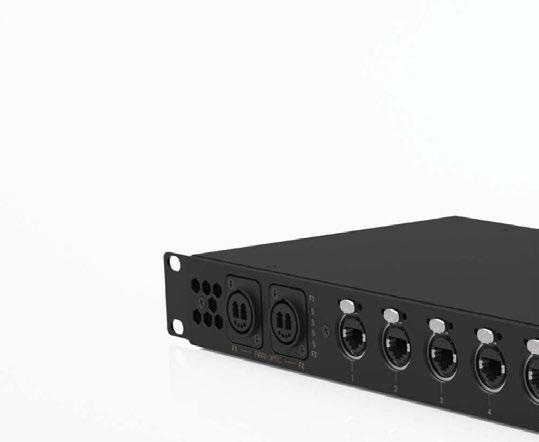
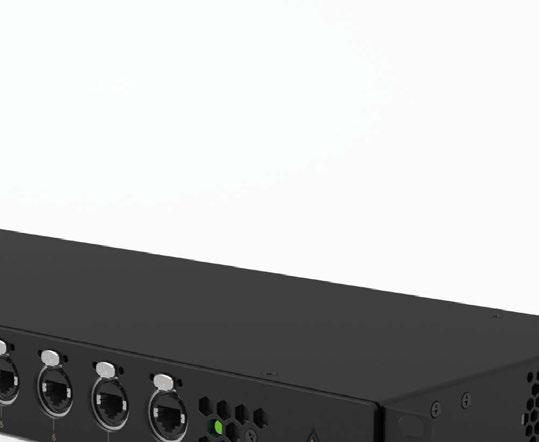



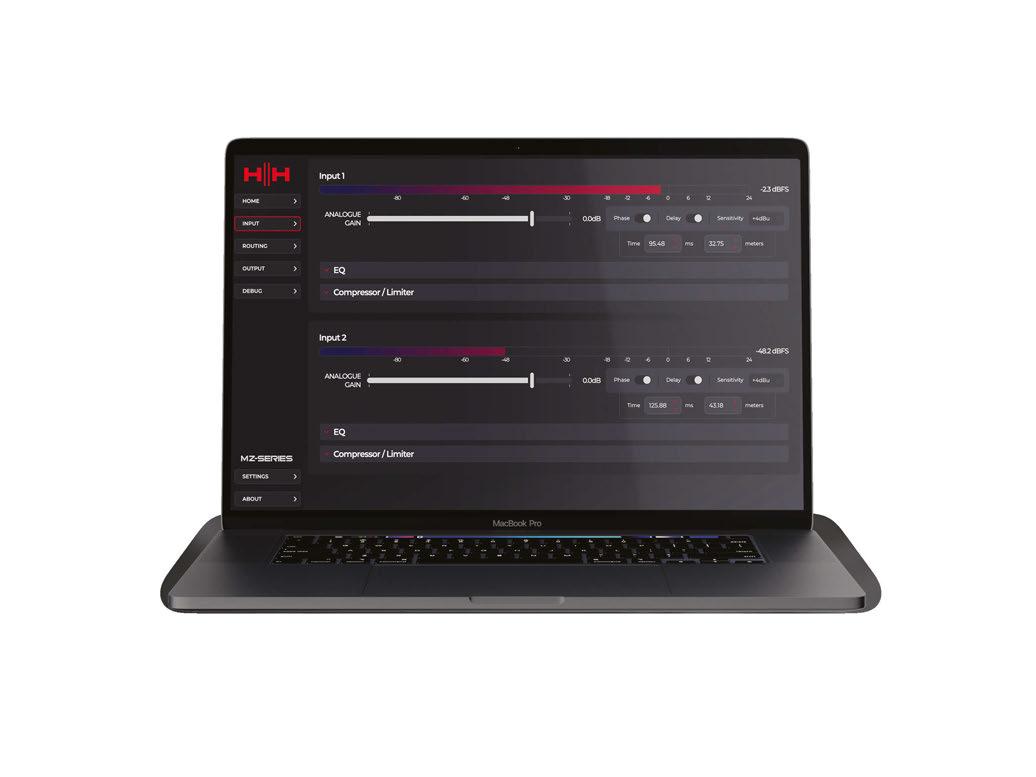
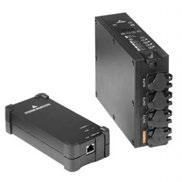
Whether deploying a redundant or primary-only network topology, the MS8.2 Milan network switch is perfectly suited to simplify mobile, installed systems and spatial audio applications.







PATENTED 2-IN-1
SOLUTION:
XOOP 200-2 LED
XOOP 290-1 LED
MORE INFO
HIGH LOAD CAPACITY. ALMOST ENDLESS DESIGN POSSIBILITIES. UNBEATABLE PRICE-PERFORMANCE RATIO.





MONDO-DR 36.3
MARCH / APRIL 2026
ON THE COVER Ministry of Sound
Photo courtesy of Jody Hartley
EDITOR Todd Staszko t.staszko@mondiale.co.uk
ASSISTANT EDITOR Daisy Thorogood d.thorogood@mondiale.co.uk
ACCOUNT MANAGER Cameron Crawford c.crawford@mondiale.co.uk
ACCOUNT MANAGER
Bethany Price b.price@mondiale.co.uk
MARKETING & EVENTS MANAGER Alice Clarke a.clarke@mondiale.co.uk
MARKETING & EVENTS ASSISTANT Charlie Moore c.moore@mondiale.co.uk
DESIGN & PRODUCTION Mel Capper, Jez Reid, Dan Seaton
DIGITAL CONTENT MANAGER James Robertson j.robertson@mondiale.co.uk
EDITORIAL DIRECTOR Peter Iantorno p.iantorno@mondiale.co.uk
CEO Justin Gawne j.gawne@mondiale.co.uk
FINANCE DIRECTOR Amanda Giles a.giles@mondiale.co.uk
CREDIT CONTROL ar@mondiale.co.uk
GROUP CHAIRMAN Damian Walsh
MONDIALE PUBLISHING Strawberry Studios, Watson Square, Stockport SK1 3AZ , UK
Tel: +44 161 476 8340 Fax: +44 161 429 7214
ANNUAL SUBSCRIPTION RATES (7 ISSUES) UK: £30.00 / Europe: £50.00 / Rest Of World: £65.00
Two year rates are available on request. Subscribe online at www.mondiale.co.uk or call +44 (0)161 476 5580 ISSN: 1476 4067
Mondo DR (ISSN 1476 4067) is published in January, March, May, July, September, November and December by Mondiale Publishing Ltd, Strawberry Studios, Watson Square, Stockport, SK1 3AZ, UK
Subscription records are maintained at Mondiale Media Ltd, Strawberry Studios, Watson Square, Stockport, SK1 3AZ, UK
We’ve all been on a post-ISE comedown since the annual mass meeting of the pro AV industry took place in early February, and we’re delighted to bring you this issue of MONDO-DR.
Gracing the cover is the inimitable Ministry of Sound (p48), which celebrates its 35th anniversary in 2026 having undergone a major production upgrade to its main room, The Box. The nightclub theme continues in this issue’s Venue Report, and we have company updates from Avolites, Allen & Heath and Areal Technologies, as well as the Big Interview with 1 SOUND’s founder, Lou Mannarino. You can get your teeth into Daisy’s colossal ISE report on p84, while the product guide shines a metaphorical light on the latest moving head luminaires. Finally, a reminder that entries to the MONDO-DR awards close on 23 March, so don’t delay in celebrating the work of integrators and installers across a diverse range of projects the world over.
Enjoy the issue!
TODD STASZKO EDITOR
mondo@mondiale.co.uk www.mondodr.com www.mondodrawards.com Printed by Buxton Press, Palace Road, Buxton, UK

MAR 17-18
ISCVEx COVENTRY, UK https://iscve.org.uk
MAR 18-21
USITT, LONG BEACH, USA www.usitt.org
APR 6-8 THE GET SHOW GUANGZHOU, CHINA www.getshow.com.cn
APR 12-14
MIR MULTIMEDIA INTEGRATION EXPO RIMINI, ITALY www.mirtechexpo.com
APR 15-16
EXPO SCENE MONTREAL, CANADA www.citt.org
APR 15-17
INFOCOMM CHINA BEIJING, CHINA www.infocomm-china.com
APR 19-22
NAB LAS VEGAS, USA www.nabshow.com
APR 19-21
SOUNDCHECK MEXICO CITY, MEXICO www.soundcheckexpo.com.mx


MAY 12-13
MAY KOBA SEOUL, SOUTH KOREA www.kobashow.com
MAY 12-15
PLASA FOCUS LEEDS, UK www.plasaleeds.com
MAY 19-21
SLS EXPO RIYADH, SAUDI ARABIA https://iscve.org.uk/
MAY 28-30
PALM EXPO / AV-ICN MUMBAI, INDIA www.palmexpo.in
MAY 13-14
MEDIA PRODUCTION SHOW LONDON, UK www.mediaproductionshow.com/
MAY 28-31
PROLIGHT & SOUND GUANGZHOU GUANGZHOU, CHINA https://prolight-sound-guangzhou.hk.messefrankfurt.com
MAY 14
TPiMEA AWARDS DUBAI, UAE https://tpimeaawards.com



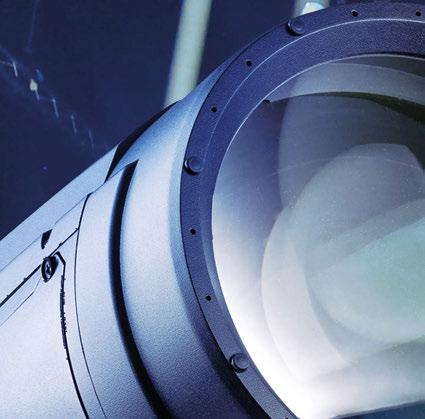
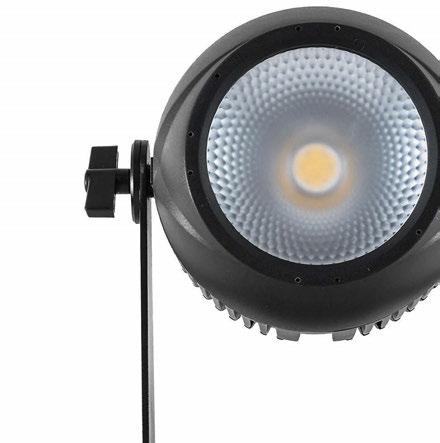
No compromise IP65/66 high-output low footprint
LED WashBeam and FollowSpot





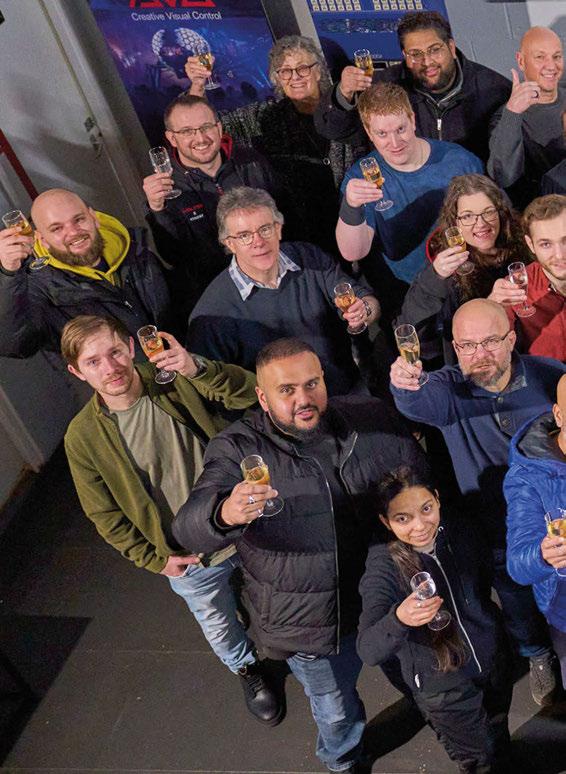
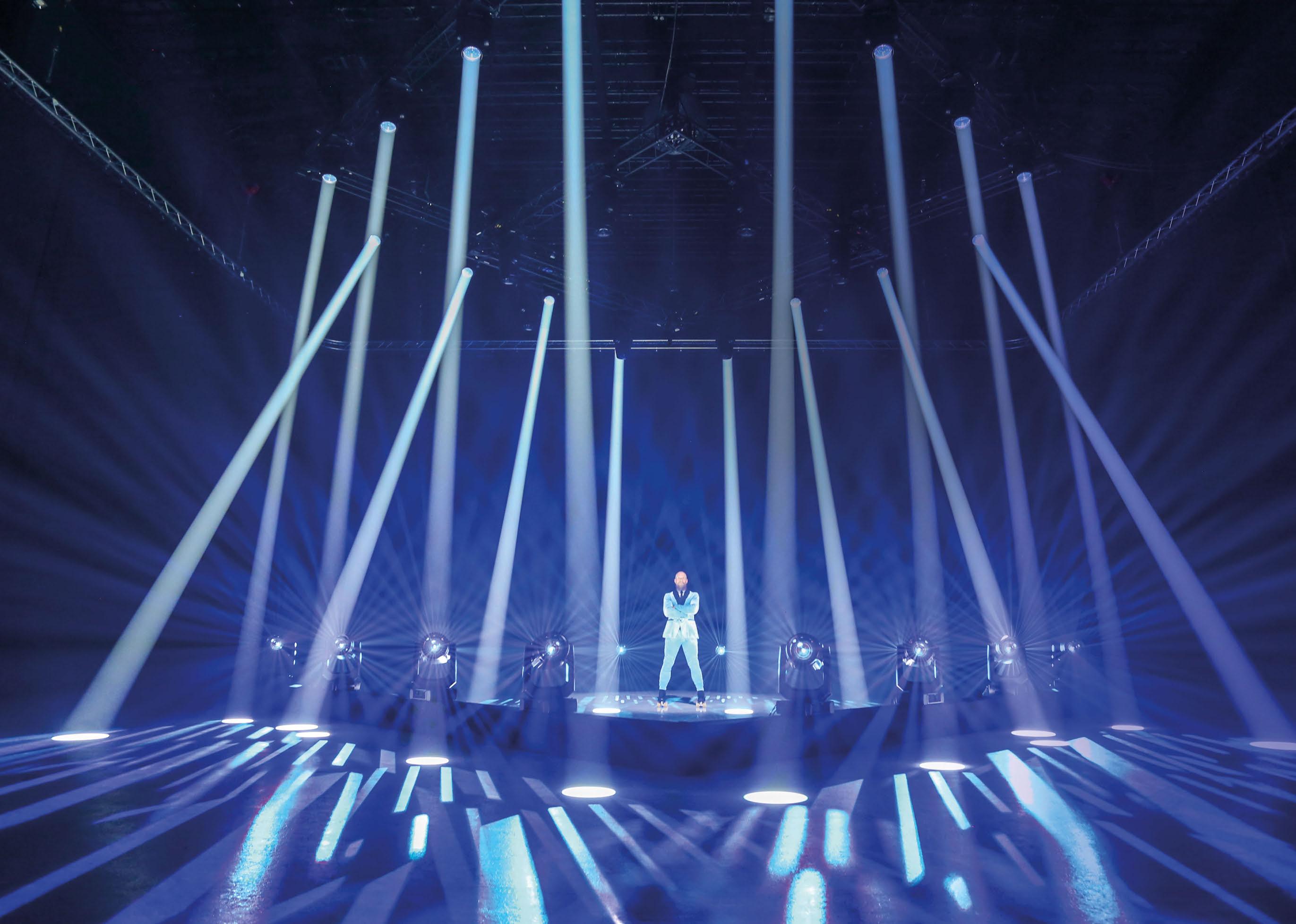
Honouring its five decades of innovation within the lighting and media control industry, Avolites kick-started the Avo50 celebrations at 2026’s ISE trade show, with the festivities set to run throughout the rest of the year. MONDO-DR sat down with various members of the Avolites team to discuss the organisation’s evolution and what this celebration means to the people behind the products.
As we sit at the relative beginning of the Avo50 anniversary, the industry has so far seen the company announce a year of global initiatives to celebrate Avolites’ past and future. Nikki Scott, CEO of Avolites, commented: “This anniversary isn’t about looking back with nostalgia. It’s about recognising what we’ve built together and using that momentum to shape the future. We’re incredibly proud of where the brand has come from and even more excited about the years to come.”
Jon Hole, Product and Marketing Manager at Avolites, added:
“We’re celebrating our heritage and innovation, whilst ensuring we look outwards to our users, not inwards, and forward to our future, not backwards.”
At Avo50’s centre is the Golden Console Competition, an initiative offering the industry the chance to win a unique 24-carat goldplated Avolites console. Alongside this, the Avo50 Ambassador programme will highlight 50 influential designers, programmers, and operators whose work exemplifies the brand’s impact. Additional initiatives taking place throughout the year include
a time capsule project exploring key products and milestones decade by decade, and archival features reflecting on defining moments in visual control.
Scott added: “Avolites exists because of the designers, programmers, technicians and partners who have trusted us with their creativity for half a century. This anniversary is a celebration of them: of their talent, their passion, and the incredible shows they bring to life every day.”
To observe the anniversary today, then, we must first look back at the manufacturer’s humble beginnings and subsequent advancement. Founded in 1976 by engineer and lighting designer Ian Walley, the company emerged from a practical need. Walley’s experience touring with bands saw a recurring problem, with unreliable control equipment requiring constant repair. Taking matters into his own hands, he began to design robust, fastrig lighting systems, working in a space under a railway arch in Hammersmith, London.
Avolites’ first major milestone, the 8100 Series lighting control system, introduced memory-based cue storage designed for touring applications. This focus on usability would become a hallmark of the brand.
The 1980s saw digital programming arrive with the QM500 Series, enabling more precise repeatability of shows. Then, by the 1990s, its Pearl console had established itself as a global benchmark for moving-light control.
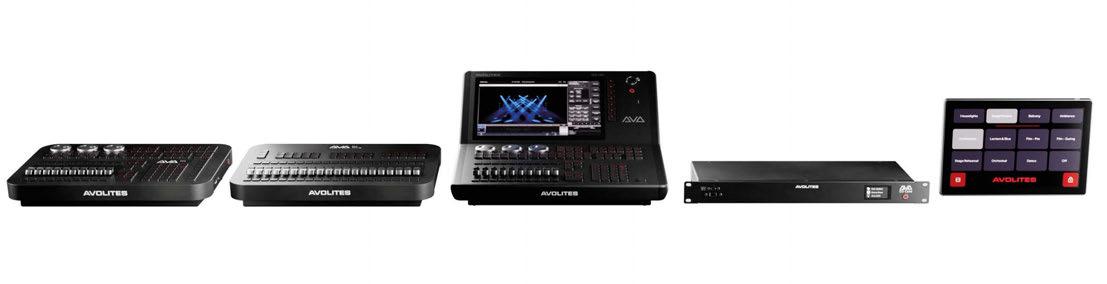
Software-based architecture defined the early 2000s, which culminated in Titan. This was a unified control ecosystem that reshaped how Avolites consoles operated across hardware generations. Today, the flagship D9 console represents the culmination of these developments, combining advanced
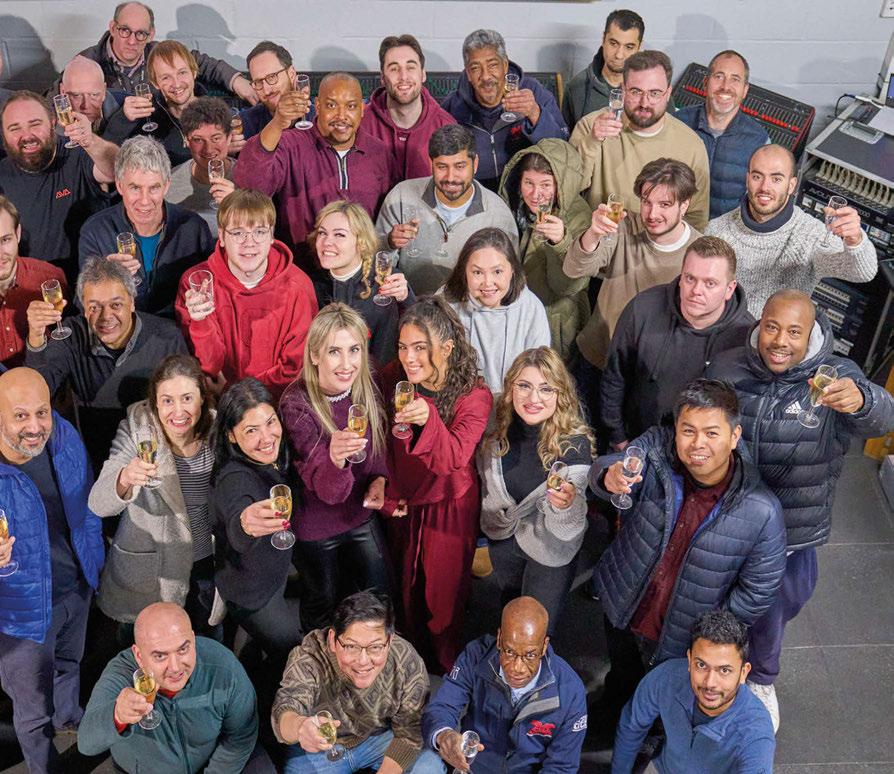
Far left, clockwise: JB Toby, Technical Director at Avolites, Jon Hole, Product and Marketing Manager at Avolites, Nikki Scott, CEO of Avolites, and Kully Dhesi, Head of Service and Support at Avolites.
Left : The Avolites team celebrating its five decades of operation.
processing, multi-screen interfaces, and integrated media workflows. Head of Service and Support at Avolites, Kully Dhesi, said that one of the standout moments of his career was when these D Series consoles launched. “More than just a new look, it marked the start of a new chapter for the brand. Seeing those consoles out in the field, in control rooms, and on show floors around the world, makes me genuinely so proud.”
Hole added: “Our consoles have been backstage at some of the biggest venues, performances, and events of the last 50 years.”
Combined with Robe’s 2023 acquisition of Avolites, the brand now has a bigger platform than ever.
On this, Josef Valchar, CEO of Robe, said: “It was great to bring Avolites into the Robe world, it complements our products, our thinking, and our technology. Avo is a much-loved brand, and we look forward to the next 50 years.”
The manufacturer’s standing in the Robe Group remains a key element of the brand’s messaging, with its anniversary celebrations at ISE reinforcing this. Hole explained that “Avolites was controlling both lighting and video at the Robe live show on its stand. It was also great to see that so many other stands were using Avolites to control the entertainment on their booths.”
JB Toby, the Technical Director at Avolites, is perhaps one of the most suitable members of the team to give a retrospective on the manufacturer’s 50 years, having himself been with the company for over three decades. “When I first started Avolites, we were only 15 people strong,” he began.
“Now, we’ve got 60 people in the direct team. This has allowed us to create many more specialist divisions with a high level of detail and precision. Over the past 30 years, the manufacturing process has been one of the things that has changed the most – we used
to largely do everything in-house, but now we’re able to also rely on our capable suppliers worldwide.
Another shift has been in the customer expectations for shows and entertainment venues, he reported. “Changing audience expectations are reshaping how productions are created and run, and our programming equipment must evolve accordingly, leading to new product features.”
Toby said the brand has been able to keep up with these shifting demands thanks to its close contact with its users.
“Without them, there is no Avolites,” he declared. Similarly, when asked what has sustained Avolites over five decades, Hole pointed to the company’s close relationship with its users. “The company is known for being approachable, supportive, and community focused. The loyalty of our long-term users and customers is incredible, and we want to celebrate and reward that. We know of at least three people with Avolites tattoos!”
From his position in service and support, Kully has witnessed firsthand the value of the connection between Avolites and its customers. “ We regularly hear how much people appreciate the fast response and the comfort of knowing a knowledgeable person is on the other end of the line. That kind of support builds real trust.
“At tradeshows, on social media, and in everyday conversations, users often praise that the reliability is a big reason they remain loyal to the brand. It’s reassuring to know that when the pressure is on, the support is just as strong as the product itself,” he detailed.
Avolites will continue to celebrate its users and use cases throughout 2026, for this monumental half-century birthday.
www.avolites.com
“THE LOYALTY OF OUR LONG-TERM USERS AND CUSTOMERS IS INCREDIBLE, AND WE WANT TO CELEBRATE AND REWARD THAT. WE KNOW OF AT LEAST THREE PEOPLE WITH AVOLITES TATTOOS!”
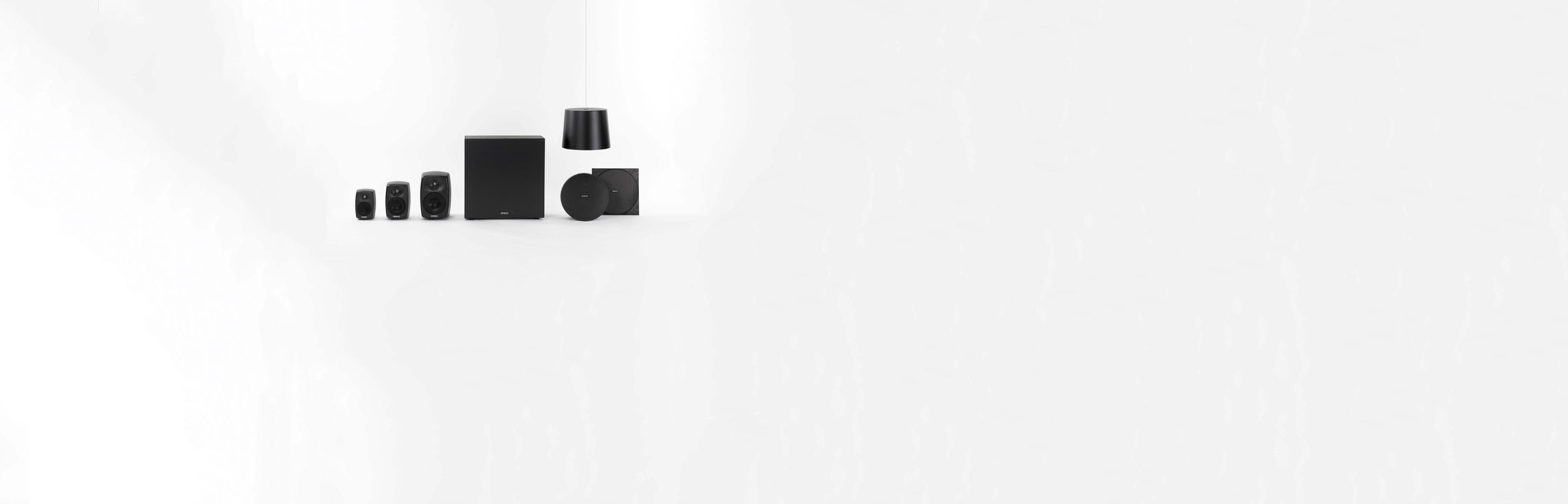
One cable. Infinite possibilities. The Genelec Smart IP family of active PoE loudspeakers blends premium sound quality and networked convenience. With audio, power and management delivered via a single CAT cable, all models combine easily to create flexible systems offering clarity, intelligibility and uniform coverage – enabling scalable, future-proof installations.
genelec.com/smart-ip
“WHETHER I’M CREATING SOLUTIONS THAT WILL BE USED BY AN ARTIST PERFORMING IN A MAJOR VENUE OR BY A YOUNG PERSON SINGING IN A SCHOOL PLAY, I KNOW I’M DESIGNING FOR ONE OF THE MOST IMPORTANT DAYS IN SOMEONE’S LIFE. ”
LOU MANNARINO Founder and CEO, 1 SOUND

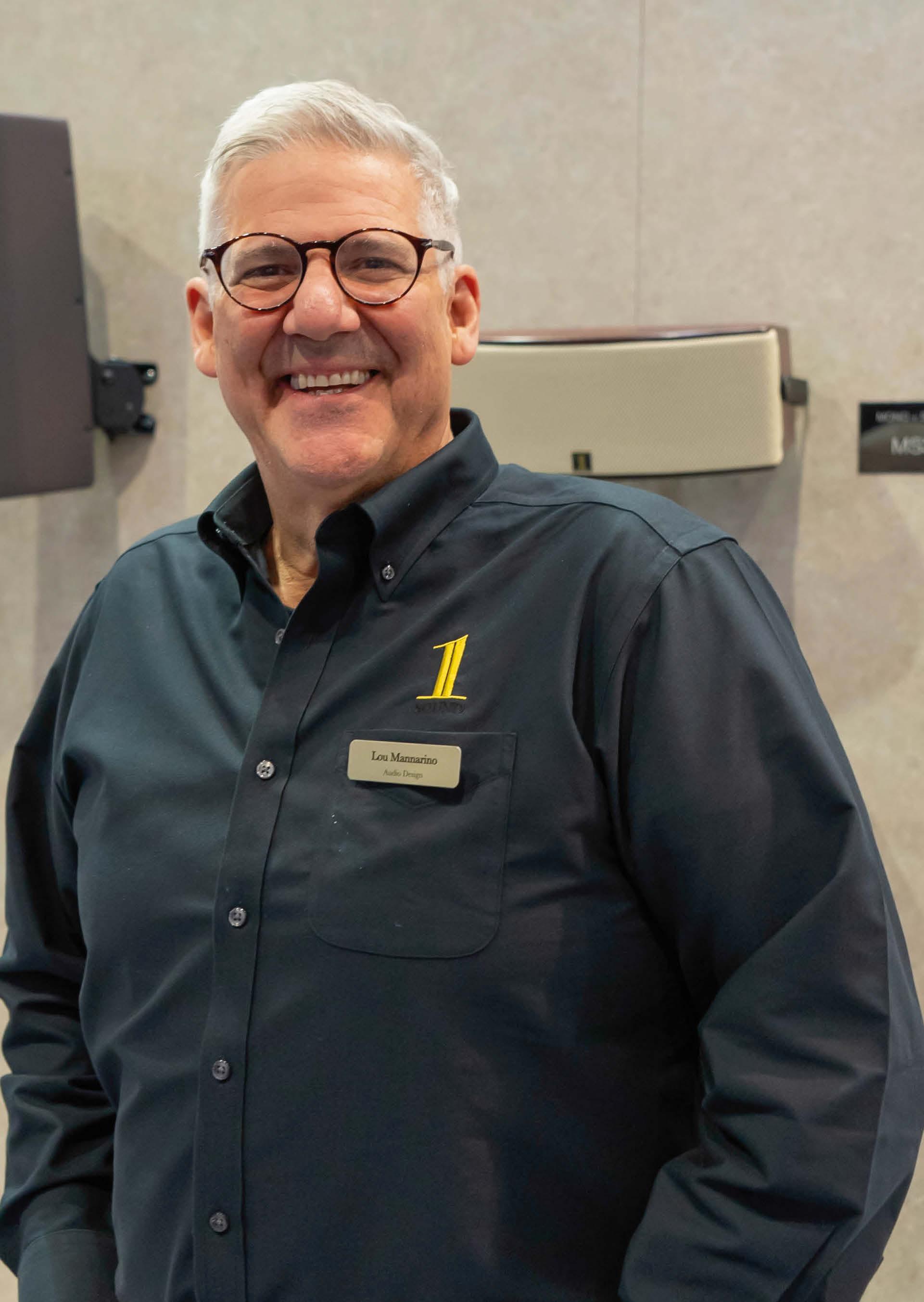
In a professional audio landscape sometimes defined by competition and rapid product cycles, Lou Mannarino, Founder and CEO of 1 SOUND, refuses to let market pressure or comparison fuel his work. The American manufacturer instead focuses on crafting audio systems it feels the field genuinely needs, because, as Mannarino puts it, “we’re in the service industry, after all.” 1 SOUND works on a principle of admiration for the audio and entertainment world, the CEO explained. “Without this industry, I would have never found my passion or been able to make a living. So, fundamentally, where 1 SOUND starts is with the utmost respect to all existing AV brands and to the pioneers behind them.” With this guiding philosophy and 40 years of experience in the music industry behind him, Mannarino began 1 SOUND in 2019, manufacturing its products in its home country, the USA. He again emphasised that these systems are proprietary to 1 SOUND and are built to fix the issues and fulfil the desires of audio professionals, with his motto being, “If I’m not solving a problem, then why try to create a resolution?”
Mannarino’s deep appreciation for sound technology can be traced back to the start of his over four-decade career in music, when he first picked up a bass guitar at age 11.
“It was 1975, and I wanted to play in a band. However, nobody had PA systems yet! The industry was so fresh. Professional audio solutions were so new, that just a few years before, the Beatles played a stadium in New York using speakers that were meant for school hallways.” Driven by the mission to acquire a perfect sound system, Mannarino became immediately intrigued with making and owning solutions. “I started building. I would take the little money I earned from my after-school job, and I’d save to buy a microphone one week, a cable the next, a mixer soon after. By 1978, I’d accrued my first PA system.” This led to the young man setting up his production company the same year, which he is proud to claim was one of the first full-service production organisations in New York City. Mannarino’s father would drive him to his gigs, which began as high school plays and festival
nights in churches. “I would take the money I earned from this work and invest it back into purchasing more audio equipment and understanding more about the technologies.” However, he noted, it was far from simple to learn the ins and outs of sound science. “There were no spaces, forums, or tradeshows to easily learn about the industry,” he said. “If I wanted to get to grips with a specific speaker, I would write a letter to the manufacturer and hope they replied to my question!”
Despite this difficulty, Mannarino’s dedication to learning remained steadfast. He began to find unconventional methods of education.“I would get my father to drive me from Staten Island to Brooklyn, and leave me on the street in front of a music store. That’s because I knew that in the basement of that store, there was a repair person who was extremely knowledgeable about all things sound and PA. “So, day after day, I would sit outside and wait for him to walk out the door when his shift was finished. I’d beg him to teach me, and I’d ask a bunch of questions about the things I was seeing, like ‘how did the Grateful Dead get this sound at their recent gig?’, or ‘how does this loudspeaker work?’ I was an annoying kid, so obviously, he’d tell me to leave him alone!
“But one day, I offered to buy him lunch. He accepted and let me talk to him while he ate. From there, he started giving me all sorts of lessons; I learned soldering, building, and the art of audio. He taught me so much.” Mannarino’s craving for knowledge continued to bolster him through the years, as he earned himself a master’s degree in music and conducting, and a separate certification in music education. Working as a school conductor and a teacher earned him the money to sustain his production company, which saw him engineering the audio for major names such as Paul McCartney, Jay-Z, Bon Jovi, and the New York Pops orchestra. “Being a creative sadly costs a lot of money,” he stated. These performance experiences served to deepen his understanding of how sound systems must translate artistic intention. It was while designing for the New York Philharmonic that speaker manufacturer 1 SOUND began to blossom.
Mannarino needed a special multi-channel, roof-fill loudspeaker to sit on the lip of the stage – a technology he couldn’t locate anywhere. In response, he created the Panorama under the title 1 SOUND. The Panorama filled the technological gap the CEO needed to achieve the perfect audio for the Philharmonic; a passive loudspeaker featuring what he calls ‘Panorama Technology’, the system offers true stereo in its field. “I coined the moniker 1 SOUND as we were only supposed to create one sound, one speaker!” he laughed. Evidently, this was far from what would occur, as Mannarino started to work on the blueprints for other audio solutions he saw the industry was crying out for.
Founders and experts such as Director Tony Andrews of Funktion-One and Christian Heil, President of L-Acoustics, were the 1 SOUND CEO’s inspirations in beginning the brand. “These guys are geniuses, pioneers. I also still look to the work of Fritz Sennheiser, for whom I actually used to test microphones.” The early Panorama innovation has continued to evolve, and as recently as December 2025, 1 SOUND released upgraded renditions of the solution. The Panorama 65 is a high-fidelity, self-contained stereo system that features the latest era of Panorama technology. 1 SOUND continued to make products that were invested in by the New York Philharmonic invested, alongside other opera houses
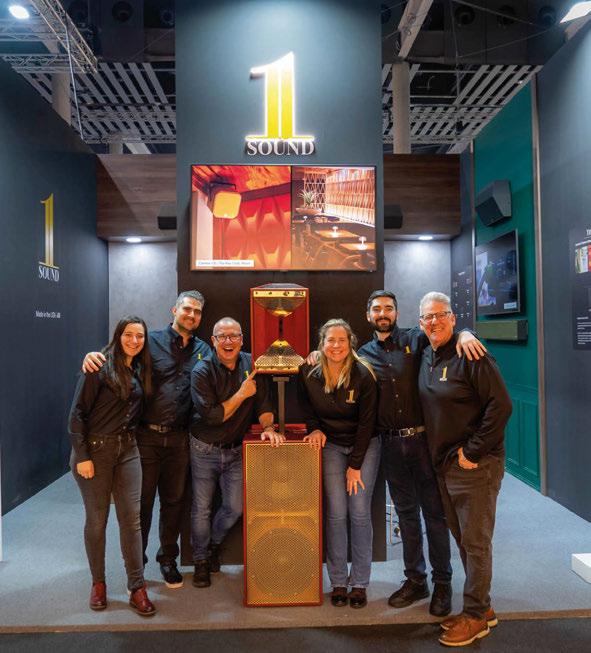
Far left: The 1 SOUND team at ISE.
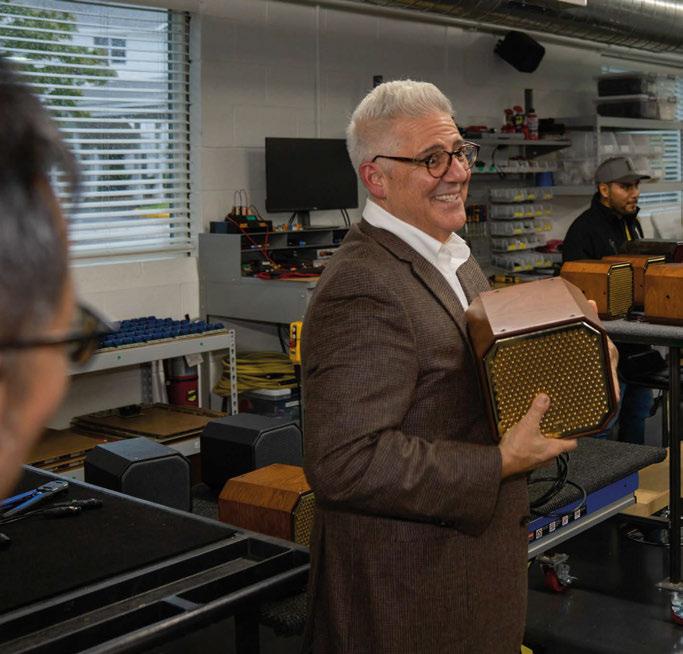
Left: The 1 SOUND Global Partner Summit.
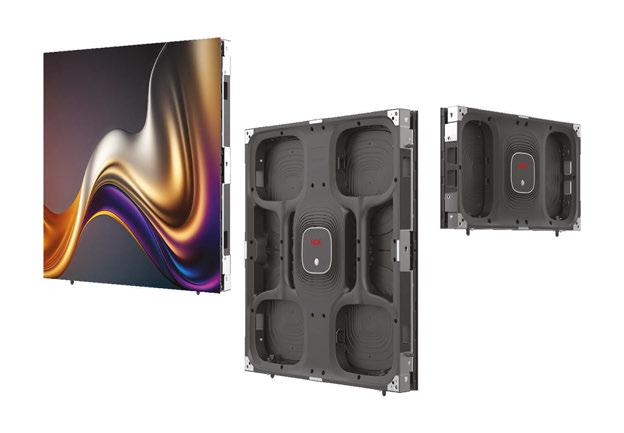
Coral provides a superb visual performance, making it a perfect choice for demanding circumstances, like broadcasting or corporate applications, where every detail matters.
Coral boasts excellent product specifications, with a remarkable brightness of 1000 nits and a refresh rate of 7680Hz. Its 8:9 aspect ratio makes it a perfect fit for native 4K or 8K resolutions, guaranteeing impeccable visuals.
For more info: www.roevisual.com/coral
“1 SOUND LOOKS BEAUTIFUL. BUT IT SOUNDS EVEN BETTER. WE GET TESTIMONY TO THIS WEEKLY. HOSPITALITY OWNERS LOVE US BECAUSE WHEN THERE’S GOOD AUDIO, CUSTOMERS STAY LONGER AND BUY MORE DRINKS!”

and museums across the globe, such as the MET Museum. The solutions began as tools for this large venue category, but they soon found wider relevance. As Mannarino refined methods for controlling dispersion and minimising acoustic spill, he discovered that the same technologies addressed pressing challenges in urban hospitality environments.
“Quickly, we found out that there is a huge need for noise mitigation for rooftop clubs and bars,” he explained. “So, these products became popular for DJs and clubs, too.” Today, that cross-sector adoption defines the company’s footprint. 1 SOUND systems appear in theatres, museums, hospitality venues, retail environments, houses of worship, and entertainment spaces. Mannarino frames every 1 SOUND installation and creation, regardless of scale, as an opportunity to contribute to a meaningful experience.
“Building these sound systems, you get a chance to be a part of the most important day in someone’s life,” he said. “Whether I’m creating solutions that will be used by an artist performing in a major venue or by a young person singing in a school play, I know I’m designing for one of the most important days in someone’s life. I feel lucky to be a part of these moments.”
Asked what he sees as one of the most significant innovations of 1 SOUND, the CEO shared his pride at his company being an early adopter of active, fully cardioid control in its products. “The industry is slowly coming around to this technology now, but when we launched over six years ago, this design made our solutions uniquely musically coherent with high levels of control, and people could hear that.”
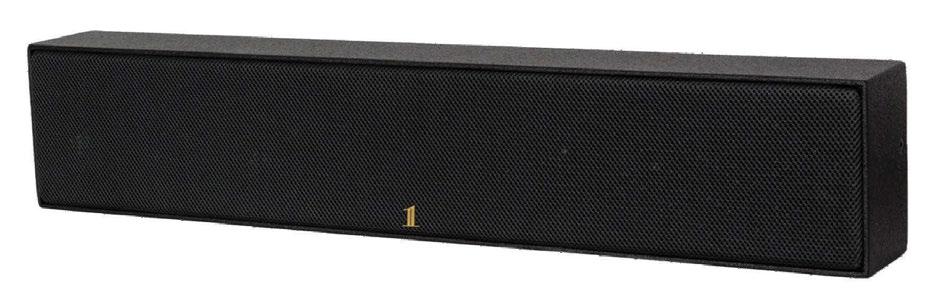
Systems such as 1 SOUND’s Level series are exemplary of such similar tech – a product line that Mannarino says he sees deployed regularly across various venue types.
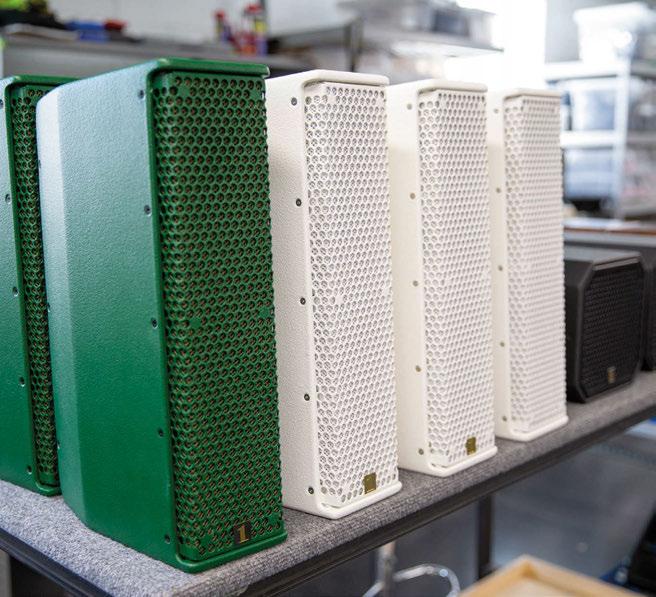
The brand’s Custom Shop stands as another particularly inventive and unique aspect of its makeup. The 1 SOUND Custom Shop allows clients to choose any colour and material finish for all products in the portfolio, all handcrafted by the team.
The Custom Shop began when 1 SOUND dealer and integrator, Anthem Productions, told a client that Mannarino was a hard worker who would surely be able to modify speakers to match their venue’s bespoke wood finish. Not one to turn down a challenge, the manufacturer gathered its engineers and began handcrafting and polishing its first woodstained order, which was created and installed within the short five-day deadline. “I thought, if we can do this, we can build products with all manner of looks,” the CEO said.
Mannarino explained that crossing the audio and visual worlds brings more attention and energy to the sound sector of the industry. “There’s a lot more money in technology that’s aesthetically appealing, so manufacturers need to make sure that their audio products are more than just aurally pleasing.
“1 SOUND looks beautiful. But it sounds even better. We get testimony to this weekly. Hospitality owners love us because when there’s good audio, customers stay longer and buy more drinks!”
Sagebrush Church in Albuquerque, New Mexico, is the site of a 1 SOUND design that particularly stands out to Mannarino. The original sound system at the large church wasn’t performing, which led to the CEO stepping in to troubleshoot.
“I wanted to remodel and rework the primary, non-1 SOUND system that was already in the space, before ripping it out and integrating my own products. It’s never about sales; in fact, if I believe that a different manufacturer’s solutions will fit the bill more than 1 SOUND, I’ll tell the client. I care about audio more than I do my brand.”
When it became clear that the existing system couldn’t meet the room’s needs, however, 1 SOUND sent a demo system to the church. This proved effective, and a complete design was built. In the church, six CT212 are flown as main left, centre, and right clusters. Then, seven CT28s were brought in as delay fills, with six SUB2112 subs near the stage providing controlled low-end energy without muddying the mix. Finally, eight Cannon C8i loudspeakers are mounted along the front edge of the stage, delivering the energy and clarity needed for the first rows, ensuring every seat has the same experience.
Mannarino recalled the feedback from Sagebrush as being the epitome
Below: 1 SOUND speakers customised using its Custom Shop.
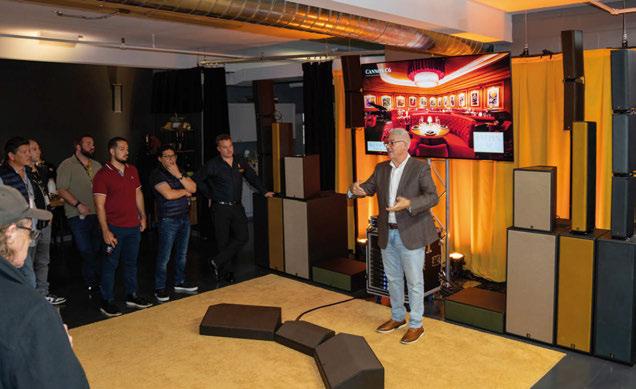
of what he wants 1 SOUND products to achieve. “On the first day of the upgraded solution, the church’s 3,000-strong congregation didn’t know there was a new audio system, but many people told the pastor that they felt especially engaged that day. They didn’t realise that the sound technology was different, but it was recognised that the atmosphere was improved.” The CEO echoed his previous statement about being a member of the service industry: “As the audio engineers, we don’t want the attention. It’s about enabling and empowering clients to make the impact they desire. We want the venue to be the hero.”
On this, he recalled an anecdote from his time designing for the Waldorf Astoria in New York. “My production team and I were working long hours behind the scenes of the building’s shows. I ended up turning to one of the caterers and asking if they had any food scraps that we could snack on, as we didn’t have time to feed ourselves.
“Instead of just plating up leftovers, the kitchen staff set up a beautiful table and served us a fresh, gorgeous meal alongside drinks. As I was beginning to eat, I told the caterer how grateful we were for their kindness, and I asked why they were being so generous. He said, ‘Lou, I’m the one who’s thankful for you – in fact, I specifically requested your production company and your loudspeakers be brought into this venue.’
“When I asked him why, the caterer said, ‘Because when you’re here, visitors to the Astoria are busy on the dance floor, enjoying the party. And when you’re not here, they’re in the hallway complaining about the food!’” Mannarino noted that this feedback changed his life. “From then, I knew what my job was.”
Another important element of 1 SOUND for the founder is not being afraid to make mistakes. For Mannarino, innovation is inseparable from failure – a philosophy he tries to instil into the internal culture of the brand. “The creative process is about failing,” he added plainly. “I try a loudspeaker design, and I fail. And then something I learned from that failure is what will motivate my next idea or design.”
Mannarino attributes his willingness to experiment to the conditions in which he developed as a young engineer.
“I sometimes failed on a show if I tried something new,” he explained. “But I still knew that I could get another gig after that. There was no internet. There were no recordings. It was all locally based.” Mistakes were largely private as there was no instant global audience. That environment allowed him to test ideas freely; a freedom he believes is more difficult for professionals to access today.
“Younger people in our industry are much more afraid to fail because it’s public now. It’s worldly if they fail. This can make the creative process more challenging.” Rather than criticising this shift, Mannarino focuses on counteracting this within his own organisation, creating an environment where experimentation is safe. “If my team are afraid to fail, they’re going to do what they’re told and be too scared to innovate, and then you never get the best out of someone.”
He continued: “In history, most of the greatest inventions came from failures. Not from somebody getting it right first time.”
Within the 1 SOUND team is a strong family presence; Mannarino’s children and partner play diverse roles in the company. “Family keeps you centred,” he explained. “They often don’t tell me things I want to hear. They tell me the things I need to hear.”
The influence of family values also manifests in how the company
approaches collaboration beyond its own walls. Mannarino views relationships with partners, suppliers, and clients through the same lens of sincerity and mutual respect that guides internal dynamics. “It has to be that way. To me, success is offering sincerity to our customers and clients, and being part of a company made up of people who care.”
The CEO can partially trace these standards to his upbringing. “If I could talk to 11-year-old Lou now, the kid who was just starting out, I’d give him the same advice my dad would always give me,” he mused. “That is to realise that you’re not going to be the smartest or the best in the room, but what you can be in control of is working with the most energy and genuineness possible. It’s hard to compete with the person who loves what they do.”
Mannarino closed with a story that brings his journey full circle –one that was reminiscent of his younger self in Brooklyn, patiently following the repairman. “I’ll always remember this,” he said.
“I was at a tradeshow last year where two young people came up to a stand. They were being largely ignored by the older professionals, so I started talking to them. We talked for over an hour, and they were incredibly smart – I was so impressed. They thanked me for listening to them; they were concerned about coming across as ‘annoying kids.’ I told them that I had been in their shoes, but they shouldn’t worry, as that’s where careers, including mine, begin.” www.1-sound.com


Upgrading the vibe at late-night venues around the world.
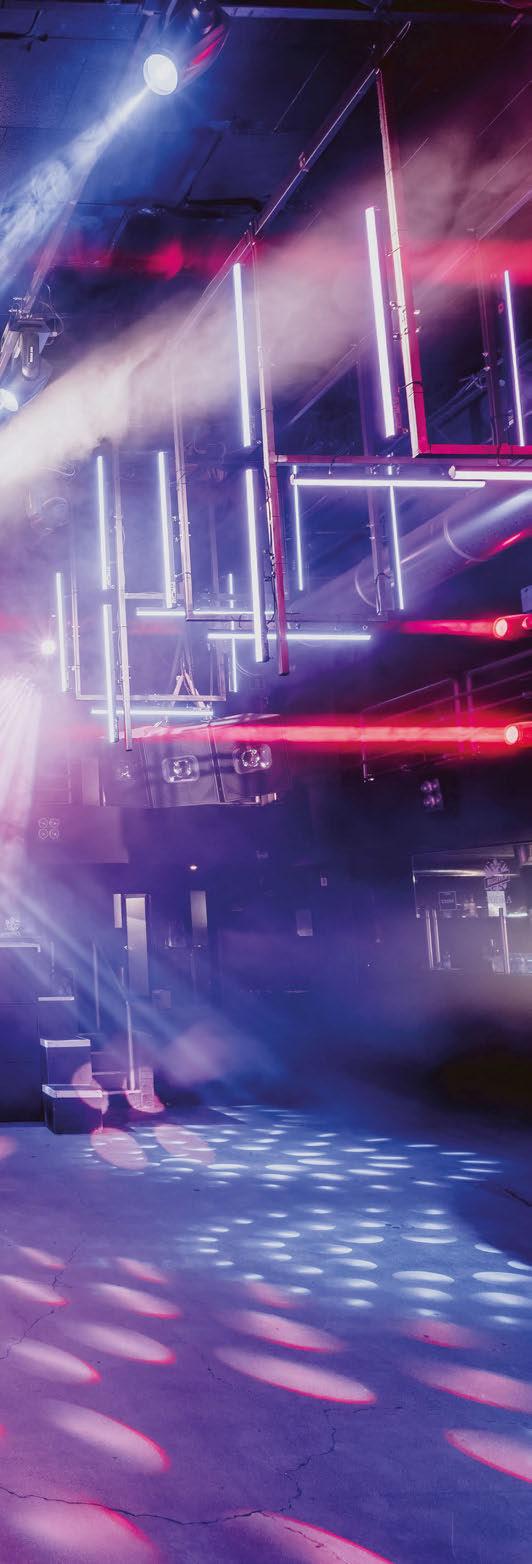
COMPANY: K-array
LOCATION: Florence, Italy
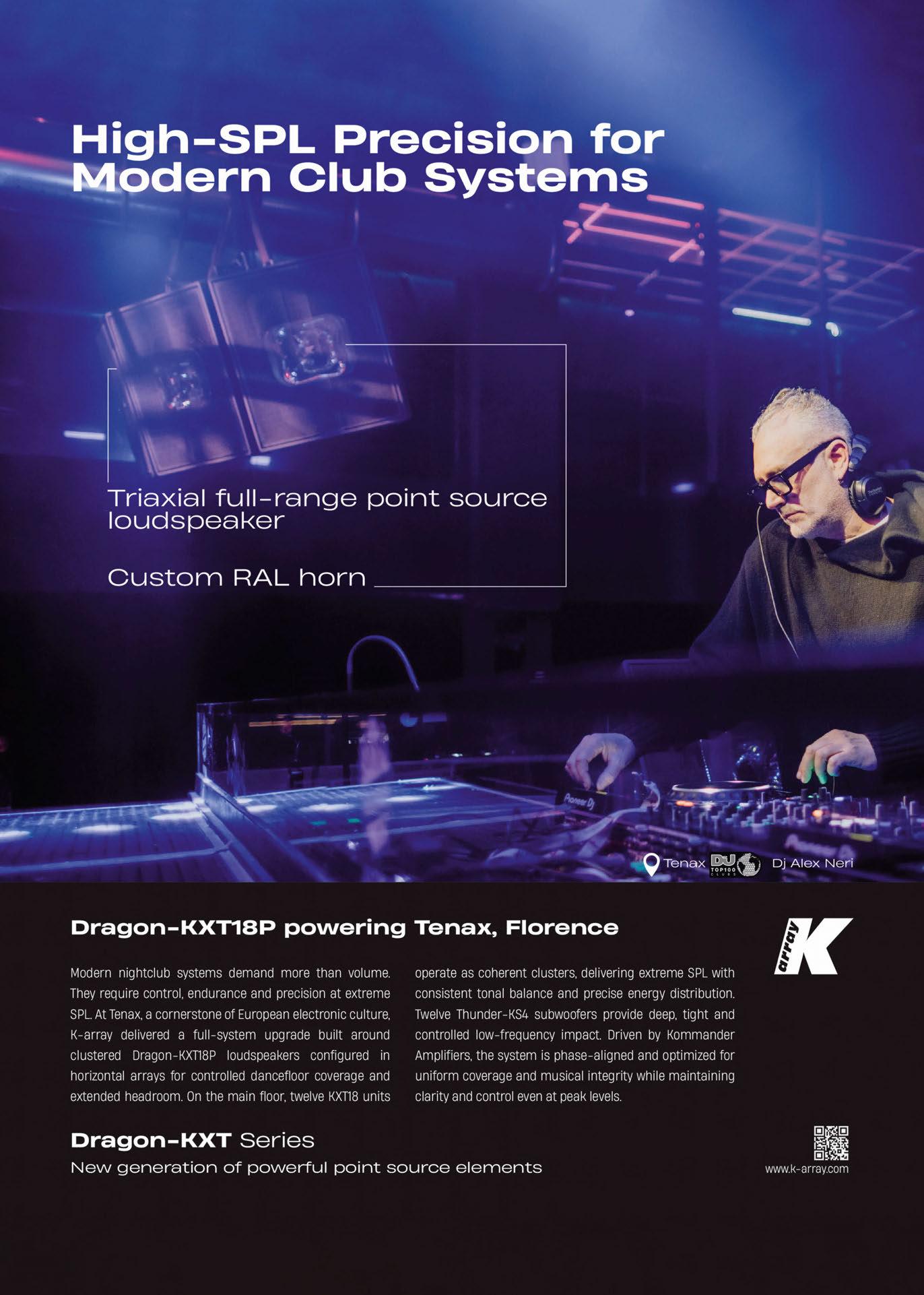
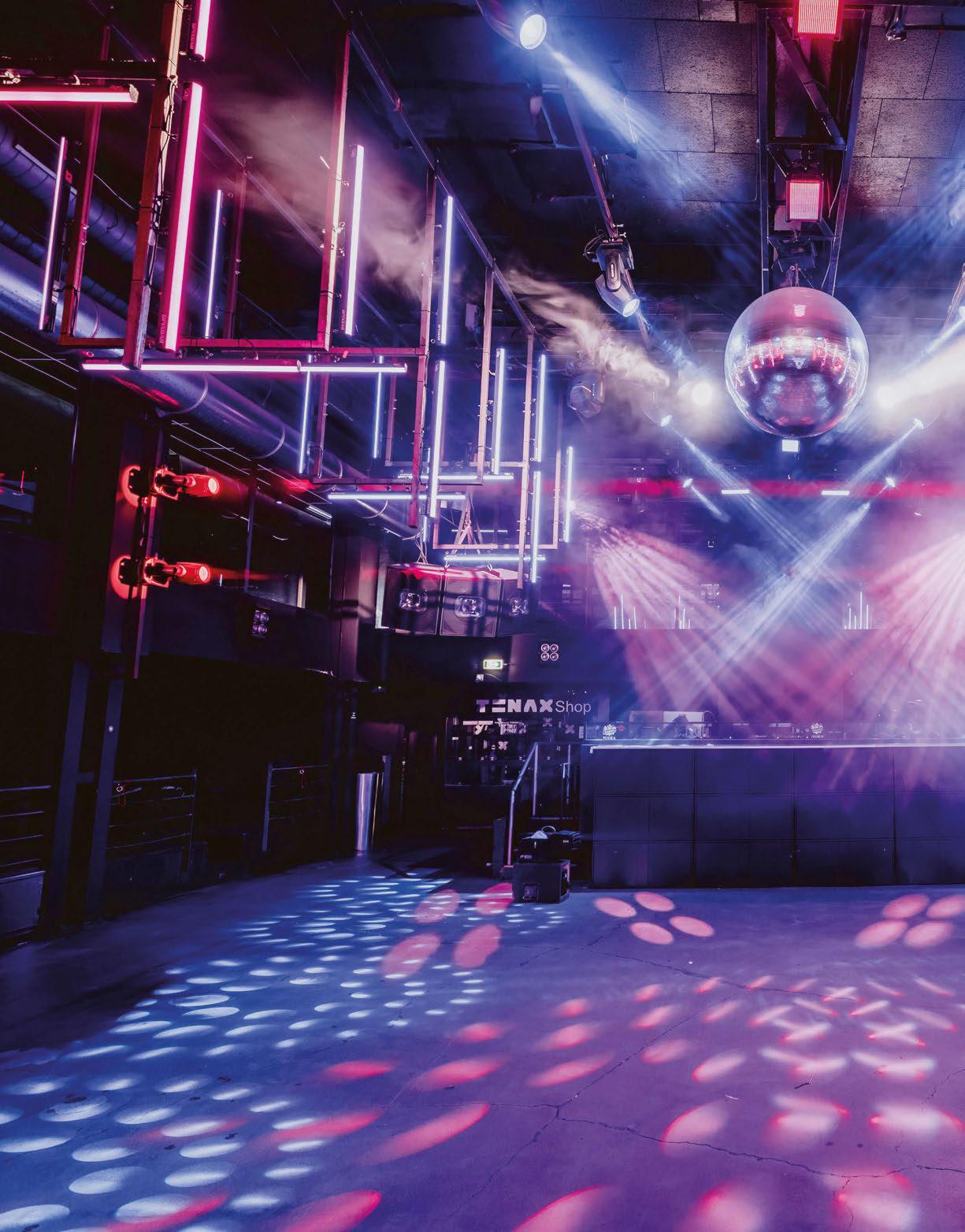
A cornerstone of Italian club culture, Tenax’s legacy stretches back over four decades. Known internationally for its genre-leading lineups and a dancefloor that has welcomed generations of clubgoers, the Florence venue continues to invest in its audio systems to maintain its reputation as one of Europe’s finest nightlife institutions. In 2025, Tenax once again chose K-array, its long-time audio partner, for a complete system upgrade in its main room particularly focused on K-array’s new Dragon KXT18P models.
After several years of reliable performance from K-array’s Firenze and Mugello line array series, Tenax has transitioned to the latest generation of high-performing point source Dragon, the KXT18P, in its main room. The new system consists of 12 KXT18P, deployed in clusters of three per corner, creating four horizontally arrayed groups that ensure full coverage across the dance room and exceptional headroom. Supporting the Dragons are 16 Thunder KS4P subwoofers, 12 of which are placed along the DJ booth’s side, with the others at the opposite side of the dancefloor, ensuring consistent low-end reinforcement. Together, this combination provides a powerful, balanced and clear audio experience to support the rotation of visiting and resident DJs.
Mirko Carruba, Audio Technician at Tenax, said: “K-array is the right solution for venues that require high SPL combined with precision and design integration. The system delivers impressive acoustic pressure while maintaining exceptional clarity and control across the spectrum.
“What stands out is the balance between physical impact and intelligibility – you can really feel the energy in your body without sacrificing any definition. It’s an extremely versatile platform with a solution for virtually every application.”
Having made its debut in early 2025 at Miami Music Week, the KXT18P is the largest offering from the powerful point source Dragon series and promises
extraordinary performance with its advanced tri-axial componentry. It features an 18-inch woofer paired with dual coaxial compression drivers, delivering 144dB SPL and frequency response down to 50Hz.
Its durable birch plywood cabinet combine robustness with elegant design and offers an eye-catching visual option with the mesh grille removed, exposing the silver-finished horn. The characteristic emission of high sound pressure in the near field makes the Dragon a fitting choice for Tenax’s club environment.
The new system is powered by five Kommander KA208 amplifiers, each providing eight channels at 2,500 watts (at 4 ohms). With the KXT18P requiring two channels each and the KS4P one channel per unit, the setup uses a total of 40 channels to drive the system. This configuration gives Tenax the power needed for high-energy club nights that run until dawn.
Attention has also been given to stage monitoring, with one Dragon KXT18P paired with one Thunder KS3P per side, refining the DJ booth setup and providing artists with the same sonic detail and power experienced by the crowd on the dancefloor.
Over in room two, known as ‘The Tube,’ Tenax maintains its existing K-array system, with two KS4P subs, five Dragon KX12F loudspeakers (two of which are positioned inside the DJ booth), and two half-metre Python KP52 units as delays.
Commenting on the new audio system, DJ Cole, resident DJ at Tenax enthused: “For me, it’s all about how the system translates emotion on the dancefloor. This setup gives you power, brightness, and a much more polished sound.
“The connection between the highs and the low end feels seamless –everything moves together naturally. Whether it’s a live show or a club night, the vibe is stronger, cleaner, and more immersive. We are truly happy with the result.”
www.k-array.com
COMPANY: L-Acoustics
LOCATION: Jakarta, Indonesia
Spanning more than 2,000 sq m, NOYA X 80 PROOF is one of Jakarta’s most ambitious new nightclubs, and has established itself as a go-to spot with the installation of an L-Acoustics K2 professional sound system.
The 1,500-capacity venue is located in the upscale Pantai Indah Kapuk 2 (PIK2) integrated lifestyle district – Jakarta’s newest luxury development dubbed ‘The New Jakarta City.’
Strategically located just 30 minutes from Soekarno-Hatta International Airport, NOYA X 80 PROOF combines premium location with world-class audio to attract both discerning local patrons and international visitors to its ocean-facing premises.
The venue, part of PIK2’s sprawling 6,000-hectare development project, represents Jakarta’s ambition to compete on the global nightlife stage. Open seven nights a week, NOYA X 80 PROOF offers a curated entertainment experience featuring top local talent alongside worldtouring DJs in an environment where audio fidelity was prioritised from the earliest design stages.
“In Jakarta’s vibrant and competitive nightlife scene, providing a premium entertainment experience that sets new standards is crucial to long-term success,” said Hendra Halim, Project Manager and Systems Engineer at Gracia Auvindo, the L-Acoustics Certified Partner who designed and implemented the system.
The club’s management specifically requested L-Acoustics K2 after experiencing its signature sound at Belgium’s world-renowned Tomorrowland EDM festival. For NOYA X 80 PROOF, integrating concertlevel sound quality wasn’t merely a technical consideration – it was a core brand differentiator in the city’s competitive nightclub market.
“The NOYA team recognized that having L-Acoustics would position them as an elite nightlife destination,” added Halim. “The high performance capabilities of K2 will undoubtedly establish NOYA as one of the bestsounding nightclubs in Southeast Asia.”
Designing an optimal system presented specific challenges related to the venue’s construction, extensive LED displays, and over 1,000
synchronised lighting devices. L-Acoustics Soundvision 3D modeling software proved essential throughout the process, allowing the team to visualise sound distribution and adjust to architectural requirements.
Working closely with L-Acoustics APAC Application Engineers, the Gracia Auvindo team executed multiple design iterations to accommodate the nightclub’s demanding visual elements while maintaining superior acoustic performance throughout the space.
“Soundvision was invaluable in coordinating with structural and mechanical engineers, as well as the interior design team,” noted Halim.
“We created a precise audio system design that included key data such as speaker weights, their optimal positions, and coverage angles.”
The final installation features a main L/R system of nine L-Acoustics K2 boxes per side with 16 L-Acoustics KS28 subwoofers placed under the stage to provide the required low-end essential for EDM, while maintaining pristine clarity across all frequencies.
An out-fill system consists of two arrays of two L-Acoustics A15 Focus and one Wide per side, with two KS21 subwoofers stacked on stage per side for extended low frequency, ensuring every corner of the venue experiences consistent, impactful sound.
Eight A10 Focus enclosures provide front-fill from the stage lip, eliminating dead spots and maintaining the sonic experience for frontrow patrons, while performing DJs receive precise monitoring through two ARCS II speakers and two KS21 subwoofers.
This comprehensive configuration delivers the dynamic, high-SPL audio nightclub patrons demand without the distortion and listener fatigue common in conventional club systems.
“My team at Gracia Auvindo are proud to have delivered the L-Acoustics K2 system, equipping NOYA with exceptional audio technology to accommodate top international artists and DJs, while impressing audiences with stunning sound that perfectly complements their visual displays,” concluded Halim.
www.l-acoustics.com | www.graciaauvindo.com

COMPANY: HK Audio
LOCATION: Budapest, Hungary
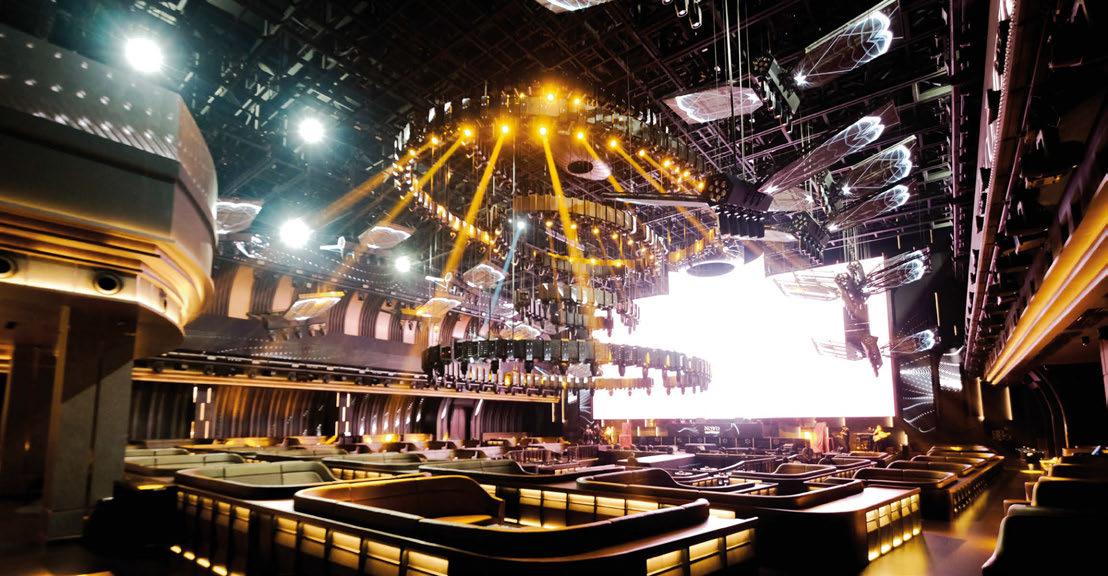
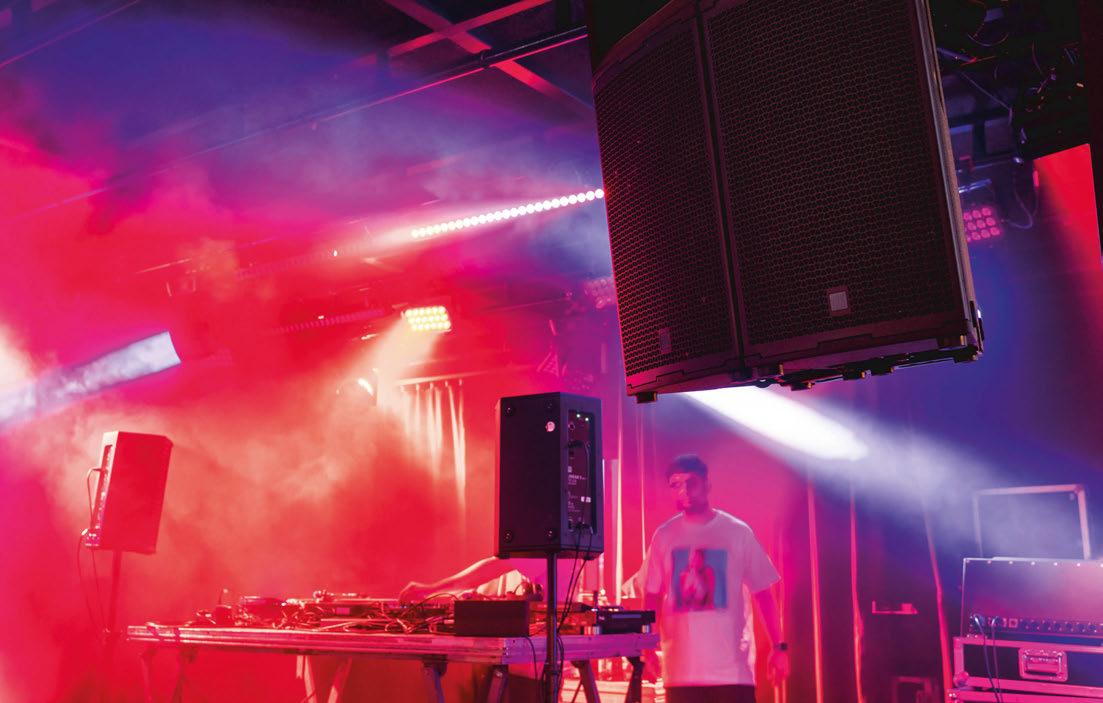
Permanently moored on the banks of the Danube, A38 is a unique venue housed inside a former stone-carrying barge that has been completely gutted and reimagined by a team of architects, ship engineers, acoustic designers and electricians into a three-stage live performance venue.
Over more than two decades since its renovation, A38 has hosted countless performances from international artists in every genre, and its three stages see multiple performances every week throughout the summer season, making A38 one of the most popular venues in Budapest. The terrace stage at the bow of the ship is a 300-person area that largely caters to EDM performances, particularly drum and bass. Its aging sound system was not delivering at the levels the A38 team required with the subs creating a particularly noisy stage and a difficult mix environment. The team decided a replacement was required for the 2025 summer season, leading to the search for a new solution. Local distributors and rental shop Eurythmics had hosted a demo day at A38 earlier in the year to show off the capabilities of HK Audio’s extensive range. Based on that experience, the A38 team got back in touch with Eurythmics to see if HK Audio had the right solution to meet the needs and acoustic challenges of the terrace stage.
“It’s a fairly large venue, and it’s half open and half closed,” explained Gábor Major from Eurythmics. “That makes it interesting to work on the acoustics for the space as the roof is not symmetrical.”
To cater to this challenging space, Eurythmics supplied four CONTOUR CX 210 LT cabinets flown in pairs either side of the stage with low
www.hkaudio.com A38
frequency support from the same number of C Sub CF118 subwoofers ground-stacked in pairs either side of the stage. The solution is completed with a pair of CX 8 speakers for delays, and six Linear 5 MK2 110 XA put to use as monitors.
“A38 wanted to have a point source solution rather than a line array, but the terrace is quite a long area to cover,” explained Major. “The CX210 LT was the perfect choice because they could throw all the way to the back of the space and still sounded great.”
A further challenge came from the location of the open-air venue. “A38 is moored in a residential area with flats very close to it, so we didn’t want the sound to leak out and disturb people,” stated Major. “The CX210 LT has rotatable horns, so we were able to alter the coverage pattern to focus the sound inside the boat. We calculated the coverage in EASE to confirm this, and everything worked how we planned, making it the perfect choice.”
One of the major improvements that A38 has seen since the installation has been with low end control. “With the old system, when you pushed up the lows everything was on the stage and you couldn’t mix anything else because it was so loud,” recalled Major. “We’ve installed the C Subs at the side of the stage rather than the front, so while they are still loud, there is separation, and the stage is much quieter.
“The technical team really like the system, and the HK Audio engineers have made the system indestructible, and it sounds so consistent.”
COMPANY: Alcons Audio
LOCATION: Ischgl, Austria
Vienna-based company Pro Performance, a long-standing Alcons Audio distribution partner, has installed a new zoned sound system at Fire & Ice in the ski resort town, Ischgl, in the Austrian Alps. The installation enables simultaneous operation of different music formats within the venue – without any physical separation between areas. With more than 20 years experience in professional sound reinforcement and acoustics, Pro Performance is known for merging these disciplines into cohesive, high-performance concepts.
At Fire & Ice the team relied on Alcons’ proprietary pro-ribbon technology, underlining its expertise in delivering tailored solutions for demanding entertainment environments. The venue unites an après-ski club, restaurant and lounge under one roof. A key challenge was achieving seamless sound coverage across the adjoining après-ski and club zones without physical separation. At the same time, two DJs needed to perform simultaneously without sonic interference.
This required a precisely designed and carefully tuned concept that would maintain consistent sound quality while enabling independent programming in each area.
Under the direction of Managing Director Wolfgang Sauter, Pro Performance developed a customised system addressing both the acoustic and operational demands of the location. A total of 34 loudspeakers from the Alcons V-Series were deployed: 15 VR5 high-output compact loudspeakers, 11 VR12/90i systems and eight VR8 compact point-source loudspeakers, and strategic loudspeaker placement ensures even sound distribution across all zones.
The VR12/90i units serve as the main loudspeakers in the central areas, while the VR8 systems cover the bar zones and function as fills. Elsewhere 20 ultra-compact VR5 units provide focused coverage for the gallery and seating niches, and Pro Performance’s custom-built 18-inch subwoofers – Sauter’s go-to solution when specific bass requirements and spatial constraints demand maximum flexibility – are deployed.
The system is powered by six Alcons Sentinel10 amplified loudspeaker controllers, combined with three subwoofers to deliver powerful and controlled low-frequency performance. System control and signal distribution are managed via two Xilica Solaro FR-D matrix processors, providing 64 Dante channels for flexible routing and precise zone control.
The result is a dynamic yet perfectly balanced audio experience that fully meets the high expectations of the venue.
“We have been using the Alcons VR Series in club installations for over 15 years — and they remain highly competitive,” concluded Sauter. “In a project like Fire & Ice, which required seamless coverage across very different areas, the systems truly demonstrate their strengths.” www.alconsaudio.com | www.properformance.audio


Can you believe that Avolites turns 50 this year? We’ve planned a year’s worth of competitions, events, merch and incredible stories to celebrate. Make sure you’re following us on social media to keep up to date with all the latest.
Fifty influential designers, programmers and operators whose support, innovation and enthusiasm have shaped the Avolites story. Look out for announcements every month on our socials, and view the list as it develops here: avolit.es/ambassadors

Travel in time as we look back to where it all began...
This is your chance to win the world’s only 24-carat gold plated D3-010. Collect golden tokens to win: find out how at avo50.gold
What’s so special about the D3-010 that we decided to encase it in 24-carat gold?
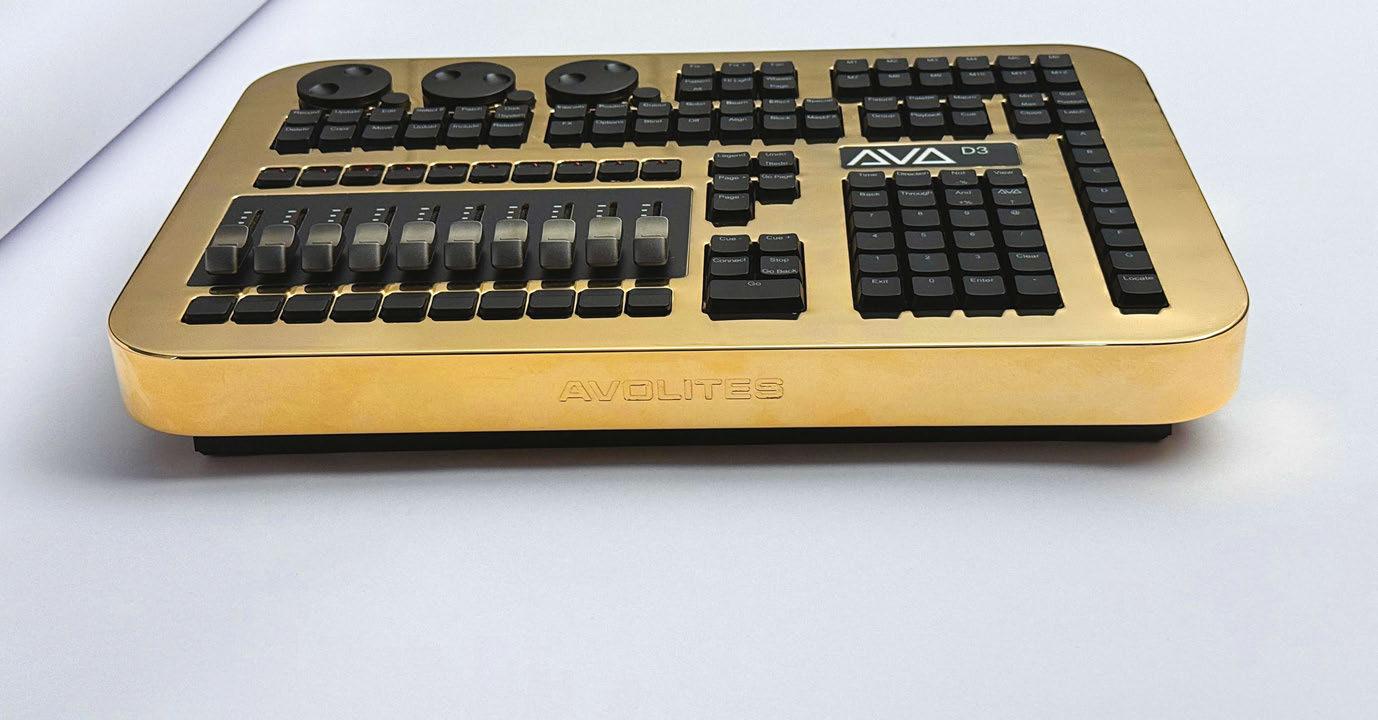

• It’s the smallest, most lightweight standalone full-featured console on the market.
• Powered by Titan, it supports 8 universes without a laptop.
• It’s compatible with a USB-C touchscreen.
• It features 10 playback faders, 3 encoder wheels and 12 macro buttons.
• Avolites’ Compact key layout makes it a seamless extension to your Avolites toolkit.
...and where we’re heading next
COMPANY: Martin Audio
LOCATION: Pune, India
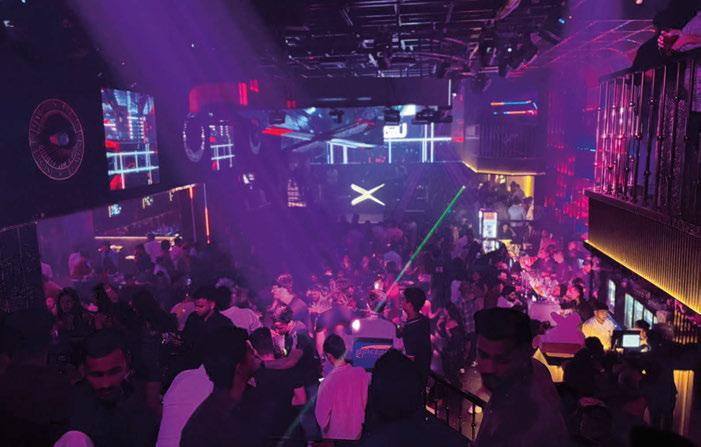
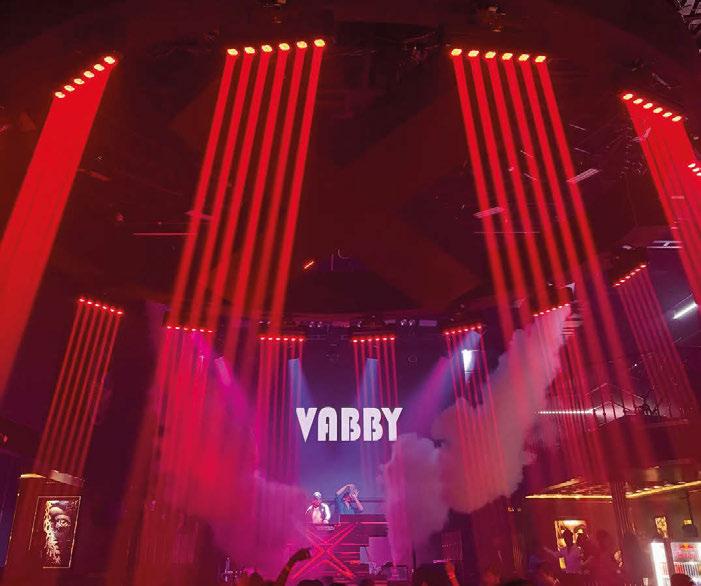
Boasting stunning interiors and an unmatched vibe, Xclusive Club & Kitchen has redefined the nightlife experience in the heart of Pune with a new Martin Audio sound system.
A variety of DJs rotate to deliver a heady mix of high energy commercial, Bollywood and EDM, delivered through a potent combination of Martin Audio’s TORUS and BlacklineX series, ensuring an elevated experience for their clientele. The place has been jumping since popular Indian rapper/DJ Raftaar headlined the spectacular launch, in mid-November 2025.
“At Xclusive Club & Kitchen the audio experience was a critical part of the overall design,” commented Shivam Vitekar, the venue’s AV consultant.
The main dance floor system features Martin Audio TORUS T1215 and TORUS T1230 constant curvature loudspeakers, delivering powerful and accurate front and midfield coverage with consistent tonal performance across the dancefloor.
Deep and punchy low-frequency impact is produced using Martin Audio Blackline X218 and Blackline X118B Hybrid Horn/ Reflex subwoofers, creating the physical energy required for a high-intensity club environment such as this. Additional onwall reinforcement in premium seating zones comes courtesy of Martin Audio MA BLX 15 and V12 loudspeakers, ensuring balanced sound pressure levels without overwhelming the listening experience.
Amplification for the main PA system is managed using Linea Research 44M 10 DSP four-channel amplification, delivering high output with exceptional control and efficiency. System control, alignment, and final tuning are completed using Linea Research DSP in combination with other third-party devices, collectively providing an integrated system design that delivers a powerful, yet refined sound experience tailored for extended high-SPL operation in a premium nightlife environment.
Reviewing the performance, Mr. Vitekar added: “The system delivers extremely strong output with excellent control, ensuring the energy remains consistent across the venue. From live performances to DJ-led nights, the sound remains clean and immersive. It has elevated the club’s identity and guest experience.”
Dharam Koll, Pre-Design & Sales Engineer, VMT Enterprise, stated: “The sound system delivers exceptional precision and balance, even during high energy sets. The TORUS arrays, paired with Blackline subwoofers, create tight, controlled lowend punch and crystal-clear highs. It’s a powerful and refined sound experience that we are proud to have engineered.”
Kekul Sheth, Head of Sales Distribution, VMT Enterprise, added: “Working on the Xclusive Pune project was a very smooth and collaborative experience with the system integrator and venue team. Every stage, from planning to commissioning, aligned perfectly with the shared vision. We are proud to be part of an installation that raises the standard of nightclub audio.”
Summing up, VMT Director, Jeff Mandot, said: “Xclusive Pune represents a significant step forward for professional club sound in India. This installation showcases what is possible when premium technology and expert engineering come together. It sets a strong benchmark for the future of highperformance nightlife venues.” www.martin-audio.com
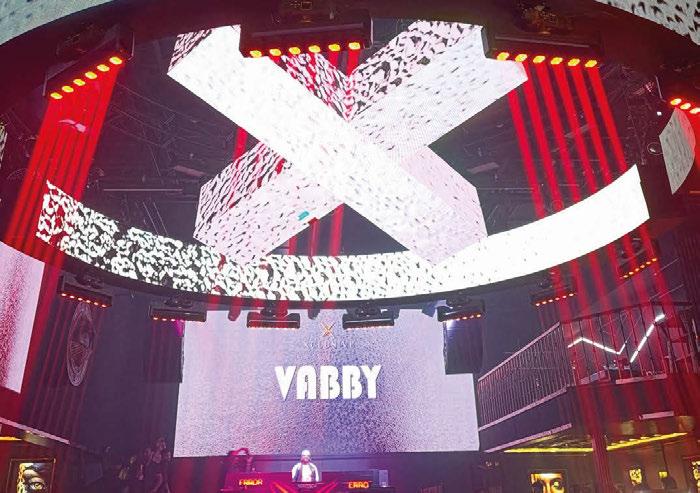
COMPANY: NEXO
LOCATION: Suzhou, China
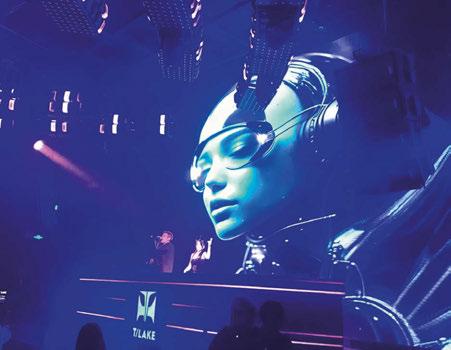
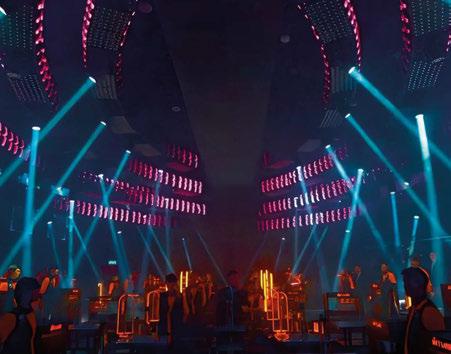
West of Shanghai and home to 5 million people, Suzhou is known for its canals, bridges and classical gardens, and now features an exciting new attraction in the form of the T/Lake Club located in the picturesque Wujiang District. With stunning views over Dongtai Lake, the club’s striking, industrial-style interiors are softened by warm lighting to create a lavish atmosphere.
As night falls, it’s all about the music with a party crowd enjoying top DJ sets delivered with breathtaking power and clarity by a NEXO GEOS12 line array sound system designed and installed by Guangzhou Hertz Audio – a large-scale professional audio systems integrator and installer covering theatres, concert halls, TV studios, stadiums and convention centres, and with a particular focus on nightclubs and music venues.
“Our engineers accurately modelled the sound pressure distribution using NEXO NS-1 software to tailor the installation plan,” commented Hertz Group Founder and Managing Director, Mr Adong.
“The sound covers the whole audience evenly, whether it is the front row of the stage or the corner seat, the guests enjoy consistent high-fidelity sound.
“NEXO NXAMP amplifiers bring intelligent power control and sound management to ensure that the sound quality of each performance is consistent from rehearsal to closing.
“NEXO products deliver unrivalled power and coverage at a price point that really makes sense,” he added.
“T/Lake is the latest of many successful Hertz Audio NEXO installations in nightclubs in China.” www.nexo-sa.com
From small set pieces to stadium roof points, Broadweigh wireless load cells meet every rigging challenge — now with the BW-S900 9000kg variant for the heaviest lifts. Trusted worldwide, they deliver real-time load data with accuracy and reliability. Know more. Do more.


COMPANY: Powersoft
LOCATION: London, UK
The updated Room 1 in London’s iconic fabric nightclub features a Bodykinetic dancefloor made possible by 36 Powersoft moving-magnet transducer, Mover, which has helped audiences connect with sound and vibration.
Technical Manager at fabric, Matt Smith, noted that the original sound design for Room 1 featured a groundbreaking and advanced dance floor, incorporating Bodysonic transducers, which resonated the floor with silent subharmonics that travelled through the body.
“This, combined with a quadraphonic speaker set-up and impeccable audio processing from the DJ booth, the system was really ahead of its time,” said Smith. “Keith Reilly and Dave Parry established themselves with the forward-thinking club design they introduced 25 years ago. Staying true to our heritage, we chose to retrofit and refine the original system rather than replace it entirely.
“We knew the newly refurbished Room 1 sound system wouldn’t be complete without upgrading the floor as well, and we’ve been working tirelessly to make this happen. The installation began with the full technical team involved and years of planning and design behind it.”
Compared to the previous system, which utilised 450 tactile transducers, the next-generation Bodykinetic dancefloor requires only 36 units of Mover, helping fabric to drastically reduce its energy consumption. Unlike traditional moving-coil transducers, where a copper coil moves within a magnetic field, Mover reverses this process, with the magnet moving within the coils.
This design offers several key benefits: greater power and reliability, reduced reliance on fragile copper coils, and enhanced haptic feedback through the inertial-drive configuration. Because of these characteristics, Mover benefits from inherent high efficiency, requiring less power than traditional transducers and further compounding the energy-saving benefits for fabric.
Compared to a traditional subwoofer installation, Mover also delivers a 50% reduction in acoustic pollution.
The new fabric system delivers a much more powerful and immersive tactile experience, with enhanced haptic feedback that makes the sensation of sound more pronounced and engaging.
The Movers provide more reliable performance, ensuring the dancefloor feels consistently responsive and smooth, while the cleaner, clearer sound and feel allows dancers to connect with the music on a deeper, more visceral level. Another important advantage of the new floor is its ability to enhance accessibility for individuals with hearing impairments.
By transforming sound into vibrations that can be felt through the body, the new Bodysonic floor ensures a more inclusive experience, empowering everyone to engage with the music on a deeply physical level. Fabric is working with Deaf Rave to fine tune the Powersoft floor for an optimal experience for members of the deaf community. www.powersoft.com
COMPANY: Renkus-Heinz
LOCATION: Madrid, Spain
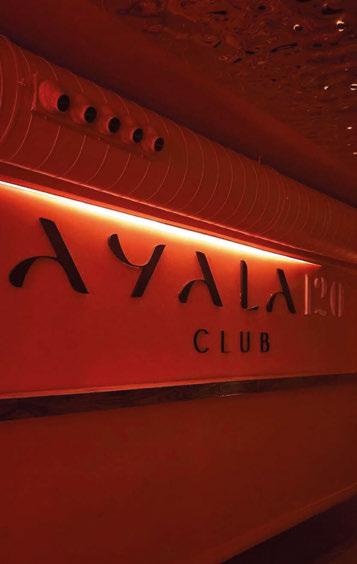
Madrid is packed with nightlife options to suit any taste and any budget, and with so much choice, clubs in the city need to work hard to stand out, and Ayala 120 is doing just that.
Nestled discreetly in Madrid’s exclusive Salamanca district, between Goya and Manuel Becerra, Ayala 120 seamlessly blends elements of a sultry nightclub, high end cocktail bar, and lively salsa club, making it a go-to spot for those looking to party late into the night.
With a capacity of 300 and music playing from 7pm until 6am most days, the club needs a reliable and memorable sound system to keep the dancefloor full and ensure customers keep coming back.
To make this happen, the owners looked to high-end loudspeaker manufacturer Renkus-Heinz.
“Our goal was to transform the customer experience from ordinary to extraordinary by providing an immersive atmosphere, with music at the heart of it all,” said Ivan Castillo, Sales Engineer for SeeSound, RenkusHeinz’s distributor in Spain. “The club is an open-plan space, but it’s divided into two main zones: the central dancefloor, which serves as the main club area, and a secondary area at the edge of the dancefloor and around the bar. This layout needed some careful thought and a tailored solution to ensure consistent sound quality throughout both zones.”
The team at SeeSound selected Renkus-Heinz C Series loudspeakers to fill both spaces. “These loudspeakers incorporate advanced point source technology and complex conic horns with updated drivers, delivering clean, natural sound with enhanced pattern control,” Castillo explained.
“We chose the C Series because it gave us the sound quality and control we needed for a club environment. The horn design helps keep the sound even and focused, so whether you’re on the dance floor or off to the side, you’re getting the same clear, powerful audio. And with the CX models, we had the flexibility to configure the system exactly how we wanted for each part of the space.”
The team installed a combination of the CX121, CX112S, and CX61
models throughout the club. The four CX121 loudspeakers serve as the foundation of the venue’s audio setup, offering high output and precision to ensure every note, beat, and lyric is crystal clear throughout the space.
Despite its compact size, this full-range loudspeaker delivers powerful, balanced sound without overwhelming the room.
Enhancing the club’s deep bass response are two CX112S subwoofers, which provide the rich low frequencies essential for dance music. Its powerful bass output infuses the venue with pulsating energy, while rounding out the system, the CX61 loudspeakers add clarity and detail to the midrange and treble, ensuring that the music remains crisp, well balanced, and free from distortion. Whether the intricate highs of a DJ mix or the smooth flow of electronic beats, the CX61 maintains fidelity across all frequencies.
“We chose Renkus-Heinz CX121 loudspeakers for the main space as they can deliver a lot of power and provide a controlled bottom end that really helps on the dance floor,” noted Castillo.
“For the areas around the perimeter of the dancefloor which needed to allow conversation, we installed four CX61 loudspeakers as they deliver enough power in a cabinet that is very low profile and has an extended coverage, especially in the horizontal axis.”
The combination of deep bass, detailed midrange, and crisp highs from these loudspeakers results in an auditory experience that perfectly aligns with the venue’s commitment to ensuring each night offers a unique, high-energy experience tailored to the crowd’s vibe.
“We wanted something that would set us apart from the rest of the clubs in this area,” confirmed the owners of Ayala 120. “With this combination of loudspeakers from Renkus-Heinz, we believe that we now have the edge over our competitors and that our customers will keep coming back to party with us.”
www.renkus-heinz.com
COMPANY: Outline
LOCATION: Guarujá, Brazil
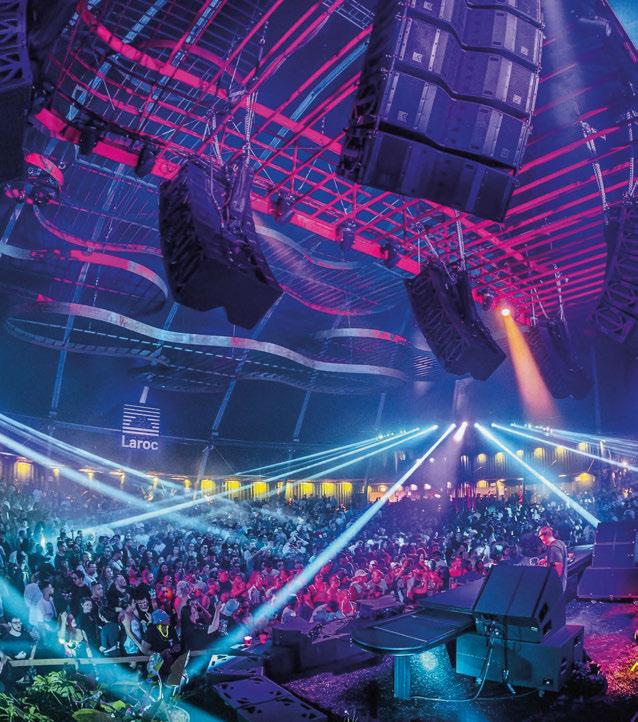
The most recent addition to the Laroc Club portfolio of venues, Laroc Guarujá, is a continuation of the brand’s mission of delivering unparalleled experiences to a 3,000-strong audience, blending open-air design, breathtaking natural surroundings, and cutting-edge production.
Its diverse artistic profile ensures an eclectic range of musical genres – from mainstream to underground, progressive house to trance – allowing each night to have its distinct character.
Diversity, it is said, is central to Laroc’s ethos, with the club dedicated to promoting the culture of electronic music with both quality and substance.
To ensure high-class sound quality, Laroc Guarujá installed a premium Outline sound system, featuring 40 GTO C-12 line array elements (eight suspended arrays, each with five modules), 12 Mantas 28 as front-fills, and 32 DBS 18-2 sub-bass enclosures configured in cardioid mode.
The entire setup is powered by Outline amplifiers, and the installation was carried out by Gabisom Audio Equipment, one of Brazil’s largest production companies.
Ewerton Leandro Manca, Sound Designer and Gabisom’s Sound Engineer, shared his insights on the installation: “The Outline GTO Series redefines what is possible in live sound. It reproduces every genre – including techno – with natural, impactful clarity. Its studio-grade accuracy at live performance levels, coupled with the ability to handle immense SPL, enables sound engineers to craft mixes with outstanding depth and detail, ensuring an immersive experience for audiences.”
With its Outline audio system, the venue has set a new benchmark for club sound in Brazil, impressing both DJs and audiences alike. www.outline.it

COMPANY: d&b audiotechnik
LOCATION: Prague, Czech Republic
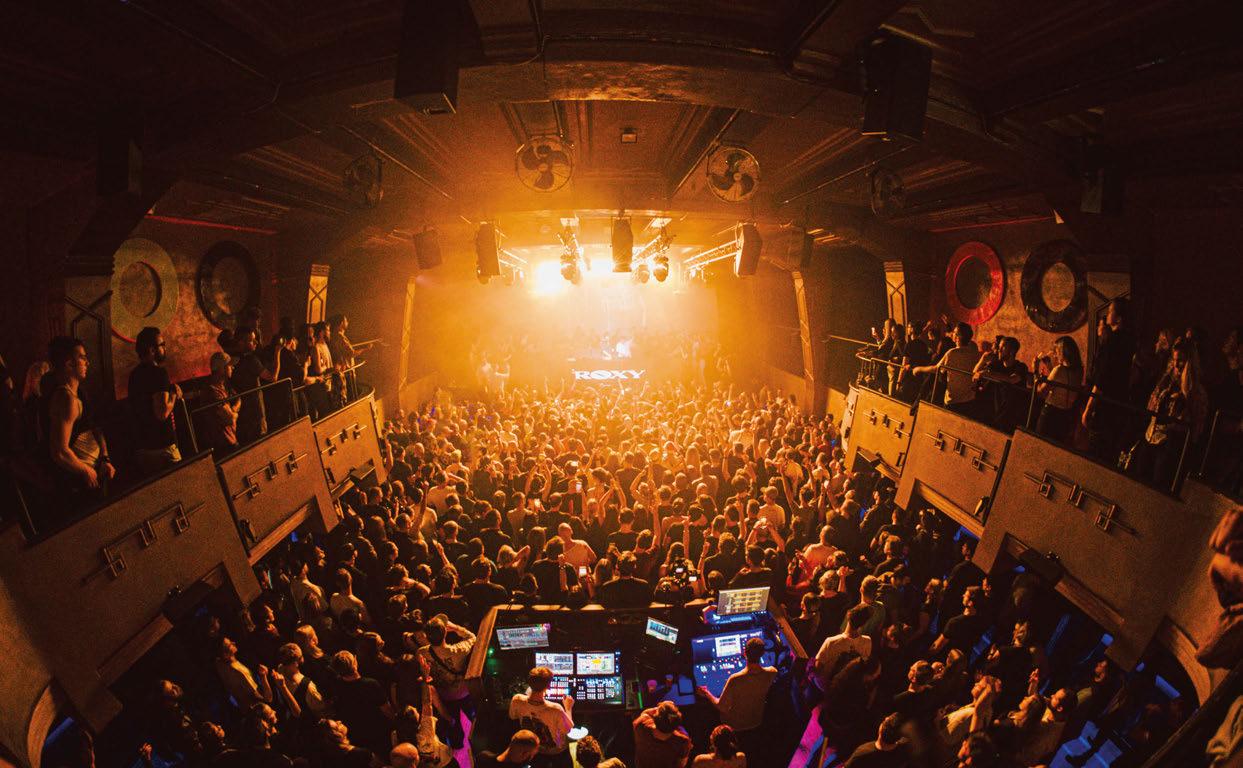
One of Prague’s best-known live music venues, ROXY has sharpened its competitive edge with a new d&b audiotechnik system, as installed by SB Sound. Since opening as a music venue in 1992, ROXY has been renowned for the diversity of its music programme. Production Manager Honza Kubát said: “Basically, we cover almost all genres of music, except opera and classical – everything from hardcore metal shows to hip-hop to all sorts of electronic music – techno, house, garage, drum and bass. You name it, we do it.”
ROXY occupies a former cinema, built in the 1920s, so has the advantages of being both architecturally striking and relatively large. It can host up to 1000 music lovers, while its location, in Prague’s historic Old Town, makes it highly accessible. It’s fair to say, ROXY is more than a venue –it’s a cultural institution. However, despite its striking appearance and attractive décor, the room – with its main-floor-and-balcony format familiar to many venues – is a highly reflective space. As a result, sound reinforcement has always been a compromise.
“Our previous sound systems have been various models of line array,” says Kubat, “and with so many reflections in the room, particularly from the balcony front, we had uneven coverage, including dead spots under the balcony where a lot of audience members stand.”
ROXY’s accessible city-centre location raises other issues. Above the sublevel venue is a five-storey apartment block, with many more nearby, so noise pollution has also been a constant concern.
At the same time, as ROXY’s Deputy Director Nik Stanko explained, this sound upgrade was about more than the need for better sound. “One of our main goals was to create a sound system that put us a step ahead of our competition.”
The choice of d&b Soundscape would not only offer answers to ROXY’s acoustic conundrums, but it would also deliver a competitive edge. This would be a leap forward in technology – one that would offer new
paradigms in artistic presentation and listening experience.
Having agreed to investigate a d&b solution, the ROXY sound team attended the CTM Festival in Berlin for a chance to listen to Soundscape in action, and the decision was made.
“We chose a d&b Soundscape system because it’s a cutting-edge technology,” says Kubát, “and would give us the technical advantage we wanted – not just over our competitors in Prague, but over music clubs and music venues throughout Europe.”
The system design was a collaboration between ROXY’s in-house sound team, local consultant Michal Brůna, d&b’s Education & Application Support (EAS) and representatives from SB Sound, d&b’s Czech distributor and the integrator of the system.
Because of the building’s age and protected status, structural and heritage limitations meant care had to be taken with cabinet choice and placement. An initial design was tweaked and refined via d&b’s ArrayCalc software. Then, to confirm the final design, a physical demo was staged with loudspeakers placed on stands to simulate their positions.
The 270˚ d&b Soundscape system uses V7P cabinets for the main system and for FOH delays, plus a complement of Y10P, 44S and E8 cabinets fulfilling a range of duties including front-fills, delays, surrounds, balcony coverage and under-balcony delays and a pair of SL-GSUBs on the floor. Finally, eight M4 monitors serve the stage, and the whole is powered by D90, 40D and 5D amplifiers.
The system came into service in July 2025 and, after some final tuning and staff training, has solved the venue’s acoustic challenges.
Using a larger number of compact speakers instead of two hard-driven line arrays helps to cover the room evenly and efficiently, while raising the subs has mitigated low frequencies travelling through the fabric of the building.
www.dbaudio.com
COMPANY: Sonic Design Studios
LOCATION: London, UK
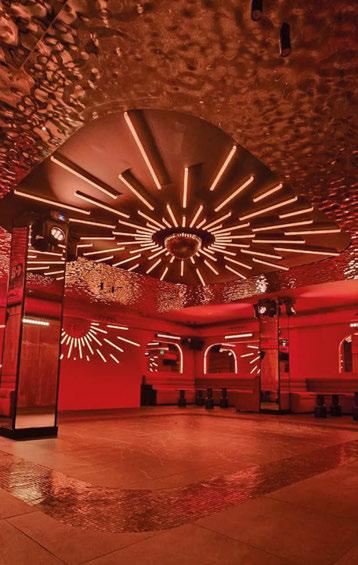
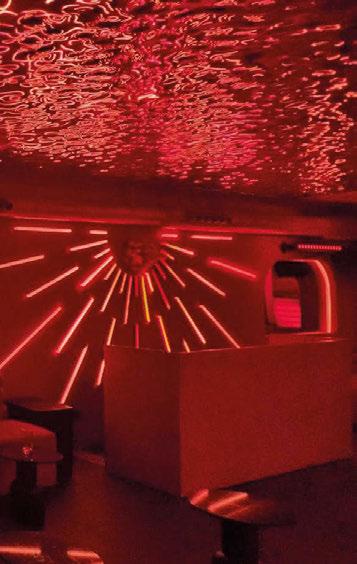
Concealed beneath the Chotto Matte restaurant in Soho, Claude’s is an intimate basement members’ lounge defined by atmosphere rather than scale.
The interior, designed by Nadia Sousa of Superfutures, is richly layered, combining sculptural seating, saturated colour, muralled surfaces, and a highly controlled lighting scheme to create a space that feels immersive without excess. Sonic Design Studios was appointed to design and integrate a complete audio system for the basement, with a brief aligned closely to the architectural intent.
“Sound was treated not as an overlay, but as an embedded spatial component, expected to carry weight and physicality while remaining visually and perceptually discreet,” explained Sonic Design Studios Director Tariq Ibrahim. The room’s low ceiling planes, integrated LED geometry, and curved wall treatments establish a strong horizontal emphasis, and within this context, the audio system was designed to reinforce intimacy
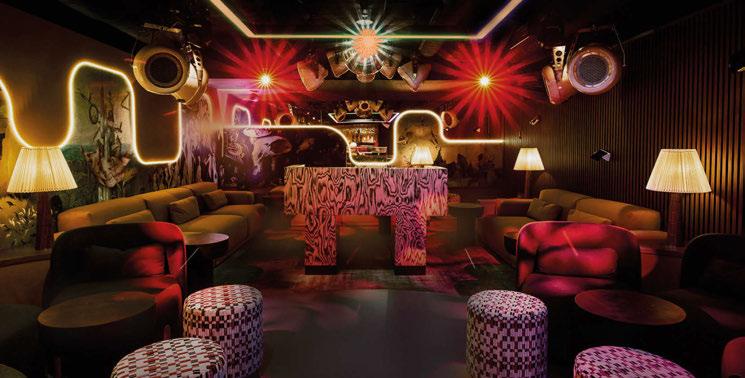
rather than overpower it. Energy is present, but measured, using contrast and restraint to shape mood. The primary system is built around Pequod Acoustics Ostro coaxial loudspeakers, selected for their ability to deliver controlled, coherent output within a visually sensitive environment.
“These form the main sound sources across the dancefloor and central listening zones, focusing energy precisely where it is needed while remaining unobtrusive within the architecture,” commented Ibrahim.
Low frequency presence is delivered via Pequod Acoustics Ovoid 18 subwoofers, providing depth
and physical engagement that is felt rather than announced, and to maintain balance across the softer lounge areas and perimeter seating, Pequod Acoustics Borea subwoofers are deployed as secondary low frequency fills. Elsewhere, Pequod Acoustics Zephyrus loudspeakers act as fill elements, maintaining tonal continuity as the room transitions between social lounge and late-night listening.
“Physical, immersive, and controlled, the system supports the venue’s identity as a considered, design led space,” concluded Ibrahim. www.sonicdesignstudios.com

COMPANY: DAS Audio
LOCATION: Pattaya, Thailand
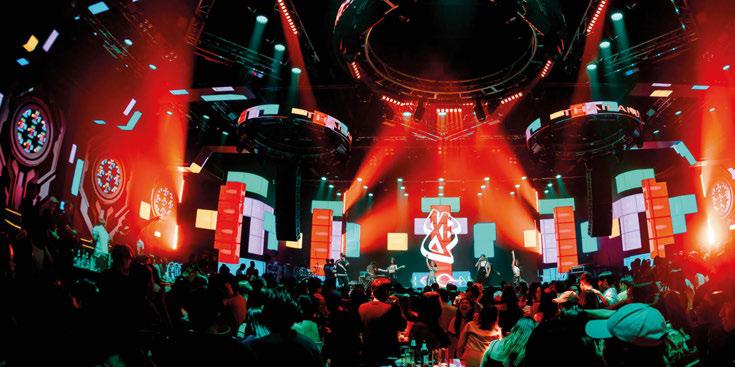
Located in the heart of Pattaya, Icon is a nightclub that relies on superior sound to maintaining its exclusive appeal. To ensure exceptional sound quality, intelligibility and power, Icon Club selected DAS Audio systems, as supplied by distributor PSG Penth, to make every night an unforgettable experience.
The self-powered line array system EVENT212A, which incorporates advanced digital signal processing with FIR filters for linear phase response and highly precise audio reproduction, was selected to cover the main stage area. The outcome is enhanced clarity, well-defined percussion and a fuller, more natural audio experience.
The intuitive DAScontrol technology simplifies configuration, allowing for quick setup regardless of the event, and the EVENT-26A
system, also chosen for the installation, complements the main system. For lowfrequency reinforcement, the EVENT-115A and the UX- 218A were selected. The EVENT115A, designed to pair seamlessly with the EVENT- 26A, is a compact, self-powered subwoofer featuring a 15-inch front-loaded low-frequency transducer which houses a Class D amplifier that delivers 1200W peak power.
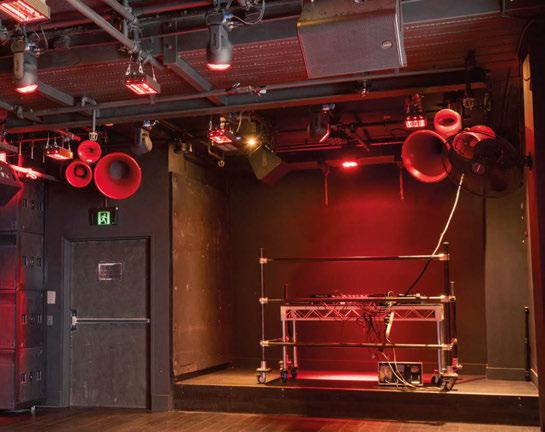
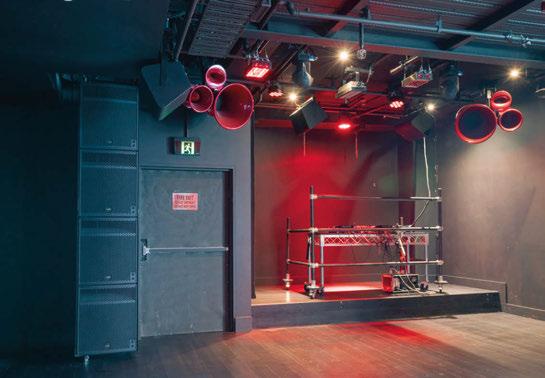
The UX-218A adds more low-end power, and to achieve optimal sound quality throughout the club, ACTION-515A systems were deployed. Complementing this setup, the ACTION-118A, equipped with an 18-inch active subwoofer, effectively handles the club´s low-end demands. Lastly, the DSP-4080 digital processor was selected to manage the system. www.dasaudio.com
COMPANY: Void Acoustics
LOCATION: Sydney, Australia
Located in the vibrant Kings Cross district of Sydney, Australia, Kings Cross Hotel is a multi-level hotel with a capacity of more than 1,000 guests across its six floors. This multipurpose venue opted for an installation of a Void Acoustics sound system to transform one its levels into a nightclub. The owner’s vision was to create a venue with pristine audio and striking visual appeal, while adhering to strict urban noise restrictions and ensuring complete sound isolation from the rest of the hotel.
To overcome these challenges, isolation throughout the system was ensured through precise acoustic design, advanced mounting techniques, and careful structural planning. The project was carried out by integrator Beyond Audio Visual, working in partnership with distributors Audio Logistics.
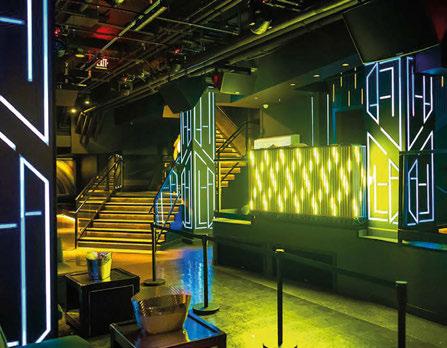
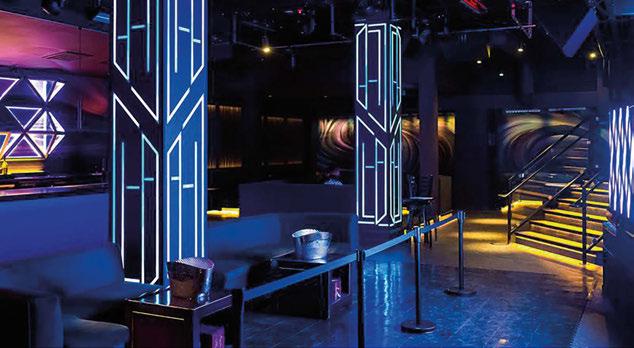
Recommended for its visual appeal and sound quality, Void Acoustics was the natural choice for the new club. The final system delivered deep, punchy bass from Arcline 118s, crystal clear highs and mids from Air Motions in signature red, and room filling coverage from Venu 12s loudspeakers.
“We had experienced Void’s sound systems at a few festivals before, but installing one and hearing it at the Kings Cross Hotel was a real pleasure,” said Geordie Hawkins, General Manager at Kings Cross Hotel, Sydney. “Beyond AV provided an excellent installation, and with the support of Audio Logistics, they assisted us from the start of the project, scoping amps, offering technical support, and EQing the system during the commissioning stage. www.voidacoustics.com | www.beyondav.com.au
COMPANY: EAW
LOCATION: Los Angeles, USA
When the owners of West8 in downtown Los Angeles, set out to create a high-energy destination for DJ-driven music, they knew that sound would define the experience. To achieve the perfect balance of clarity, punch and power, they turned to integrator IHOMI, who designed and installed a complete Eastern Acoustic Works (EAW) sound system that now anchors the club’s dynamic audio environment.
The system, which features EAW MKD Series loudspeakers, SB Series subwoofers and UXA amplifiers, was engineered to deliver exceptional SPL and control in a challenging basement space beneath a residential building. The result is a sound that’s both immersive and finely tuned to the venue’s unique acoustics.
“The owners knew exactly what kind of sound they wanted,” said Oscar Naranjo, COO of IHOMI. “They’ve been in the club scene for years, going back to the Avalon days when EAW was known for that signature club sound. They wanted to bring that same energy and quality back to downtown LA, so EAW was the clear choice.”
For West8, IHOMI designed a layout that balanced coverage and control across multiple listening zones. The main system includes two MKD1294 loudspeakers for the left and right mains, complemented by eight MKD1096 speakers – two dedicated for DJ monitoring and six providing zone coverage throughout the space.
Low-end energy comes from three EAW SB825P and two SB250z subwoofers, with additional EAW CIS300 loudspeakers extending sound into the restrooms to keep the energy consistent throughout the venue.
“The pressure and impact from the EAW boxes are incredible,” commented Naranjo. “They give that low-mid punch DJs love; extremely
tight, very responsive. Even with 15-inch subs to fit into the space, we were able to achieve excellent low-end extension without losing clarity or headroom at all.”
IHOMI specified four EAW amplifiers and integrated an Allen & Heath AHM system for management, giving West8’s team a simple and intuitive control interface.
“With EAW amps and processing, everything was seamless,” explained Naranjo. “We could separate the zones, control EQ and make the interface super easy for the client. Just simple volume control on their end, while we handle all the back-end tuning.”
The installation, Naranjo noted, was straightforward from start to finish. “It was a very smooth process. We used EAW’s Resolution software along with Smaart software to fine-tune the system,” he commented. “The tools worked perfectly, and the system responded exactly as expected.”
As the club is in the basement of a downtown building, IHOMI faced specific acoustic and spatial challenges. “We had to be strategic about sub placement and tuning because there are apartments above,” explained Naranjo. “We positioned two subs under the DJ booth, one under the entrance stairway, and others around the room for even coverage. The system’s flexibility made it easy to adapt to the environment while keeping everything punchy and impactful.”
Despite the space’s limitations, the results exceeded expectations. “We didn’t have to push the subs hard at all,” Naranjo added. “The main speakers already give a lot of punch and presence. The whole system feels balanced and alive.”
www.eaw.com
COMPANY: Elation
LOCATION: Johannesburg, South Africa
Photos: Mike Bets
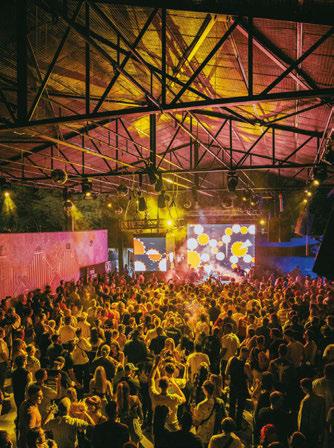
Truth Nightclub in Midrand Johannesburg recently celebrated its official reopening with a state-of-the-art lighting upgrade featuring Elation fixtures. The Production Warehouse, Elation’s exclusive partner in South Africa, collaborated closely with the venue to select the ideal equipment for the re-imagined club, and the installation was completed under a tight schedule, just in time for the pre-launch of the revamped ‘The Terrace’ dance floor. Truth is a regional landmark and one of South Africa’s most iconic nightclubs. With five dance floors, it has hosted world-renowned artists like Paul Van Dyk and Richie Hawtin, among many others.
The Terrace underwent a complete rebuild and upgrade after a fire damaged part of the venue. Elation was chosen as the preferred lighting provider for the newly reconstructed space, reinforcing the club’s dedication to top-tier lighting.
Project Designer Emil Lars explained the decision behind choosing Elation fixtures: “Essentially, the conceptual vision for The Terrace was one of flexibility and openness, which makes choosing a set of permanent fixtures quite challenging as they’d need to be extremely flexible,” he said.
“The Elation FUZE SFX LED spot stood out for its flexibility and ability to create dark techno floors with narrow beams and contrasts with extremely wide soft gobo washes that can feel quite dreamy,” he continued.
He added that the PULSE PANEL and PULSE BAR S were chosen for eye candy, flexibility, sheer brightness and impact with their small form factor making them easy to place the fixtures on various designs. “Exceptional quality, flexibility, and future-proofing is why Elation was a no-brainer,” he said.
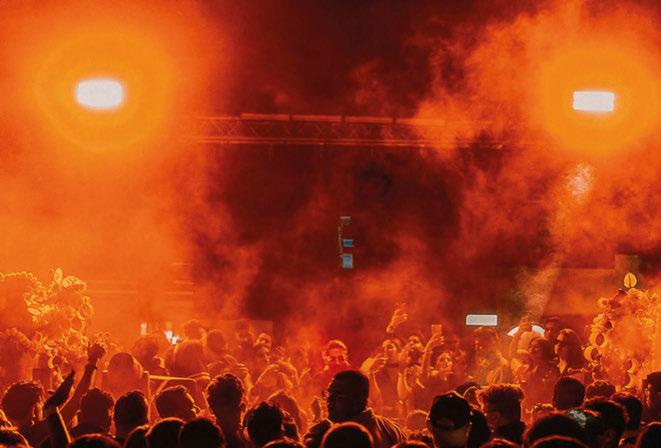
Designer Shaniel Laloo, tasked with commissioning the rig, commented: “We needed to create a very dynamic lighting package as the club caters to many different genres of music. We were looking for something that could be punchy one day and still do the ‘darker nights’ more effectively. This meant lots of pixels and a main fixture with an extensive feature set.”
Laloo opted for a grid-based design for the FUZE SFXs to maximise
their potential. “Whether in beam or wide spot modes the design just allows great looks with minimal effort,” he said. “The most important feature for me is the ability to move between different zoom ranges with precision and speed, allowing the fixture to take on multiple roles in our programming.”
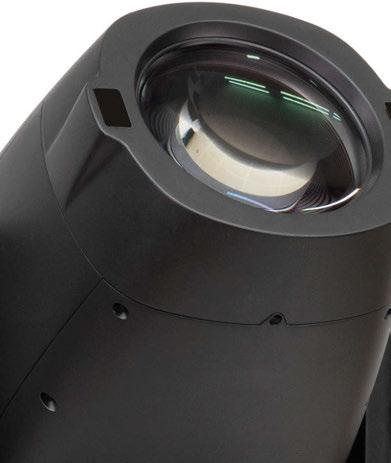
Although the initial specification called for DARTZ 360 moving lights, the large, open-air layout of The Terrace required more power to cut through the LED screens, making the FUZE SFX the perfect solution, with 16 units ultimately installed.
Regarding the PULSE fixtures, Laloo stated: “I wanted to make sure that one strobe fixture could essentially cover the entire venue. So when we do go into random strobing, you are completely immersed in white light from different angles, giving a euphoric feeling on the dancefloor.”
Utilising four PULSE PANELs and six PULSE BARs, Laloo and his team easily covered the entire space. He added that they needed something to cover spaces behind the DJ without spoiling the aesthetic open-air feel.
“The PULSE PANELs and BARs were placed on drop bars to create light from nothingness, allowing bright strobes, colors washes or just simple individual pixel effects. We also placed the PULSE PANELs around the LED screen to allow for NDI mapping through a media server. So it’s not just a light; it’s a video fixture as well when we want it to be.”
Lighting operator David O’Molony praised the setup: “The PULSE BARs are really fun to work with. The iris and zoom ranges on the SFXs are great, and the colors are vibrant too.”
Marnus Nieuwoudt, owner of The Production Warehouse, concluded: “It’s an absolute honor to work at a venue of the caliber of Truth. It’s a national landmark that everyone knows and it’s great to have played a role in the upgrade. We’re very proud of the results and eager to continue with future expansions and revamps on their other floors.”
www.elationlighting.com www.productionwarehouse.co.za
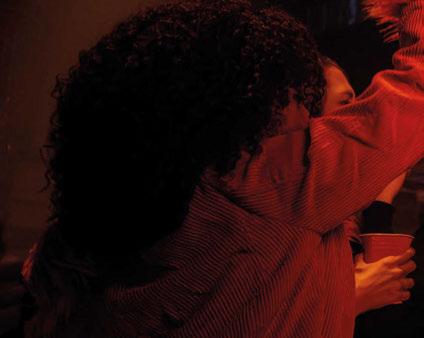
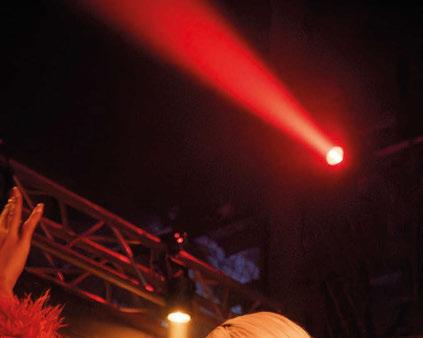
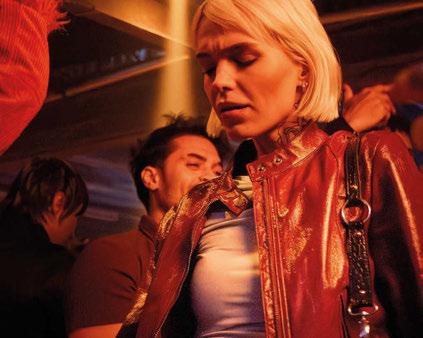


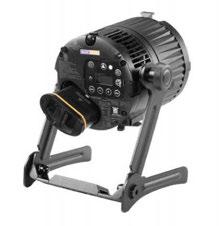
QuikBeam with QuikBrick
COMPANY: HARMAN Professional
LOCATION: Manama, Bahrain
To meet rising guest expectations for elevated entertainment and nightlife, Arch Hotel Bahrain partnered with Masterpiece and HARMAN Professional Solutions to deploy a full-scale audio system anchored by JBL, Crown, BSS, Soundcraft, and AKG technologies. The upgrade supports the hotel group’s latest club concept, designed to engage a younger demographic with highimpact sound.
As a prominent player in Bahrain’s hospitality sector, Arch Hotel operates multiple properties across the region. When the brand set out to create a new club environment tailored to nextgeneration travellers, reliability and sonic excellence were nonnegotiable. Drawing from years of experience using HARMAN solutions across previous projects, the AV team, led by Senior Sound Engineer Ajeesh KP, selected a comprehensive range of HARMAN Professional products for the new space.
“Based on my extensive experience with various brands, I can confidently say that my experience with HARMAN Professional audio products has been exceptional,” said Ajeesh. “This positive track record was a primary reason why, when our management planned to launch a new club in Bahrain, my first choice for audio solutions was HARMAN Professional.”
The system configuration includes 18 JBL SRX910LA line array elements supported by SRX910LA AF array frames, paired with 12 JBL SRX928S subwoofers for deep, club-ready low end. In smaller zones, the team deployed JBL VRX932LAP loudspeakers and compact PRX912 monitors, along with PRX918XLF subwoofers, while Crown XTi 4002 amplifiers power the system. Soundcraft’s Si Expression 1 console, dbx DriveRack PA2 and VENU360 processors, and a BSS BLU-100 DSP unit were used to handle signal distribution and tuning, while AKG D5S microphones provide reliable stage performance.
“Our primary goal was to create a pure club environment tailored to a younger demographic,” said Ajeesh. “We focused on achieving powerful, clear audio performance while keeping the sound system compact and efficient. We’re not aiming for bigger size, but for better impact.”
Although the space’s architecture presented some design challenges, Ajeesh and his team addressed acoustic considerations early in the project planning by leveraging JBL Performance Manager and JBL Venue Synthesis software to tune the system and overcome architectural constraints. The system’s real-time monitoring and DSP tuning capabilities ensured consistent, high-quality output from every component. The installation has also benefited from longstanding sales and support services provided by HARMAN distributor, Masterpiece.
“The primary factors for selecting JBL, Crown and AKG were the exceptional quality of HARMAN Professional audio products and the outstanding after-sales support provided by Masterpiece,” Ajeesh commented. “They have consistently delivered amazing sales and service support since 2019.”
Since opening the new club venue, guest feedback has confirmed the project’s success. Visitors regularly comment on the sound system’s clarity, punch and immersive feel, an experience unmatched by other hospitality venues in the region.
“The feedback we’ve received from our valuable customers has been absolutely amazing,” said Ajeesh.
“They have commented that they have not experienced punchy sound quality like this in any other hotel in Bahrain,” Ajeesh added. “Due to this overwhelmingly positive feedback, our management is extremely satisfied with the decision to choose HARMAN Professional.”
pro.harman.com
LONDON / UK EMEA
Photos: Jody Hartley
Storied London club undergoes a massive revamp with an allencompassing overhead installation and new sound system.
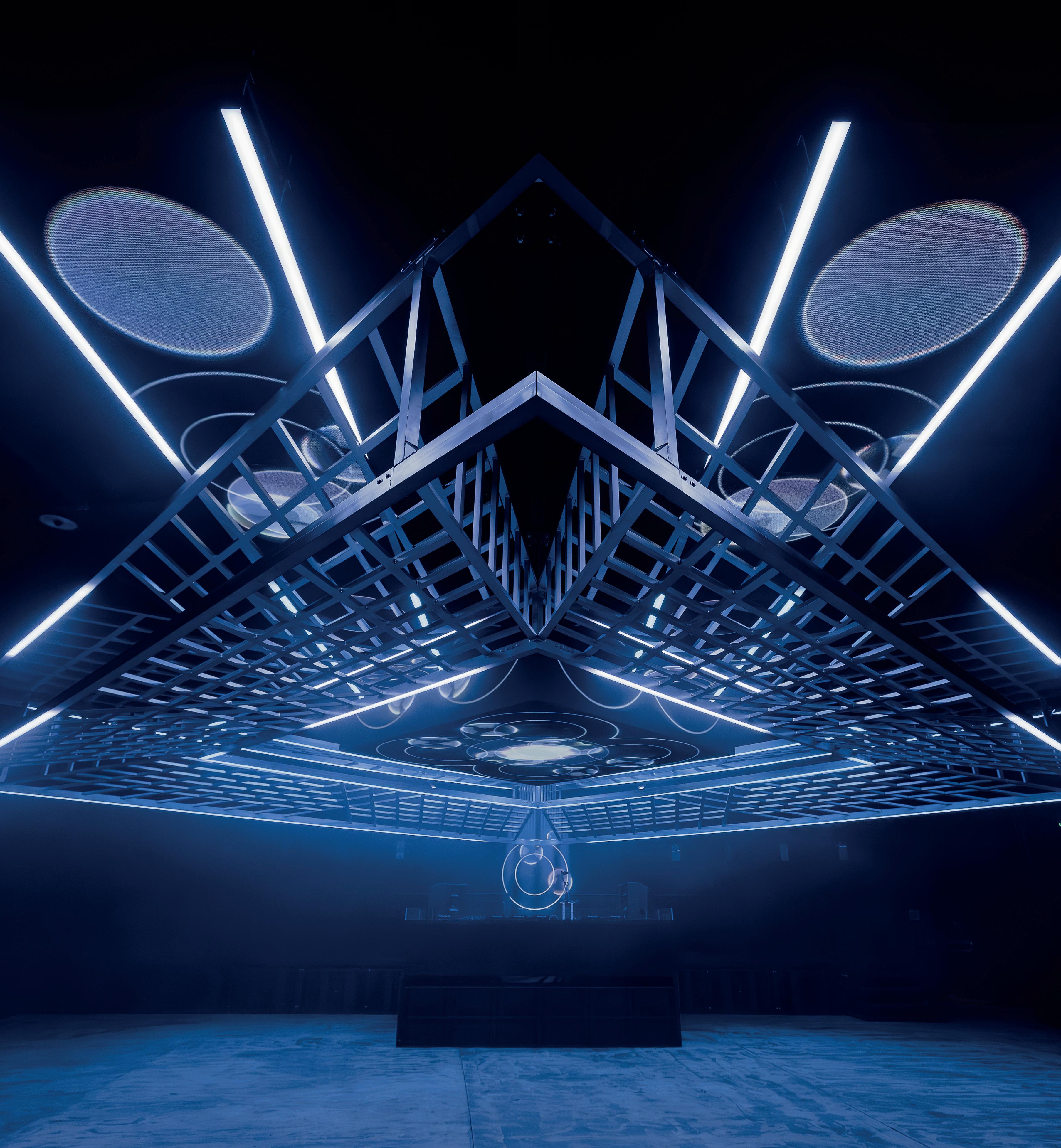
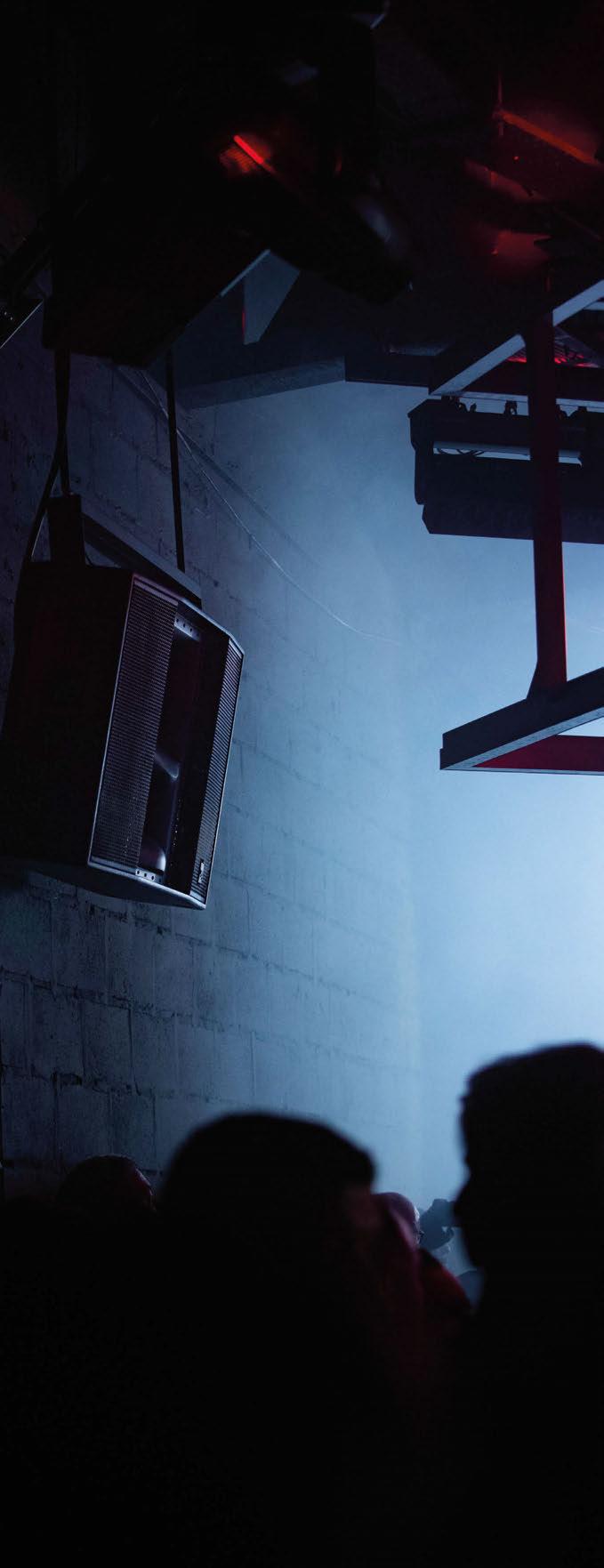
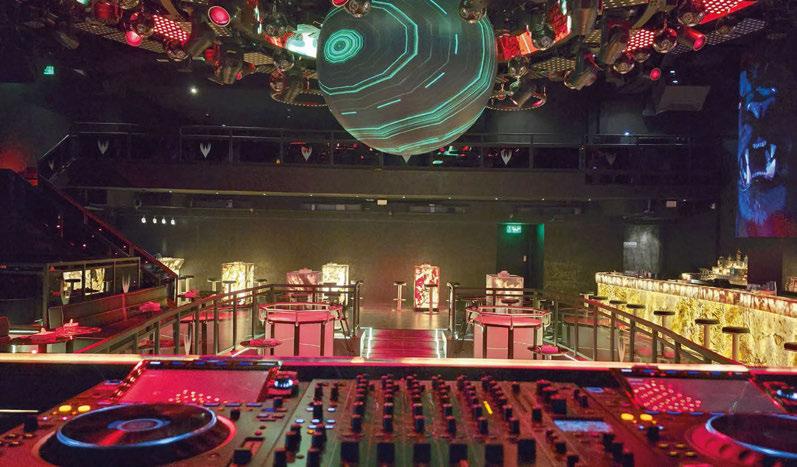
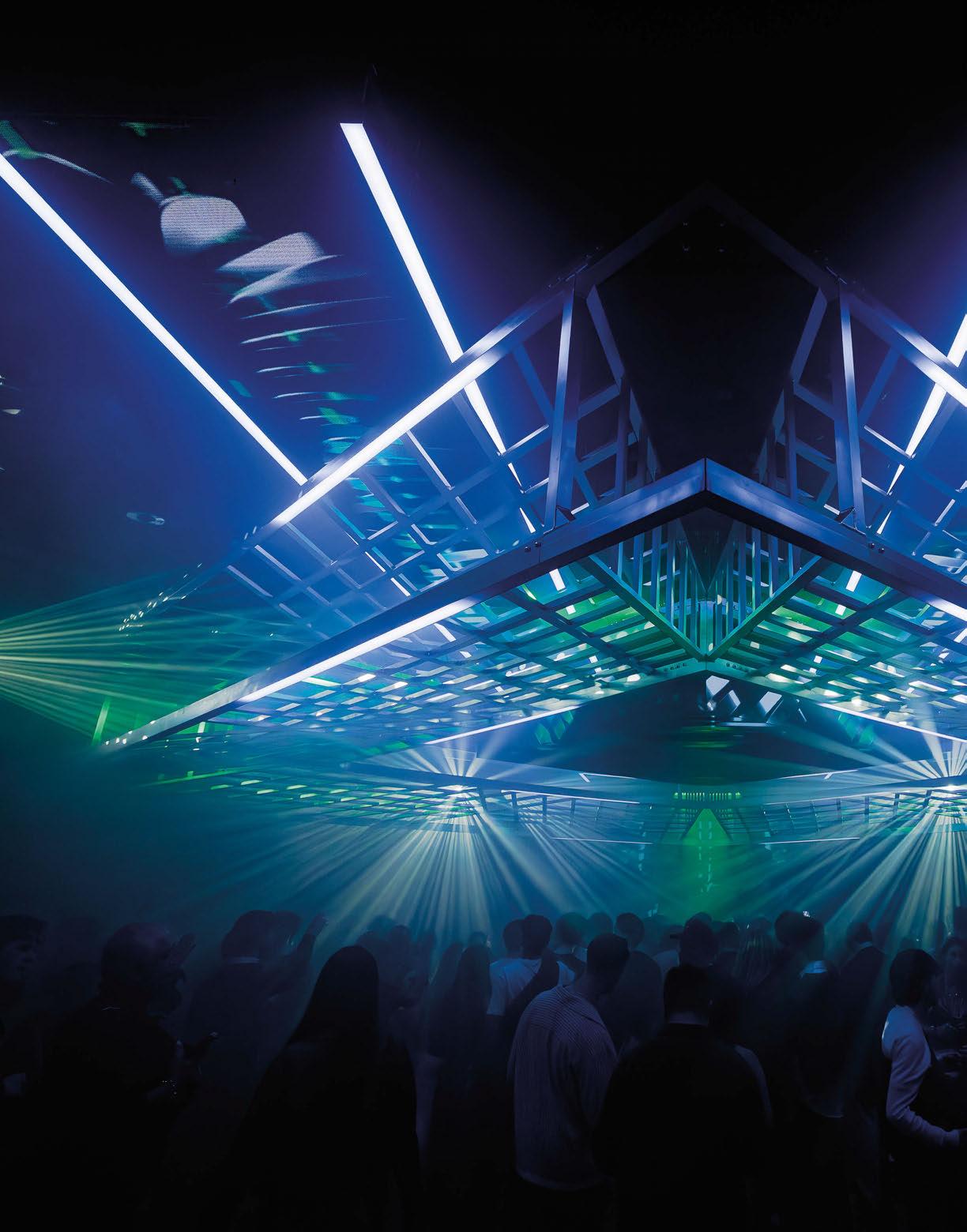
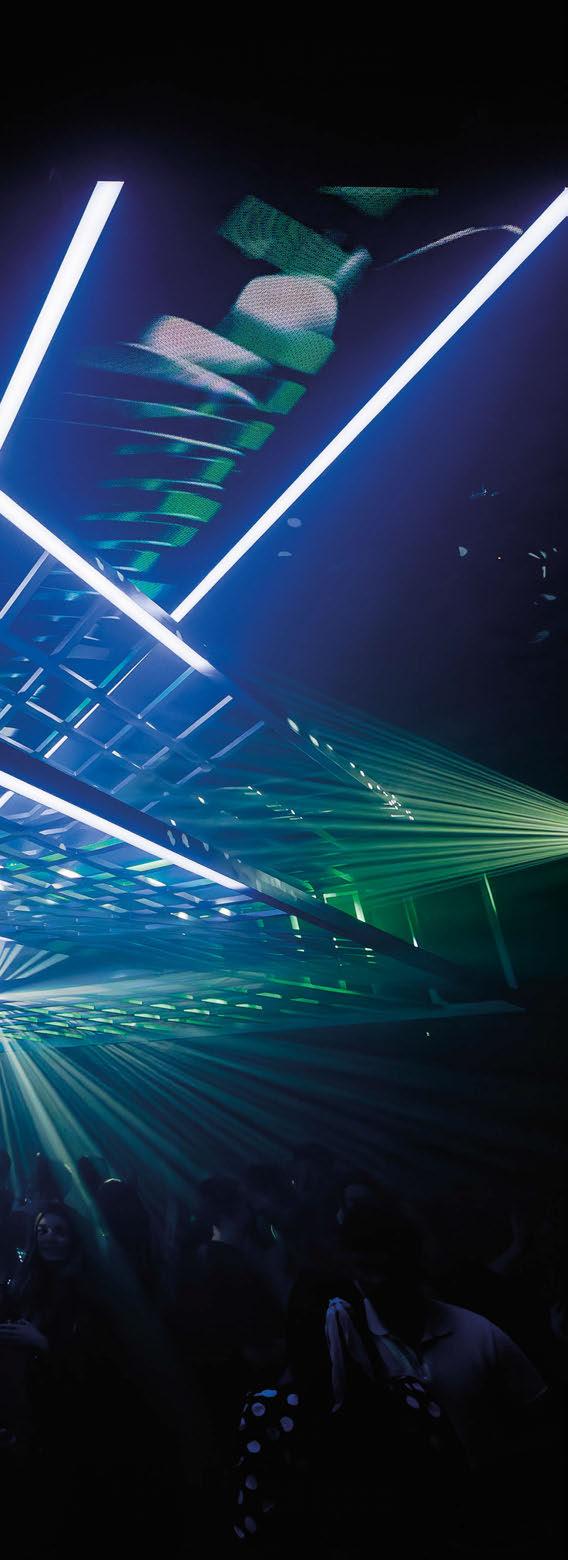
As Ministry of Sound celebrates its 35th anniversary in 2026, it does so having undergone its most significant renovation since it opened, with a complete overhaul of its iconic main room, The Box.
The redesign sees The Box wholly transformed into a cutting-edge club space which unfolds within the existing confines of the revered room –complete with a state-of-the-art overhead AV installation, and all-new video, lighting and sound design.
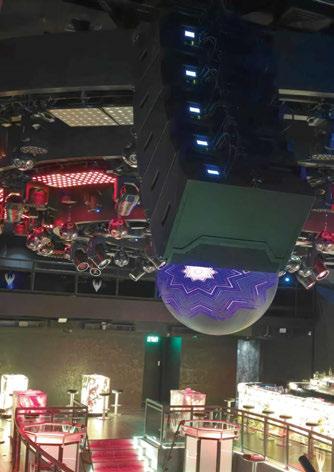
A vast, multi-layered, precision engineered installation acts as the new centrepiece of The Box – an icon and emblem for the space to define this new era – which was designed and manufactured by Lucid Creates and houses a nexus of multi-layered reflective, metal framework referencing the club’s grittier, industrial spirit.
The refurb includes a brand-new, custom six-point KV2 Audio sound system, installed by Patchwork London, a redesigned dancefloor and modular DJ booth lowered into the crowd, and an increased capacity.
“The redesign has fully transformed the room into a future-facing club space while preserving its industrial spirit,” said Matt Long, Club Director. “This renovation allows us to reset that standard for the next generation to continue evolving the space without losing its identity.”
Stage and show design studio Lucid Creates were enlisted by Ministry of Sound as creative partners to reimagine and redesign The Box, and were faced with a multitude of challenges in both the design and installation phases, as Chris Carr, Founder of Lucid Creates, explained: “One of the biggest challenges we had during the design phase was the extremely low ceiling in the room – which has a clearance height of only 3.8m,” said Carr. “We had to come up with a design that looked big and impressive within a relatively small space, and in a way the height restrictions dictated the design.”
With a design finalised and agreed with the club, the central structure was fabricated in 12 separate pieces at Lucid Creates’ facility and delivered to the club to be assembled ahead of the club’s re-opening in the final week of January.
“Moving the pieces into the room was a big task,” added Ella WillisNasseri, Project Manager, Lucid Creates. “We had to get them to the upper level of the room and then pass them over the balcony, through the VIP area, twist them around and then put them back to the floor.
“For aesthetic purposes we wanted to make the pieces as large as we could, to make it look seamless to the clubbers below, and with the club having no loading bay and only double doors to get everything on site –it was quite a challenge.”
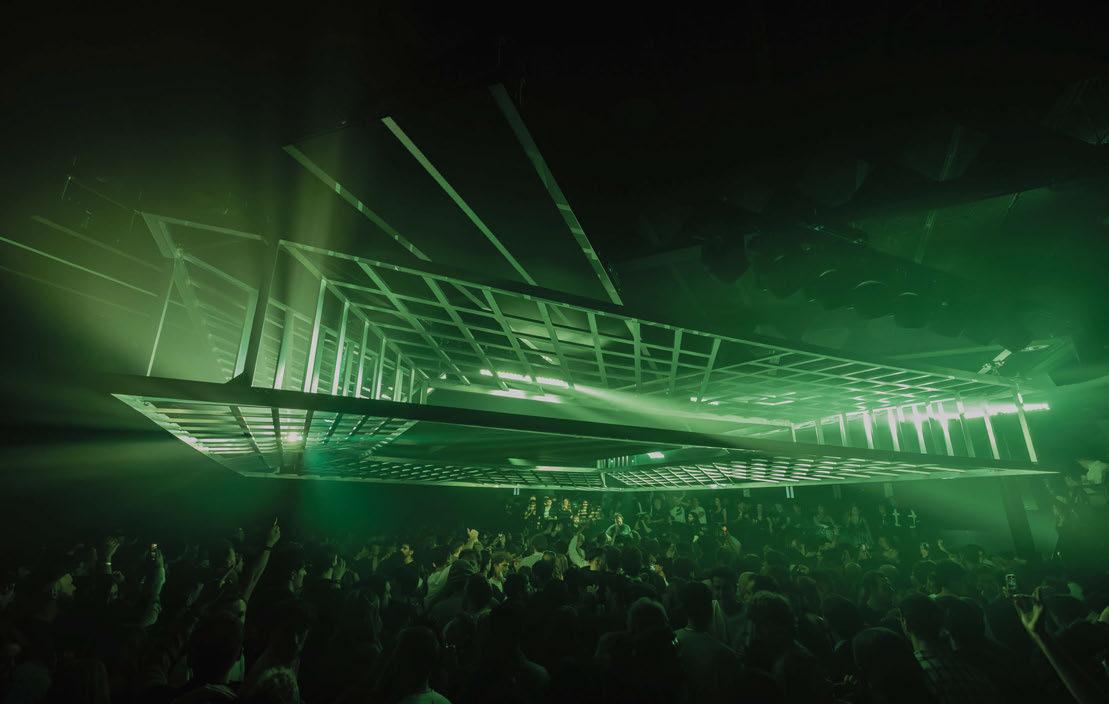
The installation has given the room symmetry and a focal point, and in order to fix it permanently to the ceiling extensive steelwork needed to be added.
One element to the installation’s design is its ability to house both video elements and Lucid’s diffused LED bar product, to create a clean visual effect and frame the floating architectural set-piece, which is not defined by mass, but by negative space.
Illuminated edges trace the defined outline of the centrepiece, while two overhead spans of LED wall and additional LED strips line the room laterally to extend the ever-morphing visual display above and over the crowd, reinforcing its symmetry and geometric nature.
“The multi-faceted, multi-layered nature of the updated club design allows for pared back minimalism as well as all out maximalism as each element of the design can be utilised independently and built upon throughout the night, adding a layer upon layer of production as energy builds,” added Carr.
“The LED product on the installation is our own product, which we describe as a diffused LED bar. This is placed on the bottom, top, and internal and external sides of the structure, and strips of this run the full length of the walls of the room as well.”
LED wall
The largest element of LED screen is located on the back wall behind the DJ booth, which draws eyes down from the structure to an eye-level focal point, in addition to two strips of video that reach out over the crowd and a central LED video cube, which Taylorleds supplied a VE 3.9I LED system to Lucid Creates for the project, and utilised its standard chamfered panels to allow for a seamless 90 join in order to create the striking central cube structure.
In total, 142 LED panels were supplied in a mix of 500mm by 1,000mm and 500mm by 500mm panels, with processing powered by NovaStar. On-site technical support from Taylorleds’ UK Distributor Audiotek during the installation ensured a successful deployment, while a media playback system was supplied featuring PCs loaded with Resolume and Madrix software. “We have worked with Audiotek on a number of
projects around the world and have built a great relationship with them,” said Carr. “The product is excellent with a crisp finish, and I’m happy that they are on-hand to help bring our crazy ideas into reality.”
The venue’s new lighting setup also came from Lucid Creates, as they looked to use different effects to complement and enhance the massive central structure they had meticulously designed.
“When we are looking for fixtures, for any project, we’re looking for versatility and getting the most out of them in terms of budget and performance,” said Willis-Nasseri. “After consulting with Doug Coppell, a lighting designer we work closely with on all of our projects, we landed on beamZ as a manufacturer that matched our needs.”
More than 60 fixtures were selected, including 32 beamZ Pro MHL740 and 24 beamZ LMB1040IP, and then carefully deployed as to not take the focus away from the centre piece.
“The fixtures are all hidden in the ceiling, positioned above the installation, and this was a key focus to ensure that the installation looked crisp and clean, without any hanging truss or pipes, and without the light fixtures themselves being the dominant aspect,” said Carr.
“There are also fixtures set up all the way around the install, which are also mostly hidden from view.
“The geometry of the lighting deployment follows the geometry of the overhead structure, and it all grows outwards from the central point.
“This allows light to move through the structure, with washes that break through the metal work, and it makes a real impact – It’s a really clean combination of design and lighting,” concluded Carr.
New era, new audio
Discussions to revamp The Box’s sound system began back in 2022, with Technical & Production Manager at Ministry of Sound, Oscar Zammit, entering into discussions with integration specialist, Louis Jemmott, about the possibility of upgrading the venue’s sound system. Jemmott, who is Sales Director at Patchwork London, recalled: “Oscar and I spoke about what a potential upgrade could look like, and in 2024, these
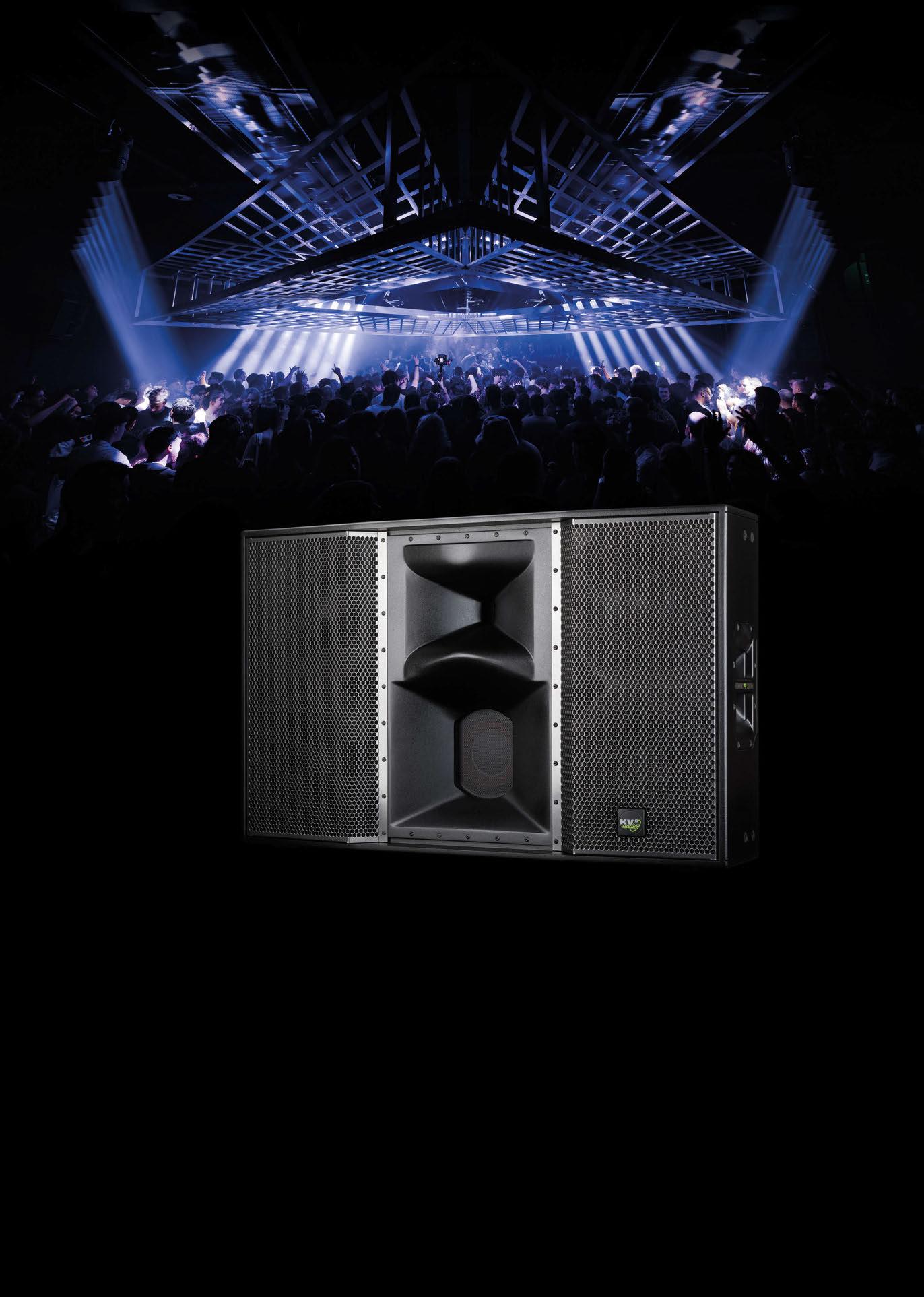
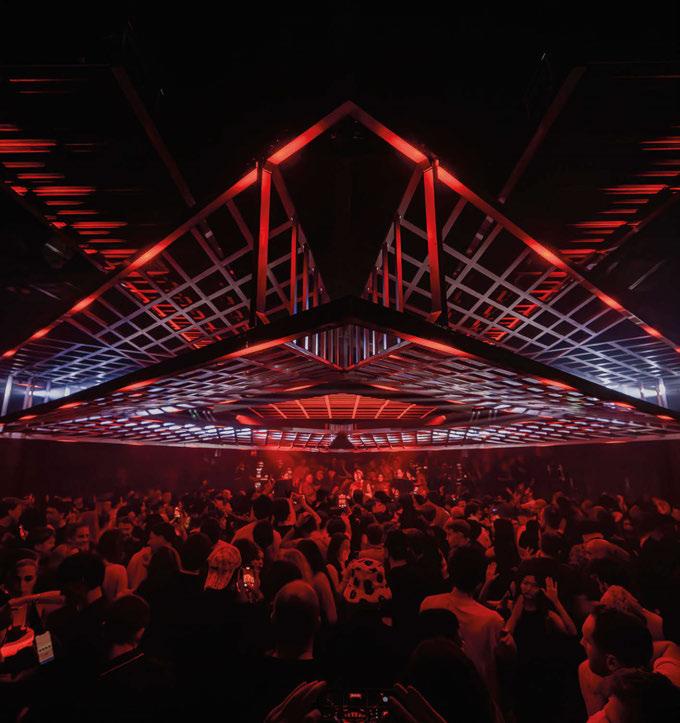
conversations turned into reality. “Ministry of Sound were keen to do a complete refurbishment of their main room, The Box. This included the need for a dynamic sound system that would meet the expectations and demands of the club.”
As well as club nights, roughly half of the venue’s operations revolve around corporate events, meaning the system needed to accommodate punchy, bass-heavy music while also providing even coverage, intelligibility, and control.
“Myself and Patchwork’s Technical Manager, Kieran Edmonds, evaluated six different loudspeaker brands,” continued Jemmott.
Due to the shape and size of The Box, it was evident early on that a point-source system would be the ideal solution, leading them to KV2 Audio’s point-source loudspeakers.
“In 2024, Oscar Zammit and his team attended PLASA Show, where they were immediately impressed by KV2’s audio demo,” said Jemmott. “After this, KV2 emerged as a clear favourite, so we visited the factory in Czech Republic with Oscar and Ministry of Sound’s chairman, Lohan Presencer, for a live demonstration with KV2’s Tom Weldon and Jonathan Reece. We were all absolutely blown away.”
As one of the most renowned UK clubs since it opened in 1991, expectations were understandably high for Ministry of Sound’s new direction. “KV2 designed the system themselves, giving us a clear framework to work with,” Jemmott explained. “The system consists of four zones; The Box; the DJ booth; a VIP deck behind the DJ booth; and a VIP area overlooking The Box.
“In The Box, we installed a six-point system with SL412 loudspeakers flown from the ceiling: two at the rear, two in the middle, and two at the front, with low frequency reinforcement now provided by eight new VHD4.21 and six VHD2.16 units.” A major development of the renovations sees the addition of a VIP deck behind the DJ, increasing
TECHNICAL INFORMATION
LIGHTING
24 x beamZ LMB-1040IP
8 x beamZ Nuke 3
32 x beamZ Pro MHL740
12 x beamZ Ignite 400
VIDEO
55 sq m Taylorleds VE 3.9I LED
AUDIO
6 x KV2 Audio SL412
8 x KV2 Audio VHD4.21
6 x KV2 Audio VHD2.16
2 x KV2 Audio ESD312
4 x KV2 Audio ES1.8
4 x KV2 Audio ESD10
4 x KV2 Audio ESD1.12
4 x KV2 Audio ESD12
www.ministryofsound.com www.lucidcreates.co.uk www.patchworklondon.co.uk
capacity and engagement with performing artists.
“For DJ monitoring, two brand-new ESD312 loudspeakers now form part of the new DJ booth supported by four ES1.8,” continued Jemmott.
“In the VIP area, we installed ESD10 loudspeakers paired with ESD1.12 subwoofers in each corner, as well as four ESD12 loudspeakers along the VIP deck to maximise clarity and definition.”
All amplification is taken care of courtesy of KV2’s bespoke electronics housed in three custom designed amp racks.
In addition to the sound system installation, Patchwork London carried out a series of infrastructure upgrades throughout the venue to ensure the entire system performs smoothly.
“We replaced all the old processors with Q-SYS and added NETGEAR network switches and touchscreen interfaces to allow users to reroute audio sources to different rooms,” added Jemmott. “We also supplied custom input and output panels for each room, which not only allows audio from The Box to be instantly rerouted and streamed across multiple spaces at the touch of a button, but also enables audio from other rooms to be streamed back to The Box in the same way.”
Noting the significance of the technical upgrades, Zammit concluded: “As we celebrate our 35th anniversary in 2026, we have undertaken the first change to The Box sound system in 15 years. It’s a bold and exciting step forward that will define the next era of sound in our iconic main room.”
With the venue’s re-opening weekend marked by DJ sets from Moeaike, Joezi, Pete Tong, and Kölsch, Ministry of Sound stepped into a new chapter, and Club Director Matt Long heaped praise on the revamp.
“For the past year, we have been working with Lucid Creates and Patchwork London to reimagine our iconic main room,” he said.
“It’s the first time The Box has undergone such a major transformation since we opened in 1991, and the teams have worked tirelessly to bring it to life.”

LIVERPOOL / UK EMEA
CONDUCTR enriches the experience at the Royal Liver Building visitor centre with an eye-catching interactive installation.
Creative studio CONDUCTR have transformed an underused space within the Royal Liver Building visitor centre into a cinematic, accessible experience with an interactive clock-based media installation.
Designed as a focal point within the visitor centre, the installation combines physical interaction with large-scale projection to enrich the wider tour experience and bring the building’s history to life. The existing visitor centre featured largely static displays and a green-screen photo experience that guests found difficult to use and engage with. Explaining why a more user-friendly interactive experience was needed, Royal Liver Building 360 Tour’s Operations Manager Chris Devaney said: “We wanted to utilise an empty space within the attraction to bring together some of our archive footage and assets that we are not able to display in traditional ways.
“CONDUCTR came up with some fantastic ideas and solutions, and are really switched-on when it comes to utilising technologies to realise a vision.”
For the space, CONDUCTR designed and delivered a
bespoke clock-face installation which features five physical brass buttons to trigger curated short films, and dual projection mapping onto the clock face and surrounding wall to showcase cinematic content built from the Royal Liver Building’s extensive archive. CONDUCTR also utilised AI to enhance and restore historic black and white imagery, and delivered a discreet, extended-accessibility film offering a full 360 drone view from the top of the clock tower.
Tom Brennan, Junior Design Engineer, was the project lead for CONDUCTR, and noted that sometimes the simplest solutions are often the most effective. “Because it was a pre-existing space, we had to make sure that we could mount the projectors in a way that they could correctly cover the surfaces we wanted,” commented Brennan, “and we also needed a media player that could drive the content to the projectors covering the clock, and the back wall.”
Two different Epson projectors were utilised, an EB-815E Super Ultra Short Throw for the back wall, and an EB-805F Ultra Short Throw Projector is mounted to a Peerless PJR125-POR-EUK Projector Mount for the necessary angling required to point the content at the clockface.
A BrightSign XC2055 with two outputs was used for media playback, and the brass buttons are wired into GPIO ports on the BrightSign player to trigger the different content.
The experience was intentionally designed to be intuitive, inclusive, and visually impactful, while respecting the heritage and cultural importance of the building.
In conclusion, Devaney said: “Our guests are really going to enjoy that we have these fantastic photos that have been brought to life with new technology, and making it accessible to all who visit. It’s fantastic.”
www.conductr.com www.liverbuildingtour.com
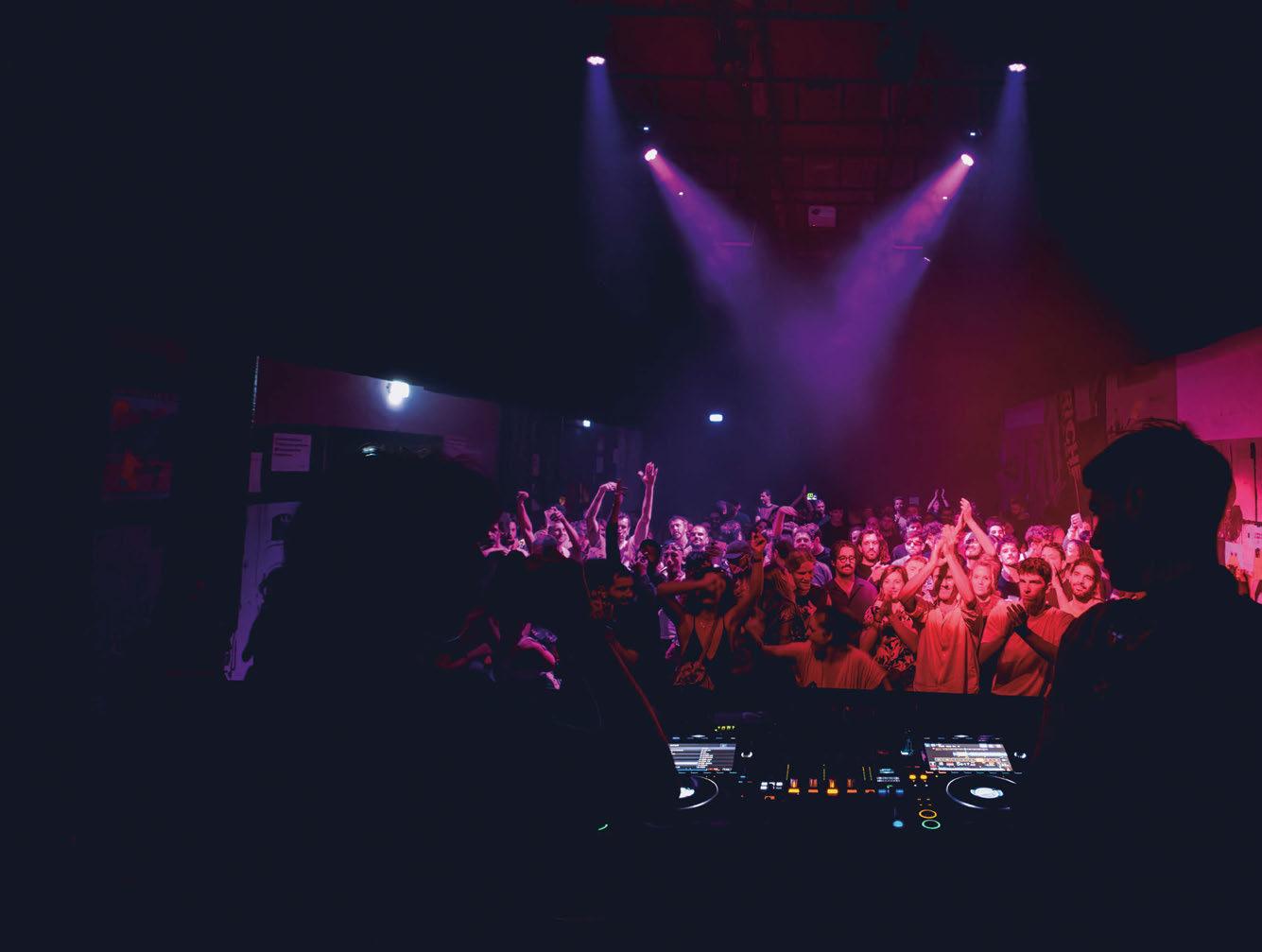
MARSEILLE / FRANCE EMEA
PikiP Solar Speakers embarks on an installation to prove that autonomous, sustainable energy is a viable solution in powering high-pressure music venues.
In September 2025, the large complex La Friche la Belle de Mai unveiled
Le Petit Cab, a new 300-capacity performance space in Marseille, and, in doing so, set a European first. The venue is now believed to be the continent’s first current music space whose entire audiovisual setup runs on a fully autonomous, solar-powered system.
The project was delivered in partnership with Marseille-based manufacturer PikiP Solar Speakers, whose solar energy storage and audio technologies power the room’s sound, lighting, and control infrastructure. Le Petit Cab, led by the BISOU cooperation, was conceived as more than an additional stage. The brief was to create a space aligned with the owner’s ecological transition goals and capable of modelling new production standards for live music venues.
Julien Feuillet, Founder of PikiP Solar Speakers, explained: “La Friche is a major avant-garde cultural space that promotes a range of incredible artists. In le Petit Cab, they wanted to imagine an autonomous and responsible space, which is part of the reason they came to us, as these commitments are a big part of our ethos at PikiP.”
PikiP’s role in this project is also a result of the manufacturer’s previous work with Le Petit Cab. “We’ve supplied equipment for festivals and events inside the larger La Friche space before,” Feuillet continued.
“It’s a big venue, with many areas, and a big team, so it’s beneficial that we already had an understanding of this going into the installation.
“Collaborating with La Friche has been a valuable opportunity to implement a permanent installation in the space and demonstrate the versatility of our systems.”
For about ten years, La Friche has been part of an ecological transition approach. It has already managed to reduce its energy consumption

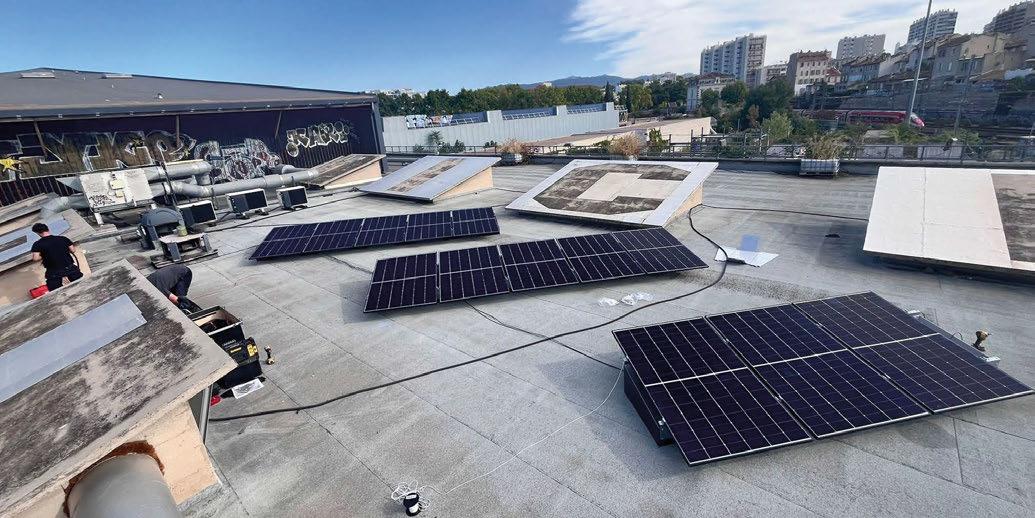
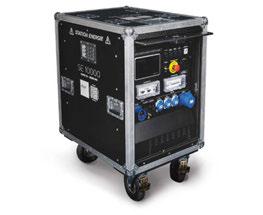
AUDIO
6 x PikiP Solar Speakers VCH30 speakers
6 x PikiP Solar Speakers VCX12 speakers
2 x PikiP Solar Speakers VTL218 hybrid subwoofers
16 x PikiP Solar Speakers AEA amplifiers
POWER
3 x PikiP Solar Speakers SE100000 Energy Stations
www.pikip-solarspeakers.com
by 45% since 2018, thanks to a 1,500 m² photovoltaic power plant that produces 25% of the energy consumed on the site. Le Petit Cab’s investment in PikiP marks the next step in this environmentally conscious move. To guarantee the energy autonomy of the Petit Cab, fifteen solar panels have been installed on the roof by PikiP. They are themselves connected to three of the manufacturer’s SE10000 power stations, which each provide 10.2 kWh of autonomy and 10 kVA of power. Together, they supply the entire scenic infrastructure – PA system, stage lighting, and control room. The stations are modular and mobile, allowing different configurations both indoors and outdoors. The sound diffusion system consists of six high-performance PikiP VCH30 speakers with constant curvature suspended in the room to ensure homogeneous coverage.
They have a conical-exponential pavilion with multiple inputs and offer constant directivity on a band of 85-18,000 Hz. Alongside this are two PikiP VTL218 hybrid subwoofers with double resonators, placed on the floor in front of the stage. Then, on stage, six of the manufacturer’s VCX12 full-band coaxial speakers provide accurate feedback for artists. The entire system is processed through preset-based multiconfiguration processing, allowing different acoustic setups to be selected and optimised depending on the venue layout and programming requirements. This solution operates sixteen channels of PikiP amplifiers, which use PikiP’s patented DC amp technology central to the installation. By working directly in direct current rather than repeatedly converting between AC and DC, the system avoids the energy losses typically associated with transformation stages, as Feuillet said that such losses can accumulate to around 5% at each step, and
then snowball from there.
“You produce the energy, you store it, and you use it as efficiently as possible,” he added. Yann Loric, Technical Director at La Friche, stated proudly: “The scenic sound, light and video equipment has been completely disconnected from the main grid. It is now powered by energy stations connected to photovoltaic panels, with a target of 95% autonomy and solar-panel energy-only usage.”
Feuillet affirmed this, revealing: “Our technology is battery priority, with these batteries charged by our solar panels. The system integrates an automatic transfer switch that requests support from the grid only in emergency situations, such as prolonged bad weather or unusually high energy consumption leading to an abnormally low battery state of charge. In other words, if the battery level drops below 10%, the system automatically requests support from the grid to ensure uninterrupted operation, without programmers or technicians even noticing it.”
Le Petit Cab’s launch programme included a performance from USbased DJ Carl Craig, demonstrating the system’s ability to handle highlevel electronic performance within the autonomous framework. To this, the PikiP founder said, “We were able to prove just how incredibly such sustainable, energy-conscious systems can work.”
According to La Friche’s Loric, the long-term aim is to make energy self-sufficiency the standard rather than exceptional. Feuillet shares a similar sentiment, as he concluded: “We want to encourage music venues around the world to explore new energy solutions and become independent from the energy grid. With proven reliability and professional-grade performance, our systems offer a viable and forward-thinking alternative.”
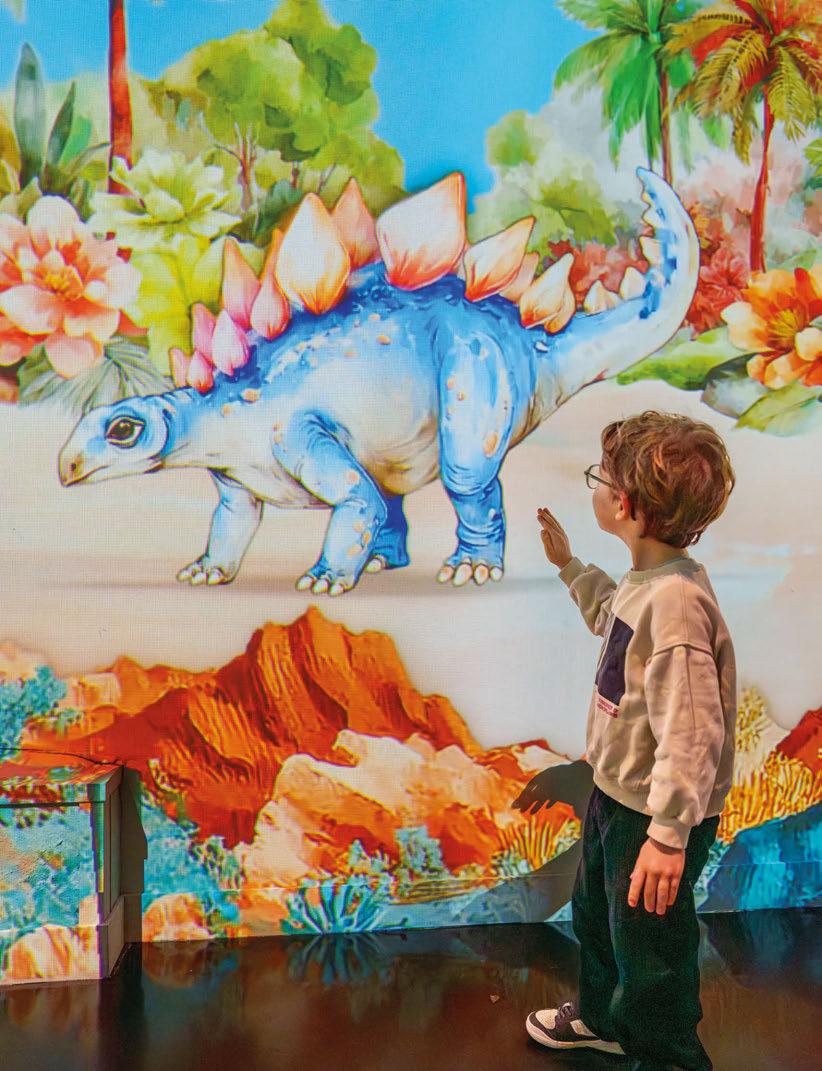
The Atelier des Lumières describes itself as an immersive digital art centre. The space brings classic art to life through technology and, in one of its most recent experiences, encourages visitors to touch the exhibits. Welcoming guests of all ages remains central to creator Culturespaces’ ethos, a commitment underscored by the spring 2025 unveiling of the Atelier des Enfants Kids’ Atelier. A 160 sq m exhibition space is dedicated to the Atelier des Enfants, a fully immersive, projection-mapped room. Visitors – primarily children, though not exclusively – move around the room and interact with the art, as it responds dynamically to touch, movement, and sound. Rather than presenting a parallel exhibition, Culturespaces wanted the Atelier des Enfants to function as a counterpart to the artistic themes presented in the main hall.
Grégoire Monnier, Director of Culturespaces Studio, explained that the purpose of the atelier is to ensure “visitors remain immersed in the painter’s world, where playfulness and artistic expression meet.” Enabling this colourful environment is a state-of-the-art technical setup combining video projection from Epson, LiDAR sensors, and Modulo Pi’s Modulo Kinetic media server.
Modulo Pi’s technology is not new to the museum, with the media server solutions already in use at the Atelier des Lumières since its opening in 2018. “We’re grateful for Culturespaces’ continued trust over the years,” said Yannick Kohn, Founder and CEO of Modulo Pi. Culturespaces’ creative and technical partners, Spectre Lab, were behind the delivery and design of this project. This collaboration is perfect fit for the concept behind the interactive atelier, with Spectre Lab’s Manager, Marc Vidal, defining the Montreuil-based creative studio by a simple objective: “We want to explore new playgrounds and bring enjoyment to audiences,” he said.
“We operate at the crossroads of artistic creation, technology, and storytelling, with our work ranging from monumental projections on cathedrals and heritage sites to permanent immersive experiences in cultural venues. We aim to create powerful, accessible, and meaningful moments.”
Furthermore, the studio has long been associated with Culturespaces, as Vidal affirmed: “Across numerous immersive exhibitions, we gradually built a relationship of trust that naturally led Culturespaces to entrust us with the creation of the Atelier des Enfants.”
Spectre Lab was given the brief that the exhibition needed to reflect the main room’s universe. With this primary area hosting a dinosaur themed exhibit at the time, the studio had to figure out how to offer younger visitors an additional experience that complemented it.
Modulo Pi technology powers an interactive experience with creativity and playfulness at its core.
Left: With Modulo Kinetic, visitors can colour in templates and scan them to see their creation projected onto the Atelier’s walls.
Vidal explained: “The idea was not to replicate the exhibition, but to propose a more playful, participatory approach tailored to younger audiences.” Early on in the design process, the manager detailed how the studio worked closely with Modulo Pi to fully understand what was technically possible in terms of interactivity and reliability within a daily operational context.
Like Culturespaces, Spectre Lab’s relationship with Modulo Pi is strong. “In fact, our connection with Modulo Pi dates back well before the companies themselves were created,” said Vidal. “We’ve been working with Yannick Kohn, Founder and CEO of Modulo Pi, at a time when the manufacturer didn’t exist. This collaboration has evolved over time through various projects, technological developments, and creative partnerships.”
He continued: “Beyond the technical dimension, it is above all a relationship built on trust. We greatly appreciate the Modulo Pi team: they are highly professional, have deep mastery of their tools, and understand production constraints. But what truly makes the difference is their human approach.”
Two main types of experience define the Atelier des Enfants. “The first is based on a simple yet magical principle,” Vidal stated. A visitor colours a dinosaur template, scans it, then sees their creation appear animated and integrated into the projected world on the walls.
The second sees guests touching the walls of the space to trigger animations and interact with the project visual elements.
The technical skeleton of this experience begins with eight Epson EB-PU2010 video projectors displaying visuals across a 39 metre-wide surface, with a projection height of over 3 m. The system is powered by Modulo Kinetic, using a dedicated Kinetic Designer workstation and two Kinetic V-Node servers. Additionally, four Hokuyo 2D LiDAR sensors are installed at the top of various walls.
Each animal template features four unique QR codes. Once their drawing is complete, visitors scan their artwork. Thanks to Modulo Bridge– a compact device discreetly placed near the scanner – a network bridge is created between the scanner and Modulo Kinetic, enabling instant communication between both systems.
Modulo Kinetic detects the QR codes, identifies the animal, and instantly matches the scanned image with the corresponding media and animation. The drawing is processed in real time, mapped as a texture onto a pre-rigged 3D object, and injected into the projection displayed in the room. Just a few seconds later, the scanned animal is fully integrated into the immersive prehistoric scenery, coming to life on the walls of the Atelier. This process is powered by Modulo
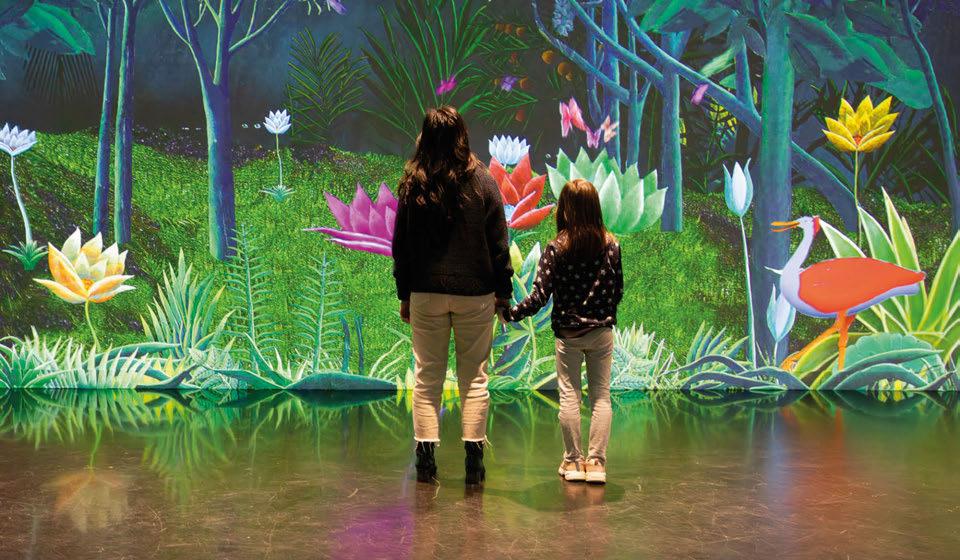
Kinetic’s node-based compositing tool, used to build real-time animations. The media server’s timelines then allow for seamless blending of video playback and interactive 3D layers. Once projected, the personalised artworks also become interactive. With support from the Hokuyo LiDAR sensors, Modulo Kinetic instantly detects when a scanned drawing is touched. The media server then triggers visual and sound effects. Vidal said that the objective of the technology at the atelier is “twofold” in targeting the space’s young audience. He explained: “It is first to offer a moment of pure enjoyment, play, and wonder. Second, it is to provide a gentle pedagogical approach, where learning happens through experimentation, curiosity, and active engagement.” He stated that the project reflects Spectre Lab’s ongoing mission to create accessible art for everyone, with the exhibition able to “live and breathe” through the video and media solutions behind it. Also closely involved in building the Atelier des Enfants was Video Operator, Baptiste Jazé. Jazé has been working with Culturespaces over the past seven years in what he called “a long-standing and very rewarding collaboration.”
The video operator’s role was to handle the integration and operation of all the visual and technical elements, alongside Spectre Lab, to bring the vision to fruition seamlessly. “My role was essentially a pivot between the purely technical and the artistic side,” he said.
VIDEO AND CONTROL
8 x Epson EB-PU2010 video projectors
4 x Hokuyo 2D LiDAR sensors
2 x Modulo Bridge
3 x Modulo Kinetic media servers
www.culturespaces.com www.spectre-lab.com www.baptistejaze.com www.modulo-pi.com
“That meant bridging the gap between what the artists envisioned and what the hardware and software could deliver.”
Having a great deal of experience with Modulo Kinetic, using the technology across his projects worldwide, Jazé felt confident in the capabilities of the solution. “Modulo Kinetic goes well beyond simple media playback. It opens up real creative possibilities. At the atelier, I utilised it to seamlessly blend 2D and 3D content, and in more advanced areas, I could bring in its JavaScript scripting capabilities.”
He added: “Kinetic’s turnkey integration of technical equipment such as LiDARs and scanners, combined with visual and creative elements, makes it a truly all-in-one solution. That’s what allows us to stay focused on the experience itself rather than getting bogged down by technical constraints.”
The Atelier des Lumières interactive exhibition has reported great acclaim and success, with the concept already inspiring the creation of a children’s atelier within the Port des Lumières in Hamburg, Germany. It can also be noted that the objective behind the project, to design an interactive space to get children involved in the arts, has not only been achieved but surpassed. Jazé attested to this, concluding: “Excitingly, though the idea was to create an experience that would engage the youngest visitors, we quickly realised it resonated just as much with adults. The Atelier des Enfants is a moment of wonder for all ages!”


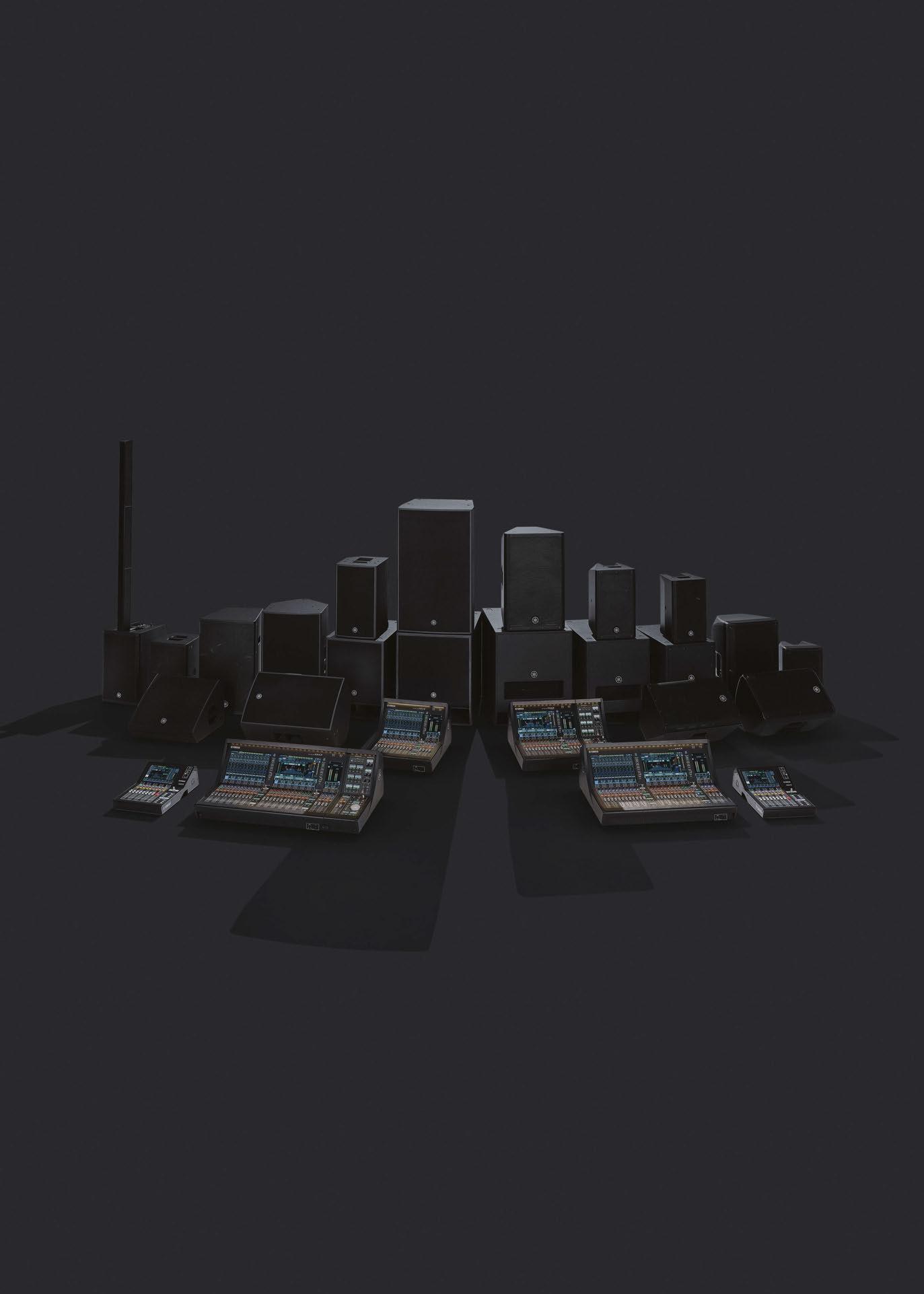

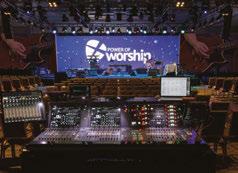
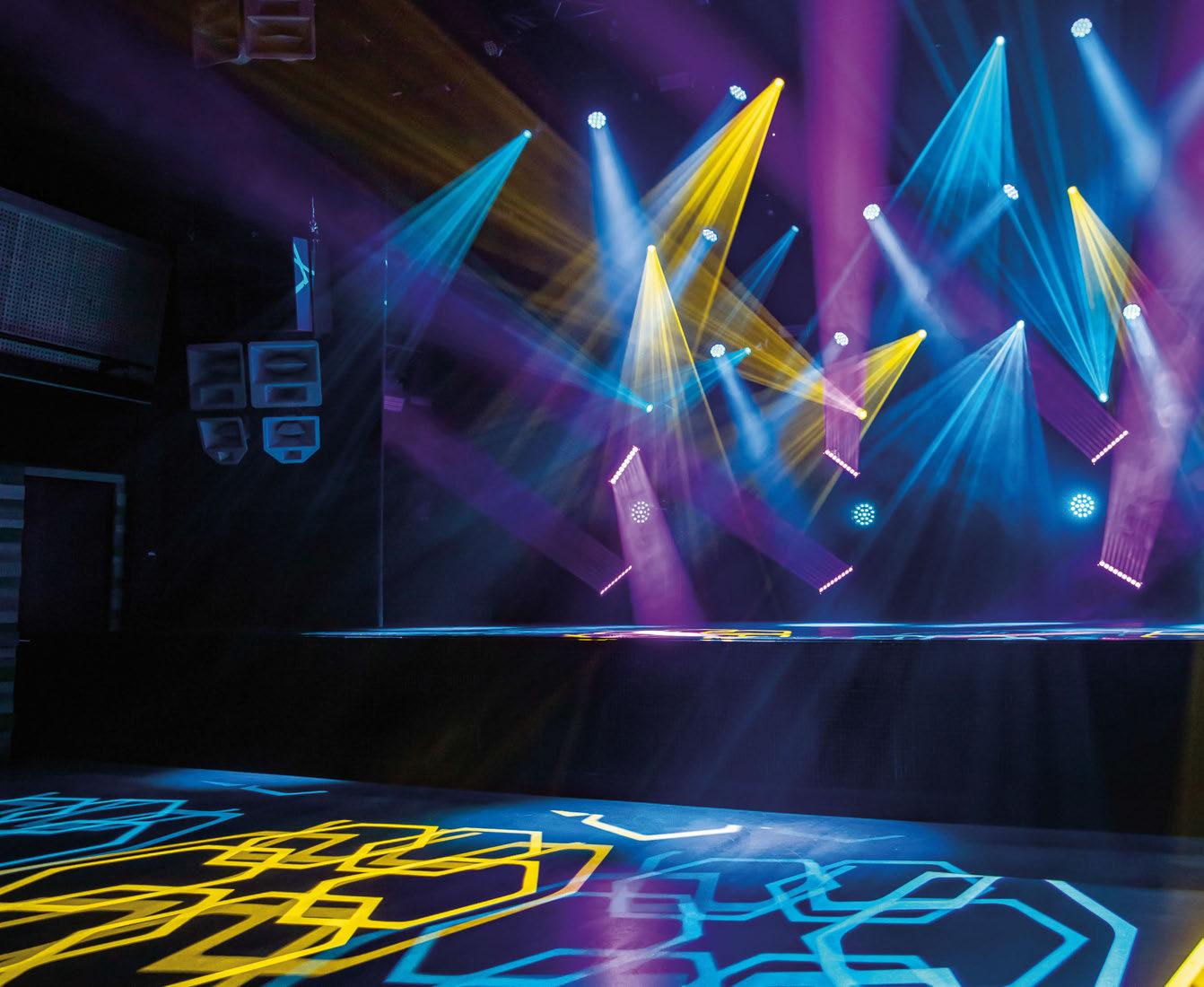
LEEUWARDEN / NETHERLANDS EMEA
Vibrant music venue receives a future-proofed technological upgrade with a state-of-the-art immersive sound system and large stage lighting purchase for its main hall.
Neushoorn is a busy music venue that opened in 2015 featuring two performance halls, a cafe, rehearsal rooms and studios, and has strong educational ties with local vocational college, Firda, which focuses on music, drama, theatre and the arts, running both technical and creative courses.
When More AV began working with Neushoorn on the next phase of the venue’s audio evolution, the objective was to augment the existing Funktion-One sound system and deliver an even deeper and more engaging audience experience.
Driven by the formidable combination of youthful energy and big ideas, the 750-capacity concert hall set out on a mission to explore the creation of an immersive live music environment.
The redesigned sound system combines Funktion-One’s latest loudspeaker technologies with HOLOPHONIX’s spatial audio processing to create an enveloping sonic palette that lives and breathes with the music.
“We are the first core venue in the Netherlands, and probably even in Benelux, to equip a main stage in this way,” said Michiel Cornelisse, who has been Head of Technical at Neushoorn for twoand-a-half years.
During that time, the venue has gone through a significant period of innovation. “That started in 2024,” he explained. “As the completion of that period approached in January 2025,
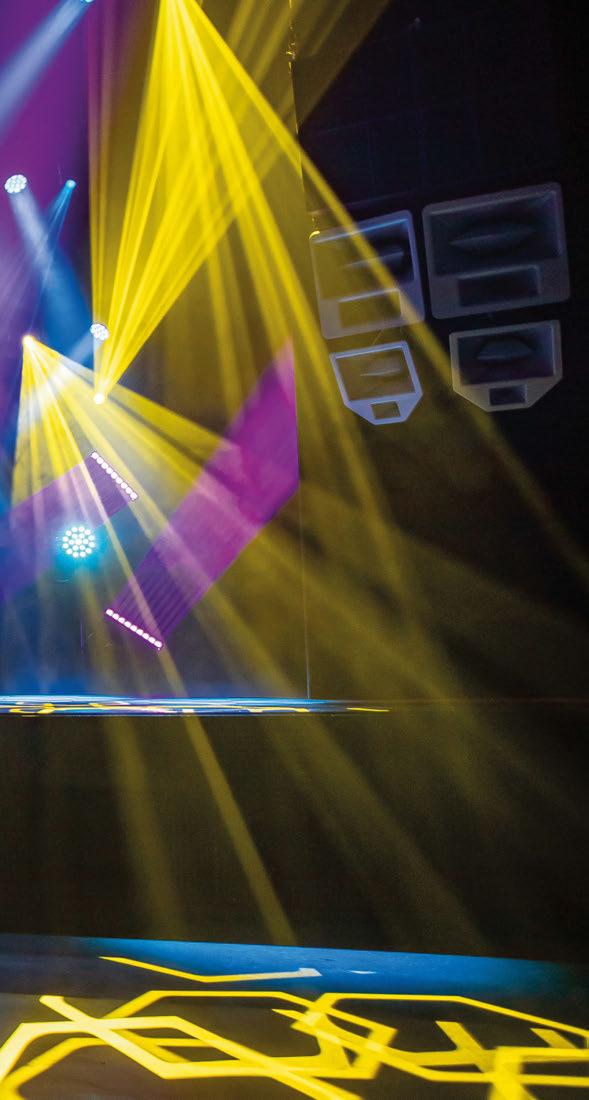
management asked what more we could do. The desire to renew the PA, upgrade it and future-proof it led to the idea of immersive audio. That was where we could move towards in the future.”
More AV and Neushoorn’s relationship traces back to the original Funktion-One installation in 2015 when the venue was built.
When the venue locked eyes on an exciting new chapter, Cornelisse and the team naturally turned to their trusted audio partner.
“We obviously wanted to realise this as quickly as possible,” explained Cornelisse. “So, we sat down with Remco van der Werff from More AV, but there were a couple of challenges to overcome: at that point, there was neither a suitable additional loudspeaker nor a Funktion-One approved spatial audio processor.”
Several key developments followed in quick succession. During ISE 2025 in Barcelona, Tony Andrews, R&D Director and founder of Funktion-One, met HOLOPHONIX and soon realised an affinity with the spatial audio specialist. Around the same time, Funktion-One was in the latter stages of developing the PSM15 stage monitor. With its musicality and specific performance characteristics, the PSM15 would prove to be the perfect PA speaker for this project.
Andrews had been sceptical of the renewed industry enthusiasm for immersive audio.
Having explored ambisonics extensively during the 1990s and 2000s, he found that geometric accuracy gave a much more convincing result than
the compromised audio from the heavily processed systems of the time. His view has long been that exceptional clarity, low distortion and high definition – hallmarks of Funktion-One systems – enable stereo imaging to achieve a depth and dimensionality that can feel more immersive than most multi-speaker approaches.
At ISE, however, Andrews encountered something that shifted his perspective. “What struck me first was the audio quality, particularly the transparency of the high frequency,” he recalled.
“Furthermore, it isn’t a rigid, geometry-dependent system; the venue was able to retain the Funktion-One stereo configuration and add supplementary loudspeakers without having to build a geometrically perfect array. It soon became clear that the HOLOPHONIX team were serious, technically minded and open in their approach.
“When we set up a demo in our workshop and ran it with a live multitrack, I was very impressed. At that point, we knew we had exactly what the venue was looking for; a universal platform that preserves sonic integrity while extending what’s physically possible in the room. We will only ever pursue something when genuine progress is possible. With this system and the people involved, that’s exactly what happened.”
That meeting quickly led to collaboration and helped define the direction of the Neushoorn project.
“Funktion-One was already developing a new loudspeaker that turned out to perfectly meet the requirements of an immersive system,” Cornelisse explained. “More AV then played a crucial role. In May last year they took us to England, where we were the first people outside Funktion-One to hear and see the new loudspeaker. That confirmed our belief – it was incredible.”
From this point, More AV then coordinated the entire design and execution of the project in close collaboration with Funktion-One and HOLPHONIX. The journey from initial concept to operational system would take just under a year – an unusually fast timeline for a project of this scale and technical complexity.
Cornelisse attributes this to the shared passion and pioneering values of the technical partners. “That is really down to the perfect synergy between Funktion-One, More AV and HOLOPHONIX,” he says. “They are all parties that look beyond the beaten path and are not afraid to challenge the status quo.
“The open-minded approach and excellent communication throughout the project made it possible to develop a top-class immersive audio system in a very short time. It all ran very smoothly, also thanks to the fantastic preparation by More AV and the flexibility of Funktion-One.”
Neushoorn had already built a strong reputation around its existing Funktion-One system and upholding the highest audio standards while introducing spatial capability was fundamental to the project.
“A really strong message is that the venue already loved the system they had and didn’t want to change it,” explained Funktion-One Live Sound & Product Support Engineer Will Wright. “They wanted the flexibility to keep their existing left-right Funktion-One system, but with the option to add spatial or immersive sound on top.”
HOLOPHONIX’s platform aligned closely with that requirement. The system is designed to add spatial rendering without altering loudspeaker voicing or character. “Our processor does not alter the loudspeaker sound signature,” said Justin Bacle, Head of Education and Training at HOLOPHONIX. “You retain the recognisable Funktion-One sound while adding spatial capability.”
Beyond compatibility, the collaboration was supported by a shared engineering approach between the two manufacturers.
HOLOPHONIX Application Engineer Francesco Papaleo said that the partnership felt natural from the outset.
“We recognised the shared DNA between HOLOPHONIX and FunktionOne. Both companies focus on high-quality engineering, strong technology foundations, simple solutions and an honest approach to pro audio,” said Papaleo, whose own background in electronic and electroacoustic music, combined with experience working with FunktionOne systems in club environments, helped shape the integration approach. “I like the timbre, the sound quality and the philosophy behind Funktion-One,” he said. “The challenge was introducing spatial audio into
“THE CHALLENGE WAS INTRODUCING SPATIAL AUDIO INTO A VENUE THAT ALREADY HAD A LEFT-RIGHT FUNKTION-ONE SYSTEM AND MAKING THAT TRANSITION NATURAL FOR END USERS.”
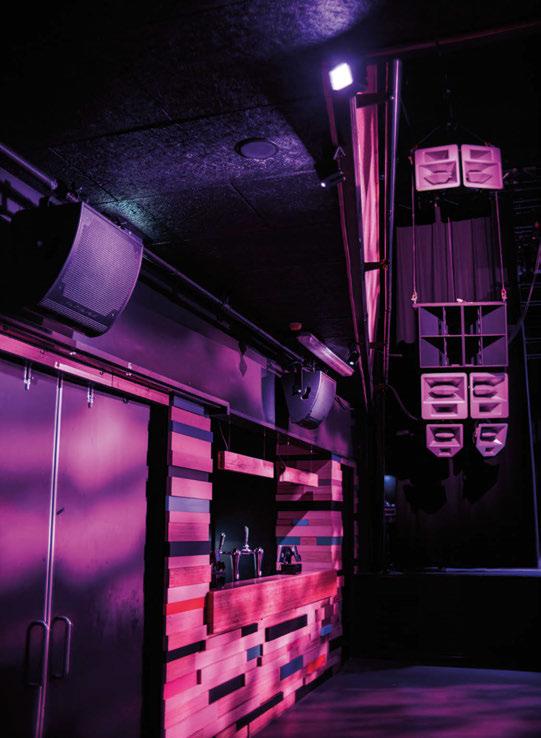
a venue that already had a left-right Funktion-One system and making that transition natural for end users.”
Ted Beets, System Engineer for More AV, was immediately excited by the possibilities: “We come from a world of left, right and bass – that’s what every system consists of,” he said. “Suddenly it’s no longer confined to left and right – it’s X, Y and Z in a virtual space. I found that fascinating. You’re released from physical constraints. You draw the system in the software, place a source anywhere in the space, and the processor calculates how it should be reproduced. That completely blew my mind.”
To expand the existing left-right Funktion-One Evo and Bass Reflex configuration into an immersive system, a speaker with specific performance capabilities would be required.
As the project gathered momentum, so too did Funktion-One’s development of the PSM15.
Remco van der Werff, founder of More AV, said: “The qualities that make the PSM15 such a strong stage monitor are exactly what make it so effective in a spatial system. It is full range with excellent low-frequency performance, combines a compact form factor with high output, and delivers an ideal dispersion pattern with very consistent directivity. In this kind of application, that consistency is essential.”
The PSM15 offers a nominal dispersion of 50° horizontal by 70° vertical in its standard monitor orientation. Thanks to its rotatable waveguide, the coverage pattern can be reconfigured to suit different applications.
At Neushoorn, the waveguide has been rotated to provide 70° horizontal by 50° vertical dispersion, ensuring broader lateral coverage while maintaining controlled vertical directivity.
“In this kind of system, sources want to overlap,” Wright explained. “Normally we want to avoid that but here we want it – and we want it to be very consistent.”
Stable directivity allows overlapping sources to combine predictably across frequency and listening positions, reducing tonal variation and improving localisation stability as spatial objects move through the system.
A total of 12 Funktion-One PSM15 loudspeakers have been added to the existing system – five flown above the stage for the dancefloor, three above those for the balcony, and two down each side of the room. Five F61 provide front fill, while four F1201.2 across the rear complete the downstairs system. On the balcony, 13 F61 provide back fill coverage.
More AV supplied not only HOLOPHONIX and Funktion-One components, but also Van Damme speaker cabling, Full Fat Audio 8004HD DSP 4-channel amplifiers with built-in DSP (8x Dante input) and NST Audio processors including the new DM-88 all-round processor, which allows engineers to choose between analogue, AES or Dante input.
Papaleo confirmed that maintaining loudspeaker character was equally important from the HOLOPHONIX perspective. “When I heard the Funktion-One system at the venue, I was reminded how low distortion contributes to emotional engagement with music,” he said. “You can hear details clearly even at high SPL. Nothing feels aggressive. Everything feels enveloping.”
This proved to be a powerful match; loudspeakers that naturally perform to an extremely high level and a processor that fully maintains the integrity of the signal.
“What makes life easy is we could choose different cabinets and they all share the same character,” added Beets. “You don’t have to fight the system with EQ – it’s still a Funktion-One cabinet.”
“Our systems already sound spatial in stereo,” Wright said. “Strong phantom imaging with a sense of space and depth. So, the immersive system doesn’t have to work very hard to make it feel dimensional.”
For the new system to reach its potential, it is important that visiting engineers feel comfortable, regardless of their experience working with spatial audio.
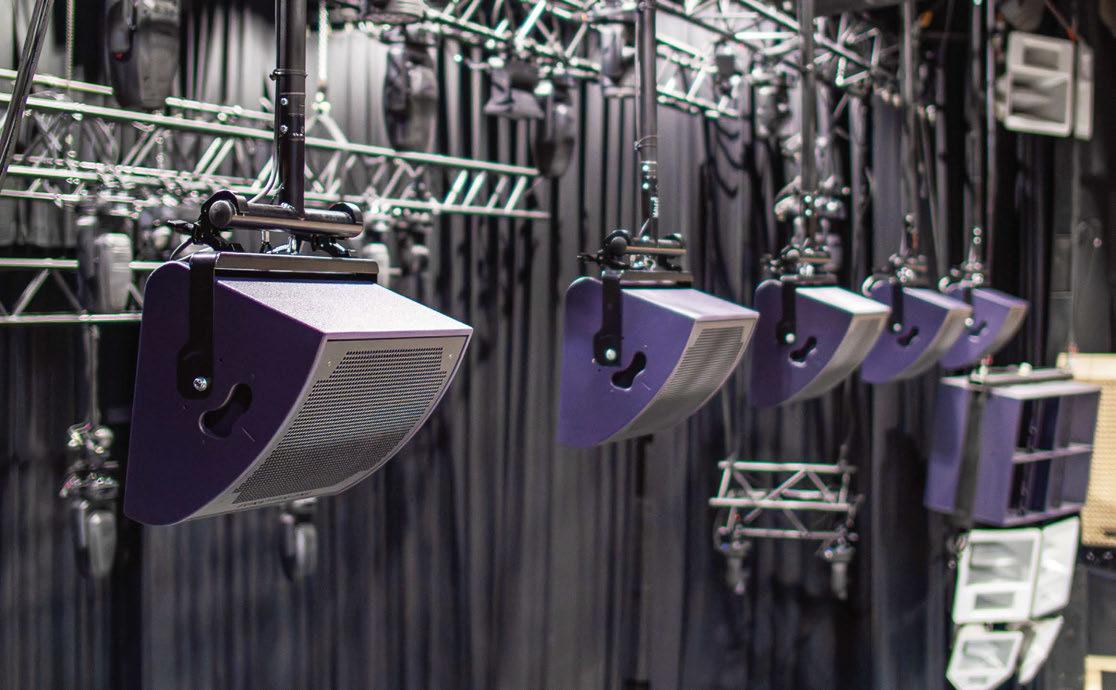
“We didn’t want to assume everyone knows what they’re doing with immersive, so we worked on ensuring people have a comfortable route into it,” Wright explained.
The system, therefore, is equipped with preset-based workflows that allow multiple levels of interaction. At its simplest, it can operate as a conventional stereo PA. Engineers who want to explore spatial functionality can route signals into predefined spatial busses and position sources within a graphical interface.
“The goal is to make it accessible,” said Beets. “You let an engineer run their show as normal and gradually introduce spatial elements. Most engineers are intrigued. If you make it easy and non-disruptive, they’re very open to using it.”
HOLOPHONIX’s ability to run multiple spatial rendering approaches simultaneously was another key factor in system design.
“We don’t believe one algorithm beats everything,” Papaleo explained.
“We allow users to select the right tools for the application.”
At Neushoorn, this allows precise stage localisation alongside immersive effects and acoustic enhancement within a single system architecture. This flexibility is particularly valuable in multi-use venues that need to support concerts, club programming and experimental performance formats without reconfiguring core system infrastructure.
Historically, spatial audio has been most widely adopted in theatre and cinema environments.
Neushoorn represents a move toward mainstream music venue integration. Asked why, Cornelisse answered clearly: “There are several reasons,” he began. “Firstly, Neushoorn sees immersive audio as the next phase in audio technology, a trend that has already been underway for some time in film and classical music.
“But the system also aligns with the hearing protection covenant we are committed to. By bringing sound closer to and more around the audience and distributing it more evenly across the hall, sound pressure levels can be reduced by up to 6 dBA while maintaining an intense experience. Test setups showed that shows at 92 dBA (averaged over 15 minutes) still deliver an amazing night, with great sound everywhere. It actually already sounded fantastic even before the system was tuned, which was a special experience.”
A third advantage, according to Cornelisse, is that the system opens doors for artistic innovation: “Creators can build soundscapes that were previously unthinkable,” he continued. “We are already setting up collaborations with creators to further develop Dutch pop culture. This could also give the creative side a huge boost.”
Wright agreed: “For engineers, this is another creative tool. It’s like painting a whole room rather than just a canvas.”
He expects a wide range of usage approaches, from dramatic spatial effects to subtle acoustic enhancement. “We’ll hear some shows where everything is flying around, and we’ll hear others where engineers use it
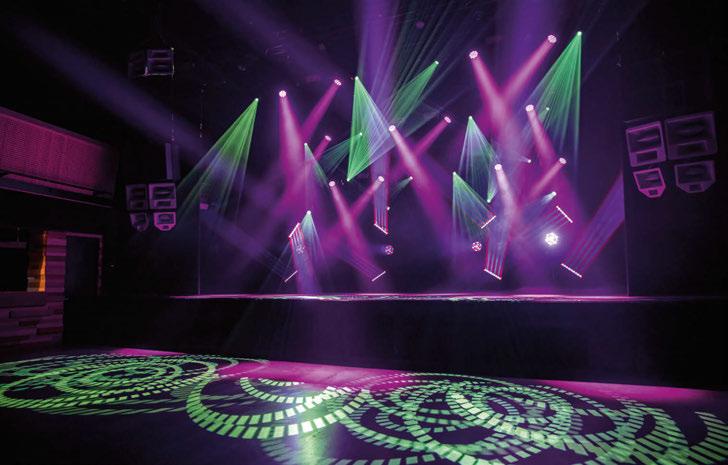
Above and far left: 12 Funktion-One PSM15 loudspeakers have been added to the existing system, including five flown above the stage.
Photos: Patrick Rooney.
Previous page and left: A selection of new Robe LED fixtures are rigged in the main hall.
Photos Louise Stickland.
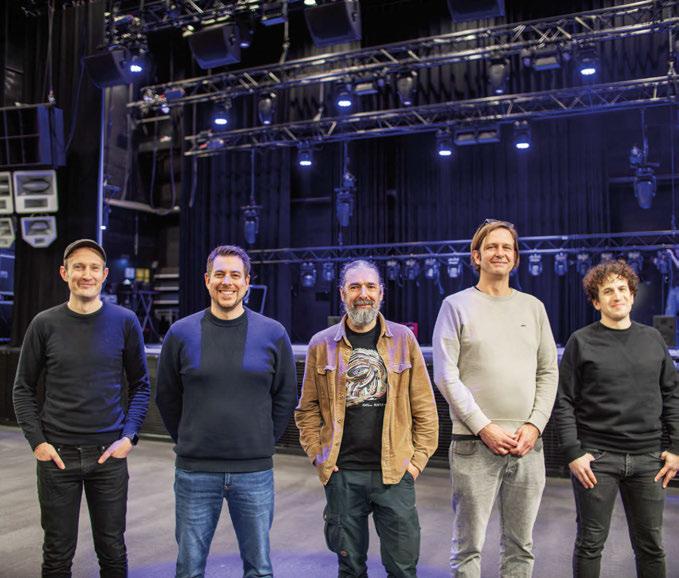
to shape the room acoustically. When the right people get their hands on it, it could be really exciting.”
This project also underlines the importance of collaboration between the manufacturers, integrator and venue, and Papaleo highlights More AV’s role in stress-testing and validating system performance.
“They really stress-tested everything,” he said. “That level of engagement is exactly what you want from an integration partner.”
Wright was also keen to highlight the wider cultural environment supporting the project. “The combination of More AV’s approach, the venue’s approach and everyone working together has been really, really productive,” he added.
Rather than presenting spatial audio as a replacement for conventional reinforcement, Neushoorn demonstrates how it can be integrated into existing live sound infrastructure.
For Funktion-One, the project reinforces the importance of loudspeaker fundamentals including low distortion, consistent directivity and a natural sound. For HOLOPHONIX, it demonstrates how spatial processing can fit into everyday live workflows. For venues, it provides a pathway into spatial audio without abandoning proven system performance.
“It is no longer just left and right – it is up, down, forward and backward,” said Beets. “The real power is in subtlety. You often only notice it when you mute the surrounds and suddenly realise what’s missing. You still anchor a singer to the stage. It would feel odd otherwise.
“The immersive elements enhance the space rather than distract from it. In a music venue, it’s not only about sounds flying around; it is the subtle movement and spatial enhancement that make it special.”
“This is a special project, both for Neushoorn and for us,” said van der Werff. “We were proud when we installed the Funktion-One system in the hall 11 years ago when it first opened, and it is inspiring to now take that experience to the next level. Neushoorn’s passion to offer its audience something extraordinary makes this collaboration a real pleasure.”
Lighting the way
Cornelisse was also involved in the process of upgrading the lighting package at the venue, alongside Head of Lighting Jorden Boersma and technical consultant and lighting designer Sebastiaan Groen, who is a former member of the Neushoorn team.
Together they compiled a list of new Robe fixtures, which are primarily
Left: Left to right: Will Wright from Funktion-One, Remco van der Werff from More AV, Neushoorn’s Head of Technical Michiel Cornelisse, Ted Beets from More AV, and Francesco Papaleo of HOLOPHONIX.
Below: Left to right: Twan Schipper from Controllux, Neushoorn’s Head of Lighting Jorden Boersma, Head of Technical Michiel Cornelisse, lighting designer Sebastiaan Groen, and Controllux’s Maikel Sakkers.
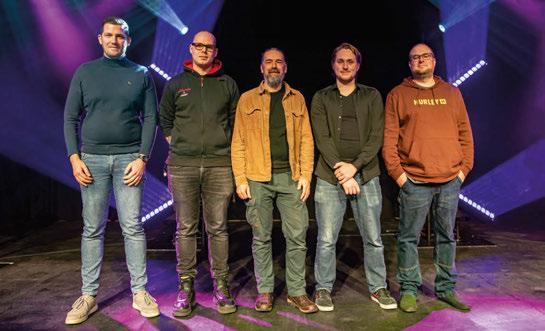
rigged in the main hall, including 22 PAINTEs, 12 LEDBeam 350s, four LEDBeam 350 FWs, six Spiiders, eight TetraXs and 16 LEDBeam 150s, which were delivered by Robe’s Benelux distributor, Controllux.
Groen, who was an intern at the venue in 2016 and Neushoorn’s first fulltime technician until 2019 when he left to become freelance, returned in 2024 to consult on the upgrade alongside Boersma, who joined the venue that year.
Cornelisse, who joined the venue in 2023, was already familiar with the needs of the venue, being a professional sound engineer and through his connection as the principal sound engineering teacher at Firda college. When it came to the decision-making process at to which new lights would best fulfil the venue’s needs, Robe was “an easy choice,” according to Groen.
Neushoorn previously had an installation of Robe’s first-generation DL series LED theatrical luminaires with 17 DL4Xs, which arrived in in 2016, and these fixtures are still going and have been moved to the smaller hall. The team visited other venues around the Netherlands which had recently invested in new Robe technology gather some firsthand opinions on how well the kit was working in situ and see for themselves how a combination of PAINTES and LEDBeam 350s looks.
Most of the new lights are rigged in the main hall, including a floor package comprising Spiiders, Tetras and four of the PAINTES, while the new LEDBeam 150s are in the floor package of the small hall along with the repurposed DL4Xs.
Boersma confirmed that the new rig makes lighting shows easier, quicker, and more efficient, as well as enabling more creative and intricate designs to be realised for productions and presentations.
Lighting control in the main hall is an Avolites Arena console, with a T3 for the area running the latest Titan Mobile software. Boersma typically lights around 50% of the shows coming through and observes that Avo and Robe work extremely well together, while heaping praise on the PAINTES and their functionality. “PAINTEs were perfect – made for a venue like this – small, punchy and fast,” he concluded. www.more-av.nl www.controllux.com www.funktion-one.com www.holophonix.xyz www.robelighting.cz
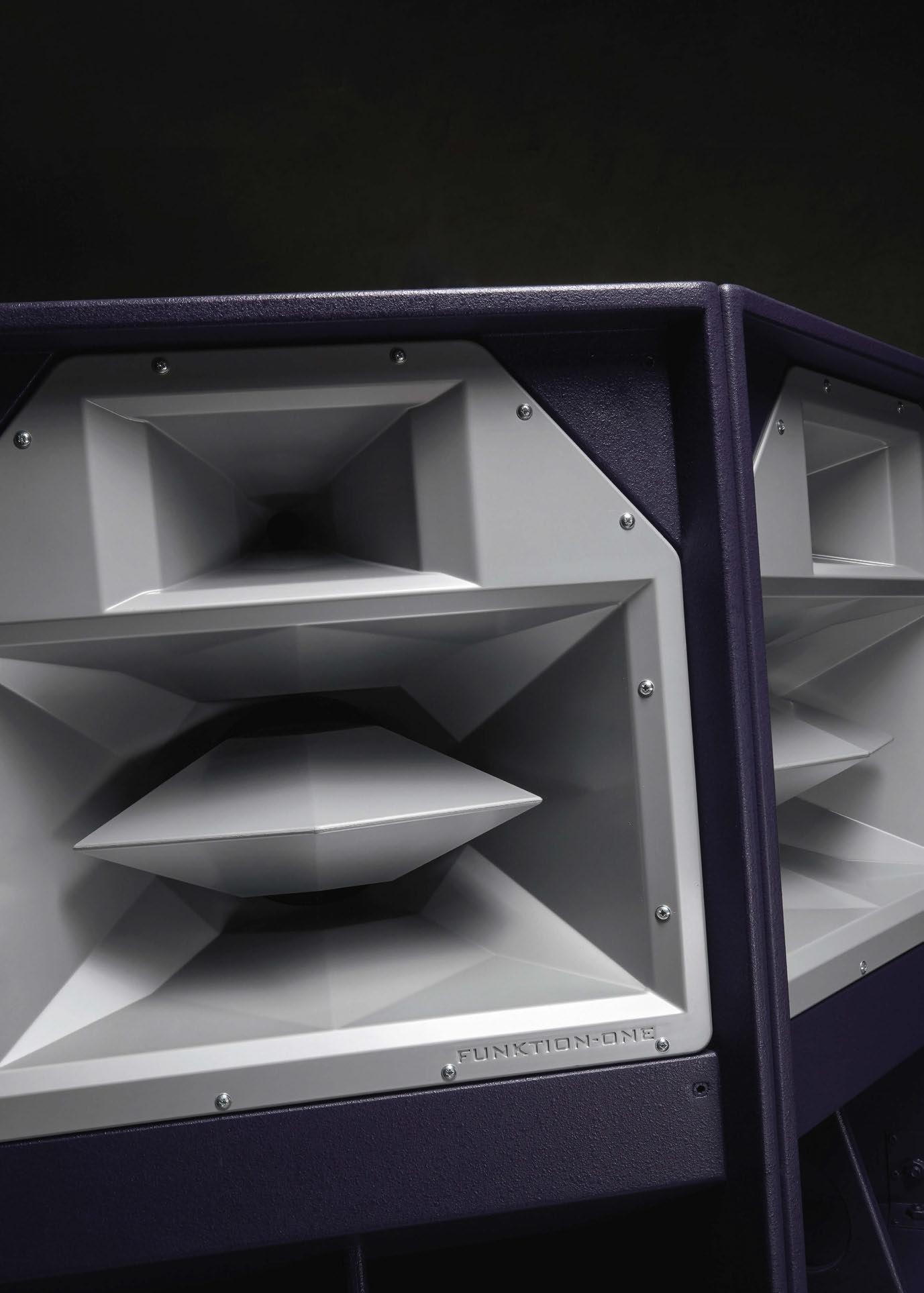

DUBAI / UAE EMEA
Dubai’s first AI-powered restaurant unlocks next-level integration and user control of complex audiovisual, lighting and media technologies with Vivid Studio and Stage Precision’s SP Grid.
Located inside Kempinski The Boulevard Hotel in Downtown Dubai, Woohoo restaurant offers a dining experience unlike any other in the city, with a continually evolving visual experience powered by generative AI. With an abundance of flickering LED video walls, lighting fixtures and linear LED lighting, content is managed by the WHALE (Woohoo AI Logical Engine), which creates the room’s atmosphere in real-time.
When content creation, system design and integration specialists Vivid Studio got the call about this new AIthemed restaurant, they knew it would be a unique and fun project.
Led by the AI-powered culinary mind of Chef Aiman, created by Vivid Studios as a fully functional MetaHuman powered by an AI Agentic Brain, Woohoo is built around the concept of humans and AI working together.
Chef Aiman creates the menu, which is prepared by highly trained chefs and delivered by waiting staff to guests who dine in an AI-inspired environment, surrounded by visual content that is masterminded by AI.
“The owner of the restaurant and the owner of Vivid Studio
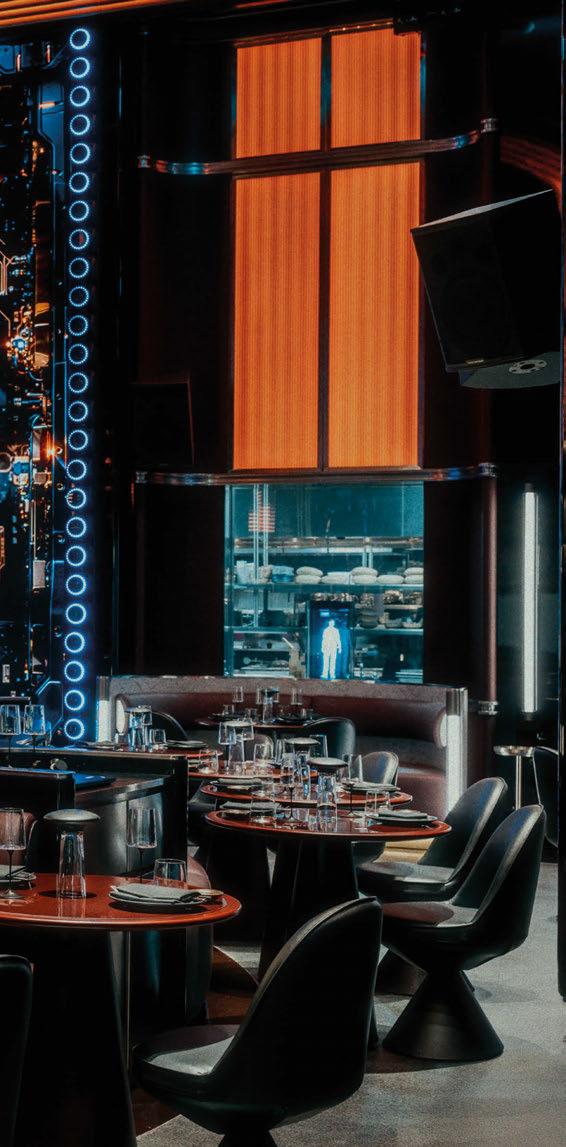
collaborated on this idea of an AI chef and restaurant, and played around with ideas of how the concept might work,” explained Yuri Stranyov, Lead Engineer at Vivid Studio.
“We had already been using Stage Precision, and more recently SP Grid, in our own virtual production studio, so when it came to thinking about the ‘brain’ that would be in the middle of all the lighting, audio and video content, I knew SP Grid was the best data management solution available.”
The vision, which encompasses lighting elements, largescale LED visuals and spatial audio, was to have a restaurant where these experience elements are controlled by AI.
“The restaurant’s AI agent does the setup for the day, choosing the order and timing of the different visual and audio elements, which we refer to as ‘parallel universes’,” continued Stranyov.
“Together with the Stage Precision team, we wrote a custom Grid Extension with SP Grid’s Python-scripting features to connect the AI-agent to the AVLM workflow, allowing it to manage the day-to-day running of the restaurant system.”
The system comprises eight media servers that play custom
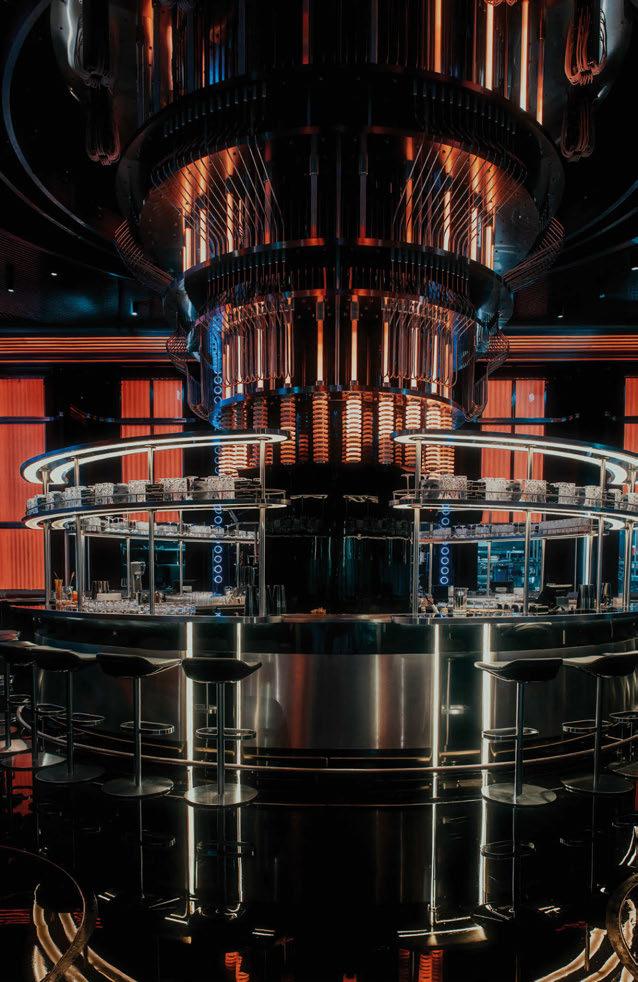
Above: Woohoo is built around the concept of humans and AI working together, and Stage Precision’s SP Grid Platform acts as the single point of control and automation for the AVLM system.
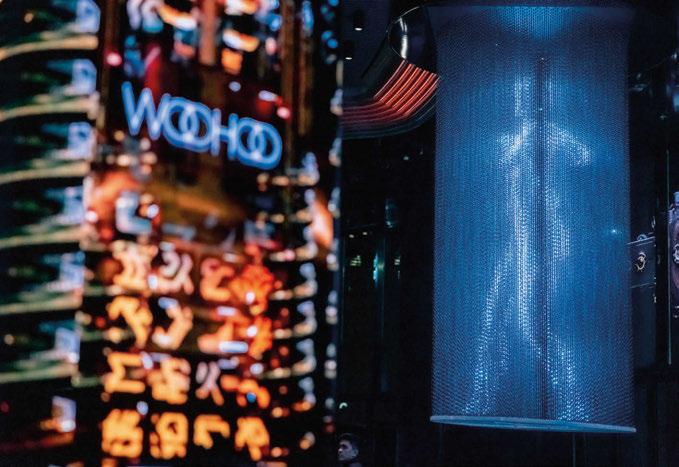
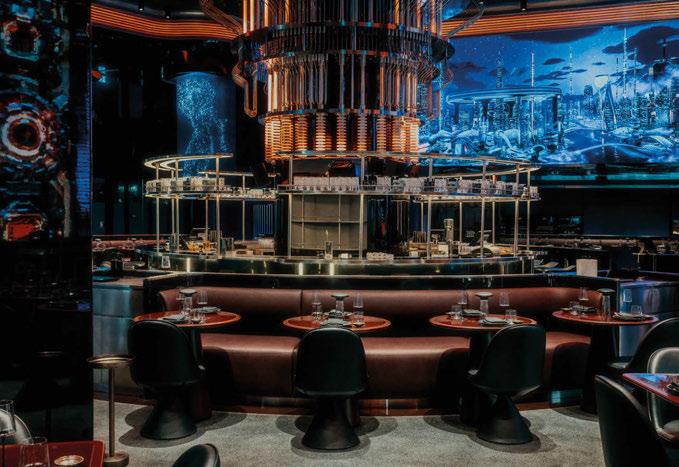
content on large LED screens throughout the restaurant, while lighting and a network of Funktion-One loudspeakers, which use TiMax spatial audio processing, creates an immersive audio experience.
The audio system, supplied and installed by Funktion-One’s regional distributor Em-Tec and designed alongside consultant Pavel Shemiakin, is made up of 46 loudspeakers, with 41 situated in the main dining area and configured for tonal balance across the diners.
Full Fat Audio amps power the system, which was designed with a dedicated 1:1 ratio between channels and loudspeakers to facilitate the spatial audio localisation managed by the TiMax SoundHub2-S64. The FFA amps are integrated into the ecosystem via a XILICA FR1-D processor to bridge the signal from the Dante network to the physical amplifiers.
Show control acts as the glue that binds the entire experience together. At its core is a Merging Technologies Ovation 11 platform, responsible for multimedia playback and synchronisation of show sequences, which manages everything from ambient background layers to complex multichannel sound cues, while distributing control signals to mechanical systems and environmental effects.
Lighting fixtures selected include ACME Tornado TB5IPs, which are deployed extensively in linear fashion to provide architectural definition to the space, while ChamSys MagicQ software was selected for lighting control and programming.
The venue’s centrepiece is the 3D volumetric LED sculpture in the centre of the bar, which is made up of LedPulse Technologies’ Dragon-Y product, a one-of-one version developed specifically for the restaurant.
The Dragon-Y – and the broader digital architecture – was specified by Vivid Studios, led by Creative Director Moe Tarakomyi and Technical Director Mohammed Haroun,
who conceived the narrative of the ‘living quantum machine’, and selected the hardware necessary to realise the WHALE (Woohoo AI Logical Engine) ecosystem and its physical manifestation within the restaurant.
The venue’s AI agent ensures a ‘uniqueness’ to the order of the day’s content, and even creates its own AI-generated content while the restaurant is closed overnight. This content is then reviewed by the team before being included in the library of visuals and audio that the AI agent can select from.
While AI might be running the systems, it was down to the Vivid Studio team to build the robust server system and marry together hardware and software – and SP Grid was the canvas on which the system was built.
From the ideation and experimentation phase, Stranyov built everything within SP Grid.
“The whole logic was created in Grid Studio initially, where we built the workflows and set up state machine calendars,” he explained.
“It is convenient, and the user experience for me setting it up is based on human logic. You connect things together, and it works.
“If it doesn’t work, it’s easy to change things, and if you need to make something work together, programming is much easier than you would expect.”
For both the AI-agent integration and the ChamSys lighting system, Vivid Studio made good use of SP Grid’s low-code/no-code environment to create custom plug-ins to bring these AVLM elements into the master control system. Stranyov confirmed: “For people who can’t code, there is the possibility of building real custom solutions easily with SP Grid.”
The restaurant, although largely controlled by AI, is staffed by humans, and a human-friendly user interface for simplified control of the AVLM system required Vivid Studio to use the





















All the wireless power, audio clarity, and seamless integration you expect from Bolero now in a lighter, smaller form. With proven Boleroperformanceinacompactanddiscreet body, Bolero Mini is ready for any challenge inbroadcast,sports,orliveevents.

























•165g,28mmthin •Touch&GoNFCbeltpackregistration •Bluetoothconnectivity •Riedel-exclusiveAdvanced DECTReceiver(ADR)







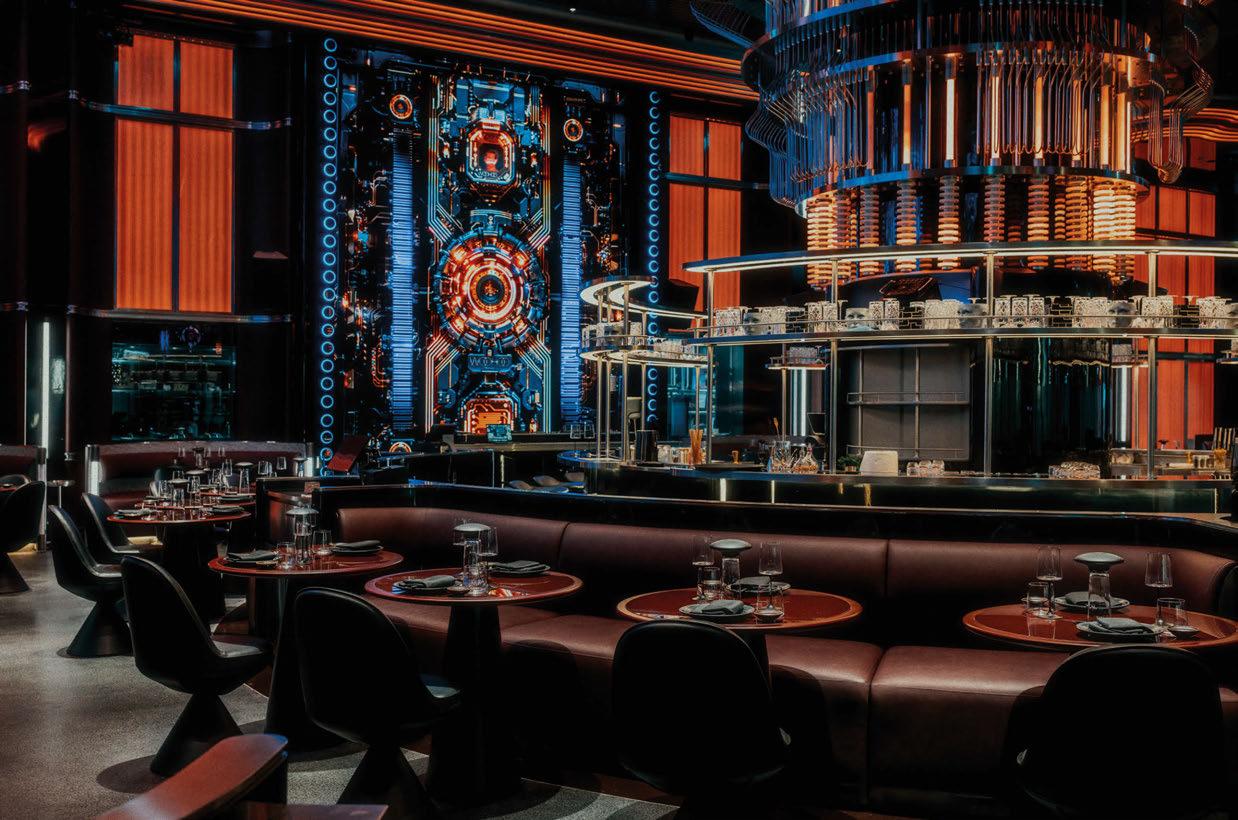
custom UI creation tools within SP Grid.
“This was my first time building any kind of UI, and SP Grid made it easier than I could have imagined,” said Stranyov. “Custom variables can be dragged across and appear as UIs.
“Sliders, triggers and buttons just look great and work perfectly. It’s very user-friendly to create these in Grid Viewer iPad app, which we could do in advance in the studio before moving on-site.”
At the restaurant, a large touchscreen displays the UI for staff members to switch on the system or override the AI-powered sequence in case of DJ nights and special events.
SP Grid’s licensing system, which allows users to add credits as their projects grow in complexity, is another standout feature for Stranyov and the Vivid Studio team, facilitating a fairer and more equal route to creating exciting AVLM environments.
“It’s one of the best things I’ve seen in our industry,” continued Stranyov. “You pay for exactly the connections and devices you need to use, and this kind of licensing is very attractive both to and for our customers. It’s the first time I’ve seen it in the multimedia world, and it’s definitely the way forward.”
SP Grid not only makes experience building more intuitive, user-friendly and cost-effective; other notable features have further solidified Vivid Studio’s opinion of SP Grid as a fail-safe tool.
Grid Gateway provides remote monitoring tools, allowing Stranyov to stay informed of system stats and performance, whilst the Stage Precision Slack support channel has proven invaluable for real-time troubleshooting.
What began as a single AI character of Chef Aiman has transformed into a complete dining experience that is only set to continue evolving.
Lighting, audio and visuals cycle through different ‘parallel universes’ at the will of the restaurant’s own AI-agent.
SP Grid acts as the single point of control and automation for the AVLM system, taking commands from the AI agent to trigger different sequences. Looking to the future, Woohoo and Vivid Studio will continue building the system and exploring the possibilities of AI agent automation and SP Grid.
The creation of different user interfaces for different users, such as DJs, facilities staff and cleaners, is also a next step in the evolution of this installation.
“SP Grid touches every element of the Woohoo project,” concluded Stranyov. “From the restaurant experience control, to using SP in our VR studio to create podcast episodes with Chef Aiman, it plays a crucial role at Woohoo. It’s flexible, and it can pretty much handle anything you want it to. There’s nothing better than SP Grid for building these experiences.”
www.woohoo.restaurant | www.vividstudio.me
Above: 46 FunktionOne loudspeakers are deployed and configured for even tonal balance across



Crypto.com Arena, home to the LA Kings, Los Angeles Lakers, and LA Sparks, has completed a major lighting upgrade with the installation of 140 units of Elation’s PROTEUS series fixtures, including the new PROTEUS RADIUS. Designed and delivered by longtime partner Volt Integrated, the new system is a key part of the arena’s multi-year renovation and brings a dramatic new game-night look to one of the world’s most vibrant sports venues.
Volt served as consultant, dealer, and integrator for the new lighting installation. Grant Dunn of Volt Lites, sales lead on the project, said: “We’ve had a long-term relationship with the arena – this is more than just a customer. It’s a hallmark venue, and our work here is truly a partnership. We’re proud to bring this upgrade to life, funded by the LA Kings, who are committed to providing fans with an unforgettable experience.”
The arena’s previous 15-year-old discharge beam lights were due for replacement. After completing an 18-month market analysis and on-site product demos, Volt and the Kings selected Elation’s PROTEUS RADIUS, a compact, high-intensity IP66 beam FX fixture. The RADIUS stood out for its output, reliability, and ability to eliminate lamp maintenance.
“We initially installed four PROTEUS RADIUS fixtures for sporting events to test them out,” Dunn explains. “They were really punchy, and we really liked the continuous pan/tilt. We wanted something futureproof, and this was the only option with the LILI (Laser Illuminated Lighting Instrument) engine, which was a nice selling point.”
112 of the RADIUS fixtures were mounted in a full circle around the rink, creating a powerful cage-like effect that surrounds the ice during player intros, goal celebrations, and key game moments. Volt supplied all the fixtures during the offseason while also handling infrastructure, cabling, DMX distribution, and fixture prep for the installation, which was completed by the in-house arena team in early September, before the start of the NHL season.
The PROTEUS RADIUS aren’t the only Elation lights in the arena, however. In 2024, the arena incorporated 16 PROTEUS RAYZOR 1960 LED wash and 12 PROTEUS MAXIMUS LED profile fixtures into its new 360-degree motorised scoreboard.
“With these latest upgrades, Crypto.com Arena now has a complete, modern lighting package across its profile, wash, and beam categories,” Dunn concluded. “It’s a future-ready system built for fan engagement, broadcast quality, and gamepresentation impact.”
www.elationlighting.com
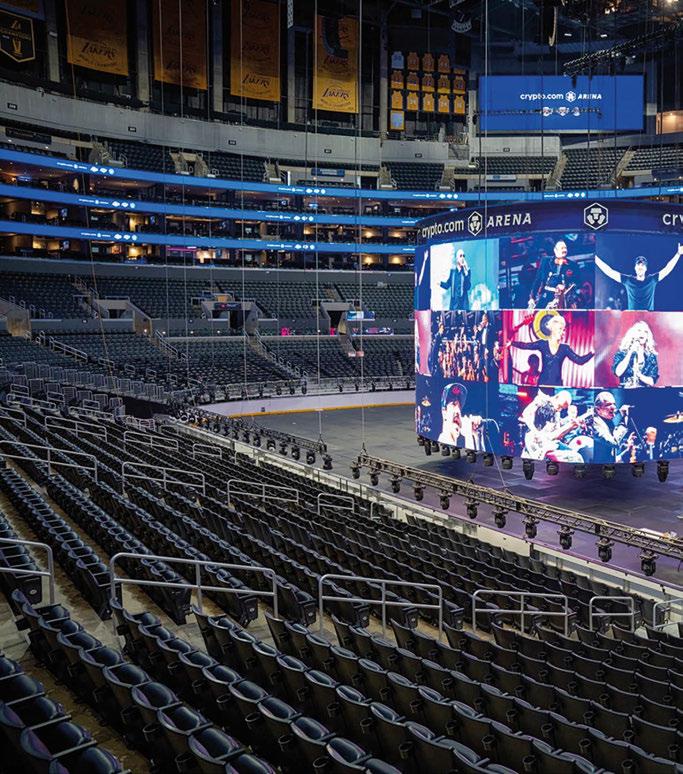
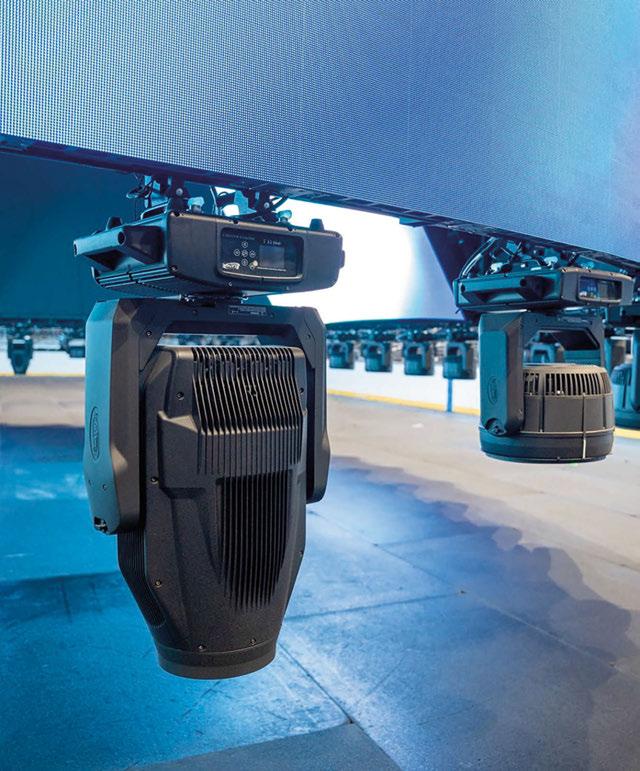
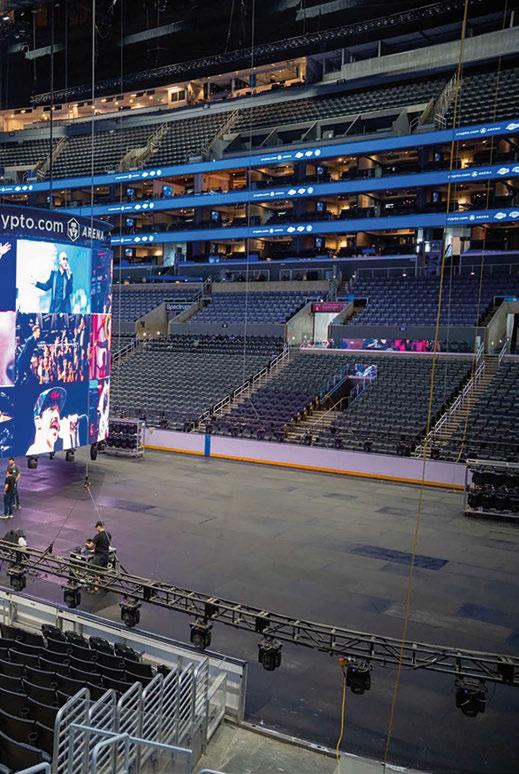
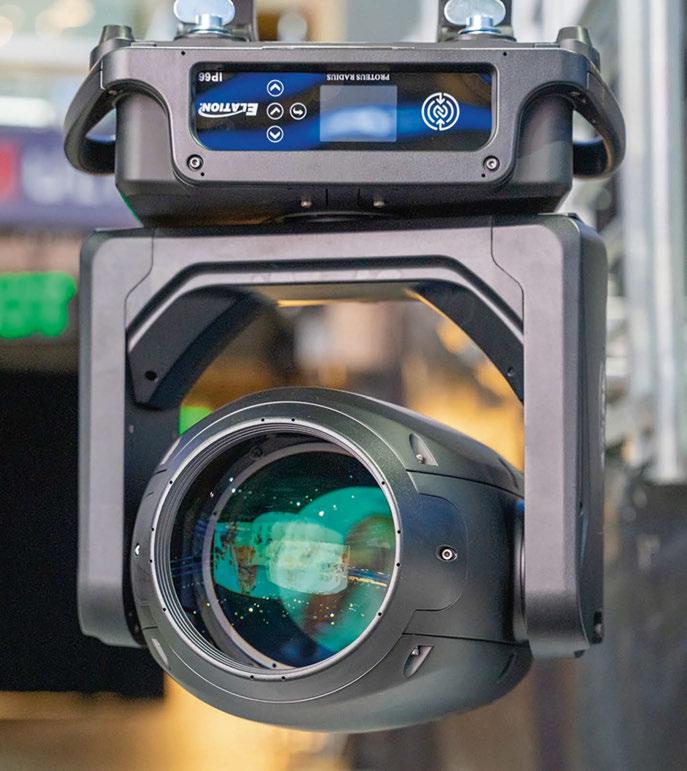
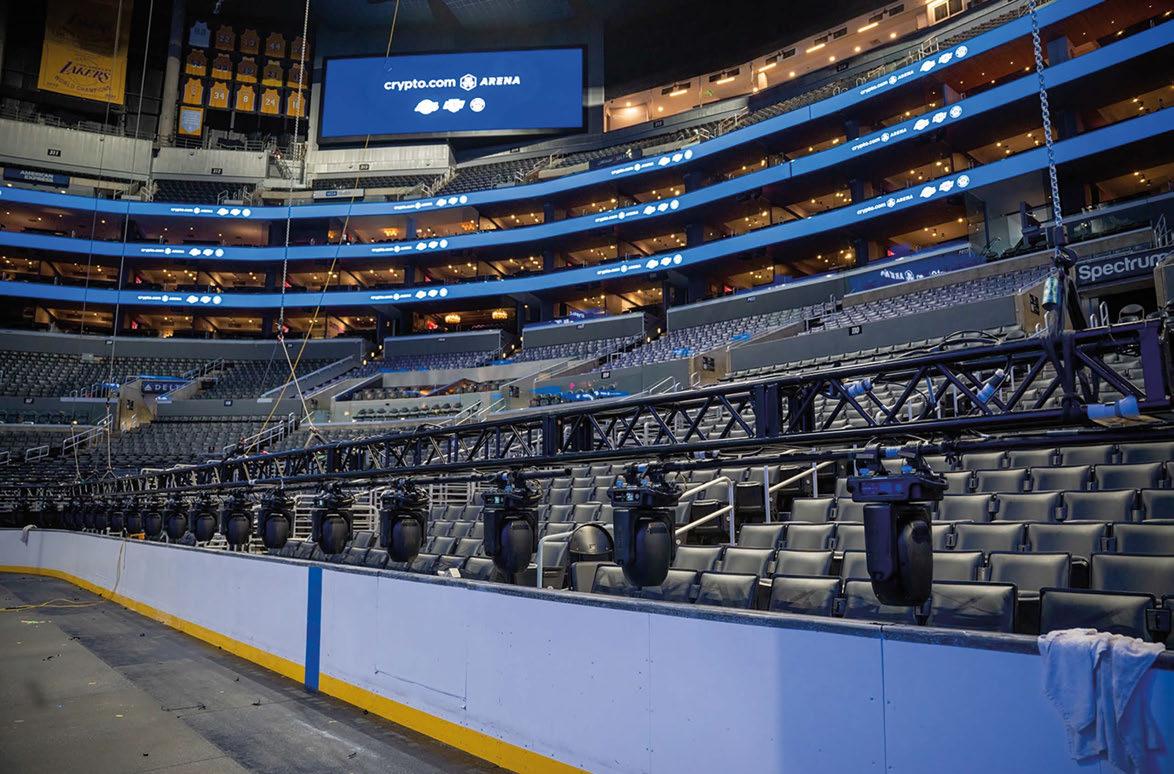
Historic Long Island theatre is modernised with a freshly equipped technical AV upgrade, including an electro acoustic enhancement system, to bring it in-line with performer and audience expectations.
Towards the eastern tip of Long Island is East Hampton’s Guild Hall, a nearly century-old cultural centre that has been a cornerstone of the Hamptons’ vibrant arts scene.
As the venue approached its centennial, it underwent a facility-wide Capital Improvements Project & Campaign which included top-of-the-line physical and technological enhancements to better deliver its mission as an artistdriven, interdisciplinary institution.
These comprehensive enhancements have seen the structural and technological upgrade of Guild Hall’s grounds – encompassing its museum, theatre, education centre, and administrative offices. The intimate Hilarie and Mitchell Morgan Theater underwent a dramatic technical transformation, and reopened with stateof-the-art technical capabilities and roomier, more comfortable seating.
The goal of Guild Hall’s full-scale theatre AV system renovation was to equip it with high-quality technology for the artists and audiences it serves, while preserving the venue’s historic charm.
Performers at the venue in recent years have included the likes of Questlove, Mark Ronson, Jerry Seinfeld, Neil deGrasse Tyson and Billy Porter.
Apeiro Design were brought in as AV systems and theatrical consultants, which also included theatre lighting and stage rigging systems, with Ford AV awarded the AV integration and installation contract.
With Apeiro’s Project Manager Brad Kisicki and Associate Principal Dan Mei working with the venue’s technicians, they put together a plan to modernise the theatre while maintaining its quaint aesthetic charm.
Before the renovation, Guild Hall’s systems reflected its age with incandescent lighting, limited projection capabilities due to outdated equipment, and a sound system that struggled to cover the space evenly. This infrastructure did not meet modern expectations of a venue hosting a wide array of events and performances.
“This is a venue that wanted to be at the cutting-edge of everything, and they felt that the performers that came through their door demand a high level of production, and that their audience deserved it,” began Kisicki.
“Our role as consultants was to look at the operational functionality of the house and its rigging, and design the necessary system upgrades, with the AV aspects being the most notable of the upgrades.
“The venue’s techs are highly knowledgeable and had a lot of input on equipment selections and we met with them regularly, so during the process they were very involved, and we at Apeiro did very little selection in a vacuum.”
One of the most impressive was the installation of an electronic acoustic enhancement system to reshape the room’s acoustics electronically.
“Prior to the renovation the venue often received complaints from performers who couldn’t hear anything on the stage, so to combat against that we tried to create as dead sounding an acoustic space as possible, with the assistance of acoustic consultants Akustiks, and then design a sound system that could be tailored to suit any type of performance,” added Mei.
“The venue had an existing d&b audiotechnik system in place that they were very happy with, and some of the loudspeakers remained as they still functioned perfectly well, and so we worked alongside d&b’s New York team to model new d&b Soundscape systems utilising its EnSpace software for acoustic enhancement, and En-Scene for object-based signal management,” said Mei With the designs in place, Ford AV set about procuring and installing the equipment against the backdrop of an incredibly tight deadline.
“The venue’s new proscenium wall was installed just two weeks before we came in, and we had to work long nights and weekends to get the loudspeakers set-up and tested before the new season opened,” explained Ford AV Project Manager Dustin Plumlee.
“We worked with the local d&b audiotechnik team who came out and fine-tuned and commissioned the systems, and they gave the venue techs the necessary training on the new software.”
The venue’s main array is fixed to a custom frame above the proscenium and consists of four Vi7P and Vi10P clusters with two Yi Subs, and five 44S deployed as front fills. The En-Space system is split into two, with a preset for the performers on stage, and one for the audience, and they can be used independently.
The audience system consists of six d&b 44S deployed overhead, and six d&b 16C column loudspeakers set up to the sides and at the rear.
For the En-Scene surround system, a total of 22 44S loudspeakers are deployed around the theatre, with DSP
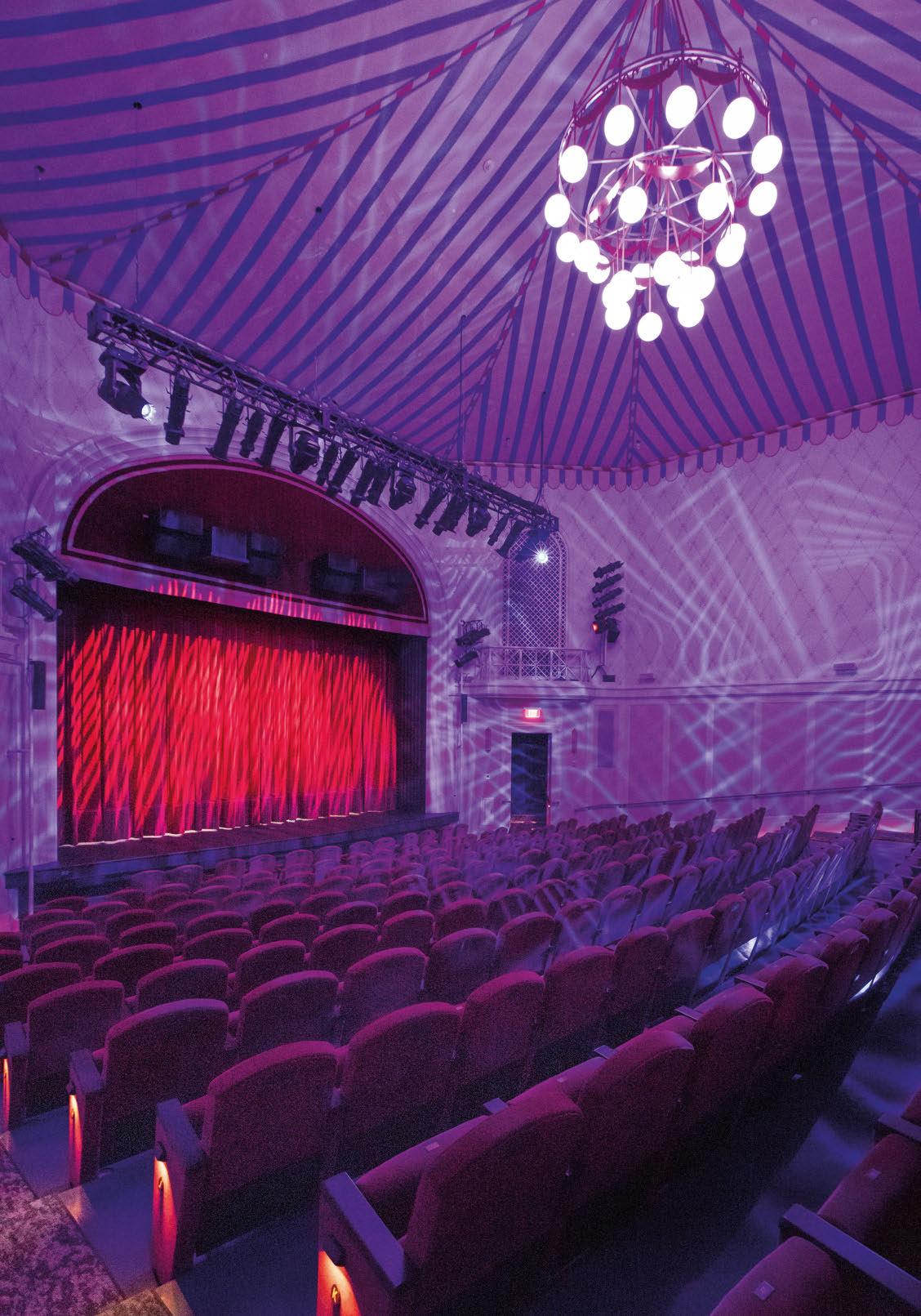
handled by two DS100 processors and powered by 11 5D amplifiers.
“The venue’s season ended in late September 2023, and there was a big push to complete the project ahead of late-spring 2024 before the new season began in July,” explained Plumlee. “However, as with a lot of construction projects things can run on, and certain elements were delayed, but we did hit the date after a huge push.
“The AV installation was final phase of the building’s upgrade, with previous construction phases including updating the gardens and exhibition spaces. Since the project was completed, there have been two seasons held in the venue, and it’s all holding up beautifully.”
Aperio Design’s task in designing the AV systems was made difficult by the venue’s age and size as they were restricted in where they could route conduit cabling. The cabling infrastructure was upgraded, including video and fibre runs, which was necessary for the addition of a new DiGiCo Quantum 225 console for FOH.
A new microphone package consisting of instrument and vocal mics from Shure, Electro-Voice and DPA were specified, in addition to 20 König & Meyer stands, and a 12-channel Sennheiser EW-DX transmitter package was also supplied.
Seven DPA 4011 microphones form part of the electronic acoustic enhancement system, while a full Clear-Com Arcadia intercom package was also supplied.
“Our specifications all required a factory acceptance test,” said Mei.
“I went out to Ford AV’s large facility in Oklahoma for a dry run of the equipment to ensure the systems will work when they are installed on site, and that was massively beneficial as we caught a few things that needed tweaking. It was a great part of the process, and then everything was packed up and shipped to site.”
With the venue hosting film festivals during its off season, the need for an improved projector system was met with the addition of a Christie CP4415-RGB pure cinema laser projector, which is housed in the venue’s control room and caused the Ford AV team a few issues when it came to installation.
“We had to create a custom enclosure for the projector,” said Plumblee. “And trying to get that box inside the control room was a challenge because it’s a small space which also serves as the rack room – this is a very old building that wasn’t designed to have this much technology inside it.
“The hush box for the projector adds a huge benefit because it is housed directly above where the operators sit, and without its ability to keep the noise and temperature down inside that control room it would not be a functional space for the techs at all.”
When it came to stage lighting, the venue’s existing package of ETC fixtures and Apex 20 console remained in situ, with the addition of more than 40 Martin Professional fixtures for use during concerts, including 20 MAC Aura XB, 14 MAC Ultra Performance and 11 MAC Encore Performance WRM.
“The lighting network was very outdated,” explained Kisicki. “So we upgraded the backbone and undertook a series of interventions with the existing dimmer rack by swapping out some modules. In the house, the main task was the re-distribution of circuits in a more economical and modern way – the bulk of the infrastructure and network topology remained the same.”
The theatre’s central chandelier was also the subject to an upgrade, which was overseen by the venue’s technicians as they rewired it with Astera NYX bulbs to create a wireless colour-changing system controllable on a closed loop network.
Full video production capability was added with Panasonic AW-UE160K PTZ cameras deployed at centre house and right-left near the stage, and a Blackmagic Design ATEM control system which allows for video distribution to various TVs in the building, and for broadcasting live streams through its YouTube channel.
With the project completed in time, feedback from the venue’s techs has been positive, and Ford AV’s Plumlee was happy with the handover process.
“Coming from the level and age of AV technology that the theatre had
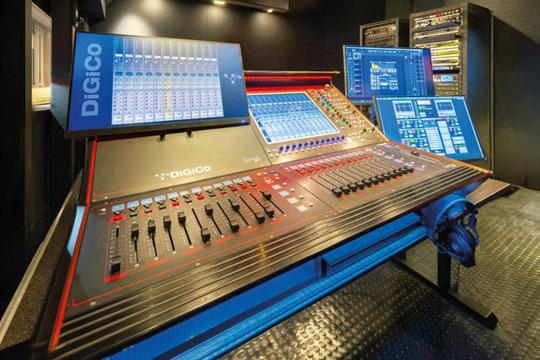
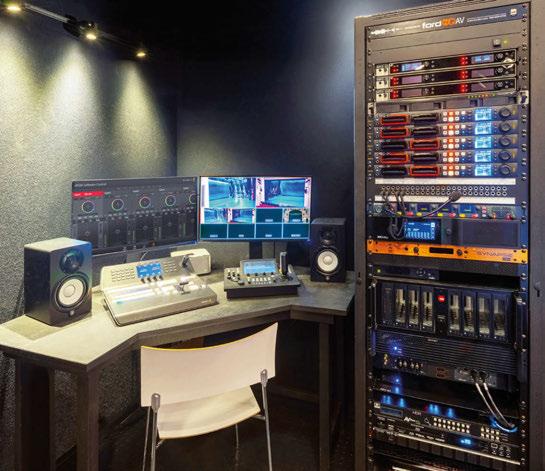
before meant that getting to grips with some of the upgrades was a bit of a learning curve, but they’ve been very happy,” he concluded.
The venue is equally delighted, with Guild Hall Executive Director Andrea Grover commenting: “We feel like we’ve achieved everything that we wanted to do without changing the character of the space.
“We wanted our audience to have a near flawless experience and a high level of comfort in a historical theatre that maintains its scale and character from the 1930s, and the result is phenomenal. I feel like we’ve breathed another 100 years of life into the building.”
www.guildhall.org www.fordav.com www.apeirodesign.com






Monza WET is a compact and powerful Spot projector, equipped with a 350W white LED, delivering a luminous flux of 13,000 lumens.
With an extended zoom range from 3° to 49°, a CMY trichromy coupled with a progressive CTO, and a color wheel featuring 8 colors + 4 filters, Monza WET offers maximum flexibility to meet all creative requirements.
It includes 7 rotating gobos, 11 fixed gobos, an iris, a full-closing 4-blade framing system, and two stackable prisms (linear 6-facet and circular 6-facet), providing a wide range of effects. Two progressive frosts, Heavy and Medium, enhance its capabilities for smooth transitions and homogeneous projections.
With its IP65 rating, Monza WET is designed to withstand all conditions, both indoors and outdoors. It supports DMX, RDM, Art-Net, and sACN protocols, and includes a wireless DMX solution, ensuring a simplified and efficient setup.


Team brings Venice to NYC for historic Monet and Venice exhibition

The Brooklyn Museum recently unveiled Monet and Venice, New York’s largest museum exhibition to focus on Monet in over 25 years.
Featuring 100 works from Monet, and contemporaries including John Singer Sargent and Pierre-Auguste Renoir, the exhibition highlighted 19 Venetian paintings by Monet.
Notably, where other artists tended to capture the hustle and bustle of Venice’s streets and canals, Monet’s artistic vision avoids human presence in favour of light, reflection, colour, and architecture.
Reflecting the artist’s unique concept of the ‘envelope’ –addressing the unified impression of light and atmosphere – his featured works echo his fascination with repetition, and the shifting qualities of time and reflection.
To prepare visitors for this journey, the Museum commissioned Hyperquake’s Experiences Team to transform its soaring central rotunda into a multisensory prelude.
The result is a fully immersive environment that embodies Monet’s ‘envelope’ concept in extraordinary ways.
“Monet famously said that Venice was too beautiful to be painted, yet his works reveal its essence through light and atmosphere,” explained Hyperquake’s Experiential Creative Director, Mary Franck.
“Our goal was to immerse visitors in Venice so they could see what Monet saw and experience for themselves the play of light and colour through the day, making the exhibit visceral and accessible to visitors.”
Leveraging over 20 years of experience creating innovative, human-centered environments, Hyperquake’s growing Experiences Team designs immersive brand and cultural experiences where story, spatial design, and interactive technology converge to move people and drive results.
Challenged to transform the Museum’s central rotunda into an unforgettable experience that would immerse visitors within Monet’s Venice before they move on to see the paintings, an elemental focus on moving images led them to Venice-based videographer Joan Porcel Studio.
Together, they created a five-minute panoramic video that digitally transports viewers through a day in the city, from sunrise to sunset.
To envelope visitors within this evolving Venetian scenery, Hyperquake designed the rotunda’s physical space, including seating and wall placement.
Photo: Paula Abreu Pita.
Projection-mapped across four freestanding walls – each over 10ft tall – and two 24ft rotunda projections, the theatrical experience also features caustic lighting animating the dome above, with rippling water patterns cascading across the floor.
“From a technical standpoint, the experience uses eight projectors deployed at varying heights, throw distances, and angles to map content across multiple freestanding and architectural surfaces within the rotunda,” said Will Bullins, Director of Creative Technology, Hyperquake. “All media playback is handled via BrightSign players for reliable, synchronised operation during daily museum hours.”
The equipment was owner furnished by the museum, and Bullins worked with the museum to understand the number of projection surfaces, and utilised Pixera software for projection studies and previsualisation to determine where projected images could be in the space.
Heightening the multisensory experiences, through Hyperquake’s collaboration with the Museum’s former composer-in-residence Niles Luther, visitors hear a custom soundtrack layered with field recordings from Venice, which complements the exhibition’s original symphony.
As a final stroke, a custom fragrance created by Joya Studio infuses the rotunda with atmospheric scent.
With Hyperquake leading the design and integration, while overseeing AV installation and projection studies to maximise impact, the result is a seamless integration of physical and digital storytelling that invites visitors to experience the same interplay of sensations that captivated Monet during his time in Venice.
“In short,” said Franck, “we created a multisensory entry experience that contextualises Monet’s Venetian works, deepening visitor understanding to ensure guests arrive in the gallery attuned to his artistic innovations.”
Lisa Small, Senior Curator of European Art at the Brooklyn Museum, concluded: “I wanted to create an introductory moment in the exhibition that would transport visitors to Venice and surround them with the vistas, shimmering reflections, and magnificent architecture that enchanted Monet in 1908.
“We are thrilled with the final result, as is our audience, who are enjoying this meditative and beautiful environment as an integral prelude to Monet and Venice.”
www.brooklynmuseum.org
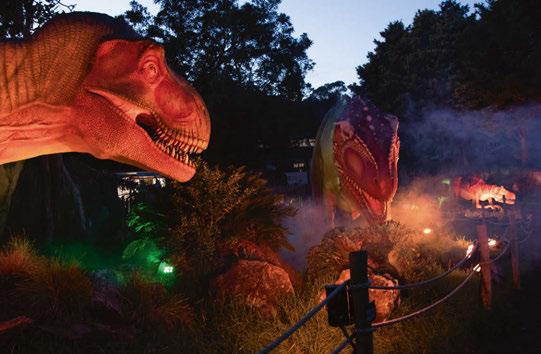
Showtec lights up Dinosaur Discovery Track at Auckland Zoo
Set within Auckland Zoo’s former elephant habitat, the Dinosaur Discovery Track features 25 largescale animatronic dinosaurs in an immersive experience, which allows visitors to encounter species from the Triassic, Jurassic, and Cretaceous periods, including the feathered Utahraptor, waterloving Baryonyx, the mighty Tyrannosaurus Rex, and the horned Pachyrhinosaurus.
Illuminating the replica dinosaurs, which moved, roared, and spat water, was a selection of Showtec professional lighting fixtures, as supplied by Highlite’s distributor Lighting for Entertainment Group KEL- PLS. The lighting project
was undertaken by Kenderdine Entertainment Lighting, with lighting designers Glenn Stewart and Julia Roberts utilising 36 Showtec Cameleon Flood 6 Q4, 12 Showtec Cameleon Flood 15 Q4, and seven Showtec Cameleon Flood 15 Q6 Tour fixtures, along with three Antari IP1600 smoke machines, which added a misty, primeval feel.
“Dinosaurs can be a gateway to nature and conservation, and we very much hope that this experience inspired visitors to protect today’s wildlife before they disappear forever,” concluded Zoo Director Kevin Buley. www.highlite.com
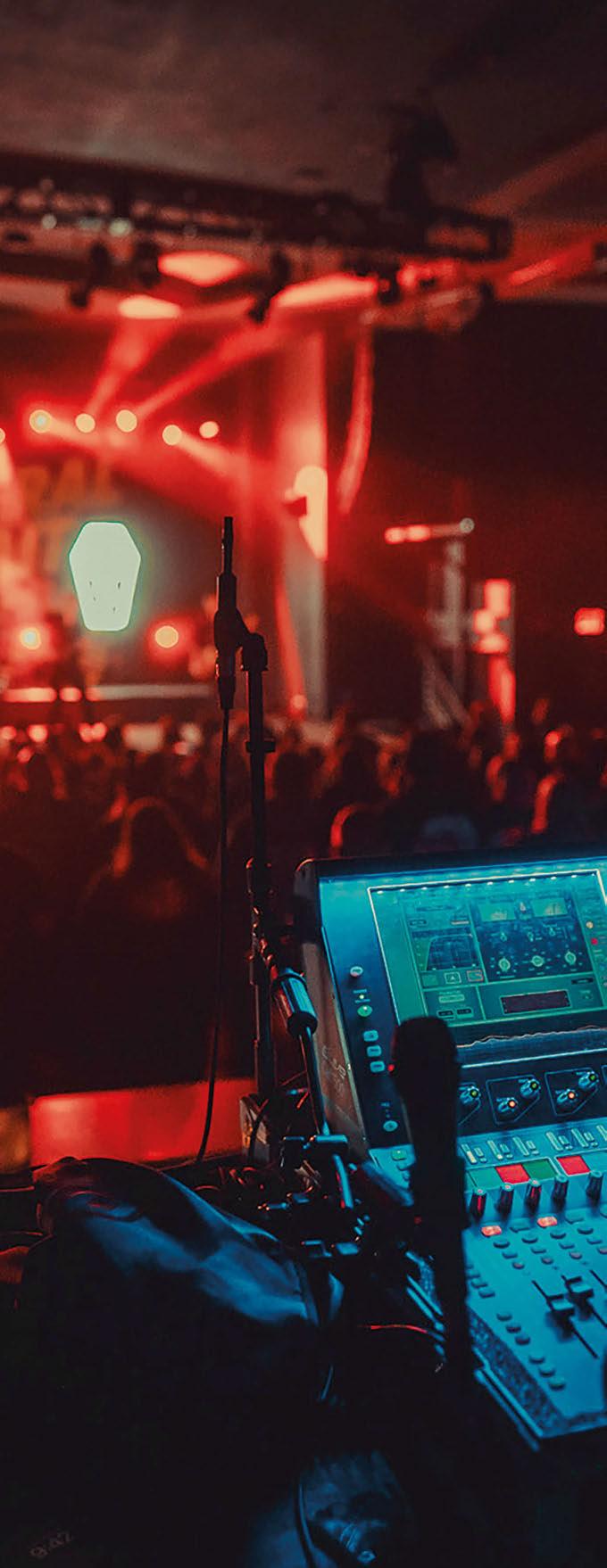
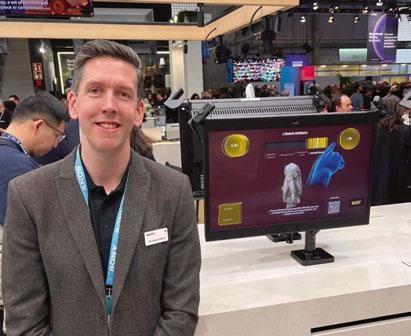
Integrated Systems Europe 2026 opened its doors from 3-6 February, and by any measure, it was a milestone edition. Over the four days at Fira de Barcelona Gran Via, the show welcomed 92,170 visitors from across the globe, with 1,751 exhibitors, including 323 first timers, filling the 101,000 sq m show floor.
Tuesday alone drew 55,156 unique attendees, a 10% rise from 2025, while total attendance climbed steadily through the week to reach 87,648 by Thursday – officially the highest in the event’s history. With 120,914 registrations and more than 212,000 visits recorded across the show, ISE once again demonstrated its pull as the central meeting point for the AV and systems integration industry.
The Live Events Stage returned as a hub for industry insight, curated by TPi Magazine’s Managing Editor, Stew Hume, closing with sessions
led by Production Futures. MONDO-DR’s Todd Staszko, Editor, was among the catalogue of panel hosts during the show, leading a discussion on the enhancement of fan experience at the Avicii Arena with Anders Jørgensen, Project Manager at Stouenborg ApS. He then moderated a talk with Simon Lachance, Director of Technical Design at Cirque du Soleil ALIZÉ, the company’s first resident production in Europe, focusing on how the show is brought to life. MONDO-DR’s Assistant Editor, Daisy Thorogood, also hosted a panel discussion taking an in-depth look at AV on high-end cruise ships, with insights from Paul Byrne, Managing Director at EWP, Matt DeJong, Lead Design Associate SLVR/LES at Royal Caribbean Group, and Caitlyn Luc, the Senior Manager for Newbuild Entertainment Architecture at Norwegian Cruise Line Holdings.
1 SOUND took to the show floor to debut its Level Series, which was presented alongside a surprise announcement that saw the unveiling of the Level L35, a smaller model in the series. The company also announced its new SUB28. Absen was present at the show, too, presenting a broad LED ecosystem. Highlights included upgraded products such as its SA1.5 COB 1.5mm pixel pitch COB rental display and the AW Pro, an outdoor ultra-HD fine-pitch display solution.
ACME Lighting’s booth showcased its stage lighting solutions through immersive light shows, with a particular focus on its new product, the PHOTON HYBRID 500, ACME’s first moving laser hybrid fixture.
Adam Hall Group opened the doors of its Barcelona showroom



during ISE, providing a shuttle service for visitors who wanted to see the group’s Spanish residency. Its brands were all present on the show floor, with Adam Hall Integrated Systems displaying a wide range of new solutions. The major update of LD Systems’ QUESTRA design, QUESTRA v1.4, took centre stage. Cameo’s live product demonstrations accompanied the wide portfolio of solutions it had on display, including the ZENIT W600 G2 wash light, the successor to its most successful fixture. Adamson unveiled its Vergence Group, featuring the flagship VGt line array system and the VGs powered subwoofer. A highlight of ADJ Lighting’s booth was the Hydro Beam CMY, an IP65-rated beam fixture engineered for environments where durability and output are critical. Amadeus presented its production-ready NUMAX Series in its new, evolved state. First unveiled at ISE 2025, NUMAX has since undergone extensive development, and has now been revealed in its final form. Analog Way could be found on the show floor, too. With the spotlight on its Aquilon Cmini, the company presented a compact 3RU presentation switcher that delivers the full feature set of the Aquilon Series in a more affordable, space-saving form factor. Arbane Groupe previewed its latest APG loudspeaker series, with the team on hand at the booth to discuss the eX series and tS series – both targeted towards fixed installations. At its booth in Hall 6, Area Four Industries showcased innovation from MILOS, EXE TECHNOLOGY, LITEC, and PROLYTE. Highlights included PROLYTE’s demonstration of its Rolling Stage in action and its new
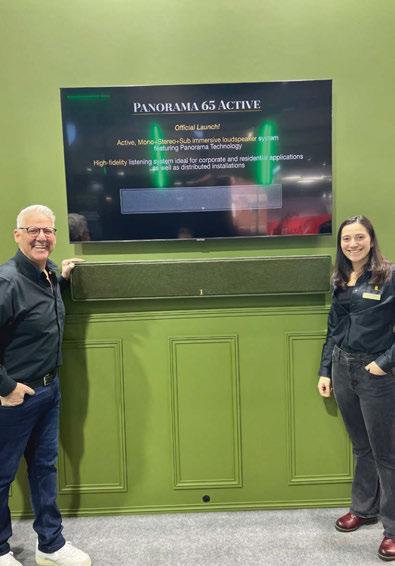
1 Christopher Mullins of Sony.
2 Norbert Stangl and Jordi Luque of Laserworld Group.
3 Matthew Gerardi and Koy Neminathan of Obsidian Control Systems.
4 The ROE Visual team on its stand.
5 Lou Mannarino and Julia Mannarino of 1 SOUND.
6 Ann Leroy of AudioFocus.
7 Karima Djellal of Starway Lighting.
8 Stephanie Schmidt of Sennheiser and Victoria Chernih from Gasoline Media.
9 The Lightware team on its stand.
10 The TAF team on its stand.
11 Gina Herweg and Daniela Niewiadomski of ROXX.
12 Christine Gerhardt and Elisa Posteraro of Adam Hall Group.
13 Julian Bülhoff of RIEDEL Communications.
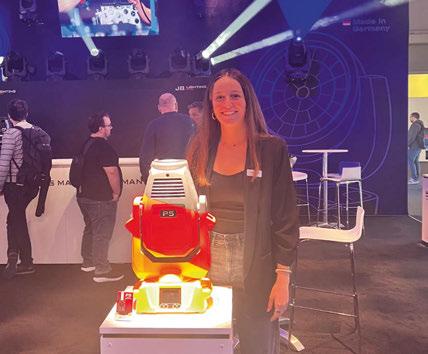

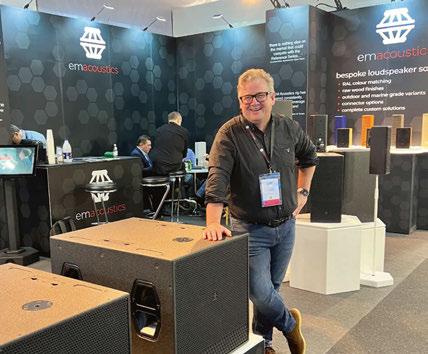
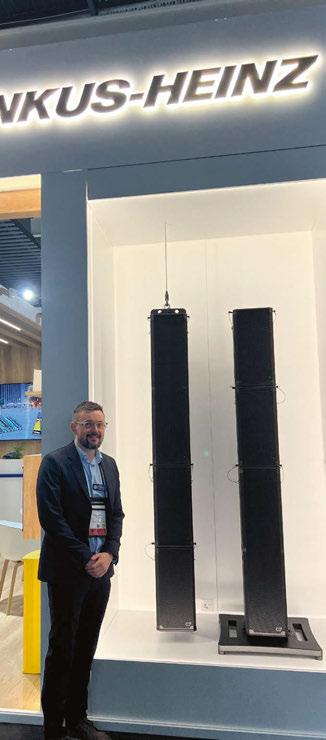
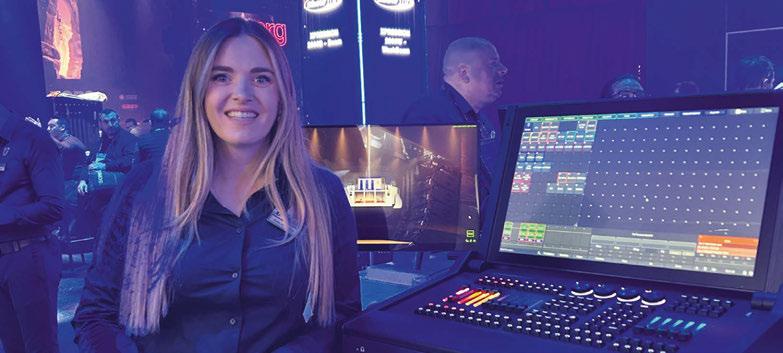
M100RV truss, as well as LITEC’s new Four Series Low-Profile range of Pre-Rig-Truss. Astera’s new QuikBeam luminaire launched at the show, designed to deliver maximum intensity in the smallest, lightest and most robust form factor. AtlasIED introduced a product at the show, too, with its new Atlas+Fyne FC-D (Ceiling) and FS-D (Surface) Dante-enabled PoE++ loudspeakers, which combine the efficiency of PoE++ power delivery with IsoFlare point-source transducer technology. Audiofocus revealed the latest additions to its subwoofer ranges, in 115SG – an allnew ground stacking design built around a single 15-inch LF transducer. Visitors to Audio-Technica’s booth witnessed the debut of its new ATSP-30 ceiling speaker, designed to deliver seamless system integration and high-fidelity networked audio for small-to-medium-sized meeting rooms. AV Stumpfl returned to the show with a major update to its PIXERA media server platform, headlined by the new PIXERA four GEN2 hardware and the PIXERA 26.1 software release. The company also presented new configuration tools for both PIXERA servers and its range of projection screens. Ayrton premiered Rawbeam 350 – a lasersourced, ultra-compact fixture delivering discharge-style beams with 1,200,000 lux at 10m and linear zoom. The company also introduced Nando 1202 Wash, MagicBlade Neo, and Naja. Over at Beyma’s stand, visitors could check out its newly expanded LEX family designed for sub-bass reinforcement. Following the successful launch of the 14MLEX1000Nd last year, Beyma introduced its 15-inch counterpart:
the 15MLEX1000Nd. Bose Professional showcased its integrated ecosystem of loudspeakers, electronics, and software, including a preview of the high-output DesignMax DM12SE surface-mount loudspeaker and the ISE debut of the DesignMax Luna pendant. Also returning to the tradeshow was Brompton Technology, exhibiting its new SQ200 – an 8K LED processor supporting 4x4K ST2110 over 100G Ethernet with ST2022-7 redundancy. Together, CHAUVET Professional and ChamSys presented new creative tools for lighting and media control. Key launches included the outdoor-rated ÉPIX Line 10 IP and Mapping System, Maverick Storm 1 Flex, COLORado Solo Edge 3 and STRIKE V. ChamSys unveiled MediaMaster 26, following its acquisition of ArKaos. One of the highlights of Christie’s booth was its interactive mask installation, where three striking masks were illuminated by the new Christie Korus Series projectors. Visitors were invited to design their own mask patterns, which were instantly projected onto the masks. Claypaky showcased the Arolla Aqua HP, M-LT and S-LT for the first time, highlighting powerful, all-weather LED fixtures with high output, wide zoom ranges and compact form factors, while the company also marked its 50th anniversary with an on-stand celebration. On the first day of ISE, CODA Audio launched products that are aiming to improve cardioid array performance, WIDE BAND Cardioid and ViFORCE, which could be experienced live in demonstration room D8. d&b audiotechnik returned to the show, with its new U-Series family of compact,
multipurpose, point-source loudspeakers headlining. Another key focus was the advancement of audio-over-Ethernet technologies with four new Milan-enabled products, allowing users to build scalable and future-ready audio solutions. DAS Audio brought its latest expansion of the EVENT Series to ISE. Three new systems were introduced: the EVENT-30A line array, the EVENT-S218A subwoofer and the EVENT-M12A stage monitor. The company commented that this evolution is based on a common DSP platform shared by all systems in the range, where control, automation and operational reliability play a central role. dBTechnologies displayed a range of installation systems, including IS WP, IS210L/IS210T, IS115S, and IS118S. The real action, however, happened in its dedicated demo space, where the company delivered a full-scale audio experience showcasing both its touring and installation solutions. This year’s ISE kicked off Digital Projection’s 30th anniversary celebrations – a year-long programme commemorating the company’s storied history in projection technology. The stand hosted a projection-mapped birthday cake centrepiece and a raft of new innovations, including a new 8K flagship laser projector and the first products from its TITAN Luma range of compact projectors. Disguise demonstrated its end-to-end, platform-spanning software, hardware and services for live events, immersive spaces, and stadiums. Highlights included the new GX 3+ media server, portable X1 software solution and a partnership with ASB GlassFloor. DPA Microphones introduced its new wireless ecosystem, combining the N-Series digital
2
1 Jule Braungardt of JB-Lighting.
and
3 Michał Popławski
4
5
6
7

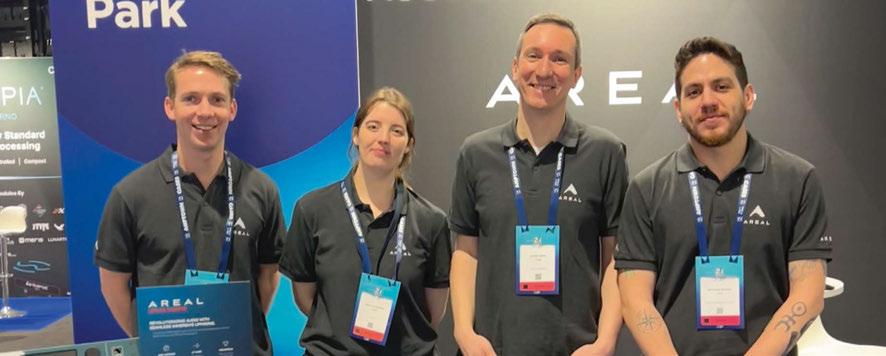
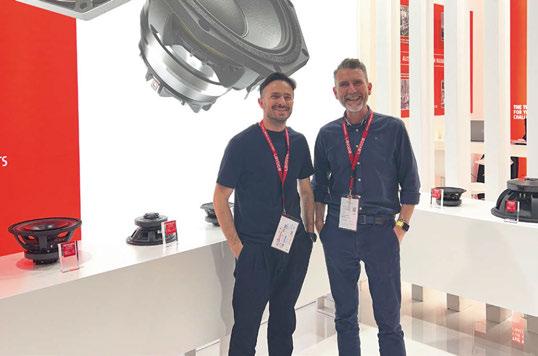
system, CORE+ technology and MicroLock connectors. Dynacord launched the V Series Zone Audio Platform, expanding its amplifier range into a scalable solution for hospitality, retail, and corporate spaces. Also appearing at ISE 2026, EAW showcased its latest loudspeaker innovations through live demonstrations, including the NT206L and previews from the Newport Series. Elation took to the show to present a wide portfolio of lighting innovations led by the PARAGON LT long-throw LED profile and REBEL Wash series. The showcase also featured HELIOTRAQ, a LiDAR-powered performer tracking system designed for streamlined setup and precise stage mapping. EM Acoustics used the show to introduce its new CS15 and CS18 cardioid subwoofers, developed in response demands from the live and theatre markets. The company also highlighted its Reference Series. ETC spotlighted its latest automated fixtures, including the Dataflash 5000, MegaPix, and GigaPix, expanding ETC’s toolkit for designers working across demanding applications. FENIX Stage was present, too, displaying its modular staging and structural solutions designed for flexibility and rapid deployment. The showcase featured heavy-duty support systems and compact array configurations. Focusrite Group’s brands were all present at ISE this year. Firstly, Linea Research announced the launch of its new HSC Series – a range of system processors engineered to deliver the company’s renowned audio performance, build quality, and software-driven workflow to the heart of an entirely new segment of the market. At the core of Martin Audio’s stand was the recently released BlacklineQ Series, representing the latest evolution in everyday professional point source loudspeakers. Martin Audio also hosted an immersive audio walkthrough at the show, which was controlled with TiMax advanced spatialisation tools, SoundHub and Tracker. Further demonstrations, including TiMax panLab, featured on the stand. Finally, Optimal Audio invited attendees to explore “Commercial Audio Done Differently” through a fully


























realised Live Restaurant Environment on the stand – complete with reception, bar, dining area, and outdoor terrace zones.
Fohhn demonstrated immersive spatial audio through its Fohhn Gallery experience. The exhibit highlighted Linea Focus beam-steering systems and new Dante PoE+ column speakers, emphasising precise directivity, streamlined installation and high-fidelity sound for architecturally demanding spaces. This year’s ISE was GLP’s largest-ever show presence, with the company presenting new and established lighting solutions for installations and touring. Highlights included the X5 series, JDC2 IP hybrid strobe, Creos washlight, Nexus wireless LED systems, and a special edition of the MAD MAXX fixture. Groupe Novelty introduced a LiDAR-based truss measurement system developed by its Teamagine R&D division. The solution enables real-time position monitoring through integrated sensing, aggregation and control technologies, and was deployed for ISE via its stage rigging specialist Altimate. The brands under the HARMAN Professional umbrella had an impressive presence at the show. Martin Professional debuted the Martin Macula – a brand-agnostic remote follow spot system that enables standard moving lights to operate as ground-based, remotely controlled tracking fixtures. The brand also hosted a panel with world-renowned lighting designers Matt Osborn and Mikki Kunttu. JBL exhibited its new Intellivox Active Digital Beam Shaping Column loudspeakers – a solution supporting system design flexibility for large and acoustically challenging spaces. Furthermore, FLUXX:: previewed its SPAT Revolution 26.03 and MiRA
Audio Analyzer 26.03. Displayed at the HH Audio booth was its new Aptur range for commercial audio settings, introducing ceiling, pendant, column array, and subwoofer loudspeakers, alongside its new CL Series of passive column array loudspeakers for acoustically difficult areas. Finally, the new compact and versatile MZ-140DX has been added to HH Audio’s MZ Series of multi-zone amplifiers. HK Audio meanwhile showcased its full range of install and concert sound products, including COSMO and CONTOUR X for live events and FINEO, SI SERIES, and VORTIS 2 for installation. Alongside this, the brand demonstrated its range of MILAN-certified products to highlight the benefits of the technology for deterministic, interoperable audio networks. HIVE presented its complete line-up of Beeblade media engines and modular enclosures, including the flagship Beeblade Nexus – the world’s first 8K60 media engine in SDM format. It also demonstrated its latest software developments that unify playback, control, and synchronisation across networks. One of the show highlights for HOF was the release of its new HOFKON Trusstilt. This robust tilt system enables precise, secure, and flexible alignment of AV equipment on standard trusses, offering maximum design freedom for modern event and installation applications. INFiLED also presented a range of new products at its booth that used the brand’s LED screens as the centrepiece of the stand architecture. The GeminiLED was debuted, a dual-sided, ultra-slim LED series design built for high-traffic public areas for the corporate, retail and transport sectors.

Innosonix used the show to release its µMA04/M, marking the next stage in the expansion of the MICRO MAXX Series, following the debut of the series and the µMA04/POE at last year’s ISE. The company revealed to visitors that the MICRO MAXX family will continue to evolve. K-Array presented its new Thunder KSCARDIO412P cardioid subwoofer and the Koral KO102 compact column loudspeaker. Other highlights from across the K-array group brands included the new KSCAPE CORE controller, which brings together audio and lighting, the KGEAR GT8 full-range point source loudspeaker, and the K-ARRAY Capture KMC20 MKI line-array microphone. KV2 Audio invited ISE attendees to its demo room for an immersive listening experience that revealed the secrets and history behind its point-source technology. The brand collaborated with Hologramica, a holographic technology company, to bring this multisensory show to life. The experience highlighted some of its successful systems, such as the EX28 loudspeaker and the SL412 wide-dispersion system. L-Acoustics was present across three dedicated spaces at ISE, with one highlighting its renowned commercial audio innovations and another its residential and installed sound portfolio, such as its HYRISS technologies. The third space was an audio demo room, hosting four daily presentations to allow attendees to experience the brand’s latest solutions, including its X Series, A Series, KS21, and L-ISA Immersive, among others. LEA Professional spoke with integrators about how its Smart Power Bridge technology, built-in Dante and AES67 connectivity, intuitive WebUI, and SharkWare, combine to create a powerful, scalable family of solutions. Exhibiting several product innovations at ISE 2026 was Lightware, including the new USB-C BOOSTER-V1, various Taurus UCX models, and the latest TPN MMU for SDVoE deployments. With

1
Lisa Möller of TOA Electronics.
2 The Adamson team on its stand.
3 Marcus-Michael Müller of Yamaha.
4 Stefano Bini and Gloria Arianna Giglioli dBTechnologies.
5 The MA Lighting team on its stand.
6 Deborah Noon and Chris Shu of Christie.
7 Bob Vanden Burgt and Danila Costantini of Link.
8 The Smoke Factory team on its stand.
9 Kati Pajukallio and Gaurav Narula of Genelec.
10 Oliver Braun and Daniel Imiola of Global Truss.
11 Gabriel Hauser and Dirk Noy of WSDG.
12 Stuart Millward of PPDS.
10 immersive demonstrations and a comprehensive technology portfolio on show, visitors experienced how Lightware enables simplified connectivity. LumenRadio showcased wireless DMX and CRMX technology, enabling reliable, cable-free lighting control for entertainment and architectural applications. On display were the next-generation range of wireless transmitters widely used by gaffers and lighting designers, including Stardust, Aurora, and Nova. Also featured was MoonLite2, the portable, battery-powered CRMX transceiver introduced in 2025. ISE 2026 saw the official debut of Modulo Pi’s Modulo Kinetic Version 7 – the brandnew version of its flagship media server, which powered an immersive, interactive projection, showcasing its powerful features. Combined with 2D and 3D LiDARs, Modulo Kinetic enables precise gesture and movement-based interactions across a broad range of applications. Meyer Sound presented a broad view of its system portfolio for installed, touring, and immersive environments. At the stand, attendees could preview TIGRA and 1800-LFC alongside PANTHER and the 2100LFC, USW-121P, and select point source solutions, including the ULTRA family and the MM-4XP miniature self-powered loudspeaker. Exhibiting at ISE for the fourth consecutive year and sharing its stand with Groupe Novelty for the second time was Naostage. Visitors were able to discover YouTrack, a manual tracking system offering great price-to-performance ratio and unlimited scalability; the brand-new Kore S server; and a preview of Multiview technology. NEUTRIK enjoyed another successful ISE, under the banner ‘connectivity is our passion’. The brand unveiled a significant new product development, showing a new TRUE1 DATA Connector Series for the first time. Designed and optimised for use in tight spaces, the unified TRUE1 design employs a singularly robust housing, offering enhanced levels of
1 Andrea Torelli and Anna Ricciolini of K-Array.
2 Konrad Majchrowski and Sam Simon-Norris of DPA Microphones.
3 Audrey Ensor and Timothy Smith of EAW.
4 Salvatore Curcio and Letizia Buti of MONTARBO.
5 Tim Maier of Harmonic Design.
6 The Funktion-One team on its stand.
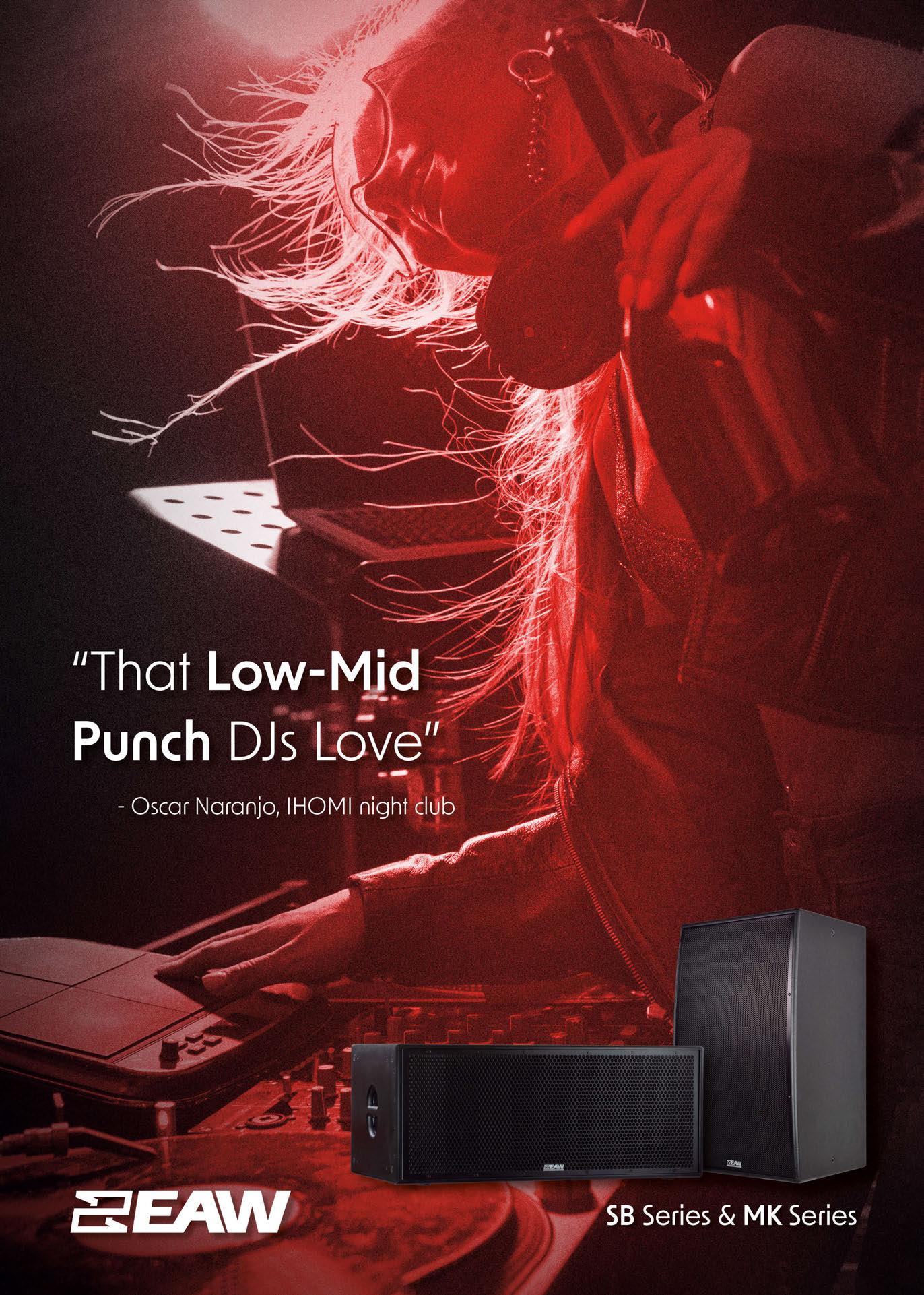

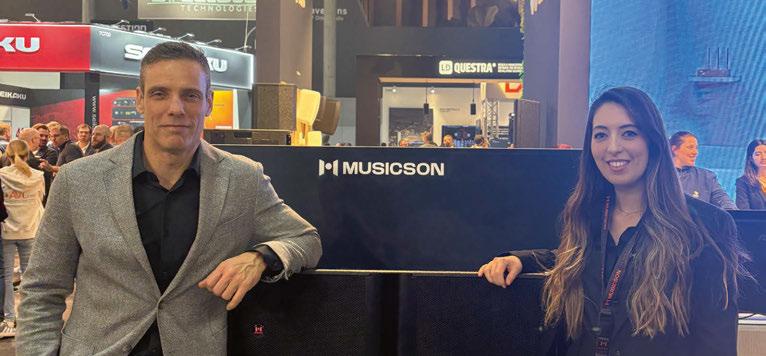
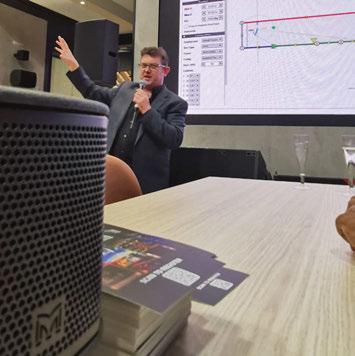
protection up to IP65, IP66, and IP67. At the NEXO booth, alongside its point source and line source loudspeaker systems, visitors could discover the company’s DME10 immersive audio processor, delivering powerful object-based mixing and rendering. In addition, the Alpha+ hybrid source, three-box stacking PA, based around NEXO’s classic 1990s Alpha system. The Obsidian Control Systems team exhibited its new ONYX NX3 lighting console at ISE. Attendees could check out this new addition to the ONYX platform, alongside the new NETRON FS16, a rackmount network switch in Obsidian’s line of data distribution products, and HELIOTRAQ, a new simplified performer tracking solution. On display at Outline’s stand was the A-Series of smaller loudspeaker models, able to serve a vast range of installations with its discreet design. Also present was the P-Series range of portable point-source performance systems, alongside their complementary accessories. Panasonic’s large stand was one of note, with booth highlights including its new PT-RQ45 42,000-lumen projector, designed for large venues, live events, and immersive installations. Moreover, Panasonic’s first 4K LCD projector was at the heart of an on-booth golf simulator – producing close-range visuals with reduced pixel structure, supporting highly realistic imagery. PPDS unveiled new Philips hardware and software solutions at ISE 2026, adding
1
2
3 Martin Audio’s Dom Harter giving a talk on the brand’s stand.
4 Maria Florencia Fernandez of INFiLED.
5 Pierre Gillet of BrightSign.
6 Laura Gaffurini of Outline.
advanced remote management and affordability to LED and digital signage displays. Product announcements included the new Philips LED Configurator and updates to the Philips Wave remote management platform. Also present was Powersoft, which unveiled the AnyMATE and its first implementation, SpeakerMATE. The new technologies are designed to add identification, monitoring, and data exchange capabilities directly to passive loudspeakers, without the need for additional network cabling or external power. AnyMATE is a communication technology based on a proprietary protocol and a patent-pending physical-layer implementation. SpeakerMATE, the first practical application of the AnyMATE platform, is a compact hardware module that establishes communication between amplifiers and passive loudspeakers and can be deployed either as an external add-on near the speaker or integrated directly by loudspeaker manufacturers. For Renkus-Heinz, ISE 2026 marked the official launch of its ICLX-48S column subwoofer, following the initial announcement at InfoComm 2025. Visitors experienced how this compact powerhouse delivers low-frequency extension and musicality typically found in much larger subwoofers. The immersive demo room highlighted how the company’s precision loudspeaker technology can solve acoustic challenges. Product highlights from





PIXERA zero delivers powerful, reliable media playback in a compact footprint — ideal for museums, themed attractions, retail and corporate environments.
Designed for seamless integration and long-term stability, PIXERA zero gives system designers and integrators maximum flexibility with minimal space requirements.
Compact. Capable. Installation-ready.
Scan for more


Riedel’s show presence included the company’s new hi human interface, which promises to make signal routing easy and accessible even to non-technical staff. Also featured was the Easy5G, promising private 5G connectivity without complexity, and the Bolero Mini. Robe unveiled the GigaPointe – a 350W phosphor laser luminaire delivering over 4,000,000 lux at 5m, alongside the new T10 PC and T10 Fresnel theatrical fixtures. The company’s largest-ever ISE booth hosted its live production show, Excalibur – The Lights of the Round Table, demonstrating performance capabilities in a full theatrical setting. The production was programmed on an Avolites D9-215 console, highlighting integrated lighting and control workflows. Robe and its brands and businesses, Anolis, Avolites, LSC Control Systems, and Artistic Licence, highlighted their latest and smartest innovations. On its stand, Robert Juliat presented the new addition to its Bizet family of profiles and Fresnels, the Bizet 8-Colour Fresnel. Robert Juliat also promoted its collaboration with Madrix at the show, demonstrating how all RJ RDM fixtures are MADRIX RADAR compliant, and highlighting Robert Juliat’s position as an official approved supplier of MADRIX RADAR licences to other manufacturers. ROE Visual showcased its latest LED solutions, including COB and MIP-based solutions, integrated display concepts, interactive panels, and advanced LED programming systems. Highlights included the Coral, Topaz Curved, Vanish ST in a 90° setup, Black Marble BM2i, and Jet LED panels. The
Business Communication Zone at Sennheiser’s booth featured a touchscreen experience, allowing visitors to explore an interactive overview of the partners and technologies shaping the next wave of collaboration. The experience illustrated how Sennheiser solutions work with its partner ecosystem to support simpler integration and enable smarter, more flexible spaces. Across the show floor, visitors could discover how Sennheiser solutions work alongside complementary technologies, with the brand’s products featured on 20 partner booths. At its stand, Shure announced the latest addition to its video conferencing portfolio, the IntelliMix Bar Pro, a powerful all-in-one video bar. Engineered to solve everyday challenges in meeting spaces, the IntelliMix Bar Pro delivers exceptional audio and video coverage from a single device, making it ideal for medium to large meeting spaces. Additionally, Shure hosted briefings in its Innovation Lab, offering insights into the future of AI-enabled audio and next-generation meeting technology. Signify’s ‘architainment’ lighting brands, Vari-Lite and Color Kinetics, showcased an integrated solution for immersive stadium lighting. Key products featured included Vari-Lite’s Neo X5 CRE console and VL3200 LT profile IP, and Color Kinetics’ Flex Compact Pro and BlastElite Powercore. On display across two different stands was Sonance, with one booth displaying its professional and commercial solutions, such as its popular IPORT line. The other stand served to highlight its residential and marine 7 8
solutions, defined by its new ultra-thin-line VX speaker.
SoundTube returned to ISE to exhibit its latest outdoor, weatherresistant models, including the XT850, CB5, and Rockustics’ landscape and planter speakers. TAF utilised its ISE booth to illustrate how the TAF Tower family is growing. Designed to push vertical possibilities further, the team on the stand showed off the Tower 3 to attendees. Furthermore, the 8050-TL Truss Hook Point was also displayed, designed for safe, precise, and efficient rigging. TAIT debuted its new Theatrical Point Hoist, alongside a selection of established automation products that remain available directly to business customers, including the Kinesys Apex range of variable speed chain hoists and drives, and the Libra Load Cells for real-time load monitoring. The epiQ Mini, TAIT’s small form-factor automation console, was also on the stand for visitors to enjoy a handson experience. Also at the show, tvONE and Green Hippo collaborated to showcase comprehensive and integrated control of the entire pixel stack, from playback and switching through to processing, pixel mapping, and control. Attendees were among the first to experience new CALICO PRO DMX Control, enabling direct screen control via DMX and seamless integration with grandMA.
VIOSO returned to ISE to celebrate the launch of VIOSO 7, the next generation of its intuitive camera-based calibration software. VIOSO 7
delivers fully automatic calibration for virtually any projection setup, including domes, VR environments, and complex projection-mapping installations. WSDG highlighted how it helps bridge the gap between technology manufacturers and end users, translating into rapidly evolving tools. WSDG has been involved with ISE since its first edition in 2004, and Senior Partner Sergio Molho explained that the show will always be an important meeting point for meaningful dialogue.
Finally, Yamaha took to the show to present a new generation of products as part of its Commercial Installation Solutions ecosystem. Also being showcased was Yamaha’s revolutionary automated Voice Lift setup technology for conferencing and education, while live demonstrations of the company’s Sound xR technology on the booth highlighted how Yamaha solutions can deliver practical and scalable immersive sound. As part of the ongoing development of the flagship live sound range, ISE displayed the latest firmware for Yamaha’s RIVAGE PM series digital mixing systems. Every evening, after the show floor closed, a 600-drone performance illuminated the skies above Fira de Barcelona Gran Via. Produced by LANG AG and supported by DAMM, with sponsorship from Absen, Christie, MA Lighting, and Claypaky, the display provided a fittingly dynamic finale of the show. ISE will return in 2027, from February 2-5.
1 Jessica Golding of Absen.
2 The Disguise team on its stand.
3 Daniel Zimmermann of d&b audiotechnik.
4 Mitch Rauch photobombs Luca Bertani, Powersoft.
5 Mathieu Hery and Amandine Teyssier of Modulo Pi.
6 Alba Diaz of Fohhn.
7 Mark Ravenhill of GLP.
8 Alex Couzins of Arrow & Zest on the HIVE stand.
9 Maria ‘Cristina’ Fiorellio of DiGiCo.
10 Neha Rushton and Patrick Goodden of Brompton Technology.

CONTROL SERIES
Supports various motor configurations & channels
Direct & Low-Voltage Control available
Same interface across all versions
Precise & safe control for every application

FRESH FROM A BUSY EDITION OF THE ISE TRADESHOW, ALLEN & HEATH’S RECENTLY APPOINTED GENERAL MANAGER, NICOLA BERETTA, SPOKE WITH MONDO-DR ABOUT THE COMPANY’S GROWTH OVER THE YEARS AND WHAT THE INDUSTRY CAN EXPECT AS 2026 UNFOLDS.
Formerly Allen & Heath’s Director of Product, Beretta was promoted to General Manager, a role that Audiotonix, its parent company, established across several companies within the group. Reflecting on the role shift, he commented: “When I joined A&H 16 years ago, I would have never imagined this! But fortunately, we have a tradition of promoting through achievement, with our own Group Technology Director starting as a receptionist. When I was first pitched this role last summer, I smiled, took a breath, and said yes. I then started the gradual transition into the position.” Given Beretta’s previous product-focused management posts, working alongside R&D, marketing, sales, and distribution partners is nothing new.
“Something that is a fresh responsibility as general manager, however, is that I now take a wider interest in all aspects of the business,” he said. “I’m seconding our Managing Director, Rob Clark, on strategic planning as the company grows, and getting more involved with finance and operations.” The general manager continues to oversee Allen & Heath’s product portfolio of digital mixers, which he said, “has a wider span than any competitor on the market, from 12 to 128 channels of audio.”
Fundamentally, the mixers are all underpinned by the same technology, now transitioned to FPGA audio processing with the release of dLive, which marked a move away from DSP technology and consolidating entire DSP farms onto a single chip.
“This move brought advantages in terms of routing flexibility, latency, and phase coherency,” Beretta said. “In addition, our R&D team built custom sets of instructions and tools to compile high-level DSP code to FPGA, enabling our DEEP processing architecture (quality compression, preamp and GEQ modelling at no extra latency and available across all channels) and more recently, with dedicated hardware coupling FPGA and ARM processors, the new suite of RackUltra FX which brings
sophisticated vocal tuning, harmonising, pitch shifting as well as studio-quality reverbs and saturation models onboard the console.” Beretta explained that the technological foundation of Allen & Heath scales all the way down to its SQ, Avantis, the new Qu range, and even the ultra-portable CQ mixers, which he noted is “an achievement the whole team is proud of.”
It’s undoubtedly an exciting time for Allen & Heath, as the general manager explained, with its equipment being used for a diverse range of projects and installations, many of which take place in renowned venues. For example, the brand’s gear can be seen in Royal Caribbean’s momentous cruise ship, Icon of the Seas. The ship embraces A&H’s entire digital range, with three dLive systems throughout its entertainment venues, the SQ-5 for its music venues, and compact Qu mixers for its restaurants and bars. The company continues to recognise the relevance of high-end maritime entertainment for the audiovisual installation industry, appearing in many other vessels from Viking, Carnival, Crystal, and TUI cruise lines, among others.
Asked about an Allen & Heath installation from the past year that distinctly excited him, Beretta pointed to the Carter-Finley Stadium at North Carolina State University. Detailing the large project, he said: “Assisted by our US team, the integrator (Precision Audio) selected an AHM-64 as the heart of the system, handling distribution, tuning and control of the PA. This includes audio not only for the field and main seating areas but also for concourses, suites, clubs, and lobbies. A number of CC-10 touch panels running our Custom Control software allow localised access to both technical staff and non-expert users, like coaches.” Furthermore, the brand stands at the forefront of the techno scene, with its Xone range of DJ mixers and controllers seen in iconic clubs like Fabric in London. “This sort of case study, alongside our presence in major
1 Allen & Heath’s dLive CTi1500 in action.
2,4 AHM and Allen & Heath solutions at North Carolina’s Carter-Finley Stadium.
3 Nicola Beretta, General Manager at Allen & Heath.

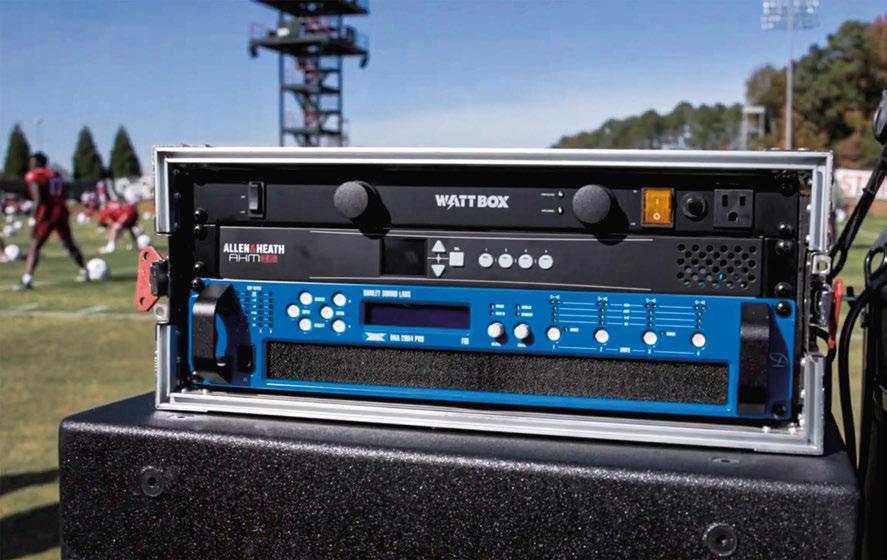
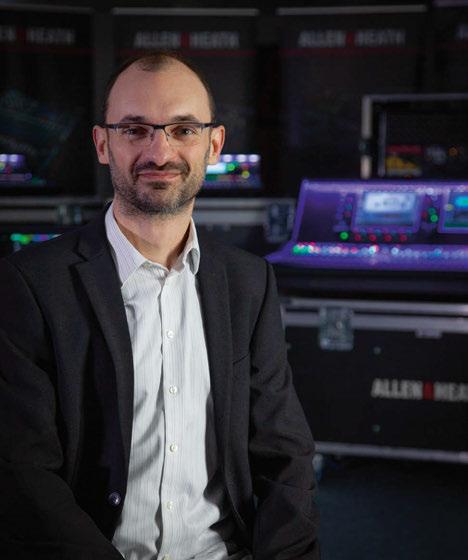
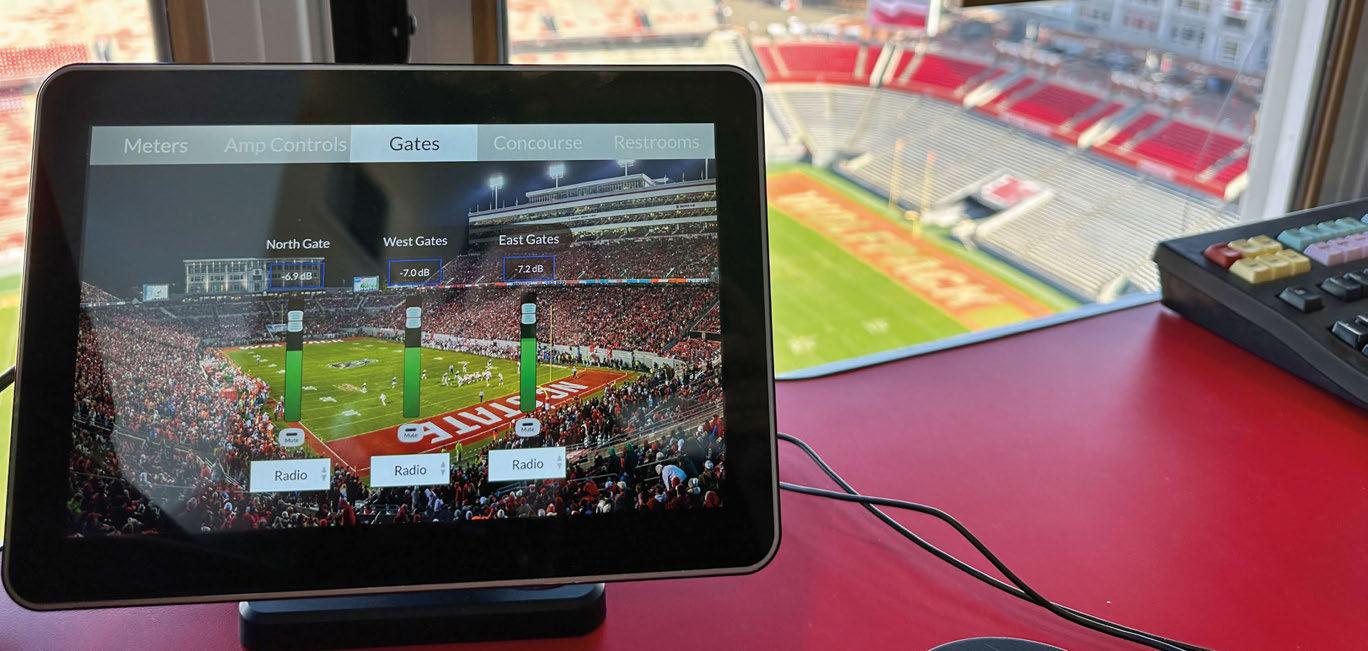
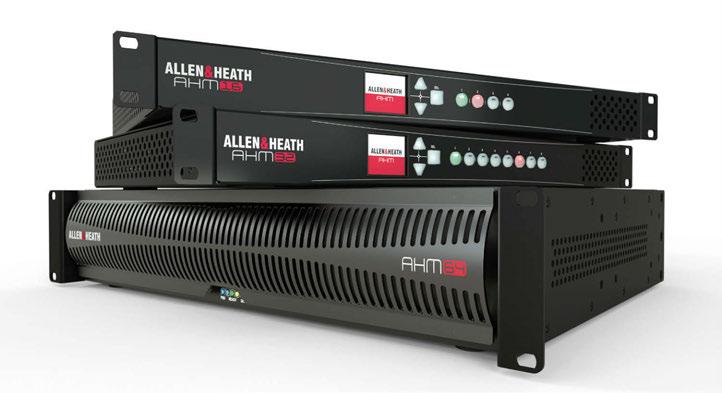
recent tours such as Teddy Swims, Ayra Starr, and Josh Ross, shows we’re being trusted for both the biggest venues and the most missioncritical installations.”
Specifically relevant within the installation sector is Allen & Heath’s AHM family of processors. Beretta narrated the backstory of this product: “We have a long history of zone mixers and processors for sound management and installations, with digital solutions as early as 1996. Our GR and iDR products are still at the heart of sound systems in theme parks, music halls and universities, but in 2019, we decided to take the industry-leading processing, control and audio networking technology we developed for our live consoles and repackage it into a new processor family aimed at installers and system integrators. “AHM has since grown into a full ecosystem with three processing cores, options and peripherals, including networkable PoE controllers, wallplates, and GPIO interfaces, audio expanders, touch panels, and Dante breakout boxes. Rather than chasing other established DSP brands, we focus primarily on sound quality and ease of deployment. Programming and configuration are super intuitive and can be edited on the fly, reducing downtime, cost, and commissioning.”
The brand continues to update its AHM technology to ensure its offerings remain relevant to current market demand. On its latest upgrades, the general manager said: “In system integration, unified user interfaces and converged AV/control networks are now commonplace. We expanded the third-party control capabilities of AHM in the latest V1.6 software, including feedback from third-party devices, initial handshaking, and support of HTTP/REST protocols, as well as existing TCP/ UDP, and demonstrated the ability to control
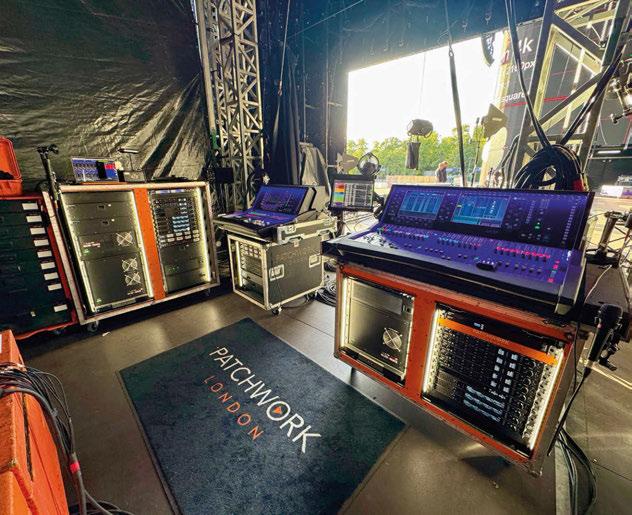
video switchers and PTZ cameras at the last ISE show.” This technology is used for sound distribution, along with Avantis or dLive mixers, in spaces such as the Smith Center for Performing Arts in Las Vegas and clubs like Planet K in Tokyo. “The versatility of AHM is apparent from the case studies we receive every day, from courtrooms and gyms in Vermont to casinos in Vegas, cathedrals in the UK, hotels in Bangkok, the Université de Liége campus in Belgium, multiplex Cinema City in Tokyo, the convention centres in Vienna and Dubai, and a lot more in between.”
Beretta explained that a focus in the installation market is a big part of Allen & Heath’s growth strategy, with AHM able to be used in a wide variety of applications. “Our hardware and software roadmaps are reflecting this.”
Allen & Heath also aims to be very conscious of current challenges and obstacles in the pro AV industry, so they can be faced head-on.
Beretta said, “We need to monitor technology disruptors, for example, how AI is or could be changing audio processing. Thankfully, we have expertise in this field as part of the Audiotonix group, and we have already explored features that automate repetitive workflows or aid nontechnical operators. The Gain Assistant and Feedback Assistant in our CQ range are a step in that direction.”
Asked what the industry can expect to see from Allen & Heath in 2026, Beretta concluded: “We have a reputation for listening to our customers and user base and delivering continuous improvement and innovation. 2026 will see us continue in that direction with several product and software launches and a crescendo of excitement. All I can say is, watch this space – you won’t be disappointed!” www.allen-heath.com





DEPLOY FASTER. SCALE EFFORTLESSLY. CONTROL EVERYTHING.



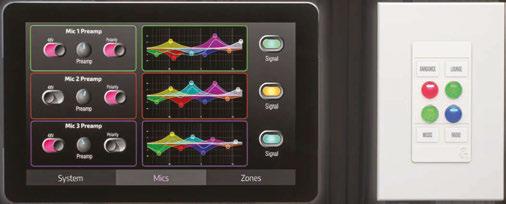






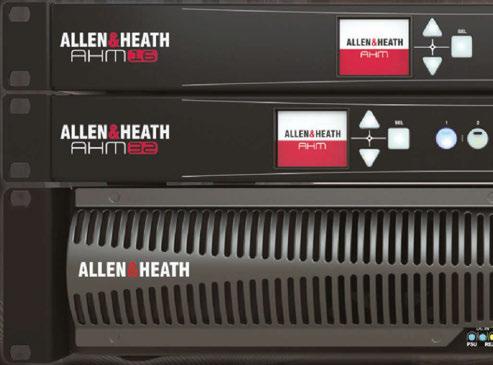




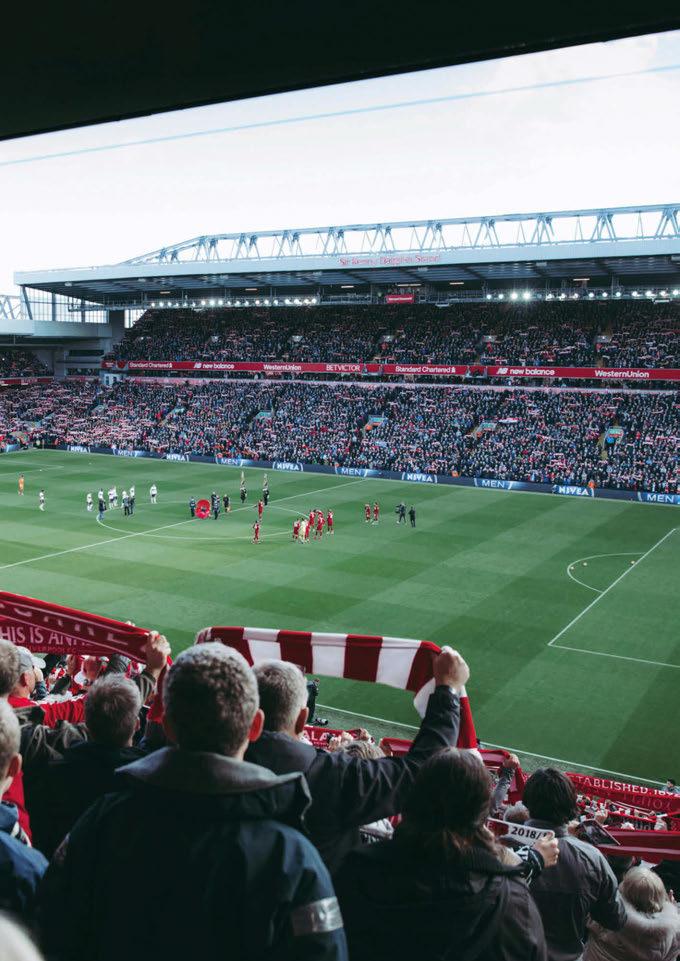

AHM is a family of powerful audio processors supported by a comprehensive ecosystem of scalable I/O, control and Dante solutions.











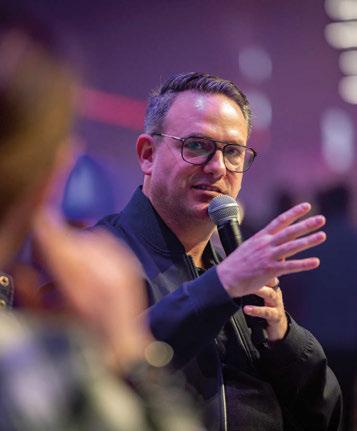
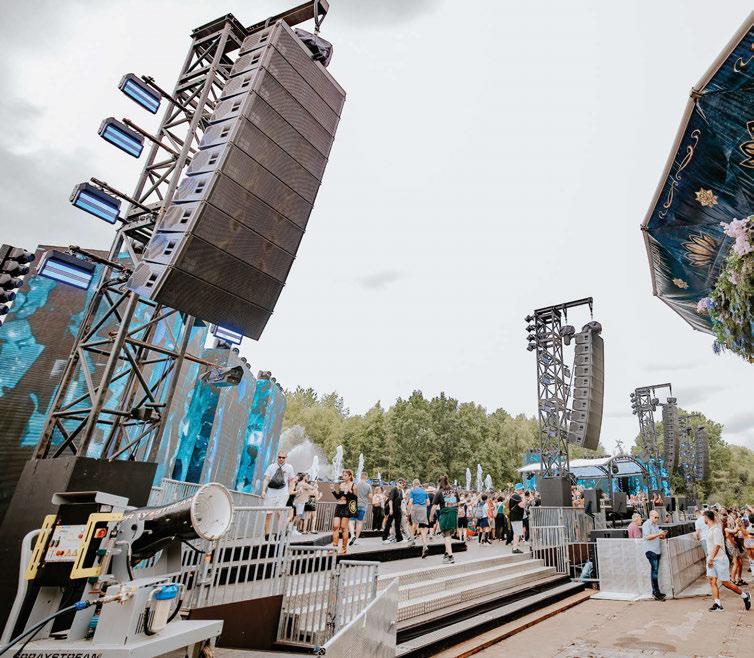
Driven by a passion to make spatial audio more accessible, freelance system technician and front of house engineer Pieter Doms cofounded Areal, a new pro audio brand dedicated to lowering the barriers to immersive sound. Here he discusses the genesis of the company and how it plans to bring spatial audio capabilities to venues with more than an L-R sound system.
Areal will be a new name for many people. Can you tell us a little bit about the company and how you got started?
Pieter Doms: Areal was started by two audio engineers, Arno Voortman and myself. We were both involved as freelancers with the Tomorrowland EDM festival in Belgium. We have always embraced new technologies and we wanted to find ways to create audio experiences that could match the amazing immersive visual and emotional spectacle that Tomorrowland is famous for. So, in 2018 we began working with immersive processors, but the challenge was that DJs were providing stereo feeds and the immersive systems needed dedicated spatial content. After trialling and rejecting every off-the-shelf upmixing solution we could find to get over this hurdle, we decided to make our own, and that was really the spark for Areal. The project gathered momentum during the Covid lockdowns when we spent countless hours developing the technology. Since 2022, we have used successive prototypes of the Upmix Engine at every Tomorrowland festival, right up to 2025 when we had them running on nine separate stages. Our interest has broadened to other aspects of spatial audio, but everything we do is about making immersive audio more accessible. Of course, as the company matures, we have brought in expertise to evolve our
concepts into fully developed, manufactured and supported products, but the core mission stays the same.
The Upmix Engine was recently launched as your first commercial product. In simple terms, what is its role and how is it different from other solutions on the market?
Pieter Doms: Put simply, the Upmix Engine converts stereo audio to multichannel output in real time. The RISE algorithm decorrelates the signals from each other, so what gets sent to each output is spectrally unique. When this is played back over multiple speakers, you get a spatial listening experience from that stereo signal. Normally, if you have several speakers in the same room playing identical signals, your brain instinctively tries to pinpoint the source of the sound, but using the Upmix Engine, the output from each speaker is different, and because all the speakers now acoustically combine, you perceive the sound as naturally distributed across multiple sources, which is more pleasant and less fatiguing for the listener.
What sets the Upmix Engine apart is that it was designed for live performance. Other upmixing solutions have a latency well above 10 milliseconds, so they are just not acceptable for live situations. Also, we are not introducing reverb or phase rotations into the
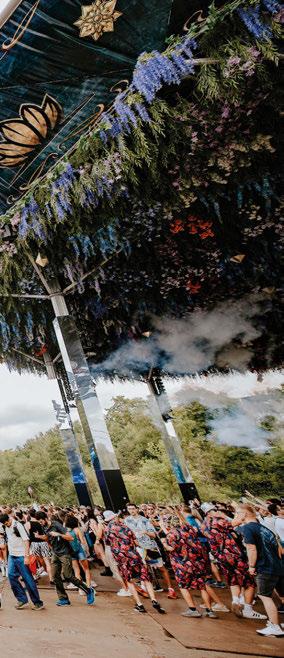
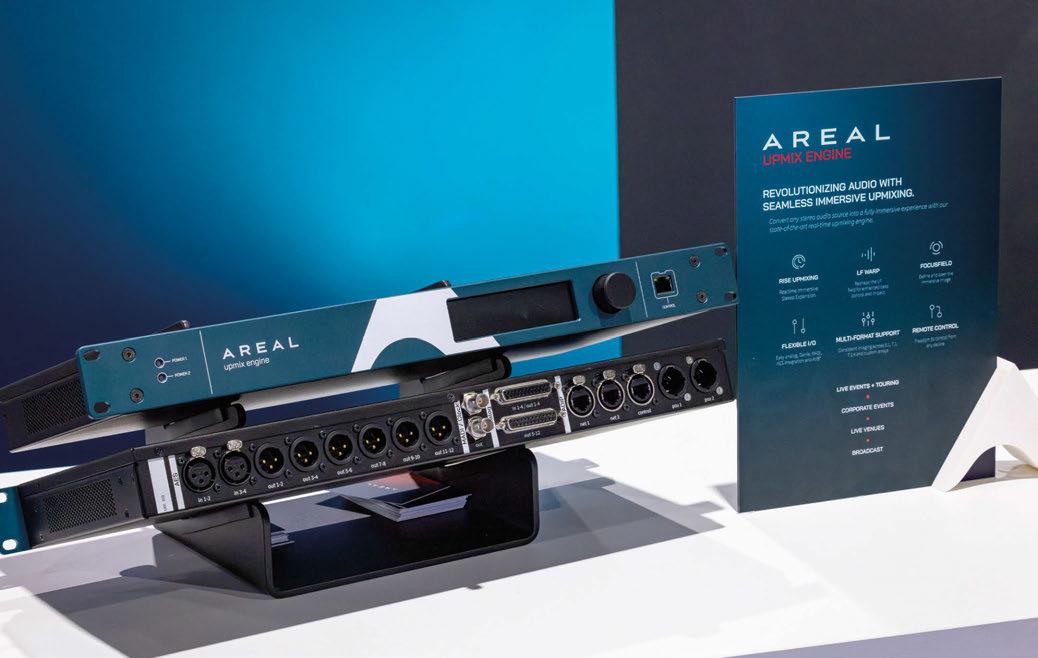
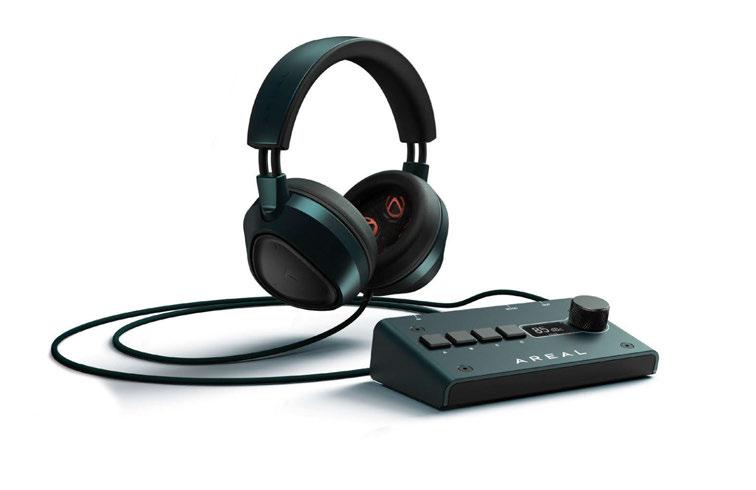
mix. If you summed all our channels back together, you would get the identical stereo mix that you started with. Finally, the Upmix Engine is a dedicated hardware platform, while other upmixers run as computer software or plugins.
Your website names several technologies used within the Upmix Engine. What do they bring to the product?
Pieter Doms: Focus Field lets you give a sense of direction to the upmix. For example, in a performance setting the audience is typically watching someone at the front of the stage, so you would want to weight the focus to the front rather than having a sense that the sound is coming equally from all directions. LF Warp is an algorithm we developed to allow steering of the low frequencies for enhanced bass control and impact, but without the time delays you typically get between sub sources.
What types of venues do you expect to invest in the Upmix Engine, and what can they achieve with it?
Pieter Doms: We are seeing a lot of interest from clubs and live music venues, but the potential extends to conference halls, houses of worship and far beyond. Any venue that already has an immersive or multichannel loudspeaker solution will recognise the upsides of being
Tomorrowland Belgium festival, where Areal’s Upmix Engine was deployed across nine separate stages in 2025.
The Upmix Engine displayed publicly at ISE 2026.
The SR1 immersive reference headphone system, due for launch later this year.
Below: Areal Technologies’ Upmix Engine.


able to use their full system with stereo content. Right now, when a stereo show comes in with no immersive expertise whatsoever, they place two objects, one left, one right, and that is going to be the show for that night. This creates a lot of problems with reflections and many loudspeakers will be sitting there doing nothing. The Upmix Engine gives those venues a way to take a stereo feed and deliver a spatial experience using their current immersive or multichannel systems.
By removing this compatibility barrier, we hope that more venues will feel confident investing in immersive. It is clear to me that the benefits of immersive audio are so strong that it will eventually become the norm, the only question is how fast the transition is going to be. If we can help to speed up that journey, we will be happy.
The Upmix Engine also has benefits for acoustically challenging venues because you get far fewer reflection issues, more even coverage, and reduced comb filtering effects, resulting in a much cleaner and more pleasant experience overall.
There are a few well-known immersive processors and loudspeaker systems on the market and more manufacturers entering the immersive space all the time. How does what Areal is doing relate to them?
Pieter Doms: The Upmix Engine is compatible with any immersive processor or system you are likely to find in a performance installation, and we have already successfully used it with all the best-known ones. We are providing the bridge between stereo content and these systems, so we are helping venues to employ
their immersive solutions as they were intended to be used. The Engine offers a maximum of twelve outputs, so you do have to adapt your approach somewhat with the largest systems. It is important to say that the Upmix Engine is not just for venues with full immersive solutions. Of course, we cannot help a venue with a basic stereo PA, but if it has four or more sets of speakers, then Areal can absolutely improve the audio experience. Diving straight into a full object-based audio solution is a huge commitment, so the ability to retrofit an Upmix Engine to their existing systems gives venues an accessible, low-risk way to test the benefits of immersive sound.
With your first product launched, what is next for Areal?
Pieter Doms: Right now, we are putting a European distribution network in place to take care of our customers. Amptec has already been appointed to support the Upmix Engine across the Benelux countries and we will announce further agreements soon. On the product development front, we are gearing up to launch our SR1 immersive reference headphone system. It is primarily a tool for content creators working outside the studio, but in the performance world the SR1 can give you a big head start if you are preparing an immersive mix but you cannot access the venue, or you only have limited soundcheck time. There are more products in the pipeline too, but it is important to scale up sustainably, so behind the scenes we are putting a lot of energy into our manufacturing and supply chains to ensure we can meet demand with zero compromise on quality and reliability. www.areal.world
(FUZE WASH 500 ONLY)
• 4-Leaf Motorized Barndoor
• Radial Frost
• Ovalizer Lens



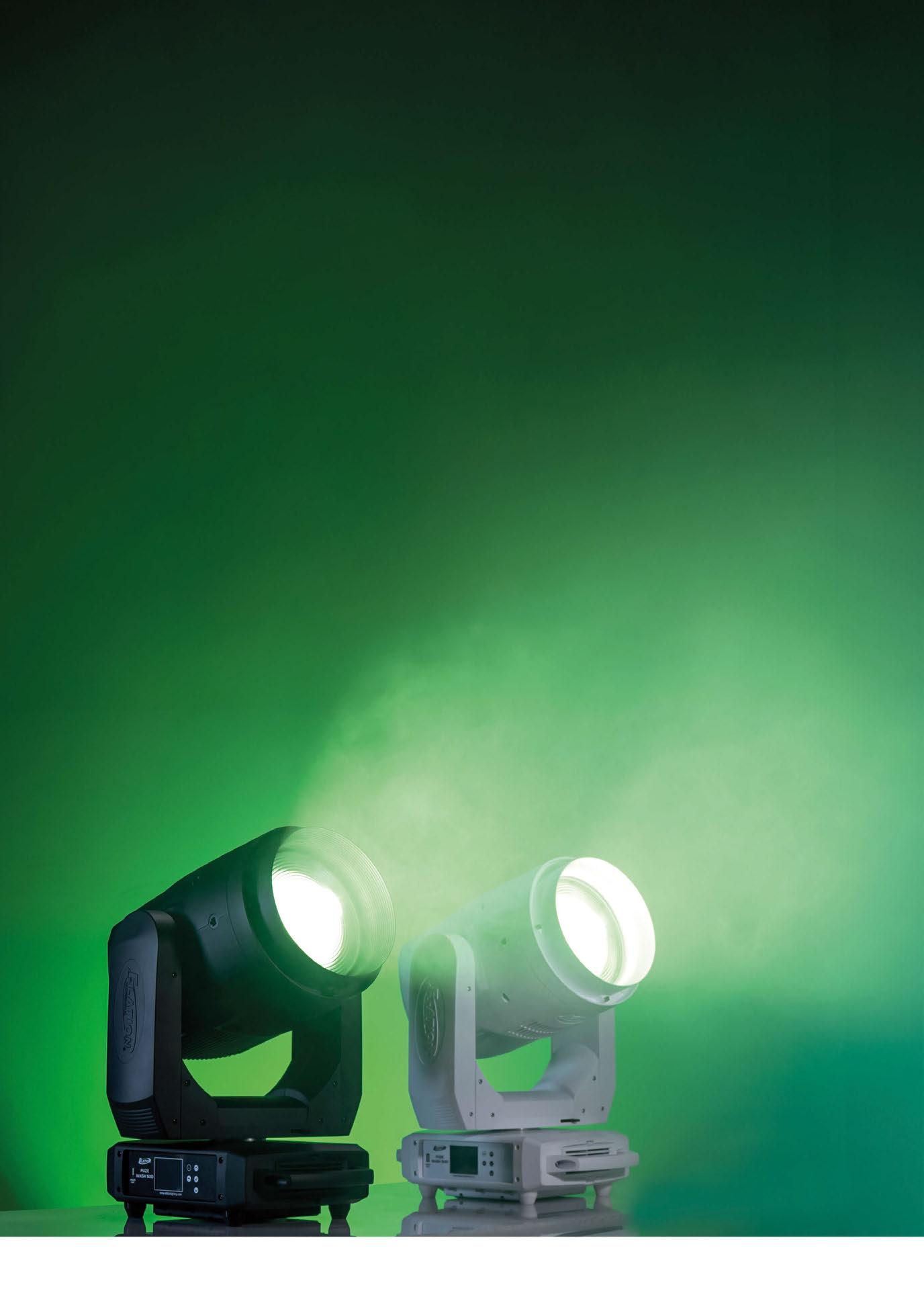

SPONSORED BY

In professional lighting environments where output, flexibility and reliability must coexist, fixture design has evolved beyond singlepurpose solutions. Touring productions, outdoor festivals and architectural installations increasingly demand luminaires that combine multiple functionalities within a durable housing capable of withstanding changing weather conditions. The Nereid series by beamZ Pro addresses this demand with a fully IP65-rated moving head platform developed for consistent performance in both indoor and outdoor applications.
At the centre of the series, the Nereid500 represents a powerful hybrid solution that integrates Beam, Spot and Wash functionality into one versatile fixture. Driven by a 500-watt LED engine, it delivers high-intensity output with stable colour behaviour across its operational range. The motorised zoom system spans from a narrow 2° beam angle to a wide 44° wash, allowing designers to transition smoothly from concentrated aerial beams to broad stage coverage without compromising intensity.
Control precision is fundamental to the Nereid500. With 16-bit resolution for pan and tilt, dimmer, colour, focus and zoom, the fixture enables accurate positioning and refined transitions. The movement system is engineered for both rapid dynamic effects and controlled, slow sweeps, making it suitable for time-coded touring shows as well as architectural environments where subtle motion is required. The electronic dimming system provides linear control from 0 to 100 per cent, supporting consistent intensity management throughout the dimming curve.
The optical section expands its creative capabilities significantly. Two gobo wheels are integrated: a static wheel with 12 gobos for bold projection textures and a rotating wheel with seven indexable gobos for detailed pattern animation. Gobo shake functionality enhances dynamic effects, while both linear and circular prisms multiply the beam to create layered mid-air visuals with increased spatial depth. Combined with the wide zoom range, this configuration enables the Nereid500 to adapt to different stage sizes and production scales. Colour handling combines speed and flexibility. A 13-colour wheel allows rapid colour changes and saturated effects, while a full CMY mixing system enables smooth crossfades and precise colour balancing. This dual approach supports both effect-driven programming and carefully calibrated designs. An integrated frost filter extends the fixture’s application range by converting tight beams into softer wash effects when required.
Built for demanding environments, the Nereid500 features a sealed IP65-rated housing that protects internal components against dust and moisture ingress. This makes it suitable for outdoor touring schedules and long-term installations exposed to variable weather
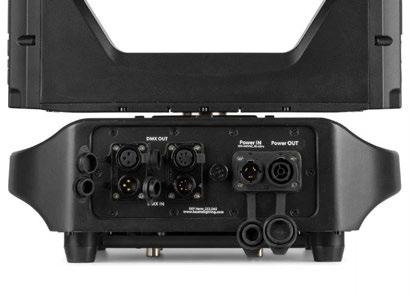
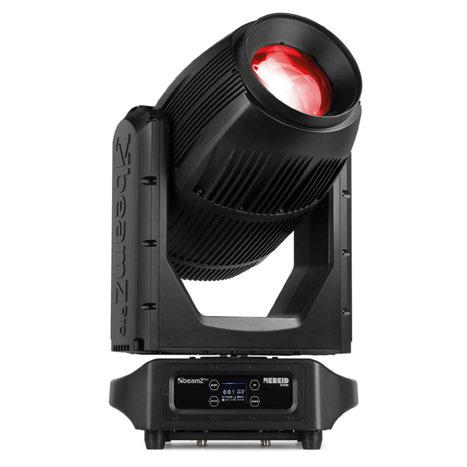
conditions. The protected optical system supports operational consistency while reducing exposure of critical components to environmental contaminants. For integration within professional lighting systems, the fixture supports DMX control with RDM compatibility for remote addressing and system management. A clear LCD display provides direct access to fixture settings during setup and servicing. Power is delivered via a secure P-Con TR1 connection, and the supplied quick-lock omega brackets enable efficient installation in both touring rigs and permanent mounting scenarios. Beyond the hybrid Nereid500, the series offers specialised models based on both lamp and LED technologies. The Nereid380B, equipped with an 18R discharge lamp, and the Nereid1R, featuring a 1R discharge lamp, are designed for tight, high-intensity beam applications with focused aerial projection. The Nereid120 follows a similar optical concept to the 1R but replaces the discharge lamp with a 120-watt LED engine, offering an LED-based alternative within the same beam-oriented format.
For wash and pixel-controlled applications, the series includes multiple Bee-Eye configurations. The Nereid740, Nereid760 and Nereid1940 all incorporate Bee-Eye optical systems with individually controllable LED pixels, enabling segmented programming and advanced pixel control within an IP65-rated platform.
With the Nereid500 as its hybrid centrepiece and a broader platform covering both lamp-based beam fixtures and LED-driven Bee-Eye solutions, the Nereid series presents a cohesive outdoor-ready range designed for modern production environments. By combining optical flexibility, mechanical precision and environmental protection, beamZ Pro provides lighting professionals with a scalable system adaptable to projects of varying size and complexity. www.beamzlighting.com
Packed with creative potential, the Vizi Pix Z19 is an automated wash zoom luminaire, which combines 19 potent 30-Watt RGBL primary color mixing LEDs with two sets of eye-candygenerating secondary LEDs. With motorized zoom delivering a beam angle of 7° to 42° and lime-infused LEDs for enhanced clarity, the fixture is capable of generating everything from a tight column of dense light to a wide wash of vibrant color. In addition, 30 by 0.5-Watt RGB LEDs are arranged around the primary lenses to generate background glow and chase effects. Completing the fixture’s unique collection of creative tools, a further 40 by 0.5-Watt RGB LEDs form a ring around the outside of the fixture’s face, providing an additional opportunity for creating impactful visual effects. www.adj.com
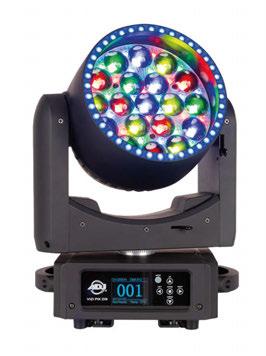
Typhon Sharpshooter introduces LEP beam technology into a compact, IP66 rated moving head built for extreme output and long throw precision. Its 120W LEP engine drives a tight 1.1° beam through a 128 mm optical system, delivering up to 220,000 lux at 10m. Designers gain fine CMY linear mixing, a 12 colour plus white wheel, 17 fixed gobos, dual rotating prisms, frost, focus, and consistent high-intensity projection across large outdoor or indoor spaces. Sharpshooter maintains stable thermal performance, smooth dimming, accurate movement, and multiple networked control protocols, making it a reliable choice for outdoor productions, landmark installs, and high-energy beam effects. www.blizzardpro.com
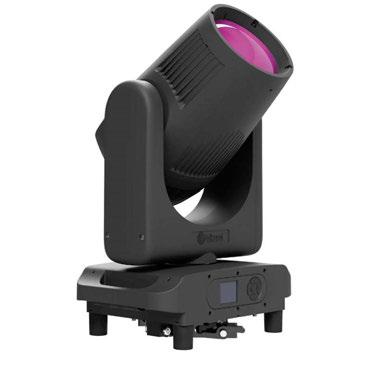
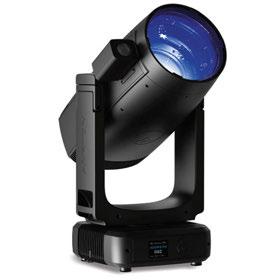
EagleStrike LT is Ayrton’s first LED-Source ultra-powerful, IP65-rated followspot, designed for maximum output, speed, precision and intensive use across all extreme long-throw applications. An optional camera transforms EagleStrike LT into a fully automated tracking spotlight. These extremes are possible due to its oversized 270mm front lens delivering an ultra-intense 2.9° beam, dedicated gobo reducers that narrow the beam to 0.9° or 2.5° and a working zoom range of 2.9° to 43°. Its 1,200W LED module outputs 55,000 lumens and easily achieves a record-breaking light output of over 100,000 lux at 10m and 6250 lux over 40m. Originating from a bespoke request for a signature luminaire, EagleStrike LT is more than a followspot, offering expressive graphic performance from a range of optical tools for sculpting the light: precision full-framing and +/- 90° rotation, two overlaying rotating gobo wheels each with seven gobos, 15-blade iris diaphragm, single-colour effects wheel, two frost filters, and two combinable rotating image-multiplier prisms: a 4-facet linear and a 5-facet circular. Its new ultra-fast CMY flag-based colour mixing system matches the speed of Ayrton’s ‘Ultimate’ series; a progressive CTO offers subtle tuning from 2900K to 6500K. www.ayrton.eu
With the OPUS X4 IP, Cameo brings the power and versatility of the OPUS X4 into an IP65-certified housing for the first time – without compromising on output, handling, or size. Outfitted with a 1,400W LED white light engine, the spot profile moving head delivers an impressive 50,000 lumens and makes it possible for lighting designers to have the full creative range on outdoor stages too. The OPUS X4 IP offers the same enormous zoom range of 5° to 55° as well as the standard features with two rotating gobo wheels, animation wheel, iris, and a four-way iris slider system with +/- 60° rotating framing blades. Precise CMY colour mixing with linear CTO correction, two additional colour wheels, and two frost filters are also available, thereby ensuring that design flexibility remains at peak level. Despite the weatherproof housing, the OPUS X4 IP is nearly identical to the OPUS X4 in terms of weight and dimensions. For operators, this means that anyone familiar with the indoor version can use the OPUS X4 IP immediately without having to get used to it: handling, workflows, and operation are exactly the same. Whether large outdoor festivals, stadium productions, or other touring projects, the OPUS X4 IP delivers uncompromising power wherever needed.
www.cameolight.com
SPONSORED
BY professional luminaires
Deeply saturated colors and extreme brightness – the new tarm VANQUISH has the innovation in its core: The direct-diode based laser light engine that was developed by LaserAnimation Sollinger. This technology is different to conventional and phosphor-based laser light engines, as it can create really deeply saturated colors, without the need of a color wheel or any other filters, as the whole color mixing is done by modulation of the source colors. This not only offers new possibilities in the way colors can be used, but colors can also be changed extremely fast – much faster than any color wheel can ever be. Besides that, the tarm VANQUISH is extremely bright. The engine has been measured at 2.2 million lux at a distance of 20m. Looking at these specs, 500 W of direct-diode laser power outperform the typical 500 W phosphor-based laser sources in power quite a lot.
This also highlights the typical use case for the tarm VANQUISH: High power, long distance – and very low beam angle. It is technically possible to get the angle down as low as 0.38°, where the optics allow for a maximum angle of 45°, too. This makes the tarm VANQUISH a hybrid moving head.
When it comes to outdoor or use on a large stage, the tarm VANQUISH is IP66 waterproof and comes in a durable magnalium housing. Besides the power and the new technology, the tarm VANQUISH is equipped with all the features you would expect from a moving head: 25 static gobos, 12 rotating gobos and two prism wheels that are stackable and hold three radial, four linear prisms, and three frost filters.
The longer the beam distance, the more important is the accuracy of the head movement. The tarm VANQUISH is equipped with strong motors and durable belts for exact positioning and fast and precise head movement. The head can rotate infinitely on PAN, which makes the tarm VANQUISH also suitable for the use as a searchlight or similar application. The tarm VANQUISH can be controlled via DMX or Art-Net and supports RDM, sACN, and W-DMX.
There are two main types of laser source technology for moving lights in the market at the moment, phosphor-based and diode-based. The light generation in the phosphor-based sources uses blue laser diode arrays and shoots the beam through a rotating phosphor wheel (rotating to reduce the thermal impact). The phosphor generates a full-spectral light beam out of the blue source. To later create colors from those sources it is necessary to use color filters to filter parts of the spectrum, like it used to be with conventional moving heads.
The direct-diode based sources usually have red, green and blue sources inside that are matched with a rather complex procedure to become one white beam. As the sources are individual, each source can be modulated in power and thus it is technically possible to create up to 16.7 million colors. Additional filters become obsolete. Due to the direct, electronical control of the individual sources the change of colors is extremely quick.
www.tarm.com
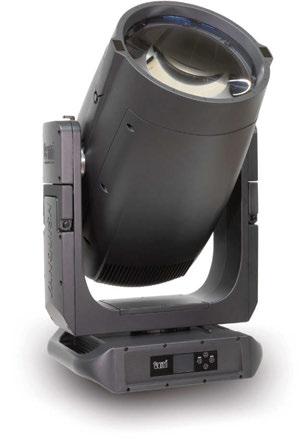
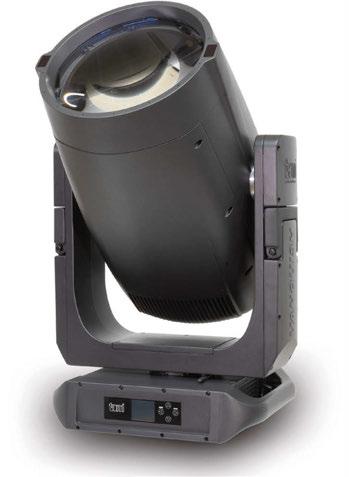
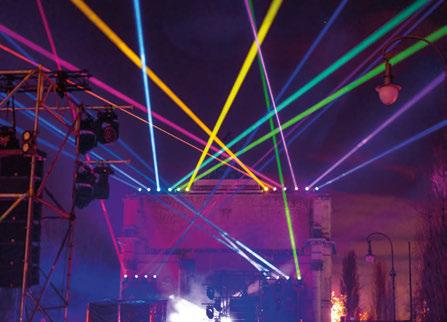
Rogue Outcast 3 Spot is a compact IP65 LED moving head that combines lightweight alloy technology with a wheelhouse that delivers the colour possibilities of dual colour wheels, the dynamic morphing effects of dual gobo wheels, the beauty of smooth 16-bit fades, and a wide zoom range that adds flexibility to achieving desired coverage. Iris, prism and frost round out its effects, and its durable housing not only weathers outdoor elements but also brings advantages to indoor installations with a low-maintenance design that withstands particulates such as fog and haze. www.chauvetprofessional.com
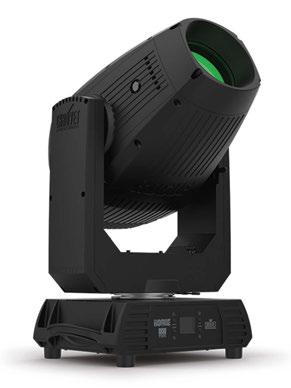
The Elation FUZE WASH 250 is a punchy, full-spectrum LED Fresnel moving head built to deliver a beautifully crafted, ultra-smooth wash wherever designers demand it. The compact fixture produces the velvety, homogenous field that lighting pros rely on to make performers and scenery look their best. Its 92 CRI, 250W RGBMA LED engine, calibrated at 6500 Kelvin, produces bold yet beautifully diffused saturates, soft-field pastels, and a refined range of tunable white light. Colour reproduction is accurate both to the eye and to the camera while delivering a powerful output of up to 8,500 lumens. Remarkably silent, it can be used in any noise-sensitive environment. Fine-tune every look with green/magenta shift, a virtual gel library, and precise colour correction from 2400K–8500K. CMY and RGB emulation modes support familiar programming styles, while an adjustable LED refresh rate keeps on-camera performance flicker-free. A motorized 6° to 50° zoom allows easy adjustments from tight beams to wide washes, while an included snoot provides even tighter beam control. Smooth 16-bit dimming curves and a high-speed electronic shutter/ strobe provide further impression. www.elationlighting.eu
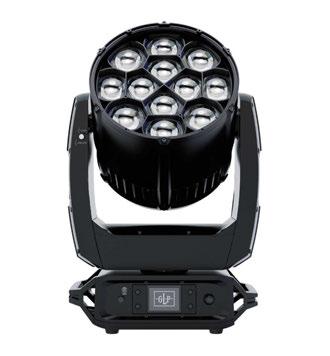
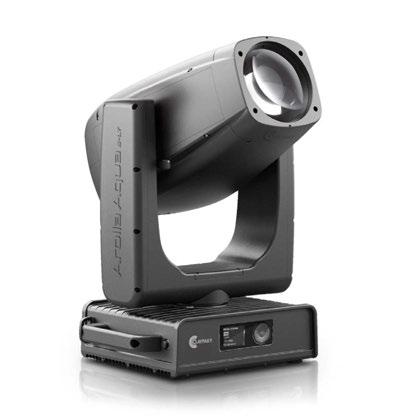
Arolla Aqua S-LT is a profile that blends seamlessly behind the scenes, performs flawlessly in tight setups, and keeps full creative control at your fingertips. This ultra-compact, weatherproof fixture is engineered for lighting designers who demand both power and precision, without the bulk. It packs full power, infinite motion, high-end optics, and a complete set of effects, shrinking its footprint to 25.9 kg (57.1 lbs). Engineered for both indoor and outdoor use, it’s built to perform without compromise. At its heart is a custom 350W white-LED engine (6500K) that pumps out an impressive 21,000 lumens. Whether you’re working indoors or facing the elements outside, the Arolla Aqua S-LT delivers the full creative expression you need, exactly when you need it: just reliable performance in a smarter, lighter package that adapts to your vision.
www.claypaky.it
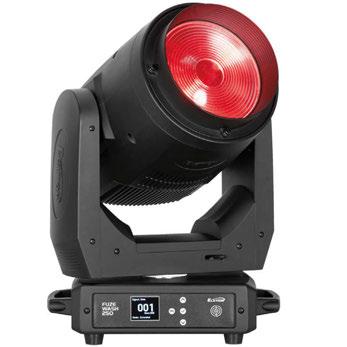
The GLP WildWash 12 is a compact LED wash with 12x 40W RGBL LEDs, up to 5,790 lm and iQ.Gamut Colour synergy. The zoom optics offer very narrow 3.5° beam angle up to to up to 54° field angle for homogeneous illumination. It features the GLP menu display with iQ.Mesh for easy setup and wireless updates. Flexible mounting is supported via integrated camlocks, and each unit includes a GLP DRX Sleeve. Ideal for efficient, high-performance use in clubs, small installations, mobile productions, and festivals. www.glp.de
The Furion B402 Beam is a lightweight, IP65-rated moving head that packs a fiery punch. Thanks to its 310 W discharge lamp, precise 0.6° beam angle and large 160 mm front lens, it delivers focused effects without light spillage. This makes it ideal for larger concerts, theatrical productions, live events and more. This powerful fixture boasts a colour wheel offering 14 majestic colours, plus an open position, and a static gobo wheel with 17 gobos. These features expand the creative possibilities by allowing users to add enchanting gobo effects to colourful, narrow beams. Enhancing its dynamic capabilities are rotating 5-facet linear and 8-facet circular prisms, which can be overlaid for soaring visual effects. Additionally, a frost filter softens the beam’s edges, adding versatility for different lighting atmospheres. Comprehensive control options include basic, advanced and customised DMX modes, CRMX, W-DMX, Art-Net, sACN and RDM. Power Pro True inputs and outputs add power-linking possibilities. Guarding its state-of-the art components is a sturdy yet lightweight housing, crafted from magnesium and aluminium, that ensures durability and minimises maintenance. Its IP65 rating guarantees dust-tight and water-resistant protection for both indoor and outdoor use. www.highlite.com
MAC Encore Two from Martin Professional redefines performance lighting for stage, broadcast, and touring. As the evolution of the MAC Encore lineup, it delivers 21,000 lumens from a proprietary 760 W LED engine – a 75% increase – while producing a rich 5,600 K neutral white output. Quieter than its predecessor, it’s ideal for noise sensitive environments with selectable output and noise optimisation. With native TLCI, CRI, and TM 30 scores above 90, enhanced CMY colour rendering, a 1:10 zoom system, advanced optics, gobo wheels, smooth dimming, and multiple control options, MAC Encore Two elevates the story and shapes atmosphere, emotion, and unforgettable experiences.
MAC Encore Two is the ideal choice for theatrical, broadcast, and touring productions where high output and low noise performance are essential. Designed for lighting designers, rental companies, and performance venues, it also excels in TV studios and concert environments that demand advanced follow spot capability, precision optics, and flawless colour reproduction. www.martin.com
The combination of an optical system, 1,000 W white light LED module, heat pipe cooling, colour mixing behaviour, zoom range and full effect equipment make the P15 Profile a trendsetter in terms of efficiency, light quality and projection attributes in its performance class. Also in the “silent running” category, it takes pole position, as is typical for JB and does not shy away from comparisons with its air-cooled competitors. The P15 Profile is multifunctional, versatile and extremely talented. Equipped with all refinements and features of note to put on an impressive and reliable show at any time – precise, powerful and extraordinarily quiet. It doesn’t matter which event requires its performance: installed permanently in theatres, TV, in opera houses, exhibition halls or on tour.
www.jb-lighting.de
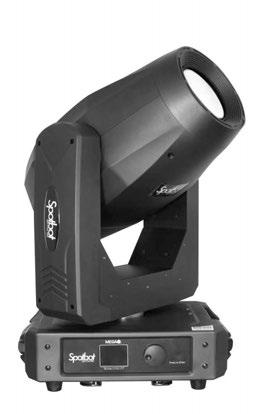
The Spotbot LED CMY 300 is a versatile, affordable, full-featured, and all-purpose spot fixture. It has a powerful 300W LED engine that can produce a bright, powerful, and even projection. The Spotbot’s impressive 7º – 31º zoom range allows the unit to be utilized in versatile settings. The gobos are one of this fixture’s primary qualities and seem to be already focused on some applications. Seven rotating and ten fixed gobos come alive when combined with the eight-facet rotating prism. The ten fixed and seven rotating (interchangeable) gobos allow you to morph between them using the focus and zoom. The smooth CMY colour mixing allows for many colour combinations. It offers a unique set of 12 added colours on the back end of the CMY colour flags and can generate many colour sequences. The Spotbot also features a frost filter for a colourful, smooth, soft-edged wash. The Spotbot LED CMY 300 is your perfect multitool, robust, well-size spot fixture.
www.mega.lighting
The FLEXON M is a professional lighting fixture engineered to function as a true all in one solution. It combines spot, beam, wash, and profile capabilities within a single compact body. This fixture features dual LED engine technology, housing both high CRI and high brightness engines. This design eliminates the requirement to choose between output and colour accuracy at the point of purchase, providing long term value for rental inventories. Performance is defined by precision optics. Unlike products using optical reducers, the FLEXON M achieves a genuine, native 2º beam angle for authentic long throw performance. The custom 600 watt dual engine delivers brightness 20 to 30 percent above the sector average. The FLEXON M includes four high speed framing blades with full blackout capability and plus or minus 60 degree rotation. Creative control is supported by 15 gobos, two overlappable prisms, an animation wheel, and CMY color mixing with linear CTO. With a 2º to 52º zoom range and a net weight of 33kg, this IP65 rated unit is built for consistent reliability in any environment. www.nxtlights.com
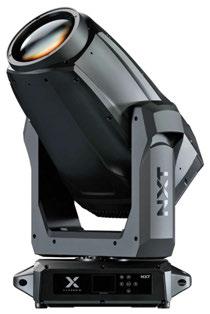












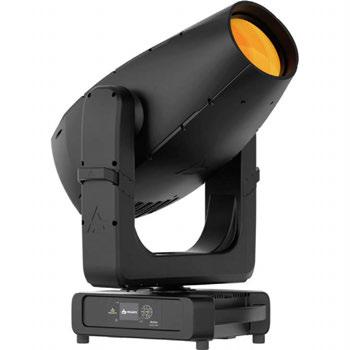
The Astra Profile1200IP is an advanced, large format IP65 LED moving profile, engineered to be bright and offer robust performance under any indoor and outdoor conditions. This unit boasts a stunning 54.000 lumen (fixture output with goniometer), ensuring exceptional brightness. The large 185mm front lens projects a full and consistent beam of light, adjustable from 5° to 50° via its motorized zoom system and precision internal optics being an ideal for use as key light. The Astra Profile1200IP’s comprehensive features include linear CMY+CTO color mixing and a dedicated color wheel, dual rotating gobo wheels and a 4-layer framing shutter system on individual planes and capable of producing a curtain effect. Additionally the effect section includes an animation wheel, dual frost filters, dual prism, and a motorized iris, enhancing its flexibility and creative potential. For seamless integration and user convenience, the Astra Profile1200IP is equipped with CRMX wireless connectivity and supports multiple ethernet protocols, making it a versatile and user-friendly choice for various settings. www.prolights.it










The iESPRITE LTL WB is available with a choice of patented, IP65-rated iSE-TE 750W White LED TRANSFERABLE ENGINES. Choose between the XP (Xtra Performance) engine, which delivers a 6.700 K colour temperature, a fixture output of 35.000 lm (integrating sphere), for an impressive 260.000 lx at 5m with a CRI of 70 for maximum brightness; or the HCF (High Colour Fidelity) engine, offering a 6.000 K colour temperature, 22.750 lm output (integrating sphere), for illuminance of 140.000 lx at 5m with an exceptional CRI of 96 for superior colour rendition.
Engineered for durability, the TRANSFERABLE ENGINE delivers stable output, field exchangeability, and possible future LED upgrade capability. Its advanced, stable thermal management system means we can offer a 50.000-hour L70/B50 rating and a 4-year, 20.000-hour warranty. iESPRITE LTL WB is designed to endure. The innovative optical design offers remarkable versatility. The standard Optical Range Mode delivers a zoom range of 3° - 57°, while narrowing the iris allows coverage from 2° - 57°. The Long-Throw Mode, using patented xR7 technology, provides an ultra-tight beam from 0.7 - 2° incredibly without any intensity loss usually found when engaging an iris over long distances. www.robe.cz
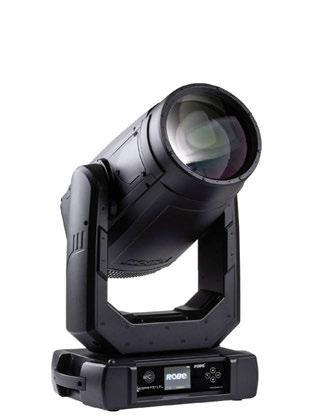
FUTURELIGHT now offers the popular EYE-740 as MK2 version in a new design. Even though the weight of the spotlight has been significantly reduced – it now weighs only 7.5 kg –, the brightness is even higher than in the original version. With Seven extremely bright 40W Osram LEDs with RGBW colour mixing are used as light sources. The zoom range is extremely large and extends from 1° to 48°. This makes the moving head ideal for use both as a beam and as a surface light. The Eye 740 MK2 is suitable for any type of stage: Its whisper-quiet operation makes it a popular spotlight even on theatre stages and other noise-sensitive locations. Its precision, speed, excellent colour mixing and very high brightness also make it an absolute all-rounder. For the connections, FUTURELIGHT also relies on Seetronic T-Con for this model, which are becoming increasingly popular in the professional sector.
Vari-Lite VLHIVE 151 DIGITAL FX Robe iESPRITE LTL WB
The DMX connections are both 3-pin and 5-pin. In addition, the Eye 740 MK2 has a special USB socket for wireless DMX operation, for this there are USB DMX receivers either for the EUROLITE QuickDMX system or FUTURELIGHT’s WDR system, which is based on Lumenradio CRMX, the new standard in professional event technology. It is also possible to retrofit an optionally available built-in board for wireless DMX(WDR) reception. www.steinigke.de
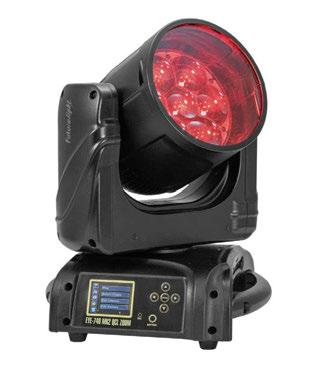
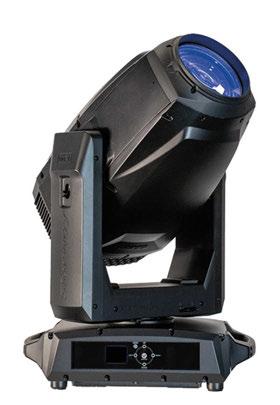
The Monza WET is a compact and powerful IP65 framing projector built for demanding indoor and outdoor environments. Featuring a 350W white LED engine delivering 13,000 lumens, it ensures intense output and exceptional beam definition. With a versatile zoom range from 3° to 49°, Monza WET moves effortlessly from ultra-narrow aerial beams to wide, uniform projections. Its 6800K light source (CRI 71), combined with a High CRI filter reaching 94.5, guarantees accurate colour rendering. The CMY colour mixing system, progressive CTO, and 8-color wheel with 4 corrective filters provide maximum flexibility, from rich saturated tones to balanced whites.
Monza WET is fully equipped for creative expression, featuring 7 rotating gobos, 11 fixed gobos, an iris (<1°), and two stackable 6-facet prisms (linear and circular). Progressive Heavy and Medium frosts ensure smooth transitions and homogeneous output.
The 4-blade framing system with full blackout capability delivers precise beam shaping. Supporting DMX, RDM, Art-Net, sACN, and integrated Wireless DMX, Monza WET guarantees seamless integration. www.starway.eu

The VLHive 151 Digital FX is a true evolution in entertainment lighting, a nextgeneration luminaire with advanced digital animation effects never before possible with an entertainment lighting fixture. Designed and built in Vari-Lite’s Dallas, TX, USA headquarters, the VLHive includes a digital light engine, with 45,000 lumens of output and pixellevel control. Thanks to user-loadable effects and familiar DMX control, the luminaire fosters better collaboration between lighting, video, and creative teams while remaining, at its heart, a light fixture. Built with Vari-Lite’s commitment to longevity and featuring the widest range of design possibilities of any fixture on the market, the VLHive 151 promises to provide fresh design looks for years to come. www.vari-lite.com
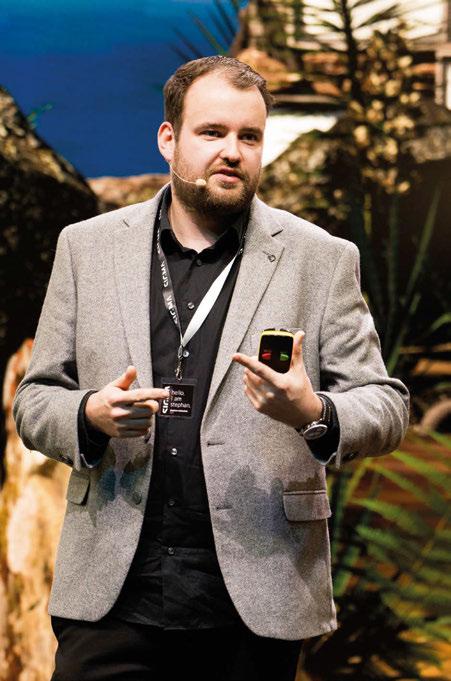
THE CEO OF SIGMA SYSTEM AUDIO-VISUELL, A FULLSERVICE PARTNER FOR COMPLEX MEDIA TECHNOLOGY PROJECTS, DISCUSSES RECENT TRENDS AND THE DECISION-MAKING PROCESS AS A LEADING SYSTEMS INTEGRATOR.
PHOTO: SIMON FRICKE
What is at the core of SIGMA AV, and how heavily is it weighted into installation work?
SIGMA AV started out in 1977 with a clear ambition: to create technically outstanding media environments. Today, we focus on the conception, planning and implementation of sophisticated AV solutions. We operate across permanent installations, live communication and immersive experiences from corporate and conference environments to museums, exhibitions and major live events.
Installation work represents a substantial part of our business. In recent years, we have significantly expanded our expertise in permanent integration projects, including large-scale LED installations, immersive environments and fully integrated collaboration systems. At the same time, our roots in live events ensure a pragmatic, solution-driven approach to every project.
How important is the company culture, and what can you tell us about your sustainability goals?
Company culture is fundamental to us. In a demanding technical environment, trust, responsibility and a shared commitment to quality are essential. We promote ownership and continuous development, because our industry never stands still. Sustainability is embedded in our operations: we installed a large-scale photovoltaic system 14 years ago and support biodiversity initiatives, including our own bee hives. We prioritise long product lifecycles, repair over replacement, energyefficient technologies and responsible logistics. As integrators, we advise clients on sustainable, future-proof system design.
How has the technology available made life as an integrator and systems designer easier in recent years?
Technology has become both more powerful and more efficient. Increased processing power, improved bandwidth and higher display performance allow us to deliver more sophisticated systems with greater reliability. IP-based infrastructures have been transformative, enabling flexibility, scalability and remote management.
Advanced simulation and 3D planning tools also allow us to visualise and refine projects before installation, significantly reducing risk. Today, our role is less about connecting components and more about designing secure, robust and intuitive system ecosystems.
How do you manage client expectations when budgets might not stretch to their ideal solution?
Transparency and prioritisation are crucial. We work with clients to define what truly delivers impact and develop scalable, phased concepts that align ambition with budget.
Where necessary, we design modular systems that allow future expansion. What we never compromise on are critical components, it is better to scale intelligently than to dilute quality.
How do you keep up to date with developments in the industry, and what recent trends have you recently become aware of?
We maintain close relationships with manufacturers and regularly attend key trade shows and industry forums. Current trends include increasingly immersive environments, finer-pitch high-resolution LED and the continued convergence of AV and IT.
Sustainability is also playing a far more decisive role in investment decisions. For us, the importance lies not only in technical performance, but in how innovations translate into meaningful user experiences for our customers.
Is there a tool in your toolbox – hardware or software – that you can’t do a project without?
Rather than a specific piece of hardware or tool, I would highlight system control and integration software. Intelligent control platforms are central to delivering a seamless user experience. Ultimately, though, our most important tool is our team’s expertise, the experience and engineering judgement that turn technology into meaningful, reliable solutions. www.sigma-av.com
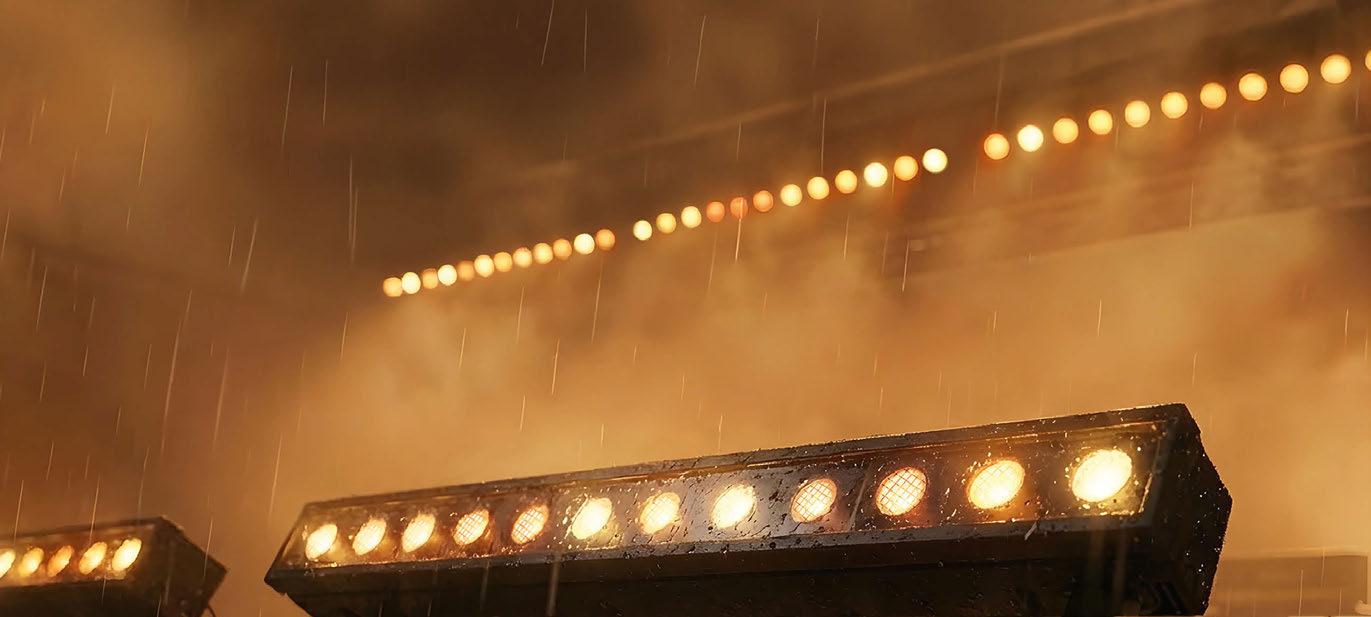
Realistically recreating the dimmed, golden light of a classic incandescent bulb using LED technology is one of the most challenging disciplines in modern lighting technology. Especially in the lower dimming range, it is crucial whether the light appears authentic or artificial.
With the SUNSET series, EUROLITE is launching two outdoor blinders that convincingly simulate precisely this behavior while remaining deliberately affordable.