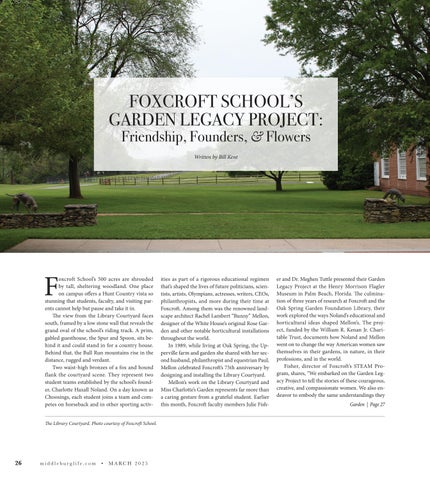
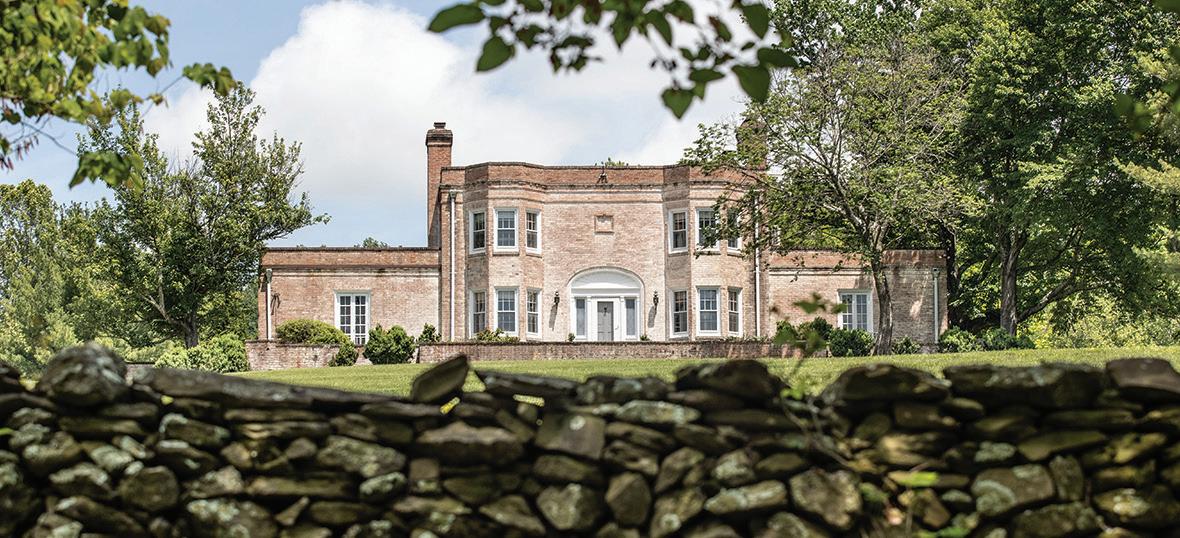
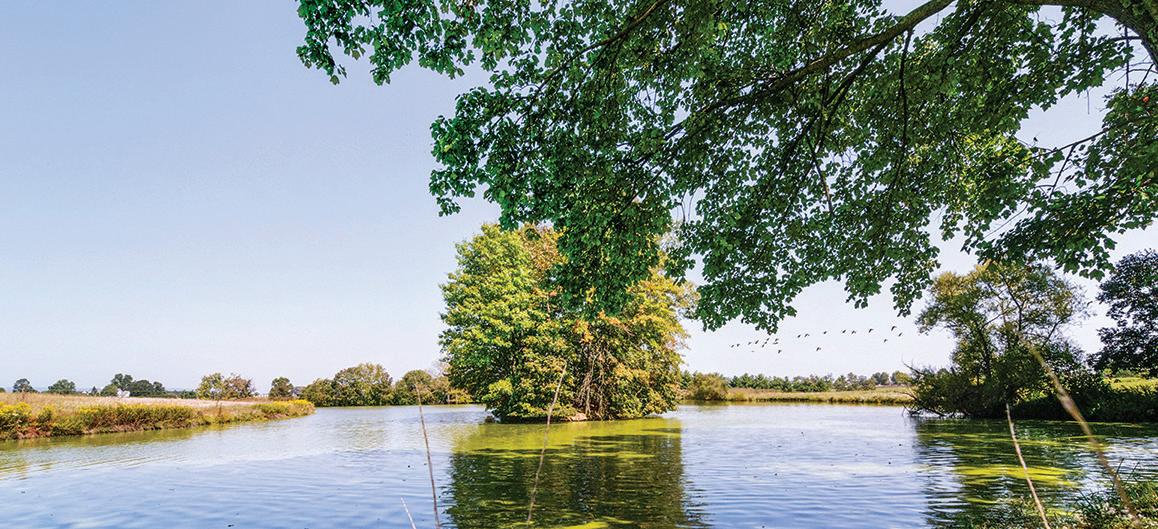
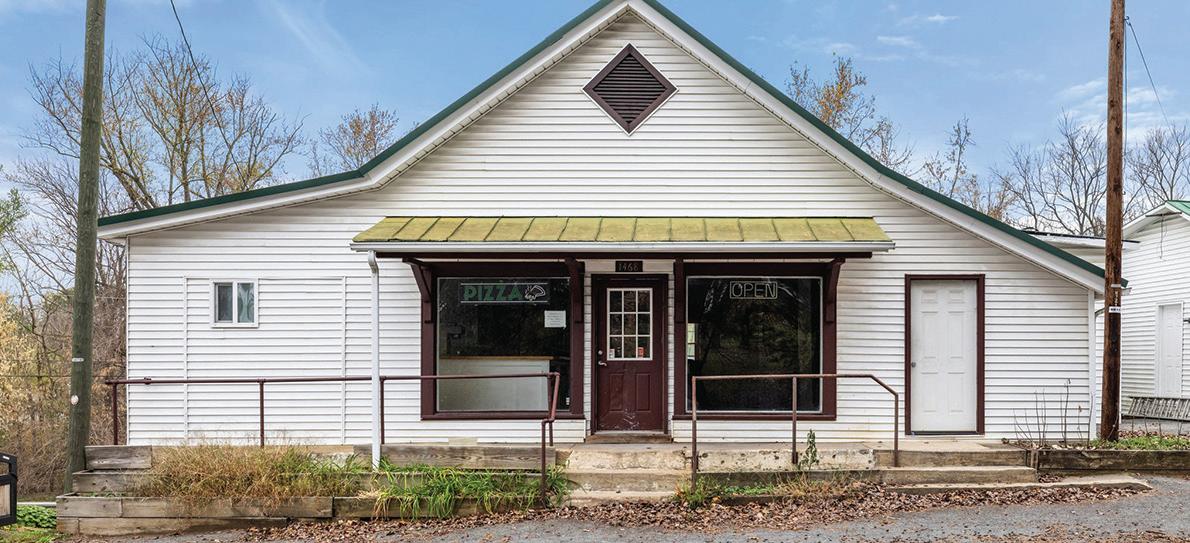
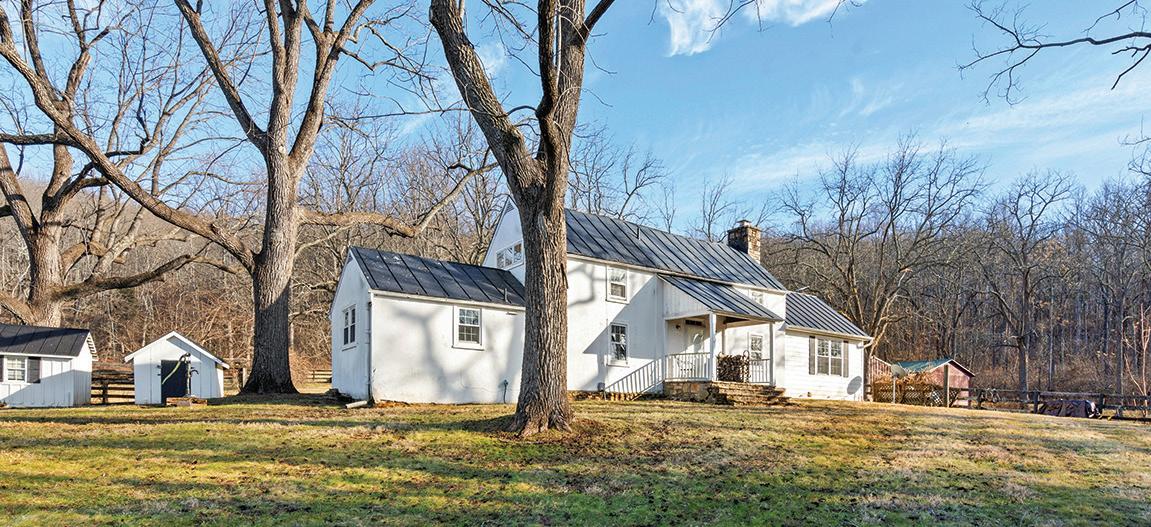
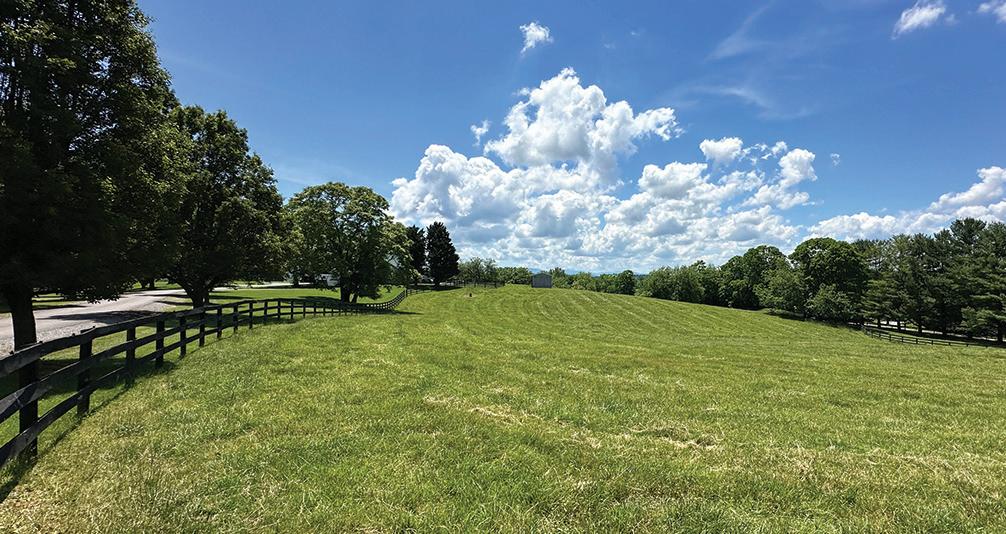
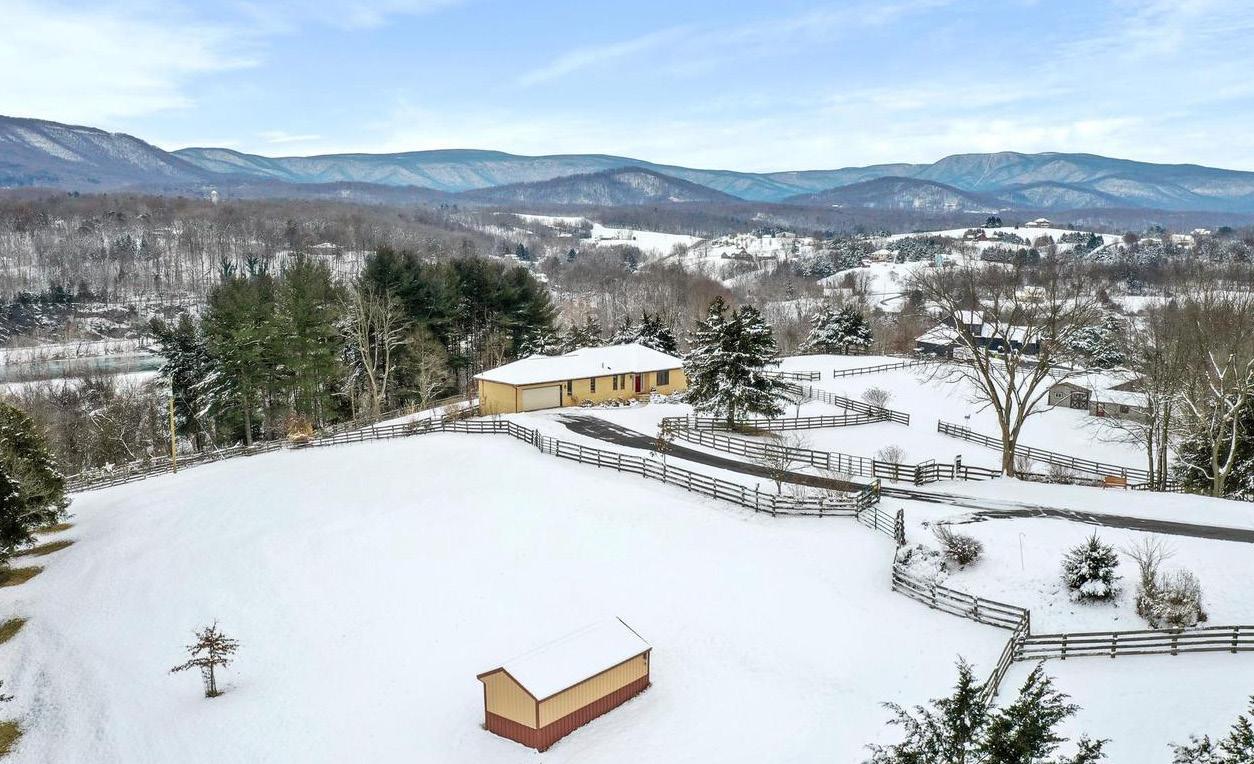
from throughout | | 6 kitchen | cottage lighted stream, acres
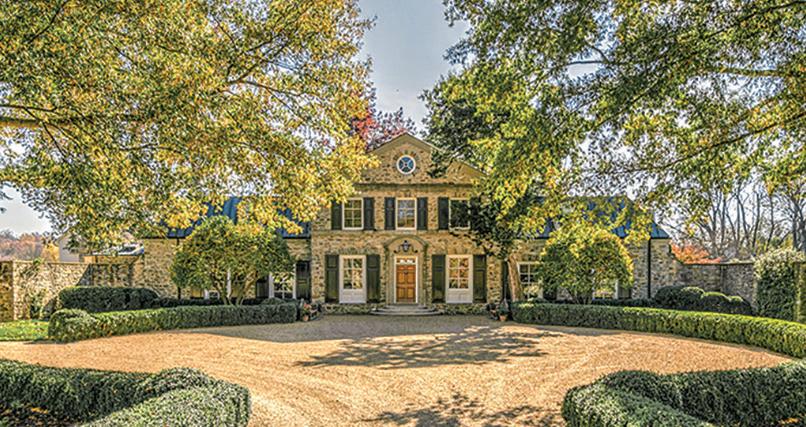
SPRING GLADE
MIddLEBuRG, VIRGINIA
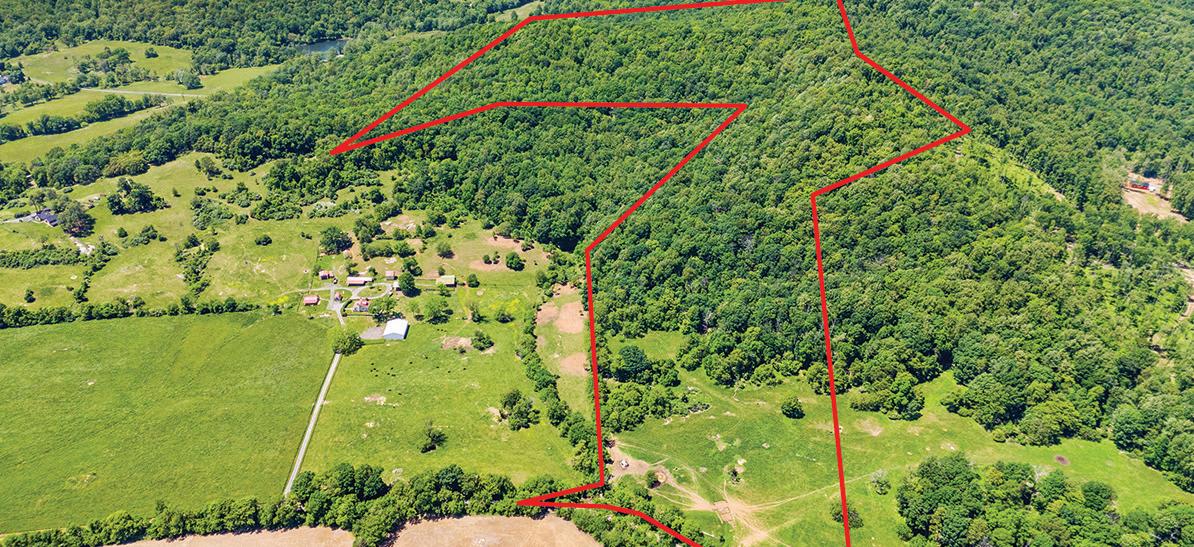
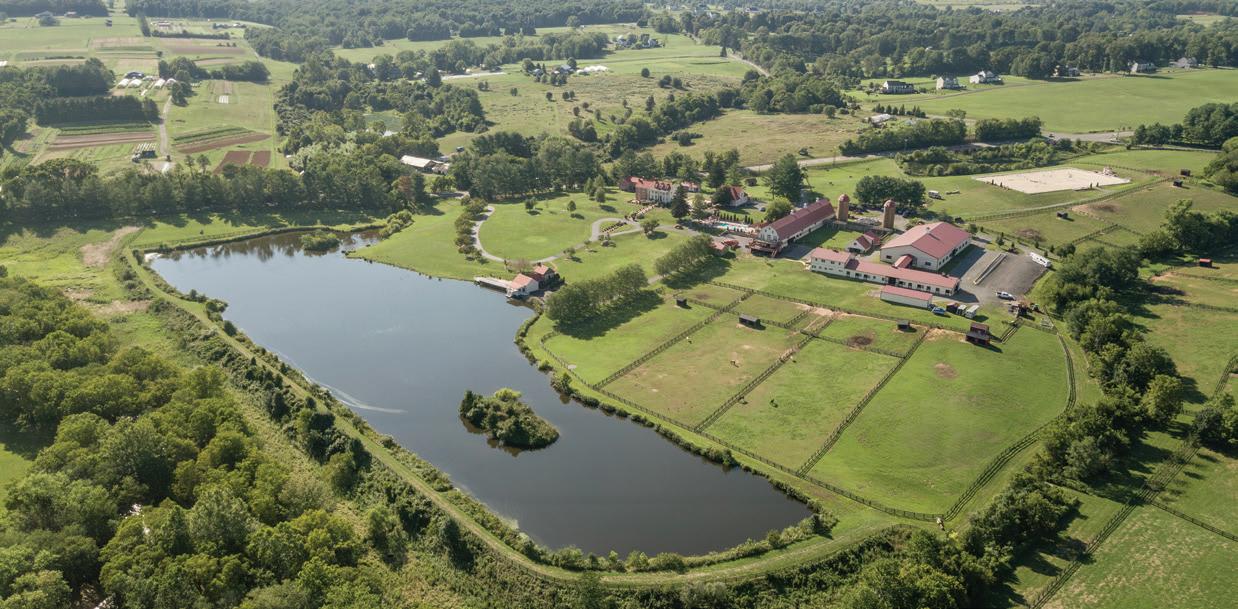
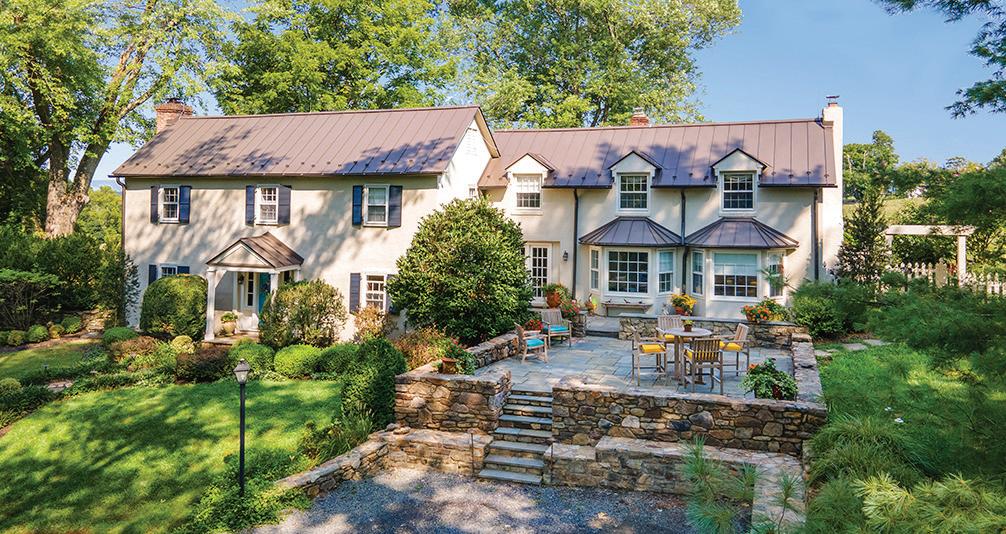
French Country home, with renovations in 1999 & 2017 | 4 BR, 5 full & 2 half BA, 5 FP, hardwood floors, flagstone terrace | Beautiful drive to hilltop stetting overlooking pond, lake & mountains | Im provements include pool, 2-car garage, 2 BR guest house & apartment | Lovely boxwood gardens | Kitchen allowance to be provided | 79.89 acres
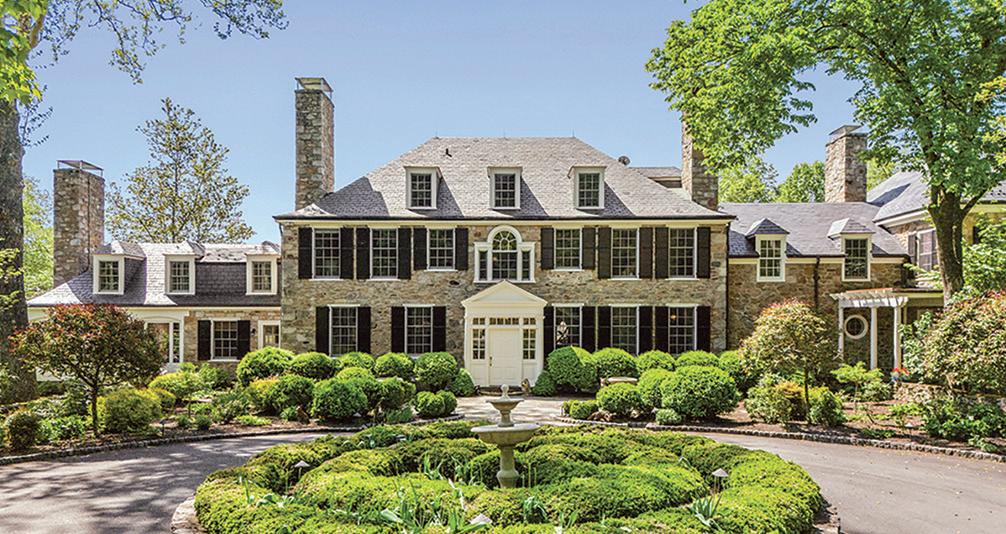
SALEM
HILL
MARSHALL, VIRGINIA
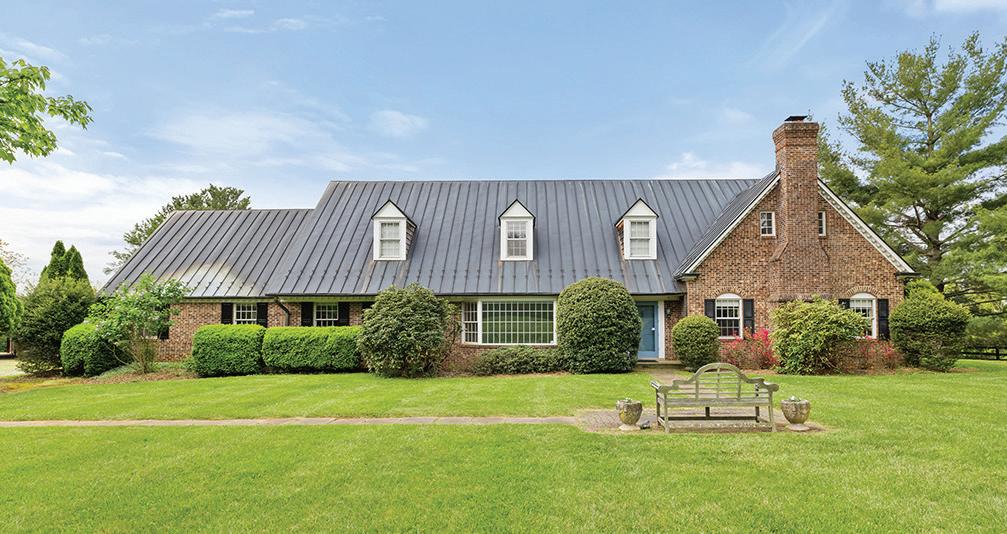
Well protected Fauquier location | 6 bedrooms | 4 full and 2 half baths | 3 fireplaces | Great views | Pool with large flagstone terrace | Large county kitchen | 4-car detached garage with apartment/ office | 9-stall barn | Covered arena | Outdoor ring | 4 stall shed row barn | 51 fenced acres
$3,690,000
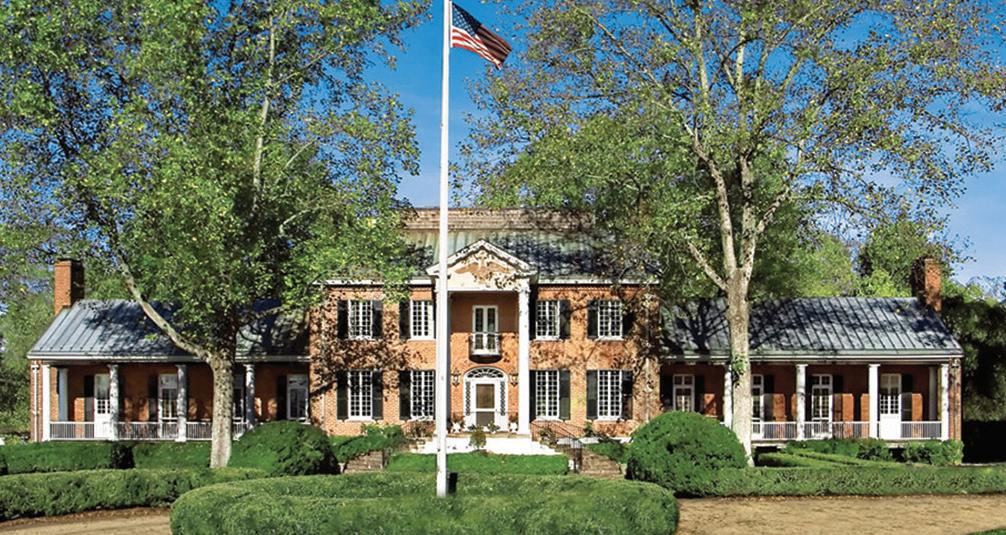
BRIQUEBEC
MARSHALL, VIRGINIA
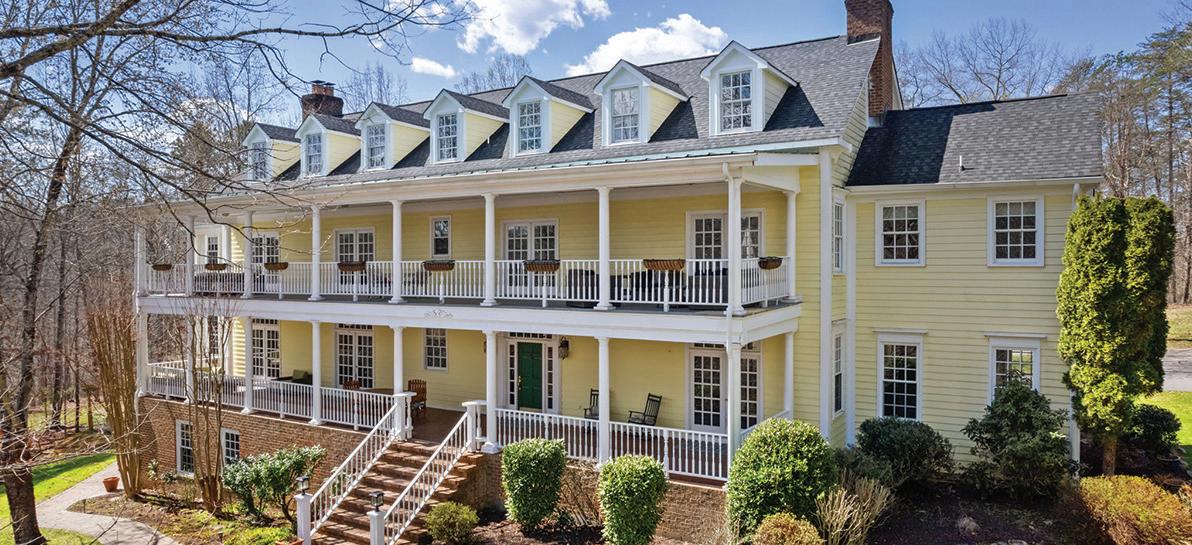
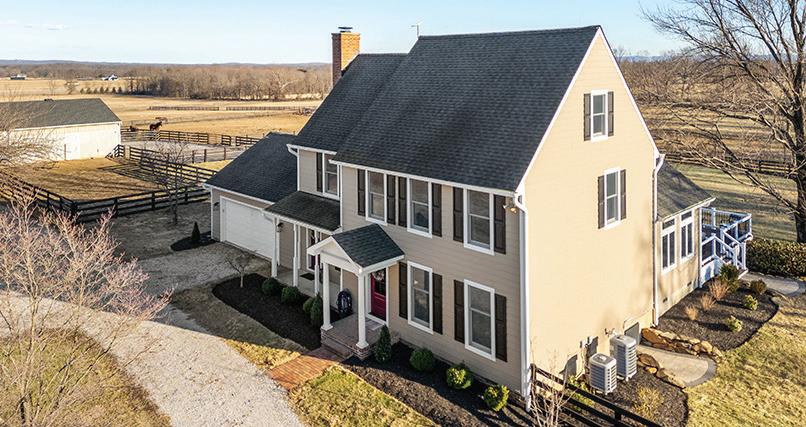
House front veranda on main level & second story. Craftsmanship & detail throughout |5 BR, 6 1/2 BA, & 4 FP Impressive staircase, moldings & mantles 14.6 mostly wooded acres, access through stone pillars & hard surfaced driveway. Spring fed pond, walkways, gardens & mature plantings | Improvements include greenhouse & workshop.
$1,850,000
Paul MacMahon 703 609 1905
Brian MacMahon 703.609.1868
|
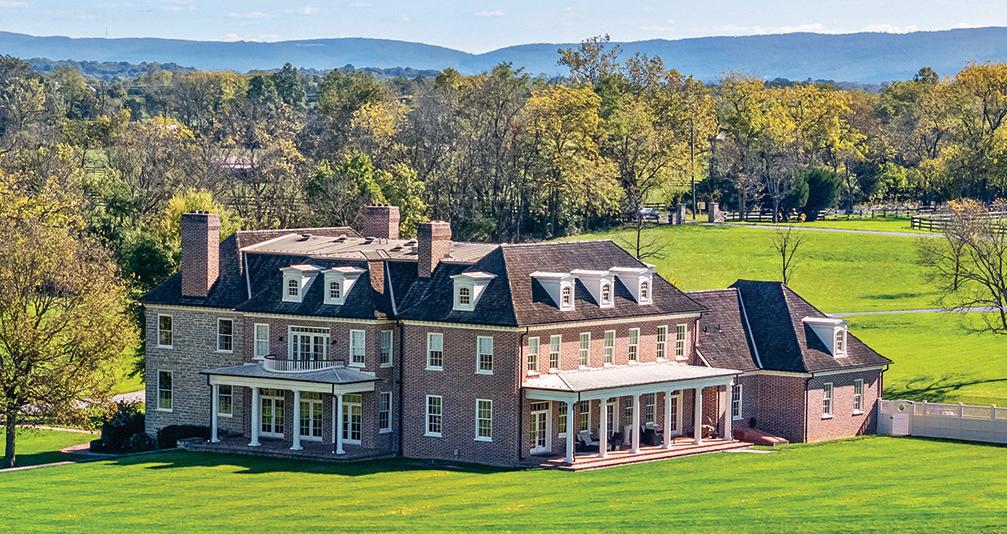
ALDIE, VIRGINIA
$750,000
A remarkable property located within a private enclave just minutes from town | Stone and stucco manor house with main level master suite | 7 additional BR | 5 stone FP | Beautiful gardens, terraces, salt water pool,
Paul MacMahon 703.609.1905
Brian MacMahon 703.609.1868
$600,000
Paul MacMahon 703.609.1905 Brian MacMahon 703.609.1868
203 acres in River frontage 4 full & 3 1/2 Gunnite pool and private | 5 stall Jim paddocks, pasture | Old d alix
Paul MacMahon 703.609.1905
Brian MacMahon 703.609.1868
SAINT LOUIS ROAD
HUME ROAD
ADVERTISING SALES MANAGER
Vicky Mashaw vmashaw@middleburglife.com
ADVERTISING SALES
Jennifer Richards | jennifer@middleburglife.com
Andrea Ryder | andrea@middleburglife.com
ACCOUNTS ADMINISTRATOR
Joanne Maisano
DESIGNER: Elisa Hernandez
PRODUCTION DIRECTOR
Nicky Marshok
ON THE COVER
PUBLISHER: Greenhill Media, LLC
EDITOR-IN-CHIEF
Kaitlin Hill | kaitlin@middleburglife.com
COPY EDITOR & DIGITAL ASSISTANT
Susan Stark
Sheena Custer and her students, Raphael, Anna, Bryce, and Julietta, pose outside of the Middleburg Community Charter School art barn with their “Healing Through Color” projects. For more on how local students are marking Youth Art Month, turn to page 10. Photo by Callie Broaddus.
ON THIS PAGE
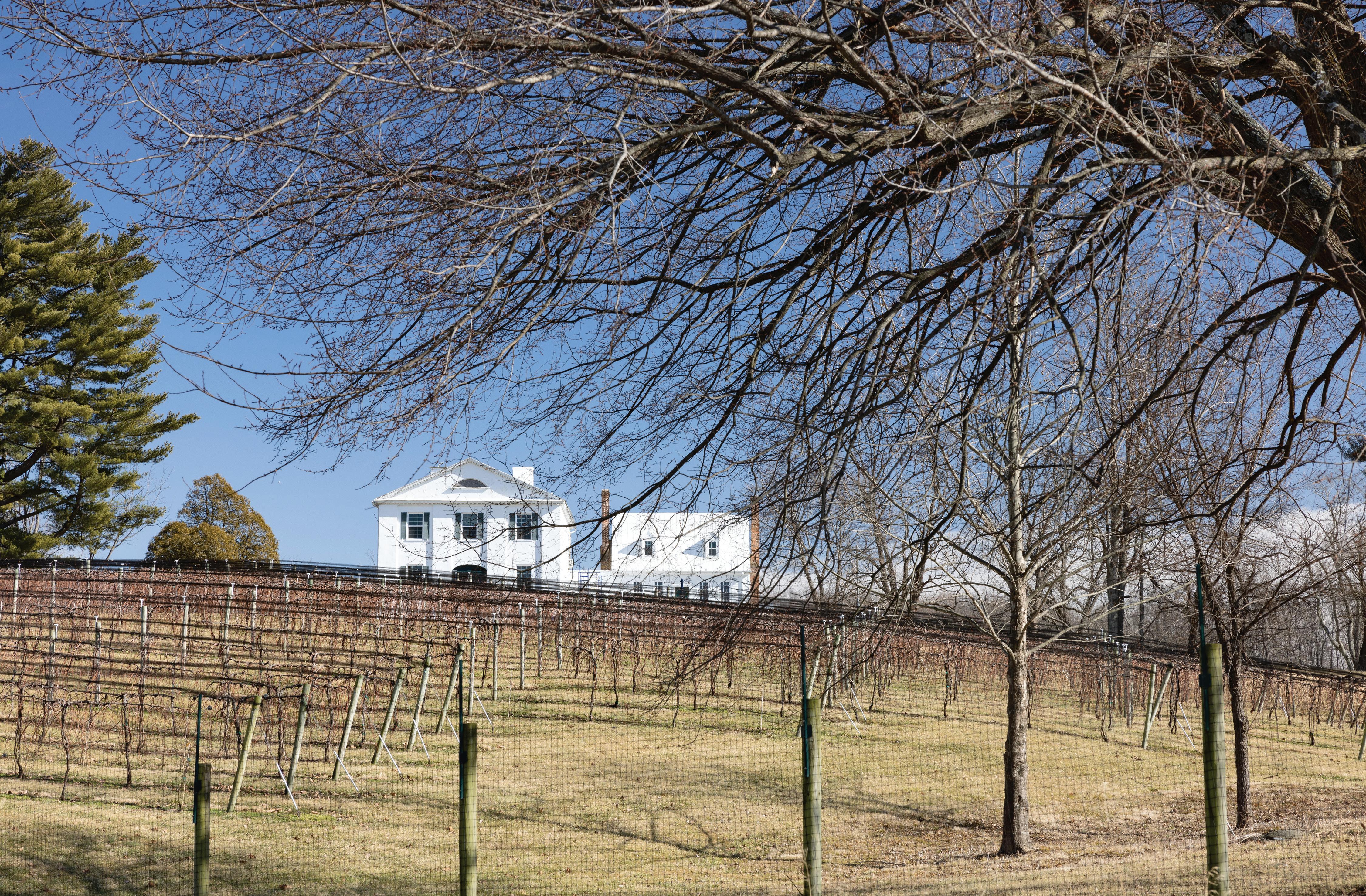
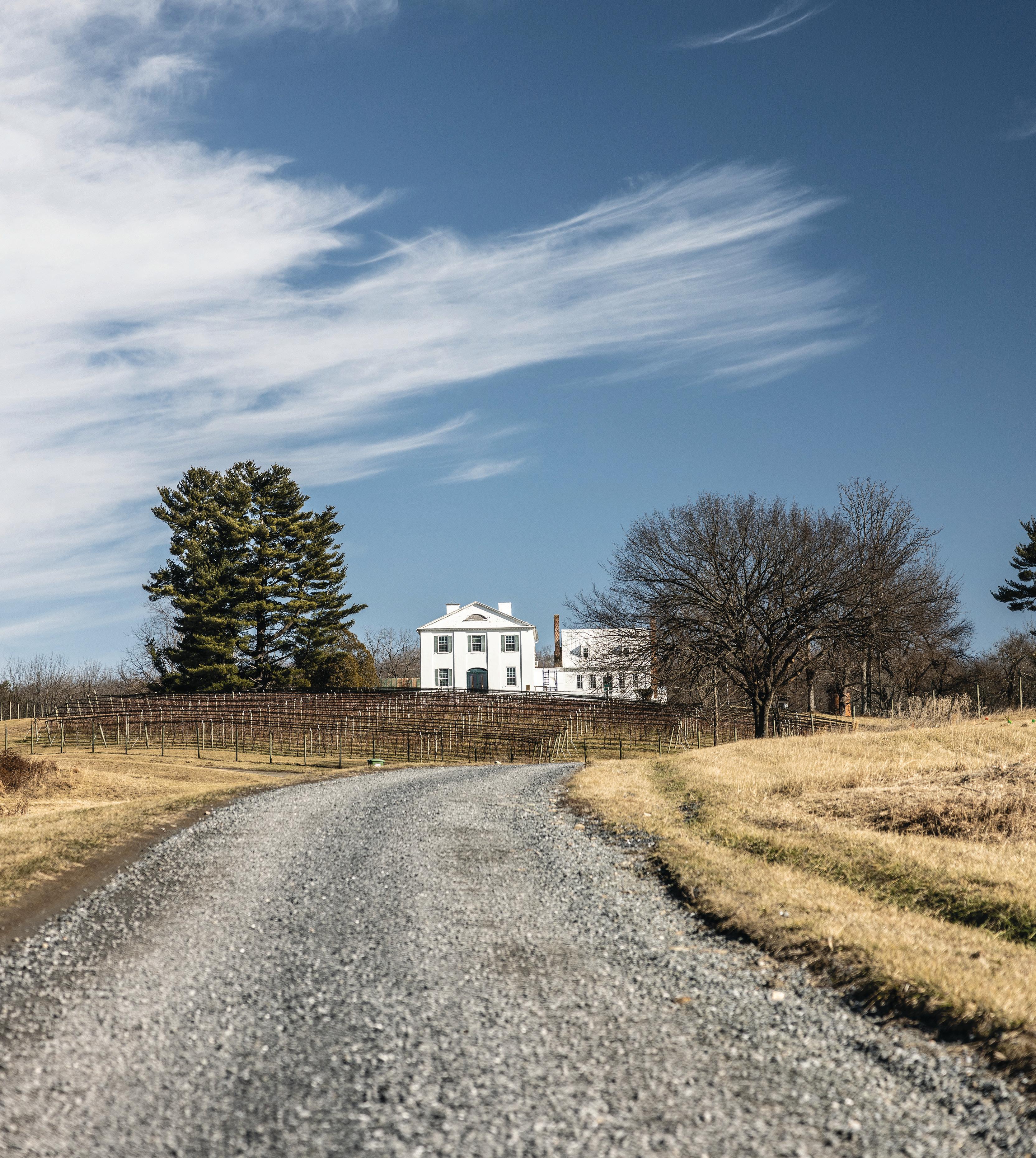
John Marshall’s ancestral home, Oak Hill, stands in the distance. We look back at the property’s
history and discuss its future with the current owner, Chuck Chamberlain, on page 20. Photo by Michael Butcher.
All editorial matter is fully protected and may not be reproduced in any manner without the written permission of the publisher. All unsolicited manuscripts and photos must be accompanied by return postage; the publisher assumes no responsibility. Middleburg Life reserves the right to reject any advertising. Distributed in Aldie, Alexandria, Boyce, Centreville, Delaplane, Front Royal, Great Falls, Haymarket, Leesburg, Manassas, Marshall, Middleburg, Millwood, Paris, Purcellville, The Plains, Rectortown, Tysons, Upperville, Vint Hill, Warrenton, Washington, D.C., and Winchester.
FIND US ON:
@middleburglife
CONTRIBUTORS
Shannon Ayres is a Reston-based freelance photographer. His work has appeared in Arlington, Chesapeake Life, Northern Virginia, Virginia Business, and USA Today magazines. He has an MFA in fine art photography from San Francisco’s Academy of Art University. His editorial work can be seen at sdayres.com
Callie Broaddus is a Warrenton native and graduate of the University of Virginia. After seven years as a book designer at National Geographic Kids, Callie founded the nonprofit, Reserva: The Youth Land Trust, in 2019. Callie’s land preservation projects and focus on youth empowerment are aided by her talent as a professional photographer. In her spare time, Callie enjoys Earl Grey tea, “Harry Potter” trivia, and dreaming of getting back into the jumper ring.
Caroline Gray is a D.C.-based conservation and freelance photographer. A Virginia native and MBA graduate from the University of Virginia, her work blends a love for exploration, nature, and horses with her fashion background. When not behind the camera, Caroline enjoys hiking with her Labrador, Captain, visiting her retired horse, Cleverly, and exploring new restaurants in Washington, D.C.
Diane Helentjaris chose Loudoun as her “forever home” in 1990. A former clinical physician and public health administrator, she has returned to her humanities roots. Diane’s latest book, “I Ain’t Afraid — The World of Lulu Bell Parr, Wild West Cowgirl,” is a rollicking biography. Her novel “The Indenture of Ivy O’Neill” won the 2024 Maryland Writers’ Association novel competition in the historical/romance category.
Dulcy B. Hooper and her husband Richard moved to the country from Washington, D.C., nearly 10 years ago. Shortly thereafter, both began writing occasional articles for Middleburg Life. Dogs are a big part of the Hoopers’ lives and several of Dulcy’s earlier articles focused on the couple’s Chinese crested powderpuffs!
Gracie Savage is a local photographer who grew up in the village of Aldie and has been photographing local weddings, portraits, and events since 2016. Her passion began when she received her first camera in middle school and she continued to study the craft in high school and in college. She was a photographer at Georgetown University for over three years and joined Middleburg Life as a contributor in the spring of 2022.
Shayda Windle is a freelance writer covering the arts, people, and places that make Hunt Country so special. Her work has been featured in Plein Air Magazine, the Fairfax County Times, and several online media outlets. In her spare time, you can find her enjoying the great outdoors and exploring Northern Virginia with her husband and two children.
Heidi Baumstark has been writing for several lifestyle magazines and newspaper publications since 2005, specializing in history-related articles highlighting Virginia’s Piedmont. She has been with Middleburg Life since 2014. Heidi hopes to inspire readers to pause and consider the people, places, and events that have shaped the story of our local history.
Michael Butcher is the owner of Butcher Photography. Originally from Christchurch, New Zealand, he resides in Springfield, Virginia, with his family. For the past 15 years, Michael has specialized in portraiture, event, and editorial photography. When not behind the lens, he enjoys gardening and swimming. More of Michael’s work can be found at butcherphotography.com.
Laticia Headings is grateful to call Middleburg home. She discovered Middleburg by attending the first annual Middleburg Film Festival in 2013 and has come back to the event every year since as a volunteer and attendee. Laticia is the founder of Latitude Media and has 23 years of experience as a producer, writer, and camerawoman for television (Discovery, National Geographic), and for the documentary film “Everest: A Climb for Peace.”
Lia Hobel is a freelance journalist, known for her blog, Uplift Loudoun. In addition to her work for Middleburg Life, Lia writes periodically for online platforms with articles appearing on GOBankingRates, Forbes, Huffington Post, and Yahoo! She is a Loudoun 40 Under 40 honoree and a Certified Tourism Ambassador for the county.
Bill Kent’s journalism has appeared in more than 40 national and regional publications including The Washington Post, Art & Antiques, Philadelphia Magazine, Baltimore Magazine, New Jersey Monthly, and The Hunt. A former correspondent for The New York Times, he taught writing and journalism at the University of Pennsylvania, Rutgers, and Temple universities, and is the author of seven novels, a Fodor’s Guide, and a history of Atlantic City. When not writing, he enjoys walking his westies on Washington Street.
Beth Rasin graduated from Middlebury College, where she studied nonfiction creative writing. She worked as a writer and editor at The Chronicle of the Horse for more than 25 years, including 10 years as the president and executive editor. As a freelancer, she’s contributed since 2015 to Middleburg Life, as well as Northern Virginia Magazine, Blue Ridge Outdoors, the former Loudoun Magazine, and many others. She lives in Hume, where she and her husband and daughter run a boarding facility for retired horses. She enjoys running, hiking, and spending time with her adopted dogs and cats.
Meet Your Neighbor: ASHLEY GRAY OF ASH SALON
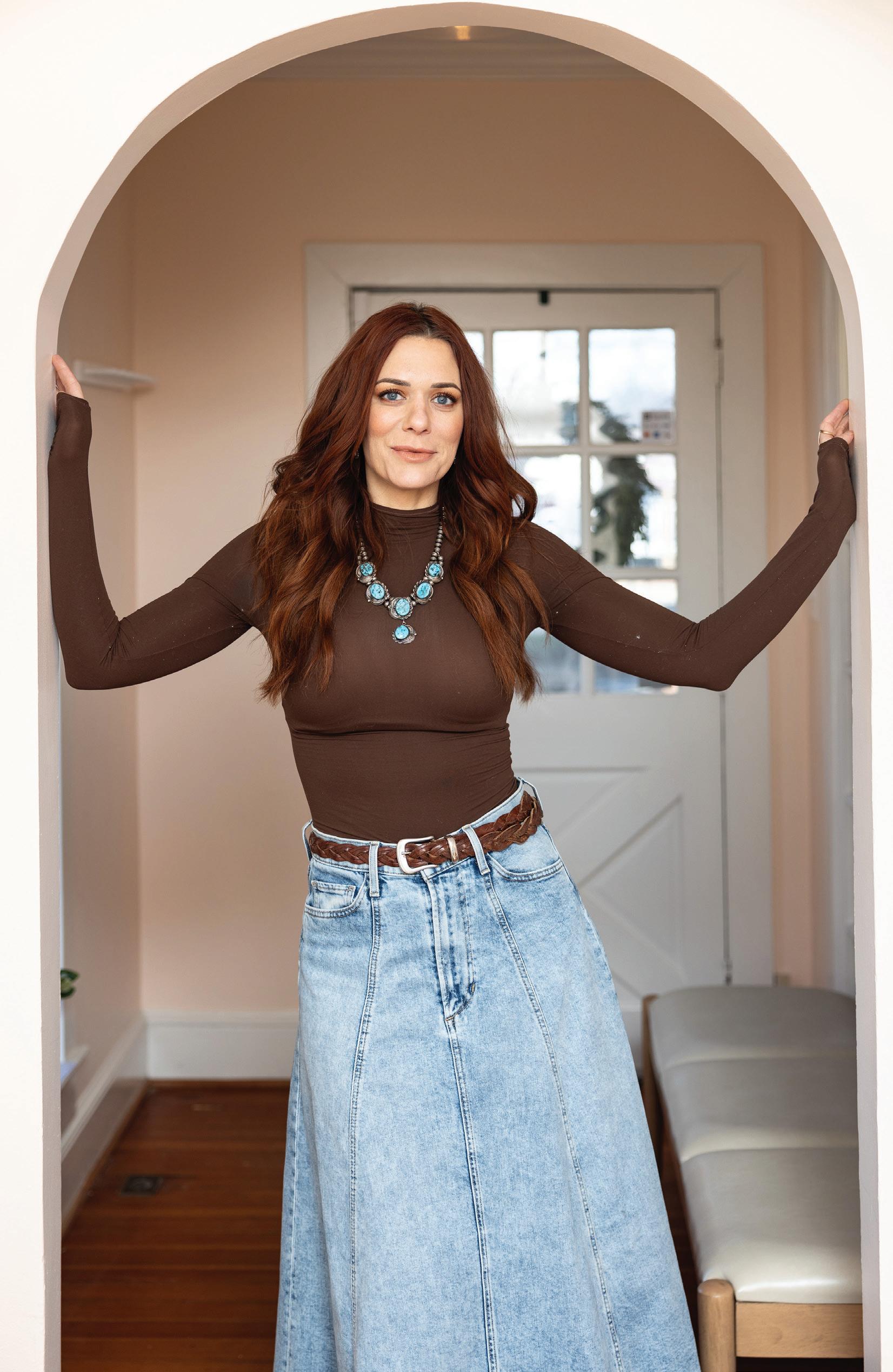
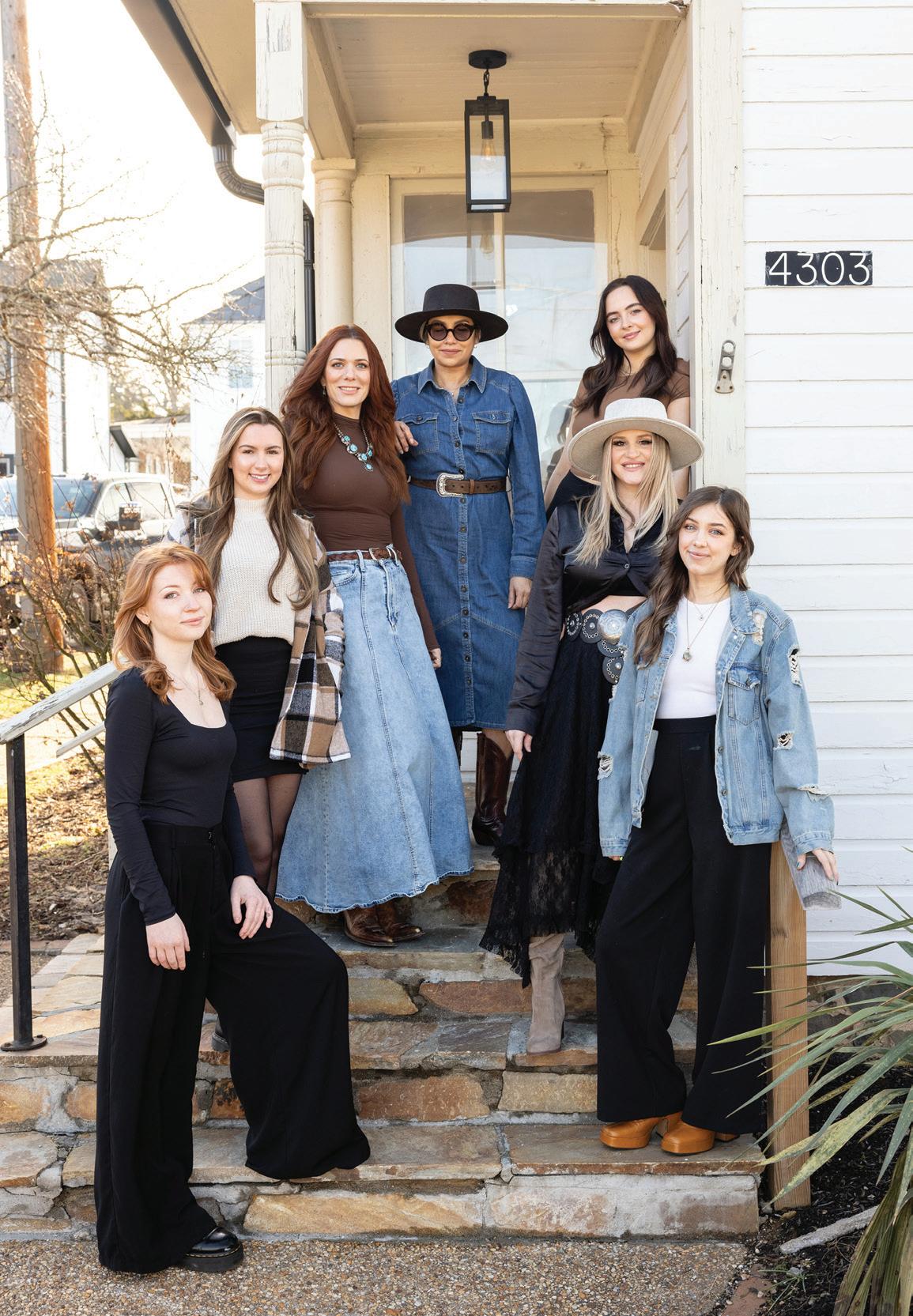
Written by Kaitlin Hill | Photos by Michael Butcher
The good feeling that follows a haircut is arguably universal. The simple act of selfcare often leaves customers feeling refreshed, or, depending on how drastic the change, helps them rediscover confidence that may have been hiding under exposed roots and split ends.
At either of Ash Salon’s Hunt Country locations, that positive energy seems to go even deeper. Owner Ashley Gray’s philosophy on good business practices has not only earned her a following of dedicated clientele, but has built an army of talented, multi-level stylists through her apprenticeship program and commitment to education.
“I was planning on going to college, but at the last second decided to go to hair school,” Gray recalls. “I fell in love with it.”
Gray started her career in Warrenton at Salon Emage Day Spa before striking out on her own in 2017. She shares, “[My boss] taught me a lot and I loved working for her. But after several years, I was ready to do my own thing.”
“I was planning on going to college, but at the last second decided to go to hair school. I fell in love with it.” – Gray
Of opening her first salon in Haymarket in 2017, she says, “I started small with four chairs, but within a year we outgrew that space.” In 2019, Gray and her team moved to a larger building that essentially tripled their capacity.
“Three months later, COVID shuts us down,” Gray remembers. “That was a wild time. I lost staff, changed things around, but it was good we had the bigger location so we could space out.”
Gray and her salon made it to the other side and, fortunately, came out stronger. She shares, “We
Salon | Page 7
Ashley Gray.
rebuilt, got busier, and we were even at the point of getting too crowded again.”
In 2023, Gray expanded her Haymarket-based business into The Plains, and from there, her offers for clients — as well as aspiring stylists — grew.
“You have to create your talent,” Gray explains. “We used to have one apprentice at a time, and now I have nine at a time.”
To educate the next generation of stylists, Gray recruited one of her former instructors to help her teach. She says, “We have a whole training program. Every single Monday we have classes for the girls.” She continues, “Then the girls learn a lot hands-on by working as our assistants throughout the day… It usually takes about two years to earn a chair.”
opening her second Ash Salon. “It was my goal, once we opened the new location, to have a proper spa. We have two aestheticians, we have two massage therapists, we can do microblading, and we have a nurse that comes in once a month to do Botox and fillers.” She adds, “Clients forget that we have a whole spa. Don’t sleep on that — our facials are amazing!”
Gray is looking for ways to make the salon and spa experience better for the planet, as well. Ash Salon became a Certified Green Circle Salon last July. This program helps recycle up to 95% of materials that would otherwise become trash. The Ash Salon website shares some sobering salon waste statistics, like the 63,000 pounds of hair that are thrown away in the United States each year and do not decompose. “I knew I had to do something,” Gray says. “My goals are to reduce,
“I am here to empower you and bring out the best in you.” – Gray
Though the training salon format wasn’t necessarily part of Gray’s original business model, it has been rewarding. “It’s awesome. You get to see them from the timid stage to getting really comfortable with my clients. And now that I’ve cut back, I’ve been putting my clients in my apprentice’s chair — which is cool.”
From four chairs to now two locations, 16 stylists, and 30 employees, Gray is able to offer even more services to her regulars and new clients.
“When I first started doing hair, it wasn’t that complicated,” she laughs. “Now color is way more intricate… Having the assistants helps accommodate more clients and do these upscale projects.”
She continues, “It’s beneficial to the salon to have the training program, and it allows us to accommodate more clients. It’s a win-win.”
Beyond hair, Gray has introduced an impressive list of spa services to her offerings since
reuse, and recycle. And, this year, I want to bring in more natural lines. We have all-organic skin care, but I want to find a brand that I love for hair care as well. Again, fewer toxins, fewer chemicals.”
When asked why she goes above and beyond for her students, clients, and the planet, Gray says, “I just try to be a good person to others.” She adds, “It comes back at you.”
At Ash Salon, Gray’s positive disposition has become company culture. “The biggest thing with my team is not getting a bunch of egos together. I’ve never had a big ego and I think that is empowering. I am here to empower you and bring out the best in you. We’re not here to compete with each other.” She continues, “Let’s pass on our knowledge … and always help each other. “I think that creates such a better environment for people to learn and thrive in. And, at the end of the day, a better client experience.” ML
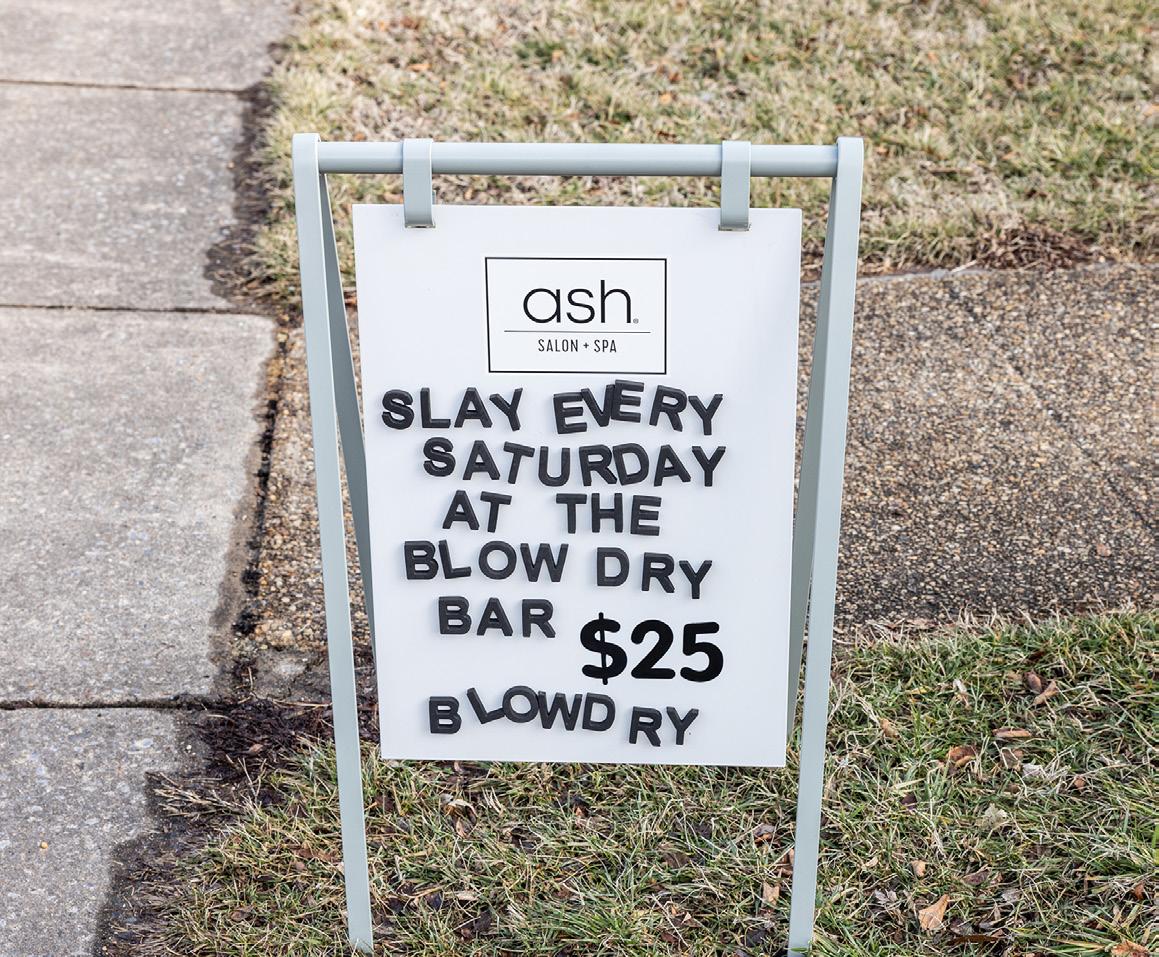
Top: Gray works with a client to get the perfect cut. Middle: Ashley Gray and her team at their salon in The Plains. Bottom: Words to live by.
22407 Foxhound Lane, Middleburg, VA www.foxcroft.org | admission@foxcroft.org | 540.687.4340 A boarding and day school for girls in grades 9-12 & PG CONTACT OUR ADMISSION TEAM TODAY
Hunt Country Students Present “HEALING THROUGH COLOR” AT AIM
Written by Shayda Windle | Photos by Callie Broaddus
For many, March is synonymous with the arrival of spring, but for young creatives, it marks something even more special: Youth Art Month. This nationwide celebration emphasizes the importance of art in children’s education, and this year’s theme, “Healing Through Color,” resonated deeply with art instructors across Hunt Country.
The Artists in Middleburg (AiM) and Foxcroft School embraced the theme by providing area students with unique opportunities to explore color as a tool for self-expression. Leading the initiative was Julie Fisher, director of Foxcroft’s STEAM Program, who organized a collaborative effort connecting high schoolers with elementary students to create meaningful works of art. Four schools will participate in this year’s exhibit: Banneker Elementary, Claude Thompson Elementa-
ry, Foxcroft School, and Middleburg Community Charter School (MCCS).
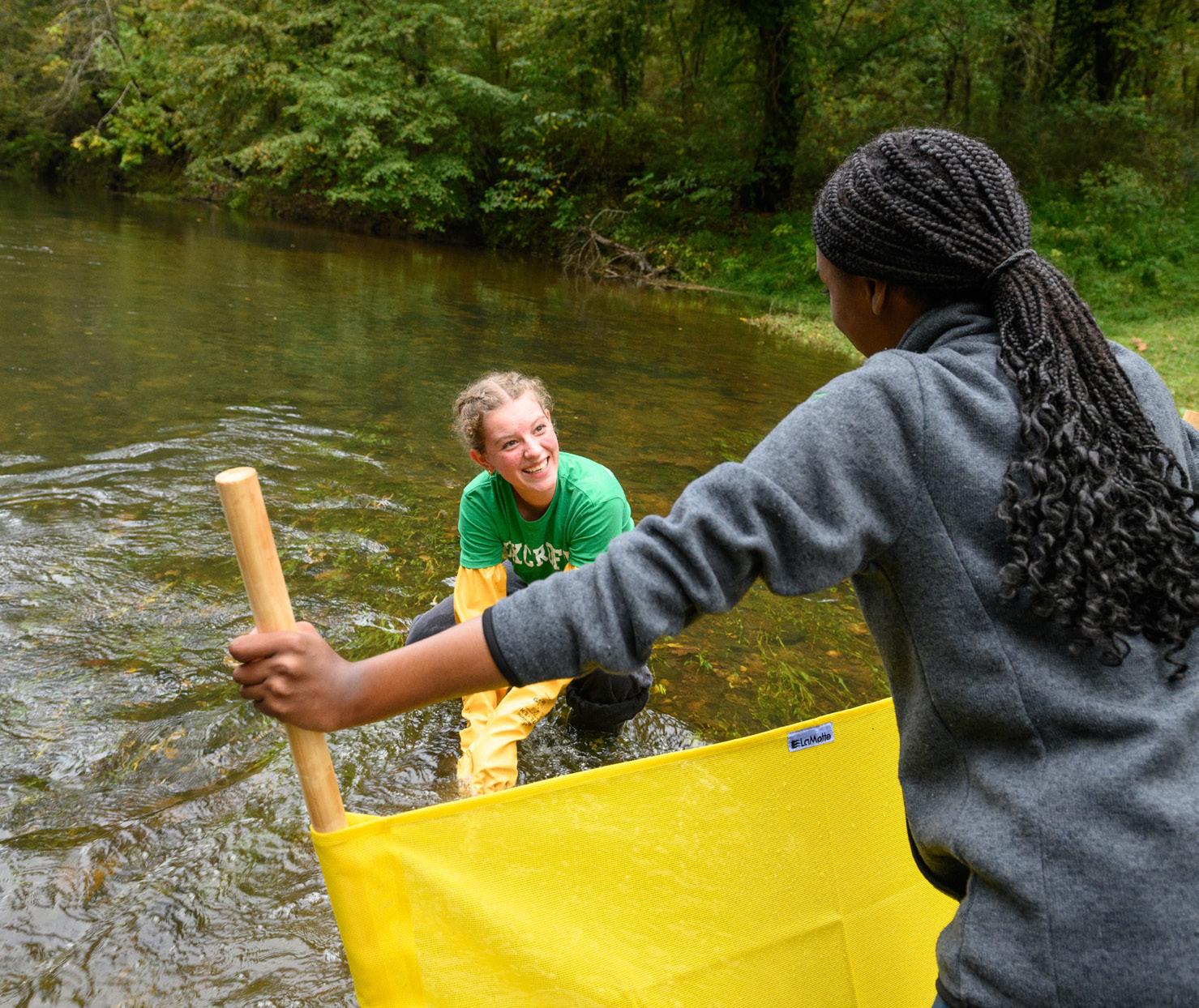
Each school developed unique lesson plans interpreting the “Healing Through Color” prompt selected by the Council for Art Education. Foxcroft photography and biology students visited Oak Spring Garden Foundation in December to explore the intersection of botany and environmental art. They created a colorful spectrum of paints, inks, and dyes from plants harvested on the Biocultural Conservation Farm.
Foxcroft photography students also worked closely with children at MCCS on a nature-inspired mandala project. MCCS art teacher Sheena Custer collaborated with Fisher to instruct a group of 24 second graders on the project. Using radial symmetry and natural patterns captured in photographs taken by the Foxcroft students,
the younger scholars designed intricate compositions with lines, shapes, and colors. The following week, Fisher returned to MCCS to introduce the class to cyanotype printing, a sun-powered photography technique. Equipped with her own portable darkroom, she guided the young artists as they arranged patterns, exposed their designs to sunlight, and developed striking blue-and-white prints.
The experience at MCCS left a lasting impression. “It felt good to learn new things,” one student shared. Another added, “I liked that we got to choose our design and go into the darkroom.” Perhaps the best feedback of all? “Everyone had fun! I don’t think I saw a single frown.”
Banneker Elementary School also participated in the program, with art teacher Marlena
Color | Page 11
Left: Charlotte holds up her cyanotype. Middle: Ezra, Leighton, and Declan with elements of their birds. Right: Brittany with a completed project.
Beach at the helm. She agrees the theme is fitting because “social emotional health [is] front and center in education right now,” she shares. Banneker has participated in AiM shows for the past four years, with students from Foxcroft helping younger artists with their projects. Beach recalls, “While discussing the theme and ideas with Julie, I liked the idea of … combining the theme with the natural world. We felt that ‘Healing Through Color’ would only amplify its potential for students. It’s a lively art-making exchange when the older students work with the younger students. Our kids are surely inspired by the Foxcroft artists.”
As they worked on the project, classes at Banneker discussed how artists often express their emotions in their art, and “the fleeting nature of our emotions,” as Beach explains, which, whether positive or negative, tend to come and go quickly. Second graders painted cardboard birds, choosing an emotion and the color often associated with it from a chart that was provided. Next, using line and color, they added more expression and emotion to their bird. Fifth graders sketched feathers using colored pencils and worked on blending and creating textures, while fourth graders drew Virginia birds looking at field markings to help identify them. All second-grade work and a selection of pieces from fourth and fifth graders will be on display at AiM. Of the crossschool collaboration, one Foxcroft pupil shared, “Working with the kids was super fun. I enjoyed watching their creativity and artistic visions come to life. I feel like I was able to help more because of the project I had just done [in my Scientific Illustration class]. I loved working with the kids and would definitely do it again.”
Custer shares that the students love making connections between art and other subjects. “When students integrate their knowledge across disciplines, their understanding deepens, making the artistic process even more meaningful,” she says. “The theme of our show, ‘Healing Through Color,’ is especially powerful because art is not just about creativity; it’s a way to express emotions and process experiences. Teaching young
children how to use art as a tool for emotional expression is incredibly rewarding.”
“Healing Through Color” will be on display at AiM from February 28 through March 18, with a reception on the opening night from 4 to 6 p.m. featuring a special performance from the Foxcroft Treble Club. The work is not for sale, but AiM does accept donations, all of which go
back to its mission championing “creativity in the visual arts for people of all ages and abilities in our community, especially the youth, through educational programs and exhibitions.” The Artists in Middleburg is a 501(c)(3) nonprofit organization located at 102 W. Washington Street in Middleburg. For more information, visit theartistsinmiddleburg.org ML
Color
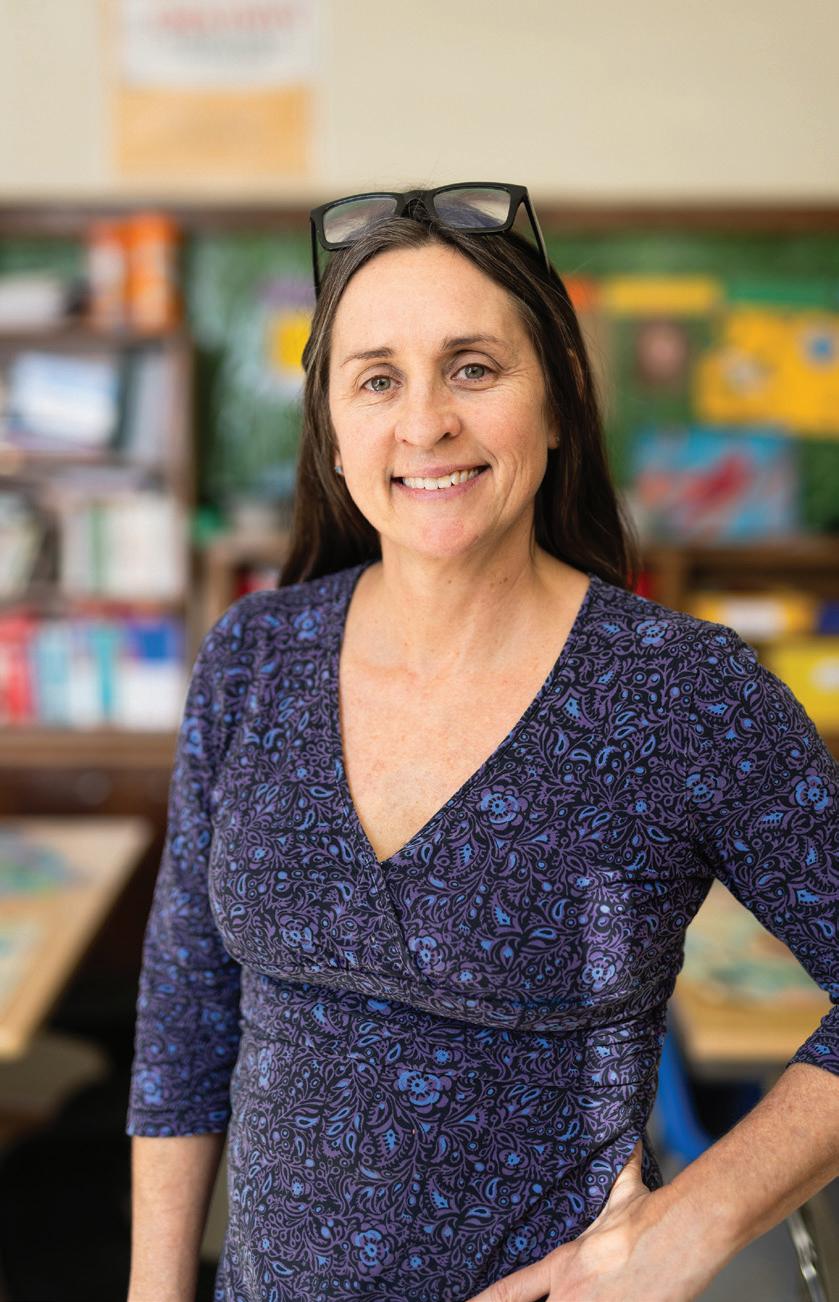
Top left: Sheena Custer. Top right: Marlena Beach. Bottom: An encouraging sign hangs in Custer’s art barn.
The March to
Marshall Guide
Wonder Learning & Discovery in Leesburg: A Haven for Joyful Play
Written by Lia Hobel | Photos by Gracie Savage
In the historic heart of Leesburg, a unique and vibrant space has emerged, capturing the essence of childhood curiosity and the joy of learning. Wonder Learning & Discovery, owned by Ashley Brush and Reagan Shaffer, is a
mom-owned venture that offers a curated educational experience for children 6 and under.
Brush and Shaffer first met in the parking lot of a daycare where their daughters were classmates. Both women had full-time jobs — Brush in government contracting and Shaffer in consulting. Their casual conversations about career aspirations over coffee sparked the idea for Wonder. Brush had her eye
dinary play center. “It’s about creating an experience that’s unique and exciting every time you walk through the door,” Brush explains. Shaffer credits their children’s Montessori upbringing for the design concept. “We saw how much val-
vested in an advisory board to ensure that every aspect of the experience is carefully considered.
“Ashley and I know our strengths and know where we want to lean on other people,” Shaffer shares. Their advisory board offers expertise in
“It’s about creating an experience that’s unique and exciting every time you walk through the door.” – Brush
on commercial real estate in Leesburg, and as Shaffer recalls, “The idea just didn’t stop” until the business launched.
With a name like “Wonder,” one can presume this isn’t your cookie-cutter play area. In fact, the owners strive to be the opposite of an or-
enjoy an afternoon at Wonder.
ue came from that. We wanted to find something that gives us [parents] intentional, mindful quality time with our kiddos.”
Since opening in October 2024, Wonder has attracted repeat customers by frequently switching up the play stations. The owners have also in-
Montessori, occupational therapy, sensory development, and early education.
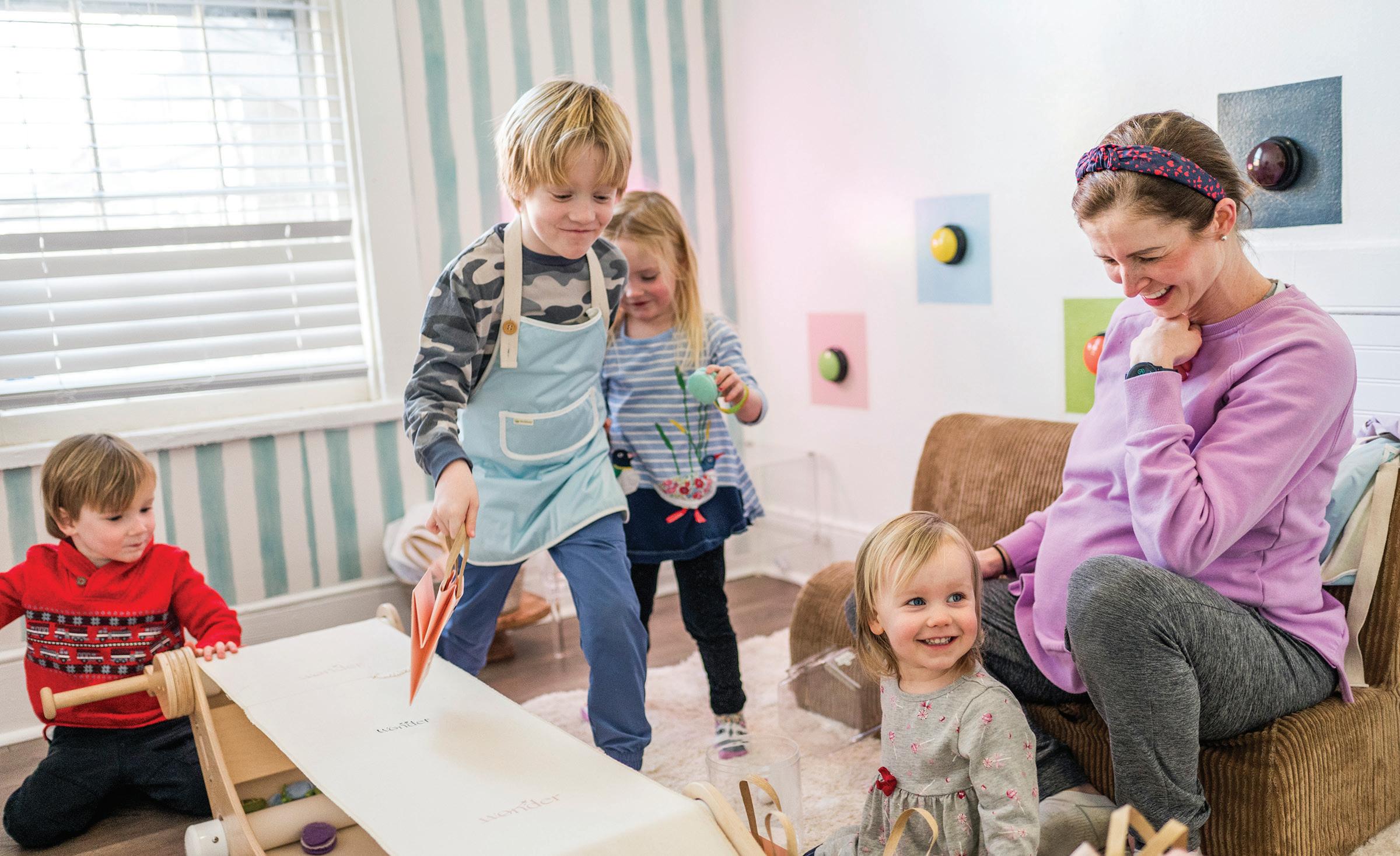
The facility itself is a historic building located on 16 W. Market Street in Leesburg. Each of its three floors offers a unique and engaging environment. Montessori-style toys and educational tools are tactfully arranged at stations and are designed to be both fun and high-quality. There are also themes to play
spaces, such as a candy shop with a conveyor belt inspired by the classic “I Love Lucy” episode.
“We’ve created an environment where the aesthetic is inviting but not overstimulating,” Brush says. “We brought in color, but at the same time,
Wonder | Page 15
Skye, Hazel, Brooks, and Finn
“We really pride ourselves in being able to support moms. We have a couple of moms with little ones who have found ways to make a career and be independent outside of the home.” – Brush
Wonder | From page 14
it’s not like the chaotic colors that you’ll see at a lot of play places. Everything is designed intentionally to be a calm, open-ended, and inviting experience.”
Wonder’s outdoor space is equally impressive, offering a safe and creative space for children to explore. The area includes age-appropriate swings, diggers, and plans for sensory activities like a water table. The outdoor space is designed to be green and organic, emphasizing the importance of outdoor play for children’s development. “Kids need to be outside, and we see that children who get to be outside at least
one to three hours a day benefit in so many ways, including developmental progression and problem-solving,” Brush explains.
In addition to their advisory board, the owners also rave about their team, who make the business thrive. “We have some former educators or active teachers in the school district,” Brush says. “We really pride ourselves in being able to support moms. We have a couple of moms with little ones who have found ways to make a career and be independent outside of the home.” Another key factor is Wonder’s collaboration with local high schools’ DECA programs, providing students with valuable business and marketing
experience. This commitment to community involvement is a cornerstone of Wonder’s mission.
Pop-up classes for children are part of the model too. The classes include Zumbini, a 45-minute music and movement class for babies to 4-year-olds. There are also ongoing Spanish language and music events. Though children are Wonder’s primary focus, parents and caregivers are also top of mind. Mom’s Night Out
Wonder | Page 16
Left: Lilly, mom to Hazel, Brooks, and Finn, and aunt to Skye, gets in on the fun, too. Right: Reagan Shaffer and Ashley Brush.
Experiences Rich in Flavor
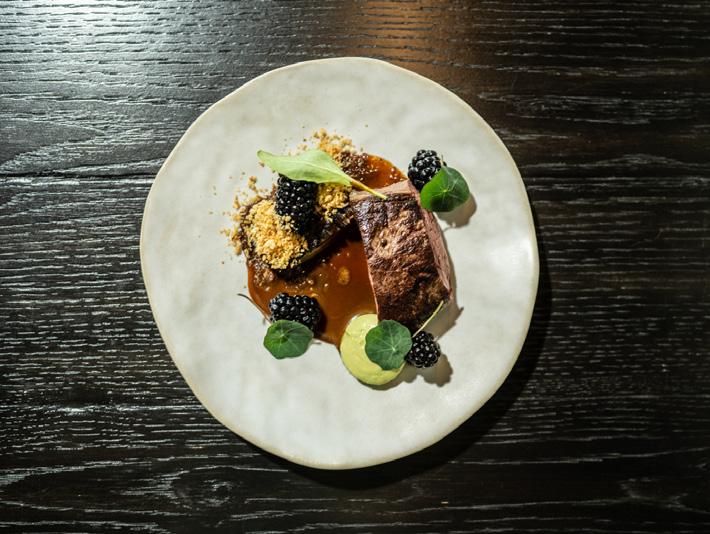
Indulge in vibrant and flavorful creations meticulously prepared with the finest locally sourced ingredients from Virginia’s Piedmont region.
As Virginia’s newest Forbes Five-Star restaurant, every exquisite bite sets a new standard for culinary excellence.
Wonder | From page 15
events are periodically held, such as a recent Galentine’s evening. On the weekends, local coffee from Shake & Bops Botanical Cafe is complimentary for parents, an example of Wonder’s dedication to supporting local businesses as well. They’ve also teamed up with Blueberry and Third of Ashburn, a maker of Montessori-inspired children’s play furniture and toys. “It’s really important to us to make sure that we are embedding in the community in an organic way,” Brush shares.
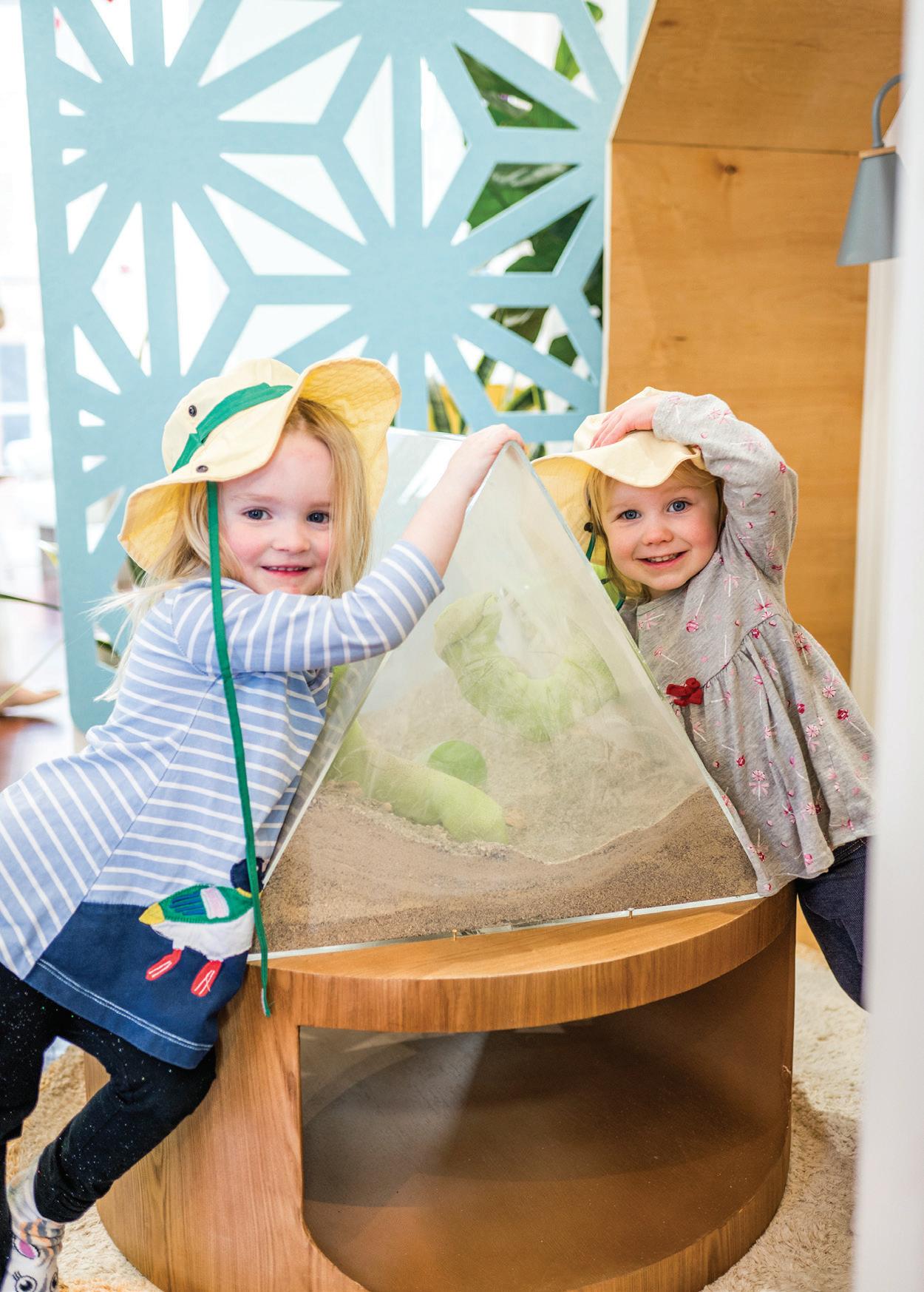
Hazel and Skye try some gardening.
Wonder offers various membership options, promotions, and special events. Memberships and multi-admission passes provide additional value for frequent visitors. The facility also hosts birthday parties, playdates, and corporate events, fostering the sense of community and connection at the core of Wonder’s mission. ML
Wonder Learning & Discovery 16 W. Market Street
Leesburg, VA 20176
wonderleesburg.com
Celebrating Our 50th Year!
CONSERVATION
www.greersconservation.com
November 8 & 9, 2014 10am-4pm
37627 Allder School Road Purcellville, VA 20132 540.338.6607 greersant@gmail.com
37627 Allder School Road Purcellville, VA 20132 540.338.6607 greersant@gmail.com
www.greersconservation.com
www.greersconservation.com
37627 Allder School Road Purcellville, VA 20132 540.338.6607 greersant@gmail.com
Open Monday - Friday 9-4 & Weekends by Appointment Museum Level Conservation and Custom Furniture for 50 years
Open Monday - Friday 9-4 & Weekends by Appointment Museum Level Conservation and Custom Furniture for 44 years
37627 Allder School Road Purcellville, VA 20132
540.338.6607
greersant@aol.com
Regular hours are by appointment only
Become a CSLI Fellow
n The C.S. Lewis Institute Fellows Program offers a tuition-free year of intensive training that leads to significant life-change. n The program prepares each Fellow to live a powerful transformed life in their church, their community and in their workplace. n It involves Bible stud y, classic readings, lectures, group discussion, personal mentoring and accountability–all in the context of a small group of likeminded believers. n The program is designed to be achievable even for busy professionals with families. n Join the Fellows Program and learn to live as a fully devoted disciple of Jesus Christ and make an impact for Him in the world.
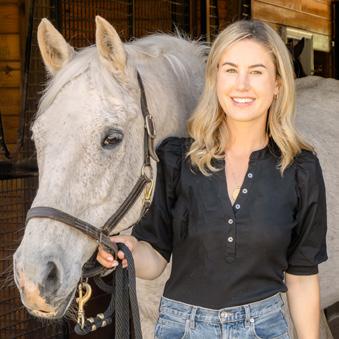
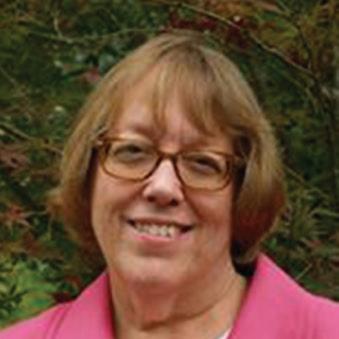
Maria Eldredge and Anne McIntosh
Maria Eldredge
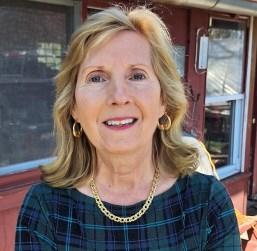
Licensed Real Estate Professional 540-454-3829
Maria became a real estate agent in 2011 and has spent her entire adult life involved in the real estate industry. Maria’s husband grew up in the Middleburg area and they have lived in Fauquier and Loudoun county since 1990. Maria is actively involved in the local community and has a passion for Historic preservation, home renovation, gardening, tennis and painting.
The McIntosh and Eldredge Group
Anne McIntosh
Licensed Real Estate Professional 703-509-4499
Anne has been practicing real estate since 2003. With over twenty years of experience, she brings a wealth of knowledge about the local real estate market. An avid horsewoman Anne has been a Master of Blue Ridge Hunt for 18 years. She is actively involved in the local community with a special interest in farming, conservation, historic preservation, foxhunting, and the rural way of life.
Formed in 2015 after being friends for over 40 years. Their mission then, and still is today, to make your real estate journey as seamless as possible–offering expert knowledge of current industry standards and the local market. Specializing in the towns, villages and communities of Western Loudoun, Northern Fauquier, Clarke, Frederick and Warren counties. Anne and Maria combine thorough and accurate information with experience and understanding so you can make your move with confidence.
INSIDE OAK HILL
John Marshall’s Ancestral Home
Written
Arobed statue sits stoically in Warrenton’s public square.
This figure is John Marshall, a Fauquier County native who would become the famed military man, lawyer, statesman, and one of our nation’s founding fathers.
In 1799, Marshall was elected to the U.S. House of Representatives as con-
gressman for Virginia’s 13th district. In 1800, he served as secretary of state under President John Adams, and the following year, Adams appointed him to the Supreme Court. This third appointment made him one of the few Americans to have held a constitutional office in each of the three federal branches of government.
In 1801, Marshall was appointed as America’s fourth chief justice of the Supreme Court. Widely regarded as one of the most influential justices ever, earning him the moniker “The Great Chief Justice,” he served in that role for 34 years until his death in 1835,
by Heidi Baumstark | Photos by Michael Butcher
Oak Hill | Page 21
holding the record for the longest-serving chief justice.
MARSHALL’S ROOTS: FROM GERMANTOWN TO OAK HILL
John Marshall’s father, Thomas Marshall, settled at Germantown, Virginia — present-day Midland — on a tract of land granted in 1720 to a group of German miners who worked in Orange County’s iron mines. In 1754, Thomas married Mary Randolph Keith, who brought into the Marshall circle an assortment of brilliant minds, including Thomas Jefferson, Edmund Randolph, John Randolph of Roanoke, Richard Henry Lee, “Lighthorse Harry” Lee, and his son, Robert Edward Lee. A year later, on September 24, 1755, John Marshall was born, the first of 15 children. The family resided in a small log cabin. That cabin no longer stands, but the John Marshall Birthplace Park on Germantown Road includes a memorial marker indicating where it once stood.
Thomas served as George Washington’s deputy surveyor in Culpeper County. He obtained his license from the College of William & Mary in 1759, becoming Fauquier’s first county surveyor. Thomas soon joined Washington in helping the prominent Fairfax family collect rent and survey their estate, which his son, John, would go on to purchase after the Revolutionary War.
In 1765, when John was 9, his father moved the growing family 32 miles northwest, from Germantown to Markham. The wooden-frame house Thomas built was called “The Hollow” due to its location surrounded by mountains. The Hollow is now part of the John Marshall’s Leeds Manor Rural Historic District, which was listed in 2004 on the National Register of Historic Places.
John received his early education at home from his parents, his father’s library, and a tutor. His tutor, Rev. James Thomson, was from Scotland but “lived at first in the family of Thomas Marshall at ‘The Hollow’ near the present village of Markham, where he taught the elder children,” according to “Fauquier During the Proprietorship.” John would gain additional siblings at The Hollow before moving to Oak Hill, located five miles west of modern-day Marshall.
OAK HILL
According to “Maps and Notes of Upper Fauquier County, Virginia,” Thomas Marshall purchased this 1,824-acre property from Thomas Turner in 1772. In 1773, he built the first, smaller structure at Oak Hill.
John lived at Oak Hill until 1775, when, at age 20, he joined the Continental Army as one of the Culpeper Minutemen. During the winter of 1777-78, he was stationed at Valley Forge.
Following the war, John returned to the College of William & Mary to study law from May to July 1780 before being admitted to the Virginia Bar. He practiced law in Warrenton and served in the Virginia General Assembly from Fauquier. In 1781 he retired from the Continental Army, and in 1782, was elected to the Virginia House of Delegates for the first time.
On January 3, 1783, he married Mary Willis “Polly” Ambler. The couple moved to Richmond and had 10 children together, six of whom survived to adulthood. Though John lived mostly in his 1790-built home in Richmond after his marriage to Polly, he still “maintained an active interest in his county home,” at Oak Hill, according to a National Register of Historic Places inventory-nomination form. In 1802, he would take ownership of Oak Hill following his father’s death.
In 1818, John built a second house on the Oak Hill property for his eldest son, Thomas C. Marshall. According to historians T. Triplett Russell and John K. Gott, the property is a rare example of a Fauquier County farmhouse of the Colonial period, left virtually unaltered. The second house was constructed in the sophisticated temple form of the Federal period and is much larger. Both buildings retain much of their original, finely detailed woodwork.
Enslaved labor maintained Oak Hill’s operations as a working farm. In addition to the white members of the household, 48 enslaved people lived and worked at Oak Hill, according to the 1820 federal census.
John Marshall died on July 6, 1835, four years after his wife’s passing and just days after the death of his son, who was killed in an accident while traveling to be at his side. Thomas C. Mar-
Oak Hill | From page 20
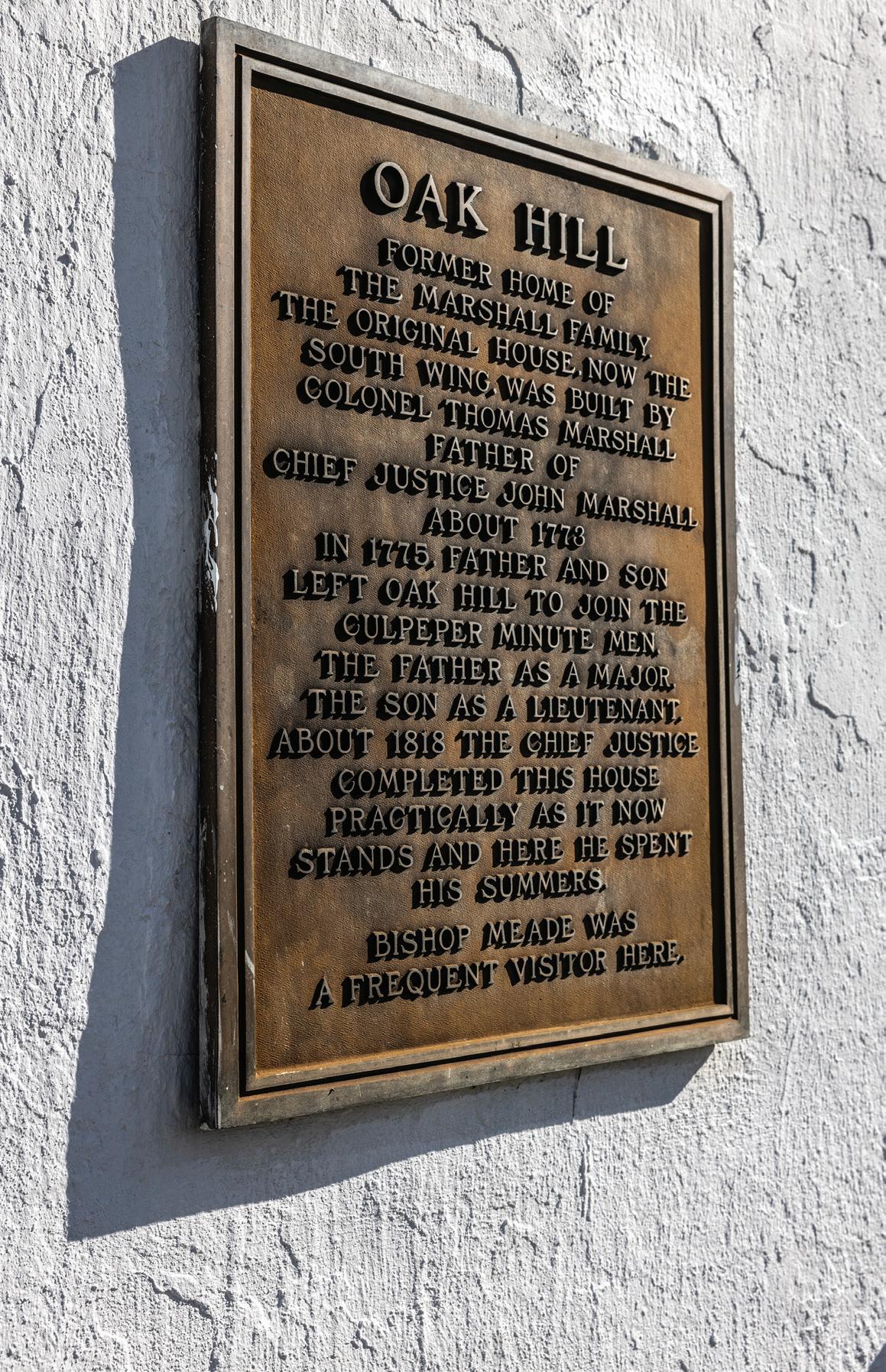
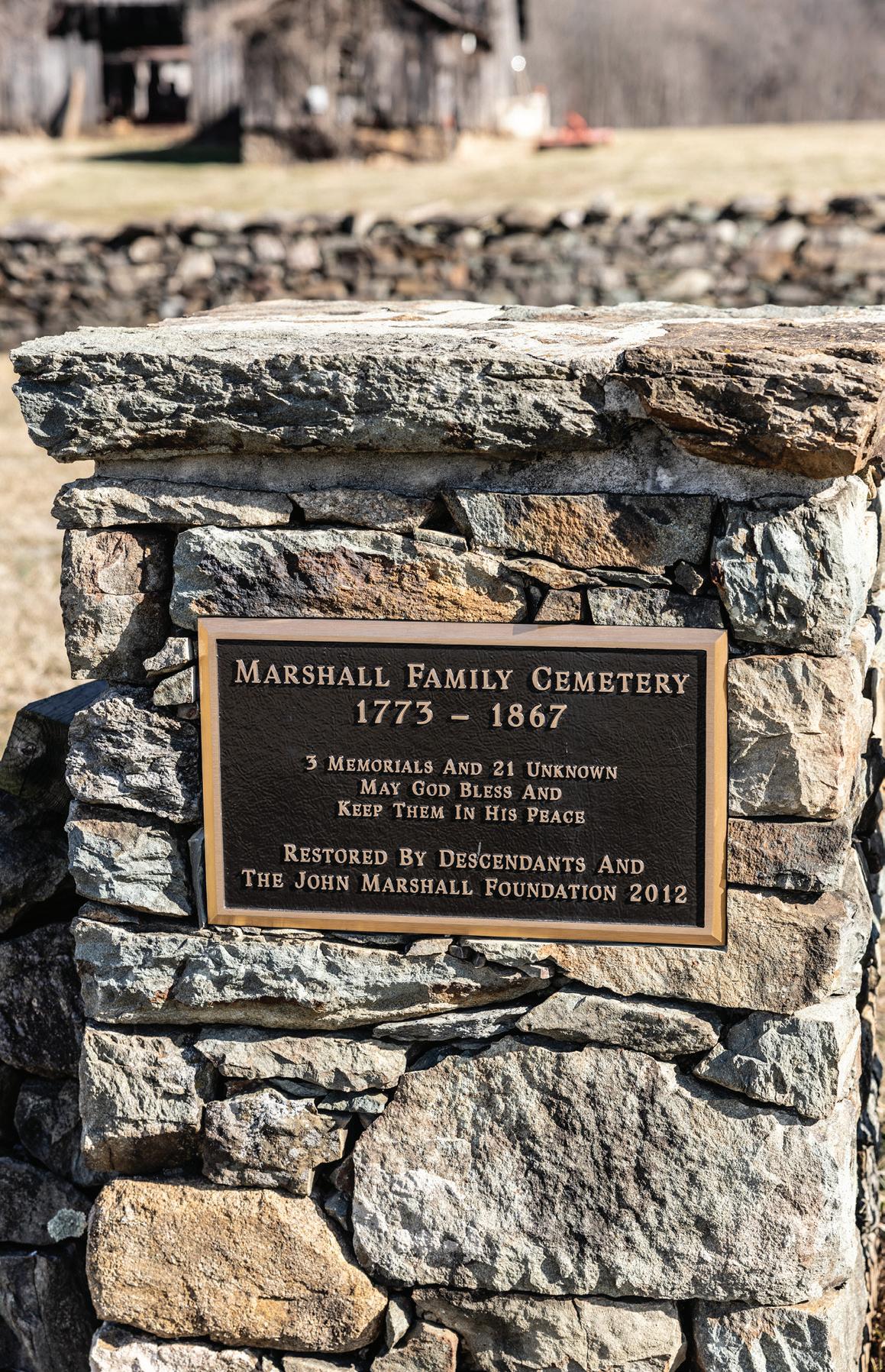
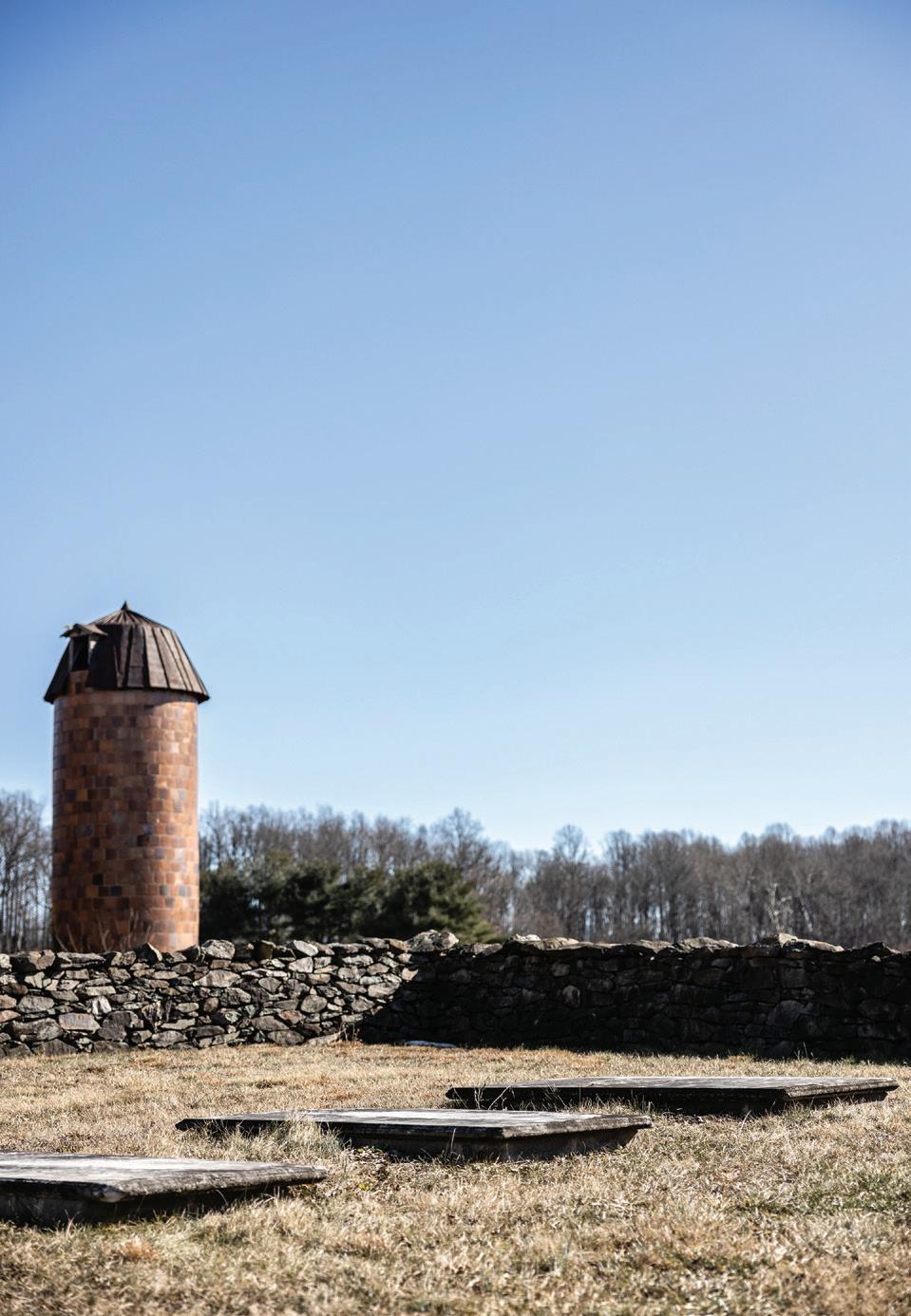
Left page: Oak Hill. Top right: The historic property includes informative plaques scattered throughout. Bottom right: The Marshall family cemetery on-site.
Oak Hill | Page 22
shall is buried in the Marshall Cemetery behind the house at Oak Hill, while John is buried next to Polly in Richmond’s Shockoe Hill Cemetery.
John’s most important legacy was in his role as chief justice, spending over three decades shaping the power of the judiciary branch. Many of the best-known and far-reaching cases in American history took place in his court: Marbury v. Madison (1803) established the precedent of judicial review, while McCulloch v. Maryland (1819) introduced the concept of Congress holding implied powers not expressly stated in the Constitution. These decisions continue to influence Supreme Court rulings to this day, and John would be remembered as the greatest interpreter of the Constitution of the United States. John’s judicial duties kept him in Washington only a few
months of the year, and he spent the remaining time in Richmond or at Oak Hill.
OAK HILL AFTER THE MARSHALLS
Oak Hill remained in the Marshall family until the 1860s. In the late 19th century, F.W. Maddux owned the property, and in 1914, it was sold to attorney Alvin Baird. Baird made several structural changes, like adding columns to the front of the 1818 structure. Historic black-and-white photos of fox hunts on the property show Oak Hill with front columns, which Baird removed when he discovered the original house did not have any.
Foxhunting was popular at Oak Hill. A noteworthy member of the nearby Cobbler Hunt was General George S. Patton, who became Master of Fox Hounds in 1932 while stationed at Fort Myer in Washington, D.C. In 1965, Morris Marks acquired the property and maintained it as a work-
ing farm. Oak Hill was added to the Virginia and National Register of Historic Places in 1973, and is now a Journey Through Hallowed Ground historic site.
Today, Chuck Chamberlain owns Oak Hill, which he purchased in 1998. “Oak Hill is now in transition,” he shares. “The historic structures have been stabilized and a nonprofit has been created.” The American Heritage Foundation’s American Law Memorial at Oak Hill was established to promote an awareness of the past, present, and future role of law in defining and defending the United States.
The property had been split up and sold as single parcels when Chamberlain was in the market. “I wanted the middle section, the historic section, which is in between two vineyards,” he recalls. To the west of Oak Hill is Blue Valley Vineyard and Winery, and to its east is Barrel Oak Winery & Brewery. The original owner of Barrel Oak planted rows of Norton grapes, a varietal native to Virginia, on Oak Hill’s frontal acreage, which continue to grow today.
Chamberlain hopes the historic property will inspire the education of future generations. “Things from the past help ground us and envision what was there before, what people went through, the struggles, the hardships,” he said. He imagines most of this history being provided virtually through a web presence, with possible limited tours by appointment in the future.
When asked why he bought it, Chamberlain admits, “Probably temporary insanity. I couldn’t believe something like this was for sale.”
He finishes, “We have memorials to wars and historical figures, and I thought, what memorial is devoted to law? I was thinking about what makes a good judge. And I thought of Marshall.”
ML
Oak Hill is located at 9400 Justice Lane in Delaplane. For more information on the American Law Memorial at Oak Hill, visit 1773.us.
Oak Hill | From page 21
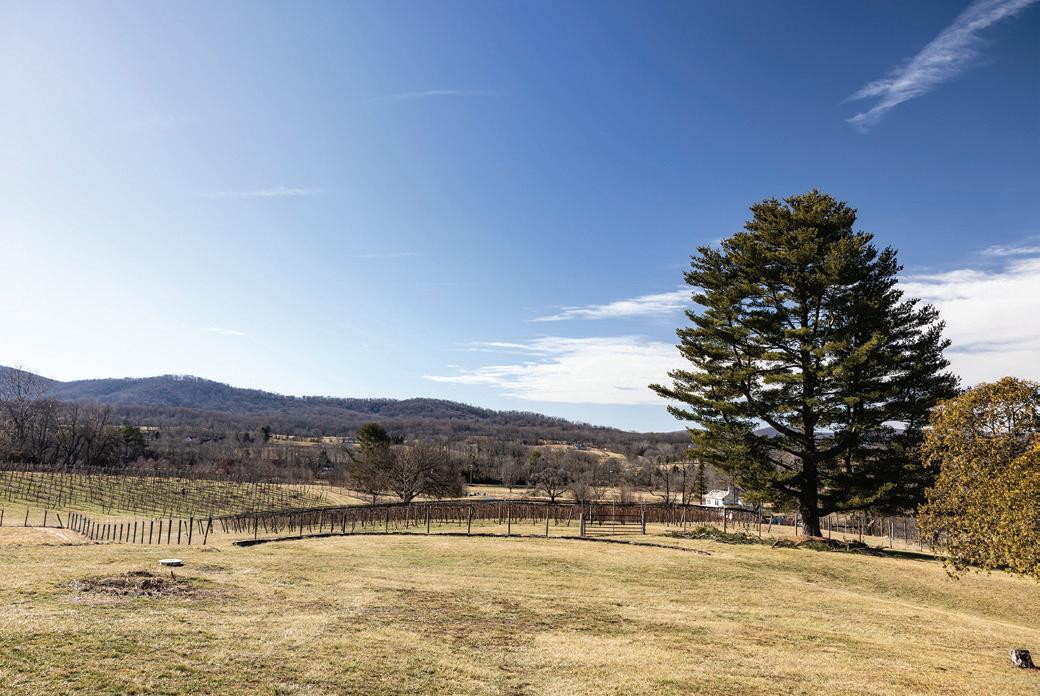
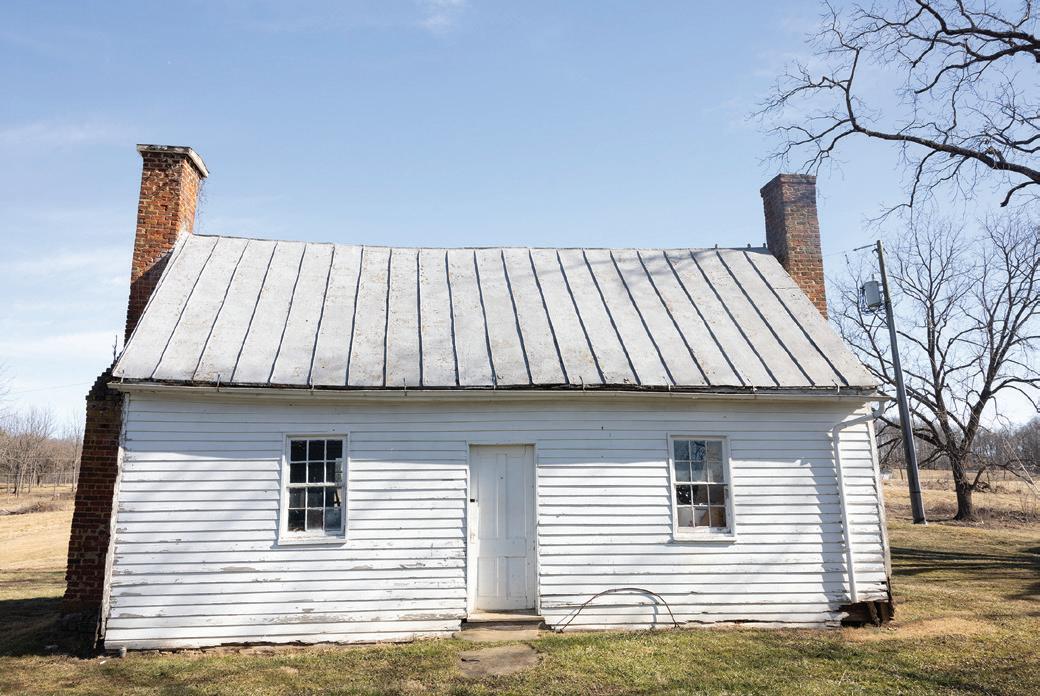
Top left: The view from Oak Hill. Bottom left: One of the smaller structures on the property. Right: Inside the cemetery.
Dukas:
CANA VINEYARDS OPENS BLACK OAK CAFÉ
Written by Diane Helentjaris | Photos by Gracie Savage
Since its completion in 1811, the Little River Turnpike has entertained the eyes of visitors and residents with lovely views of the gentle Piedmont hills, vineyards, an old brick mill, and 18th-century homes. But roadtrippers and locals have stomachs, too, that require attention at times. Luckily, Cana Vineyards, nestled north of the Turnpike between Aldie and Middleburg,
has added a new weekend stop for a sweet or savory bite.
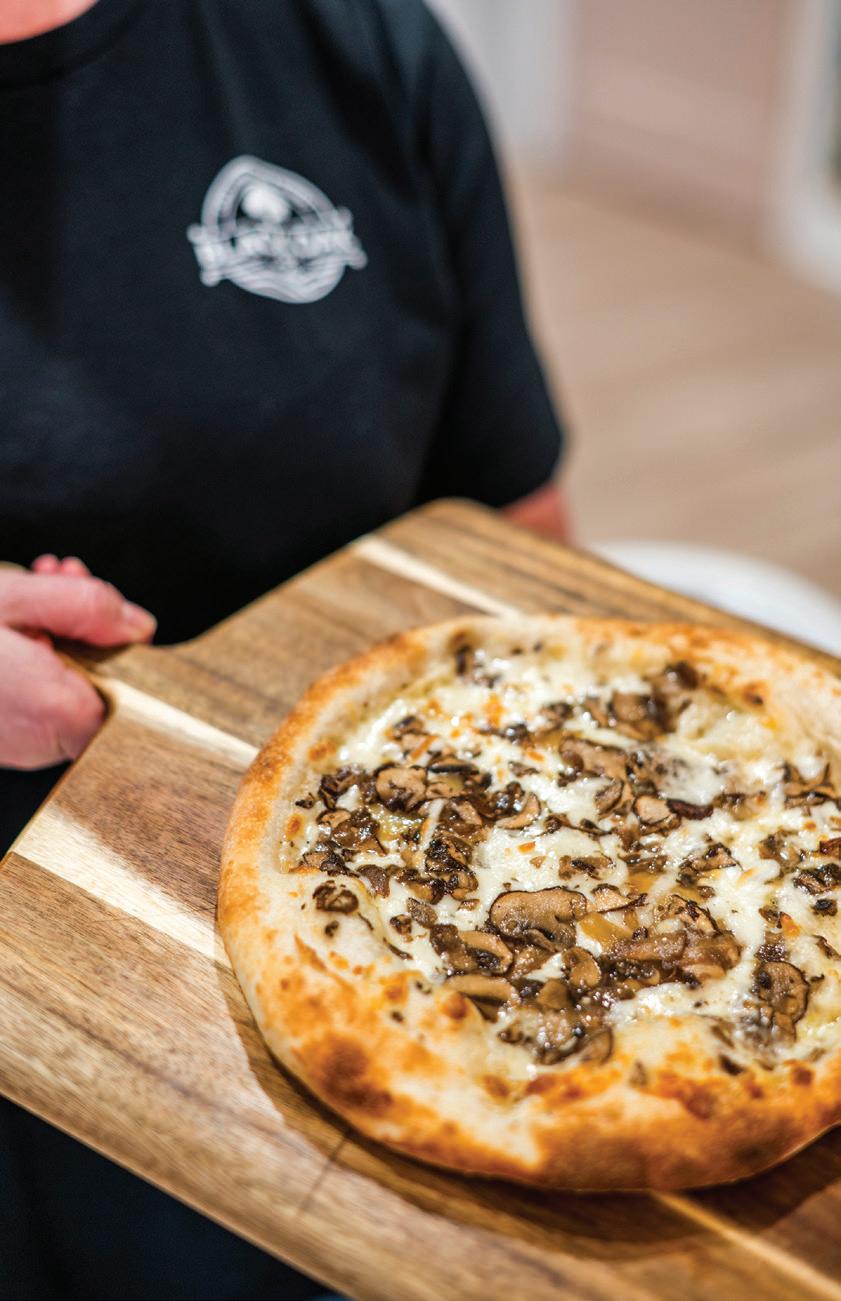
Black Oak Café, opened this January, serves locally-made, New York-style pizza. In addition to the classic three cheese, pepperoni, and Margherita pizzas, the menu includes offerings such as a wild mushroom and onion pizza. Suggested wine pairings are available from the nearby tast-
ing room, and frozen pizzas are available to take and bake at home.
Scrumptious gelatos are served in cups, cones, and sandwiches in eight rotating flavors. Lemon pie gelato is a bestseller, but there are those who swear by mixing the caramel sea salt flavor with dark chocolate.
Wine can be purchased in the tasting room and brought to the café. The café welcomes kids and dogs. Pup cups are also on the menu for furry friends.
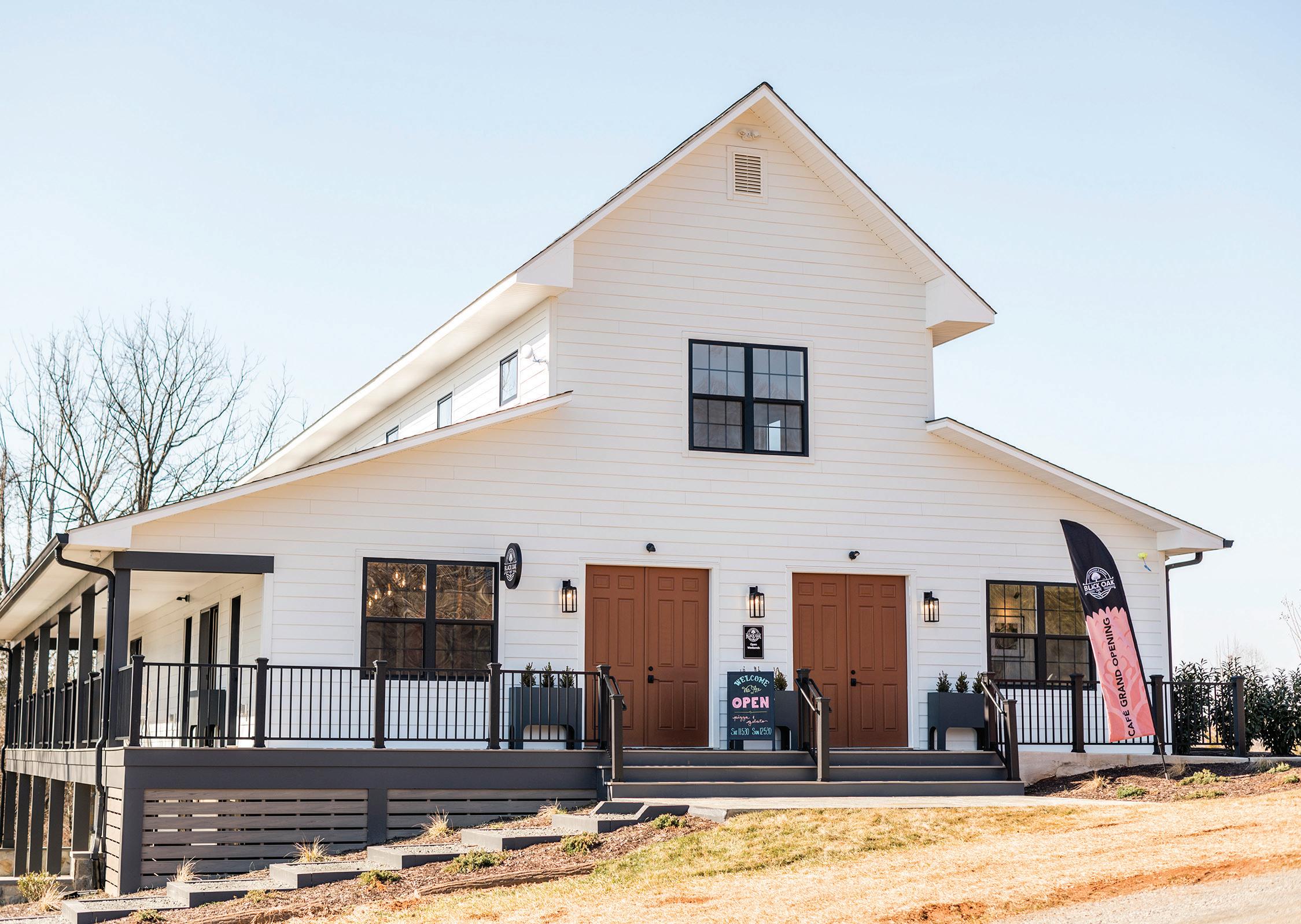
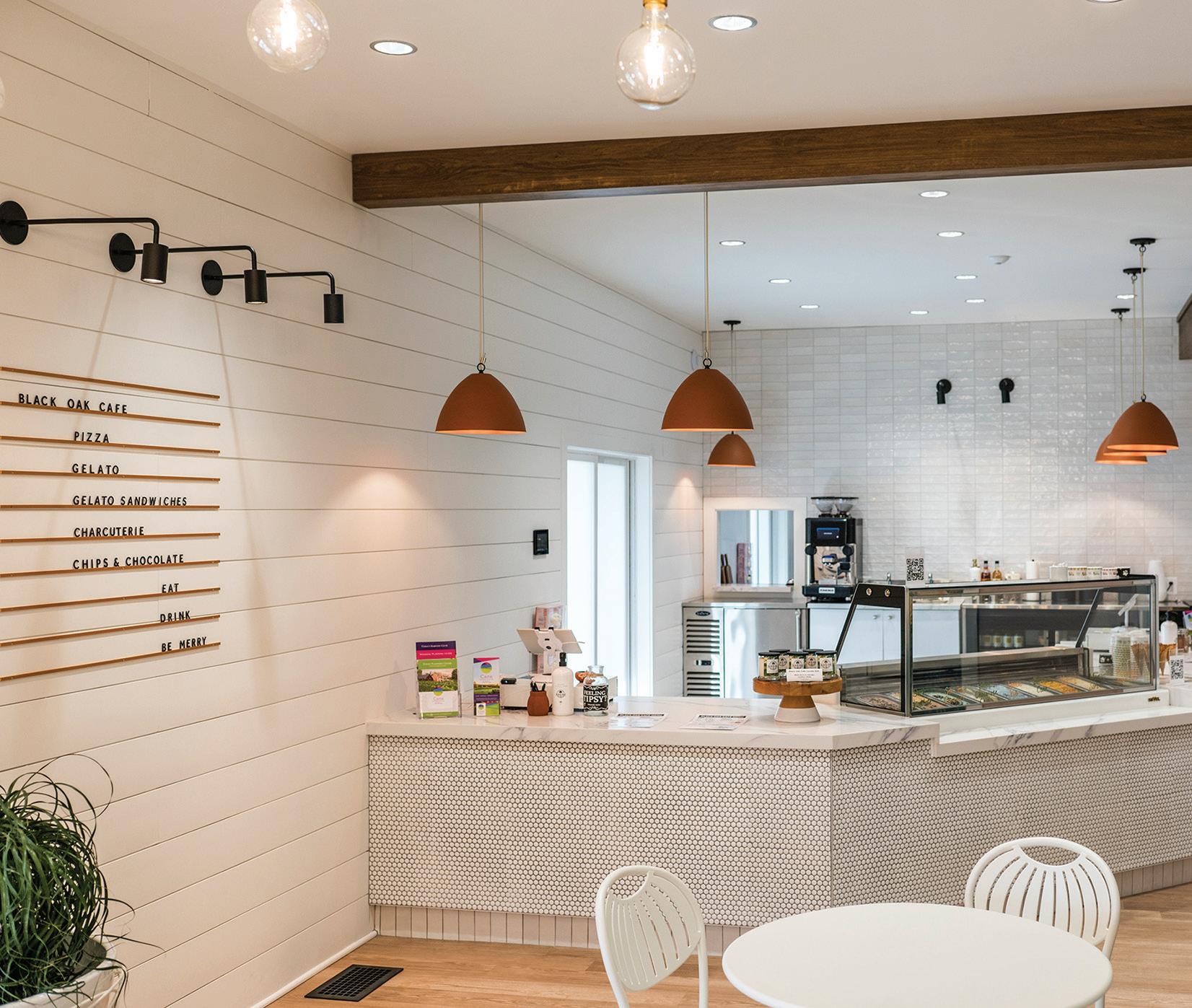
Located in a newly built white barn at the top of the 43-acre property, several meandering pathways connect the café with the vineyard’s tasting room and Sunset Pavilion. The space was created with the help of William Cawood of Cawood Architecture PLLC and Angelee Marques of Nest Interior Design Studio. The décor is fresh and cheery with a large mural brightening one wall.
The café has seating for 24 guests with additional seating on a small balcony. A lower patio, looking toward the vineyard, offers picnic tables and firepits for guests to enjoy. Black Oak Café is open Saturdays from 11 a.m. to 5:30 p.m. and on Sundays from noon to 5:30 p.m.
Cana Vineyards is a farm winery, producing and bottling all their wine on-site. Lisa Petty bought the business in 2018. A graduate of Virginia Tech, her purchase came after a career in government and the hospitality industry.
Petty is one of the increasing number of female small business owners. According to the U.S. Small Business Administration, in 2023, 99.5% of Virginia businesses were small businesses, having less than 500 employees. Of these, 44.3% were owned by women.
Café | Page 25
Black Oak Café.
| From page 24
Lisa Petty takes pride in owning a welcoming, family- and pet-friendly winery that produces high-quality wine. When her great-grandfather Frank Nick owned and farmed a small winery out in the Midwest, women vintners were scarce as hen’s teeth. Women had always been part of winemaking, but their role rarely extended to vineyard ownership or the production of commercial wine.
But things have changed. Over the last 50 years, women’s presence in the world of wine has increased. Petty says, “The women I’ve met and worked with in this industry are full of passion and grit. Women hold many pivotal roles in the wine industry, from managing the vineyard and crafting in the cellar to orchestrating events and public outreach. As a woman small business owner, I appreciate and value each of these talents and am myself responsible for multiple roles at any given time.”
Cana has accrued impressive accolades for excellence under Petty’s leadership. Cana’s wine master, Melanie Natoli, is an accomplished and precedent-setting woman. In 2017, Natoli became the first Virginia winemaker to be named Woman Winemaker of the Year at the Women’s International Wine Competition. In 2022, she became the first woman awarded the Virginia Governor’s Cup in the competition’s 40 years of existence. The award was for Cana’s 2019 Unite Reserve, a signature estate red blend of Merlot, Cabernet Franc, and Petit Verdot. It beat out 615 wines from over 100 Virginia wineries.
“Women have historically been a minority in the winemaking business, but this is changing,” Petty says. “At Cana, we hope to inspire other female leaders in this industry.” March is celebrated around the globe as Women’s History Month. What better way to honor women’s accomplishments than with a glass of award-winning wine, a slice of fresh pizza, and a cup of lemon pie gelato? ML
Oak Café
38600 Little River Turnpike Middleburg, VA 20117 (703) 348-2458
canavineyards.com/cafe
Black
Top: Inside the new space. Bottom left: Mushroom and onion pizza. Bottom right: Birthday cake gelato.
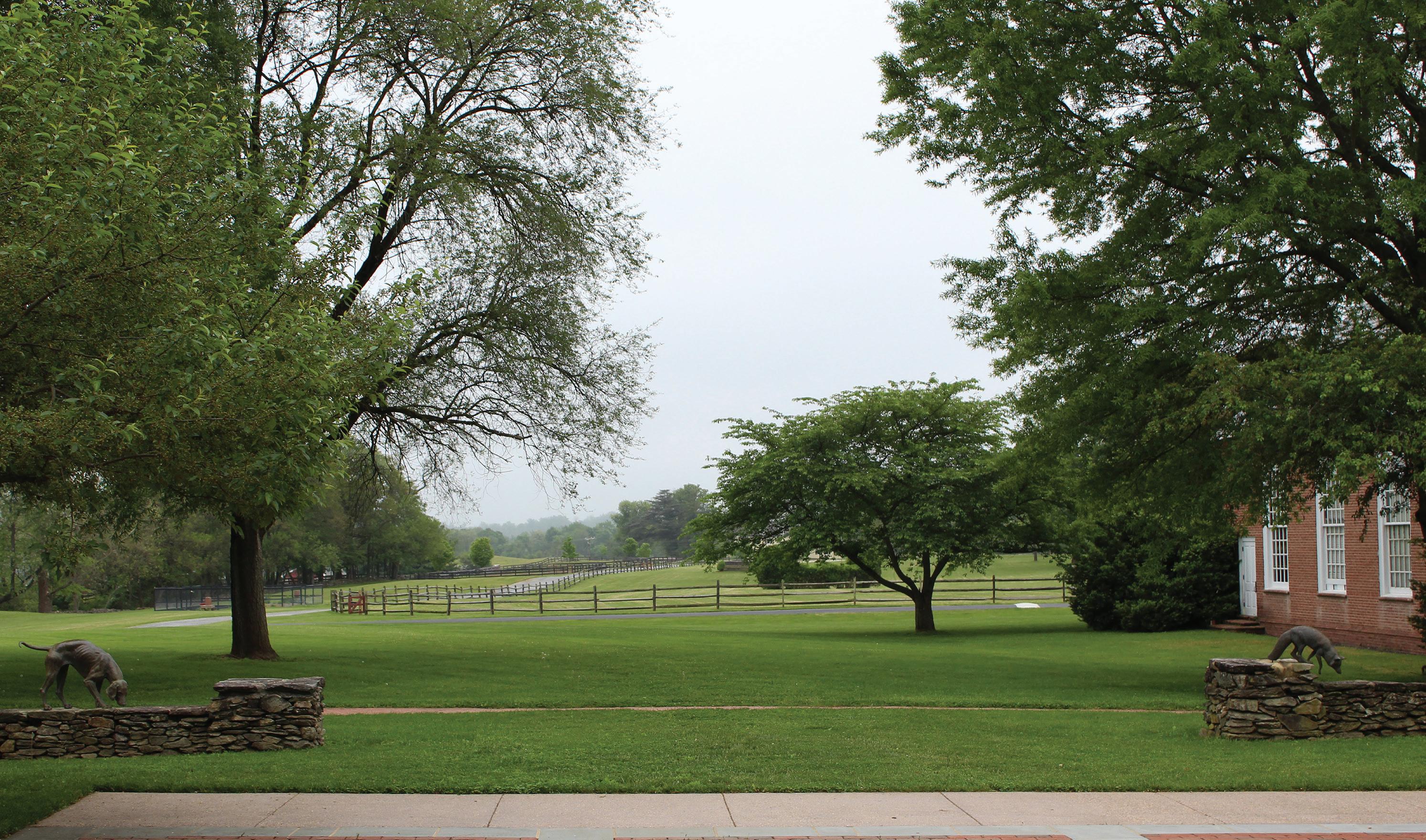
Foxcroft School’s 500 acres are shrouded by tall, sheltering woodland. One place on campus offers a Hunt Country vista so stunning that students, faculty, and visiting parents cannot help but pause and take it in.
The view from the Library Courtyard faces south, framed by a low stone wall that reveals the grand oval of the school’s riding track. A prim, gabled guesthouse, the Spur and Spoon, sits behind it and could stand in for a country house. Behind that, the Bull Run mountains rise in the distance, rugged and verdant.
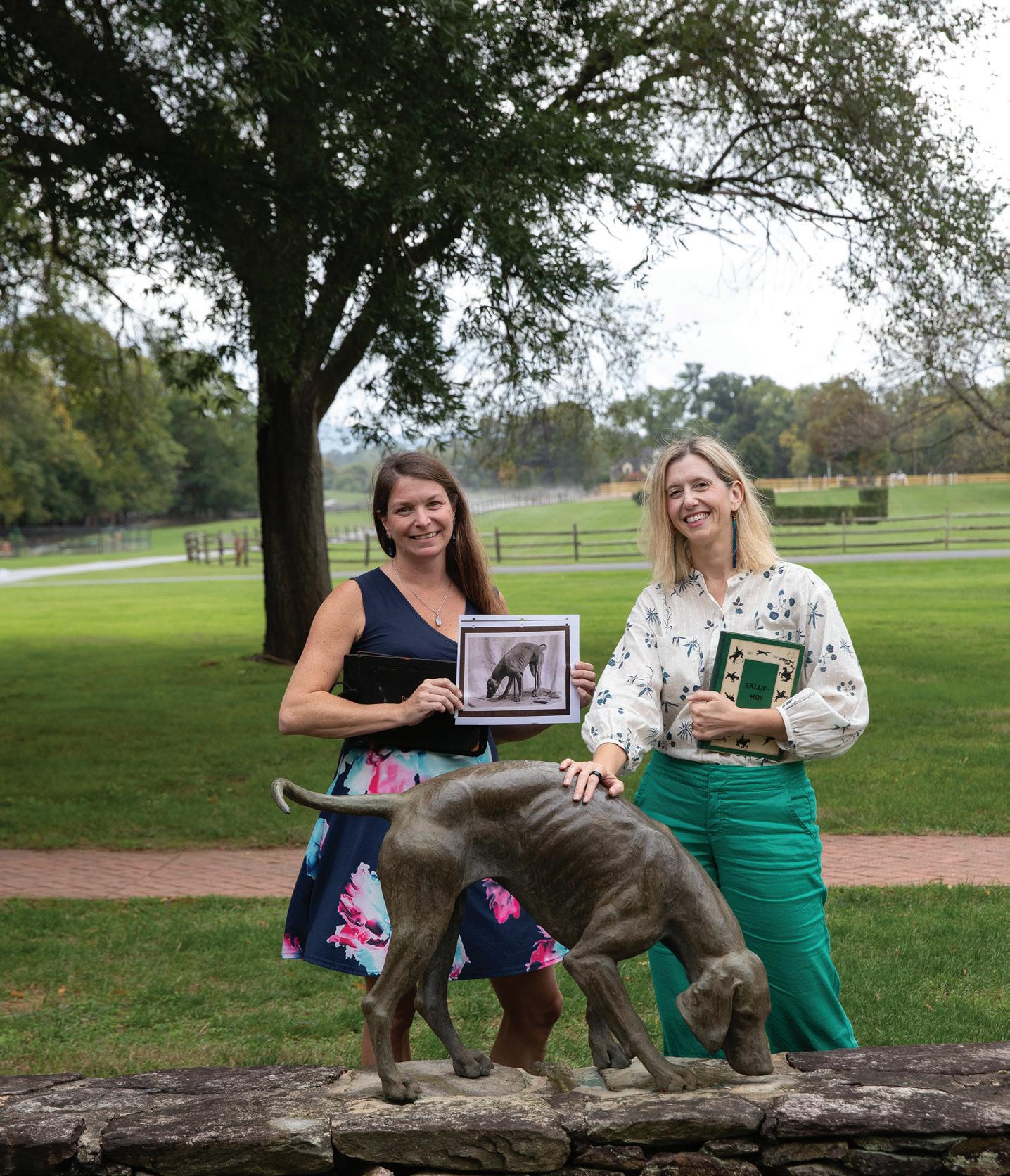
Two waist-high bronzes of a fox and hound flank the courtyard scene. They represent two student teams established by the school’s founder, Charlotte Haxall Noland. On a day known as Choosings, each student joins a team and competes on horseback and in other sporting activ-
The Library Courtyard. Photo courtesy of Foxcroft School.
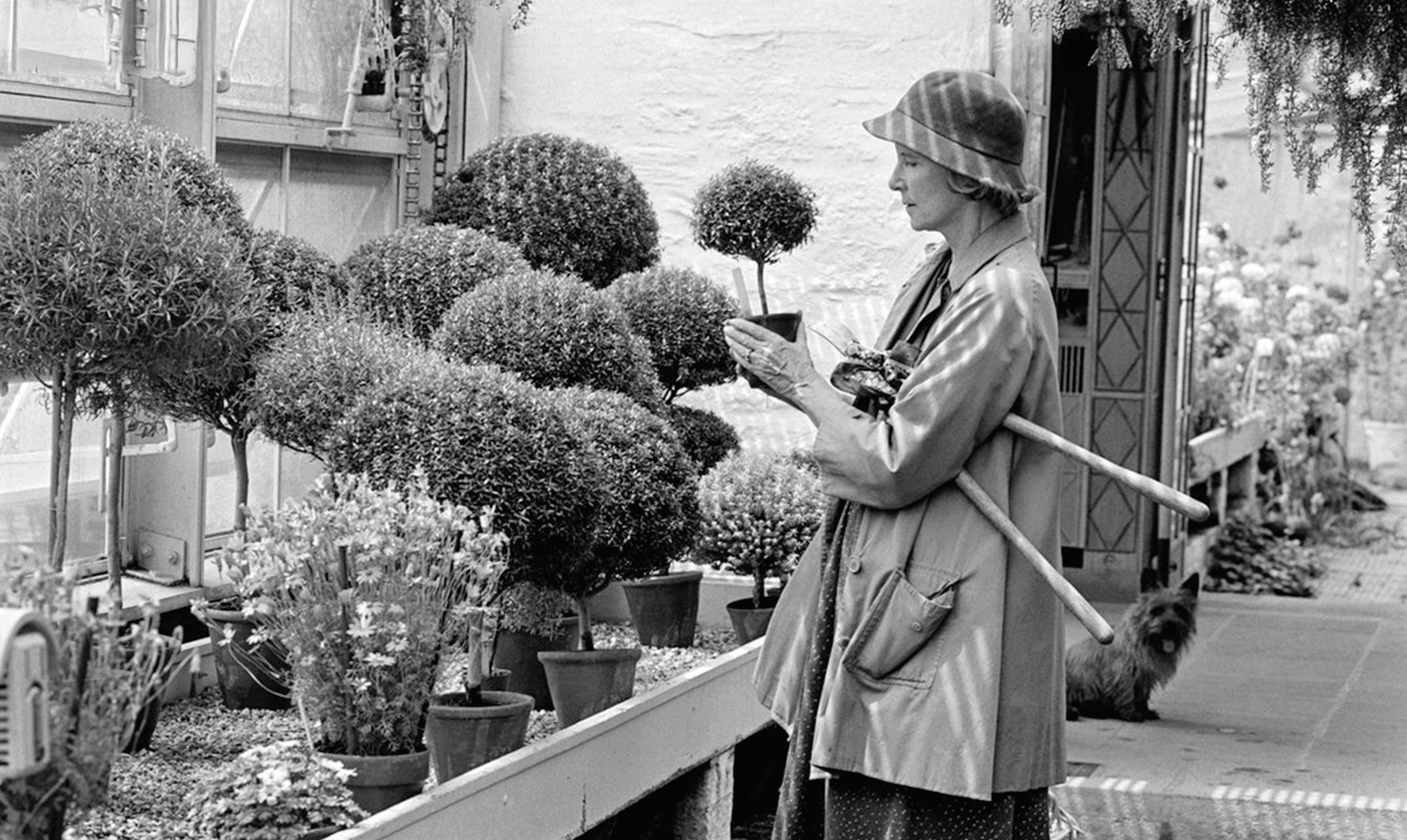
ities as part of a rigorous educational regimen that’s shaped the lives of future politicians, scientists, artists, Olympians, actresses, writers, CEOs, philanthropists, and more during their time at Foxcroft. Among them was the renowned landscape architect Rachel Lambert “Bunny” Mellon, designer of the White House’s original Rose Garden and other notable horticultural installations throughout the world.
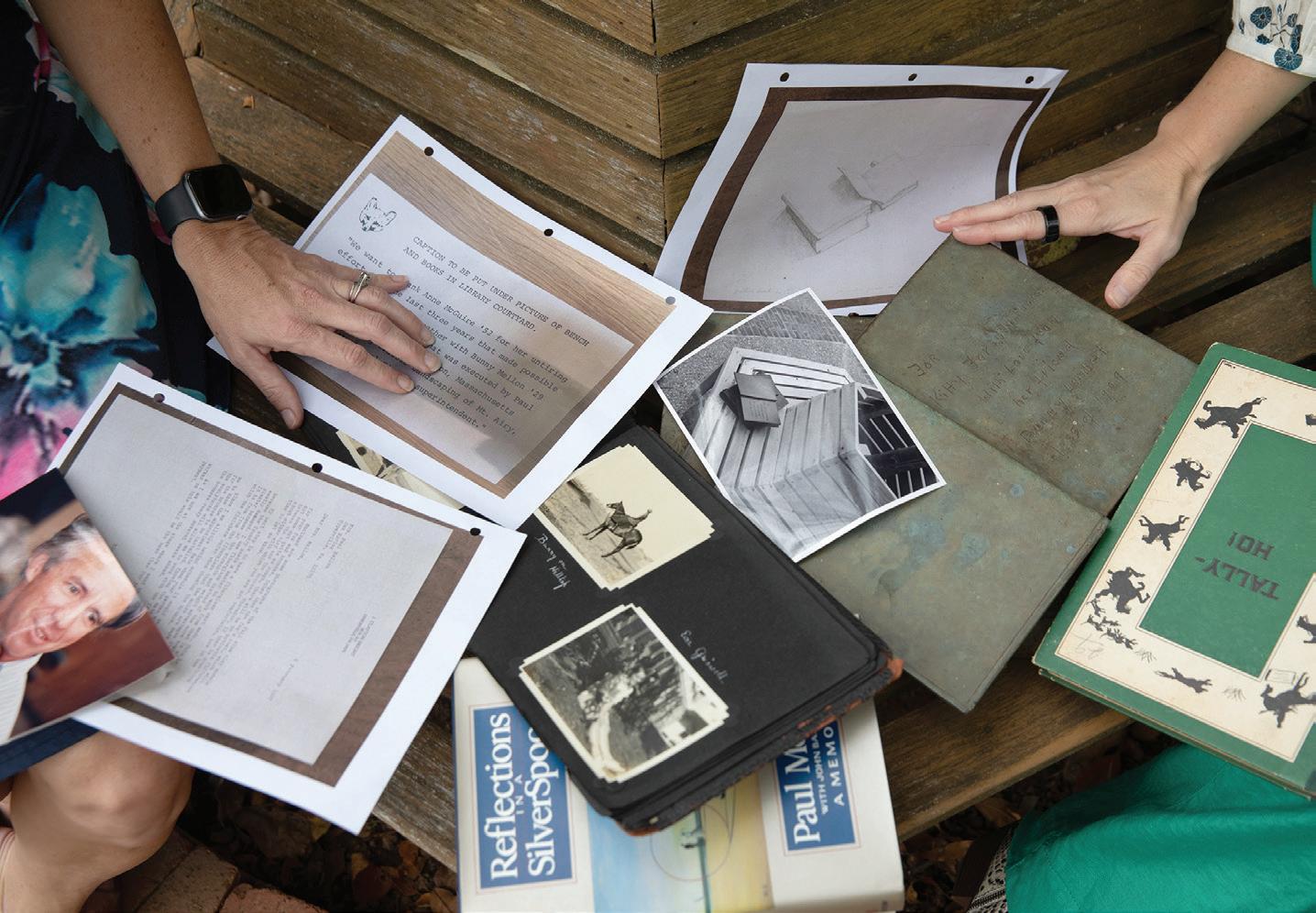
In 1989, while living at Oak Spring, the Upperville farm and garden she shared with her second husband, philanthropist and equestrian Paul, Mellon celebrated Foxcroft’s 75th anniversary by designing and installing the Library Courtyard. Mellon’s work on the Library Courtyard and Miss Charlotte’s Garden represents far more than a caring gesture from a grateful student. Earlier this month, Foxcroft faculty members Julie Fish-
er and Dr. Meghen Tuttle presented their Garden Legacy Project at the Henry Morrison Flagler Museum in Palm Beach, Florida. The culmination of three years of research at Foxcroft and the Oak Spring Garden Foundation Library, their work explored the ways Noland’s educational and horticultural ideas shaped Mellon’s. The project, funded by the William R. Kenan Jr. Charitable Trust, documents how Noland and Mellon went on to change the way American women saw themselves in their gardens, in nature, in their professions, and in the world.
Fisher, director of Foxcroft’s STEAM Program, shares, “We embarked on the Garden Legacy Project to tell the stories of these courageous, creative, and compassionate women. We also endeavor to embody the same understandings they
Garden | Page 27
Garden | From page 26
set forth over a century ago.”
Noland and Mellon “were born into privilege, neither attending college yet both groundbreaking in their respective fields of education and design,” Fisher says. “They shared not only a love of gardening, but an understanding of and appreciation for the greater scope of the natural world and its transformative role for the individual and the community at large.”
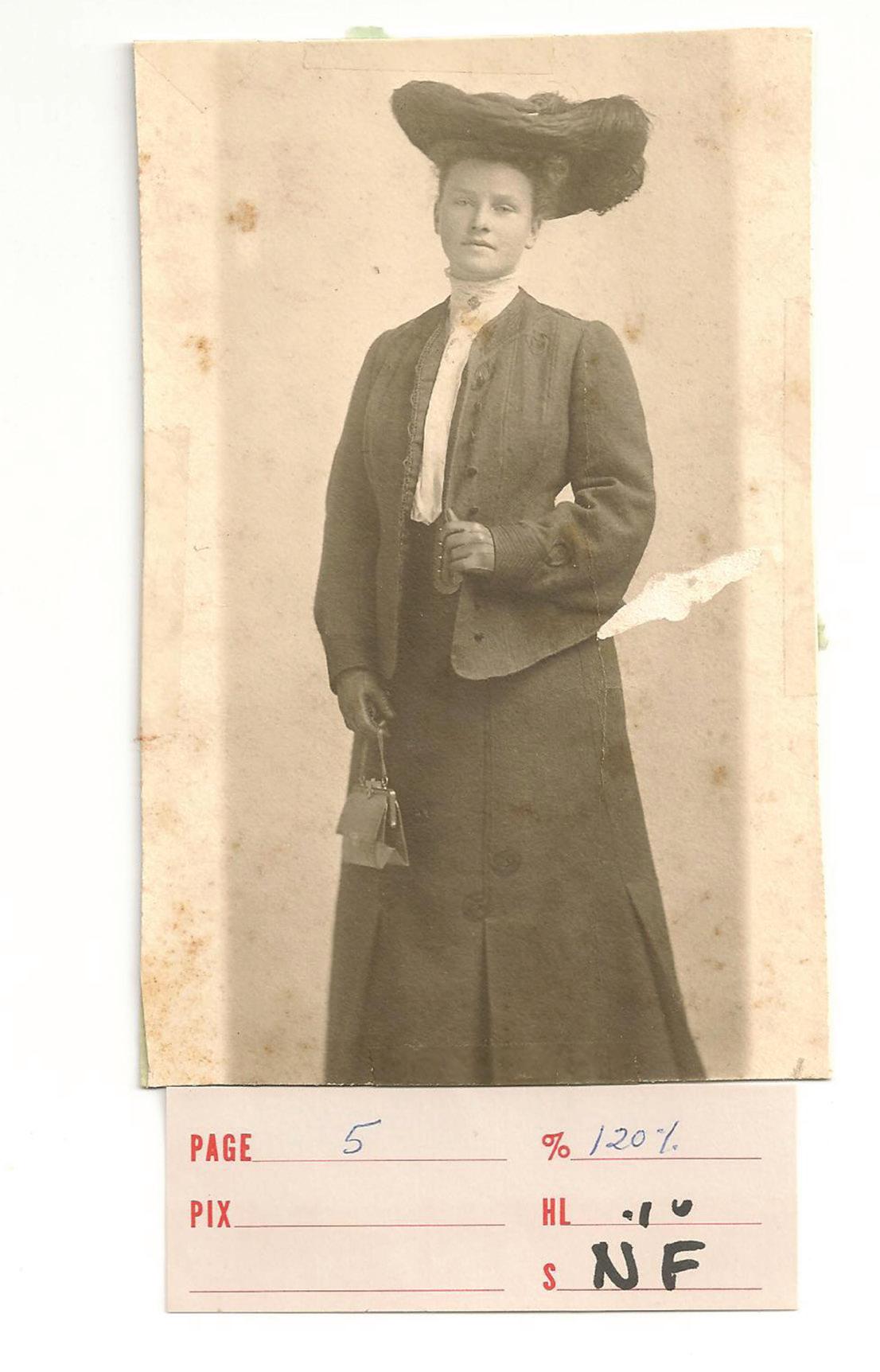
Born in 1883, Noland grew up at Burrland in Middleburg. She loved the great outdoors and riding, and would become a co-master of the Middleburg Hunt. At Harvard’s Sargent School, she learned to teach physical education and was introduced to the sport of basketball. Noland taught in Baltimore and at The Bryn Mawr School before founding Foxcroft School in 1914. She named it after an estate she glimpsed while traveling in England that belonged to Major Foxcroft. For Noland, Foxcroft was meant to be a place that girls would want to attend. The school’s motto is “mens sana in corpore sano” — a healthy mind in a healthy body.
Miss Charlotte, as she became known to her students and faculty, lived in the Brick House, which was built by her ancestors in the 1700s. She worked the land with her students, including a terraced garden behind the house, which features a towering magnolia tree. A cofounder of the Loudoun and Fauquier Garden Club, she inspired students to make what Tuttle, who teaches science in Foxcroft’s STEAM Program, calls “connections between themselves and the natural world” in the school’s wooded areas. Creating a World War I Land Army Garden, as well as a World War II Victory Garden, became a lesson in sustainability and community service.
Tuttle adds that “other schools at the time might have taught girls flower arranging. At Foxcroft, Miss Charlotte used place-based learning to teach botany in a way that prefigured our contemporary ideas about ecology, environmental science, and biodiversity.”
As a young girl, Mellon became fascinated with gardening while watching the Olmsted Brothers — sons of America’s first landscape architect, Frederick Law Olmsted — design the plantings around her family’s Princeton estate. The daughter of the Gillette Safety Razor Com-
pany’s president, she wanted to go to Foxcroft as soon as she heard about it.
Mellon was given a small area to garden in, though its exact location is not known. She developed a friendship with fellow student Kitty Wickes. When they graduated, Wickes and Mellon went on tours together of famous gardens in Europe. Later, during her design of the Library Courtyard, Mellon wanted to memorialize her friendship with Wickes. She surrounded an apple tree with a small bench, on which rests a bronze sculpture of a stack of books commissioned from Pennsylvania artist Clayton Bright. A dedication to Wickes is inscribed on an open page: “With love from her friend, Bunny Lambert, Class of 1929.” Mellon also directed Bright to make the Library Courtyard’s iconic fox and hound statues.
Though she rarely gave interviews, when asked about her gardening style, Mellon said, “Nothing should be noticed.”
Sometimes, however, things were noticed. Among Mellon’s additions to the White House grounds, at the behest of John F. and Jackie Kennedy as well as Lady Bird Johnson, was a magnolia tree similar to the one that shades Miss Charlotte’s Garden at Foxcroft. It was deemed controversial at the time, because this was a native tree and not considered worthy of the exotic specimens that vied for the president’s attention.
Mellon’s plans for the
Library Courtyard, created in conversation with Foxcroft alumna and trustee Anne Kane McGuire, involved the creation of a focal point for the school, an outdoor classroom that would convey Miss Charlotte’s original, lasting ideals: that art, education, physical activity, and the great outdoors are the path to confidence,
Garden | Page 28
Top: The Garden Legacy Project research. Bottom: Julie Fisher and Dr. Meghen Tuttle. Photos by Lauren Ackil Photography, courtesy of Foxcroft School.
Garden | From page 27
responsibility, and humility.
“Bunny never forgot her experiences at Foxcroft,” Fisher adds. “On the walls of her library
at Oak Spring is a Rothko; Bunny loved Rothko’s art and collected many of his works. Opposite the Rothko is a photograph of Miss Charlotte.” ML
Left: Miss Charlotte. Photo courtesy of Foxcroft School. Right: Bunny Mellon. Photo by Fred Conrad, The New York Times, courtesy of Oak Spring Garden Foundation.
butcherphotography@gmail com | butcherphotography com
SHOPKEEPER SPOTLIGHT:
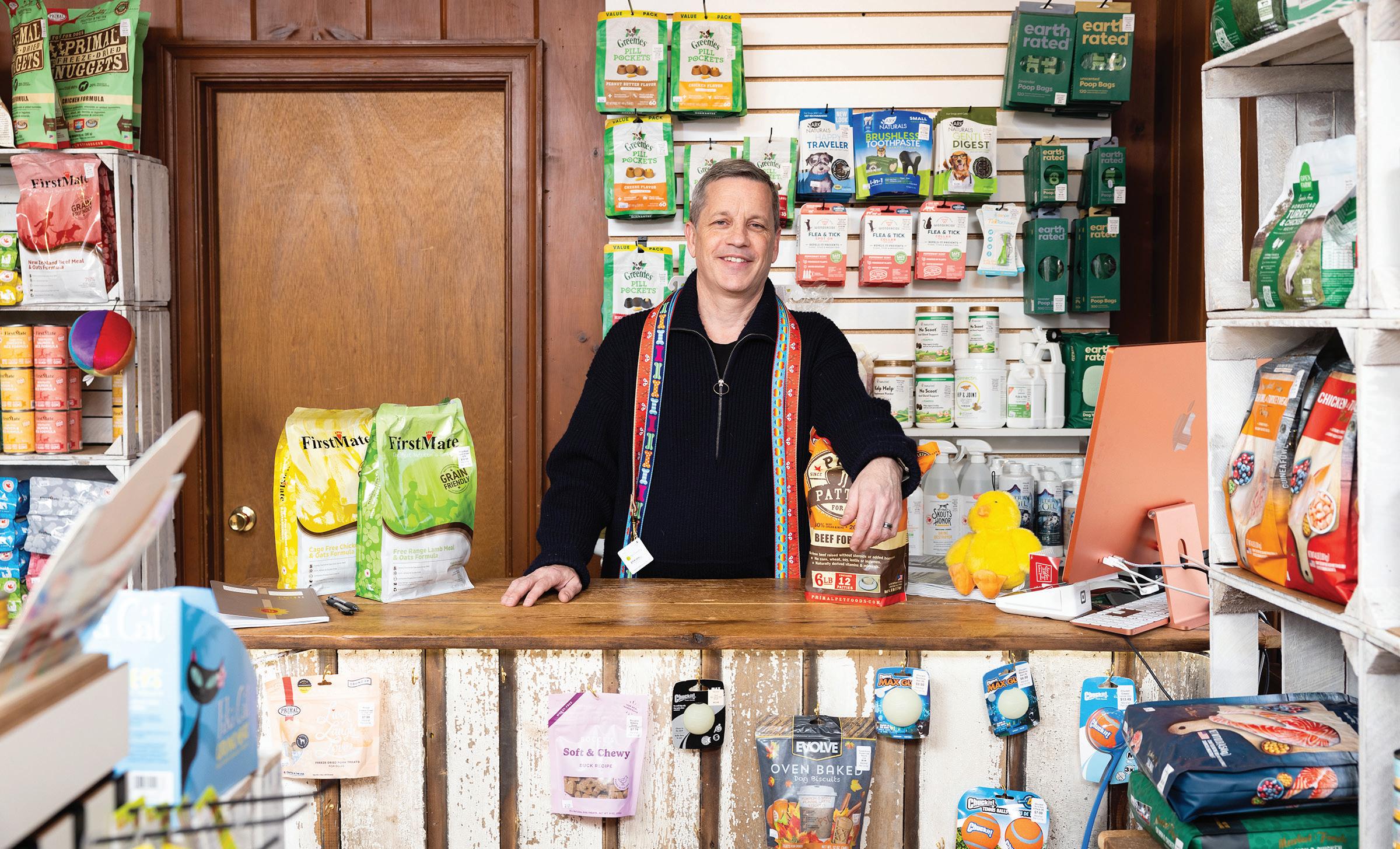
Stephen Waudby of the Marshall Pet Co-Op
Written by Dulcy B. Hooper | Photos by Michael Butcher
Stephen Waudby never intended to open a pet co-op. With four beloved cats to feed and care for, he’d been a longtime shopper at Wylie Wagg, continuing on as a customer when the shop changed hands and became Loyal Companion. Over the years, he had come to know the staff and experience firsthand what such a shop meant to the local community.
Stephen Waudby.
“One day — and I had been a regular for over 20 years by then — everyone got notice that Loyal Companions was closing in less than three weeks,” he remembers. “So I jumped in and asked, ‘Who’s the landlord? What’s the rent? What are the details?’ I figured this was something I could do. Unfortunately, someone beat me to it by an hour.”
Waudby’s inspiration to establish a pet co-op
was nonetheless set in motion. “I know people in the community,” he says, “and all I kept hearing was, ‘You have to do this! We need a pet store.’”
He quickly identified a location in Marshall, giving himself a month to get it up and running.
“I said to the manager at the Middleburg store, ‘Do you think this can work and be profitable?
Pet | Page 31
Pet | From page 30
Will you make a commitment to me? And can you do it within six months?’” With the answer a resounding “yes,” it took Waudby all of 24 hours to establish an LLC and set up business accounts.
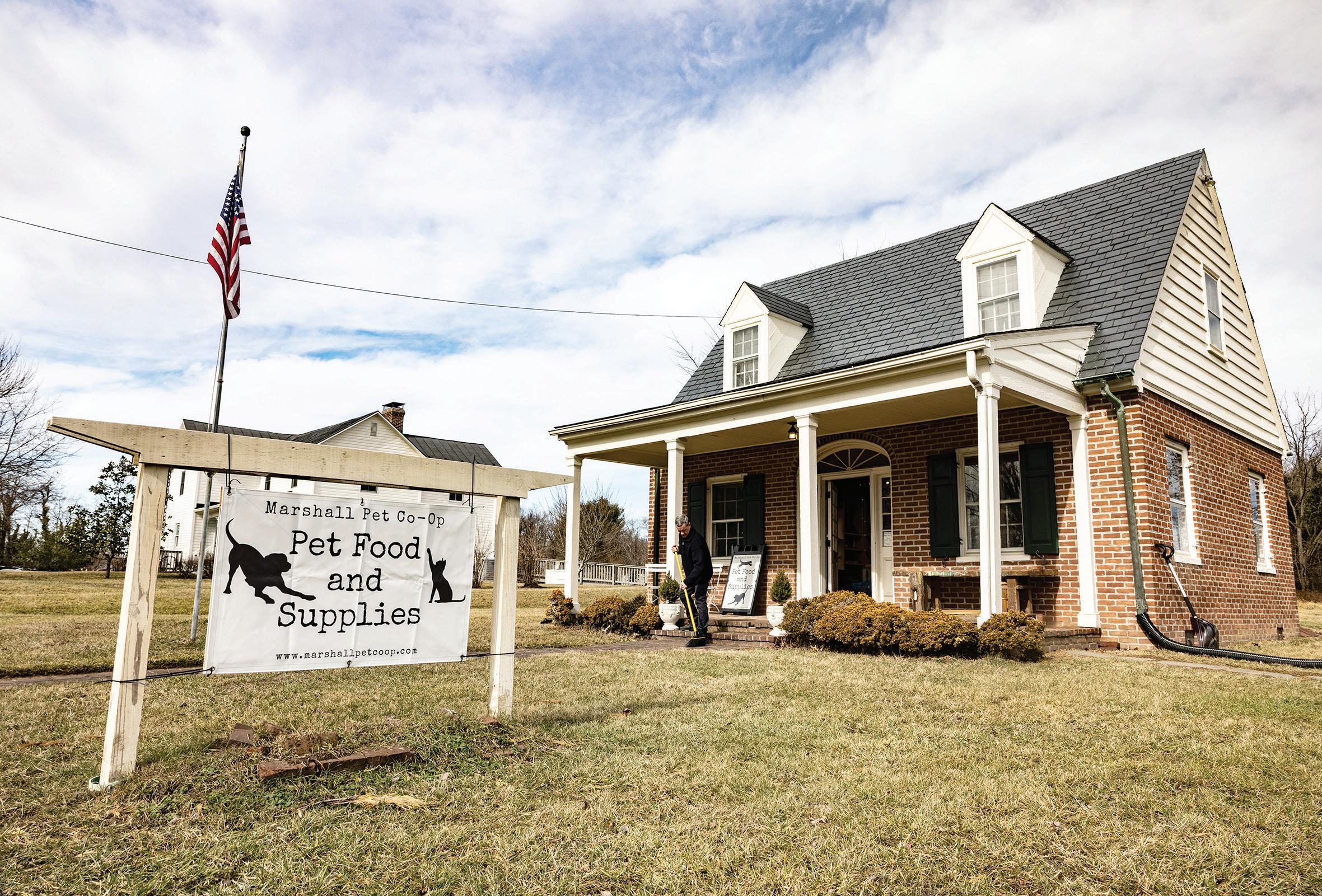
In the early days, “I was working from the back of my car,” Waudby remembers. “I started taking orders and delivering them to customers until the store opened in April of 2022.” Last October, Marshall Pet Co-Op moved to its current location and now shares space with Waudby’s
other business, Cube Minerals, a crystal and mineral shop. “We have a parking lot now,” he says, “and we get new people every day.” The good reviews and customer comments are myriad.
Waudby most enjoys helping his customers find the best-quality pet food for the best price. “We do raw food,” he explains, “gently cooked food, kibble, wet food, a huge array of treats, and toys. I only work with companies that have high standards for what they put in their pet food.” Waudby does his best to beat or match Chewy and Amazon, and has access to over 400 brands. “I work with five different distributors and receive at least three to four shipments a week,” he says. “There is a huge amount of research involved in all of this.”
One of Waudby’s overarching goals for the Marshall Pet Co-Op was to support
berg, an avid equestrian, developed a close bond when they worked together as former members of the board of directors of the Upperville Colt & Horse Show. Through other equestrian friends in the Carolinas and Wellington, Weinberg became acquainted with Danny & Ron’s Rescue, a nonprofit dedicated to animal welfare founded by Danny Robertshaw and Ron Danta.
“Back in 2005, in response to Hurricane Katrina, Danny and Ron had reached out to horse people to get their trailers and go to New Orleans
ally wanted was toys. They wanted those rescued dogs to have toys.”
Waudby was immediately onboard when Weinberg called him. “He reached out to his manufacturers to get donations of over 200 toys,” she says. “That’s the kind of community that Stephen wants to be a part of.”
“I want to do as much as I can,” Waudby says. “The number one thing for me is really about community. I know 95% of my customers personally, socially, through community building.
the community once the shop became profitable. For over 15 years, Waudby and his husband, Bryon Fusini, have supported Middleburg Humane, Homeward Trails, and the Chris Griffey Memorial Feline Foundation (which Waudby serves as a member of the board of directors).
Natural disasters presented yet another opportunity to give back. Waudby and Tracey Wein-
to rescue stranded horses. That was the original impetus,” Weinberg shares. “They came home with dozens and dozens of dogs, and that became their life mission.” Following the last two hurricanes that hit North Carolina, Weinberg called Danny & Ron’s to find out how she could help. “They said that they had taken in at least 200 dogs from the two hurricanes, and what they re-
I’m always asking myself: How can we help each other out?” ML
Marshall Pet Co-Op
8266 E. Main Street Marshall, VA 20115 (703) 380-0263 marshallpetcoop.com
The Marshall Pet Co-Op.
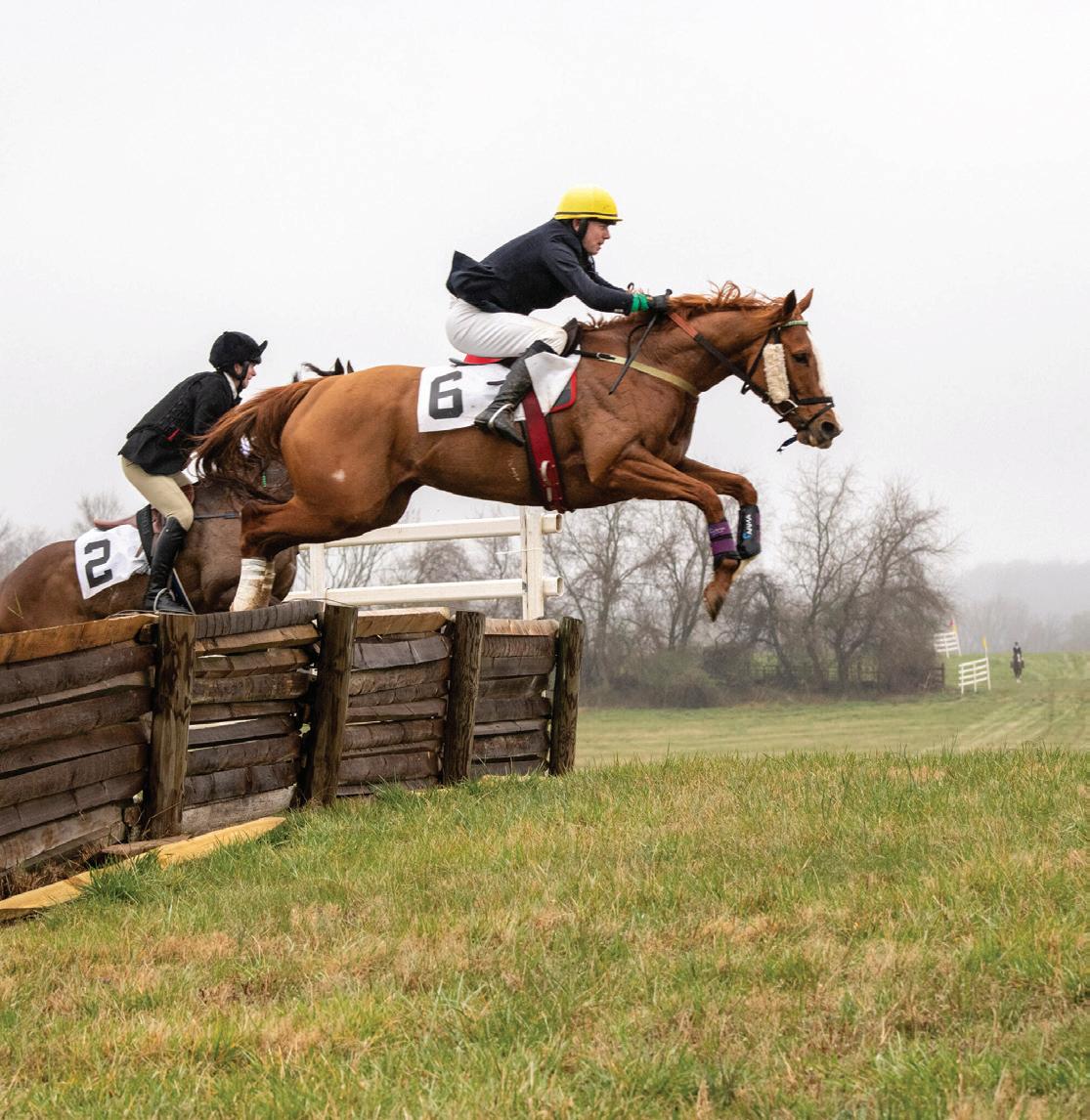
2025 SPRING RACE CALENDAR
Photos by Joanne Maisano
March 1 | Rappahannock Hunt Point-to-Point
The Hill - Boston, VA
March 15 | Warrenton Hunt Point-to-Point Airlie Race Course - Warrenton, VA
March 22 | Piedmont Fox Hounds Point-to-Point Salem Grounds - Upperville, VA
March 23 | Piedmont Fox Hounds Hunter Pace Clifton Farm’s Back Gate - Upperville, VA
March 29 | Orange County Hounds Hunter Pace Little River Farm - The Plains, VA
April 5 | Old Dominion Hounds Point-to-Point Ben Venue - Flint Hill, VA
April 6 | Old Dominion Hounds Hunter Pace
Hungry Run Farm - Amissville, VA
April 12 | Blue Ridge Hunt Point-to-Point Woodley Farm - Berryville, VA
April 12 | Rappahannock Hunt Hunter Pace Pine Rock Farm - Reva, VA
April 19 | Middleburg Spring Races
Glenwood Park - Middleburg, VA
April 19 | Blue Ridge Hunt Hunter Pace Claytonville Farm - Boyce, VA
April 20 | Loudoun Hunt Point-to-Point Morven Park - Leesburg, VA
April 26 | Foxfield Spring Races
Foxfield Race Course - Charlottesville, VA
April 26 | Warrenton Hunt Hunter Pace Millpoint - Warrenton, VA
April 27 | Middleburg Hunt Point-to-Point Glenwood Park - Middleburg, VA
May 3 | Virginia Gold Cup Great Meadow - The Plains, VA
May 4 | Loudoun Hunt Hunter Pace
Loudoun Fairfax Hunt Kennels at OverbookHamilton, VA
For more spring race coverage, visit MiddleburgLife.com.
Rose Marie Bogley
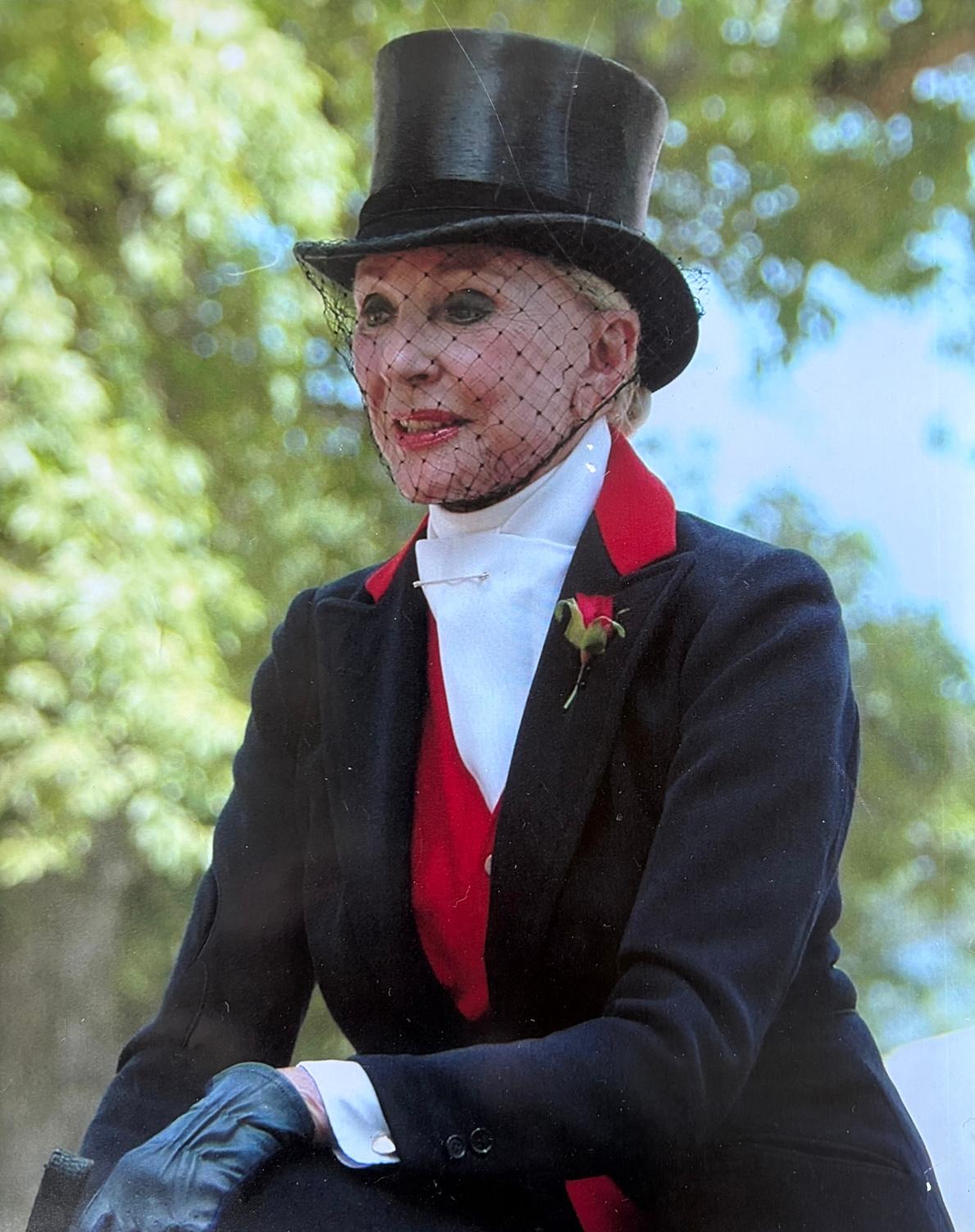
Rose Marie Bogley, a cherished member of the Middleburg/Upperville, Virginia community, passed away peacefully in her home at the age of 96 on Saturday, January 18, 2025 Born in Johnstown, Pennsylvania, Rose Marie was the eldest of five children She was the cherished daughter of Rosella Scheidinger and Joseph Parker Rose Marie is survived by her daughter, Hilleary Bogley, sister Ruth Bobak, niece Patty North and extended family
Rose Marie pursued higher education at the University of Pittsburgh, majoring in English, before embarking on a career in Washington, D C , where she worked for Senator Styles Bridges of New Hampshire and Robert F Kennedy In 1961, Rose Marie married Samuel E Bogley, a successful real estate businessman and former Master of the Potomac Hunt Together, they cultivated a deep appreciation for the countryside and equestrian life, hosting numerous gatherings and events that celebrated their passions Rose Marie became an accomplished sidesaddle rider, winning the prestigious National Horse Show at Madison Square Garden three times Following her husband s untimely passing in 1967, she continued their love for horses and the countryside
Rose Marie was the proprietor of Peace and Plenty Farm at Bollingbrook in Upperville, Virginia A 365-acre historic estate that she meticulously restored and cherished
Her commitment to animal welfare was profound supporting numerous rescue organizations and providing a sanctuary for countless animals on her farm Rose Marie’s daughter, Hilleary Bogley, Founder of the Middleburg Humane Foundation, carries forward this legacy In the near future, the Peace & Plenty Foundation will be established to continue Rose Marie’s support of the many non-profits that were dear to her heart
Beyond her equestrian achievements and philanthropic endeavors, Rose Marie was celebrated for her elegance, charm, and generosity She often opened her home to host fundraising galas, where her warm hospitality and keen eye for detail left guests in awe Friends frequently remarked on her thoughtful gestures, such as handwritten notes and personalized gifts that reflected her deep care for others She was a gracious hostess, talented artist, and valued friend to many in the community
Rose Marie's legacy is one of passion, parties, style, grace, giving back, and kindness She leaves behind her beloved daughter, Hilleary, and a community that will deeply miss her presence Her life serves as an inspiration to all who knew her
In lieu of flowers, the family requests that donations be made to one of the following organizations in her memory
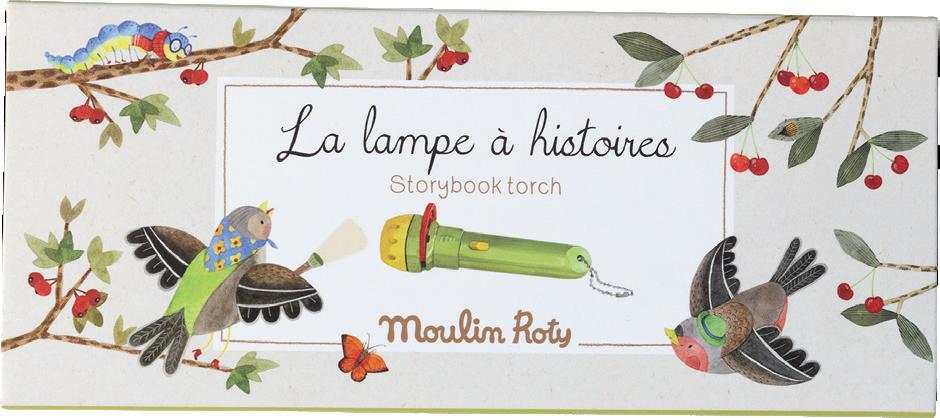
Storybook Torch, $20, Available at Tri-County Feeds
Confetti Stamp Markers, $14.99, Available at Every Little Something
Blouse, $85, & Pants, $95, Available at Little Lambkins
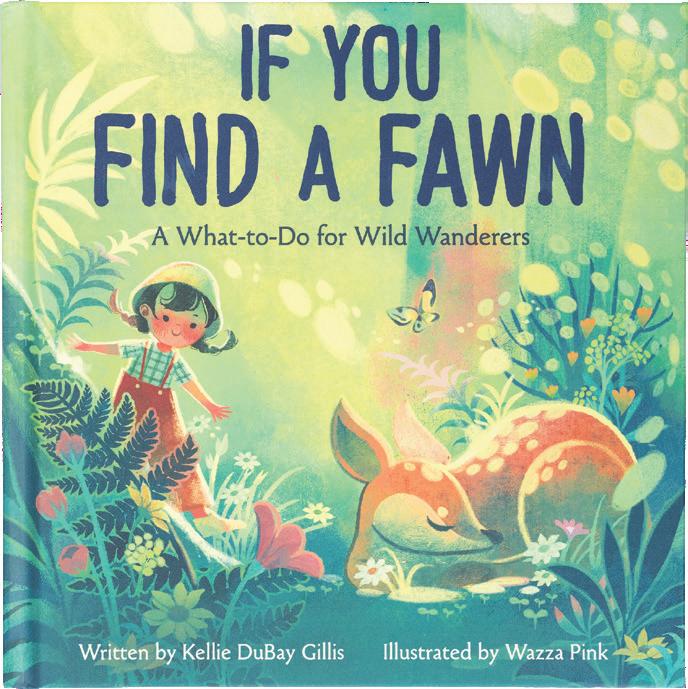
“If You Find a Fawn,” $18.99, Available at Middleburg Books
Horse Country Plushes, $14 - $32, Available at Horse Country
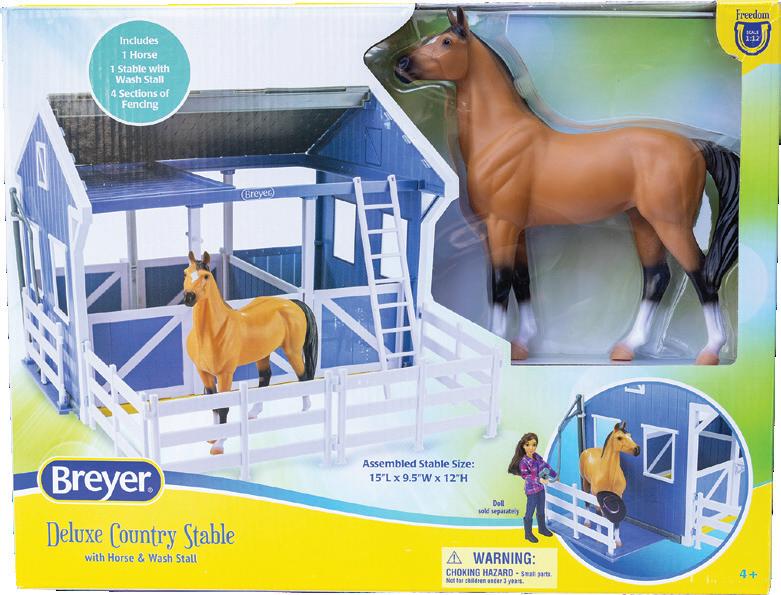
Breyer Deluxe Country Stable, $56.95, Available at The Tack Box
Rocknoculars, $20, Available at The PLAYroom
The Original Tim Bird, $19.99, Available at G. Whillikers
Woodlands Puppet Bag, Fair-Trade from Nepal, $36, Available at Latitudes
CALENDAR OF EVENTS
“THE POETRY OF SPRING” AT THE BYRNE GALLERY
March 1 - 30 | thebyrnegallery.com
Usher in the beginning of spring with The Byrne Gallery’s March exhibit. The show will feature work across a variety of mediums from six local artists: Suzanne Lago Arthur, Miguel Diaz, Gerald Hennesy, Cathleen Lawless, Matt Tymowski, and Carolyn Marshall Wright. The Byrne Gallery will host a reception on March 15 from 4 to 7 p.m. and an artists’ talk on March 29 from 2 to 4 p.m.
TULIP MANIA AT OAK SPRING GARDEN FOUNDATION
March 6 | 3:30 to 5:30 p.m. | osgf.org Join horticulturist and flower bulb grower Jason Delaney and the OSGF Library staff for an immersive lecture on the storied history of the tulip. The illustrated lecture will draw on five centuries’ worth of content in Oak Spring’s rare and antiquarian holdings, while Delaney enlightens participants on the tulip’s origins, historical artistic representation, early commercial aspects, and its place in Bunny Mel-
lon’s gardens today. Tickets are $125 and can be reserved on Eventbrite.
MEGHAN DAVIS AND ALEX KELLER IN CONCERT AT MCC
March 7 | 6 to 8 p.m. | middleburgcommunitycenter.com
Experience the ethereal sounds of harp, cello, and Meghan Davis’ enchanting voice in a unique concert of classical and contemporary pieces. Davis and Keller have performed for several ambassadors, members of Congress, two speakers of the U.S. House of Representatives, and even Taylor Swift. Tickets are $45 and can be booked through the Middleburg Community Center’s website.
MURDER MYSTERY DINNER THEATER
March 14 | 6 to 10 p.m. | creeksedgewinery.com
Enjoy dinner, wine, and a production of “Lady Thistledown’s Poisoned Quill” at Creek’s Edge Winery in Lovettesville. This interactive, Regency-era murder mystery experience will be performed by StageCoach Theatre Company. Guests are encouraged but not required to dress
in period attire and awards will be given for the best costumes. Tickets are $75 and reservations are required.
ST. PATRICK’S DAY PARTY AT LOST BARREL BREWING
March 15 | 11 a.m. to 7 p.m. | lostbarrel.com
Stop by Lost Barrel Brewing for a spirited St. Patrick’s Day celebration with festive fun, themed drinks, and live music! Guests will enjoy shamrock-inspired décor, specialty St. Paddy’s Day drinks, and LBB’s Irish Red Ale.
CHEERS TO WOMEN IN WINE AT KALERO VINEYARD
March 15 | 2:30 to 3:30 p.m. | kalerovineyard.com
Celebrate women in the wine industry with a special tasting flight at Kalero Vineyard and a fresh flower arranging workshop with local florist Angela from blooms2u. Tickets are $55 and include the wine tasting and all materials for the flower arranging. Tickets can be purchased through Eventbrite.
Calendar | Page 35
CALENDAR OF EVENTS
Calendar | From page 34
ST. PATRICK’S DAY PAINT & SIP AT CHRYSALIS VINEYARDS
March 15 | 4 to 6 p.m. | chrysaliswine.com
Don’t miss Chrysalis Vineyards’ festive Paint & Sip Class! Participants will have the opportunity to paint a retired wine barrel stave with St. Paddy’s Day flair while enjoying a glass of select wines. Tickets are required and can be purchased through the Chrysalis Vineyards’ website by March 10.
MID-ATLANTIC GRAIN FAIR
March 16 | 11 a.m. to 4 p.m. | wheatlandspring.com
Meet the farmers, millers, bakers, and brewers who are working to revitalize local grain heritage. This free, kid-friendly event is perfect for home bakers, craft beer enthusiasts, and farmers market fans. Guests will experience cooking demonstrations, live music, a curated market featuring local grain-based food and beverages, and more.
A DAVID VS. GOLIATH BATTLE TO PROTECT VIRGINIA’S LAND, WATER, AND COMMUNITIES
March 19 | 5 to 7 p.m. | nationalsporting.org
Visit the National Sporting Library & Museum on Wednesday, March 19, for a cocktail reception followed by a roundtable conversation and book signing. Sarah Francisco, Virginia director of the Southern Environmental Law Center, and senior attorney Greg Buppert will join author Jonathan Mingle to discuss his book, “Gaslight: The Atlantic Coast Pipeline and the Fight for America’s Energy Future,” and how this saga is relevant today. All guests in attendance will receive a complimentary signed copy of the book.
THE VIRGINIA MARATHON
March 23 | 7:30 a.m. to 4 p.m. | olddominionracing.com
Experience Virginia’s Wine Country with a full marathon, Merikos marathon, half marathon, 10K, or 5K race kicking off in Middleburg.
The course covers paved and gravel roads in Loudoun and Fauquier counties with stunning views of scenic vistas, horse farms, rolling countryside, and plenty of shade. The race starts and ends at The Hill School. To register for the race or for more information, visit olddominionracing.com/virginia-marathon.
MYSTERY MONDAYS BOOK CLUB AT MIDDLEBURG BOOKS
March 31 | 7 to 8 p.m. | middleburgbooks.com Middleburg Books is offering a new book club led by Shayne. The Mystery Mondays book club will explore the many riddles and puzzles in the genre. March’s book is “The Business Trip” by Jessie Garcia. Participants can buy tickets on the Middleburg Books website and purchase the book at Middleburg Books for a 10% discount.
For more Hunt Country events, visit MiddleburgLife.com or scan here:
At Salamander Spa, we believe the secret to wellness surrounds us. It transcends traditional boundaries, becoming an immersive experience through nutrition, sleep, exercise, mindfulness, and happiness. Begin your wellness journey by discovering the restorative powers of the scenic Virginia countryside.