MichiganGardener.com | April 2018 | Michigan Gardener
35
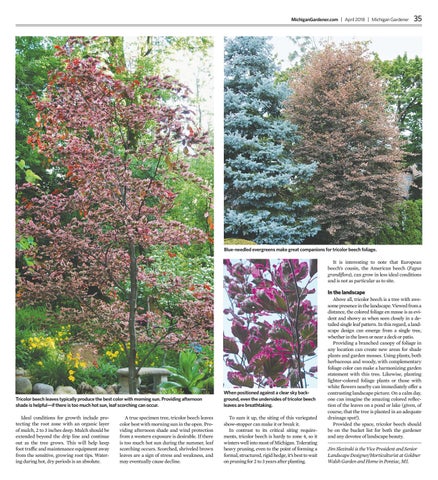
Blue-needled evergreens make great companions for tricolor beech foliage. It is interesting to note that European beech’s cousin, the American beech (Fagus grandiflora), can grow in less ideal conditions and is not as particular as to site.
In the landscape
Tricolor beech leaves typically produce the best color with morning sun. Providing afternoon shade is helpful—if there is too much hot sun, leaf scorching can occur.
When positioned against a clear sky background, even the undersides of tricolor beech leaves are breathtaking.
Ideal conditions for growth include protecting the root zone with an organic layer of mulch, 2 to 3 inches deep. Mulch should be extended beyond the drip line and continue out as the tree grows. This will help keep foot traffic and maintenance equipment away from the sensitive, growing root tips. Watering during hot, dry periods is an absolute.
To sum it up, the siting of this variegated show-stopper can make it or break it. In contrast to its critical siting requirements, tricolor beech is hardy to zone 4, so it winters well into most of Michigan. Tolerating heavy pruning, even to the point of forming a formal, structured, rigid hedge, it’s best to wait on pruning for 2 to 3 years after planting.
A true specimen tree, tricolor beech leaves color best with morning sun in the open. Providing afternoon shade and wind protection from a western exposure is desirable. If there is too much hot sun during the summer, leaf scorching occurs. Scorched, shriveled brown leaves are a sign of stress and weakness, and may eventually cause decline.
Above all, tricolor beech is a tree with awesome presence in the landscape. Viewed from a distance, the colored foliage en masse is as evident and showy as when seen closely in a detailed single leaf pattern. In this regard, a landscape design can emerge from a single tree, whether in the lawn or near a deck or patio. Providing a branched canopy of foliage in any location can create new areas for shade plants and garden mosses. Using plants, both herbaceous and woody, with complementary foliage color can make a harmonizing garden statement with this tree. Likewise, planting lighter-colored foliage plants or those with white flowers nearby can immediately offer a contrasting landscape picture. On a calm day, one can imagine the amazing colored reflection of the leaves on a pond or lake (given, of course, that the tree is planted in an adequate drainage spot!). Provided the space, tricolor beech should be on the bucket list for both the gardener and any devotee of landscape beauty. Jim Slezinski is the Vice President and Senior Landscape Designer/Horticulturist at Goldner Walsh Garden and Home in Pontiac, MI.