HOLE NOTES
UMN:FROM LAWNS TO LINKS PAIGE BOYLE 46
Cover: 2025 Wee Putt Above: Faribault 1st Green
Board of Directors
President: Nikk Dickerson
Vice President: John Cameron
Sec/Treas: Jason Scharfencamp
Ex-Officio: Mike Sonnek
Director: Wade Huesman
Director: Kyle Stirn
Director: James Westendorf
Affiliate Director: Adam Lesmeister
Affiliate Director: Jay Yonak
Executive Director: Chris Aumock MGCSA
PO Box 2028
Maple Grove, MN 55311
Hole Notes (ISSN 108-27994) is digitally published bi-monthly, 6 issues per year, by the Minnesota Golf Course Superintendents’ Association, PO Box 2028, Maple Grove, MN 55311. Chris Aumock Publisher. Please send any address changes, articles for submission, advertising and concerns to chris@mgcsa.
putting the course to bed
As October rolls in, most of us expect frost delays, layers of flannel, and the steady hum of compressors blowing out irrigation systems. But 2025 seems to have other plans. Across much of Minnesota, fairways are still green, fescues are still growing, and hoses are still being pulled out—just not for winterization. After a year marked by wet and wild swings, fall has flipped the script with record warmth and surprising stretches of dryness. I would imagine many of us
are starting to rethink what “putting the course to bed” looks like when nature doesn’t follow the calendar.
By late September, you can usually count on shorter days and cooler nights to slow growth and set the stage for fall fertilization, irrigation blowouts, and leaf cleanup. But this year, we’re still mowing like gang busters in October and tracking ET rates more like late August. For those that blowout early I wish you all the best, but this seems like the fall that might
Faribault Golf Club
have some pushing back blowout or even having to restart the system, something I’ve done before and I’d wish not to repeat.
I suppose that’s the challenge of managing turf in Minnesota these days: the seasons are still changing, just not in the way we remember. Consistency has become the exception, not the rule. Spring was late and slow to warm, summer was marked by humidity and disease pressure, and now fall feels more like an extended
encore of mid-summer. Each season brings a new test in timing, labor, and resource management. For superintendents, warm and dry autumns bring both opportunities and headaches. On the upside, extra growing days mean late-season recovery for worn areas, seed germination that actually takes, and a chance to fine-tune projects before winter. On the flip side, these conditions can extend disease windows, stretch already thin budgets with unexpected costs, and delay key winter prep tasks like topdressing and leaf management.
Beyond the turf itself, this
warm stretch highlights a broader truth about our industry: adaptability isn’t just a skill anymore—it’s a survival strategy. Whether it’s adjusting fertility schedules, rethinking staff timing, or managing member expectations, adaptability has become a defining trait of golf course managers.
As we head into another unpredictable winter, one thing is certain: Minnesota superintendents will continue to do what they do best—adapt, adjust, and find a way to make it work. We’ll finish blowouts, chase the last leaves, and maybe even sneak in a few more mowings before the frost finally sets into the ground.
As another season winds down - whatever “down” means this year - it’s worth pausing to appreciate the dedication it takes to get a golf course across the finish line. From summer’s muddy beginnings and now this odd, lingering warmth, it’s the teamwork, problem-solving, and shared commitment of our crews that keep it all going. The unpredictability can be exhausting, but it also reminds us why this profession is so rewarding: every year, every season, and every course writes its own story.
Here’s to finishing strong and maybe enjoying a few bonus days of sunshine before winter truly arrives.
MGCSA NEW MEMBERS - Sept/Oct 2025
Karl Schoffstall ScoutLinx Golf and Turf Affiiliate
Bill Honsa MN Valley Country Club Class C
Bryce Manning Litchfield Golf Course Class B
Cyrus Brandt Spring Hill Golf Club Student
Calvin Yonak Links at Northfork Student
Nick Capps Links at Northfork Student
Jeff Fagerlee Medina Golf & Country Club Student



























Thank you to our 2025 affiliate partners for your continued support of the MGCSA!


Chad Braun Town & Country Club
TECH TIPS
Get the Most from Your Grease Gun — Properly Lubricating Pins and Bushings
Pins and bushings are the pivot points that allow cutting units, steering components, and attachments to move freely. They bear heavy loads, absorb vibration, and endure constant movement. Without regular lubrication, these contact surfaces run dry, creating metal-on-metal friction that accelerates wear. The result? Noisy operation, increased stress on hydraulic systems, loose or worn parts, and potential failure of critical components.
Routine greasing forms a protective barrier that prevents moisture, fertilizer
residue, and abrasive particles from entering wear surfaces — all common in golf course environments.
One crucial step that’s often overlooked when greasing pins and bushings is
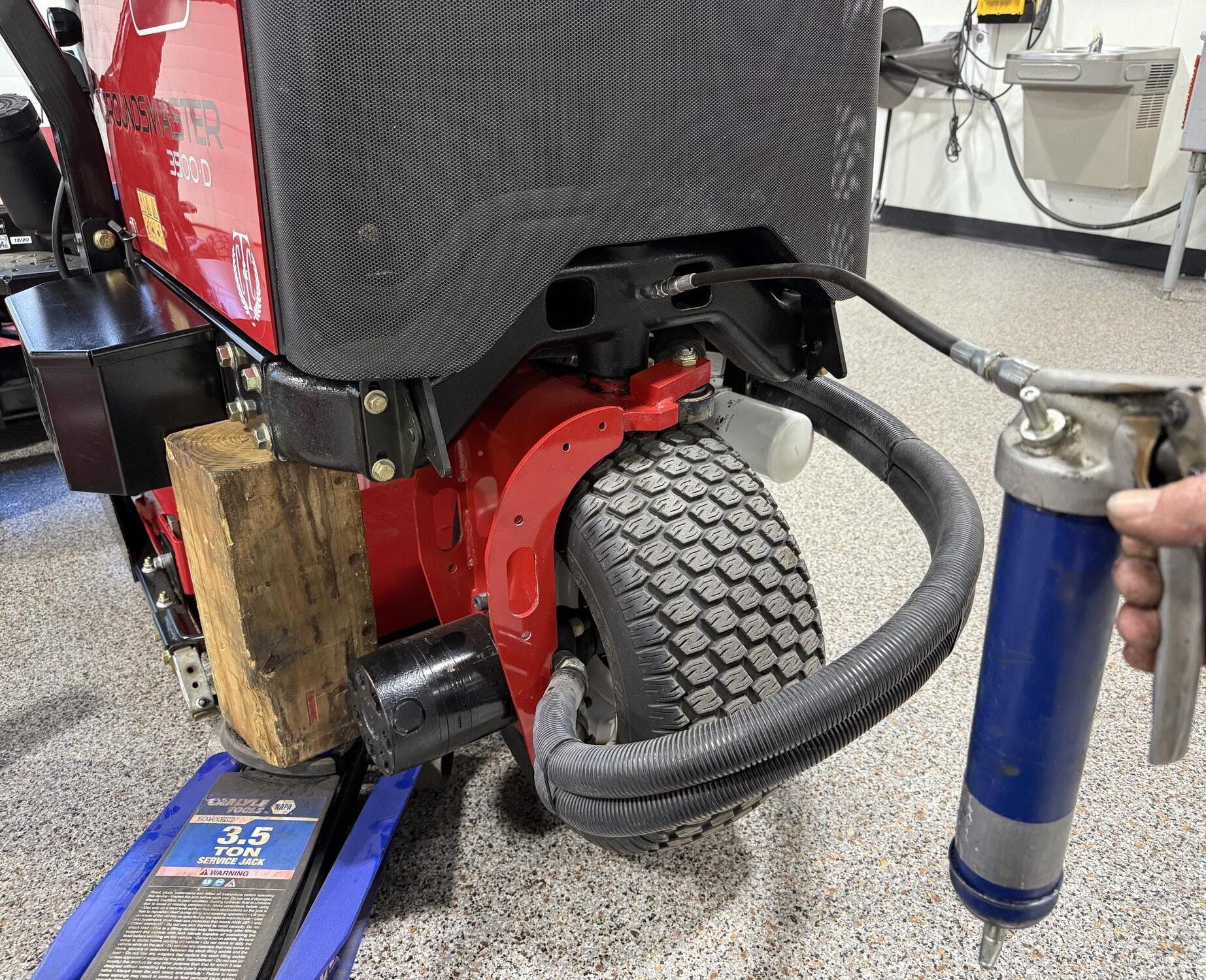
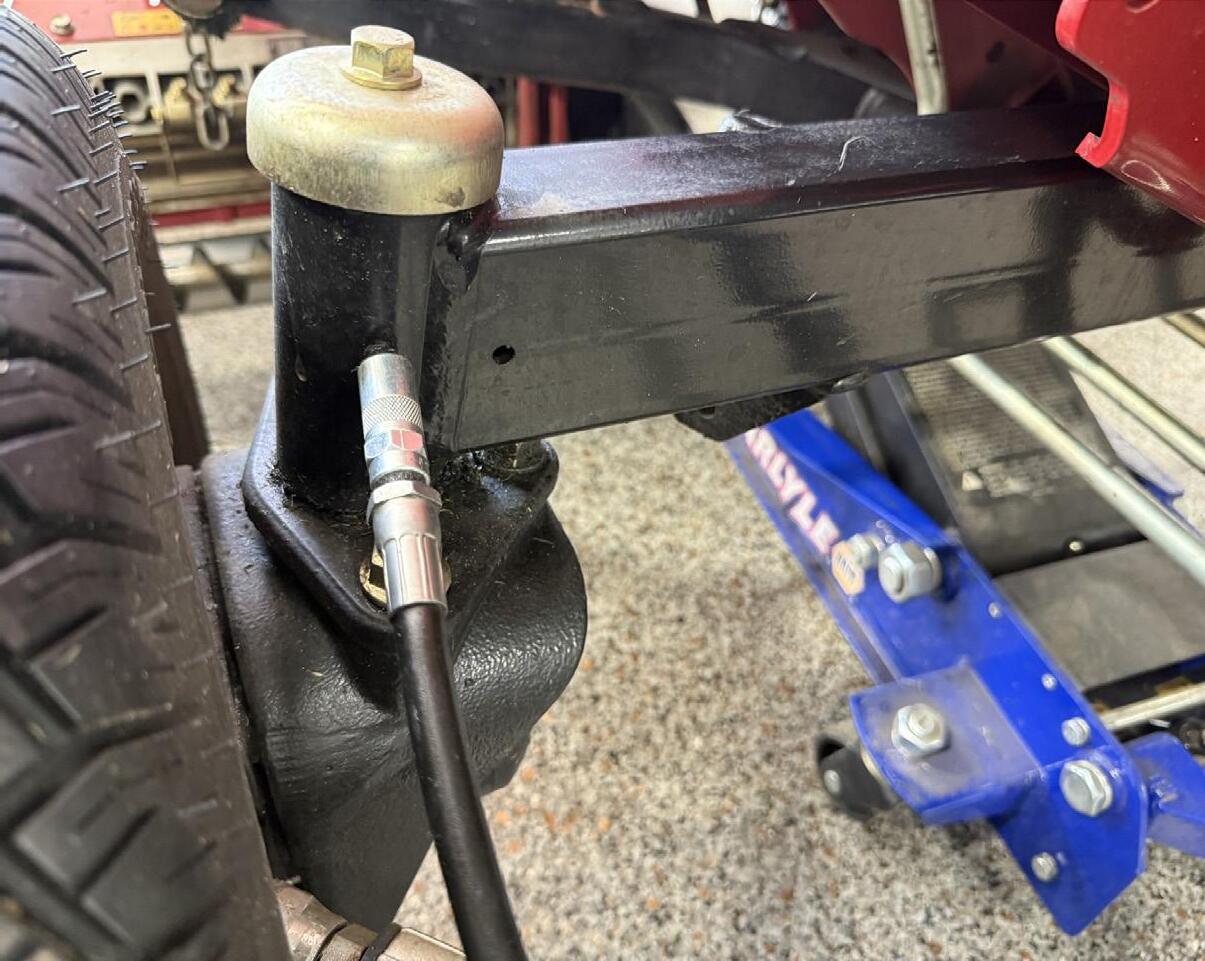
removing the load. Releasing pressure allows grease to distribute properly and purge contaminants from the entire surface of the pin and bushing. When under load, the pin is pressed firmly against one side of the bushing, making it difficult for fresh grease to reach the high-pressure zone where it’s needed most. Instead, grease follows the path of least resistance and oozes out the sides of the joint.
Bottom Line
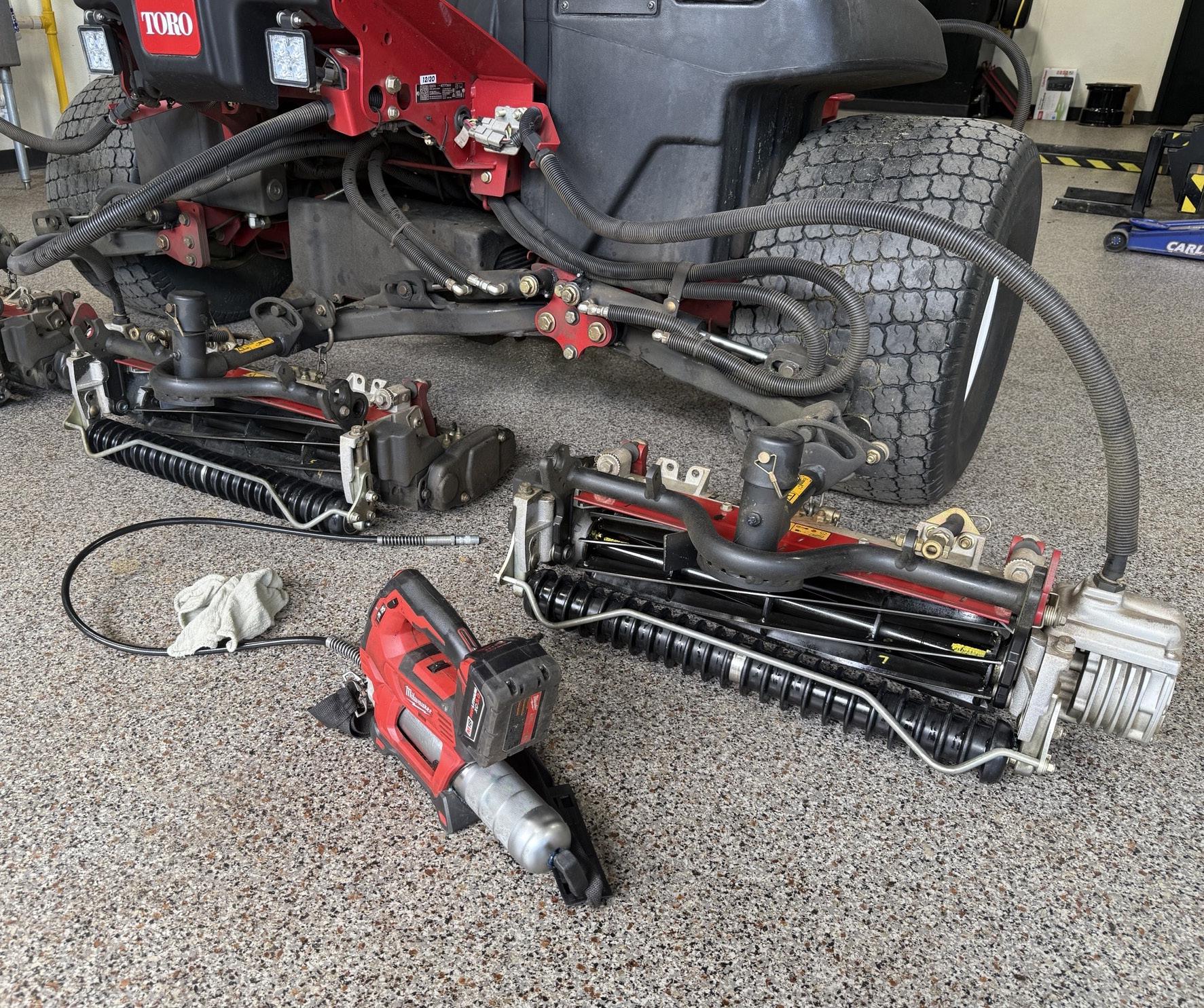
Removing the load creates clearance, allowing grease to flow evenly around the entire surface. Some areas where load should be removed before greasing include cutting unit lift arm pivots, lift cylinder pins, rear axle pivot pins, steering knuckle king-pins, steering fork bushings, and loader or backhoe pins. It may be more convenient to grease some of these points when a machine is on the hoist, but remember — they’re often still under load. For lift arms and cylinders, set the cutting units or attachments in “float” so they rest on the ground. For rear axle pivots and steering components, jack the machine by the frame to remove the load.
A few extra minutes spent properly greasing pins and bushings is one of the most cost-effective preventive maintenance steps you can take. Done correctly and consistently, it extends component life, improves performance, and helps keep your fleet running reliably.





Maximize the beauty and functionality of your grounds with MTI’s turf solutions.
Our comprehensive range of reliable equipment, backed by more than 70 years of industry expertise and support, helps you maintain pristine landscapes.
Offering the top brands in the industry, we provide the tools and support you need to create safe, inviting, and sustainable outdoor spaces
Contact us today for an on-site product demonstration or to learn more.


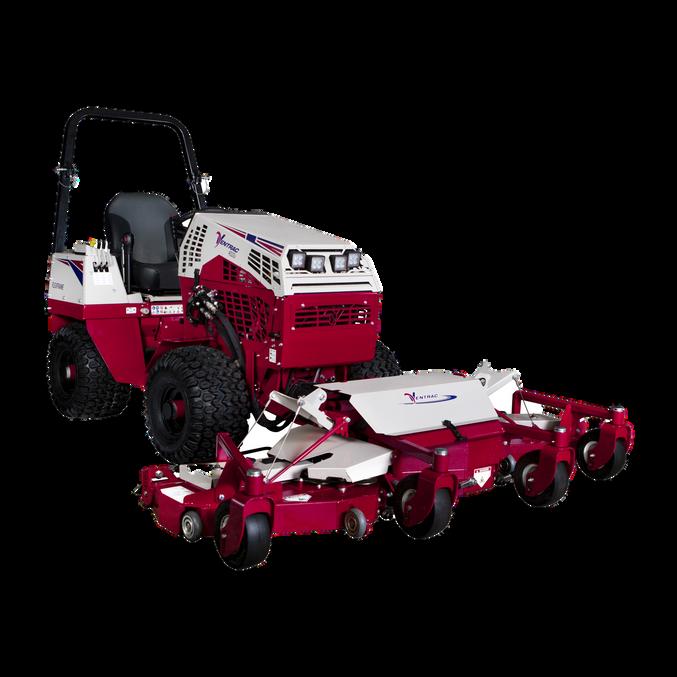
Ventrac Mj840 contour
mower
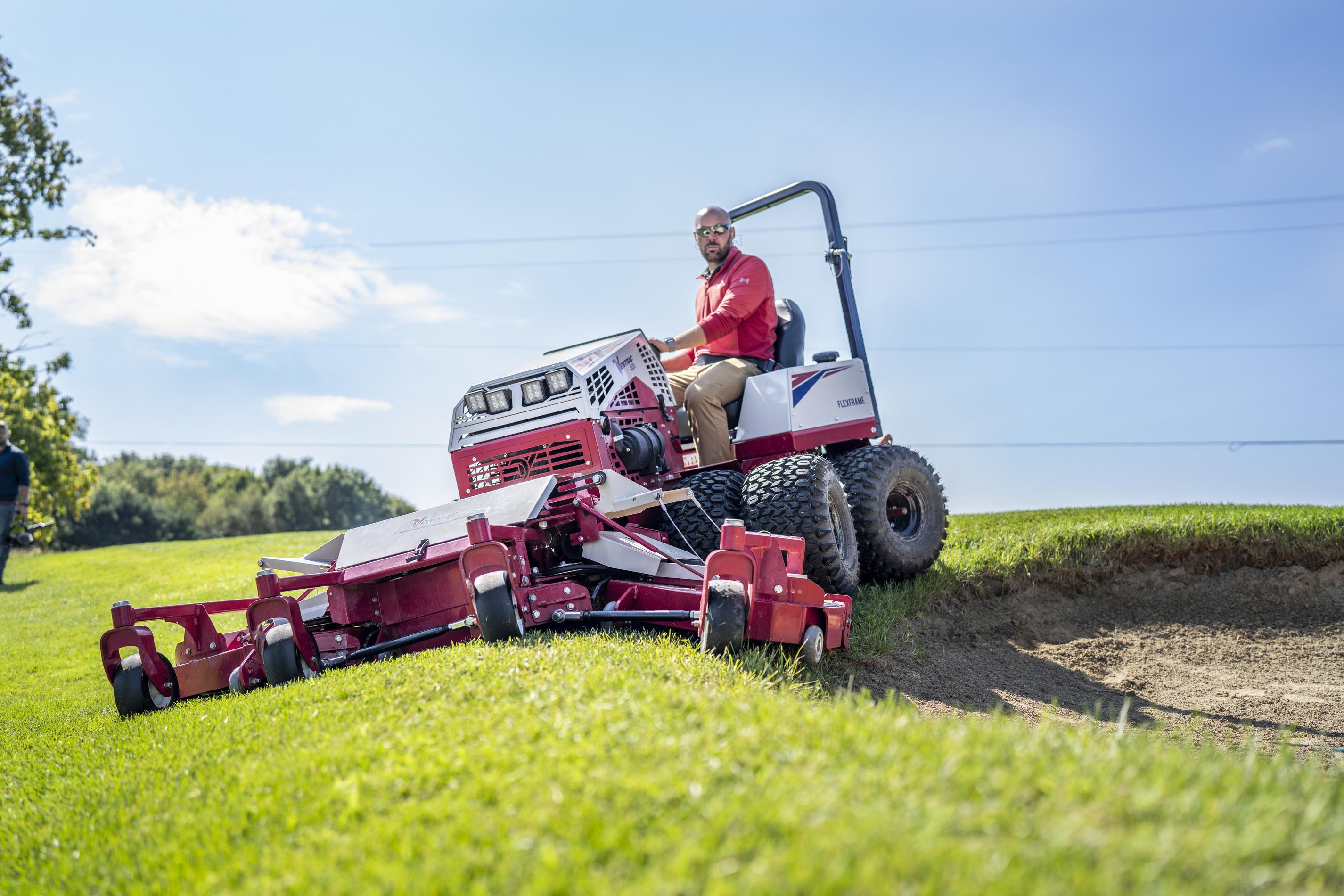
Ventrac's Contour Mower features a 83 inch working width making quick work of precision mowing on high end properties Three decks float independently and follow the contour of the terrain with up to 40 degrees of motion for each side deck The MJ840 also features full rear rollers for even cutting and striping, rear discharge, and a flip-up deck design

POKEGAMA EXPOSURE
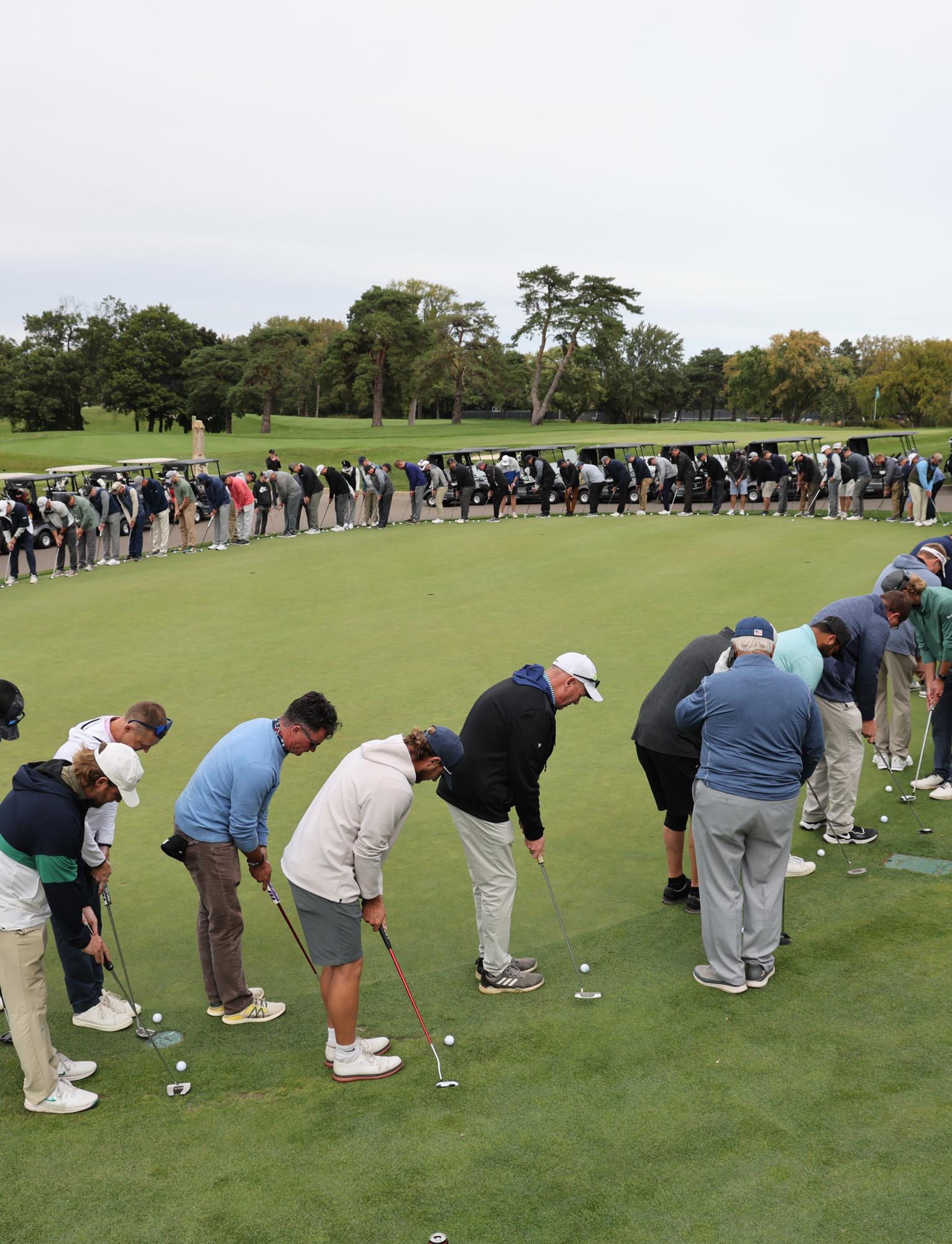
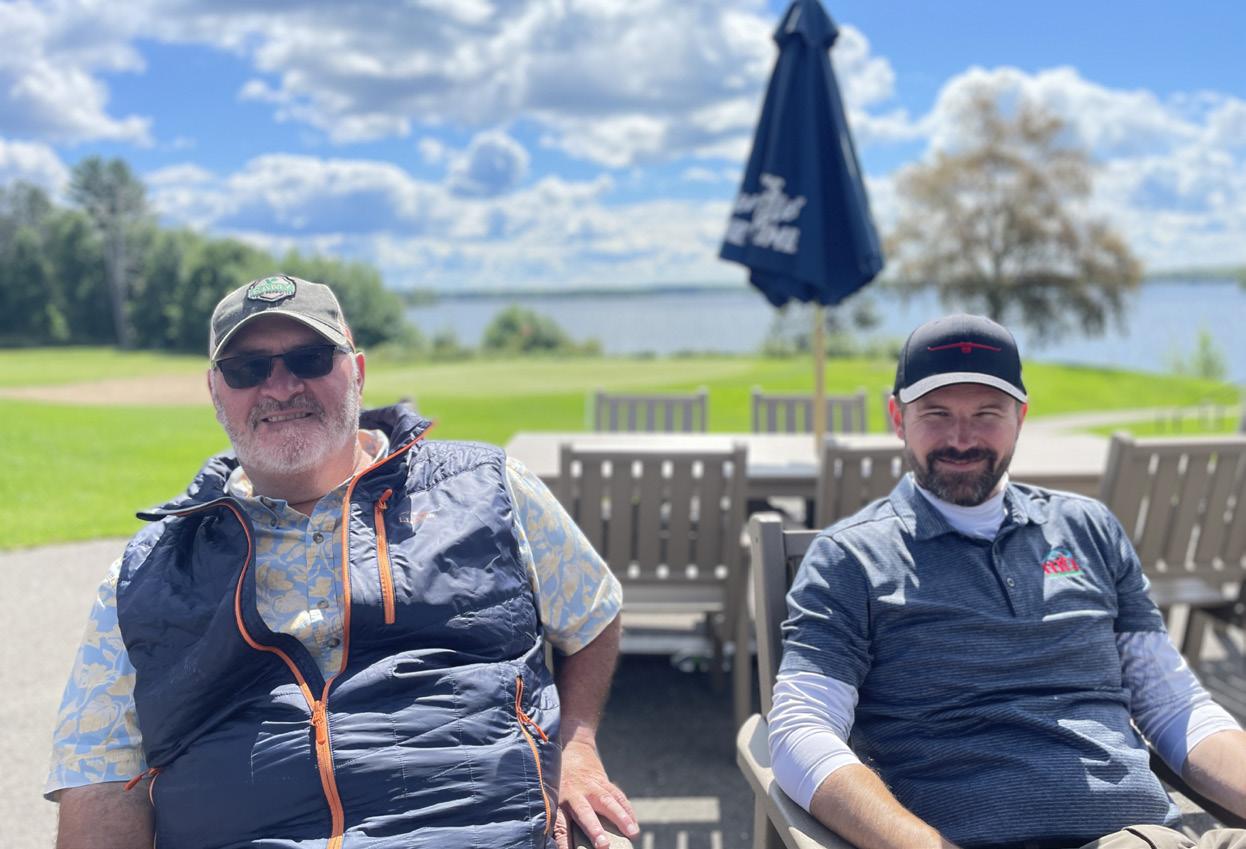
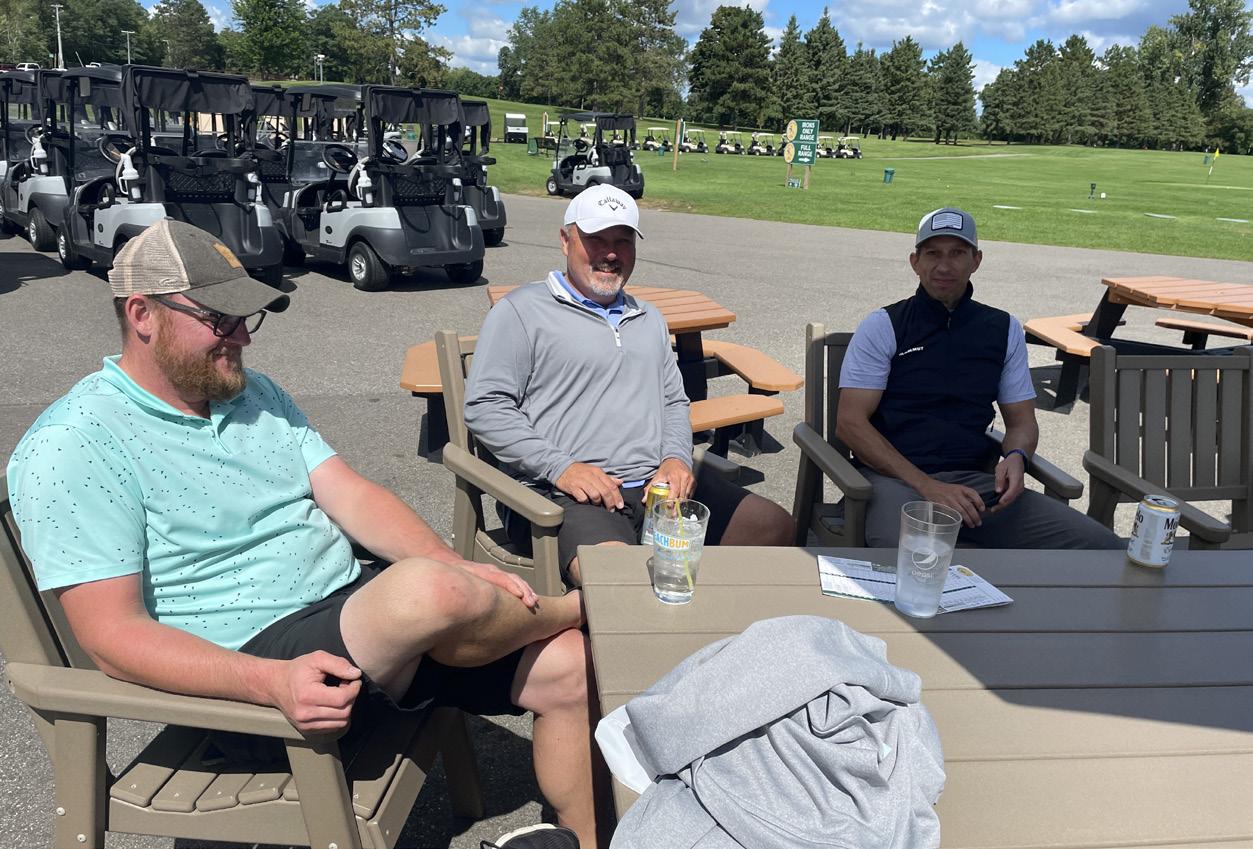
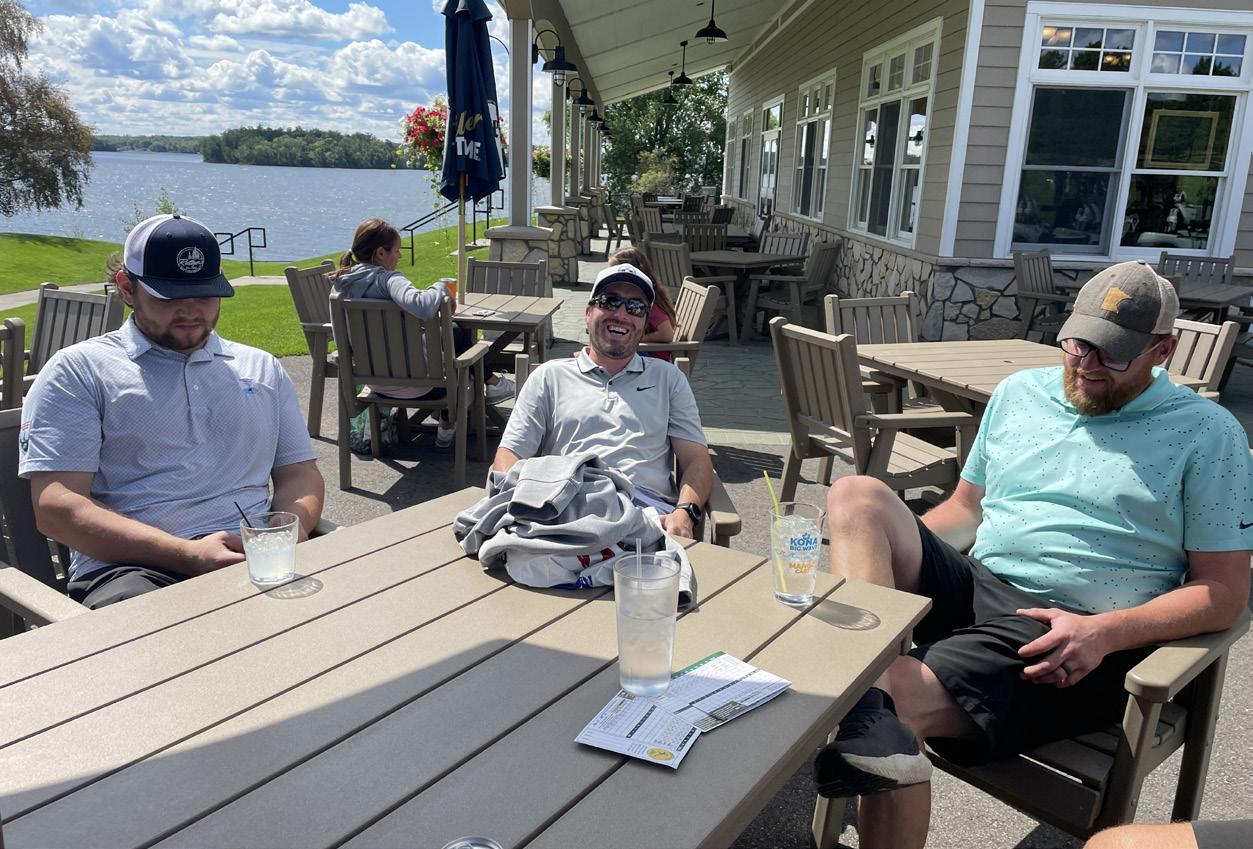
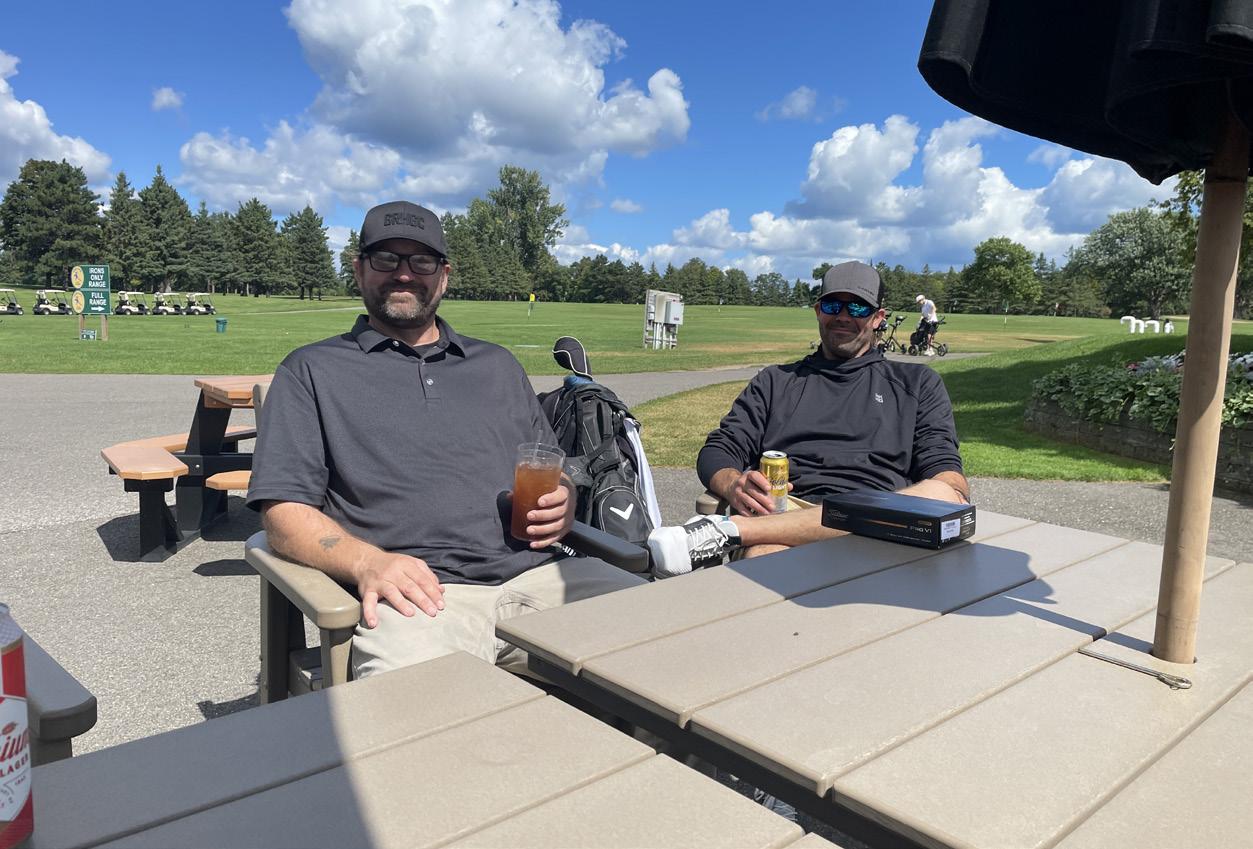
Thank you to Cody Alleman and the team at Pokegama GC for hosting our NE Exposure golf event! We had a perfect day for some golf, drinks, and conversation.

2026 BOARD OF DIRECTOR CANDIDATES
ELECTION WILL TAKE PLACE ONLINE PRIOR TO THANKSGIVING. TWO NEW DIRECTORS WILL BE ANNOUNCED AT ANNUAL MEETING ON DECEMBER 2ND.
BOARD OF DIRECTORS CANDIDATE: Dan Ament
Superintendent Keller Golf Course

Qualifications, Awards and other points of interest?
Bachelor’s Degree from University of Minnesota 2010 Class A Superintendent been in the business almost 18 years
Have worked at many different types of facilities public/private/govt
Completed a 3-year organic only golf course trial and spoke about it at Northern Green
Why are you running for office?
I am running for office as it is time to step up and help give back to an organization that has given so much to me. I feel we are in a good place in our industry with the business of golf booming after COVID. There is no better time than now to continue to plan for the future of our industry. I enjoy being a leader, stepping up, and giving back. Being elected to the board will provide me the chance to do exactly that. I was recruited to run a few years back, but did not have the time to put in to make sure I gave it my best.
What are the biggest issues facing the MGCSA today?
With golf booming these days, players and revenue are now the least of our concerns. Being busy is a good thing, but we still have many challenges to continue moving forward.
Advocacy is at the top of the list. We need to keep showing we provide value and continue to tell the good of golf. Our water, pesticide usage, and labor depend on it. There have been many bills and programs in place that would really reduce the tools in our toolbox if we don’t speak up about all the good, we provide.
Labor is next up. We must continue to recruit young people to the industry and add as many members as possible. Turf students are few and far between so there many not be enough qualified people to take over in the future. There are also laws that could be changed to help fund our labor and make it easier to do our day-to-day work.
Lastly stewardship is an ongoing issue. This ties into advocacy as we must continue to push forward and be the best stewards and land managers as possible. Continue to find innovative ways to manage our properties at the highest levels while promoting our environmental impacts.
Additional comments:
I look forward to being elected to help lead my peers and our awesome organization!
BOARD OF DIRECTORS CANDIDATE: Reed Bohm
Superintendent Wildflower Golf Course

Qualifications, Awards and other points of interest?
I am interested in being a part of the MGCSA and what it stands for while also helping the industry at the state level.
Why are you running for office?
I am running for office to help the MGCSA in any way that I can. Having a person on the board with a perspective from the northern half of the state I think would be a benefit.
What are the biggest issues facing the MGCSA today?
I think the biggest issue at hand that we face is continuing to get outreach and teach the younger generation about the industry. The regulatory restrictions that Minnesota faces will also be a challenge in the coming years.
Additional comments:
Overall I love the industry and just want to help in any way that I can. The direction and the proactive approach that I see from the MGCSA is something that I would like to be a part of.
BOARD OF DIRECTORS CANDIDATE:
Dan Rootes
Superintendent
Birnamwood Golf Course

Qualifications, Awards and other points of interest?
This is my 21st year as a golf course superintendent, currently serving at my third course. My career began in 2004 at Ponderosa Butte Golf Course, a nine-hole facility in Colstrip, MT. While there, I served six years on the board of directors for the Peaks to Prairies Golf Course Superintendents Association, including one year as president, and attended multiple state and national conferences.
In 2006, my family and I relocated to Williston, ND, where I served as superintendent at Eagle Ridge Golf Club for two years. Since 2018, I have been the golf course superintendent and clubhouse manager at Birnamwood Golf Course in Burnsville, MN.I have been a GCSAA member throughout my career and joined the MGCSA in 2018.
Why are you running for office?
I am running for office to get more involved and support newer superintendents in their careers. I remember feeling intimidated as a newcomer by veterans with 20+ years of experience, wondering how they sustained such long, successful careers. I want to pass on my knowledge and insights to anyone who reaches out for guidance.
What are the biggest issues facing the MGCSA today?
My top priority is increasing and sustaining member involvement. At Peaks to Prairies, I noticed the association was represented by just a handful of dedicated individuals. I believe we should emphasize recruiting more members to run for board positions, serve on committees, and contribute articles to our publication.
Additional comments:
I would like to thank the committee for reaching out and giving me this opportunity to run. For any association to succeed, it relies on member participation, and I am eager to contribute over the next couple of years.
2025 MGCSA SCRAMBLE
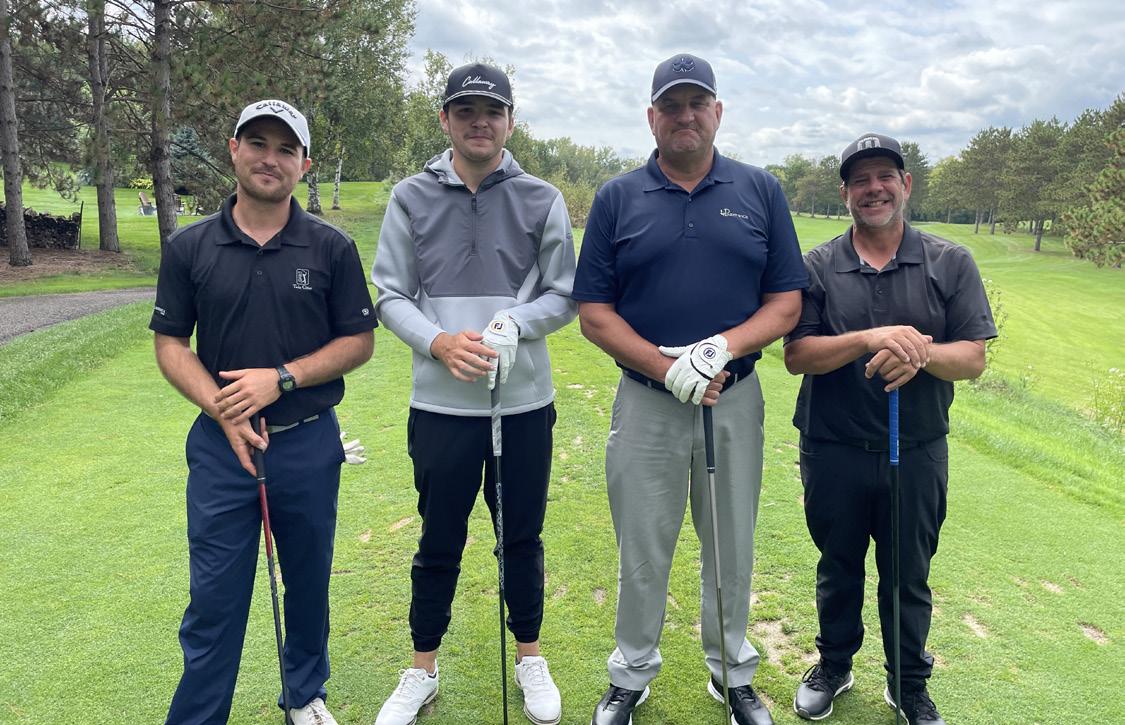
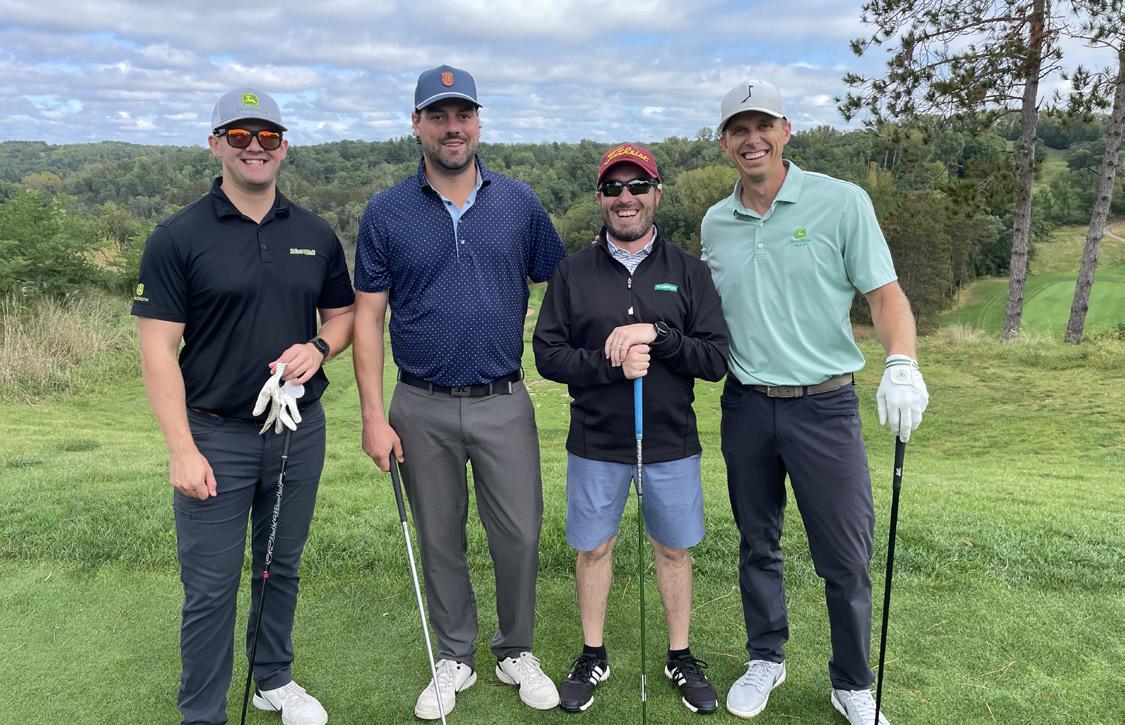
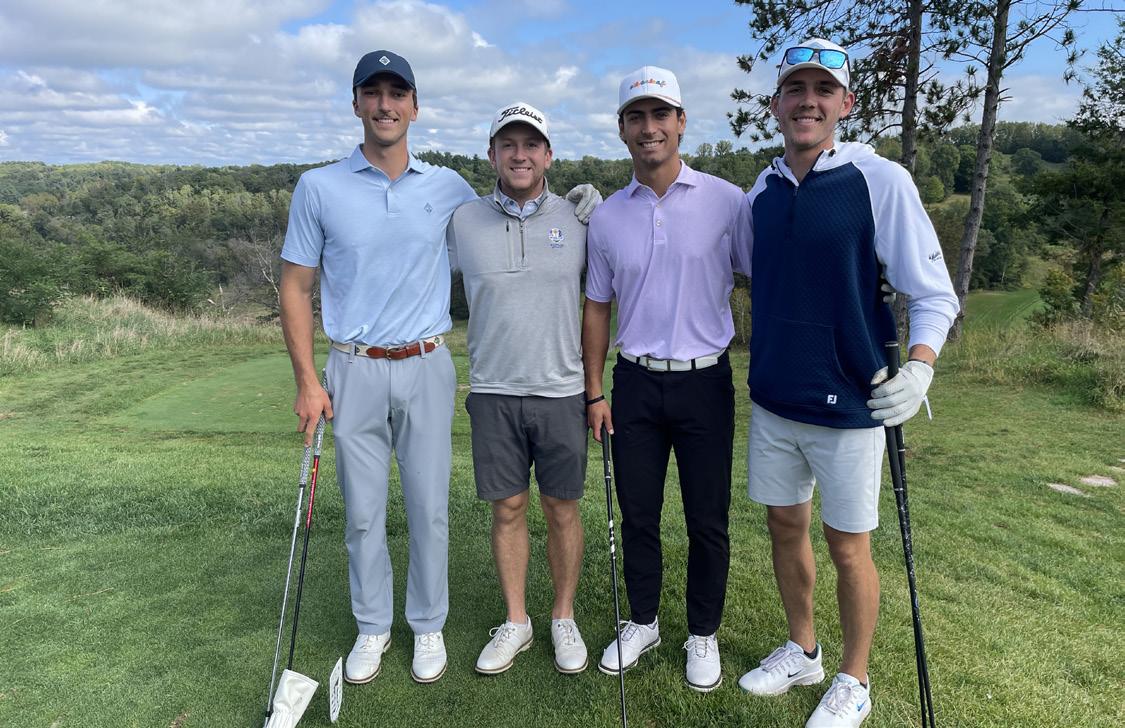
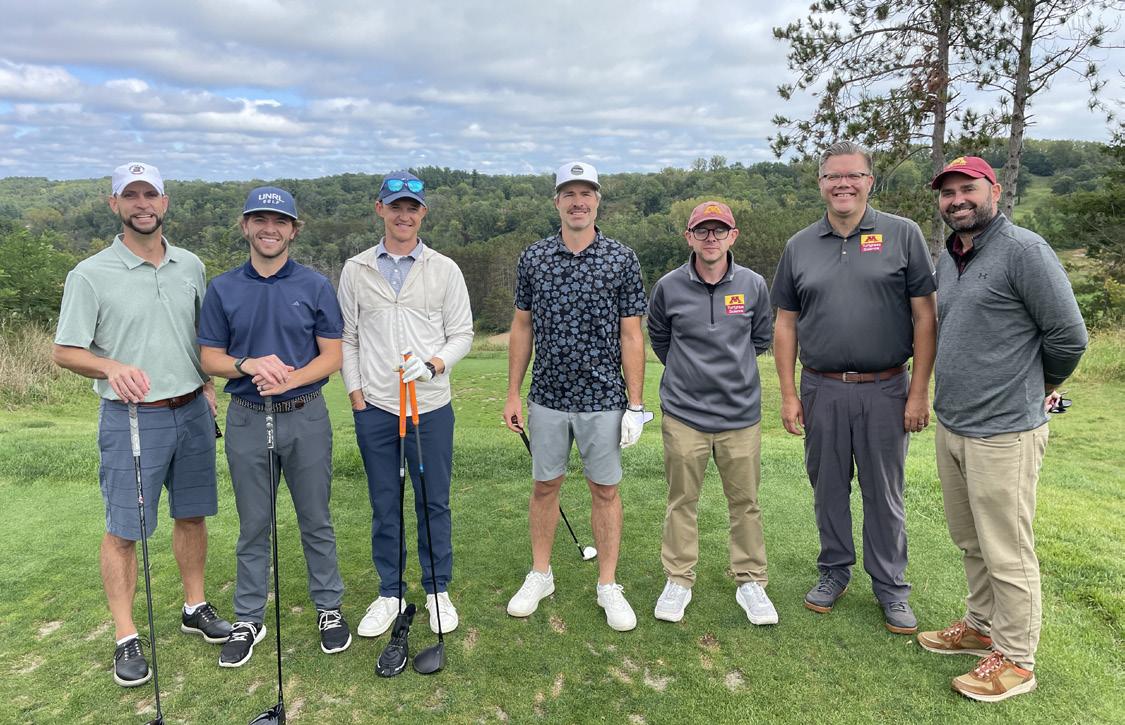
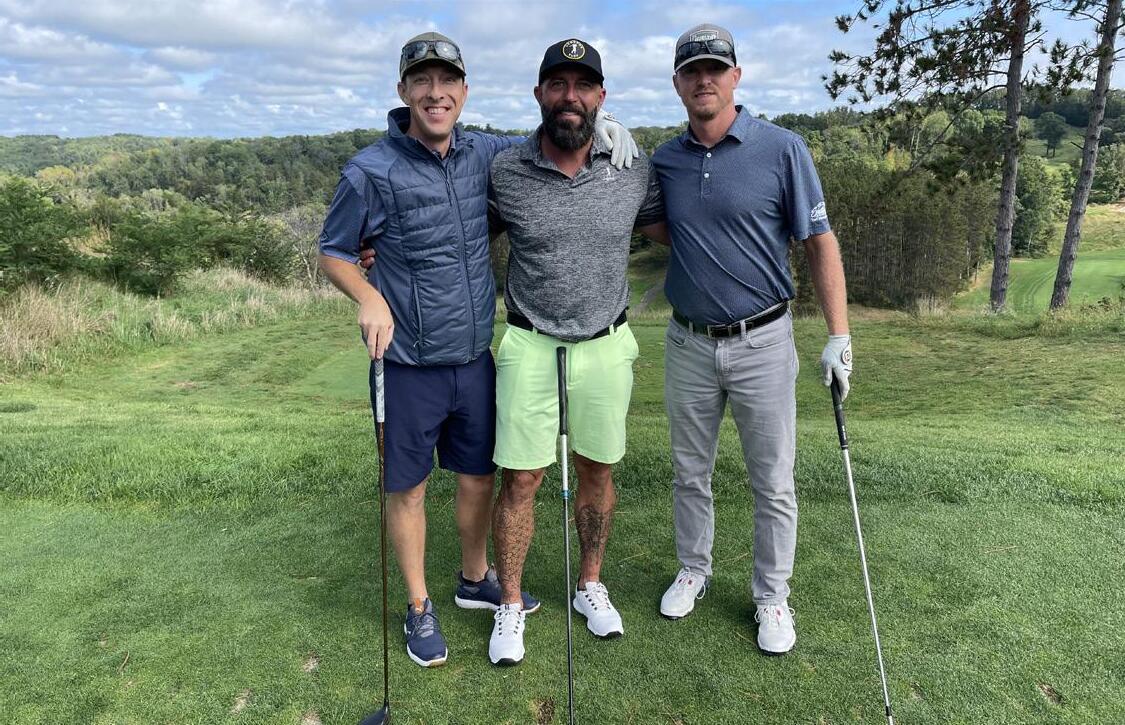
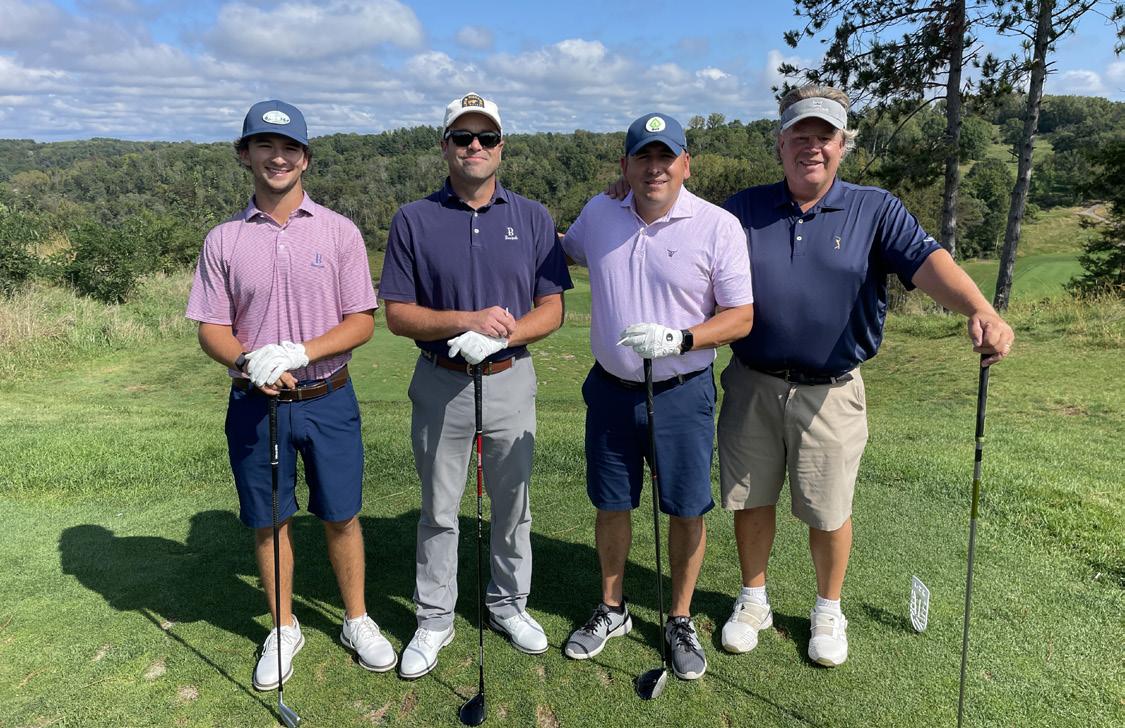
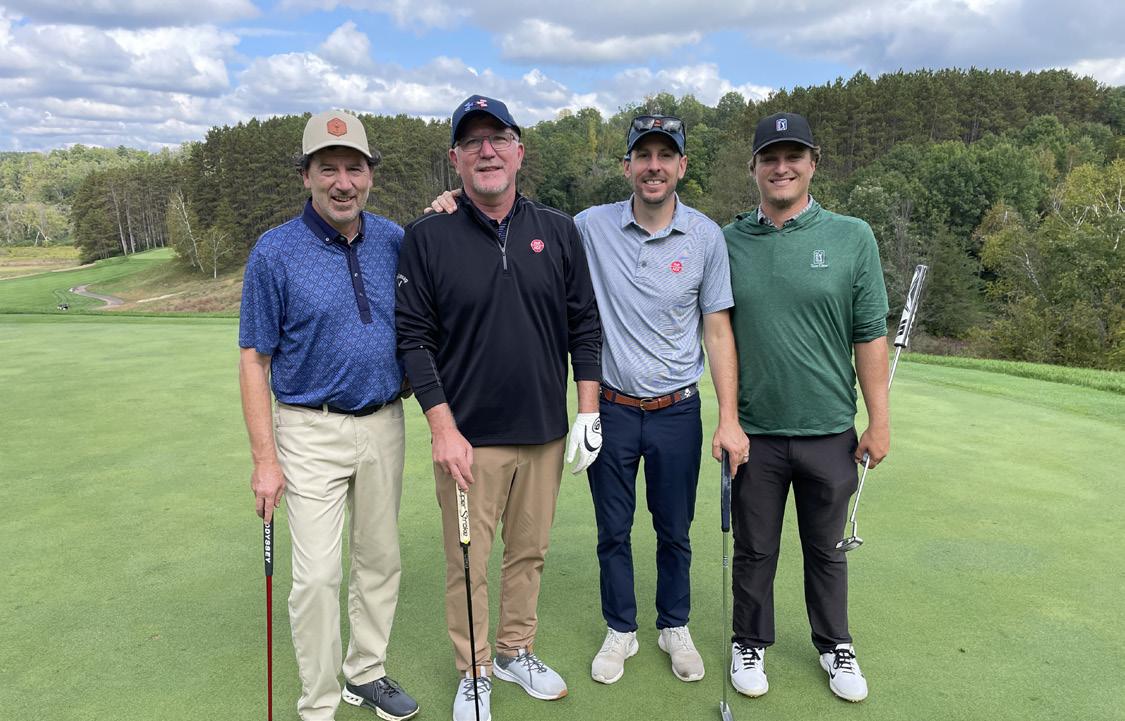
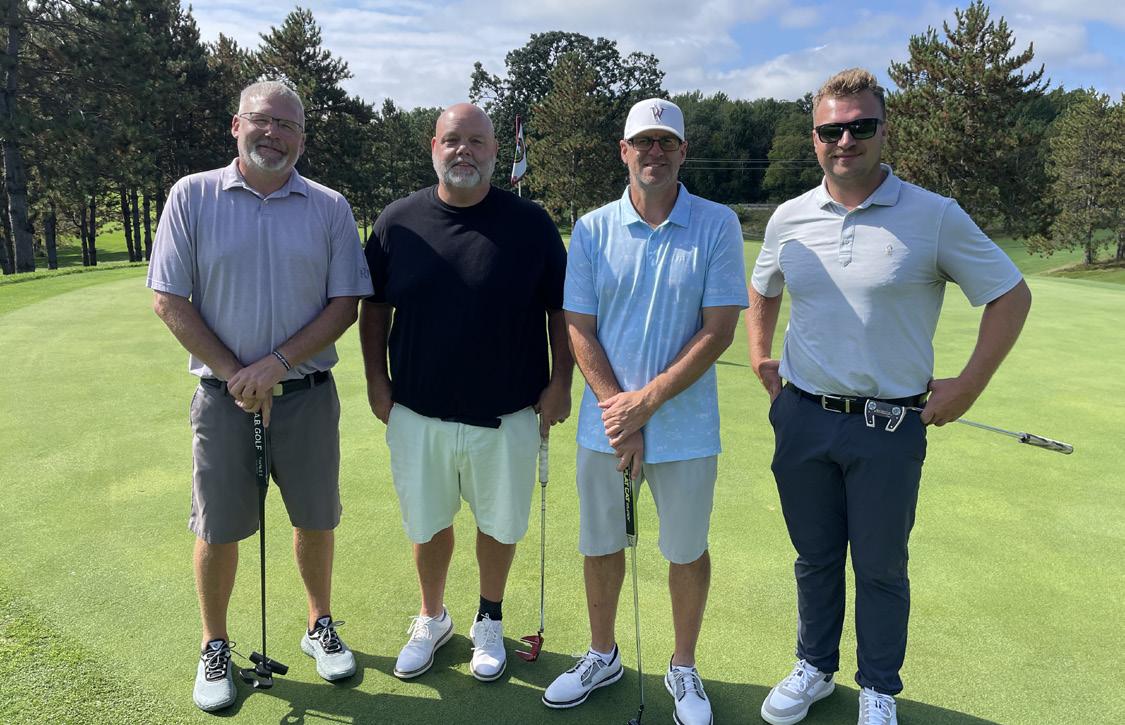
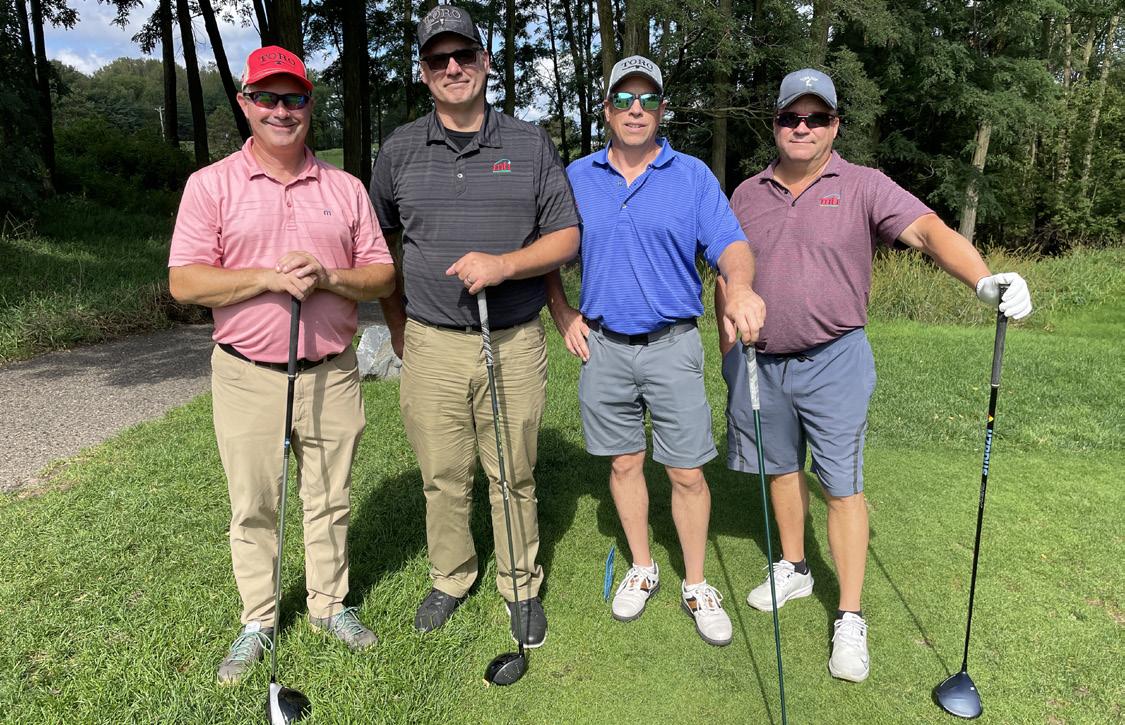
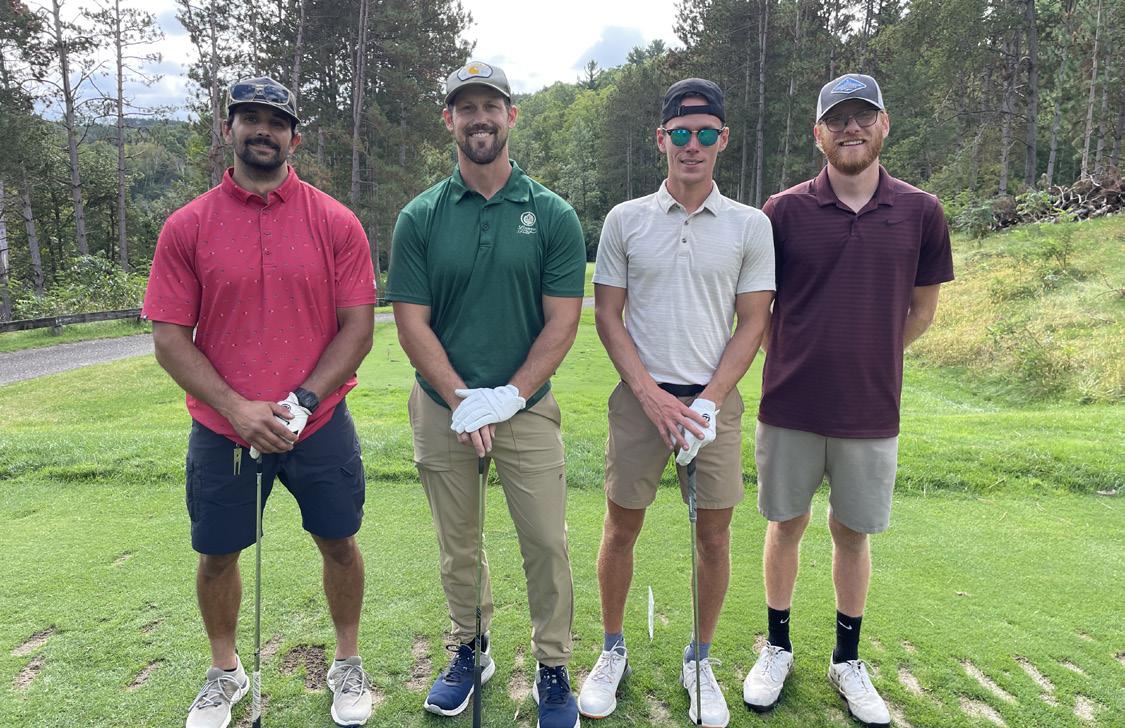
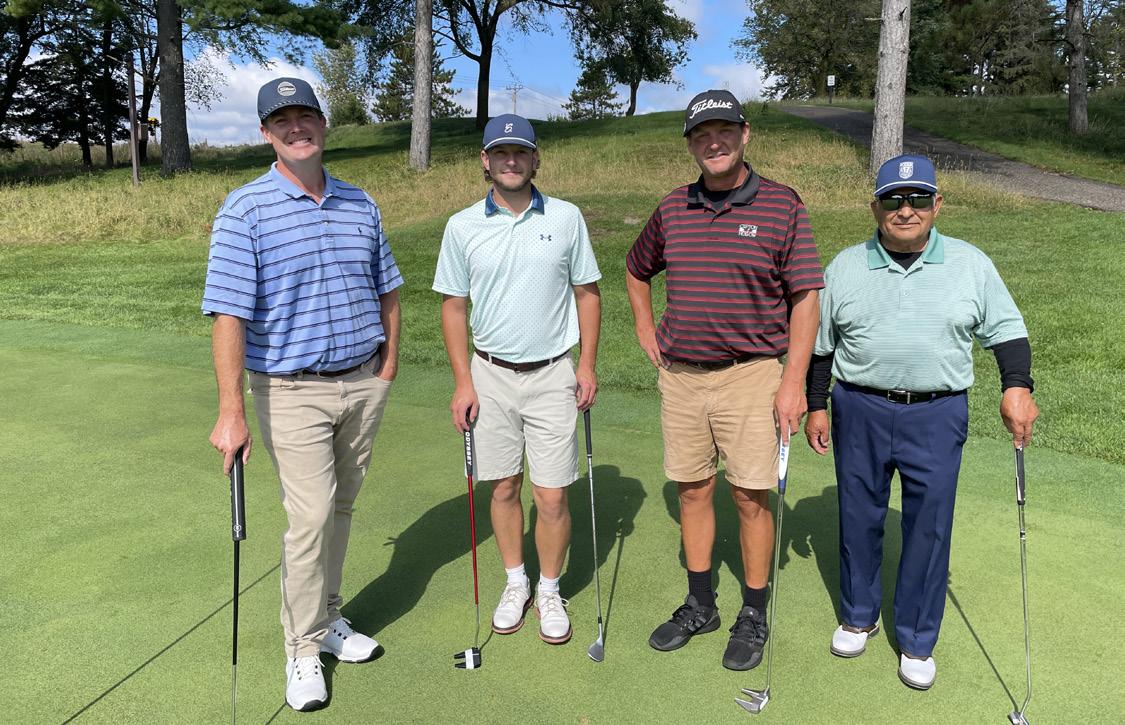
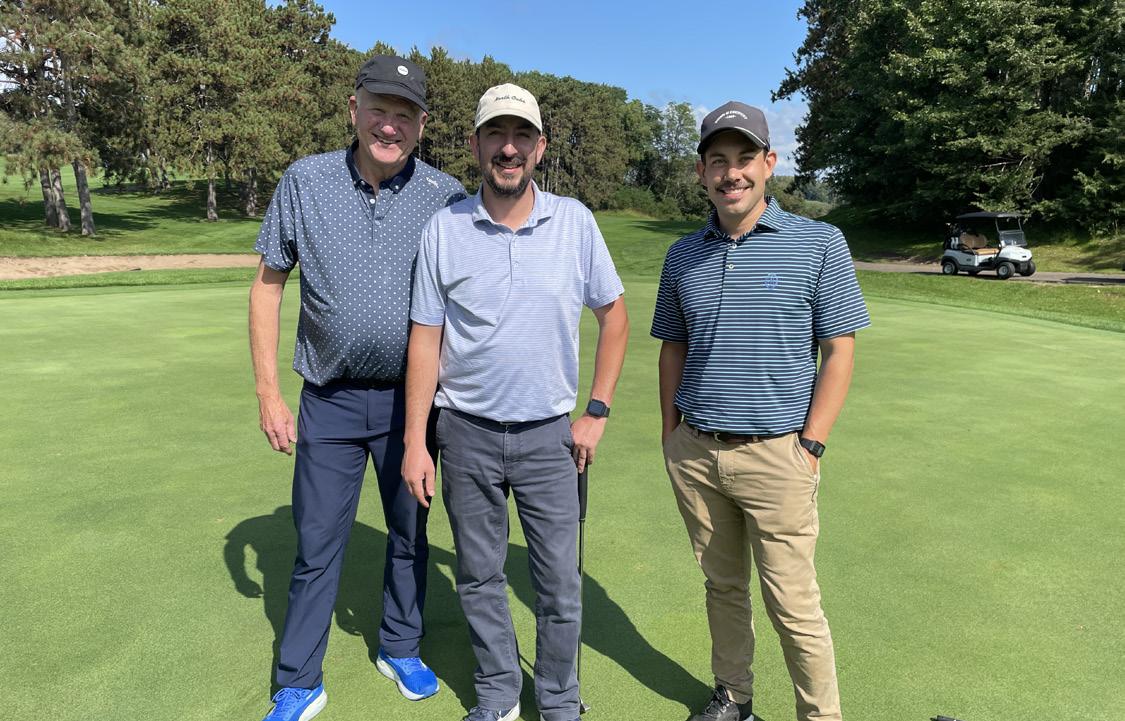
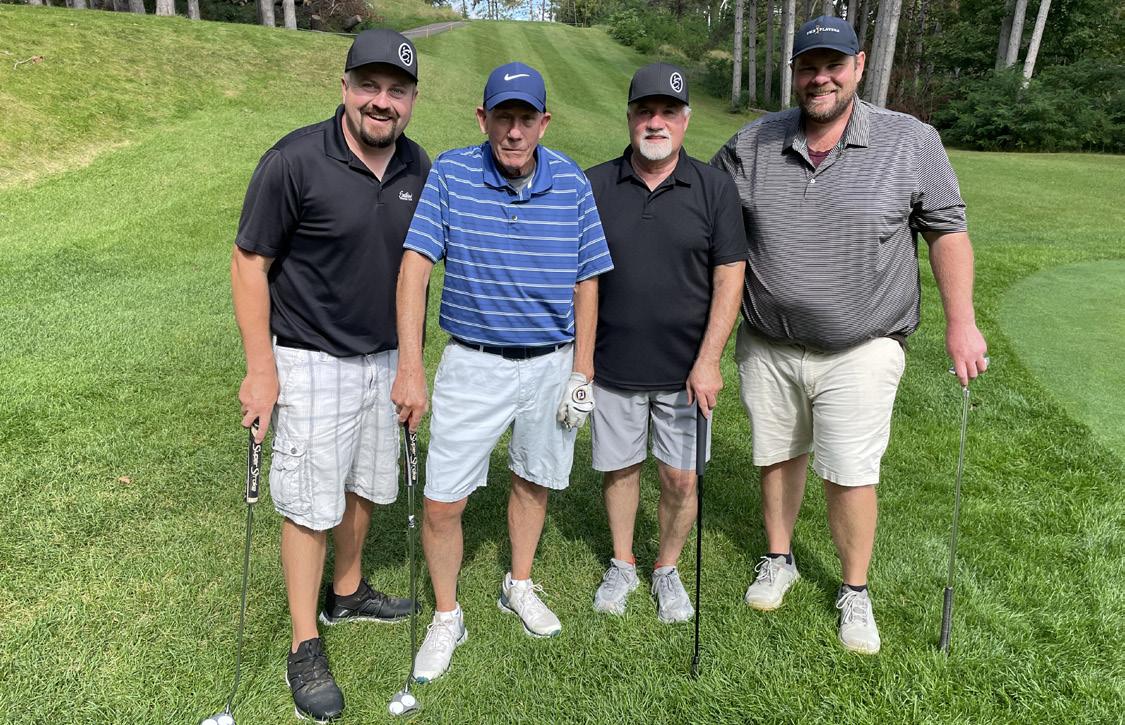
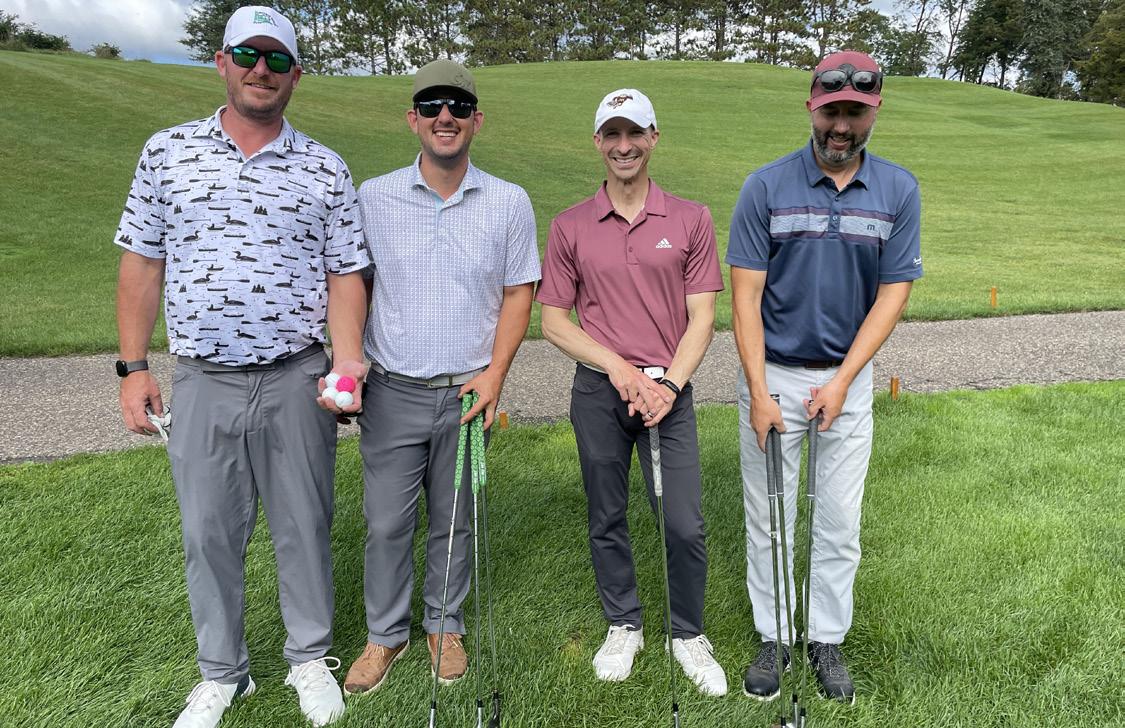
Thank you to our host Superintendent, Will Riedel, and the staff at St. Croix National Golf Course!
Revenue from this event went to support the University of Minnesota and TROE center research. Thanks to all of our participants and our annual sponsors for supporting this event! Along with revenue from our annual Round Fore Research program, we will donate $35,000 to the UMN Turf program this year!
MINNESOTA ADAPTIVE OPEN
JEFF MOLD SUPERINTENDENT
BRAEMAR GOLF COURSE
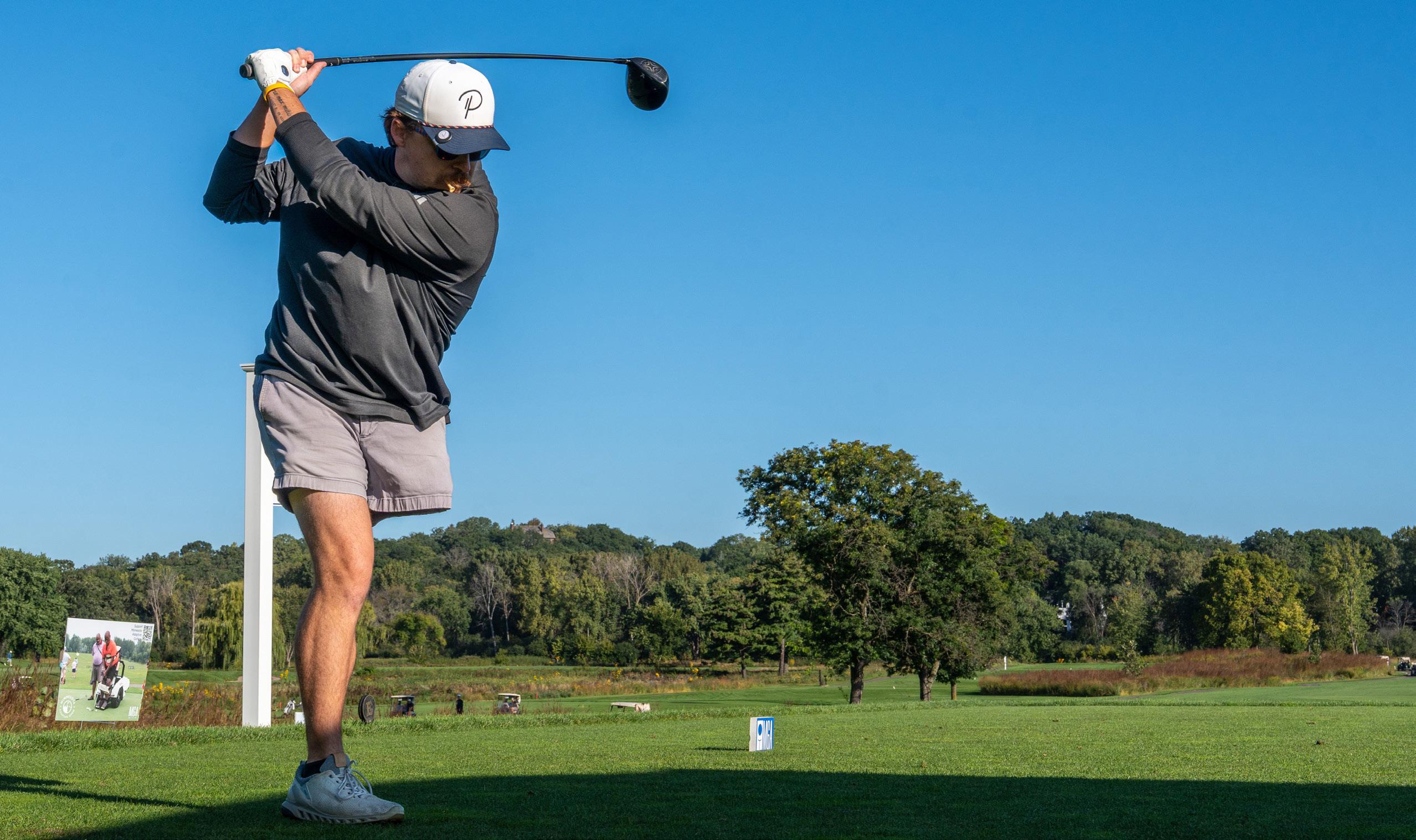
The Inaugural MN Adaptive Open hosted by the MGA and Braemar Golf Course was played on September 26th-28th, 2025.
Format: 36 holes of stroke play Saturday and Sunday with a practice round and clinic on Friday hosted by the MGA and Braemar Golf Course Professional Staff.
Things To Know:
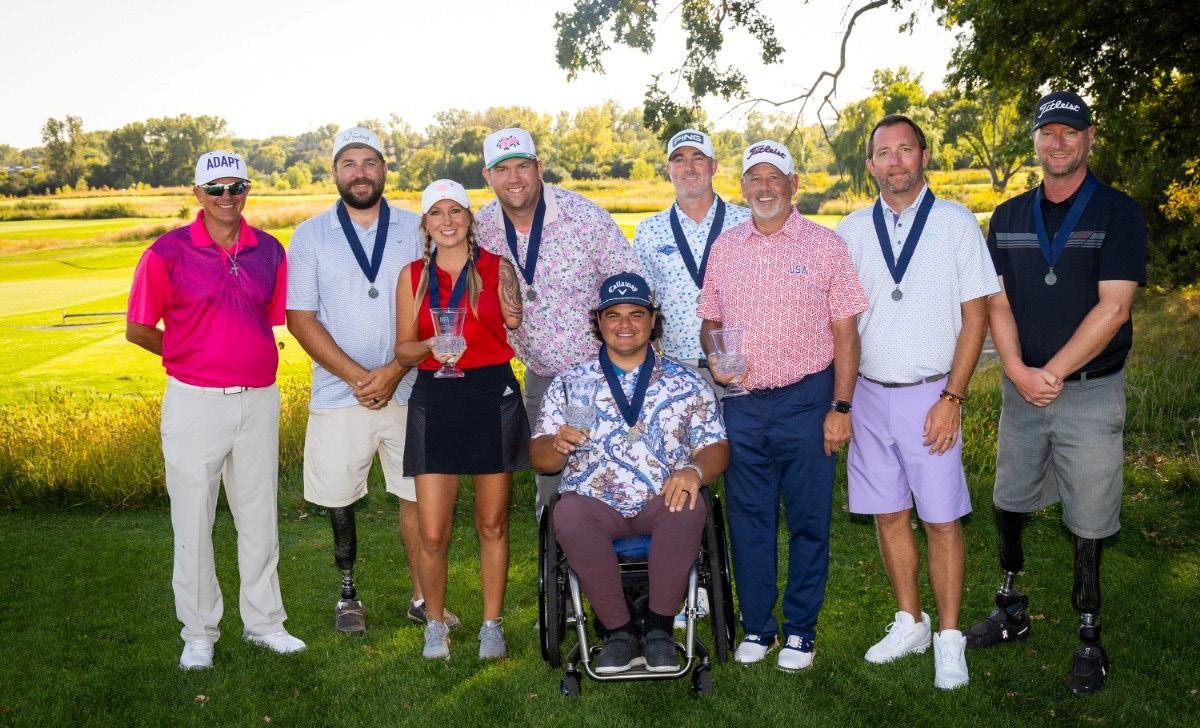
• 39 Players Registered (capped at 40)
• 3 Divisions: Men’s, Senior and Women Overall Winners
• 7 Different Impairment Categories
- Intellectual
- Coordination
- Upper Limb
- Lower Limb
- Multiple Limb Amputee
- Seated Players
- Upper Limb (Women’s)
• Players From 15 Different States
• 12 Minnesota Players
• #1 Seated Player in the World-Max Togisala
Braemar’s Long History of Adaptive Golf:
• 1979 to Present – Sister Kenny Rehabilitation (Now Courage Kenny) begins adaptive golf instruction so people with physical disabilities can learn to play the sport to enjoy with family and friends.

• 2000 – Larry Nelson Adaptive Program moved to Braemar.
• The City of Edina programs and supports an Adaptive Golf league and lessons at Braemar run by its PGA Golf Professionals.
• June 2025 – Braemar hosted an AdapTee Clinic to bring the game to any golfer with a disability who has difficulties completing a swing path.
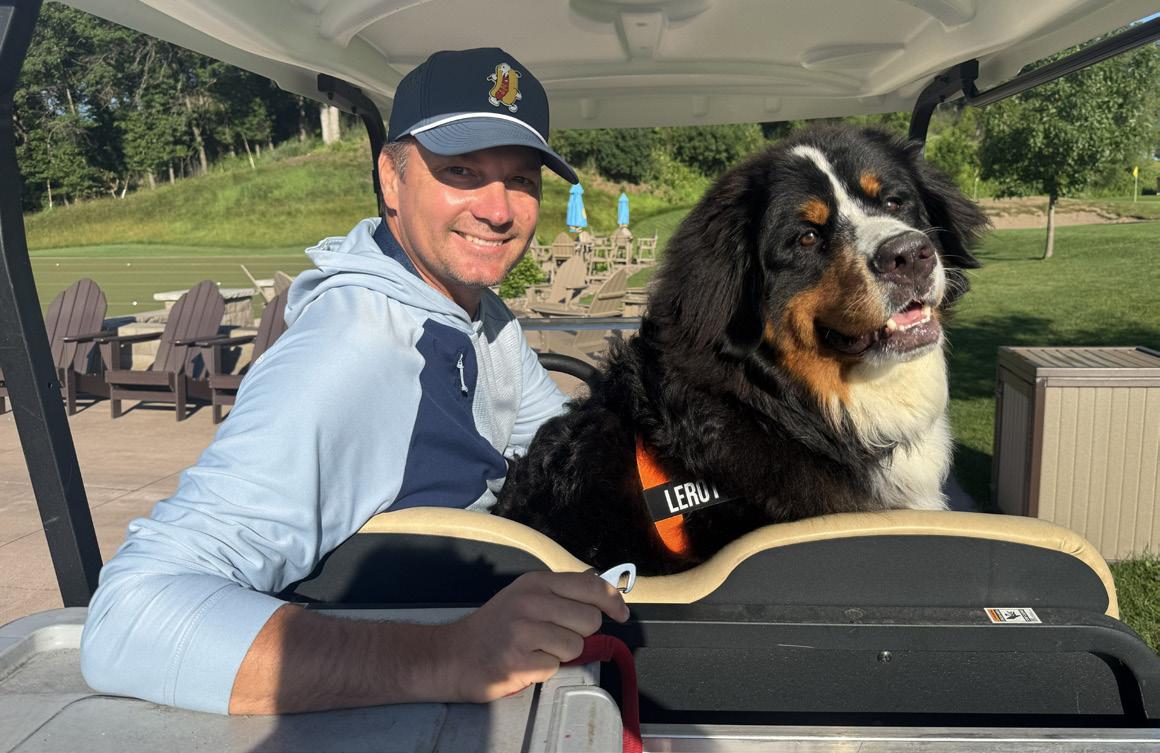
The main question/concern that was asked about hosting this event was how would the greens handle the VertaCat and SoloRider mobility carts? We didn’t have any concerns about the SoloRider mobility carts because we have been using them on our Academy greens every Monday in the summer for the past 40+ years. The VertaCat mobility cart we have never used but after the three days of usage on the putting surfaces, the only signs of “damage” was scuffing. These marks were just like a golfer dragging their feet on the greens. The only signs of this were on our practice putting green during the clinic on Friday when we had multiple carts in a small area. After a few days you couldn’t notice anything.
Braemar Golf Course is excited to be hosting this event again next year after a successful 1st year. It was a great three days watching all these athletes compete and knowing all the hard work they put in and seeing the reward. It’s amazing what they can accomplish on the golf course.
























































2024 STEWARDSHIP GRANT RECIPIENT: SPRINGFIELD GOLF COURSE
By: Jenn Schultz, GM
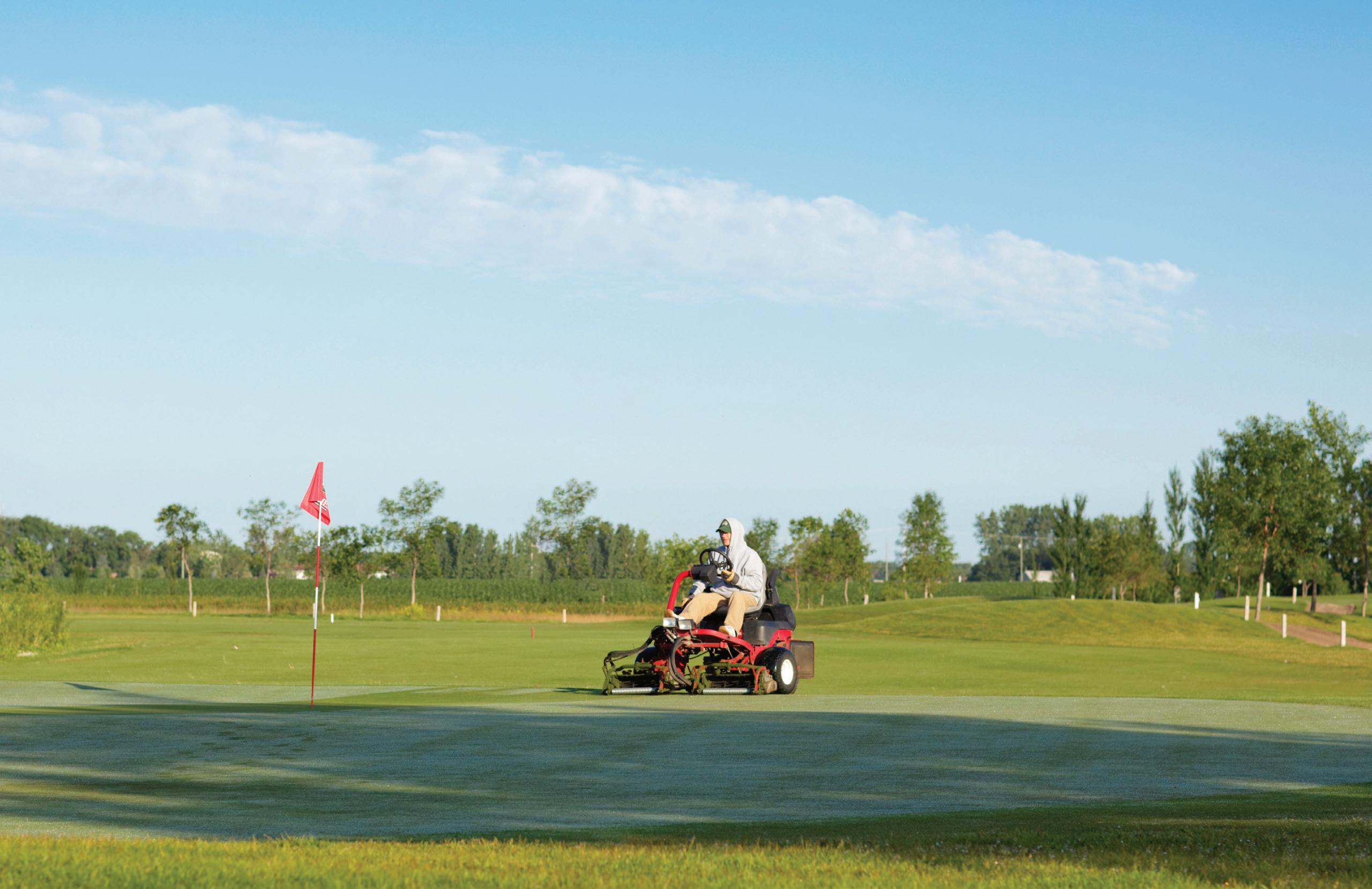
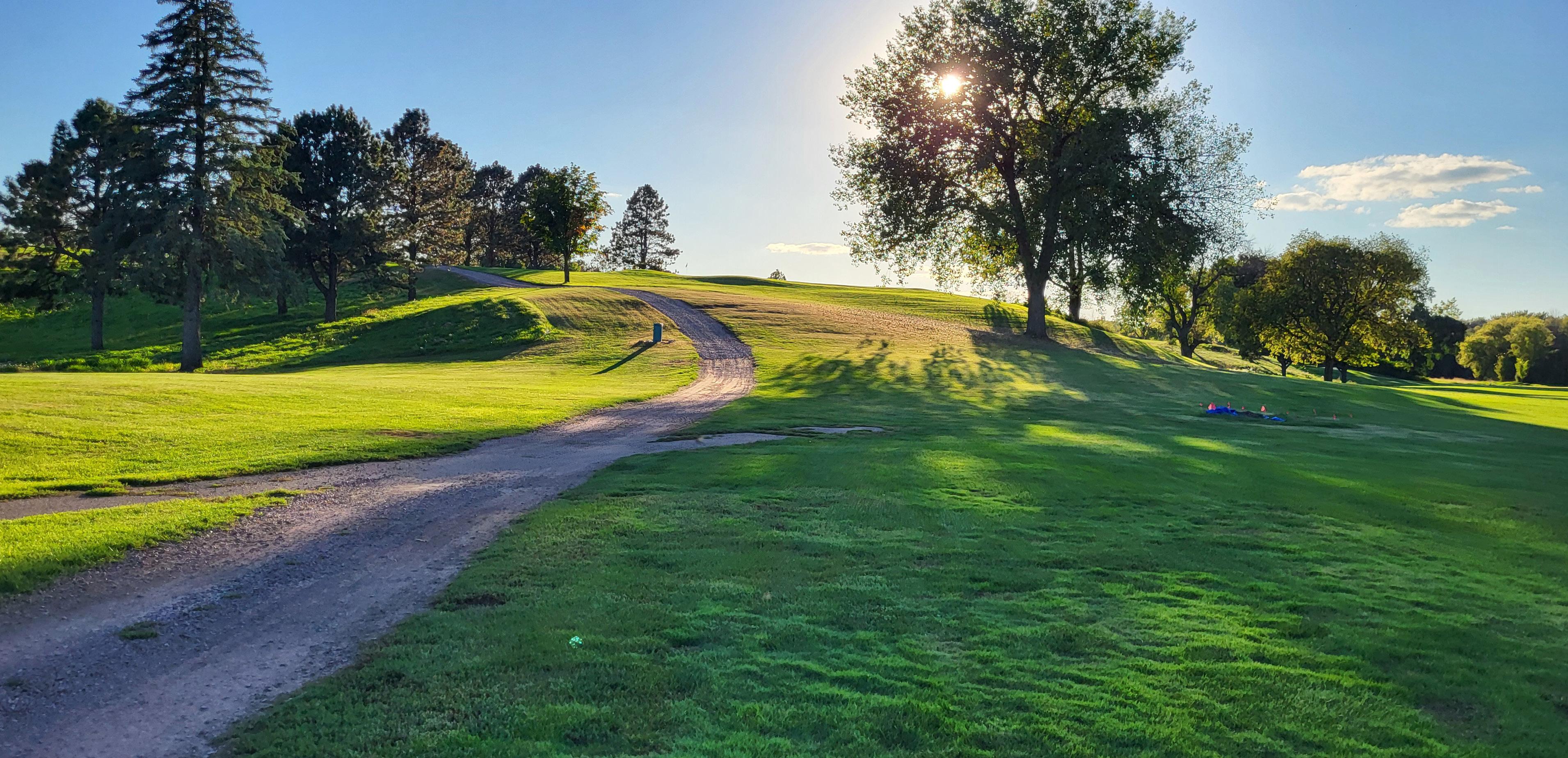
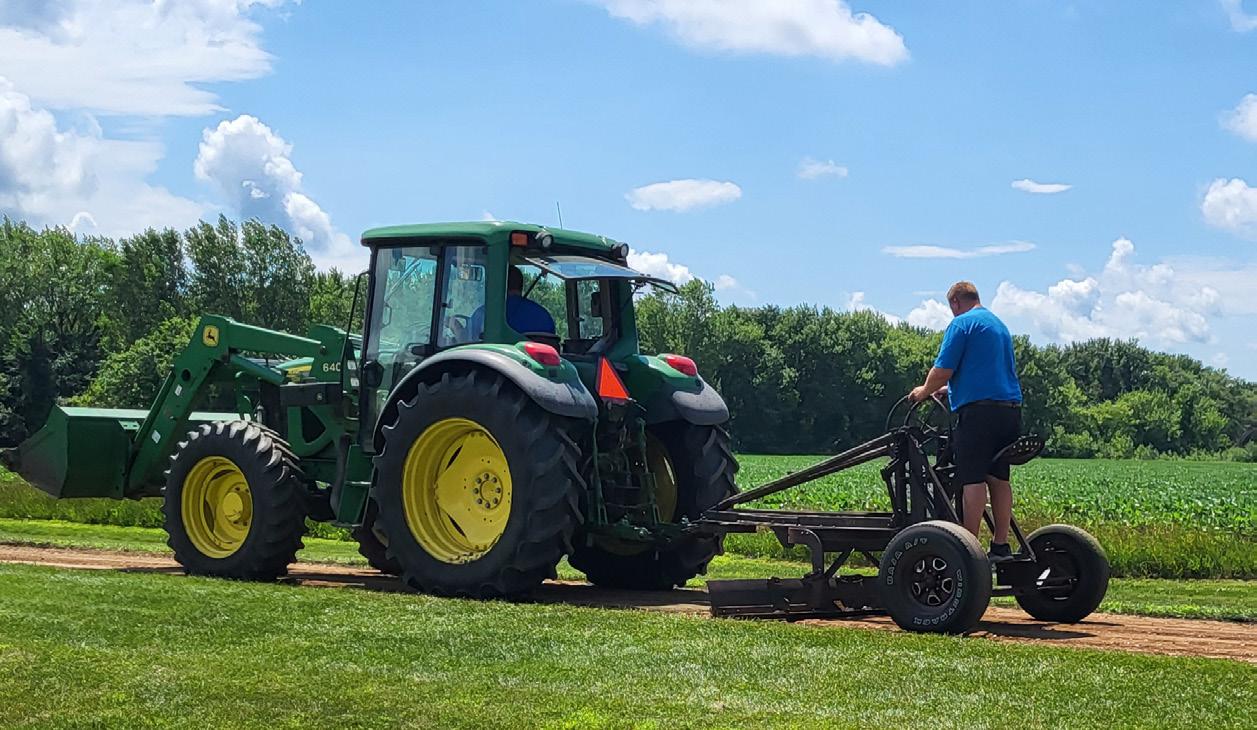
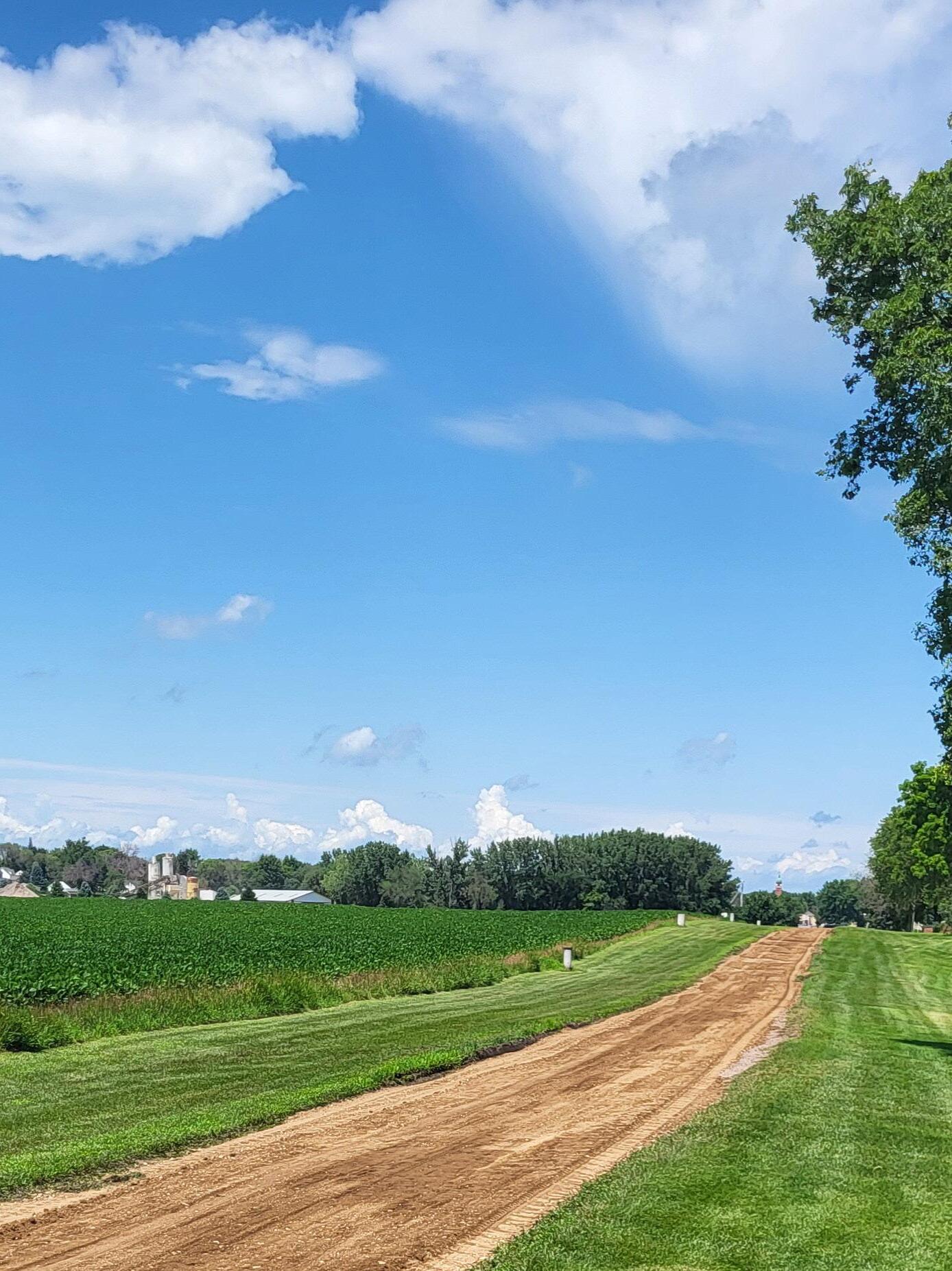
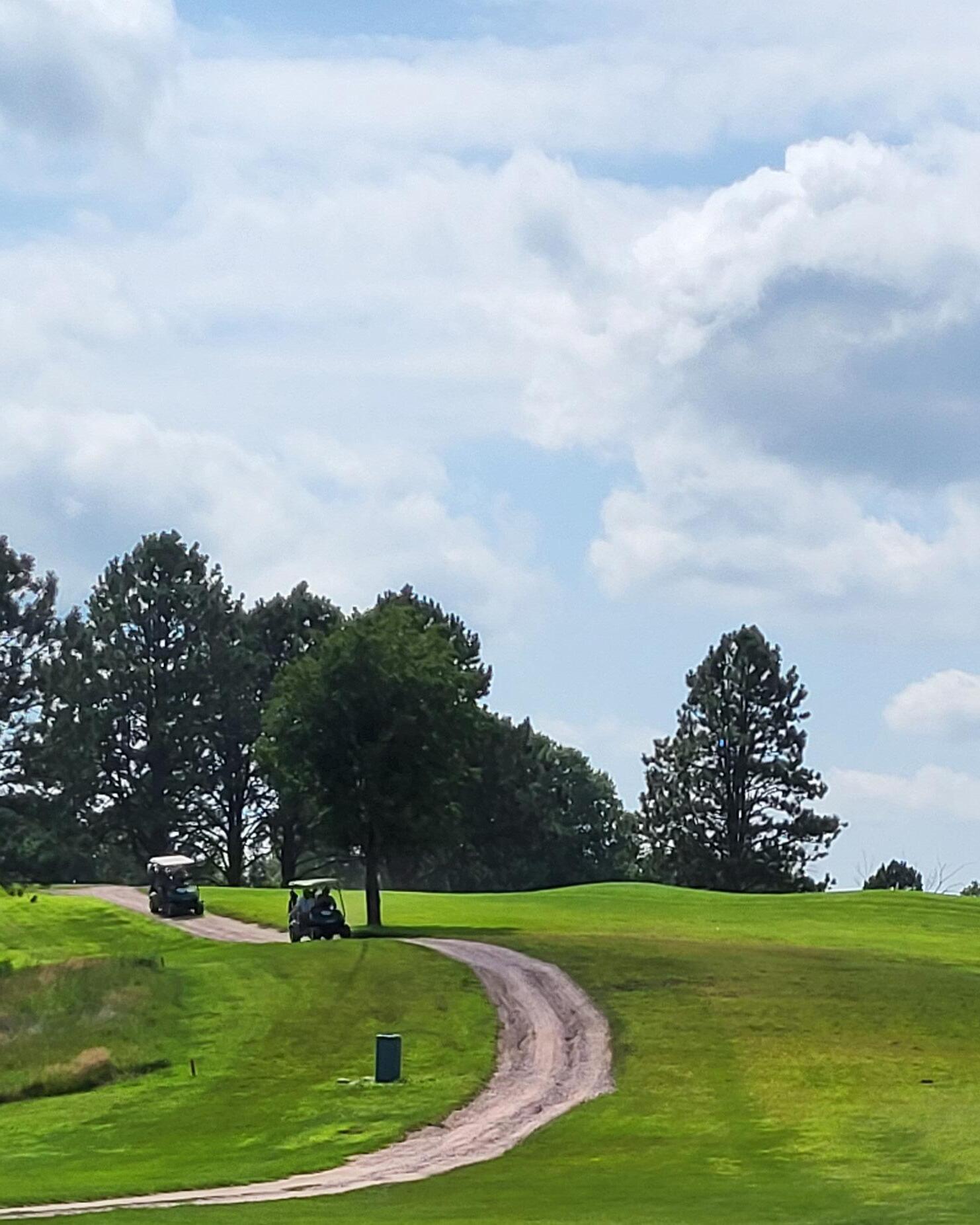
Another set of projects taking place at the Springfield golf course is smoothing the paths for safe play and use during a quick round of golf. Thanks to the volunteer hours, borrowed equipment, (one piece shown here is 100 year old grading equipment), and donations and grant funds for materials. The board members of the Springfield golf course were able to continue to improve the oldest and newest paths used on the course for
golf carts and equipment.
These areas have been significantly impacted from floods over the years, and restoring them will help keep them more resilient to any future issues.
The Springfield Golf Course was built on man hours from volunteers and continues to be improved by volunteers dedicating time to several small projects similar to this one. By maintaining and
improving paths allows safe access to and from or on the course for all the golfers. Our members are significantly grateful to the MN Golf Course Superintendents association for their generosity. The contributions have paved an impact to the use and future of the Springfield golf course.

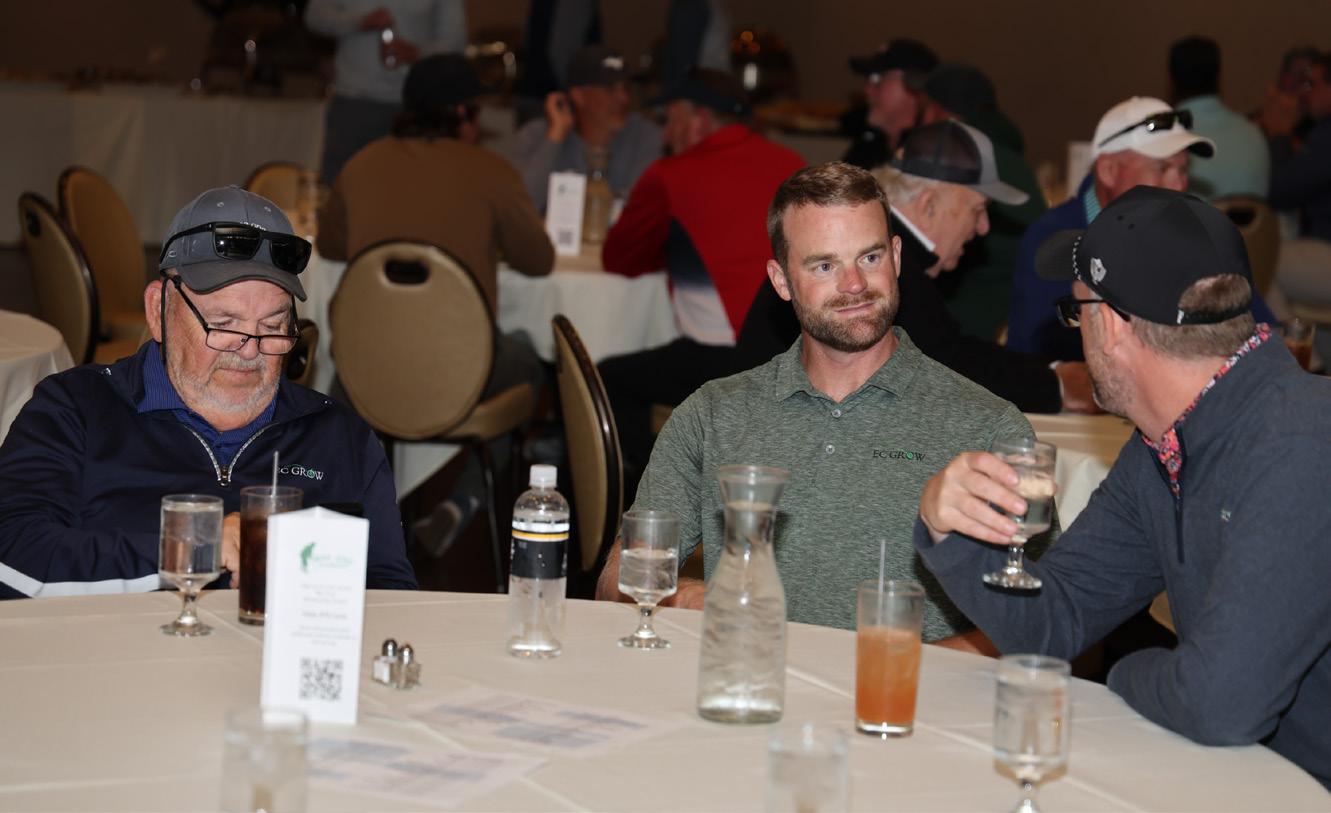
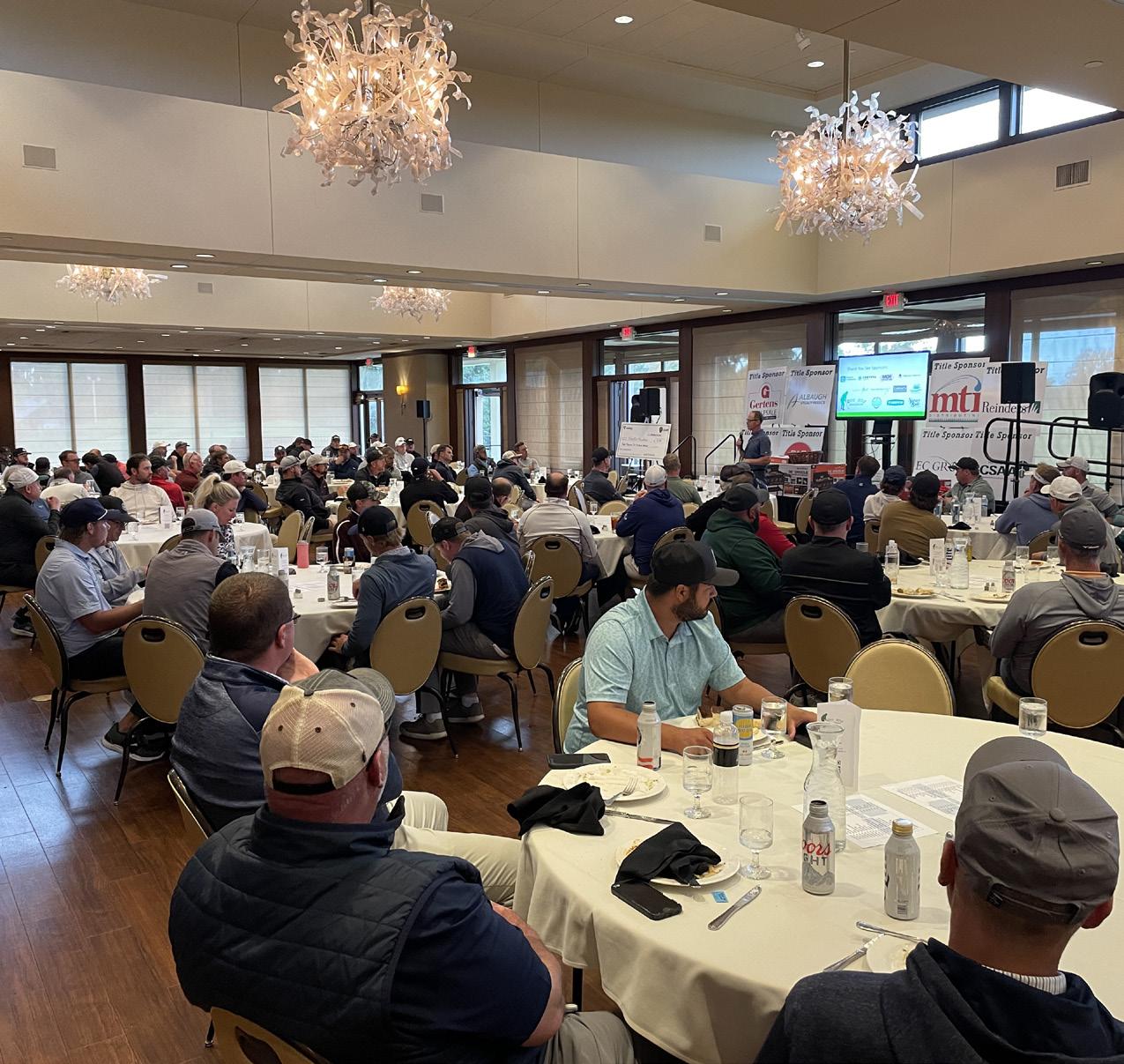
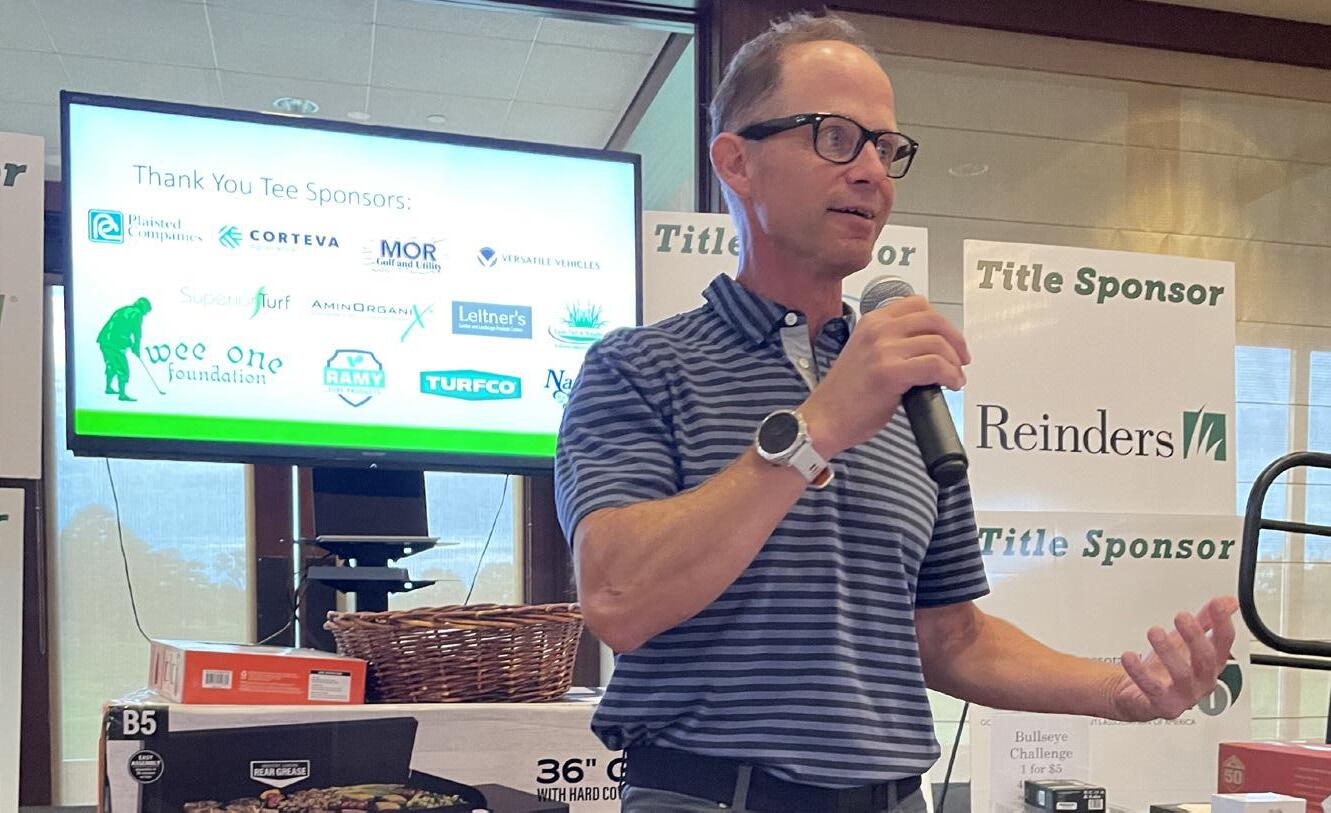
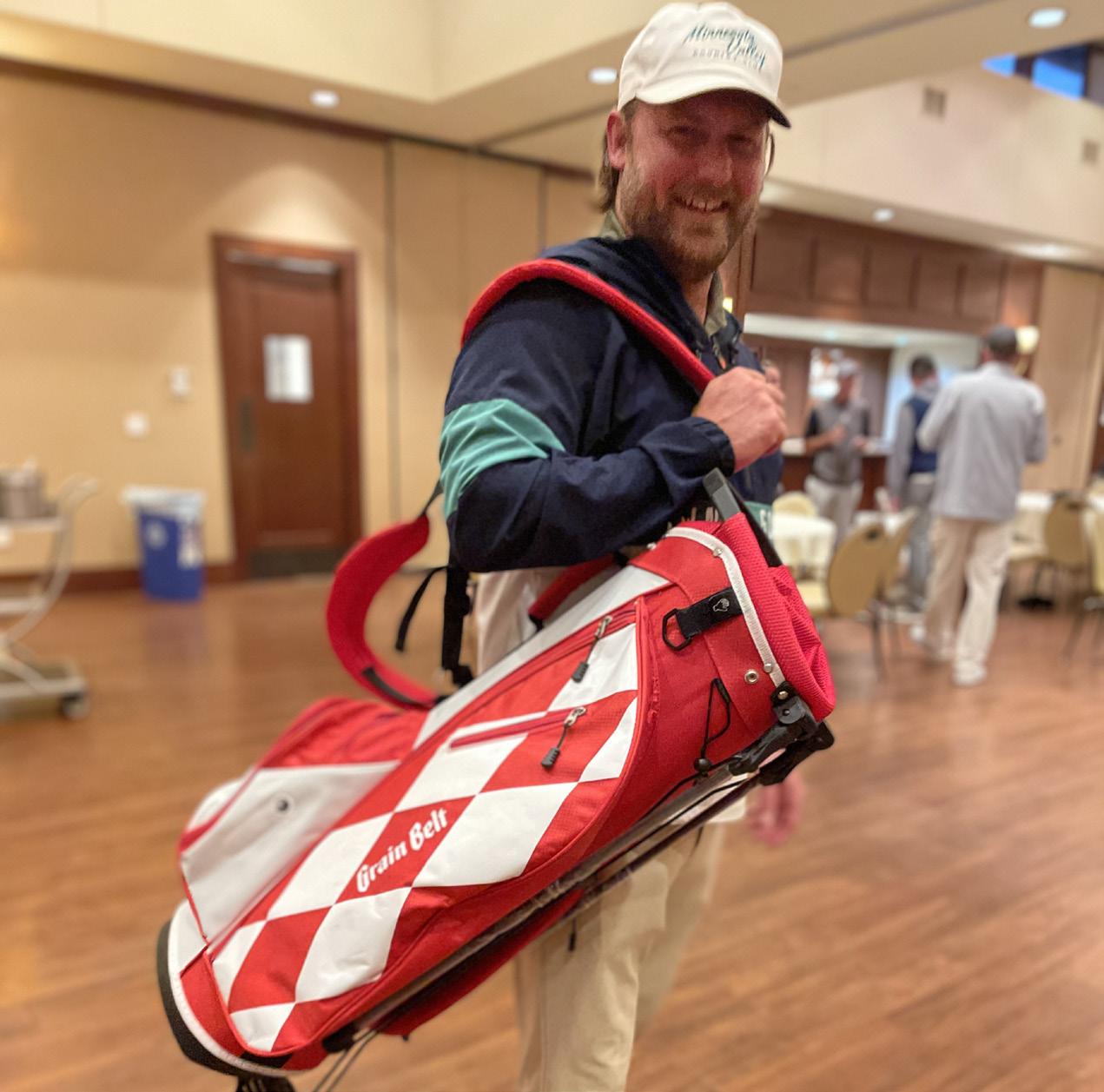
2025 WEE ONE - OAK
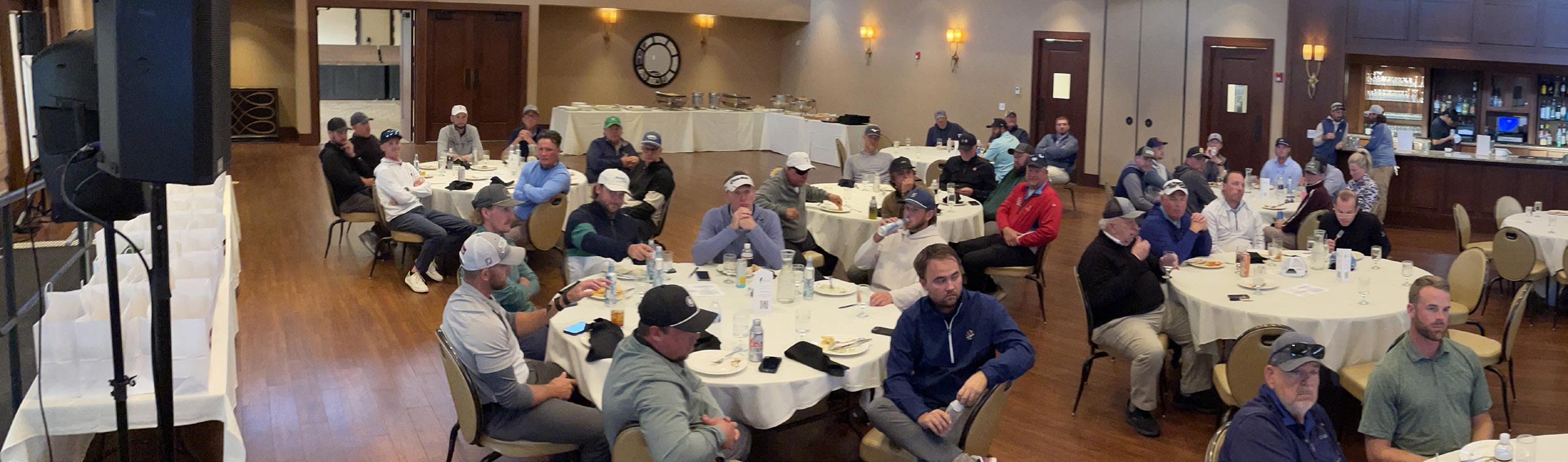
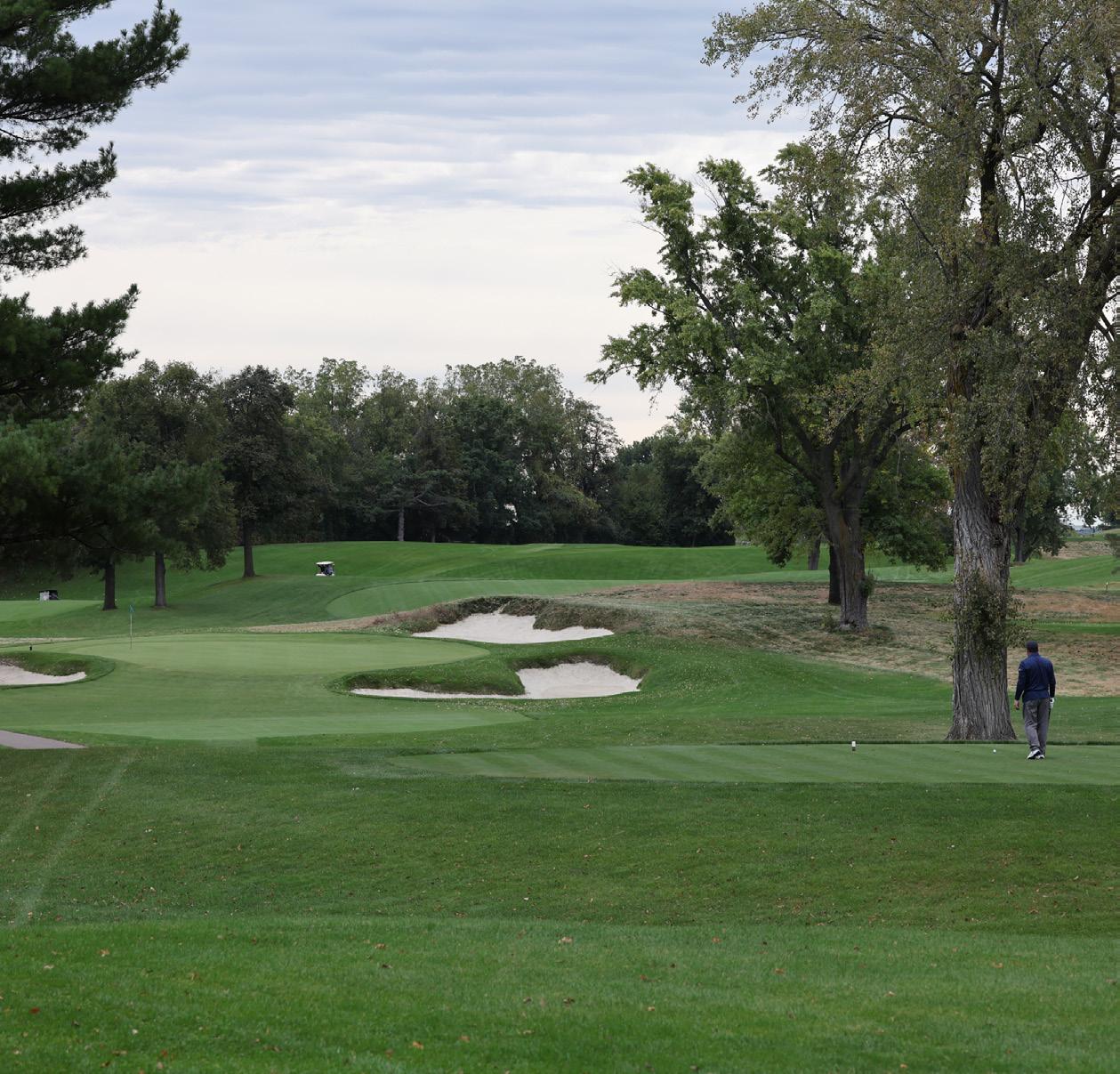
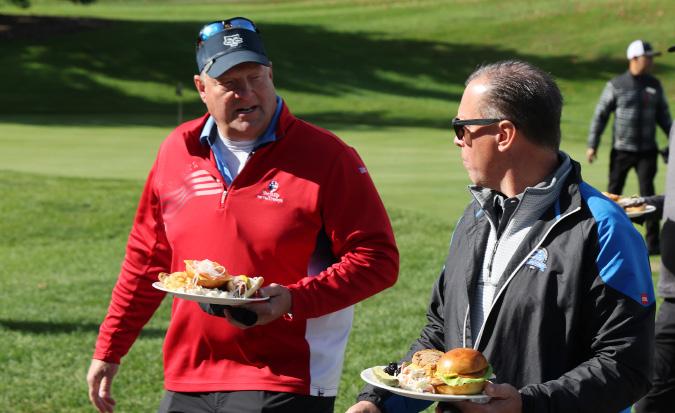
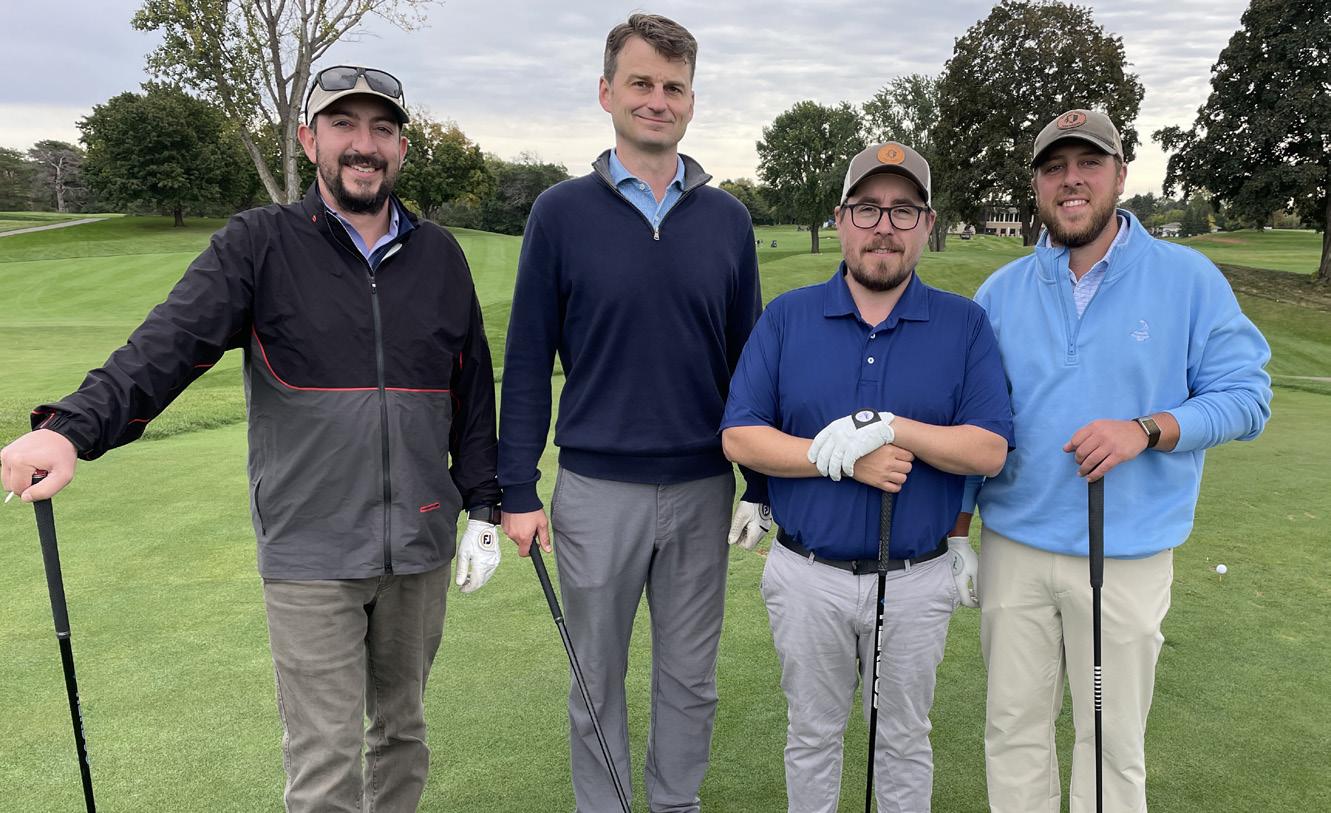
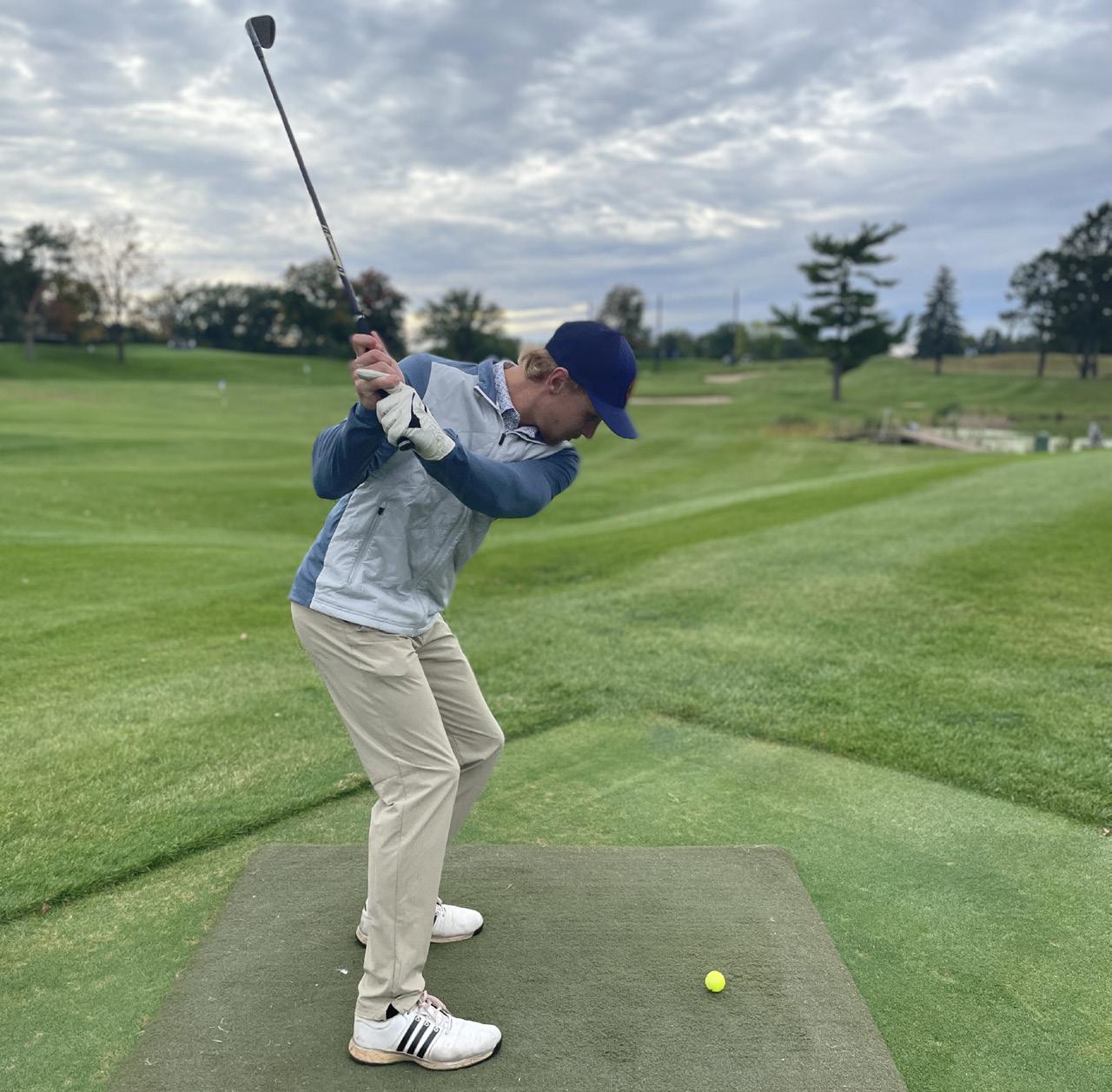
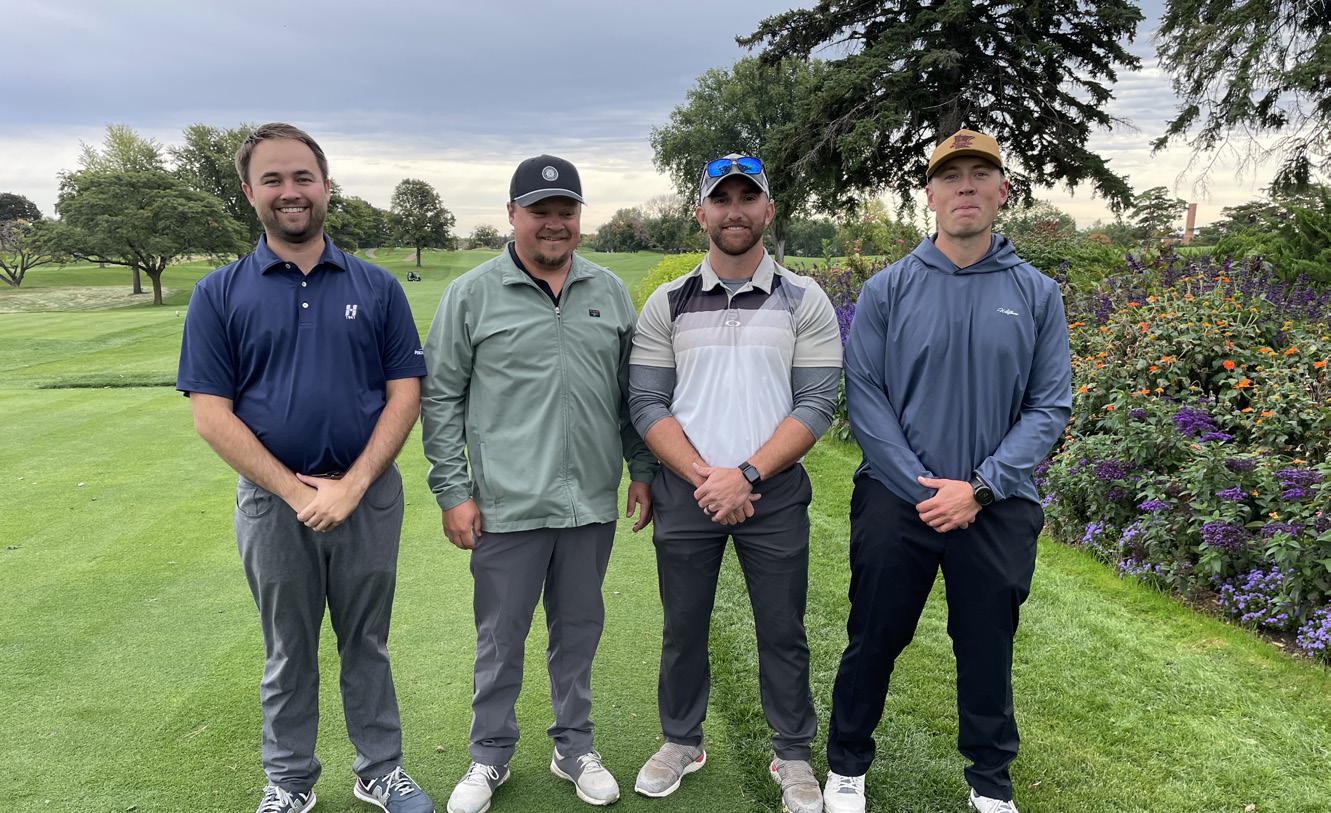
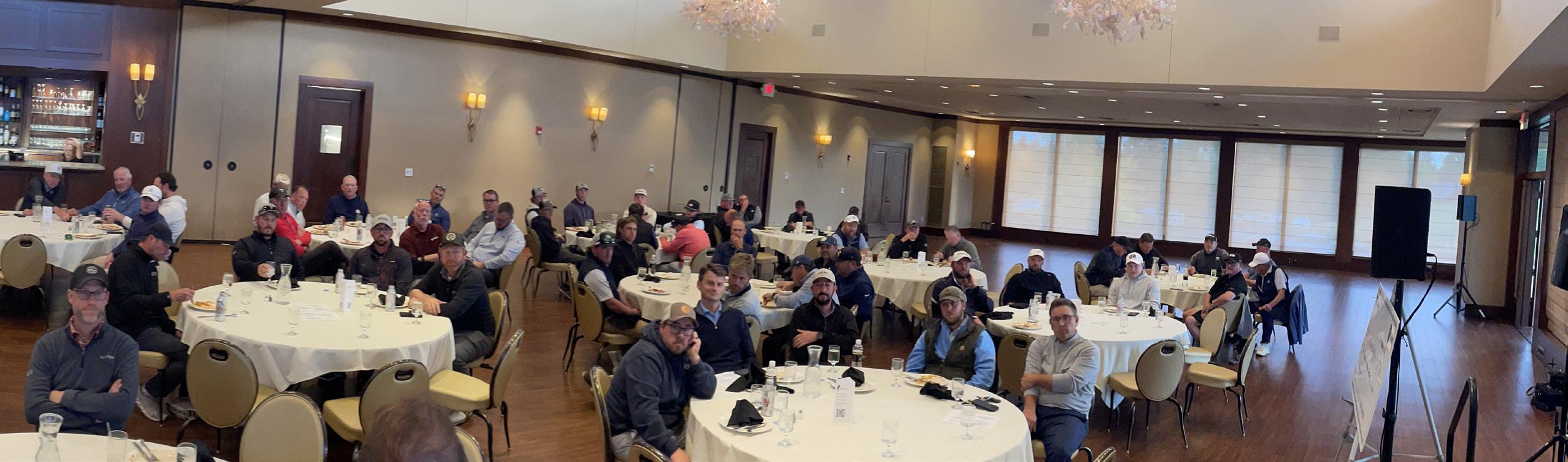
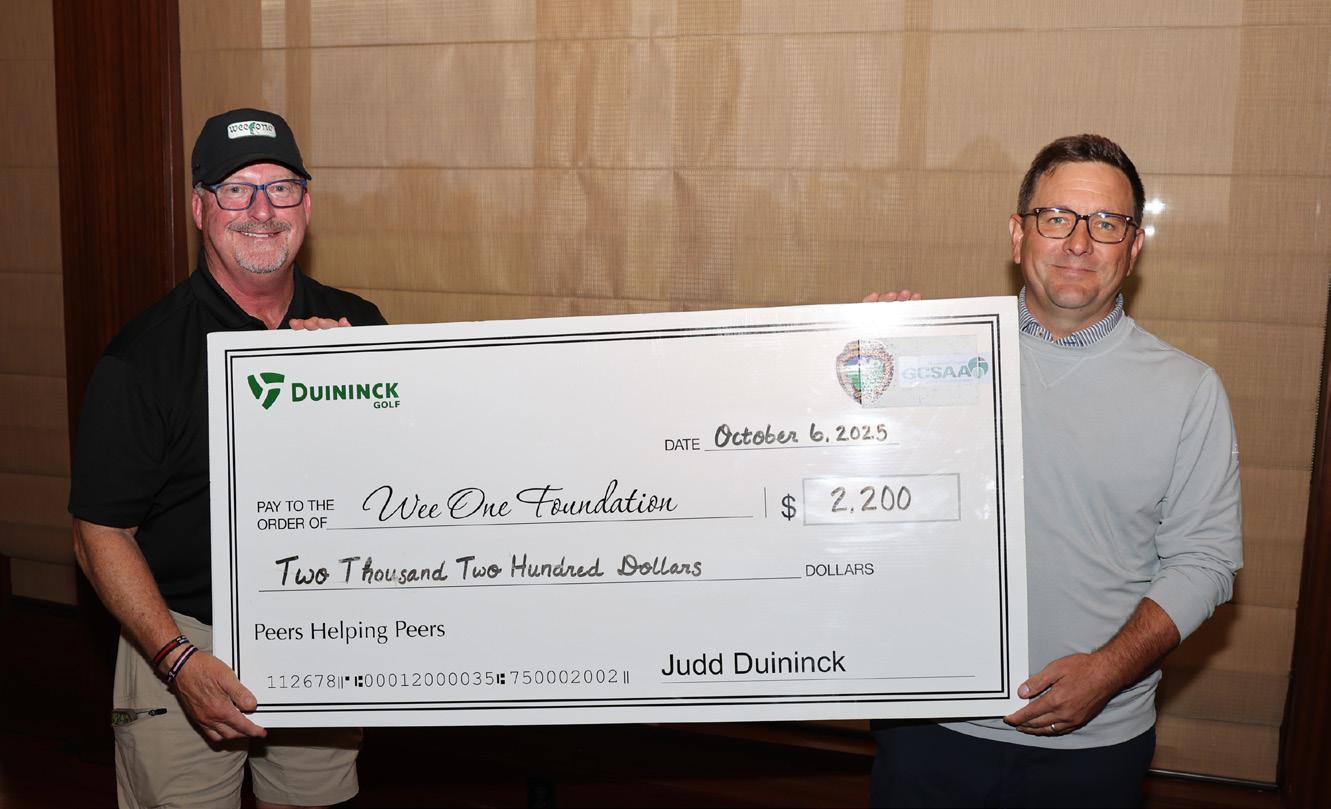
RIDGE COUNTRY CLUB
THE POWER OF MENTORSHIP IN THE TURF
INDUSTRY
David Gustafson
Assistant Superintendent
The Minikahda Club

When I started on the grounds crew staff at Hazeltine National, I thought I was just signing up to mow fairways, rake bunkers, and learn a bit about my golf game. I didn’t realize at the time that the most valuable thing I’d gain wasn’t on a mower —it was the joy being on the golf course gave me. Almost immediately in my first semester of college I knew an economics degree was not for me. I decided to switch degrees and pursue turf management full time. The transition
was pleasantly easy with the help of my peers Hazeltine.
Now, as an Assistant Golf Course Superintendent, I can confidently say that I wouldn’t be where I am today without the guidance of the mentors who invested in me. Mentorship is essential to thrive in this industry. Many who read this may already be a mentor to someone, or looking to find someone who will take them under their wing. I hope this article can be helpful to both.
The Benefits of Having a Mentor
Hands-on Knowledge
When I was in school at Southeast Tech, I took an internship during the shoulder seasons at Minnehaha Country Club. I learned a lot from Dave Swift and his team, but it was much more beneficial than I thought. Turf school taught me everything I needed to know to prepare me for the industry, but the most important part was applying the information I was given. It was
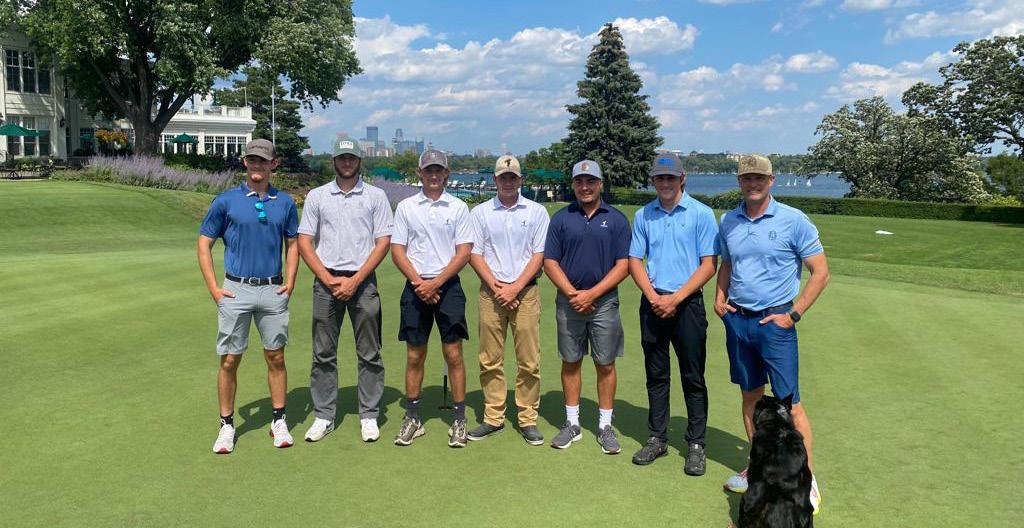
extremely beneficial to have mentorship readily available at MCC. It allowed me to directly apply this knowledge and ask questions with intention and confidence.
Career Guidance and Honest Feedback
A good mentor doesn’t just show you how to do the job, they show you how to grow. Whether it’s helping you understand the bigger picture of agronomics or guiding you on your career path, their insight is invaluable. They’ll also give
you the kind of honest, constructive feedback you need to hear. Chad Blank, someone who I consider to be my first mentor, encouraged me to take an internship at Minikahda. He emphasized the importance of seeing how different golf courses manage with what they’ve been given. This relationship is important for any young person looking to advance their career in the industry. Jeff Johnson, the superintendent Minikahda, wasn’t actively searching
for an intern that summer. Chad opened the door by introducing us and giving me his contact information and I quickly had my internship for the next summer. I am now confident that Jeff Johnson will always have my back whenever applying for new positions.
Networking and Opportunities
Several years ago, networking was extremely common and everyone knew each other. In my experience now living in

the cities, it has been way harder than expected. While in school, I had the opportunity to speak at one of the conferences in town. Although I was terrified of public speaking, I gave it a try. This was extremely beneficial as I was able to meet many superintendents from the courses in South Dakota.
I am beyond thankful that my teacher, Cory Borgen, pushed me to present that day (even though he lied and said I wouldn’t have to take my Foremanship 101 final). I have now decided to join the MGCSA Assistants Committee where networking is easier than ever. Without my
past mentors, I would not have the confidence or the resources to take these leaps in my career, regardless of feeling underqualified.
Finding Value in Mentorship
One of the biggest lessons I’ve learned is that mentorship is a twoway street. If you want to gain value from a mentor, you have to be open to learning. That means asking questions, listening more than you speak, and accepting feedback without getting defensive. The superintendent at Town and Country Club, Jared Watters, told me that we
all need to have a bit of an ego but still be humble and open to other ideas. I believe that willingness to learn will put you above the guy with an impressive resume during an interview process. Be coachable, sell yourself as confident, but be open to being a moldable assistant.
How to Find a Mentor
As fall approaches and we start the interview process for internships and other positions, it is important that goals are clear and precise to the interviewer. Your position will only benefit you as far as you allow it. Be straight forward that you
are looking for a mentor. Most superintendents want someone who will learn from them. If it is an internship, create a list of goals that you want achieved by the end of summer. I wish I had written one prior to mine. They will ask, and being under prepared for that question can bring a confusing summer for the intern and the employer.
You can also seek mentors beyond your job site. I have made many connections through different industry events that keep me learning every day. Use social media. X (twitter) has endless superintendents



ready to answer questions, share their thoughts, and make connections.
Mentorship is built on mutual respect and genuinity. If possible, see your mentor outside of work. Bring them to your golf course for a round after work. Sometimes a quick beer, or a fun recreational activity in the off season is a good idea. I’ve heard bowling or pickleball leagues have been popular for connecting a couple times a month. Your mentor is not only going to be someone who helps you through the industry, but also a friend that will have your back outside of work.






Mentorship is a cornerstone of success for new individuals in the turf industry. The knowledge, guidance, and confidence I’ve gained through mentors have been instrumental in shaping my career, and it’s clear that this type of support is essential for anyone looking to grow in the field. As we continue to navigate new challenges and opportunities within the industry, fostering strong, professional relationships will remain key. Whether you’re seeking a mentor or stepping into that role for someone else, the impact can be significant and lasting.





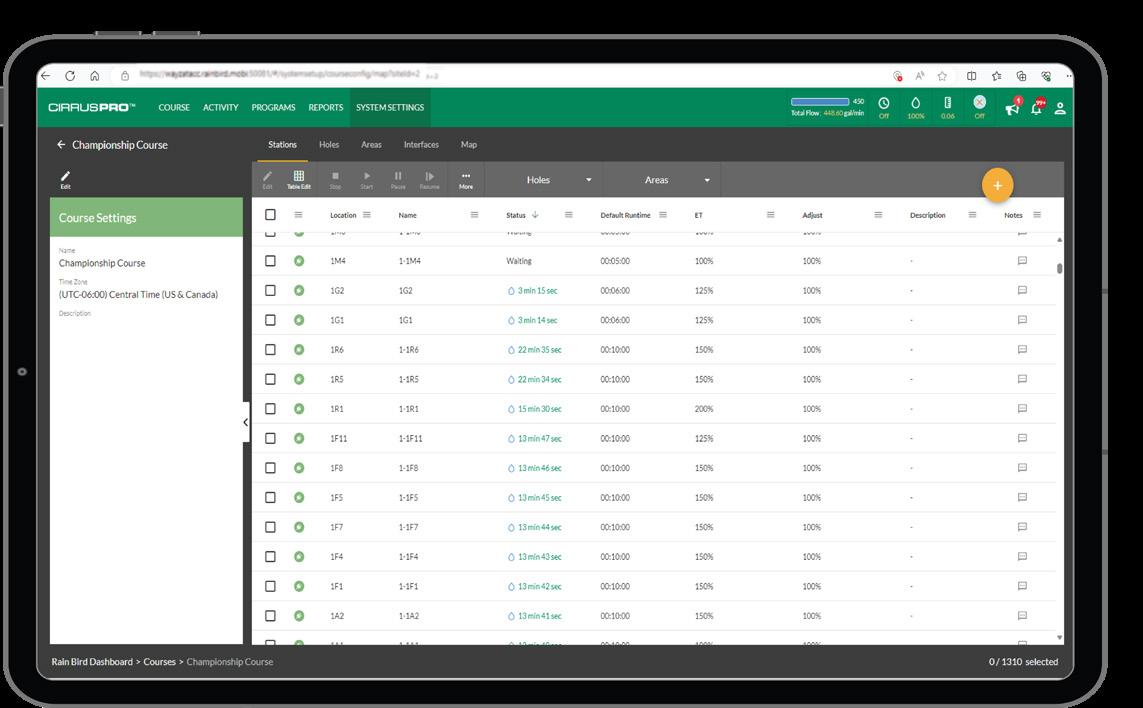
IRRIGATION HAS ALWAYS BEEN IN YOUR HANDS. NOW IT LITERALLY IS.





















ROLL IT FORWARD
Scott Thayer Plaisted Companies

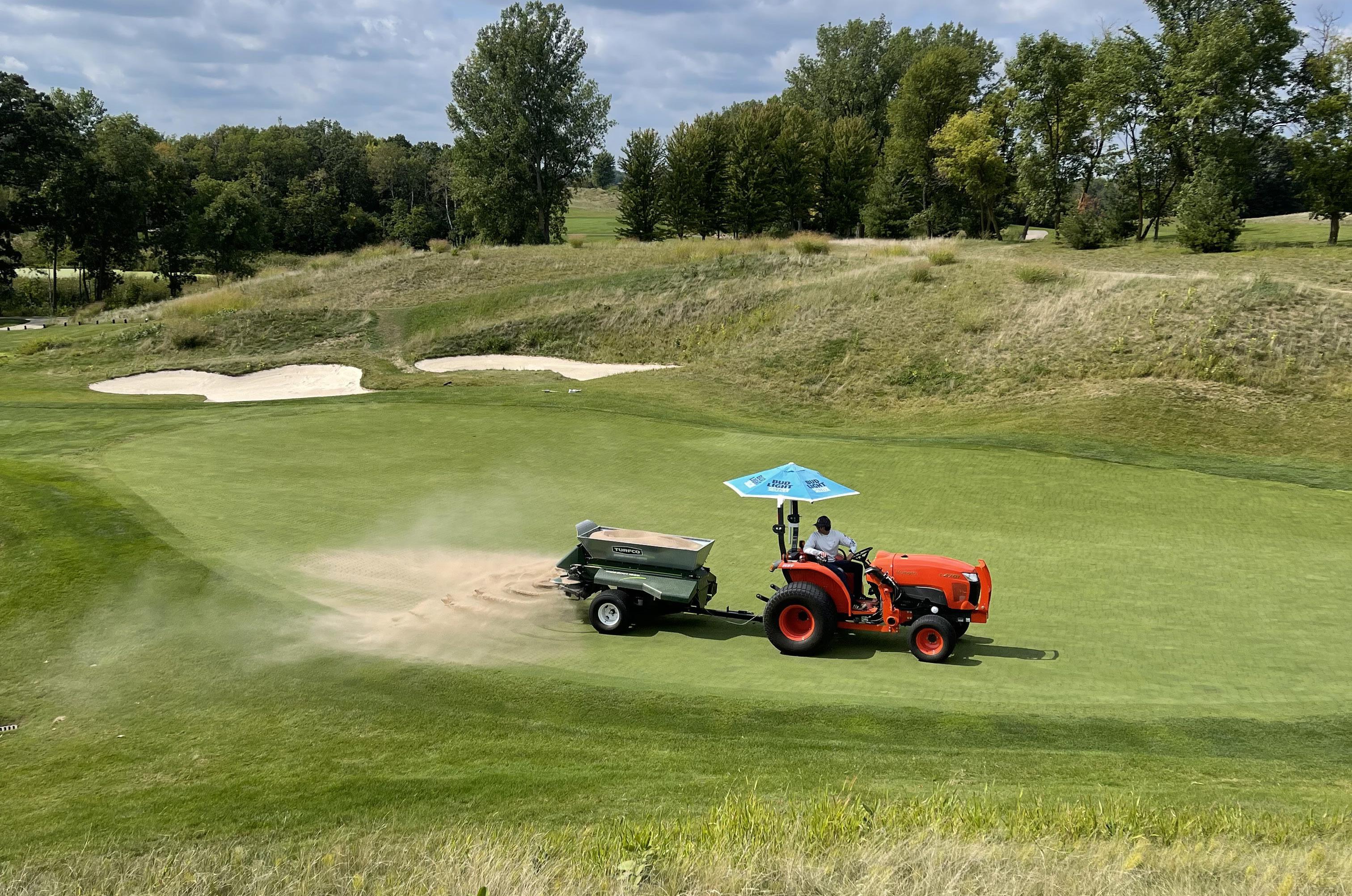
Thank you, Dan Ament for Rolling, it Forward, lots of great memories of when Dan was at Mystic and having Southern Superintendent round tables once a month in the winter. Though I am not a Superintendent anymore, it’s great to be able to still work with all the members of MGCSA in my new role at Plaisted Companies.
I grew up in northwest Iowa, though my childhood
took me through several states. My father was a college wrestling and football coach, so our family moved often — from Kansas to Iowa, to Ohio, and finally back to northwest Iowa when I was ten years old. That’s where my family settled, and where I graduated from high school.
It was in small-town Iowa that I discovered golf. Our town didn’t have a course,
but just three miles away was a little 9-hole course that quickly became my home away from home. My family joined as members — “if you can call us members in small-town Iowa,” as I like to say — and my mom, a teacher, loved dropping me and my friends off there to play all day. Some of my favorite memories are of those long summer days, playing golf from morning until dark and charging my dad’s
account with sodas and hotdogs.
After spending several summers practically living at the course, the superintendent finally decided I was old enough to work there. My dad apparently told him I’d be “worthless,” but he hired me anyway. My first job was moving sprinklers around the fairways — no automation, just quick coupler connections and large sprinklers we rotated manually. I spent my days driving a cart, playing a few holes, and moving
sprinklers until baseball or something else called me away. Whether I got paid or not, I’m still not sure — but I was hooked. The next summer I joined the crew full-time, and that year our little 9-hole course even won Iowa’s 9-Hole Course of the Year.
That winter, our superintendent, Dan Mulder — who became one of my greatest mentors and a second father to me — called to say he’d been hired to build an 18-hole course in my hometown. He told me, “I want you
on the crew to help.” At 17, I eagerly accepted. That project became a defining experience. I learned how to operate equipment, build bunkers, float greens and tees, seed fairways, and assist with every stage of construction and grow-in.
The following spring brought an unexpected challenge. The course architect had specified perennial ryegrass for the fairways, which didn’t survive the harsh northwest Iowa winter. Despite warnings, we reseeded the next year with
the same species — and it failed again. Eventually, turf experts from Iowa State University, including Dr. Nick Christians, were brought in to diagnose the issue. Their advice was simple: “Perennial ryegrass won’t make it north of Highway 30.” We reseeded with low-mow Kentucky bluegrass, and it thrived. That experience changed the course of my life.
Meeting those Iowa State turf professors sparked my interest in agronomy and course management. I had been recruited to play golf at several local
colleges, but instead, I chose to attend Iowa State University to study turfgrass management and pursue a career as a golf course superintendent.
At Iowa State, I made the most of every opportunity the turf program offered, completing three internships across the country. My first was at Geneva National in Lake Geneva, Wisconsin — a 45-hole facility where I gained valuable experience working with a diverse staff. My next internship took me to Colonial
Country Club in Memphis, Tennessee, where I learned the challenges of bentgrass management in the transition zone and experienced PGA Tour preparation firsthand while assisting at the St. Jude Classic at TPC Southwind.
My final internship was at TPC Michigan in Detroit, where I helped prepare for the Senior Tour Championship on a Jack Nicklaus Signature Design — and even had the opportunity to meet the Golden Bear himself.
After graduating, I returned to TPC Michigan for one
more tournament, and the superintendent there helped me secure my next position within the TPC network at TPC Deere Run in northwest Illinois. I spent three years there as a crew foreman and participated in three PGA Tour events. Those experiences shaped my standards for course conditioning and attention to detail, which continue to guide me today.
From there, I accepted a position as assistant superintendent for a new Palmer Signature design just north of Des Moines — the Tournament Club of Iowa. When the grow-in was complete, I was promoted to superintendent. Working alongside Pat Franklin, who became both my general manager and another great mentor, I was involved in every stage of the project — from clearing the first tree to seeding the final fairway.
One of the highlights of
my career came during this time when I had the privilege of walking nine holes with Mr. Arnold Palmer himself as the course neared completion. I caddied for local celebrity Tom Davis, the Drake University basketball coach, while our head professional caddied for Arnie. Talking turf with “The King” and seeing him meet my golden retriever, Jake, is a memory I’ll never forget. After the Tournament Club of Iowa
opened, we hosted a Senior Tour event, and seeing the course I helped build featured on television was incredibly rewarding.
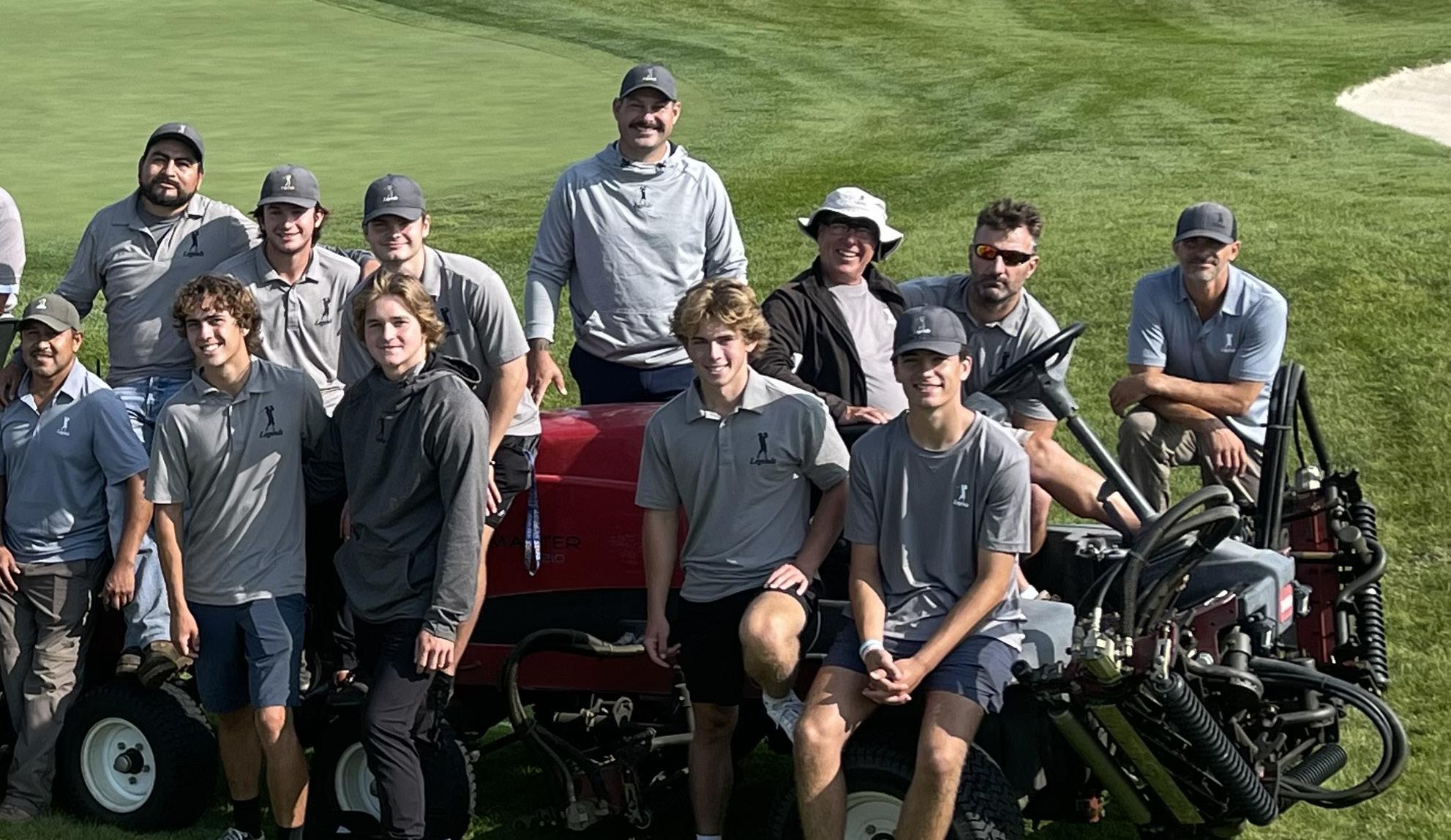
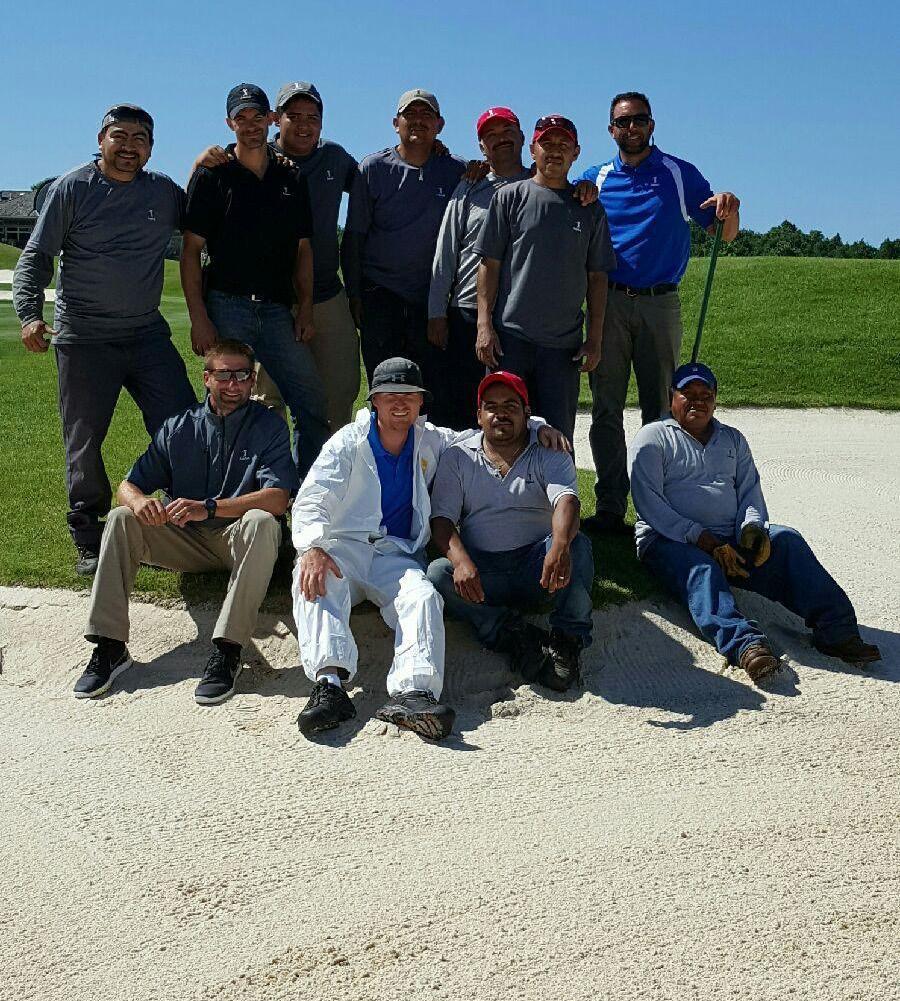
In 2006, I accepted the superintendent position at Legends Club in Prior Lake, Minnesota, which shares ownership with the Tournament Club of Iowa. Spending 18 years there, I was fortunate to work alongside incredible staff members and outstanding
assistant superintendents who have become lifelong friends. Together, we’ve created countless memories and taken on major in-house projects, including the construction of a brand-new 19th green and a complete bunker renovation. The teamwork, dedication, and craftsmanship our crew demonstrated during those projects remain among the highlights of my career.
During my time at Legends Club, I also had the honor of serving as President of the Minnesota Golf Course Superintendents Association (MGCSA). My two-year term included leading the organization through the challenges of the COVID-19 pandemic — a period that required adaptability, collaboration, and strong communication across our membership. One of the accomplishments I’m most
proud of was hiring our Executive Director, Chris Aumock, whose leadership and vision have been instrumental in advancing the MGCSA. Serving as President was both an incredible challenge and a tremendous honor, and it remains one of the most meaningful experiences of my professional life. For the past two and a half years, I’ve transitioned from my superintendent role and joined Plaisted
Companies, where I continue to serve the golf industry and its professionals in a new way. In my current position, I work closely with superintendents, architects, and builders across the region, supplying a wide range of sands and construction materials for projects of all sizes — from new greens and bunkers to full-course renovations and ground-up construction.
In addition to serving the local and regional market, I also work nationally, selling peat to other sand and blending companies across the country. It’s been incredibly rewarding to see Minnesota’s natural resources and products — some of the best in the nation — being used in high-profile golf course projects from coast to coast. Helping showcase the quality and value of what we produce here in Minnesota has been one of the most exciting parts of this next chapter in my career.
I’m deeply grateful to my owner, mentors, colleagues, and the many professionals I’ve worked with over the years for shaping my career and fueling my passion for this industry. From operating bulldozers and excavators to helping others build new greens, I’ve experienced every angle of golf course construction and management — and I still love every minute of it.
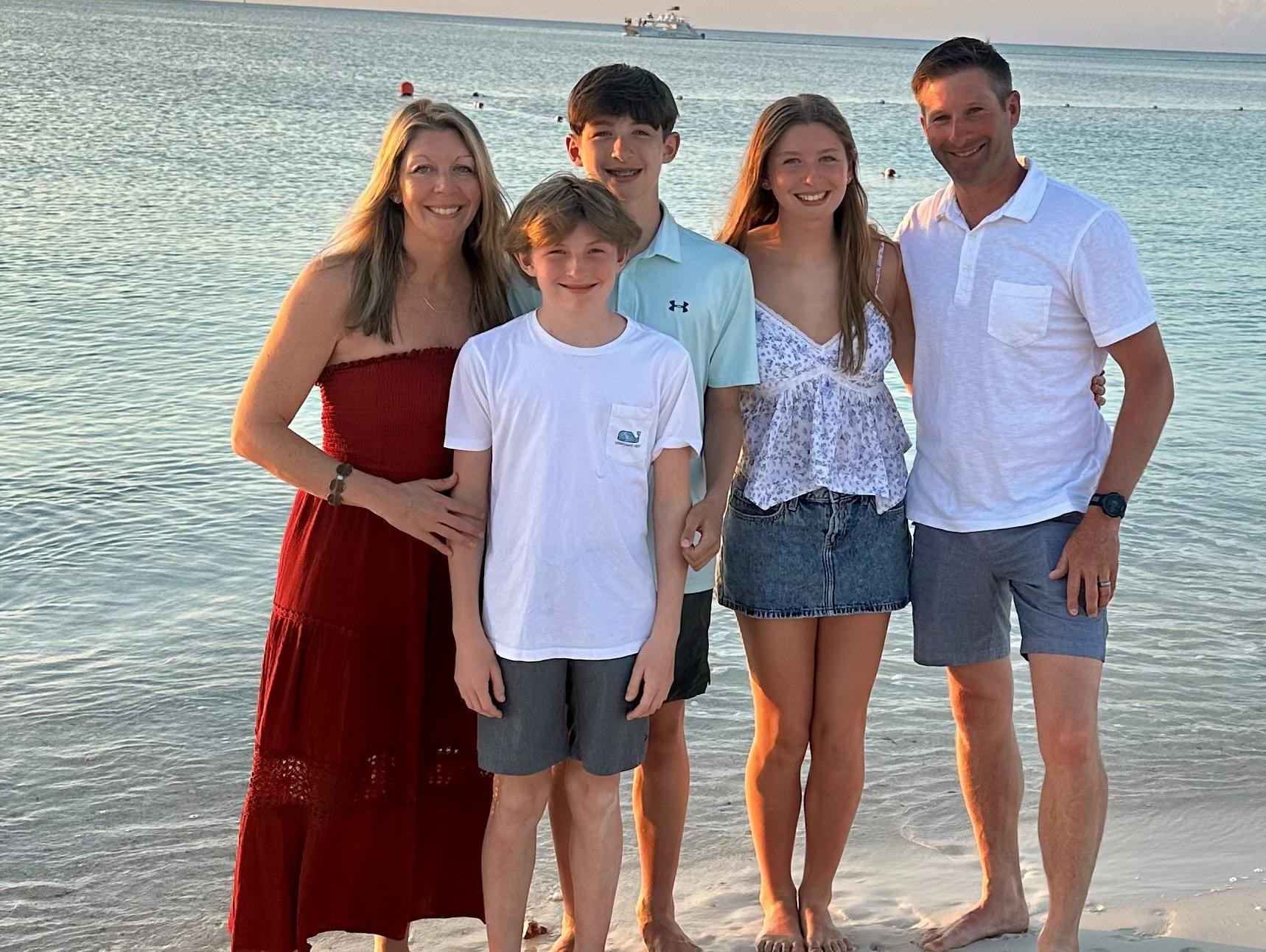
Beyond my professional life, my greatest source of pride and fulfillment is my family. My wife of seventeen years, Rosalyn, has been a constant source of support and encouragement throughout my career in the turf industry. Her patience, understanding, and unwavering belief in me have made it possible to pursue the demanding and rewarding path that has defined my professional journey.
(15), who are freshmen in high school, learning to drive and actively involved in both high school and club soccer; and Keegan (13), who is thriving as a first-year Bantam hockey player. Our family has also developed a shared love for golf, and Rosalyn and I do our best to keep up with our children’s busy sports and travel schedules. Watching their enthusiasm for athletics and life in general has been both inspiring and grounding, reminding me daily of what truly matters beyond the fairways and greens.
Together, we are raising three wonderful children — Reese and Graham
As part of Roll It Forward Series I would like to nominate Zach Wignall who took over for me at Legends, he has a great story as well. Zach worked for me at Legends after working out East, but his journey is truly a great story, not only is a great Superintendent, but his social media presence is also another reason to learn more about him.
Thank you for reading!

Elk River, MN • 763.441.1100 www.plaistedcompanies.com


GOLF

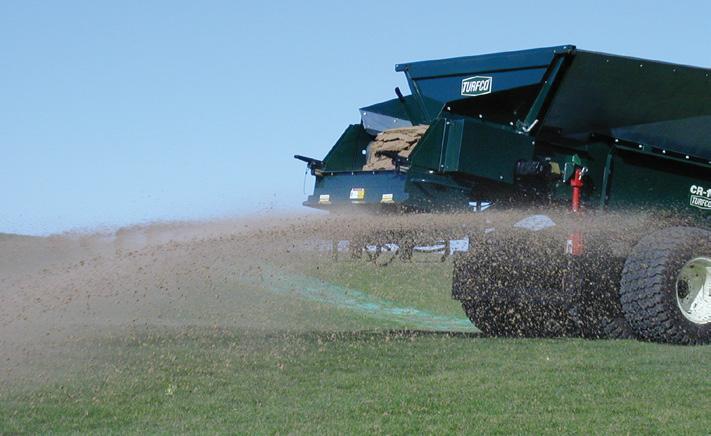
Topdressing Sands & Mixes

Our Sands meet USGA guidelines and are available with green pigment. Custom mixes can be blended for your individual needs using our 4-bin computerized Accublender.
Bunker Sands
Our bunker sands are always washed and screened. Choose from:
•Plaisted Bunker Sand Natural Tan
•Plaisted Pro Bunker Sand Blend Natural Tan
•700 Best Signature 100% Crushed Off White
•900 Best Signature 100% Crushed White
Golf Construction Sand Mixes
Our mixes all use USGA sand and a combination of fine grade peat and screened black dirt. Chose one of our popular mixes or we can custom blend one.
•USGA Coarse Gravel - A great bridging rock used as a drainage layer.
•Construction Sand & Peat Mixes - 50/50, 60/40, 70/30, 80/20, 85/15, 90/10
•Construction Sand & Black Dirt Mixes - 50/50, 70/30, 80/20
•Construction Sand/Peat/Black Dirt Mixes - 1-1-1, 60/20/20, 70/20/10, 80/10/10
Cart Path & Road Base
•3/8” with fines river rock
•Class II buff limestone or red rock
•Class II, III, IV crushed granite
•Class 5 gravel
•Recycled concrete, crushed asphalt, conbit


Bagged Products
•Dry topdressing sand
•Dry tournament topdressing sand
•Dry green topdressing sand
•Dry early-green black topdressing sand
•Dry 70/30 green divot mix
MGCSA CHAMPIONSHIP
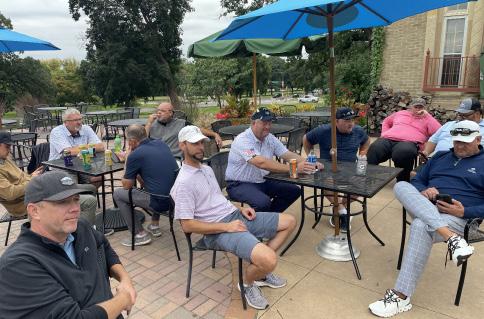
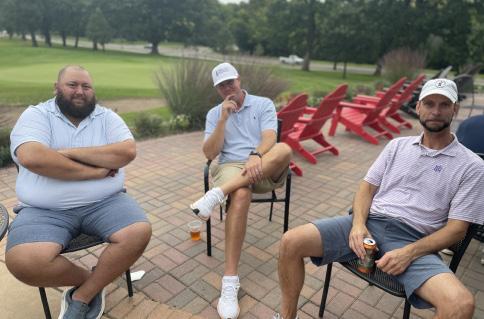
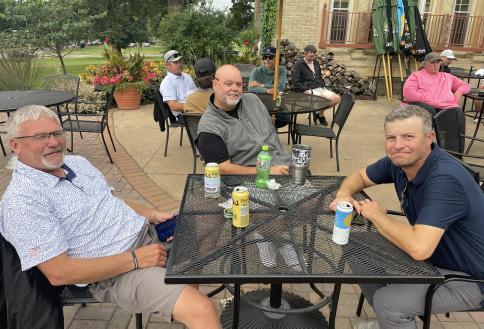
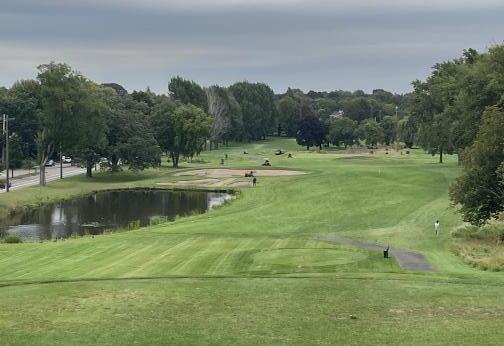
Congratulations to the 2025 MGCSA Champion: Maxton Kelly, Victory Links GC (Top left)
Top right - Low Net, Zach Stenstad, MTI
Bottom Left - Team Net, Maxton and Brandon Smith, TPC
Bottom Right - Team Gross, Zach and Ricky Plemel, New Hope GC
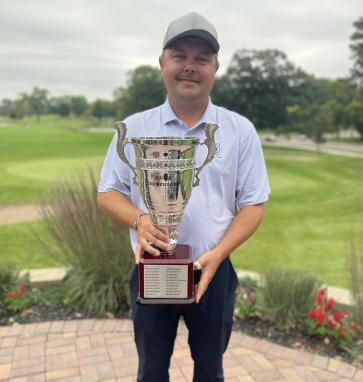
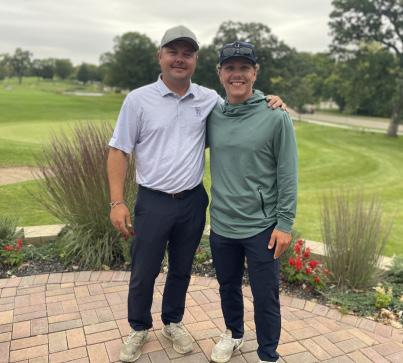
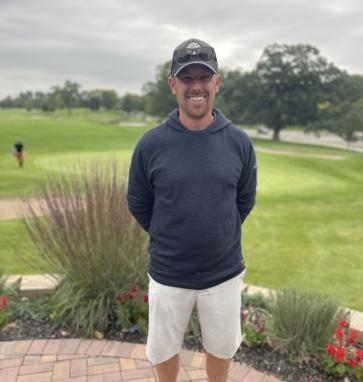
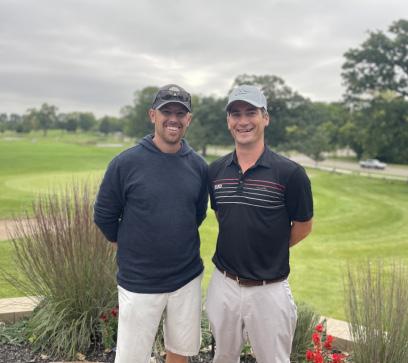




GET TO KNOW ‘EM
SETH TRIPLETT Golf Course Superintendent Meadowbrook Golf Course

PUBLIC/PRIVATE/#HOLES
YEARS IN THE POSITION:
Briarwood Golf Club, Talons of Tuscany, Muirfield Village, Des Moines CC, Waukee School District
Bent, Poa, Rye, Blue.
Irrigation renovation. We only have single row irrigation. An actual double row irrigation system would be nice. It would be good to have green grass in the rough, where our golfers play from. Just updating infrastructure, piping is getting old. Another thing would be cart paths everywhere. It would be nice to have carts every day. A new shop would also be nice, so we could park everything indoors.

GOLF INDUSTRY CONCERNS:
Overall cost of everything. Equipment is through the roof. Staffing, rates are going higher, which is good for them, but it’s going to come to a head where you’ll have to charge more for golf and will hit a ceiling at some point. The only way to do is to increase the price.
EQUIPMENT WANT:
ANYTHING DIFFERENT OR UNIQUE YOU DO THAT COULD BENEFIT OTHERS?
Skidloader. It would be nice to have one here to load the topdresser. The tractor we have is running great, but man would be it be nice to have a skidloader. The ability to grade and shape, the versatility would be great.
The way you treat people matters. We have to get things done early, but need to get them done. Treating people well is important. Let

them have their life outside of here. I have hardly told anyone no for a time off request. If I do, they would mail it in, call in sick, or just be here with a horrible attitude. If they’re not mentally here, then just don’t be here.
WHAT IS A CLASSIC MOVIE YOU RECMOMMEND TO OTHERS?
FAVORITE VACATION SPOT?
Charlie WIlson’s War. I dont know what it is about it, but I always liked Phillip Seymour Hoffman, and I watched a documentary about the story and he looked just like the guy. That always stuck with me.
Anywhere in the Caribbean. We went to Jamaica for our honeymoon, Mexico a few times. Beaches and all-inlcusives, thats where we go. We’ll do some excursions, try to see some local stuff, then come back to the hotel.

FAVORITE TASKS:
LEAST FAVORITE TASK:
Probably mowing greens. Its nice, peaceful, easy. You can also pretend you don’t hear your phone for a little bit
Irrigation. And also being stuck in the office too long. Obviously there is important stuff in the office, but I don’t like sitting here.
HAVE YOU PLAYED ANY FAMOUS GOLF COURSES?
WHO IS IN YOUR FOURSOME?
Erin Hills, when the Ryder Cup was nearby. Then I got to play Interlachen last year.
Probably my dad, then the other two would be anyone who would acutally enjoy playing golf but not take it too seriously. We don’t need to shoot 65, just respect the etiquette and the rules, anyone in that profile I would be good playing with.
WHAT IS FAVORITE MEMORY OR FUNNY STORY OF STARTING IN TURF:
WHATS ONE PIECE OF ADVICE
YOU’VE RECEIVED IN YOUR CAREER THAT STILL RESONATES WITH YOU?
I unofficially started with my dads lawncare business, so I worked with him alot when I was 12, 13. I started on a course at 16, and I had no vision of anything, so four days in a row I was unprepared and got soaked by rain. It just never clicked that I should prepare more.
Make sure you tell people when they are doing a good job. We are a negatively focused industry. 95% of the things done out there are done right, and make sure the staff understand that they are doing a good job. Don’t focus on just those negative mistakes, we have to focus on those positives too. We don’t take time to appreciate that most things we do are actually done well. Make sure we recognize and relay that to the people that make it happen.
Listen to the full conversation with Seth on the HOLE NOTES PODCAST! Available on many of your favorite podcast sites!

Turfgrass Apprenticeship Program
UNIVERSITY OF WISCONSIN -MADISON
The University of Wisconsin Turfgrass Apprenticeship Program (TAP) consists of a 12-week, in-person educational bootcamp and a field-based apprenticeship at a golf course, athletic facility, or other turfgrass facility. The program provides participants with the hands-on, real-world experience needed to succeed in the turfgrass industry. Successful completion of both the bootcamp and the apprenticeship is required to earn the Turfgrass Apprenticeship Program Certificate.
Step 1: Educational Bootcamp
The bootcamp takes place over two 6-week terms during the late fall and winter. The fall term will begin the first week of November and end in mid-December. The winter term will begin the second week of January and end in late February. Each week will have class on Tuesday, Wednesday, and Thursday from 10 AM until 3 PM CST with a 1-hour break for lunch.
Program cost is the same for in-state and out-of-state students. Check the website for current rates. Housing is not provided by UW-Madison, but we provide a number of affordable hotel options in the Madison area.
Significant scholarship funds will be available to support student tuition and housing costs from a variety of turfgrass associations. More information on scholarships and how to apply for them will be provided in the first week of class during the fall term.
Step 2: Field-based Apprenticeship
Students in the TAP are required to complete a field-based apprenticeship at a golf course, athletic complex, or other turf management facility of their choosing. A list of tasks to complete during the apprenticeship have been developed in cooperation with associations in the turfgrass industry and can be viewed on the program website.
How to Enroll
Please visit https://turf.wisc.edu/academics/ and add your name to the enrollment form. Alternatively, contact Dr. Soldat or Dr. Koch via email (djsoldat@wisc.edu / plkoch@wisc.edu). The deadline for enrollment in the fall term is October 15th.




BE WHERE THE ACTION IS!
JANUARY 20—22, 2026 Saint Paul RiverCentre
WWW.NORTHERNGREEN.ORG | INFO@NORTHERNGREEN.ORG | 651-633-4987
MONDAY Pre-Conference Sessions: PLT Relicensure and Pesticide Recertification will be available on Monday, January 19 at the Saint Paul RiverCentre.
TUESDAY, JAN. 20
Community day for these Villages with a full day of focused education. From trends to business strategies, find everything you need to thrive! Landscape/ Hardscape Contractor


Irrigation


WEDNESDAY, JAN. 21
Dedicated trade show day!
THURSDAY, JAN. 22
Community day for these Villages with a full day of focused education, plus the trade show will be open in the morning!
9:00am-12:00pm




UMN RESEARCH
FROM LAWNS TO LINKS
Paige Boyle
Post-Doctoral Associate
University of Minnesota

For several years now, our team has been working as part of the National Science Foundation funded Long Term Ecological Research (LTER) program, which brings hundreds of researchers, students, community partners and advocates together to study the ecological and sociological interactions of urban nature. The Minneapolis-St. Paul LTER program as a whole studies urban forests, contaminants, waterbodies, and
social and policy issues within the Twin Cities.
Our work falls under the “effectiveness of pollinator habitat” research area, which aligns well with our research group’s historic interest in bee lawns and supporting pollinators in turf, as well as my recent PhD research on alternative lawns. There are three main questions the “bee team” is trying to answer: 1. What are the ecological and social benefits
of bee lawns?
2. What are broader opportunities and complications associated with urban bee lawn expansion?
3. How can bee lawn ecology research be combined with outreach to maximize impact?
First we need to know what lawns in the Twin Cities actually look like, and whether bee lawns are actually supporting bees. That’s where we come in.
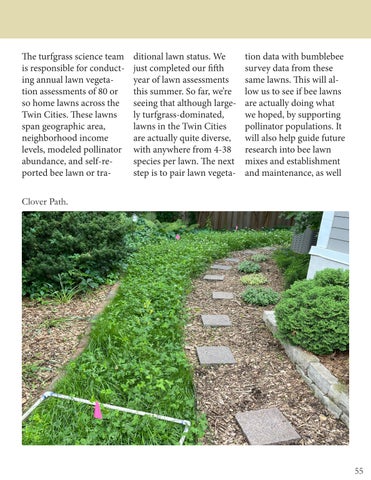
The turfgrass science team is responsible for conducting annual lawn vegetation assessments of 80 or so home lawns across the Twin Cities. These lawns span geographic area, neighborhood income levels, modeled pollinator abundance, and self-reported bee lawn or tra-
ditional lawn status. We just completed our fifth year of lawn assessments this summer. So far, we’re seeing that although largely turfgrass-dominated, lawns in the Twin Cities are actually quite diverse, with anywhere from 4-38 species per lawn. The next step is to pair lawn vegeta-
tion data with bumblebee survey data from these same lawns. This will allow us to see if bee lawns are actually doing what we hoped, by supporting pollinator populations. It will also help guide future research into bee lawn mixes and establishment and maintenance, as well
Clover Path.
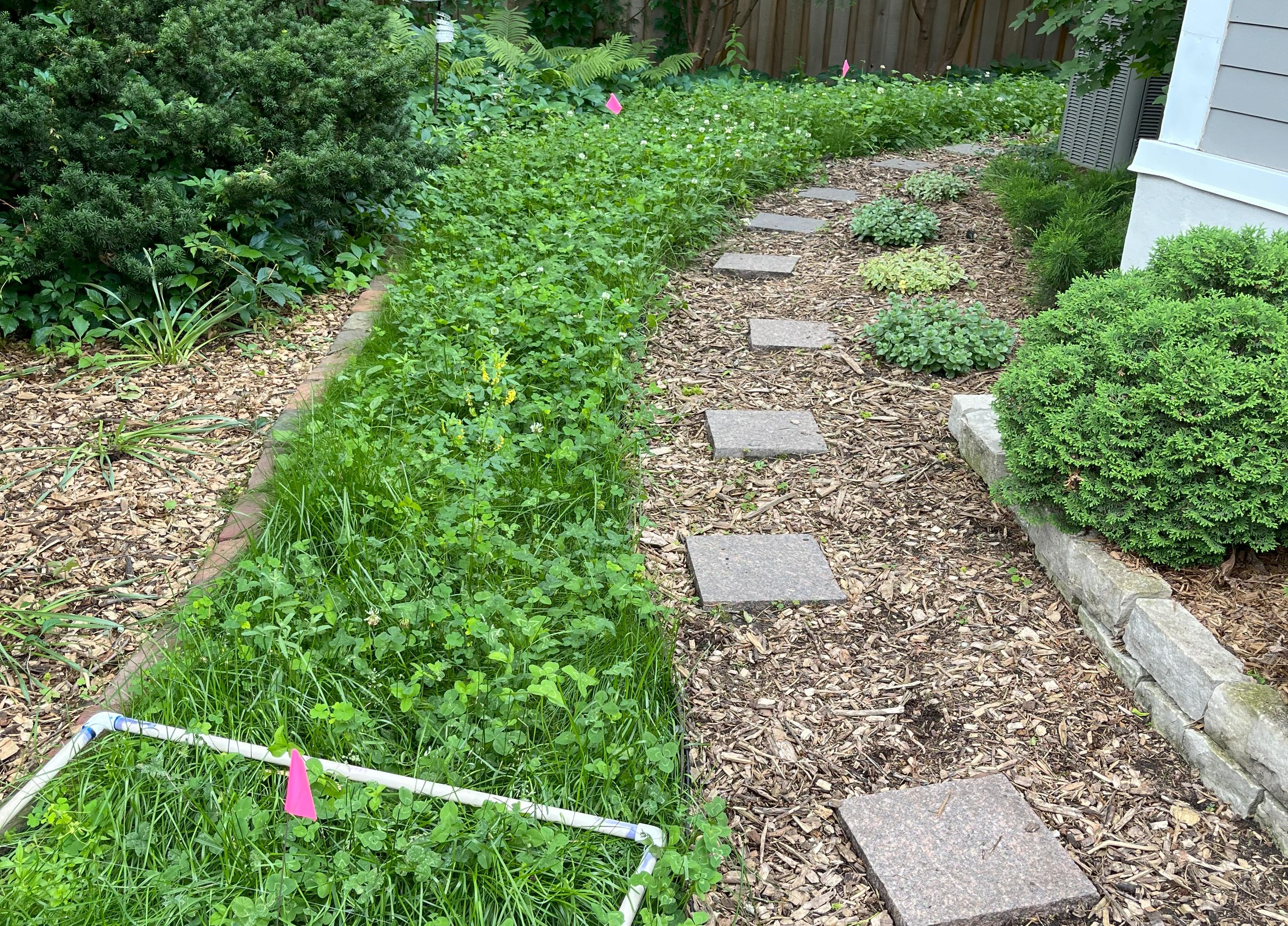
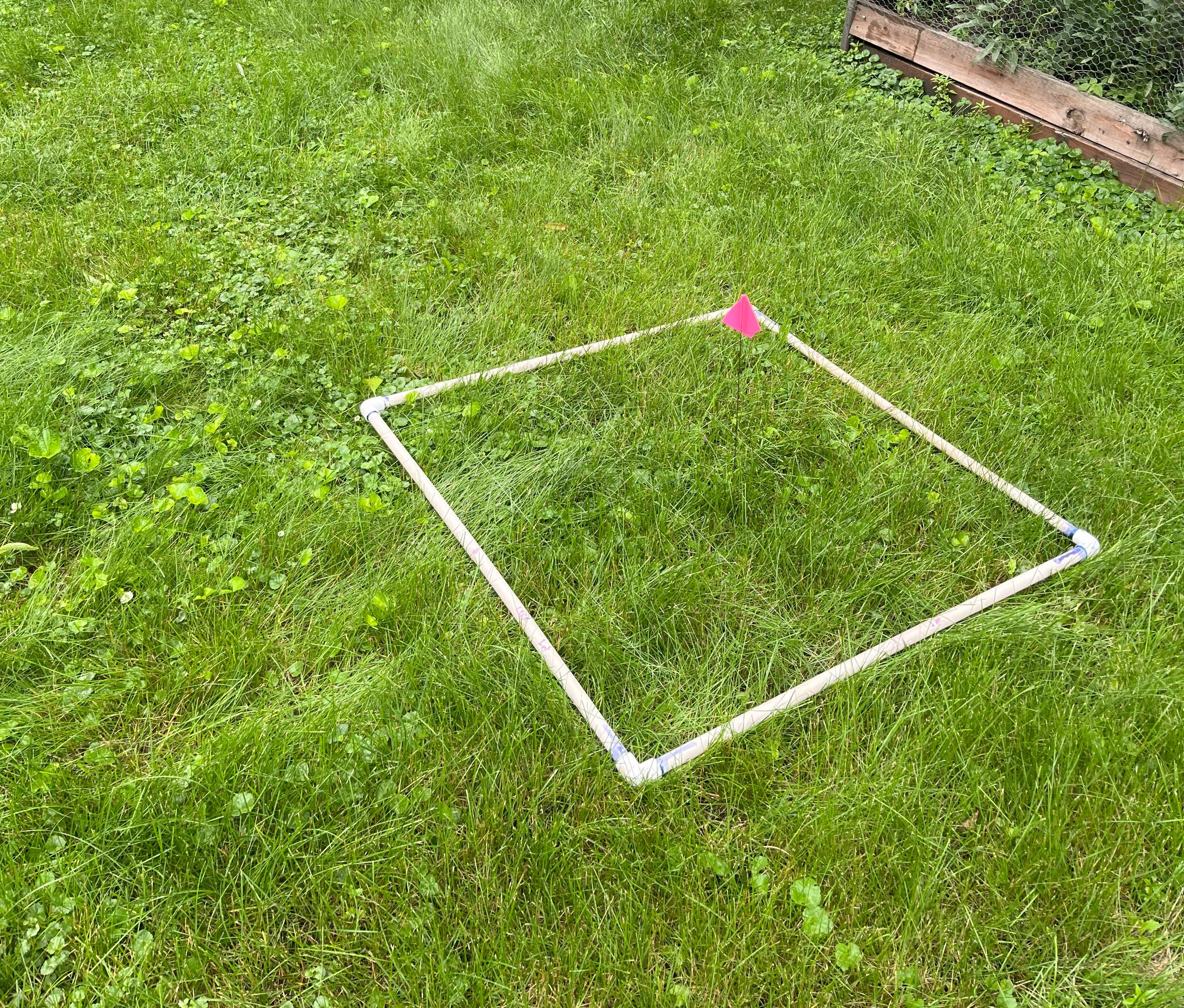
Mixed lawn.
as education and extension efforts.
Another, related project that falls under the LTER bee lawn umbrella is our “How Big & How Many” study which is just kicking off on several golf courses across the Twin Cities.
The goal of this study is to determine how lawn management can benefit bees and other pollinators and to better understand how many bee lawns are required, and how big those bee lawns need to be, in order to support bees. We will also be collecting
vegetation and bee population data on these plots, and hope to use the information from this study to better support pollinator habitat installation efforts in neighborhoods, parks, roadsides, business and, of course, golf courses, across the Twin Cities.
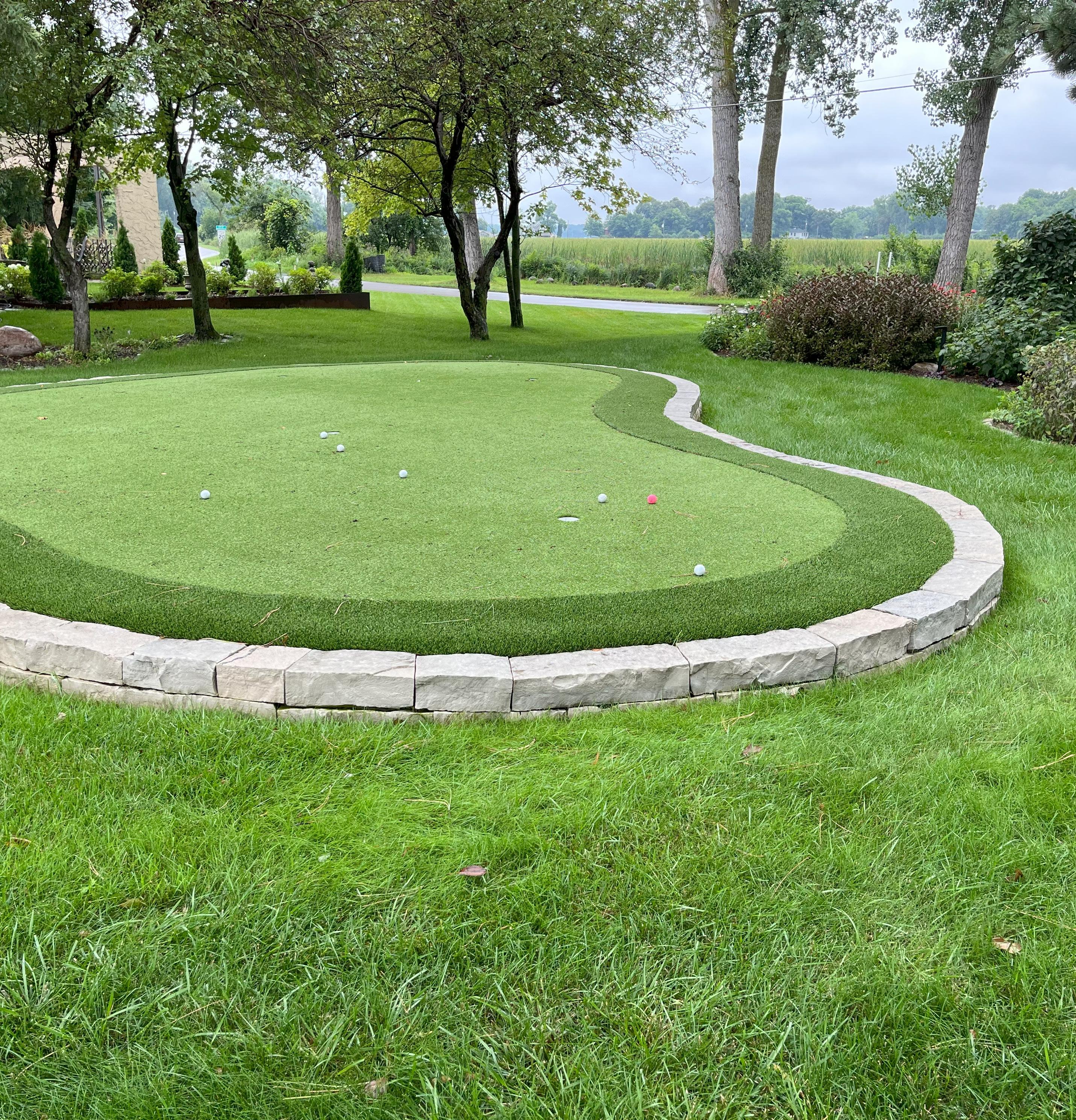
Putting Green.
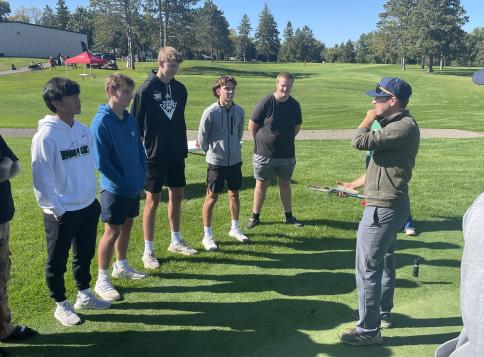
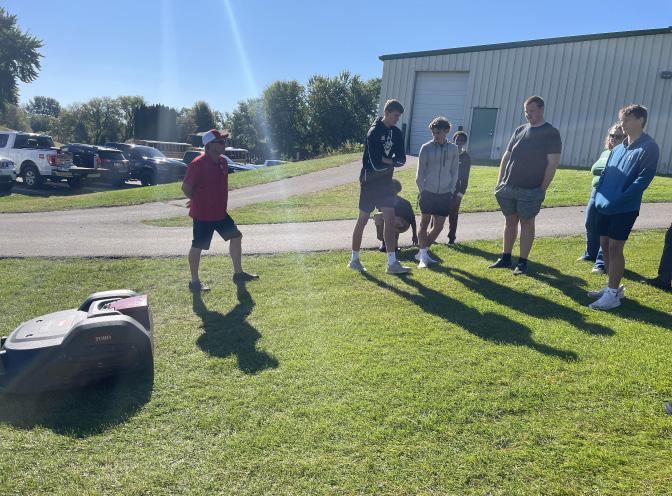
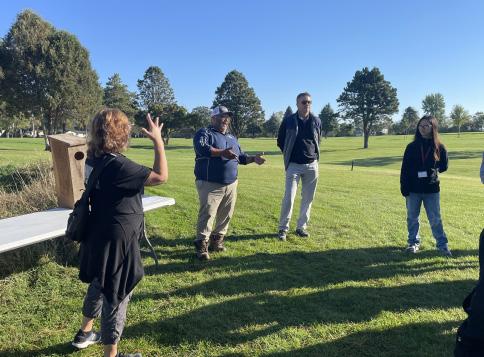
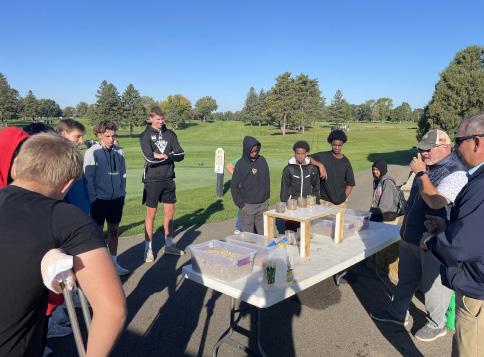
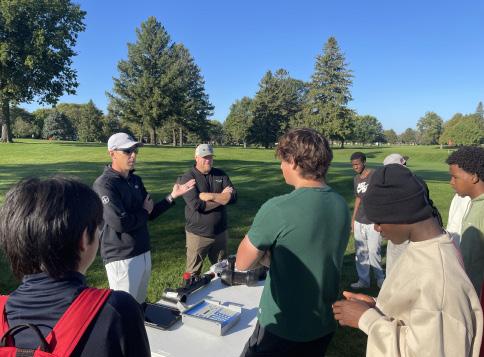
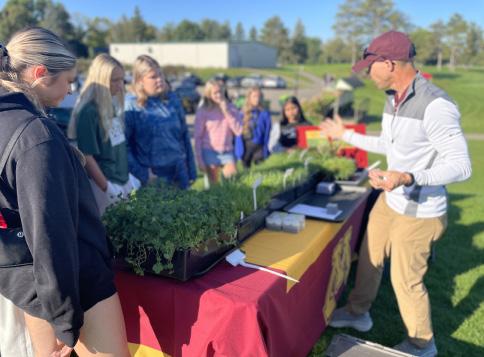
FIRST GREEN/CAREER EVENTS
Faribault Golf Club
Litchfield Golf Course
CareerQuest - Austin, MN
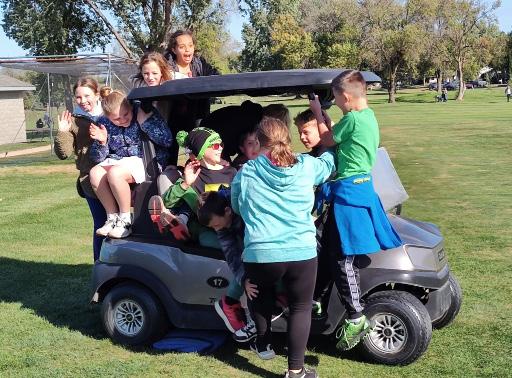
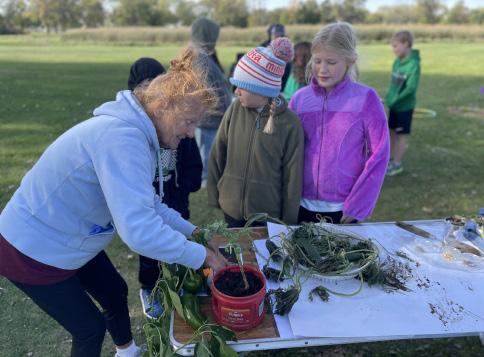
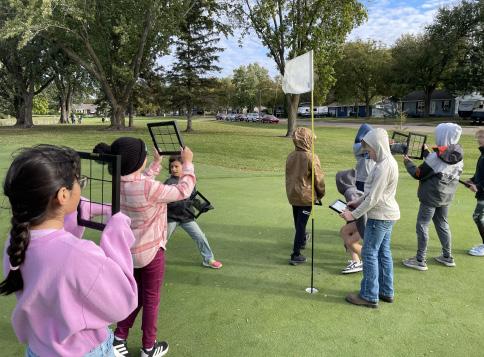
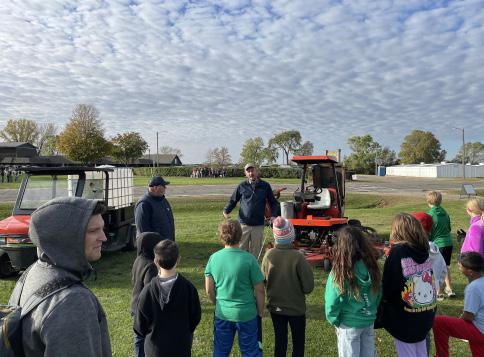
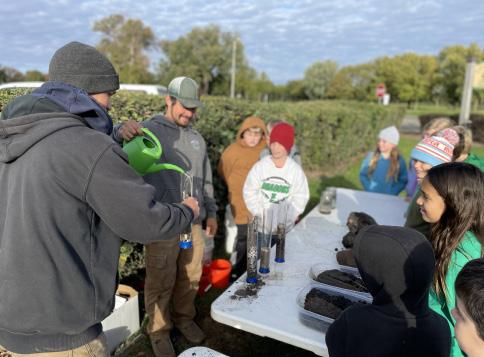
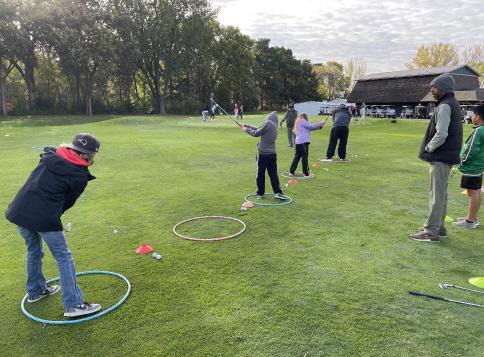
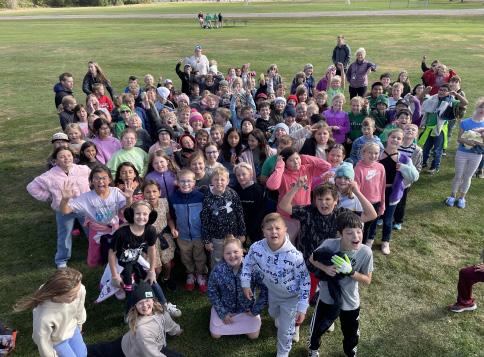
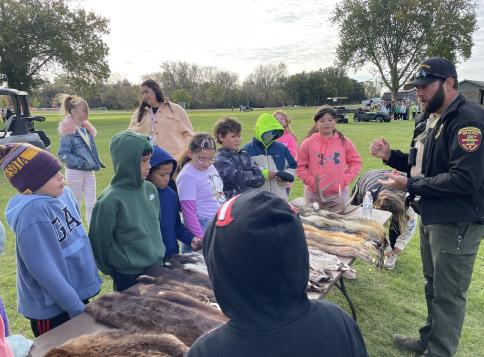
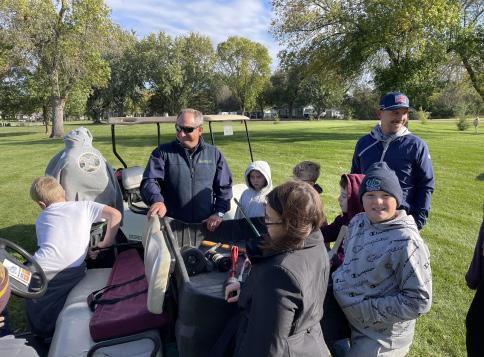
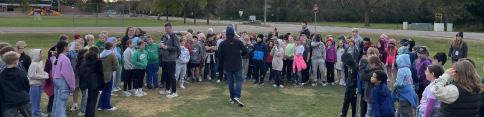
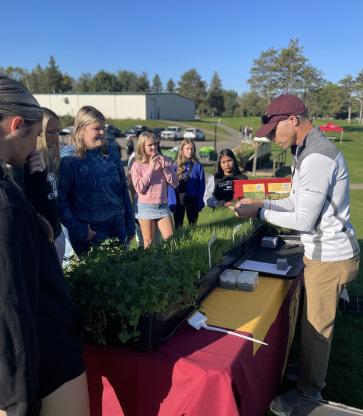
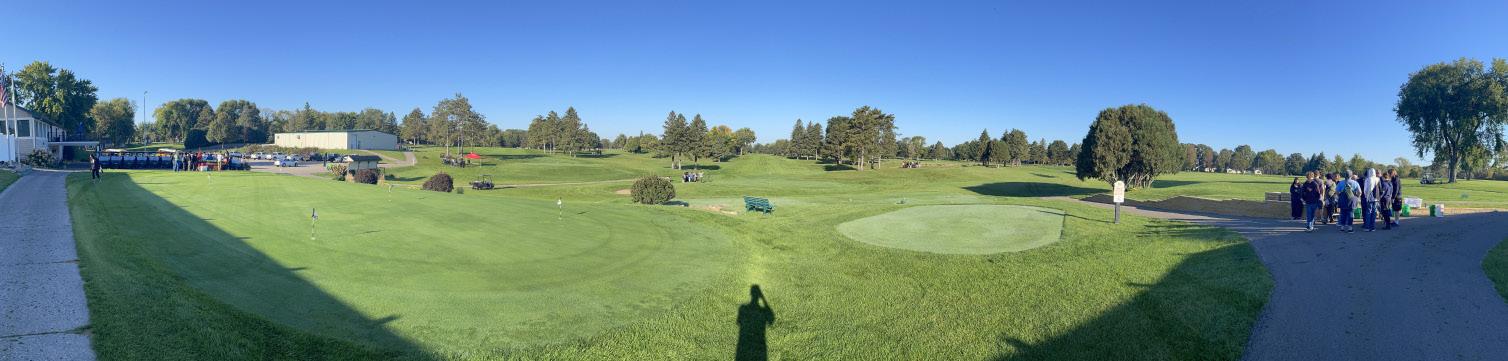
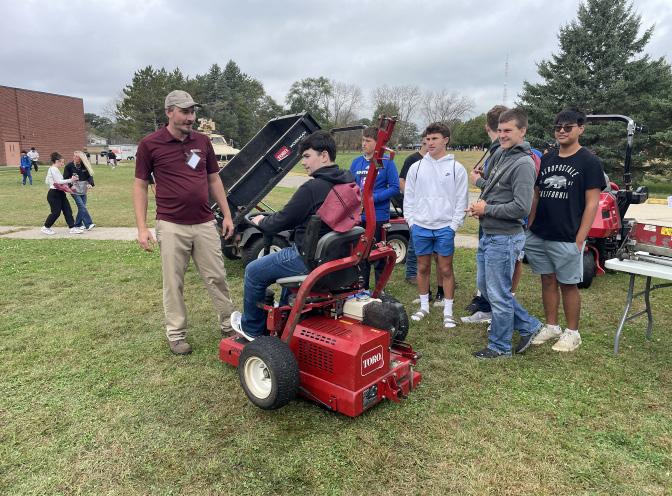
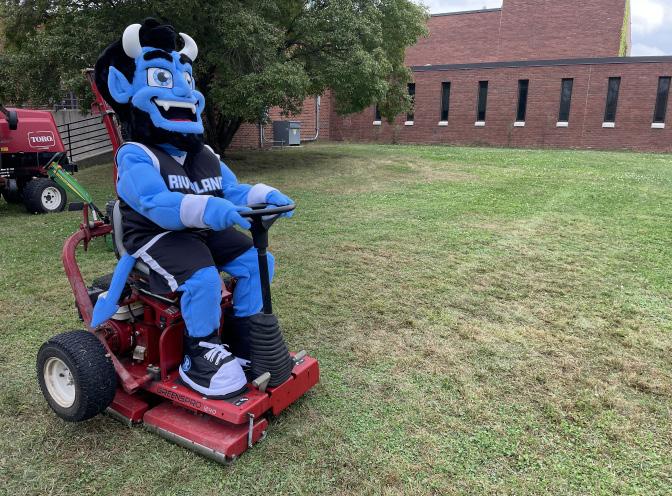
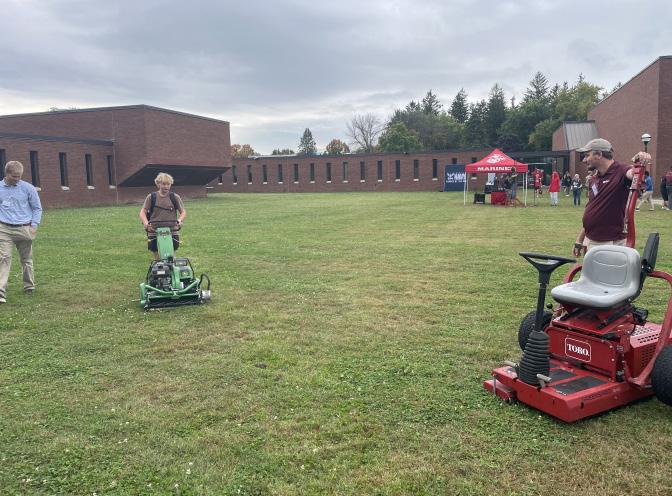
In the past few months, we have held 2 First Green events, and attended a new interactive career fair event in Austin, MN. We had almost 200 kids at the First Green events, and saw several hundred down in Austin. Thank you to our First Green hosts, Nikk Dickerson and Bryce Manning. Thank you to all of our volunteers for those events. For the Austin event, thank you to Brandon Bergene and Tyler Lewellyn for joining us and handling all of the equipment logistics.
FROM THE HIGH GRASS


Over the last few years, we have expanded our First Green events throughout Minnesota. MGCSA Superintendents have supported events at Owatonna CC, Rush Creek GC, Benson GC, Detroit CC, Southview CC, Giants Ridge, Birnamwood GC, Faribault GC, and most recently Litchfield GC. I have heard from several others about their interest in hosting a future event and want to provide more
information and direction for all interested hosts.
The First Green program is set up for Superintendents to initiate the conversations regarding these events. However, the hardest part of this is connecting with a school contact. Unless you have a family member or friend in the schools, cold calling schools and/ or districts is not usually fruitful. Noting those struggles, I have spent
the last few years working different angles to find better contacts in to schools.
During this time, MGCSA has also been involved with the FFA State Convention. Which led to a MN Ag Educators Conference in St. Cloud last winter, where those FFA leaders agreed to share our First Green program with their Ag Educator database. From there, I got several
inquiries about First Green events. Particularly from a Judy Barka, whose job is to connect Ag educators and students with different Ag based experiences. Judy is in charge of Northern Minnesota, and her colleague Courtney Spence (who I randomly met this year as well, at the Wayzata HS Career Fair) leads the southern MN efforts. These are exactly the people I have been working to find, those who can connect us with schools and more willing First Green teacher participants!
This led to our events this year at Giants Ridge, Faribault, and Litchfield (Dan at Birnamwood had already started discussions). It is a lot of fun facilitating
these events and I enjoy promoting them, yet as we expand and host more field trips, the planning and logistics will need to be assisted.
I.E., I can’t plan and manage them all for you!
Why are these events valuable? Well, we all know our industry is not well known. Every effort to introduce kids to golf and turf management is progress. For all 4 First Green events this year, we had over 300 kids on a golf course, which was the first time for many!
Why do it? First to help the industry. But secondly, as Superintendents we all must train and educate
our staff. This is a skill that most Supers enjoy doing, working to correctly educate on tasks and duties. I think most of us are natural educators and are always willing to teach. At Litchfield, one of the partners asked if I was a former educator, as I had a certain “vibe.” I will take that as a compliment, one that most of our volunteers that day could have gotten as well. First Green is a rewarding experience for our volunteers, with the chance to educate these young students with your own experience and knowledge.
How can you help? First, if you are interested in hosting one of these field trips, please reach out to
GCSAA/First Green, Nikk Dickerson, our First Green Liaison, or me for more information. If you aren’t or can’t host, then please consider volunteering for a future First Green. Your involvement and support of these events is critical to their success. I often get positive feedback from the schools and partners saying, “Wow, these guys really know their stuff!” Your willingness to share your knowledge has left an impact with these programs, and we hope you all will consider supporting these efforts going forward.
I have been playing the middleman in most of these event conversations for the last few years. I enjoy doing this, especially as it allows us to develop a template from our experiences, that can assist you all as you host future events. This year’s events made me realize that I cannot support many more events each year, especially as they all get crammed into April/May and September/October.
This doesn’t even account for sourcing volunteer needs. You may have seen me reach out several times for help, and thankfully we filled our sheets each time, but there were times that I wasn’t sure we could make this happen. If you don’t want to host one, you could at least volunteer for one!
One of the end goals would be for the school to enjoy the event and find value in doing so again. After the initial event, it would be best for each course to maintain that relationship, not me. As we introduce a new program at your facility, I will work to ensure its initial success and give you the experience and structure to continue implementing the field trip for additional years.
To help with that, I am building out an MGCSA First Green template, based on our efforts over the last few years. This will hopefully provide you with an easier way of implementing one
of these events. It will provide a basic outline of our past events, with recommendations, tips, and tricks to make it successful and efficient for you.
I will always be a resource for these events, and will be present when able, but with some of the ambitions of our members and partners, that will likely not be feasible for this program. I am working hard to make this easier on you to instigate, manage, and then maintain these school relationships as necessary into the future. The First Green is a valuable tool as we work to introduce turf management to students. These efforts will only improve our chances of developing more turf professionals in the future.
I hope all our members take advantage of the First Green, and help provide valuable experiences to not only the students, but for themselves as well.