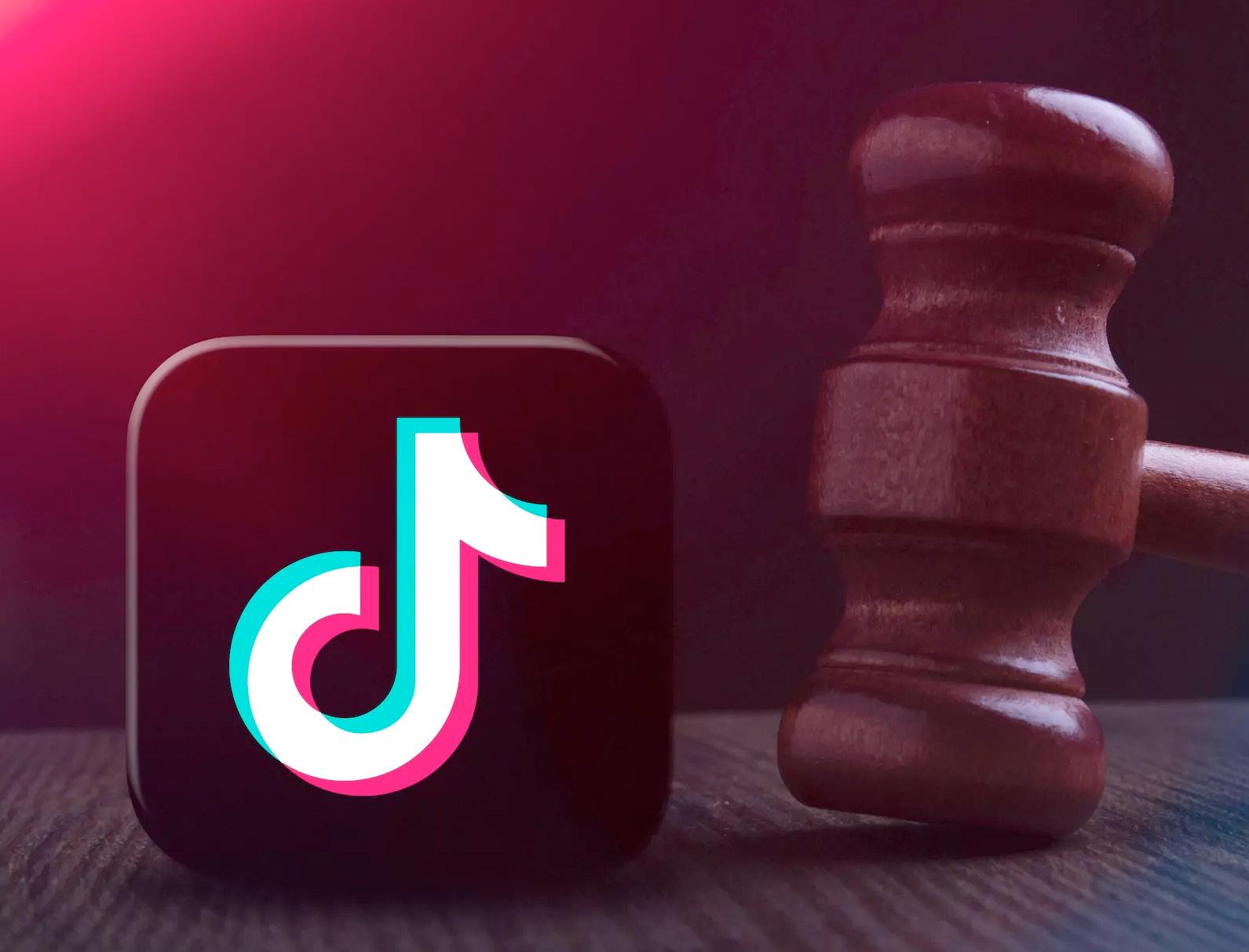
Knock, Knock, TikTok, the Government is at the Door: Federal and State Governments are Banning TikTok, Should Lawyers Do the Same?
THIS ISSUE:
Reflections on the Memphis Mayoral Race Lawsuit
IS THERE A DOCTOR IN THE HOUSE?
Did You Know that You Can Provide Pro Bono Services From Anywhere?
the magazine of the Memphis Bar Association | Vol. 40, Issue 2, Summer 2023
MEMPHIS LAWYER

the magazine of the Memphis Bar Association
Memphis Bar Association Publications Committee
Amber Floyd, Co-Chair
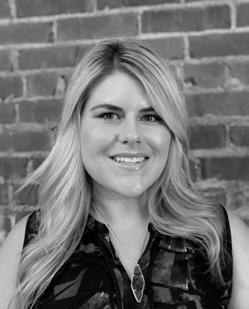
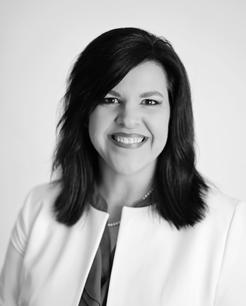
Nicole Grida, Co-Chair
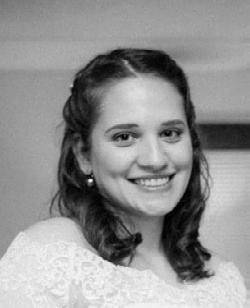
Audrey Calkins
Maureen Holland
Taylor Flake Lawson
Skkye Moreno
The Memphis Lawyer is a quarterly publication of the Memphis Bar Association, Inc. with a circulation of 2,000. If you are interested in submitting an article for publication or advertising in an upcoming issue, contact info@memphisbar.org. The MBA reserves the right to reject any advertisement or article submitted for publication.
MBA STAFF
The Memphis Bar Association 145 Court Ave. Suite 301 Memphis, TN 38103 Phone: (901) 527-3573
www.memphisbar.org
Mary Ann Upchurch Executive Director
Lauren Gooch Membership & CLE Director
Kelly Swan Communications Director
FEATURES
8 Knock, Knock, TikTok, the Government is at the Door: Federal and State Governments are Banning TikTok, Should Lawyers Do the Same?
BY JUSTIN JOY
13 Reflections on the Memphis Mayoral Race Lawsuit
 BY DAVID MORELLI
16 Why Join the Judiciary Sustainers Program?
19 Did You Know that You Can Provide Pro Bono Services
BY NICOLE M. GRIDA
22 CLC Corner: Is There a Doctor in the House?
BY KAREN HENSON
BY YVETTE H. KIRK
STEPHEN LEFFLER
CALKINS
Volume 40, Issue 2, Summer 2023
From Anywhere?
21 Memphis Bar Foundation Welcomes New Fellows 24 Memphis Bar Association 100 Club 25 Memphis Bar Association Small Firm 100 Club
COLUMNS
Easy Way to Improve Your Health
26 Wellness Corner: Reduce Your Blood Sugar SpikesAn
28
32 Court Report: United
36-38 Bar Scene 39 People in the News
Court Report: Shelby County Circuit Court BY
States District Court BY AUDREY
BENCH BAR 2023 CLE SCHEDULE
Friday, 9/22
7:30-8:30am
Rise & Shine Yoga- Yoga at Your Desk: Poses and Meditation to Prevent Burn Out and Compassion Fatigue in the Legal Profession



Judicial Commissioner Shayla Purifoy
9:00am-10:00am
Session 1 - Case Law Update
Judge Valerie Smith & Judge Bobby Carter
Session 2 - General Sessions Practice- FED/Collections
Judge Phyllis Gardner, Josh Kahane; Moderated by S. Denise McCrary
10:15am-11:15am
Session 1 - Shelby County Bail Hearing Room Attorney General Steve Mulroy, Public Defender Phyllis Aluko, Commissioner Shayla Purifoy & Assistant Shelby County Attorney Pamela Williams Kelly
Session 2 - Labor & Employment Law Hot Topics
Courtney Leyes & Tressa Johnson
11:30am-1:00pm
Keynote Luncheon: Sports Law
Jimmy Sexton, William King & Geoff Calkins
1:15pm-2:15pm

Session 1 - Handling High Profile Cases
Gary K. Smith & Gerard Stranch
Session 2 - Bankruptcy Panel
Chief Bankruptcy Judge Jennie Latta & Toni Parker
4:00pm-6:30pm
YLD Sunset CLE: Name, Image & Likeness in Sports: What's the Deal?
Folasade Omogun-Broadnax & Jimmie Strong; Moderated by Patrick Hillard

5
Click Here to Register for Bench Bar!
BENCH BAR 2023 CLE SCHEDULE
Saturday, 9/23
8:15-8:45am

Breakfast Session: Innovating and Supporting Your Clients at 201 Poplar
Mayor Lee Harris
9:00am-10:00am
Session 1 - Family Law: Women in the Profession
LaQuita Stokes, Cindy MacAulay, Lara Butler & Laura Rogers
Session 2 - Civil Litigation Interactive Mock Jury Selection
Dawn Carson, Thomas Greer; Mock Juror: Judge Phyllis Gardner
10:15am-11:15am
Session 1 - The Impact of Mass Media on Prosecuting & Defending Criminal Cases
Blake Ballin, Paul Hagerman; Moderated by: Judge Jennifer Fitzgerald
Session 2 - Mediation & ADR Panel
David Wade & Matt Macaw
11:30am-1:00pm
Keynote: Diversity, Equity & Inclusion Panel: Implicit Bias
Terrence Reed & Tannera Gibson
1:15pm-2:30pm
Plenary: Appellate Judges Panel
Judge John W. Campbell and Judge Kristi M. Davis
6
BENCH BAR 2023 CLE SCHEDULE
Sunday, 9/24
9:30am-11:00am
Farewell Brunch: Advanced Trial Advocacy: Effective Use of Trial Technology and Expert Testimony in Complex Cases
William Bonner, J. Brian Duncan & Robert Mitchell
SIGN UP FOR THE GROUPME APP:
This is the best way to stay informed on conference updates and connect with fellow attendees!

7
Knock, Knock, TikTok,
the Government is at the Door:
Federal and State Governments are Banning TikTok, Should Lawyers Do the Same?
By JUSTIN JOY
In December 2022, the U.S. House of Representatives Committee on House Administration announced it was banning TikTok from all mobile devices managed by the U.S. House.1 The federal government as a whole soon followed suit.2 A new rule issued by the Department of Defense, the General Services Administration, and NASA, currently bans the use of TikTok on personally owned devices of federal contractor employees.3 A number of states have imposed similar bans on government devices. A new law in Tennessee bans access to the platform utilizing public Internet connections at public higher educational institutions.4 The state of Montana recently passed a law prohibiting the platform anywhere within the geographical boundaries of the state.
While support for the various bans on TikTok have been bipartisan in a number of contexts, the discussion about these governmental bans can become political, and in the case of the Montana ban, some are currently subject to constitutional challenge. Politics and constitutionality issues aside, there have been concerning reports regarding TikTok's data security practices. A June 2022 news story reported on discussions in leaked audio recordings from dozens of internal meetings at TikTok’s parent company, ByteDance. In the recordings, discussions are heard about China-based ByteDance employees having repeatedly accessed non-public data about TikTok users in the United States.5 The story quoted one consultant involved in the review saying, “There’s some backdoor to access user data in almost all” of the internal tools utilized by ByteDance. The story was sufficiently credible and concerning to prompt several responses from federal leaders. FCC Commissioner Brendan Carr called on the CEOs of Apple and Alphabet to remove the TikTok mobile application from their respective app stores,6 and the Democratic and Republican ranking members of the U.S. Senate Select Committee on Intelligence called on the Federal Trade Commission to investigate.7 In a
troubling development, it was discovered months later that the physical movements of the reporters covering the TikTok audio leak story had been tracked by ByteDance employees in China.8
For its part, TikTok is sufficiently concerned about the threat to its business from the growing backlash in the U.S. that it has offensively gone on the defensive. One strategy ByteDance has recently pursued is establishing a U.S.-based data center, code-named Protect Texas, which would store data on U.S.-based users, and be segregated from company operations and, presumably access, elsewhere. The opening lines of its Project Texas explainer are telling of the current environment ByteDance acknowledges that it is facing:
TikTok faces a high level of scrutiny as a result of our parent company’s Chinese heritage, and that scrutiny requires a unique level of transparency—and accountability. . . . . Put simply, Project Texas is an unprecedented initiative dedicated to making every American on TikTok feel safe, with confidence that their data is secure and the platform is free from outside influence.9
TikTok has set up an entire website dedicated to providing information about Project Texas and the standalone entity the company formed, TikTok U.S. Data Security Inc., which ByteDance states is “tasked with managing all business functions that require access to user data identified by the U.S. Government as needing additional protection and ensuring that the content you see in the U.S. version of the app is free from outside manipulation.”10 The website is complete with numerous FAQs and a “Myths vs Facts” section.
With all of the buzz about the bans, a brief pause is warranted to ask, should I have the TikTok app on the same device where client information is stored? One of
8
the first things I often mention when addressing the issue of data privacy and security concerns for lawyers and law firms is Comment 8 to Rule 1.1 of the Tennessee Rules of Professional Conduct:
To maintain the requisite knowledge and skill, a lawyer should keep abreast of changes in the law and its practice, including the benefits and risks associated with relevant technology, engage in continuing study and education, and comply with all continuing legal education requirements to which the lawyer is subject.
With the pace and breadth of changes in technology, maintaining even a headline-level familiarity with current developments is challenging. Keeping yourself sufficiently well-informed “to maintain the requisite knowledge and skill” of the various degrees of risks new technologies present can seem nearly impossible.11 For evaluating the risks of using TikTok, and specifically the mobile application, in your law practice, a first stop is a review of the terms and conditions and privacy notice. These ubiquitous but rarely read documents generally govern the respective rights and responsibilities between a service, such as TikTok, and the user. One provision of note in the privacy notice: “If you choose to find other users through your phone contacts, we will access and collect information such as names, phone numbers, and email addresses, and match that information against existing users of the Platform.” 12 Although other social media platforms such as Facebook 13 have very similar provisions, the ongoing issue related to TikTok’s data transfers to China, or at least the accessibility to such data by ByteDance employees based in China, does put this provision in a different context than U.S.-based companies.
So, what’s the verdict? Is the TikTok application safe to have on the same device you store client information?
Of course, this article is not legal advice, and you will have to make that decision for yourself and your firm, but all things considered, probably so, with the number of caveats discussed above, not the least of which include any specific governmental regulations or contractual obligations to which you, your firm, or perhaps your client, may be subject to. However, developments involving TikTok over the past few years do raise an interesting question regarding what the data security risk profile would look like if your law firm represented an individual or company adverse to the Chinese government. The current news of TikTok and the
proliferating government bans of the platform provide a dynamic example of a technology that lawyers need to continue to monitor and evaluate if they use, or are contemplating using, the service or its applications.
1 Moira Warburton, “U.S. House administration arm bans TikTok on official devices,” Reuters (Dec. 27, 2022), available at https://www. reuters.com/technology/us-house-administration-arm-bans-tiktokofficial-devices-2022-12-27/
2 Haleluya Hadero, “Why TikTok is being banned on gov’t phones in US and beyond,” Associated Press (Feb. 28, 2023), available at https:// apnews.com/article/why-is-tiktok-being-banned-7d2de01d3ac5ab2b 8ec2239dc7f2b20d
3 https://www.federalregister.gov/documents/2023/06/02/2023-11756/ federal-acquisition-regulation-prohibition-on-a-bytedance-coveredapplication
4 “Tennessee law prohibits use of TikTok on campus internet,” The Daily Beacon (April 21, 2023), available at https://www.utdailybeacon.com/ campus_news/campus_life/tennessee-law-prohibits-use-of-tiktok-oncampus-internet/article_9f4b7c32-dac9-11ed-83ab-f318309d8a31. html
5 Emily Baker-White, “Leaked Audio From 80 Internal TikTok Meetings Shows That US User Data Has Been Repeatedly Accessed From China,” BuzzFeed News (June 17, 2023), available at https://www. buzzfeednews.com/article/emilybakerwhite/tiktok-tapes-us-userdata-china-bytedance-access
6 https://twitter.com/BrendanCarrFCC/status/1541823585957707776
7 https://www.warner.senate.gov/public/_cache/files/3/e/3eeb87b3e9b5-4aa4-8ea1-361a8472ff46/A42795C63518B32671F9ACCF82B 1E26A.khan-ssci-tiktok-letter.pdf
8 David Shepardson, “ByteDance finds employees obtained TikTok user data of two journalists,” Reuters (Dec. 12, 2022), available at https:// www.reuters.com/technology/bytedance-finds-employees-obtainedtiktok-user-data-two-us-journalists-2022-12-22/
9 https://usds.tiktok.com/usds-about/
10 https://usds.tiktok.com/what-is-usds/
11 Indeed, at least one state now requires a minimum of one hour of continuing legal education every two years dedicated specifically to the subject matter of cybersecurity, privacy and data protection in the context of legal practice. https://ww2.nycourts.gov/attorneys/cle/ clenews.shtml
12 https://www.tiktok.com/legal/page/us/privacy-policy/en
13 https://www.facebook.com/privacy/policy?subpage=1.subpage.2FriendsFollowersAndOther
9

10 The Luxurious SUV Lineup.
4651 S. Houston Levee Rd. | Collierville, TN MBCollierville.com
| providencehillfarm.com Our line of Mercedes-Benz SUVs take you from the ball fields to the dove fields in luxurious comfort and unmatched style.
Pictured at Providence Hill Farm, the premier shooting club of the South, located in central Mississippi.
GLS 450
GLE 350
GLC 300
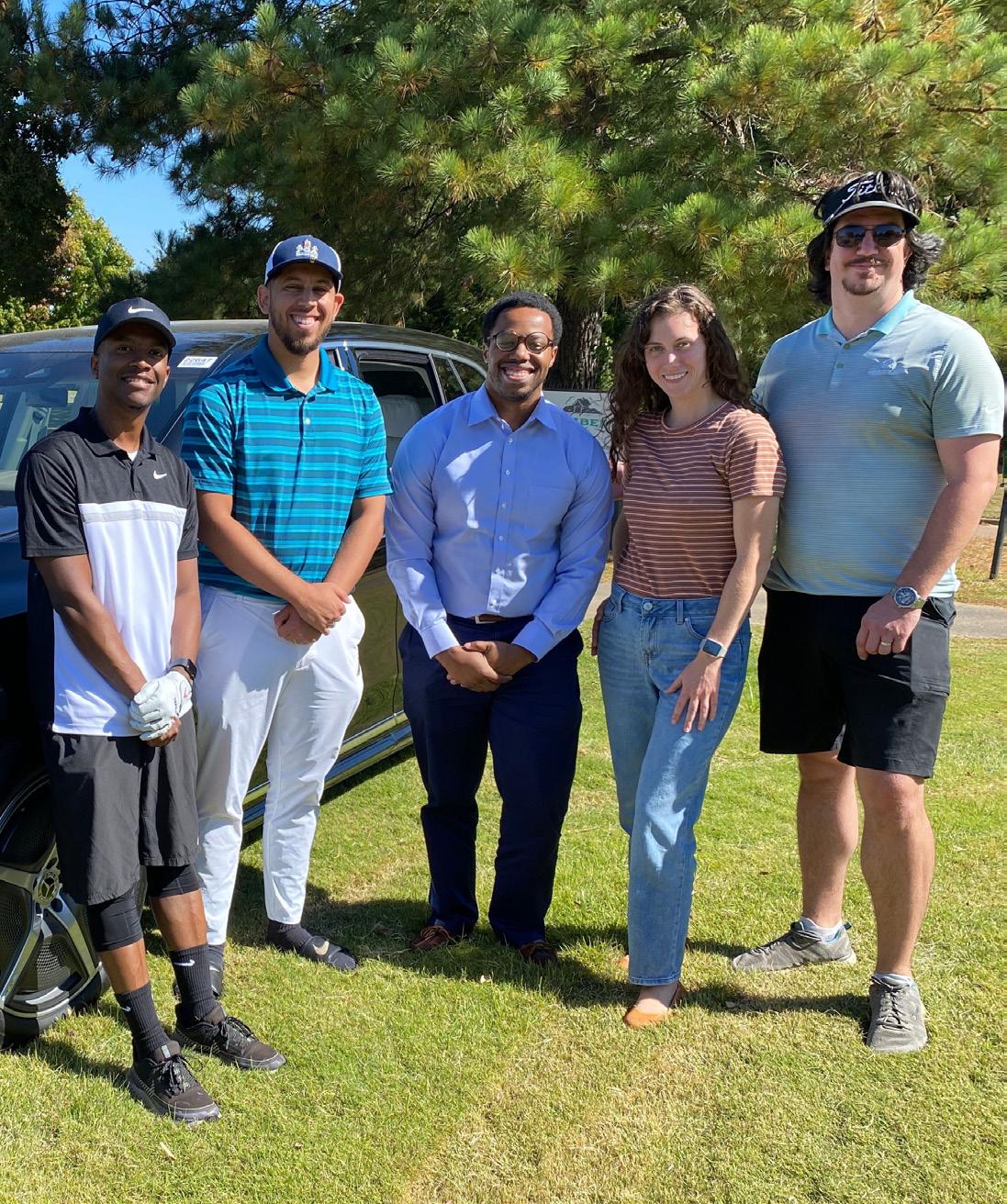
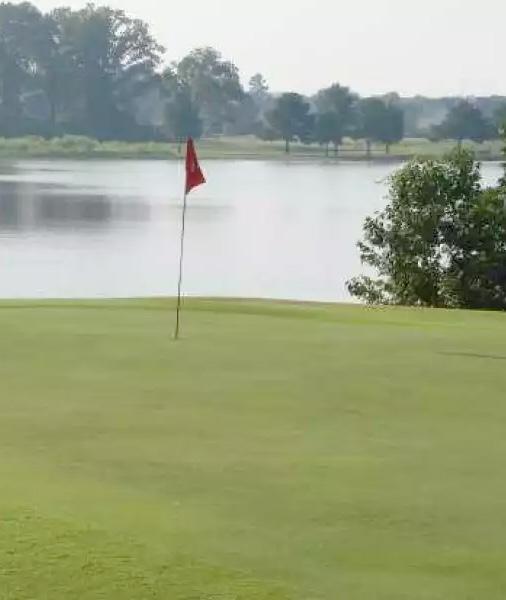
YLD 2023 Golf Tournament
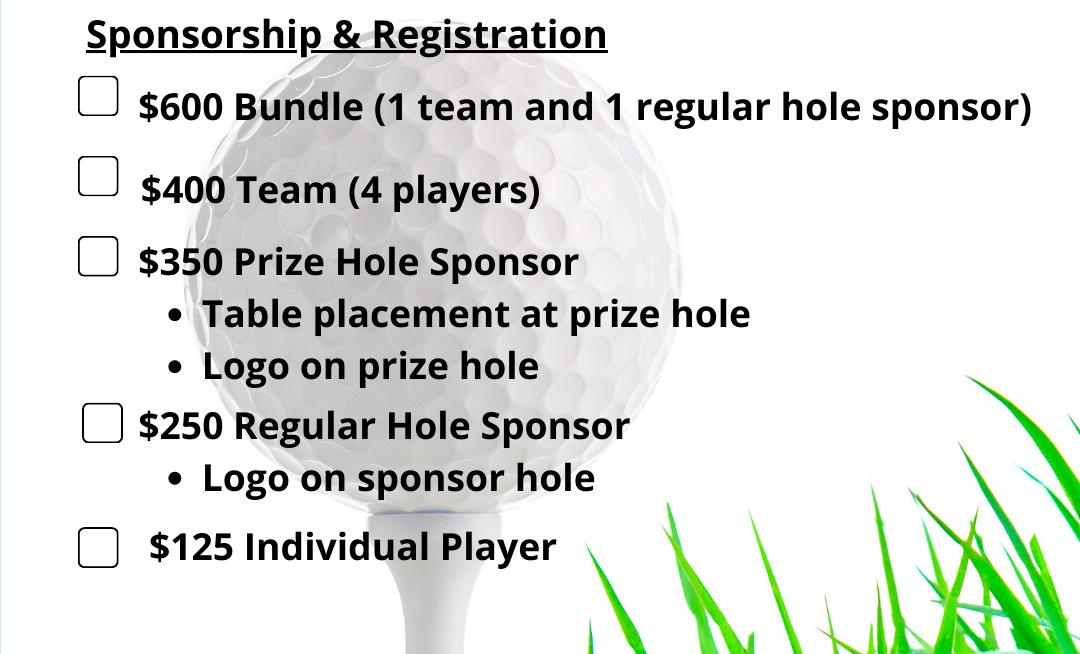
SATURDAY, OCTOBER 14

Timber Truss Golf Course

8:00am

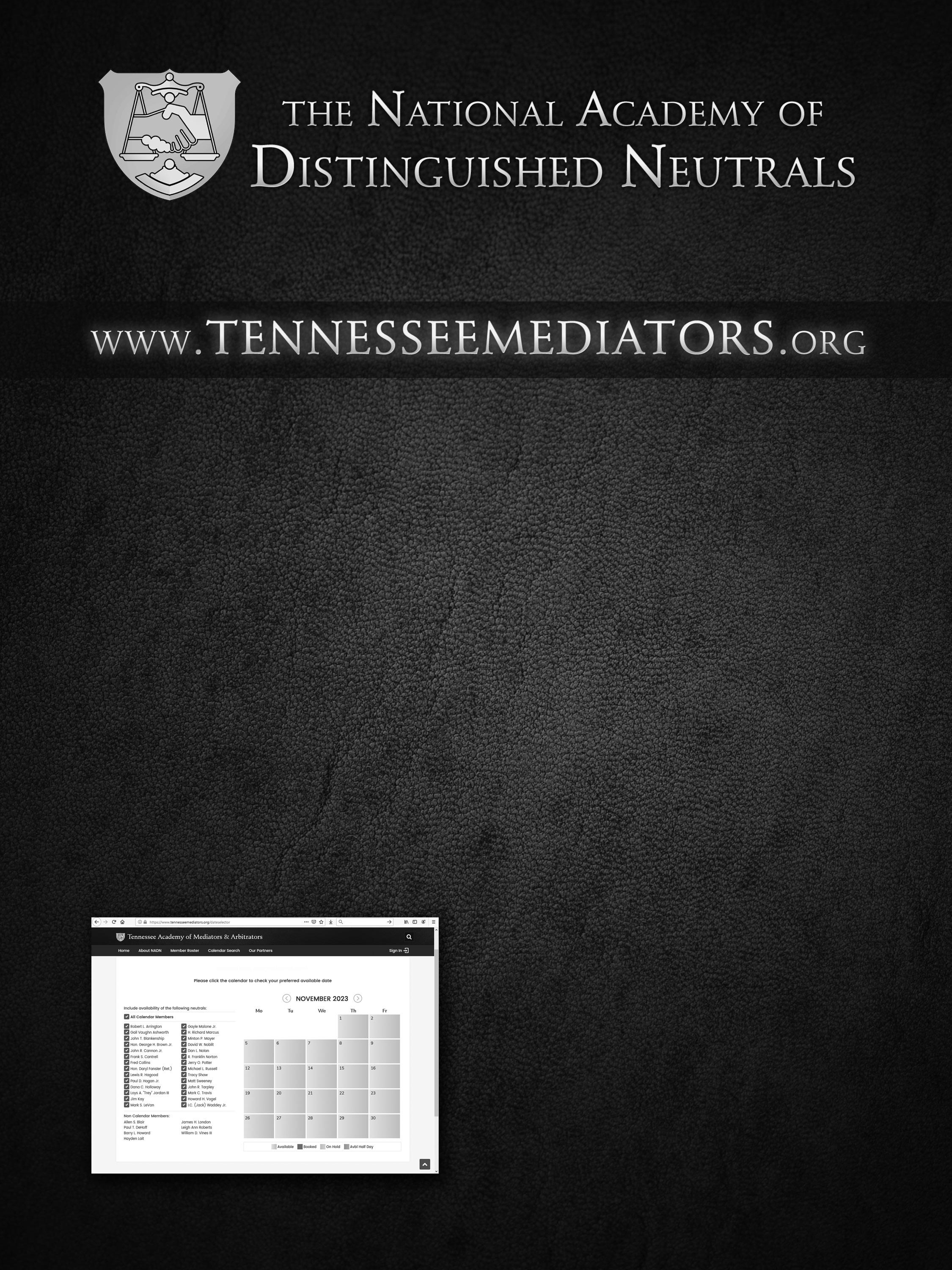
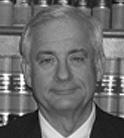
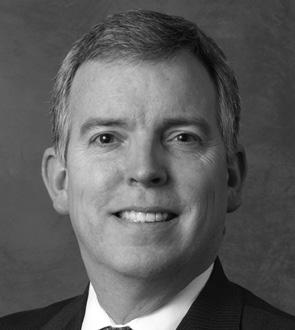
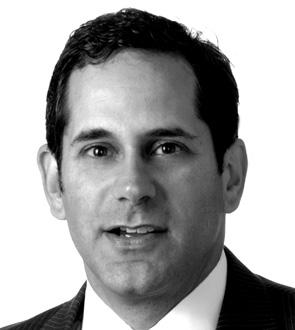
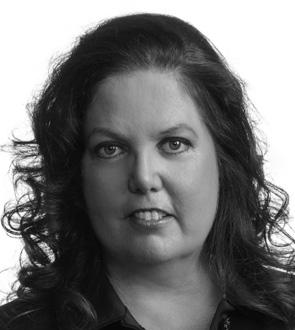
12 Allen BLAIR (901) 820-4347 George BROWN (901) 523-2930 John CANNON (901) 328-8227 Fred COLLINS (731) 686-8355 Hayden LAIT (901) 230-4990 Jerry POTTER (901) 525-1455 Memphis Area Members recognized for Excellence in the field of Mediation or Arbitration TENNESSEE CHAPTER Trey JORDAN (901) 526-0606 Minton MAYER (615) 248-3605 Check preferred dates or schedule appointments online directly with the state’s top mediators & arbitrators. www.TennesseeMediators.org is entirely free, funded by our members Gayle ASHWORTH (615) 254-1877 Janice HOLDER (901) 527-3765
Reflections on the Memphis Mayoral Race Lawsuit
By DAVID MORELLI
“Nothing ever happens” is a joking refrain often heard online these days about how the media will hype up something that’s happening, and then, once it passes, everything remains relatively unchanged. One may be tempted at times to agree.
Those trying to keep up with the local political scene may be still suffering various degrees of burnout or election fatigue after Shelby County’s “Big Election” cycle last year where hundreds of candidates appeared on the ballot across three distinct election seasons for local, state, and federal races. Once the dust settled on the county races in August, the open question, or, depending on whom one asked, the foregone conclusion, of whether the Republican party would retain any countywide office was answered in the negative with Steve Mulroy’s defeat of Amy Weirich in the District Attorney’s race. The November state and federal races offered up even fewer surprises locally after the state legislature redrew the district maps following the 2020 census results, mostly reinforcing incumbent positions on both sides of the aisle.
With the midterm elections over, the slow-moving machinery of the 2024 presidential race began groaning into place. But before that marathon cycle offered up much of anything newsworthy, the 2023 Memphis Mayoral Race, set for October of this year, decided it was not to be outdone with its own bit of drama: a question was raised about the five-year residency requirement to be eligible to run.
Back in 2019, current Memphis Mayor Jim Strickland was fairly confident of victory in his re-election bid and did not challenge the Memphis residency of one of his opponents, former mayor Willie Herenton, who had been residing in Collierville. This cycle, however, reportedly as a by-product of the process of going through and harmonizing the Memphis city charter, the five-year residency requirement became a live issue in an open
race with well over a dozen contenders. With little to no fanfare, the Shelby County Election Commission posted a legal opinion by one of its former lawyers to its website, which argued that a five-year residency requirement remained on the books.
This development concerned two of the frontrunners for mayor so much that they sued the Shelby County Election Commission in Shelby County Chancery Court to get a ruling on the matter. Through various procedural twists and turns which resulted in, among other things, the Election Commission being dropped as a party to the lawsuit, the Memphis City Council joining the lawsuit and adding the City of Memphis as a defendant, the case was resolved with a relative whimper when Chancellor JoeDae Jenkins sided with the two candidates concerning the status of the residency requirement and qualified them to run for mayor this cycle. This outcome kept the status quo and prevented the race from being blown wide open as three of the leading candidates would not have met the five-year requirement.
As the mayoral race is nonpartisan with no primary elections, whoever secures a mere plurality of votes in October will take the prize. Turnout for the mayor’s race is historically very low, and with local polling being the challenge that it is, removing three big names would have made the election even more of a jump-ball contest than it already will be.
Former Chairman of the Shelby County Election Commission and local election law expert Robert Meyers was the author of the legal memo which set off controversy this election cycle. His memo provides a wide-ranging survey of the status of durational residency requirements which notes they serve a vital government interest and would readily survive any constitutional challenge to their enforcement. The municipal interests served by a durational residency requirement center on the city’s need for candidates who are invested in the community,
13
familiar with its needs and concerns, and generally not permitting just any old charismatic upstart to wander in on a whim to run for the city’s highest executive office. In this year’s race, the candidates with residency concerns are a former Memphis mayor, a former Shelby County Commissioner, and the current Shelby County Sheriff, dispelling fears of dilettantish outsiders interloping in Memphis politics.
Instead, this case ultimately hinged on a matter of statutory construction, with Chancellor Jenkins interpreting the five-year durational residency requirement as having been amended by a referendum in 1996. In the Chancellor’s view, this referendum eliminated durational residency requirements for city council and mayor alike. So with this huge procedural hurdle out of the way, the real work of getting a largely disinterested and unengaged electorate to coalesce around the best candidate has begun in earnest. Whomever the people choose, something is bound to happen.
David Morelli graduated in May 2023 from The University of Memphis, Cecil C. Humphreys School of Law and plans to sit for the bar in February 2024. During law school, he clerked for the Honorable JoeDae Jenkins of Shelby County Chancery Court, Part III and served as treasurer for the Public Action Legal Society. He is a native Memphian who has volunteered on several local campaigns and most recently worked on the re-election campaign for state representative John Gillespie of East Memphis.
First
Friday, September 15, 2023
Last Day for Absentee Request
Thursday, September 28, 2023
Last Day of Early Voting
Saturday, September 30, 2023
Election Day

Thursday, October 5, 2023
Run-Off (If Required)
Thursday, November 16, 2023
14
Offices to be Elected: Mayor
Council District
Council District
Council District
Council
District
City Council District
City Council District 7 City Council District 8, Position 1 City Council District 8, Position 2 City Council District 8, Position 3 City Council District 9, Position 1 City Council District 9, Position 2 City Council District 9, Position 3 Memphis Court Clerk City of Memphis Municipal Election—October 5, 2023 Offices to be Elected: Mayor City Council District 1 City Council District 2 City Council District 3 City Council District 4 City Council District 5 City Council District 6 City Council District 7 City Council District 8, Position 1 City Council District 8, Position 2 City Council District 8, Position 3 City Council District 9, Position 1 City Council District 9, Position 2 City Council District 9, Position 3 Memphis Court Clerk Upcoming Dates: Voter Registration Deadline First Day of Early Voting Last Day for Absentee Request Thursday September 5, 2023 Friday, September 15, 2023 Thursday, September 28, 2023 City of Memphis Municipal
October
Offices to be Elected: Mayor City Council District 1 City Council District 2 City Council District 3 City Council District 4 City Council District 5 City Council District 6 City Council District 7 City Council District 8, Position 1 City Council District 8, Position 2 City Council District 8, Position 3 City Council District 9, Position 1 City Council District 9, Position 2 City Council District 9, Position 3 Memphis Court Clerk Upcoming Dates: Voter Registration Deadline First Day of Early Voting Last Day for Absentee Request Thursday September 5, 2023 Friday, September 15, 2023 Thursday, September 28, 2023
City
1 City
2 City
3 City
District 4 City Council
5
6
Election
5, 2023
Upcoming Dates: Voter Registration Deadline Thursday September 5, 2023
Day of Early Voting
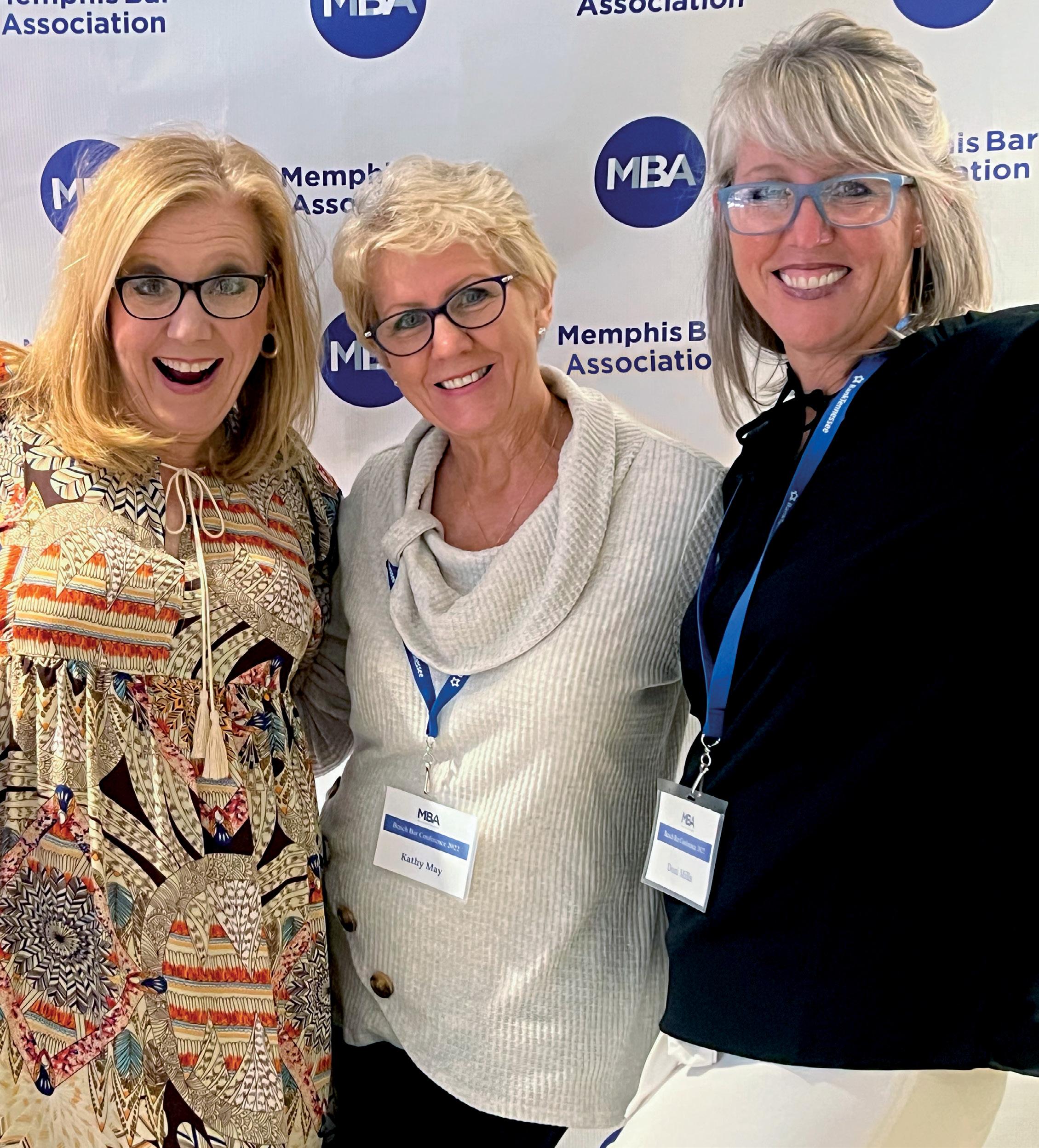


15 30 North Second at Court Square 901.525.5533 We also have offices in East Memphis, Germantown, Collierville, Munford & Ripley. MEMBER FDIC NMLS #441426 www.banktennessee.com Our customers are talking! Best bank ever! If you are looking for a bank where people know your name and care about you, then look no further . . . BankTennessee is the bank for you! Banking here is one of the best personal and business decisions my family and I have ever made. Thank you BankTennessee! The Bank for the Legal Community PROUD PARTNER OF THE MEMPHIS BAR ASSOCIATION SINCE 2006 Doni, Thank you for your kind words! We appreciate you and all of our customers. Doni Mills Account Executive Alpha Reporting, a Veritext Company Also pictured are more happy customers: Dana Webb, court reporter, and Kathy May, principal. They are with Alpha Reporting, a Veritext Company.
Why Join the Judiciary Sustainers Program?
The Judiciary Sustainers Program supports the Memphis Bar Association in its efforts to develop, improve, and grow important series and programs not only for our members, but the Memphis community. Bar associations perform vital functions, both in the legal profession and in society at large. These include serving as a central point of engagement for lawyers who wish to participate in pro bono work; helping to educate the public about legal issues, developments in the law and their legal rights; reporting on legal trends and advocating for legal reform; and helping to maintain the integrity of the legal profession.
Sustainer membership fees also help support the next generation of lawyers. Providing free membership to
law students and to first year lawyers is critical to the development of young attorneys in their careers. Your sustaining membership will play a critical role in their future success.
For a minimal fee, you can join other members of the Shelby County judiciary dedicated to the betterment of the legal profession and our community.
Although you will continue to enjoy the benefit of a free MBA membership as a member of the judiciary, we hope you will take the next step by becoming aJudiciary Sustaining Member.
To become a Judiciary Sustaining Member, please click here.
2023 Judiciary Sustaining Members
The Honorable Carlyn Addison
The Honorable Bill Anderson
The Honorable Denise E. Barnett
The Honorable Annie T. Christoff
The Honorable Lee V. Coffee
The Honorable Paulette J. Delk
The Honorable Donna M. Fields
The Honorable Timothy Francavilla
The Honorable Terre Jo Fratesi
The Honorable Julia S. Gibbons
The Honorable Douglas Gregory Gilbert
The Honorable Gina C. Higgins
The Honorable Janice M. Holder
The Honorable JoeDae L. Jenkins
The Honorable Jennie D. Latta
The Honorable David Pool
The Honorable Valerie L. Smith
The Honorable Diane K. Vescovo
The Honorable Mary L. Wagner
The Honorable W. Mark Ward
The Honorable Cary C. Woods
16
17

18
Did You Know that You Can Provide Pro Bono Services From Anywhere?
By NICOLE M. GRIDA
For the past dozen years, Tennessee Free Legal Answers (TN Free Legal Answers) has provided Tennessee licensed attorneys the opportunity to provide pro bono services from anywhere they have an internet connection. This means volunteer attorneys can provide legal advice from the comfort of their own home or office or while traveling all from their smart phone, tablet, or computer. If you have ever thought that you would like to help Tennesseans with civil legal needs but have not been able to participate in an in-person legal clinic, please read on to learn more about Tennessee Free Legal Answers and how you can help.
Launched in 2011 and originally known as Online Tennessee Justice, TN Free Legal Answers was a collaboration of the Tennessee Bar Association, the Tennessee Alliance for Legal Services (TALS) and Baker Donelson who created and donated the software necessary to run the portal. Thanks to generous support of Baker Donelson agreeing to share the software license at no cost, other states created similar sites and now there are free legal answers sites in over 38 states, the U.S. Virgin Islands, and a new Federal site!
The TN Free Legal Answers website is available to Tennesseans whose annual incomes are below 250% of federal poverty guidelines. Legal Aid programs, such as Memphis Area Legal Services and West Tennessee Legal Services, can often only serve clients with household incomes at or below 125% of the poverty guidelines. As you can imagine, TN Free Legal Answers has been a lifeline to those who make too much money for legal aid yet still cannot afford to hire an attorney.
The website is very user friendly. Tennesseans who qualify can create a free account, log in, and ask a civil legal question. Volunteer attorneys then scan the queue and answer questions of their choosing. Users will
not know the name of the attorney who answers their questions unless the attorney chooses to provide it. When their question is answered, users receive an email that prompts them to log back in and view the answer. Malpractice insurance is provided by the ABA for the legal guidance that you provide through the ABA Free Legal Answers website.
If you register for the 2023 Bench Bar Conference, you will also gain access to an on-demand webinar entitled “Tennessee Free Legal Answers - An Easy Way to Provide Pro Bono Services” which I will present alongside Tim Hughes, HELP4TN Program Manager and Staff Attorney with TALS. During our presentation, we will walk you through just how easy it is to serve as a volunteer attorney with the TN Free Legal Answers and provide best practices for how to respond to questions in the portal.
Now I know what you are all thinking – this sounds like a great program where you can really make an impact in the Volunteer State. So what are you waiting for? Sign up to be a volunteer attorney today!
Nicole M. Grida is a Partner at Bowman and Brooke, LLP where she focuses her practice on product liability and general liability. She currently serves as the Chair of the Memphis Bar Association’s Publications Committee and is a member of the MBA’s Access to Justice Committee, Bench Bar Committee, and Wellness Committee. Since 2019, Nicole has served on the Board of Directors for the Tennessee Alliance for Legal Services, which administers TN Free Legal Answers.
19
901.761.1622 901.761.1622 HobsonRealtors.com HobsonRealtors.com Jennifer and Joel Hobson Jennifer and Joel Hobson
Memphis Bar Foundation Welcomes New Fellows
The Memphis Bar Foundation recently welcomed forty seven (47) new fellows who were recognized for their service to the legal profession and the community. Thanks to the generous support of Hobson Realtors, this year’s Fellows Reception at The University Club of Memphis!
The Memphis Bar Foundation was established in 1982 by eighteen charter fellows to serve as the philanthropic arm of the Memphis Bar Association. It is a 501(c)(3) organization, which provides a platform for attorneys and others in the legal profession to give back to the community through tax-deductible contributions. The Foundation is governed by a Board of Directions, who serve a two-year term.
The Foundation annually nominates attorneys and judges to become Fellows. Nominees are chosen
based on their devoted and distinguished service to the legal profession and the administration of justice and their adherence to the highest standards of professional ethics and personal conduct. “Being named a Memphis Bar Foundation Fellow is a tremendous honor,” says Terrence Reed, Fellows Selection Committee Chair. “Approximately 1% of Memphis area attorneys are invited to join the Memphis Bar Foundation Fellows each year.”
The Memphis Bar Foundation provides grants to nonprofit organizations to support law-related projects and programs that align with its mission. These grants would not be possible without the financial support of our Foundation’s Fellows. To learn more about the Memphis Bar Foundation, please click here .
The Memphis Bar Association congratulates the 2023 Fellows of the Memphis Bar Foundation!
Cannon F. Allen, Sr.
Taurus Bailey
Cannon F. Allen, Sr.
Taurus Bailey
Blake Ballin
Larry R. Bray
Audrey M. Calkins
Taylor Cates
Kevin E. Childress
Robert A. Cox
D. Michael Dunavant
Laura L. English
The Honorable Jennifer Fitzgerald
Reagan Taylor Fondren
Hugh Francis
W. Christopher Frulla
Lisa Gill
The Honorable Serena R. Gray
Thomas Greer
J. Mark Griffee
W. Aaron Hall
Mary C. Hamm
Sloane Hankins
Joseph Hardison
Leah Lloyd Hillis
The Honorable Kenya Hooks
Russell Jackson
W. Andy Jones
Lindsay A. Jones
Tracye Jones
Christopher J. Lareau
Laura Kessler Mason
Jonathan May
Joseph McKinney
The Honorable LaChina McKinney
The Honorable Danielle Mitchell
Michelle Kimbril Parks
Brandon Pettes
Eric Plumley
The Honorable David L. Pool
Katie Ratton
Abigail Webb Sala
Lauran Stimac
R. Scott Vincent
Howard Wagerman
Christopher Webb
Sarah Pazar Williams
Jodi L. Wilson
The Honorable Cedrick Wooten
21
CLC Corner:
IS THERE A DOCTOR IN THE HOUSE?
By KAREN HENSON
As a part of my regular practice in Shelby County, I file petitions for conservatorship of abused seniors. In Tennessee, we investigate the filing of a conservatorship of anyone 18 or older whom we reasonably believe is incapacitated in the eyes of the law. As recent history has shown us through the Britney Spears case, conservatorships should not to be taken lightly by the courts and should only be utilized when adults have either temporarily or permanently lost the ability to make reasoned and sound legal, medical, and personal decisions, not simply when they don’t make reasoned or sound decisions, in the opinion of others. To prevent fraud and manipulation of vulnerable adults, state legislatures should have stringent burden of proof requirements in place for petitioners should they seek a conservatorship of another adult because it means that we are stripping that adult of their most basic rights.
The most crucial requirement of Tenn. Code Ann. § 34-3-105 is the sworn medical report, more commonly referred to as the physician’s affidavit, which must be completed by a physician, psychologist, or senior psychological examiner. Physician is further defined in Tenn. Code Ann. § 34-1-101(14) as “a medical doctor or doctor of osteopathic medicine who is licensed to practice medicine in the state of Tennessee.” The physician’s affidavit is also often the most difficult piece of evidence to procure in a conservatorship. Medical practitioners are, somewhat understandably, apprehensive about
completing an affidavit whereby they disclose their patient’s most personal information.
This already almost insurmountable hurdle is further complicated by Tenn. Code Ann. § 34-3-105 which requires that the examination of the patient/respondent must have been completed within ninety (90) days of signing the affidavit. Unless one must see a specialist with some regularity, the average American adult may visit their primary care provider (PCP) once a year, at most.
An August 2022 report detailed that 42.9% of Americans see a Nurse Practitioner (NP) as their PCP and 8.2% see a Physician’s Assistant (PA). In Tennessee, only one-third of adults have a physician as their PCP. That means that the vast majority of Tennesseans would need to find a new physician if they were in need of a court’s assistance in the form of a conservatorship. If an abused elder’s file is referred to my office for filing a conservatorship, it may take several months just to get that victim in front of a licensed physician to be examined, much less file a petition.
During all of that wait time, no one has any authority whatsoever to intervene on that vulnerable adult’s behalf. Financial fraud and medical neglect is free to continue until attorneys have concrete proof that the adult in question even needs our assistance. These requirements are unnecessarily hampering our ability to render timely and cost-effective legal services to the community. Every minute that attorneys, social workers, caregivers,
22
medical professionals, and family have to wait to get that vulnerable adult in front of a licensed physician is an unnecessary risk to the health and welfare of that adult.
As members of the bar, it is incumbent upon us to inform, and, if need be, pressure our legislators to draft legislation that keeps our most vulnerable citizens and the community safe. If we apply the most basic best interests standard to our analysis, it is clear that the current Tennessee legislation does not meet that standard. Our legislators need to recognize that a Nurse Practitioner or Physician’s Assistant is very often the only medical advocate that a vulnerable adult has and modify the Code’s language to include these valuable medical professionals as our partners in protecting our citizens.
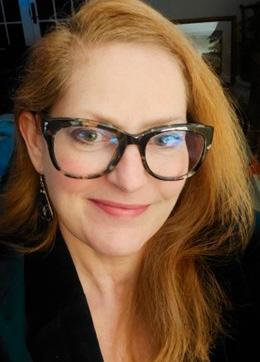
Karen Henson is a Staff Attorney at the Community Legal Center (CLC). A 2012 graduate of The University of Memphis Cecil C. Humphreys School of Law, Ms. Henson initially focused her practice on general civil legal issues and volunteered pro bono services for the CLC. In 2015, Ms. Henson began working part-time as a civil legal attorney on the Coordinated Response to Elder Abuse (CREA) team which serves vulnerable seniors in Shelby County. In late 2016, she took over as the full-time Elder Law/CREA Attorney at the CLC. In her free time, Ms. Henson enjoys reading, gardening, supporting animal rescues, and all things Memphis.
23
100 Club Firms
Receive:
Adams and Reese, LLP
Allen Summers & Gresham
AutoZone
ALSAC/St. Jude
The Memphis Bar Association 100 Club recognizes law firms and legal departments that have 100% of their attorneys as members of the MBA. With your support, we are able to deliver quality networking, continuing legal education courses, and enriching volunteer opportunities to the Memphis legal community. Whether you are a small firm or a large firm, we want to celebrate your commitment to the legal profession and our community!
• Recognition on the MBA website, Memphis Lawyer quarterly online magazine, and MBA social media channels
• 100 Club Member Logos to display on your firm's communication materials
100 club members
Leitner Williams Dooley & Napolitan, PLLC
Lewis Thomason
Martin Tate Morrow & Marston, P.C.
McNabb Bragorgos Burgess and Sorin, PLLC
Baker Donelson Bearman Caldwell & Berkowitz, PC
Black McLaren Jones Ryland & Griffee, P.C.
Burch Porter & Johnson, PLLC
Butler Snow LLP
City of Memphis Law Division
Dinkelspiel Rasmussen & Mink, PLLC
Donati Law, PLLC
Evans Petree, PC
Farris Bobango, PLC
Ford & Harrison, LLP
Glankler Brown, PLLC
Hall Booth Smith, P.C.
Harkavy Shainberg Kaplan PLC
Harris Shelton Hanover Walsh, PLLC
International Paper Company
Jackson Shields Yeiser & Holt
Memphis Area Legal Services
Methodist LeBonheur Healthcare
Morgan & Morgan-Memphis, LLC
Ogletree Deakins Nash Smoak & Stewart, PC
Patterson Bray
Rainey Kizer Reviere & Bell, PLC
Shelby County Attorney's Office
Shuttleworth, PLLC
Siskind Susser, P.C.
Spicer Rudstrom, PLLC
St. Jude Children's Research Hospital
Sylvamo
The University of Memphis Cecil C.
Humphreys School of Law
The Wharton Law Firm
Williams McDaniel, PLLC
Wyatt Tarrant & Combs, LLP
Thank you for your support of the MBA! You make our community stronger. To become part of MBA’s 100 Club, contact Lauren Gooch.
24
The Memphis Bar Association Small Firm 100 Club recognizes small firms (5 or less attorneys) that have 100% of their attorneys as members of the MBA. With your support, we are able to deliver quality networking, continuing legal education courses, and enriching volunteer opportunities to the Memphis legal community.
To become part of MBA’s 100 Club, contact Lauren Gooch.
Solo/Small Firm 100 Club Members
Leffler Law Office
Bailey Bailey & White
Berry, Cannon, Crawford & Macaw
Bostick Law, PLLC
Breakstone & Associates
Burgoyne Law Offices
Carol Chumney Law PLLC
Chastain English
Clinton Law Firm
Consumer Legal Solutions, PLLC
Dan T Bing
Davies Hood PLLC
G. Green Law Practice
Geiger Law & Mediation
Ginsburg Law Group, P.C.
Hartsfield & Hartsfield
Holland & Associates
Johnson & Bennett, PLLC
Kaizen Law PC
Kathryn DeRossitt
Kathy Webb Law
Kinard Love Law, PLLC
Law Office of Earle J. Schwarz
Law Office of Jean E. Markowitz
Law Office of Joseph E. Garrett
Law Office of Kathy Baker Tennison
Law Office of Toni Campbell Parker
Law Office of Yollander Hardaway
Law Offices of Cary Schwimmer
Linda L. Holmes, Attorney at Law
Loevy Law Firm
Luxman Law Firm
Melanie Taylor, Attorney
Midsouth Advocates, PLLC
Nettles Harris Law Firm
Patterson Intellectual Property Law
Pehanick Law
Ralston Buchanan PLLC
Sharon G Lichliter, Attorney at Law
Simpson Law Firm
The Bradley Law Firm, PLLC
The Johnson Law Group, PLLC
The Law Office of Attorney Reginald E. Shelton
The Law Office of Joseph S. Ozment
The Law Office of Roberto Garcia, PLLC
The Pensoneau Firm, PC
The Raines Law Firm
The Scholl Law Firm
The Wharton Law Firm
The Williams Law Firm
Thompson Estate and Probate Law, PLLC
Walls Law Firm, PLLC
Wick Mediation
Wm. Edward Russell, Jr. Attorney at Law
Yarbrough Family Law & Mediation
Yvonne K. Chapman, Attorney at Law
Zoccola Law Firm
25
WELLNESS CORNER
Reduce Your Blood Sugar Spikes: An Easy Way to Improve Your Health
By YVETTE H. KIRK
If you have been paying attention to health and wellness trends, you have seen that advocating for one diet is on its way out. Many experts agree that you can make paleo, keto, vegan, Mediterranean, carnivore, or even less restrictive diets work for you, so long as you are prioritizing the good stuff and your body is showing you signs that you are on the right track. What are some fundamental principles that apply to all good, healthy, and longevity-promoting diets? As Dr. Robert Lustig says in his new book Metabolical: “Protect the liver. Feed the gut.” Below are some tips to help do just that.
To over-simplify, and based on my understanding of Dr. Lustig’s work (as an attorney and health and wellness enthusiast), this means that we want to help prevent our bodies from having to store fat in the liver, often caused by ingesting too much sugar, especially fructose sugar. Fun fact: fructose sugar is sent straight to the liver, whereas glucose sugar can be used and stored in more ways and places, including in our muscles, which is exactly where we want it to get used! Dr. Lustig also advocates for providing our gut bacteria plenty of fiber to feed on so it does not start feeding on our organ linings. In essence: store less fat in the liver; feed more fiber to the gut.
While there are many interventions that help support both of these essential principles, one of the easier and increasingly popular ways of protecting our bodies and decreasing the substantial inflammatory load of dealing with the food we intake, is to reduce the blood sugar spikes that occur in our bodies after meals. When we eat, we generally spike the glucose levels in our blood, which in turn sends insulin out into our bodies to help use and store that glucose, as needed. How much of a spike depends on what we eat, and how our bodies process those foods. For example, table sugar and whole fruit both contain glucose and fructose sugars, but whole fruit
also has fiber, which means it will spike your blood sugar less than table sugar alone.
The general consensus is that the more glucose spikes you have from eating certain foods, the more likely you are to suffer from many chronic diseases and general health conditions over time (including diabetes and fatty liver disease). While more doctors now advocate for testing your fasting insulin levels, which, according to Dr. Lustig, is a better indicator of metabolic health than just testing your fasting glucose levels since testing your fasting insulin requires a blood test. Whereas, keeping our blood sugar (glucose) levels steady throughout the day can be done with simple interventions.
Popular biochemist and blogger, Jessie Inchauspé (known as “The Glucose Goddess”), is making hacks to curb your glucose spikes easy and accessible to the general public, even without investing in a continuous glucose monitor (CGMs). In her book Glucose Revolution, she includes many compelling and easily digestible (pun intended) tidbits on why we should care about our glucose spikes and ways to help curb them. Some of her top tips include:
1. Eating a savory breakfast;
2. Consuming one tablespoon of vinegar a day (preferably 20 minutes prior to a large meal of carbohydrates);
3. Adding a plate of veggies (fiber) to the start of your meal; and
4. Moving for 10 minutes after a meal.
While you can immediately implement some or all of these tips without wearing a CGM, for more help and insight, you can also purchase and use a CGM through the trendy Levels™ or Nutrisense™ programs to get
26
more tips and tricks to curb your glucose spikes. CGMs are becoming increasingly popular within the nondiabetic population, as many in the health and wellness community tout them as a relatively inexpensive (for a high-tech biohacking tool) and highly informative way to monitor your body’s general metabolic health and, as a result, allow you quick access to improving your health overall. However, implementing these easy hacks without monitoring a thing will still help your body do what it needs to both protect your liver and support (feed) your gut. For more information on why you should care about glucose spikes and how to both protect your liver and feed your gut, check out the resources below!
Resources: Metabolical: The Lure and the Lies of Processed Food, Nutrition, and Modern Medicine, Robert Lustig, MD, MSL (2021); Glucose Revolution: The Life-Changing Power of Balancing Your Blood Sugar, Jessie Inchauspé (2022).
Yvette H. Kirk is the Managing Partner at Holland & Associates, PC where she represents individuals against employers Yvette Kirk including companies of all sizes and government entities. She graduated from American University with a Bachelors of Arts in Political Science in 2010 and The University of Memphis Cecil C. Humphreys School of Law with her Juris Doctorate in 2013.
Yvettee is licensed in Tennessee and is also admitted to the United States District Court for the Western of Tennessee and the United States Sixth Circuit Court of Appeals. She is the Secretary of the MBA’s Wellness Committee, and authors articles and presents on attorney health and wellness.
27
Shelby County Circuit Court COURT REPORT:
by STEPHEN LEFFLER
covers jury trials from September 2022 through March 2023
DIVISION
I:
JUDGE FELICIA CORBIN-JOHNSON
1. CT-0860-20, Shanieka Mays v. Kai Owens
September 26, 2022
Derek O. Fairchilds for Plaintiff
Nicholas Owens, Jr. for Defendant
Auto Accident
Jury
• Plaintiff Verdict: $7,984.37
2. CT-3835-22, TS Miller Creek, LLC v. Quaterra
Doggett
December 13, 2022
R. Alan Pritchard for Plaintiff
J.B. Smiley for Defendant
Breach of Contract (Landlord Tenant)
Non-Jury
• Plaintiff verdict for $9,237.50
3. CT-4033-22, Lynnfield Place v. Stacy Watt
February 8, 2023
Joshua Kahane for Plaintiff
Defendants Pro Se
Breach of Contract (Landlord Tenant)
Non-Jury
• Plaintiff verdict for $6,547.60
4. CT-001488-18, Kerry Clay v. City of Memphis
Sanitation Division
March 10, 2023
John P. Wade for Plaintiff
Joseph M. Fletcher for Defendant
GTLA (Negligence) Jury
• Plaintiff verdict: $1,690,500.00
» Past Loss of Earning Capacity: $113,750.00
» Future Loss of Earning Capacity: $87,500.00
» Past Loss of Enjoyment of Life: $162,500.00
» Future Loss of Enjoyment of Life: $250,000.00
» Past Pain and Suffering: $711,750.00
» Future Pain and Suffering: $365,000.00
» Reduced to $300,000.00, the statutory maximum
5. CT-002378-16, Demetreian Johnson v. Marie Clark
March 16, 2023
Kenneth M. Margolis and Robert Hardy for Plaintiff
Robert Moore and Craig Flood for Defendant
Auto Accident Jury
• Plaintiff Verdict: $28,153.00
» Medical Expenses: $8,203.00
» Loss of Earning Capacity: $1,950.00
» Physical Pain and Mental Suffering: $6,000.00
» Loss of Enjoyment of Life: $6,000.00
» Permanent Injury: $6,000.00
6. CT-2332-20, Daveyon Wirt v. Armstrong Transfer and Storage Company, Inc.
March 30, 2023
Oscar S. “Kav” Spivey III for Plaintiff
Paul T. Nicks for Defendant
Auto Accident Jury
• Plaintiff Verdict (49% comparative fault to Plaintiff)
» Damages: $33,000.00
» Reduced to $16,830.00
28
DIVISION II: JUDGE CAROL CHUMNEY
1. CT-3963-21, Rodelle Dixon v. Luke Marlin
January 11, 2023
Robert L.J. Spence, Jr. for Plaintiff
Robert L. Moore and Craig Flood for Defendant
Auto Accident
Jury
• Plaintiff Verdict: $11,541.60
2. CT-3487-21, Shenequa N. Cooper v. Dobbs Ford, Inc., d/b/a Autonation Ford Memphis
February 24, 2023
Robert L.J. Spence, Jr. for Plaintiff James Stephen King for Defendant
Auto Accident Jury
• Plaintiff Verdict: $562,578.22
» Past Medical Expenses: $34,222.22
» Physical Pain and Suffering: $100,000.00
» Mental and Emotional Anguish: $200,000.00
» Disfigurement: $120,286.00
» Loss of Enjoyment of Life: $90,000.00
» Future Medical Expenses: $18,070.00)..
DIVISION III: JUDGE VALERIE L. SMITH
1. CT-004578-15, Acuity v. Hunter Miller Stroud, Individually and d/b/a Southern Landscape Services of TN, LLC a/k/a Southern Landscape Services, LLC
September 21, 2022
Paul I. Mendelson for Plaintiff
Andrew W. McClelland, Jr. for Defendant Breach of Contract
Non-Jury
• Plaintiff verdict for $31,000.00.
2. CT-001761-17, Ranae Daniel, and Husband, William Daniel v. Joshua S. Tow and Jeff Tow
December 9, 2022
Andrew C. Clarke for Plaintiff
Samuel R. Marney III and Douglas A. McTyier for Unnamed Defendant.
Auto Accident
Jury
• Plaintiff verdict for $746,103.92
» Ranae Daniel:
Past Physical Pain and Suffering: $25,000.00
Future Physical Pain and Suffering:: $171,000.00
Past Emotional Pain and Suffering: $29,175.00
Future Emotional Pain and Suffering: $21,111.00
Pass Loss of Enjoyment of Life: $12,750.00
Permanent Impairment: $36,000.00
Past Medical Bills and Expenses: $425,678.92.
» William Daniel:
Loss of Love, Affection and Consortium: $12,750.00
Loss of Services: $12,750.00)
3. CT-2238-22, Crestcore Realty, LLC v. Vikki Moore and Billie Jean Moore
January 17, 2023
Jason M. Goldstein for Plaintiff
Defendants Pro Se
Breach of Contract (Landlord Tenant)
Non-Jury
• Plaintiff verdict for $5,113.06 and possession of premises.
4. CT-4497-22, Elm Re Investment v. Tiowanna
Vernette Logan
January 30, 2023, Hillary W. Samuels for Plaintiff
Defendants Pro Se
Breach of Contract (Landlord Tenant)
Non-Jury
• Plaintiff verdict for $11,167.15.
5. CT-3966-19, Jamela Smith and Rory Hunt v. Savannah May
March 1, 2023, Jason Hines for Plaintiff
Robert L. Moore and Craig Flood for Defendant
Auto Accident Jury
• Trial on damages only
• Plaintiff Verdict
» Jamela Smith: $2,304.36
» Rory Hunt: $11,978.00
6. CT-1200-20, Rufus Johnson, Jr. v. Vanessa McKinnie
March 28, 2023
W. David Cheek for Plaintiff
Robert L. Moore and Craig Flood for Defendant
Auto Accident
• Jury
• Plaintiff verdict for $18,978.00
» Medical Expenses: $10,978.00
» Pain and Suffering: $5,000.00
» Loss of Enjoyment of Life: $3,000.00
DIVISION IV: JUDGE GINA C. HIGGINS
No contested cases tried to verdict this reporting period.
29
DIVISION V: JUDGE RHYNETTE HURD
1. CT-5254-20, Ebony Wallace v. City of Memphis d/b/a Memphis Police Department
January 3, 2023
M. Shawn Cardwell for Plaintiff
Joseph M. Fletcher for Defendant
GTLA (Auto Accident)
Non-Jury
Trial on damages only
• Plaintiff verdict: $25,510.00
» Medical Expenses: $8,190.00
» Lost Wages: $1,320.00
» Non-Economic Damages: $16,000.00
DIVISION VI: JUDGE CEDRICK D. WOOTEN
No contested cases tried to verdict this reporting period.
DIVISION VII: JUDGE MARY L. WAGNER
1. CT-000143-18, Rose Marie McCort and Daniel Kozak, Individually and as Husband and Wife v. Kroger Limited Partnership I, The Kroger Company d/b/a Kirby Whitten Kroger, and Trade Fixtures, LLC
December 13, 2022
Bobby Martin, Mohammed Farraj and Ryan Skertich for Plaintiffs
Kevin Bernstien, Edd Payton and Laura Paxton Roberts and for Defendants
Personal Injury Jury
• Plaintiff verdict: $484,262.34
» Rose Marie McCort:
Past Medical Expenses: $104,198.04
Future Medical Needs: $80,064.30
Pain and Suffering: $125,000.00
Permanent Injury: $125,000.00
Loss of Enjoyment of Life: $50,000.00
» Daniel Kozak:
Loss of Consortium: $0.00
2. CT-2923-21, Faith Kone v. Frank Taylor
January 19, 2023
Kevin A. Snider for Plaintiff
Larry Weissman for Defendant
Breach of Contract (Purchase of Interest in a Business)
Non-Jury
• Plaintiff verdict: $10,000.00.
3. CT-004005-17, Jennifer Farmer, Individually and as Next Friend of Cadarious Farmer v. Shelby County Board of Education, Shelby County Schools and Michael Phillips
February 6, 2023
Derek Fairchilds for Plaintiff
Robert L.J. Spence for Defendant
GTLA
Non-Jury
• Case dismissed against governmental defendants because sovereign immunity was not lifted due to an intentional act.
• Plaintiff Verdict against Michael Phillips: $25,485.00
» Medical Bills: $5,485.00
» Pain and Suffering: $5,000.00
» Loss of Enjoyment of Life: $5,000.00
» Permanent Injury: $10,000.00
4. CT-3222-21, Frederick Echols v. Kemp Perkins
February 15, 2023
Louis P. Chiozza, Jr. and John W. Leach for Plaintiff
Robert L. Moore and Craig Flood for Defendant
Auto Accident
Jury
• Trial on damages only.
• Plaintiff verdict: $4,979.00 (medical expenses)
5. CT-5116-21, Sheryl Galison and Robert Galison v. Jennifer Brownell and Amelia Fletcher
March 6, 2023
Anthony L. Bridgeforth, Jr. for Plaintiff
Lauren L. Holloway for Defendant
Auto Accident Jury
• Trial on damages only.
• Plaintiff verdict: $500.00 (past loss of enjoyment of life)
DIVISION VIII: JUDGE DAMITA DANDRIDGE
No contested cases tried to verdict this reporting period.
DIVISION IX: JUDGE YOLANDA KIGHT BROWN
No contested cases tried to verdict this reporting period.
30
CHOOSE VERITEXT’S LEADING EDGE TECHNOLOGIES TO SIMPLIFY YOUR WORKDAY

SCHEDULE TODAY!
Doni Mills | Account Executive
Email: dmills@veritext.com
Direct: (901) 521-3864
Cell: (662) 689-1102
EXHIBIT CAPTURE
See your testimony in action. Capture compelling content by displaying electronic documents to a witness and recording computer interaction in realtime.
EXHIBIT SHARE
Introduce and share electronic exhibits with all local and remote participants through the use of your laptop or iPad. No need to print and ship multiple copies of documents.
ACE “ADVANCED CASE EXHIBITS”
Ongoing hyperlinked and searchable PDF exhibit list updated after each deposition. No Wi-Fi necessary.
VERITEXT VIRTUAL
Depose witnesses remotely and share exhibits in realtime with many participants. Easily connect with any webcam-equipped device, speakerphone and the internet.
VIDEO TECHNOLOGIES
Employ broadcast-quality legal videography, videostreaming, video synchronization and videoconferencing to enhance testimony.
MYVERITEXT.COM
Schedule depositions and access transcripts and exhibits online from anywhere, anytime for free.
31
POWERFUL TECHN0LOGIES. TRUSTED SERVICE. SECURE SOLUTIONS.
COURT REPORTING • VIDEOGRAPHY • VIDEOCONFERENCING • REMOTE DEPOSITIONS • ONLINE REPOSITORIES • EXHIBIT SOLUTIONS • DATA SECURITY VERITEXT
MBA
PROUDLY SUPPORTS
COURT REPORT:
United States District Court
FOR THE WESTERN DISTRICT OF TENNESSEE, WESTERN DIVISION
covers jury and bench trials from January 1, 2023 through June 8, 2023
by AUDREY CALKINS
DISTRICT JUDGE S. THOMAS ANDERSON
1. USA v. Ali H. Muhammad, No. 21-10068
Trial from June 5, 2023-June 6, 2023
Attorneys for Prosecution: Adam Davis
Attorneys for Defendant: Michael Chandra and Dianne Smothers
• Charges in Indictment: One count of unlawful possession of a firearm by a convicted felon.
• Verdict: Not guilty.
DISTRICT JUDGE J. DANIEL BREEN
No trials.
DISTRICT JUDGE JOHN T. FOWLKES, JR.
1. USA v. Randy Readus, No. 21-20002
Trial from February 6, 2023 through February 13, 2023
Attorneys for Prosecution: Karen Hartridge and Greg Wagner
Attorney for Defendant: Coleman Garrett
• Charges in Indictment: Conspiracy to commit Hobbs Act robbery; Hobbs Act robbery; attempted Hobbs Act robbery; and use of a firearm during and in relation to a crime of violence.
• Verdict: Guilty on all counts.
2. Stephen Pike v. City of Memphis, et al., No. 20-2866
Trial from February 27, 2023 through March 2, 2023
Attorneys for Plaintiff: Jonathan A. Street and Lauren
Jacqueline Irwin
Attorneys for Defendant: John B. Turner, Jr., Alan G. Crone, Catherine Carter Walsh, Hannah Grace Fuson, and Natasha Grondsna
• Claims in Complaint: Age discrimination under the Age Discrimination in Employment Act and the Tennessee Human Rights Act.
• Plaintiff’s claims against Defendants Christian Brothers University and Memphis Museums, Inc. were dismissed before trial.
• Verdict: For Defendant City of Memphis.
3. USA v. Jeffrey W. Young, Jr., No. 19-10040
Trial from March 27, 2023 through March 31, 2023
Attorneys for Prosecution: Dermot Lynch, Jillian Willis, Katherine Payerle, Andrew Pennebaker, James Powell, Bennett Starnes, and Hillary Lawler Parham
Attorneys for Defendant: Claiborne Ferguson and John McNeil
• Charges in Indictment: One count of conspiracy to distribute and dispense controlled substances, including hydrocodone, oxycodone, and fentanyl not for legitimate medical purposes and outside the course of professional practice; six counts of unlawfully distributing and dispensing oxycodone and hydrocodone to pregnant women and aiding and abetting same; seven counts of unlawfully distributing and dispensing hydrocodone and oxycodone not for legitimate medical purposes and outside the course of professional practice; and one count of maintaining a drug-involved premises and aiding and abetting.
• Verdict: Guilty on all counts.
4. USA v. Timothy Lurry, No. 21-20146
Trial from April 10, 2023 through April 12, 2023
Attorneys for Prosecution: Greg Allen and Raven Icaza
Attorneys for Defendant: Dewun Settle
• Charges in Indictment: One count of conspiracy to possess with intent to distribute and distribution of more than 50 grams of methamphetamine; one count of conspiracy to possess with intent to distribute and distribution of cocaine; two counts of aiding and abetting in the possession with
32
intent to distribute and distribution of methamphetamine; two counts of aiding and abetting in the possession with intent to distribute and distribution of cocaine; and two counts of possession with intent to distribute (and distribution of) more than 50 grams of methamphetamine.
• Verdict: Guilty of one count of conspiracy to possess and distribute 50 grams or more of methamphetamine; one count of aiding and abetting in the possession with intent to distribute and distribution of methamphetamine; and one count of possession with intent to distribute (and distribution of) more than 50 grams of methamphetamine. Not Guilty of conspiracy to possess and distribute cocaine; one count of aiding and abetting in the possession with intent to distribute and distribution of methamphetamine; two counts of aiding and abetting in the possession with intent to distribute and distribution of cocaine; and one count of possession with intent to distribute and distribution of methamphetamine.
CHIEF DISTRICT JUDGE SHERYL H. LIPMAN
1. Nancy Cheairs v. Mark Thomas, et al., No. 20-2494
Trial from February 27, 2023 through February 28, 2023
Attorneys for Plaintiff: Irma W. Merrill
Attorneys for Defendant: Mark Thomas (pro-se defendant).
• Claims in Third Amended Complaint: Copyright infringement of original paintings; violation of the Tennessee Consumer Protection Act; tortious interference with prospective business relationships; conspiracy; a civil RICO violation; unjust enrichment; and libel.
• Defendant Helen Thomas filed a Third-Party Complaint against Memphis Professional Imaging, Inc., which was dismissed before trial.
• Plaintiff’s claims against Helen Thomas, which Plaintiff pursued against the executrix of Ms. Thomas’ estate after Ms. Thomas passed away, were settled before trial.
• Plaintiff also settled claims against Defendant Memphis Professional Imaging, Inc. before trial.
• Plaintiff Verdict: Jury found Mark Thomas willfully infringed 14 original works created by Plaintiff
• Statutory Damages: $2,100,000.00
2. Moon Fenton, M.D. v. The West Clinic, PLLC
f/k/a The West Clinic, PC, d/b/a West Cancer Center; West Leaseco, LLC, West Desoto Partners, LLC; West Union Partners, LLC; West Wolf River Partners, L.P., f/k/a West Wolf River Partners, LLC; West Clinic Holdco, PC; West Equity, LLC; and West Partners, LLC, No. 21-2790
Trial from May 22, 2023 through May 24, 2023
Attorneys for Plaintiff: David A Burkhalter, II, David Alexander Burkhalter, III, Zachary Joseph Burkhalter, and Dan M. Norwood
Attorneys for Defendants: Michael G. McLaren, Amy
Worrell Sterling, and Charles S. Mitchell
• Claims in Complaint: Breach of contract; conversion; negligent misrepresentation; intentional misrepresentation; promissory fraud; fraudulent concealment; fraud by omission; and constructive trust/resulting trust.
• Plaintiff’s negligent misrepresentation, promissory fraud, fraudulent concealment, and fraud by omission were dismissed before trial.
• Awaiting submission of findings of fact and conclusions of law after a bench trial.
SENIOR DISTRICT JUDGE SAMUEL H. MAYS
1. USA v. Gary Crawford, No. 22-20029
Trial from January 3, 2023 through January 5, 2023
Attorneys for Prosecution: Marques T. Young
Attorneys for Defendant: Dewun R. Settle
• Charges in Indictment: One count of unlawful possession of a firearm by a convicted felon.
• Verdict: Guilty.
SENIOR DISTRICT JUDGE JON P. MCCALLA
1. USA v. Courtney Trenell, No. 22-20051
Trial from March 27, 2023 through March 29, 2023
Attorneys for Prosecution: Greg Wagner and Eileen Kuo
Attorneys for Defendant: David Bell and Brian Mounce
• Charges in Indictment: One count of unlawful possession of a firearm by a convicted felon.
• Verdict: Not Guilty.
DISTRICT JUDGE MARK S. NORRIS
1. USA v. Terrell Young, No. 22-20118
Trial from February 6, 2023 through February 9, 2023
Attorneys for Prosecution: Regina Thompson and Jermal Blanchard
Attorneys for Defendant: Angela Smith and Peter Oh
• Charges in Indictment: One count of unlawful possession of a firearm by a convicted felon.
• Verdict: Not Guilty.
2. USA v. Julio Cesar Garcia and Juan Garcia, No. 2120142
Trial from February 21, 2023 through February 24, 2023
Attorneys for Prosecution: Michelle Kimbril-Parks and Greg Allen
Attorneys for Defendants: Linda Garner represented Julio Cesar Garcia; Claiborne Ferguson represented Juan Garcia
33
• Charges in Indictment as to both Defendants: One count of conspiracy to distribute 500 grams or more of a mixture and substance containing a detectable amount of methamphetamine.
• Verdict: Guilty as to both Defendants.
3. USA v. Paul Seib, No. 22-20157
Trial from March 6, 2023 through March 9, 2023
Attorneys for Prosecution: Jennifer Musselwhite and Joe Murphy
Attorneys for Defendant: Taurus Bailey
• Charges in Indictment: One count of conspiracy to possess with intent to distribute a mixture and substance containing 5 kilograms or more of cocaine.
• Verdict: Guilty.
4. Doristeen Taylor v. Methodist LeBonheur Healthcare, No. 19-2796
Trial on March 20, 2023
Attorneys for Plaintiff: Doristeen Taylor (pro-se plaintiff)
Attorneys for Defendant: Jonathan C. Hancock and Locke Houston Waldrop
• Claims in Complaint: Age discrimination under the Age Discrimination in Employment Act.
• Awaiting submission of findings of fact and conclusions of law after a bench trial.
5. City of Memphis v. Horn Lake Creek Basin Interceptor Sewer District of Desoto County, Mississippi and Desoto County, Mississippi, No. 192864
Trial from April 10, 2023 through April 12, 2023, April 20, 2023, and May 30, 2023
Attorneys for Plaintiff: Bruce McMullen, Karen Lott Glover, Mary Wu Tullis, Pete Brunson, and Carmalita Drayton
Attorneys for Defendant: Abram Orlansky, William Brown, Mary Lee Walker Brown, Keith Turner, Michael Gwin, Anthony Nowak, and Samuel Barber
• Claims in Complaint: Declaratory judgment regarding the treatment and disposal of sewage wastewater and seeking a declaration that the City of Memphis has no obligation and cannot be compelled to provide treatment and disposal services for wastewater collected by Horn Lake after certain waste-treatment agreements expire.
• Awaiting submission of findings of fact and conclusions of law after a bench trial.
6. Robert D. Harper v. Shelby County, Tennessee, No. 21-2300
Trial from April 24, 2023 through April 25, 2023
Attorneys for Plaintiff: Steven George Wilson and Bryce William Ashby
Attorneys for Defendant: Robert Joseph Leibovich and Katherine Frazier
• Claims in Complaint: Failure to accommodate, interference, disparate treatment, wrongful termination, and retaliation, all under the Americans with Disabilities Act.
• Awaiting submission of findings of fact and conclusions of law after a bench trial.
• USA v. Devin Wiseman, No. 22-20161
• Trial from May 8, 2023 through May 9, 2023
• Attorneys for Prosecution: Raney Irwin
• Attorneys for Defendant: Greg Gookin and James Hoagland
• Charges in Indictment: One count of unlawful possession of a firearm by a convicted felon.
• Defendant pled guilty to the charges in the indictment on March 16, 2023.
• The jury decided only the applicability of the Armed Career Criminal Act.
• Verdict: For the prosecution. The jury found Defendant is an armed career criminal under the ACCA because he did have three prior offenses committed on occasions different from one another.
DISTRICT JUDGE THOMAS L. PARKER
1. Ballentine Express Corp. v. EAN Holdings, LLC
d/b/a Enterprise Rentals and Steven D. Barksdale, No. 21-2242
Trial from February 21, 2023 through February 23, 2023
Attorneys for Plaintiff: Kelly McLeod, Mark C Carroll, Luke Whitaker, and Thomas Gerry Bufkin
Attorneys for Defendant EAN Holdings, LLC d/b/a Enterprise Rentals: Joseph R Swift, Elijah Settlemyre, and Terrill L. Adkins
• Attorneys for Defendant Steven D. Barksdale: Ryan Skertich and William Thomas Hackett
• Attorneys for Third-Party Defendant Shelter General Insurance Company: Edward R McNees and Robert Bradley Best
• Claims in Amended Complaint: declaratory judgment regarding insurance coverage stemming from a car accident in Olive Branch, Mississippi.
• EAN Holdings filed a Third-Party Complaint against Shelter General Insurance Company, which was dismissed before trial.
• Shelter General Insurance Company was later added--and then dismissed--as a named Defendant, both before trial.
• Defense Verdict: Jury found EAN Holdings, LLC d/b/a Enterprise Rentals did not agree to provide Ballentine Express Corp. with a limit of $750,000 in Business Travel Insurance (“BTI”) coverage.
2. James Cole ex rel. The Board of Trustees of the Iron Workers Local Union No. 167 Health and Welfare Plan Trust, the Iron Workers Local Union No. 167 Pension Plan and Trust, the Iron Workers Local
34
Union No. 167 Apprenticeship and Training Trust Fund, and Iron Workers Local Union No. 167 v. Elite Iron Works, Elite Iron Works, LLC, and Russel Feivou, No. 21-2165
Trial from March 20, 2023 through March 21, 2023
Attorneys for Plaintiff: Deborah E. Godwin
Attorneys for Defendant: John B. Turner, Jr. and Carl I. Jacobson
• Claims in Complaint: An ERISA claim for failure to pay fringe benefit contributions to various funds and dues to the Union.
• Awaiting issuance of findings of fact and conclusions of law after a bench trial.
• Yvonne Craddock v. Fedex Corporate Services, Inc. and Lee Ann Scallions, No. 17-2780
• Trial from March 27, 2023 through March 31, 2023
• Attorneys for Plaintiff: Peggy Lee
• Attorneys for Defendant FedEx Corporate Services, Inc.: Charles V. Holmes, Barak J. Babcock, Seth Ryan Jewell, Sr., and Whitney K. Fogerty
• Attorney for Defendant Lee Ann Scallions: Seth Ryan Jewell, Sr.
• Claims in Amended Complaint: Title VII race-based disparate treatment, hostile work environment, and wrongful termination and retaliation; violation of 42 U.S.C. 1981 because of wrongful termination based on race; violation of the Equal Pay Act; violation of the Family Medical Leave Act; defamation; and libel.
• The court dismissed Plaintiff’s claims against Defendant Scallions at summary judgment.
• Trial on Plaintiff’s Title VII race discrimination wrongful termination claim only.
• Defense Verdict for Defendant FedEx Corporate Services, Inc.
3. USA v. Monique Stewart, No. 22-20080
Trial from April 17, 2023 through April 20, 2023
Attorneys for Prosecution: Chris Cotten and William Bateman
Attorneys for Defendant: Barry McWhirter
• Charges in Indictment: One count of conspiracy to commit healthcare fraud; one count of healthcare fraud.
• Verdict: Not Guilty as to conspiracy to commit healthcare fraud. Guilty as to healthcare fraud.
MAGISTRATE JUDGE CHARMIANE G. CLAXTON
• Charges in Citation: Disorderly conduct involving the U.S. Postal Service in violation of 39 C.F.R. 232.1(e).
• Verdict: Guilty after a bench trial.
Audrey Calkins has been an Assistant U.S. Attorney in the Civil Division of the U.S. Attorney’s Office for the Western District of Tennessee since April 2020. Before that, she practiced labor and employment defense at Ogletree, Deakins, Nash, Smoak & Stewart, P.C. in Memphis and commercial litigation at Susman Godfrey L.L.P. in Houston, Texas. Ms. Calkins is a member of the MBA Publications Committee and is the outgoing chair of the TBA’s Federal Law Section.
Ms. Calkins wrote this article in her personal capacity only. All opinions and views in this article are personal and belong solely to Ms. Calkins and do not represent those of people, employers, institutions, or organizations she may or may not be associated with in any professional or personal capacity, unless explicitly stated. Any views or opinions are not intended to malign any group, association, company or individual. If Ms. Calkins omitted any trials, please contact her so that she can include those trials in the next court report.
1. United States v. Alonzo C Tate, No. 22-43
Trial on May 4, 2023
Attorneys for Prosecution: Regina Thompson and Reid
Manning
Attorneys for Defendant: Alonzo C Tate (pro se defendant)
35
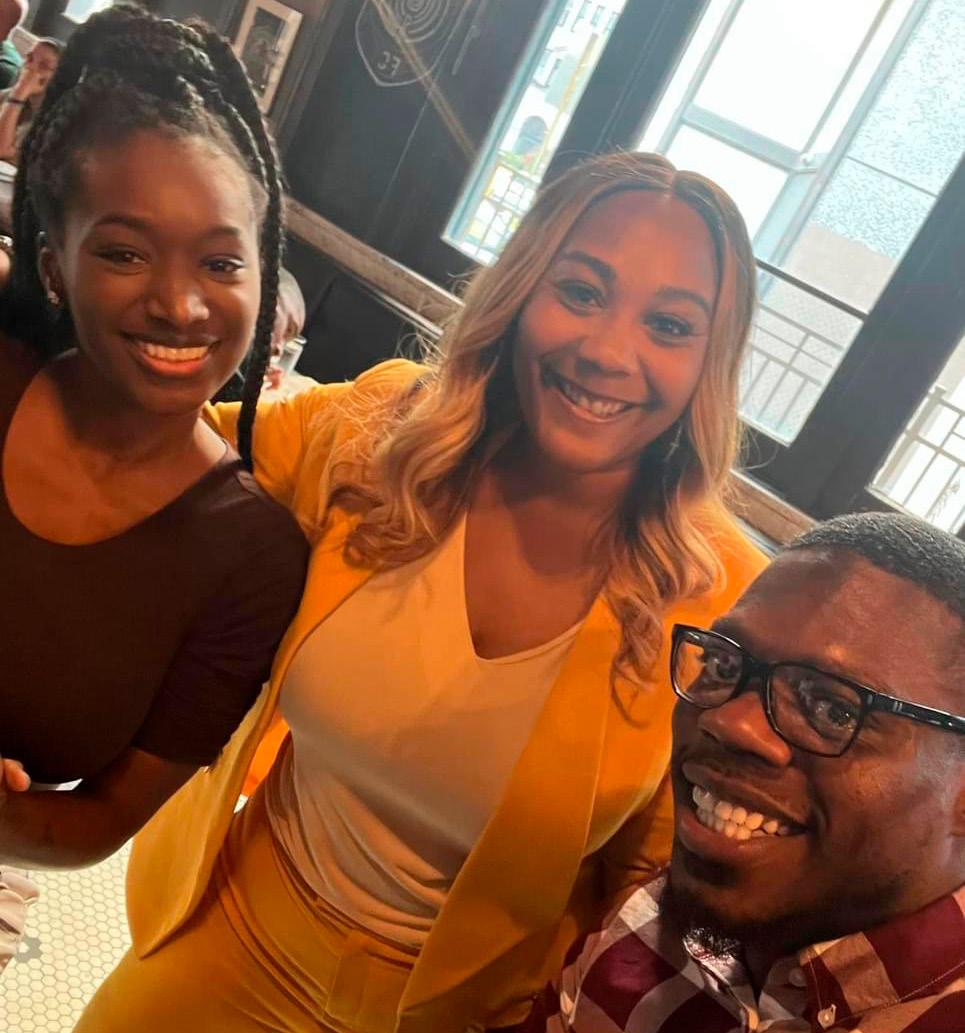
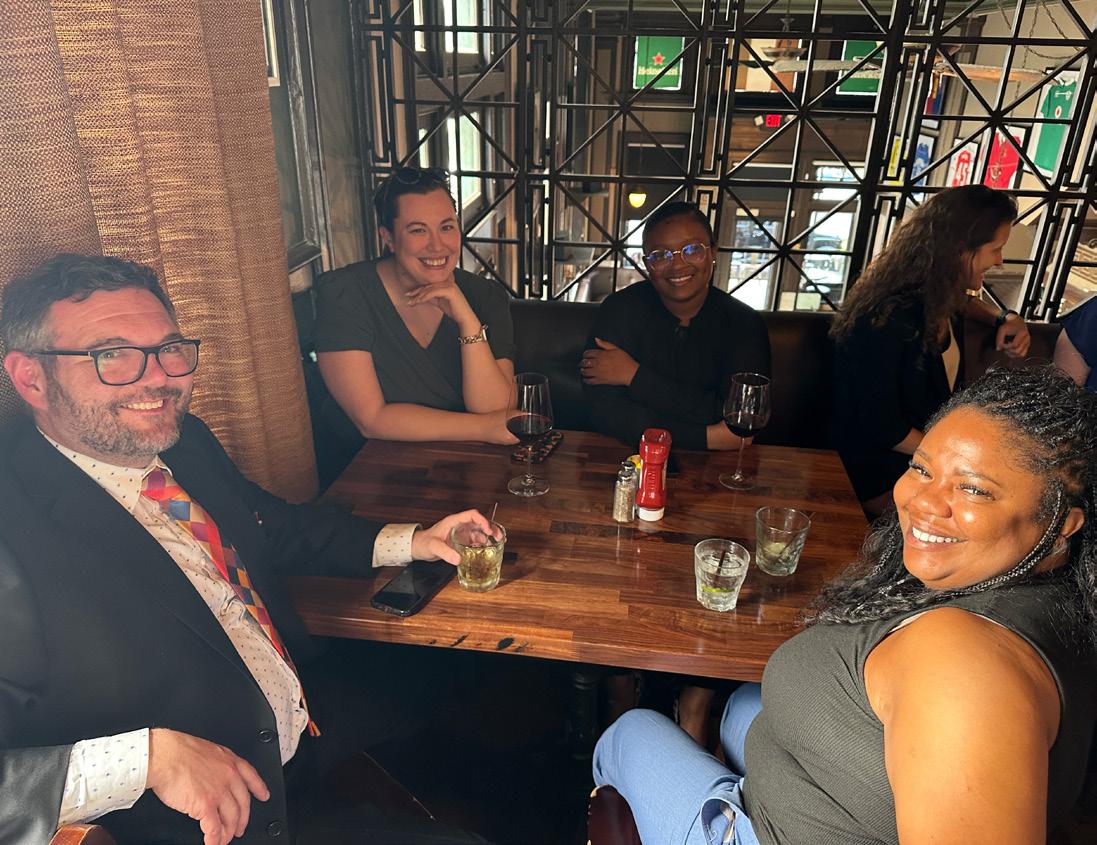
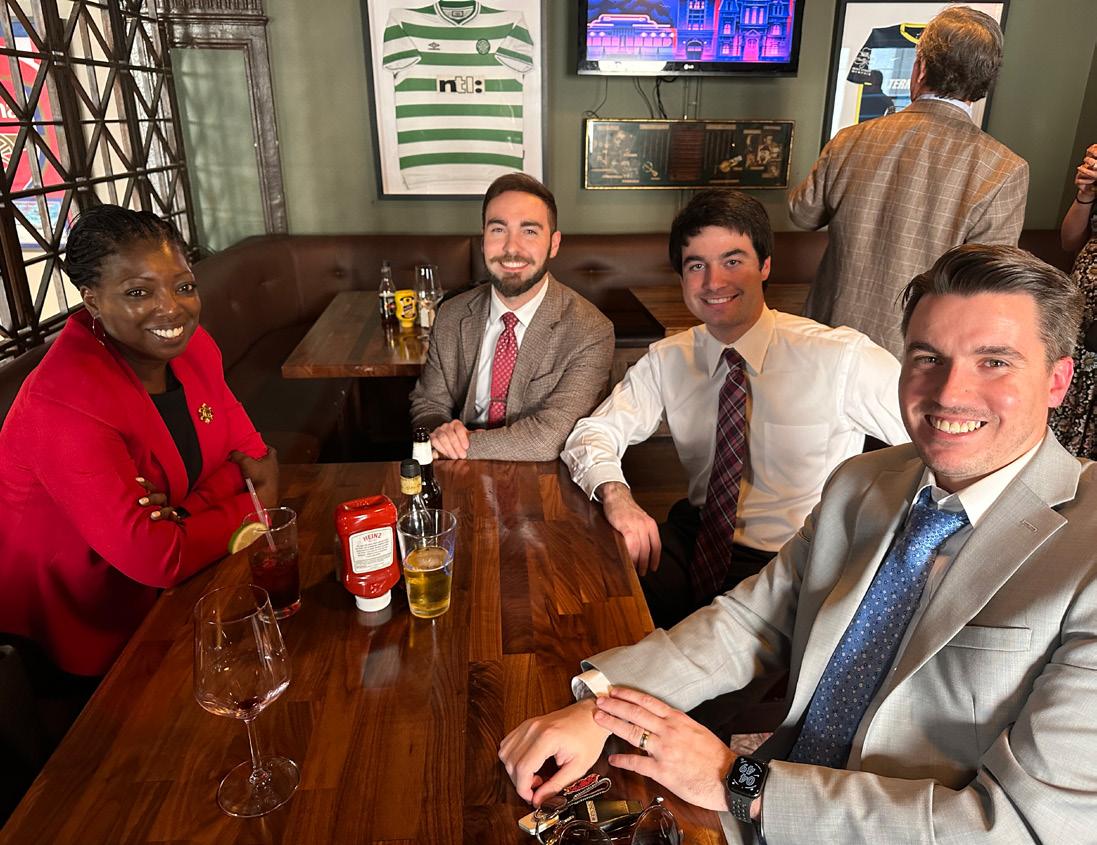
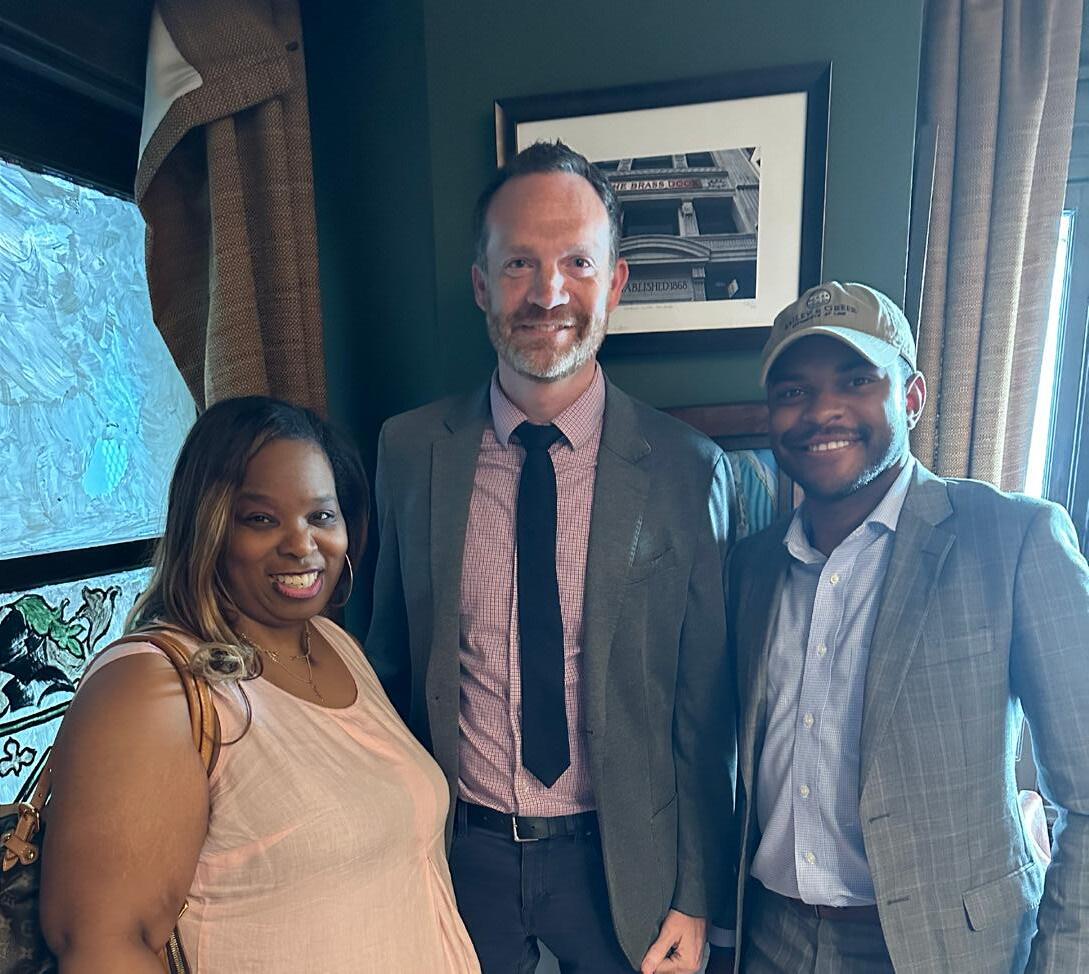
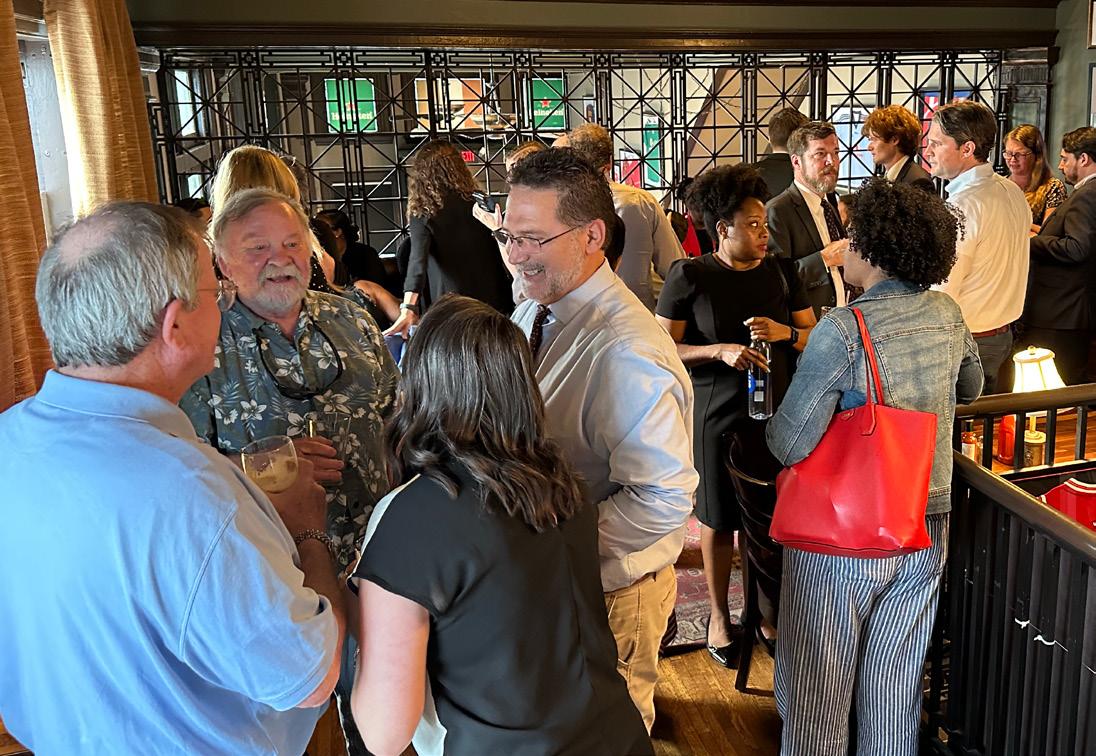
36 Bar Scene Criminal Law Section Happy Hour
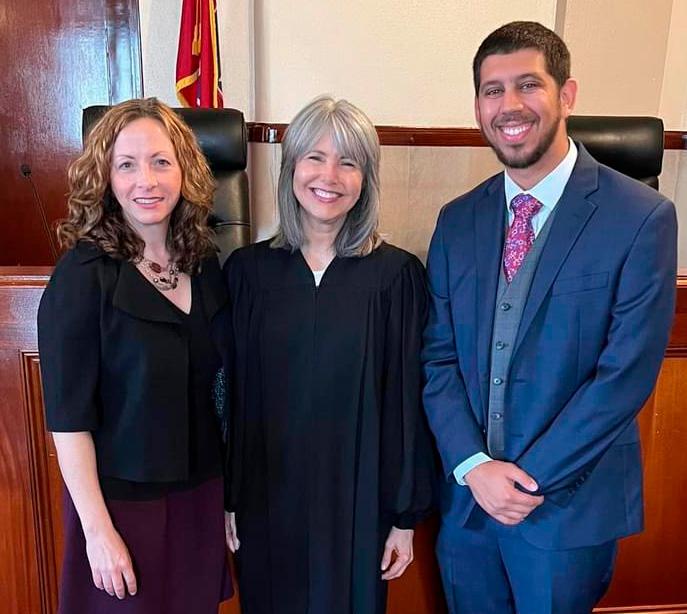
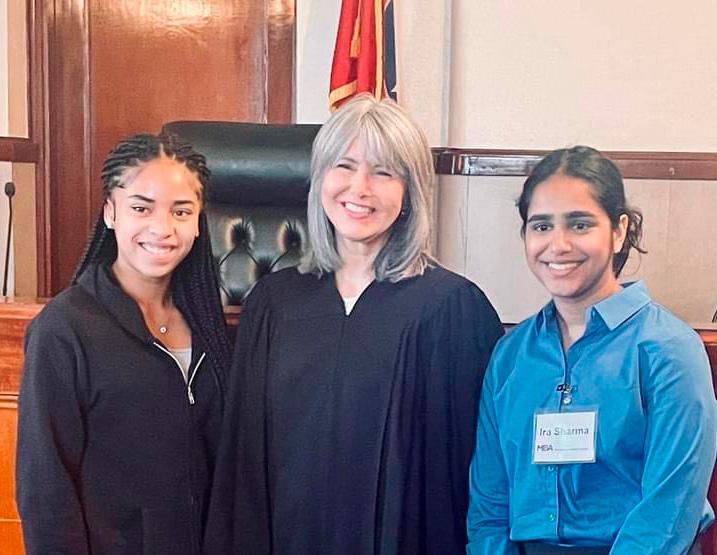
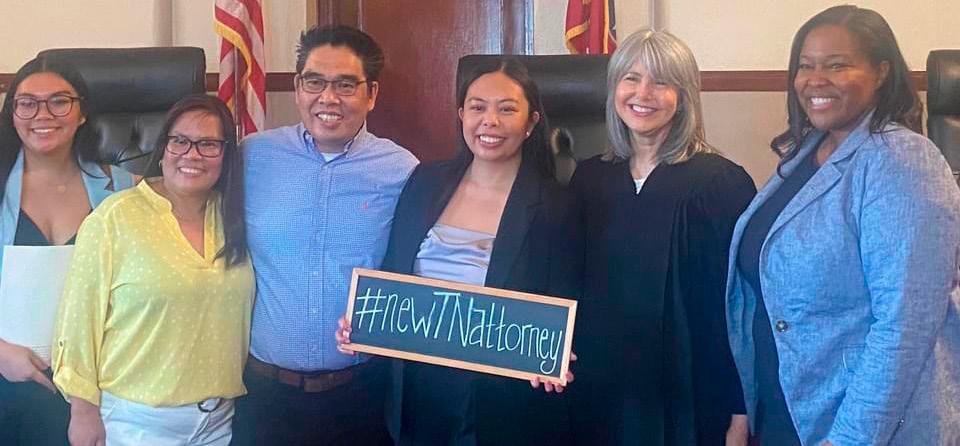
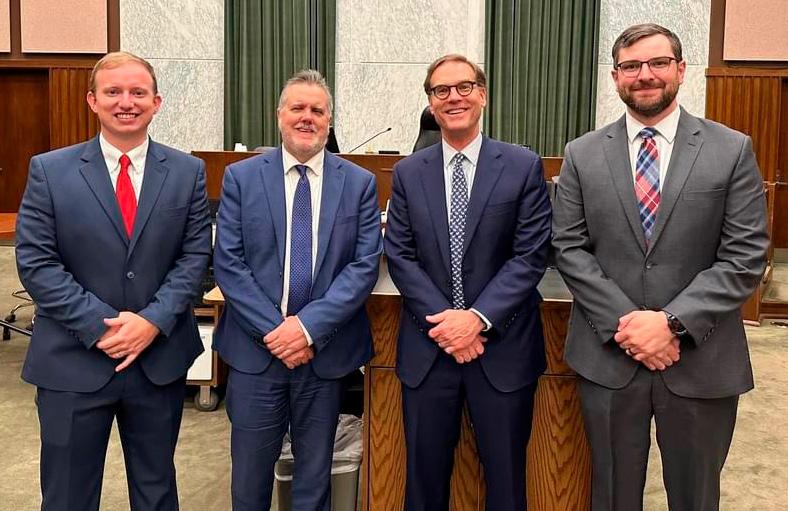
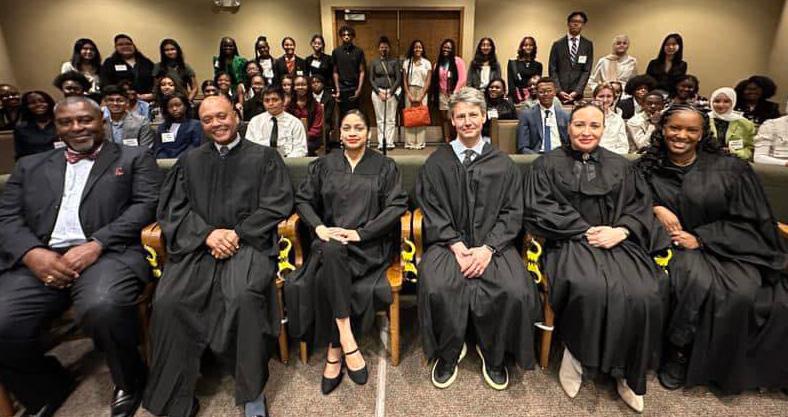
37
Bar Scene Swearing-In Ceremony
Bar Scene
2023 Summer Law Intern Program
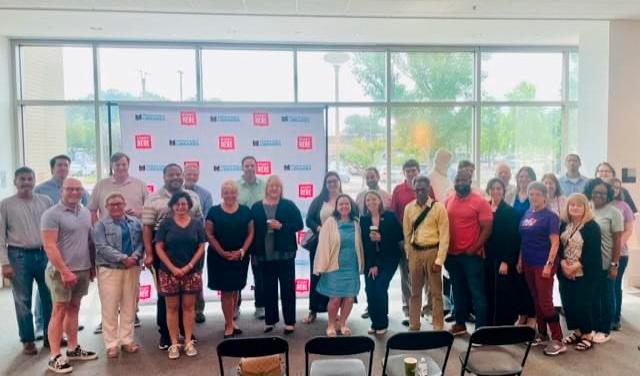
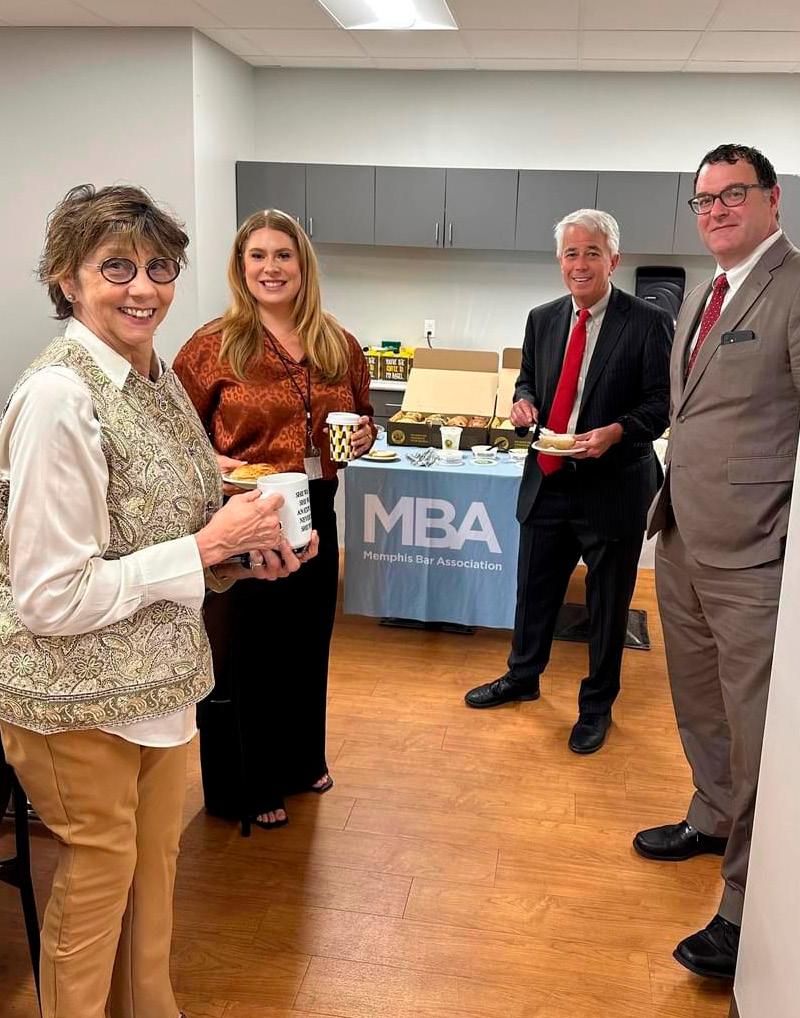
38
Bar Scene
James “Jim” Barry took office as the President of the Tennessee Bar Association (TBA) on June 16, 2023 during the TBA Annual Convention in Knoxville. Barry has long been active in the TBA serving on the TBA’s Board of Governors, as chair of the TBA’s Access to Justice Committee and as co-chair for many years of the TBA’s Corporate Counsel Pro Bono Initiative. He is also a long time member of the Memphis Bar Association’s Access to Justice Committee, and has held leadership roles with the Association of Corporate Counsel, the Community Legal Center in Memphis, Memphis Area Legal Services, the Tennessee Alliance for Legal Services (TALS), and the Tennessee Justice Center.
On June 16, 2023, Quinton Thompson took office as the President of the TBA Young Lawyers Division during the TBA YLD’s Annual Meeting. A Past President of the MBA Young Lawyers’ Division and Past President of the Ben F. Jones Chapter of the National Bar Association, Quinton was also recently recognized as one of the American Bar Association “On the Rise – Top 40 Young Lawyers” in recognition of his high achievement, innovation, vision, leadership, and service to the profession and community.
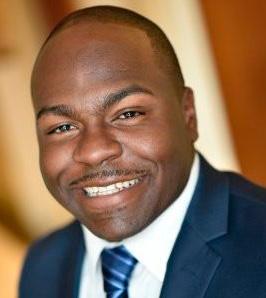
In April 2023, David M. Cook received the Harris Gilbert Award at the 2023 TBA Public Service Awards Brunch. This award recognizes private attorneys who have contributed a significant amount of pro bono work and have demonstrated dedication to the development and delivery of legal services to the poor.
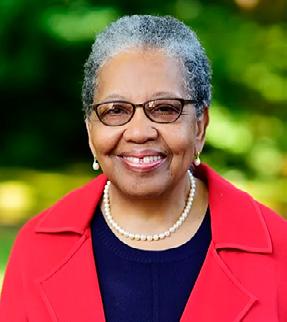
SUBMIT YOUR NEWS AND UPDATES

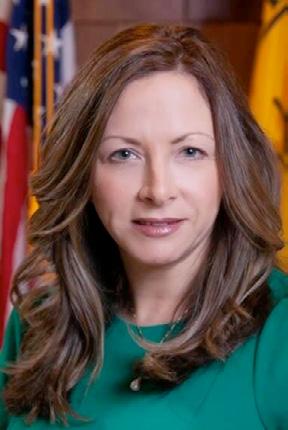
In August 2023, MBA President Jennifer Sink became the VP and General Counsel of Memphis Light, Gas and Water. Before joining MLGW, Sink served as the Chief Legal Officer for the City of Memphis where she provided legal counsel and strategic advice to the Mayor and divisions of city government. Prior to joining the Memphis City Attorney's Office in 2016, she was a shareholder at Baker, Donelson, Bearman, Caldwell and Berkowitz P.C. practicing civil litigation and primarily health care litigation from 2003-2016.
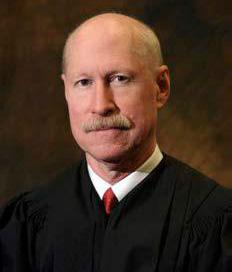
The Tennessee Supreme Court appointed former Judge W. Mark Ward as a senior judge for a term of four years, effective June 1, 2023. Judge Ward previously served as a criminal court judge in the 30th Judicial District from 2004 to 2022.
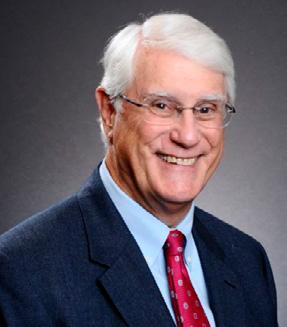
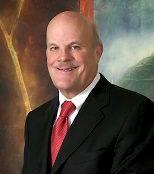
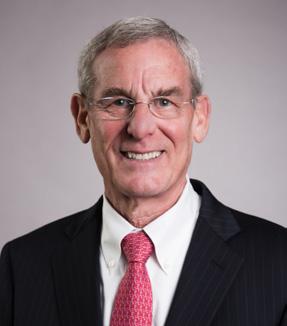
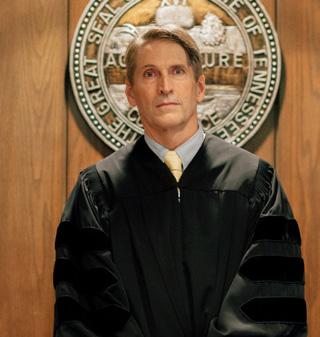
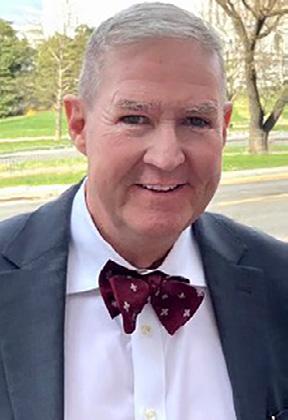


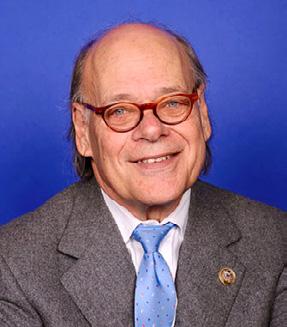
The University of Memphis, Cecil C. Humphreys School of Law Alumni Chapter will honor five Memphis-area lawyers at its annual Pillars of Excellence event on August 26, 2023 at the Fed Ex Forum. Those receiving awards are: United States Congressman Steve Cohen (TN-09); Robert L. Dinkelspiel, founding member of Dinkelspiel Rasmussen & Mink; Mike McLaren, shareholder at Black McLaren Jones Ryland & Griffee; David Wade, shareholder and director at Martin Tate Morrow & Marston; and Ruby R. Wharton, founder and partner with The Wharton Law Firm. Additionally, Judge Jon Phipps McCalla with the United States District Court for the Western District of Tennessee will receive the 2023 Friend of the Law School Award. The event will start with a reception at 6:00 p.m. followed by dinner, awards and an after party. Proceeds from the evening will support the law school and student scholarships.

If you are an MBA member in good standing and you’ve moved, been promoted, hired an associate, taken on a partner, or received an award, we’d like to hear from you. We will not print notices of honors determined by other publications (e.g., Super Lawyers, Best Lawyers). Notices are limited to 100 words; they are printed at no cost to members and are subject to editing. E-mail your notice and hi-resolution photo (300 dpi) to kswan@memphisbar.org.






39
Steve Cohen
David Wade
Robert L. Dinkelspiel
Ruby R. Wharton
Mike McLaren Judge Jon Phipps McCalla
