Timeless places. New discoveries. Reasons to return.




Timeless places. New discoveries. Reasons to return.
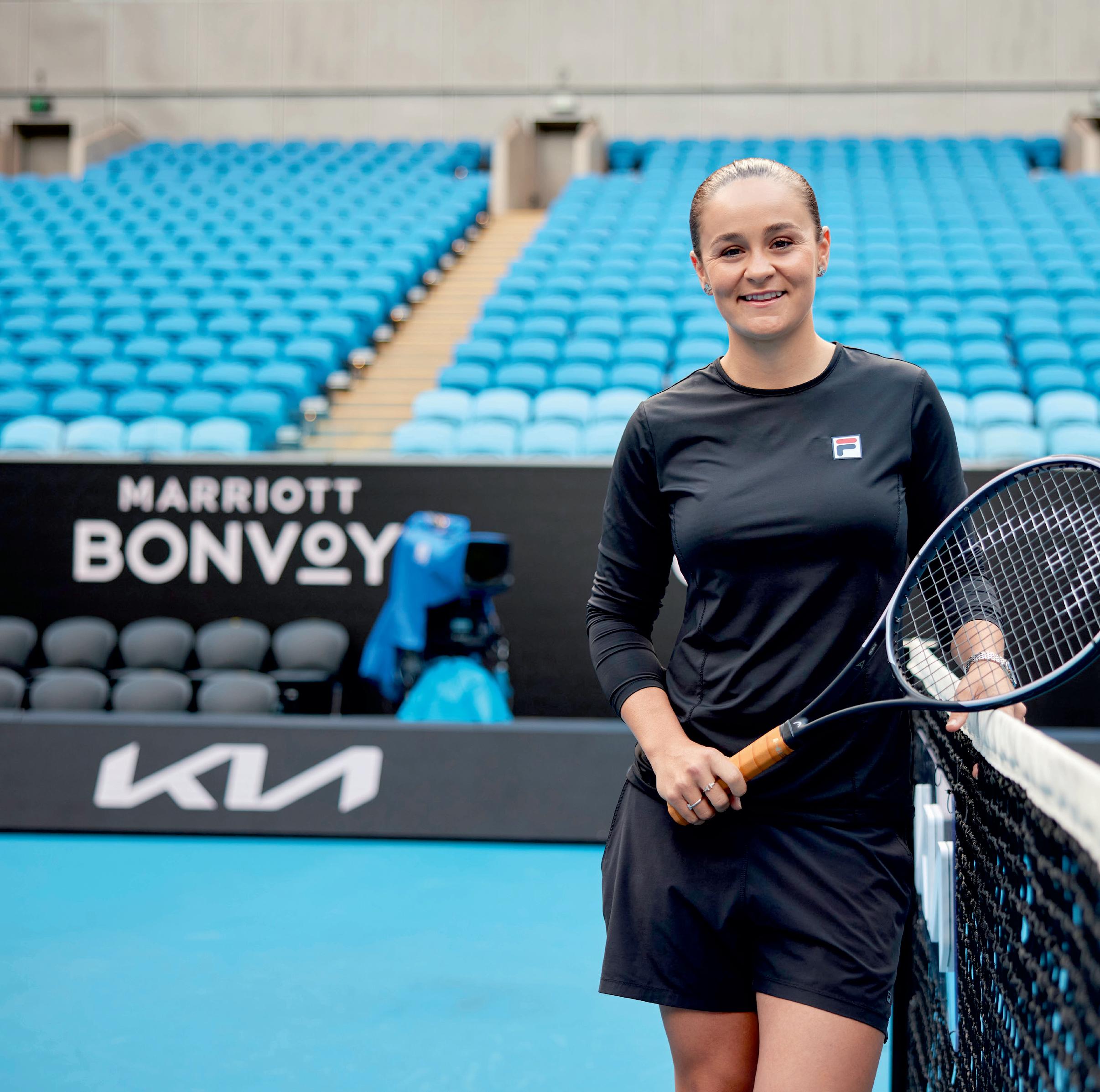
Yours could put you on court with a legend.






























33
Discover the new Three Blue Ducks outpost in the NSW Southern Highlands
71
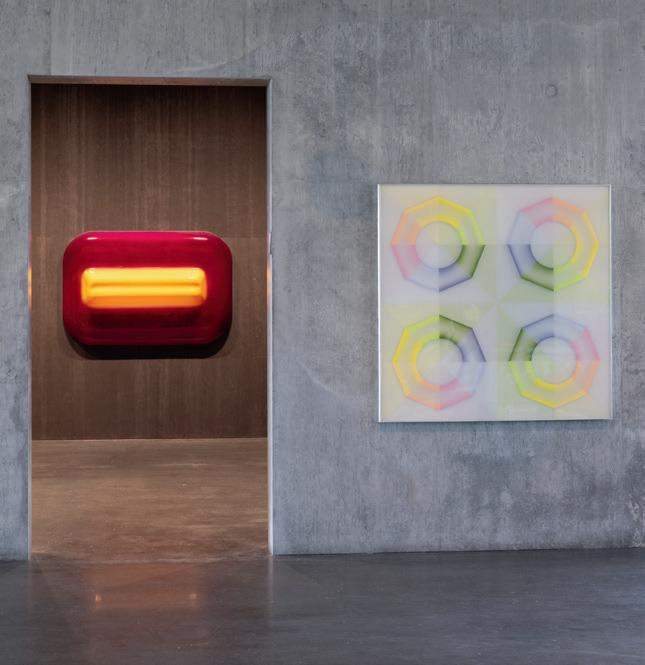
You’re invited along as Los Angeles steps up its art and design game
91
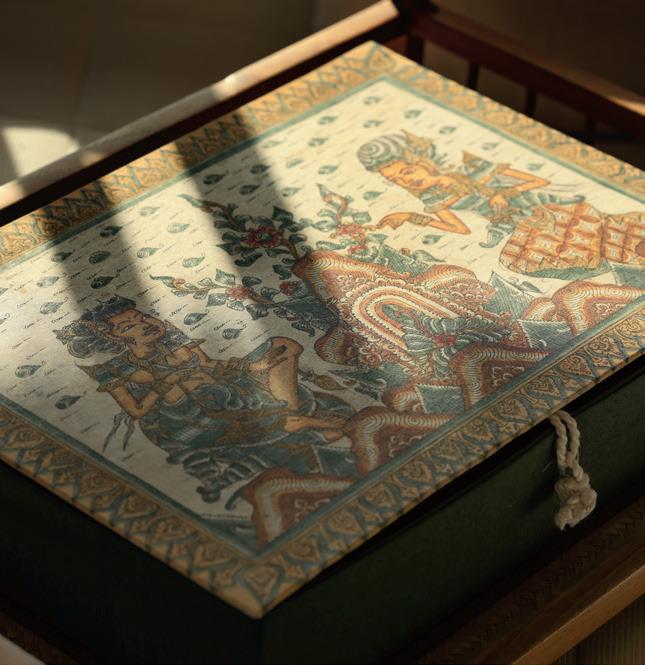
Journey to Indonesia’s islands to quiet the mind and revive the spirit
109
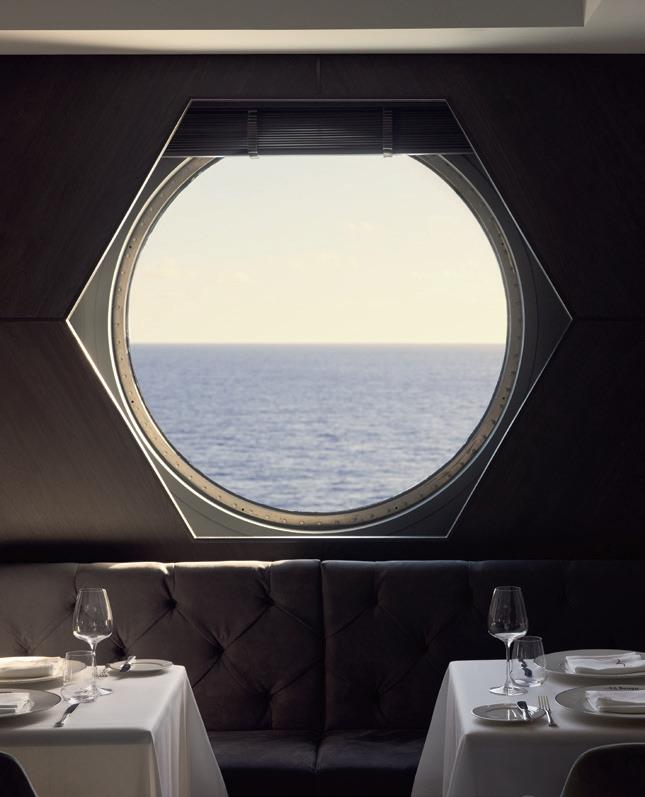
Embrace the yin and yang of travel on this luxe wellness cruise in the Med


















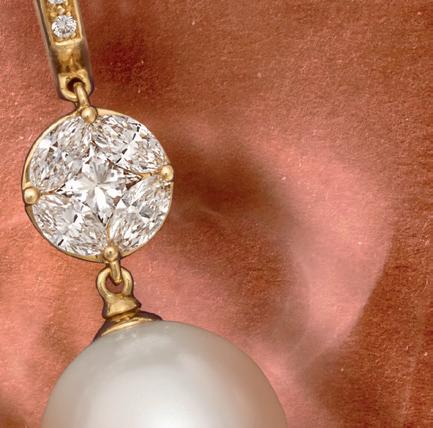




Endlessly classic. Effortlessly modern.








Editor-in-Chief Genevra Leek
Content Director Faith Campbell
Senior Editor Katrina O’Brien
Copy Director Rosemary Bruce
Deputy Copy Director Sandra Bridekirk
Associate Copy Director Kylie Matthews
Digital Managing Editor Christina Rae
Digital Editor Edwina Hart
Senior Social and Digital Producer
Hollie Wornes
Creative Director Tony Rice
Art Director Kate Timms
Visual Director Jo Bainbridge
Production Manager Michelle O’Brien
Head of Content, Travel, Business and Membership Kirsten Galliott
Head of Design, Travel and Business Tony Rice
For editorial inquiries, contact qantaseditorial@mediumrarecontent.com
Head of Sales, Travel and Luxury Tony Trovato +61 404 093 472
National Sales Manager, Travel Callum Bean +61 404 729 224
Senior Account Managers, NSW
Crystal Wong +61 420 558 697
Anthony Sullivan +61 408 447 148
Samantha Pan +61 411 844 120 Sales Manager, Qld, WA and SA
Nicola Timm +61 424 257 527
Senior Account Manager, Victoria Miranda Adofaci +61 410 387 707
Digital Sales Director
Mike Hanna +61 402 640 095
Digital Campaign Manager and Product Specialist
Anna Delgado +61 404 855 041
INTERNATIONAL REPRESENTATIVES
Greater China and Japan
Peter Jeffery +852 2850 4013
peterjeffery@asianimedia.com
General Manager, Growth and Commercial Strategy Paulette Parisi
Head of Rare Creative Mark Brandon
Associate Content Director
Katrina Holden
Creative Director Philippa Moffitt
Art Director Katrina Mastrofilippo
Designer Frida Lindstrom
Group Commercial Strategy Director
Jane Schofield
Senior Commercial Strategy and Solutions Manager Adriana Hooper
Commercial Campaign Analyst
Sara Choudhry
Qantas Senior Partnerships Manager
Helena Pavendranathan
Qantas Partnerships Manager
Emily Ryan
Qantas Partnerships Campaign Executive
Kellie Hammond
Content and Events Campaign Manager
Jessica Manson
For Commercial Strategy and Partnerships inquiries, contact rarecreative@mediumrarecontent.com Milan shapes the future of interiors.
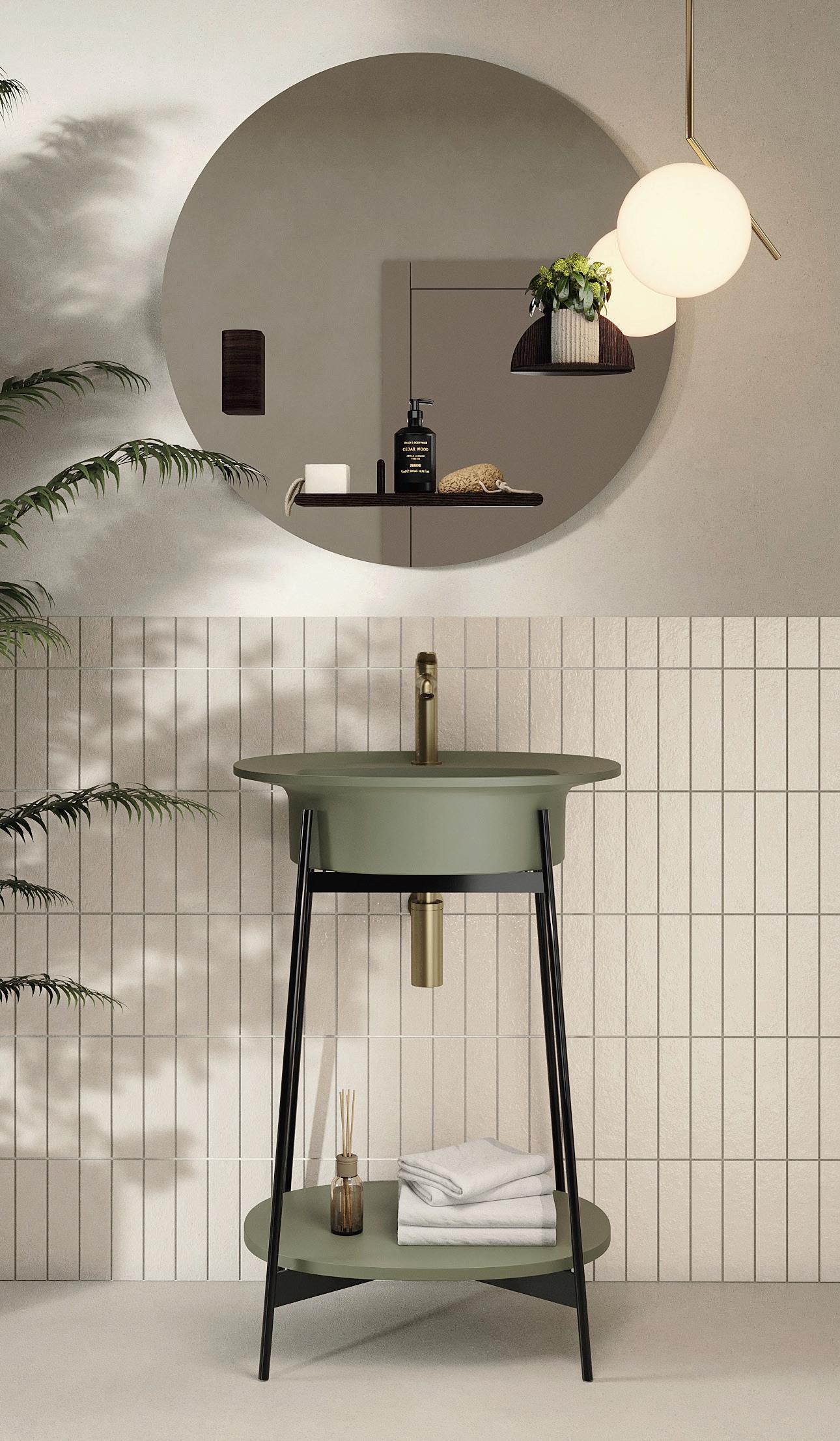
Every year, Salone del Mobile brings the world’s design community together. We go to discover what’s next and ideas that inspire the PARISI collection and the spaces we create.
SALONE MILANO 2026
South-East Asia and the United Kingdom Nick Lockwood +65 9776 6255 nick.lockwood@pharpartnerships.com The United States
Ralph Lockwood +1 408 879 6666 ralph.lockwood@husonmedia.com
For advertising inquiries, contact qantasadvertising@mediumrare content.com
Managing Director Nick Smith
General Manager, Operations and Partnerships Teagan Barr
General Manager, Creative Production
Chantelle Love
Head of Social Sarah Macrae
Head of Digital Production and Operations Hana Jo
Head of Finance George Thompson
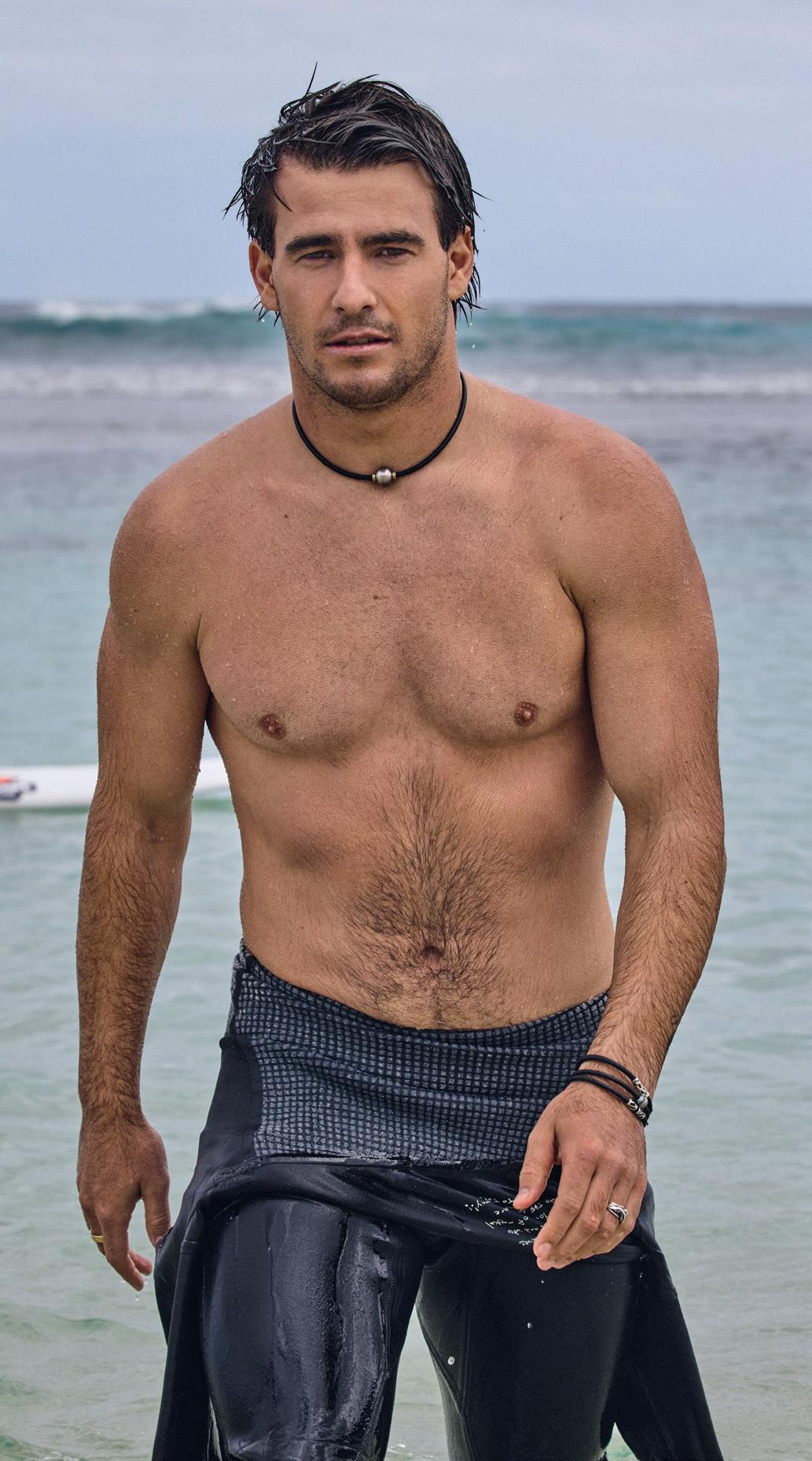
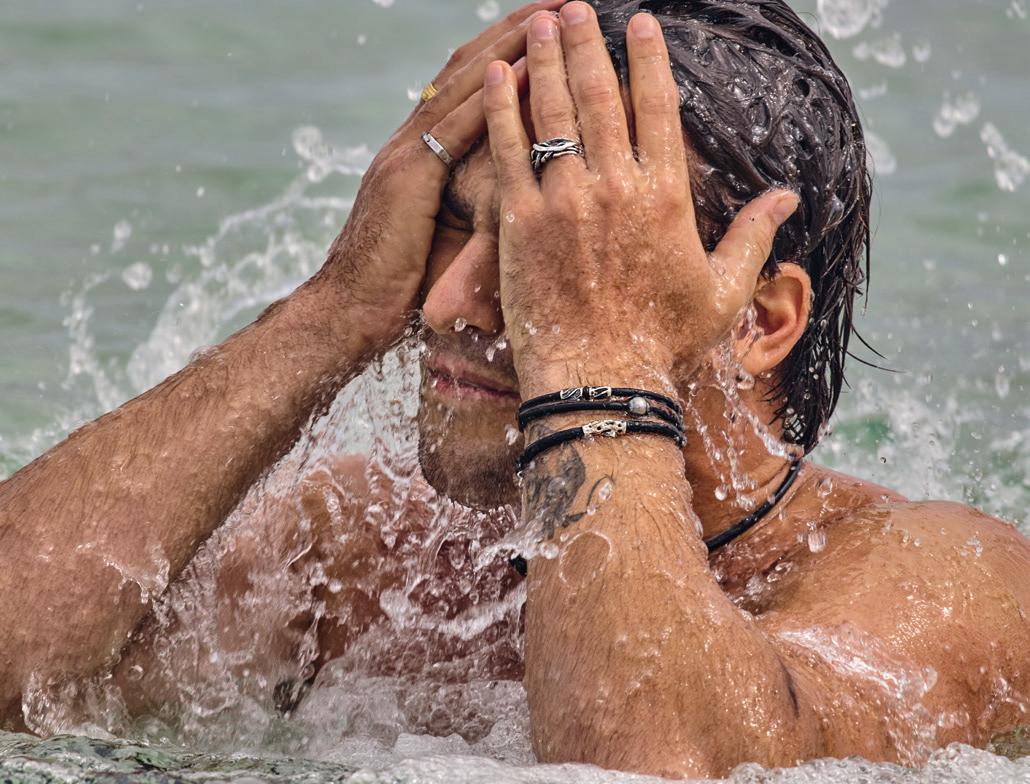
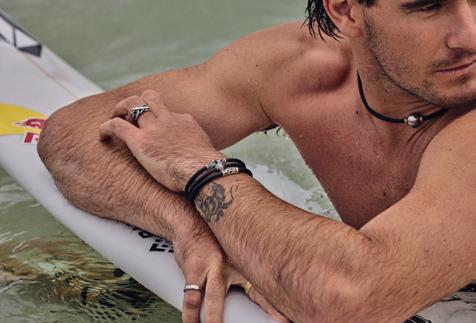
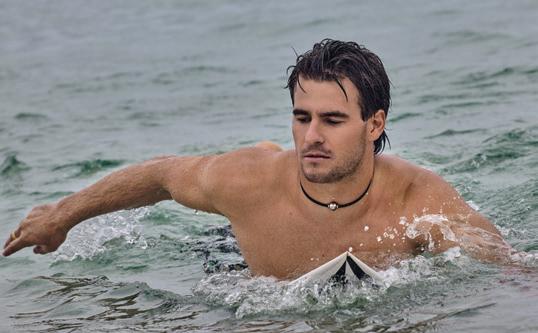
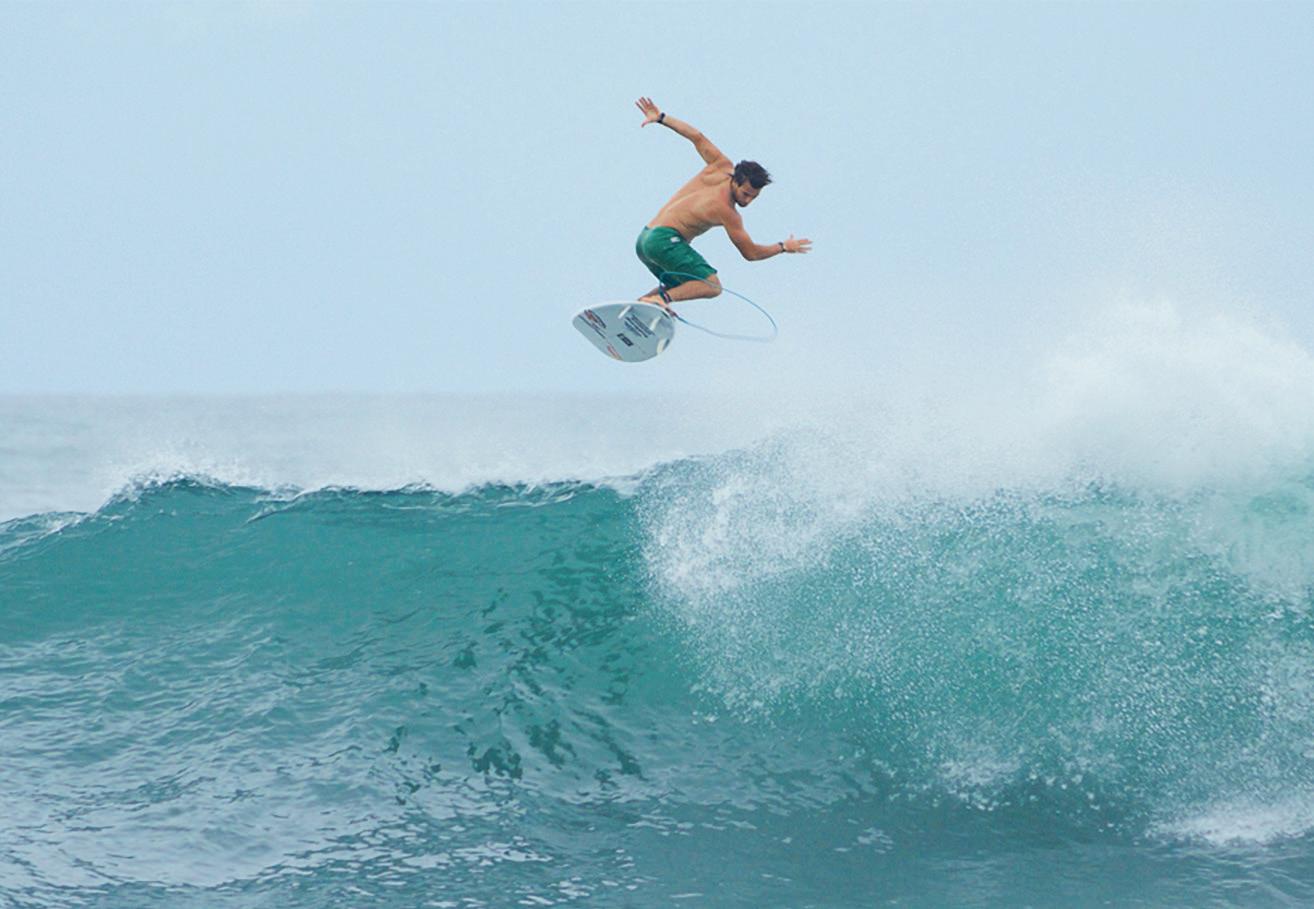
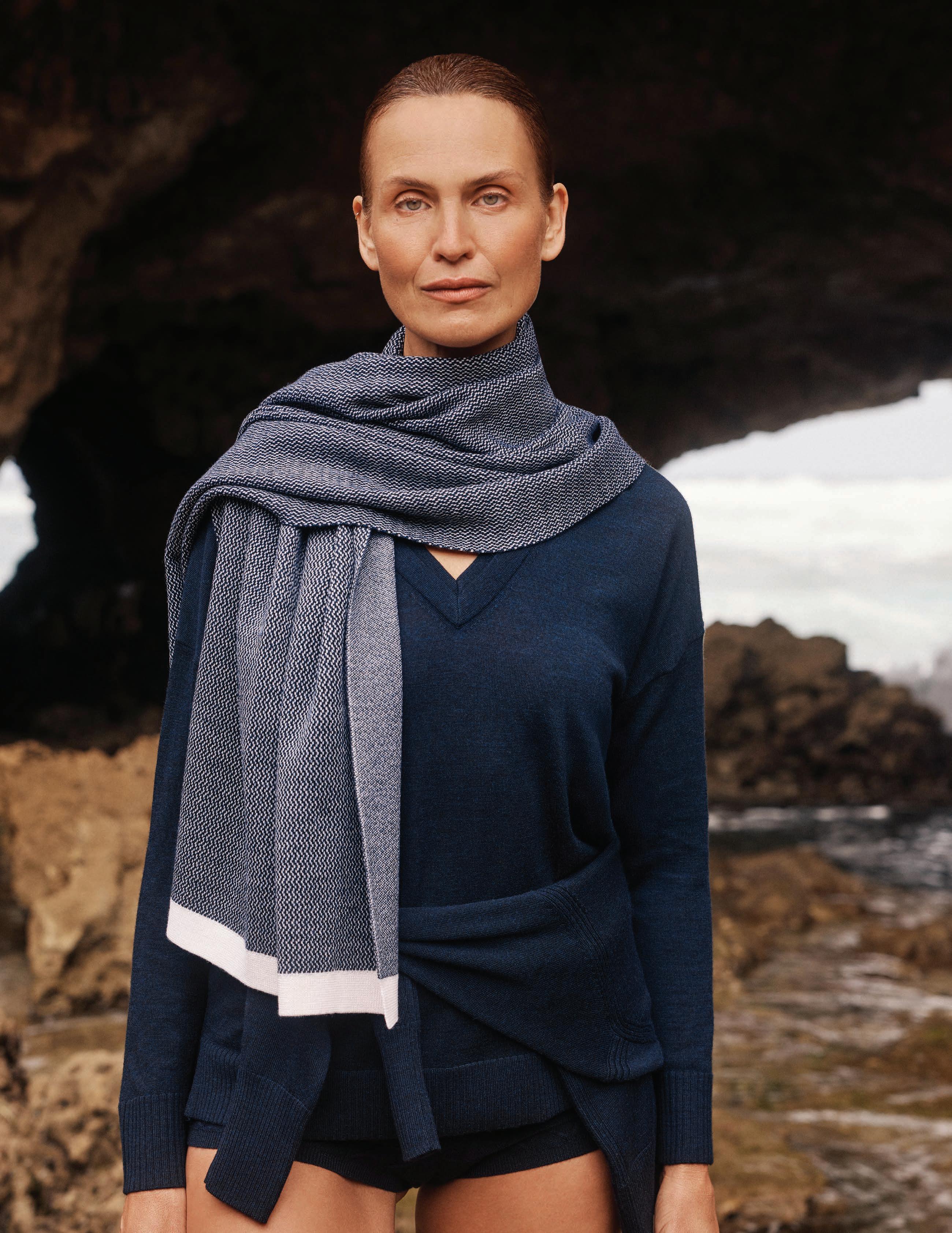
INSPIRED BY WAVES, WORN IN THE OCEAN
Captured in Western Australia’s Margaret River Region with world-renowned surfer Jack Robinson, this campaign reflects the raw beauty of the coastline and the essence of modern Australian luxury.
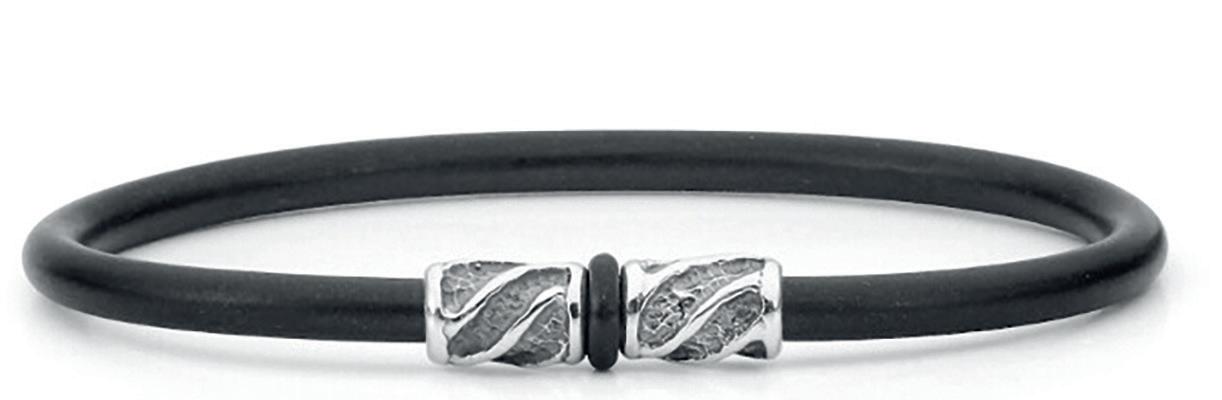
Jack is wearing Linneys signature neoprene and men’s jewellery designs, each piece is handcrafted to be worn from sea to shore.
4 DAYS. ENDLESS PAIRINGS.
BOOK YOUR TICKETS






Australia hasn’t seen a major new international airport in more than 50 years.
That changes on 25 October, when Western Sydney International (WSI) Airport opens its doors and Jetstar operates the first ever commercial passenger flight. Qantas services to Melbourne and Brisbane follow from March 2027, and tickets for both airlines are now on sale.
New infrastructure has always shaped how Australians travel and where they can go. WSI is the next chapter in that story, and one of the most significant pieces of aviation infrastructure this country has seen in a generation.
Western Sydney is already home to millions of people, and that number is growing fast. Having two great airports serving Sydney means more Australians get access to travel that’s closer to home. Jetstar has spent 22 years opening new markets and connecting people to low fares, and we expect strong demand from day one.
Before the first passengers board, Qantas Freight will already be operating at WSI, with overnight services beginning in late July. Western Sydney is one of Australia’s fastest-growing logistics corridors, and having dedicated freighter capacity there brings new connectivity to customers and businesses across the region.
These new flights out of Sydney are part of our ongoing efforts to enhance the experience for the millions who fly with us every year. Every improvement we make is a direct reflection of the efforts of our people right across Qantas Group, whether they are greeting you at check-in or working hard behind the scenes to make these new services a reality.
This incredible new airport has been years in the making. It will grow with the city, as will our network, and those lucky enough to be on one of our first flights will know that it’s been worth the wait.
Thank you for choosing to fly with us.
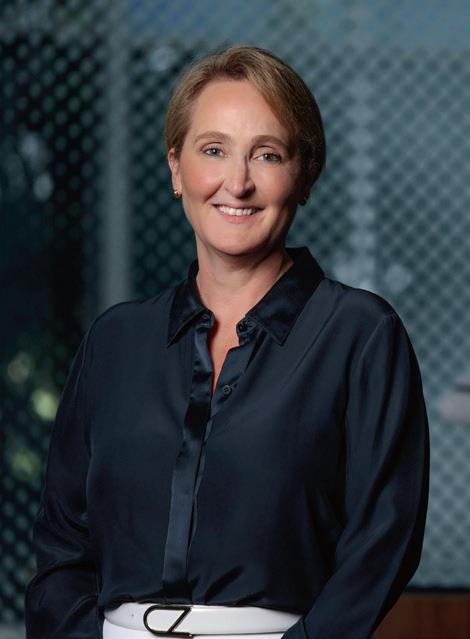
Vanessa Hudson CEO, Qantas Group
Qantas would like to acknowledge the Traditional Custodians of the local lands and waterways on which we live, work and fly. We pay our respects to Elders past and present.
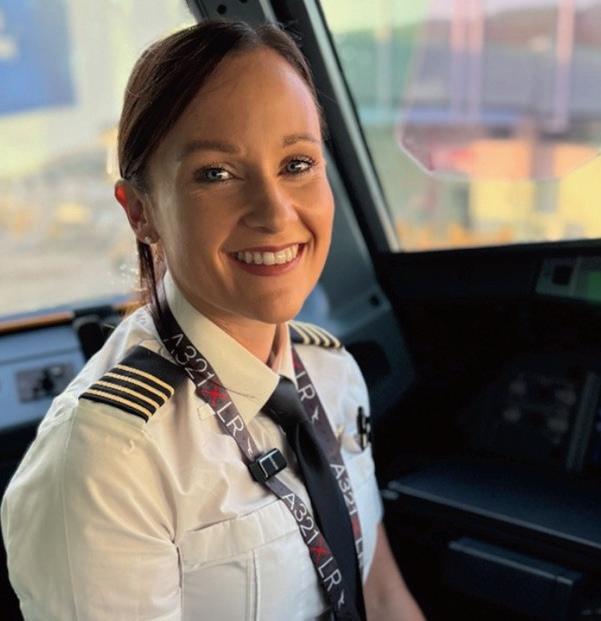
Captain Helena Chesworth
Airbus A321XLR Captain
I fell in love with aviation after travelling a lot as a kid. When my mum gave me a flying lesson for my 16th birthday, there was no going back. While I did my commercial training, I built up flying hours as a flight instructor and towing advertising banners. I joke that I proposed 13 times and had 13 “yeses” before being proposed to myself last year.
I moved with my family from the United Kingdom. I remember thinking, “One day I’ll be able to fly myself home and be paid for it.” Years later, I did it when I flew one of the first Perthto-London routes. Now, there’s so much positive momentum with Project Sunrise – next year will be the first time the Kangaroo Route has been non-stop.
Qantas Reservations 13 13 13 qantas.com
Qantas Holidays Ltd 13 14 15 (ABN 24 003 836 459; Licence No. 2TA003004)
Qantas Club and Frequent Flyer Service Centre 13 11 31 From overseas +61 3 9658 5302
In May, I flew Qantas’ new A321XLR, Red Centre Way, which was my final check flight to officially sign off as a captain. It’s such an exciting time to be a Qantas pilot. I joined the 787 fleet when it was brand-new and the A321XLR aircraft bring the same energy –everyone’s buzzing. I love parking at the terminal and seeing people take photos of the new aircraft.


1.
Kangaroo Island is located just off the South Australia coast. It’s roughly seven times the size of Singapore and is more abundant in wildlife than in human residents. You can fly to the island from Melbourne (via Adelaide) from just 9,200 Qantas Points (plus $82 in taxes, fees and carrier charges).
2.
The Daintree is the world’s oldest tropical rainforest, pre-dating even the Amazon by millions of years. Cairns Airport is your gateway to this ancient landscape and you can fly there from Sydney or Melbourne from just 20,700 points (plus $61 in taxes, fees and carrier charges).
3.
Cable Beach offers one of Australia’s most iconic sunsets and getting a front-row seat is easier than you think. Fly Sydney to Broome (via Perth) from 23,300 Qantas Points (plus $151 in taxes, fees and carrier charges) and the world-famous stretch of sand is just 10 minutes from the airport.
4.
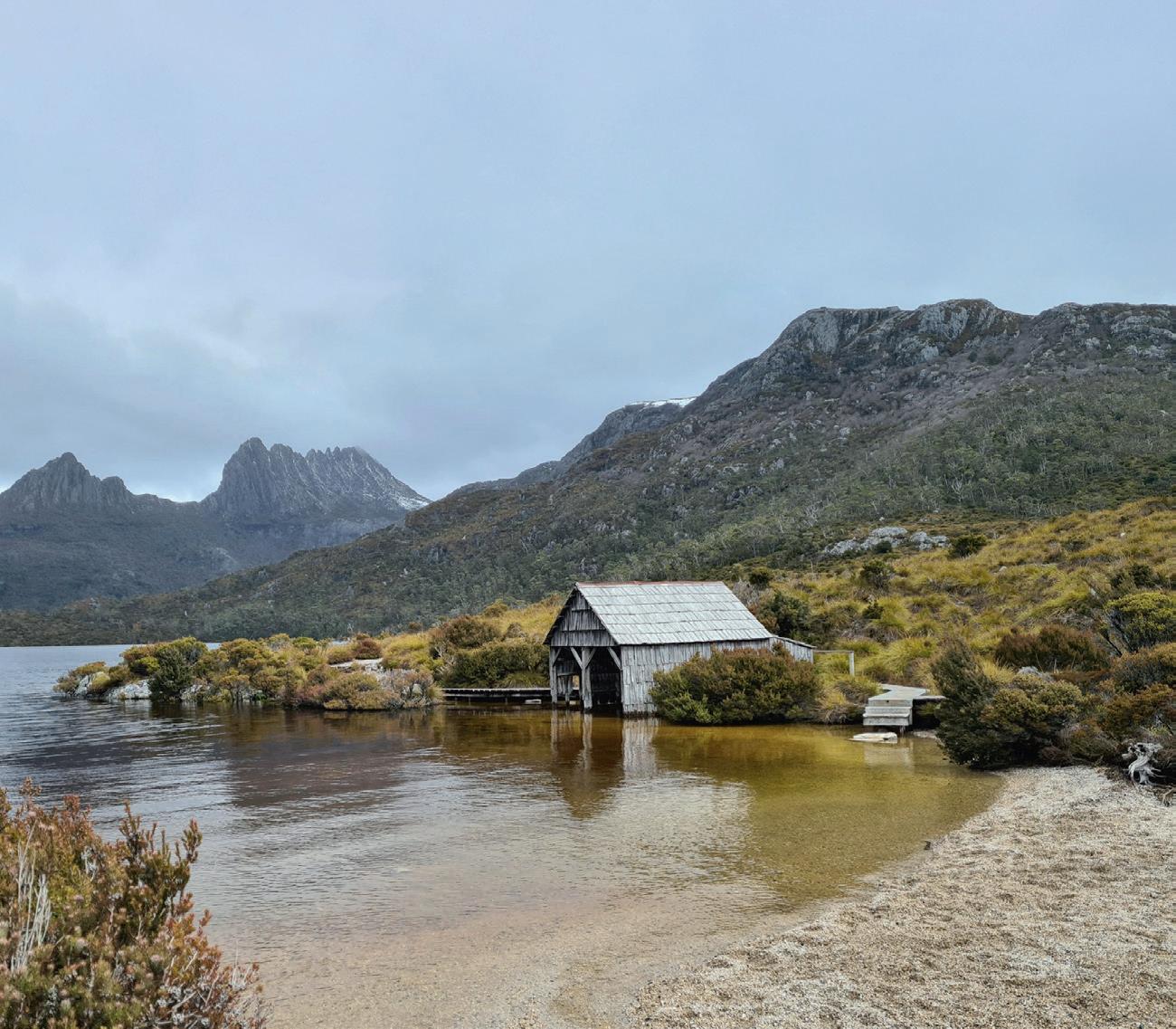
Tasmania’s Cradle Mountain is magical, whether dusted in winter snow or spring wildflowers. Take a one-way trip from Sydney to Devonport – about an hour from the national park – via Melbourne for 13,800 points (plus $111 in taxes, fees and carrier charges).
From remote islands to ancient rainforests, beach sunsets to mountain peaks – Qantas Flight Rewards can take you far beyond the big cities. Find out more great ways to earn and use Qantas Points at qantas.com/pointsinsider
Story by Kirsty Petrides
Photography by Sue O’Keefe
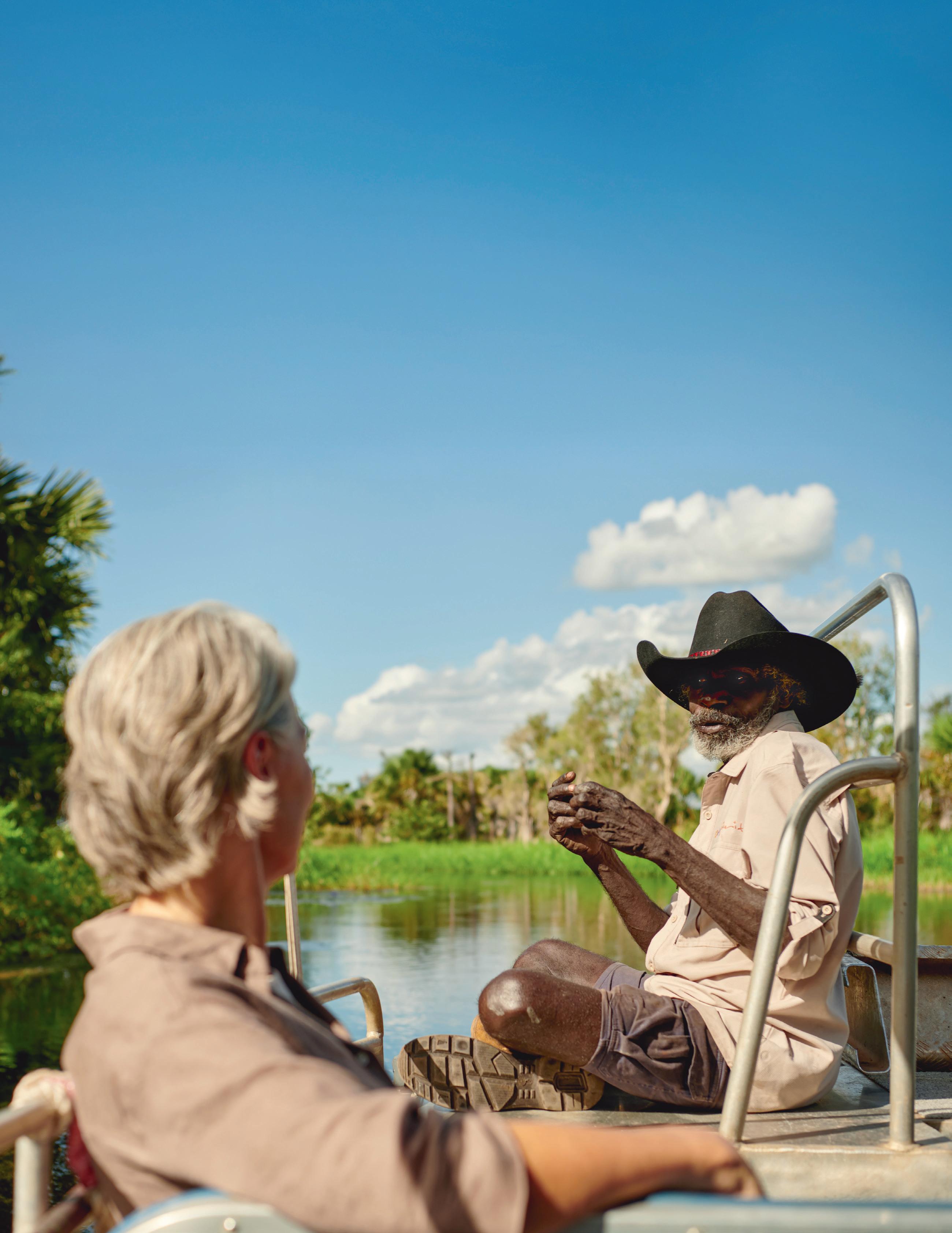
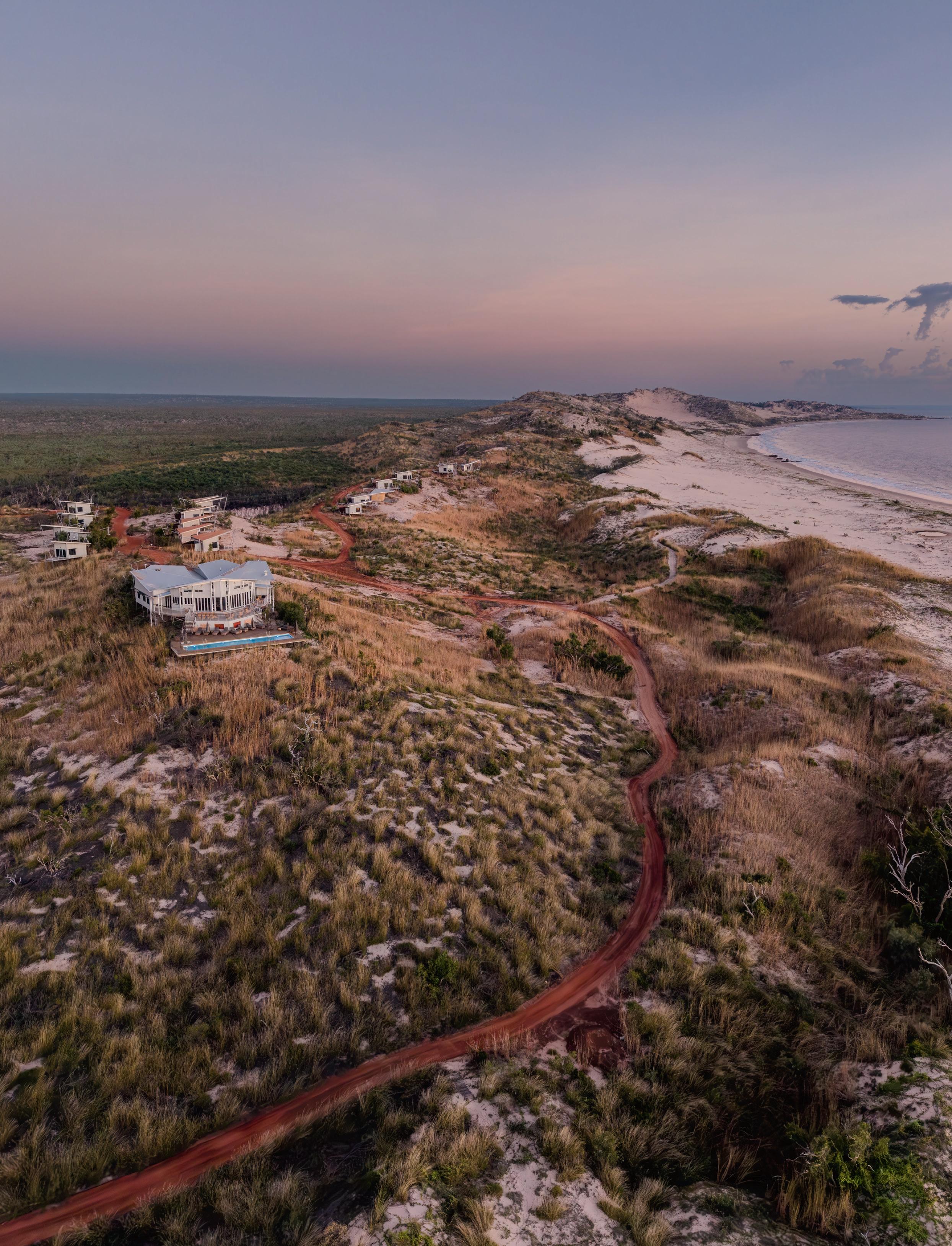
Even after seeing the wonder of the East Kimberley from above, nothing quite prepares you for the moment your aircraft touches down on the airstrip at Berkeley River Lodge (qantas.com/ hotels/berkeleyriverlodge). Warm smiles and glasses of sparkling wine await as you step onto the rust-red earth, before climbing into a safari jeep that winds through rugged scrub. Then the scenery shifts, giving way to white sand as you crest a hill and the turquoise Timor Sea comes into view, with the lodge perched on the coastline like a mirage.
This is the spell cast by this newly renovated resort. On a secluded stretch of Western Australia’s Kimberley Coast, it’s accessible only by air – just over an hour’s flight from Darwin – and offers all-inclusive stays fixed at five nights, with a maximum of 30 guests.
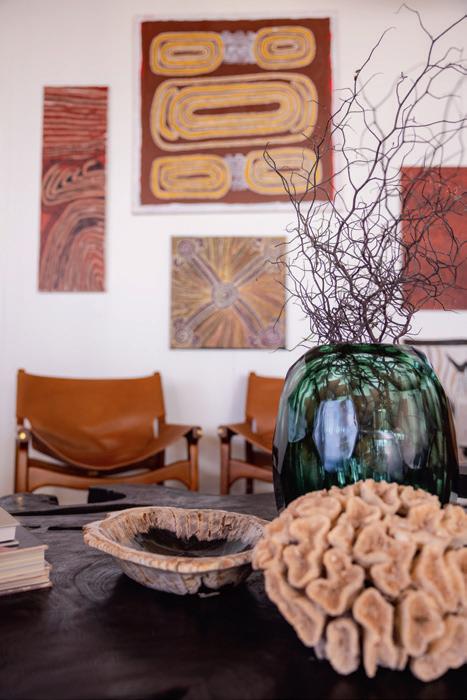
First opened in 2012, the property now feels even more at one with its surroundings. The design throughout is quietly luxurious, with interiors by Perth-based Empire Home featuring warm timbers, woven rattan and linens in tones of ochre, sand and stone. Each of the 15 villas has an open-air ensuite
with an outdoor bath, best appreciated under the stars. In the main lodge, the restaurant and lounge flow out onto the pool deck, while sheltered nooks are made for a book and a glass of something cold. A long communal table anchors the lofty dining room, with smaller tables inside and out if you want a little privacy.
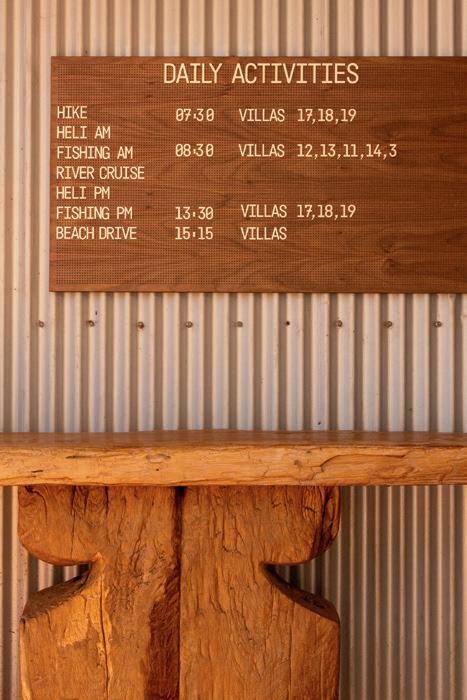
A wellness program brings spa treatments to the villas and sunrise yoga overlooking the Timor Sea, the perfect counterpoint to fishing trips, guided walks to ancient rock art sites and hikes to waterfalls and swimming holes.
The dining experience has also evolved, with an expanded wine list and the introduction of The Kimberley Pantry. This all-day grazing concept was developed with First Nations-owned and -operated Blak Tapas to bring the flavours of Balanggarra Country to the table (orange slice with wattleseed chocolate frosting is a highlight). Most memorable is the barefoot barbecue, where guests gather on the beach as head chef Christian Iacovella grills beef brisket with locally foraged pepperberry and saltbush on an Argentine parrilla.
There are countless unforgettable moments at this incredible retreat but in the end, it’s the feeling of connection that sees you plotting your return.
Earn or use points when you book this stay via Qantas Hotels
Story by Alexandra Carlton
VIC SURF HOTEL
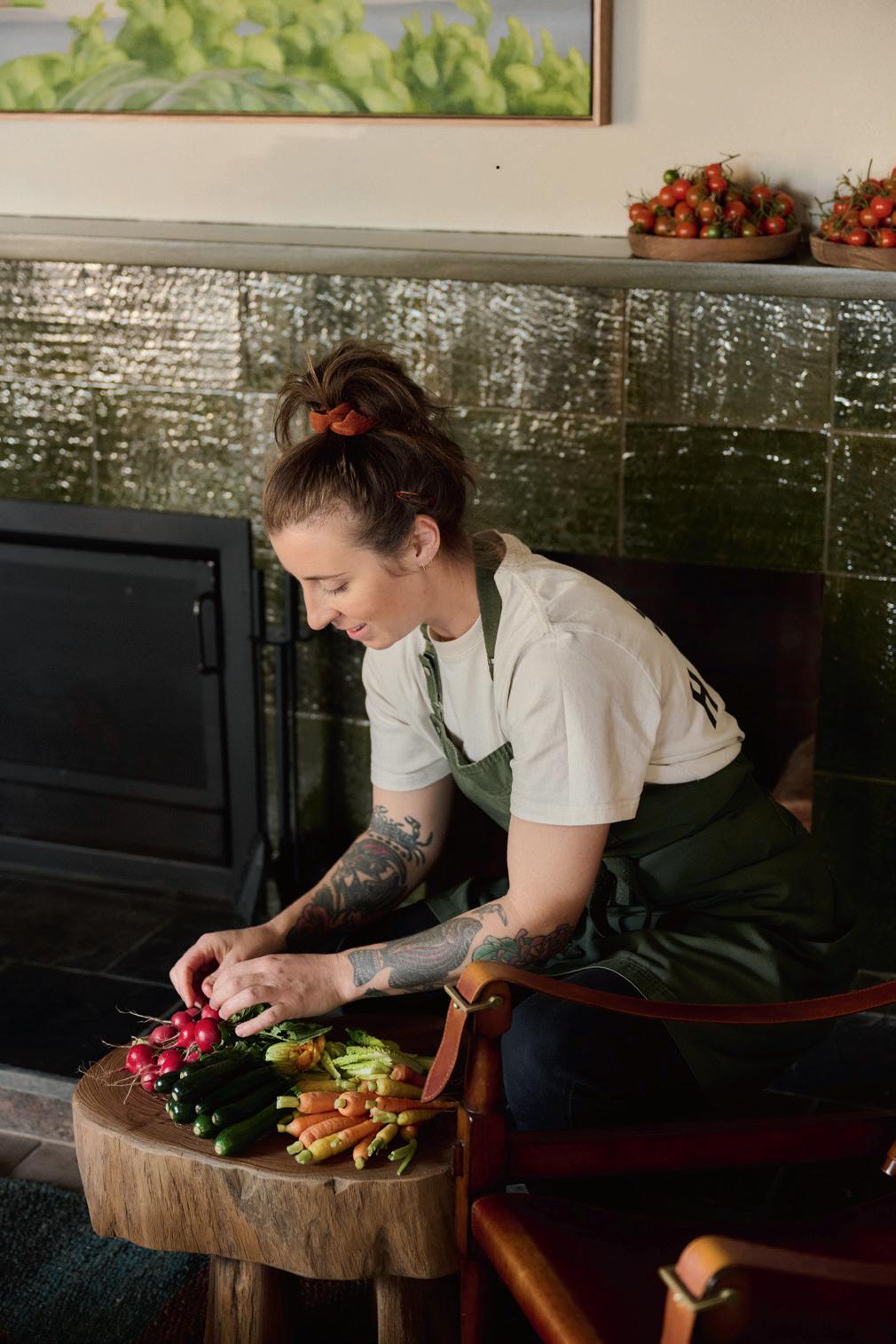
Super-chef and sustainability pioneer Jo Barrett (above; formerly of Oakridge Winery and Little Picket) leads the kitchen at this breezy new stay (surfhotel.com.au) in Torquay on Victoria’s Great Ocean Road. Fittingly, her menu celebrates the bounty of the coast – land and sea – in dishes such as prawn and chicken larb, and wild venison schnitzel. Turn dinner into a full-scale getaway and book one of the guestrooms or the fourbedroom penthouse if you’re travelling with a group.
Cronulla, in Sydney’s south, is more than just a laid-back beach suburb. It’s clocking up some serious restaurant cred, with recent openings, including the Greek Homer Rogue Taverna and in nearby Gymea, Fior from the team behind Surry Hills’s Arthur and Jane. Now there’s part bistro, part record bar Meadow (meadowcronulla.com.au), a sibling to beachfront favourite Bobby’s and the place for leisurely lunches, afternoon jazz sessions and weekend DJ parties. Hit the daily aperitivo hour for the Meadow Mary, a fresh take on a bloody Mary, and a top-class cheeseburger.
Pippies and chippies: fun to say, even more fun to eat. It’s just one of the playful dishes at this 150-seat Southern European venue (mordeo.com.au) in central Sydney, led by former Restaurant Hubert head chef Jean-Baptiste Legrand. Early adopters are flocking to the express piegata, a folded pizza-style sandwich, and the quirky Campari margarita.
The Gold Coast loves a modern Asian eatery and Burleigh Heads’ Shōtō (shotodining.com. au), by the same team that runs Etsu Izakaya in Mermaid Beach, is the latest to join the lineup. The menu is divided into
snacks, including kingfish tacos and karaage chicken, and sashimi, hand roll sushi, skewers and grilled meats. Don’t miss out on the signature cocktails, named after different locations in Japan.
Cottseloe’s Il Lido has long been one of the stalwarts of Perth’s Italian restaurant scene and now it’s got a snappy spin-off, Il Santo (ilsanto.com.au), on the main drag in Claremont. It’s primarily a wine bar, with a collection of more than 100 mostly Italian labels – and a cracking by-the-glass list. Like Il Lido, the food menu leans heavily Italian, with small plates designed to pair with drinks such as veal carpaccio and octopus skewers, plus a rotation of pasta dishes.
It’s safe to say that Hobart has been waiting for late-night slice bar Don Frico (donfrico.com) – it reportedly had a staggering seven-hour queue on its opening weekend. Things have settled down since then so head here for New York- and Detroit-style pizza with toppings ranging from classic (margherita, pepperoni) to positively experimental (Beef & Blue with beef mince and blue cheese, a combination you don’t see every day). They also do a mean martini.
Story by Bek Day
Photography by Ezra Shaw

A different kind of history will be made at the MCG when the NFL makes its debut on Australian soil. Be part of the spectacle as gridiron football – a sport that’s experiencing a spike in popularity here – kicks off between the Los Angeles Rams and the San Francisco 49ers (nfl.com).
11 September 2026
Don’t miss: Lean into the Superbowl vibe and hit up Belle’s Hot Chicken (belleshotchicken.com) in Fitzroy or the Melbourne CBD for a serve of Big Wings before the game.
With a sprawling program of more than 450 events across 70 venues, the largest independent arts festival in NSW (sydneyfringe.com) has theatre, comedy, music and cabaret. Whether you’re settling in for live piano karaoke at the intimate Copa on The Rocks or entertaining little people with the Fringe Kids offering, the festival is creativity in practice.
1 to 30 September 2026
Don’t miss: The return of GODZ at the Entertainment Quarter, which combines Ancient Greek mythology with gravity-defying acrobatics and physical comedy.
From The Muppets and Sesame Street to Fraggle Rock and Labyrinth, the worlds The Jim Henson Company creates have become an intrinsic part of childhood (and beyond). Spanning the studio’s colourful history from puppetry to animatronics, this exhibition at QAGOMA in Brisbane (qagoma.qld. gov.au) features props, costumes, drawings and some of our favourite puppets, live in the felt.
12 September 2026 to 18 April 2027
Don’t miss: A behind-thescenes look at a working puppeteer’s film set with the recreation of the Great Hall from Fraggle Rock
The most magical element of this annual event is the outdoor Deckchair Cinema. “There’s something special about the community coming together under the Darwin sky to enjoy stories from around the world as well as local voices,” says festival manager Erin Lucas about the cinematic feast (diff.net.au), now in its 17th iteration.
10 to 20 September 2026
Don’t miss: Two free screenings will be held in Palmerston this year to make the festival even more accessible.
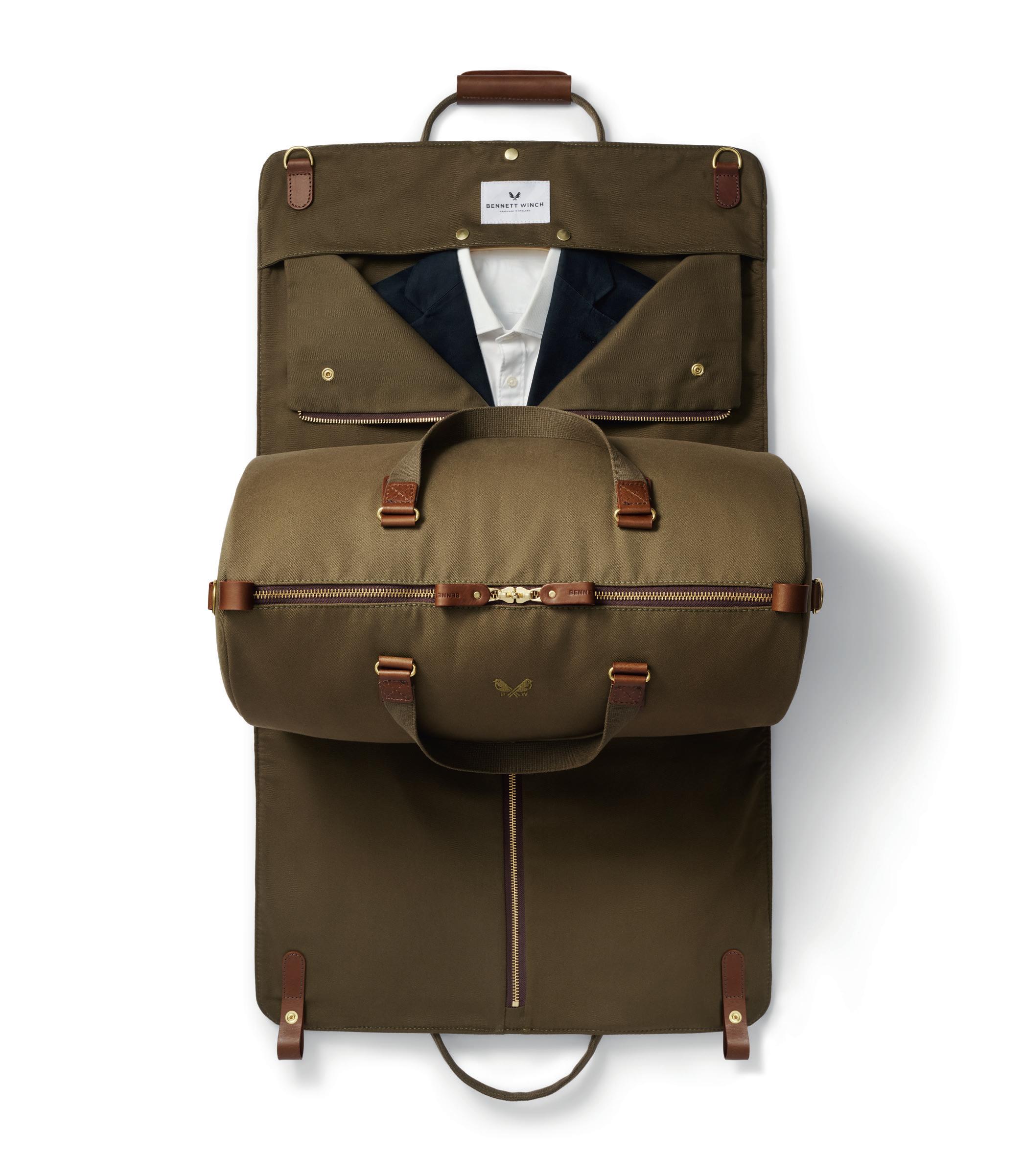
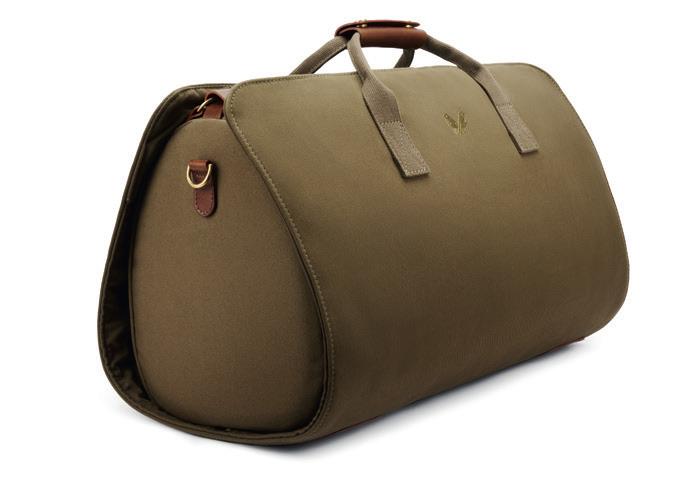
The smartest bag on board.
Gone are the days of taming unruly suit bags in high winds held only by an exposed hanger, while your wheelie case goes for a wander down the airport ramp. The Bennett Winch Suit Carrier Holdall combines a garment bag and holdall in a single piece of luggage for those who seek a smarter way to travel.
Story by Hannah Ralph
Photography by Peter Jonker
As a solar eclipse sweeps across Spain, this medieval city will be enveloped in ephemeral darkness.

During summer, Spain’s glittering coastline usually hogs the limelight, leaving the country’s interior largely undersung – until now. Mimicking the Madrileños, savvy travellers are following the scent of suckling pig to the ancient stone-scapes of Segovia, less than an hour north of the capital by
train. On 12 August, the first total solar eclipse visible from Europe since 1999 will plunge the countryside into darkness, sending a shadow across Segovia’s highaltitude plains. The most sublime views belong to the miradors (lookouts) around the city’s fairytale castle, the Alcázar, said to have inspired the Queen’s palace
in the 1934 Disney film, Snow White. A lucky few will watch the celestial event from Casa Taberna (casataberna.com), an atmospheric inn lodged deeper north in the path of totality. If you miss out this year, southern Spain promises an even longer eclipse in August next year. Consider this your head start.





christopherward.com
Chile’s vibrant capital delivers a kaleidoscope of food, art, scenery and surprising wildlife for these adventure-seeking Qantas Frequent Flyers.
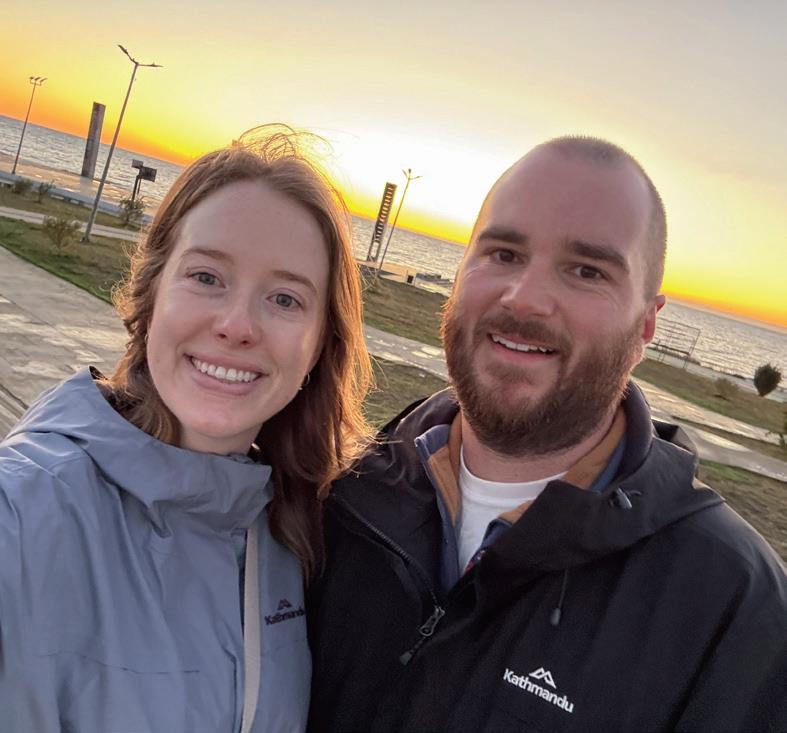
“Santiago is just a little over 12 hours away and it’s easier to reach than you think. My girlfriend, Lucy, and I booked Classic Flight Rewards seats and picked the neighbourhood of Lastarria as our base. We loved the tacos at La Bestia near Museo Nacional de Bellas Artes. At the popular bar and restaurant Chipe Libre – República Independiente del Pisco, we tried the pisco tasting paddle. The sunset from Cerro Santa
Lucía was beautiful. We flew to Patagonia to do the five-day W Trek. It was wild and rugged but with the comfort of hot showers each night. The end-of-the-Earth atmosphere in Punta Arenas was unforgettable and the craft beer scene was another surprise.”
Jesse Bourne
Bronze Frequent Flyer
Flew Sydney to Santiago
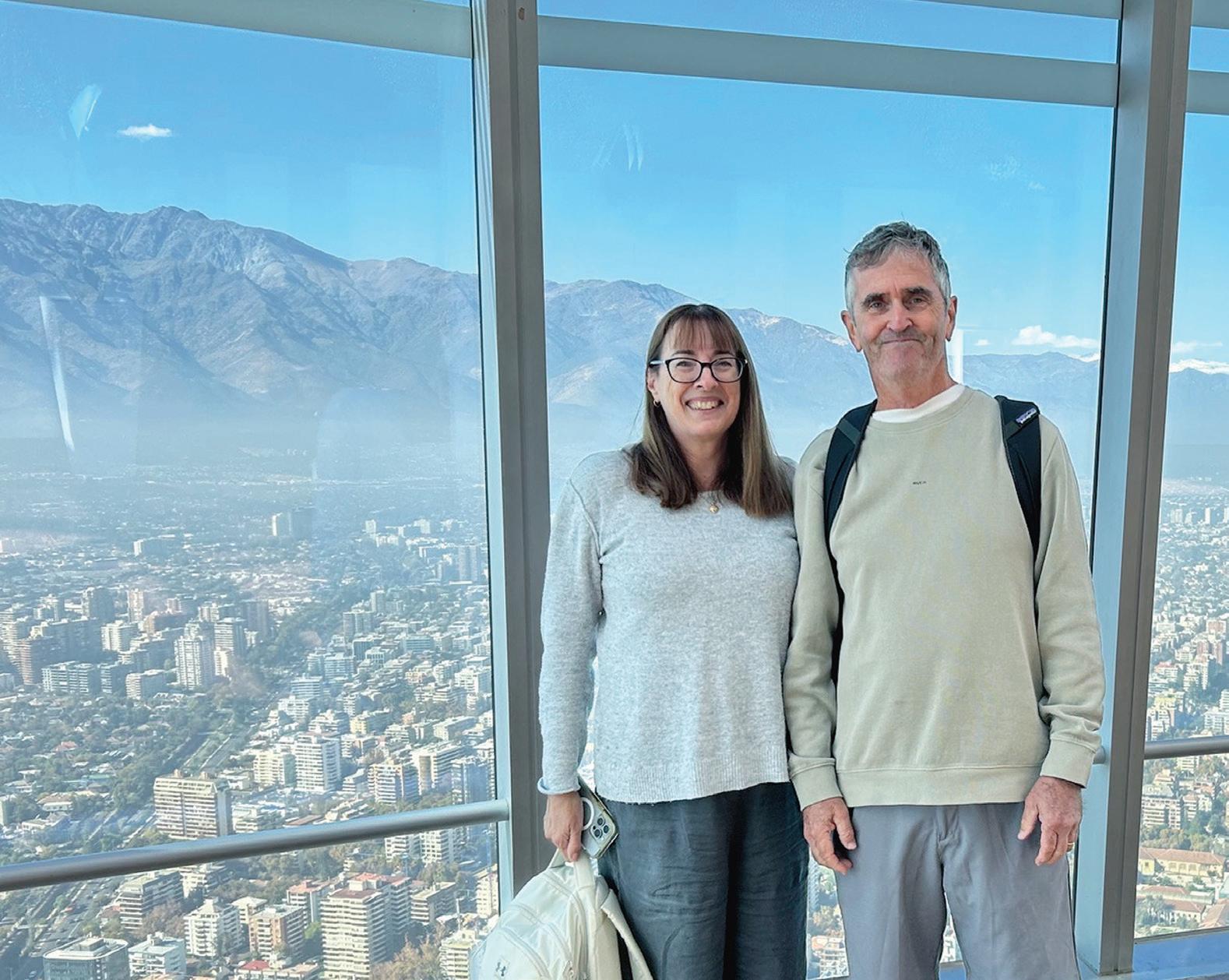
“It was our first trip to Chile – my husband, Mark, has friends there. We had seats on the right-hand side of the plane and you fly up the coast looking across to the Andes on approach. After checking into the Solace Hotel, it was a 15-minute walk to Sky Costanera, the tallest tower in South America. We took the sightseeing Hop-On Hop-Off bus to San Cristóbal Hill where we rode the funicular to the top and the cable car down. We also did a four-day trip to Atacama, a two-hour flight on LATAM booked using Qantas Points. There, we visited Valle de la Luna and Reserva Nacional los Flamencos to see flamingos. We’d booked Premium Economy and on the return trip our Classic Upgrade Reward to Business came through – a nice way to re-enter reality.”
Sandra van Kool
Platinum Frequent Flyer
Flew Gold Coast to Santiago via Sydney
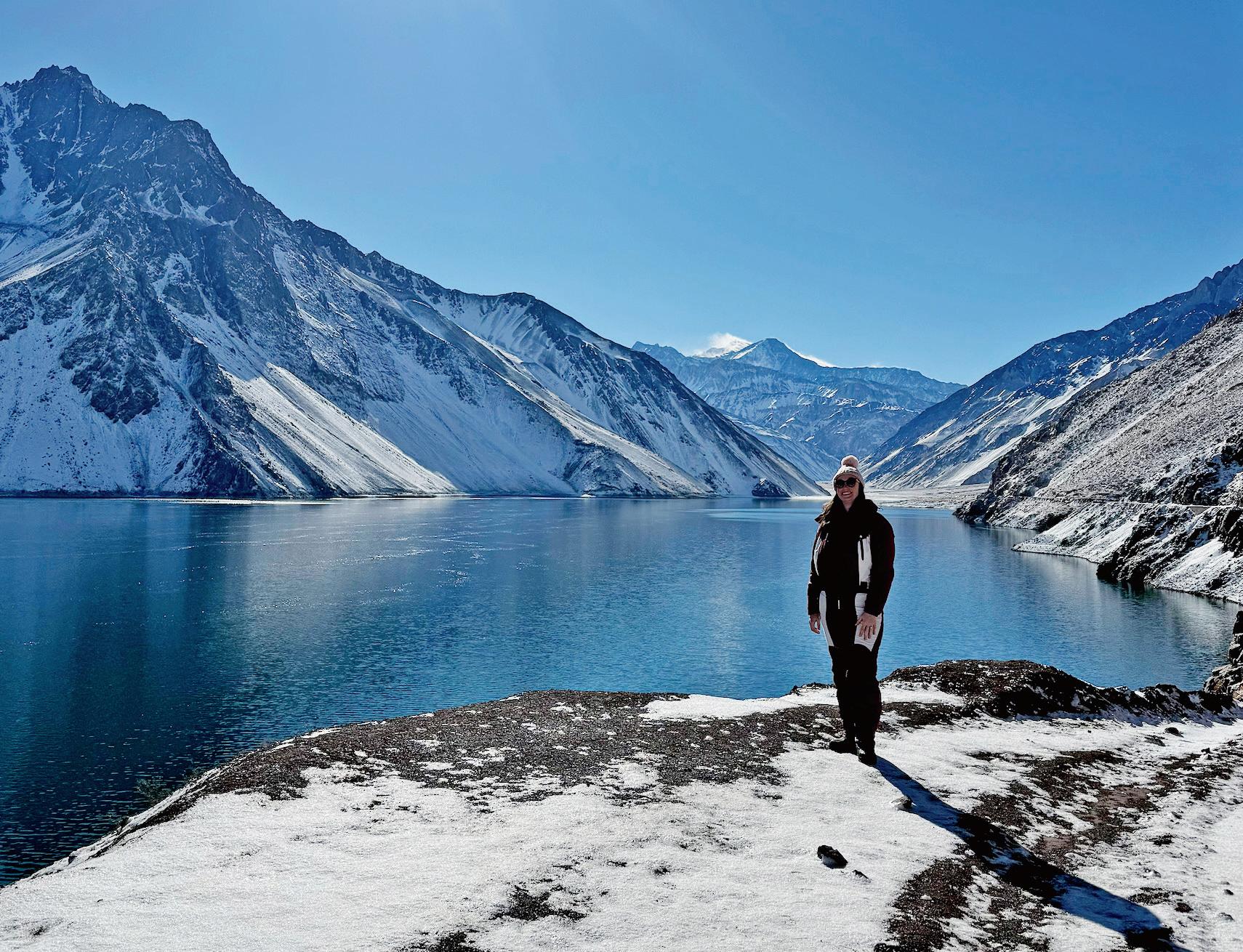
“I’ve flown to Santiago at least seven times and it’s one of my favourite places. The crew staple is Luna Bar in the AC Hotel Santiago Cenco Costanera – the cocktails are great. Time your visit as the sun goes down for views of the mountains, especially in winter. I enjoy visiting Valparaíso, about 90 minutes from the city, for its brightly coloured
“Santiago on the cusp of winter appears as a wall of skyscrapers set against a backdrop of snow-capped Andes. I stayed centrally at Debaines, a new 50-room hotel on Agustinas Street with views across Neoclassical streetscapes to La Moneda Palace. The hotel was close to the National Opera and the barrios of Bellavista and Lastarria, where I ate ceviche at Bar La Junta. In Las Condes, the Mandarin Oriental had glass-walled gondola cabins for winter dining in the gardens. I ate JapanesePeruvian dishes of octopus nigiri and citrus-bright yakiniku duck at the hotel’s in-house restaurant, Matsuri.”
Kendall Hill Qantas magazine travel expert
houses and street art. On my last visit, I did a tour with Get Your Guide to Laguna del Inca, winding up the famous switchback road near the border with Argentina to an incredible blue lagoon surrounded by snow-capped mountains.”
Rachel Lowden Qantas cabin crew
Flights
Fly direct from Sydney to Santiago and enjoy all-inclusive flights
Hotels
Choose from over 478 hotels in Santiago*
Points make it possible
Use Qantas Points to book flights and request upgrades to over 1,300 destinations, including Santiago~
Book now at qantas.com or on the Qantas App
For your chance to be featured in the magazine, email travel@ mediumrarecontent.com






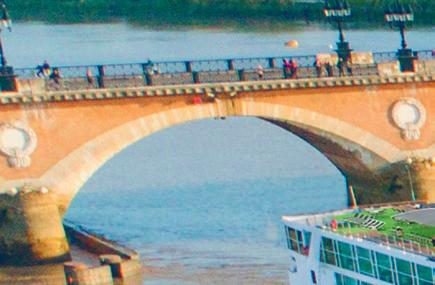

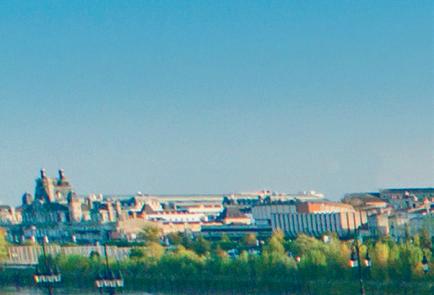
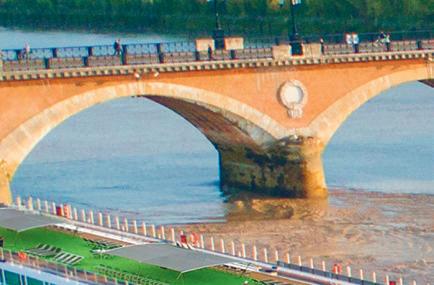

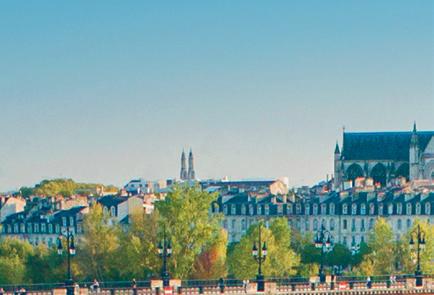
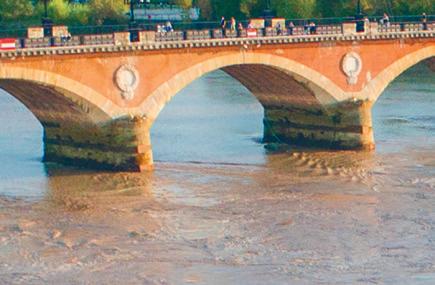
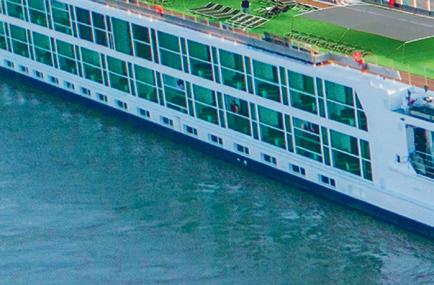
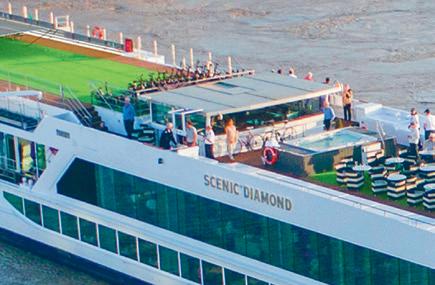

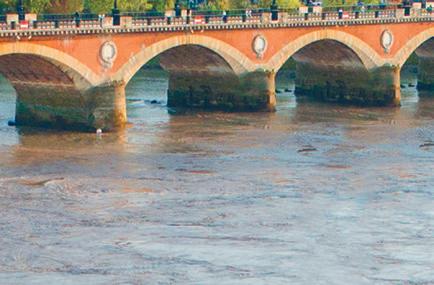
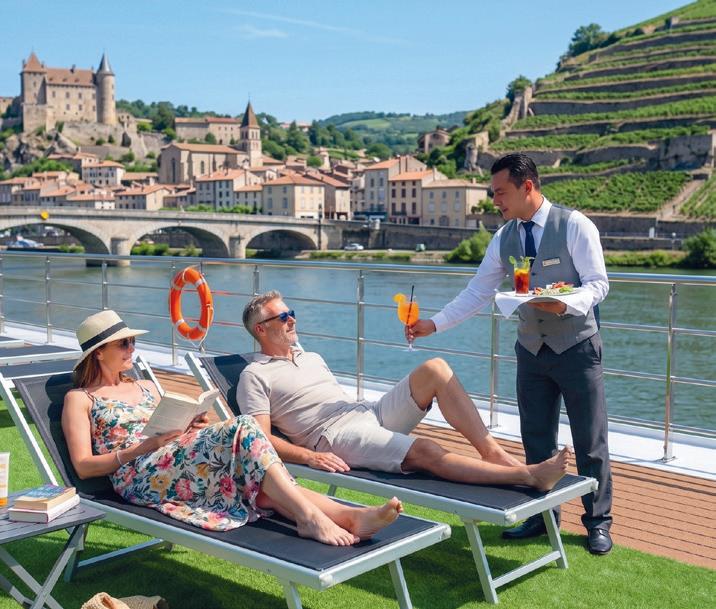
Enjoy the wine regions of Bordeaux and the dazzling charms of Paris to the culinary city of Lyon. Discover the magnificence of France on a river cruise in truly all-inclusive ultra-luxury. Scenic, in a class of its own.


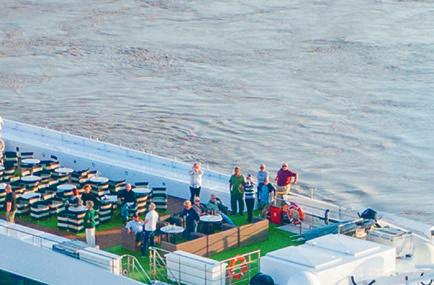
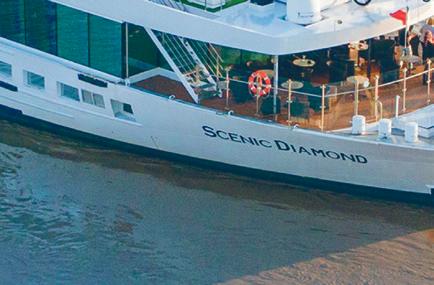

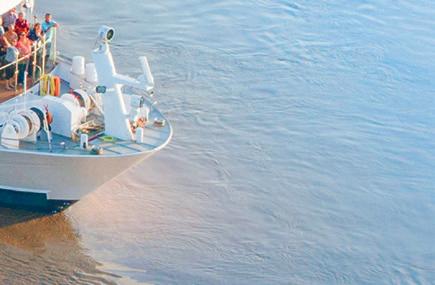

Welcoming no more than 147 guests, with expansive outdoor areas, places to unwind and spacious suites with butler service. The destination-focused dining celebrates the fl avours of each region and the innovative Salt Therapy Lounge invites complete relaxation.
Scenic Enrich events place you at the heart of the world’s most refined art, music and architecture. Experience an immersive digital art installation show at Les Bassins des Lumières in Bordeaux, to a private concert at the prestigious Palais des Papes in Avignon. These carefully curated activities elevate all-inclusive to a new level.
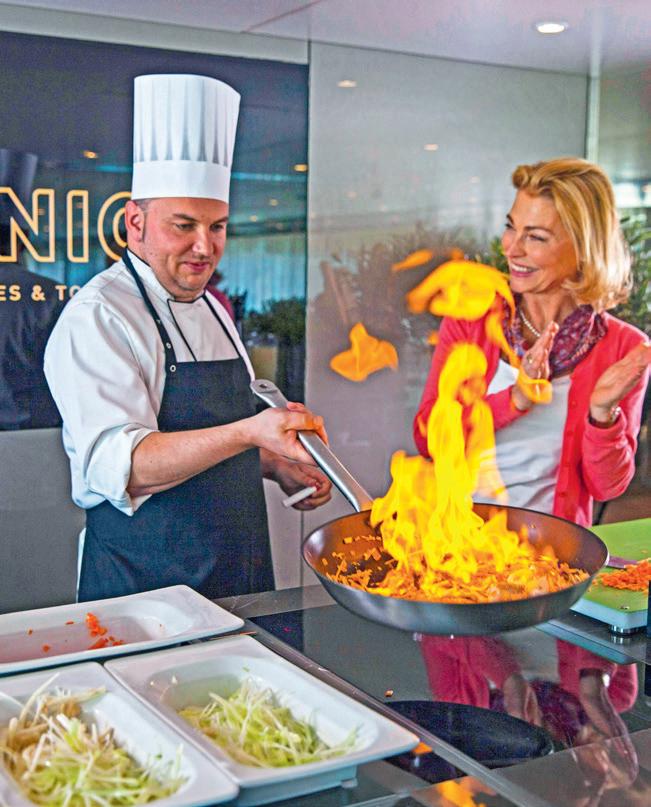
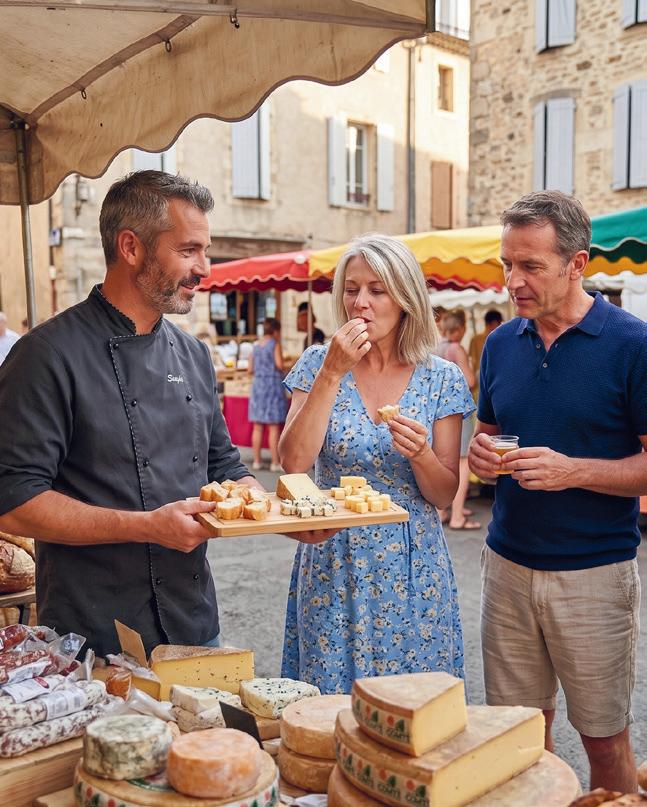
Scenic Freechoice excursions provide Active, Moderate or Relaxed ways to explore so you can choose activities best suited to you. Whether it’s a full-day excursion to the D-Day landing beaches of Normandy or shopping with a chef at a local market in Bordeaux before taking part in a Scenic Culinaire cooking demonstration.
Bordeaux Southern France Northern France & Normandy Portugal Rhine, Main, Moselle & Danube Rivers



Every Detail, Always Included.
That’s the Scenic Difference.
SCENIC SPACE-SHIP
Luxury suite with butler service
Scenic Slumber bed with pillow menu
Vitality Pool, Salt Therapy Lounge, e-bikes & Unlimited Wi-Fi
Return airport transfers & all tipping
DINING & BEVERAGES
Meals & premium beverages, all day^
Up to five dining experiences
Personalised mini-bar, refreshed daily
Wine tastings on board & at historic vineyards
Exclusive Scenic Enrich events
Scenic Freechoice excursions, chosen by you
Shop with a Chef & Scenic Culinaire
Cooking Demonstration
Beautiful Bordeaux 11
All-Inclusive
Exclusive Scenic Enrich concert at Château d’Agassac & afterhours access to Bassins de Lumieres
11 Days | Lyon < > Lyon
All-Inclusive River Cruise from $8,795pp*
Exclusive Scenic Enrich concerts at Pope’s Palace &


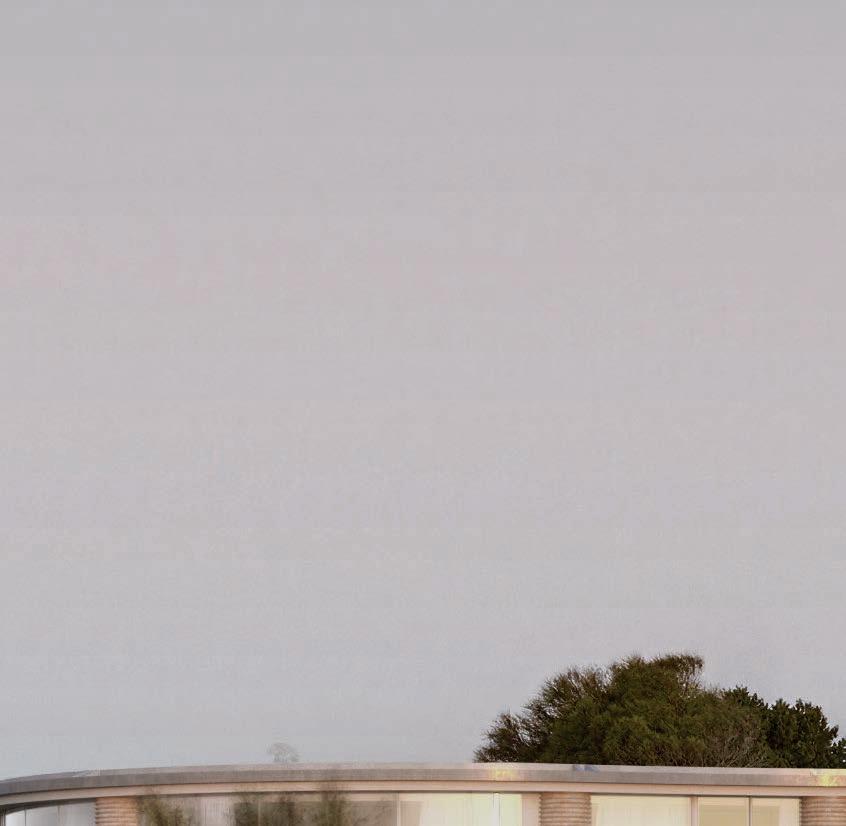
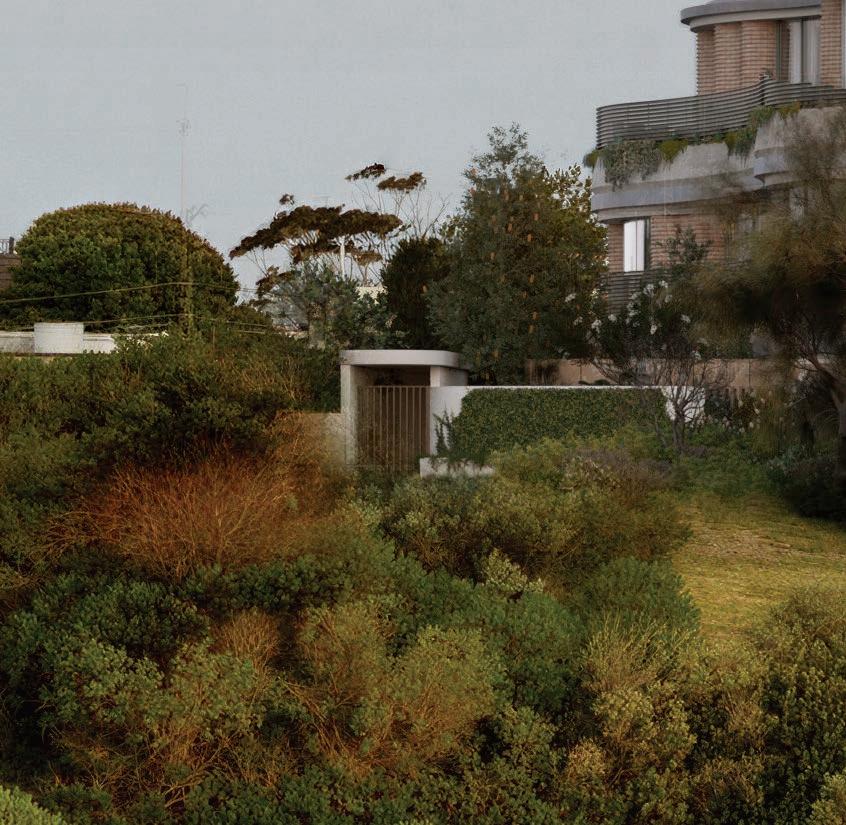
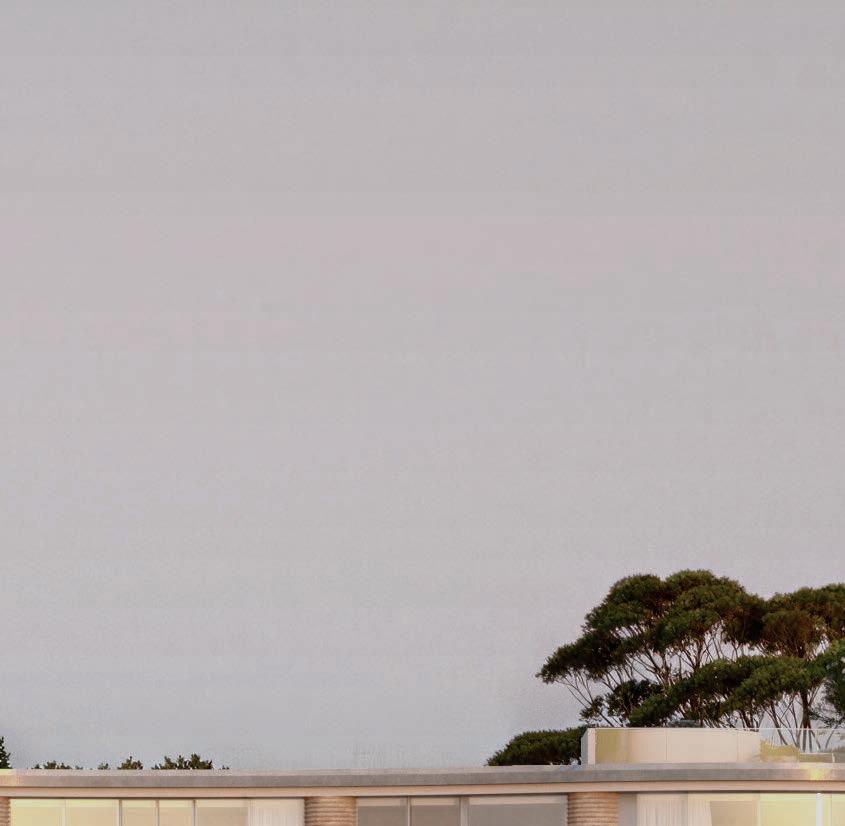
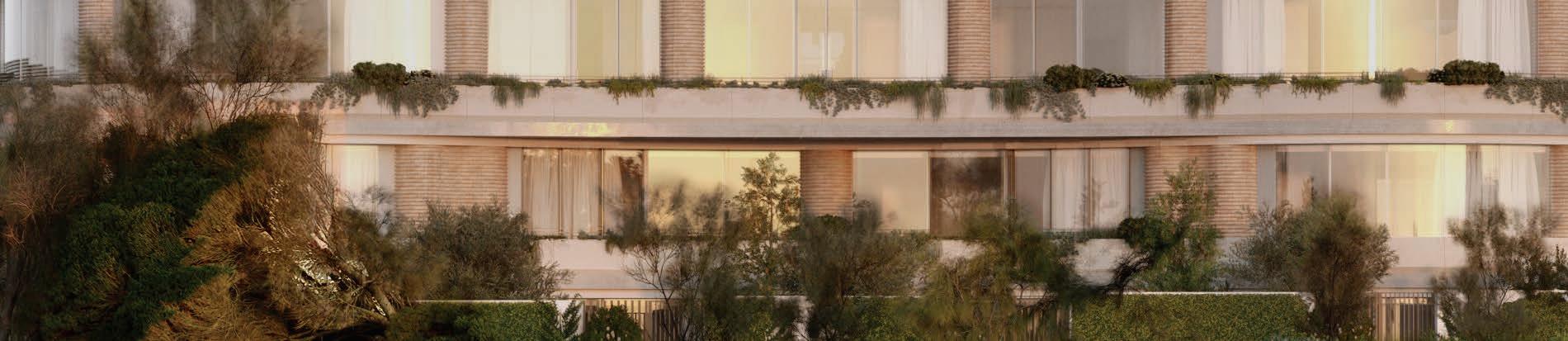
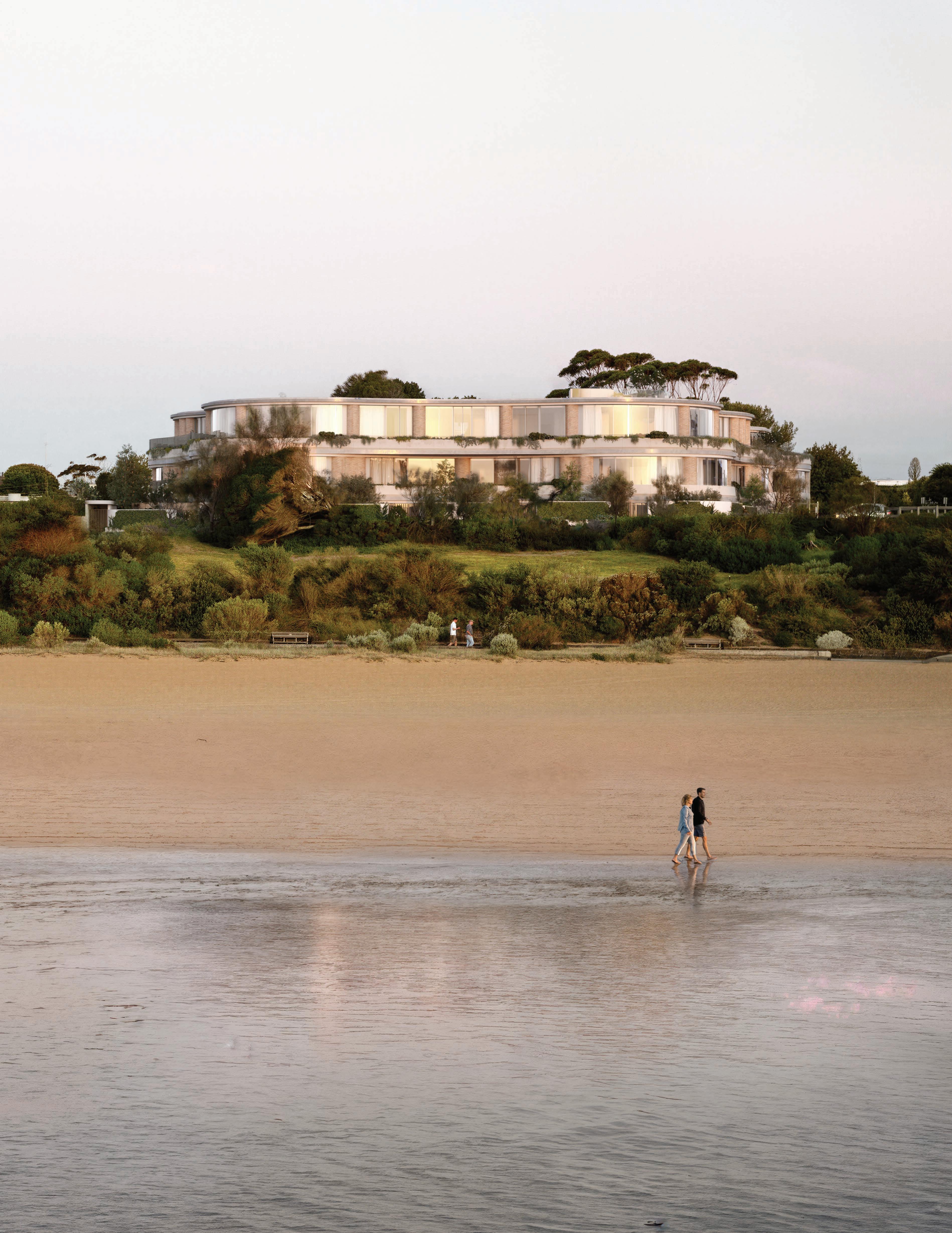
Construction is well underway at Maison Savoy, a prestigious waterfront address on Brighton’s iconic Esplanade. A rare collection of luxury 2 & 3-bedroom house-sized apartments with a private bathhouse by Aurora, exclusively for residents.


Visit the display suite at 78 Church Street, Brighton
Call to schedule a private appointment
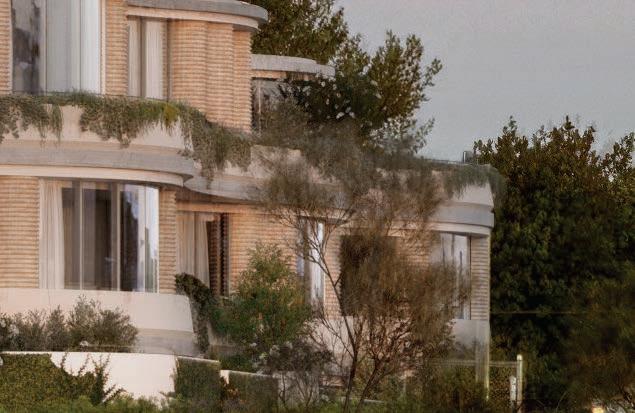


INSPIRES EVERYTHING
STORY BY ALEXANDRA CARLTON
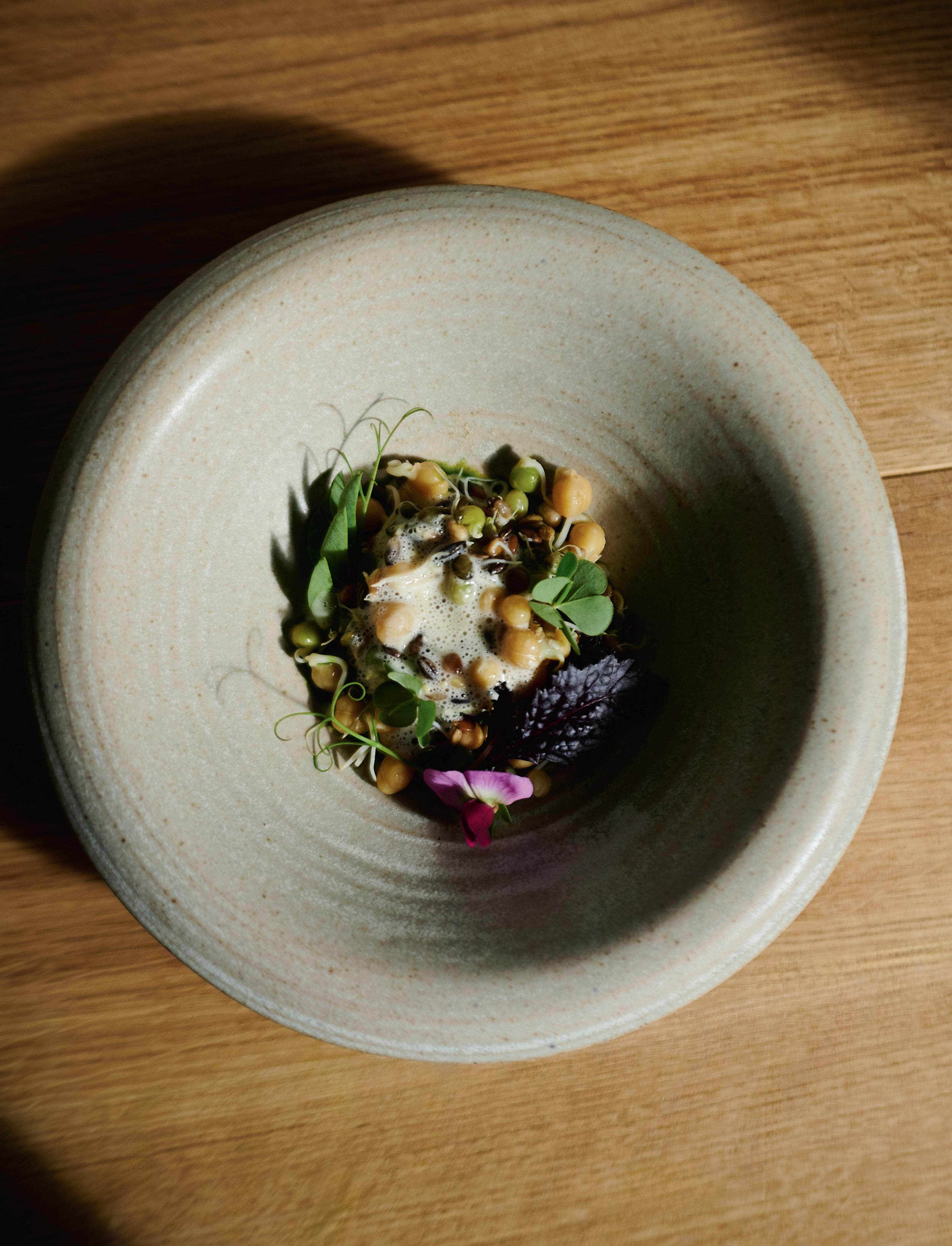
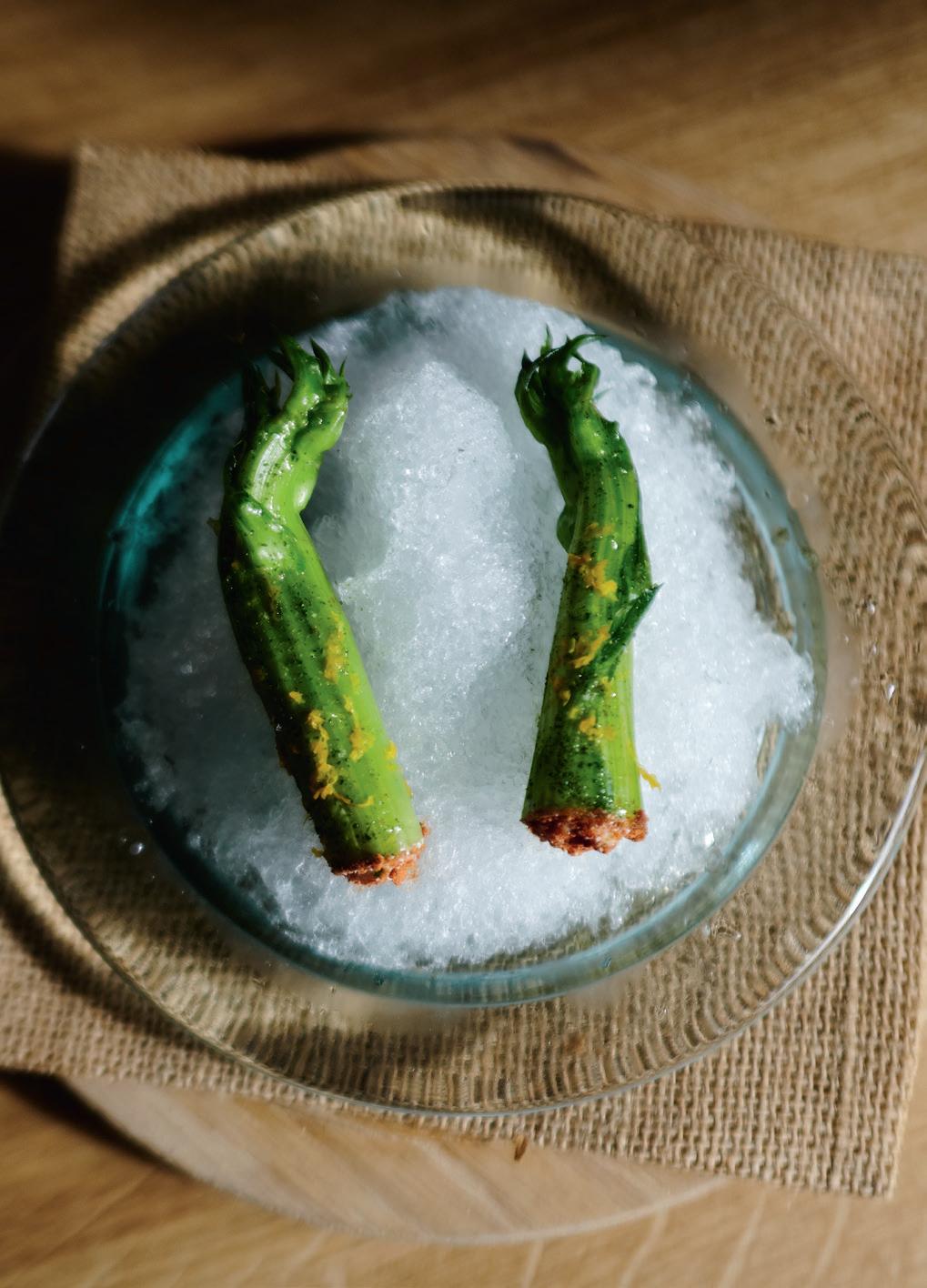
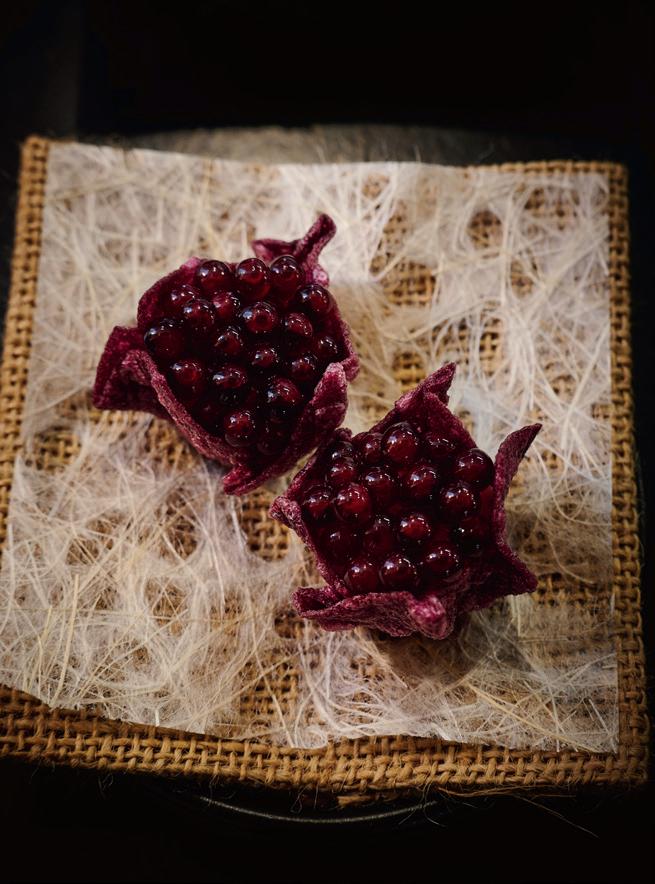
The cover crop salad might not look like much at first. Served as part of a multicourse tasting menu at the new Three Blue Ducks flagship restaurant at Burradoo Park Farm (threeblueducks.com), the dish consists of a small, textured ceramic bowl filled with a tumble of pickled turnip, buckwheat, legumes and herbs. There’s a magenta pea flower on top and the tiny clover-shaped leaves of wood sorrel look like they’ve been added for luck.
But this salad isn’t as simple as it seems. Cover crops are planted by the property’s farm team, led by farmers Nick Tallas and Lindsey Rogers, to
replace nutrients in the soil between primary crops. Then there’s the bowl, crafted by NSW ceramicist Alessandro Di Sarno. And, of course, the taste. Head chef Rhys Connell, who works alongside group executive chef Troy Crisante, finishes things off with a dressing of fermented turnip and butter to give a livewire acidity, umami and freshness to the nutty, knobbly grains and vegetables. It’s humble but also a little bit fancy. And that’s Three Blue Ducks Burradoo in a nutshell.
“We have a bit more space here to be more intricate, show a bit more
technique,” says Darren Robertson, one of the core members of the team. “But,” adds his Three Blue Ducks colleague, MasterChef judge Andy Allen, “it’s still very ‘us’.”
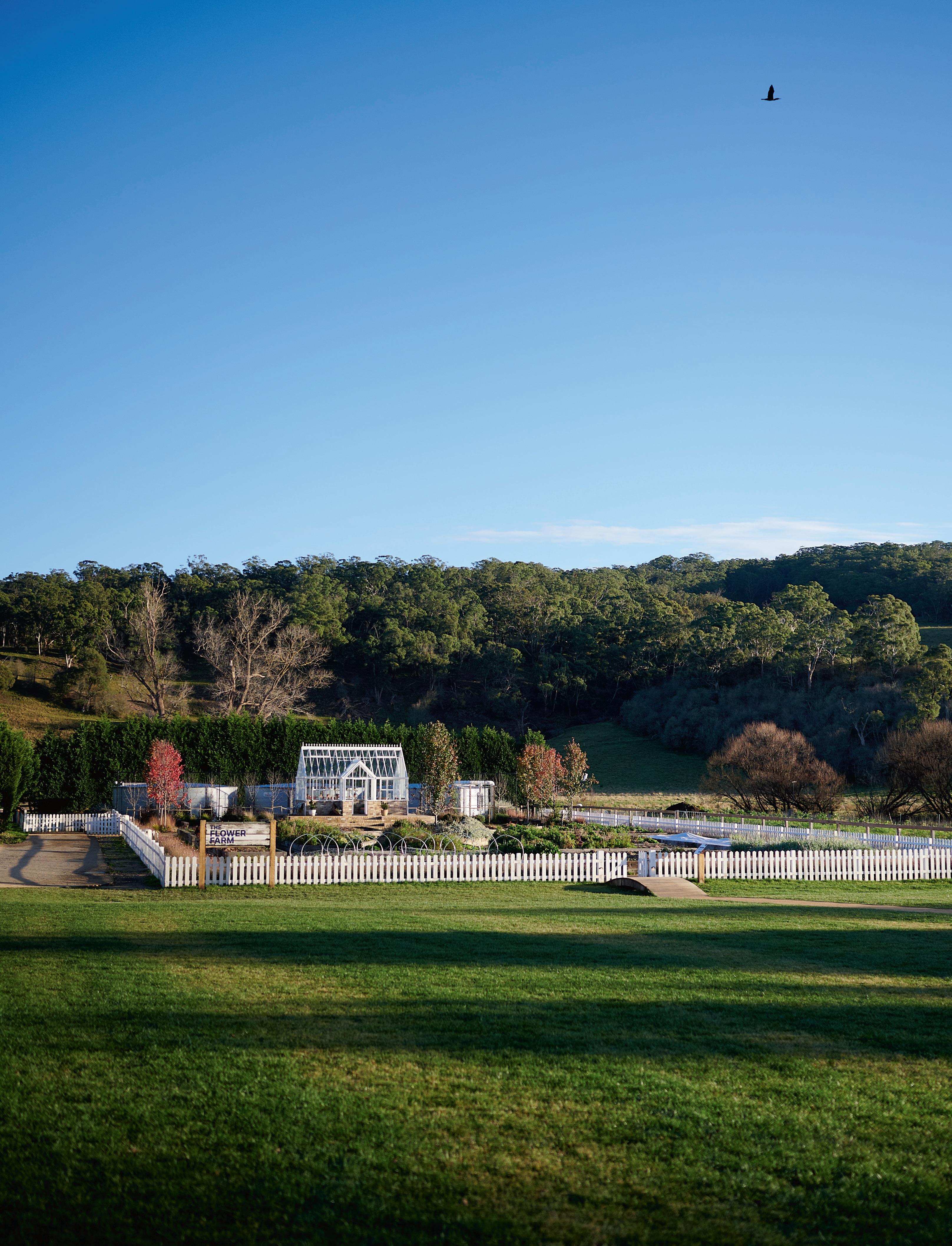
The story of Three Blue Ducks’ seventh opening, set on 240 hectares in the NSW Southern Highlands, about 90 minutes drive south of Sydney and just five minutes from Bowral, began with philanthropist and investor Annie Cannon-Brookes, who moved to the region and bought what is now Burradoo Park Farm in 2021. She hired Andy Carbone, the former farm manager at
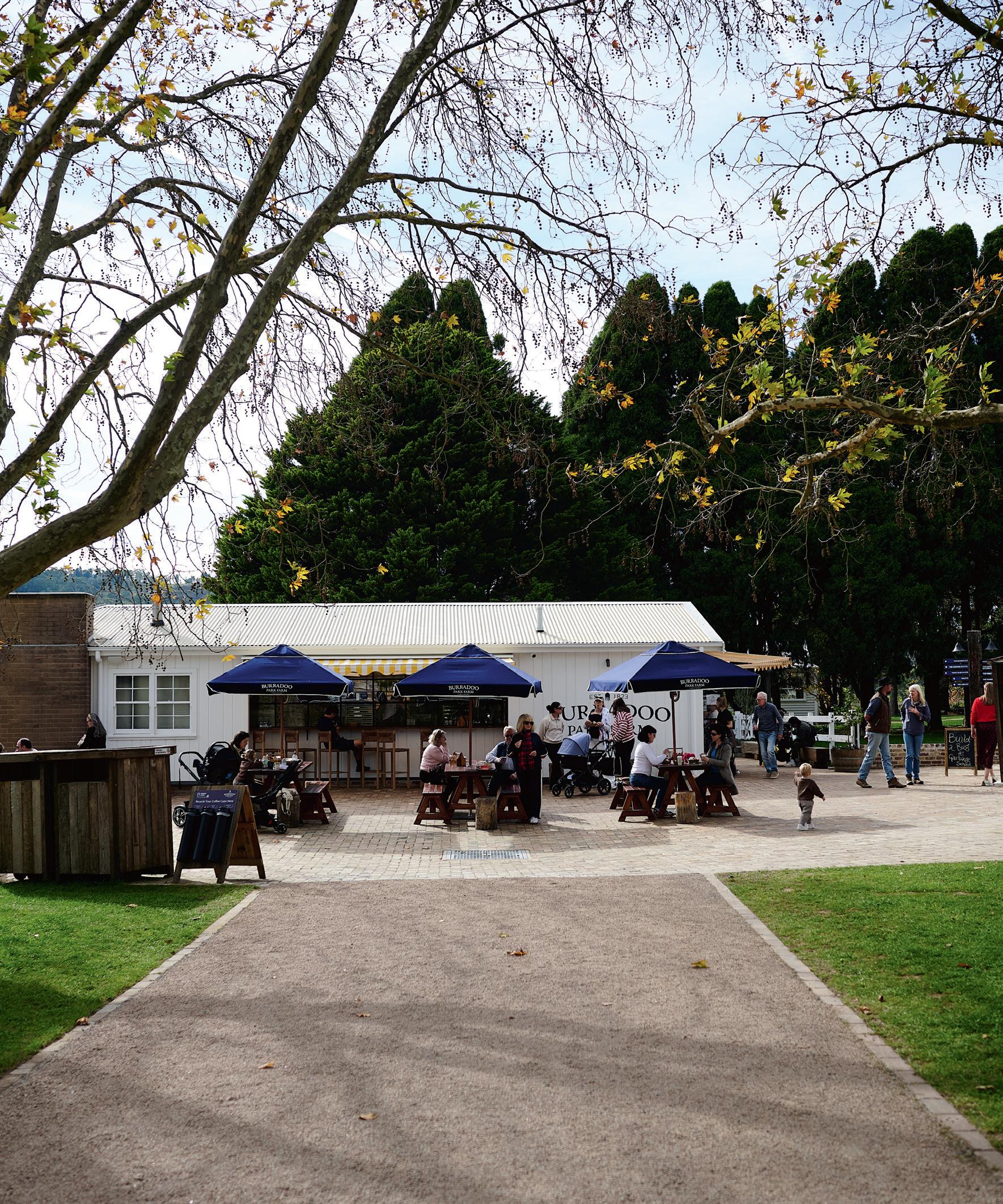
the Three Blue Ducks outpost in Byron Bay, to help transform the property. “I thought, ‘I can’t just move down here and not give anything back to the area,’” says Cannon-Brookes. “I wanted to do something that would involve my kids and setting this place up as a farm and educational precinct seemed to be the answer.”
Education is at the heart of the whole project, which includes a building dedicated to breeding edible crickets that’s open to visitors and a Stephanie Alexander Kitchen Garden, where local school children learn that their food comes from somewhere other than the fridge or the supermarket shelves. When Cannon-Brookes and Carbone approached the Three Blue Ducks team with their idea, they were met with some resistance. “Andy called me one day and asked, ‘Would you like to open a restaurant on another farm?’” recalls Robertson. “He said it had the potential for a bakery and cafe, all very similar to what we have up north. I was like, ‘Absolutely no way,’” he says with a laugh, especially when he saw the farm’s size. A restaurant is one thing.
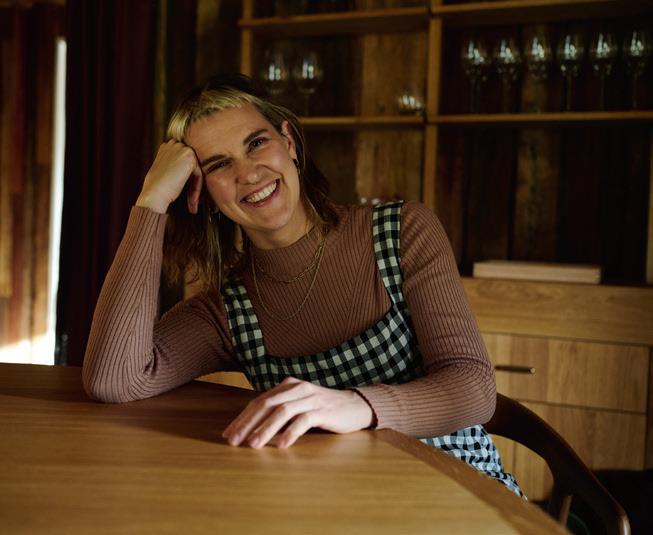
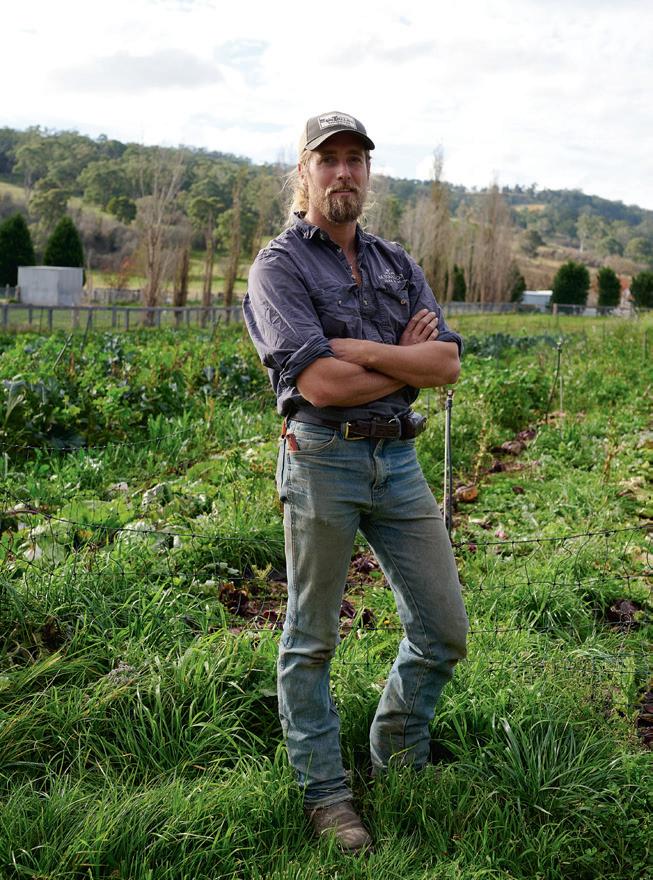
A working farm, several eateries and the rest? Robertson and the team, however, agreed to take a look. “We spent the day out here and fell in love with it.”
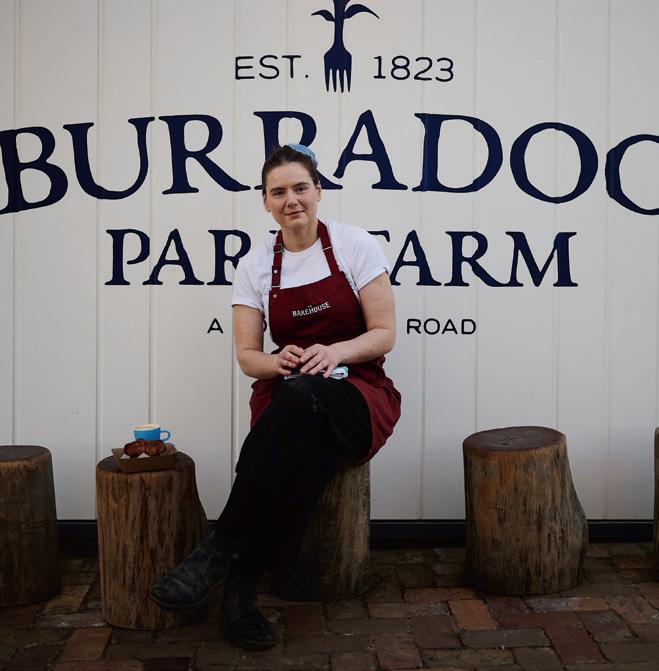
It’s easy to see why. Drawn in by the fragrance of fresh bread, the first stop for many visitors is The Bakehouse, where pastry chef Georgina Phillips and her team create lusciously laminated croissants, viennoiserie and more. Phillips loves it when the parents from the school over the road pop in to buy pastries for the teachers or locals come in for baguettes or olive and cheddar loaves on the weekend. (The ham and cheese croissant is also a favourite.) She’s particularly proud of Lindsey’s quiche, named after veggiewhisperer Rogers and a showcase of whatever’s growing on the farm at the time. “I love highlighting the produce we grow here,” she says.
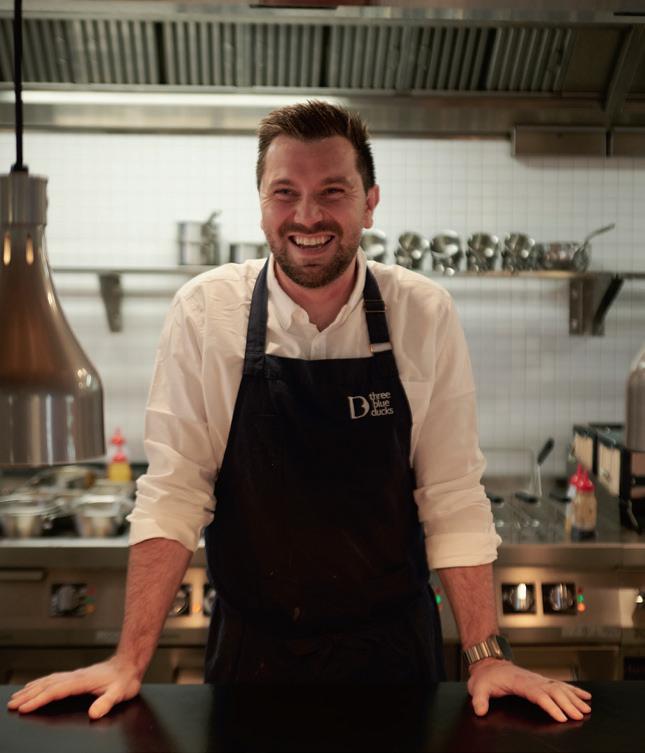
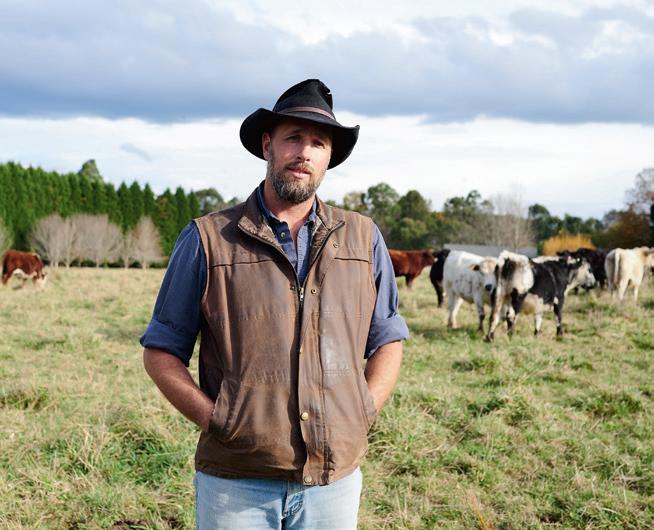
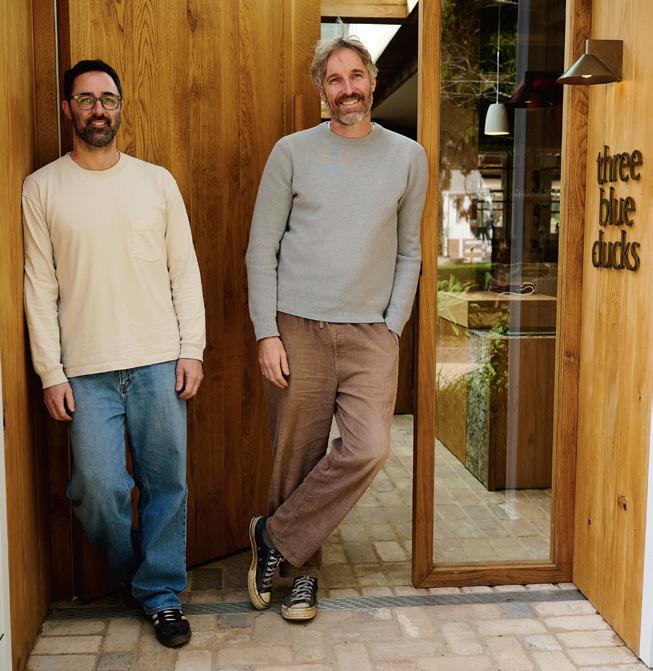
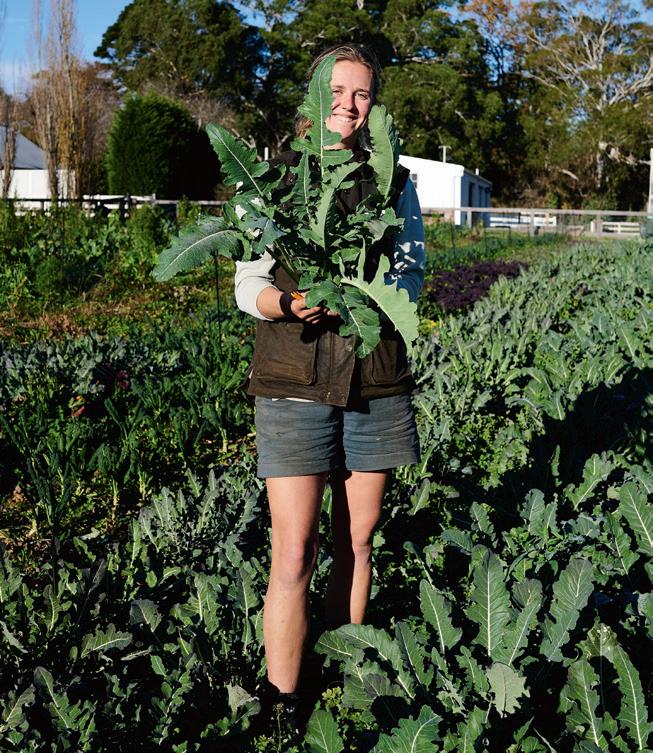
1 Georgina Phillips
2 Rhys Connell
3 Andy Carbone
4 Andy Allen (left) and Darren Robertson
5 Lindsey Rogers
6 Mem Hemmings
7 Nick Tallas
Lunch might be at The Farmhouse, which is part cafe, part produce store, serving burgers, ploughman’s plates with fresh and pickled veggies, and sunshine-yolked eggs from the farm’s chooks along with wild fennel beef broth made from cattle raised onsite. There’s
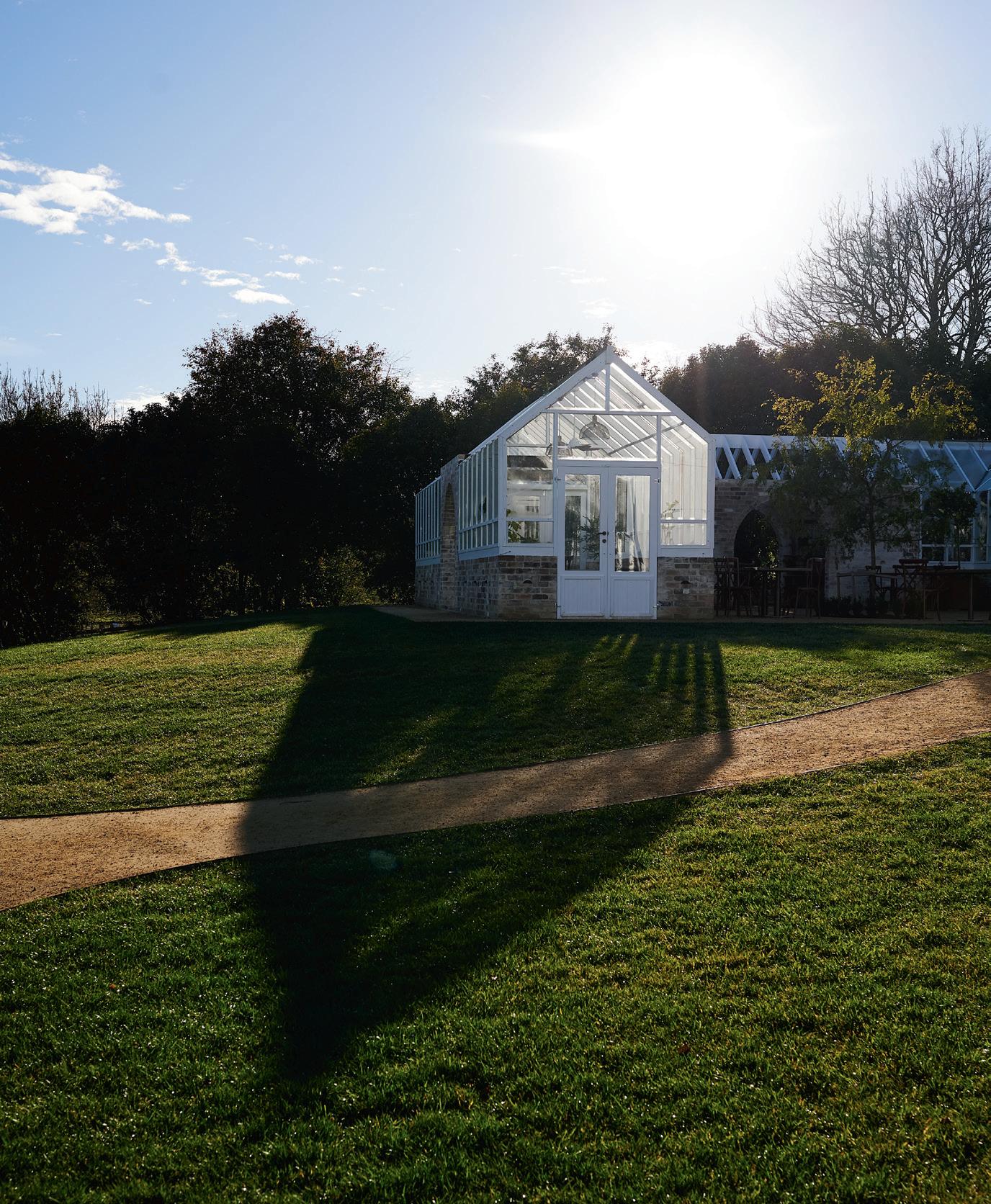
also a gelato store, where every flavour is made with veggies rather than fruit. “Can I please have the pink one?” asks a little girl before being handed a cone of the beetroot and vanilla. I wait to see if she recoils but it’s gobbled up with delight. “Oh, she’s had it before, she loves it,” her mum tells me.
The restaurant is perhaps the most ambitious part of the entire enterprise. Open for lunch Friday to Sunday and dinner Thursday to Sunday, it offers a choice of two tasting menus consisting of five or seven courses. Each is matched with a NSW-focused wine pairing by group beverage manager Mem Hemmings that focuses largely on family-owned and small-batch producers, such as local label Dawning Day Farms and Hemmings’ own Meredith brand.
The farm’s produce is used as much as possible, augmented with sustainable ingredients from other Australian farmers where necessary.
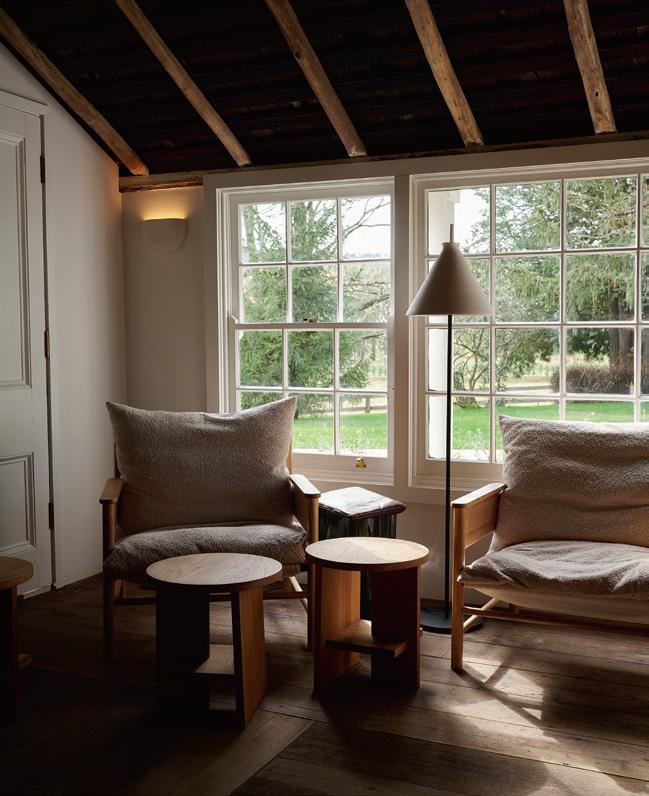
It sits inside a beautifully restored 1823 farmhouse and is made up of several nooks and spaces, warmly layered with old timber beams, marble and sheepskin. “Our restaurants are generally one big room so it’s been nice to do something different,” says Allen, pointing out a cosy seating area in front of the open fire that’s just the spot for a post-dinner whisky.
Across the whole property, Cannon-Brookes’s vision – and the approach of everyone who works on the project – is clear. Spending time here is proudly parochial, hands-on and delicious, and it’s a bonus if you translate a little of what you learn into your everyday life. “As a collective, the idea is to minimise that disconnect between the farm and what we eat,” says Carbone. “If one person walks away from here and thinks, ‘From now on, I’ll buy my eggs at the farmers’ market’ or ‘I’ll think a bit more about compost’, then that’s a win.”
Story by Alexandra Carlton
Eating out gets personal as small-scale restaurants, led by South Australia’s Aptos, go big on service.
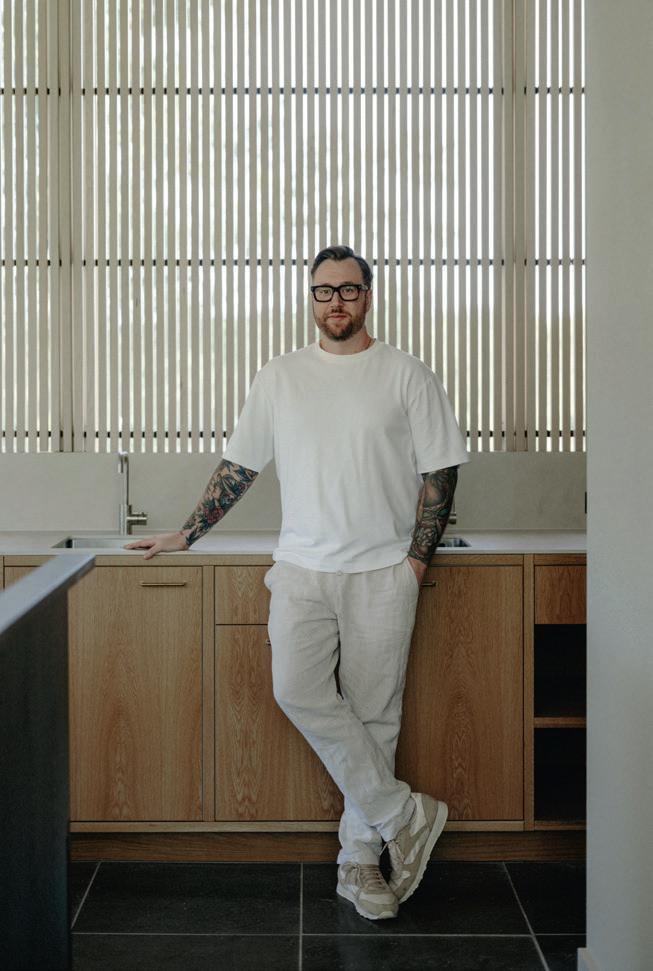
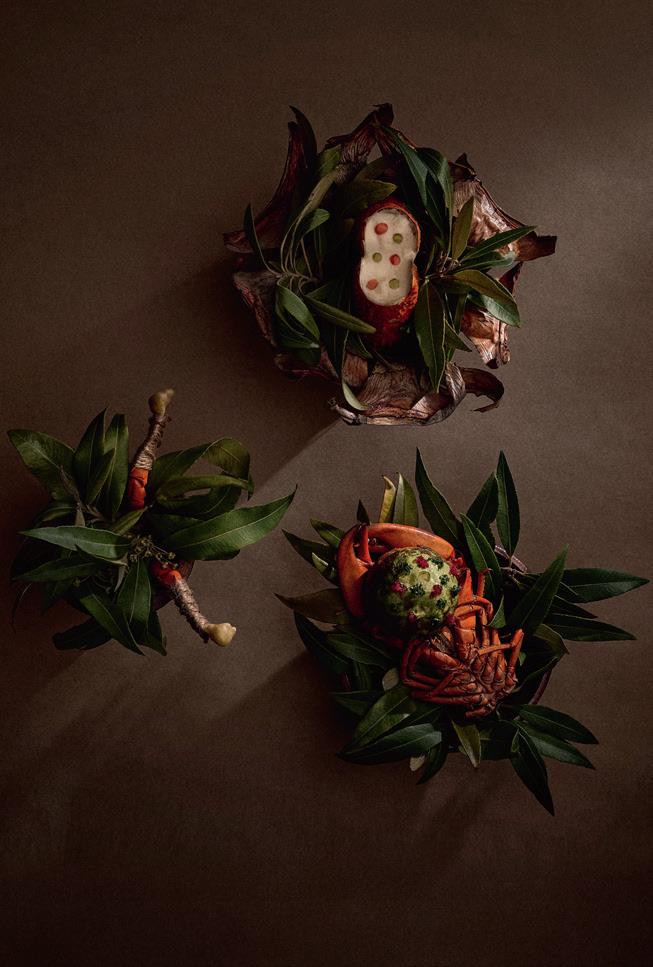
When Justin James (above), chef and patron of Restaurant Aptos (restaurantaptos.com) in the Adelaide Hills, cooks in front of the 14 guests at his fine-dining experience, he often does a little eavesdropping. “I might be plating up or walking past and I’ll hear someone say, ‘What is that?’ about a dish.”
The former executive chef of Adelaide’s Restaurant Botanic loves that his new venue is so intimate. “I’ll say, ‘You’ll never guess! That’s a paste of muntries with sherry vinegar and bee pollen.’ And they’ll be like, ‘Whoa!’” From there, he says, the conversation flows naturally between chef and diner, ensuring the latter has the best night possible. “I always say to the team, ‘I know we’re not saving lives but we are celebrating life.’ People are with us for anniversaries or birthdays or a job promotion. A little thing like speaking directly with the chef can go a long way.”
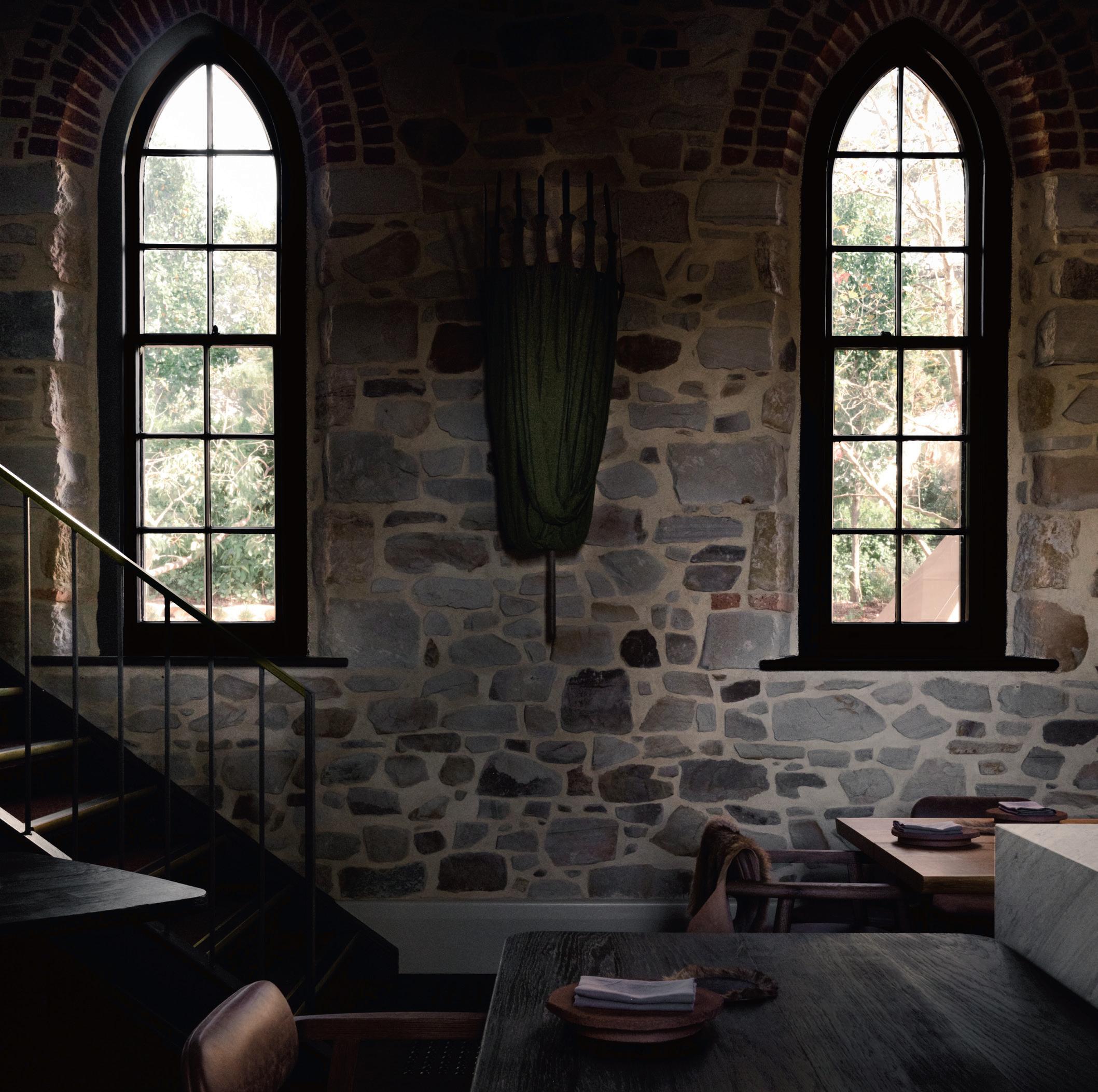
This connection is only one advantage of a restaurant with few seats. In the case of Aptos, which was built from the bones of a 19th-century church, singularity is another. James’s boundary-pushing 16-course menu might feature anything from purees of native fruits dotted on a branch to a bunya nut tofu fried with prawn legs and mains of crocodile, kangaroo and abalone. “It’s all very one-of-a-kind,” he says. “You won’t find a restaurant serving any of these dishes anywhere else in the world.”
Complementing the unique, high-end option is the approachable à la carte menu at the ground-floor Bar Cruz, which seats 16, plus Bar Mary, an eight-seat whisky bar on level one. Whichever way you do it, Aptos is the culmination of almost every culinary idea James has ever had. “You’re really stepping inside my brain.”
Traditional East African fare has arrived in Perth’s inner-north and is available to just 20 diners at a time (@restaurantadulis). Expect beyayineto, an Eritrean and Ethiopian vegan platter served with springy injera bread, doro wat, a chicken and egg stew, and kitfo, minced and spiced raw beef.
Not only does acclaimed Tasmanian chef Luke Burgess’s cosy Hobart diner (schole.com.au) inside a former confectionery store seat just 10 guests but they’re all at the same table. Burgess works directly with local producers, fashioning ingredients into delights such as golden beetroot and quince cassata or a zesty salad of cured swordfish belly.
A dinner at Joy (joyrestaurant.com.au), down a laneway in Brisbane’s Fortitude Valley, is like stepping inside award-winning chef
Sarah Baldwin’s home. After eating from her produce-driven menu in the welcoming dining room, you leave feeling like you’ve made a new friend. A maximum of 10 diners take a seat at the counter, where Baldwin plates up comforts such as a silky corn and quinoa chawanmushi.
OMAKASE BY PREFECTURE 48
There’s nothing small about the Prefecture 48 complex (p48.com.au), which consists of six separate eating spaces in an art-filled heritage warehouse in the Sydney CBD. But the eight-seat sushi counter, Omakase, is about as snug as it gets. Sushi master Akira Horikawa’s multi-course
meal is a pure, polished distillation of finely honed seafood and top-grade Wagyu.
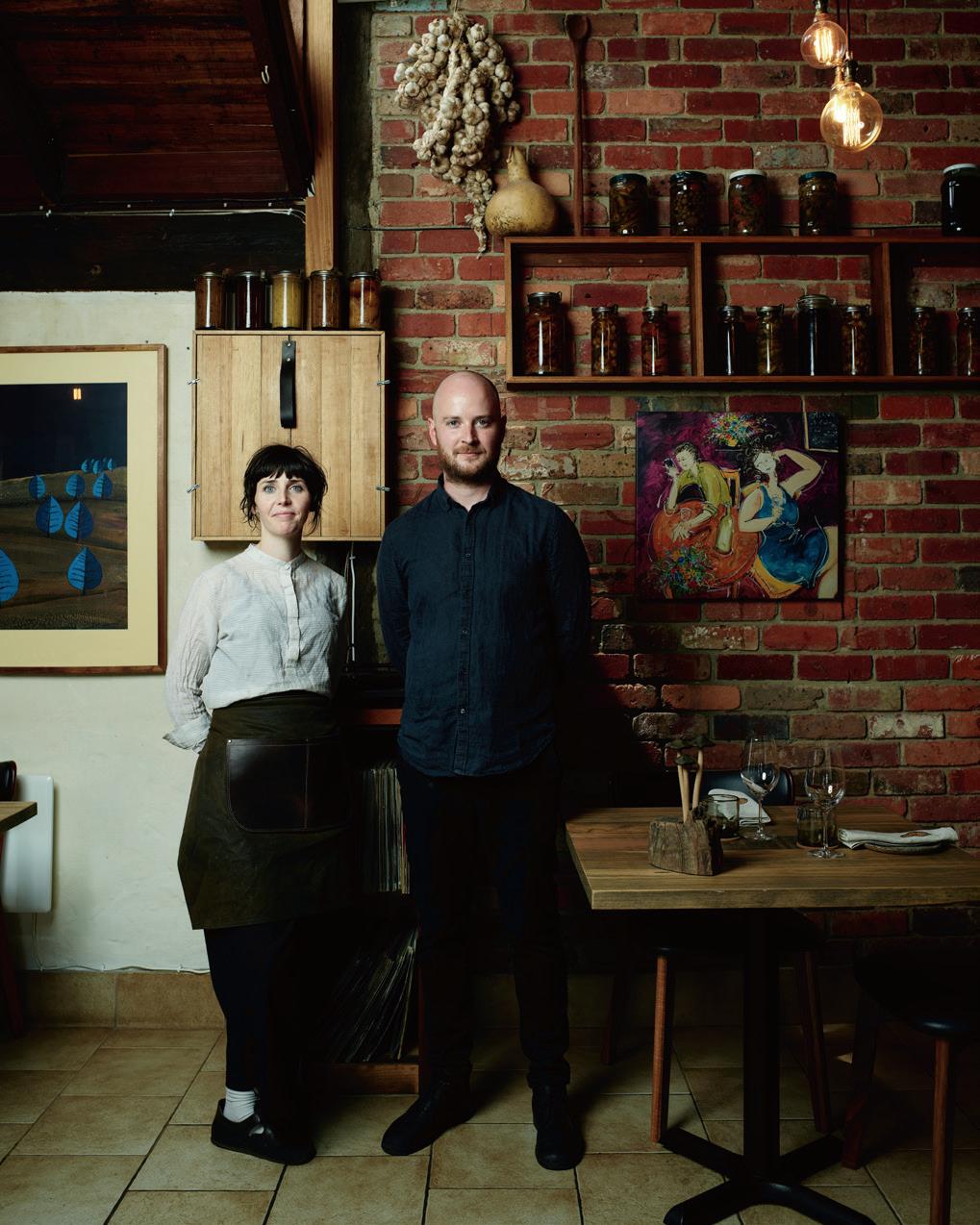
ZOE’S Micro-diner Greasy Zoe’s (greasyzoes.com.au), in Hurstbridge, north-east Melbourne, is the work of just two people: chef Zoe Burch in the kitchen and her partner, Lachlan Gardner (both at left), on the floor. The pair does the lot, from cooking and wine pouring to cleaning and chatting with guests. The restaurant serves more courses (about 12) than it has seats (eight) and ingredients are almost entirely sourced from within 50 kilometres of the site. Dishes might include a tart made from Black Duck Foods spear and kangaroo grass flour filled with macadamia, warrigal greens and pickled garlic scapes, or local chicken served with fermented redcurrants and mustard.
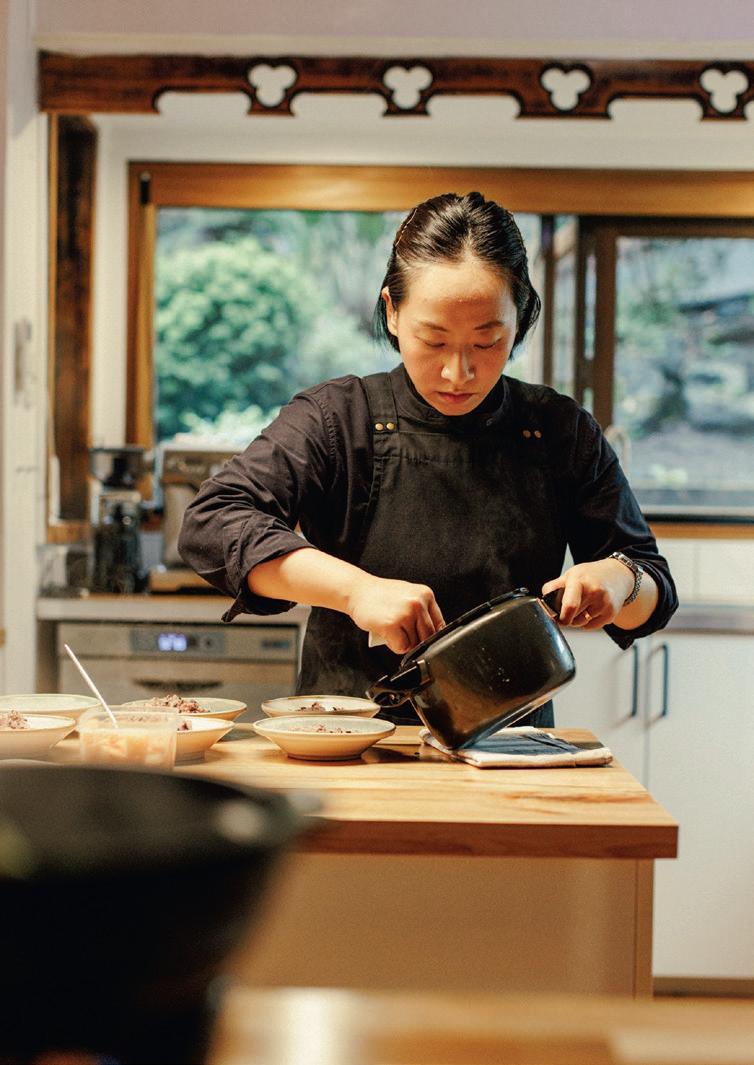
The only downside to a tiny restaurant, especially one inside a chef’s home – like this legendary six-seater (left; chae.com.au) in the Dandenong Ranges – is that spots can be hard to snag. It’s worth trying your luck in the Chae booking lottery when it opens each month to have one of the most unforgettable dining experiences in the country. Chef Jung Eun Chae (far left) builds every dish using her extensive pantry of housemade jangs, the spicy, fermented building blocks of Korean cooking.




Story by Alexandra Carlton
Photography by Kit Edwards
MITCHAM, VIC DUTCH RULES DISTILLING CO.
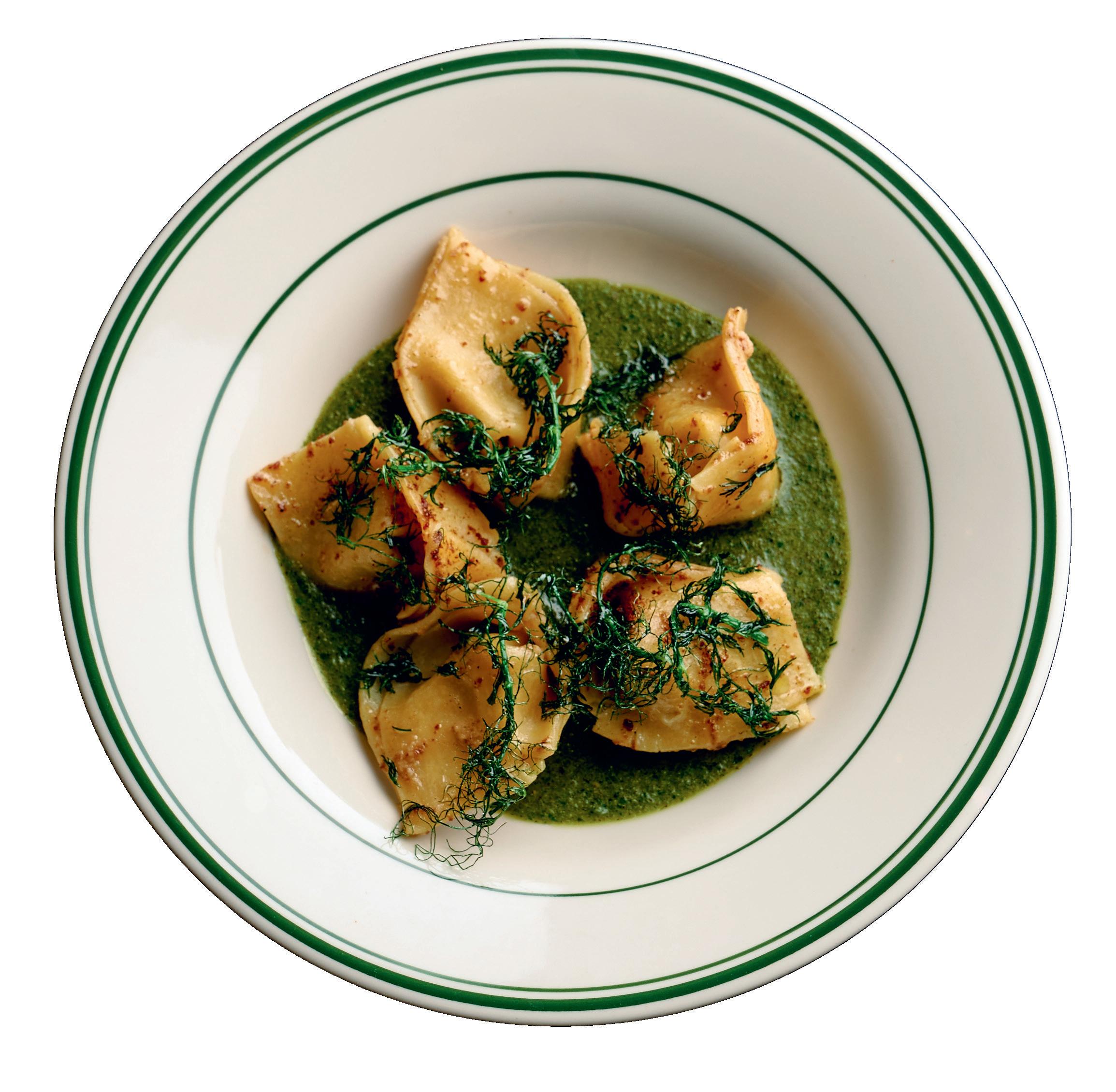
The first thing chef Viveik Vinoharan wants you to know about his new menu at gin distillery Dutch Rules Distilling Co. (dutchrulesdistilling.com.au) in Mitcham, an eastern suburb of Melbourne, is that it’s not Sri Lankan food. “It has Sri Lankanleaning inspirations and flavours but really it’s the techniques I’ve learnt in my career, reinterpreted through my cultural lens,” he says. “There’s a big emphasis on quality produce and supporting farmers and fishermen.”
A case in point is the silky tortellini with pumpkin and kasoori methi (dried fenugreek leaves). At its heart are Musquée de Provence pumpkins, grown
by Mark Foletta at Saffron Gramophone farm in the state’s north-east, which are so sweet you can see the sugar beading on their flesh when cut.
Vinoharan seasons them with cumin, lemongrass and smoked onion to form the pasta’s filling, before adding a sauce that’s essentially a beurre blanc lifted by coriander, curry leaf, mint and kasoori methi. “That’s what gives butter chicken its flavour,” he says. The result is an irresistible marriage of influences. “If you’re familiar with Sri Lankan cuisine and familiar with pasta, this demonstrates their flexibility. It’s fun showing people that.”
From fresh aperitifs to celebratory lunches, boutique maison Champagne Lallier crafts distinct cuvées for every occasion. Find the style that best suits your palate.
For effortless elegance
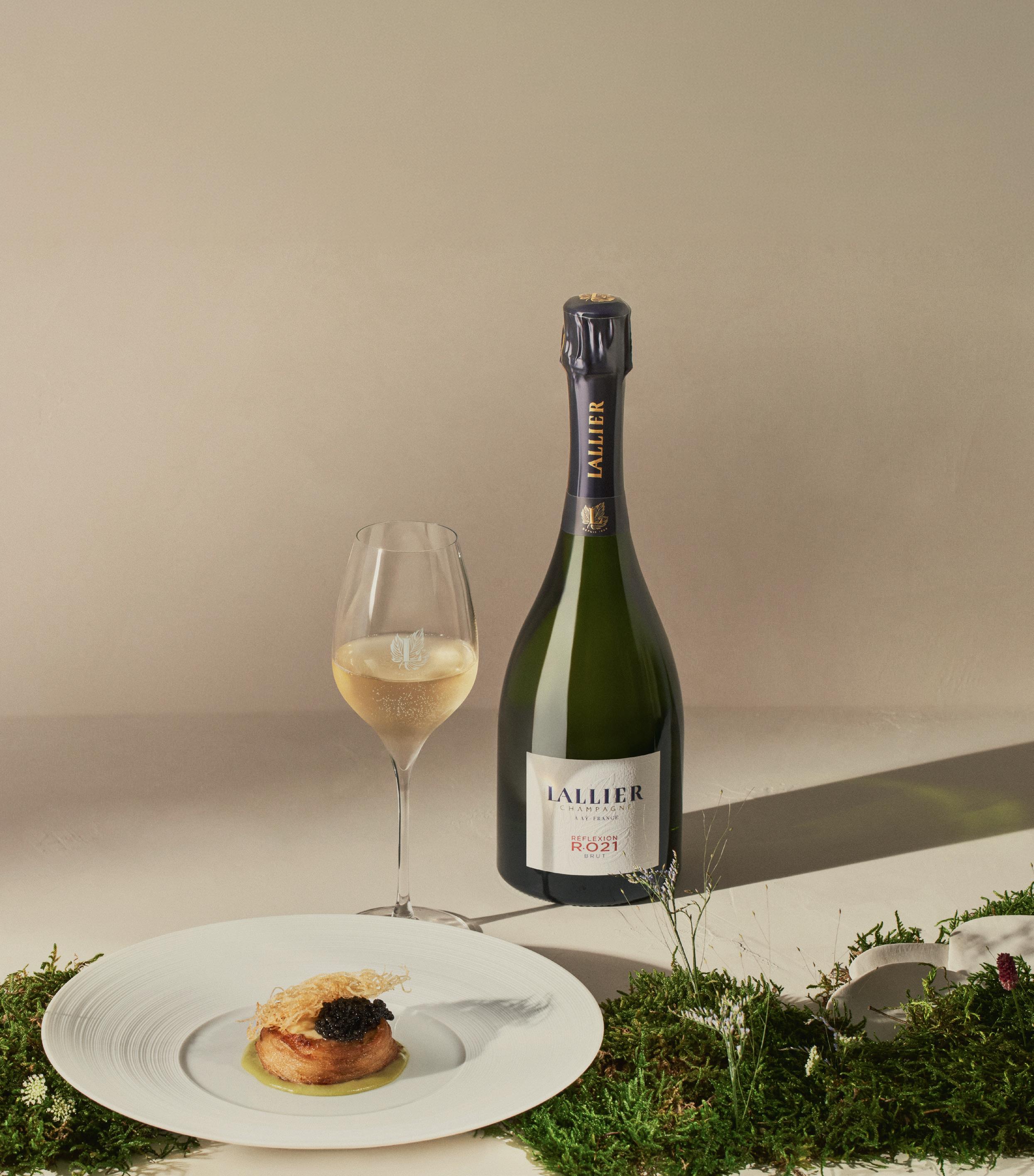
Lallier Réflexion R.021
Brut
Flavour profile: This is the bottle you’ll reach for when the occasion calls for understated sophistication. Vibrant citrus and white flowers lead, while hints of brioche and a delicate saline edge bring depth without weighing it down.
Food pairing: Pour with oysters, kingfish ceviche or caviar before dinner.
“Lallier stands out for its exceptional purity and character, achieving a harmony
of vibrant freshness and complex depth.”
– Claudia Lill, Qantas Wine Buying Manager
Lallier Réflexion R.021 Brut and Lallier Réflexion R.021 Brut Rosé are now served in Qantas First lounges. Try Lallier at home and earn or use Qantas Points when you purchase the range at qantas.com/wine
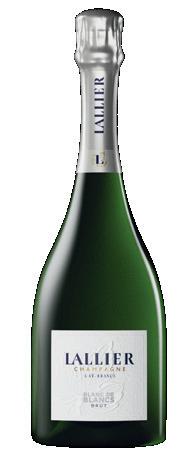
For sunset sipping
Flavour profile: Precise, refined and beautifully restrained, this chardonnaydriven cuvée balances citrus purity with floral lift, creamy hazelnut notes and a lingering mineral finish.
Food pairing: Equally at home with sashimi and seared scallops or simply served chilled as the sun sets and the conversation stretches into the evening.
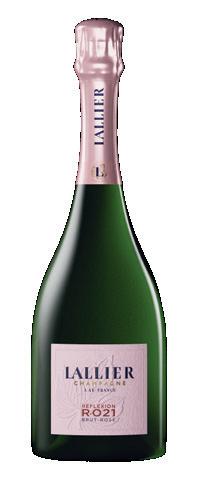
For long lunches
Lallier Réflexion R.021
Brut Rosé
Flavour profile: Energy and structure defines this pretty pink drop, with blood orange, red berries and a subtle savoury edge that keeps every sip fresh and intriguing.
Food pairing: Made for long lunches where platters of lobster, grilled salmon and mushroom dishes are passed around the table.

As told to Stephanie Wood
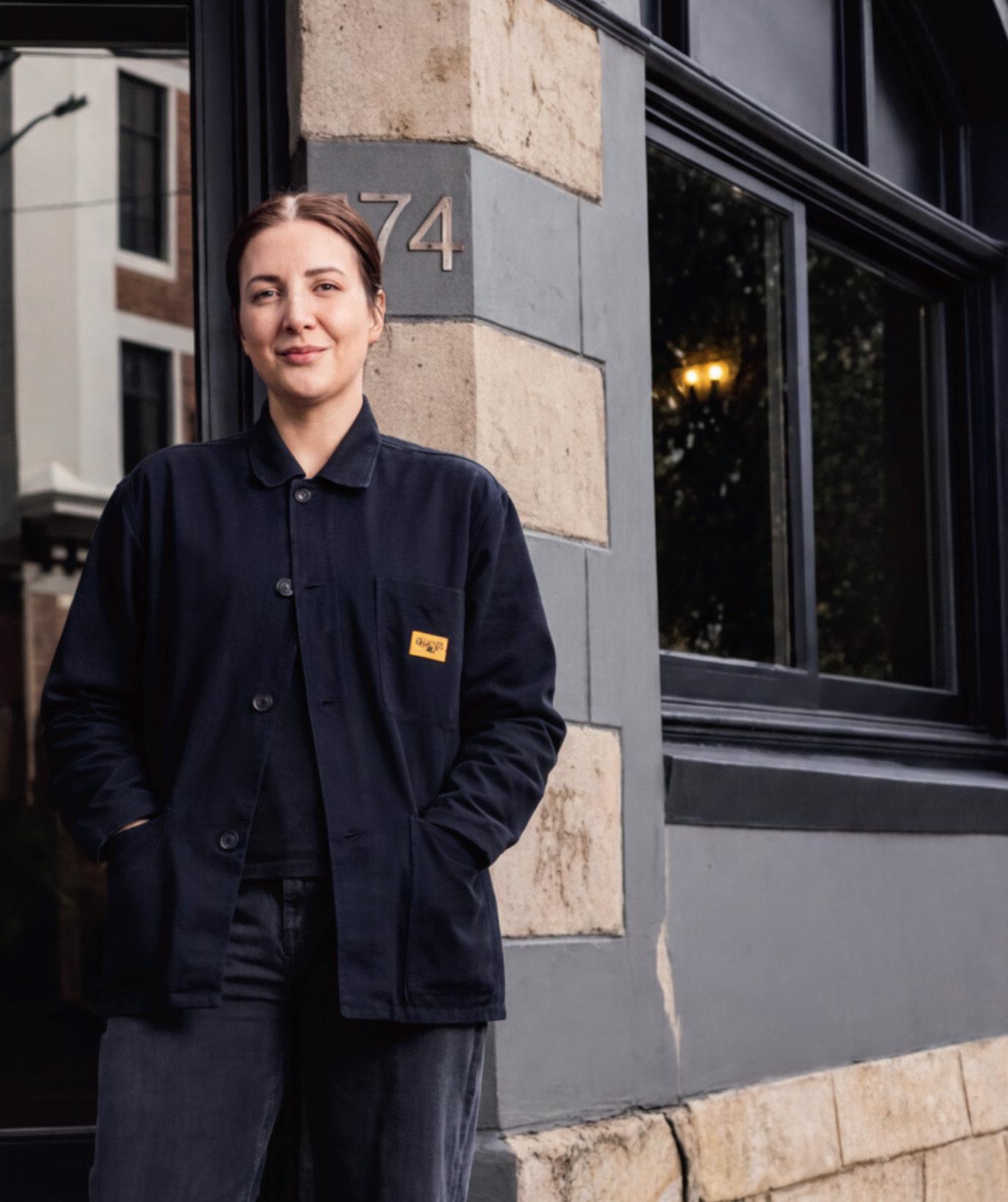
SALI SASI, CO-OWNER OF BAR COPAINS
When Sali Sasi, her chef husband, Nathan Sasi, and their business partner, Morgan McGlone, opened Bar Copains (barcopains.com) in Surry Hills in 2022, they had a simple goal. “We created a cool place that we wanted to hang out at,” says Sali, the branding and aesthetics brain of the trio. Next came Bessie’s restaurant and Alma’s bar (bessies restaurant.com) up the road then Vin-Cenzo’s (vin-cenzos.com) in Darlinghurst. Now, they’ve opened La Buvette (labuvettesydney.com) – “a wine bar in the classic French mode” – in nearby Potts Point. Here are some of Sali’s favourite neighbourhood haunts.
... for an iced latte and doughnut
“For a quick morning stop, I grab a stool outside this tiny cafe (primarycoffee. com.au), which makes some of the best coffee in Sydney. I order a maple, walnut and brown butter Shortstop doughnut and a three-quarter iced latte.”
ROOM 10
... for The Deb breakfast
“If I’m in the mood for a savoury breakfast, this is the only place to go (roomtenpottspoint.com. au). I ask for The Deb: toast with avocado, feta, mint, chilli and a soft-boiled egg. It’s named after one of the well-known customers.”
FRATELLI PARADISO for fried calamari
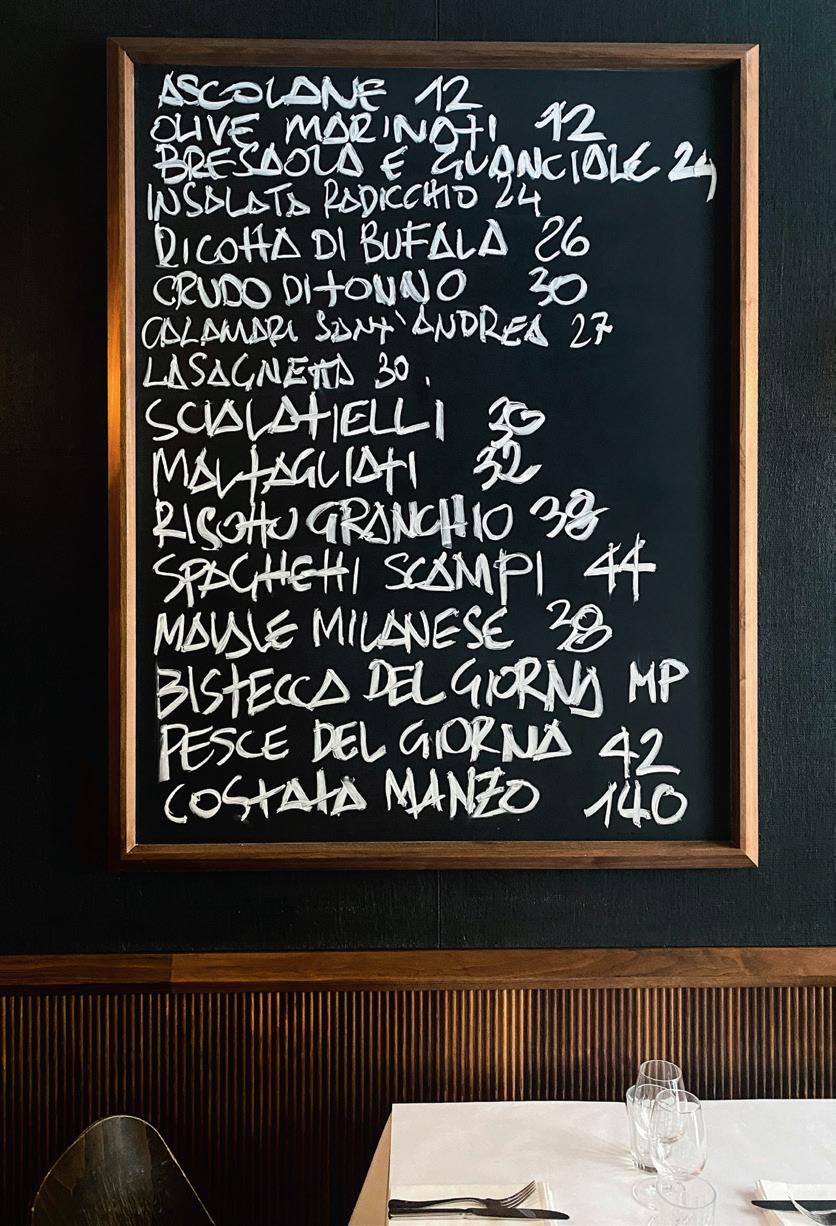
“There’s no better spot for lunch than Fratelli Paradiso (fratelliparadiso. com). It’s an institution. I like to people-watch while snacking on the amazing ascolana [crumbed olives] and the calamari Sant’ Andrea, which I always crave, even though I usually don’t eat seafood.”
for roast lamb shoulder
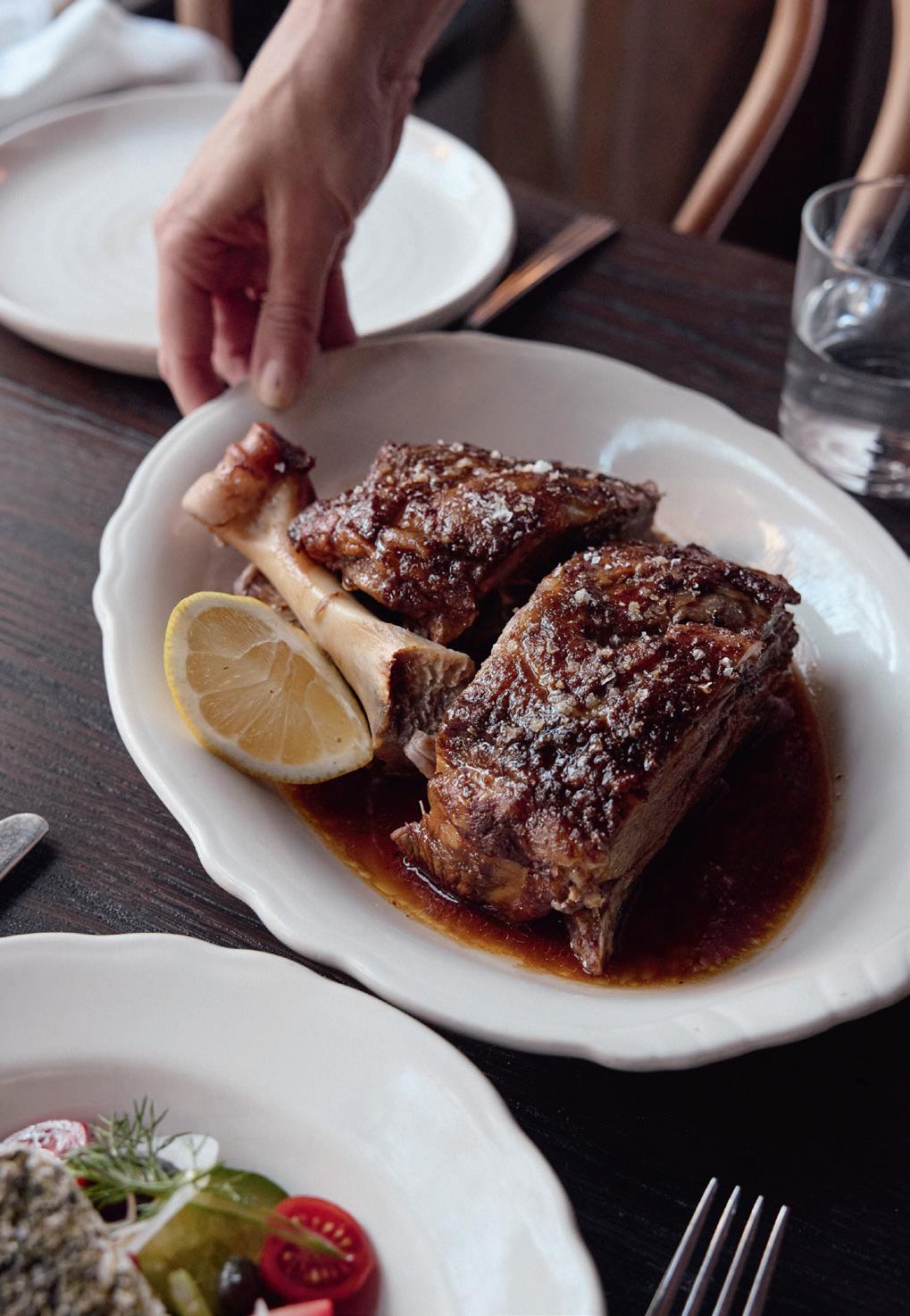
“This modern Greek restaurant (theapollo. com.au) is consistently good, dimly lit and buzzy. It’s long been a favourite date-night spot for my
husband and me. We’ve ordered the same meal for the past decade – pita bread and dip, saganaki cheese and the roast lamb shoulder with potatoes and village salad. It’s homely but special.”
for a glass of chablis
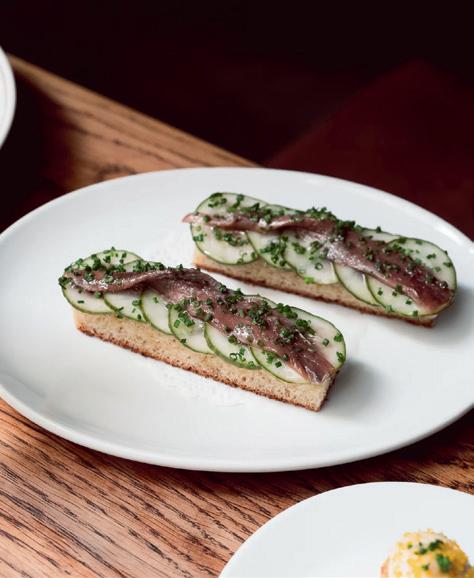
“After a busy day I pop in here (lovetillygroup.com) for a drink and a bite to eat – it’s like a daily pause. I’ll order a glass of chablis with the anchovy and dill pickle brioche snack. They always have great bottles open by the glass.”
... for cacio e pepe
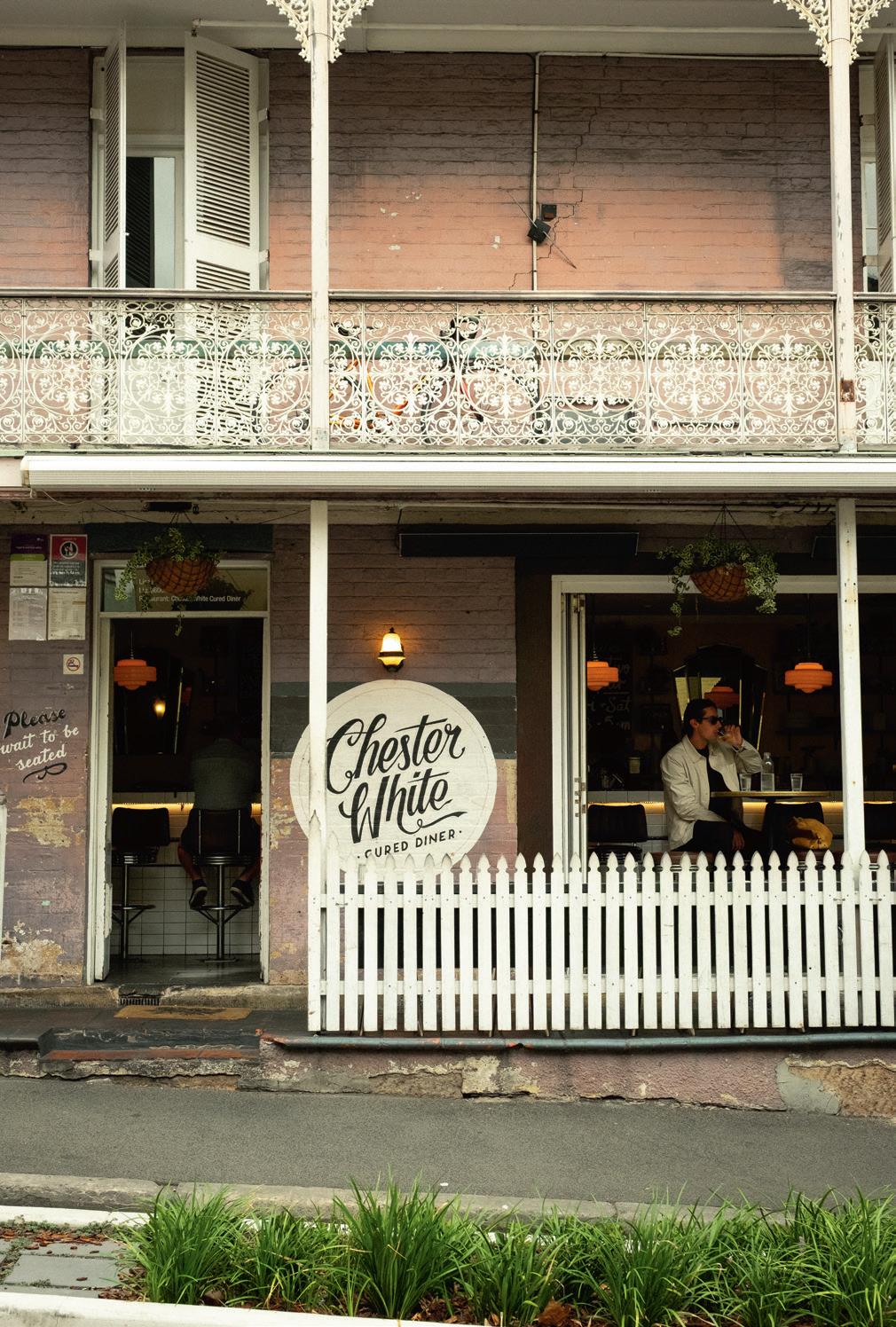
“If I’m in the mood for pasta, I head to this teeny restaurant (chesterwhite diner.com.au). It has a family/neighbourhood vibe – like you’re in an Italian backstreet. They do a wonderful carbonara but I can never say no to the cacio e pepe served tableside out of a giant cheese wheel.”
MACLEAY ON MANNING
...for a thoughtful gift
““I’ve been going here for more than 12 years and still love popping in (macleayonmanning.com). They have an incredible collection, ranging from Fornasetti dishes to unique artsy homewares.”
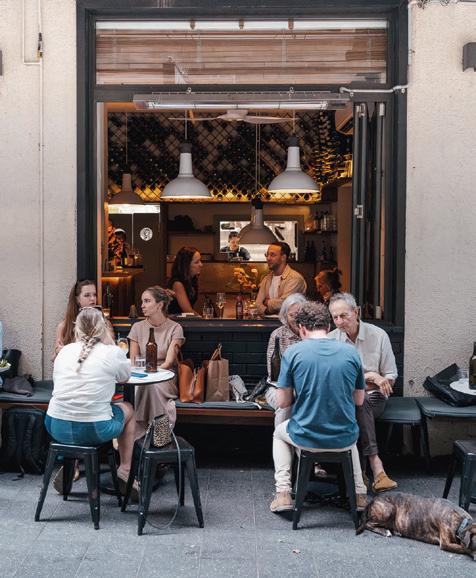
Within an hour’s drive from South Africa’s Cape Town you’ll find unique tasting spots for the region’s signature wines.
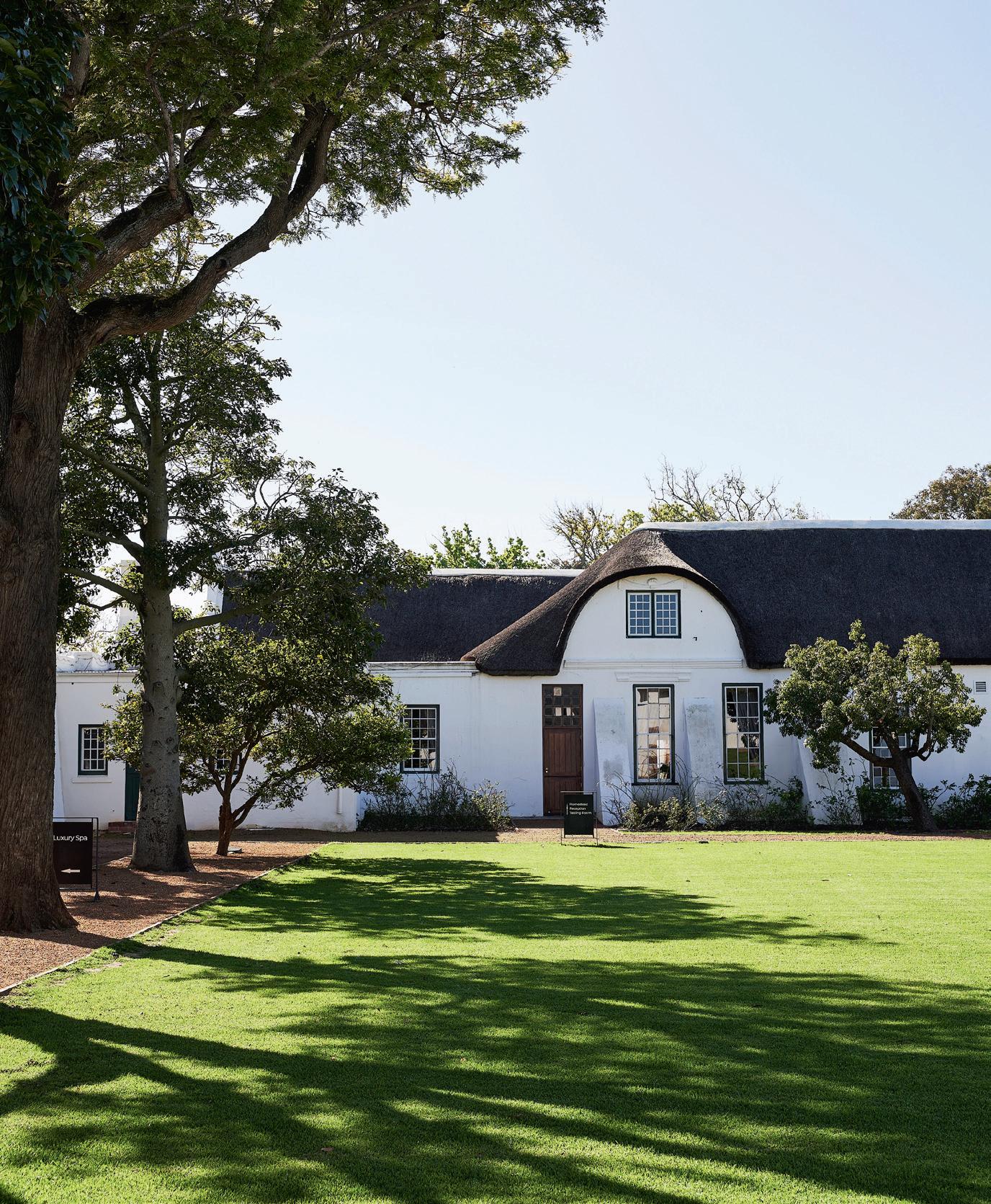
Vergenoegd Löw
Story by Catherine Marshall
Grapes aren’t the only ingredient in Cape wines. They’re rich with more than 365 years of winemaking history and valleys so stunning their spirit is captured like a genie in a bottle. Only an hour from Cape Town’s waterfront, this oenophile’s dream is cradled by mountain ranges, framed by the Atlantic Ocean and embroidered with vineyards bearing old favourites. Then there are the specialty varietals
every visitor should taste: pinotage from the pinot noir and cinsault vines first cross-pollinated here in 1925 and chenin blanc tempered by the sea breeze from False Bay, south-east of the city.
The ocean is so close you can almost hear the waves from Vergenoegd Löw (vergenoegd.co.za), a 330-year-old farm and wine estate half an hour’s drive from Cape Town. At Geuwels, the property’s 18th-century Cape Dutch
cellar-turned-restaurant, head of gastronomy Michelle Theron harnesses this proximity in her new Indigenous food and wine pairing menu. Here, salt-cured bokkoms (southern mullet) season the Kaapse bokkom slaai (Cape bokkom salad) while roosterkoek (coal-roasted bread) and umqokolo (Kei apples) complement the cured yellowtail. Such home-grown flavours sing when matched with the Cap Classique chenin blanc brut or sauvignon blanc grown on loam studded with marine fossils.
Take a closer look at the region’s history and visit some of its best vineyards on the six-kilometre Natural Wanders Constantia Wine Walk (naturalwanders.co.za) through Groot Constantia, Klein Constantia and Buitenverwachting – neighbouring estates on the eastern flanks of the Constantiaberg range. They were all once part of South Africa’s oldest wine farm, Constantia Estate, which was famed for its Vin de Constance. The muscat is still produced at Klein Constantia and Groot Constantia, where it’s known as Grand Constance. The historic drop kept Napoleon’s spirits up during his exile on Saint Helena Island.
Stark-Condé’s (stark-conde.co.za) organic wines are a product of their natural environment – the pristine
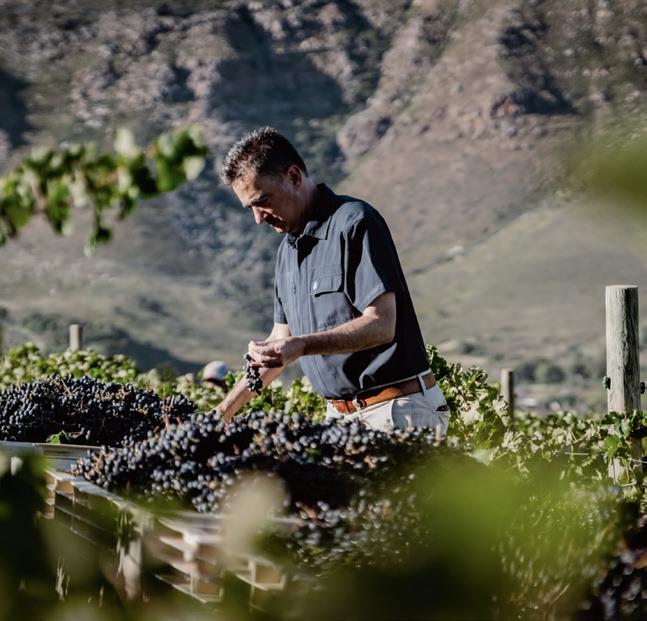
Stark-Condé
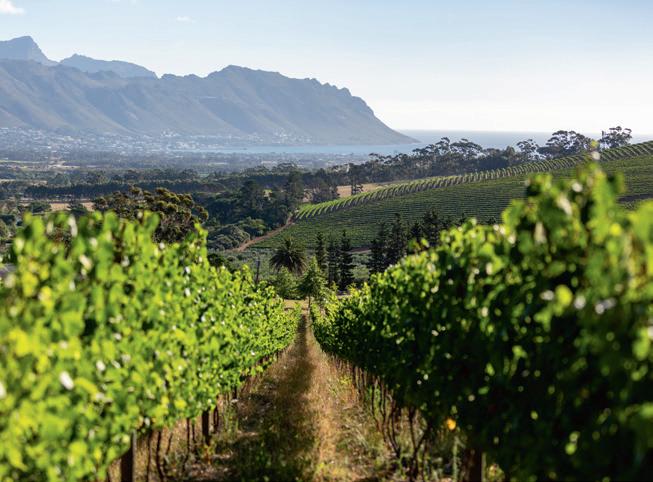
Jonkershoek Valley and neighbouring reserve, 15 minutes’ drive south-east of the historic town of Stellenbosch. The area is known for its UNESCO World Heritage-listed Cape Floral Region, one of the world’s great centres of plant biodiversity. For a taste of this ethereal coastal land, take a seat at the winery’s lakeside room and try the Three Pines syrah and the Round Mountain sauvignon blanc.
Toast township culture
“I wanted to democratise access to quality wine and bring premium wine culture directly to the streets of Khayelitsha,” says Lindile Ndzaba, founder of Khayelitsha’s Finest Wines. The négociant label is upending tourists’ perceptions about Cape Town’s largest township, while “acting as a direct economic bridge between legacy wine farms and the township”. It’s also diversifying palates with sultry red and vivacious white blends. “We love showing guests that premium wine pairs beautifully with local food and vibrant township life,” says Ndzaba, who hosts wine experience tours through the neighbourhood (abcd-concepts.co.za).
Taste the difference
Spekboom (pork bush), an indigenous succulent, gobbles up carbon at South Africa’s first B Corp-certified winery, Journey’s End (journeysend.co.za), 55 kilometres south-east of Cape Town. And while the winery’s 10,000-strong “carbon sponge” plantation naturally filters the air, visitors can drink in views of False Bay while sipping awardwinning wines such as Destination chardonnay, Ad Infinitum sauvignon blanc semillon and Cape Doctor –a Bordeaux-style blend named for the Cape’s purifying wind.
Don’t leave the region without…
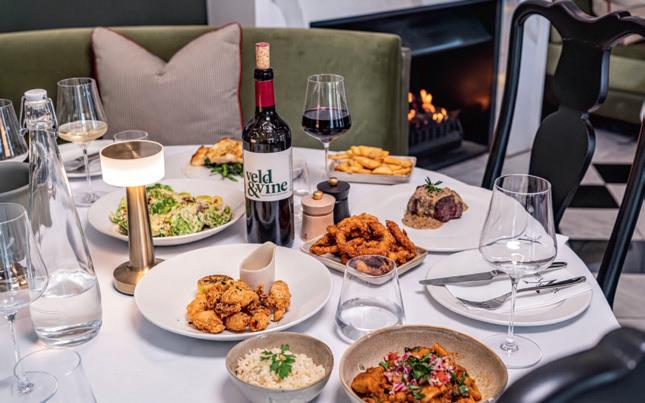
Lunching at The Claremont’s Veld & Vine Bistro (claremontboutique hotel.com). This grand hotel opened last year in a historic Cape Dutch Revival manor. The bistro’s dishes are spiced with beguiling backstories: cheese platters put together by a PhD candidate in the sensory characterisation of cheddar and a bao bun filled with line-caught fish sourced from an angler qualified in ichthyology and fisheries science. Wines are mostly from neighbouring Constantia, where the Cape’s first vines were planted centuries ago.
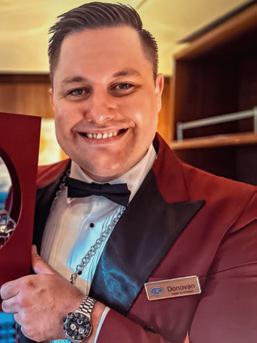
Donovan Edmund Du Toit, beverage manager for Regent’s Seven Seas Grandeur, shares his insights on the region.
The cool maritime influence around Cape Town is key to shaping the region’s wines. Ocean breezes and cold Atlantic currents moderate temperatures, slowing grape ripening and preserving acidity. This gives Cape sauvignon blancs their signature crispness while creating the aromatics that make Vin de Constance, a dessert wine, world-renowned.
For cellaring, I’d choose a classic Stellenbosch cabernet sauvignon or a Bordeaux-style blend that typically shows dark blackcurrant and plum, plus an earthy minerality. The area’s ancient decomposed granite soils add structure and a savoury complexity that gives the wines excellent ageing potential.
Pinotage is unique to the country. As a South African head sommelier, it’s always great to have a conversation with guests about its origins. Expect rich flavours of dark berries, plum and cherry, complemented by spices, mocha and subtle smokiness, refined tannins and freshness.
South African sauvignon blanc, chenin blanc and Bordeaux-style blends are exceptionally versatile. Their balance of freshness, fruit and structure allows them to pair seamlessly with seafood, poultry, red meats and rich sauces – ideal companions for diverse dining. Some of my favourite surprises are pairing a sauvignon blanc with spicy Asian cuisine; the crisp acidity beautifully balances heat. Another is matching pinotage with duck – its dark fruit and subtle spice complement the richness.
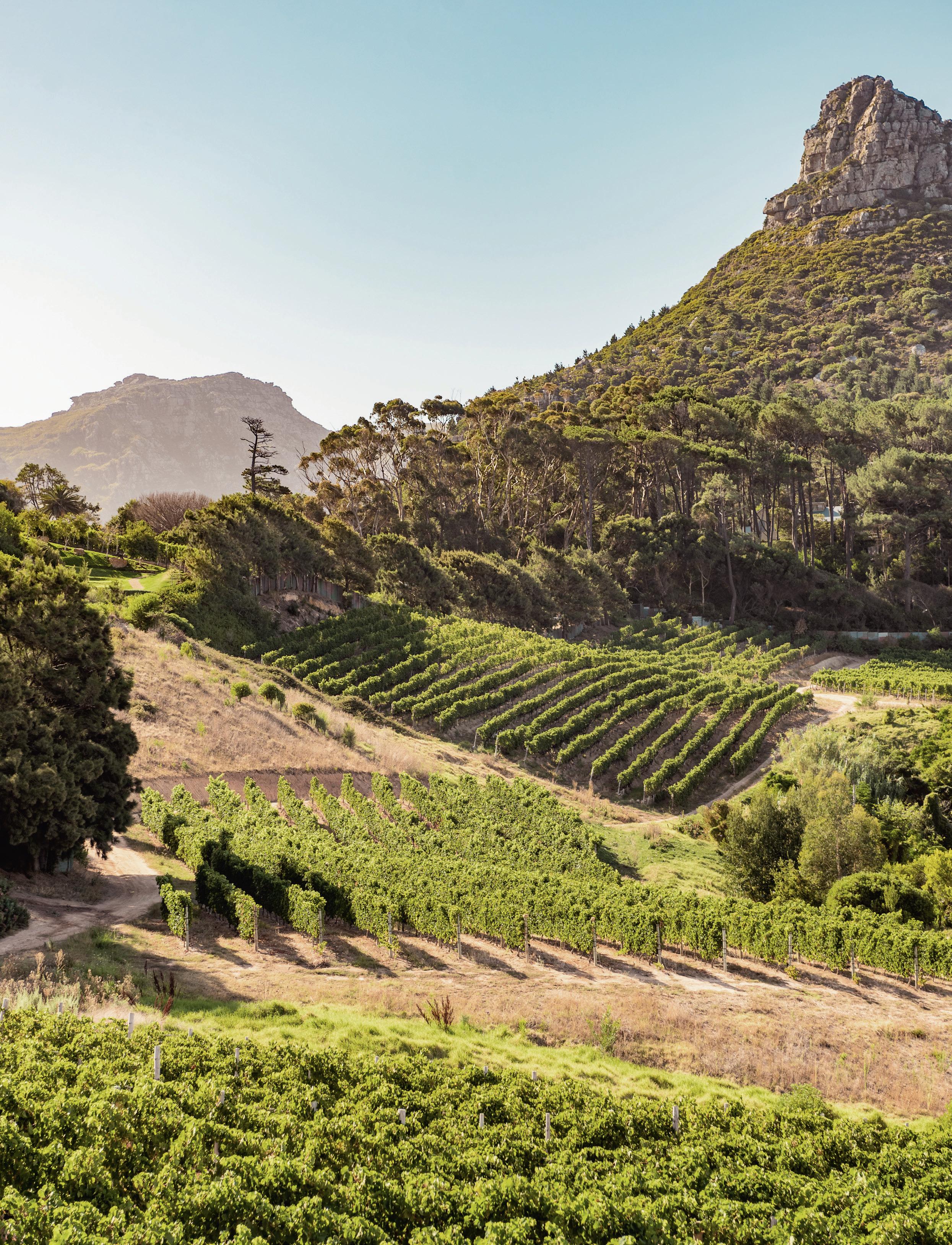
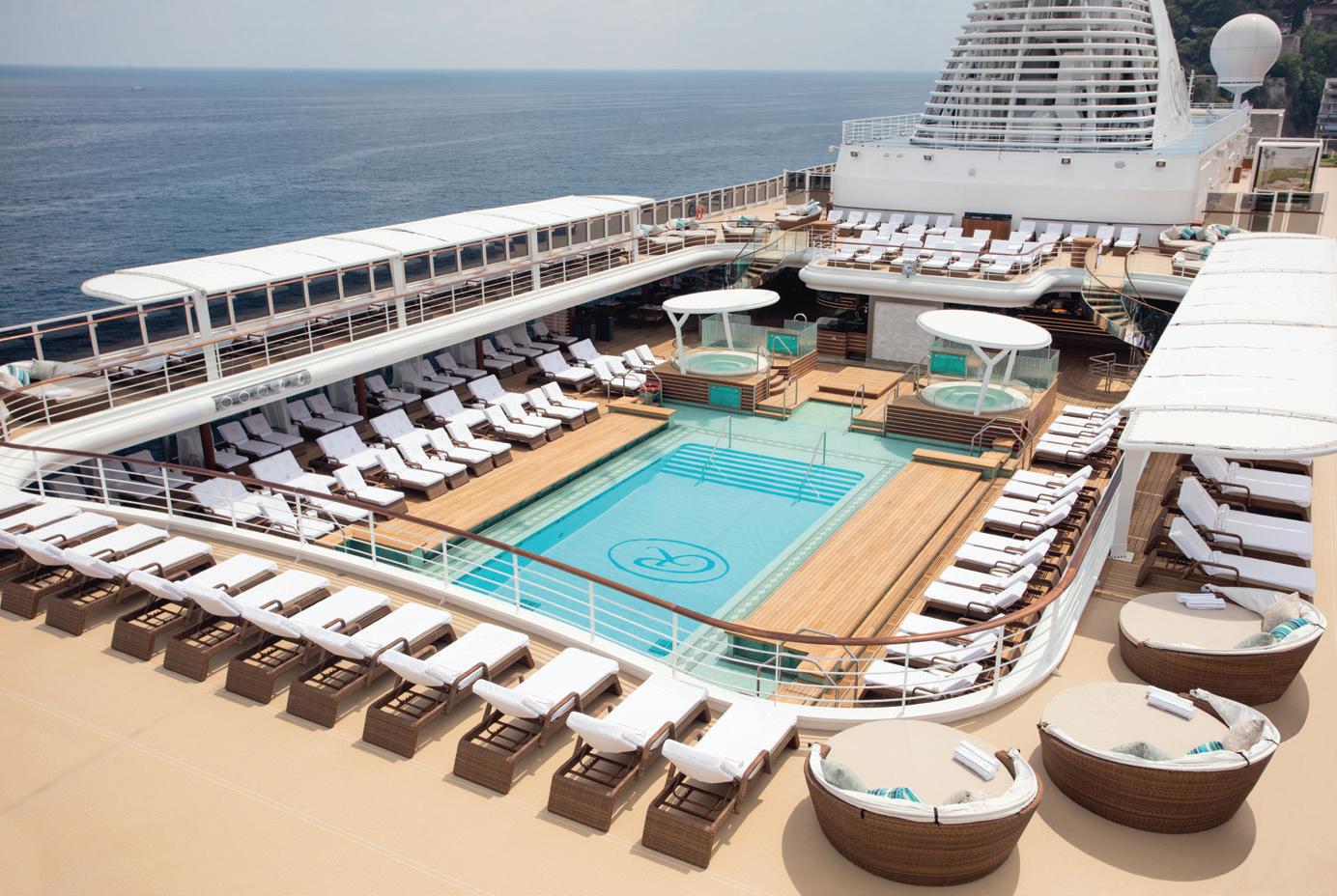
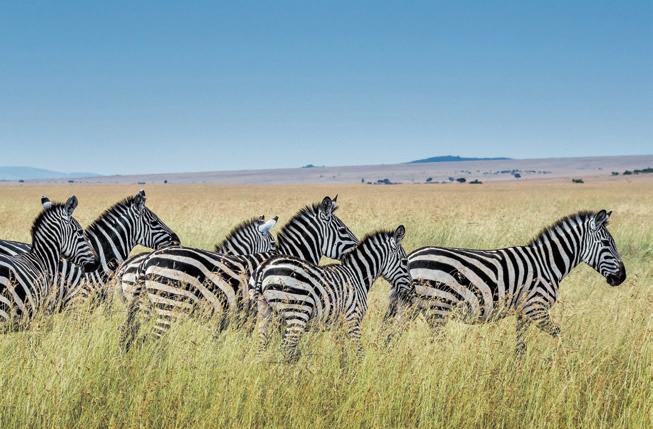
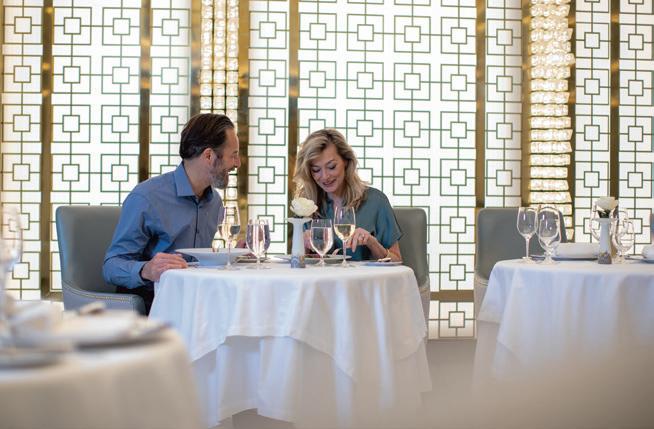
Explore South Africa’s acclaimed vineyards and dramatic landscapes on a Regent Seven Seas Cruises® voyage and experience the comforts of The World’s Most Luxurious Fleet®.
South Africa’s vibrant “Mother City”, Cape Town, has to be seen to be believed. It draws travellers in with its famed Table Mountain, golden bays and a coastline that has an extraordinary abundance of wildlife. The V&A Waterfront precinct thrums with activity and the poignant Robben Island reveals an important chapter in the nation’s history.
Just beyond the city lies another world: the Cape Winelands. Here, visitors find the historic wine estates of Stellenbosch and Franschhoek, verdant valleys, elegant towns and experiences that invite a slower pace.
Travel in all-inclusive luxury
New for the 2028-2029 season, the 14-night Currents of the Cape voyage with Regent Seven Seas Cruises® lets guests explore the region in effortless, all-inclusive ultra-luxury. This sailing departs Cape Town on 22 April 2029. With Included & Unlimited Shore

Excursions, travellers can enjoy the Cape Winelands’ celebrated viniculture.
The Stellenbosch and Wine Tasting excursion delves into the delights of this revered wine region, lauded for its bold reds, signature pinotage and exceptional chenin blanc. Guests will discover Stellenbosch, with its traditional Cape Dutch architecture and oak-lined avenues. Visiting this esteemed district gives guests the chance to taste the wines that have put South Africa firmly on the global wine map.
The Kirstenbosch Gardens & Constantia Wine excursion reveals an even greener side to the Cape. Starting at the renowned Kirstenbosch National Botanical Garden, nestled at the foot of Table Mountain, visitors walk along pathways of fragrant native flora. The journey continues to Constantia, the birthplace of South African wine and one of the oldest wine routes in the Southern Hemisphere. Here, historic estates produce refined sauvignon blanc, sophisticated semillon and expressive red blends shaped by the valley’s cooler climate. Sip vintages in atmospheric tasting rooms before tracing the coastal road to the white sands and scenic splendour of Hout Bay and Camps Bay.
To order your complimentary brochure, scan the QR code, call (02) 9010 5150, visit RSSC.COM/QANTAS or contact your travel advisor.
From vineyards to voyage Regent’s extensive on-board cellar curates a seamless experience over land and sea, from famed South African varietals to distinguished labels from around the world. This voyage combines immersive onshore exploration with countless indulgences, including gourmet dining, refined lounges and shimmering pools. Sailing round-trip from Cape Town aboard Seven Seas Explorer ®, the itinerary combines a stop in Durban with the tropical beauty of Madagascar, the French island of Mayotte and Mozambique’s capital, Maputo, before concluding with a night’s stay in Cape Town.
As the sun sets on the Indian Ocean and Mozambique Channel, guests savour expertly paired wines in the warm glow of the on-board restaurants. Crisp sauvignon blanc complements fresh seafood, while robust reds pair beautifully with prime cuts of meat. Expert sommeliers elevate every meal, tailoring their recommendations to the guests’ palates and preferences.
From vineyard excursions and relaxed evenings afloat to luxurious suites, Regent is a natural companion for Cape Town’s boundless beauty and generosity of spirit – there’s no finer way to fill your glass.
Story by Peter Bourne
Tasmanian sparkling is top of the pops. What else is worth a try? Pinot noir plays a role in Tasmanian bubbles and also shines as a still wine alongside aromatic whites such as riesling, pinot gris and sauvignon blanc. But it’s chardonnay that Tassie winegrowers champion, not just as a sparkling base but as a fine-boned, elegant table wine. Fine-boned and elegant? Tasmania is surrounded by chilly waters and cops frigid gusts off Antarctica. Although it’s cool, it’s surprisingly dry and a long growing season leads to natural acidity, bringing freshness and energy to chardonnay. The flavours are of white stonefruit, grapefruit and citrus fruits: supple, discreet and savoury, with great ageing potential. Which region makes the best chardonnay? The wise local winegrowers have kept Tasmania as a single region to maximise the “cool, clean and green” mantra. Yet distinct differences exist between the coveted vineyards clustered around Hobart in the Huon Valley, Derwent River, Bruny Island and the Coal River Valley. East Coast sites near Bicheno sit in a rain shadow with a warmer micro-climate. Close to Bass Strait, the Pipers River and Tamar Valley areas have a higher rainfall with subsequently gentle flavours. Seems diverse for such a small island. With about 2000 hectares under vine, Tasmania accounts for a tad over one per cent of Australia’s vineyards. Fortunately, it’s all premium stuff, yielding the country’s highest average grape prices. Who are the names to know? Tolpuddle is a star along with Pooley, Stefano Lubiana and Bream Creek. In the north, there’s Delamere, Josef Chromy, Holyman and Tamar Ridge. Top East Coast drops include Devil’s Corner, Gala Estate and Spring Vale. And food matches? Any of Tassie’s great seafood, such as oysters, crayfish, scallops or abalone. It also pairs brilliantly with chicken in all its guises and soft cheeses such as Saint or Otto from the Bruny Island Cheese Co.
Look beyond the fizz and you’ll find
chardonnay on the Apple Isle.
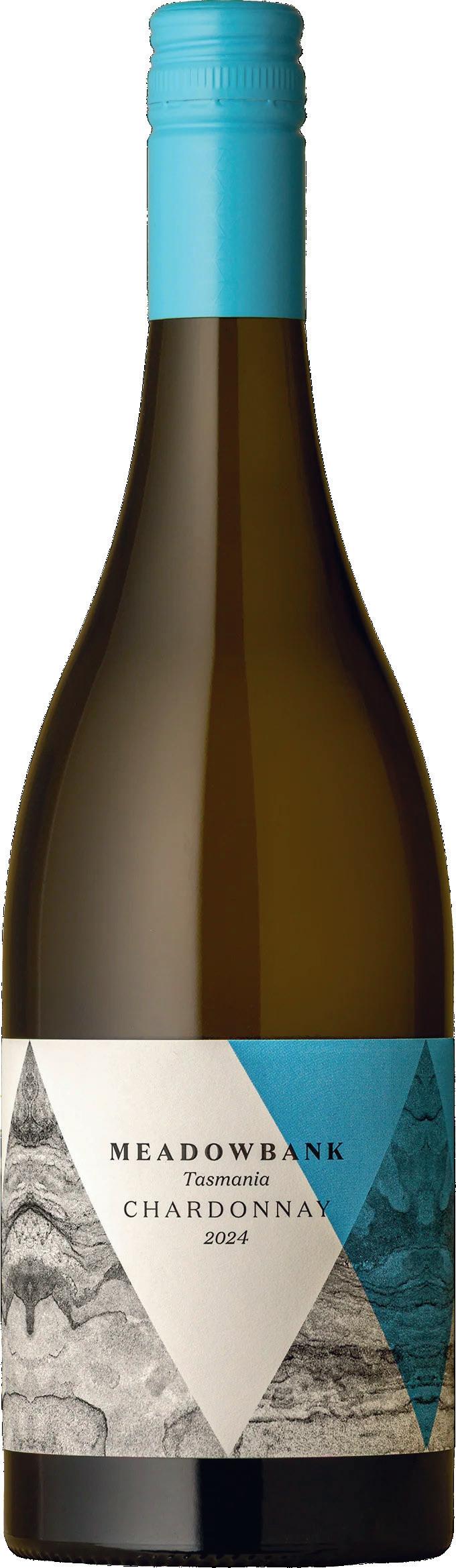
Claudio Radenti is a gentle man and his wines echo his calmness. Expect a savoury bouquet of oyster shell, pink grapefruit and almond biscotti. Refined and graceful on the palate, the wine has an acid backbone that carries the finish.
2024 / Tasmania / $45
This pioneering vineyard was planted in 1976 by the Ellis family with Peter Dredge at the winemaking helm. The texturally rich chardonnay features white nectarine, flint and candied citrus peel aromas and finishes with a ping of refreshing acidity.
2024 / Tasmania / $60
From the Fogarty Hall Fine Wine Estates group, this chardonnay is crafted by gifted winemaker Liam McElhinney. It has an intense lemon curd, custard apple and almond meal bouquet followed by mouthfilling flavours that echo the nose, with a long, satisfying aftertaste.
2024 / Tasmania / $65


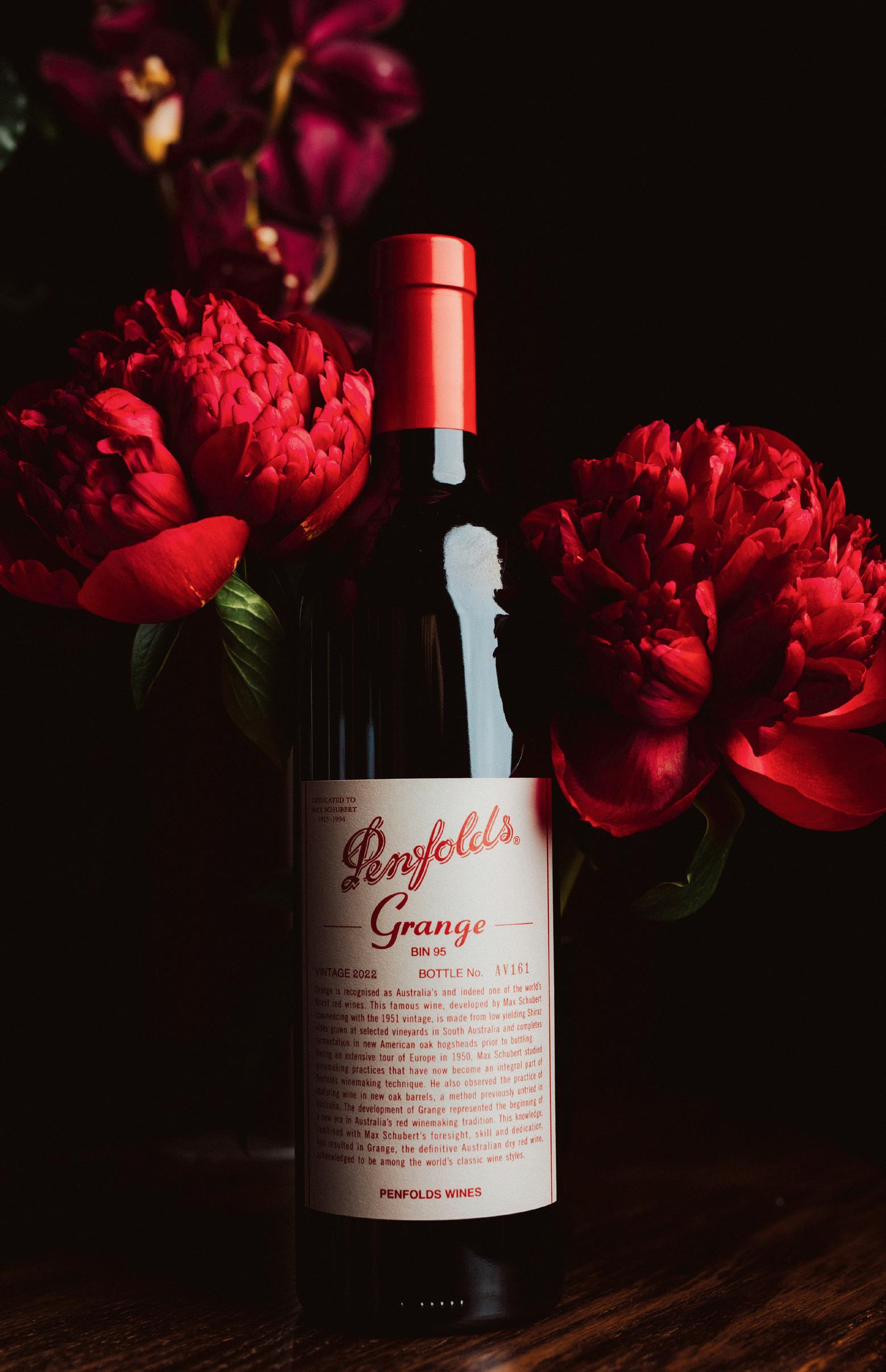
It may have started life as a renegade experiment but Penfolds Grange has gone on to earn its place as the best-known and most-loved wine in Australia.
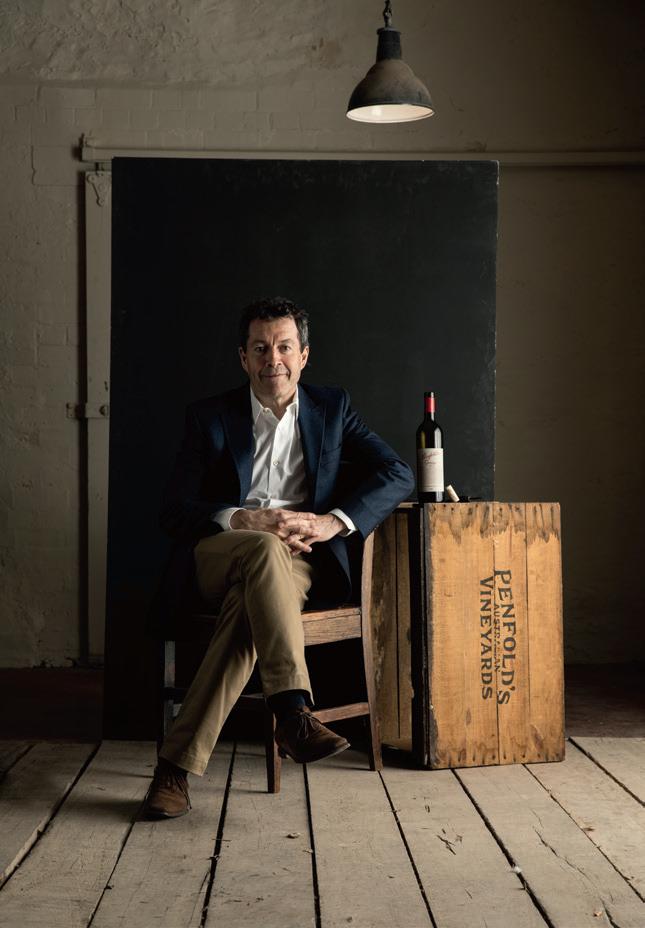
You could mark the 75th anniversary of Grange in years but Penfolds chief winemaker Peter Gago (below) prefers to mark it in stories. “When people tell us about their bottles, they’re talking about family heirlooms and it’s not a bottle of wine, it’s a story,” he says. “That’s what I love about wine. It’s a great leveller.”
Since joining Penfolds in 1989, Gago has heard all the stories. “Many people buy Grange from their child’s birth year to pour on their 21st,” he says. “That’s why we don’t talk about ‘value’. We talk about ‘drinking investment’ and pouring that wine for occasions like your silver wedding anniversary. That’s what this is about.”
The Grange story began in 1951 when it was crafted by Penfolds’ first chief winemaker, Max Schubert. “He went to Jerez in Spain looking at fortified production,” says Gago. “On the way back he passed through Bordeaux, tasted some wines, looked at the use of small oak and not long after, Grange was created.”
And this is where the Grange origin story takes an interesting turn. “ The then family-owned company didn’t understand the style but I think he probably showed it to people a bit too young. It was very different to the wines of the time – it was stored in new oak and it was a little more full-bodied than people were used to.”
Schubert was told to stop production immediately but instead he took a risk, continuing to make three small-batch vintages – the ’57, ’58 and ’59 – in the cellars of the Magill Estate Winery in South Australia. It was only when the 1955 Grange was submitted to the Sydney Wine Show – “and blitzed the field” – that Schubert revealed he’d secretly been making underground Grange.
While the wine has been remarkably popular since, Gago and his team make
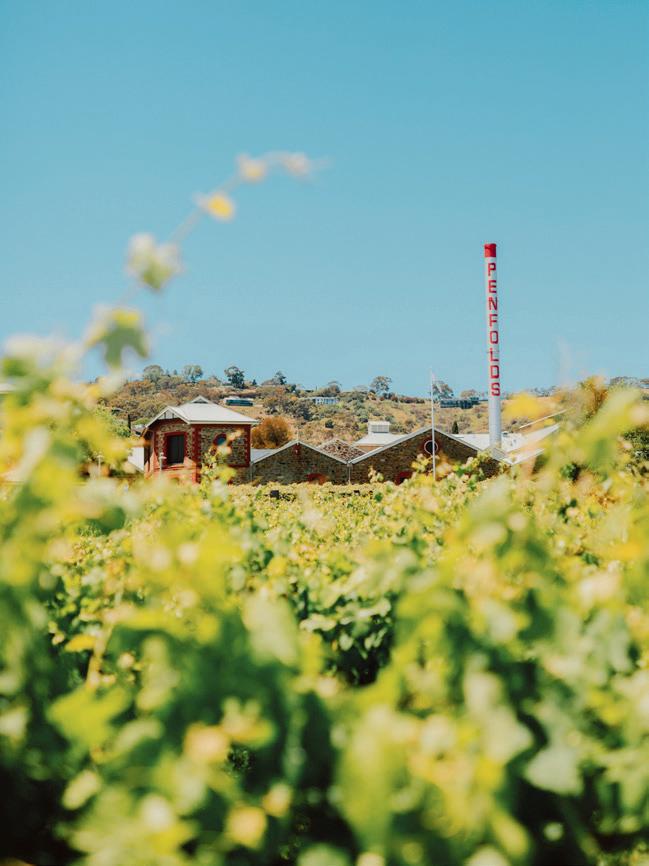
small adjustments to each vintage to ensure Grange has a contemporary edge. “It has always had the poise, the sheen, the layering and the complexities but it’s very much still a wine of today,” he says. “ I often joke it’s the one percenters, all the refinements and tweaks – most of which actually occur in vineyards nowadays – that make the difference.” While Grange requires years in the bottle to reach full maturity, Gago is already claiming big things for the 2022 vintage, released this month. “When people ask how good a release is, I’ll usually say I don’t know and I actually don’t,” he says. “With Grange you’ve got to look back 30 years before you know if your prediction is right but with this one, all the signs are good. It’s as good a Grange as there’s ever been.”
After a shaky start, Grange has gone on to become one of Australia’s best-known – and coveted – red wines.
1844
Dr Christopher and Mary Penfold plant a fledgling vineyard at Magill Estate in South Australia.
1948
Max Schubert is appointed chief winemaker.
1951
Schubert crafts the first experimental vintage of Grange Hermitage, named after the Penfold family home, Grange Cottage.
1957
Schubert sends bottles of the 1951 Grange to Penfolds management and is told to stop the production immediately.
1957-1959
Schubert takes his experiment underground and secretly continues production.
1960
Grange production officially resumes.
1962
The 1955 Grange wins the trophy for best claret at the Sydney Royal Wine Show.
Penfolds Grange is heritage listed by the South Australian National Trust.
2026
Penfolds celebrates 75 years of Grange and the 2022 vintage is released.
When Peter Gago and his team are crafting Grange, they do a blind tasting of all the parcels of grapes that could be included in the blend. “We don’t care overly about volume and variety. What comes out after the blind tasting is what goes into the blend – that’s why the percentage of cabernet varies from year to year,” says Gago. “In 2022, all the stars aligned. This Grange could be called a Barossa Valley shiraz because 87 per cent comes from the Barossa. It’s right up there with the A-team of great Granges ever made.”

The Penfolds Collection 2026, led by the 2022 Grange, is available at penfolds.com . The Collection is also available via Qantas Wine. Visit qantas.com/wine to explore the range and earn or use Qantas Points.

Story by Julie Lee
There’s a fine-dining revolution going on in Brisbane, led by chefs trained at Michelin-starred restaurants and plucky upstarts making a splash. From a Thai cafe spinning records and slinging pandan lattes to a mountain distillery that offers deconstructed Negroni tastings, these are the best new places to eat and drink.
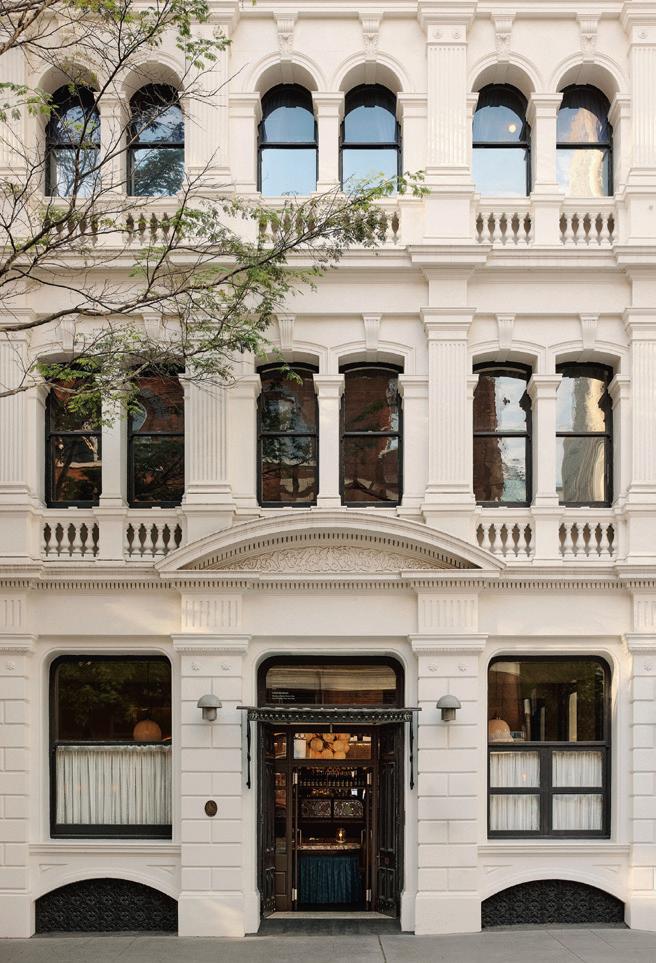
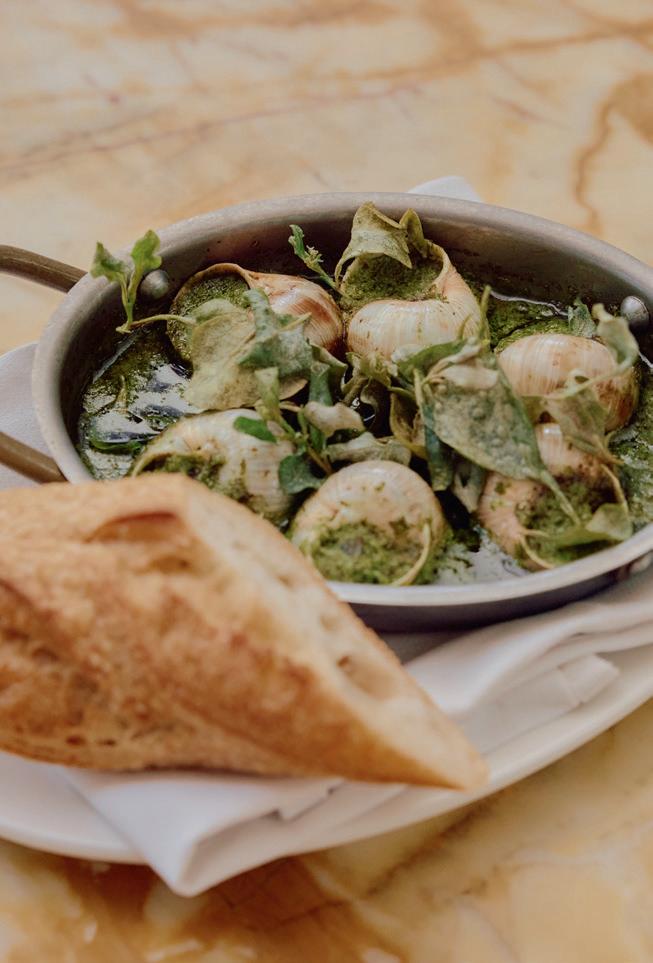
Imagine a traditional Parisian bistro with tightly packed tables, constant bustle and the irresistible aromas of sizzling butter and garlic, and you’ve arrived at The French Exit (anyday.com.au). The menu here doesn’t stray far from the Gallic theme, with classic dishes such as tartare de bœuf – complete with a raw egg yolk that’s mixed in at the table – served alongside a succulent canard à l’orange and garlicky, herby escargot (right). After dinner, head upstairs to late-night cocktail bar Le Royale for a live swing band and one final tipple.
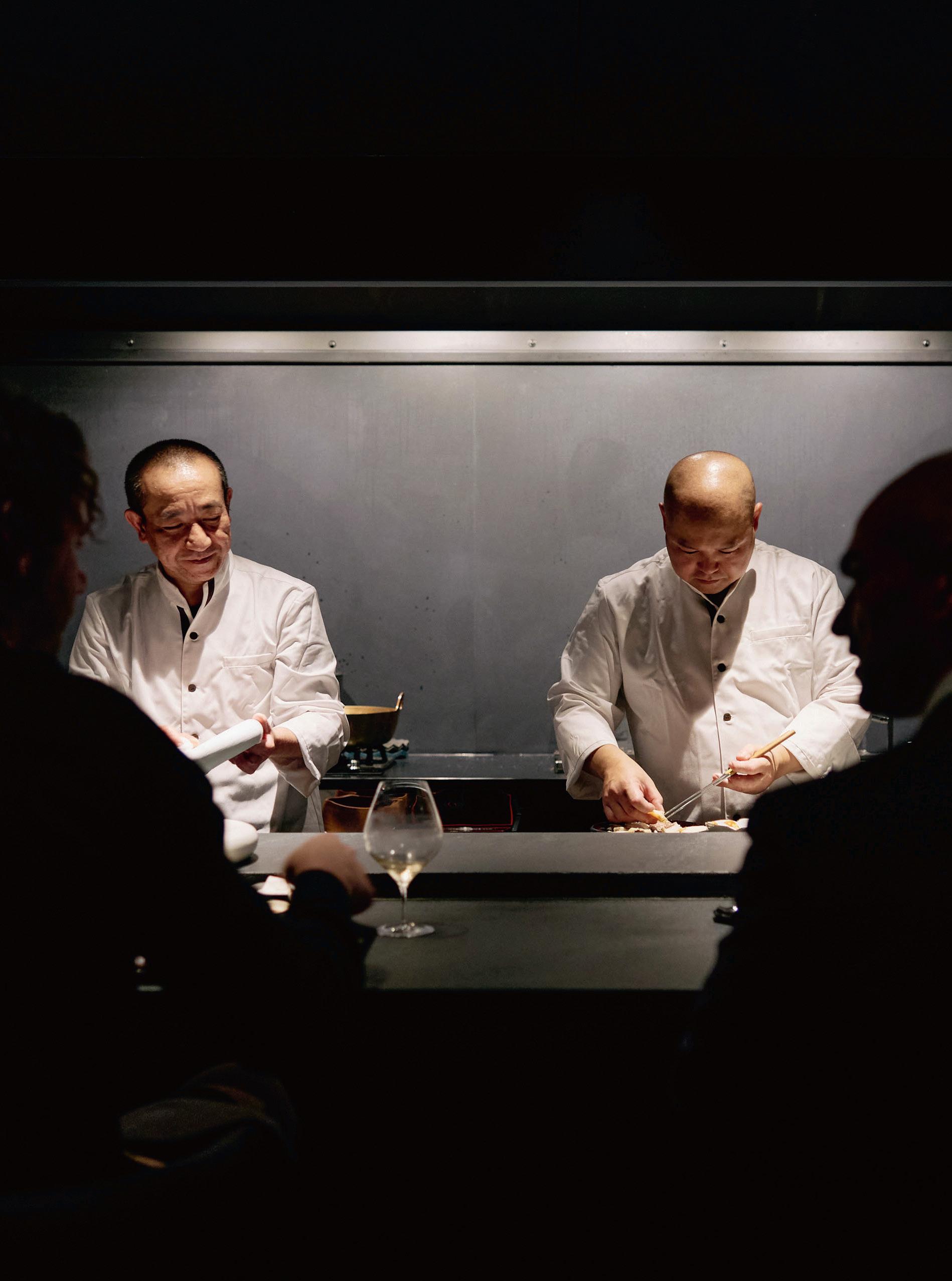
Just like the Japanese philosophy ichigo-ichie (every encounter is unrepeatable), no two visits to +81 Sushi Kappo (plus81.com.au) are ever the same. When you first dine at this 12-seat West End restaurant, head chef Ikuo Kobayashi, who trained at Michelin-starred restaurants, and sous chef Toshio Haniu (below left, with Kobayashi) prepare the seafoodfocused menu omakase-style. You might get to taste delicate Tasmanian
southern bluefin tuna on top of the signature bamboo charcoal sushi rice, or yakimono (marbled Wagyu eye fillet gently seared and served with the house ginger shoyu sauce). As you eat, the team takes note of what you enjoy so that a new experience can be tailored to your tastes when you next visit. Book the quieter second seating in the evening and you’ll have more time to watch the masters practise their art.
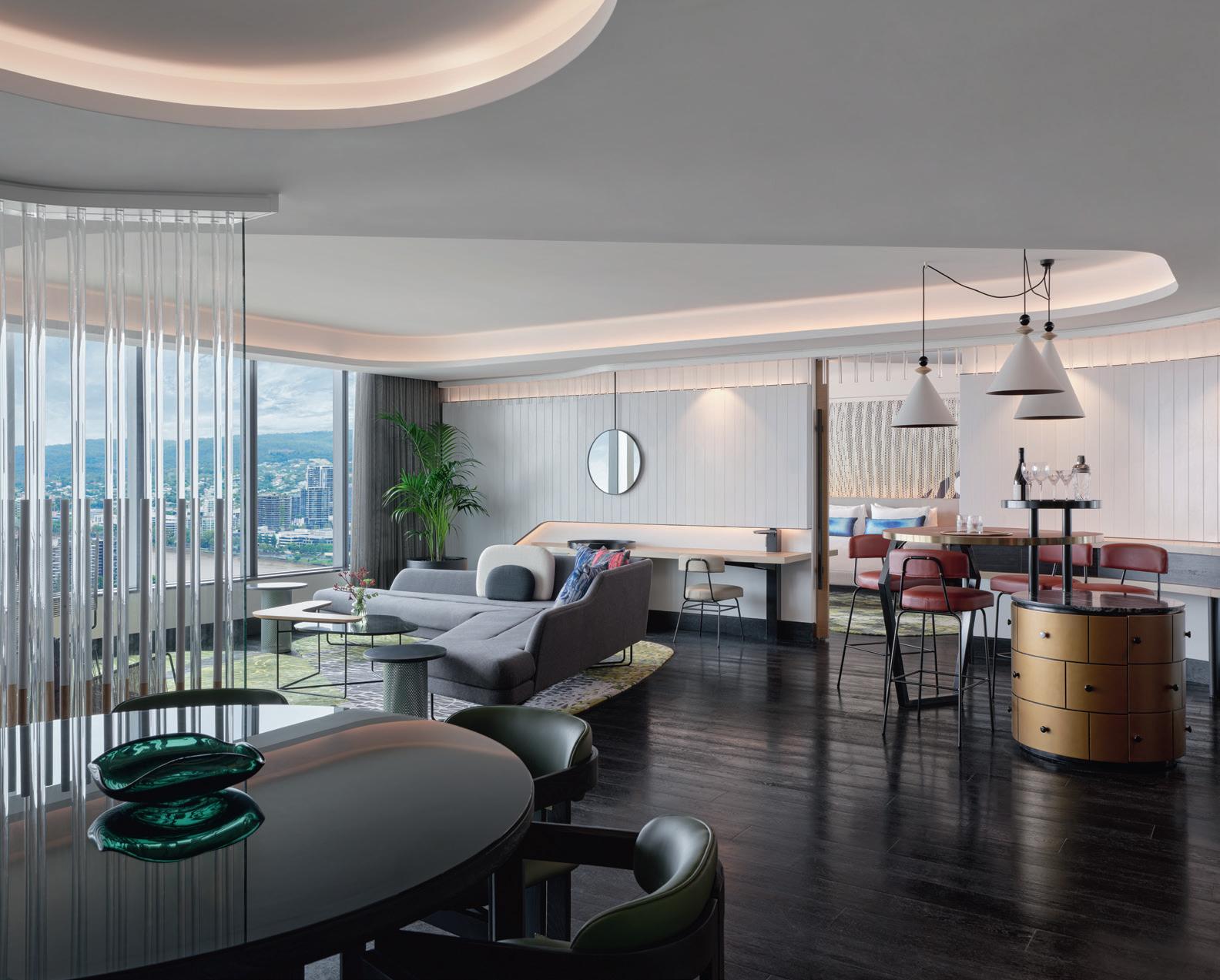
While a Petal Spritz cocktail and river views might tempt you to stay put, the W Brisbane (qantas.com/hotels/ wbrisbane) is actually the ideal base for a weekend of eating and drinking around the city. The 312-room hotel looks across to South Bank and is an easy 15-minute walk from the Fish Lane dining precinct. There are 32 newly refurbished suites that range in size from 70-square-metre Marvelous Suites to the 200-squaremetre Extreme WOW Suite. All rooms have access to the 24/7 Whatever/ Whenever concierge service and priority use of the hotel’s Polestar 3 cars (a driver will take you on short trips). Suites have huge windows and minibars stocked with exclusive drinks and treats. Drop by the onsite Away Spa for a treatment or unwind at the complimentary sauna, steam room and mineral vitality pools.
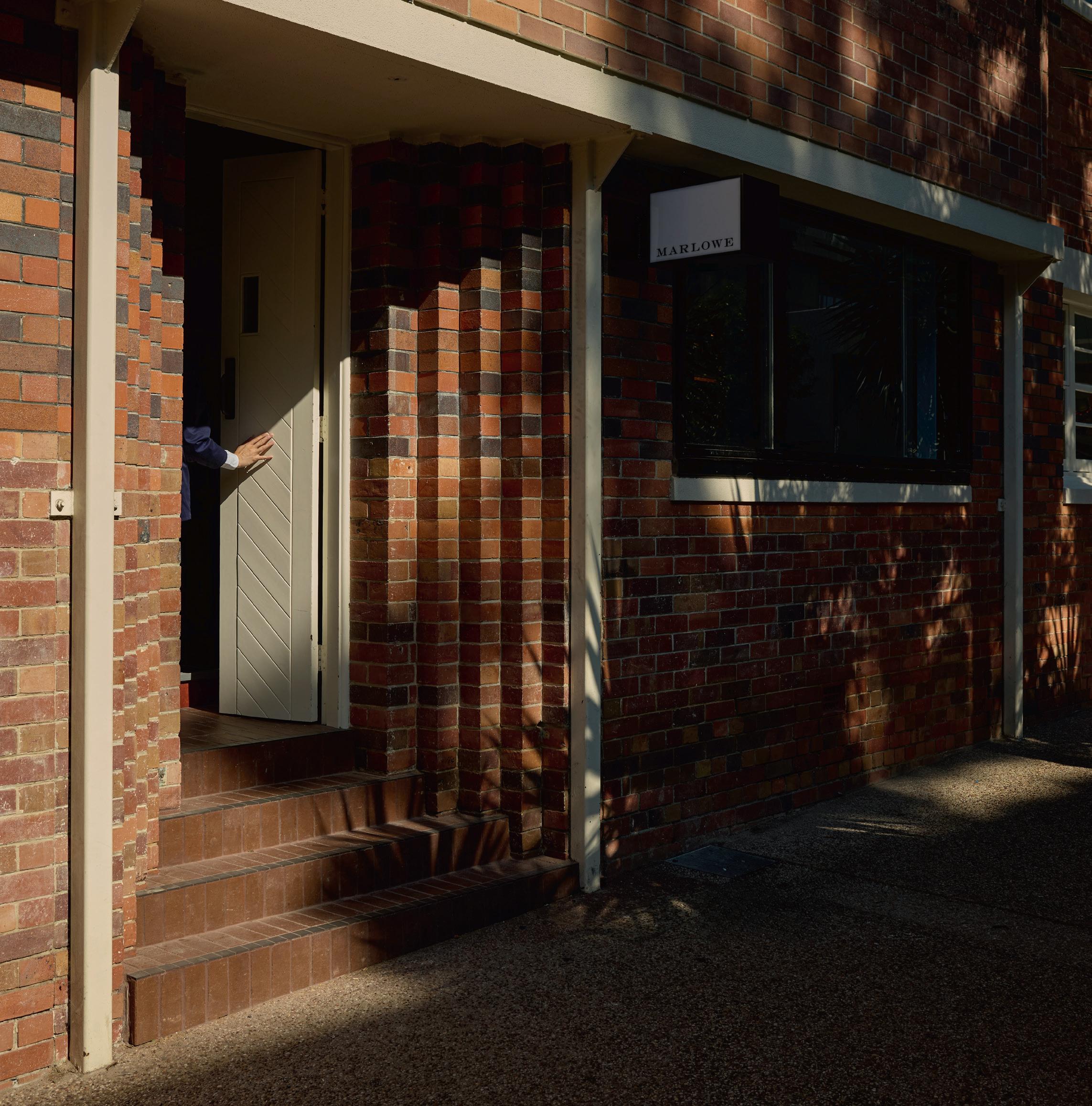
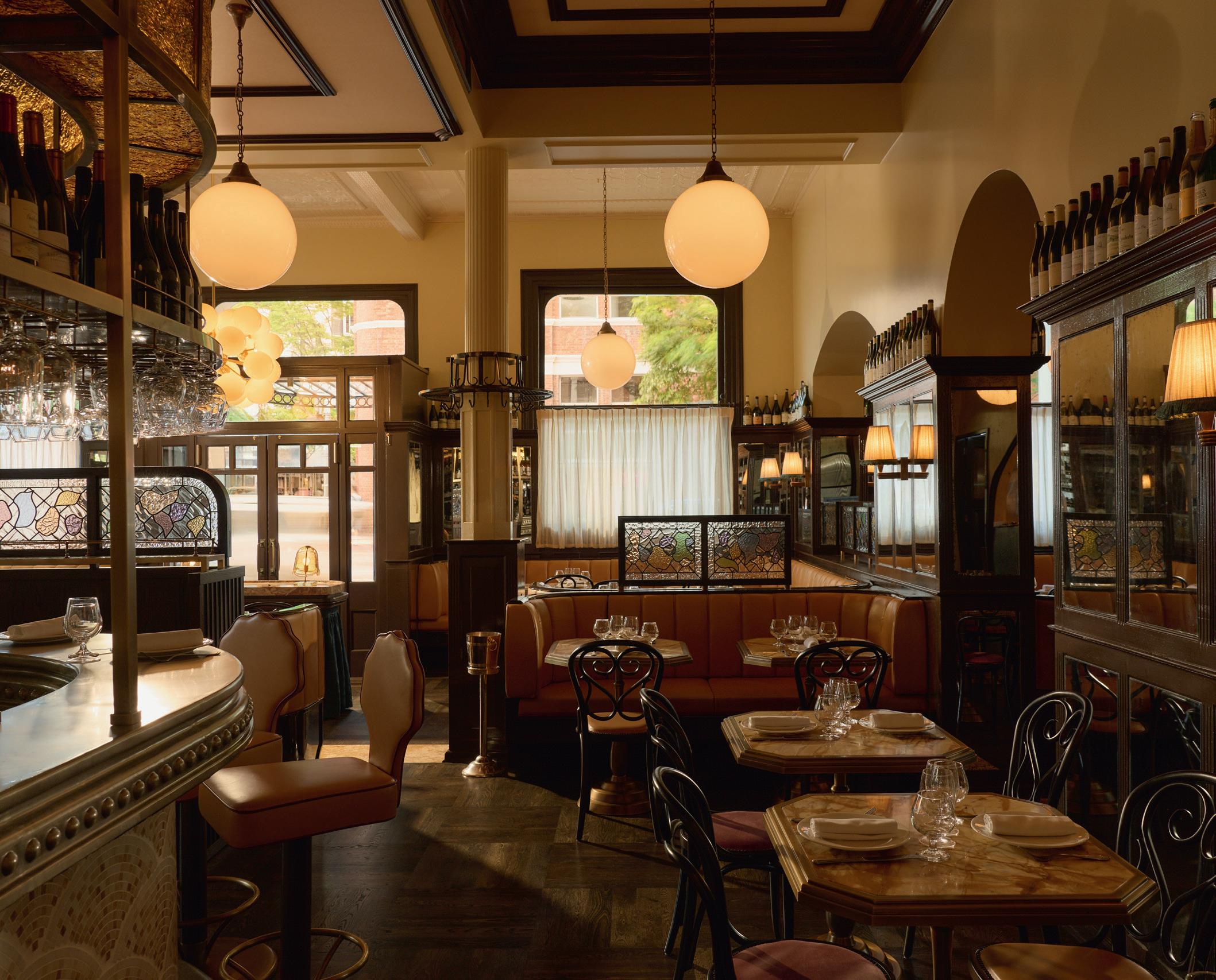
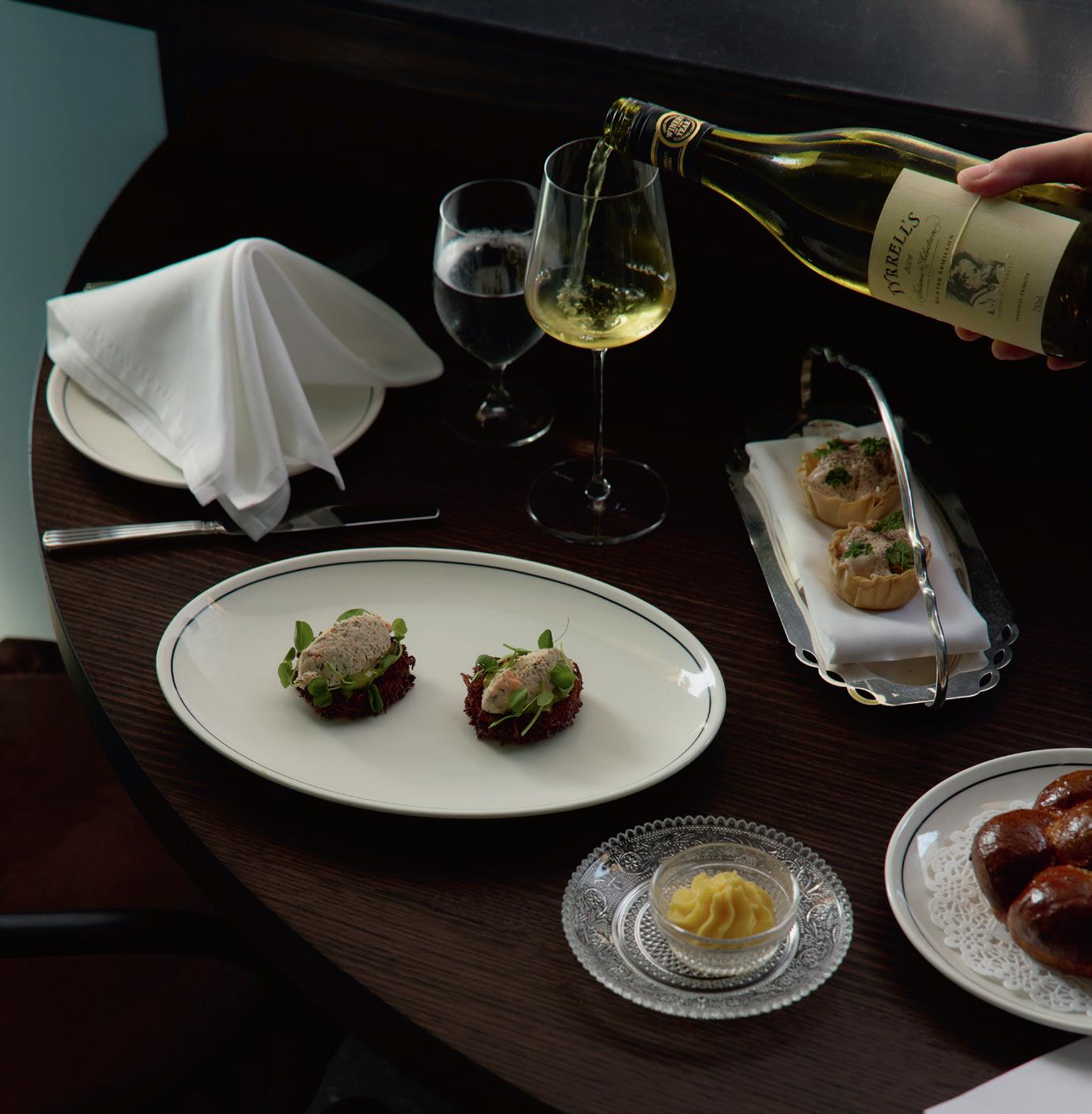
Built in 1938, this heritage-listed Art Deco building on Fish Lane has had several identities – an apartment block, a cigar shop and even a bomb shelter during World War II. Now it’s the home of Marlowe (marlowebne. com.au), where the vibe is relaxed, the menu is shaped by food its chefs grew up eating and the wine list (except for the champagne) is exclusively Australian. While the à la carte options are impressive, the real action is to be found in the tasting menus, which feature a standout gingerbread waffle pate that somehow tastes spicy, sweet and savoury all at once, and a spiced pork loin served on braised pork shoulder and curried pumpkin. The building’s layout has been kept in its original apartment configuration so request one of the downstairs window alcoves. For a romantic dinner, ask for the private booth on the second floor, which may well have been a wardrobe in a previous life.


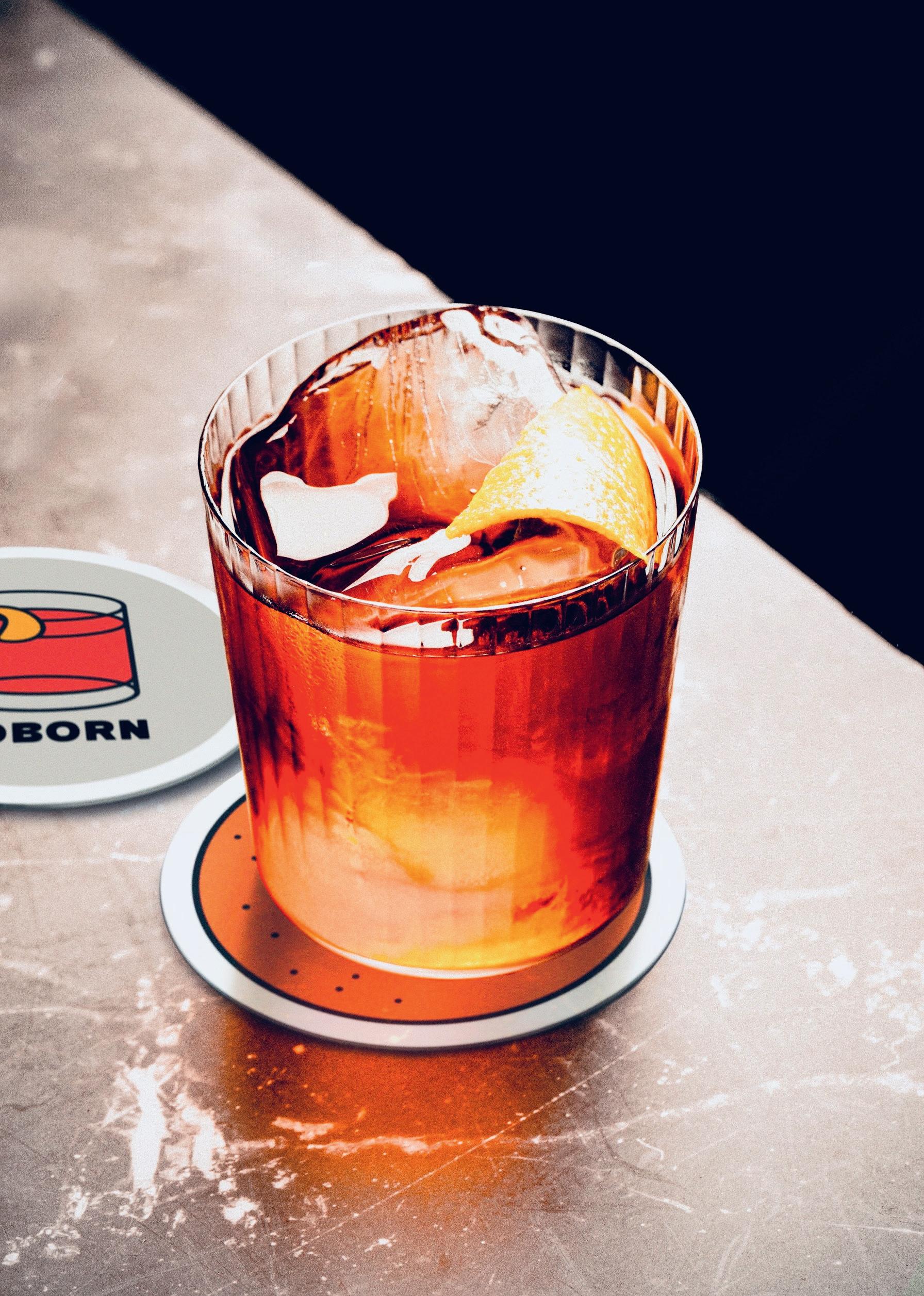
When Tom Drewett co-founded distillery Loborn (loborn.com) at Tamborine Mountain, his goal was to make a single-distillery Negroni. He started with his passion project, amaro, a traditional Italian liqueur made from herbs, roots, flowers and citrus peel. The result? Loborn Amaro No.01, a blend of locally grown oranges and hibiscus, and No.02, ruby-red in colour and made with strawberry gum and anise myrtle.
Loborn Vermouth Red tastes like caramelised honey and tart rhubarb with just a hint of citrus, while the sustainably made Original Gin is infused with Australian native botanicals. Pull up a stool at the Loborn Tasting Bar to try each of these elements in a deconstructed Negroni before sipping on the final assembled masterpiece. “All in all, about 50 ingredients come together to make your drink,” says Drewett.
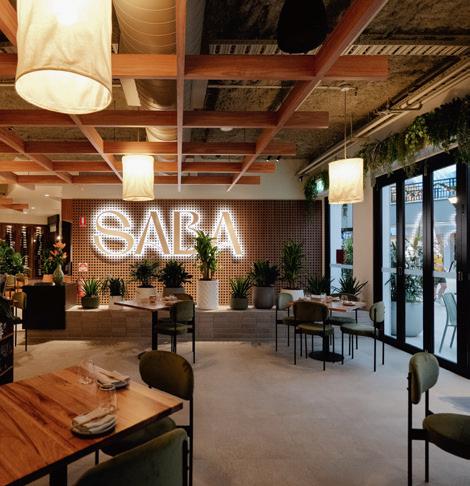
Just over an hour’s drive from Brisbane in the new Hotel Jardin at Surfers Paradise, Saba (sabagold coast.com.au) is serving pan-Asian share plates that are called “spicy little adventures”. Here, you’ll find dishes like lobster rolls with kimchi along with Hiromasa kingfish sashimi and tomahawk steak served with a sesame garlic confit, truffle jus and Asian slaw. It’s a hidden gem on the glittering Gold Coast.
VISIT
Billed as “the Aunty you never knew you needed”, Fortitude Valley’s Aunty (auntydining.com.au) serves modern Cantonese food with plenty of spice. A woodfire grill in the heart of the kitchen adds smokiness to dishes such as Wagyu skewers and char siu pork puffs. Meals are designed to be shared and the more friends you bring along, the more dishes you’ll be able to try. Don’t miss the whole chilli mud crab or the half duck two ways, served with spiced fig jus.
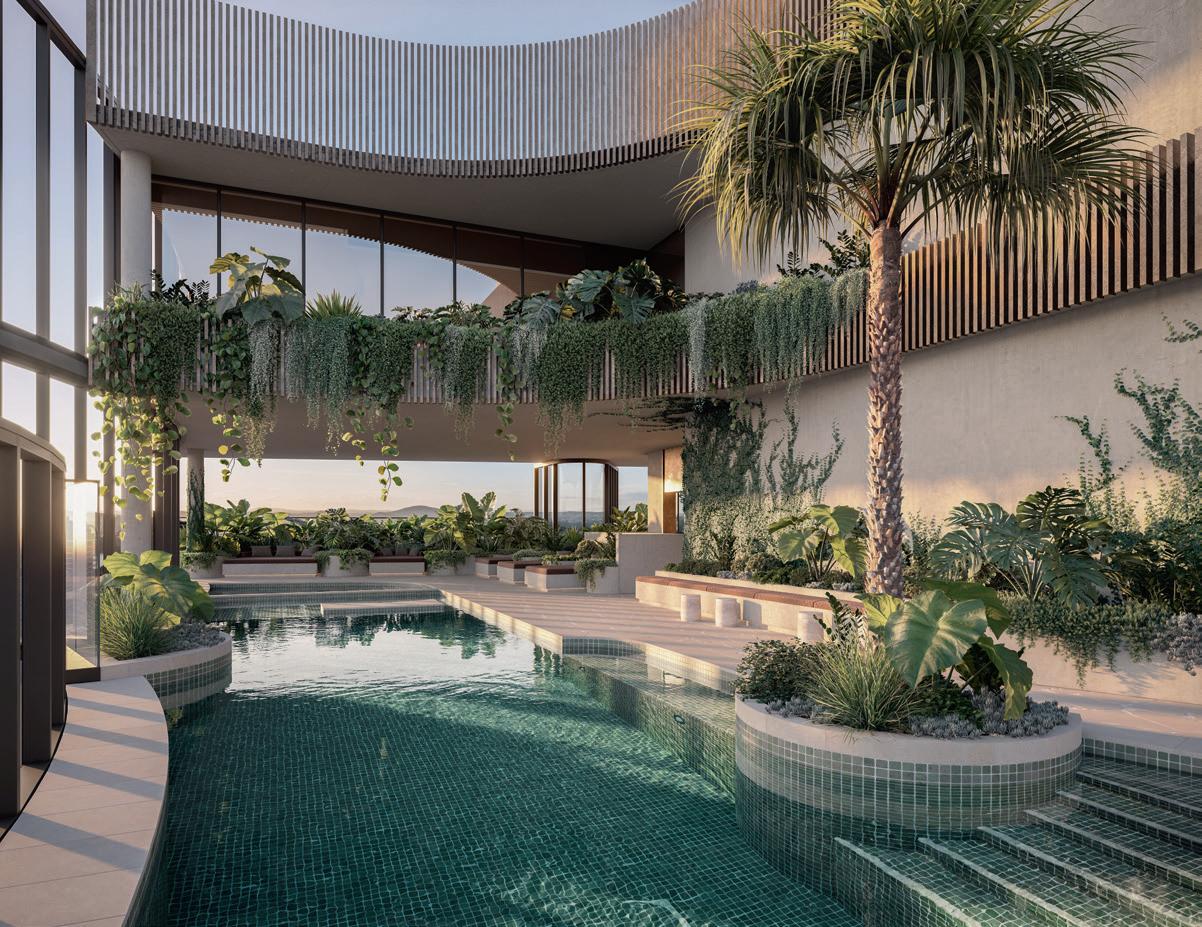
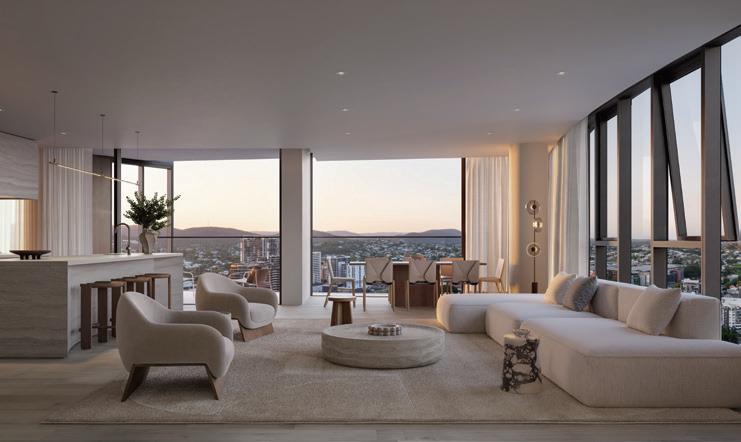
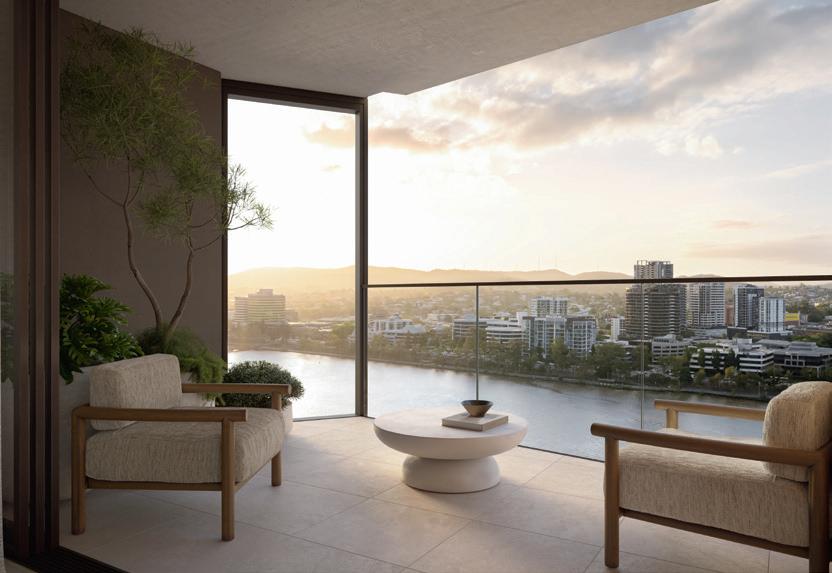
Some places become part of a city’s story. Others define its next chapter. The Riversdale is one such address – where exceptional design, culture and lifestyle come together to create a riverfront lifestyle unlike any other.
Brought to life by Mosaic Property Group and designed in partnership with Bureau Proberts, The Riversdale is one of Brisbane’s most coveted new luxury riverfront addresses. Located in South Brisbane – which is undergoing a generational riverfront transformation – it combines timeless architecture and meticulous craftsmanship with a lifestyle shaped by culture, connection and place. Generous north-facing residences, endless river and city views, and expansive outdoor areas maximise their privileged riverfront
position, complemented by more than 3000 square metres of curated world-class amenity designed to bring the sophistication of the world’s leading hotels, resorts and private clubs into everyday life.
Mornings at The Riversdale begin with the quiet rhythm of the river below. The waterfront promenade and neighbouring parklands invite an early walk or a leisurely coffee at a favourite local cafe. Returning home, the extensive gym and private wellness retreat provide spaces to restore, recharge and prepare for the day ahead.
Few addresses offer such privileged access to Brisbane’s cultural life. From the internationally acclaimed collections of QAGOMA to South Bank’s vibrant
Experience the exceptional. Currently under construction with completion in 2029. Residences from $1,800,000. Register to learn more: theriversdalebymosaic.com.au
public realm, The Riversdale places its residents at the centre of Queensland’s most celebrated arts and lifestyle precinct.
As daylight softens, The Riversdale reveals its most captivating side. Spanning two rooftop levels, this luxury retreat above Brisbane balances resort-inspired relaxation with the exclusivity of a private members’ club. Twilight swims beneath the city lights. Drinks in the residents’ lounge. Long dinners in elegant private dining spaces overlooking the river and after-dinner drinks in the private whisky and wine room. Panoramic views that stretch from the skyline to the mountains beyond. And when the occasion calls, some of the city’s finest experiences await just moments away – a performance at QPAC or dinner at one of South Brisbane’s acclaimed restaurants and wine bars.

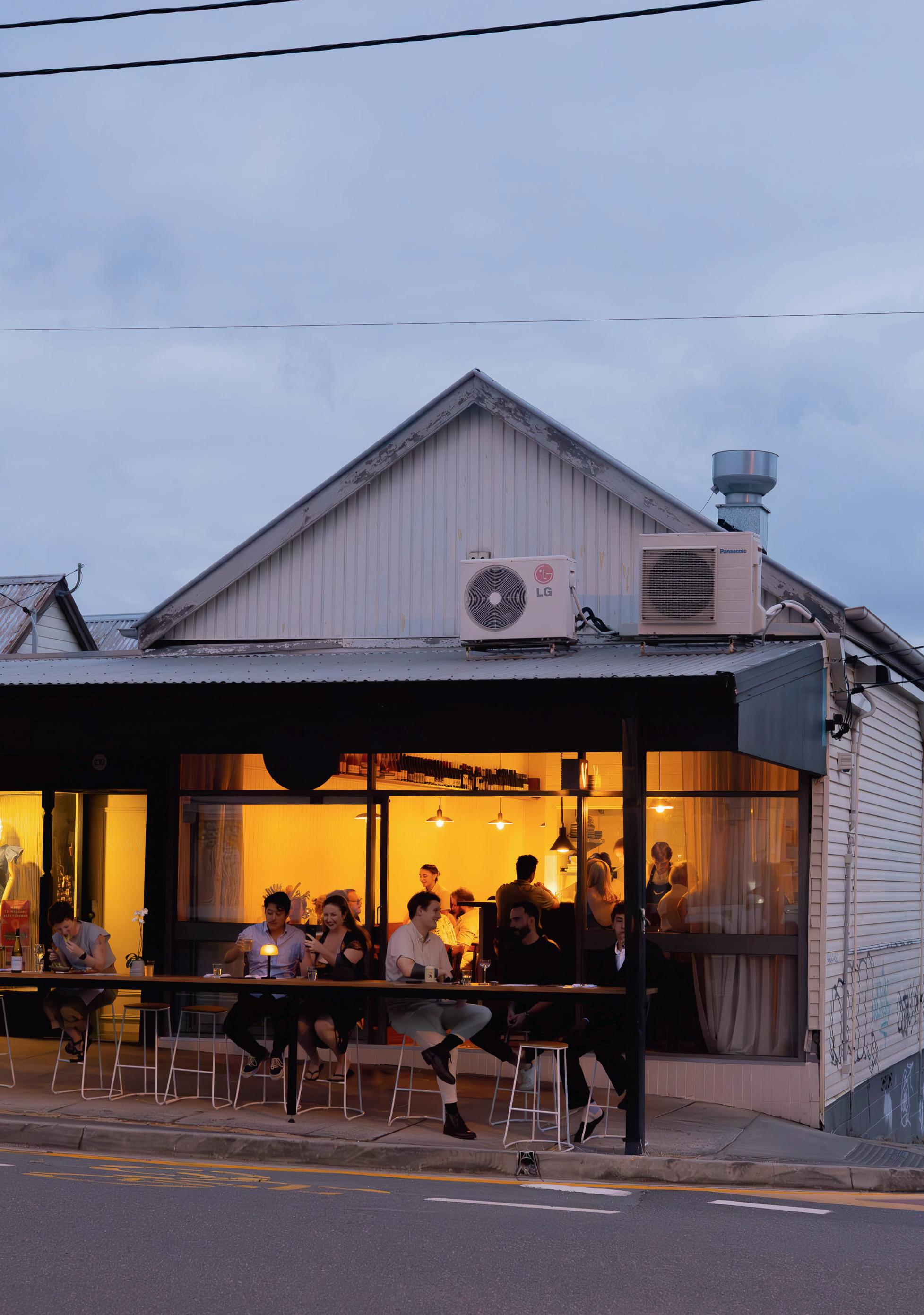
It might seem unlikely to find a Scandinavian restaurant in the balmy Queensland capital but as soon as you taste the food at Venner (restaurantvenner.com.au) in West End, it makes perfect sense. The seasonal menu is guided by neoNordic cooking principles – curing, fermenting and preserving to build layers of intense flavour. Everything – from the croustade made from Tasmanian Pyengana cheddar wrapped in a paper-thin crust to the grilled Murray cod with a tart green ginger and cumquat sabayon – is thoughtful and entirely memorable.
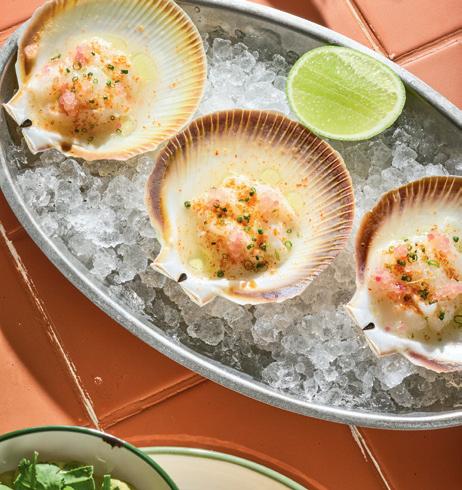
BAJA VIBES
Food is designed to be shared at Playa Mexican (playamexican.com.au), the newest addition to the Tony Kelly Restaurant Group line-up on the Sunshine Coast. The vibe at this Bokarina outpost is sun-drenched Mexican beaches meets backstreets of Los Angeles, with a menu that makes good use of fresh local ingredients. Try the tostada of Moreton Bay bug that comes with a zingy chipotle mayo and black lime or the half shell scallop ceviche (above) with a hit of finger lime and chilli.
There’s a rule at So.What. Stereo (@so.what.stereo), a cafe in Fortitude Valley that serves Northern Thai dishes: the person closest to the turntable chooses the music. “You could be listening to anything from Japanese pop to Black Sabbath,” says co-owner Kawid Brikshavana. “Now we have regulars who bring their own records to play.” This retro-style spot serves coffees with Thai classics such as khao soi (crisp egg noodles in coconut broth) and scrambled eggs with housemade sai ua sausages. The signature pandan latte over ice is a must-try.
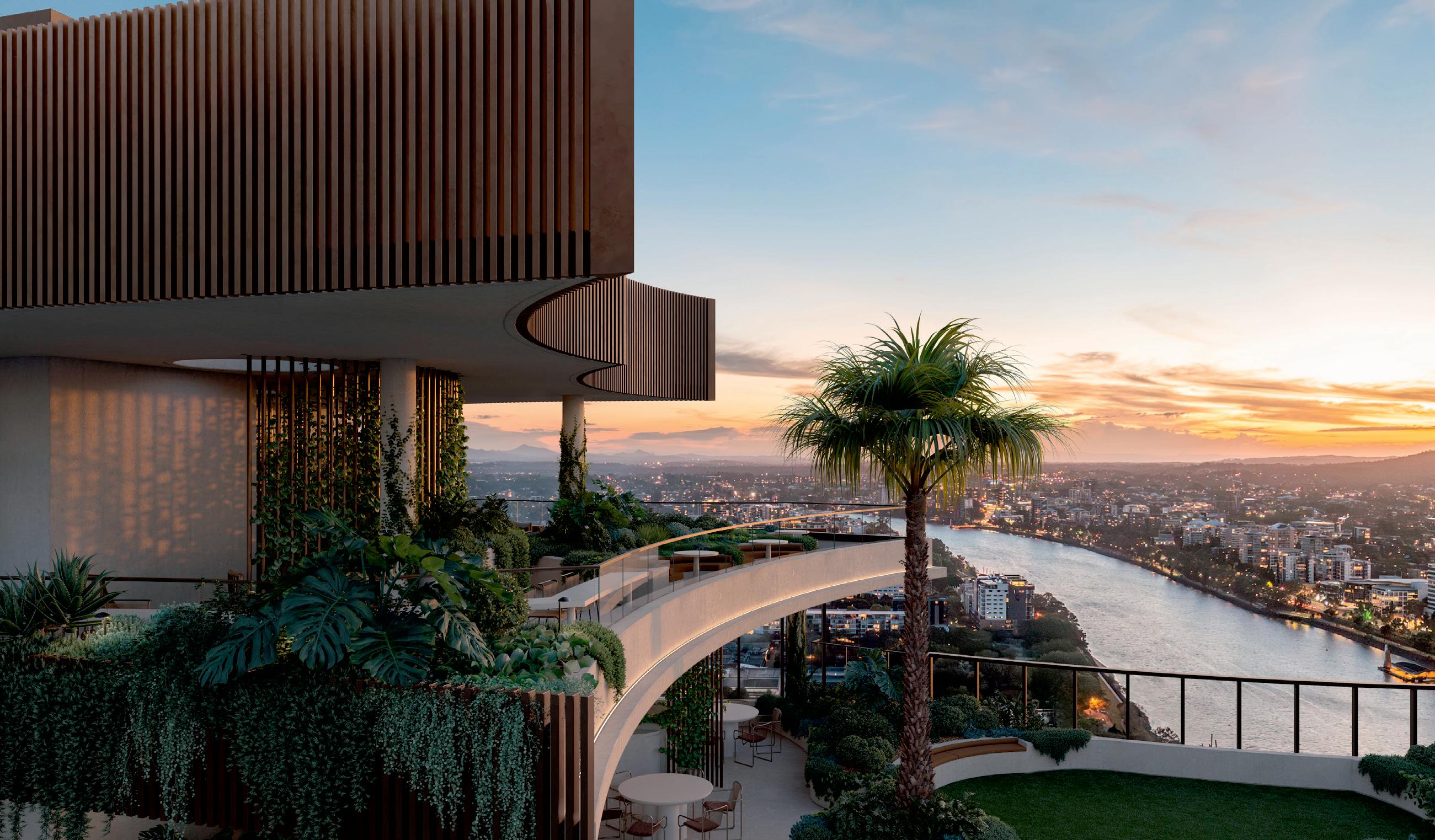
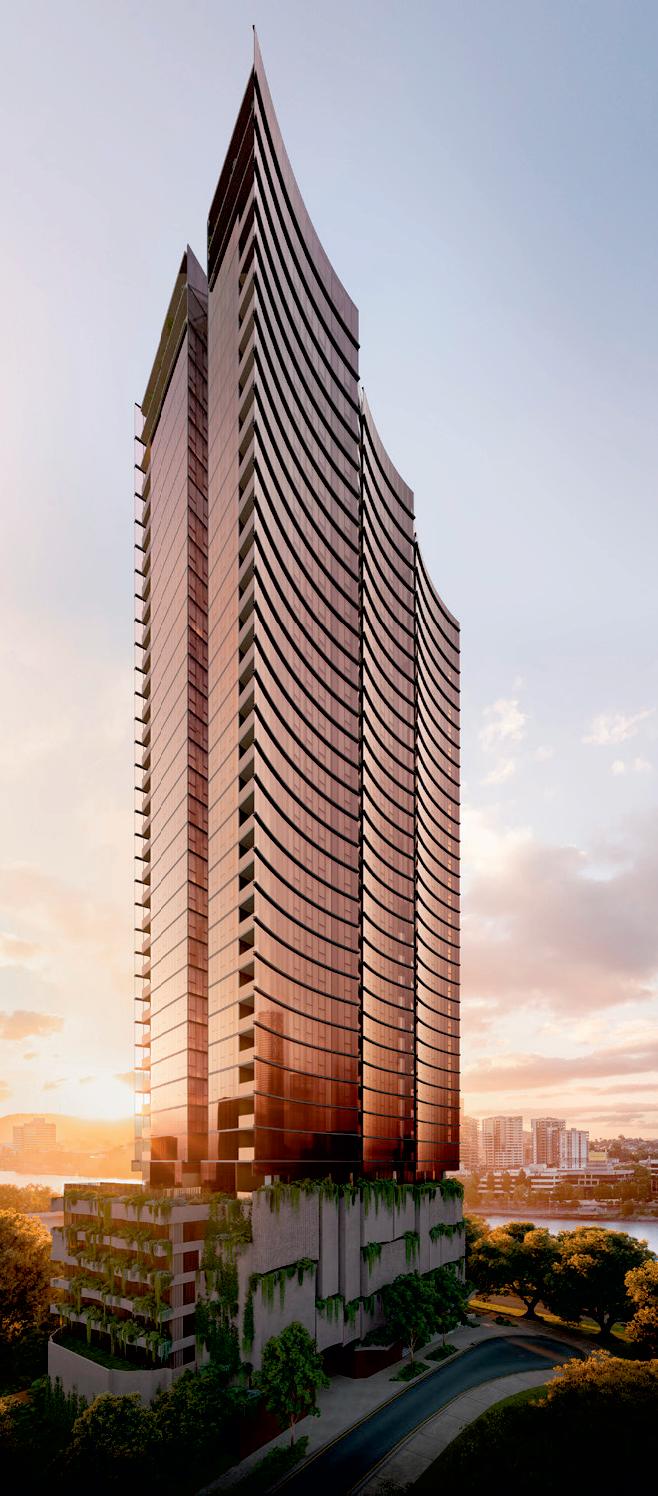
On one of South Brisbane’s most tightly held riverfront positions, The Riversdale by Mosaic is being realised — a generation-defining luxury address where design, outlook and amenity are resolved with absolute clarity.
Light-filled interiors, timeless in their expression and exacting in their detail, sit alongside an expansive and considered collection of world-class amenity, conceived to a global standard — all positioned at the edge of Queensland’s cultural and lifestyle heart.
EVERY BIT INCREDIBLE.
Construction commenced. Due for completion late-2029.
Register to learn more. theriversdalebymosaic.com.au


















From seagrass meadows to tidal flats, these First Nations experiences reveal the cultural practices that have shaped Australia’s waterways.
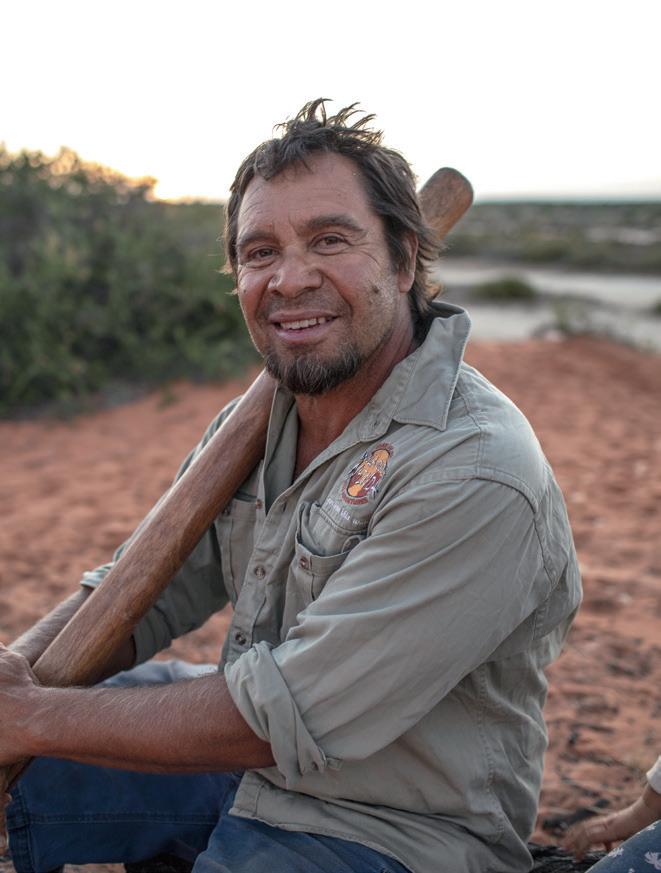
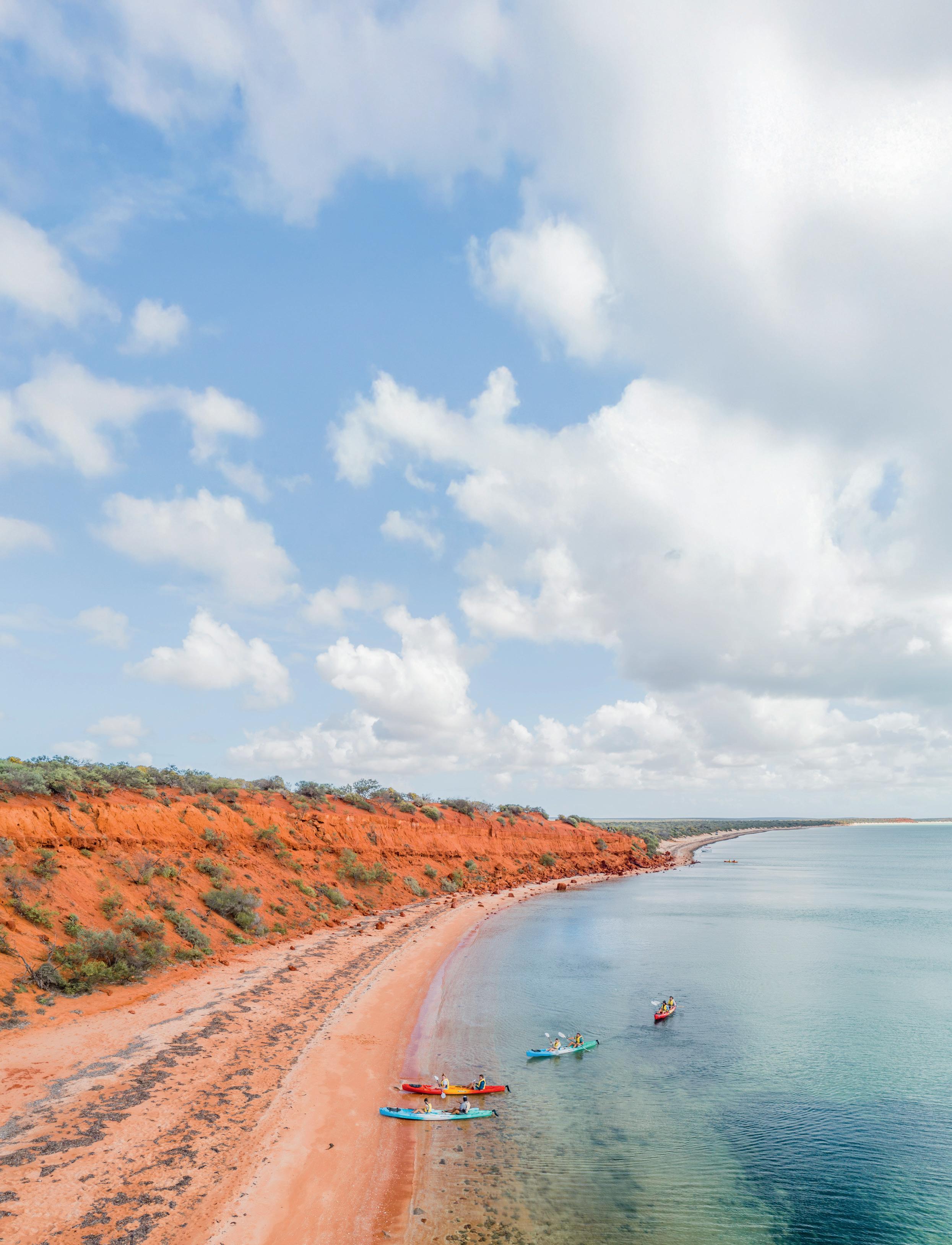
Red dunes tumble towards turquoise water on the Peron Peninsula, where vast seagrass meadows sway beneath the surface of Gutharraguda / Shark Bay. It’s here on Malgana Country that Darren Capewell (left) leads journeys with Wula Gura Nyinda Eco Cultural Adventures (wulagura.com.au), paddling sheltered coves while sharing the stories, language and cultural knowledge of his ancestors.
“When you visit, it’s easy to merely glimpse Sea Country,” says Capewell. “But to truly take something away with you,
you need to feel the spirit of Sea Country. On a paddling tour, people leave with a deeper appreciation of what the ocean means to my people in Gutharraguda.”
As the kayaks skim across the clear water, Capewell points to the seagrass below. Covering about 200 square kilometres, it forms the foundation of one of Australia’s most important marine ecosystems. The conversation moves between culture and conservation, revealing how traditional knowledge and modern science are working
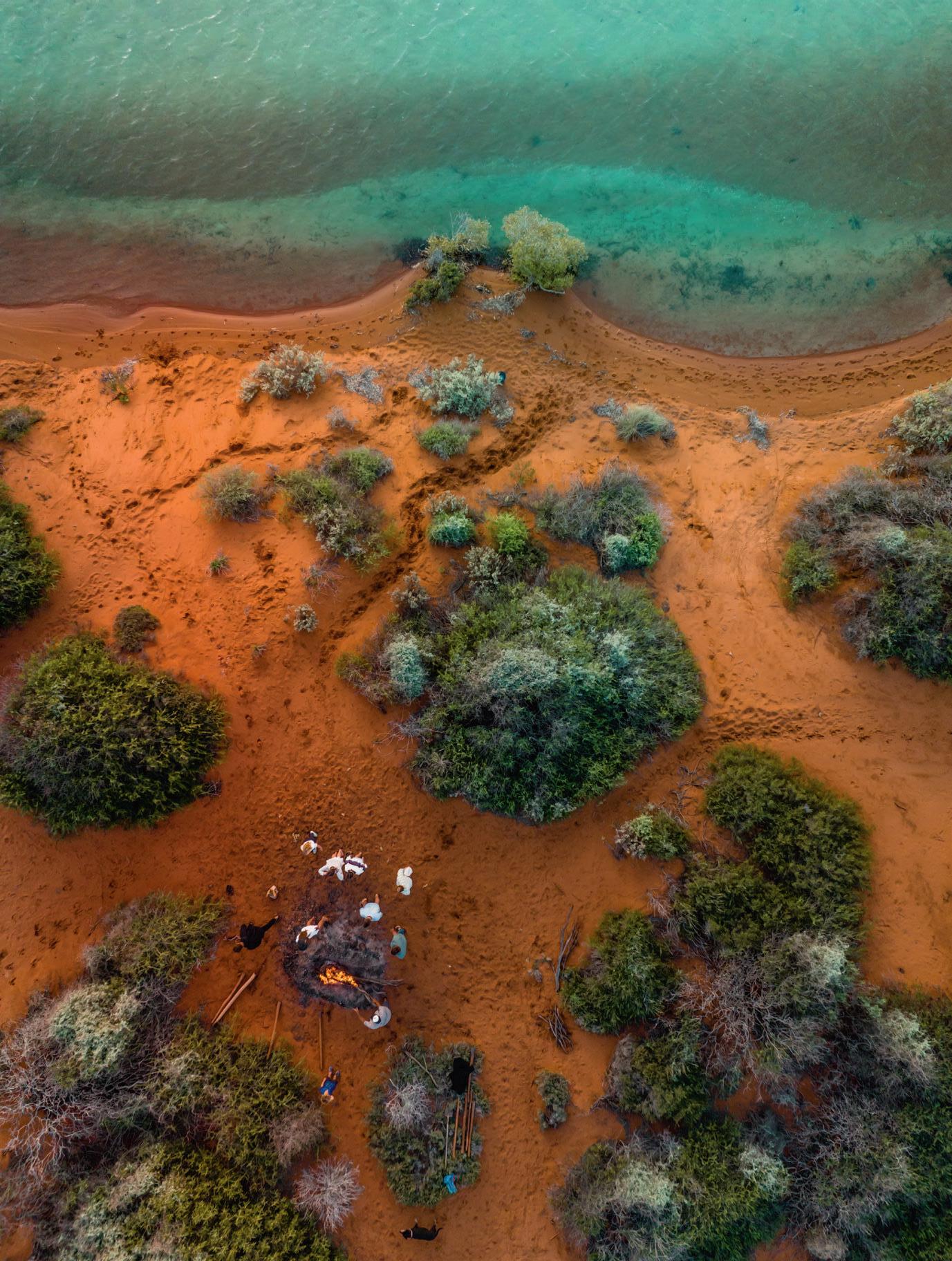
together to protect this extraordinary World Heritage landscape.
Gentle visitation is central to that philosophy. Paddling quietly through the bays of Wulyibidi / Francois Peron National Park, guests experience Sea Country at its pace, learning how respectful access can help protect fragile habitats as they broaden their understanding of place. The full-day experience begins with an off-road trip into the national park, where Capewell introduces guests to bush food, medicinal plants and animal tracks before the kayaks even touch the water.
Launching into the sheltered waters of Big Lagoon, paddlers glide between rust-red cliffs and turquoise bays while looking out for turtles, manta rays, dolphins and, in season, dugongs grazing on the seagrass
meadows below. Along the way guests have plenty of opportunities to go swimming, snorkel and pull in at secluded beaches, while stories of culture, preservation and the millenniaold connection between the Malgana people and Sea Country bring a different view of the landscape.
The tour concludes with a barbecue lunch and a soak in the artesian hot tub at historic Peron Homestead, offering guests time to reflect on a destination that’s best understood not from the land but on the water.
“There’s nothing quite like gliding around a spiritual place like Gutharraguda with no other people around, just wildlife and lots of blue,” says Capewell. “It truly changes your perspective of the ocean and how important it is to people and the planet.”
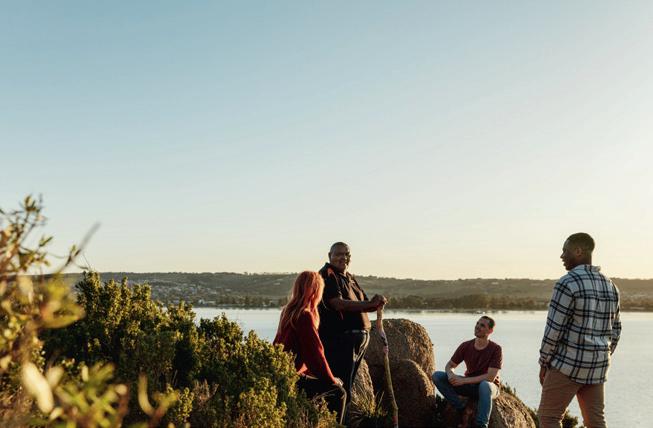
and dunes
South-east of Adelaide, where the Murray River meets the ocean, the Coorong unfurls in a series of lagoons, dunes and wetlands. Explore these waterways (on foot or by boat) with Ngarrindjeri guide Mark Koolmatrie of Kool Tours (kooltours.com.au).
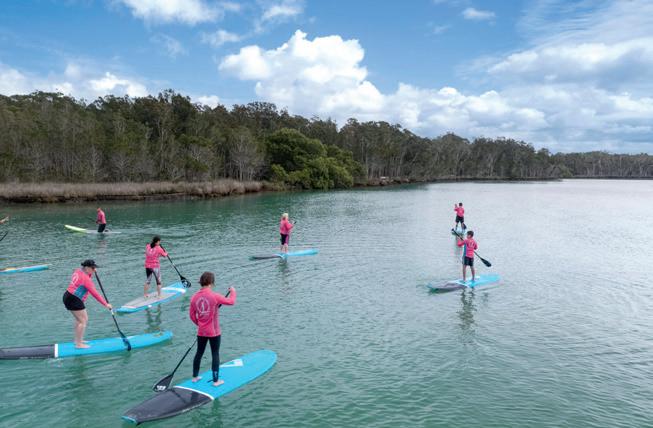
New South Wales Soak in ancient waters
Paddles slice the calm waters of Moonee Creek on the Coffs Coast as the guides from Wajaana Yaam Gumbaynggirr Adventure Tours (wajaanayaam.com. au) share the cultural meaning of the mangroves, creeks and beaches that shape Gumbaynggirr Country.
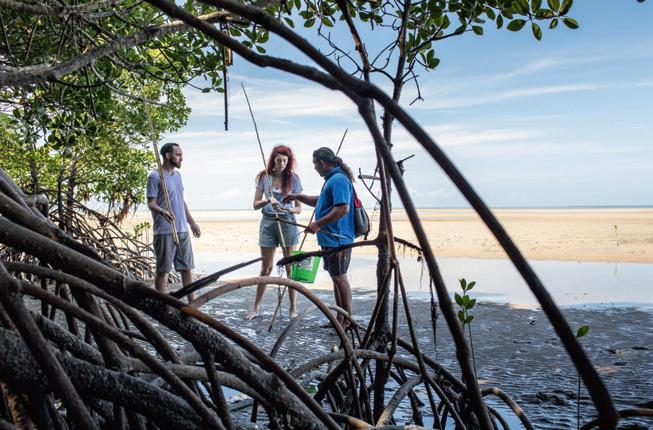
Read the tides and the winds
In Far North Queensland, mudflats ripple with mangrove roots and the tracks of crabs and fish. As guests of Kuku Yalanji Cultural Habitat Tours (kycht.com.au) walk barefoot across Kuku Yalanji Country, they learn to read the winds, tides and animal movements.

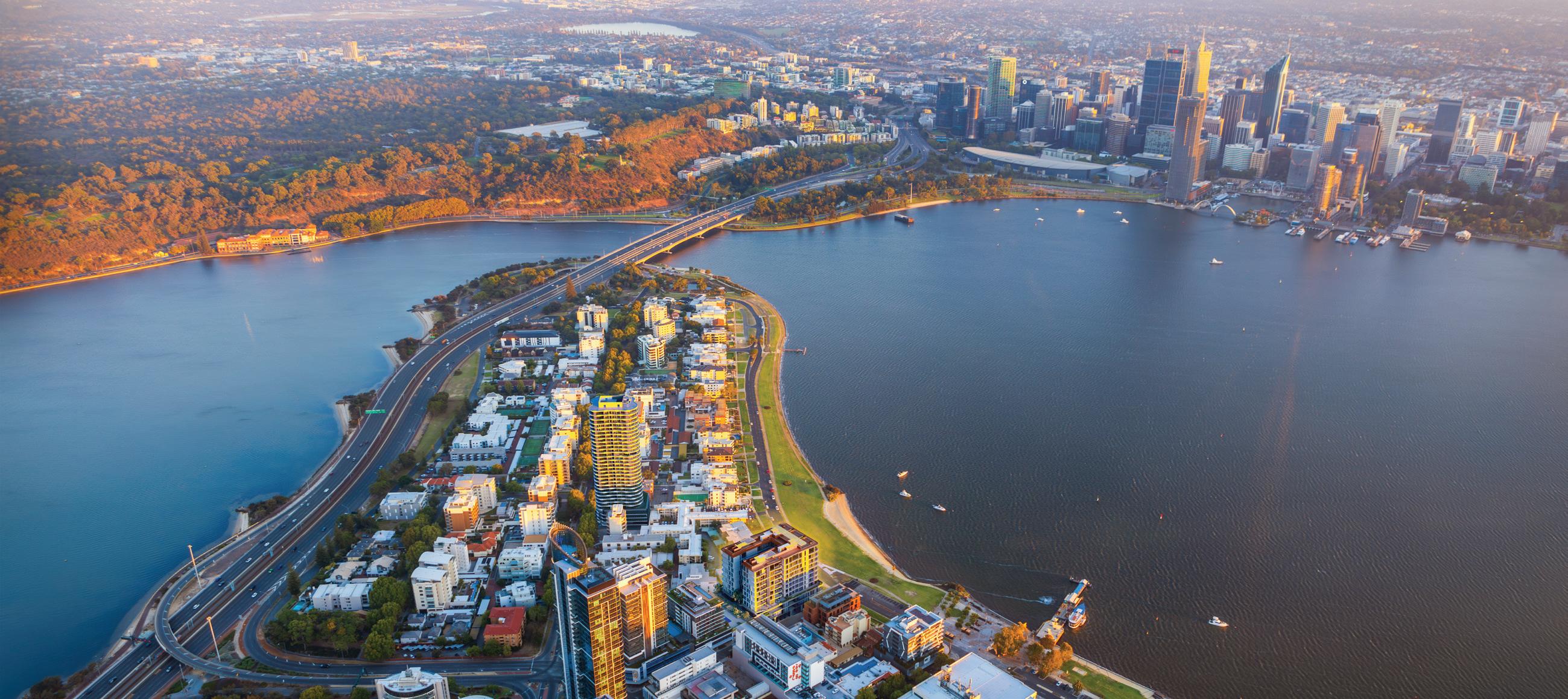
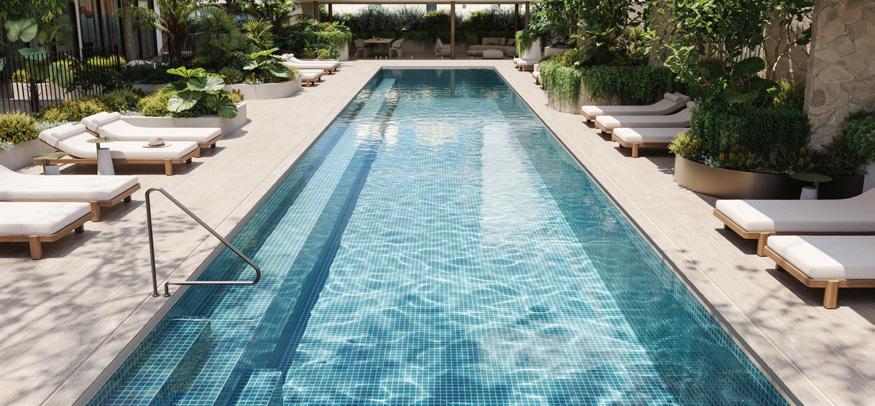
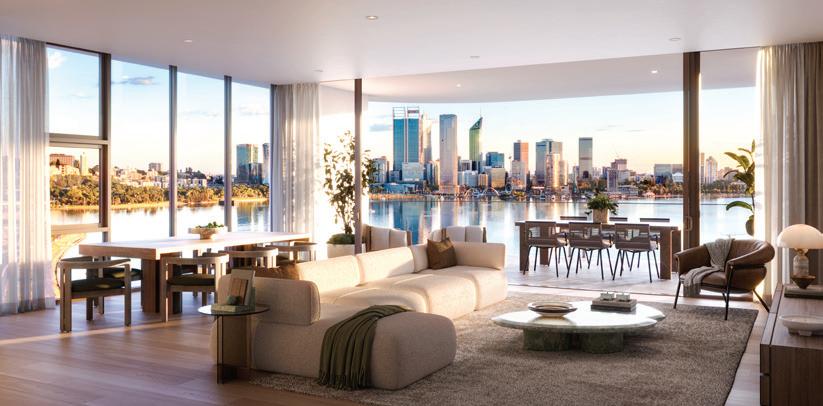
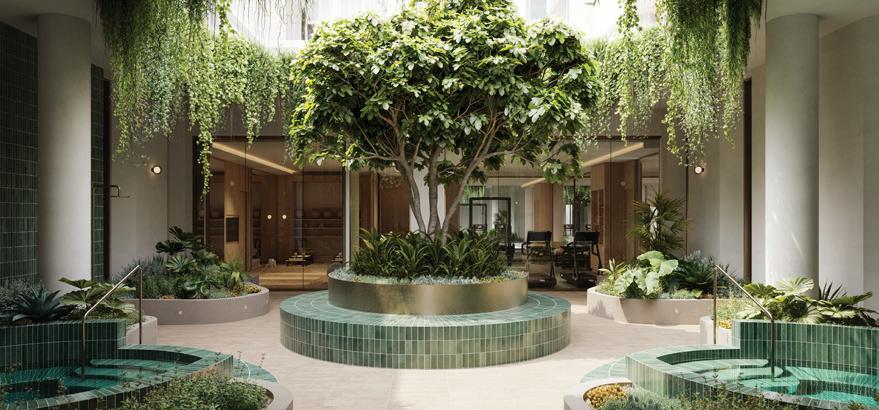
Harper on Swan is your rare opportunity to live within Perth’s most coveted riverfront address.
Perfectly positioned along the South Perth Esplanade, and destined never to be built out, sweeping views of the Swan River and city skyline form an enduring backdrop to daily life.
Interiors defined by soaring ceilings and refined finishes are combined with an exclusive collection of private amenities, offering a lifestyle of indulgence, calm and connection.
Where others aspire, Harper defines as an address like no other.



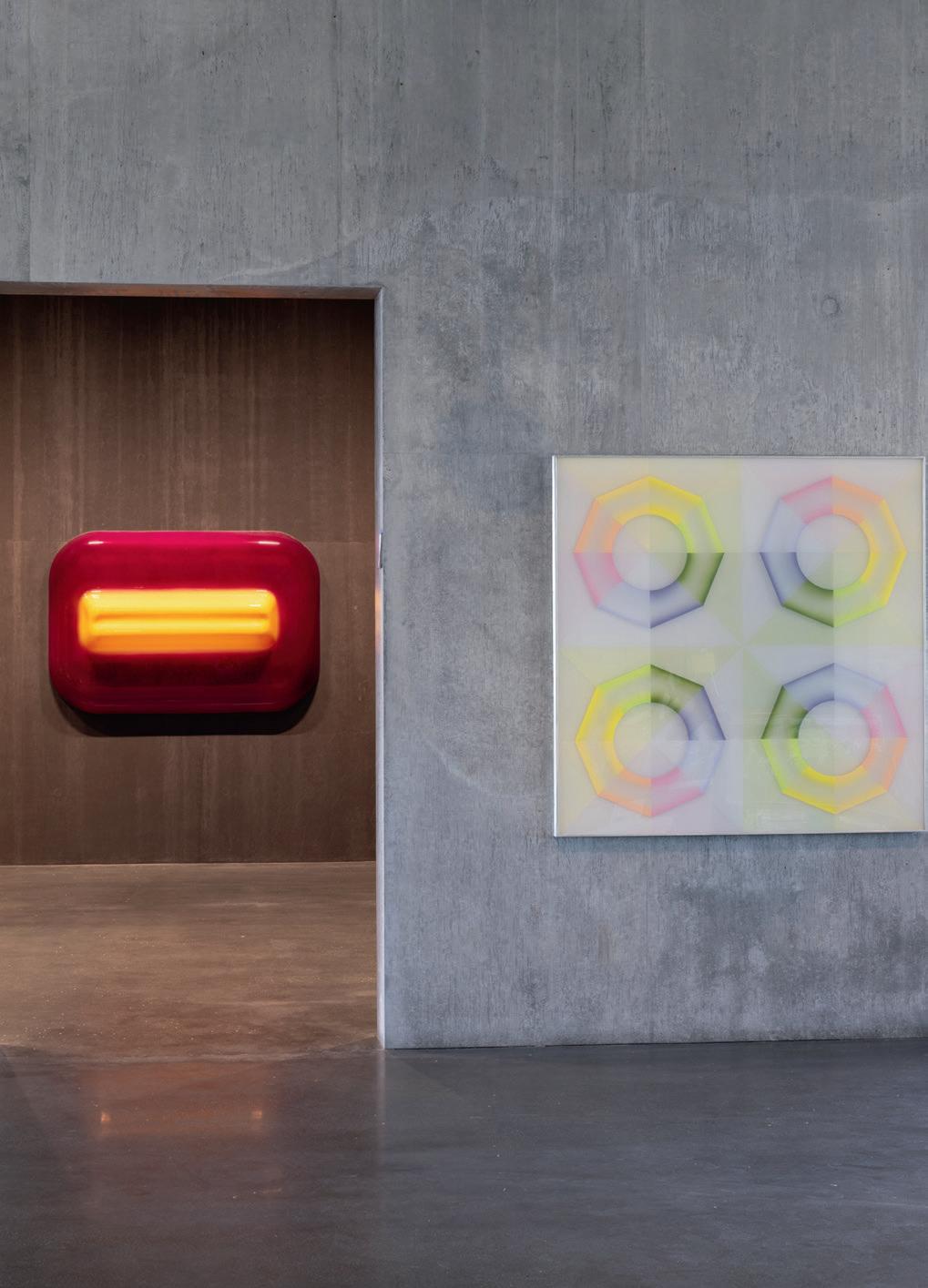
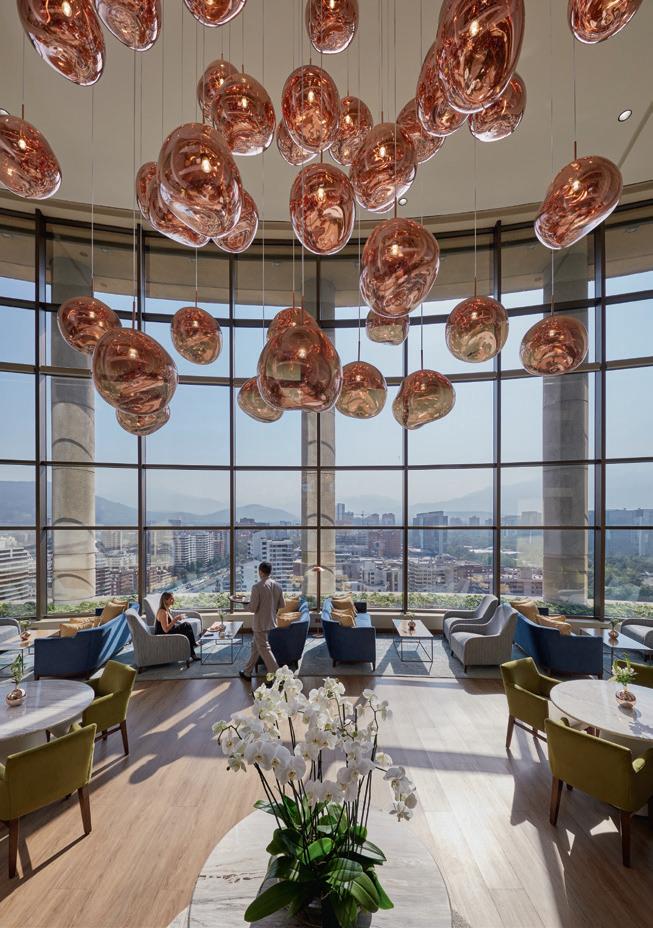
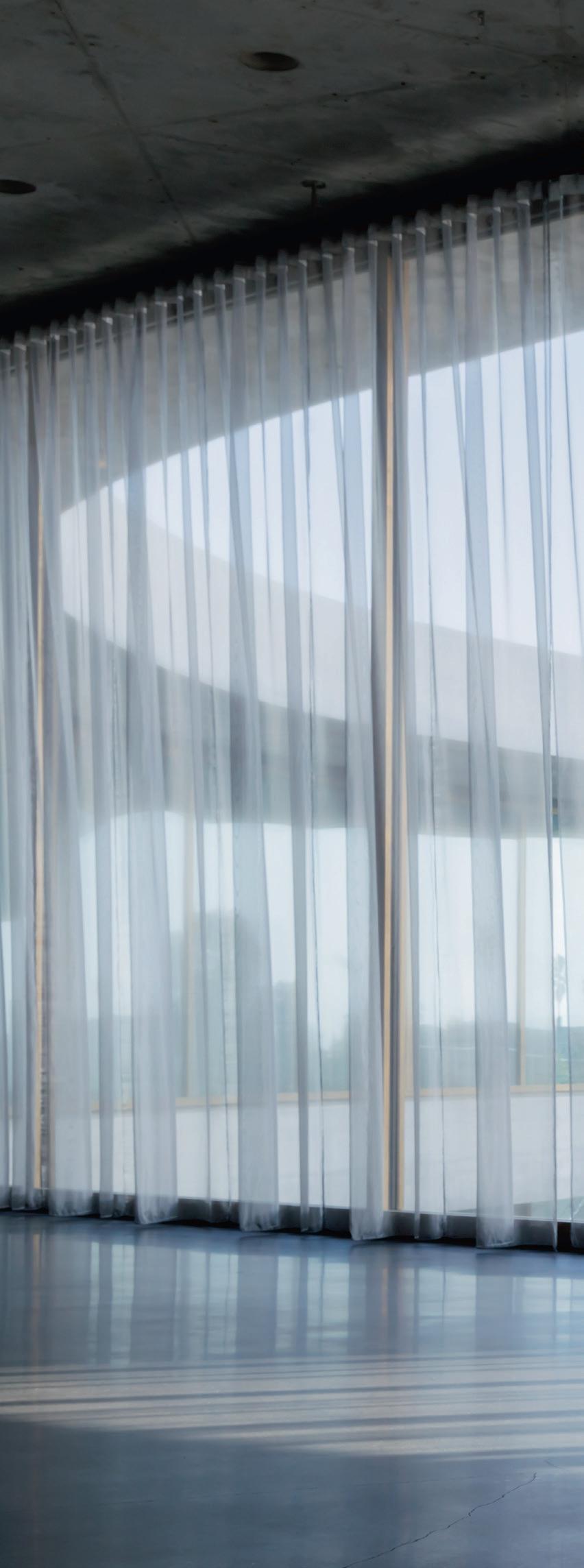
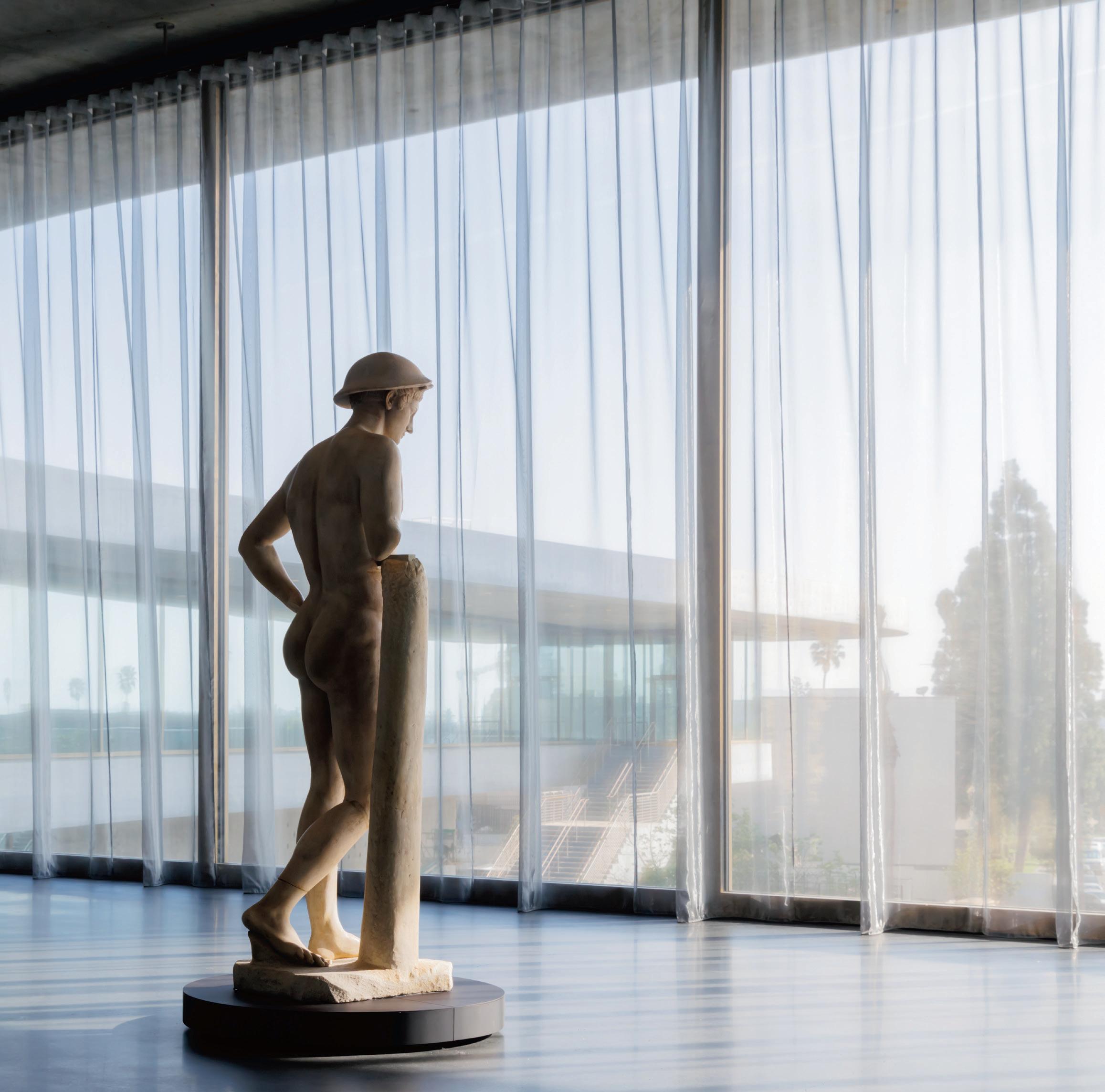
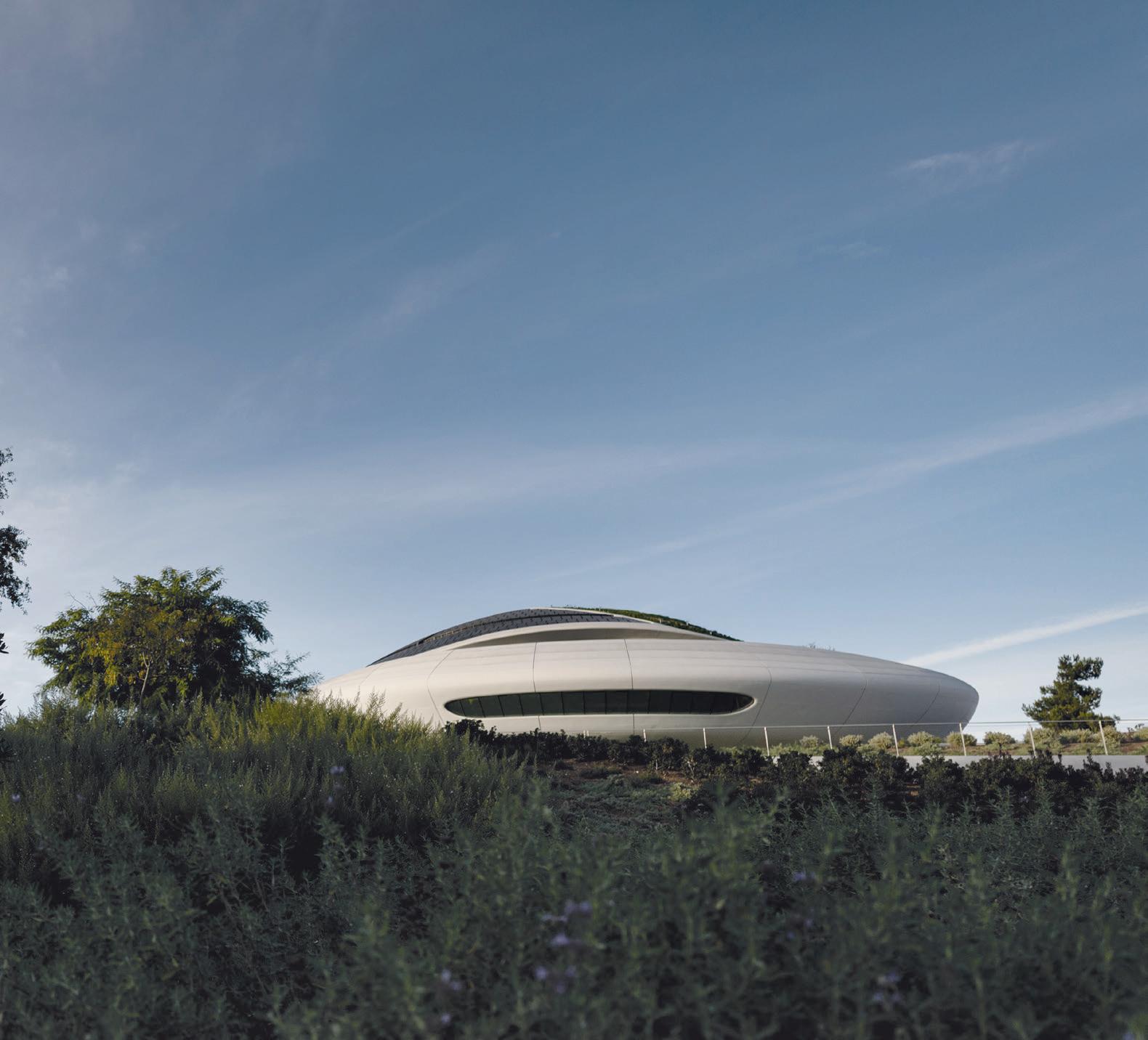
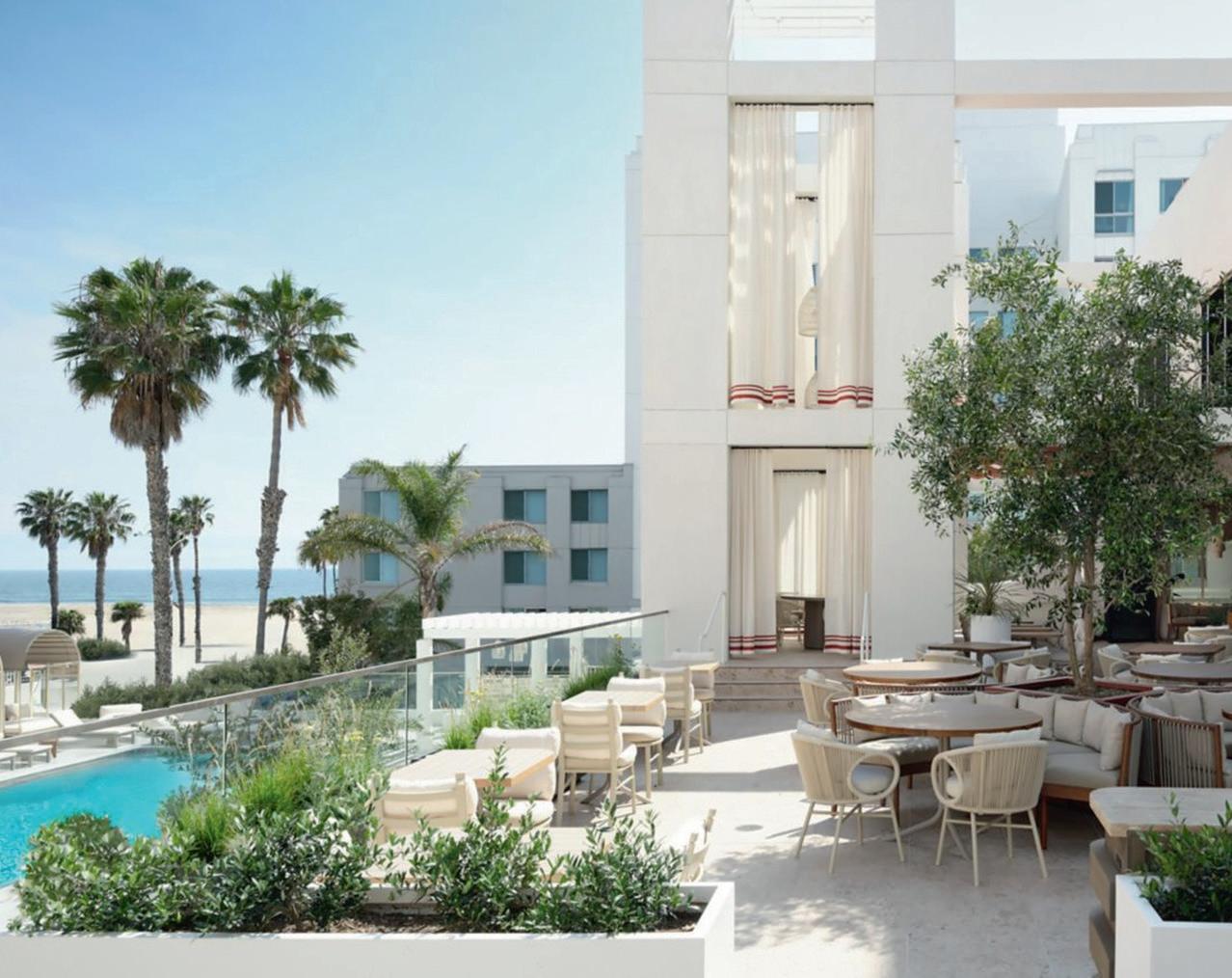
Could there be a better location for the Los Angeles County Museum of Art’s new David Geffen Galleries (lacma.org) than squarely between Downtown and the Pacific Ocean on busy Wilshire Boulevard? Driving along the famous palm-fringed “Miracle Mile” conjures a soundtrack of LA greats such as Joni Mitchell and The Eagles – artists championed by music mogul David Geffen. Now a prominent philanthropist, the founder of Geffen Records and DGC Records donated US$150 million to the museum and earned naming rights on the futuristic building that’s now the home of LACMA’s permanent collection. Designed by Swiss architect Peter Zumthor, the curved concrete structure not only houses renowned artworks –recent acquisitions include Francis Bacon’s Three Studies of Lucian Freud (1969) and Vincent van Gogh’s Tarascon Stagecoach (1888) – but also allows that radiant Los Angeles light to stream through windows that snake around the perimeter, revealing fresh perspectives at golden hour.
STORY BY ANDREA BLACK
The Bateman Mercury (2nd century, Roman) in the David Geffen Galleries, LACMA
One might be wary of a museum dedicated entirely to AI-generated art but Refik Anadol and Efsun Erkılıç, the co-founders of Dataland (dataland.art) in Downtown, say this interactive space very much involves humans. “We are the first omni-sensory museum,” says Anadol. Set within the Frank Gehrydesigned The Grand LA building, Dataland’s first exhibition, Machine Dreams: Rainforest, is a chance to venture into a hyperkinetic digital “natural” environment of projections and optical illusions. For complete immersion, visitors can don a biosensing device that prompts the artwork to respond to their heartbeat and tailors scents and sounds. “What you experience is a living museum,” says Anadol. “One that will never be the same twice.”


Find out what fuels the vivid imagination of Star Wars creator George Lucas when the Lucas Museum of Narrative Art (lucasmuseum.org) opens next month. Located at Exposition Park (an easy ride from Downtown on the Metro E line), the museum explores the power of visual storytelling, from prehistoric cave paintings to modern screen art (and yes, it includes props and costumes from the Star Wars franchise). “The focus is to open up people’s imaginations and inspire them to dream beyond what is considered possible,” says Lucas, who has been collecting narrative art for more than 50 years and founded the museum with his wife, Mellody Hobson. Among the collection of 40,000-plus works, expect to see pieces by artists such as Frida Kahlo, Diego Rivera, Norman Rockwell and Robert Crumb.
Bordered by Melrose Avenue, Beverly Boulevard and Robertson Boulevard, the West Hollywood Design District is made up of 250 art galleries, design













studios, boutiques, restaurants and cafes. “It’s a little bit like the West Village of New York,” says locally based architect Gulla Jónsdóttir. “There are charming tree-lined streets with the best restaurants, stores and galleries.” While the neighbourhood hosts regular art walks, exhibitions and pop-ups, the second annual Design West Hollywood event (29 September to 1 October; west hollywooddesigndistrict.com) draws experts in visual art, architecture, fashion and more. Celebrating its 50th anniversary this year, the Pacific Design Center (pacificdesigncenter.com) is home to more than 80 showrooms inside the Cesar Pelli-designed complex affectionately known as the “Blue Whale”. Here you’ll discover interior design displays alongside a slate of curated exhibitions. Where to stay? The soon-to-open Public West Hollywood on Sunset Strip (publichotels.com) could well be renowned hotelier Ian Schrager’s magnum opus. Not content with a rooftop bar, the Public wows with a rooftop park as well as an after-hours club that’s a 21st-century evolution of the legendary New York disco Studio 54, which was co-founded by Schrager in the 1970s.
Pull up a stool at the bar at Lapaba (lapaba.com) in Koreatown (K-town to locals) and watch the chefs prepare a modern mashup of Korean and Italian cuisines. The new eatery’s name is short for “La Pasta”, the dining room is all warm light, cool marble and furniture sourced from Italy, while the menu features dishes that might marry radiatore pasta with galbi jjim (Korean braised short ribs) and supplì with kimchi and Fontina cheese. There’s also a twist on the cocktail list, with sensations such as the Jeju Mule, a heady combination of soju, matcha and ginger. Lapaba is a five-minute walk from the Metro and just a short train ride from LACMA on the recently extended Metro D Line, which rumbles all the way west to Beverly Hills. Who says you need a car in LA?
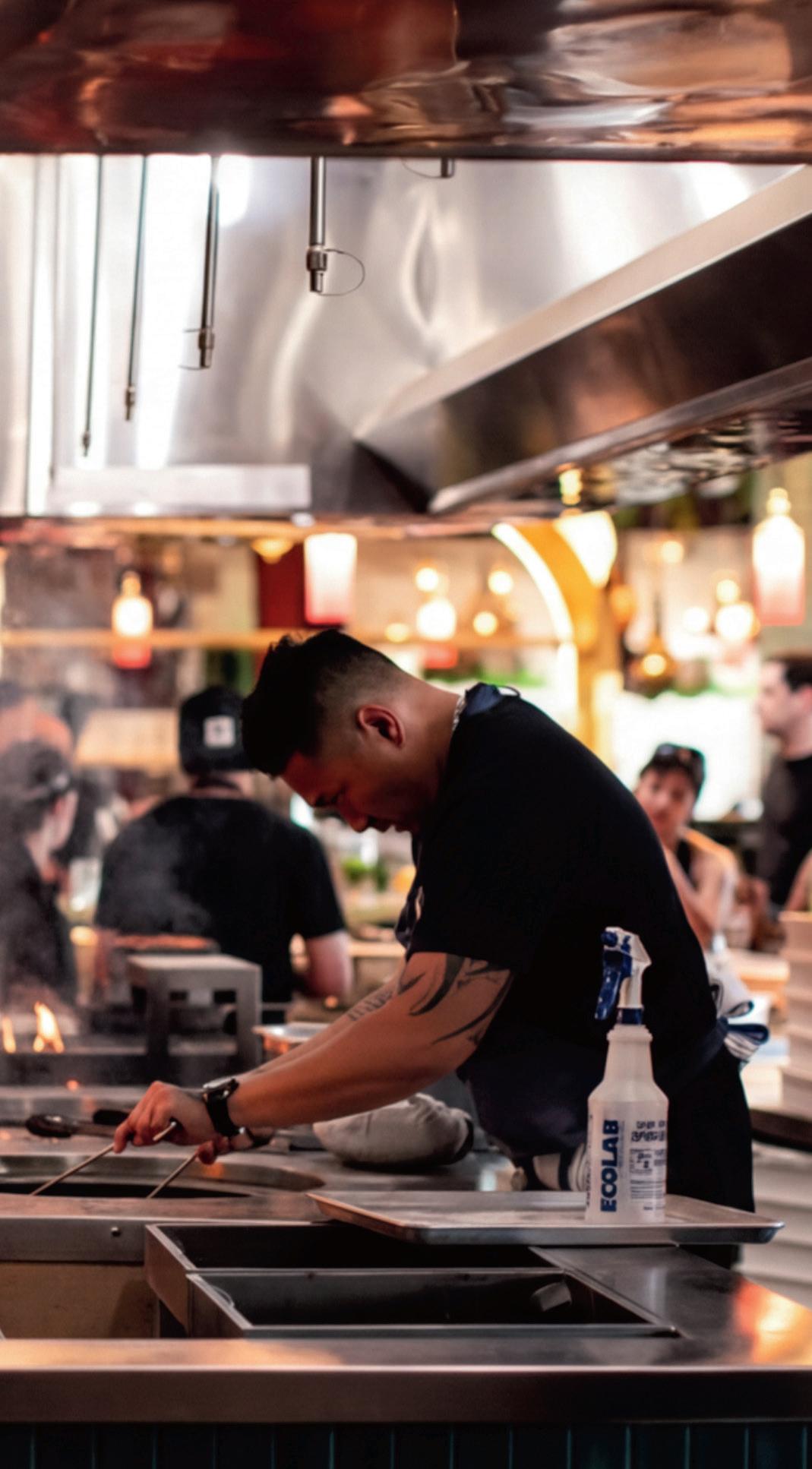
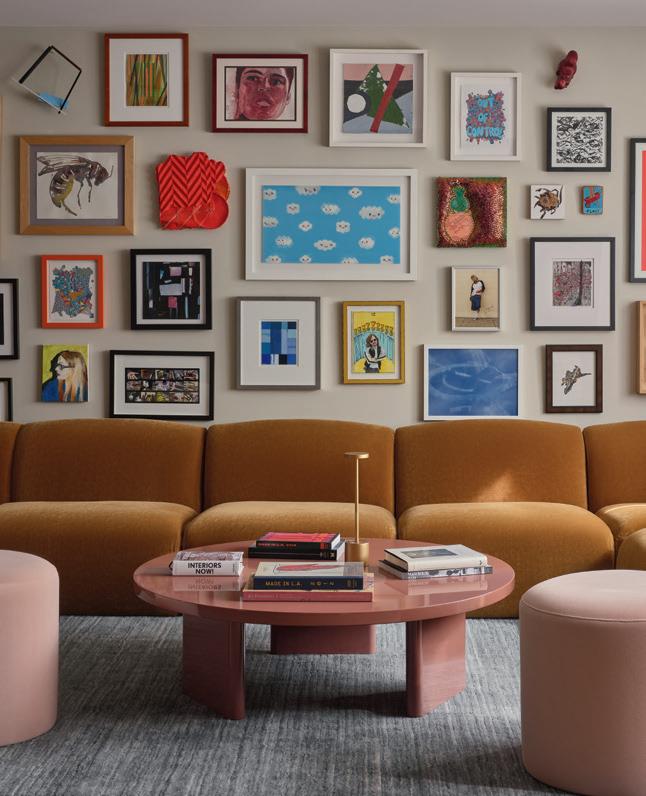
Tucked away from the main street in Koreatown and within easy reach of the cultural hubs of Mid-Wilshire and Downtown, The Ivory hotel (theivory. com) opened in April. It’s a 48-room design-led bolthole with an ethos drawn from founder Rachel Gerstein’s journeys. “Every detail is rooted in the kind of experience that I seek when I travel,” she says. “Thoughtful design, meaningful connections to local and emerging art, abundant natural light and an overarching sense of sanctuary.” The Ivory’s visual arts program, led by art director Matt Scheele, showcases a roster of contemporary creatives. In the lobby, an installation by artist Rob Wynne invites guests to Daydream, the word writ large in poured mirror and glass. Another reason to check in? The evening cookie service.
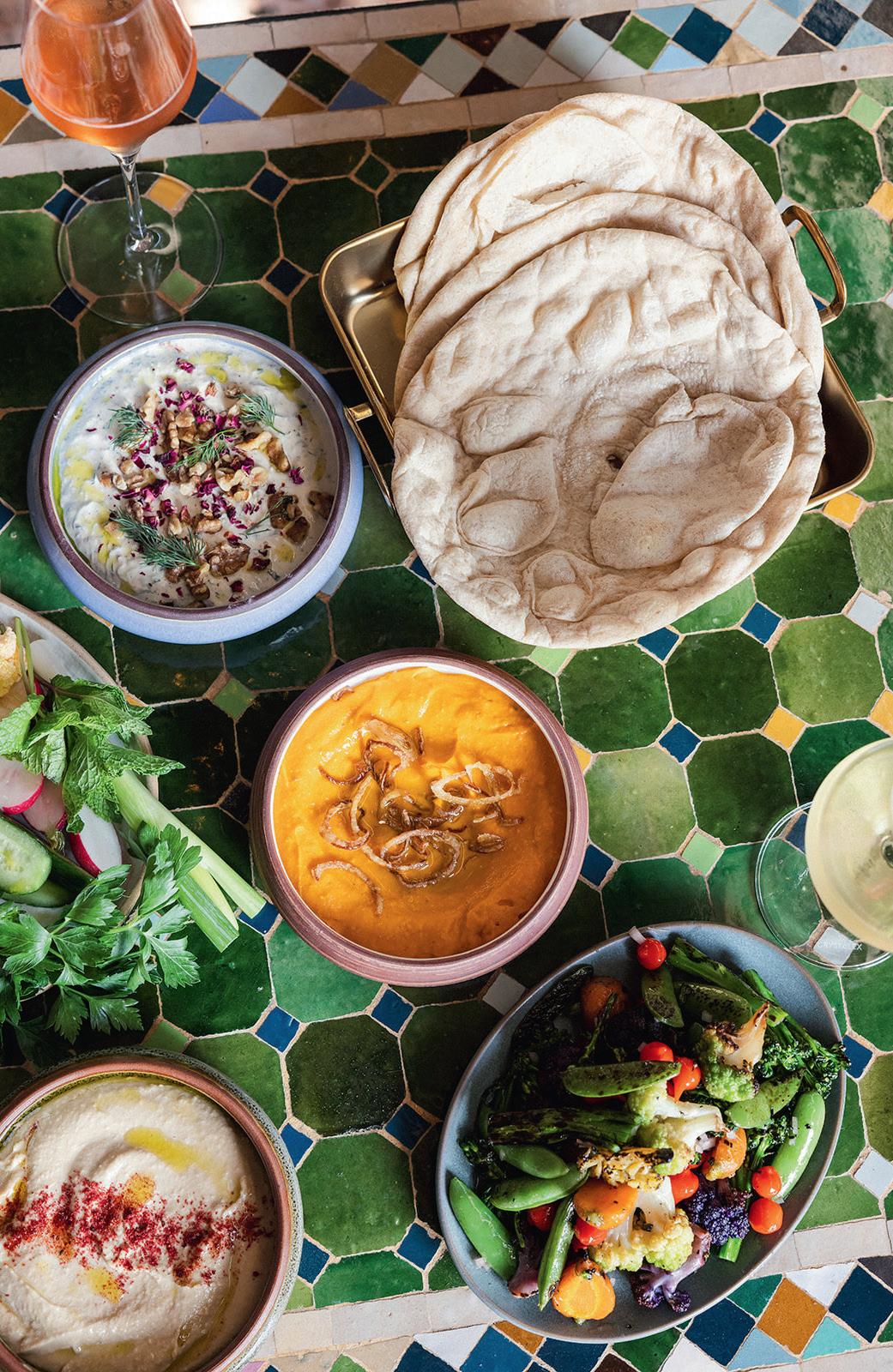
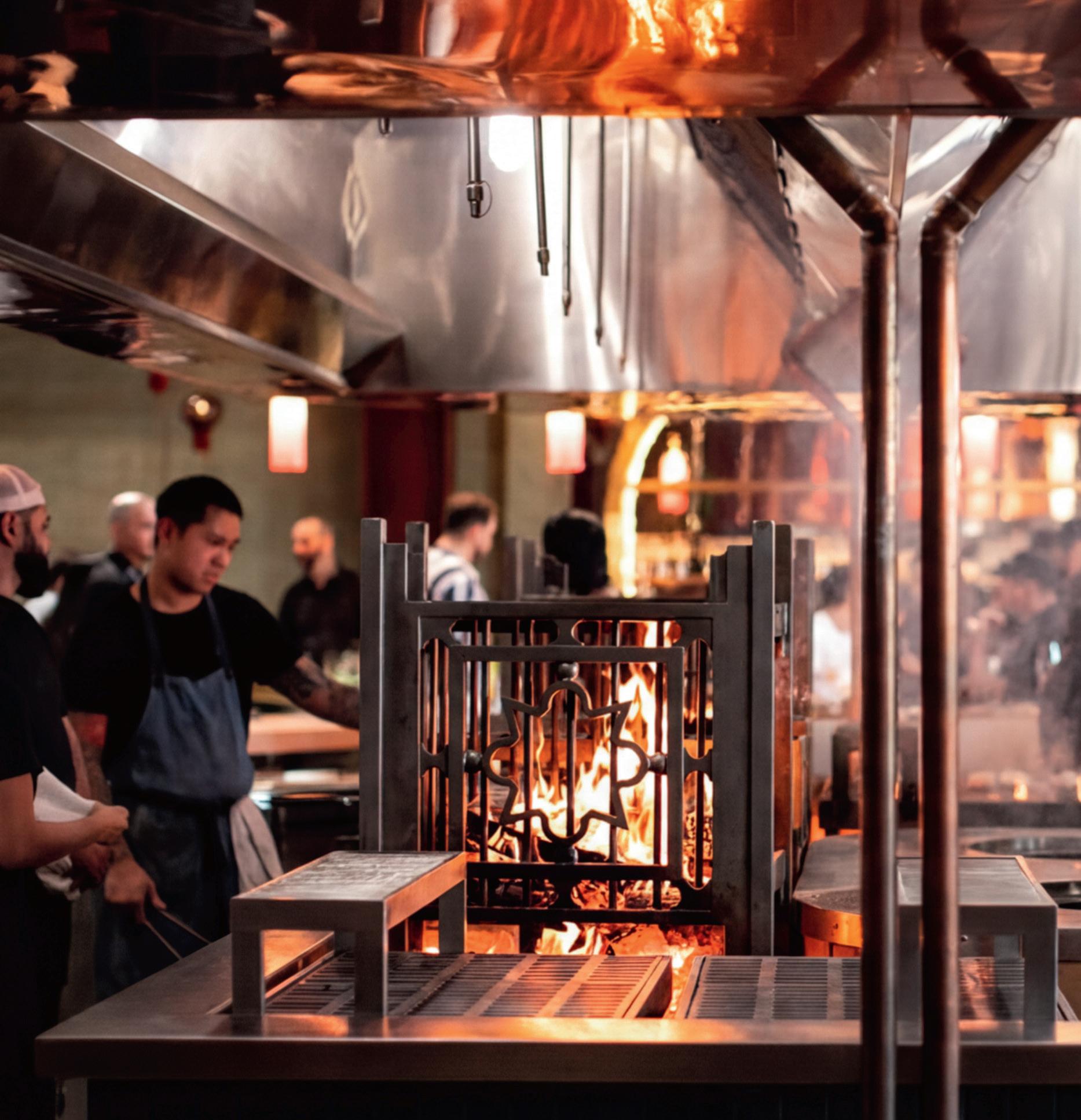
A short drive south of Koreatown in West Adams, Maydan Market (maydanmarket. com) is gaining attention. “Pronounced ‘MY-dahn’, ‘MAY-dahn’ or ‘MI-dan,’ the word is used throughout the Eastern Mediterranean, Central and South Asia, the Caucasus, Eastern Europe and North Africa,” writes the founder, chef Rose Previte, in her book of the same name. “It means the same thing everywhere: a public meeting place, often in the middle of a city. A space for people to come together as a community to celebrate, to mourn, to rebel.” There’s plenty of causes for celebrating at this cathedral-like warehouse where a diverse gathering of culinary concepts, from Mexican to Thai, alongside Middle Eastern restaurant Maydān, are anchored by a central woodfired hearth. Designed for sharing, Maydān’s menu features house-baked tone bread, charred vegetables, whole fish and meats meant to be torn, dipped and passed around. The Moroccan-style interior design adds to the ambience, with lush foliage hanging from the vaulted ceiling, vibrant tiles and throws and rugs sourced from souks. Block out a few hours and arrive hungry – you’ll want to linger here.
Edited by Katherine Green

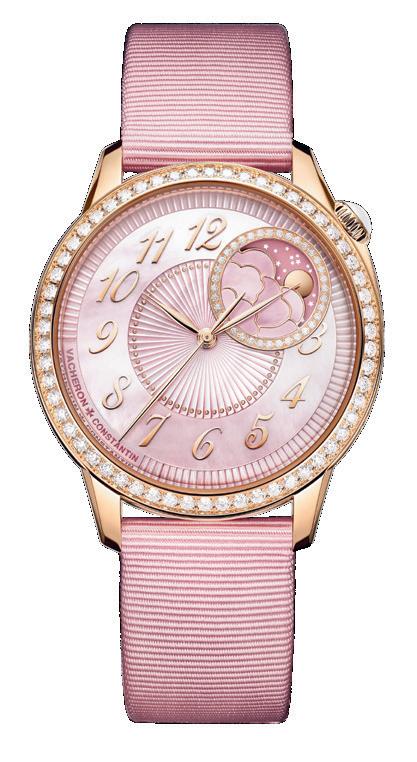
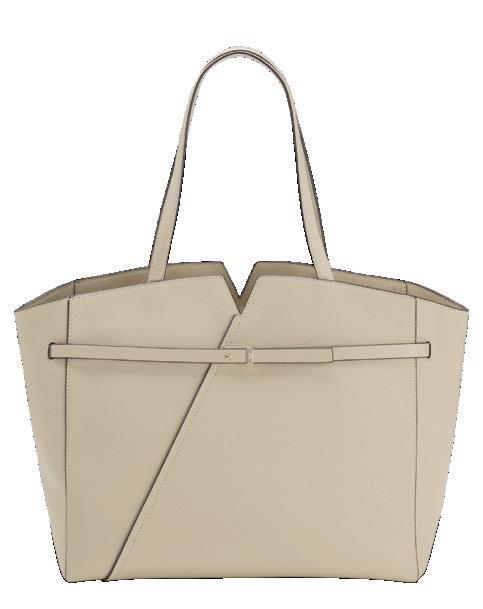
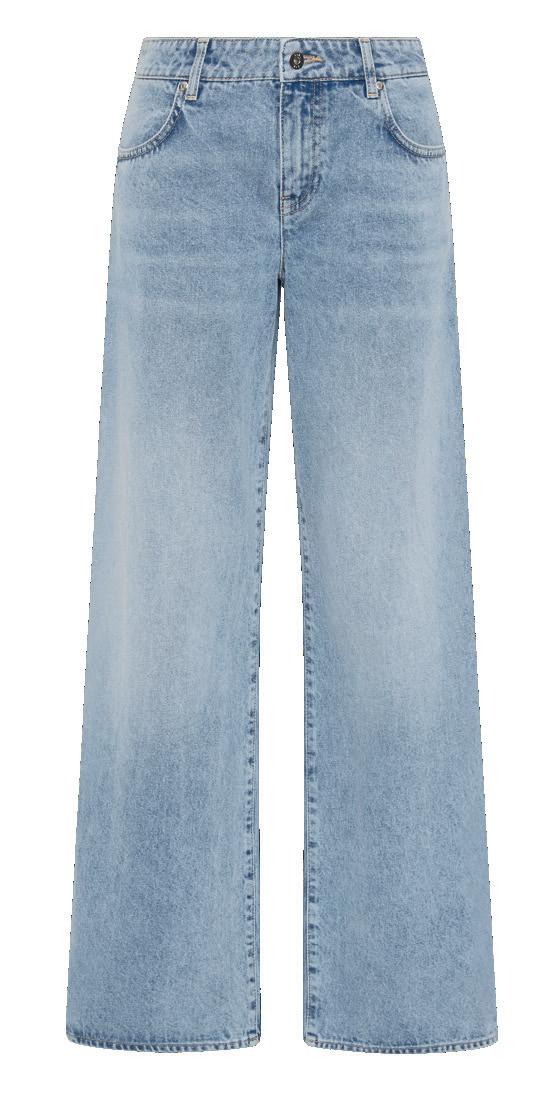
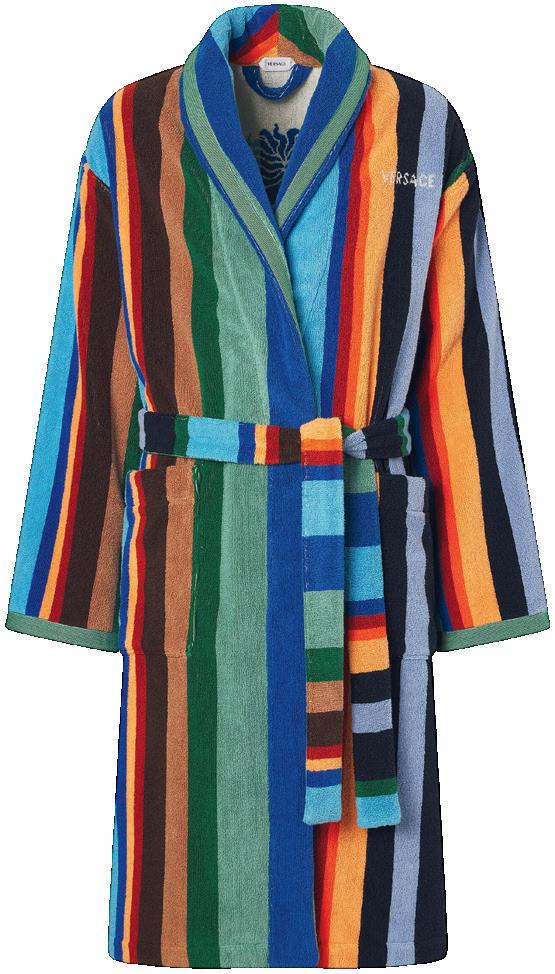
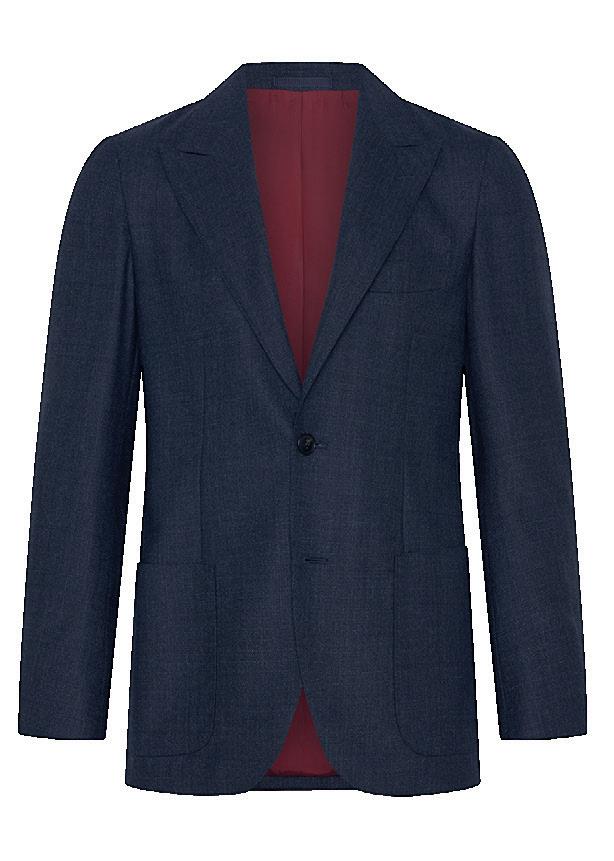
1. Gant sneakers, $300, from David Jones, davidjones.com
2. Assembly Label cap, $40, assemblylabel.com
3. King Living stool, $652, kingliving.com.au
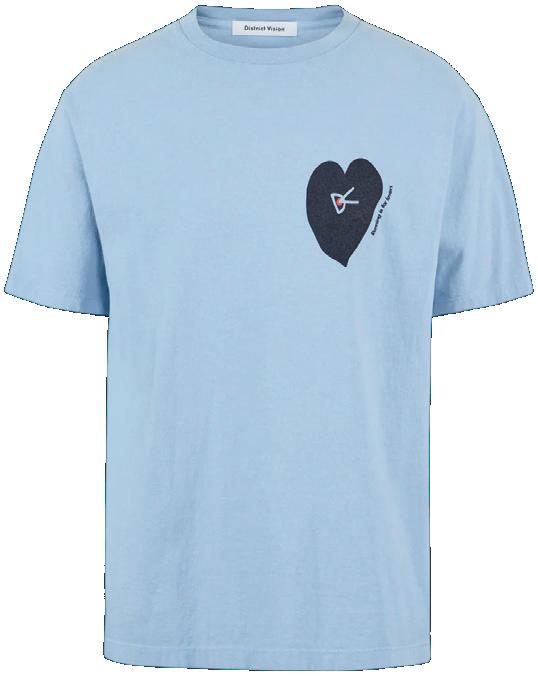
4. District Vision T-shirt, $180, districtvision.com

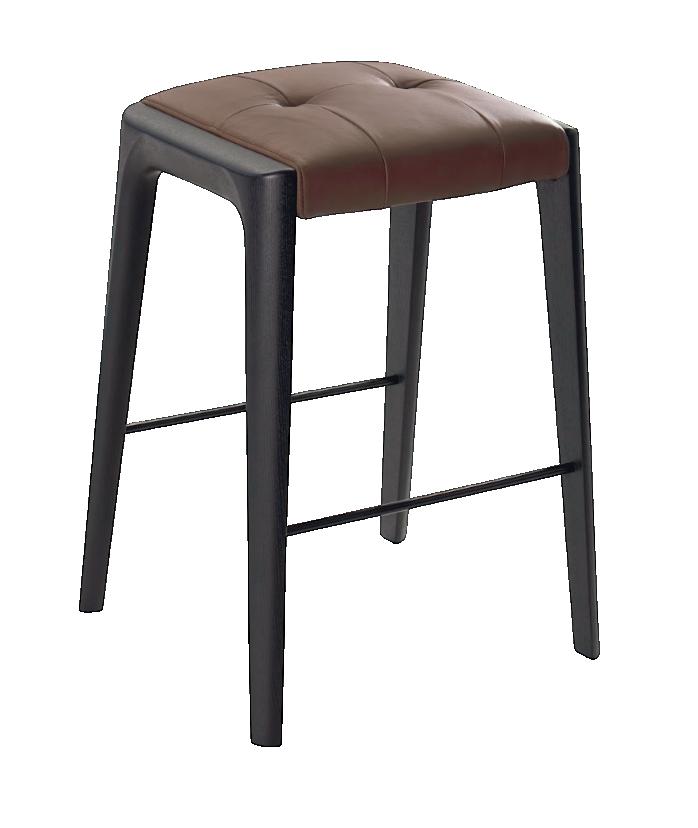
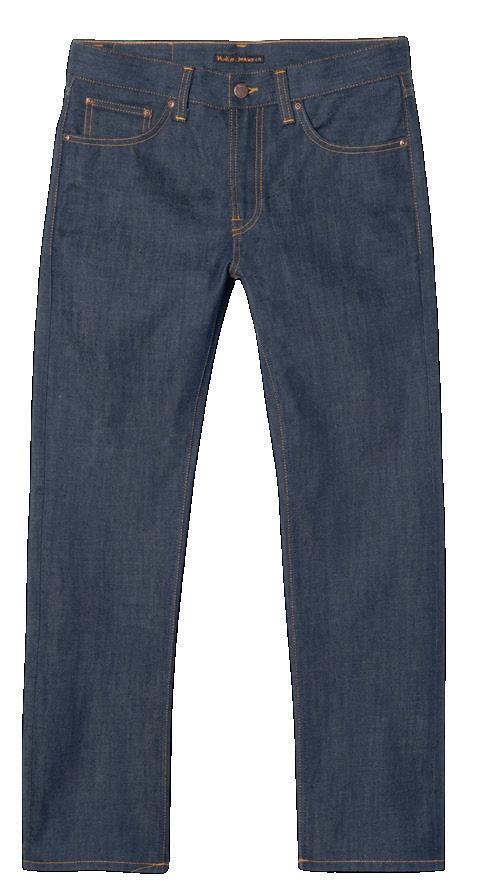
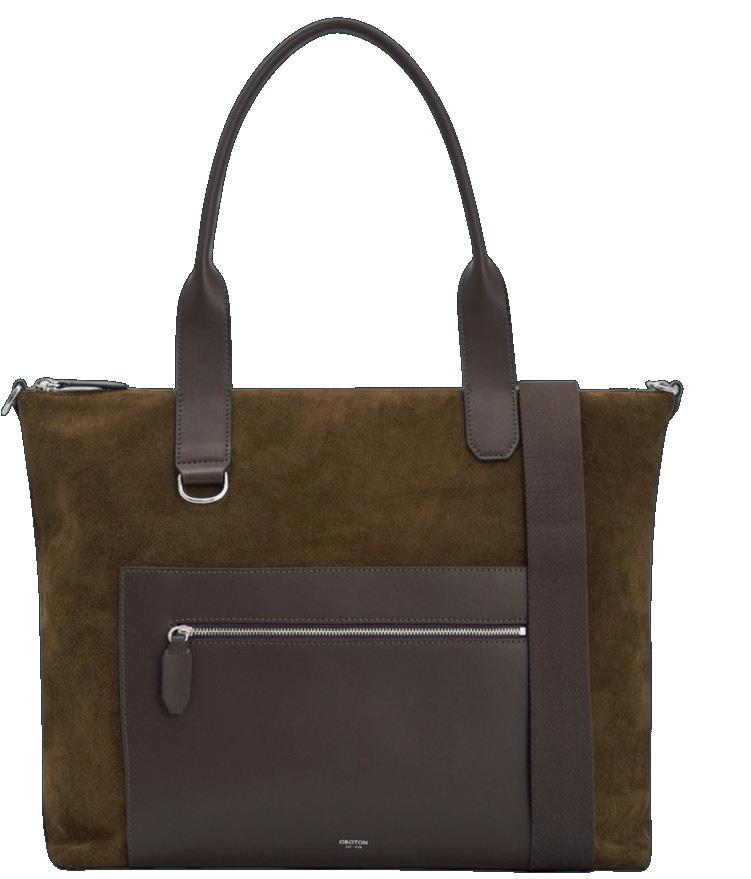
5. Oroton tote, $599, oroton.com
6. Nudie Jeans Co. jeans, $250, nudiejeans.com
7. Transparent speaker, US$720, transpa.rent



Story by Virginia Jen
Photography by Sara Maiorino
cultural events and a marketplace where pieces can be purchased ethically and often directly from the artists.

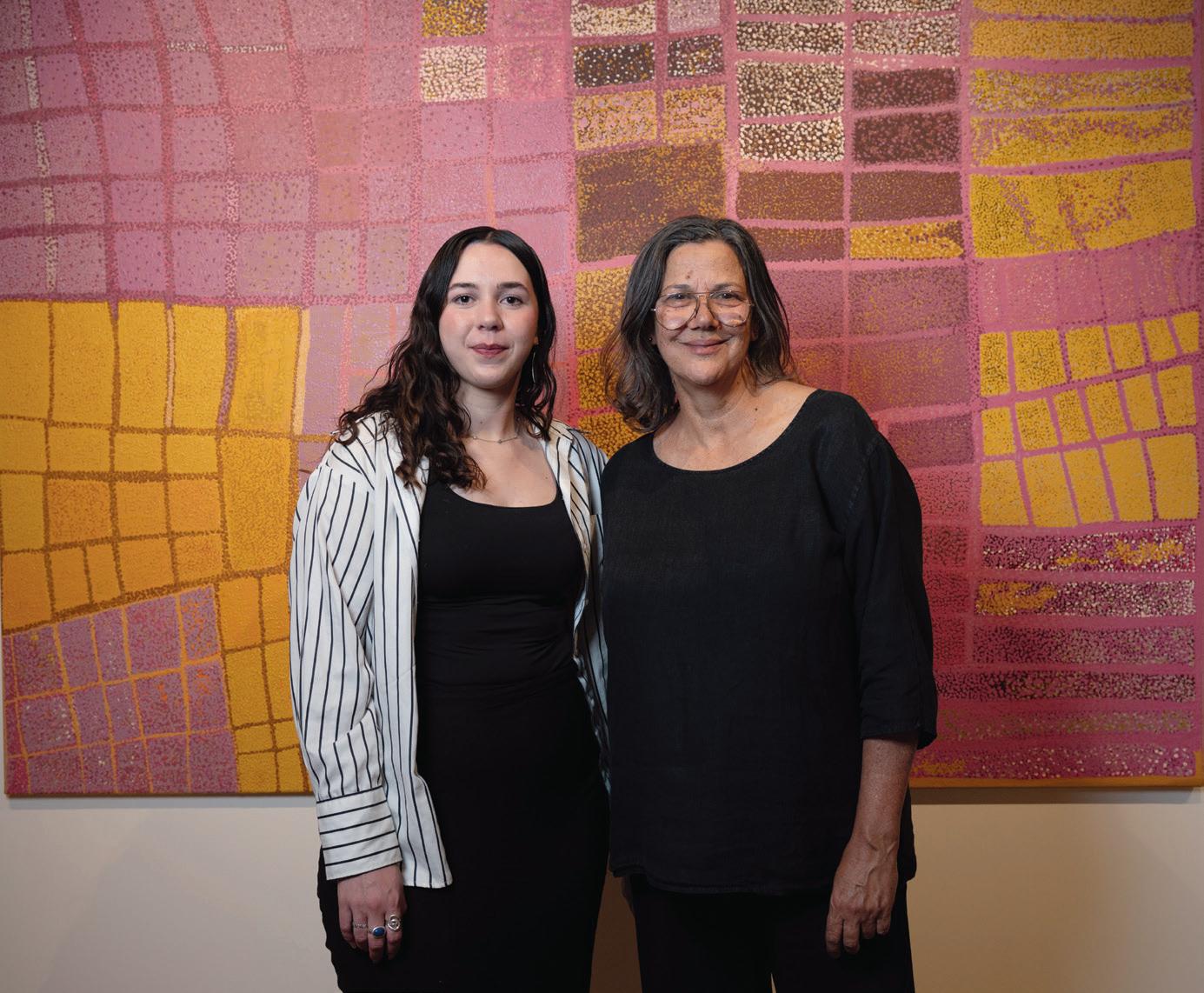
“Some of our members are living in communities identified as the remotest in Australia,” says Arrernte and Kalkadoon woman Hetti Perkins (above, right). The co-curator of Desert Mob (desertmob.com), the Aboriginal-owned and -governed art fair that displays works from more than 30 Central Australian art centres, says pulling the annual event together is a collective effort. “We go to the art centres where we can; others send us images and ideas… There are a lot of Zooms, messages and phone calls.”
This year, Perkins and her cocurator, Luritja, Warumungu and Yawuru woman Aspen Beattie (above, left), are collaborating for a fourth time on the event’s 36th iteration, which opens in Alice Springs (Mparntwe) on Arrernte Country from 10 September to 25 October. In addition to the exhibition, the program includes artist talks,
For Beattie, it’s a privilege to work with Perkins, who was recently recognised with Creative Australia’s Red Ochre Award for Lifetime Achievement in Cultural Advocacy and Leadership. “I'm always impressed when I see the way Hetti responds to and works with artists closely,” says Beattie. “The relationships she builds so easily, how charismatic and warm she is – that’s what I’m trying to be.”
Thousands of art-lovers are expected at Desert Mob to see more than 200 works by emerging and established First Nations artists, including Judith Pungkarta Inkamala, Lizzie Trew and Doreen Chapman, many of whom will travel long distances to be there.
“Most of the artists, their friends and family come,” says Perkins. “It’s a place where they feel comfortable and welcome with their own work and there are lots of other communities to catch up with.”
lady pot (2026) by Judith Pungkarta Inkamala of the Hermannsburg Potters from Western Arrernte Country, Northern Territory
Exhibition highlight
This year, the Vincent Lingiari Art Award exhibition (17 August to 18 October; desart. com.au) will take place at the Araluen Arts Centre in Mparntwe with works responding to the theme Our Country, Our Culture: 50 Years of Land Rights. In 1966, stockman and Gurindji man Lingiari led a nine-year strike at Wave Hill Station, which resulted in the leasing of pastoral land to the Gurindji people, the Traditional Owners.






Story by Felix Scholz
A timekeeper’s quest for an endless summer takes cues from a gelato cart.
For nine years, Hublot has released a limited-edition capsule known as the Big Bang Summer Collection. Created to highlight the Swiss watchmaker’s material expertise – the house is known for blending unexpected mediums –each timepiece is defined by a striking and often unconventional colourway. Just as temperatures are dropping in the Southern Hemisphere, the line-up of sunny shades serves as a reminder of warmer climes. While the tones may feel impulsive, the material science behind them is anything but. Producing consistent and diverse colours in ceramic can be challenging because the extreme heat required to harden the ultra-tough material destroys or taints most pigments. But Hublot has a strong track record in this technique, from vivid reds, bright blues and deep oranges through to softer tones.
This year’s summer take on the Hublot Big Bang is an exploration of pastels. In the multi-coloured 2026 model, sky-blue, bright white, mint-green and bubblegum-pink ceramic elements highlight the modularity of the case design. The brand is famous for its bold statements so the palette chosen for this limited edition is surprising but the silhouette should be familiar. The 42-millimetre case is the maker’s mainline sports chronograph with its signature openwork dial echoing the case’s colours, while giving a glimpse of the HUB1280 Unico chronograph calibre inside. hublot.com
Story by Noelle Faulkner
Style, tech and plenty of power announce this newcomer on the Australian plug-in-hybrid scene.
Denza who? Fair question. A newer entrant to Australia, Denza is BYD’s premium brand, similar to what Lexus is to Toyota. This is the B5, a five-seat, plug-in hybrid SUV with serious off-road credentials and luxury accoutrements. It’s one of two Denza models to debut in Australia this year, making us among the first to see the name on our roads. Is this BYD doing luxury? Correct. With two variants, this SUV has all the technology and value that Australians have come to expect from the Chinese manufacturer but with more extras thrown in. Such as? Inside, you can expect soft leather covering more than 90 per cent of the
spacious cabin, stylish aviation-like crystal-look switches and a seven-litre fridge/hotbox that can keep ice-creams frozen at -6°C or hot food warmed to 50°C. There’s also an 800W 16-speaker Devialet sound system, heated and ventilated front seats (and heated rear seats as standard on the entry-level B5), clever adjustable cup holders for different-sized vessels, and wireless smartphone connectivity. Plus, it has a slew of safety features – high-definition surround view cameras, forward and rear cross traffic monitoring, eight combined front and rear parking sensors, intelligent cruise control – the list goes on. What’s the performance like? Pretty major for an under-$80K 4WD SUV. The Denza’s powerful plug-in Super Hybrid
setup consists of a 1.5-litre turbocharged four-cylinder petrol engine, dual electric motors and a 31.8kWh blade battery (BYD’s own lithium iron phosphate unit). This results in a combined output of 400kW/760Nm in power and torque, a 0-100km/h dash of 4.8 seconds (which, for an off-roader this size, is impressive), about 90 kilometres of pure electric range and a towing capacity of three tonnes. It’s an off-roader, too? You bet. How does low-range gearing, front and rear mechanical locking differentials, up to 16 drive and terrain modes that cover everything from sand to rock, ground clearance of 220 millimetres and wading depth of 700 millimetres all sound? Like it’s ready to go anywhere. Yes and in style. denza.com.au

Story by Genevra Leek
Strong female energy is getting the attention it deserves in the city that never sleeps.

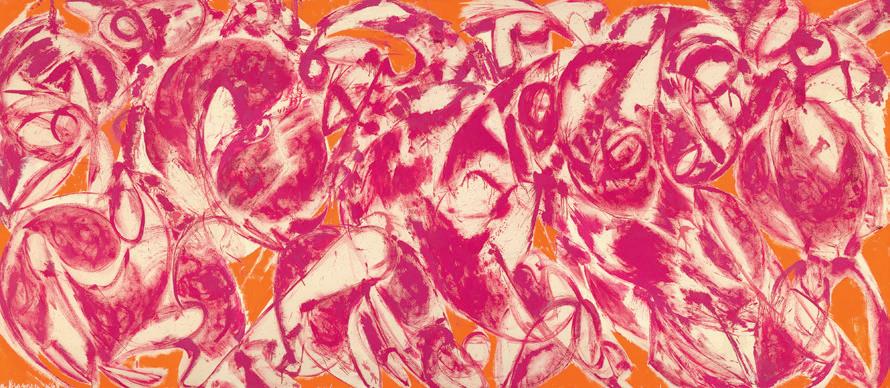
It was a bracelet designed in 1962 and discovered in the archives that led to the creation of HardWear by Tiffany (tiffany. com.au). With its bold 18-carat yellowgold links and dusting of pavé diamonds, this modern interpretation is said to capture the strength and attitude of New York City, where the design first took form. But it also embodies the strength of women, a theme that’s rightly being celebrated across multiple projects in the Big Apple and beyond.
On the ground floor of The Twenty Two New York hotel in Union Square, Cafe Zaffri (cafezaffri.com) serves contemporary Levantine cuisine by sisters Jennifer and Nicole Vitagliano, executive chef Mary Attea and pastry chef Camari Mick – the quartet behind acclaimed restaurant The Musket Room. Meanwhile, in Downtown Manhattan, the boutique Now Now Hotel (staynownow.com) features 180 Sleeper Cabins created for solo travellers by Islyn Studio, an award-winning, woman-owned and -operated design firm.
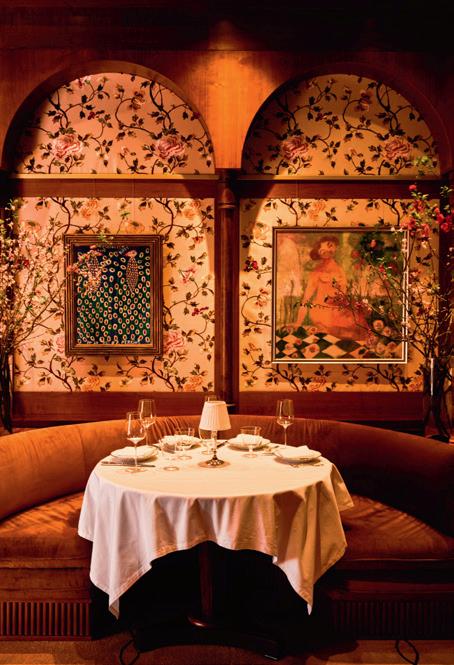
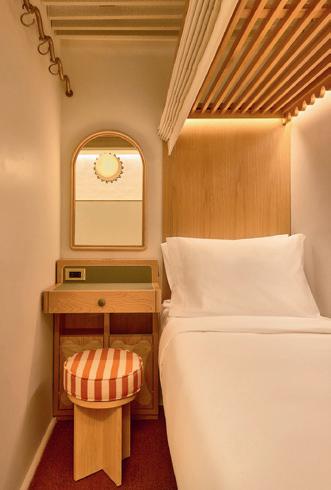
Coming in October, The Metropolitan Museum of Art (metmuseum.org) presents the exhibition Krasner and Pollock: Past Continuous, which gives equal billing to two key American Modernists, Jackson Pollock and his wife, Brooklyn-born Lee Krasner, whose reputation was historically eclipsed by her husband’s.
Not heading Stateside? Then be sure to catch Suzie Miller’s new play, Strong is the New Pretty, which charts the formation of the AFLW and premieres at the Brisbane Festival (brisbane festival.com.au) in September.


Arriving in Australia late 2026.
3 points for every $1 spent^
Find style in the sunshine at these new urban Australian waterfront stays – and it’s all possible with Qantas Points.
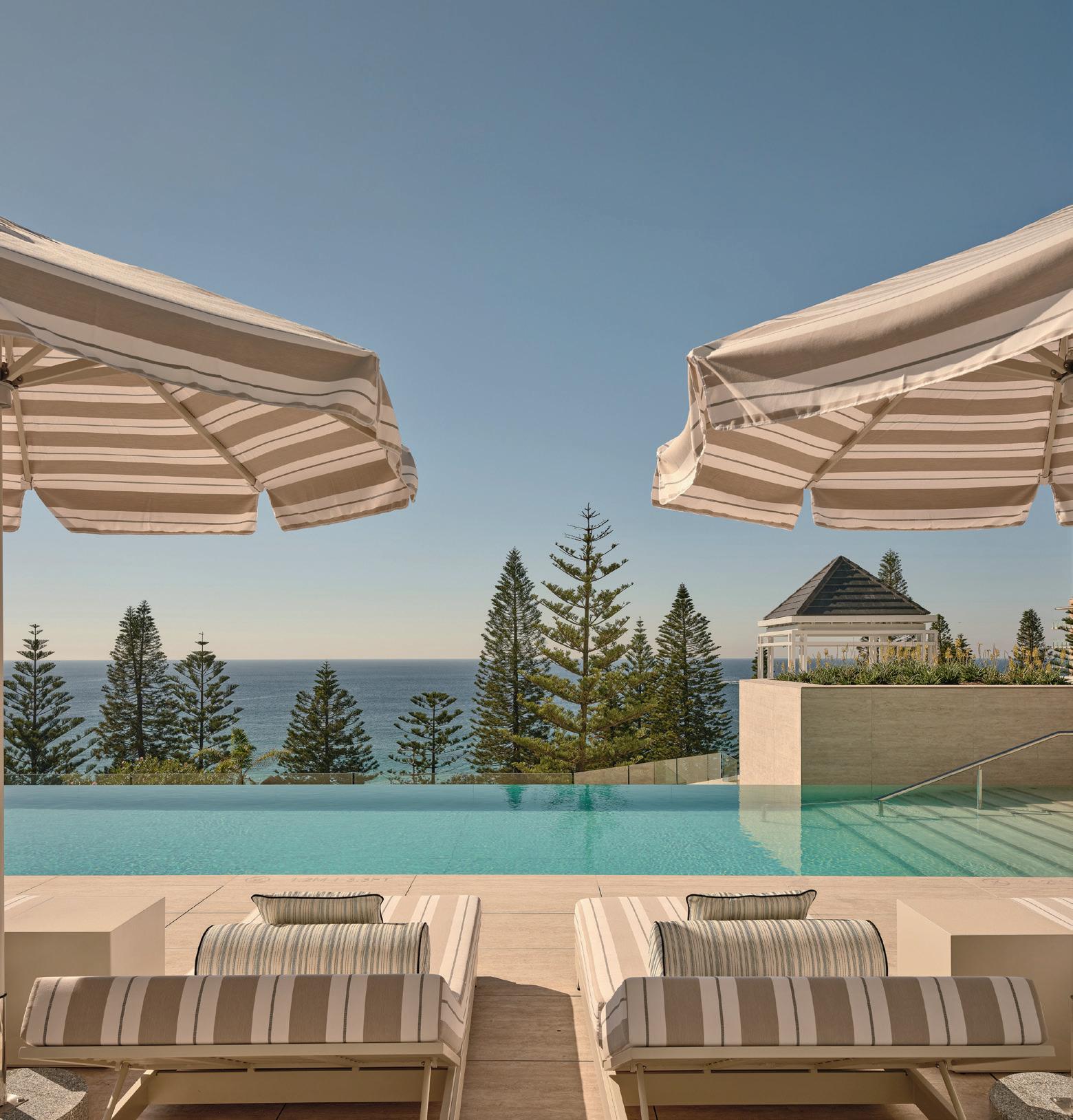
Sparkling water views and stellar seafood from a celebrity chef
Why stay here: Fresh from a multi-milliondollar renovation, this 198-room hotel is footsteps from Coogee Beach. Worldrenowned chef Rick Stein has chosen the InterContinental as the site of his third Australian restaurant. The hotel also has an ocean-facing infinity pool surrounded by sunloungers and cabanas, ideal for sunset cocktails. Access premium facilities at Club InterContinental on the leisure deck. What to know: A treatment at on-site Éliva Spa begins at the Signature Oil Bar, where guests are introduced to personalised oil blending rituals. Earn or use points on every booking with Qantas Hotels & Holidays.
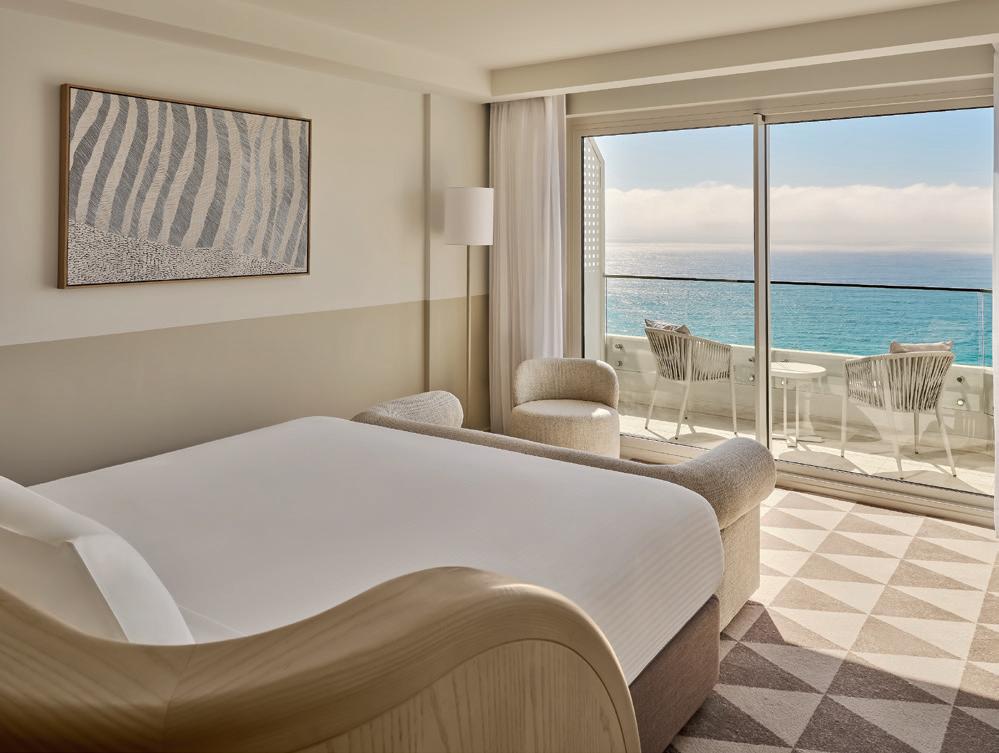
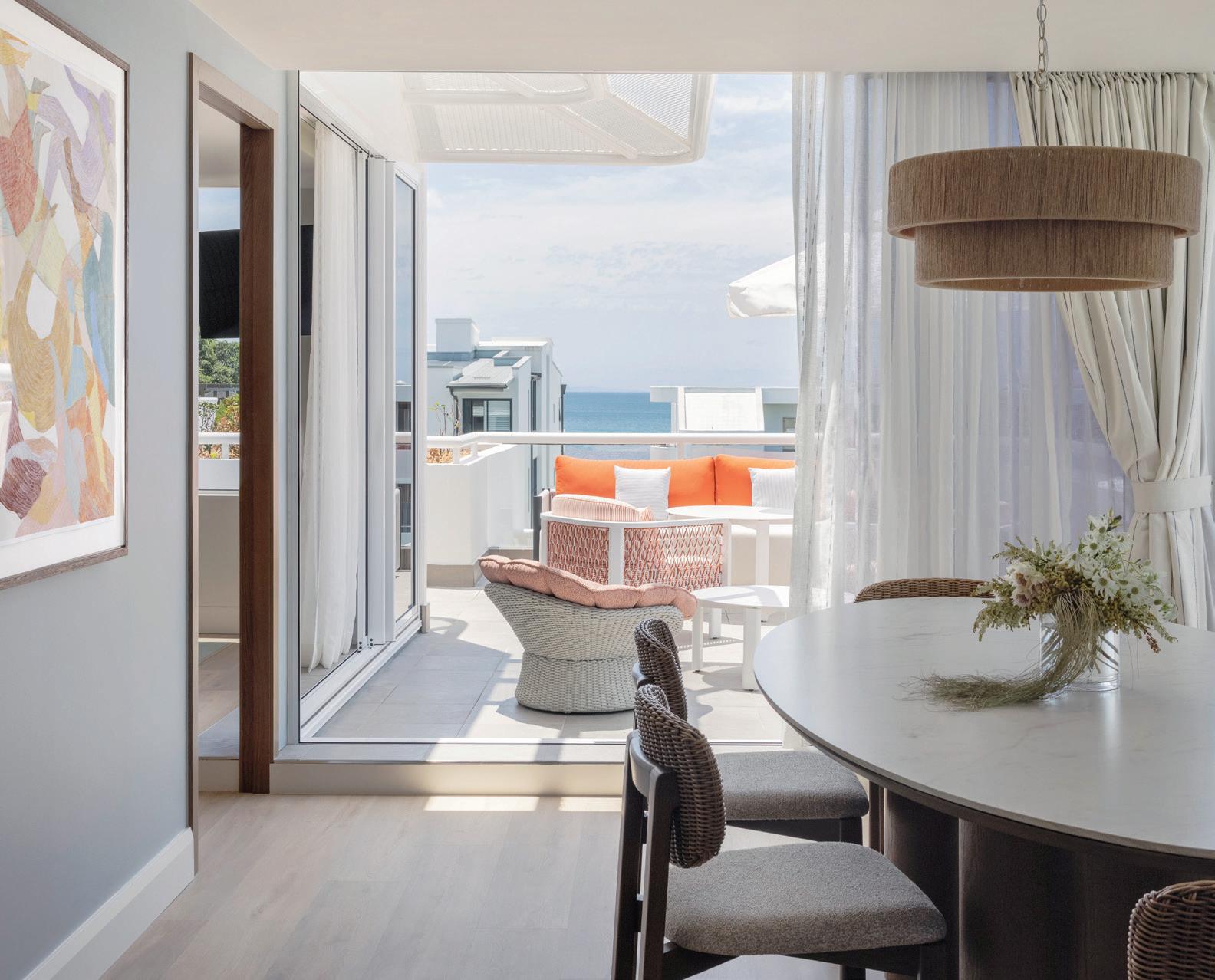
voco Darwin Suites by IHG Over-the-sea sunsets from spacious, apartment-style suites
Why stay here: It doesn’t get more “Darwin” than watching the sun sink over the Timor Sea, glass of wine in hand. And that’s exactly what’s on offer in the oceanfront balcony rooms at the new voco Darwin Suites. The property is within walking distance of the city’s premier attractions, including Mindil Beach and its popular sunset markets, the Entertainment Centre and the Crocosaurus Cove wildlife park. Best of all, each apartment-style suite has its own kitchenette so you can grab one of the city’s famous laksas for a relaxed night in.
What to know: The Aviary Bar & Brasserie next to the lobby is a great spot for a light dinner or afternoon cocktails. Locals recommend the Aperol spritz.
Earn or use points on every booking with Qantas Hotels & Holidays.
Elysium Noosa Resort – MGallery Collection River vistas on one side, ocean breezes on the other
Why stay here: Its position in the middle of bustling Hastings Street, between the Noosa River and the Pacific Ocean, is just one reason why the 175-room Elysium has cemented itself as Noosa’s most glamorous jewel. It has also earned that title thanks to its in-house Cibaria Noosa restaurant, which serves shareable dishes from top Italian restaurateurs Anna and Alessandro Pavoni. Here, cocktail hour happens beside the pool and in it – the azureblue lagoon features Noosa’s only swim-up bar. And you can take your stay to the next level of relaxation with a massage and facial at Elysium Spa. What to know: There’s no doubt that the rooms and suites overlooking the water have stunning views but don’t dismiss the Wellness Suite – it features an infrared sauna, magnesium spa and national park views.
Earn or use points on every booking with Qantas Hotels & Holidays.
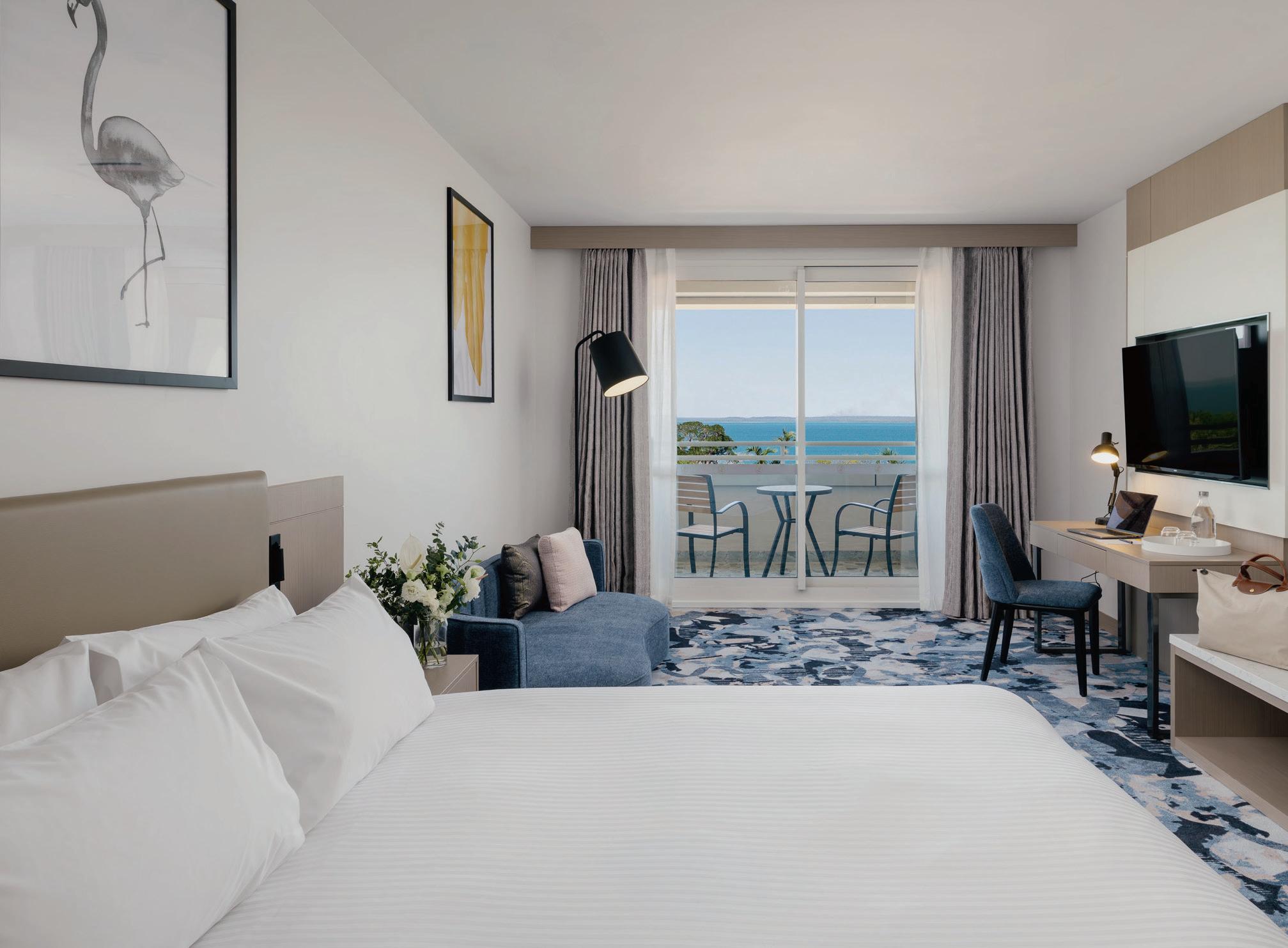
Every stay is better with points. Search Qantas Hotels & Holidays to book and earn today. Prefer to book over the phone? Call our team of travel experts on 13 70 66 (no additional fees apply)




DAWN
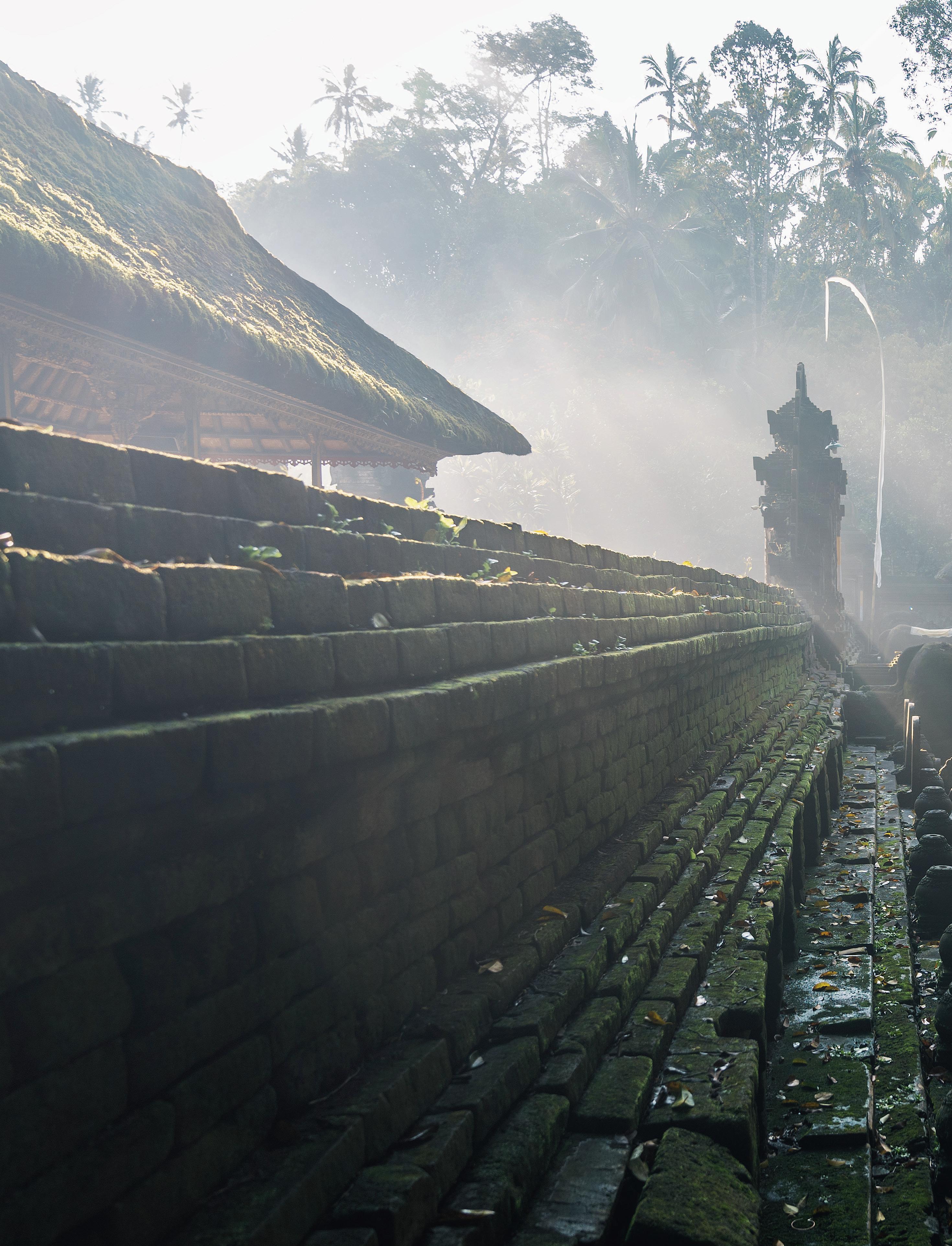
STORY BY RACHEL LEES
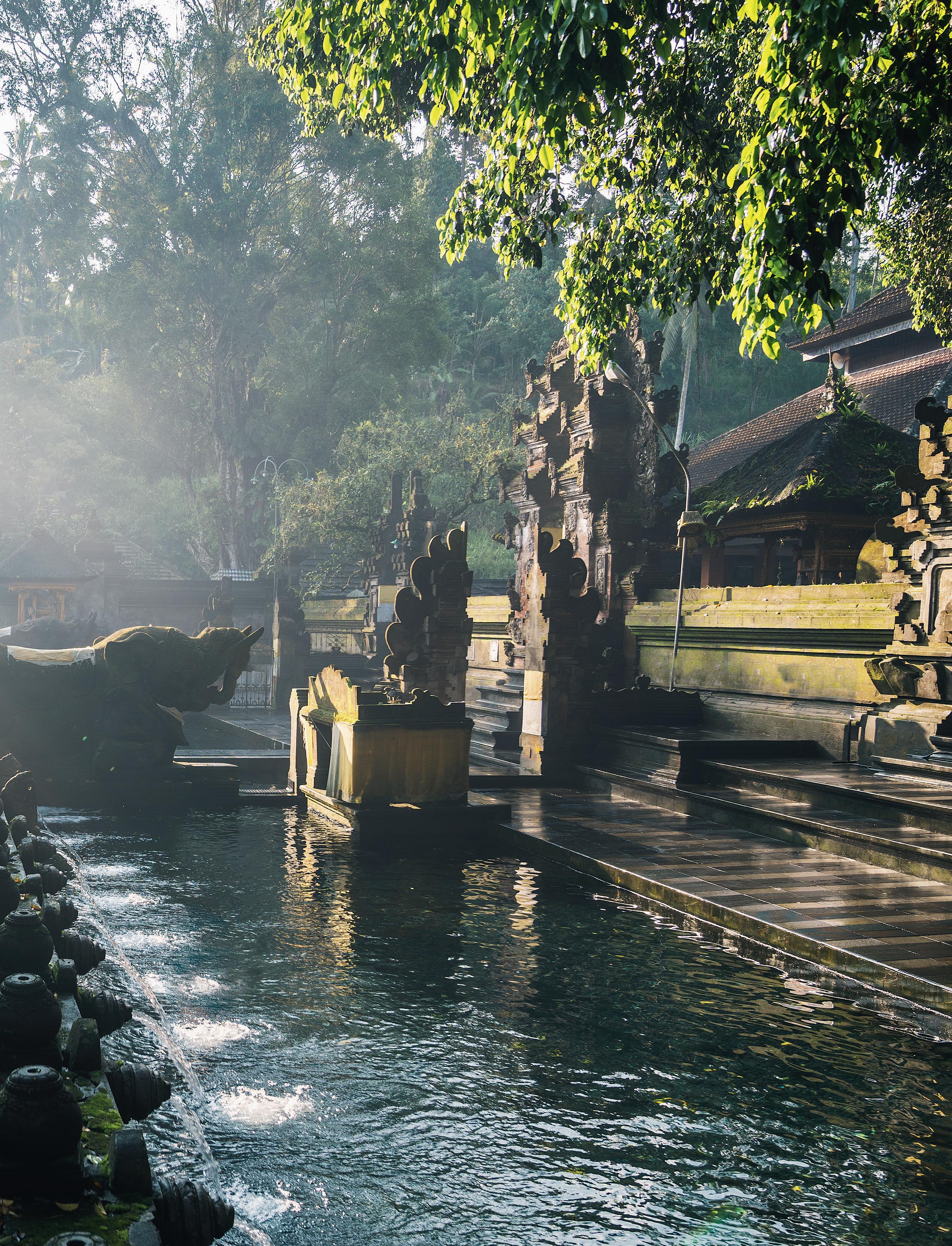
Incense drifts through the stillness of the morning, its gauzy smoke trail guiding my path through the temple. As I reach the ancient stone pool, where grey carp ripple in glassy water, the leaves of the surrounding banyan trees glow with sunlight. Swathed in an emerald-green sarong, I slip into the sacred pool and move along a series of wall fountains, bowing beneath each one as cool water rushes over my head. I’ve come to Pura Tirta Empul (tirtaempultemple.com), one of Bali’s Hindu temples, for a purification ritual known as Melukat – and there isn’t another soul in sight.
A 40-minute drive north of Ubud, Tirta Empul translates to “holy spring” and its reputed healing properties have drawn pilgrims seeking renewal and spiritual cleansing since the 10th century.
Then 20 years ago, a new wave of visitors started to arrive after American author Elizabeth Gilbert released her genredefining travel memoir Eat Pray Love, inspiring a generation of travellers in search of meaning and balance.
The rise in wellness travel since has seen the temple’s (and Bali’s) popularity soar. Now, just after sunrise, before it opens and the crowds gather, guests of Amandari (qantas.com/hotels/ amandariubud), a luxury resort built above Ubud’s Ayung River Gorge, are granted exclusive access.
Opened in 1989, the property, which offers personalised multi-day retreats, was designed to reflect the look of a traditional Balinese mountain village: its 32 grand pavilions and villas feature alang-alang-thatched roofs, Kamasan tapestries and sunken marble
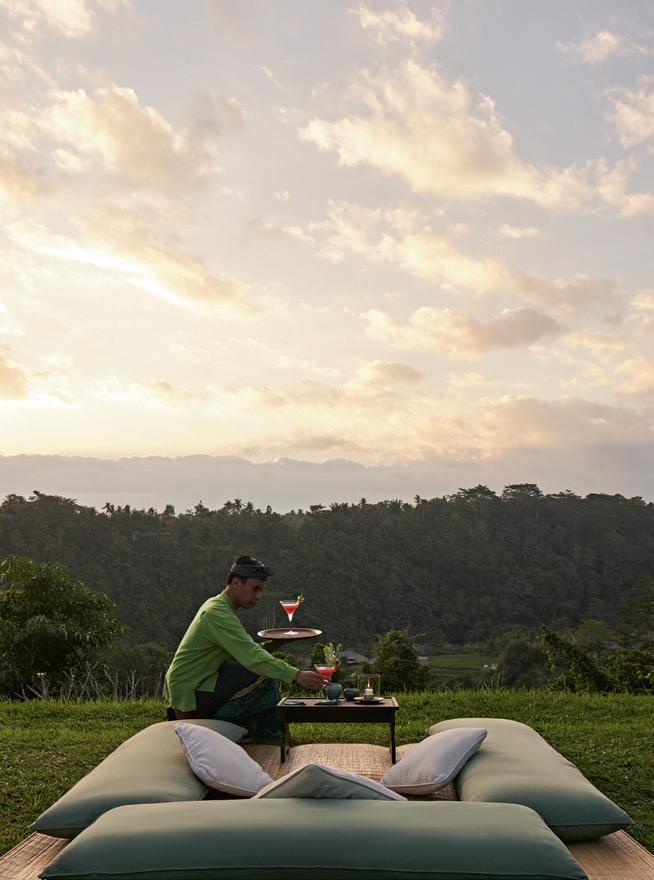
bathtubs. A stay that seems to defy time, Amandari sets the benchmark for resorts on the island. The hotel’s infinity pool is said to have been the first in Bali, its organic form echoing the shape of rice paddies. “Amandari” means “peaceful spirits” and just being here encourages you to slow down. Be present. Breathe deeper.
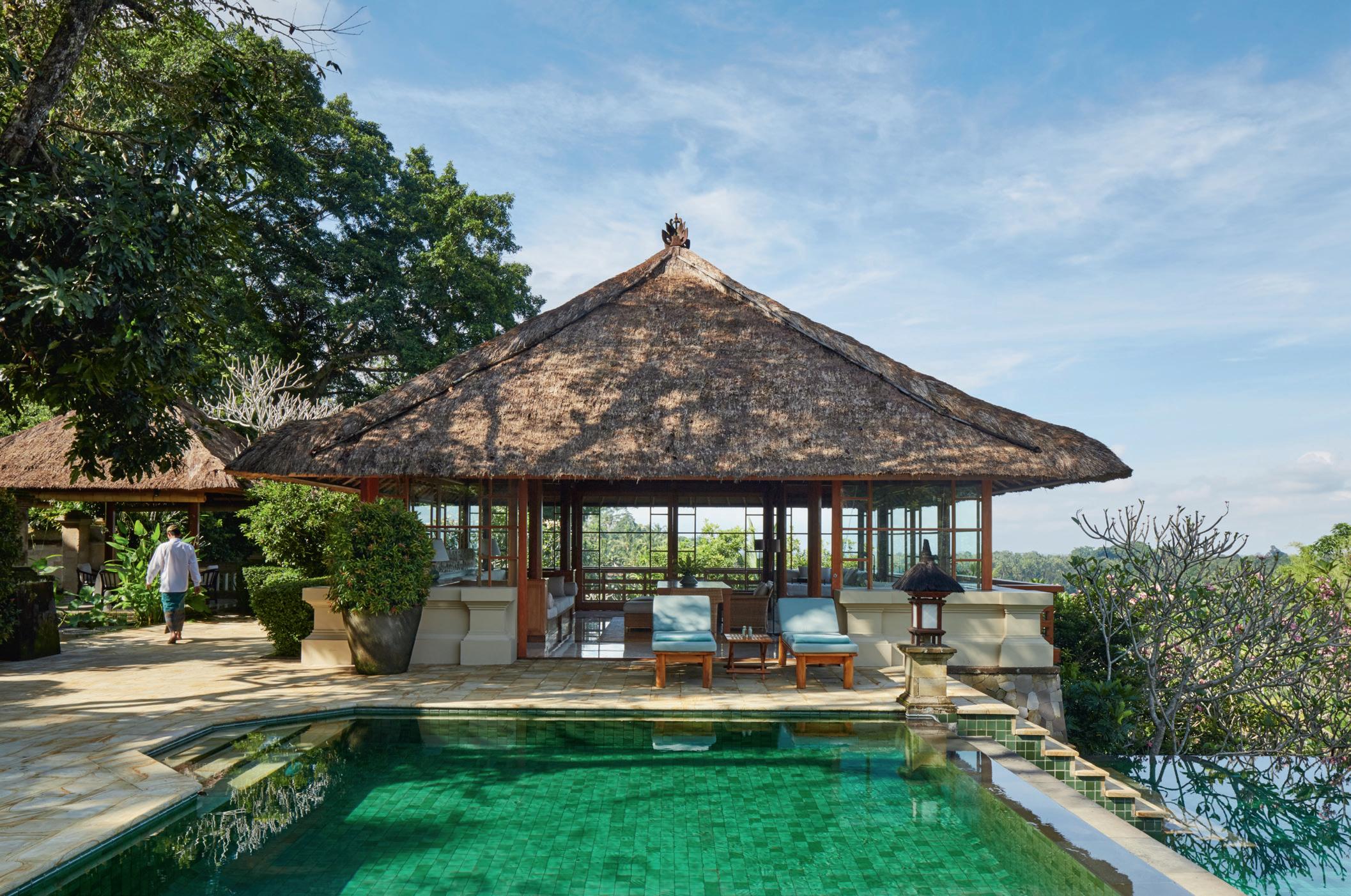
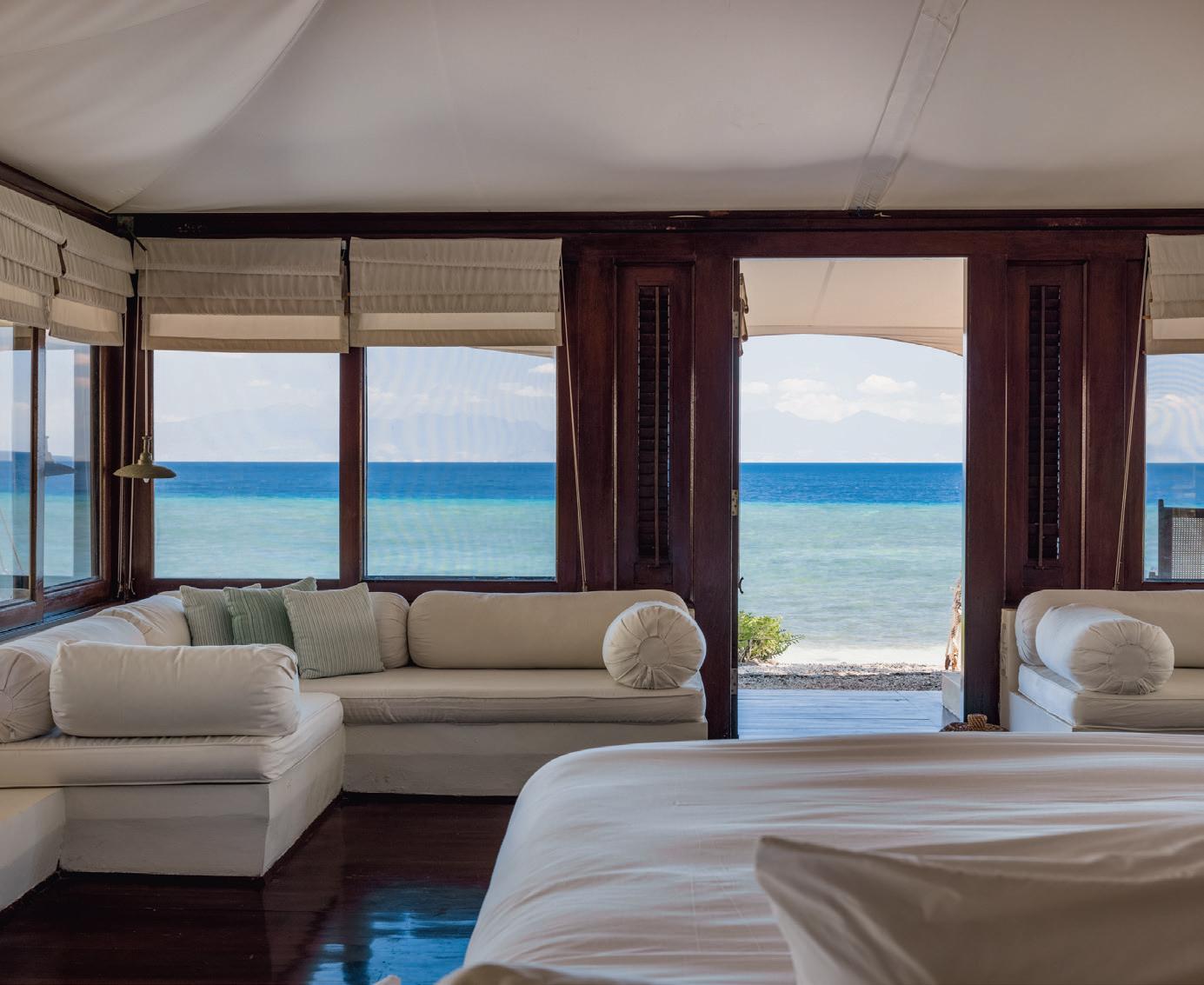
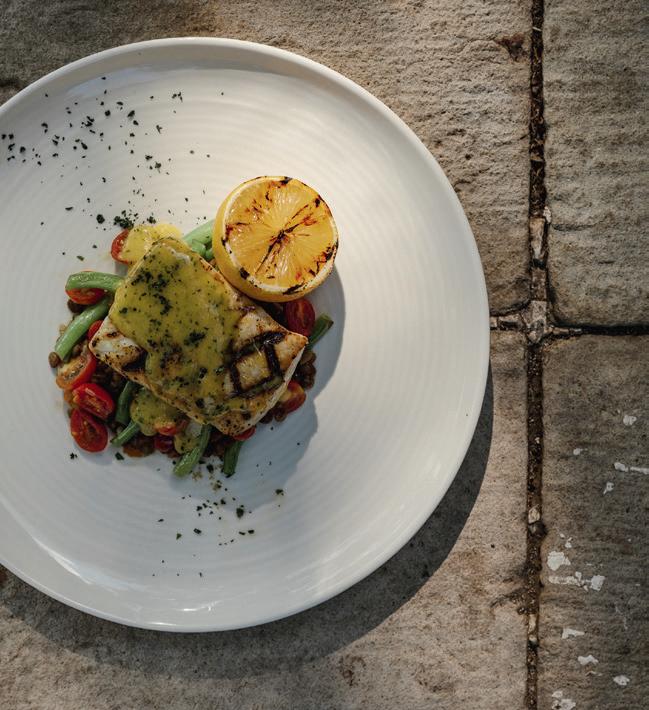
Transparent turquoise water and schools of vivid blue-and-yellow-striped sergeant majors surround me as I arrive at Moyo Island, a 50-minute boat ride across the Flores Sea from Sumbawa Besar (an hour’s flight from Denpasar). Most of Moyo’s 32,000 hectares are designated national park and protected reserves, as well as being home to Amandari’s sister property Amanwana (qantas.com/hotels/amanwanamoyo), which means “peaceful forest”. The sole five-star resort on the island, it comprises 17 luxurious tents dotted throughout tropical forest along the beach, where native rusa deer and macaques roam. The Jean-Michel Gathy-designed camp,
which has hosted celebrities including Mick Jagger and the late Diana, Princess of Wales, forms the calming backdrop for luxuriant morning swims, leisurely afternoon hikes and guided sunset meditations. At the restaurant, a thatched pavilion overlooking the ocean, there are warming bowls of bobor bayam (spinach cooked in creamy coconut milk soup) and fresh-off-the-boat seafood such as grilled red snapper with sautéed tomato, olives and capers.
Over breakfast on the lawn on my first full day, I’m rewarded with the sight of blacktip reef sharks feasting along the shoreline. It’s the ideal viewpoint; if I were in the water, the timid creatures would scatter. In the spa tent later that day, thunder rumbles overhead and black-naped orioles swirl as my therapist, Dona, who was born and raised on Moyo, conjures ancient magic (and lemongrass oil) to relieve me of aches others have failed to shift.
At the remote Mata Jitu waterfall, I float on a li-lo in a plume of incense. Amanwana’s resident healer, Frendy
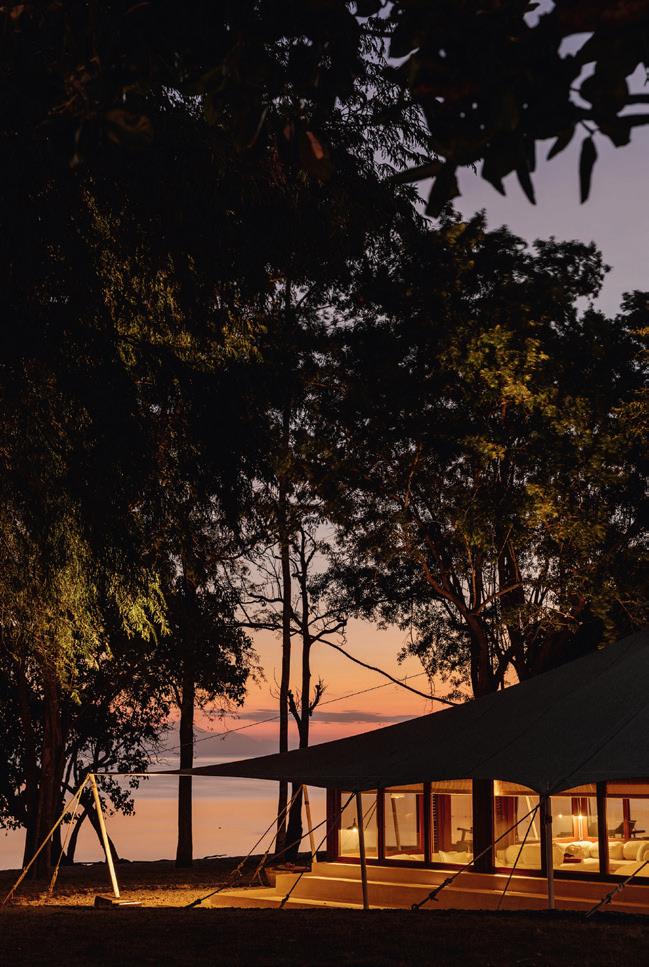
Agung Dewanta, chants quietly as he taps a metal singing bowl, sending vibrations across the clear green water in a sound bath designed to quiet the mind and restore inner clarity. As it comes to an end, light rain drifts through the canopy, pitter-pattering on fern leaves and the surface of the water. On my way back to the jeep and the cosseted warmth of my stay, I wander, bare feet on damp earth, soaking up these last moments of stillness in the rainforest.
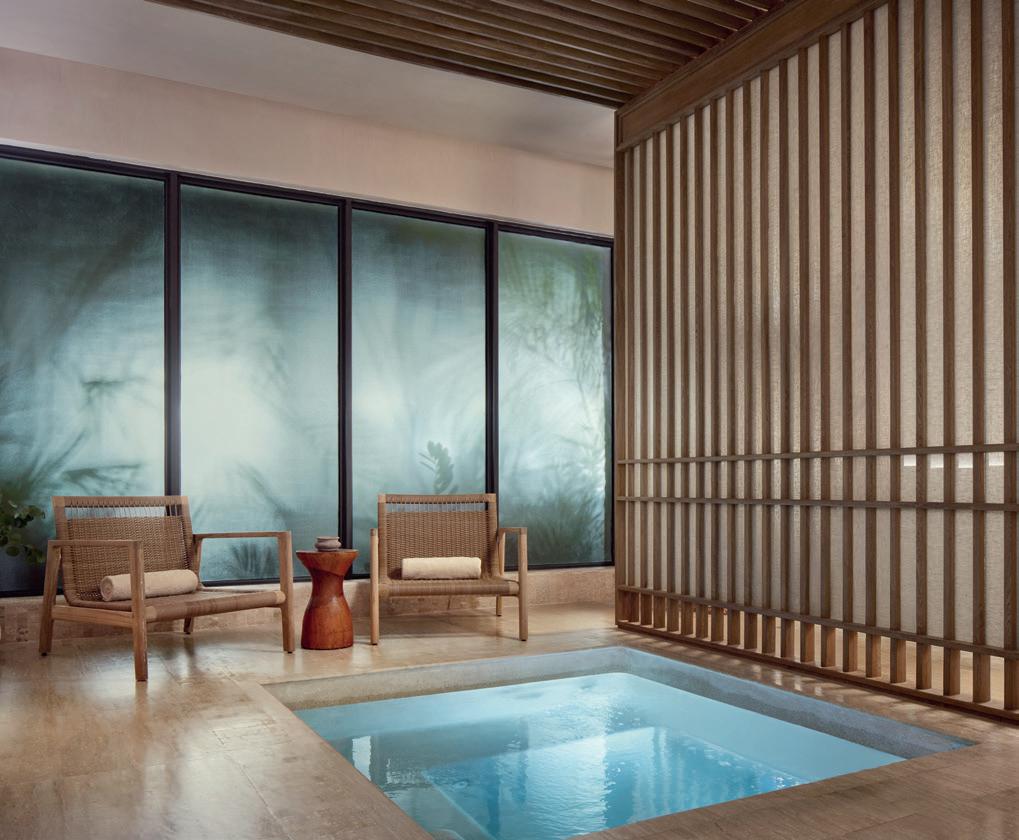
1. MAYAKOBA, MEXICO
ALILA MAYAKOBA
Experience ancient wellness techniques with traditional healers at the new Alila Mayakoba (qantas.com/ hotels/alilamayakoba). The luxury resort in Mexico’s Riviera Maya, a 40-minute drive from Cancun airport, has 182 rooms spread across 24 hectares of mangrove and jungle along the beach. The two-storey, six-suite spa offers experiences inspired by the sacred Mayan calendar, including guided temazcal ceremonies – ancient rituals that take
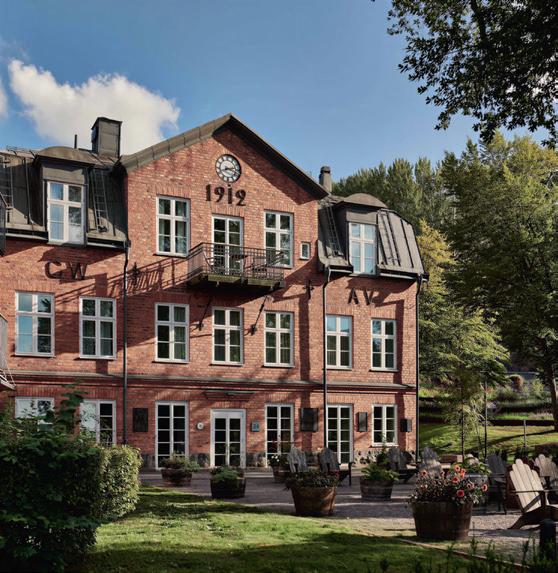
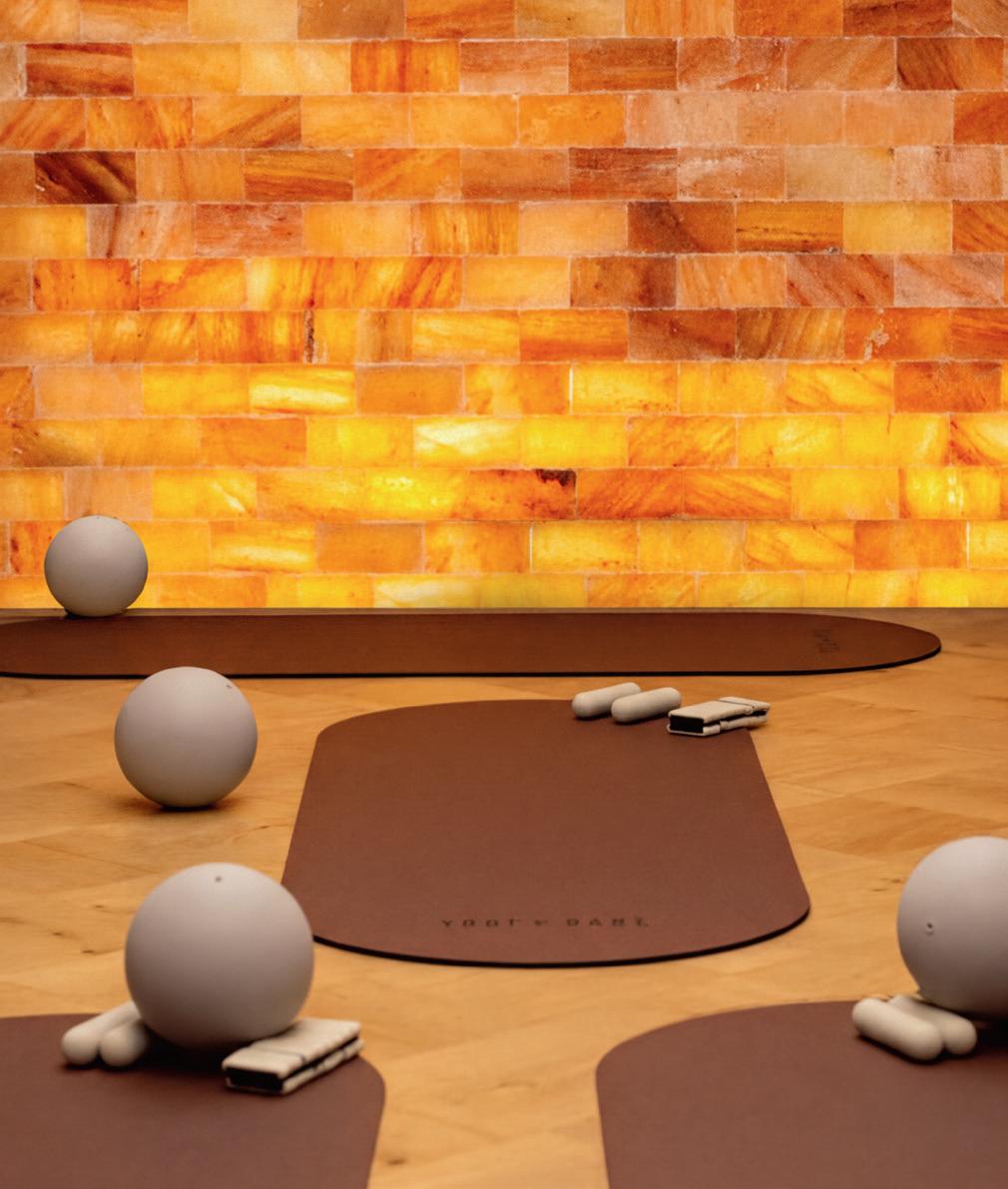
place inside a traditional sweat lodge – or body pampering treatments that utilise local ingredients, such as a coffee scrub followed by a warm cacao body mask.
Embrace Swedish bastu (sauna) culture in a 19th-century seaside villa on the fringe of the Stockholm archipelago. Hotel J’s (hotelj.com) recent renovation has seen the 158-room property add
a new sauna and 27 “hotel within a hotel” rooms that are ideal for retreats. Enjoy forest bathing nearby, sound baths and tours of the herb garden and, if you book a Signature Seaview room, make use of a red-light therapy lamp and herbal supplements.
3. LONDON, ENGLAND THE NEWMAN
It’s now possible to find enlightenment in London’s Fitzrovia, a neighbourhood with a bohemian edge where The Newman
(qantas.com/hotels/ newmanlondon) opened in February with wellbeing at its core. The property has 81 Art Deco-influenced rooms and suites dressed in a calm biscuit-hued palette but it’s the subterranean wellness centre across an entire floor that really wows. There you’ll find everything from a hydrotherapy pool to a salt room, sauna, steam space and “ice lounge”, plus a spa and 24-hour gym. Even the bar has a wholesome bent; its cocktail list includes 10 drinks that can be made with or without alcohol.



As told to Eliza O’Hare
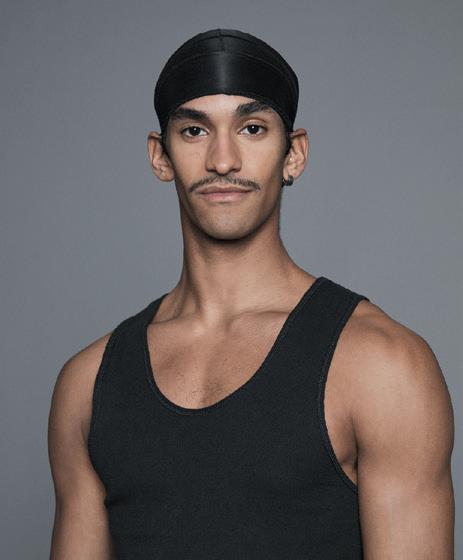
The recently appointed principal artist at The Australian Ballet was born and bred in the buzzing hillside Vidigal favela of this South American city. “Rio will always be home,” says Ramos, who had his earliest ballet lesson at 13. “It’s where I first dreamed of a career on the world stage.” Another reason it’s so special? “The combination of natural beauty and the warmth of its people. Whenever I return, I instantly feel grounded.” Here, he recommends where to visit and how to reset.
“My favourite part of returning home is staying with family but I always recommend visitors stay in Ipanema or Leblon for the beautiful beaches and great restaurants.”
“The Theatro Municipal do Rio de Janeiro was where I got to see big international companies like the Paris Opera and Bolshoi Ballet.” theatromunicipal.rj.gov.br
A trip to Rio De Janeiro, Brazil, fills the soul of internationally acclaimed dancer Davi Ramos.
“For a special dinner, I enjoy eating at Oro [below] but for fresh, local seafood with great views, it’s Marius Degustare. I’d also never leave Brazil without having a proper açai from Polis Sucos.” ororestaurante.com.br; marius.com.br; polisucos.com.br
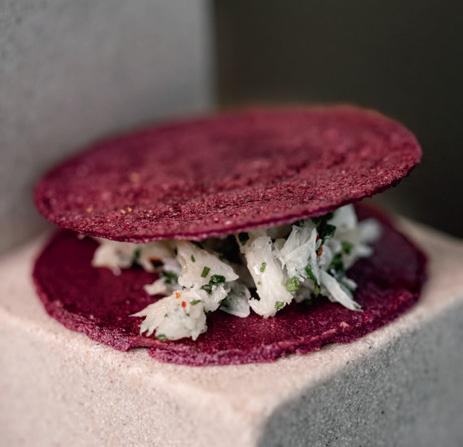
“When I catch up with friends, I head to Botafogo [right], one of Rio’s most exciting neighbourhoods. I love Quartinho Bar [below] for its relaxed atmosphere and Cozinha Comuna for a meal at sunset when the city is at its most stunning.” @quartinhobar; @cozinhacomuna
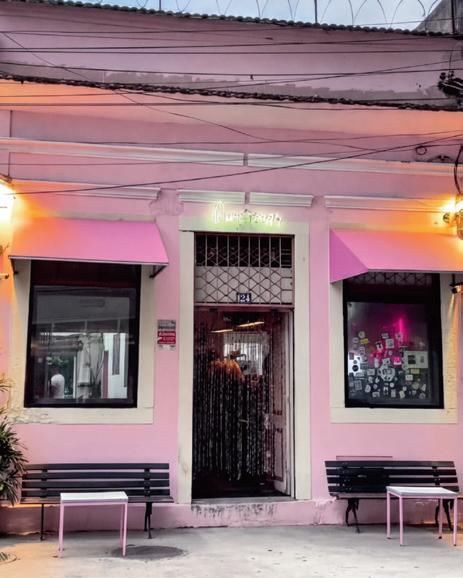
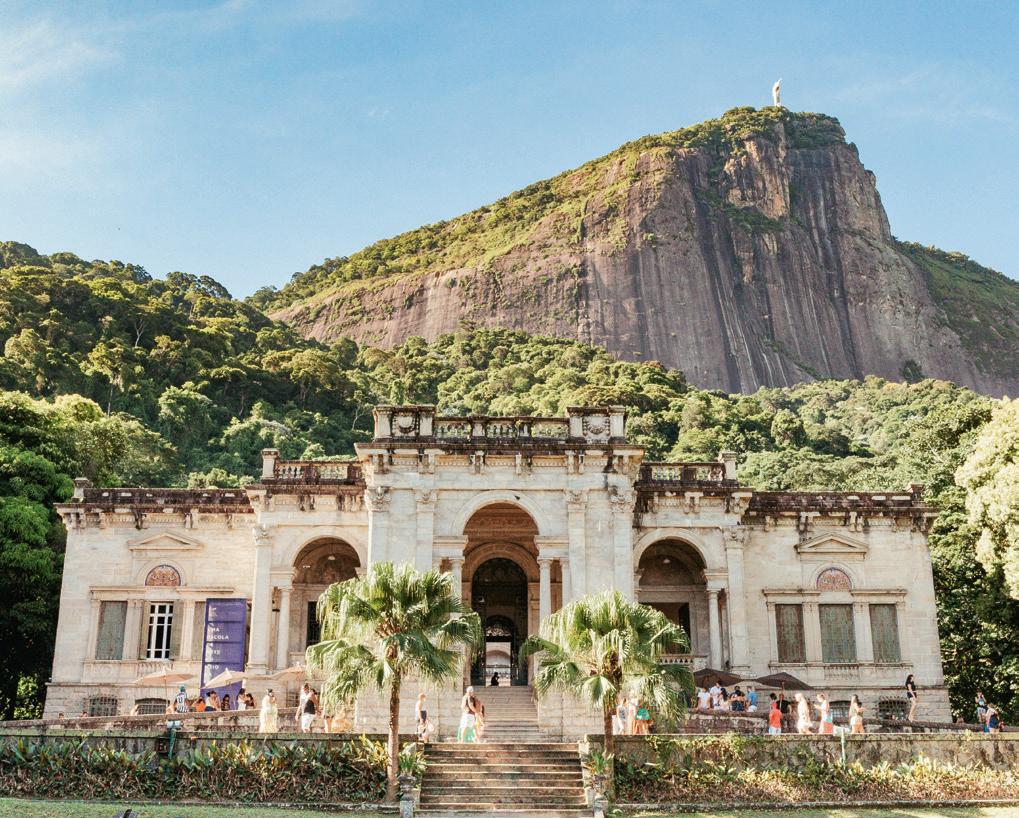
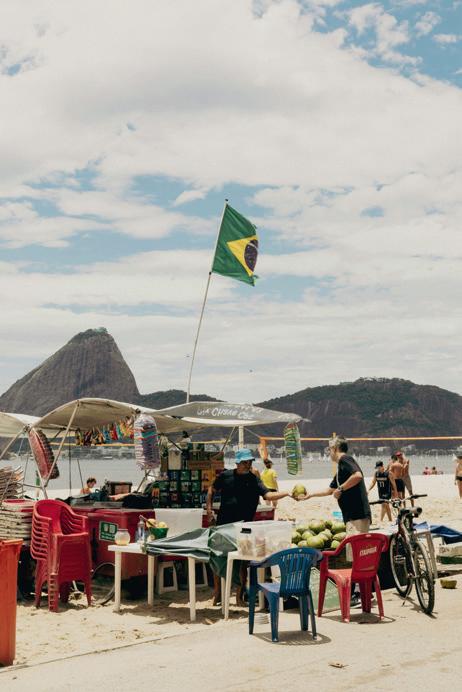
“A morning walk or meditation session and swim at Ipanema Beach or a hike to Pedra Bonita is hard to beat. But the treatments and spas at the Copacabana Palace and Hotel Fasano Rio de Janeiro are excellent.” belmond.com; fasano.com.br
“To slow down, I spend time in the Jardim Botânico [Botanical Garden] and nearby Parque Lage, a park with a mansion built to resemble a classic Roman palazzo [above] that’s now an arts school. Both are peaceful spaces that offer a completely different side of Rio.”

“Visit Christ the Redeemer in the early morning to avoid the crowds. And take the cable car to Sugarloaf Mountain at sunset.”







Story by Michael Williams
Chris Ames’ debut, I Made This Just for You, is a short story collection that’s as insightful and precise as it is surprising and off-the-wall. The tiny worlds the writer has built in the book provoke discomfort and recognition, sometimes melancholy, and at other times, are laugh-outloud funny. Technology, human disconnection, memory – the themes and contexts are the fundamentals of modern life. The result is wondrous.


Kris Kneen’s Rite of Spring is gothic horror with an Australian flavour, as we follow a couple, Miranda and Richard, who are trying to hold their marriage together. Their decision to take up a post as caretakers in a lighthouse off the coast of Tasmania seems to be a strange choice – and that’s before the effigies and diaries that tell of a “primal evil”.

Contrapposto is a return to form for American author and literary favourite Dave Eggers . This book is a love story – that’s the main theme – but it’s also an account of friendship and art and the exhausting business of simply living your life. It’s funny and moving, with insights into creativity, beauty, commerce and what we owe each other.

The recent release of Douglas Stuart ’s latest, the transcendent John of John, is an excellent opportunity to aquaint yourself with his 2020 Booker Prize-winning debut novel, Shuggie Bain. Agnes Bain dreams of a better life for herself and her three kids, including son Shuggie, in this queer coming-of-age story about vivid but flawed characters in 1980s Glasgow.
The last in a trilogy that makes sense of Australian political and social identity beyond cliches and myths, Three Shocks: Who We Are Becoming in the 21st Century by journalist George Megalogenis is built around three realities of modern Australia: the migrant population; women in the workforce; and the changing nature of our allies on the global stage.
BY FORTIS
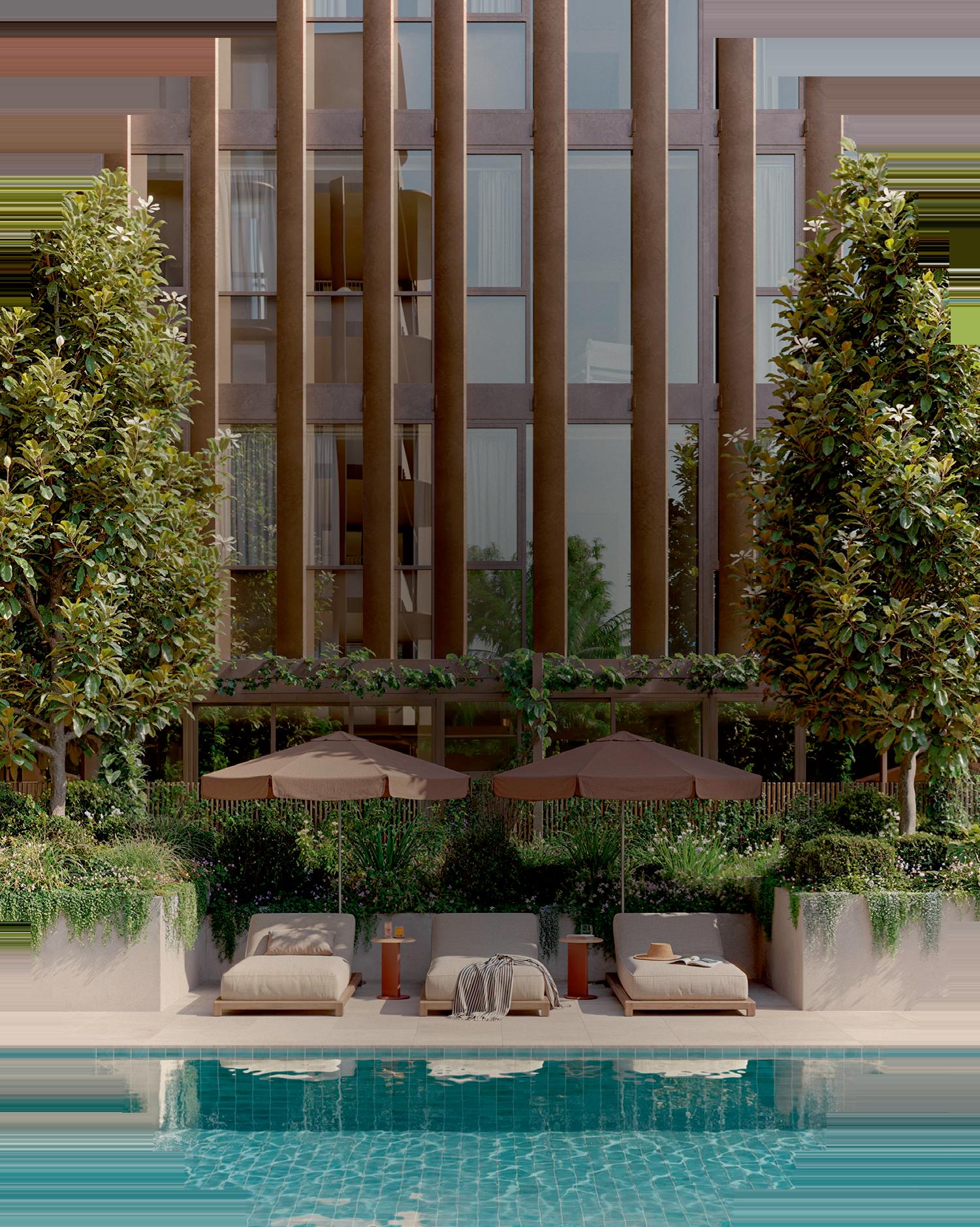
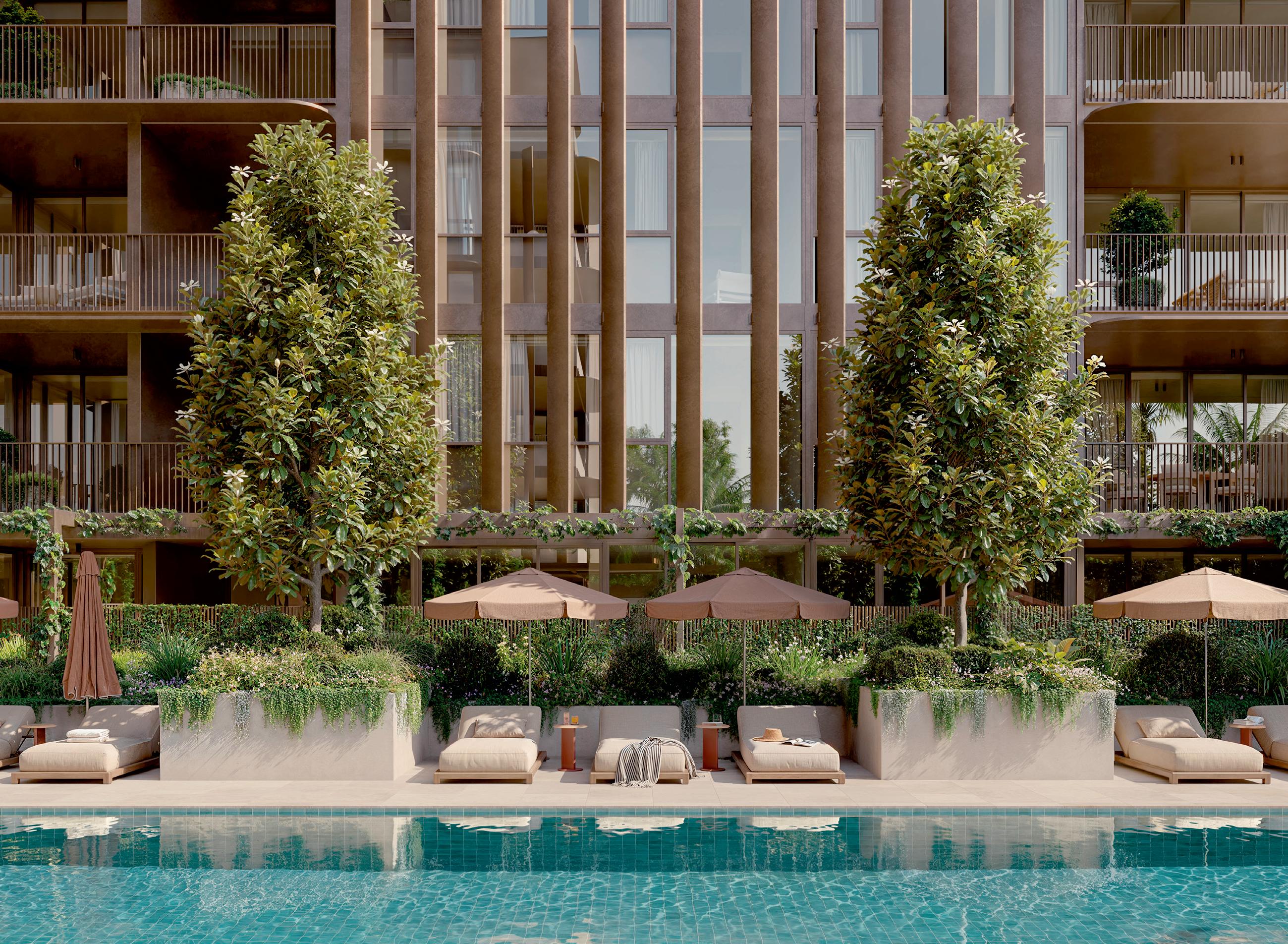
SALES COMMENCING 12 SEPTEMBER 2026
Generous 2, 3 and 4 bedroom residences by Fortis, set within formal gardens, designed for modern living.
REGISTER FOR EARLY ACCESS.
Interview by Genevra Leek
Photography by Kinsey Wang
The vagus nerve is our longest cranial nerve and is also a major part of the parasympathetic nervous system. I often describe it as the bridge between the brain and the body. It’s constantly gathering information, helping us determine whether we’re safe or if we need to protect ourselves. When it’s functioning well, we tend to feel more present, adaptable and resilient. We recover from stress more easily, connect with others more deeply and have a greater capacity to meet challenges.
Through my work I’ve come to understand that the nervous system doesn’t respond particularly well to force. It responds to conditions. Many people approach wellbeing as another thing to achieve or optimise but the nervous system is asking a much simpler question: do I feel safe enough to soften? The conditions that support healing are often surprisingly straightforward –slowness, stillness, warmth, connection, nature and rest. These are biological requirements for repair.
Travel often interrupts habitual patterns. We step away from the deadlines, responsibilities, routines and constant stimulation, and the nervous system is given an opportunity to stop scanning for the next task and begin orienting towards the present moment. A lot of people describe that as finally being able to exhale. We often sleep more deeply, spend more time outdoors, move differently, connect with people we care about and allow spaciousness back in. These experiences create the conditions in which the nervous system is able to remember what it feels like to regulate.
That said, the nervous system does love predictability. Airports, crowds, disrupted sleep and unfamiliar beds all require the nervous system to adapt. This isn’t necessarily a problem –activation is a normal part of being alive. The challenge is when we move from one activation experience to the next without allowing time for recovery in between. A healthy nervous system isn’t one that’s always calm; it’s one that can mobilise when needed and return to regulation once the demand has passed.
Simple practices are usually the most effective. A slow exhale, with the outbreath slightly longer than the inhale, naturally encourages parasympathetic activity. If you’re feeling stressed, pursing the lips as though you’re breathing out through a straw can help deepen focus. Even humming, sighing, softening the jaw and letting sound move through the throat can be settling because the vagus nerve has connections through the throat and vocal pathways. Our nervous systems already know what they have to do. We just need to put ourselves in the right environment.
Tracy Whitton will facilitate the Nervous System Care & Vagus Nerve Repair retreat at Soma Lorna Jane in the Byron Bay hinterland, NSW, 11 to 15 October. somalornajane.com.au

















































































































Story by Jacqui Gibson
Take a deep breath on New Zealand’s rugged Wainuiomata Coast, not far from the city lights of Wellington.
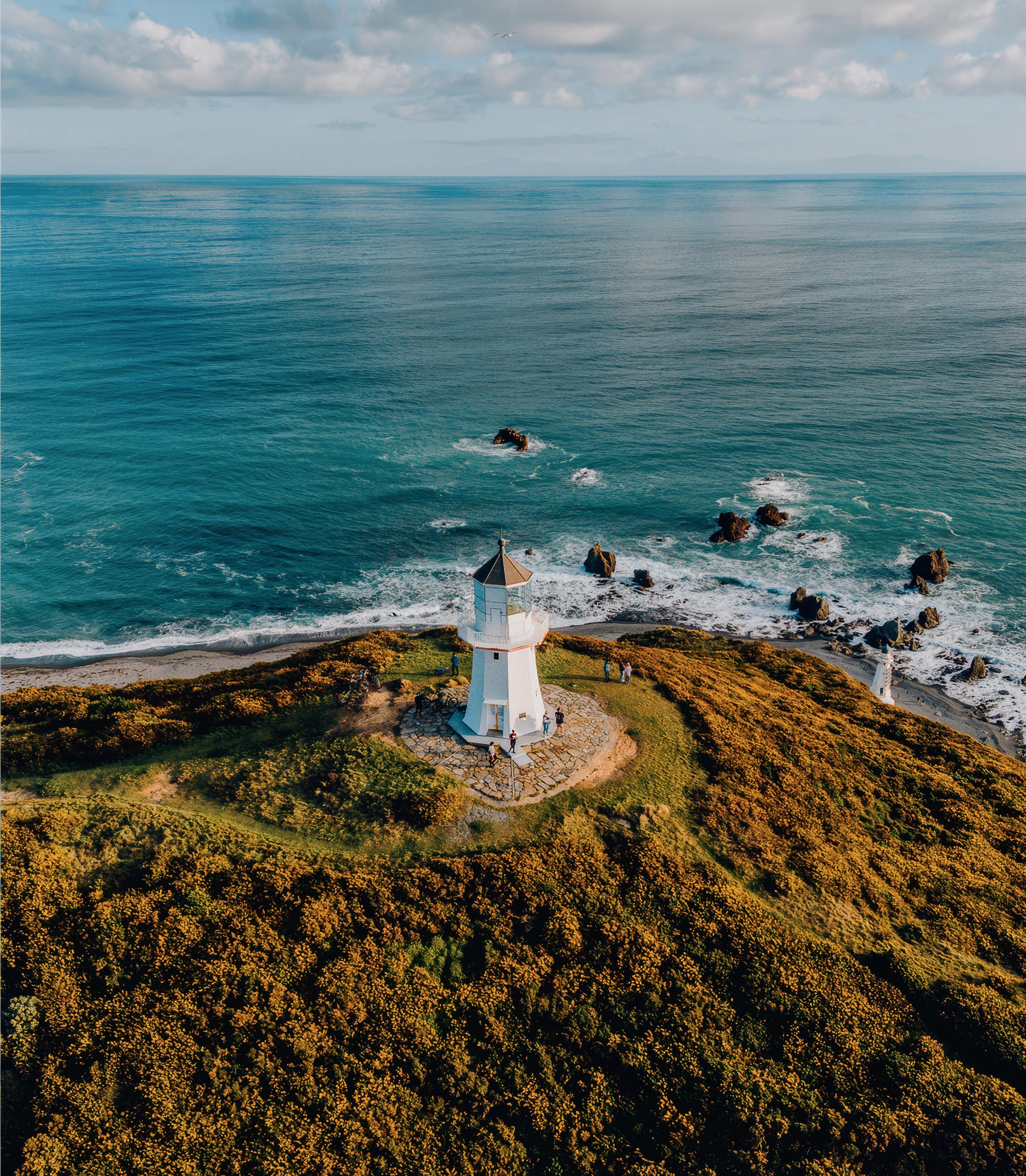
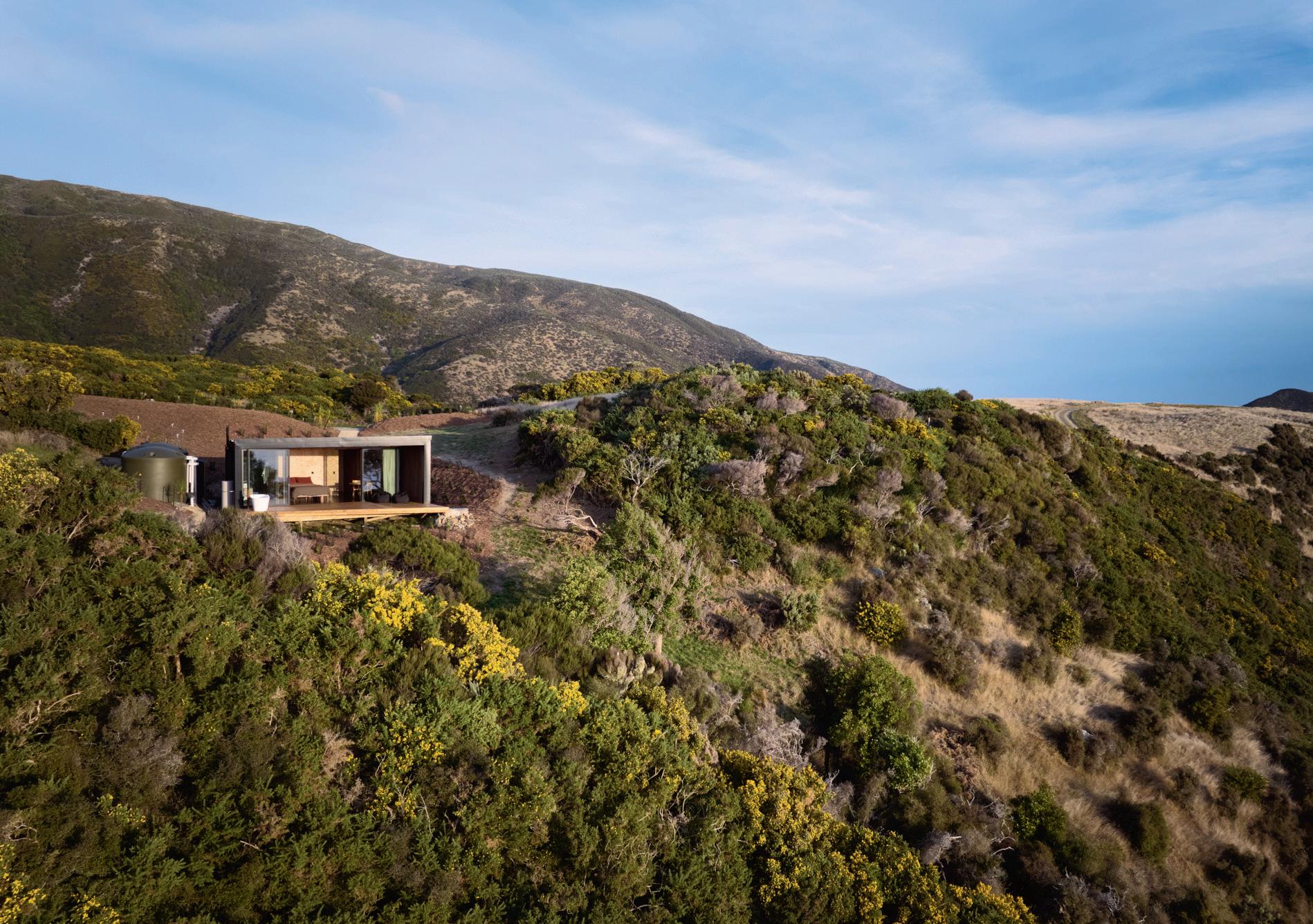
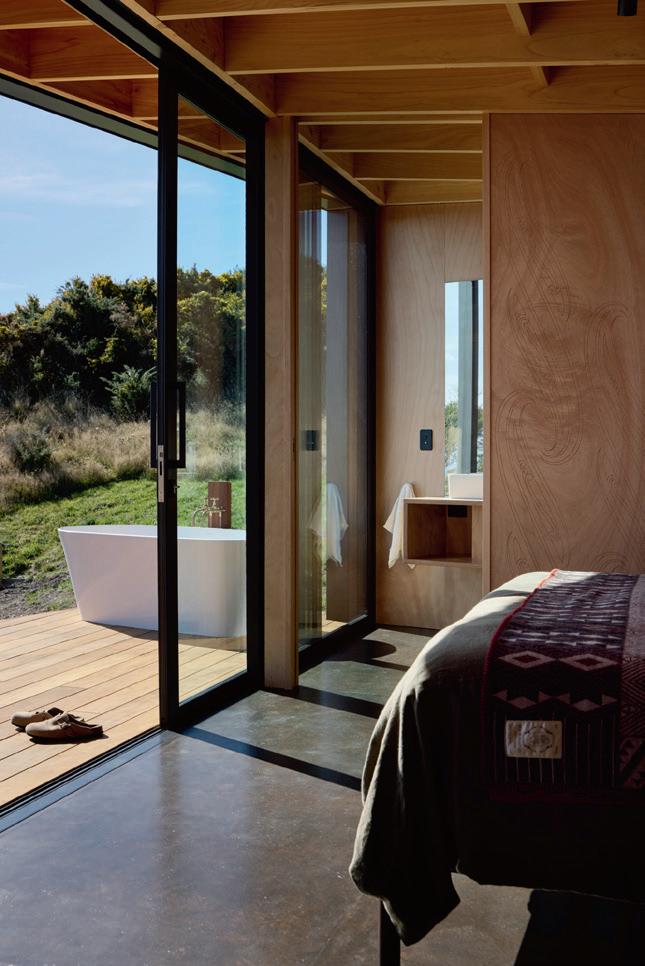
“It’s a place of raw beauty,” says Māori kaitiaki (caretaker) Lee Hunter as he looks out over the Wainuiomata Coast, south-east of Te Whanganuia-Tara (Wellington Harbour). Less than an hour’s drive from the capital, this remote headland offers a peaceful immersion into nature and history. “Look for whales and watch the sunset,” says Hunter, whose Te Āti Awa ancestors migrated to the area from Taranaki in the 1820s.
Pulling up to Parangarehu (parangarehu. co.nz) feels like entering a sacred space. The property’s new adults-only cabinfor-two, Ahi Kā (above left and right), is the first high-end accommodation venture for Tupoki Takarangi Trust, representing a sub-tribe of Te Āti Awa. Operated by Hunter and his wife, Malesha, it’s one of several retreats to be built on Māori-owned land. Inside is a well-provisioned kitchenette complete with fridge, oven, pantry, mini bar and eye-catching tribal symbols on neutral timber walls. But it’s the large glass sliding doors and spacious deck with views of Raukawa Moana (Cook Strait) and the Kaikōura Mountains of Te Waipounamu (South Island) that are the drawcards. In the evening, enjoy fresh strawberries (snacks and ready-made meals are available to order) and a bottle of Tiki Koro Pinot Noir before sinking into the outdoor tub. There’s no wi-fi, just the sound of bird calls as the day fades.
Rise at dawn and head out to the deck for a morning yoga session – mats are supplied – or pull Dr Hinemoa Elder’s Aroha from the bookshelf for words of Māori wisdom. Then grab one of two electric bikes (charged overnight) and ride along a 3.5-kilometre trail that starts just beyond the gate and leads to Te Raeakiaki (Pencarrow Head). At the end you’ll find New Zealand’s first purpose-built lighthouse (left), where
Mary Jane Bennett, a widowed mother of six, was appointed the country’s first lighthouse keeper in 1859.
Take a 30-minute drive north from your whare (cabin) to the harbourside village of Eastbourne. Follow the locals to Hive Café (hivecafe.co.nz) for a flat white made with organic coffee then pair it with oven-fresh croissants from Tartines French Cafe & Deli (tartinesfrenchcafe. co.nz), where you can also pick up the epic Galette de pomme de terre –a potato and prawn rosti topped with creamed leek, sauteed prawns, poached egg and dill hollandaise – for a brunch picnic. Continue along the motorway to Wellington and stop at Lucky 8 (lucky8.co.nz), a recently opened East Asian-inspired eatery in the heart of the city. For lunch, try the black truffle prawn hargow with truffle-infused pastry. On Ghuznee Street at new Mexican place Apapacho (@apapacho.nz), the zesty avocado huarache is another good choice.
While you’re in Wellington, take the Great Harbour of Tara tour (wharewaka tours.maori.nz) – a leisurely journey into the story of the city’s discovery by Polynesian explorers and the region’s early settlers. Board electric ferry Ika Rere at Queens Wharf for a 90-minute zero-emissions cruise to explore rocky bays and listen to some of Aotearoa’s favourite Māori waiata (songs).
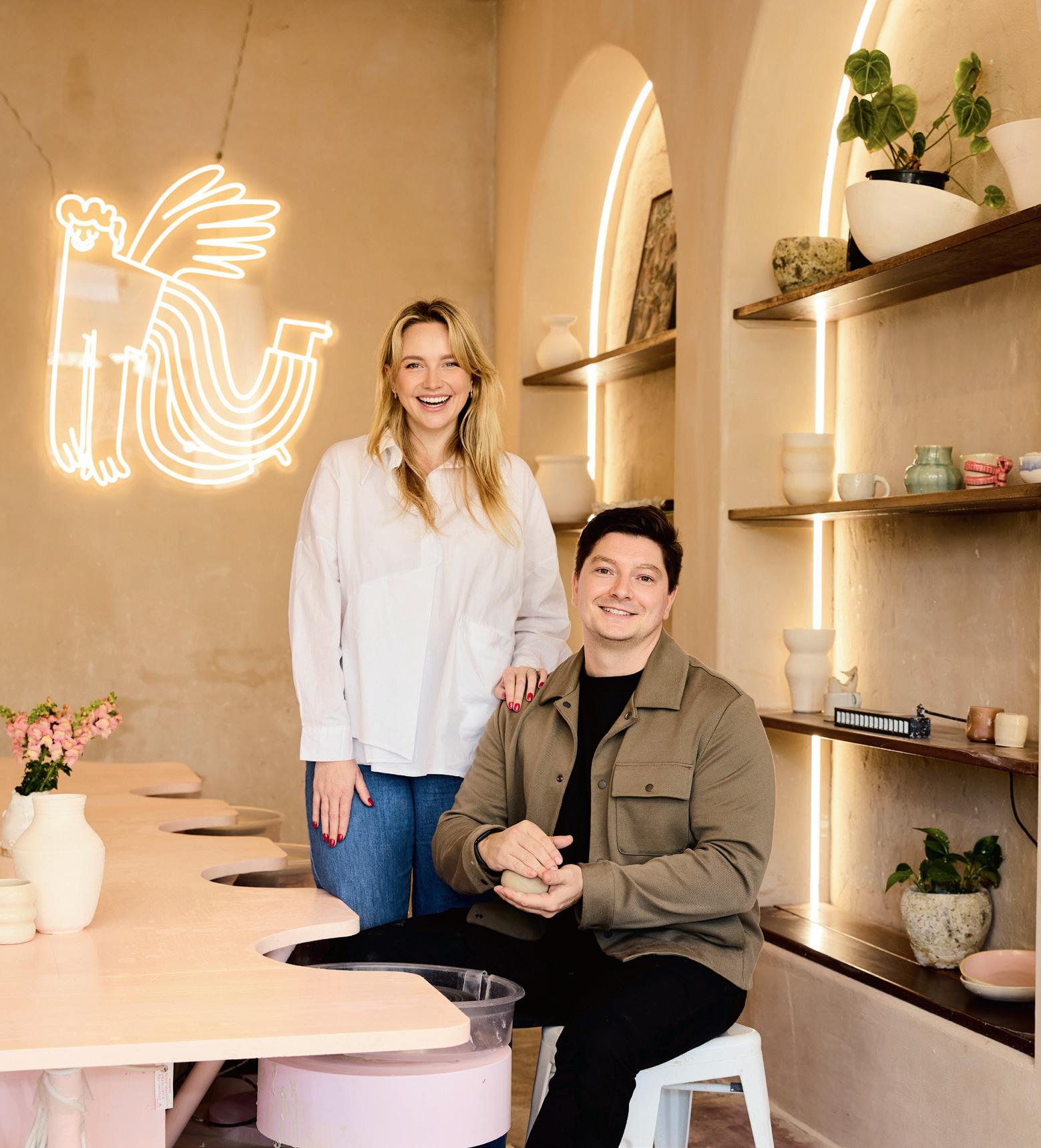
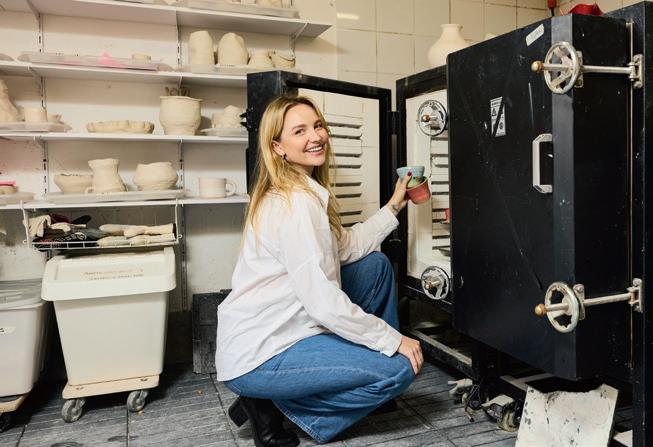
Switch your business to a Qantas Red Business plan with Red Energy and earn up to 3 Qantas Points per $1 spent on ongoing business energy bills. Plus, earn up to 20,000 bonus Qantas Points when you pay your first bill in full. *


“Partnering
Husband-and-wife team Andrew Ford and Rosa-Clare Willis started pottery business Crockd in 2019 as a side hustle to help people swap mental chaos for mindful creativity. Now with five studios across two states and an ecommerce arm, Crockd is powering its mission by earning Qantas Points for their business with Red Energy.
“When we look for a supplier, we try to leverage it through Qantas Business Rewards to get additional benefits. Energy was a big one for us because we consume a lot of power,” says Ford. “We’ve got kilns running 24/7, as well as warehouses, studios and a home office. We like that Red Energy is owned by Snowy Hydro and that it’s easy to set up new plans, providing a seamless experience. We also like that we earn Qantas Points on every bill we pay in full.”*
“We use the Qantas Business Rewards program to run and grow the business,” says Willis. “We travel regularly between our Queensland and New South Wales studios to make sure we’re physically present. We use Qantas Points for business flights and accommodation, saving on our business costs. Every quarter, we take our top team members to the Gold Coast or Sydney to catch up with everyone and we do that with points. It’s a big cycle of spending, getting rewarded and investing back into the business.”
Save on flights and earn more points in the air and on the ground with 50+ partners. Find out how members unlock more for their business at qantas.com/business




























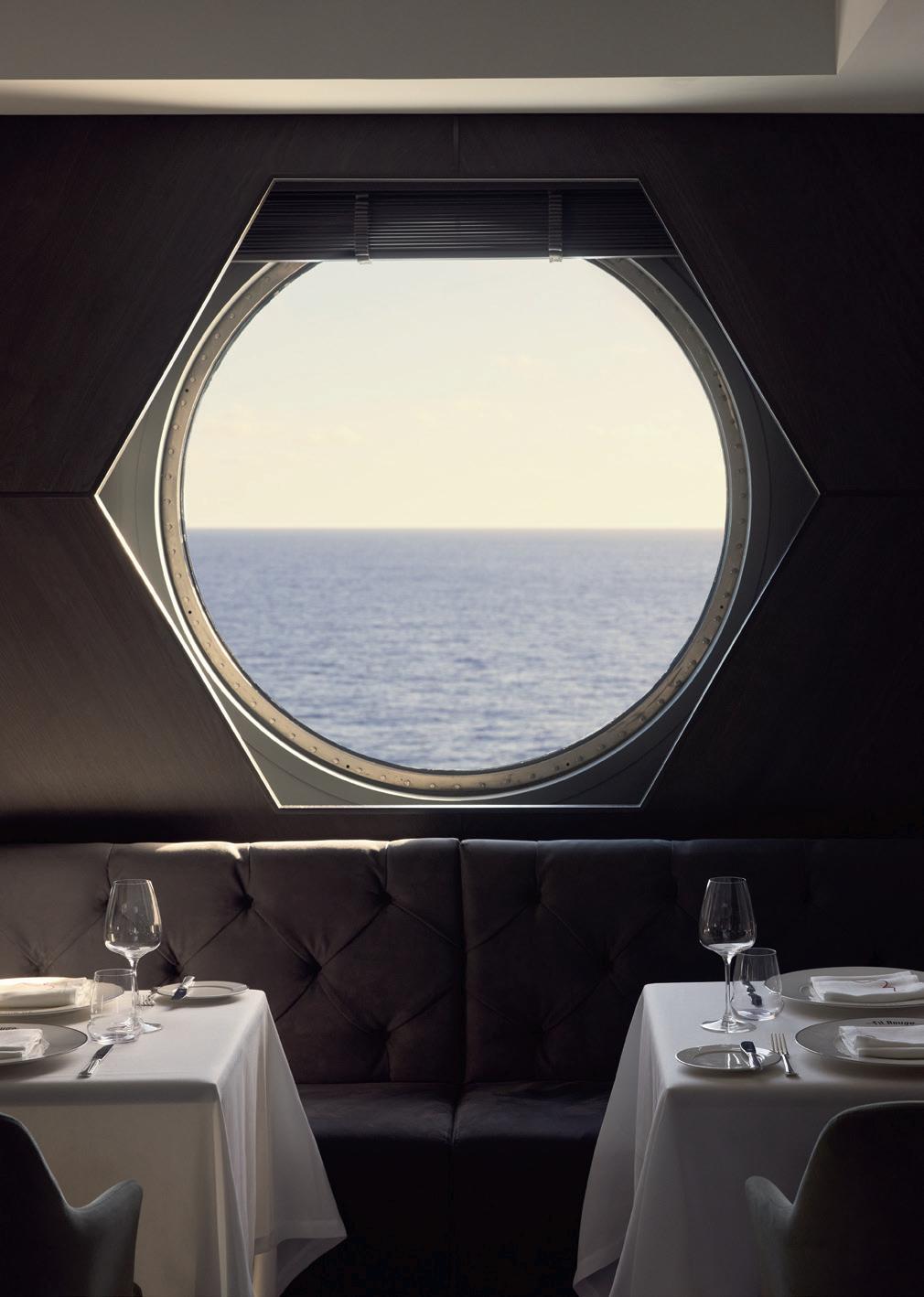
CONNECT

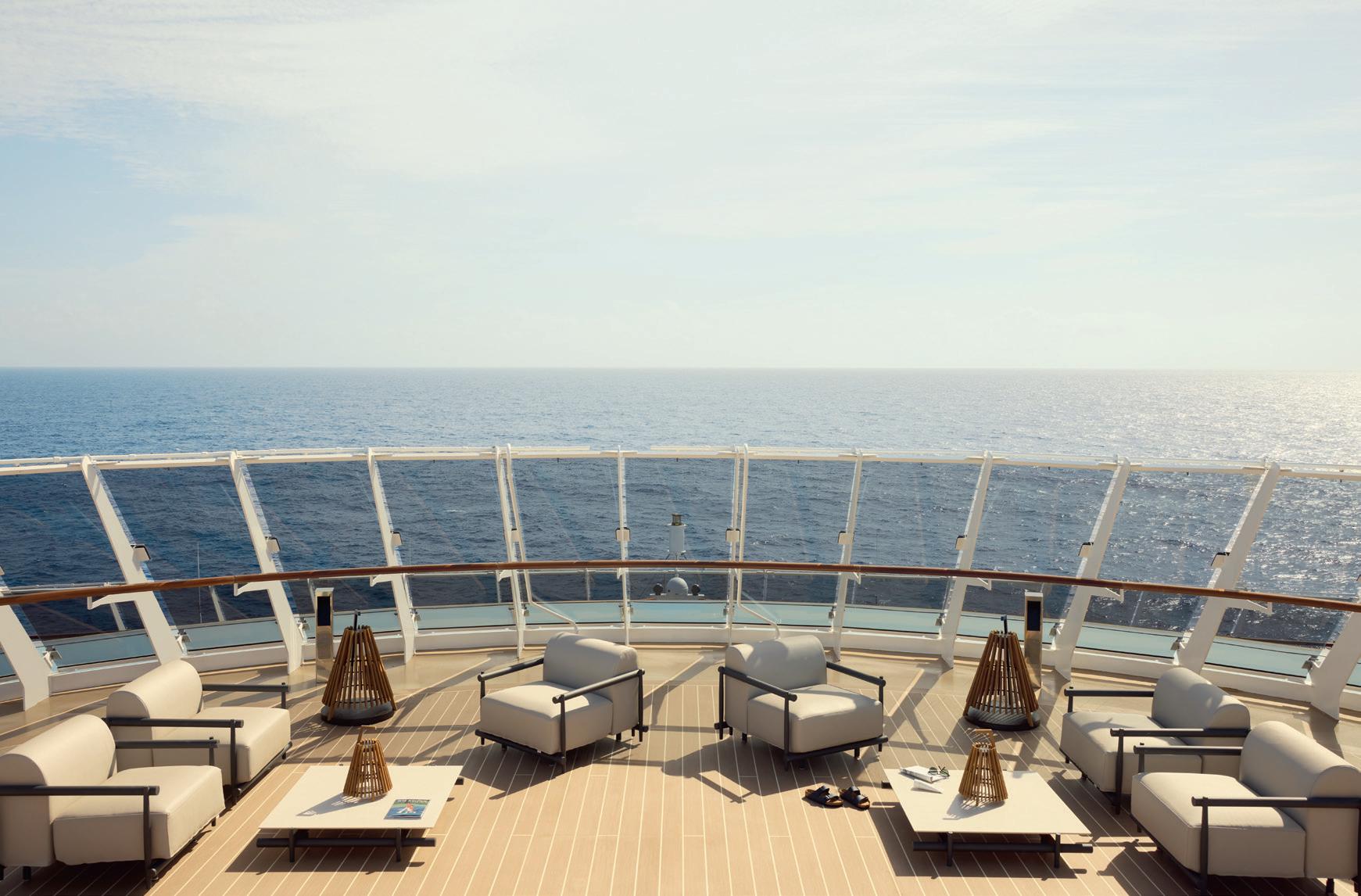
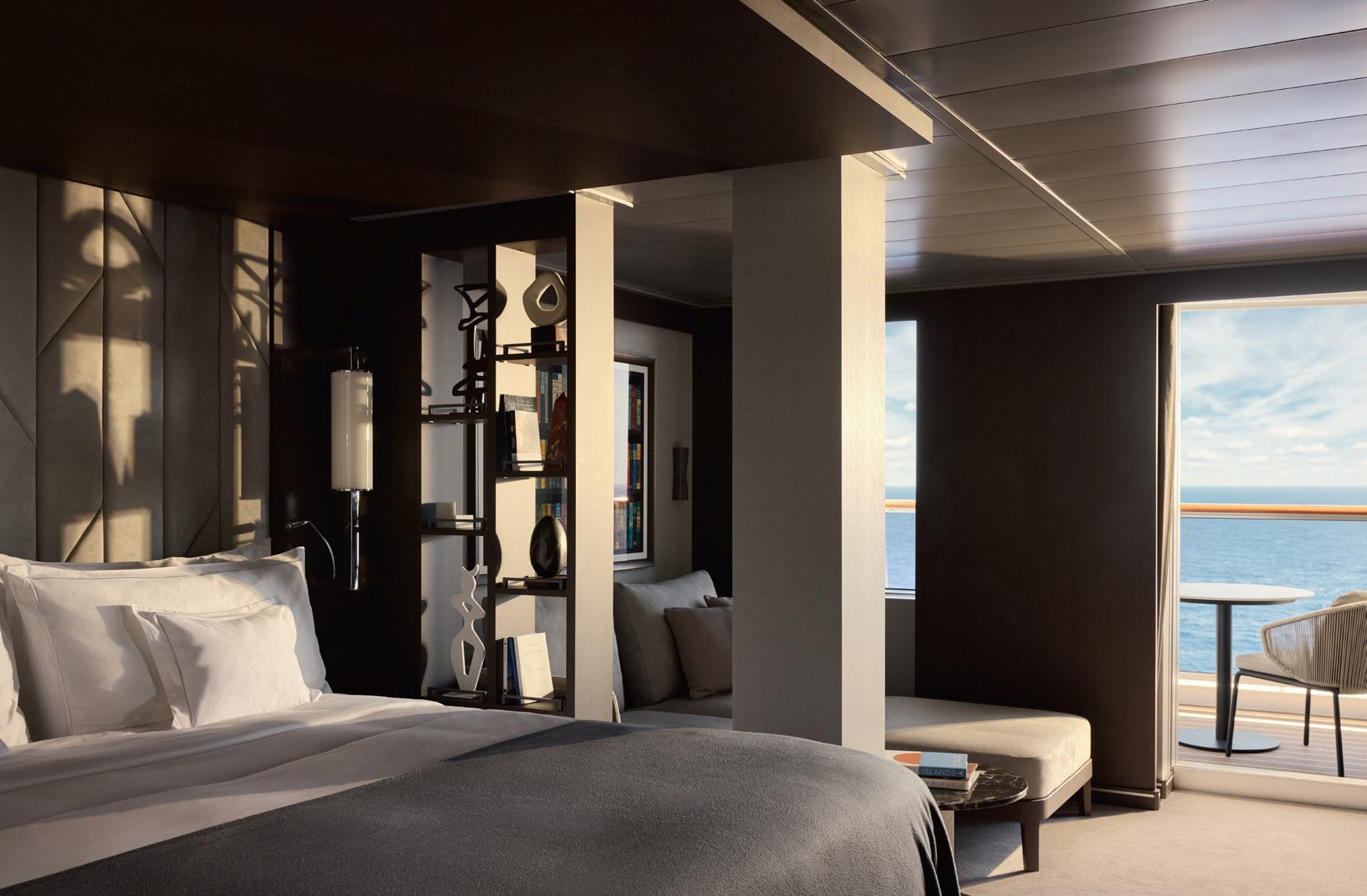
STORY BY LARISSA DUBECKI
PHOTOGRAPHY BY TOBY MITCHELL
The sun’s first rays creep over the deck of Explora I as my yoga instructor shifts into the tree pose. Standing one-legged on a moving ship with any degree of poise is challenging but when the Provençal port of L’Estaque glides into view, my attempts unravel completely. The village’s pale stone beauty captivated Renoir and Cezanne so I’m in esteemed company when my furtive turn of the head collapses my tree asana into a fallen log.
Balance, in every sense, is key on this five-night cruise from Barcelona to Nice. “The aim is to go home replenished, feeling better than when you arrived and
with techniques to enrich your everyday life,” says Carlie Barlow, a robe-clad Brit who glows with New Age positivity and leads Explora Journey’s Ocean Wellness program (explorajourneys.com). “I see so many people working big careers and suffering burnout.”
Like the other guests on the 461-suite ship, our group of 12 intends to revel in the beauty of the Mediterranean coast – making stops at Marseilles, Porto Cervo and Portofino – and the hedonism of a luxury cruise. We’re here to clink cocktails by the five pools, to enjoy indulgent meals perched on plush banquettes in the six restaurants and
sip free-flowing champagne (or nonalcoholic wine – no judgement).
We’re also in the process of “downregulating”. Kicking cortisol excesses and re-examining the modern world’s Faustian pact with stress. Meditation, energy healing, facial yoga and journalling are all part of the plan. It sounds soothing until my anxious eyes lock on the last day’s itinerary, which features a dance flow meditation.
But this is the place to mindfully park any fears. My overthinking brain is calmed during the first morning’s guided sound bath meditation, which is aimed at an audience convinced there’s
a 25th hour in each day. “Think of a time when you achieved your goals,” intones Barlow (opposite) as the baritone clang of a Tibetan gong joins a sound bowl’s soprano twang in the salty air. “Imagine what you want – maybe it’s success, maybe it’s health. Take everything that no longer works for you… let it go.”
The program’s loosely themed daily itineraries mean anyone on board can book in for a single session instead of the full immersion. Sleep and rest day dawns with a yoga class that introduces the fish pose, a medieval asana said to counteract 21st-century tech neck.
On energise day, the pickleball coach acquaints us with the love child of tennis and ping pong, while boot camp in the open-air gym enlists the ocean’s endless dazzle to relieve the sting of burning muscles.
Evening sees us take exclusive ownership of the spa. Twinkling with candlelight, the soulful session includes mindfulness in the salt room (I can almost feel the negative ions healing me) and breathwork in the sauna. Once released from the punishing heat, we grab handfuls of shaved ice to scrub down our sweat-covered bodies, yelping at the shock.
At the end of heart and soul day, there’s a gong bath on deck in which we’re cocooned in blankets beneath a canopy of stars. Maybe it’s the chardonnay I had at dinner but it’s a bit like intergalactic travel through time and space. “I feel like every molecule is relaxed,” someone says with a sigh after the last frequency has quivered into the night.
The ultimate wellness centre on water, Explora I is populated by friendly faces handing out cold towels and colder drinks everywhere you look (a 1.25:1 staff-to-guest ratio means that we’re well outnumbered). The ship’s refined restaurants harmonise with our location, which might mean fat-capped slices of jamon and charred octopus at Med Yacht Club, or crab cakes and foie gras beneath the elegant chandeliers of Fil Rouge.
About the size of an inner-city apartment, my ocean-facing penthouse has a separate dressing room, a proper lounge and dining table and a bed so plush it exerts a gravitational pull. The private balcony is like an A-reserve seat to gaze at the Med’s wildly beautiful landscapes and armed with the suite’s binoculars, I browse real estate from the Côte Bleue to the Côte d’Azur.
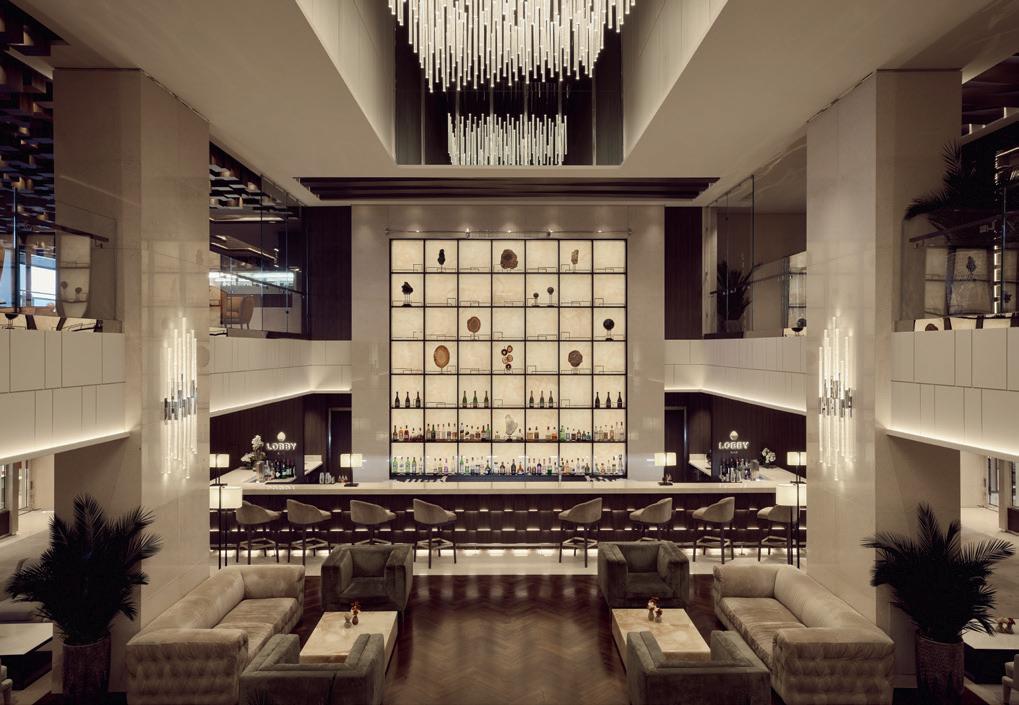
As the days pass, I develop my own rituals. A flaky morning croissant from the cafe. An evening aperitif at the Lobby Bar (below) listening to an acoustic performer going deep into Coldplay’s catalogue. A soak in a bubbling whirlpool. One afternoon I lean into my intuition and choose a sunlounger by the infinity pool instead of a mindfulness session, happy that Barlow has promised there are no wellness police on board.
It would be criminal, however, to drift around the Mediterranean in an ascetic bubble of self-improvement. The schedule allows ample time onshore to explore the boutiques of Sardinia’s Porto Cervo and to grab a caffe latte on the Nice waterfront.
Organised activities for the Ocean Wellness clique raise the bar yet again. In Portofino, jewel of the Italian Riviera, we’re whisked to Langosteria Paraggi, the chic beach club pop-up of the storied Milan restaurant. A waterfront table is laid out for a languid lunch of impossibly sweet-fleshed gamberi (red prawns) and lobster pasta overlooking a sun-drenched tableau of swimmers and sunbathers. The next day finds us at a tasting of velvet-plush red wines at the Tenuta Guado al Tasso estate at Bolgheri on the Tuscan coast, followed by an alfresco meal of peppery salumi and creamy lasagne with vineyard views.
This yin and yang approach to mindful holidaying proves potent and I’m sure I can feel my cortisol levels evening out a bit more each day. That is, until we reach the dance flow meditation. “Don’t worry, most people say they’re dreading it,” Barlow tells me cheerfully as we don silent disco headsets in the auditorium. Thankfully, we’re in semidarkness, lit only by a celestial starburst projected on the enormous screen.
Just a few days ago, the prospect of dancing like no-one is watching would have seen me shrivelling up with embarrassment. But now it feels gloriously cathartic. The percussive music amps up and Barlow encourages us to “explore your inner landscape”. There’s whooping. Hang on, is that me whooping? Here on the high seas, I’ve finally found my flow.

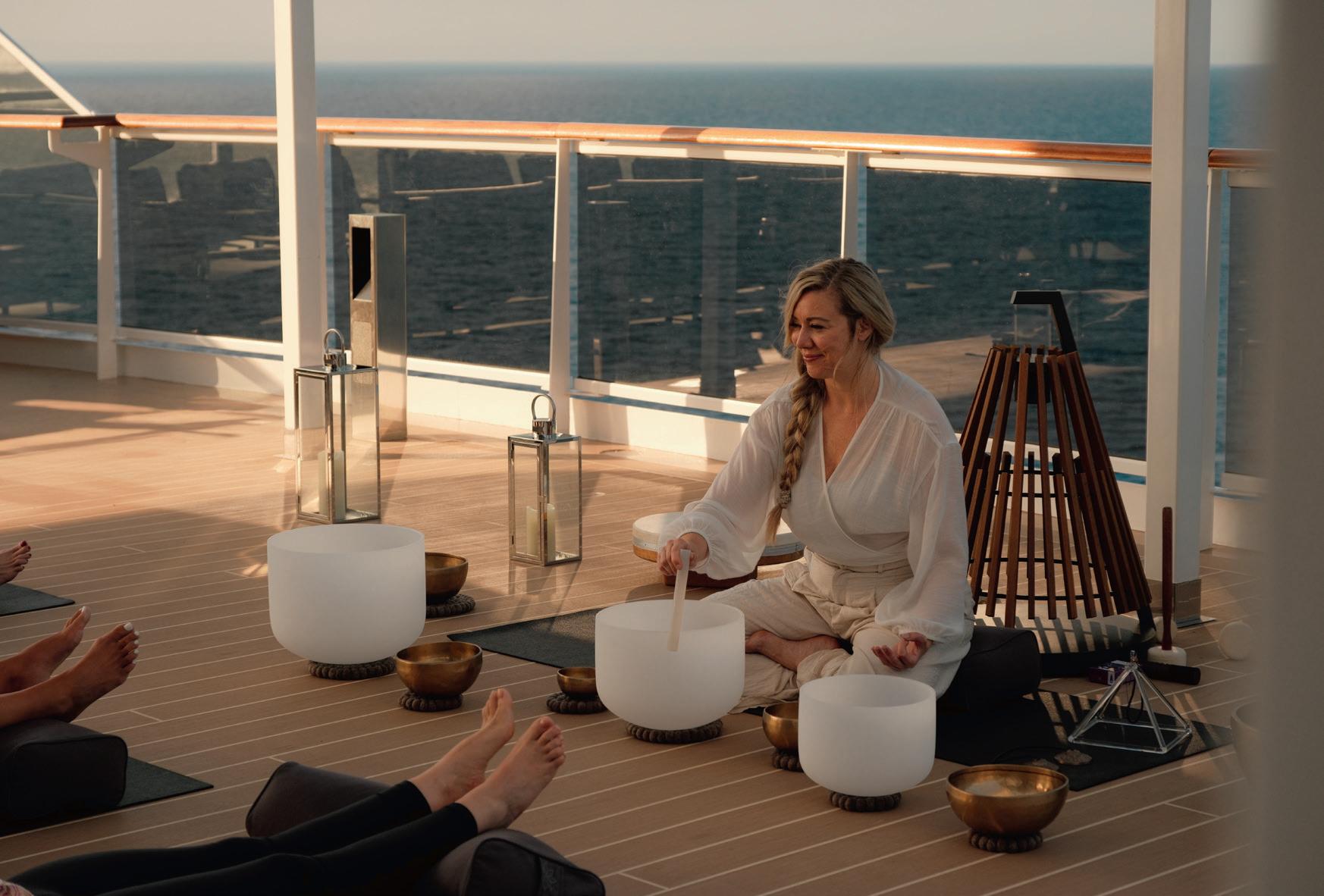
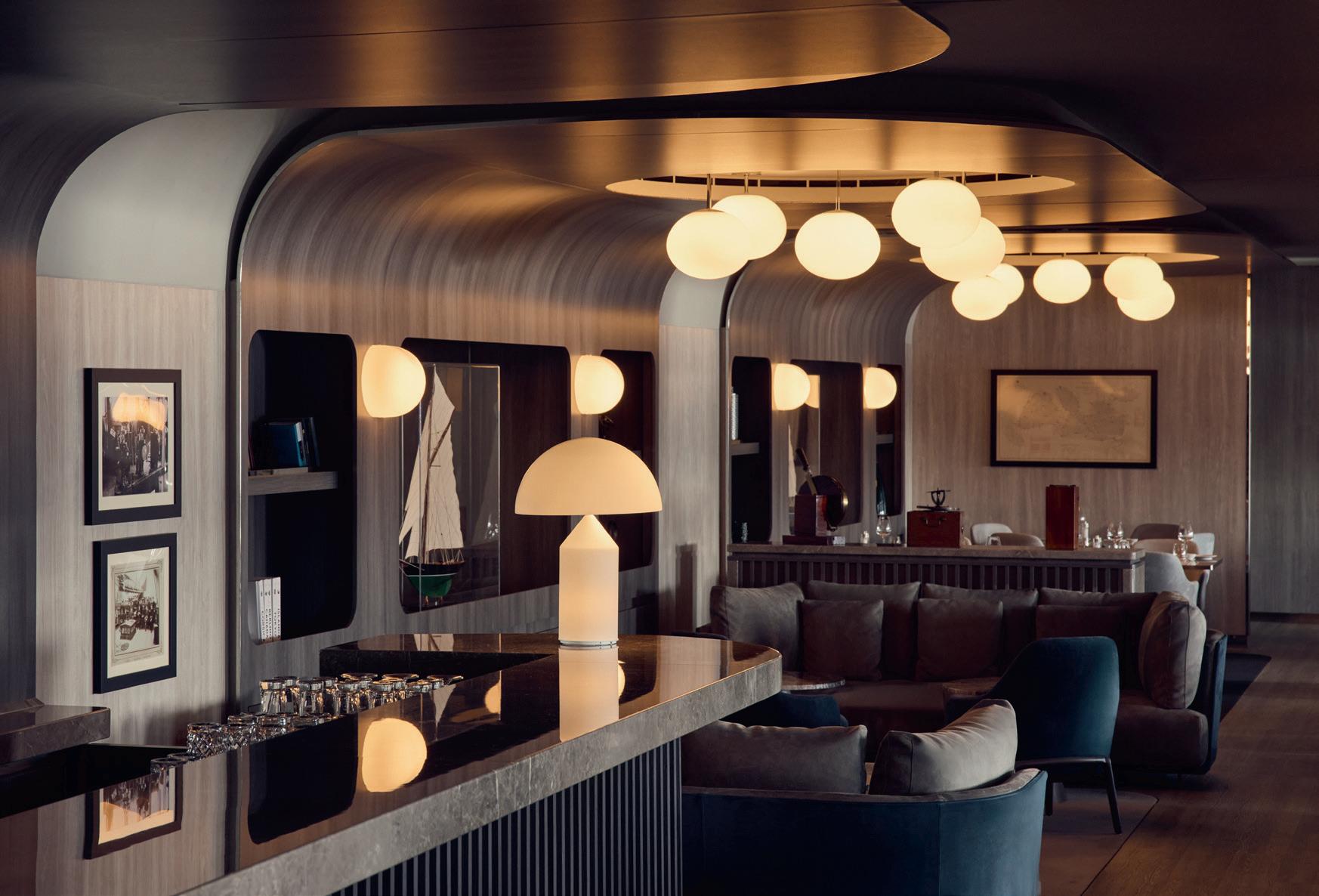
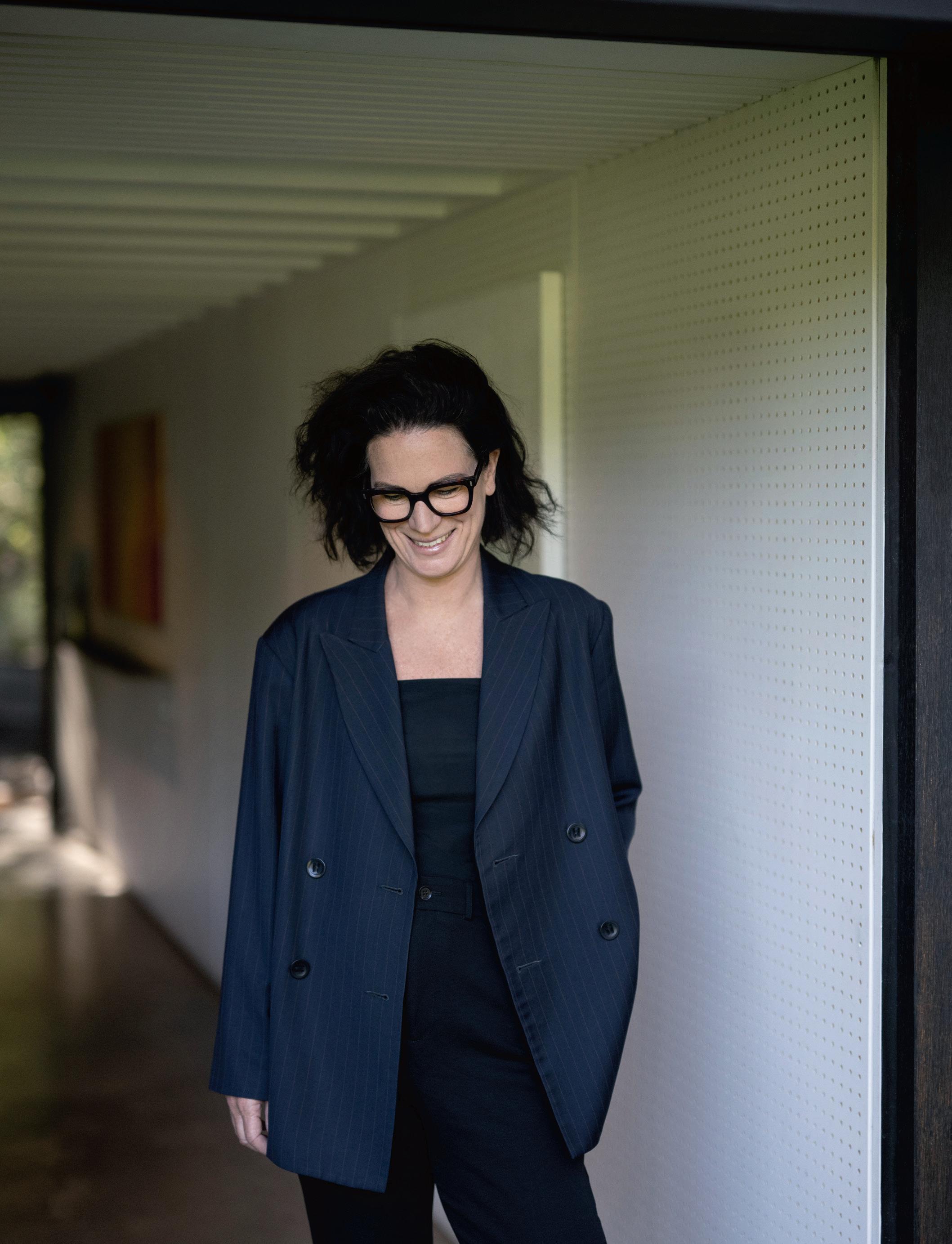
Melbourne-based architect Mel Bright isn’t chasing accolades but the satisfaction of bending innovation to find solutions.
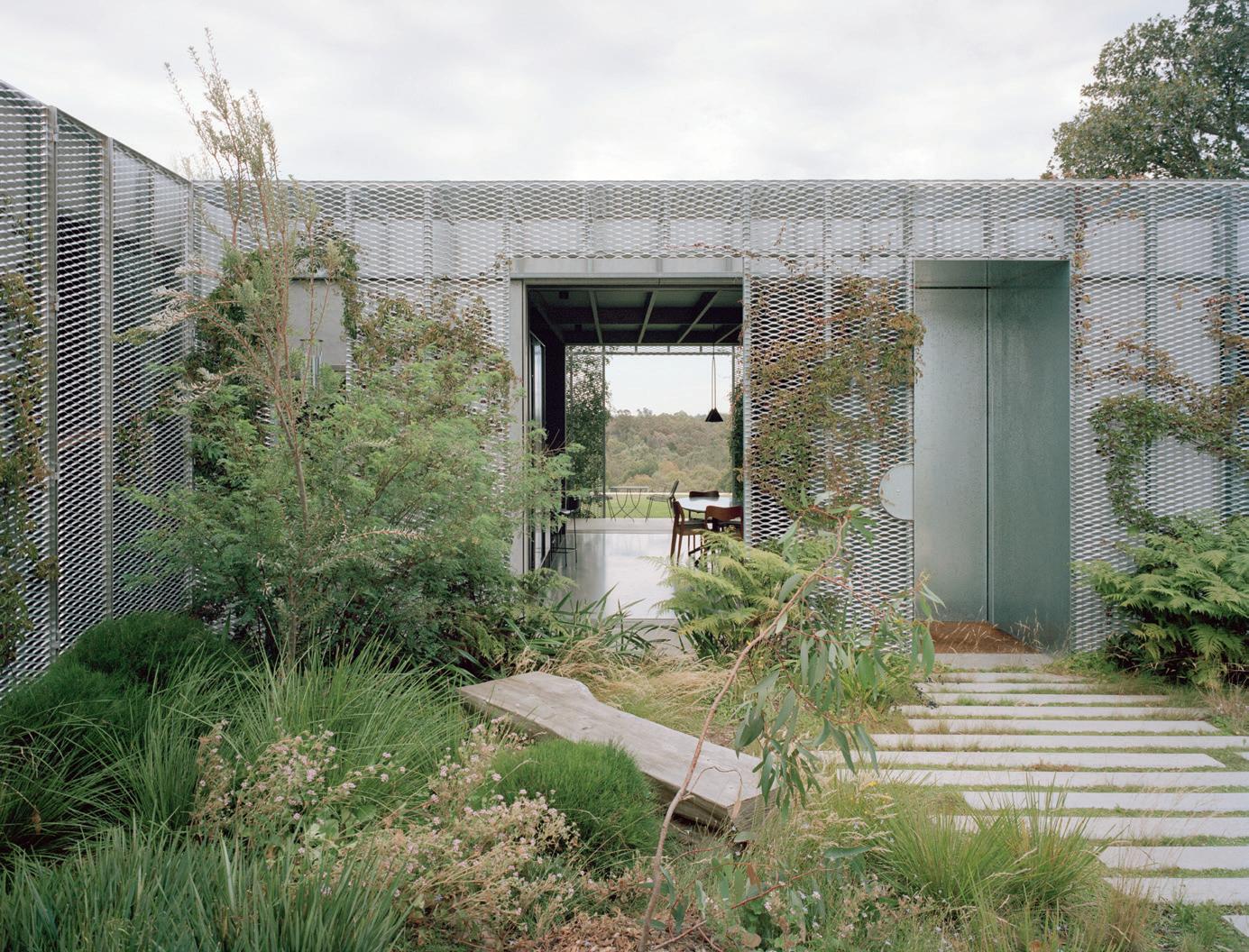
For Mel Bright, good design is always an exercise in optimism. “What I love about my work is that, at its best, it allows me to solve problems and make our world better for people,” says the principal and design director of Studio Bright (left).
Renowned for her civic-minded approach to architecture, desire to create connections with nature and a sense of community in public spaces, Bright sees design challenges as a gift. “That’s the crux of it – they’re a puzzle to be solved. The further I get in my career, the more I see problem-solving as woven into the fabric of every design decision.”
Bright says the same conundrums play out in all scales of design. “We ask the same human questions across every typology. For example, there’s a tricky tension between privacy and publicness. Even a private house has a public address – you’re part of something bigger. People want to feel connected to the community but still be able to retreat into their cave.”
The higher Bright’s star rises, the further she moves away from what she labels “architectural ego”. Celebrated in 2025 with Dezeen’s Urban House of the Year and the National Robin Boyd Award for the Hedge and Arbour House (above) in Melbourne, she could be forgiven for leaning into the acclaim. Instead, it’s the opposite. “Design ambition shouldn’t be about architectural ego,” she says. “A lot of architects struggle to rein in the desire to make a building scream, ‘Wow!’. But the right answer is often about restraint.
I want to build things that are quiet and feel right, not just chase the latest trend.”
Central to this mindset is a desire to do good with design. “When you embed social and environmental responsibility into the work, the building naturally becomes about the community it serves, instead of the person who created it.”
Her outlook is underpinned by the belief that this kind of design needs to be accessible to all. “On one hand, Studio Bright is doing premium harbourside, multi-residential apartments in Sydney. And on the other, we’re doing homes for Disability Homes Victoria for people who need a place that nurtures them.”
Studio Bright’s SDA Housing Project (Specialist Disability Accommodation) was designed for the Victorian state government and has been shortlisted for a 2026 Victorian Architecture Award. “For residents who are easily triggered, their home being a sanctuary is vital. We’re excited to see how empathetic design can de-escalate stress,” says Bright.
“Architecture can be a tool for human dignity. For a long time, architects have been wrapped up in bespoke houses. Studio Bright does them – they’ve been great for testing ideas. But we can apply those skills to projects that make more of an impact for more people.
“Figuring out how we do our work with different budgets, opportunities and clients but still with delight, connection to nature, community and dignity. That’s what design should be.”

Range Rover’s Westminster Edition is inspired by the landmarks of London. An architectural identity is baked into this model, which has exclusive design elements and enhanced specifications, from the Westminster branding that’s applied throughout the vehicle to a sliding panoramic roof and Meridian 3D Audio.
This year’s collection of Range Rover SV models introduce the world’s first in-car use of electrostatic speaker technology. SV Electrostatic Sound offers ultra-slim, lightweight speakers with highly responsive membranes that produce a studiograde soundscape. rangerover.com

116
Effective leaders don’t just adapt – they upskill. Three alumni share how executive education at leading Australian business schools has expanded their thinking and achievements.
Story by Jane Nicholls
The University of Sydney Business School
As Grace Bacon rose through the ranks in one of the big four banks, she reached down to pull others up, leading a diversity, equity and inclusion initiative and launching a mentoring program for minority staff. “As I stepped into leadership roles, junior staff from minority groups would say to me, ‘You must be the only Asian female who’s made it.’” The bank had a big presence in Asia but when Bacon attended leadership meetings, she realised it was true. “I wanted to encourage people to understand how much cultural diversity can bring to the workplace.”
Bacon was sponsored for The University of Sydney Business School’s Dr John Yu Fellowship, named for the prominent paediatrician who arrived in Australia from Nanking, China, at
the age of three. It’s dedicated to helping diverse leaders unlock cultural and social capital in the executive suite. “I wanted to understand how to bring my authentic self to work and be a more effective leader who can bridge cultures, be confident to speak up and also thoughtful enough to listen and bring others along with me,” she says.
Over three days the cohort discussed cultural intelligence and strategies for leading diverse teams. “Other courses I’d been to were all about Western leadership styles where the loudest voice in the room gets the attention and promotions – the squeaky wheel gets the grease,” says Bacon. “In contrast, Eastern leadership prioritises humility, collective harmony and a deep respect for hierarchy.”
During the program she realised much of her valuable business education to that point “was by stealth or on-thejob learning”. As her skills grew, she came to believe that diversity isn’t just about representation. “It’s also about building the leadership capability to see other views and encourage diversity of thought in decision-making.”
The John Yu Fellowship spurred her to take on an executive MBA with The University of Sydney Business School. “At the time I was in a senior leadership role but being female and a minority, I felt I couldn’t further progress – there’s a glass ceiling and a bamboo ceiling. I felt that the MBA was the best investment I could make in myself.”
Today Bacon is a partner in private wealth management at RSM Australia and continues to help all manner of aspiring professionals. “I mentor anyone who approaches me – many are from culturally diverse backgrounds because they feel I can relate. Doing the John Yu program gave me the confidence to bring Western as well as Eastern leadership perspectives and to draw on both styles and my own personal values as I lead my teams.”
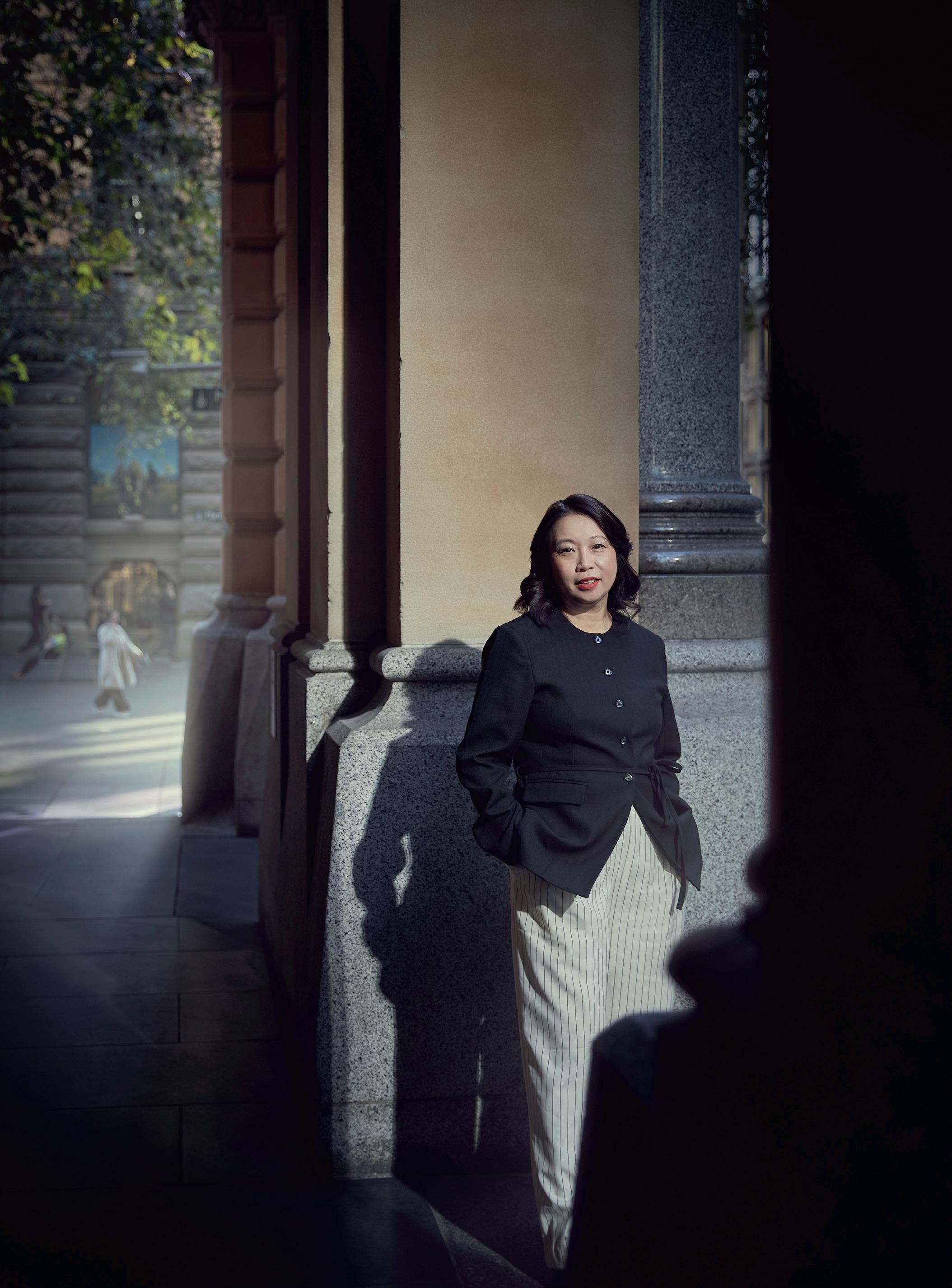
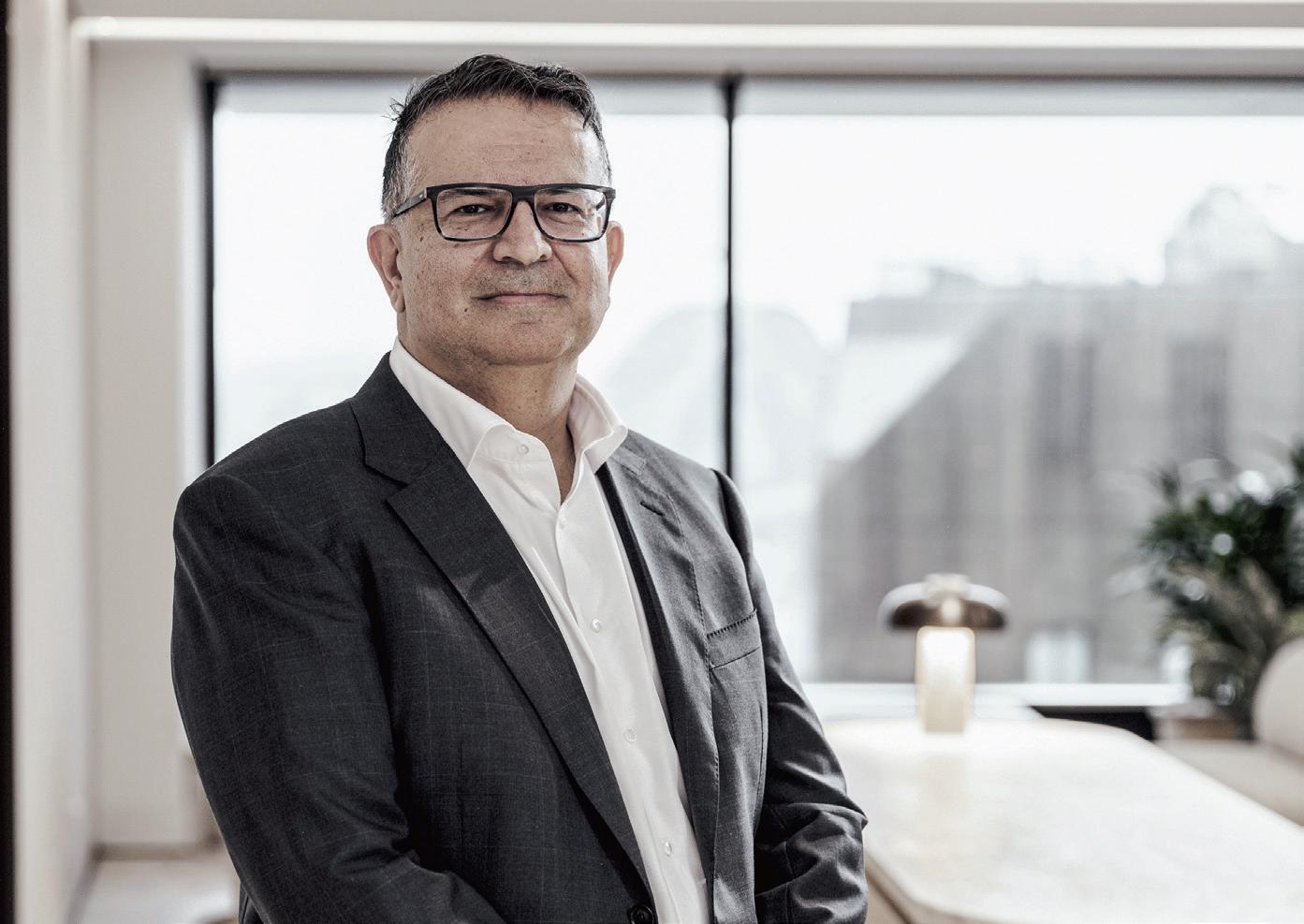
Australian Graduate School of Management (AGSM), UNSW Business School
“It still astonishes me how many companies take their people for granted,” says Said Jahani, CEO of accounting and consulting firm Grant Thornton Australia. Since taking the top job last July, part of his strategy has been significant investment in development courses for the company’s 1600 staff. “It’s about activating our talent from the bottom up and senior leaders from the top down,” says Jahani, who has done courses at Harvard Business School and took a large group of business unit leaders to a residential course at Melbourne Business School last year.
Earlier this year, he and 11 of his senior leadership team took up residence for five days at the H.C. Coombs Centre in Kirribilli, Sydney, for the AGSM’s General Manager Program. “We were
looking for a way to build camaraderie and the skills to navigate the changes ahead of us. The AGSM course does that,” says Jahani, who also earned his executive MBA at the AGSM.
Normally, this program is a mixture of leaders from different organisations but Jahani opted for a closed group. “Professional services is at the tip of the spear in terms of impact from AI and I was very keen on seeing how the course could help us define and tackle a common problem as a cohort,” he says. “The benefit of workshopping the problems with facilitators is that they kept honing in for us to get a much clearer perspective.”
He says that among the standout learnings were reassessing leaders’ roles in problem-solving and reframing how
they see AI. “We talk about AI as an opportunity or a risk but not about human intelligence,” he says. “Our approach has to be focused on human intelligence – a people-led approach supported by AI. People want to deal with people and the opportunity is to use AI to make better judgements and provide more value to clients.”
Jahani says the “problem finder versus problem solver” concept really resonated. “The program facilitator put the challenge to us: when someone in your team comes to you with a problem, are you tempted to help solve the problem for them as opposed to developing them? It made us realise that as leaders our job is to be problem finders and think about the next big thing that will impact our business – asking others to help find the solutions.”
Built into the intense program was an hour of personal daily reflection. “That was really helpful to give people time to focus on the learnings, because it’s not as if you can take it all and apply it the first week back at your desk.” Rather, they discussed the specific things they planned to focus on in the weeks ahead and committed to checking in with each other. “It’s like a buffet of models and concepts – you take away the ones that you think will make a difference to you.”
Theatre professional Jo O’Reilly led a session in presentation skills and Jahani said it bore fruit at a larger conference for future Grant Thornton leaders shortly after the program. “She gave us all these tricks and tips and I could see a complete 180 with one of the leaders presenting with me. Spending that week together really built trust and a bond between us.”







Our Executive MBA takes you out of the classroom and around the world, giving you a range of unique experiences across Australia, Asia, Europe, India and the United States.
With a focus on experiential learning, disruption and adaptability, this program will give you the opportunity to work with business leaders and global organisations to address dynamic and multifaceted problems. Find out more: sydney.edu.au/emba
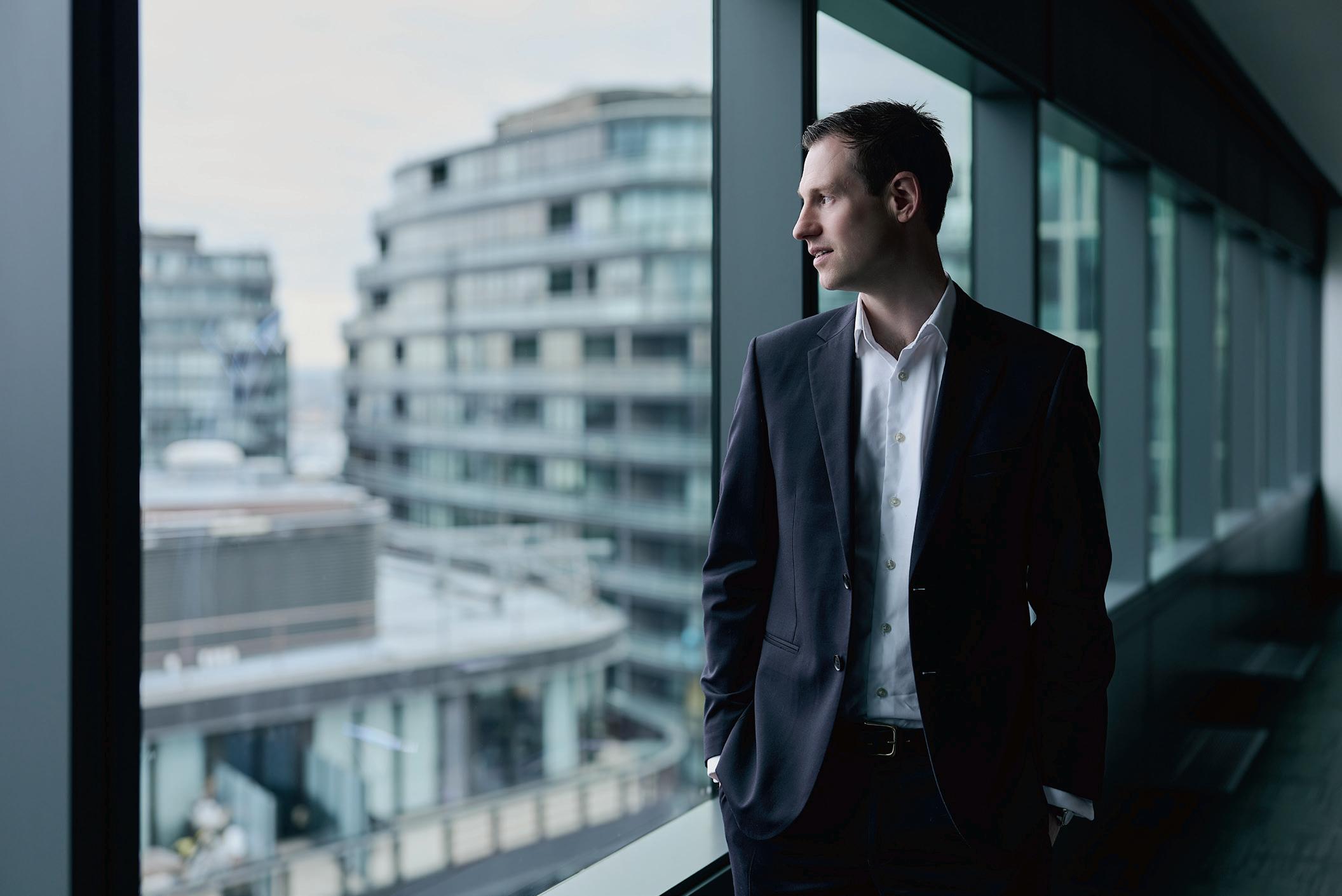
Andrew Wright has mapped out his tertiary education very deliberately: an engineering degree in his homeland of New Zealand, followed by an MBA at Melbourne Business School, which is where he also took the Advanced Negotiations short course earlier this year. “Maybe I’m a sucker for punishment but I always want to learn,” says Wright, head of delivery at Port of Melbourne.
“I had a great experience with the MBA and I’d been involved at the periphery of some complex negotiations in my job at Port of Melbourne so I thought learning a bit more theory around complex negotiations would really help set me up for more success at work.”
The three-day residential program pushed the self-described introvert out
of his comfort zone. “We would get case studies and prepare either solo or in groups and then role play, sometimes negotiating for three or four hours,” he says. “You’d go away, do more planning, go back, negotiate, learn a bit more and then do a big debrief to figure out who captured the most value.”
Wright says he gained a lot by being forced to put the theory into practice: “Until you do that, you don’t really embed the learning.” The eclectic cohort – including retail leasing executives, infrastructure specialists and an AFL executive responsible for negotiating player contracts – was another win, as were the after-dinner speakers, including industrial relations lawyers and an Australian Federal Police negotiator.
His new prowess was put to work right away, primarily by refining his forward-planning skills during complex negotiations that can take weeks or even months of preparation. The course showed Wright the benefits of taking a multi-faceted view and putting himself in the shoes of the other party. “This allows you to look forward to what issues you might face during the negotiation and to put plans in place to mitigate those ahead of being at the table.”
As planned, it allowed Wright to expand his presence at work. “The course helped open a new door for me. I’ve gone from negotiating with contractors, designers and suppliers to building things and getting more involved with leasing arrangements.”
Navigating an increasingly complex world requires leaders to hone their existing skills – and acquire new ones. The Australian Graduate School of Management (AGSM) at UNSW Business School offers MBA programs, graduate certificates and short courses that equip leaders to not just manage disruption but out-think it.
What once felt like uncertainty has become the new operating environment. The leaders succeeding aren’t the ones who can predict what’s next. They’re the ones who know how to make sound decisions when the path ahead isn’t clear.
“There’s a skill set leaders can learn so they and their organisations can thrive in complexity,” says Associate Professor Michele Roberts, Head of School at AGSM and Associate Dean (Post-Experience) at UNSW Business School. “The leaders who handle disruption well aren’t smarter or calmer but have learned to make good
decisions about unexpected information.”
These skills are at the core of AGSM’s MBA programs, equipping graduates to lead with confidence through complexity, uncertainty and change. “We’re not teaching people to predict disruption better. We’re teaching them to triage it and know the difference between a problem that needs management and one that needs leadership. Today’s leaders need new skills, mindsets and confidence to thrive.”
Scientia Professor Richard Holden, Vice-Chancellor’s Professor and Chief Societal Economist at UNSW and Director of the Manos Institute for Cognitive
Economics, researches the impact of rising complexity. “Cognitive economists think about complexity as things that are costly or difficult to figure out,” says Holden, who lectures in AGSM’s MBA programs and contributes to its short courses. “Standard economics assumes that once you have the relevant information, you can immediately determine the answer.” He gives the example of deciding what car to buy. “You consider different attributes, read consumer reports and take test drives. Once you have the information, boom, you’re done. In reality, it’s much harder than that.”
“Cognitive economics is an emerging field that takes the human reasoning process very seriously,” says Holden. With multiple factors to consider in business, the work at the Manos Institute is compelling.
“Cognitive economics is about getting inside people’s heads and researching how computationally costly it is to think through and analyse problems,” he says. “That starts at the individual level and for organisations there’s an added layer of complexity, often with people putting together the conclusions of different individuals or teams. Once you adopt the perspective that it’s about things being difficult or costly to figure out, it gives you a different lens from standard economics.”
Holden says this way of thinking about complex problems helps leaders appreciate that “having all of the information is only part of the solution”. To untangle complexity, leaders need methods to cut through the forest of data that can prevent clarity.
“You probably don’t want to have less data because it’s an important piece of the puzzle,” he says. “But having so much data now highlights that leaders need to consider the decision they have to make and what information would best support it. Start there and work backwards.”
Leaders are constantly assessing the allocation of resources in their organisation. Applying a cognitive economics framework
can help. “Leaders need to think about the organisational and analytic resources they require for different problems,” says Holden.
Similar to a P&L statement informing cash flow, cognitive economics puts a value on the resources needed for deep reasoning. “Understanding that you have a fixed budget of these resources and thinking strategically about allocating them is critically important.”
It’s the kind of mindset shift that has to be learned, says Roberts. “In a period of such disruption, organisations are struggling to grow so there is an urgent imperative for leaders to get a solid grounding in innovation and change management to find new paths for growth.”
Examples of organisations behaving badly are multiplying. The AGSM ethos is that ethical behaviour is an essential tenet of good business and that companies grow and prosper when they also strive to do the right thing. Add to this the fact that the generations entering the workforce today are searching for purpose-led organisations and eschewing those in which the C-suites are beset by scandal.
“When everything is shaking and changing around you, what’s needed is a solid grounding that allows you to cope with that change and make good decisions,” says Dr Simon Longstaff AO, Executive Director of The Ethics Centre and Adjunct Professor
at AGSM. He says the behaviours that undermine that foundation are hypocrisy – “where an organisation or its leadership says one thing then does something else or requires other people to” – and complacency about a problematic status quo – “everybody else is doing it”.
This ethics vacuum leads to a poisoned culture. “When a leader presides over policies and structures that signal a gap between words and actions, it creates cynicism within an organisation,” says Longstaff. “That acts like an acid that breaks things down and you are less able to deal with complexity.”
The “we’ve always done it this way” excuse is equally corrosive. To distinguish management from leadership, Longstaff imagines an organisation as a cork floating in a stream. Management keeps it stable so people don’t fall in – but the cork still drifts where the currents lead. Leadership is what determines where the cork actually goes. “Management is fine if the water’s calm and heading the right way but when it’s turbulent and there are rocks and waterfalls ahead, leadership really matters,” he says.
“How you lead in those circumstances is fundamentally a question of ethics. A clear set of values and principles that are rooted in an organisation’s defining purpose and function is what provides the stable foundation for making sound decisions in highly complex times.”
To overcome the common blind spot about these ethical questions, Longstaff and The Ethics Centre have developed a leadership and cultural strategy they call “constructive subversion”.
“What you subvert is the unthinking custom or practice,” he says. “A leader never accepts that something is done just because everybody else is doing it. They say, ‘No, that’s not good enough’, and constructively engage to get their organisation where it aspires to be.” By adopting this strategy, leaders build and strengthen the foundation that’s required to cope with complex times.
Longstaff says ethics is not “a disposition to be good or nice”, but a set of skills – and one that AGSM invests time in developing in its students. “Particularly in our full-time MBA program, we give the students a framework to understand that the most powerful force on this planet is human choice, and that’s ultimately what ethics is about. We want students to be alive to this complexity and know they can develop a skill set so they’re better able to deal with it.”
By building the necessary expertise across change management, cognitive economics and ethical leadership, AGSM alumni are prepared for the next global shock – and the one after that.
“Being a CEO is about making the complex simple”

Joe Taylor enrolled in an MBAX at AGSM, with a focus on change management. He was appointed CEO of Smartways, Australia’s leading healthcare logistics provider, after completing his studies. When chemotherapy drugs are made between 2am and 6am to treat a cancer patient the same day or a donor organ has to be transported for transplant, there’s no margin for error. “Everything we do touches patients,” says CEO Joe Taylor of Smartways, a 24/7, 365-day logistics service where late deliveries can mean cancelled surgeries, wasted drugs – or worse.
“Smartways transports more organs than any other company in Australia,” says Taylor, who worked as an executive at various supply chain businesses before joining Smartways as CEO in 2022. “We pay drivers to stand by at the hospital in case there’s a trauma case and something is needed urgently. An item may need temperature control, or it might be a radiopharmaceutical drug that requires radio-nuclear lead packaging or an incubator for a neonatal ward. All the shipments are time-critical or have complex requirements. But I enjoy complexity, and I believe that pressure can be a positive.”
Taylor was enrolled in the part-time MBAX at AGSM while he was working in New
Zealand at another company. “My ambition was to become a CEO, and I achieved that in the first or second year of my six-year MBA journey,” he says. “I wanted to round out my skills across all functions of the business.
The only jobs in a company you don’t get active training for are general management and the CEO role.”
He wanted to learn more about strategy, finance and change. “My objective was to get cross-functional experience in running a company and to become an expert in change management, because I think that’s key for any leader now.
“The MBA taught me that change management is the intersection between strategy and execution – you can write a really good plan for a company but understanding what levers to pull, and when, makes the difference in execution.”
Under Taylor’s leadership, Smartways has grown rapidly, expanding from 100 team members to nearly 500 people in the past few years, including a 300-strong team of drivers servicing some 1350 hospitals daily. “I took over from a brilliant owner who’s now our chairman,” says Taylor. “He asked me to
come on board because the business was becoming too reliant on him. I knew, as we grew, it couldn’t be too reliant on me, either, so building a high-performing team was key. We have an outstanding executive team and invested heavily in people and infrastructure ahead of growth. We knew that if we followed our mission, vision and value proposition, the growth would come, and that’s exactly what happened.”
Taylor says his MBA clarified the path for Smartways and also that the “traditional strategy frameworks” still hold true – as much as the AGSM constantly refreshes its curriculum to keep pace with change. “I’ve deployed the McKinsey Three Horizons framework and the Porter’s Five Forces,” he says. “They are both decades old but still apply – it’s just the variables inside them that change.”
Those frameworks even remain relevant amid the AI data deluge. “You ask an analyst a question and they give you a huge amount of data back,” says Taylor. To cut through the overload and complexity, he goes back to the frameworks from his MBA and filters decisions through the company’s guiding principles. “Once you have a North Star and you’re running to that, it takes away the noise.”
“In reality, especially now, we all need to keep learning”

Deputy Chief Economist at AMP, Diana Mousina, has built a strong social media following for her clear communication of complex economic concepts. She has a bachelor’s degree in accounting, finance and economics, and a master’s in finance (funds management) from UNSW.
Navigating volatile global markets requires more than a confident grasp of data and an understanding of economics. It also demands an ability to find real-world clarity amid the upheaval. Diana Mousina began honing her skills at UNSW.
“University is where people find their passion, and it cemented my love for economics,” she says. “School economics was very theoretical. At university it was still that way but with practical elements, so I understood more about how to apply it in the real world. This is where my enjoyment of economics really developed.”
Mousina’s foundational undergraduate and postgraduate degrees have paved the way for her to interpret market disruptions for a national audience.
As the macroeconomic landscape becomes increasingly intricate, says Mousina, leaders face a challenging domestic economic cycle with global forces adding layers of friction.
Geopolitics, once an afterthought in traditional economic models, has become a dominant variable. “Geopolitics is the biggest change I’ve seen over my career,” she says. “It wasn’t a huge area for study when I was doing my undergraduate degree and master’s, but now everyone’s a geopolitical analyst. If you’re working in macroeconomics, you have to follow geopolitics because it impacts markets, economic growth and forecasts.”
In a complex operational environment characterised by division, Mousina says it’s vital that leaders take the time to be across key shifts and the economics that underpin them. “Economics shapes everything,” she says. “Over the past 10 years, economics has been more important than it was in the previous decade, and it will become even more important in the next.”
Leaders should seek views outside their echo chamber, says Mousina. “They need to read as widely as possible and actively search for different opinions. I worry that we’re fed the same views, even on LinkedIn.”
Mousina has a social media following as part of AMP’s popular Econosights team and is an expert commentator on radio and TV. “I began by doing lots of presentations and media when I started at CommBank almost 15 years ago – it’s all about practice.”
She has become highly skilled at translating complex economic concepts into clear, digestible insights and advises leaders to develop the same skills. “People like simple, relatable messages and having a snapshot to take away,” she says. “If it’s too complicated, it doesn’t land.”
In parallel, she urges leaders to step away from the day-to-day and seek out professional training that will build new knowledge. “The old view was: we go to school, then to uni and our education is complete. In reality, especially now, we all need to keep learning.”
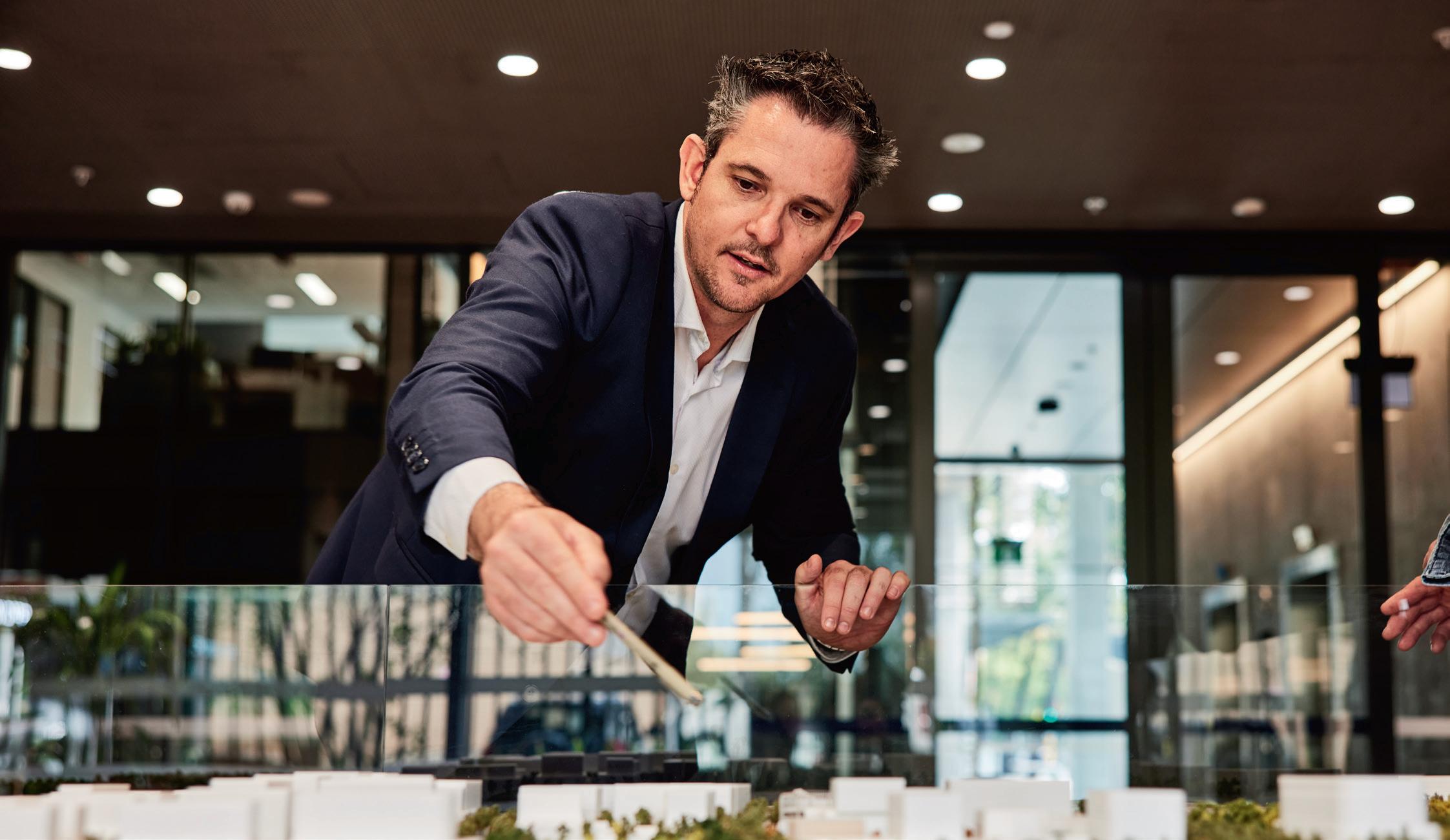
For Australia’s most impactful leaders, learning never stops. AGSM @ UNSW Business School equips a new generation of leaders to navigate complexity with clarity, driving progress that advances economic and social prosperity for all.
Through globally-ranked MBA programs, graduate certificates, short courses and bespoke executive education programs, leaders can continue to challenge assumptions, test new thinking and turn insight into impact at every stage of their career.

Tim Bale Director, Asset Development and Delivery Bradfield Development Authority AGSM MBA (Executive) 2023
“Learning doesn’t stop when you finish your MBA. The skills, perspectives and networks from AGSM are things I apply every day.”
Explore postgraduate degrees and short courses from Australia’s #1 university in Executive Education, delivered in-person and online.

Interview by Kirsten Galliott
Photography by Louise Kennerley
She didn’t seek the top job but the new boss of Airtree knows how she’ll take the VC to the next level.
Current role
CEO and general partner, Airtree
Tenure
Nearly three months
Previous roles
Partner, Airtree; principal investor, Airtree; enterprise relationship manager, LinkedIn; investment banking analyst, Credit Suisse
You were appointed Airtree’s first-ever CEO in May. What prompted the shift?
Everything that’s happening with the rise of AI and the pace of change. In particular, what that means for our industry – both for the founders we back and the venture capital ecosystem more broadly. Opportunity has never been bigger but the bar to execute has never been higher because we have tools and opportunities that are now available to everyone. It felt hypocritical to be saying to our portfolio companies, “You need to rise to meet the moment” and then not look at ourselves internally and ask, “Are we operating in the best possible way to take advantage of one of the biggest shifts in the technology landscape that any of us will likely see in our lifetimes?”
Since it was founded in 2014, Airtree has had a culture of consensus – key decisions were voted on by partners. You now make the final decisions about the firm, which is a huge change in culture. How will you manage that?
We have a governance process where certain decisions will still sit with our heads. A big part of any well-run business is making sure you have the right people in the right seats with the right authority and accountability to drive decision-making. I don’t think every single decision should sit with the CEO. Leaders are able to make decisions within their remit, with the right things being elevated to a CEO decision. And then some things will be elevated from CEO to board. The board is made up of the six partners, including me, so we’re a true partnership.
Was becoming CEO a loud ambition or a quiet one?
I’m not sure it was an ambition. I’m driven by how I have the most impact. That’s my career goal and my life goal. I’m not ego-driven at all. Nothing about external validation matters to me. But as our needs evolved and I learnt more about my strengths, those two things had a decent amount of overlap – what I felt the business needed and what I could offer. It became something I felt I could uniquely do well.
Airtree brought in an external leadership consultant to manage the transition. What did you learn about yourself in that time?
How much I care deeply about optimising the business. I’m self-aware enough to know where I can add value and where I have areas for improvement. I’m not threatened by feedback. We have a culture in our leadership team where at the end of each meeting we rate it out of 10 and give feedback on why it wasn’t a 10. Once you build that culture of not taking feedback personally, it becomes a core characteristic you don’t even think about.
How is AI reshaping the way Airtree evaluates opportunities?
It’s changing a huge amount of what we do. We’ve talked publicly about how much we’re using it in our investment process – as we’re dealing with companies, prepping for meetings, how it goes through our whole workflow. But there are parts of our job that will never be – and should never be – replaced by AI. The relationship building we do with founders, for example. The way we think about these tools is how
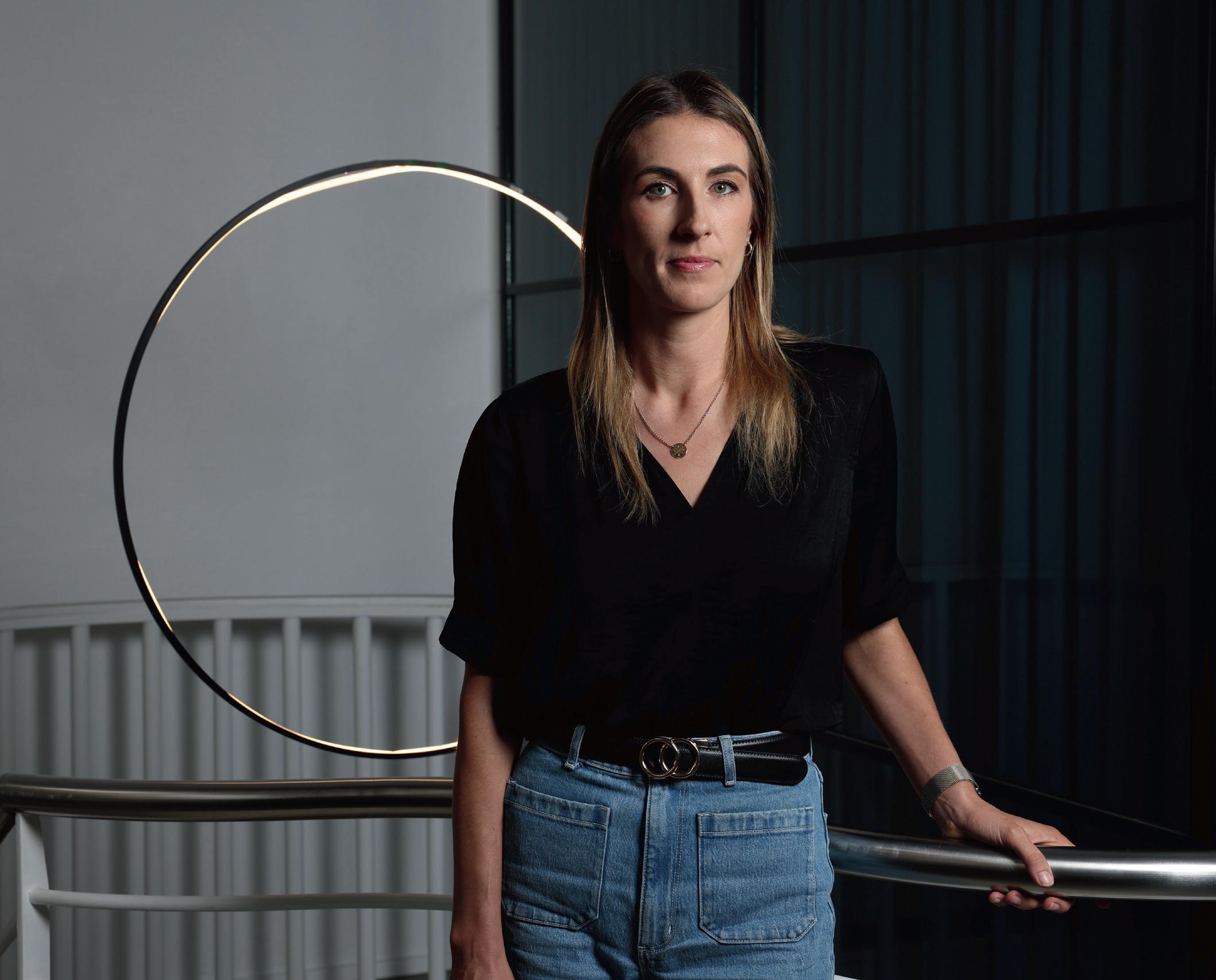
can we optimise their usage so we can spend more time on what really matters – building deep relationships and understanding how we can support our founders?
What about the startups themselves? They all seem to be AI businesses now.
Our job is to think 10 years ahead about where the world’s going and where the value will be created in that time period. The companies that we’re seeing are all AI-native. They’ve been built from the ground up with AI. Incumbent businesses need to think as if they were AI-native. If their business was getting started today, how would it be built? If you’re a leader in a large enterprise business or in a startup, you need to have the same mentality: how can I capitalise on this huge opportunity and help my people to navigate that change?
“I’M DRIVEN BY HOW I HAVE THE MOST IMPACT. THAT’S MY CAREER GOAL AND MY LIFE GOAL. I’M NOT EGO-DRIVEN AT ALL.”
Where have you found AI to be most transformative in your day-to-day role?
I have a scheduled Claude workflow that runs every evening. It summarises what’s sitting in my inbox, what’s outstanding and what’s in Slack. It looks at my calendar for the next day, what meetings I need to prepare for and it sends me a direct Slack message each night. It helps me triage what’s most important so I can stay focused on what’s really going to move the needle.
For note-taking I use Granola. The more present I can be in a meeting – really engaging with who I’m with – the more impactful the meeting is. But I can’t miss actions and follow-ups when I’m going back to back all day. I can take my own notes but Granola listens in and generates a summary based on what was discussed. It also links to a full transcript so I can ask, “What was discussed about the project due next Tuesday?”
What do you see as your absolute strength as a leader?
I’m a big fan of Patrick Lencioni’s The Five Dysfunctions of a Team. You build trust through vulnerability, which then allows you to have a culture of accountability and shared ownership of goals. That’s the way I aspire to lead.
And your biggest gap?
I get bored easily. It’s probably helpful in a role like this because there’s not much time to get bored. I like fast-changing environments. It’s why I’m in venture capital. If I were in a more stagnant industry, I would struggle.
Airtree has backed extraordinary companies – Canva, Airwallex – but not every investment’s a winner. How do you cope with that? It’s an occupational hazard of being a venture capitalist that not every investment will turn out as we hope. But I’d be lying if I said it’s an easy part of my job. I don’t think any investor enjoys it when a portfolio company is facing hard times. And even the most successful businesses in the country have had hard times. We have a portfolio. But our founders, who have put 10-plus years of blood, sweat and tears into getting that business off the ground, don’t have a portfolio. They are all in. So how do we support them through that transition? How do we get the best possible outcome for them? In this industry, reputation is everything. That founder may go on to create another business. They may speak to the next founder of the next unicorn and recommend working with Airtree. How we act in those difficult moments really matters.
You talk a lot about making “new mistakes”. What does that mean? If you’re scared to make a mistake, you’ll never take a risk. That’s dangerous when you need to be constantly pushing forward. We want to try new things and experiment. They might not all work and that’s okay but let’s not make the same mistake again. Let’s learn from that lesson, put it into our feedback loop and make sure we’re constantly improving.
Venture capital has a famously long feedback loop – it can take 10 years to know if you were right. How do you make peace with the uncertainty? It’s a unique challenge. You can have leading indicators that you’re moving in the right direction but the actual report card takes a really long time. That creates an interesting tension. How do you give people a sense that we’re making consistent progress towards our goals when we don’t have immediate feedback? I’ve had to learn how to be comfortable with that. Finding the right ways to surface those leading indicators and feed them back to the team is really important for motivation and for knowing we’re heading in the right direction.
You describe yourself as an eternal optimist. When has that helped you and when has it held you back? You need to be optimistic when you’re backing very early-stage founders who have huge ambition for how they want to change the world. There are a million reasons why a pre-seed or seed company won’t work out and the statistics are not in any individual founder’s favour. You will never make an investment at an early stage if you’re constantly thinking about the things that can go wrong. So you have to be a glass-half-full person.
That quality helps me enormously in my role as an investor, as a leader and in terms of my general happiness in life. The flip side is that you’ll acknowledge a risk but think it could work out for particular reasons. The reality of our job is that sometimes those risks will very much play out. With time and pattern recognition you get a better understanding of the right risks to take. But at an early stage, you’re going to get that wrong sometimes.
When you were promoted to partner in 2021, it made headlines because venture capital is so male-dominated. How different does it feel now?
Jackie Vullinghs, who is a partner at Airtree, sent me a message the night my CEO announcement went public, saying, “It only struck me today that this is a big deal because you’re a woman.” I just hadn’t processed it like that, which probably speaks to our culture internally – my gender is just not a factor. But gender-diverse leadership is still not the norm in the broader industry. It’s improving and changing over time but globally only about 15 per cent of cheque writers are women. It’s not enough.
One of Airtree’s values is “enjoy the ride”. How do you model that?
“IN THIS INDUSTRY, REPUTATION IS EVERYTHING. HOW WE ACT IN THOSE DIFFICULT MOMENTS REALLY MATTERS.”
A motto I live by is “happiness is a journey, not a destination”. I have four young kids. I make sure I maintain balance and I’m seen to be demonstrating it because that gives permission to everyone in the business to be high-performing and ambitious in their career but to have full lives outside of work. I make an effort to leave the office at five every day, pick up my kids from daycare and school, spend time with them and then log back on. I would much rather work later into the evening at home so I can protect those hours with my kids. It’s a slippery slope – I blink and I’ve missed my kids’ childhood. So I have to draw those boundaries and stick to them. I think you can demonstrate to a team that you can be high-performing and achieve all your goals – but you can do it in a way that gives you the flexibility to also have a sustainable life.




Interview by Jane Nicholls
Streamlining brand feedback was the spark that led to this tracking platform, says co-founder Connor Archbold.
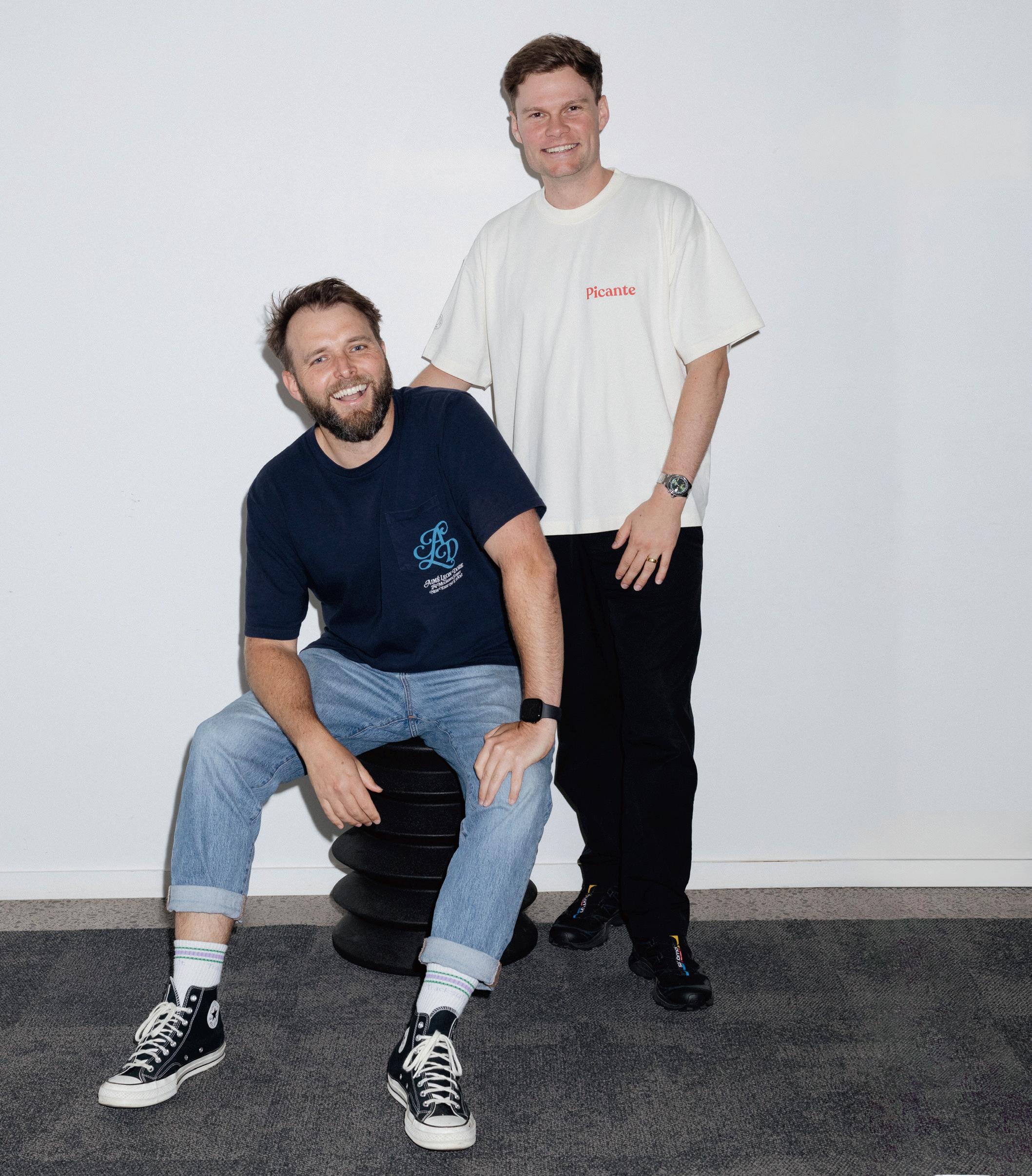
Co-founders
Connor Archbold, CEO, 38 (far left), and Matthew Herbert, CCO, 32 (left)
Investors
Altos Ventures, Footwork, Icehouse and Blackbird. Series B round in June 2025, led by San Francisco-based VMG Partners, was over-subscribed and raised US$25 million.
Headquarters
Auckland, with offices in Sydney, London and New York
Employees
187 What is it?
“Tracksuit (gotracksuit.com) is the world’s best brand tracking platform. We track 20,000-plus brands across 25 countries and understand what humans think and feel about them.”
Why do it?
“Since the digital marketing revolution, marketers have been under pressure to provide ROI on every dollar they spend, leading to an over-reliance on short-term marketing. Marketers needed a tool that pointed to brand metrics such as awareness, consideration, preference and sentiment to give them credibility in the boardroom. Traditional brand tracking could cost $200,000 a year, making it available only to very large companies. We wanted to make it beautiful, affordable and always-on for everybody.”
How does it work?
“It’s a web-based platform. Tracksuit’s secret sauce is the survey technology, making it simple for marketers to use. We’re doing hundreds of thousands of digital interviews with people every single day to find out what they think and feel about these brands. Because we don’t have the personal information of the respondents, privacy issues don’t impact us as much.”
How did it all start?
“Matt and I began on the same day as employees at another marketing startup. I ended up in New York and he ended up in Sydney and we learnt a lot. When we both moved back to New Zealand, we were looking for the next thing. We’d spent time with brand strategists and market researchers and realised there wasn’t a single source of truth for brand sentiment and awareness, and whether a company was primed to grow. That seemed like an opportunity we could tackle. Matt and I aren’t technical so
we wrote a list of 100 marketers, carried contracts around in a satchel and asked them, ‘Would you pay $10k for this? We’re not going to build it unless we get 10 people to sign up.’ By the 68th conversation, 11 had signed up and we got a minimum viable product built in 30 days, launching in 2021. We used customer revenue to fund the business from day one.”
How did you grow?
“We kept iterating and each quarter, we’d launch a new version of the product and sign up a new cohort of test customers. Because we were bootstrapping, we sat alongside customers to build what was useful, without being distracted by raising investment early on. When we did eventually raise money with partners like Blackbird and Icehouse, they helped us take what was working and expand it globally. We grew through our customers; an early Australian client urged us to launch in the United States and the United Kingdom, which allowed us to expand with them.”
What’s next?
“THERE WASN’T A SINGLE SOURCE OF TRUTH FOR BRAND SENTIMENT AND AWARENESS… THAT SEEMED LIKE AN OPPORTUNITY WE COULD TACKLE.”
“The US is now our biggest market and the UK our fastest-growing. We’ve just launched into 17 new countries, including most of Europe, and are heading into Singapore and Japan. This takes our total to 25 countries, covering 85 per cent of the global market research budget. This allows us to start working with conglomerates like Unilever, Pfizer and Mars in a bigger way. We’re also expanding our product suite, including answer-engine brand tracking – how brands are perceived within ChatGPT and Claude, etc. We have a team of 100 in Auckland and I’m passionate to keep scaling from here.”





Singing happy birthday in person Earn points on credit cards, hotels, insurance, shopping and more
Movies Kick back and catch up on the latest releases.

Slip into something chic for the sequel to the 2006 comedy hit. Twenty years have passed since Andrea “Andy” Sachs (Anne Hathaway) was the put-upon assistant of Miranda Priestly (Meryl Streep, above left, with Hathaway), the fearsome editor-in-chief of fashion bible Runway. But Miranda’s world isn’t so luxe anymore – she has to catch Ubers instead of limousines, quelle
Jewel thief Mike Davis (Chris Hemsworth, right) goes about his profession with steely-eyed efficiency in this fast-paced thriller. He’s waiting for the “walk-away” robbery, the one that’s lucrative enough to liberate him from this high-risk life, and he thinks he’s found it with the collusion of insurance agent Sharon Colvin (Halle Berry), who wants her cut. But Mike has to pull it off without his patron, crime boss Money (Nick Nolte),
horreur – after cost-cutting comes into effect and a know-nothing tech bro takes the reins at the magazine. The scathing one-liners and withering looks are back, many of them from Nigel Kipling (Stanley Tucci), Miranda’s right-hand man. Andy has returned to the fray after being fired from her job as an investigative reporter. She teams up with her former nemesis, Emily Charlton (Emily Blunt), now an executive at Dior with her own tech billionaire in tow, to save the day.
finding out. On his trail is LAPD detective Lou Lubesnick (Mark Ruffalo) and Ormon (Barry Keoghan), a brash young thief out to usurp Mike in Money’s estimation.

Ever wondered what wild animals are actually thinking? In this Pixar animated tale, nature-lover Mabel Tanaka (voiced by Lila Liu as a child, Piper Curda as a teen) gets to find out when her consciousness is transferred to a robot beaver and she becomes a member of the animal kingdom. She’s hoping to convince the forest creatures to reclaim a verdant glade that’s under threat from the town’s self-obsessed mayor (John Hamm) before it’s too late.
MMA fighter Patton James (Daniel MacPherson) left the ring years ago but he’s still getting hit from all directions – money troubles, nasty boss, sick kid, no-good brother – in this gritty local drama. Patton’s given a lifeline when he’s offered a bout for a six-figure sum but has only weeks to prepare. He must face his brooding ex-trainer Sammy (Russell Crowe, above left, who also co-wrote the film), who hasn’t forgiven him for a past wrong.


Television
The best shows to binge this month.

In this wry comedy series, writer Greg Russo (Steve Carell, above) accepts a position at a college campus to keep a fatherly eye on daughter Katie (Charly Clive), an art history professor. Her husband had a fling with a grad student and she’s trying to deal with the betrayal but Dad thinks he can fix it.

A runaway success from the moment it first burst onto TV screens in 1989 – with an out-of-sequence Christmas special – the cartoon series about a working-class family in Springfield has gone on to become a pop culture phenomenon: its characters instantly recognised and quoted, its satirical view of family life a work of bold comic genius.
They were the golden couple of the 1990s: the handsome son of an idolised president and the willowy blonde goddess who stole his heart. This is a dramatised account of how JFK Jr and Carolyn met, fell in love and wed in the face of unrelenting public scrutiny and the double-edged sword of being a Kennedy.
Now 100 years old, the beloved natural historian and broadcaster has been filming and explaining the creatures who inhabit our planet since the 1950s. Life on Earth, released in 1979, was the career-launching result of a three-year journey to 40 countries, recording more than 600 species and setting the gold standard for wildlife programs.
Once onboard, connect your own device to Qantas Free Wi-Fi on Wi-Fi enabled aircraft in three simple steps to access the internet and Qantas Entertainment App.
Step 1
Enable Aeroplane Mode and select the “Qantas Free Wi-Fi” network in your Wi-Fi settings.
Step 2
Follow the prompts on the “Welcome Onboard” screen to connect.
Step 3
Once you’re connected, you’re now ready to access the internet and the Qantas Entertainment App.
Having trouble connecting? Make sure you’re connected to the “Qantas Free Wi-Fi” network and go to wifi.qantas.com in your preferred browser to start exploring.
Inflight entertainment varies by route and aircraft. Voice calls are not permitted inflight.


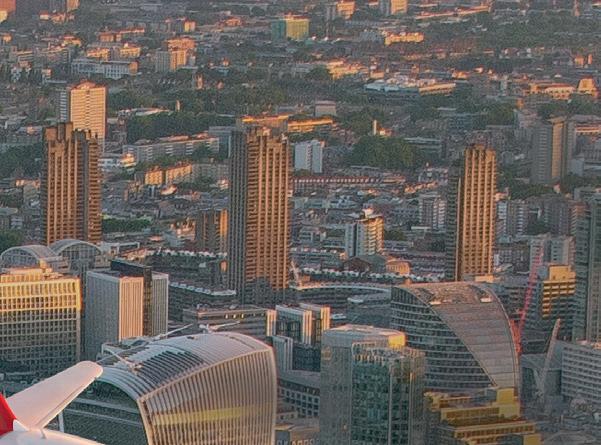

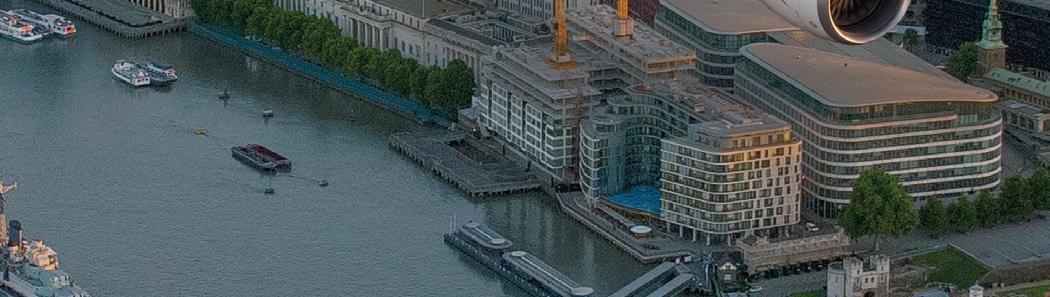
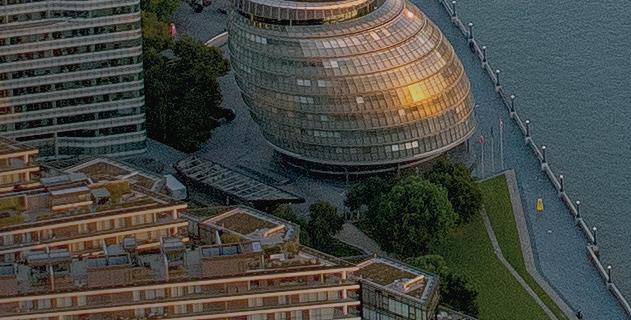



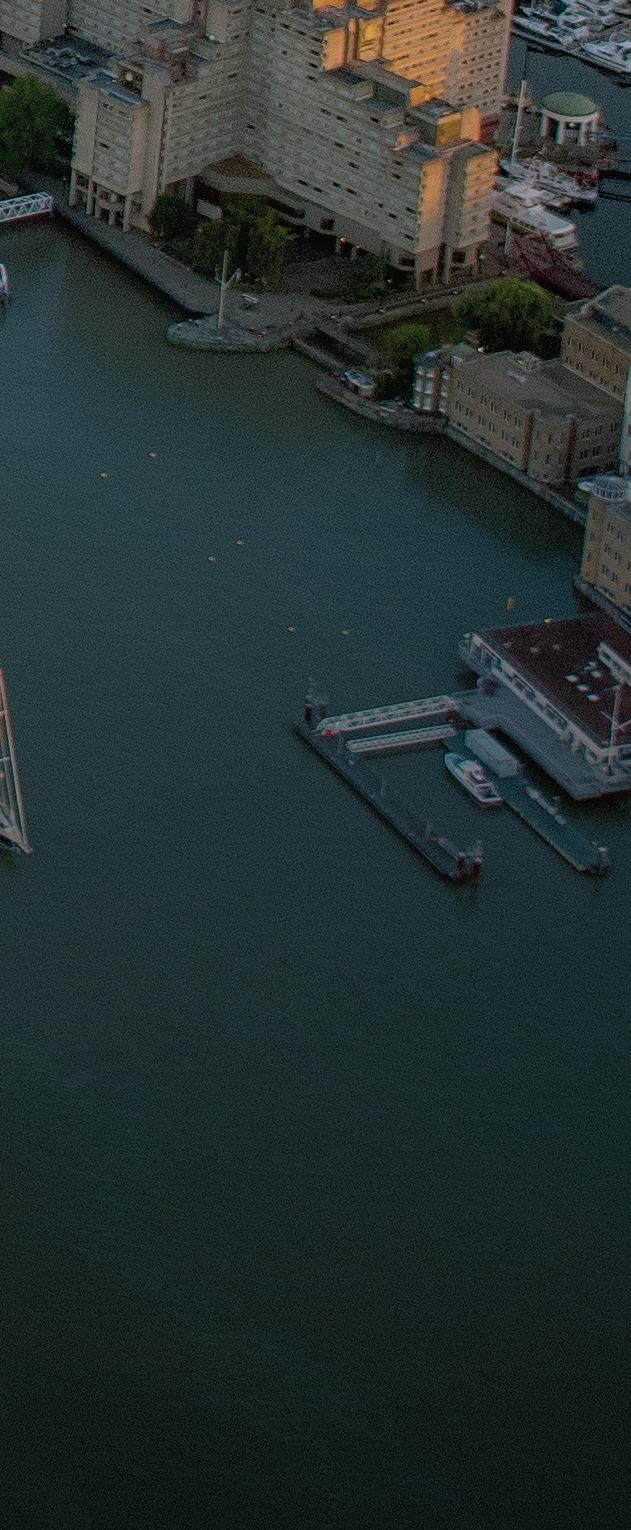

Across
01. Purple skin mark (6)
05. Clear part of blood (5)
08. VIP (6)
11. Notes for future use (8)
12. Fine Italian noodles (10)
13. Branched hanging light (10)
14. Predecessor (8)
15. Betting chances (4)
16. Pulled down (rugby player) (7)
19. Nail varnish (6)
22. Resilience (6)
24. Blew one’s own trumpet (7)
27. Shed (skin) (4)
28. Consequently (4)
29. Office gadget (7)
30. Triangular curry pastry (6)
31. Ascended (6)
33. Belgian diamond-cutting hub (7)
34. Neglect (4)
36. Standards of judgment (8)
39. Rock worker (10)
41. Sotheby’s bid taker (10)
42. Corsica’s southern neighbour (8)
43. Flow-rate gauges (6)
44. Tired reflexes (5)
45. Scandinavian language (6)
Down
02 Stretched (7)
03. Vaccinations (13)
04. Gravity (11)
05. Japanese snack (5)
06. Thames or Seine (5)
07. Mythical woman/fish (7)
08. Sweet bread roll (7)
09. Speculate (5)
10. Inuit dwelling (5)
17. Venomous snake (5)
18. Information sheet (7)
20. Living quarters (13)
21. Carefully manoeuvres (5)
23. Faux pas (5)
25. Succinct (5)
26. Lost without trace (11)
32. Jittery (7)
33. Training school (7)
35. Tusk carvings (7)
37. Cosmetic powder (5)
38. Tenth (5)
39. Unofficial ballot, ... poll (5)
40. Desert spring (5)
01. Scattered rubies can cause injury (6)
05. Expose rumour involving vaccine (5)
08. What a flamboyant judge wears is notable (6)
11. Tags Kramer as crazy (8)
12. Mice got into liver left out with pasta (10)
13. Unhappy cleaner hid ornate light fixture (10)
14. Grandparent caught in chance storm (8)
15. They can be even, paradoxically (4)
16. Tried to nail the French penny (7)
19. Canine’s coat (6)
22. Heart of gold, say? (6)
24. Showed off rolled oats in bed (7)
27. Throw actors on stage (4)
28. Therefore, the Queen is to go (4)
29. It is used to fasten unstable plaster (7)
30. For a spicy treat, slap me (or Sean, alternatively) (6)
31. Cropped up in flip phones I rang (6)
33. Troubled parent drank West Belgian port (7)
34. Miss has an indomitable heart (4)
36. Around one, Cartier reviewed guidelines (8)
39. Craftsman used by Sharon and Perry (10)
41. A vocal advocate for buying lots of stuff (10)
42. It has lousy air and is an island (8)
43. Gadgets for measuring merest problem (6)
44. Sleepy sighs from swan? Why? (5)
45. Begone! Banished! Transported from Odense (6)
02 Got through half an acre. Felt sore! (7)
03. Shots expected to keep bugs at bay (13)
04. Senses aren’t developed to detect sincerity (11)
05. Rice in rolls versus high-fibre filling (5)
06. Its mouth and head are miles apart! (5)
07. To start with, mariners admire exotic water nymph (7)
08. Brian Roche removed filling for bread roll (7)
09. Suppose inn is out of Guinness (5)
10. Gil cooked two ducks in snow shelter (5)
17. Company joins support for hooded killer (5)
18. Tea fell out of brochure (7)
20. Current commotion surrounding District Attorney housing (13)
21. In the middle of Grease, Sandy slackens off (5)
23. Hesitation before right or wrong action (5)
25. Short trees suffer damage (5)
26. Pear in Dad’s pie mysteriously vanished (11)
32. Worried I left souvenir in a different place (7)
33. Type of award from military college (7)
35. They’re tickled when John is on stage (7)
37. Make-up for an outrageous rogue (5)
38. It goes back over the levy (5)
39. The final one is dire for a camel! (5)
40. Central Coast is a pleasant sanctuary (5)
Create as many words of four letters or more as you can using the given letters once only but always including the central letter. Don’t use proper nouns or plurals ending with “s”. See if you can find the nine-letter word using all letters.
Complete the names of these British actors and cross off the missing parts of their names hidden in the box of letters. The leftover letters will spell out a star who has appeared as a nurse, a US marshal, and a vampire.
Rickman
Nighy
Billie Owen
Firth
Radcliffe
Blunt
Watson
Jeremy
Jude
Keira
Winslet
Can you spot the seven differences between these two images of a Nubian village near Aswan, Egypt. Circle what’s changed on the image below.
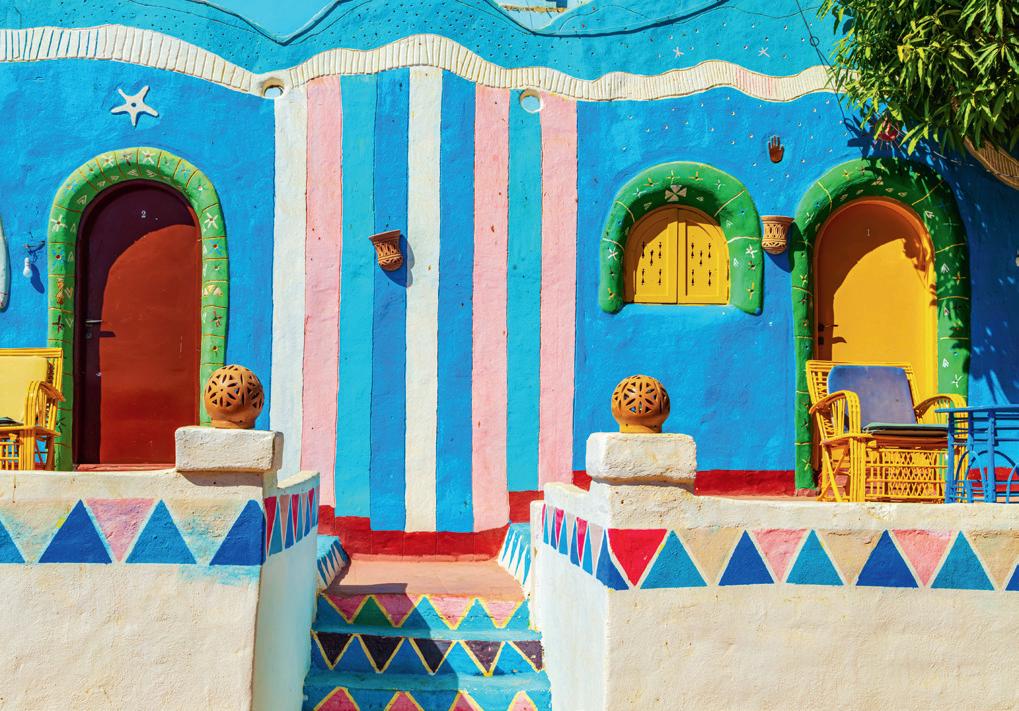
If you’ve filled in the answers, please take the magazine with you so the cabin crew know to replace it with a new copy.
Sudoku
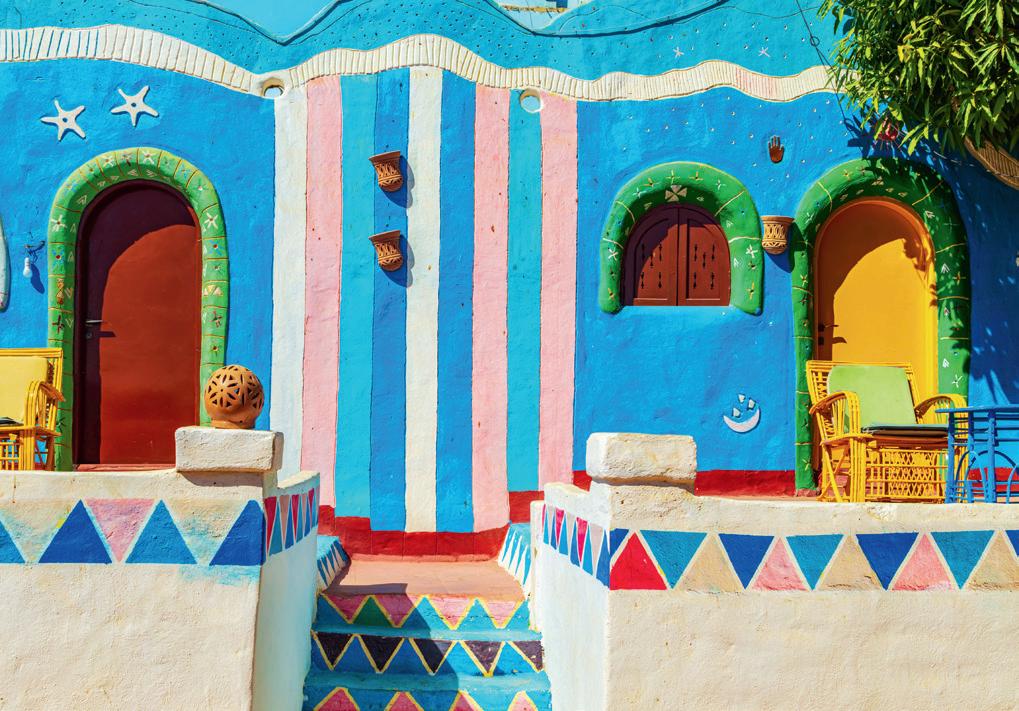
Alan Rickman, Bill Nighy, Billie Piper, Clive Owen, Colin Firth, Daniel Radcliffe, Emily Blunt, Emma Watson, Hugh Grant, Jeremy Irons, Joanna Lumley, Jude Law, Judi Dench, Kate Winslet, Keira Knightley, Kim Cattrall, Laurence Olivier, Maggie Smith, Michael Caine, Minnie Driver, Miranda Richardson, Mischa Barton, Orlando Bloom, Rachel Weisz, Ralph Fiennes, Robert Pattinson, Rupert Grint, Sadie Frost, Sean Bean, Simon Pegg, Tilda Swinton Solution: Kate Beckinsale
Code, Cord, Demo, Doer, Dome, Done, Doom, Door, Fend, Fond, Food, Ford, Mend, Mode, Mood, Nerd, Node, Redo, Rend, Rode, Cored, Decor, Demon, Donor, Drone, Frond, Mooed, Rodeo, Condor, Cordon, Deform, Fonder, Forced, Formed, Modern, Moored, Crooned, Doormen Nine-letter word: CONFORMED
Spot the difference
01. Extra starfish on wall
02. Extra pot on wall
03. Colour of window shutters changed
04. Chair cushion colour changed
05. Moon on wall
06. Round ornament removed
07. Triangle border upside down

Earn and redeem Qantas Points on all oneworld member airlines
Earn Status Credits on all eligible oneworld flights
Access to Business Class priority check-in
Access to preferred or pre-reserved seating
Priority on waitlists and when on standby
Access to Qantas Club and International Business lounges
Priority boarding
Extra baggage allowance
Priority baggage handling
Access to First Class priority check-in
Access to First lounges
'Fast Track' or 'Priority Lane' access at select airports worldwide
Access to preferred or pre-reserved seating is in accordance with the individual policy of the oneworld member airline operating the flight. First and business class check-in desks and lounges are not available at all airports. Fast track is not available at all airports. Priority baggage handling is not available on flights operated by British Airways. Extra baggage allowance benefits differ for Sapphire and Emerald tier members. oneworld benefits are available only to passengers on scheduled flights that are both marketed and operated by a oneworld member airline (marketed means that there must be a oneworld member airline’s flight number on your ticket). Alaska Airlines, American Airlines, British Airways, Cathay Pacific, Fiji Airways, Finnair, Hawaiian Airlines, Iberia, Japan Airlines, Malaysia Airlines, Oman Air, Qantas, Qatar Airways, Royal Air Maroc, Royal Jordanian, SriLankan Airlines and oneworld are trademarks of their respective companies. Some limitations and exceptions may apply. Qantas Frequent Flyer membership and the earning of points are subject to the Qantas Frequent Flyer program Terms and Conditions, visit https://www.qantas.com/au/en/frequent-flyer/discover-and-join/terms-and-conditions.html. For more information, visit www.o neworld.com. For detailed information about specific lounges and the oneworld Lounge Access policy, visit https://www.qantas.com/ au/en/qantas-experience/at-the-airport/airport-lounges/qantas-lounge-access-eligibility.html.
These exercises are designed to provide a safe way to stretch and enjoy movement in certain muscle groups that can become stiff as a result of long periods of sitting. They may be effective at increasing the body’s blood circulation and massaging the muscles. We recommend you do these exercises for three or four minutes every hour and occasionally leave your seat to walk down the aisles. Each exercise should be done with minimal disturbance to other passengers. None of these exercises should be performed if they cause pain or cannot be done with ease.
01
Start with both heels on the floor and point feet upwards as high as you can.
Ankle circles
Lift feet. Draw a circle with toes, moving one foot clockwise and the other counterclockwise at the same time. Reverse circles. Rotate in each direction for 15 seconds. Repeat if desired.
Knee lifts
Lift leg with knee bent while contracting your thigh muscle. Alternate legs. Repeat 20 to 30 times for each leg.
Neck roll With shoulders relaxed, drop your ear to your shoulder and gently roll your neck forward and back, holding each position for about five seconds. Repeat five times.
Knee to chest Bend forward slightly. Clasp hands around left knee and hug it to your chest. Hold for 15 seconds. Keeping hands around the knee, slowly let it down. Alternate legs. Repeat 10 times.
Mobile phones and electronic equipment: All transmitting electronic devices, including mobile phones, tablets and laptop computers, must be switched to flight mode* prior to departure. Smaller devices such as mobile phones, e-readers, electronic games, MP3 players, iPads and other small tablets may be held in your hands or stowed in a seat pocket. Unless otherwise directed by the captain, these devices may remain switched on and used in flight mode during take-off, cruise and landing. Larger electronic equipment such as laptop computers may only be used from when the aircraft seatbelt sign is extinguished after take-off until the top of descent. After landing, the cabin crew will advise when flight mode may be switched off.
Headsets: Do not use a personal single-pin audio headset in the Qantas inflight entertainment system unless it is supported by a two-pin airline headset adaptor. Personal headsets that connect via a cable
to a handheld device can be used at any time from boarding until arrival. Headsets and other devices that connect via Bluetooth must be switched off for take-off and landing but can be used during cruise.
*Flight mode enables you to operate basic functions of your mobile phone or personal electronic device while its transmitting function is switched off, meaning you cannot make phone calls or send an SMS.
Your wellbeing is our priority. Our Fly Well program brings together a number of measures to give you peace of mind during your flight.
Cabin air: Our aircraft air conditioning systems are fitted with hospital-grade HEPA filters, which remove 99.9% of all particles including viruses. The air inside the cabin is refreshed every few minutes, ensuring the highest possible air quality.
02
Put both feet flat on the floor. Lift heels high, keeping the balls of the feet on the floor.
03
Repeat these three stages in a continuous motion and at 30-second intervals.
Forward flex
With both feet on the floor and stomach held in, slowly bend forward and walk your hands down the front of your legs towards your ankles. Hold for 15 seconds and slowly sit back up.
Shoulder roll Hunch shoulders forwards then upwards, backwards and downwards in a gentle circular motion.
Inflight: The aircraft configuration, including the seats and galley, act as a natural barrier, and people are not seated face to face. The direction of inflight airflow is ceiling to floor.
Enhanced cleaning: Our aircraft are cleaned with a disinfectant effective against coronaviruses, with a focus on the high contact areas of seats, seatbelts, overhead lockers, air vents and toilets. Our people are trained in the latest hygiene protocols.
Your inflight health: When flying, passengers can be seated and inactive for long periods of time. The environment can be low in humidity and the cabin pressure equivalent to an altitude of 2440 metres above sea level. The following advice helps you stay healthy during your journey.
The importance of inflight blood circulation and muscle relaxation: When walking, the leg muscle action helps return venous blood to the heart. Sitting in the same position for a long period of time can slow
this process and, in some people, leads to swelling in the feet. Some studies have shown that immobility associated with travel of longer than four hours (by air, car or rail) can also lead to an increased risk of deep vein thrombosis (DVT), or clotting in the legs. Personal factors that increase the risk of DVT include:
Age over 40 years
Personal or family history of DVT or pulmonary embolus
Recent surgery or injury, especially to the lower limbs, pelvis or abdomen Cancer
Inherited or other blood disorders leading to clotting tendency
Pregnancy
Oestrogen therapy (oral contraceptive pill or hormone replacement therapy).
There are a number of ways to help reduce the possibility of DVT, including the following:
Avoid leg-crossing while seated
Ensure adequate hydration
Minimise alcohol and caffeine intake before and during your flight
Wear comfortable, loose-fitting clothes
During your flight, move your legs and feet for three to four minutes per hour while seated and move about the cabin occasionally
Do the light exercises we recommend here (see above) and through the inflight entertainment system.
If you have concerns about your health and flying, or you feel that you may be at risk of DVT, Qantas recommends that you talk to your doctor before travelling. Additional measures such as well-fitted compression stockings or anti-clotting medication may be recommended for high-risk individuals.
Jet lag: Unlike other forms of transport, air travel allows for rapid movement across many time zones, which can disrupt the body’s biological clock. This is commonly known as jet lag. This disruption can affect various body rhythms such as the sleepwake cycle and the digestive system, leading to symptoms such as tiredness and lack of energy and appetite. In general, the more time zones crossed, the more disruption of the body clock and the more symptoms experienced after the journey. We recommend the following to minimise the effects of jet lag.
Before your flight:
Get a good night’s rest
During your flight:
Eat light meals
Wear loose, comfortable clothing and sleep when you can
Stay hydrated – drink plenty of water and avoid excess tea, coffee and alcohol
At your destination:
If possible, give yourself a day or two after arrival to adjust to the new time zone
Go out in the daylight and do some light exercise
Try to eat meals and do other social activities at appropriate destination times to adjust to the new time zone
Cabin humidity and hydration: Humidity levels of less than 25 per cent are common in the cabin, as the outside air that supplies the cabin is very dry. The low humidity can cause drying of the surfaces of the nose, throat and eyes and it can irritate contact lenses. If normal fluid intake is maintained during the flight, dehydration will not occur.
We recommend:
Drink water and juices frequently during the flight
Drink coffee, tea and alcohol in moderation
Remove contact lenses and wear glasses if your eyes are irritated
Use a skin moisturiser to refresh the skin
Cabin pressurisation: During flight, aircraft cabin pressure is maintained to a sufficient density for your comfort and health. As the aircraft climbs, the cabin may reach the same air pressure as at an elevation of 2440 metres above sea level. Cabin pressure does not pose a problem for most passengers. However, if you suffer from obstructive pulmonary diseases, anaemias or certain cardiovascular conditions, you could experience discomfort at these altitudes. These passengers should seek medical advice before flying, as some may require supplementary oxygen. Qantas can arrange this but requires at least seven days’ notice before travelling. The rate of change in cabin pressure during climb and descent is also carefully maintained and does not usually cause discomfort. However, children and infants, and adults who have sinus or nasal congestion, may experience some discomfort because of pressure changes during climb and particularly descent. Those suffering from nasal or sinus congestion because of a cold or allergies may need to delay travel. The following advice may assist:
To “clear” your ears, try swallowing, yawning or pinching your nose closed and gently blowing against it. These actions help open the Eustachian tubes, equalising pressure between the middle ear chamber and throat. If flying with an infant, feed or give your baby a dummy during descent. Sucking and swallowing help equalise pressure in an infant’s ears. Give children something to drink or chew during descent.
Consider using medication such as nasal sprays, decongestants and antihistamines 30 minutes prior to descent to help open up your ear and sinus passages.
Motion sickness: Air travel, especially if turbulence is experienced, can cause motion sickness, as it leads to a conflict between the body’s sense of vision and its sense of equilibrium. Maintaining good visual cues (keeping your eyes fixed on a non-moving object) helps prevent motion sickness. When the weather is clear, you should look out at the ground, sea or horizon. If the horizon can’t be seen, closing your eyes and keeping your head movements to a minimum will help. While over-thecounter medications are available, we recommend you consult your doctor about the appropriate medications. More information can be found:
At qantas.com.au/info/flying/intheair/ yourhealthinflight
Through the onboard entertainment system On our information leaflet available from Qantas or your travel agent
Smoking: Government regulations prohibit smoking on all flights operated by Australian-registered aircraft. The use and charging of all e-cigarettes and other personal vaporisers are not permitted on board an aircraft. There are smoke detectors in all toilets and penalties for regulation breaches.
Travelling with children: Please ask cabin crew for help if required. Baby food and nappies (diapers) are available on most flights, while some washrooms are fitted with baby change tables. Please dispose of nappies etc. in the waste bins.
Leaving flights: On international flights, the cabin crew will distribute the necessary Customs and Immigration forms. If you are stopping en route, you will need your boarding pass to re-board the aircraft. If you’re travelling as a domestic passenger on an international flight within Australia, retain your boarding card with the large D sticker. This will be required to clear Customs at your destination.
Transferring from Australian domestic flights numbered QF400 and above to international flights: At check-in you will be issued with your international boarding pass. Your international boarding pass and baggage will be tagged through to your final destination. There is no need to claim your baggage or attend check-in at the transfer airport. Follow the signs for international transfers passengers to the complimentary transfer bus (not necessary in Melbourne and Darwin).
Transferring from international to domestic flights numbered QF400 and above: On arrival at your Australian transfer port, go through Immigration and collect your luggage. Proceed through Customs and follow the signs to the domestic transfer area to re-check your luggage. A complimentary transfer bus (not necessary in Melbourne, Adelaide and Darwin) departs at regular intervals for the domestic terminal for your connecting Qantas flight within Australia. If your connecting domestic flight is numbered QF1-QF399, there is no need to clear Customs and Immigration. These flights depart from the international terminals. Customs and Immigration clearance will be completed at your final destination.
Transferring to a Jetstar domestic flight: If your next flight is with Jetstar (JQ) or a Qantas codeshare flight operated by Jetstar (QF5400-QF5999), you will need to collect your baggage and follow the signs to the Jetstar counter to check in for your flight and re-check your baggage.
The Qantas Group has a zerotolerance policy for any passenger who fails to follow crew directions, is intoxicated from alcohol, or is found smoking or vaping on board. Inappropriate comments, behaviour, or actions, whether inflight or on the ground, will result in denial of boarding or off-loading. Qantas will not accept inappropriate comments as “jokes”. It will seek to recover all costs incurred, including diversions as a result of security incidents, from those involved.
Security screening is subject to the laws and regulations of the country of operation. The Qantas Group ensures that its passengers, staff and aircraft are safe and secure through an outcome-focused, risk-based approach to security management. Qantas security standards apply across the business, including QantasLink and Jetstar.
A dedicated operations centre monitors global security events 24 hours a day.
Pack your own luggage
Do not carry any items for another person Carry valuables, approved medication and keys in your carry-on baggage
All knives, sharp objects or cutting implements must be in checked baggage
Security measures can include random frisk search after consent is obtained. Passengers may request privacy and must be searched by a screener of the same gender
Important note: Security screening is subject to the laws and regulations of the country of operation.
On all international flights to and from Australia: Each container of LAGs in your carry-on baggage must be 100ml or less
All 100ml containers must be placed in a single transparent one-litre plastic bag
Plastic bags containing LAGs are to be screened separately from other carry-on baggage
All powders must be screened separately with restrictions on the carriage of inorganic powders over 350ml (350g)
Passengers may still carry prescription medicines or baby products sufficient for the flight
If departing, transiting or transferring on an international flight at an Australian international gateway airport, duty-free powders and LAGs must be sealed, with receipt, in a security tamper-evident bag issued at the time of purchase
The Australian federal government has introduced full-body scanners at international gateway airports: Sydney, Adelaide, Brisbane, Cairns, Darwin, Perth, Melbourne and the Gold Coast
The Australian Federal Government has commenced introducing full-body scanners at major domestic airports: Adelaide, Brisbane, Cairns, Canberra, Darwin, Gold Coast, Hobart, Launceston, Melbourne, Newcastle, Perth, Sunshine Coast, Sydney and Townsville
At international gateway airports passengers refusing to pass through the scanner will be banned from entering the sterile area or boarding an aircraft for 24 hours
Exemptions apply for people with serious medical conditions, infants and small children, and people in wheelchairs
As per advice, the energy exposure is comparable to that from a mobile phone several metres away
There are no known safety concerns for people with pacemakers and metal implants or for pregnant women
Common items used every day may seem harmless but on an aircraft they may become dangerous. When the aircraft changes altitude, variations in temperature and pressure may cause items to leak, create fumes or catch fire.
Items that are forbidden on aircraft or have carriage restrictions include lithium batteries, other battery types, camping stoves, fuels, oils, compressed gases, aerosols, household cleaners, matches, lighters, paints, explosives (including flares, fireworks, sparklers and bonbons), emergency position-indicating radio beacons, radioactive material, biological and infectious substances and fuel-powered equipment. This list is not exhaustive so please carefully consider what items you pack for your next flight.
If you’re unsure about an item in your baggage, ask a member of our friendly cabin crew.
For further information, go to qantas.com or email dg@qantas.com.au.
Qantas is a partner in the Australian government’s Charter for Safe Travel. Travellers may obtain the latest travel advice for their destination by visiting smartraveller.gov.au.
Several countries are introducing automated immigration clearance procedures to cope with growing air-travel numbers. The goal is to provide a faster, smoother immigration experience to eligible passengers without compromising border security. Countries providing facilities across our network:
Australia SmartGate: e-passport holders of Australia, Canada, China, France, Hong Kong, Ireland, Japan, Korea, Macau, New Zealand, Singapore, Sweden, Switzerland, UK and US
China e-Channel: citizens of China
Hong Kong e-Channel Residents: citizens and residents of Hong Kong
Hong Kong e-Channel Visitors: frequent visitors that are visa-exempt, including Australians
Indonesia Autogate passport gates: citizens of Indonesia
Japan Speedy Immigration: citizens and foreign nationals with re-entry and special re-entry permits
New Zealand SmartGate Plus: e-passport holders of Australia, New Zealand, UK and US
Singapore enhanced-Immigration Automated Clearance System (eIACS): citizens, permanent residents, work permit holders and APEC cardholders
UAE eGate: UAE citizens and residents
UK ePassport gates: e-passport holders of UK, Switzerland and European Economic Area (EEA)
USA Global Entry system: US citizens and permanent residents, Dutch citizens, South Korean citizens and Mexican nationals. Canadian citizens and residents with NEXUS membership
USA Automated Passport Control: for US, Canadian and Visa Waiver Program passport holders
Fee applies
Pre-enrolment required
With Qantas connecting Sydney and London non-stop from October 2027, as part of Project Sunrise, preparations are ramping up. Training will get a boost this month with the opening of the Qantas Group’s new Sydney Emergency Procedures Training
Centre, part of its $100-million investment in training our pilots and cabin crew. The facility will include door trainer resources and Virtual Reality capability for our fleet, including the Airbus A350, so teams can prepare in a virtual environment before the first





Project Sunrise aircraft arrives in April 2027. All our Project Sunrise pilots will train for four weeks in the Qantas A350 simulator, with British Airways and Cathay Pacific also supporting our pilots to train on their aircraft. Classroom instruction has commenced for engineers and the aircraft tooling is arriving, while cabin crew training will accelerate in the new year.

Members of the Qantas training team, (far left) Captain Errin Keys, A330/A350 Type Rating Examiner, and (left) Joseph Cook, A330/A350 Type Rating Instructor










Other subtypes in fleet are not shown Number of aircraft as at 30 June 2026