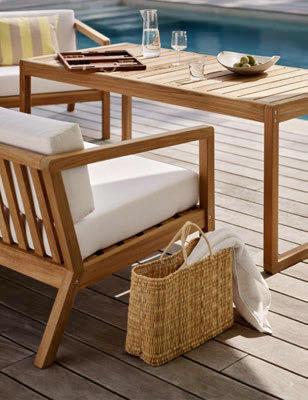
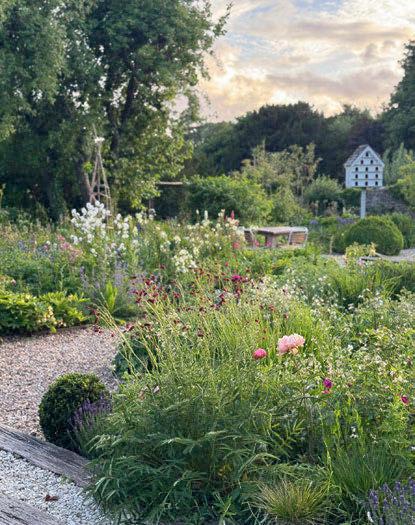
When we start off a new issue, even with the best-laid plans, we can never be quite sure where it’s going to end up, especially the cover. But the minute we clapped eyes on the Woodbury home we knew this was not only our property showcase (page 98), but had all the makings of a gorgeous cover. That pool, the glass fronted extension, the wood cladding exterior juxtaposed with a Cotswold stone roof, and once more, that pool!
Inside this beauty of a mag, there’s a host of brilliant features, stories, interviews and imagery – all celebrating the very best of Bath and highlighting what an elegant, eclectic, thriving and unique city we live in. From an ambassador to the fairy realm (yes, really! Find out more on page 122) to the renovators of property including Georgian homes who make sustainability their priority (page 106). We also talk to some of our wonderful indie retailers over on page 46 who share their secrets to business success; we paddle off in search of local and luscious wild swimming spots (page 28); there’s a visit to the city’s latest foodie hotspot Emberwood (page 60); as well as bringing you the best of what’s on, business news, property updates and shopping edits. Enjoy!
SARAH MOOLLA
Issue 531 / July 2025
COVER Woodbury Hill House is no ordinary home. Turn to page 98 for more
SUMMER FUN
28 WILD SWIMS Go freestyle in Bath’s waterways
THE ARTS
33 ARTS INTRO The Nicholas Party exhibition at the Holburne
34 WHAT’S ON People to see, places to go
36 CULTURE CLUB The arty picks of Christopher Marney
41 FILM What’s big at The Little
RETAIL
46 INDIE SHOPS Bath’s small retailers on how they make it work
GARDENS
56 GARDENS The new curators of the walled garden of Mells
FOOD & DRINK
58 NEWS FEED Nuggets from Bath’s foodie scene
60 RESTAURANT Emberwood, the new city hot spot LIFE
STYLE
65 SHOPPING INTRO A diamond in the Wylde
66 EDITOR’S CHOICE Get Linked In, in a stylish way
NETWORK
71 NETWORK LEAD Action from the Creative Bath Awards
78 NETWORK NEWS Business news, views, and interviews
85 CAREER PATH Bath Preservation Trust’s Patrizia Ribul
88 SCENE The Bath Life Awards Winners’ Dinner
PROPERTY
91 PROPERTY LEAD Bath Press reveals new development
92 PROPERTY NEWS The latest from the market
98 SHOWCASE The extraordinary Woodbury Hill House
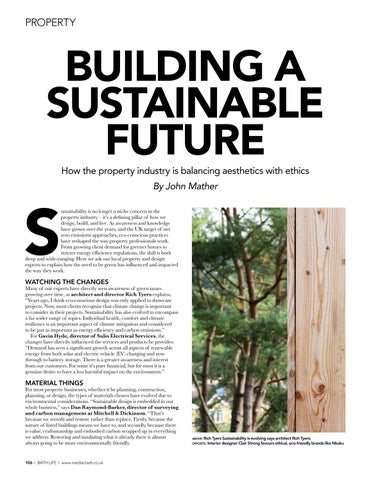
106 SUSTAINABILITY Experts talk eco practices
DEPARTMENTS
11 SPOTLIGHT Shining a light on Bath’s positive stories
13 INSTABATH Highlighting a game of tag
17 SCENE Hello party people!
27 FLATLINE Flats shares his insider biz tips
122 BATH LIVES Meet the new Bard of Bath
Editor Sarah Moolla sarah.moolla@mediaclash.co.uk Managing editor Deri Robinsderi.robins@mediaclash.co.uk Senior art editor Andrew Richmond Cover design Trevor Gilham
Madeleine Brettingham took the Newcomer trophy at the Bath Comedy Festival, winning £250 and a number of guaranteed paid gigs in the forthcoming year as her prize.
The New Act Competition attracted a huge 200 applications. 12 hotlycontested heats whittled down the longlisted entrants and a grand final at the Old Theatre Royal saw the crème-de-la-crème battle it out for laughs.
Nick Steel, Bath Comedy director, says, “All 12 aspiring comedians in this year’s final were very strong, and indeed the standard in the heats was so good we will be inviting some of those who didn’t make the final to come back over the coming year as well. As is often the case, I’d say all the finalists are winners, and we’re thrilled to have showcased such an interesting and diverse range of comedy”
For more: www.bathcomedy.com
TAKE A TURN AROUND THE CITY
Lace up your boots for the new Jane Austen Character Trail which celebrates the novelist’s 250th birthday this year. The free trail will see participants spotting 26 Jane Austen illustrated characters hidden in shop windows across the city, including several iconic Bridgerton locations. And those who take part will also be entered in a prize draw to win a limited-edition Jane Austen pendant donated by Wylde Jewellers. As Jane herself said about walking, “The distance is nothing when one has a motive.” There’s surely no better motive than this! For more: www.welcometobath.co.uk
BOOK SMART IDEA
Mr B’s Emporium Bookshop is joining forces with 44 other indie booksellers around the country to tackle book poverty. The campaign, called hildren’s Book ro ect, is now in its fifth year, and organisers hope to have donated 50,000 books in total by the end of this year’s secondhand book drive.
Hannah, the children and schools lead at Mr B’s, says, “This is our second year working with Children’s Book Project, and already everyone on our team has voiced their joy at seeing the donation bin return! Children’s Book Project mission of recycling unwanted books directly into the hands of children who need them most is one of the best projects we could possibly be involved with.”
If you have some well-loved children’s books you would like to donate to children in need, please drop them off at Mr B’s before the end of June. Your books will be distributed to the most under-served communities via schools, women’s refuges, food banks and prisons. For more: www.mrbsemporium.com
Drop off your books in the donation bin in Mr B’s
Bath is no stranger to Janeites
Madeleine impressed the judges with her eight-minute set
The children of Christ Church CofE Nursery and Primary School celebrate reading!
Nicola Passam, Allison Herbert and
SCENE
THE LATEST ADVENTURES IN PARTY-GOING ACROSS BATH
Those tricky relay handovers
THE WAITING GAME
Representatives from more than of Bath’s finest local hospitality businesses gathered in front of the Royal Crescent for the Bath Waiters’ Race to formally launch the first ever Bath Restaurant eek. Organised by Bath Bid following the suggestion by le eters of reen ark Brasserie, the aim was to raise money for ospitality ction, and not spill a drop or drop a bun!
Sponsor Birrificio ngelo oretti provided refreshments and goody bags, with chef Richard Bertinet starting each race and Jonathan Overton of Sally unn’s acting as Bunnpire. The ump Room Restaurant was crowned the winner, the Beefy Boys came second, and The alcot roup third.
Photos by Suzy Sleman; www.suzyslemen.com For more: www.bathbid.co.uk
And
The Beefy Boys – Adam Hodgson, Millie Ross, Jamie Godwin and Balazs Boda
Connor Finnamore, Billy Snipp, Titania Lucantoni and Will Brown of The Walcot Group
Aga Marcinkowska, Maddie Jones, Pranav Sharma and Will Whitburn from Robun
Jonathan Overton and Richard Bertinet
they’re off! (but the food isn’t!)
Mark, Lily, Hadleigh and Sam make up the Jane Austen Centre team
Emebet Harrop from Hampton By Hilton
Simrandeep Singh from The Sepoy Club
Bath Pizza Co’s Gabi, Michael, Nick and Leslie
Alex Peters
HELLO PETAL!
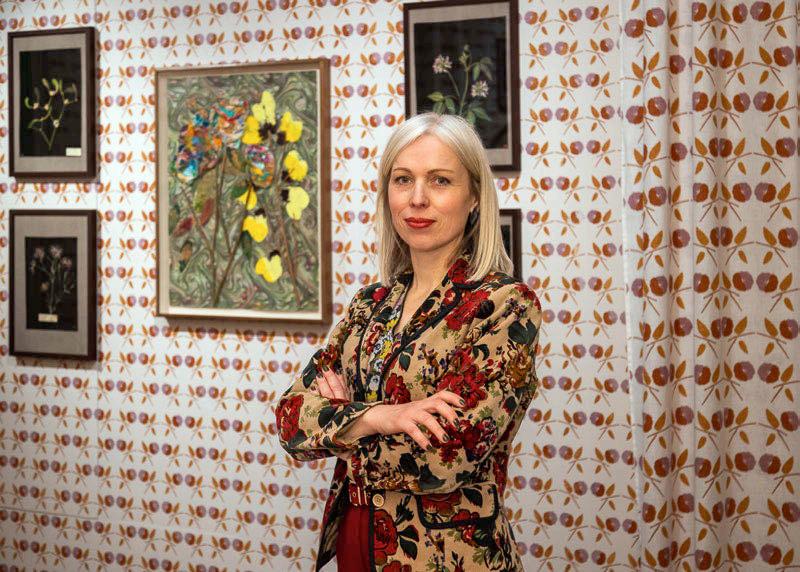
No.1 Royal Crescent recently welcomed over 100 guests to the launch of its new British Museum touring exhibition, The botanical world of Mary Delany andGeorgie Hopton: A domestic arrangement. Attendees en oyed a first look at a selection of prints of historic floral artworks by Georgian artist Mary Delany alongside the contemporary works of eorgie Hopton – all inspired by botanica, and set against a domestic backdrop of wallpaper and fabric designed by Hopton herself.
by Guy
www.guytraynorphoto.com For more: www.no1royalcrescent.org.uk
Vale Mander, Ollie Richardson, and Alicja Borkowska
Ed Spurr and Sara Pierdonà
Judy Adam and Mikey Cuddihy
Kathy McCarthy and Kathy Prendergast
Becky Peters and Amber Druce
Joanna Haines, Bruce Haines and Caroline Frances-King
Alex Gibson and Helen Dowding
William Cartwright-Hignett, Matthew Briddon and Marianne Cartwright-Hignett
THE ALL STARS
The Trencherman’s Awards 2025 took place in March at Homewood Hotel & Spa with the grand ceremony and multi-course supper attended bv leading South West chefs, restaurateurs, hoteliers, and food and drinks businesses.
Among the chefs cooking on the night, which included Ben Palmer, Jamie Forman of Homewood, and Nicholas Balfe of Holmin South Petherton, was Ayesha Kalaji ofQueen of Cups in Glastonbury who went on to pick up the Best Chef Award.
Local to Bath winners included Iford Manor Kitchen for Best Newcomer and OSIP in Bruton for Creativity and Innovation.
Dom Lamy and Alex Lamy
Homewood no-dig garden canapes
Ciaran Brennan and Bex Tonks
Photos by Guy Harrop For more: www.trenchermans-guide.com
Harry Hook and Nick Hook
Ayesha Kalaji
Isobel Johnston and Nicholas Delgado
Chefs Ben Palmer, Jamie Forman, Ayesha Kalaji, and Nicholas Balfe
Abi Manning
Marc Megilley, Paul Ainsworth and Carly Fordy
Paul Ainsworth
Jo Rees
IMPRESSED
The Victoria Art Gallery recently hosted the private view of its latest exhibition, First Impressions: Printers’ Proofs of Works by Great 20th Century Artists, which is being shown alongside Geri Waddington’s Against the Grain, a selling exhibition of wood engravings drawn from natural forms. Attended by around 100 people, speakers included B&NES head of culture and heritage Robert Campbell.
by Johnny Hathaway; Instagram @johnnyhathawayphotography For more: www.victoriagal.org.uk
Lucia and Edward Grimshaw
Marie Walker and Aram Balakjian
Simon Addison, Katharine Wall and Amanda Hart
Kay Rees, Adam ReesLeonard, Sarah Rees-Leonard, Freddie and Hector
Photos
Lynne Berry, Marian McNeir, Geri Waddington, David Waddington and Lois Welford
Caroline Boddington, Robert Campbell, Mohammed Saddiq, Nathalie Levi, Michael Rowe and Edward Bayntun-Coward
Neil and Nicola Howcroft and Gavin Withers
Jayne and Rob Dorrell and June Price
Sue Lucy and Sarah Kelly
Nicola Warner, Kersti Haabjoern and Lindsey Braidley
NANNY G.O.A.T
Norland celebrated the success of its 144th cohort of Norland Nannies and the latest degree graduates at its 2025 graduation ceremonies in March at Bath Abbey. In the morning saw students receive their degree certificates, and in the afternoon it was the turn of those who have earned the orland diplomas o cially earning the esteemed title of orlander, or orland anny, which recognises their completion of both the degree and unique four-year skillsbaseddiploma.
For more: www.norland.ac.uk
IN THEIR STRIDE
More than 350 people took to the banks of the Kennet and von canal in May and raised , and counting for the RUH Bath. The Walk of ife is organised by R , the o cial S charity of the Royal nited ospitals Bath, and is sponsored by Savills. R events and community manager, llie ilkinson says, The incredible donations raised at the Walk of Life mean that we can ensure every patient at the RUH receives extra e traordinary care, whether by funding new state of-the-art equipment like our surgical robot that improves outcomes and recovery times for patients, improving facilities or providing services such as music on the hospital wards.”
For more: www.ruhx.org.uk
Customer care
“If you have an independent business, heed my advice! Or don’t”
– that a few hundred grand that could have landed in his pocket was leaving with us. So unnecessary.
His product is amazing. The best. But so what? Some people will always buy his vehicles, but he will lose the flirting customers whose money is worth just as much as the faceless collectors who require no interaction.
He may not be an expert in how to run a business, but he’s making it his business
My favourite sort of advice is the unsolicited sort. I love going about my day, only to be stopped by a passing dog expert who tells me that my dog, towards the end of a walk on a sunny day, needs water. This happened to me in Victoria Park last week, and “well he’s bang out of luck then isn’t he, cause it’s cider only at my gaff would have been the reply of choice, except I didn’t think of it in time. “Ooh. Yes. We’re nearly home, poor boy I said. e’d been out about 20 minutes; it was hardly animal cruelty. Parenting advice is the best one, though. Made even better when you haven’t asked for it. It’s so awful when people tell you how to do that particular job that I’ve begun, sadistically and for my own amusement, to delight in doing precisely that. Mainly to my wife’s friends who have babies or toddlers. The two or three minutes before I reveal myself as an elite prankster are pure human agony. As it happens, said über-gag never seems to make anybody laugh except me, so maybe a review is needed.
Anyway, I mention all of this to tee up the full ridiculousness of me, an overweight man who talks a good game but can’t even work a laptop - and who certainly has never run what anyone might call a business offering advice on how to run a successful independent shop or business. But our editor asked me what I thought, so blame her.
As it happens I went to a rubbish one last week. It was a car-based business (I shan’t name it as everyone has a bad day, so it might not be representative) in Oxfordshire, and I was terribly e cited to finally get there to leer at all the posh vehicles. I was with a friend who, as it happens, has enough money to buy all of their souls, let alone a few pesky motors, and he very much counted as a potential customer. We were ignored for about five minutes by the scruffy man in the corner. When we approached him, he grunted and avoided eye contact. He made us feel as welcome as a stink bomb in your nan’s sleeping bag. He was so awful that we left, disappointed and irked. And he watched us go, not realising – or perhaps not caring
From there we went to meet my wife and kids at a coffee oint that also did smoothies and flatbreads. The sat nav took us to the middle of an ugly and unlikely trading estate, which wasn’t a brilliant start, but it was completely brilliant. And it was packed. The queue was immediately off putting, e cept they intercepted us with smiles and totally informal greetings and colouring-in sets for the kids. Mate ust sit anywhere, he said, “don’t bother queueing with kids. I’ll come grab an order in a min and sort it all.
e also had e pertise. The coffee was elite and he guided us unpretentiously through myriad choices, even laughing himself at the convoluted nature of his own menu. He took my daughter to see the big coffee machines and delivered her back with a laugh and a little sticker that said I’m a weirdo on it. What a legend.
Real friendliness, born from a love of people and gratitude for their custom. Informality at all times (I literally know nobody who wants more formality and rules in their lives, do you?). A deep knowledge of what you’re offering and why I’ll like it. h, and more friendliness.
See? Easy. If you have an independent business of your own, heed my advice! Or don’t. It’s totally fine if you don’t. I don’t know what I’m talking about, but I do know what I like.
David Flatman is an ex-Bath and England rugby star turned TV pundit and rent-o-mic. Follow him on X/Twitter @davidflatman and Insta @dflatman
DIFFERENT STROKES
Take a cooling dip with five local wild swimming walks
By Georgie Duckworth
Bath has a long-standing history of swimming; from the Roman era’s Aquae Sulis to the Victorian era’s public baths, it has always had a connection to water. That said, when it came to writing this book, I questioned whether I would be able to find wild swimming spots close to the city. In fact, I was guilty of thinking that the swimming opportunities close to my home in Somerset were good, but not magnificent. ow wrong I was
Over the course of researching and writing this book I fell deeply in love with the local landscape, and especially the waters here. It’s an area that’s full of surprises with gently weaving rivers, rugged coastline and peaceful lakes meaning each walk and swim have a different feel and character. Bath and Bristol are both unique and fascinating in their urban identity, and the surrounding countryside has a soporific, almost nostalgic quality, where the hustle and bustle of daily life can be left behind allowing you to lose yourself in the peace and tranquillity.
I e plored walks, all differing in length and comple ity level, revealing superb swim spots along the way. You’ll discover historic hillforts, crumbling mills, towering gorges and hidden waterfalls. The rivers are quiet and surrounded by wildlife. Gliding through the water, you’ll likely see kingfishers, herons and egrets, while swifts and swallows perform aerial acrobatics above. You don’t need to be a hardened proswimmer to enjoy this book – wallowers, splashers, plungers, waders and dippers are all welcome, as are those who feel an a nity to the landscapes around water but have no desire to dive in. Pasture rolls into colourful wildflower meadow and there are ample opportunities to relax amongst blossoming orchards, enjoying a tipple of the local cider after a refreshing dip.
ABOVE: The Lacock Abbey acts as the scenic swimming backdrop; BELOW: Freestyle beneath the majesty of Dundas Aqueduct
ere are five walks are amongst my favourites all within easy travel time of the city and all with something ust a little bit magical about them. n oy sunny summer’s days ambling through the countryside, pausing for picnics and a chance to cool off in the beautiful waters around Bath.
LACOCK ABBEY AND THE RIVER AVON
The ational Trust village of acock is a firm favourite with TV producers, and scenes from both Harry Potter and Downton Abbey were filmed here. It’s easy to understand why as you amble along tiny streets lined with higgledy piggledy cottages untouched by modernity. ne such cottage is the acock bakery, famed for its acock ardies’, a type of sweetly spiced cake bread that it utterly irresistible. This is a perfect walk for a summer’s day. eaving the village, and the crowds, behind, you’ll discover the iltshire and Berks canal, once a thriving coal transport link, now a haven for butterflies, dragonflies and the occasional raucous duck. short climb up ocketts ill reveals incredible views of rolling iltshire countryside before ambling back down through woodland fragrant with wild garlic to the River von to e plore the numerous swimming spots for a cool off. ere, you’ll find one of the most picturesque swims in the book with acock bbey as the backdrop, a golden sandy beach gently slopes into the river inviting you in this is wild swimming at its best.
DUNDAS AQUEDUCT AND WARLEIGH WEIR CIRCULAR
ith all the charm, splendour and magnificent architecture one might e pect from Bath, this walk, ust to the east of the city, has a distinct wow factor. The large, tumbling weir at arleigh on the River von has been a well known local swimming spot for generations, and rightly so it’s absolutely beautiful and a delight to swim. But fewer people are
“One of the greatest swim experiences in the country”
ABOVE: Enjoy the laid back paddling vibes of Bradford-on-Avon; BELOW: Farleigh is home to one of the oldest river swim clubs in the UK
Twoswimswonder in t e iver von
aware of its neighbour, Dundas Aqueduct, which has, in my opinion, even more appeal. Follow the canal towards the aqueduct and swim beneath the high, three-arched bridge which seems to defy gravity by carrying the canal over the river. ou’ll climb up through wildflower meadows to Claverton Down and follow an 18th century carriage drive which would have been popular with the wealthy residents of Bath, before dropping back down to the river to enjoy a dip at Warleigh Weir.
BRADFORD-ON-AVON TO AVONCLIFF
This walk begins at Bradford Wharf, which is an absolute delight. It’s a bustling place with narrowboats passing by while people amble along the canal side or enjoy the local café and pub. From here, there’s gentle stroll along the canal with regular sightings of kingfishers, herons, swans and ducks. Life somehow feels more mellow here, and people are always friendly and chatty.
The small hamlet of voncliff marks the midway point of this walk. Here, the canal crosses over the River Avon on a spectacular aqueduct, 100-metres-long and 18-metres-wide, designed by famous local architect John Rennie. It’s worth taking a moment to stand on the aqueduct and enjoy the quintessential country scene looking down to the river.
After a refreshing cafe pitstop, you’ll meander along the river back towards Bradford. t first, the path is much quieter than the canal and there are numerous spots for a peaceful swim in this deep stretch of river. As you reach Barton Farm, the lawns open up into a large riverside park area with picnic benches and a playground. The rowing club launch from here and it’s normally a hive of activity on a sunny day. With a slipway from which to access the water, there are often swimmers, paddleboarders and kayakers all enjoying the river.
FARLEIGH & DISTRICT SWIMMING CLUB TO IFORD MANOR
On a summer’s day, there are few places I’d rather be than the sunny lawns of Farleigh & District Swim Club (F&DSC), the oldest river swimming club in the K. This short walk fits perfectly as part of a full day out with the chance to enjoy the River Frome, a castle with a distinctly gory history, beautiful gardens and cream tea at Iford Manor,
There’s plenty of spots for a refreshing dip along Saltford and Swineford
plus everything else this enchanting little corner along the Somerset/ iltshire border has to offer. There’s the opportunity for a dip beneath an arched 14th century bridge over the river, complete with a very grand statue of Brittania, as well spending time wallowing at the swim club; a gentle weir, diving board, rope swings and a good stretch of deep, peaceful river make this one of the greatest swim experiences in the country. Check the F&DSC website for membership and payment details.
SALTFORD, SWINEFORD AND KELSTON ROUNDHILL
Despite living locally, I’d never heard of Kelston Roundhill before planning this route, but now it’s a definite firm favourite and my family all love this walk on a sunny day. With spectacular hilltop views, a pub, a cheese shop, and two wonderful swims in the River Avon there’s something here for everyone.
The walk begins with a climb through the pretty village of North Stoke and up to the top of Kelston Roundhill. It’s a bit of a hike but you’ll be rewarded with incredible panoramic views across Bath and beyond, plus a welcome sign at the top directing you towards the pub and cheese shop. assing through Kelston, it’s definitely worth pausing for refreshment and enjoying some local produce at the Bath Soft Cheese café.
Ambling back down to the river, that runs between Saltford and Swineford. There are plenty of spots to choose from for a refreshing dip, which may be just the ticket after that initial hill climb! n
o an nd more o a swim ins iration o owin eor ie on Insta ram and a e oo @ owi d owest
28 Wild Swimming Walks Bristol and Bath i d T in s is in is avai a e t ro t e is ers or an e ordered t ro o a oo s o s or more www wi dt in s is in om
THE ARTS
JOIN THE PARTY
Currently taking centre stage at the Holburne is a large mural in soft pastel created by Nicolas Party. This marks his first mural in an nglish gallery and draws direct inspiration from a small oil painting in the museum’s collection: A Brawl Between Peasants by 17th-century Dutch artist Benjamin Gerritsz. Cuyp. Known for his allegorical panels and Rembrandt-inspired landscapes, Cuyp’s grimly humorous scene captured the Swiss artist’s imagination. “It’s not a portrait or a sweet landscape,” says
Nicholas, “it’s more unusual.”
His reinterpretation with the striking addition of horses and a human face transforms historical imagery into something fresh, resonant, and unsettling. The mural is the centrepiece of the Nicolas Party: Copper & Dust exhibition, which runs until September and features two rooms of the artist’s new oil-on-copper works, including haunting portraits, and bold landscapes.
For more: www.holburne.org
PHOTO BY JO HOUNSOME PHOTOGRAPHY
WHAT’S ON
21 June –26 July
EXHIBITIONS
Until 6 July
FIRST IMPRESSIONS: PRINTERS’ PROOFS OF WORKS BY GREAT 20TH CENTURY ARTISTS
Includes proofs from ucian Freud, Bridget Riley, Peter Blake and Frank Auerbach, shedding light on the contribution made by the expert printers who work closely with artists and undertake the immensely skilled process of inking the plates and the printing press. Victoria Art Gallery; www.victoriagal.org.uk
Until 13 July
JANE SHEPPARD
A solo exhibition of large coil-built ceramics from Jane Sheppard a former lecturer in art and design at Bath College and who is now an elected member of Craft Potters Association and Homo Faber Guide. www.blackswanarts.org.uk
Until 31 August
NICOLAS PARTY: COPPER AND DUST
Steeped in art historical consideration and research, Nicolas Party’s paintings are stylistically
cohesive, graceful and idiosyncratic. While more recent works have incorporated intricate oil paintings on copper, he is well-known for soft but vibrant pastel works on paper and linen, along with site specific public murals and immersive installations. Turn to page 33 for more. Holburne; www.holburne.org
Until 31 August
IMPRESSIONS IN WATERCOLOUR: TURNER AND HIS CONTEMPORARIES
This exhibition presents a rare opportunity to see Turner at his most experimental and gestural, alongside notable contemporaries, highlighting an era of exciting developments in watercolour in which they worked. Holburne; www. holburne.org
Until 23 September
AXLE ARTS AND SAW
Axle Arts and Somerset Art Works (SAW) are collaborating in an exhibition of outdoor sculpture at the Royal Crescent Hotel & Spa. Exhibiting artists including Dorothy Brook, David Cutler, Barry Davies RCA, Rachel Demuth and Mick Morgan. email: bridget@axlearts.com
Until 11 October PETRIFICATION
The Bath Royal Literary and Scientific Institution e hibition is designed for children but has appeal for all, as it informs and inspires interest in the wonderful world of fossils. BRLSI; www.brlsi.org
Until 20 December IN BLOOM
A beautiful exhibition that demonstrates how flowers have inspired generations of artists from ast and Southeast sia. Includes works from iroko Imada, en si arman, ihong Bai, Ieong Tong Pak and Kristen Kong. Museum of East Asian Art; www.meaa.org.uk
Until 5 January
CAPTURING THE COSMOS
Features the incredible nightscape, planetary, and deep sky photography of the local amateur astronomy community in and around Bath. There’s also a starry programme of stargazing events planned throughout the year including how visitors can get tips on taking their own photos of the night sky. Herschel Museum; www.herschelmuseum.org.uk
Until 1 February MYTHS & MACHINES
Dedicated to artists Niki de Saint Phalle and Jean Tinguely illustrating their visionary artistic output and enduring creative collaboration over three decades. Hauser & Wirth Somerset; www.hauserwirth.com
28 – 29 June WIDCOMBE ART TRAIL
A wonderful Widcombe weekend featuring 33 artists in a variety of community venues and private homes, who are exhibiting and selling art of all types including painting, printmaking, collage, glass work, textile art and photography. www.widcombearttrail.com
5 July – 4 January
BEYOND INFINITY: AMERICAN SPACE EXPLORATION
This special exhibition showcases innovation, collaboration, and the sublime magic of space with features that include a giant moon installation, amazing rocket and spacecraft models, games, facts, outof-this-world stories and interactive play. American Museum & Gardens; www.americanmuseum.org
The American Museum & Gardens reaches for the stars with its Beyond Infinity: American Space Exploration launching on 5 July
13 July
BATH CONTEMPORARY
ARTISTS FAIR
Bringing the best of contemporary and innovative art to Green Park Station, this monthly fair runs from April until December, and showcases many local creatives including painters, sculptors, and ceramicists. www.bcaf.co.uk
THEATRE
7 - 10 July
LOVE YOU, BYE
When a woman close to four friends goes missing, the group is forced to confront the reality: survival isn’t guaranteed in a world steeped in violence against women and girls. Ustinov; www.theatreroyal.org.uk
24 – 26 July MOMENTUM
In keeping with London City Ballet’s ethos of bringing to the stage rarely seen works, Momentum includes George Balanchine’s aie Divertimento, an early work by the master choreographer originally lost for 40 years after its première in 1947, and to this day unseen outside the USA. Theatre Royal Bath; www.theatreroyal.org.uk
23 – 26 July
MY DAD: THE WOMAN, THE MYTH, THE LEGEND
Jamie’s going to be a dad. He’s over-prepared, unpredictable and only slightly on the brink of a nervous breakdown. The only thing left to do is tell his dad. But that’s where it gets a bit complicated… Rondo; www.rondotheatre.co.uk
24 – 25 July
A JAFFA CAKE MUSICAL
Inspired by the 1991 tribunal which determined the true identity of a affa ake, multi award winning Gigglemug Theatre present their latest smash-hit comedy musical that really takes the biscuit, or is it the cake? Mission Theatre; www.missiontheatre.co.uk
MUSIC
11 July BACK TO ’90S DANCE
This year marks 35 years since the Quadrant Park opened and DJs Andy Carroll and John Kelly are taking the ethos and hedonistic spirit on tour, with support from Ross Whisper, local DJ and producer and original founder of ‘90s club night Karanga. Komedia; www.komediabath.co.uk
12 July
BATH BACH CHOIR
An uplifting celebration of familiar and lesser known psalms. The centrepiece is Leonard Bernstein’s magical and uplifting Chichester Psalms, accompanied by specialists in 20th century repertoire The Facade Ensemble. St Mary’s Church Bathwick; www.bathbachchoir.org.uk
18 – 19 July
TIM MINCHIN
Songs The World Will Never Hear from the incomparable singersongwriter, pianist, comedian, actor, musical-theatre composerlyricist, poet, superstar and softhearted provocateur from Perth. Bath Forum; www.bathforum.co.uk
24 July
BOO HEWERDINE & YVONNE LYON
The duo’s new album Things Found in Books is a collection of songs written in response to a notice board in Culzean Castle’s secondhand bookshop in South Ayrshire, littered with things that have dropped out of books including Letters, notes, photographs, old receipts, postcards. Chapel Arts; www.chapelarts.org
FESTIVALS
Until 30 June
QUEER BATH
The inaugural, and brilliantly organised, Queer Bath has landed with fun events, illuminating talks and informative exhibitions exploring our city’s LGBTQIA+ history. www.queerbath.co.uk
25 – 29 June
GLASTONBURY
No ticket? Then become BBC iPlayer’s plus one and make sure you catch this year’s headliners including The 1975, Neil Young, Olivia Rodrigo, Charli XCX, Alanis Morissette, and Doechii. Rod Stewart is the rocking Sunday Legend. www.glastonburyfestivals.co.uk
12 July
BATH CARNIVAL
A glorious technicolour explosion of sights, sounds and samba hits the streets of Bath to the delight of around 16,000 Bathonians, visitors, and tourists. As well as the procession there’s the SuperPirates play area, activities at the Holburne Museum, workshops, puppets and live music at Sydney Gardens, and not-to-be-missed aftershow at Komedia. www.bathcarnival.co.uk
FROMTOP: Follow the trail of the talented Widcombe artists weekend of 28 – 29 June; musician and DJ extraordinaire Huey Morgan is spinning the discs at Valley Fest’s Lake Paradiso; Queer Bath continues to celebrate our beautiful LGBTQIA+ community, past and present PHOTO
PHOTO
WHAT’S ON
18 – 20 July
HOMESTEAD
This new boutique festie on the block, founded by seasoned festival veterans Will and Jess Lardner, and set on a working eco-farm in the Mendip Hills, has an impressive line-up of MJ Cole, Warmduscher, Crazy P and Children of Zeus. www.homesteadfestival.co.uk
1 – 3 August
VALLEY FEST PRESENTS
LAKE PARADISO
See DJ royalty Trevor Nelson, the ever-iconic Norman Jay MBE, and Bath’s favourite adopted son Huey Morgan, bring a high-octane hit of dance energy to the stunning Chew Valley site. They’re joined by legendary disco icons Odyssey, plus there’s a Shimmy Discotheque takeover. www.lakeparadiso.co.uk
7 – 17 August
IF OPERA
Set in the vale of the Westbury White Horse, the ten-day opera fest brings two of the most cherished operas, Rigoletto and Orpheus in the Underworld. Also on the bill is the much-loved Picnic Prom featuring award-winning jazz vocalist Clare Teal. www.ifopera.com
OTHER
Until 27 September
AUSTENS AT THE ABBEY
Bath Abbey through a programme of events that includes after hour tours and a Regency church service. www.bathabbey.org
23 June – 4 July
TOPPING CELEBRATES
JANE AUSTEN
Topping celebrates 250 years since the author’s birth with a series of events including Hilary Davidson discussing Jane Austen’s wardrobe (24), an Austen walk with Akeman Press (25); Caroline Sanderson on Jane Austen: The Life of a Literary Titan (27), and Janet Todd on Living with Jane Austen (4 July). www.toppingbooks.co.uk
27 & 28 June
BATH BOOK FAIR
early dealers offering a huge range of collectible books for sale. Bath Pavilion; email: selbyrg@gmail.com
27 June / 7 July / 30 July
METABOLIC HEALTH RESET DAY
Visit Combe Grove Centre for a unique chance of an all day metabolic health check which includes Accuniq body composition analysis, waistto-hip ratio assessment, brunch and supper in The Orangery, a kitchen garden tour, cooking demos, and a series of informative workshops and classes focussing on sleep and stress, plus movement and mindset sessions. There are also days available 8 and 12 September. Ticket price £225. www.combegrove.com
CULTURE CLUB with Christopher Marney
London City Ballet’s artistic director Christopher Marney brings the famous dance company to Bath from 24 – 26 July to perform Momentum, a brand-new repertoire showcasing artists rarely seen in the UK, including international ballet superstar Alina Cojocaru.
The last great film I saw
All of us Strangers had the entire cinema in tears and there was genius in the way it opened itself to multiple interpretations. But also the latest Minions movie gave my six-year-old son endless joy and giggles, which also made it one of the greats for me.
A film I could watch over and over again
this as a painting but it was actually inspired by a photograph by Herbert Mason of St Paul’s Cathedral during the blitz. Entitled St Paul’s Survives it was taken in 1940 and represents to me a beacon of hope that people would have looked to in desperate times.
Best TV show ever…
I loved Fleabag for its deep satire and stellar cast. It’s such dry humour and a cleverly written series. The one-act play that followed was equally good, with Phoebe Waller-Bridge embodying all the characters.
My favourite binge watch
Most recently White Lotus and You – suspense, gore and drama. My husband and I watched both series in a matter of days.
Explore the many fascinating connections the Austen family has to beautiful.
For the performances by the three central actresses and depictions of the different passages of time, The Hours is a film I always go back to. The score by Philip Glass accelerates it emotionally for me also.
The book that changed my life Richard Buckle wrote the definitive biography of the troubled genius Nijinsky. I read it as a teenager obsessive about theatre and ballet and it spurred my life-long passion for dance history. When I retired from being a dancer, the last work I got the chance to perform was the Afternoon of a Faun choreographed and made famous by Nijinsky himself. It felt a full circle moment that I had been preparing for since I started ballet as a child.
A painting that means something to me
I first saw
The book I could happily re-read When my son was a baby, my dad wrote a children’s book called Arfa the one-legged parrot. I’ve read it so many times as a bedtime story and although we tease him, it’s actually fantastic for little ones and very witty.
Last live concert I went to
A friend took me to Bechstein Hall in Mayfair recently, an intimate concert venue seating only 100 people, where we heard a young violinist called Emily Sun. That’s more my kind of gig.
My desert island disc
The Lark Ascending by Ralph Vaughan Williams. Deriving from a 19th-century British poem it’s widely popular, but achingly
Christopher Marney is artistic director of London City Ballet PHOTO BY ASH
Join the fabulous party when Bath Carnival comes to town on12 July Christopher and his son are big fans of the Minions!
REFLECTED LIGHT
Solo exhibition by Bath artist JOANNE COPE opens at Walcot Chapel for one week from 30 June.
The direct gaze of an animal can be compelling, offering us a moment of connection and emotional engagement with the natural world. Bath-based artist Joanne Cope’s stunning paintings of cattle, horses, and stags endeavour to convey the mystery and wonder she feels when observing and painting wildlife.
Well known for her cow paintings, Cope’s passion for cattle and equine subjects was first sparked during childhood holidays spent on family farms. It was her uncle Tony – who worked for the Department of Conservation in New Zealand – who ignited her fascination with deer. In the 1970s, he was tasked with managing and controlling the deer population to protect native forests. Back then, as a youngster, Cope viewed deer as regal, almost magical creatures. It’s been a while since stags featured in her exhibitions, and she’s delighted to welcome them back into the fold.
In her latest work, Joanne has taken her cattle paintings to new depths – literally. Inspired by a recent hiking trip during which she saw cows cooling off in water, a behaviour driven by their need to regulate body temperature, she began
a new series. A handful of paintings in the show depict cattle partly submerged, their forms mirrored in the rippling surface. These watery portraits are tranquil and calming.
Equally compelling are Cope’s horse portraits. In these works, she captures the distinct character of each horse – their graceful forms and the way light plays across their coats. She places her subjects against subdued backgrounds to enhance their presence and focus the viewer’s attention.
“ THIS LATEST SOLO EXHIBITION BRINGS TOGETHER THESE THREE ANIMAL SUBJECTS IN A BODY OF WORK THAT SPEAKS TO THE INTERCONNECTION OF ALL LIFE.”
“I pay particular attention to how I can use lighting to best effect before I start each piece,” she explains.
Her training in visual communications served her well during an early career in commercial art, where she worked on a range of graphic design projects and produced artwork for an environmentally friendly clothing company before relocating to the United Kingdom. In 2006, she made the transition to full-time professional artist after moving from London to Bath – and hasn’t looked back.
Now an established international artist, her paintings can be found in private collections across America, Canada, Europe, Asia, the Middle East, and Australasia. She is a member of the Society of Equestrian Artists and has had work accepted by the Royal Society of Oil Painters. This latest solo exhibition brings together these three animal subjects in a body of work that speaks to the interconnection of all life. As a guiding thought behind the collection, Cope recalls the words of conservationist John Muir: “When one tugs at a single thing in nature, he finds it connected to the rest of the world.” n
The Reflected Light exhibition by Joanne Cope runs 30 June – 6 July, from 10am – 6pm Walcot Chapel, Walcot Gate, Bath BA1 5UG; studio@joannecope.com; www.joannecope.com
THE REEL THING ELLIE HENDRICKS
An apocalyptic psychodrama, a tense family tale, and the true story of a member of the German Resistance, screen at The Little
28 Years Later
Release date 20 June
It’s been 28 years of starvation, struggle and survival, and it’s not over yet. Danny Boyle and Alex Garland return with the much awaited sequel to genre defining horror film 28 Days Later. Nearly three decades on from the original infections, ‘The Rage’ has taken over Britain and now in a post-apocalyptic land, a small group of survivors have made an isolated life on Lindisfarne (dubbed Holy Island). The rest of the world can’t be kept at bay for long though, and when a young family leaves for the mainland, they realise what they’ve left behind…
A gritty tale of eat or be eaten, 28 Years Later stars Aaron Taylor-Johnson, Jodie Comer, and Ralph Fiennes (currently heading up his own season at the Theatre Ropyal Bath) in the first of a sure-to-be hit trilogy.
F1: The Movie
Release date 27 June
Drivers, start your engines, we’re off to Formula 1! Top Gun Maverick director Joseph Kosinski brings another adrenaline fuelled feature to the big screen, with F1: The Movie. Brad Pitt plays Sonny Hayes, once a hero of the track but now a driver for hire after an accident that derailed
his career. Persuaded by old friend Ruben (Javier Bardem) to get back in the game, Sonny is thrown back into the high-octane world of Formula 1.
Brad Pitt is phenomenal as the downtrodden Sonny, who rises to the challenge of training a young hotshot driver (Damson Idris). Reminiscent of Ford vs Ferrari (2019) and Creed (2015), this is a trip around the track that you won’t want to miss.
From Hilde with Love
Release date 27 June
Based on the true story of German Resistance member Hilde Coppi, From Hilde with Love is a stirring tale of love, strength and defiance. Hilde Coppi (Liv Lisa Fries) is quiet and reserved, spending her days largely unnoticed by the rest of the world. When she meets Hans (Johannes Hegemann), her life changes for good and she finds her purpose as a member of the renowned ‘Red Orchestra’. Arrested by the Gestapo whilst pregnant, Hilde must do what she can to survive and protect her unborn child and husband.
This touching depiction of a young woman’s bravery in the face of fascism is beautifully told, and director Andreas Dresen sensitively portrays the short life of an incredible person.
Hot Milk
Release date 4 July
Emma Mackey and Fiona Shaw star in tense family psychodrama Hot Milk, adapted from Deborah Levy’s novel of the same name.
Sofia (Mackey) has taken her chronically ill mother to the sunny location of Almeria, Spain, in desperate hope of a cure. Whilst sunning on the beach, she gets a new taste of freedom away from a controlling mother and after meeting free spirit Ingrid (Vicky Krieps), Sofia’s resolve to embrace life strengthens.
Fans of the novel will rejoice at this faithfully adapted feature, with director Rebecca Lenkiewicz perfectly capturing the internal conflicts of the three women. Hot Milk is a character-led exploration of female relationships, and a true diamond of an indie gem.
Ellie Hendricks is the Little Theatre Cinema’s marketing manager. The Little Theatre Cinema, 1–2 St Michael’s Place, Bath; www.picturehouses.co.uk
CLOCKWISEFROMTOP: Brad Pitt and Damson Idris are blistering in F1 The Movie; The story of 28 Days Later resumes some 28 Years Later; From Hilde with Love tells the story of a German Resistance member; Emma Mackey and Fiona Shaw star in the tense family drama Hot Milk
Bath Phil & Laura van der Heijden Thu 26 June | 7:30pm | The Forum
Vivaldi - The Four Seasons: The Opera Sat 28 June | 6:30pm | Prior Park Chapel The Poldark Show; Magic & Hypnosis Thu 10 July | 7:30pm | Komedia
BALANCING HERITAGE AND HOME LIFE IN A GEORGIAN KITCHEN
RCharlotte Wright, designer at HOBSON’S CHOICE, Bath, offers some ideas to help achieve this delicate balance…
enovating a Georgian home –especially the kitchen – can feel like trying to dance elegantly in a pair of wellies. Full of charm and character, these period properties also come with quirks that demand clever thinking and a flexible approach.
“Georgian homes are beautiful,” says Charlotte Wright, designer at Hobson’s Choice in Bath. “But they weren’t exactly built with
modern kitchens in mind.” From low-set windows and quirky chimney breasts to listedbuilding restrictions, designing in these spaces is all about working with the architecture, not against it.
One of the first things Charlotte asks clients is how they want to use the kitchen. “The location of the kitchen in a Georgian home isn’t always ideal – often at the front of the house, darker, and away from the garden. Moving it to the back, where there’s more light and access to outside, can completely transform how the space feels.”
Design details matter too. For those drawn to the classic appeal of a range cooker, Charlotte suggests ergonomic alternatives. “We often create the look of a traditional range using eye-level ovens and a hob – much easier for day-to-day use, especially if this is your ‘forever home’.”
Her approach blends period elegance with practical solutions. That might mean building out deeper worktops to gain prep space, or cleverly framing low Georgian windows with herb shelves or even a hob.
When it comes to style, it’s about what suits you. “We’ve designed deep-blue traditional kitchens with a sleek Aga, and we’ve also fitted contemporary bulthaup designs in Georgian
spaces – both work beautifully when they’re in harmony with the home and the people living in it.”
Ultimately, it’s about creating a space that feels like it belongs – both to the house and to you. “A well-designed kitchen doesn’t just look good,” Charlotte says. “It makes everyday life a little bit easier – and a lot more enjoyable.”
Ready to give your kitchen project the Hobson’s Choice touch?
You can visit our Bath showroom, explore more inspirational kitchens online at www. hobsonschoice.co.uk or call 01225 433511 n
Hobson’s Choice, London Road, Bath, BA1 6AJ
www.hobsonschoice.co.uk
email: info@hobsonschoice.co.uk tel: 01225 433511
“Owning your own business means you can be open to creativity”
Dilek Koroglu is celebrating ten years of Icarus Jewellery
SUCCESS STORIES
The indie business owners turning their vision into lasting local legacies
By Elsie Chadwick
Despite online consumption, dwindling incomes and bricks and mortar expense, Bath still plays host to some of the UK’s most gorgeous, eclectic and thriving independent businesses around. So what does it take these days to set up shop, keep going, and to actively thrive? Here we speak to seven local indie legends to discover the secret to their success…
James Mercer, founder of the independent retailer of pre-owned luxury watches Watches of Bath, 27 Gay Street, Bath; www.watchesofbath.com
“Before starting the business, as a watch lover, I felt that Bath and the local area was under-serviced for the watch consumer. There is a widespread love of luxury timepieces, and yet, considerable waiting lists can deter potential buyers. Therefore, we opened a pre-owned watch retailer where the most desirable pieces are available to all consumers without wait lists, and having grown up in the Bath area, with a huge sense of pride for the city, I wanted to incorporate it into the name.
We were founded in 2019, and for us, the greatest challenge has been achieving brand awareness in an ever-changing landscape, where marketing strategy is constantly evolving. e focussed significantly on marketing and strategic sponsorship in the local area, including Bath Rugby where we are the cial atch Retailer. e also built a strong team around us to manage areas of the business where we needed assistance; I am an accountant by training, but I am learning many aspects of the business as I go.
We are now fortunate to enjoy customer loyalty from customers who have bought from us, and sold to us, and word of mouth in this community is a huge strength. e’ve also refined our marketing output and brand, so we’re getting more adept at attracting and converting consumers to customers.
e are very consumer centric we offer a by appointment only service, and each customer is offered a one to one meeting with our expert retail team. Whilst we are known for selling pre-owned luxury watches, we are less known for buying pre-owned watches from consumers, which is an important part of our business. We have three options available to consumers: an outright purchase of their timepiece, part-exchange against a piece from our stock, or Watches of Bath selling your timepiece on consignment.
ith owning my own business comes huge fle ibility, which I really value with three young children. Equally, rugby has always been a passion of mine, and I’m now able to marry passion and business. For me, the greatest reward is hosting clients in incredible hospitality at Bath Rugby. And later this month, we’re launching a new line of pre-owned luxury handbags.”
Dilek Koroglu, designer and owner of independent silver jewellery shop Icarus Jewellery, 3 Pulteney Bridge, Bath; www.icarusjewellery.com
“I am interested in ancient culture and art. I can feel the history behind the aesthetics and beauty I see today. Couple that with being independent, creative, and people-oriented, I was inspired to set up on my own in 2015. We have a design approach that prioritises simplicity and quality, integrating them with different and e citing designs, especially those that go beyond the ordinary.
I’d say my biggest challenge has been the decrease in interest in what is different and the tendency towards what is easy, especially among young people. The value of labour, especially handcrafting, needs to be better understood. We can tackle this by renewing and improving ourselves, with strong teamwork and by explaining ourselves better to our customers.
James Mercer, founder of the pre-owned luxury watches specialists Watches of Bath
Owning your own business means you can be open to creativity, be dynamic and act independently. I hope the community continue to recognise that independent shops are the colours of life, and that these colours should not fade and should always remain vibrant, and they can do this by continuing to support us. This autumn marks our ten-year anniversary, and to celebrate this, we are having a ‘sale corner’ in the shop until the end of the year.”
Louise Hessian, director and owner of the Hessian Collective, which sells a mixture of vintage furniture and artefacts, along with new items at 3 Margarets Buildings, Bath; www.hessiancollective.com
“I come from a background in interior design, and had always dreamed of having my own shop, so when I moved to Bath, it felt like the perfect opportunity. We’re a family of architects and interior designers who have spent years exploring markets and shops around the world, searching for beautifully crafted objects. Our shared passion for curating unique spaces led to the creation of The Hessian Collective in January 2023 – a destination for visually striking pieces that help you tell your home’s story. ood taste, to us, means finding items with character and history. Our hand-picked collection of furniture, lighting, ceramics, and decorative ob ects is carefully selected to help you add those finishing touches to your space.
In today’s climate, I’ve noticed that smaller items – candlesticks, decorative bowls, and objets d’art, tend to sell more frequently. Some of these pieces were recently featured in Architectural Digest’s open house of Margot Robbie’s ucky hap production o ces in os ngeles. Being a small, independent store comes with its challenges. There’s often no rhyme or reason to when you’ll have a good day or a slow month. The overheads of running a physical store, especially compared to an online shop, make it essential to remain competitive with pricing.
But the rewards are just as real. There’s nothing better than the joy of discovering a beautiful piece and then finding someone who loves it ust as much as I do. nd if something is too good to part with, I get to take it home! I try to stock a range of gifts and homeware at various price points. For example, the beautiful Charles Farris candles start at £25, as do many smaller items.
Our ongoing challenge is simply getting more people to visit this part of town, but Margarets Buildings is a wonderful community to be part of. I feel incredibly fortunate to have such kind and supportive neighbours. It’s a very friendly area, with two lovely caf s that offer plenty of tempting lunch options.”
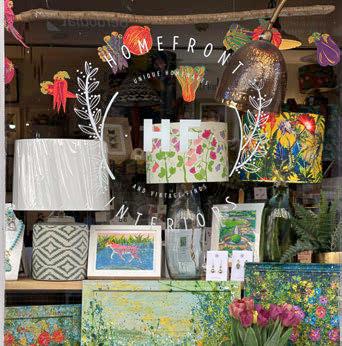
Vanessa Clark, owner of Homefront Interiors, a gift and homewares shop with a strong emphasis on sustainable and ethically sourced products, 10 Margarets Buildings, Bath; www.homefrontinteriors.co.uk
“Coming back to work after having children, I felt it was time for a change and wanted to work for myself. I had long thought about having a small shop of some kind and believed this would allow me the freedom and fle ibility to fit around the needs of a family. omewares and particularly ceramics have always interested me, and that is what I eventually decided to focus on.
I set up in 2016, and wanted to be a destination shop for those little finishing touches for the home, and started by focusing on small furniture pieces, lighting, cushions, ceramics, but gradually the shop has evolved to what you see today. We have found our niche and concentrate on unique products and affordable gifts such as small homewares, prints, ewellery and gifts.
We really do put a lot of thought and time into the brands and artists we choose to work with to ensure that the shop has a wide and varied mix of products, price ranges and styles to choose from. With an emphasis on sustainability and ethically sourced items, I want customers to know that these products have a story behind them, that we care about reducing
Vanessa Clark has created a destination shop with her homeware and gift store, Homefront Interiors
“We’re a family of architects and interior designers”
Louise Hessian, owner of the Hessian Collective, based in Margarets Buildings, which sells a mixture of vintage furniture and artefacts
waste and want to ensure that artisans are paid fairly for their work. It has been hard to keep the shop going, and there have been times when I did not think I would be able to. The costs of running a small business can be challenging; there are periods of the year that are quieter and this can have an impact meeting all our overheads but I am grateful for each and every sale in the shop – it does not matter if this is just a card as each sale makes a huge difference to our success.
There are real highs and lows to owning your own business. There is nothing better than knowing you have provided a great service and your customers have left happy with their purchases. I like working for myself and the sense of achievement this can bring, but it can be disheartening when you have quiet periods. We just need to ensure people can easily get into Bath to visit the shops and that people continue to support local shops and small businesses instead of opting for the big online retailers. Nothing beats visiting a shop to buy things and knowing that by doing so, you are putting money back into your local economy. e face stiff competition from online, but I think we offer something special and enhance the local community.”
Michelle Sames, director of The Salcombe Trading Company, which specialises in Scandinavian and British homewares, 16 Margaret’s Buildings, Bath; www.salcombetrading.co.uk
“We saw a tiny shop on Fore Street, Salcombe in 2000 after years of running a bed and breakfast, and thought we’d give it a go! We wanted a name that didn’t tie us down to one story – strong maritime roots of course was the gist, mixed with our love of New England style and having Danish family.
The biggest decision we made was when we closed our brick and mortar stores because family life and various building projects were taking up all our focus. But as the high street in Bath started to thrive again, we couldn’t resist a small head o ce and shop on Margarets Buildings.
It means in the last decade we’ve had lots of changes to our business, but adaptability is our most valuable asset. The products and service remain the same, but we can change our approach when we need to and have adjusted how we reach our customers. Many small businesses don’t have the luxury and have to close.
We also can’t survive without our loyal customers. It still gives us all a huge boost when we get an order or purchase in the shop, big or small. We’re really excited to say we have reached our 25th year, albeit with hours and hours of hard graft!”
Jody Cory, managing director of her eponymous Jody Cory Goldsmiths, 9 Abbey Churchyard, Bath; www.jodycory.co.uk
“I decided to start my own business in 2001 as I felt there was a large gap between designers and their customers. It was very impersonal with there being many chain businesses, and I felt customers were not able to ask all the questions they needed to. I wanted to create an environment for customers to ask any and every question they needed at any stage of the process, ensuring they were completely involved with the comfort of knowing who exactly was taking care of their jewellery.
Using my name provides the personal touch, and for customers to know the person behind the business. It is important to me for there to be a confident and comfortable foundation for a relationship with the customer to build. Our products are handmade in our on-site workshop with collections celebrating the heritage city of Bath alongside local independent designers. e offer several services from repairs to remodelling alongside bespoke commissions. We value working oneon-one with our customers, involving them every step of the way and ensuring their jewellery needs are met.
Some of the challenges I have faced as an independent business owner are establishing myself and getting my name out there. It is tricky to find your feet in an industry already thriving, particularly with numerous
Jody Cory set up her award winning jewellery shop, which is based in Abbey Churchyard, in 2001
Michelle Sames is the director of The Salcombe Trading Company, which specialises in Scandinavian and British homewares
chains that mass produce. Additionally, advances in technology have led to the decline of traditional goldsmithing skills, which I believe is an important practice to maintain. Technology such as CAD design has replaced the need for skilled labour. Although there is a place for this technology, it is a shame to see the traditional ways being lost. But I think people have become more appreciative of independent businesses and handmade products, and are looking for more personalised experiences with the business owners themselves.
Owning my own business has been so rewarding in that I have met so many wonderful people throughout the years, whether it has been someone local having repairs done or visitors from all over the world taking time in this beautiful city. It has also allowed me to continue my passion for goldsmithing and to create beautiful, unique pieces that become part of the customers’ journey and memories.”
Alex Barton, director with Wadswick Country Store who, as well as having a retail clothes store on Pulteney Bridge, Bath and Corsham, have diversified to include green energy generation, rentals, a restaurant and shooting simulator; www.wadswick.co.uk
“The business as it is today was really started by my parents in 1990, and, as anyone who is a farmer will tell you, that there isn’t a choice to start your own business; it’s the only way you can do it! The largest focus of the business is the two retail shops, our main shop at Wadswick near Corsham and our Bath branch which was opened in 2023 on Pulteney Bridge. As you may have guessed the name originates from the village where the farm is located.
At the main store the concept is to try and cater for every aspect of country life this means offering a very wide ranging selection of footwear and clothing across numerous brands such as Fairfax and Favor, Sch ffel and olland ooper. e also offer feed and equipment for
virtually any animal and an enormous equestrian section. We also have Forage, our large caf restaurant on site which recently won an award for Best Casual Dining in Wiltshire. Conceptually in Bath we have a more boutiquey’ offering with a curated selection of clothing, footwear and gifting items with brands such as Yeti, Barbour and RM Williams
In terms of challenges, we have to work very hard to compete with online retailers that have significantly lower overheads compared to us. By the time the retail rates, rent and probably most significantly, the increased cost of employing people is factored in it leaves the margins pretty tight. Unfortunately shoplifting is a challenge too.
In Bath however the Bath BID marshalls do a great job of trying to counter this and retrieve stock. We also have very little storage in the Bath store, which means we really have to focus on having the right products in store, contrast this to the main shop where we have plenty of warehousing and have most things on site.
It is always nice to receive positive feedback and a real highlight is when I receive a review or email commenting on what good customer service someone may have had in one of the shops. I think the biggest thing is to support local where one can. Every time you spend money in a locally owned shop it helps pay someone’s wages and goes some way to ensuring that that shop and others will be there for the longer term.
I think the high street here is still in a largely good place compared to many other towns because there is huge benefit from the tourists that are visiting the city.
We are constantly looking for synergies across the entire business. For us this means looking at what we can add to any part of the business that will benefit another part of the business. s an e ample, adding the Bath shop has definitely raised our profile in the local area and I believe that the main shop has definitely benefited from this. e have plans afoot to make additions to both the Bath shop and main shop which will hopefully add to the overall offering of the wider business. n
Alex Barton, top right, is director with Wadswick Country Store, which aims to cater – clothes and accessories wise – for all aspects of country life
From a tale of blossoming love to a flourishing walled garden in Mells
By Nick Woodhouse
Singer-songwriter Diane Birch stumbled upon the Somerset village of Mells ust over five years ago. Weary of city life, she discovered its magical pull on a tour of the area and soon decided to call it home. It’s a far cry from her former hometown of New York, but it was here, during lockdown, that she would realise an innate love of the outdoors, soon spending almost every day visiting the village’s walled garden, immersing herself in this enchanted, almost mystical, space.
“The garden ene ts rom t e most ma i a o views over an ient meadows
Where Diane found solace, she also found love, with local entrepreneur Cosmo Fry. Born in Bath’s Widcombe Manor before moving to Mells over four decades ago, Cosmo had also known and loved the village’s walled garden for quite some time. It had once served the Rectory of Mells, part of the sprawling estate of Glastonbury Abbey, and it is believed that herbs were initially grown here, both for medicine and research. The Rectory however, like many others throughout the country, was demolished in the 1540s under Henry VIII’s widespread dissolution of Catholic institutions, with a new rectory rebuilt in the village at a later date.
Now belonging to the Mells Estate, the gardens have over the years fallen under a variety of different stewardships. hilst always a productive space, it has also been subject to neglect and dereliction in these times. Fortunately, recent custodians, such as social entrepreneur Samantha Evans, have helped reverse the space’s fortunes, attracting visitors from far and wide to its gardens, nursery and café.
When Samantha announced last year that she was looking to move on at the end of her lease, Cosmo and Diane knew instantly that they had to seize the opportunity to become the garden’s new custodians. The lease was to end imminently, so they had to move fast, throwing themselves – no doubt with some trepidation – into their new role. What they both lacked in horticultural experience, they made up for with passion and a deep-rooted love of a space so rooted in history. Cosmo and Diane are fully embracing this history, looking to preserve the sacred nature of the space, one rich in both energy, and in the native wildlife that also call it home. In doing so, the couple has taken specific inspiration from other monastic gardens, particularly theJardin de Curé (Curate’s Garden), dating back to 18th century France. During the country’s revolution, one night of sweeping reforms in 1789 saw tithes abolished and the state taking over church funding. The income of the local curate would be slashed; his garden becoming not only a vital source of food at the time, but also one of learning and reflection.
And what a setting in which to do so. Whilst its walls afford it shelter and protection, the Mells arden also benefits from the most magical of views, over ancient meadows to its south. The space has gained a reputation over the years for its popular menu of on-site baked pizzas, quiches and salads, with seating dotted throughout the garden at which to enjoy both the food and the exquisite views. Diane and Cosmo have recently brought in Jesse Gilchrist – former head chef at Castle Cary’s Australian-inspired go-to destination, Burnt Honey – to nurture and develop this
offering. Showcasing local produce where possible, those much-loved staples are being joined by new lunch options – from slow-cooked pork steeped in local beer and accompanied by Walled Garden salsa verde, to miso-charred white cabbage in a Somerset honey glaze.
The early evening light in the garden, says Diane, is incredible, and something she’d like to share. A large twenty-foot table spans the lower terrace; the perfect spot in Diane’s opinion for supper clubs, accompanied perhaps by classical lute music playing in the evening breeze. This is one of many plans the couple have been mulling over in recent months, in between of course managing the evolving gardens and accompanying nursery. Currently raising unusual varieties of perennials such as gaura, salvia and astrantia, the nursery is chemical and peat free, using sustainable and ecologically minded principles throughout. Diane has been able to dabble in one of her own personal loves too; that of roses, where she is currently curating a collection of the old classics.
Those ancient walls are perhaps like our very own garden walls; here not just to protect and nurture the plants that grow within them, but equally those that tend to those plants too. For Diane and Cosmo, not only have they found love for each other, but also for nature, and all the joy that comes with it.
or more www t ewa ed ardenatme s o i ood o se is t e o dire tor o interior and arden desi n om an ood o se and aw at eor e s a
OPPOSITEPAGE: Cosmo Fry and Diane Birch are the new custodians of the Mells Walled Gardens; THISPAGE, CLOCKWISEFROMTOPLEFT: Chef Jesse Gilchrist has been brought in to oversee the on site food offering; the gardens attract visitors from far and wide; the nursery is chemical and peat free; the space once served the Rectory of Mells, part of the estate of Glastonbury Abbey; herbs were initially grown here, both for medicine and research
PHOTO BY DIANE BIRCH
PHOTO BY DIANE BIRCH
PHOTO BY DIANE BIRCH
PHOTO BY DIANE BIRCH
PHOTO BY IAIN KEMP
FOOD AND DRINK
Belgian chocolatier
Neuhaus has created the perfect scoop
A NEW MOUSSE
Brussels-born chocolatier Neuhaus is an institution in high-quality chocolate craftsmanship and we’re lucky enough to have a store on Milsom Street! Whether you love it for its simple milk and dark chocolate tiles or for its world-famous pralines, the chocolatier has more to offer
The heritage brand, which has been around since 1857, has just launched a new product; the Neuhaus Chocolate Mousse, which comes in dark and milk varieties. Makers say they are light and airy and easy to pop in one after the other, but don’t be fooled by their apparent simplicity. The toppings are luxurious –from caramel pieces, and raspberry flakes to rich caramelised almonds – and each chocolate is presented in an elegant cardboard cup with a cute edible spoon. For more: www.neuhauschocolates.com in 2025.
JANE’S BIRTHDAY TEA
If you’ve been hiding under a rock for the past few months, you may not have clocked that Jane Austen would have turned 250 years old in 2025! There are lots of celebratory events brewing around the city, one of which is the Pump Room’s Jane Austen Afternoon Tea. And you don’t even have to wait until the author’s actual birthday in December to savour it either.
The tea is a mix of sandwiches, rolls and croustades followed by fruit and plain scones and pastries; all washed down with tea from Gillards, Bath’s oldest tea seller. As Jane herself might have advised; an empireline dress is most flattering when you’re having a feast, and don’t forget to loosen the waist on your britches. For more: www.sevenrooms.com
SEASONS CHANGE
Bathonians have got used to the foodie markets in Milsom Street and surrounds each spring and autumn but this year brings a high-season event which promises to do more than tickle your tastebuds. Bath Summer Fayre organisers are teasing a classic English fête vibe in the centre of the city, with live entertainment and music, local produce, handcrafted goods as well as delicious food and drink. The fayre is free to enter, ticketless and takes place18 – 20 July.
For more: www.lsdpromotions.com
Celebrate Jane Austen’s 250th birthday in style in the Pump Room
Neuhaus can be found on Milsom Street
July is the perfect time for a city centre summer fayre; INSET: Stock up on local produce favourites
EMBERWOOD
RACHEL IFANS calls in at the new city hotspot and finds it smokin’
“We want to be a restaurant in a hotel, not a hotel restaurant”
Emberwood is the new restaurant in The Francis hotel and as the name suggests, fire is a key part of the concept. It opened its doors on May and had already got into its stride by the time we visited windows in the restaurant were thrown open to let in the fresh bree e of an evening in mid May and the lively soundtrack of Bath’s annual arty in the ity free music e travagan a played in the background. I chose a undred ills reamble o. sparkling wine from fordshire while my husband, in full summer mode, opted for a tes de rovence mbra alheta ros . e sat back to en oy our shared starter charcuterie board. thick slice of sourdough toast that would have been ridiculed as a doorstop had I carved it, garnered eager smiles from my husband, dripping as it was in melted butter and sprinkled with salt crystals. ll the meats coppa, chori o and salami had the subtle flavours of the hairy ungarian Mangalit a pig running through them and the accompanying pickles, including beetroot, pink shallot, celery and cucumber, were fresh, crunchy and sweet.
The evening may have had the vibe of a rela ed southern uropean city, but mberwood’s d cor is pure eorgian elegance and the menu British brasserie inspired. The focus first, as e ecutive chef David a ell, whose V highlights include aco Tapas and lifton ido in Bristol, told us, is seasonal ingredients. But while the local produce certainly form the chorus of this e citing new show, its star is doubtless the hearth.
the kitchen was completely stripped so there we were, under an umbrella in the rain, barbecuing steaks, David laughed.
ll the talk of steak pushed me into a decision. I chose the wagyu bavette, a chunky hunk bought from a farm in the Midlands. They’ve got an e cess of wagyu bavette up there because everyone buys wagyu for the top cuts, e plained David. e’ve found that bavette wagyu is perfect for us you get a bit more tenderness and it also picks up the charcoal flavour really well.
DINING DETAILS
o one asked me how I wanted my bavette cooked but a ell’s minute si le was absolutely point. It was firm but uicy and a perfect red colour throughout with the thinnest edge of smoky seared outer. The salty French fries were crying out to be dipped in the creamy tarragon heavy b arnaise sauce and the green chilli salsa cut through the steak’s anchovy butter.
Type of food served: The menu celebrates the rich agricultural bounty of Somerset and the South West, with open-fire cooking and a meticulously crafted seasonal menu
House specials: Westcombe Farm cote de boeuf with beef fat bearnaise or Emberwood peppercorn sauce, as well as whole monkfish tail, cured lardo, paprika, parsley
Vegetarian options: Chargrilled heritage carrots, crispy polenta, burnt baby gem, pumpkin seed pesto or Charred courgette and wild garlic cacio e pepe
e had first row seats for the main course performance, moving from our table to stools at the open kitchen bar, chatting to a ell and his team of passionate chefs. The mberwood team cooks about per cent of the menu on the mega hearth. It’s an impressive piece of kit the fanciest barbecue money can buy. o temperature dials or tiresome timers pinging instead, there are hand operated wheels that the talented chefs turn to raise the baking trays to the e act height above the white hot coals for cooking perfection.
aco Tapas had a hearth vibe too, so I already had a lot of e perience in open fire cooking, David e plained. Thank goodness for that because, thanks to the e tensive refit needed to transform the previous restaurant into this new and super sparkly Bathonian gem, the new piece of kit was unusable until a week before launch.
In anuary, we were developing the barbecue offering in the car park at the back of the hotel e wanted to work on that charcoal flavour but
I ordered a side of Isle of ight tomatoes, which came with aged sherry vinegar and tomato heart dressing. It complemented the main plate perfectly and gave a fresh contrast to the rich meat and unctuous sauce. For tomato lovers everywhere, it was a triumphant mi of sliced tomatoes with a top coat of smashed up toms smoothed on top, like you’d have on top of a piece of toast in a Spanish pan tomate. Delicious.
My husband’s good si ed ornish hake was beautifully cooked with a delicious sear on the skin that hid the moist and tasty flesh. It was well complemented by the caramelised fennel and samphire, strong but not too strong flavours that worked to bring dish alive. The nicely cooked new potatoes with a bit of char beefed up the substance for those with seriously hearty appetites and worked well alongside the delicious uices on the plate.
To finish was the most perfect little miso tart. It was ust like a classic custard tart but the miso gave it an umami richness alongside its incredibly deep caramel flavour. the simple pudding is a great e ample of David’s flair for playing around with the known and taking it to the ne t level. e want to be our own thing, he told us. e want to support the hotel, we want to create a great e perience for the guests who are staying here, but at the same time we want to stand alone and be a place in Bath with something a bit different to offer. e want to be a restaurant in a hotel, not a hotel restaurant.
mberwood certainly looks on track to achieve that. longside his inventive and satisfying menu, the welcoming vibe, the sumptuous surrounds, the glittering bar serving thrilling, chilled cocktails, there’s absolutely no reason why this shouldn’t become a hangout for locals and visitors alike.
FOOD FOR THOUGHT
BATH COMMUNITY KITCHEN is on a mission to improve physical and mental wellbeing through cooking and eating together
The team took home the Civic & Community Award and coveted Platinum Award from this year’s Bath Life Awards, recognising its work harnessing the power of food for good.
After starting as a pop up at the Holburne Museum’s Forest of Imagination in 2023, Bath Community Kitchen has gone from strength to strength with its founder, Rob Lewis, determined to get people cooking and eating better together.
“Bath is a beautiful and affluent city but there are areas of deprivation. There are people in our community who are isolated and lonely, who don’t have easy access to fresh, healthy food or who lack the confidence to cook – we want to change that,” explains Rob.
So far, Rob and his team have served over 3,400 community meals, welcomed over 1,600 people to workshops and diverted over 2.8 tonnes of surplus food. From cooking with teens in Peasedown St John and baking with Bath’s Ukrainian refugee community to hosting its Guys Can Cook course for men living alone, Bath Community Kitchen wants to inspire a love of cooking, share skills and bring people together.
Each Thursday, Bath Community Kitchen welcomes diners for a healthy, free, or donateif-you-can, vegetarian meal at the Lighthouse in Twerton. Three delicious courses are inspired by
surplus ingredients donated by local businesses like Eades Greengrocers and Larkhall Farm Shop. Fresh, seasonal flavours are always on the menu as is a welcoming atmosphere where regulars, newcomers and volunteers break bread together. “Coming to Bath Community Kitchen is a special kind of treat, it’s like going out for dinner, which I haven’t done for a long time,” sums up one regular.
The team also caters private events, workshops and team building activities, creating job opportunities for people experiencing long-term unemployment and raising funds that go straight back into community meals, workshops and training opportunities for the most vulnerable.
A growing network of Bath’s cafés, restaurants, chefs and suppliers are lending their support through skills, sharing kitchen space and surplus produce. Bath Community Kitchen wants more venues, businesses and people in the city to get involved, show their support and help grow its positive impact.
“It’s incredible to watch the way cooking and eating together has the power to enhance people’s lives and strengthen Bath’s community,” explains Rob. “In an increasingly polarised society, it reaffirms the power of breaking bread to forge connections and break down barriers. Our similarities are greater than our differences.” n
Rob Lewis, founder of Bath Community Kitchen
YSE7EN: WHERE FIRE MEETS STYLE ON GEORGE STREET
Enjoy the bold flavours and stylish atmosphere at SE7EN, Bath's newest restaurant and cocktail bar
ou might have noticed a new fixture on George Street over the past few months, a new buzz of energy on a street famed for its restaurants and nightlife; new outdoor furniture, comfy sofas and people enjoying fresh cocktails and delicious small plates. The reason for this is the arrival of Se7en, a relaxed fire-charcoal dining experience, open all afternoon and evening, that seamlessly transitions into a fun, laid back cocktail bar open until late.
Se7en is owned and operated by Kieran Crawford and Miles Kesterton. Both local to Bath, those of you who have been around the bar and restaurant scene in Bath for a while will no doubt recognise them, and you’ve probably sampled some of what they do best.
But for those less familiar, Kieran is most often found behind the bar, using his years of experience in the field and fresh ingredients to craft high quality cocktails. Whether you’re
looking for a classic or would rather head down the rabbit hole, Kieran’s got you covered. Highlights include his riff on a lychee martini, but you only need to look at his Se7en deadly sins menu to know he is not afraid to experiment and push the limits of mixology.
Kieran began is hospitality journey at fourteen years old here in Bath. As well as running several bars here in the city, Kieran has gone on to work at some incredible establishments all over the country, including Portsmouth and Winchester before moving to Cardiff, where he worked at the likes of Gin and Juice, The Daffodil and Bar 44. Now, he is back in Bath and looking forward to being a UK finalist in the Hapusa Gin competition later this month.
Chef and co-owner Miles Kesterton is the man behind the state-of-the-art Somerset Grill, an innovative and versatile indoor barbecue, in his brand new open kitchen. Miles has been a chef all his life, a career with many highlights, from
opening up restaurants with none other than Jamie Oliver to achieving three rosettes at the Methuen Arms, under the stewardship of Leigh Evans. He then became the head chef at the much-revered Raphael’s in Bath, making a name for himself across the city.
Like Kieran, Miles is excited to now have a place of his own and puts his years of experience and knowledge to excellent use, curating a tantalising ever-changing menu of scrumptious small plates, fresh fish, Tomahawk steaks and delightful twists on modern classics. n
This year Wylde jewellers is celebrating an impressive 38 years of being in Bath but it also has another good reason to sparkle with pride – it has just sold its 1,000th Wylde Flower Diamond, a first ever coloured ylde Flower Diamond in beautiful sunshine yellow.
The lucky recipient was a long-standing customer of Wylde’s, who asked the company founder, Nicholas Wylde, to design them an e quisite, flower shaped ct gold pendant with the yellow diamond set on an articulated
link, meaning it is free to move from side to side. Against a backdrop of brilliant white natural pave-set diamonds, the precious gem glows golden with life and vitality.
Nicholas says, “The sale of our 1,000th Wylde Flower Diamond is a testament to the dedication of our team, as well as the love and the appreciation from all our clients around the world.”
For more: Nicholas Wylde, 12 Northumberland Place, Bath; www.nicholaswylde.com
TRIO DIAMOND NECKLACE, £130
From The Silver Shop of Bath, 25 Union Passage, Bath; www.thesilvershopofbath.co.uk
LINKED IN
This stunning necklace encapsulates romance, with three interlocking rings symbolising the notion of eternal love. The precious metal rings are gathered with a silver band, adorned with three one point diamonds.
RAINFALL BRACELET, £260
A true modern heirloom bracelet full of charm and wonder, handmade in Frome, the piece features raindrop inspired links and miniature puddles.
From Emma Aitchison; www.emmaaitchison.com
The simplistic chain structure in jewellery represents the endless nature of love, connection, and infinity. So there’s that, plus they look the business…
YELLOW GOLD DOUBLE TEXTURED HOOP NECKLACE, £385
A beautiful 9ct yellow gold necklace featuring two textured intertwined hoops with a mix of satin and hammered finishes that makes for a lovely contrast.
From Jody Cory Goldsmiths, 9 Abbey Churchyard, Bath; www.jodycory.co.uk
LINK CHAIN NECKLACE, £335
Brushed and gold plated sterling silver, oval link 46cm long chain necklace.
From Icarus Jewellery, 3 Pulteney Bridge, Bath; www.icarusjewellery.com
DIAMOND HEART SHAPED NECKLACE IN YELLOW GOLD, £4,690
Beautiful heart-shaped diamond necklace, featuring natural round brilliant cut diamonds, all set in 18ct yellow gold
From S.P. Green & Co, 7 Green Street, Bath; www.spgreen.com
ENTWINED HALO NECKLACE, £140
An entwined recycled silver halo necklace, handmade with two lengths of wire, twisted together to represent being linked for a lifetime.
From Honey Willow, 8 Pulteney Bridge, Bath; www.honeywillow.com
GOLD RUBY AND SILVER CRATER PENDANTS, POA
Made to order, beautiful bespoke pieces of jewellery crafted by Jacob Wells.
From The Melter, 17 Argyle Street, Bath; www.themelter.co.uk
TORPEDO LINK
NECKLACE IN GOLD, £4,350
Made from 9ct yellow gold, this handmade necklace features striking torpedo links.
From Gold & Platinum Studio, 19 Northumberland Place, Bath; www.goldandplatinumstudio.co.uk
PRE-OWNED 9CT YELLOW AND ROSE GOLD CLOGAU CHARM BRACELET, £425
Every item of Clogau jewellery contains rare Welsh gold, and to certify this, is embossed with a unique Welsh Dragon and the Clogau logo.
From Miles Mann Jewellers, 9 Cheap Street, Bath; www.milesmannjewellers.co.uk
LOOP BRACELET, £6,500
Handmade chain of 18ct yellow gold with cup setting and 8mm smokey quartz.
From Tina Engell, 3 Bartlett Street, Bath; www.tinaengell.com
NETWORK
ORIGINAL ASPIRING MATERIAL
PHOTO BY
CREATIVE BEINGS B
ath may be a hub for gorgeous Georgians and riveting Romans but we are also a ‘punching big’ centre for innovation, creativity and imagination. And it was this that the Creative Bath Awards at Komedia, co-presented by MediaClash’s Steph Dodd and Bath Spa Uni’s Lucy Stone on 21 May, celebrated with more than 250 guests and 19 Awards handed out. Highlights of the night included an opening stage performance from the Bath Show Choir and the very touching Inspirational Person Award, recognising the achievements of the late Dr Stuart Farrimond who died in May 2025. He had to given up his career in medicine after being diagnosed with a brain tumour in 2008 and retrained as a teacher and made a career as a science author working across various TV channels and working for the International Brain Tumour Alliance (IBTA).
Photos by Helena M Photography; www.helenamphotography.com For more: www.creativebathawards.org
ACE -
THE SEVEN DEADLY SINS, THE EGG
CREATIVE ARTSHOLBURNE
CREATIVE USE OF AIROCKETMAKERS
AGENCYCARNSIGHT
CREATIVE EVENTTHE SEVEN DEADLY SINS, THE EGG CREATIVITY
FOUNDER/ENTREPRENEURDANNY MOAR
INSPIRATIONAL PERSONDR STUART FARRIMOND
NEW BUSINESSSHREW
PUBLISHER & WRITERREALLY DECENT BOOKS
MARKETING CAMPAIGNMR DOODLE AND HOLBURNE
PERFORMING ARTS & MUSICBATH SHOW CHOIR
SPATIAL DESIGNHETREED ROSS ARCHITECTS
PRODUCT DESIGNMATT NOLAN CUSTOM
YOUNG CREATIVE -
AWARD MAKER
Elias Rawles, who graduates from his furniture and product design course at Bath Spa University this summer, was the creative force behind the new look Creative Bath Awards. And the reason for his original ‘door’ design? “During the briefing, it was touched upon that the smart Georgian venues of Bath often contains immense creativity within – and so this concept focuses on the magic behind the walls of Bath’s historic buildings.
“Knowing that I created each award and then watching the winners hold them on the night made for an incredibly proud moment.”
For more: Instagram @elias.rawlesdesigns
RAQUEL DOS SANTOS, BATH SCHOOL OF DANCE
Elias Rawles
NETWORK CREATIVE BATH AWARDS
Denise Wong
Bath Artist Studios
Philip Jansseune, Shari Robertshaw and Rosie Brown
Komedia Team
Laura, Raquel dos Santos and Claudia Ghadimi
Bath Show Choir
Lisa Sargent and Sally Hunt
Saber Khan, Hannah Egerton, Elliot, Sam Hamlin and Ray Sarwar
Krishnaa Shyam Sundar and Betty Bhandari
Jonathan Henderson, Erin Deighton and Jonathan Sturgess
David Chaudoir and Shika Thibault
A night of creative celebration
A NEW RIVERFRONT DESTINATION IN THE MAKING, FOR WORK, PLAY AND RELAXATION.
• Highly characterful site, with a rich heritage dating back to the 19thcentury
• A fantastic town centre destination, on the banks of the River Avon
BOOK A VIEWING
• Home to over 30 businesses
• A growing community of creators, makers, and other uses that include office, health and fitness, food and drink including a distillery, woodfired pizza restaurant and micro brewery
• Wide range of unit sizes available, from 300- 7,000 sq ft, available on a refurbished or unrefurbished basis
• Flexible tenancy terms with access available typically within 7 days
For an opportunity to tour the site and view available units, please visit WWW.AVONSIDEWILTS.CO.UK
CREATIVE REWARDS
Rachel Blake from SHREW tells us about her Creative Bath Awards win…
How did it feel to win a Creative Bath Award? Winning the New Creative Business award felt incredible. It’s amazing to have my work recognised so early in my journey. Starting a creative business is full of risks and rewards, but this award assures me I’m on the right path. It’s fuel for future ideas and bigger ambitions for the business.
What’s the best part about working in the creative sector?
I love having the freedom to express my ideas through craft. Designing and hand stitching leather goods allows me to solve problems creatively –balancing form, function and aesthetics to turn 2D ideas into beautiful and functional 3D objects that people love and cherish.
The creative sector is an ever-changing landscape, with new trends, materials and collaborations to explore and that to me is fresh and exciting. I love novelty and learning new things, so this industry fits me perfectly.
What do you love about your work?
I love the process of turning ideas into real, tangible objects for people to use and enjoy. Bespoke commissions are especially rewarding –designing and crafting the customer’s perfect bag, wallet or belt and the feeling of joy you see it gives them when they receive it.
I also enjoy the personal connection of chatting with customers at fairs and seeing them connect with my work. Being part of the creative community keeps me inspired – I’ve met so many wonderful people and it’s a space full of talent, encouragement and a shared passion for originality.
How can people work and collaborate with you? You’ll find my work on my website www. shrewstudio.co.uk and Instagram @shrew.studio. I also love hearing from people about a bespoke idea or project they would like to have made.
I have just completed a commission for high-end corporate gifts – something thoughtful and beautifully made for clients – I am interested
in undertaking more of these to sit alongside my other work.
Lastly, I would love to collaborate with other like-minded creatives, brands or businesses either on a one-off project, a joint collection, or something completely unexpected! n
Creative Bath Awards Q&A with Katrina Sharland of BATH GARDEN DESIGN
How did it feel to win a Creative Bath Award? It was surreal and unexpected; an incredible moment. Garden design is quite different; we create living, breathing spaces that grow and change over time. So to have that work acknowledged as design in its truest sense meant a great deal. This award is especially meaningful as it coincides with Bath Garden Design's 25th anniversary. It reflects how far we've come and our determination to keep pushing creative boundaries.
What's the best thing about working within the creative sector?
The opportunity to collaborate. Garden design might start on paper, but it comes to life through the hands of so many skilled artisans: sculptors, willow weavers, stonemasons, metalworkers, pond specialists and nursery growers. Each project is a shared creative process involving many talented people. We love designing gardens that are visually beautiful while
fulfilling a function: places people truly live in and connect with. Our spaces are crafted to support biodiversity, use sustainable practices and celebrate the natural rhythm of the land.
What do you feel makes you unique?
We design with sensitivity to the past while also acknowledging our responsibility to the future. We're also known for our commitment to biodiversity: we've become the go-to experts in wildflower meadow creation and habitat restoration locally. From native planting schemes to estate-wide ecological planning, we design gardens that encourage pollinators, wildlife and seasonal interest year-round.
What shall we look out for from you for the rest of this year?
We're working on the restoration of a historic Bath property: an incredible chance to bring a garden that’s steeped in history back to life with modern ecological understanding. Another
high spot will be a naturalistic garden design for a luxury lakeside retreat in Somerset, using native stone, wildflower habitats and prairie-style planting. We have more wildflower meadow projects underway, several new planting designs on the drawing board and continued collaborations with brilliant local creatives.
Palette is a new gallery and retail space on Walcot Street …plus it even does food
A BEAUTIFUL PALETTE
Verity Slade and Alistair Snook opened Palette, their creative collab space on Walcot Street, in March this year. Inspiration for the new business struck in Bordeaux when they went to a patisserie and art gallery called BAG. Verity explains, “We’ve always wanted to create a business where we could share our creative interests with others, and where you could come for one thing but discover something totally new.”
Verity, an illustrator, artist and graphic designer, comes from Gloucestershire and although she and Alistair – a passionate cook
ON THE UP
– had scoped a large area for their dream opening, Bath trumped its rivals in the end.
“We moved back to the west country last year and were incredibly lucky to find our premises on Walcot Street; it’s truly the heart of independent and creative businesses in the city.
“Our exhibition which opened on 6 June, is a solo show of works by Claudia Newcome, a fantastic still life and portraiture artist. We’ve also got lots of other events planned, including supper clubs, a book launch and creative workshops. For more: www.palettable.co.uk
HELLO PETAL!
hat does summer say to you To us, it’s all about flowers and ice cream so we were excited to hear about Flower & Scoop, a new florist gelato mashup in Moorland Road. wner lison Rowley is really talking our love language when she says that she’s on refreshments duty – think gelato or fresh fruit covered in chocolate tap, stuffed cookies and hot drinks while her florist team of manda Brown and llie Mills dish out plant and flower advice, whip up fresh bouquets and help with balloons and birthday cards too. Flower and Scoop opened in mid March and will be rolling out a programme of succulent, terrarium and bonsai workshops over the coming months. or more www flowers oo o
GYM AIMS HIGH
A new bouldering gym has opened in Bath. Luma on Ferry Lane in Widcombe embraces a new concept in climbing gyms as it’s totally unmanned. Suitable for intermediate and e perienced boulderers, the space offers , climbing routes as well as fingerboards and can be booked for sessions between am and pm. The facility accommodates six climbers at once with owners wanting to create a small tight-knit climbing community in Bath for the first time. o founder Lucy Saunders says, “It’s been incredible to see so many people using the space and embracing Bath’s first dedicated training facility. For more: www.lumaclimbing.co.uk
Bouldering is the perfect combination of mental and physical performance
THE BATH BID has appointed Jess MerrittJohns of Jolly’s department store as its new chair of the board. On her new role, Merritt-Johns said, “I am very passionate about the success of our high streets, and a big believer that retail still has a firm place among it. I will be supporting businesses across the city in whatever way that I can, with a personal focus on driving quality footfall and continuing to bring success to a thriving city centre.”
www.bathbid.co.uk
Bath-based chartered accountants and tax advisors RICHARDSON SWIFT have appointed Calvin Healy as head of tax. Calvin has been at the Laura Place firm for over ten years and in his new role is to keen simplify tax planning for both personal and business clients. www.richardsonswift.co.uk
After a year of fundraising including bake sales, a sponsored spin-a-thon and a 25km walk, the team at Wiltshire-based GOUGHS SOLICITORS has raised over £5,000 for its charity of the year, Scotty’s Little Soldiers Scotty’s works to provide long-term support to bereaved military children. www.scottyslittlesoldiers.co.uk | www.goughs.co.uk
Jess Merritt-Johns, left, is on a mission to boost Bath’s retail businesses
The Gough’s team did the leg work raising money for their charity of the year
Calvin Healy
Flower & Scopp bring uniqueness to Moorland Road!
PHOTO BY
LUCRA MORTGAGES BATH LIFE AWARDS
“EXPECT HIGH-CALIBRE COMPETITION”
Ben Tadd, director at Lucra Mortgages in Marshfield talks us through the company’s wonderful win at this year’s sparkling Bath Life Awards event.
Were you a first timer at the Bath Life Awards in 2025?
No. To be honest, we have entered in previous years and even been finalists, but we felt more deserving of the Award this year when entering, and even a little bit confident that we might scoop the win. This was because of the fantastic results and growth we have achieved collectively as a group over the past year.
What was it like on the night?
The Bath Forum was a great venue for the awards evening, and the atmosphere was brilliant. It was great to see so many familiar faces from both the local business world and our own personal acquaintances, and we en oyed making many new connections too.
Who came along on the night?
The party people at the event included osh, one of our mortgage advisers our o ce manager, Isabella and ottie from our administration team.
What does winning the Bath Life Award mean to your team?
It’s brilliant to be recognised as a winner at the Bath Life wards, particularly against such stiff competition in our category. Winning this was a big pat on the back for a small business such as ours, and it will help to raise our profile further in the local area.
Any advice for someone thinking of entering the Awards in the future?
Don’t be afraid to shout about your wins and don’t worry about showing off everything you have achieved. pect high calibre competition and make sure your submission highlights the very best from the previous 12 months.
Five eros, the supercar store and showroom in olt, is partnering with Hermitage Cognac to create highend customer e periences. The initiative kicked off with a recent evening event that showcased a collection of rare cognacs and held a pri e draw for a bottle of the Hermitage 1995 Grande Champagne Cognac. David Baker, founder of ermitage ognac, reveals he is looking forward to future events This partnership is a natural fit. Both ermitage ognac and Five eros are dedicated to offering the very best, whether it’s the finest aged spirits of the most e clusive supercars. Our shared passion for craftmanship, heritage and rarity makes this collaboration an e citing ourney for both brands and our customers. or more www ermita e o na om www ve eros o
FRAGRANT BEING
arterre Fragrances has recently moved its perfumery and botanical collection to Bath’s Margarets Buildings. The company, founded by ulia and David Bridger in , is one of the only perfume houses to cultivate its own rare botanical ingredients, and works with world renowned Master erfumer acques habert, based in rasse, to create lu uryfragrances. arterre is currently holding a small e hibition about the history of perfume, especially from the Roman and eorgian eras, which recreates samples of leopatra and apoleon’s fragrances among others. The company has also ust introduced perfume workshops in collaboration with The Royal rescent otel and there is a free scent of the day’ display outside the shop. For more: www.parterrefragrances.com
The winning team from Lucra Mortgages on Awards night
PHOTO BY ANDREW DODD
Five Zeros doubles down on collectors’ items with its Cognac partnership
Julia Bridger from Parterre is passionate about rare botanical ingredients
EntreConf Awards 2025 Finalists:
Advisor
Bright Evolve
EDP Training
H2R Selection
Matthew Olivers
PANDEK Group Sense Risk Solutions
Third House Transition 15
The Visa Office
eCommerce
Castle Combe Mercantile Gillards
Susan Molyneux Cosmetics
Catalyst
Bath Office Co
DeskLodge
HUM4NS Squareworks
Entrepreneur
Caroline Baxter, Aspire To Move & H&B Investments
Charles de Paula, SEIKK
David Kelly, Storm Consultancy
Health &
Wellbeing
Bupa Dental Care, Cardiff practices
Employer
CL Electrical Controls
DeskLodge
Digital Wonderlab
ELM Legal Services
FRF Lexus Cardiff
Gooding Accounts
Graphic Mill
Hoop Recruitment
Mayden
The Mortgage Quarter
Varn
Emma Wharton-Love and Jules Love, Spark AI
Graham MacVoy, Wake The Tiger
James Courtney, LUX Rewards
James Miles and Michael Tilsden, The Mortgage Quarter
Jon Bird & Nick Bird, Squarebird
Melissa Anderson, Camella
Nick Hounsfield, The Wave
Nigel Greenaway, GS Verde Group
Pippa Russell, Russell Communications
Ro Feilden-Cook,
Celsius Innovations Energised Performance
LUSH Retail Mayden Ripples Wellbeing
The SHE collective
Susan Molyneux Cosmetics
The Wave
Legal Advisor
AMD Solicitors
GS Verde Group Martyn Prowel Gartsides
RWK Goodman Thrings Solicitors
The SHE collective
Female
Entrepreneur
Ally Patterson, Avo Activewear
Caroline Baxter, Aspire To Move & H&B Investments
Emily Kenna, Sense Risk Solutions
Hannah Viney, Sycamore Communications
Julia Kemp, Pawpass
Laura Aiken
Melissa Anderson, Camella
Mercedes Osborne, Pointers Financial
Natalie von Tersch, Mint HS
Celsius Innovations
DRIFT Energy
LUMA Climbing Pawpass
Sora Aviation
Property
Pippa Russell,
Russell Communications
Rebecca Morley, Third House
Ro Feilden-Cook,
The SHE collective
Financial Advisor
GS Verde Group Integrity365
Penguin
Aspire To Move
Beacons Business Interiors
Burston Cook Camella Mode Consult
Norah Rose Staging
The Tap End
Scale-Up
Wake The Tiger
The Wave
Small Business
Beewise FS BrisTechTonic
Burston Cook
Cardiff Gold
Cordiality
Norah Rose Staging
Spark AI Unfold
Windsor Hill Mortgages
ZiaBia Events Consultancy
Sustainability
Beacons Business Interiors
City Science
DRIFT Energy
Gillards
SunGift Solar Technology
Apollo Technology
Cavefish
DATA3
Digital Wonderlab
Exacta Technologies
Molendotech
New Icon
POLYMATHIC
Rocketmakers
SmartBear
Storm Consultancy
Truespeed Communications
Young
Entrepreneur
Bethany Taylor, City Science
Cameron Mills, Cameron Mills Group
Hannah Egerton, Edgie Eats
Will Maslin, Aspire To Move
WOMEN MAKING WAVES
The team at NEW WAVE LAW SOLICITORS introduce themselves and tell us about their compassionate approach to personal law…
Hello and a very warm welcome from New Wave Law Solicitors. We were established in 2022 and draw on over 20 years of legal experience. We’re a niche, client-focused practice, situated in the heart of Bath at 11 Manvers Street.
Want to know how we can help you? Well, a genuine, compassionate approach is at the forefront of everything we do. Our services include wills, lasting power of attorneys, probate and estate administration and advising on court of protection matters, involving brain-injured adults and children and those who lack capacity.
“A GENUINE, COMPASSIONATE APPROACH IS AT THE FOREFRONT OF EVERYTHING WE DO ”
And why choose New Wave Law Solicitors? First and foremost we listen to our clients and we get to know them. We’re approachable and professional and we offer a bespoke service, tailored to personal requirements.
Please contact us to make an appointment with one of our team or pop in to see us at your convenience. We would be delighted to meet you. n
“Absolute heartfelt thanks for that meeting and for your kindness, compassion and clarity to us all. Your sensitivity to the
circumstances, your encouragement of our love for each other and your willingness to tell us perhaps difficult legal truths with immense gentleness was so deeply appreciated by us all.” – Mrs T (Bath)
“We had been with a traditional local law firm for quite some time, but when it was gobbled up by another and became larger still, it was a breath of fresh air to have New Wave Law Solicitors recommended to us. Quite apart from being far better value, we have so appreciated the personal touch,
including a home visit that made things so much easier on a number of fronts. It was a very simple choice to make the switch and we are so glad to have done so.” – Mr and Mrs H (Bath)
PATH
PATRIZIA RIBUL CAREER
The Bath Preservation Trust’s director of Museums
As director, Patrizia Ribul heads up the strategic development of Bath Preservation Trust’s four museums and their day-to-day-operations; these are No.1 Royal Crescent, the Herschel Museum of Astronomy, the Museum of Bath Architecture and Beckford’s Tower and Museum. Her role means she leads on programming, facilities, front of house, fundraising, learning and engagement, and provides financial and commercial leadership.
Where are you originally from, and what brought you to Bath?
I am Italian, bilingual German and was born in Milan but have been living around the world for half of my life following my passion for museums and heritage. My husband is from Devon, and we always wanted to move to this region, so Bath has been a natural choice. We came here in 2008, and what also
attracted us was its beauty, world class heritage and museums. There are a lot of Italians here –it must have something to do with the Roman history.
How did you fall into your line of work?
I’ve always loved museums and the arts – my dream has always been becoming a museum director. My mum is an artist, my father a tax consultant, so the management aspect applied to arts mixes both my parent’s skills and passions in my career outlet.
Where did you train?
All over the world – I studied economy for arts culture and communications in Milan; then completed a Masters in arts administration in Sydney. While studying I aimed to gain as much experience as possible in arts and cultural organisations world wide, and I interned in Milan and New York. I then worked in Sydney, Berlin, before settling in London and the UK, where I’ve worked with organisations such as the Arts Council England, Tate and Spike Island.
Did you always know this is the work you’d be doing?
I dreamt of becoming an architect as I love buildings and museums in particular, and the reactions the buildings themselves can provoke in their visitors. I cried when entering the empty tower of the modern extension of the Jewish Museum in Berlin designed by Daniel Liebeskind. This passion, and reading the autobiography of Peggy Guggenheim, lead me to loving the art to be found within museums, and in turn the ambition to work in close contact with museum collections. As a result, I pursued studies that allowed me to learn more about how those institutions are run.
“THERE ARE A LOT OF ITALIANS IN BATH – IT MUST HAVE SOMETHING TO DO WITH THE ROMAN HISTORY”
What jobs you were doing before this?
In my professional experiences I was fortunate to work for an array of different arts and cultural organisations, ranging from museums, art galleries, online networks, an art biennial, and for national museums, as well as advocacy and funding bodies. This led me to become the director of the Burton Art Gallery and Museum in Devon, and now to my current role of director of multiple museums in Bath, each one with an extraordinary story to tell.
Tell us a little about Bath Preservation Trust Bath Preservation Trust (BPT), which was established in 1934, campaigns for and promotes the conservation, and sustainable enhancement. I feel very lucky to work in a charity serving a city that is a double-inscribedWorld Heritage Site.
What were the early days at BPT like for you?
Starting a new role is always daunting but being able to draw on a variety of experience and believing in yourself and your skills helps. Great managers and support from colleagues is also invaluable, as well as remembering that everyone starts somewhere and gains knowledge over the years. My colleagues’ support during the early career days and those of my mentors now, have been very much valued over the years.
How do you feel about your role as director?
I feel very lucky to work with such extraordinary collections in the four museums I head up, but also closely linked to architecture and heritage in a world heritage site. Furthermore, in this role, I am also able to work with great contemporary and living artists alongside the museums’ collections and exhibitions, so it feels like I have come full circle.
For more: www.bath-preservation-trust.org.uk
MEET THE RISING STAR
From law to hospitality, Bath is bursting with young talent in every field
JACK WALDRON
ATTINGER JACK 01225 758222; www.aja.co.uk
What sparked your interest in becoming a media executive?
I’m a real people person and I’ve always had a passion for communications. Working in an advertising agency was always my ideal job, so when I saw AJ were hiring I couldn’t get my CV in quickly enough! Once I started working at AJ I began discovering more about TV advertising. The more I learnt, the more interested I became. I made sure I was as involved in the whole process as I could be, even if it was just sitting in on meetings.
Who do you look to for inspiration?
Our head of TV, Eva Angel has been a constant source of inspiration and encouragement. Her open and supportive management style has given me the confidence to develop professionally. When I see how amazing she is at planning campaigns, dealing with clients and making sure all the AJ TV ad campaigns run smoothly, it honestly blows me away.
What skills have been important in helping you grow quickly?
We work in an extremely fast paced and challenging environment where detail and timing is crucial. It might sound basic but being organised is the key to staying on top of your workload. However, in this industry being able to adapt quickly and think on your feet is essential.
HANNAH JACKSON GOUGHS SOLICITORS 01249 475888; www.goughs.co.uk
What area of the law do you specialise in?
I am a solicitor specialising in all aspects of commercial property. This includes acquisitions, disposals, investment, financing, and lease management of commercial properties. Within my work I act for both buyers and sellers, or landlords and tenants offering a wide breadth of experience in transactional arrangements. Commercial property itself entails a large range of properties including high street retail, offices, agricultural land, warehousing and industrial units.
What is your favourite part of the job?
The variety. Every day is different. Every transaction is different. I love being able to work closely with each of my clients to reach a conclusion.
What professional accomplishment has made you most proud?
Qualifying as a solicitor in early 2024. I completed my legal practice course and LLM Legal Masters as the nation fell into lockdown. Coming out of university, the legal opportunities were slim. I was a paralegal for over 18 months gaining invaluable experience in the property industry before commencing my training contract with Goughs in 2022. Being named on the solicitor’s roll will always be a prominent achievement within my legal career. Now I look forward to continuing to establish myself as a solicitor and build lasting relationships.
As a property manager, what’s something you’re working on now that you hope still matters a decade from today?
When I came in to the role of property manager, there had been a period of rapid growth for Rengen Lettings in the Bath area. I quickly realised that a complete overhaul was needed of the systems and processes used to manage both the maintenance of the properties and the communication with our tenants. Having spent time working through the best ways to simplify our systems, I am confident that the foundations that I’m putting in place now will benefit the company in years to come.
What’s been the most unexpected lesson you’ve learned as a young professional?
What has been surprising to me in my role is that my job is as much about dealing with people and emotions than it is managing buildings. Most of my tenants are students and this is often their first move away from their family home, with many having also travelled from overseas. By making the process as smooth as possible for them, this not only gives them and their parents confidence in Rengen Lettings, but often also benefits us with a reduction in teething issues that take up valuable time and resource.
ALEX MANGER
MACDONALD BATH SPA HOTEL 0344 879 9106; www.macdonaldhotels.co.uk/bath
Have you ever feel underestimated as a head chef because of your age, and if so, how do you handle that?
Yes I have, especially when working with individuals in more junior roles who are older than me. It can be challenging to give direction to someone older, particularly in the catering industry, where traditional methods still carry weight. There’s sometimes a sense that my approach isn’t fully trusted, even though techniques and standards have evolved. What many don’t see is the depth of knowledge I’ve gained from working under experienced chefs –I’ve learned a lot, and I know the value I bring to the kitchen.
What helps motivate you?
Waking up each day with a positive mindset drives me to create quality food I’m proud of. As a young head chef, it’s incredibly motivating to know that my work sparks curiosity – people often ask how I do things or they’d like insight into my process. Being in such a demanding industry, this kind of recognition fuels my determination to keep improving. Above all, knowing that I’m making others proud keeps me focused and inspired.
What does the next chapter look like for you?
My goal is to keep building on my success, taking on new challenges, and achieving even greater things in my career.
LUCY MARCHANT
RICHARDSON SWIFT
01225 325580; www.richardsonswift.co.uk
As a trainee accounts assistant what helps keep you motivated?
I’m driven by the opportunity to work with a range of individuals and learn from their experiences and expertise. I also enjoy challenging myself – stepping outside my comfort zone helps me grow both personally and professionally, and reflecting on my own development and progress over time helps me keep motivated.
What does success look like for you right now, versus what you think it’ll look like in five years?
Success for me now would be to complete my chartered accountancy qualification and continue to build on my professional knowledge. I want to build strong relationships with clients and grow in confidence. In five years I hope to be well established in my career as an accountant and have a very healthy portfolio of happy clients.
Professionally who do you look to for guidance?
I feel very fortunate to work alongside an amazing team – from the directors to all my colleagues – who all have a wealth of knowledge and experience. Their professionalism and dedication continually inspires me to keep working hard and learn from them.
What does the next chapter of your career development look like? I want to continue to learn from all the people around me and take as many opportunities as possible. For the immediate future, my main focus is passing my chartered accountancy exams and becoming fully qualified.
As an events manager, what helps drive you? It would be the joy of creating unforgettable moments for people, no matter what the occasion. Whether it is a wedding filled with love, a corporate dinner celebrating success, or a wake honouring a life well lived, I find deep professional satisfaction in knowing I have helped make that day meaningful. I’m also motivated by the trust people place in me and the satisfaction that comes from bringing their vision to life. It’s a privilege to ease their stress and contribute something positive to some of their most important life moments.
What are the key skills needed in your line of work ? Organisation and efficiency have been the most important skills in helping me grow in my career. Managing large functions requires careful planning, attention to detail, and the ability to stay calm under pressure. From timelines to logistics, being highly organised ensures nothing is overlooked and that everything runs smoothly on the day. Equally important is strong communication and coordination. Good communication helps prevent misunderstandings, and keeps everyone aligned, especially when handling high-pressure occasions.
How have having these attributes helped you personally?
These skills combined allow me to deliver events that feel seamless for the client, even when the behind-the-scenes work is complex They’ve been key to my development and continue to shape how I grow and succeed in this fast-paced, rewarding industry. .
What sparked your interest in becoming a hotel manager?
The opportunity to create memorable, personalised experiences for guests. I find it incredibly rewarding to provide bespoke service that brings real joy to people, especially when they’re celebrating special occasions or enjoying a well-deserved holiday. Being part of those meaningful moments is what makes this industry so special to me.
Who do you look to for inspiration and guidance? I’ve had the privilege of working at Roseate Hotels for the past five years, and it has been an incredible journey of growth and learning. I’m especially grateful to my managers and the teams who have supported me every step of the way. Their guidance, mentorship, and belief in my potential have taught me more than I could have imagined. They continue to inspire me to succeed and strive for excellence every day.
What does the next chapter look like for you, and what are you excited to explore?
The next chapter is all about continuing to pour passion and creativity into everything we do here at The Roseate Villa. I’m excited to explore new ways to elevate the guest experience – whether that’s through thoughtful touches, personalised service, or unique offerings that make each stay truly memorable. It’s a journey of constant improvement, and I’m dedicated to creating something really special that our guests can enjoy and remember.
SAM YOUNG
WHITE HORSE EMPLOYMENT
01225 777157; www.wh-employment.co.uk
What do you most enjoy about being a senior consultant?
The variety and unpredictability that each day brings, in recruitment no two days are the same. As an ex-cricketer I thrive in an environment that allows healthy competition but has clear processes for me to succeed, allowing me to provide the best tailored solutions for both clients and candidates. I’m fortunate to spend time both in and out of the office – whether that’s meeting new people, strengthening relationships, or representing our business at networking events and industry awards. I also take great pride in leading our senior finance leadership forum, Executive Leaders in Finance, which has grown significantly and continues to create a valuable space for collaboration and insight-sharing within the sector.
What are you most proud of professionally?
I’m proud of my development, I’ve built lasting relationships with businesses and candidates who appreciate the service I’m giving. Which they kindly show through giving me wonderful referrals and recommendations. Also, having joined the business as a trainee two years ago, I’ve been promoted twice, which I’m super proud of!
How has White Horse given you the path grow?
From day one, White Horse has provided a clear and supportive framework for development. The 12-week onboarding programme, combined with ongoing mentorship, gave me the tools and confidence to hit the ground running. Having clear goals and regular check-ins really appealed to my results-driven mindset, and it’s been motivating to see tangible progress. What makes a real difference is the collaborative culture – we’re always sharing insights and learning from one another, which creates a brilliant environment for continuous growth.
IN IT FOR THE WIN
Hartham Park was the grand setting for the Bath Life Awards Winners’ Dinner event on 15 May. Along with networking opportunities in the beautiful gardens, Matt Slade of Hartham Park spoke of the estate’s early days and its future plans. The two course dinner included as sticky miso salmon fillet, asmine rice, pak choi and edamame with miso sauce, and tarte au citron served with raspberry coulis and Chantilly cream.
Pictures by Narrated Frames; www.narratedframes.com For more: www.bathlifeawards.co.uk
Kelly Marie Hawker Hicks
Winners assemble!
Janik Yeshim
Barbara BaskervilleTom Coles, Jayson Godridge, Greg Ingham, Louis Channer and Emma Baskerville
Marcus Harris
Steph Dodd
Kelly Marie Hawker Hicks, Kate Bessant, Sophie Wainwright, Angela Ghent and David Ghent
Nishit Chotai and Ro Feilden-Cook Tom Dunn
Slavenka Vukovic-Bryan
PLACES TO LIVE, WORK AND PLAY
PAPER AND INK BECOME BRICKS AND MORTAR
Bath Press raises the curtain on new development
The first tranche of properties has come on the market in the prestigious and e citing new Bath ress development.
The pro ect is e citing for numerous reasons. Firstly, for many Bathonians, the historic Bath ress building had been a familiar and much loved sight on ower Bristol Road for decades, first opening as itman ress in and founded by Sir Isaac itman. s part of its renewal, developers were required to keep the original th century building fa ade, along with its distinctive chimney.
Secondly, the development promises ust under high quality and energy e cient townhouses and apartments, which boast lots of natural light, fle ible living spaces and a mi of landscaped gardens, internal courtyards, green spaces, roof terraces and a playground.
The Bath ress site, which had been vacant for more than years, was bought for redevelopment in March by an independent developer called ity ountry. Shelley est, group sales and marketing director at the company, is e cited about these
first townhouses coming to market, saying, s heritage e perts, we are proud to be working on creating lu urious, craft design homes on this site. Bringing Bath ress back to life in a way that respects the heritage of the former site is e ceptionally important to us.
The new townhouses at Bath ress are being offered to the market with guide prices of between , and , for a four bedroom townhouse, and are released for sale by Savills. For more: www.savills.co.uk
The curtain lifts on Bath’s exciting heritage development
Building A NEW HOME FOR HIPPOS
Lord Bath has marked the start of a new and exciting chapter in Longleat’s history – by digging the first piece of turf in the park’s new hippo house.
With planning permission granted and earthworks underway for foundations, there was ust time for a bit of nostalgia before looking to the future. My grandfather first brought hippos to Longleat in 1967 – a year after he opened the safari park which was the first to open outside of frica.
I grew up watching hippos Sonia and Spot living in alf Mile ond for more than years, and I shared the sadness of our guests when they passed away.
The new ippo ouse will be large enough to accommodate a bull and the females, as well as any resulting offspring. The team hopes to have the hippos on site and settled by early summer. For more: www.longleat.co.uk
UPPER GALLERY REOPENS
The Victoria rt allery, home to Bath orth ast Somerset ouncil’s collection of public artworks, threw open the doors of its pper allery to the public at the beginning May, after a period of conservation which focussed on its roof, ceiling and floor. The temporary closure also enabled the team to create a brand new learning space called the Modelling Room, which will be used for creative events for local schools and community groups.
The reopening of the pper allery marks the V ’s th birthday and the launch of an e citing new exhibition called First Impressions: Printers’ Proofs of Works by Great 20th Century Artists. Turn to page to see the launch of the e hibition.
For more: www.victoriagal.org.uk
Retirement A BLOSSOMING SOCIAL LIFE
The team at nchor, ngland’s largest not for profit provider of homes for people aged and over, held a spring open day this month at its emberley lace development.
The event’s purpose was to show Bath residents the benefits of living in a community that is specifically designed for people in later life, showcasing facilities like a caf , hair and beauty salon, beautiful gardens as well as the one and two bedroom apartments themselves. hile boasting so many great benefits for residents, emberley ark is also well located for the best of what Bath has to offer, being a stone’s throw from the ansdown ark and Ride.
ocation manager Ma ine Dark says that the open day, provided an ideal opportunity for people to have all their questions about later living answered, as well as en oy a taste of life at the development.
For more: www.lifeinplace.org
Potential residents making new friends at the Pemberley Place spring open day
The newly restored Upper Gallery houses the Victoria Art Gallery’s permanent collection
Lord Bath digging the first turf of the new hippo house at Longleat; INSET: Hippos first came to Longleat in 1967
Selling your home requires effort, and great care. Stock levels in Bath right now are high, meaning it is crucial to stand out. Below are the key steps we take at Flower Property that you should make sure your estate agent also does.
STAGE YOUR HOME
This is especially important if you have a vacant home with no furniture in it. Many buyers lack the ability to see how a space can be best used, so if your home is empty, they may not be able to see its potential. With the property fully staged with furniture, you are showing them what those possibilities are.
If you already have furniture in your home, property stagers offer a ‘finishing touches’ or ‘decluttering service’. This is where they will add or remove items from each room to really show-off the space you have. This will make the marketing look as smart as possible; making your home stand out.
We include home staging services in our fee. Some agents do not, and the cost will be at your expense. Either way, we really recommend it, you will sell your home faster and at a higher price.
HOW TO SELL YOUR HOME QUICKLY
Jack Flower, founder of FLOWER PROPERTY offers some key tips to help your home stand out
AVOID OVERPRICING
It is easy when inviting agents in to value your home to get carried away by the one who gives you the highest price. Sadly, this price is sometimes just too good to be true. Overpricing will leave your property sticking on the market without selling.
When getting your home valued, ask for evidence. They should be able to show you similar properties they have sold at that price, as well as other properties in your local area that have sold at that price. If they cannot, then the chances are that they are overvaluing your home, which will delay a sale.
HOST OPEN HOUSES WITH COLLABORATIVE ESTATE AGENCY
Hosting an open house is a fantastic way to sell your home. If you make it an event, with drinks, canapés and music, it creates a feeling of excitement, people will attach that feeling to your home, helping it sell. If people can see other people in the property at the same time, a sense of urgency is created, generating offers more quickly.
Collaborating with other local estate agents is also crucial. At Flower Property we do not
have access to every buyer in the market. However, by working closely with other local agents, we can allow for as many people as possible to view your home. We will then split the sales fee with those local agents, at no additional cost to you.
ABOUT FLOWER PROPERTY
At Flower Property we exist to turn property aspirations into lasting, flourishing legacies. Property is more than just transactions, it is about growth, transformation and care. We will guide you through your property journey with deep market insight, integrity, and long-term thinking. Together, we can create flourishing future. n
A classic build that transforms effortlessly from cosy home to party place to relaxing retreat in the blink of an eye
By Verity Evans
Imagine opening up a tab on your browser and searching for the holiday home of your dreams. You’ve had a tough year, endless meetings, zoom calls, nasty commutes. You deserve to completely relax in somewhere utterly heaven sent.
It’s not long until you find it. The main house and its outbuildings forming a rectangle around the inviting ripple of a swimming pool; an outside kitchen that smacks of the fun nights of summer; Mediterranean planting; pure white slabs to lounge on and endless floor to ceiling glass doors. Sade is playing in the background, a breeze tickles your ankle as you watch the family splashing around in your mind’s eye. ow re imagine this scene. It’s no summer house, it’s your home. All. Year. Round. Woodbury Hill House is for sale right now, a piece of paradise in a tiny hamlet called The ibb, ne t to the world famous village of Castle Combe and just 14 miles from the centre of Bath. Surrounded by fields, your sqm plot is a mix of the main three bedroomed house, annex, swimming pool, gym, sauna, outdoor kitchen and hen house, along with paddock and kitchen garden.
Although the downstairs vibe is white and fresh, there are flashes of gold in the kitchen’s knobs, knockers and taps that chime beautifully with the golden hues of the wooden high stools, the oak flooring and the golden
hour sun that floods in through the huge dual aspect full length gla ed doors that slide to let the outside in.
The thought of food and entertaining the troops is never far away stand in one spot in the kitchen and you can see a huge outside dining table, an ample marble island with dining stools tucked under and the inside dining table illuminated by the skylight above. here to dine tonight, you may ponder. If you are ust opening some snacks and laying on drinks, the open plan lounge is the perfect spot for cocktails, and enables you to keep a close eye on hi inks in the pool at the same time.
f course, life isn’t always light, bright and full of energy. Sometimes you want to feel a place’s heritage and oodbury ill ouse has kept one room faithful to its otswold cottage roots. The snug is somewhere to curl up in, after a long day on the veggie plot, trading sleek lines and sharp edges for thick walls, rounded door frames, a big fireplace, hefty radiators and the squish of well stuffed sofas.
Finally, there’s the study, which marks your work life balance with a stark design contrast no one
can ignore. Black framed Crittal doors connect it to the hall, the walls and cabinetry are painted in dark aubergine hues, while discreet speakers and lighting make it somewhere to retreat to when the effervescent energy of the rest of the house needs calming.
Three bedrooms may not seem like a lot in a property this size (not including the annex), but each one is generous in size with A-frame pitched roofs – and beaming with fresh air and light. The master bedroom has floor to ceiling gla ing, the second bedroom a big picture-window Juliet balcony and the third is dual aspect with cosy nook window seats.
The bathrooms are equally fresh; the master en suite has Arabescatto marble twin sinks and polished concrete walls and floors, and the family bathroom a freestanding super-deep bathtub and large walkin shower. The white lime wash on the walls and up the smooth curving staircase adds to the brilliant brightness of the upper floor eye masks all round for weekend lie-ins!
The gardens are wonderful; the rectangular pool is as good for fitness as it is for fun, and the golden lighting along the stone walls give it a Tuscan feel at dusk. You can choose your seating too, as there is plenty of space for loungers, diners, espresso drinkers and cocktail quaffers. The current owners have done a wonderful ob of all season planting from the shrubs and flowers that delight in summer to the trees that you watch swaying in the wind come the winter months.
HOUSE NUMBERS
Guide
From Knight Frank Bath Estate Agents, 4 Wood Street, Bath; www.knightfrank.co.uk
It’s hard to imagine Woodbury Hill House as anything but a place of fun and laughter, and that’s why it gives off those lu ury holiday feels. But when you look a bit closer, it’s also steeped in the business of real life. This renovation is about sustainability and falling in love for the long haul with its natural oak flooring, carefully positioned windows and natural light sources. It’s full of high end finishes, quality hardware and smart home technology, and rather than being somewhere that suits for a week, it has what you need for each life stage; party times, family fun, keeping fit, tending the borders, working or rela ing.
THE FINAL CHAPTER IS HERE:
On the hunt for a new home in Bath? Discover what makes
Set in the sought-after neighbourhood of Combe Down, Mulberry Park offers the best of both worlds – close to Bath city centre, with green space on your doorstep. It’s won major national awards and is already home to more than 500 families.
This stunning development is approaching its final chapter. With the last remaining homes selling fast, now is the perfect time to make your move.
Mulberry Park boasts stylish and thoughtfully designed homes with high-quality design, offering a wonderful blend of city and country living with a genuine sense of community. Residents enjoy a brand-new primary school, a nursery and state-of-the-art facilities. A
highlight of the neighbourhood is The Hub, Mulberry Park’s purpose-built community space featuring a delightful café, an exercise studio, and a vibrant event venue.
For those seeking a touch of luxury, the Opulence Collection presents a sophisticated selection of four-bedroom townhouses that embody elegant, contemporary living. Thoughtfully laid out and finished to an exceptional standard, these homes offer the space, privacy and presence that set them apart. We invite you to visit our show homes to explore the lavish design and superbly finished interiors. Some of these properties are ready to move into now, so don’t wait.
If you’re a first-time buyer looking to step onto the property ladder, one of our brand-new apartments could be the ideal fit. Plus, they are available to purchase with as little as a 5 per cent deposit!
Buying a home is a big decision, but don’t just take our word for it. Lesley and Richard have just moved into their dream home at Mulberry Park, read about their experience below:
“Mulberry Park just felt right. The whole estate feels very safe and relaxed. At first, we weren’t sure about living in a new development, but the more we got to know it, the more it grew on us. The community space, The Hub, is absolutely amazing, and the townhouses look out over green space. We were so impressed with the whole team, everyone has been overwhelmingly
supportive and really friendly. They take time to get to know you and just can’t help you enough. The build quality is exceptional. We didn’t realise how efficient and well-designed new homes are these days. The energy rating is fantastic, and the finishes throughout the house are fabulous.”
At Curo, we believe a home is more than bricks and mortar. When you buy a Curo home, you buy a stake in a place where community matters. We stay involved in the neighbourhoods we build for the long term and all our profits are re-invested into affordable housing and the local communities at the heart of our developments.
Don’t miss your chance to be part of one of Bath’s most exciting new neighbourhoods. If you’re taking your first step on the property ladder or looking for your forever home, our show homes are ready to impress. Get in touch today and see why so many have already made the move to Mulberry Park. n
“ MULBERRY PARK JUST FELT RIGHT. THE WHOLE ESTATE FEELS VERY SAFE AND RELAXED ”
BUILDING A SUSTAINABLE FUTURE
How the property industry is balancing aesthetics with ethics
By John Mather
Sustainability is no longer a niche concern in the property industry it’s a defining pillar of how we design, build, and live. s awareness and knowledge have grown over the years, and the K target of net zero emissions approaches, eco-conscious practices have reshaped the way property professionals work. From growing client demand for greener homes to stricter energy e ciency regulations, the shift is both deep and wide ranging. ere we ask our local property and design e perts to e plain how the need to be green has influenced and impacted the way they work.
WATCHING THE CHANGES
Many of our e perts have directly seen awareness of green issues growing over time, as architect and director Rich Tyers explains, ears ago, I think eco conscious design was only applied to showcase pro ects. ow, most clients recognise that climate change is important to consider in their projects. Sustainability has also evolved to encompass a far wider range of topics. Individual health, comfort and climate resilience is an important aspect of climate mitigation and considered to be ust as important as energy e ciency and carbon emissions.
For Gavin Hyde, director of Sulis Electrical Services, the changes have directly influenced the services and products he provides Demand has seen a significant growth across all aspects of renewable energy fromboth solar and electric vehicle ( V) charging and now through to battery storage. There is a greater awareness and interest from our customers. For some it’s pure financial, but for most it is a genuine desire to have a less harmful impact on the environment.
MATERIAL THINGS
For most property businesses, whether it be planning, construction, planning, or design, the types of materials chosen have evolved due to environmental considerations. “Sustainable design is embedded in our whole business, says Dan Raymond-Barker, director of surveying and carbon management at Mitchell & Dickinson. “That’s because we retrofit and restore rather than replace. Firstly, because the nature of listed buildings means we have to, and secondly, because there is value, craftsmanship and embodied carbon wrapped up in everything we address. Restoring and insulating what is already there is almost always going to be more environmentally friendly.
“The initial cost is higher, but there are savings on heating bills year after year”
“There is a greater awareness and interest from our customers”
“Since the start, we’ve used sheep’s wool for loft insulation, and recently we’ve added wood fibre to our roof insulation solutions. hen restoring windows, doors, and shutters, we use reclaimed timbers such as pitch pine and sustainably grown oak, rather than cheaper, less sustainable alternatives. This allows us to provide restorations with a lifespan equivalent to that of the original windows. e often meet customers who’ve been told their windows are too decayed to save, yet we frequently restore them by replacing ust per cent of the timber, at roughly one third the cost of a new hardwood window. istoric ngland supports restoration over replacement because it preserves high quality old timber, allows the retention of beautiful original glass, and maintains the look and feel of a period property something often lost with modern replacements. reserving architectural heritage matters, not only for aesthetics, but for the environment too. Restoring e isting windows and doors is far better for the planet. The whole life carbon of our historic housing stock is preserved when we choose to restore rather than replace.
Rich Tyers adds, Sustainability isn’t ust about climate change prevention but also mitigation preparing our building stock for a hotter, wetter and less predictable world. e research and specify materials to better navigate issues like summertime overheating, indoor air quality or une pected heavy rainfall to create energy e cient and environmentally resilient property.
RULES & REGULATIONS
To what e tent do the regulations and certifications influence and shape our e perts’ approach to new pro ects e have already completed several new build assivhaus pro ects and have several more ongoing schemes, these usually embody strong sustainability principles, says Alex Neal, director and sustainability lead with MEA Construction Consultants. e have spent considerable time analysing these building details and costs to allow us to better advise others and improve the accuracy of estimating future pro ect
ABOVE: Sustainability and aesthetics are at the core of Mitchell & Dickinson’s ethos; BELOW: Ethics and aesthetics are not in conflict says designer Clair Strong
“Since the start we’ve used sheep’s wool for loft insulation”
ABOVE: Demand is growing for all aspects of renewable energy says Gavin Hyde of Sulis Electrical Services;
BELOW: Because Mitchell & Dickinson retrofit and restore rather than replace, sustainable design is embedded in its whole business
costs. These projects have also inspired us to become Passivhaus Trust members as part of our commitment to and endeavours to improve our business energy efficiency and sustainability. We are targeting, and hope to work on more, of these types of ‘fabric first’ projects in future which influences our marketing and the clients with whom we want to work.”
PRODUCT PLACEMENT
Good intentions are all very well, but is the market keeping up and providing the products that meet sustainability standards that our experts need at a reasonable cost? “Woodfibre insulation is a product that is a typical example of a sustainable choice, which is much more frequently specified today than in the past, but is more expensive than its counterparts, such as PIR type insulation products,” says Alex Neal. “Air, ground and water source heat pumps, air-tight membranes, mechanical ventilation heat recovery (MVHR) systems, photovoltaics (solar panels), and, more recently, battery storage are the newest technologies being specified that we are having to continuously review for current prices.”
It also looks as if the market, whilst keeping up to date with the need for green, is also providing excellent design choices as interior designer Clair Strong explains: “I often use hand-woven rugs made from recycled plastic rugs from companies like Weaver Green. To make these amazing rugs, disused PET plastic bottles are shredded into very fine strips, which are then heated and back combed until tiny fibres start to open. These fibres are then spun and stretched to create a soft yarn which is dyed and woven on a loom to create the rugs. The gorgeous textiles really do feel as soft as wool and will last for years. They can also be used outside which is a real bonus.
“Cork used to be associated with everything 1970s but it’s now back in fashion because it’s a sustainable material. It’s great for keeping warmth in and is a great choice if you suffer from allergies as it’s dust-free. As a material it is harvested from trees – some of which live 300 years – which are not cut down and will continue to grow back.
“In the bathroom, there is a real trend for natural stone baths or basins
– they not only look stunning but are also made to last. Stone baths will keep bath water warmer for longer – important with energy prices continuing to rocket. Stone bath designs offer everything from sleek, ultra-modern styles to classic freestanding bathtubs. Steel is another great eco friendly alternative to the traditional acrylic bathtub. It is a natural material, so it is fully recyclable. lso like stone, it is e cellent at retaining heat.”
AT WHAT COST?
So, if it does cost more of the green stuff to be green, is that an e pense clients are willing to take on?
es, says lair Strong The first, and perhaps most obvious, area for concern in sustainable design is the ways in which we might save energy. In the home, this usually starts with reducing our heat and light output, and my clients are increasingly happy to invest in this area.
Most of a building’s heat escapes through the windows, especially if they’re old or single gla ed like many of the eorgian houses in Bath. hen having new windows installed, my clients are opting for double or triple gla ed energy e cient windows. The initial cost is higher, but there are savings on heating bills year after year. If you have constraints such as your building being listed, I recommend investing in thick insulating curtains or blinds to keep cold air out and warm air in. You can even buy curtains with a thermal lining, or add a lining of fleece to an e isting pair. More e pensive, yes, but definitely more sustainable.
Floors are a big surface area in your home so what you choose can have a dramatic effect on the environment. Flooring is also e pensive, and I have noticed how my clients are happier to spend on more flooring if it’s sustainable. ood flooring if it’s harvested responsibly from well managed forests that are replenished without damaging the environment is the perfect sustainable choice. ood floors are easy to maintain and hardwearing so they can last a long time. Re-sand them and replace damaged planks, and your floor will outlive you n alternative is to buy wooden floorboards from a reclamation yard. ld floors from schools or churches often have a wonderful patina and look ama ing in both modern and old homes. They cost more, but are worth it.
ABOVE: MEA Construction Consultants has completed several new build Passivhaus projects and have several more ongoing schemes;
BELOW: The initial expense of going green is being accepted by many clients as a long term gain, both financially and for the planet
CONFLICT RESOLUTION
How do our professionals balance aesthetics and sustainability when they seem to be in conflict I don’t think nowadays they are in conflict, says lair Strong. ook at a company like Tom Ra eld, which is one of the most thoughtful sustainable companies in the K. responsible, sustainable approach and an ambition to make a positive difference is at the heart of everything they do. ushing back against a rising throw away culture, they handcraft beautiful heirlooms of the future and are incredibly proud of the craftsmanship and commitment to making superior quality, artisan pieces that look incredible and are loved and last a lifetime. Tom Ra eld creates the sustainable wooden lighting in ornwall using FS wood and traditional steam bending techniques. Each light is a piece of art.
ven big companies like est lm, which is famous for its stylish furniture, have Fair Trade and eco friendly collections too. ith FS certified pieces (from chests to chairs), est lm is committed to sustainability and forest conservation. passion for the environment and Fair Trade practices, as well as an interest in traditional crafts and interiors, led to the launch of kuku in Devon. verything you buy from kuku is ethical, eco friendly, handmade and beautifully made.
Dan Raymond Barker agrees, t Mitchell Dickinson, we’re in the fortunate position where sustainability and aesthetics are not in conflict they are both core to our ethos. It means we can carry out award winning, bespoke work that has low resource use and results in more energy e cient old buildings, which are nicer to live and work in. nother way to look at it is this the carbon savings from our work are more than 40 times greater than the carbon emitted during the process of carrying it out.
IN PRACTICE
Sustainability in action
“We worked with the owner of a listed former chapel near Bath to get planning permission for an in-roof solar system coupled with an EV charger and battery storage system. The property is now largely independent from the grid with nearly all its electric coming from solar.”
Gavin Hyde, director of Sulis Electrical Services
“I was fortunate enough to be involved in a project in Cambridge for the office of the Deputy Prime Minister early in my career that involved, among other groundbreaking materials and technologies, a Glulam and Cross Laminated Timber frame, recycled newspaper insulation, Ground Source Heat Pump (GSHP) and a wind turbine. This opened my eyes to the new materials and technologies available, but it has been 20-25 years for these to start becoming more widely used. I also spent seven years in New Zealand where the use of timber-framed buildings and air source heat pumps were more common.”
Alex Neal, director and sustainability lead with MEA Construction Consultants
“We are carrying out a deep retrofit of an existing property at present. The roofs use sedum that attenuates heavy rainfall. Wood fibre insulation manages summertime overheating. Plenty of trees provide shade and water retention. We have designed bespoke integrated swift boxes and bat boxes. The interiors feature low-impact, natural and low-VOC finishes. Mechanical ventilation filters out air pollutants all year round. Reversible heat pumps heat in winter and cool in summer. It is this attention to design, health and performance that leads to long-term success.”
Rich Tyers Studios Sustainability
THE FUTURE IS GREEN
hat does the future look like for sustainability in the property and design industry e have seen a steady increase in both sustainable and energy e cient design practices over many years, says le eal. lthough we now consider these principles as becoming the future standard’, particularly in the bespoke residential property sector. In the commercial sector, energy e ciency is perhaps the key focus.
I see energy e ciency being a much more common goal and consideration of clients in both commercial, education and residential sectors. This may be either to reduce operational costs or because of moral and ethical choices to reduce emissions and or achieve climate policy ob ectives. co conscious choices (ie. selecting sustainable building products or local suppliers and builders) we see more in the public, education and private residential sectors. These have become more prevalent and also now incorporated in planning conditions and client pro ect brief ob ectives.
The demand for sustainable design and building practice has changed a lot in the last five years due to several factors greater environmental awareness, energy market volatility, net ero targets, and some improvements in regulations, even though there is still a long way to go, says Dan Raymond Barker. ccountability is critical here the public and private sectors are now e pected to have a net ero plan and show the steps for getting there. ften, the mechanisms are not enforceable, but at least there is much greater transparency. These changes are also evident in the property market. For e ample, Rightmove’s reener omes report found that improving a property’s rating by two bands or more can boost its value by over , . n
Sustainability is now standard in all aspects of the property and design industry
Sulis Electrical Services recommend Simpson and Partners charger
Helena Miscioscia is a creative photographer based in Bath, Somerset. Capturing Weddings, Motherhood, Newborn & Families in a natural, artful way. She has been featured in The Telegraph, The Independent and The Stage. Helena’s approach is relaxed and informal rather than posed, preferring to focus more on the connection and magic between people and places.
about the changes in the solar installation industry
Sulis Electrical Services is a local established NICEIC and MCS approved installer of solar photovoltaic (PV) battery storage and electric vehicles (EV) chargers They focus on quality bespoke installations using proven quality equipment we trust and made by manufacturers we have developed relationships with to ensure quality.
How has the industry changed in recent years?
There has been a huge change in the equipment coming to market both in terms of performance, quality and importantly price, making it much more affordable to install renewables. With ever increasing numbers of electric vehicles on the road we are seeing continued growth in home charging installs. We really like the Simpson and Partners EV chargers made locally in Kemble, not too far from Bath. As they come in a range of subtle designs to blend in well with the honey colour Bath stone the city is famous for.
What are the benefits of installing renewables at my home or business?
Whether it is purely a way to reduce your energy bills and achieve energy independence from the grid or a conscious decision to make a difference and help the environment, Installing solar PV has become much more affordable with prices coming down by around 40 per cent over the last 18 months.
What if my roof is not suitable for solar?
We are installing more and more AC coupled battery storage systems that allow you to charge the battery cheaply overnight and then use the power during the day and evening, Whether an apartment or house you can achieve impressive reductions in your energy bills.
What sort of battery systems can you install?
Whether it is a battery linked to the solar system to store surplus power for use within the home or a full back up option such as the popular All in One System from British Company Givenergy to keep your house fully powered in a power cut, we design each system according to your needs.
What help is there with the costs?
The Government have committed to zero percent VAT on solar PV and battery storage on private dwellings until 2027. This alongside much lower equipment costs means it has never been more affordable.
What is involved with a solar installation?
The first step is to survey the property and discuss your energy needs, we can then design a bespoke solar proposal that will cover the inverter, possible batteries and panels. Each system is as unique as you are, each person has different needs and budget which determines the correct system. Once happy with the design we then move to formalising the works and
liaising with the local grid operator to obtain any required permissions. Once installed we demonstrate the system and issue all the relevant certifications and insurance backed guarantees. n
S&J SOLAR ENERGY and ECOFIX are shaping sustainable living in Bath
S&J Solar Energy and Ecofix share more than just a passion for quality craftsmanship, they share a vision for a more sustainable, energy-efficient future for Bath.
From the start of their collaborating, it was clear they were aligned in both values and vision. As specialists in solar energy S&J Solar Energy and mechanical and electrical services Ecofix, they realised that by joining forces on projects they could offer clients something truly exceptional: a complete, seamless solution that blends environmental responsibility with technical excellence. They’re proud to say that their work spans some of Bath’s most beautiful and forward-thinking homes. Whether it’s a listed Georgian townhouse or a cuttingedge new build, the combined team works
“BOTH COMPANIES ARE PROUD TO BE ROOTED IN THE SOUTH WEST, WITH BATH HOLDING PARTICULAR SIGNIFICANCE FOR THEIR TEAMS”
hand-in hand to deliver elegant, energy efficient results without compromise.
S&J has been part of Bath’s landscape since 1981. With over four decades of experience, they have built their reputation on designing and installing high-quality solar systems that are not only efficient but also sympathetic to the character of the city’s historic architecture. Their clients trust them to deliver smart, reliable solar solutions that reduce their carbon footprint and enhance the value of their homes.
Ecofix, established in 2018, brings a forward thinking approach to mechanical and electrical services. Their expertise covers underfloor heating, ventilation systems, full electrical rewires, and smart home integrations. Their technical knowledge and strong attention to detail align seamlessly with S&J’s solar installations enhancing the quality and consistency of every project they deliver together.
When you bring them onto a project, you gain a unified team that communicates clearly and works efficiently. There’s no handover between disconnected contractors – they manage it all with professionalism and transparency. This integrated approach streamlines the process, reduces delays, and delivers better outcomes for homeowners. Both companies are proud to be rooted in
the South West, with Bath holding particular significance for their teams. Together, they’re committed to modernising beautiful, historic properties with high performing, eco-conscious systems, preserving their charm while future proofing their function. Whether you’re renovating, building new, or upgrading your energy systems, S&J Solar Energy and Ecofix are here to support you at every stage.
cofi td nit into oad ndustrial state t erburghs ristol tel email info@ecofi uk.co.uk www.eco x-uk.co.uk
FOR THE HOME
Our local businesses are poised and ready to help with all your home needs for summer
SANDRIDGE STONE is a local craft-skills business specialising in all aspects of building and restoring local Bath Stone properties. It can supply and fi all stone requirements for new builds or e tensions. The team’s heritage skills qualified stonemasons are also e pert in repairing and restoring e isting stone on listed properties in order to fulfil planning requirements. o ndar arm err e d e s am Te www.sandridgestone.co.uk
TILE & FLOOR For over 50 years, Tile & Floor has been synonymous with the supply of a range of top-tier design-led materials and professional installation services. ur commitment to quality has forged enduring relationships with discerning homeowners overseeing their personal projects, as well as with design and construction professionals serving the property industry. citing news We are now also conveniently located at Chippenham M4. Te www.tileandfloor.co.uk
BATH KITCHEN COMPANY
Based in the heart of Bath and specialising in bespoke, handmade kitchens, Bath Kitchen Company become personally invested in every kitchen they design and build. It’s about attention to detail at every stage – creating a beautiful space that enhances the way you live. ort arade i din s at Te www.bathkitchencompany.co.uk
BATH GRANITE & MARBLE LTD has over years e perience honing their skills in crafting e quisite kitchen worktops, bathroom cladding, vanity units and more. ith their e cellent reputation for high quality and delivering e ceptional service they are confident in bringing the natural beauty of stone into your home. Mention ‘ at i e’ to secure a 5% discount on your ne t order. Te emai in o@ at ranite o www.bathgranite.co.uk
NO17 INTERIORS offers a range of bespoke interior design services. Based in Bath and with vast e perience in designing and installing developer show homes, hotels and residential properties for private clients, Lisa has the knowledge and skills to work to any brief or budget, whether looking to redesign, update e isting furnishings or simply commission new curtains. emai isa@no interiors o te www.no17interiors.co.uk
CLAIR STRONG INTERIOR DESIGN
lair Strong Interior Design is a boutique, creative company based in Bath, providing a wide range of services for both residential and commercial clients. er portfolio of projects includes the design, project coordination and sourcing for some of Bath’s most beautiful residences, as well as hotels, sports clubs, o ces and other commercial venues. onta t air on or www.clairstrong.co.uk
MENDIP FIREPLACES BATH
Bath’s leading fireplace, wood burner, gas fire, chimney and flue specialist. From classic to contemporary, concept to completion, their team of e perts can work with you to achieve your perfect interior. Brands include Chesneys, Barbas Bellfire, estfire, Stova , a co and unter. et in touch or visit the showroom. endi ire a es on ton om e at in o@mendi re a es at o Te ; www.mendipfireplacesbath.co.uk
JENNIFER
MOSSE DESIGN STUDIO
A bespoke, tailor-made, client-focused interior design consultancy service based in Bath. Specialising in residential interior design and providing a truly personal service adapted to each client’s needs, ennifer’s unique style blends seamlessly between period and contemporary homes. The aim is simple – to create spaces that bring joy, reflecting her clients’ lifestyles and personalities. Te www.jennifermosse.com
NEXUS OF BATH is a Bath based family business specialising in painting and decorating, plastering, tiling, sash window restoration and other property restoration. e us have built a reputation for the highest standards of workmanship with e perience across a range of projects from listed buildings through to new builds, with a complete commitment to customer service and health and safety Te ; www.nexusofbath.co.uk
HAWKINS-COLLINS
The Bard of Bath on creative expression, spiritual health, and Vanessa Feltz
As the Bard of Bath, Michelle’s job is to promote the bardic arts throughout the city and foster a sense of community through creative expression. She’s married to a “wonderfully eccentric Irish man named John”. They have two children: Kaia aged eight, and Asana, five, and a “loveable and hairy” dog called Dingle.
My upbringing was deeply influenced by my grandparents, who came to the UK from Eastern Europe after World War II. My nan was taken from her home (in what is now Ukraine) at 12 years old and sent to a concentration camp. My grandfather faced his own struggles, conscripted to fight for the German army as a young Polish soldier before ultimately joining the British forces.
Their experiences shaped my understanding of human
suffering and resilience, and ignited my interest in posttraumatic growth. This led me to study positive psychology and later become a gerontologist, which is someone who studies ageing, specialising in spiritual health.
My poem, Home is not a place but a presence, which helped me win the Bard of Bath competition was inspired by my nan’s wisdom. I had entered as I saw it as a chance to practice my skills.
I’ve been on a Druid path for several years, studying with the Order of the Bards, Ovates and Druids (OBOD), a global community that embraces a magical, spiritual lifestyle in harmony with nature. The journey begins with becoming a bard, a role historically valued in Celtic cultures for poetry, storytelling, and music, as well as for preserving knowledge.
“I trained as an official Ambassador to the Fairy
Realm
”
My role as the Bard of Bath is to shine a light on the wonderful world of the Bardic Arts, which includes storytelling, poetry, music, and all forms of creative expression. I’ve enjoyed connecting with Bardic groups and alumni around the city.
I’ve carried a Book of Business Ideas with me since I was 12, and one of my early inventions was an orange peeler called Pith ff Driven by a strong work ethic and entrepreneurial spirit, I’ve been working since I was 14, and over the years, I’ve held more than different obs, often juggling multiple roles simultaneously. The mix has been eclectic from growing plants to waitressing and from heading up sales and marketing for hotels in Tanzania to being director of transformation and innovation for Virgin Care, and starting up two businesses.
I trained as an official Ambassador to the Fairy Realm I even have a certificate And I’m clairsentient [has empathic intuition], clairsalient [the ability to perceive smells or odours that are not physically present].
My fascination with the elemental world began in childhood but was reignited a couple of years ago when I captured an orb of light on my camera along the canal path to Bath whilst recording the beauty of the dawn chorus. Initially, I thought it was lens flare, but as I zoomed in, it revealed the distinct form of an elemental being.
After a long journey to pregnancy, I suffered an ectopic pregnancy. It was quite dramatic as it began during a meeting at No. 10 Downing Street of all places. That evening, I had a large internal bleed and
remember thinking that I had died as I was wheeled to the operating theatre and saw snow falling all around me (it was May). I had a surprising sense of calm acceptance. When I awoke, my life changed dramatically. I left my so-called ‘successful job’ and life in London to instead follow a more spiritual calling and moved back to Bath with my husband.
I am also the founder of the Wisdom Space, a local community interest company I set up during the pandemic to address the disconnection that many of us were feeling from ourselves, our communities, and nature. We host local events that encourage individuals from all walks of life to explore what truly matters and foster a more conscious community. This includes our woodland hub in Box where I facilitate Woodland Retreat days alongside another inspiring Bath resident, Sue Judge.
I was once an extra on a TV show called Restaurant in My Living Room The restaurant turned out to be in Vanessa Felt ’s living room filled with lots of other celebrities including Shane from Boyzone, and Esther Rantzen. It was totally surreal. And, in case you’re wondering, the food was awful but Vanessa was a warm, welcoming and lovely host.
There’s a beautiful small church called St Mary’s ust off the Bath Skyline by Smallcombe Woods. My husband is a taphophile [someone with a deep interest in cemeteries, gravestones, and the history of death] and has a deep appreciation for cemeteries. It is full of stories and is beautiful in the morning light.