


8 Market Focus | 12 Year in Review | 24 Engagement Banking | 38 Oracle Roundtable Event | 55 MEA Finance Awards 2022 Winners
Globe Spanning Presence Globe Spanning Presence December 2022
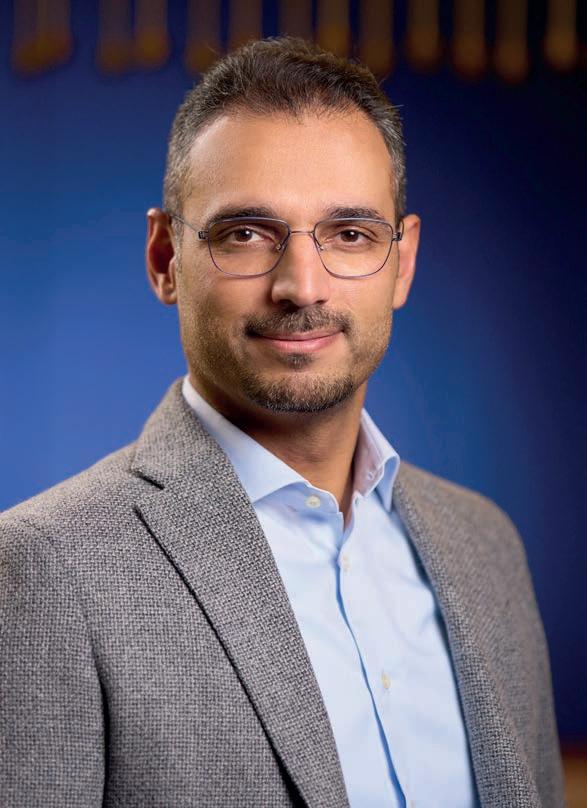
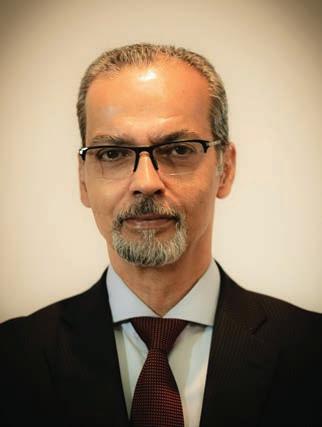
Hisham Alrayes Group CEO of GFH Financial Group
Congratulations of the MEA Finance




























Congratulations to all the winners Finance Awards 2022










































The Year of Living Dauntlessly
And so, another year has passed. The world continues to throw curved balls as well as providing the challenges we could already foresee; facemasks, thankfully are pretty much a thing of the past and day-to-day life seems to have swerved into its post-pandemic form. Our region, again thankfully, seems to have skirted the worst of the economic travails of the rest of the world and there is a determined feel to the way the banking and financial sector is evolving here too.
So, as we prepare to move into 2023, we do so with a positive yet
In this densely packed issue, our cover story this month features Hisham Alrayes, Group CEO of GFH Financial Group. He describes how the company has grown through smart and selective investments to build a world-class portfolio, showing itself to be a regional success story on the global real-estate investment stage, “ GFH has built a very strong and well diversified portfolio of real-estate assets across sectors and geographies.”
Dr. José Viñals, Group Chairman of Standard Chartered Bank visited Dubai recently and MEA Finance was delighted to have the opportunity to sit with him. Dr. Viñals gave us his view of the opportunities in Africa and the Middle East, expressing the bank’s commitment to these regions, “our strong commitment to Africa and the Middle East has been there from the beginning and will always remain.” From page 30.
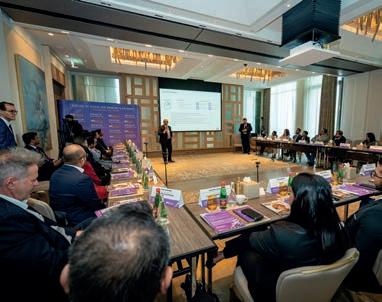
In our regular coverage of the realm of banking technology, we became more aware of the importance of The Cloud this year and from page 38, in coverage of our roundtable on

the Future of Cloud For Banking and Payments, hosted by Oracle, senior executives from the region’s top banks and fintechs debate the future of banking and payments in the age of the cloud. What also become more obvious this year is the changing relationship with customers, with banks today rushing to offer effortless and smooth customer engagements. From page 24, the concept of Engagement Banking is covered in depth in our interviews with Backbase. And from page 48, the significant roles of cyber and cloud security in staying atop of compliance requirements are outlined by Smartstream.
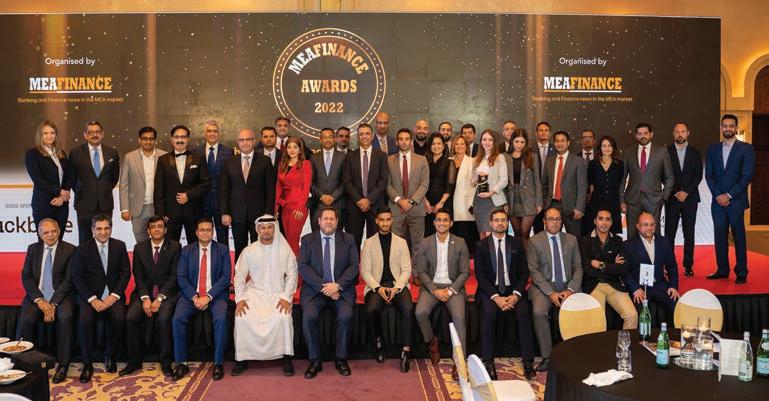
This being the right time to reflect on the high-points of excellence in our sector, we end this year in a flourish of party-poppers, balloons, cheers and applause as, from page 55 we cover our 2022 MEA Finance Awards, where you can see all the winners in this year’s sixty-seven categories, and where and how they achieved their successes.
Also, taking stock of how the region and world have shaped themselves across the last twelve months, from page 8, we review the GCC’s year, noting our relatively smooth path through 2022 which has provided the chance to move ahead with ambitious reforms, but looking at the wider world, as we do from page 12, we get a perspective on the global challenges that may yet come to affect us here. From page 16, we solicit thoughts on the region’s past year from two global banks. “I think the strength of the system is at record levels and I think banks are very liquid and well capitalized” opines Citi’s Miguel Azevedo, while JP Morgan’s Khaled Hobballah feels that “The convergence of several factors has led to a surprisingly resilient financial services market this year in the region.”
So, we hope you enjoy working your way through our final issue of 2022 and take this opportunity to wish you all a happy, healthy and fulfilling 2023.
3 mea-finance.com




4 Banking and Finance news in the MEA market CONTENTS CONTENTS MEA Finance
www.mea-finance.com EMAIL: info@mea-finance.com PUBLISHED BY: Creative Middle East Media FZ LLE, 19th Floor, Creative Tower, Fujairah Creative City, PO Box 4422, Fujairah, UAE 34 MARKET NEWS 6 UAE Banks Federation celebrates journey from 1982 to 2022 MARKET FOCUS 8 Bucking the Trend YEAR IN REVIEW: THE GLOBAL ECONOMY 12 Challenging Times 16 A Year of Promise 18 Weathering the Challenges PARTNER CONTENT 20 Riding the Wealth Management Wave - Emirates NBD with Infosys Finacle ENGAGEMENT BANKING 24 Engagement, Strengthening Relationships LEADERSHIP SERIES INTERVIEW 30 Positively Committed to their Markets
WEB:



5 mea-finance.com 48 6 12 38 58 24 EXECUTIVE DIRECTOR AND PUBLISHER Kenneth Mitchen ken.mitchen@mea-finance.com GROUP COMMERCIAL DIRECTOR Nap Estampador nap.estampador@mea-finance.com Tel : +971 50 100 5488 DIRECTOR Andrew Cover andrew.cover@mea-finance.com Tel: +971 50 931 3236 Dubai office: #404, Building B, Al Saaha Offices, Old Town Island Burj Khalifa District PO Box 487177, Dubai, UAE Email: info@mea-finance.com EVENTS AND MARKETING MANAGER Cris Balatbat crissyb@mea-finance.com Tel: +971 58 594 4818 EVENT AND CONTENT PRODUCER Natasha Cristi natasha@mea-finance.com Tel: +971 50 303 4235 SENIOR DESIGNER Florante Magsakay Tel: +971 52 570 1811 ADMIN AND FINANCE MANAGER Marilyn Nainque marilyn@mea-finance.com Tel: +971 58 5025836 WEB ASSISTANT Marie Orayan web@mea-finance.com FEATURE CONTRIBUTORS: Mushtak Parker, Walter Sebele editorial@mea-finance.com ROUNDTABLE: FUTURE OF CLOUD FOR BANKING & PAYMENTS 38 Cloud on the Horizon BANKING TECHNOLOGY 48 The World of Cloud Security, Regulation and AI PARTNER CONTENT 50 Bonyan REIT Fund, Managing Growth 54 Top three factors’ banks should consider when partnering with an analytics consultancy in the UAE MEA FINANCE AWARDS 2022 61 MEA Finance Awards 2022 winners
UAE Banks Federation celebrates journey from 1982 to 2022
position of the banking sector in achieving the UAE’s economic goals.
On the occasion of the 40th anniversary, UAE Banks Federation praised the continuous support and guidance from the Central Bank of the UAE in developing policies and regulatory frameworks to maintain the safety of the banking system. The Federation also expressed its keenness the continuing to extend support to its members to ensure safe and secure banking and best practices.
His Excellency Abdulaziz Al Ghurair, Chairman of UAE Banks Federation, said, “Since its founding in 1982, the Federation has constituted an effective platform for exchanging ideas and opinions while strengthening cooperation among its members on various issues of interest to the banking and financial sector in the country.”

His Excellency added, “The outstanding progress made by the banking sector in the UAE is a source of pride for all of us. At the same time, to maintain the sector’s key role as a driver of economic and social development, we need to enhance our capabilities, especially in this digital age of accelerated change.
To meet this objective, UAE Banks Federation features a comprehensive
organisational structure that includes the Board of Directors, advisory and consultative councils, technical committees and executive management, which enables it to respond quickly and effectively to upcoming developments.”
His Excellency further said that the Federation would continue to enhance its capabilities to strengthen the prominent
Since its establishment four decades ago, UAE Banks Federation has taken many initiatives, including establishing two CEOs councils, 25 specialised technical committees and three advisory committees, providing appropriate channels for the 57 members to share their expertise in different areas of banking. To keep pace with global trends, UAE Banks Federation, under the guidance of the Central Bank of the UAE and in collaboration with member banks, has developed several initiatives aimed at accelerating digitalisation and automation of solutions to facilitate customer access to member banks’ products and services in a faster and more secure manner.
It has played a crucial role in strengthening Islamic banking through an initiative to develop the required regulatory framework for the operating environment of these banks in the initial stages.
Jamal Saleh, Director General of UAE Banks Federation, said, “On the occasion of our 40th anniversary, we reaffirm our commitment to building on the strong success of the past four decades under the guidance of the Central Bank of the UAE and its continuous oversight of the sector, as well as our extensive cooperation with all member banks.”
The Federation established the first SWIFT training centre in the Middle East and North Africa, a first of its kind outside OECD countries, in 2021 . The aim is to improve the performance of the payments system, the effectiveness and security of the remittance system, and to benefit from the expertise of the members of the global network “SWIFT” in developing the skill set of the country’s banking and financial sector workforce.
6 Banking and Finance news in the MEA market
Jamal Saleh, Director General of UAE Banks Federation
UAE Banks Federation, the unified representative and voice of UAE banks, reaffirmed its commitment to continuing efforts and initiatives and enhancing its capabilities to support the banking sector advancement to promote the sustainable and socio-economic growth of the UAE
MARKET NEWS

























Bucking the Trend
In a world facing multiple challenges, the current oil and gas price outlook and successful economic diversification is creating an ideal environment for governments in the GCC to proceed with ambitious reforms under favourable macroeconomic and financing conditions

The easing of pandemic restrictions and positive developments in the hydrocarbon market drove strong economic recoveries in 2021 and 2022 across the oil-rich Gulf region. A rally in oil prices and the race by European countries to find alternatives to gas from Russia will help GCC countries register strong twin surpluses this year and continue over the medium term.
The International Monetary Fund projected in October that higher oil and gas prices will increase the average current account surplus in the GCC region to 9.7% of gross domestic product (GDP) in 2022 leading to an additional surplus of $275 billion, up from 4.6% of GDP last year.
8
and Finance news in the MEA market
Banking
MARKET FOCUS - REGIONAL ROUNDUP
The current oil and gas price outlook is creating an ideal environment for governments in the region to proceed with ambitious reforms under favourable macroeconomic and financing conditions while putting debt on a firm downward path.
GCC countries are restructuring and opening up their economic activities, rethinking the role of foreign investors as well as the private sector as they play a leading role in the global transition to low-carbon economies.
The World Bank said that the implementation of a green growth strategy by GCC countries will help and accelerate their economic diversification, GDP could have the potential to grow to over $13 trillion by 2050.
Though Arabian Gulf countries are not immune to the deteriorating global economic backdrop, data shows that the region remains relatively insulated in most measures. It is worth noting that growth in GCC banking assets is linked to regional GDP, which moves largely in tandem with oil prices.
The banking sector is as solid as it was pre-pandemic and much healthier than when global central banks started hiking their interest rates in lockstep with the US Federal Reserve. Meanwhile, Gulf states hiked their key interest rates earlier in November after the Federal Reserve approved a fourth consecutive threequarter point interest rate increase.
Lower global liquidity has had a limited impact on GCC banks thanks to their strong net external asset positions or limited net external debt positions. Banks in the region were already at the forefront of innovation and digital transformation well before the outbreak of the pandemic and the trend will continue to dominate the industry driven by evolving customer needs and regulatory initiatives.
Overall, the significant groundwork which is being laid down in markets and legislation across the region is expected to drive sustainable growth going forward.
Banking sector
GCC banks are returning to form after
a strong 2022 as earnings for most financial institutions almost reached pre-pandemic levels in Q3 2022 spurred by high oil prices, rising interest rates and new public-sector-backed projects that are supporting their creditworthiness.
S&P Global said in September that among the four largest GCC markets, Kuwaiti and Saudi banks showed the strongest performance in H1 2022 with
that the fragmentation in the Middle East region banking system is greater compared to other emerging markets, with many banks resulting in intense competition and weak pricing power.
The mergers and acquisitions (M&A) market rebounded from a very tough 2020 to post impressive increases in deal volume and value in 2022—a trend that is expected to continue as banks position
earnings already almost reaching prepandemic levels while Qatari and UAE banks are taking a bit longer to recover.
Qatar National Bank (QNB), the Gulf’s largest lender by assets, reported a 20% increase in 9M 2022 net profits to $3.4 billion (QAR 12.3 billion), Saudi National Bank registered a 42.35% y-on-y increase to $3.7 billion (SAR 13.82 billion), First Abu Dhabi Bank’s (FAB) group net profit soared by 19% to nearly $3 billion (AED 10.9 billion) and the National Bank of Kuwait (NBK) saw it net profits in the nine months to the end of September jump by 46.9% y-on-y to $1.2 billion (KWD 374.2 million).
It remains to be seen if the strong momentum experienced this year will be enough to shield GCC banks from adverse developments in 2023.
The region’s banking system remains highly fragmented making competition intense, and the trend is likely to intensify due to the shrinking population in some countries after expatriates departed for their countries amid massive job losses in the past two years. Fitch Ratings said
themselves for improved economic conditions. Kuwait Finance House (KFH) completed its acquisition of Bahrain’s Ahli United Bank (AUB) in October.
The rare cross-border tie-up which has been almost four years in the making created one of the biggest banks in the Gulf region with more than $118 billion in assets. Moody’s said that the deal will position KFH as a dominant bank in the GCC as the addition of AUB’s solid corporate banking franchise complements its large and strong domestic retail customer base.
Bahrain’s banking system is ripe for mergers and the authorities are reportedly supportive of consolidations, but sound profitability and a lack of common shareholders prevent obvious tie-ups. Al Salam Bank also acquired Ithmaar Bank’s consumer banking division and several other assets in March in a deal valued at $2.2 billion.
Meanwhile, SNB is poised to own a stake of 9.9% in Credit Suisse after it committed to invest as much as $1.51
9 mea-finance.com
OIL AND GAS PRICES WILL INCREASE THE AVERAGE CURRENT ACCOUNT SURPLUS IN THE GULF REGION TO 9.7% OF GROSS DOMESTIC PRODUCT IN 2022 LEADING TO AN ADDITIONAL SURPLUS OF $275 BILLION, UP FROM 4.6% OF GDP LAST YEAR
HIGHER
– The IMF
billion (CHF 1.5 billion) as the Saudi lender looks to expand globally as part of Crown Prince Mohammed bin Salman’s Vision 2030 economic diversification initiative.
HSBC Bank Oman and local rival Sohar International Bank entered into a binding merger agreement in November. Sohar International is also linked with a potential merger with Omani Islamic lender Bank Nizwa. Both proposed mergers are subject to regulatory and shareholder approval.
Past mergers in the GCC have demonstrated the merits of tie-ups. The scale achieved from these tieups is leading to improved liquidity management, enhanced profitability and reduced inefficiencies with better cost-toincome ratios.
GCC banks are pro-innovative and industry experts expect them to continue to dominate the financial services industry as the sector goes more digital. Neobanks have had and will continue to have, a tremendous impact on consumer finance, the economy, and society at large. The leading neobanks in the GCC include YAP and Zand Bank in the UAE and Saudi Arabia’s D360 Bank and STC Bank.
The aforementioned challenger banks are battling it out with speedboats, independent, cost-effective and agile digital banking units of incumbent banks including Emirates NBD’s Liv., Bank ABC’s ila Bank and Boubyan Bank’s Nomo. The emergence of new technologies is offering the financial services sector a window to be more innovative and efficient in-service delivery.
Accelerating growth
Global benchmark Brent has mostly traded above the $100 mark for much of the year. The disruptions to oil trade and output that followed the war in Ukraine have driven up the cost of commodities while contributing to cost-of-living crises around the world. However, in the oil-rich Gulf countries, the oil boom has had the effect of pushing budgets into the black for the first time in years, helping bankroll spending and allowing some to repay debt early.
“Oil exporters should maximize the benefits of the oil windfall by building buffers and avoiding procyclical spending, keeping fiscal reform momentum, and progressing with their diversification plans,” Jihad Azour, the IMF’s director for the Middle East, North Africa and Central Asia said in October.
Saudi Arabia said that its net foreign assets rose to $448.8 billion (SAR 1.69 trillion) in September, the most in nearly two years as high crude prices boosted the Gulf state’s coffers. The kingdom plans to use the budget surplus to replenish reserves, make additional transfers to sovereign wealth funds and
(AED 252.3 billion. Total revenue over the period is estimated at AED 255.7 billion while revenue and spending will grow by an estimated 11% and 4%, respectively.
The UAE’s finance ministry said that the cabinet approved the budget for the fiscal year 2023, with a total estimated expenditure of AED 63.06 billion while total revenues are projected at AED 63.6 billion. “Higher oil export volumes coupled with a revival in non-oil demand will support strong economic growth in 2022,” the World Bank said in October while noting that growth will be supported by the country’s favorable business environment and world-class infrastructure.
potentially boost spending on economic diversification projects.
The World Bank forecasted that higher oil receipts will more than compensate for the larger imports bill resulting in a significant external balance surplus of 18.8% of GDP in 2022. Saudi Arabia’s preliminary budget which was published by the finance ministry in September expects a surplus of $2.4 billion (SAR 9 billion) in 2023 or 0.2% of GDP. Spending is projected at SAR 1.11 trillion with revenue of SAR 1.12 trillion.
The UAE, the Arab world’s most competitive economy, registered total revenues of $83.20 billion (AED 305.6 billion) in the first half of the year. The government approved the federal budget for the fiscal years 2023-2026 in October with a total expenditure of $68.69 billion
Banking and Finance news in the MEA market
Oil’s surge on the back of Russia’s war in Ukraine has pushed crude above the break-even level for almost all the Middle East’s producers including Oman and is projected to accelerate economic growth in 2022 to a pace not seen in a decade. Oman recorded a budget surplus of $2.9 billion (OMR 1.1 billion) in the nine months of the year and the Sultanate plans to spend the windfall from higher oil prices on developmental projects, measures to support economic recovery and reducing its debt.
Fitch Ratings upgraded Oman’s credit ranking for the first time in August, saying the upgrade reflects significant improvements in the country’s fiscal metrics, a lessening of external financing pressures and ongoing efforts to reform public finances.
10
OIL EXPORTERS SHOULD MAXIMIZE THE BENEFITS OF THE OIL WINDFALL BY BUILDING BUFFERS AND AVOIDING PROCYCLICAL SPENDING, KEEPING FISCAL REFORM MOMENTUM, AND PROGRESSING WITH THEIR DIVERSIFICATION PLANS
MARKET FOCUS - REGIONAL ROUNDUP
– Jihad Azour, the IMF Director for the Middle East, North Africa and Central Asia
Bahrain, the GCC region’s smallest economy, reported a mid-year budget surplus of $88 million, with revenues soaring by 52% compared to the same period last year. The smallest oil producer in the Gulf region said that it remains committed to executing its fiscal balance plan and adopting initiatives that serve its targets.
Qatar’s Emir said in October that initial indicators show GDP growth of 4.3% in the first half of 2022. The IMF projected earlier in August that the Gulf state’s budget surplus to grow 57.6% in 2023 to $19.3 billion (QAR 70.3 billion) compared to the $12.3 billion (QAR 44.6 billion) forecasted for 2022. Like other Gulf states, Qatar has benefited from soaring oil and gas prices caused by the COVID-19 recovery and the war in Ukraine.
The country is currently hosting the World Cup and it expects the influx of over 1.2 million visitors to add $17 billion to its economy. S&P Global raised Qatar’s long-term sovereign credit rating to “AA” from “AA-”, citing the improvement in the government’s fiscal position. “Qatar’s debt interest costs as a share of government revenue have fallen and we expect them to remain low because the government is repaying maturing debt,” said the rating agency.
Meanwhile, frequent political deadlock in Kuwait has for years led to cabinet reshuffles and dissolutions of parliament, hampering investment and reform including legislation to let the government return to global debt markets. The country’s newly appointed national assembly passed the state budget for the fiscal year that started April 1 last month. The budget, which is based on an oil price assumption of $80 a barrel, estimated spending of $76 billion (KWD 23.53 billion) in the 2022/23 fiscal year, while revenue is projected at $75.3 billion (KWD 23.40 billion).
Higher energy prices have sustained oil-producing nations with economic growth in Saudi Arabia, the largest world oil exporter, expected to hit 7.6% this year. GCC countries are benefitting from trade
diversions caused by the war in Ukraine as some European countries look to replace their oil purchases from Russia.
GCC green growth
Though GCC countries are still reliant on oil and gas—which accounts for 80% of its total goods exports and total revenues— the governments are diversifying the economy with a strong focus on foreign investment, tourism, technology and the financial services sectors.
The 2021 UN Climate Change Conference (COP26) reaffirmed the need to take urgent action to combat climate change. Meanwhile, the hosting of COP27 by Egypt last month and COP28
in partnership with the Saudi Tadawul Group. The Riyadh-based firm will allow companies to buy credits on exchanges to offset some of the emissions they produce.
The global voluntary carbon market has grown rapidly in recent years as corporations attempt to reach net-zero emissions. Voluntary carbon markets allow carbon emitters to offset their unavoidable emissions by purchasing carbon credits emitted by projects targeted at removing or reducing GHG from the atmosphere.
“Carbon credits are certificates representing quantities of greenhouse gases that have been kept out of the air or removed from it,” McKinsey said
S&P Global
by the UAE in 2023 together with net zero pledges that were made by regional governments in 2021 are expected to translate into fiscal policies in the fight against climate change.
The IMF called on GCC governments to consider implementing fiscal reforms “geared towards economic diversification and inclusive growth while addressing intensifying vulnerabilities from climate change”. GCC countries should therefore ensure that this forms a significant part of their post-pandemic recovery plans.
Saudi Arabia launched the Middle East region’s first carbon offset auction, offering one million credits in October. The auction follows the establishment of the Regional Voluntary Carbon Market Company by the Public Investment Fund
while highlighting that purchasing carbon credits is one way for a company to address emissions it is unable to eliminate. Abu Dhabi Global Market and AirCarbon Exchange are setting up another voluntary carbon market-based in the UAE and the exchange is set to be launched in the first quarter of 2023.
GCC countries are diversifying their economies away from heavy reliance on hydrocarbons by creating new sectors and revenues, including through a big push in renewable energy. Moving away from oil and gas towards renewable energy should not be seen as a threat but as a tremendous opportunity while the Gulf region’s outlook remains positive, thanks to the robust performance of both the oil and non-oil sectors.
11 mea-finance.com
AMONG THE FOUR LARGEST GCC MARKETS, KUWAITI AND SAUDI BANKS SHOWED THE STRONGEST PERFORMANCE IN H1 2022 WITH EARNINGS ALREADY ALMOST REACHING PRE-PANDEMIC LEVELS WHILE QATARI AND UAE BANKS ARE TAKING A BIT LONGER TO RECOVER
–
Challenging Times
lending together with the impact of higher rates and a slowing global economy will hurt bank loan quality.
The debate about whether the global economy is in a recession or ‘teetering’ on the edge of a recession or sufficiently robust to avoid a recession just got even more complicated. The world is being confronted by a broad-based and sharper-than-expected slowdown with inflation higher than seen in decades.
“The challenges that the global economy is facing are immense and weakening economic indicators point to further challenges ahead,” the International Monetary Fund (IMF) cautioned in November.
The soaring cost of living, tightening financial conditions in most regions, the
Russia-Ukraine war and the prolonged pandemic all weigh heavily on the outlook. Economists say the outlook is even gloomier than projected earlier in the year, but with careful policy action and joint multilateral efforts, the world can move toward stronger and more inclusive growth.
The war in Ukraine continues to ‘powerfully destabilise the global economy’ with its impacts causing a ‘severe’ energy crisis in Europe though regional governments have been seeking to find alternatives to Russian supplies.
The global financial services industry is facing numerous challenges. The higher risks in energy and energy-intensive

Meanwhile, cryptocurrencies extended losses in the last quarter of the year with the global crypto market value plunging below $900 billion as the world’s largest digital currencies, bitcoin and ether, remain under pressure from the fallout from the collapse of Sam Bankman-Fried’s crypto exchange firm FTX.
The UN Secretary-General António Guterres, in his UN climate change conference address in Egypt, called for the creation of a “climate solidarity pact” between wealthier and developing countries as global temperatures continue to rise. Guterres warned that the planet is “on a highway to climate hell with our foot on the accelerator.”
However, the Middle East has been a bright spot in 2022, a year otherwise marked by high inflation and recession fears. The upswing contrasts with a slowdown in much of the world economy as oil exporters in the MENA region, the
12 Banking and Finance news in the MEA market
The soaring cost of living, tightening financial conditions in most regions, the geopolitical tensions in Europe and the prolonged pandemic are weighing heavily on the economic outlook
YEAR IN REVIEW: THE GLOBAL ECONOMY
six-country Gulf Cooperation Council, have received a windfall from high oil prices.
This year has perhaps been one of the most challenging in modern times and it is hard to downplay the scale of the geopolitical and economic uncertainties that the world is facing—from individual households to governments to businesses.
A financial perspective
With the global central banks raising interest rates to quell decades-high inflation amid the impact of geopolitical tensions in Europe, for the first time the test will check on the resilience of banks to soaring borrowing costs.
Global banks were well on track to a long-lasting post-pandemic recovery of their financial strength, but this is no longer the case as the global economic environment has deteriorated markedly throughout the year. Wall Street banks’ profits plunged in the third quarter as they braced for a weaker economy while investment banking was hit hard.
JP Morgan Chase, Morgan Stanley, Citigroup and Wells Fargo showed a slide in net income after turbulent markets choked off investment banking activity prompting the banks to set aside more rainy-day funds to cover losses from borrowers who fall behind on payments. “Weaker growth, higher-for-longer interest rates and market borrowing costs and higher unemployment will hit household and corporate sector borrowers. This in turn will hinder banks’ asset quality and potentially bank outlooks and ratings,” S&P Global said.
For most banks, the immediate effect of higher interest rates is positive because it will benefit their net interest income, but the broader risk of an economic downturn could weigh on future earnings.
Meanwhile, the Middle East region’s top four lenders posted a combined $13.5 billion in the nine months to the end of September and S&P Global said that the earnings performance of banks in the GCC will recover almost to prepandemic levels in 2022, thanks to the economic recovery.
The Middle East is the hotbed of wealth creation and global banks are vying for a greater share of the wealth created in recent years, driving fierce competition for advisers who can bring billions of dollars in assets under management.
The number of millionaires in the Middle East is expected to continue rising in the coming years. Henley & Partners projected in June that the UAE will lead the world in attracting private wealth to its economy as Russian and Ukrainian millionaires seek new homes. The country is set to welcome 4,000 millionaires as Russia and Ukraine are likely to suffer a net outflow of 15,000 and 2,800 high-networth individuals, respectively.
Banking customer intimacy and creative use of technology is driving disruptive innovation in the financial service sector.
It is the key for financial institutions to understand their customers better than their competitors and digitalisation is a significant component in achieving this. Many banks have embraced and deployed technological solutions to meet the evolving customer demands and the trend is expected to continue.
Crypto nightmare
Once a potential rival to gold as a safehaven store of value, cryptocurrencies have largely lost their lustre among institutional investors amid growing concerns over how far the fallout from Sam Bankman-Fried’s sprawling crypto empire might spread.
“The unexpected potential collapse of an industry stalwart like FTX is a hugely negative development for cryptocurrency and the resultant chaos in the markets only reinforces that. However, crypto has survived events like this before, emerged stronger and gone on to reach new highs,” Chainalysis said in a blog post.
The demise of FTX, one of the world’s largest cryptocurrency exchanges, has left an estimated one million creditors facing losses totalling billions of dollars. FTX, which filed for US bankruptcy court protection, said it owes its 50 biggest creditors nearly $3.1 billion.
The collapse of the crypto exchange firm mirrors the collapse of the algorithmic stablecoin terraUSD and sister token luna, the pausing of withdrawals by crypto lender Celsius and the liquidation
13 mea-finance.com
The International Monetary Fund
of THE CHALLENGES THAT THE GLOBAL ECONOMY IS FACING ARE IMMENSE AND WEAKENING ECONOMIC INDICATORS POINT TO FURTHER CHALLENGES AHEAD –
THE EXPERIENCE OF THE 1970S, THE POLICY RESPONSES TO THE 1975 GLOBAL RECESSION, THE SUBSEQUENT PERIOD OF STAGFLATION AND THE GLOBAL RECESSION OF 1982 ILLUSTRATE THE RISK OF ALLOWING INFLATION TO REMAIN ELEVATED FOR LONG WHILE GROWTH IS WEAK
– The World Bank
crypto-focused hedge fund Three Arrows Capital earlier this year.
Global economic meltdown
2022 has been a miserable year for the global economy and things may spiral out of control as the IMF cautioned in November that the prospects for growth are more pessimistic than what it forecasted earlier.
History teaches us that central banks’ aggressive tightening of the monetary policy may tip the global economy into recession in 2023. Few economists will be surprised if soaring energy prices do the same for Europe while the double whammy of China’s zero-COVID policy and a slowdown in the country’s property market threatens to bring the world’s secondlargest economy to a near standstill.
Bloomberg Economics projected that in an extreme downside scenario if all these headwinds hit at once, it could wipe out as much as $5 trillion in global output next year, compared with more upbeat forecasts at the start of this year.
The Federal Reserve is expected to raise its federal funds rate by half a percentage point to the 4.25%-4.50% range at its December 13 and 14 policy meeting after the central bank delivered a 3.75% to 4% rate earlier in November. Global central banks are likely to follow the Federal Reserve in risking a recession as they seek to combat the effects of a soaring dollar and rising inflation.
According to the World Bank, “The experience of the 1970s, the policy responses to the 1975 global recession, the subsequent period of stagflation and the global recession of 1982 illustrate the risk of allowing inflation to remain elevated for long while growth is weak.”
Fitch Ratings forecasted coincident recessions in the US and eurozone, which would be the fourth time since 1980 that the world’s two largest economies contract simultaneously. The recessions will weigh on growth prospects elsewhere, especially in emerging market economies that are reliant on developed market demand.
Economists also see China’s zeroCOVID policy as having a greater economic impact than the Ukraine war. The country is adhering to the policy that involves drastic restrictions on mobility and total closures that were imposed in several areas in Beijing and Shanghai in November as the authorities grapple with a spike in new cases.
The IMF’s first deputy managing director Gita Gopinath urged Chinese authorities to boost vaccination rates and give more robust support to the country’s troubled property sector to restore confidence and reduce risks from a global economic slowdown
Meanwhile, the Middle East and Central Asia economies were resilient this year with recovery continuing but the IMF warned that the region must guard against growing global headwinds and push ahead with reforms going forward. While crude exporters in the region will benefit from an oil windfall projected to accrue a cumulative $1 trillion between 2022 and 2026, emerging market and middle-income states face deep terms-of-trade shock and curtailed access to market financing.
Journey to net zero
The United Nations Framework Convention on Climate Change (UNFCCC) said in a report in October that government plans to slash carbon emissions are not enough to avoid catastrophic global warming, with the planet on track to heat between 2.1 and 2.9 degrees Celsius by the end of the century.
The report by the UNFCCC was published ahead of the Climate Change Conference (COP 27) in Sharm el-Sheikh, Egypt where developed and developing countries squared off over who should pay for destruction caused by climate change.
However, the COP27 climate talks ended with a deal to create a fund to pay developing countries for the harm caused by climate change. The deal on loss and damage is seen as a landmark moment in global climate politics—an acknowledgment that richer nations are responsible for the harm caused by global warming emissions.
The Middle East is hosting two consecutive rounds of the United Nations climate summit with the UAE set to host COP28 in November 2023. The UAE said in October 2021 that it would invest $163 billion in renewable energy as part of its strategy to achieve net-zero emissions by 2050. “Globally, $1.8 trillion of investment into adaptation efforts could generate $7.1 trillion in total net benefits by 2030,” the World Economic Forum said last month.
Central banks around the world have been raising interest rates this year with a degree of synchronicity not seen over the past five decades in response to soaring inflation—a trend that is likely to continue in 2023. Meanwhile, the world’s three largest economies, the US, China and the eurozone, have been slowing sharply and under the current circumstances, even a moderate hit to the global economy over the next year could tip it into recession.
Banking and Finance news in the MEA market
14
WEAKER GROWTH, HIGHER-FOR-LONGER INTEREST RATES AND MARKET BORROWING COSTS AND HIGHER UNEMPLOYMENT WILL HIT HOUSEHOLD AND CORPORATE SECTOR BORROWERS. THIS IN TURN WILL HINDER BANKS’ ASSET QUALITY AND POTENTIALLY BANK OUTLOOKS AND RATINGS
YEAR IN REVIEW: THE GLOBAL ECONOMY
– S&P Global
More hands on deck.
Easier to navigate the winds of change.

You are independent. But never alone.
In the investment markets, change can work to your advantage. You just have to know how to navigate it. See how you can make the best of the opportunities change brings with our in-depth briefings, staggering choice of investment options and much-awarded trading interface. Disclaimer: Century Financial Consultancy LLC (CFC) is Limited Liability Company incorporated under the Laws of UAE and is duly licensed and regulated by the Emirates Securities and Commodities Authority of UAE (SCA).
o ered by CFC include financial market products that are traded on margin and can result in losses that exceed deposits. Transactions or trades in the financial markets are very risky, and you should trade only with the capital you can a ord to risk or lose. Before deciding to trade on leveraged products, you should consider your investment objectives, risk tolerance and your level of experience with these products. Trading with leverage carries significant risk of losses and as such margin products are not suitable for every investor, and you should ensure that you understand the risks involved and seek independent advice from professionals and experts if necessary. CFC is not responsible or liable for any result, gain or loss, based on this information, in whole or in part. Refer to risk disclosure on our website.

Services
Regulated by SCA 40,000 trading instruments across 125 global markets. Extensive spectrum of investment products:
A Year of Promise
With a focus on the region’s IPO activity, Miguel Azevedo Citi, Managing Director, Head of Investment Banking, Middle East and Africa (ex-South Africa), provides a robustly positively look at the past year, highlighting strong examples of an active and growing market

How has your business benefitted from the economic stability our region has experienced compared to the wider world?
It is very clear that this region is performing differently from the rest of the world; but it is not about stability but rather about growth and growth prospects here versus recessionary expectations elsewhere. The GCC is clearly benefiting from a sustained strong oil price, but many other very important things are happening and are moulding the expectations and the future reality of the region:
(1) Strong vision from the leadership with clear plans for the next decades.
(2) Clear use of the proceeds resulting from this accumulation of liquidity namely in developing a new economic model based on non-oil sustainable industries (hydrogen, renewable energy, tech enabled manufacturing, agritech etc.) as well as high valueadded services (retail offerings, differentiated hospitality, new tourism destinations, logistics and trade enabling tech).
(3) Use of public listings as a way of increasing scrutiny, governance
and ultimately the pursuit of higher productivity and excellence; all this under a politically stable background and a stronger voice in the global geopolitical map.
Did the headline geo-political events of this year greatly change your plans or affect your business experience?
This region has taken a relatively neutral stance on most geopolitical issues and is acting a little bit as a valve to alleviate global pressures; we have seen the leadership of this region taking very important steps towards dialogue and reconciliation and I think all that has benefited to make the region more central in the mind of the international community, including the financial community.
Have you noticed much development in the way clients and customers are interacting with their financial services providers this past year?
Not really. There have not been any noticeably significant events or trends beyond the ongoing increase in the uptake and development of digitisation in the wider banking sector across the region.
Which market sectors have you seen develop as leading trends this year?
Clearly the whole clean energy and energy transition space is extremely active and moving in the right direction; we have seen the utility space doing many IPOs which has benefited mainly UAE; I believe that in addition to further developments in the energy/chemical vertical we will start seeing further activity, namely M&A and capital markets activity, in sectors that are core to the region: logistics,
16
Banking and Finance news in the MEA market
Miguel Azevedo, Citi, Managing Director, Head of Investment Banking, Middle East and Africa (ex-South Africa)
YEAR IN REVIEW: THE GLOBAL ECONOMY
hospitality, entertainment, real estate, food and non-food retail; in all these sectors we have players in this region that are amongst the most exciting stories globally; I also believe that we will see technology, technology enabled and fintech champions emerging in the near future in this part of the world as it has been attracting a lot of talent from everywhere else.
What surprised you the most about the region’s banking and financial services market in past year?
I think the strength of the system is at record levels and I think banks are very liquid and well capitalized. On the investment banking side, we have seen an increasing sophistication in the local leading players, playing very important roles in everything that is happening, and of course, that is a very good signal.
Why was the GCC’s IPO performance so strong?
We need to look country by country. Saudi Arabia has a very granular and deep market; a very diverse supply with many companies coming to the market, from different sectors that are both state owned and truly family owned too. Demand is also very granular with lots of retail investors being active in the market Abu Dhabi has been leading primarily with offerings in the energy and chemical space. These companies are global leading players with global growth stories and those IPOs have been performing very well in an ecosystem that is very supportive.
Dubai is the new kid on the block. The Government launched an ambitious plan to bring companies to the market, so far with primarily utilities with great, solid stories and all very well executed. This is paving the way for family and private equity owned businesses later on. Hopefully, we will see true Dubai icons come to the market in the sectors that made Dubai a global metropolis such as entertainment, hospitality, fashion, retail and technology.
Did this year mark a new beginning for the IPO market? Is it here to stay and can it go even further?
I would dare to say yes because the fundamentals are there, and the political leadership is here as well. There is also no shortage of great entrepreneurial stories too. One point to mention is the need to keep global investors engaged.
So far global investors have been allocated between 25-30% of the shares sold and, in many situations, only small amounts. Investors are willing to invest
for example) and even beyond. We are confident this will happen.
Can you highlight some situations that you consider great examples of the recent success of the GCC stock market?
Here some of the transactions that we were honoured to lead.
I would highlight the DEWA IPO which completely transformed the Dubai stock market and open the gates for further IPOs. It was the largest
more and put capital and resources at work in this region, but they need to create their own portfolios of Middle Eastern companies big enough to justify the effort.
The other point is the need for market stabilisation rules in order to manage the first days of trading post-IPO. The market is very recent and needs these tools to mature well.
Did the region start to become a real alternative for companies outside the region to list?
It is still early days, but we can see a very serious commitment to attract great companies, not necessarily only the very big ones but certainly the very good businesses. The creation of the Abu Dhabi IPO fund is an excellent step and shows real commitment. At the very least we can say that as of now we believe the region is becoming a very serious alternative to the UK or the US when it comes to listing location, certainly the case for new companies from the GCC but also from the wider region (Egypt
transaction in the region after Aramco IPO and the second largest in EMEA this year after Porsche IPO.
The IPO of Fertiglobe. The creation of Fertiglobe by merging the fertiliser assets in the region of ADNOC and OCI is a visionary transaction putting together private operators and government owned entities to create a global player. The IPO consolidated this new corporate champion and will allow it to extend its global presence.
The IPO of the Saudi stock exchange Tadawul itself. This is the pinnacle of recognition of the merits of using the public markets; it gives the exchange a life of its own, and shows the commitment to the public equity markets. A remarkable case of putting your mouth where your money is.
Finally let me highlight the recent capital raise we lead for EMPG, the local leader in property and car classifieds. It is a strong technology enabled company that we believe is a great example of the companies that will be IPO’ing in the next 12-24 months in these markets.
17 mea-finance.com
I THINK THE STRENGTH OF THE SYSTEM IS AT RECORD LEVELS AND I THINK BANKS ARE VERY LIQUID AND WELL CAPITALIZED
Weathering the Challenges
Looking back on 2022, Khaled Hobballah Senior Country Officer for the MENA region and head of Markets for MENA and Turkey at J.P. Morgan, provides an upbeat assessment of how the region’s financial, and it’s wider markets have performed during a year filled with many challenges

How has your business benefitted from the economic stability our region has experienced compared to the wider world? 2022 has certainly been a challenging year economically for most regions of the world; from the US to Europe and China. The geopolitical developments, namely the Ukraine-Russia war, have triggered significant disruptions to the global food supply chains and forced a profound rethink of the last 50 years of energy policies of much of the European countries. The volatility in energy prices and the accompanying inflationary pressures have dampened growth in much of the world, and the end of the QE by central banks and recent hikes to tame inflation have further added pressure on asset prices globally. All the above have created headwinds that impact international investors as well as company plans for raising liquidity
and capital expenditures. Against this backdrop, it has been good to see that the Gulf has remained a region of not just stability, but also strong economic growth. We are long-standing partners to our clients and we continue to advise them across the full spectrum of J.P. Morgan’s products and services. As the GCC countries, especially Saudi Arabia and the UAE embark on ambitious expansion plans, M&A has witnessed a very strong year here with almost $90bn of deals announced YTD’22. This is shy of the $120bn achieved in FY’21, which was the record year regionally, but still higher than the MENA average over the past 5 years. High oil and gas prices have helped so far shield the region from the looming recessionary pressures in the global economy and have encouraged parties to benefit from the current momentum to get deals through the finish line. Additionally, the current liquidity and strong
balance sheets of SWFs and large corporates have helped reinforce the position of regional players looking to expand internationally.
Did the headline geo-political events of this year greatly change your plans or affect your business experience?
We have been journey partners to our clients in the Middle East for decades, through booms and troughs. Our starting point is acknowledging that headline geopolitical events are always difficult to predict, but this does not mean we cannot be prepared. When advising clients or positioning our business, we always stick true to the tenets of prudent risk management and diversification. Undeniably, the instability we’ve seen on the back of the geopolitical situation in Ukraine, has indeed impacted the region to an extent but we keep our focus and ensure we have the right tools in the box to
18 Banking and Finance news in the MEA market
Khaled Hobballah, Senior Country Officer for the MENA Region and Head of Markets for MENA and Turkey at J.P. Morgan
YEAR
REVIEW: THE GLOBAL
IN
ECONOMY
help our clients navigate any turbulence. That being said, the overall markets in the MENA region stayed very active and the deal flow very healthy.
The pandemic period accelerated many trends that would have previously taken many years to play out. For example, we saw an immediate proliferation and adoption of services of communication channels (MS teams, Zoom, and other) to replace face-to-face meetings when they were no longer possible. This helped us stay close to our clients, who were facing the same situation in addition to the challenges to their business model. This year has seen a normalisation of travel, and while we continue to more frequently use video communication platforms for meetings, clients and bankers alike have shown great enthusiasm for resuming face-to-face interactions where appropriate. We believe that financial services are ultimately based around trust and relationships, and spending the time and effort with our clients have always been an integral part of J.P. Morgan’s core principles. As the GCC by and large emerged as one of the few regions that have managed the pandemic well and with minimal disruptions, we have seen an meaningful uptick in international talent relocating to the region, and financial service providers have expanded considerably their regional presence over the past few years.
Europe, below zero. Whilst there has been much debate about the inevitability of these measures to help protect the global economy and encourage its recovery, we witnessed as a result a massive monetary expansion, and a corresponding glut of liquidity in the global financial system. This led to massive price increases of investment assets across the board as well as to inflation pressures. We are now on the cusp of a new economic cycle, and interest rates have moved significantly higher again. This is resulting in a sobering but much needed ‘reset’ to the global financial system, and a corresponding impact on global assets pricing; going forward, and unless there is an overshoot by the Fed and other central banks in raising rates that could slide us into a deep global recession, we see attractive
into positive real growth not just for the Kingdom but for the region as a whole. In terms of sectors - infrastructure, technology, financial services and the broader energy sector have been the most active drivers of M&A deals in the MENA region this year.
For more than a decade, central banks around the world sought a coordinated response to the 2008 Global Financial Crisis. This came in the form of extremely accommodative monetary policies in the developed markets, with interest rates anchored to zero, or in the case of
The convergence of several factors has led to a surprisingly resilient financial services market this year in the region. Higher commodity prices have led to increased local capex within both the government and private sectors, which has led to a pick-up in financial activity. Neutral geopolitical policies
THE CONVERGENCE OF SEVERAL FACTORS HAS LED TO A SURPRISINGLY RESILIENT FINANCIAL SERVICES MARKET THIS YEAR IN THE REGION
value opportunities across the various asset classes, especially in the fixed income space.
Another key trend we are seeing right now is the emergence of the UAE as a hub for hedge fund activities, due to its infrastructure, internationally aligned regulations and diverse culture. In Saudi Arabia, the capital markets transformation, and the accompanying development and reforms carried out, have led to a substantial pick up of IPOs and debt raising compared to historical data. We’ve witnessed record volumes raised via syndicated loans this year which is expected to translate into further growth and debut of fixed income issuances upon stabilisation of interest rates environment. Huge investment commitment in infrastructure as part of Saudi 2030 vision is translating
in the context of international tensions have also led to an influx of people and companies moving to Saudi Arabia and the UAE, which is witnessing a boom in the Real Estate market. Policies aimed at further developing and strengthening the capital markets has also led to a pick-up in IPO activity. These have been positive developments for the region as a whole in 2022. We have seen a few international institutions retreat from the market and unwind their investment banking presence. That being said, this has been mostly driven by a re-assessment of their international strategy and is not specific to the region. Others have expanded or are looking to expand their presence in MENA, especially in the GCC, including J.P. Morgan as we continue to see ongoing opportunities in the region.
19 mea-finance.com
What surprised you the most about the region’s banking and financial services market in past year?
Have you noticed much development in the way clients and customers are interacting with their financial services providers this past year?
Which market sectors have you seen develop as leading trends this year?
Riding

20
in the MEA market
Banking and Finance news
MEA Finance spoke with Anthony Jaganathan SVP, Head of Operations, Middle Office & Service, Wealth Management Emirates NBD and Sriranga Neelathali Sampathkumar VP & General Manager – MEA, at Infosys Finacle about their recent digital transformation for bancassurance and how the partnership between the two entities have strengthened over time
- Emirates
Infosys
PARTNER CONTENT
the Wealth Management Wave
NBD with
Finacle
THE EVOLUTION IN
THE GCC WEALTH MANAGEMENT SPACE
Anthony: In the post-pandemic age, consumers want to intelligently engage in sustainable investment opportunities. Gone are the days when customers played safe. Now, consumers want to participate in growing their wealth and are willing to diversify, be it insurance products, mutual funds, bonds or stocks. To address these consumer demands, Emirates NBD just completed core systems transformation and we are in the early stages of providing digital solutions, focused on wealth management, to our customers. We expect to go live with trading capabilities in global stocks early next year.
Because of the record influx of highnet-worth individuals from traditional hubs of wealth like Switzerland and Hong Kong, a lot of capital flows have come into Dubai. Apart from the geopolitical situation, Covid was also a contributor
encouraging trend that will last long and continue to pick up steam over the next few years.
Sriranga: Transformation has been the buzzword in this region. Though banks could be in various stages of transformation, digitisation remains the core objective. In the UAE for example, banks like Emirates NBD are going for early adoption of digital transformation, enabling them to provide their customers with state-of-the-art and innovative digital products and services. Emirates NBD’s digital transformation in the wealth management space will go a long way in helping them maintain their leadership in the market.

to the movement of capital from these traditional hubs into Dubai. These factors, among others, have contributed to the uptick in interest in wealth management products and solutions in the region. As a result, local banks began launching trading platforms along with other wealth management solutions. It is an
Cloud and digital transformations are going to define the way business is going to be done in the future in the MEA region. Every product implemented, especially in the wealth management space, will follow this route and help the banking fraternity derive maximum value. Infosys Finacle is investing heavily in these products and offerings. Some of the biggest banking brands are already associated with Finacle for this product line.
KEY PRIORITIES FOR ENBD WEALTH BUSINESS
Anthony: Emirates NBD has been
transforming our technology platform capabilities over the past few years. The wealth business is well-positioned to make use of these transformations and capture the opportunities coming to this region. Wealth management at Emirates NBD is more than a decade old; we have been providing solutions to highnet-worth individuals, private/priority banking customers, and to certain retail banking customer segments. We are now looking to provide wealth solutions to our customers on online and mobile platforms. As the largest bank in Dubai with a large customer base, Emirates NBD would like to increase penetration in wealth management and investments as well. We see huge potential to do so by implementing digital solutions.
ENBD & INFOSYS FINACLE: BUILDING FURTHER ON A STRONG PARTNERSHIP
Anthony: For a long time, Emirates NBD’s Banca products were captured, documented and transacted on legacy in-house built systems; they were prone to error, and were not enabling scale and growth. It was also challenging to be fully compliant with regulatory and

21 mea-finance.com
CLOUD AND DIGITAL TRANSFORMATIONS
ARE GOING TO DEFINE THE WAY BUSINESS IS GOING TO BE DONE IN THE FUTURE IN THE MEA REGION
Anthony Jaganathan, Senior Vice President, Head of Operations, Middle Office & Service, Wealth Management Emirates NBD
Sriranga Neelathali Sampathkumar, VP & General Manager, MEA, at Infosys Finacle
reporting requirements. We needed to capture these requirements and address the growing operational risks in the organisation. These reasons drove us to consider implementing one solution that would capture all the workflows in this key wealth business.
Although Infosys Finacle has been Emirates NBD’s core banking platform for over a decade, when looking for the best Banca solution, we also considered other external platforms because we wanted the best-inclass/ best-in-industry solution. After going through a thorough evaluation of all the solutions available in the market, we were happy to conclude that Finacle’s offerings fit our requirements like a glove.
Emirates NBD’s journey with Finacle has been long and smooth. Right from the start, Finacle’s project team has been very proactive and collaborative. Finacle not only brought technological expertise but also an understanding of what the business needed. Given that Emirates NBD had a legacy system with customer transactions and holdings recorded in multiple platforms, data migration was a huge effort. Considering the scope and magnitude of our customer base and data, Finacle’s team did an excellent job, efficiently handling the load while providing timely support. This is among the best projects implemented in our bank, for which we deservedly won an award for execution excellence.
Our partnership with Infosys Finacle also pertains to Bancassurance, which is a key platform our customers. Implementing this enabled Emirates NBD to provide interested customers access to this product on a referral basis through our insurance partners/ distributors.
Sriranga: Infosys Finacle and Emirates NBD started this partnership in June 2007. It has been a great success story for both organisations. Finacle started the journey with
erstwhile Emirates Bank and halfway during the journey, Emirates Bank merged with erstwhile NBD. We were tasked with integrating both the entities under one umbrella – that of Emirates NBD. Finacle has the honour of being the only vendor listed in the Harvard Business review as a case study for the successful go-live in the newly formed Emirates NBD entity. Later, in 2016, when Emirates NBD decided to embark on a digital banking journey enabled by Liv. powered by Finacle, we supported the bank’s efforts and ensured that the UAE region of the bank went live successfully. And now, in 2022, when Emirates NBD decided to revamp their wealth portfolio, they signed up for a digital transformation of their Bancassurance business with Finacle as their partner of choice and have since won many awards for the successful implementation and go-live of the product, such as the “Best Bancassurance Implementation” at the MEA Finance Wealth and Investment Summit and Awards in 2022.
adoption of products and solutions. We shouldn’t hurry to implement a technology solution where we do not see traction in terms of customer adoption or profitability.
Customer interest and demand for wealth management has only been rising and Emirates NBD has every intention of addressing these needs, while ensuring that both internal and external stakeholders are prepared to adapt to and adopt these solutions in a seamless manner.
THE VISION – ENBD WEALTH MANAGEMENT BUSINESS
Anthony: Emirates NBD wants to increase market share and penetration in wealth products within our existing customer base, and beyond it. There is huge potential that we are yet to optimise and digitising our wealth management platform and products is an important way to do that.
Another objective is to offer portfolio advisory solutions to our private and priority banking customers, which requires digitising our existing platforms, and providing better advisory tools to
BECAUSE OF THE RECORD INFLUX OF HIGH-NET-WORTH INDIVIDUALS FROM TRADITIONAL HUBS OF WEALTH LIKE SWITZERLAND AND HONG KONG, A LOT OF CAPITAL FLOWS HAVE COME INTO DUBAI
LEARNINGS FROM THE BANCASSURANCE DIGITAL TRANFORMATION PROGRAMME
Anthony: The biggest learning is that all this growth happens in different stages, and we must keep pace with the changes, not just in technology but also in customer aptitude, interest and
be used by relationship managers or the customers themselves. We are also looking to integrate our platforms with our international locations to serve customers banking with our offices in Singapore, London, KSA, India, Egypt, etc. a seamless experience across those locations.
22
market
Banking and Finance news in the MEA
PARTNER CONTENT

Engagement, Strengthening Relationships
The relationship between financial institutions and customers has transformed significantly over the years and these trends will shape engagement banking in 2023. Engagement with the needs of customers and clients, to better understand individual needs is becoming key to how banks will remain successful

services that are at their disposal; the same is true of how they want to bank. However, some financial institutions lack an interpretation of what matters to their customers and what drives engagement.
The relationship between banks and their customers has transformed significantly in the recent past and for banks that strive to be market leaders, integrating core personalisation elements across the range of touchpoints will be critical to delivering a superior experience and better outcomes.



“The reimagined engagement layer should provide the artificial intelligence (AI) bank with a deeper and more accurate understanding of each customer’s context, behaviour, needs and preferences,” said McKinsey.

The financial services sector in the Middle East is abuzz with talk and activity on digitalisation strategy including digital onboarding and its regulation, digital banking, digital lending and how banks can develop robust customer acquisition and engagement.
The momentum for change had been building for years but the outbreak of the pandemic created the perfect conditions for an ambitious and fundamental rewriting of old rules. Digital transformation has become a key battleground for financial institutions in






the Middle East—a competition that was intensified by the coronavirus.
Globally, larger banks have committed significant capital to digital-andanalytics transformations to enhance the customer experience across mobile and web channels. Despite these massive investments, most financial institutions still lag well behind consumer-technology companies in their efforts to engage customers with superior service and experiences.
Customers’ lifestyle habits are increasingly motivated and directed by the speed and simplicity of digital

Banks must take an entirely new approach to innovation to craft and deliver intelligent propositions. This calls for banks to free themselves from a ‘product-centric’ view whereby they develop new products and features and push them into the market through product bundles, but instead adopt a ‘customer-first’ strategy which starts with understanding customer needs.
As the world moves deeper into the post-pandemic era, and growth is expected to slow sharply, banks can chart a path through the current fog of uncertainty to reposition for a brighter future.
Trend 1: Rise of neobanks & speedboats
The Middle East’s booming digital economy and supportive regulators have propelled the rise of challenger banks,

24
the MEA market
Banking and Finance news in
ENGAGEMENT BANKING
digitally native entrants and neobanks as incumbents are ramping up efforts to penetrate the growing digital market. Customer preferences have evolved to a digital-first mindset and their expectations are anchored on seamless, real-time, integrated and personalised banking experiences.
Digital banks are unencumbered by the constraints of legacy business models and core systems. They leverage transparent product offerings to provide a wide range of easily accessible banking services in the platform approach that today’s digitally savvy customers expect.
BCG’s FinTech Control Tower revealed in November 2021 that there were about 250 digital challenger banks worldwide with more on the way. Digital banks are swiftly changing the field of play where incumbents are facing increasing competition from neobanks and challenger banks who are billing on customer experience as their point of sale.
“The full neobank, with ‘Chinese walls’ in terms of operation and management can and do have a cutting edge because they can offer a much more competitive range of products and services,” said Ahmad Ghandour, Managing Director -

Saudi Arabia and Regional Sales Director - Middle East at Backbase.
YAP, the UAE’s first independent digital bank opened its doors for business in August 2021. The digital banking platform, which secured a $41 million investment in July, is expanding into Saudi Arabia, Egypt, Morocco, Pakistan and Ghana.
Abu Dhabi-based challenger bank Wio Bank, which is jointly owned by ADQ, Alpha Dhabi Holding, e& and First Abu Dhabi Bank, started operations last month. Meanwhile, the UAE’s first Shariahcompliant neobank Zand Bank is expected to open its doors for business soon after its shareholders acquired the majority of shares in Dubai Bank from Emirates NBD.
Saudi Arabia’s cabinet approved the licensing of a third digital bank, D360 Bank, with a capital of $440 million in February after the Gulf state licensed two other digital banks, STC Bank and Saudi Digital Bank, in 2021.
Global consulting firm Simon-Kucher & Partners said that if other markets are a good indicator of what will happen next, then the MENA region can expect more neobank competitors to appear very soon. Ghandour said that he expects to see an increasing number of fintechs turning to banks in the future, legacy banks creating speedboats that can compete with neobanks in the Middle East and challenger banks launching services in the market.
These challenger banks are competing with speedboats, independent, costeffective and agile digital banking spinoffs of incumbent banks, including Emirates NBD’s Liv., Dubai Islamic Bank’s rabbit, Boubyan Bank’s Nomo and National Bank of Kuwait’s Weyay.
Traditional banks face intense pressure from new entrants in financial services including technology platforms such as Alibaba, Stripe and Square that have raised the bar by creating engaging and compelling customer journeys built around offering instant and seamless experiences.
Digital banks are putting customers firmly in control of their destination
and preferred model for dealing with their bank and other service providers while emphasising user experience and product simplicity, unlike traditional banks that differentiate themselves by the quality of their relationship managers and a portfolio of complex products.
Trend 2: Digital lending
Over the past years, the digitisation of the financial services industry and the emergence of innovative technologies have seen a surge in the demand for a seamless experience and real-time payment services among banking customers. Globally, the mortgage and consumer lending industry has experienced unprecedented growth since the outbreak of the pandemic, but in the Middle East, it is still in its infancy.
Just like any other area of banking, customers are demanding a seamless, end-to-end and consistent lending experience that delivers instant decisions and immediate availability of funds. This presents an opportunity for banks to adopt flexible, open, real-time and easyto-integrate lending solutions that brings credit cards, personal loans, auto loans and small business loans onto a single platform.
According to Sara Hoteit, Senior Business Development Manager at Backbase, “The rationale behind the emergence of digital lending is because, in this era, customers do not expect, rather they would demand to have a smooth and seamless experience when it comes to having loan needs including personal loans, car loans and SME micro-financing.”
Traditionally, the process to apply for Small and Medium Enterprises (SME) financing in the Middle East is timeconsuming, taking between six to eight weeks and involves a paper-intensive underwriting process. With the majority of banking customers now preferring to conduct all financial activities digitally at home, the million-dollar question is how does digital lending differ from conventional lending? It digitises the entire lending process from application to disbursement.
25 mea-finance.com
Ahmad Ghandour, Managing DirectorSaudi Arabia and Regional Sales Director - Middle East at Backbase
Digital lending solutions provide a platform that ensures better lending outcomes both for banks and their customers. It enhances banks’ customer engagement through the delivery of an intuitive digital application process for customers, streamlining underwriting and integrating with external credit score providers to accurately assess applicants and automate decisioning. Hoteit highlighted that banking customers are now expecting faster
are paper-based, human-intensive, timeconsuming and therefore costly,” Hoteit said while adding that this is causing financial institutions to lose customers, especially with the tedious and manual loan applications they offer.
Fintechs have been trailblazers in digital lending offering alternative financing options. Financial services providers should invest or partner with fintechs to develop and offer innovative digital solutions. Digital banking is challenging the traditional business model of commercial lending with differentiated offerings and services to enhance customer experience and allow faster decisions at a lower cost.
Trend 3: Data analytics & innovative technologies
Banks possess real advantages against consumer internet companies regarding customer engagement and data, but they have yet to extract the full value of these assets. Using data and innovative technologies such as AI, machine learning (ML) and the cloud to boost emotional connections might sound counterintuitive but it is what customers get from digital native neobanks and fintechs.
consistent across their customers preferred touch points,” said Amjad Ramahi, Solutions Engineering – EMEA at Backbase.
decisioning and hassle-free loan origination experiences and most importantly a clear vision of its process.
SMEs are one of the strongest drivers of economic development, innovation and employment in the Middle East. The sector is also playing a pivotal role in economic diversification in GCC countries as governments seek to wean their economies off heavy reliance on oil revenues and drive sustainable growth.
To close the GCC SME credit gap, which is estimated at $250 billion, deploying a targeted intelligent automation platform to optimise manual and paper-based processes across origination and servicing operations helps financial institutions to deliver fast and frictionless experiences. “Lending processes today

According to Mohammed Hawari, Senior Digital Strategy Consultant at Backbase, “AI will revolutionise customer engagement through the deployment of analytics as the data gathered from customers will serve as the fuel to the AI engines specifically designed to understand customers’ preferences and trends.”

To stay competitive, forward-leaning banks must become ‘AI first’ in vision and execution and this calls for the transformation of the full capability stack including the engagement layer, AI-powered decision-making, core technology and data infrastructure and operating model.
“Banks need to move from a traditional product-centric approach to a modern customer-first approach by leveraging on modern technologies like AI & ML while keeping the customer experience
Data-driven personalisation analyses customer transaction data in real-time and leverages AI and ML algorithms to determine what is important while translating insights into customised recommendations, content, offers and experiences.
The cloud is an enabler of advanced analytics, as these computer system resources provide a space to both store and analyse large quantities of data in a scalable way, including through easy connectivity to mobile applications used by customers. In an era where customers can share their data, the ability to aggregate, manage and analyse data by financial institutions is becoming increasingly important.
Predictive models and data analytics are not new but market-leading banks complement insights with a decision engine that catalyses information to determine the next best action to take with customers.
Trend 4: Open banking
The adoption of new digital habits and a dramatic movement toward
Banking and Finance news in the MEA market
26
ENGAGEMENT BANKING
Sara Hoteit, Senior Business Development Manager at Backbase
Amjad Ramahi, Solutions Engineer at Backbase
online channels during the pandemic appear to have accelerated open banking. Muhammad Hassan, Solutions Engineer at Backbase said that traditionally, financial institutions did not feel comfortable sharing crucial and confidential customer data that could risk any forms of violations or provide an advantage to market competition.


“Banks in the MENA region are slowly embracing open banking concepts as they are realising its potential and how it may assist banks in meeting their strategic objectives” he said.
Open banking platforms allow financial services customers to securely share financial data in real-time and share account information and transaction history with external parties such as vendors, suppliers, business partners and other banks using APIs—a set of communication protocols used to develop computer applications.
Platforms are at the heart of open banking. To succeed with open banking, banks in the Middle East need to embrace the new innovative technologies that can manage interactions from internal and external users, start thinking like platform companies and relax their business
models to connect people and processes with assets.
Open banking creates a positive impact in the financial service sector by strengthening the partnership between banks and fintechs. It also improves the financial infrastructure and guarantees better use of financial data for customers.
Saudi Central Bank (SAMA) issued the Gulf’s Open Banking Framework last month, saying it is one of the key outputs of the Open Banking Program—which includes a comprehensive set of legislation, regulatory guidelines and technical standards. Saudi Arabia is implementing a market-driven strategy and the country’s approach is inclined towards a more formal regulatory framework.
Bahrain is implementing a Europeanstyle regulation-driven approach while the UAE has adopted an Americanstyle market-driven approach under the guidance of the Abu Dhabi Global Market and Dubai International Finance Centre.
The Middle East is one example of an emerging global open-banking microcosm. Oman announced plans to develop open finance services in May 2022 while Kuwait’s central bank said in August of the same year that it would test open banking products within a regulatory sandbox. “One of the main reasons for banks to be in favour of open banking is due to the success stories achieved in other parts of the world,” said Hassan.
There are numerous use cases for open banking and common ones include seamless KYC processes— ecosystems in which APIs let customers link accounts across different banks and allow for the generation of personal finance recommendations and other bespoke services.
Open banking is shifting the financial services industry toward hyperpersonalised, platform-based distribution while offering banks a window to expand their ecosystems and extend their reach. The innovation is being driven by regulatory requirements, technology and competitive dynamics that are calling
for banks to use APIs to make certain customer data available to non-bank third parties.
Consumers have embraced these platforms with open arms, valuing the holistic experiences that these platforms offer for specific segments of their lives, whether it be content consumption or transportation.
The platform gives financial institutions the ability to increase engagement and user adoption while creating new revenue streams. It’s built with an open architecture so financial institutions can take advantage of the wider ecosystem.
Trend 5: Banking-as-a-Service (BaaS)
The wave of digital transformation in the era of Industrial revolution 4.0 is being driven by the advancement of new technologies as previously closed industrial systems have become networked and open.
The financial services sector is no stranger to this, and Banking as a Service (BaaS) is a clear opportunity for banks in the Middle East to reimagine customer engagement, banks can unlock new value through better efficiency, expanded market access, and greater customer lifetime value.
27 mea-finance.com
Mohammed Hawari, Senior Digital Strategy Consultant at Backbase
Muhammad Hassan, Solutions Engineer at Backbase









Rita Younan, Senior Business Development Manager at Backbase said that several merchants are utilising BaaS in their service offering while giving an example of Amazon—the e-commerce platform that did not provide a customer’s payment plan for their purchases, but instead customers had to go to a bank and ask for a loan which was a long process. “Now, by partnering with financial institutions, Amazon allows its customers to get a small loan with a single click and they get to decide

a land grab. If so, banks need to employ a customer-centric philosophy that focuses on building closer connections with people rather than taking a technologyfirst approach.
BaaS offerings are enabling new, specialised propositions and is bringing them to market faster. It is scalable and agile, for a financial institution, it is an opportunity to reach a greater number of customers at a lower cost—particularly suitable for entering new markets and then expanding.
Banks and financial institutions can meet rising customer expectations by focusing on ‘engagement banking’ to offer intelligent propositions and smart servicing that can seamlessly embed in partner ecosystems. To thrive in the AI-powered digital age, modern banks should develop effortless customer experiences instead of focusing on technology for its own sake.
These capabilities strengthen engagement significantly while supporting customers’ financial activities across different contexts with intelligent, highly personalised solutions delivered through an interface that is efficient, intuitive and fast.
The rise of challenger banks and speedboats in recent years has redrawn the financial services sector landscape as today’s digital native customer deserves a modern banking experience that offers a wide range of easily accessible services in the platform approach that today’s customer has become used to.
Amjad Ramahi, Solutions Engineer at Backbase said that modern technologies can help banks gather meaningful insights by analysing data to better understand their customers’ behaviours, personalise their experience and offer them the right products and services to aid their lifestyle goals.
Today’s banking customers conduct most of their basic financial transactions via digital channels such as platforms and apps and these should be at the centre of every bank’s distribution strategy. Banking leaders who value convenience should offer security-rich services through digital channels while those who put a premium on the personal touch should leverage innovative technologies to strengthen their engagement banking strategy. The combination of digital convenience and a personal touch is what sets leading banks apart.
how to complete their payment plan,” Younan added.
Customers no longer want banking apps that do not go beyond transactional service and payment processing instead they are demanding the same interactive and intuitive experiences they get from other digital services like super apps.
BaaS allows financial institutions to monetise their banking stacks such as data, capabilities and infrastructure by seamlessly integrating financial services and products into other kinds of customer activities, typically on non-financial digital platforms.
Consumers are increasingly using these platforms to access services such as e-commerce platforms, retail and lifestyle services. By integrating non-banking businesses with regulated financial infrastructure, BaaS may well be
Banking customers are redefining their expectations, taking their cues from other industries that offer multichannel access, product simplicity, seamless integration and ‘segment-of-one’ targeting.
Trend 6: Personalisation and enhancement of self-service capabilities
Over the past years, the confluence of changing customer demands together with pressure to reduce costs and increase efficiency is reshaping the banking industry. We live in an age of unlimited choice where consumers are empowered, and their expectations are high.
To seize the growth opportunities in the Middle East, banks must prioritise the modernisation of self-service capabilities by focusing on engagement banking—which helps financial institutions to complement the lifestyles of their customers.
Customers’ lifestyle habits are increasingly being motivated and directed by the speed and simplicity of online services; the same applies to how they want to bank.
Digital onboarding has gained prominence amid the changes in regulations, innovative technologies, the rise of challenger banks and the closure of physical bank branches. It is a critical step in a customer’s journey with a financial institution as it leaves a long-lasting impression in the clients’ minds about how they perceive a financial institution.
Digital proficiency involves a wide range of capabilities. However, for financial institutions to thrive in the new operating environment, they need to calibrate their value proposition, bearing in mind the power of simultaneously simplifying and upgrading the customer experience and creating value through data.
29 mea-finance.com
Rita Younan, Senior Business Development Manager at Backbase
Positively Committed to their Markets

30
Banking and Finance news in the
MEA market
Dr. José Viñals, Group Chairman, Standard Chartered Bank
LEADERSHIP SERIES INTERVIEW
consideration for banks today
On the current macroeconomic outlook for Africa and the Middle East, Dr. Viñals describes these regions as heterogeneous, highlighting the mix of commodity producing countries and commodity importing countries across these areas. Given the current elevated levels of oil and other commodity prices, times are good for those sitting in the first group, such as the UAE and Saudi Arabia, but providing a contrast, it is harder for markets and low-income countries in other parts of these regions that are more vulnerable to debt distress, noting that, “we can see a little bit of everything.” But in spite of the current difficulties in some countries, Africa and the Middle East have had the best performance in many years, with the bank retaining a very positive outlook for them.
Opportunities
Describing Africa and the Middle East as “so broad and so diverse,” Standard Chartered sees abundant opportunities. Some are clear to see, such as in the UAE, with it being an international trade hub and the bank, as he points out, having trade and connectivity in its DNA. The bank acts as a bridge between the different parts of the region, and from the region to the rest of the world. Those corridors which are now well established across the emerging markets - between Africa and the Middle East, and Asia, or for example, between Africa, the Middle
East, Europe and North America, are where the bank is in a strong position to bring their capabilities into play to help their clients do business.
There are also opportunities to help finance development across these regions, particularly in Africa where there is a clear need for building the infrastructures necessary for development and growth. More
about the region and is well placed to understand and navigate its challenges.
Performance, commitment, positioning
Standard Chartered has an extensive franchise in the region. They are the main international bank in Africa and one of the leading such banks in the Middle East. The bank continues to invest and strengthen
opportunity still, resides in providing sustainable finance, a critical element in the along the path to the transition to Net Zero, something that will happen gradually.
Digital innovation across the regions will also offer opportunities for the bank as it allows for the wider inclusion of people to join financial channels and brings better services to the full range of their clients, be them retail, affluent or corporate. Additionally, the demographics of these regions and the increasing rate of urbanisation, particularly in Africa means there is, “no shortage of opportunities in the region.” Overall, the bank is very positive
its capabilities so as to continue providing all customers and clients with the best possible services, “Our strong commitment to Africa and the Middle East has been there from the beginning and will always remain,” states Dr. Viñals.
This is underlined by their recent entry into two very important regional markets, Egypt and Saudi Arabia. In Egypt, where they have an active set of clients, they have attained a provisional banking license, whereas before they just had a representative office. In Saudi Arabia, the bank had a capital markets license prior getting their banking license and have opened a bank there. The kingdom is diversifying its economy as it pursues its
31 mea-finance.com
On his recent visit to the United Arab Emirates, Dr. José Viñals Group Chairman of Standard Chartered Bank talked with MEA Finance Magazine about the bank’s lasting commitment to Africa and the Middle East and the growth opportunities in these regions. Dr Viñals also explained the bank’s management of digital transformation and how ESG is now a core
OUR STRONG COMMITMENT TO AFRICA AND THE MIDDLE EAST HAS BEEN THERE FROM THE BEGINNING AND WILL ALWAYS REMAIN
vision, and the bank is pleased to be in the country and to address the opportunities that will arise.
Their strong commitment to these regions can be seen in the eighteen markets that they operate in and though they have exited a few of the smaller markets in Africa, this rearrangement of their positioning has been made in order to allow the optimum contribution to their clients and their business.
Digital Transformation
The trend toward digital transformation taking place before the pandemic has accelerated dramatically and is noticed in both our personal and business lives, observes Dr. Viñals. The majority of their operations with their retail clients are generated digitally and they are now increasingly working digitally with corporate clients. In the past, technology was positioned as useful to improve the efficiency of your internal operations and to save on costs, now it is, “fundamental to provide second-to-none service to your client.”
The investments the bank has been making on their digital front have been “fantastic,” in retail and corporate terms, but also in terms of new the digital platforms they have created. In Africa, they created eight digital banking platforms and away from the region, they have built a very successful digital bank, Mox, in Hong Kong, reproducing the model in Singapore. In Indonesia, they have entered into partnership with Bukalapak, an e-commerce company serving over 100 million customers. In India they have created a platform which was reproduced in Kenya call Salt, to provide services for SMEs. Dr. Viñals is very pleased with the innovative stance of the bank, saying, “And digital is yes, one of our key bets going forward.”
ESG
“Well, ESG is extraordinarily important nowadays for any organisation, but particularly, I would say, for financing, for global banks like us.”

Focusing on the “G” of the acronym, Dr. Viñals says that the right governance is needed make sure that the organisation moves in the right direction. In Standard Chartered’ s case, they want their profit to be fully aligned with their purpose; to use banking to improve the lives of everyone they touch as clients and other stakeholders.
The “S” relating to the social dimension accounts for diversity and inclusion. The
bank has an extensive international footprint in 59 markets and many others where they have operations. With people from over 120 nationalities working for the bank, all facets of diversity are critical. The bank itself was born half in Africa and half in Asia, so its roots are highly diverse and thus they believe that diversity is not only a matter of fairness, but also much better for the business and clients.
The ”E” of environmental, is reflected in their commitment to help the world to move to Net Zero, “We have committed, between now and the end of the decade to mobilising $300 billion for green and transition finance.” The bank has developed many sustainable finance products, to provide clients not only with the best professional support, but also with the best financing to help them move toward the transition.
Concluding, Dr. Viñals says their strategy is for the bank to deliver three standards. The first is Net Zero. The second is lifting participation, trying to bring in wider inclusivity will improve the lives and the conditions of 1 billion people in our markets. And the third is making a globalisation which is more inclusive, so that the benefits can be distributed among all people, not just a few.
Banking and Finance news in the MEA market
32
THE BANK CONTINUES TO INVEST AND STRENGTHEN ITS CAPABILITIES SO AS TO CONTINUE PROVIDING ALL CUSTOMERS AND CLIENTS WITH THE BEST POSSIBLE SERVICES,
LEADERSHIP SERIES INTERVIEW

























Globe Spanning Presence
With a diverse portfolio of investments, sectors, locations and specialist managers, GFH is a true regional success story in the global real estate market. Hisham Alrayes Group CEO of GFH Financial Group talks with MEA Finance about their many verticals and varied activities in this important and competitive market

How have your real estate investments performed over the past few years?
GFH’s real estate investments have performed well, delivering sound results for the Group and our investors and shareholders. This is reflected in the growth of our portfolio which was based upon the selection of key themes and sectors we believe are fundamentally sound, the solid performance of the assets included in the portfolio and the expansion of our execution capabilities through the acquisition of the asset managers that operate in our sectors of choice. These three key initiatives enabled us to increase the value of our portfolio to approximately US$6 billion.
As a subset of this strategy, GFH now has direct presence, through its subsidiaries, in Europe (London and Madrid) as well as the USA (Washington D.C., Atlanta and Dallas). Such presence further enhances GFH’s ability to source transactions, manage the assets and provide real time market information and coverage to our investors.


What were the main motivators that led GFH Financial Group’s move into real estate investment?
Our core investor group in the GCC has great affinity and understanding of the asset class and has long resorted to deploying excess capital in real estate as the main diversification play for their investment portfolios.
Demonstrating our ongoing focus on expanding our real estate portfolio and capabilities in the sector, we recently held a two-day investor conference in London
34
news in the MEA market
Banking and Finance
Hisham Alrayes, Group CEO of GFH Financial Group
COVER INTERVIEW
focusing on real estate opportunities in Europe and the US, where we are growing our footprint and looking to further strengthen our presence. Over the past 24 months alone, we have deployed nearly US$6 billion in European and US real estate as well as having acquired majority stakes in Roebuck Asset Management, SQ Asset Management (SQ) and Big Sky, leading real estate operators in Europe and the US.
The event showcased our strong presence and capabilities in the sector. We also think that our success in the sector is underscored by the strong and increasing demand from investors for exclusive, high yield, high-quality assets we continue to identify and acquire in well established markets as we grow our portfolio –especially across logistics, medical clinics, residential and student housing.
The vision behind the establishment of Infracorp was to create a dedicated development arm for the Group that can execute projects on a vast land bank owned by GFH consisting of approximately 250 million square feet.

What’s also unique about Infracorp is its sustainability mission – to leverage the Group’s accumulated experience of supporting the sustainable development of the communities and economies where it operates. Its sustainability roadmap positions Infracorp as the region’s pioneer in sustainability investments, and in bringing social infrastructure developments to life through a portfolio that spans social infrastructure, mixed use developments as well as developmental solutions.
The company was also established because infrastructure and real estate assets have a longer timeframe compared to the Group’s financial assets so it was critical to segregate these. In doing so, the Group is able to focus more on the financial assets, while Infracorp can more effectively focus on the development of infrastructure and real assets, creation
of value from the Group’s land bank and the monetisation of these assets over a phased time frame. We believe this will have a notably positive impact on GFH’s results and our balance sheet.
In terms of sector verticals, how diverse is your portfolio of real estate investments?
GFH has built a very strong and well
diversified portfolio of global real estate assets – across sectors and geographies. Our assets include those in our subsectors like Logistics, Medical Offices, Student Housing, Multifamily, Senior Living, Hospitality and Commercial real estate.
We have also been traditionally deploying equity capital in the assets that we originate and underwrite on behalf of our investors. Given current market conditions we are expanding our offerings to include debt investments in real estate assets and transactions.
When it comes to Logistics in particular, GFH has built a sizable portfolio of assets in the logistics space in the US and Europe. In order to grow our presence and capabilities in the space in December 2020, we acquired a majority stake in Roebuck Asset Management, a UK-based pan European logistics real estate asset manager. Since GFH’s acquisition, Roebuck has significantly grown in terms of team members and
35 mea-finance.com
Why did you decide to create Infracorp as a specialised company?
Hisham Alrayes, Group CEO of GFH Financial Group and Shaikh Fawaz Al Khalifa, the Ambassador of Bahrain in the United Kingdom at the opening of GFH London Office
GFH HAS BUILT A VERY STRONG AND WELL DIVERSIFIED PORTFOLIO OF GLOBAL REAL ESTATE ASSETS – ACROSS SECTORS AND GEOGRAPHIES
new offices, with more being opened in London and Spain and plans for further office openings over the next 18 months.
With GFH’s backing and support, the intention is to continue to grow assets under management (AUM) and collectively as a group target new acquisitions of c.US$500 million over the course of 2022. Roebuck is using its local market expertise and significant track record to establish new investment vehicles in the Core + and Value Add space working with existing and new institutional investors.

As for Medical Offices, this is a another sector where we see strong ongoing opportunity for further growth and diversification of our portfolio. Supporting the investments we currently have and continue to pursue in this sector are strong fundamentals. This segment of the US real estate market has been strong performing and highly resilient to economic downturns, with 99% rent collection during the COVID-19 pandemic. Furthermore, the medical clinics occupancy reflected the strong demand for the sector in the first half of 2022.
The sector also continues to benefit from population growth and the aging of the US population accompanied by a steady increase in healthcare expenditure, which accounted for 19% of the US GDP in 2021, as well as the continued increase in demand for outpatient services that are provided in the medical clinic sector.
We are focused on continuing to take advantage of these positive trends. In doing so and to ensure we can maximise both the opportunity and the management of our assets in this space, GFH has also taken a majority stake in September 2022 in Big Sky Medical (Big Sky), a highly reputed and experienced asset management platform focusing on medical assets with a proven track record of acquiring and managing healthcare properties. The principals of Big Sky Medical have invested in nearly 6m square feet comprising approximately 100 medical assets across 19 states with an overall current portfolio value of US$2 billion. GFH aligns interests with Big Sky medical as both share the same focus of investing in and aggregating assets in the high-demand and downturn-
resistant medical sector. GFH’s investment with Big Sky has already resulted in a number of acquisitions totaling approximately US$500 million in the past six months alone.
Another vertical where GFH continues to grow and diversify its holdings is Student Housing. Our investment strategy in the student housing sector focuses on building a diversified portfolio that targets universities within the top public 150 universities in the US, which are considered flagship universities in their respective states. These are institutions with proven pedigree, strong academic and sporting facilities and that have shown steady growth in enrollments yearon-year.
The student housing sector has performed well historically, even during the pandemic, as evidenced by an average stable occupancy rate well above 90% and an equivalent high rental collections rate. Overall, the sector has witnessed supply shortages with the need for purpose-built student housing assets that are within walking distance of Tier I institutions
36 Banking and Finance news in the MEA market
COVER INTERVIEW
throughout the country spurred by rising enrollments and limited availability of university provided accommodations.
In May 2022, we acquired a majority stake in Student Quarters, a US-based specialist living sector asset manager and property manager focused on student housing, with a demonstrated track record of value generation and execution. Since its founding in 2013, Student Quarters has built a meaningful portfolio in its target markets. Student Quarters currently has US$1.2billion in AUM, comprised of 34 student housing properties with more than 11,000 beds under management.
An additional subsector of focus for the Group is Multifamily, in which we have a strong diverse portfolio in the US multifamily residential sector in particular. This is an area we have continued to grow amid increasing demand for US multifamily residential properties among renters. Our strategy in this segment is focused on diversification and plans to acquire residential properties across the US which will vary in terms of location, size, and local demographics to generate stable cash flows. Our ambitious but calculated real estate strategy favours resilience and is focused on delivering growth and value creation for stakeholders.
More specifically, GFH is targeting US multifamily residential properties based on several key factors. Assets are located in areas with strong medical centres and education facilities to support stable population growth. There is also an increasing demand for suburban living as the preference for larger living spaces, property amenities, and outdoor space are becoming priorities for renters, which has been further accelerated due to COVID. Assets are located in Sun Belt states, which stretch across the southern and southwestern portions of the US. The US has been witnessing a migratory shift to these states for several years. Almost half of all population growth in the country between 2010 and 2016 happened in the 22 metro areas of the
Sun Belt regions, where we will continue to grow and diversify.
How diverse are the locations of your real estate investments?
GFH’s real estate assets are also very well diversified geographically. In the US, they span across several states from the East to West coast including some of the fast-growing urban centres, in addition to investments in the UK and Europe.
approach. In identifying and acquiring assets we look at long-term fundamentals, evaluate the economic and regulatory environment, engage in location analysis and gauge investor demand.
We also employ strong partnerships models where we either establish joint ventures or acquire majority stakes in specialist, local asset managers that have long track records, know-how and on-the-ground capabilities to help
With the further expansion of our international footprint, we will continue to even further diversify our geographic reach and those of our investments. We have recently launched the Group’s London office to support our global expansion strategy and we will continue to enhance our capabilities in key markets and locations where we see strong further opportunities for investment with a particular focus on the US and European real estate.
We will do this through our existing majority owned asset management businesses like Roebuck Asset Management, SQ and Big Sky as well as through the acquisition of other geographically diverse asset managers on the ground. We have a strong pipeline of opportunities, and we look forward to closing additional deals that will help us achieve our objectives and further diversify our portfolio.
What are the key factors driving the real estate investment decisions for GFH Financial Group?
GFH’s strategy for investment in real estate focuses on a thematic based
maximise the value of our investments and help us deliver strong returns for our shareholders and investors.
What are GFH Financial Group’s day-to-day involvements in your real-estate investments?
We take an active involvement approach at the Limited Partner and General Partner levels – this means direct engagement by our real estate team with the asset managers and advisors.
We also engage in active involvement at BOD levels within the Strategic Investments area of our business which is basically the acquisition of specialist real estate asset managers such as Roebuck, SQ and Big Sky.
In addition to the specialist knowledge, we have gained through these acquisitions, it is integral that the team handling various assets develop knowledge whereby they become experts in the sectors too, which we have done across our core real estate team at GFH. This helps us better work alongside the asset managers to develop the strategies and exits to achieve targeted returns.
37 mea-finance.com
WHEN IT COMES TO LOGISTICS IN PARTICULAR, GFH HAS BUILT A PORTFOLIO OF US$4 BILLION OF ASSETS IN THE LOGISTICS SPACE IN THE US AND EUROPE
Cloud on the Horizon
Financial institutions are racing to take advantage of the shift toward cloud services after business demands for resiliency, scalability and operational efficiency accelerated digitisation at the height of the pandemic. Cloud computing has opened countless doors for banks, giving them the freedom and flexibility to innovate without the time and resource commitments that are unavoidable with on-premises systems.
The cloud gives banks access to on-demand resources such as networks, storage and APIs that can be rapidly provisioned and released with minimal management or service provider interaction. Cloud adoption is

38
and Finance news in the MEA market
Banking
ROUNDTABLE: FUTURE OF CLOUD FOR BANKING & PAYMENTS
Cloud adoption is the backbone of digital innovation, and it is shaping the future of the financial services sector. Leading thinkers and senior executives from the region’s top banks and fintechs debate the future of banking and payments in the age of the cloud
the backbone of digital innovation, and it is shaping the future of the financial services sector.
Banks in the Middle East are accelerating and strengthening their digital channels as growing customer demands together with pressure to reduce operational costs and boost efficiency are leaving financial institutions with no option but to adopt new innovative technologies.
MEA Finance in partnership with Oracle Financial Services hosted an exclusive roundtable themed The Future of Cloud for Banking and Payments in Dubai, where senior representatives from banks and financial institutions shared insights on how the cloud is meeting the distinct operational requirements of financial institutions. They also shed light on how cloudbased solutions provide universal access to payment schemes and efficient management of substantially increasing payment volume across multiple timescales.
Oracle Financial Services, a majorityowned subsidiary of Oracle, provides retail and corporate banks with a secure cloud platform while bringing automation to manage legacy applications and easily scale services according to customers and local market demands.


Deloitte said that digital technology has been a catalyst for radical innovation, as previously closed industrial systems have become networked and open, providing ideal conditions for open banking to flourish.
The cloud offers financial institutions a dynamic platform to develop, trial and offer innovative services—driving operating and business model transformation. It enables banks to store and process data in remote servers instead of local systems while offering several benefits such as increased security, faster processing speeds and lower costs.
Cloud solutions offer financial institutions an opportunity to synchronise their enterprise; break down operational
and data silos across risk, finance, regulatory, customer support and more.
Presentations
Parag Ekbote, Head of Business Development at Oracle said in his opening remarks that the world is witnessing healthy growth in the payments space as the financial service sector has emerged stronger from the economic impact of the pandemic.
“From a growth perspective, the Middle East and to a larger extent the Asia Pacific region has seen the highest growth in numbers,” Ekbote said adding that the initiatives that are being implemented
business given how e-commerce and the development of marketplace platforms together with the network economy are driving changes in the banking sector.
Ekbote said the six underlying themes that are driving innovations in digital payments include migration to ISO 20022, real-time rails including real-time instant payments, request to pay, open banking, SWIFT Go and embedded finances. From a payment infrastructure standpoint, Ekbote said that outsourcing is becoming a reality.
The sourcing models in the digital payments landscape are rapidly changing and Ekbote highlighted that financial
within the region, “which I’m sure some of you are a part of clearly signifies that.”
Global central banks raised key interest rates earlier in November following the US Federal Reserve’s fourth consecutive ‘jumbo’ interest rate hike of 75 basis points to fight inflation that has sent shockwaves through financial markets. Ekbote said that, in the short term, the net interest margins of financial institutions are increasing but there is a liquidity squeeze therefore “the focus on fee-based income continues and it has to continue.”
Several banks are considering business cases to focus on in 2023 and beyond. Ekbote highlighted that the goal for banks should be to make payments, a high-volume transactional
institutions are partnering with different third-party processors to outsource payments services. He identified banks’ environmental, social and governance (ESG) initiatives as one of the drivers of outsourcing in the payments industry.
Preetham Prabhu, Senior Manager of Payments at Accenture opened his presentation by giving an insight into the National Payment Systems Strategy (NPSS), the UAE’s real-time payments platform and the impact that instant payments will have on the Middle East region and the banking sector.
Prabhu noted that as the UAE is modernising its national payments infrastructure there are several other regulatory pressures such as anti-money laundering and fraud monitoring that
39 mea-finance.com
Presented by
THE ABILITY TO MAKE REVENUE FROM PAYMENTS DOES NOT EXIST UNLESS THERE IS A HUGE SCALE AND THERE IS AN ECONOMY OF SCALE AT PLAY, OUTSIDE OF THAT THE FINANCIAL PRODUCT IS BECOMING FAIRLY COMMODIFIED
– Viplav Rathore
need to be complied with. The everevolving regulatory landscape not only needs compliance but simulates growth and competition.
He also highlighted customers’ evolving demands for better service delivery such as the ability to track and trace payments on a real-time basis using SWIFT gpi as well as other operational aspects that are affecting commercial banks in the payments space such as real-time financial crime monitoring and cybercrime.
The UAE’s NPSS is a state-of-the-art, instant payments clearing and settlement rail which is an interbank, real-time clearing and settlement infrastructure to which all the commercial banks operating in the country will connect. It comes with a new messaging scheme, which is based on ISO 20022, a new network infrastructure to support the messaging scheme and it supports 24/7, 365 clearing and settlement and instant line-by-line clearing and settlement mechanisms.
The presentation by Nihad Nazir, Chief Digital and Technology Officer at Mercury Payments, focused on the UAE’s booming real-time payments industry. Nazir said that the biggest game changer for Mercury as a business is that real-time payments are revolutionising the UAE market not because it is going to give the country’s banked population a faster and better way to transact but because the NPSS strategy will open up digital payments to a segment that is still relying on cash payments.
“Around 120 billion transactions were processed last year across
approximately over 55 real-time payment schemes globally,” Nazir said adding that there was $200 billion of aggregate net savings for consumers and businesses in 2021, driven by the migration from conventional ways of moving money to real-time payments.

The unveiling of an instant payment platform in the UAE bodes well for the country after real-time payments schemes in Saudi Arabia and Bahrain helped unlock $166 million and $246 million of economic output, respectively in 2021.
Nazir highlighted that the digitalisation of the payments space has also seen a 7.3% increase in payments-related fraud cases due to the real-time nature of the innovative technologies. However, the change that is currently underway in the global payment sector is enabling what Mercury Payments calls payments
4.X—embedded payments and embedded finance where “transactions are going completely transparent, seamless and simply put invisible.”
The change from 4.0 to 4.X is going to be driven by the availability of real-time payments in the market and by cloud technologies. “The agility, the speed and scale at which banks need to migrate from legacy platforms cannot be delivered if they are on on-premise platforms that we have all been conventionally used to,” Nazir said.

He said that there is a need for a convenient way for expatriates in the UAE to move money, but traditional methods have proven to be expensive, inconvenient and occasionally unreliable. The true impact of real-time payments is projected to go beyond the domestic market, but its influence will be felt in how it will facilitate cross-border payments given that 80% of the UAE’s population is made up of expatriates.
The mandate of Mercury Payments in the UAE’s NPSS and the IPP strategy is to enable 4.5 million unbanked and underbanked users in the market to participate in the instant payment strategy that the central bank is set to introduce early next year. Meanwhile, Nazir said that Oracle Financial Services was adopted for the implementation of the project because it has a native ISO 20022 platform and
40
Banking and Finance news in the MEA market
“WHAT THE UAE GOVERNMENT AND CENTRAL BANK HAVE DONE OVER THE PAST 12 YEARS IS ON THE FOREFRONT OF DRIVING INNOVATION AND CHANGE IN THE FINANCIAL SERVICE SECTOR.”
ROUNDTABLE: FUTURE OF CLOUD FOR BANKING & PAYMENTS
– Rizwan Qazi
meets the UAE’s regulations to keep the data within the country.
Growth of digital payment in the UAE
The emergence of new technologies and evolving customer needs are driving major innovations in the payments industry while offering financial institutions a window to be more innovative and efficient in delivering services.
The growth of the digital payments sector in the UAE and the entire GCC can be attributed to the sustained cashto-noncash conversion, the ongoing growth of e-commerce and the increasing integration of payments into retail and corporate customer journeys. It is also being fuelled by regulatory support that is driving both retail and commercial banks to leverage these adoption rates to advance their digital transformation strategies.
Anand Sampath, Executive Director, Head of Global Payables & Receivables at First Abu Dhabi Bank (FAB), said that the GCC payments industry is expected to expand by around 14 to 15% in the next seven to eight years until 2028 and growth in the UAE is projected at 7%—which is not a small number.
Meanwhile, the payments industry revenue in the UAE is expected to grow to $18.7 billion over the next decade driven by the tech-savvy population in the Middle East’s second-largest economy. “The outbreak of COVID-19 accelerated the implementation of electronic payments in the Gulf region, and it is taking us to the next level. The UAE is on the cusp of something big following the central bank’s completion of the world’s largest pilot of central bank digital currencies transactions in October,” Sampath said.
“Today payments take two to three days to clear, and they are associated with all kinds of frictions and uncertainties,” he added. However, the project mBridge, between the central banks of the UAE, Hong Kong, Thailand and China demonstrated faster, cost-effective and secure cross-border monetary
settlements using central bank money, identified as a G20 economic priority.
From a revenue perspective, Viplav Rathore, Managing Director - Head of Cash Management Products for Africa & MENAP at Standard Chartered argued that digital payments are becoming commodified—one of the most feared words by banking executives.
Commoditisation implies that the payment services and products that are being offered by one bank can’t be easily differentiated from that being offered by their competitors. “The ability to make
to prevent their services and products from being easily copied thus, they fight to defend and differentiate their product offering as much as they can. Rathore said that his experience with real-time payments in the region has been that financial institutions are trying to take cash and cheques out of circulation adding “we need to incentivise when we are doing that.”
Ahanjit Champati, Director & Regional Head of Payments, Global Liquidity & Cash Management at HSBC Bank Middle East concurred with Rathore on incentivising the replacement of cash and cheques with digital payments while recalling his experience in India. Champati highlighted that there was muted adoption of India’s Immediate Payment Service and Unified Payments Interface two years after the official launch, but cash backs were introduced to drive uptake.
“The first aspect will be how financial institutions can attract customers to move from a card experience to a bank transfer experience and that is what NPSS is as a strategy. And then come to the fact that how will real-time payments impact corporate banking?” Champati asked.
Post-pandemic growth is spurring the expansion of the digital payments sector in the GCC, having shown resilience both to COVID-19 and some major macroeconomic shocks that are affecting other regions such as high inflation.
revenue from payments does not exist unless there is a huge scale and there is an economy of scale at play, outside of that the financial product is becoming fairly commodified,” Rathore said while asking what are the value-added services that banks are bringing to the market together with payments.
Though commoditisation means perfect competition, banks want to exist as monopolies and several players want
Multiple factors will drive the growth of payments revenue in the UAE and the GCC at large. “What the UAE government and central bank have done over the past 12 years is on the forefront of driving innovation and change in the financial service sector,” said Rizwan Qazi, the Chief Revenue Officer at Mercury Payments. GCC countries are exploring the prospect of developing further domestic payments infrastructure, along with cross-border links to enable faster payments between consumers and businesses across the region.
Qazi urged financial institutions to lend more aggressively while highlighting that payments are only enabled when
41 mea-finance.com
Presented by
THE AGILITY, THE SPEED AND SCALE AT WHICH BANKS NEED TO MIGRATE FROM LEGACY PLATFORMS CANNOT BE DELIVERED IF THEY ARE ON ON-PREMISE PLATFORMS THAT WE HAVE ALL BEEN CONVENTIONALLY USED TO
– Nihad Nazir
banks give people consumption power. “Consumption power comes from giving credit, people who make low income with no access to credit are not going to drive your payment revenue and revolution, so you have to consider all these points,” he said.
Sanjay Rakesh, Head of Corporate Banking Operations at Zand said that from a digital bank point of view it should be a top-down approach whereby financial


services to the customer is a major challenge. The relationship between banks and fintechs is no longer about competition but is now about collaboration through adopting cuttingedge technology services to meet customer needs and expectations.
Ansari agreed with Qazi that banks should embrace the fintechs as collaborators, not competitors.


“Ultimately, we are using your payment
and other innovative technologies are creating room for collaboration between banks and fintech firms.
Responding to a question on whether the cloud assists in bringing on board the unbanked, Finali Fernando, Regional Head of Product - Global Payments Solutions at HSBC Bank Middle East said that it is a privilege operating in the UAE market, a jurisdiction that has an appetite for cloud technology and is catering to the
institutions provide the infrastructure and regulatory compliance required to serve the unbanked and underbanked.
From a fintech perspective, Saad Ansari, Co-Founder & CEO of Xpence said that the challenge that financial technology companies face in the GCC market is that “we are that thirdparty layer between the bank and the consumer,” delivering the required

rails, your infrastructure and we are paying for it,” he said.
Murthy Ranjit, Oracle Financial Services’ Director & Head of Banking Pre-sales, Financial Services GBU in MENAT and Israel said that he concurred that there is more than just inclusion but collaboration adding, “gone are the days where banks were competing with fintechs.” Ranjit highlighted that the cloud, open banking
Banking and Finance news in the MEA market

wider Middle East region. Though cloud adoption lags in key financial markets, it is the way forward, added Fernando.
Going with the approach where central banks are prompting the collaboration between banks and fintechs, Enaz Ebrahim, MD & Head of Consumer Payment Solutions at Magnati said that currently, the FAB Group supports four digital payment platforms Payit, Careem Pay, Magnati
42
ROUNDTABLE: FUTURE OF CLOUD FOR BANKING & PAYMENTS
and PayBy—all which are delivering same services to the UAE market.
“This is where the central bank’s support is coming to play saying fintechs are here to help banks and collaboration makes sense,” Ebrahim said adding that financial institutions alone probably cannot deliver the products and services required by the 10 million people in the market—talk about the financial inclusions or the underbanked.

DWallet Card Payment Service to provide a unified payment solution to domestic workers.
Shiba Nair, Senior Manager - Platform Development and Customer Experience at National Bank of Fujairah weighed in saying that the adoption of real-time payments does not happen overnight because a bank has discovered an innovative opportunity or a fintech is saying they have an instant payment system. She said that players in
between 2014 and 2019. The astronomical growth is evident not only in the adoption of digital payments but of consumers’ expressed preferences.
New challenges that the banking sector face
The digital payments sector is at a tipping point. At a time when the fintechs are making immense inroads into the payments market, financial institutions
The UAE central bank recently passed a mandate that requires banks to extend their banking services to previously underbanked and unbanked segments of society including domestic helpers—a workforce that previously received its salaries 100% cash. Ebrahim said that Magnati has partnered with several financial services providers including LuLu International Exchange to launch


the financial services sector understand the importance of digitalisation but unless banks move to the cloud, they cannot fully take advantage of advanced technologies such as APIs or open banking.

Digital payments were growing rapidly in the GCC even before the outbreak of the pandemic with the number of consumer real-time payments transactions in the UAE soaring to an annual rate of over 9%
and card networks are finding it difficult to remain relevant and are on the verge of being relegated to just being utility players for third parties.
For banks to remain relevant, they must redefine the payment experience through real-time payment offerings, deliver personalised connections through best-in-class customer experience and collaborate
43 mea-finance.com
Presented by
pragmatically with fintechs to open up untapped revenue streams.
Recalling the challenges that Fernando highlighted earlier, Rathore said that Standard Chartered expanded into Saudi Arabia recently and financial regulators in the Gulf state do not recognise the concept of APIs, the cloud and open banking. “We can sit there via global banks and teach them about the latest financial innovations, but the reality is that is how it works in Saudi Arabia and Egypt as well,” Rathore said adding that it will be a while before financial regulators in these markets see the value of the cloud, open banking and APIs.
From a global banking perspective, the above situation forces banks to increase
Sampath said that there is always a catch-up between revenue, innovation and the service that a bank seeks to deliver to its customers to ensure a seamless experience. One of the key challenges for incumbents is the complexity and high cost of running legacy payments infrastructure and the cloud has long been touted as the vehicle for transformative change.
Priyanka Sarup, Global Transaction Banking Solution Lead at Oracle Financial Services said that the innovations that are being spearheaded by the central bank create regulatory challenges for banks due to increased requirements.

On new payment rails, Sarup said that the fact that the volumes will

increase dramatically when the UAE is launching its real-time payments scheme will likely create challenges for financial institutions.
Banks and financial institutions must adapt if they are to cope with substantial increases in real-time instant payment volumes, especially during peak seasons such as Black Friday sales or Amazon’s Prime Day and future-proof cloud-based payment solutions are the answer.
Sarup said that a cloud-based solution such as payment as a service (PaaS) enables banks to balance their performance, economics and security requirements because central banks will keep on churning out innovative solutions “it is an ever-changing landscape.”
looking at certain markets that they can expand into as specific ecosystems. Standard Chartered unveiled its global payments hub in September 2021. SCPay is developed with a full cloudnative architecture and is powered by containerised microservices, APIs and data analytics.
“With innovations come challenges. How quickly is a bank innovating because the technology from the past two years has already become obsolete and this is a major hurdle that financial institutions face in addition to what Rathore mentioned,” Sampath said. The other challenge that most banks face is the increased number of regulatory requirements, he added.

44
Banking and Finance news in the MEA market
THE FIRST ASPECT WILL BE HOW FINANCIAL INSTITUTIONS CAN ATTRACT CUSTOMERS TO MOVE FROM A CARD EXPERIENCE TO A BANK TRANSFER EXPERIENCE AND THAT IS WHAT NPSS IS AS A STRATEGY. AND THEN COME TO THE FACT THAT HOW WILL REAL-TIME PAYMENTS IMPACT CORPORATE BANKING –
ROUNDTABLE: FUTURE OF CLOUD FOR BANKING & PAYMENTS
Ahanjit Champati
Responding to the question on cloud compatibility, Raju Adnani, Head for Payments and Receivables for TTS MENA at Citi said that if innovation is left to financial institutions, it is unlikely that banks will implement more innovations to enhance inclusion while adding that innovation will be very focused on what it means for them.
Adnani applauded GCC central banks for the innovative initiatives that are being implemented in the digital payments industry over the past 12 years. However, he noted that there is a lack of standardisation, and the sector is largely fragmented. “The way Immediate Payment Instruction was implemented compared to how Invoice Processing

Platform would be introduced going forward are very different,” Adnani said adding that there is learning to do. “I look forward to NPSS being a perfect implementation, but banks have to comply.
Sampath admitted the existence of regional silos, “but one good thing that has happened to in the GCC is Buna”— the cross-border and multi-currency payment system owned by the Arab Monetary Fund.

Barbara Biro, former Head of Digital Ecosystem at RAKBANK weighed in saying she understood “well the hustle of the prioritisation and the regulatory requirements.” Financial institutions always found a way to make room for
other types of innovations, Biro said as she noted that this kind of innovation was cosmetic in her experience. She said some banks lack the motivation to innovate, they do not know what they are doing, why they are doing it and what value does it bring to their businesses in the future hence they are copying competitors and fintechs.
Biro argued that legacy systems, legacy infrastructure and legacy technologies are not ‘really’ an impediment to innovation in the financial service sector but the challenge facing the majority of banks in the UAE and the entire GCC is the lack of strategy. “If banks do not create potential use cases with a different type of products, not the legacy products, then
they will not be in a position to serve the different requirements emerging in the market,” she added.
On legacy systems not being a challenge to innovation in banking, Sreedevi Mani, Vice President of Payments Platform at Emirates NBD said that it depends on where the organisation positions itself in its digital transformation journey.

The cloud provides banks the choice to move from a capital-intensive model to a flexible business approach that brings the operational cost down while keeping data security the top priority. However, Mani said that the compatibility of the cloud to a bank’s system and how technologies mature in an organisation is of paramount importance.

45 mea-finance.com
Presented by
OUTBREAK OF COVID-19 ACCELERATED THE IMPLEMENTATION OF ELECTRONIC PAYMENTS IN THE GULF REGION AND IT IS TAKING US TO THE NEXT LEVEL. THE UAE IS ON THE CUSP OF SOMETHING BIG FOLLOWING THE CENTRAL BANK’S COMPLETION OF THE WORLD’S LARGEST PILOT OF CENTRAL BANK DIGITAL CURRENCIES TRANSACTIONS IN OCTOBER
THE
– Anand Sampath
Anushri Chordia, Head of Product Excellence Transaction Banking, Wholesale Banking Group at Commercial Bank of Dubai said that COVID-19 accelerated investment by financial institutions to upgrade their systems.

Chordia said that there’s no single roadmap or strategy that banks follow while posing questions that are rising in the financial service sector including whether banks want to be the first adopters or fast followers. She noted that the major challenge facing other banks is that IT will be pursuing its strategy, operations have their own, so is transaction banking, making it impossible to adopt one single roadmap.
Houssam Chaker, Head of Sales, Banking - Middle East at Oracle Financial Services said that the cloud is the potential game-changer that is helping banks to innovate and drive the strategy to build new customer experiences, create and
market offers while optimising operations.
Meanwhile, Rajalakshmi Balasubramanian, Vice President, Group Program Management Office at Emirates NBD said that one of the prime challenges that banking institutions are facing is catering to four different generations and trying to figure out how to adapt to their changing demands.
On the challenge of catering to the expectations of consumers across generations, Anand Krishnan, Head of Technology at Emirates Investment Bank said that from a business point of view banks have to weigh options and find out what drives growth.


The widening generations that banks have to cater to include customers that

46
the MEA market
Banking and Finance news in
DO DIFFERENTIATION, BANKS
BUILDING SEVERAL
BACK
SAYING
BANKERS
FOCUS
BANKING
LEAVE
TECHNOLOGY PART
VENDORS AND AGGREGATORS,
STANDARDISATION
TO
ARE
OVERLAYS. THAT GOES
TO THE
THAT, IF
CAN
ON
AND
THE
TO
THERE WILL BE A LOT OF
ROUNDTABLE: FUTURE OF CLOUD FOR BANKING & PAYMENTS
– Krishnadas Nair
still want to sign a piece of paper instead of e-signature and other customers that opt to remit $25 million the traditional way and disregard innovative technologies such as a QR code-enabled electronic form that is on offer, Krishnan said adding that trustworthiness and personal relationships are still two areas of strength for senior customers.
“There are bigger risks that the banking institutions need to take into consideration which includes climate change and making sure that sustainable finance is integrated into their operating policies,” Balasubramanian said while noting that as a core aspect of banking, digital payments’ impact on sustainability cannot be underestimated.
While retail banking is rapidly adopting real-time payments, Fuad Ashreff, Executive Director, Transaction Banking at First Abu Dhabi Bank said that he
wonders when the transformation will reach corporate banking where they cater to corporates and SMEs’ working capital solutions. Nazir weighed in saying that at the end of the day the rails that trade finance use for payments is either SWIFT or any other that different banking departments use for cross-border payments.
“My view is that once real-time payments come into effect and there are bilaterals between payment networks, transaction banking is set to have corridors opening up where they can do real-time payments as an alternative to let’s say SWIFT that is currently in use,” Nazir added.
Krishnadas Nair, Regional HeadBusiness Development, Corporate Banking-Middle East, Turkey & South Asia at Oracle Financial Services said that what is underlying the entire innovation umbrella is one thing that is sensitive to

most bankers, that is what can they offer that differentiates from others.
Nair said that to do differentiation, banks are building several overlays. “That goes back to the saying that, if bankers can focus on banking and leave the technology part to solutions vendors and aggregators, there will be a lot of standardisation that will come up, and equally,” he said.
Globally, the origination and adoption of digital payment solutions have emerged from various needs yet, on a broad basis the real-time instant payments ecosystem is being driven by technological innovation, customer demands and regulatory requirements. Bankers and financial technology professionals who attended MEA Finance and Oracle Financial Services agreed that the new game for financial institutions is how they can deliver services and products to customers in real time.
47 mea-finance.com Presented by
The World of Cloud Security, Regulation and AI
Peter Hainz Global Head of Strategic Initiatives
- Cyber Security, Cloud, AI at SmartStream
Innovation Lab explains the important role of strong cyber and cloud security measures in keeping on top of compliance requirements
have a meaningful collaboration with cloud providers and vendor independent security organisations, like the Cloud Security Alliance and International Information System Security Certification Consortium (ISC2). We then use this gathered information as a basis from which we can more successfully build a client cohesive service to establish a solution that meets the customer’s secure architecture needs along regulatory requirements.
In your opinion, are security departments within financial institutions playing a more important role than in the past and if so, do you have any examples?
We have seen an increase in cybercrime worldwide. The reasons are manifold, ranging from geopolitical tension to remote working, due to the pandemic.
Recently, we had a four-hour cloud security review with one of the largest asset managers in the U.S. After this review, their security department stated that SmartStream’s cloud security architecture is the best seen from any vendor. The reason given was that SmartStream is one of the only companies that offers a diverse solution tailored to the individual’s unique security and regulatory needs, unlike competitors, which only offers a one size fits all solution. Additionally, we learn from every customer experience, and we put that knowledge to work as we tailor our solution to each client’s individual needs.
A secure software development lifecycle and its architecture are vital elements of a reliable cyber security solution, and
As an example, SmartStream has worked with AWS to establish various banking app architectures and encryption workflows. These innovative encryption workflows, published on AWS website under ‘Banking Apps Built on AWS: A Deep Dive into SmartStream’s SaaS Architecture‘, illustrate the expertise we uniquely provide.
In an effort to always stay current we regularly meet with experts, such as the AWS cloud team. This ensures we learn about the recent development and forward-looking trends that will affect our offerings. An outcome of one of these recent gatherings was the realisation that we needed to develop a multi-layered architecture along with microservices. This allows for a greater level of defence with controls that are now layered.
a key part of this is the recognition that regulations must be incorporated into any design from the very start.
To achieve this, it is crucial to get thorough feedback from customers regarding their workflow requirements. Armed with this information we can then
Security innovations are important but interoperability and portability in our cloud environment is paramount. This ensures that we avoid vendor lock-in with any cloud providers.
When it comes to monitoring and auditability, the implementation of vendor independent Security Information and
48 Banking and Finance news in the MEA market
What are the best practices that keep you at the forefront of cloud security and architecture?
WILL INCREASINGLY
THEIR AUDITS AND COMPLIANCE REQUIREMENTS BANKING TECHNOLOGY
REGULATORS
INCLUDE SECURITY TOPICS IN
Event Management (SIEM) tools is important. To aid in this, SIEM tools ensure that the operator has an overview of all financial institution clients.
Security and Usability can be contradicting or not?
Certainly, it is important that the security department and business are closely aligned. SmartStream designed a bestin-class user interface for its Artificial Intelligence Reconciliations (AIR) product, which just recently received the prestigious Red Dot award. Therefore, clients experience a secure user interface, while connecting to a multilayered microservices architecture.
Moreover, AI enhances the security and user experience. We see the benefits of AI especially in the field of exception management and predictive analytics.
I am working at SmartStream Innovation Lab in Vienna, and we are regularly discussing with the Development and Operations Team ‘what if’ scenarios. As example, we discuss the unlikely event of a data centre going down. Once we have gone through all the ‘what if’ scenarios, we input the highest possible resiliency across many geographically dispersed datacentres.
Therefore, security can support usability. User experience heavily improves with a more resilient infrastructure.
What kind of compliance and security reports are banks asking for from their vendors?
Regulations play a key role in the banking sector – especially when it comes to secure cloud services. Many banks ask for Payment Card Industry Data Security Standard (PCI DSS) requirements, which are not dictated by law but instead by contractual obligation. As we know, PCI DSS governs the security of credit card information. PCI DSS has twelve main requirements like installing and maintaining a firewall configuration and encryption.
Another certification banks ask for is ISO 27001, which is generally considered
the most well recognised security program standard globally. ISO 27001 is accepted by a great deal of regulators and jurisdictions as meeting the due care requirements for reducing liability.
Financial institutions also ask for SOC 2 reports. These reports include listings of controls relevant to security, availability, processing integrity, confidentiality or privacy.
Increasingly banks request that vendors complete the Security Questionnaire of the Cloud Security Alliance, called the CAIQ. This CAIQ presents questions that measure a cloud provider’s compliance with a Cloud Control Matrix, which is the CSA’s cybersecurity control framework for cloud computing.
What are examples of regulatory topics in the cloud?
Some regulatory considerations related to cloud migration and adoption are:
C ybersecurity – this should be incorporated into every critical workflow. Dat a privacy – policies and procedures may need to be amended due to migration to the cloud. Busine ss continuity – this should be regularly tested and documented.
Recordkeeping – the Basel III data retention policies stipulate that banks must archive three to seven years of data history. Therefore, topics like retention periods, format, and media have to be considered in the cloud.
Regulators will increasingly include security topics in their audits and compliance requirements. Therefore, it will be vital for banks to work closely with managed service providers, who have the experience and knowledge in cloud security and regulatory topics.

49 mea-finance.com
Peter Hainz, Global Head of Strategic Initiatives - Cyber Security, Cloud, AI at SmartStream Innovation Lab– Certified Cloud Security Professional (CCSP) by ISC2
Bonyan REIT Fund, Managing Growth

With robust performance, well planned management of its portfolio and operating in an upwardly mobile market, the Bonyan REIT Fund is in an advantageous position to provide solid investment opportunities
Tell us about Bonyan REIT
The Bonyan REIT Fund is a Shariah-compliant real estate investment fund, established in 2018, with an initial size of SAR1.63b, and is one of the largest REIT listed on The Saudi Exchange
The fund owns and operates 12 revenue-generating properties across a wide range of sectors, including commercial centers (65%), residential compounds (20%), hotels (10%) and office towers (5%).

What distinguishes Bonyan REIT in this market sector.
Bonyan REIT Fund assets are pioneers in bringing in new experiences for

end-consumers. The diverse mix of assets gives Bonyan REIT exposure to Tier I and Tier II cities and provides a balanced mix of sectoral exposure focused on vibrant segments of the Saudi economy. The award-winning entertainment, dining and leisure components, plus the latest technology, are elements that enrich retail centers and incentivise customers to go to malls. The malls offer a robust menu of lifestyle and entertainment choices, spanning health and wellness centers to spaces for arts and music events, creating a brand that more shoppers want to frequent.
1. We design the “wow!” factor into the mall’s brand. Today, a mall is

not complete without some form of entertainment and leisure. Its renowned leisure centers feature leading kids’ entertainment areas and wellness facilities.
2. We expand common spaces, creating more points of convergence and grandeur. Common spaces are big draws for Al-Rashid malls, actively utilised to create public awareness campaigns such as Breast Cancer Awareness, World Diabetes Day, National Day Celebration, Flu Vaccine Drive and other community engagement events
3. Al-Rashid malls are combining shopping with live/work components. For example, Al-Rashid Mega

50
and Finance news in the MEA market
Banking
PARTNER CONTENT
Al Rashid Mall, Bonyan REIT Fund
Mall, a mixed-use development in Madinah, started as a remodel that transformed into a sizable 115,795 m2 plaza including restaurants, shopping and a hotel.
4. We do not count on retail or anchors alone to drive traffic. Our malls feature a space that offers hands-on activities for children as well as dining and leisure. Balancing the design of the malls with dedicated spaces other than retail is an important and successful component of Al-Rashid malls.
5. Digitisation is providing more ways for shopping centers to connect meaningfully with tech savvy customers. Robust, free Wi-Fi is “a bare minimum” for all our malls that are becoming relevant to tech savvy shoppers. Charging stations for mobile devices and interactive kiosks are also commonplace in our commercial centers.
Bonyan REIT’s assets are integral to the social fabric of that city and are considered as landmarks in their respective cities. Having strong brands such as AlRashid Malls, Citywalk, and Marriott enhances the sustainability and longevity of our assets.
How has the fund performed?
Since inception, the fund has paid dividends amounting to SAR382.6m, and as of 30 June 2022, the fair value of its properties stands at SAR2.2b. As of 31 December 2021, the Fund has generated a total return of 21.96% since inception. In 2021, the REIT’s revenue increased to SAR219.65m and annual dividends rose by 60% from 2020 levels.
Even in today’s challenging times, Bonyan REIT continues performing well due to its exceptional fund management and robust strategy. Fund’s revenues exceeded pre-pandemic levels in 2021, and H1 2022 has seen a further increase of 13% YoY due to strong economic tailwinds. Bonyan REIT has consistently outperformed the Saudi REIT Index and as of 30 September 2022, has outperformed TASI as well.
This demonstrates the efficacy o f Bonyan REITs strategy, which is constantly refined and improved.
Bonyan REIT’s dividend yield is one of the highest in the Saudi Arabian REIT market and it creates significant value for shareholders as its assets boast high occupancy rates with all the Mall assets having over 90% occupancy and Offices having 100% occupancy. Bonyan REIT’s low LTV of 20%, which is one of the lowest in the Saudi Arabian REIT market, shields it from the ill effects of rising interest rates.
What opportunities and benefits do REITS offer Investors?
REITs offer a way to tap into the real estate market with ease and without many of the headaches that go along with it. They offer liquidity, high dividend yields, and the ability to increase portfolio diversification.
The investment characteristics of income-generating real estate have historically provided REIT investors with competitive long-term returns. A REIT must return at least 90% of its taxable income to shareholders in the form of dividends each year. The industry′s dividend yields, on average, are significantly higher than other stocks and have historically generated a steady stream of income in a variety of market conditions. A REIT’s reliable income comes from rent payments to commercial property owners who often have longterm lease agreements with their tenants and derive interest payments on the financing of these properties. Additionally, the business model of REITs is easy to understand for most investors.
REITs can also act as an inflation hedge because of asset appreciation and accelerating cash flow growth from rapidly rising tenant rent payments. Although REIT share prices are not immune to the current market volatility, REITs with strong property-level fundamentals and increasing dividends can provide stability to an investment portfolio’s income.
What is the growth potential of the Saudi Arabia REIT sector?
The REIT sector in Saudi Arabia is yet to reach its maturity and, accordingly, is ripe for growth. Strong GDP projections and increased tourism will lead to additional institutional-grade capital and assets becoming available, in addition to more individuals investing in REITs.
The Fund is well placed to capitalise on these trends. All the assets are designed with a lifestyle mindset and core values aligned with Vision 2030 – promoting culture and entertainment. The malls and hotels we invest in contribute to the enrichment of communities at large by providing an interactive place to visit, play or stay.
How does Bonyan REIT mitigate against the risk of rising inflation and interest rates?
With inflation and the prospects for a global recession rising, investors are scrambling for recession-resistant investments. Real estate is one sector that tends to offer protection against inflation.
While REITs are traditionally viewed as being sensitive to interest rates, it is also about the growth and kind of environment that is leading to rising rates. Since Bonyan REIT has strategically focused on shorter-lease property sectors, such as malls, hotels and apartments, we can easily raise rental rates in an inflationary environment. For their part, mall REITs have fared well during periods of rising interest rates, as an improving economic backdrop buoys sectors that are more discretionary.
Demand for discretionary products tends to fall during recession, affecting retail sales and retailers’ ability to meet financial obligations such as rental payments. We mitigate such risks by offering the best-in-class exposure, both in terms of geography and sector diversification. Our properties balance exposure between Tier I and Tier II cities with multiple sectors such as commercial, residential, hospitality, and offices.
51 mea-finance.com
WEALTH MANAGEMENT AS INDIVIDUAL AS YOU
At OCS International Finance Ltd we pride ourselves on the personal care of our clients. As a competent and reliable partner, we offer bespoke financial solutions, built on truly personalized relationships and a solid foundation of financial expertise.

OUR EXPERIENCE - YOUR FINANCIAL SUCCESS
OCS International Finance Ltd +971 4 525 0600 | info@ocs-finance.net | ocs-finance.net
Regulated by the DFSA
This information is provided by OCS International Finance Ltd (“OCS”), a private company, established under the laws of the Dubai International Financial Centre as a Category 3C Authorized Firm that is regulated by the Dubai Financial Services Authority (“DFSA”). This information is intended only for Professional Clients or Market Counterparties (as defined in the DFSA Rulebook – Conduct of Business Module – Section 2.3) and no other person should rely or act upon it. This information is provided for general information purposes only and is not intended to be relied upon as advice or a recommendation and does not take into account the investment objectives, financial situation or needs of any particular investor. An investor should seek independent professional advice when deciding if an investment is appropriate.
Your personalized investment and financial services provider
OCS International Finance is a boutique financial and investment services provider located in Dubai’s prestigious International Financial Centre (“DIFC”). OCS International Finance Ltd (“OCS”) is licensed and regulated by the Dubai Financial Services Authority (“DFSA”).
Through its team of experienced advisors, OCS provides personalized and highly specialized asset and investment management services to ensure the optimal financial welfare of clients.
OCS caters to high-net-worth individuals, institutional investors, family offices, corporate entities and investment structures – including trusts and special purpose companies.

With extensive and wide-ranging experience in structuring customized financial solutions, the OCS team is focused on
establishing long-term client relationships. We leverage our professional expertise to derive maximum investment value for our clients and advise on proven wealth management strategies.
OCS strives to ensure the success of our clients’ financial goals by understanding their investment needs and assessing their risk tolerance, liquidity requirements and investment objectives to structure an optimal solution to fit their investment needs.
Our services include:
• Arranging Trade Solutions
• Asset Management
• Arranging and Advising
• Corporate Finance
• Non-Discretionary Custodial Advisory Services
Our experience – your financial success.
OCS International Finance Ltd +971 4 525 0600 info@ocs-finance.net ocs-finance.net Regulated by the DFSA
Top three factors’ banks should consider when partnering with an analytics consultancy in the UAE
offer a much more tailored service which can lead to realms of benefits. I have found through working with and for many organisations, a consultancy where their employees know and trust each other allows for added value to be embedded throughout the project.
In the post-pandemic period, the UAE’s banking sector is evolving to adopt new business resilience methods. As the regulatory landscape continues to evolve and customers’ preferences shift, banks need analytics consulting partners to support them in their growth and future-proof their needs.

Flexibility: Although many consultancies focus on consistency of service, flexibility is the foundation to many benefits. Partnering with a consultancy that is flexible and agile can equal faster decision making and greater responsiveness. I have seen many times where this nimbleness has led to quicker identification of opportunities which not only has enhanced innovation but also reduced the overall project costs. This is an important factor to consider especially when you are up against deadlines or need to work within budgets.
Bespoke service: Whilst many consultancies provide off-the-shelf solutions, a consultancy that can take the time to get to know your specific business requirements and understand the gaps that need to be addressed, can
For example, if a bank is looking for a scorecard implementation and is looking for complete transparency, partnering with a boutique consultancy will allow for a bespoke solution to be provided; the bank is likely to receive clear documentation on the developed model, explanations on the data set used and clarifications on rules, metrics and variables selected as well as remain at the disposal of the bank for future internal or regulatory clarifications. This level of transparency ensures the bank can take full ownership of the solutions delivered by the consultancy, something that is vitally important with the increased focus on model risk management.
International exposure: Experience is still paramount. Given that the UAE market is following international best practice, consultancies who can leverage their global experience will always be a step ahead. They will have experience in the latest technologies, methodologies and international regulatory trends and be able to use this to add value to your work.
Choosing your risk analytics partner is an important decision that requires careful consideration. Feel free to contact Nicoleta Remmlinger (nicoleta. remmlinger@4-most.co.uk) for further discussions. 4most are an expert-led analytics consultancy with a global and local expertise, and recent winner of “Best Management Consultancy Firm” in the UAE by the MEA Finance Awards 2022.
54 Banking and Finance news in the MEA market
Banks now more than ever, have an obligation to reassess the type of service they need and ensure they are gaining best value. Nicoleta Remmlinger 4most’s Business Development Head with 12 years of industry experience and recent winner of Entrepreneur of the Year at the “Women in Credit UK Awards 2022”, has put together her top three factors that she believes financial organisations should consider when partnering with an analytics consultancy in the UAE
PARTNER CONTENT
Nicoleta Remmlinger, Head of Business Development, Middle East & Africa Markets

























Powering Through
Our congratulations to all the Winners in the MEA Finance Awards 2022 and our thanks to all those who supported and took part at this year’s gala presentation evening. We hope you enjoyed the occasion as much as we at MEA Finance did.
Now two years beyond the depths of the restrictions and uncertainties of the global pandemic, the banking and finance sectors face post-Covid changes and serious challenges that will shape all our futures. The need to implement the technology led techniques and solutions, and the finance initiatives to address global concerns in order to remain viable into the future, has never been more obvious nor pressing.
While this appears to be a daunting prospect, the good news is that the vast majority of the region’s financial institutions are more than adequately aware of these challenges and have determinedly rolled-up their sleeves and taken on the task of modernising and future-proofing their businesses. And with this focus on the necessary comes optimism and progress, which is clearly evident in our vital sector of the market and highlighted by the innovation, the deals, the implementations, the actions and the individuals that MEA Finance highlighted at our 2022 MEA Finance Awards on the 16th of November.
The winning banks, financial institutions, technology firms and service providers to the sector not only succeeded in grappling with the current global stresses; thriving in the greatly heightened competition of today’s world, but they have also collectively made effective contributions to the relative wellbeing of the region.
Once again, the MEA Finance Awards have been a proud success and we are honoured to have had the opportunity to recognise the tireless and fruitful efforts, and the many achievements of the industry over the past year. We will continue to make known your achievements and award the outstanding contributions that lead the industry in our region forward.
Congratulations again for all your accomplishments; we are excited to see what you will showcase in the coming year.
Nap Estampador Group Commercial Director, MEA Finance

57 mea-finance.com
The MEA Finance Awards 2022 were presented on the 16th of November during a gala dinner at the Ritz Carlton, JBR Hotel, Dubai UAE. The packed occasion was graced with the presence of over 200 senior leaders in Banking, Finance, Wealth & Asset Management, Financial Technology and Advisory & Service Providers to the financial industry, making for a powerful concentration of the regions’ most influential and successful industry individuals.
The awards programme, organized by MEA Finance Magazine, benchmarks and underscores excellence by highlighting stand-out performance in banking and financial technology. It gives due recognition to institutions that have benefitted their clients, customers and economies with their innovations and excellence in the delivery of products and services at a time of frenetic competitive activity and rapidly changing technology.

Hundreds of nominations were evaluated by a panel of judges, coming down to sixty seven categories with winners decided after considered evaluation of their skills in the execution of deals, application of wider principles and innovation in business and service provision, and the consideration of the needs of their range of clients and customers.
CATEGORIES
TECHNOLOGY & INNOVATION
58
Banking and Finance news in the
MEA market
The full list of the MEA Finance Awards 2022 winners:
1.Best
2. Best
3.Best
4. Best
5.Special
6. Best
Oracle 7. Best
8. Best
9. Best
10. Best
11. Best
12.Best
13.Best
14.Best
15.Best
16. Best
17. Best
18. Best
19. Best
MEA FINANCE AWARDS 2022
Mobile Banking Service Implementation - Commercial Bank of Dubai
Online Banking Service - Abu Dhabi Commercial Bank
User Experience / Engagement (UAE) - First Abu Dhabi Bank
User Experience / Engagement (Saudi Arabia) - Saudi Fransi Capital
Achievement in Digital Innovation - Mashreq
Cloud Services Provider -
Cyber Security Provider - Help AG
RegTech Solutions Provider - Smartstream
Islamic Fintech Solution Provider - DDCAP Group for Ethos AFP
Banking as a Service (BaaS) Provider - Oracle Financial Services
Neobank - Al Maryah Community Bank
Digital Transformation Implementation - Magnati
Financial Data Analysis Provider - Finshape
Comms Infrastructure Provider - Avaya
Digital Banking Innovation Provider - Backbase
Banking as a Platform (BaaP) Provider - Backbase
Instant Payments Platform Provider - ACI Worldwide
Cross-Border Payments Solutions Provider - Fable Fintech
Cloud Payments Provider - Volante Technologies
Best Payments as a Service (PaaS) Solutions Provider - Oracle Financial Services
Payments Solutions Provider (Saudi Arabia) - Geidea


Best Payments Solutions Provider (Bahrain) - Arab Financial Services (AFS)
Best Open Banking & API Banking Provider - Infosys Finacle

Best Payments Platform Provider – E-Commerce - Checkout.com
Best Corporate Payments Provider - Mindgate
Best Digital Transformation Provider - Finesse
BANKING & FINANCIAL SERVICES
Best Retail Bank (UAE) - Emirates NBD
Best Retail Bank (Egypt) - Banque Misr
Best Retail Bank (Bahrain) - Al Salam Bank
Best Islamic Bank (UAE) - Dubai Islamic Bank
Islamic Bank (Egypt) - Banque Misr
Commercial Bank (UAE) - National Bank of Fujairah

Markets Transaction of the Year - HSBC
M&A - HSBC
Sukuk Deal of the Year - Dubai Islamic Bank
Best Takaful Provider - SALAMA Islamic Arab Insurance
Best Treasury Management Services (Egypt) - Banque Misr


Best Treasury Management Services (UAE) - First Abu Dhabi Bank
Best Global Bank in the Middle East - Standard Chartered Bank
Best SME Bank - National Bank of Fujairah
Best Islamic Bank for SMEs - Emirates Islamic Bank
59 mea-finance.com
Celebrating excellence in banking and finance Association Partner Media Partners Gold Sponsor Supporting Sponsor
20.
21.Best
22.
23.
24.
25.
26.
42.Best
43.Best
44. Best
Exchange INVESTMENT 45. Best Asset Management Firm - Oman Investment Corporation 46. Best REIT Management Firm - Saudi Fransi Capital for Bonyan REIT 47. Best Real Estate Investment Firm - Middle East - GFH Financial Group 48. Best Real Estate Investment Firm - International - Walton International Group Limited 49. Best Investment Bank - Conventional - Saudi Fransi Capital 50.Best Brokerage Firm & Solutions Provider - Greenstone Equity Partners 51. Best Sukuk/Islamic Fund - Waha Investments
27.
28.
29.
30.
31.Best
32.Best
33.Capital
34.Best
35.Best
36.
37.
38.
39.
40.
41.
Cash Management Bank - First Abu Dhabi Bank
Trade Finance Provider - National Bank of Fujairah
Remittance and Foreign Exchange Company (UAE) - Al Ansari
52.Best Private Bank in the Middle East - Mashreq Private Bank 53.Best Wealth Management Institution for HNWIs - Emirates NBD 54. Best Overall Wealth Management Service in the Middle EastStandard Chartered Bank 55. Best Wealth Management Institution for Ultra HNWIs - Deutsche Bank FINANCIAL ADVISORY & SERVICE PROVIDERS 56. Best Management Consultancy Firm - 4most Ltd 57. Best Research and Analysis Firm - Century Financial 58. Best Ratings Agency - S & P Global Ratings 59. Best Law Firm - KARM Legal Consultants 60. Best Start-up Support Services - Virtuzone SUSTAINABLE FINANCE
ESG 61. Best Sustainable Finance Initiative - Dubai Islamic Bank 62.Best Sustainable Lending - HSBC 63.Best ESG Strategy - Standard Chartered Bank
IN BANKING AND FINANCE 64. Outstanding Leadership Award - Bal Krishen, Chairman & CEO, Century Financial 65. Best Technology Executive of the Year for Financial ServicesSamer Soliman, CEO, Arab Financial Services (AFS) 66. Best Technology Leadership Award - Abdulla Almoayed, CEO, Tarabut Gateway 67. Banker of the Year - Dr. Adnan Chilwan Group CEO Dubai Islamic Bank
WEALTH MANAGEMENT
&
LEADERS
Your next investment decision is just three simple steps away: our th


Step 01 Step02 Step 03
Select the investment category to determine your exposure: • Conservative • Moderate • Aggressive
Choose your investment option:
Contact NBF's investment team to discuss your investment requirement. That’s it, you are all set! Our qualified Asset Managers take charge and keep you updated on a regular basis on your portfolio performance.
NBF Investment Management Investing simplified!
• Lump sum: Starting From 10,000USD


• Systematic Investment: Starting from$1000 (Monthly or Quarterly basis)
Terms
Call 8008NBF(623) to start our partnership nbf.ae and conditions apply
Best Mobile Banking Service Implementation
Commercial Bank of Dubai (CBD) was the recipient of the Best Mobile Banking Service Implementation award in the Middle East. The Best Mobile Banking Service Implementation award was conferred to CBD in recognition of the bank’s digital transformation initiative, Reimagining Mobile Banking for Corporate Clients, which was implemented to deliver nimble and secure transaction banking solutions.

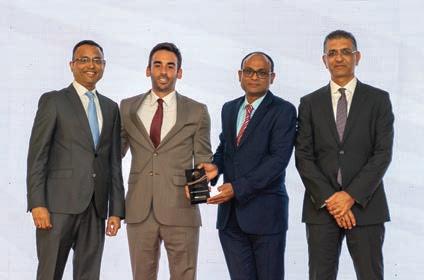
Following an outside-in assessment of digital capabilities across the different products verticals of transaction banking, the Wholesale Banking Group discovered that CBD’s existing application offering and user experience lagged well behind benchmarked globally in scope and it was only accessible on iOS and responsive to mobile devices only, which affected the scalability and penetration of android users.
Best Online Banking Service
Abu Dhabi Commercial Bank (ADCB) walked away with the Best Online Banking Services award. The Abu Dhabi-based bank was conferred with the award in recognition of its online products and services that are endorsed as exceptional by topping rankings compiled by both iOS and Android. ADCB’s corporate business banking mobile app is receptive to evolving requirements helping the bank achieve a lower corporate customer turnover rate which reflects high customer loyalty despite increased challenges and competition.

The bank’s corporate banking app has the highest rating of 4.6 out of 5 both on iOS and android in the UAE and the Middle East. ADCB boasts the highest reviews of 1783 and 546 on iOS and android respectively.
Corporate business banking complexity is much higher than retail business because in retail there is a one-to-one business model relationship while in corporate banking there is one to many relationships hence the product offering and digital services are a complex task that demands a superior mobile service and digital experience.
Best User Experience And/Or User Engagement – UAE
First Abu Dhabi Bank (FAB) was honored with the Best User Experience And/ Or User Engagement—UAE award in recognition of the bank’s various efforts to deliver creative digital solutions to its customers and clients.
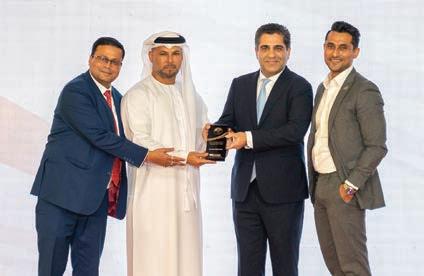
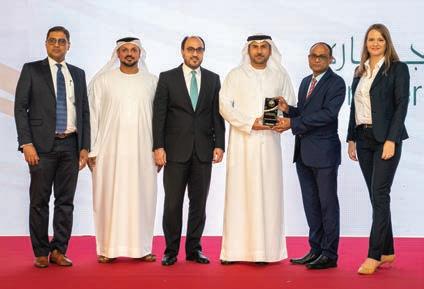
Through its footprint across the Middle East, Asia, Europe and the Americas, FAB has a strong cross-border proposition to support the trade financing requirements of its clients in the UAE and across the world. The bank’s platform provides a truly digital and end-to-end paperless experience to its clients fulfilling all their needs of quick turn around time (TAT), simple documentation and no hassle of managing physical paper and exposing the client to the risk of sensitive information loss.
For FAB, the digital onboarding platform, provides significant cost savings, improved TAT, greater reputation and ultimately early revenue realisation.
61 mea-finance.com
Best User Experience And/Or Engagement – Saudi Arabia
Saudi Fransi Capital was presented with the Best User Experience And/Or Engagement award in Saudi Arabia. The award was conferred to Saudi Fransi Capital in recognition of its state-of-the-art investment app that brings the bank’s products and markets, Saudi Arabia and the entire globe, into one place—the only app that offers the feature in the Middle East.
The design, which is inspired by social media applications, ensures that the most novice user can navigate markets and invest in assets just as an expert investor would. Saudi Fransi has been working toward achieving the digital transformation goals under the National Transformation Program of Vision 2030.
This is consistent with the asset management firm’s ongoing mission to deliver attractive and innovative investment opportunities to all of its investors while gainfully contributing to Saudi Arabia’s overall goals of financial sector development and economic transformation.
Special Achievement In Digital Innovation
In the digital banking innovation category, Mashreq Bank was honoured with the Special Achievement In Digital Innovation award in the Middle East in recognition of how the Dubai-based bank has enhanced customer experience for requesting IBAN letters and Balance certificates for salary transfers, visa applications or receiving payments. Mashreq allows customers to request and obtain instant letter issuance through mobile and online banking. The letters are delivered instantly as password-protected pdf files to customers’ registered email addresses. The service eliminates the need for customers to visit branches or call in to request these letters. It also means that back-office staff no longer need to generate and issue these letters manually. The instant letter issuance process is now fully integrated and automated and for balance certificates, customers have the option to select a certificate for a specific account or the banking relationship—all current, savings and fixed deposit accounts.

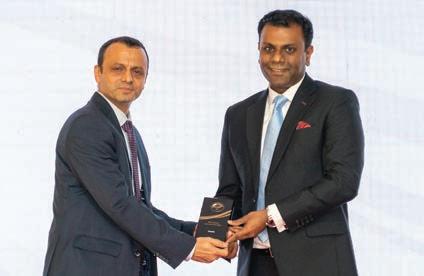
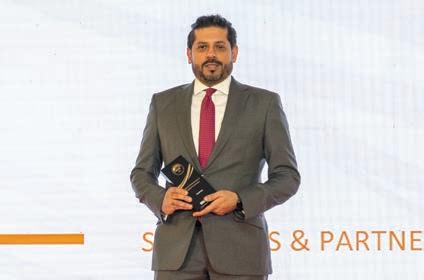
Best Cloud Services Provider
The Best Cloud Services Provider award was given to Oracle. Oracle Cloud is the first public cloud built from the ground up to be a better cloud for every application. The cloud solutions provider accelerates the migration of existing enterprise workloads and delivers better reliability and performance for all applications while offering the complete services customers require to build innovative cloud applications.
With two dedicated cloud regions in the UAE (Dubai and Abu Dhabi), a cloud region in Jeddah and a planned region in NEOM, Oracle Cloud Infrastructure is demonstrating its commitment to the region’s business transformation requirements. The company counts DP World, Abu Dhabi Customs, Emirates Post, DAMAC, Saudi Mining Company, Saudi Railways and Saudi Ground Services among its clients in the Middle East
62 Banking and Finance news in the MEA market MEA FINANCE AWARDS 2022
Best Cyber Security Provider
Help AG was honoured as the Best Cybersecurity Provider in the Middle East. The firm received the award in recognition of its extensive expertise in providing 360-degree cybersecurity services including end-to-end zero trust solutions, cybersecurity services, managed cyber defense and next-gen platforms.
The cybersecurity firm joined forces with an Abu Dhabi-based financial services provider to transform the bank’s existing security operations monitoring and security engineering approach into a best-of-breed service aligned with its technology strategy and the evolving cybersecurity threat environment.
Help AG is combining the agility and expertise of a digitally managed and professional service firm to accelerate the digital transformation and adoption for corporates, governments and large organisations across various industry verticals in the UAE and Saudi Arabia including defense, retail, energy, healthcare and aviation.
Best Reg Tech Solutions Provider


SmartStream was the recipient of the Best Reg Tech Solution Provider award in the Middle East. The award was given to SmartStream in honour of the company’s extensive delivery of top-of-class solutions for maintaining compliance with regulatory requirements from Basel II & III to the Dodd-Frank Act.
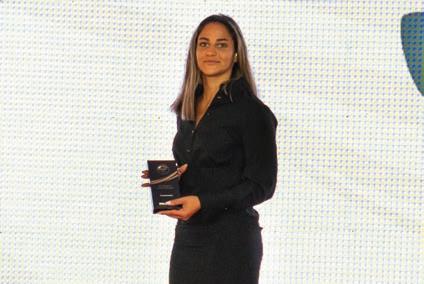
With over 2,000 clients, SmartStream RDU MiFID II provides organisations with both the data and the tools to achieve sustainable operational processes, maintain competitive advantage and ensure full compliance with regulatory obligations across all asset classes.
This eliminates the complexity of acquiring, normalising and integrating the complete set of reference data sources required for MiFID II while offering the choice of delivery method—either file-based or API—depending on an entity’s preference for the security of interest-based distributions or on its requirements for supplemental calculations and workflow to enhance its automation goals or service proposition.
The Best Islamic Fintech Solution Provider award was given to DDCAP Group. Over the year, DDCAP’s most significant objectives in recent years have been supporting the requirement of banks and financial institutions to significantly improve their operational efficiencies and increase the digitalisation of their processes, services and products.

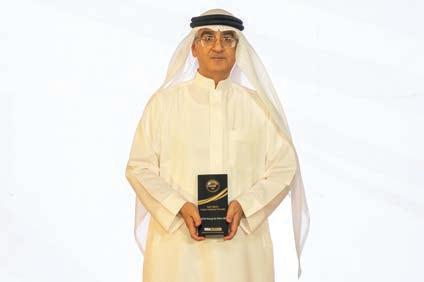
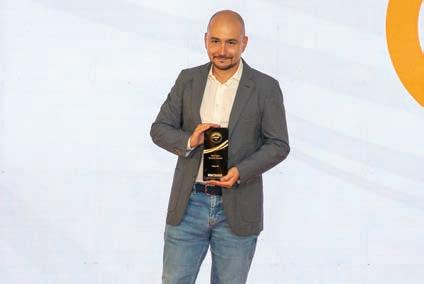
Since the outbreak of the pandemic, the company has worked extensively with Islamic banks and financial institutions, proposing and implementing a variety of fintech initiatives designed to eliminate manual processes and deliver end-to-end, seamless financial transaction processing.
This is now further optimised with DDCAP’s ETHOS AFP—a bespoke real-time trade and post-trade services platform that provides 24-hour coverage and operates via a secure web-based portal that delivers an array of benefits and efficiencies while mitigating risks.
63 mea-finance.com
Best Islamic Fintech Solutions Provider
Oracle Financial Services was the recipient of the Best Banking as a Service Provider in the Middle East award. The Best Banking as a Service Provider award recognised the cloud solution provider as the leader in delivering the financial service industry with a comprehensive suite of standalone banking solutions across both the retail and corporate banking domains.

The front-to-back and domain-driven composability of Oracle’s banking solution suite allows banks to leverage multiple business models, such as banking as a service (BaaS), quickly and efficiently and for different lines of business within the bank.


Traditional banks with large operations can leverage their strengths by offering BaaS to smaller banks which creates room for smaller lenders to offer faster processes and improve customer service while the larger provider gets to utilise offshore resources optimally and enjoy the additional revenue inflow.
Best Banking As A Service (BaaS) Provider Best Neobank


The Best Neobank award was given to Al Maryah Community Bank in recognition of the UAE’s first fully integrated digital bank’s endeavours to drive growth and serve its local community including the country’s citizens, residents and businesses (SMEs and corporates).
This reinforces Al Maryah’s commitment to the vision of the UAE leadership to support individuals and small businesses within the country to implement forward-thinking concepts driven by innovation and technology.

For the first time in the UAE, the neobank delivers the fastest and most secure banking services without any documentation—open your zero balance gold account in less than five minutes, securely with UAE PASS and receive your virtual debit card instantly.
Al Maryah launched its digital service for the issuance of investor numbers in the Dubai Financial Market through its application Mbank UAE which allows new investors to obtain a new investor number and immediately participate in initial public offering (IPO) opportunities.
Best Digital Transformation Implementation
Magnati was honoured with the Best Digital Transformation Implementation in the Middle East. This award recognised the payments solution provider’s leading position in launching the region’s first metaverse marketplace platform with retail offerings.
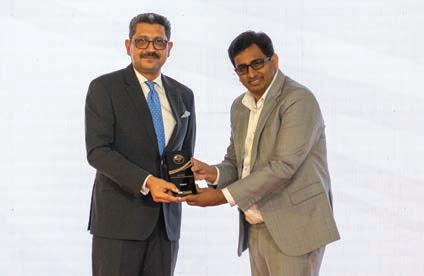
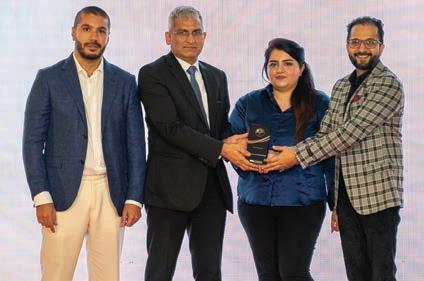
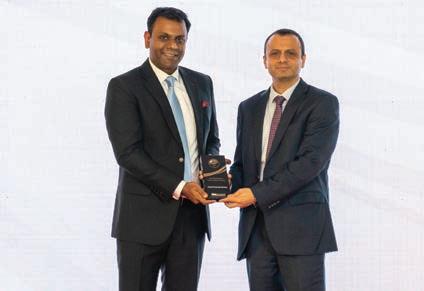
MetaV, Magnati’s metaverse marketplace, seeks to shift consumer behavioural patterns from electronic commerce to experiential commerce.
The market offers customers a visual and sensory experience as they shop, learn, play games, attend events and more online, using 3D technologies and customisable avatars—all from the comfort of their homes.
The marketplace offers a variety of retail categories including fashion, food, gaming and technology for customers to browse, pick up, try on and buy. Users can also buy tickets and sign up for activities such as attending virtual concerts, sporting events and educational courses.
64 Banking and Finance news in the MEA market MEA FINANCE AWARDS 2022
Finshape was the recipient of the Best Financial Data Analysis Provider award in the Middle East region. The Best Financial Data Analysis Provider award was given to Finshape in recognition of the financial data analytics firm’s ability to blend digital banking and deep personalisation capabilities into a driver of digital transformation for banks in Europe, APAC and MENA. With more than 100 customers globally and over 30 years of industrial experience, Finshape has been working on digital banking and data monetisation projects with leading financial institutions in the MENA region including First Abu Dhabi Bank, Riyad Bank, National Bank of Bahrain, International Bank of Yemen, AM Bank and Trade Bank of Iraq. Finshape is also part of local digital banking ecosystems and it counts Bahrain FintechBay, Saudi Business Machines, Tristate Group, Xebia, DXC, Giift, Meawallet and Outsystems among its regional partners. Through data enrichment, Finshape can gather every last bit of information about customers and convert it into input data that is correct, complete and consistent.
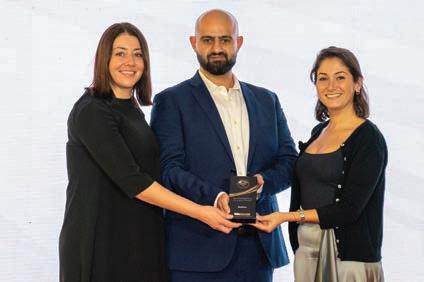

Avaya was the recipient of the Best Communications Infrastructure Provider award in the Middle East. The award recognised Avaya for its track record in providing the vital communication infrastructure that allows banks and financial services providers to conduct their day-to-day business. The cloudbased communications firm is the leading pure-play communications and collaboration provider globally with over 144 million users in 190 countries. Avaya’s new technology, ‘The Media Processing Core’ has a multi-tenant, multi-app design masking the complexity of hosting, developing, controlling and scaling real-time media services. It allows businesses to protect their investments by delivering layered innovation on top of existing assets to connect them with cloud and AI capabilities. The communication solutions provider’s Media Processing Core leverages the cloud to deliver media processing efficiency as media is processed in the cloud and then sent in a single stream to the endpoint. The company designed the technology to break down communications silos and allows the vendor’s portfolio of UCaaS, CCaaS, CPaaS and Workstream Collaboration to work together as one.
The Best Digital Banking Innovation Provider award in the Middle East was given to Backbase. The award was given in recognition of Backbase’s market-leading engagement banking platform that orchestrates frictionless journeys across all touchpoints, at every stage of the customer lifecycle. The Backbase Engagement Banking Platform acts as a unified engagement layer that’s loosely coupled with data and functionality from the underlying systems of record. It comes with an open integration architecture that enables financial institutions to connect with their existing systems and the new innovative fintechs.
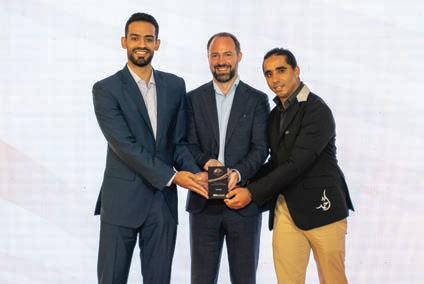
The relationship between banks and their customers has transformed significantly over the years and today’s banking customers compare their digital banking experiences with the plethora of other digital services they use and they expect banking apps that can match up.
65 mea-finance.com
Best Digital Banking Innovation Provider
Best Financial Data Analysis Provider Best Comms Infrastructure Provider
Best Banking As A Platform Provider
Backbase received the Best Banking as a Platform Provider in the Middle East region. As banks are moving steadily toward a platform operating model, leveling command-and-control structures to speed decision-making and delivery of solutions that customers value, Backbase has been instrumental in the application of technology that allows banks to build a platform of services to meet the customers’ evolving demands and expectations.
The banking technology solutions provider’s commitment to this vital part of the future of banking is underlined by their even having published a book on building engagement banking. The problem that Backbase is addressing is endemic to the financial services industry—transforming the centuries-old legacy banking system to allow banks to go beyond interacting with clients but rather engage with them. Backbase’s engagement banking platform powers all lines of business on a single platform, including retail, SME and corporate and wealth management. The platform is designed to enhance a seamless and captivating user experience for both customers and employees across the value chain.
ACI Worldwide received the Best Instant Payments Platform Provider award in the Middle East, in recognition of the company’s proven, secure and scalable software solutions that allow corporates, fintechs and financial disruptors to process and manage digital payments, power Omni-commerce payments, present and process bill payments and manage fraud and risk.
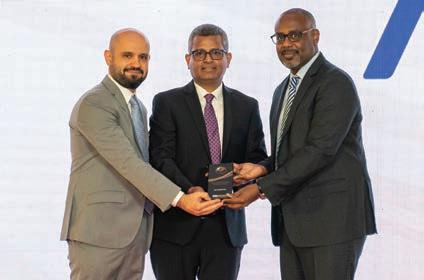
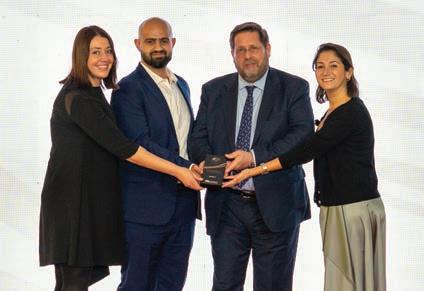
Founded in 1975, the payments solution provider’s enterprise payment platform (EPP) is a modular real-time payment solution incorporating card and account-based payments, built on a cloud-native framework, providing microservices and packed with open APIs to facilitate open banking and seamless integration with third-party bank solutions and payment networks. ACI’s EPP is ISO 20022 ready and is being leveraged as modern central infrastructure by central banks, to drive in-country immediate payment schemes. Its payment solutions support connectivity to account-based 24/7 real-time payment schemes in more than 18 countries including South Africa and Saudi Arabia and the number is set to increase over the next 18 months with the inclusion of the UAE, Tanzania and others.
Best Instant Payments Platform Provider Best Cross-Border Payments Solutions Provider

Fable Fintech was the recipient of the Best Cross-Border Payments Solutions Provider award, which was conferred to the banking infrastructure firm in recognition of its best-in-class cross-border payment solutions for banks, MTOs and fintechs.
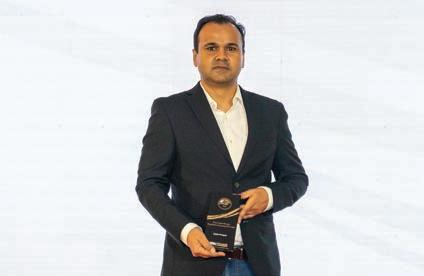
The Fable suite of products aids the processing of cross-border transactions in 35 send-heavy and 65 receive-heavy countries with more than 150 serviceable corridors and 34 installations across 9 countries.
Since its establishment in 2015, Fable has so far processed over $11 billion in global transfers from 35+ send countries and 65+ receive countries. The fintech firm is joining forces with banks, non-bank financial institutions and other financial services providers to address global payments challenges. Fable Fintech is committed to information security and the company is ISO27001 certified and GDPR compliant.
66 Banking and Finance news in the MEA market MEA FINANCE AWARDS 2022
Best Cloud Payments Provider



Volante Technologies received the Best Cloud Payments Provider in the Middle East award. The award was given in honour of Volante’s endeavours to enhance financial institutions’ competitiveness by simplifying their systems and processes.
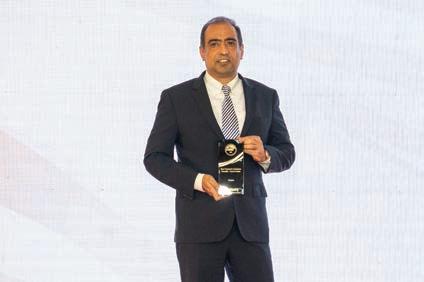
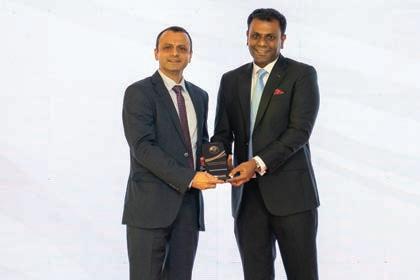
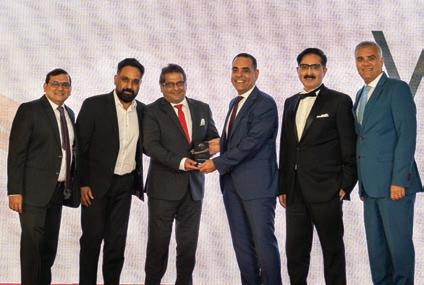
The payments solution provider supports financial institutions in their digital transformation journey to modernise and deliver a superior experience that helps its clients to grow their businesses and maintain a competitive edge in the market. The company’s solutions for payments and financial messaging automation are mission-critical and are powering some of the world’s biggest banks, market infrastructures, exchanges, clearinghouses and card networks. Volante’s systems process trillions of dollars of transactions daily and its propositions are available both in the cloud or on-premises. Volante has received $50 million in growth equity financing from Wavecrest Growth Partners, with strategic participation from BNY Mellon, Citi Ventures, PostePay, and Wells Fargo since its founding in 2001.
Best Payments as a Service (PaaS) Solutions Provider


The Best Payments as a Service Solutions Provider award went to Oracle Financial Services. The award was conferred to Oracle Financial Services in honour of the cloud solution provider’s state-of-the-art platform that leverages the company’s strong banking lineage with a track record of more than 20 years serving over 700 customers across 140 countries. Oracle’s core banking platform, FLEXCUBE, is built from the ground up on a native ISO 20022 construct with contemporary technology and tailored to be ready for payment ecosystem transformation. Oracle Banking Payments’ capabilities include ISO20022 native database, 24/7 availability without downtime, full compliance with industry initiatives such as SWIFT gpi and SWIFT Go and API for open banking integration. FLEXCUBE has a strong installed base of more than 170 licensed customers, within a short span of five years across all regions including tier 1 banks in North America, Europe and Asia Pacific and it continues to add new customers at a rapid pace.
Geidea received the Best Payments Solutions Provider in Saudi Arabia in recognition of the company’s milestone of becoming the first non-bank entity in the kingdom to receive a license from the Saudi Central Bank (SAMA) to provide financial services directly to merchants and small to medium enterprises.
Founded in 2008, Geidea is a fintech and payment solutions provider that is expanding its regional footprint beyond Saudi Arabia into the UAE and Egypt, and seeks to serve financial institutions and small to medium businesses in seven more countries in the next two years.
The fintech firm has 2000+ employees and more than 150,000 merchants providing support to over 700,000 terminals within Saudi Arabia and it commands a 75% market share in the Gulf state. Geidea is the biggest fintech company in Saudi Arabia and is ranked among the top 25 fintech companies in the Middle East.

67 mea-finance.com
Best Payments Solutions Provider— Saudi Arabia
Best Payments Solutions Provider —Bahrain


Arab Financial Services (AFS) was the recipient of the Best Payments Solutions Provider award in Bahrain. The award was conferred to AFS in recognition of the payments solution provider’s innovative approach to the provision of pioneering payment services across card processing, merchant acquiring, fintech solutions and an impressive array of value-added services.
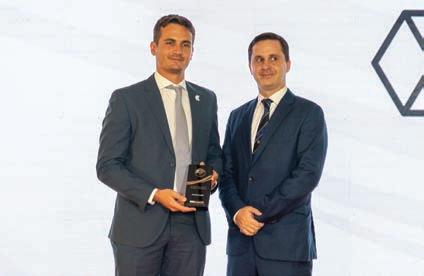
AFS is regulated by the Central Bank of Bahrain and it boasts numerous ground-breaking end-to-end digital payment services and solutions. Samer Soliman, the CEO of Arab Financial Services, is spearheading the payments solution provider’s business developments that are contributing to the evolution and transformation of the Middle East’s payments landscape. Since the beginning of the year, AFS implemented several initiatives including increasing the company’s authorised share capital to $150 million, and its issued and paid up share capital by $98 million to accelerate revenue growth and strategic expansion.
Best Open Banking And Api Provider
Infosys Finacle was honoured with the Best Open Banking And API Provider award in the Middle East region. Finacle API Connect is a comprehensive next-generation API solution that helps financial institutions to jumpstart and accelerate their ecosystem innovation.
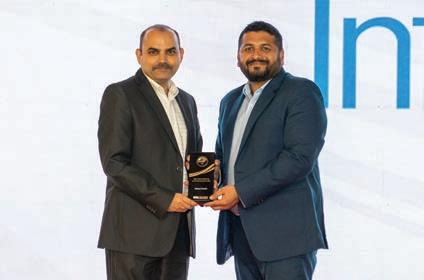
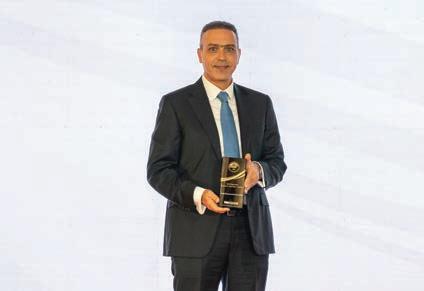
The open banking solution provides performant, standards-oriented and well-documented business APIs and events, spanning different domains such as deposits, loans and customers. Finacle API Connect comes preintegrated with leading API Gateways, a developer portal built for the banking industry, standard security profiles and a consent manager.
Thus, Finacle API Connect is an OpenAPI-ready solution that can help banks easily and quickly launch their own comprehensive API Banking offerings. The solution enables financial institutions to unlock new revenue streams by exploring contemporary business models such as banking as a service (BaaS) and monetise their data and insights, expanding distribution of their existing products while co-creating new propositions with fintechs to scale customer base and assets in addition to facilitating faster go-to-market.
Checkout.com walked away with the Best Payments Platform Provider E-Commerce award. Since its establishment as a cloud-based payments platform in 2012, Checkout.com has grown beyond the boundaries of a payments solution provider with global operations spanning over nineteen countries.
The company makes payments seamless and helps global enterprises launch new products in new markets while creating outstanding customer experiences, thanks to its flexible solutions, granular data and instant insights. Checkout.com’s cloud-based unified platform enables merchants to manage pay-ins and pay-outs at scale while achieving better performance and improved acceptance rates globally.
68 Banking and Finance news in the MEA market MEA FINANCE AWARDS 2022
Best Payments
Provider E-Commerce
Platform
Best Corporate Payments Provider
Mindgate was honoured with the Best Corporate Payments Provider award in the Middle East. The Best Corporate Payments Provider award was given in recognition of Mindgate’s integrated payments platform that provides smart transaction-banking solutions across every sector, encompassing all aspects of transaction banking including collections and payments, liquidity management, reconciliation and dispute management while mitigating accounting risks.
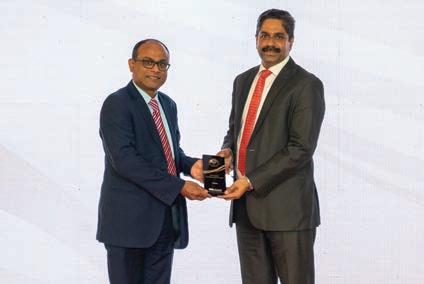
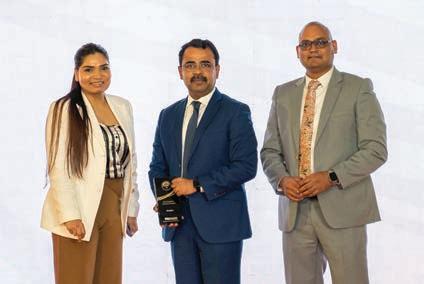
The company’s VTransact DigiTB-Pay platform is a one-stop, end-to-end solution with core banking functions that delivers a heady mix of technology and business solutions. VTransact DigiTB-Pay platform acts as a one-stop middleware platform that integrates all the bank payment and receivable digital channels with core banking.
With 3+ billion digital payments processed monthly and 14 of the MENA region’s biggest banks leveraging Mindgate’s transaction banking platform, the payments solution provider is helping its clients redraw the payment landscape through a value proposition of large-scale, responsive to market demand and reduced cost of ownership.
Best Digital Transformation Provider
Finesse was the recipient of the Best Digital Transformation Provider award in the Middle East. The award was conferred to Finesse in recognition of the company’s consistency—catering to the needs of business, their endto-end digital transformation solutions and continuous updating of their systems with the latest innovative technologies. Over the past two years, Finesse witnessed an increase in demand for its digital transformation solutions driven by the company’s ability to recognise and cater to the unique needs of businesses in the Middle East. The company provides end-to-end digital transformation solutions, including migration to cloud infrastructure that is tailored to the needs of the different businesses it serves.
Finesse continues to evaluate and update its services and products to adapt to the evolving technology landscape in a bid to bring the best solutions possible to businesses operating in the region. The company boasts of a wide transformation portfolio including Cyber Security, Cloud and Corporate Treasury Management, to name only just a few. Its stateof-the-art Security Operation Centre in the UAE was established to protect local businesses from cyber-attacks.
69 mea-finance.com
Best Retail Bank—UAE
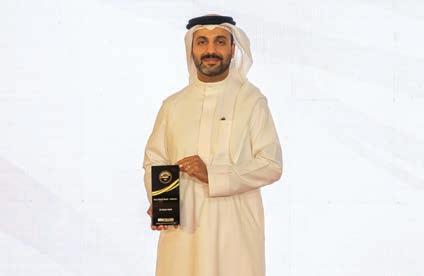
Emirates NBD was the recipient of the Best Retail Bank—UAE, award, which was conferred to the Dubai-based lender in acknowledgment of the strides that it has made in making banking simpler, more secure and convenient for all retail customers by expanding digital access across all retail banking services include loans and card applications.
The banking group’s digital footprint continues to grow, with 80% of its customers digitally active monthly (mobile/online)—of which 95% are active on mobile, in sync with the lender’s mobile-first strategy. Emirates NBD’s mobile banking was the only channel that grew by 23% in terms of transactions last year with 96% of our transactions now done on digital-only channels.
Emirates NBD counties to leverage customer experience as the key differentiating factor and endeavours to improve customer experience by focusing on proactive services, enhancing service culture, social listening and embedding customer experience design thinking in the organisation.
Best Retail Bank—Egypt
Banque MISR received the Best Retail Bank—Egypt, award. Banque MISR, Egypt’s second-biggest state lender, has successfully managed to maintain a balance between providing good service with strong product options and offering a full banking experience based on agility and convenience.
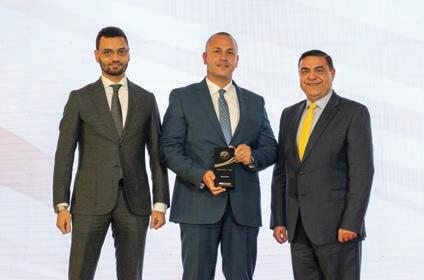
The bank unveiled several innovative payment solutions to cater to both merchants and customers amid growing demand for digital payments in Egypt and the entire MENA region. Banque MISR’s innovative payment services include online card payment, online request to pay, POS contact and contactless and QR code via POS among others.
Similarly, Banque MISR has targeted merchants in the country using the simplest onboarding documentation process and encouraging e-commerce merchants to start embedding online payments and facilitating payments to end users.
The state-owned bank takes pride in its mobile banking application which offers consumers the most seamless and user-friendly mobile banking application in Egypt.
Best Retail Bank—Bahrain
Al Salam Bank was honoured with the Best Retail Bank award in Bahrain. This award was conferred to Al Salam Bank in recognition of how the bank has successfully humanised the customer experience through convenience, efficiency and personalisation.
The bank’s competitive edge lies in its unrivalled approach to creating a refined, rewarding and transformative client experience. Al Salam Bank’s loyalty programme, unlike any other existing schemes, rewards clients for every banking transaction enabling them to earn loyalty points on all types of banking services.
The Bahrain-based bank prides itself on its solution-oriented philosophy and seamlessness in service delivery. Al Salam Bank has maintained a digital-native mindset that is holistically embedded in the bank’s DNA to meet the modern-day needs of its clientele while delivering curated financial solutions through its various platforms.
70 Banking and Finance news in the MEA market MEA FINANCE AWARDS 2022
















Islamic Bank—UAE

Dubai Islamic Bank (DIB) was the recipient of the Best Islamic Bank award in the UAE. The Best Islamic Bank award was given to DIB in recognition of the bank’s extensive global footprint—which caters to the bank’s 5+ million customers and is supported by the group’s strong workforce of over 10,000 employees and a network of around 500 branches across the Middle East, Africa and Asia. The Shariah-compliant bank has successfully navigated the economic impact of the pandemic after it registered customer deposits of AED 187 billion at the end of 9M 2022 with CASA now standing at AED 77 billion sitting comfortably at 42% of deposits.
The banking group’s customer-centric focus on digitisation and optimisation has further strengthened its position in the Islamic banking sector and its customers now benefit from enhanced customer journeys and increasingly seamless experiences.
Best
Islamic Bank—Egypt
The Best Islamic Bank, Egypt award went to Banque MISR. The award was conferred to Banque MISR in recognition of the bank for being the first stateowned bank to establish branches devoted entirely to Islamic transactions, providing financial and trading activities that are Shariah-compliant. The bank’s Islamic banking adopts a sustainable framework that incorporates the Islamic fundamental principles of accountability, morality, Islamic banking business, capacities and a results-based approach to hedge against any contagion risk. Banque MISR operates forty-seven branches that are wholly dedicated to Islamic banking and are spread across all governorates nationwide, covering large corporate, SMEs, microfinance and retail products. Banque MISR’s Shariah-compliant business offers comprehensive and tailored products and services to satisfy various corporate requirements and support different business activities according to Murabaha, Musharka, Ijara, Istisnaa and Mudarba. Islamic corporate banking is a main line of business and a major revenue driver, with prime objectives aimed at maximising the Bank’s returns and increasing its portfolio with high-quality assets complying with Shariah standards.
National Bank Fujairah (NBF) received the Best Commercial Bank award in the UAE. The award recognises NBF, a full services corporate bank with strong corporate and commercial banking, treasury and trade finance expertise as well as an expanding suite of personal banking options and Shariah-compliant services.
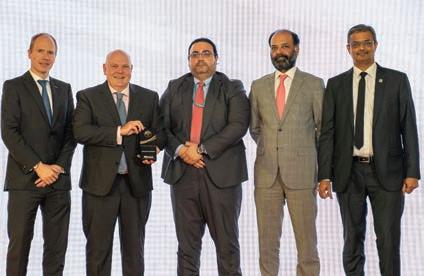
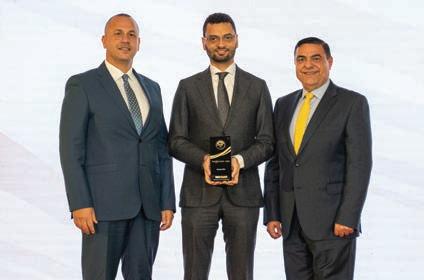
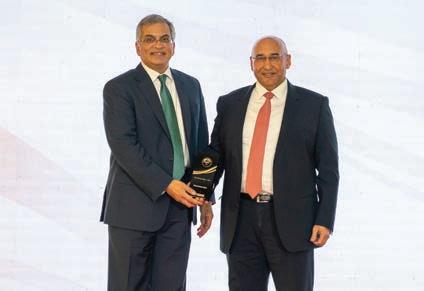
NBF prides itself on its client-centric relationships and specialisation approach to banking. Its corporate banking offers various industry and specialisation-focused business segments that serve clients across the UAE, offering bespoke and customised solutions.
Corporate banking at NBF is split into industry verticals that allow for specialisation and these business units include large corporates and government, contracting, precious metals and diamonds, equipment and technology supply chain finance among others.
72 Banking and Finance news in the MEA market MEA FINANCE AWARDS 2022
Best
Best Commercial Bank—UAE
Capital Markets Transaction of the Year

HSBC received the Capital Markets Transaction of The Year award in the Middle East, in recognition of the bank’s leading role in Dubai Electricity & Water Authority’s (DEWA) $6.1 billion initial public offering on the Dubai Financial Market (DFM) as a joint global coordinator.
HSBC generated several large and differentiated orders including cornerstone investors demonstrating the strength and breadth of the global emerging markets distribution platform. The bank led the global marketing strategy with 12 of the top 15 international orders as well as meeting a total of 87 international investors during pre-deal investor education (PDIE).
DEWA’s IPO is the largest listing ever in the UAE, the largest MENA utilities IPO ever, the second largest ever IPO in the Middle East and the largest IPO in EMEA in terms of pricing in 2022 YTD. The IPO is also the first on the DFM since 2017 as part of the Dubai Government’s ongoing efforts to further develop its capital markets and attract international investors.
Best M&A
HSBC was honoured with Best M&A award in the Middle East. This award was conferred to HSBC in recognition of the bank’s instrumental role in numerous deals across the region including the Actis controlling stake in Yellow Door, Jadwa Investment and UE Group’s sale of a 60% stake in UEMS and sole adviser to AXA’s sale of its insurance operations in the Gulf. The bank cemented its positions as the most trusted advisory bank in the Middle East supporting clients both in and outside the region, evidenced by its sole advisory roles on several high-profile transactions. With one of the largest on-the-ground teams in the Middle East, in Dubai and Riyadh, they advised on landmark and strategically important deals including EMEA’s largest oil and gas transaction of the past five years, UAE-based e&’s tender offer to increase its stake in Saudi Arabia’s Mobily and major fund-raising transactions by both ADNOC and Saudi Aramco.

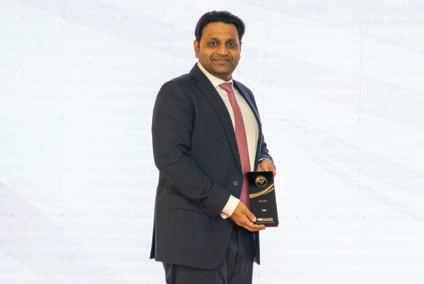
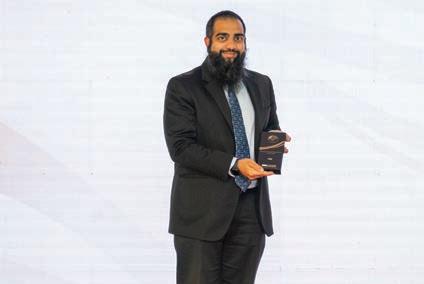
Best Sukuk Deal Of The Year
Dubai Islamic Bank (DIB) was the recipient of the Best Sukuk Deal Of The Year award in the Middle East. The Shariah-compliant bank was instrumental in the issuance of Indonesia’s $3.25 billion dollar-denominated Sukuk with 5-year and 10-year tenures. The 5-year notes carry a coupon of 4.40% while the 10-year notes have a 4.70% coupon.
This deal by DIB, rated A3 by Moody’s and A by Fitch, once again demonstrated the bank’s leadership in Islamic and sustainable finance with an established and strong investor following from Europe, Asia and the Middle East.
The notable features of the Sukuk include being the largest ever global dualtranche Islamic bond transaction from Indonesia in history, the largest green Sukuk tranche ever printed globally, the first Green Sukuk tranche in 10-year maturity by Indonesia and despite the challenging economic conditions, the deal attracted a demand of more than $10.8 billion worth of orders.
73 mea-finance.com
SALAMA Islamic Arab Insurance was the recipient of the Best Takaful Provider award in the Middle East. The resurgence of claims and the challenging economic environment in 2021 prompted SALAMA to rethink, strategise, pivot and find new opportunities for growth, post-pandemic.

The Shariah-compliant insurer placed itself at the forefront and last year marked the year of its transformation, spanning from launching new products and entering new market segments, to the digitalisation of the entire business to offer better products and services.
SALAMA also implemented faster turnarounds, forged new strategic partnerships and strengthened distribution channels—all of which opened up new growth opportunities for the Takaful insurer.
From a financial perspective, the Islamic insurance company reported a full-year net profit of AED 48.2 million in 2021, with a gross written contribution above the billion mark at AED 1.1 billion despite the challenging operating conditions.
Best Takaful Provider Best Treasury Management Services
Banque Misr was honoured with the Best Treasury Management Service award in Egypt. The state-owned bank received the award in recognition of its various funding schemes, in partnership with multinational institutions to achieve foreign currency funding worth $5.46 billion for FY2020/21 compared to $4.18 billion in FY2019/20.
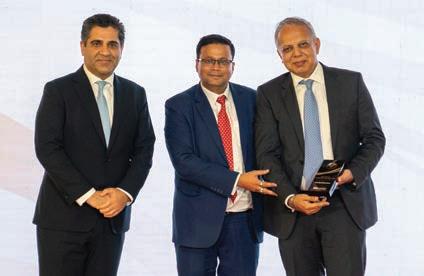
The bank also supports both public and private international trade with a market share of around 19.4%. Banque Misr’s treasury department plays a pivotal role in maintaining a sound cash flow position by providing ample funds for its integrated financial platform with tailored financial solutions to ensure the optimum utilisation of the bank’s liquid resources.
Banque Misr’s extensive global footprint, which includes 308 correspondent banks in fifty-five countries, enables the lender to maintain its leading position in the financial services industry to provide its customers with the quickest and most effective services to meet evolving customer demands and expectations.
The Best Treasury Management Services award in the UAE went to First Abu Dhabi Bank (FAB). The Global Transaction Banking (GTB) at FAB was established as the bank’s Treasury Advisory unit in September 2020—a first of its kind within the GCC.
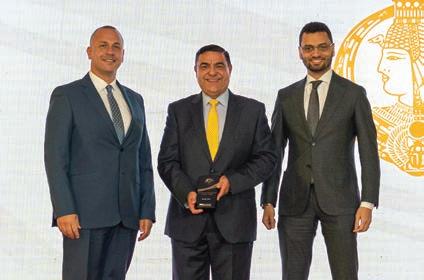
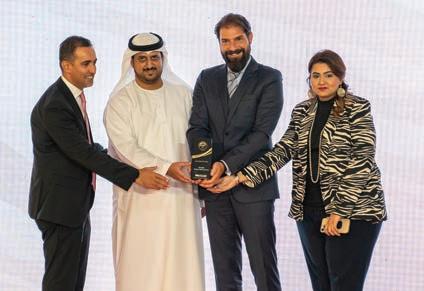
FAB’s treasury advisory unit was set up to help large corporates based across the bank’s global footprint in transforming and streamlining their treasury requirements and in some cases helping them set up regional and global treasury centres.
The bank secured a request for proposal (RFP) for a major UAE conglomerate to build the first of its kind ‘in-house bank’. The complex solution required consolidating all group entities and building an in-house bank by leveraging on the conglomerate enterprise resource planning (ERP), treasury management system (TMS) and FAB’s upgraded payments, collections and liquidity management products.
74 Banking and Finance news in the MEA market MEA FINANCE AWARDS 2022
—Egypt Best Treasury Management Services —UAE
Best Global Bank In The Middle East

Standard Chartered Bank walked away with the Best Global Bank In the Middle East award. The award was conferred to Standard Chartered in recognition of the bank’s unwavering commitment to the MENA region with a presence in several countries including the UAE, Saudi Arabia, Oman, Qatar, Egypt and Iraq.
2022 has been a magnificent year for Standard Chartered in the region as the bank played a significant role in several deals over the past 24 months. The bank was appointed as the sole financial advisor to a regional investor on the Saudi Aramco infrastructure deal with an EIG-led consortium.
Standard Chartered’s advisory role covered valuation, due diligence, transaction negotiation and stakeholder management.

The bank also acted as the sole financial advisor to ADNOC Refining on its 100% divestment of waste management assets in Ruwais to an ADQ-led consortium in October 2022. The bank, in its capacity as a sole financial advisor, advised on all aspects of the deal including managing investor due diligence.
Best SME Bank
National Bank Fujairah (NBF) bagged the Best SME Bank award. NBF became one of the first banks in the UAE to establish a dedicated business banking unit for SMEs in 2003.
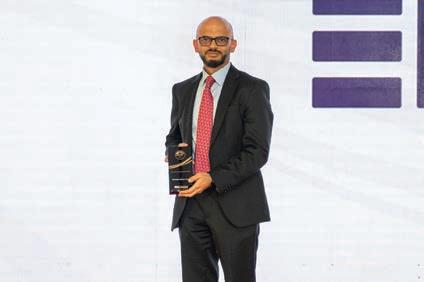
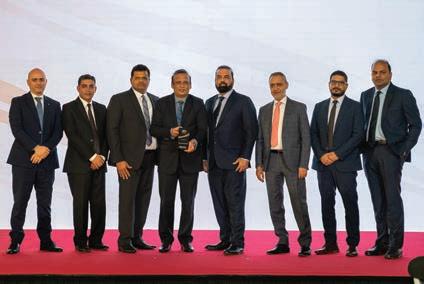
The bank prides itself as a highly credible and committed partner to companies in the small and mid-market space, thanks to its multidisciplinary approach that applies the bank’s core strengths from the treasury to trade finance in service of customers. NBF has been committed to lending to SMEs for more than 20 years and has consistently expanded its asset book by providing tailored banking solutions to meet the needs of the SME sector in the country. NBF took multiple steps to mitigate the impact of COVID-19 by recognising the significant economic challenges that were triggered by the pandemic. They never consolidated its SME portfolio and even continued lending to new entrepreneurs—supporting the sector which is integral to the UAE’s economic diversification efforts when needed the most.
Best Islamic Bank For SMEs
Emirates Islamic was honoured with the Best Islamic Bank For SMEs in the Middle East award. This award was conferred to Emirates Islamic in recognition of the bank’s Business Banking Division (BBD) which continues to display robust growth through its resilient approach, prudent strategy, customer focus and digital engagement.
The Shariah-complaint bank serves over 38,000 SMEs from their BBD and has shown positive year-on-year growth in many segments. The growth in Emirates Islamic’s operating income was driven by higher fee and commission income which expanded by 9.6% year-on-year constituting 49% of the total revenue of BBD.
The pandemic accelerated the adoption of digital channels and digitalisation remained part of Emirates Islamic’s broader strategy to enhance customer experience by giving clients the flexibility to perform transactions at their convenience while diverting footfall to more convenient and cost-efficient channels.
75 mea-finance.com
Best Cash Management Bank
First Abu Dhabi Bank (FAB) received the Best Cash Management Bank award in the Middle East in recognition of the bank’s Cash Management products and solutions that are designed to help clients maximise control and efficiency over their cash flows and working capital requirements.
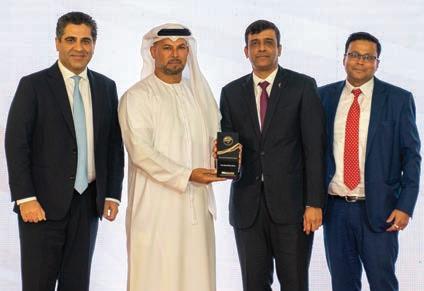
The bank’s secure payments and collections capabilities provide its clients with a comprehensive suite of innovative, cost-efficient services to make, collect and process transactions seamlessly using their digital channels.
FAB’s next-gen virtual account proposition that the bank has developed provides clients the flexibility to create, transact and manage their virtual accounts to undertake collections on behalf of (COBO) and payments on behalf of (POBO) activities. Similarly, through integration with the bank’s liquidity management platform, clients have access to complex centralised treasury and in-house banking requirements.
The bank’s corporate online electronic banking portal allows clients not only to have real-time visibility to manage their cash balances but also gives them the ability to utilise internal funds available within the Group.
Best Trade Finance Provider
National Bank Fujairah (NBF) was honoured with the Best Trade Finance Provider award in the Middle East. NBF’s trade financing portfolio contributes to 40% of their revenue and the bank offers commercial banking solutions to 7000+ customers in support of their working capital, capital expenditure requirements, loan requirements and project financing requirements among other services. With more than two decades of industrial experience, the commercial banking business has evolved over the years to become one of NBF’s fastest-growing segments. The bank has emerged as a sustained partner of UAE businesses, thanks to its partnership advisors who take the time to understand clients’ business requirements. Banking customers consistently cite NBF’s personalised approach and service excellence as key differentiators in independent satisfaction surveys carried out by the bank, while clients’ willingness to let the bank share their success stories demonstrates their trust and support. The bank participated in the launch of UAE Trade Connect, a nationwide blockchain platform, co-created by e& Enterprise and seven other banks.
Best Remittance And Foreign Exchange Company
In the remittance and foreign exchange category, Al Ansari Exchange was conferred with the Best Remittance And Foreign Exchange Company award. Al Ansari Exchange was given the award in recognition of its extensive network of over 220 branches and a strong workforce of more than 3,500 multilingual employees who cater to the needs of 3+ million customers every month.
The remittance company has included in its portfolio of services a set of digital solutions such as the Al Ansari Exchange mobile app, that contributes to around 13% of the total number of transactions. Al Ansari has seen healthy year-on-year growth in outward remittances through its network, averaging around 115,000 transactions a day with services ranging from foreign exchange, remittance, corporate cash collection and payroll solutions. Its value-added services include payments for bills, credit cards and airfare tickets.

76 Banking and Finance news in the MEA market MEA FINANCE AWARDS 2022
Best Asset Management Firm
Oman Investment Corporation walked away with the Best Asset Management award. The private equity firm has been active in developing new projects and building successful businesses in partnership with local entrepreneurs and leading corporations from around the world.
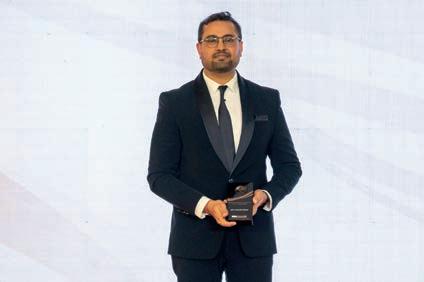
Since its inception in 2015, OIC has attracted foreign direct investment into Oman valued at $370 million which testifies to the investment firm’s commitment to the Sultanate’s economic diversification strategy. OIC has joined forces with local and international partners to develop new and innovative projects which create new growth industries in Oman and the adjacent regional and emerging markets while in turn creating more than 1,500 jobs in the Sultanate.
The investment firm’s extensive portfolio includes a majority stake in Khazaen Economic City, a unique integrated city that is under development and will include an inland dry port, logistics facilities, a free zone with tax benefits, commercial and industrial zones as well as recreational and retail areas with world-class infrastructure and outstanding facilities and services. To date, OIC has raised $709 million in international project finance for projects in Oman.

Best Reit Management Firm
Saudi Fransi Capital for Bonyan REIT was honoured with the Best REIT Management Firm award in the Middle East. The Best REIT Management Firm award was given in recognition of Saudi Fransi Capital for Bonyan REIT’s portfolio which is diversified in terms of geography and sectors. Bonyan REIT fund has the lowest price to funds from operations of 14.2x in the sector and the implied cap rate of 8.5% generated by the fund is the best in the industry. Similarly, a healthy dividend yield of 6.4% and 6.6% in 2021 and 2022, respectively, at the sector’s lowest P/FFO makes the fund valuation lucrative.
Studies have shown the compelling influence of REITs on a portfolio’s diversification is partly attributed to the imperfect performance correlation between REITs and both stocks and investment-grade bonds over time. The fund’s strong lease contracts ensure sustainable income in the long term. Bonyan REIT has proven its ability to adapt and pivot to survive as witnessed at the height of the pandemic.
Best Real Estate Firm—Middle East

GFH Financial Group was the recipient of the Best Real Estate Firm In The Middle East award, which was conferred to the investment bank in recognition of how the firm has steadily expanded its global footprint over the last two decades—through partnerships, mergers and acquisitions.
The investment bank now has asset managers, specialists and partners in key markets including the US, the UK, Europe and the Middle East. GFH’s global presence is guided by a strategy of expansion in developed markets including the acquisition of a 60% stake in Roebuck Asset Management— which expanded the investment bank’s presence in Europe.
GFH also invested in Student Quarters Asset Management and partnered with Schroders Capital to increase its regional footprint in the US which was buoyed by the acquisition of BigSky Real Estate management firm. The Bahrain-based financial group’s innovative approach to Islamic investment banking services has been recognised internationally for over a decade.
77 mea-finance.com
Best Real Estate Firm—International
Walton International Group walked away with the Best Real Estate Firm - International award in the Middle East. The Best Real Estate FirmInternational award recognised Walton Group’s continued efforts to push the boundaries of innovation with its land-based investment strategies. Founded in Calgary in 1979, Walton has expanded its global footprint opening offices in Phoenix, Hong Kong, Shanghai, Singapore and Dubai in 2019. Since 2019, the company has continued to expand its presence in the Middle East supporting its business partners and their clients cementing its position as one of the leading land asset management firms in the world.
The global real estate investment company’s products continue to attract interest regionally and internationally from both conventional and Islamic finance investors, family offices and institutions who are seeking alternative, US real estate-based investment strategies.
Walton currently administers $3.4 billion of real estate assets and over 98,000 acres of land assets under ownership or administration in 24 major North American markets.
Best Investment Bank—Conventional
Saudi Fransi Capital was the recipient of the Best Investment Bank— Conventional award in the Middle East. The award was conferred to Saudi Fransi Capital in recognition of its full suite of investment banking activities and products covering equity capital markets, debt capital markets, merger and acquisition and corporate finance advisory to a wide range of customers encompassing corporations, institutions and governments. The financial institution is the leading investment bank in Saudi Arabia having advised on over 23 equity capital markets transactions in the last decade—the highest number of transactions in the market to date. Over the last 25 months, Saudi Fransi generated SAR 189 billion in demand, across nine different initial public offerings and debt capital markets issuances. Saudi Fransi was appointed as the sole financial advisor and took three companies public in 2021 including Alkhorayef Water and Power Technologies Company, Theeb Car Rental Company and Tanmiah Food Company. The investment raised SAR 34 billion in demand for Alkhorayef Water and Power, SAR 31 billion for Theeb Car Rental and SAR 38 billion for Tanmiah.
Best Brokerage Firm & Solutions Provider

Greenstone Equity Partners was honoured with the Best Brokerage Firm & Solutions Provider award in the Middle East. The brokerage firm has facilitated over 11,000 finely targeted meetings between GCC investors and globally dispersed fund managers over the past 11 years.

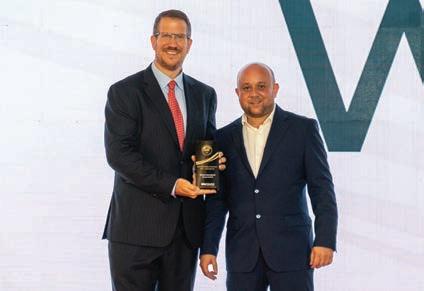
Greenstone, which helps find investors for private equity funds worked with 300+ alternative funds in the same period under review to raise more than $195 billion across the spectrum of investment strategies with the average fund size being $160 million.
The investment services firm is the GCC strategic partner of choice for many global fund managers because the firm has a longstanding track record working with institutional grade fund managers to raise capital from GCC-based investors compliantly.

78 Banking and Finance news in the MEA market MEA FINANCE AWARDS 2022
Best Sukuk Islamic Fund
In recognition of its pioneering Islamic Income Fund, established in 2022, catering to investors seeking high-yielding Shari’a compliant investments, Waha Capital won the Best Sukuk Islamic Fund award.
The actively managed fund uses both internal macro and micro-analysis to identify the best investment opportunities in the Shariah-compliant universe, combining both capital appreciation and income yield.
The Waha Islamic Income Fund returned -1.76% (gross of fees) for the first nine months of 2022, following a total return of 9.7% in 2021. The fund has significantly outperformed its benchmark reference, the Dow Jones Sukuk Index, which has given a -11.75% return in 9M 2022.
The fund outperformed the benchmark thanks to a strong focus on credit quality and security selection as well as the underlying diversification of the fund due to a small sleeve dedicated to Shariah-compliant equities highlighting the benefits of active management in the Islamic asset management space.
Best Private Bank In The Middle East Best Wealth Management Institution
Mashreq Private Bank received the Best Private Bank award in the Middle East, in recognition of the bank’s legacy which is defined by its decades of empowering customers in UAE and has consolidated its position with global reach and extensive presence across the Middle East, Europe and Asia Half of the private bank’s diverse client base hails from the Middle East and Mashreq ensures seamless services through its presence in international financial centers in Europe, Asia, Africa and the US. Mashreq has spent years focusing on customer imperatives such as strategic expansion, pioneering new market concepts and consistently launching a variety of unique products and services. The bank is completely focused on their customers’ objectives and investment goals. Its core tenets include the belief that putting clients first is the best way to align the bank’s offerings with the underlying demand. Mashreq is of the oldest private banks in the Middle East and the bank prides itself on its imperatives of successfully balancing traditional values with innovation while providing best-in-class services and global products to customers.

Emirates NBD was the recipient of the Best Wealth Management Institution for HNWIs award, which was conferred to the bank in recognition of the bank’s success across its full range of services and products including private advisory, real estate solutions and offshore booking and advisory teams certified in ESG.

The bank’s bespoke wealth management solutions are devised for clients with specific requirements. It offers high-net-worth and ultra-high-net-worth individuals, families and select institutions investment advisory and wealth management solutions through its network of qualified relationship managers and certified investment advisors across the UAE, Saudi Arabia, the UK and Singapore.
Emirates NBD’s wealth advisors are trained and equipped to provide bestof-class investment and financial planning solutions, while following a robust in-house approach. The bank has also expanded its environmental, social and governance charter in line with the United Nations’ SDGs and the UAE’s vision to be a sustainable knowledge-based economy.
79 mea-finance.com
For HNWIs
Best Overall Wealth Management Service In The Middle East
Standard Chartered Bank received the Best Overall Wealth Management Service In The Middle East award in recognition of its expansive global footprint which uniquely positions it to combine global, regional and local knowledge to best support clients.
The global presence of the bank’s wealth management division empowers its clients in the region to make unbiased investment decisions through transparent processes to curate and discuss diverse insights for more objective advice, combined with open-source access to solutions and access to global leading financial centres.
The accelerating pace of technological innovation is transforming the financial services sector at an exponential pace and Standard Chartered Bank has developed leading wealth management digital capabilities in Africa and the Middle East over the past three years to meet clients’ requirements at their convenience. This includes Online Equity Trading (UAE), SC Shilingi Funds (Kenya) as well as Market Insights on the go and Mobile Trade FX.
Best Wealth Management Institution For
Ultra HNWIs
The Best Wealth Management Institution For Ultra HNWIs award was given to Deutsche Bank. The bank’s long-established Middle East activities are a pivotal part of this multinational franchise, leveraging the unparalleled interconnectivity of its investment, corporate and private banking activities globally.
Deutsche Bank has a demonstrable pedigree throughout the region, it has more than doubled its capital commitment to the region since 2010 which is a testament to the bank’s unwavering support for its Middle East & Africa activities.
The bank’s operations in the six-nation Gulf Cooperation Council (GCC) date to the early 1970s when it became one of the first banks from Continental Europe to open an office in Bahrain. It has an extensive presence across the GCC, headquartered in Dubai and encompassing Abu Dhabi, Bahrain and Doha, as well as Riyadh
Best Management Consultancy Firm

4most Analytics Consultancy was honoured with the Best Management Consultancy Firm award in the Middle East. The Best Management Consultancy Firm award was given in recognition of 4most Analytics Consultancy’s unwavering support to financial institutions to help the industry transform their business to adapt to operating market conditions being driven by digital technologies and newly emerging trends.

The consultancy firm supports credit bureaus, banks and other financial institutions by providing them with bespoke credit risk, analytical services and related technology and delivering analytically led modelling solutions to clients across Europe and the Middle East.
Founded in 2011, 4most has grown to become one of the most respected independent credit risk and actuarial consultancies. The UK-based firm has offices in Ireland, the UAE and India, and it has been recognised as one of the most dynamic risk consulting firms.
80 Banking and Finance news in the MEA market MEA FINANCE AWARDS 2022
Because you promised they will be your priority
We keep our promises. So you can keep yours.
Your family is your greatest wealth, and time with them is invaluable. With our diversified portfolio of investments across a range of markets and sectors, we can focus on making the right investment choices that safeguard your family’s future so you can focus on being by their side.




Realize your promise at gfh.com











Best Research And Analysis Firm
Century Financial was honoured with the Best Research And Analysis Firm award in the Middle East.
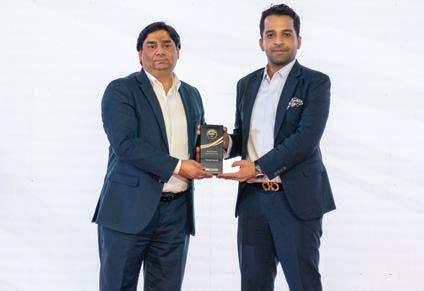
With over 30 years of exposure to investment expertise in the UAE, Century Financials’ cutting-edge technology and a core emphasis on educating investors, its research and analysis capabilities and expertise have delivered industry-leading insights that empower clients in decisionmaking when it comes to investment portfolios.
The investment services firm is committed to a highly customer-centric approach that delivers a wide service portfolio. Since its founding in 1989, Century Financial strives to make investments across global financial markets accessible and easy for investors in the Middle East region.
Century Financials’ wealth and asset management division takes pride in its open architecture product platform, enhanced by bespoke investment solutions and backed by exhaustive due diligence and research process.
Century Private Wealth’s bespoke advisory provides macro analysis and asset allocation, instrument selection, portfolio implementation and ongoing monitoring.
Best Ratings Agency
S&P Global Ratings was the recipient of the Best Ratings Agency award, which was conferred to the global rating agency in recognition of its GCC National Scale Ratings (NSR) for entities in the Gulf region. The NSR offers GCC entities a greater differentiation among local credits within the region than is available on the global scale.

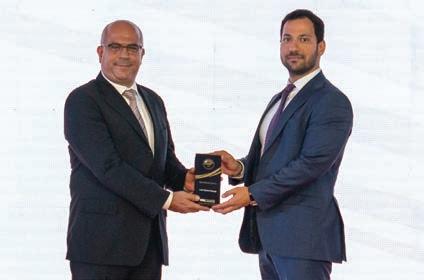
The scale helps GCC issuers and investors to compare the relative credit risk of issuers and issuances across the region and is expected to contribute to better informed, more liquid and more efficient capital markets. S&P Global introduced a new credit rating scale, the Kingdom of Saudi Arabia national credit rating scale, in Q4 2021 and it facilitates credit-risk comparisons among Saudi-related issuers and issuances.
S&P Global published ESG credit indicators for issuers in the global insurance sector, which provide additional disclosure and transparency at the entity level while reflecting the rating agency’s opinion of the influence of ESG factors on its credit rating analysis.
82 Banking and Finance news in the MEA market MEA FINANCE AWARDS 2022
Best Law Firm
Karm Legal Consultants won the Best Law Firm award. The award was conferred to Karm Legal Consultants in recognition of their support to the Middle East’s financial services sector through the drafting of regulatory and guidance policies as part of the Arab Monetary Fund Working Group and MENA fintech association.


The law firm’s niche expertise extends to the latest digital technology projects including fintech, blockchain, tokenisation, data protection and privacy as well as Regtech, Insuretech and Robo-advisory and robotics. KARM advises regulatory bodies and government entities such as ADGM, DFSA and DIFC and the law firm counts Smartcrowd, Paymate, YAP and Telr among its clients in the payments and crypto space. KARM currently leads the policy and governance vertical of the MENA Fintech Association, it is the Ambassador for the Fintech Working Group at Arab Monetary Fund and provides advisory services to 10 fintech clients who are currently procuring licenses from the Central Bank of UAE.
Best Start-Up Support Services
Virtuzone was honoured with the Best Startup Support Services award in recognition of the company’s unique position as UAE’s leading company formation specialist. The company has maintained a formidable reputation and a stellar track record since its establishment and has helped more than 60,000 entrepreneurs from 180 countries to set up businesses in the UAE.


The company’s general success as a business and the businesses they have helped to start is grounded in their intricate knowledge of the UAE’s business and regulatory environment and notable guidance as well as recommendations provided around the provision of financial services. The corporate services solution provider offers impartial advice on UAE company setup while being an end-to-end solution provider for a host of business services, including everything from visas and trade licenses to accounting and branding. Its integration with innovative banking solutions reduces the business bank account opening process from weeks to hours and improves the success rate of startups in opening bank accounts from 60% to 99%.
Virtuzone joined forces with Binance in August, which allows the corporate services provider to accept cryptocurrency payments via Binance Pay.
83 mea-finance.com
Best Sustainable Finance Initiative
Dubai Islamic Bank (DIB) walked away with the Best Sustainable Finance Initiative award. The Shariah-compliant bank was presented with the award in recognition of its Sustainable Finance Framework which was published in October and facilitates the financing of green and social initiatives.
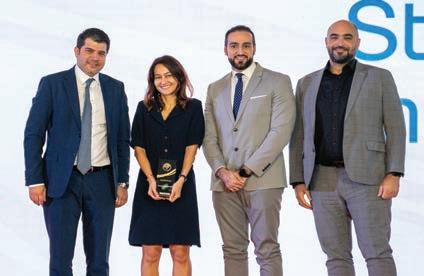
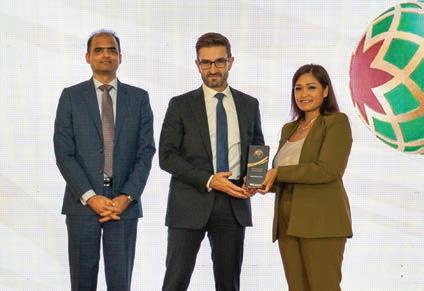
Under the Framework, DIB will finance projects with environmental benefits in categories such as renewable energy, energy efficiency, clean transportation, green buildings, pollution prevention and control and sustainable water and wastewater management as well as support social initiatives that promote employment generation, affordable housing and access to essential services.
The framework supports DIB’s commitment to driving sustainability by financing companies and projects that are at the forefront of the energy transition in the UAE. It aligns with the International Capital Market Association’s Green Bond Principles, Social Bond Principles and Sustainability Bond Guidelines, the Loan Market Association’s Green Loan Principles and Social Loan Principles.
Best Sustainable Lending
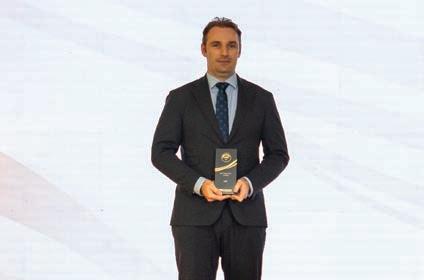
HSBC won the Best Sustainable Lending award in the Middle East. The Best Sustainable Lending award was in recognition of the role that HSBC is playing in mobilising the transition to a global net zero economy, not just by financing it, but by helping shape and influence the global policy agenda. The bank committed to reducing carbon emissions by aligning its financing activities to the global net zero target by 2050 and earmarking between $750 billion and $1 trillion of finance and investment towards the transition by 2030. HSBC in the Middle East is assisting clients in their transitions and bringing best practices and international expertise to individuals and industries across the region. The Middle East’s sustainable finance market had a buoyant 12 months and HSBC has been at the forefront as the premier ESG advisor in the region.
This is evident in the number of deals that HSBC has executed and has been involved with including Riyad Bank’s AT1 Sustainability Sukuk issuance and Sweihan PV Power Company’s $700.8 million 27-year green bond.
Best ESG Strategy
Standard Chartered Bank was the recipient of the Best ESG Strategy award, which went to the bank in recognition of their commitment to sustainable social and economic development through its business, operations and communities.
The bank launched sustainable trade finance solutions across Asia, Africa and the Middle East, Europe and the Americas in 2021 and its new sustainable trade finance proposition is designed to help companies implement more sustainable practices across their ecosystems and build more resilient supply chains.
Standard Chartered’s Sustainable Banking Report 2022: Mobilising retail investor capital found that $8.2 trillion of investable retail wealth could be channelled into sustainable investments by 2030 to finance ESG objectives in growth markets.
84 Banking and Finance news in the MEA market MEA FINANCE AWARDS 2022
Outstanding Leadership Award
Bal Krishen, the Chairman & CEO of Century Financial was the recipient of the Outstanding Leadership Award in the Middle East. Krishen began his capital market and investment professional journey at Century as a dealer in 1999.
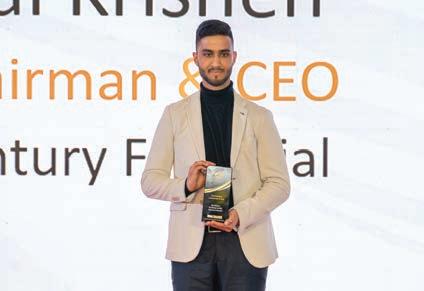
With over 22 years of career and leadership experience in financial markets and services, Krishen is a highly accomplished, ethical and dynamic Chairman leading a team of highly qualified and experienced finance and investment professionals.
Krishen’s noteworthy organisational skills, and his leadership of a team of highly qualified and experienced finance and investment professionals, have instrumentally contributed to the success of the company.
Today Century Financial, operates across more than one hundred global markets, giving customers access to multiple asset classes including currencies, stocks, commodities, indices, metals, energies and exchangetraded funds.
Century Financial’s wealth management division, Century Private Wealth, operates under the Category 3C licence regulated by the Dubai Financial Services Authority and its business activities range from bespoke asset and wealth management services.
Best Technology Executive of the Year for Financial Services
Samer Soliman, the CEO of Arab Financial Services was the recipient of the Best Technology Executive Of The Year For Financial Services award in the Middle East. Soliman is responsible for driving the Arab Financial Services (AFS) digital payments and fintech growth strategy across the Middle East and Africa markets.
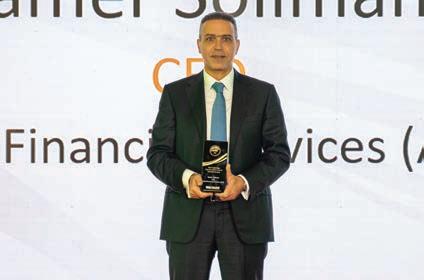
In his capacity as the CEO, Soliman is leading the company into a new era of payments digitalisation, spearheading the application of new technologies for more seamless and intuitive payment experiences while continuing with the company’s tradition of pioneering new, smart payment solutions and services to the region.
With over 20 years of international experience across the banking and payments sector, Soliman held several senior leadership roles at Network International before joining AFS including Managing Director for Network International Group’s Middle East business and he was responsible for implementing the payments giant’s comprehensive growth strategy across the region.
85 mea-finance.com
Banker of the Year
Dr. Adnan Chilwan, the Group CEO of Dubai Islamic Bank (DIB) was the recipient of the Banker of the Year Award. A globally recognised figure in the Islamic finance industry, Dr. Chilwan led DIB’s acquisition of Noor Bank to create one of the largest Shariah-compliant banks in the world with total assets exceeding $80 billion (AED 279.1 billion).
With an extensive banking career spanning over two decades, Dr. Chilwan is hailed as a visionary for leading the advancement, development and increasingly growing uptake of Islamic banking and finance across the world and is determined to make it the norm in the markets and not just an alternative form financial activity.
Dr. Chilwan leads DIB’s workforce of more than 10,000 employees across a vast network of branches and entities in the UAE as well as a growing international presence in Asia, the Middle East and Africa. He represents DIB on boards of various strategic investments, subsidiaries and associates including holding the prestigious position of President Commissioner at PT Bank Panin Dubai Syariah TBK and serving as the Chairman at DIB Bank Kenya.
Other board representations include Deyaar, a Dubai-based real estate company, Bahrain investment centre Liquidity Management Centre and Dar Al Shari’a, a legal and Shariah consultancy firm. Dr. Chilwan is a holder of a Ph.D. and an MBA in Marketing. He is a Certified Islamic Banker (CeIB), a Postgraduate in Islamic Banking & Insurance and an Associate Fellow Member of Islamic Finance Professionals Board.

The trophy was collected on Dr. Chilwan’s behalf by Jawaher Al Shamsi, Head of Corporate Communication & PR, Dubai Islamic Bank
Best Technology Leadership Award
Abdulla Almoayed, the CEO of Tarabut Gateway was the recipient of the Best Technology Leadership Award in the Middle East. Under his leadership, Tarabut is pioneering open banking in the MENA region with its single universal open banking API. Almoayed is passionate about creating game-changing digital infrastructures that drive forward the data-driven economy as key to his vision to create a collaborative environment that provides financial inclusion to the unbanked and underbanked.
Tarabut was established in 2017, with the overarching goal of bringing financial services in the MENA region into the 21st century. The opening banking platform became the first graduate of Bahrain’s regulatory sandbox, when the Central Bank of Bahrain unveiled its open banking framework in December 2018, obtaining five compliance contracts with the top Bahraini banks.
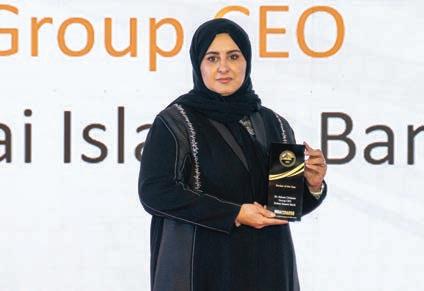
Having opened offices in the UK and the UAE, Tarabut is on its way to helping the region tap into the open banking industry—which is set to reach a global market size of $43 billion over the next five years.
The open banking platform raised $12 million in a funding round led by New York-based Tiger Global Management in November 2021 and the investment will help Tarabut expand its open-banking platform into Saudi Arabia and North Africa.
Tarabut prides itself as the largest regulated open banking platform in the MENA region and serves as a portal for fintech startups looking to get access to data from banks to build new services.

86 Banking and Finance news in the MEA market MEA FINANCE AWARDS 2022
Scan here to access Finacle’s latest Cloud Banking Point-of-view
Cloud acceleration = Business acceleration
For banks that advance their cloud journey, the checkered flag awaits.








Banks today are missing scale and speed in cloud adoption - our research indicates that the full value of cloud transformation is only realized upon migrating at least 60% of your bank’s workload to cloud. Yet most banks are far from that milestone, and they lack a clear roadmap to get there.
Infosys Finacle has made huge investments and created multiple proven use cases in cloud technology. Access our latest point-of-view 'Banking on Cloud: the next lap' for a detailed roadmap of how banks can accelerate their cloud adoption journey with agility and decisiveness.
Inspiring Better Banking
www.finacle.com
100+ Countries 1
customers 1.7
accounts
billion+
billion
Tap into 100+ globally managed mutual funds
Buy, sell, access performance history and track your portfolio anytime, anywhere with our Online Mutual Funds platform. Find out how we can help you manage and grow your wealth.
Scan to book an appointment with our Wealth Specialists today.

Disclaimer: This information is neither an offer to sell, purchase or subscribe for any investment nor a solicitation of such an offer. This information is general and does not take into account a person’s individual circumstances, objectives or needs. Investments carry
and
may go up as
as down.
risk
values
well
