Medical College of Wisconsin
Department of Surgery


Milwaukee Skyline (Photo by Motaz Selim, MD).
“We are committed to improving the care of patients –not only our patients of today but also our patients of tomorrow – through innovation , discovery and courageous approaches to medical illness .”
I hope you have as much fun reading our Annual Report as we have had putting it together! Our faculty, residents, nurse practitioners, physician assistants, and staff are easy to brag about as they have amazing talent, combined with a unique level of dedication – making Milwaukee medicine the best medicine in the world!
The last two Annual Reports commented on the challenges of the pandemic and how we tried to combine our efforts in clinical medicine, research and education with the reality of COVID-19. We are now beyond COVID and refueling for what will be the most transformational time in Milwaukee medicine. For example: in Cardiac Surgery we can now fix or replace almost any broken heart; in Pediatric Surgery we can operate on babies inside and outside of mom’s belly and provide the love and support that are needed for mom and dad; in Minimally Invasive Gastrointestinal Surgery and the Condon Hernia Institute, bring on the most difficult hernia or the most challenging digestive problem; in Colorectal Surgery, the advances in IBD and rectal cancer are improving the quality of life for our patients in ways never before imagined; in Surgical Oncology we have embraced the molecular revolution and have clinical trials available nowhere else in the world; in Trauma and Acute Care Surgery we are the safety net for all of southeastern Wisconsin, no one cares more; in Vascular and Endovascular Surgery, we keep the blood flowing when no one else can; in Solid Organ Transplantation, we provide hope for a tomorrow which is only possible with the gift of life.
Most importantly, we have the greatest job on the planet – in no other field can we help people every day and bring the excitement of innovation and discovery into clinical medicine, research and education. Our support from the greater Milwaukee community and beyond has allowed us to fund the great thoughts which characterize the amazing minds of our faculty. The new faculty and residents that we have been fortunate enough to recruit bring novel ideas, diverse opinions and end-

Douglas B. Evans, MD Chair, Department of Surgery Donald C. Ausman Family Foundation Chair
less energy to what we do every day. Guiding us in our commitment to the patients of today and the patients of tomorrow are the core values of honesty, integrity, a commitment to open communication, an appreciation for the unique and diverse talents which all members of our department contribute to making the team so much more powerful than any individual, and a promise to do our very best even when the task at hand seems overwhelming. The Department of Surgery at MCW is proud of what we have accomplished and excited for what is possible – please join our team, the door is open and there is plenty of room!

>$250,000
Five-Year Faculty Giving Total


10 Divisions
47 Active Grants

35% Women Faculty

411 Faculty & APPs featured on The Word on Medicine (through March 2022)

$6.3M of Research Funding (FY’21)

23 Unique Practice Sites

11
Endowed Professors

89 Secondary & Volunteer Faculty

Skill of Our Faculty & Residents

62.5% Women Residents

56 General Surgery Residents

47,811 Unique Patients

116 Full & Part-time Faculty

10 Clinical Fellows

$2.7M of Sponsored Research (FY’21)
Our faculty operate at 12 pediatric surgery sites and 14 adult surgery sites in Wisconsin
Froedtert and MCW Locations
Cancer Center, Drexel Town Square Health Center
Clinical Cancer Center, Froedtert Hospital
Drexel Town Square Surgery Center
Froedtert Hospital and MCW, Milwaukee
Froedtert Menomonee Falls Hospital & Town Hall Clinic
Froedtert Surgery Center

Map of MCW Surgery practice locations.
Mequon Health Center
Froedtert West Bend Hospital
Pleasant Valley Health Center
MCW Surgery Locations
St. Agnes Hospital, Fond du Lac
Ascension Franklin
Plank Road FORME Vein Clinic
Froedtert South Vascular Access
Zablocki VA Medical Center
Other Pediatric Surgery Locations
Marshfield Clinic
Children’s Specialty Group Locations
Appleton Clinic
Children’s Wisconsin Clinics
Children’s Wisconsin Hospital, Milwaukee Campus
Delafield Clinic
Forest Home Clinic
Mequon Clinic
New Berlin Clinic
Neenah Clinic
Children’s Wisconsin-Surgicenter
West De Pere Clinic
Marshfield Clinic Health System
Froedtert West Bend Hospital
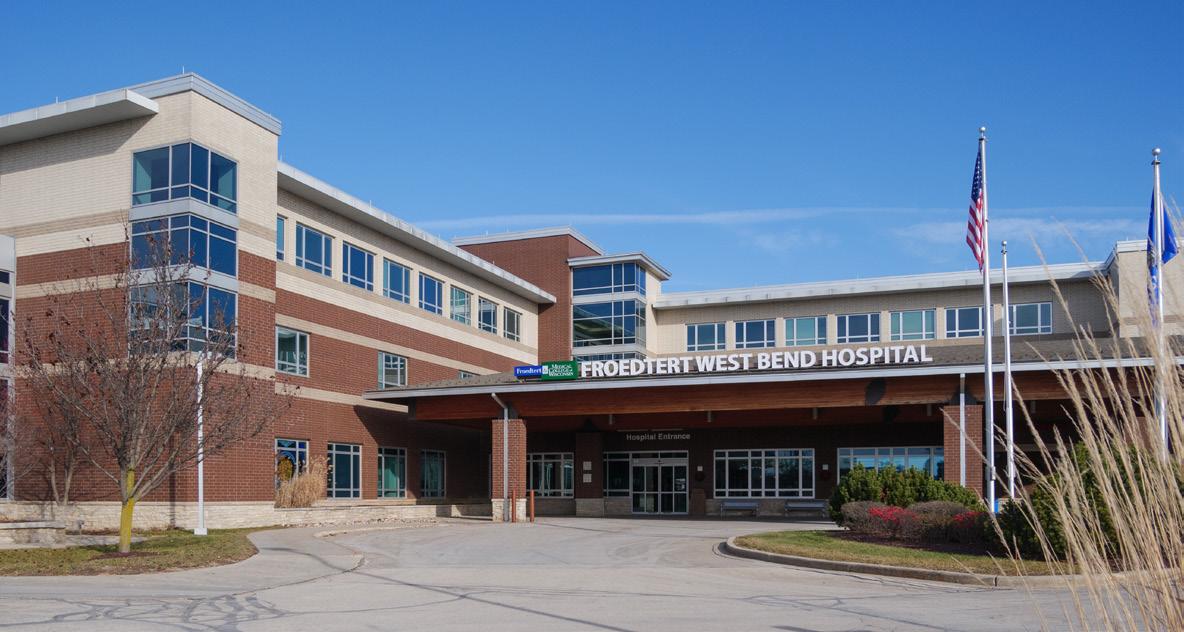
Froedtert West Bend Hospital.
Froedtert Menomonee Falls Hospital

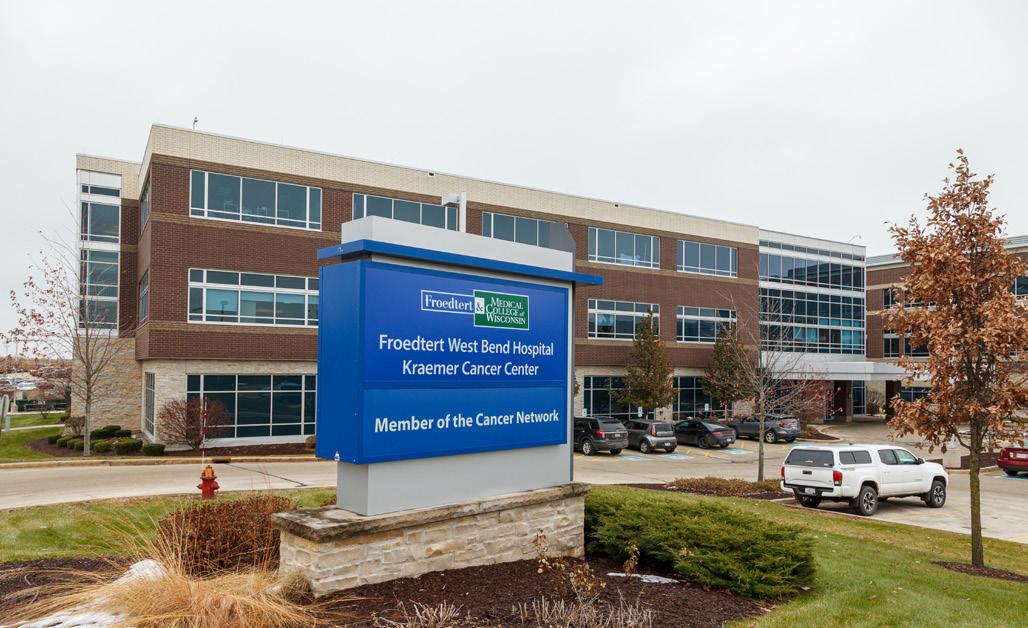
Froedtert West Bend Hospital.
Froedtert Clinical Cancer Center

Milwaukee Regional Medical Center - Froedtert Hospital, Medical College of Wisconsin, Children’s Wisconsin


The Edwin Ellison Surgical Society was initiated in 2019 with the intent of connecting MCW surgeons across subspecialties, practice settings and years of training through a collaborative network to provide support, mentorship and sponsorship to our esteemed faculty and alumni. To this end, the society plans to hold an annual reception at the American College of Surgeons Clinical Congress. Additionally, when the annual meeting is in Chicago, an alumni event will be hosted at MCW. In the future this CME event will occur on the preceding Friday night and Saturday morning, with an intervening dinner reception
to catch up with friends. Symposia will allow for alumni to share their accomplishments, as well as exciting developments within the MCW Department of Surgery. The society will also facilitate communication and networking amongst members.
Lifetime membership to the due free society will be conferred on successful completion of the MCW general surgery residency or fellowship programs within the Department of Surgery. Lifetime membership will be retroactively granted to all previous graduates of the MCW Surgery program, if they wish to receive it. Additionally, all
MCW Surgery faculty who have been with the Department for 1 year will become Associate members until departure from MCW. Honorary membership can be given to those who have made significant contributions to the Department of Surgery. Previous graduates can update their contact information at: https://www.mcw.edu/departments/ surgery/education/edwin-ellisonsurgical-society
We hope that this new society can help us all stay connected as the surgical journey continues following residency.
The Executive Committee of the society consists of the Current and Past President, the President-Elect, Secretary / Treasurer, Faculty Representative, Alumni Representative, Program Director, Department Chair and Administrative Chief Residents. The inaugural Executive Committee was chosen by the planning committee and can be seen below.

Timothy Ridolfi, MD ’05, GME ‘12, MS President

Tracy S. Wang, MD, MPH Faculty Rep.

Rachel Greenup, MD ‘04, MPH, GME ‘11 President-Elect

Matthew Goldblatt, MD ‘97, GME ‘04 Program Director

Lisa Olson, MBA Program Manager

Betsy Appel, MD ‘11, GME ‘16 Secretary

Erin Buchanan, MD Resident Rep.

Douglas B. Evans, MD Surgery Chair

Chris Fox, MD ’98, GME ‘04 Alumni Rep.

Paul Dyrud, MD Resident Rep.

The Department of Surgery is honored to announce the launch of the Bud and Sue Selig Hub for Health Services Research. The Commissioner and Mrs. Selig are Milwaukee through and through and their generous support of our community has been impactful for decades. This gift will further enhance our partnership to improve health care in southeastern Wisconsin, in bringing Hope to Health, especially for those struggling to receive the care they deserve. The Department of Surgery and our Division of Research are excited to build upon the Seligs’ support and transform health care the same way Commissioner Selig transformed the Milwaukee Brewers and Major League Baseball.
Bud Selig’s commitment to Major League Baseball is inseparable from the life-long dedication of the Seligs to our community. Bud began with the Milwaukee Braves in the 1950’s and when they moved to Atlanta in 1965, he was responsible for bringing baseball back to Milwaukee, purchasing the Seattle Pilots and moving the team to
Milwaukee, renaming them the Brewers.
He is also the man responsible for bringing Hank Aaron back to Milwaukee to end his illustrious career. He and Hank Aaron were about the same age when they met and bonded over their struggles, however different, on the way to success. At the recent funeral of his longtime friend, Bud commented on their roots, “We were both becoming proof that all things can be possible, dreams can come true.”
Under the ownership of Bud Selig, the Brewers reached the World Series in 1982. He was then named the 9th Commissioner of Major League Baseball in 1998 by a unanimous vote of the 30 team owners. Since then, his accomplishments are too numerous to list, but some of the highlights included his historic labor agreement in 2002 that avoided a loss of part or all of the baseball season, he introduced a plan for revenue sharing to achieve competitive balance, fortified drug testing policies, and dramatically increased fan support.
Commissioner and Mrs.

Selig have a long history of support for medical research and the importance of academic medicine. They introduced Major League Baseball to Stand Up To Cancer which made an enormous impact on cancer research. In recognition of the Seligs’ many contributions to this program, Stand Up To Cancer awarded their first named Innovative Research Grant in honor of Bud and Sue Selig. Commissioner Selig was succeeded by Rob Manfred on Jan. 25, 2015, after 22 years, the second-longest tenure at the helm of MLB; he was
inducted into the MLB Hall of Fame in 2017.
This gift in support of Health Services Research is in perfect harmony with the Seligs’ ongoing, thoughtful investments in making dreams come true, and our Milwaukee community the best it can be. It is in keeping with our commitment of bringing Hope to Health at the Medical College of Wisconsin.
Douglas B. Evans, MD Chair, Department of Surgery
Donald C. Ausman Family Foundation Chair
Scan the QR code to read MCW Surgery’s Leading The Way newsletters! Newsletters publish triannually and feature the latest in academic medicine straight from our faculty experts. Never miss an issue - join the Leading The Way mailing list by sending a request to surgeryevents@mcw.edu

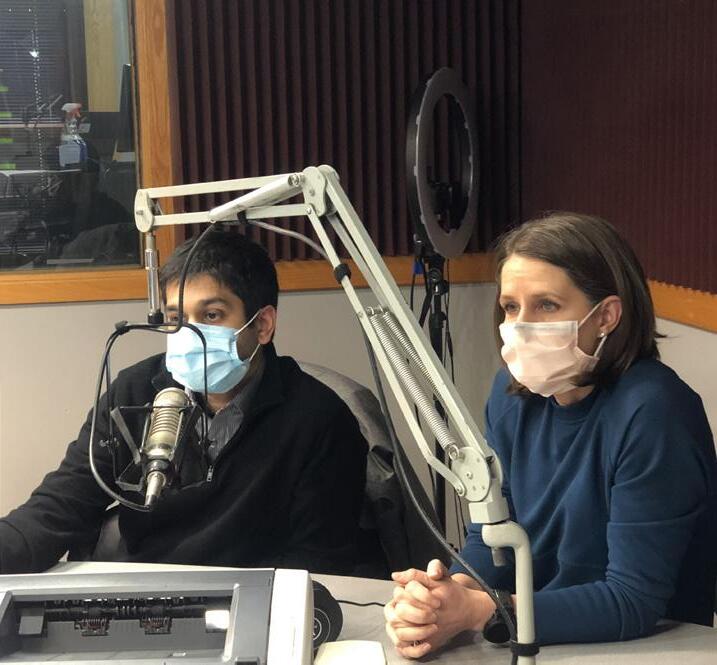
The Word on Medicine (WOM) airs live on News/Talk 1130 WISN every Saturday at 4 PM CDT. Each week brings together a panel of medical experts and patients to discuss the latest in medical innovation and discovery. Since October of 2017, we have aired more than 120 unique programs involving over 600 faculty, countless nurses, nurse practitioners, physician assistants and many distinguished
411
Faculty & APPs featured on The Word on Medicine*
182
Total Guests on WOM/ LWOM (24 guest faculty, 158 patients)*
117
Episodes to Date*
14
Episodes Covering COVID-19 Topics
*Through March 2022
invited guests. Most importantly, we have brought to you the personal experiences of our patients and their families. Episodes are hosted by Dr. Douglas Evans, Chair of the Department, and Dr. Rana Higgins, Associate Professor of Surgery. The Word on Medicine is generously supported by Selig Leasing Company and Mark and Debbie Attanasio.
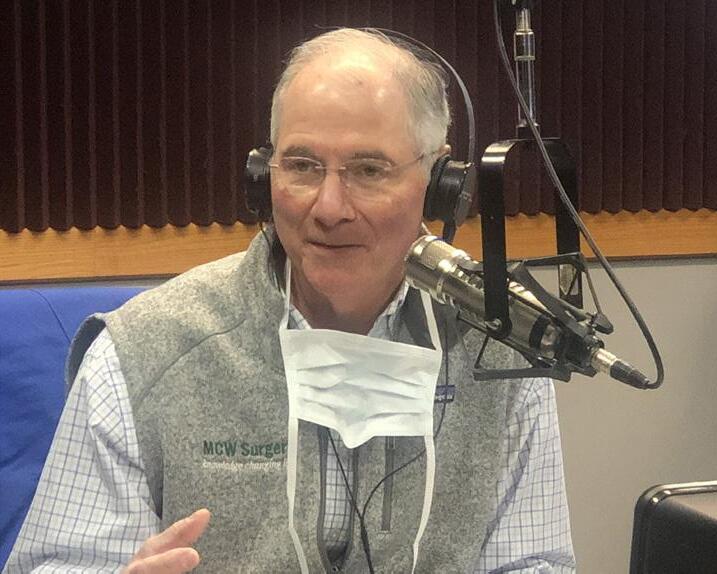
Don’t miss our library of past episodes on iHeartRadio, featuring over 400 MCW guest experts covering all the hot issues in medicine today. Scan the QR code to listen now, or search The Word on Medicine on iHeartRadio, iTunes, Podbean, or Stitcher.


The Latest Word on Medicine (LWOM) airs every Friday at 2 PM CDT on the iHeartRadio app. These short four-minute features provide timely and concise information straight from MCW experts. Over the course of the COVID-19 pandemic, the Latest Word on Medicine has provided important health information to the public, at a time when our community needed it most. The Wisconsin Broadcasters Association recognized these contributions to public health, awarding the program the 2nd place Award for Excellence in the category “Best Pandemic-Related Service to Community'' in 2021. The Latest Word on Medicine is supported by a grateful patient through his donation to the We Care Fund.


Propelling the most promising work and ideas for a healthier Wisconsin today, and for generations to
Since issuing its first funding awards in 2004, The Advancing a Healthier Wisconsin Endowment, based in MCW’s School of Medicine, has become Wisconsin’s largest health improvement philanthropy. Driven by a vision of a healthier Wisconsin, AHW has invested more than $311 million in more than 517 projects supporting Wisconsin’s health innovators, collaborators, and problem solvers to advance research that improves lives, to build education and workforce development programs and pathways, and to partner in communities statewide to create real change.
In 1999, Blue Cross & Blue Shield United of Wisconsin converted from a nonprofit to a for-profit corporation. Medical College of Wisconsin received half of the funds resulting from the conversion, with the other half going to UW-Madison’s School of Medicine and Public Health. Today, AHW, and
its peer program at UW, are counted among the several hundred “health conversion” foundations in existence across the U.S. The funds entrusted to the MCW School of Medicine to create AHW place it in a unique position – AHW is the only health philanthropy in the nation stewarding public funds while embedded in a private medical school.
AHW is delivering on its public stewardship mission by investing in promising biomedical research, supporting community health initiatives, and building the health workforce needed by Wisconsin.
Within the Department of Surgery, nearly $11 million in AHW funding has supported work across the department with additional millions in related projects supported in neurosurgery, orthopedic surgery, and more. Together, these investments in Department faculty have led to
research advancements in areas such as epigenetics, cardiovascular disease, trauma and cancer, while also supporting investments into the research infrastructure such as the launch of the state’s first cancer precision medicine simulation unit. AHW is currently led by its director, anesthesiologist Dr. Jesse Ehrenfeld, and recent addition to the Department of Surgery, deputy director, Dr. Ugwuji Maduekwe.
Active Project Highlight: A Translational Study of Epigenetic and Neural Mechanisms of Risk Phenotypes for PTSD
Experiencing a traumatic event often leads to the development of post-traumatic stress disorder (PTSD), which is associated with changes in brain function and structure. While there has been progress in understanding who is at risk for PTSD following traumatic injury, there remains much to learn regarding PTSD devel-
opment in order to provide better and more timely intervention and treatment options.
With a $250,000 investment by AHW awarded in 2020, Dr. Gwen Lomberk along with Dr. Terri deRoon-Cassini and their collaborative research team are working to apply novel strategies, including looking at marks present on DNA in the blood, to understand risk for chronic PTSD and recognize patterns that connect with changes in brain function after traumatic injury in order to develop patient-centered screening and intervention approaches.
Following a delay due to COVID-19, the project team pushed through challenges to successfully recruit


patients who have experienced traumatic injury and identify strategies to determine who is at risk for chronic PTSD after injury. The team has since collected enough samples to perform DNA isolation, methylome profiling and genotyping, with analysis currently underway.
At AHW, we seek partners who share our belief that by working together we can build a healthier Wisconsin today, and for generations to come. To help us propel this
mission forward, respond to an RFA as a source for your research funding, serve as a faculty partner for a community project, or serve as a volunteer on one of our review panels.
Stay connected by subscribing to the AHW e-newsletter at ahwendowment.org, and by following AHW on Facebook, Twitter, and LinkedIn. AHW staff are available to meet regularly with any interested investigators, teams, or departments to explore how your ideas can align with AHW funding opportunities.

@ahwendowment @ahwendowment

Advancing a Healthier Wisconsin Endowment on LinkedIn
The Department of Surgery was honored to host the Central Surgical Association’s 79th Annual Meeting at the Saint Kate - The Arts Hotel in downtown Milwaukee.
The Department of Surgery has a strong history of representation within the Central Surgical Association (CSA), with 23 current members and four faculty members who have served as President of the organization. These include Edwin Ellison, MD (1968-1969), Robert Condon, MD (1978-1979), Jonathan Towne, MD (2002-2003), and most recently, Tina Yen, MD, MS (2019-2020). Jon Gould, MD, MBA, currently serves as the society Recorder. Tracy Wang, MD, MPH, served as this year’s Local Arrangements Chair.
In addition to President Timothy Pritts’ Presidential Address, “Grit and Resilience in Surgery,” this year’s program included the CSA Young Surgeons Committee Panel featuring “How I do It” video session, the Diversity, Equity, and Inclusion Task Force Panel on “Workday Scenarios,” as well
as a ‘speed mentoring’ session for early- and mid-career faculty, with leaders from the CSA.
This year’s scientific program also included 5 oral and 3 quick-shot presentations by MCW residents and faculty. The local program focused on the innovative research and programs within the Department:
• Terri deRoon-Cassini, PhD, MS - “Hospital-Based Violence Prevention Programming: The Reach of 414LIFE”
• Tammy Kindel, MD, PhD“Bariatric Surgery in Advanced Heart Failure Patients”
• Ugwuji Maduekwe, MD, MMSc, MPH - “Improving Surgical Care through Philanthropy: The AHW Experience”
The highlight of the meeting was the ‘fireside chat,’ “The Chicken Runs at Midnight: A Perspective on Life and Baseball from Craig Counsell.” Craig Counsell, manager of the Milwaukee Brewers, won two World Series Championships during his 16-year career as a player in Major League Baseball

and was the National League Championship Series Most Valuable Player in 2001. The session was moderated by Roger Caplinger (Vice President of Medical Operations, Health and Safety for the Milwaukee Brewers) and Douglas B. Evans, MD.
Finally, we were thrilled to have Milwaukee-based Nineteen Thirteen, an award-winning duo featuring the cellist Janet Schiff and percussionist Victor DeLorenzo, the founding drummer of Violent Femmes, provide the musical entertainment at this year’s Nonie Lowry Dinner!
On September 19, 2021, Matt Laprade was a 46-year-old man with respiratory failure from COVID-19. He was in an ICU in Kenosha on a mechanical ventilator with a tube in his throat, lying on his stomach with medications to paralyze his muscles so they didn’t use any additional oxygen. Even with 100% oxygen he was dangerously close to death. At the last moment he was accepted for transfer to a hospital in Milwaukee for ECMO with hope that it would buy his lungs more time to recover.

In late August, Matt had a sore throat, cough, and muscle aches, and then on September 1, he went to the emergency room in Kenosha and was found to have COVID pneumonia. He was started on supplemental oxygen and given treatment with Remdesivir and dexamethasone. By September 3 he was requiring 15 liters of oxygen and then later that day he needed a high flow device that delivered 60 lpm oxygen. A CT scan of his chest showed air in the mediastinum and bilateral opacified lungs, and by September 12 he was requiring mask ventilation. His lungs kept getting worse and he was intubated on September 15.
Matt showed no improvement throughout the entire month of October and by November 4, his doctors started looking for a hospital
that could perform a lung transplant. At this point there was no possibility that his lungs would recover. Because he was unable to get out of bed and walk, multiple programs rejected him, but finally on November 30 he was transferred to Froedtert.
We knew that he had been confined to bed for over 2 months, and without being able to walk, he would be unlikely to recover from a lung transplant surgery. Matt’s ECMO was being performed with a cannula in his femoral vein and another in his jugular, and we needed to reconfigure his access. The femoral catheter was removed, and the jugular was replaced with a dual lumen bicaval ECMO cannula. He was not able to stand on his own until December 6 when he stood
for 19 seconds. This was the first time Matt had been out of bed since September. He continued to work with physical and occupational therapy and by December 16, despite requiring ECMO and mechanical ventilation, he was able to walk for the first time in 3 months.
Matt was placed on the national lung transplant list December 22, and he received a bilateral lung transplant on January 8, 2022. Matt continued to improve rapidly, and he was discharged for physical rehabilitation on January 26. He was able to go home on February 2, 2022. After being hospitalized for five months (2 months at Froedtert), Matt was finally home and breathing on his own.
Paul J. Pearson, MD, PhD Professor and Chief
G. Hossein Almassi, MD Professor
Nilto C. De Oliveira, MD Professor
Lucian A. Durham III, MD, PhD Associate Professor
Mario G. Gasparri, MD Professor
George B. Haasler, MD Professor Emeritus
David W. Johnstone, MD Professor
Director, Cardiothoracic Surgery Fellowship Chief, Section of General Thoracic Surgery
David L. Joyce, MD, MBA Professor
Lyle D. Joyce, MD, PhD Professor Chief, Section of Adult Cardiac Surgery
Takushi Kohmoto, MD, PhD, MBA Professor
R. Eric Lilly, MD Assistant Professor
Paul L. Linsky, MD Assistant Professor
James E. Mace Jr., MD Surgeon
Stefano Schena, MD, PhD Associate Professor
H. Adam Ubert, MD Assistant Professor
Adam Holmbeck, RN, MSN, APNP
Melissa Kaske, RN, MSN, APNP
Lindsay Morris, RN, MSN, APNP
Chelsea Nettesheim, RN, MSN, APNP
Tony Sanders, RN, MSN, APNP
Shannon Scalish, RN, AGPCNP-BC, DNP
Dawn A. Schmidt, RN, MSN, APNP
Craig Schutta, RN, MSN, APNP
Meg Shannon-Stone, RN, MSN, APNP
Timothy Sie, RN, MSN, APNP
Trisha L. Wilcox, RN, MSN, APNP
Elizabeth Froelich, MPAS, PA-C
Andrew Kennedy, MPAS, PA-C
Rebecca Miller, MPAS, PA-C
Gina A. Muscato, MPAS, PA-C
Allison Stone, MPAS, PA-C
Heather Sutter, MPAS, PA-C
Lisa M. Thomas, MPAS, PA-C


No 34-year-old should have to worry about rectal cancer and the prospect of a permanent colostomy, yet this is where Jennifer Jewson found herself in August of 2015. For years Jennifer thought that her rectal bleeding was caused by hemorrhoids, but eventually, a colonoscopy revealed that she had a large tumor in the lowest part of her rectum.
She was referred to the Colorectal Surgery Cancer Clinic for evaluation and treatment. Jennifer had what is called locally advanced low lying rectal cancer; the tumor was outside the rectal wall and had moved into the lymph nodes in the area. Her case was presented at our weekly multidisciplinary colorectal cancer tumor board and a treatment plan was put in place. This included courses of chemotherapy, radiation therapy and lower dose chemotherapy, followed by an operation to remove her rectum and anus and construct a colostomy.
Thankfully, Jennifer is alive and well, and almost seven years after her diagnosis, not only does she not have a colostomy, she never had any surgery at all. Jennifer had what is called a “complete response” to her treatments. This means that the tumor was destroyed by the chemotherapy and the radiation therapy and she has been cured without any operation.
Historically, surgery is the only curative option for patients with rectal cancer. So, how did this happen? The treatment for locally advanced midand low-rectal cancers involves giving chemotherapy and radiation therapy, followed by a large operation to
remove the tumor, which may result in a colostomy. After a six-week recovery, patients start a second dose of chemotherapy. Since the early 1990s when this approach was routinely adopted, rectal cancer outcomes improved tremendously. Up to 20% of patients had a “complete response,” and the final pathology report showed that the preoperative chemo and radiation had destroyed the tumor and there was no viable tumor left. More recently, it has become clear that giving all chemotherapy and radiation therapy before surgery has advantages, one being that more patients achieve a complete response and can be spared operation. The challenge, for the surgeon, is deciding if their patient has any viable tumor left after treatments, who should have surgery and who could safely avoid a major operation. Jennifer was one of the latter patients and we now know, with the passage of time, that the proper decision was made to not operate.
Our Colorectal Surgery Division is proud to offer cutting edge treatments for benign and malignant colon, rectal and anal problems. We work closely with our colleagues in Gastroenterology, Medical Oncology, Radiation Oncology, Surgical Oncology and Diagnostic and Interventional Radiology. At MCW/Froedtert, we are surrounded by experts in each of these fields which allows us to offer treatment approaches that patients may not find elsewhere. We are one of only a small number of centers to be designated as a Rectal Cancer Center of Excellence by the National Accreditation Program for Rectal
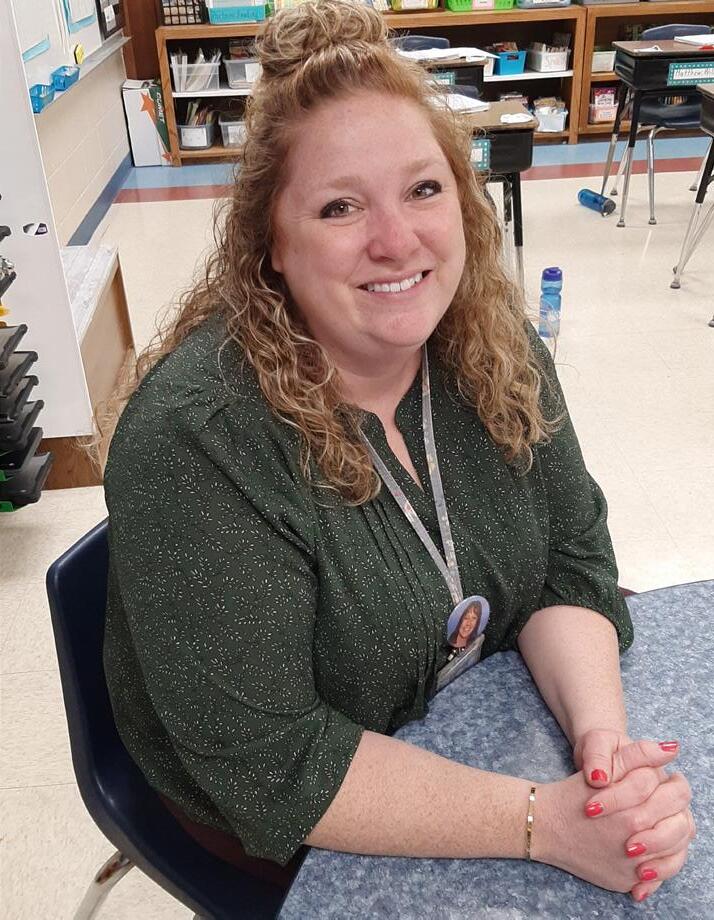
Jennifer Jewson.
Cancer. Our research mission drives our desire to learn more every day, so that tomorrow’s patients are better cared for than today’s patients. We have recently published research on young age colorectal cancer and the use of advanced MRI techniques for evaluating rectal cancer. We have presented experience with complete response in rectal cancer patients at national meetings, and we are partnering with our patients to collect tumor specimens and blood samples for our Rectal Cancer Tumor Bank so that we can make new and important discoveries. We firmly believe that our patients benefit from our efforts and we are so happy that Jennifer Jewson was one of these beneficiaries. We look forward to her visits with us in the Cancer Center as we are energized each time we see her. Everyone around Jennifer recognizes that she is a kindhearted person and the world is a better place with her in it!

Kirk A. Ludwig, MD Professor and Chief
Vernon O. Underwood Chair in Colon Cancer Research
Jed F. Calata, MD Assistant Professor
Mary F. Otterson, MD, MS Professor
Carrie Y. Peterson, MD, MS Associate Professor Associate Vice Chair, Quality
Timothy J. Ridolfi, MD, MS Associate Professor
Nicole L. Kellner, RN, MSN, APNP
Sarah J. Lundeen, RN, MSN, APNP
Kimberly A. Spitz, RN, MSN, APNP
Courtney Jones, MPAS, PA-C
Samantha Wolff, MPAS, PA-C
Emma was born in 2010 with hypoplastic left heart syndrome (HLHS), a serious heart defect in which the left side of the heart fails to properly develop. The standard treatment includes three open-heart surgeries typically around 2 weeks, 6 months and 2 years of age. After her second surgery, Emma developed heart failure, which occurs in about 10% of all cases. When she was 9 months old, Emma was placed on the heart transplant list.
Despite this, life began to stabilize for Emma and she was discharged from the hospital. But things took a serious turn almost two years later. While Emma was undergoing a cardiac catheterization to evaluate her for the third and final HLHS surgery, Michael Mitchell, MD, discovered that the arteries and veins in her groin had collapsed.
10-20% of heart transplants will fail due to rejection. In the first year following the transplant, patients are tested for rejection up to a dozen times. After that, they must undergo regular surveillance biopsies for the rest of their lives. Without vascular access to her heart, doctors would not be able to perform the necessary biopsies to test for organ rejection when Emma ultimately received a transplant. That also meant she was a high-risk candidate and her transplant was unlikely to be approved.
Dr. Mitchell refused to accept that, and thanks to a groundbreaking blood test developed by Dr. Mitchell and Aoy Tomita-Mitchell, PhD, he won’t have
to. The idea for this test arose half a decade earlier, when Dr. Mitchell and Dr. Tomita-Mitchell developed a non-invasive, DNA-based blood test that could diagnose Down syndrome in utero. It proved successful and they believed the same principles could be applied to donor rejection.
“In the test for Down syndrome, we were able to quantify fragments of fetal DNA present in the mother’s blood,” said Dr. Tomita-Mitchell. “Mike hypothesized that, similarly, fragments of donor DNA might be present in a transplant recipient’s blood and, if so, that might help us determine if rejection was taking place or not. Mike and his colleagues applied for a grant from the National Institute of Health and we are now conducting a multi-site clinical study.”
The new test starts with a simple blood draw. The sample is shipped overnight to the TAI Diagnostics lab in Wauwatosa.1 A robot extracts the DNA from the sample and separates the donor DNA from the recipient’s DNA. The test looks for how much donor DNA is present in the patient’s blood a high level of donor DNA indicates rejection. “We have fragments of DNA that circulate in our blood,” said Dr. Mitchell. “If you’ve had a transplant, a fraction of the DNA comes from the donor organ, and this fraction increases with injury to the donor organ.” In addition to being faster, cheaper and less invasive than a physical biopsy, testing for DNA levels is more accurate and can lead to earlier detection.
Fortunately, Emma has not yet needed the blood test. After making incredible progress these past few
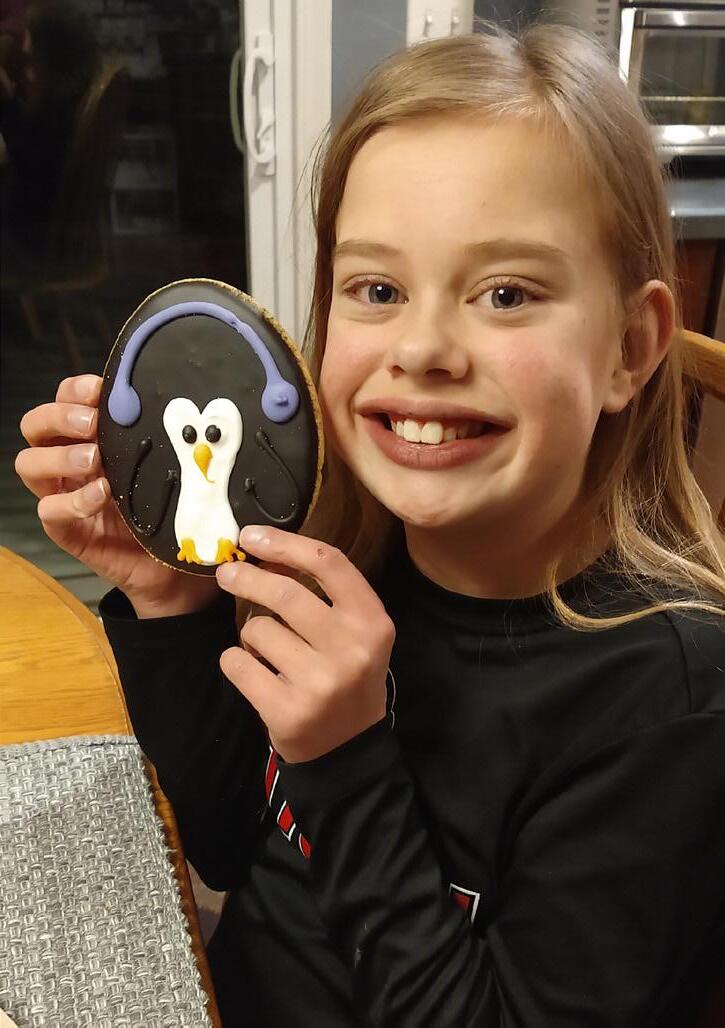
years, she was officially taken off the transplant list in November 2017. But her mother knows that it’s likely a matter of when, not if. And knowing that this test now exists gives her great peace of mind.
“Nothing has been easy, and Emma has overcome so much to get where she is today. This test definitely takes away one of the biggest risk factors against her having a transplant,” said her mother. “I think that Emma inspired the test is wonderful. I’ve always felt that she has a purpose.”
1 At the time of publication, Dr. Aoy Tomita-Mitchell and Dr. Michael Mitchell are each inventors of the DNA-based test and each hold leadership positions at TAI Diagnostics, Inc. as the Chief Scientific Officer and the Chief Clinical Advisor, respectively.

Michael E. Mitchell, MD Professor and Chief
S. Bert Litwin Chair Surgical Director, Herma Heart Institute
John E. Baker, PhD Professor
Tracy R. Geoffrion, MD, MPH Assistant Professor
Viktor Hraska, MD, PhD Professor
Elyan Ruiz Solano, MD Instructor
Aoy Tomita-Mitchell, PhD Professor
Ronald K. Woods, MD, PhD Professor
Jennifer L. Ingle, PA-C
Aaron M. Kleinertz, PA-C
Michael R. Madrzak, PA-C
L. Eliot May, PA-C
Allyssa Nicholas, MPAS, PA-C
Ryan Smith, MPAS, PA-C
Emily Spector, MMS, PA-C


Offering the most advanced surgical options available –from laparoscopic surgery, to incisionless endoscopic procedures , to robotic surgery, and whatever comes next
In 2015, Anthony Moriva, an otherwise healthy and active individual, began to struggle with shortness of breath. Doctors in his hometown determined that a very large paraesophageal hernia was compressing his lungs and contributing to his shortness of breath. He underwent a minimally invasive surgery to repair his hernia in 2015.
Following surgery, Tony did well for many years. However, in 2018 he began noticing problems when he would eat and drink. He was unable to eat normally and had to lie down to allow food to pass through his system. Tony was experiencing severe abdominal pain and chest pain if he was not extremely careful with what and how much he ate.
Tony’s primary care physician referred him for an upper endoscopy to determine the cause of his abdominal pain and nausea. He was subsequently diagnosed with massive recurrent paraesophageal hernia with near-total intrathoracic stomach and transverse colon consistent with a recurrent type IV paraesophageal hernia. Tony met a few surgeons closer to home to discuss reoperative repair, however they felt that the surgery he required was too complex and referred him to Jon Gould, MD, MBA. Per Tony, the referring surgeon claimed Dr. Gould to be “the best in the state.”
Tony’s journey wasn’t an easy one. While waiting for his scheduled surgery, he was seen in the emergency room close to home for severe abdominal pain and vomiting. A CT scan was performed and revealed that his
incarcerated stomach was dilated and fluid-filled, and that he was suffering from gastric organo-axial volvulus. Tony’s scheduled surgery was moved to an earlier date. On January 28, 2022, Tony underwent a laparoscopic repair of a recurrent paraesophageal hernia with mesh, and reoperative Toupet partial fundoplication. Dr. Gould, who performed the surgery, noted that, “This was an unusual recurrence. Tony had a hole in the left side of his diaphragm, and rather than herniating into the mediastinum, the stomach and colon were trapped in his left hemi-thorax. I had to get creative and perform a traditional reconstruction of the hiatus and then primarily repair the large left-sided hole in his diaphragm. I used a large piece of synthetic mesh to buttress my left-sided repair and reinforce the hiatus at the same time. We meticulously sutured this mesh into place.”

journey to surgery - Dr. Gould, Abigail (Abby) Schroeder, PA-C, who he states, “has been the best,” the OR staff, and all of his nursing staff as well as the administrative staff in the office. When asked if he was happy that he decided to undergo this surgery, Tony’s response was “No doubt, it has made an amazing difference in the way I feel and what I can do today.”
Tony has restarted his daily walks and looks forward to being his active self once more.
Although Tony’s path to surgery has been “a roller coaster ride,” he is incredibly grateful to Dr. Gould for the positive difference this surgery has made in his life. Tony even has fond memories of his hospital stay in the Center for Advanced Care. Tony is thankful to everyone who has been a part of his care, throughout his
Tony has since referred at least three other people to Froedtert for medical care. He believes in the quality of the care he received at Froedtert and MCW but overall feels that, “Not only Dr. Gould, but all surgeons doing the things they do, are nothing short of amazing.”

Jon C. Gould, MD, MBA Professor and Chief
Alonzo P. Walker Chair in General Surgery Vice Chair, Quality
Matthew I. Goldblatt, MD Professor
Director, Condon Hernia Institute Director, Surgical Residency Program
Rana M. Higgins, MD Associate Professor
Andrew S. Kastenmeier, MD Associate Professor Director, Adv. GI MIS Bariatric Fellowship
Tammy L. Kindel, MD, PhD Associate Professor
Kathleen L. Lak, MD Assistant Professor
Philip N. Redlich, MD, PhD
Gerald L. Schmitz Professor of Surgery
Vice Chair, VA Surgical Services
Wen Hui Tan, MD Assistant Professor
Courtney Hanson, RN, MSN, APNP
Michelle A. Weber, RN, MSN, APNP
Anna Hausler, MPAS, PA-C
Abby B. Schroeder, MPAS, PA-C
Kristen Sircher, MPAS, PA-C
Gabe had always been a strong, healthy kid who rarely even caught a cold. At 5’10”, 240 lbs., he was a dedicated athlete who was excited to start his sophomore year playing offensive lineman for his high school football team. Between morning workouts in the weight room, afternoon football practice, and games for both the varsity and junior varsity teams, Gabe was exercising multiple times a day.
But then the 16-year-old noticed that his bowel habits had changed. When the problems persisted, Gabe and his parents assumed it might be the byproduct of his diet and rigorous workout routine. However, Gabe began having 12-15 bowel movements a day and was passing blood. Desperate for answers, his mother took him to see a gastroenterologist who specialized in treating adults.
A colonoscopy revealed that Gabe had ulcerative colitis, a condition in which the lining of the large intestine and rectum become inflamed and develop ulcers, causing abdominal pain and cramping, frequent and urgent need to use the bathroom, weight loss and fatigue. The gastroenterologist tried to treat Gabe with medications, but his condition deteriorated. Gabe lost more than 30 pounds and struggled to keep up with school and activities.
By the time summer started, Gabe could hardly leave home. During Gabe’s annual physical, his mother, Jane, shared her frustrations with the pediatrician, who recommended they seek a second opinion from the Gastroenterology, Liver and Nutrition Program at Children’s Wisconsin. Gabe was reluctant to start from scratch with another gastroenterologist, but

he decided to give Children’s Wisconsin a try.
“Once I got to Children’s Wisconsin, I could tell they were trying to make a change to help me instead of just sitting around and waiting to see if I would get better,” Gabe said. “I felt like I was finally in the right hands.”
Gabe’s story isn’t unusual, noted David Gourlay, MD, Professor and Chief of the Division of Pediatric Surgery, who treated Gabe. “Many families think of Children’s Wisconsin as a place for babies and children, not older adolescents,” said Dr. Gourlay. “But they soon see the difference between Children’s Wisconsin and the care provided by other providers. Our pediatric GI group manages one of the largest patient cohorts in the Midwest. The experience they bring to bear is unparalleled in the state.”
Gabe’s first visit to Children’s Wisconsin turned into a three-day hospital stay as the medical team, led by pediatric gastroenterologist Jose Cabrera, MD, worked to get his symp-
toms under control with IV steroids. Dr. Cabrera later prescribed regular infusion treatments. His symptoms finally under control, Gabe resumed playing football that fall. But the next year, his condition flared up again and Gabe was back in the hospital. More testing showed that the disease had spread to his entire large intestine. Over the next few months, Dr. Gourlay performed three surgeries to remove Gabe’s large intestine and adapt his anatomy so he could resume normal bowel elimination.
After spending a total of seven weeks in the hospital, 18-year-old Gabe was eager to get back to football and back to normal life as a high school senior. When he eventually needs to switch to an adult provider, Children’s Wisconsin will help him transition. “I’m very grateful that we ended up at Children’s Wisconsin instead of with another adult doctor,” Jane said. “I honestly don’t know what we would have done without them.”
David M. Gourlay, MD Professor and Chief
John J. Aiken, MD Professor
Casey M. Calkins, MD Professor Director, Pediatric Surgery Fellowship
Brian T. Craig, MD
Assistant Professor
John C. Densmore, MD Professor
Katherine T. Flynn-O’Brien, MD, MPH
Assistant Professor
Dave R. Lal, MD, MPH Professor
Keith T. Oldham, MD Professor and Vice Chair
Marie Z. Uihlein Chair in Pediatric Surgery Surgeon-in-Chief, Children’s Wisconsin
Kirkwood A. Pritchard, Jr., PhD Professor
Jose H. Salazar Osuna, MD, PhD
Assistant Professor
Thomas T. Sato, MD Professor
Jack G. Schneider, MD Assistant Professor
Kyle J. Van Arendonk, MD, PhD
Assistant Professor
Amy J. Wagner, MD Professor
Nurse Practitioners
Lori A. Duesing, RN, MSN, CPNP-AC
Sara Avery, MPAS, PA-C
Susan R. Becker, MPAS, PA-C
Diana M. Choren, MPAS, PA-C
Terry Derks, BMS-PA, PA-C
Danielle N. Leranth, MPAS, PA-C
Ruth Povlich, MPAS, PA-C
Carly E. Windt, MPAS, PA-C


Graves’ disease is a type of autoimmune disorder where the body’s immune system attacks the thyroid gland. This can lead to hyperthyroidism, causing a patient’s thyroid to overproduce hormones. While Graves’ can be managed in some cases with medication or radioiodine therapy, some patients will require thyroid surgery. Dominic Harris shares his experience with Graves’ to spread awareness of the disease.
“This journey with Graves’ disease has been the greatest challenge in my life! This disease not only attacked my body, but it has also attacked my mental and spiritual fortitude along the way. The months before a diagnosis was made left me feeling drained, losing weight rapidly (which was not a good thing in my case), and with a feeling of losing the grip I had on life. Daily activities began to become impossible and that’s when I knew I had a major issue on my hands. Multiple-day stays at the hospital for months left me tired, answerless, and acquainted with every blood test and required levels as if I was a medical student. Months of becoming weaker, struggling to keep food down and my family becoming very worried heightened the need for answers. Spending time researching only to find the lack of available information left me to advocate for myself and request to check my thyroid. When my results returned showing that my thyroid levels were off the charts then my symptoms began to make sense, leading to the diagnosis: Graves’ disease!
I am 1,300 miles away from my
family, living in Austin TX, and left my family feeling helpless and needing to get me in the hands of a place we trust. Being born and raised in Milwaukee, WI, Froedtert & the Medical College of Wisconsin is the only hospital we trust when our lives are on the line. My family has needed the excellent care they provide on several occasions from kidney transplants to ICU surgeries and here we are again, needing them to stop the destruction that is happening to my body. My family has been blessed to have had Dr. Tracy Wang, MD, MPH and her team save the life of a family member a few years prior with a similar issue that I am facing. It is because of her skill, knowledge, and preparation that I am on the road to recovery with plans to be better than I was before Graves’ came into my life like a wrecking ball. From start to finish I felt cared for, confident and positive that Dr. Wang and her team would do all within their power to bring about the desired outcome. My surgery was high-risk and depending on how well my body behaved during surgery would determine how well things would go. Even with the unknown, Dr. Wang was prepared and she had my complete trust. I am ever so grateful for the great work and care they extended to me and now I continue to live my life.


The battle with Graves’ disease did not end when surgery was done, instead it changed to a journey to repair everything it has destroyed and to share my story. There is not much information available on Graves’ disease in men and checking levels in men showing these signs may have prevented these extreme events I had to endure. The need for information on Graves’ is great and this is becoming more common in men who look like me.”

Division of Surgical Oncology Faculty. Back row: Drs. T. Clark Gamblin, Karen Kersting, Kathleen Christians, Ugwuji Maduekwe, Douglas Evans. Middle row: Drs. Sophie Dream, Tracy Wang, Tina Yen, Callisia Clarke, Anai Kothari. Front row: Drs. Susan Tsai, Caitlin Patten, Amanda Kong, Chandler Cortina. (Not pictured: Drs. Aldakkak, Cobb, Istl, Lytle, Nataliansyah, Rabaglia, Quebbeman, Walker, and Wilson.)
T. Clark Gamblin, MD, MS, MBA Professor and Chief
Stuart D. Wilson Chair in Surgical Oncology
Vice Chair, Off-Campus Clinical Operations
Co-Director, HPB Fellowship
Mohammed Aldakkak, MD Instructor
Kathleen K. Christians, MD Professor Co-Director, HPB Fellowship
Callisia N. Clarke, MD, MS Associate Professor
Adrienne Cobb, MD, MS Assistant Professor
Chandler S. Cortina, MD, MS Assistant Professor
Sophie Y. Dream, MD Assistant Professor Director, Endocrine Surgery Fellowship
Douglas B. Evans, MD Chair, Department of Surgery
Donald C. Ausman Family Foundation Professor
Alexandra Istl, MD, MPH Assistant Professor
Karen E. Kersting, PhD, LCP Assistant Professor
Amanda L. Kong, MD, MS Professor Chief, Section of Breast Surgery
Anai N. Kothari, MD, MS Assistant Professor
Nikki K. Lytle, PhD Assistant Professor
Ugwuji N. Maduekwe, MD, MMSc, MPH
Associate Professor Director of Regional Therapies
Mochamad (Muska) Nataliansyah, MD, MPH, PhD Assistant Professor
Caitlin R. Patten, MD Assistant Professor
Jennifer L. Rabaglia, MD, MSc Associate Professor CMO, Ambulatory Specialty Practice
Edward J. Quebbeman, MD, PhD Professor Emeritus
Susan Tsai, MD, MHS Professor Director, LaBahn Pancreatic Cancer Program
Alonzo P. Walker, MD Professor Emeritus
Tracy S. Wang, MD, MPH Professor Chief, Section of Endocrine Surgery
Vice Chair, Strategic and Professional Development
Stuart D. Wilson, MD Professor Emeritus
Tina W. F. Yen, MD, MS Professor Director, Complex General Surgical Oncology Fellowship
Kelsey M. Doll, RN, MSN, APNP
Jessica Fodrocy, RN, MSN, APNP
Lisa A. Graber, RN, MSN, APNP
Natalie Lang, DNP, AGPCNP-BC, APNP
Joanne D. Mattingly, RN, MSN, APNP
Jennifer L. Menako, RN, MSN, APNP
Jennifer R. Merrill, RN, MSN, APNP
Kimberly J. Moriarty, RN, MSN, APNP
Lauren Newell, RN, MSN, APNP
Anna C. Purdy, RN, MSN, APNP
Gabriella Pyptiuk, RN, MSN, APNP
Tanya M. Radke, RN, MSN, APNP
Sarah M. Misustin, MPAS, PA-C
Bente E. Smith, MPAS, PA-C
Audrey Huss was born full-term and immediately experienced jaundice, a condition that causes yellow discoloration of the baby’s skin and eyes. Bilirubin is a normal part of the pigment released from the breakdown of “used” red blood cells and is responsible for the yellow color of jaundice. Normally, the liver filters bilirubin from the bloodstream and the jaundice resolves within 2 weeks.
Unfortunately, Audrey’s jaundice persisted and required additional workup that led to a diagnosis of congenital biliary atresia. There is a blockage in the ducts that carry bile from the liver to the gallbladder and intestine in this condition. The backup is caused by the absence or underdevelopment of bile ducts inside or outside the liver. Audrey underwent an operation at two months old to bypass the blocked bile duct using her small intestine, which can slow liver damage and delay the need for transplantation.
However, Audrey’s health continued to decline. She became severely malnourished and experienced fluid buildup in her abdomen and life-threatening bleeding from poor liver function. Audrey’s liver had completely failed, and she had only a short time to live without a life-saving liver transplantation.
The shortage of donated organs is a nationwide problem. In 2021, among the patients on the waiting list for liver transplantation in the U.S., only 67% received transplants. Of those, only 1.5% (136) were infants younger than 12 months. The scarcity
of donated livers results in more than 2,300 patient deaths each year and is particularly devastating to small children. Furthermore, among those children who reach transplantation, more than 40% spend over a year on the waitlist.
Luckily for Audrey, the unique ability of the liver to regenerate allows for living donors to donate a part of their liver to save another life. Dr. Mark B. Adams ran the first living donor liver transplantation program at MCW from 1999-2001. Johnny C. Hong, MD reestablished the living donor liver transplantation in 2013. In 2017, Dr. Hong initiated the Anonymous (Altruistic) Living Donor Liver Transplantation Program, at a time when only 15 living donor liver transplants had been performed from anonymous living donors in the U.S. since 2013. Hence, the MCW Living Donor Liver Transplantation Program was one of few in the nation to lead this effort.
Ms. Brenda Burt heard about Audrey’s condition through a coworker, Audrey’s aunt. While Brenda did not know Audrey, she came forward without hesitation and got tested. All potential living donors must undergo a comprehensive informed consent process, particularly related to possible complications, including death and impact on the quality of life after donation. Even after a lengthy educational session and discussion about the risks, her determination to donate and save Audrey did not waver. When Dr. Hong asked her why she would do such a noble act, Brenda replied, “I am thankful to have a healthy son and would beg for someone to help my son if ever he needs one.”
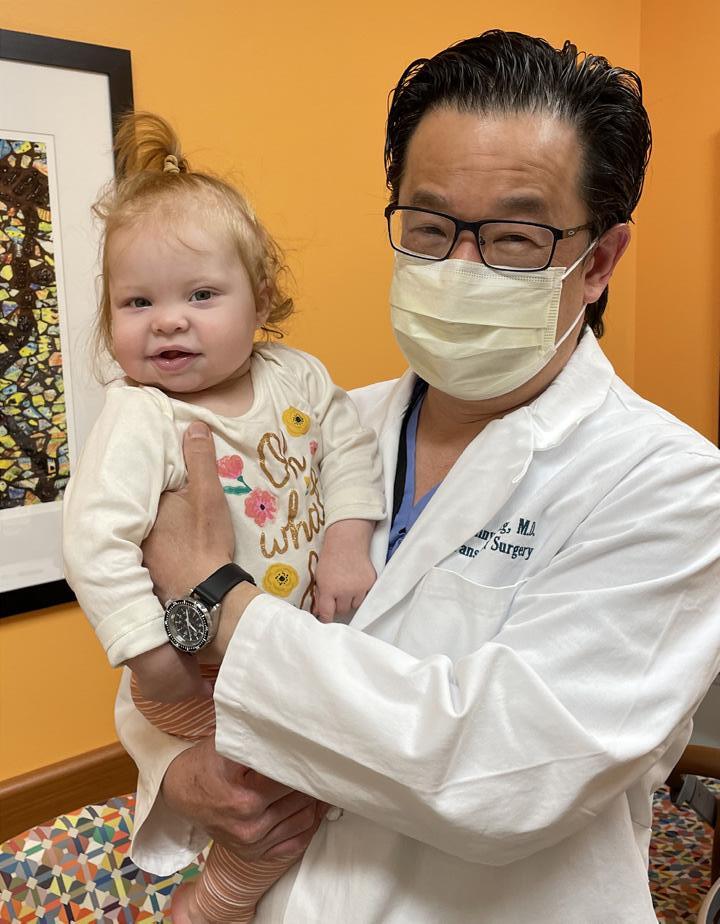
Brenda underwent living donor hepatectomy (removal of a part of the liver) at Froedtert Hospital in December 2021. Brenda’s first question to Dr. Hong after the operation was, “how is the baby doing?” Brenda spent the week leading up to Christmas Day in the hospital. Brenda’s sacrifice has been extraordinary.
Audrey’s recovery has been steadfast after receiving a living donor liver transplantation. She has grown substantially and is full of energy. Audrey celebrated her first birthday with Brenda in February 2022. Brenda has resumed her everyday activities. Travis and Kendra, Audrey’s parents, genuinely appreciate Brenda’s heroic act and are also grateful for “the brilliant medical professionals, practices, and medicine that saved our sweet Audrey.” For many of us, Brenda’s act of kindness serves to restore our faith in humanity.

Division of Transplant Surgery Faculty and APPs. (Not pictured: Drs.
Johnny C. Hong, MD Professor and Chief
Mark B. Adams Chair Director, Transplant Surgery Fellowship
Francisco A. Durazo, MD Professor Chief, Transplantation Hepatology
Calvin M. Eriksen, MD Assistant Professor
Christopher P. Johnson, MD Professor
Joohyun Kim, MD, PhD Associate Professor
Priyal Patel, MD Assistant Professor
Terra R. Pearson, MD Assistant Professor
Jenessa S. Price, PhD Assistant Professor
Allan M. Roza, MD Professor
Badi Rawashdeh, MBBS Instructor
Motaz A. Selim, MD, MSc Assistant Professor
Stephanie C. Zanowski, PhD Associate Professor Director, Transplantation Mental Health
Yong-ran Zhu, MD Associate Professor Emeritus
Nurse Practitioners
Andrea Langley, RN, MSN, APNP
Rebecca R. Russ, RN, MSN, APNP
Keighla Slattery, RN, MSN, APNP
Emily Carroll, MPAS, PA-C
and Zhu.)
Ashley M. Gruenhagen, MPAS, PA-C
Andrea Hayes, MPAS, PA-C
Breanna Leija, MPAS, PA-C
Stephanie M. McVeigh, MPAS, PA-C
Gretchen Nelson, MPAS, PA-C
Lauren Nelson, MPAS, PA-C
Clarie Olejnik, MPAS, PA-C
Jennifer Scheffler, MPAS, PA-C
Cynthia L. Schulzetenberg, PA-C
Sara Steffen, MPAS, PA-C
Amanda Steiger, MPAS, PA-C
Jessica A. Stromich, MPAS, PA-C
Ally Thompson, MPAS, PA-C
Megan Zoet, MPAS, PA-C
“You can’t keep a good man down.” That old song springs straight to mind when speaking with Barry Blackmore, who lives near Los Angeles. The 79-year-old seems up for anything, even after a crash that dramatically changed his life. An avid race car driver for over 60 years, Barry was a regular at Road America in Elkhart Lake. In July 2020, eager to rock the road in his vintage Formula 5000 car, Barry headed east with his No. 1 fan, his wife, Karen Blalack.
It was a damp, overcast morning when Barry hit the track for a practice session. Coming down a straightaway, he tried to pass a driver who was moving more slowly ahead of him. “He obviously wasn’t looking in his mirrors when he moved over right in front of me at the very last moment,” Barry said. “I tried to get away from him because I knew if I hit him, it would be a very bad crash for both of us. As it turned out, I put two wheels in the grass, and my car instantly veered off and hit the wall on the side of the track.” The impact of the collision proved devastating, leaving Barry with a ruptured eye and multiple fractures to his face, spine and legs. He ultimately lost his left eye, and his right leg had to be amputated below the knee.
Barry was extracted from the wreckage of his race car and brought to the adult Level I Trauma Center at Froedtert Hospital. When Barry arrived, Marc de Moya, MD, and the trauma team conducted their primary survey, checking Barry’s heart and lungs and assessing his blood loss and
injuries. Teamwork is essential in the Trauma Center, especially when treating patients with multiple injuries. Once Barry was stabilized, a full complement of medical specialists including a neurosurgeon, orthopedic surgeon and eye surgeon converged to initiate immediate treatment.
In spite of his extensive injuries, Barry made remarkable progress. “He spent 11 days in the Surgical Intensive Care Unit, which is much less time than our team expected given his injuries and age. We were all amazed,” said Thomas Carver, MD, the trauma surgeon who managed Mr. Blackmore’s care while he was in the SICU, alongside the incredible trauma team and nurse practitioner Kerry Short, who cared for Barry from the ICU until his discharge. “If Barry had not been brought to a Level I Trauma Center, it is unlikely he would have seen this outcome.”

kind and thoughtful, not only about Barry, but about how I was doing. He healed unbelievably quickly, and I think that’s because of all the support. They were always there for him.”
“From the moment I got to the hospital, the people were unbelievable,” Karen said. “They kept me filled in on everything. Everyone was so
Back in California, Barry is keeping up with physical therapy and managing well with his prosthesis. “I walked over a mile without any assistance a month or so ago, which I was very proud of,” he said. “I’ve got one eye, but it’s working pretty good. It’s just a matter of getting used to everything.”
Between sailing off to San Diego and taking a trip to France, it seems Barry is back in the driver’s seat.

Division of Trauma & Acute Care Surgery Faculty and APPs. (Not pictured: Drs. Davis, Elegbede, Haeberlin, Holena, Megal, Murphy, Peschman, Robinson, Somberg, and Trevino.)
Marc A. de Moya, MD Professor and Chief
Milton and Lidy Lunda/Charles Aprahamian Chair
Marshall A. Beckman, MD, MA
Associate Professor
Nathan A. Carlson, MD Surgeon
Thomas W. Carver, MD
Associate Professor Program Director, Surgical Critical Care and Acute Care Surgery Fellowships
Christopher S. Davis, MD, MPH Associate Professor
Terri A. deRoon-Cassini, MS, PhD Professor Program Director, Clinical Psychology Fellowship Director, Comprehensive Injury Center Director, Trauma Research
Christopher M. Dodgion, MD, MSPH, MBA
Associate Professor Director, Global Surgery
Anuoluwapo F. Elegbede, MD, MSc
Assistant Professor
Timothy J. Geier, PhD Assistant Professor Director, Outpatient Trauma & Acute Care Surgery Psychology Services Director, Trauma and Health Psychology Rotation for Residency Program
John W. Haeberlin, MD Assistant Professor
Daniel N. Holena, MD, MCSE
Associate Professor Research Director, Trauma & Acute Care Surgery
Katie Iverson, MD, MPH Assistant Professor
Christian J. Kastrup, PhD Professor
Senior Investigator, Versiti Blood Research Institute
Christina L. Megal, RN, DNP, APNP Assistant Professor
David J. Milia, MD Associate Professor
Rachel S. Morris, MD Assistant Professor Associate Director, Trauma Research
Patrick B. Murphy, MD, MPH, MSc Assistant Professor
Todd A. Neideen, MD Associate Professor Chief, General Surgery, Zablocki VA Medical Center
Jacob R. Peschman, MD, MSPE Assistant Professor
Evan Robinson, DO Assistant Professor
Andrew T. Schramm, PhD Assistant Professor
Mary Elizabeth (Libby) Schroeder, MD
Associate Professor Associate Director, Global Surgery
Lewis B. Somberg, MD, MSS Professor
Colleen Trevino, RN, NP, PhD Assistant Professor
Travis P. Webb, MD, MHPE Professor Associate Dean for Curriculum
Nurse Practitioners
Susan E. Arnsdorf, RN, MSN, APNP
Danielle Crass, RN, MSN, FNP-C
Susan Cronn, RN, DNP, APNP
Janice Erbe, RN, DNP, APNP
Suzette Erickson, RN, MSN, APNP
Morgan Godfrey, RN, MSN, APNP
Kelly Gordon-Meyer, RN, MSN, APNP
Cheryl Grandlich, RN, MSN, APNP
Kailey Lewis, RN, MSN, APNP
Adrienne Markiewicz, RN, MSN, AGACNP-BC
Amanda Nesta, RN, MSN, APNP
Angelica Paul, RN, MSN, APNP
Tracy Richardson, RN, MSN, APNP
Anna Rodriguez, RN, MSN, ACNP
Kerry Short, RN, MSN, APNP
Jamie Simon, RN, FNP, APNP
Pamela Souders, RN, APNP
Mary A. Stauber, RN, DNP, APNP
Kelly Stone, RN, MSN, APNP
Brittney Thyssen, RN, MSN, APNP
Colleen Trevino, RN, NP, PhD
Sarah E. Tybring, RN, MSN, APNP
Grace Van Valin, RN, MSN, APNP
Jame Vance, RN, MSN, FNP
Sarah Ziem, RN, MSN, APNP
Marina Besserud, MPAS, PA-C
Jennifer Mahaffey, MPAS, PA-C
Sarah Vanderlinden, MPAS, PA-C, DFAAPA
Sarah Wasz, MPAS, PA-C
Ensuring optimal care is delivered by physicians who are committed to practicing at our outreach sites
Faculty
Marc A. de Moya, MD
Section Chief
John W. Haeberlin, MD
Marina Affi Koprowski, MD
Kaizad Machhi, MD
Eric A. Soneson, MD
Mark A. Timm, MD
Nurse Practitioners
Jenna R. Lease, RN, APNP
Alexandra Weil, RN, MSN, APNP
Physician Assistants
Jennifer Esser, PA-C
Paige Krieck, PA-C
Megan Nelson, PA-C


Providing surgical expertise in all aspects of vascular surgery, including an endovascular program providing the full array of endovascular techniques
When Richard Sobralski was told that he had an enlarging abdominal aortic aneurysm which was going to be very difficult to repair, had a high risk of rupture which could end his life, and fraught with complications, he was referred to Peter Rossi, MD, with the MCW Division of Vascular & Endovascular Surgery to receive a second opinion and second chance at life.
An abdominal aortic aneurysm, or AAA, is a bulge in the wall of the artery below your heart, called the aorta, which is the body’s largest artery. The bulge is caused by a weak section in the artery wall and is at risk of tearing which can result in death. On top of having a AAA, Rich also unfortunately had a large right groin aneurysm. Rich was pleased to hear when Dr. Rossi told him, “I can fix these for you.”
Rich is no stranger to vascular surgery. He had previous operations

Richard Sobralski.
years ago at an outside institution including bilateral leg femoral-popliteal bypasses which were nearly blocked. This caused him pain when walking, along with numbness and pain in his feet at night. The first procedure that Dr. Rossi performed on Rich was a lower extremity angiogram, to save his leg from needing an amputation. “I was amazed when I walked out the hospital the next day to the parking lot without any pain at all. I can’t remember the last time I felt no pain in my legs, I was amazed and so pleased with the outcome,” Rich recalls.

Months later, Dr. Rossi performed the second, larger surgery on Rich’s AAA and femoral aneurysm. Rich remembers the day well, “ He did it the day before my birthday, February 11th, I’ll never forget.” An endovascular aneurysm repair (EVAR), is a minimally invasive method to treat an aortic aneurysm. The alternative is an open repair where the patient’s chest and abdomen are surgically opened. The endovascular repair reduces recovery time to a few days, and leaves only two small groin incisions. The surgeon inserts guidewires and catheters into these incisions, and using radiographic imaging, will locate the
aneurysm and insert a stent graft to repair the aorta. Compared with open AAA repair, EVAR is associated with a significant reduction in perioperative mortality, shorter procedure time, less discomfort during recovery, and quicker return to daily activities. Rich was at Froedtert Hospital for his recovery for only five days before he returned home with his family.
Rich, who at 82 is now living an active lifestyle, is fully recovered, pain free, and is looking forward to returning to golfing several times a week, fishing with his sons, and keeping up with the yard work. Rich states that after surgery, “They did a great job managing my pain, I barely had any. Whoever is doing the training in manners is doing a pretty great job also. Everyone was just so wonderful to me. I’m very lucky to have met Dr. Rossi and his team and I would strongly recommend everyone to go there.”

Peter J. Rossi, MD Professor and Chief Associate Vice Chair, Off-Campus Clinical Operations
Shahriar Alizadegan, MD Assistant Professor
Kellie R. Brown, MD Professor Chief, VA Vascular Surgery Director, Vascular & Endovascular Surgery Fellowship Program
Mitchell R. Dyer, MD, MSc Assistant Professor
Charles E. Edmiston, PhD Professor Emeritus
Joseph P. Hart, MD, MHL Associate Professor
Christopher P. Johnson, MD Professor
Dean E. Klinger, MD Professor
Nathan W. Kugler, MD Assistant Professor
Brian D. Lewis, MD Professor
Mona S. Li, MD Assistant Professor
Michael J. Malinowski, MD, MEHP Associate Professor
Neel A. Mansukhani, MD Assistant Professor
Abby E. Rothstein, MD Assistant Professor
Allan M. Roza, MD Professor
Gary R. Seabrook, MD Professor Emeritus
Chrystal Craft, DNP, MSN, APNP
Emily Ehrengren, RN, MSN, APNP
Allison Fladten, RN, APNP
Ali Kusch, RN, MSN, APNP
Debra J. Lanza, RN, MSN, APNP
Laura Needler, RN, MSN, APNP
Maria Wellenstein, ACNP
Kate M. Goelz, MPAS, PA-C
Stephanie Hayes, MPAS, PA-C
Stephen W. Robischon, MPAS, PA-C
Advancing careers of research-intensive faculty, enhancing academic achievement , fostering interdepartmental and inter-institution collaborations , and facilitating the resident research program

Division of Research Faculty.
Gwen Lomberk, PhD Professor and Chief
Joel & Arlene Lee Pancreatic Cancer Research Chair Director, Basic Science Research
Young-In Chi, PhD Assistant Professor Research Scientist, Genomic Science and Precision Medicine Center
Angela J. Mathison, PhD Assistant Professor Technology Development Director, Genomic Science and Precision Medicine Center
Raul A. Urrutia, MD Professor
Warren P. Knowles Professor of Genomics and Precision Medicine Director, Genomic Sciences and Precision Medicine Center
Program Director
Krissa Packard, MS, ACRP-CP, CRA

210
# of unique publications (CY21)
15
# of awarded competitive grants
108
# of active clinical trials (at the time of publication)
7
# of NIH grants active (CY21)
PI Name Sponsor
Kyle Van Arendonk, MD, PhD
Terri deRoon-Cassini, MS, PhD
Jennifer Mahaffey, PA-C
Jenessa Mayer, PA-C
Terri deRoon Cassini, MS, PhD
Central Surgical Association Foundation
AHW-Research and Education Program
American Society of Transplant Surgeons
American Society of Transplant Surgeons
AHW-Research and Education Program
Thomas Carver, MD We Care Fund for Medical Innovation and Research
Andrew Schramm, PhD Research Affairs Committee
Aoy Tomita-Mitchell, PhD Herma Heart Institute/ AHW
Title
41
# of competitive grants submitted
$6.3M
$ in research funding (FY21)
$920,392
Amount awarded in CY21
$2.7M
$ in sponsored research (FY21)
CSA Characterizing and Addressing Disparities in Surgical Care among Rural Children
Planning for the Wisconsin Alcohol Policy Project
Evaluation of a new Transplant Surgery workforce paradigm: Transplant Surgeon-Advance Transplant Provider Model
Advanced Transplant Provider Award: Impact of the role of advanced transplant provider (ATP) on patient experience in liver transplantation
The Wisconsin Violence Prevention Project (WVPP)
We Care Interdisciplinary - Observation vs Embolization in Severe Splenic Injury - A Randomized Controlled Trial
RAC Pilot Grant Resubmission - Suicide Prevention in the Level 1 Trauma Center: Identification of Risk and Protective Factors to Prevent Future Suicide Mortality
Effect of shear flow and mesenchymal stem cells on maturity and function of iPSC-derived cardiomyocytes in HLHS
Michael Mitchell, MD Office of Research/AHW Cell-Free DNA in COVID-19
Andrew Schramm, PhD Comprehensive Injury Center
Aoy Tomita-Mitchell, PhD Cardiovascular Center
Brian Craig, MD CHW Children’s Research Institute
Michael Mitchell, MD CHW Children’s Research Institute
Terri deRoon-Cassini, MS, PhD
Greater Milwaukee Foundation
Lethal Means Counseling and Safe Firearm Storage: Testing a Suicide Prevention Approach in Novel Emergency Medical Settings
CVC FY22 Pilot Award: The Ubiquitin-Proteasome System in Ebstein’s Anomaly and Left Ventricular Noncompaction
Surgical Stress-Inflammatory Response Modulation of Immune Cell Recruitment to the Neuroblastoma Tumor Immune Microenvironment
CRI - Head to head comparison of mitochondrial cell-free DNA and cardiac troponin as a biomarker for the extent of cardiac injury following high risk infant cardiac surgery
Greater Milwaukee Foundation Violence Prevention Fund

Terri A. deRoonCassini, MS, PhD Professor, Division of Trauma and Acute Care Surgery, Psychiatry & Behavioral Medicine, Institute for Health and Equity; Director, MCW Comprehensive Injury Center
Terri deRoon-Cassini, MS, PhD, was awarded $2,499,738 as an R01 from the National Institute of Mental Health for her study “Risk and Resilience in Urban Black American Acute Trauma Survivors.” Approximately 20-30% of survivors following injury are diagnosed with posttraumatic stress disorder, and the risk for PTSD increases for those patients from disadvantaged backgrounds. In Milwaukee, Wisconsin a history of structural racism has led to segregation, and resource deprivation for Black and African American residents. The purpose of this study is to identify within group variability in experiencing PTSD for Black American injured patients, and to determine the unique individual and neighborhood-level socio-environmental stressors that influence the neurobiological response to trauma that incur risk for PTSD. This is a prospective longitudinal study that will follow pa-
tients for 1 year after injury, utilizing biomarkers and neuroimaging at multiple timepoints. The outcomes of this study will be used to inform targets for intervention in Black American patients.

Gwen Lomberk, PhD Chief, Division of Research; Joel and Arlene Lee Endowed Chair in Pancreatic Cancer Research; Director, Basic Science Research; Professor of Surgery and Pharmacology & Toxicology
Gwen Lomberk, PhD, was awarded $2.3M from the NCI for a 5-year study entitled, “Targeting Epigenomic Regulators at the Replication Fork in Pancreatic Cancer.” Pancreatic cancer remains a therapeutic challenge, making the identification of new targets and development of novel treatment strategies for this disease of paramount importance. Early in tumorigenesis, higher proliferation rates driven by activated oncogenes, such as KRAS, trigger stress during DNA replication. Tolerance to this replication stress, consequently, becomes vital to tumor progression, yet the underlying mechanisms remain poorly understood. Our study investigates the role of the G9a epigenomic
regulator to ensure chromatin integrity during DNA replication, when it acts to reinforce cancer-associated proliferation. We hypothesize that if we target G9a during DNA replication, we can interrupt its compensation of KRAS-driven replication stress and ultimately destroy the cancer cell. Moreover, we propose to enhance the effectiveness of this approach by further increasing the levels of replication stress using pharmacological agents available for this purpose. Together, our studies aim to advance our understanding of pancreatic cancer and harness this knowledge to improve therapeutic options for this dismal disease.

Kirkwood A. Pritchard, Jr., PhD Professor, Division of Pediatric Surgery
Kirkwood A. Pritchard, Jr., PhD, was awarded a 4-year grant from the NHLBI entitled “Mechanisms of Inflammation in Sickle Cell Disease.” It is the first disease to be identified as a genetic disease. Sickle cell disease (SCD) markedly increases the risk of infection, acute chest syndrome, and stroke compared to people who do not have SCD. Dr. Pritchard’s laboratory discovered that SCD impairs vascular function
and increases vasocongestion of all the major organs by inducing a destructive cycle between cells in the vessel wall and innate immunity. Dr. Pritchard’s lab discovered that therapeutic targeting of components in the destructive cycle was sufficient to improve vascular function and reduce vasocongestion in sickle cell mice. In his renewed application, Dr. Pritchard determines how the mechanisms in the destructive cycle impair vascular function. More importantly, he develops novel therapies that inhibit the mechanisms and, in so doing, improve vascular function and decrease vasocongestion. One of the therapeutic agents invented by Dr. Pritchard’s lab is currently being developed through an NIH Small Business Innovation Research (SBIR) application as a therapy for SCD, bronchopulmonary dysplasia, and multiple sclerosis.

Susan Tsai, MD, MHS Professor, Division of Surgical Oncology; Director of the Mary Ann and Charles LaBahn Pancreatic Cancer Program; Chief of Hepatopancreaticobiliary Surgery, Clement J. Zablocki VA Hospital
Dr. Susan Tsai and Dr. Jen Jen Yeh (the University of North Carolina)
have received a R01 grant renewal from the NCI for the study “Tumor Subtypes and Therapy Response in Pancreatic Cancer.” FOLFIRINOX (FFX) and gemcitabine plus nab-paclitaxel (GnP) have emerged as the firstline treatments for patients with pancreatic ductal adenocarcinoma (PDAC). These two regimens have not been compared in the first-line setting, and treatment selection is guided by physician’s “best-guess.” Matching the most effective systemic therapy with the potential vulnerabilities of the tumor has been an unrealized hope for patients and a solid barrier to personalized medicine for PDAC. Our collaborators at the University of North Carolina, Chapel Hill have identified molecular subtypes of PDAC that are robust and replicable. We and others have found that basal subtype patients rarely respond to FFX, but show responses to GnP. Thus, identifying patients at initial diagnosis to optimize treatment is critical. Proteomic analysis of tumor samples shows differential kinase expression in basal tumors including previously known targets such as EGFR. Based on our findings of subtype association with treatment response, we have developed a robust and replicable single sample classifier PurIST assay that is now CLIA approved and ready. For this proposal, we will use CLIA PurIST for treatment selection of either FFX or GnP on a clinical trial performed at MCW, PANCREAS trial. To develop
alternative approaches and to overcome FOLFIRINOX resistance, we will identify new targets for basal tumors using a tailored CRISPR screen. Finally, we will use our deconvolution and single-cell methods to determine if the tumor and tumor microenvironment may be predictive of response in the therapies studied.

Raul Urrutia, MD Professor, Departments of Surgery, Biochemistry and Physiology; Director, Genomic Sciences and Precision Medicine Center; Warren P. Knowles Chair of Genomics and Precision Medicine; Associate Director, Precision Medicine, CTSI
Raul Urrutia, MD, was awarded $2.8M from the NIDDK for the 5-year study, “Epigenomic Regulation in Pancreatic Cell Growth.” The focus of the proposal is to investigate how epige -nomic regulators work as nuclear effectors of common mutations associated with human pancreatic diseases, such as oncogenic KRAS. Our data reveal a key role for the Histone H3 Lysine 9 (H3K9) methylation pathway and its associated methyltransferase, EHMT2, as an epigenetic regulator of oncogenic KRAS. EHMT2, together with its paralog EHMT1, are the
main histone lysine methyltransferases responsible for catalyzing histone H3K9 dimethylation. However, no information is known regarding the function of EHMT1 and EHMT2, either separately or as a complex, in relationship to pancreas physiology or pancreatic diseases. We will test the hypothesis that the EHMT1/ EHMT2 complex works as an epigenetic effector of KRAS during ADM and PanIN formation as well as their progression by pancreatitis. By focusing on better understanding epigenomic pathways that serve as effectors downstream of common mutations in the pancreas, our design seeks to maximize the yield of rapidly translatable mechanistic knowledge.

Amy Wagner, MD Professor of Surgery; Section Chief, Division of Pediatric Surgery
Amy Wagner, MD, was awarded $4.2 Million from the NICHD for her national, multi-center clinical trial “Gastroschisis Outcomes of Delivery (GOOD) Study.” This study is designed to evaluate delivery timing in infants diagnosed with gastroschisis, the most common abdominal wall defect. The specific aims of the study include (1) compare risk of mortality and
major morbidity for infants with gastroschisis between the early and late delivery arms, (2) determine maternal, fetal, and neonatal secondary outcomes, and (3) establish a national registry of clinical data and bio-bank comprised of gastroschisis patients. Currently, 26 centers across the country are participating in the study. The trial has two intervention arms, a 35-week delivery group and an expectant management group with a goal of 38 weeks. Our hypothesis is that delivery at 35 weeks gestation in stable mothers and fetuses with gastroschisis will be superior to expectant management of the pregnancy with a goal of delivery at 38 weeks gestation. The objective of this study is to discover the best practice for caring for gastroschisis-affected pregnancies and help elucidate the etiology of this disease.

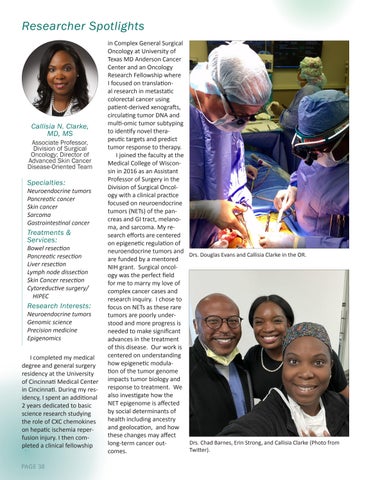
Callisia N. Clarke, MD, MS
Associate Professor, Division of Surgical Oncology; Director of Advanced Skin Cancer Disease-Oriented Team
Specialties:
Neuroendocrine tumors
Pancreatic cancer
Skin cancer
Sarcoma
Gastrointestinal cancer
Treatments & Services:
Bowel resection
Pancreatic resection
Liver resection
Lymph node dissection
Skin Cancer resection
Cytoreductive surgery/ HIPEC
Research Interests:
Neuroendocrine tumors
Genomic science
Precision medicine
Epigenomics
I completed my medical degree and general surgery residency at the University of Cincinnati Medical Center in Cincinnati. During my residency, I spent an additional 2 years dedicated to basic science research studying the role of CXC chemokines on hepatic ischemia reperfusion injury. I then completed a clinical fellowship
in Complex General Surgical Oncology at University of Texas MD Anderson Cancer Center and an Oncology Research Fellowship where I focused on translational research in metastatic colorectal cancer using patient-derived xenografts, circulating tumor DNA and multi-omic tumor subtyping to identify novel therapeutic targets and predict tumor response to therapy.
I joined the faculty at the Medical College of Wisconsin in 2016 as an Assistant Professor of Surgery in the Division of Surgical Oncology with a clinical practice focused on neuroendocrine tumors (NETs) of the pancreas and GI tract, melanoma, and sarcoma. My research efforts are centered on epigenetic regulation of neuroendocrine tumors and are funded by a mentored NIH grant. Surgical oncology was the perfect field for me to marry my love of complex cancer cases and research inquiry. I chose to focus on NETs as these rare tumors are poorly understood and more progress is needed to make significant advances in the treatment of this disease. Our work is centered on understanding how epigenetic modulation of the tumor genome impacts tumor biology and response to treatment. We also investigate how the NET epigenome is affected by social determinants of health including ancestry and geolocation, and how these changes may affect long-term cancer outcomes.


David L. Joyce, MD, MBA Professor, Division of Cardiothoracic Surgery
Specialties:
Coronary artery disease
Valvular heart disease
Atrial fibrillation
Aortic disease
Pulmonary embolism/ chronic thromboembolic pulmonary hypertension
Heart failure
Advanced lung disease
Treatments & Services:
Heart transplant
Lung transplant
LVAD
TAH
Percutaneous MCS
OPCAB
PTE
VSARR
Complex aortic reconstruction
Convergent/Hybrid AF ablation
Research Interests:
Precision Transplant: Artificial intelligence/ Machine learning to optimize donor/ recipient matching in cardiac transplantation (in partnership with the Genomic Sciences & Precision Medicine Center and the Southwest Research Institute)
Logix: Case component logging to optimize resident education in the operating room
Medical 21: Advisory board member to Manny Villafana’s artificial coronary artery bypass graft
Transmedics: Use of the OCS Heart System in DCD heart procurement
Abiomed: Impella supported off pump coronary revascularization in the setting of ischemic cardiomyopathy
LivaNova: Use of the Protek Duo percutaneous RVAD as an alternative to CRRT in the setting of postcardiotomy renal failure
CD Leycom: Use of a PV loop catheter to characterize RV failure
My research career began as a PGY III resident in the laboratory of Michael E. DeBakey. I probably learned more in those two years than at any other time during my residency. Most of these lessons had to do with how to handle failure. I’m pretty sure I hold the world record for the number of botched Western blots, despite the fact that I had great mentorship and lots of support. I just wasn’t any good at doing research.
After completing my training, I spent three years in private practice followed by three years at the Mayo Clinic. This intensive clinical experience is not the typical path toward future academic success, but it helped me to understand more about
the problems that needed to be solved. I also gained exposure to several new technologies that were being introduced to address some of the most significant clinical challenges we were facing at the time.
It wasn’t until I embarked on an Executive MBA program at the University of Chicago that I really began to connect the dots between problem identification, hypothesis formation, and translational research (also known as commercialization). An example of this “reverse engineering” approach to hypothesis formation can be found in our recent work on a VAD maintenance system. One of the most dangerous and dreaded operations in cardiac surgery involves the exchange of an LVAD. Patients, surgeons, and cardiologists are all in complete agreement that a less invasive alternative to this problem would be highly desirable. Coming up with a catheter-based treatment for this problem was definitely out of my wheelhouse, but I managed
to put together a team that could work to find a solution to this problem. Without question, this is the single most gratifying part of doing research— running smack dab into a brick wall that you have no way to get around, only to discover what can happen with a little help from your friends.
To make a long story short, Hoplon (the startup company that was founded through this process) recently submitted a Direct to Phase II SBIR $1.8 million grant to the NHLBI after completing animal studies that were supported through We Care and Therapeutic Accelerator Program seed funding at MCW. Our device has been featured at ASAIO, STS, the Polsky Center New Venture Challenge, the Early-Stage Symposium, and the Wisconsin Governor’s Business Competition. Although we are still a long way from clinical trials, our entire team has gained tremendous confidence from the process of working through the NIH and FDA.


Christian Kastrup, PhD
Professor, Division of Trauma & Acute Care Surgery, Department of Surgery; Secondary appointments in the Departments of Biochemistry, Biomedical Engineering, and Pharmacology and Toxicology, Medical College of Wisconsin; Senior Investigator, Versiti Blood Research Institute
Research Interests:
Hemostasis
biochemistry
RNA therapy
Nanomedicine
Materials engineering
Bioengineering
I earned my degrees in Chemistry, receiving my B.S. in 2003 from the University of New Hampshire and my Ph.D. in 2008 from the University of Chicago. My PhD thesis focused on blood clotting, and uncovered biochemical and biophysical mechanisms that allow coagulation to seal injuries and prevent blood loss without spreading throughout our vasculature. I did my postdoctoral fellowship at MIT with Robert Langer, where I developed soft biomaterials to coat the inside of vessels. I also began working on RNAbased therapeutics and lipid nanoparticles. I started
my independent research group at the University of British Columbia, and from 2011-2021
I trained over 75 postdocs, graduate, undergraduate, and medical students in my laboratory. In Fall 2021, I moved my research program to the Versiti Blood Research Institute (BRI) and MCW, where I am a Senior Investigator and Professor.

My primary research interest is advancing fundamental understanding of the biochemistry of blood coagulation, and engineering innovative therapies to control it. Research in my laboratory bridges hemostasis biochemistry, RNA therapy, nanomedicine, materials engineering and bioengineering. I am passionate about controlling blood clotting because hemorrhage is a leading killer of young people, and thrombosis is a serious risk in the days and weeks after trauma. My laboratory creates drug delivery systems and RNA therapeutics to address these issues. There are three main directions in my research program. The first is developing hemostatic materials for hemorrhage control, which includes powders and devices for non-compressible abdominal hemorrhage; we test these in models of severe hemorrhage. The second direction is developing RNA therapies for thrombotic and bleeding disorders, such as for
understanding the role that specific proteins play in severe hemorrhage, and creating therapies to prevent post-trauma thrombosis. The third direction is creating a new cell therapy platform by engineering platelets to express exogenous proteins, which has many potential applications within and outside of trauma and surgery. We collaborate closely with the U.S. Army Institute of Surgical Research and the Canadian Armed Forces for these studies.
We have several projects on the brink of creating new medicines. We are nearing clinical trials with multiple technologies and have strong confidence that the results we are seeing in our advanced models will be translated to people. Both the device technologies we are developing to halt hemorrhage in trauma, and the RNA-based gene therapy approaches we are developing for hemostasis, are working extremely well in models and have relatively clear paths to clinical trials and approval. I am excited about the possibility of creating new approaches to extend survival after the most serious types of traumatic injuries. I want to help civilians and military
service members buy time after severe injuries, so that they have the best chance of reaching a surgeon and receiving definitive care. With our technologies based on RNA gene-therapies, I see nearly limitless potential for gene therapy in modulating diseases of the blood and beyond. These are similar RNA and lipid nanoparticle therapies to those in the COVID-19 vaccines, and while I was not directly involved with the vaccine development, it has been exciting to see close colleagues and friends have such a huge impact on local and worldwide health. In addition to vaccines, these lipid-based nanomedicines can be used to knockdown almost any blood protein made in the liver and can also be used to express proteins in the liver – turning the liver into a bioreactor. Since most coagulation proteins are made in the liver, there is tremendous opportunity to create agents that modulate hemostasis, thrombosis and many other diseases.

Joohyun Kim, MD, PhD
Associate
Professor, Division of Transplant Surgery
Specialties:
Hepatobiliary surgery
Solid organ transplantation
Live-donor liver transplantation
Research Interests:
Liver regeneration
Organ preservation
Liver cancer biology
My research interest lies in liver injury and its repair. For example, cholestasis, which is dysfunctional bile production, always underlies the pathophysiology of various forms of liver surgery-associated hepatic dysfunction, such as post-hepatectomy liver failure, early allograft dysfunction after liver transplantation, or small-for-size syndrome in living donor liver transplantation.
I initiated collaborative studies during my fellowship at Seoul National University Hospital. We reviewed the immunohistochemistry staining of samples from liver transplantation recipients with pathologists and conducted an animal experiment study using MRI with hepato-
cyte-specific contrast with radiologists. Both studies suggested a strong association between liver injury and the function of hepatocyte membrane transporter proteins, which are responsible for cholestasis.
Since I joined MCW, I have had the opportunity to collaborate with outstanding scientists on this topic. The localization of transporter proteins along the cell membrane could be captured using a novel digital imaging analysis technique with Dr. Suresh Kumar (Pathology). The kinetics of fluorescent markers through transporter proteins could be monitored in real time using multispectral cameras with Dr. Amit Joshi (Bioengineering). Computational models were developed to determine the factors associated with the clearance of markers with Dr. Ranjan Dash and Dr. Said Audi (Bioengineering). The physical characterization of fluorescent dyes has
been studied with Dr. Jacek Zielonka (Biophysics).
Combining all our efforts, objective quantification for the function of transporter proteins in livers became feasible. This research topic is timely, as ex vivo machine perfusion is now available in the clinical arena for liver transplantation. Currently, no device is available to assess liver function in an objective and reproducible manner. Based on the science and technology described above, it is possible to develop a liver function monitoring device for liver grafts before transplantation. Consequently, we established an ex vivo rat liver perfusion device with Dr. Yongqiang Yang (Transplant Surgery).
This novel approach could change clinical practice in liver transplantation by accurately predicting the outcome, so graft failure or unnecessary organ discard can be minimized. Furthermore, ex vivo machine
perfusion gives an opportunity to resuscitate marginal organs to be transplantable by pre-transplantation targeted chemotherapy. We have investigated pharmaceutical interventions targeting cell survival signal pathways with Dr. Jong-In Park (Biochemistry). To develop this, a primary hepatocyte culture model with warm and cold hypoxia was established with Dr. Seung-Keun Hong (Transplant Surgery). In addition, the role of innate immunity and platelets during machine perfusion is also under study with Dr. Benjamin Gantner (Immunology) and Dr. Karin Hoffmeister (Versiti Blood Research Institute).
There is a consensus that the organ resuscitation technique is a paradigm shifter of liver transplantation practice. I am hopeful that we can contribute to this critical problem of our time, so we can open the next era of liver transplantation.


Anai N. Kothari, MD, MS
Assistant Professor, Division of Surgical Oncology
Lab Director, AN.AI Lab
Specialties:
Gastrointestinal
cancer
Appendix cancer
Peritoneal disease
Liver cancer
Sarcoma
Treatments & Services:
Cytoreductive surgery/ HIPEC
Liver resection
Robotic surgical oncology
Research Interests:
Machine learning/ predictive analytics
Deep learning
Precision medicine
Electronic health data integration
Cancer surveillance and survivorship
COVID-19
My interest in pursuing research started early as an undergraduate student at the University of Wisconsin–Madison investigating the fundamental properties of RNA polymerase. It served as a foundation for understanding the scientific process and the necessary rigor of experimental design to advance a research mission. During medical school, I gained my first exposure to clinical and health services research during a mentored summer fellowship in the Division of Thoracic Surgery at UW–Madison. This included experience with large-scale databases, database development, and predictive modeling. I further developed this foundation during a T32 research fellowship at Loyola University Chicago in the Oncology Institute. Through a partnership with DePaul University College of Computing and Digital Media, we developed a surgical analytics program that integrated data across multiple sources with the broad goal of understanding how to improve surgical care. During this time, I obtained a Master of Science degree in epidemiology with a fo-
cus on predictive analytics and machine learning.
I began developing the concept for the “Accelerating INsight. Augmented Intelligence Laboratory” (AN.AI Lab) during my clinical fellowship in Complex General Surgical Oncology at MD Anderson. There is tremendous excitement in many industries to identify ways to leverage artificial intelligence to improve common processes and advance society. Our lives are already impacted by the embrace of this kind of technology – for example, Apple, Google, Amazon, Netflix, and countless others use vast quantities of user-generated information to support a variety of applications we interact with throughout our day. Medicine and surgery, however, have been slow to adopt despite the massive amount of data generated through routine health care that includes electronic health records, registries, wearable devices, and other similar sources that could be used to support these efforts. With a push towards precision and personalized medicine, this is likely to change quickly
(and already is). In cancer care, this has included a heavy reliance on augmented intelligence – which, unlike traditional artificial intelligence (that attempts to replace humans), emphasizes improving human abilities through the power of machine-generated insights. The overarching goal of AN.AI Lab is to improve health care delivery through clinical augmentation using data science approaches.
Currently the lab has 3 main areas of focus: (1) using real-world data (including the All of Us Research Workbench and National COVID Cohort Collaborative Data Enclave) to predict clinical outcomes; (2) developing an integrated data resource to support cancer research across the state; (3) applying deep learning methodologies to better utilize intraoperative data. Ultimately, findings from these efforts (and others) will be paired with informatics-based tools to help directly impact patient care.


The charge of the committee is to foster interest in research by faculty members and trainees, to review promising extramural funding applications for stimulus grants, to promote Department participation in internal and external research forums, and to communicate the availability of research opportunities. Furthermore, this standing committee is to function in an advisory role to the Division of Research and to identify mechanisms that will enhance the national reputation of the Department of Surgery in basic, translational, clinical and outcomes/health services research.

Kyle Van Arendonk, MD, PhD Chair
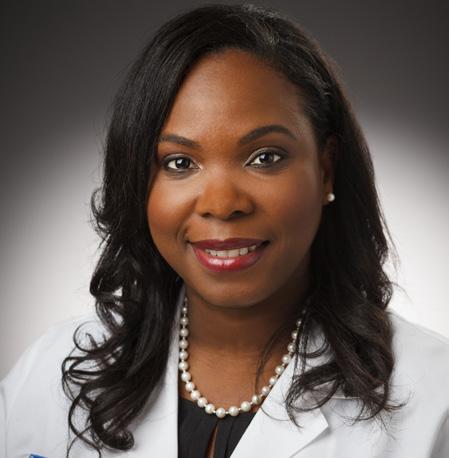


Visit the Medical College of Wisconsin YouTube channel to learn more with two informative video series featuring the MCW Surgery faculty. Search MCW Medical Moments for educational discussions with our providers! Each episode covers a different medical topic, from varicose veins to heart surgery. Get to know the personal side of the surgeons with our second series, MCW Faculty Focus, that introduces recent additions to the Department!

2021


Daniel N. Holena, MD, MCSE
Associate Professor, Division of Trauma & Acute Care Surgery

Christian J. Kastrup, PhD
Professor, Division of Trauma & Acute Care Surgery
Katie Iverson, MD, MPH
Assistant Professor, Division of Trauma & Acute Care Surgery
November 2021 February 2022


Timothy J. Geier, PhD
Assistant Professor, Division of Trauma & Acute Care Surgery
2022
Adrienne Cobb, MD, MS
Assistant Professor, Division of Surgical Oncology


Mitchell R. Dyer, MD, MSc
Assistant Professor, Division of Vascular & Endovascular Surgery

Stefano Schena, MD, PhD
Associate Professor, Division of Cardiothoracic Surgery
John W. Haeberlin, MD
Assistant Professor, Section of Community General Surgery, Division of Trauma & Acute Care Surgery
Alexandra Istl, MD, MPH
Assistant Professor, Division of Surgical Oncology

Wen Hui Tan, MD
Assistant Professor, Division of Minimally Invasive & Gastrointestinal Surgery


Allan M. Roza, MD


Allan M. Roza, MD, retires after 35 years at the Medical College of Wisconsin. Dr. Roza joined the Division of Transplant Surgery as an Assistant Professor of Surgery in 1987. He was promoted to Associate Professor in 1992, then again to Professor of Surgery in 1999. Dr. Roza served in this role until his retirement.
Thomas T. Sato, MD
Thomas T. Sato, MD, joined the Pediatric Surgery Division at MCW and Children’s Wisconsin in 1997. Dr. Sato served as the Program Director for the Pediatric Surgery Training Program and Medical Director for the Physician Assistant Program, and as President and CEO of Children’s Specialty Group from 2014-2020. Dr. Sato was a founding member of the Midwest Pediatric Surgery Consortium, established in 2013, which comprises pediatric surgeons from 11 children’s hospitals that collaborate in research endeavors.

Tracy R. Geoffrion, MD, MPH
Assistant Professor, Division of Congenital Heart Surgery
Nikki K. Lytle, PhD
Assistant Professor, Division of Surgical Oncology

Keith T. Oldham, MD
Keith T. Oldham, MD, retired after more than 20 years at MCW and Children’s Wisconsin. Dr. Oldham served as Surgeonin-Chief and the Marie Z. Uihlein Chair in Pediatric Surgery at Children’s Wisconsin, and as Professor of Surgery at MCW. During his tenure, Dr. Oldham played a pivotal role in the development of the pediatric surgery programs at MCW and Children’s. He was also highly involved in the process to verify Children’s as a Level I Children’s Surgery Center by the American College of Surgeons (ACS) and in the creation of Children’s Specialty Group.
James S. Tweddell, MD, internationally renowned congenital heart surgeon and former Chief of our Division of Cardiothoracic Surgery, passed away at the age of 62 after a battle with cancer. Dr. Tweddell joined the Medical College of Wisconsin in 1993. He would go on to become Professor and Chief of Cardiothoracic Surgery and the S. Bert Litwin Chair in Pediatric Cardiothoracic Surgery over his 22-year tenure at MCW. Jim’s legacy in Milwaukee is survived by his countless thankful patients and families, and the impact he had on all of us in the Department of Surgery. He was a great surgeon and an even better person.
The five program-specific Vice Chair and two Associate Vice Chair positions in the Department of Surgery further advance our missions of excellence in education, research, and clinical care. Since the inception of the Vice Chair leadership positions in 2017, our program has made advances in surgical quality and patient safety, professional development and faculty diversity, community care, surgical patient experiences, and surgical services for veterans.

T. Clark Gamblin, MD, MS, MBA
Vice Chair, Off-Campus Clinical Operations

Kellie R. Brown, MD
Vice Chair, Perioperative Services

Peter J. Rossi, MD
Associate Vice Chair, Off-Campus Clinical Operations

Jon C. Gould, MD, MBA Vice Chair, Quality

Tracy S. Wang, MD, MPH
Vice Chair, Strategic and Professional Development

Carrie Y. Peterson, MD, MS
Associate Vice Chair, Quality

Philip N. Redlich, MD, PhD
Vice Chair, VA Surgical Services
As one of our institution’s permanent and sustaining assets, an Endowed Chair is one of MCW’s most important faculty honors. Endowed Chairs are awarded solely for the purpose of recruitment, retention, and/or recognition of nationally and internationally distinguished faculty at MCW.

Marc A. de Moya, MD
Milton & Lidy Lunda Aprahamian Chair

Douglas B. Evans, MD
Donald C. Ausman Family Foundation Chair

Johnny C. Hong, MD
Mark B. Adams Chair

Michael E. Mitchell, MD
S. Bert Litwin Chair in Cardiothoracic Surgery, Children’s Wisconsin

Jon C. Gould, MD, MBA Alonzo P. Walker Chair

Gwen Lomberk, PhD
Joel & Arlene Lee Chair for Pancreatic Cancer Research

Keith T. Oldham, MD
Marie Z. Uihlein Chair in Pediatric Surgery, Children’s Wisconsin

T. Clark Gamblin, MD, MS, MBA
Stuart D. Wilson Chair

Kirk A. Ludwig, MD
Vernon O. Underwood Colon Cancer Research Chair

Philip N. Redlich, MD, PhD
Gerald L. Schmitz, MD Chair

Susan Tsai, MD, MHS
Douglas B. Evans Chair for Surgical Research
Meena Bedi, MD
Radiation Oncology
Michael B. Dwinell, PhD Microbiology and Immunology
Beth Erickson Wittmann, MD Radiation Oncology
Juan Felix, MD Pathology
James W. Findling, MD Medicine, Endocrinology, Metabolism and Clinical Nutrition
Jennifer Geurts, MS, CGC Genomic Sciences and Precision Medicine Center
James B. Gosset, MD Medicine, Cardiovascular Medicine
Mary Beth Graham, MD Medicine, Infectious Diseases
Jaime S. Green, MD
Medicine, Infectious Diseases
Michael O. Griffin Jr., MD, PhD Radiology, Diagnostic Radiology
William A. Hall, MD Radiation Oncology
Robert A. Hieb, MD, RVT
Radiology, Vascular and Interventional Radiology
Eric J. Hohenwalter, MD
Radiology, Vascular and Interventional Radiology
Bryon D. Johnson, PhD Microbiology and Immunology
Mandana Kamgar, MD, PhD Medicine, Hematology and Oncology
John A. LoGiudice, MD Plastic Surgery
Marc de Moya, MD
2021 MCP Lee A. Biblo Excellence in Professionalism Award
John Densmore, MD
2021 Milwaukee Business Journal Health Care Champion Innovator of the Year Award
Douglas B. Evans, MD
2021 Honorary Member Award from the American Society of Radiation Oncology
Wisconsin Broadcaster’s Association Second-Place Award, Best Pandemic-Related Service to the Community Program – Latest Word on Medicine (WISN 1130 AM)
Rana Higgins, MD
2021 Medical College of Wisconsin
Edward J. Lennon Endowed Clinical Teaching Award
Wisconsin Broadcaster’s Association Second-Place Award, Best Pandemic-Related Service to the Community Program – Latest Word on Medicine (WISN 1130 AM)
Amanda Kong, MD, MS State Chair Outstanding Performance Award from the American College of Surgeons Commission on Cancer
Veronica Loy, DO Medicine, Gastroenterology
Peter J. Mason, MD, MPH, RPVI Medicine, Cardiovascular Medicine
Stacy D. O’Connor, MD, MPH, MMSc
Radiology, Diagnostic Radiology
Jong-In Park, PhD Biochemistry
Parag J. Patel, MD, MS
Radiology, Vascular and Interventional Radiology
Evan Robinson, DO Emergency Medicine
Michael Malinowski, MD, MEHP Student Excellence Award in Master of Education in Health Professions from the Johns Hopkins University School of Education
Michael E. Mitchell, MD
2021 Milwaukee Business Journal Health Care Champion Innovator of the Year Award
Kyle Van Arendonk, MD, PhD Enrichment Award from the Central Surgical Association

Kellie R. Brown, MD
Chief of Staff, Froedtert Hospital
President, Midwestern Vascular Surgical Society
Midwestern Vascular Surgical Society Representative to the Vascular Surgery Board
Editorial Board, Journal of Vascular Surgery: Cases and Innovative Techniques
Section Editor, Rutherford Textbook of Vascular Surgery
Section Editor, Rutherford Textbook of Operative Techniques in Surgery
Section Editor, VESAP 5
Casey Calkins, MD
Secretary, American Pediatric Surgery Association Board of Governors
Board Liaison to the American Pediatric Surgery Association Program Committee and Quality/ Safety Committee
Steering and Executive Committee Member, Pediatric Colorectal & Pelvic Learning Consortium
Associate Editor, Pediatric Surgery International
Callisia Clarke, MD, MS
Recorder of the Association for Academic Surgery
Chair, Association for Academic Surgery Scientific Program Committee
Executive Council Member, Association for Academic Surgery
Nominating Committee Member, Society of Surgical Oncology
Americas Hepato-Pancreato-Biliary Association Leadership Academy Member
Chair, Americas Hepato-BiliaryPancreato Association Diversity Equity and Inclusion Committee
Executive Council Member, Americas Hepato-Biliary- Pancreato Association
Chair, North American Neuroendocrine Tumor Society
Mentorship & Early Career Development Committee
Consultant to the American Board of Surgery Complex General Surgical Oncology Recertifying Examination Committee
Marc de Moya, MD
Certificate of Recognition from the Academy of the Asian Collaboration for Trauma
Treasurer, Association for Surgical
Education Foundation
Manager-at-Large, Surgical Critical Care Program Directors Society
Chair, Association of Surgical Education Program Committee
Chair, Western Trauma Association Publication Committee
Chair, Surgical Critical Care Program Director Society Education Committee
Co-Director, Cuban Society of Surgery International Symposium
Chair, Pan-American Trauma Society Disaster Response Committee
Consultant to the American Board of Surgery General Surgery Certifying Exam Committee
Terri deRoon-Cassini, MS, PhD
Grant Reviewer, National Institute of Mental Health, First in Human and Early Stage Clinical Trials of Novel Investigational Drugs or Devices for Psychiatric Disorders
Lead, Trauma Quality Improvement Program, Best Practices Guideline for Screening for Mental Health Disorders and Substance Abuse in the Acute Trauma Patient
Christopher Dodgion, MD, MSPH, MBA
Treasurer, Association of Academic Global Surgery
Chair, Association for Academic Global Surgery Governance Committee
Chair, Association for Academic Global Surgery Rules and Regulations Committee
Co-Chair, Association for Academic Global Surgery Advisory Board
Co-Lead, American College of Surgeons Operation Giving Back Hawassa Training Hub Initiative Trauma Workgroup and Research Workgroup
ACS Board of Governors Surgical Volunteerism and Humanitarian Awards Workgroup, Young Fellows Association Liaison Representative
Representative, Association for Academic Surgery to the Global Alliance for Surgical, Obstetric, Trauma and Anesthesia Care (G4)
Editorial Board, American Journal of Disaster Medicine
Sophie Dream, MD
Chair, Society of Asian Academic Surgeons Communications Committee
Francisco Durazo, MD
OPTN/UNOS National Liver Review Board
T. Clark Gamblin, MD, MS, MBA
National Board of Directors, American Liver Foundation
Mario Gasparri, MD
Chest Wall Injury Society Board of Directors
Chair, AO Technical Commission Thoracic Surgery Expert Group
Matthew I. Goldblatt, MD
Board of Governors, SAGES
Chair, SAGES Hernia Committee
Jon Gould, MD, MBA
Board of Governors, American College of Surgeons
Recorder, Central Surgical Association
Board of Governors, SAGES
Co-Chair, SAGES Foregut Committee
Executive Council, Central Surgical Association
David Gourlay, MD
Site Reviewer, American Academy of Pediatrics NICU Verification Program
Site Reviewer, American College of Surgeons Trauma Verification Program
Joseph Hart, MD, MHL
Distinguished Fellow of the Society for Vascular Surgery
Board of Directors, Society for Vascular Surgery Foundation
Executive Committee, Society for Vascular Surgery Community Practice Section
Steering Committee, Society for Vascular Surgery Foundation
Vascular Volunteers in Service to All (VISTA) Program
Chair, ACS Wisconsin Surgical Society Policy Planning and Government Relations Committee
Rana Higgins, MD
Examination Consultant for the American Board of Surgery
General Surgery Certifying Exam Committee for Hernia
Johnny C. Hong, MD
Editorial Board, Transplantation Proceedings
OPTN/UNOS National Liver Review Board
David Joyce, MD, MBA
Board of Trustees, The American Society for Artificial Internal Organs
Editorial Board, The Journal of Thoracic and Cardiovascular Surgery
Andrew S. Kastenmeier, MD
Vice Chair, Association of Surgical Education/Education Taskforce
Co-Counsilor of the Medical College of Wisconsin AOA Chapter
Joohyun Kim, MD, PhD
Editorial Board, Transplantation Proceedings
OPTN/UNOS National Liver Review Board
Tammy Kindel, MD, PhD
Co-Chair, SAGES Guidelines Committee
Co-Chair, American Society for Metabolic and Bariatric Surgery Quality Improvement and Patient Safety Committee
Amanda Kong, MD, MS
Vice Chair, Society of Surgical Oncology Training Committee
Dave Lal, MD, MPH
Chair, American Pediatric Surgical Association Nominating Committee
Secretary and Founding Member, Midwest Pediatric Surgery Consortium
Brian Lewis, MD
President, Wisconsin Surgical Society
Co-Chair, Midwestern Vascular Surgical Society Mock Orals/ Education Committee
Gwen Lomberk, PhD
Grant Reviewer, ZCA1 SRB-K M1: NCI Program Project, NCI/NIH
Grant Reviewer, SEP-7: NCI Clinical and Translational R21 and Omnibus R03, NCI/NIH
Grant Reviewer, MCT2 Study Section, NCI/NIH
Grant Reviewer, ZRG1 DKUS-H: Gastrointestinal Immunology and Diseases, NIDDK/NIH Grant Reviewer, R13 Conference Grants Review, NCI/NIH Reviewer, Pancreatic Cancer Research Fund, United Kingdom Editor-in-Chief, Case Reports in Gastroenterology
Associate Editor, Clinical Epigenetics Editorial Board, Epigenomes
Ugwuji Maduekwe, MD, MMSc, MPH Director-at-Large, Surgical Outcomes Club
Executive Council, Association for Academic Surgery
Michael Malinowski, MD, MEHP Inducted to the Medical College of Wisconsin Society of Teaching Scholars
Associate Member, Academy of Master Surgeon Educators for the
American College of Surgeons
Ambassador for the Johns Hopkins University School of Education
Master of Education in Health Professions Program
Co-Editor, Curriculum module for the Association of Program Directors of Vascular Surgery National Medical School Curriculum Committee
Neel Mansukhani, MD
Associate Medical Director, Upper Midwestern Vascular Network
Steering Committee, SVS/VQI/FDA Medical Device Epidemiology Network’s (MDEpiNet) Vascular Implant Surveillance and Interventional Outcomes Coordinated Registry Network (VISION CRN) – Data Core Council
David Milia, MD
Chair, Trauma Center Association of America Civilian-Military Committee
State Vice Chair, American College of Surgeons Committee on Trauma Co-Chair, American College of Surgeons Surgical Education and Self-Assessment Program Committee
Co-Chair, American College of Surgeons SESAP 18 Committee
Michael E. Mitchell, MD
Member and Scientist Reviewer for Pre-Congenital Heart Disease Peer-Reviewed Medical Research Program, U.S. Department of Defense Member and Scientist Reviewer for Congressionally Directed Medical Research Programs Discovery Award panel on congenital heart disease, U.S. Department of Defense
Invited Reviewer, NIH, National Heart, Lung and Blood Institute (NHLBI) Clinical Trial Pilot Study R34
Invited Reviewer, NIH, National Heart, Lung and Blood Institute (NHLBI) Anatomic and Physiologic Surgical Planning in Single Ventricle Patients Utilizing 3D Printing
Invited Reviewer, NIH, National Heart, Lung and Blood Institute (NHLBI) Special Emphasis Panel Opportunities for Collaborative Research at the NIH Clinical Center (U01), PAR-18-646]
Invited Reviewer, NIH, SRO, Bioengineering, Technology and Surgical Sciences (BTSS)
Patrick Murphy, MD, MSc, MPH
Selected Fellow of the Medical College of Wisconsin Collaborative for Healthcare Delivery Service
Lead, Eastern Association for the Surgery of Trauma (EAST) Injury Prevention Guidelines Committee Communications Committee Liaison,
The American Association for the Surgery of Trauma
Keith Oldham, MD
Medical Director and Verification Committee Chair, American College of Surgeons Children’s Surgery Verification Program
Board Member, Global Initiative for Children’s Surgery
Executive Committee and Editorial Board, Pediatric Surgery International
Carrie Y. Peterson, MD, MS
Vice Chair, American Society of Colon and Rectal Surgeons Young Surgeons Committee
Timothy J. Ridolfi, MD, MS
American College of Surgeons
Governor, State of Wisconsin
Peter J. Rossi, MD
Chair, Society for Vascular Surgery
Pain Management Task Force
Chair, Midwest Vascular Surgical Society New Horizons Committee
Secretary, Milwaukee Surgical Society
Thomas T. Sato, MD
Certifying Examiner, American Board of Surgery General Surgery and Pediatric Surgery
Mary Elizabeth (Libby) Schroeder, MD
Editorial Board, American Journal of Surgery
Lead, American College of Surgeons
Operation Giving Back Hawassa Training Hub Initiative Research Workgroup
Aoy Tomita-Mitchell, PhD
Invited Reviewer, Eunice Kennedy Shriver NIH National Institute of Child Health and Human Development
Susan Tsai, MD, MHS
Professor of Surgery
President-Elect, Society of Asian Academic Surgeons
Society of Asian Academic Surgeons
Representative to the Association of Women Surgeons
Raul Urrutia, MD
Grant Reviewer, NIH/NCI MONC; Grant Reviewer, NIH/NIDDK Special Emphasis Panel ZGR1 DKUS-M
Member, NIH/NIDDK, DDK-C
Chief Scientific Officer, Cancer Epigenetics Society
Omics Committee Member, NIH All of Us Research Program
Editor, Case Reports in Gastroenterology
Amy J. Wagner, MD
Professor of Surgery
Principle Investigator, National RCT Gastroschisis Outcomes of Delivery Study
Board of Directors and Scientific Review Committee Member, North American Fetal Therapy Network
Tracy S. Wang, MD, MPH
Elected Fellow of the American Surgical Association (among the most competitive appointments in American surgery)
President, Society of Asian Academic Surgeons
Councilor/Member, Executive Council, Central Surgical Association
Chair, Social and Legislative Issues, Society of University Surgeons
Treasurer, American Association of Endocrine Surgeons
Editorial Board, World Journal of Surgery
Editorial Board, The Oncologist
Editorial Board, VideoOncology
Editorial Board, Journal of Surgical Research
Associate Editor, American Journal of Surgery
Co-Chair, SESAP 18® Advanced Edition, Endocrine Section
Endocrine Head & Neck Content Expert, Society of Surgical Oncology SCORE Committee for SCORE curricula for the Complex General Surgical Oncology and Breast Fellowships
Local Arrangements Chair, 2022 Central Surgical Association Annual Meeting
Chair, International Association of Endocrine Surgeons Program Committee for the International Society of Surgery
Travis Webb, MD, MHPE
Associate Editor, Journal of Surgical Education
Editorial Board, Journal of Graduate Medical Education
Editorial Board, Geriatric Fast Facts
Chair, American College of Surgeons General Surgery Review Course
Co-Chair, SESAP 18 Planning Committee
Ronald K. Woods, MD, PhD
Associate Editor-Congenital, Journal of Thoracic and Cardiovascular Surgery
Tina W. F. Yen, MD, MS
Editorial Board, American College of Surgeons Case Studies in Surgery

Casey M. Calkins, MD
Callisia N. Clarke, MD, MS
Marc A. de Moya, MD
Chistopher M. Dodgion, MD, MSPH, MBA
Douglas B. Evans, MD
T. Clark Gamblin, MD, MS, MBA
Matthew I. Goldblatt, MD
Jon C. Gould, MD, MBA
David M. Gourlay, MD
Rana M. Higgins, MD
Daniel N. Holena, MD
Johnny C. Hong, MD
Christopher P. Johnson, MD
David L. Joyce, MD, MBA
Joohyun Kim, MD, PhD
Tammy Kindel, MD, PhD

Amanda L. Kong, MD, MS
Dave R. Lal, MD, MPH
Kirk A. Ludwig, MD
Michael E. Mitchell, MD
Keith T. Oldham, MD
Mary F. Otterson, MD, MS
Carrie Peterson, MD, MS
Timothy J. Ridolfi, MD
Allan M. Roza, MD
Gary R. Seabrook, MD
Gordon L. Telford, MD
Susan Tsai, MD, MHS
Amy J. Wagner, MD
Tracy S. Wang, MD, MPH
Travis Webb, MD, MHPE
Stuart D. Wilson, MD
Tina W. F. Yen, MD, MS
Marc A. de Moya, MD
Douglas B. Evans, MD
T. Clark Gamblin, MD, MS, MBA
Jon C. Gould, MD, MBA
Johnny C. Hong, MD
Kirk A. Ludwig, MD
Michael E. Mitchell, MD
Keith T. Oldham, MD
Mary F. Otterson, MD, MS
Gary R. Seabrook, MD
Gordon L. Telford, MD
Tracy S. Wang, MD, MPH
Stuart D. Wilson, MD
Tina W. F. Yen, MD, MS
The MCW Department of Surgery five-year residency program enables residents to develop a strong scientific and procedural foundation and benefit from exposure to diverse patients while training alongside expert faculty at the Medical College of Wisconsin’s affiliated hospitals. The program is framed by ACGME Core Competencies of patient care, medical knowledge, professionalism, practice-based learning and improvement, interpersonal communication skills, systems-based practice, and the achievement of operative expertise a surgeon needs in order to make a difference in the lives of their patients and families.

2021-2022 Chief Residents

Christina Bence, MD Administrative Chief Resident

Hu, MD

Boyle, MD

Lake, MD Rural

Alexis Bowder, MD

Ashley Krepline, MD

Bonnie Chow, MD, MA

Matthew Madion Jr., MD Administrative Chief Resident

Erin Buchanan, MD

John Marquart, MD Research


Erin Strong, MD, MPH Administrative Chief Resident

Paul Dyrud, MD

Nathan Smith, MD

Fredrickson, MD Rural


Christina Georgeades, MD Research

Amanda Witte, MD Research
Scan the QR code to learn more about our residency program:


Melissa Drezdzon, MD Research

Katherine Scheidler, MD Research

Benjamin Seadler, MD





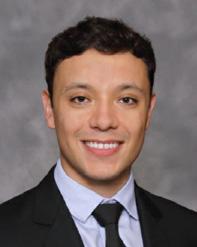


Abdul-Rahman Abdel-Reheem, MD Prelim
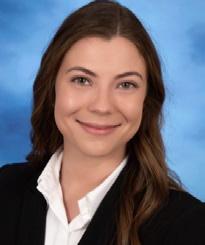

Arya Anvar, MD Urology


Our AY21-22 residents hail from 18 states and 31 medical schools across the United States.
There is an increasing need for general surgeons in rural areas of Wisconsin. With this need in mind, a Rural Track was established at MCW in 2017. Rural Track residents spend 2 months of each year at Aspirus Medical Center in Wausau, Wisconsin. During their time at Aspirus, the rural resident is the only surgical resident at the hospital, and so participates in varied surgical specialties. The opportunity to combine this experience with 10 months of rotations each year at Froedtert and MCW, ensures that our residents finish the program prepared to deliver the highest standard of care to patients in rural settings.
General Surgery
Chief Rural Resident
Five years ago, I became the first resident in the rural track and would represent MCW on a new endeavor. I knew Wausau, WI. I grew up in a similar community 90 miles west in Eau Claire. I lived in New York City for 10 years, but the more time went by, the more I longed to come back to the Midwest. This was why the rural track appealed to me. I wanted to live and work in a community similar to where I grew up and give back by caring for those people close to home. When I arrived at Aspirus Wausau Hospital, the staff were extremely welcoming and excited to have a surgical resident on campus.
The surgeons embraced their new role as educators and proved to be quite natural at it; however, the experience was not without its difficulties as we all adapted to our new roles. It was a humbling but extremely rewarding experience; and through these difficulties, we worked together to create an even better track for the residents who were to follow.
Now 5 years later, the rural track is complete with residents of each year and a newly matched intern who will not know me personally. I will only be the first and as time goes on, my name will fade. What I wish to leave behind is an improved track. I hope the residents learn to value the independence that the time away provides, and through this experience, grow in their technical skills but also
Robert Condon, MD was Chair of Surgery at the Medical College of Wisconsin for a quarter of a century and had an enormous impact on the school as well as surgery locally, nationally and internationally. He initiated a system which allowed surgical residents to do research during their training based on his own experience with Dame Sheila Sherlock in London. He believed that research allowed residents to become an expert in a field, present their work and understand the strengths and weaknesses of the medical literature. Research enhanced resident education, and allowed them to improve their job prospects and fellowship opportunities. He considered himself to be a talent scout as he strove to match those he taught with opportunities.
Since Dr. Condon’s time, resident funding mechanisms have changed and, to continue this tradition at MCW, an endowed resident research fund has been established. This is a wonderful opportunity to contribute to the
as clinicians and humans. I hope that they learn to connect with people of different backgrounds and bridge the gap between them. It is one thing to learn an operation, but it’s a whole different challenge to establish a trusting relationship in the span of a clinic visit. In these ways, I hope to leave a legacy on this program that will endure for many years to come.
I would like to thank Dr. Douglas Evans and Dr. Matt Goldblatt for entrusting to me the responsibility of being the first rural resident. I would also like to thank Dr. Gary Sweet, Dr. Steve Weiland, the rest of the Surgical Associates group as well as the entire staff of Aspirus Wausau Hospital from the surgical first assists to the APPs who have contributed more to my education than words can describe.
education of the next generation of surgeons and to give forward. This fund enables residents to focus on the future, whether they choose to utilize research time to establish an academic career, learn about an aspect of surgical science in depth, or have a less stressful break in a very busy schedule. We hope that you will consider a pledge or donation to the Resident Research Fund.
To donate, scan the QR code or visit mcwsupport.mcw.edu/residentresearchfund. For questions regarding philanthropic donations, please contact Jason Kraiss, jkraiss@mcw. edu.

Mary
F. Otterson,
MD, MS Professor, Division of Colorectal Surgery


Our programs and curriculum have four major objectives of surgical education:
1. To foster development of positive humanistic attitudes as essential ingredients of excellence in surgical patient care;
2. To assure acquisition by each resident of appropriate technical surgical skills and an appreciation of surgical anatomy and physiology;
3. To provide opportunity for each resident to develop mature surgical judgment based both on theoretical considerations and on practical experience;
4. To develop in each student and resident an inquiring mind, tempered by appropriate skepticism, by means of vigorous and candid review of one’s surgical work and by exposure to the problems of basic and clinical research.
Andrew Kastenmeier, MD Chief
Anu Elegbede, MD, MSc Associate Chief, Division of Education Director, M4 Clerkship
Thomas Carver, MD Co-Director, PGY 2-5 Curriculum
Christopher Davis, MD, MPH Associate Director, Residency Program
John Densmore, MD Associate Director, Residency Program
Matthew Goldblatt, MD Director, General Surgery Residency Program
Rana Higgins, MD Associate Director, Residency Program
Kathleen Lak, MD Assistant Director, PGY 2-5 Curriculum
Paul Linsky, MD Associate Director, M3 Clerkship
Michael Malinowski, MD, MEHP Associate Director, Residency Program
Director, PGY 1 Curriculum
Jacob Peschman, MD, MSPE Associate Director, Residency Program
Co-Director, PGY 2-5 Curriculum
Caitlin Patten, MD, MS Director, M3 Clerkship
Carrie Peterson, MD, MS Associate Director, Residency Program
Philip Redlich, MD, PhD Chair, Mentoring Committee
Abby Rothstein, MD Assistant Director, PGY 2-5 Curriculum
Nicole Dixon
Education Program Coordinator III
Catie Fihn, MBA Program Manager, Surgical Education
Shirelle Jenkins Administrative Assistant
Theresa Krausert Education Program Coordinator III
Theresa Neitzel Program Manager, Faculty Development
Lisa Olson, MBA Program Manager, General Surgery Residency
The Medical College of Wisconsin Department of Surgery sponsors eight annual lectures, each honoring the lectureship’s namesake for their significant contributions to education, research, and patient care. In addition, we are honored to host visiting faculty from across the nation for our Grand Rounds.
13th Annual Jonathan B. Towne Lectureship
Jean Starr, MD
Professor of Clinical Surgery, Division of Vascular Surgery
The Ohio State University College of Medicine
5th Annual Mark B. Adams Transplant Lectureship
Marwan S. Abouljoud, MD
Chief, Division of Transplant and Hepatobiliary Surgery
Benson Ford Chair in Transplantation Henry Ford Hospital
34th Annual C. Morrison Schroeder Lectureship
John R. Liddicoat, MD
Executive Vice President and President Americas Region
Executive Vice President and President of Enterprise Technology and Innovation Medtronic
6th Annual Gale L. Mendeloff Lectureship
Benjamin T. Jarman, MD
General Surgeon
Program Director, General Surgery Residency Gundersen Health System
49th Annual Edwin H. Ellison Memorial Lectureship
Jennifer F. Tseng, MD, MPH
James Utley Professor and Chair of Surgery, Boston University School of Medicine
Surgeon-in-Chief Boston Medical Center
14th Annual Jonathan B. Towne Lectureship
Audra A. Duncan, MD
Professor and Chair/Chief, Division of Vascular Surgery
Schulich School of Medicine & Dentistry
The University of Western Ontario
Surgeon, Division of Vascular Surgery
London Health Science Centre
21st Annual Marvin Glicklich Lectureship
Alan W. Flake, MD
Ruth and Tristram C. Colket, Jr. Endowed Chair of Pediatric Surgery
Director of the Center for Fetal Research
Children's Hospital of Philadelphia
Professor of Surgery, Obstetrics & Gynecology
Perelman School of Medicine at the University of Pennsylvania
61st Annual Carl W. Eberbach Memorial Lectureship
Carla Pugh, MD, PhD
Thomas Krummel Professor of Surgery
Director,Technology Enabled Clinical Improvement (T.E.C.I.) Center
Stanford University School of Medicine
41st Annual Milton A. Lunda Memorial Lectureship
Karen J. Brasel, MD, MPH
Professor, Trauma, Critical Care and Acute Care Surgery
Assistant Dean for Graduate Medical Education
Residency Program Director
Oregon Health & Science University School of Medicine
Global Health Week Speaker
Sudha Jayaraman, MD, MSC
Professor of Surgery, Division of General Surgery
Director of the Center for Global Surgery University of Utah
Grand Rounds Visiting Professor
Gretchen Schwarze MD, MPP
Morgridge Endowed Professorship in Vascular Surgery
Chair, University of Wisconsin
Hospital Ethics Committee
University of Wisconsin Madison


Matthew Goldblatt, MD, Eberbach
Visiting Professor Carla Pugh, MD, PhD, Andrew Kastenmeier, MD, and Douglas Evans, MD

Grand Rounds Visiting Professor
Shanu N. Kothari, MD
Jean & H. Harlan Stone Chair of Surgery
Professor of Surgery
University of South Carolina –Greenville
The Department of Surgery employs over 400 people in 11 divisions and countless roles, but all work to support our mission of leadership and excellence in education, research, patient care, and community service. Teamwork makes the dream work! From our surgical faculty and APPs, to our research scientists and postdoctoral fellows, our administrative professionals and program managers, our finance and IT teams, our clinical research assistants and data analysts and the plethora of other valued team members working in all areas of the Department each day. The stories in this report reflect the effort and dedication of the people of MCW Surgery.
Faculty
Douglas B. Evans, MD Professor and Chair
Philip Redlich, MD, PhD Professor and Chief (VA)
Staff
Jon Mayer, MBA Chief Administrator
Wendy Behrs
Administrative Associate
Samantha Breidenbach
Financial Analyst
Jason Dickson Desktop Support Technician II
Andrew Eades Program Manager I
Mary Halverson
Senior Financial Analyst
Jeff Hauswirth
Associate Department Administrator
Patty Hoath
Administrative/Credentialing Specialist
Linda Klagstad
Administrative Associate
Karen Larson
Financial Analyst
Ruthie Lewis
Senior Administrative Assistant
Cyndi Nebel Financial Assistant II
Janet Peschek
Administrative Associate
Tom Sisson Desktop Support Technician III
Lillian Ubovic Reimbursement Manager
Katie Wilant Senior Reimbursement Manager

Improving global surgical care by investing in the global solution to build a common learning environment and surgical workforce in low and middle-income countries
Over five billion people in the world lack access to basic essential and emergency surgical care (Lancet Commission Report). The World Health Organization report from 2010 indicates that more than material shortage, the lack of trained surgical workforce is critical. MCW surgeons across each of our subspecialties engage globally to advance global surgical care. Our surgical faculty are collaborating within five continents and across twelve countries.

The GME Global Health Scholars academic enrichment program is available to any surgery resident or fellow who wants to advance their global health knowledge and leadership skills. This two-year training program gives them exposure to trainees in other specialties and networking opportunities with MCW’s globally-en-
gaged faculty who provide interactive didactic seminars across the Consortium of Universities of Global Health competencies. Currently 37 trainees across 14 subspecialities are enrolled. This educational effort culminates in a global health away rotation where surgery trainees can witness surgical services in another part of the world.
The new Global Surgery Fellowship is a two-year training program for the already globally-engaged resident to have advanced practice as an educator and surgeon, collaborating with in-country partners to build surgical capacity, as well as research, education and quality improvement efforts.
Dr. Marc de Moya has been traveling to Havana, Cuba, since 2010 to develop bidirectional relationships to research and improve care for trauma and acute care surgery. Our group introduced an Advanced Trauma Life Support course in partnership with Brazil, and have worked with the surgeons and nurses there to propagate other trauma training courses on an annual basis. MCW medical students have performed research in the country as Kohler Scholars, studying the introduction of new technologies in low-resourced centers and improving the culture of safety in the operating rooms. The program has been a great success and MCW is now in the process of developing a more formal Memorandum of Understanding for academic collaboration with the University of Havana. Dr. de Moya will be given an adjunct academic position this coming year. Drs. Marc de Moya, Chris Dodgion, Katie Iverson, and Libby Schroeder traveled to Cuba to reconnect with our partners this summer.
MCW remains engaged in Hawassa, Ethiopia, as a founding member of the academic medical center consortium organized by the American College of Surgeons’ (ACS) Operation Giving Back. The goal of this partnership is to strengthen Hawassa University’s surgical workforce, research capacity, and quality improvement initiatives. In spite of COVID travel restrictions, MCW faculty continue to participate in nearly weekly educational activities. Drs. Marc de Moya, Chris Dodgion and Libby Schroeder have participated in virtual journal clubs and Mortality and Morbidity conferences, designed and implemented a research mentoring program and further proliferated the ACS Trauma Evaluation and Management (TEAM) and Advanced Trauma Life Support (ATLS) courses as they support Hawassa as a regional leader and center of excellence for over 4 million people. The research team, led by Drs. Schroeder and Dodgion, have presented and published their research and mentorship education model with the goal of providing a framework for other bidirectional partnerships to create their own programs.


Drs. David and Lyle Joyce traveled to Medanta Hospital in New Delhi, India, in February 2022 to teach local surgeons how to implant the first Protek Duo percutaneous ECMO circuit in a patient who had been placed emergently on peripheral ECMO for COVID in Nepal and transported by air ambulance to Medanta Hospital in India for further care. He had been at bed rest for 3 months due to the peripheral cannulation. This hospital has been running up to 58 ECMO patients at a time with only peripheral cannulation. They had seen the articles published by Dr. David Joyce with his early use of the percutaneous system in order to get immediate ambulation and requested introduction to the technique. The patient was successfully converted and was able to be transferred back to Nepal to be with his family. Dr. Naresh Trehan (world-renowned heart surgeon and CEO) has requested Dr. David Joyce to return to assist in establishing an implantable ventricular assist and heart/lung transplant program at their mega hospital system soon.
Haiti is home to over 11 million people, many of whom face significant barriers accessing safe, timely, and affordable surgical care. Drs. Chris Dodgion and Alexis Bowder have continued ongoing collaborative efforts to identify and address these barriers with their Haitian colleagues. Over the last two years, they have established a multi-organizational collaborative (IMPART project) with the Centre d’Information et de Formation d’Administration de la Santé (CIFAS - Ministry of Health partner for education and training development), Unité Médicale de Recherche et de formation Permanente (UMREP - Haitian non-profit dedicated to epidemiological and clinical research training), and Info-CHIR (Haitian Journal of Surgery and Anesthesia) to design and implement a sustainable research curriculum and local mentorship network. This collaborative has completed their inaugural course with participants’ initial projects nearing completion and the next cohort to begin in late 2022.

Dr. David Joyce in an operating room in India, mentoring the first implant of a Protek Duo for COVID.
The first Kenyan cardiothoracic surgery resident has graduated and is now full time faculty at Tenwek Hospital. In October 2021 and March 2022, Drs. David and Lyle Joyce completed visiting trips where they taught surgical techniques such as repair of ventricular aneurysms, triple valve replacements, MAZE procedures, septal myectomies for hypertrophic cardiomyopathies, and the latest surgical approaches to ECMO. The new cardiothoracic hospital will be completed in December 2023 at which time they will have multiple cardiac ORs and Cath Labs to further expand the program. With each trip, they have had the pleasure of taking Froedtert/MCW nurses or medical students to assist. Mohammed Kamalia was this year’s


recipient of the Joyce Global Health Scholarship created by MCW faculty members, Drs. David Joyce and Joyce Sanchez. This fund supports a global health educational experience at their global partner’s institution, Tenwek Hospital. The infrastructure for the
Prior to the pandemic Dr. Robin Karmacharya, from The Kathmandu University Hospital in Nepal, came to MCW and Froedtert Hospital. He returned to Nepal and with the help of philanthropic funding was able to start a vascular lab to include the ability to do ankle brachial indices and duplex scanning. Drs. Dean Klinger, Michael Malinowski, Andrew Goelz and Matthew Madion, traveled to
Drs. David and Lyle Joyce have previously made surgical teaching mission trips to Nepal between 2009-2017. As a result of the COVID patient that they treated in New Delhi, they have been requested to return to Kathmandu in November 2022 to teach local surgeons how to use the Protek Duo percutaneous ECMO system and to build a citywide service that would include governmental and private hospitals. The infrastructure for the ICU education and staffing will be led by Dr. Sheri Crow.
Nepal to expand on collaborative efforts between our two institutions. Unfortunately, the prevalence of COVID-19 began to surge, and the faculty came home after just two weeks. In that short time, Dr. Malinowski assisted Dr. Robin with the first-ever angioplasty procedures at the hospital. Since then, the hospital has built out a catheterization lab for Dr. Robin to expand his interventional
ICU education and staffing is led by Dr. Sheri Crow, a pediatric and cardiac intensivist from the Mayo Clinic and daughter of our very own Dr. Lyle Joyce.
skills and provide more current therapy for vascular disease. MCW faculty participated in the organization and delivery of the First International Vascular Symposium in Nepal. This year we had the conference via Zoom and had about 100 participants. We continue to have monthly Zoom case conferences to discuss interesting or difficult to manage cases.


Ken Swan is not just a pumpkin farmer, he is THE pumpkin farmer in Racine County, Wis.
“We are in our 45th season as a destination pumpkin farm; we get thousands of people through here every year.”
It was during the 40th season of Swan’s Pumpkin farm when Ken received difficult news he had pancreatic cancer. “Nobody ever told me how long I had to live or anything like that. I didn’t even want to know. I’m not a big going-to-the-
doctor kinda guy, but I knew this was serious. They said I needed this thing called a Whipple procedure to treat my cancer.” It’s a complicated surgery that removes all or part of the pancreas, cuts out the cancer, and still allows you to digest food after surgery.
“We went to a few hospitals but then a friend of mine told me I needed to go see Douglas Evans, MD, at Froedtert (Hospital). We found out that some really well-known hospitals only do a Whipple a few times a
year and that Dr. Evans does it a few times every WEEK! He’s the top pancreatic cancer surgeon in the world!”
Dr. Evans is the Donald C. Ausman Family Foundation Professor of Surgery and Chair of the Department of Surgery at the Medical College of Wisconsin. Internationally recognized for treating patients with pancreas cancer, patients throughout the country and around the world have sought him out for treatment.
Ken says the surgery was really, “no big deal,” for him. The chemotherapy, he says, was another story. “Chemo wasn’t easy … it wasn’t fun. But, one day at a time. One chemo at a time. We got through it. When you’re fighting cancer, you do what’s recommended, because you want the best outcome.”
Ken and his family got about the best outcome anyone could hope for. He just had his five-year scan, and he’s still cancer-free. “It’s Dr. Evans, and it’s the team. If they’re doing these surgeries three or four times a week, well, you certainly feel a lot more comfortable knowing that this team, headed by Dr. Evans, is doing the surgery. That’s what really sold us.”
Now, out here among
the pumpkins, Ken is focused on his farm. He says he and Dr. Evans became friends and that he stops here to visit when he’s in the area. Farmer Ken thinks they have something in common. “When you’re the best pancreatic cancer surgeon in the world I guess it is like selling pumpkins, you see new people every week. But Dr. Evans is so personable! What a guy! I know he likes sailing, I don’t know why he likes pumpkin farms, but he really thinks this is the greatest thing!” Ken and his family have graciously chosen to give back, making gifts to the We Care Fund for Medical Innovation and Research, which supports physicians and scientists dedicated to finding new treatments and cures for cancer and other life-threatening diseases.
And even though Ken’s attention is on the pumpkins, he always remembers how fortunate he is. “They are relentless. Such wonderful people. And they they saved me. And I’m sure other people at other hospitals may tell the same story, but Froedtert is our number one choice if we’re going to have anything done.”

Melissa Irwin Chair, We Care Fund Committee
At its core, the We Care Fund for Medical Innovation and Research in MCW’s Department of Surgery is about the hope for a future with better treatments. We Care has awarded 21 grants since it was founded in 2010. These grants are instrumental in launching new and innovative pilot projects that gather preliminary data and investigate hypotheses to pursue competitive federal awards. Grants from We Care have launched projects that have received multi-million-dollar funding from institutions such as the National Institutes for Health, the American Heart Association and NASA.
Kirkwood Pritchard Jr., PhD, Professor of Pediatric Surgery and Cardiovascular Pharmacology, received a Recovery grant from We Care during the COVID-19 pandemic to support his research on how patients with sickle cell disease suffer from poor vascular function, which increases vaso-congestion. As he shares, “The We Care grant made it possible for me to complete the experiments lost due to the pandemic. Without We Care funding, the loss to my lab concerning data and publications would have been immense. I was able to replace the sickle mice lost earlier, set up our previous experiments, and perform the studies. We are now submitting manuscripts and grants based on data generated from the We Care award that paid for the

William Hall, MD
Associate Professor of Radiation Oncology
Dr. Hall’s project, Optimal Immunotherapy for Improving Pancreatic Cancer Survival, looks to compare different types of radiation therapy and evaluate the resulting immune response.
“We Care is dedicated to giving hometown access to world-class treatment…this care would not be possible without your support and the support of organizations like the Froedtert & Medical College of Wisconsin’s We Care Fund”
- Bob Uecker
replacement experiments. Thank you very much for your generosity.”
Gwen Lomberk, PhD, Professor of Surgery and Pharmacology & Toxicology, received a Recovery grant to investigate windows of opportunity for providing novel targets and treatment approaches for pancreatic cancer. As she shares, “We thank We Care for their tremendous support during these challenging times! The Recovery grant allowed us to replenish key reagents that had expired during the COVID-19 mandated shutdown of the lab and had to be thrown away, as well as re-purchase some pancreatic cancer cell lines that were not coming out of cryopreservation very well. Due in part to this help, we were able to acquire the necessary additional preliminary data to successfully re-submit our NCI (National Cancer Institute) R01 grant in October 2020, which was funded. We also published a manuscript, which utilized reagents supported by the Recovery grant.”
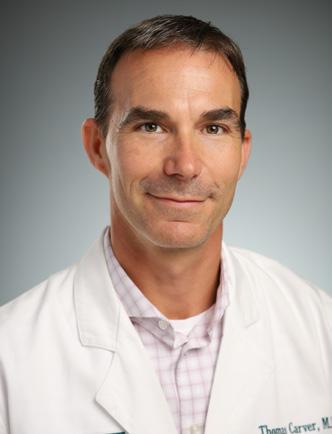
Thomas Carver, MD
Associate Professor, Division of Trauma and Acute Surgery
Dr. Carver’s project, Clinical Trial to Identify Best Treatment Approach for Traumatic Injuries to the Spleen, focuses on studying splenic trauma to improve the success rate of non-operative management.

To provide patients and families with hope through advanced treatments for cancer, organ failure and complications from trauma, and cardiovascular diseases. The We Care Fund helps accelerate the development of advanced, life-saving treatments, and serves as a catalyst to engage the local community to ensure we have the healthcare we deserve in our region.
Melissa Irwin, Chair
Arlene Lee, Founder
Carrie Raymond Bedore
Aletha Champine
Betsy Evans
Deb Gollin
Sandra Hansen Harsh
Ruth Joachim
Douglas B. Evans, MD
Guan Chen, MD, PhD
Chandler Cortina, MD
Michael Dwinell, PhD
Statistics
2010
The year We Care launched
$1,305,000
Amount awarded
Donate Now
Jennifer La Macchia
Joel Lee
Liza Longhini
Darren Miller
Mary Ann Miller
Brian Neuwirth
Abigail Barnes Schroeder, PA-C
Peggy Schuemann
Brian Trexell
Aaron Valentine
Liza Zito
Roger Caplinger
Ashley Brunner
Gerry King
Aron Geurts, MD
David Gourlay, MD
Andrew Kastenmeier, MD
Christian Kastrup, PhD
21
# of research grants funded
9
# of COVID-19 research recovery grants distributed in 2020
Philanthropic support plays a vital role in launching pilot studies and research that would not otherwise be funded for months. Throughout the pandemic, We Care has maintained its dedication to the important and life-saving work at Froedtert & MCW by continuing its support. Every penny raised supports research and clinical programs that can’t wait for traditional funding sources. Your gift will help our researchers and physicians translate new medical discover-
Gwen Lomberk, PhD
Hershel Raff, PhD
Mary Sorci-Thomas, PhD
Michael Zimmermann, MD
$2.4M
Amount raised from over 2,000 donors
19
# investigators who have received We Care grants
ies from the laboratory to the operating room, bedside, and clinic. With your support, we can bring new hope to patients in Wisconsin and throughout the world. Scan to donate or visit https://mcwsupport.mcw.edu/wecarefund.

We realize the importance of our community’s support and we thank all our donors for your generosity and commitment to improving healthcare and driving innovation
Mr. Gabriel Aizenberg and Mrs. Deborah Aizenberg
Dr. Mohamed F. Algahim
Ms. Julie Alvin
Mr. Al Anderson and Ms. Kim Anderson
Mrs. Patricia Aprahamian
Dr. Steve L. Aprahamian and Mrs. Debra Aprahamian
Ms. Alice G. Archabal and Mr. John F. Archabal
Mr. Andrew J. Arnold
Mr. John T. Arnold and Ms. Patricia T. Arnold
Mr. Thomas A. Arnold and Mrs. Susan J. Arnold
Mr. David S. Arnott and Ms. Elizabeth B. Arnott
Mrs. Marianne Arpe and Mr. William R. Arpe
Mr. Mark Attanasio and Ms. Debbie Attanasio
Mr. Greg Austin
Mrs. Michele H. Baker
Mr. Mark Balestreri
Mr. Don H. Bardonner and Mrs. Patricia L. Bardonner
Ms. Robin Barfield and Mr. Tommy Barfield
Mr. John Barrett
Mr. David J. Beatty and Ms. Stephanie Beatty
Mr. James M. Bedore and Ms. Carrie R. Bedore
Ms. Susan R. Bennett
Ms. Marshelle M. Bergstrom
Mrs. Patricia Berkley
Mrs. Suzan B. Bernhard
Mr. David B. Bishop and Ms. Eva K. Bishop
Ms. Mary Kay Blalock
Mr. David C. Boerke and Ms. Suzanne Boerke
Ms. Lauren E. Bray
Mr. Thomas E. Bray
Mr. Thomas G. Bray and Ms. Brenda L. Bray
Mr. Stephen Brenneman
Ms. Elizabeth F. Brenner
Mr. James F. Brown and Ms. Ann W. Brown
Dr. Annabelle R. Butler and Mr. Matthew J. Frelich
Dr. Gerardo A. Caballero and Ms. Cynthia Caballero
Mr. Thomas C. Callen and Ms. Bonnie E. Callen
Estate of Daniel J. Calmes
Dr. William M. Cannon and Ms. Geralyn M. Cannon
Ms. Judith B. Carroll
Mr. Glen Casetta
Dr. Ashley K. Cayo
Ms. Aletha Champine
Ms. Betty Chrustowski
Mr. Jeffrey Clark
Ms. Denise Clark
Mr. John D. Cohn and Ms. Hallie W. Cohn
Ms. Kay Coisman
Mr. James M. Cole and Ms. Gaylyn L. Cole
Dr. Kelly M. Collins
Ms. Susan Collopy
Dr. Elizabeth M. Colwell
Mrs. Marcia J. Condon
Mr. Craig Counsell and Ms. Michelle Counsell
Ms. Cara Crawford
Ms. Sandra L. Czajka
Ms. Julie D’Agostini and Mr.
Dick D’Agostini
Ms. Jane Dalton
Ms. Kathryn A. Daly and Mr. Patrick M. Daly
Ms. Carole Dascani
Ms. Joanna DeFina
Ms. Lisa M. Detwiler
Ms. Sara C. Devaughn
Ms. Barbara Dietzen
Mr. Richard M. Dirks and Ms. Sandra A. Dirks
Mr. Stan Diver and Ms. Martha Diver
Dr. William V. Dolan and Mrs. Kari Dolan
Mr. Tom Duggan and Ms. Elizabeth Duggan
Mr. Luis Felipe Dutra Leite
Mrs. Heidi Edens and Mr. Justin Edens
Dr. E. Christopher Ellison and Dr. Mary P. Borgess
Mr. Paul R. Ellsworth and Ms. Patricia F. Ellsworth
Mr. Eric Engen
Ms. Kathleen English
Mr. Douglas C. Erlacher and Mrs. Sue M. Erlacher
Mr. David Eyrise
Ms. Anna Fischer
Mr. Judith H. Frank
Mr. Paul J. Frederick and Mrs. Lisa M. Frederick
Dr. Anne M. Garrison
Mr. Jim Gehl and Ms. Melissa Gehl
E. Nielsen Gibson
Mr. Brad Golden and Ms.
Karen Golden
Mr. James H. Gollin and Ms. Deborah L. Gollin
Mr. Robert W. Gregg
Ms. Jody Grizzle
Mr. John M. Hakes
Justice Hampton
Ms. Beth D. Haney and Mr. Charles H. Haney
Mr. William C. Hansen and Mrs. Libby Hansen
Reverend Brian Beno and Ms. Theresa L. HansenBeno
Mrs. Leila Hanson and Mr. Joseph J. Hanson
Ms. Sandra E. Hansen Harsh and Mr. Michael J. Harsh
Mr. Ben Haugabook
Ms. Connie Haugabook and Mr. Ricky Haugabook
Ms. Debra A. Haven
Ms. Margaret L. Haven
Ms. Jenna Henderson
Ms. Mary P. Hill
Mr. James B. Hill and Mrs. Jean E. Hill
Ms. Jane Hobbs and Mr. Buddy Hobbs
Ms. Brenda Hoyt
Mr. Josh A. Hunt
Ms. Melissa M. Irwin
Mr. Robert E. Jancar and Ms. Carol A. Jancar
Mr. Jeffrey J. Janza and Mrs. Monica W. Janza
Mr. Michael J. Jassak and Ms. Mary Lou Charapata
Ms. Cheryl Jinks
Mrs. Ruth H. Joachim and Mr. Fred Joachim
Ms. Mary E. Joling and Mr. Peter J. Joling
Dr. Rachel H. Jones
Mr. Harry Junkins and Ms. Dianne Junkins
Ms. Cynthia B. Kelley and Mr. Terrell F. Kelley
Mr. Ted D. Kellner and Dr. Mary T. Kellner
Ms. Kathleen M. Kopacz and Mr. Victor J. Kopacz
Mr. Raymond R. Krueger and Mrs. Barbara B. Krueger
Mr. Bob Kruse
Ms. Jennifer L. La Macchia and Mr. Nils Parker
Mr. William E. La Macchia and Ms. Sharon L. La Macchia
Ms. Debbie Lamb and Mr. Tim Lamb
Ms. Elaine W. Lanier
Ms. Margaret Larsen
Mrs. Becki Lawhon
Mrs. Arlene A. Lee and Mr. Joel S. Lee
Ms. Ann Lennart
Ms. Lisa R. Leuchter and Mr. Joshua Leuchter
Ms. Ann Lyon
Dr. James L. Mahoney, MD and Mrs. Gail E. Mahoney
Mr. Kyle P. Mandry and Ms. Judy Mandry
Mr. Jerry H. Mantooth and Ms. Kimberly C. Mantooth
Ms. Deborah Maple
Dr. John G. Markley and Ms. Kathleen Markley
Mr. Patrick J. McElligott and Ms. Laurie A. McElligott
Dr. William R. McGregor and Mrs. Juanita McGregor
Ms. Linda Mcintyre and Mr. Randall Mcintyre
Mr. J. Michael McIntyre and Ms. Carol A. McIntyre
Mr. Richard J. McMicken and Ms. Bonnie L. McMicken
Dr. Robert K. McMillan, MD and Ms. Stephanie A. McMillan
Ms. Carol L. Melk and Mr. Robert C. Melk
Ms. Laurie Merel
Mr. Steven Meyer
Mr. David T. Michaud and Ms. Elaine Michaud
Ms. Lisa MilisauskasFeldmeier
Mr. Darren Miller
Mrs. Deanna Y. Miller
Ms. Teri Miller
Ms. Mary Ann Miller and Mr. John E. Miller
Ms. Jennifer Mills
Ms. Brenda A. Moore and Mr. William D. Moore
Balinda Mugica
Ms. Elizabeth Munns
Ms. Nicole M. Murphy
Ms. Karen C. Murray and Mr. George A. Murray
Dr. Wayne K. Myers
Ms. Ruby Nally and Mr. Ronald Nally
Ms. Mary L. Nelson and Mr. Ronald F. Nelson
Mr. James S. Netherton and Ms. Patricia Netherton
Mr. Brian Neuwirth
Ms. Aja Nuzzi
Mr. Doug O’Connor and Ms. Jamie O’Connor
Dr. Daniel P. O’Hair and Dr. Naomi S. Miller
Dr. Adwoa Opoku-Boateng
Mr. Peter Optekar and Ms. Leona G. Optekar
Ms. Rita Orr and Mr. Joseph C. Orr
Dr. Jasmeet S. Paul and Ms. Vinita K. Paul
Mr. Lamar Payne
Jerre L. Pearson and Kerby M. Pearson
Mrs. Lindsay G. Peaster
Mr. Kenneth G. Pelky and Mrs. Marilynn L. Pelky
Ms. Bettie J. Petersen-Dicks and Mr. James Dicks
Ms. Linda B. Peterson
Mr. Thomas P. Podewils and Ms. Jacqueline A. Podewils
Mrs. Kathryne A. Pringle
Ms. Joy E. Rawls and Mr. Franklin O. Rawls
Mrs. Lonnie L. Rott and Mr. Lee A. Rott
Ms. Heather L. Roussel and Mr. Bruno F. Roussel
Ms. Pamela A. Ruschman
Ms. Barbara A. Salisbury and Mr. Charles R. Salisbury
Mr. Thomas R. Savage
Ms. Mary Jo Schaars and Mr. Wiliams J. Schaars
Dr. Claire L. Scheele and Ms. Melanie Collins
Mr. David J. Schoenfeldt
Ms. Margaret S. Schuemann and Mr. Robert J. Schuemann
Mr. Paul L. Schultz
Ms. Lorraine S. Schwab
Ms. Stephanie Scott
Commissioner Emeritus Allan H. Selig and Ms. Suzanne L. Selig
Mr. Patrick T. Sharkey and Mrs. Mary C. Sharkey
Dr. Robert F. Siegert and Ms. Susan K. Siegert
Mrs. Nancy L. Singer
Mr. Steve Skates and Ms. Elaine Skates
Ms. Louella A. Smart Lupo
Ms. Clementina Soika
Mr. Ross L. Sosebee and Mrs. Ross L. Sosebee
Mr. Gunnar Stapp
Mrs. Joan S. Stein
Ms. Claudia K. Strouss and Mr. Gene B. Strouss
Mr. Kenneth Swan and Ms. Jolynn B. Swan
Dr. Mark K. Swanson and Mrs. Mary J. Swanson
Ms. Jean A. Talamanco and Mr. Joseph J. Talamanco
Ms. Melissa P. Talley and Mr. Phillip D. Talley
Ms. Marilyn Taylor and Mr. Tom Taylor
Ms. Nicole M. Thomas
Ms. Shundra Thomas
Ms. Mary E. Thomaston
Mr. Brian D. Trexell
Estate of Mrs. Virginia R. Tronca
Mr. Richard E. Uihlein and Ms. Elizabeth A. Uihlein
Mr. Aaron Valentine and Ms. Monique Valentine
Mrs. Christine Vento Bente and Mr. Ross Bente
Mr. John C. Vetter and Ms. Jennifer L. Vetter
Mr. Daniel Vielgut
Ms. Jane K. Waits and Mr. Harry M. Waits
Ms. Mary E. Walker
Mr. Andrew Warshauer and Ms. Jaclyn Warshauer
Ms. Anne M. Weaver
Mr. David O. Weaver
Mr. Grant Weaver
Mr. Frederick D. Wehunt and Ms. Beverly Wehunt
Mr. Michael Weinstein and Mrs. Nancy Buchsbaum Weinstein
Mr. Mark W. Whitney
Mr. Paul W. Whitney and Ms. Amy L. Whitney
Mr. William D. Whitney and Ms. Mary K. Whitney
Ms. Jenny Wilde L’Heureux
Ms. Patricia C. Wilder and Mr. Alvin E. Wilder
Ms. Donna I. Williams and Mr. James W. Williams
Mr. John B. Williams and Ms. Madonna A. Williams
Ms. Katy Williams and Mr. Nelson E. Williams
Mrs. Evelyn Williamson
Ms. Bonnie R. Windham and Mr. W. Jule Windham
Ms. Lillie K. Wright and Mr. Louis S. Wright
Mr. Mark S. Young and Ms. Liza Longhini
Ms. Glenda Zerebeski
Ms. Elizabeth Zito
Mr. Edward J. Zore and Ms. Diane Zore
Mr. Eric S. Zorn and Ms. Lois K. Zorn
1st Franklin Financial
ABM Services and Renovations, Inc
Archie and Viola Meinerz
Family Foundation, Inc.
Associated Banc-Corp
Athens Obstetrics & Gynecology, LLC
Baird Foundation Inc.
Bank of America
Cedar Street Charitable Foundation
Evan and Marion Helfaer Foundation
Farmers & Merchants State Bank
Foundation for Heart Science, Ltd.
General Electric Co.
GMF Dr. Carl W. Eberbach and Elisabeth Falk
Eberbach Fund
GMF James A. and Reopa Brown Fund
Heyl Royster
Hiscox Foundation USA
iRon Industries LLC
Johnson & Johnson
Johnson Controls Foundation
Joseph & Vera Zilber Family Foundation, Inc.
Kuenzi Co, LLC
Medtronic, Inc.
Morgan County Primary School
Norman A. and Margaret I.
Shane Charitable Trust
Swan Pumpkin Farm Inc.
The Apple Family Foundation
Theodore W. Batterman Family Foundation
Tiffany & Co.
U.S. Bancorp FoundationMatching Gift Program
United Way of Greater Milwaukee & Waukesha County
VISA
We Energies Foundation
We cannot expect our community to invest in us if we are not investing in ourselves. Over the last 5 years, the Department of Surgery faculty & staff has contributed over $250,000 to support priorities within the Department of Surgery. Thank you for your philanthropic leadership and commitment to improving health.
Ms. Wendy A. Behrs and Mr. Daniel Behrs
Dr. Kellie R. Brown and Mr. Michael Kroll
Dr. Jed F. Calata
Dr. Casey M. Calkins and Dr. Barbara B. Calkins
Dr. Thomas W. Carver
Dr. Marc A. de Moya and Dr. Adriana de Moya
Ms. Lynn Dickinson
Dr. Douglas B. Evans and Mrs. Elizabeth D. Evans
Dr. Juan C. Felix and Dr. Betsy F. Felix
Dr. Joseph P. Hart
Dr. T. Clark Gamblin
Dr. Matthew I. Goldblatt and Ms. Maureen R. Goldblatt
Dr. Jon C. Gould and Ms. Elizabeth Gould
Dr. David M. Gourlay and Ms. Christine Gourlay
Ms. Susan Hermann and Mr. Thomas J. Hermann
Dr. Rana M. Higgins
Ms. Patricia A. Hoath
Dr. Christopher P. Johnson and Mrs. Edith Johnson
Dr. C. Greer Jordan and Mr. Theodore Jordan
Dr. Joohyun Kim
Dr. Tammy L. Kindel
Ms. Linda Klagstad
Dr. Dean E. Klinger and Ms. Mary T. Klinger
Dr. Takushi Kohmoto
Dr. Amanda L. Kong
Mr. Jason E. Kraiss and Ms. Tricia Kraiss
Dr. Dave R. Lal and Dr. Alysandra Lal
Dr. Brian D. Lewis and Dr. Tracy M. Lewis
Dr. Mona S. Li
Dr. Kirk A. Ludwig and Mrs. Elizabeth O. Ludwig
Dr. Michael J. Malinowski and Ms. Manisha Patel
Mr. Jon B. Mayer and Ms. Pat C. Mayer
Dr. David J. Milia and Ms. Sarah Milia
Dr. Michael E. Mitchell
Dr. Todd A. Neideen and Ms. Jennifer Neideen
Dr. Keith T. Oldham and Dr. Karen S. Guice
Dr. Carrie Y. Peterson
Mrs. Jessica Pihart
Dr. Timothy J. Ridolfi and Dr. Kimberly D. Ridolfi
Dr. Peter J. Rossi and Dr. Stephanie A. Rossi
Dr. Hallgeir Rui and Dr. Marja T. Nevalainen
Dr. Mary E. Schroeder
Ms. Abigail B. Schroeder
Dr. Gary R. Seabrook and Ms. Nancy C. Seabrook
Dr. Susan Tsai
Dr. Carol I. Tsao and Dr. Nancy L. Debbink
Dr. Amy J. Wagner
Dr. Tracy S. Wang
Dr. Stuart D. Wilson
Your support helps the Department of Surgery spark innovation, advance research, and enhance patient care. For more information, or if you are interested in making a gift to the Department of Surgery, please contact Jason Kraiss, Associate Vice President at jkraiss@mcw.edu.
*This list attempts to recognize all Department of Surgery donors during the 2020-21 fiscal year. If you notice any errors, please contact Jason Kraiss.
This Annual Report would not have been possible without the incredible commitment and dedication of the faculty, APPs, residents, and staff of the MCW Department of Surgery, and our current and former patients who inspire us to keep improving day by day! We would like to thank the Division Chiefs, Division Administrators, and administrative assistants who provided information and data for the report. Tracy Wang, MD, MPH and Jon Mayer, MBA, Chief Administrator, advised on the content and provided vital data and resources. The report was edited by Douglas B. Evans, MD, Tracy Wang, MD, MPH, Jon Mayer, MBA, Wendy Behrs, and Theresa Neitzel. Our sincerest thanks to Elizabeth B. Chen, designer extraordinaire, for pulling together all the content into one cohesive and beautifully designed report.
Thank you to the staff at Children’s Wisconsin and Froedtert Health who graciously allowed their patient stories to be reprinted in this year’s report, and to the many faculty, APPs, and staff listed below who contributed their original stories. These stories were coordinated with assistance from Sharon Fischer, Laura Haas, RN, BSN, Victoria James, Alicia Martin, Lindsay Morris, APNP, and Kerry Short, RN, MSN, ACNP-BC.


All stories have been edited for length and clarity from their original versions.
Cardiothoracic Surgery
Original story authored by Alan Betensley, MD
Colorectal Surgery
Original story authored by Kirk Ludwig, MD
Congenital Heart Surgery
“How two Herma Heart Institute doctors changed donor organ rejection testing forever” by Evan Solochek, Writer, Children’s Wisconsin, https://childrenswi.org/newshub/ stories/new-organ-transplant-rejection-blood-test
General Surgery
Original story authored by Abigail Schroeder, MPAS, PA-C, and Keri Blaszczynski
Pediatric Surgery
“Second opinion brings relief to teen suffering with GI issues” by Nicole Sweeney Etter, Writer, Children’s Wisconsin, https://childrenswi.org/newshub/stories/gi-secondopinion-brings-relief
Information in this report is current through June 2022.
Surgical Oncology
Original story by Dominic Harris, edited by Elizabeth B. Chen
Transplant Surgery
Original story by Johnny C. Hong, MD
Trauma & Acute Care Surgery
“Former race car driver overcomes life-changing injuries” by Froedtert Newsroom, https://www.froedtert.com/stories/former-race-car-driver-overcomes-life-changing-injuries © 2018 Froedtert & the Medical College of Wisconsin. Reprinted with permission.
Vascular & Endovascular Surgery
Original story by Ali Kusch, APNP
Philanthropy
“Innovative Cancer Surgery Gives Pumpkin Farmer New Lease on Life” by Froedtert Newsroom, https://www.froedtert.com/stories/innovative-cancer-surgery-gives-pumpkin-farmer-new-lease-life © 2021 Froedtert & the Medical College of Wisconsin. Reprinted with permission.

Medical College of Wisconsin
8701 W Watertown Plank Rd. Milwaukee, WI 53226