The Quadrangle- Issue 3,Spring 2023

Page 9

Arts & Entertainment

9

THE QUADRANGLE

Students Share Unique Creativity on Campus in Manhattan Magazine and Logos Nicole Fitzsimmons Senior Writer

Manhattan College students share their passions and creativity on campus by submitting their works to on-campus student journals: Manhattan Magazine and Logos. Manhattan Magazine is released each year emphasizing student non-academic, creative nonfiction or fiction works including poetry, photography and digital arts. Logos is a place for students to share their academic writing from inside and outside of the classroom. The intersection between these two journals offers students the opportunity to engage with forms of art they’re most passionate about and share that with Manhattan Colleges’ campus community. Adam Koehler, Ph.D., chair of the English department and faculty advisor of Logos, explains how these publications interconnect and even grew from each other. When Koehler was the faculty advisor of Manhattan Magazine in past years, funds saved from a new printing process offered an op-

portunity to assist students in creating a separate journal for academic works, now known as Logos. “The way that they speak to each other is very important for young scholars and writers to imagine themselves and I think every, especially English majors, but any liberal arts majors should be imagining themselves, certainly as scholars but also as writers, and I think having those twin projects gives a home to those different kinds of identities,” Koehler said. Current faculty advisor, Dominika Wrozynski, Ph.D., is the first creative writing professor hired on a tenure track at MC and states that on-campus publications give students in every major at MC an opportunity to engage in creative works. “Both Manhattan magazine and Logos are technically clubs,” Wrozynski said. “So, any student from across the college can join staff or work on layouts, and that is great because somebody in engineering who’s also interested in art can work on a magazine, for example. Because of that, we’re able to get student engagement funds, and both John Bennett

and Sharon Ortega over there at Student Engagement have been really supportive.” The process of creating these publications is another perk because students get a chance to become editors and see what creating a professional journal takes. “Manhattan Magazine, it’s really an opportunity for students to work closely with faculty on what it takes to not just produce a literary magazine, but also read the entries critically and talk about what they are okay and not okay with publishing and sort of trying that hat on as editors to do that with faculty members is a really positive experience,” Koehler said. Angela Ramoni, senior religious studies and English double major, is the editor-in-chief of the Manhattan Magazine and explains how creative and open-ended the process of putting the magazine together is. “That takes a while, the creative process of putting it together,” Ramoni said. “Sometimes other students design the cover and it’s very much us, our decisions, and then when we decide what we would want to put in the magazine, then we’ll go to advisors and see,

who does the final proofreading for us.” After a blind review process of submissions, the board offers three responses: acceptance, revisions and resubmissions, or rejection in some cases. Afterward, the production team works to put a magazine together with pages of art and creativity. “I think it’s the only publication that really has all different types of writings, like poetry, fiction, nonfiction, anything… anyone could submit it. There’s not like a strict process,” Ramoni said. At the end of the year, a release party for the publication occurs and offers an opportunity to celebrate students’ works. “The release party is always a highlight of the spring semester,” Koehler said. “I think it’s wonderful to celebrate all that where it’s very cathartic, it’s at the end of class. So students need that space between classwork and finals week to kind of take off.” Submissions are being accepted now for Manhattan Magazine and Logos for the 2023 release of these journals. “I think that people should know they can trust those read-

ers,” Koehler said. “They can trust those editors, that they’re not taking that work lightly. And I think that one of the beautiful things about Manhattan Magazine, is people are genuinely excited to get the submissions, happy to read them. So don’t be afraid to submit.” To submit any work for consideration, email manhattanmagazine@manhattan.edu

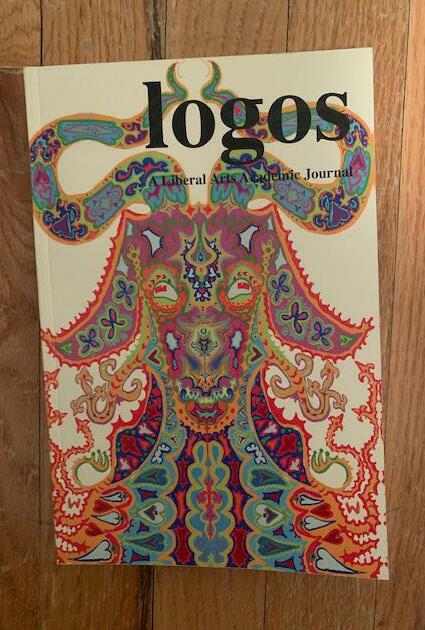
Logos’ most recent publication from Spring 2022. NICOLE FITZSIMMONS/ THE QUADRANGLE

Two Manhattan College Students Named Semifinalists in the New York Cinematography Awards Isaiah Rosario Asst. Sports Editor

Manhattan College juniors Kerry Sullivan and TJ Perez were selected as a semifinalist in the New York Cinematography Awards for their shortfilm “The Perfect Roommate” which was produced last fall in Professor Michael Grabowski’s COMM 350 Field and Postproduction course. The film is centered around three main characters which they named April, Danielle and Madison and takes place in their apartment. April comes back and finds out her direct roommate unexpectedly moved out on the week their rent is due. They begin scrambling to find a new roommate

and they interview people who just get weirder and weirder as the film progresses. They eventually find a person on the day that the rent is due who is willing to move in and pay the rent. The film ends with a big plot twist. Sullivan spoke to The Quadrangle about what the application process was like for the New York Cinematography Awards. “The process for film festivals is that you submit your film for consideration and then the way the New York Cinematography Awards works is either you get selected, or you don’t get selected,” Sullivan said. “We made it to the quarterfinals and didn’t make it past the semis but it doesn’t matter because you still get the award

A photo from the production of “The Perfect Roommate” KERRY SULLIVAN/ COURTESY

of being a semi-finalist.” Although Sullivan and Perez did not make it past the semis, they were still ecstatic that their film made it to the point it did. “I found out [the film was in the semis] over break and I was just like logging into the website just to see if there were any updates and then like this giant thing popped up like congratulations, you’re semi-finalists,” Sullivan said. “I didn’t expect it, it was just so great to be recognized. Even if we didn’t win the $10,000 or whatever it was, it was great to know that not only was our movie good enough to be put forward but to make it past a round of judging.” The nomination was a symbol of success to Sullivan, but it also held high value of worthiness to Perez as well. “It’s cool because I do a lot of players, I worked primarily in live theater and it’s kind of cool to have something that’s recorded that I can look back on and be like this is something that I did and not just like an abstract concept of a show that I was a part of once,” Perez said. “It’s cool for me because we did this huge project all semester long and it’s like, we got a good grade on it, but other people

outside of an academic setting also thought that it was good and that it was worthy of something.” Senior Julia Melchiorre spoke on what it was like to be an actor under Perez and Sullivan in her first acting role. “The process was smooth, really easy, really organized,” Melchiorre said. “We just figured out our schedule and when we could best meet. We were super efficient and productive because we all were really busy at that time of year.” Creating a film comes with hours upon hours of dedication and hard work. Hard work, however, also comes with some bumps across the road. “[A lot of difficulties] were trying to find props and scheduling,” she said. “[Scheduling] was a little rough, we planned for a certain amount of time and then we kept filming over and so we had to push things around, which thankfully we had like the best people working with us.” There were not only struggles on the producer side but there were struggles on the acting side as well, however, the team came together and overcame the obstacles. “Some of the challenges

were just of going in a little bit blind,” Melchiorre said. “I didn’t know exactly what to expect. On the flip side, that’s also the fun part of it. I had a lot of guidance from TJ and Kerry…I think that was super helpful to know how to shape my character and what their vision was and how to best emulate that to make their vision come to life.” With a media and production concentration at Manhattan College, people aspire to take their work to the next level just like Perez and Sullivan. Perez gave a word of advice on what it takes to be a filmmaker. “We shot the entire thing in [Sullivan’s] living room like we wanted it to be attainable and I think it shows that filmmaking doesn’t have to be this grand thing that no one can do,” Perez said. “It’s very attainable. If you have a camera in a living room, and you can write it then you can write a script, you can shoot a film, and when I was in middle school I used to make terrible little movies with my friends and it’s like that but you know, I’ve learned how to do it a little bit better and it pays off. It’s nice that you can make a simple fun story about people being people and like anyone can do that.”


Turn static files into dynamic content formats.

Create a flipbook
The Quadrangle- Issue 3,Spring 2023 by Manhattan College Quadrangle - Issuu