CIDER COUNTRY
KILLER READS


PLUS... MAGAZINE THEBRISTOLMAG.CO.UK £4.25 where sold THE Issue 222 I MAY 2023
foot it to the best of the festivals, fun events and celebrations
STEPPING OUT Hot
BBC’s Interior Design Masters with Alan Carr descends on the city’s streets
FEVER Plan a great summer with our guide to some of the west’s best fests
MASTERING BRISTOL
FESTIVAL
on life at Myrtle Farm
Fifth-generation
cidermaker Eleanor Thatcher
crime, clues
comedy ahead of CrimeFest 2023 SO MUCH MORE IN THE CITY’S BIGGEST GUIDE TO LIVING IN BRISTOL
Author Mark Billingham chats
and


The kitchen you’ve been searching for. German engineering | Quality | Craftsmanship BRISTOL - Clifton Down Shopping Centre, BS8 2NN - 0117 213 0680 BATH - Saracen Street, BA1 5BR - 01225 634025 Visit our showroom or request a brochure by scanning the QR code or see uk.kutchenhaus.com TheGermanKitchen
EDITOR from the
May’s calendar seems to be setting the tone for the season ahead. As the first weekend gets underway with King Charles III’s coronation at Westminster Abbey, the following weeks and months will also see the return of some of our favourite summer events.
Millie Bruce-Watt
On p. 22, we’ve picked out some of the west’s best fests that are sure to be highlights of the year – flick through and grab some tickets while you can.
In keeping with West Country celebrations, we also caught up with Somerset’s world-renowned cider makers –Thatchers, who are currently celebrating the news that Thatchers Gold has scooped the top spot in the South West as the best-selling draught pint. We caught up with fifth generation cider maker Eleanor Thatcher and orchard manager Chris Muntz-Torres at Myrtle Farm to gain a deeper understanding of where the cider industry began and where it’s headed. As the sun beamed down on us in the orchards, Eleanor reminded us of the translation of the county’s Old English name, which felt particularly apt on that warm Spring day: “Somerset is the land of the summer people.” Read the full interview on p. 46.
Elsewhere in the magazine, we spoke to the co-owners of Noco Hair, who recently featured in the semi-finals of the BBC’s Interior Design Masters with Alan Carr. Contestants Tom Power, Monika Charchula and Jack Kinsey were each given a Bristol hair salon to freshen up. Designer Jack created a ‘Japandi’-style refit for Noco and sailed through to the final round. Turn to p. 16 to see what Jack created.
In TV, fashion (p. 20), food (p. 44) and sport (p. 50), it feels as though Bristol is flying high this month. A great summer is ahead…
Publisher Steve Miklos
Email: steve@thebristolmagazine.co.uk
Financial Director Jane Miklos
Email: jane@thebristolmagazine.co.uk
Editor Millie Bruce-Watt

Tel: 0117 974 2800
Email: millie@thebristolmagazine.co.uk
Assistant Editor/Web Editor Alexis Herrington
Email: alexis@thebristolmagazine.co.uk
Production Manager Jeff Osborne
Email: production@thebristolmagazine.co.uk
Advertising Sales Liz Grey liz@thebristolmagazine.co.uk
For advertising enquiries please contact us on: 0117 974 2800
Email: sales@thebristolmagazine.co.uk

The Bristol Magazine is published by MC Publishing Ltd. An independent publisher.


Every month The Bristol Magazine is hand delivered to more than 15,000 homes in selected areas. We also deliver direct to companies and businesses across the city. Additionally there are many places where we have floor-stands and units for free pick-up:
ON THE COVER
This month, Bristol Opera is celebrating its centenary. Concert-goers can enjoy an exciting world premiere of a specially commissioned short opera by Joel Baldwin, based on the life of local illustrator and cartoonist Anne Harriet Fish, born in Horfield (1809-1964). Our cover image, titled Dancing Couples by Anne Harriet Fish, featured on the cover of Vanity Fair in 1921.
Original image: Anne Harriet Fish: Dancing Couples No. 2, cover for Vanity Fair, 1921. Image found in Library of Congress. This picture is in the public domain.

4 THE BRISTOL MAGAZINE | MAY 2023 | No 222 Contact us: THE BRISTOL MAGAZINE The Bristol Magazine Tel: 0117 974 2800 www.thebristolmagazine.co.uk © MC Publishing Ltd 2023 2 Princes Buildings, George Street, Bath BA1 2ED Disclaimer: Whilst every reasonable care is taken with all material submitted to The Bristol Magazine, the publisher cannot accept responsibility for loss or damage to such material. Opinions expressed in articles are strictly those of the authors. This publication is copyright and may not be reproduced in any form either in part or whole without written permission from the publishers.

things to do in May 5
Feast
This free entry event is a feast for the senses, featuring some of the region’s finest food and drink producers, as well as exciting entertainment for the whole family. Sample the very best in local and international cuisine, from artisan cheeses and freshly baked bread to spicy curries and indulgent desserts. Sip on delicious wines and craft beers, or indulge in a refreshing cocktail or two.
Laugh
The Wells Comedy Festival returns for a seventh year, bringing a ‘weekend-long comedy jamboree’ (The Guardian) with dozens of comedians descending on the city across the bank holiday weekend of 26 –28 May. Shows this year include a live recording of Richard Herring’s Leicester Square Theatre Podcast, Never Mind The Buzzcocks regular Jamali Maddix, triple-threat Rosie Jones (LiveAtTheApollo) and Britain’s GotTalent finalist Nabil Abdulrashid. More familiar faces return with the likes of Mark Watson, Paul Foot and Spencer Jones bringing their newest shows to Wells, plus many more.

• All shows on sale at: wellscomfest.com
Learn
On 25 May at 6pm, celebrate Alliance Française’s 140th birthday and watch Edmond at its open-air cineclub at Millennium Square.

If you are longing for the cultural experience of being in France, you don’t need to wait for your holidays. There is something for everyone at Alliance Française Bristol, whatever your level. If you want to improve your vocab and grammar then join its popular intensive courses. For four weeks, a French teacher will welcome a small group to rejuvenate their French language skills in the company of enthusiastic learners. Alliance Française is holding an enrolment night online on 9 May. Whether you are a beginner, rusty speaker or a confident one, get in touch!
• Contact Audrey: 07903 821655; info@afbristol.org.uk; afbristol.org.uk
The South Glos Food Festival is not just about food and drink, go along and enjoy live music and activities for kids. With so much to see and taste, the South Glos Food Festival is a must-visit for foodies, families, and anyone who loves a great day out.
• For more information, visit: southglosfoodfest.co.uk

Party
One of Bristol’s oldest health and wellbeing stores, Wild Oats, is hosting its first-ever street party on Monday 29 May. The bank holiday event starts at 11am with children’s entertainment and is set to feature live music from Irish folk duo Razzomo, fresh smoothies from Wild Oats, a bar from Wiper and True, a Designers’ Market, plus much more. The event is free to enter and finishes at 5pm.
• For more information about Wild Oats, visit: woats.co.uk

Dance
The headliner at this year’s Shindig Festival (25-28 May) is a firm family favourite –the dance-pop legend, Sister Sledge featuring Kathy Sledge, famous for such hits as We Are Family, GreatestDancer, LostInMusic and ThinkingOfYou. Other well-known names include satirical news reporter (and comedy genius), Jonathan Pie; London post-punk band, Warmduscher; the original queen of reggae music Dawn Penn; artist, producer, remixer, DJ and founder of Phantasy, Erol Alkan; top dog in the bass heavyatmosphere of Britain’s reggae dancehalls and BBC regular, David Rodigan; one of the most celebrated and accomplished DJs in Britain, Norman Jay MBE; and BBC 6 music’s, Huey Morgan!
• Dillington Estate, Whitelackington, Ilminster, TA19 9DT. Book your tickets at: shindigfestival.co.uk

6 THE BRISTOL MAGAZINE | MAY 2023 | No 222 ZEITGEIST

THE CITYist
New Artistic Director announces inaugural season at Bristol Old Vic
Nancy Medina recently unveiled her joyous first season as Artistic Director of Bristol Old Vic, resetting the theatre’s civic role in the city and heralding a season of joy, resilience and community which celebrates the culture in us all. At a time where the world faces a racial reckoning, a climate emergency and a society that has become more polarised and intolerant, she introduced a season which demonstrates the power and joy in meeting challenges not as individuals, but together.

Nancy will direct Choir Boy by Academy Award-winning writer Tarell Alvin McCraney (Moonlight) as her first production for Bristol Old Vic (12 October – 11 November). Nancy described Tarell as “one of the greatest playwrights of our time” and is thrilled to be able to bring this tender, intimate and uplifting story of identity and community to Bristol Old Vic’s stage.
Choir Boy spearheads a season woven through with music and joy, beginning with the runaway Edinburgh hit Kathy and Stella Solve a Murder! (13 – 30 September), a hilarious whodunnit from the Olivier Award-winning team behind Fleabag, which set the Edinburgh Fringe alight in 2022.
This winter, the festive season wouldn’t be complete without a Bristol Old Vic spectacular. From 23 November – 6 January, the theatre will be lit up with a modern reimagining of Arabian Nights from writer Sonali Bhattacharyya (Chasing Hares – Young Vic; TwoBillion Beats – Orange Tree Theatre).
Taking us into the new year is a collaboration between Bristol Old Vic, Antic Productions, Longshot and Playtone for the World Premiere of brand-new musical StarterforTen, adapted from the hilarious novel by best-selling author David Nicholls and the cult 2006 film.
• For the full Autumn/Winter 23 season programme and to book tickets, visit: bristololdvic.org.uk
Meet Bristol-based author, Antony Curtis My

BRISTOL
I was born and raised in Knowle West and went to Nover’s Lane Infants and Juniors before going to Merrywood Boys school (now closed). I grew up in the 70s and 80s in Bristol and had a childhood like many others there. It was a pretty rough area but when you grow up in it, it’s just the norm. Knowle West is a very underrepresented section of Bristol and is almost invisible to other areas, but it has such a community spirit, a working-class comradery that has kept it strong for so long.
I pretty much dropped out of school around 15 and decided to join the Royal Marines as soon as I could (16 years and 3 months). My time in there was short but it helped me above all to cope with the mental challenges that life throws at you. When I left, I stumbled into Taekwondo and fell in love with it. I was a black belt within two years and was competing all over the world. I was a father of three children at that point and when I suddenly became a single parent, I had to stop training and close my clubs to focus on them. I fell into education having set up a club in my old school of Merrywood. I volunteered teaching kids to read and write and loved it, so when a teaching assistant post became available I went for it. I then took a degree, worked across many different schools, eventually becoming an assistant headteacher.
During that time when I created heated sports gloves to help my son play rugby through the winter. I developed them into a product and created a company to sell them worldwide. I appeared on Dragons’ Den and ran the company despite not being successful on there. Life is full of opportunities if you see them and sometimes you have to set yourself challenges in order to push yourself out of your comfort zone. That’s what I did in the summer of 2016 when listening to the Olympic games. I decided to start a new sport and go from a complete novice to an Olympic champion in the four years in between. I chose pistol shooting, joined a club and began training. I competed in the British Championships the following year and came in 7th. Then a coach told me about a new sport of laser-run, part of the modern pentathlon. There was a training event the following week with the British Championships and qualifying event for the World Championships the week after. I thought, why not! So I turned up and qualified for Team GB, heading to South Africa for the Worlds. During
all of this time I had been writing just short stories and poems in cards but never thought I was able to write a whole novel, until one day I decided I would.
The Black Path was written from memories of childhood and is set in Bristol. The Black Path is actually a place in Knowle West, somewhere that, for those of my age, was filled with fear and local legend. It was a place you simply didn’t go. The book took six years to complete, five and a half of which was trying to start but being unable to. That is until I saw an interview with Stephen King on his writing process. He has a general idea about the story before he just puts the characters in the situation and simply writes what they do. I had nothing to lose, so tried it, and within three months the book was written.
The second book, Souk Daddy, came from a dream. It was fully formed with twists and even the name. When I woke up I had to Google it to find out what it meant. The story is about five children in prison who are just about to be transferred to the adult facility where survival is unlikely. The parents come together and decide to break them out. There are many twists and turns as you go. I used the same technique as before and it came out the same year.
My third book is out this summer and for this one all I had was a piece of technology and a character. From that, I let my imagination go and allowed the story to develop naturally. It examines the nature of humans, government and big business in a world where most of life has been stripped back to basics and ignorance and compliance are the norm.
For inspiration, there’s nowhere better than the water and forest. I love the harbourside and will sit on the edge thinking for hours. Walking in Blaise or Leigh Woods also helps blow the cobwebs out. Bristol is a place that has everything for entertainment, but for me, The Old Duke on Kings Street is my favourite.
My philosophy is a real mixture. I am very much a stoic in that I believe that we should try to learn more than we knew yesterday, we should be kind and understanding to others and that we only have control over ourselves, so worrying about external factors is often pointless.
• antony-curtis.com
8 THE BRISTOL MAGAZINE | MAY 2023 | No 222

Bristol Opera: Centenary Concert
Bristol Opera is celebrating its centenary with a spectacular concert under the wings of the iconic Concorde at the Aerospace Museum in Filton on Saturday 24 June at 7.30pm. Doors open at 6.45pm, allowing the audience to walk through Concorde to their seats situated below the airliner. The concert is set to be packed with popular choruses, solos and fully orchestrated overtures from operas performed during Bristol Opera’s 100 years. Plus, concert-goers can enjoy an exciting world premiere of a specially commissioned short opera by Joel Baldwin, based on the life of local illustrator and cartoonist Anne Harriet Fish, born in Horfield (1809-1964).
International baritone Andrew Shore plays the role of Omar Khayyam, whom Anne Fish illustrated for ‘The Rubáiyát of Omar Khayyam’ in her inimitable Jazz Age style in the 1920s.

• Premium tickets cost: £25; standard: £20; child: £15. Book your tickets at: tickets@bristolopera.co.uk.
The Invisible Circus presents Weekends of Wonder!
The Invisible Circus has recently received funding from Bristol City Council to bring Bristol’s Broadmead to life with an outdoor street performance festival spanning four weekends this May and June (13 –14 May, 20 –21 May, 27 –28 May and 3 –4 June).

Weekends of Wonder (WOW) is a street theatre festival with wow-factor, bringing local and international artists together to light up the town with bedazzling acts to amaze audiences of all ages. WOW will bring together veteran street performers alongside cutting edge new talent to create a truly magical atmosphere on our city’s central high street. Expect vibrant circus and theatrical ‘Covent Garden-style’ performances in circle shows and interactive walkabout acts, plus a treasure hunt of artistic window installations to discover. Themes centre on connection, creativity, playfulness, sustainability and inclusivity; sparking imagination for positive futures and re-igniting hope.
WOW Bristol is the first street performance festival of its kind in the city. Street theatre is one of the most inclusive, barrier-free and equal forms of entertainment available. By the very nature of it being free to attend, it is open for everyone to enjoy.
The performances are created specifically to suit outdoor locations, and are either designed to be language free or easily interactive with minimal language required, therefore welcoming non-English speakers and D/deaf audience members just as equally as anyone else.

Invisible Circus’ Weekends of Wonder is being delivered as one of the activities under the City Centre and High Streets Recovery and Renewal programme, funded by Bristol City Council and the West of England Combined Authority’s Love our High Streets project.
• For more information, visit: unit15bristol.com/wow-bristol. Image by Dom Moore
Forest Live returns to Westonbirt Arboretum
Forest Live is a major outdoor live music series presented by Forestry England. Forest Live 2023 takes place between 8-18 June and introduces forests to new audiences in unique, natural woodland arenas around the country. Over two million people have attended a Forest Live gig in the last 22 years, experiencing great music and supporting the nation’s forests when buying a ticket. Going to a concert helps Forestry England create beautiful places for people to enjoy, run important conservation projects and keep growing trees. Last year they planted some 6.8 million trees, caring for the nation’s 1,500 woods and forests sustainably and welcoming 363 million visits annually. Forest Live in this region takes place at Westonbirt Arboretum, near Tetbury, Glos and this year’s headline acts are: Paul Weller + special guests Far From Saints and guest support Seb Lowe – Thursday 8 June; Tom Grennan + special guest Matilda Mann and support Liv Dawson – Friday 9 June; Jack Savoretti + special guest Natalie Imbruglia – Saturday 10 June.
• For more information and to buy tickets, visit: forestryengland.uk.
Image of Paul Weller by Derek D'Souza

10 THE BRISTOL MAGAZINE | MAY 2023 | No 222
Original image: Anne Harriet Fish: Dancing Couples No. 2, cover for Vanity Fair, 1921. Image found in Library of Congress. This picture is in the public domain.
The Watersmeet Hotel in Woolacombe, a four star hotel on the water’s edge. Indoor and outdoor pool & spa. Two restaurants to include a bistro and a fine dining option, both with stunning sea views.



‘Ramblers Package - 3 nights’ Explore the coastal footpaths on our doorstep.
• Deluxe sea view room
• 3 course dinner
• Devon cream tea for 2 £990 per couple inclusive


‘Luxury Suite Offer’

• Luxury Suite
• Bottle of champagne
From £410 per night

‘3 Night Break’ (Sun-Wed)
• Deluxe sea view room B/B

£675 per couple inclusive
Selected dates apply.
THEBRISTOLMAG.CO.UK | MAY 2023 | THE BRISTOL MAGAZINE 11
Killer reads
Ahead of his appearance at CrimeFest later this month, best-selling novelist Mark Billingham chats all things crime, clues and comedy with Daisy Game
It doesn’t matter where you are in society; it doesn’t matter whether you’re rich or poor, or where you’re from: once a detective is knocking on your door, you need to talk to them. Nobody can close the door in a detective’s face. And that means a detective has access to every stratum of society…”
According to crime fiction novelist Mark Billingham, his is the perfect genre with which to address The Big Stuff. “I think crime fiction is now the social fiction of our age,” Mark tells me: “There was a time when literary fiction made a point of doing that – in the 60s or maybe in the 70s – but it doesn’t seem to do that so much anymore. And crime fiction does that: whether deliberately, or not.”

In fact – the less deliberate, the better. Setting out with a particular agenda to push simply won’t do, the writer suggests: “Don’t get me wrong – story is king, story is everything. But if within that story you can shine a light onto a particular issue, then you should do that – and
over the years, crime fiction increasingly has been doing that…”
When it comes to this genre, Billingham knows his stuff: the author of 21 bestselling novels, he’s been whipping up fictional felonies and the shady characters who commit them for over twenty years. With the exception of a few standalone novels, the writer spends the majority of his professional life busting crime with Detective Tom Thorne, who has an impressive total of 18 titles to his name. But it’s 2023 –and for the first time in a long time, there’s a new detective in town. The Last Dance, out on 25 May, will introduce readers to the eccentric Detective (forward-slash dancer) Declan Miller – aka, Blackpool’s best hope for keeping criminals off the streets. In this first instalment, Miller sets to work unearthing the connection between two men murdered in the same seaside hotel.
“Miller is very different to Tom Thorne,” Mark explains: “He’s somebody who is grieving his wife. By the time we meet him, she has
CRIMEFEST 2023
12 THE BRISTOL MAGAZINE | MAY 2023 | No 222 “
been murdered, and he’s going back to work – perhaps too soon. He’s dealing with grief in a very idiosyncratic and strange way; he just doesn’t care anymore. Which makes him a very unpredictable and mercurial character…”

It’s been a different writing process too. “I never had a sort of Bible for Tom Thorne, or dossier of facts… I still don’t,” says the novelist, explaining that he prefers an off-the-cuff approach: “The reader knows as much about him, book on book, as I do. With Miller, it’s slightly different. I kind of feel like I know exactly who he is…”
Part of this familiarity comes from the fact that Miller was – and perhaps still is – destined for the screen: “I’d been asked a couple of years ago to write an original detective drama for the BBC. And as part of that, I created this character, Declan Miller, and wrote umpteens of draft scripts about him, and got to know exactly who he was. But the wheels of television grind incredibly slowly… So rather than just sitting there, waiting for a series that may never happen, I decided to use him as the main character in the new series of books instead.”
reader, I’m not going to give a book any more than 20 pages: if there isn’t something that’s got ahold of me after that, I’m putting the book down and picking up another one.”
Staying briefly on the note of performing, Mark is also one sixth of the super-group Fun Lovin’ Crime Writers, which consists of noir authors Chris Brookmyre, Doug Johnstone, Val McDermid, Stuart Neville, Luca Veste and Mark himself. The band of best-sellers have been entertaining audiences at book and music festivals since 2017. Between them, they have sold over 20 million copies worldwide and won every major crime-writing award.
Having been introduced to Sherlock Holmes at the age of 13, Mark has been an avid reader of crime fiction since way back when: “I read nothing but crime fiction from a really early age. Don’t get me wrong, there’s nothing wrong with a wonderfully written literary novel. But I do find myself going: “Oh for God’s sake, kill somebody!” Or let’s have a car chase, or something... I adore brilliant crime fiction. I really do. I’m a reader first and foremost: I don’t think you can be a writer without being a reader.”
As a reader first and only, I find the sheer number of books and stories Mark has under his belt pretty astonishing: do ideas come thick and fast, I wonder?
“I’ve heard plenty of writers go ‘oh ideas, ten a penny!’ I don’t find them ten-a-penny: I find it very scary when you don’t have an idea in your head,” confesses Mark; but he simply has faith in the process: “Something always turns up. I never really plan a book – but once I know I’ve got a strong opening, I just write that, and then I see where it goes from there. It’s almost like a pre-title sequence in a movie, at the end of which I want there to be lots of questions. I want the reader to be going: ‘What, why, who – what’s going on?’. And maybe I don’t know the answers to all those questions at the time. I put it down and then Tom Thorne will enter and I will discover things as he discovers them. As long as I’ve got the seed of something, then I should be alright...”
Not that knowing Miller’s ins and outs beforehand made things easy for Mark. Moving away from Tom (momentary as the move might be: readers haven’t seen the last of Thorne, Mark is keen to emphasise) was no easy thing. Miller is, after all, the star of the writer’s first new series in over twenty years.
“There were times it was a bit scary. And I thought, what are you doing? But if things like this aren’t scary and exciting, you’re probably not doing the right thing. You have to step out of the comfort zone and do something different…”
Something different – and liberating, it seems. “The tone is much lighter. I’m still writing about murder and death and grief and pain and loss – but in a very different way”, the novelist tells me: “I wanted to write something that gave me the freedom to give full rein to that temptation to put jokes in…”
Jokes? In a book about murder and related mayhem? That’s off beat. But not, as it happens, for Mark, who spent his time treading the boards as a stand-up comedian before embarking on a writing career. I’m curious, then – how was it that that the writer’s gags turned gruesome? It turns out the two aren’t so far removed. “A joke is structured in exactly the same way as a crime novel: it’s all about the timing, and when you reveal a key piece of information. And crime fiction is full of punch lines – they’re just very dark lines. You plant clues in the same way that a comedian will lead you down the garden path and then hit you from an unexpected direction,” says Mark.
Plus, when it comes to really working an audience or readership, comedy has some pretty shiny pearls of wisdom to impart: “I learned as a performer that you’ve got to engage with your audience very, very quickly. You can’t go onstage at a comedy club and go ‘stick with me, I’ll get funny in about 20 minutes,’” the writer teases: “You’ve got to be funny straight away or they’ll start shouting at you. Similarly with a crime novel, you have to engage that audience really quickly. As a
Billingham prefers to learn alongside his reader – or at the very least, he likes to avoid lecturing them. He makes a point, for example, of avoiding overly specific descriptions of his characters: “That’s doing the reader’s job for them,” Mark insists: “If you describe every detail of what a character looks like and what they’re wearing, then you’re stifling the reader’s imagination. All Thorne really is is what he says and what he thinks: what he looks like is up to the reader. To me, that’s the beauty of reading: it’s not a movie, it’s not all laid out in front of you – you’ve got to do a little bit of work.”
Later this month, Mark will meet readers aplenty at this year’s CrimeFest. As a featured guest, Billingham will be interviewed one on one, before sitting in on a panel discussing the New Golden Age of Crime Fiction. The weekend is set to be a bit of a knees-up, too: “I’ll know 90% of the writers there. So you know, it’ll just be a big get together at the end of every evening. There’ll be a good deal of socializing, there’ll be a lot of fun...” n
• Mark Billingham’s The Last Dance is published by Sphere on 25 May 2023, £22. CrimeFest, sponsored by Specsavers, runs at the Mercure Bristol Grand Hotel from 11-14 May, 2023. For more details and to book tickets, visit: crimefest.com

CRIMEFEST 2023
THEBRISTOLMAG.CO.UK | MAY 2023 | THE BRISTOL MAGAZINE 13
“Crime fiction is full of punch lines – they’re just very dark lines. You plant clues in the same way that a comedian will lead you down the garden path and then hit you from an unexpected direction...”
THE WATCH LIST
Fresh from a visit to Watches & Wonders 2023, the recent annual watch showcase in Geneva, Switzerland, Mallory Jewellers review the latest models as well as the most exciting trends from the world of fine watchmaking. Find out more at Mallory, 1 - 5 Bridge Street, Bath BA2 4AP. mallory-jewellers.com
PATEK PHILIPPE 24-HOUR DISPLAY TRAVEL TIME

Patek Philippe enriches its range of travel watches and complications for everyday use with a new self-winding Calatrava Travel Time model featuring a distinctive 24-hour display.

Model: 5224R-001 £46,190.00
PANERAI RADIOMIR QUARANTA
Panerai celebrated its history by revamping the Radiomir collection, with new and heritage-focused models. Quaranta, forty in Italian, stands for the 40mm case size that defines the collection’s essence.

Model: PAM01293
£5,200.00
ROLEX OYSTER PERPETUAL SKY-DWELLER

With its two time zones and Saros annual calendar, the Rolex Oyster Perpetual Sky-Dweller is an elegant and trusted companion for world travellers. The range has been updated with numerous enhancements illustrating the role that excellence plays even in the tiniest details.
Model: M336935-0001
Price on request
TAG HEUER CARRERA
The all-new TAG Heuer Carrera Date 36mm, featuring a sporty, ergonomic profile and racing-inspired design codes. With colourful dials, a tapered bracelet design, and upgraded movement, this iconic timepiece has been reborn.
Model: WBN2311.BA0001
£2,750.00

14 THE BRISTOL MAGAZINE | MAY 2023 | No 222
TUDOR BLACK BAY GMT
Tudor has expanded the Black Bay GMT line with a new, whimsical dial in opaline to match the distinctive burgundy and blue bezel. It is also equipped with a steadfast Manufacture Calibre.
Model: M79830RB-0010 £3,590.00


MONTBLANC 1858 ICED SEA
The grey glacier pattern dial gives the impression of looking into the depths of a glacier with all its minerals captured in time for millennia. Inspired by the Mer de Glace, this glacial texture was achieved using an almostforgotten ancestral technique called gratté-boisé.
Model: 130793 £2,785.00
CHOPARD MILLE MIGLIA CLASSIC CHRONOGRAPH

Designed to push competitive limits with its ultralegible dial and 'glass box' crystal, this watch is a celebration of speed and style.
Model: 168619-3001 £8,030.00
TUDOR BLACK BAY

Tudor presents a new version of its Black Bay line in steel with a fixed bezel. All fitted with Manufacture Calibres, the models come in four sizes, with a five-link bracelet and clasp with rapid adjustment.
Model: M79600-0004 £3,720.00
PATEK PHILIPPE AQUANAUT LUCE
Patek Philippe reinterprets the self-winding Aquanaut Luce in rose gold with an elegant taupe-coloured dial and strap – a warm shade of grey that matches the contemporary sporty chic style of this ladies' model.
Model: 5268/200R-010 £43,340.00
WATCHES OF WONDER SHOWCASE
THEBRISTOLMAG.CO.UK | MAY 2023 | THE BRISTOL MAGAZINE 15
Mastering Bristol
The fourth series of BBC One’s Interior Design Masters with Alan Carr has been entertaining the British public every Tuesday evening for the last eight weeks as 10 talented designers battle it out for one life-changing contract. Over the last two months, the contestants have created wedding accommodation on the banks of Rutland Water, redecorated 1930s beachside chalets in Eastbourne, transformed independent shops in Harrogate and redesigned hotel rooms at a five-star golf and spa resort on the River Clyde.
For the people of Bristol, however, the most exciting moment came in episode seven, when the semi-final brought Tom Power, Monika Charchula and Jack Kinsey to the city’s streets. Tasked to work on their own to give three hair salons a fresh look, the designers were introduced to Noco Hair on Whiteladies Road, McQueens on Park Street and Hobbs on Park Row. With each salon boasting its own identity and unique style, Tom, Monika and Jack were given individual briefs along with a budget of £3,000. Following a productive zoom call with the owners of each salon, learning more about their requirements, the clock started ticking on the two-day deadline.
Tom redesigned Hobbs – an edgy industrial salon split across two floors. He had the challenge of giving a fresh edge to Hobbs’s rugged and characterful interior. Monika renovated McQueens – a classic salon with a unique charm. With a brief to convert her classic salon into a bold alternative space, Monika decided to embrace her gothic maximalist signature style. Jack took on Noco, which was keen to deliver a high-end, luxury experience. He decided to go for a ‘Japandi’ (Scandi and Japan) theme despite the owners asking for a Scandi makeover.
As chief judge Michelle Ogundehin arrived with queen of the high street Mary Portas to critique the final creations, they were wowed by the boldness and clever features on display. But despite impressing
Mary and Michelle with his considered lighting, and delighting Hobbs’s owner and manager with his makeover of their dated industrial chic interior, Tom sadly didn’t make the cut. This has left Monika and Jack to face their biggest challenge yet –transforming two pubs in the series finale.
As the last episode draws near, we caught up with co-owner of Noco Hair Noel Halligan and designer Jack, who took us behind the scenes of the renovation.

Our first question for Noel was an easy one, did you like it? “We asked for Scandi and we got Japandi, which was not what we were expecting – but it was even better than we were expecting,” he laughs.
“We wanted it to be a place where people could rest and digest, completely chill out and enjoy a luxury environment. We’re a highquality salon, we're not cheap so we’re all about going the extra mile, providing an indulgent experience – and Jack understood exactly what we wanted. We love the geometric shapes; the way that he's got the solid structures with a darker colour against a lighter colour and then the plants that trail along the stations to soften it all out. The textures are really engaging for people when they’re walking through – there's just so much to look at and take in.
“It was a shock when we first came in and saw it. They filmed us walk in and Corey [Taylor, Noco Hair co-owner] cried when she saw it because it was just so different. We just didn’t know what to expect.”
Although the design was a success, Jack was originally hesitant about Noel and Corey’s requests. “When I was given the brief, I wasn’t sure if I wanted it because it was asking for Scandinavian and I can't relate much to Scandi. The salon was quite pared back and muted and I like more rich colours – I thought I was the worst person for this job. I decided to give them something a bit different, I gave them Japandi. I thought I was going to go home that week so I
16 THE BRISTOL MAGAZINE | MAY 2023 | No 222
As the BBC’s Interior Design Masters with Alan Carr decends on Bristol, we catch up with the co-owners of Noco Hair and designer Jack Kinsey to chat all about the new renovation...
Designer Jack Kinsey took on Noco Hair, which was keen to deliver a high-end, luxury experience. He decided to go for a ‘Japandi’ (Scandi and Japan) theme
thought I’ll risk it and see what happens.
“I started by taking inspiration from Japanese culture and finding colours that resonated with the theme. I went with quite rich colours and wanted to create a spa vibe.”
One of the judges’ favourite elements of Jack’s design was a mural featuring Japanese bamboo and maple trees climbing the four walls and ceiling that surround the shampoo station. “I wanted to have a tree going up and over so when you get your hair washed, you can look up and feel like you’re underneath a canopy. I didn’t know how to do it, though and wondered whether I could paint it. It was the first time I’d ever painted a mural. It was another risk but it paid off and that was one of my favourite parts.”
Throughout each episode, we follow the contestants’ highs and lows as they attempt to overcome various design challenges. We wonder how Jack handled the pressure: “When I used to watch the show previously, I’d appreciate what the designers had done but I’d always think why have they done that or I wouldn’t have done that, but it’s so different when you’re thrown into it. We never see the spaces beforehand; we just get given photographs and some basic measurements and basically told to get on with it. That’s why sometimes things don’t quite fit.
“I’d say the salon week was one of my smoothest weeks. It was different from previous weeks because it was a real client. If they weren't happy with it, I’d have been devastated. I met with Noel and Corey right at the beginning and they told me just to have fun with it – they were the nicest clients I could’ve had, and I don't think they’ve really changed a thing. I think them being so on board and so welcoming made the whole design come together. I also loved Bristol as well, walking down to get my lunch and passing a Banksy.”
The feelings between Jack and Noco’s owners were clearly
mutual: “If we were to open another salon, we would definitely work with Jack again, we really loved him. This is probably a oncein-a-lifetime thing that you get the opportunity to have your business revamped and rebranded.”


This year is looking to be a busy one for Noco as it prepares to celebrate its five-year anniversary in November. The owners have endured turbulent times during the pandemic but are on a high following the filming of Interior Design Masters: “We won Independent Newcomer of the Year at HJ’s British Hairdressing Business Awards just 10 months after opening but then Covid hit while we were taking on another salon and we ended up closing that salon down. At that time, mood and morale was pretty low. The show has given us a chance to work on the business as a whole. The consultations with Jack made us think about who we are. We’ve probably been thinking that we’re not as good as we are but actually, we did win Independent Newcomer of the Year, and we are delivering. We’ve got great reviews; we’ve attracted amazing people and it’s been pretty good.
“Since we filmed the episode, we’ve really got stuck into the industry. We’re doing a lot of training with inspiring people. We’re doing photo shoots and are back doing everything we used to do before the pandemic. I think the next few years are looking bright for Noco, we’ve got a much more robust business and now a great salon to work from.”

As for Jack, although the results of the final show are not yet in, it’s clear to see that he’s got far to go. A born creative, the designer is currently working on a wallpaper range set to launch in the coming months. The idea for the range was sparked by the Japanese mural that Jack created in Bristol. Find out more on his website jackkinsey.co.uk and follow him on Instagram @jackkinsey. n
• Find out more about Noco Hair at: nocohair.com and follow them on Instagram at: @nocohair. Images courtesy of Noco Hair
THEBRISTOLMAG.CO.UK | MAY 2023 | THE BRISTOL MAGAZINE 17
Noco Hair co-owners Noel Halligan and Corey Taylor with interior designer Jack Kinsey
One of the judges’ favourite elements of Jack’s design was a mural featuring Japanese bamboo and maple trees climbing the four walls and ceiling that surround the shampoo station
Chief judge Michelle Ogundehin arrived in Bristol with queen of the high street Mary Portas | BBC/Darlow Smithson Productions/Ben Cross
CAROLINA HERRERA
Good Girl
Blush Eau De Parfum
50ml, £87.50


Carolina
Herrera Good Girl Blush Eau de Parfum is a fresh and floral explosion of contrasts that forms a powdery expression of femininity.
EIGHT & BOB
Annicke 1 Eau De Parfum 30ml, £71.50

Top notes of ivy leaf, mandarin and peony give way to a feminine heart of jasmine, lilyof-the-valley and cyclamen.

SISLEY L'Eau Rêvée D'Eliya 100ml, £130

Designed in collaboration with two artists, Elżbieta Radziwiłł et Bronisław Krzysztof, the fragrance transports us into the world of unknown, distant and mysterious dreams.
FENTY BEAUTY
Fenty Eau De Parfum 75ml, £125

Exclusive to Harvey Nichols, Fenty Eau De Parfum is a deeply intimate fragrance that's complex, vibrant, raw, spicy and sweet all at once. Magnolia, musk, tangerine and Bulgarian rose create a sensual warm floral.
TOM FORD
Cherry Smoke Eau De Parfum 50ml, £280

Tom Ford's Cherry Smoke opens with the exquisite scent of Dark Cherry flavour ScentTrek®, enhanced by exotic saffron notes. The fragrant white flowers of osmanthus exude facets of apricot, olive and leather.

Heaven scent
Featuring evocative aromas from designer perfume houses, we’re dying to get our hands on Harvey Nichols Bristol’s carefully curated new season collection of luxury fragrances for him and her...
CHANNEL Coco


Mademoiselle Hair
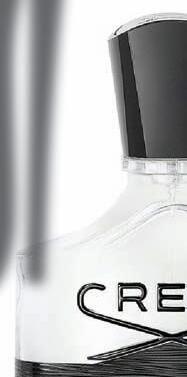
CREED
Aventus Cologne 100ml, £265

A fruity yet aromatic burst of ginger, mandarin and pink peppercorn is complemented by a sumptuous heart of patchouli, sandalwood and vetiver.
Perfume, £57 A formula specifically designed for hair, enriched with an emollient that leaves it silky smooth without weighing it down or drying it out.
BEAUTY
18 THE BRISTOL MAGAZINE | MAY 2023 | NO 222
TREATS


THEBRISTOLMAG.CO.UK | MAY 2023 | THE BRISTOL MAGAZINE 19
Force for good
As Cally Russell, the CEO and co-founder of This is Unfolded –a UK-based company creating ethically made clothes for women and children –recently turned down the Dragons for the second time on BBC’s Dragons’ Den, we caught up with the entrepreneur to talk about his recent collaboration with Bristolbased charity The Grand Appeal and how he’s driving long-term change in the fashion industry...
Where did the inspiration for This is Unfolded come from?
I’ve been working within the fashion industry for a long time having launched the Mallzee shopping app, way back in 2013. We grew Mallzee to over 1.5million downloads and used the millions of insights generated to help retailers make better stock ordering decisions. Sadly, like all too many businesses when Covid struck, we immediately lost our key revenue streams. But we also knew that there were others within the fashion industry suffering far more than we were. With store doors closed, big brands and retailers were cancelling their stock orders and weren’t paying suppliers for items already made. We couldn’t stand by and simply watch this happen, so we set up Lost Stock, buying the cancelled stock from the factories in Bangladesh and selling it direct to


consumers as mystery clothing boxes. Our small team pulled this initiative together within three weeks and we ended up selling 125,000 boxes of clothes worldwide, allowing us to support over 113,000 garment workers and their families, for a month each, during the pandemic.
Lost Stock was always a short-term solution to a particular situation but the experience taught us that long term change was needed in the fashion industry to make it more sustainable and equitable. This led us to launch This is Unfolded.

For those that may not know, can you talk us through how Unfolded works and how garments are made after an order has been paid for?
It’s estimated that 30% of new clothes made are never sold. So, based on a rough calculation; of the 80 billion new items of clothing manufactured every year, approximately 20 billion of them are destined to head straight to landfill. We launched Unfolded to remove this waste.
We do this in three ways; we offer limited collections of clothes (approx. 20 items) designed in collaboration with our customer community so we can be sure that they are clothes that shoppers actually want, our clothes aren’t produced until we start taking orders –
20 THE BRISTOL MAGAZINE | MAY 2023 | No 222
Lauren –V-Neck Midi Dress –Smudge Print, £48
Melodi –Kids Long Sleeve T-Shirt in Navy Dinosaur Print, £12 (25% of each sale from this new range will go to The Grand Appeal)
enabling us to match supply against demand and the clothes are delivered direct from our sustainable factories.
By making our clothes in this way we create savings as, unlike traditional retailers, we don’t have to build in high margins for unsold stock. We use these savings to make our clothes affordable (sustainability shouldn’t only be a choice for the rich), to pay our garment workers better and also to create long-term change by funding children’s education around our manufacturing factories.
How did the Unfolded community come together?
Our Unfolded community is incredible. We have over 12,000 customers in the UK and everyone who purchases from us is invited to join our Creator Facebook group and help us with future designs.
We name all our clothes after those people in the Unfolded community who give us the most feedback on the design of an item and our clothes are also modelled by our customers.

Furthermore, while we do accept returns, we encourage our customers to swap any unsuitable items between themselves. We have a swap platform to enable this –and we pay for the postage between customers. Anecdotally, we know that many of our customers have said that the community aspect of This is Unfolded is one of their favourite parts and they love being part of this group and making new friends through swapping, meeting at photoshoots and communicating in the Facebook group.
How did it feel to be back in the Dragons’ Den?
Going into Dragons’ Den for a second time was just as nerve wracking as first time around –in fact, maybe it was even more so as I knew what level of grilling to expect. The clip that is aired may be only a few minutes long, but you are being questioned by the Dragons for hours, which is exhausting. Sadly, while we would have loved to accept one of the offers made, we simply couldn’t at the reduced valuations they offered –this would have been unfair to our current investors and the valuation would have prevented us raising future investment to scale
our mission. However, it was fabulous validation that the Dragons believed in what we were doing to have received three offers, hopefully the Dragons will soon become customers…
What does it mean to Unfolded to be partnering with The Grand Appeal? Who else have you partnered with over the years?
We are absolutely delighted to be working with The Grand Appeal, who are the dedicated charity for Bristol Children’s Hospital, to help raise all important funds with them. We are firm believers that clothes shouldn’t just look good but they can do good too. We have committed 25% of each sale from this new range to go to The Grand Appeal. The range itself is for kids aged three to 10.
Every This is Unfolded item purchased not only prevents clothes heading to landfill and pays garment workers better wages but also aims to create long-term impact. This specific collection supports The Grand Appeal while for our other collections, we partner with Indian NGO Pratham. Each Unfolded item bought funds a child in India to learn to read and write for at least one month. In India, only 74% of people can currently read and write. So far, over 4,000 children have been supported in education through the sale of This is Unfolded clothes.
What’s next for Unfolded?
Alongside our kidswear collection, we recently launched our sixth ladieswear collection and we think it’s our best yet, a couple of items have already sold out. Our plan is to continue to grow, scaling our collections to have even greater impact. Our ultimate mission is to entirely change the fashion industry and the way people buy clothes. As well as having our own collections we are looking at using our unique platform and approach to deliver sustainable collections for other brands. n
• Shop The Grand Appeal x This is Unfolded collection at: thisisunfolded.com/collections/the-grand-appeal-kidswear

THEBRISTOLMAG.CO.UK | MAY 2023 | THE BRISTOL MAGAZINE 21
Sofia –Kids Dungarees in Denim Blue, £22 (25% of each sale from this new range will go to The Grand Appeal)
Abbey Rib Vest in Black, £18
FESTIVAL FEVER
Start planning a great summer with our guide to some of the West Country’s best events of the year...
BRISTOL SOUNDS
WHEN & WHERE?
Bristol Sounds is returning to the Lloyds Amphitheatre on the much-loved harbourside from 21 –25 June with a series of open-air concerts.
HEADLINERS:
Headliners include MIKA, Self Esteem, Jacob Collier, James, A Beautiful Day Out with Levellers, The Selecter, Black Grape, Peat & Diesel, Goldie Lookin Chain, Gaz Brookfield, Emily Breeze, plus lots more.

VIBE:
Summer in the city with a mix of world-class artists and local acts.
TICKETS:
21 June: £37.50; 22 June: £32.50; 23 June: £36.50; 24 June: £35; 25 June: £35. Book now at: seetickets.com
VEGAN KIDS FESTIVAL
WHEN & WHERE?
Vegan Kids Festival is taking place from 11 –13 August at Woodhouse Park Activity Centre, Fernhill, Bristol, BS32 4LX.
HEADLINERS:
The festival has eight activity zones including its creative zone to showcase the talents and acts of young vegans under 25. Plus, a teen zone, tot zone, a retreat, and an indoor party room for fun games, live music, disco, entertainment and karaoke. With a focus on all things food and nutrition, there will also be cookery demos and plant-based food lessons.
VIBE:
The Vegan Kids Festival was created for families to spend quality time together, making memories while surrounded by like-minded people where kids are the focus of all activities.

TICKETS:
Tier 3 Weekend Tickets (Friday –Sunday) are on sale until the end of June; £85 for adults, £40 for children. Day tickets from £20. Book your tickets at: vegankidsfestival.co.uk
SOUL CIRCUS
YOGA & WELLNESS FESTIVAL
WHEN & WHERE?
Soul Circus is set to return to its beautiful home in the Cotswold hills of Elmore, Gloucestershire from 17 –20 August.
HEADLINERS:
Groove Armada is headlining the music portion of Soul Circus this year with Michael James Wong and his Just Breathe + Krama Yoga crew joining as well. Other notable headliners are Adam and Holly Husler, Radhika Das, Jambo Dragon, and Kirsty Gallagher.
VIBE:
Soul Circus is a well-being festival where music, yoga and holistic therapies meet glittery festival antics and DJ after parties.

TICKETS:
Day tickets start at £99. Weekend tickets are currently at £150 with full price being £225. Book your tickets at: soulcircus.yoga
2023 FESTIVAL GUIDE

CHELTENHAM 7S FESTIVAL
WHEN & WHERE?
Cheltenham 7s Festival –a spectacular show of music, sports, entertainment, food, drink and much more –is taking place on 21 and 22 July at Newlands Park, Cheltenham GL52 3PE.


HEADLINERS:
With a huge line up of talented artists, bands and DJs, this year’s headliners include James Haskell, Gemma Cairney, Duke and Switch Disco.
VIBE:
You don’t have to be taking part in the sport to be a part of this unique event. Festival goers can expect top activities, all star rugby match Friday and a 5km Colour Fun Run for families. Plus, an array of food and drink pop-ups.
TICKETS:
Tickets start at £10 for the Colour Fun Run, U14s go free. Adult tickets start at £27.99. Book your tickets at: cheltenham7sfestival.co.uk
VALLEY FEST
WHEN & WHERE?
The award-winning, music and food event takes place alongside Chew Valley Lake, near Bristol from 3 – 6 August.
HEADLINERS:
The Kooks, Bananarama and Scouting for Girls are this year’s headliners. DJ Flight, Ishmael Ensemble, Ibibio Sound Machine, Bibi Tanga & The Selenites and Honeyfeet are also on the bill. Plus, one very special act still to be announced.
VIBE:
A family-friendly festival perfect for first-time festival goers as well as families of all ages. Showcasing Bristol’s live music scene as well as fine local food producers, expect everything from charcuterie to cider, street food to sit-down feasts.
TICKETS:
Thursday – Sunday: Adult weekend ticket, £221.40, teen weekend ticket: £108; kids weekend ticket (4 – 12yrs), £32.40. Friday – Sunday: Adult weekend ticket, £189.00; teen weekend ticket (13 – 17yrs), £86.40; kids weekend ticket, £37.80 Sunday admission: Adult, £64.80; Teen, £27.00; Kids, £16.20. Book your tickets at: valleyfest.co.uk
BRISTOL JAZZ FESTIVAL
WHEN & WHERE?
The Bristol Jazz Festival is set to take place at Bristol Beacon, Bridgehouse from 19 –21 May.

HEADLINERS:
Celebrating 10 years, Bristol Jazz Festival features back-to-back bands through the three days, headlined by a super-group celebrating the life of funk saxophonist Wee Ellis and Bristol soul sensation Hannah Williams.
VIBE:
Friendly, easy-going vibe and a great way to experience a range of jazz.
TICKETS:
Day tickets: £28 Friday, £55 each day Saturday and Sunday. Book your tickets at: bristolbeacon.org
HAM FARM FESTIVAL
WHEN & WHERE?
Ham Farm Festival is taking place from 28 – 30 July at Ham Farm Cottage, Emerson’s Green, BS16 7AT.
HEADLINERS:
Festival goers can expect evening double-bill concerts starring Bristol’s own superstar singer-songwriter Lady Nade, prizewinning Celtic folk duo Filkins Drift and 1920s swing jazz cabaret Miss Kiddy and the Cads. Daytimes offer free interactive music workshops and family picnic concerts.

VIBE:
Outdoors, informal and intimate, enjoy world-class music surrounded by nature and birdsong.
TICKETS:
Evening double bill concert tickets: £19.50; £15 for concessions; and free for under 18s. Daytime events mostly free but need reserving. All tickets available on Headfirst or via Ham Farm Festival’s website: hamfarmfestival.com
24 THE BRISTOL MAGAZINE | MAY 2023 | NO 222


THEBRISTOLMAG.CO.UK | MAY 2023 | THE BRISTOL MAGAZINE 25
SOUTH GLOUCESTERSHIRE SHOW
WHEN & WHERE?
The South Gloucestershire Show is returning to The South Glos Show Showground on Westerleigh Road (BS37 8QZ) on 5 and 6 August.

HEADLINERS:
The main arena is at the very heart of the show and is full of lots of exciting spectacles including equestrian stunt riding, sheep dog displays and beautiful birds of prey. Clarkson’s Farm star Kaleb Cooper will be making an appearance and visitors can see a top-notch lineup of the best local bands on the music stage. Enjoy a motor zone; country fair; yoga and meditation classes; a kids zone and much more.
VIBE:
The annual event brings together the best of the South West for an unforgettable weekend of fun, food, and entertainment.
TICKETS:
Saturday: Child, £6; Adult, £10; Family, £30. Sunday: Child, £6; Adult, £10; Family, £30. Book your tickets at: southglosshow.co.uk
ROCKHAMPTON FOLK FESTIVAL
WHEN & WHERE?
The Rockhampton Folk & World Music Festival is taking place on 17 June at Rockhampton, Gloucestershire GL13 9DX.

HEADLINERS:
Expect top-quality Gaelic folk from two of the best young musicians of their generation. Plus, music from the Balkans, traditional African harpist Bach and Bubbles and loads more. Free participation workshops for all ages.
VIBE:
The festival all happens in a small field by the church in Rockhampton and is simply about quality music and having fun in a safe, relaxed, friendly atmosphere.
TICKETS:
Early bird tickets (until 4 June): Adult, £16; Child (3–18yrs), £5; Family (up to 2 adults and 4 children), £40. From 5 June: Adult, £21; Child, £6; Family, £50. Book your tickets at: rockhamptonfolkfest.org.uk
DIG FOR VICTORY SHOW
WHEN & WHERE?
The Dig for Victory Show is taking place at The North Somerset Showground, Wraxall, near Bristol, BS48 1NA from 10 –11 June.
HEADLINERS:
This year’s headliners include Luna Nightingale singing jazz and 1940s songs; The Goodnight Sweethearts, whose 1940s vintage cabaret will be performed as a live BBC broadcast and packed with toe-tapping vintage tunes; and The Big R Big Band – a dashing, debonair, dandy and dapper 16-piece Big Band playing the classic swing tunes of the 30s and 40s at the Victory Dance on the Saturday night.

VIBE:
Enjoy classic cars, military vehicles, re-enactors, live music, dancing, history talks, vintage stalls, delicious local food, a 1940s farm, children’s games and much more. This year’s event will be supporting The Great Western Air Ambulance and The British Red Cross.
TICKETS:
Adult: £15; child: £7.50; family (2 adults, 2 children): £37; Victory Dance: £15. Book your tickets at: digforvictoryshow.com
26 THE BRISTOL MAGAZINE | MAY 2023 | NO 222 2023 FESTIVAL GUIDE



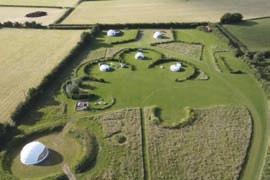
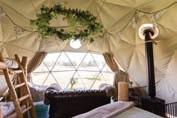

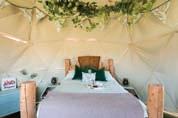
THEBRISTOLMAG.CO.UK | MAY 2023 | THE BRISTOL MAGAZINE 27 Family-Friendly Glamping in Somerset Relax and spend some quality time with your family in our beautiful Geodesic Domes. 6 Domes available! Let the kids run free in our 6 acres of meadow. www.tractorsandcream.co.uk info@tractorsandcream.co.uk | 01823 698 976 schoolincreaseNopriceduring holidays!
FAMILY DIARY
DISCOVER THE BEST THINGS TO SEE & DO WITH THE FAMILY THIS MONTH
Shaun the Sheep Hide & Sheep Trail
n Throughout May, Noah’s Ark Zoo Farm
Noah’s Ark has teamed up with Aardman to stage a baa-rilliant new event for 2023. Get set for a farm-tastic experience this summer as an Augmented Reality trail starring Shaun the Sheep arrives at Noah’s Ark Zoo Farm. noahsarkzoofarm.co.uk
Wake The Tiger Amazement Park
n Open now, Albert Road BS2 0YA
From the artistic team behind the groundbreaking festival, Boomtown Fair, journey to the world of Meridia. Having spent over a decade creating one of the most large scale immersive festival experiences in the world, the team wanted to expand and diversify their creative potential by establishing a year round arts and events venue where audiences can experience the work in a non-festival environment. wakethetiger.com
Scribble and Sketch
n Once a month, various locations
Join the RWA’s Scribble and Sketch artists at locations across the city on Saturdays once a month for free family workshops. These sessions are designed for children and grownups to take part in together –everyone is welcome. Admission is free. No pre-booking required. Suitable for all ages, children must be supervised. rwa.org.uk
Great Bristol Family Run
n 14 May, Anchor Road
Looking for a fun family day out? The Great Bristol Family Run returns on 14 May and The Grand Appeal wants you to be a part of it. The Bristol Children’s Hospital Charity is calling on families from Bristol and beyond

to get involved. The idea is simple: run, walk, or jog a special one-mile route and show your little ones that it’s fun to run. Children aged three and above can take part and the best part is everyone wins a medal. Wallace and Gromit will even be there to cheer you on. Entry Price: £12; grandappeal.org.uk
Disney's The Lion King
n 18 May –1 July, Bristol Hippodrome
Set against the majesty of the Serengeti Plains and to the evocative rhythms of Africa, Disney’s multi award-winning musical is showing at Bristol Hippodrome from 18 May –1 July and promises to be a theatrical experience that you will remember forever. atgtickets.com

Springfest
n 27 May –4 June, Wild Place Project Head over to Wild Place for its must-see event with street art, crafts and lawn games, organised with Upfest. For more information, visit: wildplace.org.uk
Seasonal Scent-sations
n 30 May –1 June, Westonbirt Arboretum
Experience the hidden spring scents of leaves, bark, flowers and much more through discovery and play! You'll test your knowledge in the quiz and make a scentsational craft to take home. To take part, pop over to Silk Wood Barn at Westonbirt Arboetum. For families with children three years and over; forestryengland.uk n
BOOK YOUR TICKETS
Disney's The Lion King is showing at Bristol Hippodrome from 18 May.
Photo by Brinkoff and Mogenburg


THEBRISTOLMAG.CO.UK | MAY 2023 | THE BRISTOL MAGAZINE 29
WHAT’S ON
City Nature Challenge
n 28 April – 1 May
City Nature Challenge 2023 is taking place from 28 April –1 May. The Festival of Nature team and partners have put together an exciting programme of free familyfriendly nature events, including expert-led wildlife walks, at beautiful outdoor locations across the West of England region. Help put your local nature on the map this Spring. citynaturechallenge.org.uk
Journey to Mars

n 4 May –5 June, Aerospace Bristol Aerospace Bristol is set to host Luke Jerram’s Mars as part of a new Journey to Mars exhibition. From 4 May to 5 June, the artwork will be stunningly displayed alongside the last Concorde ever to fly. The temporary exhibition marks the 20th anniversary of Mars Express, Europe’s first mission to Mars, with models of the Mars Express Orbiter and the Beagle 2 lander on display alongside Jerram’s sculpture. Measuring seven metres in diameter, Mars features detailed NASA imagery of the Martian surface. aerospacebristol.org
Mental Fitness Month: Life by Numbers
n 4 –31 May, Arnolfini Cafe Bar
Life by Numbers –an art show in support of male mental fitness charity Talk Club –will take over the walls of the Arnolfini Cafe Bar for the month of May to promote Mental Fitness Month. Six Bristol artists
will fill the walls of the Arnolfini bar and cafe with original artworks and prints, many of which will invite conversation about mental health. arnolfini.org.uk; talkclub.org
Coronation Celebration
n Until 6 May, Grey-Harris & Co.
Grey-Harris & Co. celebrates the coronation of King Charles III with an exhibition in late April, based in Clifton. Their extensive Victorian premises are unique in that they are one of the principal traditional silversmiths and jewellers in the West of England. The works on display are of immediate association to the present and previous English coronations, including a lifetimes collection of royal souvenirs and artworks spanning over 400 years in date. One particular item of note is the 30ft hand panorama, that depicts the coronation procession of King George IV (r.1820-1830) and dates to 1821. The procession is presented in 133 numbered scenes in etching and aquatint with hand colouring and dates to 1821. Another item on display will be the remarkable William IV cut-glass sceptre surmounted by a cross pattée, hallmarked William Neal, London 1833. greyharris.co.uk
Binocular and Optics Show
n 12 May, Chew Valley Lake
LCE Bath is returning to Chew Valley Lake for a binocular and telescope show on the
lawn of Car Park No. 2, overlooking the magnificent Chew Valley Lake. A unique opportunity to “try and buy” the latest binoculars and telescopes from some of the leading manufacturers including Hawke, Opticron, Swarovski, Nikon, Vortex and Zeiss, with plenty of “Show Only Offer” on the day. The show runs from 10am until 3.30pm. For more information, call 01225 462234 or email bath@lcegroup.co.uk
Lankum
n 12 May, Trinity Centre
Lankum are a contemporary Irish folk music group from Dublin, consisting of brothers Ian and Daragh Lynch, Cormac MacDiarmada and Radie Peat. They have gained worldwide acclaim for their first two albums and captivating and euphoric live performances. Their third album, The Livelong Day, successfully blends alternative folk and psychedelia. It takes both the earthy and alien elements of their sound to create an immersive, otherworldly sonic landscape. trinitybristol.org.uk
The Eight Mountains (12A)
n 12 –18 May, Watershed
A striking, dazzling and melancholic film about a friendship between men who can’t talk about their feelings and about winning and losing at the great game of life.
In a secluded village in the mountains of Italy, an unlikely brotherhood forms between two young boys: Pietro, a boy from
Ú Continued on page 32 30 THE BRISTOL MAGAZINE | MAY 2023 | No 222
Bristol Ensemble will be playing at St George’s Bristol and John Wesley’s New Room on 17 & 20 May

the city, and Bruno, who has only ever known life in the mountains. Over the years Bruno remains faithful to his home while Pietro aspires to greater heights. As decades pass and the two grow up, their paths ultimately lead them back to where they first met – and back to each other. watershed.co.uk

SABOTAGE by NoFit State Circus
n 13 May –2 June, The NoFit State Big Top, Wilson Street, St Pauls

SABOTAGE brings a darker, grittier, and more subversive edge to NoFit State’s trademark large scale contemporary circus spectacular. Back in the Big Top with incredible new acts, original music, new apparatus and a more theatrical feel, SABOTAGE challenges the status quo. SABOTAGE has nothing in it that makes it unsuitable for children, but it is not made for them specifically. Book your tickets at: nofitstate.org/sabotage
Euro Choralvision Song Concert
n 13 May, 5pm, St George’s Bristol
Euro fever comes to Bristol as Exultate
Singers presents a late afternoon European song concert of sacred and secular choral music in a wide variety of languages, sounds and musical flavours, revealing how vividly each country's national identity and traditions are expressed in its choral music. Hello, this is Bristol calling! At the end the audience will be invited to award their douze points to their favourite piece which the choir will perform again as an encore. stgeorgesbristol.co.uk
Elmwood’s: Bristol Valuation Day
n 17 May, The Club room, The Clifton Club, 22 The Mall, BS8 4DS Elmwood’s is hosting a valuation day on 17 May at The Club Room in The Clifton Club. If you would like to receive a free, no
obligation expert valuation, bring your fine jewellery, watches, designer handbags and fashion item to the event between 10.30am –6pm (zero fees for selling). For more information, visit: elmwoods.co.uk
Tubular Bells 50th Anniversary
n 17 May, 7pm, St George’s Bristol
Mike Oldfield’s groundbreaking album Tubular Bells was released on 25 May 1973 and to celebrate its 50th anniversary –almost to the day – Bristol Ensemble performs a stirring chamber orchestral
arrangement of the album, fleshing out the now iconic melodies with a bank of strings. stgeorgesbristol.co.uk
Calamity Jane
n 19 May, Averys Wine Cellars
Bristol Film Festival is celebrating the sharpshootin’, toe-tappin’ musical comedy Calamity Jane this month as it turns 70. Doris Day leads a stellar cast in this misadventure, which won an Oscar for the song Secret Love. The festival will be pairing the film with wines from the frontiers of the Wild West – but that doesn’t necessarily mean they’ll be American. bristolfilmfestival.com
Samuel Wesley Symphonies by Candlelight
n 20 May, 7.30pm, John Wesley’s New Room
The Bristol Ensemble return to John Wesley’s New Room with a candlelit evening of compositions from Samuel Wesley. Known as the ‘English Mozart’, Samuel Wesley was the nephew of John Wesley and his early musical education took place in Bristol. newroombristol.org.uk
Jake Morley
n 21 May, The Louisiana
Seriously captivating live, Bristol-based Jake Morley brings his distinctive songwriting and implausible guitar playing to The Louisiana to showcase material from his third studio album Some Things Are Like Other Things. thelouisiana.net n
32 THE BRISTOL MAGAZINE | MAY 2023 | No 222
Astillfrom The Eight Mountains, showing at Watershed from 12 –18 May
SABOTAGE by NoFit State Circus is running from 13 May –2 June |
Credit: Mark J Robson


THEBRISTOLMAG.CO.UK | MAY 2023 | THE BRISTOL MAGAZINE 33
Monthly treats
This month, GloucesterRoadBooks are launching a brand new subscription service where customers can sign up to receive a brilliant new book straight to their door every month. Here, the team let us in on what to expect...
These are five of our favourite books published over the two years since we opened the shop. This feels like the perfect way to celebrate the launch of our new subscription offer, which is a wonderful way to push the boundaries of your reading habits. Each month we’ll select a brilliant book – one we love, can’t stop thinking about, and believe deserves to be widely read. It will be wrapped and delivered to your door so you can have the joy of unwrapping it – like a book-birthday every month!”
To sign up, visit Gloucester Road Books’ website: gloucesterroadbooks.com. Follow them on Instagram: gloucester_rd_books and browse the collection in store: 184 Gloucester Road, Bishopston, BS7 8NU. Open Monday –Tuesday 9.30am –5pm; Wednesday –Saturday 9.30am –6pm
History. A Mess
by Sigrún Pálsdóttir. Translated by Lytton Smith. Published by Peirene Press

Translated from Icelandic, this cerebral and exciting novel is about an academic struggling with a vital issue regarding her thesis. She starts to mistrust her reality, doors appear in rooms, figures start to move in paintings, and she slips in and out of formative memories woven throughout Reykjavik. The writing is unique, intense, and quite brilliant.
Kick the Latch
by Kathryn Scanlan.
Published by Daunt Books

This is a beautiful piece of storytelling. Closely based on the life of her subject, Sonia, Scanlan’s writing takes us deep into working class America, into the strange community formed around the horseracing circuit. The voice is perfect and the world is so convincingly told that I was completely bereft to leave it.
Somebody Loves You by Mona Arshi. Published by And Other Stories


This is perhaps the book I’ve recommended most since the shop opened. A young girl and her older sister struggle against the world around them.
Somebody Loves You is elegant and elusive, and also completely brilliant. Each of its precise little vignettes holds an act of micro-resistance against the banality and violence of the world.
The Weak Spot

by Lucie Elven.
Published by Prototype Books


Set on a remote mountaintop, somewhere in Europe, The Weak Spot is a wonderfully fable-like story about power, belief and trust. Written in language that hides as much as it reveals, we watch as a delicate struggle between a charismatic pharmacist and his young trainee plays out in front of the townspeople of this beautiful unnamed village.
Ten Planets by Yuri Herrera. Translated by Lisa Dillman. Published by And Other Stories
For those who haven’t experienced the mind, imagination and creations of Yuri Herrera, his debut short story collection is a great place to start. In Ten Planets, the Mexican writer imagines future worlds to lay bare our present in a style all his own. Witty, alarming and ultimately as thought-provoking as fiction gets, these finely-tuned, brief tales demonstrate why Herrera has become such a worldwide sensation.

BOOKS 34 THE BRISTOL MAGAZINE | MAY 2023 | NO 222
“





THEBRISTOLMAG.CO.UK | MAY 2023 | THE BRISTOL MAGAZINE 35 For flights call 01934 852875 www.firstflight.co.uk THE BRISTOL MAGAZINE THE BEST OF BRISTOL PERFECTLY COVERED TOADVERTISETEL: 0117 974 2800
STATE OF THE ART
112th Annual Paintings Exhibition, Bristol 1904 Arts, until 7 May
The Bristol 1904 Arts plays a major role in the cultural life of Bristol. It’s a centre for painting, music, magic, poetry, storytelling and fellowship. There are also active birdwatching, walking, photography, classic car and chorus groups. Meetings are on Wednesday evenings in their hall attached to the Red Lodge in Park Row Bristol where their major artistic event, the 112th Annual Paintings Exhibition, will be running from 29 April –7 May, open to the public every day from 10.30am to 4.30pm. Paintings by the society’s team of talented artists will be on sale.
• bristol1904arts.org; Red Lodge, Park Row, BS1 5LJ
Image: Early Morning on the Canal © David Royle 2023
Belonging, Rainmaker Gallery, until 6 May
In this solo exhibition, Rick Grimster explores his relationship to the country of his birth. A war baby, born in London in 1945 to a Mvskoke father and an English mother, his life is but one of the numerous unique stories that make up the Indigenous diaspora. Whilst Grimster’s abstracted landscapes fit firmly into the school of mid-century British modernism, they are elevated by an instinctive, unbridled joy of colour and love of nature aligned with his Native American heritage. Where we land on this earth is dictated by forces beyond our control –migration, colonialism and in this case World War II. How we make sense of our individual journeys is up to us. Rick Grimster has found peace and belonging through his lifelong love of painting and an unbreakable connection to land, wherever he may be.
• rainmakerart.co.uk; 140 Whiteladies Road, BS8 2RS
Image below by Rick Grimster
BS5 Art Trail, across the BS5 community, 20 –21 May

Celebrating creativity across the BS5 community, the popular BS5 Art Trail is back for its third year on the weekend of 20 – 21 May. With registrations now open for artists and venues, The Chocolate Factory visitor centre in Greenbank has confirmed it will once again be hosting.
Horizon, Lime Tree Gallery, 4 May – 20 June

Lime Tree Gallery is broadening its horizons with work from two artists new to the galleries. French abstract painter, Alain du Pontavice, brings beautiful, subtle colours and textures, while Swedish artist Carina Prigmore, now resident in Scotland, paints lovely moody landscapes, often of the majestic Cairngorms. A different kind of horizon has inspired West Cork-based Ian Humphreys for much of his career. The dramatic coast and islands of his locale form the background to his increasingly abstract work, which is almost obsessed with the horizontal.
• limetreegallery.com;
84 Hotwell Road, BS8 4UB
Image: Evening on the River by Carina Prigmore

Each year the organisers aim for the event to be bigger and better with homes, gardens, artist studios and group venues in BS5 showcasing wares and open for exploration. So far over 100 people have signed up to participate in the event, making it more popular than ever before.

The inaugural BS5 Art Trail took place in September 2021 and saw over 80 artists and makers exhibit at venues across the neighbourhood.
Once the list of locations and participants is finalised the map of the event will be produced and available online and from local venues.
• Details about registering for the event can be found online at: bs5arttrail.co.uk or by following the BS5 Art Trail on social media @BS5ArtTrail and on Twitter at @ArtTrailBS5
EXHIBITIONS
36 THE BRISTOL MAGAZINE | MAY 2023 | No 222





THEBRISTOLMAG.CO.UK | MAY 2023 | THE BRISTOL MAGAZINE 37 Lime Tree Gallery, 84 Hotwell Road, Bristol BS8 4UB Tel 0117 929 2527 • www.limetreegallery.com
Red sun on icy waters by Alain du Pontavice
Horizon - May 4 - June 20
How can I tell you by Ian Humphreys
The Barrow Court Sale
Clevedon Salerooms is delighted to announce that it has been entrusted with the sale of the contents of Barrow Court, former home of the late technology entrepreneur Iann Barron C.B.E. The auction will be held at Clevedon Salerooms premises on Thursday 1st June 2023.


Few people looking for the quintessential English manor house would expect to find it barely a mile from Bristol Airport. So secluded is the setting of Barrow Court, that even amongst the locals, its story is barely known. Yet, if the curious traveller ventures down the long leafy lane which bears its name that is precisely the scene with which they are rewarded.
The house – Jacobean in appearance but incorporating earlier and later elements – traces its history to a Benedictine nunnery founded on the site in the early 13th century. Converted to a private house following the dissolution of the monasteries, it passed through several hands before in 1881 being bought by the Gibbs family of nearby Tyntesfield, whose influence in this part of North Somerset was comparable to the Rothschilds, their equally wealthy contemporaries, in Buckinghamshire.


It was Henry Gibbs, at the time High Sheriff of Somerset, who embarked on a comprehensive remodelling of the house and garden at the end of the 19th century, including the much-admired parterre and formal gardens by Francis Inigo Thomas, completed in 1897.
The focus of articles in Country Life in 1902 and 1931, Barrow Court took its place among the rollcall of celebrated West Country historic houses before being converted to institutional use whilst still in the ownership of the Gibbs family. In 1976 the house was sold and divided into seven separate dwellings. Iann Barron purchased two of the seven, and then the interconnecting third. An ardent champion of Barrow Court’s history, over many years he undertook a mission to revive the property, lovingly restoring many of its notable features and creating with curatorial flair a wonderland of period furniture and works of art, all of which exude a depth of history and feeling of having always been there. ■ •
38 THE BRISTOL MAGAZINE | MAY 2023 | NO 222
clevedonsalerooms.com; @chrisyeo_antiques (Instagram)
Expert
From Chris Yeo, Valuer at Clevedon Salerooms and regular expert on BBC’s Antiques Roadshow
opinion
COLUMN | CHRIS YEO ON ANTIQUES The contents of Barrow Court to be sold at Clevedon Salerooms | Thursday 1st June To be followed by our summer specialist auction - Further select entries invited Clevedon Salerooms, The Auction Centre, Kenn Road, Kenn, Clevedon, BS21 6TT 01934 830 111 info@clevedonsalerooms.com www.clevedonsalerooms.com
Fine Art Auctioneers & Valuers
Image courtesy of Hamptons


THEBRISTOLMAG.CO.UK | MAY 2023 | THE BRISTOL MAGAZINE 39
The power of art
On 20 May, the RWA will welcome it’s latest exhibition – Found Cities, Lost Objects: Women in the City Here, we take a closer look at the Bristol artists included in the exhibition –all of whom are reminding us that “art is a powerful tool in shaping our cities and the world around us”...
Royal West of England Academy’s (RWA) next exhibition in its newly renovated building and main gallery space is an exciting and challenging touring exhibition curated for the Arts Council Collection by Turner Prize-winning artist and cultural activist Lubaina Himid CBE.
Found Cities, Lost Objects explores modern city life from a female perspective and encourages visitors to view the city through a woman’s eyes. The exhibition addresses themes ranging from safety and navigation to concepts of belonging and power. From billboards and advertising posters to public statues and monuments, cities today are saturated with idealised images of women. Together, these depictions communicate subconscious messages about how women are valued, whether they are welcome, and how safe they might feel.
In Found Cities, Lost Objects, Himid brings together a group of over 60 works that address these themes, questioning our understanding of the urban environment and encouraging a rediscovery and reclaiming of our cities. Some of the artists featured from the Arts Council Collection include Lisa Milroy, Tai Shani, Magda Stawarska-Beavan, Mona Hatoum, Cornelia Parker, susan pui san lok and Helen Cammock.
Reclaiming of the city while holding a mirror up to its history is a
theme that is explored in the work of some of the five Bristol artists included within the exhibition: Valda Jackson, Mellony Taper, Beth Carter, Huma Mulji, and Veronica Vickery.
Valda Jackson’s Still Holding On was made originally for a billboard in 2017 and has been specially reworked for this exhibition. The work will form a centre piece for the exhibition, covering the entire back wall in the RWA’s main gallery space. This significant work is constructed from images created over decades from photographs. The figures represent children whose parents came to Britain from the Caribbean and it draws attention to the sacrifices made by their parents who came here at the British government’s request in the drive to rebuild post-war Britain. Many of these people who are part of what is now known as the Windrush Generation came to Bristol. They worked long hours often doing heavy industrial work, eventually sending for their children and continuing to send money home to relatives. Their important role in British society has only very recently come to public attention.
Mellony Taper’s Renamed City has its origins in the Colston protests of 2020 that changed Bristol and rewrote history. It references the renaming of Colston Hall as the Bristol Beacon.

Beth Carter’s drawing Stealing the Unicorn references the

40 THE BRISTOL MAGAZINE | MAY 2023 | No 222
Beth Carter RWA, Stealing the Unicorn (2009), courtesy of Sarah and Simon Whitehead
Mellony Taper, Renamed City (2022), Mixed digital media print on deconstructed domestic bedsheet (200cm x 140cm)
significance of unicorns to the city of Bristol. They first appeared on the city seal in 1569 and were chosen to represent virtue on Bristol’s coat of arms. She said: “I have lived in Bristol for almost 25 years which, like most cities, is a layered complicated place. I’ve always loved the city’s mix of culture, history and architecture. It has a particular jumble of soulful, historic buildings butted right up next to modern and contemporary structures –the extraordinary and the mundane, ancient and new –many coexisting dualities within which, just beneath the surface, are symbols of magic interwoven through the city, in particular –unicorns. They appear on Bristol’s coat of arms, on bridges and ships.
“In my drawing, the unicorn is being stolen by a young girl. The unicorn is something precious, elusive and rare, she is stealing back something which has been lost, an act of reclaiming that holds a personal power and potency.”
Huma Mulji’s An Unquiet Grave is a suite of four photographs of meticulously preserved documents for the Bristol archives of planning permissions and building records. They refer to a port city built largely on the back of the booming slave trade, which was the source of Bristol’s dazzling wealth for over 200 years. As with Valda’s work, this information was withheld from the country’s collective memory and history curriculum, and only very recently are these issues beginning to be addressed in contemporary media.
Veronica Vickery’s installation flags up Bristol’s urban waterways, which are as much a part of the urban as the road system and the detritus in them is a product of city life. Women in particular can feel a sense of alienation in this part of the city, particularly at night, and the found objects are indicative of that.
Lubaina Himid CBE, artist, says: “Found Cities, Lost Objects challenges the status quo by encouraging viewers to discover the city
through the eyes of female artists. Women generally inhabit cities via retail and healthcare venues, but how can we expand our presence beyond this for everyone’s benefit, now that these spaces are under pressure to perform differently? The exhibition explores the contradictory experiences of women across the city, free to roam the streets while always considering the boundaries within which that freedom is contained.”
Alison Bevan, RWA Director, said: “We’re delighted to be hosting this fascinating and timely exhibition. As Bristol celebrates its 650th anniversary, we feel it is hugely appropriate for us – as an organisation that has pioneered gender equality for nearly 180 years – should explore and honour the place of women in this historic city. We’re particularly excited to include a glimpse into the wealth of talent in Bristol through the inclusion of work by five outstanding women artists, and that we will also soon be announcing some special commissions for work to be shown on billboards across the city.”
Deborah Smith, Director at Arts Council Collection, says: “It’s always exciting to see what fresh perspective artists will bring and what stories they will tell when we give artists an open brief to curate the Arts Council Collection. The Collection has enjoyed a long relationship with Lubaina, from acquiring her work in 1988 to her show Meticulous Observations at the Walker Gallery, Liverpool, where she mined the depths of the Collection. Found Cities, Lost Objects’ impressive pedigree of female artists offers new perspectives on urban life and helps us understand how art is a powerful tool in shaping our cities and the world around us.” n
• Found Cities, Lost Objects: Women in the City is showing at the RWA from 20 May –13 August; rwa.org.uk

ART THEBRISTOLMAG.CO.UK | MAY 2023 | THE BRISTOL MAGAZINE 41
Spirit of Bristol
Ask people which writer they associate with Bristol and they might come up with Robert Louis Stephenson, Thomas Chatterton, Angela Carter or Helen Dunmore.
EH Young is virtually forgotten yet her books perfectly capture the spirit of Bristol, and especially of Clifton.
Emily Hilda Young first came to the city in 1902 as the wife of a Bristol solicitor, Arthur Daniell, living at 2 Saville Place. Here she was introduced to his old school friend, the headmaster of Alleyn’s School, Ralph Henderson. The three shared a love of rock-climbing. She was, in fact, an outstanding mountaineer, leading friends over a route in Snowdonia previously thought unclimbable.
However, Henderson and Young developed a rather different passion, although if it was an extra-marital love affair, it was very discreet. In 1914, Daniell went off to war in France, while Emily worked in stables and at a munitions factory. Her life in Bristol was almost over, for in 1917 Daniell was killed in Ypres, Belgium during the Battle of Passchendaele. Emily went to live in an apparently amicable ménage à trios with Henderson and his wife, at Sydenham, in Croydon. She would never live in Bristol again, yet that brief space of 16 years was to be crucial, for she then began a series of books set in the city, which she called Radstowe. Clifton became Upper Radstowe and Whiteladies Road became Nunnery Road. Many other locations in the books, though, are elusive. Clifton Suspension Bridge was symbolic for EH Young, who referred to it as The Bridge, and it is central to the stories. The first of the Radstowe novels, now known
as TheMissesMallett, was originally called TheBridgeDividing. As characters in her books cross it, they cross from one aspect of their lives to another. Sometimes the land on the other side is a place of refuge, sometimes of danger, but there lies Monks’ Pool, based on Abbots Pool at Abbots Leigh. Whether the character is in turmoil, distressed or happy, the pool seems to represent peace and tranquillity – a place to gather their thoughts. Returning to Radstowe, real life comes rushing back.
On the Radstowe side of the bridge are the downs, with many viewpoints along the river. Here, from TheMissesMallett, is her description of the Avon Gorge, a scene almost unchanged even today:

‘Far below her was the river, flowing sluggishly in a deep ravine, formed on her right hand and as far as she could see by high grey cliffs. These for the most part were bare and sheer, but they gave way now and then to a gentler slope with a rich burden of trees, while, on the other side of the river, it was the rocks that seemed to encroach on the trees, for the wall of the gorge, almost to the water’s edge, was thick with woods.’
What has changed since her day are the docks. No longer are there ‘big ships with sacks of flour sliding into their holds, slow-moving cranes dangling their burdens with apparent unwillingness to let them go.’ The warehouses she describes have long gone or been turned to other uses, although there are still ferry boats and bridges. Yet such is her skill in describing these now vanished scenes that anyone who knows the area can for a moment imagine it revitalised, with the locks
42 THE BRISTOL MAGAZINE | MAY 2023 | No 222
“EH Young is virtually forgotten yet her books perfectly capture the spirit of Bristol,” says local historian and author Kirsten Elliott, who, this month, takes a closer look at the city through the eyes of the best-selling novelist and remembers her legacy...
opening and closing as gulls wheel above the busy scene.
EH Young had an affection for the slightly faded glories of Clifton rather than the new houses on the other side of the downs. She preferred the fading squares with the ‘delicate tracery of the fanlights over the doors and the wrought iron balconies breaking the plain fronts’ even though most of the houses were in need of paint, and most of the rooms were let.


It is difficult to categorise the novels – they can hardly be described as romances, for love is often portrayed as destructive or an imprisonment. Young was a feminist, but she saw human failings in both men and women, and clearly admired strength of character.
Above all, the books are a celebration of Bristol, from its Edwardian times to the 1930s. Her last book, Chatterton Square, ends with the act of appeasement in Munich. It was written in 1947, when EH Young must have felt that the Bristol she knew had gone forever –and in some ways it had.
Today, the trams no longer rattle down Whiteladies Road. No more can one see ‘the masts and funnels of ships rising, as it seemed, from the street.’ Yet terraces still make up the Clifton streetscape. Alleyways and flights of worn steps still lead between Upper and Lower Radstowe, while even now, from above, the roofs below can be seen tumbling down the steep slopes ‘in every shape and colour … old red tiles in close neighbourhood to shining slates … mossy green roofs squeezed between the walls of higher houses .’ The downs still command a view of the gorge and the Zig Zag path still runs down to Hotwells. Above all, The Bridge still divides Upper Radstowe from the ‘innumerable possibilities on that farther side.’

EH Young and Ralph Henderson moved to Bradford on Avon after the death of his wife, and she died there in 1949. It is surely time for a revival of interest in her Radstowe books. Anyone who loves Bristol will love them, and there is plenty of detective work to do, figuring out which streets or squares were the models for those in fictional Radstowe. n •

HISTORY
akemanpress.com
Hotwells and Clifton from the west bank
EH Young’s house in Bristol: 2 Saville Place
Tramways near Clifton Downs
Restaurant Review

Aqua Grand Café
As Aqua Grand Café swings open its doors, we visit the quality new addition to Whiteladies Road...
It was the two-month anniversary at Aqua Grand Café when we dropped by to eat. Whiteladies Road’s stylish new eatery has been inspired by the grand cafés of Europe. As we pulled up outside on a dark Wednesday evening, making a dash for the door while the rain lashed down from above, it was a delight to be welcomed into the sumptuous surroundings of AGC. The interiors, the two-story-tall ceilings and large cocktail bar were impressive and the menu was equally attractive, with France’s signature style very much in evidence.
Aqua Restaurants have been an independent family-run business since proprietor Richard Smithson opened the first Aqua restaurant on Welsh Back in 1998 and then in Portishead more recently. Both restaurants have gained a reputation in the city for serving highquality food in elegant settings. Richard’s son, Ben Smithson, is now at the helm of this latest venture and is dedicated to delivering a “magical, memorable experience”.
Having worked as a head waiter at the Savoy Grill in London, alongside multi-Michelin starred chefs Gordon Ramsay, Marcus Wareing and Lee Bennett, Ben has developed a passion for French classical dishes and luxurious all-day dining. It’s clear to see that after working at one of the world’s most iconic hotels, Ben’s impeccable attention to detail has seeped into the very fabric of the new Bristol restaurant. Elements of the Savoy Grill have also crept into the daytime menus, with an Omelette Arnold Bennett making an appearance at breakfast and lunch. The dish – a rich combination of smoked haddock, hollandaise sauce and cheese cooked in a pan and finished under the grill – was named after the author who ordered the omelette during his stay in the 1920s. It has since become a classic creation.
Eager to get stuck into the menu, we started with the chicken liver parfait with red onion jam and toasted brioche along with the soupe à

l’oignon – an exquisite rendition of the classic dish. The menu is a collection of plates that you could happily eat on any day of the week – and quite possibly at any time. So, with that said, we centred ourselves for what was to come.
For the second course, our attention was drawn to the smoked haddock risotto with mascarpone, peas, leeks and parmesan and the coq au vin with pomme purée: a glorious riot of flavours. The main dishes justify their £18-plus price tags by both execution and volume. Very much on the plus side, there was also a broad wine list alongside a comprehensive selection of cocktails –all made by the bar’s mixologist.
To finish, we couldn’t go wrong with a beautiful piece of pastrywork in the shape of a salted caramel éclair. We coupled it with the banana split – caramalised banana, vanilla ice cream, chantilly cream and raspberry purée – which felt like quite possibly the most indulgent combo one could tuck into.
All of the desserts are handmade by a team of patissiers headed by Ben Rodd, whose talent seems to know no bounds as he expertly crafts chocolate truffles, French macarons, Madeleines and delicious apple tartes tatin every week.
Aqua Grand Café brims with a sense of independence. Evolving throughout the day, from a bustling breakfast and brunch service to a leisurely lunch and afternoon tea to atmospheric dining until late, the French-inspired plates are the sort of thing that will bring you back time and time again.
Although only two-months old, Aqua Grand Café is set to become a gastronomic go-to in Bristol’s latest must-visit locale – a classy establishment deserving of its prime location. n

• aquagrandcafe.com; 153 Whiteladies Road, Redland, BS8 2RF

44 THE BRISTOL MAGAZINE | MAY 2023 | No 222
(Left): Smoked haddock risotto with mascarpone, peas, leeks and parmesan. (Above): Coq au vin with pomme purée (Above): Onion Soup


THEBRISTOLMAG.CO.UK | MAY 2023 | THE BRISTOL MAGAZINE 45
Life on Myrtle Farm
After Thatchers Gold jumped to the top spot in the South West as the best-selling draught pint, we caught up with fifth generation cider maker, Eleanor Thatcher, and orchard manager, Chris Muntz-Torres, to talk innovation, fermentation and what’s in store for the next generation...
Family cider makers since 1904,” reads each bottle of Thatchers’ cider. Five generations have lived on Myrtle Farm, tending to what feels like an ever-expanding plot of land. A single garden has turned into 500 acres of orchards –180,000 trees now stand tall and orderly on the foothills of the Mendips. The family-run business leans on 119 years of expertise and now presses more apples in a day than it once did in a year.
The fourth and fifth generations – Martin Thatcher and his daughter Eleanor – have witnessed the business’ meteoric rise to success, becoming an internationally known and widely loved brand in over 20 countries. Although having picked up many a prestigious award over the years for its various styles of cider, it was Thatchers Gold that last month overtook all draught beer and draught lagers to become the best-selling pint across the South West. It was the first time since records began that cider had made it to the top spot. An incredible 15.2 million pints of Gold were poured in 2022. It appears that Thatchers, although already firmly planted in the hearts and minds of millions in the West Country, is still growing in demand.
On the back of last month’s news, we met up with Eleanor and orchard manager Chris Muntz-Torres at Thatchers’ oldest plot in Christon – just a stone’s throw away from Myrtle Farm – to gain a deeper understanding of where the cider industry began and where it’s headed, looking at the importance of preserving cherished aspects of Somerset’s history and heritage and securing a sustainable business for future generations.
As the sun beamed down on us for what felt like the first time this year, the swathes of green land, all packed full of apple trees, glistened in the morning dew. Captivated by the magical beauty of Somerset, there simply seemed no better place on Earth to grow apples. In fact, throw a dart at a map of Somerset and you’ll likely happen upon a farmhouse cider or apple juice producer. But I wonder, what is it about this county that makes it so suited to cidermaking?
“Trees need deep, nutrient-rich soil,” explains Chris, who joined the farm six years ago. “A lot of our orchards hug the foothills of the Mendips where it’s not too low and wet and it’s not too high and rocky. Somerset also gets long, cool autumns, which helps the flavours develop. All of our apple varieties are also perfectly suited to this area because of the cider history and heritage and how important
it was to people to make cider on their farm. For the past 200 years, apples have been picked from the trees and made into cider. It was very, very true that people with a good reputation for making good cider attracted the best workers. When one third of their wages were paid in cider, it was very important that it was good cider. That history and heritage is still very much ingrained in Somerset and the West Country today. Some of the varieties that we grow now are exactly the same that were grown here hundreds of years ago.”
Protecting and preserving
It was William Thatcher who first started to make cider for his workers from the apples he grew in his own orchards. As cider grew in popularity, there was an interest for cider makers to plant more trees to produce more apples to make more cider. In turn, trial orchards were introduced by the Long Ashton Research Station in Bristol – an agricultural and horticultural government-funded research centre created in 1903 to study and improve the West Country cider industry.
“Long Ashton partnered with a few key landowners around the West Country to put in trial orchards, aiming to identify which

CIDER COUNTRY 46 THE BRISTOL MAGAZINE | MAY 2023 | No 222
Fifth generation cider maker Eleanor Thatcher
varieties would grow the best in different areas,” Chris explains. “The orchard here in Christon is quite a special orchard in terms of its history. It was originally planted in 1928 and was a mix of all different varieties. It was from orchards like this, though, that we were able to pinpoint which variety would work the best on more modern systems.”
Although the idea was first introduced almost 100 years ago, Thatchers is one of the only cider makers in the UK to still carry out trials in its orchards every year, with nearly 50 acres now devoted to them.

Thatchers is also dedicated to the development of its acclaimed Exhibition Orchard, which is home to the largest collection of apples for cidermaking in the country – over 458 different varieties. Planted by Eleanor’s grandfather and third-generation cidermaker, John Thatcher, many of the trees in the Exhibition Orchard were saved from the Research Station when cider research stopped in 1985. Protecting, preserving and caring for the UK’s largest and most diverse collection of apples used in cidermaking is at the very top of Thatchers’ agenda. So much so that, in recent years, the cider makers
 Thatchers’ acclaimed Exhibition Orchard is home to the largest collection of apples for cidermaking in the country –over 458 different varieties
partnered with the University of Bristol in a ground-breaking project that uses DNA fingerprinting techniques to identify apple tree varieties. With many old and heritage varieties beginning to disappear, the project used genotyping – a process that compares DNA to find the differences in genetic make-up – to identify the varieties. Scientists from the university gathered leaf samples, creating the largest database of apple tree fingerprints in the world.
“Back in the day, people reproduced trees from cuttings and over hundreds of years, varieties often got misnamed or forgotten. The university are now giving them a benchmark in history, which has been brilliant for us,” says Chris.
Perhaps most interestingly, however, was the scientists’ investigation into what makes a good cider apple variety and if, in the future, their genotyping procedure can be used to identify a disease resistant, highquality cider apple variety – something that would certainly help preserve the health and vitality of the Thatchers business.
Long-termgoals
As growing apples for cidermaking is a long-term commitment, with young trees taking at least six or seven years before they crop commercially, having a long-term view appears to be essential to all aspects of the business. “The decisions we make today don’t really affect us, it’s for the generations to come,” says Eleanor. These decisions are most evident in the way the family has intertwined traditional methods with modern technology from pip to pint.

“In terms of cidermaking, we still use our 150-year-old giant oak vats [each holding 120,000 pints], we know they’re an important part of cidermaking but we also move forward with modern technology in terms of apple processing and, more recently, bringing in sustainable energy with the use of solar panels. All of our electricity on site also comes from renewable sources so we’re making good progress there too. But it’s also a trade-off and there’s things that they've done in the past that we mustn’t forget because it was important and they did it for a reason. We can modernise their ways, though, and innovate to not only make them more efficient but to make better cider – it’s all about quality for us.”
What’s more, as the cider market evolves, tastes change and new
styles of cider become popular, it’s important for Thatchers to look ahead and plant the varieties of apple that create contemporary style ciders. As proof that Thatchers is not only committed to its customers but has the masterful skill to carry out their demands, it released its first alcohol-free cider in 2020. Thatchers Zero still very much holds all the appley aromas expected from a Thatchers product. “It’s now the number one alcohol-free apple cider and has won quite a few awards, which is pretty amazing,” the team explain. “We’re not afraid of trying new things.”
Local environment
Thatchers’ 500 acres are home to a diverse habitat, yet the family are conscious of making a real contribution to the local environment and the biodiversity of the area. Recently, Thatchers planted 169 trees and hedges including native species such as hawthorn and hazel, English oak and field maple, together with grasses and nectarrich wildflowers. All of which help create sheltered micro-habitats, and will aid the important retention of a dark corridor for bats and other wildlife.
“We’ve also got beehives in or near every one of our orchards,” says Chris. “We’ve worked with about half a dozen beekeepers in the area and have about 70 hives on the farm in total. Bees are vitally important to us in terms of pollinating the crops. We do a lot to encourage wild, solitary bees as well as bumblebees, masonry bees, and mining bees.”
Life on the farm
As for Eleanor, life at Myrtle Farm has clearly been a happy one. “I think my earliest memories of being on the farm are being with my grandfather. I remember going out and picking the apples with him and I used to love that. Harvest time is also a magical time because suddenly the farm is alive and buzzing.”
After recently spending two years in Australia, working on a vineyard just north of Adelaide, Eleanor’s focus has clearly been set on the science behind the fermentation process. “It was interesting because the grape that they loved on the vineyard was Shiraz. If Shiraz converted into apples it would be a Redstreak and that’s the cider
48 THE BRISTOL MAGAZINE | MAY 2023 | No 222
Orchard manager Chris MuntzTorres has been working at Thatchers for the last six years
maker’s favourite apple,” says Eleanor. “I have this passion for fermentation and blending that goes on – I love that part of the business. My grandfather’s love was the orchards and mine is absolutely fermentation.”

Although having passed her tractor driving test at 16 and worked in the orchards during the school holidays, Eleanor’s day-to-day is now focused on two of those most important parts of the business. “I spend half my time making cider and half speaking to our customers. I love the balance – you get to see what our customers want and what they like to drink. That really helps when you're doing new things and setting the direction for the future.”
With the plans to one day take over from her father, Martin, I wonder whether the 23-year-old feels the pressure. “There’s definitely a level of responsibility. I’ve got so much to learn, which is really exciting. I’m mainly thinking about what the next generation of customers are going to want to drink and what we can do to meet their aspirations while ensuring we continue to be even more sustainable than we are now.
“A lot of people that work in the business are like family to me –I’ve grown up with them. When you think my family’s been farming here for over 100 years, you don’t want to leave that.”

As the sun rose higher in the sky and our time together came to a close, Eleanor reminded us of the translation of the county’s Old English name, which felt particularly apt on this warm Spring day. “Somerset is the land of the summer people,” she says. “Spreading a little bit of Somerset around the world, I think, is something that we can be really proud of.” n
• thatcherscider.co.uk. All images courtesy of Thatchers Cider
THEBRISTOLMAG.CO.UK | MAY 2023 | THE BRISTOL MAGAZINE 49
“We’ve worked with about half a dozen beekeepers in the area and have about 70 hives on the farm in total. Bees are vitally important to us in terms of pollinating the crops,” says Chris
Rising star
Bristol-born cricketer James Bracey helped Gloucestershire win promotion in 2019 before representing England in Test cricket. Jeremy Blackmore chats to the rising star, who was named as one of cricket’s players of the year in 2022, about his journey to Lord’s...
James Bracey’s childhood obsession with cricket on the playing fields at Winterbourne on the north fringe of Bristol started a journey which has seen him make an England Test Match debut at Lord’s and travel the world playing the sport he loves. The Gloucestershire vice-captain recently returned from a winter playing club cricket in Australia, eagerly looking forward to the new English summer and helping his county mount a challenge for promotion. It comes after he was rewarded for a fine personal 2022 season by being named in the Professional Cricketers’ Association’s (PCA) Men’s Team of the Year.
Recognised for his performances with the bat and behind the stumps as Gloucestershire’s wicketkeeper, Bracey, 25, scored 1,294 runs across all formats last season, including a career-best 177 against Yorkshire, one of three centuries. He was also the highest placed outright keeper in the country in the PCA’s most valuable player scoring system. His journey began at Winterbourne Cricket Club, just a stone’s throw from his home. Cricket, though, was not a family sport. The Braceys are fervent Bristol Rovers supporters and James still watches the Gas whenever he can. The one family member known to have played cricket was his great granddad, who turned out for Knowle Cricket Club. But their home backed onto Winterbourne CC, so it was inevitable James and older brother Sam would pick up a bat. Cricket soon became a family affair. His dad, Nick, donned a pair of pads and started running the Fourth XI team, while his mum, Liz, has served as Club Secretary for many years.
James –nicknamed Bobby –soon graduated to playing adult cricket at Winterbourne, aged just 11, before he was spotted at a training camp at Nevil Road (The Bristol County Ground). From there, he developed through the county age groups alongside his studies at The Ridings High School (now Winterbourne Academy) and later South Gloucestershire and Stroud College, where he trained under Head Coach and former Gloucestershire batter Tim Hancock.
Bracey’s teenage years were a busy mix of cricket and study. He debuted for Gloucestershire’s Second XI just a few days after his 17th birthday and became a regular from 2015 as well as playing club cricket for Bristol CC in the West of England Premier League. By the time he left for Loughborough University that summer, however, he did not have a professional contract. It was Loughborough, one of six Marylebone Cricket Club university centres (MCCU), which served as his finishing school. Bracey would later tell Wisden Cricketers’
Almanack how indebted he was to the MCCU system, which provided students with top-level coaching and training facilities as well as match opportunities against professional first-class counties.
Bracey’s first team debut for Gloucestershire came against Sussex in September 2016, a baptism of fire batting against a battery of current or future England pace bowlers.
“I hadn’t had much exposure at that level at all and it was a big step up,” he recalls. “I got thrown in the deep end, which worked to my favour in the end. I faced Jofra Archer, Chris Jordan and Ollie Robinson on debut. It wasn’t going to get much harder than that. I didn’t do great, but it gave me a lot to then take forward into the next year.”
He became a first team regular in Gloucestershire’s County Championship side from 2018, displaying dogged determination and an ability to bat for long periods to keep his county in the chase, such as his seven-hour vigil for 120 against Glamorgan at Bristol. While that innings was not enough to stave off defeat, his 125 against Middlesex at Lord’s, scored across five-and-a-half hours, helped Gloucestershire salvage a draw.

After a winter in Perth, Australia playing grade cricket, he performed a key role in Gloucestershire’s successful County Championship

50 THE BRISTOL MAGAZINE | MAY 2023 | No 222
All photographs courtesy of Gloucestershire Cricket
Bristol-born cricketer James Bracey
promotion bid in 2019. That summer, too, he played limited overs white ball cricket for Gloucestershire for the first time, averaging over 60 in 50-over cricket including two half-century scores against the touring Australians.

Reflecting on how his game had matured that summer, he says: “A couple of years of solid County Championship Cricket was really good for me. It allowed me to mature a little bit more and develop more skills for the white ball formats, which are a bit more unconventional.
“It allowed me to play some university cricket and a lot of club white ball cricket [for Bristol], whereas a lot of my game had been based around red ball skills initially. Then in 2019, when I started playing all three formats, I was really able to kick into gear and start pushing even higher.”
Higher honours were indeed on the horizon as 2020 dawned, the year Bracey began to keep wicket full-time for Gloucestershire in all competitions. England had already spotted his potential. He made his debut for England Lions against an Australian side at Canterbury in summer 2019 and then toured with the Lions in Australia.
With cricket being played behind closed doors during the pandemic, England assembled a 55-man training squad following strict Covid protocols to ensure they had personnel to call upon when the 2020 summer’s Test series began. Bracey took the opportunity to show what he could do, scoring 85 in an intra-squad match. While he did not make his full international debut until the following summer, training with the likes of Joe Root and Ben Stokes was a huge learning experience, albeit in unusual circumstances. He also toured India and Sri Lanka that winter as part of an enlarged England squad.
“Those three or four series I did with England put me in a good position to then get in the Test squad when I did. I saw some pretty good players and was able to pick their brains and watch them live and be around that group. That’s something not many people get the opportunity to do. So, I was really glad.”
Bracey learned a lot about batting in different conditions in India and Sri Lanka and the challenges posed by sub-continent pitches, which offer plenty of turn for spin bowlers. He believes it will stand him in good stead if he plays there in future.
With England’s regular wicketkeepers Ben Foakes (injured) and Jos Buttler and Jonny Bairstow (rested), Bracey was called up to make his Test debut against World Test Champions New Zealand at Lord’s, the internationally renowned home of cricket in June 2021.
“It was very special,” he says. “The first day, my parents, my partner, my brother and my grandparents all managed to come. Then other relatives on the other days, so that was really nice.”
Bracey also played the second Test against New Zealand at Edgbaston that month but admits he was disappointed with his performance in those two international appearances. He has adopted a
more philosophical outlook moving forward and is still young enough to come again in Test cricket.
“At the time, it felt like the end of the world. But I loved it. I played Test cricket. I’ve got the cap, I’ve got the experiences, I’ve got the photos, and all those things not many people get the opportunity to do. What only 710 people have been able to do.
“But I’ve no doubt I’m still a good enough player to go back and do far better than my numbers suggest.”
I ask what he thinks lay behind his successful season with Gloucestershire last summer leading to the PCA accolade. While he remains modest about his overall form, he cites the extra work he has put into his wicketkeeping as one key factor.
“Almost that extra trust I’ve had in my keeping now, I don’t really have to think about it too much. I feel comfortable doing it. My body’s more conditioned now,” he says.
“In general, it was a really positive summer for me personally, and I think a lot of that was down to spreading my responsibilities across all bases and not putting too much pressure on one or the other. As vicecaptain, I felt like I developed as a leader. I think I was able to help a lot of the young lads a bit.”
Bracey has always been interested in leadership and took a degree in Sports Science and Management while at Loughborough. Now midway through a master’s degree in Psychology, he hopes his studies and captaincy experience will also open up potential post-retirement opportunities.
2023 Season
Gloucestershire’s 2023 season began with a draw against Glamorgan at Cardiff, but their game against Yorkshire at the Seat Unique Stadium in Bristol had to be abandoned without a ball being bowled due to the heavy rain, which hit the Sotuh West in April.

Speaking just before the season, Bracey was optimistic, despite Gloucestershire’s relegation from Division One last September. The squad has undergone several changes in personnel since last season, which Bracey says will bring a slightly different dynamic, but one he thinks will be positive.
“A lot of young guys are going to get more opportunities and build on the potential they showed last year. People are going to have more responsibility, which is great. I found when I was their age and I was given a big run in the side, that’s when you start to see people really come into their own.
“We’ve got some good overseas players coming back in Marcus Harris and Zafar Gohar, which is brilliant. Marchant de Lange is a huge signing. He’s the sort of bowler we’ve maybe lacked in previous seasons, and he adds a different dimension to our attack.
“I think we’re going to have a really positive summer. In the Championship, our only aim is winning that division. On paper, we’re one of the best sides. Even though we struggled for the majority of last year, we showed towards the end that we’re no walkovers even against the best sides. I’m really optimistic, especially about the Championship season in terms of bringing some silverware.” n
THEBRISTOLMAG.CO.UK | MAY 2023 | THE BRISTOL MAGAZINE 51
The rise of EdTech
During lockdown new ways of teaching emerged to support remote learning. But this way of working has also become absorbed and has permanently transformed the way that children and young people are taught in the classroom. We talk to some of our local schools about how they use technology within their curriculum...
Schools are now using a variety of technology in the classroom, from interactive whiteboards to game-based software as well as pre-created content. A recent report called Capabilities for Success: What’s Working in EdTech Today established that the UK education system is a world leader in the adoption and use of technology in the classroom, with almost threequarters of schools embedding tech in everyday teaching and learning practices. The report explains that many schools are achieving better outcomes as a result of their use of technology.
In the report Jim Knight, Director of Suklaa and former schools minister, says: “While the pandemic changed the day-to-day execution of teaching and learning across the world, it also accelerated the evolution of technology adoption, curriculum, and other key elements of learning. The data here suggests that technology like collaborative software and game-based activity supports increased levels of student engagement and leads to improved outcomes holistically.”
As digital natives, young people respond well to tech initiatives, but is technology always the way? How can schools achieve the right balance between technology and more traditional ways of interacting and communicating? Some of our local schools give us some insights...
Stuart Dalley, Acting Head at Badminton School
Tell us how Badminton School uses technology in everyday teaching and how this has changed in recent years...
The integration of technology into everyday teaching and learning practices has brought about significant changes in the education sector, especially since Covid.
As an independent school, we regularly embrace the use of technology to enhance our students’ learning experiences. The Covid pandemic validated our decision to embrace the Microsoft 365 suite of applications and we were able to rapidly pivot to online learning using Teams to deliver hybrid lessons, whilst OneNote provided a digital alternative to traditional worksheets and textbooks. This use of technology has continued post pandemic back into the classroom, providing easier access for pupils to their teachers and the resources they provide, easily accessing lessons, coursework and online resources. Our pupils have quickly adapted to Teams and, guided by their teachers, have really made the most of its functionality.
For devices, we are a Bring Your Own Device (BYOD) school, where students bring their own devices from Years 7 to Upper Sixth. Every teacher has a Surface Pro tablet. This allows greater
opportunity for the use of technology in day-to-day learning. Teachers can be more mobile in the classroom and have easy access to IT wherever they may be working for administrative tasks such as marking. For pupils, this gives them invaluable preparation to use IT confidently, providing the skills required to succeed in further education and whatever career they choose.
We also work hard to ensure that technology does not have a negative effect on pupil wellbeing and we seek to strike a balance when it comes to screen time and have also not lost a focus on traditional skills such as written tasks in exercise books, especially as exams continue to be in written format.
The use of technology has upskilled our teachers and students and has had a lasting positive effect on teaching practices, since students have returned to the classroom. The teachers, staff, and pupils have all grown in confidence learning these new skills and are true ‘digital natives’.
How has technology improved collaboration and inclusivity in the classroom?
Technology has significantly enhanced collaboration and inclusivity in the classroom. One of the most significant advantages is that it enables pupils to work together on assignments, irrespective of their physical location. Collaborative platforms such as Microsoft Teams

EDUCATION 52 THE BRISTOL MAGAZINE | MAY 2023 | No 222
and OneDrive provide pupils with the ability to work simultaneously on the same document, which helps them in building teamwork and problem-solving skills. Furthermore, these tools allow educators to track student participation and identify areas where students may require additional support or feedback.


Technology has also increased inclusivity in the classroom by providing alternative modes of communication for students who may not feel comfortable participating in traditional classroom discussions. For instance, students can use chat tools to ask questions or make comments, although we still do encourage as much oral debate as possible. Additionally, students with learning support needs can use assistive technology such as screen readers and voice recognition software to access and engage with classroom content, thus eliminating any potential barriers to learning. By providing learning resources digitally those with slower processing speeds can review content after the lesson at their own pace.
In conclusion, the integration of technology into our everyday teaching and learning practices has brought about significant positive changes. It has enabled us to provide an inclusive learning environment, upskilled our teachers and students, and enabled us to maintain a balance between practical and technology skills. We will continue to embrace the use of technology to ensure that our students receive the best possible support in their education and are ready for a digital future.
• badmintonschool.co.uk
Zak Verry, Head of Digital Strategy at Queen Elizabeth’s Hospital
Tell us how your school uses technology in everyday teaching and learning practices and how this has changed in recent years...
At QEH, we are rolling out iPads for Years 7-9 and Windows devices for Years 10 and 11 with a Bring Your Own Device (BYOD) policy in the Sixth Form. This enables us to have the level of control of the devices, which is commensurate to the responsibility of the age of the pupils, whilst also introducing them to and giving them skills with using both the Apple and the Windows environments. The purpose of the devices is not to replace the excellent methods of teaching found at QEH but to augment them. Our strategy from the beginning of the programme was driven by an underlying philosophy that pedagogy should guide decision making when
introducing technology to the classroom. We arrived at five areas that we felt would be improved by devices in the classroom; collaboration, creativity, research, feedback and communication and organisation. As the use of technology increases, we are finding ways that technology can take care of the tasks that are mechanistic so that teachers can have more human interactions with pupils. Counter-intuitively more technology in the classroom should lead to more human interactions between pupils and staff! There are some specific examples of how technology is impacting the classroom at QEH.
Collaboration: OneNote in the Microsoft suite has spaces that allow pupils to work on material at the same time whilst recording who is doing what. This is also true when pupils share PowerPoint or Word documents. It allows teachers to see the process of development in a piece of work and who contributed what to the final product.
Creativity: Resources are multimodal, whether that be podcasts, clips of videos, articles, interactive resources on revision websites, adaptive questioning supported by AI, short quizzes and especially the gamification of learning on some platforms.
Research: With access to the internet, we are no longer limited to textbooks or other resources that have to be physically located in a room.
Feedback: Outside of the classroom, feedback was almost entirely handwritten on paper. Now feedback can be inked or typed and personalised. It can also be an audio recording embedded in a piece of work which is particularly helpful for teaching languages. There is no need to collect exercise books, as feedback can be continuous and whenever is convenient for the teacher and the pupil.
Communication and organisation: We can now check in with the way pupils arrange their work on a regular basis and everything is all in one place. It's much harder to permanently lose work. No sheets stuffed at the bottom of rucksacks. Communication between pupils is much easier, if you need to speak to someone you can just message them, no need to hunt around the school looking for them.
EDUCATION THEBRISTOLMAG.CO.UK | MAY 2023 | THE BRISTOL MAGAZINE 53
How has technology allowed teachers to monitor learning trends and, in turn, provide individualised learning experiences for students?
Staff have greater access to the work of the pupils. This means that instead of an exercise book being in constant use by the pupil as they complete their work and checked once a week by a teacher, work can be checked as it is being done. Teachers are the best experts in understanding the needs of the pupils, but as work is increasingly digital there are more data points that can be used to generate feedback that augments the teacher view of the progress of the pupils.
A good example of this is the Reflect programme embedded in Teams which allows pupils to think about their learning and give their responses, which is useful as a snapshot of the class and can provide information on trends amongst the class. This can sometimes highlight an issue of which the teacher was unaware.
Finally there are some excellent programmes (Seneca is a good example) that provide a personalised learning experience and are used on a regular basis for revision, that adapt the questions that a pupil is set based on their performance.
• qehbristol.co.uk
Redmaids' High School
Tell us how your school uses technology in everyday teaching and learning practices and how this has changed in recent years...
This year marks 10 years since Redmaids’ High School introduced iPads into the classrooms; these devices are an integral part of the educational equipment, and the school is proud that every student now has a 1:1 device at their fingertips at no extra cost to the parent.
To accompany this, every teacher can augment their lessons through the seamless integration of technology. Each classroom is fitted with a state-of-the-art screen, allowing for wireless connection and presentation from staff and student iPads.

Students of Redmaids’ High also have access to state-of-the-art equipment including digital audio workstations, MIDI controllers, and professional-grade microphones to enable them to produce highquality recordings and performances during music and music technology lessons.
The school also offers students the opportunity to work and learn ‘behind the scenes technical work’ as part of school productions; opportunities include radio microphone supervision, lighting programming and operating, backdrop and projection design and cuing, sound effects, travel spot operator, camera operators and student run vision mixing and streaming.

There are also various co-curricular clubs available too including Tech Club, e-Sports, Redmaidio (radio broadcasting and podcasting) and Virtual Reality.
The everyday practice of technology has enabled Redmaids’ High to build a fiercely strong foundation for its technology provision and as such, the school successfully implemented a new co-curricular program: Creative Technologies. This is a unique and innovative program co-created by the departments of computer science, product design and food science that enables students to design their own product or food science idea and through technology, truly bring that idea to life.
How has technology improved learning experiences for teachers?
With every student being provided an iPad, Redmaids’ High School ensures 24-hour immediate access to technology and the learning opportunities that come from this. The use of iPad learning also creates a tailored and creative approach to teaching and learning that both staff and students can benefit from. Preferred and
approved apps, online programs and websites can be individually chosen so the outstanding teaching provision of the school continues to be delivered.
The use of iPads by teachers and students also enables real time monitoring of what students are working on and the scope for immediate feedback from teachers further enhances the quality of learning for the students. Homework and lesson tasks can be set and marked through the school iPads creating a seamless process for teachers to set and respond to students’ work.
To further help with the teacher experience for digital teaching, a demo lab was set up which staff could access at any time to try out the new technology and receive guidance and support from our Head of Digital Learning on how to best utilise the functionality of the new screens when teaching their individual subjects.
The school also ensures the community has relevant and extensive online safety education as well as encouraging ‘digital detoxes’ to enable everyone to understand the benefits of striking a balance with their screen time usage.
These opportunities ensure that lessons are delivered in the most modern, efficient and effective manner by the teachers, something that wasn’t possible before advanced integration of technology.
• redmaidshigh.co.uk
54 THE BRISTOL MAGAZINE | MAY 2023 | No 222
EDUCATION


THEBRISTOLMAG.CO.UK | MAY 2023 | THE BRISTOL MAGAZINE 55
BRISTOL UPDATES
NEWS FROM LOCAL SCHOOLS, BUSINESSES AND COMMUNITY ORGANISATIONS
Leonardo launches
Combat Air Artificial Intelligence Challenge
Imagine the scene –you are sitting in a sixth generation fighter jet flying across unfamiliar terrain, it is pitch black and you need to make a decision in the next five seconds. How can you draw on technology that ensures you make the right choice? That is the question that former RAF Fighter Pilot, Jonathan Smith, VP Capability, CTO, Future Combat Air (GCAP), Electronics Division, Leonardo UK, wants to pose to an AI star of the future in a Combat Air Artificial Intelligence Challenge competition being launched by the company, in collaboration with the UK MoD.
Jonathan is well placed to make the call to action, having flown some of the world’s most advanced fighter jets from the UK and US and worked with pilots across the globe. He wants to see artificial intelligence and machine learning integrated into future capability. Machine learning is a branch of artificial intelligence (AI) and computer science that focuses on the use of data and algorithms to imitate the way that humans can learn and adapt.

Applications are being sought from SMEs, Start-ups and academia and winners could receive six months of funding for pilot projects, which could transform into long-term collaborations with Leonardo. In particular, winners could have the chance to contribute to Leonardo’s input to the UK’s most prestigious international fighter programme GCAP, the Global Combat Air Programme, which is a mission to create a new fighter jet for the UK, Italy and Japan by 2035.
• To find out more about the competition, visit: uk.leonardo.com
Bristol Schools 48-Hour Film Challenge returns
Could you make an original four-minute film in just 48 hours? Redmaids’ High School has announced that the Bristol Schools 48-Hour Film Challenge is back this summer and will take place between 12 – 14 May. All Bristol students aged 7-18 are invited to take part in this fast-paced and creative challenge to shoot, edit and submit a short original four-minute film with any device or their mobile phones within 48 hours.
The project is endorsed by IMDb, boomsatsuma, The Bottle Yard Studios, Sync Ltd and is hosted by Redmaids’ High School with proceeds from the competition entrance fees going to local charity, Off The Record. The challenge is also proud to be supporting the UNESCO City of Film.
Joining the panel of judges again this year, among others are Col Needham founder and CEO of IMDb and Mamma Mia! screenplay writer Catherine Johnson. More industry specialists will be joining the panel and will be announced soon.
The event also includes the option of free pre-challenge workshops in filmmaking, improv acting with some of the best tutors in Bristol. This year, boomsatsuma will also be offering a camera and sound workshop for students aged 14-18 years, and more creative workshops will be announced soon.
The 48-Hour Film Challenge project was initiated by Sarah Bramley-Dymond, Head of Digital Learning at Redmaids’ High School. “The Bristol Schools 48-Hour Film Challenge offers young people the opportunity to showcase their imagination and creativity, whilst utilising valuable skills like communication, teamwork and productivity. All whilst they have fun making an original film.”
• For further information or to register, visit: schools48hourfilmchallenge.co.uk
Somerset glamping site refuses to increase prices during school holidays

Somerset glamping site, Tractors and Cream, is leading the way by not charging more during school holidays. The family-run site wants to keep prices affordable for families with schoolage children. Unlike many UK holiday resorts, research shows that some destinations like Center Parcs and Haven increase their prices by 124%, which translates to over £1,000 more per week in school holidays. A simple search for dates in June shows an increase of £1,000 –£1,500 for the same place for a week in August.
A fact that Tractors and Cream owners and parents of two, Vicki and Bryan Jones, know only too well. So, when setting up their own award-winning glamping holiday park, Vicki and her husband Bryan, wanted to ensure their prices were consistent whatever the month and that a weekend or week glamping was affordable and comfortable for all regardless of school holidays.
Vicki comments: “It feels really unfair that families have to pay such a high price increase just because it’s the school holidays, and it’s not just a couple of hundred pounds, over £1,000 is more than most families budget for their week away. Even though some counties are staggering their holidays, which has helped in certain half terms, the summer prices still rocket. We wanted to offer a price that doesn’t change so wherever you live you can come to us and know you won’t have to pay over the odds in the holidays.”
• tractorsandcream.co.uk
NEWS FROM THE CITY
56 THE BRISTOL MAGAZINE | MAY 2023 | No 222







THEBRISTOLMAG.CO.UK | MAY 2023 | THE BRISTOL MAGAZINE 57 RECEIVE THE BRISTOL MAGAZINE BY POST AND NEVER MISS OUT We deliver to over 15,000 addresses every month, and there’s plenty of pick up points around town. But if you live outside our distribution area or would like us to send a copy to friends or family, we offer a magazine mailing service. Make sure you never miss an issue... all 12 issues from just £33* ANNUAL SUBSCRIPTIONS FROM JUST £33* SUBSCRIBE ONLINE AT www.thebristolmag.co.uk/subscribe or call: 0117 974 2800 THE BRISTOL MAGAZINE
BRISTOL UPDATES

NEWS FROM LOCAL SCHOOLS, BUSINESSES AND COMMUNITY ORGANISATIONS
Fathom expands to larger office in Bristol
Thanks to its business success and rapidly growing team, flood and climate risk intelligence company, Fathom, this week officially moves to a larger office in Bristol. Having already opened a second office in London’s Billingsgate in late 2022, the company is now relocating its main office from Berkeley Square to a 4,835 sq ft suite in Clifton Heights on Clifton Triangle to accommodate its growing team. World leaders in flood modeling, the Fathom team has shot up from eight staff at the start of 2021 to 40 this month, with numbers set to continue to increase throughout 2023 and beyond.
Fathom is the world’s only research-led global flood modeling company, setting the benchmark for flood risk management and mitigation. Committed to transparency and cutting edge science, a number of experts at the company recently published an academic research paper exploring UK flood risks against different net zero scenarios, which gained international media attention including BBC News, ITV, The Independent, ITV, the Telegraph and Sky News.
• fathom.global
Osborne Clarke advises University of Bristol as work begins on its new world-class campus
International law firm Osborne Clarke has advised the University of Bristol as work begins on its new Temple Quarter Campus at a total investment of around £500 million. Work will commence this month after the University signed contracts with construction company Sir Robert McAlpine.
The campus is located at Cattle Market Road, next to Bristol Temple Meads Station on the site of the former Royal Mail sorting office. Opening in 2026, the site will be home to 4,600 students and 650 university staff who will come together with business and community partners to tackle some of the world’s great challenges.
As a global destination for world-leading research, education and innovation, the University of Bristol will strengthen the data science, digital innovation, creative industries, cyber and quantum sectors with its 38, 000 sqm academic building at the heart of the campus. This building will be home to the University’s Business School, digital engineering research groups, Centre for Entrepreneurship and Innovation Centre, as well as providing dedicated facilities for enterprise and community partners.
The University of Bristol is working closely with Bristol City Council, the West of England Combined Authority, Network Rail and Homes England to achieve these aims.
The Osborne Clarke team was led by Partner Chris Wade and Associate Director Sarah McCool. Associate Director Laura Thornton and Partner Catherine Wolfenden advised on procurement matters.

Osborne Clarke is a recognised industry leader in the built environment providing a comprehensive lifecycle service and advising major real estate industry organisations, ranging from occupiers to property funds to developers and investors.
• osborneclarke.com. Image: Sarah McCool from Osborne Clarke
The Siren’s Calling wins Pub
of the Year
Each year the Bristol & District branch of CAMRA (the Campaign for Real Ale) invites local members to nominate pubs for consideration in the branch Pub Of The Year competition. The finalists from this nomination stage are then judged against various official CAMRA criteria (so considering additional factors than just the beer) to decide the result. For 2023, the Siren’s Calling in Portishead was voted Pub Of The Year and the Merchants Arms (Hotwells) was the runner-up.
Bristol & District CAMRA branch chair Richard Brooks said: “It is quite something to be judged by local CAMRA members as being the best pubs in our branch area, so very well done to both the Siren’s Calling and to the Merchants Arms. The Siren’s Calling is a comparatively new pub that first opened in 2018 and since then has really established itself on the real ale scene. In their feedback the Pub of the Year judges praised the range and quality of the beer at the Siren’s Calling. They were also impressed by the community focus of the pub and that it shows initiative in holding a range of beer related events.”
• sirenscalling.co.uk; themerchantsarms.co.uk
NEWS FROM THE CITY
58 THE BRISTOL MAGAZINE | MAY 2023 | No 222
ASPIRING LEADERS
Across the private, public and not-for-profit sectors, today’s leaders are facing the most challenging operating circumstances for generations. In this landscape of global uncertainty, leaner workforces, budget cuts, and reliance upon digital communications and the competencies needed to lead organisations successfully have shifted. Leaders now need to be skilled at crisis management, dealing with uncertainty and high-level strategic leadership. Due to the continued success of the University of Bristol's part-time Executive Masters in Strategy, Change and Leadership, applications are now open for the eleventh cohort commencing in September 2023. This challenging and rewarding programme is designed for those aspiring to, or holding senior manager and leadership positions and will fit around the demands of a busy, professional leadership role. This bespoke master's degree in Strategy, Change and Leadership is aimed at providing senior managers with the tools and techniques they need to navigate their organisations through demanding times. By attending the programme, you will learn how to improve your ability to manage change and uncertainty; increase your leadership impact; understand organisational complexity and issues affecting success; make better choices about growth and strategic direction. Programme Manager, Cheralyn BainesDark says: “We are delighted to be recruiting our eleventh cohort of executive students to this successful and practical master’s programme. Excellent leadership is vital when facing a challenging and uncertain future, and organisations from all industries recognise the importance of investing in their future Leaders and Managers by developing their management and leadership teams in unpredictable times. This practical master's degree offers value for money and will offer a return on investment from day one.”
If you would like to have a chat about the programme or to attend the next webinar on Wednesday 17 May 6pm-7pm, please contact Cheralyn Baines-Dark, Programme Manager by phone 01179546694; or email: mgmt-scl@bristol.ac.uk




To find out more or to apply for September 2023 entry, please visit; www.bristol.ac.uk/strategy-change-leadership-2023

THEBRISTOLMAG.CO.UK | MAY 2023 | THE BRISTOL MAGAZINE 59
ALFRESCO LIVING
Your outdoor space has come out of hibernation and it’s ready to be stylishly furnished and prepped for endless hours spent sitting, socialising, dining, drinking, cooking, lazing and planting...


 Two Lois garden armchairs, £149, Marks & Spencer; marksandspencer.com
Pari Rattan Bench, £348, Anthropologie; anthropologie.com
Two Striped Standing Low Planters £120, Cox & Cox; coxandcox.co.uk
Moreton Whitewashed Kubu Rattan Trolley, £425, The White Company; thewhitecompany.com Country Melamine Picnic Side Plates, set of four, 20cm diameter, John Lewis; johnlewis.com
Chequered Rope Indoor Outdoor Bench, £798, Anthropologie; anthropologie.com
Starburst Black Solar LED Garden String Lights, £34.50, Oliver Bonas; oliverbonas.com
Two Lois garden armchairs, £149, Marks & Spencer; marksandspencer.com
Pari Rattan Bench, £348, Anthropologie; anthropologie.com
Two Striped Standing Low Planters £120, Cox & Cox; coxandcox.co.uk
Moreton Whitewashed Kubu Rattan Trolley, £425, The White Company; thewhitecompany.com Country Melamine Picnic Side Plates, set of four, 20cm diameter, John Lewis; johnlewis.com
Chequered Rope Indoor Outdoor Bench, £798, Anthropologie; anthropologie.com
Starburst Black Solar LED Garden String Lights, £34.50, Oliver Bonas; oliverbonas.com
As you can tell from the picture, I enjoy looking after Shaamil. He’s a lovely guy who was suffering with severe back pain for 5 years. Physio, chiro and osteopathy only gave short term relief because he had disc damage with vertebral end plate irregularity. (bone damage) He’d heard some good stories about MBST so we treated his spinal discs and bone using magnetic resonance therapy (MRT). Almost immediately, his pain calmed to a very low level and daily activities that used to cause him flare ups became pain free. To date, he is in a much better place because MBST stimulates healing of the damaged tissues at the cellular level. Thanks for the testimonial Shaamil!!

Micro Suction Wax Removal in just a single 30 minute appointment
Micro suction is the gold standard of wax removal and is considered safer than other methods such as irrigation.

Prices start from £65
•Ear Examination
•Full Wax removal in both ears
•Photos and a video are taken before/after treatment
•2.3 million people each year have problems with earwax sufficient to need interventions
•1 in 5 adults in the UK alone are affected by hearing loss



•435k microsuction wax removal procedures that took place in 2018

Here at Bristol Health Hub, our aim is to prioritise your health and wellbeing by providing patients with affordable access to excellent healthcare through a top team of expert clinicians who have gained extensive experience working within the NHS and in the private sector.

We are offering a private minor illness service with face to face and online appointments. Appointment fee:£65 for 20 minutes and £100 for 30 minutes.

Clinic address: Low Barn, Sheepway, Portbury, Bristol BS20 7TF. 0117 452 5580 hello@bristolhealthhub.com

62 THE BRISTOL MAGAZINE | MAY 2023 | NO 222
Are you looking for relief from pain and immobility caused by osteoarthritis, back conditions or a sports injury? We can help. Cura: we use innovation to heal your condition
at CURA, we use the latest technologies: MBST Cell Regeneration Therapy and Deep Tissue Laser Therapy to heal and repair the damaged tissues. We combine these technologies with hands-on Chiropractic and Physiotherapy to ensure your body heals itself to its maximum potential. An award-winning innovative treatment for: Osteoarthritis
Back &
problems | Bone conditions &
|
damage | Ligament, tendon &
damage | Sports
Talk to us today : 0117 959 6531 www.curaclinical.com
Low Back Pain
Suffering from joint pain?
Here
|
disc
fractures
Cartilage
muscle
& accident injuries.
Arthritic


Tiling:
Bath:
(1300mm
A labour of love
One of Gardiner Haskins’s bathroom designers, Lee Watkins, lets us in on how he designed and planned his own traditional-style bathroom. Photography by Carine Butcher
This is a traditional bathroom style with a nod to the 1900s, incorporating beautiful green metro brick tiles and brass sanitaryware. What made you think of the design?

I’ve designed bathrooms for over a decade now and felt it was a special opportunity to finally put my own bathroom design together. There was an incentive to put together a statement room with a lot of wow factor.
The house was built in 1901, so there was a huge nod to the Victorian origins of the house –including a traditionally styled WC, bath and brassware, as well as the ever-popular metro ‘brick’ tile.
I wanted an up-to-date twist on the Victorian style, with the growing trend of ornate brass and gold fittings. Something that would really pop against green tiles while remaining classy and intimate –turn of the century decadence, with a softened masculine racing green.
The build
There was a debate in the house about a large shower (Lee’s preference) vs his family’s desire to keep a bath. Taking advantage of
the tapered wide end of the bathroom, he found a great little 1,300mm sit tub which would go under the window, while having a large walk-in shower on the right side. This was a great choice complimenting a deep sit tub, which would have been a common type of bathing at the time. The acrylic bath has the benefit of being more lightweight than steel or cast iron (less strain on the timber joists), plus it is warmer to the touch when getting in, keeps heat in longer, and is a more cost-effective material than cast iron. Furthermore, Lee and his family can enjoy views outside the window from the bath without compromise or lack of privacy.
As a bathroom designer, layout is king. Lee’s number one principle in every room he plans is good design layout and functionality –think feng shui. To gain the best positioning and good functionality from the bath to the shower and towel rail, Lee ensured the opening of the shower, the bath, the WC and the towel rail were all equally distanced from a central point. This makes movement around the bathroom feel easy and efficient. Equally, he wanted to have taller fittings (like the WC) either side, so it visually frames the centre of the room and draws the eye toward the bath, placed centrally under the window.
66 THE BRISTOL MAGAZINE | MAY 2023 | No 222
Third party (Total Tiles Ambience Green), but Gardiner Haskins sells a similar tile from Tileflair called Carnival Jade
Third Party
Chatsworth Acrylic Roll Top Bath). Gardiner Haskins has similar sizes and styles of bath available via Burlington, Adamsez, Eastbrook, April and more
The roll top bath required a freestanding tap because a conventional ‘deck-mounted’ tap cannot be installed on the rim of this model of bath. This gave an opportunity to make a feature of the tap centred in the window.
Lee likes to work on a principle of three or four colours –two or three backdrop colours, and one highlight colour. In this case, the green and anthracite made a great background for the brass to pop against, while the brighter chestnut brown tone of the flooring added a little warmth against the cooler/bluer tones. An anthracite powder coated steel towel rail compliments the bluey-grey tinge in the tiles and the grey-grout used to lay them. These little details combine to create a beautiful bathroom.

The shower tray colour co-ordinates with the rest of the room. It’s easy to walk into and is anti-slip because of its attractive natural slab-like texture, feeling lovely under foot. A hinged deflector to the shower glass eliminates splashing, which is overlooked when customers aspire to a super minimal walk-in shower.
In traditional shaker style, compact fitted anthracite cabinets still house plenty of storage complimented with beautiful brass handle fittings and sanitaryware, complete with a durable and easy to clean

marble effect worktop. Lee has planned it to fit perfectly centred between the shower and the storage shelving. Clever storage custom built by Lee and his father, around and above the door maximizes full height of the room. The anthracite paint is matched to the exact colour of the fitted cabinets – talk to Gardiner Haskins about its colour matching service to create the perfect shade for your bathroom. A mirrored double door slim cabinet makes another impressive statement in the bathroom. This slim mirrored cabinet demists and contains a handy usb charge along with two-pin chargers hidden inside. It lights up and mirrored sides are a nice feature helping it to ‘disappear’ against the surroundings rather than the usual aluminium box shape. A downlight underneath the cabinet highlights the splashback. Wood effect anti-slip and waterproof flooring by Malmo also enhances the traditional feel, great for a bathroom. n
• Visit Gardiner Haskins’s bathroom showroom and see its huge choice of bathrooms, showers, fixtures and fittings for yourself. You can talk to its bathroom planning team in-store, call them on 0117 9292288 or book an appointment at: gardinerhaskins.co.uk


THEBRISTOLMAG.CO.UK | MAY 2023 | THE BRISTOL MAGAZINE 67
Mirror Cabinet: HiB Exxos 1200mm Lit, Demisting, Charging, Mirrored Sides, Splashback Downlight Shelving around door: Custom built 18mm MDF, painted with colour matched Calypso Pentland Slate
Basin Tap, Shower System & Bath Taps: Roper Rhodes Keswick Brushed Brass
WC: Burlington High Level Dual Flush WC & Cistern, Polished Gold
Towel Rail: Eastbrook Wingrave Matt Anthracite, with colour match towel brackets
Flooring: Malmo Brada Chesnut –multi-size plank effect waterproof bathroom flooring –Anti-Alip, Easy Clean, Insulated Underlay pre-attached to flooring
craftsmanship means

FOCUSING ON FINE DETAILS AND TAKING THE TIME TO MAKE EVERY JOB OUTSTANDING

SEE CHECK A TRADER AND GOOGLE REVIEW FOR ★★★★★ RATINGS

OPENING TIMES
MONDAY –FRIDAY 8.00 AM –5.00 PM
SATURDAY 9.00 AM –12.30 PM

68 THE BRISTOL MAGAZINE | MAY 2023 | NO 222 MARBLE SUPREME | UNIT 8 BRIDGE ROAD | KINGSWOOD | BRISTOL | BS15 4FW T: 0117 956 3030 | E: INFO@MARBLESUPREME.COM | WWW.MARBLESUPREME.COM
Silk Road Rugs


THEBRISTOLMAG.CO.UK | MAY 2023 | THE BRISTOL MAGAZINE 69
Westway Farm, Bishop Sutton, Chew Valley, BS39 5XP silkroad-rugs.co.uk | 01275 319950 | info@silkroad-rugs.co.uk
Into the blue
As nature rolls out the blue carpet, Elly West looks at some of the most magical places to admire bluebells this spring –and all just a stone’s throw away from Bristol...

There’s something magical about bluebells en-masse, carpeting the dappled shade of deciduous woodland and seeming to cast their own luminous glow, making it easy to understand their long association with enchantment and fairies. From mid-April and through May, woodland floors across the country are transformed into a delicate sea of blue, as one of the nation’s most loved and recognised wildflower comes into bloom.
Almost half of the world’s bluebells are estimated to grow here in the UK and they’re relatively rare elsewhere. Protected under the Wildlife and Countryside Act 1981, digging up the bulbs or picking the flowers of our native bluebell, Hyacinthoides non-scripta, from the countryside is illegal, and can incur fines of up to £5,000 and a six-month prison sentence.
English bluebells are under threat from their invasive Spanish cousin, Hyacinthoides hispanica, which was introduced to the UK in the late 17th century, and became a popular garden plant from Victorian times onwards, being tougher and more vigorous than the native variety. Hyacinthoides non-scripta, the English bluebell, has stems that droop or nod to one side. The flowers are a darker blue and, like the stems, hang to the side, with petals that curl back at the edges. They have a fresh, sweet fragrance, unlike the Spanish variety, and are more attractive to early foraging bees. The leaves are narrower, up to 1.5cm wide.
Spanish bluebells, on the other hand, have stiff, upright stems with flowers hanging all around them and the petals flare rather than curl back. The leaves can be up to 3cm wide. However, because of crosspollination and hybridisation, it can be difficult to tell the native and Spanish bluebells apart, as each takes on traits of the other. Pollen colour can be a giveaway, as our native bluebell has creamy-white
pollen, while the hybrids or non-natives have green or blue pollen. Because of their vigour and ability to hybridise, it’s advised not to grow Spanish bluebells in rural locations, as escapees could potentially oust our natives, out-competing them for light and space, and eventually taking over.
In Victorian flower language, a bluebell symbolises constancy, humility and gratitude. The name is apt given the flowers’ colour and form, but other names in history include crowtoes, granfer griggles, cuckoo’s boots, wood hyacinth, fairy flower, bell bottle, lady’s nightcap and witches’ thimbles.
The Latin name, Hyacinthoides non-scripta, was given to the bluebell by Carl Linnaeus, the 18th-century Swedish botanist and socalled father of modern taxonomy. Hyacinthoides means ‘like a hyacinth’. In ancient Greek legend, Hyacinthus was a handsome and charming young man who attracted the attention of the god Apollo. One day, while teaching Hyacinthus how to throw the discus, Apollo accidentally hit Hyacinthus on the head, killing him. A hyacinth flower appeared where the blood of Hyacinthus hit the ground. Apollo’s tears fell on the flower, spelling out ‘AIAI’, meaning alas, on the petals. However, Linnaeus, when naming the bluebell, realised this must be a different plant to the one in the myth as there are no letter-like markings on its petals, so gave it the name ‘non-scripta’, meaning unlettered.
Bluebells have long featured in art and literature, inspiring poets and writers including Oscar Wilde, Emily and Anne Bronte, and Percy Bysshe Shelley, as well as William Morris fabric designs. And they are also the subject of folklore, associated with ancient woodlands and magic, both good and bad. It’s said that bluebells ring to call fairies together, but the sound is deadly to humans, who will die if they hear it. It’s also said to be unlucky to trample on bluebells because you will
70 THE BRISTOL MAGAZINE | MAY 2023 | No 222
annoy the fairies resting there (not to mention the potential prison sentence and fine of up to £5,000).

Notwithstanding the fact they are protected, it’s said that if you manage to turn a bluebell flower inside-out without tearing it, then apparently you shall win the one you love –but don’t try this with flowers growing wild. Likewise, a garland of bluebells around your neck ensures you tell the truth. Plant bluebells near your front door for good luck, because if someone unwanted comes, the flowers will ring to warn you (unlike the ones in the woods, which will might kill you if you hear them). All very confusing!
Other uses for bluebells have included the starch from the bulbs being used to stiffen the ruffs of Elizabethan collars, and gum from their roots was used historically to glue feathers to arrows, and in bookbinding. Although they don’t have much use in modern medicine, in the past, Tennyson wrote of bluebell juice being used to cure snakebite, and extracts have also been used for their diuretic properties, and to stop bleeding.
Bluebells contain chemicals called glycosides and all parts are toxic. Eating any part can trigger nausea, vomiting, and a decrease in heart rate and blood pressure. Some people can also get skin reactions from touching the plant, so if you are growing them at home, it’s best to wear gloves. Buy them as dry bulbs in autumn or plants ‘in the green’ (after flowering, still with leaves) in late spring, and choose a reputable source. As they are a woodland plant, they like partial shade and well-drained soil. Try planting them under a deciduous tree for a mini-woodland effect. Leave the foliage to die back naturally after flowering, to feed the bulb for next year. n
• ellyswellies.co.uk


Bluebells in Bristol
There are plenty of places in and around Bristol where you can see carpets of bluebells this month, so why not choose a sunny day and head out into the woods? Be sure to stick to the pathways to avoid accidentally trampling on any plants.

Goblin Combe, Cleeve
Leigh Woods, Clifton
Prior’s Wood, Portbury
Ashton Court Estate, Long Ashton
Weston Big Wood, near Portishead
Lower Woods, near Wickwar
Arnos Vale Cemetery, Bristol BS4
Blaise Castle Estate, Bristol BS10
Snuff Mills, Stapleton
Stoke Park Estate, Stapleton
GARDENING
THEBRISTOLMAG.CO.UK | MAY 2023 | THE BRISTOL MAGAZINE 71

Spark joy
As the interiors world continues to celebrate dopamine décor, Rupert Oliver of Rupert Oliver Property Agents looks at introducing happiness-inducing hues into our homes...

Dopamine décor or ‘dopamine dressing’ has dominated the worlds of fashion and interior design for the past few years – and continues to do so. According to studies, colour has been proven to impact our wellbeing and activate the release of the feel-good chemical, dopamine, in our brains.
After lockdown, many were desperate to elevate their moods, introducing eye-catching prints and tactile furnishings in an attempt to spark joy. Although the meanings of colour change across the world – deep purple being associated with royalty in the West while red meaning prosperity in China, for example – its ability to shape our mood is universal.
As the new season approaches, it seems as though the celebration of bright and bold interiors is here to stay. So, with that in mind, it may be time to welcome the most joyful trend of recent years into our homes.
The association between brightly coloured decor and happiness is not new; in fact, the idea of certain colours having therapeutic qualities has long been considered. According to Maria Costantino, a lecturer in cultural and historical studies at the London College of Fashion who spoke to Harper's Bazaar: “Colour therapy and chromotherapy have long been of interest to cultures dating back to ancient Egypt and have been integrated into interior and environmental design,” she said. “For example, cool hues are used to
enhance concentration, or pale green to instil quietness. Colour is closely associated with emotions; it colours our language – we say we are ‘feeling blue’, ‘seeing red’, ‘green with envy’ or ‘in the pink’.”
For those looking for a gentler way to ease into the trend, it may be worth incorporating a healthy mix of colours. Perhaps start with the paint for which Farrow & Ball is best known – Setting Plaster Pink. Or, if pink isn’t your style, yellow and orange are uplifting, fun and joyful colours that can be incorporated within geometric wall murals or introduced within rugs, ceramics, sofas or accent chairs.
Farrow & Ball’s Hague Blue is one of the most popular colours of the moment having become the most Instagrammable paint colours of 2022. “There are many reasons Hague Blue is deeply popular, but most importantly, it shows that dark doesn’t necessarily mean oppressive and gloomy,” explained Patrick O’Donnell, brand ambassador for Farrow & Ball. “It has just enough petrol green notes in it to stop it from feeling chilly.”
Ultimately, dopamine décor is all about feeling good, not necessarily about bringing bright colours into your rooms. Introduce textures and patterns that instantly make you feel happier; inject your personality onto the four walls around you, and design a space that makes your heart sing.
• rupertoliver.co.uk; 14 Waterloo Street, Clifton, Bristol, BS8 4BT
THEBRISTOLMAG.CO.UK | MAY 2023 | THE BRISTOL MAGAZINE 73



Located in a very prominent position, just off Bedminster Bridge, Victorian House is a most impressive, detached building providing four floors of open plan space behind a period façade. Historically used as a place of worship, the building was refurbished in 2002 to provide high quality office accommodation with a generous car park. Currently in use as offices, the property has potential for alternative uses (Subject to Planning). The property offers a unique opportunity to purchase a substantial freehold building. For further information or to arrange a viewing, please contact Finola Ingham on 0117 934 9977 finola@burstoncook.co.uk A rare opportunity to purchase a unique freehold commercial building • Substantial building of approx.10,700 sq ft (99 sq m) • Generous car parking • Freehold for sale with vacant possession • Current use is as offices • Could suit alternative uses such as medical, leisure, or residential (STP)
FOR SALE – Victorian House, Coronation Road, Bristol, BS3
BRISTOL & CLIFTON’S PREMIER COMMERCIAL PROPERTY AGENTS







Keep up-to-date with our latest news, deals, testimonials and market comment at our website: www.burstoncook.co.uk

Holy Cross Church, Southville FREEHOLD FOR SALE - POA
A rare and unique opportunity to purchase Holy Cross Church and Presbytery on a site of approximately 0.5 acres. Freehold offered for sale with vacant possession. Excellent and popular location within Southville, Bristol.


Warminster, BA12 FOR SALE - £850,000 Exl.
An income-producing commercial investment opportunity with future development potential, subject to necessary consents. Situated in a stunning, rural setting with river frontage and large parking.
Marsh Street, BS1 TO LET - £16,000 pax
983 sq ft (91.35 sq m)
A prominent, ground floor commercial unit with self-contained entrance. Providing open plan space and benefitting from a Use Class E so is therefore suitable for a range of uses.

Coronation Road, BS3 FOR SALE – POA
10,713 sq ft (995.26 sq m)
An impressive, detached building prominently located, providing open plan office space with excellent on-site car parking. The property could be suitable for a range of uses STP.

Whiteladies Road, Clifton TO LET - £42,000 pax

2,030 sq ft (188.59 sq m)
Cool studio space located on Whiteladies Road with meeting rooms and 1 car parking space. Finished to a contemporary standard.

Mariner House, Prince St TO LET – £26 psf
1,242 sq ft (115.38 sq m)
Loft style office accommodation located in the heart of the city centre close to Queen Square and The Waterfront There is a passenger lift, shower facilities, and excellent bike storage with end of journey heated lockers.
St Augustines Court
1,903 – 7,378 sq ft
Open plan floor plates with passenger lift. Due to be refurbished throughout to a contemporary standard. New lease(s) available.
Parklands, Kingswood FOR SALE - POA
0.07 acres
The property comprises 7 lock up garages which sit on a site of circa 0.07 acres. There are five garages in one block and two garages in the second block. Available with vacant possession. May suit development subject

Emersons Green TO LET / MAY SELL – POA
5,063 Sq Ft
The property comprises a modern, semi-detached, 3 storey office building providing an open plan working accommodation over 3 floors. Located on a popular business park and befitting from excellent car parking.

Unity Street, Bristol TO LET / MAY SELL
2,750 sq ft (255.52 sq m)
A most attractive period office building refurbished to a good standard with attractive rear courtyard garden.
Approx 2,750 sq ft NIA (3,270 sq ft (GIA)

Discreetly bringing buyers and sellers together

have patience. It may take longer to sell your property discreetly than it would if you were to sell it on the open market. Discreet selling is one option open to you, and it is always essential to talk through all marketing approaches available to you to ensure it works with your particular requirements.
You can avoid unwanted attention
When you sell your unique home on the open market, it is likely to attract a lot of attention from potential buyers. Unique homes are, literally, one of a kind. They offer a specific lifestyle which can be extremely alluring and, as such, gain a lot of interest. This can be overwhelming, especially if you are not used to having strangers in your home. Discreet selling allows you to sell your home with a limited number of viewings.
Our goal is to bring together buyers and sellers in a secure and confidential manner. We understand the need for privacy, and that's why we provide our clients with the assurance that their transactions will remain private.
Someone you can trust
It can often feel like our lives are a series of chapters, and when you start to feel like a chapter is coming to an end, change is afoot. Most people move home a total of eight times in a lifetime, which means you get to experience a variety of homes, from your first property to the one that you have dreamed of. Owning a unique home is something we know you cherish, and often the decision to say goodbye is not one you long to shout about. This is why at Peter Greatorex Unique Homes we understand how to operate discreetly and effectively, allowing you to move silently.
The right buyer
We know what your home means to you; you will have created a mountain of memories, may have undertaken painstaking restorations, and it has your heart and soul. You may wish to sell, but only if it is to the right buyer. In this market the right buyer isn’t someone that places an attractive offer – it is a person who thoroughly understands the needs of such a home. They are passionate about being its next custodian and have their own dreams that only such a property can fulfil.
Our wealth of experience within the high-end market sees buyers contacting us from all over the UK and overseas seeking a property in the aera. They too have a vision of what this home offers and are happy to wait for months and even years to move, as to them it is about finding the perfect home, not about a time frame. This is why we are able to discreetly bring buyers and sellers together when we think there is a synergy with a property and a buyer’s wants and needs.
It is one option
Discreet selling is not for everyone, and it does require you to
When it comes to finding a property partner you can trust to sell your unique home, there are certain traits you should be looking for. Expertise is of the utmost importance – your broker should have years of experience in selling high-end homes and have a thorough understanding of the local market. You want an property broker with established connections because this will provide you with access to a larger network of potential buyers whether locally, nationally or internationally.
The property partner you choose should be eager to understand your needs and truly care about the outcome of your sale. Make sure to communicate your expectations and desired timeline in advance so that they can ensure that the marketing strategy and your circumstances align.
For a discreet conversation
If you are thinking of selling your unique home and wish to know more about our discreet service, please give us a call on 0117 325 2600


Scan here and see what the market is like for your home 76 THE BRISTOL MAGAZINE | MAY 2023 | NO 222 www.petergreatorex.co.uk PROPERTY

Regaining the Live / Work Balance in Greenbank
With 2.9 million businesses being run from homes in the UK and millions more people spending at least some of their week hybrid-working, house designs are changing. The need for homes to provide more than a third bedroom or spare landing to work from has increased, as people settle down to the reality of working from home.


One place that has embraced this and been able to adapt some of their houses to this growing trend is The Chocolate Factory in Greenbank, BS5. New townhouses, created from the fabric of the original Victorian factory building have been specially designed to cater for a range of home working environments, providing a truly flexible space that can be suited to a variety of uses.
Mya Castillo, consultant to The Chocolate Factory said ‘’We took the opportunity to revisit the interior layouts after the pandemic and saw a chance to redesign 3 of the 7 townhouses to cater for a slightly different type of buyer. Someone who works from home or runs their own business and wants to integrate their work and home life more. The high ceilings, huge windows and exposed brick work create a beautiful place to work from and utilising a whole floor of the house keeps it away from the family area. As the space is flexible it can easily be adapted back to be used as a main part of the house but we thought, it’s nice to have options. These are houses for buyers that think a little bit outside of the box. It’s a great office space but it could equally be used as a treatment room, music or artist’s studio, consulting room, practice space, therapy room or gym even - people will have their own interpretations. We even had one couple who were into bouldering say they would take advantage of the 4 meter high ceiling and install a climbing wall!’.
Whilst several of the original buildings on the development have been retained, this building is particularly historic as it’s the original
Victorian factory built on the site at the turn of the 20th century. It became the home of the chocolate making business that employed 1500 people at its peak and turned out popular brands such as Elizabeth Shaw Mint Crisps and Famous Names. Whilst refurbishing the building, some of the original glass Victorian tiles that had lined the walls of the first production kitchen were found intact, providing an interesting insight to how the factory operated when it first opened more than 120 years ago.
‘Naturally we have replaced the old materials with new to ensure our homes meet today’s energy efficiency standards. But, by stripping away the interior structure of the property and redesigning in new internal spaces we have created modern homes whilst still retaining the original Victorian factory aesthetic. Keeping the exposed brick to the exterior and adding in the imposing steel frame balconies makes quite a statement. Adding in the flexibility of a dedicated work space brings these homes right up to date. And, at the end of the day, you can just go upstairs and relax. The kitchen diner on the top floor gives you amazing views to the west across the city lights, and incredible sunsets’.

Housing designs in the UK have to change with the times. In 1981 only 1.5% of those in employment said they worked mainly from home but that had tripled to 4.7% by 2019. In recent years the whole situation changed again and now it is not just those people working in their own business that work from home. Hybrid working is now favoured by 50 of the country’s biggest employers, so even those with an office to go to are looking for a workspace at home.
The Chocolate Factory is being marketed by Savills and CJ Hole. Viewings can be arranged by calling 0117 374 6600 or emailing enquiries@chocolatefactorybristol.com More information can be found at www.chocolatefactorybristol.com
Example of artist studio
Example of treatment room
78 THE BRISTOL MAGAZINE | MAY 2023 | NO 222
Exterior of Kibling House
Spring into Action
Howard Davis of Howard Independent Estate Agents takes a look at the property market as we enter the springtime prime buying months.


In property there are top-down people and bottom-up people. The top-down people seem to believe that it is the wealthy who drive the property market.
On the other hand, the bottom-up people think that first time buyers drive the market. They think market entrants kick-start the chain of events that gives momentum to the market as a whole.
But whatever one believes there is little doubt that from top to bottom most of the action in the market right now is being propelled by need rather than ambition. With fewer aspirational buyers around, all UK regions saw a slowing in price growth in the first quarter of 2023, with most seeing small year-on-year falls - according to Nationwide.

But these falls are not great. Indeed, they probably represent asking prices that are more optimistic than realistic in these conditions, and certainly do not reflect some of the gloomy predictions of a number of
property market commentators about falling values this year.
Without a number of kick-start incentives such as stamp duty reduction and the help-to-buy scheme the market is once again on its own. Higher interest rates have caused house buyers to take a breath, while buyto-let investors, severely hit by those mortgage rates, are holding fire.
Whilst the property industry often dislikes government intervention, it is the government who can kick start the market again. This will not be through direct intervention but by making the correct economic decisions for the UK as a whole. Because the market isn’t driven by the bottom or the top. It is driven by national confidence through fiscal competence.


Having said that, let’s not forget that some savvy people will be taking full advantage of this lull in the market. Perhaps they are heeding the words of the legendary billionaire oilman, J Paul Getty, who said, “Buy when everyone else is selling, and hold on until everyone else is buying”.

0117 923 8238 www.howard-homes.co.uk hello@howard-homes.co.uk 203 Whiteladies Road, Clifton, Bristol BS8 2XT
CLIFTON GUIDE PRICE £450,000
A stunning Clifton location, two-bedroom Grade II * listed, courtyard apartment. Situated on the slopes of Brandon Hill, living room with period fireplace, recently fitted kitchen, principal bedroom with dressing room. Viewing comes highly recommended.
SNEYD PARK GUIDE PRICE £1,450,000
A most desirable Bristol location. An exquisite home and beautiful garden. A versatile interior with scope to extend, secluded walled garden complete with swimming pool. Extensive driveway and detached garage. An abundance of original features and character displayed throughout. No onward chain.

80 THE BRISTOL MAGAZINE | MAY 2023 | NO 222
Clifton, Bristol | Guide Price £1,295,000


An exquisite hall and first floor maisonette situated on one of Clifton’s most iconic terraces with a private rear garden, canopied balcony, under-croft garage, summer house and direct rear access into Clifton village.

A stunning maisonette in a Grade II Listed Georgian townhouse | Exceptional far-reaching views | Two magnificent reception rooms | Fabulous modern kitchen and breakfast room | Three bedrooms and two bath shower / rooms | Canopied balcony | Private fully enclosed rear garden | Detached summer house / workshop | Rear lane access directly into Clifton village | Under-croft garage space

In all circa 1956 sq. ft (181.7 sq. m)