
LEAP of FAITH
We speak to The Traitors’ most-loyal Faithful, Dancing on Ice star, Disability advocate & Nailsea native: Mollie Pearce

WALK ON THE WILD SIDE
Five walks that include a wild swim plunge
Buttery décor ideas for the new season


Andrew Swift explores Jane Austen’s relationship with our city in the 250th year since her birth
Fresh from the
We are gathered here today to celebrate our 2025
Jenny Eclair
Local
Our good friends at Gloucester Road Books have shared their most


74
76
86
88
Georgie Duckworth shares five local walks from her new book that include a wild swim dip
Jeremy Blackmore speaks to Gloucestershire Cricket chief executive Neil Priscott about the sport’s future
Yellow-themed interior ideas guaranteed to inject a little happiness into your living space
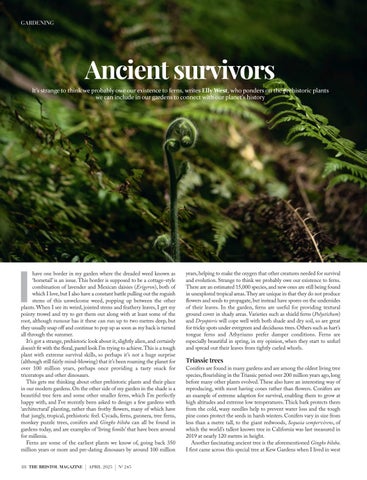
Elly West ponders the ancient majesty of ferns


It’s TV star and Disability model Mollie Pearce! Full interview on page 16. Photographer: David Reiss
Stylist: Sarah Rose Harrison
Glam: Maria Comparetto



Guide from page 20 (Photo:


EDITOR from the
The Traitors bursts onto the Beeb each January like a rousing whiff of smelling salts ripping households from the grip of post-Christmas inertia – sparking heated debates on players’ game plans and reaffirming Claudia Winkleman as a national treasure (anyone who proudly admits to styling themselves on an imaginary male mature French student called Jean who’s on his way to a physics lecture in Lyon gets a thumbs up from me, anyway).
I’d be a terrible Traitor – you’d be able to hear my heart beating out of its chest with the stress of it. And if I were to remain one of the Faithful, then I could only hope to follow the gold standard set by this month’s cover star. Mollie Pearce’s kind, trusting nature may have got the better of her in that notorious finale of season two, but her steady integrity and strength was nothing short of inspiring. Mollie embodies everything that’s great about the outstanding women that this city and its surrounding area continually produces – and fresh from the Dancing on Ice rink she talks to Isabelle Blakeney about overcoming adversity and rising to fame from page 16.
Easter feels a little late this year, doesn’t it? But we’ve donned our finest Easter bonnets regardless to bring you reams of things to do –especially for families desperate to pry screens out of kids’ hands, then get them out of the house and into the tumbling blossom outdoors for a few hours’ distraction. They can cover themselves in paint (or mud), throw some axes – yes, really – watch theatre or hunt for glowing eggs in a cave… anything that tides them over until the next snack is due.
We’ve also gone big on the Big Day this year. I’m a hopeless romantic, for my sins. I love a wedding, how they become a moment for us to stop the daily scurry, look up and around at the people we know and adore to re-realise how great they are, or what they’ve overcome together. Whether you’re always the bridesmaid, want to be the best dressed guest, or have your own date in the diary and simply do not know where to start… we’ve got features dedicated to nuptials. Actually, why settle for a ‘big day’? Make it huge. Either way, we have some handpicked professionals waiting for you in a few pages’ time to help perfect your ‘I dos’.


Rosanna Spence


Steve Miklos steve@thebristolmagazine.co.uk
Financial Director Jane Miklos jane@thebristolmagazine.co.uk
Rosanna Spence 0117 974 2800
Email: rosanna@thebristolmagazine.co.uk
Editorial Assistant Isabelle Blakeney
Email: isabelle@thebristolmagazine.co.uk
Digital Editor India Farnham
Email: india@thebristolmagazine.co.uk
Production Manager Jeff Osborne
Email: production@thebristolmagazine.co.uk
Advertising Sales Liz Grey Email: liz@thebristolmagazine.co.uk
For advertising enquiries, please contact us on 0117 974 2800 Email: sales@thebristolmagazine.co.uk
The Bristol Magazine is published by MC Publishing Ltd. An independent publisher.


Every month, The Bristol Magazine is hand delivered to more than 15,000 homes in selected areas. We also deliver direct to companies and businesses across the city. Additionally, there are many places where we have floor-stands and units for free pick-up: The Bristol Magazine 0117 974 2800
Weddings
Ellie Cooper)
CLIFTON ARCADE

5 things to do

Listen to poets
Lyra – Bristol Poetry Festival launches on 25 April with a 10-day programme (ending 4 May) featuring readings, workshops, slams, walking tours, open mics and a poetry retreat. The 2025 theme is Weird and Wild, exploring nature, rewilding and otherness through poetry. World-renowned poets and local talent will take part in the inclusive celebration. lyrafest.com

Discover true value
There are two great reasons to visit St George’s Bristol (BS1 5RR) on 10 April. Kicking things off at 1pm is a lunchtime concert from dynamic ensemble Trio Archai, followed by an exclusive free Spring valuation event at 2pm hosted by Clevedon Salerooms, featuring BBC’s Antiques Roadshow and Antiques Road Trip stars Chris Yeo and Izzie Balmer. Bring your item along to the venue and discover its true value thanks to their expert knowledge. No appointment is necessary for the valuation event. Visit stgeorgesbristol.co.uk for tickets to Trio Archai. Entry to the valuation event is free | clevedonsalerooms.com
Find your dancing shoes
Do I Love You? is a hilarious, dance-fuelled play from the writer of Bouncers and Teechers, which is coming to the Tobacco Factory Theatres 28-29 April. This is Northern Soul for a new generation... but with rising costs, unemployment, and small town blues, has anything really changed? Is this England 1975 or 2025? The pubs are closing, hospitality has gone, and strikes are everywhere; but when you're out on the floor..! Tickets available at tobaccofactorytheatres.com

Admire dazzling flowers
Tulip Mania begins at Dyrham Park on 22 April (to 5 May), bringing huge flower displays, walks, talks, plant fayres, art and exhibitions. Thousands of brightly coloured blooms light up the four long beds in the Avenue of the garden, and the pear orchard transforms into a magical world of multi-coloured joy with tulip heads shining like jewels through the long grass. Dyrham has historic links with the Netherlands, so to celebrate, the team planted more than 20,000 carefully selected bulbs imported from Holland back in December to achieve this dazzling display of colour. nationaltrust.org.uk/dyrham-park

Learn about life among the trees
Spring has burst onto the scene, meaning Westonbirt, The National Arboretum has come alive with vibrant new growth. The longer, warmer days breathe life into the air, heralding the arrival of an array of plants and animals. This Spring, why not discover more about this living masterpiece, and what Westonbirt’s team is doing to encourage hundreds of species to thrive? Join one of Westonbirt’s guided spring walks or familyfriendly events and immerse yourself in the beauty of this biodiverse haven.
Plan your visit: forestryengland.uk/westonbirt/spring-westonbirt-arboretum

Photo by Ruby Walker
Photo by Johnny Hathaway


City is t
The
The City is t
Image credit: Sam Cavender
MyBristol
Meet Danny Carlo Pandolfi, Lyra Festival Co-Director
I moved to Bristol for University in late 2013. I’ve lived here for more than 10 years and I’m proud to call it my home. I used to perform poems and rap music at the local open mics when I was 19 and it’s always been a huge part of my journey as a writer, workshop facilitator and cultural producer. Bristol has generally had a huge impact on my life through all the wonderful people and progressive values you’ll find all over the city.
I live in East Bristol and am lucky to be close to Trooper’s Hill and St. George Park – not far from Snuff Mills and other lovely walks. Nature and creativity go hand in hand for me, and I really value Bristol’s green spaces as a place to recharge and refresh. For artistic inspiration there’s nothing like live music, art, poetry and theatre. I’ve been particularly inspired by Nancy Medina’s curation since she became artistic director at Bristol Old Vic (Choir Boy was a particular highlight!), and there’s been loads to enjoy at Bristol Beacon since it reopened. Not to mention the independent venues which are the lifeblood of the arts – shout out to The Cube, Strange Brew, People’s Republic of Stokes Croft, Bristol Palestine Museum, Orchard Coffee & Co and many more places you’ll find me.
I founded Lyra Festival alongside my co-director, Professor Lucy English, in 2019. I studied under Lucy for my Masters at Bath Spa University, and we also travelled together to Austria to teach a poetry course. There was no active poetry festival in Bristol and we were really keen to change this and make something happen! With Lucy’s experience in performance poetry going back to the Bristol slam scene of the ‘90s, and my years of experience running poetry and spoken word events with Raise the Bar, we brought our skills together to launch a new festival. Lyra is now in its seventh year!
There are so many incredible, established poets based here in Bristol and opportunities for new writers to get involved, too. I’ve been running a regular poetry night, Raise the Bar, for more than 10 years now and am always in awe of the talented writers and vibrant audiences – it’s such a special city for poetry. The city also has such a rich literary tradition, including its role in the Romantic poetry movement (this year, we are running festival activities that mark 230 years since Coleridge and Wordsworth met in Bristol).
Our aim with Lyra Festival is always to inspire creativity, community and connection by showcasing poetry in as many ways as possible. This year we have a poetry and dance show by Safiya Kamaria Kinshasa, a poetry and music retelling of The Lyrical Ballads by Pete Bearder, walking tours, poetry slam competitions, open mics, writing workshops, and an array of national and international headliners. We’d like to connect as many people as possible with live poetry.
I think it’s always exciting to have an exclusive international guest performance at Lyra Festival, and this year it's Ilya Kaminsky (in the UK for one day only). He will be reading from one of my very favourite collections of the 21st Century, Deaf Republic. We also have international poet Arielle Cottingham headlining our poetry slam grand finals to close the festival. The slam is always a firm audience favourite and one I’d recommend to anyone who is a first-timer and curious about live poetry. Lyra Festival returns from 25 April to 4 May | lyrafest.com


Birdgirl to help launch Earth Day Heroes
A new competition called Earth Day Heroes is hoping to attract young people with a passion for the planet. Leading environmental campaigner, Dr Mya-Rose Craig (‘Birdgirl’) will be leading the Launch event on Thursday 24 April at Sparks Bristol, as part of the global Earth Day celebrations. She will invite people aged 7-25 to create a project to raise awareness and take action on environmental issues that matter to them, their school and their community. The aim is that the projects created will bring lasting change and spur a ripple effect of positive practical community action. All projects that are entered will be recognised at an Awards Ceremony at Sparks Bristol on 30 September 2025. Every entry will receive an Acorn, Sapling or Mighty Oak award, and the winners will receive a trophy for their group. Sign up here: globalgoalscentre.org/earth-day-heroes

Water-activated mural revealed
Frank Water has unveiled the UK’s first wateractivated mural, a ground-breaking public installation in the heart of Bristol’s shopping quarter to mark World Water Day.
Frank Water commissioned artist and activist Jasmine Hortop to create the visually-stunning mural
It Starts With Water. At first, the title is displayed in a monochrome design. Then using special, water-activated hydrochromic paint on the top layer, the mural bursts into colour, revealing a breathtaking scene of fresh water flowing through a thriving natural landscape: lush trees and grasses flourishing, an abundance of wildlife and people benefitting from the life-giving force that sustains all life. The public was invited to pour rain-harvested water onto the mural to witness this transformation (pictured). Supported by Cabot Circus, Upfest, If Not Now Digital and Exhale Coffee, the installation will remain in Quakers Friars, Cabot Circus, until the end of April. frankwater.com
Local author wins Sunday Times award
Harriet Baker, who lives in Bristol, has won the £10,000 Sunday Times Charlotte Aitken Young Writer of the Year Award for Rural Hours, a biography of Virginia Woolf, Sylvia Townsend Warner and Rosamond Lehmann and their lives in the countryside. The award is the most influential prize for young writers in the UK and Ireland, with a reputation for seeking and supporting the defining voices of a generation over the past 30 years, with a list of alumni including Zadie Smith, Robert Macfarlane, Sarah Waters, Simon Armitage, Naomi Alderman, Raymond Antrobus and Sally Rooney. youngwriteraward.com

Choir marking 20 years seeks new members
BS3-based choir WorldRoots Acappella is celebrating 20 years of performances and community impact – and the arts charity behind the group, Gathering Voices, is calling on new singers to join.
Those aged 12+ with a passion for singing, or who are looking to discover their voice, are invited to take the opportunity to perform at major events, including Glastonbury Festival. Founded in 2005, WorldRoots is a vibrant youth vocal ensemble renowned for its immersive, walkabout performances. Over the years, its dynamic sound has been brought to some of the most respected festivals and events in the region, including Glastonbury, WOMAD, Shambala, and Aardman Animations’ 30th anniversary party. The group has also performed at exclusive private events for Sting and Trudie Styler at their home (pictured above), delivering their signature emotional a cappella experiences.
There’s no audition required – people are invited come and join the fun, choosing between the non-performance group for those who want to practice regularly with others, or the performance group, for those ready to take the stage (or field). The first session is free.
For more information, or to sign up, contact the team at info@gatheringvoices.org.uk.

Earth Day Heroes
Harriet Baker
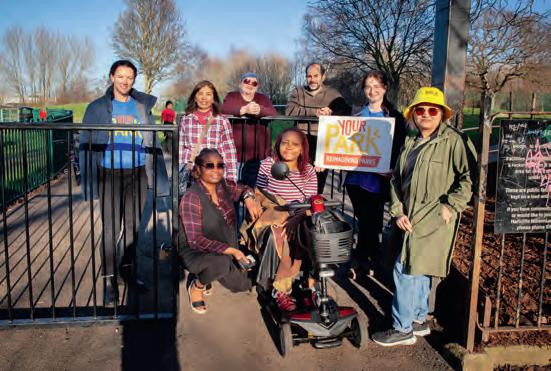
Hartcliffe Green regeneration becomes accessibility trailblazer
Grassroots charity Your Park Bristol & Bath has completed work on its first two major park transformation projects, with Hartcliffe Millennium Green in Bristol and with Brickfields Park in Bath now reimagined to make them more accessible and inclusive for their local communities. Hartcliffe Millennium Green has undergone a £95,000 transformation, making it one of the first parks in the UK to be designed to be accessible for people with all physical disabilities and impairments. In collaboration with local Disabled people and carers and the park’s Friends of Group, the charity has led/delivered improvements including a wider entranceway, smooth resurfaced paths, sensory markers, raised planters, new gates, and additional seating. A large shelter has also been installed to create a welcoming space for young people, while a sensory garden, designed specifically for people with sensory disabilities, will be planted this spring.The projects are part of Your Park Bristol & Bath’s Reimagining Parks campaign. yourpark.org.uk
Funds boost for Jacobs Wells Baths
Historic England has awarded a grant of £89,743 to the Grade IIlisted Jacobs Wells Baths in Hotwells, providing a further boost to secure the future of the important Victorian building.
The funding will support urgent repairs to the south studio wing, releasing the space for temporary community use while the wider restoration plans progress.
The work will include the restoration of the roof lantern, repairs to the chimney, roof supports, and gutters, and essential masonry work. The grant is a further boost to the plan to transform the Victorian public baths into a community and creative hub, with the restoration led by Trinity Community Arts.
trinitybristol.org.uk | historicengland.org.uk


Photo: KolabStudios - AlastairBrookes
Photo by Mark Simmons


Photographer credit: David Reiss
Stylist: Sarah Rose Harrison Glam: Maria Comparetto
One of the faithful
From being swung by the ankles for Dancing On Ice’s infamous ‘headbanger’ to becoming a nationally‐recognised advocate for the Disabled community, Nailsea native and reality TV fan favourite Mollie Pearce talks to Isabelle Blakeney about embracing her rapid rise to fame
Mollie Pearce soared to fame in January last year after appearing as a Faithful in the nail-biting finale of season two of BBC’s The Traitors, where she was spectacularly duped out of £95,000 in a scene that had audiences on the edge of their seats. Since then, she’s become a spokesperson for people with Crohn’s disease and ulcerative colitis, proudly advocating to eradicate the stigma around stoma bags, and has most recently appeared on Season 17 of ITV’s Dancing on Ice.
When we speak, Mollie has just arrived home after a two-month stint filming Dancing on Ice “just outside of London”. If she’s tired, she doesn’t show it – her positivity and warmth that is palpable on screen certainly extends beyond the camera.
The final episode, which aired just two days prior to our chat, saw Coronation Street’s Sam Aston take home the trophy, with all the season’s competitors returning for group dances. What did she think of the finale’s dancers? “They were all amazing, so whatever happened, it would have been good.”
Mollie hails from Nailsea, and before her overnight rise to TV fame she was a healthcare worker in Bristol while also working as a Disability model, with glossy campaigns for Adidas and Kurt Geiger under her belt. In 2022, the producers of The Traitors reached out to her on Instagram asking her to participate on the first season, which she turned down in favour of island-hopping in Greece.
But after watching that season: “I just thought, this is really, really good TV. Like, maybe I shouldn't pass this one up. So when the opportunity came up again and we started going through the process, it felt like one of those things that's never going to happen. You keep going through the steps, and then suddenly I was in Scotland filming for it, and it was a bit crazy, actually. Everything was new. The first day being in front of the camera, I just felt so nervous. It was the most bizarre feeling.”
She was up filming in the Scottish Highlands “for about a month –though it feels like longer because you don't have any contact with friends or family or anything”. The series saw her traverse lochs, crawl through ‘catacombs’, and abseil down cliff faces above the North Sea, with her athletic ability squarely matching that of co-competitors like Harry, an ex-army engineer.
Battling her health
You’d be forgiven, then, for being surprised to learn that only a few years earlier, aged just 18, Mollie was in hospital having her large intestine removed and her small intestine diverted to an opening on her stomach with a stoma bag attached.
After being diagnosed with ulcerative colitis age 11, she spent years plagued by pain and anxiety, to the point where she struggled to leave the house without a wave of dread that she wouldn’t be able to reach a toilet when needed. She struggled with immunosuppressant medication, but nothing seemed to work. As a teen, the idea of a stoma bag just wasn’t something she was willing to accept. But then, after being rushed to
hospital and discovering the extent of her disease-ravaged colon, she was left with little choice but to accept the seven-hour operation to remove her large intestine.
“ I always throw myself into everything – you never know what will come from it ”
While adjusting to the stoma was difficult at first, once she regained her strength she discovered that it gave her a new lease of life, allowing her to travel and take part in the arduous activities of The Traitors and Dancing on Ice: things that she couldn’t imagine doing before.
Mollie’s life may have thrown her some curveballs over the last few years (she was also born with missing digits on her right hand) but the 23-year-old has the ‘roll with the punches’ attitude to go with it.
“I've always thought it's better to do it than not do it and have regrets. So, I always throw myself into everything – you never know what will come from it. I never thought I’d have been doing Dancing on Ice, that’s for sure.”
The ice queen
Her Dancing On Ice journey saw her become a firm fan favourite, and she glided her way to week seven where she performed the infamous ‘headbanger’ (a move where she was held by the feet and spun around by her partner, Colin, which was “really quite scary!”) to ABBA’s Mamma Mia before exiting the rink.
Reflecting on her experience, she says: “I loved it, to be honest. It's been one of the best things I've ever done. I mean, it was definitely quite stressful at times, because the turnaround is so quick to learn a new routine, and it's difficult because you don't really have time to get poorly or anything. So as much as it was incredible, it was obviously quite high pressure as well.”
Her Dancing on Ice journey wasn’t a smooth ride, either. In the preseries training, Mollie fell and fractured her wrist, meaning that she wasn’t able to train for a month.
“I think if I had been able to get straight back on, I would have been alright. But because I had that fall and then I had four weeks off, when I got back on, I was super nervous.”
But from everything she’s done, it’s clear she’s not one to let nerves stop her. So what was the best thing about the experience?
“I learned that I actually really loved the performance side of it. I thought that’s what I was going to struggle with the most, but it seems to be what we had the most compliments on. Really, it was quite fun to just get into character and pretend to be someone else.”
A voice for Disabilities
Her rise to reality TV fame has been a quick one, and with an Instagram filled with chat shows and red carpets, she doesn’t show any signs of slowing down. But for Mollie, there’s more to her platform than most.
“I think [TV has] really helped me kind of grow in confidence, and it's given me the most amazing platform to spread awareness for limb difference, Crohn’s, colitis and people living with stoma bags, and that has been really incredible.
“ It's nice to see people on our TV who have disabilities or are a little bit different ”
“It's important that we're also putting good energy and positive thoughts out there, so that’s been really nice. And I've got the stoma community behind me, which is lovely, and I get loads of support from them.” It’s safe to say that she’s become a national spokesperson for the stoma community. But how does it feel to bear that weight?
“I think we have to remember that everyone's experience is different –so something I say isn't always going to be the same for everyone else.


Quickfire questions!
Hype song?
“Definitely Escapism by Raye.”
Celebratory meal?
“We didn’t really eat straight after the show on Dancing on Ice, but we’d always have a pizza when we got back to my flat.”
If you could go on, and win, any reality TV show, what would it be?
“I’d probably have to say I'm a Celebrity... Get Me Out of Here!”
If you weren’t in reality TV, what would you be doing?
“I’d probably still be in healthcare. I loved it.”
Where are you happiest?
“With my family.”
And who’s your hero?
“I’d have to say my mum, to be honest. She’s amazing.”
What’s next?
“Part of me will always be in Bristol. I do love it here. I love when it's a really nice summer's day and you can go into Bristol, sit around the harbour, have a couple drinks. I think it's just such a nice vibe around there, especially when the sun’s out.”
But for now?
“I think I need a nice holiday after the show, and once I’ve done that I’ll get my work head back on and get planning. But yeah, there’s lots of things I want to do.”
But I just think it's nice to see people on our TV who have disabilities or are a little bit different, because you feel really seen. And I think that's really, really important, because for me, growing up, that's always been something that has changed my opinion on my disabilities.”
The importance of representation is personal to Molly, having started her own modelling journey after seeing a model with a limb difference like hers.
“Me and my mum were shopping. We walked into one of the shops, and there was a model with one arm. And I just remember feeling so seen, I suppose, and I thought, ‘I want to give other people that feeling’.”
And if her younger self could see her now, after everything she’s done? “I think she’d be chuffed!” n
Catch up with Mollie’s appearance on The Traitors season two on BBC iPlayer, and tune into ITVX for her Dancing On Ice performances. Keep up with Mollie via her Instagram page @mollie_pearcee.
If you’d like to support any organisations dedicated to helping the health conditions mentioned in this article, Mollie recommends Crohn's & Colitis UK (crohnsandcolitis.org.uk) and REACH (reach.org.uk), both of which have helped her along her own medical journey.
Mollie Pearce, pictured with her Dancing On Ice partner Colin Grafton (credit: ITV)


Weddingcrashers
Can you hear that? The bells in the distance ringing out triumphantly, heralding the start of 2025’s wedding season
Whether you’re planning a last‐minute nuptial exchange, are patiently waiting to pop the question or have a date booked in the calendar in the next couple of years, consider the following few pages your local, essential wedding companion, here to support you right up until the moment you’re ready to say, “I do”
According to Vogue (which asked seven of the world’s top event planners what the biggest new wedding trends will be), local love was… well, in vogue. The post-pandemic landscape saw couples desperate to travel far and wide to exchange their nuptials. But now we’re all feeling a little less cooped up, people are opting for venues and locations much closer to home. Thankfully, Bristolians wanting to tie the knot in or near their hometown are in luck, because we have a bounty of stunning, historical venues and plenty of artisanal producers, suppliers and creatives poised and ready to help make your Big Day one to remember for generations – yes, generations – to come.
Another factor that Vogue’s esteemed experts flagged was the fact that the pressure to follow trends for trends’ sake – instead of prioritising your own personal preferences when it comes to elements like outfits, entertainment, photography, food and drink and more – is waning. This is incredibly exciting news for couples who might be feeling anxious about whether or not their wedding will meet everyone’s expectations, and those facing a phase of disastrous decision paralysis. We’re here to let you into a little industry secret… who cares what other people think! From colour schemes to flower arrangements, bridesmaids’ outfits to cake layers, it’s your special day. So, go on… lean into our city’s rebellious spirit and let your imaginations run wild.
Our wedding special feels a bit like a packed-out event venue, brimming with selected, hand-picked professionals eager to share their services – from personalised fragrance sessions to historic ships and country estates, plus everything that makes Bristol’s wedding scene so wonderful in between.
We’ll keep an eye out for our invites in the post, then... n
Keep reading to discover our 2025 Weddings Guide...

Image credit: Ellie Cooper

Tying the knot?
Are you ready to say ‘I do’? Our guide to the very best local wedding‐based businesses is bustling with great ideas and wonderful folk who will help make your Big Day extra special

JESS MASTERS TRAVEL COUNSELLORS
Where will your first adventure as a married couple take you? A luxury safari at sunrise, an overwater villa in the Maldives, or a once-in-a-lifetime USA road trip? Jess specialises in creating bespoke honeymoons filled with unforgettable moments. Whether you dream of adventure, relaxation, or a perfect mix of both, she tailors every trip to your vision. Every booking is financially protected, with VIP service and 24/7 support – so you can focus on making memories while Jess handles the details. Wherever your love story takes you next, she’ll make it extraordinary.
Contact Jess directly at jess.masters@travelcounsellors.com
SHY MIMOSA PERFUMERY EXPERIENCES
42B The Mall, Clifton, BS8 4JG | shymimosa.co.uk
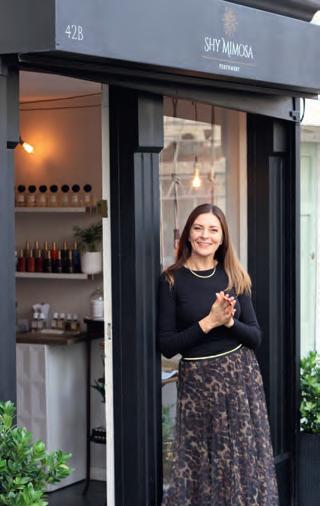
Shy Mimosa Perfumery offers a special service dedicated to brides and their bridal party. The truly unforgettable olfactory journey showcases techniques for appreciating artisan perfumery by sampling a selection of fragrances from a carefully curated collection. This unique experience can be booked for between four and six people and includes refreshments, a personal fragrance profiling for each guest and a luxurious gift bag to take home with something special for the bride-to-be.
A personalised Sensory Experience is also available for the bride and groom. This tailored perfume consultation is as personal and unique to each couple as their wedding day. In the relaxed setting of the Perfumery, couples immerse themselves into the carefully chosen fragrances to suit their style and select the perfect scents for their special day, which they can cherish forever. Finding your own perfume will be an exciting part of your journey to married life.

NO.4 CLIFTON VILLAGE
Within The Rodney Hotel, 4 Rodney Pl, Clifton, BS8 4HY no4cliftonvillage.co.uk
No.4 Clifton Village is a boutique wedding venue in picturesque Clifton, just moments from the iconic Suspension Bridge. Designed with romance at its core, it blends Georgian charm with sumptuous interiors and contemporary artwork. The stunning Admiral Room features hand-painted Chinoiserie wallpaper and a striking living chandelier, while the intimate Galley boasts a private bar. A rare private walled garden adds to the magic. With exquisite wedding menus, an in-house wedding coordinator, and an adjoining hotel for guests, No.4 Clifton Village provides everything you need for a seamless, unforgettable celebration in a truly enchanting setting.
Photo by Ivy & Pine Photography

ZEBEL
WYLDE JEWELLERS
T6 The Mall, Clifton, BS8 4DR | 0117 974 3582 | nicholaswylde.com
The south west’s leading designer jeweller, award-winning Nicholas Wylde has been designing original, high-quality jewellery since first opening his Bath store in 1987. He has built up a reputation for designing outstanding pieces; from one-off commissions to large corporate orders – all handmade, with great passion, in the workshop on the premises. An added cool factor: Nicholas Wylde offers his own patented diamond cut, the dazzling Wylde Flower Diamond®, with more cut facets than a brilliant cut diamond for that extra-special sparkle. You won’t find this gemstone anywhere else in the world. With one of the largest collections of wedding rings in the South West, Wylde Jewellers is a perfect destination for anyone looking for their dream wedding jewellery.
Unit 12, Quakers Friars, Broadway, BS1 3BU | zebel.co.uk
Zebel ensures you’re the best-dressed at any wedding, whether you’re the Groom, Groomsman, or guest. With decades of suiting expertise, Zebel combines top-tier craftsmanship, premium fabrics from renowned cloth houses and exceptional service at a fair price. Weddings are complex, but Zebel simplifies the process, offering stunning ready-to-wear suits for same-day pickup or Made-to-Measure consultations. The team tailors your perfect suit – be it refined elegance, modern flair, or classic style – crafting everything from tuxedos to double-breasted jackets in diverse colours and fabrics. The expert tailors bring your vision to life, ensuring you shine on the big day.

BERWICK LODGE
Berwick Drive, BS10 7TD 0117 958 1590 | berwicklodge.co.uk
On the outskirts of Bristol, and set in 18 acres of stunning grounds, is Berwick Lodge – a proudly independent boutique wedding venue and 14-bedroom hotel. A hidden secret just waiting to be discovered, offering glistening fountains in the summer, warming open fires in winter and beautiful rooms with stunning features of the original 1890’s house all year round. If you’re looking to hold an unforgettable wedding in a charming and characterful venue – then this is it.
Perfect for small and intimate weddings, or more lavish celebrations of up to 100 seated, with 150 for evening parties. Whichever size wedding you choose, Berwick’s special spaces offer you total freedom to make your day everything you want it to be.


TERRY COX – CLIFTON VILLAGE ANTIQUES
2 Clifton Arcade, Boyces Avenue, Clifton, BS8 4AA 07877 633030
In his 40+ years’ experience in the business, Terry Cox of CV Antiques has supplied jewellery to everyone, from stars of stage and screen, members of the royal family and Bristol’s great and good, as well as a host of local people who will attest to his being the West Country’s most competitive jeweller. From his base in Clifton Arcade, he supplies many other retailers, including shops in Bond Street and Burlington Arcade in London. The main focus of his expertise is fine quality diamonds at hard-to-match prices, but the shop has items available from £100, too. Terry and his team will also undertake bespoke design and commissions, restyling and valuations. Shown above: Diamond cluster set in platinum. Guaranteed weight 5ct. VS clarity. Colour: GH. Price: £6,500 (average high street price: £11,500).
KINDRED CLINIC
49 North View, BS6 7PY drmathewson.co.uk
As your wedding day approaches, you want to feel like the best version of yourself – radiant, refreshed, and confident.
The Kindred Clinic team is experienced in creating tailored plans for brides wanting to perfect their look.
From smoothing fine lines, highlighting natural beauty with subtle contouring, or skin-boosting treatments to achieving a glowing complexion – Dr Courteney will create and expertly deliver a bespoke plan to help you look and feel your best. It's not just about looking flawless in photos, but feeling amazing in the moment. You want your wedding day to be unforgettable – and that starts with feeling confident in your own skin.


SS GREAT BRITAIN
Great Western Dockyard, Gas Ferry Road, BS1 6TY 0117 926 0680 | ssgreatbritain.org
Step aboard the legendary SS Great Britain, one of Bristol’s most iconic landmarks, and experience a celebration in First-Class style. Begin with a romantic ceremony on the sun-drenched Promenade Deck, followed by celebratory drinks with stunning views on the Weather Deck. Indulge in exquisite dining in the elegant First-Class Dining Saloon, then dance the night away in the lively Hayward Saloon. With its unique charm, breathtaking Bristol Harbourside location, and a dedicated team to make every moment unforgettable, the SS Great Britain is the perfect setting for your special day. Email the events team at events@ssgreatbritain.org
Photo by Rebecca Roundhill


DIANA PORTER
33 Park Street, BS1 5NH | 0117 909 0225 | dianaporter.co.uk
Diana Porter Jewellery specialises in unique, contemporary wedding and engagement rings, as well as bespoke pieces and remodelling of heirloom metals and stones. Each piece is handcrafted in Fairtrade Gold or recycled precious metals in the onsite Jewellery workshop, tucked away behind the Park Street Gallery.
Alongside Diana’s extensive collections, the Jewellery gallery stocks over 80 renowned jewellery designers from across the world. There are plenty of different styles on offer, from rustic wedding bands to contemporary rings adorned with colourful alternative diamonds. Commissions and reworking of jewellery is warmly welcomed and an experienced team are on hand to help bring your designs to life. Diana Porter also holds a varied selection of one-of-a-kind diamonds, labgrown diamonds and ethically sourced, coloured gemstones in an array of cuts and colours. All of which are ready to be chosen for your very own bespoke design.
AZTEC HOTEL & SPA
01454 201090 | aztechotelbristol.co.uk events@aztechotelbristol.co.uk Aztec West, BS32 4TS
Keeping everything under one roof has lots of advantages, not least no lost guests and no need to worry about the weather outside, either. A range of suites at the Aztec Hotel & Spa are licenced, which means you can enjoy a seamless transition from the ceremony to celebration, all in one place. When it comes to crafting your special day it’s the small details that make a big difference.
If you’ve already got the vision, the Aztec team will be the blank canvas for you to work with, or if you’re still designing your dream day, they can help guide you along the way. And because they know you’ll want to remember your wedding day forever, you’ll find some fabulous indoor and outdoor backdrops, so you’re guaranteed a beautiful photographic record you’ll cherish for years to come.


PITCH UP AND PLAY
07361806374 | hello@pitchupandplay.co.uk pitchupandplay.co.uk
Ensure peace of mind on your big day with Pitch Up and Play, the ultimate solution for all your wedding childcare needs. The team of more than 30 DBS-checked and fully-qualified Pitch Nannies are dedicated to providing exceptional care, ensuring your Mini VIPs are entertained and engaged with fun, tailored packages – ranging from fun-filled bell tents to movie rooms! With more than 160 five-star ratings from clients, you can trust Pitch Up and Play to handle the childcare logistics, allowing you to focus on creating lasting memories. Imagine enjoying a glass of fizz and some much-needed child-free time, knowing your Mini VIPs are having a ball with the expert Nanny team. Let all parents relax and enjoy the day, confident that their little ones are in great hands. If you want your young guests to feel like true Mini VIPs, get in touch today – the Pitch Up and Play team would love to be part of your special day!
Shake it up!
Shakeup Cosmetics is ruffling feathers in the beauty and skincare industries with its range of products specifically tailored to men’s skin.
Founded in Bath by twin brothers Shane Carnell‐Xu and Jake Xu with the aim of enhancing men’s self‐being through self‐care, Shakeup empowers them to look and feel their best every day.
The Routine Revolution 4‐step skincare set | £85 Because achieving great skin should never be complicated. Includes a Daily Face Wash, Clarifying Toner, Anti‐Aging Serum and Matte ‐effect Gel Moisturiser, plus a soft faux leather wash bag.


Age Def‐Eye Instant Lifting Eye Cream | £32 Say goodbye to fine lines and tired eyes in under 90 seconds. Instantly tightens, firms and revives skin around your eyes.

Here are a few of the best‐ sellers, which you can buy online at shakeupcosmetics.com and on amazon.co.uk, or find in more than 1,300 retail stores worldwide.

Let’s be Clear Oil
Control Clay Face Wash + Mask | £17
Twice the clean and none of the sheen, 2‐in‐1 face wash + mask that keeps breakouts away.

You do the Mask Purifying Clay Mask | £18.50 Unclog pores, clear blackheads and fight off blemishes with this mess ‐free mask.


The Mane Event Oil
Enriched Beard Serum | £21 It’s time for thicker, fuller, softer facial hair. Say goodbye to scruff y, sparse beards and beard‐ruff !


BE OUR GUEST
No one wants to outshine the happy couple with their wedding outfit... or do they? Become the envy of everyone invited to The Big Day with our selection of special wedding guest outfits from local retailers...


...There’s something for everyone, whether you’re feeling like a femme fatale in red, want to frolic with florals, or would prefer to offset all these bright colours with some cooler, neutral shades. Brands included in our selection include Mint Velvet, Hobbs, John Lewis and Zebel – all of which have stores in Bristol, or you can order online and try on at home.
Pictured left and above: Red Tulle Ruffle Maxi Dress. £229, mintvelvet.com.
Fox Red Leather Strappy Kitten Heels. £120, mintvelvet.com.
Black Cat Eye Sunglasses, £450 mintvelvet.com0


Silver Tone Drop Hoop. Earrings, £25. mintvelvet.com


Katia Tapered Trousers, £99. and Jacket, £219. hobbs.com. Charles Tyrwhitt0 Patterned Enamel Cufflinks, Navy0 £39.95, johnlewis.com0


John White Guildhall Black Brogues £120, zebel.co.uk0


Linen Suit,
Fit, Three Pieces0 zebel.co.uk0 Wisley Silk Dress in Hyacinth Purple, £3290 hobbs.com0


Sian Fascinator in Cilantro Green, £85, hobbs.com,

hobbs.com,


Samira Earrings, £290 hobbs.com0


Made-t0-Measure House Cloth Suit, from £5990 Fabrics include Wool, Linen, Silk & Mohair0 zebel.co.uk0
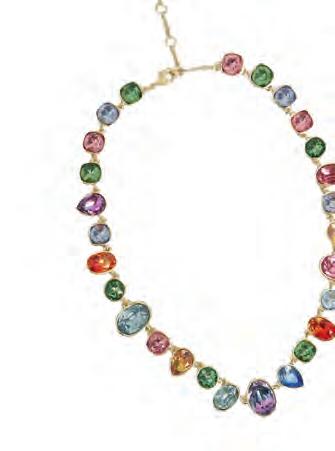


Indira Necklace £45, hobbs.com0


Navy and Green Speckled. Floral Print Tie, £35. . zebel.co.uk.


Matilda Scarf in0 Zinnia Pink0 £49, hobbs.com0
Jas Leather Clutch Bag in Sage Green, £110,
Sophia Silk Belted Dress, £349,. hobbs.com,
Carly Dress. £169, hobbs.com.
Winnie Floral Linen Dress. £199, hobbs.com





Maria Kabakova-Upfold pictured at Shy Mimosa

Scents and sensibility
Fragrance expert Maria Kabakova‐Upfold, who is the founder and creative director of Shy Mimosa Perfumery in Clifton, reveals a deliciously fresh take on fragrance for the Spring season: gourmand perfumes
Spring is usually the time to embrace lighter, more playful scents, but, have you considered trying gourmand perfumes this season?
Gourmand perfumes are a fairly new fragrance family that celebrate the close link between smell and taste, focusing on sweet, creamy, candied, and buttery notes.
Originating from the popularity of vanilla accords a century ago, true gourmand perfumes became prominent in the 1990s with caramel, chocolate, and fruit-themed scents. Today, they include accords of fruits, liqueurs, popcorn, jams, honey, and syrups, with potential for savoury additions. These fragrances can be flamboyant, witty, exotic, comforting and nostalgic, embodying a light-hearted playfulness.
For a Spring-friendly gourmand, look for fragrances that balance sweetness with freshness. Notes like pear, coconut, and citrus can brighten the warmth of vanilla and tonka bean, making the scent feel light and breezy rather than heavy. Perfumes featuring white florals, such as jasmine or orange blossom, add an elegant touch, keeping the scent refined and sophisticated.
Shy Mimosa Perfumery is located at The Mall in Clifton Village and offers personalised sensory experiences and consultations with perfume profiling to suit individual styles, celebratory occasions and much more. n
Get in touch and book your experience via the website: shymimosa.co.uk/services/sensory-experience, or pay Maria a visit at 42B The Mall, Clifton, BS8 4JG
Shy Mimosa recommends a gourmand scent that isn't too heavy but still has that delicious, inviting warmth. Here are some intriguing options from Maria’s carefullycurated artisan collection...
Methexis by Manos Gerakinis is a tribute to fig. The perfume opens with an enticing burst of ripe fig, enhanced by the tangy bite of blackcurrant and the luscious sweetness of dried fruits, followed by a smooth, powdery cocoa note with touches of honey, vanilla and cinnamon. Despite the richness of these sweet notes, the fig’s green, slightly bitter leaves balance the composition perfectly. Versatile and unisex.


Cacao Porcelana by Atelier Materi is a distinctive perfume, carried by an unusual ingredient – white cocoa. With sweet rum opening, the fragrance unveils the addictive bitterness of the cocoa, comforted by light tobacco and woody notes. Rare and unique.
Iris Coffee by Cherigan
Paris is a perfume inspired by the invigorating drink Irish Coffee. The fragrance opens with fresh bergamot and cardamon, settling into aromatic iris, earthy tonka bean and sensual white musk. This is a very individualistic and androgynous fragrance, just like the bittersweet and ardent drink.

See Tina’s most-iconic looks at John Lewis!
John Lewis Cribbs Causeway has teamed up with Bristol Hippodrome to present an extra special pop‐up exhibition featuring six show‐stopping costumes from the hit West End production TINA – The Tina Turner Musical


Customers can see these outfits up close, exploring the visual legacy of the Queen of Rock ‘n’ Roll through her most memorable moments and songs. Each costume is tied to pivotal moments in Tina Turner’s career, from the golden fringe dress she wore during Proud Mary to the famous red dress from The Best (Simply)
Where to find the outfits in store...
The six legendary dresses are displayed along the main walkway in Womenswear on the first floor in John Lewis Cribbs Causeway, meaning you can immerse yourself in the story of Tina’s musical journey, as each item is accompanied by photographs that compare their use in the musical to how Tina herself wore every iconic look.
The Tina Turner exhibition is in store until 28 April (8pm). Viewing times are the same as the shop opening hours: Mon-Fri 10am-8pm, Sat 9am-7pm & Sun 10.30am-5pm. John Lewis, The Mall at Cribbs Causeway, BS34 5QU; johnlewis.com

COMPETITION TIME!
Visit the exhibition for your chance to win 1 x VIP Box for 4 guests to watch TINA – The Tina Turner Musical at Bristol Hippodrome on Friday 25 April, plus a Personal Styling appointment with John Lewis Cribbs Causeway Stylists and £250 worth of clothes! Scan the QR code in store at the exhibition to enter. (The Bristol Magazine is not affiliated with this competition. T&Cs apply and are available when the QR code is scanned. Closing date 20 April 23.59am.)


Seeing Eclair-ly
In this candid interview (because, frankly, that’s the only option with Jenny Eclair), the comedian, novelist and actress reflects on squirrels, punk rock, hotel beds, travelling, sitting on walls, being best mates with your partner, ageing and death. Interviewer Melissa Blease leaps onto the all‐encompassing‐yet‐random Planet Eclair with exuberance, talking to Jenny ahead of her appearance at Bristol Old Vic this month
I’m watching a squirrel in my garden. I’m not sure it’s the most exciting thing I’ve ever done, but they’re everywhere, aren’t they? And most of them are in my back garden!” Now, I don’t know much about squirrels, but I know that watching a squirrel isn’t the most exciting thing that Jenny Eclair – one of the UK’s most popular comedians, novelists, actresses and all-round spokespeople for a ‘certain’ generation –has ever done.
Having bagged the Time Out Cabaret Award in 1989, Jenny Clare Hargreaves – who was born to British parents in Kuala Lumpur in 1960 and adopted the stage name Eclair when she was a teenager at a disco in Blackpool in an effort to ‘sound French’ – went on to become the first female solo performer to win the Perrier Award at the Edinburgh Festival in 1995.
Since then, she’s ruled the primetime TV and radio airwaves with her unique brand of observational comedy, wit and wisdom. She’s published six novels, a guide to the menopause and a memoir, and she aced I’m a Celebrity…Get Me Out of Here! – and she’ll be talking about all this and more when she brings her new show to Bristol Old Vic on 6 April. But for now: back to squirrels…
“I don’t know about squirrels!,” I confess. “I live in a third-floor flat with a cat who tells me what’s going on outside of the window.”
“A what? Oh, a cat! I thought you said you had a tramp!”, Eclair screeches. “I thought, crikey, do people still use that term? And why has she got a tramp living with her, telling her what’s going on?”
“We’re all furious about something”
Welcome to Planet Eclair, where we’re encouraged to say it like it is, whatever ‘it’ might be. Jenny; are you ever not fun? “Truth be told, I’m very bad-tempered because I’m still working while most women my age are going on cruises and getting into pensions they set up when they were 24!”
Whether age is or isn’t A Big Thing to Eclair is a moot point; she’s never shied away from sharing fearlessly frank observations on every stage of her life, from her earliest appearances to now. So how are her 60s treating her?
“I know what I like, and I make the most of all of it,” she says. “I like painting. I like watching TV in my pyjamas – and oh, I like my bed! I like any bed, actually; people say your own bed is the best, but hotel beds are much better than mine. And somebody else makes it for you, too; I barely change my sheets, so it makes a nice change. But I loathe that media image of women in their 60s being best-behaved, careful, proper people, because we’re just… not that. Be honest: we’re all furious about something. Everyone’s exhausted, everyone’s pissed off and most of us haven’t got enough money. Everyone’s a bit disappointed. That’s life in our 60s”.
But surely Eclair can rely on the punk rock element that’s so firmly woven into her origin story to – well, keep her pecker up? “I’m probably as punk rock as a 64-year-old woman can be, but y’know, life happens!” she laughs. “And anyway, it was exhausting being over-the-top all the time. These days I can be boring if I want to. There’s a subtle difference between allowing yourself to get boring and being boring, and I think I am that difference. I was never a proper punk anyway; I kind of borrowed from that scene. I was labelled a ‘punk poet’ for a while – whatever that means! – but I was never able to abide gob, so I was never a fully paid-up punk. But I liked dressing up a bit like Debbie Harry, if that counts?” Any little memory box snippet Eclair chooses to throw out there counts.
“If that’s how you feel, you have to read my memoir. Or just come to the show – it kind of matches the handbag to the book, for those who can’t be arsed to read the book itself. But it’s not all about me; it’s about what most of us have done and were doing down every decade I’ve been around.”
Putting all that together must have been an epic task? “It was the right
time for me to do it,” she explains. “In a way, it was a ‘safe space’ project. I was writing another novel but when my mum died, I didn’t have enough bandwidth to work with fiction. I knew my own life story by heart, though, and I had all this stuff just floating around that took me off to other places. It was mostly really comforting, but occasionally, writing about the show business side of my life, and how unloving that side of life can be, made me a bit angry. Good anger? Probably; who knows? But that’s all part of the ‘life mix’, isn’t it? My mum was 93 when she passed away. She’d had dementia for some years, and it’d been really rough. She was no longer happy living as she was, and she was really frightened, so I could see the release in her death; it should have happened a bit sooner than it did, really. I talk about all that in the show, but I don’t shy away from finding the funny in death. Watching someone die is quite mad, but sadly it’s a big part of life for so many of us at our age: we can all relate to death. But I don’t agree with that thing about women becoming ‘invisible’ in their 60s; most of us are about 13 stone, so nobody can claim not to see us! But unless we’re some kind of weird old sex-robot type woman, we’re ignored.”
A new generation
Eclair is definitely not, however, ignoring her relatively new role as a grandmother.
Eclair married her husband Geoff (an artist) in 2017, when their daughter Phoebe Eclair-Powell (today a hugely successful playwright) was 28. In 2022, Geoff and Jenny became grandparents to Phoebe’s son Arlo – and Eclair is loving parenting once-removed.
“Being the centre of somebody’s universe even for one day is like having a day off without having a day off,” she says. “When Phoebe was small, I was out chasing my career and I never had the time for my daughter like I have for Arlo. I was a terribly neglectful mother.”
Was chasing a career neglectful, though – or is that not just another societal pressure? “Well, yes and no. I don’t mean I left Phoebe sitting on a wall outside the house! Having said that, our generation all sat on walls when we were younger, ’cos there was f*ck all else to do!”
Today, however, there’s no shortage of stuff for Eclair to do; by the time she pitstops in Bristol, she’ll be around a third of a way through a massive tour that takes her across the UK and back.
“I find travelling punishing, but I kind of know how to tour, these days. Basically I turn into an automaton: my driver picks me up, and I just go. The actual gigs are lovely – and easy, these days – but everything that goes alongside them is punishment. I can’t even talk to people before a show; I save everything for the gig. All I ask is for an iron and ironing board in my dressing room, and that’s that. I do take breaks, though; this time around, Geoff and I can even get away for a few days between gigs. I’ve done much harder tours.”
Ah, her partner Geoff – Eclair talks of him often; I can tell they’re good friends. Yes? “Yes! It would be terrible to wake up every morning and think, ‘I wish he’d go out for the day’. If you’re not best mates with your partner by the time you’re our age, you’ve really done something wrong. You’ve got to enjoy each other's company! Obviously there’s a cut off point; we’ve agreed to drive each other off a cliff if it all gets too much.
“But my dad died when he was 90 and my mum when she was 93; I think I’ll be alright for a while.”
Something tells me that Jenny Eclair will always be alright – and as long as she keeps on telling us how she’s managing to do that, so will we. n
Jenny Eclair: Jokes, Jokes, Jokes Live!, is at Bristol Old Vic on 6 April, 7.30pm. Tickets were nearly sold out at the time of writing, but you can find out more info and join the waiting list via bristololdvic.org.uk
What’s On...?
Our guide to the best things to see and do this month

Wolf Hall: The Mirror and the Light Costume Exhibition n Until 30 April
Berkley Castle, GL13 9BQ
Step into the world of Tudor England and admire the exquisite craftsmanship of six stunning costumes worn by acclaimed actors in the celebrated TV series Wolf Hall. The historically-inspired garments bring to life the drama and intrigue of Hilary Mantel’s masterpiece. Berkeley Castle itself was a filming location for Wolf Hall, making this exhibition even more special as you stand in the very spaces where key scenes were shot. The exhibition is included in the standard admission ticket. berkeley-castle.com
Behind the Curtain: The Films of David Lynch
n 5-30 April Watershed, BS1 5TX
Throughout April Watershed will be remembering the indelible mark on cinema left by the late great visionary David Lynch (1946-2025) with a season of his feature films. A surrealist at heart, Lynch brought a tradition of cinematic experimentalism to the mainstream, mixing it with everyday Americana, pulp noir, erotic thriller and
supernatural horror. His films give glimpses behind the curtain, revealing the dark, inverted underbelly of the American Dream. Screenings will include Eraserhead, The Elephant Man, Blue Velvet and Mullholland Drive watershed.co.uk
Antique Vintage Fair
n 6 April, 10am-3.30pm
Ashton Court Mansion, BS41 9JN
Visit the Antique Village fair with 40 stalls indoors, including fine jewellery, gold and silver, homeware, furniture, paintings, prints, vintage clothing and accessories, militaria and much more. The vintage café will be serving tea, coffee and cream tea. £2 entry and under-16s go free.
Beekeeping for Beginners Masterclass
n 11 April, 10am-4pm
Jekka's Herb Farm, BS35 3SY
Discover the wonders of the beehive and how you can keep honey bees in your own garden! This one-day course will introduce the important basics of beekeeping to anyone thinking about keeping bees. You will learn about the incredible lifecycle of the honey bee, how they pollinate our flowers and crops, and what is necessary to
successfully keep happy, healthy bees. You will find out about the different kinds of beehive as well as all of the basic equipment and techniques needed to keep bees and harvest your own honey. jekkas.com
Gloucestershire Cricket v Glamorgan n 11 April
Seat Unique Stadium, BS7 9EJ
The 2025 edition of the Rothesay County Championship starts in April, with Gloucestershire’s first home match against Glamorgan beginning on Friday 11 April 2025. In partnership with Seat Unique, Gloucestershire also offers hospitality packages so you can watch the likes of Miles Hammond and Ollie Price from the best seats in the house. Soak up the atmosphere from the luxury of the Bristol Pavilion, where you will be served a stunning three-course meal before enjoying the cricket on the private balcony and terrace. gloscricket.co.uk
Wake The Tiger: After Hours n 11 & 25 March, from 7pm
Wake The Tiger, BS2 0YA
Bored of the usual night out? Look no further. Wake The Tiger has got you covered,
Jekka’s Herb Farm is running a bee keeping masterclass
with After Hours. An 18+ night where you get to explore more than 40 spaces with wild and surreal art installations, full 360degree sets with interactive elements, state-of-the-art theming, robots and even a slide, across two out-of-this-world levels. When you book tickets more than two days in advance, you get 20% off the price of your ticket. wakethetiger.com
Bristol Beacon Community Band
n 13 April, 11am-12.30pm
Lantern Hall, Bristol Beacon, BS1 5AR
Do you have a cello in your attic collecting dust? Have you always dreamed of playing music in a group but never picked up an instrument? Or are you an enthusiastic musician looking to make music with new people? Then join the Bristol Beacon Community Band: a brand-new and free music ensemble for all ages, musical abilities, instruments and voices for a taster session. Led by social musician and practitioner Hugh Nankivell, this ensemble will meet regularly to jam, create music, and work towards performing together. You will also be joined by Bristol Beacon’s Community Musicians who are well-experienced in making music with people of all abilities and backgrounds. Tickets need to be booked to secure your spot. bristolbeacon.org
Girls of the Internet n 22 April, 7pm
Strange Brew, BS1 3DB
Expect Live pop-house with sun-soaked melodies and soulful vocals as Girls of the Internet stop by Strange Brew on their UK tour. The band has already been firmly on the radar of key tastemakers like Gilles Peterson, Trevor Nelson, Pete Tong and Lauren Laverne for some time, and more recently BBC Radio 1’s Clara Amfo, Jaguar and Sian Eleri. The collective will be joined by very special guest James Alexander Bright for a live set. strangebrewbristol.com


Bristol Film Festival: The Breakfast Club n 26 April, 6.45pm-9.45pm Averys Wine Merchants, BS1 5LD
1985 was a fantastic year for film, so Bristol Film Festival is celebrating the 40th birthday of teen smash-hit The Breakfast Club, which helped to launch the careers of ‘the Brat Pack’. The team will pair wines with the characters from the film in a personality-based match-up! Add-on options include a prescreening wine tasting session as you learn more about wine tasting over a glass, and a delicious L’Affinage Du Fromage deli box, with cheeses, chutney and crackers to enjoy alongside your film and wine. bristolfilmfestival.com

Eat, sleep, rave, repeat
From a childhood in Wotton‐Under‐Edge to sell‐out performances world‐wide, Bristol DJ Eats Everything knows a thing or two about how to get a crowd going, writes Isabelle Blakeney
His career as a DJ and producer has seen him win both ‘Best British DJ’ and ‘Best British Producer’ in the DJ Mag ‘Best of British Awards’, play residencies in London and Ibiza, collaborate with electronic icons like Fatboy Slim, and gain, in the words of Resident Advisor, a global reputation as “one of the most in-demand artists around”.
Eats Everything, real name Dan Pearce, has just released his latest album: We Lost Ourselves and Found a Family. We managed to steal a few moments of his time to ask him about the release, his love for Bristol, and what’s next, both for the scene and himself…
Congratulations on the new album! Can you tell us a little bit about how the concept for the record came about?
The album started life in lockdown. I was playing a lot harder/technotype stuff before Covid and obviously when there were no clubs, techno wasn’t all that appealing to me as a genre to make, so I set about making some actual music with melody and chords. I got in the studio with a very talented instrumentalist called Nigel Ipinson-Fleming and we sat and made loads of music over the months. Then over the three-to-four years I worked on it, and it morphed and changed, but the idea was always to make a collection of songs that plot my journey through dance music, genre by genre.

Many of the tracks are collaborations, and you’ve got icons like Goldie, Kerri Chandler and Paul Oakenfold in the mix. How does it feel to be able to make music with artists that you’ve described as your own heroes? It’s amazing! All those guys feature vocally and it was all done remotely, but it’s still absolutely unreal to have these guys that I’m genuinely a huge fan of and have massive respect for on the album.
You’re born and bred in Bristol... how much would you say that the city has shaped your relationship with making music and raving?
It’s absolutely 100% the reason I make what I make and I am the person I am. I wouldn’t be anywhere without Bristol, it’s the greatest city in the world for me. It’s got everything. It’s a beautiful, beautiful thing.
You’re reaching legend status yourself, as a household name for anyone into dance music. What was the transition from playing the Bristol circuit to performing internationally to such huge crowds? It all changed for me in 2011 when I released Entrance Song and it blew up. It all happened pretty fast from that moment on and I still can’t really believe it in all honesty! It’s mad that this is my job!
The dance scene is changing pretty rapidly in Bristol, with a number of vital clubs closing, but also with new superclubs like The Underground, Prospect and Document opening up. What do you think about the changing landscape and the future of venues in the city?
My theory on the current scene is that we have all these amazing big venues in Bristol but not enough ravers to fill them if they all have nights on the same night. So my hope is that they all start to work together to grow the scene or there will be an inevitable closing of some of these places. Bristol is an amazing place, loving and open and we are losing venues hand over fist the UK wide, so I would like to think that a ‘two heads is better than one’ type initiative is a sensible way to do things.
You’ve covered a lot of ground, from your residencies at XOYO to playing to massive crowds at Glastonbury and regular gigs in Ibiza. What’s your favourite venue or festival that you’ve ever played?
In Bristol, it’s got to be my all-night-long sets at Lakota just because it’s the place I grew up clubbing when I was 15/16. So the memories are magical from that. Globally? It has to be Amnesia in Ibiza.
Are there any tracks by other artists that are so good you wish you’d made them?
The Plump DJs remix of Elektronauts’ Bumper is a masterpiece. As is Break’s Whispers In Your Ear (Break Remix)!
If Bristol was a track, which one would it be?
I’m gonna say DJ Krust’s Warhead. It’s got the Bristol swagger, a touch of fun, it’s a bit gnarly, and ultimately a complete belter. n
We Lost Ourselves and Found a Family is out now on all streaming platforms | eatseverything.com


Eats Everything (photo by Marc Sethi)



Family Diary
Our pick of the best things to see and do with the little ones this month

Brunel’s SS Great Britain will be hosting the light installation Bristol is always a good idea until 12 April. Creator and artist Dave Buonaguidi described the artwork as a “love note to Bristol enshrined in huge, eyecatching pink lights”. As a thank you to the people of Bristol and its surrounds for their ongoing support for the charity that conserves Brunel’s ship, tickets will be available at half price for those with a BS postcode, when booked online (T&Cs apply). ssgreatbritain.org
Easter Holidays at We The Curious n 5-21 April

We The Curious, BS1 5DB

Go Anywhere n Wake The Tiger, BS2 OYA
Wake The Tiger is transforming the Go Anywhere rooms inside the Dream Factory, and your brain could reimagine the mysterious space behind Door D. Whatever your age or ability, grab your pencil, pen, paintbrush, or whatever inspires you and start creating today! There’s an online template to download, or collect a paper template when you visit. The lucky winner will see their room design brought to life, with the grand reveal in July. Plus, you’ll receive an Annual Pass for the next 12 months to return as many times as your heart desires. Kids also receive 50% off visit this Easter when tickets are booked online. wakethetiger.com/art-competition
Clifton BID Easter Bunny Trail n 5-19 April
Throughout Clifton
Pick up a trail map from the website or local information points including Chino's Café (64 The Mall), Otomi (4 Boyce's Ave), The Lansdown pub (8 Clifton Rd) and Copa (2 Regent Street). Explore Clifton Village and search for hidden bunnies. Collect a prize from Coppa Club Clifton. Those who find 30 or more bunnies will be entered into the top prize draw. Participants who find at least 15 bunnies will receive a sweet treat and be entered into a ballot for a chance to win prizes from The Ivy Clifton Brasserie and The Redgrave Theatre. discoverclifton.co.uk
Easter fun and light installation at SS Great Britain n 5-21 April
SS Great Britain, BS1 6TY
Visiting SS Great Britain over Easter means you’ll be treated to an interactive show with Mr Brunel and friends, a family trail and a Spring craft activity. And to shine a light on the discounted offer,
Celebrate Spring with We The Curious –from making giant bubbles to exploring the nature of time, there is plenty going on to get minds buzzing. Families can head to the Greenhouse to make homes for pollinators, create colourful flowers in the Tinkering Space and find out how their lunch can help the planet in the Open City Lab. Over in the Box gallery, the inspiring Nature Rising exhibition explores how communities can join together to care for nature. Older children and their grown-ups can set off on a journey into the Spring night sky in the Planetarium, encountering Ursa, the Great Bear constellation and getting a glimpse of the night sky far into the future. If you bring little ones along, then check out the 2D Space Explorers show for an interactive space adventure. Do check for timings of activities on arrival. wethecurious.org
The Wizard of Oz
n 8-9 April, 1.30pm & 4.30pm Redgrave Theatre, BS8 3LE
For the perfect Easter treat, Polka Dot Pantomime’s sparkling new adaption of The Wizard of Oz lands on stage in Bristol. Are you ready to embark on a magical adventure like no other? Prepare to experience the beloved story like never before. Follow Dorothy, a girl from Kansas, as she’s whisked away by a tornado to the merry land of Oz! Joined by her loyal friends; The Scarecrow (played by Strictly & CBBC's Karim Zeroual), The Tinman and The Cowardly Lion. Age recommended 4+. redgravetheatre.com
We Are Family: Let’s Make Art workshop n 8-9 & 15-16 April, 11am-1pm & 2-4pm Arnolfini, BS1 4QA
Community art workshop to keep families entertained during the Easter Holidays. Plenty of creative fun making art from the Arnolfini Creatives in Residence. Please don’t wear your best clothes, and prepare to get messy! The workshops are free, and donations are welcome. No need to book, just drop in. arnolfini.org.uk
We The Curious (Credit: Lisa Whiting)


Wonderful Water Festival in Bristol Shopping Quarter n 9-12 & 16-19 April
Various locations around Broadmead
Celebrate the power of water to sustain life, nourish nature and inspire wellbeing throughout the Easter holiday at the Wonderful Water community arts festival, organised by Broadmead BID, John Wesley’s New Room and Sparks Bristol. Taking place on Wednesdays to Saturdays from 9-12 April and 16-19 April, all ages are invited to enjoy the free activities, including exhibitions, craft sessions, dance workshops, talks, and more. Including street performances by mermaids, water skiers and a deep-sea diver. bristolshoppingquarter.co.uk/easter
EGGSCELLENT: Easter Family Dance Party
n 10 April 10am & 11.30am Bristol Beacon, BS1 5AR
This morning dance party will get rid of those April showers and leave you with a spring in your step and an egg-stra dose of fun! DJ Quest and Lotte Nørgaard will lead you through a high-energy session of music, dance and movement games, with props, lights and family fun galore. Expect egg-citing surprises that will keep everyone on their toes. This event is aimed at children aged 3-8 but will also be fun for the whole family. Find parties overwhelming? There will also be a quiet space for children who need time out or have additional sensory needs. bristolbeacon.org
MiniBeats: Super Strings!
n 13 April, 10.30am & 12.30pm
St George’s Bristol, BS1 5RR
Join Presenter Laura Tanner and Bristol Ensemble’s fantastic MiniBeats string players (two violins, viola and cello) for a fun and interactive introduction to the sensational sound of string instruments! After the show, MiniMakers are invited to get creative over in the Glass Studio. Tickets are £9 (children and adults); 4-for-3 family ticket available. Suggested age guidelines are 10.30am: most suitable for under-5s and 12.30pm show: most suitable for 4- to 8-yearolds, though both concerts are relaxed performances where everyone is welcome. bristolensemble.com
The Koala Who Could n 14-19 April
Bristol Old Vic, BS1 4ED
In a wonderful place, at the breaking of dawn, where the breezes were soft and the sunshine was warm, a place where the creatures ran wild and played free... A Koala called Kevin clung to a tree. Based on the bestselling picture book about taking a chance. An empowering and chuckle-out-loud story about embracing change (whether we like it or not). Join Kevin, King of the staying-still-kings, and his friends Kangaroo and Wombat in an Australian Outback adventure, as they learn that “life can be great when you try something new!” bristololdvic.org.uk
Easter Adventures
n Throughout April
Mendip Activity Centre, BS25 5PQ
The Easter Bunny hopped by to sprinkle extra egg-citement on plenty of outdoor activities available to book. Hit your targets, follow clues on scenic trails, discover deep-hidden treasures or simply enjoy the fresh air. Embark on an Easter adventure with thrilling Toboggan rides and an exciting egg hunt, and discover exciting activities like air rifle, axe throwing, rock climbing, abseiling, canoeing, paddleboarding, kayaking, caving, ArcheryActive, frisbee golf and much more. Every round of frisbee golf receives a free Yeti Hunt, perfect for younger children. mendip.co.uk/easter
Chitty Chitty Bang Bang
n 29 April until 4 May
Bristol Hippodrome, BS1 4UZ
Based on Ian Fleming’s timeless story for children and later made into the famous 1968 film, in Chitty Chitty Bang Bang we meet absentminded inventor Caractacus Potts who restores a broken-down old racing car with the help of his children Jemima and Jeremy. Soon the family discover the car has magical powers, and along with the delectable Truly Scrumptious and Grandpa Potts, they end up on a fantastical adventure to far off lands. Their heart-warming journey makes Chitty Chitty Bang Bang a fun-filled hit for all the family. Please note no under-5s or babes in arms permitted. atgtickets.com/bristol

MiniBeats
The Koala Who Could


Book shelf
This month, the team at Gloucester Road Books shares some delectable reads guaranteed to tantalise taste buds...
Our primary aim is that the shop be a fascinating place to explore. We have a significant focus on titles published by small independent presses. There are lots of really brilliant small publishers putting out incredibly exciting books, and we want to help get these out into the world.”
Visit the website for more details on book launches, talks and other events at the shop. gloucesterroadbooks.com @gloucester_rd_books | 184 Gloucester Road, Bishopston, BS7 8NU | Open Monday and Tuesday 9.30am-5pm; and Wednesday to Saturday 9.30am-6pm

Lugma: Abundant Dishes & Stories From My Middle East by Noor Murad, published by Quadrille Publishing
‘Abundant’ is right! Middle Eastern cuisine is rich and diverse, and this is a glorious celebration of everything it offers. Murad is a key part of the Ottolenghi operation, and author of the two Test Kitchen cookbooks. This is her welcoming tour through the region, showcasing both traditional and re-imagined dishes. There are sections for fish and meat, but also an extensive vegetarian section – something Middle Eastern cuisine naturally does incredibly well.
An A-Z Of Chinese Food by Jenny Lau, published by Dialogue Books
Jenny Lau's collection of essays is a personal exploration of her connection to Chinese food, and how it has helped her better understand both the world and her position in it. From an essay written from the perspective of a overworked rice cooker, to unpacking the complicated history of the word ‘authentic’ – Lau approaches all topics with the same scathing wit and acute intelligence.

The Regional Italian Cookbook, published by Phaidon Phaidon is primarily a publisher of books on art and visual culture, but it also puts out a wonderful range of incredibly authentic regional cookbooks. The Silver Spoon book of Italian recipes has been the bible of Italian cooking for decades now, and this is a very beautiful (and less densely packed) selection of the regional recipes from that book. We prefer it because there are more photographs, so you have more sense of how the recipes will (or should!) look. We challenge anyone to flick through and not feel a rising sense of appetite...


Sweet by Alexina Anatole, published by Vintage Publishing
If you’ve used Bitter to cook with then you know how unbelievably rewarding and surprisingly accessible Alexina’s unusual flavour combinations are. Sweet is no less original. And if you're still not sure whether you’re a dessert person or not – then you can come and conduct necessary research with us on the 16 April at our event with Alexina herself! Tickets are available via Headfirst and in store.
One Pan Beans by Claire Thomson (author of The 5 O’Clock Apron), published by Quadrille Publishing Claire is a local legend, a cookery writer with an enormous following, and for good reason –she makes deliciousness accessible. Beans are perhaps not the most glamorous of ingredient, but in the right hands (Claire’s, for instance) they are supremely tasty, satisfying and healthy. We love that she has dedicated a whole book to these underappreciated ingredients, it allows her to really show off the breadth and versatility that beans can offer.


If you’re ready to sell, house calls are available by appointment

Bring your unwanted Gold to Terry for a personal appraisal, and an instant cash quote 2

“You can thrive”
A new book by local equality and diversity trainer and wellbeing coach Lildonia Lawrence is set to open its healing pages to the city this month – helping to guide people through racial trauma recovery
Lildonia Lawrence is a wellbeing coach, equality and diversity trainer, yoga instructor and fitness professional with over a decade of experience in the field – having worked with the likes of the NHS, Arsenal Football Club, Amazon, Sky and King’s College London, among others. Her new book Back Yourself: A Wellbeing Guide to Healing from Racial Trauma will be released on 15 April by Trigger Publishing, exploring crucial topics such as micro-aggressions, cultural identity, colourism and trans-generational trauma. We caught up with Lildonia to learn more about this book, her dedication to breaking down barriers – ensuring that marginalised communities have the tools and resources they need to thrive – and how she hopes Back Yourself will help readers across Bristol and beyond…
Has your coaching always a focus on supporting people from the global majority (formerly BAME), or did that develop over time? It was a gradual shift. I naturally ended up helping people who fell outside the mainstream. My first job after university was at a hospice, followed by working with young people. I later worked primarily with LGBTQ+ communities, always supporting groups that faced discrimination or marginalisation. During the pandemic, I focused more on people from the global majority, especially after being asked to coach NHS workers and social workers. We received feedback that there wasn’t enough support for global majority staff, particularly those on the frontlines. I began working with this group and noticed recurring themes – imposter syndrome, micro-aggressions, and conflicts between home and work life. These issues resonated with me as a woman of colour, so I decided to create something to support people who were still going through these struggles. That’s when the idea for the book came about.
Did you notice gaps in how issues were being communicated within global majority communities and what did you want to change?
Yes, I saw that many people didn’t recognise when they were experiencing micro-aggressions. They’d sense something was wrong but would secondguess themselves, thinking, ‘Oh, they were just joking,’ or ‘It’s not a big deal because I get along with them.’ I wanted to change the way these issues were being discussed. I emphasised that if something feels wrong in your gut, trust that feeling – it’s probably valid. There’s a lot of fear around being seen as aggressive or ‘pulling the race card’, and people are often reluctant to speak out. Sometimes, even within our own communities, people are told, ‘It wasn’t that bad’, or ‘Just keep your head down’, which can make it harder to address these issues, especially in big institutions. I wanted to help people feel empowered to recognise and name what they’re experiencing.
How did you approach addressing such serious issues while harnessing that energy positive, empowering messaging for readers?
My goal was to leave people feeling empowered. I’ve attended conferences and workshops on race-related trauma, and often you leave feeling



overwhelmed, like the world is hopeless. But many people from diverse backgrounds thrive despite societal challenges, and I wanted to reflect that in the book. I aimed to show readers that what they’re experiencing is real, and here’s why, but also provide tools to help them get through it. That’s why I chose the title Back Yourself – I wanted readers to know what they’re going through is real. I see you, I get you, but you can back yourself, and you can thrive.
How do you put advice from the book into practice in your own life?
It’s definitely a challenge. While I was writing the book, I experienced a difficult situation that wasn’t in the initial draft, but I added it just before the final edit. I was attacked racially by a group of 10 men in south Bristol while finishing the manuscript. I thought, ‘Wow, the universe is really testing me to live by the principles I’m writing about.’
So, I took the advice I give in the book and sought support. I reached out to organisations like Stand Against Racism & Inequality (SARI), who will be at my launch, as well as allies in my network. Many people think you can only turn to others with similar experiences, but I’ve found that allies can offer invaluable support – just talking things through, offering practical help like food shopping, or sending a Deliveroo.
I also had a group of peer reviewers and a WhatsApp group to stay connected with them. Personally, I leaned on my meditation, yoga, journalling, and affirmations – tools that I discuss in the book. But I had to use them more than ever during that time. There were moments when I questioned if it was all worth it, but I had to dig deeper, remind myself that it is worth it, and keep going.
Lildonia Lawrence
Do you hope that the Bristol community will have a special connection to your book, considering its role on the global conversations around anti-racism work during 2020’s Black Lives Matter protests? I do hope so. That’s why for the book’s launch I’ve made sure to involve Bristol-based organisations and artists to foster meaningful conversations. The event is open to people from the global majority and allies, and I really encourage allies to engage with each other. Being antiracist is a collective journey, not something anyone can do alone.
I want people to connect with others who share similar values and have these important conversations. That’s also why I was so eager to keep the launch very Bristol-focused – I’m excited about what it can bring to the local community. This work can only be done in community. Without having these conversations, we can’t create real change.
For example, the people who assist me with my workshops and my PA are all white women. I’ve been asked if I only hire white women, but that’s not true. The reality is, I can’t do anti-racism work without the support of these peers and colleagues. Similarly, those who want to be anti-racist can’t do it without engaging with people from the global majority. Unfortunately, these conversations are often separate, especially in Bristol. The only way we can make lasting change is by coming together.
Can you share what your life aside from the book looks like right now?
My life is quite eclectic at the moment. I’m semi-retired from one-on-one coaching – I took a break from it to recharge. I still do well-being work, but now it’s mostly in groups or at conferences through keynotes and similar events. In September, I went back to university to pursue a doctorate in dance and social justice, combining my love of movement and social justice. I’m exploring embodied tools in this field.
A significant part of my work is training for anti-racism. I run a programme called Anti-Racism for Holistic Practitioners, where I hire a venue in Bristol a couple of times a year to offer open anti-racism training. This is for people whose organisations might not be providing it, so they can learn and connect with others on a similar journey of anti-oppression. I really enjoy this work and plan to offer another session in spring or early summer after my book launch.
What’s next for you in the coming months?
Moving forward, I’m focused on community building. I’ll be doing more anti-racism training because I believe this work needs to be done in community. I also have my podcast Intersections, which is currently in its fourth season. This season will focus on LGBTQIA+ experiences. So, more training, more community work, and more podcast episodes are on the horizon. And, of course, I’ll make sure to take time for rest and sleep, too! n
Back Yourself – The Launch Party is being hosted at Hamilton House on 5 April from 7pm. Last-minute tickets were still available on headfirstbristol.co.uk at the time of going to print. For more information on Lildonia and her work, visit movewithlildonia.com



ART and exhibitions
From the Edge: New Work by Neil Pinkett, Clifton Contemporary Art, Showing for April and May
The perpetually-changing edge between land, sea and sky – the collision between unstoppable forces and unyielding elements – has been a rich source of creative inspiration for centuries. In the oil paintings of Neil Pinkett, this power and energy is palpable, but so is the subtle shift of light, shade and seasonal colours. There is a restless raw beauty in Neil’s Cornish coastal works, but space and silence as well.
To complement these new pieces throughout April and May, Clifton Contemporary Art is showing a range of paintings that explore and evoke the elemental frontiers, by Elaine Jones, Janette Kerr, Andrew Bird and Simon Pooley. There will also be a range of new individually hand-made jewellery by Anthony Feiler, shaped by simple, geometric design and the restless beauty of the West Penwith landscape.

cliftoncontemporaryart.co.uk
25 Portland Street, Clifton, BS8 4JB 0117 317 9713
Image: Logan Rock by Neil Pinkett
Barbara Walker: Being Here at Arnolfini, until 25 May
Being Here is a thoughtful dive into Barbara Walker ’s vivid and powerful figurative work, featuring pieces created across four decades, from the ‘90s to today. It brings together all her major series, starting with the bold, colourful paintings from Private Face (1998-2002), which capture intimate moments of her family and the Birmingham community. Then, among others, there’s Louder than Words (2006-2009), a touching series of mixed media drawings on police dockets and newspaper articles, created in response to her son being repeatedly stopped and search by the police. This vibrant exhibition is supported by the Whitworth Art Gallery and the University of Manchester, comes with an illustrated catalogue that brings fresh insight into Walker’s incredible work, and is accompanied by a programme of workshops, community and live events

arnolfini.org.uk | 16 Narrow Quay, BS1 4QA
Image: I Was There, I, 2018, Barbara Walker © Barbara Walker. All rights reserved, DACS Artimage. Photo Chris Keenan
MOKO PUNA by Te Rangitu Netana at Rainmaker Gallery, until 26 April
Rainmaker Gallery welcomes Māori artist Te Rangitu Netana. His exhibition MOKO PUNA (meaning ‘grandchild’) is a collection of original works on paper that speak of Māori stories and lineage through a rich mix of traditional pattern with more contemporary colours and forms.
Each speaks to a pūrākau (narrative) recounted from the memory of a younger Netana told by kaumatua and kuia (elders) interwoven with learnings from Aotearoa (New Zealand). Netana was born in Aotearoa and is of North Island Ngapuhi, Ngati Wai and Te Arawa tribal descent. He is also a world-renowned Tā Moko tattoo artist, and has travelled the world to educate on and promote this traditional practice. In MOKO PUNA, these paintings and prints see Netana expand his artistry from ink on skin into different creative mediums: “The influences, the storytelling and how we derive our patterns from nature are all connected, but I find that I can do things on paper that you can’t do on the body,” he explains.
rainmakerart.co.uk | 140 Whiteladies Road, Clifton BS8 2RS
Work shown: TAONGA

TUKU IHO by Te Rangitu Netana. Watercolour, gouache acrylic and enamel on paper


Jessica Ashman’s Those that do not smile will kill me: Decolonising Jamaican Flora at Bristol Museum & Art Gallery, until 27 July
Jessica Ashman is a BAFTA in Scotland award winning animator, artist, director and arts educator.
Ashman (pictured at work, below) has an interest in the Carnival histories of the Black British community and the growing connections of Black British people to the natural world. Her exhibition is an immersive installation featuring paintings on silk, acrylic sculptures, soundscapes, performances and moving images.
Ashman’s journey into this project was inspired by her discovery of letters from Scottish Pharmacist John Small in the British Empire and Commonwealth Collection (BECC) in 2023. In these letters, Small describes Jamaica in the 1800s as a “land of milk and honey,” highlighting its natural resources.
However, Jessica emphasises that this portrayal of paradise starkly contrasts with the reality faced by enslaved and indentured people of the time.
Ashman questions the Enlightenment version of scientific investigation, the narrative that European colonisers owned this knowledge and the trauma of the extraction and exploitation of Jamaica’s natural resources and people.
bristolmuseums.org.uk | Bristol Museum & Art Gallery, Queens Road, BS8 1RL


114th Annual Art Exhibition by The Bristol 1904 Arts Society Saturday 3 until Sunday 11 May 2025 10.30am – 4.30pm daily
This year, the Exhibition comprises more than 100 excellent traditional and modern paintings, a number of contemporary sculptures and many 35mm film and digital photographs.
Paintings will be a mixture of subject including traditional landscapes, seascapes, portraits, still life both representational and abstract.
A new addition this year will be a range of ceramic, metallic and natural wood pieces. The photographs have been especially selected to be both emotive and thought provoking.
The Exhibition, the Society’s principal artistic event, will be held in their main hall in the grounds of the Red Lodge. All exhibits are for sale to the public.
bristol1904arts.org | Red Lodge, Park Row, Bristol BS1 5LJ
Four Seasons, Royal West of England Academy, until 27 April
Four Seasons is a celebration of new works exploring the nature of painting, time, seasonal cycles and beauty by Christopher Le Brun PPRA RWA(Hon), Gareth Edwards RWA, Stewart Geddes PPRWA and Lisa Wright RWA, accompanied by a sound piece by Paul Lewin. This exhibition runs alongside Paule Vézelay: Living Lines and speaks to the biomorphic, nature-inspired forms found in Vézelay's abstract art. Four Seasons is free to enter, located in the Kenny Gallery at the RWA rwa.org.uk | Queen’s Road, Clifton, BS8 1PX
Image: Fall, Gareth Edwards (detail)


This festival aims to showcase the harmony between human creativity and the natural world with unique hand crafted sculptures, interactive workshops and familyfriendly activities. Visitors will also get a chance to have a go at art in the form of willow weaving, wood turning, stone carving and pottery. Book online in advance or pay by card on the gate (cash cannot be accepted).
botanic-garden.bristol.ac.uk
The Holmes, Stoke Park Road, Stoke Bishop, BS9 1JG
GRIOT, by the Rebel Curators, M Shed
Ongoing
GRIOT is a thought-provoking intervention in the Transatlantic Traffic of Enslaved Africans Gallery at M Shed, developed by the Rebel Curators. The display opened on 25 March, to align with the International Day of Remembrance of the Victims of Slavery and the transatlantic slave trade.
Named after the West African storytellers who preserve oral traditions, GRIOT invites visitors to engage with narratives of enslaved individuals and their descendants. Featuring digital storytelling, poetry, art and contemporary reflections, GRIOT bridges past and present, challenging audiences to confront the enduring legacies of the transatlantic slave trade.
During Black History Month 2024, a collective of six Rebel Curators and three Rebel Creators were brought together by Julz Davis to reclaim the narrative of the transatlantic trade of enslaved Africans. Recognising the need for an Afro-centric and accessible approach, they co-created a new set of interventions to transform the gallery space, ensuring the histories of African and Caribbean people are told with depth, dignity, and authenticity. GRIOT explores reparations, resistance, and resilience. It is a series of short films, poems, illustrations, soundtracks and reading lists.
M Shed, Princes Wharf, Wapping Road, BS1 4RN bristolmuseums.org.uk


Image credit: Julz Davis
‘Easter Sculpture Festival’, University of Bristol Botanic Garden, 18-21 April (10am until 5pm)
Image: Rock sheep by Dawn Ensor

CExpert opinion
Our regular columnist Chris Yeo is away but Clevedon Salerooms report on yet another successful specialist sale.
Bowled Over
levedon Salerooms held its latest Quarterly Specialist Sale on Thursday 13 March. Among more than 520 lots on offer, the star of the sale was a porcelain bowl by celebrated potter Dame Lucie Rie (1902-1995).
Once a relatively niche collecting area, the best British post-war ceramics now attract the attention of some of the biggest buyers in the modern design field. Rie is widely regarded as the doyenne of the British studio pottery and the market for her artworks has gone from strength to strength in recent years.
The footed porcelain bowl dated from the mid-1980s – generally regarded as the artist’s prime period – and had been consigned by the family of a private collector. A slew of commission bids, five telephone lines as well as healthy interest online, saw its estimate quickly exceeded with the winning bidder, from the London trade, securing the bowl for a remarkable £26,000.
That was the high-water mark among a day of consistently high prices. A late 19th century Bristol Muller Orphanage sampler, worked in characteristic red silks on a cream ground, had everything collectors of these highly desirable samplers look for and it sold for a very respectable £2,400. Among watches it was, as ever, the magic name Rolex that got the bidders’ attention. Top price was for a Rolex, gentleman’s GMT Master II Superlative Chronometer, which sold for £7,800, while a Submariner twotone stainless steel bracelet watch sold for £6,200.
Items with a local connection invariably strike a chord with bidders. An oil painting by Doris Hatt (1890-1969), ‘The Forge, Swiss Valley, Clevedon’ had arrived via our online valuation ser vice. Following in the wake of our record-breaking result for a Doris Hatt painting (which sold at Clevedon in 2024 for £8,000) hopes were certainly high and they were not to be disappointed as it more than doubled its lower estimate, selling for £4,500.
Clevedon Salerooms is looking forward to a busy Spring, with Bristol valuations at Stoke Lodge on 15 April and 27 May, together with weekly valuations at the saleroom and our next Quarterly Fine Art sale on 5 June. For more information, please visit our website. ■

clevedonsalerooms.com | @chrisyeo_antiques (Instagram)

Doris Brabham Hatt, ARWA (1890-1969) - Oil on board - The Forge, Swiss Valley, Clevedon, sold for £4,600
From our Newsletters...
Subscribe to receive The Bristol Magazine’s Weekend Edition newsletter every Friday and never miss out on fantastic extra content, from sport to fashion and so much more...

FOOD & DRINK
SHOPPING




L’Occitane Almond Shower Oil | £39.50 uk.loccitane.com
Mulberry Islington
Small Classic Grain


Leather Bucket Bag, Brighton Blue | £995 johnlewis.com
Rhubarb on brioche toast


L’Eau On Hand Cream, 50ml | £54 chanel.com
1. Mix the seeds from 1 vanilla pod (or 1 level tsp vanilla extract) with 50g unsalted butter and 50g icing sugar.
2. Heat the vanilla butter in a large frying pan and, when melted, sauté 4 sticks of rhubarb (trimmed and chopped into 2cm chunks) over a low heat until the rhubarb is tender.
3. Sift a little more icing sugar across 4 thick slices of brioche and grill under a medium heat until just starting to colour.


Access our exclusive Wish List in every edition...

Boxlocal Choc on Choc Easter Chocolate Selection Box | £14 boxlocal.co.uk Chanel N°5


4. Divide between 4 plates and top the brioche with the warm rhubarb, plus the buttery juices in the pan. Top with thick Greek yoghurt or crème fraîche and serve warm.


From Magalleria: curated by Daniel McCabe
alvento is an established cycling magazine (37 issues) from Italy that’s just arrived over here and which we do very much like the look of. But what sort of cycling? Well, the publisher says ‘it doesn't matter whether you use a road bike, a gravel bike or a mountain bike, or whether you are a professional, an amateur or a person who uses a bicycle to go to work. We look for the deeper meaning behind all experiences.’ The name of the magazine means literally ‘in the wind’, but is also a term derived from cycle racing – the alvento is the one who stays in front of the group and catches the wind in their face. store.magalleria.co.uk
WHAT’S ON?
Uncover stories of Bristol’s trailblazing Bus Boycott in 1963 – until 17 April
Bristol-born Julz Davis – founder of award-winning think-and-do tank Curiosity UnLtd – is exhibiting a series of short films at the Arnolfini that explore the untold stories behind the Bristol Bus Boycott of 1963. The films, collected together under the title Origins, will explore the impact of the boycott and how it helped to lay the foundations for the Race Relations Act of 1965, the UK’s first ever anti-racist law. arnolfini.org


Recipe by Melissa Blease


The terrifying heights of Leitz
Recommendations by
Tom Bleathman
from The Great Wine Co.
Larger-than-life winemaker Johannes Leitz firmly believes that the work of the winemaker happens in the vineyards as well as the cellar. Committed to sustainable farming and manual labour, he spends many gruelling hours on the ultra-steep slopes of his vineyard, located around 35 minutes from Mainz in Germany’s Rheinhessen region, in order to ensure that his vines reach their full potential. Within the Leitz range are several Grosses Gewächs (Germany’s equivalent of Grand Cru), with key sites including Rosengarten, Schlossberg and Roseneck, all available from greatwine.co.uk

Rosengarten 2019 is incredibly approachable, with a juicy fruit salad character and a fragrant, elderflower lift. It is soft, creamy and easy, with fresh, balanced acidity. While very enjoyable young, this also has the potential to mature brilliantly over the next 10-15 years. £46.50
The Berg Schlossberg 2020 is a beautiful balance of power and finesse with complex aromas of beeswax, honey, white peach and honeysuckle. The aromas may suggest sweetness, but the palate is as dry and stony as the hillside on which the grapes are grown. It has terrific intensity now, but if you can hold on to a few bottles for a few years, it will get even better. £46.50


Roseneck, also known as ‘Devil’s Hole’, is the amphitheatre portion of the mountain. These are some of Leitz’s steepest vineyards where harnesses and pulley systems are used when cultivating and harvesting, highlighting the meticulous levels of work needed to produce these wines. The 2019 has orange sherbet and lime aromas, with more generous ripe peach and mango purée flavours evident on the palate. It is intense and concentrated, with amazing persistence on the palate, and hints of the savoury complexity that will develop with maturity. A fabulous wine, but best to wait a couple of years and then enjoy at your leisure over the following 15-20. £46.50 n
Bristol

MasterChef
star to celebrate new book at Boston Tea Party
Gloucester Road Books is teaming up with its neighbour at Boston Tea Party to host a special event with MasterChef finalist, chef and writer Alexina Anatole (pictured) on April 16, to showcase her dynamic new cookbook Sweet
The second in a series of five titles, which are set to become cookery classics, Sweet, subtitled ‘the secret to the best desserts’, is full of temptation, surprises and mouth-watering delights.
Highlights include Alexina's chocolate dream cake; white chocolate, miso and sesame cookies; matcha tiramisu; and rum and grapefruit babas. With 80 recipes within its pages, Sweet is perfectly timed for some sumptuous Easter indulgence. Alexina will also be bringing along one or two samples from the book to the event.
The event is taking place at Boston Tea Party, on the corner of Gloucester Road and Nevil Road in Bishopston on April 16 (doors open 6pm for a 7pm start).
Tickets and more information are available via headfirstbristol.co.uk Boston Tea Party, 293 Gloucester Rd, Bishopston, BS7 8PE
Peckish kids? You’re in luck this Easter
If you're looking for a great way to treat the little ones, Wild Oats Health Food Store has an offer running from Saturday 5 to Monday 21 April, when kids can eat for free, with a minimum spend of just £5. The offer includes a free hot cross bun – provided by Hobbs House Bakery – along with a drink to keep them refreshed in the form of a babycino or a Cawston Press kids’ juice carton. This offer is valid for up to two children per adult, and includes those under the age of 16. Visitors must mention “The Bristol Magazine” to claim the offer.
woats.co.uk | Wild Oats Health Food Store, 9-11 Lower Redland Road, BS6 6TB


Zerodegrees launches £5 lunch deal
Zerodegrees Microbrewery Bristol, located on Colston Street, has introduced a new workers’ lunch deal available from Monday to Friday (12–3 pm). Guests can order a hot, hearty pizza sandwich for just a fiver, choosing from a range of signature pizza sandwiches, including hot honey fried chicken (pictured), fennel sausage and pepper, beer-battered cod, or roasted aubergine.
This can be paired with a £5 happy hour pint for a speedy, walletfriendly snack. The microbrewery has also launched three new brews: Citranaut IPA, Sucker Punch Session IPA, and 6 Degrees of Separation American IPA, which are included in the happy hour deal. The team has also confirmed that the customer favourite Mango Beer is back on the menu to stay (and is available in cans.) zerodegrees.co.uk | 53 Colston Street, BS1 5BA
French bistro from BANK team set for April harbourside opening
Contemporary French restaurant Lapin (meaning ‘rabbit’ in French) is opening at Wapping Wharf’s Cargo 2 on Thursday 3 April, promising a ‘fresh and playful spin on classic French cooking’. Lapin is headed up by restaurateur Dan O’Regan and executive chef Jack Briggs-Horan – the team behind award-winning fire cooking restaurant BANK Bristol in Totterdown.
The opening menu will feature starters of pig’s head salad with forced dandelion, and lobster bisque a l’Americaine en croute, with mains including rabbit leg, boudin noir and apples, and skate wing, brown butter hollandaise and sea vegetables. Whole duck à l’orange in bigarade sauce will feature among the sharing plates, with sides such as duck fat frites and green beans with persillade also on offer. Lapin will also offer a Prix Fixe Menu available each day, with three courses for £29, on a limited basis.
lapinbristol.co.uk
Unit 14, Cargo 2, Museum Street, BS1 6ZA


Bristol at work
LOCAL BUSINESSES AND COMMUNITY ORGANISATION UPDATES

Bristol florist called to Downing Street
Bristol florist Alla Orekhovska, owner of the new Totterdown shop Flowers by Alla, was asked by the Prime Minister’s office if she could create displays for an event marking three years since the beginning of the war in Ukraine.
Originally form Kyiv and now living in Shortwood, Alla crafted eight floral arrangements which were displayed at the event hosted by Prime Minister Kier Starmer and attended by Ukrainian dignitaries, government aides and organisations that had contributed to the efforts to support the end of the war.
She said: “It is an incredible honour to be entrusted with this opportunity. To be able to contribute to an event representing the enduring spirit of the Ukrainian people and the unwavering support we have received from the UK, is truly heartwarming.” flowersbyalla.com
Clifton floor specialist expands range under new ownership
For more than 30 years, Tailored Flooring has been supplying and fitting stunning carpets and floor coverings to home owners and businesses in Bristol and the surrounding areas. After the previous owner Darren Taylor retired due to ill health, the new owner K3 Partners is building on his diligent propiertorship to expand its range of carpets and floor coverings. The experienced team has a wealth of knowledge and experience in supplying and fitting floor coverings that will beautifully enhance every style of home.
tailoredflooring.co.uk | 80 Alma Road, Clifton, BS8 2DJ


Storysmiths wins indie bookshop award
Storysmiths has been crowned the South West winner of The British Book Awards 2025 Independent Bookshop of the Year, named as one of nine independent bookshops bringing bold, innovative and inspired bookselling to communities, driving creative industries and local economies.
The shop won the award for its carefully-curated selection of fiction, non-fiction and children’s books, its independent coffee shop, and its impressive series of events programmes, which has hosted talks with some of the most prestigious authors from across the pond, including Percival Everett and Colson Whitehead.
The overall winner of Independent Bookshop of the Year will be revealed on 12 May, and will be awarded £5,000. storysmithsbooks.com
Hospice campaign highlights importance of gifts in wills
St Peter’s Hospice is celebrating legacy giving throughout March, spotlighting how gifts left in wills help proide vital serivces to local patients and their families when it matters most. A massive 80% of St Peter’s Hospice’s income comes from the generosity of the community through shopping in their shops, donations, fundraising events and gifts in wills. Now the fundraising team is encouraging more people to consider leaving a legacy as a way to support the Hospice. The Did You Know? campaign highlights the generoisty of St Peter’s supporters, and how gifts in wills secure expert end-of-life care for those who need it the most. stpetershospice.org/giftsinwills

DTimeless Textiles

BY CYNTHIA WIHARDJA Beau Nash Antiques
uring my travels to Indonesia and Turkey this January, I fell in love with the vibrant world of textiles – especially Ikats and Suzanis. These fabrics are not just stunning to look at, they carry rich histories and stories that make them even more special. I’m so excited to bring them back to Bath to share with you, and I’d love to tell you a little more about them.
Let’s start with the Suzani. A Suzani is a hand-embroidered textile panel, and the word itself comes from the Persian word suzan, meaning ‘needle’. These beautiful textiles originated with the nomadic tribes of Central Asia – think Tajikistan, Uzbekistan and Kazakhstan – and are now cherished for their intricate designs and the incredible skill involved in making them. Originally, they were used in yurts (nomadic tents) for everything from wrapping up belongings to prayer mats and even seating. Suzani textiles were often made by brides and their mothers as part of a dowry, and they symbolised the joining of two families. They’re full of meaningful symbols, too – luck, health, fertility and protection were all woven into the patterns. Made from cotton or sometimes silk, Suzani designs often feature the sun, moon, flowers, pomegranates and other symbols of life’s cycles. The embroidery uses just four stitches, but the variety of designs is incredible. While it’s tricky to pin down exactly where they come from, Uzbekistan is widely regarded as the centre of Suzani production.


Why portfolio diversification is called the “only free lunch” in investing
Read on to explore the benefits of portfolio diversification and why it’s called the “only free lunch in investing”.
Diversifying your investments can strengthen your portfolio
“Home bias” refers to the tendency of investors to favour domestic markets, but it can often lead to a concentrated portfolio and increase your exposure to the volatility of a single region.
Spreading your investments across global markets is an effective way to improve your portfolio’s diversification and reduce your susceptibility to home bias. This strategy helps protect your holdings from regional downturns while also allowing you to benefit from growth in other parts of the world.
Diversifying your investments across asset classes can also offer greater stability and long-term growth potential, and it can even serve as a protection against inflation.
Sector diversification is equally important. The US tech sector has been a strong performer in recent years. However, in January, the emergence of DeepSeek caused a market stir.
While the market has since stabilised, investors overexposed to US tech would have likely felt the impact more severely than those with a diversified portfolio.
Now, let’s talk about Ikat. This fabric has been around for centuries, with origins in the Indonesian archipelago and across the world, from Southeast Asia to Central Asia. The Ikat process is a bit of a textile magic trick: the yarn is tied, dyed and then woven to create intricate patterns. It’s a labour-intensive process that requires incredible skill and patience, often taking up to two years to complete a piece. Ikat has long been used in important ceremonies like weddings, funerals and offerings, making it a symbol of both status and spirituality. Across Indonesia’s many islands, different regions have perfected their own Ikat styles, creating a rich variety of designs. The production of Ikat was so valuable that it even became a commodity in global trade, helping shape the history of the spice trade in the region.
Both Suzani and Ikat fabrics aren’t just beautiful; they’re pieces of history. They reflect the culture, creativity and craftsmanship of their makers, and through them, we connect to a shared legacy of artistry and tradition. These textiles are more than just things we hang on our walls – they’re living pieces of the past that tell a story with every thread.
www.beaunashbath.com; info@beaunashbath.com; 07535137808 @beaunashbath
A financial planner can help you build a well-balanced portfolio.
To speak to a financial planner, get in touch.

We are Independent Financial Advisers who specialise in retirement planning and estate planning Get in touch
If you would like a review of your pensions and investments and whether you are on track to achieve your financial goals, please contact us for a free consultation.
0117 959 6499 info@perennialwealth.co.uk
Education matters
NEWS FROM THE CITY’S LEARNERS & LEADERS
Excalibur Trust shortlisted for prestigious award
Excalibur Academies Trust, whose schools in the local area include Fairfield High School, Ashton Park School and Redland Green School, is celebrating following the announcement it has been shortlisted for the Staff Development award in the MAT (Multi-Academy Trust) Excellence Awards.
Staff development has been a key focus in the past 12 months for the Trust, with the launch of an enhanced Professional Learning and Development Programme. Additionally, the decision to move away from performance related pay is ensuring Excalibur empowers staff to be ethical in their actions and career choices. The application for the Staff Development award was carefully evaluated by the expert judging panel of the Awards, who assessed it based on criteria such as impact, innovation, and the quality of supporting evidence.
The MAT Excellence Awards Ceremony and gala dinner will take place in London on 19 June. excalibur.org.uk

Redmaids’ marks World Book Day
Redmaids’ High Junior School celebrated World Book Day in a number of ways this year, including an Emoji Book Title Quiz in the library and the half-termly Parent Book Club (which meets to discuss children’s books published in the 8-12 years category). The latest book discussed was Running on the Roof of the World by Jess Butterworth. Another World Book Day treat, sponsored by the Friends of Redmaids’ High Junior School, was a performance of The Secret Garden by visiting theatre company M&M Theatrical Productions. Future book-related activities include the opportunity to create a character to be included in the next Ed and Bunny picture book by Matt Carr, and hosting an author visit from Bristol writer Ash Bond, who will be promoting her debut novel Peregrine Quinn and the Cosmic Realm redmaidshigh.co.uk

Badminton School sings its way to the top of competition
Badminton School’s chamber choir Schola Cantorum has won the Girls’ School Association’s (GSA) Senior Choir of the Year 2025 Competition. Schools from across the country submitted video entries in the first round, with five Senior School choirs invited to compete in The Grand Final on Sunday 16 March at King’s High School, Warwick. Schola sang Lift Thine Eyes by Felix Mendelssohn and the Agnus Dei from A Little Jazz Mass by Bob Chilcott. The girls were directed by Badminton School’s Director of Music, Jack Lapthorn-Graham and accompanied by Deputy Head and Teacher of Music, Ian Senior.
Jack Lapthorn-Graham, Director of Music, says: “I am so proud of Schola for winning the 2025 GSA Choir of the Year Competition. They sang so beautifully and performed with real heart. I was so impressed with their blend, togetherness and wonderfully warm sound. The award reflects the girls’ talent, dedication to rehearsals, and the expertise of the whole Badminton Music Department, which nurtures the girls’ musical development. We were up against some outstanding choirs from other schools from across the country, so to come out winners really is testament to the girls’ hard work. It is a privilege to work with such a committed group of young musicians who consistently strive for excellence.” badmintonschool.co.uk





Fall in love with a lake this Spring
Whether your passion is watersports, angling, walking, cycling or simply enjoying nature with loved ones, you’ll find the perfect escape at South West Lakes Trust’s picturesque campsites in Cornwall, Devon and Somerset
Book your spring getaway now at one of South West Lakes Trust’s five lakeside campsites. Choose between the majestic Wimbleball Lake on Exmoor and the idyllic Roadford Lake on the edge of Dartmoor, or experience a different view of Cornwall at Tamar Lakes near Bude, Siblyback Lake near Liskeard or Stithians Lake near Redruth.
All the lakes have footpaths and cycle trails to explore, woodlands to discover and play areas and cafés to enjoy.
Wimbleball Lake, Exmoor
Uncover the beauty of Wimbleball Lake, a designated Dark Sky Discovery Site, nestled in the rolling hills of Exmoor National Park.
The family-friendly campsite has various glamping options as well as a choice of hard standings, electric and non-electric pitches for tents, motorhomes and caravans. Rent a telescope and pay an after-dark visit to the new Dark Sky Discovery Hub to gaze at the stars. Hire watersports equipment, launch your own kit or learn something new with the friendly instructors. This year, the Activity Centre is offering E-foiling for the first time! You’ll also find a packed programme of


activities during the school Easter, May half term and summer holidays. Explore Exmoor and walk to Haddon Hill from Wimbleball.
The closest town to Wimbleball is Dulverton but it's also worth venturing slightly further to explore the popular towns and villages of Tiverton, Dunster, Taunton and Wellington.
Roadford Lake, Devon
The magnificent Roadford Lake is situated among the beautiful countryside of the Wolf Valley, with the dramatic tors of Dartmoor as its backdrop.
The scenic campsite offers a choice of spacious electric and nonelectric pitches for tents, caravans and motorhomes as well as a fantastic glamping bell tent called Bertie. Enjoy a treat from Roadford Lake Café while the youngsters let off steam in the new play area. Hire watersports equipment, launch your own or learn to sail, windsurf, paddleboard, kayak or wing with the activities team. There is a packed programme of activities on during the school Easter and May half term holidays with
Stithians Lake (credit: GRW Photography)
Tamar Lakes (and opposite, credit: GRW Photography)
bespoke tuition sessions available in April and May.
Roadford is also one of the best brown trout fisheries in the UK, with 700 acres of fishing to explore by boat or bank. It is the perfect base to explore Dartmoor National Park. The historic towns of Launceston and Okehampton are within easy reach and some of the best beaches in Devon and Cornwall are less than an hour away.
Siblyback Lake, Cornwall
With the striking backdrop of Bodmin Moor, a designated International Dark Sky Landscape, Siblyback Lake lies within the Cornwall National Landscape.
Right next to the lake, the small campsite has a choice of electric and non-electric pitches for tents and motorhomes. Watersports equipment hire and self-launch is available from May. Siblyback is also renowned for its fly fishing. It is regularly stocked with rainbow trout and home to a large population of resident brown trout.
A must-do on your visit to Bodmin Moor is Dozmary Pool, where, according to legend, King Arthur rowed out to the Lady of the Lake and received the sword Excalibur. Campsite opens 1 May.
Stithians Lake, Cornwall
Surrounded by farmland and moorland, Stithians Lake’s family-friendly campsite has a choice of electric and non-electric pitches. If glamping is more your style, stay in one of the luxury bell tents, furnished with double beds and the option of camp beds for up to two children.
Hire watersports equipment, launch your own or learn to kayak, canoe, paddleboard, sail. E-foiling, wing surfing and wing foiling are also very popular here. Book for a packed programme of activities during the school Easter, May half term and summer holidays. The lake is open for fly


Our 4-star coastal hotel is perfectly situated at the water’s edge, offering breathtaking views.
Enjoy luxury Balcony, Terrace Rooms, and Suites, each featuring private outdoor seating and sun loungers.
Our 2 Rosette restaurant boasts dramatic sea views from our unique cliff-top location.
Relax with access to both indoor and outdoor pools and a spa for the ultimate rejuvenation.
3 Night Midweek Break & Dinner
Offer Inclusions:
• Dinner for 2
• Sea View Room for 3 nights
• 3 Course Dinner each night
• Full Devon breakfast
• Complimentary use of swimming pool, jacuzzi & steam room
Inclusive from £1050
fishing from March to November. Cornish landmarks the Minack Theatre, Glendurgan Gardens and Pendennis Castle are all within easy reach. Campsite opens 4 April.
Tamar Lakes, Cornwall
This idyllic location on the Devon and Cornwall border is perfect for exploring on bike (pictured below) or foot.
The campsite has a choice of electric and non-electric pitches for tents, caravans and motorhomes as well as a four-berth glamping pod. Hire watersports equipment or launch your own. Upper Tamar Lake is also renowned for its carp and match fishing. The Cornish coastal town of Bude, with its sea pool and popular beaches, is nearby. Under an hour’s drive from the lake are Dartmoor National Park and the ever popular beach resort of Newquay. Campsite opens 1 May. n
South West Lakes Trust is an independent charity dedicated to caring for and enhancing the region’s reservoirs and lakes. Your support helps keep these places special for people and wildlife. Find out more via the website swlakestrust.org.uk/activities


The Watersmeet Hotel was voted Best Waterside Hotel in the UK & Ireland by Condé Nast Johansens 2024.

Blaise Castle, built in 1766, which Catherine Morland – and the unwary reader – are led to believe is the oldest castle in the kingdom
Pictured opposite: This 1803 map of Clifton shows, at top left, the Royal York Hotel and the Hotwell Pump Room – both long demolished – which feature in Northanger Abbey. Richmond Terrace, which Jane Austen referred to in a letter of 1814, is shown – as Richmond Place – at top right.
Austen’s Bristol
Jane Austen’s links to Bath are well known, with the area awash with her 250th anniversary celebrations this year, but can Andrew Swift persuade you that one of history’s most famous authors might have actually preferred Bristol to its sandy‐coloured city neighbour? He’s been poring over Austen’s pages to share some convincing evidence…
Bath figures prominently in two of Jane Austen’s novels and the city makes much of the association, with a Jane Austen Centre, a Jane Austen Festival and a good deal else besides. As the 250th anniversary of her birth approaches, her links with the city will be celebrated as never before.
Bristol, on the other hand, doesn’t seem likely to get much of a look in, which is a pity.
Although she makes only a few tantalising references to Bristol, these are enough to suggest not only that she knew Bristol – and especially Clifton – well, but also that she may even have preferred it to Bath.
Bristol first crops up in Lesley Castle, which she wrote around 1792 when she was 16. The sister of one of the characters takes her to Bristol, for the sake of her health, after the death of her fiancé. Unfortunately, ‘the air of the Bristol downs, healthy as it is’, is not ‘able to drive poor Henry from her remembrance’. To make matters worse, they arrive in February – ‘so unfashionable a season of the year, that we have actually seen but one genteel family since we came’.
Whether Jane Austen had visited Bristol when she wrote Lesley Castle is impossible to say. We do know, from surviving letters, however, that she visited Bath in 1797 and 1799, staying for over a month on each occasion. She almost certainly visited Bristol during these visits, for Northanger Abbey, which she completed in 1799, displays not only an intimate knowledge of Bath but also more than a passing acquaintance with Bristol.
Kingsweston! Aye, and Blaize Castle too, and anything else we can hear of’. When Catherine asks him about Blaise Castle, he declares it ‘the finest place in England’, the oldest castle ‘in the kingdom’, with ‘towers and long galleries … by dozens’.
Catherine is destined never to see it, however, for they get no farther than Keynsham before realising they have set off too late and heading back to Bath.
The Thorpes set off for Bristol again a few days later, but Catherine is unable to join them. This time, they leave early, and, after driving directly to the York Hotel in Clifton, walk down to the Pump Room, where they taste the water and buy some ‘purses and spars’. Purses or reticules were indispensable fashion accessories and spars were quartz crystals cut from St Vincent’s Rocks. They then adjourn ‘to eat ice at a pastrycook’s’ before hurrying back to the hotel for an early dinner, followed by ‘a delightful drive back’ to Bath.

Escaping to Clifton
A ‘heavenly drive’ to Bristol Northanger Abbey’s central character is an impressionable young woman called Catherine Morland, who, while staying in Bath with her family, makes the acquaintance of the Thorpes. John Thorpe invites her to join them for a ‘heavenly drive’ to Bristol. They will, he tells her, ‘drive directly to Clifton and dine there; and, as soon as dinner is over, if there is time for it, go on to Kingsweston’.
When Catherine’s brother doubts their being ‘able to do so much’, John Thorpe scoffs that, ‘we shall be able to do ten times more.
Blaise Castle is never mentioned again, and Catherine is never disabused of the notion that, far from being the oldest castle in the kingdom, it is a folly built some 30 years earlier. Nor, for that matter, is the unwary reader; it remains an in-joke shared by Jane and those readers familiar with Bristol.
In 1801, Jane’s father, the Rector of Steventon in Hampshire, decided to appoint his son as curate and move to Bath with his wife and daughters. They lived in Bath for almost five years, but, as almost all Jane’s letters from this period have been lost, we know virtually nothing about what she did during this time.
In July 1806, she left, with her mother and sister Cassandra, for Clifton, where they stayed for several weeks before going on to visit relatives in Gloucestershire. Looking back on her departure from Bath, she wrote to Cassandra, ‘It will be two years tomorrow since we left Bath for Clifton, with what happy of feelings of Escape!’
This comment has been taken to indicate that she disliked Bath and much preferred Clifton. Perhaps she did – but this remark needs to be

set in context. For most of the time the Austens were in Bath, they lived at one of the best addresses in town – Sydney Place.
After moving to the equally imposing Green Park Buildings, however, Jane’s father died.
Without his stipend, the family found themselves in straitened circumstances and were forced to look for cheaper lodgings. They ended up in Trim Street – an out-of-the-way place which Jane’s mother had done ‘everything in her power to avoid’. In letters to Cassandra, Jane lamented their new-found poverty and the prospect of spending the rest of their lives staying with amenable relations.

Given the circumstances, it is hardly surprising she was glad to leave Bath, but why they went to Clifton, where they lodged or what they did there are unknown.
Jane’s fears for the future proved groundless. In 1809, one of her brothers settled them in a cottage at Chawton in Hampshire, where she wrote the rest of her novels. Whether she ever returned to Clifton is again unknown, although two letters she wrote in 1814 indicate that she had fond memories of it.
On 23 June, she wrote to Cassandra that a friend of theirs had ‘taken a House at Clifton, – Richmond Terrace – & she is as glad of the change as even You & I should be – or almost’. Just over two months later, in a letter to a friend who was visiting Bath, she wrote, ‘I hope you will see Clifton’.
Persuaded, yet?
The only other novel in which Jane Austen mentions Clifton is Persuasion, and then only in passing. Bristol, however, appears in Emma, courtesy of Augusta Hawkins, who marries the Rev Philip Elton. Augusta’s father had been a merchant ‘in the very heart of Bristol’, while her brother-in-law has a grand house called Maple Grove in a salubrious suburb which, although unnamed, sounds very like Clifton.
Not only does Augusta epitomise the vulgar affluence Jane clearly despised, but there are strong hints that her wealth derives from slavery.
Jane Austen started writing Emma in January 1814. The previous July, in a letter to her brother Frank, she had noted that Samuel Blackall, the Rector of North Cadbury in Somerset, ‘was married at Clifton to a Miss Lewis, whose father had been late of Antigua’, and added that she ‘should very much like to know what sort of woman she is.’ Jane was wrong on one point: Miss Lewis’s father was not from Antigua but from Jamaica, where he owned a large plantation worked by enslaved labour. He also owned a large house in Clifton, and Susannah’s dowry was so generous that her husband immediately laid out £2,800 on a magnificent new rectory.
Jane Austen had first met Samuel Blackall in 1798, and it seems that, despite her avowal of a mutual indifference between them, he was seen as a potential suitor. There have even been suggestions that he may have been Jane’s one true love, but that – possibly because his prospects at the time were not that promising – the relationship was broken off. The truth of the matter is unlikely ever to be known, nor is there any evidence that Jane ever met Susannah, but the parallels between the Rev Blackall’s marriage and that of the Rev Elton suggest that the betrothal of her former suitor was very much in her mind when she sat down to plan Emma.
Bristol may not figure on the list of places devotees of Jane Austen’s novels will be aiming to visit in this anniversary year, but, given her ample, if somewhat hazy, associations with Clifton, there seems every reason to include it. An excursion to Clifton was de rigueur for many visitors to Georgian Bath; their modern counterparts, seeking to recapture something of the spirit of Regency England, could do no better than follow their example. n
Discover more of Andrew Swift’s work at akemanpress.com. Images provided courtesy of Andrew Swift (except inset above).
An early photograph of Richmond Terrace (inset: Jane Austen c.1870, drawn by Cassandra Austen)


“From


Wild thing, you make my heart swim
Georgie Duckworth shares five walks from her new book Wild Swimming Walks Bristol & Bath, injecting a little invigoration into your next adventure outside of the city (Words & images by Georgie Duckworth)

Researching and writing Wild Swimming Walks Bristol & Bath has opened my eyes to the incredible diversity and subtle beauty of walking and wild swimming on my home turf, near Bristol. I’ve been swimming here for many years but had limited myself to just a few regular spots. I admit I’d been guilty of feeling that the best wild swimming was to be enjoyed while on holiday across the rest of the UK – Cornwall, Devon, the Lakes, Scotland… and that the swimming closer to home was good, but not magnificent. How wrong I was!
This book shares 28 unique and enticing wild swimming walks, all within one hour’s journey time from the city. It’s an area that’s full of surprises with gently weaving rivers, rugged coastline and peaceful lakes meaning that each walk and swim has a different feel and character.
From the Mendip Hills and Somerset Levels to Wiltshire’s Limestone Lowlands and Wales’s ancient woodland, these walks, each differing in length and complexity level, will guide you through this rich and diverse landscape, revealing superb swim spots along the way. There’s a chance to bathe at the oldest surviving river swimming club in the UK, swim from hidden sea coves and plunge into the cool waters of a spiritual well.
With sunny, warm weather ahead, I hope that this book will inspire many happy days out adventuring, exploring, picnicking, swimming and enjoying the wonderful landscapes around Bristol.
Bradford-on-Avon to Avoncliff
This walk begins at Bradford Wharf, which is an absolute delight. It’s a bustling place with narrowboats passing by while people amble along the canal side or enjoy the local café and pub. From here, there’s gentle stroll along the canal with regular sightings of kingfishers, herons, swans and ducks. Life somehow feels more mellow here, and people are always friendly and chatty.
The small hamlet of Avoncliff marks the midway point of this walk. Here, the canal crosses over the River Avon on a spectacular aqueduct, 100-metres-long and 18-metres-wide, designed by famous local architect John Rennie. It’s worth taking a moment to stand on the aqueduct and enjoy the quintessential country scene looking down to the river and the enticing pub garden.
After a refreshing pub pitstop, you’ll meander along the river back towards Bradford. At first, the path is much quieter than the canal and there are numerous spots for a peaceful swim in this deep stretch of river. As you reach Barton Farm, the lawns open up into a large riverside park area with picnic benches and a playground. The rowing club launch from here and it’s normally a hive of activity on a sunny day. With a slipway from which to access the water, there are often swimmers, paddleboarders and kayakers all enjoying the river.
Bradford-on-Avon

Tortworth and the Little Avon Gloucestershire’s best-kept secret, the Little Avon is a beautiful river to explore. From the Tortworth Estate, the walk follows the path down to the Church of St Leonard. Here, you’ll discover the wonderful Tortworth Chestnut. With its enormous, gnarled trunk and twisting branches, this tree is simply spectacular – a true gentle giant. In 2002, it was recognised as one of 50 Great British Trees for the Queen’s Golden Jubilee celebrations.
Setting off across fields and along country lanes, you’ll soon arrive on the banks of the Little Avon. This is a fun stretch of shallow river to explore. We found multiple mini beaches, a rope swing and plenty of plunge pools. This would be a great place to bring kids for an adventure.
The remainder of the walk follows the path through pastureland and wildflower meadows, as well as an exciting tunnel under the M5, to reach the mystical Little Avon Pool. Hidden among the trees, this sandy beach with refreshing plunge pool is popular with locals on sunny weekends.
Returning towards Tortworth, enjoy rural views over the rolling countryside and up to the iconic Tyndale Monument high on a hill above.
Stanton Drew and the River Chew
This beautiful walk around the Chew Valley is full of surprises. With a prehistoric stone circle, a towering viaduct, enchanting woodland and some of the prettiest wild swimming spots in the area, there’s plenty to enjoy here.
The walk starts at the ancient stone circles at Stanton Drew. Though this is the third largest formation of standing stones in England, you’ll be forgiven if you’ve not heard of them before; Stanton Drew receives far less attention than better-known examples at Stonehenge and Avebury. The stones are large and eerily beautiful, and you’re welcome to walk among them.
From here, the walk gently weaves through picturesque countryside following the path of the River Chew, then heading into the shade of the woods. Along the route, you can explore a newly created wetland area, with bees, butterflies and dragonflies aplenty, and pass under the impressive arches of Pensford Viaduct. There are plenty of opportunities to pause for a refreshing swim among the idyllic rural surrounds, occasionally overlooked by a curious sheep or cow chewing the cud.
Newbridge on Usk and Wales’ ancient woodlands
This wonderful walk begins on the banks of the River Usk before climbing to the largest ancient forest in Wales to admire incredible views across the Brecon Beacons. It’s one of the more challenging walks in the series as the ascent to


Wentwood Forest is steep and lengthy, but the breath-taking views from the top make it worthwhile. We feasted on wild raspberries and paused to listen to the vibrant bird song as we weaved through the ancient woodland.
Your efforts are rewarded with a glorious swim from the stony beach in Newbridge on Usk. In summer, the towering Himalayan Balsam shroud the path to the beach, giving it an exotic and exciting feel. Paddle in the shallows or swim upstream to the old, arched bridge and then swoosh back down with the current. This is a wonderful place for a swim with the magnificent Monmouthshire countryside as your backdrop.
Farleigh & District Swimming Club to Iford Manor
On a summer’s day, there are few places I’d rather be than the sunny lawns of Farleigh & District Swim Club (F&DSC), the oldest river swimming club in the UK. This short walk fits perfectly as part of a full day out with the chance to enjoy the River Frome, a castle with a distinctly gory history, beautiful gardens and cream tea at Iford Manor, plus everything else this enchanting little corner along the Somerset/Wiltshire border has to offer. There’s the opportunity to dip beneath an arched 14thcentury bridge, complete with a very grand statue of Brittania, as well spending time wallowing at the Swim Club; a gentle weir, diving board, rope swings and a good stretch of deep, peaceful river make this one of the greatest swim experiences in the country. Check the F&DSC website for membership/payment details. n


Wild Swimming Walks Bristol & Bath is available via Wild Things Publishing, Hive and other standard retailers | £14.99
To find more inspiration for sunny swims, you can follow Georgie on Instagram and Facebook via @gowildgowest
Drew
River Avon (and below, tea at Iford, Farleigh)
Tortworth

Neil Priscott, photo courtesy of Gloucestershire Cricket
Just the wicket!
Neil Priscott is the new Chief Executive of Gloucestershire Cricket. With a major national cash injection for the sport, Jeremy Blackmore spoke to him about the potential benefits for Bristol and the wider area’s cricket culture
Gloucestershire Cricket, the club of W.G. Grace, has a rich and celebrated past, but it’s no exaggeration to say that Neil Priscott takes over as Chief Executive at a pivotal moment in its long history. Bath-born Priscott, who first came to Nevil Road on a work placement aged 15, has just presided over an initial season as interim CEO in which the club won the Vitality T20 Blast trophy for the first time, as well as its first ever business of cricket award for its T20 ticketing campaign.
Now he takes the reins permanently in a year in which Gloucestershire are set to benefit from eye-watering levels of investment being poured into the sport at professional and recreational levels. “It’s absolutely invigorating for the game,” he says.
The England and Wales Cricket Board has generated these funds by selling stakes in the eight franchise teams competing in its elite Hundred competition. With final figures to be confirmed, the sale is set to bring one-off payments for non-Hundred hosting counties like Gloucestershire of up to £27 million.
“ Cricket is clearly at a crossroads ”
The first test
This windfall offers Gloucestershire a generational opportunity. Priscott is acutely conscious of the need to ensure this money is invested wisely. Rather than looking to spend all its new-found wealth, the club are focusing on ensuring both their financial stability and long-term future.
“We have a proud 155-year history,” says Priscott. “But cricket is clearly at a crossroads. We have massive investment into our game in this country. We have the ability to reset. It’s a once in a generation kind of opportunity.
“We need to ensure Gloucestershire Cricket is a financially stable organisation that can thrive year-round, with income streams that are not just about cricket and not related to Hundred monies. We have to be able to stand on our own two feet. So, growing revenue, say in conferences and events, is really, really important for us.
“We do have £2.5 million pounds of debt. So, the very first thing we would look to do is become debt free. Then we need to think about sustainable investment into our game.”
That means producing its own players through its boys’ and girls’ pathways, working with key partners like the Gloucestershire Cricket Foundation, South Asian Cricket Association and the ACE Programme (African Caribbean Engagement).
“We need to make that [pathway] the best it can be, to find and nurture talent across our county and produce our own players. That's absolutely fundamental,” says Priscott. “We’ve got to be knocking on doors across Bristol and the
county, giving opportunities to those that may not have had an opportunity before.”
He admits Gloucestershire should be self-critical. James Bracey was the most recent Gloucestershire player to represent England at Test level in 2021, the first to do so since Jon Lewis in 2006.
“ We are not just going to build something shiny and spend all our money ”
“Is that a good enough record for Test cricket?” he asks. “Probably not. We’ve just won the Blast. We've got some fantastic cricketers. David Payne’s had a bit of international recognition, probably not enough. We need to be producing more David Paynes.
“The single most sustainable way you can run your cricketing operations is by producing your own players. So that’s the challenge. It’s a big one and one we’re all energised about.”
The club’s other key priority is to ensure people have a great experience when they visit the Seat Unique Stadium. Some investment will be required here, says Priscott, as the historic ground’s tight footprint presents challenges, while also being rooted in the community with all the huge benefits that brings.
Project Grace

In 2023, Gloucestershire announced a study titled ‘Project Grace’ to explore options to relocate to a potential new home on the edge of Bristol to allow the club to grow and host bigger fixtures.
However, Priscott stresses there is currently no definitive, specific plan on the table. Nor has a move been agreed. In the meantime, the club’s attentions are fully focused on its current home.
“It's an exciting time,” he says. “Because I’m thinking how can we improve our offer here. How can we make this the best possible place to play cricket and attend events? Then if something else falls out from Project Grace, we will sit up, have a really good look at it, and, if that’s the right thing for this club, then we move forward.
“We are going to be really prudent [with the investment]. We are not just going to build something shiny and spend all our money. We are going to be very sensible with the investments we make. We will only build something if it has a clear return on
There are other factors contributing to this defining moment for Gloucestershire Cricket including the fast-growing women and girls’ game in the county. Bristol is also due to stage England Women’s T20 international against India at Nevil Road on 1 July. Hosting more international cricket and making a determined bid for an expanded Hundred franchise team

(potentially from 2029) are also on the club’s agenda, although Priscott is aware the race for expansion in the Hundred will be competitive.
“We can’t be complacent at all. I firmly believe Bristol, as a city of its size, with its diversity, its passion for sport, is absolutely ripe for inclusion in the Hundred. But what we’ve got to do is make that case unanswerable.
“That means growing our audience between now and four years’ time, demonstrating the passion for cricket in this city and wider area, and ensuring there is a really solid foundation of support from which the Hundred could benefit. So, the challenge is actually on us. We’re not going to look at other venues and other grounds to compare ourselves against, because we all believe we’ve got more to do here, and we need to go and prove that.”
The club’s pulse
Diversity and sustainability continue to be core values. Says Priscott: “Gloucestershire is a club with a social purpose at his heart. I really think that runs through our DNA. Some of the initiatives we’ve been involved in with environmental sustainability just reflect the fact this is Bristol; this is who we are.
“We’re proud of all we’re doing with our community, and the social outreach projects we host.”
Priscott is proud of everyone at Nevil Road for 2024’s successes, something he calls a turnaround year after a tough period. It points to a club on the up, something he finds energising because there is still a long way to go.
For now, attention turns to the new season and there is a spirit of optimism and excitement building. Priscott believes they have a good base to build from under head coach Mark Alleyne and are hopeful of competing for promotion in the County Championship. The marquee signing of Australian international Cameron Green was a real statement of intent, a signing made possible by a significant donation from a member.
Gloucestershire will continue to fundraise this year for the MND Association and honour the legacy of club president and legendary fast bowler David ‘Syd’ Lawrence who has been diagnosed with the disease. Following victory over arch-rivals Somerset in last season’s T20 Blast final at Edgbaston, there was a highly emotional moment when Bracey presented Lawrence with the trophy. More details will be announced in due course. n gloscricket.co.uk
Fact file: Neil Priscott... Player to CEO
‣ Born and raised in Bath and attended Beechen Cliff School.
‣ A keen teenage cricketer who played county and West of England juniors. He played at the Bunbury Festival and made an England squad. Contemporaries included Marcus Trescothick and Andrew Flintoff.
‣ Week’s work experience aged 15 at Gloucestershire Cricket, bowling at the players and working with the ground and office staff, giving him a lifelong affinity with the club.
‣ Supporting Gloucestershire during the club’s glory years under Mark Alleyne’s captaincy in the late 1990s and early 2000s – a period when the club won an unprecedented seven trophies in six seasons.
‣ Head of Media & Communications at the Marylebone Cricket Club (MCC) at Lord’s Cricket Ground from 2003 to 2018, a period during which Lord’s also served as an Olympic venue. This role gave him valuable insight into world-class customer experience. He served on the MCC Executive Board and attended the main committee.
‣ An 18-month move into tourism as Head of Marketing for Visit Bath from 2018 to 2019 as part of a permanent relocation back to the West Country, and one which provided more experience in a commercial role.
‣ A return to cricket with Gloucestershire, where he has held a variety of positions, including Commercial Director, Deputy Chief Executive and Chief Operating Officer. He was appointed Interim CEO in June 2024.
‣ A lifelong interest in and passion for fundraising on behalf of the Cystic Fibrosis Trust. He has been a member of their Board of Trustees since November 2023. He is the youngest sibling of four, but the only one not living with CF.
‣ He moved to Bristol in 2008 and lives close to the Seat Unique Stadium with his wife and two children. He is active in grassroots sport, currently coaching his son’s Under 14 Bishop Road Buccaneers football team and previously coaching his daughter’s junior cricket team at Golden Hill Cricket Club.
Neil at the County Ground on Nevil Road, photo courtesy of Gloucestershire Cricket


Using Innovation to Heal Your Condition
At Cura Clinical UK, we combine cutting-edge technology with expert hands-on care to help you achieve your best health. Based in Westbury-on-Trym, Bristol, we specialise in three key services: Bone Density Scanning, MBST Cell Regeneration Therapy, and Chiropractic Care.
MBST Therapy
MBST is a revolutionary therapy that works at the cellular level to promote natural healing and regeneration. This awardwinning technology is noninvasive, pain-free, and backed by extensive research. What MBST Treats:
• Arthritis and Tendinitis
• Nerve damage
• Sports injuries
• Osteopenia & Osteoporosis
Dr Tim Mitchell - GP & Charity Advocate
“Arthritis in my spine and knee was limiting my mobility, MBST made sense scientifically, and the results have been incredible. Years later, my spine and knee

Dave Alred - Rugby & Golf Coach
“18 months ago, I faced a shoulder replacement due to a rugby injury. MBST therapy, combined with hands-onrehabilitation, has been lifechanging. I can now pass a rugby ball and swing a golf club again - things I couldn’t dream of doing 9 months ago. MBST is not just about relieving pain; it’s about transforming lives. Whether you’re dealing with joint pain, degenerative conditions, or neurological issues, MBST offers a holistic approach to healing and longevity.

Bone Density Scanning
Echolight REMS technology, the most advanced bone density scanning available, assesses your bone health quickly, safely and without radiation. In under 2 minutes, we can provide an accurate diagnosis of your bone strength, allowing us to detect early signs of conditions like osteoporosis and osteopenia.

FDA-approved
Proven precision for reliable bone health assessments

Radiation-free
Safe for all - even during pregnancy and illness

Fast and accurate Faster & more accurate than DEXA scans and results in seconds.


Whether it’s diagnosing your bone health, healing at a cellular level, or hands-on chiropractic care, we are here to help you recover, heal, and thrive.


AHorticulturalheroes
Nick Wray, curator of the University of Bristol Botanic Garden, guides us through the growth and blossoming of the city’s ‘evolutionary garden’ through the lens of two very important milestones being celebrated there this year
nniversaries are always a great reason to celebrate, and this year, the University of Bristol Botanic Garden has two big milestones to mark. First up, it’s been 20 years since the garden moved in 2005 from its old location in Leigh Woods to its current home on the Stoke Bishop campus. This move has meant the garden is now right in the middle of a busy campus with 4,000 students, offering a peaceful place to relax, study for exams and enjoy the plants as they change through the seasons.
Plus, the relocation gave the team the chance to build a new and improved garden, complete with bigger glasshouses, modern facilities, and combined resources with the University’s Gardens and Grounds team. The result? A much more efficient use of resources and logistics and a beautiful space to enjoy.
Making good Friends
This year is also the 50th anniversary of the foundation of the supporting charity the Friends of the Botanic Garden (known as ‘the Friends’). The Friends charity is the second-oldest Friends group supporting a botanic garden or arboreta in the UK. Founded in 1975, the Friends was created to provide a body of support and help for the Botanic Garden. It has some 2,600 members who gain free access to the site as part of their annual subscription, together with talks, tours, access to newsletters and seed are all available to the Friends, making an engaging experience for members.
The Friends is a registered charity and benefits from obtaining gift aid from donations. Fundraising activities have provided support for a trainee horticulturist since its foundation 1975; previous trainees have had successful careers, with many in positions of responsibility including; Deputy Head of Gardens for English Heritage, Head Gardener at Osborne House, (Queen Victoria’s former royal residence on the Isle of Wight), to Curator of Sion House Gardens in London. Friends provides funding for projects and developments and recently for helping to interpret the garden and re-label plants collections.
Clever design
When the new Botanic Garden was designed, the aim was to have an informal, accessible layout with paths that make it easy to explore every corner. The plant collections were arranged into four main groups focused on teaching and research at the University.
These include the largest collection telling the fascinating story of how plants evolved; useful plants where you'll find everything from Chinese medicinal herbs to familiar Western herbs; the Mediterranean climactic zone showcasing plants from the world’s seasonally-dry climates; and finally the rare and threatened native plant collection, which is home to some of the UK’s rarest plants, focusing on the flora of the Avon Gorge, Downs, and Leigh Woods. The Avon Gorge is one of the UK’s top five ecological sites, with 30 nationally-scarce species of plants. This includes species of whitebeam trees, seven of which aren’t found anywhere else in the world, thanks to the unique conditions in the Gorge that allow these trees to hybridise.
A helping hand
Volunteers play a huge role in the Botanic Garden’s success. It all started in 1970 with the first volunteer, but now there are around 40 people as volunteer gardeners and other volunteers guiding groups around the Garden, greeting and administration of the welcome lodge and many more roles donating their time every week. They help keep everything in great shape, and a small but dedicated team of horticultural staff, led by Nicola Rathbone (the Outside Coordinator), works alongside them.
“We have a big team of volunteers spread throughout the working week,” says Nicola. “They are involved in the maintenance and development of the Garden. Some have gardening experience, while others have none, but we work together to encourage the development of their knowledge and horticultural skills. They often bring skills we don’t have and can learn from. Together, we’re a team working towards the same goals, becoming good friends along the way and having fun while we
Giant Amazon water lily Victoria crusiana (credit Andy Winfield)
weed, prune, sow, gather, mulch, and all the other tasks that keep the Botanic Garden looking its best.”
Expert knowledge
Penny Harms is Glasshouse Coordinator and has been working at the Botanic Garden for 25 years. She is responsible for the glasshouse plant collections and some of the most unusual and extraordinary plants that we grow. She reveals how we care for the Jade vine and giant South American water lily:
“Named in honour of Queen Victoria and President Andres de Santa Cruz in 1801, Victoria cruziana belongs to the Pantanal and Ibera wetlands of Argentina and Paraguay. This is the cooler growing of the three species of the giant Amazon tropical water lily, and best suited to the unheated pool in our tropical glasshouse. This wonderful plant starts its life in the tropical nursery of Kew Gardens under the care of Carlos Magdalena, a world expert on water lilies. By April/May we collect the young plant and transplant it to our raised pool, where it is grown in a submerged planter of rich loam with a minimum water temperature of 20°C in full sun. Throughout the summer, average temperatures of 28°C and additional weekly feeding are needed to produce the huge lily pads and spectacular beetle-pollinated flowers for which it is famed.”
The Jade Vine Strongylodon (round toothed) macrobotrys (long cluster of grapes) is a striking tropical vine native to only one place on earth, the rainforests of the Philippines. In the tropical glasshouse we grow it in a rich organic loam and provide a constant regime of feeding, watering and pruning to ensure flower in early spring. These stunning aquamarine racemes are made up of individual tooth-like flowers, at the base of which sit small pools of sweet nectar which the plant has evolved to attract bats. These night-time visits ensure pollination in the wild, however under glass, paintbrush wielding horticulturalists fulfil this role.
Planting ideas
The Botanic Garden isn’t just stunning to look at; it’s also used for teaching and research at the University. Professor Jane Memmott, the Scientific Director, runs projects that help us understand the crucial role of native insects in pollinating crops, wildflowers, and even urban gardens. These insects are responsible for pollinating 75% of crop species worldwide, but sadly, their numbers are in decline due to habitat loss and pesticide use. However, there’s hope – the government is encouraging sustainable farming initiatives that can capture carbon in soils and create more habitats for wildflowers and insects.
Another researcher, Dr. Heather Whitney, is doing ground-breaking work at the garden to see how flowers use ‘bioimaging’ to attract pollinators. Every year, second-year Biology students measure how successful different plants are at luring in their insect visitors. This work recently featured on BBC Gardeners’ World in late 2024 and again in February 2025. In October 2024, artist Luke Jerram brought attention to the garden with his thoughtprovoking artwork, Tipping Point, about how forest fires are turning into megafires, as we’ve seen recently in places like California and eastern Australia.
With around half a million people living in the Bristol area, the Botanic Garden is a great spot to visit. It’s open seven days a week until the end of October, and there are refreshments available. From 18-21 April, the garden will host a four-day Easter Sculpture Festival featuring willow weaving, stone carving, pottery, and traditional wood turning. Then, in late August, the popular two-day Bee and Pollination Festival promises to once again be a hit with families. As part of the 50th/20th anniversary celebrations, there will be plenty of talks and activities to get involved with.
A trip to the Botanic Garden is always a fun and interesting experience for all ages, with something new to see and enjoy every time you visit. n More information can be found at botanic-garden.bristol.ac.uk


Biology students observing insects visiting plants (credit University of Bristol)
Visiting group hosted by a volunteer guide (credit Nick Wray)
Jade vine Strongylodon macrobotrys (credit Nick Wray)
Elmlea School visiting the garden (credit Nick Wray)
Using Surplus Income for Inheritance Tax Planning
James Kenward; Independent Financial Adviser
For wealthier individuals, pensions have traditionally been the last asset accessed due to their inheritance tax (IHT) efficiency. If recent proposed changes go ahead, the impact will vary - those using pensions mainly for retirement income may need tweaks, while those intending to pass on wealth may require more significant changes and a new approach.

One of the most underused IHT exemptions is gifting from surplus income. Unlike other gifts, which may be subject to the seven-year rule, gifts from excess income can be immediately outside the donor’s estate - provided certain conditions are met.
To qualify, gifts must:
• Come from surplus income (not capital, such as savings and investments) after tax. E.g. pension income, interest from savings, dividends, income payment received from a trust, rental income or income from ISAs.
• Be part of a regular pattern of giving.
• Not affect the donor’s standard of living.
Record-keeping is crucial so document income and expenses carefully to prove availability of excess income for gifting. A history of similar gifts over three to four years will suffice, though a single gift may qualify if intended to be the first of a pattern.
Beyond surplus income, other IHT gift exemptions include:
• £3,000 annual gifting allowance (£6,000 if unused from the previous year).
• Small gifts of £250 to multiple individuals.
• One-off gifts for weddings or civil partnerships.
Additionally, a surviving spouse who inherits a pension from a partner who died before age 75 may consider withdrawing larger amounts taxfree and gifting them, hoping to survive seven years so they fall outside their estate.
What next? Some may prefer to wait for clarity on the proposed changes before making major decisions, but those with specific circumstances might benefit from starting their planning sooner.
To book a complimentary inheritance tax review with one of our independent financial advisers, get in touch today by calling 0117 3636 212 or emailing office@haroldstephens.co.uk.
We record regular video updates on a range of later life financial topics - search ‘Harold Stephens IFA’ on YouTube.


50 High Street, Westbury on Trym, Bristol BS9 3DZ. Find out more at www.haroldstephens.co.uk



Azure Sun Ceramic Plant Pot,. £15, Oliver Bonas, oliverbonas.com.
Geometric Cream Embroidered Easter Egg Decoration, £8.50 Oliver Bonas, oliverbonas.com0

Lick Yellow 06 Eggshell Emulsion Paint. 2.5L, £45, B&Q, diy.com.


Hello Green & Pink Tiled Doormat, £29.50 Oliver Bonas, oliverbonas.com

Build me up,Buttercup
If the pervading popularity of neutral notes and grey galore leave you feeling cold, then these buttery, honey‐drizzled décor ideas will be sure to brighten things up a bunch. It’s time to clear out all things dull and drab, and prep your wish list with our editor’s picks that’ll welcome the Spring light into your kitchen and living spaces. Think sunny daffodil faces, fresh golden bakes and rich yolks for cheerful interiors to create happy folks...

Morris & Co.. Willow Bough Daylight. Roller Blind,. From £35, John Lewis,. johnlewis.com
Orla Kiely Flower Tile Cushion, £40 John Lewis, johnlewis.com


Alexander & James Jude Velvet Accent Chair, £599 Park Furnishers, parkfurnishers.co.uk
Sun Print Yellow Boucle Throw. £75, Oliver Bonas, oliverbonas.com.


Pineapple Motif Clear Glass Tumblers, £39.50, Oliver Bonas, oliverbonas.com.


IB Laursen Yellow Enamel Butter Box0 £25, mon pote, monpote.co.uk0


Mina Yellow Square Desk and Table Lamp,0£45, Oliver Bonas, oliverbonas.com0

Ciao Speckled Sun. Ceramic Mug, £12.50 Oliver Bonas,. oliverbonas.com.
Cuddlemuffin Corner Modular Sofa0 From £4995, Loaf, loaf.com0


Acctim Kista Analogue Wall Clock,0 £36, John Lewis, johnlewis.com0


The Lowdown Lock in Butter,.£289, Mustard Made, mustardmade.com.
Margo Selby Canterbury Handwoven. Colourful Wool Rug,.from £495. Tailored Flooring, tailoredflooring.co.uk.



The Braided Rug Company. Braided Small Coasters, £2.50 each, mon pote, monpote.co.uk.

Striped Yellow Embroidered Easter Egg Decoration, £8.50 Oliver Bonas, oliverbonas.com0


Ancient survivors
It’s strange to think we probably owe our existence to ferns, writes Elly West, who ponders on the prehistoric plants we can include in our gardens to connect with our planet’s history


Ihave one border in my garden where the dreaded weed known as ‘horsetail’ is an issue. This border is supposed to be a cottage-style combination of lavender and Mexican daisies (Erigeron), both of which I love, but I also have a constant battle pulling out the roguish stems of this unwelcome weed, popping up between the other plants. When I see its weird, jointed stems and feathery leaves, I get my pointy trowel and try to get them out along with at least some of the root, although rumour has it these can run up to two metres deep, but they usually snap off and continue to pop up as soon as my back is turned all through the summer.
It’s got a strange, prehistoric look about it, slightly alien, and certainly doesn’t fit with the floral, pastel look I’m trying to achieve. This is a tough plant with extreme survival skills, so perhaps it’s not a huge surprise (although still fairly mind-blowing) that it’s been roaming the planet for over 100 million years, perhaps once providing a tasty snack for triceratops and other dinosaurs.
This gets me thinking about other prehistoric plants and their place in our modern gardens. On the other side of my garden in the shade is a beautiful tree fern and some other smaller ferns, which I’m perfectly happy with, and I’ve recently been asked to design a few gardens with ‘architectural’ planting, rather than frothy flowers, many of which have that jungly, tropical, prehistoric feel. Cycads, ferns, gunnera, tree ferns, monkey puzzle trees, conifers and Gingko biloba can all be found in gardens today, and are examples of ‘living fossils’ that have been around for millenia.
Ferns are some of the earliest plants we know of, going back 350 million years or more and pre-dating dinosaurs by around 100 million
years, helping to make the oxygen that other creatures needed for survival and evolution. Strange to think we probably owe our existence to ferns. There are an estimated 15,000 species, and new ones are still being found in unexplored tropical areas. They are unique in that they do not produce flowers and seeds to propagate, but instead have spores on the undersides of their leaves. In the garden, ferns are useful for providing textural ground cover in shady areas. Varieties such as shield ferns (Polystichum) and Dryopteris will cope well with both shade and dry soil, so are great for tricky spots under evergreen and deciduous trees. Others such as hart’s tongue ferns and Athyriums prefer damper conditions. Ferns are especially beautiful in spring, in my opinion, when they start to unfurl and spread out their leaves from tightly curled whorls.
Triassic trees
Conifers are found in many gardens and are among the oldest living tree species, flourishing in the Triassic period over 200 million years ago, long before many other plants evolved. These also have an interesting way of reproducing, with most having cones rather than flowers. Conifers are an example of extreme adaption for survival, enabling them to grow at high altitudes and extreme low temperatures. Thick bark protects them from the cold, waxy needles help to prevent water loss and the tough pine cones protect the seeds in harsh winters. Conifers vary in size from less than a metre tall, to the giant redwoods, Sequoia sempervirens, of which the world’s tallest known tree in California was last measured in 2019 at nearly 120 metres in height.
Another fascinating ancient tree is the aforementioned Gingko biloba I first came across this special tree at Kew Gardens when I lived in west
London, having vaguely been aware of gingko as a health supplement, without ever having paid much attention to its origins. Commonly known as the ‘maidenhair’ tree, it was one of the first trees planted at Kew in 1762, just three years after the botanic gardens were established, and is a seasonal show stopper when the leaves turn golden yellow in autumn.
Fossils of Ginkgo leaves have been found to date back more than 200 million years, and are almost identical to the leaves of today. It’s the only living connection between ferns and conifers, and scientifically unique in that it’s the only member of its genus (Ginkgo), which is the only genus in its family (Ginkgoaceae), which is the only family in its order (Ginkgoales), which is the only order in its subclass (Ginkgoidae). In layman’s terms, it’s a total loner with its own branch of evolution, and no relatives to speak of. Ginkgo is an endangered species, and although there are many in cultivation throughout the world and in modern gardens, very few grow wild – these are mainly found in China.
Most cultivated species are male, as the female trees produce seeds that are encased in a fruit that smells revolting, described as being similar to rotten camembert, and thought to have evolved to attract carnivorous animals. Interestingly, Ginkgo were the first trees to begin growing again after the atomic attack on Hiroshima. Six survived the bombing and are still going strong today, and seeds from these surviving trees are now being grown around the world as part of a project that distributes them to public spaces as symbols of peace.
Adding prehistoric plants to your garden isn’t just about aesthetics, it’s about connecting with our planet’s history (horsetail weed aside). Ancient species are resilient, adaptable and often require minimal maintenance. Their striking forms and bold silhouettes can create a dramatic and exotic atmosphere, reminding us of nature’s incredible endurance and adaptability. n ellyswellies.co.uk
Plant of the month: Tree fern
It’s around this time of year when I start to anticipate the new fronds of my tree fern (Dicksonia antarctica) unrolling from the crown of the plant, where they have been neatly snuggled.
I always think they look a bit like monkey arms with their soft auburn fur, before they slowly roll out to form a majestic, widespreading canopy. Tree ferns are often bought as stumps, lying around in a nursery unplanted, as these tough plants can survive without roots, taking in moisture through the crown and trunk.
However, once planted they will put down roots that also aid with water uptake. They do tend to be expensive, mainly because they are so slow growing. The one in my garden has grown by around 30cm in 10 years. But they are well worth the wait, making striking plants for a sheltered shady spot.
In cold winters, consider protecting the crown with a handful of straw and wrapping the trunk with sacking, horticultural fleece or similar. Leave the existing fronds until the new ones start to grow, as these will also help to protect the crown from frost. You can also fold them over and tie in place for extra shielding. In summer, it’s important to keep the crown and trunk moist with regular watering, mimicking the conditions of a rainforest by watering from overhead and directly into the top.


PROPERTY NEWS
DISCOVER THE LATEST NEWS FROM BRISTOL’S PROPERTY EXPERTS


Layout and Flow
Once in the door of a property, clients invariably will always focus more on the layout and flow of a property rather than the square footage. For young families, level access to the garden is always a priority, as well as open plan areas. The comparison of square footage becomes rather obsolete when a large bulk of a properties square footage is across transitional spaces, versus across areas that offer functional everyday space. The well-designed smaller home will often achieve a higher price than the larger home with a less practical layout.
Fixtures and Quirky Features
Whether it’s the La Cornue Custom Stove, the Fisher and Paykal built in Fridge, the Moon Design refurbishment, or the Artisan Landscapes garden –the mere mention of such brands in the sales brochure will add value to the buyer’s impression of what the property is worth.
Equally I have seen clients buck the trend on the pound per square footage calculation because they are drawn to quirky features such as hidden rooms, dog showers, larger than average utility rooms; features which day to day enhance how someone lives in a property, and as such buyers will pay a premium for.
Buying a Home – is it all about £ per square foot?
In a world full of evolving technology thankfully it’s not computers valuing properties or buyers offering a price based purely on an algorithm of pound per square foot. Whilst the purchase of a home is incredibly emotive, for most buyers it’s also the purchase of their biggest asset. As with any financial decision, it’s therefore understandable why buyers want to put so much weight on the one tangible metric that exists and is an easy number to compare between properties. Whilst I always encourage buyers to first look at the floorplan, this is largely down to layout and room sizes, and the pound per square footage should not be looked at in isolation.
There are several other factors that can make a huge difference when it comes to the value of a property:
Location
‘Location, location, location’…One of the most significant factors influencing the price of a home is location. Looking at Bristol more widely, the pound per square footage values range from the low £300’s to almost £1,000. But even within one corner of Clifton Village, for example West Mall and Caledonia Place, the pound per sq. ft has recently ranged from £360 (unmodernised) to £640. A difference of some £1.4m for a 5000 sq. ft home.
When the pieces of the puzzle align for a buyer, and the emotional pull of a home kicks in, buyers will readily pay what they consider, to them, the property to be worth. As such, there are many examples of properties selling for more than the average pound per square footage of the same terrace, due simply to the property ticking all the boxes, at that time, for that individual buyer.
When looking at location, there will also be variables when considering the orientation of the garden, the outlook, the appearance of neighbouring properties, whether they are owner occupied etc.
Condition
The condition and finish of the property is another key consideration that goes beyond the pound per square foot. Particularly when looking at period properties, the home that has been in the same family for 25 years but has been incredibly well cared for when it comes to a new roof, investment in the electrical system etc could be the better long-term investment than a similar property that has more modern interiors and ‘feel’.
Other Costs
An element buyers often overlook is the actual cost of owning the property. Beyond the purchase price, buyers must also factor in ongoing maintenance costs particularly when looking at period properties, as well as service charges for leasehold properties which can be upwards of £10,000 pa.
Emotional Factor
Whilst the price per square foot is a good starting point when considering the value of a property, ultimately the price is what that individual buyer perceives a property to be worth to them and their family. Home buying is thankfully not a computer driven process, but rather an emotional one. Whilst when considering an offer the pound per square footage does give a helpful metric, it must always be considered alongside this emotional pull. In the vast majority of cases it’s about finding a home that suits a buyers lifestyle and long-term needs, and a place for memories to be created. Just as every individual’s needs and values are different, so is the value they perceive a particular property to be worth.
Buyers should always balance the logical and commercial decisions around house buying, with the emotional; the latter often outweighing what the original spreadsheet says.
Whatever stage you are at in the search for your perfect home, we’d love to chat.
Lili Oliver
Consultants
PROVIDING AN EXQUISITE FAMILY HOME IN c13 ACRES



The main living accommodation is principally arranged over two floors and would ideally suit a growing family. The ground floor provides 4 beautiful reception rooms plus conservatory and kitchen/utility around a stunning central staircase leading to the first floor which provides 7 ensuite bedrooms, each with beautiful views over the grounds.
The second floor currently provides a further 2 ensuite bedrooms, which could be readily adapted for other uses within this family home. The property also benefits from a good sized basement, partially fitted out and ideal for a variety of ancillary uses.
The house is approached via a sweeping driveway and sits within approximately 13 acres, comprising front lawn, a rear private garden and surrounding paddocks. There is an outdoor swimming pool which can be readily recommissioned along with a former tennis court.
In addition, further outbuildings and three estate cottages can be purchased subject to separate negotiation.
Burston Cook Knight Frank

PRIME FREEHOLDS FOR SALE
FOR SALE Broad Street, Bristol


3,437 sq ft — 8,880 sq ft (319.31 sq m — 824.95 sq m)
A fantastic freehold opportunity for sale with vacant possession in the heart of Bristol city centre. Available as a whole or split to provide two self-contained buildings.
Currently fully fitted and finished as office accommodation, this attractive period property is suitable for a wide variety of commercial uses.
The building may also suit conversion to various residential uses (such as HMO, Student Accommodation, Flats, Aparthotel, Airbnb etc) subject to the relevant consents being obtained.
Guide price upon application
FOR SALE Muller House, Cotham Park


A substantial detached period property uniquely set in circa 1.3 acres and located on the much sought after and peaceful residential road of Cotham Park.
Muller House offers a fabulous opportunity to create a magnificent family home with generous proportions comprising circa 9,937 sq ft of accommodation.
A private driveway leads to parking to the front with mature gardens and lawn to the side and rear. There are additional outbuildings (former coach house / lodge and potting sheds) which are also available by way of separate negotiation and offer redevelopment potential.
Guide price upon application




Tom Coyte
BRISTOL & CLIFTON’S PREMIER COMMERCIAL PROPERTY AGENTS
Keep up-to-date with our latest news, deals, testimonials and market comment at our website: www.burstoncook.co.uk

H2, Harlequin Office Park, BS16 TO LET - £19.50 PSF
3,068 – 11,045 sq ft
(285 – 1,026 sq m)
A most impressive and substantial modern HQ office, located in a prominent position on the business park with the space being available over ground and first floors. On site car parking with EV charging points.

Horseshoe Lane, Thornbury TO LET - £17,500 PA
1,032 sq ft (95.87 sq m)
A bright and airy ground floor commercial unit with glazed frontage at St Mary’s Shopping Centre in Thornbury. New lease terms available.

Eagle House, BS1 TO LET – POA
5,565 sq ft – 11,840 sq ft (517 – 1,100 sq ft)
A landmark building in the heart of the city centre offering Grade A accommodation. Exceptional break-out spaces, to include auditorium, bookable meeting rooms, showers, and bike storage.

High Street, Portishead TO LET – POA
1,226 sq ft (113.9 sq m)
A high-quality self-contained corner pitched retail unit over ground and first floor, with stores and W.C’s. There is a rear car park with space for three vehicles as well as external bike storage.

The Courtyard, Almondsbury SUITES TO LET – POA
403 – 1,895 sq ft
(37.44 – 176.05 sq m)
Open plan self contained office suites refurbished to provide contemporary office space. Larger suites with a rent of only £10 per sq ft, providing excellent rental value.

Eden Office Park, Pill FOR SALE / TO LET – POA
1,735 – 3,611 sq ft (161.18 – 335.46 sq m)
A self-contained office building recently refurbished to a high standard, with 16 allocated car parking spaces and excellent access with Junction 19 of the M5 Motorway approximately 2 miles.

Pipe Lane, Bristol, BS1 FOR SALE - £950,000
1,600 sq ft (148.64 sq m)
10 bedroom student HMO investment property in a very desirable student location in the centre of Bristol. The property is fully let with a current gross income of £90,000 pax.


Whiteladies Road, Clifton TO LET – POA
712–3,032 sq ft (66.14–281.67 sq m)
A prominent high quality, contemporary refurbished office over 4 floors. Large forecourt for up to 5 cars. New lease to be agreed. Suitable for a wide range of different uses.
Clare Street, BS1 TO LET – POA
1,193 sq ft (110.83 sq m)
A stunning period office building designed by Alfred Waterhouse offering a light and airy office at ground floor level, with excellent floor to ceiling height and additional useful storage space.
East Street, Bedminster TO LET - POA
4,025 sq ft (373.93 sq m)
Large retail unit to let, with strong passing footfall on East Street. Class E-suitable for a variety of commercial uses.
Tom Coyte