Weird Bristol’s Charlie Revelle‐Smith picks his favourite city haunts
SPELL BOUND
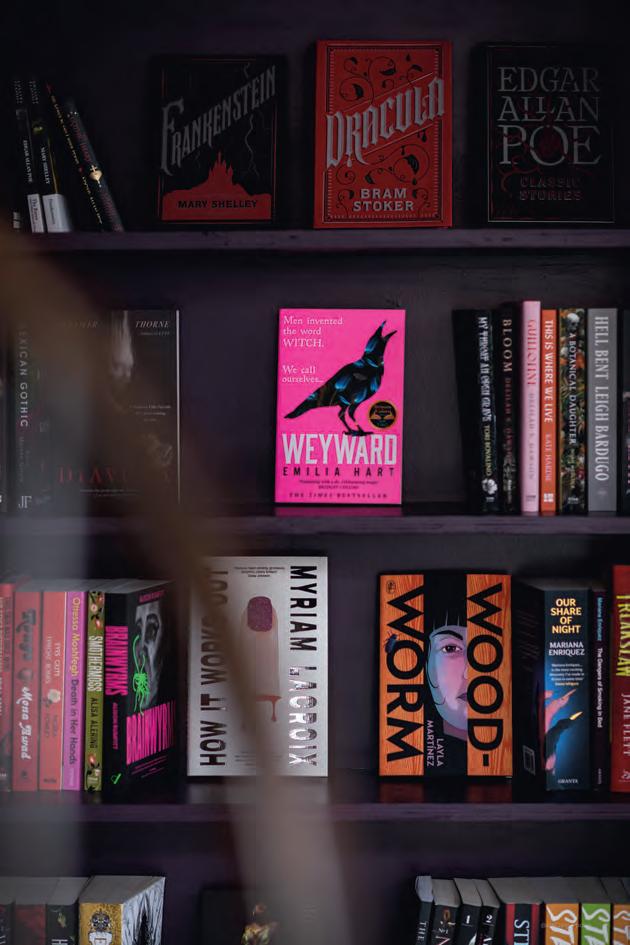
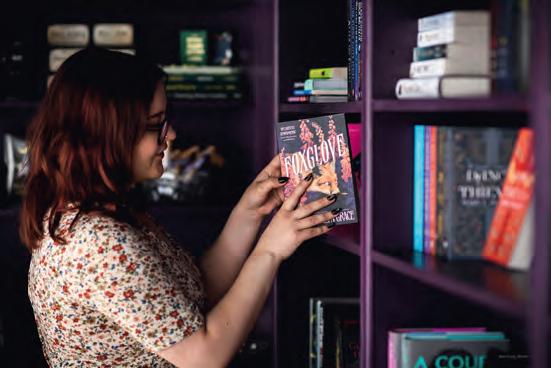
The new Stokes Croft bookshop stocked with magical texts
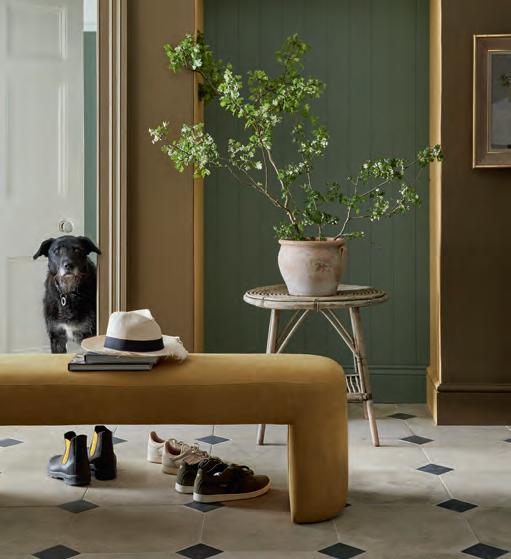
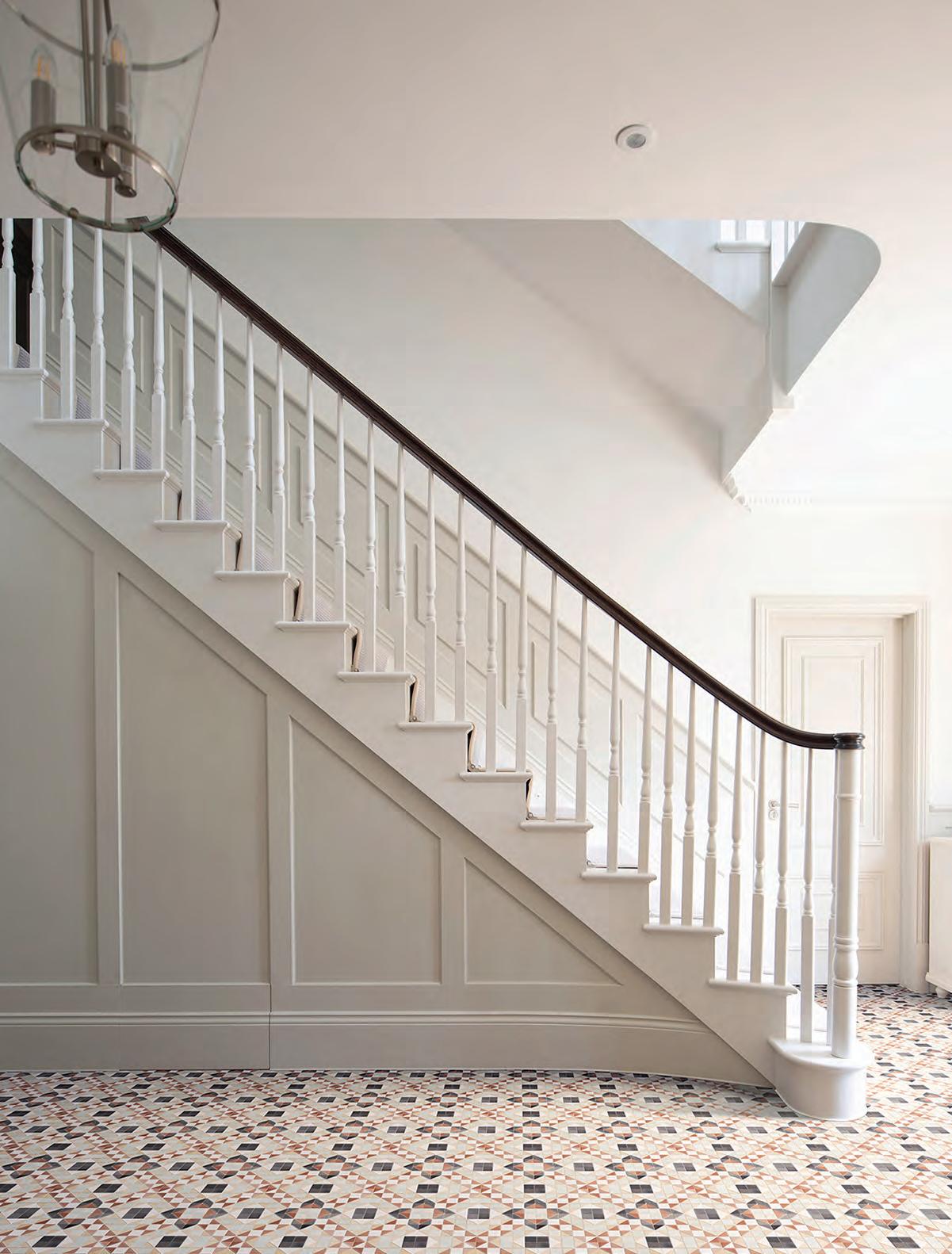
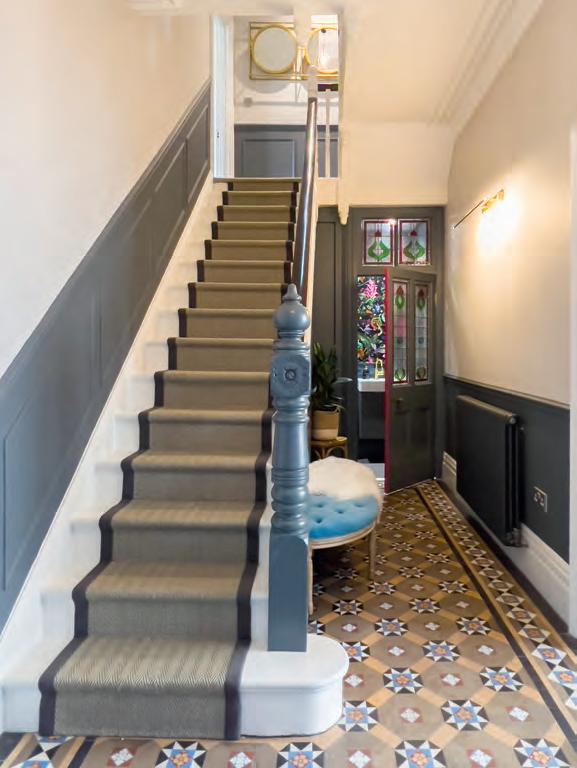
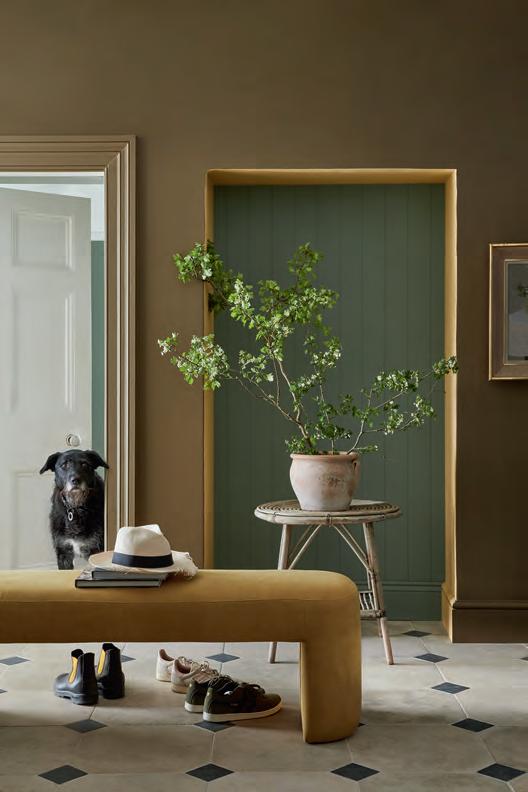
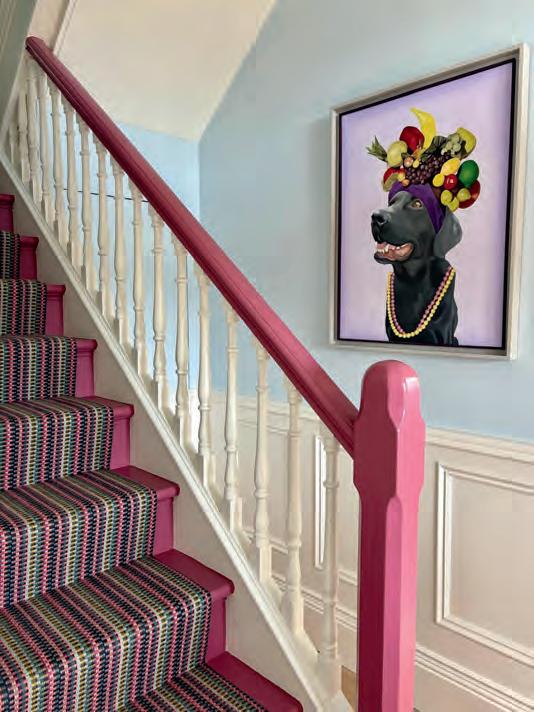
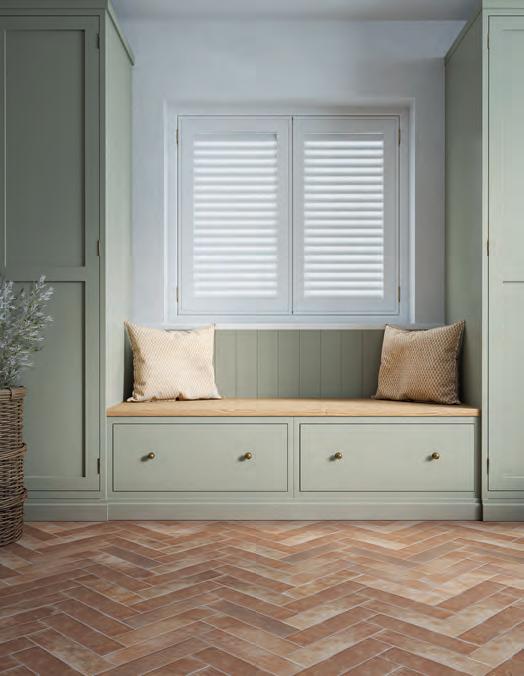
Make an entrance with our hallways interiors special
NEW FOLK
Musical trio Tarren have been looking at traditional songs through a modern lens
HER DARK MATERIALS
Nicola Turner’s evocative artwork is an ‘Uninvited Guest’ at Tyntesfield
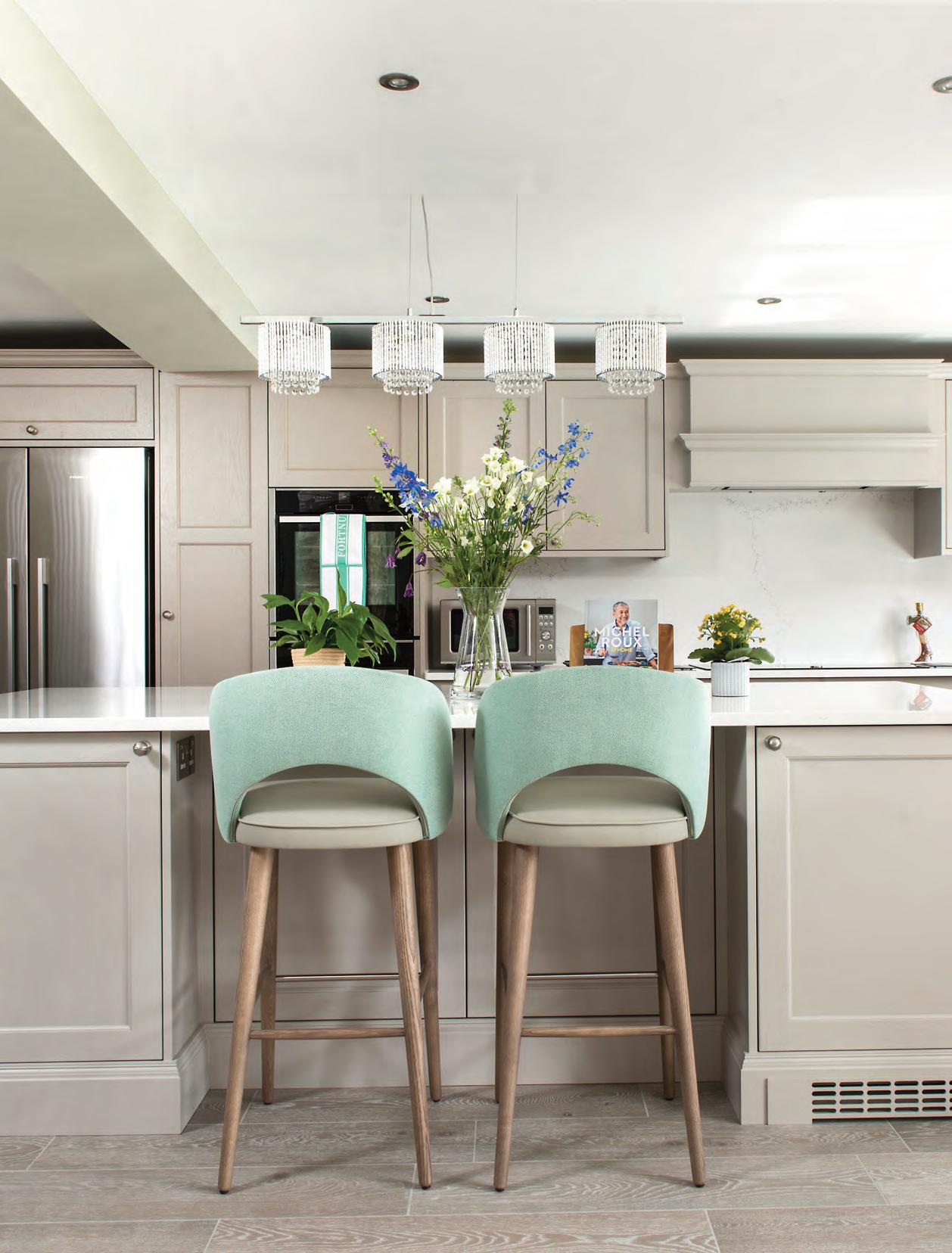
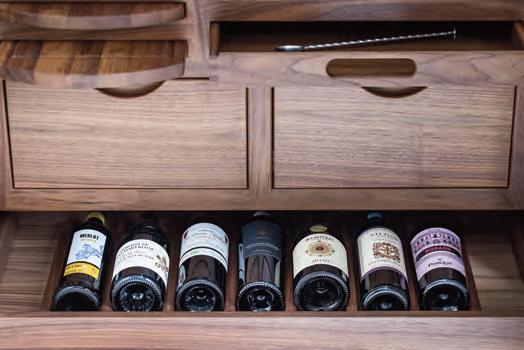
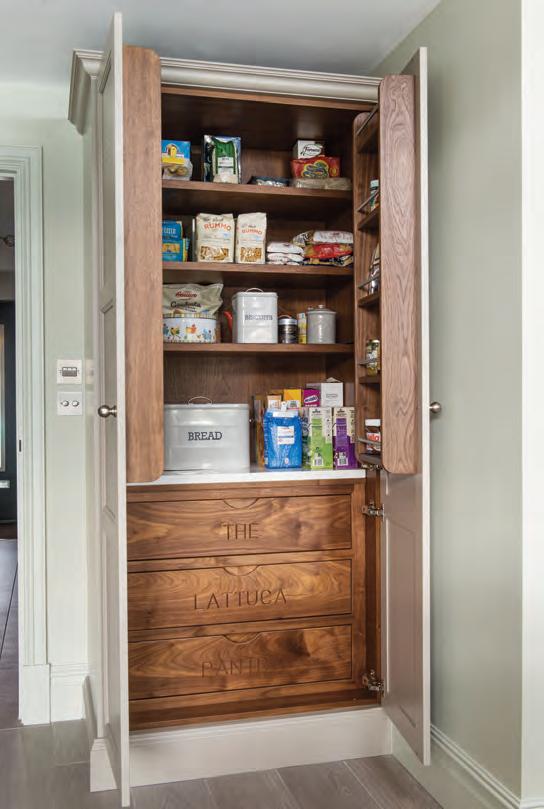
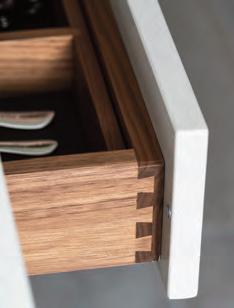
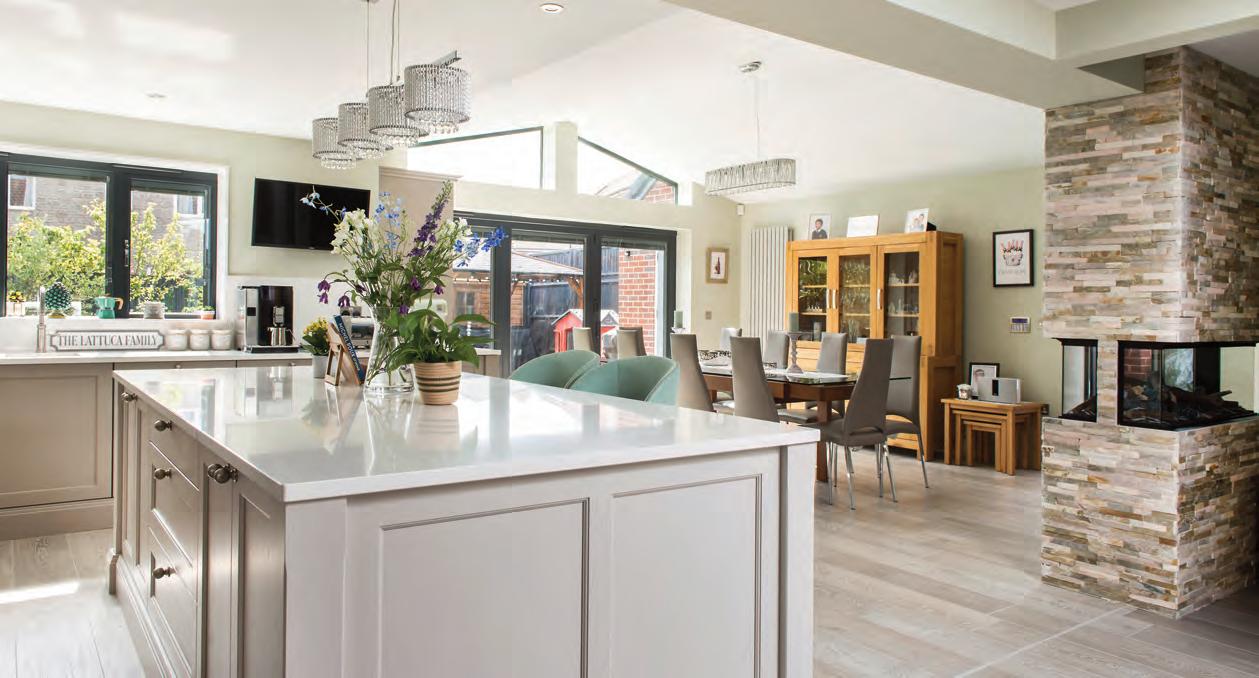
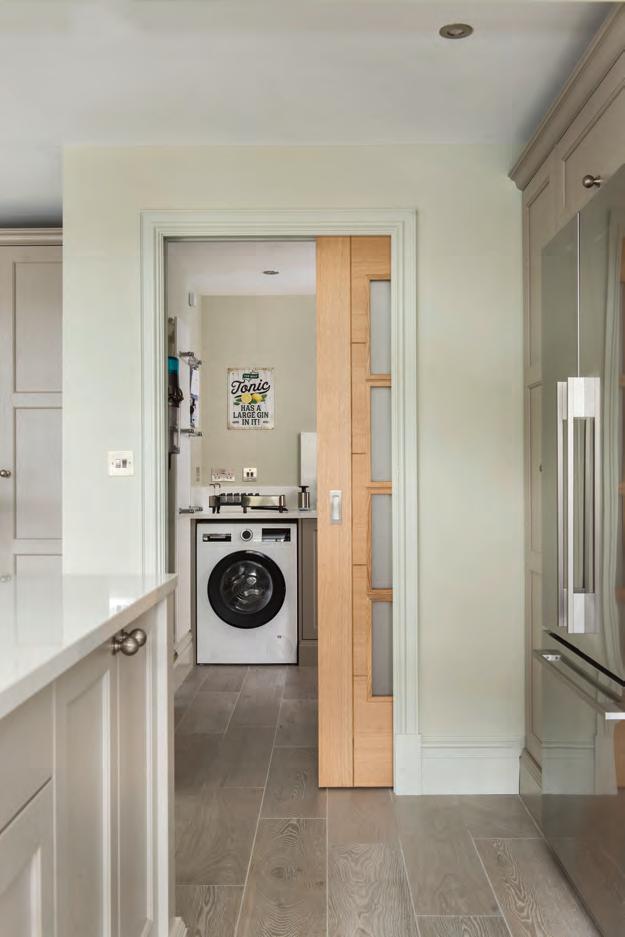
Kutchenhaus Bristol
Unit 11, Clifton Down Shopping Centre, Whiteladies Road, Clifton, Bristol, BS8 2NN
Kutchenhaus Bath
Meet B of Briz, the masked feminist rapper who is releasing a
Moss Suits for anyone
Visit
Our
in the
For
Weird
Folk
Postcards, paintings, street art and more to feast your eyes on this month
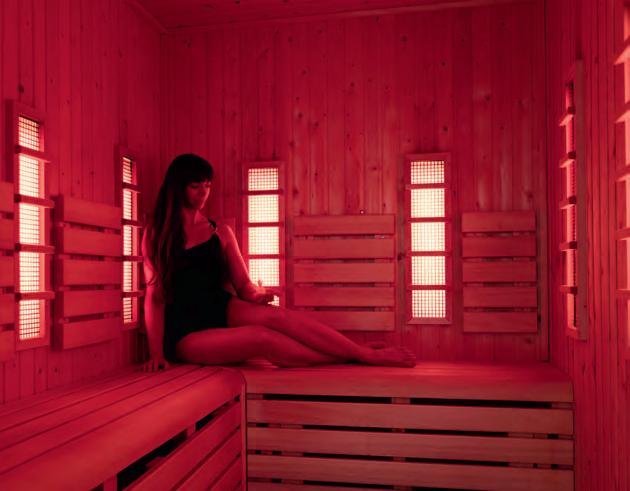
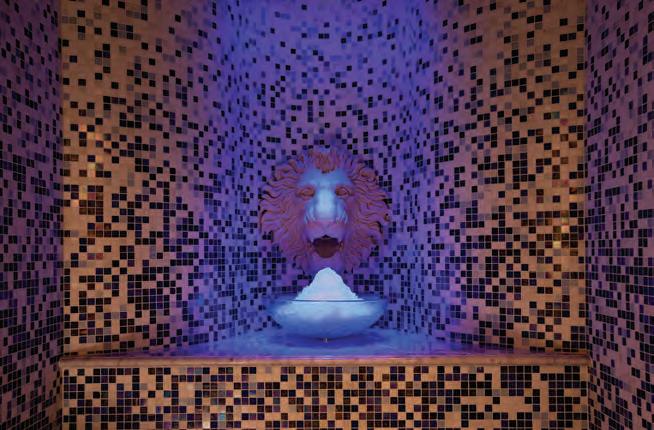
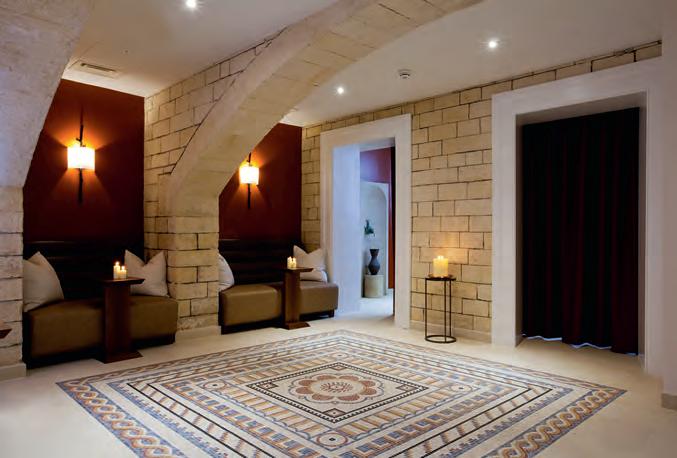
We hop cities to indulge in a spa day at The Gainsborough Bath Spa hotel 56
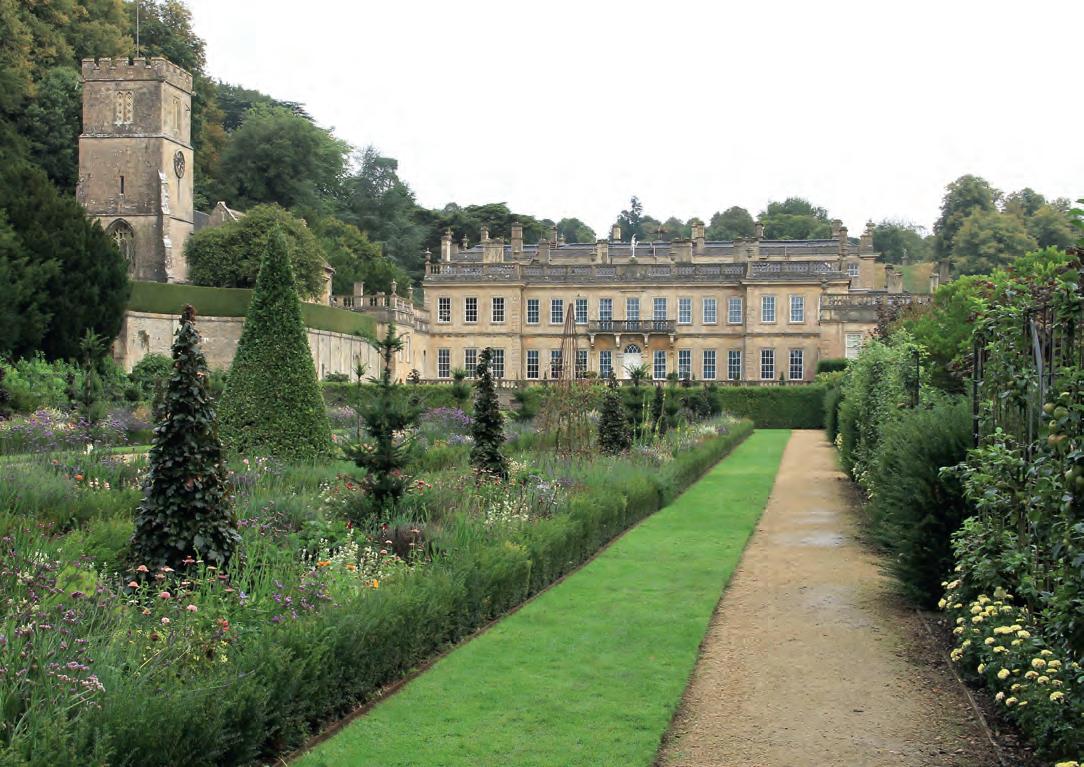
It’s time to join Andrew Swift on a seasonal saunter around Dyrham Park
How to make your hallway the place to be for the winter ahead
Our essential guide to the very best design experts serving Bristol
Elly West dives deep into the world of Japanese acers
A gentle nod to autumn leaves. If you’re a fan of red and orange leaves, but a trip to Japan to see its famous acers is out of the question, we have some top tips from gardening expert Elly West on page
EDITOR from the
As someone who watches a bunch of horror films each week, occasionally hangs out with covens and is fascinated by most macabre mysteries, October tends to feel like the time of year when others simply shift gear to join those on the dark side living deliciously for a few weeks. (It’s great over here, by the way – we have excellent biscuits.)
It’ll come as no surprise to you then, gentle readers, that this issue feels a little haunted. So gather around our table and get ready for a séance to remember while the veil between worlds is thin, because we’ve conjured the best of Bristol this month to help guide you into the autumn… But don’t worry, we’ve got a sprinkling of pumpkin spice and all things nice, too.
Have you seen the evocative creations that have taken hold of Tyntesfield House? Artist Nicola Turner has certainly been turning heads with her latest installations, which have unfurled their wicked tendrils around the National Trust property. Will they release their grip in time for Christmas? Find out on page 20.
As I’m writing this, the rather excellently named and utterly lovely Monika Killer is preparing to open the doors to her magical Stokes Croft-based bookshop for the very first time. But she is no ordinary pedlar of pages, as you’ll discover if you flick to page 34 and visit The Haunted Bookshop. Of couse, we couldn’t explore the eerie areas of our city without the help of Mr Weird Bristol himself. The man behind one of the most intriguing local social media accounts – and not to mention plenty of gripping books – shares his all-time top local legendary figures and dark curiosities; grab a flashlight and turn to page 36 to hear from Charlie Revelle-Smith.
That’s enough of our tricks – but if you’re after more treats, there are sharp suits from Moss that’ll make you feel TV production set fresh (seeing as we barely go a week without cameras in town these days), expert interior design ideas to make the most of your hallways, some good news for local bat populations and a fascinating chat with NewFolk trio Tarren.
Grab your broomsticks, this one’s a bit of a wild ride.
For advertising enquiries, please contact us on 0117 974 2800 Email: sales@thebristolmagazine.co.uk
The Bristol Magazine is published by MC Publishing Ltd. An independent publisher.
Every month, The Bristol Magazine is hand delivered to more than 15,000 homes in selected areas. We also deliver direct to companies and businesses across the city. Additionally there are many places where we have floor-stands and units for free pick-up:
Discover why beavers and bats make
5 things to do
Visit indie bookshops
In the weeks leading up to Halloween, Bristol’s indie bookshops will be drenched in the colours of Argentine horror writer Mariana Enriquez’s new short story collection A Sunny Place for Shady People. Merch will be available for the first people to pre-order the books, and each book will be marked with a special ‘bought in Bristol’ stamp. Granta Books has created a digital map of Bristol for customers wanting to visit all its bookshops in spooky season. Several shops will also hold in-person events for their book club members with Mariana joining remotely to answer their burning questions. granta.com
Party with a painter
Renowned artist Andrew Hood is throwing a launch event for his City to Coast exhibition at KIT FORM gallery. Contact him to join the party, which will feature DJs including Steve Davis Saturday 12 October 8pm-12am. andrewhoodgallery.com
See an artist at work
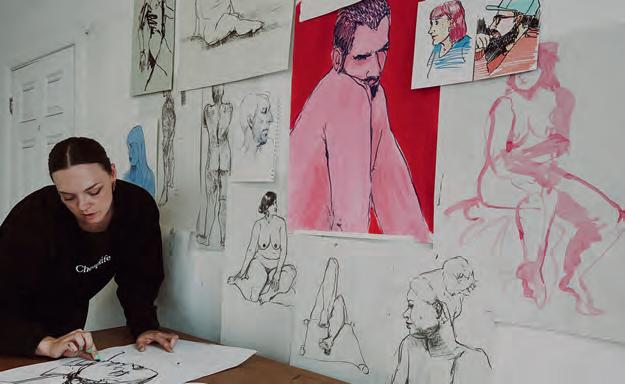
Beth Kirby will transform gallery and event space 17 Midland Road into a replica of her studio for INHABIT, a part-residency, part-performance, part-participant piece taking place 7-13 October. Professional life models and volunteer members of the public are joining the artist over the course of the week to sit for drawings, and these works will then be developed and feature as final pieces for the exhibition. Throughout the process, Beth will be viewable through the closed gallery windows at work, so go and check it out. 17midlandroad.co.uk
Watch women in action
The new-style Afrika Eye festival of cinema and culture rooted in Africa and its diaspora opens on October 12 and 13 with a weekend of outdoor women in action films in the garden at Trinity Centre. Watch The Woman King on Saturday at 7pm, while Sunday’s line-up will offer a choice of two Blaxploitation classics (Foxy Brown, pictured right, and Coffy) featuring the African-American actor Pam Grier, widely credited with being cinema’s first female action star. For full festival details and listings beyond those mentioned here, visit afrikaeye.org.uk
Wander around Old Market
‘Destination Old Market’ will take over the area with a programme of public events showcasing the area's cultural and creative scene – shining a spotlight on the many artisans, makers and independent businesses based in the area. Businesses and shops will transform into DIY venues and will host pop-up performances from some of Bristol's finest live music, experimental sonic sounds and DJs. Delve deep into Old Market's rich contemporary history through a new theatrical promenade performance devised by writer and artist, Edson Burton and artist Tom Marshman. More info can be found at trinitybristol.org.uk
The City is t
MyBristol
Meet B of Briz: masked rapper and
producer
Photo by Beth Goodchild, Inshot Media
I grew up in a town in Somerset – so, close enough to come to Bristol to go ice-skating, then later, out out. Then I came here in the early 2000s to study for my doctorate in Philosophy at the University of Bristol. I was lucky enough to be here studying at the same time as my sister, and we built a community here that kept us both tied to the city long after we both got our PhDs. Now I’ve lived and worked here for more than 22 years, and I’ve worked in all of Bristol’s Universities, some of its charities, haunted its coffee shops, slogged up its hills and walked on its Downs.
Winning the Future Sound of Bristol prize (from Audiotarky, in association with Factory Studios) was an amazing moment in my career. Getting to feel this sense of connection, that I shared part of myself, and other people understood it, understood me, was really meaningful. And knowing that out of that I’d be able to use the prize to make and share my album, which meant such a lot to me, was so exciting. Allowing myself to do a very weird, unusual, strange thing and share it was such a big internal step for me as a human, and I’m definitely proud of that.
I’ve really loved making my debut album – the writing, recording, performing – it’s been full of joy. That kind of work doesn’t feel like work; it immerses you, you get drawn into it. The technical and business end, that’s not as much fun! But I’m trying to learn and get support. I’m trying to stay present in the great bits of sharing this – hearing people’s responses, what it’s meant to them, all that human stuff – that’s why we share art.
I’m really feeling the energy of these creatives who are alive and working now, and would love to have them at my table... comedian Fern Brady, she’s just brilliant, in every way – an amazing articulator of autistic experience, fiercely intelligent, actual real empathetic human, silly and acerbic; musician Aldous Harding, her work feels like genuinely timeless, like a Palaeolithic woman might’ve made it, but in a great way; artist Delphine Lebourgeois, who’s responsible for the artwork for my album and the singles from it – I love her mind and brush; philosopher Miranda Fricker, as her work on epistemic justice is really important and accessible; and video essayist and philosopher ContraPoints’ Natalie Wynn, her work is just its own thing, in a genius way, she’s the public intellectual we need. Check out what they’re doing, and if any of them are around your table, invite me along, will ya?
There’s a line from my single The Man at the Party that sums up how I see the world right now: “We didn't build this city alone, we built it together, the best of what we leave behind will be here forever…” It’s meant to convey, we can build a way of working together to lessen our collective suffering – that’s what’s real, and that is the only real legacy any of us can ever really leave. If I had to describe my new album in three words, they’d be: feminist, laid-back and rage.
An Encyclopedia of Patriarchy (incomplete) is out 18 October, available from wherever you get your music. You can follow B and buy/stream her music online at: bofbriz.bandcamp.com
Auction house bands together with concert hall
Clevedon Salerooms has announced an exciting collaboration with music venue St George’s Bristol.
As part of a year-long calendar of events, the partnership includes becoming the new sponsor of the hall’s popular Lunchtime Concert series. Launched last month with a special reception at St George's, guests were treated to a captivating performance by celebrated percussionist and multiinstrumentalist James Larter.
Mark Huddleston, Director at Clevedon Salerooms, said: “St George’s has strong ties to the Bristol community, and our new partnership represents our first venture into directly supporting the city's diverse music scene.”
To view the full concert programme visit stgeorgesbristol.co.uk/seasons/lunchtime-concerts
Essential reading for Black History Month and beyond
A new book edited by University of Bath’s Dr Christina Horvath reflects on the fallout from the toppling of Bristol’s Colston statue, the resurgence of the Black Lives Matter movement and the resulting debates on history, heritage and memory.
Breaking the Dead Silence: Engaging with the Legacies of Empire and Slave-Ownership in Bath and Bristol’s Memoryscapes delves into the overlooked legacies of transatlantic slavery and the forgotten heritage of Bristol and Bath. Featuring insights from academics, activists and diverse voices, it offers fresh perspectives and proposals on fostering a more inclusive and truthful approach to heritage.
The book, available for free download, features critical commentaries from 19 authors including academics, artists, activists and heritage professionals, challenging the official heritage narrative of both cities. It will be launched at M Shed on 16 October, 7pm
The Chemical Brothers to play three-hour set at Document
Bugged Out! – one of the longest running club nights in the UK –is returning to Bristol's Document on Saturday 2 November, following a successful, huge day rave show at the venue in February this year.
Legendary dance act The Chemical Brothers (pictured above) will be headlining the event, which runs from 2pm until 11pm, playing a hefty three-hour DJ set in the evening.
Celebrating its 30th year, the club night has a longstanding relationship with The Chemical Brothers that dates back to 1994. Tom and Ed last visited Bristol to play a DJ set for Bugged Out! at Motion in 2017, an incendiary night of acid house and techno, which has gone down in the history books for those in the scene.
Alongside ‘The Chems’, Bugged Out! mainstay Erol Alkan will be playing back-to-back with liked-minded soul Leon Vynehall. Plus Manchester legend DJ Paulette, winner of DJ Mag’s Lifetime Achievement Award 2022, also joins the party. NTS Radio star Tia Cousins and Bugged Out! resident Fall Forward will be warming things up from 2pm.
Tickets can be booked now and are already selling fast via buggedout-bristol.com
Image credit: Vanessa Goldschmidt
Micro-mill launches new community weaving project
The Bristol Weaving Mill, a micro-mill with a focus on sustainable woven textile production, has announced the launch of an innovative new concept, the Community Weave-Up, in collaboration with the Natural Fibre Company. This initiative is designed to bring together individuals and textiles businesses, as well as herd-owners with small quantities of leftover fleece and yarn, allowing them to share in a collective effort that transforms these materials into stunning, eco-friendly woven blankets.
For more information about the Community Weave-Up and how to get involved, please contact Katherine at katherine@bristolweavingmill.co.uk
BBC interiors star opens new studio
Zoë Hewett, founder of award-winning studio Stylemongers Of Bristol and interior designer on rural retreat makeover show My Unique B&B on BBC has opened a brand new studio, shop and workshop space all under one roof at 196 Gloucester Road. “The shop space allows me to combine all my offers in one place, which is obviously super exciting,” Zoë said. “I was fed up of carting all my heavy workshop kit to and from another hired venue. I was working part time at home and the other half all the way across town at Spike Island, so it was a bit bananas. Since then, doors have just kept opening for me and I’m so delighted with the unit that came up just at the right time for me. It’s been a labour of love to transform it into a colourful space where I can work at my desk and hold client meetings and host workshops with the benefit of high street visibility.” stylemongersofbristol.co.uk
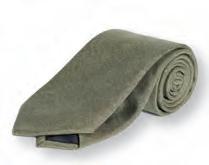
Tailored Fit Lime Green Corduroy Suit Jacket £149, Trouser £80. Italian Bottinelli Navy & Green Floral Tie. £39.95 (and pictured, opposite)
Slim Fit Gold,Tweed Suit, Jacket £169, Trouser £90, Waistcoat £90, Italian Natural And Ecru Stripe Tie, £49.950
Suited & Booted
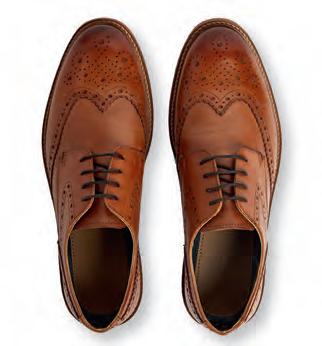
Have the numerous period TV dramas being filmed on location in Bristol recently left you with a hankering for a slick two- or three-piece suit with accessories that wouldn’t look out of place on set? Moss has got just the ticket, with clean lines reminiscent of times gone by, yet brought bang up to date with modern tailoring and the occasional bold colour choice...
Unit 36 Cabot Circus, BS1 3BX 01172359629
moss.co.uk
Bray Tan Lightweight. Brogue Shoes £69.95.
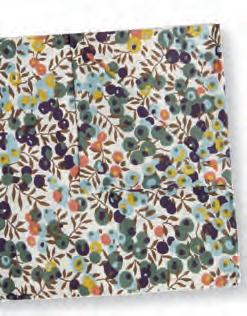
Sage Berry Pocket Square. Made With Liberty Fabric. £24.95
Gold Textured Round Cufflinks, £29.95,
Burgundy Fine Ribbed Socks, £8.95,
Leather and woven belts. £34.95.
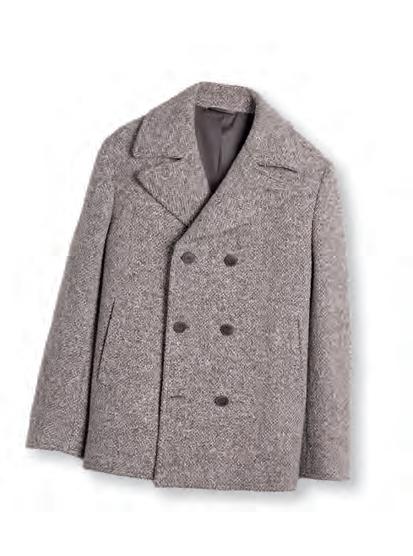
Brown Tweed Peacoat, £249,
Jade Stone. Round Cufflinks. £29.95.
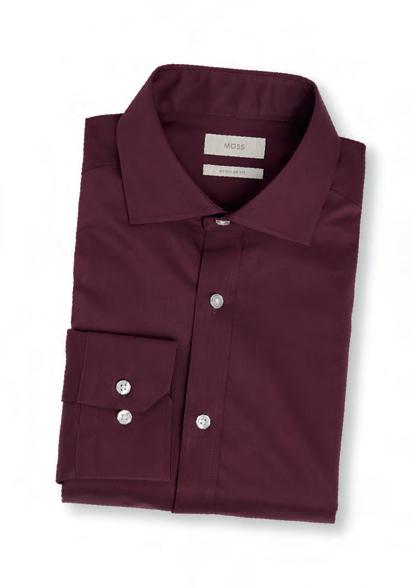
Regular Fit0 Wine Stretch Shirt0 £34.950
Tailored Fit Duck Egg0 Donegal Suit Jacket0 £1690
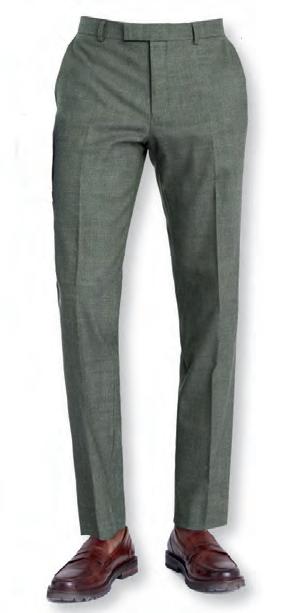
Tailored Fit Green0 Puppytooth Performance Trousers, £1100
As the weather cools down and the dark evenings draw in, it’s the perfect time to re-think our skincare routines for the seasonal changes ahead. Our ‘new in’ beauty edit includes nourishing skincare, skin boosters and hero make up products that'll help you achieve the autumnal looks you desire. All products are available at Harvey Nichols Bristol or online at harveynichols.com
CAUDALIE
The Rose Edit, £31
Welcoming three of Caudalie’s most loved products from the Rose de Vigne collection, this sweetly scented trio makes for a great gift. Not only will they experience the long-lasting joy of the Fresh Fragrance, but the Shower Gel and Hand Cream bring other ways to enjoy the floral notes of rose, rhubarb and musk.
Harvey Nichols Beauty Advent Calendar 2024
£250
The Harvey Nichols Beauty Advent Calendar is back and better than ever, making the countdown to Christmas even more magical. Worth over £1,000, it's brimming with beauty heroes (including 18 full sizes) to captivate beauty obsessives throughout December. Behind each door, you'll discover makeup favourites from Charlotte Tilbury, Fenty Beauty and Trinny London; addictive fragrances from Maison Francis Kurkdjian and Le Labo; skincare heroes from La Prairie and Sisley Paris, plus Sol de Janeiro’s cult Brazilian Bum Bum Cream and much, much more.
DR. DENNIS GROSS SKINCARE
DermInfusions
Blur + Repair
Cream 50ml, £68
The DermInfusions Blur + Repair
Cream by Dr. Dennis Gross is an ultra-hydrating cream that acts as a real-life filter for your face, offering a satin-matte finish that smooths skin, blurs imperfections, fills lines, reduces redness, and soothes irritation.
COCO & EVE
Tan Obsession Set, £48
Experience the perfect faux tan with the Tan Obsession Holiday Kit, created for those who adore a sun-kissed glow all year round. Coco & Eve’s three-step kit ensures an even and flawless tan for both your body and face. It features the bestselling Bali Bronzing Foam, Antioxidant Face Tanning Micromist, and the ultra-soft Velvet Tanning Application Mitt.
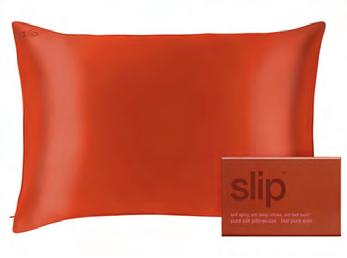
SLIP Pure Silk Queen Pillowcase - Poppy, £89
We spend a third of our lives in bed. In laboratory testing, slipsilk pillowcases were shown to absorb significantly less face cream than cotton pillowcases, so they can help keep your skin’s moisture and valuable face and hair products where they belong, on your face and hair. Slipsilk was also shown to create 43% less friction on average, which can reduce stretching and tugging on delicate facial skin.
HOURGLASS
Lighting Edit
Unlocked, £90
This palette includes five new shades of finishing powder, blush, bronzer, and highlighter to diffuse, enhance, and add glow to the complexion. Utilising groundbreaking Photoluminescent Technology, the powders filter out harsh light and enhance skin in any type of light. The shades can be used individually or layered together for a multidimensional, soft-glow finish.
VIDA GLOW Radiance+ Capsules
£49
Radiance+ is a higher-performing capsule from Vida Glow’s Advanced Repair range that has been reformulated for more potent results. Looking at pigmentation as a leading cause of uneven skin tone, its superior blend of new and emerging actives works harder and faster to combat melasma, sun spots, age spots, dark spots and skin redness.
TOM FORD
New In Runway Lip Colour, £49
More desirable than ever, Tom Ford’s Runway Lip Colour is invigorated with a blend of meadowfoam seed and tsubaki oils to hydrate and condition lips, protecting the lip barrier with their decadent emollience. With camelina and pomegranate seed oils envelops lips in an ultra-creamy texture allowing for seamless glide.
Guest of honour
The National Trust is continuing Tyntesfield house’s long‐standing tradition of exhibiting contemporary art with Nicola Turner’s takeover: The Uninvited Guest from the Unremembered Past. Her creations have caused quite a stir already, encouraging visitors to engage with the spaces and objects within each room like never before
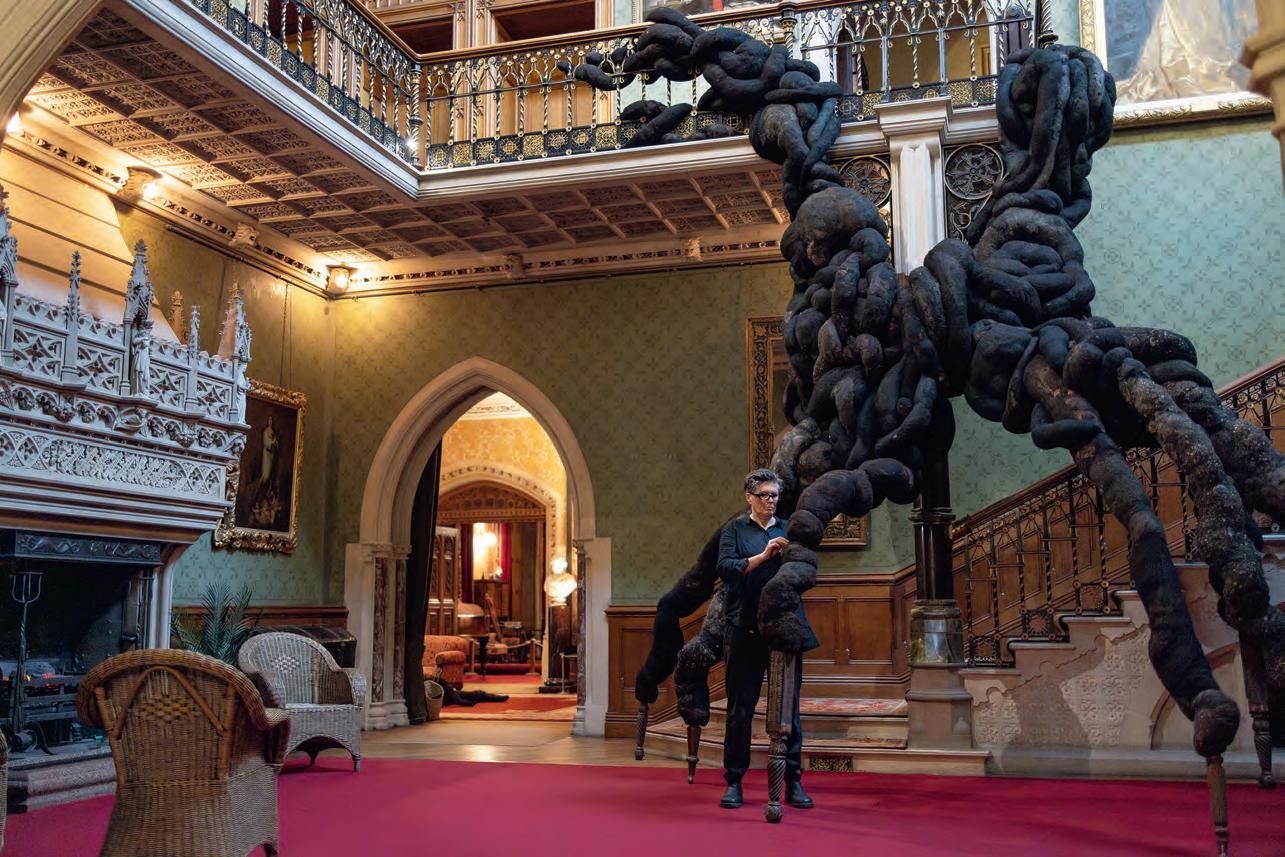
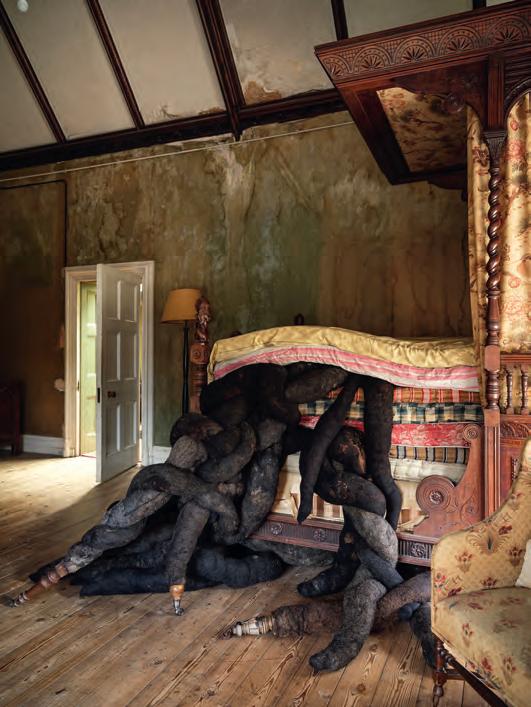
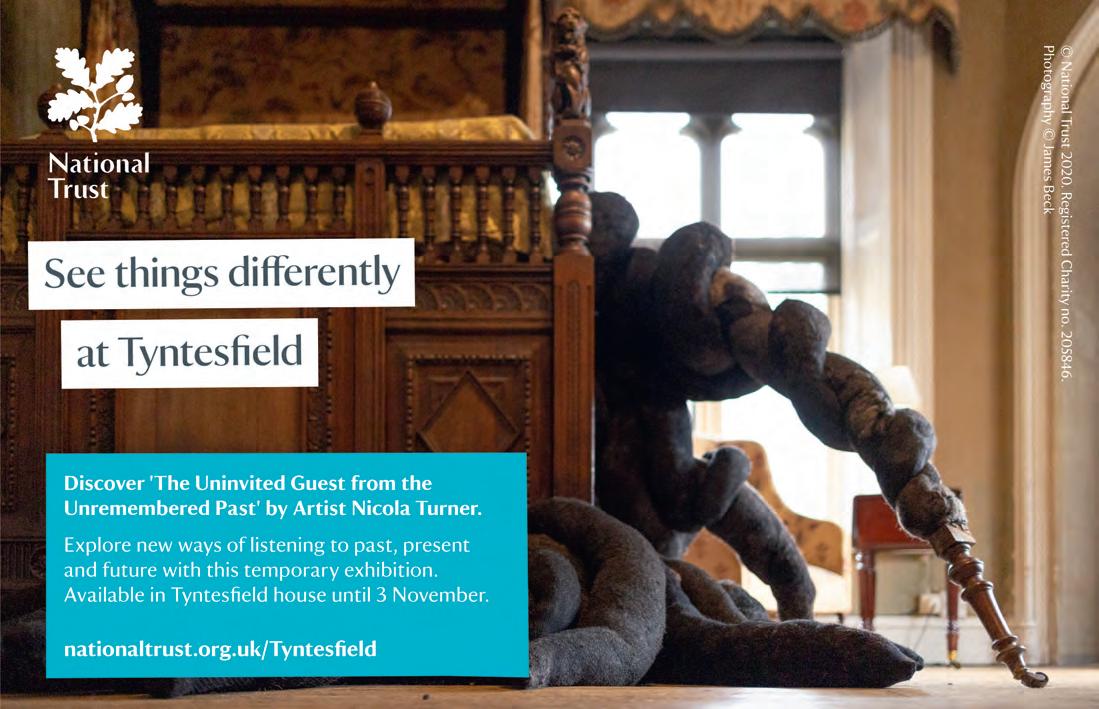
Artist Nicola Turner has unveiled her latest exhibition The Uninvited Guest from the Unremembered Past at Tyntesfield house near Bristol where, throughout the house she has created a series of evocative, large installations made from materials, such as wool and horsehair. Tyntesfield, cared for by the National Trust, is a Victorian Gothic Revival masterpiece which was home to four generations of the Gibbs family. Inspired by Tyntesfield’s vast collection of over 70,000 objects, Nicola has installed sculptures that echo their environment, drawing from the imagined memories that live in fabric the house. The installations explore ways of listening to past, present and future, combining modern art and heritage.
“The Uninvited Guest from the Unremembered Past is created from found furniture legs, wool and horsehair; materials salvaged from old
mattresses and furniture therefore embedded with a lived history,” says Nicola. “Tyntesfield is a house filled with objects and encapsulated memories. I have been fascinated by seeing the broken items previously owned by the Gibbs Family and in store at Tyntesfield. The glimpses beneath the tears in fabric. The stuffing breaking free. The bowels of the furniture. The layers of materials. I have responded to these often unseen fabrics using similar materials in my own site-responsive installations around the house.”
Nicola’s work explores how objects can hold memories, so for the team at Tyntesfield, it felt like a good opportunity for her work to interact with objects and rooms in the house not normally on display. Broken objects and rooms that look less pristine feel like they show the passage of time and traces of memory more clearly, so having Nicola’s work interact with them encourages visitors to think about the past,
Nicola Turner at work (photo: James Beck)
present and future. Also, the materials of horsehair and furniture legs link so closely with the materials used in some of the objects like mattresses and sofas, that the two elements closely intertwine.
The Trust looks after a large collection at Tyntesfield: there are old master paintings, beautifully crafted decorative art and carved oak furniture of astonishing quality. But they also have plenty of utilitarian household objects and things that were once new, but are now worn through years of use. Both sides of the collection, the ordinary and the extraordinary, are of value, and help Tyntesfield tell a more complete story. Nicola’s exhibition gives visitors an exciting opportunity to see new, unexpected objects and spaces, and gain a fuller picture of the Gibbs family’s 150-year occupation of the house.
This installation is one of the biggest ever hosted by the team, who have seen that people are thinking more deeply about the history of the spaces and through the lens of their different interpretations of the artwork, seeing the space and collection items in a new way. The work alters the traditional experience of the house, encouraging people to think more about what they are seeing and engage with the space in a new way, looking beneath the surface level.
“ The tendrils invite visitors to reinterpret the house, reflecting and thinking differently about the stories it contains ”
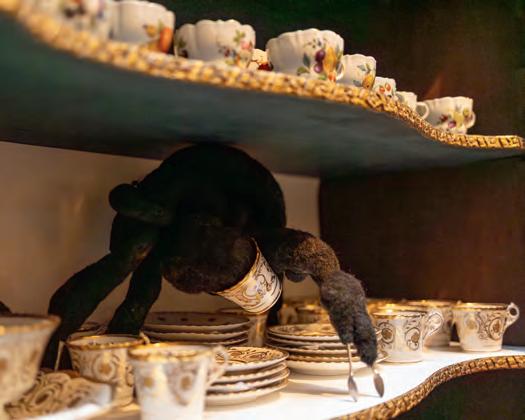
The wool and horsehair installations draw influence from the house, weaving around and cascading from objects in Tyntesfield’s historic collection, like furniture, books and ceramics. The tendrils invite visitors to reinterpret the house, reflecting and thinking differently about the stories it contains. Nicola reuses her materials, so these creations will go on to be repurposed into future works. The installations wind their way around the house from room to room and as well as some of the grand public rooms, such as the Library and Main Hall, and visitors will have the chance to see spaces not normally open to the public, including bedrooms and storerooms. This means people are able to get a sense of the house behind-the-scenes and to appreciate the scale of the conservation work the National Trust undertakes at Tyntesfield.
As well as Nicola’s installation, Tyntesfield has an autumn programme packed with fun for the whole family. Join the Halloween Trail (26 October to 3 November) and help Gertrude the Witch find the ingredients she needs to make her Frog Fudge, exploring Tyntesfield Estate to find all seven ingredients and win a prize; October will also see the return of the Autumn Harvest Display (October 26 until November 15), which promises more colour than ever before, so visitors can immerse themselves in a picture-perfect autumn scene in Tyntesfield’s Orangery; and visitors can also take part in a ‘Pick your own medlars’ event (25 October), where they’ll join Tyntesfield’s rangers to learn all about this weird but wonderful fruit, learn how to turn them into a delicious jelly, and even pick some to take home with them. n
The Uninvited Guest from the Unremembered Past is being exhibited in Tyntesfield House until Sunday 3 November. For more info, visit nationaltrust.org.uk/tyntesfield
Photo by Maxwell Attenborough
Photo by Maxwell Attenborough
Photo by James Beck
Radiance from Nicholas Wylde
If you are looking for a special piece of jewellery, one that has the flexibility to be built into a coordinated collection and matched with individual outfits, look to the new Radiance collection from Nicholas Wylde...
The instantly recognisable work of award-winning designer jeweller Nicholas Wylde has always been closely informed by colour, especially in his use of high-quality gemstones. After attending a jewellery exhibition earlier this year where colour and vibrance was showcased in abundance, Nicholas returned with inspiration to create a new Wylde jewellery range using his signature Wylde Flower Diamond ®. The Radiance Collection, launched at the end of September, is the result.
Nicholas developed the new collection by asking his four designers working in his Bristol and Bath outlets to come up with ideas for a range that would reinforce the Wylde brand, showcase the Wylde Flower Diamond® and bring colour into the pieces.
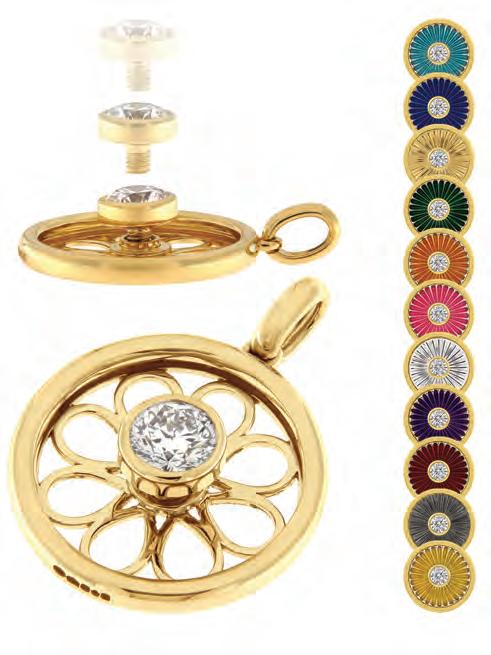
The chosen design by Grace Dugan-Clements creates a flexible, interchangeable design, using a circular halo with a striking sunray texture. These high-quality, cold-enamelled halo discs that provide the burst of colour are all made of platinum, but 18ct yellow gold, rhodium and uncoated platinum halos are also available.
The versatile and high-quality range allows jewellery owners to collect halos in different colours, with the ability to quickly and easily change them as they wish, perhaps to match an outfit or event – it’s even possible to order your own unique colour of halo, matched to the exact shade of your choice.
Made in platinum or yellow gold in the form of rings, pendants and earrings (available as studs and hoops), the unique design range places the individual halos at the base of the pendant, earring or ring setting. The central Wylde Flower Diamond® – set within a collet that has a post with a screw behind it –can then be securely screwed into the centre of the chosen item of jewellery, safely holding the chosen halo disc in place until the wearer wishes to change it.
The resulting piece of jewellery sees the subtle absorption of the colour shade of the halo disc within the faceted sparkle of the Wylde Flower Diamond®. With its 81 facets (24 more than a traditional brilliant cut diamond), this special diamond represents the petals of a flower and creates a unique sparkle.
A patented cut completely unique to Wylde’s, this diamond cannot be bought anywhere else in the world. Each diamond also comes with its own certification and beautiful presentation pack.
The Radiance Collection is available with five different sized stones – diamond sizes start at 0.15ct (a diameter of around 3.5mm) for a Wylde Flower Diamond®, up to 1ct (6.2mm), or larger on request. With 0.15ct being the smallest available size for a Wylde Flower Diamond®, the jeweller is also offering a 0.10ct option with a round brilliant cut diamond, meaning there truly is something for everyone.
All diamonds used by Wylde are ethically sourced, complying with the Kimberley Process, which supports human rights by ensuring that the diamonds originate from conflict-free regions around the world. n
Nicholas Wylde can be found at No. 6 The Mall, Clifton, BS8 4DR 0117 974 3582; nicholaswylde.com
Book corner
This month, our friends at Gloucester Road Books share new reads they’re particularly excited about...
Anote from the team: “Our primary aim is that the shop be a fascinating place to explore. We have a significant focus on titles published by small independent presses. There are lots of really brilliant small publishers putting out incredibly exciting books, and we want to help get these out into the world.” Visit the website for more details on book launches, talks and other events at the shop. gloucesterroadbooks.co.uk; @gloucester_rd_books; 184 Gloucester Road, Bishopston, BS7 8NU. Open Monday and Tuesday 9.30am-5pm; Wednesday to Saturday 9.30am-6pm
The Edge of the Alphabet, by Janet Frame, Fitzcarraldo Editions, out now Published in 1962, Janet Frame’s third novel chronicles the lives of three people who struggle with a crushing loneliness. Alike in their alienation, all three embark on a new life in London, piecing together an existence in the margins of the urban world. Offering astoundingly insightful prose on themes of identity and the post-colonial experience, Frame is considered one of New Zealand’s foremost 20thcentury writers.
The Novices of Lerna by Angel Bonomini (translated by Jordan Landsman), Peninsula Press, out 31 October
Described as ‘a forgotten masterpiece of Argentine literature’, the small but great Peninsula Press have published a novella by Angel Bonomini, a contemporary of Jorge Luis Borges. A mediocre scholar receives a six-month fellowship at the University of Lerna in Switzerland, finding on his arrival 23 of his own doppelgangers have also been invited to the programme. The absurdist plot shifts into an unsettling relevance to our times, however, once an epidemic grips the university, elaborating on themes of identity, isolation, and surveillance.
Fire Exit by Morgan Talty, And Other Stories, out 1 October
Fire Exit takes on the legacy of trauma and hardship caused by Federal Laws around indigenous identity in Northern America. Across from the Penobscot reservation in Maine lives a white man, Charles, who stares across the water to where his half-native daughter lives and has grown up unaware of his existence in order to protect her tribal status. Fire Exit is a deeply moving and singular story of a family divided by these laws and the pain of personal histories being lost to obscurity.
Shade and Breeze by Quynh Tran (translated by Kira Josefsson), Lolli Editions, out 25 October
Shade and Breeze is a story about a Vietnamese family settling into life in a small Finnish town. The narrator describes their day to day lives and learning to adjust to social codes that go against their natural inclination to shy away.
Shade and Breeze makes for a mesmeric reading experience in captivating prose and chapters divided like a series of tableaux.
Herscht 07769 by Laszlo Krasznahorkai (translated by Ottilie Mulzet), Tuskar Rock, out 3 October
A tour-de-force, satirical novel, Krasznahorkai’s most recent work channels the cataclysmic energy of our climate catastrophe into a single sentence across four hundred pages. Herr Köhler is a physicist engrossed in a one-sided correspondence with Chancellor Angela Merkel, hoping to convince her of the urgency of the planet’s looming devastation. While the subject matter is gloomy, the elastic conversational style makes for surprisingly pleasurable reading and has been said to be his most accessible book yet.
What’s On
Our guide to some of the best things to see, do and experience in and around Bristol this month
The Marriage of Figaro n 2-12 October, 7.30pm
Tobacco Factory Theatres
Opera Project make their long-awaited return to Tobacco Factory Theatres with Mozart’s comic masterpiece. This most sublime of classical works, capturing all that Mozart’s genius represents, is here sung in English by a stellar cast, accompanied by the Opera Project Orchestra. Tickets are available from £37. tobaccofactorytheatres.com
An Inspector Calls n 8-12 October, 2.30pm & 7.30pm Bristol Hippodrome
Written at the end of the Second World War and set before the First, An Inspector Calls is a compelling and haunting thriller. JB Priestley's brilliantly constructed masterpiece, which has won 19 major awards, powerfully dramatises the dangers of casual capitalism's cruelty, complacency and hypocrisy. Stephen Daldry's epic production highlights the play's enduring relevance. This is a must-see for a whole new generation. The show has thrilled more than 5million people worldwide. atgtickets.com/bristol
A Moonless Night n 9 October, 7.30pm
The Bristol Fringe, 32 Princess Victoria Street, Clifton, BS8 4BZ
Snowapple Collective’s A Moonless Night combines object animation, mime, and international styles of music in a surreal longform film. It is a free event to showcase the collective’s work. The screening will be followed by a Q&A. thebristolfringe.co.uk
Bristol Bach Autumnal Concert n 12 October, 7.30pm
All Saints, Pembroke Road, Clifton, BS8 3ED
A concert celebrating the music of Ralph Vaughan Williams on his birthday. He is one of the most loved and influential British Composers and his legacy was a revitalised musical language which provided many new directions for future generations. His influences were wide-ranging but included folksong and the Tudor Age. This beautiful programme will feature the Mass in G Minor and the deeply moving Lord, Thou Hast Been our Refuge bristolbach.org.uk
Slave: A Question of Freedom n 16-19 October, 7pm & 2pm Tobacco Factory Theatres
This exceptional award-winning play tells Mende Nazer’s inspirational story. Set in the Nuba Mountains of Sudan and London the story of her joyful childhood, and subsequent enslavement is told by an outstanding ensemble of eight actormusicians as a feast of storytelling, music and dance. A post-show discussion will be held on 18 October for Anti-Slavery Day. tobaccofactorytheatres.com
Sign Festival Bristol n 18-20 October
Bristol Beacon & Watershed
Sign Festival Bristol is a unique, accessible, multi-venue festival in Bristol. Over the course of the weekend the Sign Festival will take place at the Watershed and Bristol Beacon. The festival programme is bursting with a variety of exhibitions, film screenings and British Sign Language performances of music and comedy from local and national deaf performers. bristolbeacon.org
Slave: A Question of Freedom
Bristol Choral Society: Come & Sing n 26 October, 1pm-5pm
All Saints, Pembroke Road, Clifton, BS8 3ED
Join Bristol Choral Society for a fun afternoon of singing Alexander L’Estrange’s Zimbe! under the baton of Hilary Campbell, accompanied by Steven Kings. Zimbe! (an anglicised version of the swahili word Ziimbe meaning ‘Sing them!’) charts a day in the life of an African village, placing singing at the heart of the community. bristolchoral.co.uk
Bristol Literary Film Festival n 26-27 October
THURC Bradbury Hall, Henleaze, BS9 4BT
The first ever Bristol Literary Film Festival will cover a multitude of events, documentary films about writers, international poetry films, a selection of films by the Bristol Film and Video Society, a film quiz with cream tea and much more! There will be a festival café with live music. Tickets are on sale now on Eventbrite. All profits will be donated to St Peter's Hospice. eventbrite.co.uk
Johns’ Boys Welsh Male Choir n 27 October, 6pm
St George’s Bristol, Great George Street, BS1 5RR Johns’ Boys Welsh Male Choir is one of the most decorated British male choirs in history. In 2019 it became the first British Male Voice Choir to win the prestigious Pavarotti ‘Choir of the World’ prize. The choir has made numerous TV appearances, including The Last Night of the Proms, Britain’s Got Talent and The Royal Variety Show. Johns’ Boys brings a groundbreaking, modern twist to the traditional Welsh Male Voice Choir. stgeorgesbristol.co.uk
Alien: Director’s Cut at The Planetarium n 30 October, 10.15pm
We The Curious, Millennium Square, BS1 5SZ
Just in time for Halloween. Explore the Planetarium’s Space exhibition before the screening. As the lights dim, your journey will begin with a tour of the Solar System in a Planetarium star show –the perfect way to set the scene for your film… Ridley Scott’s game-changing sci-fi horror Alien. This remastered and reworked cut ratchets up the tension and restores some sequences from the cutting room floor, including one of the most controversial scenes from the entire franchise. bristolfilmfestival.com
Looking ahead..
Never Let Me Go
n 5-23 November, 2.30pm & 7.30pm
Bristol Old Vic
Kazuo Ishiguro’s international best-selling novel arrives on stage in this world premiere of Suzanne Heathcote’s gripping new adaptation. What if you discovered your whole reason for being was not about your life but about making someone else’s possible? Your dreams, your desires, your love for another, all of them irrelevant in a world that values only what you give, without question or condition, to someone you’ve never met and will never know.
bristololdvic.org.uk
Family Diary
Our pick of the best things to see and do with the little ones this month
Image credit: Soul Media
Pumpkin Patch
n Selected dates from 5 October
Avon Valley Adventure & Wildlife Park
As the sun goes down, the authentic home grown pumpkin patch lights up! Grab a wheelbarrow and roam the patch to pick your perfect pumpkin. Don’t want to get muddy? Select a pumpkin from the event area, with a huge selection of gourd-geous gourds and super squashes for you to choose from (not included with entry ticket.)
Not just open for pumpkin picking, there’ll be festival vibes with a pop-up bar, firepits, street food, performers, spectacular seasonal entertainment and beautiful lighting. avonvalley.co.uk
Meet the Researchers - Lizzie and James
n 12 & 13 October
We The Curious
Chat with Lizzie and James from the University of Nottingham and with volunteers from Ovacome, a charity that supports the ovarian cancer community. They look at how shopping data can improve the early diagnosis of illnesses such as cancer. Find out how your shopping could save lives, and share your opinions, questions and suggestions to inspire their future work. For kids aged 7+ but also good for older children and adults. Included with your day ticket and no booking needed. wethecurious.org
Bristol Baby Book Club
n 25 October, 10am
Bristol Hippodrome
Bristol Baby Book Club takes stories from an independent book store and brings them to life with a local reader in the Bristol Hippodrome's Piano Bar. Tickets are per child attending, parents/guardians go free, with selected coffees and teas included. Age guidance is 6 months to 5 years. atgtickets.com/bristol
Halloween Fun at SS Great Britain
n 26 October to 3 November
SS Great Britain
Brunel’s SS Great Britain invites fearless adventurers aboard for their spookiest Halloween yet. During half term, the ship will be packed with family fun and ghoulish activities for all ages. ‘Woeful Wounds’ returns and there’s more eerie fun with the return of Bristol’s quirkiest family trail, ‘Terrifying Turnips’. You can also expect a modern twist on a spooky Victorian parlour trick, Pepper’s Ghost. ssgreatbritain.org
Witches and Wizards Family Fun Party
n 26 October, 9.30am-10.45am & 11am-12.15pm
Pavey House, Clifton
Tailored for children aged 2 to 6, this event offers a spellbinding mix of drama, games, dressing up, crafts, and a magical disco, all brimming with Halloween fun. It’s a bewitching celebration not to be missed! Parents must stay for the duration of the event. Spaces are limited, so be sure to secure a place for this magical experience! Sponsored by Clifton BID. dramawithhannah-rose.com
The Three Bears
n 26-29 October, various performances.
Tobacco Factory Theatres
Each day, the Three Bears head into the woods to collect interesting things to re-use in their home. Soon their cosy house is turned upside down by a colourful whirlwind that threatens to sit in their chairs, eat their porridge and sleep in their beds. It’s Goldilocks!
Bring your bears for an adventure in the woods, with original music, puppets and a tale you thought you knew. tobaccofactorytheatres.com
Trees for the Future
n 28 October to 1 November, 10.30am–3.30pm Westonbirt Arboretum
Find out about some of the world’s disappearing trees at Westonbirt in the national tree collection. Get the chance to collect and sow some tree seeds that you can take home, and take part in discovery challenges. Use seeds and seed cases from nature to make a pinecone hedgehog, or a maple seed dragonfly. Before you leave, make a pledge to protect trees for the future! Make sure to explore the ‘Tree Guardians’ autumn family trail in the Old Arboretum, too forestryengland.uk
Little Murmur
n 30 October to 2 November, 12pm & 3.30pm
Bristol Old Vic
A dance theatre show based on Aakash Odedra’s hugely moving show Murmur, this is an honest and heartfelt conversation about the trials and tribulations of living with dyslexia. Watch bodies and words fly like flocks of birds, a murmuration, a little murmur. Everyone aged 7+ can explore the warped and exaggerated realities of living in a world you struggle to process. bristololdvic.org.uk
Little Shop of Horrors
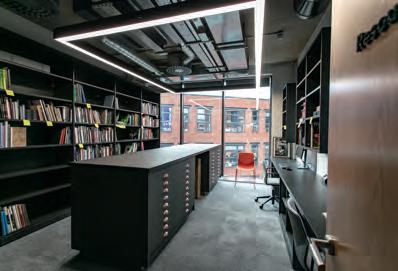
Something’s been brewing on a busy corner on Stokes Croft. The Haunted Bookshop started life as an idea conjured by Monika Killer, which has now become a reality and is open for business – ready to serve the witchy community of Bristol and beyond. Words by Rosanna Spence
here’s a huge thunder and lightning storm battering the windows next to my desk that started not long after I begin talking to Monika Killer, matching the energy of her new business The Haunted Bookshop which has literally stormed the local independent scene of Stokes Croft in recent weeks.
If the draw of year-round pumpkin-spiced lattes isn’t enough to get you through the door, then perhaps the promise of shelves “filled with a diverse array of eerie, occult, and outlandish items, promising something for every curious soul” will.
Since Monika announced her venture a few months back, she’s been inundated with offers of help, support and product suggestions from people in the witchy and occult communities around the city – many of whom are relieved not to have to schlep to Glastonbury every time they want to stock up on their ritualistic materials or peruse fiction and nonfiction books dedicated to their special interests.
Faced with so many people wanting to help make the shop – located in the former Stokes Croft Shambarber unit – look amazing and open to great success, Monika set up a flurry of volunteering days to help decorate and fill the shelves.
“It was amazing,” she recalls. “Imagine you walk into a room and everyone there has the exact same interests. Everyone became friends straight away – we’ve even created a WhatsApp group to keep in touch and share recommendations. Often you have that one, slightly weird friend in a group who has ‘odd’ interests – that was me in ours! – and it can be quite hard to find others with similar pastimes.
“That’s why it’s so great to be able to create a space where you can meet people that have exactly the same interests. They can share magic tips, favourite books – I was really overwhelmed on the volunteering days, everyone said: ‘Thanks for letting me help’, and wanted to come in again for another session.”
Spellbound
The Haunted Bookshop is Monika’s first foray into business, though she’s following in the footsteps of her grandmother, who once owned a bookshop (“and also a funeral home for a bit – so maybe that’s the connection!” she adds).
Though Monika worked full time at a company she loved, she was feeling unfulfilled. “I wasn’t going to win the lottery. I’m not going to
All images by Jon Craig (@JonCraig_Photos)
Monika Killer
become rich and famous all of a sudden. I have to work, so I wanted to think about what my perfect job would be without focusing on how I’d actually be able to do it.
“I’ve been talking about this bookshop for a while. Every time I’d walk past an old building, I’d say: ‘This could be my haunted bookshop’. But it wasn’t serious. I knew if I had lots of money I’d open the bookshop, but it’d also be a cocktail bar.”
Call it manifesting, call it serendipity, but these thoughts become a reality when she applied for a business loan from Swig Finance (helped by Suzie – who just so happened to be from Bristol originally – who was “so amazing and kept telling me I had a really good idea and should stick with it”) and found the perfect site on the day before her offer was due to expire, thanks to a landlord who looked kindly on her new business venture. Monika also found a piece of the volcanic glass obsidian lying around in the former barbershop – a crystal that is thought to have grounding, protective qualities. Considering she’s selling her own crystals now, it seemed like the universe was winking back at her decision to set up shop there.
The witching hour
Even though the shop is open for business, Monika is taking a slow and steady approach. It’s not her dream cocktail bar just yet, but a three-stage plan is in place.
“I will have a café in the shop, but not just yet. I have to start making some money first! So to start with, it will just be a bookshop and gift shop. And then in stage two, I will have a café where you'll be able to sit down for a coffee and have takeaway as well – with pumpkin-spiced lattes
all year round. Then in stage three. I’m hoping to get an alcohol license, so I can sell mulled wine and cider, that type of thing, so when I have book clubs and workshops and signings, I’ll have a selection of drinks.”
If the excitement surrounding The Haunted Bookshop from the “very big community of witches in Bristol” is anything to go by, then there’s no doubt Monika will be serving this alternative crowd for a deliciously long and fruitful time to come.
And when jokingly asked if anyone reading this might worry about the witches descending onto Bristol, Monika says simply, with a knowing chuckle: “Oh, they’ve always been here.” n
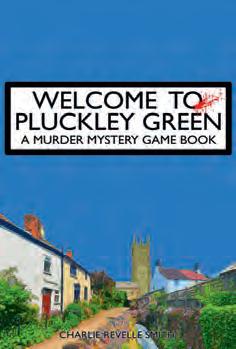
Things are about to get weird. Really weird. Emerging from the mist is the maestro of macabre, Weird Bristol’s Charlie Revelle‐Smith, who chats to us about the Snuff Mills witch, a notoriously violent highwayman, Bristol’s wonky answer to the Tower of Pisa and his brand new murder‐mystery book that drops you right into the centre of the action
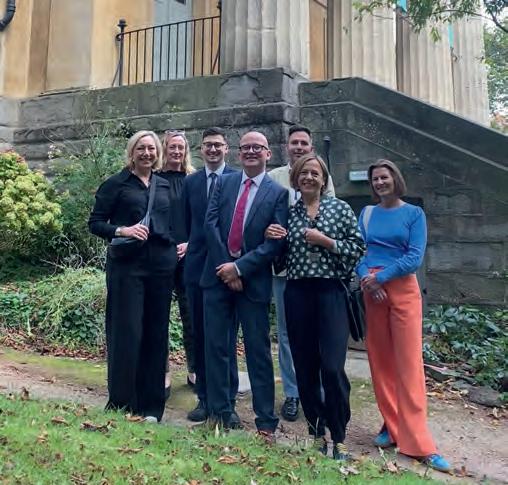
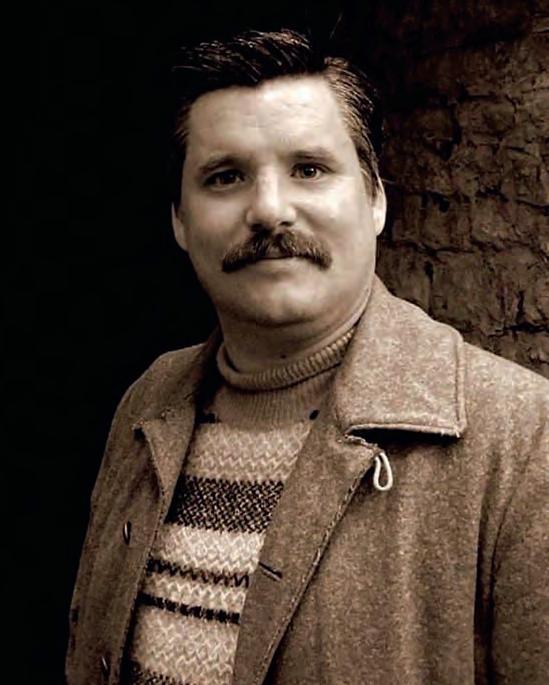
Charlie Revelle-Smith (pictued, centre) will be known to many readers as the mind behind Weird Bristol, the trilogy of non-fiction history books where he documents the city’s strange and lesser-known history lurking behind its welltrodden lore. But this wasn’t his first foray into the creepier corners of our metropolis. By the time he set up his wickedly brilliant Twitter account @WeirdBristol in 2017 – the launch pad to the eponymous books – he’d already published the majority of a four-part Bristol Murders series of novels following an undertaker and his assistant solving murder mysteries across Bristol (the first being 2015’s The Beast in the City).
“Unbeknown to me, the @WeirdBristol Twitter account became far more popular than I could ever have imagined,” he admits.
“I’d always assumed that being fascinated with oddities from Bristol’s past was a rather niche interest, but it turns out that there are rather a lot of us out there who find the subject fascinating. Weird Bristol is an absolute joy for me and it’s taught me so much about our city’s history.”
Seeing as spooky season seems to jump into action a little earlier each year, we wanted to get under the skin of Bristol’s weirder side –and the man sharing many of these secrets…
Have you always been curious about weird and historic curiosities?
Where’s your favourite spot in the city that’s home to a weird history?
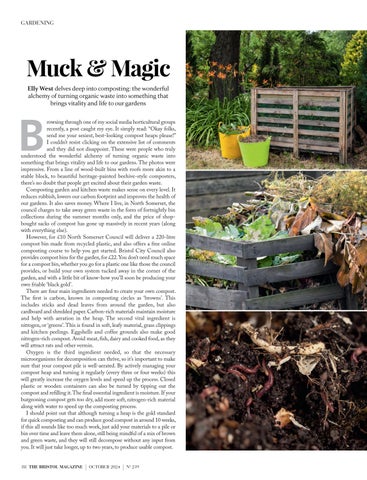
I think it has to be Temple Church. Everything about that building and its history is just strange and fascinating. It has its roots in the Knights Templar (and you can still the outline of the former church in the ground); it was the scene of a highly-publicised exorcism in the 18th century, which involved 12 holy men; the steeple leans almost as much as the Leaning Tower of Pisa (and it was built like that!); it was partially destroyed in the Bristol Blitz, and it is said to be the home of all sorts of supernatural goings on.
Even as a small child I found myself rather drawn to the macabre. I think there are two types of children: those who are scared of the monster under the bed and those who hope there is a monster down there so they can meet it! My love of the strange and weird has been with me for as long as I can remember.
It’s the same melancholy beauty you find when taking a stroll around an overgrown cemetery – long forgotten stories are everywhere and all around us and all you have to do is start looking for them. It’s the sort of mind set that starts you pondering how (or if) you’ll be remembered and what will be the stories you leave behind. It would be easy to mistake that kind of thinking with a preoccupation with death but I honestly believe it’s more of a celebration of life – and how fleeting it is.
Who is your favourite local legend or mythical figure?
Most likely Jenkins Protheroe. The legend is that he was a highwayman who stood no more than 4ft-tall and would pretend to be an injured child to force travellers on the 18th-century roads around Bristol to stop to help him – whereupon he’d stab and rob them.
The true story is now so shrouded in legend that it’s almost impossible to discern fact from fiction – although his ghost is still said to haunt Pembroke Road on moonlit nights!
I’ve also become fascinated with the Snuff Mills Witch – there seems to be no historic basis for the ghost of a witch in the woods but that doesn’t stop stories about her being spread around like gossip. During my first year at university my campus was next to those woods and there were all kinds of eerie stories about her. I’d love to know when the legend began and if there was ever any truth to it.
It’s a miracle that the church still stands to this day and I’m absolutely fascinated by its history. I’m so pleased that the general public now has access to it again – so that they can experience those weird, almost unsettling vibes for themselves.
Is there a dark story that many locals might not know about?
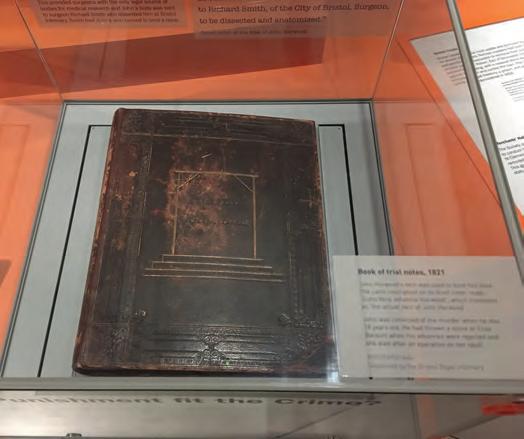
The murder of Eliza Balsom continues to be one to fascinate and horrify in equal measure. John Horwood was executed for the crime in 1821, but to this day there are many people who firmly believe in his innocence –and that it was Balsom’s doctor (who was experimenting with trepanning) who was actually responsible for the young woman’s death. What makes this crime so eerily memorable is not just the supposed miscarriage of justice, but the details of what happened to Horwood’s body.
His skeleton was donated to the University of Bristol (where it remained until 2011, when it was buried) and his skin was tanned and used as leather to bind his book of trial notes.
The book is on public display in M-Shed and is one of the most disturbing objects among their collection. It’s a ghastly and morbid curio – but also one I have to visit whenever I’m at the museum!
The gory skin-bound book detailing John Horwood’s trial notes
Is there an area of Bristol that holds weirder history than any other?
Bedminster and Clifton are home to such unusual stories. Both of them existed as villages outside of Bristol for longer than they have been part of our city, and as a result have histories which are unique and independent from it.
They also enjoy their own defined senses of identity. Someone with their roots in Bedminster may think of themselves as a Bemmie first and a Bristolian second (and likewise with Cliftonites.)
Residents of both Clifton and Bedminster may regard each other as being very different to one another (and they certainly have been from a socio-economic standpoint) but they were once rural villages on the outskirts of a market town and you can still find evidence of their histories all around you.
Despite their many and varied differences, the pair of them have a lot more in common than either might like to admit!
What is it about Bristol that helped you call it home when you arrived?
I was raised in Cornwall and enjoyed a lovely, Famous Five sort of childhood and it was only when I was a little older that I started to feel a little bored (and stifled) there. I left for Bristol as a student back in the year 2000 and knew immediately that I had found my home. I fell in love with the people, the nightlife, the fact that there was always something happening. I loved the noise. I loved being anonymous (something village life never affords you).
There is something unique and almost magical about this place. Take a walk around the harbour on a summer’s day or a stroll through a park
as the first chill of autumn sets in and you’ll feel it too, it’s undeniablelike it’s something in the air. Being part of Bristol makes you a little square in a massive, ever changing quilt – and oh, what a glorious quilt it is!
Can you tell us about your new murder mystery book?
It’s a foray back into fiction, but this time I’m doing something rather different. Welcome to Pluckley Green is a murder mystery game-book. It’s set in a Somerset village in 1956 and it’s an interactive story where solving crimes becomes a game.
You can play solo or with friends and it puts you right into the heart of a series of investigations – you have to look for clues, interview suspects and look for inconsistencies. There are 50 mysteries in the game and each one takes about 20-30 minutes to play. On top of that, there is a larger mystery at play in the village which you’ll be tasked with solving.
The book is for anyone who (like me) enjoys Agatha Christie-style murder mysteries and wants to test their sleuthing skills. It’s a lot of fun, it has its tongue firmly in its cheek and I really hope that people enjoy it. n
You can follow Charlie’s regular updates on X @WeirdBristol, and Welcome to Pluckley Green is available from 18 October.
Tarren, from left to right: Sid, Alex and Danny
The new Folk
Tarren have been busy reweaving traditional Folk music’s tapestry, unpicking the ways stories of identity are told through the genre and stitching them back together with threads of personal experience for today’s audiences. We spoke to the trio about their new album, exploring gender variance in song and New‐Folk
It could be claimed that the south west’s connection to land, the old ways and its traditions bubble away and rise closer to the surface of mainstream culture than in some other UK locations, so it’s not surprising really that our city and surrounding area has a thriving Folk music scene. And like many creatives that draw inspiration from the past and the way things once were, the Folk community has been reflecting on the content of some songs steeped in tradition that are received and digested differently in 2024. But rather than sweep these songs aside or abandoning them, some musicians have been spurred on by curiosity to find new ways to tell these old tales.
Once such collective is Tarren, a three-piece New-Folk project that combines cittern and concertina (Sid Goldsmith), fiddle (Alex Garden), and accordion (Danny Pedler). All three members were already very active in Folk circles, with other projects including Jimmy Aldridge & Sid Goldsmith, Awake Arise, The Drystones, Harriet Riley & Alex Garden, and Pedler // Russell. Tarren’s first album Revel was born out of lockdown, and the absence of live gigs. As Sid explains: “We started sending tracks across to each other that we’d written to try reimagine new ways of doing the tunes that we love, based in the southern English tradition of instrumental music. This gave us some sort of accountability and a reason to write tunes. The first album was born out from that splurge of finding out what noises we make together.”
The gender agenda
Though based in tradition, it wasn’t long before Tarren asked the question: “Do modern notions of gender variance have a place in Folk narratives?” As a result of this inquisitiveness, the trio were awarded a bursary from the English Folk Dance and Song Society to explore gender variance in English traditional song.
During their research – which included a week-long creative residency at Cecil Sharp House that took place a year ago, midway through recording the new album Outside Time that’s just been released – they came across three traditional songs from which the album’s first single, Neither Maid Nor Man, was derived. All three – The Handsome Cabin Boy, Bold William Taylor and Pretty Drummer Boy – featured an element of cross-dressing or non-conformity of traditional gender roles.
Neither Maid Nor Man is by nature a compilation of these traditional songs, but is transported swiftly into the 21st century by the final (and incredibly moving) verse, written by non-binary band member Alex about their lived experience – which will resonate with some audience members today, and Alex mentions they’ve been told it’s also introduced others attending gigs to an existence they were not be familiar with before.
“We discovered that there have been lots of different expressions of gender variance going on in English Folk song over time,” says Alex. “I
think maybe we wanted to try and prove that it’s not new, it’s not something that’s just relevant to millennials. It’s actually something that’s been around for a really long time.
“At the same time, we found that though it existed, it had been recorded in very specific ways, and had obviously been gate-kept carefully by the mostly-Victorian, quite conservative tune collectors and other people like that.”
Danny explains that many of the songs they were looking at to do with cross dressing, for example, were popular in the 18th century: “There were themes about gender and gender non-conformity, but there wasn’t the language to talk about it in that way, really. And the characters in the songs are instead presented as what they called ‘outrageous’, or an ‘interesting, little novelty’.”
“ A lot of people in the Folk scene are on a mission to try and make sure that we look at the past and at the source of our Folk music through a modern lens ”
Alex points out that a lot of people in the Folk scene at the moment are “on a mission to try and acknowledge this, and try and make sure that we look at the past and at the source of our Folk music through a modern lens. We try and treat it with respect, but also acknowledge that there are serious shortcomings in the way that it deals with these subject matters, like queerness or race or gender generally.”
Tarren are joined on this undertaking by peers on the scene, including Maddie Morris (who’s incidentally playing with Tarren at St George’s Bristol on 26 October); Scottish non-binary piper and fiddle player Malin Lewis, who Tarren explain has done a lot to make their gender non-conformity part of their show and create visibility in the local scene; a mostly-Welsh but south west-based band called Craven whose members are trans and non-binary; and the Queer Folk collective.
“We’re very lucky in the Folk scene that it feels like there’s a lot of really sound, liberal people,” Sid notes. “A lot of our audience is older, but we’ve had amazing responses playing Neither Maid Nor Man. People come up to us at the end of the set and have said, ‘That’s a really important song, thanks for singing it.’ We get these responses from people that we’re not necessarily expecting it from. It’s really lovely.”
Finding New-Folk
Folk music comprises many tides and currents taking its melodies and arrangements in all sorts of directions, but Tarren have settled on New-Folk to describe their approach.
“We did labour over that particular term a bit,” Sid says. “There are so many connotations in whatever you say. If you use the term ‘roots’ music, that means something different. We wanted to not have just ‘Folk’ there, because people immediately assume so many things. If you use Nu Folk, that refers to artists like Laura Marling, for example. We love all of it, but that’s not what we’re doing.” Tarren decided on the compact label of New-Folk, hinting that their music may not be quite what audiences may initially expect.
“It goes back to the way we thought about Folk music at the start, the journey we’ve been on and trying to weave modern narratives in,” adds Danny. “And I think it all comes around to this new album, Outside Time The new record is an embodiment of what we see as New-Folk, or contemporary Folk. We’re trying to build in some different musical themes, in a modular arrangement, and we are adding more emotion into the stories. A lot of Folk performers of traditional song research and find the music – then the best singers inhabit it; the song goes through them and comes out. But I think a lot of Folk music is rooted in the past. What we can do is we can use those stones and build a little new thing.”
Outside Time
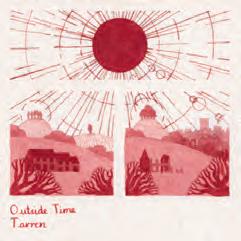
Unrestrained by the boundaries of tradition, Tarren’s new album (which features cover art from acclaimed local creative Man In The Woods) is a joy for fans of all kinds of Folk music to embrace – from those seeking
familiarity to people searching for something new. Tarren say Outside Time is perhaps slightly more refined than their first record now they know exactly what they want to say. So, we were keen to know which moments the band enjoy performing – to give those heading to any of the tour gigs (including that Bristol date on 26 October) a taste of what to expect.
“We flirted with ‘drops’ – for want of a better word – on the first album,” Danny says, “where there’s a crescendo and then it’s a drop into something else, like a texture change. I really enjoy playing them, so on the new album, during Claudia’s we smash it in 4/4 at the end, which is really fun. In the title track Outside Time there’s a big build, then we play the jig straight after, which features a few time signatures. I like those big, powerful moments.”
Alex adds that they found playing the interlocking polyrhythms “really satisfying: It’s an arrangement device that doesn’t get used a huge amount in Folk music. My favourite moment on the album is the final chorus of Sunk [a stand-out moment that Sid agrees with]. All three of us are singing together in harmony. It’s a beautiful song that Danny wrote, all about what it means to be home. That one particular moment always gives me the feels.” n
Outside Time is available to download, and buy on CD and vinyl now. You can catch the band playing their new album at St George’s Bristol on 26 October, with tickets available from the venue website. tarrenmusic.com; stgeorgesbristol.co.uk
Mr Brainwash
From the moment he burst onto the scene, Mr. Brainwash shook the art world with his bold and innovative style. Blending elements of classic paintings, pop art and the raw essence of his street art roots, his work celebrates life, love and positivity.
His early collaboration with Banksy in “Exit Through The Gift Shop”, along with a host of A-list celebrity collectors including Al Pacino, The Obamas, Samuel L Jackson, and Rihanna has led to a global demand for his work, with many sell out shows. He is now the fastest emerging street artist in history and hugely collectable.
Don’t miss this fantastic chance to see a collection of his latest originals, limited editions and sculpture at this rare one-day exhibition just 20 mins from Bristol. Tickets are limited so book now to secure yours and avoid disappointment.
Mr Brainwash Exhibition at FIZZ Gallery
Saturday 26 October, 12pm to 4pm
FIZZ Gallery is located just 20 mins from Bristol, via the M5 (J20) fizzgallery.co.uk | 26 Hill Road, Clevedon, BS21 7PH | 01275 341141 chat@fizzgallery.co.uk
Scan to find out more and secure your ticket!
ART and the galleries
Mr Brainwash at FIZZ Gallery Saturday 26 October, 12pm to 4pm
Mr Brainwash creates uplifting works of art that celebrate culture, positivity, creativity and colour. His collaborators and collectors include Madonna, the Beckhams and Banksy. Many are looking to his work for investment as well as enjoyment. Look out for his upcoming exhibition at Fizz Gallery on 26 October.
fizzgallery.co.uk; 26 Hill Road, Clevedon, BS21 7PH
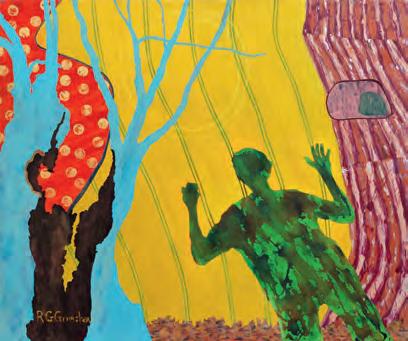
‘COLORFIELDS’ by Rick Grimster at Rainmaker Gallery until 1 November
COLORFIELDS presents Rick Grimster’s latest works on paper alongside earlier paintings on canvas. Together these abstracted landscapes reflect a growing sense of belonging as Grimster embraces his changing identity from adoptee to Indigenous elder. Grimster’s unmistakable colour sensibility and mastery of texture is ever present, as is his enduring love of the land.
rainmakerart.co.uk; 140 Whiteladies Road, BS8 2RS
Secret Postcard Auction at the Royal West of England Academy 29 October until 7 November
The RWA has invited a select group of artists to create over 300 postcards exclusively for this auction. Each postcard is signed on the back, so as not to give the game away. Art enthusiasts might be able to guess the work of certain well-known artists, but the RWA doesn’t reveal the artist until after the auction ends. Bid on the works, starting at £40, that capture your interest. The postcards are on display for free in the Youngwood Room, but bidding begins online from 25 October. rwa.org.uk; secretpostcard.co.uk; Queen’s Road, Bristol BS8 1PX
West Bristol Arts Trail 12-13 October
The trail will see more than 50 homes, studios and large venues open to the public, featuring over 145 artist and creatives living and working in Clifton, Clifton Wood, Redland and Hotwells area.
Taking part in the Trail are fine artists, photographers, ceramicists, print makers, textile artists, jewellers and sculptors. Meet artists in their studios and buy directly from them. Make sure you pick up an Arts Trial map from many venues around the city or check out the website
westbristolarts.com
‘Dawn Sidoli – A Celebration at Lime Tree Gallery’; until 11 October
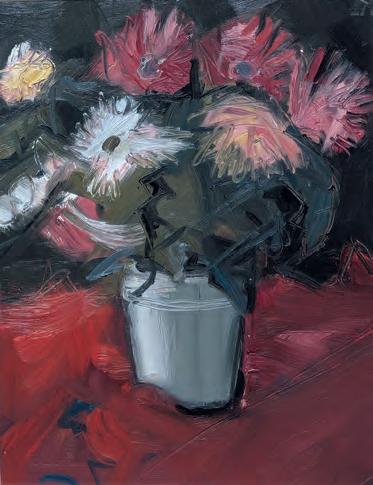
Dawn painted for the love of it, right into later life, so she left a wide variety of top-quality work, some of which had been shown at the Royal Academy, The NEAC or the RWA, but much of which had never been exhibited commercially. Together with her family, Lime Tree has selected a representative cross section of her work from the 1970s through to this century. Dawn was a brilliant painter of people, but was probably known more for her landscapes, and especially for her still life work. Most of the paintings in this exhibition are for sale and present a terrific opportunity to add a piece or two by one of the finest West Country painters of the last several decades to your collection. limetreegallery.com; 84 Hotwell Road, BS8 4UB Image: Girl in a Patterned Dress by Dawn
Image: Bristol Docks Truck And Cranes By Chris Dye
Image: Green Man, acrylic on canvas by Rick Grimster
Sidoli
‘Rinko Kawauchi: At the edge of the everyday world’ at Arnolfini 19 October to 9 February 2025
Japanese photographer Rinko Kawauchi’s poetic images find beauty in the ordinary moments of everyday life. Presented in collaboration with Bristol Photo Festival, her first major UK exhibition since 2006 centres around moving between explorations of the natural world’s fragile beauty to the gentle rhythm of domestic scenes, capturing the connections and continuity of life on this ‘planet we call home’.
arnolfini.org.uk; 16 Narrow Quay, BS1 4QA
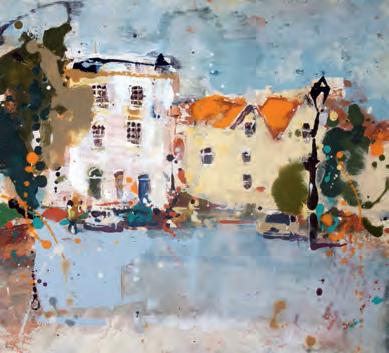
‘City to Coast’ by Andrew Hood at KIT FORM Gallery, 10-27 October
Andrew Hood’s exhibition City to Coast focuses on cityscapes from both Bristol and beyond, rendered in his signature abstract style. The exhibition will be hosted at KIT FORM, an emerging art space located in Stokes Croft beneath the iconic Jamaica Street Studios. The gallery’s philosophy of giving artists complete creative control means that City to Coast offers visitors the chance to experience Hood’s work exactly as he envisions it. The exhibition reflects a forward-looking vision for both the artist and the community-driven future of Bristol’s vibrant art scene.
andrewhoodgallery.com; 39 Jamaica Street, BS2 8JP
Image: Springtime Gloucester Road, Oil on board 80x60cm by Andrew Wood
Lime Tree Gallery, 84 Hotwell Road, Bristol BS8 4UB Tel 0117 929 2527 • www.limetreegallery.com
Our regular columnist Chris Yeo is away, but Clevedon Salerooms reports on yet another successful specialist sale
September Sale Results
He may only be small but Morph – the little plasticine man beloved of a generation of children – certainly had a towering presence in Clevedon Saleroom’s Fine Art sale on 12 September. The diminutive but instantly recognisable figure had been modelled by his creator Aardman co-founder Peter Lord and was offered with a handwritten note of authenticity. The appearance of the little chap, offering as it did the opportunity to own one’s very own Morph, generated significant press interest and led to a slew of commission bids but in the end it was an internet bidder who secured his own piece of TV history with the gavel falling at £1,100 – a record price for an original Morph. The sale commenced with a fine selection of jewellery, where some of the highest prices were achieved. A late 19th century diamond floral and foliate unmarked yellow and white metal semi parure, sold for
£11,000, whilst an early 20th century diamond 18ct gold and platinum set halo ring sold for £6,000, and a sapphire and diamond white metal three-stone ring sold for £4,000. Amongst watches, it was the familiar name Rolex which hit the high note. A gentleman's Yacht-Master stainless steel bracelet watch, sold for £3,800, whilst an Omega limited edition James Bond Quantum of Solace Seamaster co-axal chronometer bracelet watch sold for £2,200.
There were also strong performances amongst pictures. Leading the pack, a collection of late Victorian paintings of prize-winning greyhounds. Heralding from a country house in the North-East, they recorded a time when greyhound coursing was a popular aristocratic pastime. The source of much pre-sale interest the four pictures raced away from their estimates, selling for a combined total of £7,300.
Clevedon Salerooms next Fine Art sale, for which entries are now invited, will be on Thursday 5 December. ■
BY RON PRINGLE & CYNTHIA WIHARDJA, Beau Nash Antiques, Bath
hen shopping for antiques, it’s essential to understand the difference between genuine patina and actual damage. The term “patina” is often used by sellers to describe the natural aging process that adds character to a piece. However, in some cases, it’s a euphemism for significant damage. This is especially concerning in today’s online shopping environment, where buyers frequently can’t inspect items in person before making a purchase.
Case in point: Ron purchased a silver salver through an online auction, trusting the condition report, which described the piece as being in “good nick.” However, when it arrived, he discovered that the silver was buckled, and the surface was scratched — none of these flaws were visible in the single photo provided. Now, to make the piece presentable for resale, he must invest in repairs, including restoring the surface and hammering out the dents.
Unfortunately, this type of experience isn’t uncommon. Professional product photography may not capture the real story or, in some cases, make items look far better than they actually are. This is why it’s so important for buyers to be vigilant, asking for detailed descriptions and additional images before committing to a purchase.
At our shop, we take a different approach. We ensure that every piece we sell is ready for retail. For example, we often bring in antique boxes and restore their interiors so they’re not only visually appealing but also functional for modern use. We work with restorer to revive the look of antique pieces. Our goal is to meet the high standards of quality and authenticity of our clientele.
To help our online buyers make informed decisions, we offer an extra service — a WhatsApp video call. This allows potential buyers to take a live, virtual tour of the piece they’re interested in. They can ask questions, see the item from various angles, and observe it being handled. Recently, an American couple interested in a coffee table found this service incredibly useful, as it gave them the confidence to make a purchase without visiting the shop in person. They appreciated the opportunity to scrutinize the piece closely, even from a distance. When they received the product, they were very happy.
While technology can be used to hide a piece’s flaws, we use it to enhance transparency. Our focus is on transparency and customer satisfaction, so you can shop with confidence, no matter where you are.
Recommendations by Tom Bleathman from The Great Wine Co.
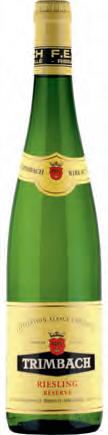
Based in Ribeauvillé, Alsace, Trimbach is one of France’s oldest wineries, having produced exceptional wines since 1626. What sets Trimbach apart is its unwavering commitment to quality and tradition, upheld by 13 generations of the Trimbach family. Its wines are so highly regarded by the French that they are featured in 28 of the country’s 30 three-Michelin-starred restaurants, while also being favoured by top sommeliers globally. As part of our current promotion on French wines until 21 October, all Trimbach wines are on offer. Here are a few of my favourites... Discover more at greatwine.co.uk
The current family owner Jean Trimbach refers to the Trimbach Pinot Blanc 2022 as his “Swiss Army Knife”; it’s versatile and works for every occasion. Bone dry, with a firm structure, lovely lemony fruit with lots of depth, a minerally backbone and a truly elegant poise and balance. £19.55– £22
Trimbach produces many outstanding wines, but its true passion is for Riesling, and Trimbach Riesling Reserve 2022 is an outstanding example. Aromas on the nose of lime, fennel and a touch of honey. Rich on the pallet with amazing length and minerality. It’s excellent now, but expect this to become even more complex and textured with some age, if you can let it… £28.44 – £32
Trimbach only makes its Reserve Personelle range in top years from the Grand Cru Osterberg vineyard. This results in Trimbach Reserve Personnelle Pinot Gris 2017, which is rich and weighty with juicy apricot, honey and cream flavours, which can easily be aged for another decade. A show-stopping wine for any big occasion. £38.22– £43
FOOD & DRINK
Boats, baubles and buffets
Make your Christmas celebration extra special this year with a private charter of one of Bristol Packet’s covered and heated boats. Once on board, guests will be able to take in the Christmas atmosphere of Bristol's Floating Harbour as the lights reflect and dazzle on the water. Each trip can be tailored to your individual needs and every boat features a fully licensed bar, WC and music facilities as standard, with catering available by arrangement – from Festive Nibbles to a Christmas Cream Tea. The stand out menu item for this season has to be the Christmas Buffet, supplied by Emmeline Café, which includes a selection of festive treats that you and your guests can indulge in. Book online at bristolpacket.co.uk
Food by Sophie campaign shines light on female entrepreneurship
A local female entrepreneur and her business – Food by Sophie – is being showcased by community bank Metro Bank as part of its partnership with the England and Wales Cricket Board.
Food by Sophie has featured in the new campaign designed to inspire women to achieve their potential in business, cricket and life, showcasing how the female-led Bristol business was centre stage at the Seat Unique Stadium during England Women’s series against New Zealand.
Sophie’s daughters initially encouraged their mum to share her home cooked Jamaican food with a wider audience in Bristol, but Sophie was originally inspired by watching the key women in her life – grandmother, mum and aunt –cooking as she grew up in Kingston, Jamaica. Today, Sophie serves her food on Wine Steet, in the centre of Bristol every Tuesday and Friday, but dreams of running her own store. “I don’t feel as if I am doing this on my own and with James’ help and support, I know I can achieve my goals and my ultimate dreamI can’t wait to have a little shop, I can see it clearly in my mind and I hope being featured in this campaign will bring me one step closer to realising my dream.”
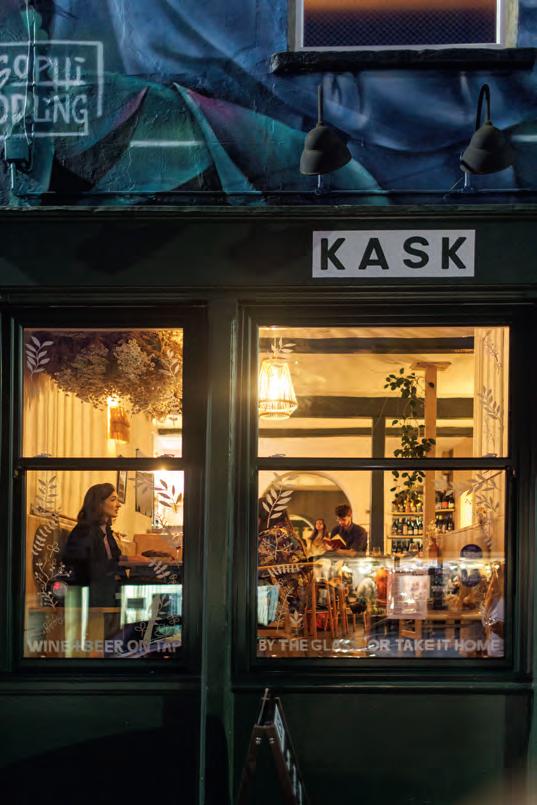
Kitchen by KASK reopens
Bedminster-based bottle shop and eatery KASK marked its fifth birthday last month by reopening its dining concept Kitchen by KASK, which had been closed for a “rethink and refresh”. These renovations have included a spruce up of the garden area for guests. The team kicked off service with a two-week residency from Bristol’s own MasterChef contestant, Adam Sheppard. The culinary experience, named FRANKIE’S in homage to Sheppard’s daughter, showcased a menu of gluten-free fried chicken and waffles, paired with natural wines and local beers. The venue then closed for some private events, but at the time of writing promised to reopen again from 27 September with “a whole new thing”, which will apparently include Sunday roasts. We think they’re onto a winner.
kaskwine.co.uk
Pssst... check out this Korean pop-up
One of the city’s best Korean eateries, Sky Kong Kong, may be closed due to redevelopment of its former site, but Chef Wizzy is still creating delectable dishes. Find her at Kit Form gallery in Stokes Croft on 18 October (6pm until midnight) where she’ll be hosting a Korean street food pop-up at acclaimed artist Andrew Hood’s exhibition City to Coast, which is at the venue from 10-27 October. andrewhoodgallery.com
The Watersmeet Hotel in Woolacombe, voted Best Waterside Hotel for UK & Ireland by Conde Nast Johansen’s 2024.
Our 4 star Coastal Hotel could not be better located on the water’s edge.
Luxury Balcony, Terrace Rooms & Suites all have private outdoor seating & sun loungers.
Our 2 Rosette Restaurant offers dramatic sea views. from our unique cliff top location. Indoor and outdoor pool & spa.
Ramblers Package
• 3 Nights in a Deluxe Sea View Room
• Dinner, Bed & Breakfast
• Devon Cream Tea for 2 £1100 inclusive.
Late Availability offers
Check our website for ‘Offers’ and ‘Late Availability’ offering a generous rate discount and room upgrade where possible, subject to availability.
Fashioning Fall
Join our Personal Shopping team for the AW24 Trunk Show, and enjoy a fashion-filled evening discovering new season trends.
Thursday 10 October, 6pm. Second Floor Restaurant.
The expert team of stylists will pull together six looks featuring some of the upcoming season’s menswear and womenswear stand out silhouettes, the fashion-filled evening will further feature an introduction, courtesy of one of the Harvey Nichols Beauty Buyers, to the scents that are ready to tantalise your senses this AW24.
Tickets are £45 per person and include a welcome drink on arrival, canapés and a two-course dinner.
To book: Simply scan the QR code to book online as well as see a line-up of other exciting events.
There’s something special in the water…
Rosanna Spence follows in the footsteps of millions of people over hundreds of years to take the waters of Bath’s thermal springs, embarking on a day’s indulgent adventure at The Gainsborough Bath Spa hotel, which taps the mineral‐rich, world‐famous water forged beneath the earth nearby
There’s a reason thousands of people flock to Bath each year from around the world. Yes, the iconic architecture. And, of course, the boutique shops. Don’t forget the al fresco dining culture. But for many, it’s the city’s eponymous draw of the natural, mineral-rich thermal waters. So, when in Bath, why not join those that know, and make it a spa day?
Thankfully, we knew just the place. The Gainsborough Bath Spa hotel is the only venue in the city – other than the Thermae Bath Spa – which taps into the original thermal springs, supercharging its Spa Village with this ancient restorative water, yet with all the flair and indulgence of Asian spa culture (courtesy of the owning luxury brand YTL Hotels’ presence across the continent).
For the ultimate experience, there are four Spa Day packages to choose from, kicking off with a personalised aromatherapy blending session alongside a welcome drink; a 50-minute spa treatment with one of The
Gainsborough’s knowledgeable and talented therapists, complete with post-treatment herbal tea; a four-hour Bath House experience (bathe in three natural thermal pools of varying temperatures, relax in the steam room, infrared and traditional saunas and cool off in the ice alcove, access the gym and relax on the terrace) – soft and cosy robes and slippers are provided, of course; and round off the day with an elegant History & Heritage Afternoon Tea along with a glass of something fabulous and sparkling. Seeing as I spend much of my week focused on my computer screen and typing in a frenzy on a keyboard – no doubt awkwardly hunched over, much to my Pilates teacher’s despair – I thought the Spa Village’s ‘Back to Vitality’ package was in order. Targeting the areas that need most (and in my case, urgent) attention, this experience begins with a tension-relieving back and shoulder massage, transitioning into a bespoke Revive facial that promises to leave your skin feeling beautifully cleansed and looking radiant.
Ice alcove
Revitalising facial
Infrared sauna
Bathing in glory
A Spa Day spent at The Gainsborough feels a world away from the hubbub of Bristol, despite being less than 15 minutes on the train, then a short walk from the station. Bath’s streets can get busy too, but inside the spa, under the sun-drenched atrium (which I reckon would have also been a cosy delight to look at and listen to had it rained) there’s only the sound of water. Those taking the waters during the day don’t share the spaces with hotel guests, who are offered complimentary use at different hours, meaning there are no bottlenecks, no overcrowding and time to shut off from the outside world. And seeing as we’re on the subject of switching off, phone use is not allowed inside the spa at all. The staff place it in a secure pouch that can be unlocked at reception if needed. But this means there are no selfies and no notifications. It’s not often you have enforced zero-screen time, which means you can spend these four hours, plus treatment time, plugged into your body, prioritising self-care, finally finish that book you’ve been trying to read, or simply jot down your thoughts in a notebook.
But once you’re wandering around in your robe and slippers, the bustling boutiques and bodegas of Bath outside will be a distant memory anyway. And here’s why. From the moment you wander down the stairs to the calming depths of the hotel, it’s clear that this spa isn’t just about relaxation, it’s an experience designed to refresh every part of you. The check-in process alone is a treat. You’re welcomed with a cold herbal tea and a soothing aromatherapy-infused flannel that instantly melts away any lingering stress from the outside world.
Before diving into the treatments, you’re gifted a pouch of Himalayan pink salt, which you can personalise with one of three special oil blends. I opted for the ‘balanced’ blend, a rose-tinted fragrance with some spice. A few drops of this aromatic elixir are mixed into the salt, which you can carry with you throughout your visit. The idea is to inhale the scent whenever you need a little pick-me-up, and you can even take it home for a bath or a relaxing soak (I popped mine into a bath three nights ago and was transported back in an instant).
While you’re sipping your drink and finalising the details of your chosen treatment package with the friendly team, you’ll be given you a handy map of the ‘Bath House Circuit’: a perfect way to fill your time before your treatments. The circuit includes everything from the Warm Balneo Pool to the Cool Lymphatic Hose, Infrared and Dry Sauna, Ice Alcove, and a float in the main Atrium pool. The neck jets and effervescent bubbles in the pool are perfect for soothing tired muscles.
The map and circuit schedule make everything easy to navigate, meaning that if you’re visiting solo, or tend to feel self-conscious wandering around a spa, you have a guide to make your journey more seamless and comfortable – and help you feel like a regular on the spa scene.
There’s a huge clock on the wall, so you know when it’s your arranged time for treatment, then you can wander to the vaulted waiting room, which features an impressive ancient Roman mosaic – a copy of a relic from the original construction site preserved beneath. My therapist, Hana, who has trained many of the other therapists working at this Spa Village, greeted me warmly, showed me to the treatment room and got underway with my – what turned out to be a much-needed – massage and facial.
The treatment included a skin consultation, with Hana revealing how my current routine was affecting my skin’s protective layers (goodbye, salicylic acid). The team uses Elemis products, a renowned British skincare brand with more than 30 years of research behind its products, but you can upgrade to the luxurious Budapest-born Omorovicza if you prefer. I noticed the bed was gently heating my feet – perfect even on a hot day outside as my body adapted to being out of the warm water.
The afterglow
Post-treatment, I lounged on the relaxation terrace with a delicatelyblended herbal tea and macaroons Since I had a facial, I avoided any more time in the water to preserve the benefits. Needless to say, my skin was glowing more than it had done in about a decade… even Hana was impressed. Of course, if you’re booked in for a facial, this might affect how and when you take the thermal waters, but a quick call to the friendly team before booking will ease any concerns you have about your order of the day.
I left the Spa Village and got ready for my History & Heritage Afternoon Tea with Hana’s words gently swaying around my head. Why do so many of us living in Britain only embrace spa culture when we’re on holiday, or as a really indulgent treat? In many cultures, spa therapy is a part of regular health and wellbeing maintenance. The Gainsborough Bath Spa hotel can offer you both approaches – try one of its special spa days for the ultimate luxury experience, then enjoy the benefits of investing in your mind and body so much than you’ll be checking your calendar on the train going home to see how soon you can come back. n
Spa days at The Gainsborough Bath Spa hotel are available between Sunday and Thursday, priced at £195 for one person, and £390 for a couple. This includes a 50-minute treatment (choose from a full body Swedish massage, which is also available as for a couple receiving treatment in the same room; relie ving back and shoulder massage followed by a facial; and a full facial.
Call the friendly team on 01225 355 320 ; email spavillage@thegainsboroughbathspa.co.uk and visit thegainsboroughbathspa.co.uk to book
An autumnal amble
burnished glory, leaves rustling underfoot and pears from its orchards
the sights and smells of autumn put an added spring into
Dyrham is justly renowned for its grand and sweeping vistas, but it also has a wealth of hidden corners and secluded spaces. Walking round Dyrham, you’re also reminded, time and again, that you’re walking through history. Dyrham Park is a monument to the taste and ambition of one man – William Blathwayt, a high ranking government official and colonial administrator, who inherited a rundown Tudor manor house – along with ‘a very great fortune’ – through his wife Mary Wynter, whom he married in 1686. He wasted no time in drawing up plans for a new mansion, keeping only the great hall from the old mansion, discreetly tucked out of sight at the back.
By the time the new house was finished, Blathwayt’s career had flourished and he decided something grander was needed. His solution was to commissioned a larger house behind the first one, linked to it by the great hall (pictured, left), creating a mansion like no other, with two fronts and a disorienting internal layout.
But, if his bipartite house was designed to impress, the gardens around it were designed to dazzle. Inspired by the Dutch-style gardens then in vogue, and mindful that England now had a Dutch king, at Dyrham Blathwayt created, on a steep Gloucestershire hillside, one of the most splendid gardens in England. Sadly, after his death they fell into neglect and were eventually landscaped out of existence. Today, the house, which remained in the Blathwayt family until 1956, genteelly fading, is, thanks
A walk round Dyrham Park is a delight at any time of year, writes Andrew Swift. But in October, with the trees in their
being pressed to make perry,
the step...
Dyrham Park and St Peter’s Church from the West Gardens
to a monumental restoration effort by the National Trust, a time capsule of a long forgotten age. The parkland surrounding it, however, can only hint at the glory which has gone, but hints, in a setting as dramatic as Dyrham’s, can be remarkably potent.
There are a multitude of ways of exploring Dyrham’s 274 acres, but the 2.5 mile walk suggested here – with the option of visiting the house partway round or at the end – breaks you in slowly, by setting off along quiet and somewhat unassuming country paths, past a nature-inspired sculpture trail, and leaving the more dramatic sights until later.
Exploring the grounds
Having left the car park and passed through visitor reception, immediately turn left along a grassy track through an avenue of limes, planted in the 1980s to replace elms lost to Dutch elm disease in the 1970s. After 350m, follow the track as it curves right and passes the first of a series of tree sculptures by the Bristol based wood carver Andy O’Neill. Views now open up north-westward over the parkland as you draw nearer to the edge of the escarpment.
After another 400m the track starts dropping downhill alongside a drystone wall, before steepening and curving northward through ancient copses to emerge before the east front of the house. Turn left through a gate beside a cattle grid and head for the orangery, on whose walls hang engravings of the gardens once visible from its windows. They show how the sweeping contours of a Gloucestershire hillside were subdued by the rectilinear formality of avenues, parterres and canals.
Looking through those windows today, though, you can see that nothing has survived, nothing except for a distant statue of Neptune, high and dry atop the grass-grown course of a lost cascade. Go down steps beside the orangery to see, through a gateway on the right, how the great hall joins the two houses together. Through the archway ahead is a courtyard where you find a tea room and a cottage-style garden in an adjoining courtyard to the right.
The archway ahead leads to wide lawns and clipped hedges. To the left is the orchard, ahead lies a large pond, while to the right is the West Garden, recently created but inspired by 17th-century designs. If you
want to visit the house, you can either do so now or at the end of your walk – bearing in mind that last entry is at 4pm (3pm from 27 October). North of the house is St Peter’s Church, atop a high revetment constructed when the ground in front of it was scooped away to make way for Blathwayt’s mansion. The steps to the left of the revetment lead up to the church, where there are some fascinating monuments, as well as to a path along which you will find a doorway leading to ‘Mr Blathwayt’s Lost Terraces’.
These terraces, once lined with flower borders, fountains and statues, were abandoned years ago and were until recently impenetrable. In the past decade, however, the removal of tons of earth, stone and rubble, along with dense thickets of brambles, has opened them up again. Now, this enchanted wooded enclave is one of the highlights of a visit to Dyrham.
At the top of the terraces, go through a gate and head up a grassy track to a toposcope which commands a prospect stretching from the Mendip Hills to the Black Mountains. As you carry on in the same direction, you will see some very different lost terraces running along the hillside to the north – strip lynchets, a legacy of when these upland pastures were ploughed for cultivation in medieval times. Above them, on the summit of the hill, is the site of an iron age hillfort where the West Saxons are believed to have defeated the Britons at the Battle of Dyrham in AD577.
After 350m, turn right alongside a fence and carry on in the same direction for 300m. When you meet a stony track, turn right to head down to the Old Lodge, where there is another tea room and a play area. Turn left here to follow a path steeply downhill.
At the bottom, head straight on uphill following a sign for the car park. After a few metres you will see a culvert on the left. As you carry on uphill, you will see that behind the culvert lies a pond which supplied water for Neptune’s grand cascade.
A little further on, you come to a tarmac drive, with a view of the house, embowered by trees, far below. Here you have a choice of either following the drive down to the house, past some of the oldest and grandest trees in the park, or turning left to return to the car park. n
akemanpress.com; all photos courtesy of Andrew Swift
Try the walk for yourself
Distance: 2.5 miles
Terrain: Mostly along rough paths with steep sections and short flights of steps Dyrham Park is open daily, with a charge for parking and admission (free to National Trust members)
For full details, visit: nationaltrust.org.uk/visit/bathbristol/dyrham-park
Sweeping vista from the Mendip Hills to the Black Mountains
Bristol at work
LOCAL BUSINESS AND COMMUNITY ORGANISATION UPDATES
Training the next generation of fertility nurses
Fertility nurse consultant
Paula Bot, a recent addition to the specialist fertility team at Bristol Centre for Reproductive Medicine (BCRM), has quoted the opportunity to train the next generation of fertility nurses as one of the highlights of her new role.
During Paula’s 20 years of fertility experience, her career path has taken her from fertility nurse specialist through nurse manager progressing to nurse consultant, with post-graduate qualifications and a Master of Science in Reproduction and Development (University of Bristol) and Independent Nurse Prescriber status (University of South Wales). She is also a registered mentor with the British Fertility Society and her role as a trainer for newer nursing colleagues in scanning, embryo transfer and intrauterine insemination procedures is one of the aspects of her work she said she finds most rewarding. She also enjoys personal interactions with patients, from initial consultations and follow-ups to treatments scans, to performing intrauterine insemination and embryo transfer procedures and ending with pregnancy scans. fertilitybristol.com
West of England’s £59m bus electrification project begins
First West of England has started work on two multi-million pound projects to electrify bus depots in Bristol and Weston-super-Mare. In addition to the coastal town’s £14.9 million scheme, £44 million is being invested in electrifying the operator’s Hengrove depot in Bristol alongside, launching 74 electric buses on the city’s network. The Hengrove transformation is planned to get underway at the end of October. firstbus.co.uk
Start-up company’s creation to transform mobility issues
The founders of Bristol-based start-up Supersmith have invented the 3Scooter with the aim of revolutionising the world of mobility scooters and transforming perceptions about the people who use them.
The 3Scooter was developed with personal experience at its core; Supersmith has incorporated extensive user testing through concept, design and production to ensure this.
Based on the well-known mantra in the disability community, ‘Nothing for us, without us,’ this new model has included users every step of the way.
Tom Morgan, co-founder of Supersmith, said: “This journey is incredibly personal for all of us. Together with my wife Emily and her cousin Fred, we founded Supersmith to make life easier for anyone who finds walking difficult. We're hoping to empower our community and, through innovation, make the world of micro-mobility accessible for all.”
The 3Scooter’s design is user-led and radically different from existing mobility scooters, blending contemporary e-scooter aesthetics with practical functionality to make it safer, more sociable and more empowering. Supersmith has won funding from the Design Age Institute in recognition of this innovation.
Inside every 3Scooter there is an inbuilt stabilisation system.
The patented technology maximises stability and comfort by adjusting to terrain and riding conditions (and can be used inside and outside). Unlike passive suspension, the active suspension system continuously adapts, adjusting its rear legs and speed to ensure balance and maintain eye-level at all times.
The 15kg 3Scooter folds in around 10 seconds and can be partially folded to be used as a walker for added support during moments of fatigue or difficulty. supersmith.co
Credit: Sophie Jordan Photography
Why keeping your cash in savings accounts could hamper your long-term returns
Over the last few years, the Bank of England (BoE) has incrementally raised the base rate of interest to help bring high levels of inflation down.
The base rate is currently higher than inflation and, as a result, many savings accounts currently offer interest returns above inflation.
However, this is not the norm.
The BoE has already reduced the base rate by 0.25% and may continue to lower it further, though they are likely to proceed with caution.
Investing often gives you a better chance of beating inflation over longer horizons
Over shorter horizons, cash and shares have a roughly similar chance of beating inflation. But as time goes on, shares have historically improved their chances considerably more than cash.
There are strategies for protecting your investments
Portfolio diversification is among the most effective strategies for safeguarding your wealth. It can also be a good idea to remain patient and resilient amid market downturns as your wealth has typically been more likely to recoup in the market than if you liquidated.
To find out more, get in touch.
We are Independent Financial Advisers who specialise in retirement planning and estate planning
Get in touch
If you would like a review of your pensions and investments and whether you are on track to achieve your financial goals, please contact us for a free consultation.
Education matters
NEWS FROM THE CITY’S LEARNERS & LEADERS
New Bristol theatre project will improve speaking and listening skills
Bristol children’s theatre company, Travelling Light, is launching a new project to improve children’s speaking and listening skills. Called Light up Language, it will respond directly to local and national evidence that many children are struggling with speaking and listening skills, made worse by the coronavirus lockdowns. Light up Language launches in October and will work initially with Hannah More Primary School, Brunel Field Primary School, Easton Community Children’s Centre, Cashmore Early Years Centre and Little Hayes & Speedwell Nursery schools.
Funded by Paul Hamlyn Foundation’s Arts Based Learning Fund, Light up Language will use drama to develop speaking and listening skills in nurseries and primary schools.
Lizzy Stephens, Travelling Light’s Artistic Director, said: “We’ve created Light up Language to respond directly to a need identified by our local schools and early years settings. There is a lot of evidence at national level that children are struggling with increased social, emotional and communication difficulties, and this is echoed by our local schools and nurseries. They tell us that postCovid, there are significant gaps in learning for children who experience socio-economic disadvantage, and that this is impacting speech and listening skills as well as children’s ability to regulate and understand their emotions.”
The English Speaking Union charity will be supporting Light up Language; it has evidence showing that 72% of parents of children aged 5-9 say their child has only partially or not at all regained the social skills lost during the pandemic. travellinglighttheatre.org.uk
Redmaids’ High School joins GDST family of schools
The Governing Body of Redmaids’ High School, Bristol and Trustees of the Girls’ Day School Trust (GDST) have announce that Redmaids’ High School will be joining the GDST from 1 February 2025.
Andrew Hillman, Chair of Governors’, Redmaids’ High School, says: “As Redmaids’ High School celebrates 390 years of excellence in girls’ education, our school is going from strength to strength. We stand in a formidable position thanks to our deep commitment to fulfilling the forward-thinking mission of our founders and our ability to adapt, grow and innovate to best serve the girls and young women of Bristol.
“Becoming part of the GDST family of like-minded and successful schools will be of great benefit to Redmaids’ High School, now and into the future. This move strengthens our shared mission of ensuring that girls’ education continues to thrive and also brings extensive benefits to students, staff, parents and alumnae of Redmaids’ High School, as well as the entire GDST community.”
Over the coming weeks and months there will be a range of opportunities for all students, staff, parents and the wider community to get to know more about the GDST and Redmaids’ High, as well as exploring the many benefits this move will bring. Both educational charities expressed great confidence in the move and the shared commitment to the future of girls’ education.
redmaidshigh.co.uk
Little Hayes (credit: Ed Felton)
Moral combat
After receiving nearly £400,000 in investment earlier this year, we hear how Roger Gracie Bristol is on a mission to help even more vulnerable people in marginalised communities around the city via the mental and physical benefits of Brazilian Jiu‐Jitsu
Brothers Luke and Clayton Chamberlain have been grappling with issues affecting vulnerable communities around Bristol, delivering physical and mental wellbeing support. Their Brazilian Jiu-Jitsu association Roger Gracie Bristol (RGB) may take its franchise name from one of the sport’s most notable international figures – and 10-times world champion – but it’s led by people of no less admirable standing, considering the huge amount of important work they put into supporting communities from every walk of life in our city.
Since its inception in 2017, RGB’s founding brothers have supported more than 30 vulnerable women, 38 ex-military and 35 Avon & Somerset policemen with self-defence skills. It has also provided 18 child scholarships for families struggling with costs, and a crisis management rehabilitation program for children with ongoing issues of parental drug addiction, neglect and abuse, while employing seven members of the local community.
RGB generates its social impact with initiatives that bring people in personal crisis ‘onto the mats’ through interventions, programmes and concessionary rates for struggling and vulnerable people. And since securing £390,000 of support from impact investor Bristol & Bath Regional Capital (BBRC) for its Brazilian Jiu-Jitsu Aid programme, the
number of people the teams hope to support will more than double.
The existing commercial side of the business also allows RGB to be able to deliver its social impact services, with members who are in a position to pay playing a key role in enable others to access the programmes on offer: “This facilitates the ability for others that can’t afford that service, or who are in dire circumstances, to be brought back from crisis,” Luke says. “I think if there was a bit more of this approach in more institutions and areas of society, then we might be able to overcome the – excuse my language – sh*t show that many people face in society. We’re just trying to do our best.”
Striking from Southmead
Luke and Clayton grew up in Southmead, which is where they opened their first club. “We were very aware of the challenges for people that have grown up around the area and the reputation that people from the area itself have, so we wanted to just provide something positive,” Luke explains. “My brother and I got so much from martial arts that we wanted to give those positive experiences back. It was just a passion project at first. We were working other jobs and didn't earn any money from the business for two or three years, I believe. We just put it all back into the business, kept costs down where we could and wanted people to enjoy it.
Luke Chamberlain (left) coaching at one of his RGB gyms
“We had accidentally built this amazing community that people wanted to be involved in. We wanted to give back the benefits we’d received, as well as try to shed a good light on the area we were in, rather than the negativity that surrounds certain places.”
RGB’s clubs in Southmead and East Bristol provide seven-day-a-week training sessions to more than 800 members through both the commercial and social impact sides of the business. It’s hoped that they’ll be able to reach more than 2,000 people with this investment from BBRC’s impact investment fund City Funds, with plans for three further clubs in south Bristol, west Bristol and central Bristol – with the latter opening as soon as possible.
The clubs aim to empower Bristol communities with Jiu-Jitsu as a way to find focus and support, as well as experience an inclusive and safe space to build friendships, and in turn improve mental health and well-being for individuals and their wider families. Dedicated training is delivered to people in sessions that are operated separately to its commercial classes.
“Those sessions include working with children in gangs, people with substance misuse and abuse, people with mental and physical health challenges, vulnerable women and also blue light services,” Luke says. “We’ve just recently set up the combined blue light sessions, including fire, police, prison service, NHS workers and paramedics in order to build a community between those groups of people.
“Sometimes they literally need self defence and restraint skills there’s also mental health benefits that come from being involved in a community of people that exercise together. We also provide sessions for women in the Muslim community who may need to remove their hijab for training and need privacy screens, as well as training programmes for vulnerable women. Everything is run in a very similar way to our general classes, albeit with particular consideration paid to any areas of the sessions that might be challenging for people.”
Guarding the vulnerable
RGB Bristol has also recently faced its own challenges, with the future of its original Southmead club (based in the former Southmead Youth Club building) looking uncertain this summer after the council instructed agents to sell the property – along with a longstanding memorial garden also located at the site. Thankfully, due to local backlash and a petition, lots of determination from the team, and support from BBRC, Luke confirmed that at the time of speaking to The Bristol Magazine, they had been able to reverse the council’s decision and were going through the process of purchase to keep the site.
Thanks to that relief, Luke says now the focus is on opening up the rest of the clubs in the planned pipeline.
“We’ve got eyes on opening our central school, where we can then tackle some of the inner city areas, like St Pauls, as well as further our commercial business, with people that can make their way down from the Triangle area of Clifton and nearby. It’s all about breaking down the barriers where people feel segregated. That’s one of the beautiful things about Jiu-Jitsu – when you come in and put your uniform on to train, you’re all the same. We have police officers training with people who have previously been in trouble with the law and reformed their lives. We have people who earn eight figures a year, and we have people who are just getting by week by week. But nobody knows, and nobody cares, because once you’re together on the mat, everybody's equal and just sharing and enjoying it. It’s really nice to do something good that you happen to love.” n
rogergraciebristol.com
Readers can use discount code BRISTOLMAG30 on the RGB website to get 30% off for 3 months, and 30% off annual memberships
For those of you who read these adverts, every successful patient you see me take a photo with starts MBST not knowing the outcome that lies ahead.
Healing from MBST begins by applying safe, low level EM energy (the same used in MRI but weaker) to the damaged inflamed cells of the injured area.
These cells then incubate this energy and transform from inflamed, imbalanced dying cells to healthy cells…following on from this, more cells are then produced giving the regenerative effects of this therapy, which leads to tissue change, and a positive outcome for the patients.
If you’re suffering pain and don’t have an answer it’s highly likely MBST can help you.
We successfully treat:
Angela: Treatment for cartilage and bone, she’s got full range of motion and is virtually pain free
Robin: MBST has killed the pain of his stage 4 knee arthritis.
Mark: Successfully treated spondylolesthesis, Chronic: Achilles tendinopathy and toe arthritis.
Jean: Responded so well to the disc/ nerve treatment for her Disc bulge with s1 nerve root compression
Autumn Wonders
Embrace the Season and Nourish Your Heart
As autumn paints the world in hues of yellow, orange, brown and gold, it’s the perfect time to nurture your body as well. The season of roasted vegetables and fruits that are not only delicious, but are also packed with nutrients that can boost your heart health.
I’d like to share 4 simple heart health hacks that I’ve learnt to cherish following a hospital admission last month.
From hearty squashes and root vegetables to berries and apples, these are great to incorporate into your meals during autumn. My go to 4 hacks:
No4 - Food like oats, nuts, and legumes that can help lower LDL cholesterol levels.
No3 - Potassium-rich foods such as bananas, spinach, and sweet potatoes can support healthy blood pressure.
No2 - Antioxidants found in berries, dark chocolate, and walnuts can help protect your heart from damage
No1 - Re-bouncing on or without a trampoline, helps rejuvenate the cells, and is great for muscle strength, bone density and gentle heart’s fitness.
Recipes to Boost Heart’s Health
Roasted Squash and Quinoa Bowl: Toss roasted butternut squash with quinoa, spinach, and a drizzle of olive oil. Garnish with toasted pumpkin seeds and sprinkle feta cheese.
Lentil Soup: Simmer lentils with carrots, celery, and onions in a delicious spicy broth. Serve with a side of whole-grain bread.
Salmon with Roasted Vegetables: Season salmon fillets with herbs and spices and bake. Serve with roasted vegetables like Brussels sprouts, sweet potatoes, & carrots.
Hearty Grain Bowl: Combine cooked brown rice, roasted chickpeas, and a variety of roasted vegetables. Drizzle with a spicy lemon-tahini dressing.
Chicken Stir-Fry: Sauté organic chicken with broccoli, cassava, bell peppers, and onions in a low-sodium soy sauce. Serve over brown rice. Enhance your autumn wellness with these heart-healthy recipes and ‘re-bouncing’, to nourish your body, enjoying flavours of the season, and support your overall well-being. A bientôt!
Beauty notebook
Counting down to Christmas? The major beauty brands are revealing their advent calendars. Here’s a couple that caught our eye.
ANTHROPOLOGIE The 2024 Beauty Advent Calendar, £88, anthropologie.com
This coveted, limited-edition calendar features over £300 worth of premium treats and treasures.
JO MALONE LONDON Advent Calendar, £360
Get set for Christmas with the British fragrance and lifestyle house’s classic countdown, filled with 25 surprises. The decorative drawers hide a selection of timeless and seasonal colognes, miniature candles and bath and body favourites in smaller sizes, as well as a TravelCandle and a 30ml festive fragrance. Once empty, the box can be reused as a jewellery case, desk tidy or crafting kit.
jomalone.co.uk
@graceekall
Navigating the Responsibilities of Lasting Power of Attorney
Richard Higgs, Chartered Independent Financial Planner
Being appointed as an attorney for a Lasting Power of Attorney (LPA) carries significant responsibility. LPAs are legal documents that allow a person (the donor) to designate someone to make decisions on their behalf if they lose capacity.
Understanding LPAs
There are two types of LPAs: one for property and financial affairs, and another for health and welfare. The donor may include specific instructions to guide the attorney(s).
Responsibilities of an Attorney
An attorney holds considerable authority, managing the donor's finances, property, and healthcare decisions. This requires acting with integrity and always in the donor’s best interests.
Legal and Ethical Duties
Attorneys must act within the scope of the LPA, adhere to the donor’s wishes where possible, maintain transparency, and keep detailed records. Decisions must be guided by the donor’s values and well-being.
Accountability
The Office of the Public Guardian (OPG) oversees attorneys to ensure they comply with legal and ethical standards. Attorneys can be held accountable for any breaches.
Seeking Advice
Being an attorney is an honour, but it requires commitment. Professional advice may be needed, especially for complex decisions, to avoid conflicts and ensure the donor’s best interests are upheld.
If you would like to discuss organising LPAs or if you have any questions about acting as an attorney, please don’t hesitate to get in touch. Call 0117 3636 212 or email office@haroldstephens.co.uk
Why not join our next free LPA Seminar on Wednesday 6th November, 1pm – 3pm at Stoke Lodge, BS9 1BN? We’ll cover financial and legal obligations as well as reviewing care choices so you can be sure you have covered everything necessary in your LPA. Book with Amy: community@haroldstephens.co.uk / 0117 3636 212.
We record regular video updates on a range of later life financial topics - search ‘Harold Stephens IFA’ on YouTube.
50 High Street, Westbury on Trym, Bristol BS9 3DZ. Find out more at www.haroldstephens.co.uk
Like a bat out of hell
What do bats and beavers have in common? According to researchers at UWE Bristol, they like to hang out in the same neck of the woods, and make rather excellent neighbours. Their study has shown introducing beavers to wetlands across England and Wales is making bat activity in the area go, well… absolutely batty
No matter how concerned you are about the environment, keeping abreast of ecological news, developments and –more often than not – crises can be hard to swallow. So you can imagine our excitement with everyone’s favourite spooky season star, the humble bat, flew into our inboxes with some news of an altogether more cheerful nature thanks to a new study from one of the city’s universities… and the help of some of nature’s most industrious architects.
Researchers from UWE Bristol found that bat movements in beaver enclosures – where beavers have been reintroduced to wetlands across England (including the south west) and Wales – were significantly higher than in comparable wetland sites where no beavers were present.
Beavering away
With the support of Avon Wildlife Trust Bristol City Council recently officially declared an ecological climate emergency. According to the Trust, beavers could form part of the complex solution to the challenge of promoting an abundance of wildlife while also reducing the risk of flooding, tackling drought and decreasing levels of pollution – the Trust has been excited to confirm that beavers have been detected living in the wild here in Avon’s waterways.
This could spell good news for local bat populations, as UWE’s researchers’ work found that one species of bat, Barbastella barbastellus, activity was recorded as an eye-watering 393%(!) higher in the beaver enclosures than in other wetland sites unimpacted by beavers.
The academics say their study is the first to demonstrate that beavers in the UK have a positive impact on bats, which depend on freshwater ecosystems such as wetlands for drinking water and use them as a foraging resource. Eight bat species/groups were monitored in 12 fencedoff beaver reintroduction enclosures across England and Wales, as well as at paired ‘control’ locations with no beavers.
Their research found significantly higher activity in habitats modified by the reintroduction of the European beaver for several bat species. The researchers also observed positive effects on bats – which have endangered or threatened status for many species in the UK – in woodland habitats surrounding the beaver enclosures, indicating a positive ripple effect.
Helping wildlife thrive
Dr Paul Lintott, principal investigator for the study and head of UWE Bristol’s Ecology and Conservation Research Lab, said: “The full importance of beavers to our landscapes has only recently begun to be
understood. It is well established that beavers can be used to reduce flooding risk. However, we are now seeing that beavers can help other wildlife thrive, including protected species such as bats.
“As beaver-modified rivers become more widespread across the UK, it is exciting to know that they will be creating valuable habitats for many other native and endangered wildlife species.”
When introduced, beavers can change the shape of the land, the flow of water, and the types of plants and animals that live in a wetland habitat. Through dam-building, they create ponds that slow down the flow of water and trap sediment and nutrients, helping to prevent flooding and store water for dry periods.
The study’s lead author Jack Hooker said: “The importance of freshwater ecosystems for bats cannot be understated. The management of wetland networks is critical for the conservation of bat populations. Previously, human interventions have been attempted to restore these ecosystems, but beavers are proving to be a more successful nature-based solution.
“In Great Britain, the European beaver was wiped from the landscape over 400 years ago and as a result, our memory of what beaver ecosystems were like and how other species co-existed with beavers has been lost. The reintroductions over the past decade are highlighting how significantly beavers modify their local environment and how these alterations can improve habitat quality and foraging opportunities for bats, including some of our rarest species.
“Our study demonstrates that restoring wetland networks with beavers can provide a natural solution to repair degraded and fragmented landscapes, which can re-establish historical links between aquatic and terrestrial food webs.”
The full academic paper for the study, undertaken by researchers from UWE Bristol alongside conservation experts from the University of Bath, has been published in the journal Science of the Total Environment. n
uwe.ac.uk; avonwildlifetrust.org.uk
Cropton Forest, where beavers are active (and right)
Make period properties warmer and more sustainable with Mitchell & Dickinson
As a nation, we lose an average of £770m each year through heat loss from poorly insulated homes. This is a significant figure that cannot be ignored.
Servicing the South of England and with specialist teams on the ground in the Bath and Bristol areas, Mitchell & Dickinson offers elegant, bespoke and expertly crafted, insulation solutions for listed and period properties. Products include the unique secondary glazing solution, CosyGlazing, high-quality draught proofing for windows and doors, and specialist sheep’s wool insulation for underfloors, sloping ceilings and lofts.
Due to the nature of listed and period buildings, all solutions are tailormade to restore their original period features and aesthetics. The company is proud of its sustainable approach, using natural and energy-efficient materials which will stand the test of time, with quality at the heart of every project completed. Mitchell & Dickinson is proud to back the ethos of “repair rather than replace”!
Mitchell & Dickinson’s CosyGlazing is an advanced seamless secondary glazing system, which not only looks great, preserving original features, but will retain heat and help with acoustic insulation and security, whilst improving the overall EPC rating too. So, what is it really? CosyGlazing is a made to measure, bespoke secondary window which affixes to your current window regardless of size and shape to create an insulated air gap, to reduce heat loss and, together with its effective draught proofing system also cuts out up to 70% of draughts and in most cases also helps condensation forming to ensure a warmer home all round. The overall thermal performance is almost as good as double glazing but without the need to replace your windows.
The team of experienced craftspeople can install CosyGlazing, an advanced bespoke secondary glazing system; mitigate draughts with concealed brushes and seals; retrofit insulation to lofts and floors with sheep’s wool or stop the cold spots with sloping ceiling insulation; and restore windows and doors to their former glory.
Mitchell & Dickinson has completed projects in over 2,000 properties including projects for the National Trust, The Crown Estates, the Duchy of Cornwall, the Clovelly Estate, Exeter Cathedral, Wells Almshouses and hundreds of privately-owned listed and period homes which include some of the finest heritage properties in the south of England.
One of the team’s had the pleasure of working on a 200-year-old fourbedroom property which consisted of 18 single pane windows and was losing heat and impossible to keep warm.
“We’d certainly recommend Mitchell & Dickinsons and CosyGlazing to other people who are unable or unwilling to install double-glazing for whatever reason. We had family and friends over and they didn’t even notice that we’d had secondary glazing fitted, which should reassure people with beautiful feature windows. With secondary glazing now on the windows and doors, we now heat the whole house rather than just the few rooms we spend the most time in, which is much better for the property as it stays consistently warm. We’re pleased to have made our home more energy efficient and it also ensures we stay nice and warm as we get older.” Comments, owners, Kiki and Hugh Hayes.
Mitchell & Dickinson will be a sponsor of the Bath Green Open Homes event. On the 12th and the 13th October, homeowners in Bath will be opening up their homes to showcase the energy efficiency measures that they have put in place. If you’re attending, make sure you visit Beech Lodge to view the CosyGlazing system in action. There will be a specialist surveyor on hand over the weekend to help explain the benefits and practicalities of a Mitchell & Dickinson installation.
For further information, please visit www.mitchellanddickinson.co.uk
If you’re interested in setting up a consultation with a member of the Mitchell & Dickinson team, please call 0117 287 2799.
Pictured left the exterior of the building; right CosyGlazing secondary glazing from Mitchell & Dickinson
Firstimpressionscount
Ready to make an entrance? We can help you transform any tired or unloved hallway, porch and entrance into a space that’s not only functional when you arrive home loaded with bags and wintry coats, but looks as fantastic as the rest of your house
Grosvenor Burgundy Patterned Victorian Tiles from Quorn Stone
Behind the city’s front doors, you might find homes brimming with stories, food in the oven, and cosy blankets on the sofa. But first, you’ll need somewhere to take off those muddy boots, hang up that coat and shake off the fresh autumn air. This is where hallways, entrance halls, porches and boot rooms come into their own. Though these often rather liminal-feeling spaces provide our homes with essential practicality – making sure they look good, as well as do good, can be a delicate balancing game when it comes to decoration and design. Thankfully, we have a gang of local interiors experts ready to share their top tips for transforming the space where first impressions of your home are often made.
Even if your front door opens immediately into a living room or other more established area at home, there will likely still be a corridor, handy little nook, or spot at the bottom of the stairs that functions as a hallway, so let’s hear three cheers for every useful square foot; these interior design tips from local experts working across our city are aimed at you, too.
Before you step inside
“With front gardens doubling as driveways and bin/bike store areas, they are often not thought about in terms of design,” says Bristol-based garden designer Tabitha Tarling, “However, a thoughtful front garden design really does give kerb-appeal to a property, making it more inviting for both homeowners and visitors, as well as added value to a property. Statistics suggest that improving the garden or frontage to a house can increase the property value by as much 10-15% when selling.
“It’s the first and last thing you see on leaving and coming home, so it’s worth making it an enjoyable experience. I often like to include focal
planters for front gardens, especially if there isn’t a great of space for dedicated flower beds. They’re a great way to freshen up an area and can be changed seasonally to keep them looking at their best. Place one either side of a front door for symmetry, or if space allows, go large with one beautifully planted up pot.
“Window boxes can also be used to green up the front of a house but remember to water them regularly to keep them looking their best. Water storing granules, mixed in with the compost can be helpful to keep the soil moist for longer. Also consider whether thespace is in shade or sun –plants will need to be carefully chosen to deal with the light levels.”
Knock, knock...
“A front door can really set the tone for the rest of the house interior and perhaps says a lot of about the owner,” continues Tabitha. “A neutrally-painted palette inside can be offset with a bold colour choice on the outside, or you can choose a colour which harmonises with the interiors for a cohesive and considered look. It’s an element which can be a little more playful as it’s removed from the rest of the house.”
“You want to make your property welcoming not only to yourself but also your guests and remember its also a snapshot of your character/identity,” adds Alison Bracey of Clifton-based business Bracey Interiors. “Front doors should be a statement either in terms of colour or stature. You can opt for bright colours (e.g. Little Greene Canton/Bronze Red ) or more subtle darker shades (e.g. Little Greene Livid/Olive Colour) which will help to highlight your door knobs, letter box etc.”
Pictured right: walls and architrave painted in Light Bronze Green, nook painted in Bassoon (both in Intelligent Matt Emulsion) and panelling in Ambleside in Intelligent Eggshell. All paint by Little Greene
Work with the architectural context of the house, says Ivywell Interiors
Lights, colour, action!
“It might be small or awkward in shape… it might contain multiple doors and stairs, or It might deal with children, dogs and even bikes on a daily basis,” says Kay James, who owns bespoke interior design service K Interiors. “One thing’s for sure: it can be a challenge to create a hallway that is, and remains, beautiful year-round. Embrace the inevitable wear and tear and choose durable paint and floor finishes that will cope with daily life. Avoid clutter, whether from unnecessary furniture or discarded shoes and school bags. Create a cosy atmosphere by layering up warm, ambient lighting – think uplighters, picture lights and lamps – or consider a run of discrete LEDs set into the skirting up the stairs. Manage multiple doorways by choosing glass doors to carry views through, creating hidden doorways that disappear into the wall, or simply opening them up entirely as archways. And have some fun with colour. Paint the banisters or the back of the front door. Choose a fabulous striped stair runner or include bold artwork you love. Don’t be afraid to add some personality! After all, where better than the entrance hall to create a space that unapologetically asserts, ‘This is me!’”
Alison Bracey adds that colours and deep tonal shades will both help to frame and ground pictures and photos on the walls. “You could also consider using a wallpaper covering either the entire wall or maybe above or below the dado rail.”
Store it all up
“Our best advice to keep an entrance clutter-free is to opt for bespoke joinery tailored to the room's dimension,” suggests the team at design studio Ivywell Interiors. “If space is particularly tight, consider a simple bench with baskets to hide the shoes and decorative coat hooks above to hang the cold season essentials. Staircases, head height permitting, can double up as coat and shoe storage should the entrance be on the tight side. Consider a combination of doors and drawers to match the storage need and use the materials to blend it in.
“We love creating entrances that evoke the architectural context of the home. It might be a tiled entrance as a nod to a Victorian or Edwardian property or the addition of stained-glass panels in a door.”
The floor is yours
“Whether you're drawn to the timeless elegance of marble, the rustic charm of terracotta effect, or the appeal of Victorian style tiles, the perfect floor tile can enhance your hallway's aesthetic and functionality,” the team at Quorn Stone tiles tells us.
“Marble has been used for centuries as hallway flooring, from listed stately homes to private manor houses. For a classic white marble hallway floor, the Parisian Manoir tumbled marble tiles provide an effortless elegance with grey marble cabochon inserts tying in with the unique grey veining running through each marble tile.”
“A modern take on the Victorian hallway tile is the Grosvenor Burgundy porcelain tiles with individual geometric pieces composed into one large mosaic tile for a simple installation with maximum impact across a hallway floor.”
“Wanting to create a Mediterranean feel to your hallway? Choose terracotta effect tiles as an authentic replica of popular terracotta floor tiles for a rustic appearance and warm hues. The Oliva Rojo terracotta effect tiles work wonderfully in the popular herringbone pattern, with the added benefit of not needing sealing, unlike natural terracotta.”
Then if you feel like this might feel a little cold underfoot, want to add some additional interest or warmth, then Alison suggests simply adding a carpet runner.
You can find out more information about all of our contributors by visiting their websites: braceyinteriors.co.uk; ivywellinteriors.com; k-interiors.co.uk; mystonefloor.com; tabithatarling.co.uk n
Bold art, stripery runner and painted bannister from K Interiors
Bespoke storage solution from Ivywell Interiors
Essential upgrades you can make now for a cosier, more efficient season
As the warmth of summer fades and the chill of autumn begins to settle in, many of us are getting ready to spend more time in our hopefully cosy, energy‐efficient homes. With an especially cold start to the season, October presents the perfect moment to step back and think about how we can insulate ourselves—both literally and financially—against the winter ahead.
Autumn is the perfect time to be thinking about energy efficiency improvements. It’s cool enough to notice any inefficiencies in your home’s insulation, yet mild enough to address them without too much disruption. Contractors are typically less busy now than in the thick of winter, meaning you caan get the work done promptly, avoiding long waits during the colder months.
Why Insulation Matters More than Ever
Many of us overlook insulation when planning home improvements, focusing instead on more visible or immediate fixes. Yet insulation is one of the most effective ways to improve energy efficiency, reduce heating costs, and create a comfortable living environment. Without proper insulation, the heat you're paying for could be slipping out through your walls, loft, or even floors, leaving your heating system working overtime to keep you warm.
The loft is one of the most common culprits for heat loss. Since heat rises, without proper loft insulation, a significant portion of your home's warmth can escape through the roof. By topping up or adding insulation in the loft, you can make an immediate improvement, helping your home retain much more heat.
Walls are another major source of heat loss. If your home has cavity walls, filling them with insulation is one of the most cost-effective ways to enhance energy efficiency. There are various grants available to help cover the costs, making this upgrade even more affordable. For homes with solid walls, insulation options exist that can dramatically reduce heat loss, ensuring your home stays warmer for longer without placing undue pressure on your heating system.
Draughts around windows, doors, and floorboards are also a common source of discomfort. Sealing these gaps, known as draughtproofing, can make a noticeable difference in the warmth and comfort of your home. While it may seem like a small measure, it’s one of the most straightforward and inexpensive tasks you can undertake, with immediate payoffs in terms of comfort and energy savings.
Addressing these key areas of insulation now, before winter fully sets in, means you’ll not only enjoy a more comfortable home but also significantly lower energy bills. In a time of rising energy prices, this can have a significant impact on your bills. Plus, reducing your energy usage also lowers your carbon footprint, contributing to a more sustainable future— something we’re all increasingly aware of.
Heat Pumps: The Smart Heating Solution
Insulating your home is a great first step, but to truly maximise energy efficiency, consider upgrading to a heat pump. As a highly efficient alternative to traditional gas boilers, heat pumps use electricity to move heat from the outside into your home, even in colder weather (think of a fridge in reverse).
There are a couple of available government grants you can take advantage of designed to help homeowners adopt more energy-efficient heating systems. With the UK’s commitment to reducing carbon emissions, heat pumps are set to play a major role in heating homes in the future. This technology is already widespread in Europe. By moving over to a heat pump, you’ll be ahead of the curve and prepared for forecasted changes in energy policy.
By improving your insulation and considering a heat pump this autumn, you’re not only preparing your home for the coming winter but also investing in long-term savings, comfort, and sustainability. Start planning now and enjoy the benefits of a more efficient and cosy home all year round.
If you’re considering making energy efficiency improvements and don’t know where to start you can contact Retrofit West. Retrofit West are a community interest company funded by the West of England Mayoral Combined Authority to help householders plan, design, and deliver energy-efficient and sustainable home improvements. You can contact their free advice service or use their free home plan builder at retrofitwest.co.uk.
Make your house a home
Our Autumn/Winter 2024 guide features all our favourite trades and services to help spruce up your home and garden. Whether it’s a small decorating touch or an ambitious major project, this directory has a treasured range of expert services to make all those home, interior and garden dreams become reality
Showroom by appointment, Sneyd Park, Bristol 07904040276 | 0117 984 5314 | ivywellinteriors.com
Ivywell Interiors is an independent residential interior design studio based in Bristol, offering a comprehensive service that blends architecture and interior design to meet the unique needs of each client. Our collaborative and flexible approach allows us to design creative and practical solutions to ensure every project reflects our clients’ preferred style, functional requirements, and importantly budget. We work hand in hand with clients to take the hassle away and support them at every stage of the project, be it a small remodel, extension or full-scale renovation. With a network of trusted, local skilled trades, we deliver beautifully executed, functional spaces – no matter the complexity of your project. Get in touch with Ivywell Interiors and start planning your dream home.
Quorn Stone’s journey began in 1995, importing artisan handpainted terracotta tiles from Manises, Spain. These small, yet charming tiles ignited a lifelong passion for natural materials in the home. Now a second-generation family business in its 29th year of service, Quorn Stone is known for sourcing some of the most beautiful natural stone and porcelain tiles in the world with care and expertise. With six UK showrooms, Quorn Stone’s Bristol showroom is situated on Whiteladies Road. This boutique store houses its extensive collection of stone and porcelain tiles, from rustic flagstone floors and porcelain paving to glossy decorative wall tiles – there is a tile to suit every project and requirement.
JUST SHUTTERS
0117 370 1594 | justshutters.co.uk/bristol
Whatever your style – contemporary, modern, cosy or traditional – Just Shutters has the perfect fit for you. The shutters do not fade, warp or age and come with a lifetime guarantee. Rob and Linda Reeves are experts in the field, trained to the market-leading Just Shutters standard. They are passionate about shutters and transforming the homes of local people, with an understanding of outstanding quality, great value and professional customer service. Work closely with Rob and Linda as they tailor Just Shutters to your tastes, giving you honest and impartial advice. The company has the largest range of material and finishes in the UK, granting you choice and options in terms of shutter style.
K Interiors is an experienced interior design studio offering a luxury interior design service across Bristol and the south west. Working closely with colour-loving clients, Kay helps to demystify the interior design process, giving the confidence to explore styles and palettes that may not have previously been considered. She then works to deliver beautiful, bespoke interior schemes that perfectly suit both the client and their home. As part of the ‘Gold’ level package, K Interiors also offers a bespoke design service for furniture and soft furnishings. Ensuring each high-end design can be finished off with the perfect piece. Do you have a project you’d like help with?
Be inspired at: k-interiors.co.uk
PARK FURNISHERS
Unit 1 A/B, Eastgate Retail Park, Eastgate Road, Eastville, BS5 6XX | parkfurnishers.co.uk
For over 55 years, Park Furnishers has been a cornerstone of Bristol’s furniture scene. Nestled in its new home at Eastgate Retail Park, it continues to offer a diverse range of furniture, from sumptuous sofas to elegant dining sets and cosy beds, plus a fitted kitchen and bedroom studio with more than 15 inspirational displays. The store is home to the best brands, including Neff, G Plan, ercol, Lazboy, and Parker Knoll, and this autumn sees the launch of a new introduction – Orla Kiely furniture. Visit in store to see for yourselves.
Gardiner Haskins Interiors has luxury interior showrooms that allow you to create your dream home. The knowledgeable and skilled team of design experts can help you design your own bespoke kitchen or bathroom with wraparound project management from start to finish and high-quality manufacturers such as Stoneham Kitchens, Roper Rhodes and Vanity Hall. You can also enhance your bedroom with beds on display from Harrison Spinks, Hypnos and Relyon alongside bedroom furniture from Ercol, Wiemann and Nolte Möbel. The latest addition to the showrooms is a stunning sofa & chair display featuring Parker Knoll and G Plan Upholstery. The team has over 40 years’ experience, so you can guarantee exceptional customer service. Open six days a week with a free customer car park and less than 10-minute walk from Cabot Circus.
With over 50 years’ experience, Bracey Interiors has earned an enviable reputation for its Design Services. Working throughout the UK and abroad the Design Team creates unique and bespoke interiors. Within the showroom in the heart of Clifton Village, you’ll find fabrics and wallpapers from all the major design houses, as well as a unique and eclectic mix of home accessories. Bracey Interiors is a stockist of both Little Greene and Paint & Paper Library paints, which are mixed in the showroom in a matter of minutes. Bracey is also a Luxaflex dealership. The brand is renowned for its blinds and shutters. No matter how big or small your requirements, the friendly staff are keen to help. They also have their own in-house workrooms creating bespoke curtains and blinds, along with a fitting service for clients with the aim of providing a complete service for all your interior requirements.
Marble Supreme provides master craftsmanship in stone. Whether you’re looking for new stone worktops for your kitchen or bathroom, it offers a range of materials to suit your needs. With over 20 years of experience, the team produces a wide range of products, from beautifully crafted granite kitchen worktops and flooring, right through to bespoke stone fireplaces, vanity tops, splashbacks and sink surrounds. Marble Supreme provides a complete service – from sourcing the perfect stone to crafting perfectly-fitting and beautifully-finished kitchen worktops. It also prides itself on delivering the very best in granite, marble and quartz stone, knowing its creations will play a part in family life for years to come. Whether you know what you want or are considering the options, the team is happy to discuss your plans, so pop into the Kingswood showroom.
Tabitha is a highly experienced landscape designer with 20 years of designing and installing projects of all sizes, both in the UK and abroad. She offers a full garden design service, including design concept, construction management, planting and styling. She can also provide consultations, garden coaching and advice. Tabitha works collaboratively with clients, carefully listening to their needs, to ensure the end results are elegant as well as functional. She is keen to ensure her design solutions sit well within their surroundings, with beautiful, thoughtful planting schemes, and a sympathetic use of materials, whether it be it a tiny courtyard, a roof terrace or a large family garden. She works with a select group of landscape contractors and specialists so that the design process, from concept to completion, is smooth and seamless.
BENNETT BUILDERS
07586459565 | waynebennett@hotmail.com
Wayne Bennett of Bennett Builders is a trusted local tradesman who has been working locally, mainly in the Clifton and Redland areas, for the last 40 years. Works undertaken include renovations, new-build and general maintenance for both commercial and domestic customers. Working with an established network of other local trades and contractors, your project will be completed on time and on budget to a high standard and you will be kept informed of progress from start to finish. Contact Wayne for a no obligation quotation, or to discuss your plans.
John Boyce Plasterwork Ltd is a locally-based company with over 30 years of experience in the plastering trade, tackling any size of job, from a simple repair to a complete restoration project. The team has a large range of moulds built up over the last three decades and is capable of matching and reproducing any type of plasterwork. The company also has a large range of stock cornices and ceiling roses to pick from, with something to suit most tastes and budgets. The team carries out ceiling surveys and repairs, lime plastering and rendering and bespoke one-off pieces; offering free, no-obligation quotes and advice. Visit the website for a taste of what John Boyce Plasterwork can offer.
Award winning bathroom showroom Ripples Bristol doesn’t do ‘one-size-fits-all’ solutions, but it does take dreams and ideas and turn them into bespoke designs for your new bathroom. From the moment you step into the showroom to the moment you step into your new bathroom; the team aims to make the whole process as smooth as it can be. It’s the Ripples effect. Working with renowned bathroom suppliers across Europe to offer a collection which is vast and of exceptional quality, the product range includes baths, showers and enclosures, WCs, basins and brassware in almost every style, colour and design imaginable. Ripples also offers unique collections and materials that provide something a little bit different including copper baths, special finish brassware and bespoke solid wood furniture. With styles to suit all tastes, Ripples acts as the perfect showcase to spark your imagination, whether you’re just looking for a few bathroom products, or a full bathroom design.
Stylemongers Of Bristol is awardwinning artisan interior design studio founded by Zoë Hewett, designer on rural retreat makeover BBC show My Unique B&B. Alongside providing donefor-you design services, Zoë also hosts interior design workshops for individuals and corporates alike as a way to boost wellbeing using creativity and share useful design and moodboarding skills. Visit the brand new all-inone studio, shop and workshop space on Gloucester Road to browse a range of high quality luxury fabrics and wallpapers from brands such as House Of Hackney, Cole & Son, William Morris & Co, Harlequin and more.
Award-winning creators of bespoke contemporary kitchens that successfully combine functional design with elegant simplicity. Ben has a background as a designer/maker and has extensive experience in the specialist furniture industry. He launched the company in 2007, with a clear understanding of the subtleties and technicalities required to achieve sophisticated and highly individual contemporary kitchens. The beautiful showroom is conveniently located near M4 J18 with plenty of free parking. Please contact the team to arrange a viewing
MITCHELL & DICKINSON
0117 287 2799 | mitchellanddickinson.co.uk
Mitchell & Dickinson is a specialist in bespoke energy-saving insulation solutions for period and listed homes. CosyGlazing is a unique secondary glazing system that is elegant and effective. Made of a modern, lightweight equivalent to glass, it’s fixed using magnets, so is easy to remove and virtually invisible. Choose a finish to complement your period or listed property. The clever whole-house insulation solutions include high quality and aesthetically appropriate draught proofing, sheep's wool loft insulation and loft flooring, underfloor insulation, wooden floor draught proofing, sloping ceiling insulation and warmth-enhancing accessories, such as chimney balloons and radiator enhancers.
PAUL WHITTAKER
BATHROOMS AND WETROOMS
Showroom by appointment at Bathroom Solutions, 54 Redcliff Street, BS1 6LS 0117 223 0086 | 07879666221 | paulwhittakerbathrooms.co.uk
Paul Whittaker Bathrooms and Wetrooms is a design, supply and installation bathroom company with a huge reputation in the Bristol area. Working closely with his clients, Paul is able to deliver cleverly-designed bathrooms and wetrooms, expertly installed by his experienced team of fitters. With 3D design layouts to help with decision making and project management through the course of the works, Paul Whittaker makes bathroom renovations easy and stress-free.
Run by Giles and Simon Lunt, Boniti is a high-quality interiors (and exteriors) business. The showroom is a destination for all types of natural stone, porcelain and timber flooring as well as decorative tiles, stoneware, Kadai firebowls, and the highly desirable Everhot range cookers and stoves. For large and small projects, the Boniti team are masters of their profession and it shows in every detail. The showroom is easily reached from J18 of the M4.
Renowned for its comprehensive natural stone collection, Mandarin Stone has gained quite a reputation for its on-trend and beautifully designed porcelain. Ranging from tiles that cleverly mimic materials such as wood, concrete and marble to striking glazed and patterned tiles, the collection has endless surface design possibilities. This year Mandarin is celebrating 35 years in business and with 15 inspirational UK showrooms, it offers dependable specialist knowledge as well as technical expertise. Almost the entire natural stone and porcelain collection is held in stock in the UK, so lead times are short.
Retrofit West offers independent advice and support for energy-saving home improvements. Funded by the West of England Mayoral Combined Authority, Retrofit West helps homeowners reduce their energy bills, improve comfort and help fight climate change. They also support businesses into the retrofit sector with events and training. Get a voucher worth 70% off an energy efficiency assessment on retrofitwest.co.uk.
Kitchen dreams
Kitchens are the engine rooms of any house. They can be a space to cook, clean, socialise, eat, work, play, wash and more. The Lattuca family kitchen, installed by Gardiner Haskins, is a perfect blend of functional storage, beautiful design and clean finishes – bringing everyone in together in the heart of their home
Words
by Annabelle Grundy; photos by Colin Poole
Selina and Carmelo’s new kitchen was several years in the planning, but when it finally became a reality, they were not disappointed. Selina and Carmelo had been discussing how to revamp their kitchen ever since they moved into their brand-new house, some eight years ago.
“Although our kitchen had all the essentials, it was small and lacked storage, and the modern style wasn’t really my taste,” explains Selina. “There was a separate little dining room, but we’ve both got big families, and we just didn’t have the space to cook and entertain on the scale we wanted to.”
Selina and Carmelo visualised an extension to the back of their house to create a big, multifunctional kitchen-dining-living space that would become the hub of the home they share with their young sons.
Planning the new kitchen was a key aspect of the project, so the couple researched thoroughly, investigating numerous options and sources:
“We checked out all the usual places, but we knew that in recent years, some of Carmelo’s family had had new kitchens from Gardiner Haskins,” says Selina. “They all spoke highly of the company and even mentioned Alec Yull, the designer they’d worked with, so we already knew who to look out for when we visited the showroom.”
Selina and Carmelo were soon in conversation with Alec. He quickly tuned in to what they were looking for, and guided them towards the Stoneham kitchen displays. “We loved the Stoneham furniture’s traditional, Shaker styling, painted finish and solid, quality feel,” says Selina, adding, “We were also impressed by Alec’s technical know-how – he had the answers to all our questions straight away, which was very reassuring.”
Selina and Carmelo talked over their ideas and kitchen ‘must-haves’ with Alec. Their list included a French-style, double-door fridge-freezer, two ovens, an induction hob and a warming drawer, as well as plenty of workspace and deep storage drawers. When they examined Stoneham’s beautifully finished and thoughtfully designed pantry and bar units, they knew they wanted to include those too.
A plan of action
Working only from building plans, and completely at ease with the challenge of designing for a room that was yet to be constructed, Alec drew up the new kitchen and adjoining utility room.
As testament to his knowledge and experience, when the build was complete, the new furniture fitted perfectly, with just one door requiring a minor alteration, Selina and Carmelo chose smart, modern appliances and Stoneham’s classic Cudham cabinetry, in two subtle neutral colours. In the centre is a large freestanding island. The pantry, complete with walnut drawers personalised with the family name, anchors one end of an L-shaped run of wall-units. At the other end, the bar and wine-cooler face towards the dining table. There is also a dedicated drinks fridge on the outer side of the island, and the three together create a stylish dining and entertaining zone, distinct from the cooking area.
“The Gardiner Haskins fitting team, led by Paul, was here to offload all the cabinets when they arrived from Stoneham, and make sure everything was correct,” recalls Selina. “They were all so helpful and accommodating, and they clearly took pride in delivering a great finish for us.”
Selina is a keen cook and loves how well her new kitchen fits in with family life and her preferred way of working. “We enjoy cooking from scratch, trying different foods, and eating together as a family at the table,” she says. “The small kitchen sink is mainly for draining pasta or veg, and rinsing plates before they go in the dishwasher. All the heavyduty washing-up happens in the bigger sink in the utility-room, and I just close the sliding door, so it’s out of the way if we have guests. Alec encouraged us to have an integrated bin, too, which we hadn’t considered. It’s got recycling sections for bottles and cans, so it’s super-convenient if we’re entertaining.”
She has some favourite gadgets, too. The Neff induction hob is efficient, fast and easy to clean, and the Quooker hot tap is brilliant time-saver. The electric ovens have ‘hide-and-slide’ doors, a useful safety feature with young children around. Carmelo loves the bright, spacious feel, the space to sit at the island for a coffee, and the nifty ‘tech-drawer’, where laptops, tablets and phones can charge, out of sight.
Carmelo and Selina’s new family-friendly kitchen-diner was completed earlier this year, and they could not be happier with the outcome.“The whole space flows so well, everything is on hand just where I need it, and we can now host those big family gatherings,” says Selina.
“Would I recommend Gardiner Haskins, or work with them again? Absolutely!” n gardinerhaskins.co.uk
Behind the transformation
Designer: Alec Yull
Kitchen type: Classic
Cabinetry: Stoneham Cudham oak, painted in Sand Grey and Cashmere
Worktops: Carrara Misterio quartz
Appliances: Fisher Paykel fridge-freezer, 2 x single electric ovens, warming drawer, induction hob, wine cooler and cold drinks fridge (all Neff), Bosch washing machine and dryer (utility room), Quooker Classic Fusion Round tap (kitchen)
Muck & Magic
Elly West delves deep into composting: the wonderful alchemy of turning organic waste into something that brings vitality and life to our gardens
Browsing through one of my social media horticultural groups recently, a post caught my eye. It simply read: “Okay folks, send me your sexiest, best-looking compost heaps please!” I couldn’t resist clicking on the extensive list of comments and they did not disappoint. These were people who truly understood the wonderful alchemy of turning organic waste into something that brings vitality and life to our gardens. The photos were impressive. From a line of wood-built bins with roofs more akin to a stable block, to beautiful heritage-painted beehive-style composters, there’s no doubt that people get excited about their garden waste.
Composting garden and kitchen waste makes sense on every level. It reduces rubbish, lowers our carbon footprint and improves the health of our gardens. It also saves money. Where I live, in North Somerset, the council charges to take away green waste in the form of fortnightly bin collections during the summer months only, and the price of shopbought sacks of compost has gone up massively in recent years (along with everything else).
However, for £10 North Somerset Council will deliver a 220-litre compost bin made from recycled plastic, and also offers a free online composting course to help you get started. Bristol City Council also provides compost bins for the garden, for £22. You don’t need much space for a compost bin, whether you go for a plastic one like those the council provides, or build your own system tucked away in the corner of the garden, and with a little bit of know-how you’ll soon be producing your own friable ‘black gold’.
There are four main ingredients needed to create your own compost. The first is carbon, known in composting circles as ‘browns’. This includes sticks and dead leaves from around the garden, but also cardboard and shredded paper. Carbon-rich materials maintain moisture and help with aeration in the heap. The second vital ingredient is nitrogen, or ‘greens’. This is found in soft, leafy material, grass clippings and kitchen peelings. Eggshells and coffee grounds also make good nitrogen-rich compost. Avoid meat, fish, dairy and cooked food, as they will attract rats and other vermin.
Oxygen is the third ingredient needed, so that the necessary microorganisms for decomposition can thrive, so it’s important to make sure that your compost pile is well-aerated. By actively managing your compost heap and turning it regularly (every three or four weeks) this will greatly increase the oxygen levels and speed up the process. Closed plastic or wooden containers can also be turned by tipping out the compost and refilling it. The final essential ingredient is moisture. If your burgeoning compost gets too dr y, add more soft, nitrogen-rich material along with water to speed up the composting process.
I should point out that although turning a heap is the gold standard for quick composting and can produce good compost in around 10 weeks, if this all sounds like too much work, just add your materials to a pile or bin over time and leave them alone, still being mindful of a mix of brown and green waste, and they will still decompose without any input from you. It will just take longer, up to two years, to produce usable compost.
Composting is essentially the decomposition of organic matter by microoganisms such as bacteria, nematodes and fungi, as well as more visible red worms known as brandlings, differing from regular earthworms in that they need the warmth of an active compost heap to survive. Everything passes through the digestive tract of these creatures, magically transforming it into crumbly compost. At the end of the process, the compost should smell pleasant and ‘earthy’, and have a friable texture that can easily be shovelled over the garden. Aim for a good balance. Too much carbon and it will take a long time to break down, while too much nitrogen, such as an excess of fresh grass clippings, will make your compost go slimy and smell bad. It’s not an exact science, but aim for a ratio of around two parts ‘brown’ to one part ‘green’.
If you want to start composting at home, first consider how much space and time you want to devote to the project, as well as the amount of organic waste you generate. If your garden is very small, consider a worm bin or Bokashi composting, which are much smaller sealed containers that can even be kept indoors. However, if you want to compost outside, then choose a spot for your bin or heap that’s easy to access but not too close to the house as composting can attract insects and produce odours, although this isn’t such an issue if you are using a closed plastic bin. Site it on well-drained soil to prevent waterlogging and allow beneficial organisms to get into the pile.
Then gather some organic materials and start loading it up. Leave perennial weeds somewhere dry and sunny, so the roots shrivel up before you add them to an open compost heap, or they’ll carry on growing. Two bins are ideal, with one left to mature while the other is being filled up. When the compost is dark and crumbly, then it’s ready to use. Home-made compost heaps should be at least one cubic metre, with timber boards to the sides to help retain heat. n ellyswellies.co.uk
BENNETT BUILDERS
Plant of the month: Japanese maple
Now is the time that trees are taking on their autumn colours, and Japanese maples are top of my list for vibrancy. With a graceful habit and beautiful foliage, varieties of Acer palmatum make elegant trees that are ideal for pots and smaller spaces. From spring when the tactile fresh leaves unfurl in shades of green, yellow, red and burgundy, they continue the show with a crescendo in autumn when they’re renowned for their glowing colours. Native to China, Korea and Japan, in the wild, they are found growing on the edges of woodland with some light shade and shelter, so choose a similar spot in your garden away from harsh winds and direct sunlight. Slightly acidic soil suits them best, but they will also grow well on alkaline soil, as long as the roots aren’t waterlogged. Avoid pruning, aside from cutting out dead and damaged stems, as it's easy to spoil the shape. Once the leaves drop, gather them up and add them to your compost heap.
BRISTOL & CLIFTON’S PREMIER COMMERCIAL PROPERTY AGENTS
Keep up-to-date with our latest news, deals, testimonials and market comment at our website: www.burstoncook.co.uk
RPS House, Paintworks, BS3 FOR SALE – POA
7,929 sq ft (736.6 sq m)
An iconic, landmark building in the heart of the Paintworks development, providing accommodation over ground and three upper floors. Finished to a very high specification, to include auditorium, lift, high quality M & E and 8 car parking spaces.
Griffin House, Clevedon TO LET / FOR SALE
5,176 sq ft – 10,351 sq ft (480.85 sq m – 961.61 sq m)
A substantial, modern office providing accommodation over ground and first floors due to be refurbished. New lease available. Alternatively, the freehold is available to purchase with Vacant Possession.
Clare Street, BS1 FOR SALE / MAY LET – POA
2,645 sq ft (245.72 sq m)
A rare opportunity to purchase a landmark iconic property located in the heart of the city centre. Freehold for sale with vacant possession. Suitable for a range of uses (STP). Consideration would also be given to a letting.
MANYSUITUSES
Gloucester Road, BS7 TO LET - £21,000
816 sq ft (75.81 sq m)
A retail/office space offering 816 sq ft (75.78 sq m) of ground floor accommodation on a prime pitch with high levels footfall and passing vehicle traffic.
Whiteladies Road, Clifton TO LET – POA
1,860 sq ft (173 sq m)
A three storey building due to be refurbished throughout to provide modern, attractive accommodation. Suits offices, medical, leisure & a range of employment uses – New flexible leases.
Whiteladies Road, Clifton FOR SALE – POA
4,300 sq ft (399.47 sq m)
A rare freehold opportunity comprising high-quality office accommodation with excellent potential for alternative commercial uses or residential conversion. Benefiting from a large forecourt and courtyard garden to the rear.
Ivy Court, Nailsea, BS48 1AW TO RENT - £14.50 psf
1,345 sq ft (124.95 sq m)
Ivy Court offers light and attractive, predominately openplan office space which is located on the first floor of Ivy Court. It is located approximately 10 miles from Bristol City Centre, and within 6 miles of J19 M5.
St Stephens House, BS1 TO LET - POA
6,554 sq ft (609.1 sq m)
Located in a prime city centre location, St Stephens House has been refurbished to provide a contemporary and creative open plan office, available fully fitted. Parking may be available by separate negotiation.
20 High Street, Thornbury TO LET/FOR SALE
1,614 sq ft (149.94 sq m)
A three storey Grade II listed mid terrace property on the High Street in Thornbury. Offering 1614 sq ft of accommodation (149.94 sq m), the ground floor is let to BREAK until September 2026, first and second floor sold with vacant possession.
Queen Square, Bristol, BS1 TO LET – POA
326 – 2,099 sq ft (30 - 195 sq m)
A charming, self-contained office which is due to be refurbished and benefits from 2 allocated car parking spaces. Use Class E therefore suitable for different uses to include offices, medical etc.
FREEHOLDFORSALE
POSITION ON WHITELADIES RD (NO 6), CLIFTON
Currently fitted as high quality office accommodation (recently refurbished), the property is NOT LISTED and therefore would readily suit conversion to residential, either for use as a family home or flats / studios (subject to the necessary planning consent).
The property, boasting circa 4,300 sq ft of contemporary space, benefits from a large courtyard garden and forecourt parking for up to 5 cars!
Contact Finola Ingham FRICS / Julian Cook FRICS for further information.
DISCOVER EXCEPTIONAL GRADE A OFFICE SPACE IN THE CITY CENTRE
• 3 Portwall Lane is a design led refurbishment and extension of a characterful Victorian warehouse located in the vibrant St Mary Redcliffe Quarter
• Designed with sustainability and occupant wellbeing in mind with a BREEAM excellent and EPC A ratng. The building benefits from a state of the art hybrid air conditoning system, openable windows, solar panels, bike storage, showers, actve travel lockers and passenger lift
• Various floor plates to let, available from c 2,100 sq ft to 3,600 sq ft to 5,700 sq ft, with the penthouse benefittng from a new roof terrace with impressive views
For further information please visit our website:
STAND OUT IN STYLE — AN ICONIC BUILDING FOR SALE
• Located in the Paintworks development which is now widely acknowledged as one of Bristol’s most successful and vibrant mixed use schemes
• Fitted out to a very high standard with roof terrace, passenger lift, purpose built auditorium and high quality M & E system
• On site parking
• The ‘virtual’ freehold is available to purchase
• Approximate NIA of 7,929 sq ft (736.6 sq m)
DISCOVER THE LATEST NEWS FROM BRISTOL’S PROPERTY EXPERTS
What to ask the selling agent when buying a house: A guide for buyers
Buying a house is one of life’s major decisions, and often one’s biggest investment. When considering a property, a savvy buyer should always ask questions of the selling agent to get more details about the property, the buying process, and future considerations.
When you find that property you are considering making an offer on, before putting forward an offer it’s worthwhile asking questions of the selling agent, either on the viewing or subsequently. Whilst the selling agent is there to represent the seller, their goal is to sell the property, and agents are therefore often more than happy to provide as much information as they have available to them.
Asking as much as is reasonable before putting forward an offer, will ultimately save a buyer potentially wasted costs later down the line; it avoids discovering details about the property after legal/surveyor fees have been incurred. By, early on, having insight into the seller’s position and intentions, invariably gets the purchase off on a better footing with more transparency around both your, and the seller’s, intended timeframe.
Here are questions a buyer should ask of a selling agent to ensure that, as a buyer, you are in a position to make an informed decision, before making an offer:-
1. Why is the owner selling?
Understanding a seller’s motivation for selling offers a buyer a key insight into both the property and the deal. This will give a buyer a real sense of how motivated the seller is to sell. It will also give a sense of any impending timeframe, such as the move being due to relocating, or the seller having found their dream onward move, and there is the need to sell to secure it. Knowing these details early on will enable you as a buyer to identify those aspects where you may be able to play to your advantage/strength in putting forward an offer (depending of course on your own position).
It is always advisable therefore to ask if the seller has given their agent a priority list i.e. is it speed of sale, maximum value, securing a chain free buyer?
2. What is the seller’s timeline?
Before putting forward an offer, understanding the seller’s ideal timeline can help a buyer in terms of their approach to an offer, as well as a buyer’s own plans. This is where we often see a transaction sour, as either there hasn’t been transparency from the outset as to either the buyer or seller’s intended time frame, or the goal posts have moved on timings.
It’s always advisable early on to explore with the selling agent whether the seller has found their onward move, or if you as a buyer needs a tight completion timeline, the seller has alternative accommodation. If the seller has found their onward move, try and get details on that onward chain.
3. How long has the property been on the market?
Whilst Rightmove will show the date the property was listed, and reduced in price, where a property has been relisted after 8 weeks, Rightmove will not show the original listing date. A buyer should always ask how long the property been on the market. If the property has been listed for a long time, it might suggest that the asking price is too high or that the seller is very much holding out for Guide, or conversely open to possible negotiation on price.
It is however always worth being realistic about the current market conditions which may, in part, explain why a property is unsold, rather than instantly thinking ‘there must be something wrong with it’.
4. Levels of interest in the property?
Always ask the selling agent what the level of viewings is on the property, whether they have any more viewings booked in, and more tellingly, how many second viewings they have had.
5. Any offers?
Knowing whether there have been other offers on the property gives you an idea of the level of interest and competition. It will also give you as a buyer a feel for the seller’s motivations, for example, whether there has been a Guide Price offer, but the other interested party is not proceedable.
If the property was previously under offer, ask the selling agent if they can confirm details as to why it fell through.
6. Have there been any renovations or improvements?
Particularly in the case of a Listed property, where works have been done, it is always advisable early on to ask whether the works have been done in accordance with planning. Whilst the request for proof that any works have been done in accordance with Building Regulations will be asked by the buyer’s lawyer during the conveyancing process, again having as much detail from the outset will enable a buyer to make an informed decision on the property.
It is also always recommended to ask the questions in relation to any roof repairs, works done to the electrics, age of the boiler, and any general upgrades to the property. Can the seller provide certificates for works done?
Whilst not so much a question for the agent, when viewing a property, a buyer should always have a good look at neighbouring properties and the extent of any works done such as loft conversions etc. This will give a buyer a good indication as to the feasibility of any works a buyer may be considering carrying out on the property.
7. Leasehold properties – any restrictions?
Where a buyer is considering making an offer on a leasehold property, always ask questions around any restrictions within the lease, in particular in relation to pets, the ability to sublet, or to run a business from home. A surprisingly high number of sales fall through as the buyer too late realises that they can’t have a pet in their new flat; often at the point costs have been incurred though lawyer fees.
8. What is the seller’s bottom line?
Whilst, given the selling agent is representing the seller’s interests, they understandably may not be willing to disclose the seller’s bottom line in terms of what they would accept, it doesn’t hurt to ask! Often an agent can give you a sense as to whether the seller is very much holding out for Guide, or whether, for the right buyer, there is a deal to be done.
The home buying process can feel overwhelming, but by asking the right questions, early in the process, a buyer will be able to gather the information necessary to make an informed decision, and increase the likelihood of the purchase progressing. Whatever stage you are at in the search for your perfect home or investment property, we’d love to chat.