Summer lovin’
I AM YOUR MOTHER
Aardman director


Magdalena Osinska on creating for Star Wars: Visions Vol. 2
CITY OF FERRIES
Andrew Swift looks back at the history of Bristol’s beloved water network
PUEBLO FUTURISM
Native American artist Marla Allison arrives at Rainmaker Gallery
FUTURE FOCUS
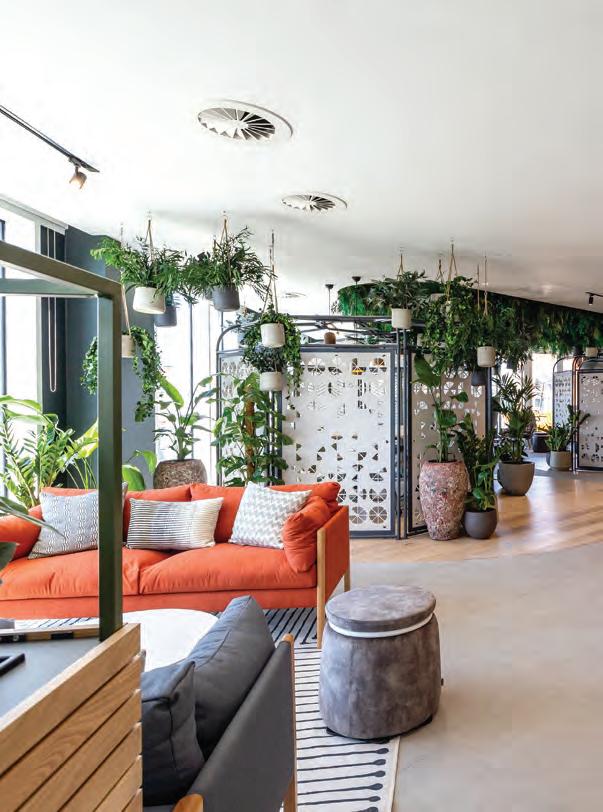
Step inside Osborne Clarke’s new Grade A Finzels Reach office
PLUS...
SO MUCH MORE IN THE CITY’S BIGGEST GUIDE TO LIVING IN BRISTOL
£4.25 where sold
Issue 225 I AuGusT 2023 THE THEBRISTOLMAG.CO.UK
MAGAZINE


The kitchen you’ve been searching for. German engineering | Quality | Craftsmanship BRISTOL - Clifton Down Shopping Centre, BS8 2NN - 0117 213 0680 BATH - Saracen Street, BA1 5BR - 01225 634025 Visit our showroom or request a brochure by scanning the QR code or see uk.kutchenhaus.com
TheGermanKitchen
Stay
We
Hear
What’s
Looking
48 FUTURE FOCUS
As law firm Osborne Clarke move into its Finzels Reach office, we speak to Lara Burch about the future of work
54 SUMMER THRILLERS
The brilliant team at Gloucester Road Books suggest five pulse-racing new novels to keep you entertained
56 GROUNDED IN NATURE
Step inside Combe Grove – a centre for integrated health and wellness overlooking the Limpley Stoke Valley
60



George Cook of the Avon Wildlife Trust waxes lyrical about Folly Farm and Chew Valley Lake
66 INDUSTRIAL CHIC
Ben Gregory, design consultant for Kütchenhaus Bristol, on creating a kitchen with a contemporary, industrial vibe
68 GARDENING
Elly West on how we can help Britain’s butterfly population
I Am Your Mother is the fourth episode of the Star Wars: Visions Volume 2 by Aardman Animations. Read more on p.18


Contents
CITYIST
10
the latest
VISIONARY PROWESS
up to date with
news from the city 18
26 WHAT’S ON
your
Discover all the great things to see and do 30 PUEBLO FUTURISM
sit down with Aardman director Magdalena Osinska to talk all about the studio’s collaboration with Lucasfilm
Book
tickets!
an
ARTS & EXHIBITIONS
from Marla Allison – the latest Native American artist to visit Bristol for
exhibition at Rainmaker Gallery 34
showing at our local galleries 38 A CITY OF FERRIES
looks back at the history of Bristol’s beloved water network
GET ON COURSE
Andrew Swift
40
add a string to your bow? Enjoy a selection of great adult courses available around the city AUGUST 2023 4 THE BRISTOL MAGAZINE | AUGUST 2023 | No 225
THE COVER
to
ON
DAYS OUT
56 48

from the
EDITOR
Aardman Animations is synonymous with Bristol. Its style distinct, voice unique and comedic timing loved by millions around the world. A front cover adorned with creations from the four times Academy Award winning studio always feels as though we couldn’t get more Bristol.
Millie Bruce-Watt
This time round, the characters – mother-anddaughter duo Kalina and Anni – were dreamt up by director Magdalena Osinska and an immensely talented team of animators for a collaboration like no other.

In 2021, the studio was approached by Lucasfilm and asked to create an episode for the second instalment of the critically acclaimed series, Star Wars: Visions. After nearly two years of meticulous work, the 10-minute short titled I Am Your Mother, along with eight other episodes from studios all around the world, was released on Disney+. The series was adored by fans and critics alike and we were eager to know more. Flick to p.18 to read our interview with Osinska, who delves into the inspiration behind her charming, heart-warming picture. Elsewhere, the magazine is brimming with things to do and places to see. On p.30, we celebrate the work of Marla Allison –the latest Native American artist to visit Bristol for an exhibition at Rainmaker Gallery in Clifton. Allison is creating a unique style of painting, which she calls “pueblo futurism”. She talks beautifully about her experiences growing up in her ancestral family village in the western desert landscape of New Mexico and how she looks up to her aunt, Deb Haaland, the first Indigenous Cabinet Secretary in the history of the United States and an extraordinary role model.
Whether you’re looking to be entertained or are in the market to take up a new pursuit, this month’s magazine has you covered. Hope you enjoy the read – see you next time…
Publisher Steve Miklos
Email: steve@thebristolmagazine.co.uk
Financial Director Jane Miklos
Email: jane@thebristolmagazine.co.uk
Editor Millie Bruce-Watt

Tel: 0117 974 2800
Email: millie@thebristolmagazine.co.uk
Assistant Editor/Web Editor Isabelle Blakeney
Email: isabelle@thebristolmagazine.co.uk
Production Manager Jeff Osborne
Email: production@thebristolmagazine.co.uk
Advertising Sales Liz Grey liz@thebristolmagazine.co.uk
For advertising enquiries please contact us on: 0117 974 2800 Email: sales@thebristolmagazine.co.uk
The Bristol Magazine is published by MC Publishing Ltd. An independent publisher.
Every month The Bristol Magazine is hand delivered to more than 15,000 homes in selected areas. We also deliver direct to companies and businesses across the city. Additionally there are many places where we have floor-stands and units for free pick-up:

6 THE BRISTOL MAGAZINE | AUGUST 2023 | No 225 Contact us: THE BRISTOL MAGAZINE The Bristol Magazine Tel: 0117 974 2800 www.thebristolmagazine.co.uk © MC Publishing Ltd 2023 2 Princes Buildings, George Street, Bath BA1 2ED Disclaimer: Whilst every reasonable care is taken with all material submitted to The Bristol Magazine, the publisher cannot accept responsibility for loss or damage to such material. Opinions expressed in articles are strictly those of the authors. This publication is copyright and may not be reproduced in any form either in part or whole without written permission from the publishers.
Read about Aardman Animations’ creation for Star Wars: Visions Volume 2 on p.18

things to do in August 5
Feast
Street food and circus festival, the Big Banquet, is returning to Caldicot Castle for the August bank holiday weekend.

Big Banquet will be bringing flavours from around the world from some Wales’ best-known and up-and-coming street food chefs –all centred around a gravity-defying high-wire act.
The Big Banquet will run across the summer bank holiday weekend from Friday 25 August to Monday 28 August. As well as the street food and high-wire shows, visitors can expect walkabout circus performers, a free circus school for kids, fire shows from the Pembrokeshire Fire Spinners and live DJ sets.
The range of food on offer includes a British St Food Award Winner and a Bake Off the Professionals winner in the line up, with a diversity of cuisines represented including a Feasts from the East zone, Mexican Kitchens zone, Festival Favourites and a Dessert Island.
• Tickets are £5 plus booking fee and kids' tickets are free; thebigbanquet.uk
Get creative
This summer, Wake The Tiger is welcoming all ages to bring along junk and upcycle into works of art.
The Re-Creation Station is an arts and crafts area within The Guildhall café, where visitors can get those creative minds active, using inspiration from the world of Meridia.

The Re-Creation station activity is included in the general ticket price and will be running throughout August.
• wakethetiger.com
Play
Keep an eye out for We The Curious this month as the team pop up around the city at festivals and events, putting on a whole range of activities from exploring robots and how they interact with the world to creating your own constellations and stories.
Every weekend throughout August, We The Curious will be on Anchor Square, designing and making rolling contraptions. Experiment with wheels, weights and a big ramp and have a go at inventing your own mini rover.

• For more information, visit: wethecurious.org
Be entertained
Taking place from 12–13 August, the Wiltshire Game and Country Fair is set to be an unbeatable family day out in the stunning grounds of Bowood House, near Calne, Wiltshire.

This show has grown to be a favourite with locals offering excellent arena entertainment throughout the day, including falconry, horse boarding, scurry driving and more. There is also the opportunity to have a go at clay shooting, airguns and archery there is tuition and advice on hand.
The Food Glorious Food area boasts a range of selected national and local food producers and specialist street foods and drinks. Here you will find the country kitchen hosting a number of cookery demonstrations throughout the day –the perfect place to relax and unwind while listening to live jazz and folk.
• livingheritagecountryshows.com/wiltshire-game-country
Listen
The Bee and Pollination Festival returns this year on the August bank holiday weekend. This is a great place to learn about the vital role pollinators play in our lives, see demonstrations, exhibits, and talks, buy honey and see the Botanic Garden in all its September finery.

Speakers include Dr Rowena Jenkins (Sunday 2pm) from the University of Cardiff will reveal the amazing benefits of Manuka honey and its use in surgery; Dr Thomas O’Shea-Wheller (Saturday 11am) discusses the advance, behavior and threat of the Asian hornet; Dr Steve Nicholls (Saturday 2pm) gives an introduction to the world of dragonflies and how they have evolved; Monica Barlow (Sunday 3pm) for Bees for Development shows how conserving bees and making the beekeepers work economically viable can help conserve natural habitat for some of the world’s poorest communities.
• botanic-garden.bristol.ac.uk/event/bee-and-pollination-festival
8 THE BRISTOL MAGAZINE | AUGUST 2023 | No 225
ZEITGEIST

THE CITYist
Bristol DJ and producer Eats Everything teams up with Nissan

Nissan along with DJ and Producer Eats Everything has brought the noises of the electric motorsport Formula E to life in an all-new music track titled, Feeel. The name of the track, an acronym for Formula E Eats Everything London, reflects the brand’s “Feel Electric” campaign, linking the electrical impulses in the human body when we feel excitement to the electricity powering cars. The track has been shared ahead of the final race of the season in London (29 – 30 July). Wanting to raise the excitement level ahead of the final race of Season 9, Nissan partnered with Eats Everything to mix noises from their Formula E race team into an electrifying new breakbeat music track. The sounds were collected at the Monaco E-Prix in May, and include everything from the Gen3 race car accelerating away to wheel guns, team radio, and even the opening of drink cans.
Eats Everything comments: “What inspired me for the track was the visuals, seeing the whole Nissan Formula E Team work together in the garage, hearing the communications through the radios and all the other steps in between made me want to create a track which felt like a constant build up.”
Free birthday bus travel comes to the West
The very first passengers to enjoy free bus rides throughout the month of their birthday will travel from 1 August. The innovative initiative, giving every resident in the West of England free bus travel throughout the month of their birthday, runs for 12 months, until every West of England resident has had the chance to benefit from ‘Birthday Buses’. It is valid on buses across 350-plus square miles, for as many bus journeys as you want, at any time.

Birthday Buses aims to attract new passengers to try out buses for the first time at no risk, and to change people’s travel behaviour long term. It is hoped this in turn will grow bus passenger numbers across the West of England, meaning more fare income and so more investment in buses.
Mayor Dan Norris said: “I’m really proud of Birthday Buses. It’s new and innovative and is all about behaviour change –about getting more and more people out of their cars and onto the buses long term. That’s vital to build the local transport system West of England residents deserve, which in turn will cut congestion and help us meet our ambitious net-zero targets locally. And it will really help locals during this really, really difficult cost-of-living crisis.”
• Apply for Birthday Bus Pass at: birthdaybus.co.uk
• Listen to the full track at: nissan.co.uk
Hoppy Birthday, Bristol! City celebrates its 650th anniversary with huge hopscotches
A giant hopscotch trail celebrating Bristol’s 650th anniversary as a city will hop into parks and green spaces throughout the city centre this summer.
Brought to life by the teams at Bristol City Centre BID and Upfest, the colossal artworks will take Bristolians back to their childhood, delighting those both young and young at heart. The concept has arrived in Bristol and colourful bean bags will be available for the ultimate playground throwback where players can set targets, throw the bags and move towards the tile. Offering a free activity for families throughout the school holidays, visitors are encouraged to use the tiles to get creative with their own games as well as the traditional hopscotch.
Three 650 tile hopscotch locations are located in Queen Square, Castle Park and College Green. Sprayed onto the grass in these iconic green spaces, each hopscotch will incorporate 650 individual tiles and also be brought to life in the shape of the numbers: 6 5 0.
The numbers signify Bristol’s 650th year as a city. It has been 650 years since King Edward III granted important rights and privileges to Bristol by royal charter in 1373. Until this time, Bristol was divided geographically and administratively by the River Avon. The charter of 1373 gave Bristol and its suburbs jurisdiction independent from other county authorities, making it a county in its own right. Since then, Bristol has developed its own unmistakable identity, carved out by passionate locals and spirited fans, with art and culture at its core for generations.

10 THE BRISTOL MAGAZINE | AUGUST 2023 | No 225

Studio 74 Contemporary Art crowned overall winner for Best Art Space

Earlier in June, Studio 74 won ‘Best Art Gallery’ in the South West for Dorset, Somerset and Bristol (voted by the Muddy Stiletto readers). Now, Studio 74 has just been crowned overall winner out of 28 counties in the National Muddy Stiletto Awards 2023.
The ethos of the Muddy Awards is about celebrating and supporting the most creative, exciting local businesses and their experienced judging panel of Muddy Stilettos Editors discussed and debated over the five best businesses in each category to be in the National Finals. One winner in each category was then crowned the ‘Best of the Best’.
The Muddy Stilettos Awards, in their 10th year, are the ultimate celebration of the best of the best independent businesses and an astonishing 77,000 businesses entered this year’s awards.
Ellena Norman, business owner and director of Studio 74 comments: “We are absolutely thrilled and honoured to be crowned ‘Best Art Space’ in the National Muddy Stilettos Awards 2023. Winning this prestigious award after only being open since October 2022 is a testament to the incredible dedication and tremendous support from our clients and artists we work with.
“At Studio 74, we have always strived to create a vibrant and welcoming space for both established and emerging artists to showcase their work, and this recognition motivates us to continue pushing the boundaries of artistic excellence. We are immensely grateful to all our supporters and the Muddy Stilettos Awards for recognising and celebrating outstanding local businesses like ours.”
• studio74contemporaryart.com
Bristol business community joins forces to launch Anti Banquet to fight food insecurity

Ashton Gate Stadium has joined forces with Josh Eggleton and Team Love’s CIC Team Canteen to create a unique fundraising event on 5 October. Anti Banquet will raise vital funds for Bristol Local Food Fund. Presented by Bristolian legends Jayde Adams and Joe Sims, this groundbreaking event aims to combat food inequality and enhance community cohesion through the power of local food.
Bristol businesses will have the unique opportunity to purchase tables for local charities and worthy causes, whilst their bosses roll their sleeves up in the kitchen, or donate a table to one of the excellent local causes helping communities tackle food insecurity.
Bristol’s most exciting chefs will take charge of the kitchen, preparing a delectable dinner for the guests. Josh Eggleton will work alongside Peter Sanchez Iglesias, who runs two of the city’s most renowned restaurants; Michelin-starred Paco Tapas and Casa, Ben Harvey, who is the executive chef at Bianchis and Pasta Loco and many other well-known faces.
• To get involved, buy a table for your team or donate one to a charity or worthy cause of your choice, visit: antibanquet.co.uk
Up, up and away: Bristol International Balloon Fiesta announces first ever Thursday mass ascent

Returning to its home turf at Ashton Court Estate from 10 August to 13 August, Bristol’s most iconic free event is ready for lift-off as it announces a new Thursday mass ascent and family funday Friday for its 45th edition.
The first mass ascent, which usually takes place on Friday morning, is now set to take place Thursday evening at 6pm, and will be followed by the legendary Nightglow, which sees multiple balloons light up to a one-off soundtrack.
The team at Bristol-based record label, Jelli Records will be programming this year’s Bandstand with a symphony of live music, and kids entertainers extraordinaires, Party Peeps will be bringing non-stop shenanigans to the children’s Brizzle Kicks area... including their much loved Foam Party.
Visitors of all ages will also get the chance to meet the flight teams in the main arena, step inside an inflated balloon and stand in a balloon basket to imagine they’re soaring above the city. More Fiesta-favourites will also be on hand, including model planes, inflation races where teams race against each other to inflate their balloons, model balloons, and the REME Parachute Display Team, who will be wowing crowds with their daredevil stunts.
• For more information, visit: bristolballoonfiesta.co.uk

12 THE BRISTOL MAGAZINE | AUGUST 2023 | No 225
Image credit: Beth Whelan


THEBRISTOLMAG.CO.UK | AUGUST 2023 | THE BRISTOL MAGAZINE 13 info@beaunashbath.com |01225 334234 www.beaunashbath.com beaunashbath Looking for a Wedding Gift?
Vacances Palm Treex Macrame Tote Bagx £49.50; oliverbonas.comx


Mollie
whistles.comx
Oversized Sunglassesx £265; harveynichols.comx Tillie Mini Checkboard Totex £40.50; whistles.comx Oana Milletx Carved Circle Earringsx £35; saharalondon.comx
johnlewis.com
Nama panelledx recycled mesh sneakersx £595; harveynichols.comx Weekend Maxmara Raid Shopper In Printed Cotton - Tobacco £122.50; graceandmabel.co.uk Selected Femme Beckax Green Suede Padded Sandalsx £85; oliverbonas.comx Bauhaus Silk Scarfx £59; saharalondon.comx
whistles.comx
Enamel
whistles.comx THEBRISTOLMAG.CO.UK | AUGUST 2023 | THE BRISTOL MAGAZINE 15
accessorize.comx Summer accessories This month, we’re loving the ease of summer style... Beaded Macramex Cream Slouchx Backpackx £46; oliverbonas.comx
Twist Front Sandalx £161.10;
Prada
Striped Floppy Hat, Navy/Natural £7.50;
Chloé
Silk Mix Scrunchiex £10.80;
Double
Hoopx £31.50;
Raffia Wrap Claw Clip;x £3;


THEBRISTOLMAG.CO.UK | AUGUST 2023 | THE BRISTOL MAGAZINE 17 For flights call 01934 852875 www.firstflight.co.uk
Visionary prowess
This year, beloved Bristol-based animation studio, Aardman, collaborated with Lucasfilm to create an episode for Star Wars: Visions Volume 2. It received rave reviews from fans and critics alike so we sat down with director Magdalena Osinska to talk about the inspiration behind her creation, I Am Your Mother

When the phone rang on one cold March day at the Bristol-based HQ of the world famous, four times Academy Award winning animation studio, Aardman, there was a slim chance anyone was expecting it to be Skywalker Ranch, home of the legendary Lucasfilm, on the other end.
With the call came an extraordinary opportunity to take charge of one episode in the second instalment of Star Wars: Visions, an animated anthology series created for Disney+. The first volume of Visions consisted of nine anime short films produced by seven Japanese animation studios. The films were set in, or inspired by, the StarWars universe, with each episode being a self-contained narrative. True to Lucasfilm form, the first series, released in 2021, rose to critical acclaim.
For volume two, they decided to reach out to animation studios around the world, commissioning El Guiri (Spain), Cartoon Saloon (Ireland), Punkrobot (Chile), Studio Mir (South Korea), Studio La Cachette (France), 88 Pictures (India), D'art Shtajio (Japan), Triggerfish (South Africa/Ireland), and, of course, Aardman.
As soon as the big red ‘end call’ button was pressed, the Bristol studio got to work on the fourth episode of the ninepart series. They asked 30 of their directors to pitch ideas for the 10-minute production.
After short deliberation, it was the work of award-winning director Magdalena Osinska that caught the eye of Lucasfilm’s executives. Osinska’s vision for Visions was inspired by her move to the UK from her home in Warsaw, Poland and her reflections on raising her young son.
“I prepared four ideas all together but I Am Your Mother was the first idea that came to mind,” Osinska explains. “At the time I was pitching, my son was four years old. My life had changed quite a bit. I had started to think a lot about myself as a mother, how I was trying to find a balance between motherhood and work. I also started to think about my own mother. Now that I’m older, I see how much she has helped me through my life. When I was younger, I wasn’t always so appreciative – a feeling I think we can all relate to in some way. I wanted to write a love letter to all mothers. In StarsWars in

particular, mothers often take a back seat so I wanted to do a positive spin on the famous “I am your father” line.
“Lucasfilm really loved the story from the beginning. They loved that it had a personal touch and that it had heart. They always championed it and were very supportive.”
Osinska’s episode follows young pilot Anni, who is embarrassed by her sweet, but clingy mum, Kalina. They have moved to Chandrila from a faraway fishing planet so that Anni could study at a prestigious flight school. When an end-of-year madcap family race comes around, Anni must team up with her mother to be in with a chance of winning. Their relationship is soon tested by the elements.
Lucasfilm and Aardman are renowned for their visually rich and distinctive styles; both have undoubtedly influenced a generation, but, at first glance, it feels as though they derive from disparate corners of the universe. “The most challenging part was getting the balance between the Aardman and Star Wars aesthetics,” admits Osinska, but it was a challenge that was accepted and achieved with distinction. The two worlds come together in a harmonious marriage. Aardman’s stopmotion style and comedic voice is projected beautifully through a StarsWars lens.
Much to the delight of Osinska and the entire Aardman team, Lucasfilm gave the studios free rein to re-envision the ideas of StarWars as they saw fit, following guidance from Lucasfilm's executive team. The creators of volume one had incorporated black-and-white samurai showdowns and a vibrant rock band rhapsodie, which suggested that not much was off limits.
“They gave us a lot of freedom,” said Osinska. “It was a very nice ride in terms of the collaboration. To start with, we were told to make a film without lightsabers, which was quite challenging because when you think about StarWars , you think about lightsabers and Jedis and The Force, but actually it was a really good creative challenge.
“Lucasfilm also originally said that we weren’t able to use existing characters or existing species but later they suggested we use the alien species Twi’leks, which is what Anni and Kalina are. I was very excited because the species is very
18 THE BRISTOL MAGAZINE |
2023 | No 225
AUGUST

THEBRISTOLMAG.CO.UK | AUGUST 2023 | THE BRISTOL MAGAZINE 19
recognisable and they have beautiful shapes and colours. They also agreed that we could use Wookiees and other species too.”
Eagle-eyed fans of both universes may spot cleverly planted Easter eggs throughout the film. For instance, the robot cooker and orange rocket from AGrandDayOut appear in the kitchen at the beginning of the film. What’s more, the Gammorean pigs, which are one of the alien species in StarWars, are suspiciously similar to the pigs seen in ShaunTheSheep

In true Aardman fashion, subtle jokes are also peppered throughout the short film. “One of the StarWars Easter eggs that I really liked was the inclusion of underwear,” laughs Osinska. “It was inspired by a speech Carrie Fisher made at the 2005 AFI Lifetime Achievement Award ceremony, which was a tribute to George Lucas. Talking to Lucas directly during the speech, Carrie said, ‘when I was playing Princess Leia, you told me I couldn’t wear a bra because there was no underwear in space,’ but Padmé Amidala, who appears in the prequel, looks like she is wearing one. It was a hilarious speech so I wanted it to be a nod to Carrie Fisher to confirm that there is underwear in space if she wishes.”
Aardman stop-motion films, including WallaceandGromit and ChickenRun, have always been highly commended for their meticulous attention to detail in every frame. Their craftsmanship brings characters and settings to life in a way that captivates viewers, and their use of clay figures adds a tangible and endearing quality to their films. Their ability to push the boundaries while staying true to their traditional roots is a testament to the immense talent and artistry that exists within the team. They create worlds that transport audiences into imaginative and magical realms and I AmYourMother is no exception.
Speaking about the creative process, Osinska says: “The sets in I Am Your Mother are stunning, but the really magical moment comes when I speak to the animators about the performance and the scene we are rehearsing, then I leave them for a day or two and when I come back, the puppet is alive, it suddenly lives and breathes; it’s always incredible to see.”
After nearly two years of hard work, Star Wars: Visions Volume 2 was released on this year’s Star Wars Day (May the 4th be with you). The celebrations proved to be an emotional time for Osinska, who, for so long, was sworn to secrecy. “The Star Wars Celebration in London earlier this year was an amazing experience. Lucasfilm chose my film to be screened in front of 4,500 people. From not being able to talk about it for such a long time to then suddenly seeing it presented in front of a huge audience was really something else. To see my name up on the screen with George Lucas’ was a heart stopping moment.
 Aardman director Magdalena Osinska
I Am Your Mother follows young pilot Anni, who is embarrassed by her sweet, but clingy mum, Kalina. When an end-of-year madcap family race comes around, Anni must team up with her mother to be in with a chance of winning...
Aardman director Magdalena Osinska
I Am Your Mother follows young pilot Anni, who is embarrassed by her sweet, but clingy mum, Kalina. When an end-of-year madcap family race comes around, Anni must team up with her mother to be in with a chance of winning...
Aardman were able to include existing species from the Star Wars universe, including Wookiees

“It was also great to meet the other animation studios. Every one of them is really talented. We all come from very different backgrounds but I think the common thread was that our films were all heartwarming, personal stories.”
Osinska’s own story is too an inspirational one. Having joined Aardman 12 years ago, Osinska has worked her way up from render artist to director, refining her skills in stop-motion, CGI, 2D and liveaction along the way. Her credits include Wall ace & Gromit’s The Great Sofa Caper and Share the Orange commercials. She is a graduate of the National Film and Television School in Beaconsfield, as well as the Polish Film School in Lodz and Art College in Warsaw. Her love of stop-motion animation – and specifically the work of Aardman –truly set in during her third year of film school when she was granted a scholarship to study a three-month animation course run by the University of the West of England and Aardman. “When I came to Bristol, I visited the studios a couple of times and Peter Lord [the cofounder of Aardman] came to talk to us. I got so obsessed with it; I loved it even more and I really wanted to work there. I remember my mum came to visit me and I asked her, am I being delusional? She said to me like a Jedi master, I believe in you, if you want it, it’s going to happen. When I Am Your Mother was released, Aardman put a massive banner on the staircase and it was such an emotional moment because it really reminded me of what my mum had said that day.”

As expected, Visions Volume 2 has been lauded by the fans and critics alike. I wonder, could there be more to come? “When we were developing the characters, we created a whole back story for each of them. We approached it like a feature film so there are definitely enough ideas for it to be longer. I would love to do more,” Osinska beams.
A charming, authentically Aardman stop-motion story filled with StarWars mastery and, ultimately, a whole lot of love. We can’t wait for the story to continue. n
Osinska holding the main characters, Anni and her mother Kalina
• aardman.com. Watch Star Wars: Visions Volume 2 on Disney+. Film shots courtesy of Aardman Animations

Left and below, image credit: Mark Swaffield
“The sets in I Am Your Mother are stunning, but the really magical moment comes when I speak to the animators about the performance and the scene we are rehearsing, then I leave them for a day or two and when I come back, the puppet is alive, it suddenly lives and breathes; it’s always incredible to see.”
ANIMATION
FAMILY DIARY
DISCOVER THE BEST THINGS TO SEE & DO WITH THE FAMILY THIS MONTH

Wake The Tiger Amazement Park
n Throughout August, Albert Road, BS2 0YA
From the artistic team behind the groundbreaking festival, Boomtown Fair, journey to the world of Meridia. Having spent over a decade creating one of the most large scale immersive festival experiences in the world, the team wanted to expand and diversify their creative potential by establishing a year round arts and events venue where audiences can experience the work in a non-festival environment. wakethetiger.com
Pixar Mix
n Throughout August, Watershed
Throughout August, Watershed will be screening some of its favourites from the Pixar studio including TheIncredibles, FindingNemo, Up and Ratatouille. Book your tickets at: watershed.co.uk
Kids go free!
n Throughout August, SS Great Britain
This year marks 180 years since the SS Great Britain was launched into Bristol harbour –changing global travel forever. To celebrate, Brunel’s SS Great Britain is welcoming children 16 years and under for free this summer when you book tickets online. Highlights include an exciting new food trail – ‘Birthday Banquet Blunder’ – where families can follow a series of clues hidden throughout the ship. The trail will teach children about the food that passengers would have eaten on board. ssgreatbritain.org
The Very Hungry Caterpillar Trail
n Throughout August, Bristol Zoo Project
This summer, join in Bristol Zoo Project’s fun interactive trail inspired by Eric Carle’s bestselling children’s book, The Very Hungry Caterpillar.

The trail recreates the story with a series of super-sized, larger-than-life 3D installations, giant cocoon swings and augmented reality (AR) for a truly immersive experience.

Following the caterpillar’s footsteps, wind your way through the giant apple and pear archways and climb through the plum tunnels. Grab selfies with the beautiful butterfly and finish the trail in Tower Meadow where you’ll find a caterpillar slide and a range of fun games and activities. Book your tickets at: wildplace.org.uk
Scribble and Sketch
n Once a month, various locations
Join the RWA’s Scribble and Sketch artists at locations across the city on Saturdays once a
BOOK YOUR TICKETS
22 THE BRISTOL MAGAZINE | AUGUST 2023 | No 225
Create a brand new piece of theatre at Tobacco Factory’s Summer School
Head down to Wake The Tiger this summer
Join Bristol Zoo Project’s Very Hungry Caterpillar Trail


THEBRISTOLMAG.CO.UK | AUGUST 2023 | THE BRISTOL MAGAZINE 23
month for free family workshops. These sessions are designed for children and grownups to take part in together –everyone is welcome. Admission is free. No pre-booking required. Suitable for all ages, children must be supervised. rwa.org.uk

Vegan Kids Festival

n 11 – 13 August, Woodhouse Park Activity Centre, Fernhill, Bristol, BS32 4LX
The festival will be bringing together families from all over the uk and beyond, in a threeday, two-night event. The main stage will be the central hub with lots of live entertainment. In a beautiful woodland area, families can enjoy an outdoor cinema or silent disco. The campfire will come alive at
night and a local astronomer will give audiences a tour of the night sky. For more information, visit: vegankidsfestival.co.uk
Summer School
n 14 –18 August, Tobacco Factory Theatres
This summer, Tobacco Factory Theatres challenge you to create a brand new piece of theatre to be performed on its stage. Working with highly experienced theatre practitioners, young people will develop their drama skills through games, imaginative play, role play and storytelling. Each day, they will be encouraged to expand their selfconfidence, communication ability and team work skills. The sessions are led by skilled theatre makers with strong backgrounds in
creating work with and for young people. For more information, visit: tobaccofactorytheatres.com
Goldfinch Create and Play
n 14, 15, 21 & 22 August, Westbury-on-Trym
Goldfinch Create and Play is a new art cafe opening in September in Westbury-on-Trym.
The August Summer Holiday Art Club, running on 14th, 15th, 21st and 22nd August, is for children aged 5 –13 years. They are super creative full-day sessions (9am –4pm) with different programmes each day to unlock your child’s creativity. Space is limited and they anticipate it booking up quickly, so reserve your place today. For more information, visit: goldfinchcreateandplay.co.uk
Shrek the Musical

n 22–27 August, Bristol Hippodrome
Leading the stellar cast as the legendary Shrek is theatre extraordinaire Antony Lawrence (The Lion King, MaryPoppins, MatildatheMusical), StrictlyComeDancing and leading lady Joanne Clifton (The AddamsFamily) as the beloved Princess Fiona, Olivier-Award nominated James Gillian (Everybody’sTalkingaboutJamie) as the evil Lord Farquaad, and theatre favourite Brandon Lee Sears (Dreamgirls, Motown) as the loveable donkey. Featuring fabulous songs, Shrek the Musical is a “musical extravaganza for big kids and little kids alike”. atgtickets.com
24 THE BRISTOL MAGAZINE | AUGUST 2023 | No 225
BOOK YOUR TICKETS
Pixar’s Ratatouille is showing at Watershed this August
Don’t miss Shrek the Musical at Bristol Hippodrome (22 -27 August)
Kids go free at SS Great Britain throughout August


THEBRISTOLMAG.CO.UK | AUGUST 2023 | THE BRISTOL MAGAZINE 25
WHAT’S ON
Unicornfest
n Throughout August, around Bristol
We’ve had gorillas and we’ve had Gromits, now we can enjoy a giant herd of unicorns (or ‘blessing’ as a group of unicorns is known), which has descended upon the streets of Bristol. Enjoy the colourful arts trail of decorated mythical unicorns with Unicornfest 2023 in celebration of Bristol’s 650th anniversary.
ValleyFest

n 3 –6 August
Valley Fest is the best-tasting music festival in the South West, taking place next to the glittering Chew Valley Lake. The weekend is perfect for first-time festival goers as well as families of all ages. This year’s headliners include Bananarama, Soul II Soul and The Kooks. As well as music, enjoy fine food from local producers serving everything from charcuterie to cider, street food to sitdown feasts – all with plenty of Somerset style and sizzle. Book your tickets at: valleyfest.co.uk
St Nicks Night Market
n 4 August, St Nicks Market
St Nicks Night Market will see musicians and performers bring the market and Old City to life by night, the stunning streets bustling with happy crowds ready to enjoy a
fine array of delectable street food, local tipples, dancing, and that wonderful Night Market atmosphere.
Sea Shanty and Folk Music Festival
n 4 –6 August, various venues in Weston-Super-Mare

Enjoy a weekend of brilliant acts singing traditional shanties relating to our local maritime history. Ahaaaargh! Pirate crews will also be invading Weston-Super-Mare. Why not dress as your favourite pirate and join in the fun?! No tickets are required for any of the performances. To see the full programme, visit: wsmshantyfest.com
Oppenheimer
n 4 –10 August, Watershed
Written and directed by Christopher Nolan, Oppenheimer is an IMAX®-shot epic thriller that thrusts you into the pulsepounding paradox of the enigmatic man who risked destroying the world in order to save it.
Based on the Pulitzer Prize-winning book, Cillian Murphy portrays American scientist J. Robert Oppenheimer, who played a crucial role in developing the atomic bomb. Together with a stellar cast including Emily Blunt, Matt Damon and Robert Downey, Jr., Nolan has created another visually impressive spectacle that stands on par with
his previous work directing Tenet, Dunkirk and Inception watershed.co.uk
FreddieMcGregor
n 10 August, Trinity Centre
Freddie McGregor is a singer, musician and record producer from Jamaica. He is one of Reggae’s most durable and soulful singers, with an incredibly steady career that started all the way back in the ‘60s when he was just seven years old. Since then, he’s spanned nearly every stylistic shift in Jamaican music; from ska and rocksteady, to dabbling in dancehall, raga and dub. trinitybristol.org.uk
Summer Film Takeover: The 4 Pillars: 50 Years of Hip Hop
n 12 August, Sparks Bristol Film, music and more... Freestyle CIC and Bris-Story present a day of free screenings and activities to celebrate Hip Hop’s 50th birthday, exploring its four pillars –breakdancing, graffiti, DJing and rap – and how it has helped influence Bristol’s culture, leaving a lasting legacy. bristolcityoffilm.co.uk
Bristol Bonsai Society Annual Show
n 13 August, Failand Village Hall, Oxhouse Lane, BS8 3TS
Bristol Bonsai Society’s Annual Show is
Ú Continued on page 28 26 THE BRISTOL MAGAZINE | AUGUST 2023 | No 225
The South West’s best-tasting festival, ValleyFest, returns on 3 August; credit: Ania Shrimpton


THEBRISTOLMAG.CO.UK | AUGUST 2023 | THE BRISTOL MAGAZINE 27
taking place from 10am –4pm (last entry at 3pm) on 13 August. Entry is £5 per person for over 16s (cash only, payable at the door on arrival). Enjoy light refreshments and a bonsai raffle and look out for the Best Display on Show Award. For more information about the show and the society, visit: bristolbonsaisociety.wordpress.com
Bristol Film Festival: Everything Everywhere All at Once
n 15 August, Averys Wine Merchants Bristol Film Festival is putting on a special screening of Everything Everywhere All At Once, which recently won the Academy Award for Best Picture. If you missed this instant cult classic the first time round, or need another viewing of this multiverse masterpiece, then head down to Averys Wine Merchants and enjoy it with a glass of wine or two. bristolfilmfestival.com
Summer Film Takeover: Aardman at Sparks Bristol
n 18 –20 August, Sparks Bristol
An exciting weekend of free Aardman workshops and film screenings, taking place in Bristol's new sustainability hub - fun for all the family! Presented by Global Goals Centre and Aardman Animations. bristolcityoffilm.co.uk
Old City Sounds
n 26 August, various locations
This free-to-attend one-day event will take over King Street, St Stephen’s Church, St Nicholas Street and St Nicks Market in a musical celebration for those young and young at heart.
Old City Sounds, a new for summer 2023 family-friendly music event, was created by Bristol City Centre Business Improvement
District (BID). With musical fun for all the family on offer, all genres will be celebrated throughout four melodic zones.
East Bristol Brewery Trail
n 26 –27 August, various breweries
Seven East Bristol breweries will open up their taproom bars once again in 2023 in what has become one of Bristol’s most popular, and most missed, beer events. The trail includes Arbor Ales, Dawkins Ales,
Good Chemistry Brewing, Left Handed Giant Brewing Co, Little Martha Brewing and Moor Beer and Wiper & True.
The two day event, which started in 2016, will take place over the August bank holiday. eastbristolbrewerytrail.com
Blood Brothers
n 29 August –2 September, Bristol Hippodrome

Written by Willy Russell, the legendary Blood Brothers tells the captivating and moving tale of twins who, separated at birth, grow up on opposite sides of the tracks, only to meet again with fateful consequences. Few musicals have received quite such acclaim as the multi-awardwinning Blood Brothers, which, having opened in 1988 to tremendous acclaim, continues to enjoy standing ovations at almost every devastating performance. Book your tickets at: atgtickets.com
Orpheus and Eurydice
n 31 August –2 September, Bristol Old Vic It’s midnight, and Orpheus is once again amongst the grime of Bristol: broken glass, graffiti and late-night ravers.
He stands older, wiser maybe, trying to remember a moment of importance, of love… He is looking back, but perhaps he shouldn’t. Not again. Join Orpheus as he descends into the Underworld, for one final time. How does it feel to fall head-overheels in love, to trust that person will follow wherever you go, then to have them taken from you in the blink of an eye? bristololdvic.org.uk n

28 THE BRISTOL MAGAZINE | AUGUST 2023 | No 225
Old City Sounds is coming to Bristol on 26 August
Celebrate Hip Hop’s 50th birthday with Summer Film Takeover on 12 August


THEBRISTOLMAG.CO.UK | AUGUST 2023 | THE BRISTOL MAGAZINE 29
Pueblo futurism
This is your fourth visit to Bristol. What do you think of Bristol and what makes you want to keep coming back?
It is great to be back. Bristol has a cool vibe and a very particular feeling different from other cities. I enjoy the mix of old and new architecture, the diversity of cultures, the hilly terrain, the rain and the unicorns!
You are originally from Laguna Pueblo. Can you share with us a little about Laguna and your Pueblo culture?
I was raised with traditional beliefs and customs in my ancestral
family village which is in the western desert landscape of New Mexico. Our traditional life ways of seasonal dances, sacred ceremonies, New Mexican food, Pueblo clothing and Laguna pottery, continue to this day.
As an artist of mixed heritage, how do your cultures influence your paintings?
My paintings often reflect the histories, landscapes and cultures of my people as well as life outside the reservation. I am creating a unique style of painting, which I call “Pueblo Futurism”. I draw on

30 THE BRISTOL MAGAZINE | AUGUST 2023 | No 225
Marla Allison is the latest Native American artist to visit Bristol for an exhibition at Rainmaker Gallery in Clifton. During the exhibition opening, art lovers were treated to a live interview with Marla and resident curator Jo Prince. Here, we share some highlights of the conversation...
Clouds in the Window, acrylic on canvas by Marla Allison
my own culture’s traditional Pueblo pottery designs and several different abstract styles found in art history, such as cubism and futurism.
Four of the paintings in this exhibition feature young Hopi women. What is your connection to Hopi?

We have a lot of family there (on the Hopi Reservation in northeastern Arizona). My maternal grandmother was Hopi. She was born and raised on Second Mesa until the age of 16. She often took me and my younger brother to the dances at Hopi. It has always been a part of my life and my identity.
How did the pandemic affect you as a painter?
When the pandemic hit I had just begun a commission to paint murals on the walls of a hotel guest room at the Nativo Lodge in Albuquerque, New Mexico. Each room has been painted by a different Native American artist. The commission took four weeks in total –I was locked down in the hotel painting clouds. Otherwise, I was painting in my Santa Fe home studio. This was a transformational time for me as an artist. I looked out through the windows, which began to appear in the paintings, but I also looked inwards, digging deeper and dealing with loss which resulted in a very personal painting of crying flowers, titled Flowers to Soothe
Your Sorrow
Several of your most recent paintings have been increasingly abstract and free flowing. Is this a direction that you see your work progressing towards in the future?
Yes, I recently took a class in cold wax oil painting with Cherokee
artist Sallyann Paschall. The process of experimenting with texture and form without necessity was liberating and sparked a desire to create more abstract compositions.

You are not the only female force of nature to emerge from Laguna Pueblo. Tell us about your aunt, Deb Haaland, and what her trailblazing achievements mean to you, your tribe and to Indigenous people across North America...

My aunt is an incredible woman and an extraordinary role-model. She has forged a political career as a single mother and is now the first Indigenous Cabinet Secretary in the history of the United States. For the most part, this is huge for the people of Laguna, especially the women. It gives them a bigger voice and makes them feel heard and fierce. Many artists of different tribes have been inspired to paint portraits of my Aunt Deb. I hope that more Native people are also inspired to enter politics and effect meaningful change in the world.
Finally, the new Martin Scorsese movie Killers of The Flower Moon premiered at the Cannes Film Festival earlier this year. What other Native American films would you recommend?
Two films that I enjoyed are the 2001 Inuit movie Fast Runner and the music documentary Rumble: The Indians Who Rocked the World, released in 2017. There is also a film called, Grab (2011) about the tradition of Grab Day in our community of Laguna. n
• Marla’spaintingswill be on show until Saturday 12 August. For more information about Rainmaker Gallery and the exhibition, visit: rainmakerart.co.uk; 140 Whiteladies Road, Clifton, Bristol BS8 2RS
THEBRISTOLMAG.CO.UK | AUGUST 2023 | THE BRISTOL MAGAZINE 31
Marla Allison with her aunt, Deb Haaland – the first Indigenous Cabinet Secretary in the history of the United States
Mother’s Hands by Marla Allison
I Gave You A Million Clouds by Marla Allison
From our newsletters...
Subscribe to receive The Bristol Magazine’s weekend newsletter every Friday and never miss out on fantastic extra content...


NEWS FROM THE CITY
Journey behind the scenes of Thatchers' TV ad

Thatchers Cider has released a behind-the-scenes look at the making of its new TV ad, Pint-Sized Perfection. The short film takes an exclusive look into Aardman's Bristol studios where the new stopmotion Thatchers advert was created. Find out why hundreds of tiny apples needed to be made, how animators used the puppets to create a sense of organic chaos, and how the director forged a career in animation.
MAGAZINE KIOSK
From Magalleria: curated by Daniel McCabe
is a bi-annual Anglo-Spanish magazine that initially focused on the plant and gardening interests of unlikely celebrities, but has developed and broadened from a horticultural base into a sprawling blend of photography, art, fashion, food, and ecology to the extent that it's only hanging on to its place in our gardening section by its (green) fingertips. In this 19th issue, Peter Jordanov and Virginie Benarroch celebrate the beauty of the rain, Brigitte Lacombe and Matthew McLean follow Precious Okoyomon on a walk through Brooklyn's Prospect Park, Maureen Paley shares her love for the moon, Tom Johnson travels to Patagonia to visit the Chubut Valley, and Drew Vickers photographs blooms at their boldest and most vibrant; £19

Recipe: Gazpacho

Ingredients (serves 4 as a starter; 8 as part of a tapas feast):
1kg very ripe tomatoes, diced
1 ripe red pepper, deseeded and diced
1 green pepper, deseeded and diced
1 medium cucumber, peeled and diced
2 spring onions, peeled and chopped
2 cloves of garlic, peeled and crushed 50g blanched almonds
2 tbsp sherry vinegar
2 tbsp dry sherry
50g slightly stale, crusty white bread, soaked in cold water for 20 mins
4 tbsp extra virgin olive oil
To serve/garnish: see note above.
Method
1. Tip the tomatoes, peppers, cucumber, spring onions, garlic, blanched almonds and sherry vinegar into the bowl of a food processor or a large blender along with 50ml cold water. Drain the bread, squeeze out as much liquid as possible (clean hands are the best utensils here) and add that to the mixture too.
2. Process or blend until smooth, season to taste and allow to stand at room temperature for 15 minutes before adding the extra-virgin olive oil and blending again. Pass the mixture through a fine sieve, then cover and refrigerate until fully chilled before serving in small bowls as a starter or in shot glasses as part of a tapas feast. Gazpacho can be stored in a sealed container in the fridge for 3-4 days.
BEAUTY
A delicate presence, an intensely feminine and enveloping trail. A composition with radiant heart intensified by jasmine absolute and rose essence. A dazzling floral-fruity fragrance, a full and tender interpretation with heightened femininity; £136.

Visit

HIGHLIGHTS Subscribe to receive our Weekend Edition newsletter –scan the code 32 THE BRISTOL MAGAZINE | AUGUST 2023 | No 225 IT’S FREE
Chanel’s Chance Eau Tendre
chanel.com to shop
Recipe by Melissa Blease
FOOD & DRINK


THEBRISTOLMAG.CO.UK | AUGUST 2023 | THE BRISTOL MAGAZINE 33
STATE OF THE ART
Found Cities, Lost Objects: Women in the City, Royal West of England Academy (RWA), until 13 August
Found Cities, Lost Objects: Women in the City, is a national touring exhibition curated for the Arts Council Collection by Turner Prize-winning artist and cultural activist Lubaina Himid CBE. This exhibition of over 60 works, including some by Bristol-based artists, presents a wide array of modern and contemporary art, including painting, sculpture, photography and film from both the Arts Council Collection and artists’ studios.
The work in this exhibition can sometimes appear challenging and encourages visitors to view the city through a woman’s eyes, questioning our understanding of the urban city. Found Cities, Lost Objects addresses themes ranging from safety and navigation to concepts of belonging and power and fun, freedom and discovery.
RWA is excited to include work by Bristol artists Valda Jackson, Mellony Taper, Beth Carter RWA, Huma Mulji, and Veronica Vickery, amongst others.


• Royal West of England Academy, Queen’s Road, BS8 1PX
Threads: ‘Breathing Stories into Materials’, Arnolfini, until 1 October
Arnolfini welcomes you to discover Threads, a major exhibition featuring 21 contemporary international artists and makers, who use textiles as their chosen medium. Celebrating material and making, these artists use the storytelling power of textiles to connect with past traditions, find commonalities between cultures, time and place, and to ‘breathe stories into materials’. Threads encompasses processes of weaving and spinning, rugmaking, stitching and embroidery, print, knit, threading, mending and found materials, with materials and techniques handed down, reused and reinvented.
Co-curated by leading textile artist Alice Kettle, Threads weaves throughout Arnolfini’s three floors, to reveal how textiles ‘remember’, how memory is ‘embedded within the process of making’ and how new narratives are created.
• arnolfini.org.uk; 16 Narrow Quay, Bristol BS1 4QA
Image: Anya Paintsil, God will punish him (2021). Photograph courtesy of the artist and Ed Cross Gallery
Rainmaker Gallery welcomes back Indigenous artist Marla Allison, a celebrated painter from the Laguna Pueblo and Hopi tribes. The graphic paintings in this exhibition utilise traditional pottery designs and stylised portraiture to celebrate her thriving tribal cultures in a contemporary context. Also showing at Rainmaker Gallery, colourful, innovative, abstract paintings by Navajo artist Randy Barton and modernist landscapes by Cotswold-based Muscogee artist Rick Grimster.
• rainmakerart.co.uk; 140 Whiteladies Road, BS8 2RS

EXHIBITIONS
34 THE BRISTOL MAGAZINE | AUGUST 2023 | No 225
Image: Renamed City by Mellony Taper
Marla Allison, Rainmaker Gallery, until 12 August
Image: Four Hopi Maidens 2018 by Marla Allison





THEBRISTOLMAG.CO.UK | AUGUST 2023 | THE BRISTOL MAGAZINE 35 www.masanauction.com 2 Princes Buildings, George Street, Bath BA1 2ED Tel: 01225 318587 Ma San Auction In Bath SPECIALISTS IN ORIENTAL WORKS OF ART A Chinese Famille Verte Porcelain Brush Pot, Bitong, 18th Century. SOLD £6370 incl. premium A Chinese Hardwood Framed Silk Embroidered Panel, Qing Dynasty. SOLD £9490 incl. premium Offering free valuations & home visitsNow consignmentsacceptingfor future sales! A Chinese Celadon Ground Underglaze Blue and Copper Red Porcelain Vase, 19th Century. SOLD £10,400 incl. premium A Chinese Blue-Ground Silk Embroidered Nine Dragon Robe, Jifu, Qing Dynasty. SOLD £3900 incl. premium A Chinese Bronze Figure of Guanyin, 17/18th Century. SOLD £7800 incl. premium Over 30 years experience • Competitive commission rates Direct contacts in Hong Kong and China • Sales every month
Hidden history
In order for a blue plaque to be approved and installed, your proposal needs to clearly identify what or whom you are wishing to recognise. Has the individual achieved something truly significant? Did they make a notable contribution to the city and the wider community? Is their link to Bristol established? If someone was born here or lived here for a reasonable period, it is a much stronger case than if they just visited for a few days.
Is it clear where the plaque is to be installed? Preferably, it should be attached to the outside of a building, and it should be clearly visible from the roadside. The owner of the building will need to approve the installation.
A standard plaque costs about £700 to be manufactured and installed. This would need to be raised by donations or public subscription. The Civic Society is not able to pay directly for any installation. However, having supported nearly 40 plaques since 2015, we have not yet had one that failed for lack of financial support.
If you feel there is a special individual or event that would meet these broad criteria, please contact the Blue Plaque Panel at the Bristol Civic Society.
Fine examples of blue plaque proposals that were approved by the Bristol Civic Society are detailed below:
In September 2016, a blue plaque was unveiled to commemorate Leonard Heath-Humphrys. Leonard lived in Anglesey during the Second World War and in 1950 became familiar with narrow gauge railways servicing the slate quarries. He was concerned by the deteriorating state of the Ffestiniog Railway in North Wales. He sought support for its survival and called a meeting of interested parties at Tyndalls Park Road in Clifton in September 1951. Thirteen attended and were somewhat surprised to discover that Leonard was a 17-year-old schoolboy.
His remarkable ambition and vision ultimately led to the formation of the Ffestiniog Railway Society and the revival of the heritage railway. It is now the world’s oldest narrow gauge railway with almost 200 years of history and has a turnover of over £5 million annually, contributing more than £15 million to the local economy of North Wales.
British businessman and former owner of the Flying Scotsman, Sir William McAlpine, unveiled the plaque in the presence of the Chair of the Ffestiniog Railway Society and the Chair


of the Heritage Railway Group. The plaque depicts a Double Fairlie locomotive in outline – a world emblem of the railway.
A year later, in September 2017, a blue plaque commemorating Dame Katharine Furse was unveiled, celebrating her inspiring but previously unknown life.

The daughter of literary critic and poet John Addington Symonds, Katharine was born in Clifton Hill House in 1875. She joined the British Red Cross Voluntary Aid Detachment, becoming Commandant and leading the first VAD Unit sent to France in 1914. She resigned, frustrated that nurses were not able to introduce reforms that they knew were necessary. Her capabilities were soon recognised by the Navy, who, in 1917, asked her to lead a new women’s naval auxiliary. This became the Women’s Royal Naval service, now better known as the Wrens (WRNS)
In the inter-war years, she set up the World Association of Girl Guides and was Director of its World Bureau. She also achieved great success on the ski slopes on a toboggan and she was a very successful wood carver. The plaque was proposed and sponsored by the Association of Wrens; some 40 of whom attended the unveiling wearing past and present uniforms.
The Civic Society’s 25th plaque was unveiled in June 2019. It adorns the wall of Brandon House on Jacob’s Wells Road and commemorates the site of the Jacob’s Wells Theatre. This was the first purpose-built playhouse in Bristol operating for over 70 years from 1729 to 1799.
When the theatre was built, it was located outside the city boundary. This was a necessary move at a time when Puritan sentiments had all but banned theatrical performances within the city itself.
It was described by Bristol poet Thomas Chatterton as “a mean assembly room absurdly built”. Even so, it attracted residents of all classes including well-to-do visitors to the fashionable Hotwells spa and players and stars of the London stage. The theatre was so small that an actor who left the stage on one side had to walk around the outside of the house to re-enter on the other side. This greatly delighted the regular crowds who gathered on the slope of Brandon Hill.
The plaque was unveiled by Lord Mayor Councillor Jos Clark. Students from the Bristol Old Vic Theatre School in splendid period costume then treated the gathered crowd to an extract from The Beggar’s Opera – one of the first plays performed on stage at the Jacob’s Wells Theatre. n
• For more information about Bristol Civic Society, visit: bristolcivicsociety.org.uk
36 THE BRISTOL MAGAZINE | AUGUST 2023 | NO 225
LOCAL LEGENDS
This month, Malcolm Ravenscroft, a member of the Bristol Civic Society’s Blue Plaque panel, explains how to have a blue plaque installed for someone or something you feel should be celebrated...
Image courtesy of the Ffestiniog & Welsh Highland Railways
Expert opinion
From Chris Yeo, Valuer at Clevedon Salerooms

and regular expert on BBC’s Antiques Roadshow

We’re having a Vintage Year!
It has been a Summer of repeated triumphs for Clevedon Salerooms. In addition to the unprecedented success of the Barrow Court Sale reported in the previous issue, the Summer Fine Art sale held on the same day also hit many high notes. Over 90% of items offered on the day found new homes, with superb prices across all categories.
The sale opened in fine style with a fine George III neoclassical style statuary marble chimneypiece or probably George III period, in cararra and sienna marble fireplace. Purchased in the 1980s from a Cotswolds dealer, it had been intended to adorn a townhouse in The Circus in Bath, the former home of Sir Thomas Gainsborough, no less, but its former owner never got round to it and it spent the next thirty five years in pieces on the floor of his cellar where it was discovered by Clevedon Salerooms Senior Valuer Mark Huddleston. Provenance, decorative appeal and rarity combined to send sparks flying and it sold well above expectations, online against strong commission bidding, at £7,200.
That impressive result fell just short of the sale’s highest price, which was taken by a very arresting oil on canvas still life with flowers by Dorothea Sharpe. This was a classic work by a figure widely recognised
as one of England's finest female and Impressionist artists and fevered bidding saw it quickly eclipse its estimate to sell for £7,500.
The sale was a resounding success, but there was no time for auctioneers to rest on their laurels, as there immediately followed the Specialist Wine Sale. Chiefly drawn from two significant private collections, almost two hundred lots of fine wine were offered. Highlights included six bottles of 2005 Domaine Leflaive Chevalier-Montrachet Grand Cru Burgundy which sold for £5,200 and a single bottle of 1985 Krug Champagne Clos du Mesnil, Brut Blanc de Blancs, which also smashed its estimate, selling for £3,200. Auctioneers then raised a glass and toasted a landmark day and already vintage year for Clevedon Salerooms.
Summer plans continue apace at Clevedon, with two sales in August, and an outside valuation event in Stoke Bishop, Bristol on Tuesday 15th August, the final entry day for the next Quarterly Fine Art sale in September for which entries are now invited. ■
 • clevedonsalerooms.com; @chrisyeo_antiques (Instagram)
THEBRISTOLMAG.CO.UK | AUGUST 2023 | THE BRISTOL MAGAZINE 37
COLUMN | CHRIS YEO ON ANTIQUES
A city of ferries
This year, Bristol Ferry Boats announced the refurbishment and relaunch of one of its oldest vessels, nearing 100 years old. Here, Andrew Swift looks back at the history of Bristol’s beloved water network...

Bristol today may be a city of bridges, but it was once a city of ferries. Until the early 19th century, there was only one bridge across the Avon – Bristol Bridge – so, for many people, unless they were prepared to make a lengthy detour, the only way across the river was by boat.
Ferries played a vital role in the life of the city for over 500 years, but it’s not that easy to track them down today. One place you can catch a glimpse of Bristol’s lost ferries is at the end of Lower Guinea Street, a little way along from The Ostrich Pub, where a slipway runs down to the water. A sign on the wall reveals this to be Grove Ferry Slip, and it still looks as though, if you waited long enough, a boat might turn up to carry you across. Unfortunately, the last one left in 1931, and if you look across to the opposite bank you will see the slip to which it ran now lies under the River Station.
There were three other ferries across the river in the 18th century, but virtually all trace of them has disappeared. The oldest was the Gibb Ferry, dating back to 1247. It ran where Prince Street Bridge now stands, but stopped in 1809 when a wooden bridge replaced it. The present bridge followed 70 years later.
A little way upstream, a ferry ran between Welsh Back and Redcliff Back. It survived until 1930, but the only reminder of it is a narrow alleyway called Cheese Lane that led to the slipway on the Redcliff side.
East of Bristol Bridge was a ferry which went by a variety of names, including Bathavon Ferry, Counterslip Ferry, Temple Back Ferry, St Philip’s Ferry and Queen Street Ferry. It ran where St Philip’s Bridge now stands, and closed when the first bridge was first built here in 1841. It was in operation by 1673, when a map depicted it with two men and a horse being rowed across, but may have been much older.
Four ferries may have been enough for 18th-century Bristol, but as the city’s population boomed and new industries were established along the waterfront, new crossings were needed. The creation of the Floating Harbour meant that ferries along its course were no longer subject to the tides, while the opening of the New Cut created yet another obstacle to free movement around the city.
Two ferries opened along the New Cut – Gaol Ferry around 1828 and Vauxhall Ferry in 1862. In the Floating Harbour, a ferry opened in 1837 to carry workmen from Gasworks Lane across to the yard where the SS Great Western was being built. The landlord of the Mardyke beerhouse, a little further west, also started running a ferry service around this time.
On St Augustine’s Reach, just north of where Pero’s Bridge stands today, Green’s Slip Ferry (later renamed Dean’s Marsh Ferry) started up a few years later. In the 1890s, as the redevelopment of Canon’s Marsh got under way, another ferry service was introduced, running
HISTORY
Lamplighters Ferry
from the steps by Prince Street Bridge across to what is now Millennium Square.
By the end of the 19th century, as well as the two ferries across the New Cut, there were no less than six across the Floating Harbour.


The New Cut ferries were long ago replaced by footbridges –Vauxhall in 1900 and Gaol Ferry in 1935 – but building bridges across the floating harbour was a different matter. Despite many proposals over the years, there is still no crossing – except by water –between Prince Street and Cumberland Basin, a distance of over a mile. Yet, one by one, the ferries closed – Welsh Back in 1930, Grove in 1931, Canon’s Marsh in 1932, Gasworks in 1936, Dean’s Marsh in 1960 – until only Mardyke was left.
Around 1901, when a railway was built along the harbourside, the Mardyke Ferry was moved from where the Grain Barge is moored today to a new jetty, accessed by a subway under the line. In its later years the Mardyke Ferry operated ‘day and night’, as a large sign informed prospective passengers, and in 1962 it made a memorable appearance in the opening sequence of the film Some People. But, as trade in the docks leached away, it made its final crossing five years later.
Two other ferries lay beyond the Floating Harbour. Rownham Ferry, which ran from Hotwells to Bower Ashton, dated back at least to the 12th century, when it belonged to the Abbot of St Augustine’s Abbey (now Bristol Cathedral). In 1866 it was moved 175 metres upstream to make way for a new entrance to the Floating Harbour. The following year it received a new lease of life when a station on the Portishead branch opened next to the slipway on the Somerset side. At high tide, the ferry was attached to a cable to prevent it being swept away, and at low tide passengers had to pick their way along gangways linking boats beached on the mud. It sounds hazardous, but seems to have operated without any major incidents until it finally stopped running in 1932.


Five miles downstream from Rownham was a ferry that outlived them all, and was also immortalised in song by Adge Cutler. The crossing from Pill to Shirehampton is said to have been running since
the 11th century, and in the 1960s, when pubs closed half an hour later in Somerset than in Gloucestershire, was used by regulars from the Lamplighters in Shirehampton to grab an extra pint on the other side. It closed in 1974 when the opening of the M5 bridge at Avonmouth took much of its business away.
That left only one ferry still running across the Avon, four miles upstream from Bristol at Conham, operated – as it still is today – by the Beese family, who also run tea gardens on the south bank. Back in the Floating Harbour, though, things were beginning to stir. The Bristol Packet Company started running trips around the docks as well as venturing upstream to Beese’s Tea Gardens and farther afield. In 1977, a boat abandoned on the riverbank when the ferry at Pill closed three years earlier was rescued, restored and brought to Bristol to start a regular service around the docks. She was called Margaret, and almost 50 years later is still going strong as one of the stalwarts of the fleet of Bristol Ferry Boats, whose yellow and blue craft are now as much a part of the city’s DNA as the Clifton Suspension Bridge and Banksy. In 1999, meanwhile, a service from Hannover Quay to the SS Great Britain was introduced by Number Seven Boats, reviving the route of the old Gasworks Ferry. Although such a renaissance would have seemed impossible back in the late 60s, Bristol’s ferries are today busier than ever before and one of the assets of which the city can be most proud. n
HISTORY
• akemanpress.com
Left (above): Rownham Ferry at low tide
Left (below): Margaret, the first of the Bristol Ferry fleet
Rownham Ferry
Grove Ferry slipway
Get on course
Looking to add a new string to your bow? Here’s a few adult courses available around the city if you’re in the market to take up a new pursuit, challenge or discover that hidden talent...
PENLAN CRAFTS MECHANICAL TOY MAKING
Freestone Road, Bristol BS2 0QN; penlancrafts@gmail.com
Would you like to build a wooden mechanical toy from scratch? Welcome to the magical world of automata, the perfect synthesis of craftsmanship, engineering and artistic expression. On this one-day, face-to-face course, each student (maximum two participants) will design and build a one-shaft toy, drawing and cutting cams and cranks, using different types of wood and a vast range of tools available in Penlan Crafts’ workshop based near Temple Meads.
Participants can expect to finish the day with a lovely, fully functioning one-shaft mechanical toy. Suitable for absolute beginners as well as experienced woodworkers.


See Penlan Crafts’ creations on Etsy at: PenlanCrafts. Get in touch for more information via the email address above.
TRADITIONAL UPHOLSTERY SCHOOL
traditionalupholsteryschool.co.uk
RWA DRAWING SCHOOL
rwa.org.uk; Queens Road, Clifton, Bristol BS8 1PX
Discover your creative potential at the RWA Drawing School! Under the guidance of experienced artist-tutors, immerse yourself in a variety of art forms, including drawing, painting, print-making, sculpture, mixedmedia collage and much more. Approaches range from academic and historical, to experimental and contemporary, and classes are designed to nurture your creativity at any level, whether you are a beginner or more experienced artist. All classes are held in the RWA’s beautiful building – the perfect location to discover and develop new skills, meet like-minded people, and find your artistic voice.
The Autumn term boasts an exceptional selection of inspiring classes for you to enjoy, so enrol today and let your creativity soar. For more information visit rwa.org.uk.
The Traditional Upholstery School was founded in 2016 by Joanna Heptinstall to teach upholstery skills and lampshade making. Courses and workshops are designed to suit those looking to re-train and learn to upholster to a professional standard, and also those who just want a creative and rewarding hobby. The characterful, light and spacious workroom in a Wiltshire village provides a creative and sociable teaching space. Joanna offers a friendly and supportive environment which allows students to flourish. Small class sizes allow all students to thrive and produce high quality work, whether enjoying a satisfying hobby or working towards a new career.

LOVE TO LEARN
40 THE BRISTOL MAGAZINE | AUGUST 2023 | No 225
UNIVERSITY OF BRISTOL BOTANIC GARDEN
www.botanic-garden.bristol.ac.uk; University of Bristol Botanic Garden, Stoke Park Road, Bristol BS9 1JG; 0117 428 2041; botanic-gardens@bristol.ac.uk
The University of Bristol Botanic Garden offers professional Royal Horticultural Society courses for those who are looking to further their career or interest in horticulture. Set in a fantastic location within the beautiful Botanic Garden, the teaching room provides a welcoming and relaxed learning environment away from the demands of everyday life.
Bookings are currently being taken for the RHS level 2 Certificate in the Principles of Plant Growth and Development for an Autumn start. Part-time courses led by experienced tutors are available either daytime or evening, suitable for adults of all ages with an interest in horticulture. Please visit the website above for more information.

LITTLE LEAF PRESS PRINTMAKING WORKSHOPS

littleleafpress.co.uk; venues across Bristol including Clifton Suspension Bridge Learning Annexe, Prior Shop in Cabot Circus and Creative Space in Bedminster
Fully immerse yourself in the bold and playful world of printmaking! Under the gentle guidance of tutor and professional printmaker Kate Miller, learn the techniques and tools involved in your chosen printmaking method. Options for adults and children include linoprinting, drypoint etching, monoprinting and fabric relief printing. Create artwork that you’re proud of. One-day and four-week workshops run from the end of August throughout Autumn and Winter.
“I loved Kate’s workshop –full of inspiration. Incredible class and Kate was fabulous –gave us guidance when we needed and let us explore our ideas,” says Naz.
THE PRACTICAL SUSTAINABILITY COURSE
shiftbristol.org.uk
“Delivered expertly by passionate and knowledgeable tutors.” An immersion into dynamic education to engage your head, heart and hands, specialising in practical skills, systematic design and collaborative approaches. Whether you are fresh out of education, looking for a career change or making the most of your retirement, this course is a playground of opportunity to discover your passions in the wide world of sustainability.
The course includes ten modules: Organic Horticulture, Soil and Ecology, Woodland Management, Green Building, Green Energy, Permaculture Design, Group Dynamics, Community Engagement, Creating Change, Re-localisation.
Running from September –July, three days per week; 9.30am –3.30pm. Full fee: £3,595; part-concession: £2,995; full-concession: £2,395. To apply please visit the website above.

LOVE TO LEARN
THEBRISTOLMAG.CO.UK | AUGUST 2023 | THE BRISTOL MAGAZINE 41
UNIVERSITY OF BRISTOL
bristol.ac.uk/elce; elce-ptp-director@bristol.ac.uk
Apply now to the BA in English Literature and Community Engagement (ELCE). Gain a University of Bristol degree as an adult learner alongside work or other life commitments. No prior qualifications needed.

Study one night a week for a lower tuition fee. Learn with students from a wide range of ages and backgrounds. Study literatures in English from across the globe and throughout history. Explore the role of literature in society through a community-engagement project.
Applicants with no prior educational experience or returning to education encouraged. Student Finance available. Apply by 20 August 2023 for entry in September 2023.
ALLIANCE FRANÇAISE DE BRISTOL-BATH
afbristol.org.uk; 07903 821655; info@afbristol.org.uk
Have you ever dreamed of strolling along the charming streets of Paris, sipping café au lait at a quaint café, or exploring the stunning landscapes of the French countryside? Now is your chance to make those dreams a reality. Alliance Française, the leading provider of French language courses, is offering a unique opportunity for adults to learn French and immerse themselves in the rich French culture. The highly qualified and experienced teachers will guide you through the intricacies of the French language, from basic greetings to advanced conversation skills. From gastronomy to art, music to cinema, you’ll explore the diverse facets of French life and gain a true appreciation for its beauty and sophistication.
DEEPEN YOUR KNOWLEDGE OF INTEGRATIVE HEALTHCARE

ncim.org.uk
The National Centre for Integrative Medicine is championing a transformation in healthcare and offers education programmes for healthcare professionals and the public.

Integrative Approaches to Women’s Health on 22 September is a one-day online event looking at metabolic and hormone health in adolescence, peri-menopause and menopause. Including nutrition, movement, herbal medicine, homeopathy, and Functional Medicine testing.
MindfulnessBasedStressReduction is an eight-week online course starting on 27 September. Clinically proven to help you cope better with stress and anxiety. Immersion course for beginners or those wanting to deepen an existing practice.
DiplomainIntegrativeHealthcare is a two-year masters level 7 accredited course for healthcare professionals. Next cohort starts mid-September 2023. Applications still welcomed. Find out more at: ncim.org.uk/diploma
Whether you’re a complete beginner or looking to brush up on your existing skills, the classes cater to all levels. With flexible schedules and small class sizes, you’ll receive personalised attention and ample opportunity to practise your newfound language skills with fellow enthusiasts. For more information, visit the website above and get in touch to reserve your spot. À bientôt!
CLIFTON WINE SCHOOL

localwineschool.com/bristol; bristol@localwineschool.com
Why not check out the award winning Clifton Wine School? Engage in fun, interactive classes where you’ll learn to identify aromas, appreciate the complexities of taste, and perfect the art of food and wine pairing. Ruth will nurture your love for wine, whether you dream of becoming a qualified sommelier or simply wish to impress friends at your next dinner party. Unleash your inner wine enthusiast and embark on a journey of the senses (it’s also really good for your brain). Whether you’re a seasoned wine aficionado or a curious novice, Clifton Wine School promises an unforgettable experience that will leave you confident in your knowledge.


THEBRISTOLMAG.CO.UK | AUGUST 2023 | THE BRISTOL MAGAZINE 43
FOOD & DRINK
TASTY TIDBITS FROM THE CITY’S BEST RESTAURANTS, CHEFS AND PRODUCERS
Build your own Poke Bowl at KIBOU Clifton
Clifton’s favourite Japanese restaurant, KIBOU, has announced the launch of its new summer ‘Build your own Poke Bowl’ menu, available Monday to Friday between 12pm to 5pm.

Fully customisable, the new menu offers guests the chance to create their own delicious and healthy poke bowl, their way! Simply build up your bowl from scratch, with seasoned sushi rice as a base, then select your main ingredient, sauce, and a range of toppings to create a meal that's uniquely yours.
Choose from fresh salmon or tuna sashimi, grilled chicken or crispy tofu as your main ingredient, and dress with either soy and honey, teriyaki or creamy sesame sauce. Then go all out with your own choice of four toppings, including avocado, mango, edamame, kimchi, baby sweetcorn, goma wakame and much more.
With prices starting from just £14, KIBOU’s new build-your-own poke bowl menu is the perfect accompaniment to summer, and the ideal choice if you’re looking to try something new.
• To find out more and to book your table, visit kibou.co.uk
Beavertown Brewery launches 'Oil Your Neck' sunscreen for beer drinkers in Bristol
To help people in Bristol avoid getting sunburnt this summer, Beavertown Brewery is launching its very own sunscreen ‘Oil Your Neck’, targeted at beer drinkers who simply can’t resist an al fresco pint. Free sachets of the sunscreen will be available with pints of their flagship beer, Neck Oil IPA, in select Bristolbased beer gardens and pubs –including The Full Moon, Propyard and STEAM –with the aim of reminding beer drinkers to use skin protection while they enjoy their summer pints.

50 Ways To Cook launches grow kits
50 Ways To Cook is launching a new Bristol-based grow kit to make growing organic food more accessible and affordable, even in small spaces. The kit contains everything you need to start, including organic seeds, compost, simple instructions, and recipe cards.
With Brexit, lockdowns, and now the cost-of-living crisis, the team are seeing a decline in the consumption of fresh foods. Their goal is to make accessing fresh fruit, veg, and herbs easier, regardless of circumstances.
The kits are designed for everyone, from young children to experienced gardeners. They are also incredibly flexible, and you can choose a one-off purchase or subscribe to receive a monthly kit with new seeds in each box.
Alongside the kits, the team are also very active across social media and on their website, providing tips and tricks and space for growers to share their successes and friendly support. As an ex-chef and now avid gardener, founder Alex Montgomery posts regularly with gardening tips and tricks and delicious recipes.
“Everyone should be able to grow their own food, regardless of their budget or access to space,” says Alex. “Our kits are a great way to get started, and we’re confident you’ll be surprised at how easy it is to grow your own food.”
• The kits will be launching in early August. One-off kits are £19.99 but there are subscribe-and-save and pot-free discounts available. All kits come with free delivery.
‘Oil Your Neck’ is an SPF 50 UVA and UVB sunscreen created in partnership with LifeJacket Skin Protection after new research commissioned by Beavertown Brewery found that only 23% of Bristolians always wear skin protection while enjoying a drink in the sun. The study has also revealed that 35% of people in Bristol have been sunburnt while sitting outside in a pub garden.
What’s more, research found that the face, neck and shoulders were the top three areas most likely to get burnt while sitting in a beer garden –an activity that 42% of Bristolians consider to be one of the best things about the summer months.
Oil Your Neck will be available in dispensers in participating pub gardens across Bristol, with each sachet or pump containing 5ml –specifically designed to be enough for those red areas –your face, neck or arms.
• beavertownbrewery.co.uk
FOOD NEWS
44 THE BRISTOL MAGAZINE | AUGUST 2023 | No 225


THEBRISTOLMAG.CO.UK | AUGUST 2023 | THE BRISTOL MAGAZINE 45
BRISTOL UPDATES
NEWS FROM LOCAL SCHOOLS, BUSINESSES AND COMMUNITY ORGANISATIONS
New name for Wild Place Project marks exciting step towards creation of new conservation zoo
Conservation charity Bristol Zoological Society has revealed a new name and brand, marking a major milestone in its mission to save threatened wildlife.
The 136-acre Wild Place Project site near Junction 17 of the M5, has officially been renamed Bristol Zoo Project. It comes at a pivotal time in the Society’s 188-year history, as it starts a journey to build a new conservation zoo at the Bristol Zoo Project, where around 80 percent of animals will be linked to its conservation work.

Construction at the site is expected to start in 2024 and will include the creation of new spaces for animals with new species, visitor facilities, exciting play areas and a conservation campus for students, vets, and the breeding of threatened animals.
The first phase of development will see the creation of a Central African Forest habitat, which will become home to the zoo’s troop of Western lowland gorillas. Here, they will live with a new group of Endangered cherry-crowned mangabey monkeys in an immersive woodland exhibit, reflecting their natural habitat as closely as possible. The area will also include Endangered African grey parrots, as well as Critically Endangered slender-snouted crocodiles and extremely rare species of West African fish, which visitors will be able to see in a new underwater viewing area.
The new logo focuses on three letters –zoo. Bristol Zoological Society was the first society to use the word in print and now hopes to redefine the role of zoos in the 21st century.
Justin Morris, Chief Executive Officer at Bristol Zoological Society, explained how the vision required a new name for Wild Place Project. “We have been running a zoo in Bristol since 1836, so the name ‘Bristol Zoo Project’ reflects our past. But it also reflects our future. This is more than a zoo. It is a ‘Project’ with our visitors, partners and supporters to save wildlife together.”
• wildplace.org.uk
Bristol entrepreneur takes B Corp business to the Sunday Times 100 fastest growing companies list
SR2 Socially Responsible Recruitment, a leading recruitment agency focused on the technology sector, has ranked 34th in the prestigious Sunday Times Top 100 Fastest Growing Private Companies in the UK.
The Sunday Times Top 100 list recognises and celebrates the exceptional growth and success of privately-owned companies across various industries. SR2’s inclusion in this esteemed ranking is a testament to its consistent growth, strong business performance, and commitment to socially responsible recruitment practices.
After years of working in tech recruitment, owner and CEO Chris Sheard started SR2 Socially Responsible Recruitment to turn the industry on its head by putting people over profits and creating the most socially responsible agency in the UK.
As of August 2021, SR2 was certified as a B Corporation (B Corp), joining a growing group of companies reinventing business by pursuing purpose as well as profit.
• sr2rec.com
Bristol Beacon announces new partnership with local hotels to boost visitor offer
The soon-to-be-reopened Bristol Beacon, set to be a major attraction for visitors to Bristol, has announced a new partnership with 10 local hotels that will give concert-goers access to a range of discounts and perks for their stay.

Visitors will be able to make a night of their trip to Bristol Beacon with up to 15% off a stay in a local hotel and discounts on spa visits and other activities in the city. The local hotels included in the three-year Beacon partnership are Harbour Hotel Bristol, Clayton Hotel Bristol City, Avon Gorge by Hotel du Vin, Hotel du Vin Bristol, Berkeley Suites and the four other hotels in the Clifton Hotels Group, and Ibis Bristol Centre.
The Beacon will reopen in November 2023 following its extensive transformation programme, which is now close to completion. The flagship venue will be one of the best and most accessible performance and music education venues in Europe, with two international standard performance venues, a restaurant and bar, and its historic cellars being used for the first time as education and performance spaces.
Bristol Beacon will have the highest possible accessibility rating, including flat wheelchair access across the venue and onto the stage, accessible toilets, hearing systems, and trained specialised staff.
Visit the ‘Where to Stay’ page on the Bristol Beacon website for more information about hotel discounts, or check your confirmation email after you have purchased tickets for a Beacon event.
• bristolbeacon.org
NEWS FROM THE CITY
46 THE BRISTOL MAGAZINE | AUGUST 2023 | No 225


THEBRISTOLMAG.CO.UK | AUGUST 2023 | THE BRISTOL MAGAZINE 47
Future focus
This summer, law firm Osborne Clarke officially moved into its highly-anticipated new office space in Finzels Reach. The building, known as Halo, is one of the most sustainable office buildings in the UK and part of the award-winning Finzels Reach regeneration project.
The move has seen 780 employees relocate from Osborne Clarke’s Temple Quay office to the top five (of seven) floors of the smart Grade A building. Halo has achieved a BREEAM Outstanding accreditation against the 2018 sustainability assessment criteria, with one of the highest scores in the UK. Some of the site’s low-carbon features include solar photovoltaic panels generating electricity for the building’s core services, and rainwater harvesting servicing Osborne Clarke’s bathrooms. Halo is also connected to the low-carbon district heat network, a significant part of the Bristol City Leap project –an innovative partnership between Bristol City Council and Ameresco Ltd, which will accelerate green energy investment in Bristol and help the city meet its carbon reduction targets of becoming carbon neutral by 2030.
From the outset of the build, Osborne Clarke not only placed great focus on sustainability but on the health and wellbeing of its employees. The firm has consistently been recognised for its outstanding culture and, to ensure its new office would meet the needs of its employees and reflect its core values, commissioned Bath-based strategic office design and build company, Interaction, to help develop a workplace strategy and complete the internal fit-out. Interaction is renowned for designing offices that foster culture, creativity and communication. The team considers the effect of every design choice it makes on both people and
the planet, looking at everything from minimising CO2 emissions to creating neurodiverse-friendly spaces. After working closely with Interaction, Osborne Clarke was able to register for a WELL Building certification, which marks a company’s commitment to creating a people-first environment.

Halo was designed in response to an extensive employee consultation and features indoor planting including “living walls” and indoor gardens, informal creative spaces, and flexible meeting areas with moveable walls and furniture to encourage greater collaboration and movement within the building. An air quality monitoring system has also been installed to help ensure the indoor environment supports wellbeing. Employees are also free to use the yoga and spin studio and enjoy a top-floor restaurant and roof terrace.
According to LawCare’s most recent Life in the Law Report, the majority of respondents (69%) had experienced mental-ill health in the 12 months before the survey, with 37% of participants aged 26 to 35 rated as having the highest burnout and work intensity alongside lowest autonomy and psychological safety. As a result of the report, Osborne Clarke has recently announced a new Wellbeing at Work Strategy that aims to identify and tackle the work-related root causes of poor mental wellbeing.
As the firm looks to rectify the report’s findings and become a sector leader in workplace wellbeing, we speak to the Head of Osborne Clarke’s Bristol office, Lara Burch, and the managing director of Interaction, Dieter Wood, to learn more about the ways in which the new space was created to advance the health and wellbeing of all who work within it.
48 THE BRISTOL MAGAZINE | AUGUST 2023 | No 225
As law firm Osborne Clarke moves into its brand new office in Finzels Reach –one of the UK’s most sustainable buildings –we catch up with the Head of Osborne Clarke’s Bristol office, Lara Burch, and managing director of the office design company Interaction, Dieter Wood, to talk health, wellbeing and the future of work...
TBM: How has Halo been received by employees and clients since moving in this summer?
Lara Burch: The move to Halo has been really successful. Our recent staff survey revealed that the vast majority of our people feel the move went smoothly and feel positive about working in a new environment.

Clients have also shared positive feedback about our new work space, and how it reflects our culture, with one client commenting… “the inclusion of neurodiverse colleagues through conscious space design and the input from other employee groups such as Osborne Clarke Pride is impressive”. And others commenting on the design elements... “every detail has been designed to connect and enhance the experience for each unique individual inhabiting the space”.
TBM: Can you share more details about Osborne Clarke’s employee consultation, what staff were asking for and what the firm has incorporated into the design as a result? How have these specific elements positively impacted employees?
LB: Consultation and transparent communication throughout the design process allowed us to gain a better understanding of how our people would like to work in the future. This included a dedicated employee working group, office-wide questionnaire and workshops with our Bristol office.


Through the consultation process we identified a number of key themes for our brief including diversity and inclusion, authentically sustainable, health and wellbeing, progressive and tech-enabled, collaborative and social. We also wanted to provide spaces which reflected the needs of our clients, whether for meetings, temporary workspaces or networking opportunities.
Specialist representatives from our Osborne Clarke Planet sustainability group and our Responsible Business team were consulted as well on specific measures to promote wellbeing and accessibility. For example, all desks are within seven and a half metres of a window, we’ve lowered worktops to cater for wheelchair users and included braille on some of the signage.
TBM: Why did Osborne Clarke want to incorporate an agile work space into the design and how it has effected performance?
LB: Workspace expectations are continually evolving, so it was important to us that the building was not only environmentally sustainable, but incorporated flexibility and technology in its design. We expect our people will want to work in the office more often than not because we know face-to-face connection brings so many benefits, like building and maintaining relationships, the new ideas that are so often sparked by unplanned conversations with colleagues, and preserving our culture. At Halo, the workspace has been designed to encourage this collaboration and movement, from the informal creative spaces to the flexible meeting areas. The investment in adaptable, tech-enabled workspaces means we can best support the different working styles of all our people and clients.
TBM: Tell us about how Osborne Clarke is appealing to different generations and attracting talent…
LB: We know we’re only as good as our people, and in a competitive market for the best talent, we are investing to be as attractive an employer for Gen Z and Millennials as we are for Gen X.
We’ve recently conducted an extensive listening exercise to help us deliver our new people philosophy. We asked what makes us great, different and what do we need to change to keep us evolving, the result is nine guiding principles designed to protect, develop and invest in our culture so we can retain and attract the best talent. We also make clear the commitments and rewards of working at Osborne Clarke with ‘Your Give and Your Get’, which captures the many benefits offered to our people, including a new wellbeing strategy that offers mental, financial, physical, social and cultural support.
• osborneclarke.com

THEBRISTOLMAG.CO.UK | AUGUST 2023 | THE BRISTOL MAGAZINE 49
Image credit: Megan Spiers
TBM: Tell us about the brief that Interaction received from Osborne Clarke, the thought process behind the design and the specific features incorporated into the internal fitout…
Dieter Wood: Osborne Clarke came to Interaction with a challenge – could we build them a destination workplace that focussed on staff wellbeing, in a way that was authentically sustainable and totally inclusive?

This meant the space had to have both accessibility and sustainability baked into every design decision. It needed to prioritise the mental and physical wellbeing of those that use it and it needed to be flexible in both layout and use, allowing every single person inhabiting it to work in the way that suits them best.
We started the process with a series of surveys, interviews and workshops with the Osborne Clarke team which painted a clear picture of what they needed from a workplace. This allowed us to get to the heart of issues such as approaches to hybrid and future ways of working, accessibility requirements, what true flexibility looks like and types of furniture needed.
At the same time, we began an in-depth audit of our entire supply chain and products to ensure sustainability was built into every design choice.
We took the accessibility criteria well beyond the basics, making
sure the workplace would be equally welcoming to neurodiverse employees with different needs and those with disabilities. Additionally, we wanted to move away from people working in their own silos –not an easy task with a team of 700+ employees across five floors.
To this end, the design incorporated anchor points such as communal tea areas and open meeting spaces to encourage exploration and movement between floors. It also included spin and yoga studios, indoor gardens where people can work away from their desks, large client reception area and a spacious cafeteria with a roof terrace.

Our drive to create a workplace that focuses on sustainability and improves employee wellbeing guided many decisions when it came to the design elements, furniture and fittings. Where possible, we used local materials and suppliers.


Local suppliers
We are passionate about supporting the local economy. To this end we sourced more than 200 sustainable handmade, bespoke throws and cushions for Osborne Clarke from the Bristol Weaving Mill. They have made a pledge to support locally-based reforesting initiative Co-forest, and are able to trace the yarns they work with back to their source and, in some instances, to the very backs of the animals they came from.
A locally-made, bespoke hanging glass instalment is a key feature of Halo’s jaw-dropping client reception. This piece supports the local economy, is locally made and durable.
• interaction.uk.com. All images courtesy of Interaction
BUSINESS
Halo’s standout design features include:


Orangepeellamps
Around 16 million tons of orange peel waste is produced yearly from the juice industry. Each orange peel lamp used in Halo contains about 20 squeezed oranges and plays a role in the circular economy because they are compostable at the end of life. Biophilia serves the innate need to be around nature by incorporating natural elements in office design, a huge part of which is using natural materials like orange peels.
Indoor gardens
Both the fifth and seventh floors of Halo feature living indoor gardens where staff can relax and work, and there are more than 1,000 plants included in the office fit-out in total. Plants help to purify the air while research shows that workplaces with greenery and lots of natural light can reduce stress, increase productivity, and improve overall wellbeing.


Reclaimed materials
Reclaimed army uniforms and denim have been recycled into furniture pieces used throughout Halo. This process takes a cradle-to-cradle approach which ensures that products remain in a continuous circuit to eliminate waste, are locally sourced and FSC (Forest Stewardship Council) certified.

Recycledplastics
Interaction have also used recycled plastic on surfaces in Halo’s meeting and project rooms. These locally manufactured surfaces contain 100% recycled content and produce very low volatile organic compounds, or VOCs, which are gases that are emitted into the air from products. Fully recyclable at the end of their life, these plastics finishes are an important part of sustaining the circular economy, one of the key priorities for the Halo fit-out. n

BRISTOL UPDATES
NEWS FROM LOCAL SCHOOLS, BUSINESSES AND COMMUNITY ORGANISATIONS
Student doctor wins Chortle Student Comedy Award
A student who fell in love with comedy when he was 12 years old has won the Chortle Student Comedy Award 2023. Riki Msindo joins a rollcall of former winners that includes Joe Lycett, Jamali Maddix and Phil Wang.
The 24-year-old battled through multiple heats to make it to the award finals, where he faced nine of the UK’s best young comics – including fellow University of Bristol student Muhsin Yesilada. The final was hosted at Up The Creek comedy club in London by Bristol-born comic Mark Watson, and was broadcast on BBC Radio 4 Extra.

“It felt incredible to win,” said Riki. “In comedy you do so many gigs – often after driving to the middle of nowhere – and a lot of the time you aren’t sure if you’re any good or if you’re progressing. The award was recognition that I’m actually entertaining people. I’ll really hold on to that.”
In Bristol, Riki was able to indulge his dual loves of medicine and comedy. “I fell in love with Bristol as soon as I arrived, it’s just such an incredible city. It also happens to be the home of loads of the country’s best comedians!” he said.
Riki hosts a podcast with established comic Mark Olver called Oh Captain My Captain, where Mark helps Riki navigate the highs and lows of starting out in comedy. Along with discussing gigs and material, they have also interviewed the likes of Jimmy Carr, Russell Howard and James Acaster about their craft. Now graduating, Riki will continue gigging as he takes up his first job as a doctor in Brighton.
Charity led by 23-year-old lifts 13,000 women out of period poverty
A non-profit that has lifted 13,000 refugees and vulnerable people out of period poverty has now been awarded charity status. The Pachamama Project is run by 23-year-old Ella Lambert, who started sewing reusable period pads on her kitchen table in the first lockdown. Since then, she has built a global network of 2,000 volunteers who have sewn 100,000 of the colourful Pacha Pads. They are delivered to refugees and vulnerable people in 10 countries, including Lebanon, Greece, Pakistan and the USA.
Ella launched The Pachamama Project as a non-profit in August 2020 from her home in Chelmsford, Essex, while studying at the University of Bristol. Almost exactly three years on, and now graduating from the University, Pachamama has been granted charity status in the UK.

“It is so, so exciting,” said Ella. “I just didn’t think this would ever happen. A few years ago, I had a little lightbulb moment and today we have this beautiful community – it’s really snowballed.”
Ella was driven to act by her own often debilitating period pain. She learnt to sew from YouTube so she could help others who were experiencing similar pain but in incredibly difficult circumstances. After graduating with a degree in Spanish from the University of Bristol, she is now going full-time on The Pachamama Project, where she has a single aim: eradicating period poverty.
“I’m really excited for the future. When I think about what impact we’ve had in just three years, with no one working on it full-time, I think we could triple our impact. We want to eradicate period poverty and eradicate period stigma.”
• thepachamamaproject.org
Bristol local crowned B&Q Gardener of the Year
The B&Q Gardener of the Year competition has revealed its winner as Bristol local and gardening enthusiast, Matthew Symonds. Crowned at a ceremony attended by the judging panel, including celebrity maître d’ Fred Sirieix, Matthew will receive a £10,000 cash prize, a £2,500 B&Q gift card and B&Q’s highly coveted Golden Trowel for his innovative, versatile garden.

Matthew has been working on his garden since he and his husband moved into the house nearly 20 years ago. Since then, he has transformed the 5.6m x 6.5m space from what was once a concrete square with weeds, into a cleverly designed multi-functional garden. Matthew describes his gardening style as ‘trial and error’, which has resulted in his garden encompassing two entertaining areas, a greenhouse, a pond with a waterfall, a water butt that also hosts a potted lily, a place to store the bike and a myriad of plants including hydrangeas, hazel bamboo and roses ensuring every space is used. Nature is encouraged too, with his beloved trees and pond providing a haven for wildlife and a nesting place for birds all year-round. Matthew’s split-level, urban garden highlights that any outdoor space can be made into a paradise, no matter the budget or space.
This year’s competition judges, including Sirieix, B&Q Outdoor Category Director, Steve Guy and award-winning garden designers, Matt Childs and Humaira Ikram, were particularly impressed by how brilliantly versatile Matthew’s garden is and how innovatively he has used a small space.
NEWS FROM THE CITY
52 THE BRISTOL MAGAZINE | AUGUST 2023 | No 225
ApplyNow forSeptember

ASPIR ING LEADERS
Across the private, public and not-for-profit sectors, today’s leaders are facing the most challenging operating circumstances for generations. In this landscape of global uncertainty, leaner workforces, budget cuts, and reliance upon digital communications and the competencies needed to lead organisations successfully have shifted. Leaders now need to be skilled at crisis management, dealing with uncertainty and high-level strategic leadership. Due to the continued success of the University of Bristol's part-time Executive Masters in Strategy, Change and Leadership, applications are now open for the eleventh cohort commencing in September 2023. This challenging and rewarding programme is designed for those aspiring to, or holding senior manager and leadership positions and will fit around the demands of a busy, professional leadership role. This bespoke master's degree in Strategy, Change and Leadership is aimed at providing senior managers with the tools and techniques they need to navigate their organisations through demanding times. By attending the programme, you will learn how to improve your ability to manage change and uncertainty; increase your leadership impact; understand organisational complexity and issues affecting success; make better choices about growth and strategic direction. Programme Manager, Cheralyn Baines-Dark says: “We are delighted to be recruiting our eleventh cohort of executive students to
this successful and practical master’s programme. Excellent leadership is vital when facing a challenging and uncertain future, and organisations from all industries recognise the importance of investing in their future Leaders and Managers by developing their management and leadership teams in unpredictable times. This practical master's degree offers value for money and will offer a return on investment from day one.”
If you would like to have a chat about the programme please contact Cheralyn Baines-Dark, Programme Manager by phone 01179546694; or email: mgmt-scl@bristol.ac.uk


To find out more or to apply for September 2023 entry, please visit; www.bristol.ac.uk/strategy-change-leadership-2023

THEBRISTOLMAG.CO.UK | AUGUST 2023 | THE BRISTOL MAGAZINE 53
Summer thrillers
novels to keep you entertained this summer...

Anote from the team: “Our primary aim is that the shop be a fascinating place to explore. Some of the subject sections are a little broader than they might be elsewhere –for instance our ‘Time and Place’ section encompasses books on History, Travel Literature, Geography and Reportage. We also have a significant focus on titles published by small independent presses. There are lots of really brilliant small publishers putting out incredibly exciting books, and we want to help get these out into the world. The stock is carefully chosen and constantly changing, so even if you pop in every week there will always be new books to find.”
To sign up, visit Gloucester Road Books’ website: gloucesterroadbooks.com. Follow them on Instagram: gloucester_rd_books and browse the collection in store: 184 Gloucester Road, Bishopston, BS7 8NU. Open Monday –Tuesday 9.30am –5pm; Wednesday –Saturday 9.30am –6pm
The Secret Hours
 by Mick Herron. Published by Baskerville
Mick Herron is the phenomenally popular author of Slow Horses and the other Slough House novels. We are thoroughly excited to have an event with him this September for his new book. The Secret Hours is a stand alone story following the fallout of an inquiry into the secret service, featuring Herron’s trademark assortment of high-flyers, politicians, jobsworths and bunglers.
CrookManifesto
by Colson Whitehead. Published by Fleet


When I read (and raved about) Harlem Shuffle a couple of years ago, I didn’t know it was to be followed by a second Harlem novel about the furniture salesman turned part-time crook, Ray Carney. Imagine my delight then at the prospect of Crook Manifesto, set in 1971, in a Harlem drowning in crime, uncollected trash and police violence. Whitehead is as elegant a writer as there is, and Carney is a brilliant central character. I seriously cannot wait to read this one.
TheDrowningPool
Edith & Kim
byCharlottePhilby Publishedby TheBoroughPress


If you like your spy novels to run at breakneck pace and feature lots of highly improbable action sequences this book is absolutely not for you. If, however, you are drawn to deeply character driven writing that examines people making the most difficult of moral choices and then living with the hugely difficult consequences, then this is spy fiction I seriously recommend.
byRoss MacDonald. Published by Penguin
Over the years I have enjoyed a good number of the wonderful old Penguin crime novels with their distinctive green covers and striking design. It is very welcome news that Penguin are reprising the series, starting with a terrific selection including TheDrowning Pool. Lew Archer is one of the great private detectives –his exploits set in the same seedy California underbelly we know from Raymond Chandler novels, with oodles of noir-ish atmosphere and hardboiled attitude. This was the first Ross MacDonald I ever read, and it's the perfect place to start.
UrgentMatters


written by Paula
Rodriguez
and translated by Sarah Moses. Published by Pushkin
Vertigo
This is a deliciously muddled, tangled knot of a crime novel. Hugo Lamadrid survives a deadly train crash, against all odds, and sees an opportunity to escape the fate awaiting him for an earlier crime. Fate, naturally, has other ideas, and Lamadrid quickly loses control of the situation. Full of great characters, UrgentMatters is a compelling Argentinian noir with a good vein of dark humour.
BOOKS
If you’re looking for your next crime thriller or some espionage drama, the brilliant team at Gloucester Road Books have suggested five pulse-racing new
54 THE BRISTOL MAGAZINE | AUGUST 2023 | NO 225


THEBRISTOLMAG.CO.UK | AUGUST 2023 | THE BRISTOL MAGAZINE 55 THE BRISTOL MAGAZINE RECEIVE THE BRISTOL MAGAZINE BY POST NEVER MISS OUT We deliver to over 15,000 addresses every month. But if you live outside our distribution area or would like us to send a copy to friends or family, we offer a magazine mailing service. ANNUAL SUBSCRIPTIONS FROM JUST £33 SUBSCRIBE ONLINE AT thebristolmag.co.uk/subscribe or Tel: 0117 974 2800
Grounded in nature
What is metabolic health?
Metabolic health underpins how we feel, how our body responds to the day and is fundamental to our mental and physical health. When metabolic health starts to deteriorate our body has to work harder to maintain balance so our body is in a state of ‘fight’ more often. Glucose levels might rise further and stay high for longer for example. This can impact our everyday wellbeing leading to fatigue and sluggishness, poor sleep, aches and pains, affect mood and cause weight gain, especially around the abdomen. It can also affect our health over time.
Combe Grove is the UK’s first metabolic health retreat. Why is this centre important?


There has been a growing understanding of how central metabolic health is to being able to lead healthy lives and minimise our risk of chronic diseases such as Type 2 diabetes, cardiovascular disease and cancer.
The wonderful thing about metabolic health is that it can be pushed in either direction. So every individual is able to improve their metabolic health, sometimes a little and often dramatically. But this requires making lifestyle changes, and to do this you need to understand what impacts metabolic health and how to make these changes.
A day starts with a morning walk, perhaps dipping into the woodland or up to the kitchen garden. This is followed by a meditation class tailored to the needs of the group. Clients then make themselves comfortable on giant bean bags in our Oak Room for a nutrition workshop with lots of discussion about food ideas. Mid-morning is time for brunch served in The Orangery. Clients are surprised and delighted by the abundance of food served at Combe Grove and by how satisfying it is. After a chance for a stroll clients will have a second workshop followed by time in the afternoon for their appointments, to make use of the facilities or relax and reflect. Dinner is served early to enable time restricted eating and clients can choose to take part in an activity after dinner such as yoga or a walk along the skyline.
56 THE BRISTOL MAGAZINE | AUGUST 2023 | No 225
Combe Grove is a centre for integrated health and wellness overlooking the Limpley Stoke Valley. Dr Rebecca Hiscutt PhD tells us about its metabolic health programme, a transformative process for mind and body...
Many people want to be able to take control of their health, to learn about the core root of the health challenges they are facing and have the option of moving away from needing medications for each individual health issue. It’s this need that Combe Grove is addressing. Helping empower people to take charge of their health journey and feel confident and excited about makes changes to improve how they feel and how their future looks.
You offer a one-year support programme. How easy is it to maintain the regime once back at home?
The challenge is translating what you have done on a retreat to your home environment and continuing when life gets busy or stressful.
We are very aware that many people have been on a long journey working on their health or weight. This is exhausting, expensive and demoralising. Therefore, once a client joins the Combe Grove Community our team of health professionals supports them for a year, coaching and guiding them through the challenges and successes. This support programme includes one year’s membership to The Club at Combe Grove so clients can come and use our pools, classes and gym as often as they wish throughout the year.
You deal with the risk of diabetes, high blood pressure and obesity. How does the retreat encompass all these issues?
The root cause of each of these is poor metabolic health with insulin resistance being a core feature. By helping clients discover how to rebalance their metabolic health they can start working towards reducing their blood sugar levels, blood pressure and body fat. Some of these changes are seen very quickly with blood pressure often decreasing significantly over the course of the week clients are with us.
What are the principles that the meals at Combe Grove follow?
The food is based around our healthy eating plate. We design meals to be 25% protein, 60% non-starchy vegetables and 15% or less starchy vegetables. Natural fats are an important part of each dish, adding amazing textures as well as nutrients and satiety.

We encourage clients to base meals around protein which helps to build muscle mass, supports blood sugar management and helps reduce cravings and hunger. Then to make use of non-starchy vegetables such as green leafy vegetables, green beans, fennel, green beans, courgettes and mushrooms to add colour, diversity and flavour. We help clients to individualise their carbohydrate and fat intake according to their health goals. Our meals are all low carbohydrate (130g total carbohydrate /day compared to the average of 200–250g).
We use whole, unprocessed foods with much of our produce coming from our kitchen garden and Combe Grove is alcohol free. Clients are offered a Pentire drink before dinner, a non-alcoholic
botanical drink served in large glasses with grapefruit and rosemary.
Tell us about the health screenings and body composition analysis...
Our health checks give clients an indication of their metabolic health at baseline and at five points through their one-year journey. Insulin resistance is a core feature of poor metabolic health so we take measurements which provide an indication of insulin resistance.
These include glucose (HbA1c) and cholesterol measurements which we use alongside waist circumference and blood pressure. We have an Accuniq body composition analyser which provides very accurate measurements including skeletal muscle mass and visceral fat. These can be improved significantly through changes to the five roots.
Tell us about the choice of workshops, treatments and classes... We encourage clients to immerse themselves in the programme as much as they can following what feels right to them. Before clients arrive, we ask them to reflect on where they are with each of the five roots and to let us know which they feel needs most attention at that point. We are then able to direct clients to the workshops and activities which will be of most benefit to them. If sleep is the root which needs the most attention then we’ll highlight the relaxation sessions, morning walks to reset circadian rhythm, meditation and the sleep workshop. But as all the roots interlink and impact each other, most clients attend most or all of the programme.
Our core root is nutrition as this is central to metabolic health. We have three nutrition workshops over the week: ‘Build a plate’ where we focus on how to build meals and snacks to help optimize metabolic health and move people towards their goals, ‘When and how to eat’ and a cooking demonstration.
We also have a sleep, mindset and environment workshop which are highly practical with lots of interaction and tools provided. We finish the week with a ‘personalise your plan’ session where each client brings together what they have learnt over the week to create a plan to take home with them.
These sessions are supported by talks by experts such as Dr Campbell Murdoch and guest speakers with an interest in metabolic health and menopause, inspirational talks by people who have been through similar experiences and relaxation activities such as the badger walk, flower wreath-making and live guitar music.
What are the other wellness facilities?

The Club at Combe Grove has an indoor and outdoor swimming pool, a sauna, over 60 classes a week and a gym. We also have 70 acres of ancient woodland to explore. Many of our clients make use of our highly knowledgeable PT team (many of whom are nutritionists) to guide them with a personalised gym session to use at home.

HEALTH THEBRISTOLMAG.CO.UK | AUGUST 2023 | THE BRISTOL MAGAZINE 57
Photograph courtesy of Liane Ryan
How many visitors do you have for a stay?
We have up to 17 clients staying with us for each retreat. Clients have their own individual reasons for joining the retreat but share the common desire to reset their health and change how they feel. So we see very strong bonds and friendships form over the course of the week.

What sort of feedback have you had?
This is the closing statement by Fiona Duncan in her recent article in The Telegraph: “I can honestly say that my stay at Combe Grove was one of the most instructive, life-changing, and in many ways, enjoyable weeks of my life. It has now been three months since I left. I have exercised more, eaten healthily, dropped breakfast and (mostly) cut out alcohol. I am no longer pre-diabetic, my blood pressure is normal, I have lost 1.5 stone by eating sensibly; and I am full of energy. I’m no longer going to medicate my way out of ill health. I’m back in business.” n
When you have good metabolic health
You wake up feeling well rested, alert and excited for the day. You have plenty of energy throughout the day, have a stable mood and feel able to handle life stresses. Your body is able to heal easily and has infrequent aches and pain. You can easily maintain your weight and feel strong with a high muscle mass.
The Five Roots of Metabolic Health
Central to the journey advocated at Combe Grove is the intention and ability to refresh and rebalance the Five Roots of Metabolic Health. In recalibrating your relationship with these key aspects of the human experience, you present your mind and body with the optimum conditions to thrive.

The five roots of metabolic health that underpin visitors’ experiences at Combe Grove are nutrition, movement, sleep, mindset and environment.

58 THE BRISTOL MAGAZINE | AUGUST 2023 | No 225
• Combe Grove, Brassknocker Hill, Bath BA2 7HS; 01225 834644; combegrove.com
At 100ml or under, meet your beauty favourites made miniature – from pint-sized perfumes to travel-friendly makeup...


Shop at: Harvey Nichols Bristol; harveynichols.com




HOURGLASS Unlocked™ Instant Extensions Mascara Travel Size, £15 THEBRISTOLMAG.CO.UK | AUGUST 2023 | THE BRISTOL MAGAZINE 59 SOL DE JANEIRO Triple Brazilian Butter Hair Repair Treatment 75ml, £15 Travel-sized essentials FENTY SKIN Hydra Vizor Mini SPF30 Sunscreen Moisturiser, £19 COOLA 360 Mineral Face Cream SPF30 44ml, £45 LA MER La Mer Moisturizing Cool Gel Cream 15ml, £78 TOM FORD Neroli PortofinoTravel Spray 10ml, £63 AUGUSTINUS BADER The Body Lotion Tube 100ml, £79 GHD Unplugged Hair Straightener in Matte White, £299 COLOR WOW Travel Color Security Shampoo 75ml, £11 OUAI Hair Oil Travel Size 13ml, £14
Days out with nature
As the summer days stretch out ahead, why not visit one of our local wildlife sites and explore the great outdoors? George Cook of the Avon Wildlife Trust waxes lyrical about Folly Farm and Chew Valley Lake and those who live there...

Avon Wildlife Trust is your largest local charity protecting nature in the west of England. Our work involves caring for over 27 nature reserves across the region, including ancient woodlands that turn purple with bluebells in the spring, wildflower meadows that buzz with life each summer and nationally important wetlands.
These reserves are home to all sorts of wildlife and they also provide a valuable place for people to go explore, relax and connect with nature. Many are within day-tripping distance of Bristol. Folly Farm and Chew Valley Lake, for example, are two reserves near each other and would make an excellent day out enjoying nature.
Folly Farm
Sitting out on a bench at Folly Farm, looking out over the valley you can forget that you are so close to the cities of Bath and Bristol. Sunlight dances off Chew Valley lake in the distance, the Mendip hills rise away to the left, buzzards glide effortlessly overhead and the wildflower meadows around you hum with the steady buzz of insects. With stunning views like this, the variety of different habitats and the chance of seeing some incredible wildlife, Folly Farm is one of my favourite nature reserves.
This 250-acre site was historically a medieval deer park but is now home to Folly Farm Centre, an education centre, conference and wedding venue and beautiful nature reserve. A landscape survey revealed remains of a 1780s ferme ornée, a French term which means ‘ornamental farm’. This showed the site would have contained aesthetic features such as pools, cascades and gullies as well as traditional farm features. The restored 18th-century farm buildings are now a beautiful venue for many weddings, conferences and provide accommodation for hundreds of visiting students each year. The nature reserve surrounding the centre can be explored through different walking routes, including an accessible trail. These offer
glimpses of many varied habitats including wildflower meadows, new and ancient woodlands and scrub. The ancient woodland, Dowling’s Wood, and some of the grasslands at Folly have been labelled as a Sites of Special Scientific Interest (SSSI).

As you wander you might see some of the large ant hills, evidence the ground has not been ploughed for a very long time, many bird and bat boxes, badger sets and our herd of six Exmoor ponies. Exmoors are brilliant at navigating rough and uneven terrain and are hardy enough to handle the cold, wet winters. This native breed helps us manage the reserve and maintain its high biodiversity. By eating some of the rough foliage such as thistles and brambles, the horses create more space and let more light in for the wildflowers. The flowers support a wide variety of insects which in turn support the birds, mammals and other wildlife that call Folly Farm home.
Some of the most charismatic species that we have in the UK live here such as badgers, foxes, tawny owls and, my favourite, barn owls. I’ve been lucky enough to enjoy these beautiful birds several times here, watching them gliding silently over the meadows hunting for voles and small mammals. Once, when guiding a corporate group around the reserve, we saw a barn owl sitting out in a tree in the middle of the afternoon! Lots of the group had never seen a live owl
60 THE BRISTOL MAGAZINE | AUGUST 2023 | No 225
THE GREAT OUTDOORS
Marble White Butterfly at Folly Farm
before and it was great to share that moment with them. During another walk, a slender, brown, furry animal darted across our path. The black tip at the end of its tail gave away its identity – a stoat!

The meadows this time of year are also a joy to walk through with splashes of purple, yellow and white from the flowers and from the various butterflies that visit them. My favourite, the marbled white, is an unmistakable white and black butterfly that resembles a chess board. One butterfly that used to be found on the reserve is the marsh fritillary, a beautiful checkered mix of orange, yellow and brown and is now unfortunately one of the rarest butterflies in the country. Populations of these butterflies can fluctuate greatly due to weather conditions and food availability and we haven’t seen one on site since 2021.
Unfortunately, meadows like the ones at Folly Farm are now a rare site, as across the country we have lost 97% of our wildflower meadows since the 1930s. One nature reserve is not enough to support some of these butterflies and this highlights the importance of wildlife corridors connecting reserves, gardens and wildlife sites together.
This summer, if you want to explore a nature reserve that can provide lovely walks, spectacular views and wildlife, then I highly recommend
Badger
Folly Farm. Perhaps you will like it so much you’ll want to get married here! Visit our website to for more information and to plan your visit.
These charismatic nocturnal mammals are a big hit with all the children that stay overnight at Folly Farm. Sit quietly enough and you too might be fortunate enough to spot one of these creatures foraging around the reserve. Badgers’ digging, foraging and sett building is fantastic for good soil health and they are natural seed dispersers, making them perfect meadow companions.

THEBRISTOLMAG.CO.UK | AUGUST 2023 | THE BRISTOL MAGAZINE 61
Reed Warbler at Chew Valley Lake
Species profile at Folly Farm
Chew Valley Lake
Perhaps more well-known for its scenic lakeside walks or awardwinning fish and chips, Chew Valley Lake is also home to one of our nature reserves, Herriots Pool, a perfect place to go and enjoy some relaxing birdwatching. Bird fans of all ages visit the lake, from tiny toddlers spotting their first teal to enthusiastic elders who come to watch the egrets. Ducks, geese and swans enjoy bobbing on the lake while the summer sky above them is filled with flocks of swifts, swallows, sand martins and house martins catching small insects to feed their young.
Chew Valley Lake is actually an artificial, man-made lake created in the 1950s to act as a reservoir, gathering water from off the Mendip Hills to provide drinking water for the city of Bristol. Before then, the area was farmland and home to the village of Moreton which had to be abandoned for the creation of the lake. It is said that on dry summers when the water level of the lake falls, some of the roads and trees of the sunken village begin to reemerge from beneath the surface. The lake itself, owned by Bristol Water, is now listed as a SSSI due to it being such an important site for wildlife. It’s a particularly good site for birds and the lake attracts birdwatchers from all over the country who flock to the lake to enjoy its variety of different bird species.
Our reserve is at the southernmost end of the lake and from the
Great white egret

Just a couple of decades ago, a sighting would have had birdwatchers coming from far and wide but these large white birds have started to become more common as they expand their range with rising temperatures. They are roughly similar in size to a grey heron but with longer neck and legs and have a long yellow beak and, unlike the little egret, black feet.
road side you can look out in both directions and see Herriots Pool to the south and the rest of the lake to the north. Herriots Pool is fed from the River Chew so, unlike the rest of the lake, it maintains a consistent water level throughout the year which is great for the wildlife that live there. There are over 11 islands in the pool alongside many channels, lagoons and bays that all provide safe areas for birds to roost, nest and feed. Over 260 species of bird have been recorded on the reserve including familiar faces such as Canada geese, mallards, mute swans, large flocks of black-headed gulls and herring gulls alongside plenty of other birds such as shoveler, pochard, gadwall, little grebes, great crested grebes and reed warblers.
Rarer birds are also spotted in and around the lake. Each year during their spring and autumn migration, ospreys are often spotted at the lake, snatching fish from the water and, although they have always evaded my binoculars, bearded tits can be sighted from the reed beads. In the summer, you might also be able to see a hobby, a small bird of prey that is agile enough to catch and eat dragonflies while flying! My favourite time of day to visit is in the mornings when the roads are quieter and the sounds of the various water fowl fill the air with their quacks and honks.
The lake remains a great place to visit throughout the year. In the winter, over 50,000 gulls roost out on the lake each evening including herring, black-headed, common and Mediterranean gulls. More ducks, geese and swans also come to the UK for our milder winters so the lake can fill up with a greater number of birds and of a greater variety in the winter!
If you want to make it a day out, you can apply for birdwatching permits from Bristol Water that allow you access to various bird hides situated all around the lake for some unique views of the lake and its inhabitants. n

• For Avon Wildlife Trust’s full list of nature reserves, visit: avonwildlifetrust.org.uk/nature-reserves. Photography by George Cook
 Species profile at Chew Valley Lake
Reed Bunting at Chew Valley Lake
Great Crested Grebes at Chew Valley Lake
Species profile at Chew Valley Lake
Reed Bunting at Chew Valley Lake
Great Crested Grebes at Chew Valley Lake
Micro Suction Wax Removal in just a single 30 minute appointment
**Special Promotion** £60 for Both Ears
•Ear Examination
•Full Wax removal in both ears
•Photos and a video are taken before/after treatment
•2.3 million people each year have problems with earwax sufficient to need interventions
•1 in 5 adults in the UK alone are affected by hearing loss


•435k microsuction wax removal procedures that took place in 2018
Here at Bristol Health Hub, our aim is to prioritise your health and wellbeing by providing patients with affordable access to excellent healthcare through a top team of expert clinicians who have gained extensive experience working within the NHS and in the private sector.

We are offering a private minor illness service with face to face and online appointments.

Appointment fee:£65 for 20 minutes and £100 for 30 minutes.
Clinic address: Low Barn, Sheepway, Portbury, Bristol BS20 7TF. 0117 452 5580 hello@bristolhealthhub.com
Here To Help You Through This
Providing everything you need for the perfect funeral
‘When we lost mum back in July, we were at a loss of what we needed to do. We contacted Brunel, spoke to Louise who talked us through the process. Following our appointment where we discussed mum’s wishes, within a blink of an eye the funeral was arranged. We met Chris and he put us at ease assuring us that Mum would be very well looked after in their care. We had arranged a bagpiper to pipe mum into the chapel, Louise and Chris spoke with him and on the day of the funeral, everything went as we wanted, but more importantly how mum wanted it. I have already recommended Brunel to people and will continue to do so. Thank you.’
Award Winning
Most Trusted Independent Funeral Directors 2023 – South West England South West Prestige Award 2023
3 Best Rated Funeral Director Bristol


Our carefully chosen staff have many years of knowledge, experience and dedication to our families, so you can rest assured that you are in safe hands
A family-owned independent funeral home, covering all of Bristol and surrounding areas
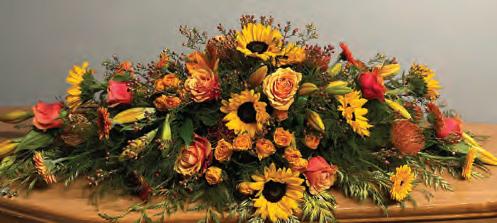
We offer an affordable funeral for £2430 inclusive of crematorium and minister/celebrant fee, to a fully bespoke service fulfilling your loved ones wishes and requests
We have a modern, light and welcoming funeral home for you to visit, or we will visit you in your own home. Whichever you are more comfortable with
3 Concorde Drive, Westbury on Trym, Bristol, BS10 6PZ Tel: 0117 374 2002 (available 24/7 for assistance)
www.brunelfuneraldirectors.co.uk

Funeral Home opening hours Mon-Fri 9-5 or by appointment

THEBRISTOLMAG.CO.UK | AUGUST 2023 | THE BRISTOL MAGAZINE 63
Micro suction is the gold standard of wax removal and is considered safer than other methods such as irrigation.


THEBRISTOLMAG.CO.UK | AUGUST 2023 | THE BRISTOL MAGAZINE 65
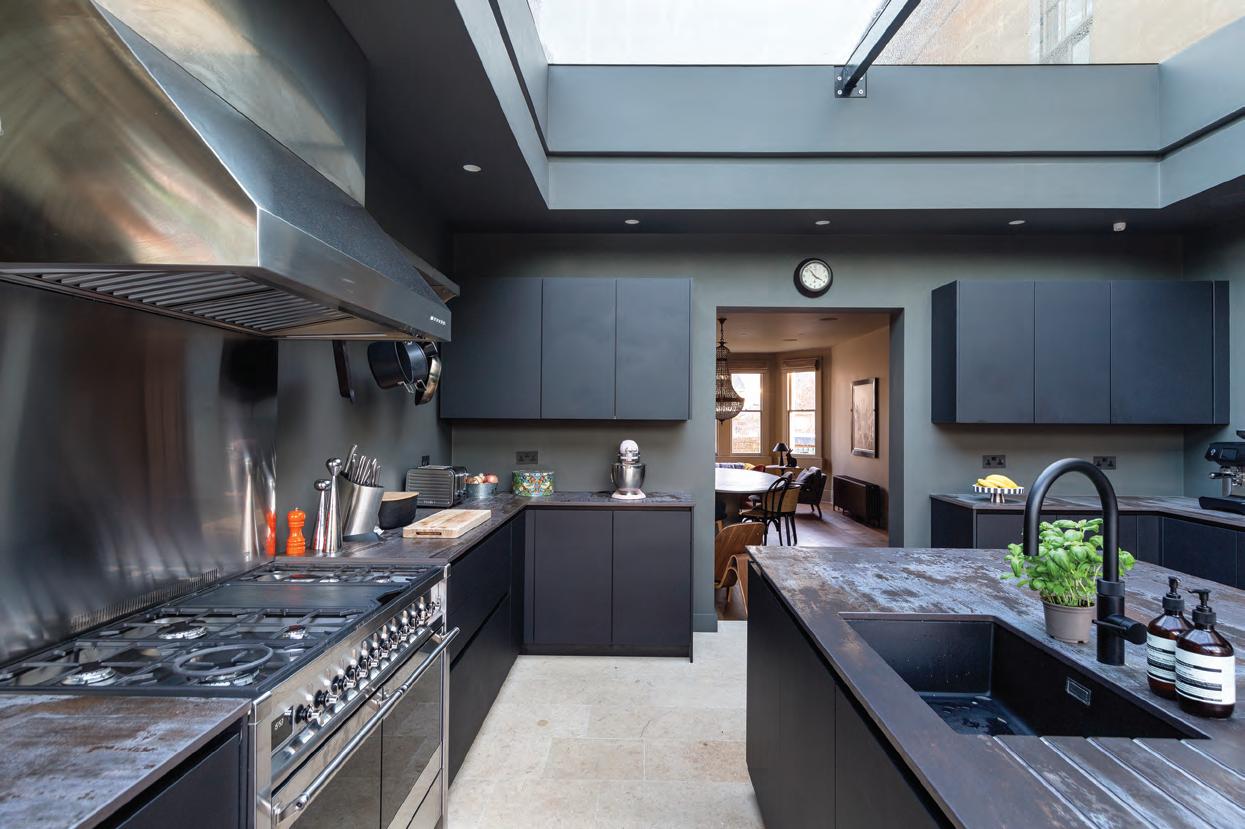


Watch the film Scan here to see more of this Kütchenhaus kitchen
Industrial chic
Ben Gregory, design consultant for Kütchenhaus Bristol, reveals how he set about creating a kitchen with a contemporary, industrial vibe for the owners of a Grade II listed building...
What type of property was the project in and what was the brief?
The location was a detached, Grade II listed property, which was built in the mid to late 19th century. Our clients, Claire and Darren, had a brief that was very clear. With the kitchen set to be the hub of their new home, they wanted a really industrial style, to pair with the Crittall-style glazing being installed at the same time.
What type of cabinetry was used?
The client chose our Nobilia LINE N (true handleless) cabinetry with the Easytouch Graphite Black ultra matt door finish. Paired with black and stainless steel appliances, this helped create the cool, industrial look the client was after.

What materials did you use? Was there anything different or unusual?
A must for the client was a very durable work surface. After debating whether or not to go with a concrete finish, they fell in love with Dekton Trilium by Cosentino, Blanco Silgranit sink in the recently launched Black finish and Extra-wide (120cm) range cooker and extractor hood, both in stainless steel.
Can you tell us what was used for the floor?
The flooring consists of a natural sandstone tile. The same flooring is present in the kitchen, utility and snug area in front of the bi-fold doors.

What were some of the challenges?
Because this property is over 150 years old, there were aspects of the room that required attention. Having the work surface templated meant we could keep the cabinetry along straight lines and provide extra depth for services. Located in the utility was a tailor-made heating system for the whole property, so being able to order cabinetry with bespoke depths meant the overall look was not compromised.
What would your advice be to a designer who is just setting out on a similar project?
Look past the ultra-traditional exterior and façade of a property –introducing a contrasting style can actually elevate the period features that are being kept.
I believed that less was more with this particular project, and fortunately this was in-line with the client’s brief. And don’t be afraid to go for darker finishes because when they’re paired with incredible glazing and lighting, they create a ‘wow’ factor in any home.
Dekton Trilium by Cosentino
Line N Nobilia Kitchen range
When it comes to the finished project, are there any design elements that you’re particularly proud of?
My favourite part has to be the island size and positioning in the room. The positioning meant the island was centred when viewing the kitchen from the dining room and didn’t distract from the view to the rear garden.
What are your clients' favourite parts of the finished project? For Claire it was the Dekton worktop and the drawer space that was provided, and for Darren the element that stood out most was the built-in wine cabinet.
Was the kitchen space newly created before the kitchen was installed?
The new kitchen and the utility furniture were installed within the existing kitchen space. The dated glazing was all removed and replaced with Crittall-style glazing to complement the style of the new kitchen. The roof light floods the space with plenty of natural light, which works well with the kitchen furniture and worktop finishes. The introduction of the bi-fold doors which look over the garden enables the outdoor space to be enjoyed during the summer months, even when spending time in the kitchen.
Is this industrial style a popular one for your customers?
The industrial look for a new kitchen is very bold and works very well in certain spaces. The signature German look is very sought after, with clean lines and no handles. Our range of door fronts provides considerable choice for clients, and there are plenty of matt, gloss and textured fronts to choose from. n
• Kütchenhaus, Unit 11, Clifton Down Shopping Centre, Whiteladies Road, Clifton, Bristol, BS8 2NN; 0117 213 0680; uk.kutchenhaus.com/store-finder/bristol
INTERIORS THEBRISTOLMAG.CO.UK | AUGUST 2023 | THE BRISTOL MAGAZINE 67
The handleless design of the Line N Nobilia Kitchen range is defined by the reduced focus on the lines. The integrated recessed handles take the lead as the horizontal stylistic element that sets the tone for the kitchen. Line N kitchens are available in 57 colours.
Dekton Trilium offers a mixture of colours inspired by volcanic stones and intense grey and black touches and is created with up to 80% recycled material. This series was created to pay tribute to the beautiful imperfections of the metals and stone in all their different stages of ageing.
Boost the butterflies
Who doesn’t love seeing a butterfly in the garden, flitting and dancing through the border, before landing on a flower and spreading its colourful wings? The sight takes me right to my childhood and the big buddleia bush in our front garden that provided hours of fun, catching butterflies in fishing nets and trying – usually unsuccessfully –to get them to crawl about on my hand for as long as possible before they opened their wings to fly away. At that time in the early 1980s, I remember the tortoiseshells and peacocks in abundance, while red admirals and painted ladies were more coveted, and a bright yellow brimstone would be worthy of a shout indoors to show another family member. Caterpillars were another source of fascination, my favourite being the elephant hawkmoth caterpillar – big, dark and velvety with those fake ‘eyes’ to scare off predators. I was also happy to ‘collect’ cabbage-white caterpillars from the veg plot, and keep them as pets in various boxes and tins.
Local butterfly populations are constantly in a state of flux, with some sadly in decline and others on the up, but they all need help from us gardeners, who can play a vital part in providing nectar-rich plants for the adults and food for the caterpillars. According to Butterfly Conservation – a UK charity dedicated to butterflies and moths – nearly half of our 59 British butterfly species are threatened or near-threatened with extinction, among them the rare and beautiful swallowtail. It’s illegal to catch handle or harm this butterfly, along with a handful of other ‘fully protected’ species, without a licence, under the Wildlife and Countryside Act 1981. Many others are ‘partially protected’ meaning they can’t be sold, dead or alive.
One of the best ways we can help these beautiful creatures is to plant nectar-rich flowers in our garden. Buddleia, also known as the butterfly bush, is the number one recommended plant for attracting them, with its long racemes of purple flowers providing an abundance of summer nectar. These plants are easy to grow to the extent that they will grow just about anywhere – in cracks in a wall or on railway embankments, and also tolerate hard pruning if they get too large. Lots of varieties are available, including smaller ones suitable for containers. Deadhead regularly so the flowers keep coming, and so will the butterflies.

The flat pink flowerheads of Sedum spectabile provide a good landing spot and all-important autumn nectar, which helps butterflies build up their reserves for over-wintering. Spring is also an important time, when they come out of hibernation, and will appreciate wallflowers, apple blossom and grape hyacinths.
Naturally occurring wild flowers and plants are also important, as they’ll provide a succession of nectar through the year. If you have the space, then strips of meadow will help to provide nectarrich plants. Think too about breeding grounds and food for caterpillars. A patch of nettles will do the job, along with holly, ivy, thistles, docks and sorrels. Avoid using insecticides and pesticides, which kill many pollinating insects, including butterflies and their larvae. Allow fallen fruit to remain on the ground for late-summer butterflies such as the red admiral and painted lady, who enjoy feeding on rotting pears, apples and plums.
Butterflies have always embodied transformation and change, because of their mysterious and miraculous life cycle of metamorphosis, and as such have long been the subject of folklore
68 THE BRISTOL MAGAZINE | AUGUST 2023 | No 225
“One of the best ways we can help these beautiful creatures is to plant nectar-rich flowers in our garden,” says Elly West, who, this month, looks at ways we can help Britain’s butterfly population...
and legend. Many ancient civilisations have linked the butterfly to the human soul. Irish folklore considers it bad luck to kill a white butterfly, because it holds the soul of a child. Native Americans believed they would carry wishes and prayers on their wings to the Great Spirit. Catch a butterfly and whisper it a wish, and your wish will come true, as long as the butterfly is not harmed in the process. In the Appalachian mountains of the United States, if you are able to count the spots on a fritillary’s wings, this will tell you how much money is coming your way. In ancient Greece, Aristotle gave the butterfly the name Psyche, after the beautiful Greek goddess of the soul, who was often portrayed as having butterfly wings.
Collective nouns for groups of butterflies include ‘kaleidoscope’, ‘flutter’ and ‘bivouac’, the latter referring to a group that is resting together. Another interesting fact is that many butterflies can taste with their feet, to check whether the leaf they sit on is a good place to lay eggs.
If you want to get involved with butterfly conservation, there’s still time to take part in the Big Butterfly Count, which runs from mid-July to 6 August. Simply choose a sunny spot and spend 15 minutes counting the butterflies you see. Submit your records online at the Big Butterfly Count website or via the Big Butterfly Count app. There’s a free ID chart available, or download the app to help identify and record the butterflies you spot. Visit bigbutterflycount.butterfly-conservation.org to find out more.
The Somerset and Bristol branch of Butterfly Conservation is another good starting point, and is organising guided butterfly walks through August. Visit somersetbristolbutterflies.org.uk for details, and to find other ways to get involved. n
 • ellyswellies.co.uk


Plant of the Month: Verbena bonariensis
Verbena bonariensis is known for its tall, slender stems and clusters of small purple flowers from midsummer to autumn. It is airy in habit with a see-through, transparent effect, so won’t block the plants behind, making it great for adding height to mixed borders. The nectar-rich flowers are highly attractive to pollinators, including butterflies and bees, and it is low maintenance, growing well in most soil types, and in sun or partial shade. Once established, Verbenabonariensis is tolerant to drought, but will benefit from watering during dry spells in its first year or so. Plants die back in winter and emerge from the base again the following spring, although it may not survive in particularly cold spells, so a layer of straw or mulch in winter over the roots will help it surive. Don’t cut back the old dead stalks until new ones have emerged in spring, as they will also provide protection. It’s well suited to gravel gardens, cottage-style gardens or meadow planting, alongside ornamental grasses, and other late-summer bloomers such as rudbeckia, echinacea and salvias. Plants self-seed readily but are easy to pull out if they become a nuisance. The rigid stems are long-lasting, making it a great cut flower as well.

GARDENING
THEBRISTOLMAG.CO.UK | AUGUST 2023 | THE BRISTOL MAGAZINE 69


70 THE BRISTOL MAGAZINE | AUGUST 2023 | NO 225 FOUND UK WEST VINTAGE FURNITURE jeffosbo@hotmail.com | 07875129964 OR CONTACT US ON 0117 974 2800 or EMAIL: SALES @ THEBRISTOLMAGAZINE.CO.UK PERFECTLY PLAN YOUR AUTUMN / WINTER AD CAMPAIGN? SCAN THE CODE TO FIND OUT MORE ON OUR 2023 MEDIA PACK


Room to improve
When selling your home, first impressions can heavily impact how a potential buyer sees and feels about it. Many will make a judgement within just a few minutes of arriving at a viewing. Although it can be hard to influence buyers into thinking that they’ve found ‘the one’, there are a few things that can be done to make your home look more appealing.
Here are a few tips to spark inspiration and to help you present your space in the best possible light, enabling you to get moving…
Sell the surrounding area
Although most people choose not to be present during a viewing, allowing an estate agent to do the selling, it can be useful for buyers to know more about the surrounding area. Consider leaving a note, informing the buyer of the best transport links, local schools, shops and amenities as well as local walks and recreational facilities. Being responsive to questions from buyers can also place you good stead.
Go for a realistic price
A reputable agent will look at comparable sales in your area and take the time to thoroughly inspect your property before giving you a valuation. Be wary of those setting a sky-high asking price. It might be tempting to go with the highest valuation, but going with an unrealistic price can jeopardize a quick sale.

Spruce up your space
Enhancing your home’s kerb appeal can boost the amount of interest your property receives, increase its saleability and, ultimately, result in a better price. In short, kerb appeal matters. Look at making those necessary repairs to the broken gate or

replace the rotting outdoor furniture. Once you’re happy with your exterior, take a look inside and consider fixing those creaking hinges and broken cupboards to score a few quick wins.
Declutter as much as possible using smart storage systems, hang mirrors to give the illusion of a bigger, brighter space and aim for creating a clean, spacious environment.
Give each room a purpose
Viewers need to be able to imagine how the property would work for them. Delineate the rooms into clear dining and living areas. If you’re currently using a room for storage, but it could be used as a home office – something that is highly desirable as more people work from home – it might be worth showing off its potential by turning it into a working space.
Consider your online presence
For the vast majority of us, the internet is our first ‘go-to’ for property searches, so make sure your home has an attractive online presence. Great photography is a must and can show your property at its best. Floorplans are also useful for buyers that are looking for specific features to suit their lifestyles.
Point out potential
You may have already maximised your home’s potential with an extension, loft or garage conversion or through the addition of a conservatory or garden room. If not, and there’s scope to do so, be sure to point out the potential of your property. Attaining planning permission in advance can also sway people’s decisions.
THEBRISTOLMAG.CO.UK | AUGUST 2023 | THE BRISTOL MAGAZINE 75
• rupertoliver.co.uk; 14 Waterloo Street, Clifton, Bristol, BS8 4BT
This month, Rupert Oliver of Rupert Oliver Property Agents suggests ways to increase your property’s saleability...
Low-carbon homes at The Haw Wood. Their eco-credentials mean these new family homes are selling fast
Bristol housebuilder Autograph Homes has opened the show-home for its low-carbon development The Haw Wood on the edge of north Bristol.


Featuring ultra-efficient, net zero technologies, new homes at The Haw Wood, have already had an impact with buyers, with 75% being sold off plan.
With Autograph’s aim of being greener because it’s the right thing to do, the award-winning house builder is determined to stay competitive in the market with the family homes starting from £480,000. Shared ownership homes with the same high eco-credentials are also being built at the development and will be launched later this year.
Simon Taylor, managing director Autograph Homes says,
“We’re delighted to have opened the show home, and be able to demonstrate to buyers exactly how they can reduce their energy usage with the technologies we’ve installed. The reaction from potential buyers has been so positive, they really appreciate the opportunity to choose a home that not only looks good, is built to exacting standards, but is importantly kind to the environment.
“These are homes built for the future. We know that the energy crisis has forced a rethink amongst many buyers, and they are bringing low carbon energy to the top of their buying requirements. What we’re able to do at The Haw Wood means potential net zero energy costs and net zero carbon emissions.
“With these homes we have gone above and beyond building regulations requirements for insulation and airtightness; we have incorporated timber frames with significant PV panels, air source heat pumps and underfloor heating. The homes are fitted with electric car chargers, smart heating controls and wired for optional battery storage.”
The Haw Wood is a ground-breaking, eco-friendly community of 22, 3 & 4 bedroom luxury family homes, and a further 8 shared ownership homes, all SAP A rated for energy use and environmental impact.
Features include:
• High output PV panels
• Air-to water air source heat pump, powering ground floor zoned underfloor heating, first floor flat panel radiators and hot water.
• Optional home battery.
• Low energy LED lighting.
• Oversize, thermally insulated windows for more natural daylight, reducing reliance on artificial lights and helping warm the house through solar gain.
• Designed with an effective thermal envelope, bringing together high standards of insulation, airtightness, and a precision built timber frame (FSC accredited timber) to minimise heat loss. Homes are made more durable, minimising dampness caused by moisture-laden air leading in and condensing.
• Efficient water fixtures, such as aerators on taps and showers, will help reduce average household water use by up to 25% a year.
• Heatmiser app based remote smart heating controls.
• Electric car charging.
In addition at The Haw Wood there will be a community allotment area, and habitats for wildlife and an extensive native planting programme with trees, shrubs and plants to encourage pollinator species.
Award winning
Autograph builds homes that are distinct and full of character. Homes created with imagination and intelligence, as individual as those who live in them. Properties that echo their location and environment, with striking architectural features and high quality finishes, inside and out. Autograph Homes was Highly Commended in the 2022 Housebuilder Awards in the Best Sustainability Initiative category, and is proud to be a finalist in the 2023 awards too.
Autograph Homes is an independent homebuilder with an established regional heritage, creating exciting new developments and beautiful family homes across the South West.
The Haw Wood, Bristol, BS10 7TB for an appointment to view call: 07469 277641
thehawwood@autograph-homes.co.uk or visit: www. thehawwood.co.uk
76 THE BRISTOL MAGAZINE | AUGUST 2023 | NO 225


The Haw Wood, Bristol, BS10 7TB A collection of beautiful, original family homes that combine distinctive, forward-thinking design with net zero technologies to scale down your carbon footprint. Selling Fast – Last Few Plots Remaining Contact us for an appointment to view: 07469 277641 thehawwood@autograph-homes.co.uk thehawwood.co.uk SHOW HOME NOW OPEN


Clifton, Bristol | Guide Price £895,000


An exquisite first-floor apartment situated on one of Clifton’s most iconic terraces, complete with a south west facing private balcony with exceptionally far-reaching views and allocated private parking to the rear.

An exquisite apartment situated in Grade II Listed Georgian townhouse | Private southwest-facing canopied balcony with exceptionally far-reaching views | Private allocated parking bay | Rear pedestrian and vehicle access via Oxford Place and Princess Victoria Street to the rear | Beautiful 'Nolte' designer kitchen with freestanding island | Stunning herringbone parquet flooring with soundproofing | Master bedroom with hand-crafted wardrobes | Fully tiled bathroom with walk-in shower and sunken bath | Scope to design a second shower room if required | Offered with no onward chain | EPC: D

In all circa 1231 sq. ft (114 sq. m)


Clifton, Bristol | Guide Price £675,000


The Garden Flat, 16 Apsley Road is a charming and versatile flat situated in a sought-after period semi-detached Clifton townhouse.

Superb two-bedroom period apartment | Sought-after location between Clifton Village and Whiteladies Road | South-facing rear courtyard garden | Private garage with allocated parking bay opposite | Impressive reception room with large bay windows | High ceilings / Double glazed throughout | High specification and turn key accommodation | Underfloor heating | Two beautifully appointed bathrooms (one en-suite) | Excellent storage throughout and use of storage vault | EPC:D
In all circa 1221 sq ft (113 sq.m)


