


ISSUE 236 | OCTOBER 2022 thebathmag.co.uk | £4.25 where sold C E L E B R A T I N G 2 0 Y E A R S O F P U B L I S H I N G T H E C I T Y ’ S B I G G E S T G U I D E T O L I V I N G I N B A T H IT’SAMOTHER& DAUGHTERTHING with Caroline and Rose Quentin plus... Helen Simmonds' spiritual still-lifes, the evolving shape of office spaces and exclusive design choices for the interior


Contents October 2022


5 THINGS 8
Great things to look forward to this month
CITYIST 10
We meet senior men’s captain of the Bath Golf Club, Peter Norriss, and gather together some lifestyle news from the city
MONARCH IN WAITING 14

Read about Astra Blair’s father-in-law who made the late Queen’s very first Trooping of the Colour tunic
NOTES ON A SMALL CITY 16
Richard Wyatt investigates Bath’s coat of arms and comes up with some modernising ideas
A MOTHER DAUGHTER DRAMA 20
Melissa Blease chats to Caroline Quentin ahead of her appearance in Mrs Warren’s Profession at Theatre Royal Bath with her daughter Rose

WHAT’S ON 24 Our monthly guide to what’s happening in and around the city
ARTS AND EXHIBITIONS 32


Here’s our monthly round-up of artistic goings-on THE RESTLESSNESS OF STILL LIFE 38 Aidan Quinn reflects on the work of Helen Simmonds
IN PRAISE OF HARES 40

Emma Clegg talks to artist Joanna May about her fascination with hares and how she uses them in her work

FOOD REVIEW 44
It’s a club vibe when Emma Clegg visits the new-in-town Coppa Club –The Bath Townhouse and samples their menu
More content and updates discover: thebathmag.co.uk
Follow us on Twitter @thebathmagazine


CITY NEWS 46
Business stories and updates

THE CHANGING FACE OF OFFICE WORKSPACE 50 We are witnessing greater change than ever before in how offices are used –here are some professional insights
SPEED, QUALITY AND COMMUNITY 52
Emma Clegg talks to James Lowther, CEO of local broadband provider Truespeed about why the company vision is all about the south west
THE WALK 64 Andrew Swift sets off on a walk through an ancient, lonely landscape
DESIGN PICKS 66
Revel in favourite product choices from our local specialists, and browse through a directory of every local interiors contact you might ever need

INTERIORS: NEWS AND PUBLICATIONS 82–84 News, retail offerings, magazines and books to keep you on the right design tracks
A GARDEN FOR ALL SEASONS 86 Judith Lywood introduces us to her ever-changing city garden
HOT PROPERTY 89 The finest homes to buy or rent
ON THE COVER
Follow us on Instagram @thebathmagazine
 Caroline Quentin and Rose Quentin, who are starring in Mrs Warren’s Profession at Theatre Royal Bath from November. Image © Hugo Glendinning
3864
9–19
4 TheBATHMagazine | ocTober 2022 | issue 236 66

It being October and all, and a wee bit chillier than it has been (although obviously the central heating is still off in our residence), we’re engaged with colour and spirit this month. Colour in the form of Caroline Quentin on our cover with her daughter Rose – they are appearing together in Mrs Warren’s Profession at Theatre Royal Bath, and Melissa Blease’s interview with Caroline is on page 20. And then there are the natural hues to be found in Judith Lywood’s city garden, which even in October has highlights of colour (see page 86).
There’s also colour in the form of it being Trooped on page 14, as Astra Blair tells us about how her father-in-law made the late Queen’s first Trooping of the Colour tunic when she stood in as Princess Elizabeth for her father George VI in 1951. You have to imagine the colour, though, because Everybody’s Weekly, where the image was published, was strictly black and white. Interiors folk love colour too and we have a whole lot of that for you, starting on page 66, with product choices, news, magazines and books, as well as a directory of interiors specialists in our region.
Spirit we have with Helen Simmonds’ quietly resonant still-lifes and Aidan Quinn from Beaux Arts provides an insightful and sensitive commentary on her work on page 38. Spirit also features in my interview with James Lowther of Truespeed on page 52, where I discover the community spirit behind their resolution to provide fast, good-quality high-fibre broadband to the south west, focusing on Bath and Bristol, and to look after their customers, which is something that takes you by surprise nowadays.
2 Princes Buildings, George Street, Bath BA1 2ED; 01225 424499 www.thebathmag.co.uk
Editor Emma Clegg 01225 424592 emma@thebathmagazine.co.uk
Financial Director Jane Miklos jane@thebathmagazine.co.uk


Assistant Editor/Web Editor Daisy Game daisy@thebathmagazine.co.uk
Production Manager Jeff Osborne production@thebathmagazine.co.uk
Advertising Sales Liz Grey liz@thebathmagazine.co.uk

To advertise tel: 01225 424499
Publisher Steve Miklos steve@thebathmagazine.co.uk
Contact us at thebathmag.co.uk Follow us on Twitter @thebathmagazine and Instagram @thebathmagazine


The Bath Magazine and The Bristol Magazine are published by MC Publishing Ltd. We are independent of all other local publications.

Experience Bath Phil for free
Residents of Bath and North East Somerset are set to benefit further from an exciting opportunity over the next nine months – by being invited to enjoy thrilling live performances from the region’s leading professional orchestra for free.

Building on the success of last season’s #BathPhilForFree scheme, in which over 5000 tickets were gifted to local residents, Bath Philharmonia will offer local people one thousand tickets for each of its own
Emma Clegg, Editor

There’s also spirit in the workspace as community, as we discover that a onesize-fits-all approach to office space is a thing of the past, and things are becoming dynamic, interactive, flexible, sustainable and about sharing spaces that make you feel good – see page 50. Keep the colour and spirit going in October!
The Bath Magazine is delivered free, every month, to more than 15,000 residential addresses as well as businesses throughout Bath and the surrounding area. We also have special distribution units in many of Bath’s supermarkets
concerts at The Bath Forum for the duration of its 2022/23 season. It’s opening-up the concert hall to those who may have never heard the magic of a live orchestra before or want to try something new.
Shelley, from Paulton, who attended her first Bath Phil concert this year, said “I’d never really thought that orchestras were for people like me, but I felt really welcome at the concert and loved the music.”
The gift of a free ticket is offered as a chance to enjoy a musical night out at a time when many people are struggling with household bills and Bath Philharmonia will be extending this invitation to every household in Bath and the surrounding area. bathphil.co.uk/bathphilforfree
© MC Publishing Ltd 2022
Disclaimer: Whilst every reasonable care is taken with all material submitted to The Bath Magazine, the publisher cannot accept responsibility for loss or damage to such material. Opinions expressed in articles are strictly those of the authors. This publication is copyright and may not be reproduced in any form either in part or whole without written permission from the publishers.
All paper used to make this magazine is taken from good sustainable sources and we encourage our suppliers to join an accredited green scheme. Magazines are now fully recyclable. By recycling magazines, you can help to reduce waste and contribute to the six million tonnes of paper already recycled by the UK paper industry each year. Please recycle this magazine, but if you are not able to participate in a recycling scheme, then why not pass your magazine on to a friend or colleague.

FROM THE EDITOR 6 TheBATHMagazine | ocTober 2022 | iSSUe 236

THINGS TO DO IN OCTOBER
Stand out from the crowd
Rob Auton is an award-winning writer, actor and podcaster, named the “Brian Cox of Comedy” by The Guardian. He has written eight hit Edinburgh Fringe shows and has also had four collections of poetry and illustrations published by Burning Eye Books and Harper Collins. Auton’s The Crowd Show is a comedy/theatre/spoken word show about crowds, people and connection. Rondo Theatre, 15 October. 7.30pm. Tickets £12, available from rondotheatre.co.uk
Have a spooktacular Halloween
Visit Wild Place and explore the spooktacular Halloween trail: the perfect activity for all energetic little monsters! Grab a Halloween activity trail leaflet to guide you around the site, and explore the ‘wild wood’ at Webb’s Brake – which will be transformed with over 300 pumpkins and some spooky Halloween scenes. Children who come dressed in their favourite Halloween costume, or bring a carved pumpkin to add to the trail, will receive a 20% discounted entry by using the voucher code: WILD20. General Admission: £14 Adult, £11 Child. wildplace.org.uk

Jog on at the Bath Half

2022 is a special year for the Bath Half Marathon, as the fundraising event celebrates its 40th anniversary with an exciting new format. The half marathon has been moved to the larger venue of Middle Common in Royal Victoria Park, giving the Bath Half team the chance to stage a community event on Saturday. The Bath Half Marathon is the largest charity fundraising event in the South West region, which every year raises over £2.25 million pounds for noble causes. The team are excited to welcome over 15,000 runners and over 30,000 spectators. Royal Victoria Park, 16 October. Sign up at bathhalf.co.uk
Listen up
Don’t miss out on Fane’s live ‘in conversation’ events coming to Bath Pavilion and Bath Forum this autumn.
Join Graham Norton as he discusses his latest novel, Forever Home, on 10 October, spend an evening with the Queen of History, Lucy Worsley, as she delves into the fascinating life of Agatha Christie on 13 October, and hear Richard E. Grant reflect on love and loss in celebration of his new book, A Pocketful of Happiness, on 4 November. Gardeners’ World presenter

Adam Frost shares advice and amusing stories from a lifetime in the garden on 15 October, and Kaleb Cooper shares amusing observations about Diddly Squat Farm and beyond on 21 October. Browse the full Fane programme at fane.co.uk/whats-on


Get good conversation flowing
The Forum welcomes TEDxBath for an exciting day of ideas and inspiration at its upcoming event, Kaleidoscope. The event includes contemporary talk topics such as global food security, zero carbon design, overcoming mental trauma, and will also include the TEDxBath Innovation Lab: a place for the audience to mingle with past speakers and continue discussions about the talks they have just seen. This year’s line-up of speakers at TEDxBath includes Performance Psychologist Katie Mobed, journalist Calie Rydings, Robot Designer Ruby Sant and many, many more. TEDxBath will take place The Forum, Bath on 15 October. Early Bird tickets available from bathboxoffice.org.uk
ZEITGEIST
5 8 TheBATHMagazine | OCTOBeR 2022 | iSSUe 236

bath carpets and flooring b c f Visit our Showrooms: 4 Kingsmead Street, Bath, BA1 2AA 01225 471888 Flooring@bathcontractflooring.co.uk For your Home: www.carpetsandflooringbath.co.uk For your Business: www.bathcontractflooring.co.uk CARPETS | VINYLS | DESIGN FLOORING | RUGS | COMMERCIAL Bring a little Warmth to your home
The cityist
NEWS BITES
THE BUZZ
ROMAN BATHS GET FIVE STARS FOR ENGAGEMENT

MY BATH
Peter Norriss
Peter Norriss moved to Bath in 1996 when the MOD’s Procurement Executive relocated to Filton Abbey Wood. On leaving the RAF he took on consultancy and review work. He is currently the Senior Men’s Captain at Bath Golf Club.

We moved to Bath as my wife was born here when her father was on the Berlin Airlift. We have lived in Widcombe, Bear Flat and on Bathwick Hill, but are now in Darlington Place, where we love the friendliness of those who live there.
and the Keynsham IV Clinic, which shows how lucky we are to have such facilities and professionals here.
Following a busy summer where visitors exceeded 100,000 for the first time since 2019, the Roman Baths & Pump Room has come third in Which?’s survey of the best historic attractions in the UK.
The Roman Baths drew praise for the opportunity to explore the ‘fascinating' and ‘well-preserved’ ruins in the heart of the city. The historic site scored an impressive five stars for its engagement and entertainment value, with several respondents saying that they appreciated the high-quality video exhibits on offer.
Councillor Kevin Guy, Leader of Bath & North East Somerset Council, said: “Staff at the Roman Baths work hard to provide an outstanding and memorable experience for all our visitors, and we’re delighted to have this recognised by visitors themselves in the Which? survey.”
The survey of almost 3,000 Which? members took place between April and May 2022 and looked at nine criteria including overall value for money, helpfulness of staff and lack of crowds.
The result caps a strong year for the Roman Baths, which was also recently named Number 1 UK attraction and Number 8 best-rated attraction in the world by Tripadvisor. Visitors have also been returning, with over 105,000 people visiting in August alone.
Fountains Abbey in Yorkshire and the Royal Yacht Britannia in Edinburgh tied in first place with 88 per cent. The Roman Baths & Pump Room came a close joint third with Culzean Castle and Country Park in Scotland, both achieving a score of 87 per cent. romanbaths.co.uk
I was educated at Beverley Grammar School and Cambridge University where I read modern languages, and subsequently did a course at Harvard Business School. At Cambridge I joined the University Air Squadron and loved the flying, so I joined the RAF and spent 35 years as a flying instructor, operational pilot on Buccaneers, staff officer, and commander of a squadron and then an operational station, before going into MOD’s Operational Requirements organisation. I then moved into procurement, ending up as what was effectively the Chief Operating Officer of the Defence Procurement Agency and a member of the Air Force Board.
I have always tried to do my best in all my endeavours, whether at work or play. During my first RAF tour I was encouraged to get a number of flying qualifications and became one of the then Prince Charles’ flying instructors at RAF College Cranwell. Later I was given command of No 16 (Buccaneer) Squadron in Germany and then RAF Marham in Norfolk, equipped with Tornado GR1 and the Victor tanker. I was privileged to be appointed Aide-de-Camp to the late Queen during that tour. The Queen was also the Honorary Air Commodore of RAF Marham, and she paid a memorable day-long visit to the station in 1986.
Many friends come and stay with us in Bath, and we like showing them around. We enjoy the Theatre Royal, dine out at some wonderful restaurants, visit the Victoria Art Gallery, the Holburne Museum and Sydney Gardens. We also enjoy the view over the National Trust land near Bathwick Hill and looking at the city from that side. The Mayor sometimes invites me to join in civic events, and I take the salute every 3–4 years outside the Guildhall on Remembrance Sunday.
Recently I was diagnosed with cancer and have been treated brilliantly by my GP surgery in Great Pulteney Street, at the RUH


In Bath there are two major issues that need to be sorted out: traffic management and the city’s grubbiness.It seems astonishing that the Council has done nothing of consequence over the years to tackle the traffic problem, while approving enormous house-building projects within the city, in the knowledge that those occupying them will be introducing many vehicles onto the roads. Ducking the issue of a Park-and-Ride to the east was also, in my view, a major failing. Bath is now looking run-down and neglected; it has lost many of the independent shops that were a major feature of the city, and there are now many empty shops, lots of rubbish, potholes and general grubbiness. I fear that Bath’s status as a World Heritage Site is at risk unless this deterioration is reversed.
I have organised a number of charity golfing events at Cumberwell Park and Bath Golf Club, and these have been generously supported by local companies, large and small. The most recent event took place at Bath Golf Club in late September in aid of Dorothy House and the Children’s Hospice South-West, and we managed to raise over £5000 for them.
For reading I tend to turn to action novels, rather than biographies or more serious books, though I also enjoy books about early Britain, and I have contributed forewords to some aviation books written by former RAF colleagues.
I have become pretty adept at DIY over 51 years of marriage, during which we have moved over 20 times; many of these moves required extensive work. Even as I approach the age of 79 my wife brings new design ideas for me to consider!
I still have links with Cambridge University, and the RAeS, am Chairman of a small property management company, and am on the Advisory Board of three organisations: Tickets for Troops, BFBS, and Aerospace Bristol for which I am an Ambassador. ■ bathgolfclub.org.uk
10 TheBATHMagazine | ocTober 2022

The cityist
POP-UP WIND FARM ACTION

Parents in Jacob Rees-Mogg’s constituency of North East Somerset and across the UK came together recently to show widespread support for renewable energy. And to protest the government’s counterproductive plans to expand North Sea oil and gas production, and fracking.
Research shows that more than three quarters (78%) of people in the UK support onshore wind energy, whereas just 17% of people supported fracking in the most recent government poll; and that offshore wind can produce electricity nine times cheaper than gas. Despite this, the government has not been behind new onshore wind developments. To show the widespread support for renewable energy over fossil fuel expansion, Parents for Future UK created pop-up onshore wind farms across the country, demanding the government puts the power in communities’ hands.
Charlotte Howell-Jones, in Jacob Rees-Moggs’ home constituency of North East Somerset today commented: “Parents up and down the country are coming together because new fossil fuel projects are the last thing we need right now, they won’t bring down our bills and will lock in harmful emissions for decades. This government needs to give people what they want: clean, affordable renewable energy. We urgently need a coherent energy strategy that lowers both our emissions and our energy bills.” @OnlyOneWorld19
CARBON-SAVING ROAD REPAIRS
A new carbon-saving alternative to traditional methods of repairing roads is being used by Bath & North East Somerset Council to help deliver its commitment to tackling the climate and ecological emergency.
The Council have invested in a thermal road repair system to help significantly reduce emissions as it improves and maintains roads in the area. This new technology makes repairs using an infra-red heating process which reheats the existing road surface, bringing it back to a workable state where it can be recycled and used again. Additional material is added, mixed in and compacted to reform the road back to a high standard.

As the process reuses the existing road surface material, less new material is needed to make repairs and there is no excavation of material that then needs disposing, making the process zero waste. Also, by eliminating the need for power tools road repairs can be made faster, noise levels are reduced, and carbon emissions are significantly lower. Further contributing to the councils’ Net Zero goals, the system and the fully self-contained vehicle it travels in are fitted with solar panels. newsroom.bathnes.gov.uk
KITTY FISHER BIOGRAPHY
‘Lucy Locket lost her pocket, Kitty Fisher found it...” The first-ever full-length biography of Kitty Fisher, the character from the nursery rhyme, has just been published... but who was she?
While she is remembered as an 18thcentury ‘celebrated’ courtesan and style icon, Kitty’s career in the upper echelons of London’s sex industry was brief. For someone of her profession, Kitty had one great flaw: she fell in love too easily.
Kitty Fisher managed her public relations and controlled her image with care. In a time when women’s choices were limited, she navigated her way to fame and fortune. Hers was a life filled equally with happiness and tragedy, one which left such an impact that the fascinating Kitty Fisher’s name still resonates today. She was the Georgian era’s most famous – and infamous – celebrity and her connections with Bath were strong.
This is more than just a biography of Kitty Fisher’s short, scandalous and action-packed life. It is also a social history of the period, bringing mid-18th-century London and Bath to life, and looking not just at Kitty but also the women who were her contemporaries, as well as the men who were drawn to their sides… and into their beds. In this meticulously researched, lively and enjoyable book we discover the real woman at the heart of Kitty Fisher’s enduring myth and legend.
Kitty Fisher The First Female Celebrity by Joanne Major is published by Pen & Sword Books, £20; pen-and-sword.co.uk

RESTORATION OF THE UK’S OLDEST LIDO
Bath’s Cleveland Pools – the UK’s oldest lido, built in 1815 – has been restored after a painstaking 15-month renovation project. The historic pool, flanked by Georgian changing rooms, will welcome its first swimmers on 1 October following an extraordinary

18-year community campaign by the Cleveland Pools Trust, supported by thousands of Bathonians. The trust’s tireless campaign has taken the 207-year-old, Grade II* listed site from the lows of its closure in 1984 and a threat of demolition in 2003, to the highs of its stunning, present-day restoration.
The installation of heating equipment is not yet fully in place and operational. After the Heritage Open Day on 1 October (which is fully booked) the pool will be open to the public for the remainder of the year, offering cold water swimming sessions which will be on Wednesdays 12pm–18pm and Saturdays 9am–1pm. For this period visitors will be able to book and ‘pay-as-you-go’. The pools will then re-open next spring as a heated pool, warmed by energy from the adjacent River Avon, using heat pump technology integrated with a river pontoon for visitor access.
The overall cost of the project is £9.3m, £6.47m of which came from The National Lottery Heritage Fund. The project has also had significant support from the DCMS Capital Kickstart Fund, Historic England and Bath and North East Somerset Council. clevelandpools.org.uk
NEWS BITES
12 TheBATHMagazine | OCTOber 2022 | iSSUe 236

A monarch in waiting
Here you see Princess Elizabeth in 1951 on the front page of Everybody’s Weekly. She was representing her father, George VI, who was absent that year through illness, at the Trooping of the Colour. As Colonel of the Grenadier Guards, the Princess left Buckingham Palace escorted by the Duke of Gloucester, the King’s personal Aide de Camp, to take the salute.


Her mother Queen Elizabeth, her sister Princess Margaret, her son Prince Charles, Queen Mary, the princess’ grandmother, along with King Haakon VII of Norway, watched the Trooping from the Buckingham Palace balcony.
The Princess was riding Winston, the famous police horse (named after Winston Churchill) and she wore a scarlet Grenadiers tunic and a tricorn hat of a colonel of the regiment of 1743, around which time George II reorganised the regimental colours. This was the first time she had taken the salute and the first time that she had worn the red full dress uniform.
I recently met Bath resident, Astra Blair, whose Belgian father-in-law made the tunic for the Princess Elizabeth in 1951. Florent Herincx had been brought to London by accident after being injured in Belgium in the First World War. He had experienced severe trauma and when he was picked up by the British, he was unable to speak, which is why the misunderstanding occurred. He was taken to a home in London South Kensington that was run by nurses taking care of wounded soldiers, and when he began to communicate they realised he wasn’t British. However he was able to stay in London.
The young Florent had been training to be a tailor in Antwerp, and so as he recovered he was placed as a trainee with Bernard Wetherill, the Royal tailor just off Conduit Street in London. “He entered that world, and after a while he was sent to the Palace and he looked after the riding gear that they wore,” Astra explains. “They took to him and then he was asked to make the Princess Elizabeth’s Trooping of the Colour jacket in 1951.”
Astra remembers seeing the jacket in Florent’s London home on a tailor’s dummy when she was first
introduced to him by her soon-to-be husband Raymond Herincx. Florent had taken the tunic home to make alterations. He showed it to them both and then went out of the room with his son. “When they were out of the room I tried it on,” says Astra, still a little guiltily, over 70 years later.
Astra says that Florent worked for Bernard Wetherill for around 35 years, during which time he looked after the Palace’s riding clothes. “When they sent the riding clothes back to Bernard Wetherill to be altered or cleaned, my father-in-law always oversaw this and when they were sent back to the Palace the Queen always sent a little monogrammed silk handkerchief for Florent’s wife as a present.”
Astra told me that Florent used to visit the Queen’s private apartment at Buckingham Palace and he would also go to her home at Windsor. She said that most of the conversations between Florent and the Queen were about horses.
The BBC commentary to Trooping the Colour in 1951 said, “This must be Princess Elizabeth’s most important official occasion. There is sadness this festival year because the King could not be there to enjoy it. We have found the young girl who thrilled the world when she first rode with him to the Trooping has grown to a regal stature worthy of the high position which some day she will be called upon to fill.”
Seven months later George VI died and Princess Elizabeth became Queen. n
We have just said an emotional goodbye to our Queen of 70 years. This led Bath resident Astra Blair to look in her archives to tell us the story of her father-in-law Florent Herincx who worked for the Royal tailors, Bernard Wetherill in the 1950s. Words by Emma Clegg
BELOW LEFT: Florent Herincx altering Princess Elizabeth’s tunic in 1951
ABOVE: Princess Elizabeth wearing the tunic for the Trooping of the Colour in July 1951
14 TheBATHMagazine | ocTober 2022 | iSSUe 236 LOCAL | MEMORIES

NOTES ON A SMALL CITY
Richard Wyatt

Columnist Richard Wyatt investigates Bath’s coat of arms, considers its archive status and proposes that it is more actively used in the city. Along with a shake-up of the mayoral system –‘it’s time to modernise’ he cries!

Scattered around the city centre you come across old iron lampposts bearing what looks like a coat of arms. This is a sad, faded remnant of when Bath was a city council in its own right. It held this civic position from 1889 when it was made a county borough, until the demise of Avon County Council and the arrival of the B&NES authority in 1996.
The imposing Georgian building you see on the High Street is the Guildhall, built by Thomas Baldwin back in the 18th century. This replaced a 17th-century model which itself replaced an earlier Tudor structure. Apart from the Council Chamber, the Guildhall also houses the offices of the Mayor of Bath, currently, Cllr Rob Appleyard. The Mayor is just a figurehead now –an annually elected ambassador for Bath, he is a civic leader with no real power, but nonethless a rallying point for those with pride in their city.
I have often wondered why Bath didn’t have its own flag to fly above the Mayor’s residence and I have recently discovered that it does, and that it proudly bears the city’s coat of arms.

I went to see Mr David Dixon at Minuteman Press – himself a former councillor and now Honorary Alderman – who very kindly ran me up a little number from his archived image of the Bath flag.

The motto – Aquae Sulis (waters of Sulis) – is the Roman name for Bath. Here is a quick journey through what is on the flag, from bottom to top. Firstly a lion and a bear hold up the shield and stand on oak branches with acorns –these are linked to King Bladud, the legendary founder of Bath, and the man feeding his pigs acorns when they ran off to
discover the steaming mud and thermal waters of the hot springs.
The shield depicts the town wall, the mineral springs, the River Avon and the sword of St Paul, one of the patron saints of Bath Abbey, which is also the city’s parish church. The lion and bear also display the crossed sword and keys, representing both patron saints. St Peter, who held the keys to the kingdom of Heaven, shares the protection of the Abbey with St Paul. Above them is the crown of King Edgar, the first king of all England, and this is held aloft by the arms of St Dunstan who performed his coronation in Bath in 973 AD
The flag is now regarded more as ‘the Mayor’s flag’ as there is no longer a city council. Bath is now part of a unitary authority which does not display the crest on its documents or website. The Mayor does still have a pole on the Guildhall roof, which has recently been flying the flag of Ukraine.
I think it would be nice if the Mayor’s standard was hoisted, at least on Mayor Making Day. Let me explain. The office of mayor is shared among the councillors who have wards within the city of Bath. They are called the Charter Trustees and there are 28 of them.

It’s a bit of an inner circle and, no doubt, there is keen competition among them to see who will be next in line to wear the Mayor’s ceremonial robes. They hold their annual meeting in the Abbey and that’s where they formally elect Bath’s next First Citizen.
I wonder if it isn’t time to open out this office to people who are not councillors. Rather than an inner circle, taking it in turns, why not let the general public nominate people who have done much for the city and who are willing to be accorded the honour of voluntarily representing Bath for a year?
Draw up a shortlist that people could vote on. It’s a ceremonial role, so why should it go to an elected councillor who should be concentrating solely upon the job they were elected to do?
I haven’t got an official comment from B&NES, but I can tell you that the current view is that to be an historic civic ceremonial mayor there are certain criteria in place –including having been elected as a councillor and serving for six years on the parent council. The argument being that those who have served the city and its community could first become a councillor. So the general feeling is that the mechanism is already there.
I still think it’s time to modernise! What do others think?
By the way, the current Mayor’s flag is too tatty to hoist, so bearing in mind the strains on the civic budget, I am passing on the new one I had printed! Fingers crossed it’ll be flying high next year. n
BATH’S COAT OF ARMS
FROM TOP: Bath’s coat of arms; A lamppost on the Paragon bearing the coat of arms; The flag pole on top of the Guildhall and the coat of arms below
Richard Wyatt runs the Bath Newseum: bathnewseum.com
CITY | NOTEBOOK
16 TheBATHMagazine | OCTOBeR 2022 | issue 236


18 TheBATHMagazine | OCTOBeR 2022 | issue 236 9 Abbey Churchyard, Bath BA1 1LY Website: www.jodycory.co.uk Email: jody@jodycory.co.uk Telephone: 01225 460072 ENGAGEMENT AND WEDDING RINGS HANDMADE BESPOKE JEWELLERY REPAIRS AND REMODELLING Visit us for ideas Create your own, unique style See our dazzling range of diamond eternity rings


THEBATHMAG.CO.UK | OCTOBER 2022 | ThEBATHMagazinE 19 ELLIS & KILLPARTRICK STYLING OPTICIANS 18 New Bond Street Bath BA14 0AS T.01225 466954 www.ellisandkillpartrick.com Quote code for 25% off spectacle lenses: AUTUMN25
A mother-daughter drama
Mrs Warren’s Profession by George Bernard Shaw soon to grace the stage at Theatre Royal Bath focuses on the dynamic between a mother and daughter, as one discovers an ‘unacceptable’ truth about the other. Cue Caroline Quentin and her daughter Rose, bringing a real-life interpretation to the stage. Melissa Blease chats to Caroline to find out more...
Men Behaving Badly, Jonathan Creek, Doc Martin Masha in Chekhov’s Seagull, Fanny Hill in April De Angelis’ reimagined version of the classic, Richard Bean’s Mrs Malaprop. Blue Murder, Bridgerton, The Lazarus Project – we’re just about touching the tip of the iceberg that is much-loved British actor Caroline Quentin’s impressively diverse CV, and we haven’t even got around to her TV series presenting credits, most notably Cornwall with Caroline Quentin, A Passage Through India and The World’s Most Extraordinary Homes
Crikey, Caroline! Do you ever stop working? “I know, it’s quite ridiculous!” she laughs. “Please do feel free to remind me what I’ve actually done – I tend to forget to keep up with myself!”.
Caroline is talking to me from her home in Tiverton, Devon, from which she’s temporarily due to relocate to Bath to bring one of George Bernard Shaw’s most fascinating, complex characters to dazzling leading lady heights at the Theatre Royal in November. But before we start discussing Mrs Warren’s Profession in more detail, I do indeed remind Caroline – who, by the way, is possibly the fastesttalking woman I’ve yet to encounter – of her glittering career to date, and ask her to take a breath to consider her personal highlights from that career so far.
“Of everything I do and have done, I can definitely say that I like being live on stage the best,” she says. “I like hearing an audience. I like being able to see them, smell their perfume or aftershave, be in touch with them; I really love that. But of course, Men Behaving Badly and Jonathan Creek were definite highlights of my TV career and, most recently, doing The Lazarus Project has been a big thrill for me too; working with lots of groovy young actors is already on my highlights list. I really enjoy my presenting work as well, though: travelling the world looking at the world’s most incredible houses for The World’s Most Extraordinary Homes – what’s not to like about that?”
Indeed. But home is where the heart is – and right here, right now, I can’t imagine that there’s anything for us (and Caroline) not to like about her forthcoming Bath residence. How does Caroline feel about it?
“I can’t wait!”, says the ‘new’ Mrs Warren. “It is, quite simply, an extraordinary play. My character has raised her daughter with money that she earned through what, at the time of writing, was referred to as ‘ill-gotten gains’ – to put it in modern parlance, working in the sex industry as a sex worker. Shaw wrote the play in 1893 and it was first performed in London in 1902, but for this revival we’re setting it a nice, neat century ago. Back then, social mores and public opinion dictated that what Mrs Warren did to earn a crust would have made her distinctly persona non grata in most circles. But she made good money and was very good at what she did; she’s a woman in charge of her own destiny and her own very good income. She’s also given her daughter Vivie – who was raised in England while her mum was working in Europe – a fantastically good education; she’s been to Newnham College in Cambridge which had only been founded for around 20 years when the play was written, and she’s a very, very bright girl. But of course, Vivie fiercely disapproves of how her mother earned her income... and there’s far more to the drama than that. But basically, the play is about hypocrisy, and the status (or otherwise) of sex workers, and how society in general treated autonomous women – remember, women weren’t even granted the same voting rights as men until 1928. Shaw writes so intelligently about relationships, and women, and the personal, and the political, and the very close links between
all those strands. The writing is extraordinary, and feels incredibly modern; it crackles, it’s sparkly, it’s exciting.”
To add yet more crackle, sparkle, and excitement to a play that Caroline guarantees will stimulate and refresh audiences (“we all know that feeling of going to theatre and going, ‘oh my God, I'll never get those three hours back’, don’t we?” she says; “well this definitely isn’t one of those!), Caroline will be playing opposite her real-life daughter Rose, bringing extra-added complexity to an already super-dynamic mother/daughter drama.
“We’ve got Simon Shepherd in this production, and Matthew Cottle too – a brilliant, really good team of people to work with,” says Caroline. “But casting Rose in the role of Vivie was Theatre Royal Bath Director Danny Moar’s genius idea. I don’t think the roles have ever been played by a real-life mother and daughter before, so it’s going to be fascinating on many levels. It’ll be quite funny, and incredibly moving too; it’s such a well-constructed drama. But the added dimension of knowing that the two main characters actually are mother and daughter is going to put a whole new spin on it.”
But how does that real-life connection impact on working together professionally? “Actually, it’s been really good fun so far!”, says Caroline. “Rose and I don’t live together, but we had our first readthrough when she was staying with me. My son William was on the book for us – it was like a family cottage industry! It’s really interesting because, unlike working with actors that you’ve never met before, you can be absolutely honest and say, no, you’ve messed that up, or that’s not right – it’s all very straightforward, and there’s a real shorthand which can be fantastically helpful. But Rose and I are very close anyway and, thank God, she’s a really good actor. I’m massively proud of her, and she’s been proud of me since she was a weeny little girl. But we’re not afraid to challenge each other privately, professionally, socially, or even when it comes to day-today things, like fashion; we really do admire each other, and I think we’re very lucky to have that kind of relationship.”
But did Caroline want to put her daughter on the stage? “I didn’t have a choice!,” she laughs. “When Rose did her first school play at around six years old, my mum turned to me and said, ‘oh God, we’ve got another one!’ She was just amazing, and there was never a question about which direction she was heading in. Today, Rose can sing, and she can dance, and she’s a music scholar who can read music properly, so she’ll always work; in acting world, the bigger your skill set, the more chance you’ve got of getting a gig. She’s only 22 and so far, she’s doing better than alright. My son William, however – he has no desire to follow my lead; he’s about to go to Leeds University to study politics and theology. I’m lucky, and I’m very blessed, to have really, really nice kids.”
From our chat, it’s clear that Caroline feels lucky to have our own really nice little city on her doorstep (well, not that far from her Tiverton home) too. “I absolutely love Bath, and the city has personal connections for me too: my parents Freddie and Katie met
“When Rose did her first school play at around six years old, my mum turned to me and said, ‘oh God, we’ve got another one!’ ”
ARTS | THEATRE
20 TheBATHMagazine | ocTober 2022 | iSSUe 236
there, during the war,” she says. “As for the Theatre Royal – well, it has to be one of the most beautiful theatres in the world; it’s gorgeous, and wonderful, and absolutely perfect for Mrs Warren’s Profession. I’m finding the Deborah Warner season at the Ustinov fascinating, too; I’m a huge fan of Warner’s work and I’m really hoping to catch some of her productions while I’m in Bath.”
In Mrs Warren’s Profession, one of Caroline/Mrs Warren’s most powerful lines goes like this: “Do you think I did what I did because I like it, or thought it right?” To take that line totally out of context
(sorry, Mr Shaw), it’s clear that, had Caroline turned that question on me at the start of our interview when discussing her CV, I’d say yes for sure: she clearly does what she does – and has done all that she’s done – because she likes it and made it very right, every step of the way. Ms Quentin’s profession is working out very well indeed. n
Mrs Warren’s Profession is at Theatre Royal Bath from 9–19 November; theatreroyal.org.uk
 Caroline Quentin as Mrs Warren and Rose Quentin as Vivie. Image © Hugo Glendinning
ARTS | THEATRE
THEBATHMAG.CO.UK | october 2022 | theBATHMagazine 21
In the festive spirit with Pride of Britain Hotels

At Christmas, there is no greater gift than creating memories. Pride of Britain Hotels offer the ideal setting to relax in style and comfort, with none of the work involved in entertaining at home. The charming hotels are dotted across the British Isles, each with an independent spirit and a chef showcasing individual style –so guests can savour a superb selection of epicurean delights.
In Berkshire at The Vineyard, Chef Tom Scade loves the abundance of ingredients available during the festive season; he claims the hotel’s game pie to be extremely popular, served with home-made Cumberland chutney that also perfectly accompanies cold cuts on Boxing Day.
At Talbooth House in Essex, Chef Andrew Hirst favours pigs in blankets, sourcing chipolatas locally and wrapping them in streaky cured bacon. Talbooth’s Christmas menu features seasonal delights such as duck liver parfait with fig, and pear soufflé with mulled wine ice cream.
If you fancy a trip to glorious Wales, visit Chef Douglas Balish at Grove of Narberth. He confides that one of his favourite Christmas desserts, served in the hotel’s Fernery restaurant, is a chocolate fondant tart with Araguani, vanilla and candied chestnut.
In Scotland, Chef Craig Douglas at Ness Walk loves the inspiration that the changing seasons bring to his menus. The Torrish Restaurant serves festive spices and flavours, alongside mulled wine and warming liqueurs.

Northcote in Lancashire creates truly gastronomic experiences in the delightful Ribble Valley. Festive menus are created by Chef, Lisa Goodwin-Allen; Christmas pudding-flavoured ice cream is but one part of a sumptuous seasonal dessert.


Wherever you choose to stay across the British Isles, each Pride of Britain hotel offers cosy experiences with a quintessential Christmas ambience, creating magical memories, without the hard work!

Have you ever ‘mulled over’ the perfect Christmas with all the work done for you? Then head to a Pride of Britain Hotel this festive season
Plan your Christmas festivities at
HOTELS 22 TheBATHMagazine | OCTOber 2022 | issue 236
www.prideofbritainhotels.com


THEBATHMAG.CO.UK | OCTOBER 2022 | ThEBATHMagazinE 23 VACANCIES AVAILABLE FOR MORE INFORMATION OR TO APPLY, EMAIL ADMIN@KATHRYNANTHONY.CO.UK KATHRYN ANTHONY OPTOMETRY
What’s on inOctober
MUSIC AT GREEN PARK BRASSERIE
n Green Park Brasserie, Green Park, Bath
Enjoy live jazz/funk/soul/swing at Green Park Brasserie on Weds and Thurs from 6.30–8.45pm and Fri and Sat from 6.30–9.45pm. Music includes dynamic duos, modern trios and a Hot Club style quintet. greenparkbrasserie.com
‘A VOCABULARY OF MAKING REVEALED’ BY CATH BLOOMFIELD
Until 23 October
n Black Swan Arts, 2 Bridge Street, Frome
A new show by artist Cath Bloomfield with collagraph and collaged prints inspired by the human form and landscape. blackswanarts.org.uk

MYTHS & MONSTERS
Until 29 October
n Museum of Somerset, Taunton Castle, Castle Green, Taunton
See over 70 artworks of monsters by 17 celebrated children’s book illustrators. Contributors include Axel Scheffler, Jim Kay and Victoria Topping. Exhibition co-created with Events of Wonder. museumofsomerset.org.uk
THE WORLD OF MARTIN BROWN
Until 12 November, 10am–4pm
n Weston Museum, Burlington Street, Weston-super-Mare
An inspirational array of cartoons and art by illustrator Martin Brown, including the Horrible Histories and Lesser Spotted Animal books. Exhibition supported by Arts Council England and co-created with Events of Wonder. westonmuseum.org
HATCHING THE PAST: AMERICAN DINOSAUR EXPLORERS
Until 31 December
n The American Museum & Gardens, Claverton Down
A look at the life of dinosaurs through their eggs, nests and embryos. Captivating for all ages, visitors are invited to touch real dinosaur bones and reconstructed nests, dig for eggs, and see animated videos. This multi-media experience gives credence to the theories that dinosaurs and birds are closely related. americanmuseum.org
WORLD HERITAGE: THE GREEN SETTING OF THE CITY
5 October, 7pm
n South Stoke Village Hall Bath’s landscape setting is one of the outstanding values for Bath’s World Heritage status. This talk by Professor Barry Gilbertson, organised by the South of Bath Alliance, explains why WHS is so important to Bath. Tickets £10, profits to support SoBA in resisting the overdevelopment of the South Stoke Plateau. soba.org.uk/tickets
STEVE HACKETT GENESIS
REVISITED –FOXTROT AT FIFTY+ 5 October, 7.45pm
n Bath Forum
Hot on the heels of his most successful solo tour, this highlights tour from Steve Hackett marks the 50th anniversary of the Genesis album Foxtrot which was pivotal in establishing the band as a major force in British rock. £39.50/£45 bathforum.co.uk
BENJAMIN GROSVENOR & BATH
PHILHARMONIA
6 October, 7.30pm
n The Forum, Bath
A playful and cheery musical evening including Beethoven’s 8th Symphony and featuring renowned pianist Benjamin Grosvenor performing Mendelssohn’s stormy and passionate first Piano Concerto. Tickets £35/£30/£25/£5 (under 18s). bathboxoffice.org.uk; bathphil.co.uk

U3A LECTURE: DIGITAL MEDIA AND THE FUTURE OF THE NOVEL
6 October, 10.30am
n The Pavilion, North Parade Road, Bath
“We live in a time of great change – the way we read is changing, the way we write is changing, literature itself is changing. But our deep need for stories will never go away.” (Kate Pullinger)
Lecture by Kate Pullinger, Professor of Creative Writing and Digital Media at Bath Spa University, and editor of the Writing Platform, offering advice to writers and poets on digital transformation. Free for members, £2 suggested donation for nonmembers. u3ainbath.org.uk

PLANTS FOR WILDLIFE: THE IMPORTANCE OF GARDENS FOR THE NATURAL WORLD
7–25 October, 10am–4pm
n BRLSI, 16 Queen Square, Bath
An exhibition celebrating the importance of gardens for the natural world, with paintings, cards and calendars for sale. Free entry. bsba.co.uk
CITY OF BATH BRASS BAND CENTENARY CONCERT & PROM 8 October, 7.30pm
n St Michaels Church, Broad Street, Bath
In 1921 the St James Mission Band was established at St James Church in Bath. Today the band plays at many engagements throughout the year including fetes, bandstands and charity events, as well as filming for advertising and a BBC series. In 2019 the band’s name changed to The City of Bath Brass Band. The concert and prom celebrates its 100 year history in Bath. Tickets on the door, or from bathboxoffice.org.uk
Benjamin Grosvenor & Bath Philharmonia at The Forum
Digital Media and the Future of the Novel at The Pavilion
RIGHT: A Vocabulary of Making by Cath Bloomfield at Black Swan Arts
LOCAL | EVENTS ➲Continued page 26 24 TheBATHMagazine | ocTober 2022 | iSSUe 235


THEBATHMAG.CO.UK | OCTOBER 2022 | ThEBATHMagazinE 25
LAST CHOIR STILL STANDING: 15TH BIRTHDAY CONCERT
9 October, 5pm
n The Guildhall Banqueting Room
The City of Bath Male Choir has raised thousands of pounds for local and national charities, singing across the UK as well as Europe, the States and Japan. Founder Grenville Jones now shares conducting duties with his youngest son Laurie Jones. Supported by the Charter Trustees of Bath. Tickets £15, or £18 on the door. bathmalechoir.org

BATH YOUNG MUSICIAN OF THE YEAR 2022
12 October, 7.30pm
n The Pump Room, Bath
A platform for talented young musicians from the area, here is an evening of outstanding performances. The five young local musicians, all high achievers in the Mid-Somerset Festival, are Jack Harris on euphonium, Evie Maya on violin, Megan Ong on cello, Ruben Ridyard on piano, and Amelia Wiseman on clarinet. Previous winner Xavier Raynes, who wowed the audience in 2019, returns to play. Tickets £15/£10 from bathboxoffice.org.uk
JESSE TERRY & EMMA STEVENS
13 October, 8pm
n Chapel Arts, Lower Borough Walls
Terry performs his beautifully crafted songs to audiences from Bonnaroo to the Philadelphia Folk Festival. Emma has achieved four consecutive play-listed singles on BBC Radio 2, international radio play in the UK, Europe and Australia, and an iTunes single of the week with her song Riptide £13.50 in advance/£15 on door. chapelarts.org
MITCH BENN: IT’S ABOUT TIME
13 October, 8pm
n Rondo Theatre, St Saviour’s Road, Bath
If it feels like the past is catching up with us and the future isn’t what it used to be, then fear not! Mitch Benn, comedian, songwriter and thinker of deep thoughts, is back, clock in one hand and guitar in the other, to help you look at time in a whole new way. Tickets £16/£14. rondotheatre.co.uk

MUSIC FESTIVAL WITH REUBEN’S DAUGHTERS, EMILY BREEZE, JOELY, COMMON MOLLY & CHARLOTTE BLUNN

14 October, 5.45pm–10pm
n Komedia, Bath
Komedia Bath, alongside Bath Spa University is proud to present a FREE night of the very best in live local music. Featuring five awesome bands across two stages, this minifestival is open to all ages (under 16s to be accompanied by an adult). komedia.co.uk/bath
MANDABI
14 October, 7.30pm
n BRLSI, 16–18 Queen Square, Bath Senegalese film (1968). A money order from a relative in Paris throws the life of a Senegalese family man out of order. He deals with corruption, greed, problematic family members. For members and guests of the Bath Film Society. See website for membership details. bathfilmsociety.org.uk
IMPROMPTU SHAKESPEARE
14 October, 7.30pm
n Rondo Theatre, St Saviour’s Road, Bath With story and verse improvised in the moment, enjoy a riotous new Shakespeare play every time – performed by Impromptu Shakespeare’s whip smart cast. Packed with priceless wit, lyrical smarts, romance, and a dash of double-crossing, this leading ensemble create a brand new one-act hit every time. Tickets £15/£13. rondotheatre.co.uk
DIDO & AENEAS
14 October –5 November, Mon to Sat 7.30pm, plus matinees n Ustinov Theatre, Bath
This Purcell opera tells the story of Dido, the widowed Queen of Carthage, and her lover the Trojan prince, Aeneas, shipwrecked on his way to Italy, where he will found a new Troy. Tickets £36.50/discounts £24.50. theatreroyal.org.uk

ROB AUTON: THE CROWD SHOW
15 October, 7.30pm
n Rondo Theatre, St Saviour’s Road, Bath
A comedy/theatre/spoken-word show about crowds, people and connection. Suitable for anybody who has been in a crowd or wants to be in the crowd. Rob Auton is an award-
winning writer, actor and podcaster. He has written eight hit Edinburgh Fringe shows leading to nationwide tours. Tickets £12. rondotheatre.co.uk
BATH CONCERTINO
15 October, 7.30pm
n St Bartholomew's, King Edward Road, Bath Concert in aid of Dorothy House, playing the Botessini Double Bass Concerto No 2, Biber’s Battallia and Strauss’ Metamorphosen Soloists David Heyes, double bass and Sarah Poole, soprano. recitalmusic.net
HERITAGE OPEN DAY
17 October, 10am–5pm
n The American Museum & Gardens, Claverton Down
For a day visitors have free entry into the spectacular gardens of the Museum where the hilltop site has spectacular views over the Limpley Stoke Valley and River Avon. The 30 acres of Grade II listed gardens surrounding the house represent some of the most iconic movements in American landscape design. americanmuseum.org
MACK & MABEL
18–22 October, 7.30pm
n Theatre Royal, Bath
In 1920s Hollywood, here is the true love story of director Mack Sennett, the King of Comedy and his greatest star, Mabel Normand. Mack takes the audience through the thrilling drama of the triumphs, glamour, romance and regrets of his life. Tickets from £16. theatreroyal.org.uk
CONSIDERING COSMETIC SURGERY?
MEET THE EXPERTS
19 October, 6.30–8.30pm
n Sulis Hospital, Foxcote Avenue, Peasedown St John, Bath
If you’re considering cosmetic surgery, you should have enough information to be able to make an informed decision, which is why Sulis Hospital is offering free informative 10-minute appointments with a consultant surgeon at this information evening. Once you have booked, the hospital will contact you to confirm your preferred appointment time with the most appropriate consultant surgeon. sulishospital.com
Mitch Benn: It’s All About Time, Rondo Theatre
Dido & Aeneas at the Ustinov
City of Bath Brass Band Centenary Concert & Prom, St Michael’s Church
Jesse Terry and Emma Stevens at Chapel Arts
LOCAL | EVENTS
Continued page 28 26 TheBATHMagazine | ocTober 2022 | iSSUe 236
➲

A COMEDY OF ERRORS
19–20 October, 8pm
n The Mission Theatre, 32 Corn Street, Bath Shakespeare’s farce of wit, romance, physical comedy and mistaken identities, where two sets of twins cause mayhem in ancient Ephesus when lives and loves become inextricably entangled in 90 minutes of lively action. Shakespeare Live, run by volunteers, has a reputation for creative and entertaining productions. Programmes £2, tickets £14. Tel: 07780 838107; shakespearelive.com
TROY SCOTT SMITH: DELOS-VITA AND HAROLD'S FORGOTTEN GARDEN
20 October, 7.30pm–9pm
n Room 1, Level 1, East Building, East Car Park, University of Bath, Claverton Down
Following their travels in the 1930s, Vita Sackville-West and Harold Nicolson created a Greek garden at Sissinghurst. Troy will talk about the original garden and the detailed process undertaken with Dan Pearson, to bring it back to life for the 21st century. From the University of Bath Gardening Club. Open to all, membership £20, visitors £6. ubgc.org
CYCLING WITH MOLIÈRE
28 October, 7.30pm
n BRLSI, 16–18 Queen Square, Bath French film (2014) where retired actor Serge is approached by Gauthier to star in a play, but he plays hard to get. Serge’s new lover, the play’s producer, and his agent arrive on the same weekend to pressure him to make up his mind. See website for membership details. bathfilmsociety.org.uk
YOU’RE MY WORLD – A CELEBRATION OF CILLA BLACK 28 October, 8pm (doors 7.30pm)
n Chapel Arts, Bath
A celebration of the early singing career of Cilla Black zooms in on the Brit-pop music scene of the 1960s, recreating the atmosphere of the original Cavern Club and the glamour of performing to royalty at the London Palladium. Tickets £16/£18. chapelarts.org

LOOKING AHEAD
THE QUEEN OF THE OCEAN
4–5 November, 7pm–10.30pm
n The Civic Trowbridge, St Stephen’s Place, Trowbridge
An immersive, poignant and unique experience, based on the final 24 hours of the RMS Titanic. Serving up a four-course meal which is based on the final meal served on board on 1 April 1912, you will be taken on a journey through Ocean Class liners, a world of elegance and opulence, world-class cuisine, and a tragic and heartfelt tribute to the 1503 men women and children that lost their lives. £80. histoireproductions.com
MOOR AND SEA HOLIDAYS
14–16 October, 4–6 November, 2–4 December n Exmoor
Stay in beautiful holiday accommodation, and enjoy art courses, foraging and dark skies experiences. This autumn and winter Moor and Sea Holidays are partnering with Moor Wild Experiences to offer wild outdoor activities and events.

• Enjoy Exmoor’s dark skies with bat detecting and pizza nights or firepit baking and star gazing through telescopes.
• Book a foraging walk in our lovely fields or on local, less travelled paths, bringing back your finds to make hedgerow ketchups and other wild foods.
• Set in a lovely art room with views over Exmoor, try an inspiring three-day workshop in Indian miniature painting or spend a few hours creating a beautiful piece of fused glass. Indulge your creative side as part of your holiday or as an experience in itself. Get in contact for more information on the weekends below or to create your own bespoke getaway.
14–16 October –Indian miniature painting
4–6 November –A bonfire weekend wild experience 2–4 December –Outdoor experience weekend
Email: contact@moorandseaholidays.co.uk Tel: 07794 594916/07534 043059; moorandseaholidays.co.uk
MAYOR OF BATH’S ART SHOW
28–29 October, 10am–4pm
n Guildhall, Bath
The Mayor of Bath’s Art Show is now in its 17th year as the Guildhall displays around 180 pictures from local artists. These paintings and drawings will appeal to all tastes and at very competitive prices. Funds raised will be shared between the Mayor’s and Bathavon Rotary charities. Visitors will be asked to vote for their favourite picture with the winning artist presented with the Turner Trophy. bathavonrotary.uk n
BACH MASS IN B MINOR 5 November, 6.30am
n Bath Abbey
Musical fireworks will take place inside Bath Abbey as Bath Bach Choir celebrates its 75th anniversary with a special performance of its signature work, J S Bach’s iconic Mass in B minor. Many consider it the Holy Grail of all choral works, and it was the piece performed at Bath Bach Choir’s inaugural concert in 1947. The evening will have added poignancy as it will be conductor Nigel Perrin’s final concert with Bath Bach Choir as he steps down after 33 transformative years as its Musical Director. Tickets £28/ £25/£22/£15/£10. bathbachchoir.org.uk
SWING INTO CHRISTMAS 7 December, 7.30am
n The Forum, Bath
Celebrate the festive season in style with the vocalists and instrumentalists of the Down for the Count Orchestra, as they Swing Into Christmas! The orchestra will recreate the music of Nat ‘King’ Cole, Billie Holiday, Ella Fitzgerald, Frank Sinatra and more in a luscious 28-piece orchestral setting. Hear faithful recreations of the best swing era music including I’ve Got You Under My Skin and ‘S Wonderful, alongside jazz and festive classics including Winter Wonderland, and The Christmas Song (Chestnuts Roasting). Tickets £25/£28/£30. downforthecount.co.uk
Swing into Christmas at The Forum
LOCAL | EVENTS 28 TheBATHMagazine | ocTober 2022 | iSSUe 236


THEBATHMAG.CO.UK | OCTOBER 2022 | ThEBATHMagazinE 29
TEDxBath announces line-up for its biggest ever event: Kaleidoscope
Saturday 15th October 2022TEDxBath.co.uk
Kaleidoscope, an afternoon of talks and performances at The Forum, Bath, on 15th October 2022.
The event will be TEDxBath’s largest ever with an action packed day and up to 1,600 guests in the audience.

The diverse speaker line-up includes: 12 year-old ‘Boy in the Tent’ Max Woosey, Olympic gold medalist Amy Williams, and LGBTQ+ Activist and Eastern Orthodox Theologian Nik Jov č i ć -Sas.

Many of Bath’s largest businesses have rallied together to sponsor the event and amplify its impact within the community.
On Saturday 15th October 2022, TEDxBath will open the doors to its biggest ever event: Kaleidoscope. Hosted at Bath’s largest venue, The Forum, with a capacity for 1,600 guests in the audience, TEDxBath will showcase a renowned lineup of 12 speakers focused on changing perspectives through mind-opening talks.
The event will cover contemporary talk topics such as: global food security, zero carbon design, sports psychology, overcoming mental trauma, and dance and happiness. The event will also feature performances from Bath Show Choir, Bristol Reggae Orchestra and emerging Irish hiphop artist Fehdah, and include the TEDxBath Innovation Lab to showcase innovations from speakers and sponsors.
TEDxBath Curation Lead Geoff Rich said, “We’re so thrilled to be bringing another amazing lineup of TEDx speakers and acts to the largest venue in our home city. This year’s speakers range from 12 to 82 years old and all will be sharing diverse and powerful ideas and stories. We are very excited to offer them our stage and we can’t wait to introduce them to our live audience!”
TEDxBath Lead Organiser Rhodora Baguilat said, “We are building TEDxBath as a fully inclusive community. We are looking forward to our event on 15th October and to welcoming people from all backgrounds, ages, genders, sexual orientations, races, ethnicities, and people with
visible and invisible disabilities. We are passionate and proud to reflect diversity in our audiences, our city, and on our stage.”
This year’s line-up of speakers at TEDxBath will include:
Yasmeen Lari | Katie Mobed | Max Woosey
Calie Rydings | George Obolo | Aliénor Salmon

Ping Coombes | Anna Taylor | Amy Williams


Nik Jovč i ć -Sas | Dr Yagya Regmi | Ruby Sant
Under the theme of ‘Kaleidoscope’ the event will explore society’s diverse and changing beliefs, perspectives and ideas. It will be an opportunity to delve into new, colourful ideas and experiences..
TEDxBath Kaleidoscope 2022 will be streamed in multiple languages thanks to software provided by Sponsor-in-Kind, KUDO. Tickets are just £15 and available at: www:bathboxoffice.org.uk/whats-on/tedxbath-kaleidoscopee/
 Max Woosey
Ping Coombes
Amy Williams MBE
George Obolo
Max Woosey
Ping Coombes
Amy Williams MBE
George Obolo
OLY


THEBATHMAG.CO.UK | OCTOBER 2022 | ThEBATHMagazinE 31
ARTS AND EXHIBITIONS
Still-Lifes and Landscapes by Simon West, New Oriel Hall, Larkhall, Bath, 29–30 October, 10am-5pm


Simon, who is self-taught, lives in Bath where he paints still-lifes and landscapes. He has exhibited his work at the Royal West of England Academy in Bristol and at the Bath Society of Artists’ Annual Exhibition.
simon@westsolicitors.co.uk 077347 58859
The Holburne Museum, Great Pulteney Street, Bath
Elisabeth Frink: Strength and Sensuality until 8 January

Featuring themes such as storytelling, animals, humour and violence, Strength and Sensuality shows a selection of Dame Elisabeth Frink’s bronzes and works on paper.

Rodin –Degas: Impressionist Sculpture until 8 January
This exhibition focuses on Auguste Rodin (1840-1917) and Edgar Degas’ (1834-1917 representation of the human body and their expression of its energy through both dynamic poses and static poise.
holburne.org
The Art House Exhibition: Three Artists –Three Art Forms
The Art House, Springfield Farm, Stony Littleton, Bath, 16–30 October
The Art House is opening its doors to an exhibition of art works by three artists using three different art forms. Max Aiken’s abstract landscapes, inspired by the places he has visited, express vivid sense of place; Clare Conrad’s ceramics, through the texture and colours she uses, express the contradiction between the decay and dilapidation of the paintwork on Italian buildings, and the beauty of which has inspired her work; Giles Penny’s sculptures are inspired by the humour and emotion that he observes in people’s daily lives. the-arthouse.co.uk
Revolution, Propoganda, Art: Printmaking in Modern China, The Museum of East Asian Art, 12 October–3 June 2023
This exhibition showcases a series of prints selected from Muban Educational Trust’s collection of over 6,000, and tells the story of China’s 20th-century wars, revolution and rejuvenation. Artistic trends, political movements and technical developments in modern Chinese printmaking are explored, and viewers will be invited to consider some fundamental issues of Chinese culture in the 20th and 21st centuries. meaa.org.uk

In My Element
44AD Gallery, 4 Abbey St, Bath 5–16 October, 10.30–5pm
This exhibition showcases the delights and wonders of water through an immersive and multi-sensory experience. The aim is to bring to life the theme of water through artworks from large oil paintings on canvas to smaller photographs, prints and objects. Suitable for all the family, there are free workshops for children so they can explore their own creativity and engage with the world of art and water. As Natalie says “I hope that people will walk around this innovative show and that it will touch them and make them smile!”
Late night opening and live music on 7 October until 8pm. bynatalie.co.uk
Herakles and the Lion’s Mask by Elisabeth Frink, Etching with aquatint, 1988 © The Holburne Museum. Photography: Peter J Stone
Breaking the Surface by Natalie Bedford
Li Qun, Late Return in Early Spring , 1988. Image © Li Qun
ART | EXHIBITIONS
32 TheBATHMagazine | OCTOBeR 2022 | iSSUe 236


THEBATHMAG.CO.UK | OCTOBER 2022 | ThEBATHMagazinE 33
Sandra Higgins Art is delighted to exhibit new works by en plein air landscape artist, David Walsh. David paints in all seasons, responding to the light and weather; his sensitivity is evident in every brushstroke. Visit the Sandra Higgins online gallery to view David’s latest work or contact Sandra to arrange a private visit to David’s Wiltshire studio.
sandrahiggins.art sandra@sandrahiggins.com

PhotoBath: Documentary, The Exhibition

44AD Gallery, Abbey Street, Bath, 1–6 November
PhotoBath, a network of photographers, returns after a three year break with the exhibition, Documentary, featuring the work of ten photographers, including the award-winning Chris Roche, Hannah Mentz, Chris Niedenthal and many more. Documentary is dedicated to the memory of two valued and much-missed former members – Gabriel Stillwater and David Kernek – who died earlier this year.
photobath.co.uk
The award-winning monthly Bath Contemporary Artists’ Fair (BCAF) is back for its autumn/winter season on Sunday 9 October. Committed to bringing the best of contemporary art from the city and beyond to the heart of Bath, the fair has created a regular space where artists can network, share ideas, connect with the public, and where the public can connect with art. Visitors can browse the works of local artists and admire fine art, photography, sculpture, textiles, ceramics and much more, all under the vaulted glass roof of Green Park Station. For updates and exhibiting artists visit the website. bcaf.co.uk
Form & Freedom, Andrew Bird and Chris Buck, 15 October –5 November, Clifton Contemporary Art, Clifton, Bristol

In the paintings of Andrew Bird and the cast bronze sculptures of Chris Buck, there is an exciting juxtaposition between the spontaneous and structural form.
Through Andrew’s layered canvases, you can see the interplay between form and freedom as the artist conjures what he describes as ‘slices of time’ with gestural marks and rich colours.
Chris’ sculptures are essentially abstract, sometimes inspired by found objects and developed without planning or drawing.
cliftoncontemporaryart.co.uk
David Ringsell: Contemporary Art Prints and Paintings of Classic Bath Architecture


“I aim to present a contemporary perspective on some familiar places. I often focus on the darker side of Bath architecture; peeling paint and stained stonework.”
David’s work is being exhibited at The Claremont Pub, 5 Claremont Road, Bath; and at The Old Crown Pub, Weston, Bath. Custom prints are available online in a range of sizes – see the website: real-images.com
David Walsh at Sandra Higgins Art
Image: Water’s Edge, A2 framed giclée print by David Ringsell. Light and shadow add drama to former warehouses on the River Avon.
Early Autumn Woods, oil on canvasby David Walsh
Bath Contemporary Artists’ Fair, Sunday 9 October, 10am–5pm Green Park Station, Green Park Road, Bath
Painting by Tom Davey
Elements by Andrew Bird, acrylic on canvas
Photograph by Matt Stuart
ART | EXHIBITIONS
34 TheBATHMagazine | OCTOBeR 2022 | iSSUe 236


THEBATHMAG.CO.UK | OCTOBER 2022 | ThEBATHMagazinE 35
This exhibition features over 100 new oil paintings and prints by the everpopular Bath-based artist, ‘Pete the Street’. The exhibits follow his footsteps through the streets and green places of Bath and Bristol, as well as places further afield and domestic scenes from his home. Having worked with the gallery on a number of occasions, Brown is perfectly suited to updating the tradition of visually recording life in Bath – a legacy well represented in the Gallery’s permanent collection, from Turner to Sickert.


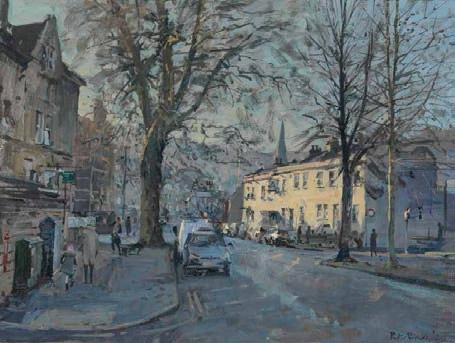

Brown’s atmospheric views are captured in different states –quiet during lockdown, then bustling again – and in all weathers, even during snowstorms when Brown works outside wearing fingerless mittens. Despite being in demand globally, Brown never tires of painting his home city. A fully illustrated catalogue will be available and most works will be for sale.
On 22 October from 11am–12pm, an Artist’s Talk by Brown will be held in the exhibition gallery. Free to exhibition ticket holders. Book in advance to be sure of a place. victoriagal.org.uk of the

 Peter Brown: Bath, Bristol and Beyond, Victoria Art Gallery, Bath, 22 October –15 January 2023
ART | EXHIBITIONS 36 TheBATHMagazine | OCTOBeR 2022 | issue 236
Bedroom, 7am January 2022 Morning Light, Beauford Square September Afternoon, Kingsmead Square Out
Ordinary

Helen Simmonds: the restlessness of still life

Helen Simmonds’ poised and tranquil still-lifes offer a voyage of discovery, working as they do with artistic conventions on the use of line, tone and colour while also holding on to more transcendent truths. Aidan Quinn reflects upon Helen’s work ahead of a new exhibition of her work at Beaux Arts
Between stimulus and response there is a space. In that space is our power to choose our response. In our response is our truth and freedom.” Vicktor Frankle
In A Still Life, Beaux Arts’ 2020 short film on Helen Simmonds, the opening sequence features in close-up a pollen-laden bee landing on a purple cosmos flower, backdropped by Helen entering her studio to begin the day’s painting. At the time cameraman Mike Pitts was most intent on waiting for the bee to complete its orbit of this small, lush patch of garden, and touch down again on our chosen flower filaments. However it is the fuzzy background movement of the artist into the converted garage, and its location among the flourishing blossom and greenery, which is particularly pertinent to the works in this latest collection.
The title of the film is in part a misnomer, as this is Helen’s fifth atelier in the rambling old Victorian schoolhouse she shares with her sculptor husband Richard. Her life is anything but still. She has moved her working space peripatetically, seeking with each change a new dialogue with natural light and silence, and drawing as ever on threads that previous paintings left undone. For her the process of painting itself is one of call and response, not unlike the bee to the flower, or how writer W. G. Sebald described his modus operandi as “the way a dog crosses a field, sniffing from one scent to the next, not seeing or describing the field”.
The beautiful flowers, heirloom enamel jugs, tiles, vases and bowls all suggest a quiet stasis – an artistically engineered state of tranquility which is largely what the paintings engender in the viewer. But this can be misleading. There is a tendency to project a narrative on to any place we have found ourselves in life, suggesting the fulfilment of a conscious arc, no more true in the completion of a painting as it is in one’s moment to moment existence.
So how has she come to paint what she paints? Having been interested in set-design, Helen trained as a sculptor at Bath Academy of Art, turning to painting immediately after graduating in 1985. Her
training is important in her compositions, in understanding the physical presence of objects in space. There is no apparent narrative in her work. It is simply a grouping of objects. She has described this as at times a “raw, uncompromising state”. It is a voyage of discovery, attempting to work with (and through) artistic conventions on the use of line, tone and colour for their own sake while holding on to more transcendent truths; the ‘deep reality’ that Thomas Hardy referred to as “underlying the scenic, the expression of what are sometimes called abstract imaginings”.
Helen, like many women artists past and present, is unable through domestic circumstance to stray far from home and garden for her subject matter. She is however able, as she puts it, “to look outside of myself at what is there, around me. I can consider the unconsidered, suggest the possibility of allowing for a spacious moment within the clutter.” Thus does she tend to the deep reality that Hardy spoke about.
What to look for as potential subject matter is not a consideration. What she responds to is what matters. Being so proximate to the patch of garden where her anemones, cosmos, clematis, snow goose roses, honeysuckle, narcissi all bloom at their given time, the corresponding work reflects this burgeoning foliage and blossom. There are more leaves and more flowers than in previous expositions. There is more veridian and more Indian yellow. This fecundity in the paintings is, I would suggest, a sign that things in her life are at present trundling along smoothly, and not too many threads are being ineluctably frayed.
In a similar way the positioning of objects, their relationship to each other, the figures lightly drawn (or not) on the oriental vases and bowls, all are subtly indicative in one way or another, of the artist’s state of being. “In order for painting to have meaning and significance for me, I have to stay receptive to what I see in front of me at all times, and so not look at it with preconceived ideas of how to translate the truth I witness. To do this demands all that is a part of me, my existence, and so inevitably this includes my vulnerability and pain.” She continues, “Each painting holds within it the life force of all my previous paintings. The assimilated experience is gathered together into each brush stroke. I see this more clearly when a body of work is at a point of readiness.”
Meeting with Helen three studios ago, over a decade in the past, she is puzzled at my request to watch her work. By way of explanation I ask what, for example, she did the previous day. “Mostly moved these four cups around” she responds. So each work’s genesis is a process too.
“Starting a painting,” Helen explains, “is like falling in love. There is the glow of attraction, excitement, and then a mutual exploration ensues. I give, the painting gives back. There may be frustration,
“Being so proximate to the patch of garden where her anemones, cosmos, clematis, snow goose roses, honeysuckle, narcissi all bloom... the corresponding work reflects this burgeoning foliage and blossom”
Yellow Freesias, Just Before Opening, 2022, 61 x 56cm
ARTS | EXHIBITIONS 38 TheBATHMagazine | OCTOber 2022 | iSSUe 236
“
miscommunication, the painting then gives, I relax and we work in harmony. At the end I stand back and see who it is in front of me. I may then be satisfied, or not. The questions, doubts, these may become the next love affair.”


Sitting in the garden more recently on a summer afternoon in 2021, Helen and I are discussing Desert Island Disc music selections. She highlights Steve Reich’s Duet for two violins and strings (recorded at the Gewendhaus in Leipzig). It is not a tune I am familiar with. An important aspect of this musician’s work, and this tune in particular, is the fact that his parents divorced when he was only one year old, and large chunks of his childhood were spent travelling to and from New York and California by train. This is the pulse and the undertow in the music. Helen’s life has thrown her off balance. Her paintings are a restoration, an attempt to regain equanimity. They are not therapy though they are therapeutic. There is the gentle buzz of a tuning fork, of ‘hope and history rhyming’, humming all the way through this beautiful collection of paintings.
“My life experience is part of what influences the decisions I make in painting, but it is not the explanation for it. It is an act of hope, and embodies for me an ongoing attempt to lead a better, kinder, more responsive life, jettisoning all that is superfluous and keeping in focus the critical elements of connection. I am, have become more so, an anxious person. When I witness and am faced with something which calms me, and brings a sense of stillness, and creates space around the ongoing chaos in my mind, I am eased, grateful. I then have more chance to feel loving, to make better choices. If I can offer anything close to a bit of this for others, that is good enough.”
Helen Simmonds: New Paintings is at Beaux Arts from 8 October –5 November; beauxartsbath.co.uk
A Touch of Spring, 2021, 76 x 61cm
Green Kimonos, 2021, 61 x 61cm
THEBATHMAG.CO.UK | OCTOber 2022 | TheBATHMagazine 39 GARDENINGARTS | EXHIBITIONS
In praise of hares
The brown hare prefers farmland and woodland habitats and prefers to venture out when nobody is around. It is the fastest mammal in Britain and since its arrival here 2000 years ago it has built itself into our folklore and mythology. Emma Clegg talks to artist Joanna May about why we are fascinated by hares and how they appear in her work
It was 2000 yeas ago that hares were first introduced to Britain by the Romans and since then they have woven themselves enduringly into our country’s folklore and mythology. In fact, hares were originally native to Africa, Eurasia and North America, and their zoological order Lagomorpha is believed to have a lineage of 90 million years, making it likely that their ancestors once shared the earth with the dinosaurs.

There is a story that Queen Boudica consulted the entrails of a hare, interpreting them as an augury of victory in her uprising against the Romans in AD61. In Cornish legend, the appearance of a white hare in harbours at the end of the day was taken as a warning of tempest or of a deceased broken-hearted maiden coming to haunt her disloyal lover. The character of the hare is also engrained within our literature, from Aesop’s fable of The Hare and the Tortoise to the March Hare in Alice in Wonderland and the Arctic Hare in Philip Pullman’s His Dark Materials
It’s not surprising that hares in children’s fiction have strong characters, because this is an animal that has immense speed, majestic characteristics (including its long, black-tipped ears) and one that is visibly connected to the land. The brown hare is Britain’s fastest land mammal, reaching speeds of up to 45mph, driven by its powerful hind legs. Its mystery has been accentuated by the fact that it likes to hide in the shadows and prefers to feed at night or in the ebbing evenings
of summer. Their ‘madness’ during the breeding season in March where they are seen ‘boxing’ – a mating ritual where unreceptive females fend off amorous males – has contributed much to their narrative characters, and to their being a favourite subject for artists.
Local wildlife artist Joanna May has adopted the hare in her own artwork, initially when she opened up her gallery in Wiltshire in 2001. Joanna explains, “It all started with the hare – I painted the first one when I opened my gallery in Marlborough. I was thirsty to paint the classic hare boxing scene and show off my forte of creating fur detail. At the time I had no idea that in Wiltshire we had such a large population and I was taking a gamble not knowing if wildlife art would sell in its own right, but I struck gold.”
Joanna found her Malborough gallery almost by accident. Wanting to create prints of her work, Joanna asked a local gallery for their advice. The gallery owner mentioned that he was leaving the gallery and was looking for someone to take it over. Joanna agreed to take it on the spot. Even before the gallery opened, she tells me that people were knocking on the door having seen the hare print in the window asking to buy it. “So I knew I had a successful gallery before I opened,” Joanna explains.
When Joanna created her initial hare paintings, she photographed them herself. “I used to get on the tractor with the farmer and he took me to an area where they were. I had my telephoto lens and the hares were so used to the tractor going up and down the fields that you could take amazing shots quite close up without them being threatened.”
LEFT: Hares have always been a source of fascination –this naturalistic limestone carving of a hare was used as a standard weight for measuring grain in the marketplace. From China,1333. Walters Art Museum, Baltimore, 1983

As a wildlife illustrator Joanna’s work was initially focused on hyperrealism, but the work in her current Devizes gallery is softer and more narrative. She paints her wildlife pictures using a combination of airbrushing to create form and shape and shadow and light with layered textures, and the detail – fur in the case of the hares – is added with gouache applied with a very fine zero sable brush. Hares feature large in her work, but eagles, owls, and hedgehogs, along with many other animals, have all had a place in a career that has seen her work sold at Christies Auctions, given her a listing in Who’s Who in Art and a collection of celebrity clients including Raymond Blanc, Rula Lenska and Chris Packham.

With a population of less than 800,000 hares in Britain (figures are
 Joanna May in her Devizes gallery
ARTS AND COMMERCE
40 TheBATHMagazine | ocTober 2022 | iSSUe 236
uncertain; it could be far less), there are pockets of brown hares around Britain, and Wiltshire is lucky to have a strong population across its chalk downs and arable land. Joanna explains that the lifespan of a hare is typically just 2–3 years and that they have minimal legal protection because they are considered as game and can be shot throughout the year, including through their breeding season. Joanna says, “The natural way of growing crops used to allow space for the hares to live among the corn, but now it’s so tight they can’t do that. And the reintroduction of the Red Kite is a big threat, because they live above ground, unlike a rabbit, so they rely completely on speed and flight.”
While Joanna has painted so many hares because her clients love them, she is also fascinated by this elusive species: “I love the folklore around hares,” says Joanna. “There is no other animal that has so many stories around it, and this adds to its mystique and people’s fascination with the animal.”
In 2019 Joanna published her book The Hare on the Moon, a treasure hunt book with elaborate illustrations, in the style of the famous 1970s Masquerade book. Readers embark on a mystical journey, with the hare and the help of the man on the moon, to unlock the star signs and find the treasures that help to release her. The prize for the first person to correctly identify the location is


anoriginal Joanna May painting – Three Hares on a Golden Moon –no one as yet has found the correct location!

Joanna’s hares have recently been launched as a range of eight tiles by tile and stone specialists Ca’ Pietra, who took a selection of the classic poses from her work, including the boxing hares and the one included on the cover illustration from her book. They were commissioned as a Wiltshire-based range of ceramic tiles by Ca’ Pietra after her big hare print was seen in the window of her Devizes gallery. The hare was the obvious choice as a subject because it has been the focus of her best-selling work. Joanna isolated 25 images herself, taking the backgrounds out, and sent them to Ca’ Pietra who chose eight images with hares in different positions –including one running, one crouching and one lying down.
The hand-fired ceramic tiles measure 12.5 x 12.5cm and you can see the range of eight tiles at the Artisans of Devizes x Ca’ Pietra showroom in Devizes, or on the Ca’ Pietra website. A collection of hare coasters is also available from the Joanna May Gallery. n
Joanna May Gallery, 16 Northgate Street, Devizes, Wiltshire SN10 1JL (open Thursday–Saturday, 10am–5pm), joannamay.com; capietra.com; Artisans of Devizes, Stonebridge House, Banda Trading Estate, Nursteed Road, Devizes SN10 3DY, artisansofdevizes.com
 ABOVE: Virgo Hare (left) and Gemini Hare (centre) which can be ordered from the Joanna May gallery printed on canvas, as a mounted paper print or as a framed print. The hares here were isolated for two of the tile designs. And on the right is The Hare on the Moon – A Treasure Hunt Book, illustrated by Joanna May. £29.95
Below: The eight tiles in the Wiltshire Hares collection
ABOVE: Virgo Hare (left) and Gemini Hare (centre) which can be ordered from the Joanna May gallery printed on canvas, as a mounted paper print or as a framed print. The hares here were isolated for two of the tile designs. And on the right is The Hare on the Moon – A Treasure Hunt Book, illustrated by Joanna May. £29.95
Below: The eight tiles in the Wiltshire Hares collection
GARDENINGARTS AND COMMERCE
THEBATHMAG.CO.UK | october 2022 | theBATHMagazine 41
Art for Art’s Sake?
DUNCAN CAMPBELL Antique silver specialist
Or money for God’s sake
A story of bravery and leadership
it is The Mona Lisa or a bisected calf in formaldehyde, a characteristic of great art - upon which most people agree - is that it should elicit an emotional response. For me old silver also prompts an emotional reaction which is why I am prepared to spend my hard earned money on it.

Whether


There is no requirement to own the art for there to be that emotional connection. A painting or piece of silver in a museum will deliver the same joy (or shock) as one in a private collection. The value of a great work of art is in its very existence and our ability to see it.
The prices paid for art by collectors are driven less by power of emotion than by good old fashioned speculation. Over the years the art market has boomed and busted just like any other ‘investable asset class’. These ups and downs do not affect the viewer's response to paintings - save for the understandable negative emotional response to a work that is now only worth a fraction of what its owner paid for it.
The definition of ‘art’ has been explored in recent times by many artists from Andy Warhol to Damien Hirst and no doubt the debate will continue.
Damien Hirst has just completed a fascinating experiment, The Currency Project, involving 10,000 dot paintings which he sold for $2,000 each. Each buyer was given the option of either taking delivery of the physical art work or a non fungible token (digital version of the painting). If you take the NFT, Hirst will burn the painting you bought and send you a certificate saying that you own a unique digital version of the work. Amazingly, almost half the buyers of these dots opted for the NFT. This was apparently as surprising to Hirst as it is to me.

This raises the question, can a string of computer code be a work of art?
I am of a sceptical generation (just like Hirst I suspect) that assumes NFTs to be less like art than the king’s new clothes. In truth, only time will tell who is right, but right now I can’t fathom how anyone could get emotional about a string of machine code. n beaunashbath.com; 01225 334234
The November Coins Medals and Militaria will include the normal selection of the unusual, interesting and fascinating.
As is often the case I am most often drawn to the heroics of the men who served in the First World War.
This sale includes a wonderful D.S.O. group of four to a young Officer Captain Harry Gardiner from Scotland whose story is one of the most outstanding bravery and leadership, under the most trying of conditions.
Harry Gardiner was born at Alva on the 31at May 1873. Initially commissioned in 1893 with the Inniskilling Fusiliers (Militia). During the First World War he served with the 8th Battalion of the Duke of Wellington's (West Riding Regiment).
Captain Gardiner was awarded his DSO for his bravery and leadership during the landings, Gazetted on the 29th October 1915:
Harry Gardiner, Capt, 2nd Battn The Duke of Wellington’s (West Riding Regiment.), attached 8th Battalion. For conspicuous Gallantry and determination during operation at Suvla Bay, Gallipoli Peninsula on the 8th Aug 1915.
Interestingly the Imperial War Museum have a photograph in their First World War Portraits Collection of Captain Gardiner in uniform wearing his DSO, perhaps taken at the time of the award.
Such was the fame of the action that Harry was the subject of a printed thirteen verse poem ‘For England Home and Beauty’ by C. Louise Gaster dated December 5th 1915. Probably written for a local Stirling audience the poem tells the tale of the brave Captain
This group, sold by a direct descendant of the recipient comes with his sword and a number of photographs of Harry looking most handsome and dashing.
If you would like to talk to us about selling or buying militaria, coins or medals or for further information about this sale, please contact specialist, Matthew Denney.


A full team of specialists are available to advise and assist with FREE valuations:
Please contact their team if you would like to sell in their auctions to include:
 The Linen South Crewkerne,
42 TheBATHMagazine | OCTOBeR 2022 | issue 236
Yard,
Street,
Somerset TA18 8AB. lawrences.co.uk Lawrences AUCTIONEERS
IN PERSON | AT HOME | ONLINE | EMAIL | PHONE | WHATSAPP
Silver | Vertu | Jewellery | Watches | 19th/20th Century Design | Oriental Works of Art | Ceramics | Pictures | Furniture | Clocks | Rugs | Militaria | Coins Medals | Collectors | Sporting | Textiles | Automobilia | Motoring | Literature Historic Cycling | Wine | Spirits | Books | Maps | Manuscripts | Photography T: 01460 73041 | E:enquiries@lawrences.co.uk | lawrences.co.uk

Coppa Club –The Bath Townhouse

Clearly thriving on its crisp alliteration, Coppa Club has extended its range of hospitality venues with a new one in central Bath. With existing bases in London, Berkshire, Oxfordshire, Surrey, East Sussex and Bristol, the company describes their particular offering as “clubhouses in beautiful locations for you to escape the everyday. In the countryside, the heart of a village or with panoramic views of a city, we’re a bit like home, but better.”
That’s a grand claim, so I went along to test it out. Located at 18–19 Old Bond Street, once the home of GAP clothing, The Bath Townhouse has a curiously familiar imprint, now transformed with the unseen magic of the retail fitter into a heady mix of dark glamour, classic club comforts and an easy-going Art Deco vibe. Downstairs at the front the keynote is light and relaxed with cushioned chairs and low tables and towering plants such as bird of paradise and fiddle leaf fig, and at the back more serious forest green upholstery with the emphasis on restaurant; upstairs it’s pink and flamboyant, getting you in the mood to hit the cocktails and drop your guard. There’s also a whiff of Alice Through the Looking Glass in the WC, with its black-and-white chequered floor, firebrick red painted walls and white frames.
The curved staircase, once providing access to GAP menswear, now has its walls painted with a brooding, resonant pattern of circles, arcs and curves. At the front of the building on the first floor you’ll find the extensive lounge area and cocktail bar, a devil-may-care glam symphony of shadowy pinks and brighter hues illuminated with backlit shelving, along with the glowing
drinks bar to the right. There will also very shortly be a meeting room available on the upstairs floor.
The menu offers standard categories of Nibbles, Small Plates, Mains & Grills, Fresh Pasta, Sourdough Pizza, Salads & Bowls and Sides. It’s a crowdpleasing selection of dishes for carnivores, vegetarians and vegans, including a Coppa Vegan Burger (with plantbased patty) and a good selection of steaks and fish. Tempting in the pasta category was Tuscan Sausage Ragu with malfaldine pasta and there was plenty of superfood content from the Super Greens and Seeds Salad to various interpretations of cabbage.
freekeh, red onion, parsley, lemon and watercress salad, which looked unprepossessing on arrival, hidden as it was by watercress, but goodness it packed some flavour, and I felt incredibly superior about my low-carb intake. In truth I did sample a few (going on quite a few) of my companion’s skinny truffle pecorino fries, which were the best. He combined the fries with a British Flash Steak with truffle sauce and Roasted Hispi Cabbage with toasted almonds. The latter was honest as it comes, a big corner of cabbage, simply roasted, but with the flavours suffusing the whole.
The service was immaculate and smooth –we were very impressed by this – reaching just the right hard-to-achieve balance between solicitude and over-checking.
My starter of Sprouting Broccoli Salad wooed me in writing and in the flesh with its pomegranates and toasted hazelnuts, along with crisp broccoli, grains and a tahini dressing. This was simple yet artful, and totally virtuous on just about every level. My companion opted for Buttermilk Fried Chicken with chilli mayo and crunchy slaw, a mouthful of which I approved, although the broccoli salad was seriously piled high so concentration was needed.
My main was Sea-Reared Trout on the Plancha (a flat-top griddle) with herbed
The dessert menu forced me over to the carb side with a Basque Cheesecake with orange crème fraiche. I have to admit I like my cheesecake soft and creamy and this was very upright and formal, so be prepared for a dessert with some body – the Basque is baked at a high temperature, light and scorched and caramelised on the top with a rich interior. Our other dessert was the Warm Treacle Tart with crème fraiche and candied orange. I sampled a forkful and it was dreamy.
A bit like home but better? Well no, because home obviously is the best. But for an evening not at home, here is an accessible blend of comfortable and exclusive, with top notch food and vibing out spaces, and no need to plump the cushions. n

Our meal for two, without wine, totalled £78. The Bath Townhouse is open Monday–Sunday from 9am–11pm
 An exclusive club atmosphere with a padded sofa chilled-out vibe – Emma Clegg goes to The Bath Townhouse to investigate
The Sprouting Broccoli Salad wooed me in writing and in the flesh with its pomegranates and toasted hazelnuts
44 TheBATHMagazine | ocTober 2022 | iSSUe 236 FOOD | REVIEW
18–19 Old Bond Street, Bath BA1 1BP; tel: 01225 435398; coppaclub.co.uk/the-bath-townhouse


THEBATHMAG.CO.UK | OCTOBER 2022 | ThEBATHMagazinE 45 New Autumn menu starting in October La Terra Restaurant 2 john street Bath BA1 2JL 01225 482070 • booking@laterra.co.uk • www.laterra.co.uk Mediterranean LA TERRA RESTAURANT
Law firm Stone King has teamed up with Tutors United (TU) this academic year to support its work and help boost the employability of the charity’s tutors.


Tutors United is a social enterprise that hires, trains and supports undergraduates to deliver small group tuition to primary aged school children from low-income and migrant backgrounds. The charity works with housing associations and primary schools and their tutors deliver attainment-raising tutorials after school.
Stone King will provide careers support and work placement opportunities to the tutor cohort as part of the charity’s employability programme. Volunteers from Stone King will assist in the tutor recruitment process and provide training sessions to give tutors insight into particular professions as well as skills, such as presenting, teamwork, time management, leadership, and communication. The firm hosted an induction session for the new tutor cohort at one of its offices in September (see picture). stoneking.co.uk
Time2Share@WECIL has been offering a Befriending Service for 50 years and is one of a range of services at the Bristol based charity WECIL. The service links Disabled young people with volunteers who provide 1:1 support and a short break to parent/carers. Befriending gives Disabled young people with a range of disabilities the opportunity to build confidence and independence with their very own buddy. Links are based on shared interests and activities which can be enjoyed either in the family home or out in the community. Volunteers usually visit a young person for two hours a week and need to be friendly, caring and reliable. If you are interested in becoming a buddy then please see WECIL’s Volunteering page: wecil.co.uk/volunteering
Members of the University of Bath’s performance rugby programme turned out to help tackle litter during a community action event in Kingsmead, Bath. The student players spent part of an afternoon litter picking in support of BANES’s Clean and Green team, which was working to spruce up the River Avon path and the wider Kingsmead area.

The 40+ volunteers were split into five teams and collected 48 bags of litter. One team worked their way through Royal Victoria Park, while a second team worked from St Johns Road to Tennyson Road. A third team were kept busy on the streets between the Royal Crescent and Marlborough Lane and Buildings, while a further two teams worked from Tim Street through the main shopping areas to the area surrounding Green Park.
Residents and community groups considering organising a community event can contact cleanandgreen@bathnes.gov.uk for advice.


Rare plants and wildlife at a former reservoir near Bath are being given a helping hand to flourish courtesy of a five-year restoration project. The area of limestone grasslands near Charmy Down, just north of Batheaston, is home to a wide range of rare plants and insects, but the habitat has come under threat from dense scrub encroaching across the site.

Wessex Water’s Conservation, Access and Recreation (CAR) team is stepping in to ensure species such as the clustered bellflower, bee orchid, hawksbeard mining bee and Adonis blue butterfly can thrive again on the slopes above Chilcombe Bottom Nature Reserve. The team will return advancing scrub back to the levels seen in the late 1970s, allowing these plants and insects to re-establish over the hillside, with certain areas also being re-seeded with a local grass and wildflower seed mix.
Leaving mature woodland areas untouched, some woodland management, including coppicing, hedge-laying and wood chipping will be completed to ensure the site is a mix of open and densely vegetated habitats. The project is part of Wessex Water’s drive to support and enhance biodiversity on its land by restoring and creating priority habitats throughout its region, including improving the public’s access to them. wessexwater.co.uk
46 TheBATHMagazine | ocTober 2022 | iSSUe 236 MAKE A NEW FRIEND UNI STUDENTS TACKLING LITTER RESTORING CHARM TO BATHEASTON SITE STONE KING COLLABORATION CITY | NEWS CITY NEWS Discover the world class companies in Bath and what makes them unlimited.. bathunlimited.org
Use of home as office: Are you claiming?

A claim for the additional household costs incurred when working from home rather than in an office has been possible for many years, but many employees and their employers have only been made aware recently due to the pandemic.
The claim is made under the general deduction of expenses which states that a deduction from earnings is allowed if an employee has incurred more costs than would normally apply if the employee worked in the office; the employee is obliged to incur that additional cost and the amount is incurred “wholly, exclusively and necessarily in the performance of the duties of the employment”.
Most people are aware of the £6 a week flat rate allowance, but higher costs can be claimed if proof can be supplied.

Flat rate allowance
No evidence is required to support the flat rate allowance although a claim needs to be made. To be free of both tax and National Insurance contributions (NICs), the flat rate is set at £6 a week (£26 a month).

There has been such an increase in the number of claims due to employees being required to work from home during the pandemic that HMRC has an online claim service where employees can make the £6 a week flat rate claim. The form permits a claim for the 2020/21 and 2021/22 tax years and HMRC has confirmed that even if an employee was required to work only one day at home during those two tax years, then a claim for the whole year can be made (i.e., £312 each year). Claims for 2022/23 onwards revert to the usual rules, with claims being restricted depending on how long the employee works from home.

Normally, for this exemption to apply there must be a homeworking agreement in place and the employee must be required to work from home regularly, such that there is a pattern of working (e.g., one day a week). In practice, any communications such as emails notifying employees of their requirement to work from home should be sufficient to confirm a 'homeworking agreement'.
For 2022/23 onwards HMRC state that you can claim tax relief if you have to work from home because your job requires you to live far away from your office or your employer does not have an office, you cannot claim tax relief if you choose to work from home.
You can only claim for things to do with your work, such as business phone calls, gas and electricity for your work area.
You cannot claim for things that you use for both private and business use, such as rent or broadband access.
THEBATHMAG.CO.UK | OCTOBER 2022 | ThEBATHMagazinE 47 141 Englishcombe Lane, Bath BA2 2EL Tel: 01225 445507 www.oclaccountancy.com ocl ACCOUNTANCY
For tax saving tips contact us – call Tristan Wilcox-Jones, Samantha Taylor or Lucas Knight on 01225 445507 Call Tristan Wilcox-Jones, Samantha Taylor or Lucas Knight on 01225 445507 to arrange a no-obligation meeting
Mind the Cap
The £86,000 cap on care liabilities is the centrepiece of the government’s long-awaited reform of adult social care funding in England, due to come into force in October 2023.

This cap looks generous; however, it is not as simple as it looks, and a lot of people now incorrectly believe that they will not pay more than £86,000 for their later life care.
The cap only relates to ‘personal care’ costs and not costs for ‘hotel’ costs such as accommodation and meals. In addition, the care costs relate to the costs based on what the local authority believes is an appropriate fee, meaning if anyone selects a care home that charges above the average, then the extra costs will not count towards the cap.
What does this mean?
For example, someone in care paying £800 per week, where the ‘hotel’ costs amount to £250 and in this case the local authority has deemed the appropriate weekly fee to be £600, the amount that counts towards the care cap is £350.
How is this calculated?
The actual figure used against care cap would be the local authority care budget figure – in this case £600, less hotel cost – in this case £250, which would mean that only £350 per week will count towards the care cap. Based on the figure of £350 per week this means that the care cap would be reached in 245 weeks or 4.7 years.
Using the example above, someone paying £800 per week for care who does remain in care and reaches the care cap, the person in care will have contributed approximately £196,000 to their care to reach the cap.

So, in summary while the care cap may reduce the amount you pay in the long term it is important to understand that there will still be costs associated with a relatives care that they and/or their family will need to fund.
For more information or guidance on how the cap care will affect you please speak to Chartered Financial Planner Sean McCabe. Mogers Drewett Financial Planning are specialist financial planners, accredited through the Society of Later Life Advisers, and we can provide advice and guidance regarding these new rules. Contact Sean today on 07739 344702 or sean.mccabe@mogersdrewett.com.

48 TheBATHMagazine | OCTOBeR 2022 | issue 236

THEBATHMAG.CO.UK | OCTOBER 2022 | ThEBATHMagazinE 49
The changing face of office workspace
There are big changes afoot in the workplace, and we all need to pay attention. Think dynamic spaces, interaction, flexibility, sustainability, ergonomics and community. There are choices for companies both large and small, as well as options for the smaller, period stock we have in Bath. Here are some perspectives from local professionals in the know
Allan Lloyd, partner at property service company CSquared (csquaredre.co.uk)
We are witnessing greater change today in how offices are used than ever before. There is a horrible phrase ‘flight to quality’ but it articulates well the fact occupiers are taking better-quality space, and generally less of it. This is twofold, to encourage staff back to the office but also to attract staff in what is a highly competitive job market. Gone are the post-pandemic gimmicks of breakfasts and beer trollies which were used to encourage people back; employers now want their people back to improve productivity and teamship. To do this they are making their working environments dynamic, more based around interaction, thinking and meeting space than just desking and a tea point. Firms with multiple locations in the region are often consolidating those offices into one hub but making that hub an excellent working environment.
Sustainability/ESG (environmental, social and governance) is at the top of employers’ and employees’ minds. This is generally driven by corporate companies’ Net Zero Carbon obligations, but can be seen in many different ways such as with reference to energy usage, wellbeing, and transport plans.
All this will lead to Bath and all regional office centres needing to design the best-quality office space they have ever produced to meet the demand. Poorer, cheaper space that does not invest capital into improving will be left behind and a two-tier market will emerge. We have a lot of smaller, period stock in Bath, but this does not mean it still can’t be improved –the design team just needs to be slightly more creative, although some of the ESG accreditations are harder to achieve.
The flex market is growing fast because occupiers are struggling to plan 3–5 years ahead, so want the flexibility serviced space offers. In addition, Bath and the region is one of the hotspots for tech/IT start ups with one of the highest rates in the UK and these businesses invariably start in serviced space. Large corporates also like the ability to take big floor plates in large offices with the added bolt-on of some flex space, to allow churn to meet demand as projects come in.
Both landlords and occupiers need to adapt or they will be left behind by the competition.
Emma Wharton Love, workplace strategy consultant at office design company Interaction (interaction.uk.com)
Since the pandemic, a one-size-fits-all approach to office space with rows of desks just won’t cut it anymore. People have had a taste of working successfully from home, so your workspace now needs to attract people back into the office to do all the things we couldn’t do well during the pandemic. Organisations need to think harder about what they need from their workspaces, which should be a physical manifestation of their company values and culture.
A good workplace ensures there are a range of spaces so that every individual feels comfortable and productive. Companies can use their workplaces to reinforce what they stand for culturally in terms of how they value their people. Providing great office ergonomics and technology, as well as wellbeing spaces and activities, all play their part.
The workplace can be a core contributor to a company’s ESG strategy. Ensuring everyone has access to natural daylight and greenery
 Co-working space at Rengen House
CITY | BUSINESS 50 TheBATHMagazine | ocToBeR 2022 | iSSUe 235
throughout their working day, for example, has been shown to increase creativity and restores our ability to think after a draining mental activity.
Companies with offices that haven’t been thoughtfully designed and don’t offer a range of work settings to suit different tasks, or which don’t represent their values, will find recruitment and boosting staff productivity more challenging.

Offering a range of work settings that allow for new ways of working presents a huge opportunity for organisations to level up their workplaces and make jobs equally accessible to all –including different age groups, disabilities and neurodiversity. Greater diversity of people brings greater diversity of thought –and therefore better businesses.
from home, they are seeking a community they can plug into. The co-working model has been around for a long time, however it tended to be a set up that was used by specific industries such as the creative and tech industries. The big difference now is that the model has a much broader appeal to all kinds of individuals and businesses, from across all industries. There are clear benefits for both employers and staff from both a cost and welfare point of view in adopting a more flexible workplace solution. I believe this transition was already happening pre-pandemic, but undoubtably Covid-19 has accelerated this movement considerably and reset what we think of as the ‘workplace’.
The House of St John’s (hosj.co.uk)
This Grade I listed building now houses a variety of private offices, dedicated desks, meeting rooms and an event space, high-end fittings and ultra-fast broadband all suit the needs of today’s hybrid working lifestyle. n have had a taste of working successfully from home, so your workspace now needs to attract people back into the office
Jo Lloyd, Rengen House (rengenhouse.com)
Working pattens have changed beyond recognition over the last two years, with people demanding more from their physical working environment and blurring the lines between work, rest and play. Emerging out of Covid restrictions, Bath was ready for a new way of working.

Rengen House offers a solution, providing high-quality, flexible workspace in a professional and sociable environment. Workers have become weary of home-working and crave social interaction. Rengen House is about offering more than just a desk space; it’s a community to co-work, host meetings, events and relax with clients or colleagues. Instead of sterile, corporate spaces, you’ll find high-end furnishings and a home-from-home feel. In line with these changing dynamics, the idea is to provide the most flexible co-working offer in the marketplace. With a range of packages, from pay-as-you-go options to full-time dedicated desks, there is an option to suit all needs. Contracts are rolling monthly and therefore require minimal commitment.
Members come from a wide range of backgrounds and that’s what makes it such an interesting place to work. The common denominator is people who crave social interaction, but in an environment that is professional, comfortable and collaborative. Some members have traditionally commuted away from the city and, faced with working
Another recently introduced co-working space in Bath is The House of St John’s, and this is a space very much powered by social purpose. St John’s Foundation ploughed their energies into restoring number 1 Queen Square and, launched this year, the building is now run by the Charity’s Trading Subsidiary, with its profits gifted to St John’s.
The House of St John’s in Queen Square
This space was designed by Interaction for cyber security company Immersive Labs. The idea was to provide an inspiring multisensory ‘home’ that worked as an immersive playground
THEBATHMAG.CO.UK | OCTOBER 2022 | ThEBATHMagazinE 51 People
Full speed ahead
Think back to 1998 –if your age allows it –when the Internet became mainstream. Then it was a case of dial-up connections that provided maximum speeds of 512 kilobits per second. Compare that to a 150Mbps speed, offered by local broadband company Truespeed as their most basic package. That 512 kilobits per second in 1999 is a mind-blowing 2343th fraction of the 150Mbps speed.
We all know that speed matters –used to as we are to waiting for a data connection in one of our city’s blackspots, but James Lowther, CEO of Truespeed, knows it more than most. He’s been at the helm of the company since December last year, but he has a wealth of

telecoms experience and has fully embraced Truespeed’s determination to “Bring some of the fastest broadband speeds in the world to the south west, rather than waiting for the big incumbents to get around to doing it.”
Truespeed started in 2014, set up in the Chew Valley between Bath and Bristol, which both then had terrible internet connections.

“None of the big providers were doing anything about it”, says James. “I spent a stint working in Sweden (for the Swedish equivalent of Virgin Media) where they are light years ahead of the UK in terms of the rollout of fibre, but even now companies like BT Openreach and Virgin are rolling out fibre across the big cities, but still the smaller market towns, including those in the south
west of the UK, have been largely neglected.
“The UK is playing catch-up and our government has recognised that by putting £5 billion in to try and modernise our infrastructure. The large companies are focusing on where they have dense populations and are behind the curve. We are a smaller company and able to serve the local community rather than focus on the ultimate returns nationwide to shareholders.
“Our directive is to roll out a full-fibre network across the south west. Primarily we’re focused on Somerset, so in and around Bath and Bristol and the surrounding market towns, into South Gloucestershire and Wiltshire, but with Somerset at the heart of the network. We want to create a regional local company which offers really fast broadband and a really great customer experience. We feel it’s crazy in this day and age that Bath is still struggling for good quality data and internet connection.”
Hold on, customer experience... do you mean where you can talk to a real life voice on the telephone? And not have to press buttons with categories you don’t understand, or listen to Celine Dion’s My Heart Will Go On as you wait?
“We have our call centre based in our office in Bath, so if anyone calls up, you are not sent to the other side of the country –you speak to a real human being who lives in Bath or close by, and who can relate to the issues you’ve got.”
This is sounding impressive. So what about the technology? Can you explain this in a way that I can understand?
“People have been told that they have had fibre for years, but it hasn’t been fibre. It’s been fibre part way into the network, but not to the end because you’ve had an antiquated copper cable going the final mile into the home. So it doesn’t matter who you switch to –if they are still using the BT Openreach copper cable it will be a poor service. What we’re doing is building a brand new network from scratch, where we use a fibre-optic cable, that is connected directly into people’s properties.”
So, I conclude, copper cable is bad and a brand new network is good. So what has changed in practice in our local area?
“Truespeed have made a huge improvement to the speeds in our area. The fibre network enables people to get speeds of up to 10 Gbps per second. That is the fastest tech, faster than anyone currently needs, so it’s future-proofed. Historically people have been struggling with 20–30 Mbps in rural areas, so it’s a huge leap up. You read about the speeds people have access to in South Korea and Japan and that’s
Not all of us know our copper cables from our full-fibre, but we do know how frustrating it is when the broadband connections just aren’t there. Emma Clegg talks to James Lowther, CEO of Truespeed, who offer fast broadband services to the south west to rival those rolled out as a standard in China, South Korea and Europe
ABOVE: Truespeed have connected over 300 local businesses – Kelston Vets was our 300th customer and our broadband helps them provide faster animal care (hence the horse)
LEFT: Truespeed arae building a new broadband network in the local community
There is a real sense of civic pride in the area, and people genuinely want to improve the infrastructure
CITY | INTERVIEW
the tech we’re rolling out.”
So what regions are covered? And if they are not, presumably laying new cables takes a while and a fair bit of manpower?
“It’s a race to roll out fibre across the region,” says James. “We’re focused on building the fibre network as quickly as possible, but also making sure we keep it really high-quality and create it with as good a service as possible. We also keep our pricing competitive, keeping an eye on our competitors. The significant thing at the moment is that the big internet providers have all been cranking up their prices, with 9–10% price rises in the last few months. We’ve gone against this trend and have frozen our prices to guarantee no price increases for at least the next 12 months. We are trying to do things differently. We live amongst the communities that we are serving and we understand the economic pressures we are all under.
“At the moment we’re building networks in and around Bath and Bristol and to the south of Bath in Midsomer Norton and Peasedown St John. We are also rolling out in Keynsham, and outside Bristol we’re doing Portishead, Clevedon, Nailsea and Backwell. We’ve already rolled out networks to the south of Bath, so up into Bear Flat, and we have a good coverage across the Chew Valley.
“There is a large amount of work that goes into building a network from scratch. And as you go more rural it becomes more expensive and time-consuming to build. We use the existing infrastructure where possible, so if there is BT ducting we’ll use that to run our own cables through. Where that doesn’t exist, we dig and lay our own ducting to pass our cables through. Our rollouts typically are a mix of the two.”
How are the decisions made about where to roll out the cables?
“We look at different factors – primarily where the need is greatest. We will look where we’ve got network already where we can build out, and where there is the highest demand (people can register their interest on the Truespeed website), and also where it makes logical sense, so we won’t start with the most remote properties that are spread out, but will land in market towns first.”
With the original company totalling six in 2014, Truespeed now employ over 200 people. “At the beginning of this year we secured another £100 million (we have £175 million in total) from our investors, creating a massive capital investment project. To help structure that, we have been growing the size of the team. We now employ over 200 people across a variety of disciplines and functions, from

planning the network to building it, to selling it to manning our call centre. So it’s really exciting growing the company and creating jobs in Bath. We use a lot of subcontractors too, creating more jobs in the region.”
James tells me that typically employees come in to the Bath office 2–3 times a week for faceto-face meetings and work from home the rest of the time. When I ask if it was lockdown that helped establish this balance, I discover this wasn’t a great question, as he reminds me that, “Being able to work remotely is the ultimate USP of our technology.”
Truespeed are part of the Bath Unlimited listing of world-class businesses operating in the region and they take immense pride in the communities they live and work in. As James says, “There is a real sense of civic pride in the area, and people genuinely want to improve the infrastructure and have a real passion to make the south west better, and that’s amazing to be a part of.” The community investment is so strong that Truespeed provide free broadband to primary schools and community hubs where they have networks, currently totalling 140 connections. James explains,
“These are all communities that the people at Truespeed are living in. This is a way we can give back to the communities where we are working.”
Truespeed are growing fast and as well as actively recruiting for various roles, are offering traineeship schemes to give young people and graduates the skills to start their career in telecoms. truespeed.com the
This philosophy is uplifting and refreshing and it stretches to every aspect of the business: “A people-first approach is crucial to us. First of all we are rolling out underlying network product with speed of broadband that is so much faster than people can get today. But most fundamental is the sense that we’re doing it for people, and we’re achieving it with our people in the community. Our mindset is centred around giving people the best-quality and most human experience.”
There is no arguing with that. And when I ring Truespeed on the telephone a little later to check some details, a real person answers, almost immediately. n
James Lowther
THEBATHMAG.CO.UK | OCTOBER 2022 | ThEBATHMagazinE 53 GARDENINGCITY | INTERVIEW
Our mindset is centred around giving people
best-quality and most human experience

Successful, well-established year-round language school in the centre of Bath requires HOMESTAY HOSTS IN BATH

to host both short-term and long-term students. We teach adults and teenagers, and need both single and twin-room accommodation.

For further details, including rates of payment, please contact our Student Services Manager:
Sarah Wringer International Languages Bath, 5 Trim Street, Bath, BA1 1HB Direct Line (01225) 448840


THEBATHMAG.CO.UK | OCTOBER 2022 | ThEBATHMagazinE 55
Kaplan
Email: sarah.wringer@kaplan.com
EDUCATION NEWS
OUTDOOR ADVENTURE
The Paragon School is running Camp Teepee during the half term break, on 18 and 19 October. This fun-filled outdoor adventure day camp is open to children from all schools, age 6-11.

A holiday club with a difference - Camp Teepee is based in the woodland surrounding The Paragon School. Children will learn new skills, develop their confidence and have a great time in a safe outdoor environment. A typical day includes firelighting and campfire cooking, making trails to buried treasure, smelly potion concoctions, raft building for a crew of jelly babies, wooden stick carving, wild drumming, woodland detective games, shelter building, clay creature crafting. Prepare to get muddy!
The price is £40 per day per child and each day runs from 9.30am–4pm. paragonschool.co.uk
PREPARING FOR ADULTHOOD BATH NAMED AS TOP UNIVERSITY
The Preparing for Adulthood Fair, a partnership event between Bath College, Three Ways School and Fosse Way School, returns to the Somer Valley Campus of the College in their bespoke SEND Centre on 5 October. The Fair will showcase all the options and support available to young people with SEND or an EHCP in the B&NES area.

Exhibitors range from payment advisors, care providers, specialist colleges, housing associations, clubs and day services including B&NES Council, Curo, The Life Project, SWALLOW, Off the Record, Bath Rugby Foundation, and Home from Home Care.
The Fair takes place at Wellow House, Bath College Somer Valley Campus in Radstock, on Wednesday 5 October 2pm–5pm. bathcollege.ac.uk
The University of Bath has been named ‘University of the Year’ by The Times’ and The Sunday Times’Good University Guide 2023.

The guide scores universities across criteria that includes student satisfaction, graduate job prospects, entry standards and research quality. This year Bath’s score increased in almost every category to help clinch the ‘University of the Year’ title.
Of particular note was Bath’s very strong performance in student experience and employability, with the University ranking fourth in the UK for undergraduate university experience and fifth for graduate prospects. In addition, The Times’ ranking notes that Bath’s course completion rate (96.2 per cent) is the sixth-best in the country. Overall, Bath has also moved up to eighth position in the national league table, and is the highest ranked university in the south west. bath.ac.uk

EDUCATION
56 TheBATHMagazine | ocTober 2022 | issue 236


THEBATHMAG.CO.UK | OCTOBER 2022 | ThEBATHMagazinE 57


58 TheBATHMagazine | OCTOBeR 2022 | issue 236


THEBATHMAG.CO.UK | OCTOBER 2022 | ThEBATHMagazinE 59
The unique approach to pain and from the Chiropractors at Bath Chiro

People often let out a soft sigh as they start to explain the various tests and diagnoses which have been given to them over the years; you can feel the frustration and despair in the room…

These range from diagnoses such as Osteoarthritis (or ‘crumbly discs’ known to the older generation), migraines, fibromyalgia, disc prolapses and so on. The initial relief of finding out “what is wrong” is quickly dampened when it is followed up with “and there is nothing we can do about it” – this is both disheartening and disempowering to say the least.
Our approach is different.

We do of course work under a chiropractic diagnosis, a description of what physical condition the spinal column is in, which acts to focus our care on what manipulation/ adjustments to deliver. But instead of providing treatment to solely alleviate the symptoms, our care addresses what is physically present in that person.
What do Chiropractors check for?
The physical tension around the spinal nerves and spinal cord is caused by the spinal segments, torsion of the pelvis and restrictions in the cranium, and each can be felt, tested, and rechecked by an experienced Chiropractor. These physical findings have an impact on the way we feel, move, and function, and ultimately impact the way our body copes with any health condition or diagnosis. This is due to the impact these bony structures have on the function of the nervous system. It is these physically present and real findings that monitor and guide us in the care we deliver.
Working this way allows us to provide consistent and effective chiropractic care – after all, when guided by pain alone, there will always be a moving goal post or an evolving target!
The pathway to restorative and true improvements in pain levels and function includes time, consistency, appropriate intensity of care, trust in one’s body and a little bit of belief that one can change and get better... All factors we understand and consider in our care recommendations. In an age of quick results and distractions, dedicating time to our own health can feel like a reach… but it is the only way we can flip “there is nothing that we can do” to “there is something you can do, and we can help.”
60 TheBATHMagazine | OCTOBeR 2022 | issue 236 RECEIVE THE BATH MAGAZINE BY POST NEVER MISS OUT We deliver to over 15,000 addresses every month. But if you live outside our distribution area or would like us to send a copy to friends or family, we offer a magazine mailing service. ANNUAL SUBSCRIPTIONS FROM JUST £33 SUBSCRIBE ONLINE AT thebathmag.co.uk/subscribe or Tel: 01225 424 499
wellbeing:
Rosie & Alistair Bath Chiro www.bathchiro.co.uk hello@bathchiro.co.uk Lansdown, Bath BA1 5QB and Monmouth Street, Bath BA1 2AP


62 TheBATHMagazine | OCTOBeR 2022 | issue 236 BOOK YOUR FREE CONSULTATION ON 01225 311 681 27 Walcot Buildings (Weymouth Street), Bath, BA1 6AD www.jbdentureclinic.co.uk Jaime Brain Dip CDT RCS (Eng) GDC 142490 Jaime and Kevin can help you regain your confidence and your smile by offering: NEW TEETH WHITENING Kevin Milne BDS • Free Consultation • New Dentures Direct • • Denture Repairs •
YOUR HEALTH MATTERS

To keep the female body running as it should, it’s important to understand the basics of gynaecological health. Here, the Consultant Gynaecologists from Nuffield Health Bristol Hospital breakdown some of the issues you need to be aware of to keep your body in good working condition.
Menstrual health
Periods will generally last for between 3 to 5 days, and occur every 21 to 35 days. Just over a third of people will develop period problems during their lifetime. Although longer or heavier than usual periods are not a sign of a problem, it needs to be assessed further, and bleeding in between periods, with intercourse or after menopause, could be a sign of cancer and medical advice should be sought promptly.
Premenstrual syndrome (PMS) occurs due to the hormonal changes prior to periods and can result in significant emotional imbalance, which may also require specialist input. Some mild discomfort is common, but if you are experiencing severe pain with your periods (dysmenorrhoea) you may want to speak to your doctor.
Hormonal contraception can affect periods in various ways, and if required could also be used as a method of treatment. Most period problems can be evaluated during a consultation with a gynaecologist by reviewing your past medical history, performing an examination, and potentially including an ultrasound scan and biopsies.
Gynaecological cancers
Up to two thirds of gynaecological cancers can be prevented by risk reduction, screening and vaccination programme, and it’s important to remember that the outcome of a cancer diagnosis can be improved by earlier detection.
Ovarian cancer can be silent, but symptoms such as weight loss, nausea, vomiting, persistent bloating, abdominal distension or difficulty in breathing could all

be a sign and should be taken seriously. Initial investigation requires an ultrasound scan and a CA125 blood test.
Womb cancer generally causes postmenopausal bleeding which should always be investigated. Outcomes of womb cancer are relatively good if detected and treated in the early stages. Ovarian and womb cancer can be hereditary, and if you have a strong family history of these types of cancers, as well as bowel or breast cancer, you should contact a specialist to discuss gene testing and prevention surgery.
Cervical cancer most commonly occurs between the ages of 30 and 40 years. Not taking part in a screening programme when invited is the biggest risk of developing cervical cancer. Screening is important, even for people who have received the HPV vaccine. Most cervical cancer presents with bleeding in-between periods or after sex. Vulval cancer is relatively uncommon. Any ulcer, lump or bleeding from vulval skin should be promptly assessed. Precancer changes can cause soreness and itching and should also be checked by a specialist.
Menopause
Menopause awareness is increasing, and 18 October is World Menopause Day. Menopause occurs when the ovaries stop producing eggs, reducing levels of oestrogen hormone. The average age is 51 with a quarter of people experiencing severe symptoms. It occurs naturally or resulting from treatment for other issues, such as cancer. Treatment is based on symptoms which can include hot flushes, insomnia, fatigue, joint ache, painful sex, anxiety, and forgetfulness.
There has been much publicity about the risks of HRT (oestrogen replacement). HRT can increase the risk of breast cancer if used for 5 years, but this risk is lower than being overweight or excess alcohol intake.
HRT has considerable benefits too. Heart disease accounts for more deaths than cancer and starting HRT before age 60 is protective. Oestrogen can reduce the risk of dementia and protects the bones, reducing the risk of fractures due to osteoporosis. Not everybody needs HRT, however, individualised help is available for those who do.
At Nuffield Health Bristol Hospital, our team of Consultant Gynaecologists – Dr Jo Bailey, Dr Suvarna Mahavarkar, Miss Naomi Crouch and Mr Amit Patel – work closely together to offer a comprehensive service for our patients. In addition to our Consultant team, one of our physiotherapists, Hayley Saunders, specialises in pelvic, obstetric and gynaecological physiotherapy, and Dr Sonia Mann from our private GP service includes gynaecology among her areas of special interest.
If you would like to book an appointment with a Consultant Gynaecologist at Nuffield Health Bristol Hospital, call 0117 911 5339, or visit our website.

Nuffield Health Bristol Hospital 3 Clifton Hill, Bristol BS8 1BN www.nuffieldhealth.com/hospitals/bristol
THEBATHMAG.CO.UK | OCTOBER 2022 | ThEBATHMagazinE 63
The Valley of the Stones

This month’s walk lies through racehorse country. Manton House on the Marlborough Downs, near where it starts, is one of the most famous racing establishments in the country, and the walk passes several gallops en route. It is, however, encounters with prehistory that are likely to linger longer in the memory. This part of Wiltshire is renowned for its neolithic monuments, one of which – the Devil’s Den – is visited early on in the walk. Thereafter, it is not neolithic monuments which command our attention, but the sarsen stones from which they were made, as we thread the dry valley where countless thousands of them still lie scattered. From there, the walk climbs into a high and lonely landscape crossed by ancient trackways and grazed by vast herds of cattle, where hares bound away if you step off the path. After a detour to visit a sarsen that still bears the marks made by workers honing axe heads over 4,000 years ago, the return to the starting point lies along green lanes and through woodland where sarsens lie scattered in the undergrowth.
To get to the starting point, head east from Bath along the A4. Carry on through Chippenham and Calne, and after 31 miles –shortly after passing the village of Fyfield – turn left to follow a sign for Manton House and Hollow. Carry on along a single-track lane for one mile, before turning left at a byway sign and immediately pulling into a large parking area on the right (SU159700; SN8 1PL).
Head to the far end of the parking area and turn right along a broad track heading north-west, following a signpost for Avebury and Hackpen. After 675m, shortly after passing a gate for the bottom entrance to Manton Down Farm, turn left through a handgate and head for another handgate straight ahead.
Go through it and carry on with the fence on your left for 400m. When the fence curves left downhill, follow it. At the bottom, turn left

through a handgate and follow a track for 275m to the Devil’s Den (SU152696). This impressive monument, rendered all the more mysterious by being set down in such an unassumingly pastoral setting, is all that remains of a burial chamber. Its name recalls a local legend that the devil turns up here at midnight with ghostly oxen to lift the 17-ton capstone off the mighty uprights supporting it. It also captured the imagination of Thomas Hardy, who featured it in a tale called What the Shepherd Saw.
Retrace your steps to the handgate and carry straight on, following a grassy track along a dry valley. Ordnance Survey maps show this area as Fyfield Down National Nature Reserve, which was created in 1955. Natural England only ever held the lease of the land, however, and, after the 577-acre estate changed hands in 2015, the new owners activated a break clause obliging them to delist it as a nature reserve, which they duly did in August 2021. At the moment, access arrangements are unchanged, and the down remains a Site of Special Scientific Interest. It also forms part of the Avebury World Heritage Site.
In the 17th century, John Aubrey wrote that these stones were “sown so thick, that travellers in the twylight at a distance take them to be flocks of sheep (wethers) from whence they have their name”. They are still known as ‘grey wethers’, although sarsen is the term more commonly used. Exactly how they were formed, and how they got here, is still disputed, although all agree it had something to do with glaciers which formed and melted in successive ice ages, gouging this dry valley in the process. Although they are still an astonishing sight today, their use as building stone, which peaked in the late 19th and early 20th centuries, has seen their numbers greatly depleted.

If you want to inspect the stones closely, you can wander among them along the valley floor. To appreciate their full extent, however,
 The Devil’s Den Ridgeway
The Valley of the Stones
The Devil’s Den Ridgeway
The Valley of the Stones
This view may be an unfamiliar one, but it’s in a part of Wiltshire that is renowned for its neolithic monuments and the sarsen stones from which they were made –Andrew Swift sets off on a walk through an ancient, lonely landscape
it is better to follow the footpath which stays close to the fence on your left as it rises above the valley.
Just before a seven-bar gate at the end of the field, turn right past a recumbent sarsen and carry on with the fence on your left (SU138703). After 350m, carry on though a handgate and continue in the same direction, with the fence on your right. When you come to a grassy track, turn left to follow it, and when it joins a stony track, carry on along it. Although the origins of this track are lost in prehistory, it seems to have been adopted as a herepath or military road in the 9th century. It later became part of the road along which stagecoaches travelled between London and Bath, until it was abandoned in 1743 when what is now the A4 opened to the south. Follow it as it climbs westward, crossing a gallop at the summit, and after another 500m you will come to the Ridgeway (SU125708).
This is one of the most ancient roads in Britain, having been in continuous use for at least 6,000 years. Turn right along it, and after 700m, just after passing the end of the gallop you crossed earlier, go through a handgate on the right into access land. Although there are not that many stones in this field, there is at least one worth seeking out. To find it, head slightly to your right towards a pyramidalshaped stone by a large patch of gorse about 100m away. Just beyond it is a recumbent stone with grooves scored into it and a saucershaped depression, the result of being used to hone the edges of stone axe heads some four or five thousand years ago (SU128715). Known as a polisseur or polisher stone, it lay undetected until 1963, but, although it has since attracted a lot of attention, other unusual stones nearby seem to have been ignored. Apart from the pyramidal stone and a small standing stone with a hole, an enormous flat stone a little further on appears to have not only a saucer-shaped depression but also thin grooves scored into it.
Head back through the handgate and continue north along the Ridgeway for 650m. After passing a copse, follow a bridleway sign through a gate on the right with a sarsen beside it (SU127722). After
FACT FILE

Length of walk: 7 miles
Approximate time: 3–4 hours
Level of challenge: Reasonable tracks throughout, with no steep climbs or stiles; cattle likely to be encountered on the downs
Map: OS Explorer 157
500m, just after passing a handgate and a gateway with a cattle grid leading into a field on the right, turn right through a handgate along a green lane (SU132722).
After 350m, carry on through a handgate to follow a track winding through Totterdown Wood, where sarsens lie in the undergrowth and humps and bumps indicate the site of old quarries. Shortly after passing a bridleway signpost for Fyfield, look out for a ruined building, shown on old maps as Old Totterdown, on the left.
At the end of the wood a handgate leads on to open downland. Follow a grassy track straight ahead, carry on through a gateway, and, after going through a handgate, turn left along a gravel track (SU143714). After 90m, turn right to follow a byway sign along another gravel track. From here it is a relatively straightforward walk back to the starting point – the only thing to watch out for is when the track forks after 1400m, ensure you take the right fork. n
Many more walks can be found in Andrew Swift’s Country Walks from Bath, published by Akeman Press; akemanpress.com.
THEBATHMAG.CO.UK | october 2022 | theBATHMagazine 65
THE | WALK
Design picks
Here are a few wowee product ideas from local designers and interiors creatives who have rifled through their fabulous-ideas-to-pick-up-a-room-with-finesse files and picked out a couple for us to revel in, research further and round up for our own rooms, just as if it was our idea in the first place...
Mural wallpapers
Sculptural lighting
One of the simple steps we often take at Catriona Archer Interiors to create a well designed interior is by introducing large, bold lamps. This sculptural Astraeus ceramic table lamp by Habitat does just that. With its tactile form and neutral tones, it is a quietly confident and contemporary addition to a space. Habitat at Argos, £65

I often prefer using wall murals instead of repeat-pattern wallpapers in my interiors. Made.com has launched this clever three-panel mural wallpaper called ‘Hua Trees’. The design uses traditional Chinese inks and it’s a great option for those of us not wanting the cost and hassle of a hand-painted design. Made.com, £195 for a 2.1m x 3.2m area

Regency Etagères
I love these warm-toned maple Etagères, inlaid with ebony, which are both beautiful and functional. They are a particularly useful size and fit with many decorative styles – they could hold lamps, be set in alcoves, alongside a sofa or by a bedside. From Beau Nash Antiques, Bath, £14,625

Reading chair
This chair is a fabulously elegant take on traditional English country furniture. I’d have it as a perch by a fireside or in a bedroom. It is handmade in north Yorkshire by an ex-quantum physicist: which is a great story to tell those who inevitably will ask.
From Berdoulat, Margaret’s Buildings, Bath, £1200
 Catriona Archer Interiors; catrionaarcher.com
Gemma Wright, Beau Nash Antiques; beaunashbath.com
Catriona Archer Interiors; catrionaarcher.com
Gemma Wright, Beau Nash Antiques; beaunashbath.com
CITY | INTERIORS
66 TheBATHMagazine | ocTober 2022 | issue 236
Hand-painted pendant lights
I came across these hand-painted pendants at Chelsea Design Fair –painted in Little Greene paint colours you can have a bespoke colour scheme to fit your home. The scalloped detail is elegant but also frivolous, fitting with the traditional pendant shape and would sit prettily above any workspace or study.

David Hunt Lighting,customise.davidhuntlighting.co.uk, price depending on design
Vintage glazed storage cabinet

This little beauty sits perfectly in my workroom. I had something in mind to fit in the space but when I saw it, I knew I had to act quickly. Sourced locally from @edwardvintage on Bear Flat, Bath, where vintage pieces come and go fast. The cabinet stores all my sample fabrics and colour cards.
Edward Vintage, 34 Wellsway, Bath
Rote brass pendant light
I have recently bought a Rote brass pendant light from award-winning UK lighting company Bert Frank. The light has an incredible geometric shade with contrasting slatted diamond shapes in brass and black. We are installing this in a Georgian reception room in Bath to give it a stunning contemporary interpretation. Using contemporary lighting in a heritage home is a tip I often give to my clients. It’s an unexpected twist. This light even has built-in Bluetooth so you can dim the light from your phone. From Bert Frank, bertfrank.co.uk, £3960

Ruche d’Or Rug
This geometric rug design was inspired by a mix of Cubism and Arabic design. We have had it made in a bespoke size for a large Georgian drawing room. The gold and cream tones of the rug will work beautifully with the deep blue walls, wooden floors and bespoke furniture in walnut and gold in the room.

A design tip is that a rug can really pull the colours of a room together and give it a cohesive look. I always remind my clients that many rug companies will make bespoke sizes and colours of their ranges for you. 200 x 300cm, £1950. from roche-bobois.com (also available in 250 x 350cm)
 Clair Strong Interior Design;
Lola
Clair Strong Interior Design;
Lola
CITY | INTERIORS THEBATHMAG.CO.UK | october 2022 | theBATHMagazine 67
clairstrong.co.uk
Swift Interior Design; lolaswift.co.uk
Log basket
Woven baskets in the home are not only practical but beautiful and sustainable too. Hand-made willow baskets can be made to bespoke designs and sizes in a range of earthy willow shades that mellow with age. From log to laundry and fruit-gathering baskets, when not in use they can be displayed in the home to add rustic charm. To create a truly unique basket you can also attend a workshop and have the pleasure of weaving your own!
Log basket by Wyldwood Willow, 56 x 40 x 50cm, £157.50; wyldwoodwillow.co.uk

Kirsten Hecktermann cushions

With the nights drawing in, I could easily fill every room with these delightful cushions, I may have a few already! Distinctive and individual, Kirsten's designs offer a combination of modern and antique textiles, many

of them hand-dyed and embellished with her own unique style of embroidery to create beautiful bespoke designs.
Cushions from £75; kirstenhecktermann.bigcartel.com
Home Fragrance by Ubiety
We love everything about Ubeity’s home fragrance range. Not only are their plant-based formulations made here in England, but they use vegan and environmentally ingredients too. From hand-poured candles to reed diffusers using sustainable carrier oil, and with all profits going to Dorothy House Hospice Care, we were thrilled to discover this local venture. findubiety.com

Wallpaper by Beata Hueman
Swedish born Beata Hueman is very much the designer of the moment. Fresh from her collaboration with Original BTC in creating the Alma Lighting range, Beata has also turned her hand to the design of a magical range of wallpapers. With so many
colours in each design, these papers act as a wonderful springboard for a scheme, and can add impact not only in large spaces but also in the finer details, such as the lining of bespoke cabinetry.
shoppa.beataheuman.com
Woodhouse & Law, woodhouseandlaw.co.uk
Louisa Morgan, Mandarin Stone mandarinstone.com
CITY | INTERIORS 68 TheBATHMagazine | ocTober 2022 | issue 236


THEBATHMAG.CO.UK | OCTOBER 2022 | ThEBATHMagazinE 69 T: 01225 571711 E: info@homefrontinteriors.co.uk 10 Margaret’s Buildings, Bath, BA1 2LP homefrontinteriors.co.uk | trouva.com Homewares Interiors Gifts Cards & Prints Handmade / Local Artists Ethical / Sustainable Products THE KITCHEN PARTNERS DESIGN STUDIO www.thekitchenpartners.co.uk 102 Whiteladies Road, Clifton, Bristol BS8 2QY 01179 466433
It’s time to get your house in order. Our Autumn/Winter guide features all the best trades and services to help spruce up your home and garden. Whether it’s a small decorating touch or an ambitious major project, this directory offers a great range of expert services to make all those home, interior and garden ideas become reality

KUTCHENHAUS BATH
5 Saracen Street, Bath, BA1 5BR.
Tel: 01225 634025 Web: uk.kutchenhaus.com
Kutchenhaus Bath are part of the Kutchenhaus German Kitchen family. Located on Saracens Street in the heart of Bath Kutchenhaus supply, design and fit German kitchens which with it bring innovation and the latest technology. Whether you are looking for a modern kitchen or a traditional kitchen, the friendly team at Kutchenhaus Bath has over 60 years of combined experience, so can guarantee a professional and five-star service. All Kutchenhaus kitchens are manufactured and put together in Verle, Germany and get’s shipped directly to customers fully assembled which means no flat-pack! The kitchens are also manufactured by intelligent machines which completely eliminates the risk of human error –Guaranteeing your kitchen will be right first time! The team in Bath also design spaces for bathrooms, bedroom and living areas too! So whatever your query may be, pop into the showroom today and get your dream project plans into motion!
WOODHOUSE & LAW
4 George’s Place, Bathwick Hill, Bath BA2 4EN

Tel: 01225 428072 Web: woodhouseandlaw.co.uk
Woodhouse and Law is a well-established full service interior and garden design partnership. From the showroom and studio on Bathwick Hill, the company offers every component necessary in the delivery of a project from concept to completion, ensuring the highest quality throughout. The unique service combines the expertise of inhouse interior and garden designers with that of a highly skilled team of local craftsmen and technicians. So, whether your project is residential or commercial, the team at W&L can help with a wide range of services to transform your space. From making up soft furnishings to a full design service and project co-ordination, everything is delivered with exceptional attention to detail. To arrange an initial consultation, get in touch or pop in to meet the team.
AVONVALE CARPETS

37 Kingsmead Street, Bath BA1 2AA
Tel: 01225 427057 Web: avonvalecarpets.co.uk
Your choice of flooring is vital in transforming any room and the range of options can sometimes overwhelm; fortunately, Avonvale Carpets is on hand to assist. It has served homeowners and businesses throughout the city of Bath and Wiltshire for 50 years, providing an excellent choice of flooring, in-depth expertise and perfect fitting. An independent, secondgeneration family-run business, Avonvale Carpets has its own professionally-trained fitters and deals directly with major manufacturers, offering customers a great selection of quality flooring solutions that’s second to none – LVT, natural, stain resistant, vinyl, wood, wool and tailor-made options too. You’ll be amazed at the variety on offer in the shop, located just off Kingsmead Square. Pop in and see.
HOMES & INTERIORS | A/W 2022 GUIDE Rooms for improvement
70 TheBATHMagazine | OCTOBeR 2022 | issue 236
EDINBURGH WARDROBES
Tel: 0131 466 0258 Web: edinburghwardrobes.com/bath
Now available locally, Edinburgh Wardrobes offer traditional Shaker-style fitted wardrobes, custom made to fit your space with solid hardwood in-frame doors and oak interiors. There are a range of options for the interior layout including drawers, shelves and hanging space; and you can also add lighting or sockets to tuck away all your gadgets. Custom fitted bookcases are also available – ideal for home offices or TV rooms. All wardrobes and bookcases are hand crafted at the Edinburgh workshop using traditional methods, and hand painted in any Farrow & Ball colour that you choose. Pricing is very clear and simple and following a visit to take detailed measurements and discuss your ideas for the design, you will receive a hand-drawn design of your very own custom fitted wardrobe.

BONITI
Dunsdon Barn, West Littleton, Wiltshire SN14 8JA
Tel: 01225 892200 Web: boniti.com
Run by Giles and Simon Lunt, Boniti is a high-quality interiors (and exteriors) business. The showroom is a destination for all types of natural stone, porcelain and timber flooring as well as decorative tiles, stoneware, Kadai firebowls, and the highly desirable Everhot range cookers and stoves. For large and small projects, the Boniti team are masters of their profession and it shows in every detail. The showroom is easily reached from J18 of the M4.

GARDEN AFFAIRS
Trowbridge Garden Centre, 288 Frome Road, Trowbridge BA14 ODT
Tel: 01225 774566 Web: gardenaffairs.co.uk
Create space for home working, hobbies, a growing family or even a new business venture with a cost-effective, versatile, fullyinsulated garden room. Garden Affairs offer a huge range of high quality, sustainable garden buildings and will help you get the design, the installation, the quality and the price spot on. Visit their extensive display centre at Trowbridge Garden Centre in Wiltshire to see garden offices, art and craft studios, teenage dens, granny annexes as well as a range of ‘posh sheds’ and summerhouses.

JIM LAWRENCE
114 –116 Walcot Street, Bath, BA1 5BG

Tel: 01225 430691 Web: jim-lawrence.co.uk
Over the past 20 years Jim Lawrence has built up a reputation for making high quality lighting and home accessories using traditional handcrafted techniques. The business has come a long way since starting out on Jim’s farm, but the ethos to nurture British craftmanship remains the same. Today the company employs a skilled team of 150 engineers, welders, painters, seamstresses, designers, lampshade makers and technicians, alongside a full cohort of support staff in the Suffolk workshop. View Jim Lawrence’s extensive homeware collection in the beautiful new Bath showroom - set in a unique Georgian building nestled right at the heart of Walcot Street.
HOMES & INTERIORS | A/W 2022 GUIDE
THEBATHMAG.CO.UK | OCTOBER 2022 | ThEBATHMagazinE 71
BEN ARGENT KITCHENS

Dunsdon Barn, West Littleton, Wiltshire SN14 8JA
Tel: 01225 892270 Web: benargentkitchens.co.uk
Award winning creators of bespoke contemporary kitchens that successfully combine functional design with elegant simplicity. Ben has a background as a designer/maker and has extensive experience in the specialist furniture industry. He launched the company in 2007 with a clear understanding of the subtleties and technicalities required to achieve sophisticated and highly individual contemporary kitchens. Their beautiful showroom is conveniently located near M4 J18 with plenty of free parking. Please contact them to arrange a viewing.
THE BATH FRAMER
14–15 Walcot Buildings, London Road, Bath BA1 6AD
Tel: 01225 920210 Web: thebathpictureframer.co.uk
The Bath Framer, owned by Kelly, is a friendly boutique picture framers that has a beautifully quirky front of house and an amazing naturally lit workshop. Both are a joy to work in and to visit for customers wanting to see how frames are created. Since opening, the business has gone from strength to strength, building a client list of local residents and businesses based in Bath, Bristol and beyond. A bespoke framing service, tailored to suit all individuals’ needsruns alongside a gorgeous selection of cards, gift wrap and stationery.
HOMEFRONT INTERIORS
10 Margaret’s Buildings, Bath BA1 2LP
Tel: 01225 571711 Web: homefrontinteriors.co.uk


Homefront Interiors is a homewares store that follows a simple ethos to source ethically made and sustainable products. With a clever mix of work by local artists and makers, displayed alongside handmade fair-trade products from around the world, Homefront aim to support the small producers. The shop may be small, but it is a treasure trove of beautiful things - handmade, fair trade, recycled, or made from sustainable materials. If you are looking for a great selection of all those hand-picked and important finishing touches for the home then Homefront is a great destination store to visit.
CATRIONA ARCHER INTERIORS
Tel: 07823 884945 Web: catrionaarcher.com
Catriona Archer Interiors has helped transform residential homes, small businesses and holiday rentals in Bath and the surrounding areas for over a decade. Catriona is known for her practical design solutions, creative flair and hands-on styling. A full menu of services are provided to suit a broad range of projects and budgets: From half-day and full-day consultations to more in-depth end-toend services that include renovation plans, furnishing and finishes. So whether you are looking for a few well considered updates or a full redesign, simply contact Catriona to discuss your requirements and arrange a consultation.
72 TheBATHMagazine | OCTOBeR 2022 | issue 236
HOMES & INTERIORS | A/W 2022 GUIDE
CLAIR STRONG INTERIOR DESIGN
5 Argyle Street, Bath BA2 4BA Meetings by appointment.
Tel: 01225 426905, Mob: 07855 797311
Web: clairstrong.co.uk
Clair Strong Interior Design Ltd is a friendly, boutique business based in Bath, providing a range of interior design services for residential and commercial projects. With over 15 years experience, Clair and her team work with a trusted network of professionals and trades offering complete design and refurbishment. From city centre apartments and retail units to large Georgian houses, her portfolio includes projects of all sizes. The company ethos is to take a collaborative approach with clients, working with them to create spaces that meet their needs, improve their lives, and exceed their expectations. Call or email Clair to arrange a consultation.
JOEL BUGG FURNITURE & SPACES

Tel: 01225 583520 / 07779 236242 Web: joelbugg.co.uk
Joel Bugg Furniture & Spaces designs and creates elegant, bespoke fitted furniture and interiors, which are architecturally thought through to seamlessly fit and suit your property. Joel and his team offer a fully managed service from initial space planning and concept designs, using teams of skilled cabinet makers in their manufacture through to final installation. They will also recommend, source and provide lighting, flooring and other finishing touches as required. Their expertise spans all interiors from kitchens and bathrooms to libraries and boot rooms, and as well as working directly with clients they work collaboratively with architects and interior designers to deliver a truly tailored solution.
MARMALADE HOUSE
Tel: 01225 445855
Web: themarmaladehouse.co.uk
BATH RECLAMATION
Tel: 07983 556 757 Web: bathreclamation.co.uk
It was a sad day when Walcot Reclamation and Walcot Architectural Salvage had to move out of Bath, but the good news is that former manager Cary Morgan, is now the owner of Bath Reclamation, based just outside Bath in Newton St Loe. Bath Reclamation stock and source all types of reclaimed materials, with a special focus on building materials such as Bath stone ashlar, paving, flooring, roofing and bricks. All other types of salvaged materials and salvaged items –from windows to sleepers, curbs and resawn pine –are kept in stock when available. A visit to its helpful, new website is a must.

Marmalade House is an award-winning, professional furniture painting and design company, based in Bath. It specialises in French and Gustavian finishes that include the layering of colours, distressed paintwork and lime-washing as well as gilding, colourwashing for ageing and waxing services. The focus is all about colour and style and how that fits into a customer’s home. The team of trained interior designers also offer a design and styling service that brings together the client’s style and aspirations for change. For those who prefer to do everything themselves, the company also offers popular training courses on how to paint furniture to professional standards, and the use of colour within your home.
Run by Vanessa Sayce, Marmalade House is an established, friendly company that has its clients’ interests at heart, whatever changes they would like to make, and at whatever scale.

 Photography by nicksmithphotography.com
HOMES & INTERIORS | A/W 2022 GUIDE
THEBATHMAG.CO.UK | OCTOBER 2022 | ThEBATHMagazinE 73
KELLY MARIE KITCHEN INTERIORS

8 Pulteney Terrace, Bath BA2 4HJ
Tel: 01225 481881 (Mobile: 07796 554466)
Web: kellymariekitchens.com
Kelly Marie has more than 15 years experience in the kitchen design industry. She has had the pleasure of working on many luxury kitchen projects in the Bath area and now owns her own unique and creative business based on a constant list of word-of-mouth recommendations. Her technical designs with intrinsic creativity allow spaces that are functional yet beautiful. With a vast portfolio of luxury German kitchen projects, Kelly works with each client’s budget, providing personalised attention throughout the design process.
Kelly believes that it is all about the little details and her approach combines purposeful variations of colour, textures and finishes. The careful selection of these elements endow the home with a sense of harmony, while reflecting the individual style of the client.
COOPERS HOME APPLIANCES
13–15 Walcot Street, Bath BA1 5BN
Tel: 01225 311811 Web: coopershomeappliances.com

Located on the famous Walcot Street of Bath, Coopers Home Appliances is a store not to miss. For many years running, Coopers has been a popular entry in our ‘Best of Bath’ list and it’s easy to see why. With over 70 years’ experience, Coopers is a highly acclaimed and award-winning kitchen appliance retailer with an eye for the unusual. Their large showroom has recently undergone an exciting transformation and displays an extensive array of range cookers, refrigeration, laundry, dishwashing, built-in appliances, small appliances, and much more. The showrooms provide customers with a unique live experience where they can physically interact with the appliances before they buy them. The store frequently holds demonstrations and events, and often collaborates with other local specialist traders. The expert team at Coopers is always on hand for enquiries and is competitive when it comes to purchase, delivery, and installation. With so much choice, the team can help you choose the right product to complement your taste and home environment. With superb customer service, Coopers aim to make buying home appliances a personal and pleasurable experience –independent retailing at its very best.
GARDEN REQUISITES
Tel: 01225 851577 Info@garden-requisites.co.uk
Web: garden-requisites.co.uk
Based in Bath, Garden Requisites produce high quality, hand-made zinc galvanized products such as porches – as shown, door canopies, window boxes and trellis panels. Specialising in weaving wire, each piece is created locally and made to order. Standard sizes or bespoke designs in solid steel or wirework can be created and despatched nationwide and worldwide. Visitors to the Batheaston showroom are very welcome. Established almost 20 years ago to cater for the discerning gardening world, Garden Requisites now not only produce arches, trellis panels and planters but also door canopies, window boxes and fireguards for wood burning stoves. Due to the sustainability and longevity of hot dip zinc galvanized steel, any Garden Requisites’ product will last a lifetime, eliminating the need to be replaced or maintained so reducing the carbon footprint and removing any waste from the product life cycle – a truly sustainable solution. For more information or to place an order, get in touch.
 Image: Pete Helme Photography
74 TheBATHMagazine | OCTOBeR 2022 | issue 236
HOMES & INTERIORS | A/W 2022 GUIDE
TR HAYES
15–18 London Street, Walcot, Bath BA1 5BX
Tel: 01225 465757 Web: trhayes.co.uk
TR Hayes is the largest furniture store in the region and has been selling furniture in Bath for over 100 years with a reputation for good quality and service. The store features many well-respected brands, with an amazing array of furniture of all types on display – sofas and chairs, dining and living room furniture, beds and mattresses (including Vispring, Harrison Spinks and Hypnos). Styles range from classic to contemporary, with ranges to suit all budgets. There are also highly respected carpet and curtain departments. Carpets and wooden flooring can be fitted, made-to-measure curtains and blinds provided, and advice on accessories is available. With friendly and knowledgeable staff to help guide you, and excellent aftersales care, you can rely on TR Hayes.
CREAM CORNWALL
29, Milsom Street, Bath, BA1 1DG Web: creamcornwall.co.uk
MANDARIN STONE
15–16 Broad Street, Bath BA1 5LJ
Tel: 01225 460033 Web: mandarinstone.com

Renowned for its comprehensive natural stone collection, Mandarin Stone has gained quite a reputation for its on-trend and beautifully designed porcelain. Ranging from tiles that cleverly mimic materials such as wood, concrete and marble to striking glazed and patterned tiles, the collection has endless surface design possibilities. Established for over 25 years and with 10 inspirational UK showrooms, it offers dependable specialist knowledge as well as technical expertise. Almost the entire natural stone and porcelain collection is held in stock in the UK, so lead times are short.

Inspired by the Cornish coast, Cream Cornwall makes luxury and exclusive homewares for people who love to be surrounded by beautiful things. Featured on homewares and fabric, their unique designs transform ordinary objects into statement pieces. Cream Cornwall’s overarching motto is ‘Beautiful things, beautifully made’ and Rebecca and Allison, the co-founders of Cream Cornwall, are committed to producing quality and unique homewares that inspire. The two women are passionate keeping production as local as possible, with their candles, diffusers, lampshades and cushions all made locally in Cornwall. Both Rebecca and Allison maintain the importance of having physical stores, and their shops in Falmouth, St Ives and Bath beautifully showcase the wide range of products.

SELBY
Tel: 01225 571350 Web: selbylandscapes.com
Selby Landscapes is the leading landscape gardening company based in Bath with an excellent reputation for crafting beautiful and enduring outdoor spaces.

Selby Landscapes offer a turn-key solution to your landscape requirements including landscape design and construction, garden design, planting and garden maintenance.
Frequently working alongside other garden designers in the Somerset region, as well as offering an in-house garden design service, every garden project Selby Landscapes create, from city courtyards to large country gardens, is crafted to give a lifetime of pleasure.
THEBATHMAG.CO.UK | OCTOBER 2022 | ThEBATHMagazinE 75
LANDSCAPES
BALULA
Tel: 07949 116310 Web: balula.co.uk
Imagine what your space could be…Balula is a unique, full service interior design studio with 15 years experience in large renovation projects that have featured in the Sunday Times, Conde Nast Traveller, Interior Design magazines and TV programmes. Working closely with Architects, property developers and individual clients - their 3D studio creates photo-realistic images of what a building or a space could become. A perfect way to review architectural and design choices as a project evolves. For Interiors – A unique “Laid Back Luxury” style is their calling card – delivering an eclectic mix of styles and unique pieces that have been blended perfectly to give spaces that relaxed 5 star personality.

HEIDI REIKI BALANCING ENERGY AND FENG SHUI

Tel: 07776 255875 Web: heidireiki.com
Your Peaceful Home? Why should I have an energy makeover, you ask yourself? I would ask, how would you like the energy in your home to feel and what is the energy of your living space feeling like right now? Helping people to live in harmony with their home and living spaces is what I do. By applying my many years of specialist knowledge in reiki, Feng Shui, energy clearing and with applying The ThetaHealing® Technique, I can transform your home into a peaceful and loving place to live in.
After working on Claire’s home and garden, she shared on Google, ‘Thank you, Heidi, for the wonderful work you have done with us and our home. I really appreciate your kind and gentle approach, and how you bring so much experience and different modalities in what you do, in person and from a distance. It's great so feel such a positive difference in the energy and harmony around us.’
Find out more contact Heidi Lerner Rearden: heidi@heidireiki.com
MARDAN REMOVALS AND STORAGE

Tel: 01225 313233 / 07899 847857 Web:mardanremovals.co.uk
Mardan work with both home and business owners directly and all work is of the highest standard, reliability being paramount. The team are highly experienced in moving fine arts and antiques giving you the confidence that your most prized possessions will be moved safely and carefully. All your effects will be packed to European standards. Mardan offer a full packing service and all packing materials are free of charge with every move. The company also provides secure storage hire in Bath with around-the-clock access and CCTV security and with flexible rental periods and storage size at competitive rates. Whatever your reason for needing storage, if you’re looking to store all your household goods or just a couple of items, look no further. Mardan Removals can take the stress away and arrange it all for you in Bath.

HOMES & INTERIORS | A/W 2022 GUIDE 76 TheBATHMagazine | OCTOBeR 2022 | issue 236
BATH KITCHEN COMPANY

7–9 North Parade Buildings, Bath BA1 1NS
Tel: 01225 312003
Web: bathkitchencompany.co.uk
Established in 1990, Bath Kitchen Company is an award-winning, wellregarded family business based in Bath. With vast experience, the company takes pride in its close attention to detail and its understanding of what each client requires. Whatever an individual client’s tastes, the team will find a bespoke kitchen that strikes a perfect balance between aesthetic and practical requirements. Consequently every kitchen is unique, beautifully designed and perfectly functional. Handmade using premium materials and to the highest standards, a beautiful kitchen can be carefully crafted to make the most of available space, existing features and the latest technology. Whether designing for Bath’s oldest private homes or cuttingedge city apartments, the principle is the same – Bath Kitchen Company will create a place that enhances your lifestyle.
BATH CARPETS AND FLOORING

4 Kingsmead Street, Bath BA1 2AA
Tel: 01225 471888 Web: carpetsandflooringbath.co.uk
Supplying and fitting flooring throughout the South West since 2004. Bath Carpets and Flooring (BCF) offers a wide selection of carpets, all made from a variety of different materials including wool, polypropylene, nylon and sisals. With the combined experience of more than 100 years, the team’s extensive knowledge and expertise puts you at ease as they match your needs with the perfect flooring solution. BCF pride themselves on only giving impartial advice and hassle-free measuring and estimating, so there will never be any sales pressure or confusion. As the city’s largest Karndean flooring specialist, BCF’s luxury vinyl tile showroom will give you the freedom to create impressive floors, where the only limit is imagination. With showrooms over two floors offering an even greater selection of homely carpets, vinyl’s, LVT’s and modern rugs. Commercial flooring from all leading manufacturers is available through Bath Contract Flooring Ltd. So if it’s flooring for your home or your business BCF have got it covered.
HOUSE OF RADIATORS
22 Wellsway, Bear Flat, Bath BA2 2AA
Tel: 01225 424199 Web: houseofradiators.co.uk
House of Radiators sells traditional and designer radiators that can be offthe-shelf sizes/finishes or bespoke sizes and colours. This popular, family-run business opened its Bear Flat showroom in 2011 and not only sells to Bath areas but throughout the UK and overseas. Following a major re-fit, there are over 100 radiators on display and due to increasing popularity the traditional cast iron and column radiator range has expanded. With over 45 years experience in the heating and radiator industry they offer a friendly and high level of customer service. This is key in helping customers choose the right radiator for their home that will not only look amazing but will heat their room and do its job. Because the team work with leading manufacturers and distributors in the radiator industry, there’s always something to suit all budgets and styles. Locally the company are able to offer an at-home consultation where they’ll measure up and work out the correct heat requirements and size up radiators accordingly.

HOMES & INTERIORS | A/W 2022 GUIDE
BLUE. WOMAN + HOME
The Loft, 1-2, Bartlett Street, Bath , BA1 2QZ
Tel: 01225 462111 Web: bluewomensclothing.co.uk
Drapers Independents Finalists 2022. Blue is one of Bath’s best concept stores, situated in Bartlett Street Quarter, at the artisan end of town. This beautiful showroom space supplies a chic range of fabulous homeware and individual clothing to adventurous women of all ages, with style that is impossible to find on the high street. Blue is a destination store where you can shop womenswear, homeware and gifts –stockist of Lurdes Bergada, Rundholz and Lofina Footwear too. Stay for award winning lunch at Cafe Lucca, all under one roof at The Loft. Follow Blue's Instagram @bluewomensclothing to experience the unique brand, including styling tips and videos
LOLA SWIFT INTERIORS


Tel: 07971 106546; Email: lola@lolaswift.co.uk Web: lolaswift.co.uk
Interior designer and colour consultant based in Bath, Lola Swift offers a creative and comprehensive design service, seamlessly combining style with practicality whilst integrating personality, colour and texture in your home or workspace. Whether you have moved house, are looking to restyle a room or office space, let Lola remove the stress by creating a beautiful design scheme that reflects your style and budget. Services include residential and commercial spaces, from concept and space planning to room styling and implementation.
BEAU NASH BATH
28 and 31 Brock Street, Bath BA1 2LN

Tel: 01225 461 483 and 01225 334 234 Web: beaunashbath.com
For a city like Bath it would be unthinkable not to have some good antique shops. Beau Nash are specialists in both antique silver and decorative period furniture with a range to suit most budgets. At both of their shops on Brock Street (connecting the Circus to the Royal Crescent) Beau Nash pride themselves on offering both quality antiques and the friendliest possible service. The team at Beau Nash aren’t intimidating, as some specialist antiques businesses can be and, since it's their favourite subject, they’re delighted to talk antiques anytime. Do pay them a visit - you won’t be bored.
NEWMAN’S JOINERY

6 Locksbrook Court, 88-89 Locksbrook Rd, BA1 3EN
Tel: 01225 318378, Web: newmansjoinery.co.uk
In April 2015, Roland Newman took over the thriving Hulin & Hudson joinery firm following the retirement of Mike Hulin. Based in Widcombe, the joinery shop was a well-established local business providing high-quality joinery for houses in Bath and the surrounding areas. Chris, the foreman, worked with Mike for almost 20 years and continues to run the workshop, so the wealth of experience and local knowledge has been retained. The company deals with everything from timber windows, staircases, doors and frames to alcove cupboards, panelling, timber conservatories and shop façades and they have a specialist knowledge in listed buildings. Contact Newmans for a free, no-obligation initial visit to discuss your requirements.
HOMES & INTERIORS | A/W 2022 GUIDE
SCHMIDT BATH
1 Park Road, Bath BA1 3EE
Tel: 01225 337276 Web: schmidt-bath.com

Schmidt have been creating bespoke made-to-measure interiors in Bath for more than 35 years. From luxury kitchens to bathrooms, bedrooms and home offices, its team of designers can make use of even the smallest space. Formerly Interior Harmony, Schmidt Bath is headed up by Leroy McKenzie and with highly skilled in-house fitters you can be sure that your project runs smoothly, and with established installation partners, Schmidt now offer complete home renovation projects including extensions. The team can help you create your dream kitchen, advising on the best layouts and appliances from high-end brands including Siemens and Miele. If you’re looking to upgrade your home, give them a call to book your free quotation or make an appointment via video or phone call and have an informal chat with a designer or visit Schmidt in-store to see a full range of beautiful possibilities.
S&J ROOFING
130 Walcot Street, Bath, BA1 5BG.
Tel: 01225 951223 Web: sandjbath.co.uk
Established since 1981 S&J Roofing Bath have over 40 years experience within the roofing industry providing all aspects of roofing works across the city and beyond. This is a family run business that has an excellent reputation for delivering quality work within budget and on time.
S&J have a showroom which is conveniently located in the heart of Bath on Walcot Street, customers can book an appointment to discuss, over a cup of coffee, all their roofing requirements with a member of the roofing team. It’s also a great place to get ideas and view the roofing products available. S&J are approved members of the FMB which assures customers that all work is carefully checked and also ensures work carried out is of the highest standards of the federation and are upheld and adhered to.

ETONS OF BATH
108 Walcot Street, Bath BA1 5BG
Tel: 01225 639002 Web: etonsofbath.com
Etons of Bath is a specialist interior design and architecture practice focused on refurbishing and renovating period homes. Their team of interior designers and project managers can help you plan, design and deliver classically inspired interiors that add value, turn heads and improve the use of space. From their studio in Walcot Street, the team covers projects of all shapes and sizes from a select number of rooms in a house, to large townhouses and luxury apartments. Etons of Bath’s services range from concept designs for individual spaces and help with procurement for special pieces, all the way through the spectrum to full scale renovations. They combine specialist knowledge, creative flair and project management skills to deliver luxury and complex projects on time and budget.

HOMES & INTERIORS | A/W 2022 GUIDE
THEBATHMAG.CO.UK | OCTOBER 2022 | ThEBATHMagazinE 79


 Gainsborough Hotel Sydney Gardens Church Street
Kingdom of Sweets
King Kong
Priddy
Greystones Care Home Queen Square
Boco Boys Street Office
Gainsborough Hotel Sydney Gardens Church Street
Kingdom of Sweets
King Kong
Priddy
Greystones Care Home Queen Square
Boco Boys Street Office
S&J Roofing Bath have over 40 years experience within the roofing industry. We are family run business that has the reputation for delivering quality work within budget and on time. Our showroom is located in the heart of Bath on Walcot Street, please book an appointment where a member of the roofing team will discuss all your roofing requirements over a cup of coffee or come and view our roofing products. We are approved members of the FMB which assures you the customers that our work has been carefully checked to ensure we uphold the standards of the largest federation. S&J ROOFING 130 Walcot Street, Bath, BA1 5BG. www.sandjbath.co.uk 01225 951223 Est 1981 Walcot
HOME & INTERIOR Notebook
New ideas for the autumn


THE ICONIC TRIPP TRAPP® CHAIR IN NEW FJORD BLUE
Founded on the west coast of Norway, in 1932, Stokke AS began as a producer of bus seats and furniture for adults. Launched in 1972, the iconic Tripp Trapp® chair was its first product for children and designed by Peter Opsvik. Stylish, versatile and practical, more than 13 million of these brilliant chairs have been sold globally and now, in a special celebration of its 50th anniversary the trusted Tripp Trapp® chair is available in a fresh, new colour: Fjord Blue. Enjoy your child learning and interacting in safety and comfort, sitting close to you at the family table. RRP £209. Visit stokke.com to find out more.

KADAI FIREBOWLS
The red hot garden accessory of 2022 –these are great for generating heat, cooking on and just for helping you find some joy all year round. Original Kadais are up to 100 years old, each one completely unique with a rich heritage from years of use as cooking bowls at weddings and festivals across India. Hand-picked in Rajasthan and available in sizes from 60cm–170cm diameter. The Kadai can be raised to the perfect cooking height with a handmade iron stand or can be used as an impressive fire bowl to enjoy evenings under the stars throughout the year. Visit the Boniti showroom on the A46 to see an impressive selection of Kadais and accessories. Find out more at boniti.com
THE NATURAL LOOK
Dulux have announced its colour of 2023 as ‘Wild Wonder’, a barley shade of soft gold with green undertones. According to the paint and colour experts it captures the wonders of the earth, inspires creativity, and brings a sense of nature's magic to our living and working spaces. There’s a full colour palette to enjoy at dulux.co.uk
OFFCUT UPHOLSTERY

TR Hayes in Bath has created a ‘vintage’ room on its first floor. This new room is filled with a selection of leather and tweed armchairs and sofas, amongst other items. One of the standout themes, and one that has incredibly popular, is the patchwork look. These pieces have been designed to make the most of off-cuts from one of TR Hayes’ furniture suppliers who create sofas and chairs using high-quality leather and a mixture of wool and genuine Harris Tweed. Rather than throw the off-cuts away they have rethought things and have come up with these great pieces. They have caused quite a stir in the showroom.
TR Hayes, 15–18 London Street, Walcot Street, Bath; trhayes.co.uk
82 TheBATHMagazine | OCTOber 2022 | issue 236


THEBATHMAG.CO.UK | OCTOBER 2022 | ThEBATHMagazinE 83
Page-turning interiors


Here is a sampling of books and magazines offering an eclectic mix of interiors inspiration –from DIY skills and transforming a rented space to admiring homes in the Blue Mountains in Australia and Waiheke Island in New Zealand
Home Sweet Rented Home: Transform Your Home Without Losing Your Deposit by Medina Grillo


This is an inspired book for renters. Faced with a home where the walls are magnolia, interiors blogger Medina Grillo shares her favourite tips, tricks and DIY projects for transforming a rented space. Discover ways to add a splash of colour with removable wallpaper, learn how to hang artworks without damaging the walls, and turn your hand to upcycling those furniture bargains you picked up at the flea market. With chapters covering all aspects of the home, from walls, flooring and lighting to storage and accessories, this will appeal both to DIY experts or those who have never lifted a paintbrush. Mitchell Beazley, £15
The Foraged Home by Joanna Maclellan
Anyone can create a beautiful home by foraging, and salvaging what they find, maintains Joanna Maclellan. Whether it’s a box of rusty nails or a disused armchair missing a leg, discarded objects can be restored, recycled or repurposed to fill the home with personal style. Presenting the techniques and philosophies of a wide spectrum of foraging homeowners, this book showcases unexpected and inspiring interiors from all over the world, from an upturned boat in France to an Australian beach house. In an era when self-sufficiency, living off grid and saving our planet have never been more important or appealing, this provides guidance and inspiration for all those looking to go beyond the world of mass-produced flat-packs. Thames and Hudson, £25

Spectrum: Heritage Patterns and Colours (Victoria & Albert Museum) by Ros Byam Shaw

This original book analyses the palettes that have been used by designers in the creation of furnishing fabrics and wallpapers from the 15th century to the present. Each fabric and wallpaper is arranged chronologically on its own double-page spread,
accompanied by a caption that provides information about each product and its significance in the context of interior design. Unique in the book are the colour grids shown beside each pattern, in which the colours in the original piece are shown in proportion to their use, and with their CMYK references to enable designers to replicate these colours in their own work. Thames and Hudson, £25
DIY with Jay by Jay Blades

With tales of furniture restorer Jay Blades’ own do-it-yourself escapades and plenty of inspiration from his favourite home fixes, this guide will give you the knowledge you need to choose the right wall plugs, revamp those old dining chairs and give your bathroom a whole new lease of life without breaking the bank. Including information on laying new kitchen flooring and building your own BBQ, making new sofa covers and choosing the right bedroom vibe for the best night’s sleep, this manual provides tips and problem solvers for anyone hoping to embark on a new DIY journey. Bluebird, £20
Ark Journal

Interior design magazines are a big draw at Magalleria, especially anything Scandinavian. A favourite is Denmark’s Ark Journal, a coffee table darling with sleek, minimalist good looks, packed with design and furnishing ideas. The publisher says, “We explore the spaces around us, the objects we put in them and the people who make them. Bridging architecture, design and art, we show them as interplay rather than in silos, and with a sense of enduring Scandinavian values and aesthetics.” £20, store.magalleria.co.uk
The Local Project
From the other side of the world, The Local Project is an imposing, deluxe magazine showcasing the vitality of the scene in Australia and New Zealand where the design and construction of the domestic space is arguably more innovative. With locations from the Blue Mountains to Waiheke Island, Christchurch to Brisbane, the Great Ocean Road to Auckland, the magazine opens up a dynamic design community to provide inspiration for architects and designers all over the world. £35, store.magalleria.co.uk n

BOOKS
84 TheBATHMagazine | OCTOber 2022 | issue 236

A garden for all seasons
Judith Lywood has lived in her house in Bath for 20 years. Over this time, the garden that she first created from a builder’s yard has been a source of constant pleasure. Judith writes here about the garden and about some of the plants that make themselves felt in October


Whether it’s the smell of the soil or newly mown grass, a walled garden with lavender and climbing roses, the old fashioned hay with its wafts of clover and odour of burning leaves in autumn’s bonfire, all these memories are with me forever. One never loses them.
I am an 88 year old and I have designed gardens of all shapes and sizes for the last 50 years. I now live in a Georgian townhouse at the top of a hill overlooking Bath, on a quiet side road. My present garden I created from scratch over 20 years ago, with a fair degree of structure, to maximise the interest in the beds. The emphasis is on colour in the garden, which includes shrubs, climbers, perennials, topiary, pots and an area for children and pets to enjoy.
When I started creating gardens, I had no real knowledge, often working from the barest of bones and with limited funds. During that time, through my own trial and error, I have learnt what I need to create a garden, one that gives and keeps on giving throughout the seasons – you can do this too.
My garden is divided into eight areas of key interest, starting through the gate with bed one and the Woodland Garden, then bed two full of cottage garden planting, then there are pots on a patio area that is planted seasonally, followed by the ‘Pot Theatre’, the Fernery, the Narrow Walled Garden, the Gravel Garden and The Wall Bed.
The most recent addition is the Gravel Garden. This was introduced in recognition of how the changing climate is causing long, dry, extreme summers and the need to conserve water. Ever since I travelled to Beth Chatto’s Gravel Garden in Colchester, Essex, 20 years ago,
which requires absolutely no watering, I have been inspired to do the same on a much smaller scale. We chose drought-tolerant flowering plants for the Gravel Garden, such as Mediterranean herbs, Dianthus, Diascia, Eryssimum, Geranium, Valerian, Erigeron (Fleabane) and Eryngium.
This addition has produced a completely different feeling in the corner of the garden, which is sunk below the house and you are are constantly looking up, which gives different views, including one of Bath in the distance. This part of the garden requires little to no watering, self seeding is encouraged, and scent and colour attract more pollinators.
A striking combination
ABOVE: A colourful view of the garden from Judith’s bedroom window
BELOW: Late summer colour in the form of Dahlias, Phlox and Hydrangea
GARDENING 86 TheBATHMagazine | ocTober 2022 | iSSUe 236
of Clematis 'Bill Mackenzie’, Verbena bonariensis, Salvia ‘Royal Bumble’, Alstroemeria ‘Sirius’ and Salvia sagittata x ‘Blue butterflies’
An October perspective
October sees the garden beginning a new transition, taking a new and slower pace. The weather has started to change: mornings are misty, cooler in temperature and the sun takes a lower position in the sky. Leaves are swept, sometimes twice daily, summer’s flowers are slowing, and soon it will be time to cut back, tidy up and mulch the garden, putting it to bed for winter. But there is still colour to be found. With careful planting choices, your garden can still be colourful and abundant well into autumn.
Plants of interest in October
Acer palmatum ‘Ozakazuki’ (Heptalabum Group)
Our Acer is vivid green through the summer months, but come autumn turns the most beautiful ruby red, then a caramel colour, before dropping its leaves to reveal bare vibrant red stems, which give the garden colour right the way through the winter.
them. This appears in varying forms, and October is a brilliant time of year to prune back the long prickly, green leafy stems to reveal the colourful berries.
Prunus ‘Amanogawa’

Chosen for its narrow, fastigiate growth (with branches more or less parallel to the main stem), this is good for a small garden as it does not overwhelm or overshadow the borders and beds it grows in. In spring it reveals clusters of highly scented, very striking pink blossom. Autumn sees the leaves turning to orange and red, making it a particularly ornate and attractive tree through all seasons.
Dahlia ‘Otto’s Thrill’
Pyracantha ‘Mohave’ (evergreen)
Grown as a free-standing shrub, hedging or against a wall, this wildlife-friendly shrub will provide amber or red berries through the autumn and winter, which will attract birds into your garden, as they love feasting on


Cercis canadensis ‘Forest Pansy’
A tree grown for its colour, manageable size and leaf interest. The Forest Pansy tree will turn brilliant reds, bronzes and purples throughout autumn and winter. Enjoy its magnificent colour until spring when it reveals clusters of pink flowers on bare stems. This is a good time to remove any diseased, broken or crossing branches.
Cloud-pruned Yew Tree (Taxus baccata)
This is a key feature of the garden, often admired by passers-by, and it is situated above our woodland garden. This is the time of year for the yew tree to be cloud-pruned, when it is more dormant. It has taken over 10 years to establish this formal shape. As a member of the Topiary Society I had to include this in my garden. With the rest being so blousy and informal, there should always be contrast, and for us this is through formal, clipped topiary, sitting above cottage garden and woodland planting.
This striking dinner plate, magenta pink dahlia towers to a meter and a half, and can be spotted over the holly hedge. This sculptural dahlia flowers from late summer into autumn. On a misty autumn morning it looks quite spectacular, bringing abundance and colour to the garden. It will soon start winding down, with fewer and fewer flowers being produced. Before the first frost, it will be cut down to a third and covered in a thick mound of mulch – this will protect tubers from rotting, and ensure that they are preserved for the year after. We cut to a third so that the stems can always be seen, and the dahlias are marked so they are not walked over, damaged and not covered with other plants.

Hydrangea paniculata ‘Limelight’ This is a delicate hydrangea with unusual, cone-shaped flowers. Leave on the brown flower heads and don’t be tempted to cut them off yet. They will give shelter for small insects but will also provide appeal during the winter months when the garden is lacking in interest. n
Judith Lywood is the author of Garden Design Made Simple (Cloister House Press), £19.95. Judith is having a garden open day at Trafalgar House, 29 Sion Hill, Bath BA1 2UW on 5 October, from 10am–12pm and from 2–4pm. Entry through the back gate, £10 cash on the door.
Pyracantha ‘Mohave’
Prunus ‘Amanogawa’
Dahlia ‘Otto’s Thrill’
Cercis canadensis ‘Forest Pansy’
Acer palmatum ‘Ozakazuki’ and Hydrangea ‘Annabelle’ in autumn
GARDENING
THEBATHMAG.CO.UK | OCTOBER 2022 | ThEBATHMagazinE 87


60+ luxury properties for lets 2 nights to 5 months Holidays –For business –Friends & family Temporary accommodation during renovation/relocation Contact: 01225 482 225 alexa@bathholidayrentals.com www.bathholidayrentals.com Providing 4 & 5 star self-catering properties since 2006 Electricians the directory to advertise in this section call 01225 424 499 88 TheBATHMagazine | OCTOBER 2022 | issue 236 Health, Beauty & Wellbeing House & Home Holiday Rental WE BUY Gold, Silver & Platinum in any form or condition. Nigel Dando 11 Pulteney Bridge, Bath BA2 4AY Tel/Fax: 01225 464013 www.nigeldando.co.uk Nigel Dando Jewellery Specialist in commercial & retail and large domestic properties Traditional and Reach & Wash window cleaning services Trusted, professional and fully insured. Tel: Office: 01761 433123 or Moble: 07989 302299 grahams.wcsltd@gmail.com grahamscleaningservices.co.uk WINDOW CLEANING IN BATH AND THE SURROUNDING AREAGCS GCS Graham’s Cleaning Services Ltd Chauffeur/Private Hire Education @Romanbathprivatehire We provide Executive Bath Airport transfers to and from all major airports in the UK. We use only HI spec vehicles and give a near on chauffeur experience at less than regular taxi prices. Airport transfers • City to city travel • Hi spec vehicles 1-8 seat vehicles available • Wifi available Card payments taken • Prices start from as little as £45 Get an instant quote online Web: romanbathprivatehire.co.uk Email: Info@romanbathprivatehire.co.uk Tel: 01225 484346 AIRPORT TRANSFERS AND TOURS Maths teacher Private Tuition in your own home or online 35 years experience teaching GCSE, A Level & Further Maths in Bath. Need that extra help on a 1-1 basis for 1 hour a week - can make all the difference in your results. Please contact us on 07702 362461 or email markberger1000@hotmail.com
Darlington Mews House is an impressive converted GII listed former coach house located in the heart of Georgian Bath, nestling quietly behind Great Pulteney Street, Edward Street and Vine Street and within 10 minutes level walk of Bath city centre.


The property has been beautifully refurbished throughout and offers unusually spacious, contemporary accommodation of approximately 2000 sq ft arranged over 2 floors. There is a magnificent open plan apexed ceiling living space on the first floor with a well-equipped kitchen, dining area and linked office space, which could be converted into a further bedroom if required. There is also a large further bedroom suite on the first floor leading from the attractive light and airy mirrored landing.
The ground floor offers a further particularly generous bedroom with a lounging area and large en suite shower room. In addition, there is a further under stairs office space, guest cloakroom and well-appointed utility room.
In addition, there is vehicular right of way to 2 private garages, 1 with an EV charging point and a further garage available by separate negotiation.
Darlington Mews is tucked away in a quiet position behind Great Pulteney Street, Edward Street and Vine Street, in the heart of Georgian Bath and within a short stroll of the Holburne Museum, Sydney Gardens and St Mary’s Church and 5 minutes walk from the world famous Pulteney Bridge and Laura Place.
Viewing is strongly recommended by the sole agents Cobb Farr Residential
Cobb Farr, 35 Brock Street, The Circus, Bath; Tel: 01225 333332

Darlington Mews, Bath
•Generously proportioned accommodation of approximately 2000 sq ft
•2 large bedrooms, both with en suite facilities

•Study and additional office space
•Wonderful central location
•2 Private garages
•Further garage available by separate negotiation
Guide £1,000,000
PROPERTY | HOMEPAGE
THEBATHMAG.CO.UK | OCTOBER 2022 | ThEBATHMagazinE 89


01225 333332 | 01225 866111 Box Hill, Corsham Guide Price £875,000 A wonderful opportunity to purchase a 4 bedrooms, detached home offering ample accommodation, parking and stunning views over Bybrook/Ditteridge Valley. • 4 bedrooms • 3 reception rooms • Ample garden with stunning viewings • Parking and planning permission for garage • Studio/home office


01225 333332 | 01225 866111 Marlborough Buildings, Bath Guide Price £550,000 A beautiful second floor 2 bedroom apartment located in a highly desirable residential position, adjacent to the Royal Crescent and enjoying magnificent westerly views to the rear over Royal Victoria Park. • 2 bedroom apartment in handsome Grade II listed Georgian town house • Magnificent views over the Royal Victoria Park • Wealth of period features • Master bedroom with a handsome period fireplace
Cosy autumn decoration that will warm buyers’ hearts and open their minds to your luxury home
can become chic and beautiful by using layering tricks favoured by designers, especially in the bedroom. Layer tones, textures and patterns through window treatments, cushions and upholstery to make a space look really sensational. Well-placed throws not only add another dimension, they also give you something warm and stylish to snuggle up under when it gets chilly.
Switch your art

The art you have chosen to adorn your walls will have been chosen for a specific reason, adding personality and character where it’s displayed. Changing up the art in your home is another way to spruce up your décor in minutes; you could even pick out pieces that evoke autumn themes, whether through colours or design. Landscape pieces or atmospheric abstract prints – art is a personal choice and you want something that you will be proud to showcase on your wall. But when making your choices, try and think of their wider appeal as you don’t want potential buyers to get distracted by something that stands out for the wrong reasons.
Light up your living space
In Danish it is known as hygge, and Norwegian it’s koselig, that feeling of cosiness that invites you home as the nights draw in and autumn arrives. As the temperature begins to drop you may also be thinking what luxurious accessories you could add to your home to increase the comfort. When potential buyers view a property, they want to feel welcomed, experience a sense of contentment and, most importantly, to be able to see your house as their home. So at Peter Greatorex Unique Homes, we want to give you some ideas for cosy autumn decoration that will warm buyers hearts and open their minds to your luxury home.
There are some very simple ways to switch your interior décor from the bright airiness of summer to snuggly autumn hues without losing any glamour. You don’t need to undertake any major DIY, you’ll be pleased to hear, just a few elegant touches can transform your home and create a desirable look that buyers won’t be able to resist.
Seasonal colours
Pinterest is a great source of inspiration and often has ideas that give a nod to seasonal trends; WeThrift have researched what we’ve been adding to our inspiration boards lately. “For years, we have seen the interior scene saturated with beige colours and minimalist living spaces, but now we are seeing interior lovers creating homes that are a statement of their personality,” says Nick Drewe, Trend Expert at WeThrift. Colour can make all the difference in upping the cosiness level; the resurgence of bold patterns brings comfort, nostalgia and optimism, whether that’s through a statement wall covered in a rich and luxurious shade, or elegant accessories such as rugs, throws and cushions. Build texture through layering
Layering different textures is the ideal way to bring instant cosiness to any living space; adding chunky knits with faux fur will create the desired feel with minimal effort. An ordinary room
Lighting is incredibly important when wanting to create a cosy feel, and buyers typically want homes filled with natural light, which unfortunately can be minimal at this time of year. Ceiling lights can sometimes feel harsh on their own, whereas lamps are a wonderful compliment and can soften colours and dark corners, providing a soft glow. Candles are soothing, calming and, when mixed with a soft scent, can add to the overall atmosphere. Who can resist a roaring fire on a wet and windy day? Nothing would make potential buyers feel more welcome, helping them to relax and make themselves at home. If you have an open fire, make sure it is lit for viewings; any flame, real or otherwise, is just what a cosy and comforting home needs.
Celebrate the season
If you are looking to sell your luxury home this autumn, make sure your interior celebrates the season by adding some essential cosiness that will warm any potential buyers’ heart. At Peter Greatorex Unique Homes, we work with all our sellers to maximise your home’s potential.


Scan here and see what the market is like for your home
92 TheBATHMagazine | OCTOBeR 2022 | issue 235 www.petergreatorex.co.uk PROPERTY
Land needed for modular house project
In 2021, more than a quarter of a million people were homeless in England and this is projected to increase. Some 2,688 people were recorded as sleeping rough on a given night in autumn 2020.
Julian House believes everyone deserves a safe place to live and opportunities to change their life for the better. To help achieve this the charity is looking for a site to build five modular homes, with the longer term plan being to acquire and manage 30 new purpose-built modular homes, across several sites.
A registered provider of social housing and a support service provider, Julian House understands the needs of people experiencing homelessness and rough sleeping – delivering services across the south west. The idea is to start with the person and tailor housing and support solutions around people’s individual circumstances and characteristics. Through its specialist housing and support services, the charity empowers people to develop their skills, resilience and independence.
Julian House is seeking land in towns in the south west that may be hard to develop, where a minimum of five modular homes could be sited. In order to make the maximum social impact, sites would need to be provided free or at low cost for a minimum of 15 years.
CRITERIA

• Freehold or ground lease basis


• No planning consent necessary

• Small sites, 300 square metres, e.g. disused/derelict garage sites
• Easy access (within 1km) to urban centres/local amenities
• Services connections available to street or edge of site
MODULAR HOMES


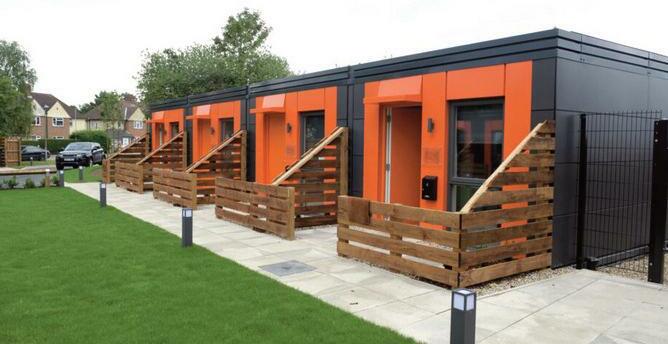
Modular homes have around 25m of floor space, with separate living and kitchen, sleeping and bathroom areas. They are equipped with appliances such as a cooker and washing machine, and outfitted ready for residents to move in. Modular homes are custom-built units specifically designed to be used on land that would otherwise be unused. They have excellent soundproofing and are efficient to heat and provide residents with privacy, security and independence within a supported community.
For more details email Helen Bedser, Julian House Chief Executive at helen.bedser@julianhouse.org.uk or tel: 07535 519908
PROPERTY
THEBATHMAG.CO.UK | OCTOBER 2022 | ThEBATHMagazinE 93
Red House Farm, Broughton Gifford A collection of six beautifully designed homes ranging from two to four bedrooms, including five bungalows and one detached house. 01225 791155 |ashford-homes.co.uk|


SALES 01225 471 144 LETTINGS 01225 303 870 sales @theapartmentcompany.co.uk ® Lansdown Crescent O.I.E.O £790,000 Hope Place O.I.E.O £750,000 Druids Garth O.I.E.O £450,000 Rivers Street O.I.E.O £325,000 Grosvenor Place O.I.E.O £425,000 Philip House O.I.E.O £370,000 Georgian · Grade l listed · Upper maisonette · Sought after location · Stunning views · No chain · EPC E rating · Approx 1,756 Sq Ft New build · Allocated underground parking · Lift access from parking to apartment floor · Stunning communal gardens · Gated community · EPC B rating Detached Victorian mansion apartment · Ground floor · Private entrance · Reception hallway · Two double bedrooms · Canal walks close at hand · Lovely views · EPC D rating · Approx. 747 Sq. Ft. Cavendish Crescent O.I.E.O £525,000 Northanger Court O.I.E.O £500,000 Alfred Street O.I.E.O £435,000 Georgian Apartment · Crescent location · Private terraced garden · Two double bedrooms · Ground Floor · Period features · EPC D rating · Approx. 882 Sq. Ft Open Plan with triple aspect windows · Two double bedrooms · Lift access · Communal gardens and terraces · Secure garage with allocated space · River views · EPC C rating · Approx. 891 Sq. Ft. Central location · Second floor · Newly refurbished throughout · Stunning views · Two double bedrooms · Good ceiling height · Central parking permit · EPC C rating · Approx. 681 Sq. Ft. Georgian · First floor apartment · Large Georgian windows · High ceilings · Double bedroom · Central location · Approx. 388 Sq. Ft. Modern build · City centre living · Two double bedrooms · Communal roof terrace · Lift access · EPC C rating · Approx. 631 Sq. Ft. NEW INSTRUCTION NEW INSTRUCTION NEW INSTRUCTION COMINGSOON COMINGSOON COMINGSOON Georgian · Grade l listed · First floor apartment · Two bedrooms · Close to local amenities · Wealth of period features · EPC E rating · Approx. 777 Sq. Ft. SOLDSTCSOLDSTCSOLDSTC


www.theapartmentcompany.co.uk ® Great Pulteney Street £1,950 pcm Brassknocker Hill £1,600 pcm Clarks Way, Rushill £1,350 pcm Cleveland Walk £2,500 pcm Kensington Chapel £2,250 pcm Bennett Street £1,400 pcm Gay Court, Batheaston £1,495 pcm Henrietta Court £1,700 pcm Southgate Street £1,500 pcm Minimum 24 month Tenancy · Master bedroom with en suite · Luxury Bathroom · Balcony · Private parking space · Council Tax Band: C · EPC Rating D Two double bedrooms · Unfurnished · Fabulous views · Private allocated parking spaces · Spectacular location · Redecorated throughout · Council Tax Band D · EPC Rating C Two bedrooms · Gas central heating · Sorry no pets · Redecorated throughout · New carpets · Garage & parking · Council Tax Band B · EPC Rating C Three double bedrooms · Unfurnished · Two bathrooms · Immaculate throughout · High specification · Min 12 month tenancy · Gas central heating · Council Tax Band D · EPC rating D FULLY FURNISHED · Two double bedrooms · Two Bathrooms · Stunning individual decor · NO PETS · Gas central heating · NO STUDENTS · Council Tax Band TBC · EPC Rating C Unfurnished · Two double bedrooms · Neutral decor throughout · Light and airy · Central location · Central zone parking · Minimum 12 month tenancy · Council tax band C · EPC Rating D Available Now · 2 bedrooms · Large private balcony · Parking & garage · Unfurnished · Minimum 12 month tenancy · Council tax Band C · EPC Rating C Two double bedrooms · Professional couple · New kitchen & bathroom · Gas central heating · Minimum 12 month tenancy · Allocated private parking · Council Band D · EPC rating C FURNISHED · Two bedrooms - One double/ one single · Open plan sitting room/kitchen · Minimum 12 month tenancy · Suit professional person or couple · EPC Rating C · Council tax band C LET AGREED LET AGREED LET AGREED TOLET TOLET TOLET TOLET TOLET TOLET


Clifton, Bristol - OIEO £3,250,000 A most impressive Victorian freehold property in the heart of Clifton with 5 bedrooms, 4 bathrooms, 4 reception rooms and spread over 4 floors. The property is set back from Pembroke Road and offers off-street parking for several vehicles and private gardens to the rear. EPC Rating E Peter Greatorex Unique Homes 01225 904999 www.petergreatorex.co.uk Peter Greatorex Sharon Clesham Managing Director Head of Sales SOLDSTC


Clifton, Bristol - OIEO £1,600,000 An impressive Grade II Listed, three storey, semi detached Georgian townhouse, with a wide variety of local amenities close at hand and easy access to the City Centre. The accommodation includes five bedrooms, three bath/shower rooms, two reception rooms, a kitchen/breakfast room, cellar and a garage, charming well-tended walled garden and to the rear, another mature garden with terrace, lawn and greenhouse. Peter Greatorex Unique Homes 01225 904999 www.petergreatorex.co.uk Peter Greatorex Sharon Clesham Managing Director Head of Sales SOLDSTC

