THE MAGAZINE OF METROPOLITAN COMMUNITY COLLEGE
Volume 12, Issue 4
Victory Lap: MCC Mopar CAP brings home national championship from Motor City



THE MAGAZINE OF METROPOLITAN COMMUNITY COLLEGE
Volume 12, Issue 4
Victory Lap: MCC Mopar CAP brings home national championship from Motor City
Dear MCC friends, supporters and advocates,
It’s a privilege to introduce myself as the new executive director of the Metropolitan Community College Foundation.
Though new to this role, I’ve had a front-row seat to the College’s impact over the past 13 years. I first arrived as a grant manager, then moved through roles in Adult Education and the Scholarships office, and now concurrently serve in Pathway Support Systems. Each chapter has deepened my appreciation for the College’s service to students and our community, and I’m excited to witness the MCC difference from this new vantage point.
That spirit of service is already building. For the first time, students pursuing short-term, workforce-aligned programs can access federal financial aid through the new Workforce Pell Grant Program. MCC is one of the first community colleges in the nation to offer eligible programs — opening the door for students in Workforce Education CDL, IT, Certified Pharmacy Technician and Phlebotomy Technician programs.
After connecting with many of you at the MCC Golf Outing in May, we hope to see you again at Cars and Coffee on Aug. 8 at the South Omaha Campus Automotive Training Center. We’d also like to invite you to weigh in on our first full-service campus in development in more than 40 years — coming to the corner of Highway 370 and Highway 50 in Sarpy County.
Turn to page 37 of this issue for an opportunity to share how to make our next campus a personal destination for you.
Enjoy the issue — and thank you for making it all possible.


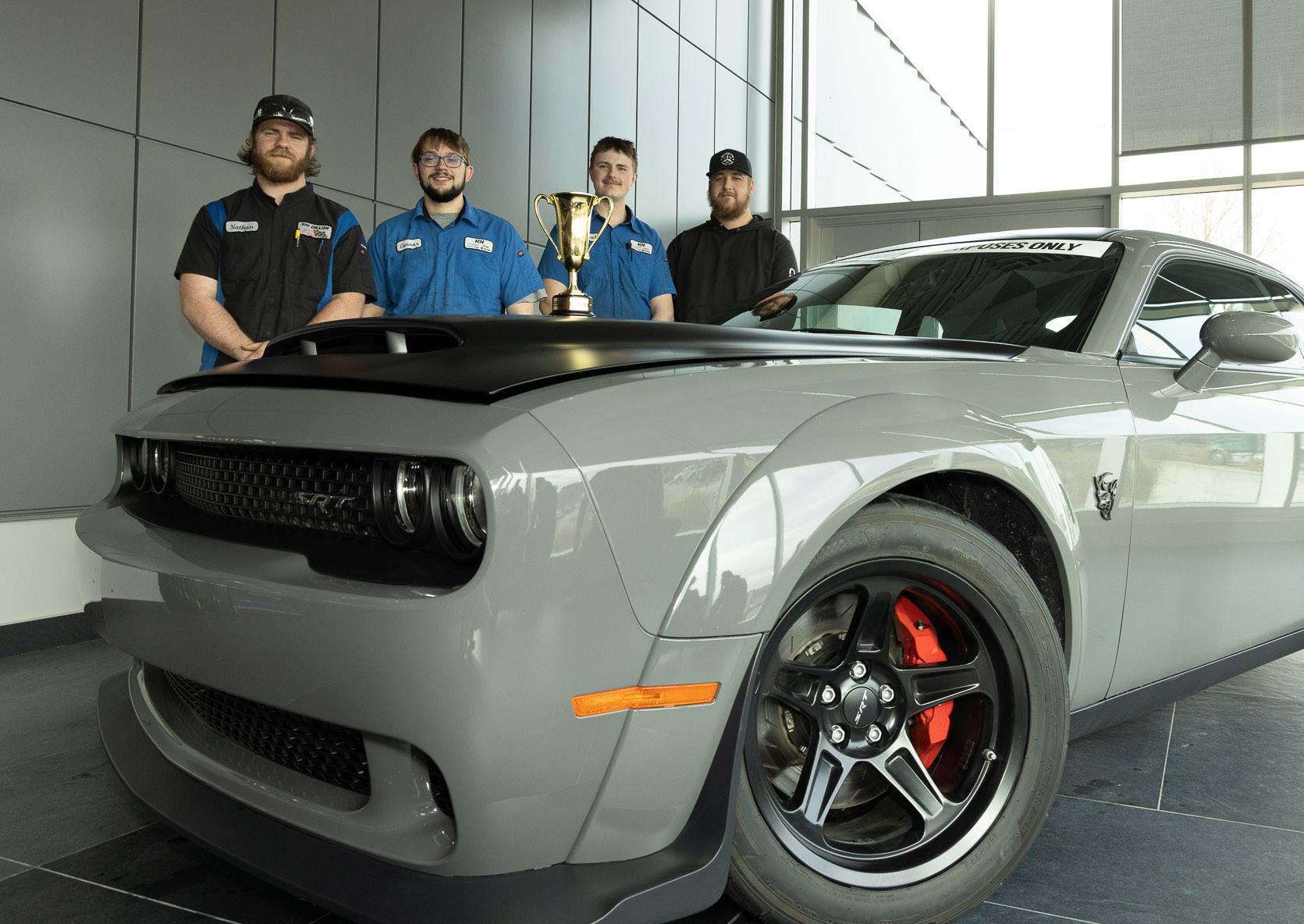
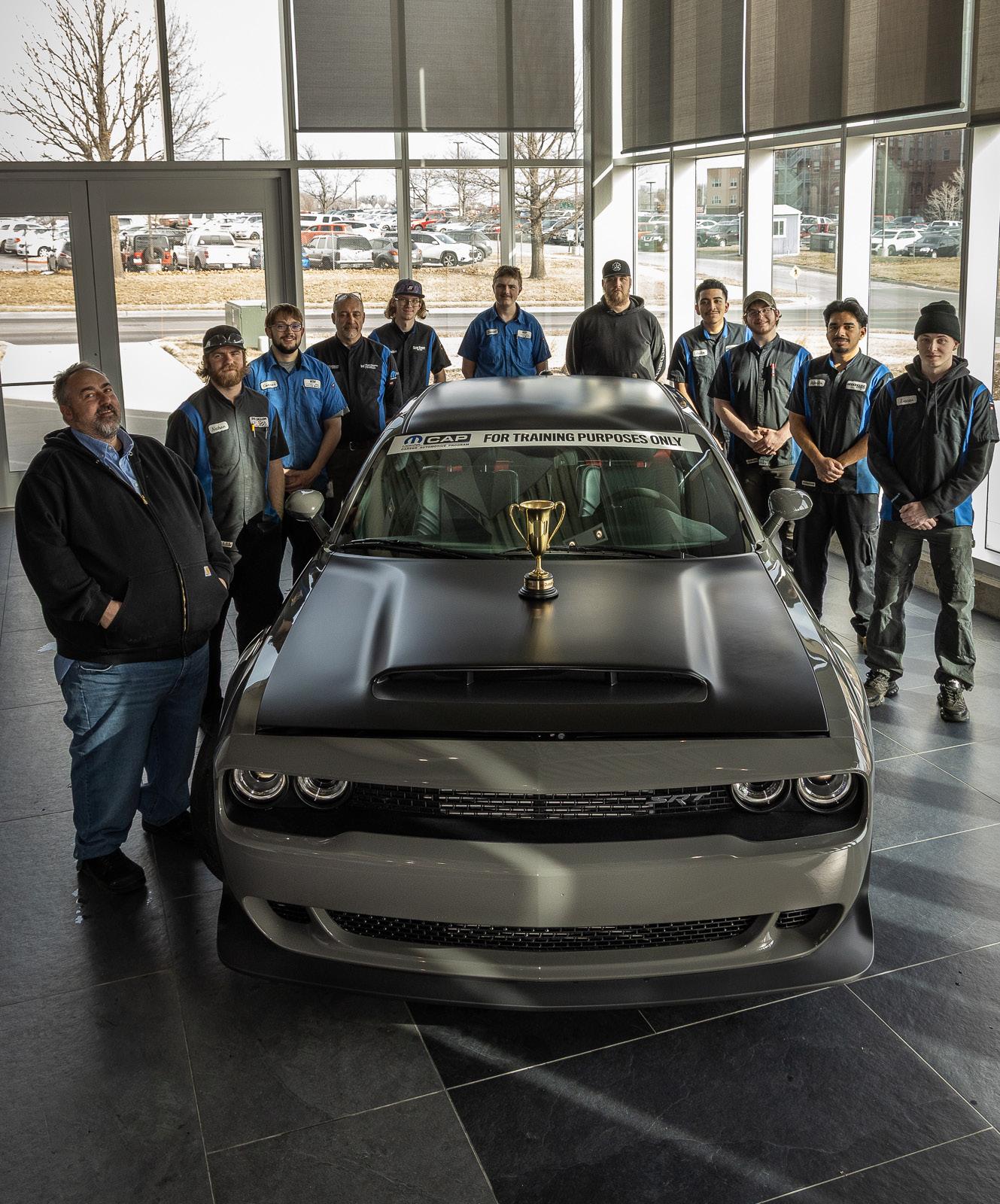
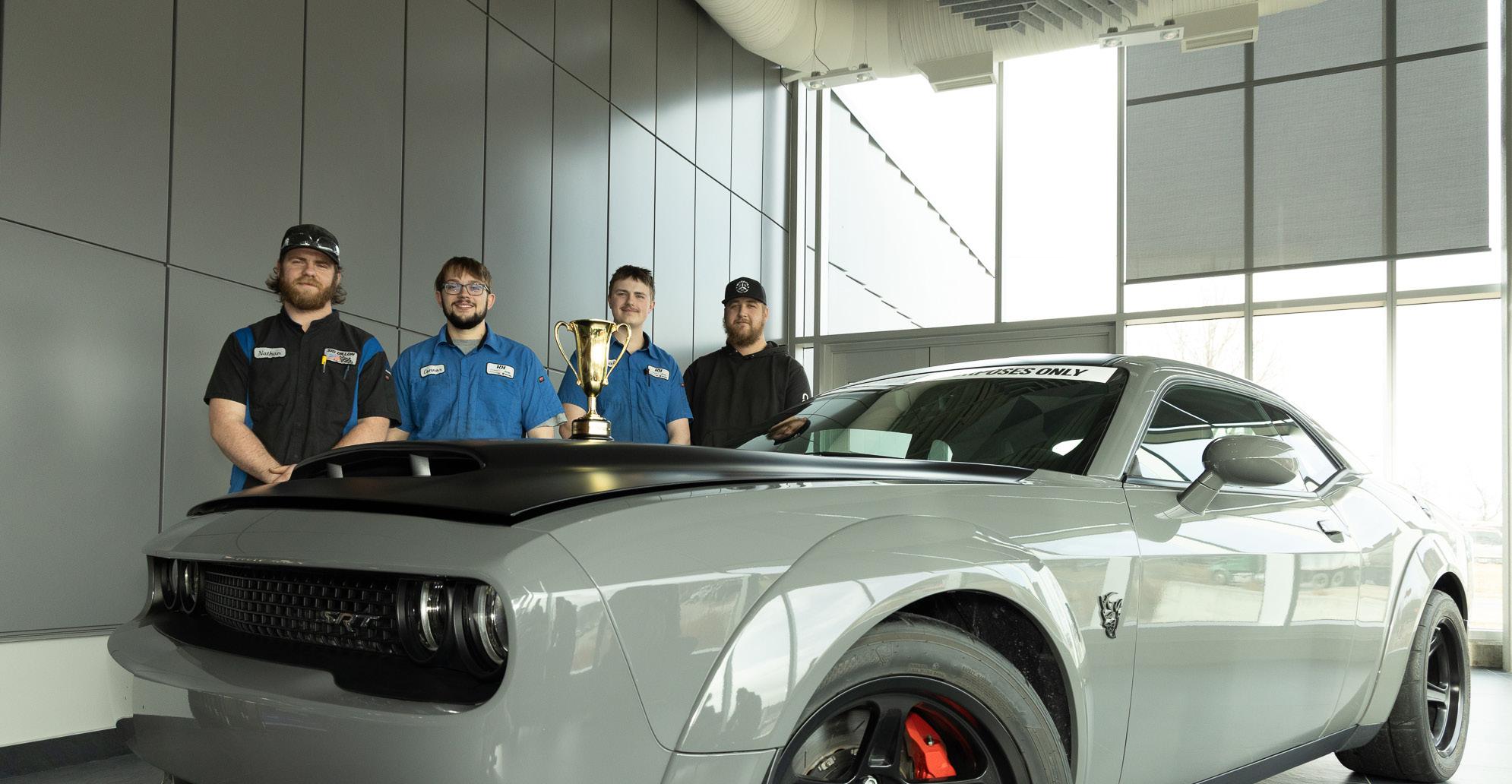
On a cloudy January day, students in the Mopar Career Automotive Program (CAP) patiently waited for the delivery of their traveling trophy. The arrival of the limited-edition 2018 Dodge Challenger Demon, an 800-plus-horsepower muscle machine, is a fitting memento to the speed and grit that has built one of the nation’s leading Mopar CAP programs in just three years.
The MCC Mopar CAP program is part of a nationwide effort by Mopar to train and employ entry-level automotive technicians for Chrysler, Jeep, Dodge and Ram dealerships. For the second consecutive year, MCC was selected to compete in the Mopar CAP Bracket Challenge, which brings together Mopar CAP partner schools throughout the country to participate in friendly technical and curriculum-based competitions.
After a loss in the 2024 semifinals, the 2025 team persevered to emerge as the national champion in December. The team narrowly defeated Eastern Maine Community College (Bangor, Maine) in the finals at the Mopar National Tech Training Center in Auburn Hills, Mich., completing four rounds of competition that spanned two months.
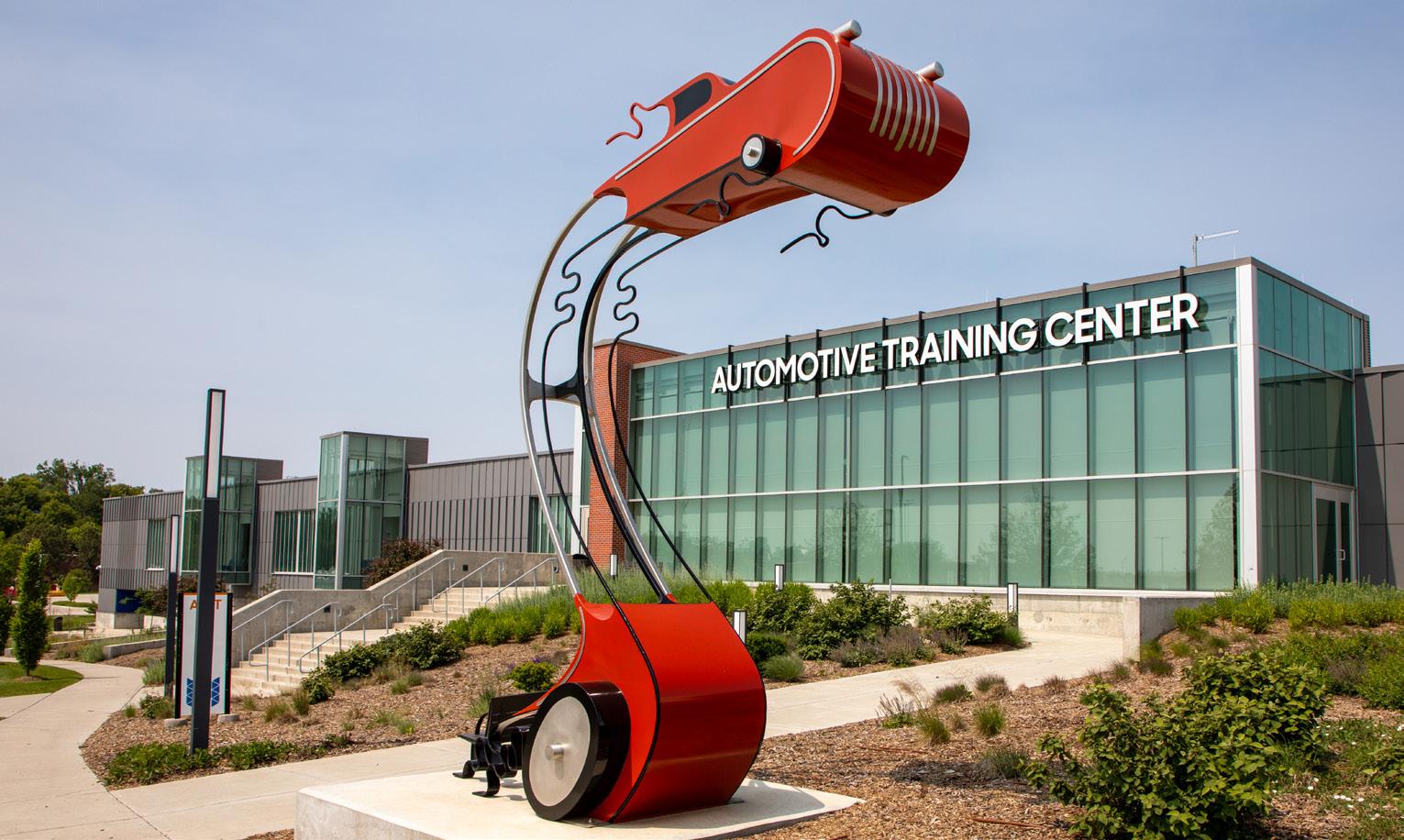
The Demon is displayed in the showroom of the Automotive Training Center on the South Omaha Campus until the next Bracket Challenge champion is crowned.
Just making it into the bracket is a tremendous accomplishment — only 16 of the nearly 100 schools with Mopar programming are eligible based on employment outcomes. Because of the program’s structure, which includes a rotating schedule between classes on the South Omaha Campus and on-the-job training at a dealership, MCC was already set up for success. Since the program started at MCC in 2023, it has maintained a 100% employment rate among student cohorts for each year of operation.
“[MCC Mopar CAP instructors] have really good relationships with dealerships, so we were all able to work in an actual dealership, which really helped us in the beginning rounds,” said Nathan Kraemer, one of the four MCC student competitors selected to represent the 16-member team in the competition. Kraemer received his on-the-job experience at Sid Dillon Lincoln.
Round 3

Round 1 (Sweet 16), Omaha:
MCC selected as one of 16 schools to compete from nearly 100 eligible colleges/technical schools based on program employment outcomes. The team’s cumulative score on a Mopar CAP curriculum test topped Mass Bay Community College (Wellesley, Mass.) to advance to the next round.
Round 2 (Elite Eight), Omaha:
Nick Smith, Connor Jensen, Daniel Grabowski and Nathan Kraemer presented their résumés and participated in judged mock interviews. Their performance topped defending Mopar CAP Bracket Challenge champions State University of New York (Morrisville, N.Y.) to qualify for the Final Four.
(Final Four), Kansas City, Kansas:
Grabowski and Kraemer traveled to the Stellantis Technical Training Center in Kansas City, Kansas, where they competed in a timed and judged diagnostic and technical challenge. They were ultimately victorious, defeating Kirtland Community College (Grayling, Mich.).
Round 4
(National Championship), Auburn Hills, Michigan:
Final: Smith, Jensen, Grabowski and Kraemer traveled to the Mopar National Tech Training Center in Auburn Hills, Mich., for the final round where they won a tight head-to-head technical challenge against Eastern Maine Community College (Bangor, Maine) to emerge as champions.
In addition to Kraemer, MCC Mopar CAP instructors Chad Woodworth and Brad Dieckmann asked Nick Smith (Woodhouse Blair), Connor Jensen and Daniel Grabowski (H&H Chrysler, Dodge, Jeep, Ram) to represent the College in the four-round competition, which included a curriculum test (Round 1), résumé and mock interview assessment (Round 2) and diagnostic and technical challenges (Rounds 3 and 4).
“At first, I was hesitant to participate,” Grabowski said. “I’m so glad that I did it because here we are ... national champions. That’s really cool and we honestly had so much fun doing it.”
The students were tested on more than technical knowledge and ability. They also had to demonstrate communication and professionalism throughout the competition. As industry professionals with more than 40 years of experience providing customer care for Mopar, Woodworth and Dieckmann understood how important soft skills are for students to develop in the program.
“We carve out time every day in class to work through situations that come up and require good soft skills because handling the workload and stress while maintaining professionalism are so important for the customer-facing side of the job,” Dieckmann said.
Ultimately, Smith recognized that while everyone on the team was nervous about competing, there wasn’t a reason to be.
“We were definitely prepared for the competition — I think we were actually overprepared for it,” he said.
Woodworth said the MCC Mopar program focuses on teaching students the fundamentals, so when they inevitably find themselves with a challenging problem, they have the skills to find a solution.
“We can’t know what changes are going to happen to cars over the next five or 10 years, so we really focus on teaching the fundamentals,” Woodworth said. “We challenge our students by bugging vehicles and they work hands-on through the issues like it’s a team sport.”
The victory is also a testament to Woodworth and Dieckmann’s work as instructors to prepare students for success in the real world. Before joining MCC, Dieckmann trained technicians for Stellantis through the Fiat Chrysler Automobiles (FCA) Performance Institute, while Woodworth spent nearly 30 years at Baxter and was recognized by FCA Performance as the top technician in its seven-state region.
“We are extremely proud of the students and instructors from our Mopar CAP program who represented MCC so well at the Bracket Challenge,” said Scott Broady, MCC dean of Skilled Trades and Technical Sciences. “Their achievement is a testament to the hard work and dedication of our students, instructors and industry partners. We will look to keep the momentum going and use the examples of these students for future classes.”
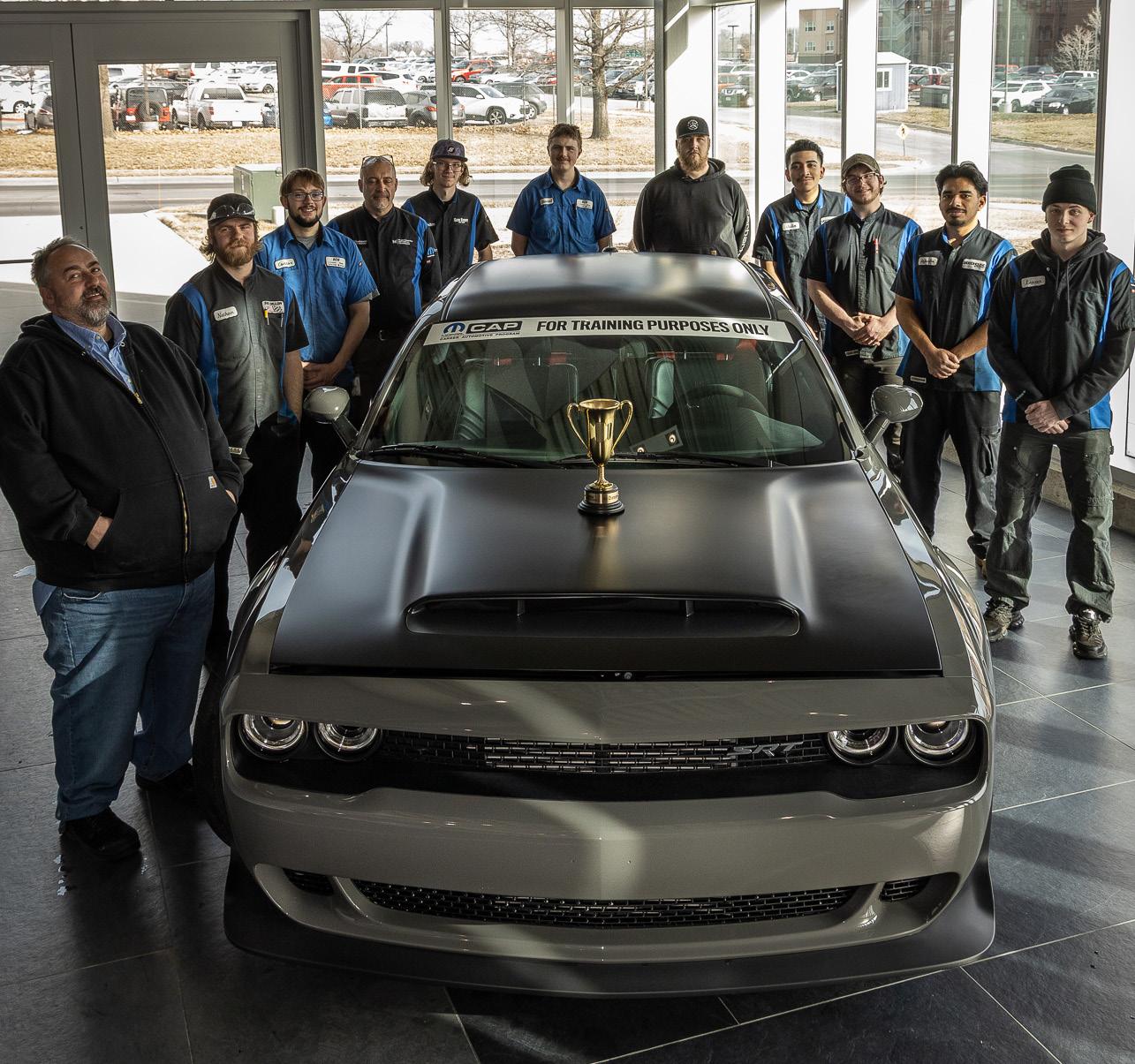
In addition to winning the competition, being able to travel to Mopar’s national training headquarters and getting to know students throughout the country working toward the same career goals was a fun part of the experience, Woodworth said.
“Every member of the team contributed to our success, and we had a lot of fun going through this experience together, including the time we spent getting to know students and instructors with other participating schools. We’re grateful to Mopar for giving our students the opportunity to do this during their education — it was valuable for all of us,” he said.
With a physical reminder of their accomplishment in the Automotive Training Center showroom, Grabowski hopes future students see more than a trophy when they look at the Demon.
“I hope they see what’s possible,” he said.
Ask the MCC Expert invites MCC faculty and staff to share practical tips on subjects they’re passionate about. Faculty and staff are encouraged to reach out to Brian Ayers, Community editor, at bmayers@mccneb.edu to propose a topic.
With AI reshaping the way companies operate, employers are seeking workers who know how to use it — and not just in tech. People working in administration, project coordination, analysis, marketing and communication are finding that basic AI literacy is becoming a baseline workforce expectation.
Robert Caldwell, Metropolitan Community College Business Administration instructor and Business and Economics program director, meets regularly with industry partners to stay informed on hiring trends and adapt curriculum to keep pace with employer expectations. One of his focal points is how companies throughout the region are integrating AI into their business environments.
Those insights helped Caldwell redesign the Business Communications class to emphasize AI, technology and workforce-readiness skills that are in demand in today’s evolving landscape. This involved rethinking assignment design to help students build AI skills while relying on human strengths like critical thinking, collaboration and judgment to drive AI-aided work.
Caldwell, also an instructor for the noncredit MCC Workforce Education Project Management Academy (mccneb.edu/PMA), offers some practical ways people across a range of careers can start building proficiency with AI in their everyday workflows.
The fundamental skill for getting value out of AI is prompting — giving precise instructions to get a useful result. Like any process relying on directions, the better their quality, the more likely they are to be followed — and to produce successful results.
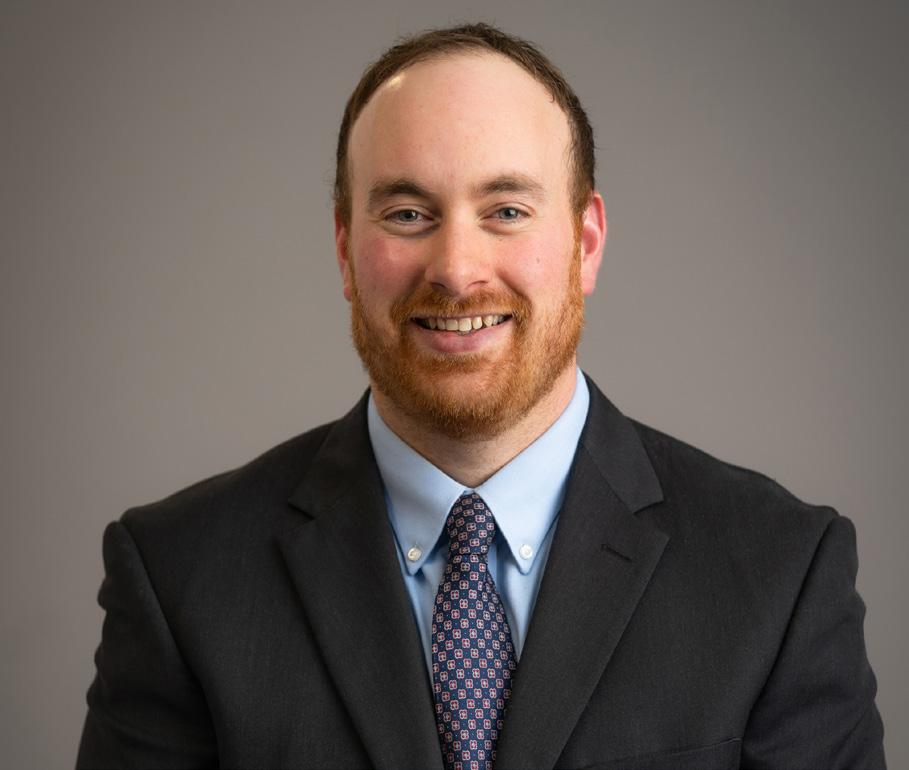
Robert Caldwell
“Prompting is a communication skill and it is becoming a business skill in the workplace. That wasn’t the case even five years ago,” Caldwell said. “Our industry partners are telling us they are using it that way, so I am thinking of AI as the newest tool in the communication toolkit.”
Prompting is a skill built over time, not a one-and-done transaction. A polished result typically takes multiple prompts to attain. Caldwell treats it like a conversation with a collaborator, providing context and being as specific as possible about the information he provides to the agent.
“I always start with my own ideas and state the goal of my work, include who my audience is and the tone I’m looking for,” Caldwell said. “One prompt is rarely enough. I’m constantly refining and improving the information I am sharing, and as a result, the AI is constantly learning from me.”
He frequently asks for multiple options in a single reply, then uses the best of each piece of output.
“I never fully take what it gives me,” Caldwell said. “I take what’s best, reformat it and put it in my own voice.”
Caldwell uses AI as a thinking partner for approaching day-to-day work — communication, research and organizing information for reports and projects. He recommends starting with a general-purpose AI platform like ChatGPT or Microsoft Copilot for task automation.

“I think of AI as a virtual assistant you can use to help support and improve your work,” Caldwell said. “It can help your thinking, but should never replace it.”
A good first task to turn over to AI is drafting or refining a work email. With inboxes flooded daily, concise communication is a professional advantage and it’s a low-stakes way to practice. Draft a regular update email in your own voice, then paste it into an AI platform with a prompt like this:
“Rewrite this email to my manager to be as concise as possible. Remove filler phrases, redundant sentences and unnecessary context while preserving all key information and the original tone. Aim for under [x] words.”
Setting a word target while instructing to preserve key information gives the AI meaningful
parameters, so it’s making the right cuts instead of arbitrary ones. From there, evaluate the output and make any further adjustments before sending. For this first exercise, Caldwell recommends choosing a trusted coworker for the recipient (rather than the CEO) to keep the stakes low.
“I think of AI as a virtual assistant you can use to help support and improve your work. It can help your thinking, but should never replace it.”
— Robert Caldwell, MCC Business Administration instructor and Business and Economics program director

Caldwell said one of AI’s most underrated strengths is organizing scattered thoughts into a clean outline or structure.
“AI is great at helping you get past the blank page,” he said.
Caldwell said he is layering AI into an assignment he gives students in a business communication course. They are required to make a class presentation that includes working with AI to create a script to go with a PowerPoint presentation. Students start by feeding in bullet points or rough ideas, and AI helps shape them into a logical flow for a script.
His favorite example, though, is personal. Caldwell owns and operates two short-term rental property management businesses. When he was attempting to put together a welcome guide for guests to use at his properties, he got lost in his notes of house rules, amenities and personal recommendations. He worked with AI to sort out the pile of overwhelming content. What he finished with is a 35-page welcome guide that guests are finding very handy.
“I gave it my ideas, it gave me a format to follow — a welcome letter, check-in and check-out procedures, house rules and my recommendations for restaurants and things to do,” Caldwell said. “From establishing the tone for regular people relaxing on vacation to helping with the layout of the book itself, it is a comprehensive welcome guide that I’m really happy with. AI did in hours what would have taken me weeks.”
For all of AI’s capabilities as a thought partner, it’s not worthy of unconditional trust. Responsibility for what goes in and what gets used from what comes out rests entirely with the person at the keyboard.
On the input side, Caldwell offers a simple rule of thumb: “If you wouldn’t email it to a stranger, don’t paste it into AI.”
Personal data, private client information and confidential company details have no place in a public AI tool. When a company AI policy exists, follow it. When it doesn’t, be cautious, he said.
On the output side, the stakes are equally real. AI gets things wrong — sometimes partially, sometimes entirely. Caldwell recounted a now infamous case where an attorney cited court precedents in a real hearing that turned out to be entirely fabricated by ChatGPT.
The lesson applies well beyond the courtroom. Review everything. Fact-check anything research-based. Never let convenience replace judgment.
AI can craft, suggest, organize and refine, but the user signs off.
As the technology continues to evolve, Caldwell sees user proficiency putting job seekers ahead of their competition.
“AI is here. It’s part of our world. It’s not going away — it’s only going to expand,” he said. “Our industry advisors are telling us how important it is to their work, so we have to understand it is part of the picture for our students now.”
How competitive robotics is giving students the freedom to experiment, “fail forward” and find their place in STEM.

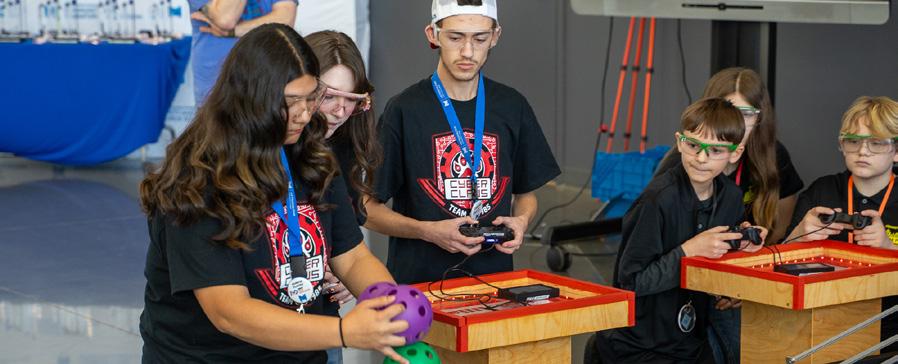
At the For Inspiration and Recognition of Science and Technology (FIRST) Tech Challenge (FTC) Nebraska Championship, the Emerging Ladies Academy (ELA) robotics team had just finished its first match, but something wasn’t right — sisters Pearl and Diamond Kellogg and team member Ann Beauboeuf huddled, troubleshot on the fly and got back into the competition. They didn’t place. But Pearl Kellogg, an eighth grader, wasn’t measuring the day in trophies.
“It’s been really cool because, one, I learned how to build a bot; two, I did it with my sisters; and three, I got to compete,” she said.
That moment — equal parts setback and triumph — is exactly what FTC is designed to produce.
FTC is a robotics competition for students ages 12-18 that is helping shape Nebraska’s future workforce. Founded more than 30 years ago, FTC now reaches students in over 80 countries, offering them a chance to explore science, technology, engineering and mathematics (STEM) careers in a low-stakes, hands-on environment.
For the last decade, Nebraska teams have been part of FTC-Iowa. That changed two years ago when Metropolitan Community College was designated as the Nebraska Program Development Organization (PDO).
By serving as the PDO, MCC takes on the work that makes the program possible, from purchasing the yearly challenges to scheduling events and supporting students and teams statewide.
Leading the charge is MCC Project Manager and FTC-Nebraska Program Delivery Partner Randy Veach. Veach’s enthusiasm for the program has helped more than double the number of participating teams from 14 to 30. FTC-Nebraska now has students participating from every corner of the state, from Omaha to Scottsbluff, Gordon to Wallace. Some students have competed at national and international levels.
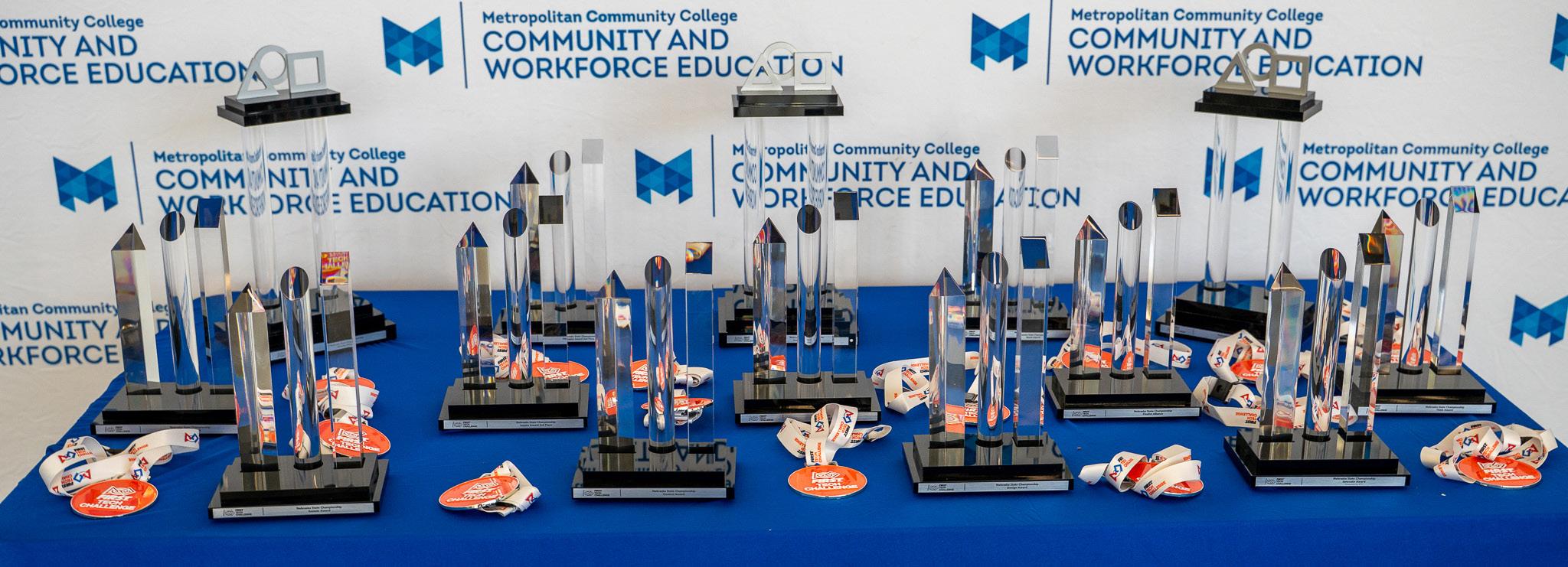
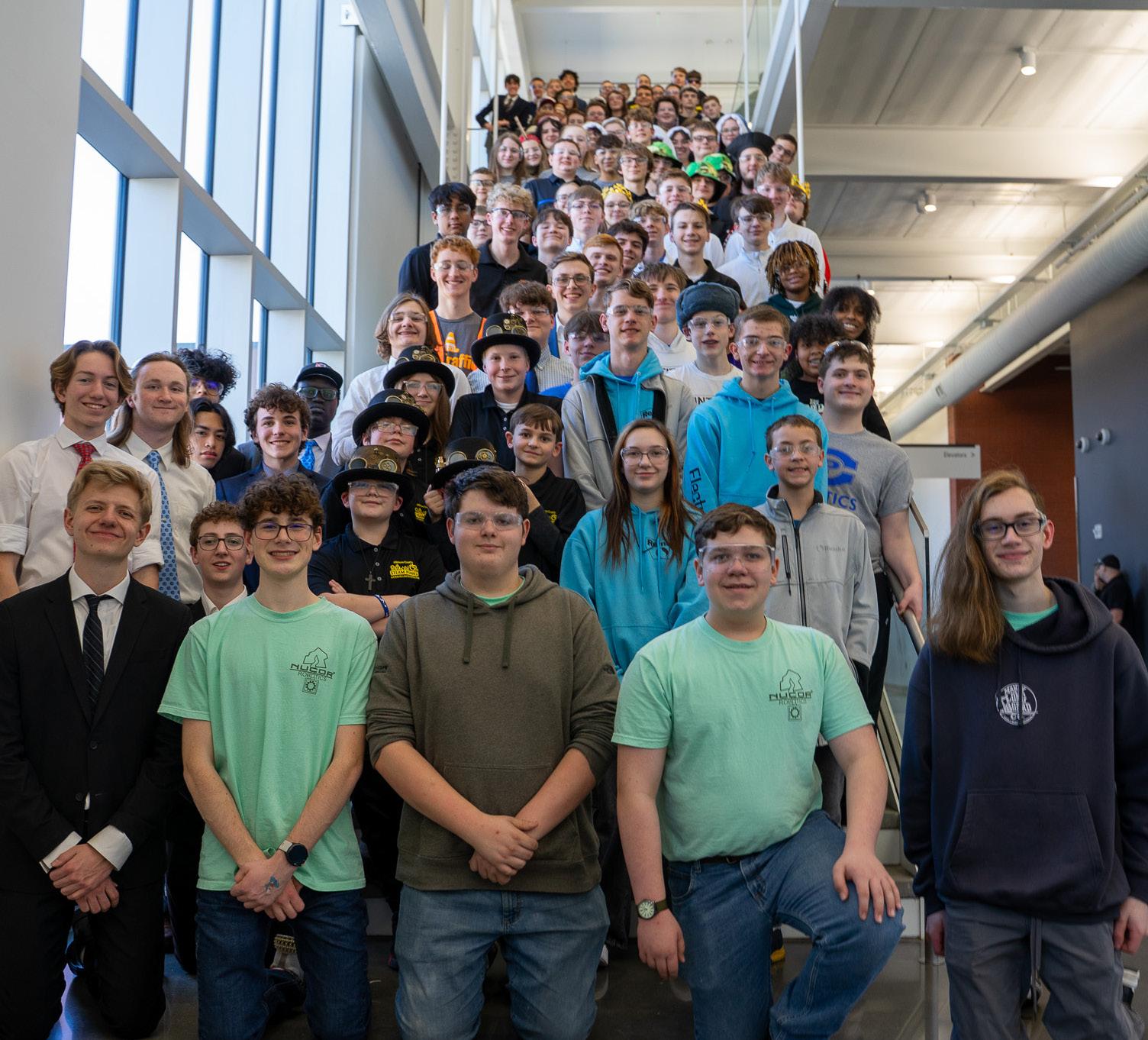
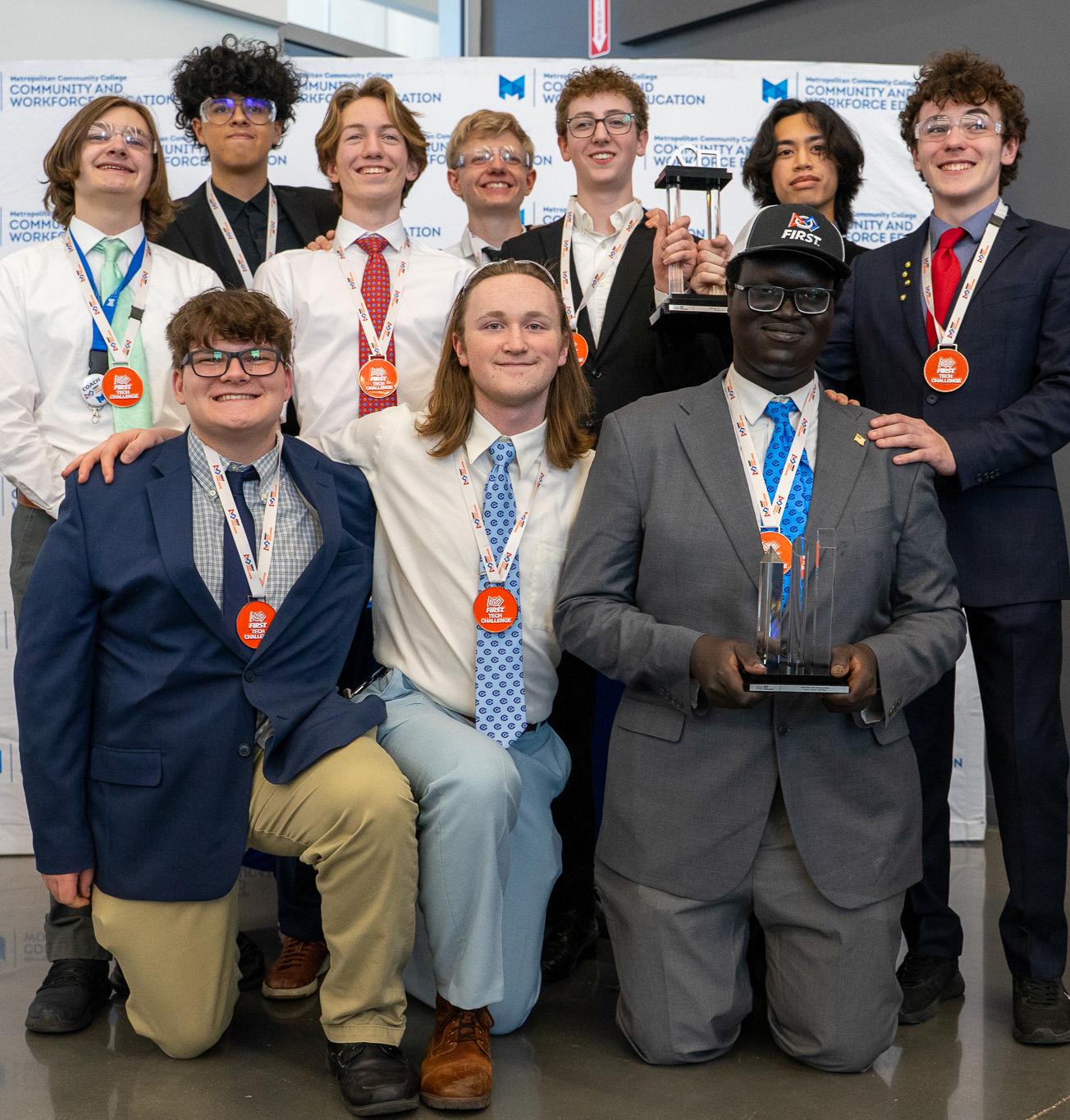
This year, teams Astra Machina from Omaha Creighton Prep and Norfolk’s Rebel Robotics represented Nebraska in April at the World Championships in Houston. Astra Machina was the highest-scoring team at the FTC-Nebraska State Championships. Rebel Robotics won the Inspire Award, the event’s top honor.



FTC launched around the same time as the “tech boom” of the 1990s, before “STEM” was even coined. Today, the U.S. Bureau of Labor Statistics estimates that positions in STEM will grow roughly three times faster than non-STEM occupations.
The need is tangible. Jeff Genoways, a systems consultant for Union Pacific and volunteer with the Marian High School team, said drones are becoming more commonplace in the inspection of bridges, railroad tracks and aerial antennas.
“All of that used to be done by people, but now you can employ drones and cover a larger area quicker,” he said. “We absolutely need more individuals who have some experience with robotics because if they can understand robotics, they can understand drones.”
But just as it took time to train a generation in digital technology, it will take the same to build a generation prepared for STEM careers. Programs like FTC help boost accessibility and build a workforce pipeline in a way that keeps the pressure low and curiosity high. In addition to the technical skills they develop, students also apply soft skills needed in today’s workplace.
“Those are skills that are hard to teach in a classroom,” said Pamela Petersen, a former teacher and current MCC director of STEM Community and Program Engagement.
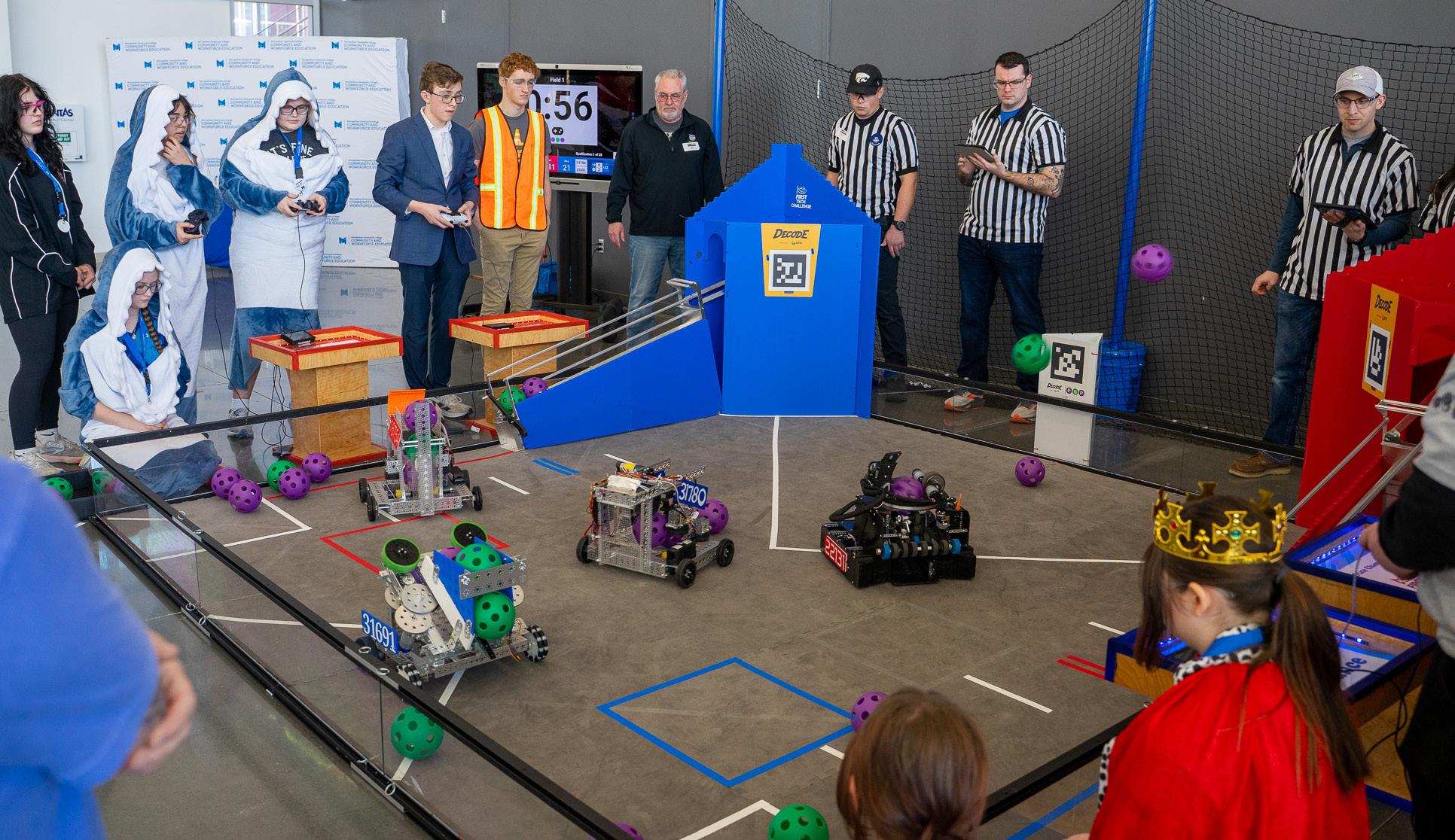
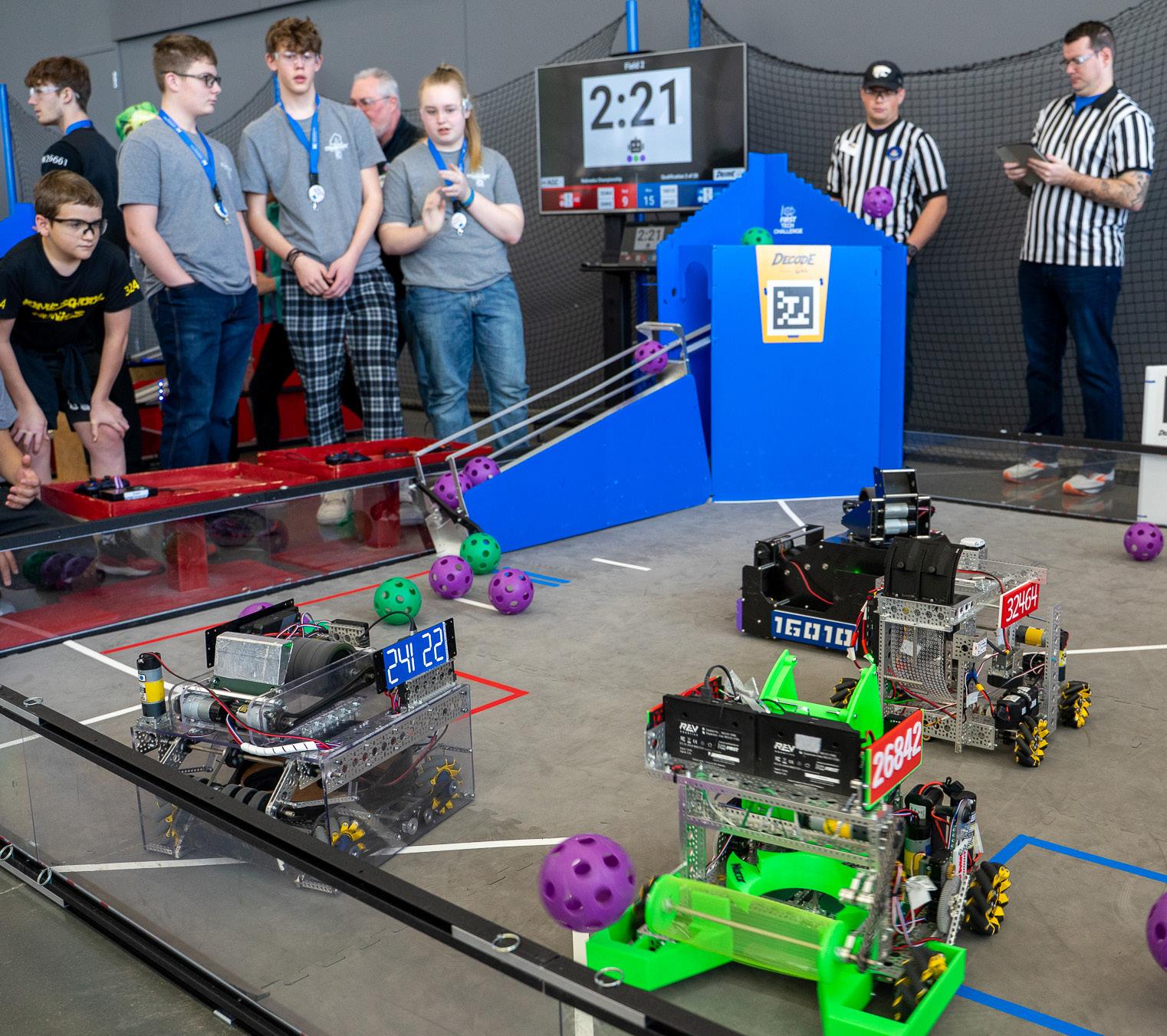
It starts with building and programming a competition-ready robot. Every team begins with the same operating system, but how they engineer, program and customize it to complete the yearly challenge is entirely up to them. This year’s challenge required robots to pick up and

launch colored balls into a basket. Bonus points were given if the team could identify and send the balls back in a specific order.
During competition, students aren’t just collaborating with their own teammates to complete the challenge — they were also paired with another team at random and must work together under pressure.
“One of the core values is gracious professionalism — everyone needs to help one another because that’s how the real world works. When you’re working for a company, it’s not you versus your coworkers; you all have to work together,” Veach said.
Through the competition, students practice communication, conflict resolution, leadership skills and more. Each team member is also required to speak about their robot during judging, helping build confidence and presentation skills.
“Everybody in the stands sees the robots and all the technical skills on display in the arena, but what they don’t see are the soft skills that get presented [to the judges]. When you couple those technical skills and those soft skills, nothing is going to stop these kids from being successful,” said Stan Edwards, a member of the coaching staff from the Rebel Robotics team.
To ensure the technical and interpersonal skills align with actual workforce needs, Veach regularly connects with industry partners like the Nebraska Manufacturers Alliance. Next year, Veach hopes to have industry professionals sitting on the judging panels, showcasing the talent that can be found across Nebraska.
Before joining the ELA team, Pearl and Diamond Kellogg (ninth grade) had some experience with robotics, but neither Ann Beauboeuf (eighth grade) or the youngest Kellogg sister on the team, Jade (fifth grade), had any. Their coach, Malachi Hart, also had no prior experience — and according to Veach, that’s not only common, it’s encouraged.

“[FTC] provides all of the training ... all you need to do is let the kids do it,” he said.
Petersen said that more often than not, people are intimidated by STEM.
“People think ‘Oh, it’s too complicated, too hard ... I can’t do that.’ In this program, we’re letting them explore the field at their own pace so that maybe someday they do want to try coding and discover it’s something that they can do,” she said.
Student-led exploration is central to the program’s appeal. By allowing students to experiment at their own pace using the materials and resources offered online, they develop critical-thinking skills,
“It’s building a beautiful way to try things and fail forward,” Petersen said.
While she enjoyed working with her teammates, Beauboeuf said she learned coding and programming didn’t interest her.
That’s the goal of both ELA and FTC: removing barriers so students can decide whether STEM interests them — not whether they’re capable of succeeding in it.
“We’re empowering young Black girls to own their voice and show up in spaces where they don’t see a lot of people who look like them,” said Tiffany Gamble, founder of the ELA. “The biggest win for me has been watching them jump in and take ownership of their robot.”
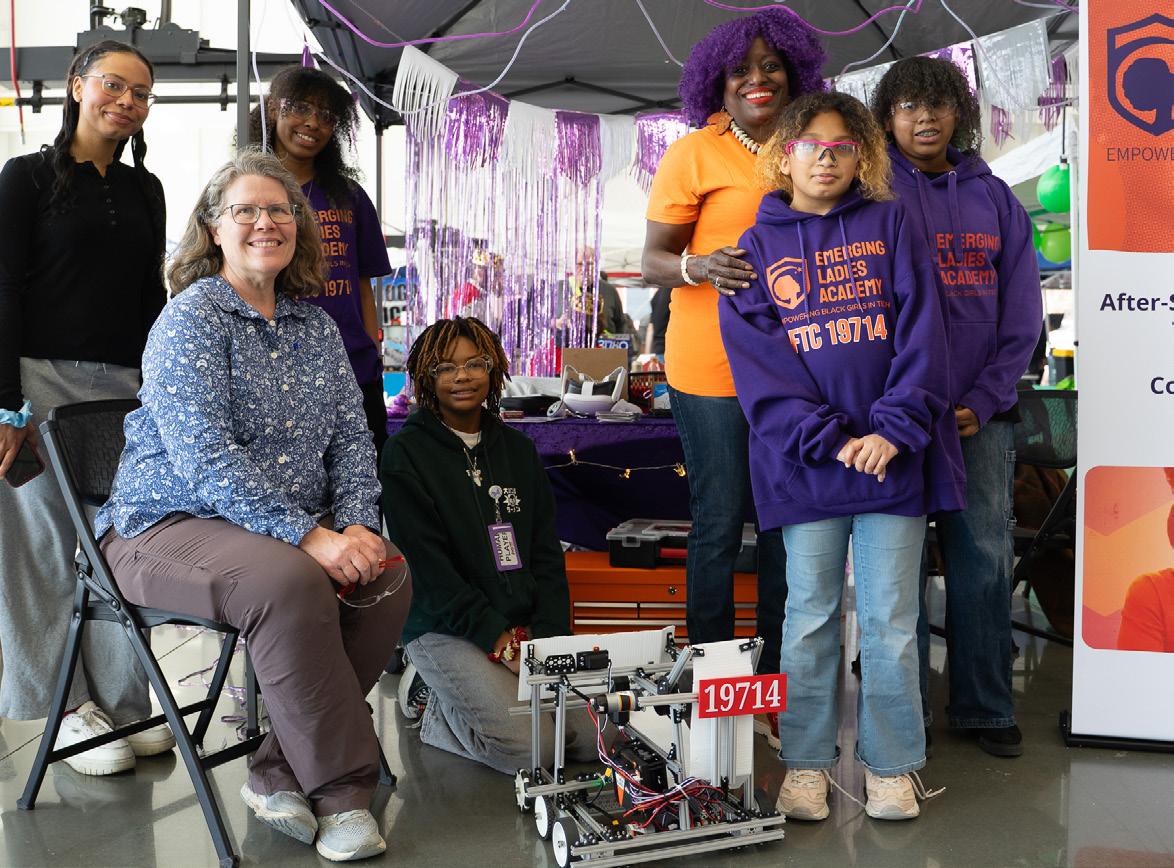
Engineering and programming aren’t the only roles students can take on.
“We have one girl who wants to go into clothing design, so she designed the team t-shirt. When it came to the judging part of the competition, she got up and talked about the robot because she had learned enough about it to speak confidently about it,” Veach said.
On Norfolk’s Rebel Robotics team, Braden Jensen focuses on marketing and sponsorships. When the team qualified for the 2025 FIRST Global Challenge in Panama, he led campaigns that helped secure funding from local companies like Nucor and the Johnny Carson Foundation.
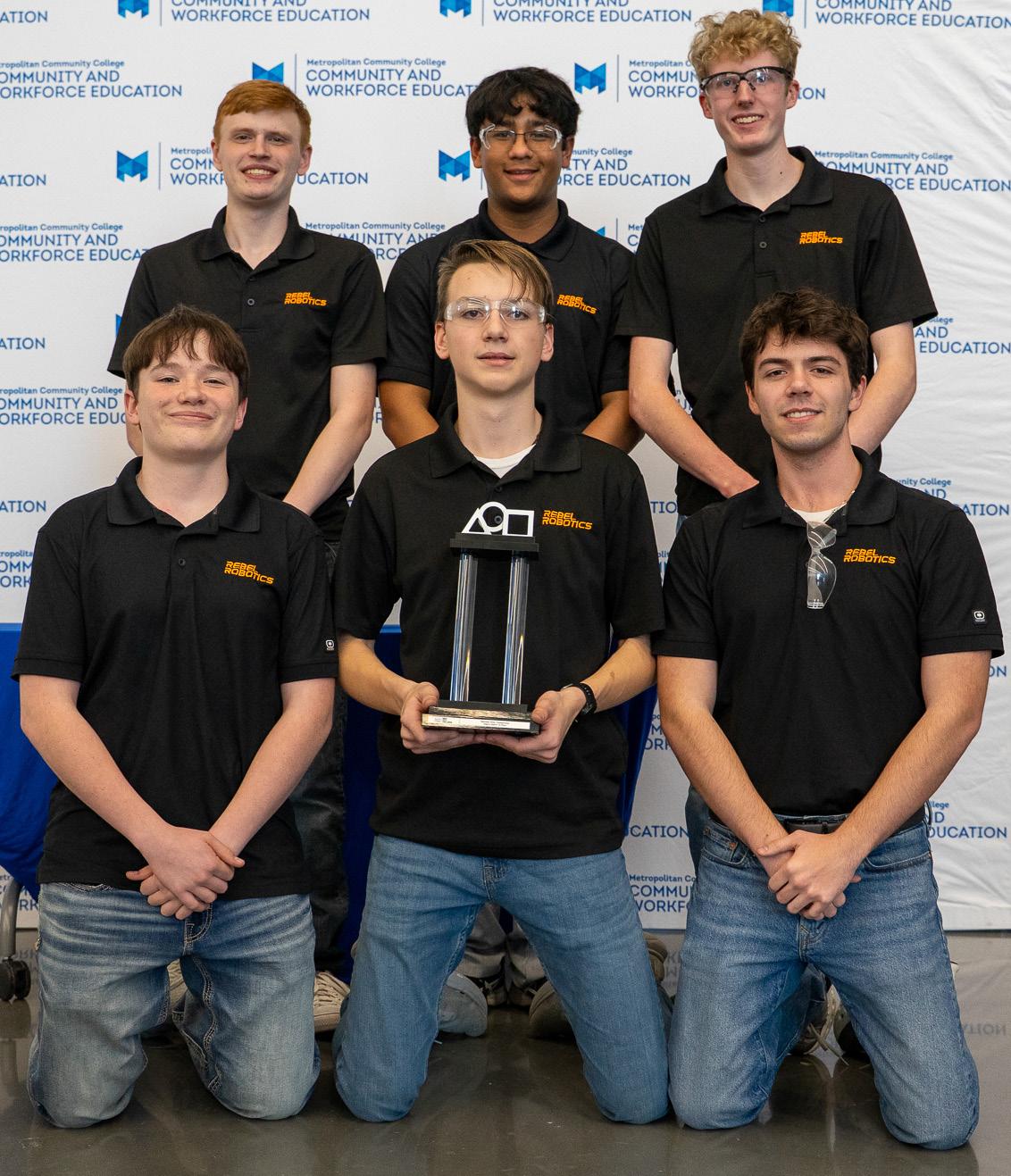
Jensen said competing in Panama against students from around the world “was so cool because it was just a huge cultural celebration.”
He credits FTC with steering him toward choosing to pursue a business marketing degree next year in college.
“Talking to different businesses and meeting manufacturers gives you a different perspective,” he said.
His friend and team captain, Caleb Kitt, will be attending the Raikes School of Computer Science and Management at the University of Nebraska-Lincoln — a future that took shape, in part, on a competition floor.
From a clothing designer who learned to speak engineering, to a marketer who learned to pitch to CEOs, to three sisters who learned to troubleshoot under pressure, FTC-Nebraska isn’t just building robots. It’s building the people who will build what comes next.
And in the end, that’s what MCC is focused on: giving students the opportunity to discover what excites them — and the confidence to pursue it.
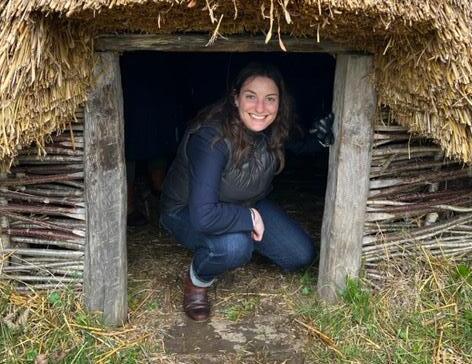
Did you know learning about the past could actually improve your future? Exploring previous civilizations teaches individuals historical empathy — and empathy, according to Forbes and Indeed, is one of the top qualities employers look for today.
Before she knew the term “historical empathy,” MCC World Civilizations and U.S. History instructor Bonnie Brennan was already teaching the concept through Artifact Day.
“We have a lot of students in the trades or culinary programs, so I wanted to show them how that connects with people of the past,” Brennan said.
Assigned at the start of each quarter, the project challenges students to recreate something that was important to a past civilization using modern technology.
Through that exploration, students connect with people from the past while developing real-world skills like research, critical thinking and time management.
Students are encouraged to choose something that interests them and have the entire quarter to explore their topic.
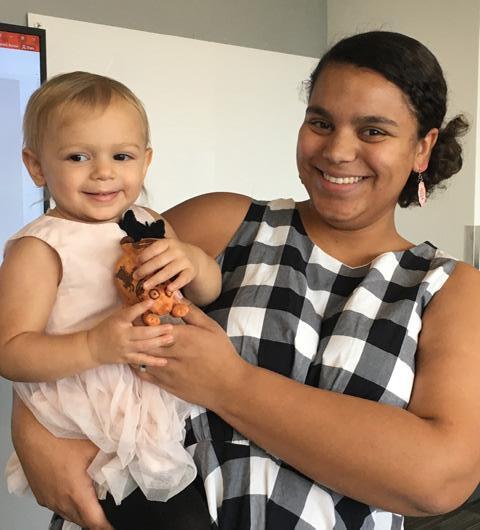
One student decided to recreate a sippy cup from ancient Greece. She brought her young daughter to the presentation, as well as her fiancé, to demonstrate how the cup worked.
“What I thought was so cool was that the daughter was seeing her mom present as an expert,” Brennan said.
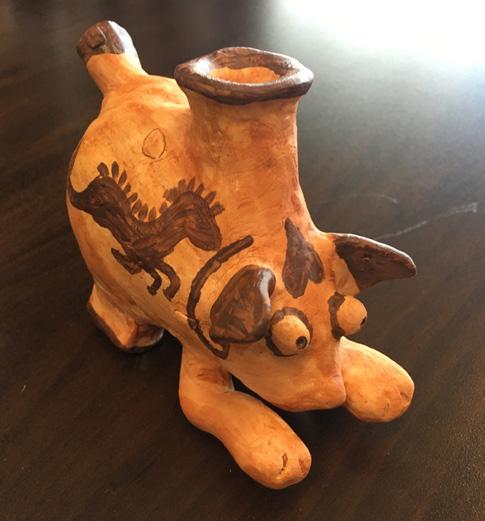
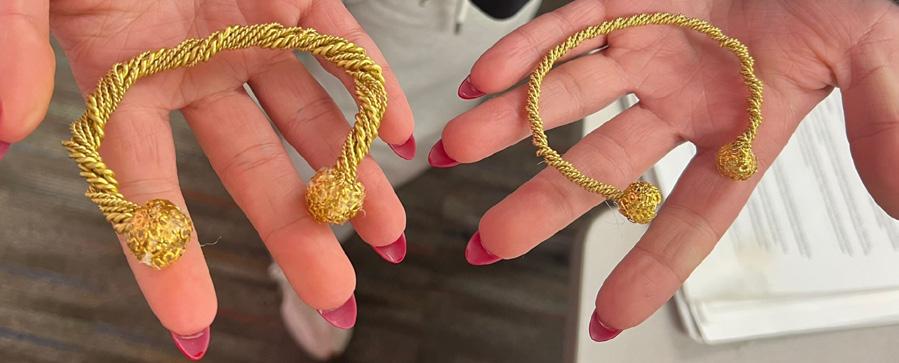
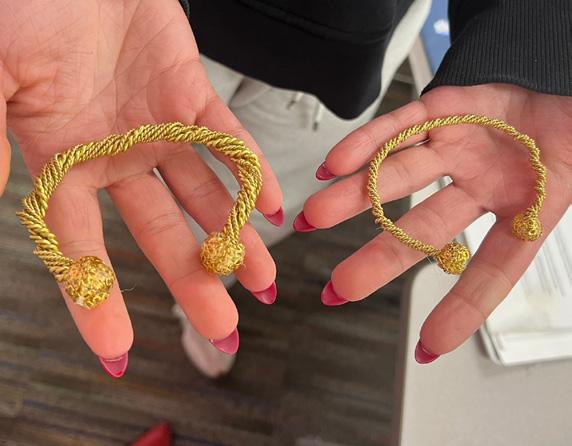
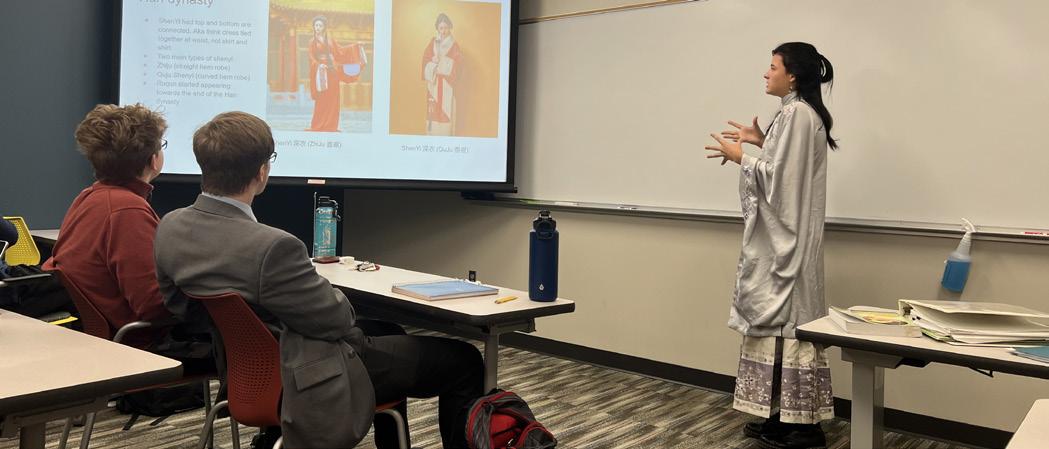
Students have recreated various garments and accessories over the years.
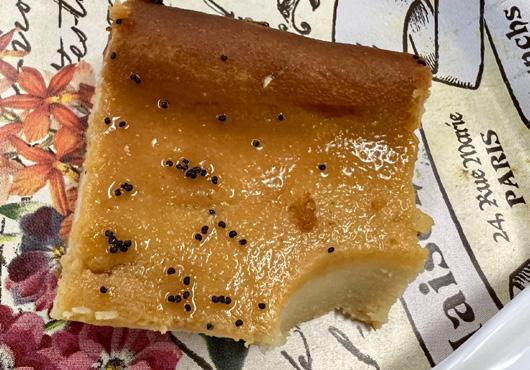
A common discovery for students who decide to recreate baked goods is the difference in direction provided in cookbooks.
“The cookbooks won’t give you something like 4 00 degrees for 45 minutes — they’ll say something like ‘In a slow oven, bake until done.’ Students have to think through why those are the directions — in those days, they didn’t know the exact temperature. Then they have to figure out the temperature of a ‘slow oven,’” Brennan said.
One student decided to recreate mourning jewelry from the Victorian era.
“When someone died, loved ones would use their hair or other keepsakes to make jewelry to remember them by,” Brennan said. “That led to a really good discussion about how lucky we are to have photographs.”
Another student recreated one of the oldest known recipes for Babylonian lamb stew. Reflecting on the experience, the student wrote, “I sampled the stew. The meat was tender, there were lots of unique flavors — and I hated it.”
The assignment hit closer to home for one student who had recently begun to lose her eyesight. A lifelong board game lover, the student decided to research past board games and found the Royal Game of Ur.
The two-player game is one of the oldest known board games, originally played in ancient Mesopotamia over 4,500 years ago.
Baked goods are frequently selected but present a challenge for students who may not be able to find the ingredients listed.


“What really excited her was the board game textures and the idea that she could still play a game without her sight,” Brennan said.
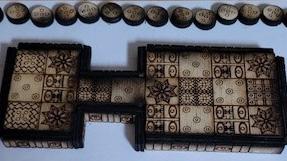
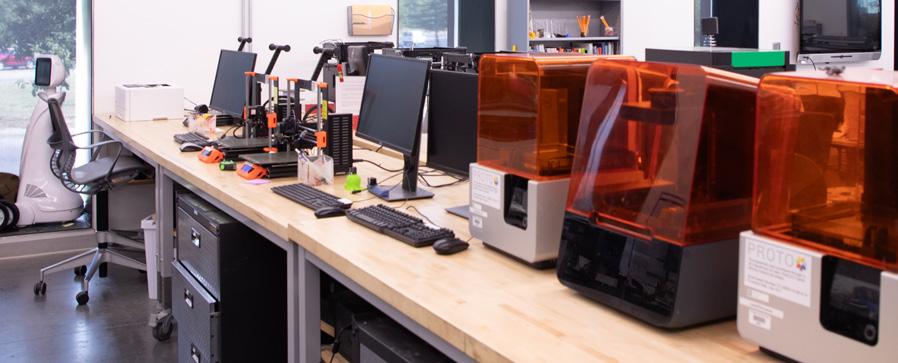
A representation of a separate Royal Game of Ur recreated using the Prototype Design Lab.
At Brennan’s suggestion, the student went to the Prototype Design Lab on the Fort Omaha Campus where lab technicians helped her use a CNC router table and laser engraver to recreate the game.
In bringing the Royal Game of Ur to life, this student not only connected with an ancient civilization but also reimagined what accessibility could look like in her own future.
That’s the goal of Artifact Day. It’s not just about recreating the past; it’s about discovering how the past shapes the way we think, solve problems and connect with others today.
By stepping into the shoes of those who lived centuries ago, students leave the assignment with more than a finished project. They gain perspective, adaptability and a deeper understanding of people — skills that extend far beyond the classroom and into whatever path they choose next.
One student found scans of real arrowheads and projectile points in a museum and 3D printed an arrowhead for everyone in class.

“Then he explained how you could see how the maker had carved the stone into an arrowhead,” Brennan said.
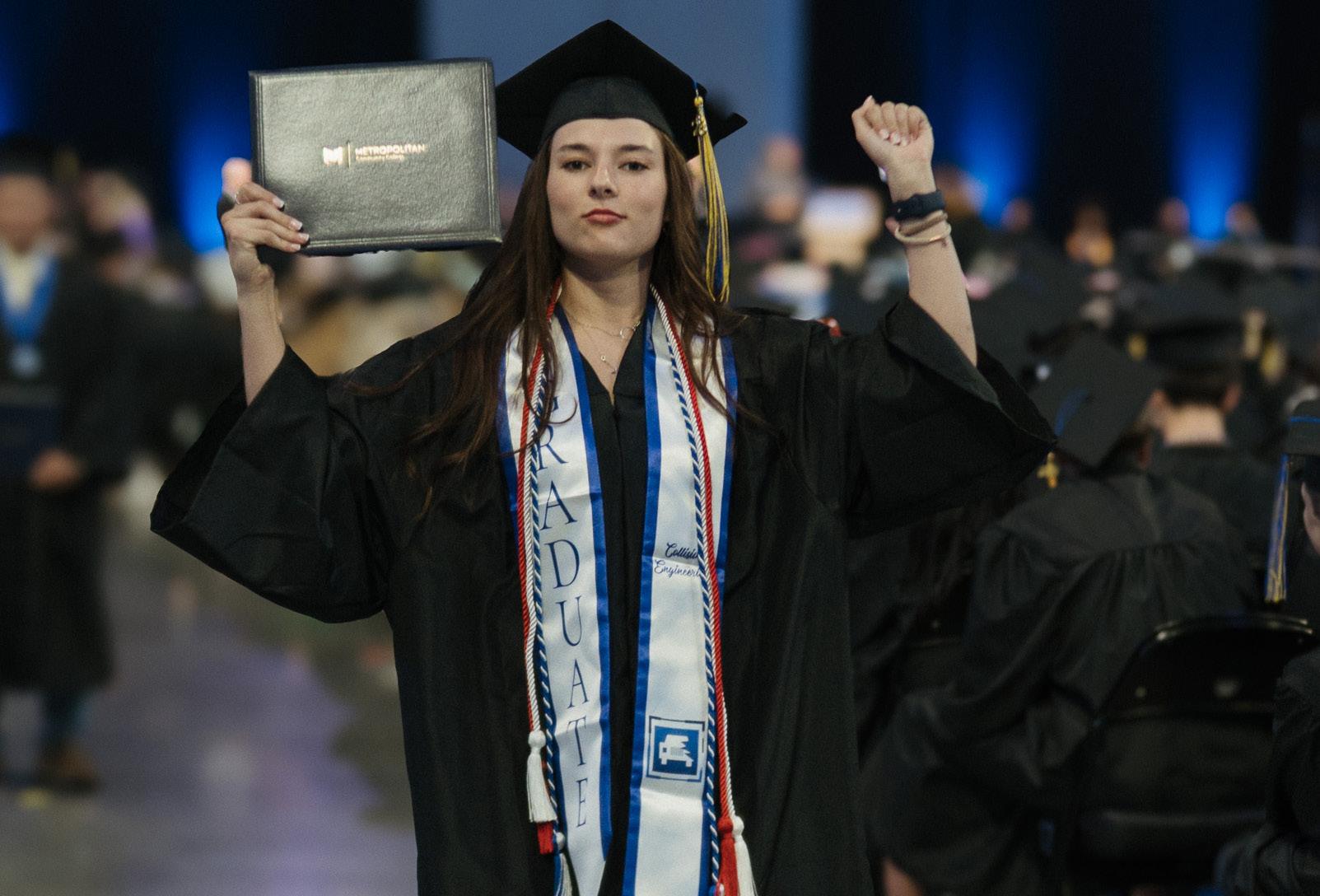
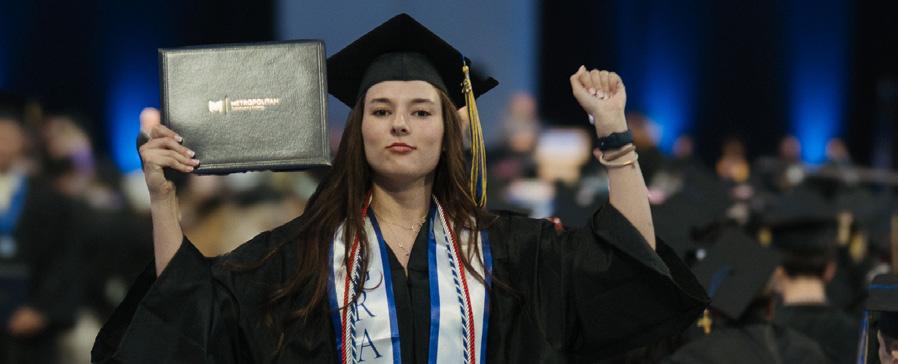
Dreams became reality on Friday, May 15, as 2,200-plus Metropolitan Community College students celebrated graduation. More than 1,060 crossed the stage at two commencement ceremonies at Baxter Arena and stepped into their futures. Many, like Ross Stanford, overcame immense challenges to make it there.
At 15 years old, Stanford was charged with a serious weapons felony and spent two years in the corrections system. At 25, he received another serious felony, this time drug-related. Then, something changed.
“I made a conscious decision to navigate on a different path. But, due to my actions as a young man, my zero point at the beginning of my journey into nursing started at a deep, deep deficit,” Stanford said to the crowd gathered at the 2 p.m. ceremony.
“I remember talking to the Nebraska Department of Health and Human Services Nursing Licensure Division. I explained my background and what I wanted to do and was essentially told that it wasn’t possible — and rightfully so. True to my nature, I just kept moving forward,” Stanford said.
He found support through the MCC 180 Re-entry Assistance Program, nursing program staff and community members.
“Without a shadow of a doubt, I know I would not have made it here today without their
support, and my trajectory would have looked a lot different,” he said.
“This has become my life’s work ... proving to myself and others that yesterday’s problems do not have to hold the reins to tomorrow’s opportunities.”
For some graduates, MCC offered the chance to start over in a different field entirely.
Nathan Kraemer, who earned an associate degree in the Mopar Career Automotive Program, wasn’t sure he’d find himself walking the stage after his first college experience didn’t work out.
“After high school I went to college for music education and then decided it wasn’t for me,” he said. “I didn’t think I’d get another opportunity to go to college.”
Originally from St. Louis, Kraemer moved to Lincoln to work for Sid Dillon. When Sid Dillon leadership asked him if he’d be interested in going through the Mopar Career Automotive Program (CAP) at MCC, Kraemer jumped at the opportunity.
In two years, Kraemer did more than just learn; he competed on a national stage against 16 community colleges and helped his team win the 2025 Mopar CAP Bracket Challenge. Beyond that, he found a community in the classroom.
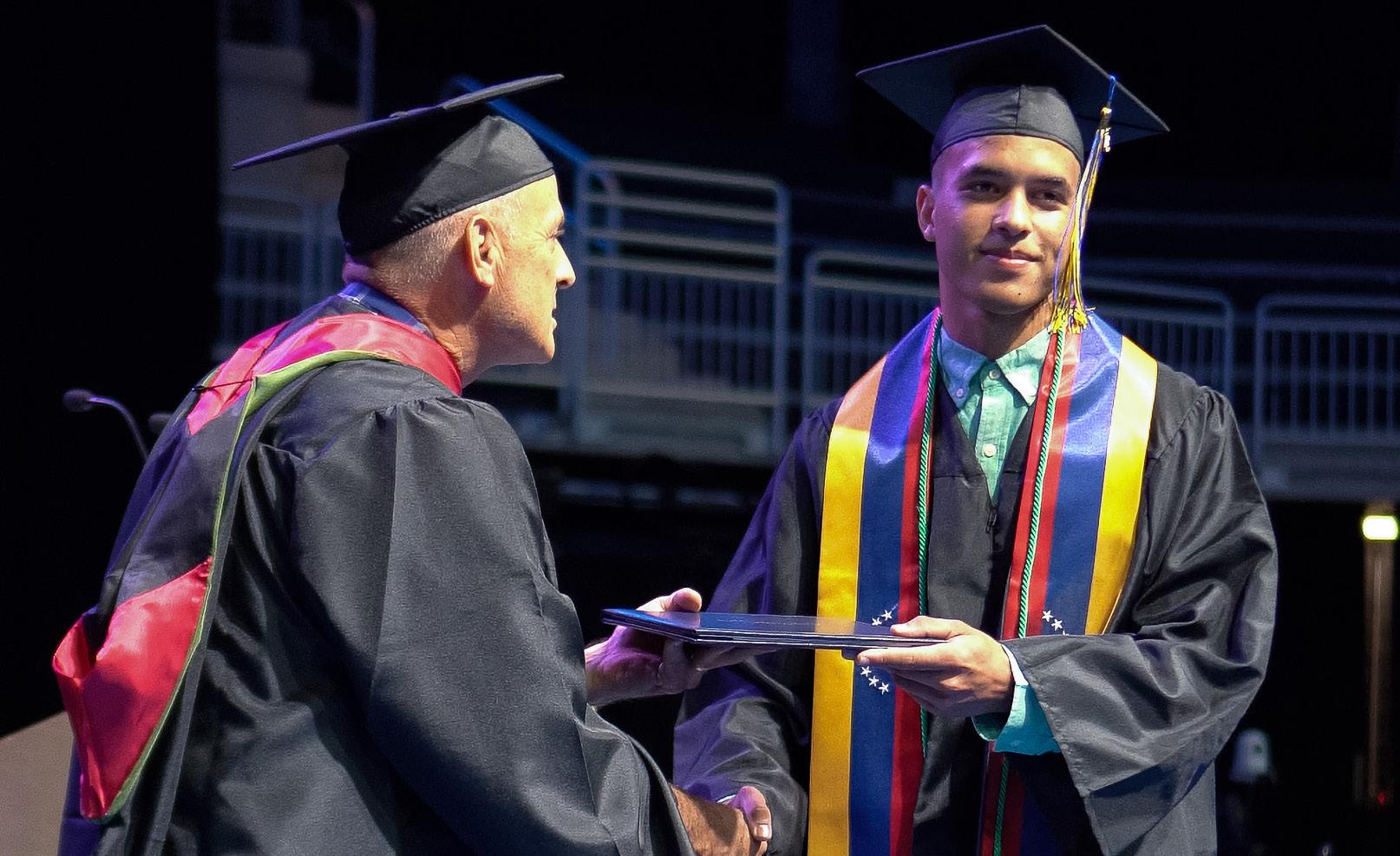
“We all got pretty close,” Kraemer said before walking the stage. “After the ceremony, the whole class is going to go get sushi. It will be the last time I get to see some of those guys since a few are going into the military, and I will likely be moving back to my hometown. I’m sure we’ll stay in touch, but it won’t be the same. I’m sad that the journey is over, but excited for what the future holds.”
Similar to Kraemer, the first career path Amina Abdullahi took didn’t end up being the right one. After receiving her bachelor’s degree in Business from the University of Nebraska Omaha, she realized it wasn’t something she enjoyed. She did, however, enjoy being creative.
“I love using color, type and textures to tell a story that gets people talking,” Abdullahi said. “The [Design Interactivity and Media Arts] program encouraged me to think out of the box.”
She graduated with an associate degree in Design, Interactivity and Media Arts – Graphic Design. She’s considering pairing her business knowledge with her graphic design skills to become a freelance designer.
While some graduates reached the stage through second chances, others arrived there years ahead of schedule through the College’s dual enrollment program for high school students. This year, more than 300 high school students participated in graduation.
While technically only a junior at Millard South High School, Yesenia Hernandez-Williams has already completed an associate degree in Liberal Arts. Watching her mother — the first in her family to graduate from college — cross the MCC stage two years ago inspired HernandezWilliams to pursue her own associate degree while still in high school.
“It was so crazy to see my mom studying,” Hernandez-Williams said. “I was so proud of her, and I know she was proud of herself for what she accomplished. She gave up so much for us.”
Hernandez-Williams will graduate early from Millard South this year and plans to transfer to the University of Iowa next year. She intends to double major in ethics and public policy and political science with a minor in Latin American studies.
“Doing all my gen eds put me farther ahead so now I can focus on just my degrees,” she said. “Some of my classmates are scared, but I’m not. I’m excited because I’m moving on to bigger things.”
Hernandez-Williams hopes to pursue a leadership role in government and eventually run for public office.
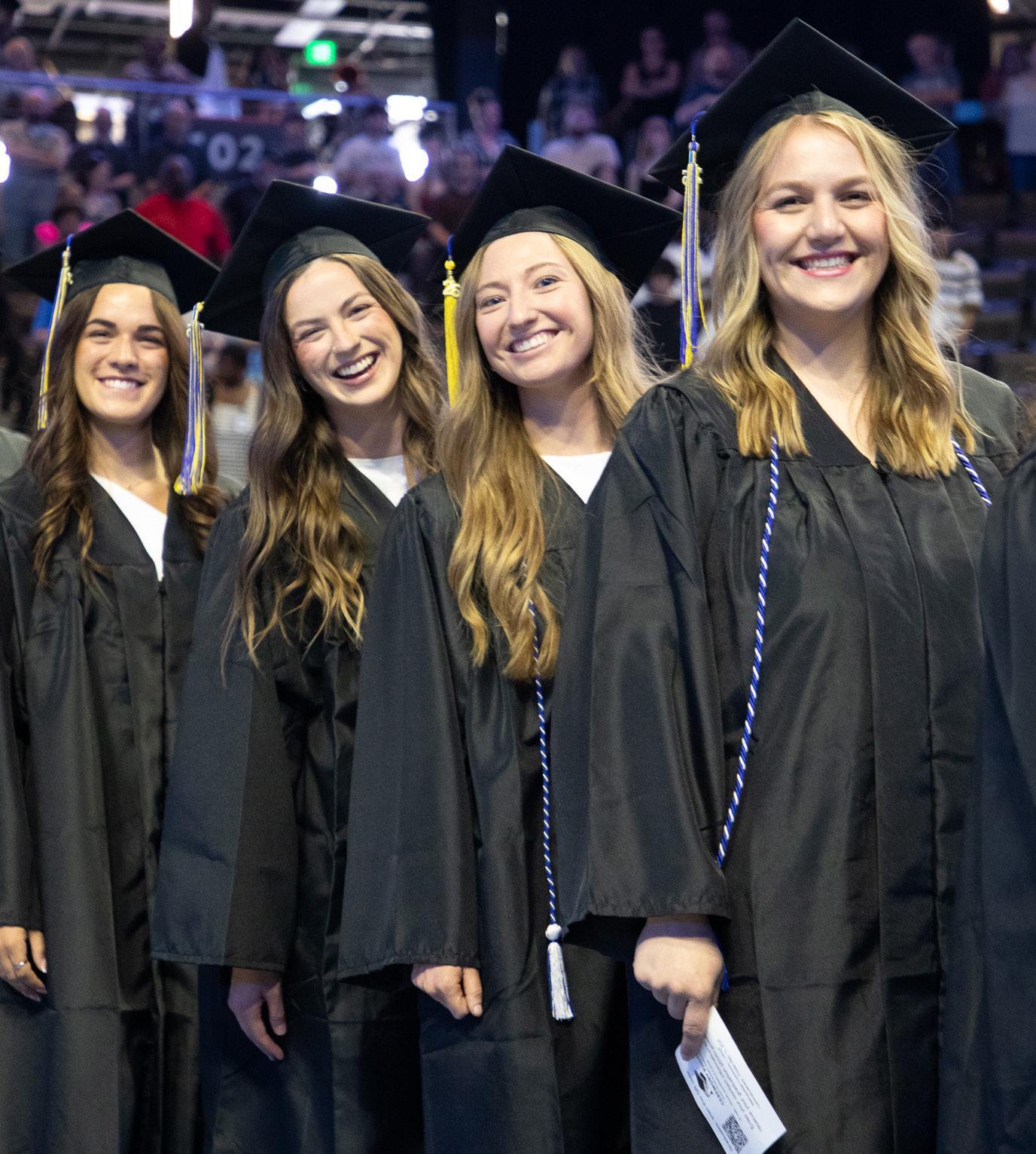
Whether they know it yet or not, graduates are setting out to make an impact on the community. Some already have, like Gertrude “Trudy” Hogueison, who received a Certificate of Achievement in Human Services — Chemical Dependency.
When Hogueison decided to pursue her degree, it was her now-friend Pamela Jeffrey who encouraged her along the way. The two met last year when Jeffrey was undergoing treatment at a facility where Hogueison worked as a tech.
“We became friends, and she was a huge support for me when I needed it. I’m excited to support her at graduation,” Jeffrey said.
Like Hogueison, Teniya Lowe is driven by a desire to help others in her community. She currently works at the Hope Center for Kids in Omaha as the children’s program facilitator and is a mentor with Release Omaha. She said she wants to do more for the youth in her community.
“I watched my nephew go through foster care, and he’s with me now, but I want to help more kids like him,” she said.
She is determined to earn her doctorate in psychology to help more nonprofits locally. Her associate degree/academic transfer from MCC is the first step.
For many graduates, commencement marked the culmination of years spent balancing work, family responsibilities and uncertainty about the future.
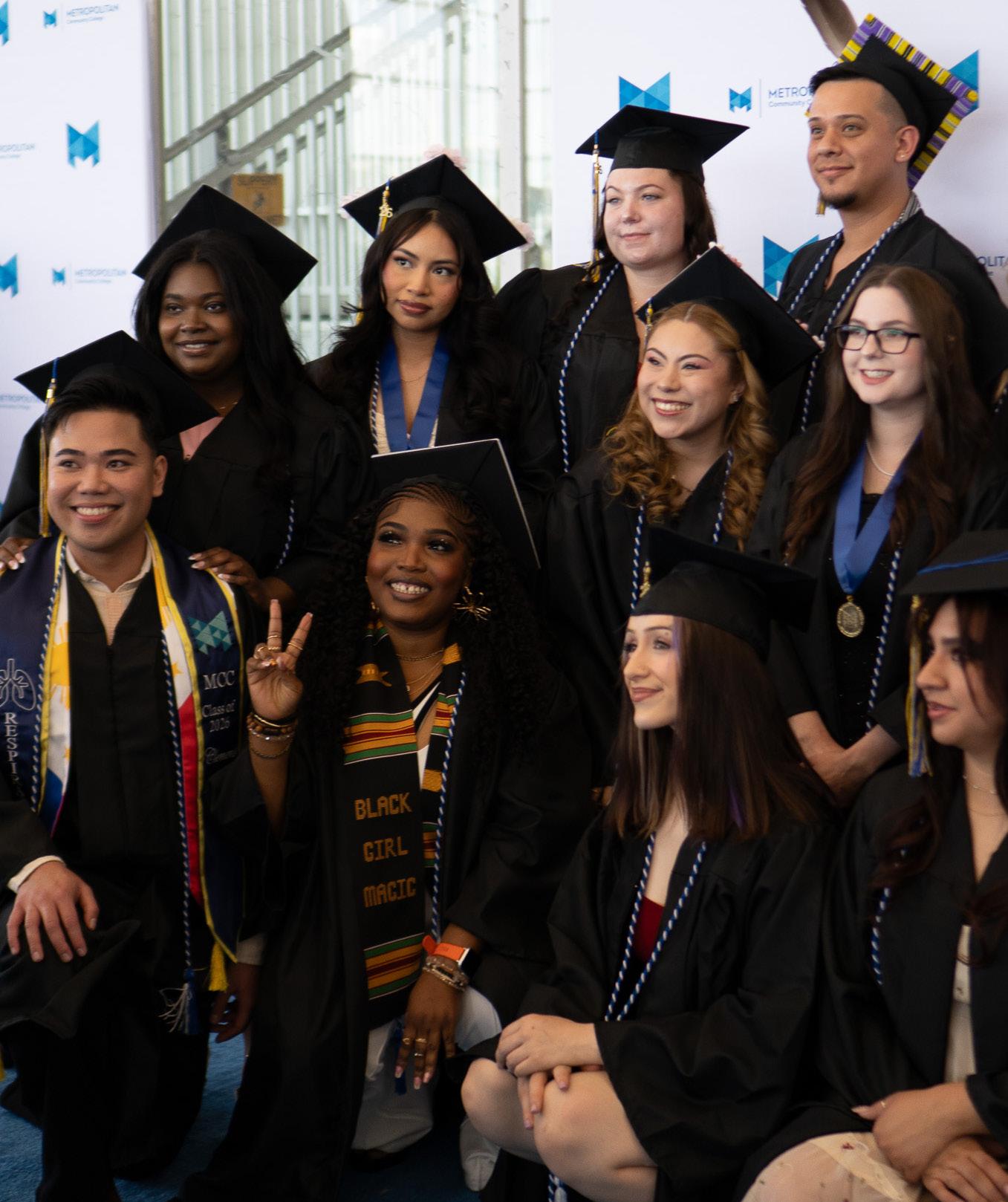
For those who know Kendra Hall, it’s not surprising that instead of attending the commencement ceremony, she was working. The dedicated mother of five is unmatched in work ethic and desire to show her children what’s possible, pushing through a lymphoma diagnosis and divorce to obtain her associate degree in Automotive Technology, with a focus on Subaru vehicles, in two years.
“I’ve got to show my kids to never quit, even when things get hard. If it’s what you want, there’s a way to make it happen,” she said.
She credits MCC instructor Peter Butler with being “the best instructor I’ve ever had.”
“He knew that everyone had a different learning style and incorporated each of them into his teaching,” she said. “And he was willing to tell me if he didn’t have an answer to a question. Then he’d learn the answer so he could teach us both.”
Now cancer-free, Hall will continue working for Baxter Subaru as a mainline technician. She is happy to report that she has completed two of the eight training modules to become a master technician.
Together, the graduates represented the many paths that can lead to a single stage — and the many futures that begin once they cross.

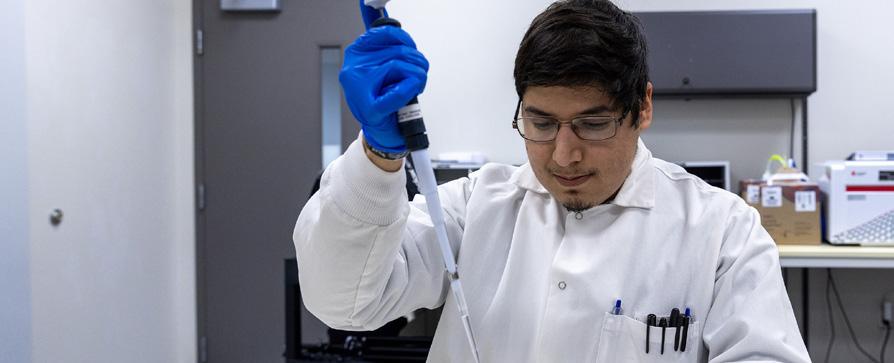
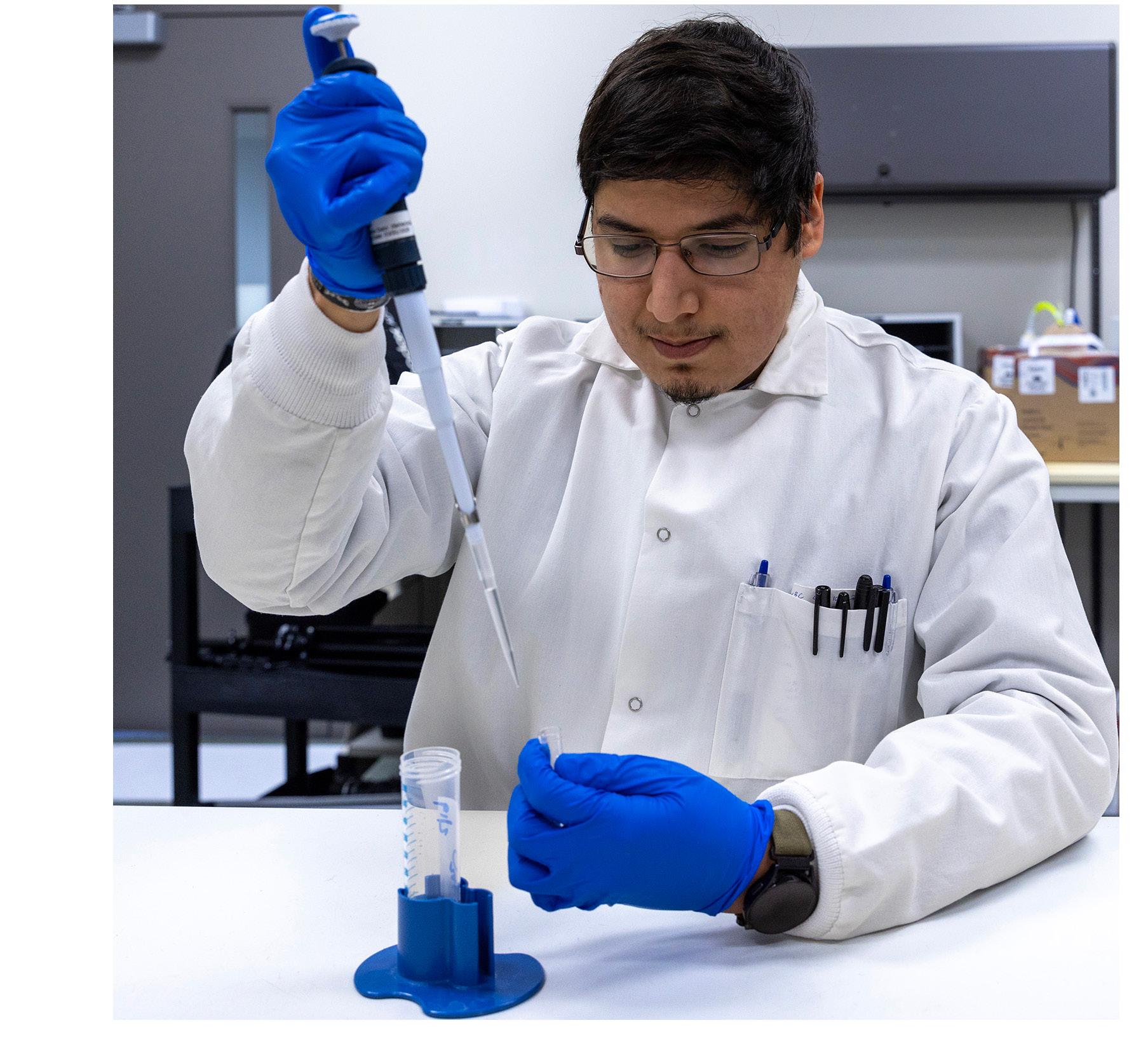
Inside a laboratory of local bioscience company, Streck, José Gonzáles-Lara carefully verifies the labeling on blood samples before running quality-control materials through a hematology analyzer. The work requires precision, attention to detail and strict adherence to documented procedures. Every result matters.
As a quality control instrument technician, Gonzáles-Lara helps ensure laboratory instruments are functioning correctly before patient samples are tested. The responsibility is one he takes seriously because accurate laboratory results ultimately affect patient care.
Just a few years ago, however, his work looked very different.
Instead of laboratory instruments and sterile environments, Gonzáles-Lara spent his days on construction sites working as an electrician. Before that, he served in the U.S. Army and expected military service to be his lifelong career.
“I joined the Army right out of high school,” said Gonzáles-Lara, a graduate of Omaha South High School. “I thought I was going to be in the Army my whole life, so when I was getting out, I wasn’t sure what I was going to do with myself.”
MCC alum and instrumentation technician José Gonzáles-Lara works inside a Streck laboratory. Following his service in the Army, he used his military benefits to pursue a career in biotechnology, a new program launching at MCC this fall.
His path toward biotechnology began unexpectedly when he attended a lunch-and-learn event co-hosted by Streck and Metropolitan Community College in partnership with the College’s Veterans and Military Resource Center (VMRC) in 2023.
The field was unfamiliar, but its purpose resonated with him. Through career guidance and support Gonzáles-Lara received at the VMRC, he started mapping the plan for his next step in life with confidence.
“A big aspect of my life is helping others,” Gonzáles-Lara said. “When I learned how biotechnology helps the world — and all the fields of opportunity — that stuck with me.”
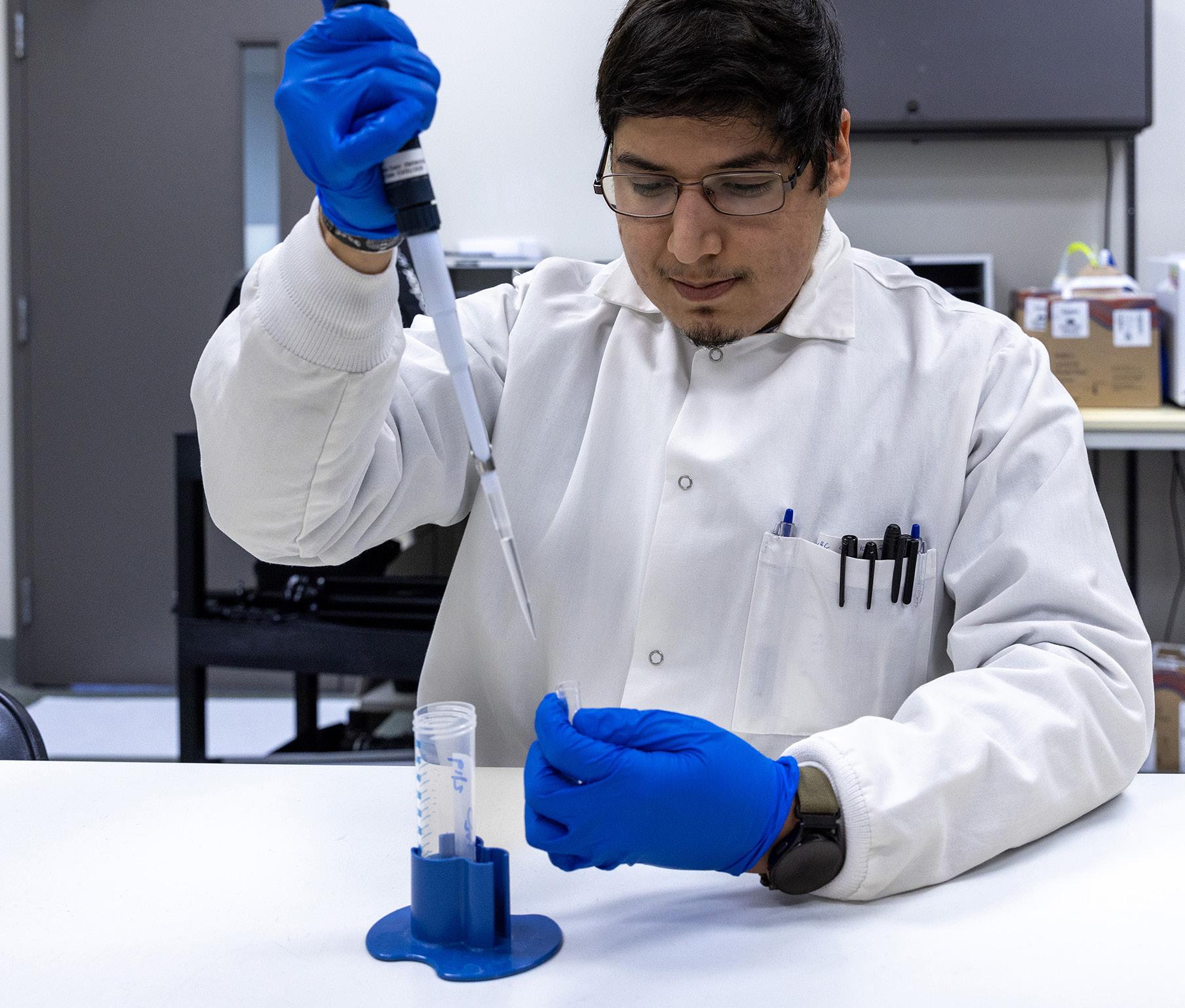
Today, Gonzáles-Lara’s story represents exactly the type of workforce development education Nebraska’s growing biotechnology industry needs.
During his program of study, he was hired by Streck and continued working toward his certificate while gaining industry experience. He completed the program and earned the first Streck biotechnology certificate awarded by MCC.
His story also reflects a larger effort underway across Nebraska to strengthen the workforce pipeline supporting one of the state’s fastest-growing industries.
Beginning this fall, MCC will launch an accredited associate degree in biotechnology while also offering stackable certificate pathways and workforce training options designed to meet the needs of both traditional students and adult learners.
Nebraska possesses many of the ingredients needed for a thriving biotechnology sector: world-class agricultural production, leading research institutions, advanced manufacturing capabilities and innovative bioscience companies.
According to employers, a consistent barrier to growth is the lack of a pipeline of trained workers prepared for entry-level biotechnology roles.
According to Rob Owen, executive director of Bio Nebraska, a nonprofit trade association supporting Nebraska’s growing bioscience sector, workforce development has become one of the industry’s highest priorities.
“If we can get into those high schools and junior highs and talk about the companies and careers that are here, those students can then see that they can stay in Nebraska,” Owen said. “They can come to MCC, get trained for a short period of time and get a job right away.”
To address workforce challenges, MCC has spent the past three years working closely with biotechnology employers throughout the region to identify the knowledge, skills and competencies required for technician-level positions.
Members of the MCC biotechnology team visited related companies throughout the Omaha metropolitan area to better understand workforce needs firsthand. Employers consistently reported that onboarding and technical training timelines were increasing as demand for skilled workers outpaced available talent.
“Some employers told us that internal training that once took three to six months can now stretch much longer,” said Jackie Clifford, director of the MCC Biotechnology program. “If we can take a portion of that training on at MCC, companies can bring employees up to speed faster while reducing risk. Infusing the four-county area with trained, skilled workers is going to be huge for the industry.”
In 2023, through collaboration with Streck subject-matter experts, the MCC biotechnology team designed two initial courses focused on hematology and instrumentation. Those courses became the foundation for what has since grown into a comprehensive biotechnology program.
With the program launching this fall, students can enter the workforce after completing shorter credential programs or continue coursework to earn an associate degree and transfer to four-year institutions for additional study.
One of the industry’s greatest challenges is awareness.
Many students — and even many adults considering career changes — are unfamiliar with biotechnology despite its presence in products and processes they encounter every day.
When scientists learned how to put the human insulin gene into bacteria and produce insulin at scale, Clifford explained, it transformed life for millions of people with diabetes and showed what this field could do.
“Biotechnology is really about using living organisms, like microbes, to make products that help people, animals and the environment,” Clifford said. “That can include life-saving medicines, animal vaccines, renewable fuels, enzymes, alternative proteins and much more.”
Each biotechnology course includes opportunities for students to engage directly with industry through facility tours, guest speakers and hands-on learning experiences in a state-of-the-art lab space on the Elkhorn Valley Campus.
MCC is also expanding awareness efforts through dual-enrollment opportunities for high school students and biotechnology summer camps for teens. The goal is to help students envision themselves in careers they may never have considered before.
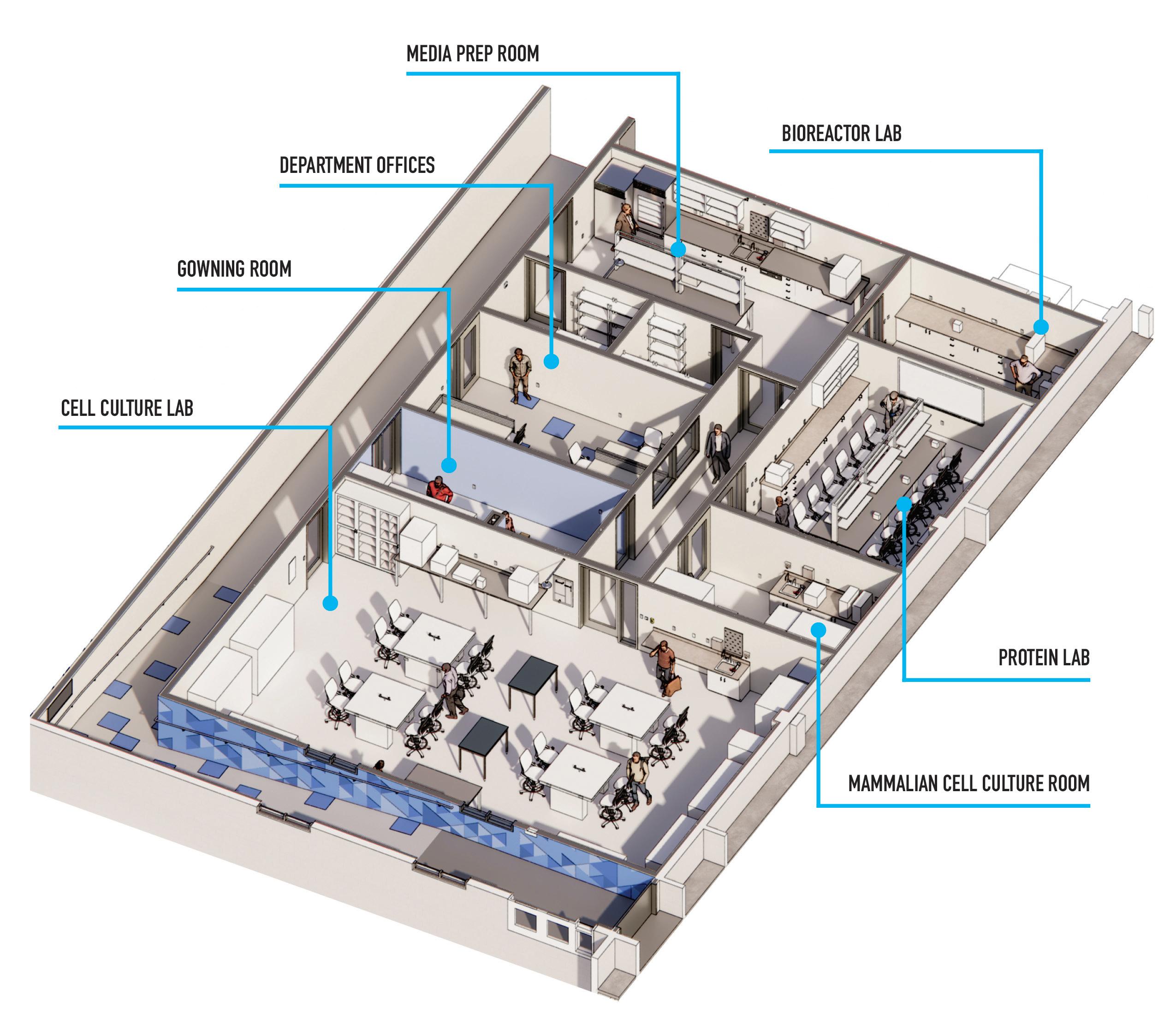
Below, a rendering of the state-of-the-art biotechnology lab on the Elkhorn Valley Campus scheduled for completion in August.
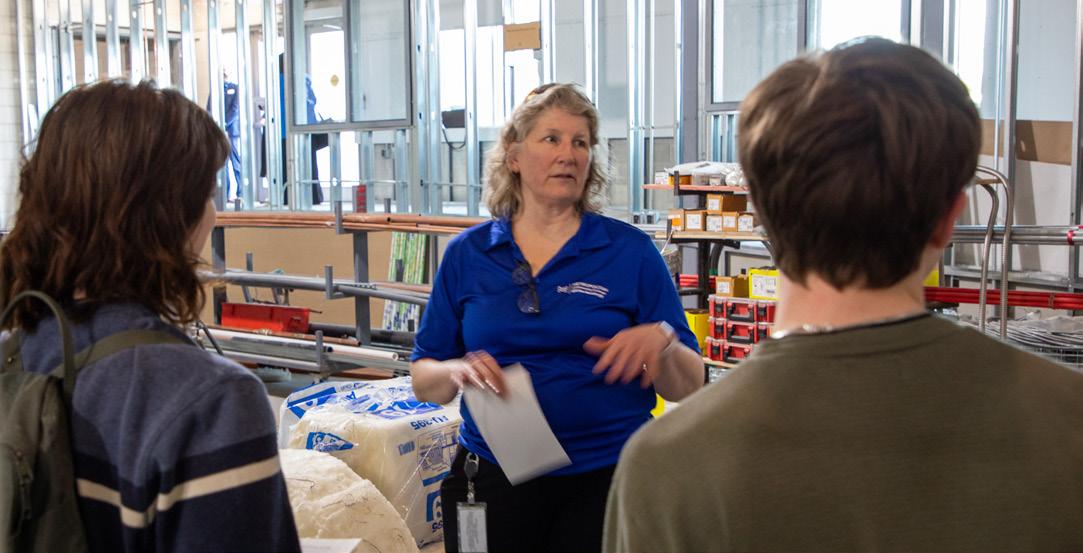
Below left: MCC Biotechnology program director Jackie Clifford leads a tour of the biotechnology lab during its construction on the Elkhorn Valley Campus.
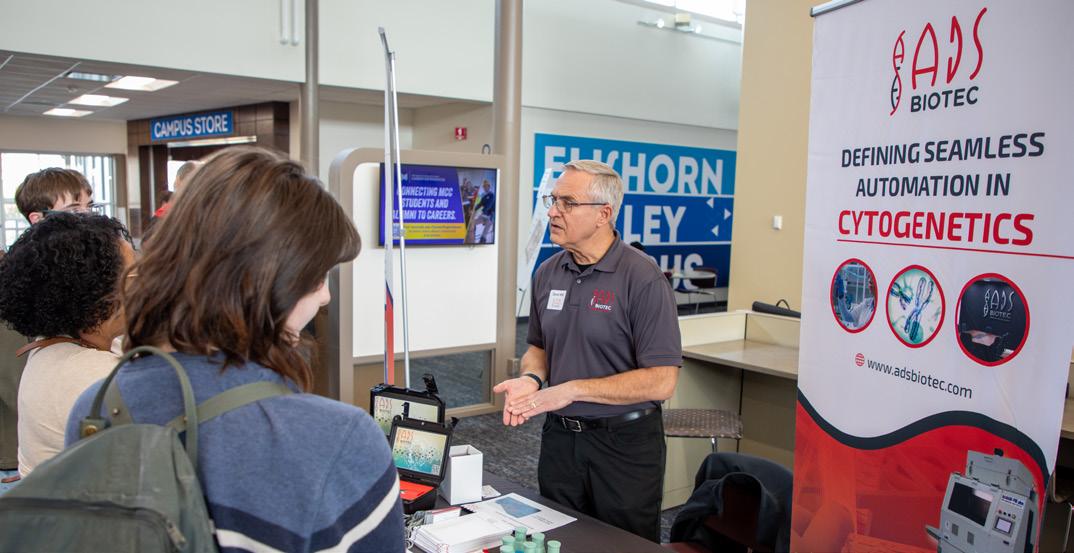
Below right: On Biotech Day at EVC, students met with representatives from area biotech companies like ADS Biotec, Cargill, Evonik, Merck, Novonesis, Phibro and Streck.
According to Owen, Nebraska’s bioscience sector supports approximately 19,000 jobs and continues to grow.
Nebraska ranks among the nation’s leading ethanol-producing states, and five of the world’s 15 largest animal health companies operate within the state. Biotechnology companies throughout the region use microbes to manufacture products ranging from vaccines and feed additives to specialty ingredients and diagnostic products.
The state’s bioscience ecosystem includes research institutions, healthcare organizations, agricultural processors, fermentation facilities, diagnostic manufacturers and biomanufacturing operations.
The biotechnology laboratory being constructed on the Elkhorn Valley Campus is unique to the region, developed with guidance from the program’s Business and Industry Leadership Team to mirror the equipment, technology and sterilized setting students would find working in the field. It is expected to open in August and further expand hands-on training opportunities for students.
“Our member companies love Nebraska and many would like to expand here,” Owen said. “The question they always ask is, ‘Where are we going to get the people?’”
The MCC Biotechnology program is designed to help answer that question by creating a pipeline of skilled workers prepared to contribute from day one.
For Gonzáles-Lara, biotechnology offered more than a new career path. It offered an opportunity to combine his strengths with meaningful work.
During his internship at Streck, he quickly recognized that many of the qualities he developed in the military translated naturally to laboratory environments: attention to detail, accountability and procedural discipline.
“Lab etiquette is a whole field of its own,” Gonzáles-Lara said. “It was a big change from construction sites to a very clean environment where integrity is everything.”
He found particular satisfaction in performing documentation procedures and working with quality control systems.
“I really connected with following procedures and doing documentation properly,” he said. “I like manuals and following things by the book. That really helped me adapt and learn.”
MCC advisors also played a key role in helping him navigate educational options and access his military benefits. Early logistical challenges, including transportation limitations, were addressed through individualized support and course planning.
“They really helped me feel confident in pursuing a career and going back to school,” Gonzáles-Lara said.
Today, he understands the direct impact of his work.
“When someone gets a complete blood count, they’re trusting that machine,” he said. “Ensuring those controls are made to our specifications is very important.”
For Gonzáles-Lara, the future now feels full of possibility.
“For the first time, I feel like I’m in a job where I can grow instead of being stuck,” he said. “If I want to stay a technician, I can. If I want to move into service or engineering, there are paths for that. Any opportunity I’m given, I’m not going to shy away from it.”
As Nebraska’s biotechnology sector continues to expand, workforce stories like his may become increasingly common — and increasingly important to the state’s future.

“MCC Made,” the official podcast of Metropolitan Community College, celebrates the people, programs and stories that make MCC unique. Hosted by Emma Frazier, deputy chief of staff, and Katherine Riggs, coordinator of Internal Communications, each episode highlights the impact the College and its alumni have on the community. New episodes are released twice a month.
“Heard It On MCC Made,” our new Community series, gives readers a glimpse of the lively, full-length conversations Frazier and Riggs have with faculty and alumni. In this featured episode, Frazier and Riggs talk with Fashion Design alumnus Kyle Yehle, whose journey took him from the Air Force and ranching to a career in fashion. Through entrepreneurship courses at MCC, Yehle gained the skills and confidence to launch KEY Fabrics, a retailer of apparel and designer fabrics. Many of his fabrics were modeled at the MCC Fashion Show in April.
*Note: This interview has been edited for length and clarity.
I was active-duty Air Force for nine years as a computer operator. My first active-duty station was at Offutt Air Force Base, so that’s what brought me from Rhode Island to Nebraska. During my time in the Air Force, it felt like a rigid environment with a lot of masculine energy. So, on the weekends, I wanted to experience the complete opposite of that, so I became involved in the local entertainment scene.
When I got out, I needed a change, so I moved back to Nebraska and managed a cattle farm for two years. Then I got into stage-costume design for local performers. I was completely self-taught and I thought some technical training might be helpful. I looked into different programs and the fashion degree at MCC was right up my alley.

It was amazing. When I was looking at the MCC classes, I didn’t see any sewing classes, but there were a lot of classes on fundamentals. Getting those fundamentals helped me understand why certain designs look good. It’s not just an innate thing; there’s a series of rules and underlying reasons that your brain finds something aesthetically pleasing.
It’s intentional and that helped me refine my designs.
That was based on my final project for fashion illustration — we had to make a series of illustrations. When I finished, I was already doing an apprenticeship with Omaha Fashion Week (OFW), which was part of the curriculum. At that point, I had no formal training in sewing, and someone said I should apply for the OFW show, so I did. That started a new trajectory for me — saying yes first and figuring things out along the way. I stopped worrying so much about “the how” and just worked to figure it out.
When I was trying to source the fabrics for my OFW collection, I knew exactly what I wanted, but I couldn’t find it. I flew to L.A. and I drove to Chicago and I still couldn’t find anything. That was even before a national fabric retailer closed. After fashion week, I thought about how Omaha has so many designers; we shouldn’t all have to board a plane to find our materials. I started doing feasibility studies and I took entrepreneurship classes at MCC, which helped me figure things out.


Commercial rent is expensive but somebody from Omaha Fashion Week suggested I start a mobile shop — an auto loan is a lot cheaper than rent, so I bought a shuttle bus that was used as a mobile office for a Catholic charity.
Of course! It’s a business, so it needs to be fiscally solvent, but that is a huge motivator for me — helping get materials into the hands of people who can do incredible things. That’s why my pricing is based on big online retailers. If I can’t afford to sell something at or below what an online retailer is offering, then I don’t carry that specific fabric. That’s another reason to shop local. You’re not paying for shipping, and it’ll be at or below that same price point.
And 90% of my stuff is dead stock, so it’s a more sustainable option rather than participating in that supply chain of ordering. It’s stock that already exists and is waiting to be turned into something cool.
I’ve had people who are interested in supporting local design, and they come in, and they love the fabric, but they don’t sew. So, I’m trying to start a directory where if someone loves the fabric, they can purchase it and take it to one of those designers who can create something out of the fabric. That’s one way to get those designers more business and grow the entire community.


WHAT ADVICE WOULD
YOU HAVE FOR A CURRENT MCC STUDENT OR ANYBODY WHO’S THINKING ABOUT A CAREER CHANGE OR WANTS TO FOLLOW THEIR DREAMS?
I would say always have a plan, but don’t be afraid to change the plan. I’ve been through so many careers, and I thought each one of them was what I was going to do. It’s okay to take a chance and it’s okay to get your degree and then take a job doing something completely different. That’s something I’ve learned through every one of those opportunities. It’s your plan — you get to decide what you want to do. I went back to school in my 30s, and I think I’m more successful now because of that.
“THAT STARTED A NEW TRAJECTORY FOR ME — SAYING YES FIRST AND FIGURING THINGS OUT ALONG THE WAY.” — KYLE YEHLE

WATCH OR LISTEN TO THE FULL EPISODE AND DISCOVER MORE
MADE” STORIES ON YOUTUBE, SPOTIFY OR APPLE PODCASTS.
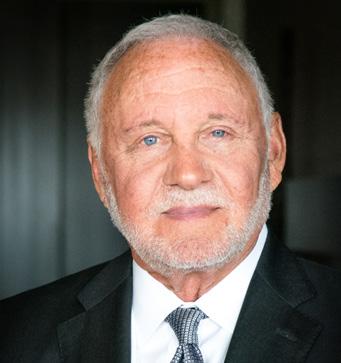
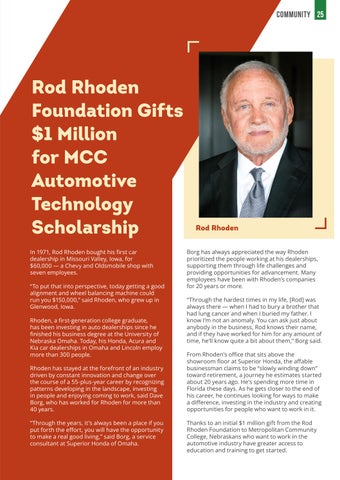
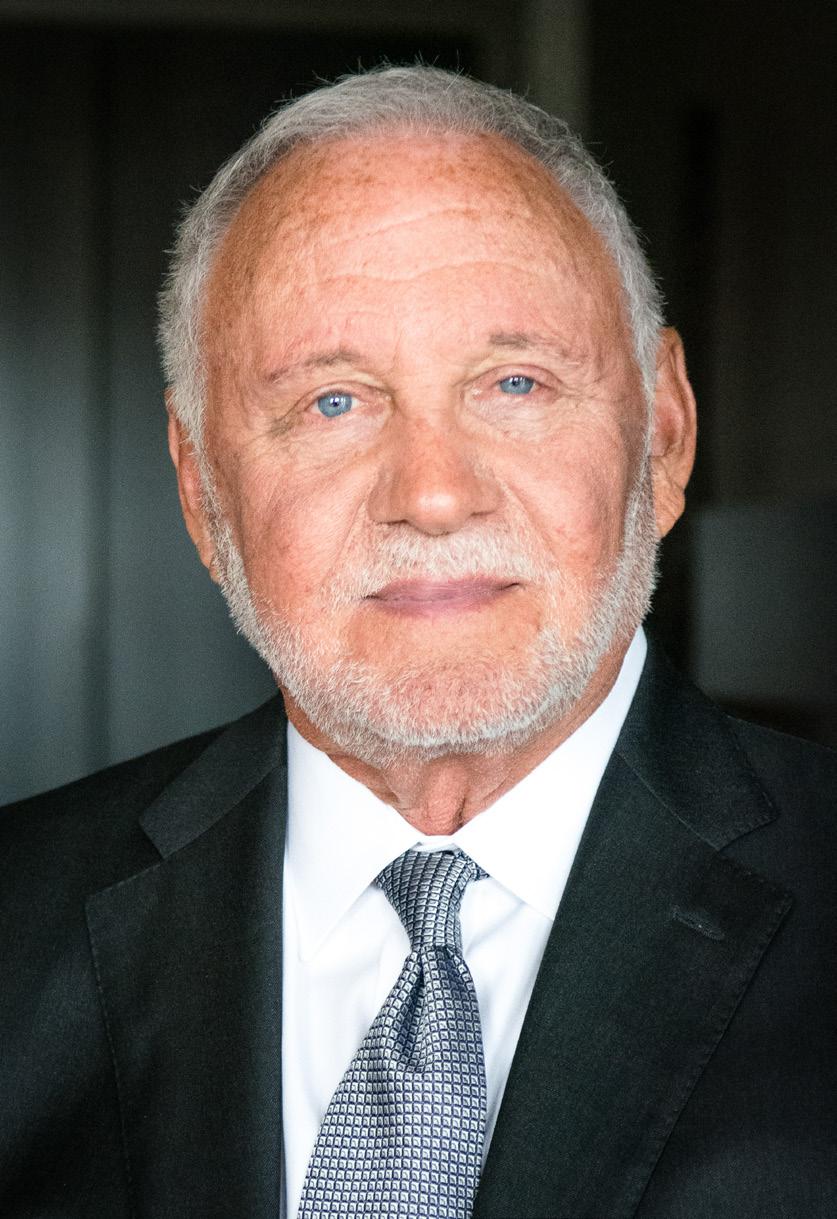
In 1971, Rod Rhoden bought his first car dealership in Missouri Valley, Iowa, for $60,000 — a Chevy and Oldsmobile shop with seven employees.
“To put that into perspective, today getting a good alignment and wheel balancing machine could run you $150,000,” said Rhoden, who grew up in Glenwood, Iowa.
Rhoden, a first-generation college graduate, has been investing in auto dealerships since he finished his business degree at the University of Nebraska Omaha. Today, his Honda, Acura and Kia car dealerships in Omaha and Lincoln employ more than 300 people.
Rhoden has stayed at the forefront of an industry driven by constant innovation and change over the course of a 55-plus-year career by recognizing patterns developing in the landscape, investing in people and enjoying coming to work, said Dave Borg, who has worked for Rhoden for more than 40 years.
“Through the years, it’s always been a place if you put forth the effort, you will have the opportunity to make a real good living,” said Borg, a service consultant at Superior Honda of Omaha.
Borg has always appreciated the way Rhoden prioritized the people working at his dealerships, supporting them through life challenges and providing opportunities for advancement. Many employees have been with Rhoden’s companies for 20 years or more.
“Through the hardest times in my life, [Rod] was always there — when I had to bury a brother that had lung cancer and when I buried my father. I know I’m not an anomaly. You can ask just about anybody in the business, Rod knows their name, and if they have worked for him for any amount of time, he’ll know quite a bit about them,” Borg said.
From Rhoden’s office that sits above the showroom floor at Superior Honda, the affable businessman claims to be “slowly winding down” toward retirement, a journey he estimates started about 20 years ago. He’s spending more time in Florida these days. As he gets closer to the end of his career, he continues looking for ways to make a difference, investing in the industry and creating opportunities for people who want to work in it.
Thanks to an initial $1 million gift from the Rod Rhoden Foundation to Metropolitan Community College, Nebraskans who want to work in the automotive industry have greater access to education and training to get started.
The gift established the Rod’s Auto Tech Team Scholarship, which is available to students of all ages pursuing MCC Automotive Technology certificate or associate degree programs, including MCC Career Academy completers.
The scholarship is expected to impact at least 45 students per year. To be eligible, recipients must maintain a 2.0 grade point average or higher and regularly attend classes.
Scott Broady, MCC dean of Skilled Trades and Technical Sciences, said the Rod’s Auto Tech Team Scholarship gives students the support necessary to see their educational journey through completion.
“Rod’s Auto Tech Team Scholarship will broaden opportunities for our students today, and for generations to follow,” Broady said. “This generous funding removes barriers to education and opens up excellent employment opportunities throughout the region. It also supplies the industry with a pipeline of skilled workers.”
trucks, including hybrids and electric vehicles, increasingly relies on skills in electronics, software and robotics — technical skills that are highly sought after across several industries, increasing competition for the same pool of labor.
“The cars got so complicated to work on that the average mechanical shop couldn’t keep up with the technology. When you go into the shop, everybody’s on an iPad — it’s just a totally different deal,” Rhoden said. “Change happens so fast now. [The industry] claim is what happens in a year now is what five years used to be.”
“This generous funding removes barriers to education and opens up excellent employment opportunities throughout the region. It also supplies the industry with a pipeline of skilled workers.”
— Scott Broady, MCC dean of Skilled Trades and Technical Sciences
Accessing technology training for these new workforce skills isn’t going to happen in a garage on a farm — or at a residence of any kind. The investment is too high. As advancements like electric vehicles and driver-assisted systems are pushing the industry forward faster than ever, old relationships matter just as much to Rhoden.
When Rhoden went into business, it was a time when independent shops were the norm on Main Street. Diagnosing vehicle issues was based on automotive theory and a paperback service manual — not a cloud connection to a vehicle’s mainframe. Acquiring the know-how to work in the industry was also a lot easier then. In rural communities like Glenwood, learning service and repair skills was a naturally occurring part of farm life.
Modern vehicles require new technical skills from the workforce. Servicing today’s cars and

In fact, it was his relationship with a former employee that brought him to the MCC South Omaha Campus to tour the Automotive Training Center. Bob Gentleman, who is currently an instructor at MCC, worked for Rhoden for 38 years. When Rhoden was looking for impact opportunities, Gentleman had a suggestion.
“Bob brought to my attention that there were people that needed some help, which I understand. My whole thing is trying to help the right people and get the money to where it can do the most good,” said Rhoden, a lead donor for the University of Nebraska Omaha Rod Rhoden Business Innovation Center.
“Through the years, it’s always been a place if you put forth the effort, you will have the opportunity to make a real good living.”

Borg, service consultant, Superior Honda of Omaha
Rhoden has also supported projects that serve military veterans, children, the Glenwood area and more.
“I know Bob’s word is gold. He wasn’t soliciting money from me. He was telling me about kids that could enter [the MCC Automotive Technology] program but didn’t have the finances figured out. It got me thinking about [how I could help]. [Supporting the MCC Automotive Technology program] was something local I could see, trust and understand,” Rhoden said.
Rhoden credited the program’s strength and high student employment rate in securing the scholarship gift. He also said the quality of the Automotive Training Center was a contributing factor to supporting MCC students. Nearly all automotive technology students are employed in the industry as they pursue their education at MCC.
“Bob had been telling me how great the facility was, but I was more impressed than I thought I would be when I was in there — how advanced it is and the [partnerships] with all the different manufacturers,” Rhoden said.
He said the success of business partnerships across the full spectrum of technical training programs will only be more important as the pace of industry innovation ramps up.
“The long-term success of the auto industry is tied to education and the business community working together to develop skilled workers and offer them great career opportunities while they are completing their education,” Rhoden said. “Metropolitan Community College is committed to the success of its students and its automotive programs. This investment creates more opportunities for MCC to make a positive impact.”
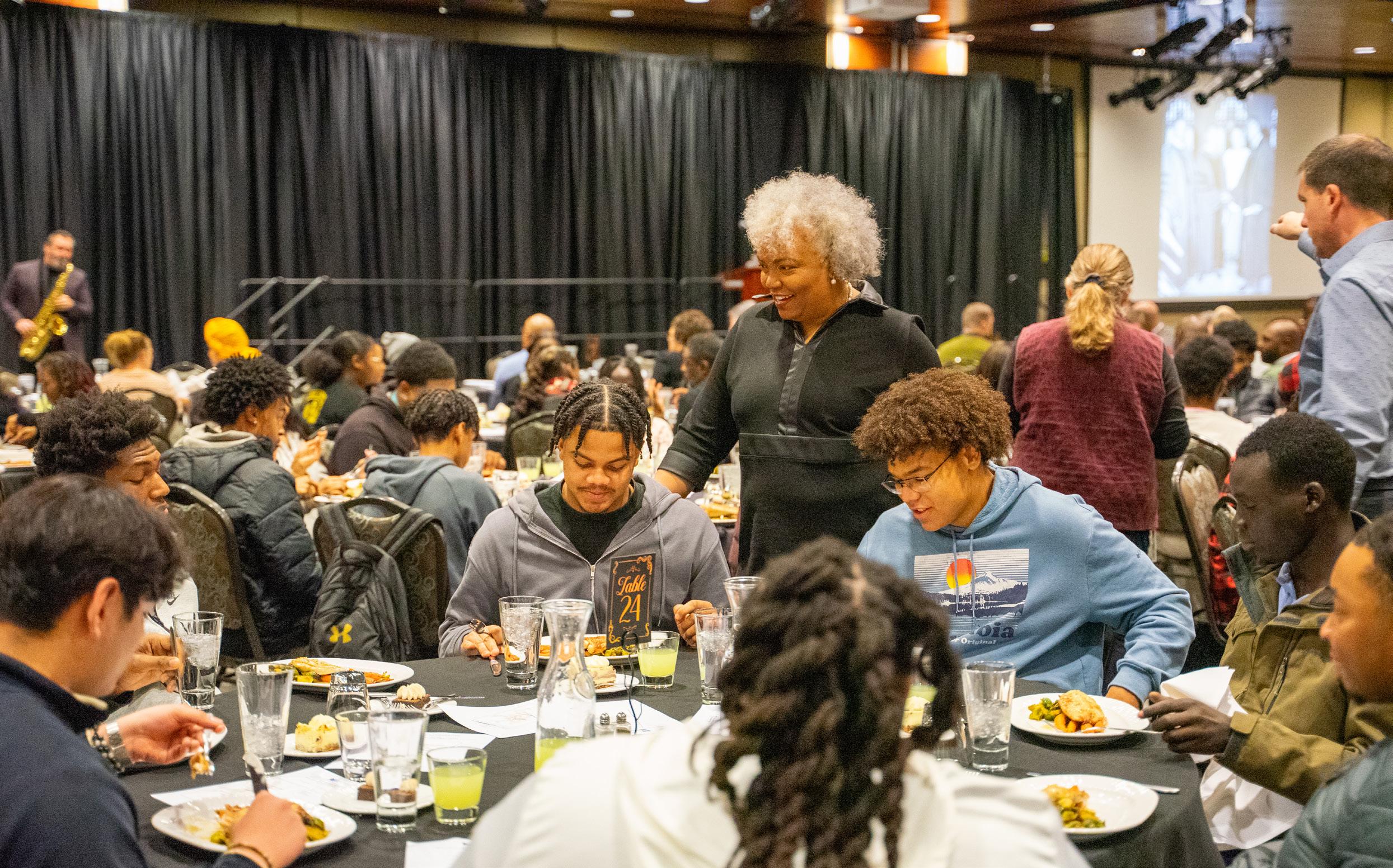
The 41st Annual Rev. Dr. Martin Luther King Jr. Celebration in January recognized two community members befitting the theme: “Mission Possible II: Building Community, Uniting a Nation the Nonviolent Way."
As a part of the League of Women Voters, Joanna Lindberg led college campus registration drives and pioneered voter education and on-site registration at area high schools — efforts that reach every Omaha Public Schools government classroom and neighboring districts today. While at Heartland Family Service, she helped develop restorative justice programs for juvenile offenders and school-readiness initiatives for refugee children and their families.
Tommie Wilson spent four decades in education, including roles as teacher with OPS and in public affairs at MCC. Wilson came of age in the segregated South and started assuming leadership roles with the NAACP during her high school and college years. She eventually became president of the organization’s Nebraska chapter.
The event also featured keynote speaker Tyjaun A. Lee, vice chancellor of Administrative Services at Metropolitan Community College in Kansas City, Missouri. Presenting on “Six Actions Rooted in Empathy” — listening, compassion, service, civic engagement, kindness and intention — Lee celebrated King’s legacy.
A catered lunch was served by the MCC Institute for the Culinary Arts, and music accompaniment was provided by saxophonist Chad Stoner. This annual event is open to the public and hosted by MCC Access, Opportunity and TRIO Programs.
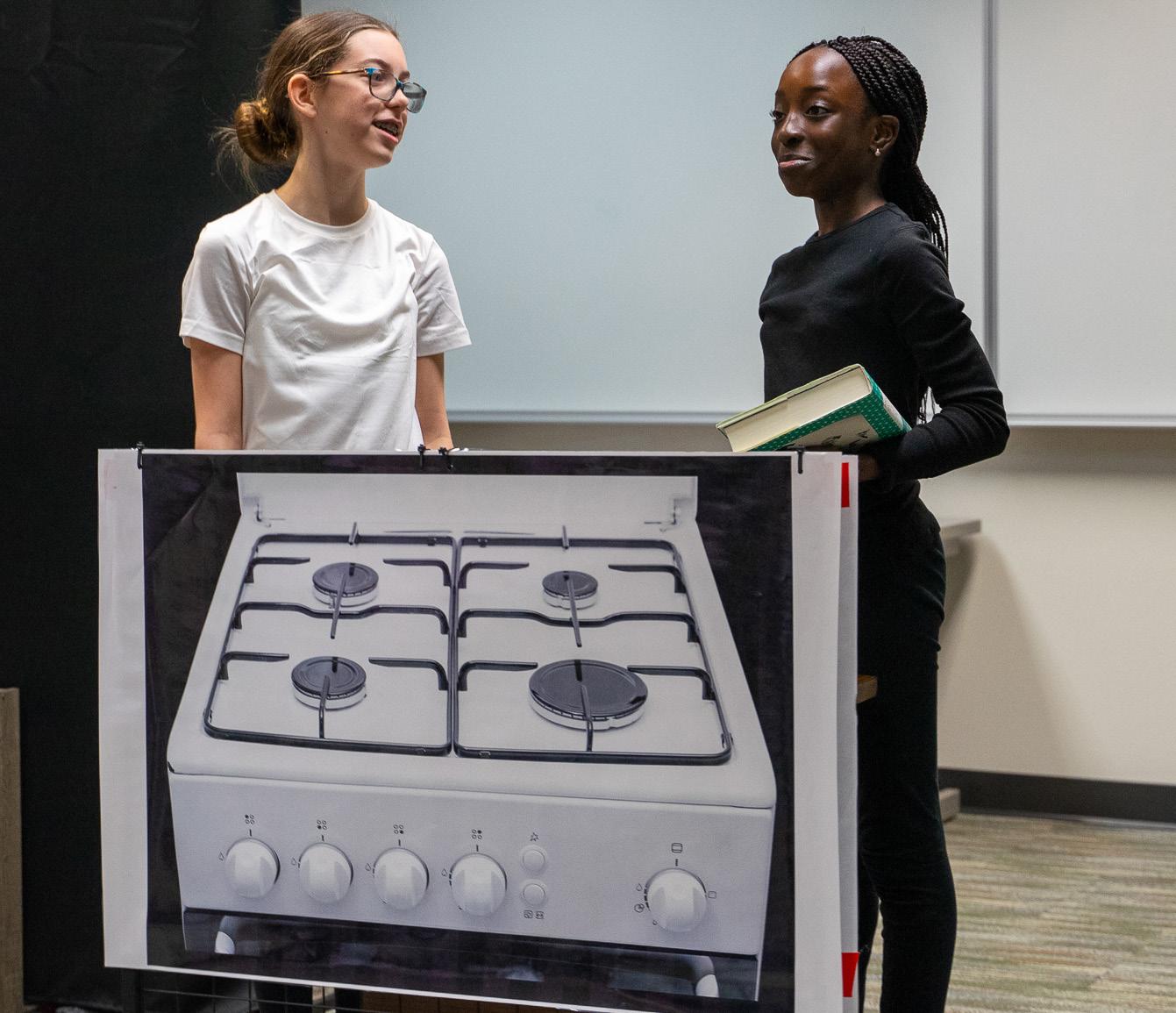
For students in the Paramedicine and Emergency Medical Technician (EMT) programs, successful outcomes require more than textbook knowledge.
“They must also learn how to manage chaotic scenes, communicate effectively with dispatch, police, fire and hospitals, and maintain safety for everyone involved,” said Grace Miller, EMS faculty in the Health Professions.
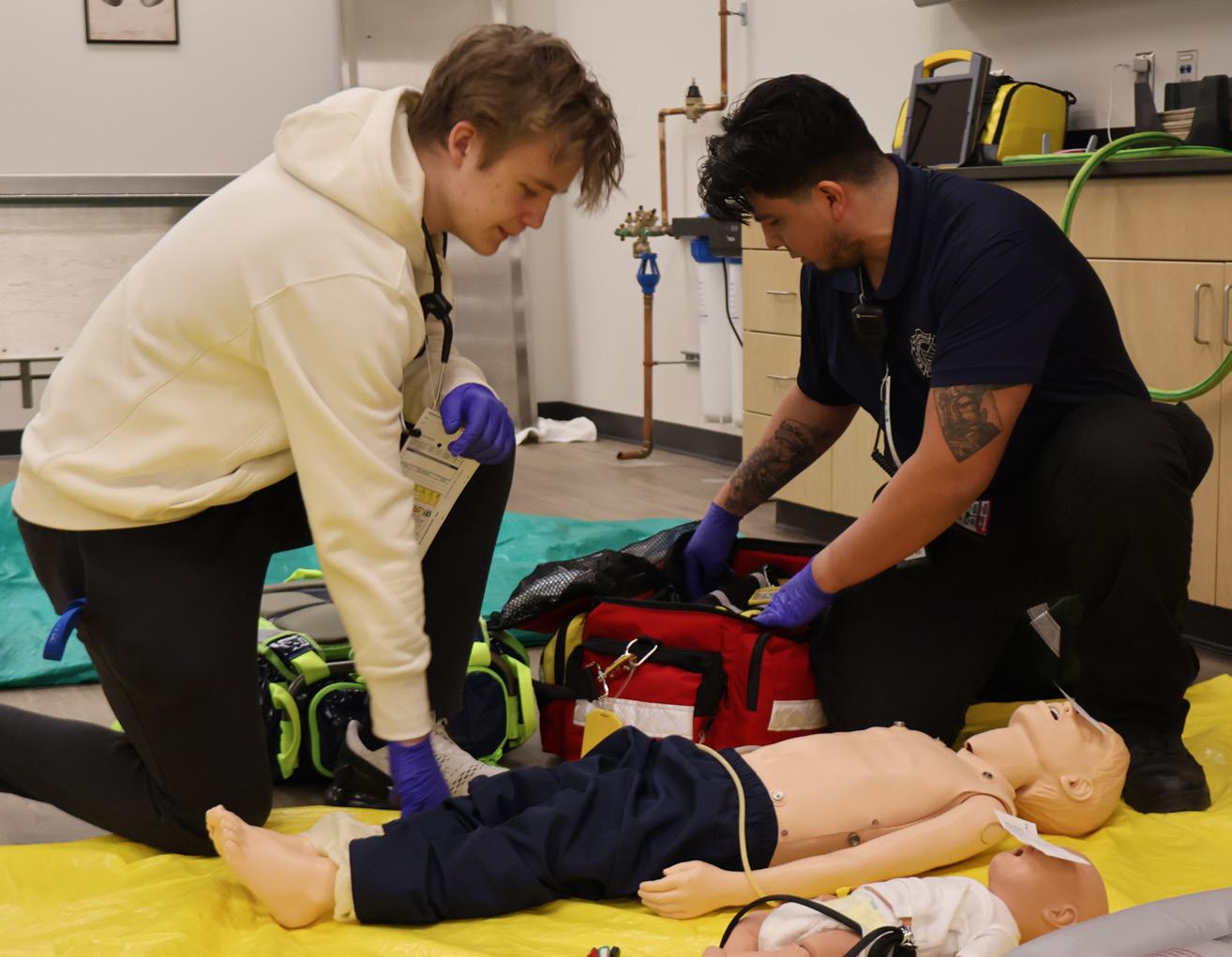
That’s why 17 students participated in a large-scale emergency training exercise in January.
“It gives students the opportunity to practice triage, leadership and incident management in a realistic environment,” Miller said.
The simulation, which took place at the South Omaha Campus, involved a building collapse that left 21 individuals trapped inside.
While instructors were present, students were in charge.
Students ran through their equipment checklist before responding and performing triage
activities — checking vital signs, tagging patients with color codes to prioritize care based on level of need, setting up treatment areas and following stabilization protocols. After assessing needs and providing treatment, patients were prioritized for transport.
The exercise is designed to familiarize students with the quick action required and demonstrate how trusting their training can lead to the best outcomes when the worst happens.
The 6th Annual Omaha District National History Day competition brought more than 120 students in grades 5-12 to the South Omaha Campus in February. Participants explored the theme, "Revolution, Reaction, Reform in History," through papers, exhibits, websites, performances and documentaries that were judged by 50 volunteers. Beyond exploring history in a friendly, competitive format, the event helps students develop research, critical thinking and communication skills.
Subsequently, more than 40 participants earned first-, second- or third-place honors and qualified for the Nebraska National History Day State Contest in April at Nebraska Wesleyan University. Fifteen students across the MCC four-county region placed at state and advanced to the national competition in College Park, Maryland, in June.
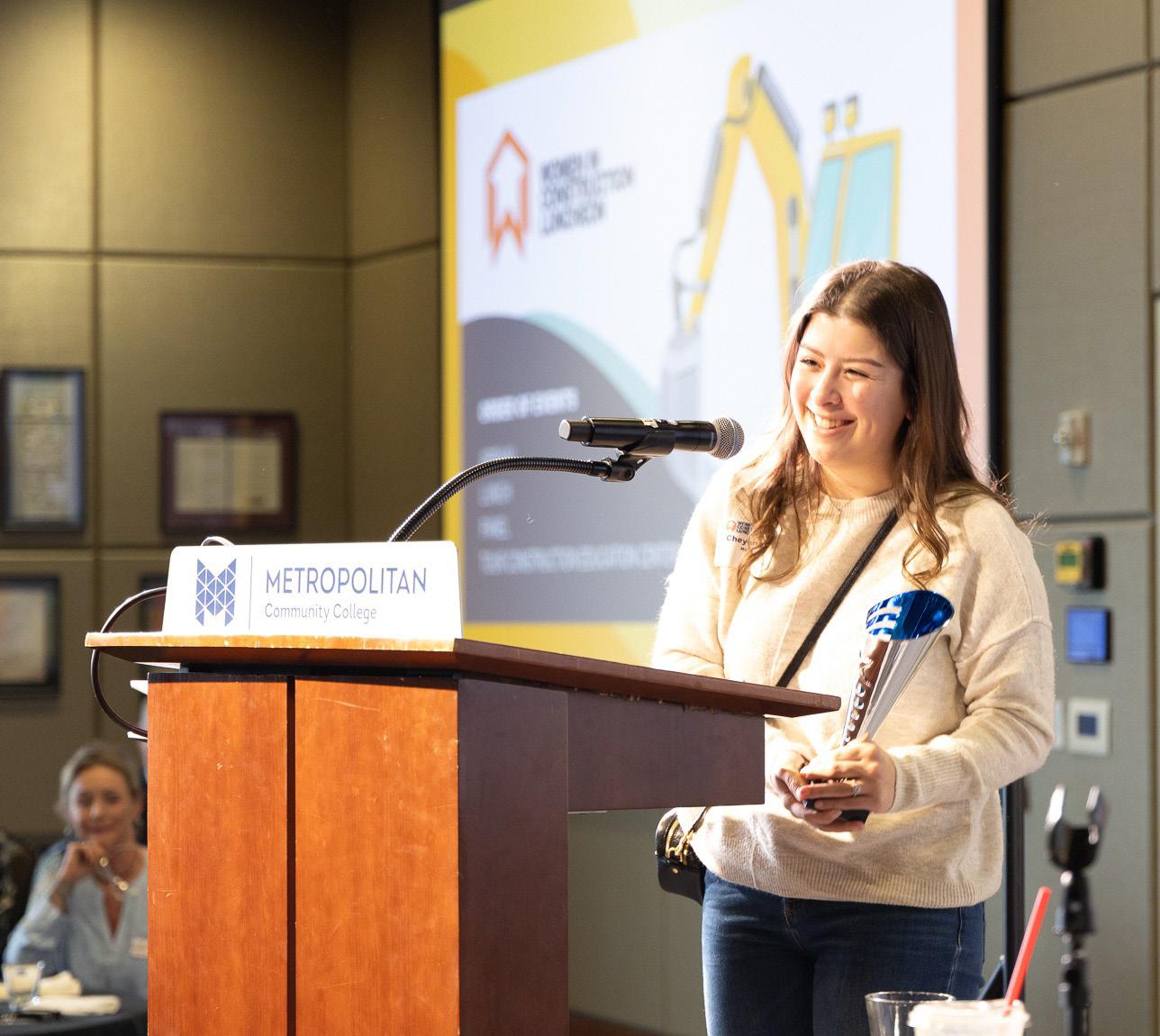
“Be confident in your ability; you are more than capable,” was the message shared with more than 200 attendees at the 3rd Annual National Association of Women in Construction (NAWIC) Luncheon. The event, which was organized by the Omaha NAWIC chapter, took place at the Fort Omaha Campus Swanson Conference Center during National Women in Construction Week in March.
The luncheon celebrated women in the filed, empowered the next generation and featured a panel discussion of inspiring women, including Jordyn Glow, inspection manager for Viking Sprinkler Protection Group; Andrea Kathie, owner of Field Day Development; Tiernee Fletcher, heavy equipment operator and union tradeswoman; and Celia Torres, construction project assistant for Cardinal Building Group.
MCC architecture student Cheyenne Clover-García was presented with the Rising Star Award. At 26 years old, Clover-García had relocated from California to Bellevue, Nebraska, with her husband, who is serving in the United States Air Force. She was working in banking but didn’t feel passionate about the work.
Then she remembered how much she enjoyed helping her father with residential construction
projects when she was younger. She decided to give electrical engineering a try before switching to architecture.
“I love the program and I love that the teachers are from the field, not just professors,” she said. She plans to pursue commercial work after graduation.
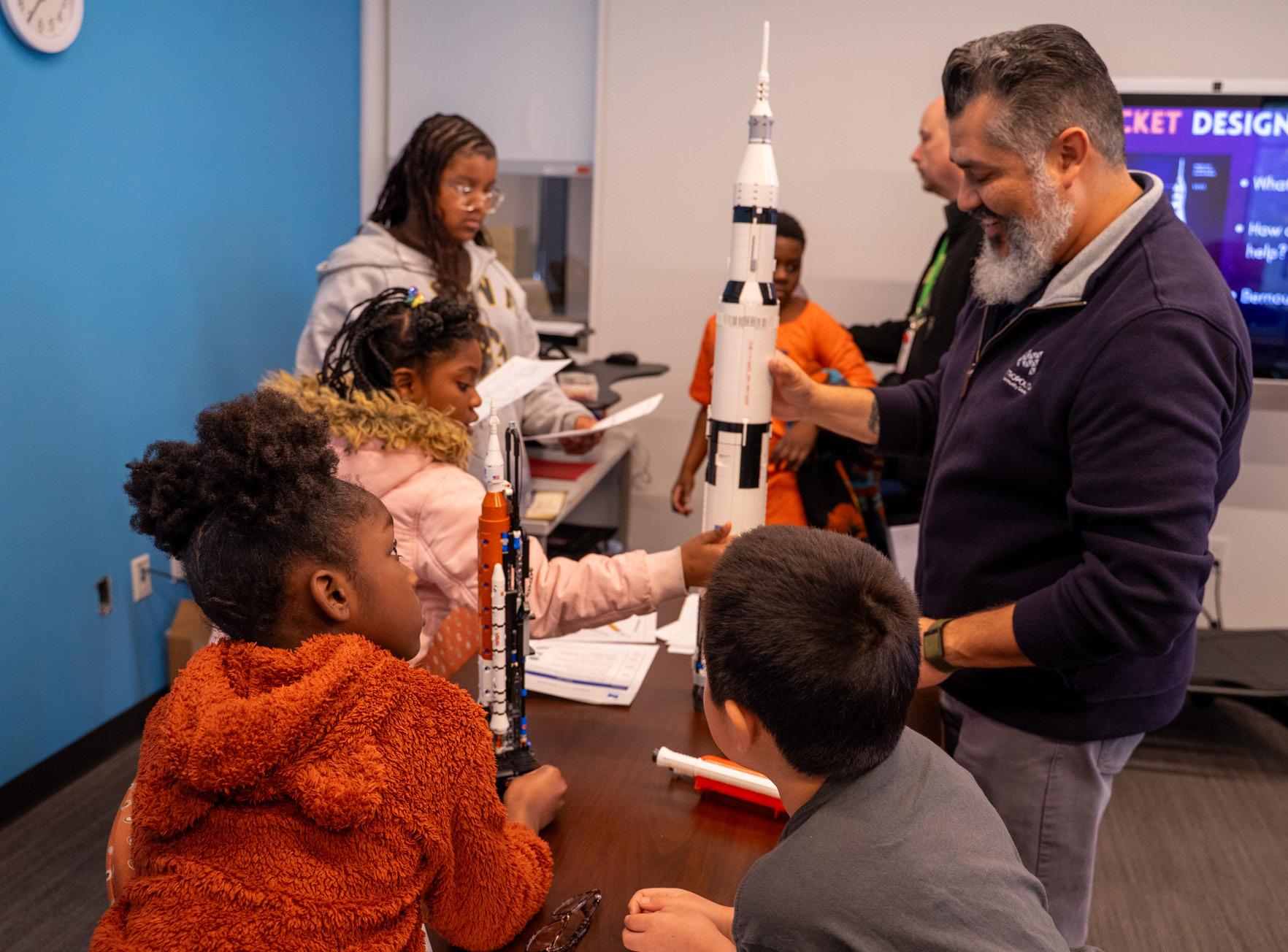
As NASA prepared for its Artemis II mission, third-grade students from Howard Kennedy Elementary School explored its importance at MCC North Express.
Using Science on a Sphere, students examined the surface of the moon on a giant, animated 3D globe. They also navigated rovers through obstacle courses to simulate lunar operations, designed their own rockets and created orbital stories using iPads and stop-motion animation Stikbots.
More than just a day of activities, the experience allowed students to discover the science, technology and creativity behind space exploration. As a new era of lunar exploration unfolds, these students gained hands-on experiences that foster curiosity, innovation and a deeper understanding of the world beyond Earth.
“Be confident in your ability; you are more than capable.”
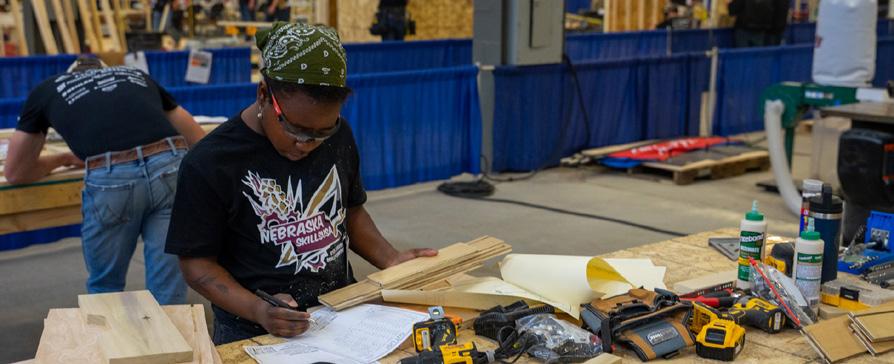
More than 160 Metropolitan Community College students competed at SkillsUSA Nebraska in April, participating in more than two dozen technical and leadership skill events. The annual event brings together the top skilled trades and technical sciences students in the state for a series of skills and leadership-based competitions.
Seventy MCC students earned medals, including 31 gold medalists who qualified for the national competition that took place in Atlanta in June. Students who medaled at SkillsUSA Nebraska were eligible for scholarships from MCC.
More than half of the students representing MCC were high school students enrolled through an MCC Career Academy. Seniors Jasea Ruckman of Ralston High School and Stella Wilmes of Fort Calhoun High School represented MCC in Digital Cinema Production. The duo won silver for their time-traveling backpack short film.
“It was eye-opening because everyone at SkillsUSA was passionate about what they were doing,” Ruckman said.
Before enrolling in the MCC Welding Career Academy, Bellevue East High School senior Andres Yanez experimented at home with a miniature welder he purchased online. This year marked his second SkillsUSA Nebraska competition.
“Competing is definitely different than class because you’re putting your skills to the test and seeing how you stand against students from across the state,” he said.
His time in the classroom helped him work through an unexpected challenge: aluminum. Normally reserved for the college level at SkillsUSA Nebraska, Yanez said he hadn’t worked with the material before. His classroom experience, combined with some last-minute research, helped him overcome the challenge and earn a gold medal.
SkillsUSA events are also an opportunity to practice job-interviewing skills, according to Liam Blanchard, who competed for the second year at the college level in the Information Technology Services division.
“You give an in-person résumé and to have industry professionals give you feedback is invaluable,” Blanchard said.
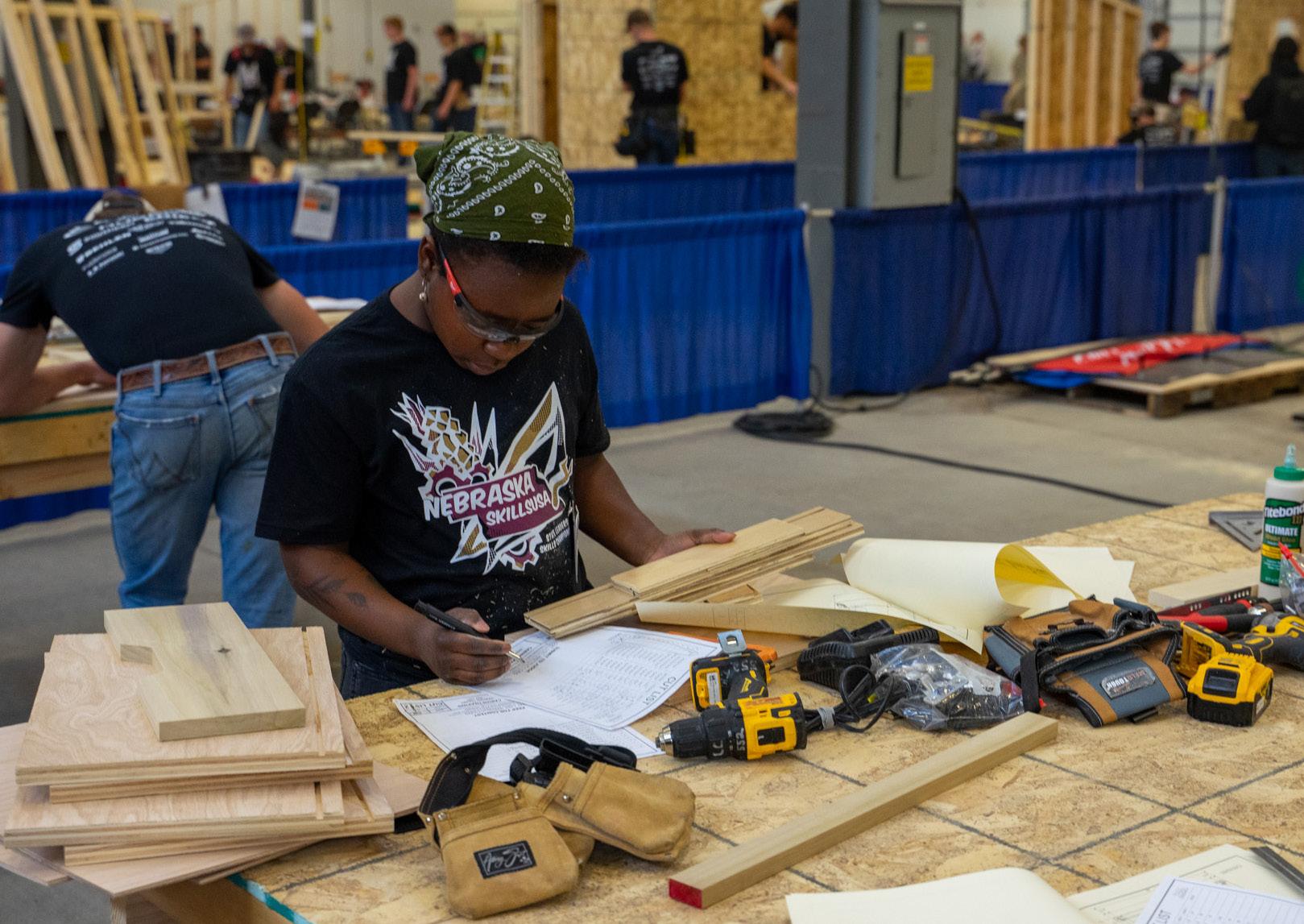
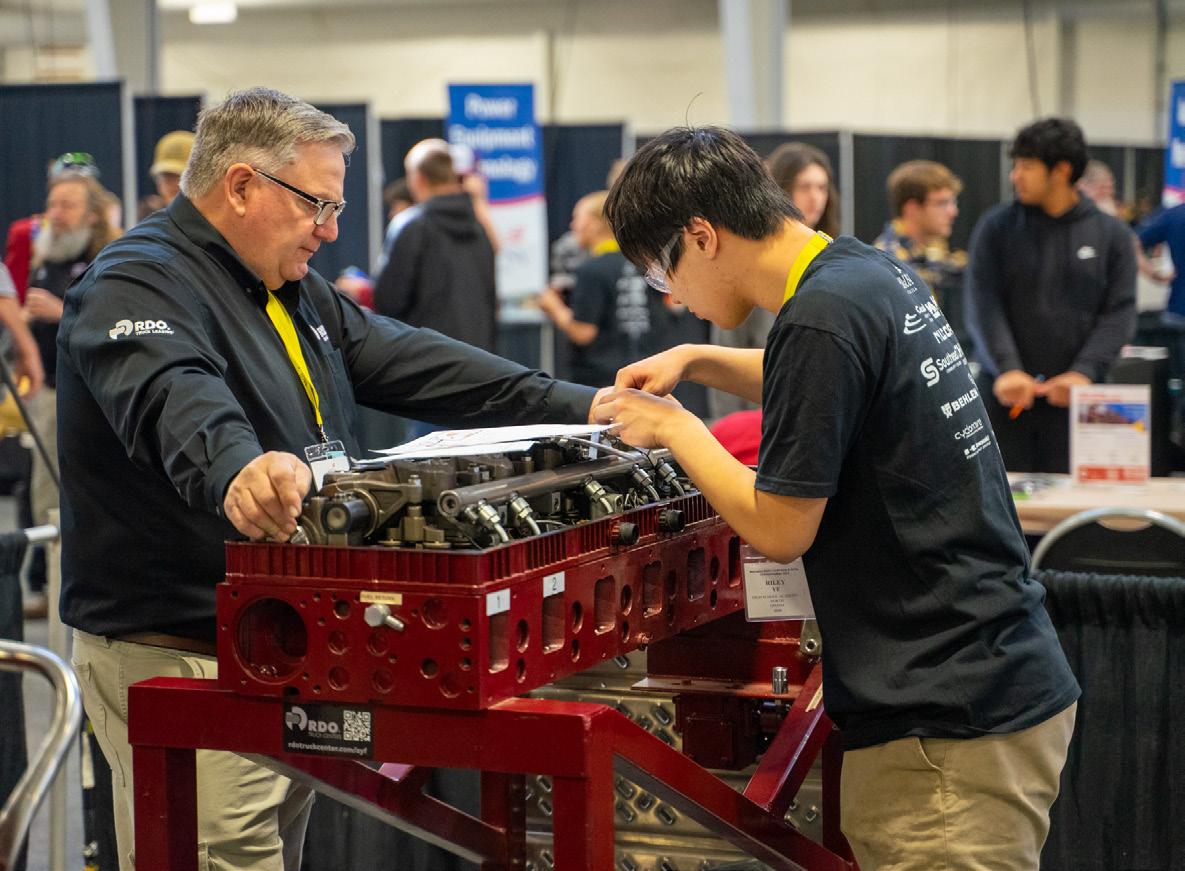
More than 160 Metropolitan Community College students competed at SkillsUSA Nebraska.
Seventy MCC students earned medals, including 31 gold medalists who qualified for the national competition.
That was true for Clara Stilen, who competed in the high school division of Collision Damage Appraisal last year. Not only did she win a gold medal, she connected with Woodhouse Collision Center, where she would begin an apprenticeship. This year she competed in Automotive Refinishing Technology competition.
"I was so grateful for the opportunities that estimating got me, but I am genuinely so happy to be painting and getting my hands dirty,” Stilen said.
Whether students left with a medal or simply valuable experience, SkillsUSA offers a chance for students to learn, grow and connect with peers in their fields of study from across Nebraska.
Look for the full story on how our students performed at nationals in the next issue of Community.
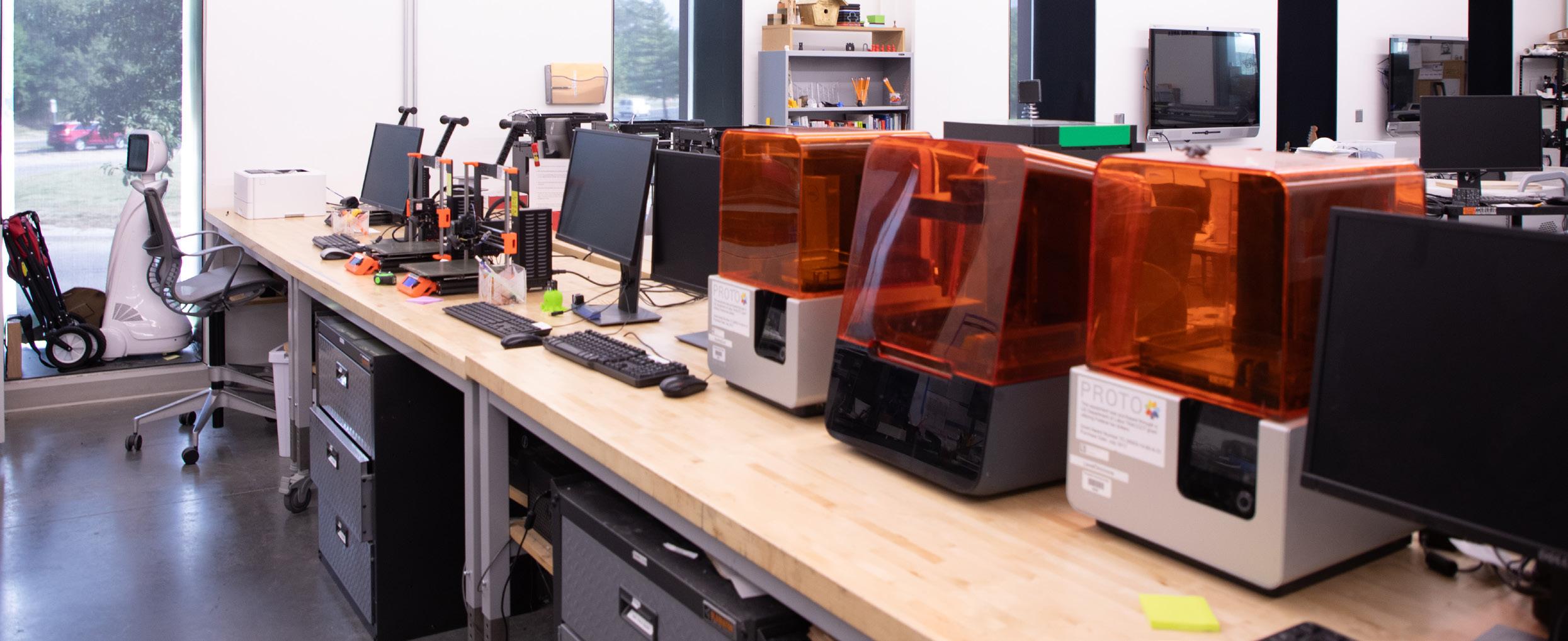



The MCC Prototype Design Lab is an open-access makerspace unlike anything else in the Omaha area. It’s a place where artists, engineers, inventors, entrepreneurs and the simply curious come to turn creative vision into something you can actually hold in your hands.
Located on the Fort Omaha Campus, the lab is stocked with an impressive collection of fabrication technology, including 3D printers, laser cutters, a CNC wood router, a fiber laser, a plasma cutter, vinyl cutters, a UV printer, an embroidery machine, woodworking equipment, soldering stations and welding equipment. Trained technicians are on hand to help members at every skill level get the most out of every tool.
And the best part? It’s open to everyone. Community members can join with a monthly membership for as little as $25, with quarterly, semi-annual and annual options available for those ready to make the lab a regular part of their creative life. MCC also offers Community Education courses for specific products like the yard and garden metal art and giant wind chimes featured in this section, as well stepstools, laser-engraved charcuterie boards, cutting boards and more.
We reached out to a few lab members and instructors to find out what they’ve been making — and what keeps them coming back.


Maker: Courtney Kenny Porto Creation: Wood Cutout Sculptures
What brought her to the lab: Kenny Porto creates acrylic paintings on custom wood cutouts — bold color, playful shapes and dimensional pieces that feel both graphic and handcrafted. Before the lab, she was cutting every piece by hand with a scroll saw — a long production process.
Solution: The CNC router and access to the lab changed everything: more intricate shapes, a faster workflow and the ability to keep working through the winter months.
Process: Kenny Porto came in with no prior CNC experience. Staff provided 1-on-1 instruction, walked her through the fundamentals and sent her home with a printed step-by-step guide for future reference.
Favorite feature of the lab: The CNC router — and the possibilities she hasn’t tried yet.
Find her work: Represented by Anderson O’Brien Fine Art (Omaha) and Rennie Art Company (Richmond, Virginia). Also an associate artist at The Burkholder Project in Lincoln.
From Kenny Porto: “It’s opened up new possibilities in my workflow and creative process.” She’s also looking ahead to using the Glowforge for smaller cutouts and the embroidery machine for future projects.


Maker: Francine Bell
Creation:
Curling Stone Keychains
What brought her to the lab: Bell is a member of the Aksarben Curling Club and wanted to donate curling stone keychains in multicolor designs for a charity event.
Solution: She was intimidated by the technology when she started her membership. She took the 3D printer class for lab members and individually designed each part so she could have different colored handles for each curling stone. She crafted more than 100 keychains.
Process: Adapting a file she found online to 3D print each piece.
Favorite feature of the lab: The 3D printers — and the staff who make all of it possible.
From Bell: Since learning 3D printing, her ideas for projects are evolving with plans for nearly every piece of equipment in the lab — and the confidence to match.
“The more I show up, the more confident I am that I’ll be able to finish everything I make time to do,” Bell said.
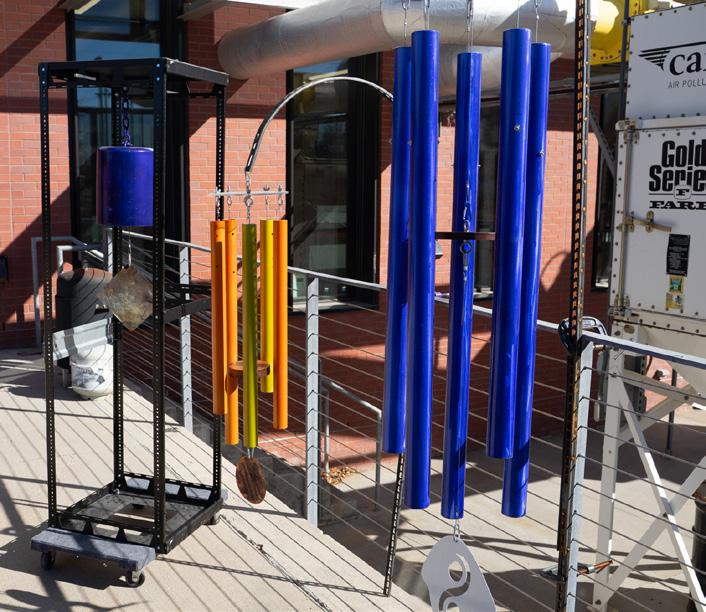
Maker: David Steward (lab technician and instructor)
Creation: Wind Chimes in Aluminum and Steel
What brought him to the lab: Steward has been a lab technician at the MCC Prototype Design Lab since its start in 2017 and is a working artist in steel, glass, ceramics and sound.
Solution: Exploring sound through art led to the creation of three different giant wind chimes with distinct sounds — and the creation of a Community Education class.
Process: The five-element chime is crafted from quarter-inch aluminum tubing, powder-coated in a transparent blue that reveals the natural patterning in the metal. It produces a rich, deep tone. The second is less than half the size with a brighter, more cheerful sound and a vivid orange powder coat that catches the sun. The third is closer to a bell than a chime — a single element that, in a strong wind, rings out in every direction.
Favorite feature of the lab: Helping people learn how to use all the equipment needed to make wind chimes of their own.
Find his work: Look for the Giant Wind Chimes class in the MCC Community Education catalog and make one with Steward’s guidance.
From Steward: “I hope to see you.” at
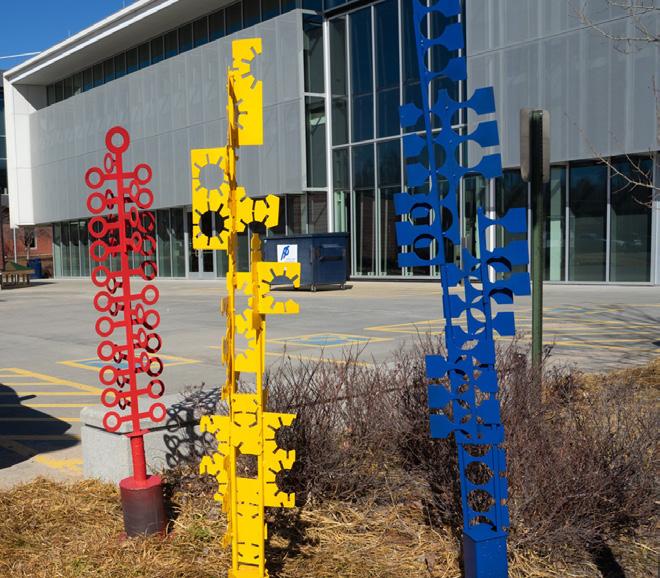
Maker: Sharon Boynton (welding instructor)
Creation: Plasma-Cut Steel Sculpture
What brought her to the lab: Boynton is a local artist who cuts and welds steel into sculpture. She teaches Community Education welding sculpture classes.
Solution: Create pieces built around negative space with cutouts, creating patterns that respond to and interplay with one another, giving each work a visual rhythm that shifts depending where you stand.
Process: These blue, yellow and red landscape sculptures were plasma cut and powder coat finished at the Prototype Design Lab.
Find her work: Boynton’s work has been exhibited widely across the region, including at the Joslyn Art Museum, the Garden Art Exhibit at Lauritzen Gardens, Art Unlocked and the Women Who Weld Show.


individualized advice and tailored experiences.
At Metropolitan Community College, finding the right career begins with exploration on day one. Through its Career Experiences department, MCC is innovating how learners of all ages and backgrounds connect with industries, mentors and opportunities.
The goal: Create pathways that link exploration directly to employment.
As Nebraska’s largest community college and the state’s second-largest postsecondary educational institution, MCC serves a much broader student population than the traditional full-time college model.
Some students arrive ready to launch into careers, while others are still discovering what direction feels right — including high school students taking their first college classes and working adults preparing for a career change.
Only 1 in 4 students attends MCC full time, while 42% are undeclared and exploring options while earning college credits.
No matter where students begin their journey, exploring careers early can make a lasting difference. According to a recent study from the National Association of Colleges and Employers (NACE), students who participate in experiential learning report higher job satisfaction, advance more quickly in their careers and earn an average of $15,000 more annually.
NACE also reported that on average, 62% of students who participate in internships receive full-time job offers after graduation.
To help MCC students find those meaningful opportunities, the College created the Career Experiences department three years ago. Led by Mervin Vasser, the team is expanding a wide range of experiences designed to fit students’ schedules, interests and career goals.
One of the first things Vasser explored was how students found — or missed — opportunities.
“We knew we couldn’t just put flyers up in buildings and hope that students would see them and respond,” he said.
Instead, Career Experiences turned to Handshake, a platform used by more than 1,500 colleges and universities nationwide, to modernize how students connect with opportunities.
“Anything a student might need on their professional journey — whether it’s a job, internship, networking event, volunteer opportunity, career fair or information session — can be found in one place,” Vasser said.
Students automatically gain access to Handshake once enrolled at MCC, and listings can be filtered by areas of study or type of experience.
“It saves students from being overwhelmed by the number of possibilities and allows them to focus on what truly interests them,” he said.
This year, Handshake named MCC a top career center with the Career Spark Award — an honor given to just 2% of higher education institutions across the country — recognizing its success in engaging students, employers and educators.
The Career Experiences team recognized that career exploration needed to play a larger role in the college experience. Giving students a chance to try out potential careers firsthand helps them decide whether a path matches their expectations before they enter the workforce.
Vasser, who has spent his career guiding students through higher education, said sometimes students who don’t get this exposure end up in careers they don’t enjoy.
“Our students are here to increase their earning potential and find a career, but what happens with a lot of college students is they invest a lot of time and money into their education, and once they graduate, they’re dissatisfied. There might not be enough jobs available, they might not get the salary they thought they would, or they might not know enough about the industry they earned a degree in,” Vasser said.
Through hands-on learning and conversations with industry professionals, students can make informed decisions, maximize their return on investment and choose a path that fits their goals. Work-based learning, speaker events, company tours and hiring fairs offer a range of ways for students to test their interests.
“We want to provide students with a pathway and meaningful opportunities while they’re in school so that by the time they graduate, they clearly know what they do — and don’t — want to do. The best way to do that is by giving them access to these opportunities across the College,” Vasser said.
For example, Career Experiences created a speaker bureau of local professionals from different industries and experience levels.
“We want students to speak with someone who is working in the field or job they aspire to work in. We want those professionals to share their stories and experiences with our students directly,” Vasser said.
The team has also implemented technology to introduce more students to careers in engaging ways. Using virtual reality (VR) headsets, Career Experiences can deliver quick, on-demand and immersive exploration in the Student Center (Building 23) on the Fort Omaha Campus, in K-12 classrooms and at public events.
VR simulations presented through Transfr Trek align with MCC students’ interests and the College’s Academic Focus Areas (AFA) — Business, Community and Human Services, Creative Arts and Design, Health Professions, Information Technology, Skilled Trades and Technical Sciences and Transfer. MCC has access to 60 simulations, ranging from oil changes and IV insertion to building demolition.
Career Experiences also assists students, alumni and community members with résumé planning, mock interviews and job searches.
Having a dedicated staff prepared to help students, instructors and industry partners navigate the evolving career landscape is critical. That’s why each AFA has a Career Experiences coordinator who connects with these groups.
“Part of our charge is making sure students understand the availability of jobs within the area they’re looking to work in,” Vasser said. “If you’re getting a degree and you’re not aware of the employment rate, you might be at risk of being underemployed or unemployed.”
In the same vein, Career Experiences coordinators connect with area employers to discuss industry standards and workforce gaps, then relay that information to faculty and administrators.
At a recent MCC Board of Governors meeting, information technology instructor Mary Ball said that feedback is critical as the department continues to evolve to meet industry needs.
In one instance, she noted the department was considering removing courses on legacy software. Through the Business Industry Leadership Team (BILT), Career Experiences learned that a large industry partner employer still uses that software, and that removing the course could hinder graduates’ employability with the company. Ball said Career Experiences also added value by tracking employment opportunities for the industry and developing a process to measure job placement following certificate completion.
Career Experiences coordinators also help students develop the soft skills needed in the workforce.
“When we have a meet-and-greet coming up, which is like a career or hiring fair, I go into classrooms and talk about career readiness — how to dress, how to approach and talk to companies about opportunities,” said Tyler Cannon, Career Experiences coordinator for the Health Professions and Skilled Trades and Technical Sciences AFAs.
Cannon recently connected with Holly Petersen from PML Construction. Petersen said the company was having trouble filling its carpenter apprenticeship program, which aligns with the MCC Construction and Building Science Technology curriculum.
He suggested PML post the position on Handshake, where it was featured in a collection for construction apprenticeships. He took it a step further by creating a targeted email campaign through Handshake, notifying students enrolled in the program of PML’s openings.
In a month, PML received seven applications. Two students were hired and Petersen said they planned to screen the additional applicants.
“This program is giving us great traction, and our community is lucky to have a higher education institution like Metropolitan Community College,” Petersen said.
For Vasser and his team, outcomes like this aren’t accidental — they’re intentional.
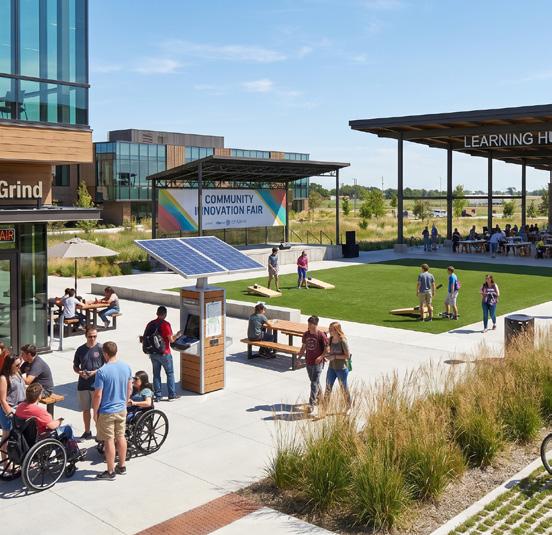
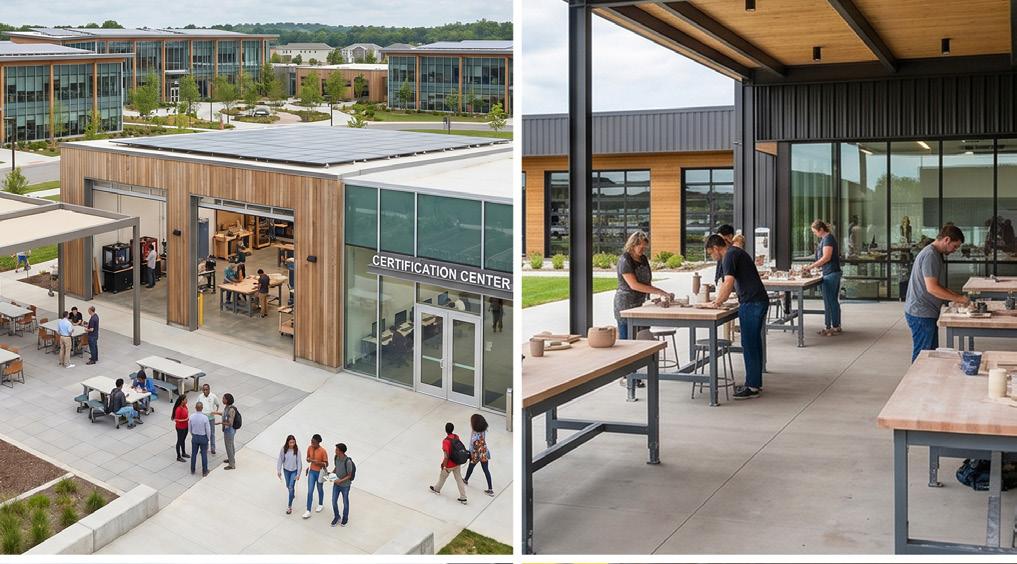
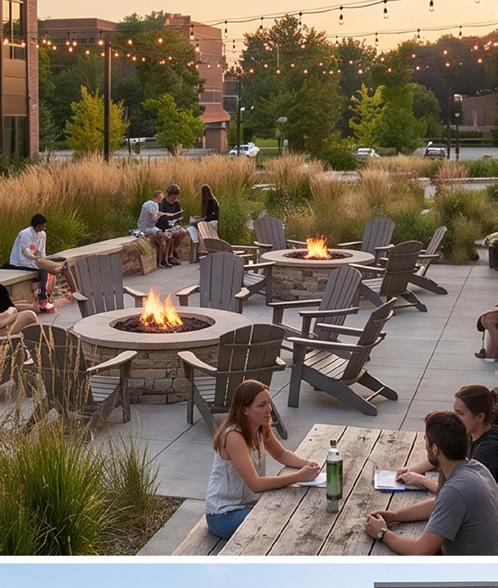


The MCC Sarpy County Campus, located near Highway 370 and Highway 50, will be the College’s next campus — its first full-service campus in development in more than 40 years.
Tell us what attractions, gathering places and amenities would make the new campus a welcoming destination. We call these the “Spaces in Between” — the places that help create a sense of belonging, connection and community.
Walking trails. Green spaces. A sense of place. Public art. This is how we build this campus into a community.
feedback will help shape the “Spaces in Between” that welcome generations of students, residents and visitors to the MCC Sarpy County Campus.

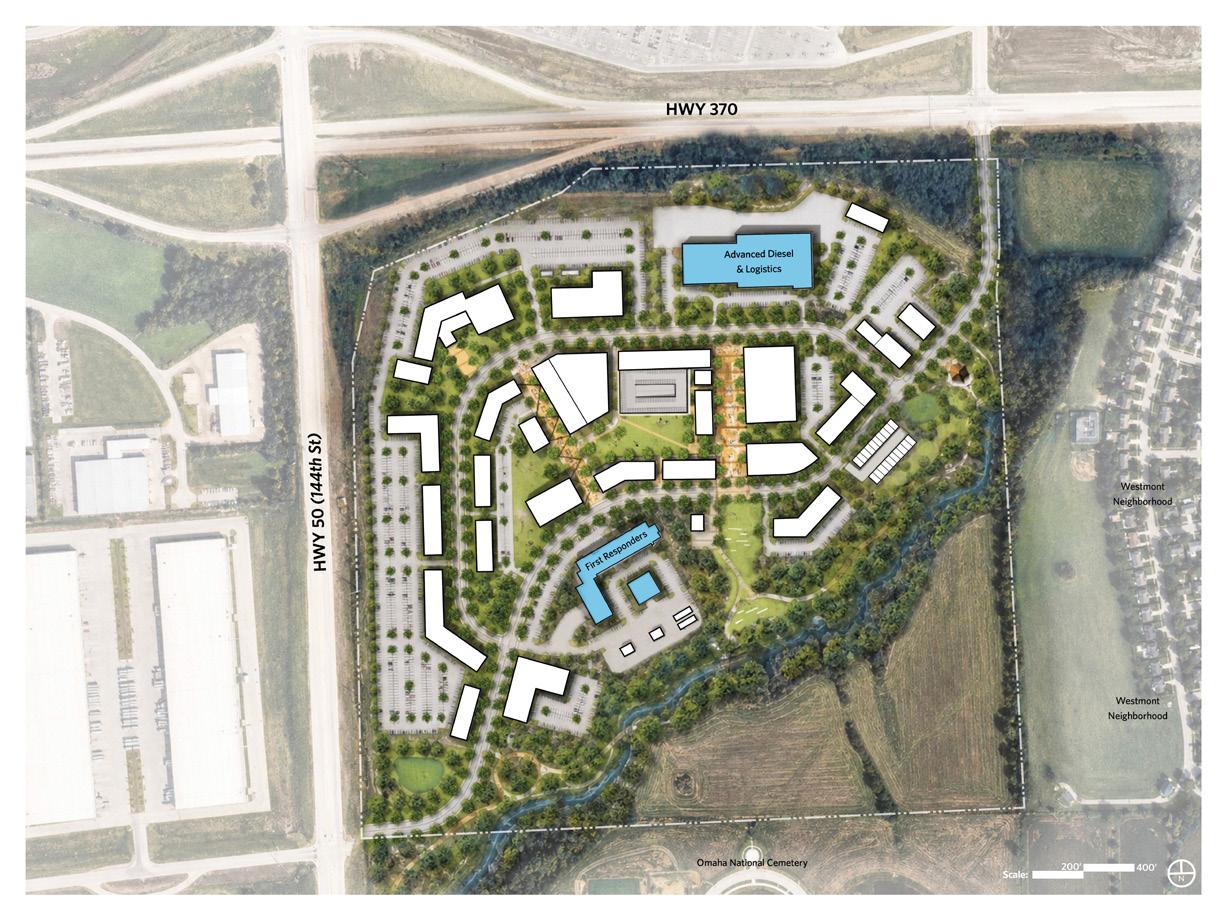
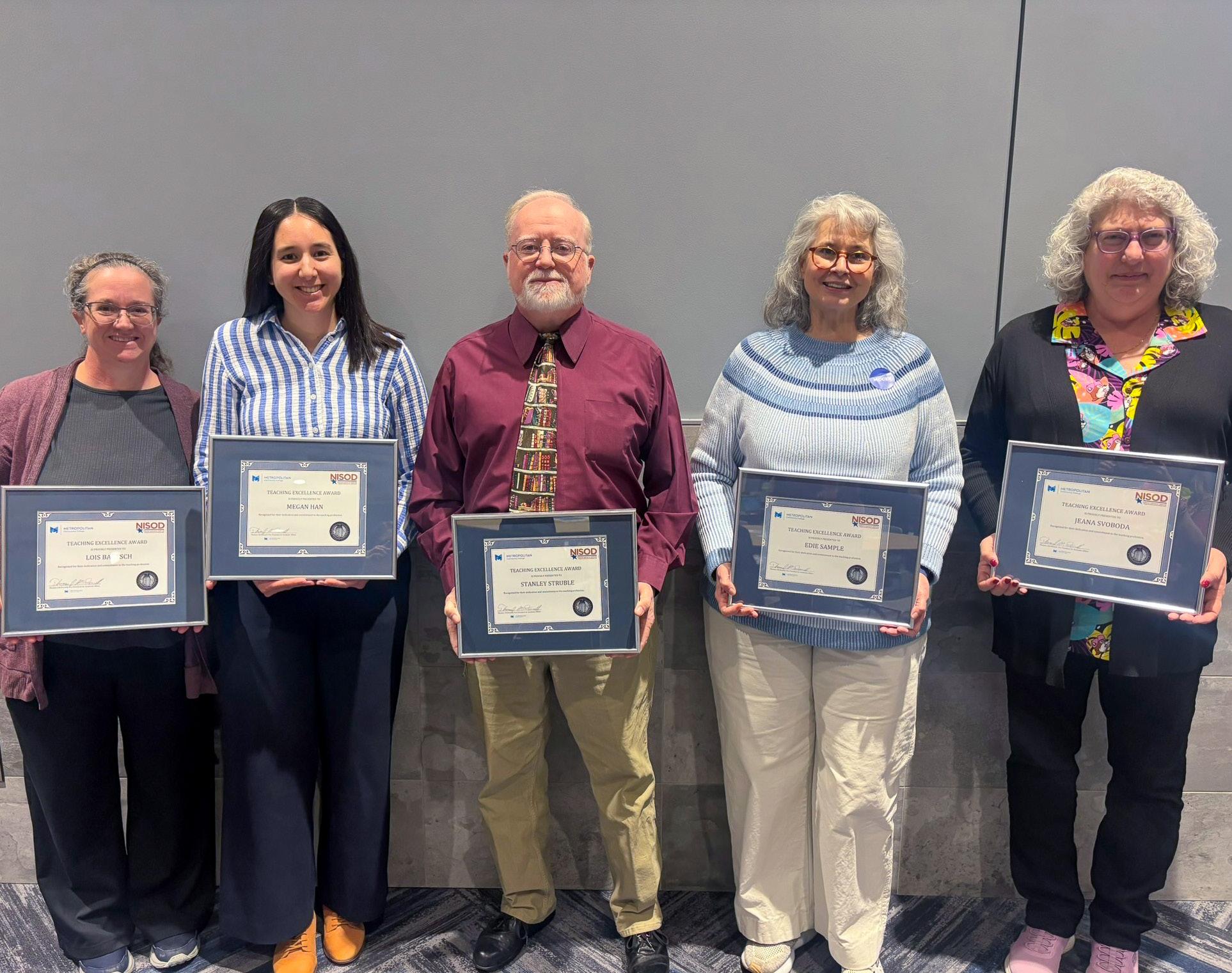
Metropolitan Community College received a record number of nominations for the National Institute for Staff and Organizational Development (NISOD) 2026 Excellence in Teaching Awards. Honorees were selected for their professionalism, ability to inspire learning and the strong relationships they build with students and colleagues.
Six instructors — three full-time, two adjunct and one concurrent enrollment — were honored at the annual Academic Affairs Lunch at the Center for Advanced Manufacturing on the South Omaha Campus in March.
In addition to being recognized at MCC, honorees were invited to attend the Excellence Awards Dinner and Celebration at the NISOD Annual Conference in Austin, Texas.
Edie Sample, psychology instructor
For more than two decades, Edie Sample has shared her passion for psychology as an instructor.
Fellow psychology faculty member Samantha Delagarza said Sample provides students with options “so students can choose assignments that are personally meaningful.” Psychology instructor Ryan Newton also noted her work in securing updated and cost-effective learning materials made the courses more accessible.
For the last decade, she’s shaped the department as subject coordinator. Under Sample’s leadership, MCC Dean of Social Sciences Jane Franklin noted the creation of a new outcomes assessment program and expanded use of Open Educational Resources across six programs.
“Edie is far more than a list of accomplishments — she embodies the very best of Metropolitan Community College,” Franklin said.
Jeana Svoboda, horticulture instructor
Since joining MCC in 2015, Jeana Svoboda has helped the college’s horticulture program evolve. Svoboda believes in hands-on experience and has helped create several outdoor instructional spaces on the Fort Omaha Campus, including the pool garden.
During the winter quarter, she coordinates a special hands-on opportunity with the St. Cecilia Cathedral Flower Festival, where students create and install a large display.
Former student-turned-instructor Holly Kempkes said Svoboda’s mentorship continues to shape her own teaching.
“As an instructor now, I am still learning from her and see her as a mentor,” Kempkes said.
Over the past decade, biology instructor Lois Bartsch has become a key member of the department. As a departmental course scheduler, she coordinates lecture and lab schedules for more than 40 sections across three campuses each quarter. She has had a key role in preparing for the College’s new biotechnology program launching in fall 2026.
“Lois has done an excellent job staying on top of these changes and ensuring courses are scheduled to meet the needs of students in the program,” said adjunct instructor Bernadine Cutsor.
Bartsch also serves as BIOS 2150 course coordinator, working with faculty to integrate technology and activities into labs that reinforce lectures. In her classes, students frequently use Kahoot!, a game-based learning platform, as well as lab safety escape rooms to spark curiosity and increase engagement.
“She always finds a way to ensure every student can learn effectively,” Cutsor said.
For nearly two decades, Stan Struble has shared his love of sociology as an MCC adjunct instructor. Longtime colleague and sociology instructor Mary Burbach said his contributions have been essential to the department.
“We would be lost without him,” Burbach said.
Former student Connie Taylor said Struble’s passion for both the subject and his students is evident in the feedback he provides. She noted that his responses to assignments often include additional resources for further exploration.
“It is validating for an online student to see evidence that their instructor has read and responded specifically to their papers and posts,” Taylor said.
Franklin added that faculty members often attend Struble’s classes to observe his teaching style.
“She embodies the very best of Metropolitan Community College.”
— Jane Franklin, MCC dean of Social Sciences
Information technology adjunct instructor Joseph Koch draws on his industry experience as an IT manager at Mutual Omaha to instruct students and provide curriculum feedback.
Koch recently volunteered to evaluate a new software solution for documenting student work. He is also an active contributor to the Business and Industry Leadership Team, working with industry partners to ensure programs align with workforce needs.
“Joe’s feedback has guided critical updates for our data center and server administration curriculum,” wrote instructors Guillermo Rosas and Lian Ti in a joint nomination. “This is unpaid, unseen labor that significantly elevates our program’s quality and ensures our graduates are marketable.”
Koch also supports students by offering mock interviews and encouraging them to apply for jobs early. Student Marie Labedz said his guidance helped her develop professional skills, including résumé writing and selecting references.
“I recently got the job of a lifetime, one that I would not have applied for without his guidance,” she wrote.
At Marian High School in Omaha, Megan Han teaches college-level mathematics for MCC concurrent enrollment students while cultivating excitement for the subject.
One of her precalculus students said, “She is not only an amazing teacher but pushed me to keep going when things got hard … she is also the only teacher to ever write me a song about math!”
“I recently got the job of a lifetime, one that I would not have applied for without his guidance.”
— Marie Labedz, student
Marian High School Principal Susie Sullivan noted Han’s dedication to improving both her subject knowledge and teaching practice through professional development. Han recently completed her master’s degree in mathematics at the University of Nebraska Omaha.
“In my 11 years at Marian, I have accumulated more complimentary emails and notes about Megan Han’s teaching ability and professionalism than any other teacher,” Sullivan wrote.
Pandan waffles are a personal favorite of Chef Chase Grove, lunch service instructor for the MCC Culinary Arts program. Sample Grove’s menu firsthand at Sage Student Bistro Monday through Thursday, 11 a.m.-1 p.m. (while courses are in session).
W ith the exception of Dr. Seuss’ “Green Eggs and Ham,” when it comes to breakfast, green foods are few and far between. Pandan waffles can fill that void in the morning meal color wheel. Had the children’s book classic been centered on this Southeast Asian street food treat, these green waffles would have been sure to win Sam I Am’s approval far earlier in the story.
Pandan waffles challenge everything you thought you knew about waffles — don’t go into this expecting one you’d get at one of America’s most beloved 24-hour diners. You’re not going to need syrup to fill the pockets on a pandan waffle. They come off the iron with sweetness already baked in.
Pandan extract, commonly called “Asian vanilla,” is drawn from the blade-like leaves of the tropical pandan plant, which gives the dish its green hue and adds to its sweetness, as does the generous portion of sugar.
The other element that makes this a different eating experience from a diner waffle is the chewy texture under the crisp exterior. The pairing of tapioca starch and glutinous rice flour (gluten-free despite the
contradictory signal from its name) creates a waffle structure different from what you’d get from all-purpose flour. The tapioca creates elasticity while the rice flour adds mass.
Achieving the intended texture relies on using a double boiler to gently warm the coconut cream through indirect heat. This process keeps the fat in the coconut cream from segregating, bringing the batter together smoothly — key to the waffle’s custard-like middle.
Tip: If you do not have a double boiler, use a medium sauce pan and place a slightly larger, heat-proof metal mixing bowl on top to create the separation needed from the water boiling beneath.
After whisking together all the ingredients, the batter needs at least an hour in the refrigerator before pouring it onto the waffle iron, which helps yield more consistent results from the first waffle to the last. You can prepare the batter the night before. Store it on ice and stir gently before each use.
W hen the batter is ready to pour, heat the waffle iron to medium-high, and pour 6 fluid ounces of batter for two portions. Leave it on the iron for 60 to 90 seconds. Every waffle iron is different, so look for a waffle that is holding its shape and has a golden crisp on the tops of the squares before lifting to plate.
Note: This recipe does require sourcing ingredients from specialty grocers. Grove recommended Asian Market off Cass Street to find the extract, tapioca starch and glutinous rice flour.
Tapioca starch grams 23 0
Sweet/glutinous rice flour grams 12 0
Sugar, granulated cups 3/4
Baking powder tablespoons 2
Salt, Kosher teaspoons 2
Eggs, whole each 2 (use 3 if you want a slightly richer batter)
Coconut cream, unsweetened ounces 11
Oil, canola teaspoon 1
Pandan extract teaspoon 1/ 2
Water cups 1/2

Yield: 1 quart
Portions: 8
Start to finish: 30 minutes, plus one hour of refrigeration time
Into a medium bowl, add the tapioca, rice flour, sugar, baking powder and salt. Whisk to combine.
Into a second bowl, add the coconut cream that has been warmed over a double boiler until smooth and the fat is melted and incorporated.
Into the bowl with the coconut cream, add the eggs, pandan extract and oil. Whisk to combine.
Sift the dry ingredients into the wet ingredients. Whisk to combine.
Allow the batter to rest in the refrigerator a minimum of one hour before each use. Store batter on ice for each service, gently stir batter before each use.
For two portions, pour 6 fluid ounces onto waffle iron at medium-high temperature. Heat for 60 to 90 seconds. Reheat portions to order as needed.
Visit mccneb.edu/Bistro to make a reservation and view operating hours.
Metropolitan Community College
P.O. Box 3777
Omaha, NE 68103-0777
Stay informed. Connect with your community. issuu.com/mccneb @mccneb
Keep us updated on your personal and career achievements at fans@mccneb.edu.