The Cardinal Columns is a designated public forum written, edited and managed by FHS students as part of journalism classes taught by a certified journalism educator. The purpose of FHS media is to inform and entertain its audience (students and staff as well as the local community) through timely, accurate, impartial and thorough reporting as well as to serve as an educational journalism experience for those on staff. The Cardinal Columns and its staff are protected and bound by the principles of the First Amendment and all other protections and limitations granted by the Constitution and the various laws and court decisions implementing those principles. The staff strive to uphold the principles of journalism as outlined by the Pew Research Center’s Project for Excellence in Journalism as well as the highest ethical standards of the Society of Professional Journalists’ Code of Ethics.
Letters to the Editor
The Cardinal Columns newsmagazine welcome comments and opinions from students and faculty in the form of letters to the editor. Letters to the editor must be signed with a first and last name and be 250 words or less. The editorial board reserves the right to withhold a letter or column and return it for more information if it determines the piece contains items of unprotected speech or to edit for spelling and grammar and confirm authorship.
affects mucsians and how to overcome it
Cardinal Columns Room 2610
Fond du Lac High School 801 Campus Drive Fond du Lac, WI 54935 920-929-2740
cardinalcolumns@gmail.com
ADVISER: smithm@fonddulac.k12.wi.us
19-22
23-26
Hidden Dangers of Vaping
How vaping and other drugs affect our school
Masthead
EDITOR-IN-CHIEF
Addy Benzinger
ART DIRECTOR
Esther Sum
CULTUE EDITOR
Najely Cortes
NEWS EDITOR
Caleb Calliari
SPORT EDITOR
Lily Keys
COPY DESK CHIEF
Katie Vang
Gretta Saunders
Behind the Marks
Fondy students expierences with academic validation and how it has affected their lives
DESIGNERS
Alex Bradford
Lily Yang
Em Lemke
PHOTO EDITOR
Celia Vazquez
ONLINE EDITOR
Mya Leisering
EDITORS
Destiny Coleman
Neveah Adkins
SOCIAL MEDIA MANAGERS
Molly Fellenz
Michael Bloomberg
ADVISER
Matthew Smith
AND MORE!
Behind the Performance p. 10
Unseen Victims p. 13
I Took the ACT; Now What? p. 15
Gamepact p. 18
Fast Fashion: Where are your clothes coming from? p. 27
Anime World p. 31
Summer Plans p. 33
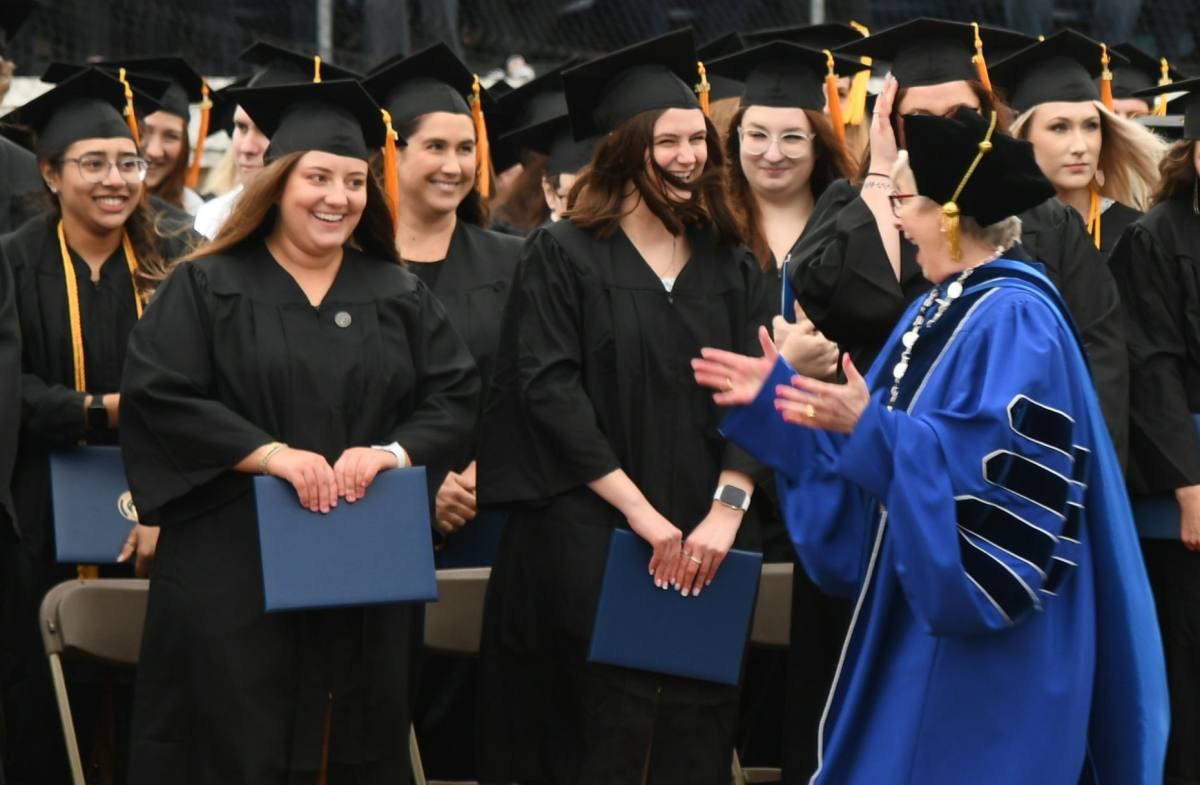
PRESIDENT OF MARIAN UNIVERSITY RETIRING
She plans to leave her legacy at the University as best as she can by giving back to the comunity and giving advice to her new re-elect.
BY DESTINY COLEMAN
After dedicating 37 years of her life to Marian University, President Majewski is finally ready to retire. She was a first-generation college student who ended up earning a Doctor of Psychology in Clinical Psychology and served as the President for 4 years.
Along with being president of the Institution, Majewski has held various positions at Marian such as being the Founding Dean of the School of Criminal Justice and serving on the Board of Trustees. She briefly retired in 2018 for a year and came back as president three weeks after the University shut down due to COVID-19.
her newly appointed position. “How do we plan for the next year knowing that the pandemic was just not going away,” she said. “There was all that plus learning all the things that you have to know when you are the president of a University.”
She has seen many changes throughout those 37 years at the college.
“Being the president of a University is much like being the mayor of a city,” -Michelle Majewski
As far as reasons for her retirement, President Majewski keeps it simple. “I turned 72,” she said, adding that she plans on spending more time with her husband and son as well as other close friends and family.
During the COVID-19 Pandemic, she faced a new reality and tried her absolute best to ensure the safety of students and faculty members while figuring out
“Being the president of a University is much like being the mayor of a city,” she said. She dealt with students on and off campus, faculty, donors, personnel issues, managing athlet ics, student issues and facilities. “Having been here 37 years I have a lot invested emotionally in this institution and want to see it be here for another 87 years.”
The president-elect is scheduled to start his presidency on June 1, 2024.
“I know my replacement is awe some and will be phenomenal,” she said.
There will be a lot of lasts for President Majewski as she takes on the remainder of her last year at Marian. This will be her last Graduation ceremony as
president of this Institution as well as many other things. In three words, she said her time at Marian has been “joyful. It has been changing, and it has been intellectually stimulating.”
She said she definitely has words of advice for future leaders. “You have to be a good listener, you have to be willing to make tough decisions, but you have to do it with heart and compassion,” she said. “We think about the students here at Marian.”
MARIAN UNIVERSITY
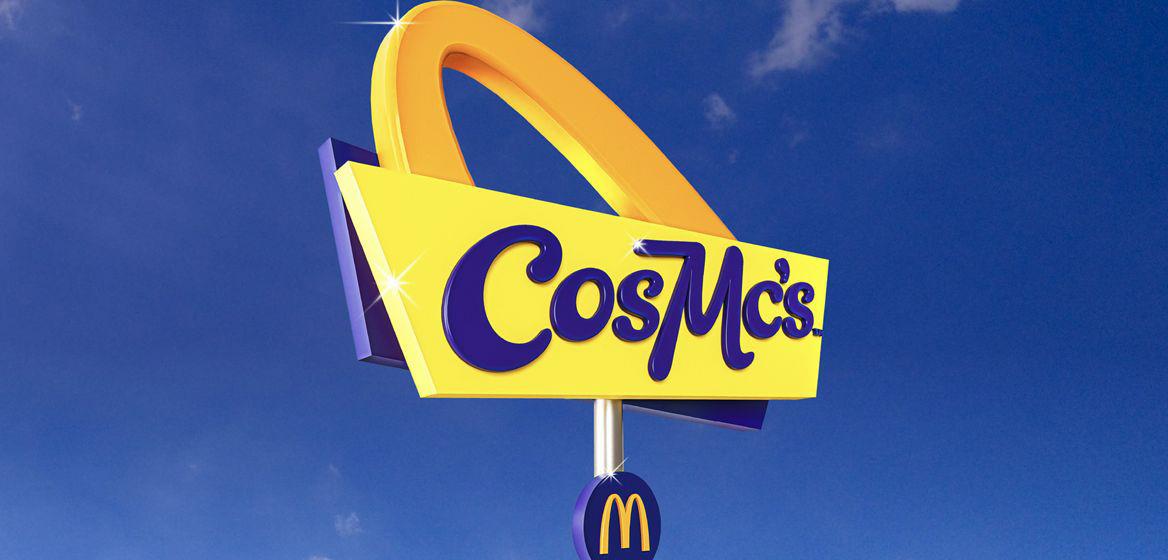
COSMC’S
THE MCDONALD’S SPINOFF CHAIN MAKES ITS DEBUT
by MOLLY FELLENZ
Sour cherry energy burst, blackberry mint green tea, chai frappe, popping pear slush and a s’mores cold brew are just a few of the great drinks available to try at CosMc’s, the brand new McDonald’s spin off chain.
CosMc’s was created as an extension of the McDonald’s franchise, featuring new food and drink menus. Its first location opened in Bolingbrook, Illinois in December of 2023. Recently, it has expanded to include three locations in Texas, as well as several more prospective locations all over the country.
Because CosMc’s is centered around carryout, delivery, and drive-through operations, its dining room will be smaller or nonexistent compared to typical McDonald’s locations. “You don’t necessarily need the big dining rooms that you needed in our traditional restaurants,” McDonald’s CEO Chris Kempczinski said in a call with Reader’s Digest. “So you’re now able to look at real estate sites that previously would have been sort of off-limits to us; those become opportunities.”
Similar to a business model popularized by Caribou Coffee, containing a drive through with only small ordering counter inside and no seating, a business can provide faster service while utilizing less employees. The less time customers are in the building, the
less mess they are able to make, and the less employees need to clean up. Because that need is eliminated, businesses that utilize a drive-through only business model can hire less employees and therefore, spend less on labor. The absence of a dining room limits the need for maintenance and cleaning outside of the kitchen.
These kinds of businesses can succeed with only a drive through because “post-pandemic customers crave speed and solitude,” the New York Times reported. Post-pandemic customers don’t always want to use the energy to get out of the car and walk into the restaurant, and oftentimes, it’s quicker and more convenient to keep the car on and simply ride through the drive-through instead of going inside. Therefore, many customers will choose a restaurant with drive-through ordering instead of an indoor counter.
While CosMc’s main appeal is its drive-through convenience, its impressive array of food and drink options also attract customers. The 80’s and 90’s themed restruant showcases many previously famed McDonald’s characters, including Grimace, and their themed food items (like the Grimace shake!), year round.
Whether you venture to the nearest CosMc’s for convenience or a new treat, many agree that McDonald’s newest creation is definitely something to try.
PHOTO BY MCDONALD’S
Sports
AN OVERVIEW OF THE WHS STATE FINALS CLIMBING COMPETITION
by KATIE VANG
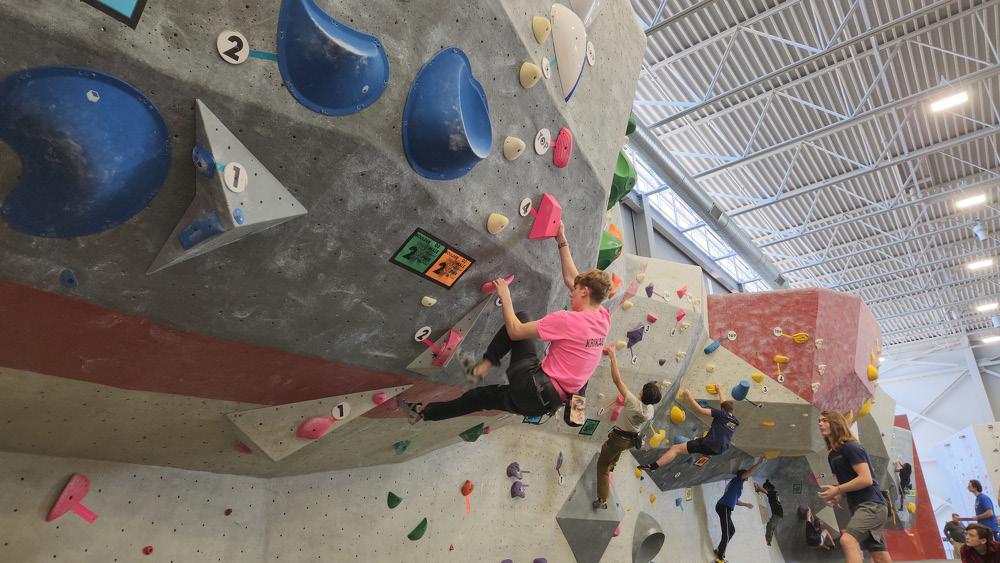
The Wisconsin High School Climbing League (WHSCL) State Finals competition was held on Saturday, April 13 at Adventure Rock in Milwaukee. Over 500 people attended, including 190 competitors, 225 spectators, and 37 coaches from around the state.
The Fondy High School climbing team came in fifth place out of 27 teams, with 20 climbers from the team representing the school. Overall, athletes on the team were mostly satisfied with how they did.
Junior Marissa Birschbach placed tenth in division three out of thirty one climbers. “Overall, I feel that I did very well,” she said. In climbing, divisions are “backwards”, which means that instead of D1 (Division 1) being the most difficult, it’s the lowest division. D4 in climbing is the highest, while for other sports it would be the lowest.
Sophomore Miles Krikau came in seventh place in division three. “The finals route was tailored to my strengths but everything else wasn’t,” he said. Oftentimes, climbers have to adapt to routes that may not be set to their strengths. Even so, it’s a challenge that many people on the team embrace. “I would 100% do it again,” he said.
This year, there were some changes made to the State Finals competition. In previous years, competitors would wait in isolation
before climbing their routes to prevent them from seeing other people climb the routes. This way, each climber had to come up with their own techniques to top the route. However, there was no isolation element this year, and State Finals was set up as a normal competition. “I wish there would’ve been isolation for State this year,” Marissa said.
Along with State Finals, the season itself has gone well, according to members of the team. “This season so far, I have made the most growth both as a person and as a climber,” Marissa said. “I feel like this season I learned a lot about the way I climb, and that has definitely helped me to understand my strengths and weaknesses as a climber and by knowing this, I have been able to work on some of my weaknesses to improve my climbing.”
Overall, the Fondy team had a great time at State Finals this year. “It was fun, interesting and also nice to see other people succeed and do really well,” sophomore Caleb Immel said.
“I’m proud of what I’ve done in rock climbing and also of how everyone else did too,” junior John Altman said. “I thought the experience was lots of fun and I can’t wait to do it again next year.”
ON PAR
BOY’S GOLF SEASON ENDS STRONG
by LILY KEYS
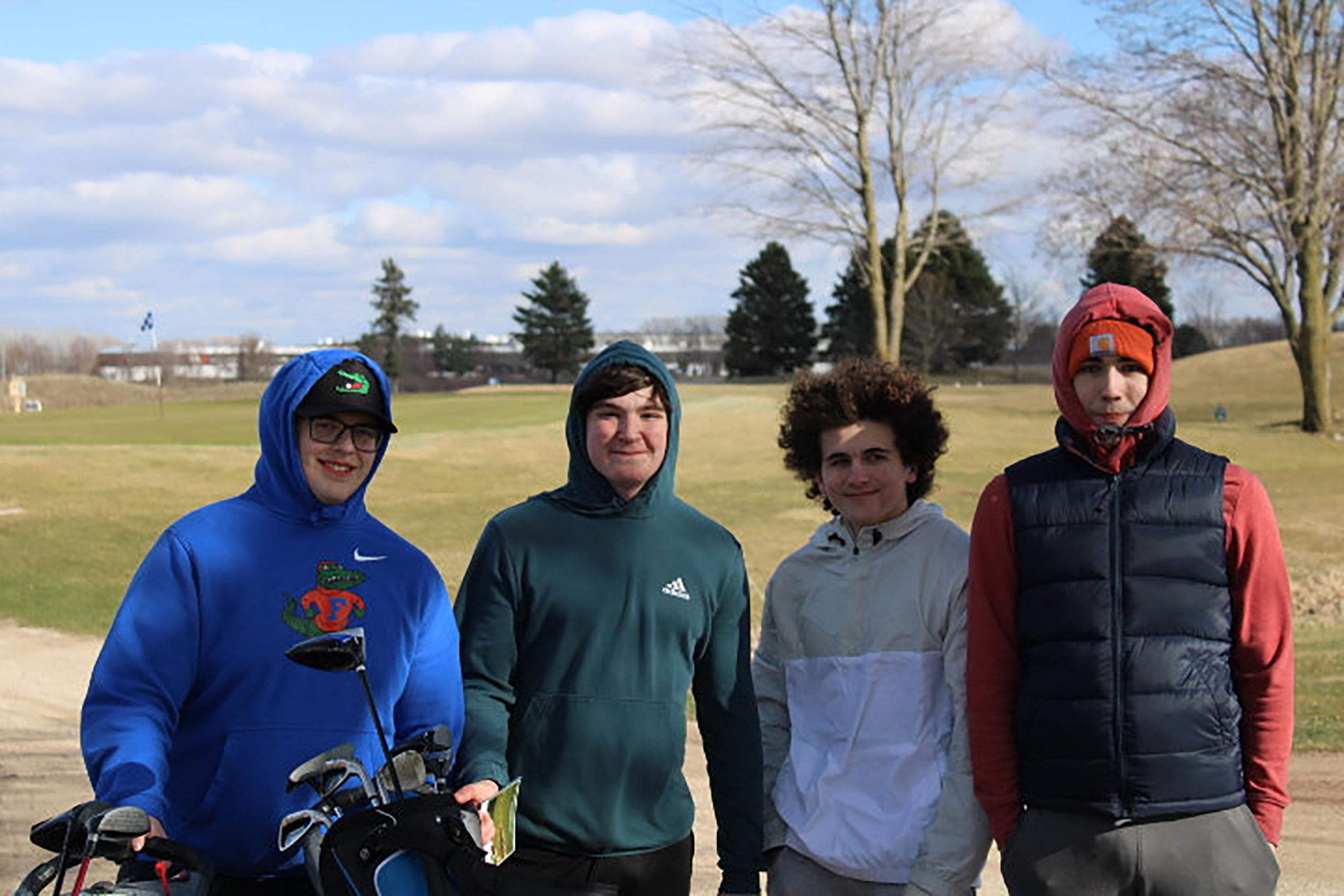
Last season, boys Fondy Gold ended well by returning from state with three out of five players, and they took ninth place. Coach Woeshnick is hoping this season will be just as good.
Woeshnick has been coaching this team for 12 years, and this year is his second year as head coach. “My favorite part is helping the team get better and enjoying the game of golf,” Woeshnick said.
So far, this season the Fondy boys Varsity Golf is currently tied in second for conference. They have a 6-3 record as well.
The JV Golf team has a 8-1 conference record. Both teams will be playing in a conference later on this week, and they all hope to do well.
Senior Jacob Keys has been in Fondy’s boys golf for 3 years now, and he has played both in JV and Varsity. “It is very close for our team to be going to state this year,” he said. “We have a great team this season and I’m excited to see where it gets us.”
CAITLIN CLARK
HOW ONE STAR IS CHANGING WOMEN’S BASKETBALL
youth basketball coach.
Brooke began coaching this past season for the Fondy eighth grade girls travel basketball team when they needed a coach/ assistant. Speaking on Clark, she is relieved to see the press her and other female athletes are now receiving. “For me it wasn’t like ‘Oh wow!’ but more like, okay it’s finally happening, people are finally noticing -almost a sigh of relief that people were bringing attention to the game,” Brooke said.
“I’m all about growing the women’s game and I’m glad I’ve given something that little girls can scream about at the top of their lungs.” Clark said in an interview quoted by hawkcentral.com
With Caitlin Clark sweeping the nation with her talent and effort in the game, she has influenced millions of new fans to try out watching women’s basketball and professional women’s sports in general.
PHOTO BY COOPER NEILL
PHOTO BY CARDINAL YEARBOOK
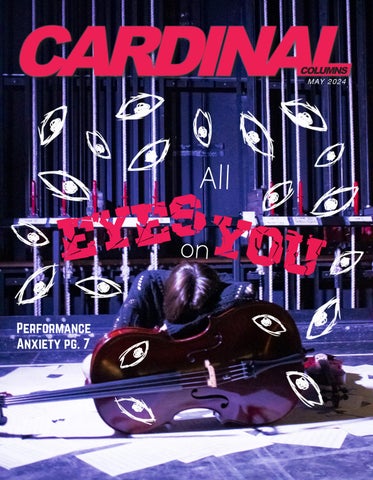
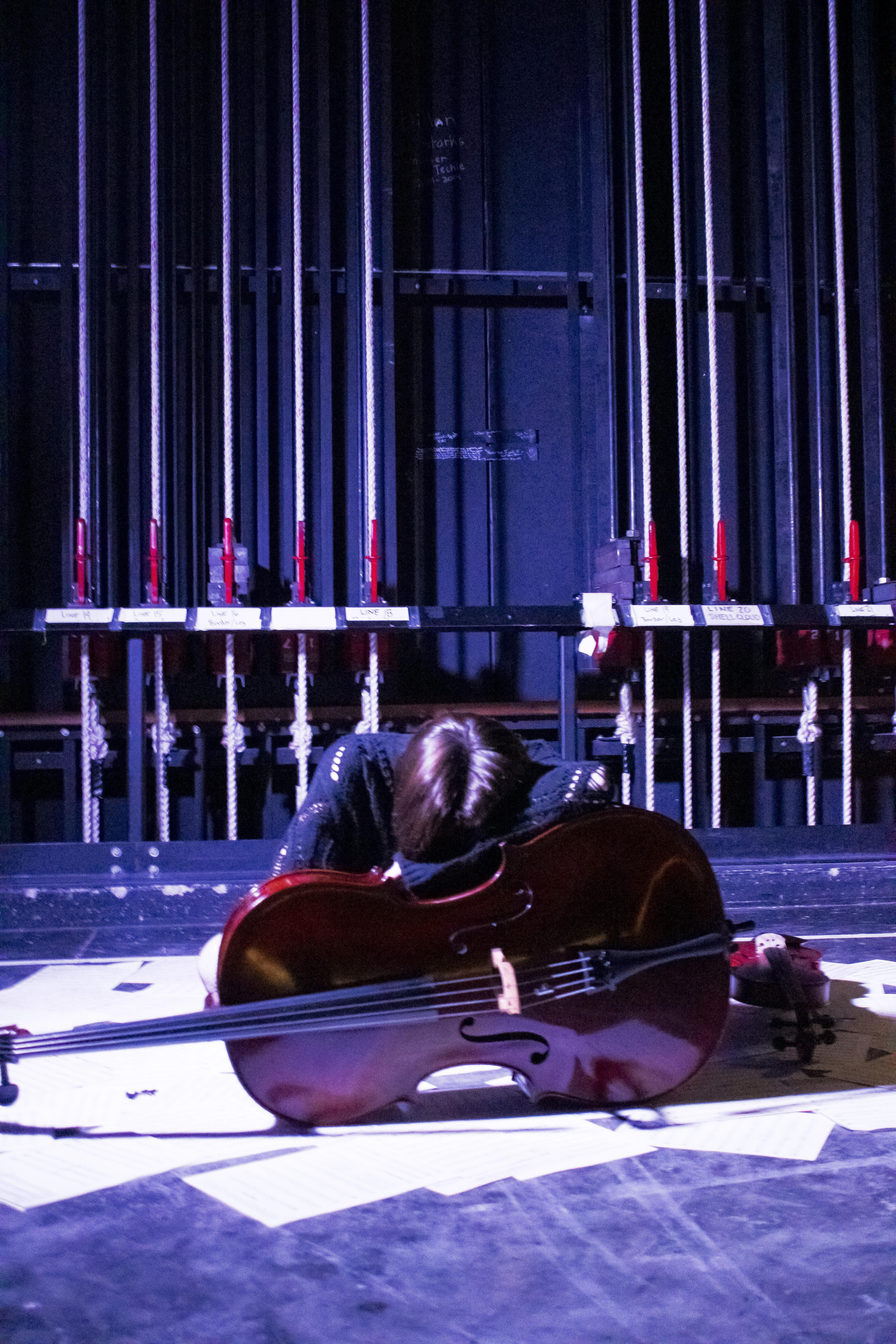
All Eyes on You
HOW PERFORMANCE ANXIETY AFFECTS MUSICIANS AND LEARNING HOW TO OVERCOME IT
by KATIE VANG
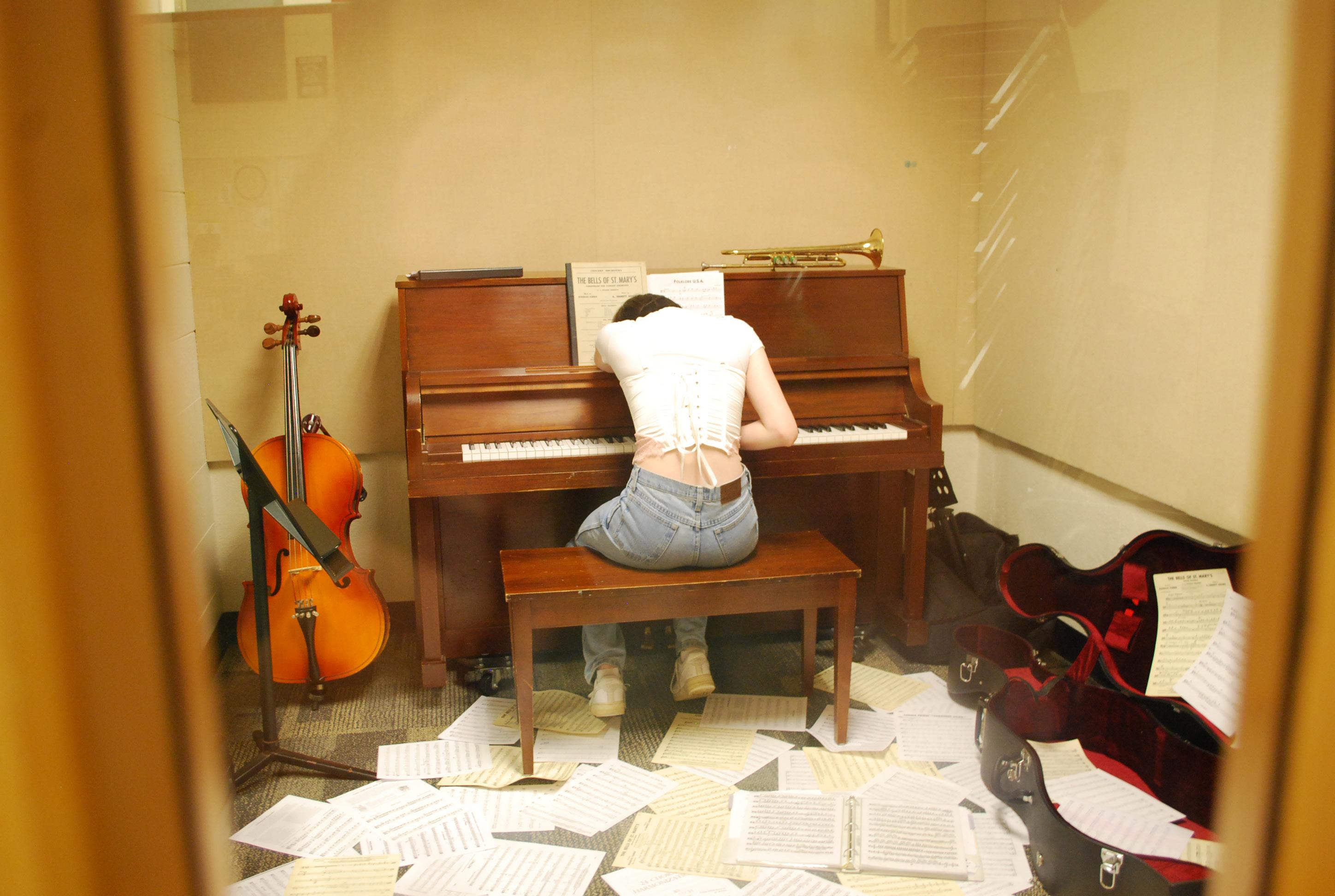
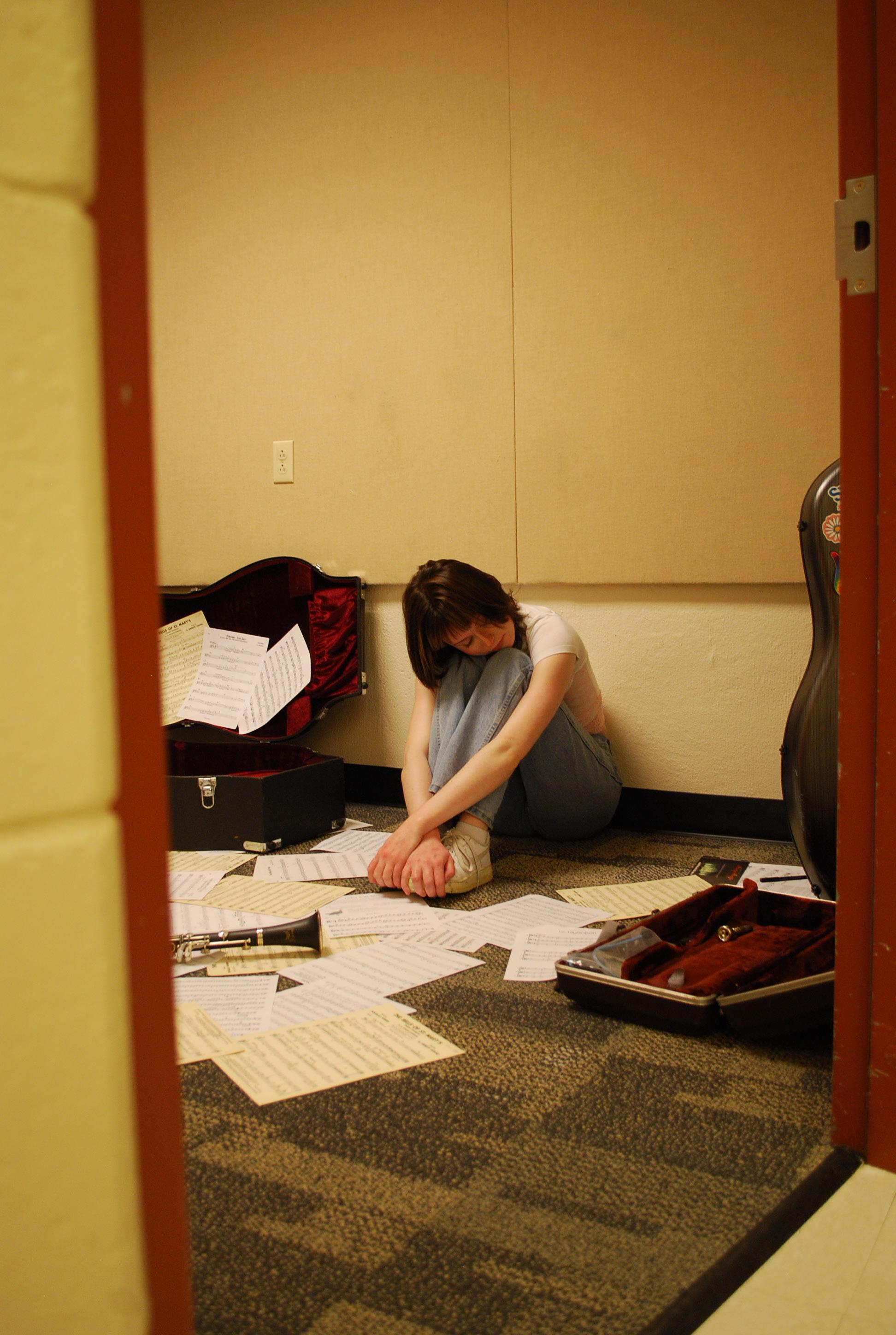
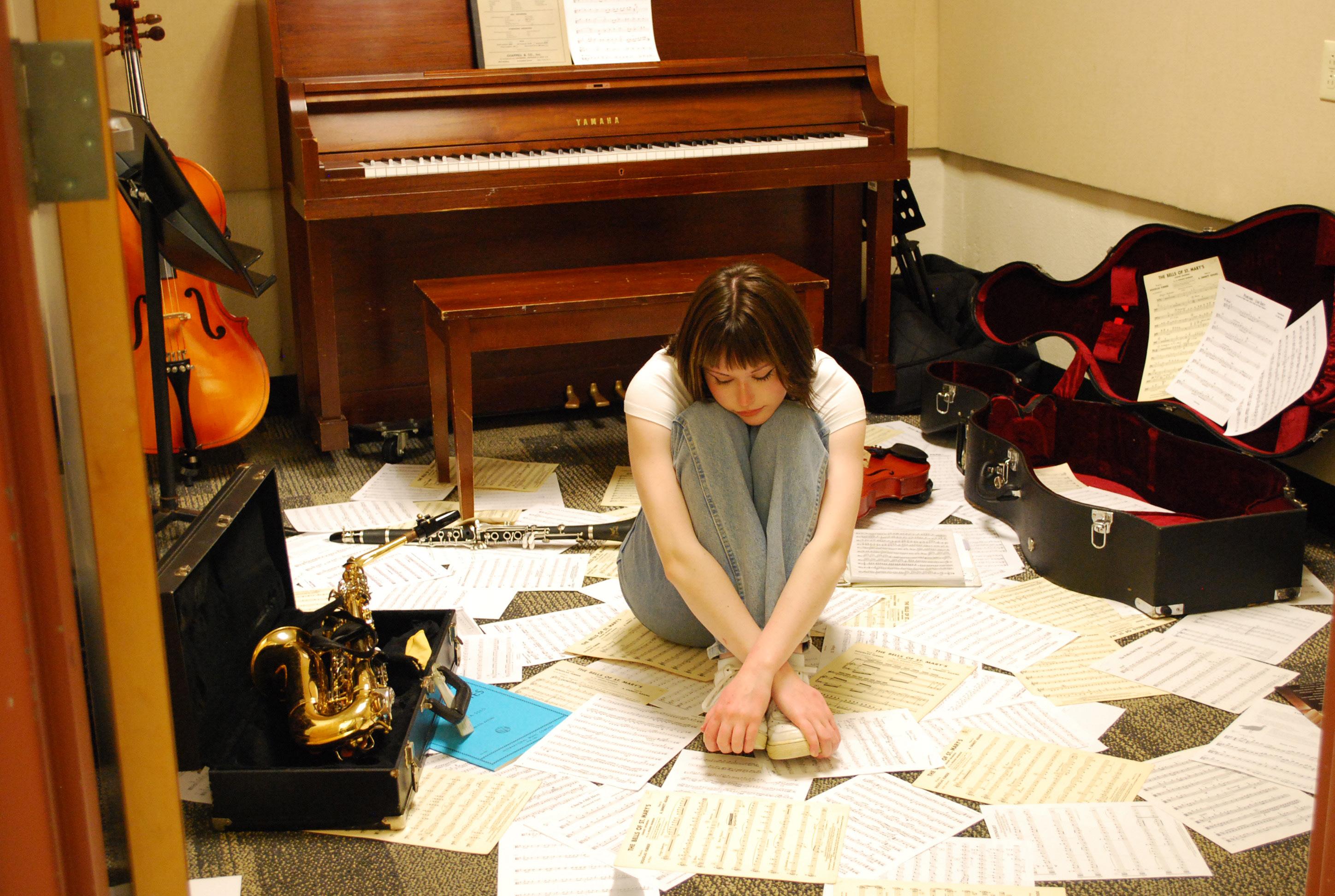
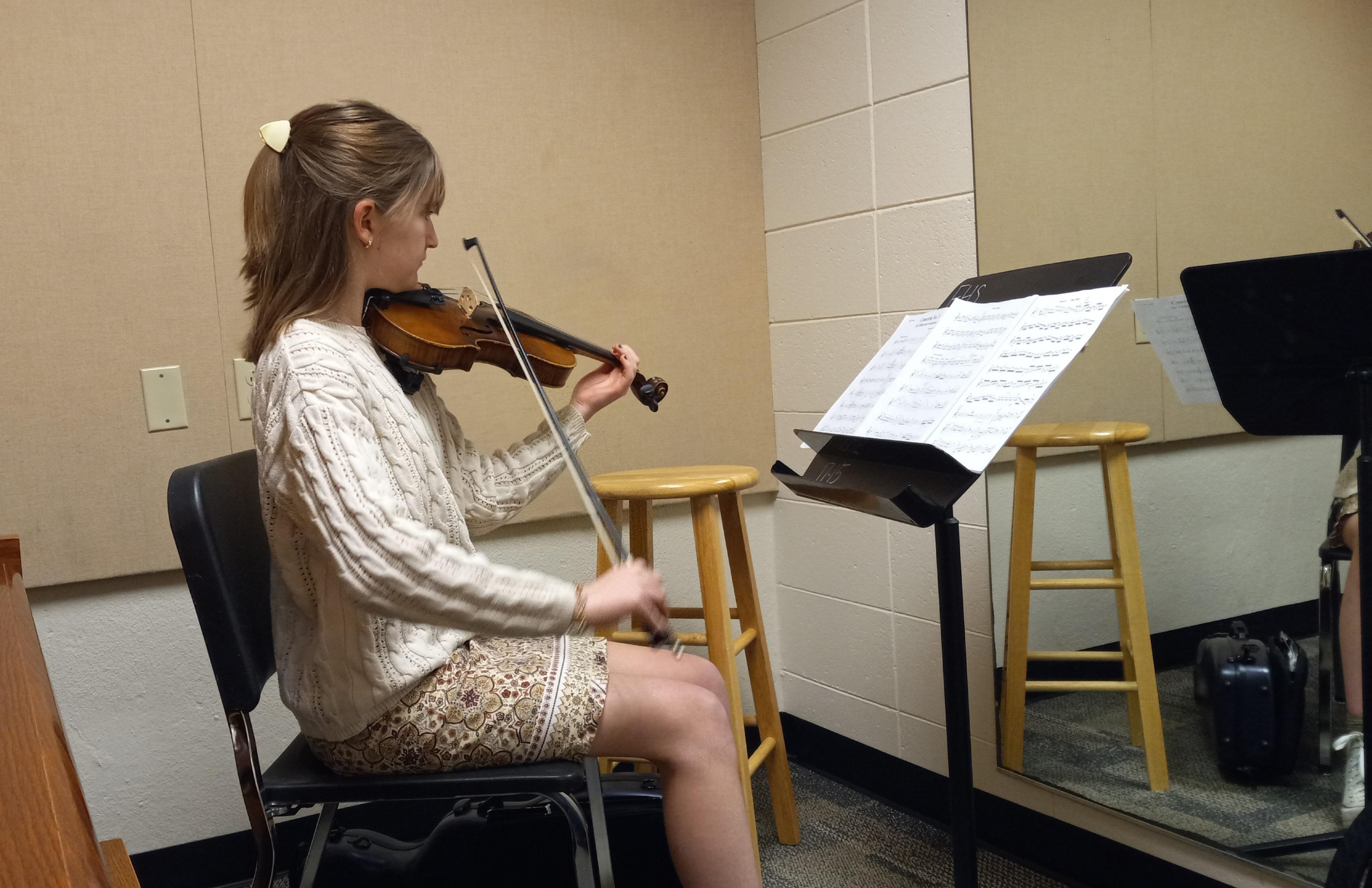
Senior Emma Newell has been playing and performing cello for eight years but still gets that deep anxious feeling every time.
“I feel very constricted; it’s kind of like you’re naked in front of everyone, like there’s just something embarrassing about you, and everyone’s staring at you,” she said.
Performance anxiety is commonly experienced by musicians everywhere. It ranges in severity based on the individual, and happens for many different reasons. Performance anxiety can limit musicians and bar them from their full potential, and overcoming it can be a crucial part in a per former’s musical career.
What Is It?
Performance anxiety can be de scribed as “a type of anxiety or strong, ex cessive feeling of fear or worry that is relat ed to being able to accomplish something specific,” according to an article by Ashley Olivine (VeryWell Health). Anxiety within the performing arts can also be known as stage fright.
Though people who experience Music Performance Anxiety (MPA) can often feel alone, it’s a common struggle
among performers. “I see it in students all the time,” orchestra teacher Austin Bolden said.
Though it’s unfortunate that performance anxiety is so frequently experienced, it creates a common ground between many people.
“I feel like a lot of people have performance anxiety, and it helps me be able to relate to other people,” Emma said. “They’re very understanding, and they might have some advice to give you.”
According to sources provided by the National Institutes of Health (NIH), about 95% of performers reported experiencing MPA during live performances, and one in three musicians suffer from MPA overall.
Effects
MPA can significantly affect a person as well as the performance itself, whether it’s physical symptoms or mental blocks. “My brain is in a million different spots because I’m trying to focus on the music, and then I’m thinking about if I mess up, so then I’m not as focused on the music,” Emma said. “It definitely affects my musicality and also my speed, I definitely play faster when I’m nervous.”
One student at Fondy High is in multiple ensembles at the high school, including Symphonic Winds and Percussion
(SWaP) and Bel Canto. They requested to remain anonymous because they don’t want people to think of their situation differently “just because they see a name.”
“Usually my performance anxiety comes the night before a performance. I get worried that I’m not going to do well, and then I practice very late at night to get ready for the morning, which in turn makes my performance less good,” they said.
Dr. Benjamin Whitcomb, a professor of cello and music theory at UWWhitewater said that MPA definitely affects the sound of the performance. “Most people have a particular aspect of their playing that suffers most, such as tone, intonation, tension, tempo and/or musicality,” he said.
Common physical symptoms include sweating, nausea, increased heart rate, rapid breathing, and cold hands/feet. “I get all up in my head and my surroundings are all kind of in slow motion and I get all sweaty,” Emma said.
“It is perfectly natural. We want to do our best in front of people.”
- Dr. Whitcomb
Physical symptoms can differ depending on the individual. “I feel like I’m going to throw up and get really shaky,” senior Katie Box from Mukwonago High School said.
“Usually the day of, I’m really nervous, and I don’t focus on anything else,” Emma said. “I usually lose my appetite, pace around a lot, and then I tend to overpractice the piece because I think, ‘if I play this a million times, it’ll be okay when I perform,’ because I know I’m going to be nervous when I’m performing, but then I overplay it so I get worked up.”
However, not all symptoms are necessarily visible. MPA can heavily affect a performer’s mental state as well as their physical state. “Usually, I get really
PHOTOS BY KATIE VANG
anxious and distant, but I think it’s gotten better,” the anonymous source said. MPA can affect a performer’s mental health by making them distant, unfocused, and/or irritable. “I get super stressed and can’t focus on anything at all to try to distract myself,” Katie said.
Why it Happens
There are many different things that can trigger MPA, and they’re all different depending on the person. A major cause of it is a lack of proper preparation prior to the performance, Dr. Whitcomb wrote in an article.
Another thing that factors into experiencing MPA is the type of performance in consideration. Musicians are likely to have higher levels of anxiety if it is a highstakes performance, such as an audition or a competition.
Self-validation, along with validation from peers, also plays a role in MPA. “You want to look good in front of your peers; there’s definitely that element to it,” Bolden said. “You want to play to the best of your ability because you know how it sounded when you practiced it.”
How to Deal With It
Performance anxiety can be a scary thing to deal with, especially if you don’t know how to combat it Here are some tips to help overcome that anxiety.
Tips on dealing with BREATHING
Practice slow, controlled breathing when you find yourself becoming anxious. In a panic, it’s easy for breathing to become erratic, causing an elevated heart rate
SLEEP PERFORMANCE ANXIETY
Getting a good night’s sleep before your performance is crucial Not only will it help boost your attitude, but you’ll be more refreshed and aware of things you may need to focus on.
POSITIVITY
Keeping a positive outlook on things is important, since performance anxiety tends to make things seem so much worse than they actually are. Remind yourself of all the hard work you put in, and think about how far you’ve come!
PREPARATION
Prior to your performance, make sure you’re as prepared as you can be. Make a list of everything you need for your performance and anything you may need to go over. Having it written down can help you to not forget anything.
INFOGRAPHIC BY KATIE VANG
Fortunately for many musicians, there are plenty of tips and tricks to combat performance anxiety. One of the main tips offered by many sources is to focus on your breathing. Learn about your breathing tendencies (fast, slow, uncontrolled, etc.), and take the time to understand how you can regulate it.
A tip from “Overcoming Performance Anxiety” is to become someone other than yourself on stage. Be an actor. Think about what you want to express with your music, and present it to the audience. Oftentimes, performers can feel as if the audience is heavily judging their every move. However, Bolden has a bit of advice to counter that fear.
“The audience came to be entertained by you and want to listen to you,” he said. “The audience is there to help you, and it doesn’t feel like that, but the audience is there to appreciate and support you, so if you’re timid and shy about it, they’re going to feel that energy from you, but if you fake confidence, even if you don’t have it and you just fake it, the audience is going to respond to that as well.”
Many people tend to have one piece of advice that really sticks with them. Here are a few words of wisdom from a couple of performers.
Emma’s Advice: “It’s completely valid to have performance anxiety. You’re playing in front of a bunch of people; it’s going to be nerve-wracking, especially since you worked so hard for it, and then you only get one chance to play it. You
just have to keep reassuring yourself. You put in the work; you practiced a lot, so you know how to play it. So just have fun and express it in your own way, and at the end of the day, if you make a little mistake, people aren’t going to notice or they’ll just forget about it.”
Bolden’s Advice: “Don’t take it so seriously, as silly as that sounds. You can play the worst you’ve ever played, and nobody is going to die; people aren’t going to lose millions of dollars. There are other jobs where people could lose millions of dollars, or people could die if you mess up that job. Also, something I tell students is that that [performance] is one snapshot of one moment of your entire playing career, so that moment does not define who you are as a player or as a person.”
Whitcomb’s Advice (“Overcoming Performance Anxiety,” published 2008): “One powerful way to change your attitude on stage is to realize that the real enemy is boredom; that is to say, the biggest danger is that you might bore your audience….Perform more often. As with so many things in life, the more often you perform, the more familiar and comfortable performing becomes. You may still get nervous to some degree, but you eventually teach yourself, to a considerable extent, how to ignore the effects of adrenaline….Recordings create artificial performance situations. This can help us learn how to keep going convincingly and straight-faced, when we do make mistakes, which is a critically important skill.”
Behind the Performance
By: Najely Cortes
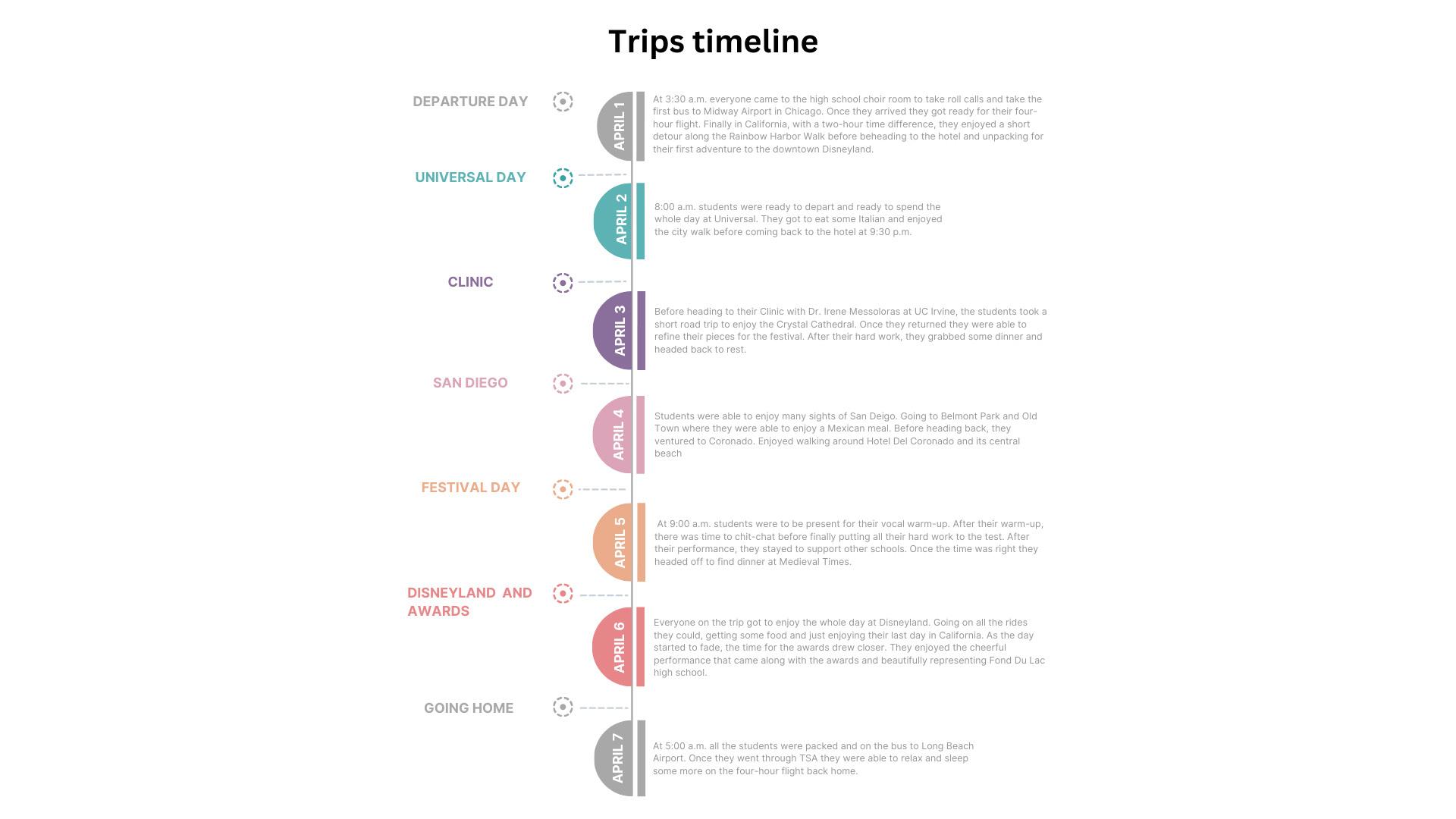
“It was so fun, and I'm so happy we went,'' Yaretzi Saniafo-Benitez said.
“We had a really great time,'' Morgan Cox said.
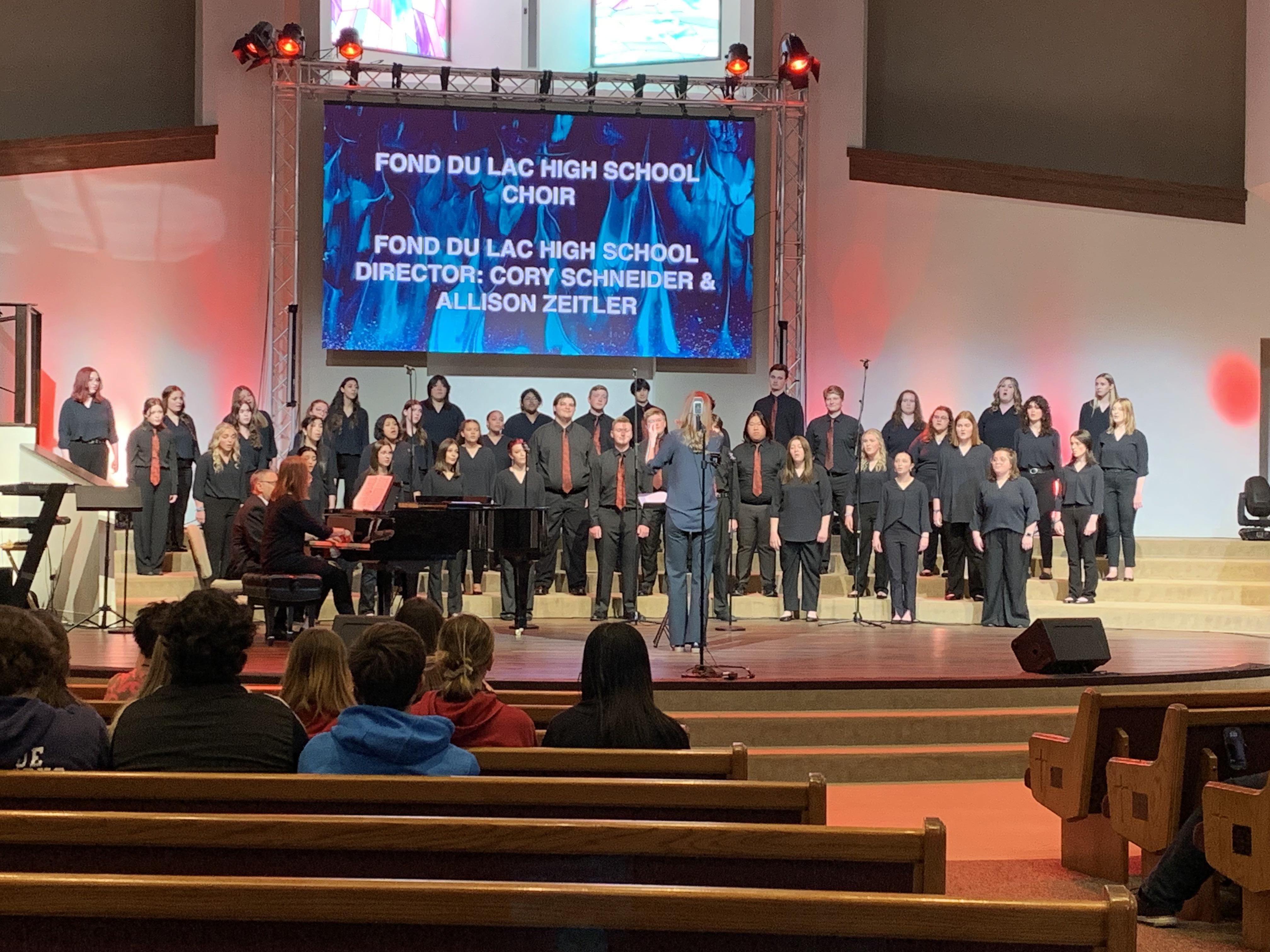
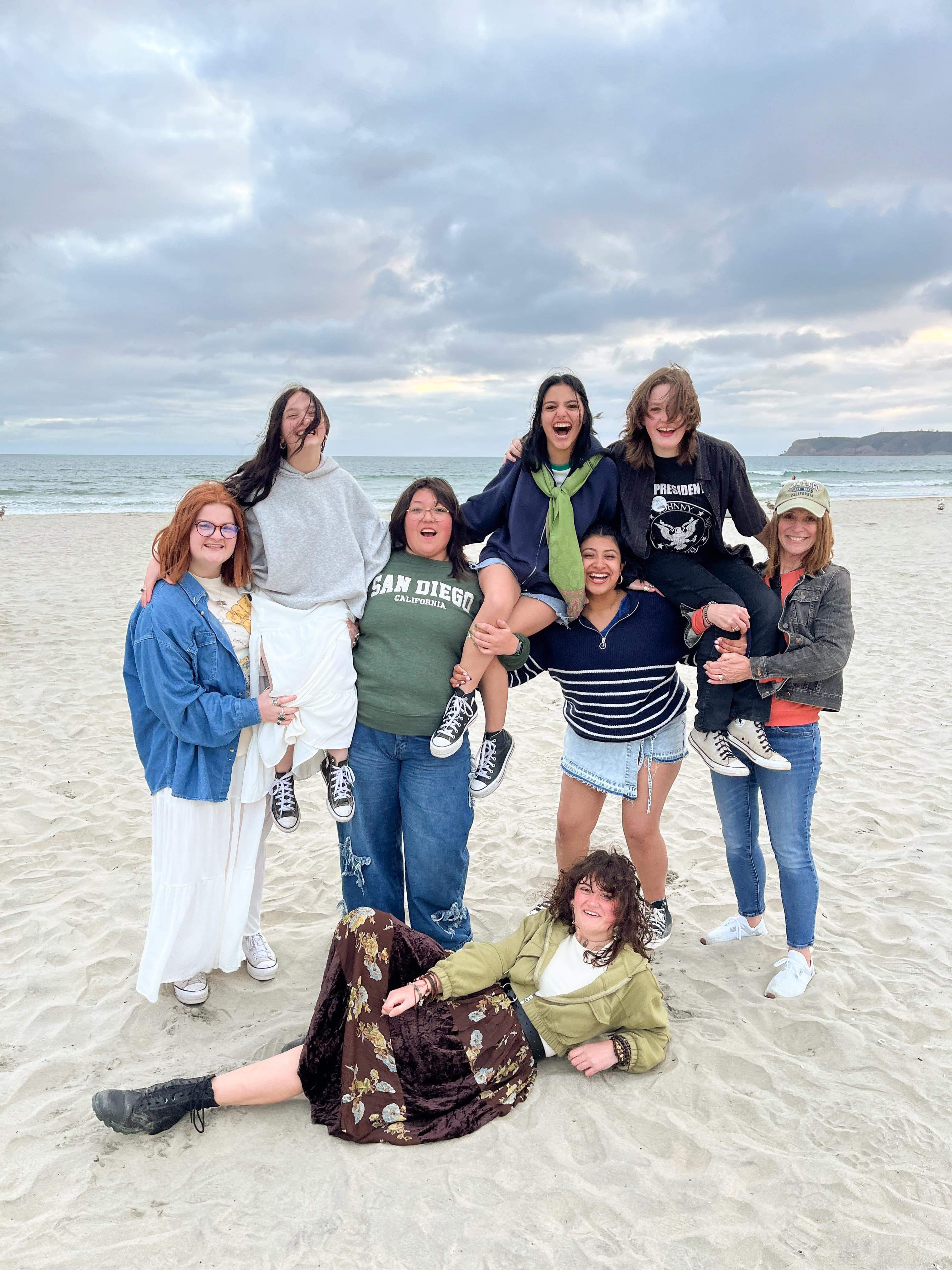
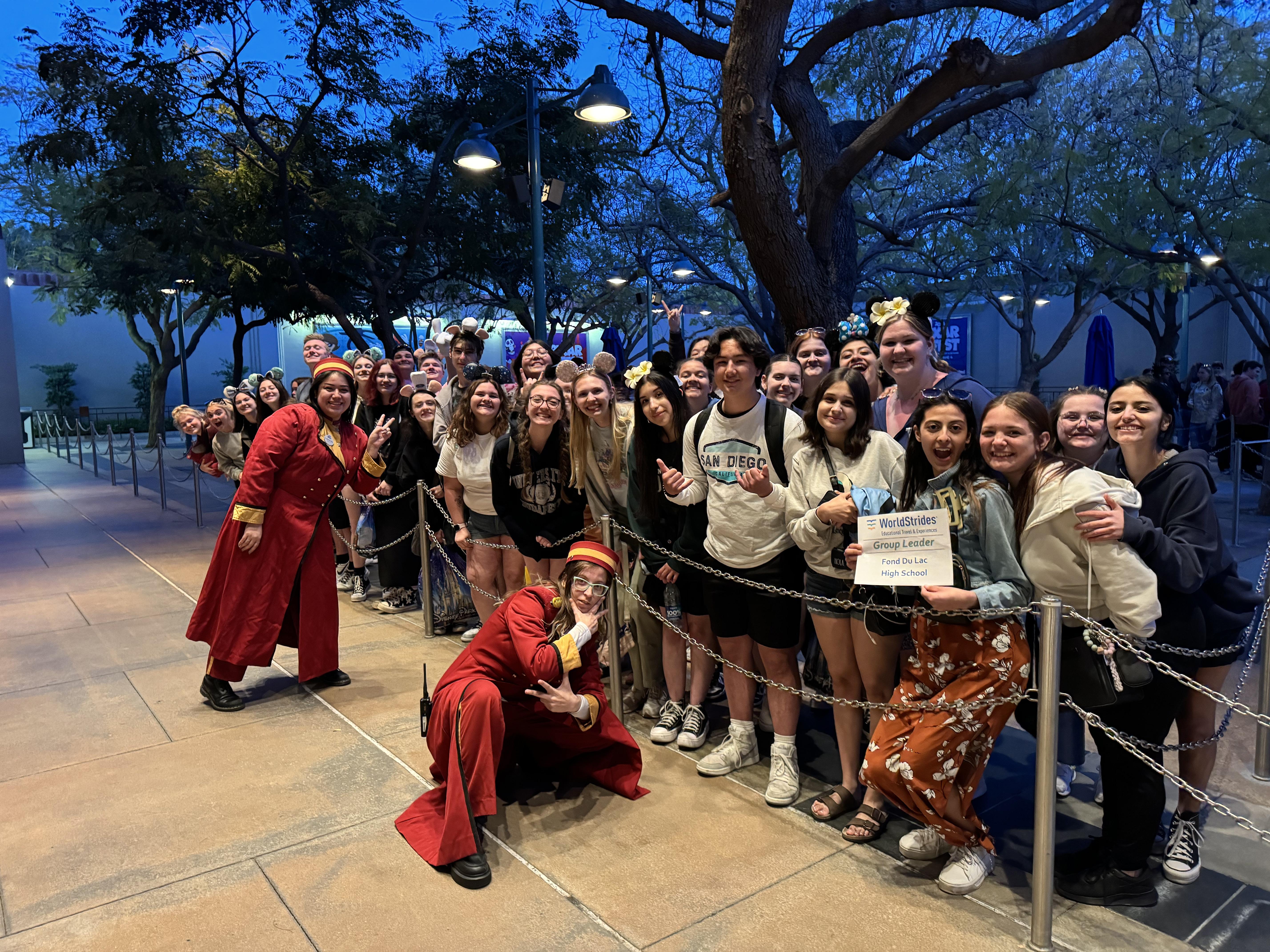
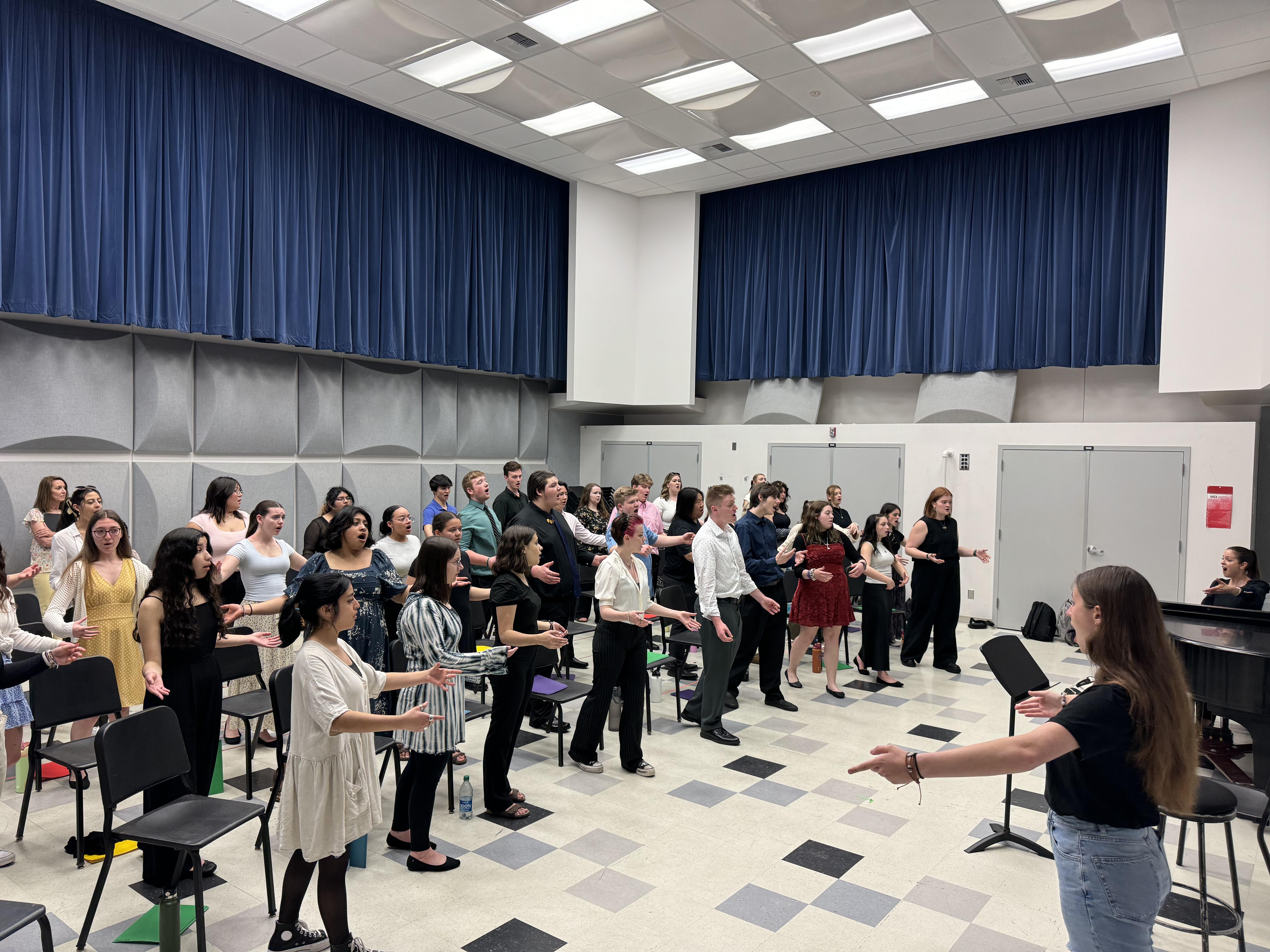
During the Fond Du Lac High School spring break their choir took a trip to California to participate in the 2024 Anaheim Music Festi val, going against 20 other schools.
The next day they received their awards inside Disneyland, coming home with first-place gold for both of their events. Along with two personal awards for Addison Thorpe and Cloe Rusch.
“We had a great trip, it was a great trip; I’ll always remember this in my heart,” Morgan Cox said.
“So much fun,” Addy Benzinger and Addison Thorpe said.
However, there’s more than just traveling and bringing home trophies. It’s about planning, putting in the hours to memorize and perfect the pieces and also making sure it’s performance ready. It’s about putting their best foot forward three months in advance and making the trip worthwhile.
“Okay let’s get started,” Mr. Schneider said.
Both choir teachers, Mr. Schneider and Mrs. Zeitler, put in so much work to plan the trip for the students. After working out the numbers and itinerary, the cost comes to around $1,900 for an all-inclusive trip, with plane tickets, hotel, day events, the festival, busing and most importantly food. Students could pay for the trip in many ways such as from pocket, script or fundraisers. With the help of fundraisers and scripts, many students would get most of the trip paid for without putting in their own money. With money and pressing matters out of the way, the teachers turn their focus to the students and the music for the trip.
Choosing music can be difficult, especially for music festivals. The choir teachers decided to choose “Domine” from the requirement limits, “Hark I Hear” from the recent passing of Alice Parker, the composer and “Shalom” as a piece to counter the upbeat and tension from the previous pieces. With the music being picked, next is learning and perfecting.
“ Every day I get more excited … and more more stressed,” Mrs. Schneider said.
The general equation for learning music in large groups is for every minute of a song, it takes one hour to learn. So if a piece is five minutes it takes about five hours to learn. However that is just learning, we mustn’t forget the perfecting and mending the piece into their own. Students study the music so that rehearsal can be for everyone and not just for themselves.
Most schools would have one choir be their travel choir or have the different levels and group choirs go to different events. However, Fond Du Lac High School allows any students to attend the trips. The only requirements for attending are they must be a sophomore in Bel Canto or Concert Choir and they must be passing all their classes. On the other hand, this can lead to different types of challenges and unique experiences.
“How do you practice that? How do you prepare those songs? How do you find enough time to get those kids singing together?” Mr. Schneider said..
After all their hard work and fully packed days. After putting everything they’ve got into their performance, they are bound to be exhausted.
“No one has a voice no one..” Addison Thorpe said. “Everything’s gone,” Morgan Cox said. “I was gonna say no more singing but we’re still in choir,” Addy Benzinger said. “Unfortunately we’re still gonna be singing,” Morgan Cox said.
On the other hand, exhaustion never covers up the fun and amazing experiences they had. Nor their favorite memories.
“My favorite part was every part,” Yaretzi Saniafo-Benitez said.
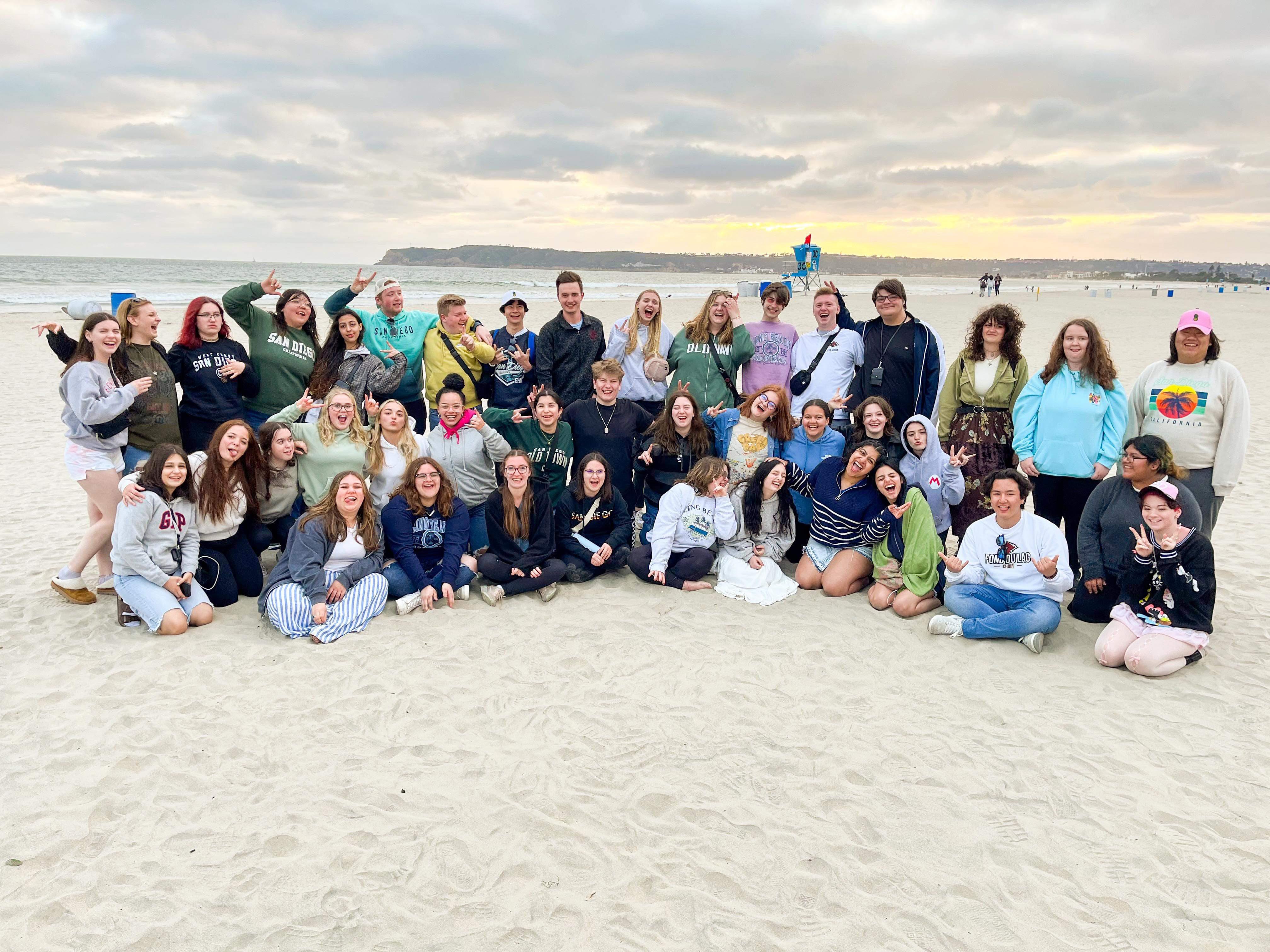
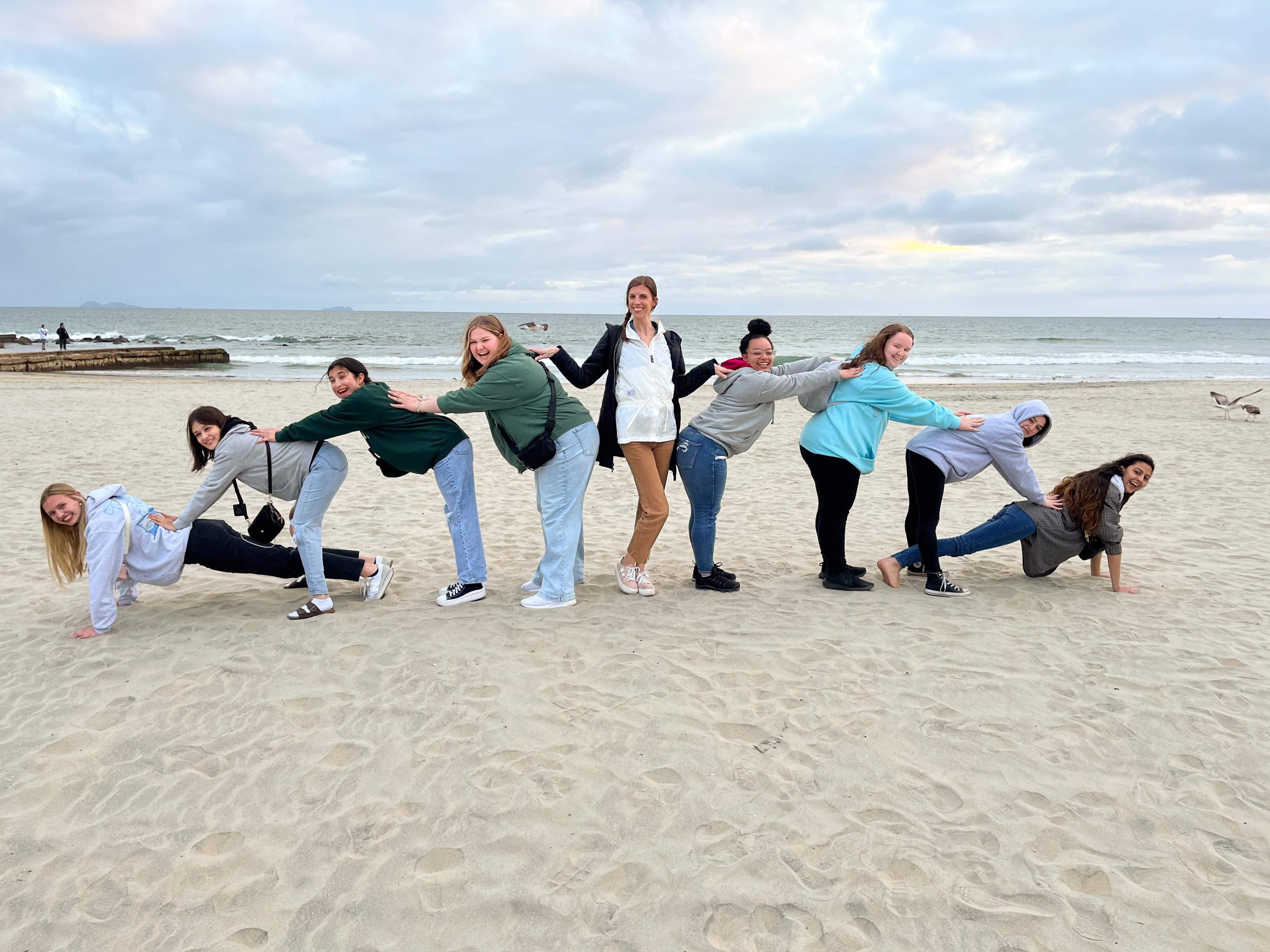
“My favorite was when we went to San Diego and got soaking wet at the beach,” Morgan Cox said.
“My favorite part was probably the beach or that one Star Wars ride at Disney,” Anna Quast said.
“My favorite day was uh… I think the day we went to the beach and Old Town or Disney'' Addy Benzinger said.
These are some of the questions the teachers have to answer to bring everyone together.
“I liked Irvine day [...] San Diego was just Mwah! Gorg. I’m a Disney kid, so Disney was great, '' Addison Thorpe said.
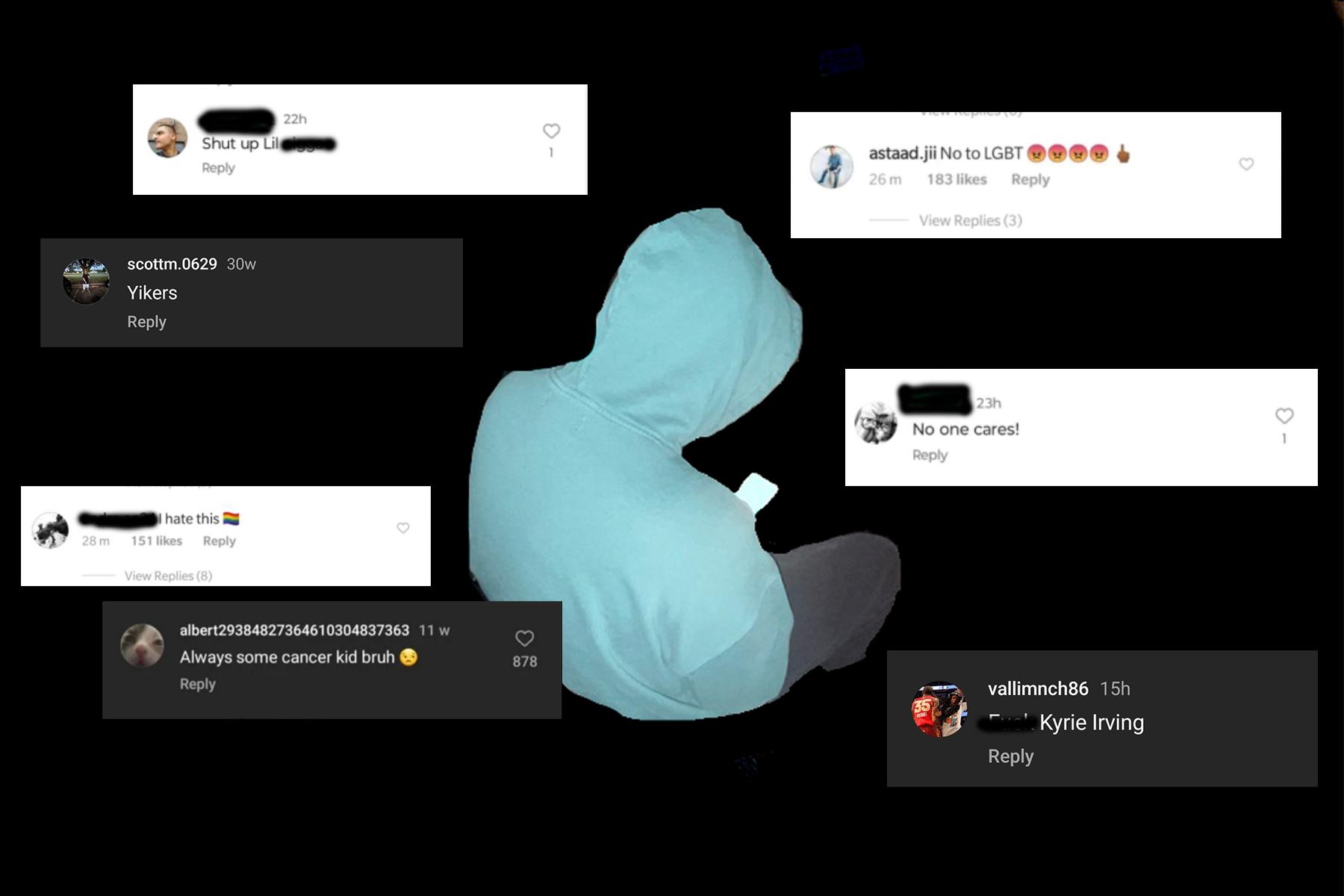
Unseen Victims
The dehumanizing effect of cyberbullying
by CALEB CALLIARI And MICHAEL BLOOMBERG
Everywhere in the nation, from quiet to bustling neighborhoods, teens are plagued by an epidemic that has no physical bounds. The unseen wounds that cyberbullying leaves on the psyches of teens are caused by a widespread digital ignorance. A division between real-world interaction and online interaction has been established, where weapons are as simple as a few keystrokes.
With just the swipe of a finger, teenagers have full access to the depths of social media, turning their devices into portals to both chaos and connection. But in the midst of all the likes, comments and shares, there’s an unsettling reality: people are becoming less sensitive to the suffering of others.
“Nearly six in ten teens (58%) said the cyberbully ‘probably didn’t see the action as a big deal,” research conducted for the National Crime Prevention Council revealed. This is exactly the issue with cyberbullying today. People are unable to recognize the severity of the issue at hand because the offenders are able to hide behind screens and distance themselves from the consequences of their actions.
Not only can this hate and cruelty be presented in the form of hateful comments, it can be the entire post. Scrolling through Instagram reels, TikTok videos and other short-form content across the internet, it is evident that videos of car crashes and outright killings has formed a culture on the internet that has begun to accept those as the norm.
“‘Violent videos, they just started showing up. I was like, what is this? It’s nothing that I follow myself,” Kristoffer Reinman said in “Instagram users are being served gory videos of killing and torture, a article published by the Washington Post. This “trend” that is seen worldwide, across an abundance of so-
(who’s name will be kept anonymous for privacy reasons). She was another bright personality at her school, and she was known for her kindness and motivation. But behind smile lay a secret pain: she was the victim of cyberbullying.
“It started out as just a couple of mean comments on my Instagram posts,” she said. At first, ignoring it seemed like the right option. It was just a few comments, maybe this person was having a bad day. It turns out that the bully wasn’t having a bad day, they chose to prey on this junior student.
It got to a point where every notification filled her with dread. “I hated looking at my phone because of the comments I’d see,” she said. These comments would target certain aspects of her life, from grades to friends and family, to general statements claiming she shouldn’t be alive.
The cyberbullying ensued for multiple months. “I’ve seen most of these comments on other social media posts,” she said, “which is why I just thought I was overreacting.” This presents the issue with social media. The internet has shaped itself into a space full of toxicity and unwarranted hate. Because of the way that the internet has shaped itself, it took this high school student months to realize that what she was experiencing wasn’t normal, and it was already too late.
“I’ve never really been able to fully regain confidence in myself,” she said, “looking back on it, I have no idea how I ever thought it was normal.” Social media has given many people this
social media, there will be hate. Without hate, it almost makes people uncomfortable.
This environment has made it hard for victims to recognize that they are in need, and it leaves them stuck with their problem for too long. “It was months of constant harassment by someone I never knew,” she said. She never expected to get out of this trap, but it all changed with her friends finally recognizing her struggle.
“My friend finally reached out to me, asking if I was okay,” she said. She knew this was her chance to escape the bullying. “I broke down into tears, partially frustrated but a little sad it took her this long to realize,” she said. The months of embarrassment and lack of self esteem all because of one person were finally over. However, the cruel comments and videos that she witnessed during the time when her life was controlled by one person has forever changed the way she will trust and communicate with people online.
The abundance of cruel videos has changed the way we communicate with other humans online. The concern with the prevalence of social media is the way that interactions are seemingly less important online, and people don’t see each other as human. “To him, they were just impersonal names on the screen, names that were associated with a movement that he had been told was ridiculous and comic-book villainous,” Barbara Krasnoff, the author of “Do we see others online as human?”, discovered. This demonstrates the issue at hand: the lack of faceto-face interaction has led people to believe that no real people are online, and it is on full display with the poor communication and cyberbullying running rampant on social media.
“Communication has become coarser in the social media era. Some platforms, such as Twitter, encourage a kind of snarkiness and combativeness that’s at odds with the way most strangers interact in-person.” Katie Day Good, an associate professor of Media, Journalism and Film at Miami University said in “Has social media desensitized us?,” an article published by Yale Daily News. Competition is human nature and the landscape of social media has fostered an environment where this competition and combativeness flourishes with the illusion that there are no consequences here.
But the consequences do exist. “I will always remember what happened to me, and I don’t know if I can ever fully recover,” the junior cyberbullying victim said. The effects of this spiteful and cruel environment online has seeped into the minds of every user, and whether or not they recognize its existence, it is only a matter of time before it affects everyone the way it affected her.
It is time to make a change, and we need to recognize each other as real human beings and being empathetic towards everyone, even if we cannot see their face and don’t know who they are. “There are always people who care, even if you can’t see it at first,” she said. There are always resources available for those who are struggling, but the start towards permanently fixing this epidemic is through recognizing everyone as people.
I TOOK THE ACT; NOW WHAT?
AN IN-DEPTH GUIDE IN GOING TO COLLEGE AFTER HIGH SCHOOL
by MOLLY FELLENZ, ALEX BRAFORD AND EM LEMKE
Almost 48% of students agree that “stress and anxiety overshadow their college search and planning” according to the EAB (Education Advisory Board). Many agree that it’s a big decision that can consume a lot of a student’s time and attention, and going to college has many complex factors that need to be considered. But going to college doesn’t always have to be hard or stressful. Here is all you need to know about going to college after the ACT.
The ACT is scored out of 36 points, with an optional 12-point writing test. While the state average in Wisconsin is a score of 19 points, students wanting to go to a more competitive college may want to aim for higher. However, it’s entirely possible to get into a great college with an average ACT score. You can use admissions websites like CollegeVine to check the average ACT score of attendees of a certain college to know what you should aim for. CollegeVine will typically display a range of 4 numbers to demonstrate the average ACT score of students at that college. If you attain a number in the lower end
of that range, admission is still possible but you will need a strong essay and background. If you attain a number in the higher end of that range, a less strong essay and background will most likely suffice.
But as more colleges move into a holistic review of applicants, test scores will become less relevant to an admissions decision as leadership skills and volunteer hours are more heavily considered.
Some of the most important things to consider when choosing a college to apply for are class sizes, scheduling processes, campus events, walkability of the campus, sports, majors, price and location. Some colleges are smaller, creating a more homey atmosphere where everyone knows each other. These colleges tend to have less campus events or sports and a secluded location. However, they typically have smaller classes and more open options for scheduling. Bigger colleges typically have more sporting and campus events, walkability of the campus, majors, and have a more centralized location with many attractions close by. Either smaller or bigger colleges can have a hefty price tag.
PHOTO BY NGUYEN DANG HOANG NHU ON UNSPLASH
“It does matter what college you go to, but depending on your goals and your experiences, I think you can really achieve those anywhere and college is kind of what you make it, so don’t feel pressured to have to go to a college that’s like, really well known. If you [like] the area and you like the people that you’ve met there, you can make it whatever you want,” Alyssandra Baumann, a freshman at Missouri State University, said. “If you apply to accollege and you’re thinking about attending it, then I would suggest actually visiting it. There’s a huge difference between like, looking [the college] up online and then actually going there.”
“College is kind of what you make it, so don’t feel pressured to have to go to a college that’s like, really well known.”
-Alyssandra Baumann, College freshman
Colleges are also divided into public and private. Public colleges are government owned and funded, while private colleges are owned by a single person or organization. Public universities are bigger, accepting many students with a wide range of test scores and majors, but private universities are smaller and more selective. Both of these options usually come with a similar base price tag, but private universities tend to have more money to supply as grants or scholarships to their students.
“Don’t feel like you have to go to a college that’s like, super famous,” Baumann said. “Public colleges can be just as great as private ones.”
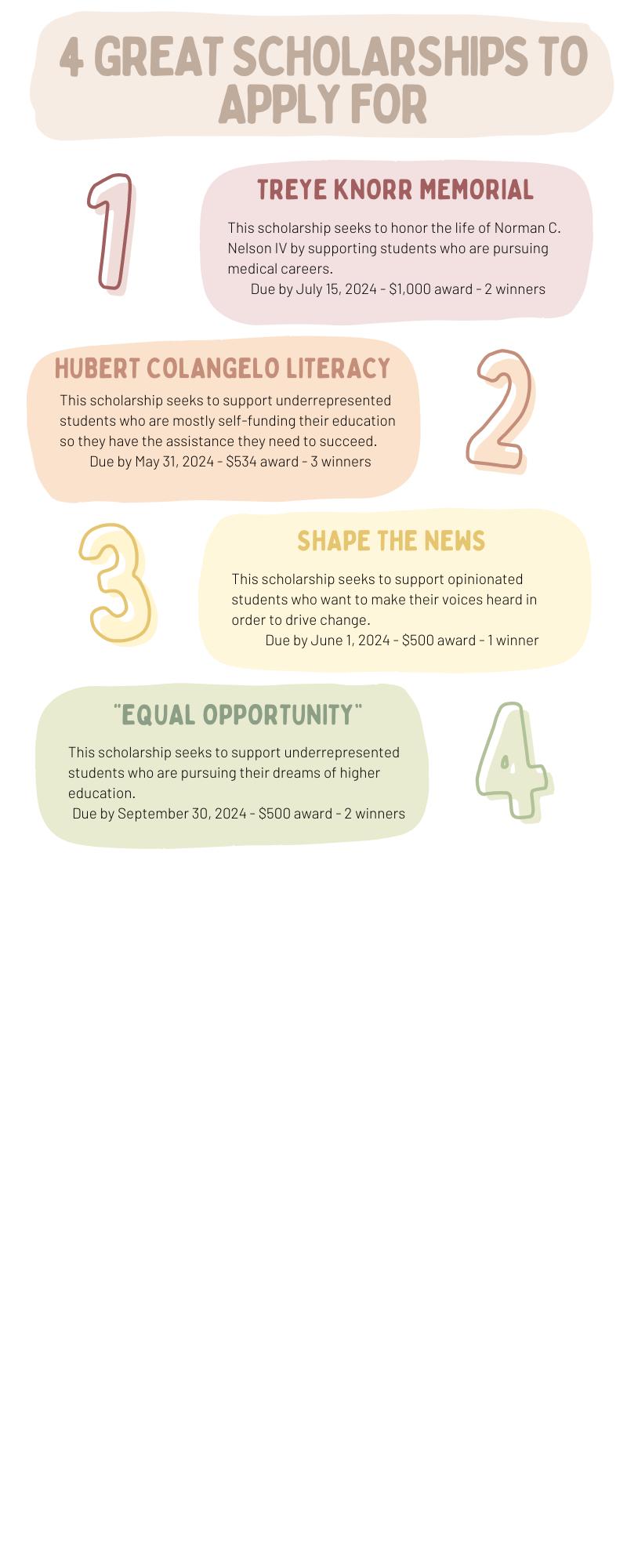
Paying for college can be difficult, which is why many scholarships are available for students to apply for. Scholarships are free money, and you do not need to pay them back. Anyone can apply for scholarships, even if you aren’t a straight-A student. Make sure you are applying to scholarships that you can actually apply for. On the FHS Scholarships tips it says, “Look to check if you meet all of the requirements that the scholarships are asking for,” as some scholarships are for students who are going to certain fields, colleges, or majors. So once you start looking for scholarships to apply for, make sure you are qualified.
According to Harvard, students should, “be authentic, grab the reader from the start, focus on deeper themes, shows don’t tell, trying doing something different, write with the reader in mind, write several drafts, read it aloud, don’t repeat, ask others to read your essay, pay attention to the form, end essay with a ‘kicker’.”
GRAPHIC BY MOLLY FELLENZ USING CANVA
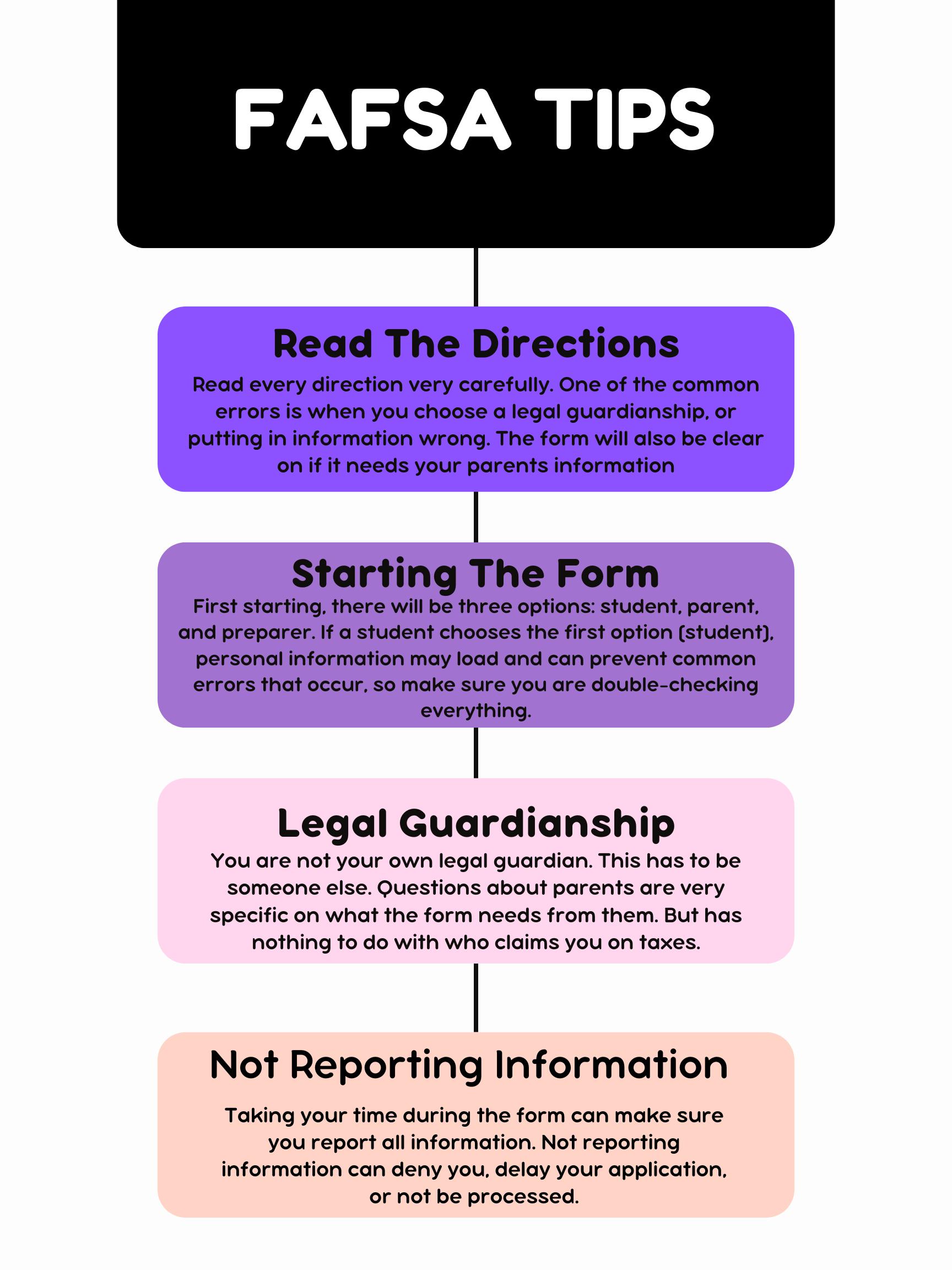
When applying for college, you always should apply for the FAFSA, the Free Application for Federal Student Aid, even if you think you won’t get anything. Every little bit will help you in the long run. When doing so, always apply right away. It is on a first come first serve basis. Many states do have limited funds to hand out and may have early deadlines, so make sure you check deadlines for your state.
To find out about state deadlines, it is typically June 30. However many colleges are going to want this sooner. Make sure to look at your college application or contact an advisor. To start filling out the form, go to the student aid website and click on the FAFSA form, then fill it out and complete it.
According to studentaid.gov, when filling out the form, make sure you have your student aid account set up before starting. Parents who wish to have access to this will need to make their own account, as well as their own IDs. However, if you are a dependent student, your parents will not need an account.
When trying to find a college or trying to fill out the applications for colleges, scholarships, and FAFSA, the hardest part is trying to find the motivation to do it all. Fondy Student services provides many resources to inform and help, as well as one-on-one sessions. Mrs. Michalkiewicz and Baumann encourage students to reach out for help if they need it. “You have so much support from other people,” Baumann said. “I believe everybody can attain their dreams of whatever is after senior life.”
GRAPHIC BY ALEX BRAFRD USING CANVA
PHOTO BY CHAINARONG PRASERTTHAI ON ISTOCK
GAMEPACT
Video games can impact people’s lives
by LiLy yang
“It helps me meet people who like to play the same games, I connect to students on games that people don’t normally play, like the popular games, and more of the unknown games.” science teacher Mrs. Hobbs said.
The right video games can even help children practice what they know and don’t know. This could be a great process for them to experiment to see their mistakes and find solutions to their problems. Working on this can help them find the best strategies to deal with things and build up many skills.
Fashion in video games is more than just styles. With fashion, it’s a way for players to personalize their gaming experience expressing their unique identity. In other games, it can even let players recognize their favor ite characters in their unique looks rather than them hav ing the same style as the others. This could also bring up other cultural styles in the game for others to get to know a bit about them.
Music and storytelling games help bring the game together as one. Without music, video games wouldn’t be as exciting and fun.
“Music is very powerful to set the mood and tone.” Mr. Opperaman said. “If the sound is off while playing a movie, you will not be able to get in the mood and it would be very awkward.”
Music helps bring up the mood of the game wheth er it be strong powerful music giving the player more hype and excitement to fight the boss or when the music gets sad when a character dies which involves storytell ing. Storytelling can help players form an emotional bond with characters making the experience more memorable
pulsivity, aggression, anxiety and depression.
“In terms of dopamine, you also have gameplay loops that interest people,” sophomore Miles Krikau said. “There are certain elements that people find more entertaining than others and I think some of those get people hooked.”
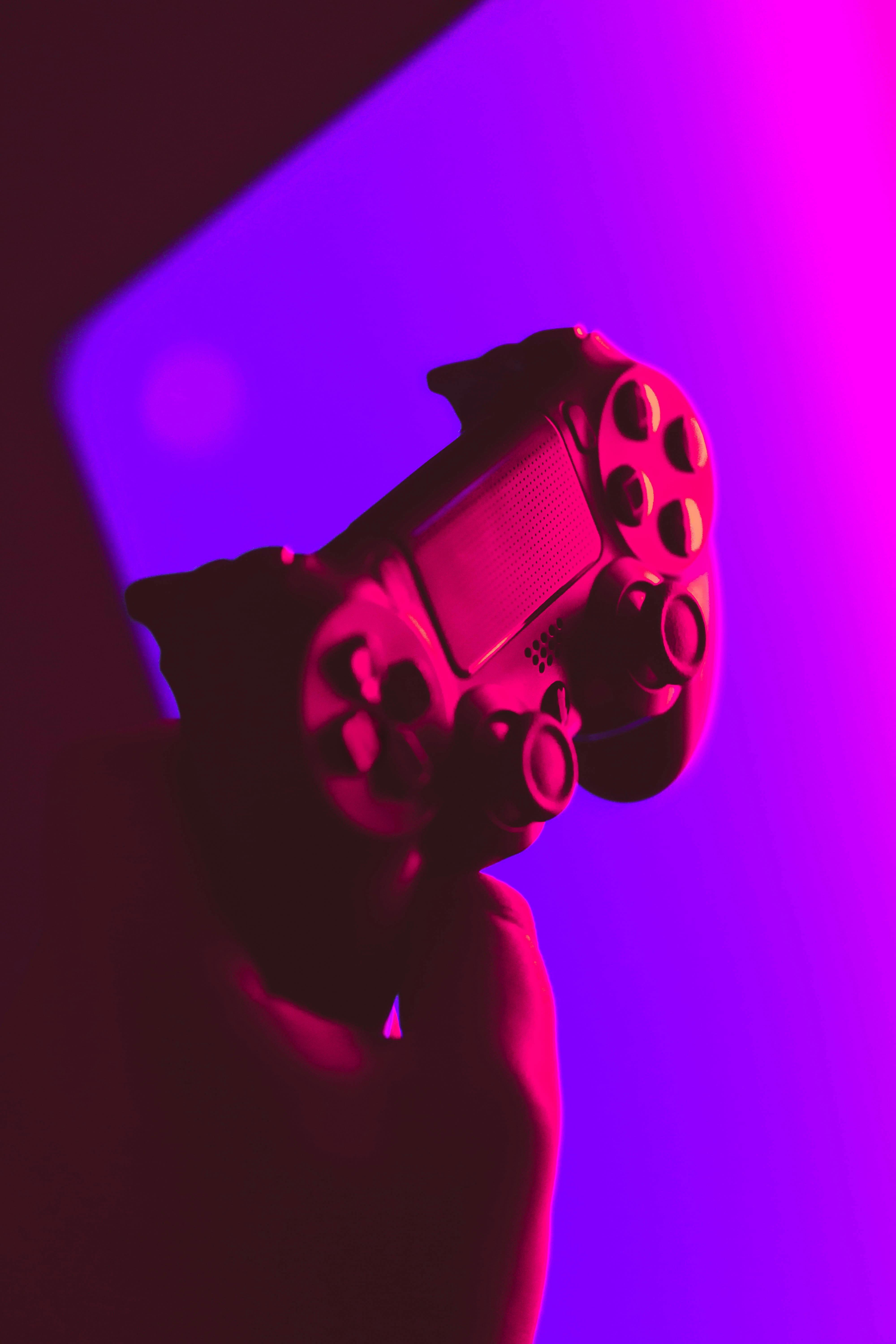
Gaming addiction can also affect people physically such as causing wrist, neck, and elbow pain, skin blisters, calluses, and mostly sleeping disorders. In longer terms, it can lead to obesity, weakness or numbness in the hand, and even blood clots.
“Don’t play video games for the love of god!” ju-
Photo by: Luis Villasmil
THE HIDDEN DANGERS OF VAPING
VAPING AND OTHER DRUGS AFFECT TEENAGERS AND OUR SCHOOL
by LILY KEYS AND MYA LEISERING
Have you ever heard someone say that they’re happy that they have an addiction? They could be addicted to energy drinks or coffee, but are they ever happy that they can’t deal a whole day without it?
A teenager may want to try a vape just once just to see how it tastes. The scary part is that they can get addicted in a matter of seconds after trying it once, and now they can’t live without it.
“I think that peer pressure and addiction are causing massive problems and can lead people down unfortunate paths in their lives,” sophomore Miles Krikau said. “I know so many people who vape and as much as I want them to quit it is really hard to tell someone to quit without sounding like an a-hole.”
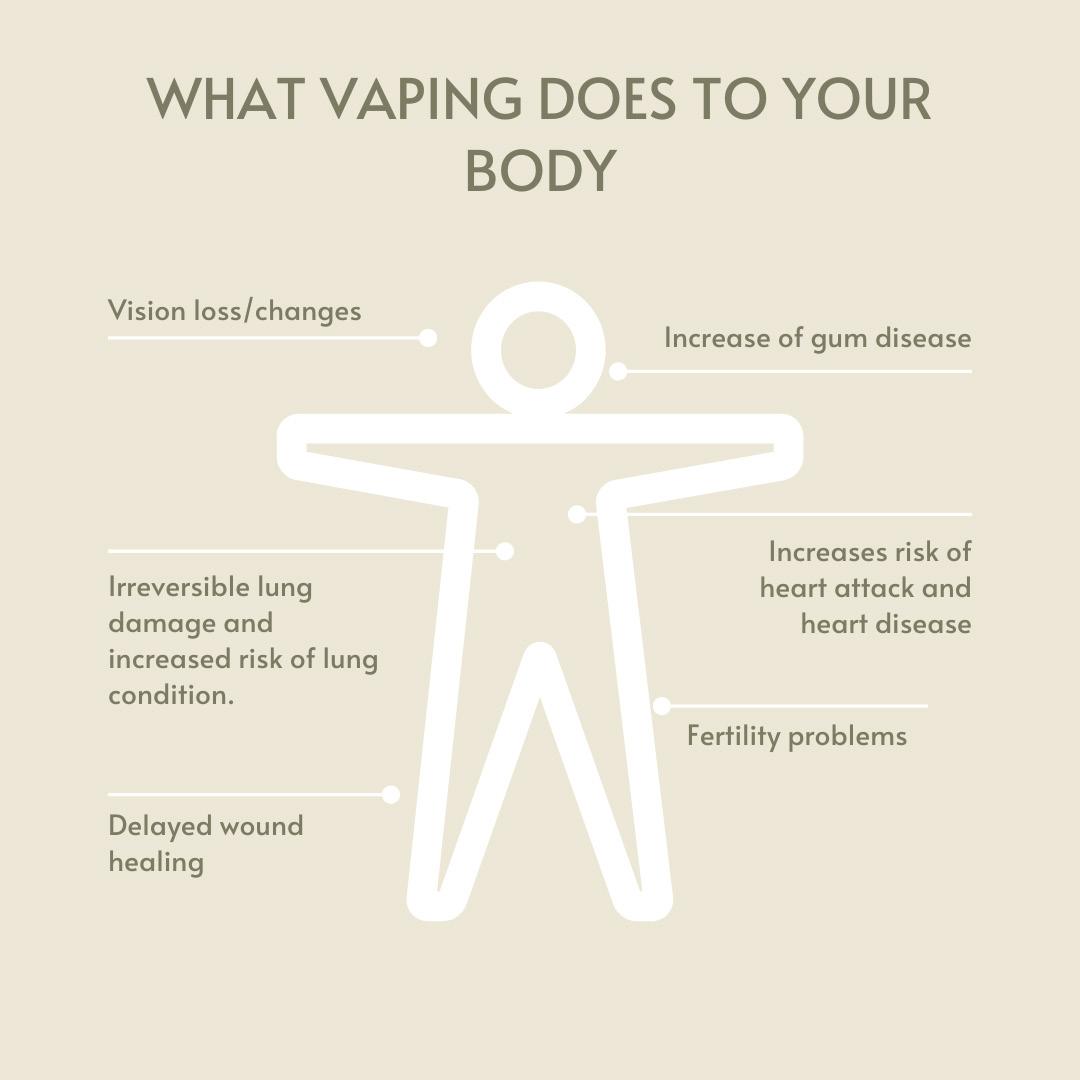
Irreversible lung damage and increase risk of lung condition
Delayed wound healing
Delayed wound healing
Vision loss/changes
Causes permanent scarring in the smallest branches of the airways
Fertility problems
Addiction/Mental
You can get addicted to your phone the same way people get addicted to drugs. Whenever our screens light up, we get a rush of dopamine like a happy chemical. Same as if you or someone hits their vape, your brain gets flooded with dopamine.
“Everybody is addicted to that happy chemical, but what happens is then we get addicted to the things that help release that happy chemical,” the Fond du Lac High School psychologist Dr. Cordle said.
Teenagers wanting to get that rush of dopamine can lead to addictions like vaping/doing drugs. It makes you feel good for a short term, and when that feeling goes away then you want to take another hit which causes addiction.
“Then you have a literal chemical dependency on it and become withdrawn when we get too involved and are using it too often,” Cordle said. The tough thing about addiction is some people say that their first “high” is the best high you’re going to get. This means that people are going to keep trying other drugs and substances to get that feeling again. Scary, isn’t it?”
“Especially when you think teenagers are doing these things and getting into vaping really early, and you’re already really messing up those different neurochemicals and neurochemical receptors in your brain,” Cordle said.
People are often too distracted by how good the drugs make them feel that they forget about the effects the drugs can cause. Some may think this because their bodies are so dependent on that chemical, so it makes you think about how the drug makes you feel, and not what it does to you.
Senior Oskar Troicki thinks that the usage of vapes and other drugs is a problem at our school. He feels that teenagers rule out the negative aspects and only think about how it makes them feel. “All they seem to care about is being happy now and focusing on the consequences ‘later’,” he said.
The health risks are more serious for teens than
adults. The neurochemicals from the vapes/ drugs are so powerful in teens’ brains which causes more damage.
This QR code links you to a website to create a quit plan to help you and others quit vaping
“So because teenagers’ brains are still growing, it’s going to affect a teenager more than if an adult were to start vaping. It’s going to get way worse for a teen because their brain is still growing,” the Fond du Lac High School health teacher Mrs.Walker said. “And their frontal lobe is still growing, so their impulse control is not going to be as good.”
Teenagers who decide they want to stop vaping and doing drugs are going to have withdrawals, which will cause headaches more often, and they’ll get irritated at everything, so they’ll also always be in a worse mood. When a stressful situation comes up they will have an intense craving for it because they’re used to hitting their vape.
“It takes probably a solid week or so before you’re fully not experiencing any of that kind of stuff to get withdrawal effects of nicotine and even marijuana,” Cordle said. “Human urges don’t last for more than 20 minutes.”
20 minutes?! It’s like if you have a craving for chocolate. If you think about something else, watch a movie, listen to music, etc., then that craving will go away in 20 minutes.
The same goes for having a craving to hit your vape. “It’s better if you distract yourself by doing something with your hands like a little craft,” Cordle said. Something as simple as doing a puzzle can help your addiction.
“Any other coping skill that reduces stress and keeps your mind off from wanting to do a substance then it will all be good. Then those urges will become less and less frequent and the more you’re able to sit through and push through the urges, the better it is.” Cordle said.
The Chemicals Affecting Teens Bodies
Vaping puts chemicals like nicotine directly into your lungs. Nicotine is also a chemical which can increase your chances of getting lung cancer. There is another ingredient called benzene that is in nicotine which can be found in car exhaust and metals.
According to Thetruth.com, “Vaping kills more Americans each year than alcohol, car accidents, murders, suicides, drugs, and fires combined.”
Nothing should be going inside people’s lungs except air or medication. Vaping and other drugs may make people feel good, but they should be thinking about how it affects their body.
“I’m sure that there are many chemicals that affect literally everything in our bodies. However, nicotine is a chemical that shouldn’t be there,” Walker said. “Multiple chemicals should not be there in the first place.”
The scary thing is that a person’s body reacts to chemicals in different ways. Some people could
have common symptoms of a cold or flu, While others can have seizures and popcorn lung which is a condition that creates small airways in your lungs that make it hard to breathe.
“It does things to your lungs, your blood pressure, and it can affect your heart like smoking and any kind of drug. You’re messing with your whole nervous system which is all regulated and works to regulate all your organs,” Cordle said.
Putting chemicals into your body can do many terrible things. If they don’t stop now, then they’ll find out the hard way. People need to think about the side effects to vaping other than how it makes you feel.
Society is making young adults think that if their parents, friends, etc. vape or do other drugs, then it’s okay to do it. “As if to say, as long as nobody they know has suffered majorly as a result of these behaviors yet, then there is no reason to discourage these behaviors,” Troicki said.
Talk to Them to Seek for Help!
Fondy Dealing With Students Using Vapes
In the past, schools have had to deal with kids smoking cigarettes, and now schools are worrying about students’ vapes and doing other drugs in the bathrooms. This has become more of a problem over the years, and the administration have been handling it to the best of their abilities.
“Some weeks we’ll catch 10 or 15 students vaping in the bathroom, or some weeks we’ll have 3,” principal Dave Michalkiewicz said. “I think that it’s starting to set that expectation for kids and for them to start understanding what the consequences are. Most important is students understanding the dangers of it.”
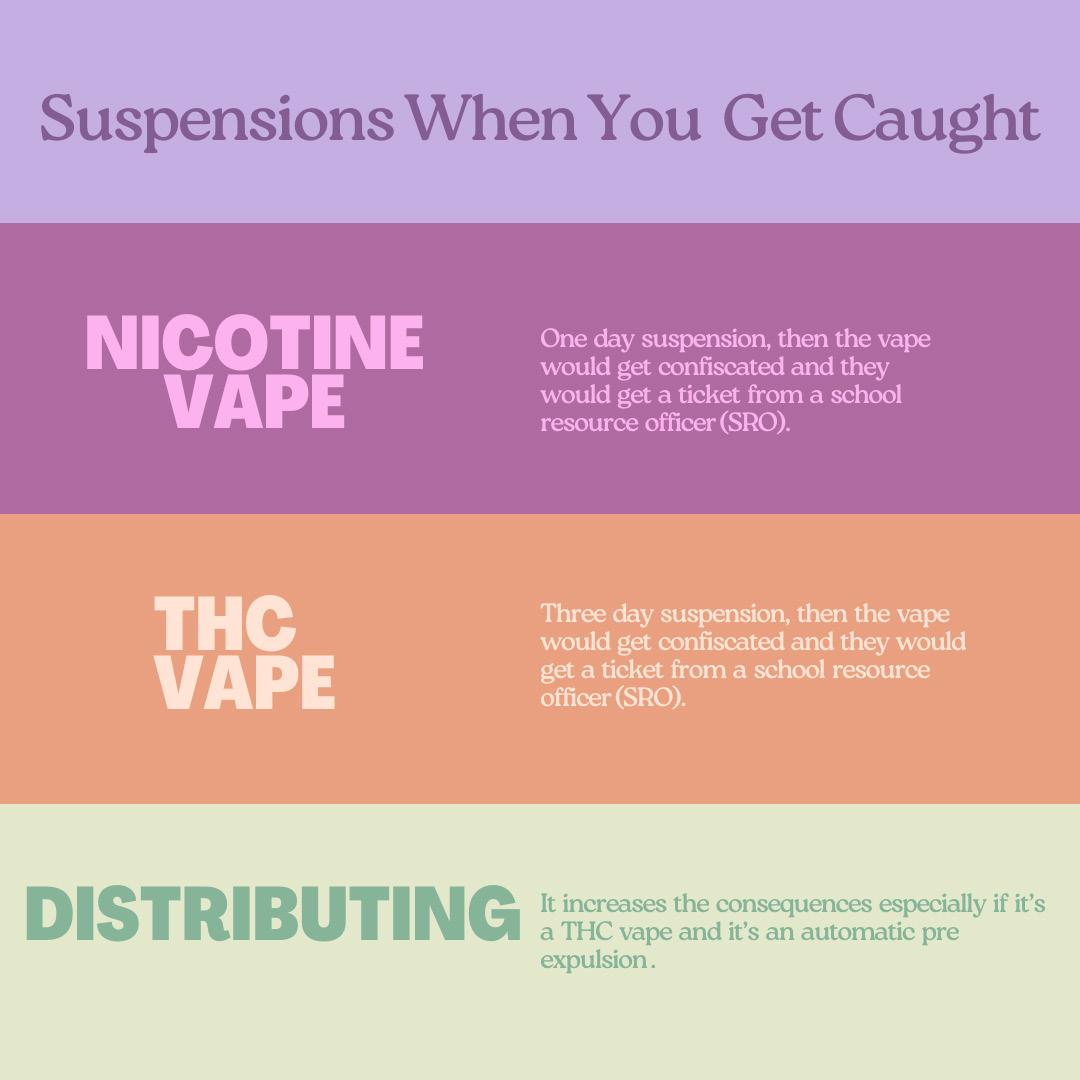
When a student gets caught vaping in school, the admin confiscates the device and gives it to either Officer Chevremont or Officer Tuttle, the school resource officers (SRO). If the student had a nicotine vape, they get suspended for one day, and an SRO would write a citation. If the student had a THC device, then the student would get suspended for three days with a citation.
“If it happens more than
once then the consequences continue to build and become more severe,” Michalkiewicz said. The students’ citations would also add up. The bigger the consequences, the bigger the fine. If a student distributes rather than uses, the consequences would increase. Especially if it’s a THC vape, then the student would get an automatic pre-expulsion.
The SRO that confiscates the device then brings it to the police department and puts it in the evidence department for inventory. “I or the other SRO would write them a citation for possession of a vape, which is a nicotine device. If they were to plead not guilty, then the SRO would give it to the court in trial, which is mandatory,” Tuttle said.
The judge would come to the high school and impose the student’s fine, and the student is required to have an adult/parent with them. The whole reason for the student to have court is so they understand that what they’re doing is illegal and to make sure they don’t do it again.
“In my opinion, we really need to implement harsher punishments,” Troicki said. Troicki thinks that
the school is handling the usage well because kids aren’t doing it out in the open. He thinks that it would be even better if he wouldn’t walk in on people vaping in the bathroom when all he wants to do is wash his hands.
“We have vape detectors that sit in every bathroom so when we see that type of situation and hear the detectors go off, we investigate,” Michalkiewicz said. “If we see multiple kids in a stall then that would be a trigger for us to search the students.”
Being fair and sending the right message is key to correcting any behavior. With the use of Vapes and other drugs, you have to also think of the addiction and steer people in the right direction for help.
“We’re aware that our students are dealing with and struggling with a lot of issues and it’s something that we continue to work with and to also keep out of our building because it’s not something that helps us create a safe learning environment,” Michalkiewicz said. “If kids see it, or if you know it’s happening, tell us so that we can handle the situation immediately.”
BEHIND THE MARKS
FONDY STUDENTS’ EXPERIENCES WITH ACADEMIC VALIDATION AND HOW IT HAS AFFECTED THEIR LIVES
by ADDY BENZINGER
Sophomore Annika Kreis has felt the implications of anxiety and academic validation since around fourth grade. Starting her education at STEM, Annika grew up surrounded by high standards.
“This is the school for smart kids…for the academic achievers, so that was the expectation that I had put on myself when I went there,” Annika said. Living with the need to be perfect actually backfires on countless students who deal with academic validation.
“I really struggle with the perfectionist aspect of it, where if I feel like I can’t do something perfect, or perfect to my standards… I will put it off as long as I can,” Annika said.
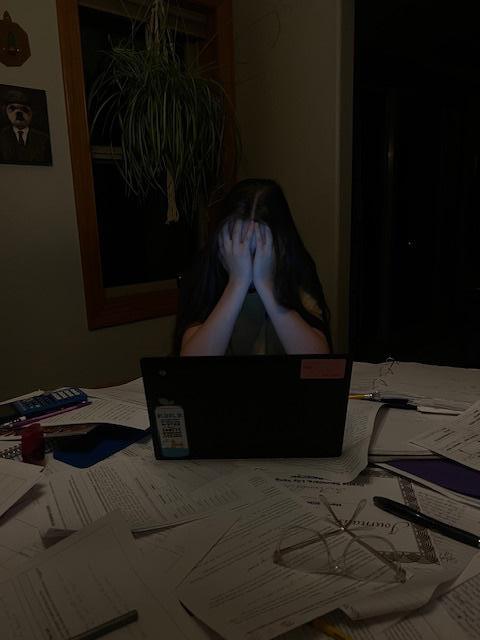
Eventually, many get to the point where they are too burnt out to even do their assignments because anything being done has to be completed to their nearly impossible standards. This anxiety caused by school stress is burdening countless students every day, whether it’s visible to the naked eye or not.
Academic validation can be described as when a student endures the intense need for positive affirmation from their scholastic outcomes, and oftentimes their emotional state and overall well-being is negatively affected by these outcomes. High school students are among the most stressed and anxiety-ridden group of the population, which is justified when considering the standards that these adolescents are held to, by not only their superiors but also by themselves.
Fictional characters such as Hermione Granger (Harry Potter) and Rory Gilmore (Gilmore Girls) can be compared to the
unrealistic expectations that the current generation of students view as attainable or as a vantage point. The problem lies in the fact that these characters are living in fictional environments where perhaps there might be time for active social lives, healthy relationships with exercise and food, selfcare and overwhelmingly high GPAs, and impressive or even perfect academics.
High school student Sasha Khouzami pointed out in a 2023 Teen Magazine article the harmful results of trying to achieve these impossible ideas and values.
This kind of world is nowhere near realistic and can lead to negative effects dealing with academic stress that stretches beyond the school day and eventually impacts the everyday lives of students around the world. “Anywhere from 1 in 10 to 1 in 13 people suffer from anxiety,” Jennifer Katzenstein, director of psychology and neuropsychology at John Hopkins Children’s Hospital, said.
Anxiety is reportedly the most common mental issue stemming from intense academic validation and just the kickstart to a spiral of concerning affairs that come from worries over grades, school perfectionism and feelings of inadequacy or failure in the school setting.
At Fondy High:
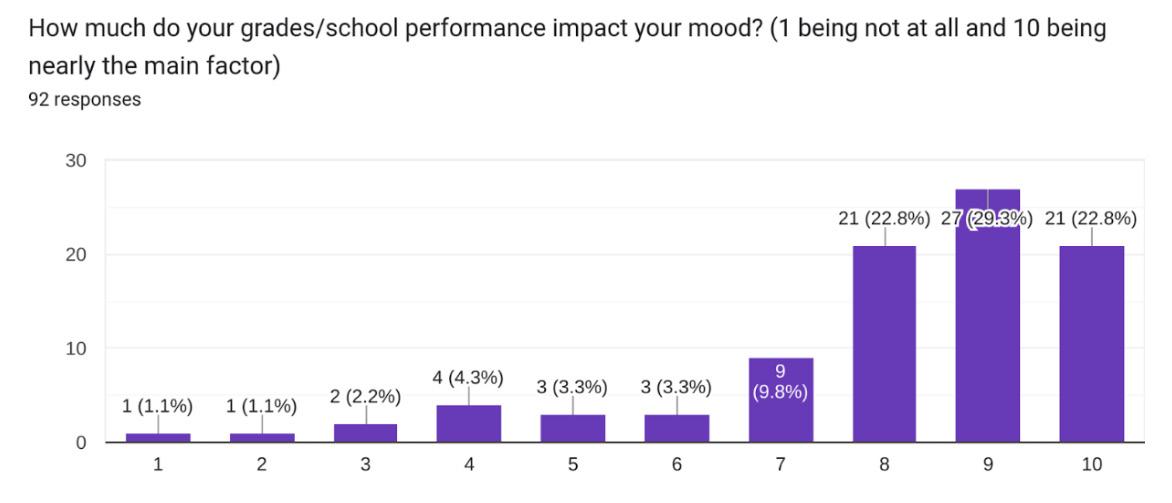
Out of responses gained from a survey sent to all grade levels at Fond du Lac High School, 74.9% of students surveyed said that grades/school performance affected their mood largely (ranked an 8, 9, or 10 on a 1-10 scale). Because we as a society don’t go around announcing our issues to the world, oftentimes family members, friends and classmates aren’t aware of the personal issues going on with each other.
“It’s the gifted kid burnout,” Annika said. “I am obsessively trying to keep [my grades] above an A-.” Though Annika has previously gained help to work through her anxiety, the journey to stability and finding peace with her internal high standards has not been linear.
“My parents a lot of times make jokes about ‘doctor,’ ‘lawyer,’ the high prestige careers,” an anonymous Fondy High student said. However, are these statements really “jokes”? This student said they have felt pressured throughout their high school years to choose certain classes and join programs because of their parent’s remarks, even when this means having to sacrifice other classes that would provide different opportunities, such as music or art courses.
“You’re wasting an opportunity, I don’t think this is a smart move for you,” the anonymous student’s parents said. Not only did this pressure force them into more difficult classes, but led to several arguments over the matter, both of which induced stress in their daily life which was already heightened because the student wanted to do well for themselves as well as their parents when it came to academics.
“It’s the gifted kid burnout, I am obsessively trying to keep [my grades] above an A-” -Annika Kreis
Sixteen-year-old Miles Krikau went through similar struggles. Also attending STEM until just last year, the challenging academic environment had drastic effects on his mental health and school struggles. “I think that the stress that I felt then burned me out,” Miles said. “So much that the slightest stress here [at Fondy] kills me in a sense… quarter three hit me like a truck, and so my grades dropped from a 4.0 to like a 3.4.”
Self-imposed academic stress and feelings of anxiety are large problems, but these negative mental health issues only intensify when we notice that 64.1% of students surveyed at Fondy said they receive large amounts of pressure from parents/guardians on the topic of academics.
A guardian typically feels it is their largest responsibility to keep their children in line and on the road to success; however, “Parents should also help teens learn how to recognize when they are feeling overwhelmed,” said Dr. Macciomei from Sharp Mesa Vista Hospital.
It isn’t easy to admit needing help, especially in a school setting when a teen is doing well in school. Life can get much easier and less stress-ridden when a student receives support rather than pressure from those closest to them. The stigma around mental health issues has enveloped society forever and will only continue that path until we normalize talking about it and promoting seeking help when necessary.
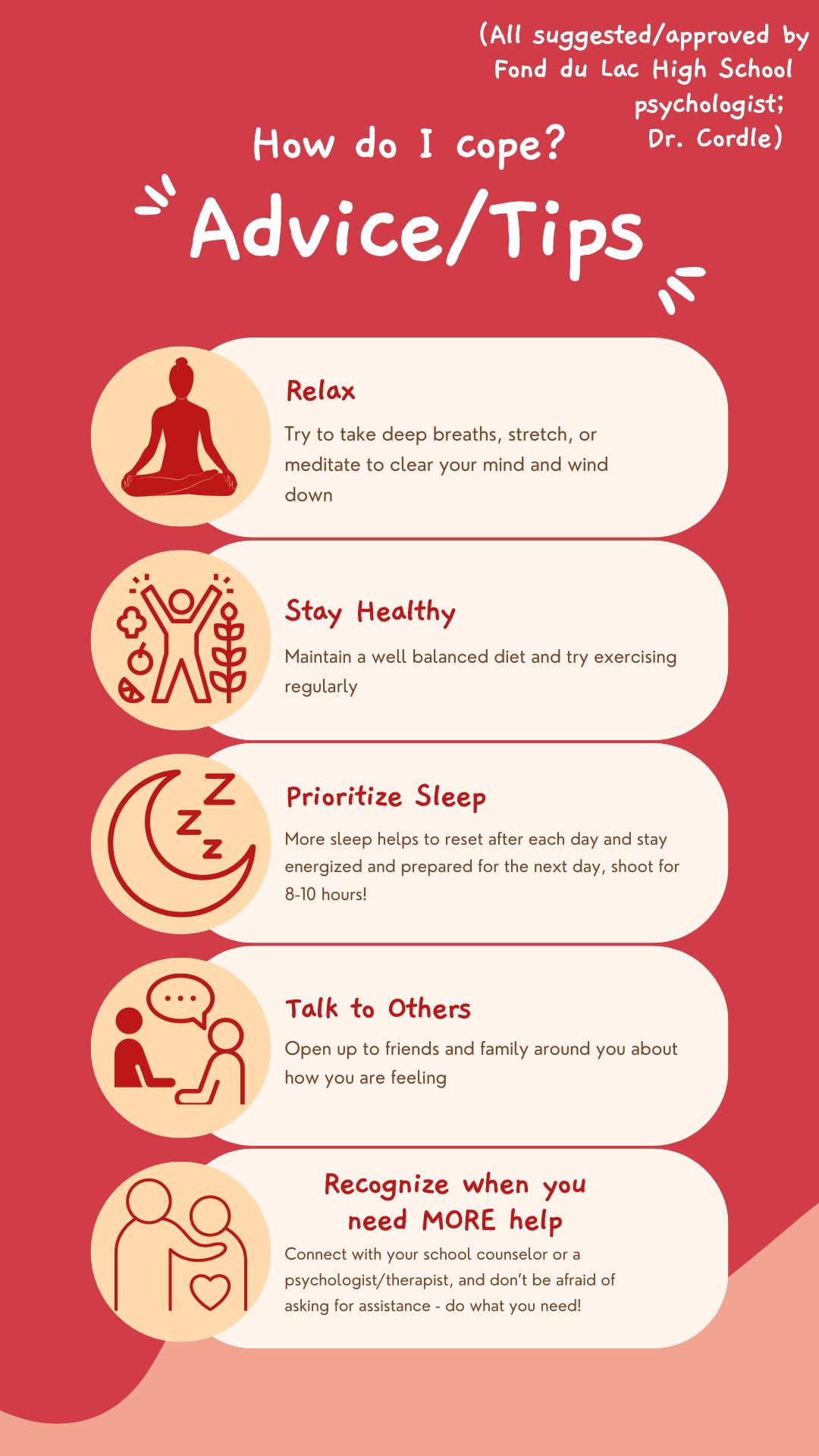
Advice/Tips:
When learning to cope with stress and anxiety, specifically when school and academics are the main sources, it can be difficult to find the perfect solution. Annika Kreis has been dealing with anxiety, which around finals week is only fueled with distress from school, since around the third grade.
“It’s not reflective of who I am …it’s reflective of how somebody else, whose own opinions and actions are out of my control. How they perceived it [a test/grade] and how they have to score it based on somebody else’s expectations,” Annika said. Realizing that her self-worth wasn’t dependent on a GPA or project grade was the first step.
“Fifty percent of students have admitted feelings of academic-related anxiety regarding writing a test or exam, although simultaneously reporting that they felt prepared for the exam,” peer wellness educator at Wilfrid Laurier University Morgane Brading said. With anxiety hindering students’ performance in school, at some point, measures can be taken to assist in coping.
“Having someone to talk to works,” Miles said. After going to therapy for around three months for anger management, he feels he can now cope better with his emotions and anxiety and has learned how to better communicate with the people around him.
“I’ve got an iron grip and I need to let go because it’s not benefitting me anymore.”
-Annika Kreis
“You have people to fall back on for any subject,” Miles said. Asking for help is never easy for him due to his need for validation, as Miles wants to think he is talented in all subjects; but asking is always better in the long run.
Annika feels similar on the subject, explaining that having people to talk to about her anxiety has been game-changing.
“It’s a hard realization to come to. I’ve held on to this for so long, and I’ve got an iron grip and I need to let go because it’s not benefiting me anymore,” Annika said on beginning to step back from her perfectionist habits with school. Learning to cope with these thoughts and needing academic validation was the best thing she could have done for herself.
Fast Fashion: The Truth Behind Your Wardrobe
by GRETTA SAUNDERS
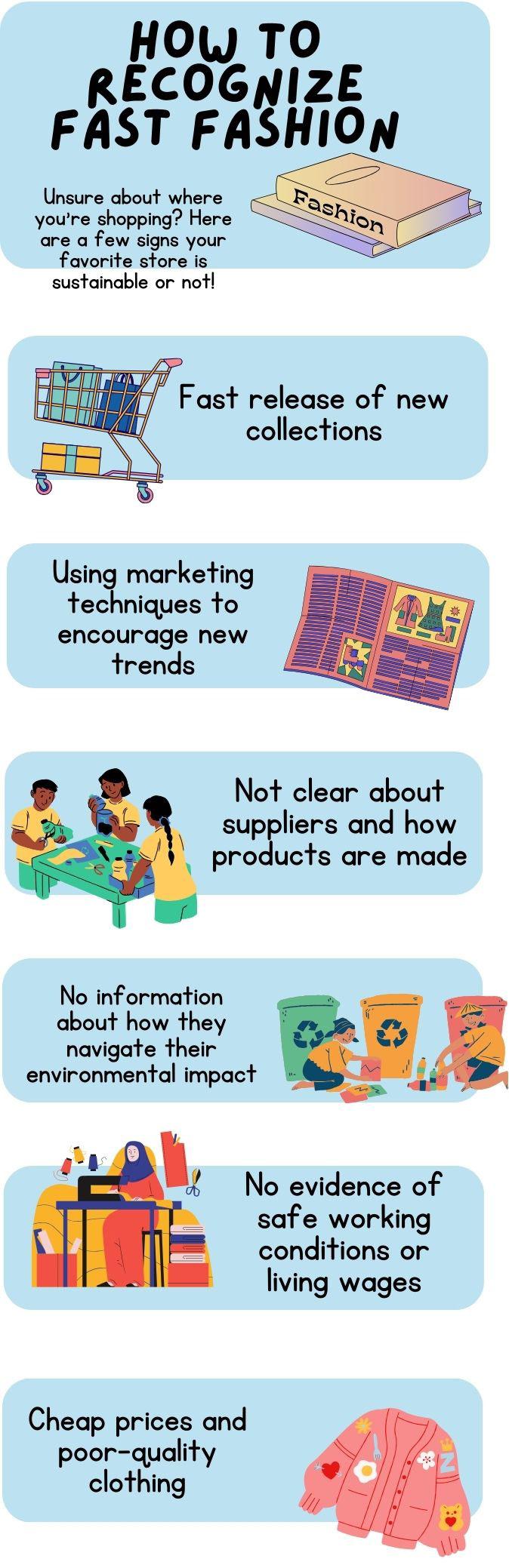
try continues to promote fast fashion trends. Many people need to know what they support when buying from these clothing brands. These brands do an excellent job of marketing popular trends to target buyers. With the ability to produce highly cheap clothing, the industry can influence consumers to buy more clothing more often. On top of it all, these brands usually do not clarify the chemicals in their clothing and the processes in which they are made. Overconsumption of low-quality clothes is leading to the massive growth of textile waste, pollution and the depletion of natural resources.
A documentary on HULU called “Brandy Hellville and the Cult of Fast Fashion” features several former Brandy Melville employees and a few fashion experts who discuss the dark truths of fast fashion.
The fashion industry is an ever-changing realm full of possibilities and creativity. But as fashion continues to soar and change every year, the demand for more clothes being made at a faster rate soars as well. While overconsumption continues to override the planet, the fashion industry has been divided into two sectors: fast and slow fashion.
Fast fashion refers to brands producing high volumes of clothing at high speeds throughout the year. Fast fashion brands often produce these clothes at a fraction of the price, allowing people to update their wardrobes more consistently, resulting in overconsumption.
The production process within these brands often involves toxic chemicals, high water consumption and significant energy use, contributing to substantial environmental damage. Beyond its ecological impact, fast fashion frequently involves various social issues, such as poor working conditions, child and forced labor and animal cruelty.
Fast fashion culture has become increasingly popular as the indus-
In the documentary, Alyssa Hardy, a former fashion editor for Teen Vogue, discussed how unreliable the clothing recycling system is.
“I’m seeing these clothing bins get filled to the brim. Most people think they are donating their clothes, which is inherently a good thing. But our systems are not in place to recycle or donate clothing properly, and therefore, it ends somewhere else.”
She added, “The United States and Europe consume around 36 billion units of clothing annually, and 85% of that is discarded.”
Many people are utterly oblivious to where their clothing goes once discarded. Even with the effort of donating and upcycling, clothing still ends up in landfills. The majority of this is because there isn’t an efficient system to discard clothing in an environmentally safe way.
The U.S., Europe, and other countries have agreements with countries like Ghana to dispose of the clothing for them.
“The United States and Europe have sort of forced this arrangement on these countries. And when they tried to stop it, the United States and Europe punished them. For example, they tried to take away the free duty status of anybody that wouldn’t take the secondhand clothing, tax them in ways, or take away grant money,” Hardy said.
In 2021, Ghana became the world’s largest importer of used clothing, with over $214 million worth of apparel being shipped from China, the UK, and Canada, according to the Observatory of Economic Complexity (OEC) data site.
Kantamanto Market is over 20 acres in the heart of the Accaras business district. Donation
“Ghana is like a dumping ground for our unwanted fast fashion. We have deals with African countries to take the clothing even though they don’t necessarily need it”
-Sammy Oteng, The Or Foundation.
PHOTO FROM: WIKIMEDIA COMMONS.ORG
stalls sell clothing from the West and China.
“In Ghana, secondhand clothing is called Rooney Walu, which means dead white man’s clothes. The term comes from the fact that when clothing started flooding in here, people assumed that it came from people who had died. Why else would there be so much of it?” said Ayesha Barenblat Ceo, Remake Advocacy Group, from the Brandy Melville documentary.
According to the OR Foundation, market traders import around 15 million garments weekly. However, roughly 40% of each bale is waste, often in landfills or the ocean. The country can only handle around 70% of the market’s waste. The rest are being burned or dumped into fragile ecosystems, creating risks for humanity and wildlife.
tation Journalists Network said that clothes “are mostly dumped indiscriminately because our waste treatment is not advanced.” He added, “When it rains, floodwaters carry the old garments and dump them in drains, ending up in our water course and beginning to cause havoc to aquatic life.”
The Kpone Landfill, Ghana’s only sanitary landfill dump, exploded in 2019 due to the overwhelming amount of clothes being dumped. This fast-growing metropolis is left without an adequately engineered dump, making it extremely difficult to properly dispose of all the clothing.
Not only are people unaware of the donation process for their used clothes, but many need to be made aware of the injustices within the clothing industry.
“Fashion has been built on these very racist colonial structures and also on the backs of women, mostly women of color.” , said Barenblat. “And the way that the industry gets away with abusive situations is by dehumanizing this workforce.”
A former H&M employee speaks about her experience working as a black female with the fast fashion company.
“When I started working there, you would go down into
Justice Adoboe of the Ghana Water and Sani-
PHOTO
the stock room and see the other people working who were not white. There were no white people in the stockroom. If you were white, you had to be in sight. We all knew that it wasnt right. We were all pushed in the back out of sight.”
Another H&M employee adds about her experience with racism within the company as a white female.
“Yeah, there was an awareness, but we just kind of sideeyed it and tried to do our job.”
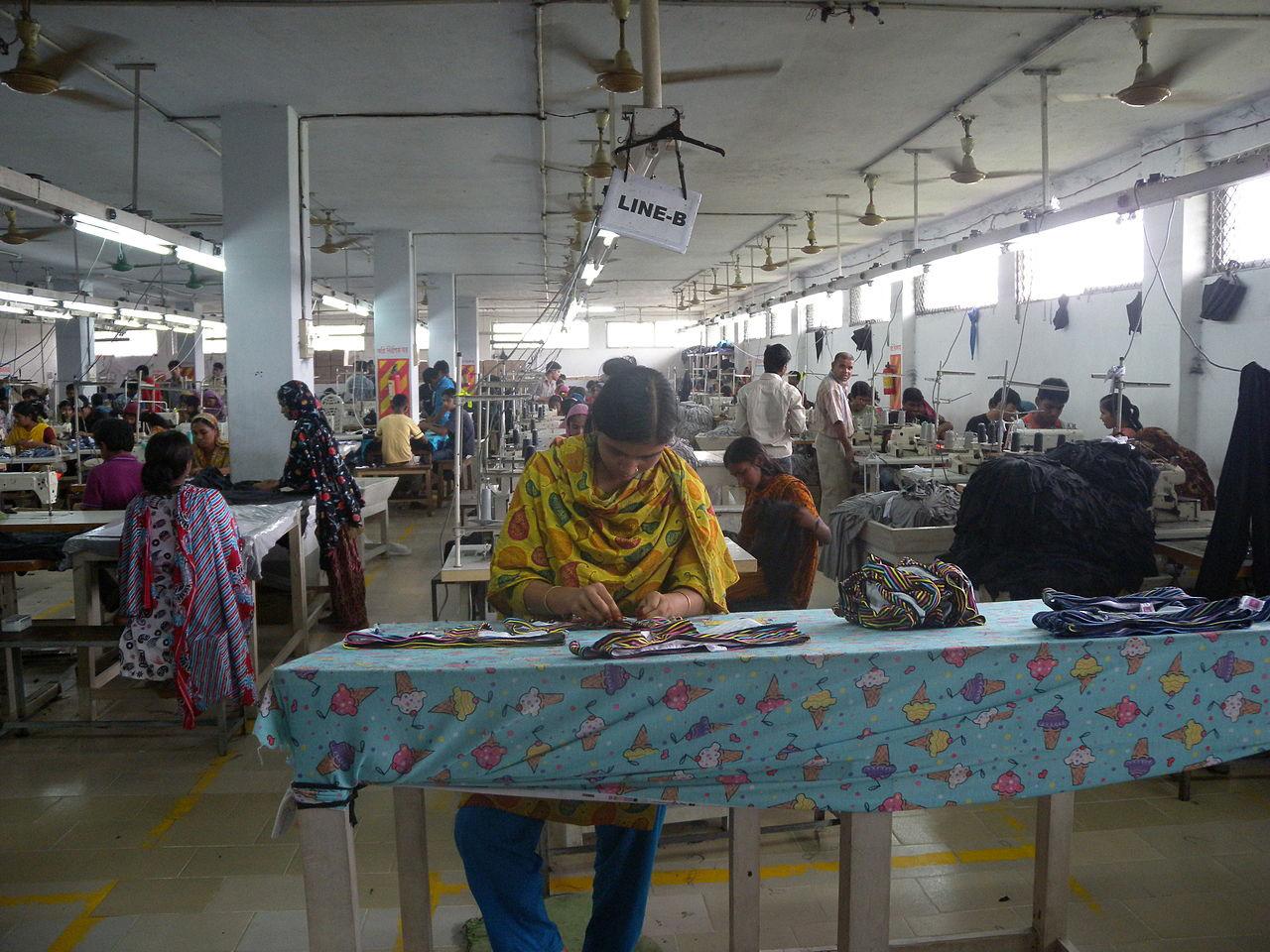
On April 24, 2013, more than 1,100 people were killed when Rana Plaza, an eight-story building that housed five garment factories on the outskirts of Dhaka, Bangladesh, collapsed in about 90 seconds.
It is considered the deadliest accident in the history of the modern garment industry.
The disaster led to a reckoning around workplace safety for garment workers and the responsibility of brands selling lowpriced clothes to Western consumers.
According to an article from the New York Times by Elizabeth Paton, cracks were discovered in the walls of Rana Plaza the day before the collapse, and workers were assured it was safe to return to work the next day.
“I had been sent home from work the day before the collapse because large cracks appeared in the building, and the generators kept switching off. Everyone was terrified. But we came back to work the next day. I had to; I needed the money. When it happened, I stood at a machine in shock as the roof caved in on my head. A pillar crushed me at my waist, shattering my spine and killing everyone around me. I screamed until I lost all sense of time, and the world went black,” said an anyomous survior in New York Times.
The tragic Rana Plaza collapse disaster in Bangladesh catalyzed the creation of the Fashion Revolution movement. The disaster illuminated the fashion industry’s dark side and exploitative practices.
Fashion Revolution is a global movement founded by Carry Somers and Aorsola de Castro after the Rana Plaza collapse. Since then, it has become the world’s most significant fashion activism movement.
The advocacy group has a compelling mission statement.
“Through advocacy, industry partnerships, events, initiatives, and education, we bring together stakeholders from across the fashion, clothing, footwear, accessories, and textiles supply chain to create an inclusive U.S fashion system that conducts business ethically, regenerates the environment and produces responsibly, supporting all voices across the apparel network.”
Before the collapse, the truth of what happens in fast fashion factories was pushed into the dark.
The Industrial Revolution had a massive impact on the transformation of the fashion industry. Before the era, clothes were commonly made at a smaller scale, with more environmentally sustainable products often crafted by skilled artisans. The introduction of mass production and machinery during the revolution led to the shift into fast fashion.
Counterculture movements like the hippie and punk rock movements of the 1960s and 70s significantly impacted the development of sustainable fashion. These movements rejected mass production and embarrassed handmade and eco-friendly clothing. However, “sustainable fashion” didn’t emerge until the 1990s.
In 2007 author and activist Kate Fletcher coined the term “sustainable fashion”, inspired by the “slow food” movement. However, the concept of sustainability was first intro-
PHOTO FROM: FLICKR.COM
duced by Hans Carl von Carlowitz when he applied the idea to forestry. His idea was to use natural resources so that people could rely on products long-term, which he called sustainable forest management.
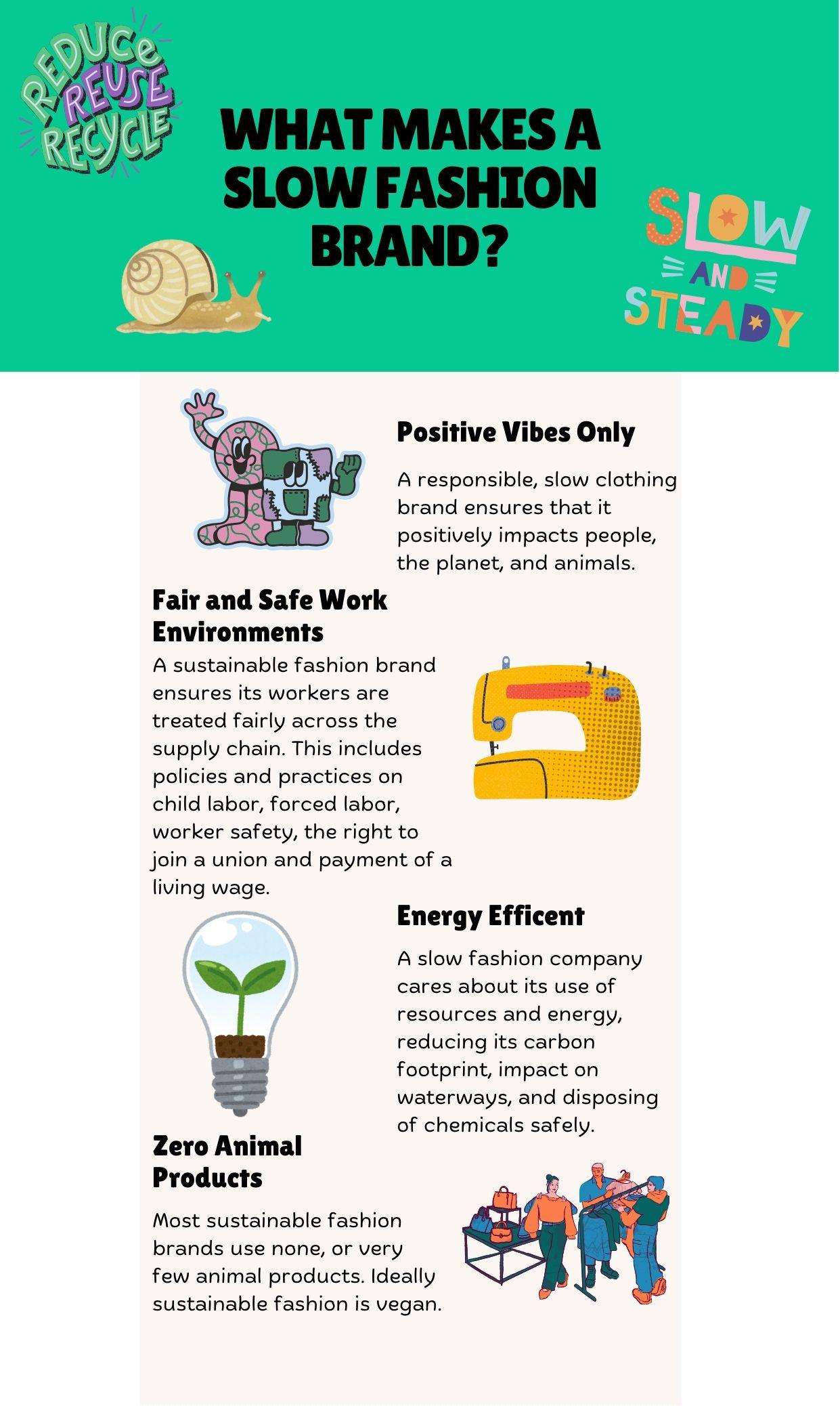
According to an article from State of Matter, “Sustainability in fashion refers to an array of initiatives to address environmental damage, animal cruelty, worker exploitation, CO2 emissions, overproduction, pollution and waste, supporting biodiversity and ensuring garment workers receive a fair wage and have safe working conditions.”
Brands such as Patagonia, People Tree and Stella McCartney have advocated for eco-friendly and ethical practices.
Patagonia pioneered using recycled polyester and organic cotton in the 1990s, setting a new sustainable standard in the fashion industry. People Tree, founded in 1991, has also made sustainable strides by focusing on people and the environment throughout its supply chain.
Over the years, more and more people have been trying to reduce their impact on the environment. As our planet begins to warm, demand for sustainability is increasing. As a result, many slow fashion brands are emerging to meet that demand.
Proclaim
Proclaim is a Los Angeles-based sustainable clothing brand. Proclaim makes basics and intimates from more responsible materials, including plastic bottles and Tencel. Each design comes in 3 different shades of nude.
Svala
Svala is another LA-based business that produces luxury vegan handbags. Each bag is hand-crafted with premium vegan leather, cork, and Pinatex.
Katla
Katla is a sustainable fashion brand with Nordic roots that offers luxurious, conscious comfort. The loungewear brand offers timeless essentials for all ages and genders. Katla follows anti-waste manufacturing principles in its limited production and uses innovative, lower-impact materials.
Harvest and Mill
Every product Harvest and Mill is jand grown, milled, and sewn exclusively in the U.S., supporting American organic cotton farmers and local sewing communities. The brand produces essentials for everyone, ensuring every product is not dyed nor bleached.
Futura Jewelry
Futura Jewelry is a New York-based sustainable jewelry brand. Each piece is handcrafted with mercury-free 18kt Certified Fair mined Ecological gold.
Because sustainable products are in such high demand, their prices tend to be higher. Making better-quality clothing involves a longer and slower process, taking more time and money. Because these brands are so expensive, many people cannot afford to buy from them regularly. However, there are other ways to support sustainable fashion. Some ways to dress sustainability include thrifting and up cycling your wardrobe, buying less clothing at a time, rotating your wardrobe less often, and minimizing the size of your wardrobe.
It’s essential to understand where your clothing comes from beyond the store that it’s sold in. The fast fashion industry is a long chain made of other corporations that continue to twist the law and dehumanize the workforce.
It takes tiny actions, such as supporting certain companies, to change how fashion is generally recognized.
nime, once a niche form of entertainment in Japan, has now become a global phenomenon. Anime has been around for a long time, and it has impacted so many people throughout their lives in anywhere on different platforms
"It all started when watching the Sailor Moon Hmong dub movie.I like the story and how magical it was. That's how I got myself into anime magical girls. Then I searched for more about that genre and soon found more about anime."
Sophomore UWO student Abmee Yang
"I started getting into anime when I was around second or third grade with my sisters. The first anime that I watched with them was Fairy Tail."
Sophomore Chatxu Yang
Anime offers an engaging form of entertainment that transports people to imaginative worlds. Fans become invested in complex narratives and relatable characters, fostering a sense of community and shared experiences.
Watching anime can also promote personal growth. Anime has also been able to help those who watch it to have some type of escapism. They allow themselves to be immersed and captivated by the stories and visuals anime has to offer. The diverse representation and exploration of complex themes like identity, friendship, and overcoming adversity inspire viewers to reflect on their own lives and develop empathy. Many find comfort and inspiration in the resilience of anime protagonists.
“I think anime is important because it's kinda free. It can be fun, inspirational, and comforting.”
Senior Serena Xiong
The vibrant animation style and striking visuals of anime cultivate artistic appreciation, letting fans become creative with their talents, whether through fan art, writing, or even pursuing careers in animation and design. Many would also say anime helped them be close to others who also know anime, bringing people together and sharing common interests, talking about plot lines, storylines, characters, and more.
"Watching anime has made a huge positive impact on my life not only as a fun way to kill time but as a way to find people who have similar interests to me and will enjoy watching something with me."
Senior Caleb Simmons
"It kills lots of time when you have too much time in your head. It evokes emotion in you since life can be boring sometimes."
Junior Nataly Xiong
Culture
SUMMER PLANS
WHAT TO DO HERE AND AROUND FONDY
by Alex brAford
With summer just around the corner, everyone might not know what to do during break. Not knowing what to do during the nice weather? Here are some things to do around or near Fondy!
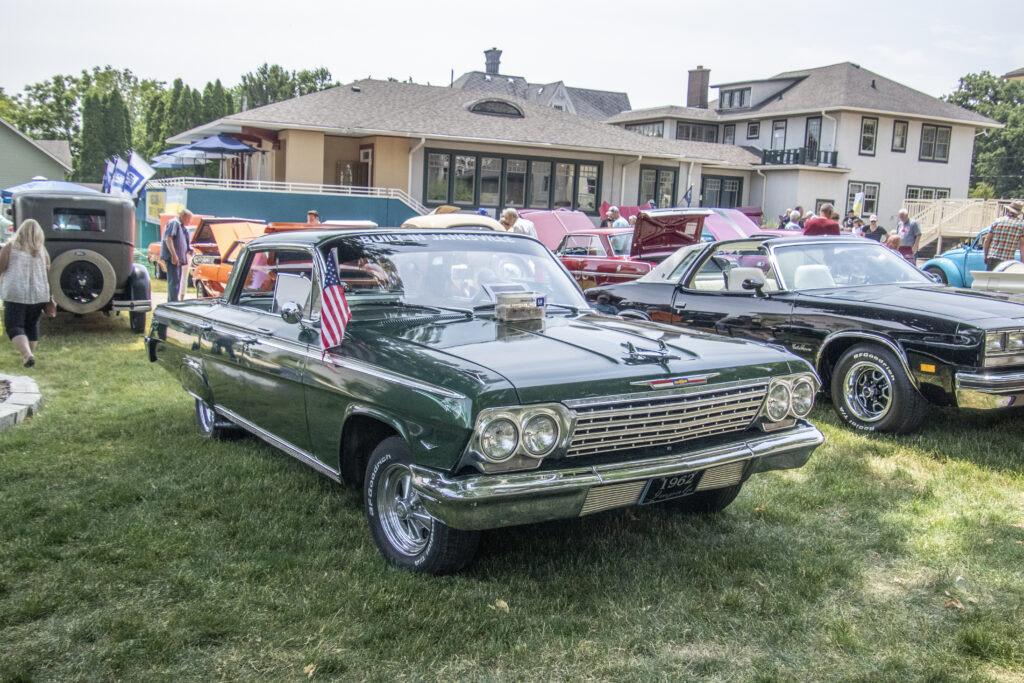
Vintage Car Show
Starting in June, for people who like cars, there will be a vintage car show happening on June 16 in Janesville. Enjoy showing off your cars with new people, all vehicles are welcome to come to the event.
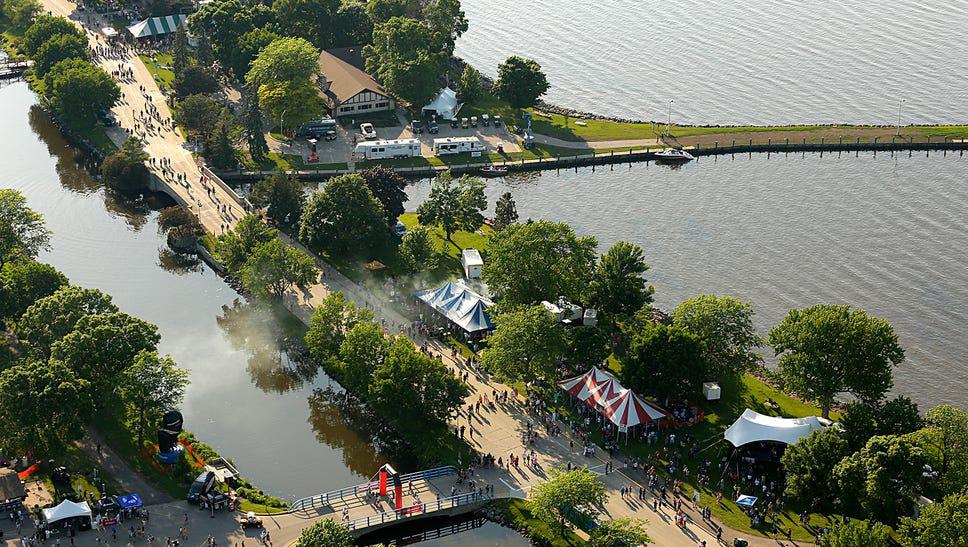
Walleye Weekend
Walleye weekend is coming up right as seniors are graduating, on June 7 to 9. Full of bands, food and concessions all at Lakeside Park.
Summerfest
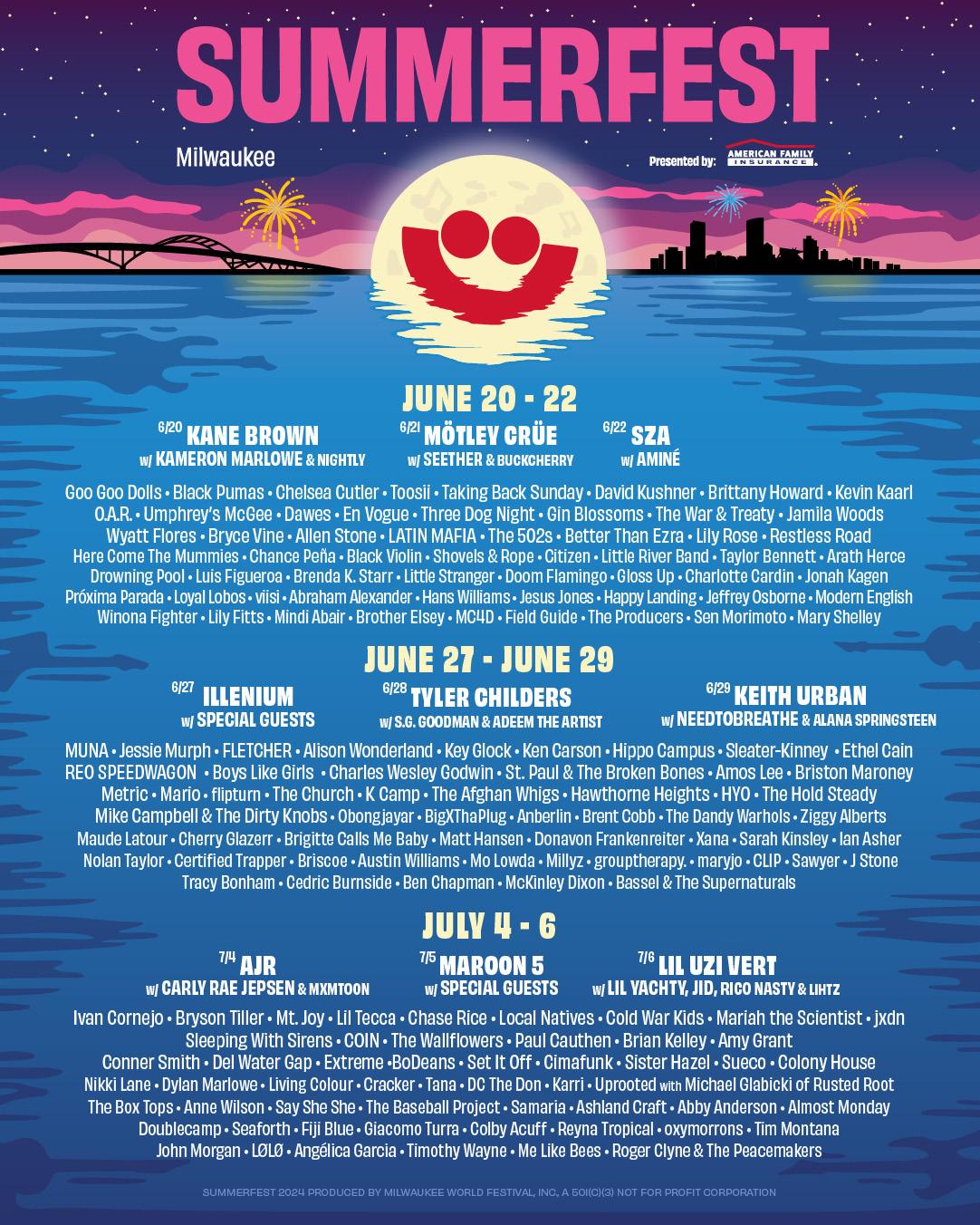
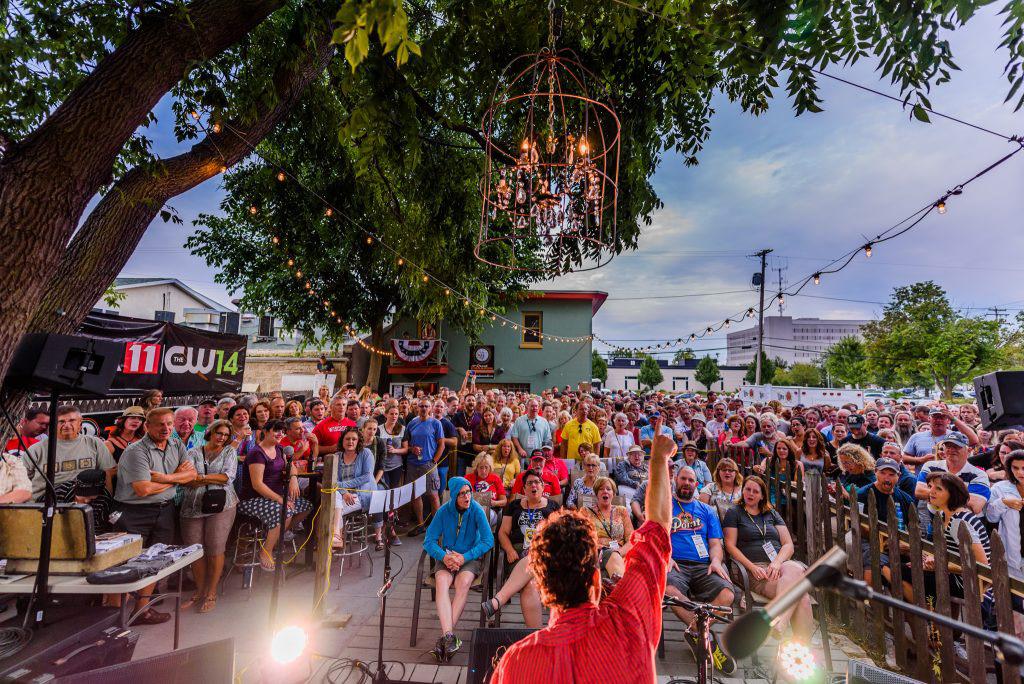
Summerfest is starting on the 20 of June and will go till July 6. With bands like SZA, Maroon 5 and Sleeping With Sirens. Each setup goes on for three days tho. So make sure to look at who you would like to see on those days.
GRAPHIC BY FREEPIKON CANVA
PHOTO BY ROCK COUNTRY HISTORICAL SOCIETY
PHOTO BY FOND DU LAC REPORTER
PHOTO BY RONNY BARRIOS
PHOTO BY DOUG RAFLIK
PHOTOS AND GRAPHIC BY SUMMERFEST
Fireworks
For the Fourth of July, there are many places to go to watch the fireworks, including Fond du Lac, Milwaukee and even Madison. You can even go and watch them multiple times for that week. Fondy’s fireworks will be on July 4, starting at 9:30 p.m. at Lakeside Park. More options like fireworks in Madision will be on July 5 at 9:30 p.m. Milwaukee has a waterfront fireworks show on July 3. More fireworks continue on July 4 at many parks like Lincoln Park and Washington Park.
Reptile Expo
In Fondy, there will be a scaled-up reptile expo happening on July 7 at the fairgrounds. General admission is $7, and VIP is $14. You can interact with thousands of snakes, lizards, frogs, tortoises and tarantulas.
Fondy Fair
The annual Fondy fair starts July 17 and goes until the twentyfirst. There will be rides and plenty of concessions around the fairgrounds and even bands playing, like Pop Evil and Fuel or Scotty McCreery.
Airventure
Coming up in Oshkosh, the Airventure is starting July 23 through the twenty-eighth. This event is for everyone interested in planes, or even working there during the summer. It will have air shows, camping and even fireworks!
State Fair
The state fair is coming up at the start of August starting the first through the eleventh. There is plenty to do at the state fair with more rides and even more concessions. The lineup for bands playing this year are TLC with Jordin Sparks, Yung Gravy with Nicky Youre and comedian Gabriel Iglesias.
Mile of Music
Mile of Music is in Appleton ad starts on the first of August and goes on until the fourth, a free music festival that spans a mile through downtown Appleton, consisting of 200 artists and 40 venue. There’s plenty to do, even if you only go for one day.
Get Outdoors
As for other things to do around the summer, having a picnic with friends, or even going on a little road trip could be something else to do, as well as having a fire, or going on walks. Even if you don’t go outside on those cold or rainy days, you could always have a day for yourself, or have sleepovers with friends.
PHOTO BY FOND DU LAC REPORTER
PHOTO BY CHRIS MILLER
PHOTO BY FOND DU LAC REPORTER
PHOTO BY JASON CARTER
PHOTO BY GRAHAM WASHATKA
PHOTO BY MOLCHANOVDMITRY ON ISTOCK
Cardinal Columns May 2024
2. when industries mass produce clothing
3. a 36 on the ACT
7. Legend of ___ (video game)
10. a type of church where the choir performed
12. used to access websites
14. the "happy" chemical in our bodies
15. people who typically experience performance anxiety
Down
1. location of Walleye Weekend
4. a platform used to watch anime
5. abbreviation of the state climbing organization
6. where the choir music festival was held
8. 1 under par
9. the team that drafted Caitlin Clark
11. adviser of Cardinal Columns
13. abbreviation for a common struggle among performers