Founded in 1972, the Maryland Chapter of ASLA is the professional association for landscape architects, representing nearly 400 members in 2024 Landscape architecture is a comprehensive discipline of land analysis, planning, design, management, preservation, and rehabilitation. ASLA promotes the landscape architecture profession and advances the practice through advocacy, education, communication, and fellowship.
ACKNOWLEDGEMENTS
We would like to thank our members who continue to support the chapter and whose amazing work is included in this issue We would like to extend a gracious thanks to our sponsors, many of whom have advertised in this magazine.
I am not sure where the last twelve months have gone and find it hard to believe that this is the last President’s letter that I will be writing.
The National ASLA Conference was a huge success, and I want to thank all of you who submitted proposals for panels, presentations, field trips. Having Maryland as a sort of co-sponsor of the event was a big deal and I appreciate the extra work that you all did to help make this happen. I have heard great things about the sessions that I could not attend – the common take away being “what a whirlwind!” And DC shone.
This past year has been a whirlwind, too; and a pleasure and learning experience for me. I want to thank my Executive Committee for its help and support in navigating this new territory. I am proud of what we have accomplished over the last year: from creating and executing a successful Climate Action Plan Challenge for students within the Chesapeake Bay Watershed, to a wonderful Awards Gala at Brookside Gardens, and recently co-hosting the What’s Out There Baltimore weekend with The Cultural Landscape Foundation. Our membership has grown to a new high, thanks largely to Patrick Whealton’s attentiveness, and the student membership is the highest it has ever been. This is so important in ensuring the future of the chapter.
We had a very productive strategic planning meeting yesterday, in which we set new goals for the coming year and looked at the calendar and budget. Thank you to all of you who attended and contributed – from Executive Committee members to Committee Chairs, to student representatives. We have a robust line up of activities and events, including the Regional Conference, which was put on hiatus this year due to the National ASLA Conference being held in DC. I know it is only October, but if you are interested in participating as a speaker or sponsor, please let me know More information to come in the next few months
Lastly, I know that our new President, Michael Pullano, is going to do a stellar job It was wonderful to have his assistance this year as incoming-President and I will do all that I can to support him in his new role Once again, thank you to Om Khurjekar for encouraging me to take on this position It has been wonderful to get to know everyone on the Board better and I feel very fortunate to have had the help and backing of such a strong Executive Committee Thank you all!
Sarah Trautvetter, ASLA President, MDASLA
TRUSTEE’S MESSAGE
Dear Colleagues,
It’s my pleasure to write my final message in EMBARK as the Trustee of MDASLA EMBARK has always been close to my heart, as it began during my year as President in 2010 The idea was conceived and launched by Brian Reetz, ASLA; Colleen Bathon, ASLA and myself In the later years Courtney Galiber, ASLA; Dennis Nola, FASLA; Ben Boyd, ASLA; Joe Ignatius, ASLA; and others helped take it to the next level I am confident it will continue to grow and improve under the leadership of our current and future leaders, and will keep celebrating the work of our members
As I transition into my new role as Vice President of Government Affairs, I want to express my sincere gratitude for the opportunity to serve as Trustee of the Maryland Chapter of ASLA It has been a rewarding journey, and I am proud of the progress we’ve made together Looking ahead, I’m excited for the future of our chapter and our profession
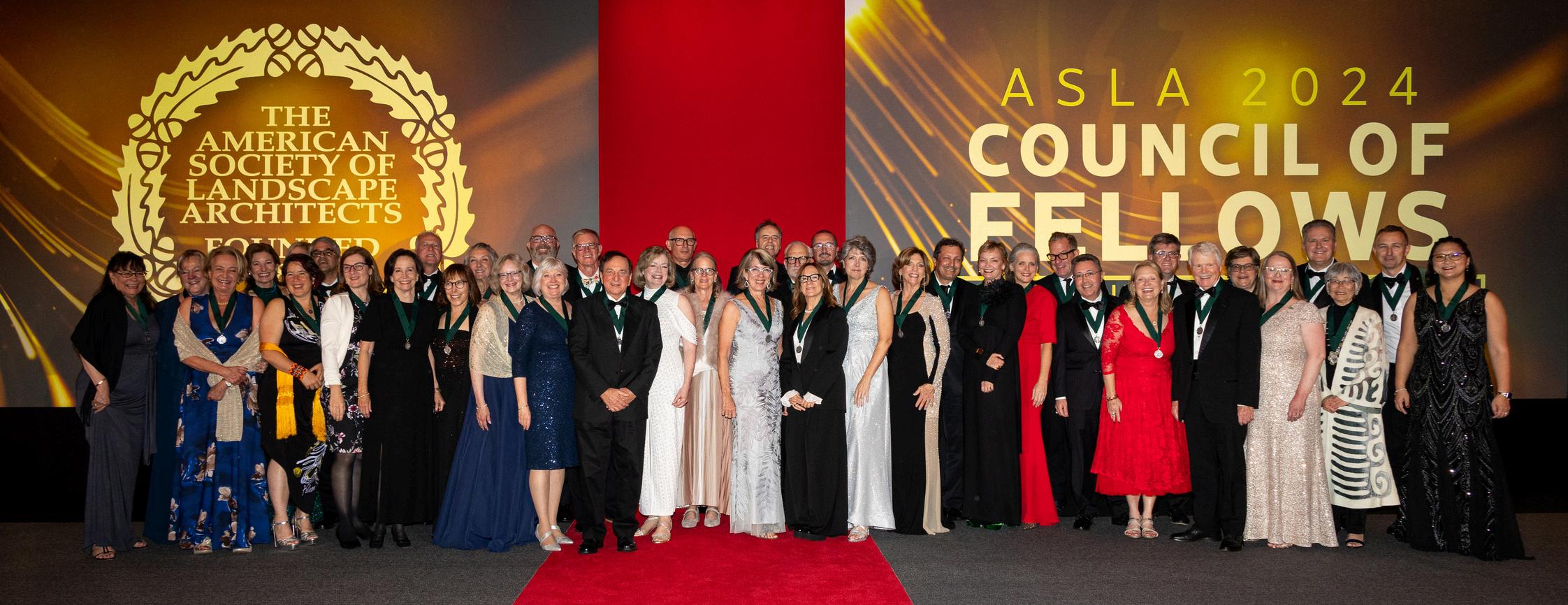
This year is particularly special as we celebrate the 125th anniversary of ASLA This milestone highlights the rich history and continued importance of our profession, and it has been an honor to be part of this celebration The national conference, held in the Nation's Capital, was a standout event, bringing Landscape Architects from across the country together for a week of learning, networking, and inspiration A special moment for me was the celebration of our newest Fellows, Chris Schein, FASLA and Grace Fielder, FASLA Congratulations to both Chris and Grace Your work, leadership and contribution to the profession are invaluable
I’d like to extend a heartfelt thank you to David Myers, ASLA, for his willingness to step in during the interim David’s commitment to our chapter and his leadership are, and will always be, invaluable Finally, I would like to warmly welcome Vernon Hustead as the new Trustee of MDASLA I am confident that Vernon will bring fresh ideas and energy to the position, and I look forward to seeing how our chapter continues to grow under his guidance Thank you again to all our members, sponsors, and volunteers Your dedication makes everything we do possible Let’s keep moving forward, together
Best regards,
Om Khurjekar, ASLA Trustee, MDASLA
YEAR-IN-REVIEW
OCTOBER 2023
S
Our October strategic planning meeting was a success, with active participation from our student chapters at Morgan State University and the University of Maryland We are excited to strengthen student involvement and increase public visibility for our profession This term, we have a robust Executive Committee and the highest volunteer participation in years A heartfelt thank you to all who contribute their time and energy to advancing the chapter and profession!
At the National Conference in Minneapolis, Maryland ASLA leadership connected with colleagues nationwide during the Chapter President Council meeting. We gained valuable insights from National ASLA, including updates on the strategic vision for 2030 from CEO Torey Carter-Conneen and a call to action from Past-President Emily O’Mahoney to build a stronger public presence for landscape architecture
DECEMBER 2023
Maryland ASLA wrapped up the year in style at Hysteria Brewing Company in Columbia, MD Members enjoyed festive cheer, connected with colleagues, and celebrated the season in their holiday best The highlight of the evening was the unveiling of EMBARK VIII, showcasing the year's accomplishments and inspirations
FEBRUARY 2024
In February, we had an incredible evening celebrating our Circle of Support, which has grown from 8 to 12 supporting firms this year thank you for your invaluable commitment to sustaining our chapter’s initiatives, including scholarships, management services, and advocacy Over delicious bites, we connected and exchanged innovative ideas, making the event a true highlight of the season A special thank you to Audrey Seiz, last year’s Student Fellowship Recipient, who captivated us with her enlightening presentation on how humans psychologically respond to diverse landscapes and natural features through Virtual Reality. Your work continues to inspire us! C I R C L E O F S U P P O R T H A P P Y H O U R
and Design.
MARCH YEAR-IN-REVIEW
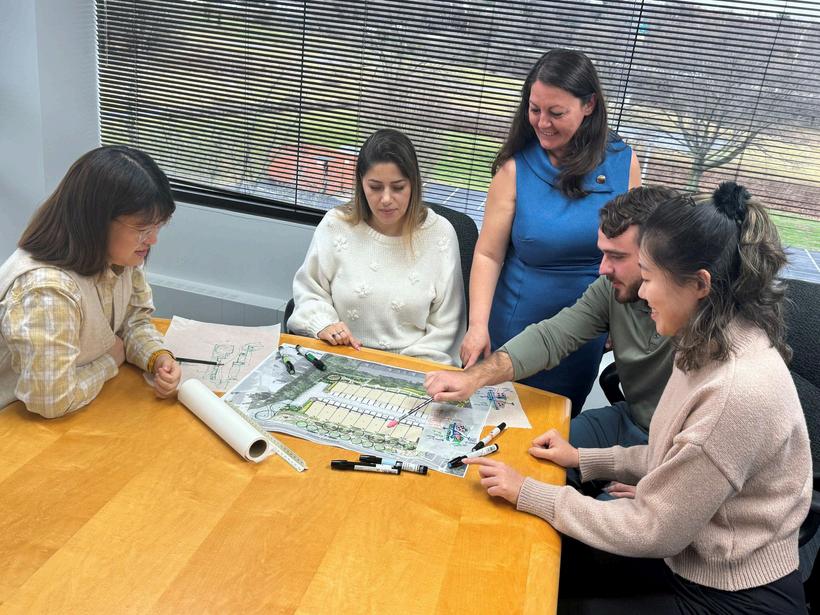
We are thrilled to announce the success of the 202 year, 31 firms and agencies across MD, DC, and NoV the University of Maryland and Morgan State U firsthand look at the profession of landscape arch like office tours, project discussions, site visits, and m one of our most impactful for connecting stude Kennedy Thomas-Cogar shared: “Job Shadow Wee insights by exposing them to various types of firms, best-fit work environments We get to meet profes mentors, giving us someone to turn to for advice ” A heartfelt thank you to all the firms and agenc program such a success!
On March 14, 2024, the Maryland Chapter partnered with the University o Maryland Student Chapter to host a Portfolio Review session Students had the opportunity to receive valuable feedback on their portfolios from seasoned professionals. The review provided an engaging platform for students to refine their work and gain insights as they prepare to enter the profession. Following the review, attendees gathered at Ledo Pizza for a lively Happy Hour sponsored by Division 32 Students and professionals continued conversations in a more relaxed setting, building connections and fostering mentorship opportunities
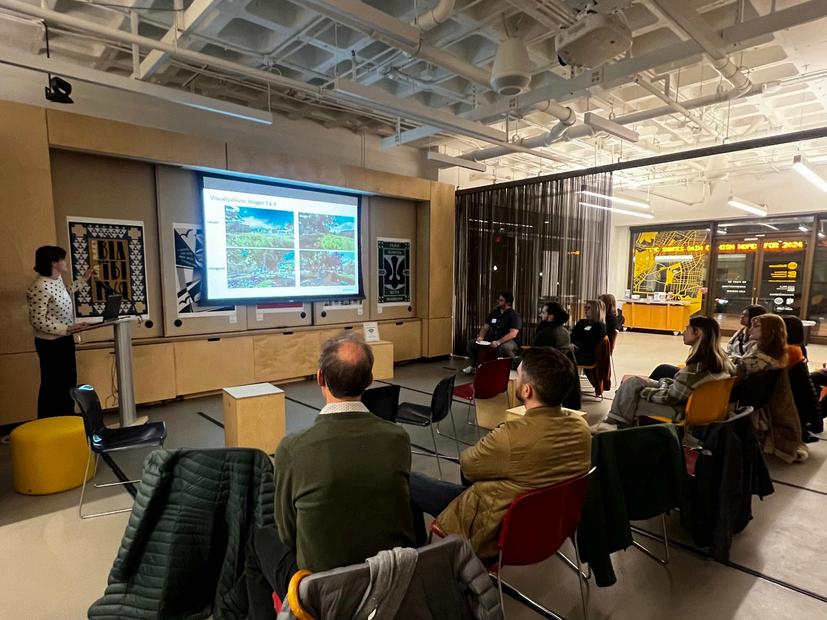
The Maryland Chapter partnered with Morgan State University to offer CEUs for two impactful lectures as part of the Morgan SA+P Spring Lecture Series The first lecture featured Emma Gregory and Breck Sullivan, who explored "Cities as Agents of Change: Tools and Strategies for a Thriving Chesapeake Bay " This lecture was recorded and can be viewed here
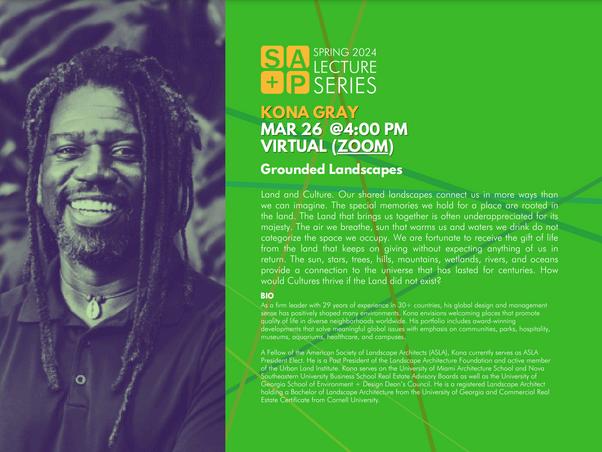
The second lecture, "Grounded Landscapes: Land and Culture," was presented by Kona Gray, FASLA. These sessions provided valuable insights into landscape architecture and environmental stewardship, furthering professional development and fostering collaboration within the community.
“Job Shadow Week offers students valuable insights by exposing them to various types of firms, helping them discover their best-fit work environments. We get to meet professionals who often become mentors, giving us someone to turn to for advice ”
"I had the opportunity to job shadow at Biohabitats which exposed me to a facet of landscape architecture (Ecological Restoration and Community Placemaking) that we don’t get much experience with during our time in undergrad.”
- Caleb Austin, UMD Student
o interact with their team, tour nd delve into the multifaceted n interdisciplinary firm left me pired...
mmend other students to b Shadow Week! “
o, UMD Student
YEAR-IN-REVIEW
APRIL
To kickoff World Landscape Architecture Month (WLAM), our chapter’s Junior Professional Representatives took over our Instagram every Tuesday to showcase a "day in the life" of young landscape architects Each week, they provided a behind-the-scenes look at their work, sharing insights into their daily routines, challenges, and the exciting projects they’re involved in This initiative highlighted the diverse experiences and contributions of emerging professionals in the landscape architecture field, engaging our community and inspiring the next generation of landscape architects.
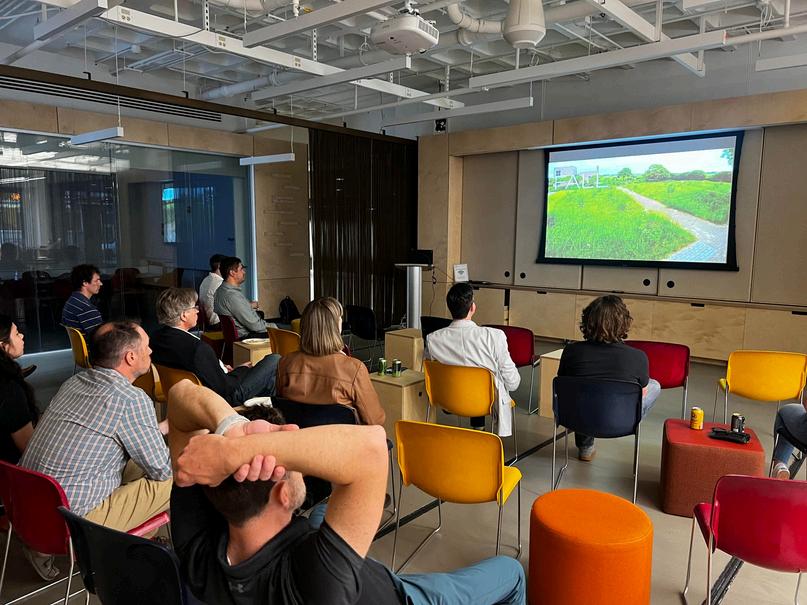
In celebration of WLAM, Maryland ASLA hosted a Movie Night at the Center for Architecture and Design, open to all members and especially aimed at emerging professionals. Attendees enjoyed the film "FIVE SEASONS: The Gardens of Piet Oudolf," which offered an inside look at Oudolf’s creative process, from his abstract sketches to his theories on beauty and the ecological impact of his designs Hosted by Division32, the event featured food, drinks, and the opportunity to earn continuing education credits It was a fantastic evening of learning, networking, and inspiration!
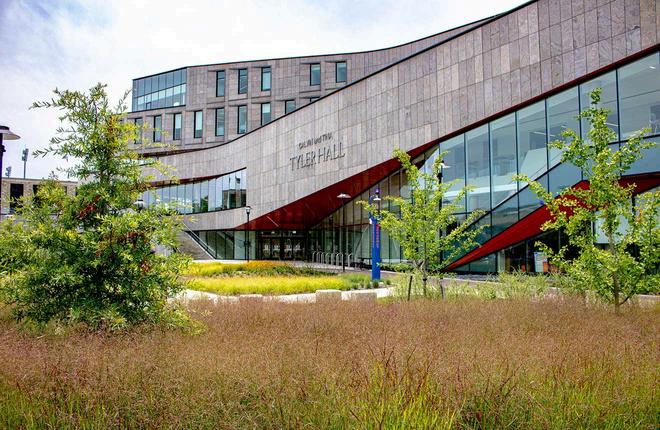
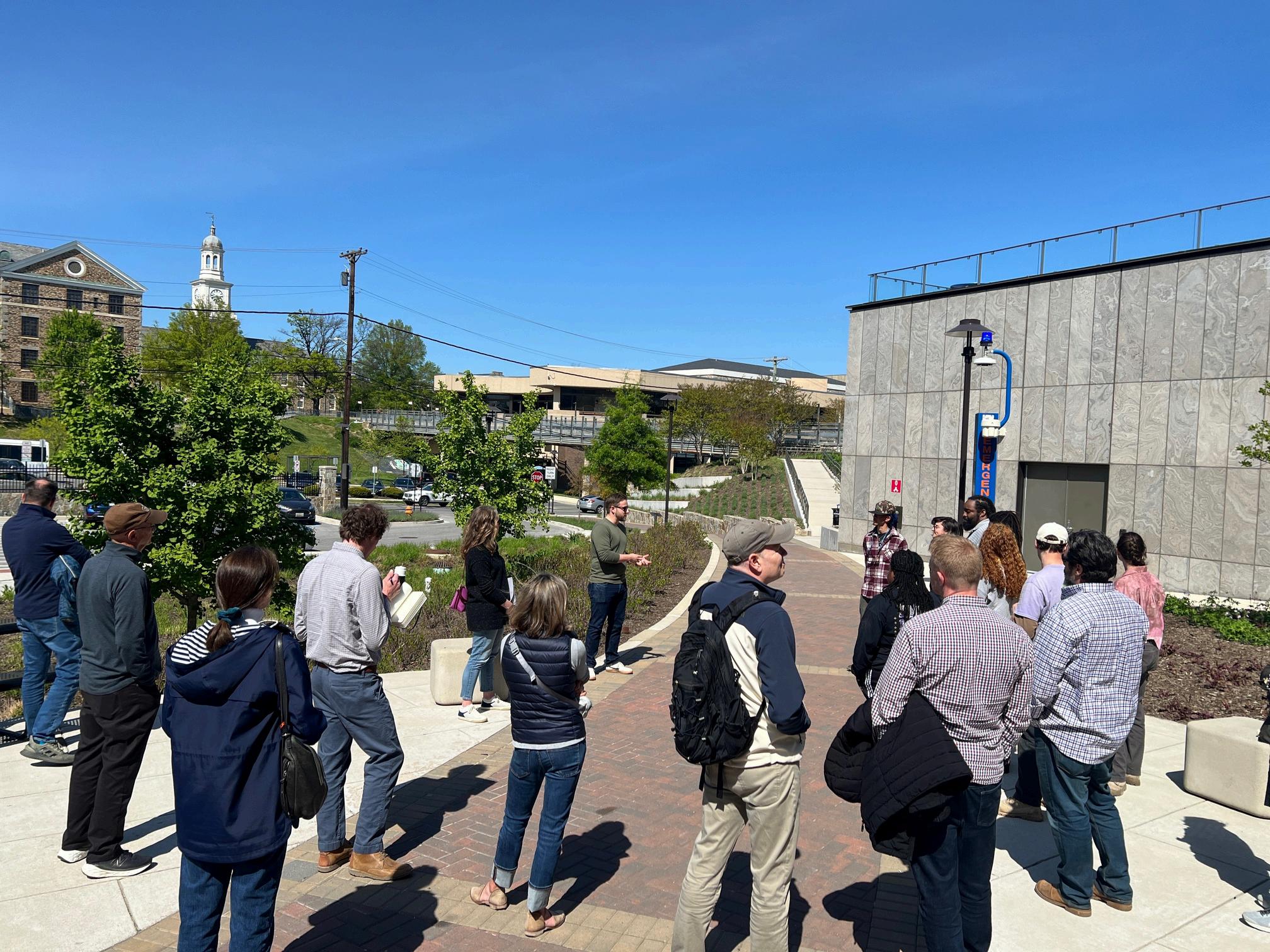
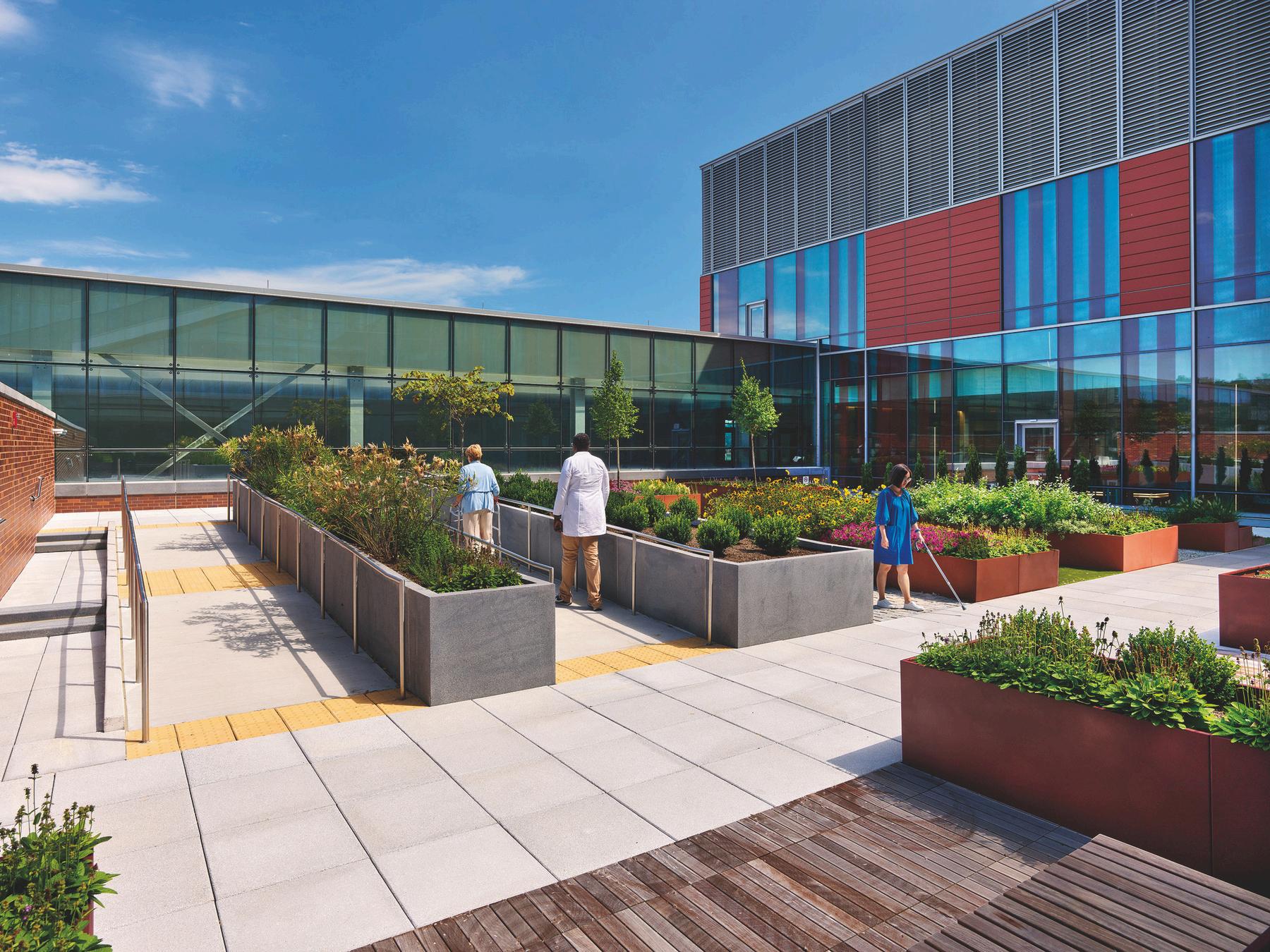
The Professional Development Committee hosted an engaging in-person tou two recent projects on the campus of Morgan State University. The first stop Calvin and Tina Tyler Hall, a 2021 MDASLA Honor Award-winning project Le Alice Storm Jones and Zach Baier, Principals at Floura Teeter, attendees lea about the sustainable planting design and the integration of stormw management facilities, as well as the design of the second-floor intensive g roof terrace The second stop was a tour of Thurgood Marshall Hall, university’s newest residence hall, guided by Om Khurjekar, a Principal at H Coplan Macht. Om highlighted the thoughtful landscape design, which ble native plantings, rain gardens, and stormwater infrastructure into a cohesive innovative environment. The event provided a unique opportunity to exp forward-thinking campus projects and connect with the professionals be them
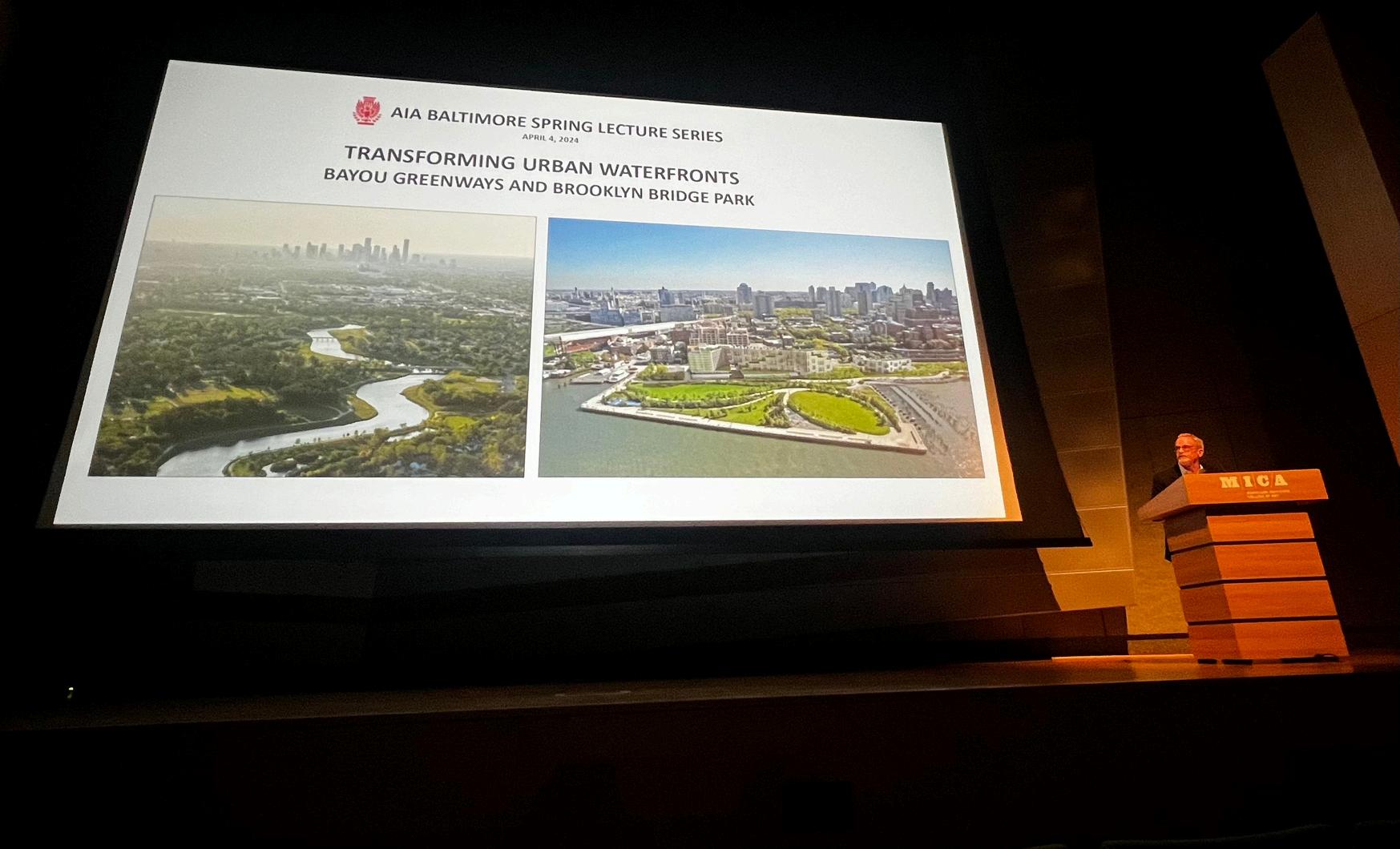
For over 40 years, AIA Baltimore and the Baltimore Architecture Foundation have presented an annual lecture series focused on design and architecture in Baltimore In 2024, under the theme Amplifying Innovation, AIA continued its partnership with Maryland ASLA to offer two lectures accredited for landscape architects. One lecture, titled "Transforming Urban Waterfronts: Bayou Greenways and the Brooklyn Park Bridge" was presented by Chip Place and Matthew Urbanski, who explored the development of two transformative urban parks: Bayou Greenways in Houston and Brooklyn Bridge Park in New York City Both projects, shaped by community engagement and innovative design, have played a pivotal role in their cities' park renaissances, enhancing resilience, public health, and economic sustainability.
Tour led by Floura Teeter at Tyler Hall, MSU
YEAR-IN-REVIEW
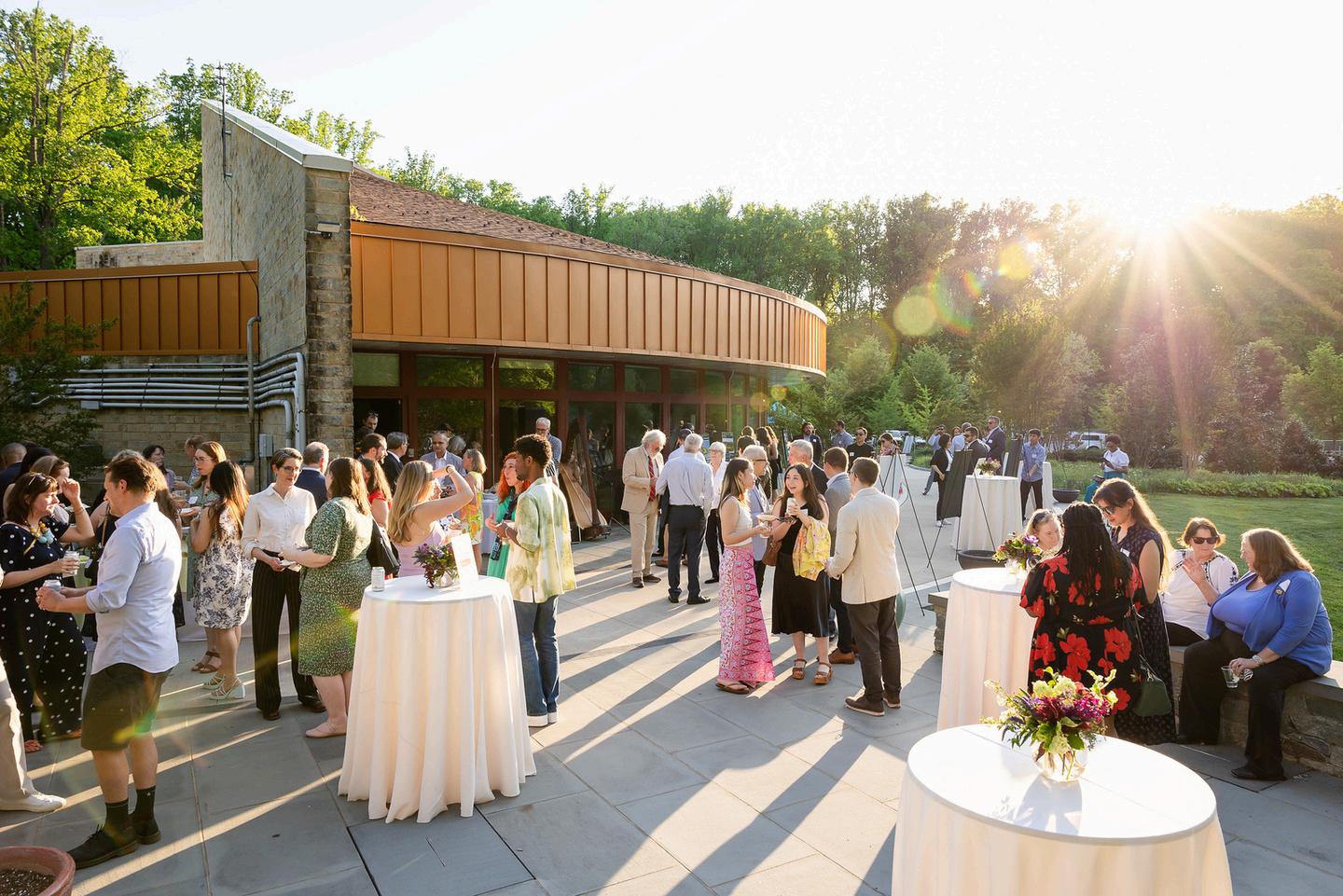
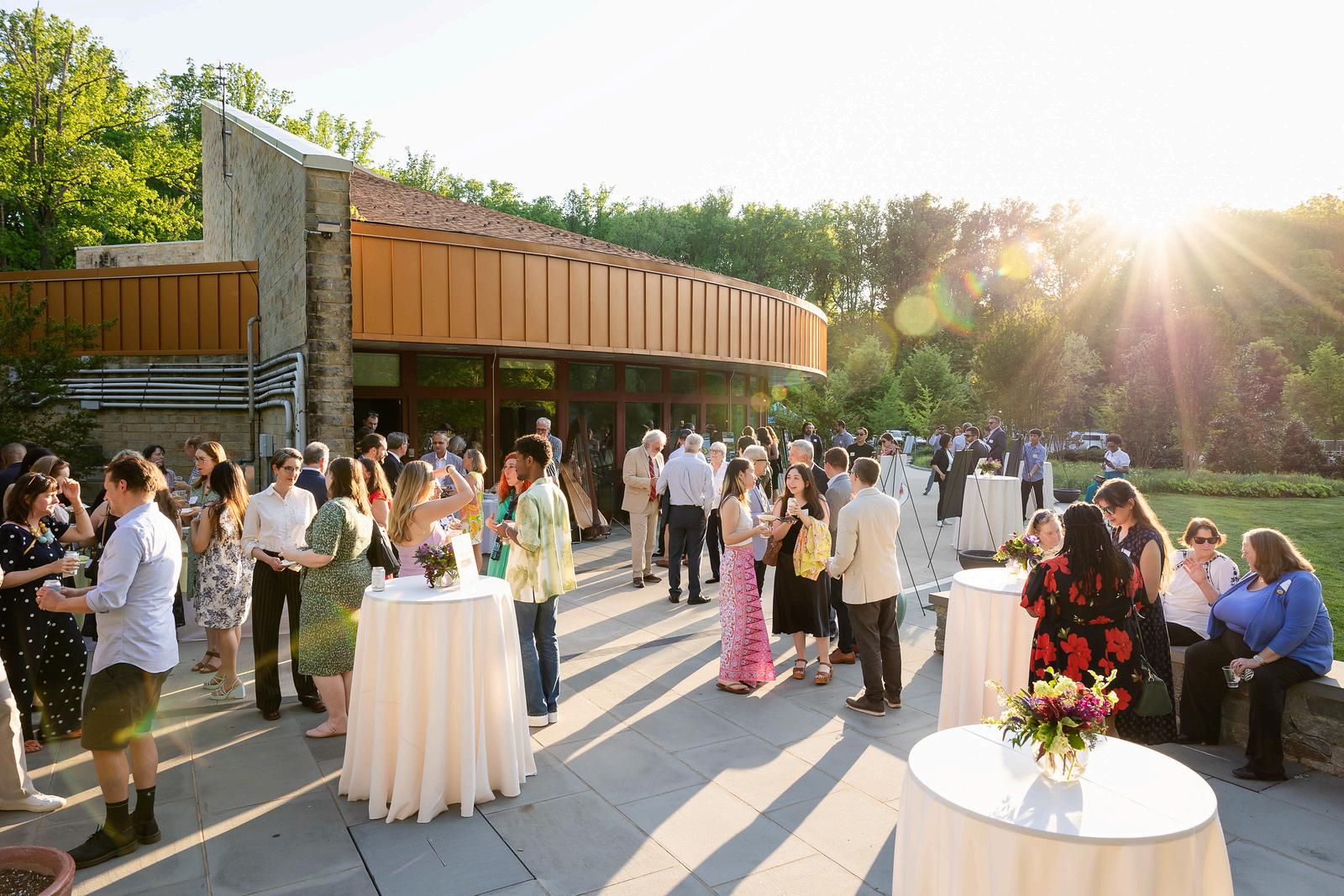
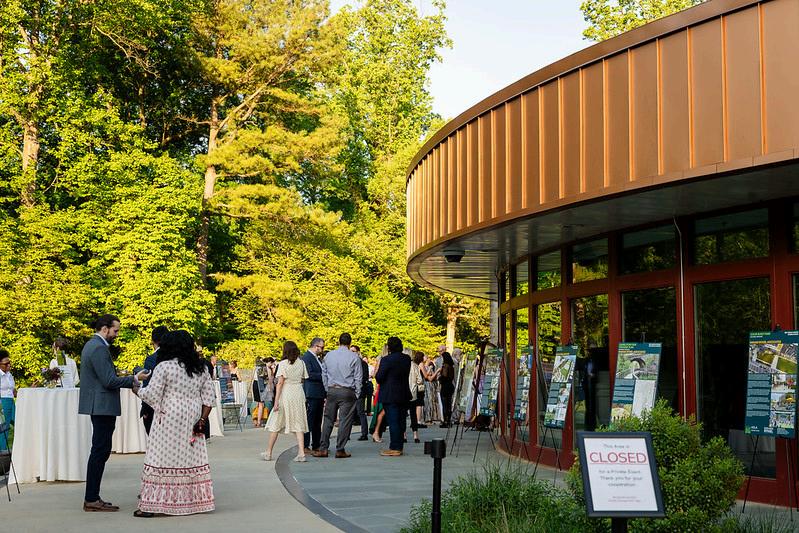
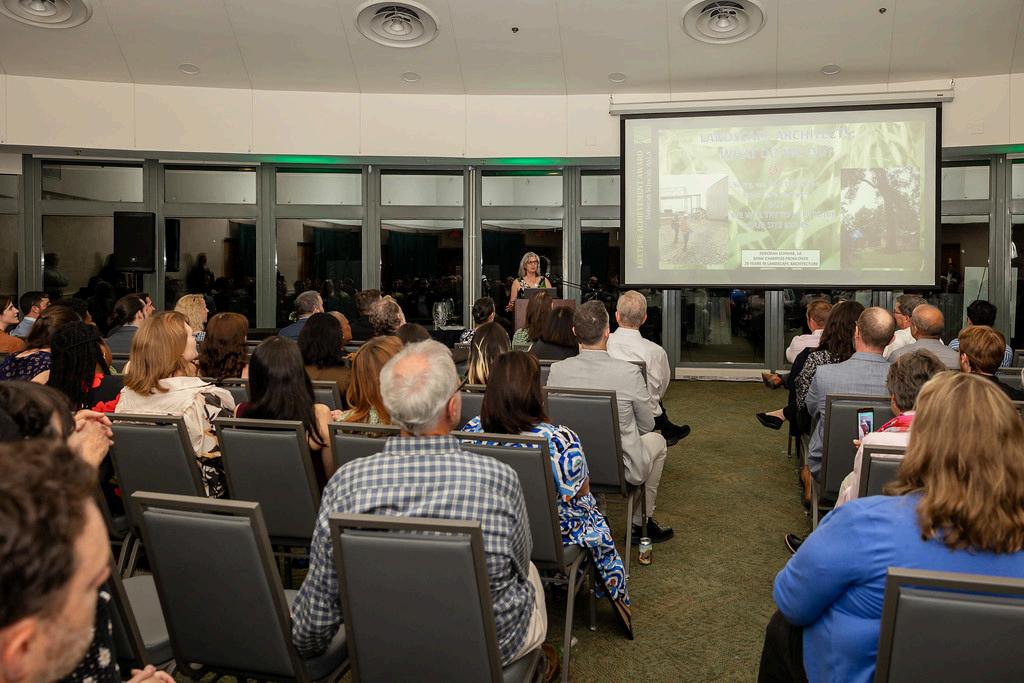
The Spring Awards Gala was a memorable evening held at the beautiful Brookside Gardens, where members of the landscape architecture community gathered to celebrate outstanding achievements in the profession The floriferous garden setting, paired with delicious food and drinks, set the stage for a night of camaraderie and recognition Keynote speaker Joy Columbus, Director of Smithsonian Gardens, captivated attendees with a revelatory presentation on the historic development of the Smithsonian’s grounds, inspiring all to explore the intimate gardens beyond the National Mall. The evening showcased the exceptional talent and dedication of Maryland's landscape architecture community, including both seasoned professionals and promising students Be sure to check out the awards section of EMBARK to learn more about this year’s award winners and their inspiring contributions!
On May 8, 2024, members of Maryland ASLA proudly represented the state chapter and national ASLA during our annual Advocacy Day on Capitol Hill Our team met with staff from Senator Chris Van Hollen and Senator Ben Cardin’s offices to share updates about our chapter, the critical role of landscape architects in the built environment, and our contributions to addressing water quality, social justice, and climate change. We advocated for two key pieces of legislation: the Freedom to Invest in Tomorrow’s Workforces Act (House Bill 1477 / Senate Bill 722) and the Water Infrastructure Sustainability & Efficiency (WISE) Act (House Bill 2921), reinforcing the national ASLA voice on Capitol Hill Learn more about these important initiatives here At the state level, the 2024 Maryland General Assembly concluded a productive 446th Legislative Session, during which over 3,480 bills were introduced The session focused heavily on policies related to climate change, resiliency, environmental justice, and protections for natural resources and underserved communities. Maryland ASLA’s Advocacy Committee closely monitored 80 pieces of legislation aligning with ASLA policies and supporting the landscape architecture profession. Several key bills were passed and signed into law by Governor Moore as of May 23 For a detailed session overview, be sure to read our full report here
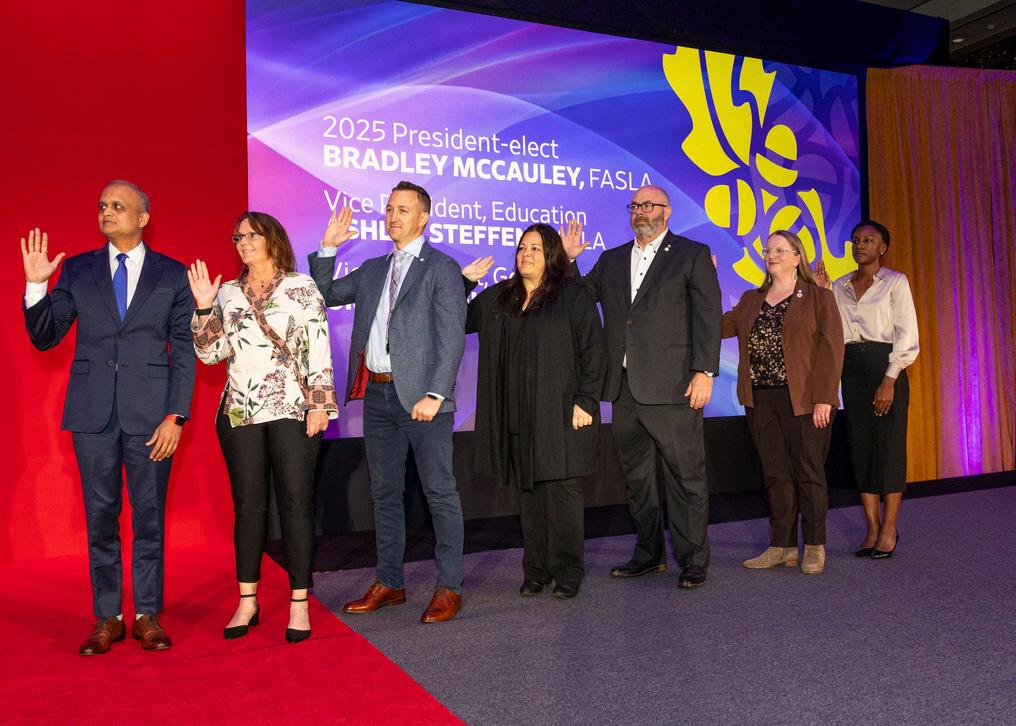
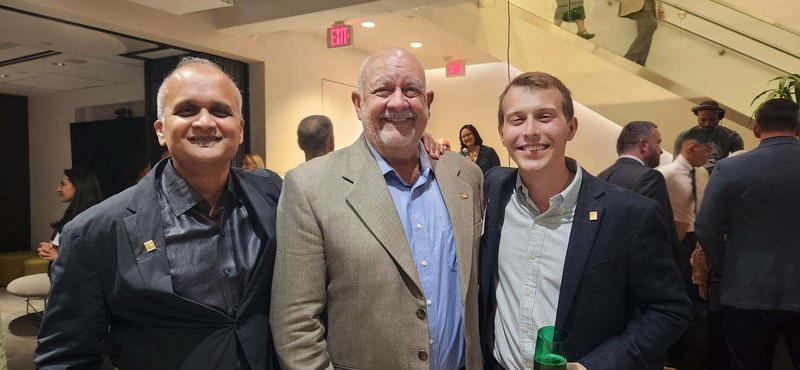
Om Khurjekar, ASLA, our chapter Trustee, was elected to the National level of ASLA as Vice President of Government Affairs Om was sworn into office during the annual conference in Washington, D C Congratulations, Om!
Cocktail Hour during the Design Awards Gala at Brookside Gardens. All gala images courtesy of Side A Photography.
YEAR-IN-REVIEW
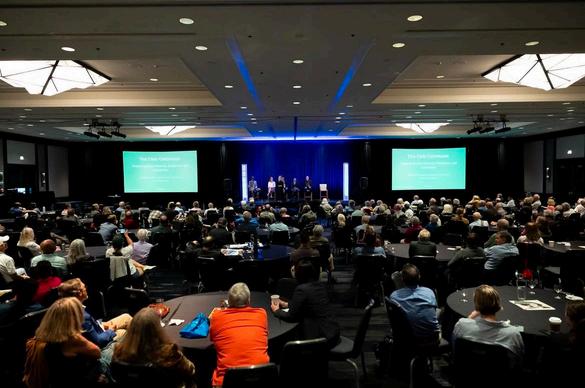
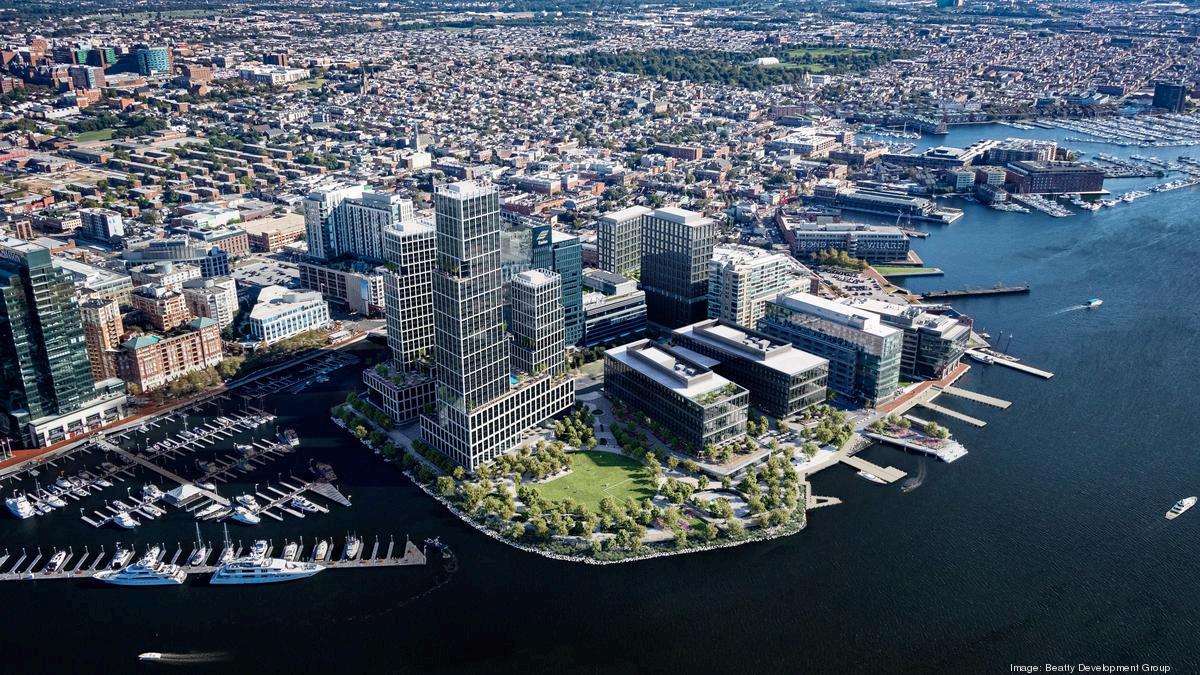
Later in May, Maryland ASLA partnered with AIA Baltimore’s Urban Design Committee to host the "Inner Harbor 2024: A City Planning Conversation ” The event invited the public to a free moderated panel on May 8, 2024 In a moderated discussion, panelists represented the disciplines of Architecture/Urban Design, Economics, Environmental Resilience, Landscape Architecture, and Transportation Planning The event was geared toward educating the public on the historical significance of Inner Harbor Park, precedents set with other waterfront developments, and how to navigate proposed policies and where we are in the legislative process. View the presentation with the audio recording here.
JUNE
In recognition of ASLA’s 125th anniversary, National ASLA invited the Maryland Chapter to submit a profile highlighting our history and contributions. The profile, authored by past Chapter President Vernon Hustead, reflects the Chapter’s growth, advocacy, and dedication to education, legislation, and design a legacy that continues today To learn more about the Maryland Chapter’s story, visit the full article here
JULY
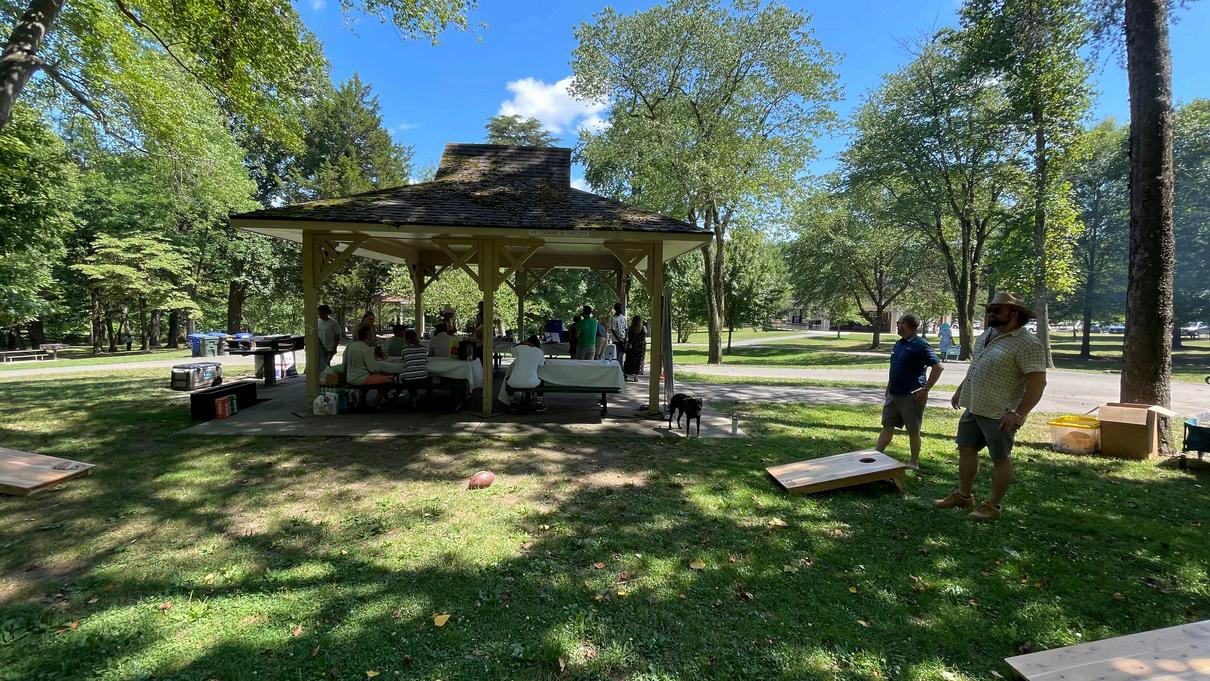
Division 32 hosted the first annual Summer Shindig, bringing our two local ASLA chapters together for a family-friendly day at the park! Attendees brought their kids, dogs, and other loved ones for a fun day of grilling and cornhole in one of the pavilions at Wheaton Regional Park Participants formed cornhole teams with colleagues from their firms, competing for prizes and the coveted office trophy! Teams showcased their skills in a single-elimination, best-of-three tournament against other local firms
YEAR-IN-REVIEW
AUGUST
Division32 hosted a lively happy hour for emerging professionals at the Center for Architecture+Design, combining networking and refreshments with an engaging educational opportunity The event featured Permaloc’s fast-paced, accredited CEU presentation on landscape edging and hardscape restraints, offering attendees insights into the importance of lines as a foundation of design and how to ensure they are maintained throughout a project’s lifetime While enjoying light fare and drinks, participants learned about edging applications, profiles, materials, and their benefits to installers. The evening struck the perfect balance of social connection and professional development in a relaxed setting.
SEPTEMBER
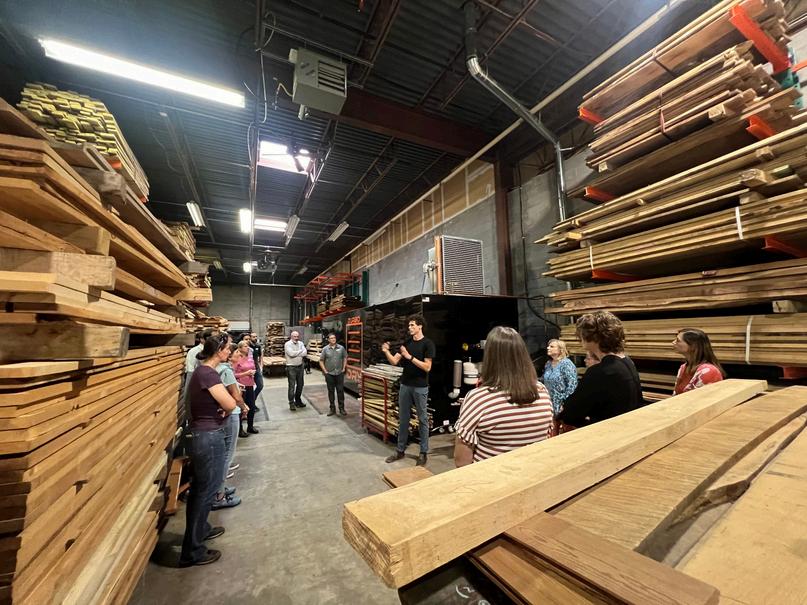
Fallen Lumber Co in Halethorpe, MD, hosted a hands-on tour showcasing Carbon Smart Wood and its role in decarbonizing the built environment Participants learned about the journey from tree to finished building product, differences between salvaged and industry materials, and challenges with current lumber grading. Team members highlighted opportunities to divert waste, innovative uses of salvaged materials, and the benefits of biophilic design for occupant well-being The event concluded with a happy hour at Guinness Open Gate Brewery
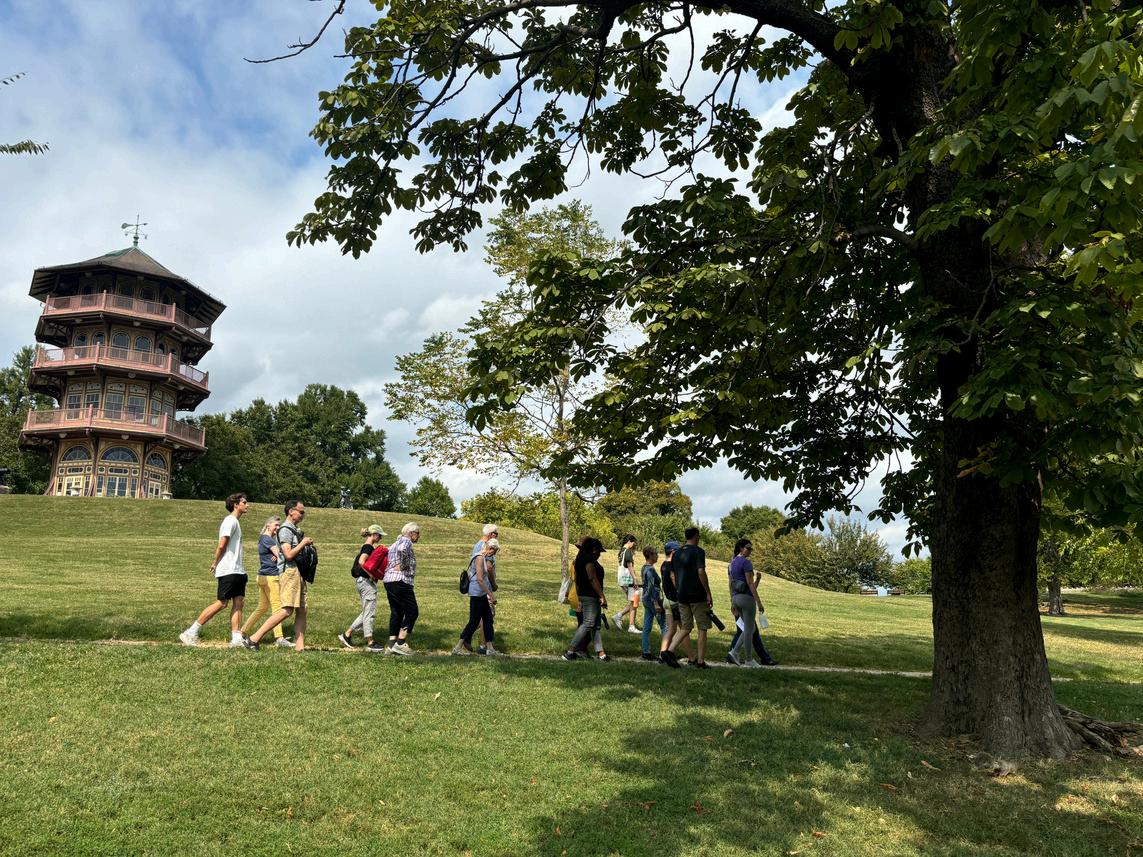
Maryland ASLA partnered with The Cultural Landscape Foundation for What’s Out There Weekend Baltimore on September 21-22, 2024, celebrating Baltimore’s unique landscape legacy with free, expert-led tours of gardens, campuses, plazas, parks, and cultural institutions. Participants explored the design history and stories behind familiar yet often overlooked places, guided by experts who shared personal anecdotes and insights into landscape architecture and urban development The weekend began with a launch event at the Center for Architecture+Design, sponsored by Victor Stanley, where TCLF unveiled the What’s Out There Baltimore Guidebook, also available digitally Access the guidebook here
PARK(ing) Day at Calvin Rodwell Elementary and Middle School
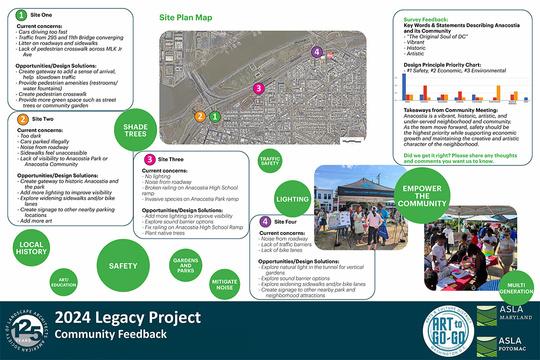
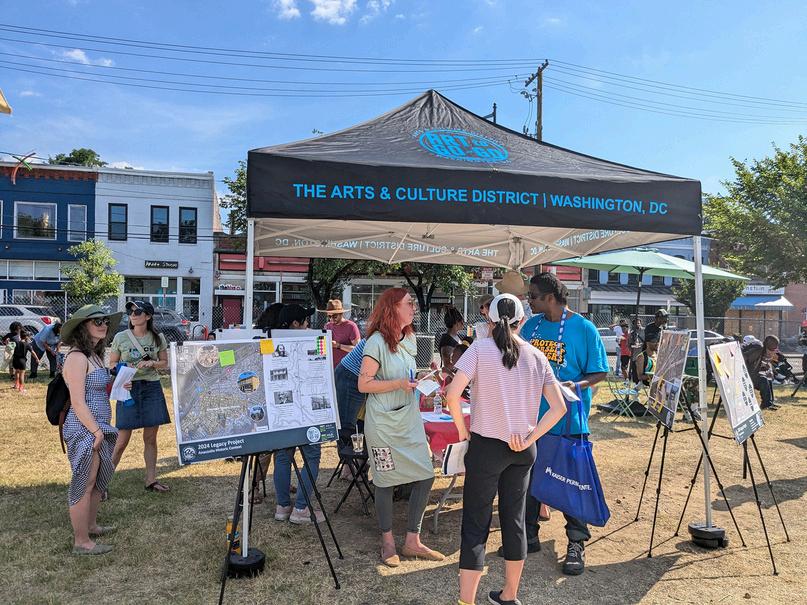
ASLA 2024 Legacy Project; Images courtesy of Chloe Gillespie
YEAR-IN-REVIEW
SEPTEMBER
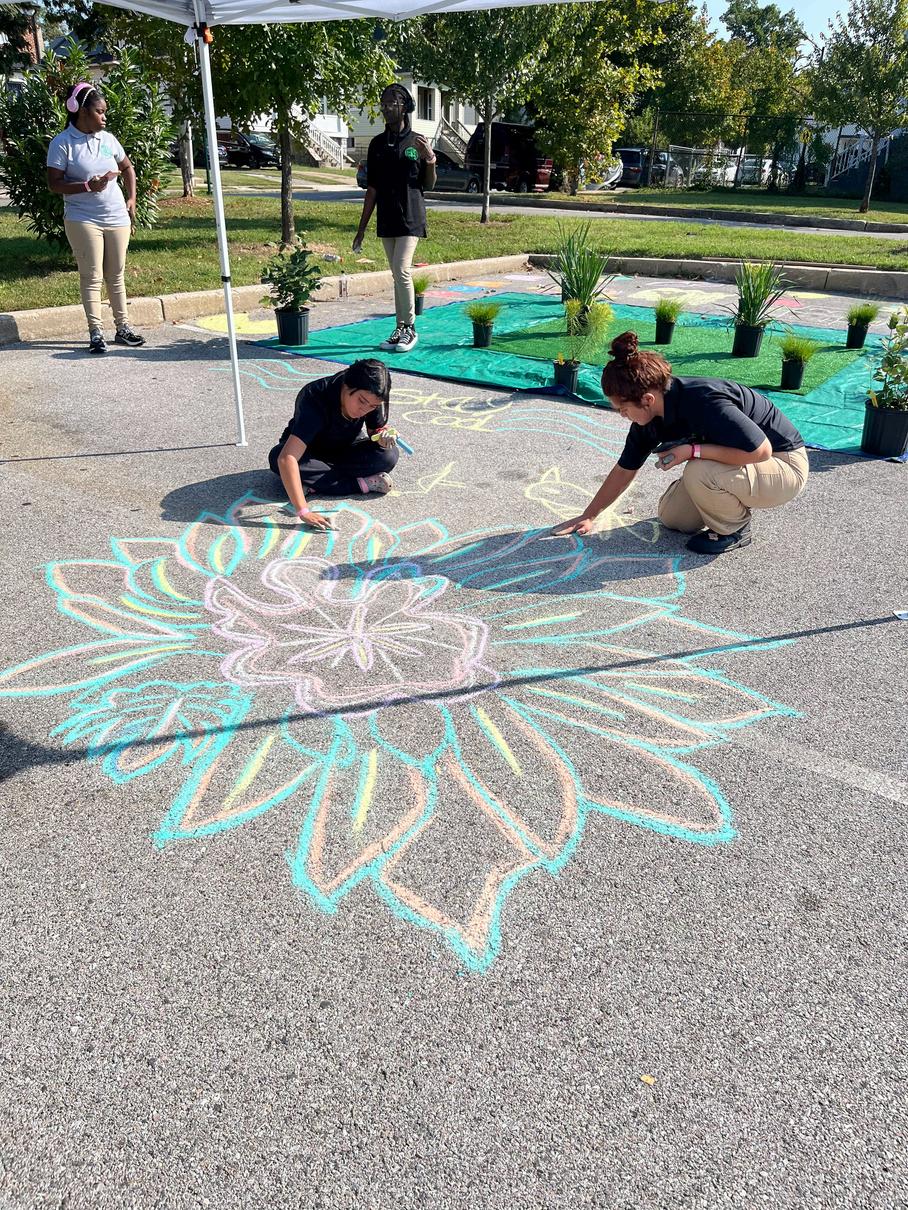
Maryland ASLA proudly joined over 1,000 students from Calvin Rodwell Elementary/Middle School and Forest Park High School for PARK(ing) Day, transforming Liberty Heights Avenue parking lots into vibrant, interactive spaces for play, creativity, and learning. Organized by Baltimore’s Department of Planning and supported by partners like Morgan State Landscape Architecture students and Perennial Farms, the event featured activities such as mural painting, games, and hands-on native plant installations Maryland ASLA and local professionals engaged students in discussions about urban planning and design, showcasing how underutilized spaces can be reimagined to connect and inspire communities
OCTOBER
In October 2024, the Maryland ASLA Chapter participated in the ASLA 2024 Conference on Landscape Architecture, held in Washington, DC, which drew over 6,500 attendees in celebration of ASLA’s 125th Anniversary The conference featured numerous events, including the National Leaders Reception, where several ASLA members were recognized for their contributions to the profession. The Board of Trustees met to pass key initiatives, including the FY2025 Annual Operating Plan and revisions to the Code of Environmental Ethics The Chapter Presidents Council also gathered, with 47 chapters represented, to discuss operations, advocacy, and public perception of the profession Notably, the MD Chapter supported the ASLA Legacy Project, "Reimagining Community Connections in Anacostia," alongside the Potomac Chapter The initiative aims to enhance connectivity and celebrate the unique identity of the Anacostia neighborhood. In addition, winning student posters from Maryland's Climate Action Plan Challenge were showcased at the conference, highlighting Maryland's commitment to climate action.
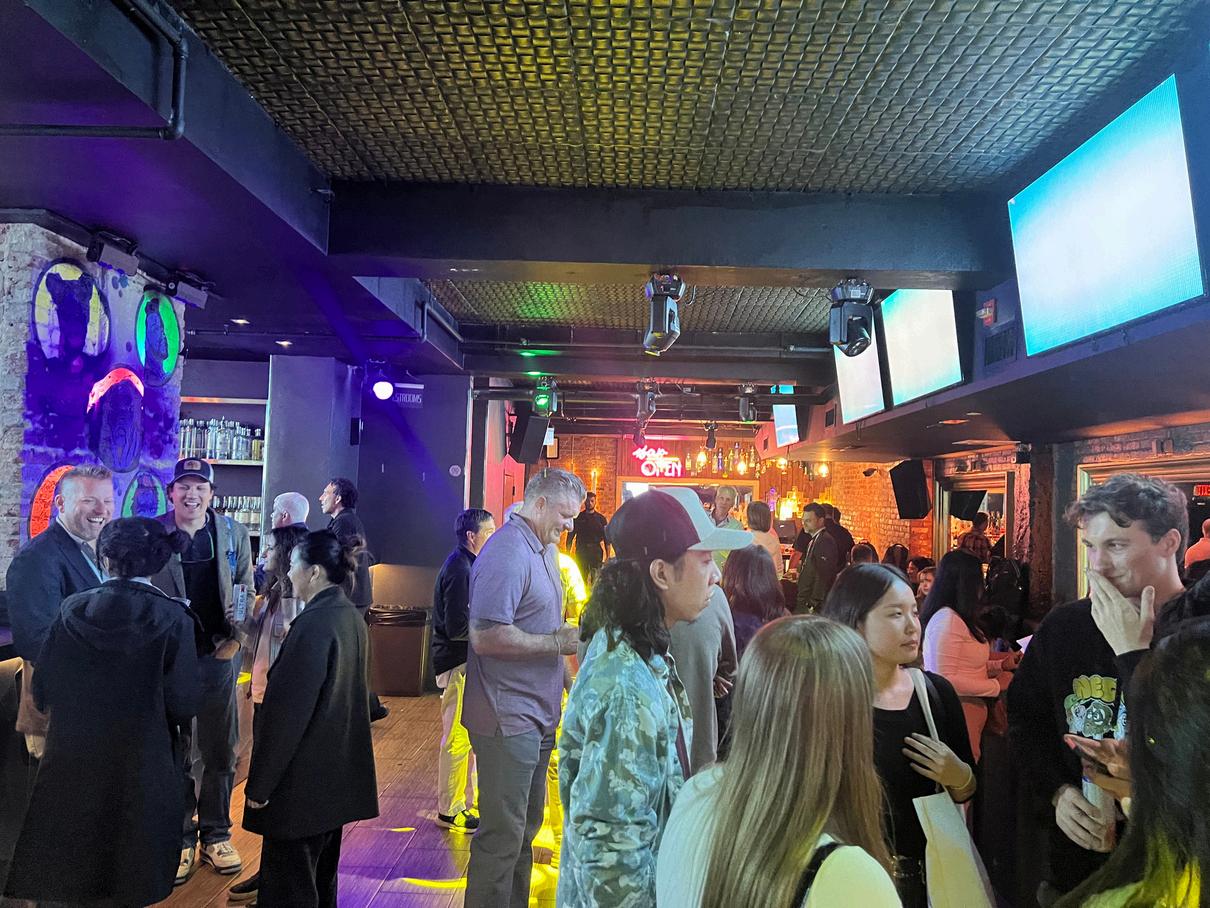
The conference concluded with two main events: the induction of new Fellows (including Maryland members Grace and Chris, featured later in EMBARK) and the Maryland Happy Hour with Land8, which brought together over 90 members to connect and celebrate the conference Special thanks were extended to Sparks@Play for their continued support of the Chapter's conference meetups, helping make the event a success in honoring ASLA’s 125 years. The gathering served as a fitting close to the Chapter’s activities at the conference, marking a memorable and impactful conference
P A R K ( I N G ) D A Y
STUDENT CHAPTER REPORT
UNIVERSITY OF MARYLAND COLLEGE PARK
MADISON MOHAN
EMMA STEUERNAGLE
UNDERGRADUATE VICE PRESIDENT
STEPHANIE CAVANAUGH
GRADUATE VICE PRESIDENT
GABBY SHELTON
ELLIOT KENNEY PRESIDENT SECRETARY TREASURER
CALEB AUSTIN
SOCIAL MEDIA MANAGER
KENNEDY THOMAS
FUNDRAISING CO-CHAIR
DANA WATKISS
FUNDRAISING CO-CHAIR
DAVID PHAN
OUTREACH COORDINATOR
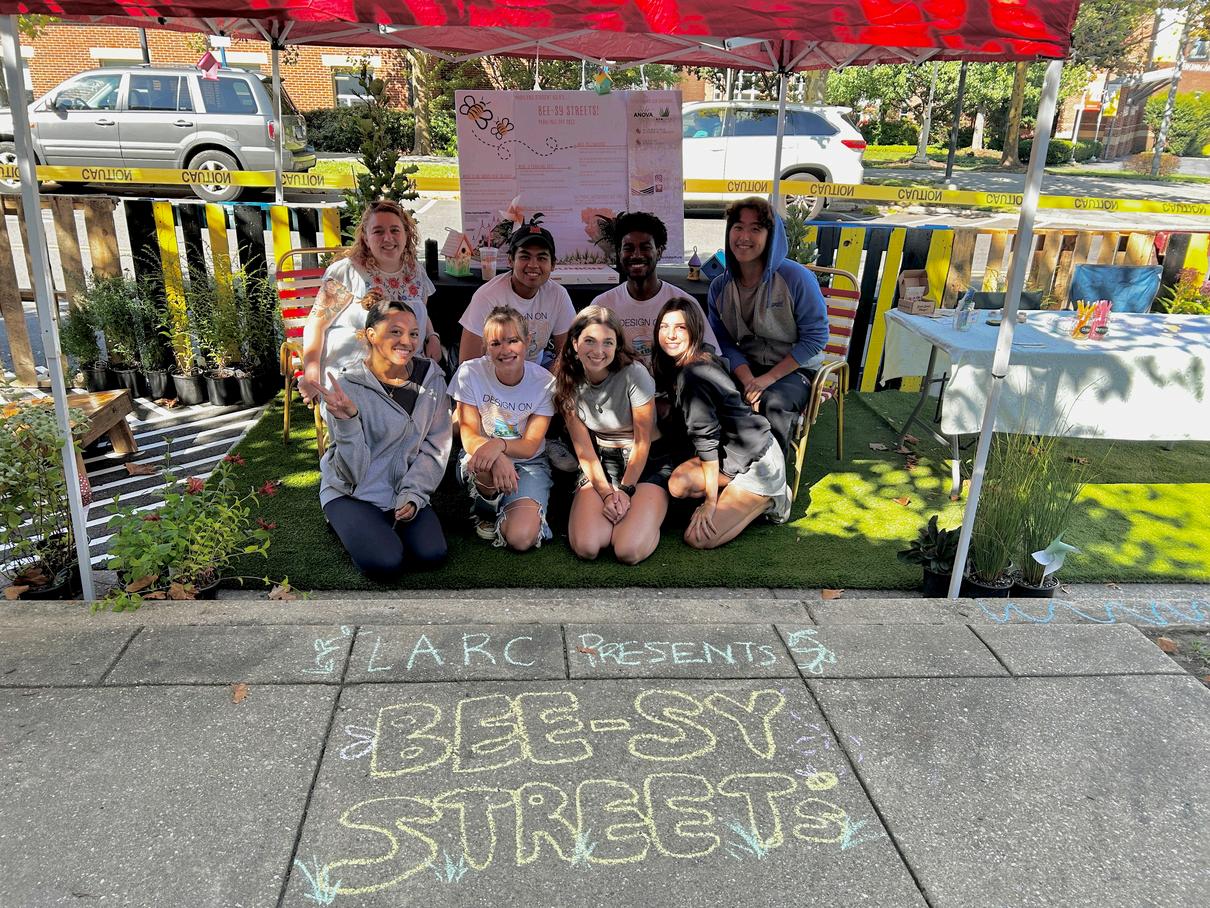
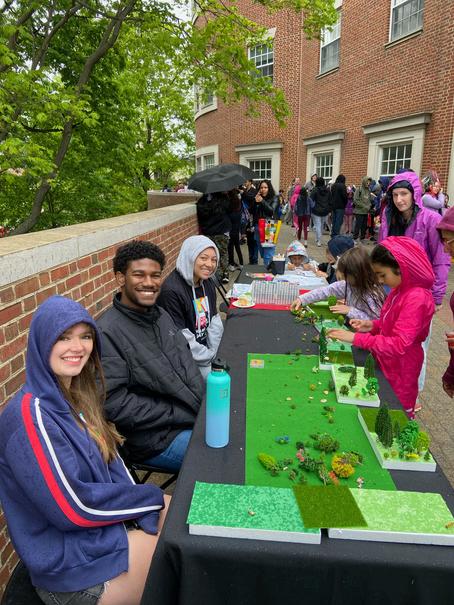
UMD landscape architecture students had a year packed with an array of experiences and learning opportunities Notably, the student chapter brought Park(ing) Day to campus with an eye-catching display they called, “Bee-sy Streets ” In collaboration with UMD’s Beekeeping and Entomology Clubs, the chapter cultivated discussions about pollinators with beekeeping equipment and insect samples Additionally, through their participation in Maryland Day, students enlightened visitors by highlighting landscape architecture and guided children as they built their own, playful landscape models
Apart from spreading knowledge at on-campus events, the chapter traveled to middle schools to introduce children to the field As part of the Higher Achievement Program, a task force of chapter members led a weekly after-school program that taught kids how to draw plan and section drawings and make 3D models Through a redesign of locations on the school campuses, the chapter inspired curious children who were able to discover a new realm of possibilities.
Another one of UMD SASLA’s valued achievements was their success in fundraising. Through hard work at events like bake sales, thrifting pop-ups, and merchandise sales, the chapter was able to send 26 students to LABash at UC Davis. A fully-funded trip for one student alone totaled to $650.
Lasly, students indulged in professional developm UMD alum Kelley Oklesson shared her wisdom on the Vectorworks team hosted two workshops for the Association of Professional Designers present Remarkably, the students still had time for team b
MORGAN STATE UNIVERSITY
JEN
SIMONE ROBINSON
JAMES TOTTON
PLASKOWITZ PRESIDENT VICE PRESIDENT SECRETARY
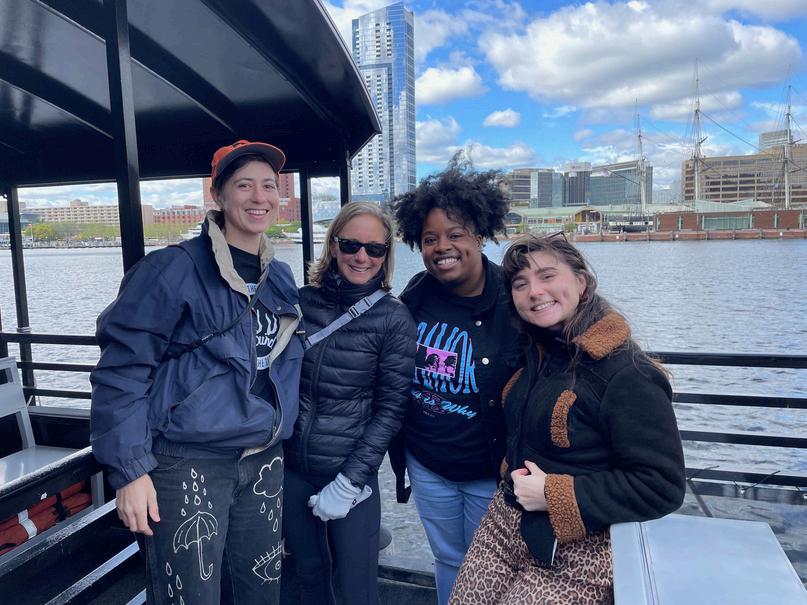
The Morgan State Student Chapter of the American Society of Landscape Architects (ASLA) had an exciting year filled with opportunities to learn and explore the field of landscape architecture In the fall, the chapter participated in a boat tour hosted by Open Door Baltimore of Baltimore’s Inner Harbor, guided by local historian Charlie Duff Students gained a unique perspective on the Harbor’s history and its evolving connection to urban design and the environment
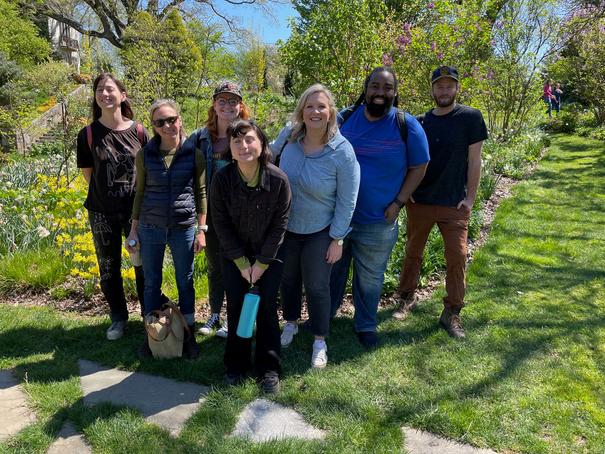
In the spring, the chapter visited two beautiful display gardens in Pennsylvania: Stoneleigh and Chanticleer At Stoneleigh, students learned about sustainable practices and native plantings, while Chanticleer’s creative and artistic gardens showed how plants can be used innovatively These trips highlighted the range of approaches in landscape architecture and inspired meaningful conversations about design and ecology
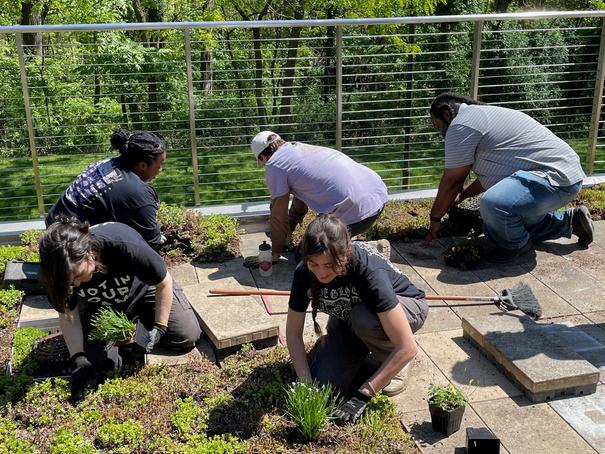
Inspired by the students' efforts to revitalize the green roof outside the studio at CEBIS, members organized a campus walk with Floura Teeter Principals Alice Storm Jones and Zach Baier. They shared insights into the sustainable strategies behind the planting design and stormwater management features for Calvin and Tina Tyler Hall. The group also toured Thurgood Marshall Hall, the newest residence hall at Morgan State, guided by Om Khurjekar, a Principal at Hord Coplan Macht. The walk highlighted the contrasting design styles of the two projects Tyler Hall’s formal elegance and the residence halls’ vibrant, modern vibe while giving students the opportunity to learn directly from professionals about the role of landscape architecture in shaping functional and inspiring campus spaces Through these activities, the chapter created meaningful experiences that connected students to their campus, the profession, and the wider world of landscape design
Students at the Inner Harbor Boat Tour hosted by Doors Open Baltimore
FELLOWSHIP AWARD FOLLOW-UP
THE BRAIN DOES NOT LIE:
A CASE STUDY OF PSYCHOPHYSIOLOGY AND LANDSCAPE IN SOUTH CLIFTON PARK
AUDREY SEIZ UNIVERSITY OF MARYLAND
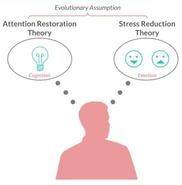
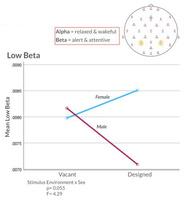
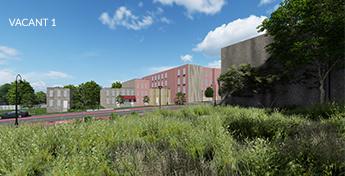
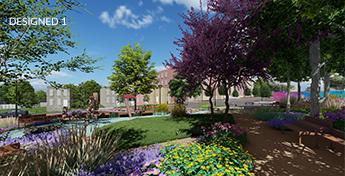
Audrey Seiz, an MLA graduate from the University of Maryland, received the MDASLA Fellowship to support her thesis research and presentation at the 2023 Council of Educators in Landscape Architecture (CELA) conference in San Antonio. Her study used virtual reality (VR) to explore how urban landscapes affect psychological and physiological well-being. Using a site in Baltimore City’s South Clifton Park, she compared participants’ responses to the current site and a redesigned version inspired by attention restoration and stress reduction theories, measured through the Perceived Restorativeness Scale (PRS-16) and electroencephalogram (EEG) data.
Her research aims to show that redesigned urban nature sites evoke stronger restorative responses, while highlighting VR’s potential as a tool for assessing and visualizing design impacts The Fellowship funded her travel, registration, and lodging, enabling her to share this innovative work with a broader audience
Click here to view her presentation at the Circle of Support Happy Hour
CHESAPEAKE BAY WATERSHED
CLIMATE ACTION PLAN CHALLENGE
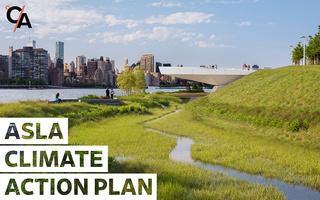
The Maryland ASLA Chapter issued a call to students from the Chesapeake Bay Watershed states Maryland, Virginia, West Virginia, Delaware, Pennsylvania, and New York to design innovative, climate-based projects for the region. Submissions were required to align with the goals and initiatives of ASLA’s Climate Action Plan and thoughtfully employ climate adaptation strategies from the ASLA Climate Action Plan Field Guide in ways that are both beautiful and beneficial to local communities and the environment
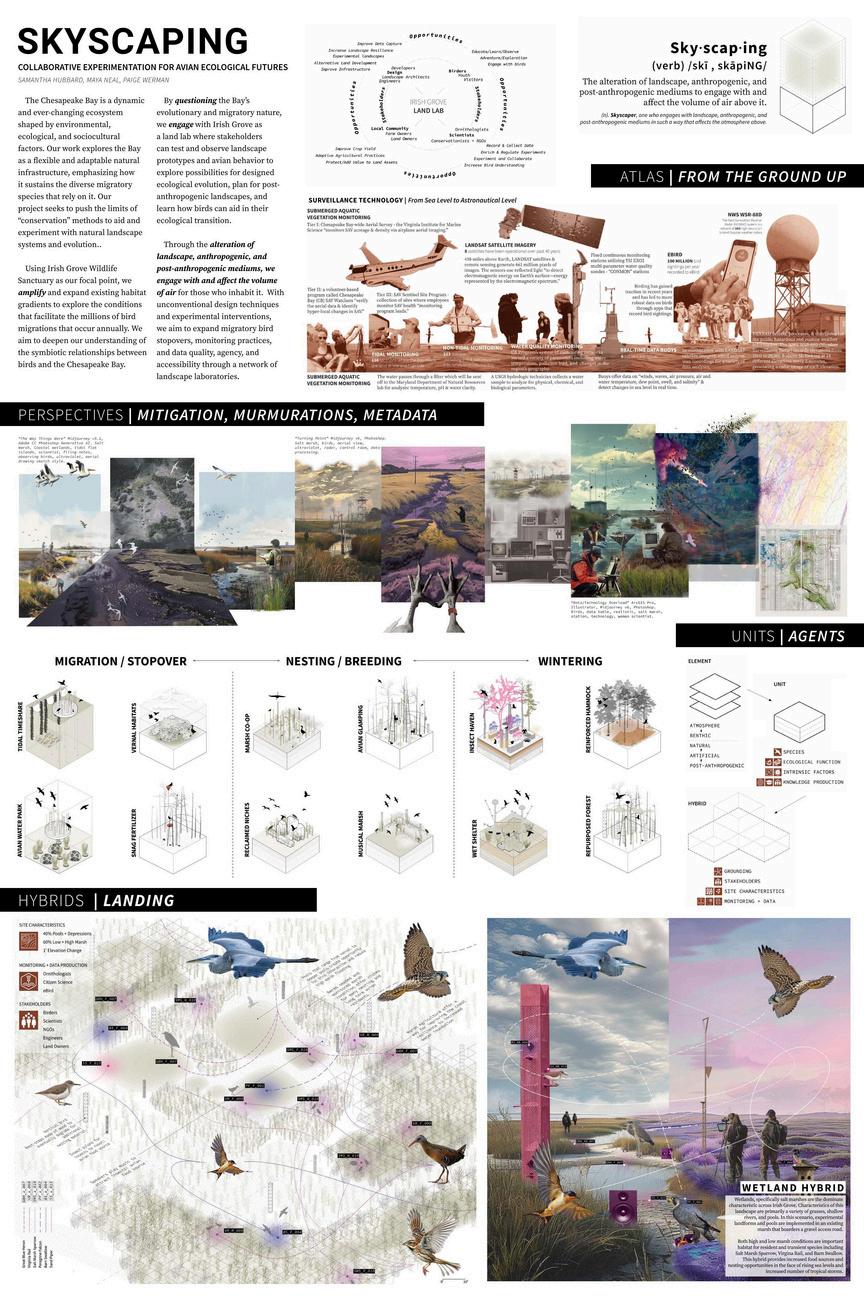
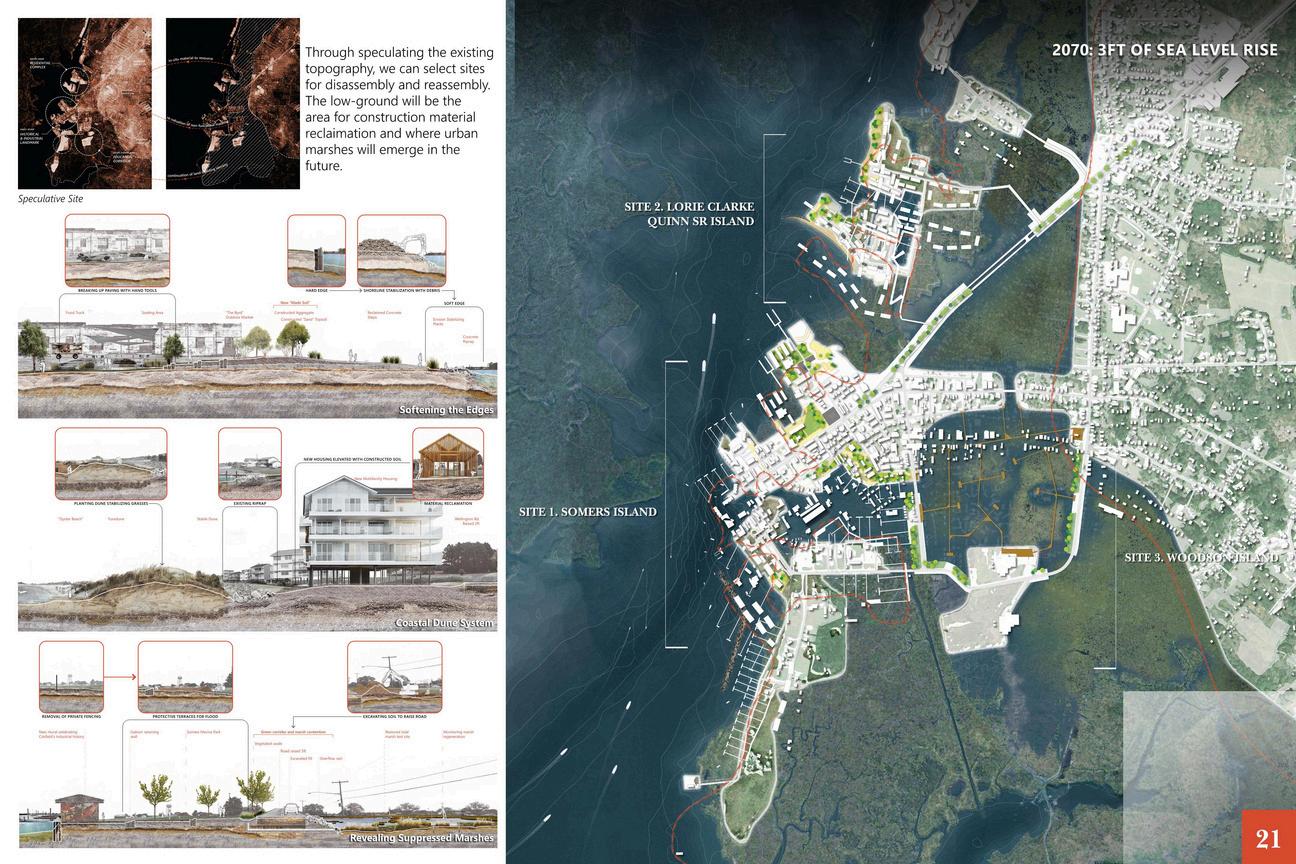
Student teams from various universities submitted exceptional projects, with the winning boards showcased at the ASLA National Conference in Washington, D.C. Thank you our jury: Aiman Duckworth (Biohabitats), Julieta Rodrigo (The Chesapeake Bay Foundation), Breck Sullivan (Chesapeake Bay Program), and Dr Zihao Zhang (The City College of New York), as well as our supporting sponsors Grace E Fielder, FASLA and Tracey Friedly (Nolan Brands)
STUDENT TEAMS
University of Virginia
Samantha Hubbard, Paige Werman, Maya Neal*
Joyce Fong, Julia MacNelly, Lysette Velazquez*
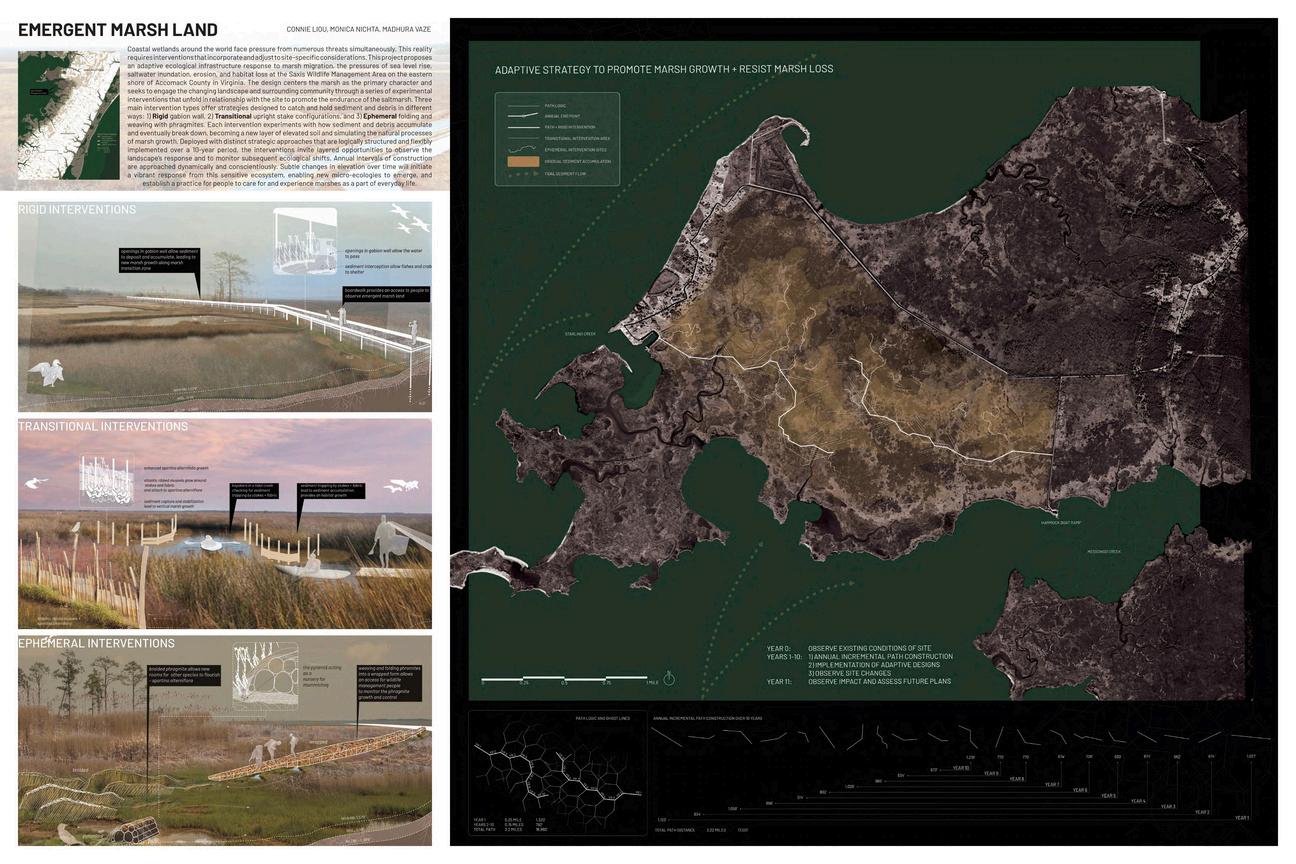
Monica May Nichta, Connie Liou, Madhura Vaze*
Mary Cotterman, Anson Tse, Stanie Zhang
Morgan State University
Averil Christens-Barry, Kwasi Cook, Kayla Goldstein, Matt Lewis, Jen Plaskowitz, Simone Robinson, James Totten
University of Pennsylvania
Xinchen Wei, Kwan-Yu Chung
Winning Teams*
COUNCIL OF FELLOWS
FELLOW IN SERVICE
This category recognizes pro bono volunteer service activities and accomplishments sustained over an extended period of time that have significantly advanced the art, stewardship, science, and social responsibility of the profession of landscape architecture
GRACE E. FIELDER, ASLA G.E. FIELDER & ASSOCIATES
For over 50 years, Grace Fielder has worked to advance the practice, visibility, and power of landscape architecture through government advocacy, educational advancement, and community engagement. Raised on a dairy farm in rural Maryland, she developed a deep understanding of stewardship of the land and of caring for her community. From the start of her career, Grace made “commitment to service” a core value. Her roles in government advocacy include serving as vice chair of the Prince George’s County Development Quality Task Force, where she produced the “Landscape Manual,” and contributing to Montgomery County's Recreational Guidelines At the University of Maryland she was instrumental in establishing the Bachelor of Landscape Architecture degree and served on the College of Agriculture Dean’s Advisory Board Grace was the 15th woman licensed as a landscape architect in Maryland She took it upon herself to recruit women across the land development industry from every age, race, creed, and color to hear their insights, shared experiences, and future needs Grace consistently engages professionals, students, and the public to help them address issues of equity, the environment, and well-being
FELLOW IN LEADERSHIP
This category recognizes exemplary leadership, administration, and management of people, projects, policies, and/or programs that have significantly advanced the art, stewardship, science, and social responsibility of the profession and its practice
CHRISTOPHER L. SCHEIN, ASLA HORD COPLAN MACHT | PRINCIPAL
For nearly four decades, Chris Schein has elevated landscape architecture as a critical component of the plan, vision, and design of memorable public spaces. A leader at Hord Coplan Macht, Chris has played a pivotal role in the firm’s growth, while ensuring collaboration across disciplines through all office and market sectors. His design sensibilities and ability to navigate a design through a complex public review process with multiple city agencies stand as shining examples of what landscape architects can achieve. Chris is a recognized leader on important rehabilitation projects for major historical national and state parks and monuments, including security streetscape around the Capitol, the US Supreme Court, the US Treasury, House Office Buildings, and the rehabilitation of the 1812 DC war memorial Chris has volunteered leadership to ASLA locally and nationally, has helped to protect landscape architecture licensure in the State of Maryland and is a volunteer trustee of the Historic Annapolis Foundation
As a practitioner, firm leader, and advocate, Chris ensures landscape architecture's aesthetic, experiential, and environmental priorities are central to every phase of high use, high-visibility projects
Grace and Christopher were elevated alongside 37 others at the Fellows Investiture Ceremony in Washington, D.C. | Courtesy of nobilephoto.
STUDENT AWARDS
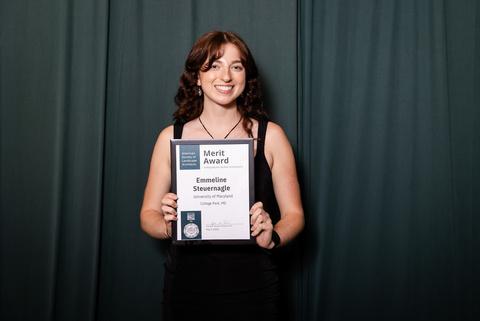
HONOR & MERIT
The Maryland ASLA Student Honor and Merit Awards celebrate outstanding achievements in landscape architecture by recognizing exceptional students who demonstrate academic excellence, creative vision, and leadership within the field These awards honor individuals who have excelled in their studies, contributed innovative ideas to design projects, and/or shown a commitment to advancing the profession of landscape architecture Recipients are selected for their dedication to thoughtful, sustainable, and impactful design, as well as their potential to shape the future of the built and natural environment
HONOR AWARDS
MERIT AWARDS
CIERRA HARGROVE
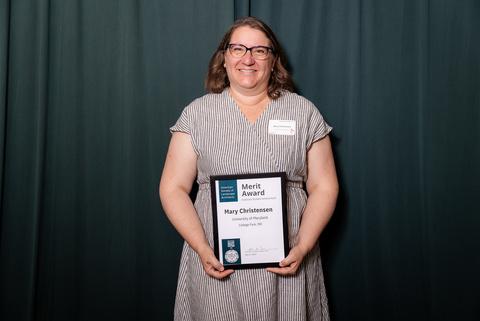
SIMONE ROBINSON MARY CHRISTENSEN MADISON MOHAN EMMELINE STEUERNAGLE
AZADEH ESMAEILI
GABRIELLE SHELTON UNIVERSITY OF MARYLAND UNIVERSITY OF MARYLAND UNIVERSITY OF MARYLAND
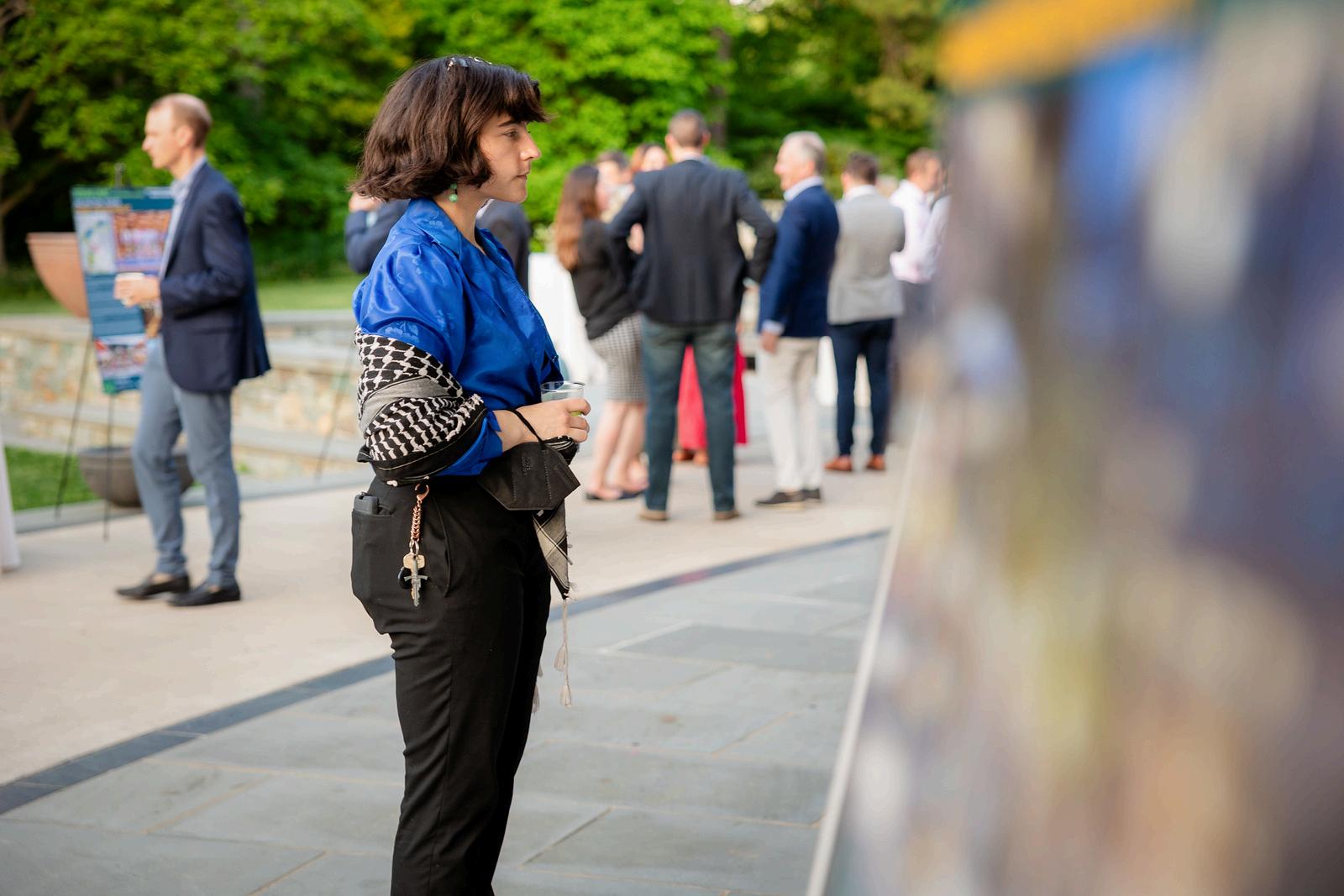
Winning projects on display at
Enjoying a gorgeous evening at Brookside Gardens.
SCHOLARSHIPS STUDENT AWARDS
The Maryland Chapter proudly offers annual scholarships and a fellowship to support and recognize students pursuing degrees in landscape architecture at the University of Maryland (UMD) and Morgan State University (MSU). Two $1,000 scholarships are available to help offset educational costs, such as tuition, fees, and other expenses, while a $2,000 fellowship is awarded to support a student’s creative or professional development project. Fellowship projects may include presenting at a conference, participating in a design competition, engaging in a unique internship, or pursuing independent research
Recipients of both awards share their experiences and accomplishments with the Maryland Chapter through publications, presentations, and participation in the annual awards gala These opportunities underscore Maryland ASLA’s mission to promote the profession of landscape architecture through advocacy, education, and fellowship, fostering the growth and innovation of future leaders in the field
FELLOWSHIP RECIPIENT
GABRIELLE SHELTON, SASLA UNIVERSITY OF MARYLAND
SCHOLARSHIP RECIPIENTS
CALEB AUSTIN, SASLA UNIVERSITY OF MARYLAND
JENNIFER PLASKOWITZ MORGAN STATE UNIVERSITY
AWARDS OF EXCELLENCE
EMERGING PROFESSIONAL AWARD
This award recognizes and celebrates an individual who has demonstrated extraordinary passion and commitment to the profession of landscape architecture, the community, and/or a firm in the State of Maryland in the early stage of their professional life
MID-CAREER
GAËLLE GOURMELON
Gaëlle joined MKSK in 2020 after earning a Master of Landscape Architecture (MLA) from the University of Virginia During her time as a student, she received the departmental Award for Design Excellence and the Landscape Architecture Foundation's Joe Lalli Scholarship With a background in public health, Gaëlle brings a unique perspective to her work, emphasizing the healing power of landscape architecture She currently serves as Co-chair of MKSK's Staff Council, a volunteer role dedicated to staff advocacy. In this capacity, she developed and implemented a firm-wide employee engagement survey, analyzing the results to inform targeted focus workshops and advance initiatives centered on staff empowerment. As an emerging professional in the field of landscape architecture, Gaëlle demonstrates a commitment to innovation and collaboration across all facets of practice. Her contributions are widely recognized, and her future endeavors are anticipated with great enthusiasm
PROFESSIONAL AWARD
The Mid-Career Award honors an individual in the middle stage of their professional journey who has shown exceptional passion and dedication to the field of landscape architecture, making significant contributions to the profession, their community, and/or their firm within the State of Maryland.
HEIDI THOMAS, ASLA MKSK | ASSOCIATE DESIGNER ENVIROCOLLAB | FOUNDING PRINCIPAL
Heidi holds a graduate degree in Cultural Sustainability, with a focus on the co-creation of environment, culture, and community within urban agricultural contexts a theme that continues to define her professional work and design approach Her commitment to enhancing the visibility of landscape architecture and increasing access to the field, particularly for women, minorities, and underserved communities, has been a driving force in her career Through roles as an adjunct instructor, community advocate, and neighborhood organizer for environmental projects in Baltimore, Heidi has worked to highlight the connection between social equity and access to nature. In her latest endeavor, Heidi transitioned her firm from a sole proprietorship to a worker-owned cooperative. This new structure reflects her commitment to exploring alternatives to traditional hierarchical business models in the industry, prioritizing a collective approach to leadership and advancing the mission of EnviroCollab.
SPENCER ELLIS AWARD
The Maryland Chapter established the Spencer Ellis Award to honor the service of Spencer P Ellis to the environment His career in landscape architecture included work at the Department of Natural Resources, Maryland State Forests and Parks, the Federal Land and Water Conservation Fund, and Program Open Space The award is given annually to a program or organization that has made a significant contribution to the preservation and conservation of the local environment in Maryland
STEPHANIE OBERLE BROOKSIDE GARDENS | DIRECTOR
Stephanie was presented this award by friend, Landscape Architecture educator and advocate, Jack Sullivan, FASLA Jack had the following to share about Stephanie:
Stephanie Oberle graduated from the University of Maryland with a Bachelor's Degree in Horticulture, and from the University of Delaware with a Master's Degree in Public Horticulture Administration. She previously held positions at the American Horticultural Society in Alexandria, VA and Tudor Place in Washington D.C. When she was hired by Brookside Gardens, she worked for several years as a Visitor Services Supervisor, overseeing all educational programming, enterprise functions, the volunteer program and the library. In this capacity, she worked closely with Montgomery County Parks staff and outside contractors to develop a 15-phase master plan for the Gardens.
“She is a strong advocate for sustainability, championing green choic in all Brookside Gardens projects.” - Jack Sullivan, FASLA
Stephanie was elevated to the position of Director in 2008, and completion of several master plan phases, including design and ins of a new entrance and parking garden and a new greenhouse facilit a strong advocate for sustainability, championing green choice Brookside Gardens projects She promoted environmental educa children, as evidenced in her work with the Children & Nature Netw she has created a pipeline to employment in the green industry for
AWARDS OF EXCELLENCE
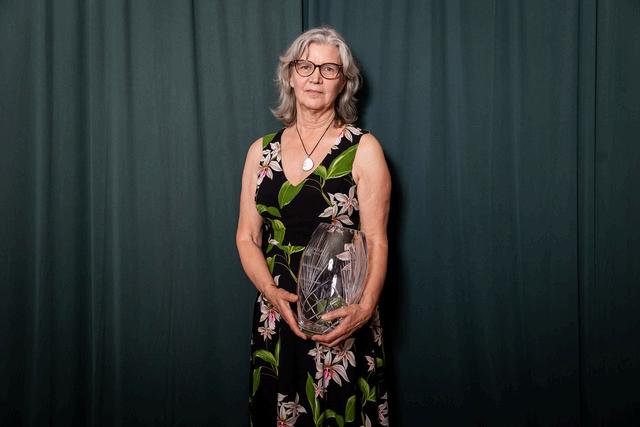
LIFETIME ACHIEVEMENT AWARD
Maryland ASLA's Lifetime Achievement Award was created to recognize outstanding contributions to the field of landscape architecture by our long-standing and dedicated members The award can be for service, knowledge, research or any other related subject that the MDASLA executive committee chooses to honor
“If I have done anything well in the Maryland ASLA, it has been because of Deb’s kindness, her m and leadership."
- Vernon Hustead, A
Deb was presented this award by colleague, and last year's Maryland Excellence winner, Vernon Hustead, ASL Deb's impact, Vernon shared:
"I met Deb early in the 1990s at a MDAS was a new person, she made sure to introduce herself to me, to introduce me meeting and make me feel comforta belonged If I have done anything well in has been because of Deb’s kindness, he leadership "
H SCHWAB, ASLA
H M SCHWAB LANDSCAPE ARCHITECTS | OWNER
Deb graduated from the University of Rhode Island with a degree in Natural Resources, as the university did not offer a Landscape Architecture program at the time She began her career at her father's civil engineering firm and became one of the first registered Landscape Architects in Rhode Island After a period as a sailboat captain, ferrying boats to the Caribbean, Deb returned to landscape architecture, eventually moving to Annapolis, Maryland, where she founded her own firm alongside her husband, Iver Her work spans a diverse range of project types, including private residences, commercial and institutional developments, and public parks and plazas. In Annapolis, Deb is a trusted resource for civil engineers and architects, known for her expertise in creating landscape, critical area, and forest conservation plans.
Deb has been an active member of the Maryland Chapter of ASLA since the mid-1990s, serving as Chapter President in 2000. She continues to contribute to the organization both locally and nationally and is regarded as a mentor to many, inspiring landscape architects across all stages of their careers
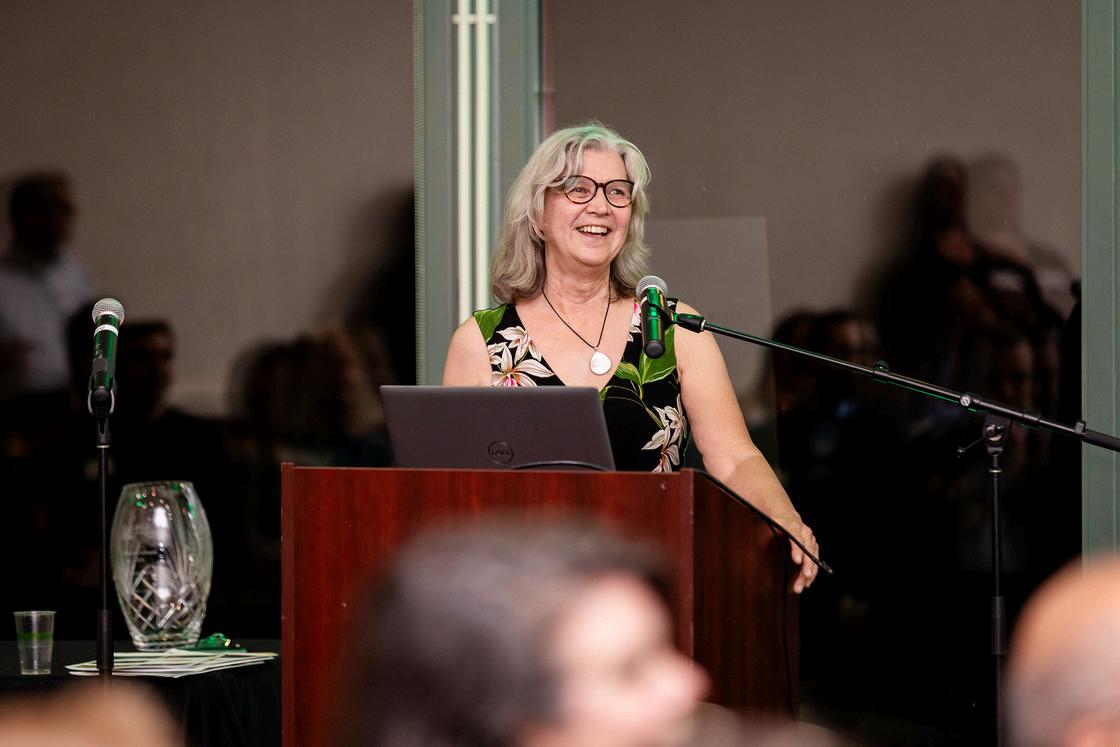
Deborah Schwab, ASLA giving her acceptance speech at the 2024 MDASLA Awards Gala
MARYLAND ASLA DESIGN AWARDS
The intent of the annual Maryland ASLA Awards Program is to encourage professional excellence in Maryland and the Washington Metropolitan Area by recognizing significant completed as well as un‐built Landscape Architectural projects. The objective is to bring public attention to the outstanding services of landscape architects by honoring them with professional awards for projects that demonstrate a superior quality of design and execution
A W A R D C A T E G O R I E S
Recognizes the wide variety of professional activities that lead to, guide, and evaluate landscape architecture design Entries in this category are not required to be built or implemented. Entries include urban, suburban, rural, or regional planning or development guidelines, transportation/town/campus planning, plans for reclamation of brownfield sites, environmental planning for legislative or policy initiatives or regulatory controls, cultural resource reports, natural resource protection, historic preservation planning, and more.
Recognizes achievements in communicating landscape architecture works, techniques, technologies, history, or theory, and the lesson value to an intended audience Typical entrants include print media, film, video, audio, CD, or DVD formats, online communications, interpretive design, exhibition design, and more
Recognizes site-specific works of landscape architecture or urban design Professional entries in this category must be built Typical entries include public, institutional, or private landscapes of all kinds (except residential design), including but not limited to: historic preservation, reclamation, conservation, green roofs, stormwater management, sustainability, large-scale residential, mixed-use and community design
Recognizes innovative vision within landscape architecture or urban design for projects that have not been built Typical entries include unbuilt general design and residential design projects
Recognizes site-specific works of landscape architecture and entries in this category must be built. Typical entries include infrastructure projects including green infrastructure like constructed wetlands, green streets, and wildlife corridors as well as sustainable design in transportation or coastal resilience Projects in the category could also qualify for the General Design category, but only one category may be selected per project
Recognizes site specific works of landscape architecture and entries in this category must be built Typical entries include institutional landscapes such as schools, hospitals, and campus design Entries can be for master-planning or specific projects Projects in this category could also qualify for the General Design category, but only one category may be selected per project
Recognizes site-specific works of landscape architecture and entries in this category must be built Typical entries include multi-family and mixed-use residential projects, activity areas for cooking/entertaining/recreation/relaxation, sustainable landscape applications, new construction or renovation projects, historic preservation, affordable landscape concepts and innovations, and more
Recognizes site-specific works of landscape architecture and entries in this category must be built Typical entries include single-family or individual townhome residential projects, activity areas for cooking/entertaining/recreation/relaxation, sustainable landscape applications, new construction or renovation projects, historic preservation, affordable landscape concepts and innovations, and more
Recognizes research that identifies and investigates challenges posed in landscape architecture, providing results that advance the body of knowledge for the profession. Typical entries include investigations into methods, techniques, or materials related to landscape architecture practice; studies of relationships of landscape architecture to law, education, public health and safety, or public policy; and more
MEET THE JURY
NORTH CAROLINA CHAPTER
The Maryland ASLA Chapter partnered with the North Carolina ASLA Chapter to jury each other’s annual awards programs, fostering collaboration and gaining valuable insight into each chapter's work The North Carolina jury, composed of experienced professionals, brought diverse perspectives and a keen eye for design excellence to the process Learn more about the NC jury below
Emily McCoy, FASLA, PLA, SITES AP Design Workshop | Principal & Director
Emily is Principal at Design Workshop, where she leads the Raleigh Studio and serves on the Board of Directors As a landscape architect, educator, and ecologist, Emily integrates natural and cultural narratives into her work. She also serves on the Landscape Architecture Foundation Board as Vice President of Research and remains dedicated to community service through various advisory boards and organizations
Eric Davis, FASLA, PLA, LEED AP Surface 678 | VP & Partner
Eric specializes in creating healthier, more enjoyable outdoor spaces through master planning, creative design, and well-managed construction His experience spans neighborhood parks to national landmarks, with expertise in public engagement, interdisciplinary collaboration, and agency coordination
Mark Hough, FASLA Duke University | Landscape Architect
Mark Hough, FASLA, has been Duke’s University Landscape Architect since 2000, managing design, planning, historic preservation, and natural resource management on its Olmsted Brothers-designed campus. A 2014 ASLA Fellow, his award-winning projects and writings on cultural, urban, and historic landscapes have been widely published
Martha Eberle, FASLA, PLA, SITES AP Andropogon Associates | Director
Martha collaborates with public and private clients to create ecologically rooted and community-focused design solutions Her award-winning projects span from large-scale coastal resiliency and brownfield restorations to small-scale urban interventions, informed by her background in anthropology, horticulture, and public service
Lawrence Zucchino, FASLA, PLA JDavis | Chairman
Lawrence brings over 40 years of experience in land use, urban design, and community planning. A 2013 ASLA Fellow, he is recognized for integrating landscape ecology and sustainable design into urban redevelopment and mixed-use projects, while contributing to environmental policy and community leadership through roles with organizations such as the Triangle Land Conservancy and Dix Park Advisory Council
Walt Havener, FASLA, PLA, LEED AP Surface 678 | Founding Principal
For over 30 years, Walter has created award-winning landscapes defined by simplicity, materiality, and horticultural artistry Notable projects include the North Carolina Museum of Art, Duke University, and the Atlanta BeltLine His work balances human-made and natural systems to create meaningful spaces, and he actively mentors future designers at NC State’s School of Design.
Jeff Isreal, PLA Surface 678 | Landscape Architect
Jeff joined Surface 678 in 2013 and in 2022 has joined NC State University as a Professional Lecturer. His wide range of ward-winning project experience includes working for large scale complex public and private projects spanning across multiple sectors As a result of his work, Jeff creates successful connections and places where people interact in meaningful and memorable ways
AWARD CATEGORY
ANALYSIS & PLANNING
R e c o g n i z e s t h e w i d e v a r i e t y o f p r o f e s s i o n a l a c t i v i t i e s t h a t l e a d t o , g u i d e , a n d
e v a l u a t e l a n d s c a p e a r c h i t e c t u r e d e s i g n E n t r i e s i n t h i s c a t e g o r y a r e n o t
r e q u i r e d t o b e b u i l t o r i m p l e m e n t e d . E n t r i e s i n c l u d e u r b a n , s u b u r b a n , r u r a l , o r
r e g i o n a l p l a n n i n g o r d e v e l o p m e n t g u i d e l i n e s , t r a n s p o r t a t i o n / t o w n / c a m p u s p l a n n i n g , p l a n s f o r r e c l a m a t i o n o f b r o w n f i e l d s i t e s , e n v i r o n m e n t a l p l a n n i n g f o r
l e g i s l a t i v e o r p o l i c y i n i t i a t i v e s o r r e g u l a t o r y c o n t r o l s , c u l t u r a l r e s o u r c e
r e p o r t s , n a t u r a l r e s o u r c e p r o t e c t i o n , h i s t o r i c p r e s e r v a t i o n p l a n n i n g , a n d m o r e .
MERIT AWARD
ANALYSIS & PLANNING
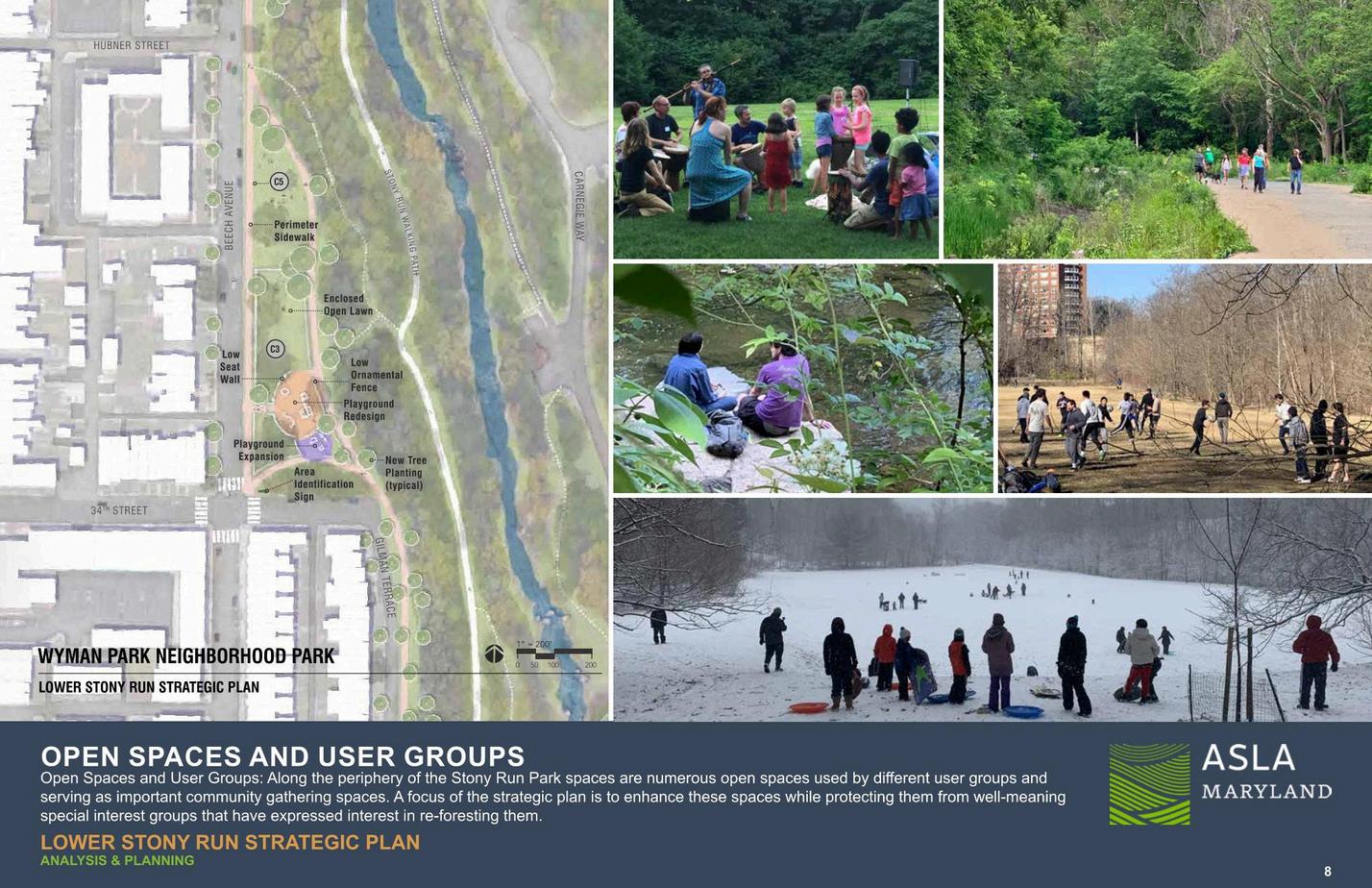
LOWER STONY RUN STRATEGIC PLAN
BALTIMORE, MD
MAHAN RYKIEL ASSOCIATES
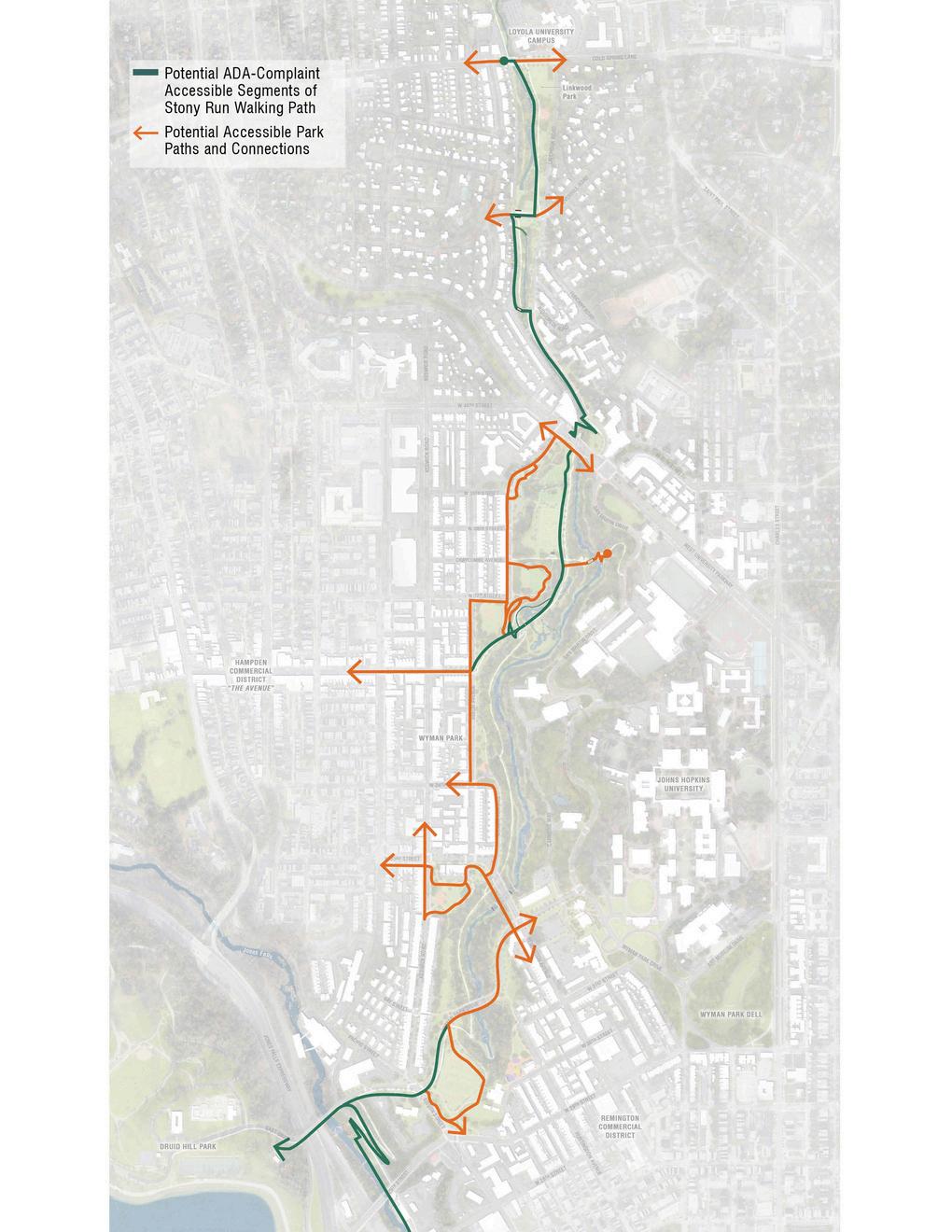
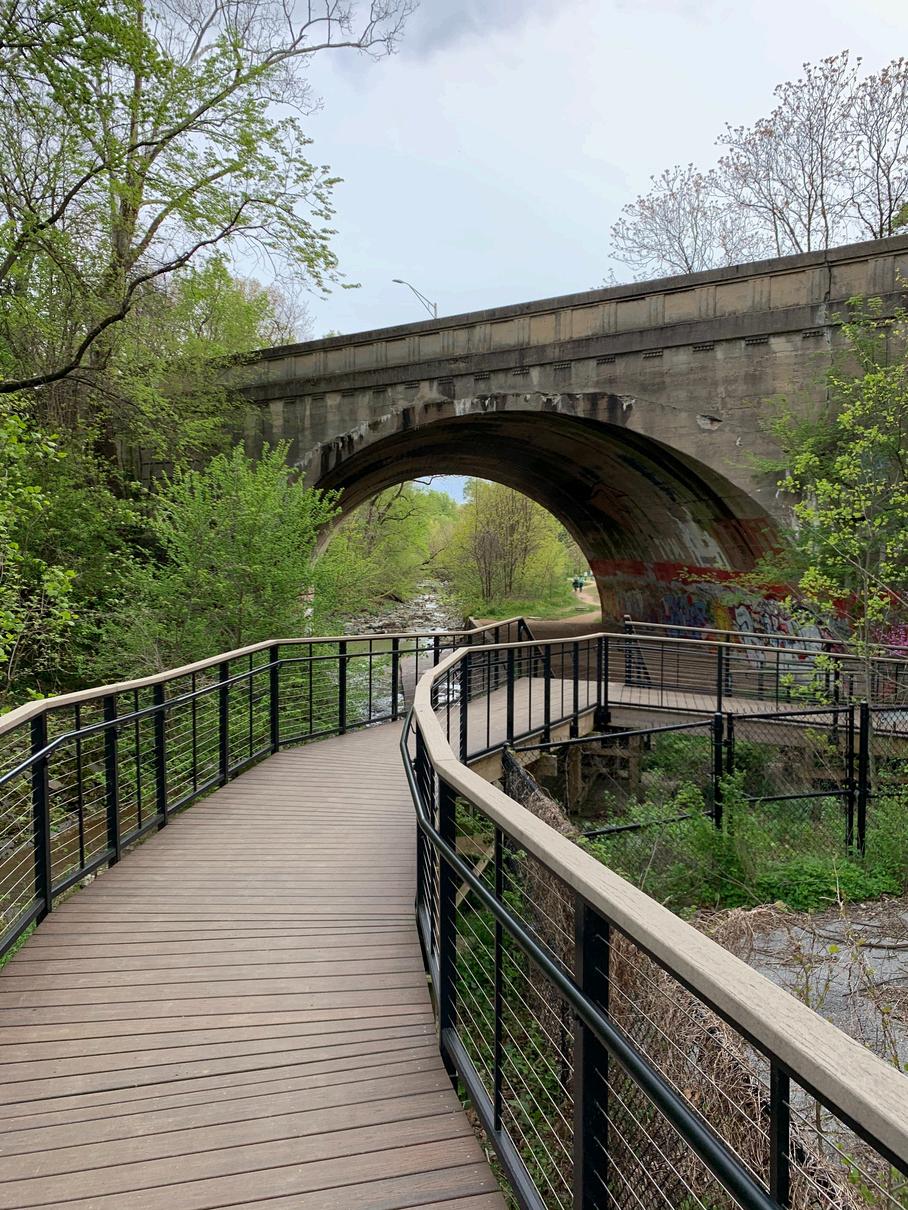
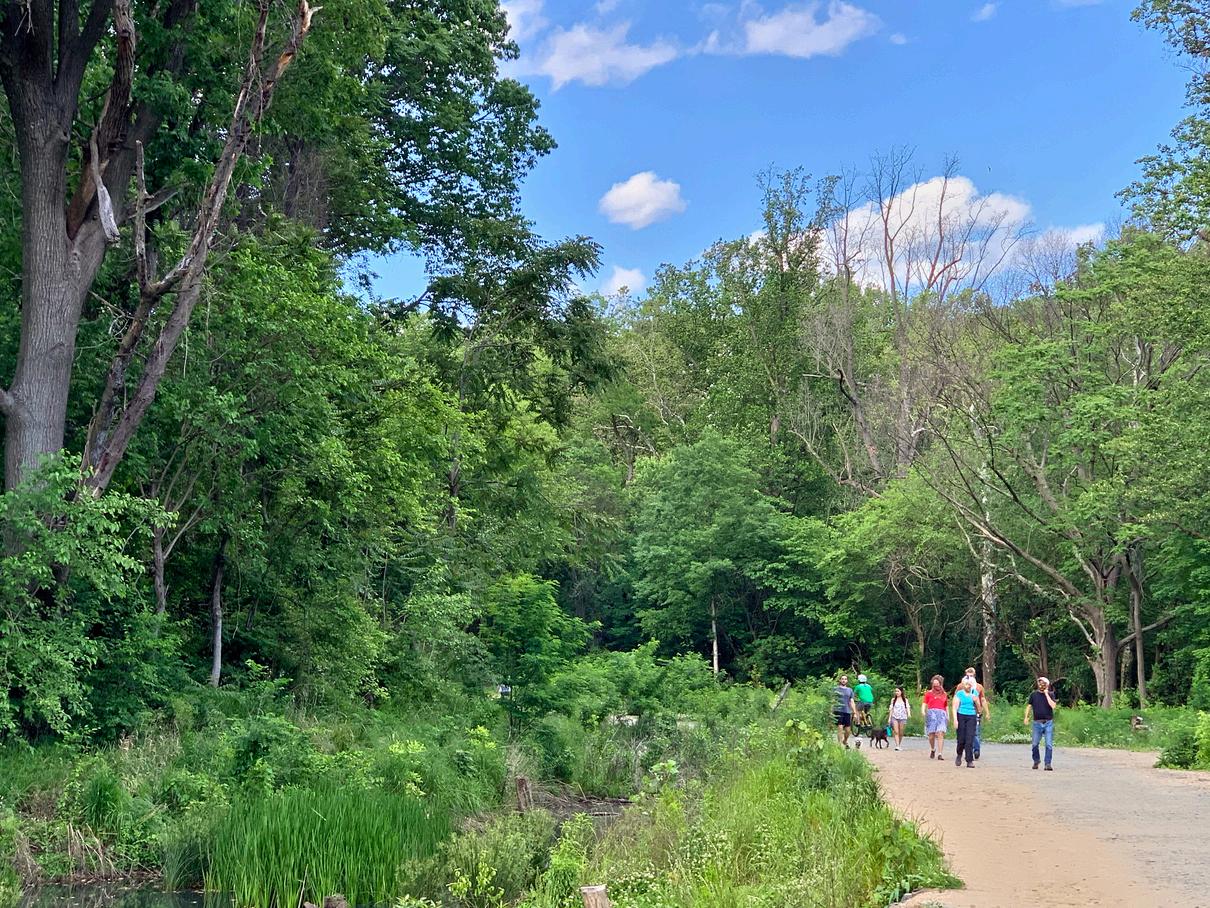
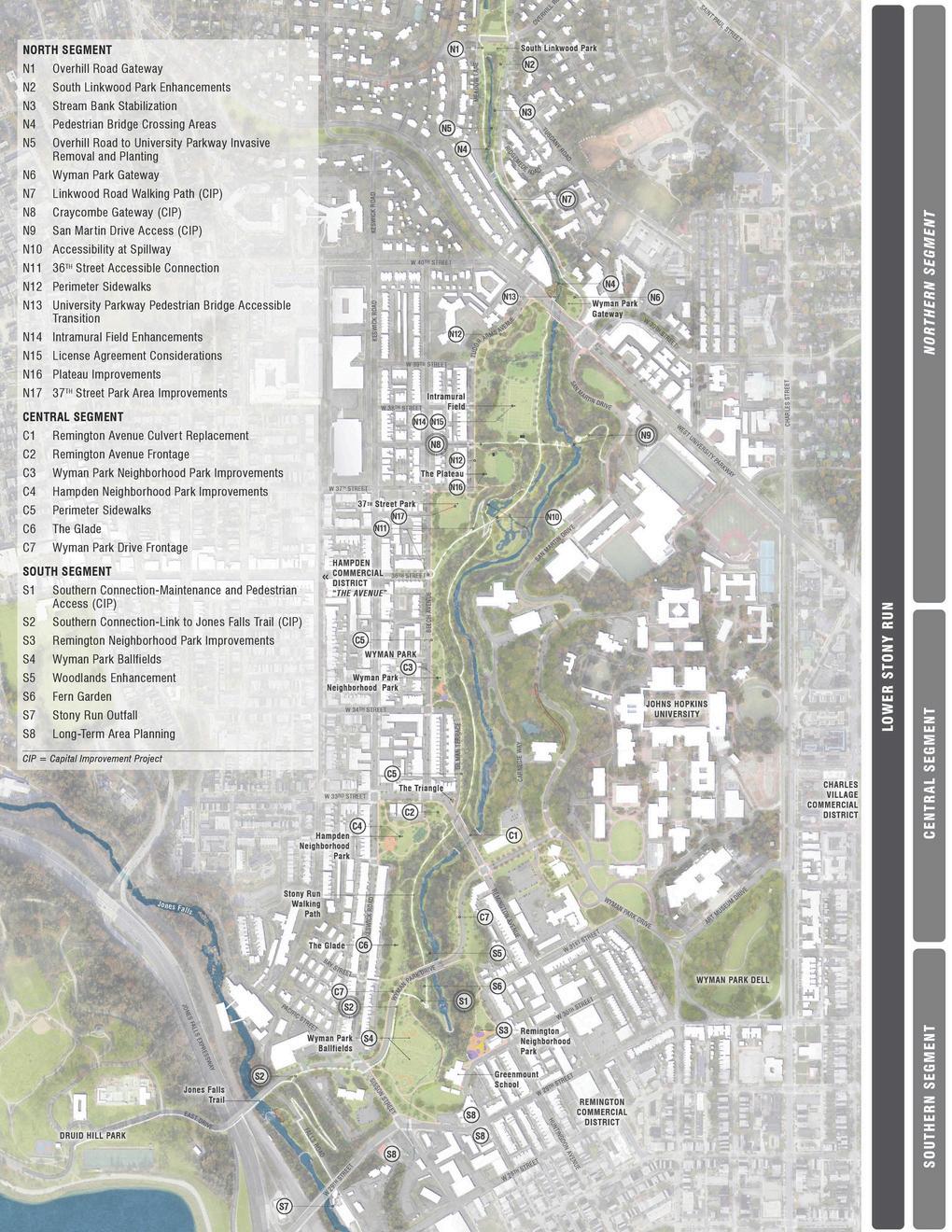
The Stony Run, a crucial tributary in North Baltimore, flows southward to join the Jones Falls, enriching the Chesapeake Bay Watershed Passing by Johns Hopkins University, it's the heart of a linear park system spanning numerous communities, notably Wyman Park, a 16-acre public park envisioned by the Olmsted Brothers The Strategic Plan aims to coordinate stewardship efforts, bridging gaps, enhancing accessibility, preserving ecology, and promoting responsible park use A comprehensive public engagement process informed the plan, resulting in five goals: protecting ecology, improving park connectivity, fostering partnerships, promoting education, and integrating climate
adaptation The plan includes 58 recommendations for short- and long-term action, with some ready for immediate implementation by volunteers Notably, five major projects, backed by $1 5 million in state funding, will integrate the Stony Run Walking Path into the city's trail network An implementation roadmap outlines priorities, lead partners, and collaborators, aiding officials, and volunteers in aligning work plans with the plan's objectives This coordinated approach aims to nurture the Stony Run and its surrounding park spaces, ensuring their vitality for the community and the environment.
GENERAL DESIGN AWARD CATEGORY
R e c o g n i z e s s i t e - s p e c i f i c w o r k s o f l a n d s c a p e a r c h i t e c t u r e o r u r b a n d e s i g n .
P r o f e s s i o n a l e n t r i e s i n t h i s c a t e g o r y m u s t b e b u i l t T y p i c a l e n t r i e s i n c l u d e
p u b l i c , i n s t i t u t i o n a l , o r p r i v a t e l a n d s c a p e s o f a l l k i n d s ( e x c e p t r e s i d e n t i a l d e s i g n ) , i n c l u d i n g b u t n o t l i m i t e d t o : h i s t o r i c p r e s e r v a t i o n , r e c l a m a t i o n , c o n s e r v a t i o n , g r e e n r o o f s , s t o r m w a t e r m a n a g e m e n t , s u s t a i n a b i l i t y , l a r g e - s c a l e r e s i d e n t i a l , m i x e d - u s e a n d c o m m u n i t y d e s i g n .
MERIT AWARD
GENERAL DESIGN
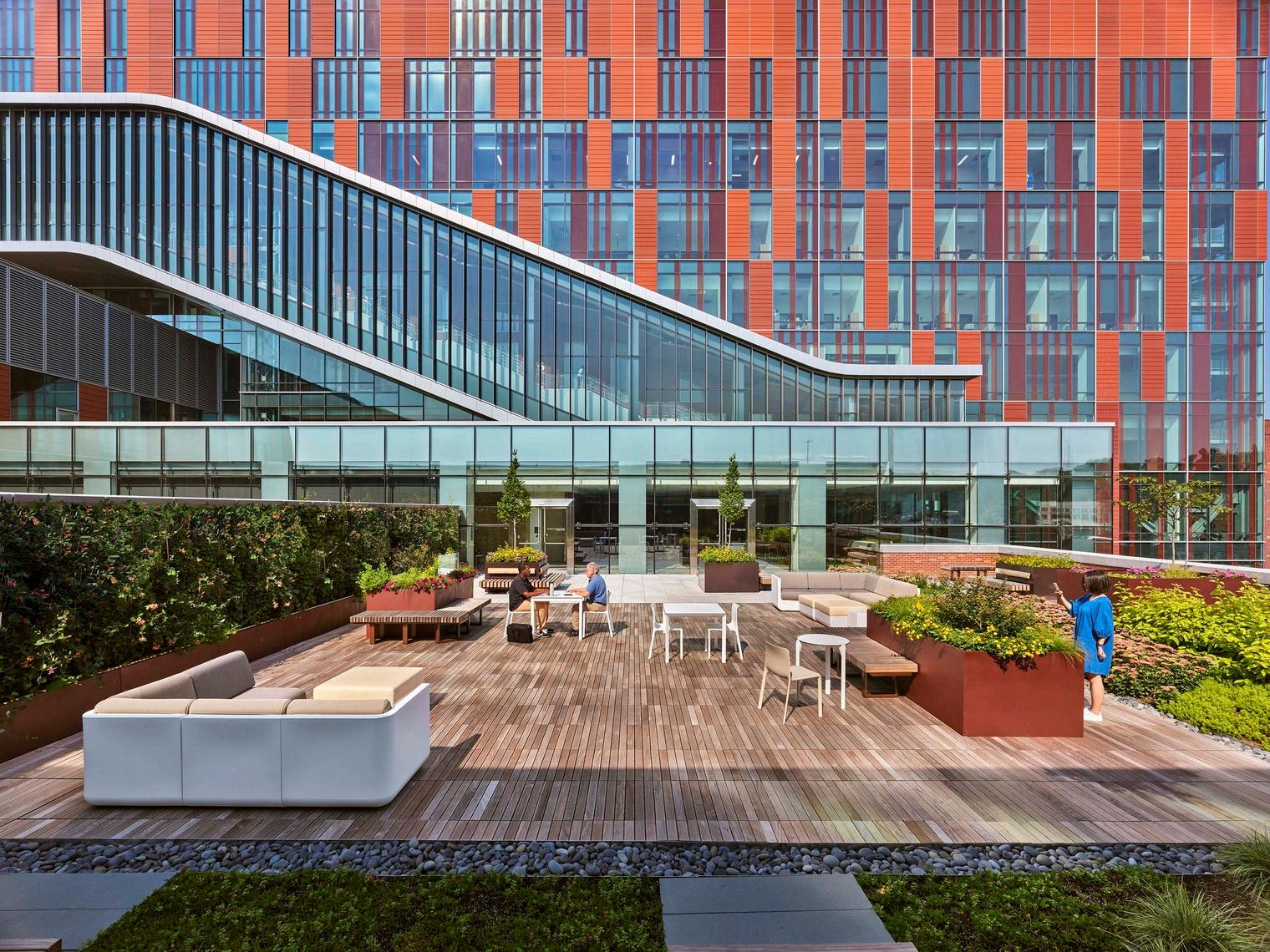
APPIAN ROOFTOP TERRACE
BALTIMORE, MD
MAHAN RYKIEL ASSOCIATES
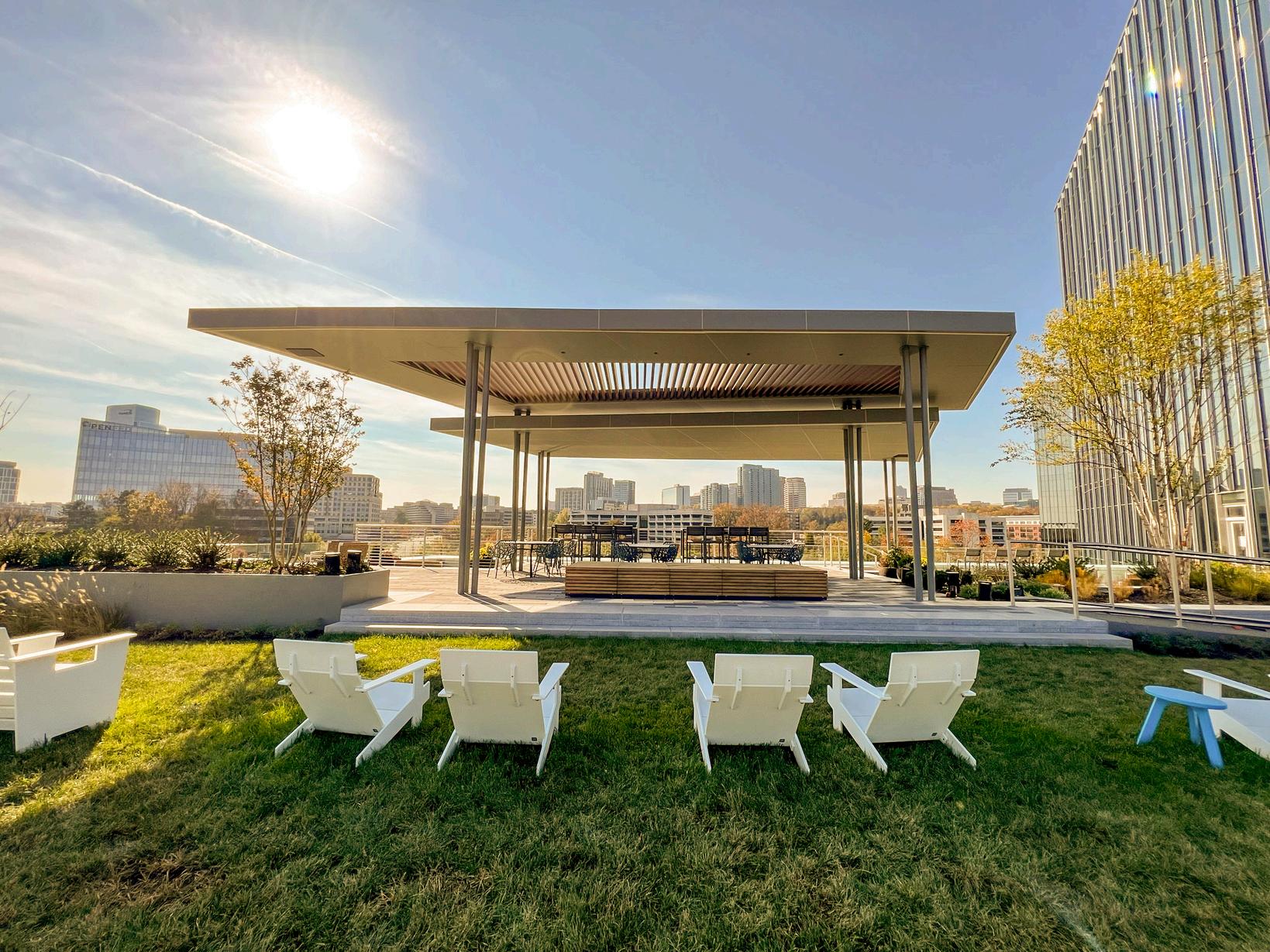
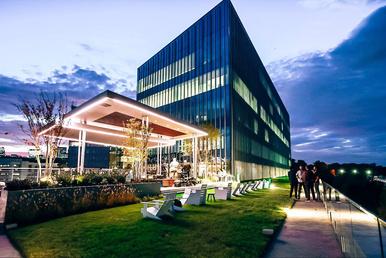
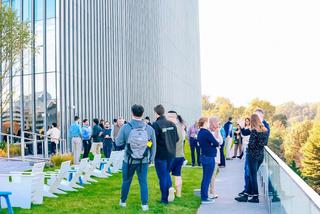
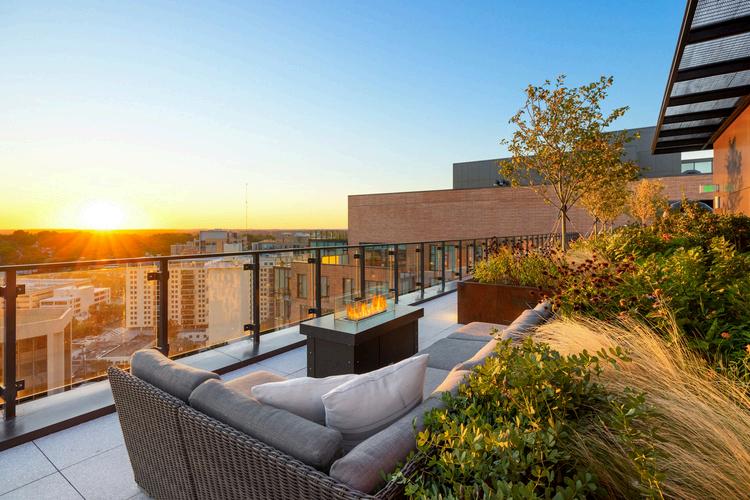
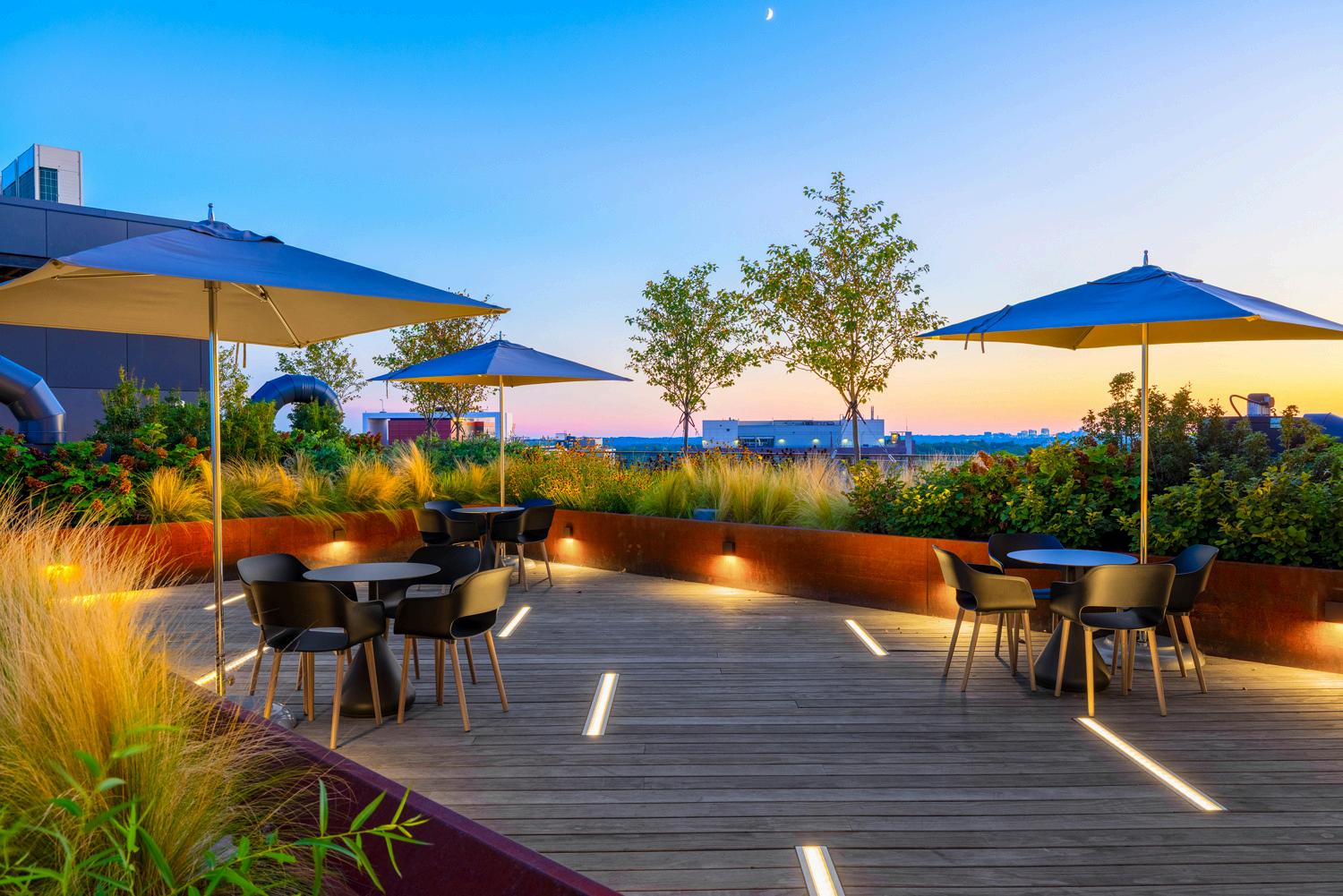
The Appian Corporation, a leading technology company based in Tysons Corner, Virginia, reimagined its rooftop terrace as part of a broader initiative to enhance employee experience and workplace amenities The goal was to transform an outdated, underutilized space into a world-class terrace that promotes collaboration, supports company events, and provides employees with a flexible retreat Perched atop an iconic building with sweeping views of Downtown Tysons, the design highlights the client’s connection to the surrounding community while celebrating their innovative identity. Mahan Rykiel Associates led the conceptual design, drawing inspiration from the building’s angular architecture to create modern, layered spaces. A dramatic trellis design, inspired by stands of slender woodland
trees, provides visual interest and much-needed shade, while the terrace seamlessly integrates paved and open lawn areas to maximize flexibility for gatherings, meetings, and relaxation
Faced with a reduced budget, the Landscape Architect spearheaded an analysis of existing infrastructure, developing a creative redesign that saved $1 6 million while preserving project goals Sustainability and well-being principles were thoughtfully incorporated, ensuring a resilient and functional space that enhances the built environment and employee experience. The result is a dynamic, flexible amenity that fosters connection, creativity, and reprieve for Appian’s valued workforce.
GENERAL DESIGN
CHEVY CHASE LAKE BLOCK B
CHEVY CHASE, MD
MAHAN RYKIEL ASSOCIATES
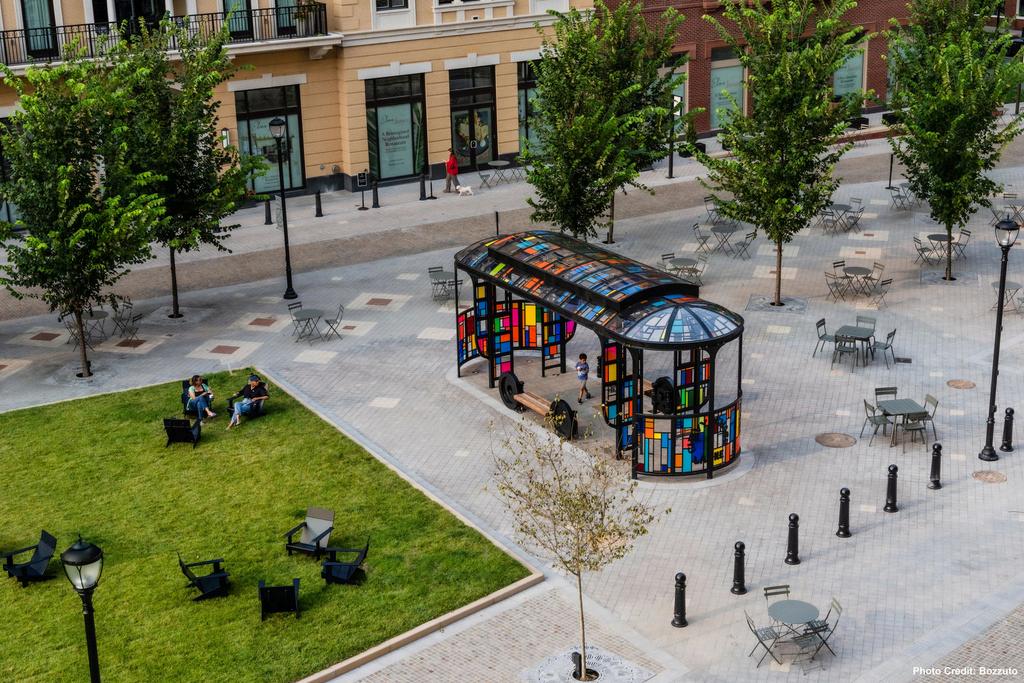
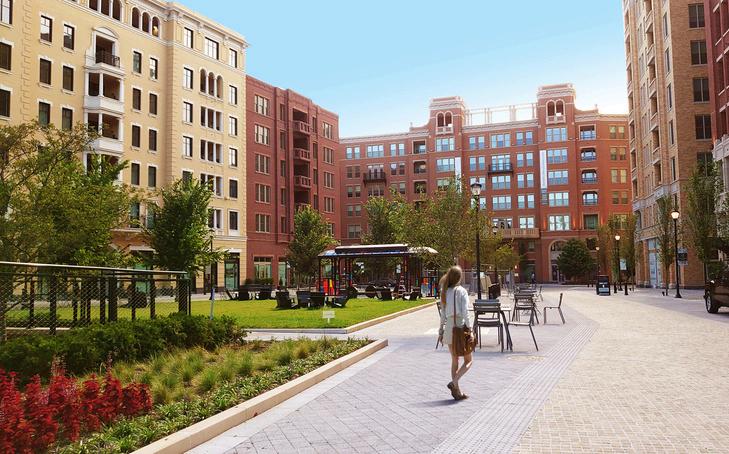
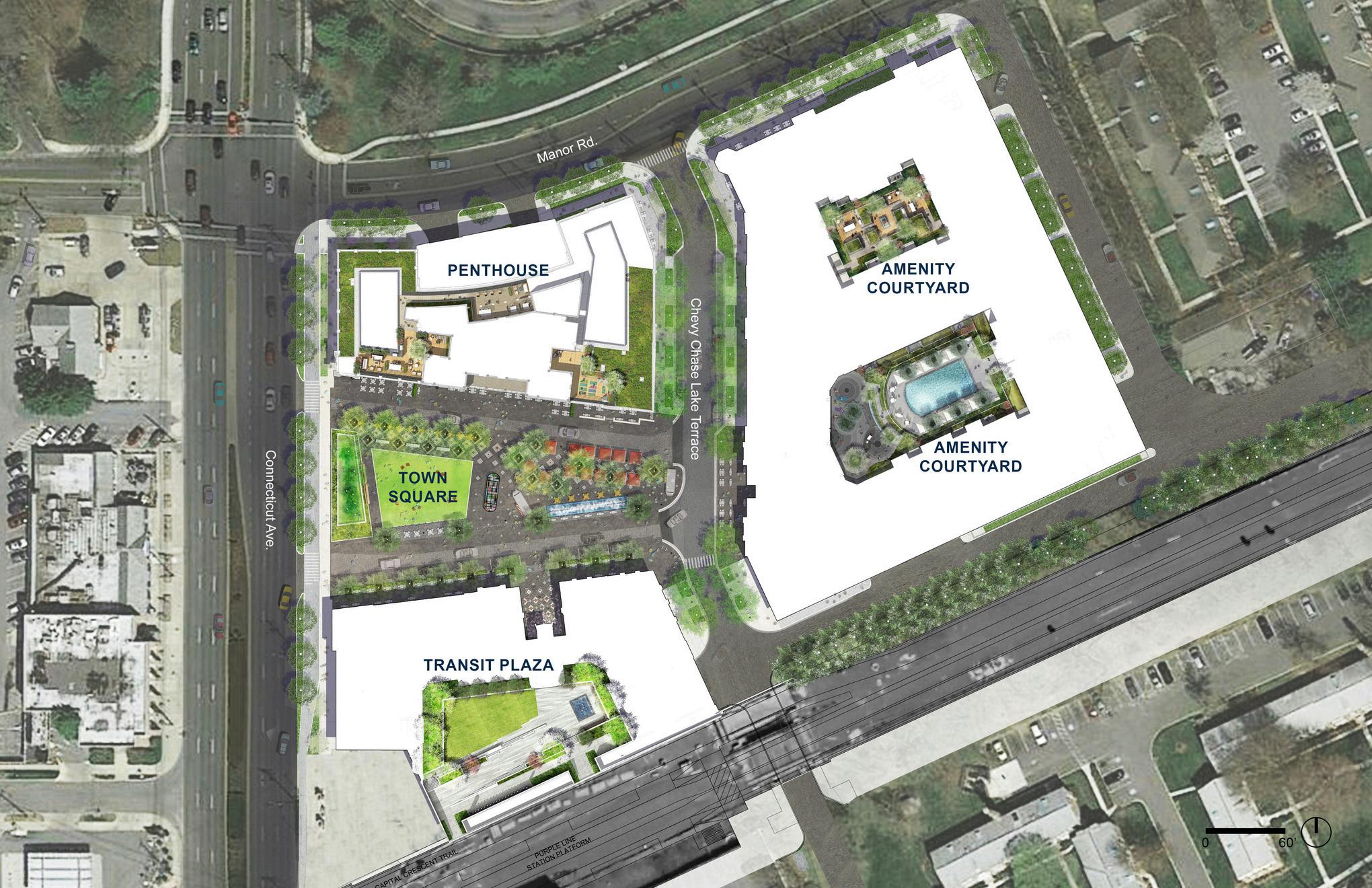
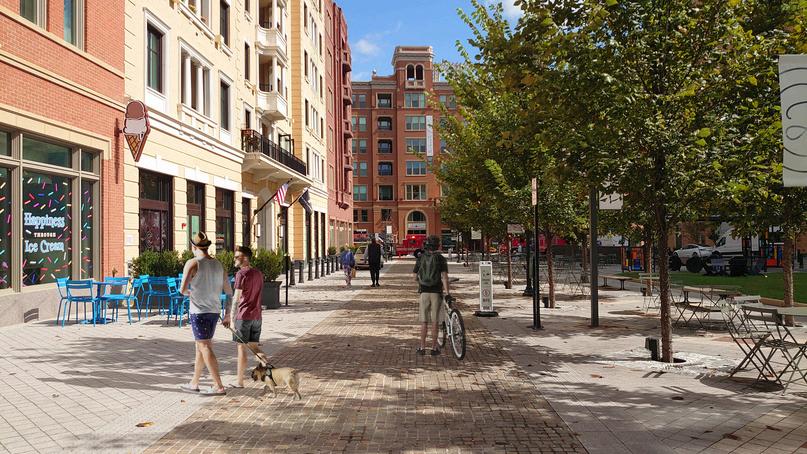
Located in Montgomery County, MD next to the future Purple Line Station, Chevy Chase Lake Block B is a 9 5-acre Transportation Oriented Mixed-Use Development The site was home to the Chevy Chase Lake Amusement Park, a recreation destination that could be reached via trolley By celebrating the history of Chevy Chase Lake, the design highlights craftsmanship, flexibility, togetherness, sustainability, and multi-modal transit From spatial planning to fine details, the landscape design prioritizes the user experience, introduces context-appropriate materials, and blends art and nature As the heart of the project, the Town Square features a central open space and four distinct edges The treelined streets evoke the feeling of the historical CCL neighborhood and simultaneously highlight views Constructed from recycled acrylic and steel, an interactive trolley sculpture
sits in the middle of the Square. As a Transit-Oriented Development, the Transit Plaza presents a platform for visitors arriving via rail and a comfortable private edge for the residents Integrating ample bicycle parking, the project welcomes cyclists from the Capital Crescent Trail Inspired by the nature settings around, the active pool courtyard carries the themes of ripples and wind, the passive North Courtyard draws inspiration from the waves, dividing space with layered planter boxes that create smaller “rooms” and are filled with native, shade-tolerant plants, also acting as bioretention planters The materials selection honors both the site’s history and present, combining traditional brick, precast pavers, wood, and painted metal to create a rich, warm palette that makes the space feel natural and relaxed
MERIT AWARD
GENERAL DESIGN
LUMEN PLAZA AT 100 LIGHT
BALTIMORE, MD
FLOURA TEETER LANDSCAPE ARCHITECTS
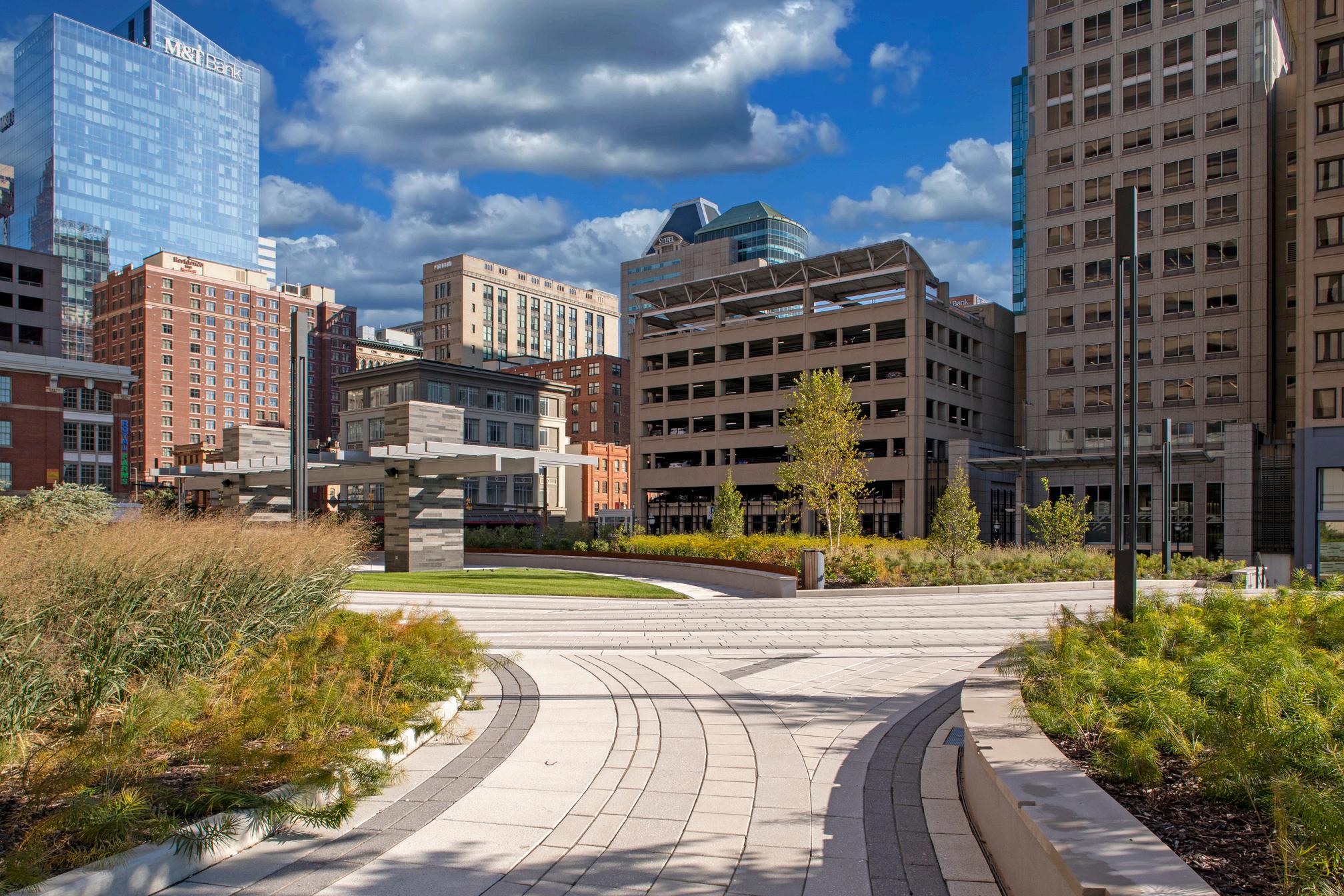
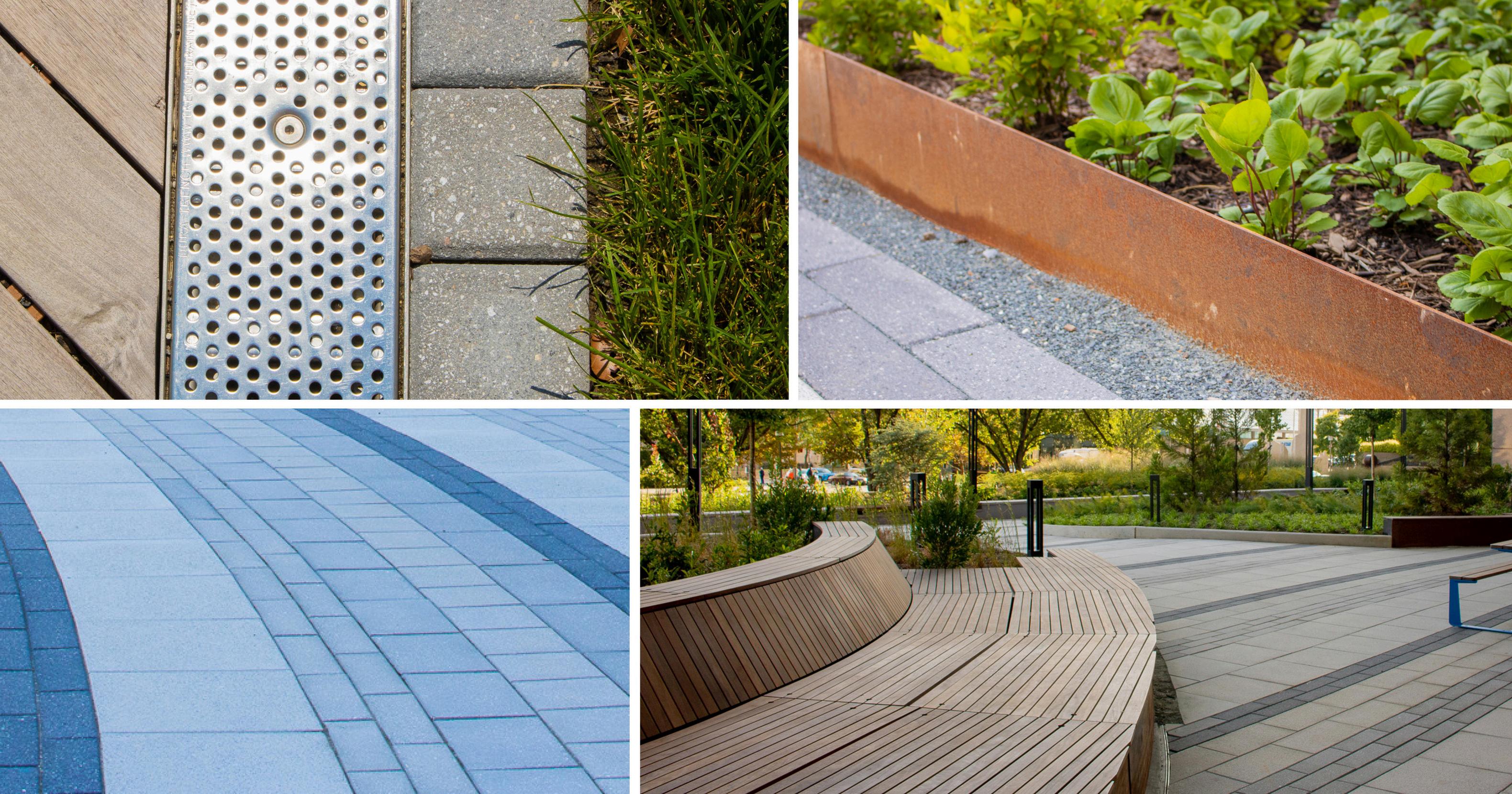
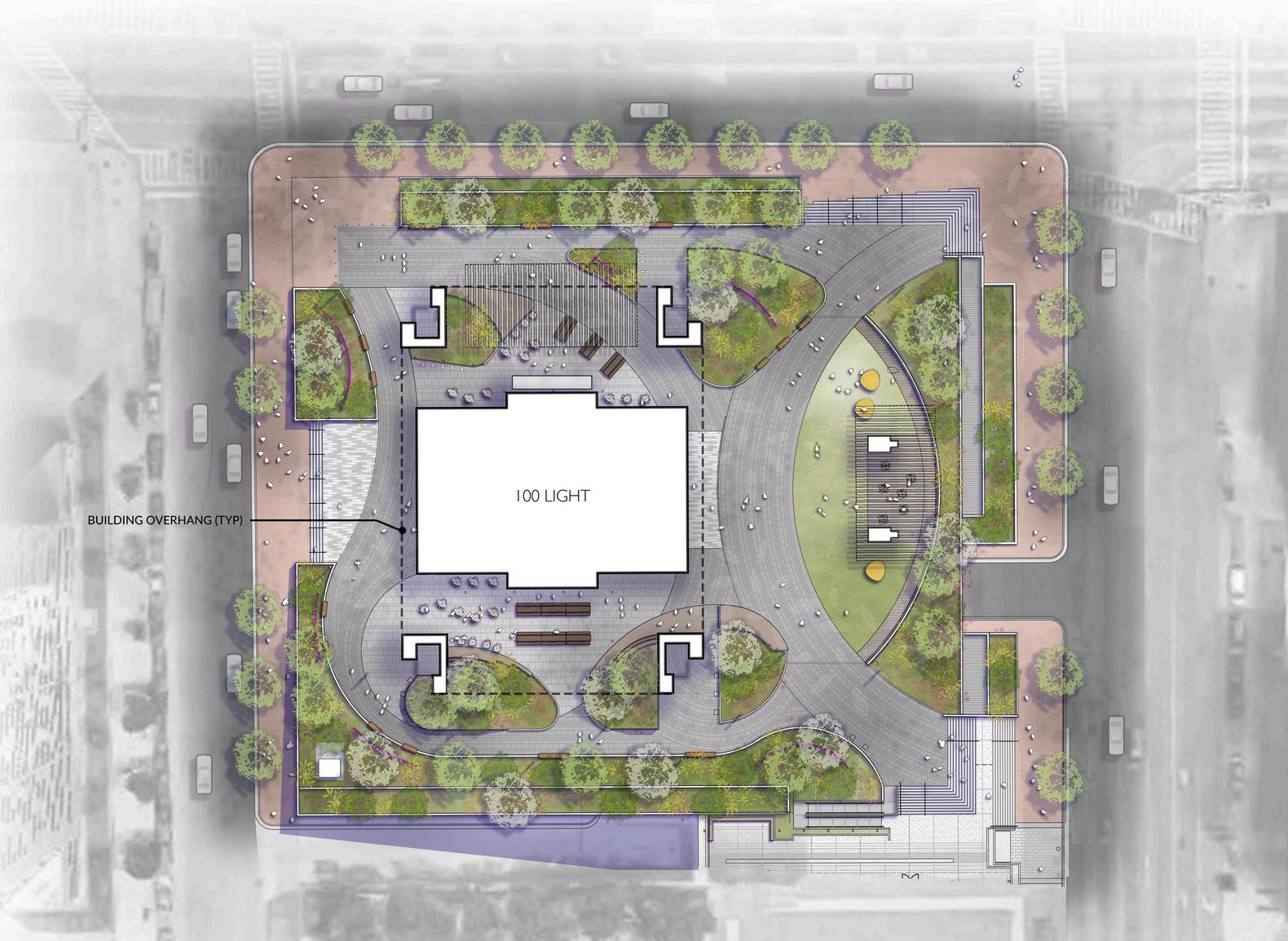
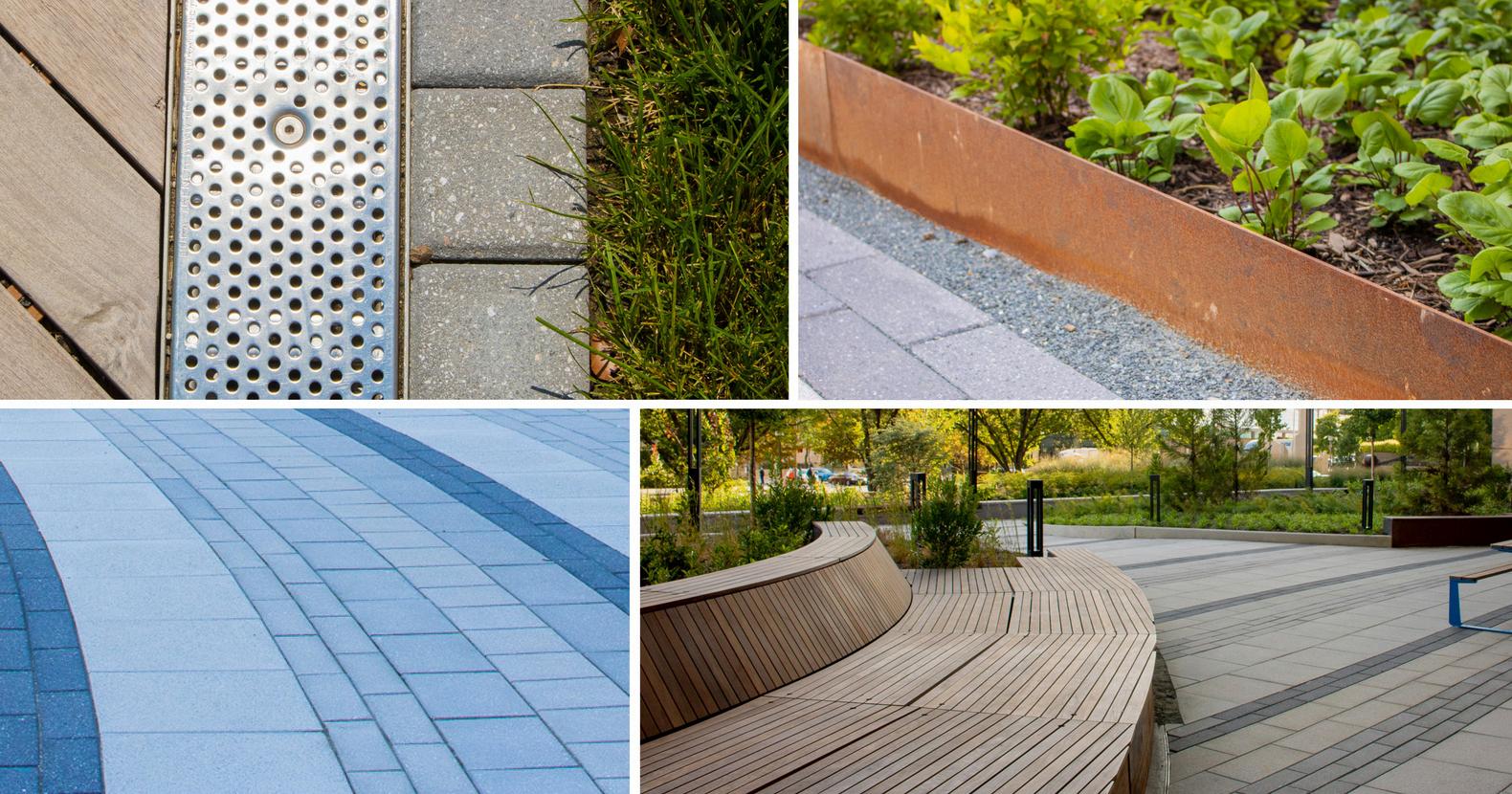
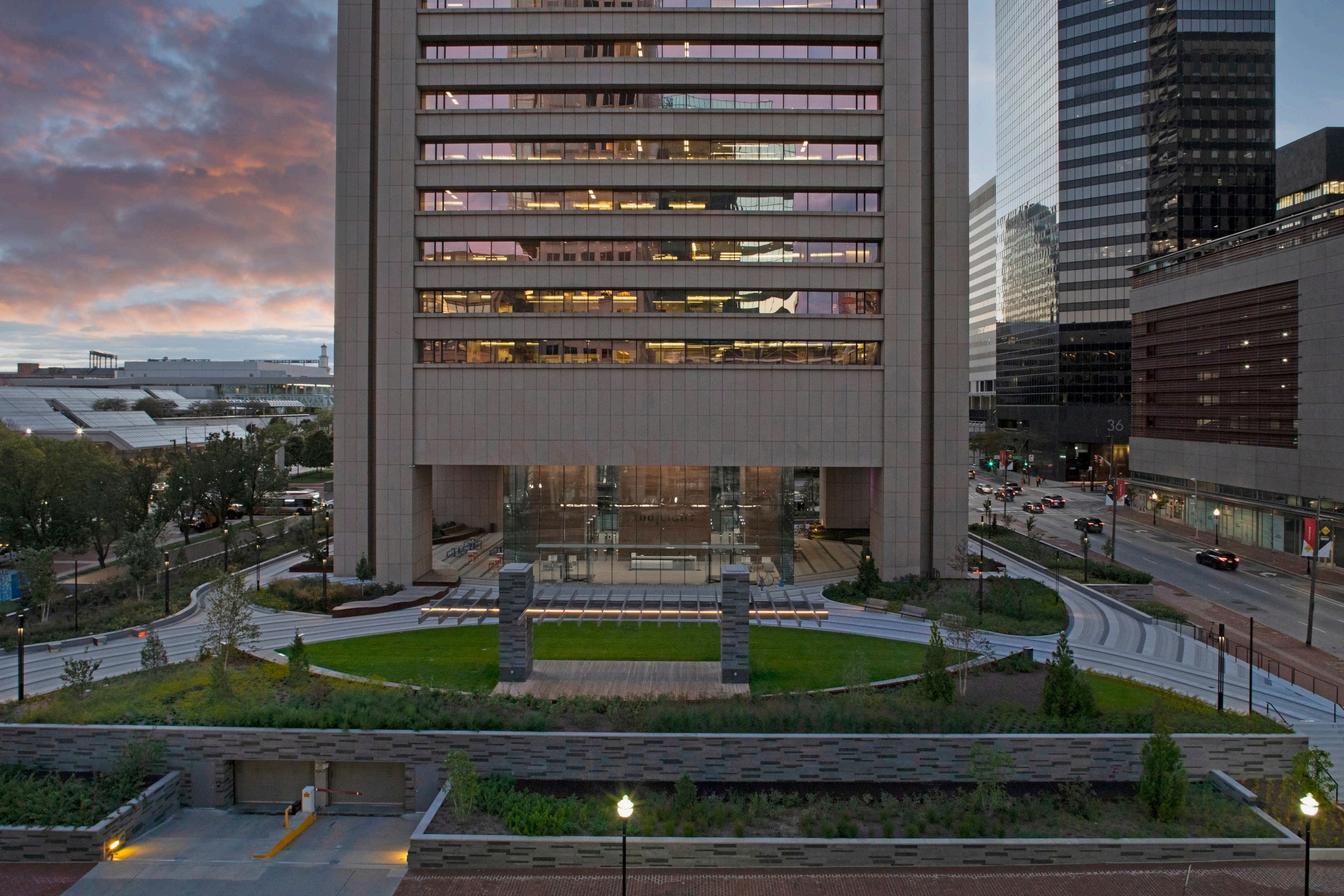
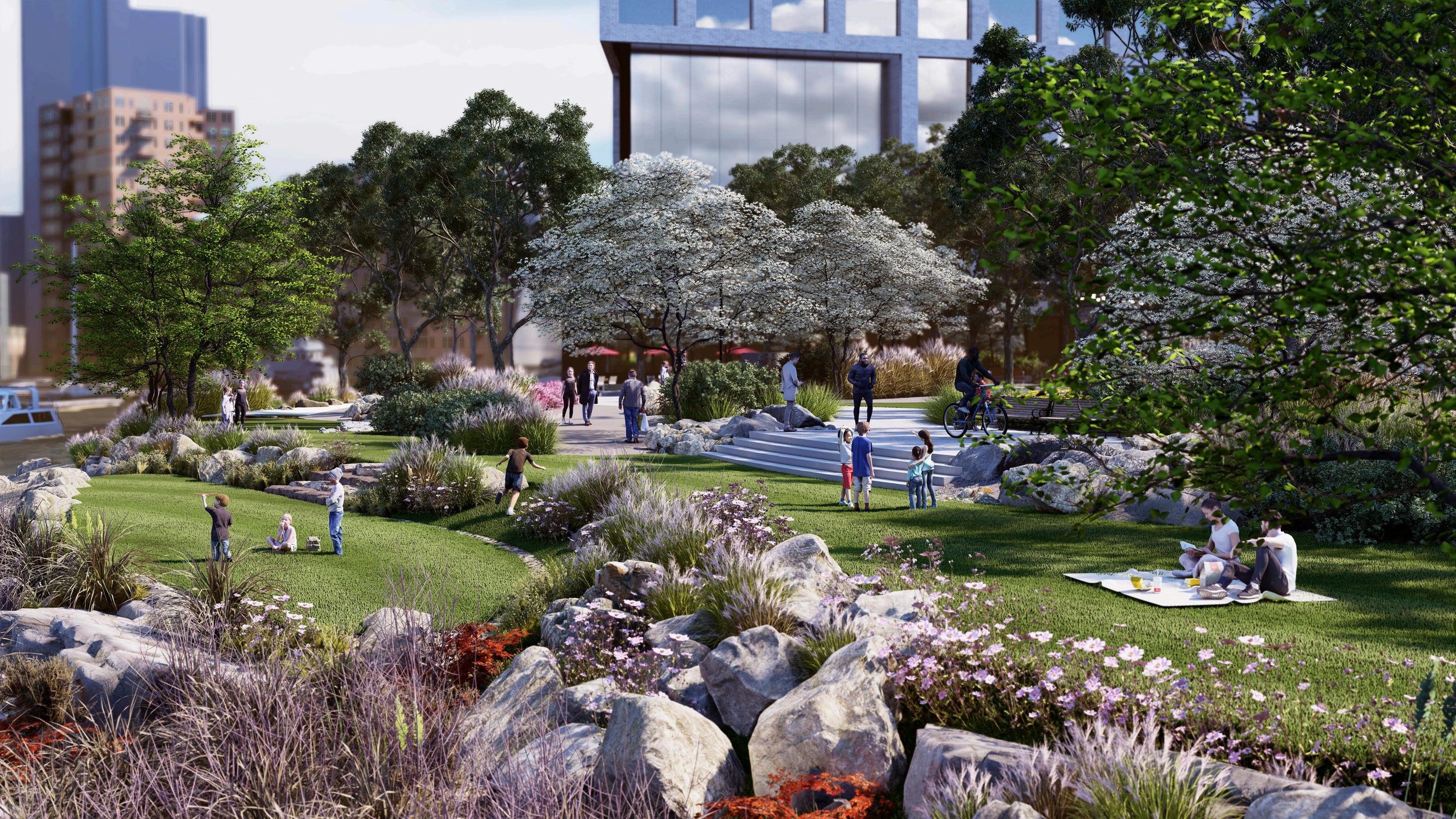
Lumen Plaza at 100 Light Street, site of the tallest building in the Baltimore skyline, underwent a complete renovation to address damaging water intrusion through the structured deck Tower owners encouraged the design team to reimagine the plaza as a green oasis, creating a garden-like space with dense planting and a creative plant palette Floura Teeter approached the design as planting-first, carving pedestrian circulation from a full block of greenery Graceful arcs of circulation define flexible outdoor spaces for building occupants and visitors to relax, work, and hold events. Custom planters, reflecting the existing architecture, integrate podium seating and large planting areas. A mix of lightweight soils, foam insulation, and strategically placed trees creates the illusion of a dense garden in a rooftop environment.
Bold arcs of pavers define use zones, entry spaces, and pedestrian movement The client desired a unique plant palette uncommon in downtown spaces Floura Teeter delivered with texture-rich, seasonally dynamic plantings featuring native, drought-tolerant trees, evergreen shrubs, ornamental grasses, and traditional favorites that provide habitat, avian food, and visual interest The result is a stunning greenspace that meets evolving workforce needs, offering tenants flexible workspaces and a place to rest and recharge throughout the workday.
GENERAL DESIGN
TEXAS LIVE! ENTERTAINMENT DISTRICT
ARLINGTON, TX
HORD COPLAN MACHT
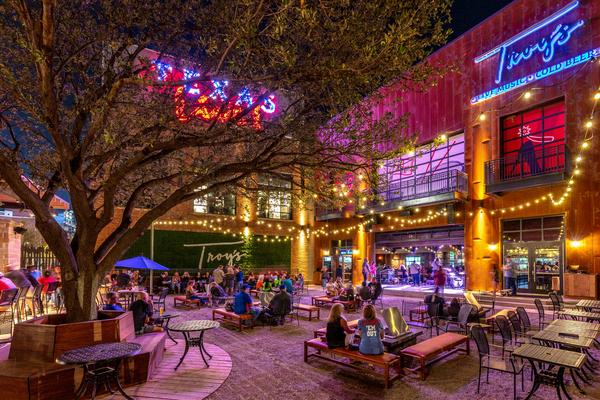
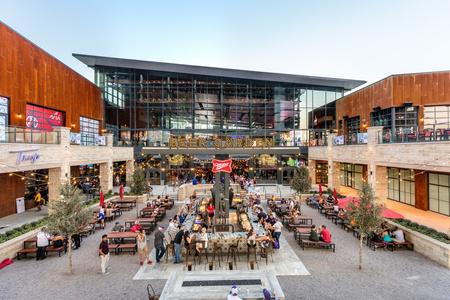
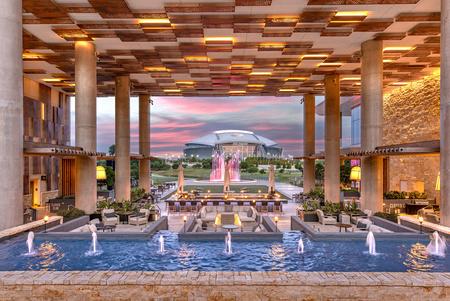
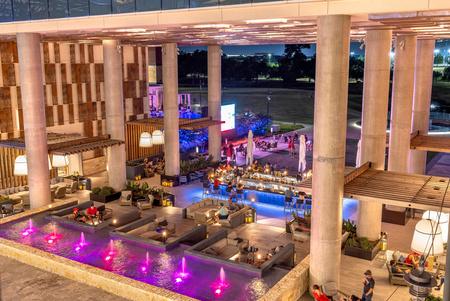
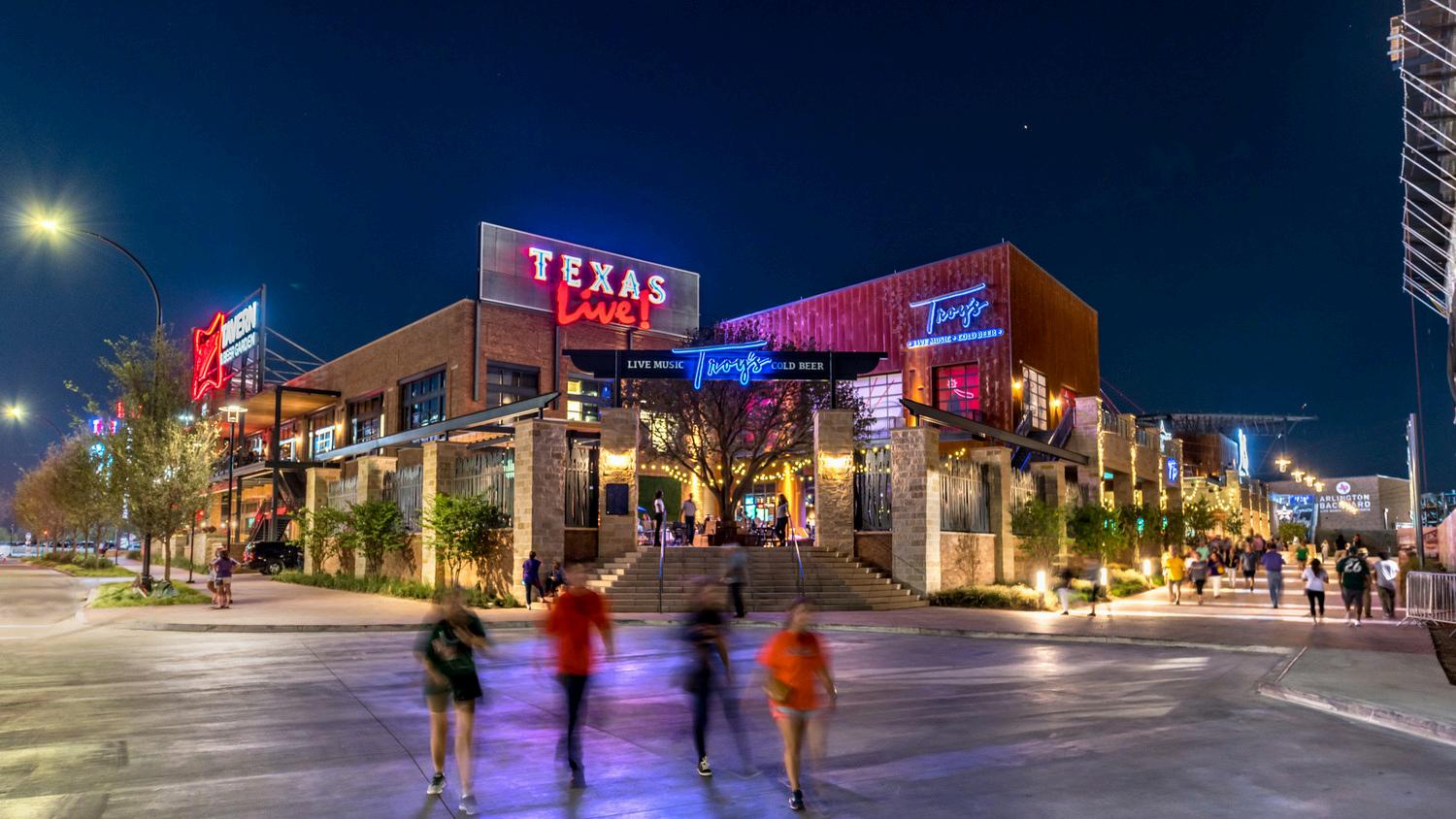
Working on behalf of Cordish Companies in conjunction with the City of Arlington, Texas and the Texas Rangers, Landscape Architects at Hord Coplan Macht led the master planning effort for 90+ acres of land along Johnson Creek, a primarily-urban tributary that runs between AT&T Stadium, home of the NFL’s Dallas Cowboys, and the then future Globe Life Park, now home of the MLB’s Texas Rangers The Master Plan served as validation of the potential to activate Johnson Creek while establishing critical links between two of the nation’s premier sports venues and, when it came time to begin implementing the first phases of the vision, the landscape architect was retained as part of two interdisciplinary teams to bring the first couple of projects to life; Texas Live! and Live! By Loews hotel – t g th f i g th
of a newly established Entertainment District. Completed in 2018, Texas Live! is a unique collection of bars, restaurants, and entertainment venues – the perfect place for sports fans and connoisseurs of fine food and drink alike Following Texas Live! was the completion of its counterpart – the Live! By Loews luxury hotel featuring an array of amenities and services; a destination hotel to experience the best that the Dallas-Fort Worth-Arlington metroplex has to offer The landscape architect played critical roles throughout the project, from helping to shape the site plan to detailed design of all outdoor spaces including pedestrian promenades, streetscapes, bars and restaurants, pools and fountains, an event lawn, and associated hardscapes, plantings, d lighti g
HONOR AWARD
GENERAL DESIGN
COLOR BURST PARK
COLUMBIA, MD
MAHAN RYKIEL ASSOCIATES
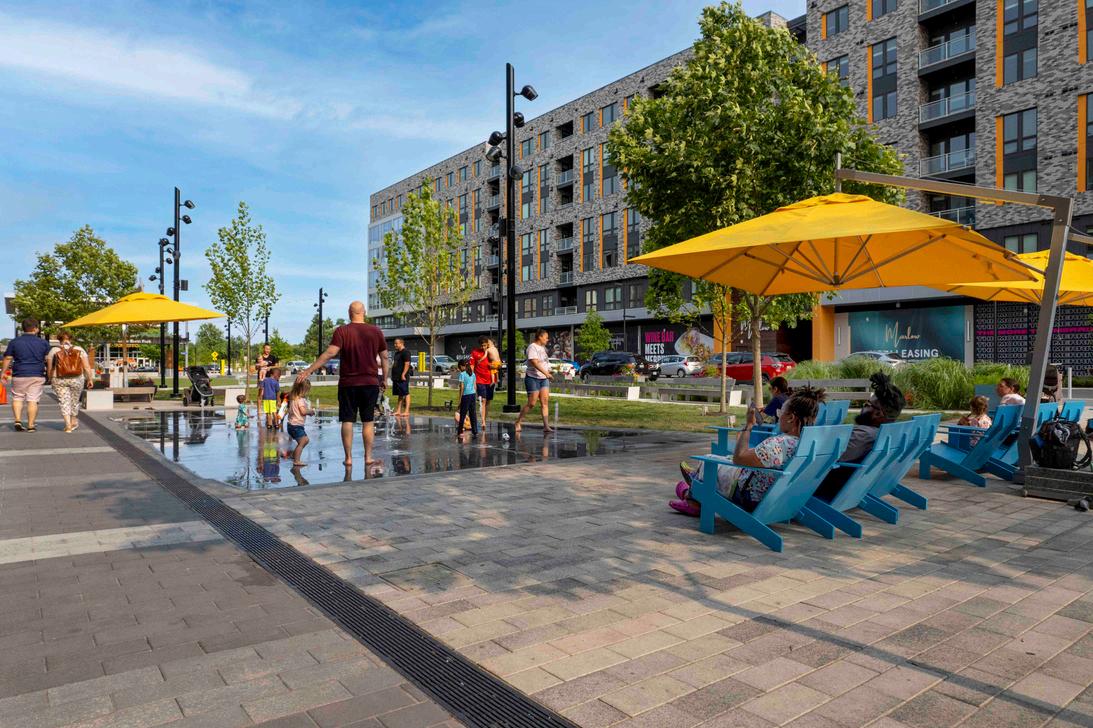
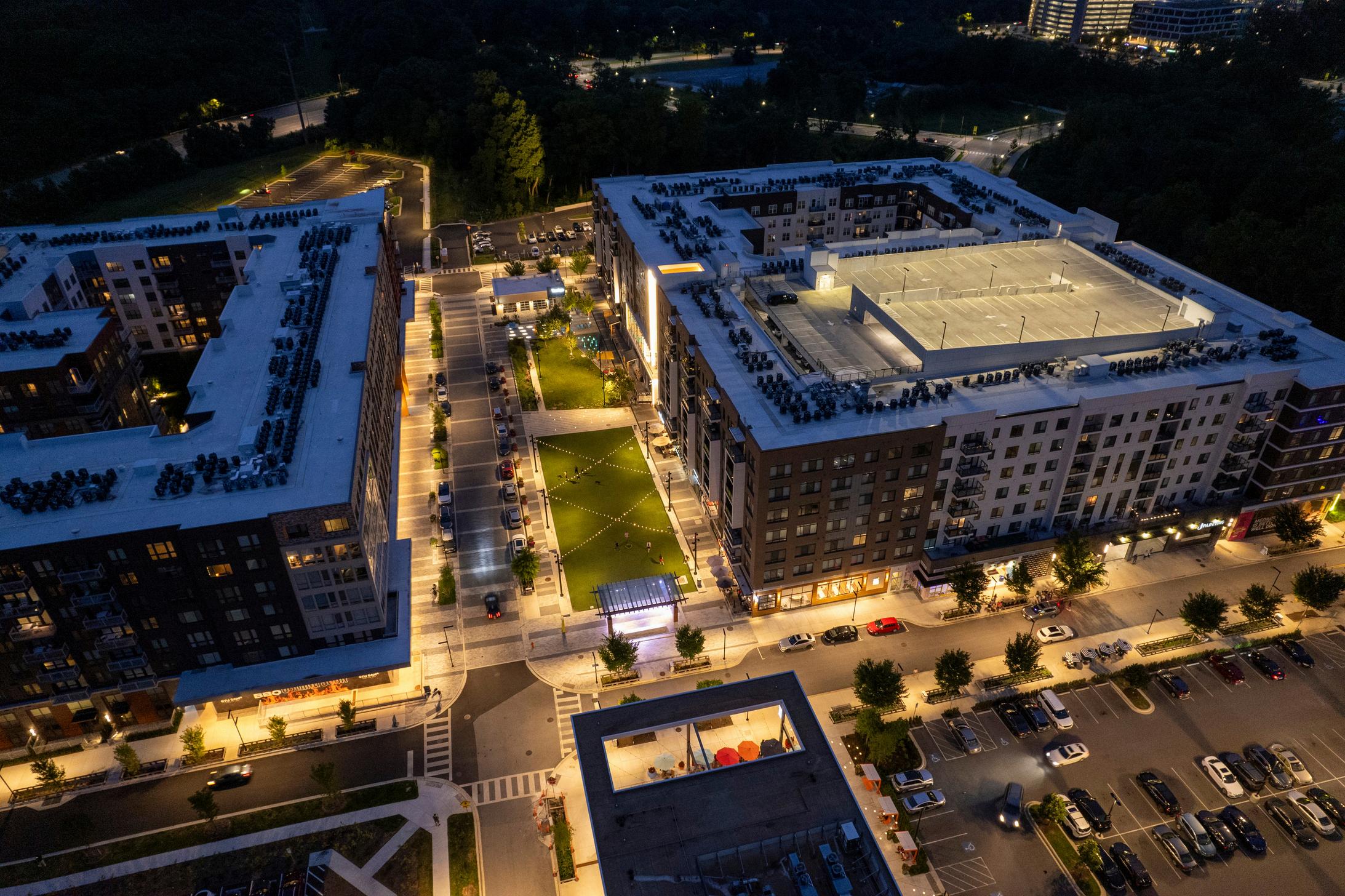
Color Burst Park is located in the Merriweather District, MD. The park sits within a mixed-use development centered on walkability, connectivity, creativity, sustainability, and art. There are five primary spaces/stages: a promenade, an event pavilion, an open lawn, a fountain plaza, and a shared street The promenade connects a future trail system to an anchor restaurant, creating a major pedestrian thoroughfare with retail It is activated by tents, photo booths, and food trucks for special events The event pavilion at the east functions as a focal point It provides varied gathering opportunities through seasons, like outdoor concerts and skate rental station A large open lawn with seat walls provides flexible public space, transforming throughout the seasons, like a yoga field, outdoor theater, farmers’ market, and
ice rink. A fountain plaza on the west also offers multiple uses. During summer, people can cool off. During winter, it transforms into a hardscape plaza illuminated by colorful lighting. Along the street, stormwater management facilities with native and adapted plants help to meet sustainability goals, presenting educational opportunities A shared street in the south works for car traffic, pedestrian, and bicycle movement During winter, it transforms into a holiday market Future pedestrian and bike connections to other parts of the Merriweather District were incorporated into the park design Color Burst Park will grow and change alongside its users, continuing to function as the heart and soul of the Columbia community
GENERAL DESIGN (UNBUILT) AWARD CATEGORY
R e c o g n i z e s i n n o v a t i v e v i s i o n w i t h i n l a n d s c a p e a r c h i t e c t u r e o r u r b a n d e s i g n f o r
p r o j e c t s t h a t h a v e n o t b e e n b u i l t T y p i c a l e n t r i e s i n c l u d e u n b u i l t g e n e r a l
d e s i g n a n d r e s i d e n t i a l d e s i g n p r o j e c t s .
MERIT AWARD
GENERAL DESIGN (UNBUILT)
CHROME WORKS PARK
BALTIMORE, MD
iO STUDIO, INC.
The 5 acre Chrome Works Park, the latest addition to Baltimore’s waterfront, is constructed entirely over a capped, remediated brownfield site that was once the largest chromium ore processing plant in the world The design interprets the history of the site, through the lens of both industry, ecology and environmental stewardship The design connects the landscape of the Chesapeake Bay with that of the Serpentine Grasslands of Baltimore County (the site where chromium ore was mined) and serves as an interpretive space for visitors to gain perspective on a period during which Baltimore played a significant role on the world stage – its industry and businesses driving innovation across the globe. The park plan is comprised of several program zones, ranging from a large flexible lawn for passive and
programmed gathering, nature play space, research pier, terraced waterfront lawn, interpretive elements like the grove and covered slip, as well as a naturalized continuation of Baltimore’s promenade The simple circular form of the park is derived from the cyclical patterns evident in evolution – in industry and in the environment The park is a canvas for outdoor learning and interpretation, embedding opportunities for both active and passive engagement throughout the array of spaces within its expansive canvas. The design incorporates sustainable practice throughout, most noticeable in the use of native and adaptive species, shoreline stabilizing plantings, and a waterfront edge which was designed to take on extended inundation in large scale storm events without impacting the overall function of the space.
GENERAL DESIGN (UNBUILT)
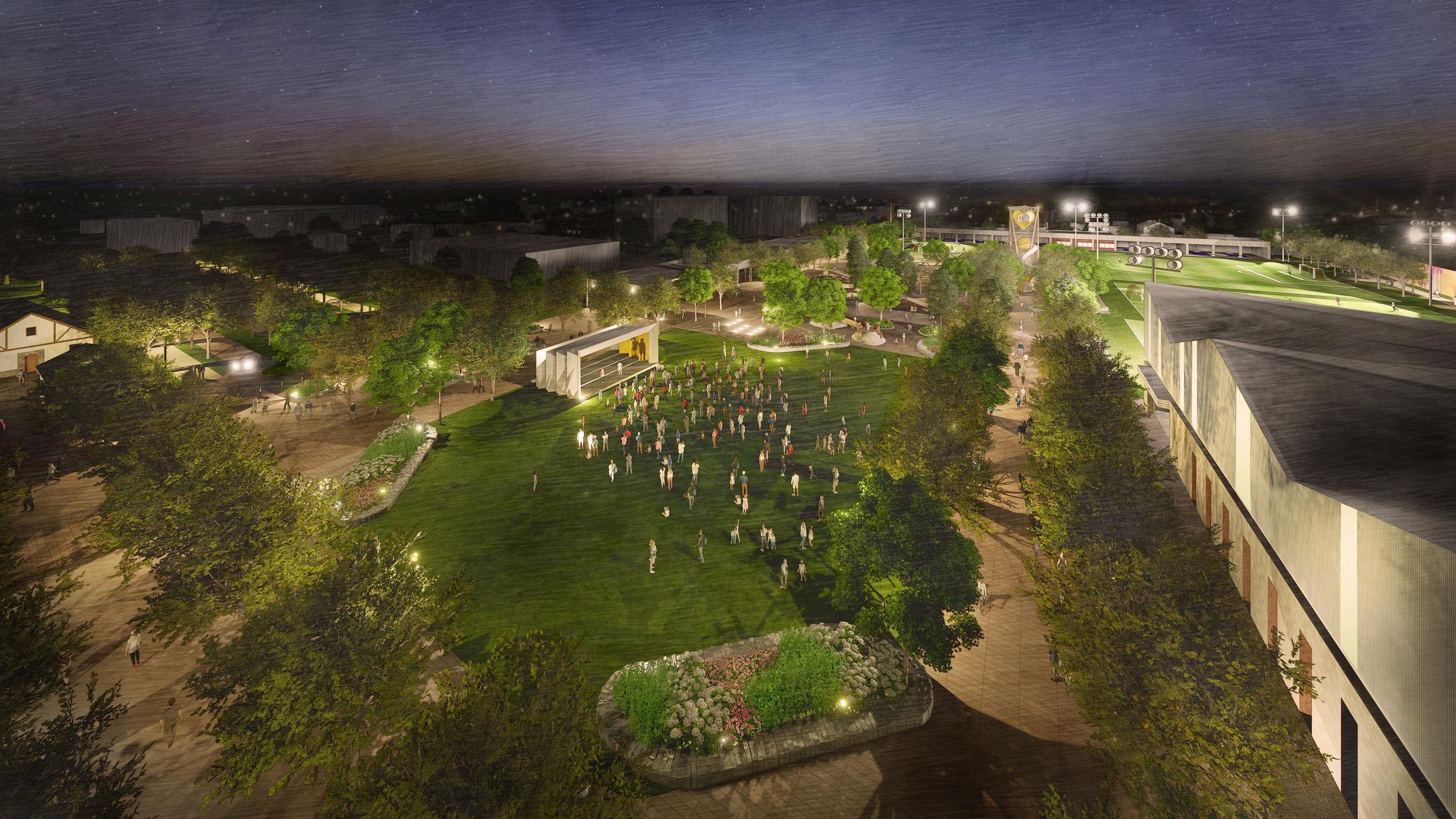
PIKESVILLE ARMORY VISION PLAN
PIKESVILLE, MD UNKNOWN STUDIO
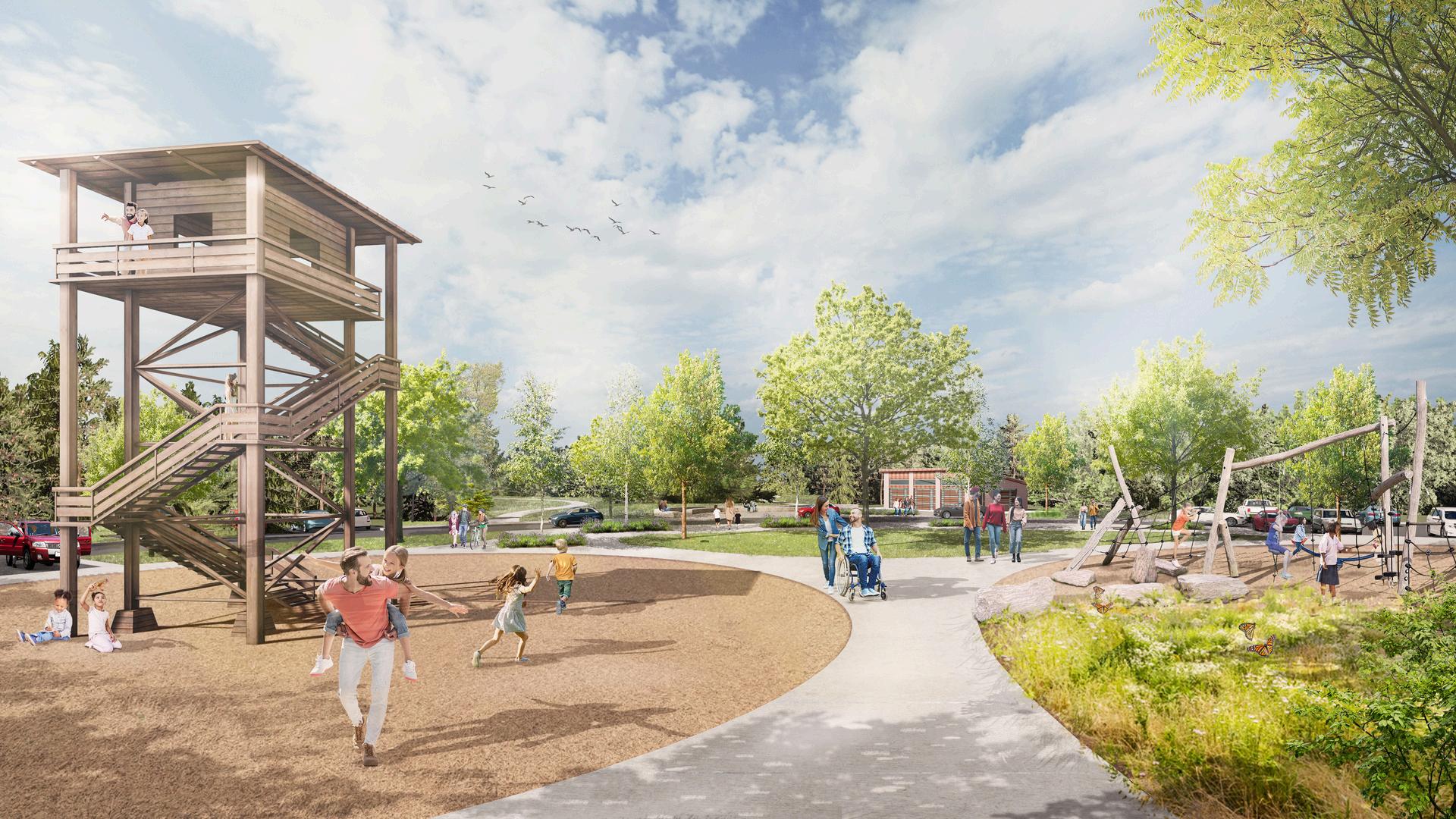
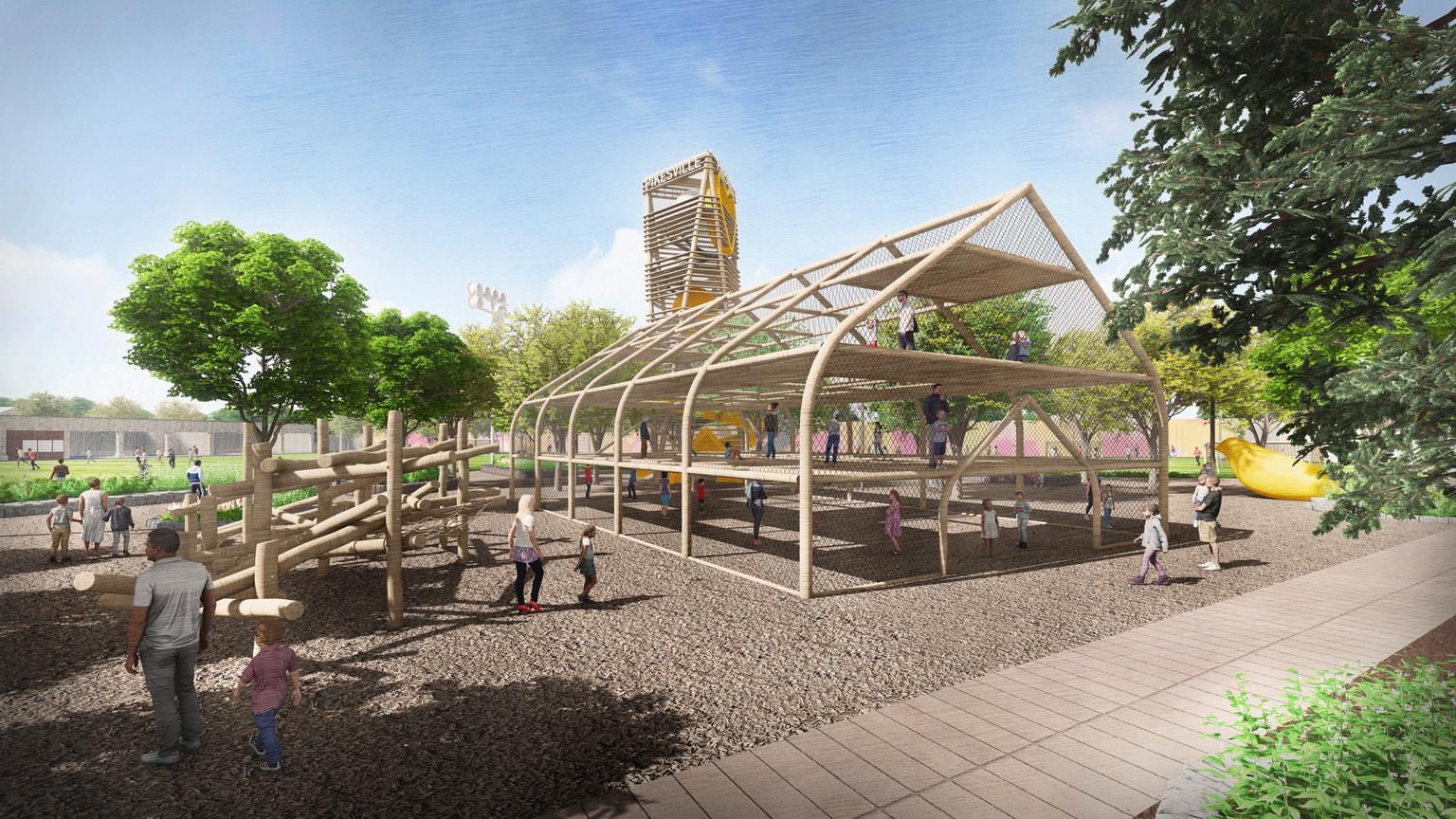
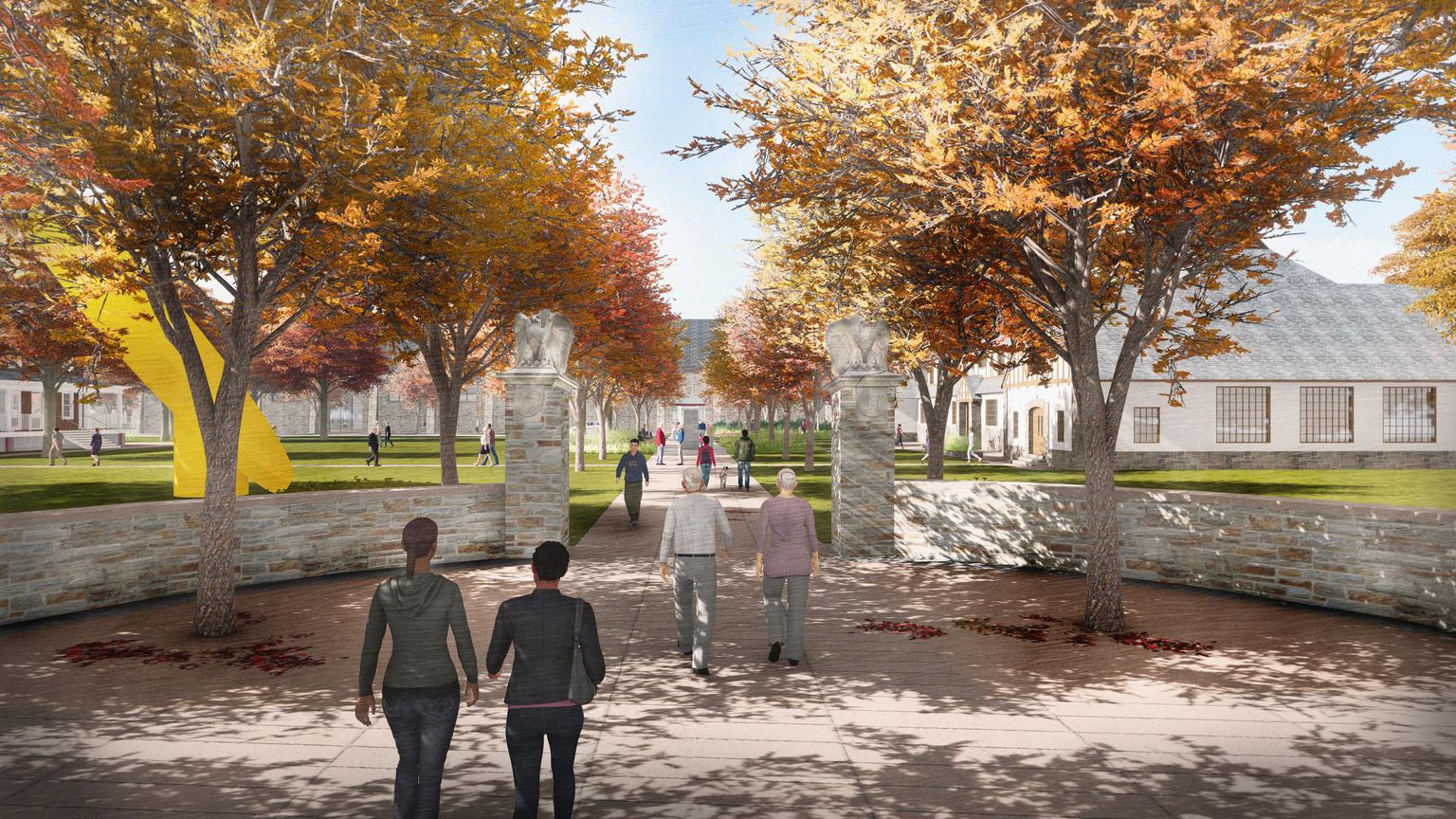
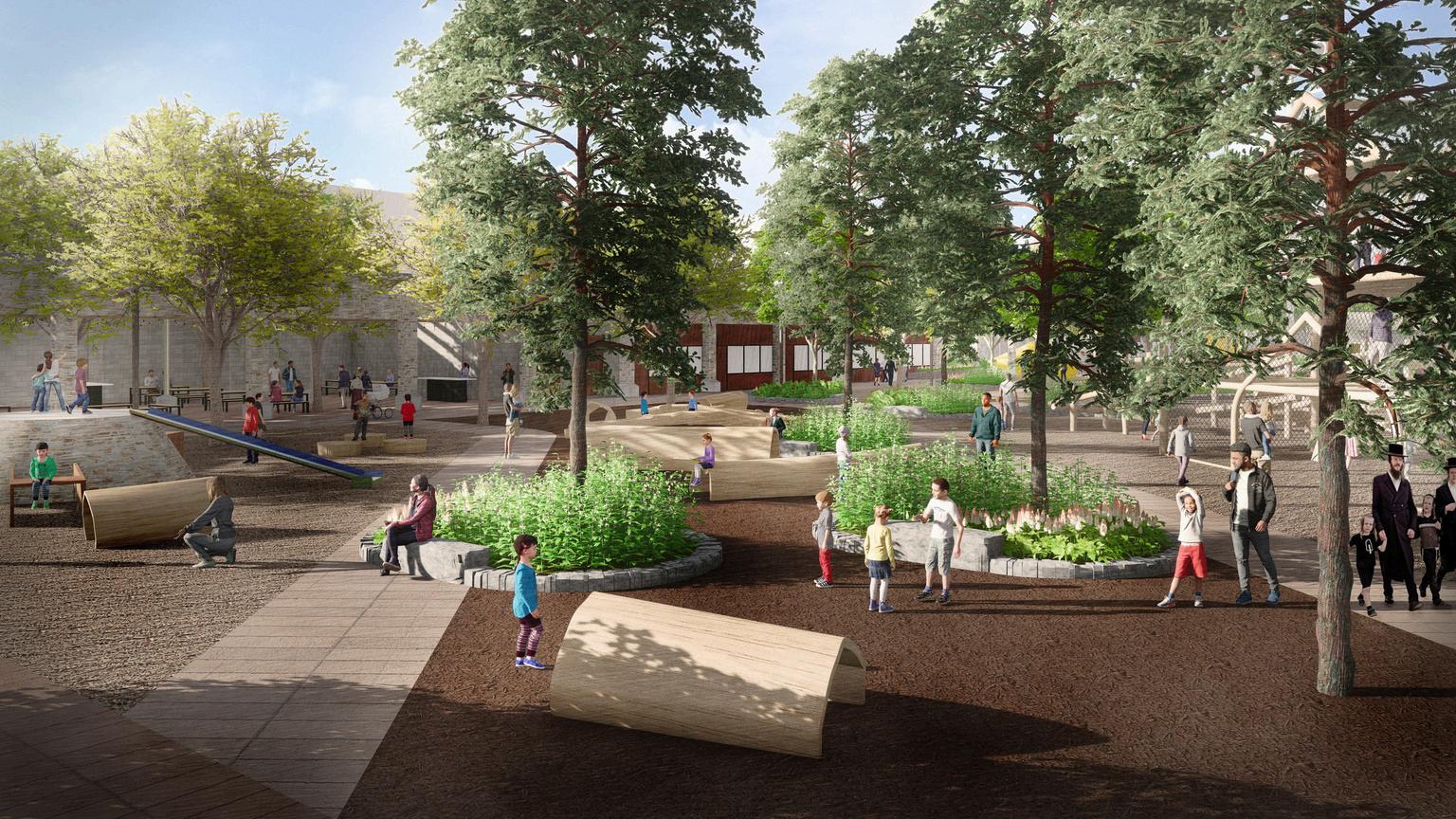
Established as a National Guard Armory in 1903, the Pikesville Armory was decommissioned in 2016 after over 100 years as a military landscape for logistics and training The design team, led by Unknown Studio and Ziger | Snead Architecture, leveraged the site’s unique legacy in close collaboration with the Pikesville Armory Foundation and a development team led by Seawall and Onyx Through a collaborative design process, the project puts forth a cohesive plan for the historic 14-acre site, including architecture, landscape design, urban design, and civil engineering Major site-organizing features embrace the property’s military history and emphasize a clear sense of order with walkways, planted form, and program elements organized along axes and gridded quadrants A loop of tree-lined promenades provides a shady circuit for visitors to move from the
eastern, Armory Park side of the site, through an arrival hall in the Armory Building, and out to a new heart of the site at Armory Place, where features include multi-age destination play, an events lawn with stage, a flexible market plaza, and activating amenity programs including a beer garden and cafe Along the perimeter, a ring of recreation and sports field programs provide extensive opportunities for team sports and community tournaments To aid in wayfinding and placemaking, features including a Play Tower and Stage structure have been designed as part of a comprehensive vision Through the Vision Planning process, the design reflects foundational landscape principles that enhance community gathering, inclusivity, human comfort, and the unique spatial qualities of the Armory site
MERIT AWARD
GENERAL DESIGN (UNBUILT)
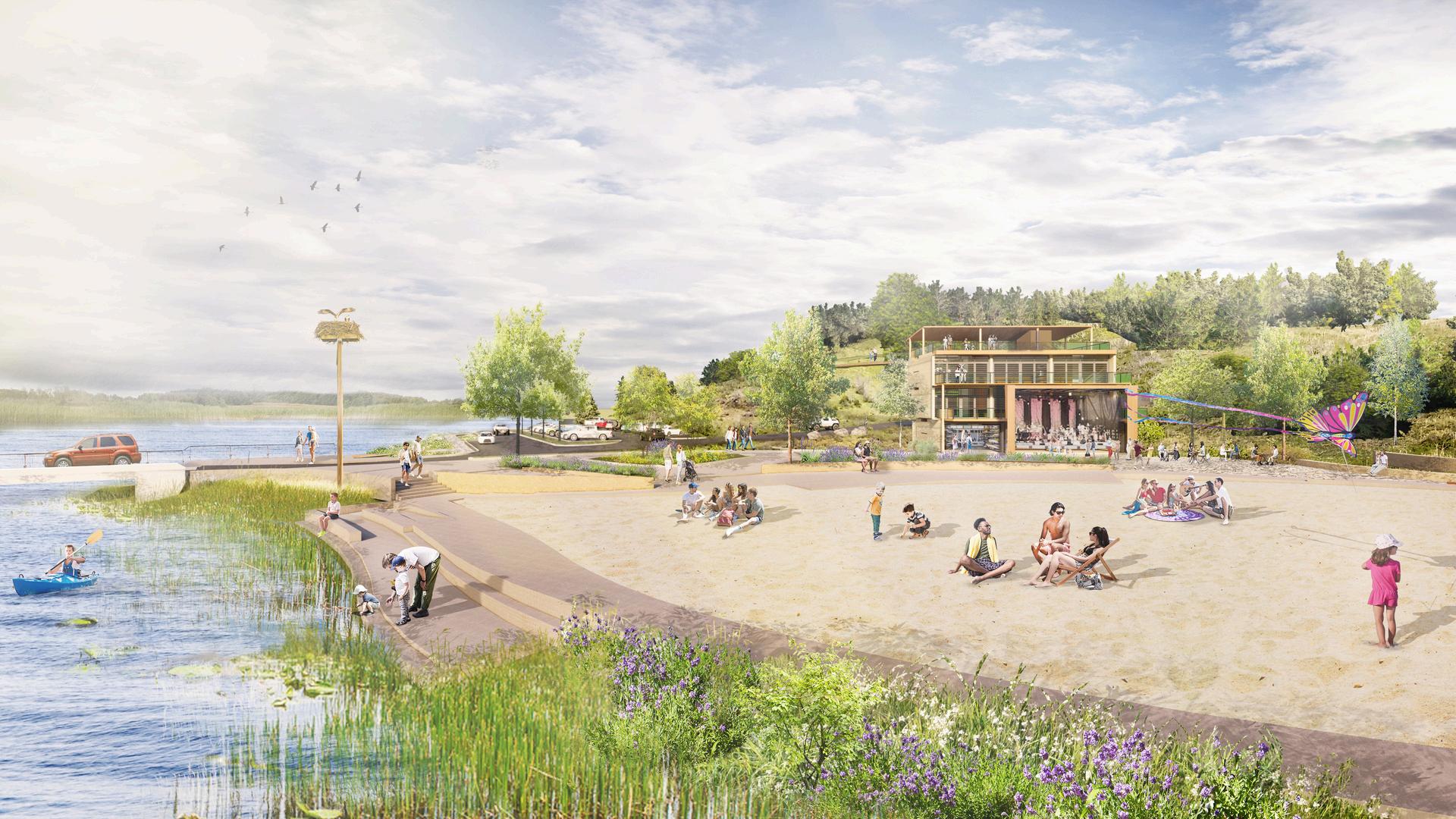
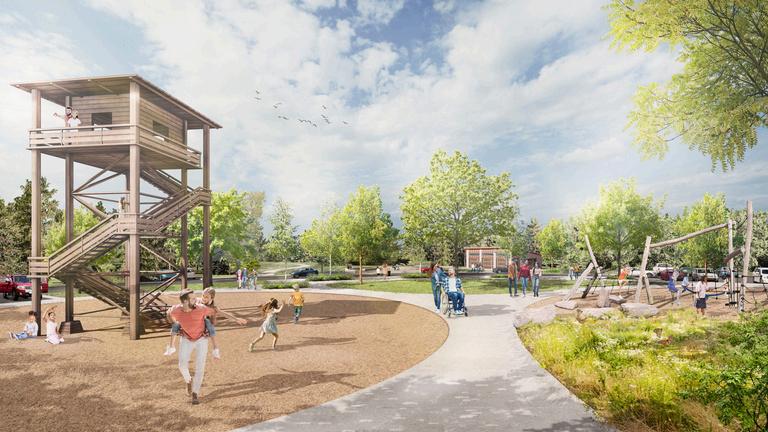
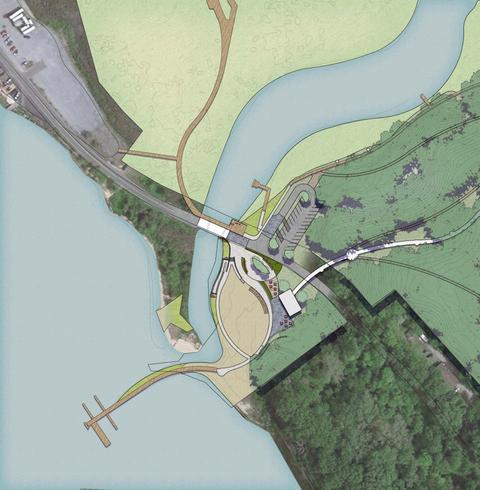
POPES CREEK WATERFRONT MASTER PLAN
CHARLES COUNTY, MD
FLOURA TEETER LANDSCAPE ARCHITECTS
Popes Creek and its associated tidal marsh are a stunning and valuable natural system in southern Charles County, MD Homing in on this rare opportunity to reclaim a portion of private waterfront property for public use, Charles County, over time, purchased the properties that comprise the project site totaling 180 acres at the confluence of Popes Creek and the Potomac River Floura Teeter along with partners, Mead & Hunt and the Charles County Recreation and Parks and Tourism, conducted a robust, year-long public engagement effort. This brought together citizens with a diverse set of perspectives from across the county to serve on a stakeholder committee. The public engagement for this project established a blueprint process for future park master plan projects in the county. Responding to the needs and
priorities put forth by the community, the park design provides a wide range of outdoor amenities intended to connect visitors to nature and centered around the themes of environmental education, aquatic recreation, celebration, and adventure – all planned to attract Charles County residents and visitors to find something new at this destination park The design took full advantage of the waterfront parcel and the upper meadow parcel to maximize recreational opportunities Popes Creek Waterfront Park has something for everyone, from kayaking, to hiking, event lawns, playgrounds, picnicking, birdwatching and more. Showcasing habitat biodiversity, the park will immerse and educate visitors as they experience ecosystem function, conservation, and climate resiliency.
MERIT AWARD
GENERAL DESIGN (UNBUILT)
TRACI ATKINS PARK
WEST BALTIMORE, MD
JONATHAN CECI LANDSCAPE ARCHITECTS
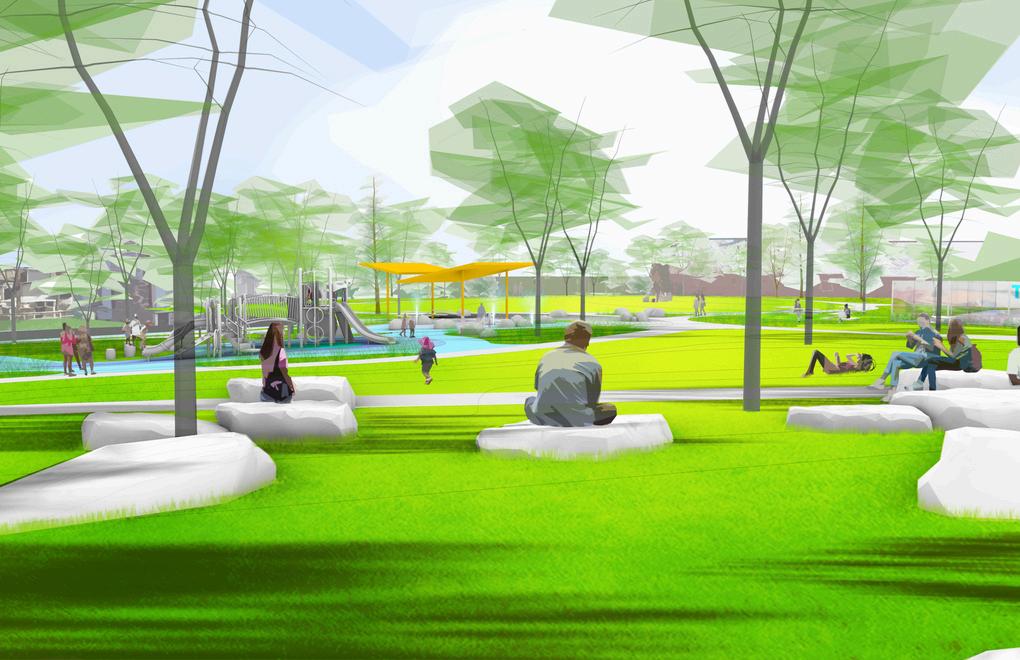
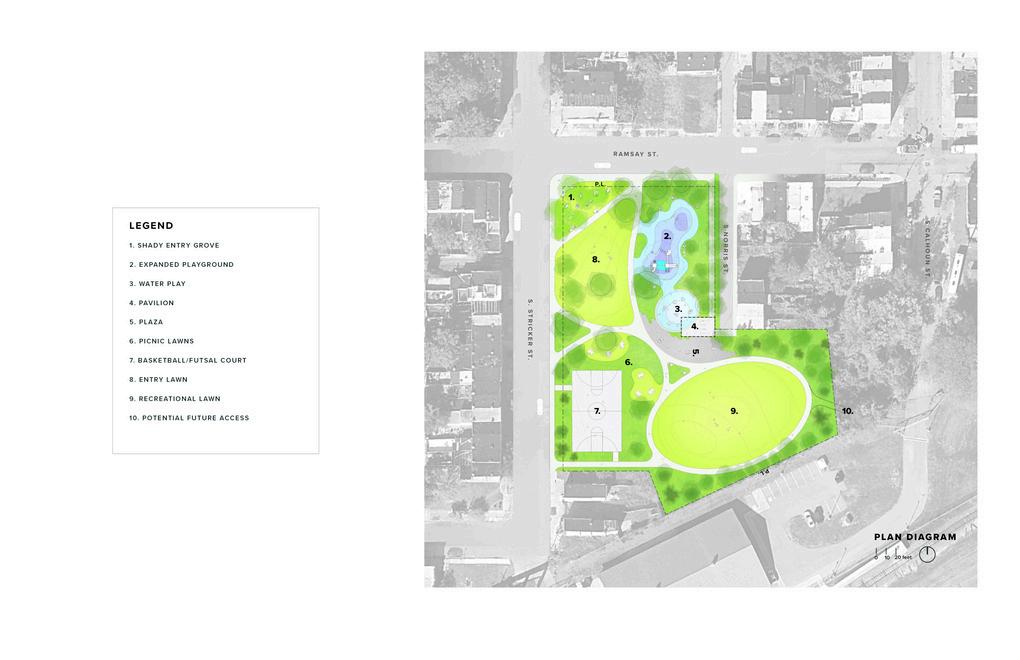
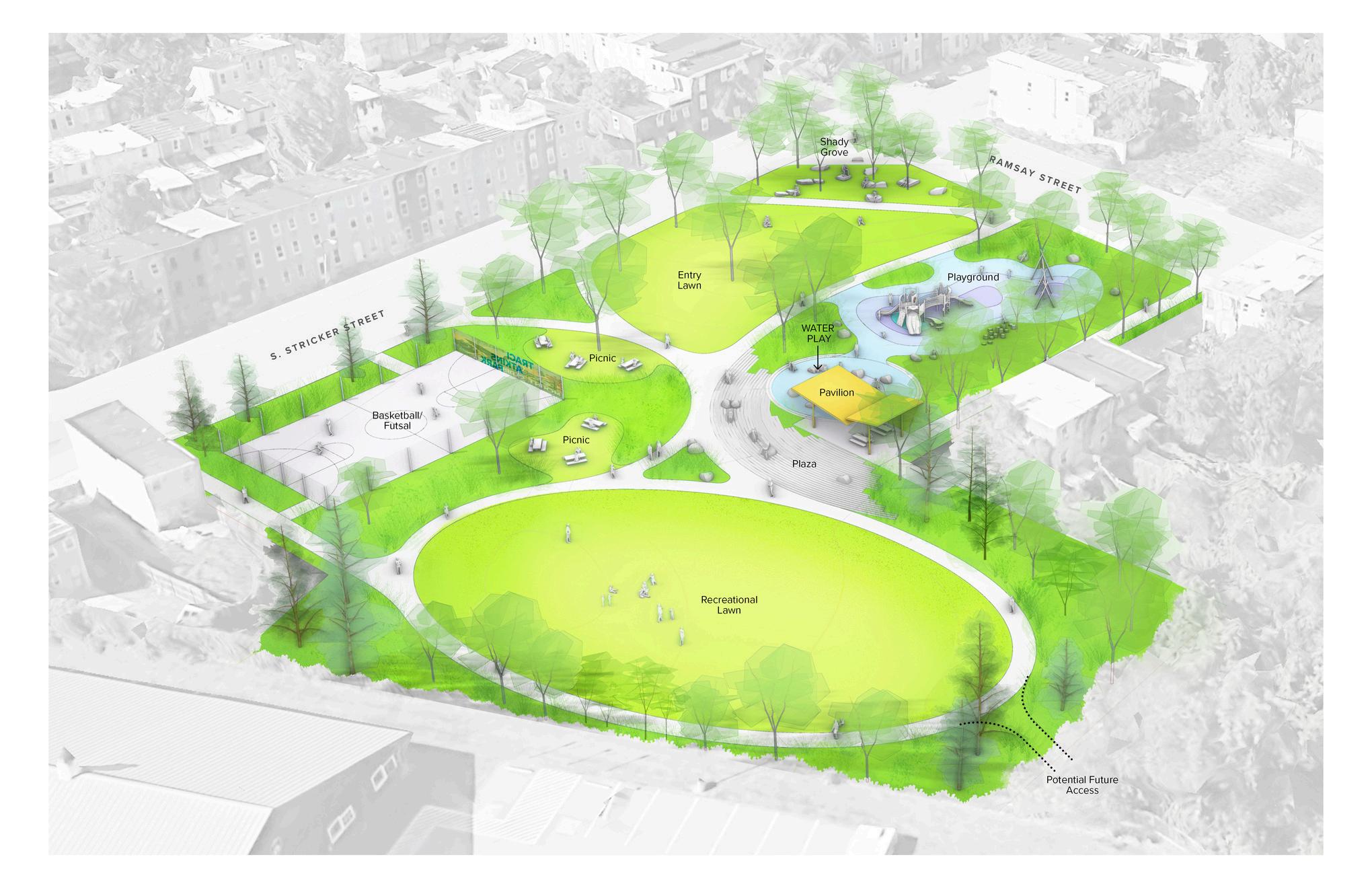
Traci Atkins Park is a small pocket park serving West Baltimore’s Mount Clare neighborhood It was originally created in the 1970s on a decommissioned rail yard Today, much of the original construction has deteriorated but the surrounding community remains strongly committed to the park’s success In 2023, the city engaged the JCLA team to facilitate a park-visioning process with the input of neighboring residents The design team guided neighbors through a series of conversations inventorying shared aspirations and comparing alternative design ideas The resulting Vision Plan provides an actionable framework for revitalizing this neglected green space A lush grove marks the new entry to the park with r l i d t ti f i i l tl sloping gre
incorporates nature- and water-based play using reclaimed wood and architectural materials On the west side, an existing basketball court is retrofitted to accommodate futsal games The centerpiece of the revitalized park is the new South Lawn, a pastoral open space for informal gathering and recreation Off to the side, a new pavilion and terrace provide much needed space for gathering and hosting community events and concerts At a district level, the Vision Plan reimagines the park as integral to West Baltimore’s open space network New pedestrian connections and enhanced streetscape corridors extending to Carroll Park to the south and to Franklin and Union Squares to the th A th l ves forward, Traci Atkins will pivot from vital civic infrastructure
MERIT AWARD
GENERAL DESIGN (UNBUILT)
ANNAPOLIS CITY DOCK
ANNAPOLIS, MD
MAHAN RYKIEL ASSOCIATES
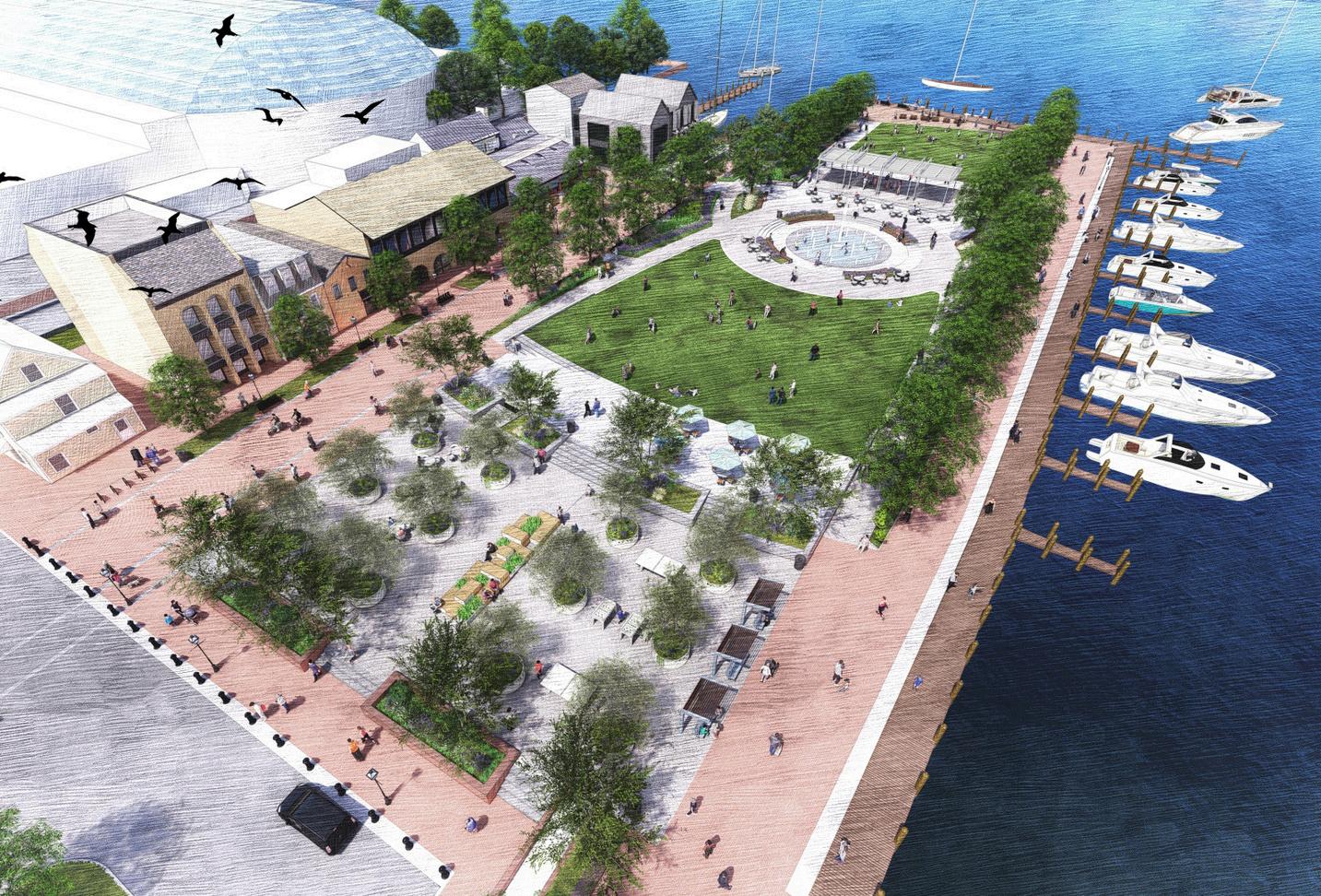
The Annapolis City Dock sits at the heart of the community's historic and economic district and is the City's primary interface with the Severn River and the Chesapeake Bay Protecting the City Dock against sea-level rise and flooding is essential for advancing the City's economy and safeguarding the City's cultural and historical heritage The project's resiliency solutions will help transform the City Dock area into a vibrant community space with shaded gathering spaces, an interactive fountain, a raised promenade, and seating areas. The project is composed of a series of plaza and park spaces with flexible programming options to accommodate use of City Dock throughout the year. By preserving and enhancing viewsheds of the water, the new City
Dock re-establishes people’s connection to their maritime histories Trees with open branching structures provide dappled shade and wildlife habitat, while the proposed site structures allow for near-transparent use without obstructing views of the water A combination of permanent elevation changes and selfactivated flood barriers minimize the need for active deployment of flood barriers while protecting the downtown from flooding associated with future projections of the 100 year storm Combining engineered flood prevention systems with climatesmart planting strategies, the project mitigates flood risk and ensures a sustainable future for the next chapter of City Dock.
INSTITUTIONAL DESIGN AWARD CATEGORY
R e c o g n i z e s s i t e s p e c i f i c w o r k s o f l a n d s c a p e a r c h i t e c t u r e a n d e n t r i e s i n t h i s
c a t e g o r y m u s t b e b u i l t T y p i c a l e n t r i e s i n c l u d e i n s t i t u t i o n a l l a n d s c a p e s s u c h a s
s c h o o l s , h o s p i t a l s , a n d c a m p u s d e s i g n . E n t r i e s c a n b e f o r m a s t e r - p l a n n i n g o r
s p e c i f i c p r o j e c t s . P r o j e c t s i n t h i s c a t e g o r y c o u l d a l s o q u a l i f y f o r t h e G e n e r a l
D e s i g n c a t e g o r y , b u t o n l y o n e c a t e g o r y m a y b e s e l e c t e d p e r p r o j e c t .
MERIT AWARD
INSTITUTIONAL DESIGN
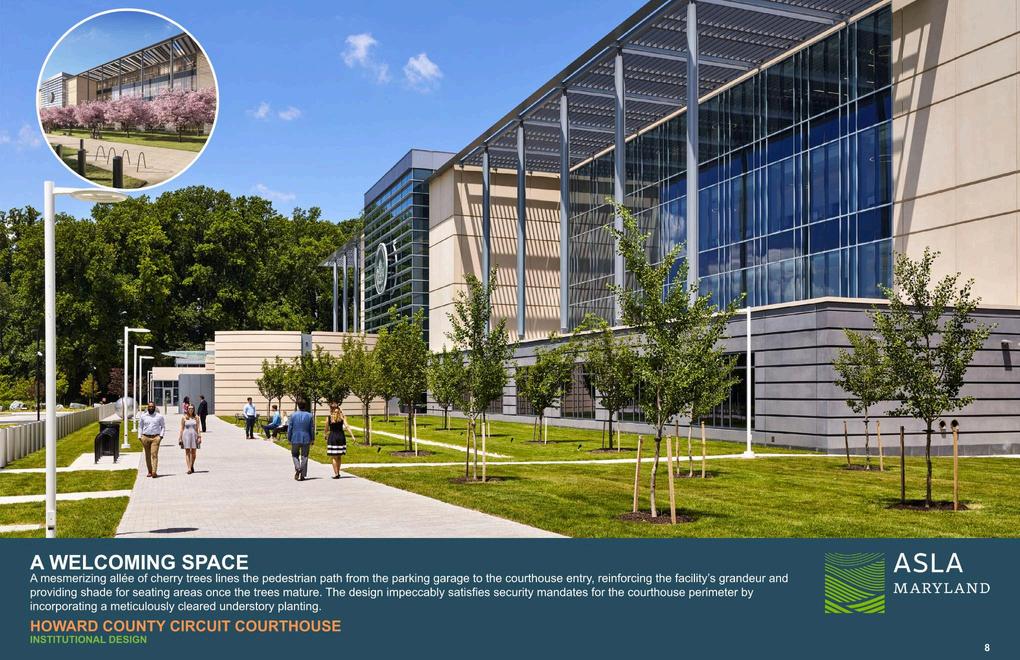
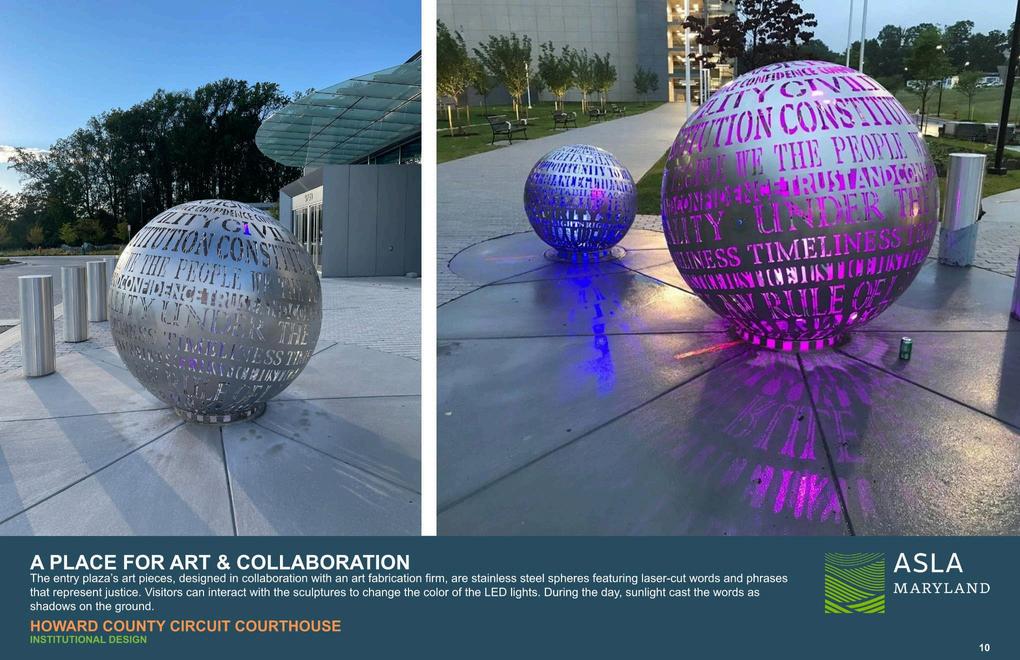
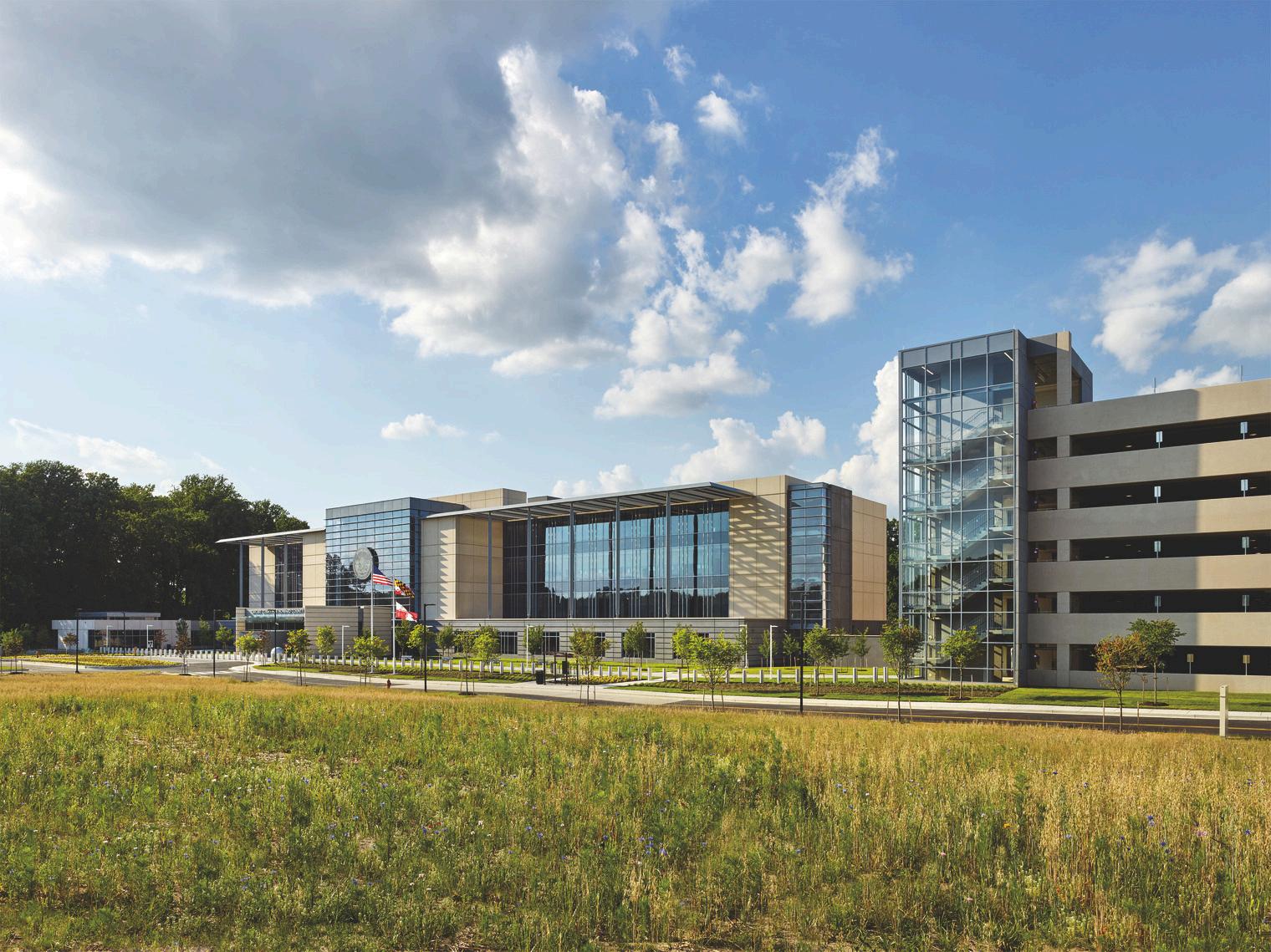
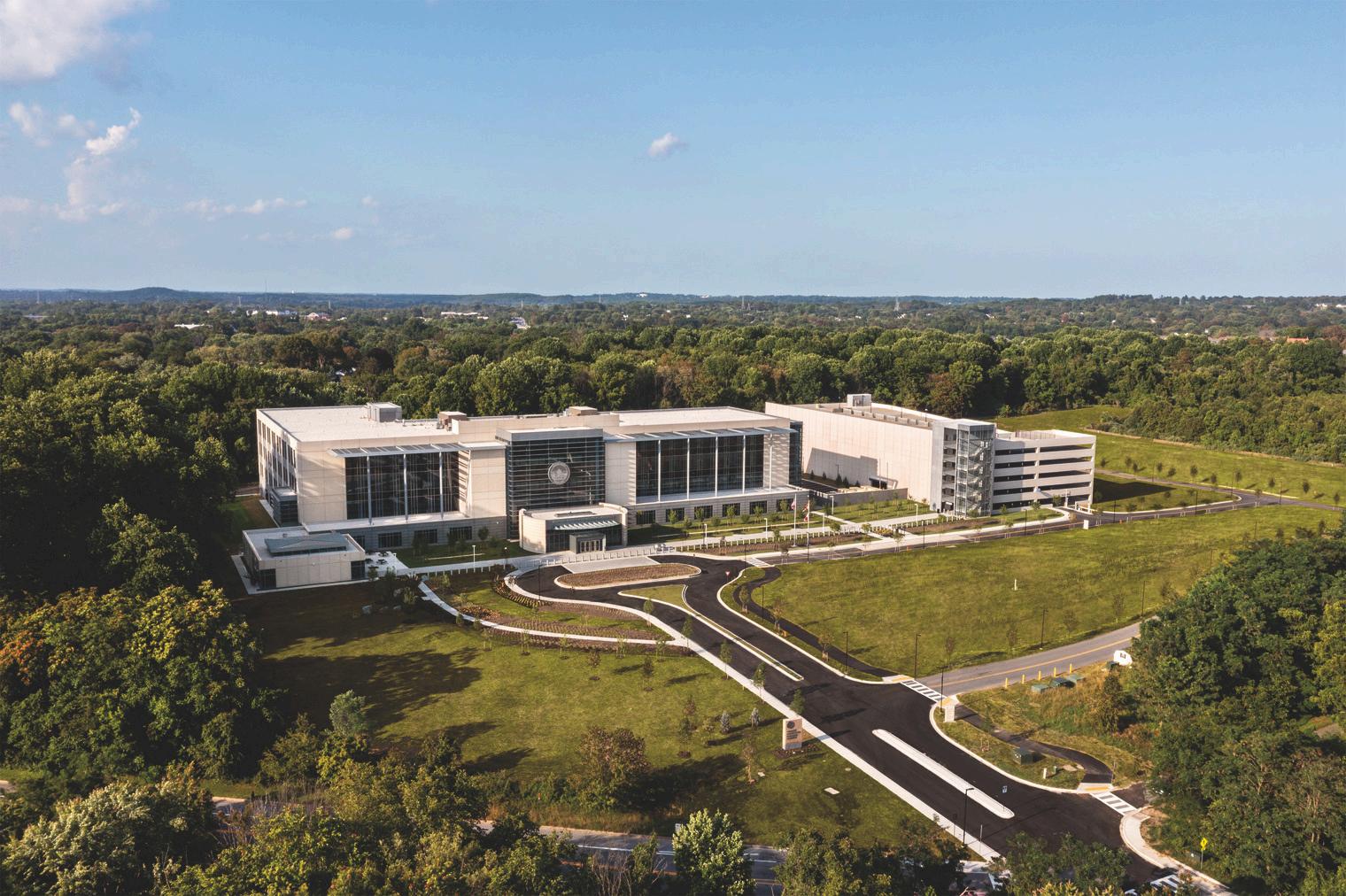
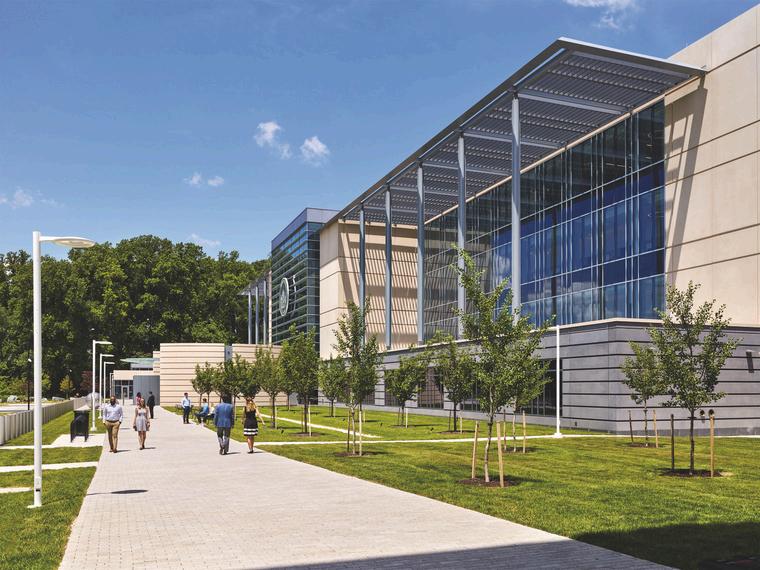
HOWARD COUNTY CIRCUIT COURTHOUSE
COLUMBIA, MD
HOK
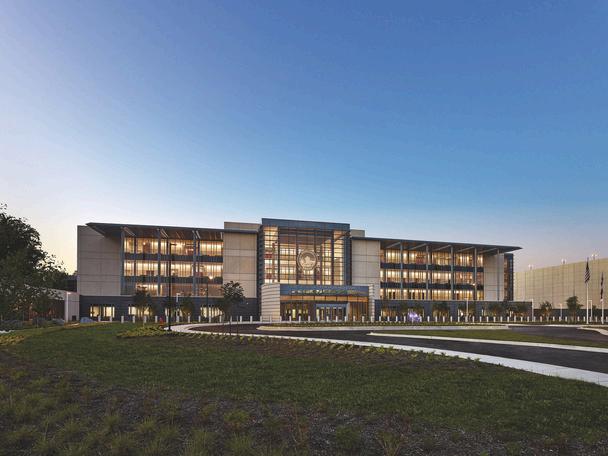
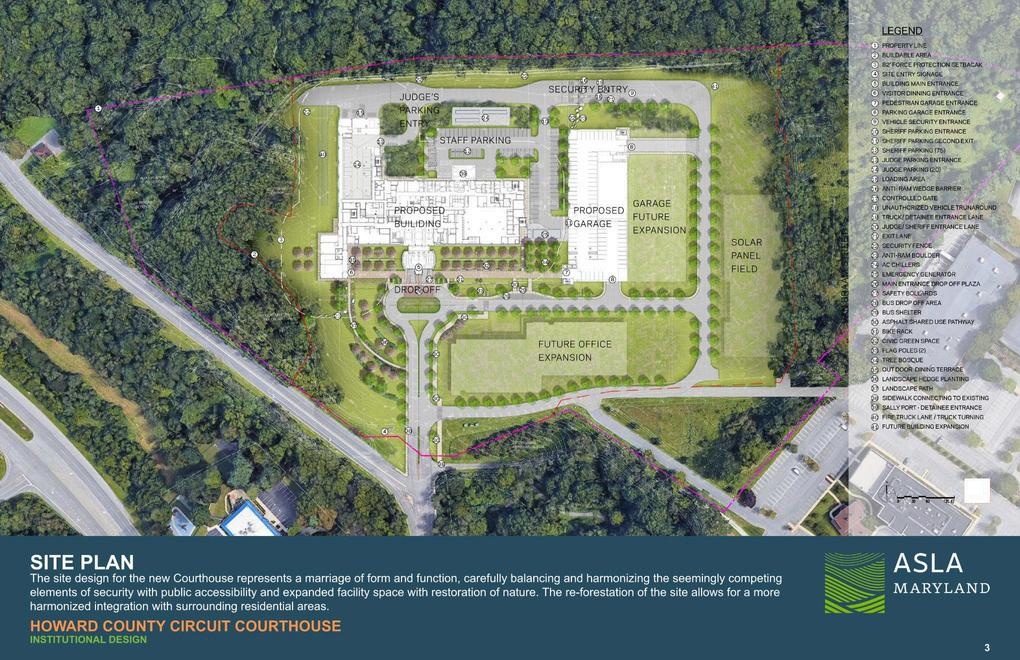
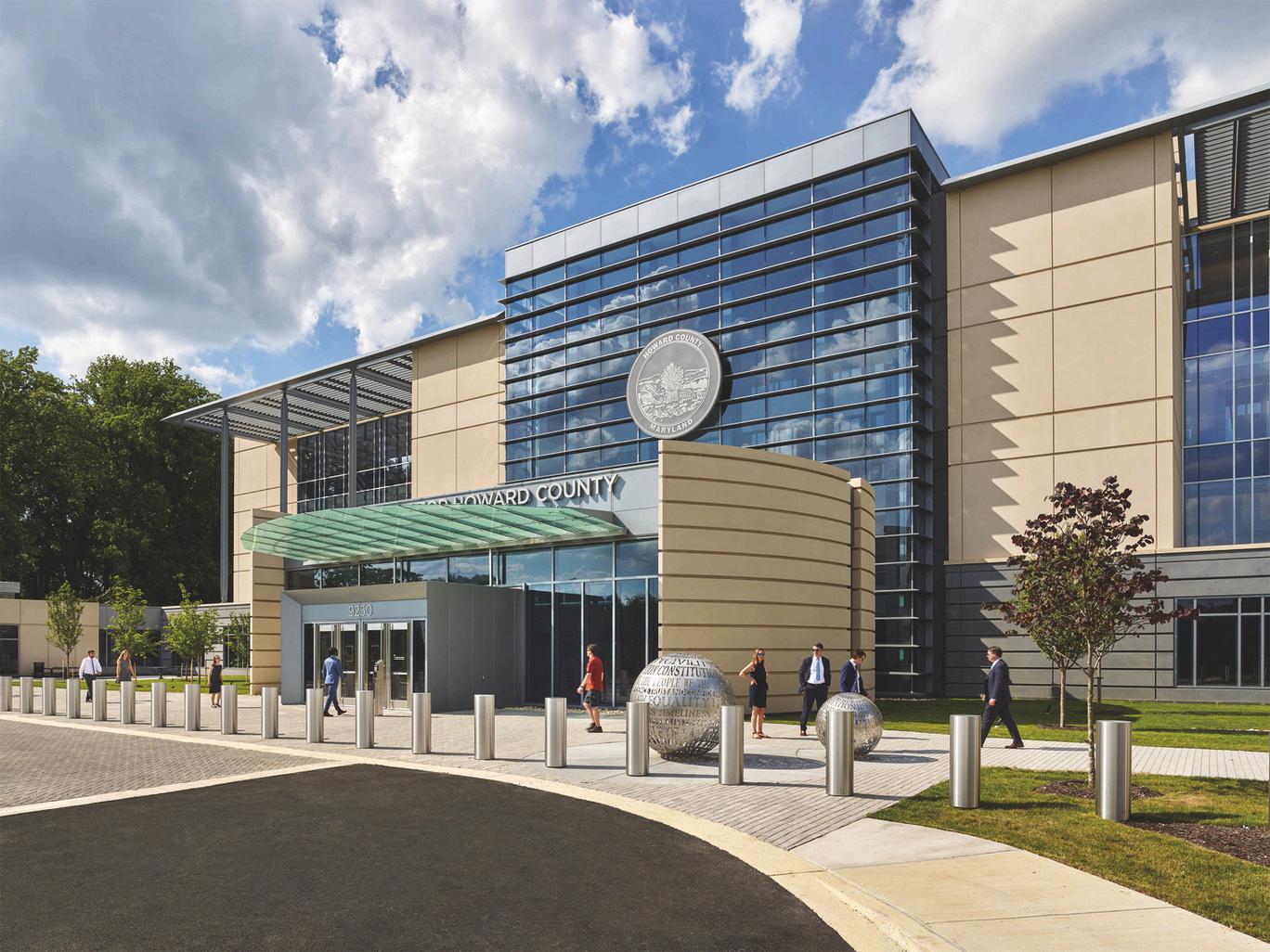
Howard County Circuit Courthouse provides a modern facility with closer to its original condition. Careful thought was given to the
RESIDENTIAL DESIGN - MULTI FAMILY AWARD CATEGORY
R e c o g n i z e s s i t e - s p e c i f i c w o r k s o f l a n d s c a p e a r c h i t e c t u r e a n d e n t r i e s i n t h i s
t e g o r y m
r e s i d e n t i a l
p r o j
c
, h i s t
a n d m o r e .
c t
HONOR AWARD
RESIDENTIAL DESIGN (MULTI-FAMILY)
8001 WOODMONT AVENUE
BETHESDA, MD MKSK
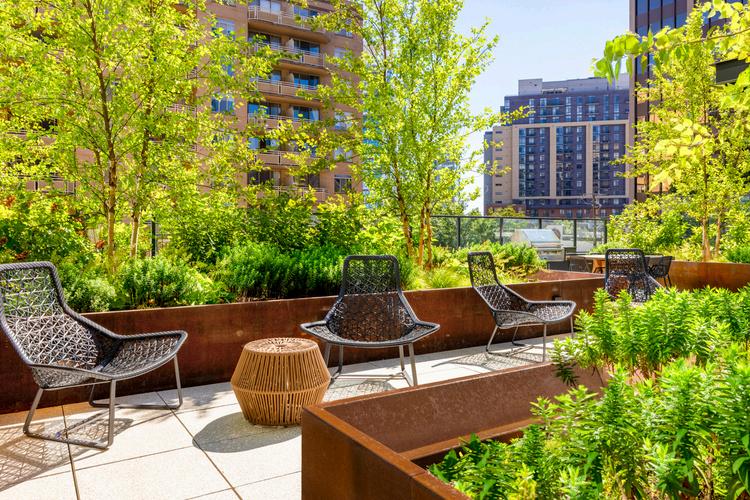
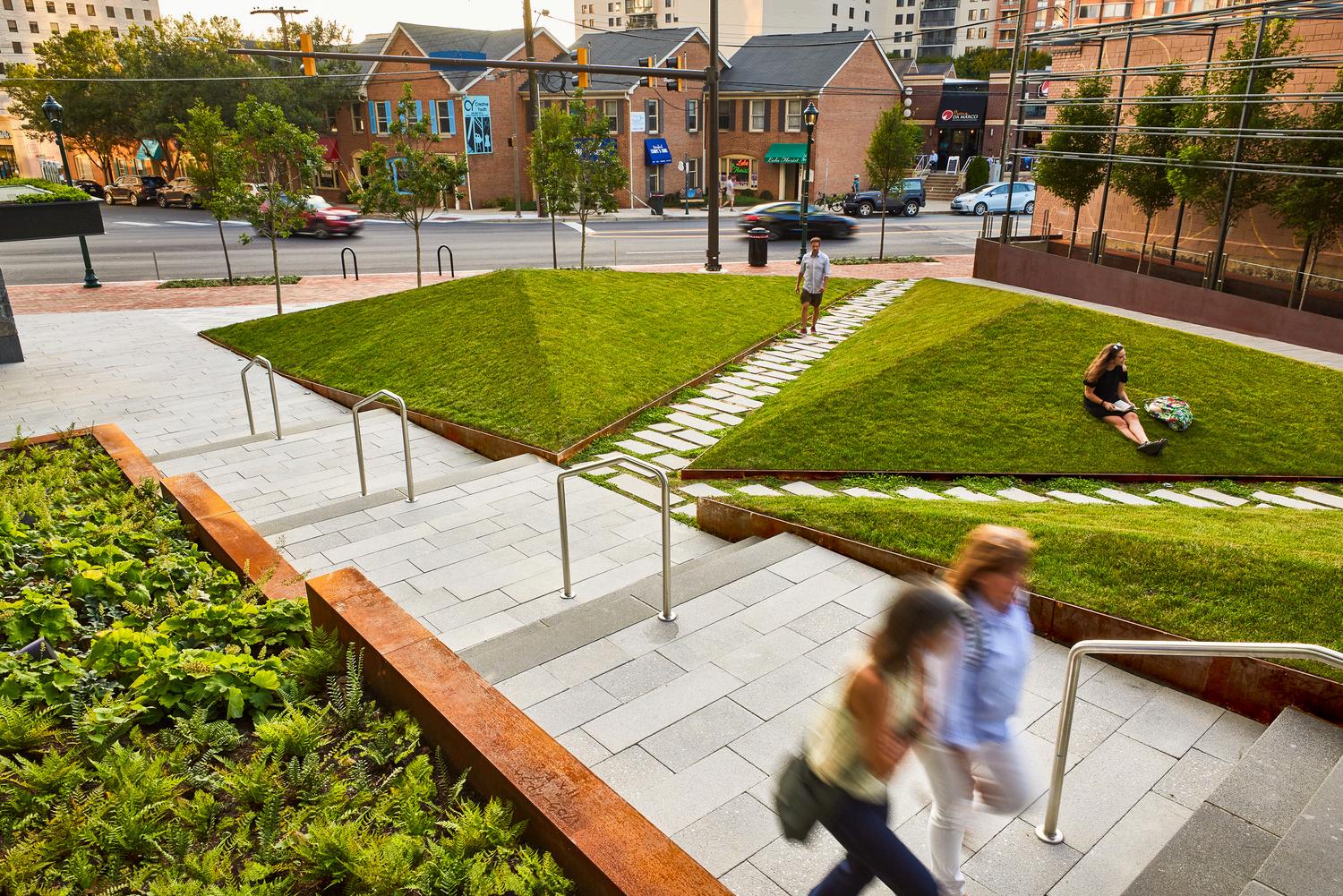
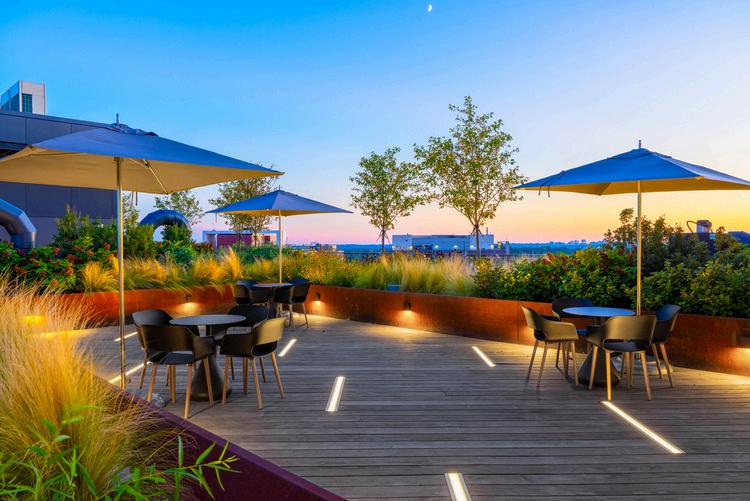
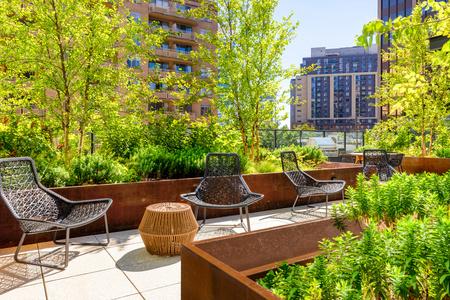
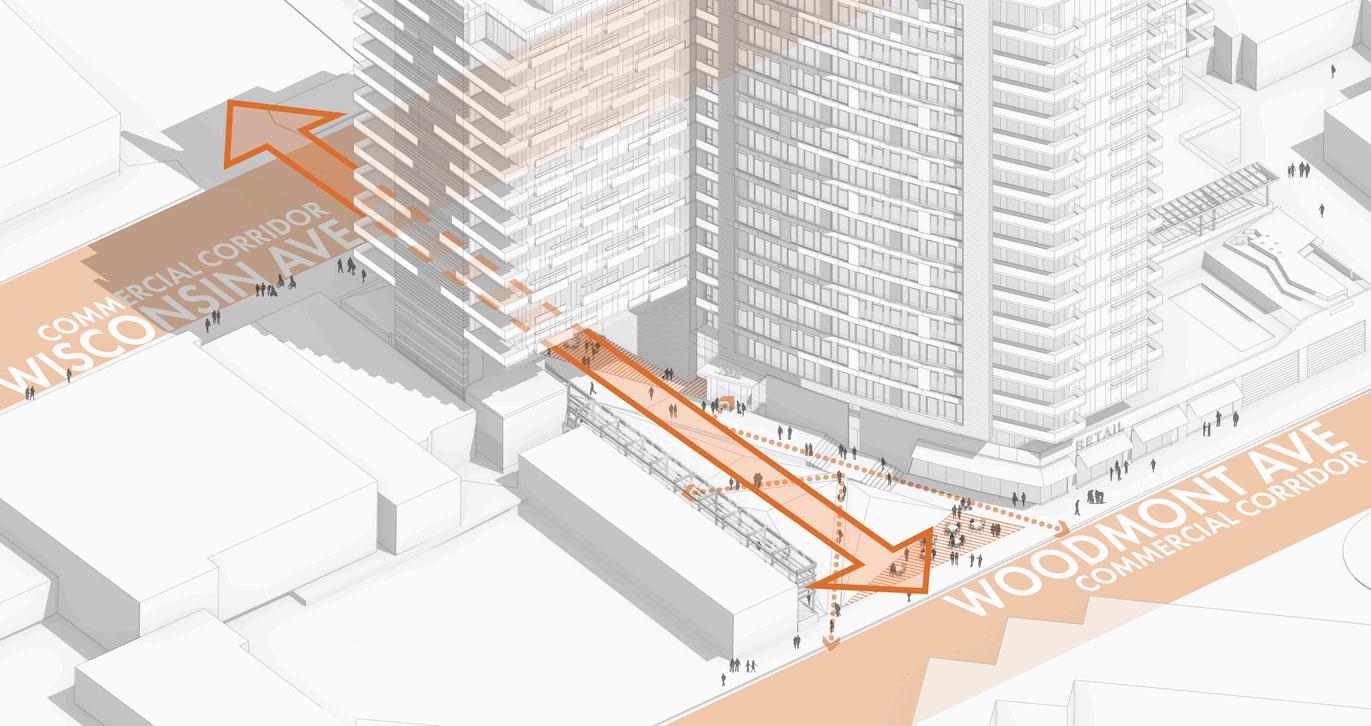
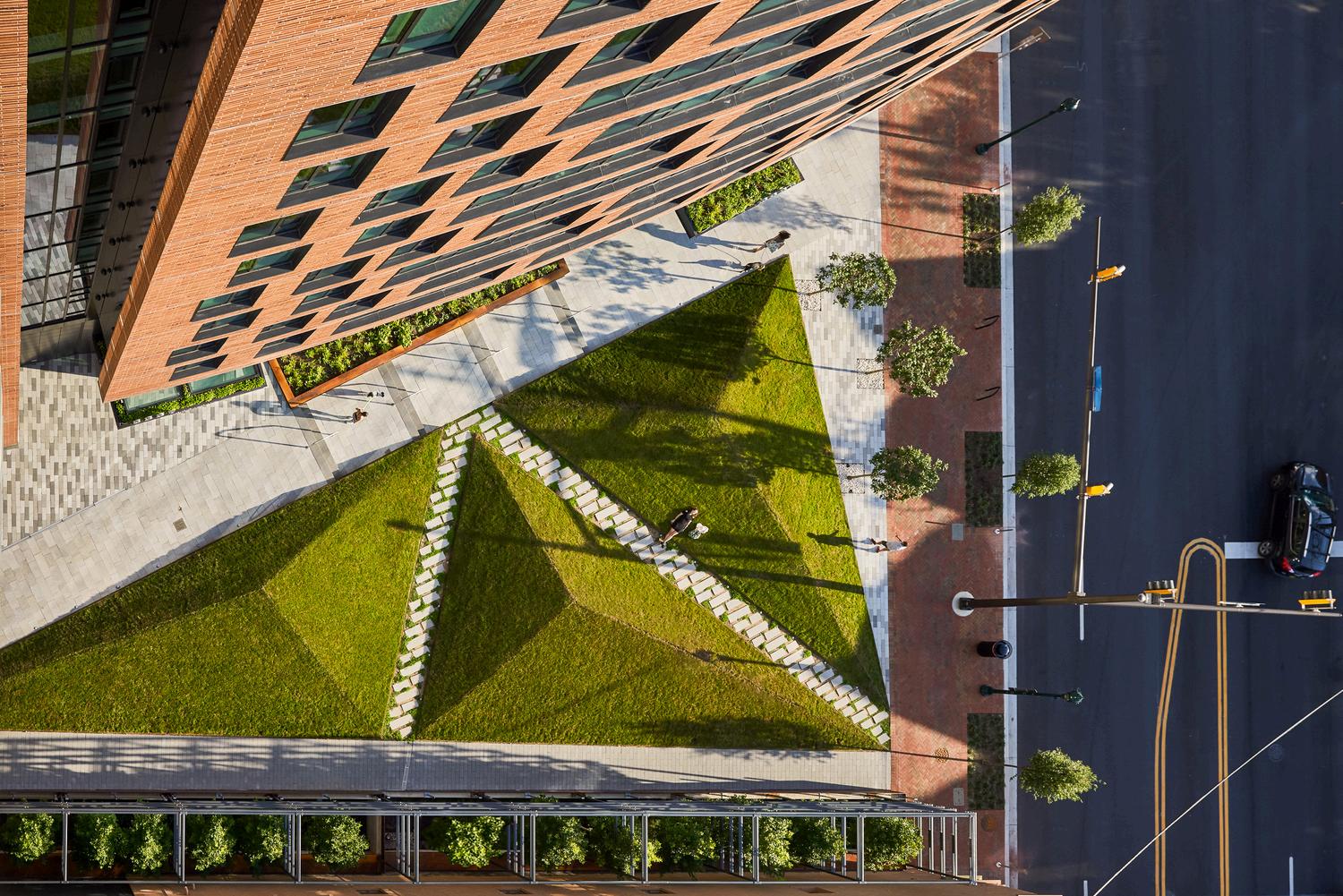
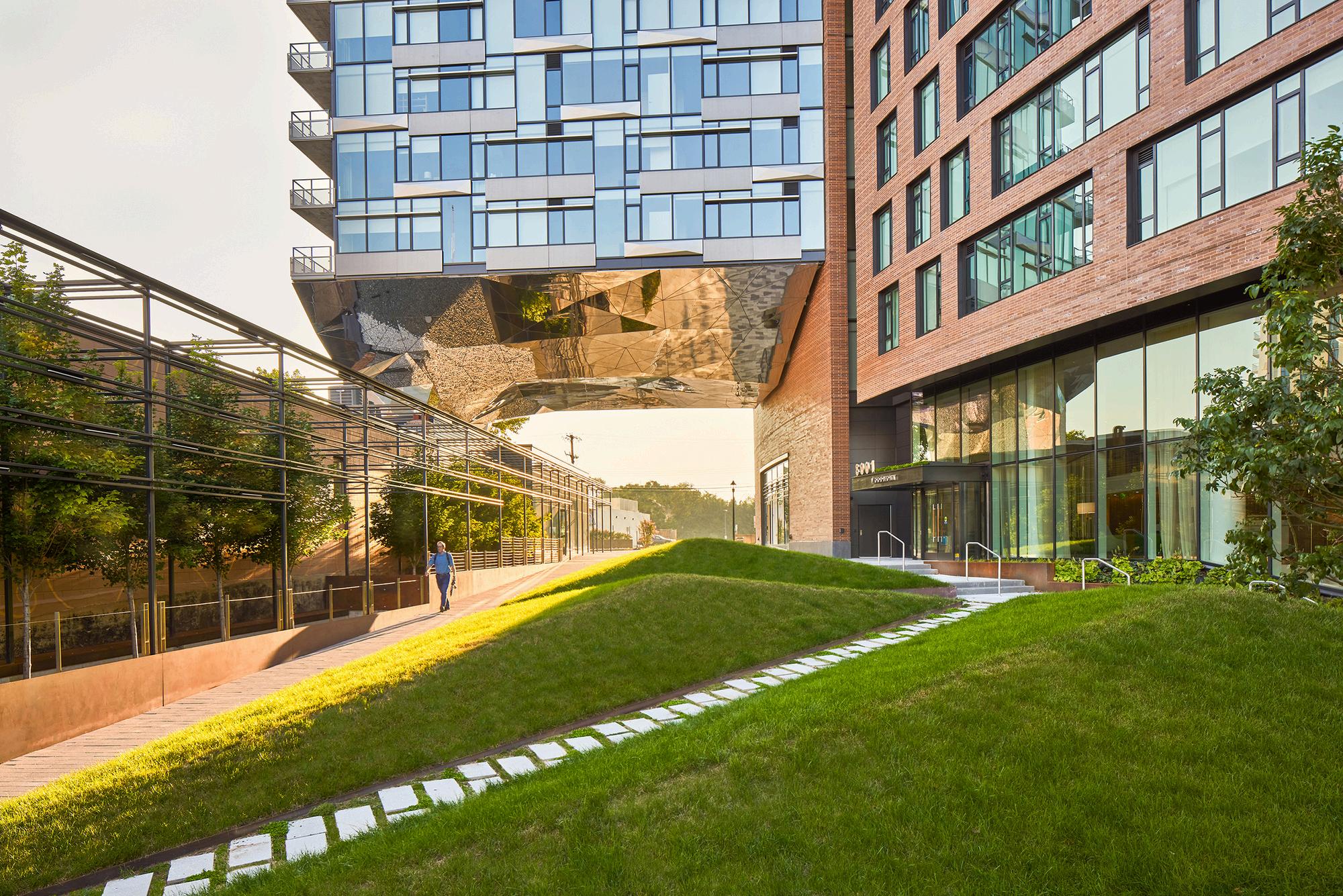
8001 Woodmont Avenue is an 18-story, 475 unit residential apartment and retail building located in the heart of downtown Bethesda, MD The site’s existing conditions, situated between two existing commercial corridors, comprised a rapidly growing, dense urban “super block” which provided no formal throughlines connecting pedestrians between these established retail districts Accordingly, the owner and design team, led by MKSK, took an innovative approach to siting the project, proposing a unique urban gesture that “breaks the block” in the form of a pedestrianscaled plaza, offering much-needed pedestrian connectivity between the bustling and vibrant Commercial Corridors along the adjacent Woodmont and Wisconsin Avenues The ground level is organized around a block-long public plaza, which extends through a 35’ tall portal in the building
Pyramidal landforms, interwoven with pathways, imbue the plaza with an unmistakable character while providing opportunities for recreation A tessellated public art element adorns the portal’s ceiling Running along one side, a large stormwater planter treats rainwater from the roof of the building This planter contains an enriched biofiltration soil that supports diverse plantings, making 8001 Woodmont one of the first designed in the county to use this technology Throughout the building, a series of distinctive terraces provide opportunities for residents to engage with the outdoors: a south-facing Pool Terrace, a lushly-planted Garden Terrace space with facilities for gathering, and the Entertainment Terrace with vistas across the city Kebony and native plantings add visual warmth while contributing to a sustainably-focused material palette
RESIDENTIAL DESIGN - SINGLE FAMILY AWARD CATEGORY
R e c o g n i z e s s i t e - s p e c i f i c w o r k s o f l a n d s c a p e a r c h i t e c t u r e a n d e n t r i e s i n t h i s
c a t e g o r y m u s t b e b u i l t T y p i c a l e n t r i e s i n c l u d e s i n g l e - f a m i l y o r i n d i v i d u a l
t o w n h o m e r e s i d e n t i a l p r o j e c t s , a c t i v i t y a r e a s f o r c o o k i n g / e n t e r t a i n i n g / r e c r e a t i o n / r e l a x a t i o n , s u s t a i n
n d s c a
l i c
t i o n s , n e w c o n s t r u c t i o n o r r e n o v a t i o n p r o j e c t s , h i s t o r i c p r e s e r v a t i o n , a f f o r d a b l e l a n d s c a p e c o n c e p t s a n d i n n o v a t i o n s , a n d m o r e .
MERIT AWARD
RESIDENTIAL DESIGN (SINGLE FAMILY)
BETHESDA MODERN CLASSIC
BETHESDA, MD
HORN & CO.
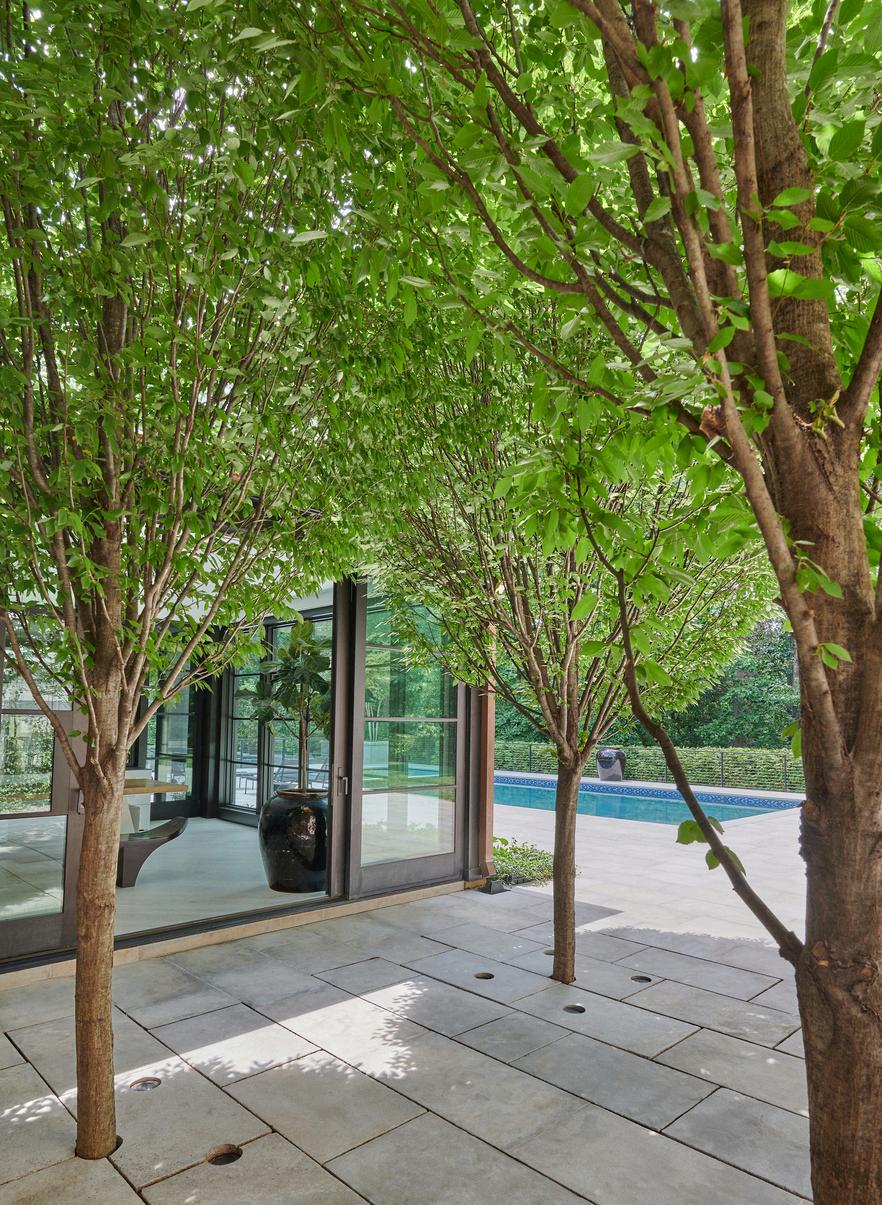
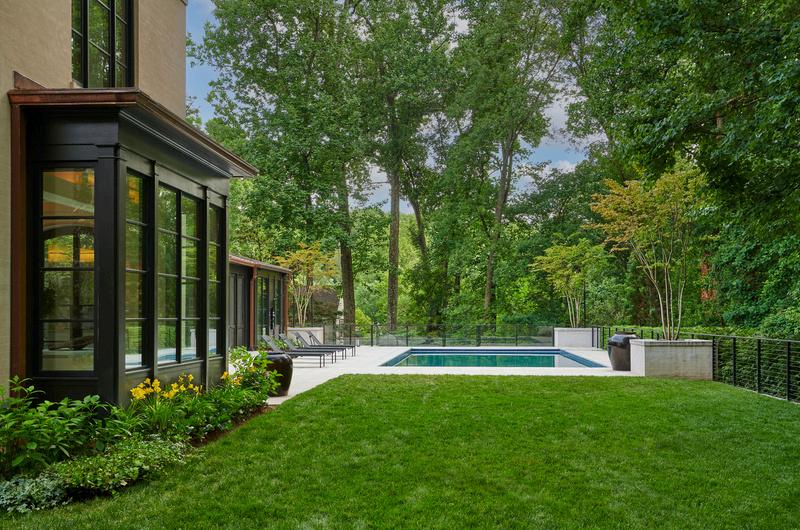
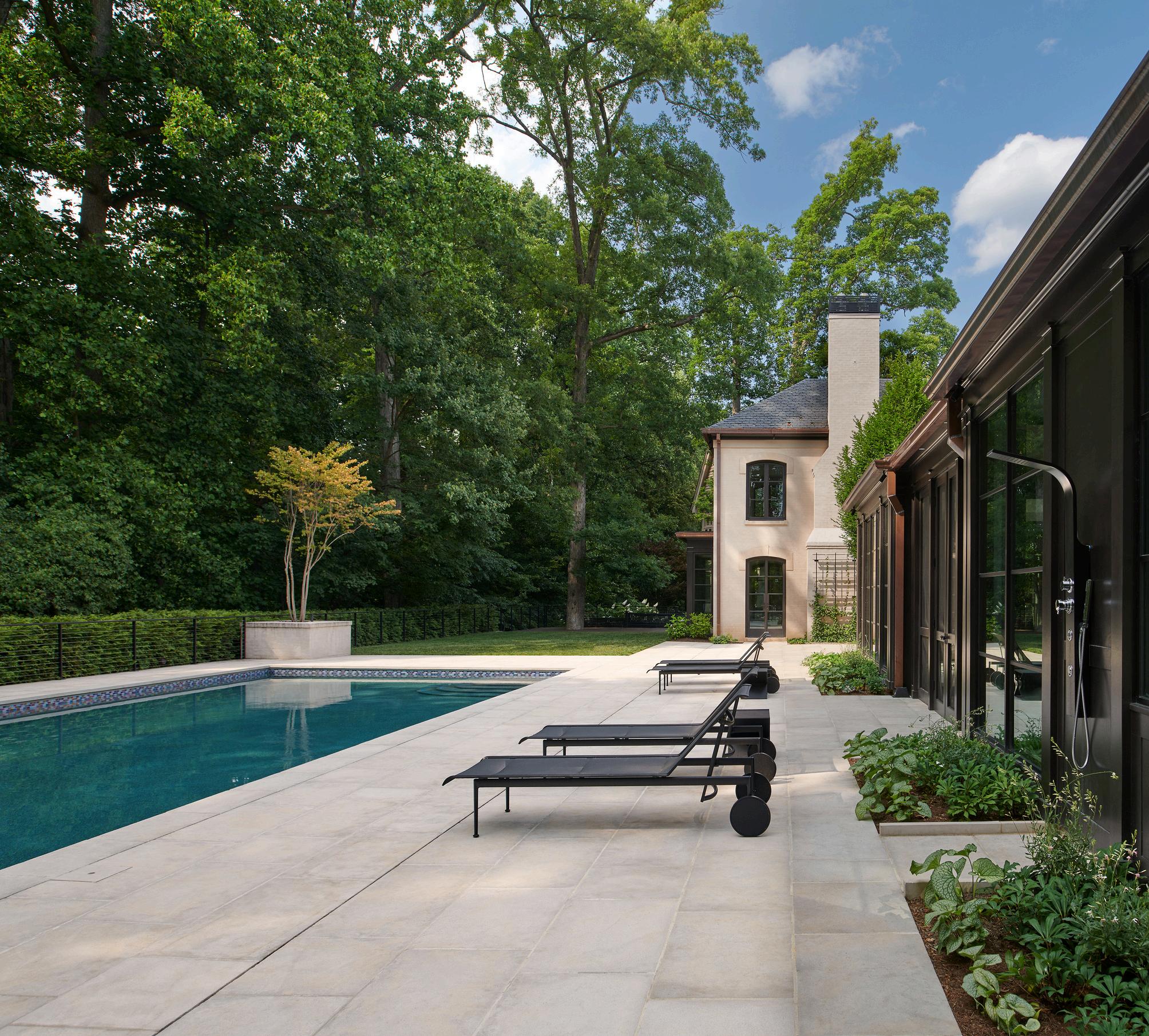
Bethesda Modern Classic is a distilled landscape of pure forms
We emphasized the elevational and aesthetic separation between the designed space and the wooded park beyond by creating a minimal landscape of limestone, lawn, and a curated selection of specimen trees A rear retaining wall terrace allows for paved spaces and a pool Below, arborvitae hedges meet the height of the guardrail, creating a green datum line, separating the designed space from nature A courtyard is planted with a copse of hornbeams. The grove creates a garden room between the wings of the house. To provide necessary soil, drainage and aeration, the paving sits above Silva Cells, cantilevering the paving above growing media. The landscape incorporates
constructed elements that allow for stormwater management and the preservation of existing trees The front courtyard is permeable paving, placed above geothermal wells The raised panel of lawn captures roof water in retention wells The team prioritized preserving a 50+ year old weeping cherry by cantilevering grade beams in lieu of footings for the motor court walls The resulting garden heightens the architectural gesture of restraint; while becoming a space that is serene, beautiful, and actively responsive to the natural landscape.
RESIDENTIAL DESIGN (SINGLE-FAMILY)
MEADOW ON THE MAGOTHY
PASADENA, MD
CLINTON + RIES LANDSCAPE ARCHITECTS
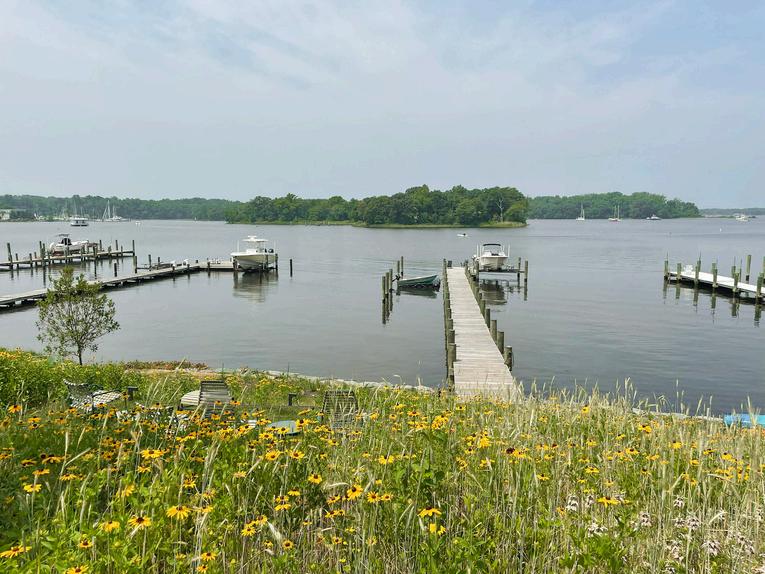
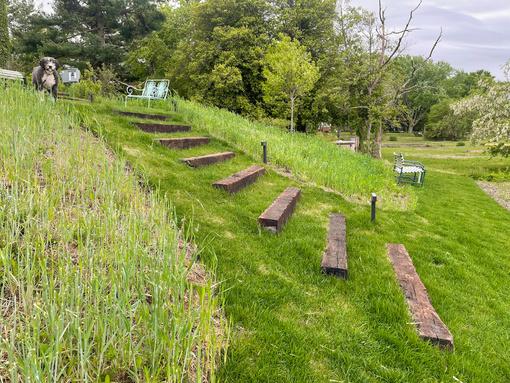
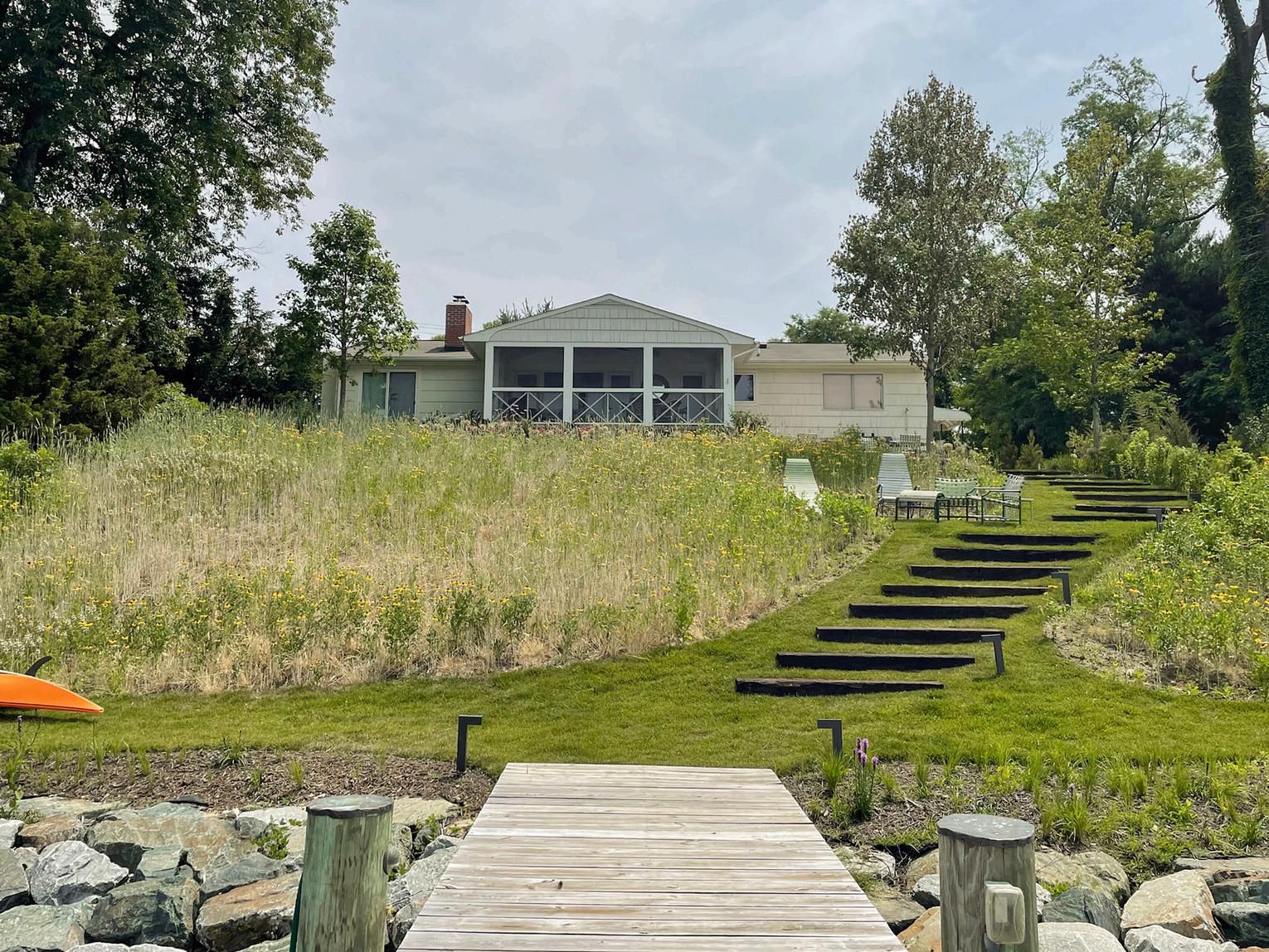
On the banks of the Magothy River, this hillside cottage was granted a transformation to ground the house into a natural setting appropriate for a steep waterfront site The previous hillside leading to the client’s boat pier was a highly maintained lawn with evidence of erosion The clients wished to implement a native garden that would resolve the erosion issues and attract pollinators that will inevitably benefit the surrounding Chesapeake Bay ecosystem The landscape architects designed a native seed mix that would be implemented on the majority of the slope Perennials and ornamental grasses would be planted in clusters throughout the seeded meadow to give a planted presence during the seeded meadow’s establishment period
Some of note are: Baptisia australis ‘Purple Smoke, Panicum virgatum, and Eurybia spectabilis, all giving a presence in texture and height throughout the seeded meadow The native meadow was seeded in Fall giving the perennial seeds such as; Aesclepias speciosa, Liatris pilosa, Monarda punctata, Schizachyrium scoparium and Veronia baldwinii, the opportunity to germinate the following spring Prior to seeding in the meadow the contractors removed the lawn and lightly tilled the soil using all equipment by hand and no chemicals With the site directly running off into the river, a tributary of the Chesapeake Bay, the landscape architects ensured best practices occurred both during construction and now into the maintenance period
MERIT AWARD
RESIDENTIAL AWARD (SINGLE FAMILY)
NORTHWEST POINT FARM
CENTREVILLE, MD
CAMPION HRUBY LANDSCAPE ARCHITECTS
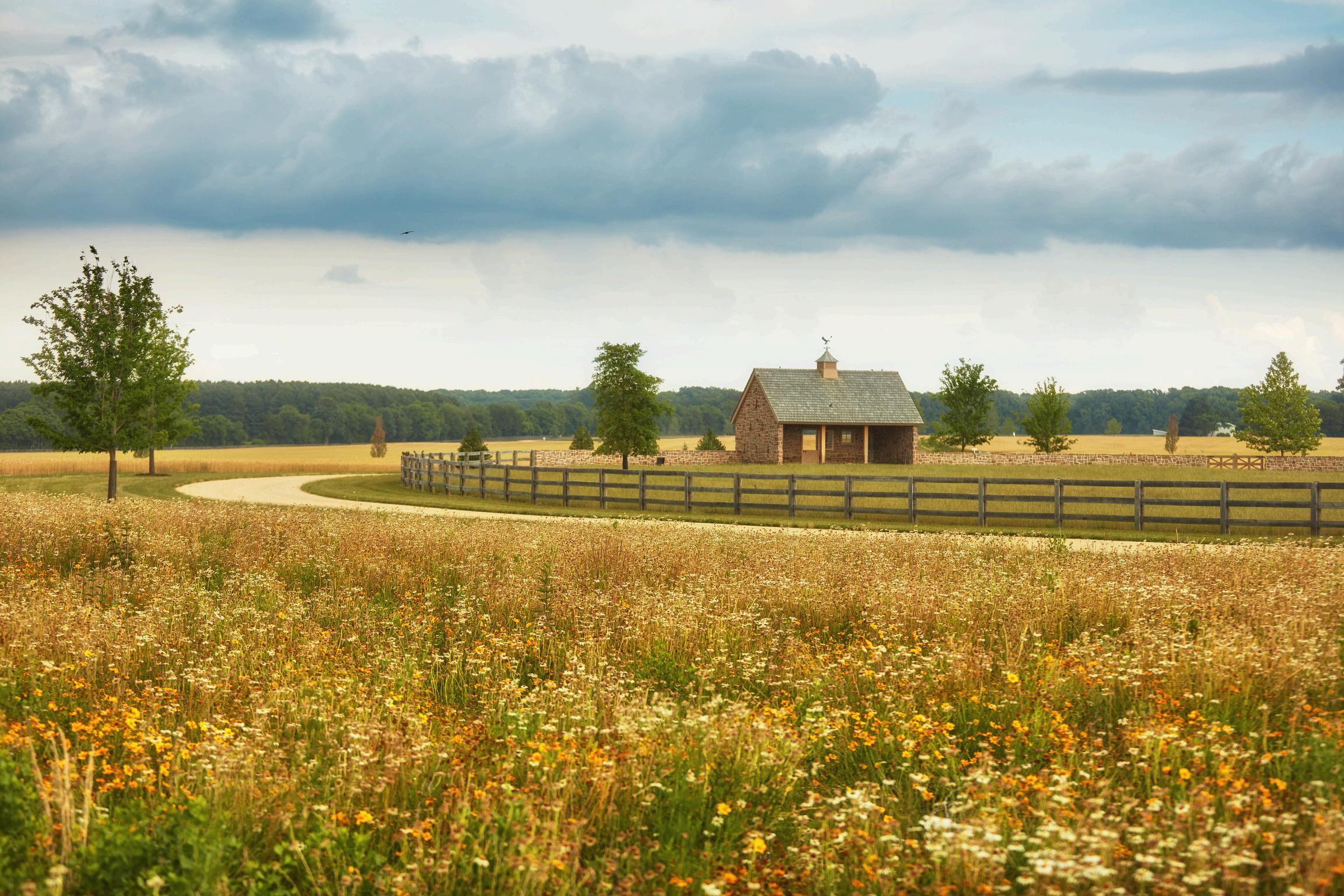
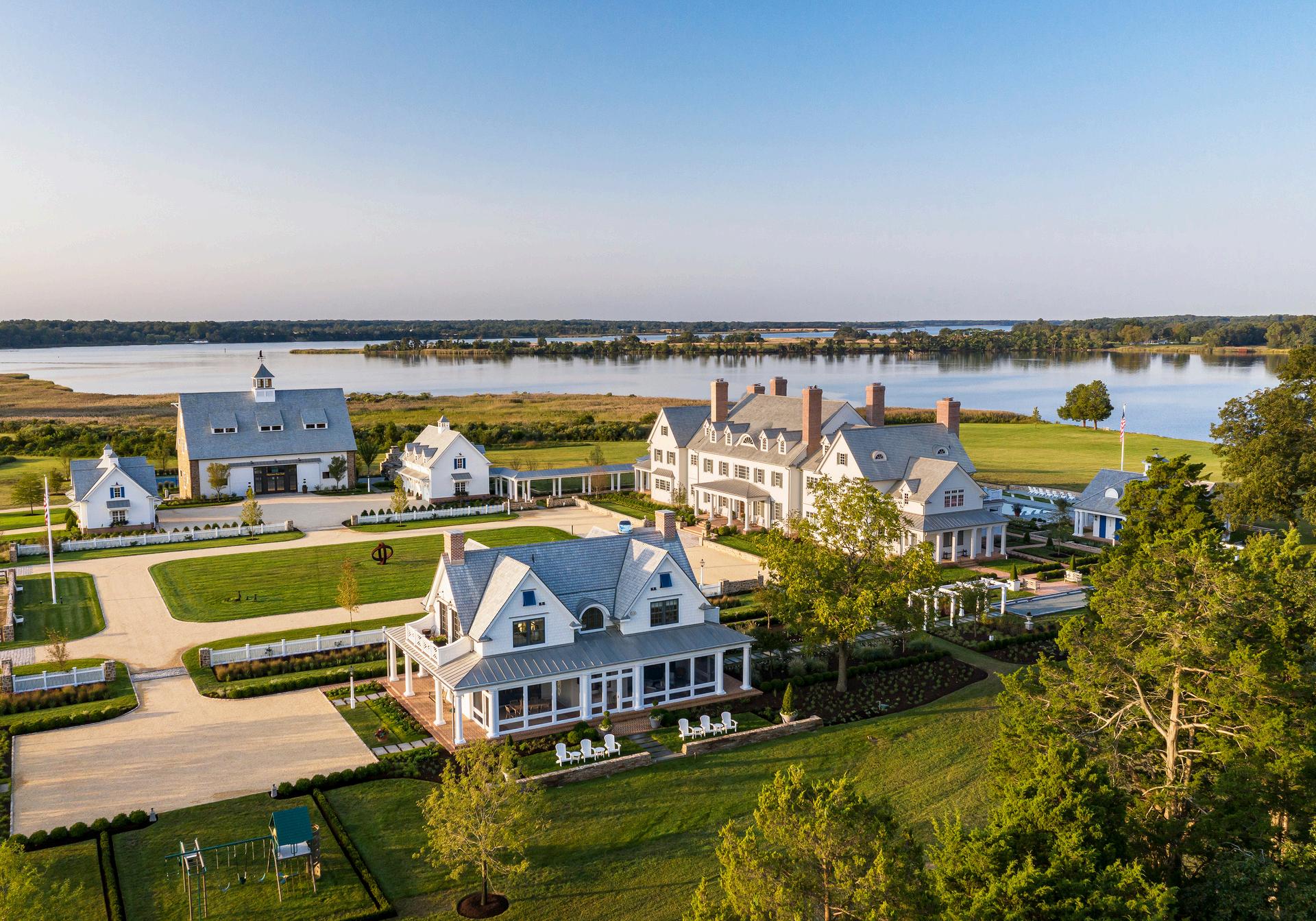
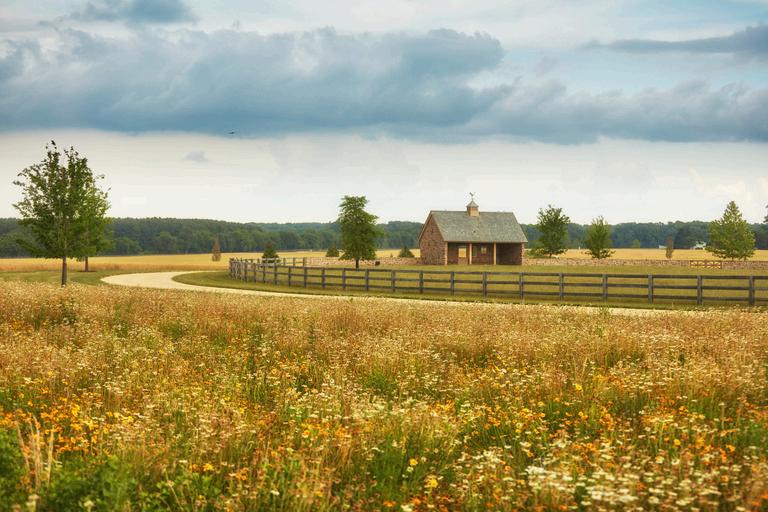
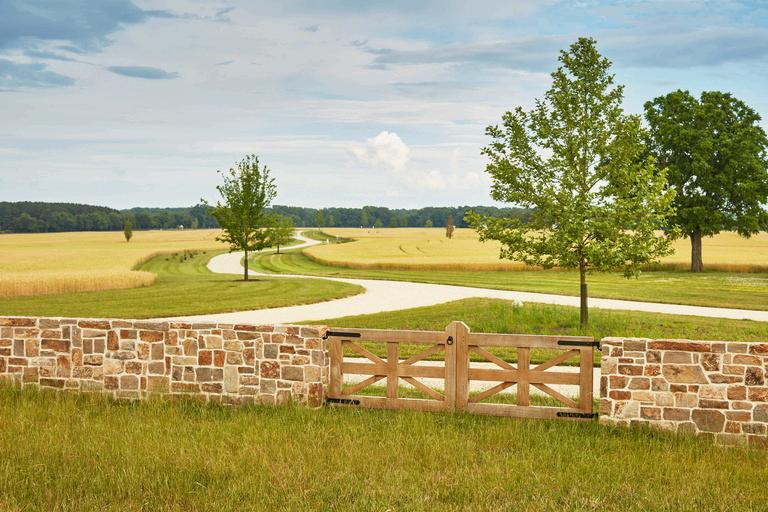
Located on the Chester River, Northwest Point Farm was developed as an iconic country farm that celebrates the essence of tidewater living on Maryland’s Eastern Shore Within the farm, a cultivated collection of structures, gardens, and natural amenities support the passive enjoyment of time and space for all those who visit The landscape architects tackled the project in two parts: first, the unfolding experience of the farm approach and second, the gardens and supporting structures surrounding the main house. The long, winding drive passes by farm fields, vernacular barns, sheep pastures, and a new pond on its way to the house. Each turn provides a new and unique perspective of the Chester River and of the tidal wetlands that wrap the property. Around the main house, the architects developed a
collection of Georgian structures as a colonial “village” The landscape architects designed interstitial garden paths and rooms for both connectivity and cohesiveness, relying heavily on axis and symmetry as ordering principles This framework was then adorned with a broad diversity of native plantings that brought natural warmth to each space, creating a sense of “home” on the banks of the Chester River Northwest Point Farm’s landscape design is a manifestation of the owner’s desire to create intrinsic connections between architecture and land and to create complementary spaces that suit both lifestyle and culture. Collectively, Northwest Point combines quiet sophistication and unapologetic romanticism to create an incomparable waterfront retreat.
WILD PINES
SPARKS GLENCOE, MD FORM GARDEN DESIGN
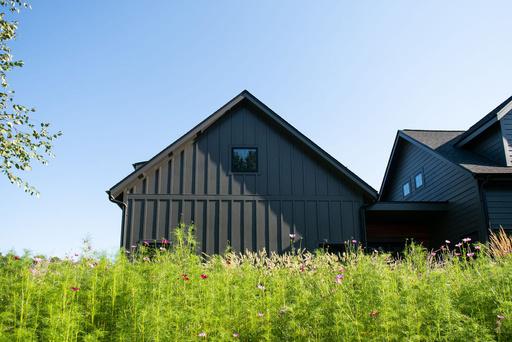
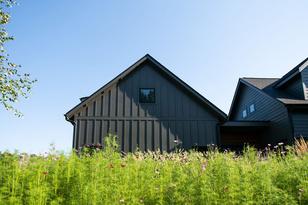
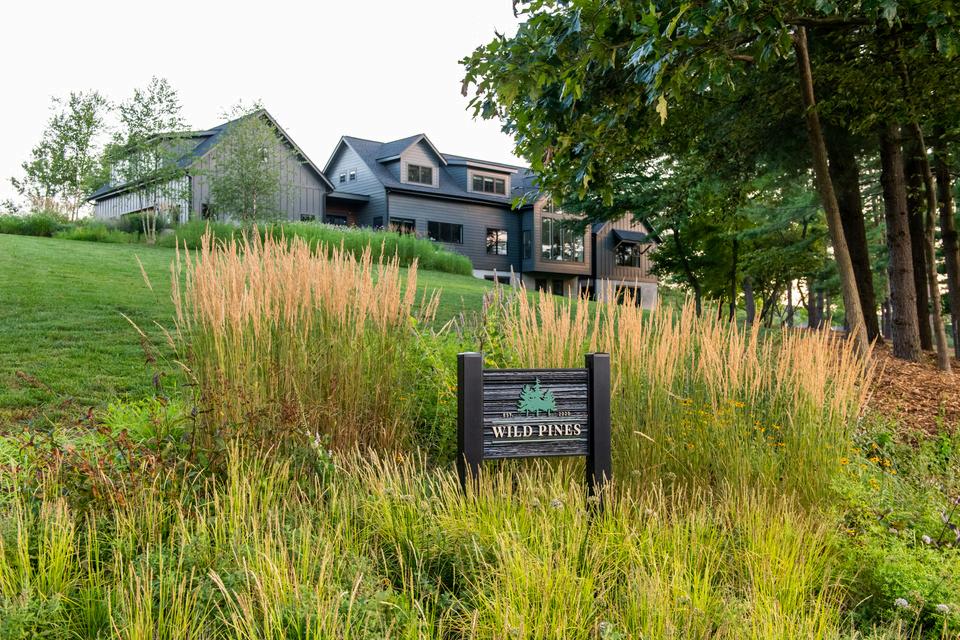
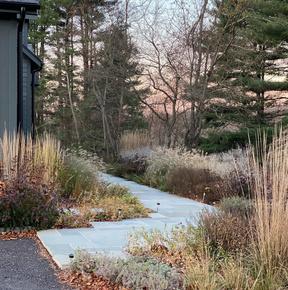
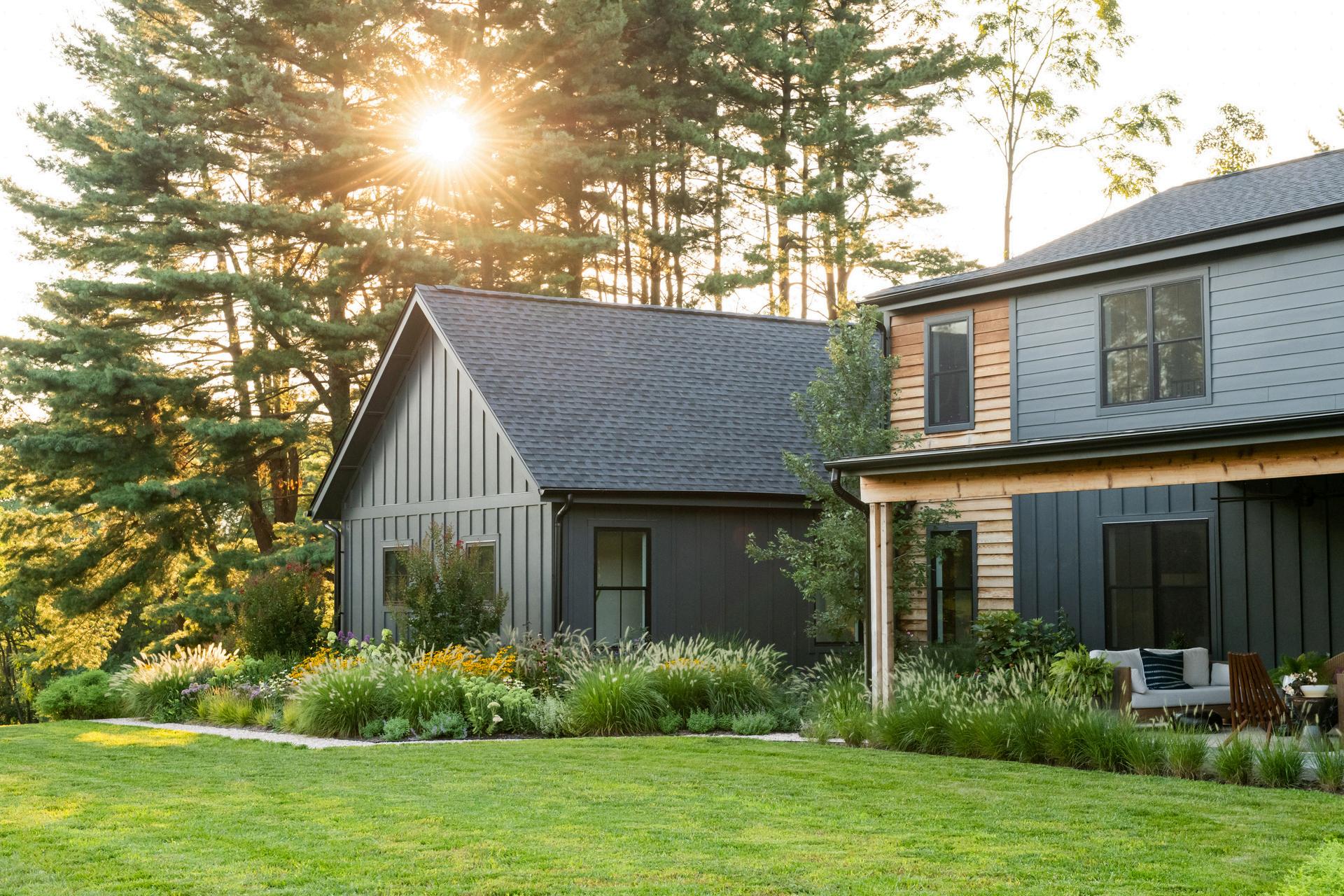
In 2020, the homeowners completed their new home, Wild Pines, in Sparks Glencoe, Baltimore County, Maryland. They sought a garden that would integrate the home with its natural surroundings. Sitting atop a hill, Wild Pines overlooks farmland and woodland, with a serene ambiance of rustling trees and nearby livestock. The homeowners, an interior designer and a general contractor, designed the house to maximize these vistas and hired FORM to complement the home's exterior The garden project unfolded in two phases, starting with the front walkway and entrance The goal was to redirect focus from the garage to the front entry A redesigned path with a low stucco retaining wall and bluestone paving achieved this, complementing the modern farmhouse aesthetic Birch trees soften the garage's appearance and guided attention to the entry In 2021, the
backyard design began, prioritizing removal of an asphalt driveway to create a seamless natural space. Grading improved usability and drainage. Gravel paths in a circular layout were chosen for their natural feel, leading to raised garden beds for cut flowers and vegetables. A covered patio integrates with the garden, offering scenic views and a space for family meals and entertainment The design balances a curated feel with the spontaneous beauty of nature, embodying the property's name," Wild Pines It features a four-season planting scheme with a vibrant color palette and minimal irrigation Blending naturalistic and cottage planting styles, grasses and seasonal blooms create visual rhythm and continuity, achieving a harmonious blend of modern farmhouse aesthetics and connection to the surrounding landscape
HONOR AWARD
RESIDENTIAL DESIGN (SINGLE-FAMILY)
THREADING ECOLOGIES
BARNESVILLE, MD
MOODY GRAHAM LANDSCAPE ARCHITECTURE
The rolling hills of Threaded Ecologies are part of the designated agricultural reserve in Montgomery County, Maryland. Rural landscapes, such as this one, perform vital ecological, economic, and cultural functions Cropland, forests, pastures, and rivers that sustain wildlife corridors and provide critical habitat define the agricultural reserve that cradles the project site The house on the 17-acre property is situated on an axis with Sugarloaf Mountain to take advantage of the vast, magnificent views The landscape design was inspired by the complex ecological systems of the Piedmont Physiographic region, the stunning views of Sugarloaf Mountain, and the field with ‘floating’ hay bales The client’s vision was a place for respite with land stewardship in mind to support biodiversity and connect wildlife corridors The project was a cross-disciplinary collaboration between the client,
landscape architect, meadow consultant, builder, meadow installation crew, planting team, and the garden management team. The use of local materials and native plants carefully considered the foreground, middle ground, and background to blend the design with the rural characteristics of the site Every walk in the garden is a discovery experience that reveals the colors, textures, and forms of the diverse landscape typologies The atmosphere changes as plants wax and wane throughout the seasons to provide ever changing opportunities to harness nature’s healing powers Gardens are never complete; they continue to grow, change, and evolve, season after season The habitat value will expand as plants mature, set seed, and welcome migrating birds, native insects, and additional pollinators
RESEARCH AWARD CATEGORY
R e c o g n i z e s r e s e a r c h t h a t i d e n t i f i e s a n d i n v e s t i g a t e s c h a l l e n g e s p o s e d i n
l a n d s c a p e a r c h i t e c t u r e , p r o v i d i n g r e s u l t s t h a t a d v a n c e t h e b o d y o f k n o w l e d g e
f o r t h e p r o f e s s i o n . T y p i c a l e n t r i e s i n c l u d e i n v e s t i g a t i o n s i n t o m e t h o d s , t e c h n i q u e s , o r m a t e r i a l s r e l a t e d t o l a n d s c a p e a r c h i t e c t u r e p r a c t i c e ; s t u d i e s o f r e l a t i o n s h i p s o f l a n d s c a p e a r c h i t e c t u r e t o l a w , e d u c a t i o n , p u b l i c h e a l t h a n d s a f e t y , o r p u b l i c p o l i c y ; a n d m o r e .
CREATING SPACE FOR NATURE Rx AT HBCUs
PRINCESS ANN, MD
MARCI-ANN SMITH
With the rising trend of mental health issues among young adults, many colleges are trying to establish an approach to combat those issues for the well-being of their students One such approach is Nature Rx Nature Rx is a program that encourages people, sometimes with an actual prescription, to spend time in nature to relieve stress and improve overall health Nature Rx is a holistic way of addressing mental issues such as stress, anxiety, and depression that are prevalent among college students The evidence is strong that time spent in and engaging with nature can improve mental and physical health Colleges like Cornell University and University of Maryland College Park are taking advantage of their existing beautiful landscape as part of their
Nature Rx program to help their students. Other schools are implementing this program and providing spaces for their students to find reprieve from the stresses of studies However, there is a gap in the presence of Nature Rx programs at Historically Black Colleges and Universities (HBCUs) To date, no HBCU has a Nature Rx program This project seeks to fill that gap by using the University of Maryland Eastern Shore, an HBCU, as a case study to answer the following thesis question: “How could a Nature Rx design at the University of Maryland Eastern Shore, a Historically Black College and University, benefit the health and well-being of its students?”
TRAVELING AWARD OF INNOVATIVE EXCELLENCE
A p r e s t i g i o u s a w a r d f o r a p r o j e c t t h a t u n i q u e l y r e f l e c t s a n d s o l v e s t h e m o s t
c u r r e n t i s s u e s i
O n l y o n e p r o j e c t m a y b e s e l e c t e d t o r e c e i v e t h i s a w a r d .
TRAVELING AWARD OF INNOVATIVE EXCELLENCE
ANALYSIS & PLANNING
HOLLY BEACH FARM STEWARDSHIP PLAN
ANNAPOLIS, MD
MOODY GRAHAM LANDSCAPE
ARCHITECTS
Holly Beach Farm is a 300-acre coastal resource characterized by wetland-dominated natural areas, complex vegetative diversity, abundant wildlife, and five miles of tidal shoreline on the Chesapeake Bay and Whitehall Bay Originally a farm with historic and cultural values, the property was placed in conservation 20 years ago and managed under the Chesapeake Bay Foundation’s (CBF) care. The proposed stewardship plan is a multi-faceted proposal integrating innovative offshore and land-based methods to preserve and celebrate the coastline, a layered history, and a multitude of ecosystems located in the property. Holly Beach Farm has the capability to operate as the region’s environmental, educational, and climate change research hub
during this stewardship The plan is comprised of a network of paths that introduces users to ecological study plots, reforestation zones, restored historic structures and living shorelines One proposed ecological study plot central to the site is the “wheel of succession,” and is a series of transitory plant communities that develop during ecological succession from fallow ground to mature woodlands. It is rare that a place of such rich ecological diversity and undeveloped educational potential is close to a growing population area. Explaining the qualities of this place, including its fragile nature, to decision-makers is critical to charting a successful plan for long-term stewardship of the site’s natural and cultural features.
SITE
In the early 20th century, this land was a racehorse farm. The remaining buildings, homes, and fences contrast with the thriving tidewater ecologies and regrowth forests now on site.
ECOLOGICAL RESTORATION
As part of the educational efforts, an area of the site will be segmented and planted to show serial succession in phases From a central observation deck, an observer will see a “wheel of succession,” a series of transitory plant communities that develop during ecological succession from fallow ground to mature woodlands
PRESIDENTIAL AWARD
GENERAL DESIGN
UPMC MERCY PAVILION
PITTSBURGH, PA
HOK
UPMC Mercy Pavilion is a new state-of-the-art facility offering comprehensive clinical services for patients with visual impairments and diseases of the eye. Throughout the project, the landscape team worked closely with one of the world’s only blind architects to ensure the facility was infused with strategies to welcome and aid eye patients These design approaches include lighting levels that promote contrast and brightness, materials and textures that enhance cane detection, and the use of sound as a wayfinding and therapy tool For the streetscape, the design adds a public plaza with shade trees and seating for respite The Pavilion entry welcomes patients and visitors of all abilities through thoughtful design gestures, including an ADA-compliant pedestrian walkway, in-ground non-glare lighting and highcontrast color in the paving material and raised textures for cane detection
Working closely with UPMC experts, the landscape team designed a Rehabilitation and Healing Garden for the fourth-floor terrace. A powerful demonstration of the healing power of landscape architecture, the Garden utilizes non-visual stimuli, including touch and sound, to promote opportunities for learning and connection with others The central feature is an ADA-compliant training path where patients can practice navigating elevation change and interact with a variety of common outdoor surfaces The Winter Garden, a flexible outdoor space for UPMC’s staff, is located on the other side of the terrace Separated by a peaceful green wall, this area provides dedicated outdoor space for work or small events The landscape is completed by two levels of nonaccessible green roofs