Organic Broadcaster | Spring 2025 | Volume 33, Issue 2
spRing 2025
Amidst the Rise of RegeneRAtive, CAn oRgAniC evolve?
AdvoCACy tools foR oRgAniC Allies
Marbleseed is a nonprofit
the
Editors: Alexandria Baker, Marguerite Rapp
Content Outreach: Tay Fatke
Graphic Designer: Jo Facklam
Advertising Coordinator: Sophia Cleveland
The Organic Broadcaster is a quarterly magazine published by Marbleseed. Opinions expressed by the authors do not necessarily reflect those of the publisher. Inclusion of an advertisement does not imply endorsement of a product. Content may be reprinted with permission.
Manage your subscription by emailing info@marbleseed.org
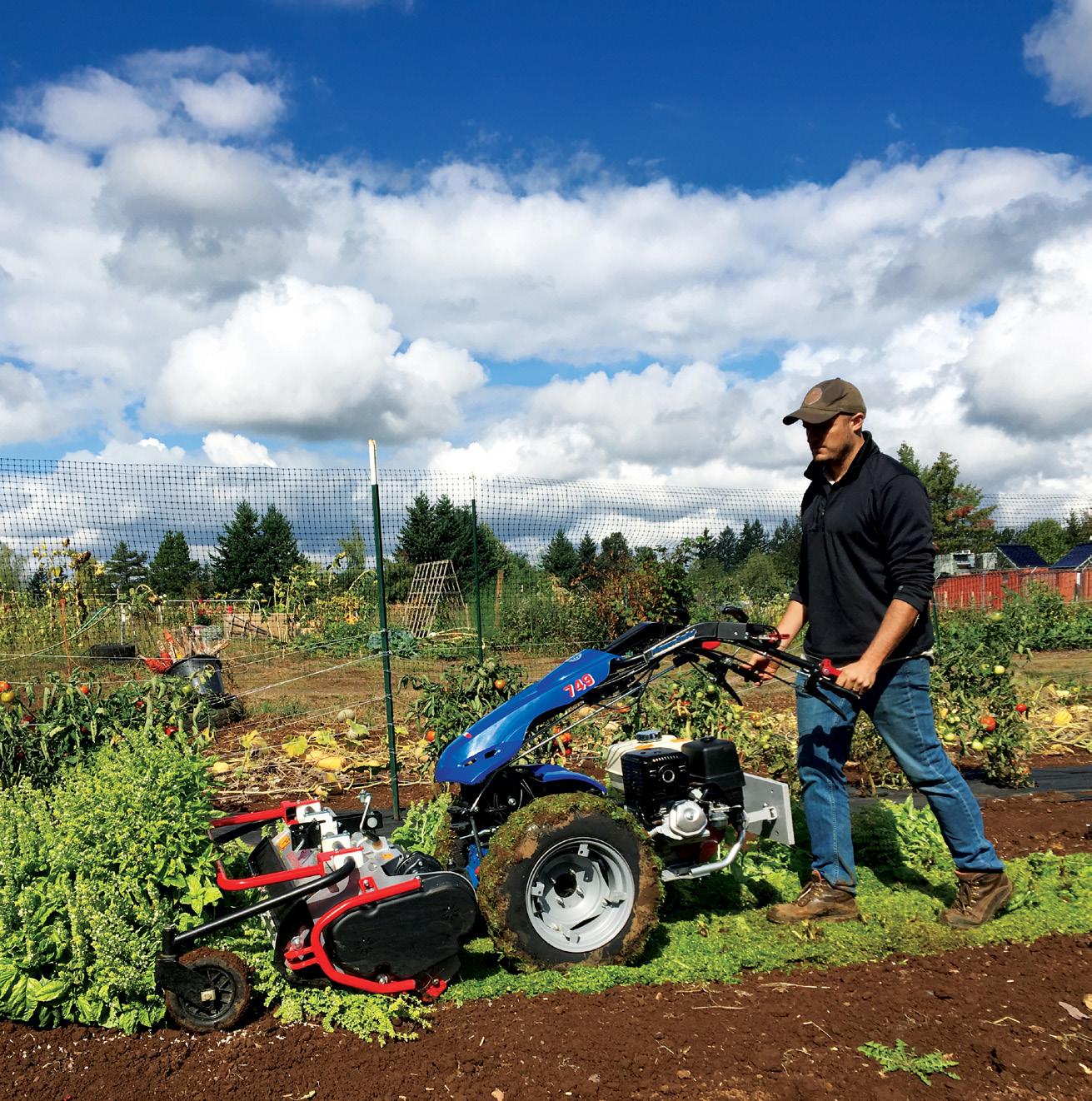
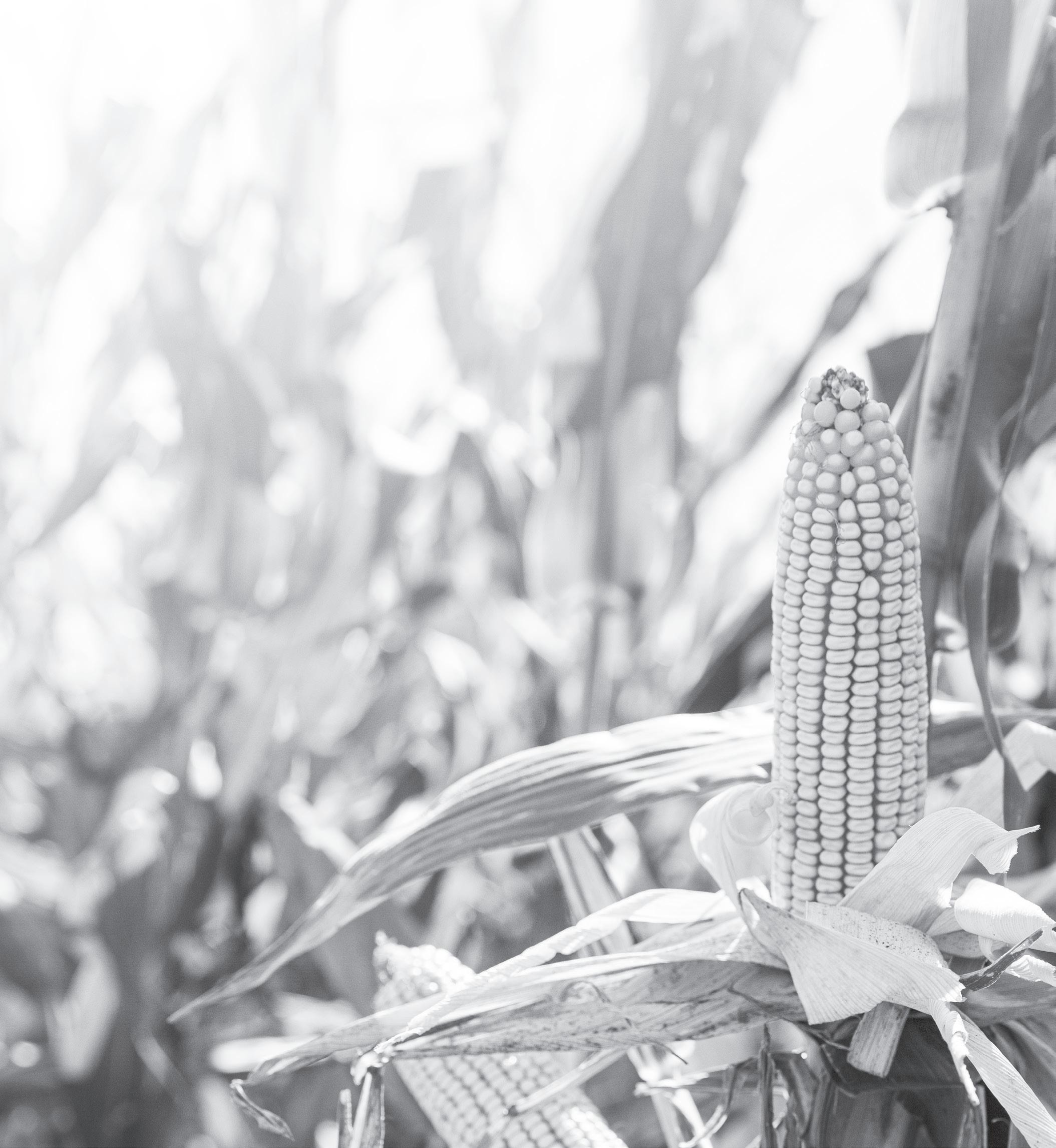
cover photo credit: Brian Waite, Mulberry Oaks, Ripon, Wis.
From The execuTive DirecTor
Spring is all seasons in a day. It is a promise but also uncertainty. We want to stretch in the sun and shrug off the cling of winter darkness.
I am struggling to stay in the moment. To look carefully for signs of renewal. To quiet my mind long enough to hear the warming breeze through budding branches. I practice the yoga trick of my palms facing outward at the end of my arms hanging from relaxed shoulders, imagining my heart open.
This practice of compassion, with a physical cue, sort of amounts to a “fake it till you make it” approach. Like farming, working from home has its isolation. During good days, we call it solitude. Lately, it is more like spiraling after catching a snippet of the daily news. The funding freezes, threats to cancel programs, and folks from every walk of life and sector concerned that speaking out will put a “target on their back” are taking their toll. There is a compulsion to move into a stance of “us vs. them,” as if we were so sure of who “them” would happen to be.
How do we move beyond the binary when there does not seem to be a topic free from being politicized? I recently attended a state lobby day with the Wisconsin Farmers Union. Since being at Marbleseed, my professional interaction with elected officials has remained at the federal level. I was looking forward to talking about a more localized shared community. The visits were attended by groups of farmers, many of whom are also in the Marbleseed community— participants in efforts toward building local food systems, expanding markets, production, and farm business education. Our first visit with a state senator was cordial enough, but when the conversation turned to the importance of affordable health insurance with reasonable deductibles for farmers in particular, the staffer put his pen down and his face went silent. Heartfelt stories of not being able to pay for critical care and the toll that farming takes on our bodies made no difference. “You know where the Senator stands on expanding BadgerCare (Wisconsin’s Medicaid program),” was his response. The conversation was over.
For folks who were newer to these types of visits, his lack of compassion and acknowledgement of deep need was defeating. Happily, the next visit with our Assembly person was a more agreeable exchange, but it was also an illustration of the state of things. We have become entrenched in our positions, dictated by a simplistic black or white, red or blue. And in those positions, we forget about human connection.
Although I am often inclined to follow the adage of “it’s always easier to stay home,” the waning glow from our annual conference and time in La Crosse gave me motivation to leave the house and go to lobby day. We do need each other. And not just those that are “us.” I have had conversations with a few different folks lately about rural America. These have given me the opportunity to reflect on how those of us in small communities seem to have many connections to each other—so many ways our lives overlap out of necessity due to our few numbers. We do not have the luxury of silos. Maybe there is the township board member who runs the county road department or teaches your child. Or the country neighbor with the yard sign that makes you cringe but who drives up on her four-wheeler to help you chase down an errant cow.
When we show up, we learn each other’s stories and build trust. Maybe we change minds and hearts about who we perceive to be “them.” Without these connections it is easy to dismiss what is happening to “them” by assuming that it is not going to affect “us.”
Thank you to everyone that joined us in La Crosse this year. We were a joyful bunch. There was more laughter and dancing than I thought was possible. I hope, like me, that you are using the learning and connections as motivation to continue looking for opportunities to be together. Spring and summer are times for field days and farm work in the company of others. Share your story. Give someone the chance to share theirs. Our collective dreams for the future are colorful and beyond the binary.
Lori Stern, M.A. Ed
edible floweRs
By Jessi Peine
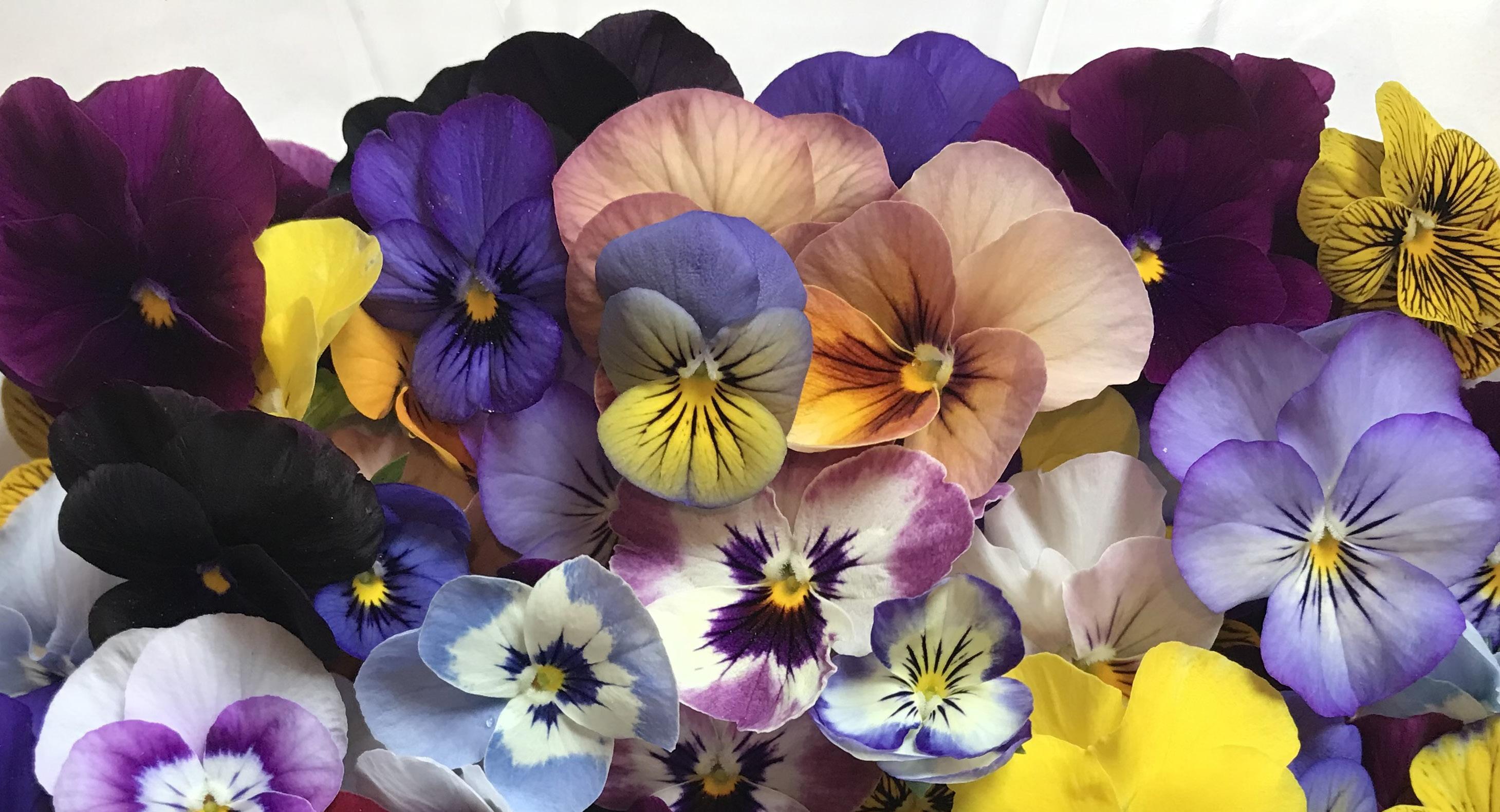
When I think about edible flowers, I’m transported back to my childhood, lying on a blanket in the yard, pretending acorns and clover were my only food. My mom told me stories of how she and her siblings would suck the sweet nectar from clover petals and collect dandelions during the summer. My imagination ran wild as I gathered whatever plants and flowers looked delicious.
My creativity and imagination for eating plants only grew as I got older and began cooking and gardening. Martha Stewart was on television garnishing cupcakes with violas, and I was enamored with the idea of using flowers and food together as edible art. My mom, an avid gardener, taught me about all the other edible flowers she knew. I collected cookbooks and seed catalogs and dreamed up ideas of bringing food and flowers together. I eventually became a chef where I got to live out these dreams. Over the years, I’ve grown a diverse garden of edible flowers, sharing them with fellow chefs, bakers, and home cooks. Getting people to “eat their flowers” has become a passion of mine.
ediBle FloWers: a simple Way to elevate yoUr cooking
If you already grow herbs, you’re halfway to incorporating edible flowers into your meals. Many herb flowers are not only edible but also incredibly fragrant and flavorful. When you harvest the flowers, you extend the period of the plant’s life before it goes to seed. Some everyday favorite herb blossoms from basil, cilantro,
Photo Credit: Falfa-Divide Farm, Fairchild,
oregano, dill, and thyme can be used in recipes just as you would use the herb. Coriander flowers have a citrusy flavor perfect for garnishing soups, salads, or tacos. Allium flowers, such as chive and garlic chive, add a mild onion flavor and a pop of color to dishes. I like to think of them as edible confetti. Some herb flowers, like basil or oregano, have a more intense flavor than the leaves, making them a fun way to amplify the herbaceousness of a dish. If you’re looking to expand your herb garden, consider adding bronze fennel, anise hyssop, lemon balm, savory, marjoram, or Thai basil, whose flowers are as delicious as they are beautiful. These flowers not only enhance your culinary repertoire but also attract pollinators, creating a symbiotic relationship between your garden and the surrounding ecosystem.
FloWering vegetaBles: a hidden cUlinary treasUre
One of the greatest edible flower discoveries for me has been eating flowering vegetables. The pronounced vegetable flavor you get in the tiny bite of precious petals is a treasure. I love to share these flowers with people who have never tasted them before as they are always a pleasant surprise. While I am in the garden, some of my favorite vegetable flowers to munch on are pea flowers. To me they taste better than the actual pea pods. They are best when picked and consumed early, when they are young and crisp. I like to use them to garnish salads with peapods and other light spring and summer dishes.
edible floweRs RepResent the inteRseCtion of ARt And sCienCe. they ARe A testAment to the beAuty And Complexity of nAtuRe, offeRing both CulinARy And eCologiCAl benefits.
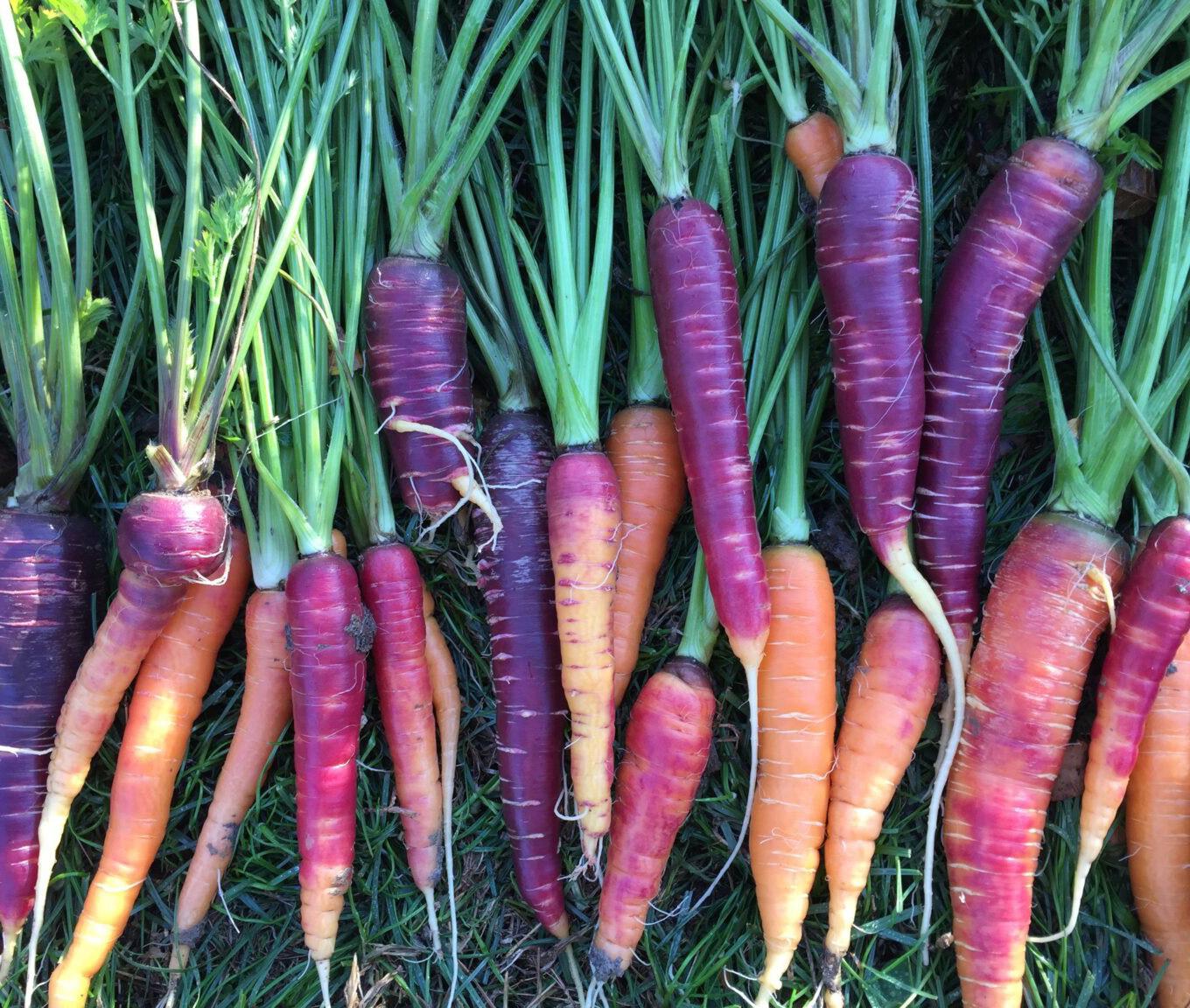
Radish flowers pack a punch, combining the sweetness of the petals with the spicy undertones of the radish. Cucumber flowers, with their beautiful and delicate flavor, pair nicely with fish dishes, spring rolls, and sushi. Squash blossoms are a staple in Mexican and Asian cuisines and are delicious stuffed, fried, or folded into a cheesy quesadilla. Carrot flowers, which I discovered after leaving carrots in the ground over winter, are a special treat. Their fragrant blooms make a stunning cocktail or dessert garnish. Other edible vegetable flowers to explore include bean, mustard, arugula, kale, and broccoli flowers. By incorporating vegetable flowers into your culinary repertoire, you not only reduce waste but also discover new ways to enjoy the fruits (and flowers) of your labor.
WildFloWers and native Blooms: Foraging With precision
Foraging for wildflowers can be a rewarding endeavor, provided it is done responsibly and with proper identification. Native edible flowers like those from dandelions, elderflowers, and linden offer unique flavors and medicinal properties. Dandelions are considered weeds when in an urban lawn and a wildflower when in a prairie setting. They are also considered a wild vegetable and superfood. They contain a great deal of pollen and nectar for our dwindling pollinators. They can be used to make delicious fritters or their petals tossed into muffins or cakes, and the flower buds can be pickled. Elderflower, specifically the species Sambucus racemosa and S. canadensis, are native and can be used culinarily and medicinally. The delicate blooms are perfect for infusing into syrups, honeys, teas, or treats. Linden, also known as or basswood, trees have a strong fruity fragrance that attracts both humans and pollinators. Linden flowers are known for their calming properties and can be used to make soothing teas and tinctures. Both elderflower and linden are vital sources of nectar and habitat for pollinators. Honeybees can produce a surplus of fruity honey from linden blossoms. The elderflowers feed bees, butterflies, beetles, and hummingbirds in addition to providing branches for the bees to build nests in. Some other favorite native edible wildflowers include wild violets, freckles violets, wild roses, milkweed flowers, and wild strawberry flowers. Common edible nonnative species found in many yards include apple blossoms, lilacs, daylilies, and daisies.
When foraging, be sure you have the landowner’s permission to harvest, and avoid areas that may have been treated with pesticides or herbicides. Proper identification is crucial to avoid toxic look-alikes.
companion planting and attracting pollinators
With ediBle FloWers: a strategic approach
For advanced gardeners, companion planting is a well-established practice. However, integrating edible flowers into your companion-planting strategy can yield even greater benefits, including pest control, attracting beneficial insects, building soil ecosystems, and higher yields. Gardening usually starts with growing what you love to grow and what you want to eat, but at some point we can’t have what we want to eat without biodiversity. Encourage biodiversity by planting a variety of edible flowers alongside your vegetables. This not only deters pests but also attracts beneficial insects like ladybugs, lacewings, and parasitic wasps. The Three Sisters garden, a traditional Native American practice of planting squash, beans, and corn together, is a prime example of companion planting. Incorporating scarlet runner beans into this system attracts hummingbirds, which are drawn to the plant’s vibrant red flowers.
Tomatoes and basil offer another classic pairing and symbiotic relationship in the garden. Basil repels pests like hornworms and thrips while attracting beneficial insects like ladybugs and bees. Its fragrance also enhances the flavor of tomatoes. The tomatoes provide shade for the basil, preventing it from bolting in the summer heat. If you add basil flowers to this model, you will attract more pollinators.
Cucumbers can be challenging to grow, especially heirloom varieties that are more susceptible to disease. Peas can be planted nearby to enrich the soil with nitrogen and flowers to attract pollinators. Nasturtiums and marigolds are both powerful at deterring pests like aphids and others that target cucumber leaves. Dill flowers attract beneficial wasps that prey on garden pests, and borage can be planted on the perimeter of your cucumber bed to repel cucumber beetles and attract pollinators.
It is more important now than ever to protect our pollinators. Growing edible flowers can be a big part of
the fight. Not only do edible flowers attract them with their bright colors and fragrances, but they provide pollen, nectar, and habitats for pollinators. They also provide a comfy pillow to rest on, a water dish to drink out of, a crunchy leaf to eat, and some well-needed shade on a sunny day. If you don’t plant edible flowers, please make sure to plant another pollinator favorite.
conclUsion: the art and science oF ediBle FloWers
Edible flowers represent the intersection of art and science. They are a testament to the beauty and complexity of nature, offering both culinary and ecological benefits. By integrating edible flowers into your garden, you not only enhance your meals but also contribute to a healthier, more sustainable ecosystem. So, broaden your horizons, experiment with new varieties, and let your garden and your garden worker bees reap the rewards. Pansies and violas are wonderful and still some of my favorites, but there are so many others to please your palate. Try some peppermint stick balsam. It has a very slight rose scent and a frilly skirt of pink and white polka dots. Tint your jasmine rice with some bright indigo butterfly pea flower petals, which in Thailand is used as a preventative for Alzheimer’s and has many other health benefits. Plant some pink “Ping Pong” gomphrena and watch the butterflies come to feed. Later you can make tea from the flowers.
Edible flowers are not just for chefs or casual gardeners; they are for anyone who seeks to deepen their connection to the natural world and unlock the full potential of their garden. Happy gardening—and bon appétit!
Here is a fun list of edible flowers. Pick something to add to your garden this spring or look to see if they are already growing around you:
• Anise hyssop
• Marigold
• Salvia
• Beebalm/Monarda
• Citrus marigold
• Nasturtium
• Coneflower
• Chicory
• Balsam
• Borage
• Aster
• Peppermint stick balsam
• Calendula
• Gomphrena
• Dahlia
• Celosia
• Jewels of Opar
• Agastache
• Begonia
• Chive flower
• Nigella ‘Black cumin’
• Stock
• Bronze fennel flower
• Dianthus
• Chamomile
• Flax
• Sculpit
• Tigers eye viola
• Alyssum
• Butterfly pea flower
• Chrysanthemum
• Cosmos
• Lilac
• Hibiscus
• Okra
• Snapdragon
• Zinnia
• Squash
• Sunflower
Jessi Peine is a chef, gardener, food stylist, and advocate for sustainable living. She believes that edible flowers are a delicious way to connect with the natural world and inspire creativity in the kitchen.
STRONG SEED FOR STRONGER FARMS.
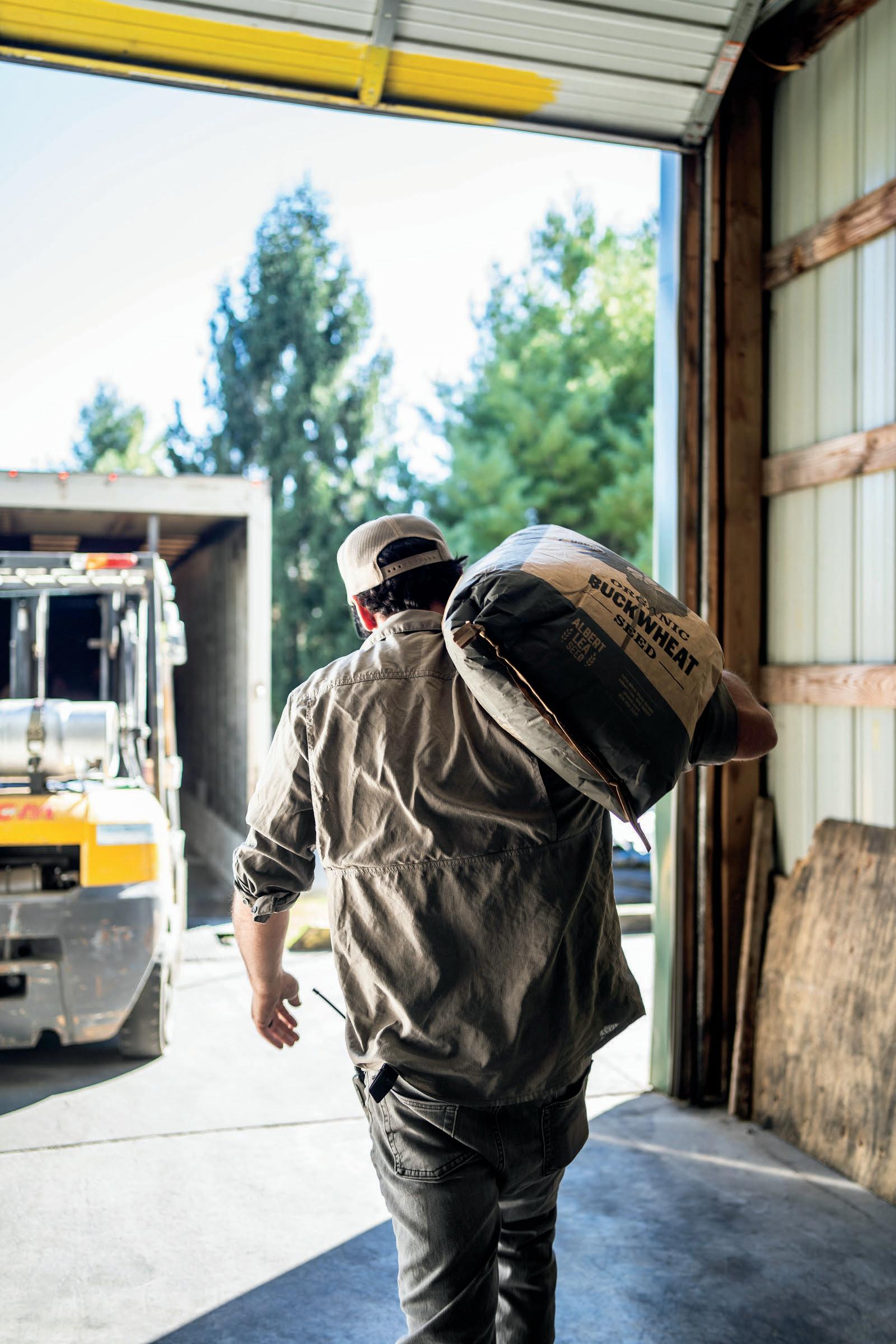
We’re committed to providing strong solutions to make it a little easier to reach your goals. Blue River provides organic corn, soybean, and alfalfa seed. Albert Lea Seed also offers a quality lineup of forages, cover crops, and small grains. For more information or to find a dealer near you, visit alseed.com or call 800.352.5247.
Amidst the Rise of RegeneRAtive,
evolve?
By Caroline Wright & Trish Clarkweiss
Trish Clarkweiss, Associate Director at Real Organic Project, gave an inspiring keynote at the Organic is Regenerative Farmer Summit at the Marbleseed conference in February. This article recapitulates her main points on the relationship between organic and regenerative. In the last 10 years, we’ve seen the rise of add-on labels to USDA certified organic, such as regenerative organic certified and Real Organic Project certification, as well as independent certifications under the regenerative. Why are these labels forming? What do we mean when we use the terms organic and regenerative?
The organic and regenerative movements have responded to the questions and crises of their time. Organic farming emerged in response to the post-war, green revolution of chemical agriculture after World War II and Vietnam. Organic practices are and were Indigenous practices that communities across the globe had preserved for generations prior to the organic movement. In the United States, organic certification grew from a collaborative effort run by farmers in the 1970s to a government-run program in 2000. Since then, the National Organic Program (NOP) has overseen organic certification and created its standards. One of the organic pioneers, Sir Albert, first utilized the term “regenerative” in 1943, and Robert Rodale coined it in the 1980s to describe how organic farming, in practice, seeks to regenerate soil and biodiversity. The formal
regenerative movement surfaced in the last 20 years as a major agricultural movement that, at its best, is responding to climate crisis, land access, and social equity. Regenerative is ingrained in no-till with a focus on capturing carbon, improving soil, and building organic matter. Regenerative can also include diverse systems incorporating perennials and agroforestry. While organic and regenerative have different focuses, they share kindred values. Both are rooted in agroecology principles and solutions to climate issues and share many similarities in farming practices.
In January, the International Federation of Organic Agriculture Movements (IFOAM Organics International), a membership-based organization working to bring true sustainability to agriculture across the globe, released a statement to elevate truly regenerative agriculture (find all links in Additional Resources section at end of article). They comment that organic agriculture is rooted in regenerative principles and practices, affirm serious regenerative leaders as bringing new inspiration to organic, tease out discrepancies in regenerative, and reaffirm the strengths of organic as a platform in the market, in policy, and for farmers and eaters.
Organic actors, such as IFOAM Organics International, who are starting conversations to bridge distinct agricultural movements, provide encouragement to the organic movement. There is a tendency to be antagonistic and depict the other at their worst. Organic can represent regenerative as only being no-till grain
producers using synthetic fertilizers and herbicides to grow and terminate crops, and regenerative can constitute organic as heavy tillage on massive acreage. When we portray the other at their lowest, we miss the beauty, alignment, and opportunity to connect and collaborate. Regenerative and organic share a common vision of healthy soil, healthy food, healthy people, and a healthy planet. Both have room for criticism, celebration, and evolution. Strengths and Weaknesses of Regenerative and Organic
Accessibility is a key strength of regenerative. It casts a wide net that works for a wide variety of farmers. The word is free to use and is not trademarked or regulated by any agency. While that can be highly problematic, it also allows for tremendous usage and growth. In not being tightly defined, regenerative can meet many farmers where they are and offer a process of improvement rather than the “you’re in or you’re out” mentality that can come with regulated standards. The certification bodies that do exist for regenerative offer a tiered certification approach that works toward continuous development. This is a successful strategy; tier one covers baseline practice, and following tiers define elevated practices. Regenerative is addressing the relevant issues of today and growing exponentially as it appeals to young farmers with its new and relevant methods.
Despite a multitude of independent certifiers operating across American agriculture, regenerative lacks a ubiquitous definition with clear standards for certification bodies to unanimously uphold. In an article written by Laura Reily in Civil Eats, she depicts this simply:
Broadly speaking, regenerative agriculture improves soil health and carbon sequestration through diverse crop rotations, animal grazing, limited tillage, and reduced (or eliminated) external inputs like fertilizer and pesticides. But it also has wider benefits, including farmer wellbeing, community engagement, and ethical animal husbandry. The problem is that it’s notoriously hard to define. No federal or scientific definition exists, leaving the term open to interpretation—and greenwashing.
There are regenerative certifiers, such as Regenerative Certified Organic (ROC), that remain an add-on to USDA organic certification. The standards established by ROC support stricter requirements for soil health, animal welfare, and social fairness. Currently, they have 331 farms and ranches certified. However, most farmers using the regenerative term are not undergoing a certification process. This means they can label and market their products as regenerative with zero oversight of their actual crop and livestock management practices. Without standards or regulation, regenerative is highly susceptible to corporate greenwashing, with corporations like Walmart, Syngenta, and Monsanto touting some fairly ill-begotten goods as regenerative.
Organic, on the other hand, has defined standards with regulatory and enforcement processes in place to uphold them. IFOAM Organics International states:
We recognize the unique and valuable contribution of organic standards and the organic certification system for providing strong consumer and supply chain guarantees, a clear market for farmers, and a solid tool for policymakers seeking to support welldefined, holistic, and transformative solutions in farming and food. The translation of our principles into strict legal standards in major markets across the globe creates comprehensive benefits, covering soil health, biodiversity, animal welfare, and ecosystem resilience, without reliance on synthetic pesticides, fossil-fuel based fertilizers, or GMOs.
Organic has research that indicates a decrease in chemical residues compared to conventional counterparts. It is now a $70 billion industry in the United States. Among farmers, especially those of the late 1970s-1990s, it is a movement with an identity. Even as it has succeeded in becoming a booming industry, it still carries a counter-cultural ethos.
While having federally regulated standards is a strength of organic, they can perpetuate a baseline and fail to communicate aspirational practices. As is the case with regenerative, organic has been co-opted by corporate interests through the exploitation of bareminimum organic farming. Weakened standards and practices, such as allowing hydroponic production; large, concentrated animal feeding operations (CAFOs); grain and port fraud; as well as high-input monoculture models replacing conventional pesticides with equally potent full-spectrum organic sprays, have undermined public trust in organic. While the roots and spirit of organic have been continual improvement of the surrounding ecosystem through farming practices, its progression has failed to robustly raise the bar.
Further, there is a salient discrepancy in having a program that is attempting to certify vastly different operations, from large-scale industrial to small-scale independent farms. While the NOP’s Strengthening Organic Enforcement Final Rule is good for curtailing fraud, it burdens the small farm with no wholesale accounts. For those that have very simple production and sales systems, the costs associated with keeping up with the new recordkeeping requirements can unfortunately outweigh the time, personnel, and financial resources with which they are equipped. While the new system was intended to prevent organic fraud in the marketplace, the unintended consequence has been challenging the capacity of small farms, many of whom farm above and beyond the standard practices for organic agriculture, to achieve or maintain NOP certification.
The certification process can be overwhelming for an already inundated farmer. And now, with the recent
change in administration, we are facing the loss of the federal cost-share program for organic certification, further straining the already precarious profession of organic farming. For those who follow organic practices but don’t certify, it is hard to find identity with and belonging in the organic movement. As a result, we, along with the consumer, lose a large number of small farms who are organic in spirit and practice but not on paper.
toWard a higher standard
At Real Organic Project, we have chosen a strategy to stand with and align with the organic movement. In 2018, Real Organic Project formed as a farmerled, grassroots movement with a mission to unite the organic movement and raise its standards. Farmers know that better food comes from growing in healthy, complex living soils and by raising animals on wellmanaged pasture. Our standards include soil health, pasture management, animal welfare, worker welfare, and a commitment to organic practices across the whole farm.
We hope our mission succeeds and that eventually Real Organic dissolves, with organic being integrated as an equitable movement of farmers, eaters, and communities that can trust the integrity of the USDA organic label. But until then, we will keep working. We will talk about how lowered standards ultimately serve industry and profits over people and reveal that while industrial organic farms are meeting that baseline, they are able to produce food more cheaply and squeeze small, independently owned farmers out of the marketplace. In the meantime, we strive to distinguish farms who are going above and beyond the NOP standards through our free add-on certification program. We have 1,000 farms certified with us, and we want to keep growing the movement. We would love for you to join us and apply today!
We are stronger together. Ten organic certifiers, 60 key agricultural organizations, and hundreds of farmers have signed the Soil Position Statement, pledging to only certify farms that grow in living soil and proving that progress is underway.
can organic evolve?
We are in a moment of such precarity due to the freezes on federal programs and funding, including the USDA organic certification cost-share program, Transition to Organic Partnership Program (TOPP), Organic Market Development grants, and National Resources Conservation Service. Regardless of the words we use and the identities we carry, we are all working in an economic and agricultural system that isn’t necessarily designed for us. It does not cater to the success of the small farmer, the diverse farmer, the organic farmer, or the regenerative farmer. We are in a time where we need to call on our strengths–our passion, our integrity, our big hearts, our creativity, and our knowledge–and
recognize that we have the same goal: to produce food in a manner that is both good for people and for the planet.
Paul Holmbeck, board member at IFOAM Organics International, calls for organic actors to “position organic and agroecology in new policies, research, media, farm communities and markets.” Holmbeck states:
We must strengthen our work with our farmers to continually improve organics and agroecological practices to make them more regenerative…The principle of fairness is not built into organic minimum standards today. We have to fix this. And the organic movement and organizations, including IFOAM Organics International must redouble our work in solidarity with small-holder farmers and marginalized groups, as in the global fight for farmers rights to land and local, indigenous non-GMO seed, and our fight for grower group certifications, and continuing support for equal market access for smallholders and cooperatives in the global south. Together with our allies in the agroecology movement, that show so much leadership for social justice and equity.
While regenerative is not new, it can help renew organic. In their statement, IFOAM concludes with action steps to “rededicate ourselves to the spirit, principles, and social fabric of organic in our engagement of farmers. We recognize third party certification as an effective tool for our movement, but we seek to engage all farmers, certified or uncertified who are farming using organic methods and principles as their guiding star.”
How can organic learn from regenerative? Can we implement a tiered approach to certification that certifies at a base level and awards higher levels of certification when farmers attain greater improvement? Can we have recordkeeping standards that pertain to different scales? Can we acknowledge the racial and social disparities in land access and ownership and incorporate policies to reform that reality? Can we create standards that include worker welfare and community health? Can we raise the bar on federal organic standards regarding climate, soil, fairness, and biodiversity, as our best private certifiers do? Can organic, agroecological, and serious regenerative actors find common ground? Can we collaborate as the predominant contender to the current noxious food system?
Let’s remain open to new perspectives, new conversations, new collaboration, and new growth.
Caroline Wright has worked for seven years in farming and food justice initiatives, including co-founding a small organic vegetable farm with her partner in Ann Arbor, Mich. in 2021. She has been working with Real Organic Project as the Midwest Regional Inspector since May of 2024.
Trish Clarkweiss is the Associate Director of Real Organic Project and the current Certification Director of the Real Organic add-on certification program. Trish has extensive knowledge of the organic industry through her years as a certified organic seed and veggie farmer in Missouri and through her previous work as an organic certification specialist and as an organic inspector throughout the Midwest.
Join our family of growers who share our passion for cultivating goodness. We’d like you to grow with us.
Beans | Pulses | Grains | Flax
Let’s cultivate goodness, together. Call 844-275-3443 or visit HFIfamily.com
fuRtheR ResouRCes:
IFOAM Organics International statement: https:// www.ifoam.bio/elevating-truly-regenerativeagriculture-statement-organic
Civil Eats article by Laura Reily: https://civileats. com/2025/02/05/california-decides-whatregenerative-agriculture-means-sort-of/
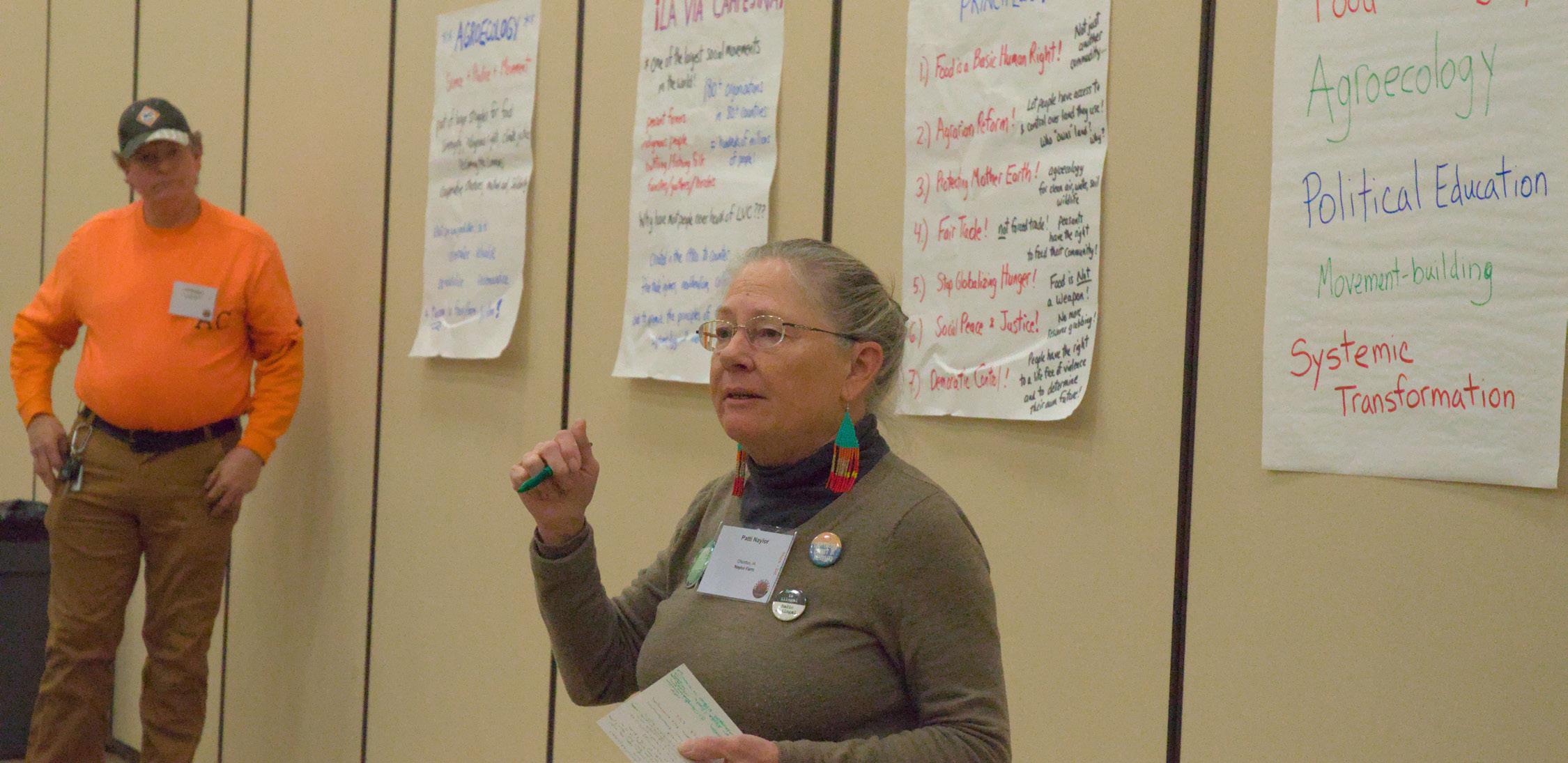
Affinity meetups at the Marbleseed conference took shape based on feedback that Marbleseed staff received from cultural groups who expressed feeling misplaced, underrepresented, and who were consistently seeking spaces at conferences to belong. These dedicated spaces at large conferences provide affinity groups with the opportunities to bring together like-minded individuals in safe, brave spaces where they can be unapologetically themselves.
What is the name oF the aFFinity meetUp yoU helped to coordinate and host?
John Peck, Family Farm Defenders: Food Sovereignty and Agroecology
Moriel Borgman, Michigan State University Extension: Participatory Learning Community for Beginning Farmers
is this yoUr First time coordinating and hosting a meetUp at oFc?
JP: No, and yes? We’ve held roundtables in the past on similar topics, but this is the first meet-up.
SM: No
MB: Yes
iF not, hoW many meetUps have yoU Been involved in (in the past)?
JP: I’ve participated in other meetups in the past but have not organized one until this year.
SM: This is our third year hosting this event.
What motivated yoU to step Up and in to take on this opportUnity (as an organizer)?
JP: I’ve been an organizer for many years so that was not unusual – I just feel like this is an important topic to continually discuss at Marbleseed since food sovereignty/agroecology are a vital part of the transformative agricultural movement which includes organic. Leah Penniman’s keynote several years ago really reminded me of this responsibility.
SM: Shabbat dinners at regional agriculture conferences have become a big part of Jewish Farmer Network’s programming. These events allow us to meet Jewish farmers where they are and provide a meaningful opportunity to engage in accessible Jewish ritual alongside other Jewish farmers in their region.
MB: A team from Michigan developed curricula to guide beginning farmers in building skills through participatory learning methods. We wanted to share this with beginning farmers who were interested in forming peerto-peer learning communities.
hoW many attendees joined this meetUp?
JP: We had between 75 and 100 people attend. The room was very full, and people kept coming in. I think some people had a hard time finding the space since it was way in back. We thought we would just host a smaller circle discussion, but with so many participants we broke up into four groups. The audience was very diverse and included lots of younger people as we anticipated.
SM: Each year, this gathering brings in 10 to 25 midwestern Jewish farmers!
MB: 15
What Were the impacts that participants Walked aWay With, From Being a part oF the meetUp(s)?
JP: A couple dozen people lingered afterward for more discussion (we were glad there was no other group trying to get into the space right away after our allotted time). All of the information we brought was swept up by participants and many came by our exhibitor booth afterwards to continue the conversation and get more resources.
SM: Participants walk away knowing that they are not alone as rural Jewish agrarians. For some, this experience inspires them to reconnect with their Jewish heritage and find new ways to integrate it into their life as farmers. For many, this is the first time they have engaged in Jewish ritual or practice since childhood. For most, this experience begins healing a rift between their farmer identity and their Jewish identity.
MB: Meeting other beginning farmers, building community, learning about new resources for beginning farmers.
hoW WoUld yoU improve FUtUre meetUps?
JP: Having enough time for a meaningful conversation and collective strategizing was key. Having wall space to share all the notes from the four breakout groups was also helpful. We took photos of the various post it notes and shared them with everyone who provided their email afterwards. We also took some “generic” photos of the audience.
SM: Our event was missing from some pages in the program booklet, so I will be checking in earlier to make sure it’s properly promoted.
MB: Creating this space for loosely structured conversations is powerful. A couple examples of the importance of this particular meetup:
• The beginning farmers in the room used the space to organize a plan to continue meeting with each other following the meetup.
• The meetup was scheduled from 7-8:30 p.m. The organizer left at 9, and there were still groups of farmers in the room chatting. What an amazing opportunity to connect folks who may not have otherwise found one another in a large conference setting.
JP: Having the meet-up listed in the conference schedule certainly helped with attendance; the only other way folks would have known about it was a small sign at our booth. Having the meet-up last a longer time (90 minutes) than our previous roundtables (which were 45-60 minutes I recall) was a big improvement that allowed for much more in-depth discussion.
SM: In the future, I would like to figure out a more seamless way to get farmers into Shabbat and possibly do the gathering in the main exhibitor hall.
MB: No suggestions, I was super pleased with how this turned out!
From this experience, What is one takeaWay yoU WoUld like For conFerences (in general, Both attendees and organizers) to Be mindFUl oF (in terms oF meetUp spaces)?
By Chris McGuire and Madeline Wimmer
Compared to annual grain and vegetable crops, perennial fruits offer different opportunities and challenges for managing the soil surface. Organic farmers who raise annual crops often rely on annual tillage and cultivation, which work well to control longlived perennial weeds but tend to promote annual weeds that grow quickly and can produce staggering numbers of seeds. Repeated tillage and cultivation also degrades soil structure, burns up soil organic matter, and exposes soil to erosion. In midwestern organic fruit orchards, vineyards, and berry plantings, much of the ground is typically covered with a permanent plant cover. Aisles between rows of fruit crops are often planted with sod, which protects soil from erosion, provides a firm stable surface for tractor operation and foot traffic, and can outcompete undesired plants. However, because perennial fruit plantings are not tilled every year, spreading perennial weeds such as quackgrass and Canada thistle tend to proliferate over time
and can become very difficult to control.
In some cases, beneficial plants can be included in the ground cover within and between planting rows, sometimes providing food sources for beneficial insects or mining nutrients from the soil. While groundcover plants can provide many benefits, they can also compete with new fruit plantings and subsequent crops. In some cases, weed control can be relaxed as the fruit plants age. Large fruiting trees and mature grapevines, for example, are generally deeprooted and relatively untroubled by shallow-rooted grasses growing around them. Most berry crops and dwarf apple trees are shallow rooted and vulnerable to weed competition at any age.
Organic fruit growers need to balance the benefits of a permanent ground cover with the need to control competition from weeds. For this article we have interviewed two experienced fruit growers from the Upper Midwest to learn how they manage weeds growing close to their organic fruit crops. In both
cases, their strategies have evolved as they’ve gained experience, providing informative examples for others to learn from.
Using landscape FaBric on a Berry Farm: little hill Berry Farm
Aaron Wills raises blueberries, strawberries, raspberries, and other fruits together with his wife Molly McGovern Wills and their employees at Little Hill Berry Farm in Northfield, Minn. When they initially planted their blueberries, they mulched around the base of the plants with wood chips, but they found that perennial grasses such as quackgrass gradually invaded the wood chips. Adding additional mulch did little to control the grasses. Hand-weeding and weedwhipping could keep the grass in check but could not eliminate it, and the labor required for weeding in their 4-5 acres of blueberries became prohibitive.
Aaron experimented with using landscape fabric around the berry plants for several years. Much trial and error was required to find an
weed mAnAgement on two oRgAniC fRuit fARms
efficient way to install fabric around large, established berry plants surrounded by vigorous grass. In his initial experiments, soil moisture sensors along the berry rows showed much higher soil moisture in rows covered with landscape fabric compared to rows without fabric. Where there was no fabric, grasses were sucking up moisture from the soil and competing with the berry plants, which strengthened Aaron’s determination to find an effective way to install and maintain the landscape fabric.
Over time, he developed an effective method for installing the fabric around existing berry plants. First, mow or weed whip around the plants and closely crop the existing grass. Then unroll a 4-foot-wide roll of landscape fabric down the aisles (between the plant rows). Use sharp scissors to cut the roll lengthwise into two pieces, each 2 feet wide. Then move one of the 2-foot fabric pieces against the berry row on one side of the aisle, working it close to the base of the plants and anchoring it with landscape staples. Similarly, install the other 2-foot piece against the berry row on the opposite side of the aisle. If there is space within the planting row—in between the berry plants—that is not covered by fabric, cut extra scraps of 2-foot-wide fabric and staple them down between the plants with good overlap onto the long fabric pieces on either side. (In some cases, the existing berry plants were large and had essentially grown together within the planting row, so that it was not possible or necessary to put small pieces of landscape fabric between them.) The end result is a strip of fabric on both sides of each berry row, and sometimes in between the bushes within a planting row, with grass aisles between berry rows.
In new berry plantings, Aaron now installs fabric from the start; after tilling a plot for planting, they roll out and secure a 4-foot-wide strip of fabric centered over each row and then cut out individual squares of fabric and plant into the holes.
The blueberry plants at their farm are watered by drip irrigation. Aaron has learned to leave the drip lines on top of the fabric because irrigation water will work its way downward through the fabric. When the lines are installed below the fabric, it is difficult to detect leaks.
Aaron and his crew continue to mow the grass between rows, using a zero-turn mower. They have had few problems with catching or tearing the edges of the adjacent fabric but have raised the height of their mower deck slightly to protect the fabric. He has also found it important to staple the fabric tightly where it borders the grass aisle, with one prong of the staple in the fabric and the other prong in the grass, so that the edge of the fabric is rolled down towards the ground, and not flapping loose where it could be easily caught by the mower.
Established blueberry plants have a large, spreading base with multiple shoots emerging from the crown, and
it’s necessary to leave a gap of 12 to 24 inches between the fabric strips on each side of the rows. Some grass can persist in the uncovered areas around the base of the plants. However, within several years of installing the fabric, this grass largely weakens and dies out with a few hand weedings. Aaron and his crew continue to weed occasionally as needed.
Aaron currently orders 3.2 oz./sq. yard woven landscape fabric in 4-foot widths from Nolt’s Midwest Produce Supplies in Charles City, Iowa. There is no 2-foot-wide fabric listed in the Nolt’s catalog, but he has heard that it may be available for special order and is interested in buying the narrower roll to save time in cutting the fabric in half lengthwise. He has found that the regularduty landscape staples sold by Nolt’s are sufficient, so he does not use their heavy-duty staples. Aaron and his crew primarily use rubber mallets to install the staples; they have experimented with using the long-handled Staple-setter™ tool from Johnny’s Selected Seeds but found it to be only effective in ideal conditions.
Aaron is concerned about the use of plastic in their current weed control system but needs to balance that concern against the near impossibility of keeping berry rows weeded without using the landscape fabric. He estimates that the fabric will last at least 10 years, although none of their fabric is yet that old. In one instance, they did need to remove some fabric that was five to six years old, although not because the fabric had reached the end of its life. When they removed the fabric, they found that grass had grown over the edges in some places, but that it was still fairly easy to remove it.
cUltivation and mUlch in an apple orchard: atoms to apples
Rami Aburomia grows about five acres of organic apples at Atoms to Apples in Mt. Horeb, Wis. Rami’s apple orchard is entirely a high-density, trellised planting of trees grown on dwarfing rootstocks and spaced three feet apart in the row.
The current orchard site was previously an old, poorly managed hayfield. Before Rami planted his trees in 2015-2017, he tilled up the future tree rows and used a combination of tillage and cover cropping for one to two years to suppress or eliminate weeds. He did not till the aisles in between the rows, and in retrospect, he believes that the aisles have served as a source for quackgrass and other perennial weeds that then invade the tree rows.
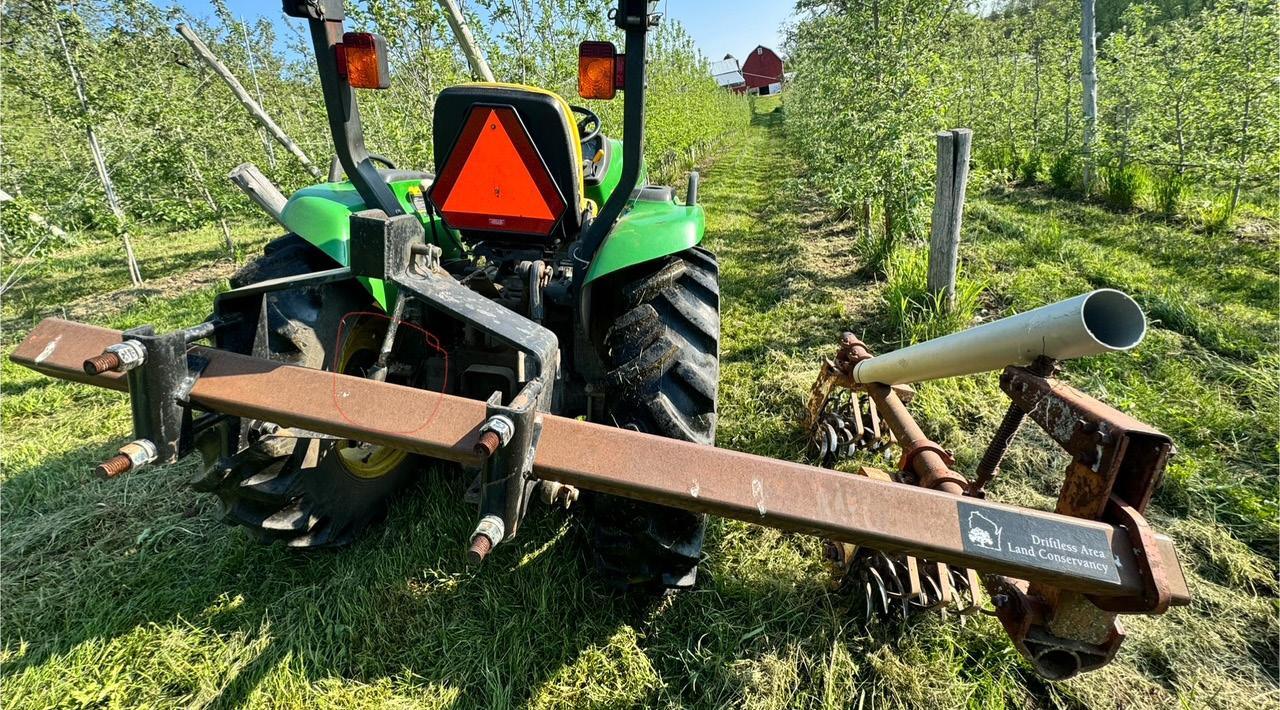
For three to four years after planting the trees, Rami kept a 3-foot-wide strip centered on the tree rows weed-free by using a combination of hand weeding and tractor cultivation. His tractor cultivation tools were a Weed Badger and Lilliston rolling cultivator.
The Weed Badger (which is no longer manufactured) mounts to one side of the tractor and has a single cultivating head on the end of an articulating arm
which can extend outward from the tractor. From the tractor seat, the operator can steer the cultivating head around trees while driving down the aisle next to the tree row. The typical cultivating head on the Weed Badger consists of a horizontal disc, rotated by tractor hydraulics, with downward facing tines on the bottom of the disc. The direction of rotation is reversible and can be used to throw soil towards or away from trees, which is useful to prevent formation of a furrow from repeated cultivations moving soil in the same direction. The orientation of the disc can be tilted to keep it parallel to the prevailing slope. The Weed Badger operates on one side of the tractor only and requires two passes down each orchard aisle, one to till each side of each row. The Weed Badger can be used in wetter soil conditions than some other cultivating tools. It is a slow tool to use and requires care and attention from the steering operator. Rami can cultivate an acre of orchard in about 1.5 hours with this tool.
Rami’s Lilliston rolling cultivator consists of two spider gangs mounted, one behind the other, so as to to cultivate to one side of the tractor. He operates it at the edge of the grass aisle to keep grass from growing into the planting row. The cultivator is set up to throw soil toward the tree row, which has some tendency to create a furrow after repeated use, but cultivation with the Weed Badger and mowing have a flattening effect that prevents severe furrows from developing. The Lilliston is a fast tool to use. Rami can cultivate an acre in about 15 minutes, driving as fast as he can bear. Weaknesses of his Lilliston setup are that the tilt of his cultivator cannot be adjusted, which means that it sometimes does not work well on his sloping ground; that it wraps and clogs easily in long grass, requiring that the grass be tightly mowed before each cultivation; and that it clogs readily in wet soil and requires dry conditions for good performance.
Like Aaron, Rami irrigates his orchard with drip irrigation. In his case, his drip line is fastened to the trellis and suspended above the ground, so it is safely out of the way of the cultivators.
Rami reports that in the first three years of his orchard, cultivation was largely successful at controlling weeds in the 3-foot-wide tree row. He would typically use the Weed Badger about three times per year, cultivating as much of the 3-foot-wide area as he could feasibly cover; the Lilliston cultivator three or more times per year to specifically cultivate the grass-soil boundary; and hoeing or hand weeding as needed to control remaining weeds. He was careful to keep large annual weeds from seeding in the tree row. These techniques combined to maintain a weed-free zone around the trees when they were young and most vulnerable to weed competition.
As the trees aged, however, Rami decided to change his weed management strategy. The tree canopies become denser and cast more shade, resulting in slower weed growth. In addition, his trees had ample vegetative
vigor, and he was not concerned about exposing them to a modest amount of weed competition. He also hoped to avoid repeated cultivations that would reduce soil organic matter by introducing oxygen into the soil and hastening microbial decomposition. Therefore, he has changed his weed management regime to rely on mulching combined with infrequent cultivation. He now tolerates more in-row weeds, but he still wants to prevent a lush mat of grass from growing under the trees.
Rami spreads wood chip mulch in the tree rows with a Millcreek Manufacturing model 506 side-delivery row mulcher. A tractor pulls the spreader down the aisle between rows, and it spreads a stream of material into the tree row on one side. The model 506 has a capacity of six cubic yards. This specific model is no longer manufactured, although Millcreek actively manufactures similar models. Rami is pleased with how configurable and adjustable the spreader is. His goal is to mulch a strip approximately four feet wide (two feet on each side of the tree row). The spreader can be set up to cover an entire tree row from one side, with one tractor pass, but this method leaves a “shadow” of unmulched ground behind each tree trunk, and so Rami prefers to configure the spreader to cover one half of one row with each pass, requiring two trips down each aisle to mulch the entire orchard. With a single six-yard load in the spreader, he can cover one side of a 500-foot-long row (i.e., about 1,000 square feet of ground is covered with one load). This works out to approximately a twoinch-deep layer of mulch; the spreader does not yield an exactly uniform coverage, and the mulch is slightly deeper by the trees than along the edge of the mulched strip. To mulch one acre is a half-day’s work, and most of that time is spent driving to and from the mulch pile and loading the spreader. From a time standpoint, it’s key to locate the mulch pile as close as possible to the orchard. Rami also tries not to source wood chips that contain black walnut wood; juglone, a chemical found in black walnut, is toxic to apple trees and many other plants.
Rami has experimented with the timing of mulch application and gradually refined his technique. He now aims to mulch the entire orchard every year. Ideally, he will mulch in spring after cultivating the tree row with the Weed Badger to suppress perennial grasses, but mulching must be fit in around other orchard tasks and may happen later in the year. After spreading mulch, he will let the mulch sit in place for the rest of the growing season and cultivate again with the Weed Badger in late fall or the following spring. Late fall cultivation hastens leaf decomposition and reduces overwintering fungal disease inoculum on the fallen leaves. Quackgrass persists in his mulched rows, and Rami expects to manage the grass, not eliminate it. Cultivation and mulching will weaken the quackgrass and knock it back, especially in the spring and early summer when research has shown that apple trees are most vulnerable to weed competition. As the year goes on, the grass will reemerge and become increasingly dominant under the
trees. Throughout the growing season, Rami also uses a “mow-and-blow” technique, where he mows the grass in the aisles between rows with a mower set to discharge grass clippings into the tree row, adding additional mulch and nutrients to the tree row.
Annual cultivation with the Weed Badger incorporates the wood chips into the soil, which can reduce the value of the mulch for weed control, but the cultivation seems necessary for controlling the quackgrass that would otherwise quickly grow through the mulch and proliferate. Incorporating wood chips into the soil will tie up soil nitrogen as the wood chips decompose, but Rami is not overly concerned because he observes that vigor of his trees is sufficient.
Currently, there are very few summer annual weeds such as lambs quarters or pigweed in the tree rows at Atoms to Apples. Rami believes this is because the soil seedbank was depleted during the early years of the orchard when the tree rows were carefully kept weed-free. In addition, spring cultivation and mulch applications can kill young, newly sprouted annual weed seedlings that are present, and mulch keeps the soil surface dark and thus prevents weed seeds from germinating (most annual farm weeds require light for germination). Quackgrass is present in the tree rows but is kept in check. Canada thistle persists in some spots, and Rami will pull the shoots out once per year to weaken the thistle patches. Curly dock is also frequent in the tree rows, and Rami clips flower stalks and immature seed heads and throws them into the grass aisles each year. Woody vines and tree saplings sometimes establish in the tree rows but can generally be controlled by repeated clipping.
All fruit growers should consider whether orchard ground cover plants actually compete with their fruit crops and should be managed as weeds, or whether they are neutral or even benign plants that should be tolerated or encouraged. When control is needed, consider what is the biology, growth habit, and life cycle of the particular weeds. What are the most effective methods for controlling those specific weeds, and at what stages are they most vulnerable to management tactics?
For example, although organic mulch materials like wood chips are very effective at preventing annual weeds from germinating and emerging from the soil seed bank, these mulches provide only brief suppression of perennial weeds like quackgrass that can draw on energy reserves stored underground to fuel their regrowth through mulch. Quackgrass can be killed with an impermeable mulch like landscape fabric, eradicated by a regime of vigilant hand weeding and regular cultivation, or tolerated and suppressed by repeated mowing or occasional cultivation.
To better understand the ecology of specific weeds and how particular weed control strategies target different
types of weeds, we wholeheartedly recommend SARE Handbook #16, Manage Weeds On Your Farm: A Guide to Ecological Strategies, written by the late Chuck Mohler and his colleagues. It is available at https://www. sare.org/resources/manage-weeds-on-your-farm/. And for information about USDA certification regulations related to weed management, refer to the Federal Code of Regulations guidelines: Crop pest, weed, and disease management practice standard.
Please save the date for a field day on organic orchard floor management at Atoms to Apples on Wednesday, June 11, 2025. More information will be coming soon!
This article is supported through the USDA Transition to Organic Partnership Program, a program of the USDA Organic Transition Initiative administered by the USDA Agricultural Marketing Service National Organic Program.
Chris McGuire is the coordinator for the Organic Fruit Growers Association (organicfruitgrowers.org). Chris and his wife Juli farm at Blue Roof Orchard in Belmont, Wis., where they raise organic apples for their local community. Contact Chris at ofgacoordinator@gmail.com
Madeline Wimmer is a Fruit Production Regional Educator for the University of Minnesota Extension, president of the Organic Fruit Growers Association, and serves as a board member for the Minnesota Institute for Sustainable Agriculture. Contact Madeline at wimm0035@umn.edu
Organic Waste Connections
Miracle Grow
Miracle Grow
Miracle Grow
Miracle Grow
Photo credit: Morrison Media LLC
By Eliana Pinilla
I learned about Families Anchored in Total Harmony (FAITH) CDC during my role at Common Market. Our partners at the Chicago Food Policy Action Council introduced us as a way of creating stronger connections with producers in the Great Lakes region.
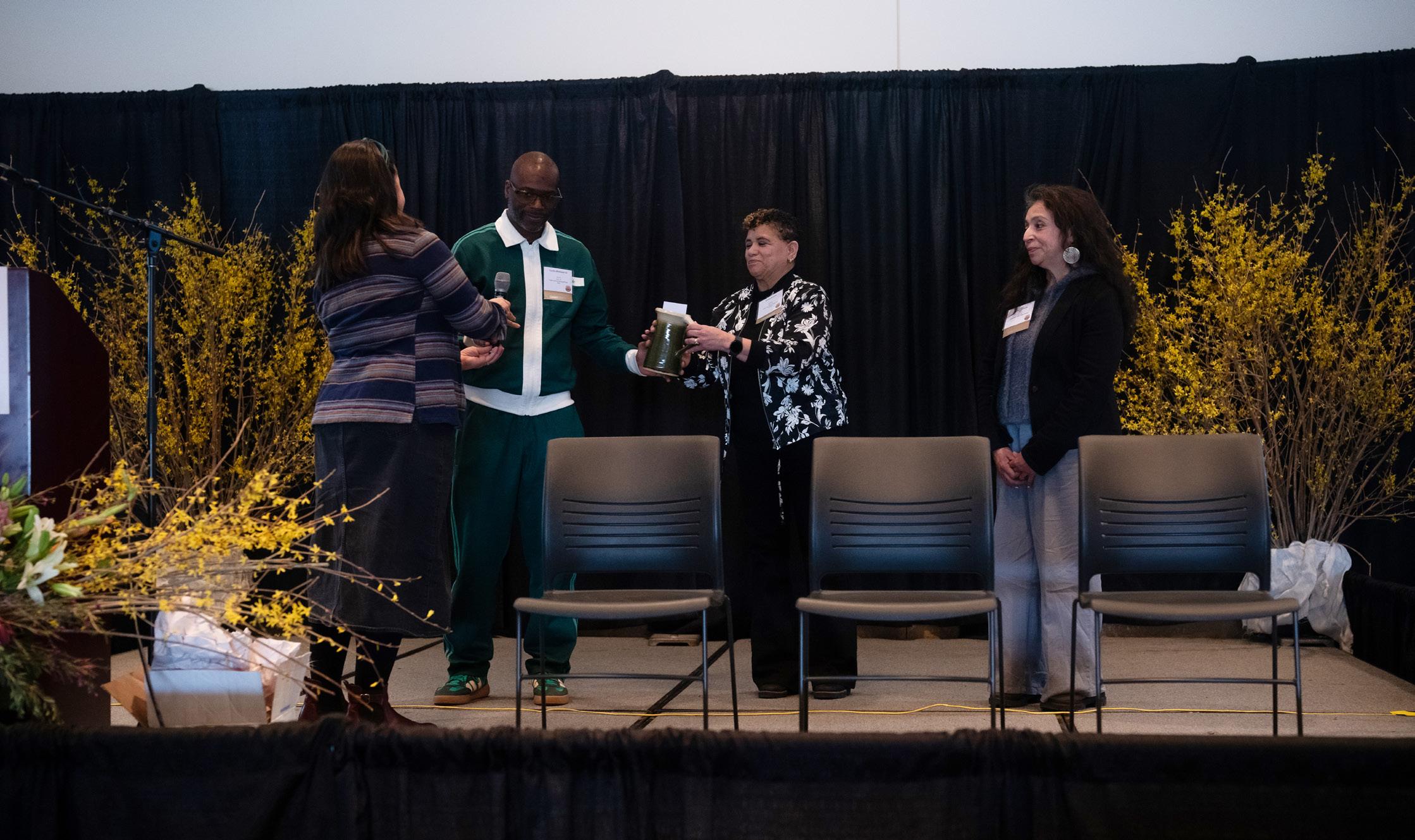
My first interaction with Pastor Curtis was memorable. A humble and assertive leader, he shared the history of FAITH and what they have built for their community in Gary, Ind. for the past 10-15 years. With no formal agricultural background but a deep understanding of his community’s needs, he was set on figuring out a path forward to growing good food. Inspired by the work led and lifted by Will Allen from Growing Power, Pastor Curtis was determined to bring people together in his community to create a shared vision for food sovereignty in their corner of the world. He shared how they have slowly but surely set themselves on a mission to not only bring fresh and healthy food to their community through organic and regenerative practices but also revitalize the connection to land, environment, health, and overall wellbeing through this work.
Visiting them in person was even beyond mind blowing. I had the good fortune of having Freida as my site host that day and getting a chance to fully understand the source for her unending well of passion and dedication for this work. She leads and stewards the Food as Medicine programming, and, in partnership with the ingenuity and brilliance of Chef Lucero, who stewards the Fresh Frozen program, they have built something one of a kind in their community through youth urban agricultural programs, fresh food boxes, and medically tailored meals programming.
With the support of their community, grants, local government, and supporting non-profit organizations and private and public funding, they have fully rehabilitated a few buildings in their area and converted them into a small fresh frozen processing kitchen and frozen storage. More importantly they have nourished their community beyond food and have provided hope, for this part of the Great Lakes region where lack of investment has consistently marked their community with unmitigated food insecurity and a host of dietrelated chronic health issues. All in all, they have created an environment that centers and honors the role and power that growing good food, building sovereignty, and fomenting agroecology have in reinvigorating both urban and rural communities.
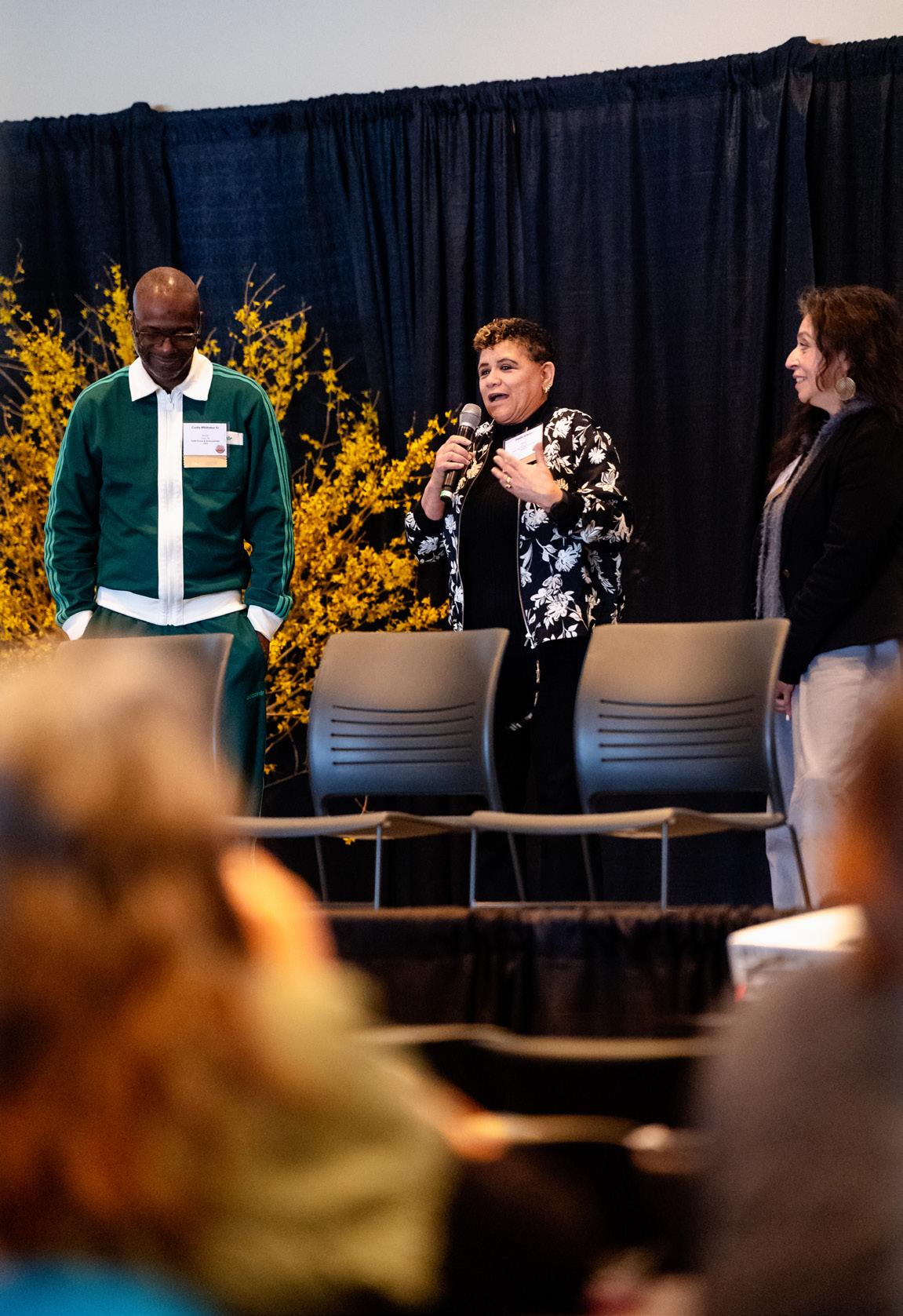
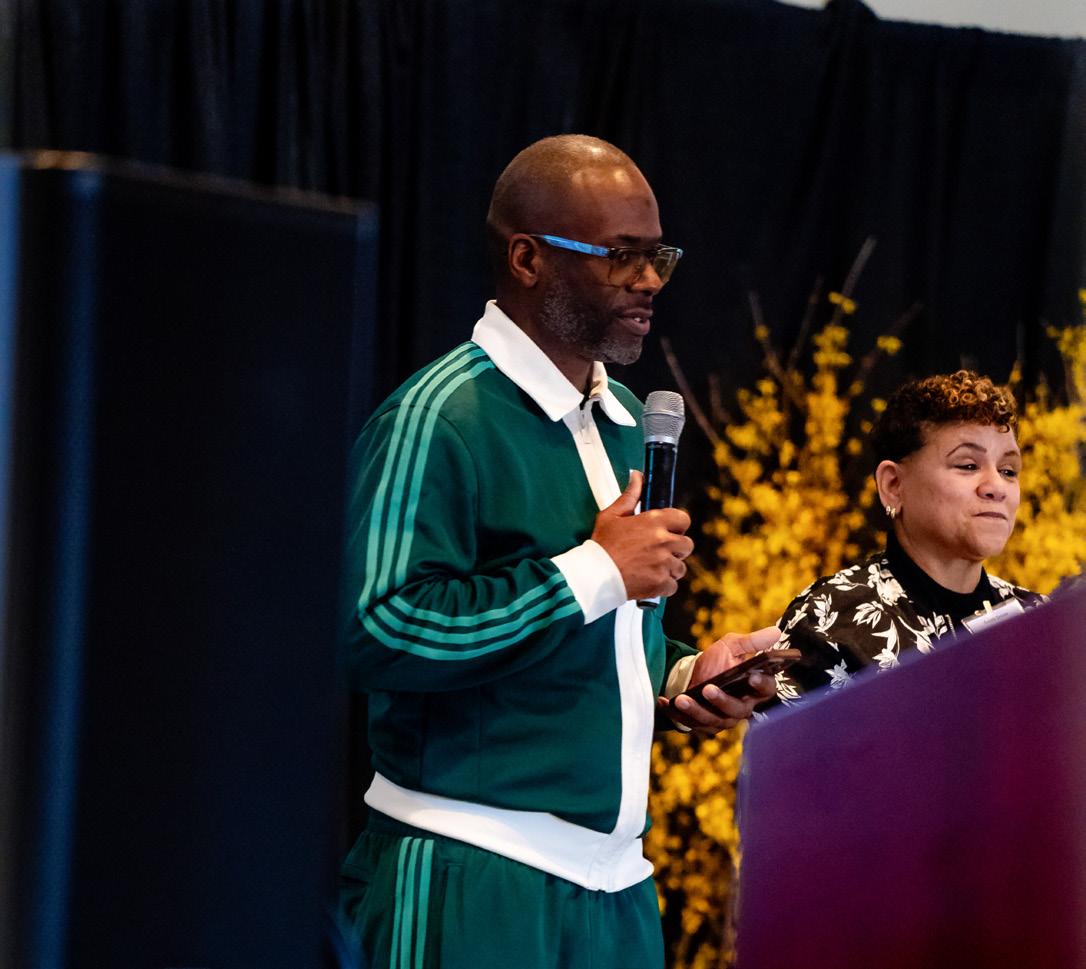
It is clear, during this time of our country’s history, that current events, governments, and political leaders will come and go, and yet we remain—we are IT. Paraphrasing Pastor Curtis during their acceptance speech during the conference: there are no superheroes around the corner, coming in to sweep us off our feet to save us, we are the ones, we are our own superheroes.
The sage words from poet June Jordan resonate: “We are the ones we have been waiting for.”
My hope is that as we step into this era of heightened uncertainty, that we drive with a resolute and incorruptible sense of certainty on the strength and power that lives within our communities. I hope the story of resilience, persistence, and success that this year’s Changemaker recipient clearly tells will inspire the possibility of thriving in your communities in the most unlikely of circumstances. Congratulations (AND THANK YOU!) to FAITH CDC, 2025 Marbleseed Changemakers of the Year. Learn more about FAITH CDC here: https:// faithcdcgary.org/
Eliana Pinilla is a board member with Marbleseed and works with Chicago Food Policy Action Council.
crops to build volume sales, leading to better prices and market stability.
Representation on policy issues and advocacy for fair and equitable returns.
Advocate to support domestic organic supply chain to reduce reliance on imports.
Education through workshops and meetings on organic grain production, marketing strategies and cooperative marketing practices.
biRd flu: vACCinAtion to the ResCue?
By Dean Dickel
Organic livestock and poultry producers have long depended on vaccines to protect their animals from devasting infectious disease. At least for now, that won’t be the case when it comes to the highly pathogenetic version of Avian influenza (AI).
United States Department of Agriculture’s (USDA) Brooke Rollins has announced the agency’s official response to AI that has come under the microscope as the result of devastating losses to of all classes of poultry. The egg industry has been hit the hardest, and consumers are feeling the pinch in the form of record high egg prices.
The USDA’s response includes funds for increased biosecurity, compensation for positive testing flocks, purchase of imported eggs, and research for vaccines and therapeutics. The “response” does not vary much at all from the policy of the last two administrations, which was to detect, isolate, and depopulate flocks that test positive.
The effect of bird flu doesn’t appear to have affected the supply of organic eggs. “It looks like it’s affecting the larger producers the most,” said Ernie Peterson, who manages Cashton Farm Supply, a major supplier of organic feed and overseer of an organic egg producer group and processing facility.
Peterson fears bird flu spreading unchecked by lack of a vaccine, could spread to the mostly Amish farmers who produce eggs for his processing plant. He takes part in a weekly Zoom call with the USDA’s Animal and Plant Health Inspection Service where the previous week’s outbreaks are reported.
Peterson is calling on the USDA to approve the use of vaccine to stem the spread of AI.
“We’re going to have to do something,” he said. Animal vaccines are universally allowed for use on certified organic farms.
While consumers have been hit with record prices for all varieties of eggs, the egg farmers Peterson works with are seeing soaring prices and shortages of replacement pullets due to a backlog of orders at hatcheries throughout the Midwest.
Peterson said the hatcheries he and his growers work with are sold out through 2027. “It’s just gotten ridiculous. I don’t know what’s going to happen.”
The production cycle for laying hens includes 16-18 weeks from baby chick to ready-to-lay pullet and egg production from 25 weeks to 74-84 weeks of age (about
one year and 25 dozen eggs). The laying cycle can be extended another 26 weeks by molting the hens, which is not allowed under organic regulations.
Most organic pullet growers in the Midwest purchase day-old chicks from one of two multinational poultry genetic firms that operate large hatcheries in Iowa: HyLine International and Hendrix Poultry. Due to the growth of cage-free and organic production, both companies now offer genetic lines of egg layers that are more suited to their alternate production systems.
Even before the current AI breakouts, hatcheries required producers to submit their orders at least one and a half years in advance to help them deal with surging demand. When AI hits a hatchery’s breeder flock (where male and female chickens are housed together to produce fertile eggs for hatching), the result is fewer day-old chicks being available to pullet producers.
Peterson said his producers, and others in the cage-free and organic market, have seen chick prices more than double, and increasingly producers have been required to accept fewer birds than they ordered.
Farmers who may have wanted to expand their numbers or those hoping to enter the business for the first time could be stopped in their tracks due to availability of pullets. “So many people want to expand right now,” Peterson said.
While a nationwide vaccination program would seem to be the quickest and most effective way to bring outbreaks under control, vaccines for bird flu are not currently available.
“It’s technically illegal to vaccinate for bird flu in the U.S.,” said University of Wisconsin Extension poultry specialist Ron Kaen.
Both conventional and organic poultry in the U.S. are routinely vaccinated for a number of diseases, including salmonella, which is required by law for all laying birds.
According to a report in Vox, an H5N1 vaccine was developed shortly after a severe outbreak in 2015. A vaccine representative confirmed that an effective vaccine was developed in the wake of the 2025 outbreak but “has been sitting on the shelf” since then. The representative, who asked not to be identified, said an AI vaccine is successfully being deployed in France. There is also reporting that an AI vaccine has been licensed by the USDA but not approved for use at this time.
The USDA, which regulates animal vaccines, has refused to allow the vaccine to be deployed under both the first Trump administration and the Biden administration.
The prohibition on the vaccine was initiated by the poultry lobby, specifically producers of broiler chickens. The claim was, and is, due to the fear that use of the vaccine would interfere with poultry exports to several Asian countries that will not allow imports of poultry products from countries where the vaccination is allowed.
Those Asian countries import chicken feet, or “paws” as they are known, from U.S. processors who do not have a substantial domestic market for them.
In other words, the H5N1 vaccine has become involved in an international trade dispute. “We won’t take poultry products from other countries that vaccinate either,” Kaen said.
This rankles people like Peterson who argue that a domestic vaccination program is desperately needed to prevent a further decline in egg production. “We’ve gone past price as an issue. We don’t have supply,” he said about the state of the entire industry.
The last big AI outbreak and spike in egg prices spurred renewed interest in home flocks as a way to keep families supplied with fresh eggs. Secretary Rollins in a recent interview on Fox News promoted the idea of home flocks as a way to mitigate high store prices.
People who do have a way to keep poultry (most urban settings do not allow chickens or livestock) purchase baby chicks from local farm store, where feed and other supplies are also sold.
Companies like Farm and Fleet, headquartered in Janesville, Wis., sponsor “chick days” in the spring when newly hatched birds of all sexes and breeds are placed into small boxes with vent holes for transport to small hobby farms and backyards.
Early indications are that bird flu is affecting chick availability for hobbyists as well. Company websites, including direct mail orders from small regional hatcheries, are showing sharply higher prices than last season, especially for exclusively female birds. Some of the popular layer varieties are sold out in advance or not listed on the order forms.
Even those who can source day-old or ready-to-lay pullets for home use are still at risk of infection from bird flu.
Spring migration of waterfowl has been found to be one of the vectors for spread of AI. “It’s part of the equation,” Kaen said.
There is a debate about whether keeping poultry indoors can help prevent infection. Organic certifiers generally waive outdoor access requirements when and where outbreaks occur. But the virus is known to be carried by dust particles that find their way into poultry buildings through the ventilation system.
“Generally, birds are less exposed when they’re inside, but it’s not a complete solution,” according to Kaen.
Especially now that bird flu has been shown to infect humans, good biosecurity and close monitoring of all flocks large and small is critical. Any sign of illness and/ or sudden death should be reported for testing and investigation.
It’s unclear whether producers are benefiting from higher prices that would be passed down from the processors that buy their eggs. Most producers are linked to a single processor or brand via contract that covers a single production period. Producers and processors are reluctant to discuss specific terms of the contract due to the competitive nature of the business.
It has been reported that some of nation’s largest egg producers are enjoying record high profits and stock prices due to government indemnity payments for condemned birds and the high prices for the eggs they sell, according to a report by published online by Sentient Media on January 28 of this year.
The ongoing AI crisis continues to disrupt poultry production, driving supply shortages and rising costs for farmers and consumers alike. As the industry struggles to adapt, strong biosecurity measures and proactive policies are essential to protecting both livelihoods and food security.
additional resoUrces
Report AI to Wisconsin Department of Agriculture, Trade and Consumer Protection: https://datcp.wi.gov/Pages/ Programs_Services/AvianInfluenza.aspx
Egg producers seeing record profits: https:// sentientmedia.org/us-taxpayers-poultry-industry-avianflu/
Dean Dickel is a retired organic egg farmer.
fRuit tRee gRAfting At mARbleseed 2025
By David Sliwa
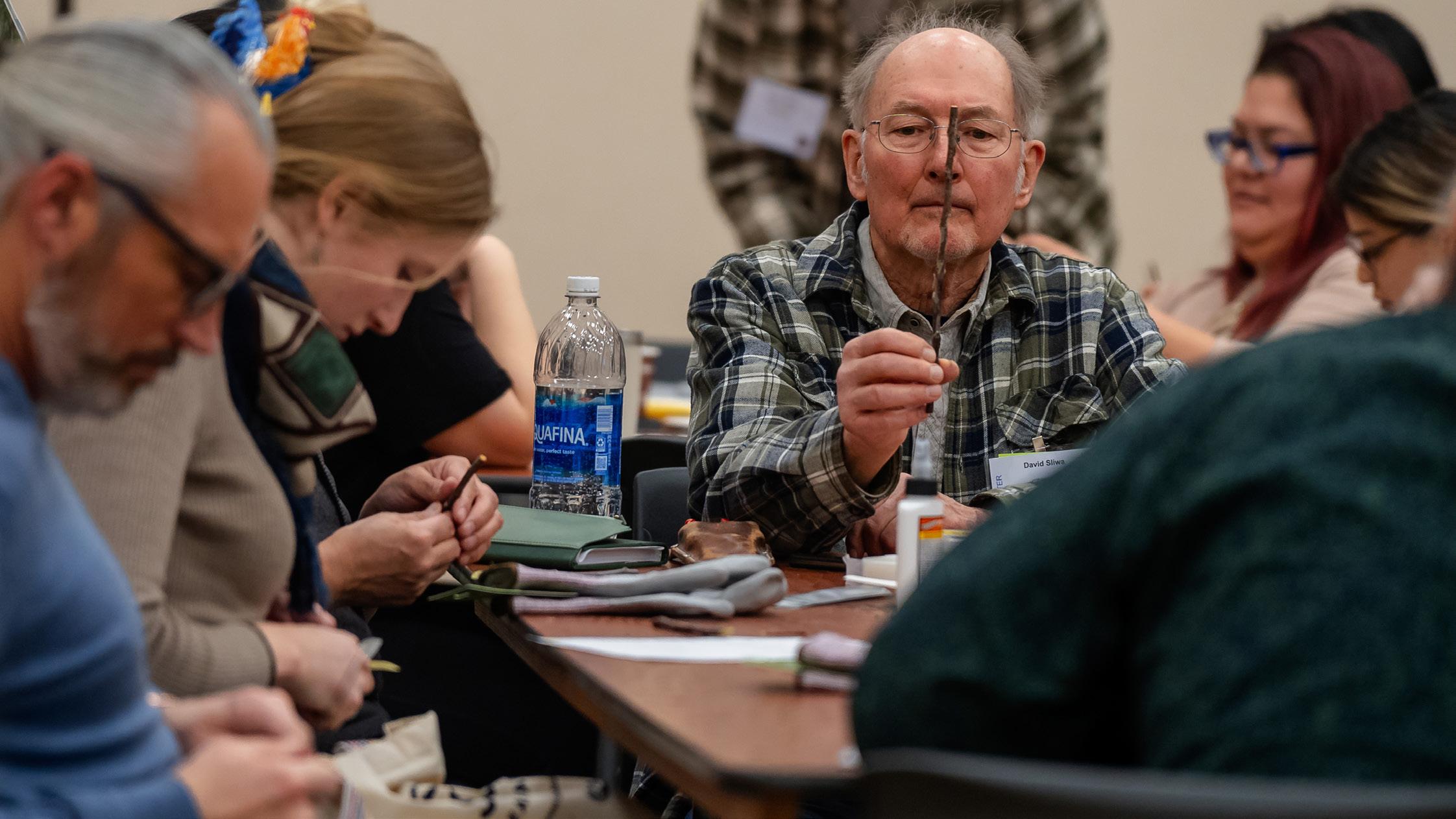
The Organic Fruit Growers Association (OFGA) was ready for prime time at the Marbleseed conference with the big event being their fruit tree grafting workshop on Friday morning.
Upwards of 100 people attended the session focused on making an apple tree by grafting. It was a team effort with OFGA members Steve Cornelius, Sara Ecker, Suzan Erem, Wayne Geist, Liz Griffith, Jamie Hanson, Rachel Henderson, Ben Kraus, Ben McAvoy, Chris McGuire, Katie Mc Guire, Perry-O Sliwa, Kate Zirbel, and Peter, a Marbleseed volunteer, pitching in to distribute handouts, bag rootstocks, prepare and provide scionwood, set up six instruction tables, serve as grafting coaches, and clean up the whittlings afterwards.
Jenn Ripp, Savanna Institute Agroforestry Educator and a member of OFGA and Northeast Iowa Fruit Growers (NEIFG), started off the workshop by reviewing the history of grafting. In the Grafter’s Handbook, R.J. Garner states that
grafting was used by the Chinese before 2,000 B.C. She discusses natural grafting, which is the selfgrafting of young trees and shrubs that have thin bark and firm contact between limbs. Garner illustrated how fruit growers can utilize this phenomenon by twisting together young shoots of the limbs that will grow together, forming a natural graft and brace.
Jenn spoke about why fruit trees need to be grafted and the benefits of doing so. Many fruits, such as apples, will not reproduce true to type from seed. An apple seed will produce an apple tree, but it will not be the same apple variety from which it came. It therefore needs to be propagated vegetatively, and grafting is a way to do that. Grafting allows for choosing a rootstock that will determine the tree’s size, from dwarfing to large seedling with many sizes in between, and for matching of soil and weather conditions. It provides disease resistance and can be used to repair a damaged tree.
My wife and I operate Plum Ridge Fruit Farm, where we specialize in
growing pears, and we are part of OFGA and NEIFG. I followed Jenn’s presentation section with a look at how a graft works, including the physiological response of a grafted tree and the aftercare from planting out to fruiting.
We reviewed how grafting works by looking at the role of cambium, or the thin layer of cells that give birth to the phloem and the xylem. Phloem vessels are on the bark side of the cambium, and they transport the sugars produced by photosynthesis throughout the tree. The xylem vessels on the wood side of the cambium move water and minerals up from the roots to the leaves.
When the cambium of the scion and the rootstock are placed in firm contact with each other, healing of the graft union begins immediately if kept moist and stored at the optimum healing temperature of 50-55° F. A callus bridge of undifferentiated tissue is formed within the first week, phloem and xylem vessels are formed within 2-3 weeks, and there should be a functioning tree within 4-6 weeks.
Photo credit: Morrison Media LLC
Following this initial healing phase, the grafted tree should be cared for in a garden nursery for one to two growing seasons, and any shoots growing beneath the graft should be pinched off. Also, all growth on the scion should be removed, leaving the most vigorous shoot to become the main stem.
The final step is planting the tree in its permanent location, which ideally is high in biologically active organic matter. Mulching with wood chips promotes beneficial fungal activity. The graft union should be 4-6 inches above the soil line. Spreading branches 45-60° from the vertical will promote fruiting in 2-5 years. This young tree should be protected from voles, rabbits, and deer using plastic spirals, paper wraps or hardware cloth, and fences.
The introduction to grafting concluded with an instructive video featuring Lindsay Lee of Seed Savers Exchange demonstrating the whip-and-tongue graft. This technique involves four basic steps: 1) making matching slanted cuts on the scion and the rootstock; 2) cutting the tongue; 3) joining the scion and the rootstock; and 4) wrapping the graft to keep it moist. Usually, two to three buds on the scion are adequate.
Other types of grafts discussed were T-budding, chip budding, cleft grafting and top working using bark grafts, side grafts, and “beaver” grafts.
We then launched into the hands-on part of the workshop. The grafting knives that were used have a single bevel on the blade. The flat side of the blade helps make a smooth flat cut, which in turn makes for optimum contact of the cambiums of rootstock and scion. Any sharp cutting tool can be used for grafting. Dan Shield of OFGA developed a technique using a utility knife blade mounted by C-clamps on a board with a cut out. His device makes cuts by pulling rootstock and scion through the blade. One attendee used their sharp pocketknife effectively. I am unaware of anyone cutting themselves.
An Omega grafting tool was available, and some attendees used it. Feeding the rootstock into one side of the tool makes a notch cut; feeding the scion into the opposite side makes a pointed cut that fits into the notch. This technique is referred to as a saddle graft.
The hands-on grafting used two fireblight-resistant dwarfing rootstocks of the Geneva (G) series, G11 and G214, to pair with the scab-resistant Liberty apple scion. G11 and G214 are both in the 30-40% of seedling size dwarfing category, with G11 being a bit more dwarfing and G214 more vigorous. The latter is slightly more fireblight resistant and also resists wooly apple aphid, whereas G 11 does not. Both require support.
Liberty apple is a hardy zone 4 variety that is resistant to fireblight, scab, mildew, and cedar apple rust. It is good for fresh eating, cooking, and canning and stores well
for several months. It’s an annual bearer that sets heavy crops and benefits greatly from fruit thinning.
The scionwood exchange wrapped up the workshop. Steve Cornelius of OFGA and NEIGF managed and distributed the scionwood that was provided by OFGA members. The following fifteen apple varieties were available: Ashmead’s Kernel, Belle de Boskop, Black Oxford, Brown Russett, Esopus Spitzenburg, “Goat,” Gordon, Honeycrisp, Kidd’s Orange Red, Liberty, Pitmaston Pineapple, Priscilla, Redfree, Spartan, and Wolf River. Four pear varieties were also distributed: Anjou, Gourmet, Luscious, and Magness. Steve reported that having the Seed Savers Exchange Fruit, Berry and Nut Inventory available was helpful for attendees to learn about the varieties and choose scions that fit their needs. Disease resistance, heritage storyline, and use played a role in their decisions.
Unsurprisingly, although this workshop focused on grafting fruit trees, the conversations were wide-ranging at the grafting tables. Jamie Hanson, Seed Savers Exchange Orchard Manager, NEIFG Coordinator, and grafting coach at the end of the conference summed it up nicely: “Honestly more so than grafting help, I had people coming up to me to ask about topworking, tree care, choosing rootstock, and really all things apple related.” Indeed, such conversations reverberated in the hallways during the rest of the conference!
At about age 10, David Sliwa watched in wonder as his retired farmer neighbor made a new apple tree. Two decades later, he was part of a crew that was whipand-tongue grafting apple trees to start the Seed Savers Exchange historic orchard. These days he grafts mostly pears using many grafting techniques at his Plum Ridge Fruit Farm near Decorah, Iowa.
Photo credit: Urban Roots, St. Paul, Minn.
ReimAgining gReenhouses
By Debra Weiss
the cUrrent sitUation
Spring is just around the corner, and those of us bitten by the gardening bug are no doubt eager to start planting. Right now, we all have our little tray or two of early plants under lights somewhere in the house, but in a few weeks, it will be warm enough to start plants in greenhouses. I have been a backyard gardener for 10 years and a commercial farmer for another 10, and I’ve noticed the poor construction of backyard greenhouse kits. Not to call anyone out here, but the frames are ridiculously complicated to assemble, and they blow over in the first windstorm. To put it bluntly, most greenhouse kits are flimsy, overpriced, and inefficient.
Although there are a many different greenhouse kits for sale, they are all roughly constructed the same. Polycarbonate over a metal frame. I’m referring to smaller propagation, backyard greenhouses, although commercial hoop houses are roughly the same deal. Current commercial greenhouses use a metal aluminum frame or galvanized steel frame driven into the ground and covered with two heavy greenhouse films. This film is some form of plastic bringing up the issue of microplastic contamination in crops as well as the issue of solar degradation as said film has to be replaced roughly every fouryears. In addition, steel and aluminum are metals, meaning they are acting as radiators instead of insulators, which is the exact opposite of what we
want in a cold climate. Air is driven between these two sheets of greenhouse plastic to create an insulating layer of air between the two. Taken as a whole, this design is monumentally inefficient at retaining heat.
When it comes to specific heat, roughly speaking, certain materials are better at storing energy than others. We all know water heated to 90° F stays warmer longer than the same volume of air heated to the same temperature. That being said, modern greenhouses are built out of some of the worst materials in terms of specific heat that they could have been. The curved design of most greenhouses also presents a problem in terms of refraction. Richard Feynman found that light hitting at any other degree than perpendicular to the source it is trying to penetrate will simply bounce off in a parabolic rate of energy loss. Here in Wisconsin, the sun is 69° above the horizon at summer solstice and 22° above horizon at winter solstice.
the greater implications
Current commercial greenhouses are only capable of producing year-round if they have a heat source. With the current greenhouse designs being used, frosttender plants in the winter would require a massive influx of energy in the form of heat, either from wood stove or propane heaters. And again, they are massively inefficient due to the poor choice of construction materials, meaning most of that heat is just leaking out into the environment, costing the producer that
much more time and labor. As a result, vegetables like tomatoes must be imported from warmer climates or preserved in some manner. This is energy intensive either in the form of shipping costs or energy costs in canning, which are costs that every farmer knows and understands. This has a direct impact on climate change as these heat sources and fuels are emitting greenhouse gases and warming the atmosphere, causing global weather instability among other things. There are other things to be considered, such as the impacts of a globalized food system on food security given current geopolitical instability. The consideration must be made that perhaps total dependency on the global trade of food is ill-advised. I’ve spent a long time studying ancient city states. Civilizations such as Egypt and Babylon have lessons for anyone who would take the time to study our origins. One of the most fundamental lessons is that food and water are basic. It is a matter of security, and sustainable ag is a matter of longevity. We’ve been here before, believe it or not. It’s called the late Bronze age collapse. Ever wonder what happened to Sumerian, Babylon, Minoan Crete, and all the other ancient great city states? Archeologists aren’t 100% sure which came first, the Sea Peoples or the collapse, but around 1,200 B.C., every great city fell within 50 years of each other. Evidence points to widespread violence. Records from Egypt reference marauders who showed up by sea. At the same time, there were widespread crop failures due to climate change and what we would euphemistically refer to as “supply chain issues.” All those ancient city states, from Thebes to Tyre, from Ur to Nineveh, were all interconnected by trade and all wholly dependent on each other. We had “globalization” 3,000 years ago, and when one economy fell, they all did.
As we sit in the aftermath of a global pandemic, as our global supply chains are reeling from the pressures of war, lockdowns, and a greatly diminished workforce, it should be self-evident that the global systems are near collapsing, not that they ever could be sustainable. We have globalized the food supply. Apples cross oceans twice before reaching us in some cases, despite apples being grown where I live. China now owns Smithfield, one of the largest pork producers in America if not the largest, among others. Food production is now in the hands of corporations that care about profits over safety, health, and ethics. These are corporations in which majority stock can be owned by foreign investors, leading to foreign investment in our basic food and goods supply. We opened the door to it. We developed this global web of supply, and we are as utterly dependent on it as everyone else is.
a solUtion
In such a scenario, the ability to produce as much food locally becomes an imperative.
I’ve written many times about the environmental, social, and health impacts of big ag and big food. We need to
buy local. Nothing new there, local organic ag has quite the foothold already, but it remains largely a niche thing, whereas most of the population is still doing their food shopping from “traditional” brick and mortar stores. I say traditional in quotations because grocery stores and convenience stores as we know them are a relatively new thing. Only 100 years ago, your ancestors were growing and harvesting most of their food themselves and went to a general store for things that couldn’t be made at home.
There are 100,000 people roughly in the greater Wausau area, which is the closest urban center to my farm. With only the 50 farms that exist in the main farmers market, that means that each farm needs to feed 2,000 people per operation. No farm around here can feed that many. That means the majority of the population is not eating locally. Filling this gap between the aims of the local food movement and the reality of consumer behavior will require not only more producers but producers capable of growing year-round. To bridge this gap of climate limitations vs. needs, Ethereal Gardens has been perfecting passive solar greenhouse design for over 10 years now. Our greenhouse is built out of wood and glass. Both are insulators. Furthermore, it is constructed with the stud brackets being equilateral triangles. This makes the south-facing glass roughly perpendicular to the sun throughout late spring and early fall. Because it has flat glass instead of a curved surface, this also allows for maximum energy penetration in the form of not only light but infrared radiation AKA heat.
In northern Wisconsin, where Ethereal Gardens is located, production in winter is all but impossible with temperatures reaching -30° F in January. Using the aforementioned principles of specific heat and refraction, our greenhouse regularly achieves 70° F from ambient temps in direct sunlight. On a -30° F day, that is a balmy 40° F with zero external heat source. At night, fully insulated, it keeps things 25° F above ambient. This is good, but not good enough to keep tender annuals alive.
This past year, Ethereal Gardens was awarded a grant through the USDA’s SARE program to develop thermal batteries in greenhouses. Right now, heating options in cold climates are either propane or wood heat, both of which produce greenhouse gases and are expensive either in money or in resource use. Both heat the air which by the principles of specific heat cannot heat soil effectively. Thermal batteries take the concept of specific heat further. Like a battery, they store energy, but in their case that energy is stored in the form of heat. They use high specific heat materials like sandstone or salt to store excess energy. Combine this technology with solar and or wind, and it becomes a viable, nontoxic, non-polluting greenhouse heating source that use the very same factors (soil and water) that normally work against growers in cold months and directly heat
the soil with materials of roughly equivalent specific heat to what they are warming.
The ground here freezes to a depth of 4 ft during the winter, making any root penetration impossible. Our thermal battery prototype consists of a sandpit dug in the center of the greenhouse with a simple heating element run inside the pit and the sand itself contained within standard 8” by 16″ masonry cinder blocks. Originally the pit was supposed to go down roughly 3 ft, but the high-water table in the greenhouse forced us to raise the level of the battery by 1.5 ft. We decided to raise the level for ease of construction and to be sure the water would not affect it negatively. This battery is charged currently by a 400-watt solar array run directly into a heating element within the sand of the battery. Theoretically, it should provide enough heat to keep the greenhouse soil and ambient temperature within the range of crop production overnight even on the coldest of nights. Target temperature is between 40 and 100° F. We are just now finishing the construction and will be spending the next year collecting data.
We had a tremendous time at the Marbleseed conference in La Crosse, Wis. this February and had the opportunity to present a session on engaging with your elected official to advocate for organic. In this article, we summarize some of the key points and takeaways from the session with the hope that it will inspire readers to engage in education and advocacy work that is needed now more than ever.
advocacy in a changing political climate
As we navigate a shifting political environment, our coalition is focused on several key priorities:
1. BuilDing BiparTisan supporT For organic
Organic agriculture has historically enjoyed bipartisan support. However, in recent years, more organic champions have tended to sit on the Democratic side of the aisle. We are prioritizing efforts to build a bench of Republican champions in Congress to ensure organic remains a strong, bipartisan issue. We aim to revitalize engagement with both Republican and Democratic lawmakers, particularly within the House and Senate Agriculture Committees.
2. aDDressing FeDeral FunDing Freezes
Current federal funding freezes are having a significant impact on farmers and organizations that support them. Farmers who rely on technical assistance, conservation funding, and climate-smart payments are not receiving the resources they were promised. Organizations that provide direct services to farmers are also struggling, with some unable to pay staff or continue critical programs.
The impact on the federal workforce is another major concern. The USDA has already cut thousands
of staff positions, including 76 Natural Resources Conservation Service (NRCS) roles in Iowa alone. Additionally, many of the National Organic Program (NOP) workforce operates remotely, which has allowed the NOP to hire the bestqualified staff, no matter where they live, raising concerns under the new administration’s policies.
3. DeFenDing organic againsT policy aTTacks
Regulatory rollbacks could weaken the strong standards that are essential to consumer trust in organic products.
To defend organic, we are emphasizing:
• The economic opportunity that organic provides for domestic farmers.
• The critical role of strong regulations in maintaining organic integrity.
• The environmental benefits of organic practices, such as improved soil and water health.
• The importance of NRCS conservation programs that invest in organic farmers’ businesses while supporting organic farming practices that benefit the environment.
• State-by-state data demonstrating the positive impact of organic agriculture using resources like the Organic Farming Research Foundation (OFRF).
4. using your voice To sTrengThen congressional anD usDa relaTionships
With new leadership in key agricultural committees, it is essential to build and maintain relationships with members of Congress and USDA officials. This will allow the organic community to advocate effectively for organic programs that support farmers and advance organic principles.
If you care about organic agriculture, one of the most impactful things you can do is build a relationship with your Members of Congress. They make decisions that directly affect your farm, business, and community, but they are not experts on everything and often know very little about organic agriculture. That’s where you come in. By engaging with them and their staff, you can ensure that when organic issues arise, they turn to YOU for insights and guidance.
BUilding relationships With policymakers
Start by getting to know your Senators and Representative. What committees do they serve on? What issues do they prioritize? Find out who handles agriculture policy in their office and connect with them. Local field offices (the ones in your state and/or district) can be especially valuable—these staffers are the ones who attend community events and visit farms.
They need to see firsthand how organic works, so invite them out to your farm or business.
Effective advocacy is about more than just one-off meetings, it’s about persistence and relationship building. Calling is the most impactful way to let a Member of Congress know how you feel about an issue. We recommend focusing on one issue per call. For a deeper conversation, try scheduling a Zoom or in-person meeting with a staffer who works on agricultural issues. The best relationship builder is getting your Member of Congress on a farm—personal experience shapes policy decisions more than statistics ever could. Whenever you communicate with an office, remember you aren’t just advocating; you’re educating. Members of Congress and staffers may have misconceptions about organic farming or simply not know much about it. YOU are the expert. Your voice matters, but you don’t have to do this alone. Leverage local organizations like Marbleseed, Iowa Farmers Union, OEFFA, Wisconsin Farmers Union, Illinois Stewardship Alliance, and many others as well as national advocacy organizations like NOC, Organic Farmers Association (OFA), and OFRF that can help you craft your message, connect with the right staffers, and even support farm visits. These groups often have insider knowledge about congressional offices, established relationships with key policymakers, and resources to help make your outreach more effective. Whether you need talking points, logistical support for a meeting, or connections to other advocates, your local and national organic organizations can be a powerful ally in your efforts.
learn aBoUt yoUr memBers oF congress. Who are yoUr senators? Who is yoUr representative?
• What committee(s) do they sit on?
• What are their priority issues?
• Can you find contact information for their field (local) office and staff?
• Can you find contact information for their agriculture liaison?
• What are this office’s goals (look at their website, newsletter, etc.)? What talking points might resonate with them?
• Every office is a little different. Some are great to deal with, some are terrible, and how easy they are to work with does not necessarily correlate to how closely they share your personal politics. Don’t assume anything. No matter who they are, start with the fact that they work for you.
Get to know the staff! Usually, your policy staff are going to be in Washington D.C., and they will often each have a number of issues they work on. It’s good to know who in that office works on agriculture. The district staff are the ones who will help with constituent services and who will represent the Member of Congress at local events. These are the folks who will show up on your farm. All of them are important.
The scheduler is often the one you are going to be dealing with if you invite the Member of Congress to your farm. There is usually a scheduling form of some type on their website.
In many cases the nitty gritty policy conversations will happen with policy staff. A responsive and knowledgeable staffer is a tremendous gift. The key is building a relationship. Whenever they have a question about organic, you want them to ask YOU.
Who does what may not be apparent from what is available online. This is one area where organizations who do this can be really helpful—folks at NOC, OEFFA, and other aligned organizations may know the right office and their staff.
Also important to know is that you are not the only person in their ear. You won’t win every battle, but you need to be at the table.
Remember, you know more about the issues that are important to you than they do. They have to vote on a massive array of incredibly complicated issues. You aren’t just advocating, you are educating.
Next, figure out what your goals are for engaging with this office. Are you trying to educate them about organic farming? Highlight a policy that is impacting your farm?
You may have a laundry list of issues to discuss, but it is beneficial to narrow down your ideas to one or two priorities that tie directly to your farm.
then prepare yoUr story:
• How did you start farming?
• Why do you use organic practices?
• What are some of your challenges and successes and how might a specific policy impact you (e.g., Organic Cost Share Program, Environmental Quality Incentives Program)
Calls are better than emails. Remember, the person who picks up the phone is probably an entry level staffer, and their job is to document your comment and pass it along. They aren’t going to ask you hard questions or argue with you. One staffer says that they tally up the top three issues that day and report that information to the Member.
Zoom meetings are really great opportunities to have one-on-one conversations with staffers. It is probably best to keep these narrowly focused on a handful of issues at most. This allows you to get a more knowledgeable staffer who works on your issue area. They may have questions. It’s OK to have questions for them, too.
In-office meetings are a great way to get to know a staffer or Member in person. They are human beings. Treat them like that.
Get. Them. On. A. Farm. They have to see it. It’s particularly important for organic farmers because people make a whole host of assumptions about us that may or may not be true.
Finally, what local organizations might help (1) reach out to the right staff in that office (2) craft your message, and (3) have resources to help you support your visit (or an on-farm visit).
looking ahead
The political landscape is challenging, but NOC remains committed to protecting and advancing organic agriculture. By strengthening bipartisan support, defending organic programs, and advocating for essential funding, we are working to ensure that organic remains a strong and viable option for farmers, businesses, and consumers nationwide.
As we continue this work, we encourage all members of the organic community to engage with their representatives and advocate for the policies that support a thriving organic sector. Together, we can navigate these political challenges and safeguard the integrity of organic agriculture for future generations.
You may not win every battle, but if you’re not at the table, you’re not in the conversation. Start today and make sure organic has a seat at the policymaking table! Find more tools and resources here: https://www. nationalorganiccoalition.org/advocate-for-organic
aBoUt noc
The NOC is a national nonprofit organization dedicated to protecting the integrity of the organic seal and advancing organic agriculture. Through education, research, and advocacy, NOC provides policymakers and the public with crucial information about the benefits of organic systems. Our coalition also plays a key role in ensuring that organic standards remain strong, enforceable, and consistently applied. NOC represents a diverse spectrum of the organic community, including farmer organizations, consumer and environmental groups, high-integrity organic companies, retailers, and organic certification agencies. With 14 member organizations, including Marbleseed and OEFFA, and 40 network affiliates, we work collaboratively to uphold the core values of health, ecology, fairness, and care within the organic sector.
aBoUt oeFFa
Founded in 1979, OEFFA cultivates a future in which sustainable and organic farmers thrive, local food nourishes our communities, and agricultural practices protect and enhance our environment. We host an annual conference, offer farm tours and workshops, provide direct technical assistance to farmers, and certify organic farms and businesses across a 12-state region. Our policy program advocates for state and
federal policies that protect and benefit sustainable agriculture, research and education, and the public’s right to know. Working with our members, we give voice to concerned citizens and ecological family farmers who are safeguarding the environment and providing us with healthy and nutritious food choices.
Alice Runde (she/her) serves as the Operations Director at the National Organic Coalition (NOC), where she oversees processes and infrastructure, including communications, event planning, fundraising, and organizing. With 10 years of experience in advocacy and grassroots engagement, Alice has a strong background in agricultural development and is skilled in mobilizing networks and individuals for effective change at both local and national levels. Reach out to Alice at alice@ nationalorganiccoalition.org
Milo Petruziello has more than a decade of experience working at the grassroots level of the organic and local food movement. He has served as a primary organizer for the last 12 OEFFA conferences and has worked with farmers of all different styles and scales throughout Ohio on educational programs, fundraising events, and advocacy. Throughout his time with the organization, Milo has been a key voice in OEFFA’s strategy for serving farmers and food system advocates across the state.
oRgAniC ReseARCh in the bAlAnCe:
By Brian Geier
In labs in Wisconsin and Indiana, researchers are studying how microbial communities found on different varieties of carrots might help lead to disease resistance on organic farms. At a field day in Illinois, 10 varieties of carrots are served on paper plates to attendees, who taste and rate the sweetness, texture, and color. And on 40 farms across the country, farmers try the new carrot varieties on-farm via a decentralized trial service
called Seedlinked (find all links in Additional Resources section at end of article). All are part of the “Carrot Improvement for Organic Agriculture” (CIOA) project, led by Dr. Phillipp Simon at the University of Wisconsin (UW) and partnered with the Organic Seed Alliance (OSA). The effort aims to develop and release new seed lines that can support a surging organic carrot industry that already represents 12% of the carrots grown in the United
States and is valued at over $120 million annually.
Advanced breeding lines of carrots are being evaluated at the Hoagland Lab at Purdue University, a partner on the CIOA project. To learn more, visit CIOA’s eOrganic page. Photo credit: Purdue University.
The CIOA is one of several projects developed and led in Wisconsin that are responding to the needs of various organic industries and doing critical work to empower farmers to elevate their operations. It serves
as just one example of how the organic community in Wisconsin is leading the way toward new innovations through research, helping to advance organics nationwide.
organics in Wisconsin
Wisconsin is undoubtedly a leader in organic farming. It ranks 5th in the nation in terms of organic market value after having grown 16% in just two years to $312 million in 2021. The state has the highest number of organic farms of any state outside California, with 1,455 certified operations, representing 8% of the nation’s total. Wisconsin is also the nation’s leader in the number of organic farmers statewide in several commodities: field crops, livestock and poultry, layer chicken farms, and pig farms.
By many indicators, the growth trend for organic in Wisconsin is poised to continue: the state ranks second in the number of non-certified farms with transitioning organic acres, an indicator of the potential for growth in a state’s organic sector. And according to UW, 80% of organic farmers in the state plan to maintain or increase their organic production.
Federally FUnded research in Wisconsin
To begin a discussion on federal funding, it can be useful to decode some alphabet soup. Organic research funding reaches Wisconsin through the USDA’s National Institute of Food and Agriculture (NIFA) via the Organic Research and Extension Initiative (OREI), the Organic Transitions Program (ORG), and the Agricultural Research Service (ARS). Project leads are often researchers at universities, but many projects involve collaborative teams of researchers in other states, and many have organic farmers collaborating in research as well.
Project leads often have ongoing connections to organic farmers, and ideas for research can come from a variety of places including formal surveys or simply through discussions with growers. According to the 2022 National Organic Research Agenda (NORA), a comprehensive survey of organic producers across the country conducted by the Organic Farming Research Foundation (OFRF), organic farmers in the Great Lakes ag-ecoregion have identified three key research concerns:
• Climate adaptation and resilience
• Weed, pest, and disease management
• Soil health
NIFA has awarded over $19 million in grants to the state’s research institutions for organic research to address these and other concerns. These grants translate to over $380 million in economic activity, since every dollar invested in agricultural research generates about $20 in benefits, according to a long-term study by the USDA’s Economic Research Service. UW has played a crucial
role, securing and investing $8 million from those grants. The ARS has historically funded 20 projects researching organic topics in the state, but currently only two of those remain active, revealing a gap in the institution’s portfolio.
innovative projects ongoing in Wisconsin
Organic research underway in Wisconsin serves a diverse range of production systems, from vegetables to tree fruits and dairy.
Besides the CIOA, which is funded through OREI, another project at UW-Madison, led by Dr. Rebecca Larson and funded by ORG, is partnering with organic dairy farmers through the Organic Valley Cooperative. The team is developing life-cycle analysis models for eight dairy-producing regions so farmers can measure and meet conservation goals. Also funded by ORG but headquartered at UW-Milwaukee, a project led by Dr. Ching-Hong Yang is working to boost the efficacy of a bacterial strain in controlling fire blight in organic apple and pear trees. Dr. Yang, along with a business partner and researchers at the University of Florida, is also testing the same strain for efficacy in lessening the severity of citrus greening.
Research led by Dr. Yang, left, seen here standing in his lab alongside business collaborator Daniel Burgin, is bringing new biological agents to organic growers that can help protect apple, tree, and citrus trees from disease. Photo credit: UW.
Wisconsin’s organic producers have a diverse range of operations, and the challenges that organic farmers face are varied. Researchers are answering the calls with strong collaborations, multi-state networks, and
dissemination components to bring key findings that farmers can use to inform decisions on their operations. resoUrces and insights
From research completed in Wisconsin
The Organic Alternatives to Conventional Celery Powder project, led by Dr. Erin Silva at UW, addressed a constraint of the organic processed meat industry. This was a timely project, as the National Organic Program (NOP) was about to sunset the allowance of nonorganic celery powder. But the question remained: can organic systems produce celery powder with the nitrate content needed for curing meat? The project verified that organic production systems can produce celery powder with sufficient N content for the industry.
Another project, called Connecting Community to Strengthen Organic Seed Breeding and Research and led by the OSA, responded to an urgent need to recruit and train a new generation of plant breeders specializing in cultivar development for organic systems. Plant breeders whose methods comply with organic standards have become an endangered species. The needs of organic seed farmers were collected and presented in OSA’s 2022 State of Organic Seed Report. And yes, 2022 is the same year as OFRF’s NORA report mentioned above. In fact, OFRF and OSA collaborated on an OREI-funded project to conduct the surveys and produce both reports!
The seed-breeding project from OSA, conducted by the Student Organic Seed Symposium, is an annual networking and professional development opportunity for graduate students in plant breeding and seed production for organic systems. The symposium was held at West Virginia University to convene a greater geographical and ethnic diversity of students. A speedmentoring activity amongst participants was found to be especially valuable in identifying the next steps
in their professional development. Reflecting on the Symposium, one seed-breeder-in-training stated: “It takes all of us (farmers, researchers, chefs, storytellers) to further our aims of creating genetic diversity and adapting to climate change.”
While research projects in Wisconsin may have been born from the challenges that Wisconsin’s organic farmers face, the knowledge and resources created by projects in the state have made significant contributions to the broader organic community.
advocacy to protect Federal FUnding For organic
Certified organic produce now makes up more than 15% of total produce sales in the United States. Organic dairy and eggs now constitute more than 11% of the total market. And overall, organic sales have doubled over the last 10 years and in 2024 made up about 6% of the total United States food market. By most measurements, organic food is trending upward nationally, not just in Wisconsin. Most notably, the growth of organic sales is consistently outpacing the growth of the overall food market. To say it another way, we might be heading into a future that is more and more organic!
But will we get there?
Despite the growth of the organic sector, organic agriculture research funding makes up less than 2% of the total research budget at the USDA and less
Celery variety trials at UW. Photo credit: The Organic Center.
than 1% of the ARS budget. Additionally, much of the research focused on conventional agriculture relates to chemical applications or genetic traits—technologies that practicing organic producers do not use and certified producers cannot use. To put it another way, organic research benefits all farmers, including conventional ones, but it doesn’t work the other way around.
To sustain the growth in organic acreage, producers, and products, it is crucial that more USDA funding be organic and applicable to all farmers. National policy priorities identified by OFRF include:
• Increasing USDA’s research funding for organic research through both competitive grant programs at the NIFA and intramural research at ARS to reflect its market share and growth trajectory.
• Fully funding the Organic Data Initiative to provide the necessary market analysis of an increasingly sophisticated sector.
• Expanding the accessibility and applicability of technical and financial assistance programs for organic farmers.
At the time of this article’s writing (early 2025), uncertainty abounds within the organic community as federal funds for a number of programs related to organic farming, addressing climate change, or support for specific farming communities are currently inaccessible due to executive action by the new administration in January. A federal judge recently ruled against the executive action, but congressionally appropriated funds for active, ongoing organic research, conservation practices, and other services that organic farmers and researchers rely on remain inaccessible. This is causing immense uncertainty and disruption.
The moment calls for steadfast advocacy and a commitment to organic research programs. OFRF
offers resources and ways to get involved. Join OFRF’s newsletter to stay informed, share your story if you are a farmer or researcher impacted by interruptions or resumptions of federal funding, and visit OFRF’s advocacy page to learn more.
Brian Geier is a Communications Manager at the Organic Research Foundation, where he helps write, design, and disseminate resources for organic growers, researchers, advocates, and technical service providers. He lives and farms at Bundle Sticks Farm in Lanesville, Ind.
fuRtheR ResouRCes:
Seedlinked: https://seedlinked.com
Carrot Improvement for Organic Agriculture: https://ofrf.org/wp-content/uploads/2024/02/OFRF-ResearchSummary-Carrot-Improvement-for-Organic-Agriculture-CIOA-Project.pdf
Dr. Phillipp Simon: https://www.ars.usda.gov/midwest-area/madison-wi/vegetable-crops-research/people/ philipp-simon/
Wisconsin leads in organic: https://ofrf.org/download/ wisconsin/?wpdmdl=16504&refresh=67c72214405851741103636 Wisconsin organic grows by 16% in two years: https://www.nass.usda.gov/Surveys/Guide_to_NASS_Surveys/Organic_Production/
Wisconsin has second highest number of organic farms: https://www.nass.usda.gov/Statistics_by_State/ Wisconsin/Publications/Miscellaneous/2022/WI-Certified-Organic-12-22.pdf
Wisconsin ranks second in number of transitioning acres: https://cias.wisc.edu/news/organic-agriculture-inwisconsin
National Institute of Food and Agriculture: https://www.nifa.usda.gov/
Organic Research and Extension Initiative: https://www.nifa.usda.gov/grants/funding-opportunities/organicagriculture-research-extension-initiative
Agricultural Research Service: https://www.ars.usda.gov/
2022 National Organic Research Agenda: https://ofrf.org/wp-content/uploads/2022/08/OFRF_NationalOrganic-Research-Agenda-NORA_2022-report-FINAL.pdf
Organic Farming Research Foundation: https://ofrf.org
Grants translate to $380 million in economic activity: https://www.ers.usda.gov/amber-waves/2022/june/ investment-in-u-s-public-agricultural-research-and-development-has-fallen-by-a-third-over-past-twodecades-lags-major-trade-competitors
Dr. Rebecca Larson: https://nelson.wisc.edu/staff/larson-rebecca/
Organic Valley Cooperative: https://www.organicvalley.coop/products/?gad_ source=1&gclid=Cj0KCQiA8fW9BhC8ARIsACwHqYrfNMjighkbhdIUu9UGWeGN_xnOzJczKNQOJFaFBikQJVc8v2_ xwskaAlNcEALw_wcB
Life cycle analysis models for dairy-producing regions: https://portal.nifa.usda.gov/web/ crisprojectpages/1027033-evaluating-environmental-impact-of-organic-dairy-facilities-using-life-cycleassessment-tools.html
Dr. Ching-Hong Yang: https://uwm.edu/drug-discovery/people/yang-ching-hong/
Organic alternatives to conventional celery powder: https://www.organic-center.org/site/organic-alternativesconventional-celery-powder
Dr. Erin Silva: https://news.cals.wisc.edu/2022/06/20/erin-silva-named-endowed-chair-in-organic-agricultureand-outreach/
Connecting community to strengthen organic seed breeding and research: https://portal.nifa.usda.gov/web/ crisprojectpages/1023442-connecting-community-to-strengthen-organic-seed-breeding-and-research.html
OSA’s 2022 State of Organic Seed report: https://stateoforganicseed.org/
Organic makes up 15% of total produce sales: https://ota.com/news/press-releases/23183
Organic makes up 6% of total US food market: https://ota.com/news/press-releases/23280
Federal judge rules against executive action: https://www.npr.org/2025/02/10/nx-s1-5292342/trump-federalfunding-freeze-restraining-order
Subscribe to OFRF’s newsletter: https://ofrf.org/get-involved/receive-news/
Share your story: https://ofrf.org/researcher-stories/submit-your-story/
looking AheAd to blind CultivAtion of oRgAniC gRAins
By Joel Gruver, Claire Stedden, Léa Vereecke, and Erin Silva
Blind cultivation, or the cultivation that occurs without specific placement of equipment with respect to crop rows, is a critical early step in weed management for organic row crops. While successful blind cultivation can make an enormous difference in reducing in-season weeds, the correct technique is essential to maximize its effectiveness. One of the reasons blind cultivation is so important is that it occurs during the “critical weed-free period for crops,” which refers to the window early in crop development when plants are most susceptible to weed competition for light, water, and nutrients. Specifically, blind cultivation tends to be used just prior to cash crop germination up until 4-5 leaf stage of corn or when soybeans are 4-8” tall. These blind cultivation events are most effective when weeds are very small, and often not even visible, at the stage between germination and emergence (i.e., the white thread stage). Tine weeders and rotary hoes are the most used blind cultivation tools, although tine harrows are also seen on organic grain farms.
There are several rules of thumb that can be applied to the practice of blind cultivation. Blind cultivation typically works best for more deeply seeded crops, as the tool is set to disturb soil above where the seed is placed. This is one rationale for deeper planting depths in organic farming; deeper cash crop seed placement provides a wider window for these early blind cultivation events. Blind cultivation can occur soon after cash crop seeding to manage weed seeds that have been brought to the surface through seedbed preparation and thus are in ideal conditions to germinate and establish ahead of the cash crop, particularly in the areas compacted
by planter tractor wheel tracks. These early blind cultivation passes also help minimize in-row weed pressure prior to when the crop is up and established, thus minimizing the damage to the cash crop that can occur with row cultivation (“cultivator blight”).
Blind cultivation can also occur after the cash crop has emerged, with implements running over the cash crop rows. Especially with the deeper planting depth of the cash crop, the well-rooted and strongly anchored cash crop seedlings can withstand the action of the blind cultivation tools, while the newly emerged and poorly rooted seedlings are dislodged and brought to the soil surface where they desiccate and die. Further, blind cultivation that occurs postcrop emergence during the right soil and weather conditions can produce a layer of “dust mulch” that delays further establishment of weed seedlings. Timeliness is critical, however, as waiting too long after weed seedlings have emerged will be ineffective, because the weed seedlings will be well-rooted and difficult to dislodge from the soil. Ideally, these passes should occur when the seedlings have just germinated and are at the “white thread stage”; frequent scouting of crop, weed, and soil conditions will help ensure that blind cultivation passes are performed during the most effective windows. Common advice is to err on the side of too early versus waiting a day too late. Depending on environmental conditions, the first blind cultivation passes might occur as soon as 36 hours after planting. Since much of the efficacy of blind cultivation relies on the desiccation of very small weed seedlings brought to the soil surface, ideally these early passes occur during “drying conditions” (e.g., sunny, windy days that quickly dry out small weed seedlings).
Soil conditions are also important for the success of blind cultivation. To become desiccated, weed seedlings must be fully dislodged from the soil surface, which occurs when the soil is not excessively moist, and it shatters upon the action of the blind cultivation tools. The soil should have good tilth and seedbed preparation, as cloddy soil will not flow well through the implements. Excessive residues will cause the tools to act like a rake and impede soil flow.
Tine weeders (also known as a flexible harrow) have flexible, narrow-diameter tines (typically 5-8 mm) mounted on bars (typically 1 or 2 tines per foot of bar width) that are grouped into gangs (typically 3-8 bars each spaced ~12” apart). Each gang has 9-12 off-set tines per foot of gang width (1-1.5” between points of soil contact). Multiple gangs are attached on a tool bar that is normally designed to fold if the total width is greater than 10’. Tines are made of spring steel and vibrate side to side as they are pulled through the soil (typically 1-2” deep). Because of the depths that the tines are set into the soil, tine weeding is generally not recommended for shallowly planted crops such as industrial hemp. The vibrating action of the tines terminates very young weeds by a combination of desiccation and burial, as well as loosening the soil surface and creating a dry, unfavorable environment for weed seed germination. The aggressiveness of soil disturbance can be altered by changing the angle and down pressure of the tines as well as altering the speed of the tractor. Newer models of tine weeders have greater adjustability from the tractor, including tine tension that can be adjusted hydraulically. Tine weeders work best in loose or lightly crusted soil and perform well in stony soil.
Tine characteristics and gang attachment on the tool bar both impact the action of a tine weeder. The springiness of the tines increases as tine length increases and decreases as tine diameter increases but also depends on type of steel and coil design. Most often the tine tips are bent at angles ranging from 45° to 85°, but straight tines are also available. Tines with 45° tip angles are good for most situations and work well with corn and soybeans. Tines with 85° tip angles penetrate deeper, which can work well with tap-rooted crops like soybeans but can be too aggressive for crops with a fibrous root system like corn and small grains. For small grains, 45° to 60° tip angles work best, and 85° tip angles tend to uproot them. Stiff straight tines can effectively bury weeds but can also bury crop seedlings and are more appropriate for use pre-emergence. Rigid mounting of gangs on the tool bar results in more aggressive action whereas suspension from chains is gentler on crops. Tine weeders are typically operated between 4 and 8 mph, but optimal speed varies depending on tool design and setting, soil conditions, and crop growth stage.
Tine weeders are most used for corn, soybeans, and small grains, with crop-specific adjustments (e.g., timing and depth of tine penetration) needed to maximize weed control and minimize crop damage. Timing recommendations for corn and soybeans based on crop stage and weed stage are provided in Tables 1 and 2. It is important to consider both crop stage and weed stage because if weeds are too established, it is difficult to
achieve a desirable balance between weed control and crop damage. Tine weeding of soybeans during their fragile crook stage normally causes major stand loss, but final populations <100k may be considered acceptable by some farmers if a high level of weed control is achieved. After soybeans have well-developed taproots, they are surprisingly tolerant of aggressive tine weeding, but some soybean varieties are more tolerant than others. Corn plants are most fragile from emergence to the 2-leaf stage. Larger corn plants are more robust, but plants knocked over or partially buried during tine weeding are unlikely to fully recover. As a result, some farmers only use tine weeding pre-emergence in corn.
Ideally, the first pass with a tine weeder is timed so that the next flush of weeds doesn’t emerge before a) the next blind cultivation OR b) when the crop is in a stage that is especially vulnerable to damage during blind cultivation (Tables 1 and 2). Some growers recommend waiting to perform the first pass until a few weeds have emerged. Tine weeding while crops are in a vulnerable stage requires careful consideration of the desired balance between weed control and crop damage.
Rotary hoes are another blind cultivation tool found on organic grain farms. These implements have 1 or 2 rows of rotating spoon wheels comprised of 16 spokes with spoon shaped tips commonly referred to as “spoons.” The spoons penetrate, fracture, and flick out soil and small weeds as they rotate but are less likely to
damage or bury crops than tine weeders. The wheels are generally 3 inches apart, and spoons penetrate the soil surface approximately every 2 inches as they rotate. Rotary hoes are typically set to penetrate ~2 inches, but some farmers routinely target deeper penetration. Surface residues can plug spoon wheels, but models are available that can handle high levels of residues without plugging. Spoons become narrower as they wear and must be replaced or rebuilt to maintain the action of newer spoons. Some farmers follow a schedule for replacing spoons (e.g., every 3,000 acres). Penetration can be increased by the addition of helper springs that double down-pressure from 18 to 36 lbs.
Rotary hoes are commonly used for corn, soybeans, and cereal grains. Timing recommendations based on crop stage and weed stage for corn and soybean are provided in Tables 3 and 4. Rotary hoeing of soybeans during the fragile crook stage can cause significant stand loss, but this may be an acceptable trade-off if good early season weed control is achieved. Post-emergence hoeing of corn is less likely to cause crop damage than tine weeding.
Rotary hoes can perform well on crusted soils, but stony soils are problematic. Stones can damage spoons and can cause wheels to jam and drag, which will cause major damage to crop rows if the jammed wheel is located in a row. When soil is too wet, a rotary hoe may just poke holes. When soil is too hard, it is difficult to
achieve adequate penetration. Rotary hoes are most effective when weeds are in the white thread stage. Timing is critical because after emergence, many weeds will survive rotary hoeing unless the hoe is operated more aggressively. Options for increasing control of emerged weeds include shattering a dry crust formed after an intense rain, surface roughness that is leveled during hoeing, greater depth of penetration, higher ground speed (keeping in mind that excessive speed can cause skipping), and double hoeing in opposite directions.
In conclusion, spending the time to maintain and set up your blind cultivation equipment, and prioritize the timing of blind cultivation passes, can make the difference between season-long struggles with weed pressure and acceptably clean organic grain fields. The time and energy spent on maintenance and strategy will pay off in yield, not only in the current season, but in future crop phases with fewer additions to the weed seedbank.
Joel Gruver is a professor of social science and sustainable agriculture at Western Illinois University. Claire Stedden is an outreach specialist with the OGRAIN program at UW-Madison. Léa Vereecke is an organic farm consultant and regional manager at Rodale Institute. Erin Silva is an associate professor and organic and sustainable cropping systems specialist with UWMadison.
All tables were adapted by Léa Vereecke and Joel Gruver from A, Arvalis CV. Désherber mécaniquement les grandes cultures. Mars 2021. Institute Technique de L’Agriculture Biologique; 2012. (Programme CASDAR).
Table 1. Tine weeding conditions for soybean by crop stage and weed stage.
Table 2. Tine weeding recommendations for corn by crop stage and weed stage.
Table 3. Rotary hoeing recommendations for soybean by crop stage and weed stage.
Table 4. Rotary hoeing recommendations for corn by crop stage and weed stage.
Adapted from OGRAIN Fact Sheet “Blind Cultivation for Early-Season Weed Control in Organic Grains.” For more OGRAIN resources, visit: https://ograin.cals.wisc.edu/
Photo credit: Enchanted Meadows, La Crescent, Minn.
By Nolan Monaghan
The global agrifood sector is responsible for up to 25% of global greenhouse gas emissions, according to Our World in Data. In response to this prolific amount of pollution, activists, scientists, and policymakers have explored dietary changes as an avenue to quickly reduce emissions originating from the food sector. Livestock systems producing meat, eggs, and dairy products have been at the forefront of this work, with a focus on reducing the total consumption of animal products due to their calorie intensity and prolific methane emissions. While this would undoubtedly result in critical emissions reductions, there are many challenges associated with such a dietary shift. Economic development and nutritional security are often cited examples of the importance of the livestock sector, however, an additional issue of relevance to organic farmers is nutrient cycling.
setting the scene
Alternative proteins have been a fast-growing market segment, especially with the rise of reasonably affordable and tasty plant-based meat, dairy, and egg replacers. According to an analysis from the Good Food Institute, demand for plant-based meat substitutes has grown by 400% between 2014 and 2023, and alternative milk revenue has grown from $500 million to $2.7 billion since 2019. Additionally, there is clear evidence that these trends have displaced demand for animal products, with a 2022 study published in Environmental Research Letters showing that for every 10% reduction in the price of plant-based meat alternatives, American cattle herds are reduced by 0.15%. Given the relative size of those two sectors, there is potential for a serious impact on livestock production should demand for alternative proteins surge beyond its current niche audience.
Of course, it’s by no means a foregone conclusion that alternative proteins will overtake animal products. Demand has slowed, as has investment in companies in the sector. Additionally, political and cultural headwinds are blowing against alternative proteins, with a push among policymakers to stifle the rise of the industry as well as among consumers who are growing more distrustful of large food companies.
Despite this slowdown, it’s still useful to consider what a world where alternative protein consumption accelerates, and livestock production is displaced would look like. Especially for organic farmers, who are especially reliant on livestock crop nutrient flows to fertilize their crops.
the role oF livestock in organic cropping systems
Livestock are, of course, essential to many organic farmers’ fertilization strategies. With synthetic nutrient sources, namely industrially produced nitrogen, prohibited by the National Organic Program producers are reliant on natural nitrogen sources to maintain soil fertility. Livestock, being prolific producers of nitrogenous material, are the most widely used source for provisioning this essential element on organic farms.
A nationally distributed survey of organic farming practices published in Food Protection Trends in 2018 found that 90.4% of organic farmers used raw animal manure and 91.1% used animal manure in their composting programs. An overwhelming portion of nitrogen originates with livestock, made possible by the economic viability of livestock production. This service is ultimately driven by consumer demand for animal products, with manure production being a byproduct of raising animals for food.In addition to providing the bulk of nitrogen fertilizer for field crops, animal products
play a significant role in driving the chemical processing underlying composting, the other primary fertility strategy employed on organic farms. For decomposition to occur, compost piles require an adequate ratio between carbon and nitrogen. Most of the carbon for these systems comes from the plant biomass being composted, be it kitchen scraps or bedding straw. For most composting programs, the limiting factor is nitrogen, meaning an exogenous source must be provided by the composter.
While it’s certainly possible to have a vegan compost heap with leaves and hays providing nitrogen, the highest quality and most efficient sources of nitrogen are animal derived. Bloodmeal, for example, is 15% nitrogen. Other effective animal inputs include hoof and horn meal (12.5%), hair (14%), and bat guano (58%). Meanwhile, the highest nitrogen content found in plant compost inputs is cottonseed meal, which is 7% nitrogen. Most plant inputs have low nitrogen contents relative to animal sources, with cowpea hay being 3% nitrogen and raspberry leaves about 1.45%. Referring back to the survey discussed above, 48.1% of organic farmers utilize bone meal, 46.2% use blood meal, and 47.6% use feather meal in their composting programs.
Within organic cropping systems, livestock integration is essential under current practices. Should a world be realized where livestock consumption is dramatically lower, how should organic farming respond?
a hypothetical
If animal-based fertilizers are removed as an option, the next reasonable approach would be to utilize more plant-based nutrient inputs. Integrating cover crops, leaving fields to fallow, or growing crops specifically for mulching are strategies that would provision more nitrogen from plant-based sources, especially when legumes are included. Of course, many of these strategies are already used by organic farmers, but under a no-animal scenario, they would likely become critical to stabilizing organic farming. Other commercially available inputs, such as seaweed emulsions, would be of particular interest to composters.
Another common strategy that could have increased importance under this scenario is intercropping, relay cropping, or perennial ground cover. Planting nitrogenfixing crops within cash crop plantings can directly supply nitrogen during the growing season, integrating fertilization services directly into the cropping system. Species such as alfalfa and clover are highly regarded for these services, though they do present complications for planting and harvesting with machinery, not to mention their footprint displaces land for the cash crop.
Finally, under a no-livestock scenario, we could see nutrient flow circularity undergo a surge of interest from organic producers. Recovering nutrients from human waste systems and returning them to agricultural landscapes would help make up for the nutrient deficit
fuRtheR ResouRCes:
Good Food Institute. 2021, January 19. Plant-based retail market overview | GFI. [Internet]. Available at https://gfi.org/marketresearch/
Krayer, P. 2021. Modeling environmental and nutritional impacts of vegan agriculture. Thesis, ZHAW Zürcher Hochschule für Angewandte Wissenschaften, Zurich.
Lusk, J. L., Blaustein-Rejto, D., Shah, S., and Tonsor, G. T. 2022. Impact of plant-based meat alternatives on cattle inventories and greenhouse gas emissions. Environmental Research Letters 17(2):024035.
Morais, T. G., Teixeira, R. F. M., Lauk, C., Theurl, M. C., Winiwarter, W., Mayer, A., Kaufmann, L., Haberl, H., Domingos, T., and Erb, K.-H. 2021. Agroecological measures and circular economy strategies to ensure sufficient nitrogen for sustainable farming. Global Environmental Change 69:102313.
Pires, A., Millner, P., Baron, J., and Jay-Russell, M. 2018. Assessment of Current Practices of Organic Farmers Regarding Biological Soil Amendments of Animal Origin in a Multi-Regional U.S. Study. Food Protection Trends 38(5):347–362.
Ritchie H., 2021. How much of global greenhouse gas emissions come from food? Our World in Data.
Smil, V. 1997. Global Population and the Nitrogen Cycle. Scientific American 277(1):76–81.
left by the removal of livestock from the land. Of course, such a strategy would require much more off-farm coordination with municipal governments, intermediary service providers, and regulatory bodies.
All of these scenarios present a world where organic farming becomes much more difficult, possibly threatening the underlying logic of organic food production. A model developed by Swiss researchers attempted to show the global consequences of a completely vegan food system. In a world without ample livestock herds and flocks, organic producers would have to put more time and resources towards sourcing nitrogen, most would still have mild to moderate fertility deficits in their fields, and any expansion of land under organic management would only serve to intensify the issue. Even under generous
nutrient recycling scenarios, such a deficit is unlikely to be made up.
In closing, while widespread herd reduction is still highly unlikely, it’s worth analyzing what the organic sector looks like in such a world. If livestock were removed from the landscape, organic producers would have a difficult time fertilizing their fields. Additionally, it constrains the potential of the organic sector to grow. Such a scenario would prove an existential crisis for the organic movement. For organic crop production to survive, it would either need to produce food under a far lower nitrogen budget, identify new vegan sources of nitrogen, or fight for a limited retention of livestock specifically for nitrogen production. When engaging with a possible protein transition, organic producers must have a seat at the table to force decision-makers to consider nutrient cycling when navigating a hypothetical protein transition.
Nolan Monaghan is a recent graduate of the University of Missouri where he researched the productivity and fertility of perennial cropping systems. He writes about human and natural landscapes at headwatersblog. substack.com.
Forages
For Sale: Alfalfa and Alfalfa/Grass Bales
Alfalfa and alfalfa/grass large square bales. Organic certified. Quality tested. Shipping available throughout country. Price varies on cutting. Located in Linton, ND. Dave Silbernagel 208-867-9939.
For Sale: Organic Baleage
Big square baleage individually wrapped. 1st thru 3rd cutting available. Have test results and can help arrange trucking. 608-498-0258
For Sale: Hay and Corn
Organic wrapped and dry organic hay, big bales. And organic shelled corn. Can deliver. 608-574-2160
Organic Hay for Sale
Organic Hay for Sale! Net wrapped, round baled. 1st, 2nd, and 3rd crops available. Please contact Sno Pac Farms in Caledonia, MN. 507-725-5281.
land
40- Acre Organic Farm for Sale in North Carolina 40-acre organic farm in N. Wilkesboro, NC for sale. 100 years in family. House, barn, pastures, timber, small springs. City water, land percs. www.ncfarm. freshandalive.com, 386-888-2342, ken@rohla.org www. ncfarm.freshandalive.com
eqUipment
For Sale: 2006 Sukup 9400 Highspeed Row Cultivator 6rn, new blades and sweeps, sealed coulter bearings, one owner; (3) Miller Row Crop Row Cultivators; 24ft Kovar Tined Weeder 3pt. Text/Call 920-550-1069
For Sale: 2022 TILMOR POWER OX 240 side weight kits, finger weeder and 4 tender plant hoes & flat shanks, tine weeder section, pathway cultivator package 10 hrs. use $2900 Monee, IL 708-638-2047
For Sale: 786 International tractor deisel D358
Clean good runner, ready for use, 4620hrs well maintained, Westerdorf loader self level 7.5 bucket good edge, $25,000, Call Janet 262-441-0520
Weeding Equipment for Sale
4430 John Deere with a 725 front mount 8 row 36inch cultivator can be put back to 12 row thirty. Can sell the 725 cultivator separately. 6 row 30inch Danish tine, 12 flat fold Wilrich cultivator. Call 515-689-0570 or email growknutson@gmail.com.
For Sale: 1000 gal poly tank. Fast field sprayer with 60’ hydraulic fold boom, foam marker, rinse tank, orbit motor driven. Raven SCS 440 sprayer control. $8500. Call 605-695-4725. Looks sharp.
For Sale: 6 Row Lilliston Cultivator for sale. Excellent condition. Call for Info. 920-901-7148
miscellaneoUs
For Sale: 40 bags leftover certified organic alfalfa seed $168/bag; 5 bags certified medium red clover $175/bag; Delivery available. 920-550-1069
For Sale: Custom Plant Starts Onion plant starts: paterson, redwing, candy, and leeks. Order form on our website www.gitsfresh.com or call 563.379.3951 to order. Other custom organic plant starts available upon request.
For Sale: Microbial Soil and Foliar Additive OMRI Certified
Sumagrow is an OMRI Certified, Microbial and Foliar additive that alleviates environmental damage and helps to increase crop yields with reduced water. Please contact Ron Audette at 860-424-2550
CERTIFIED ORGANIC SEED YOU CAN DEPEND ON.
SECURE YOUR FAVORITE OR NEW PRODUCT BEFORE IT SELLS OUT. SCAN THE QR CODE TO LEARN MORE.
With a facility solely dedicated for processing organic and non-GMO seed, Beck’s Great Harvest Organics meets every organic standard. Plant confidently with Great Harvest Organics.
As printing and postage costs continue to rise, we want to make sure our beloved and free Organic Broadcaster is being delivered to folks who want to read it.
Please take a minute to subscribe or re-subscribe to the Organic Broadcaster print edition using the tear-off form below or visit our website at to update all your Marbleseed subscriptions, including the print and digital editions of the Organic Broadcaster and the monthly e-newsletter.
We are thrilled to be able to offer this publication and most of our resources for free or at low-cost, though we do rely on the support of our community to move our programming forward. A donation to Marbleseed goes toward farmer-to-farmer learning opportunities and community-building events that support the success of regenerative and organic farmers. As the organic farming and food landscape continues to evolve and grow, we remain committed to the roots of this movement: care for the planet, nourishment for communities, and support for regenerative and organic farmers who are working in relationship with the ecosystems that sustain us. Consider donating today!