
LIGHTNING
BY M.F. HUSAIN
M.F. HUSAIN
LIGHTNING BY
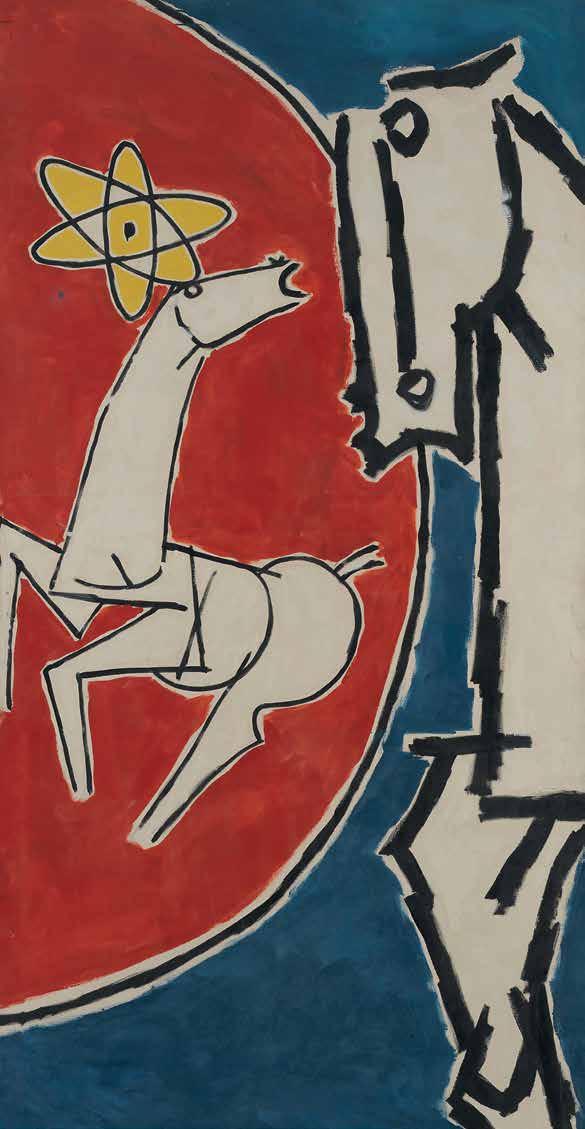
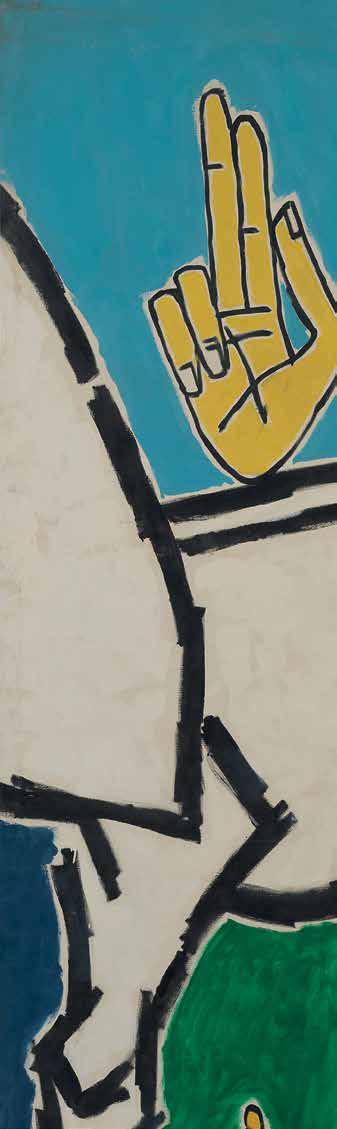
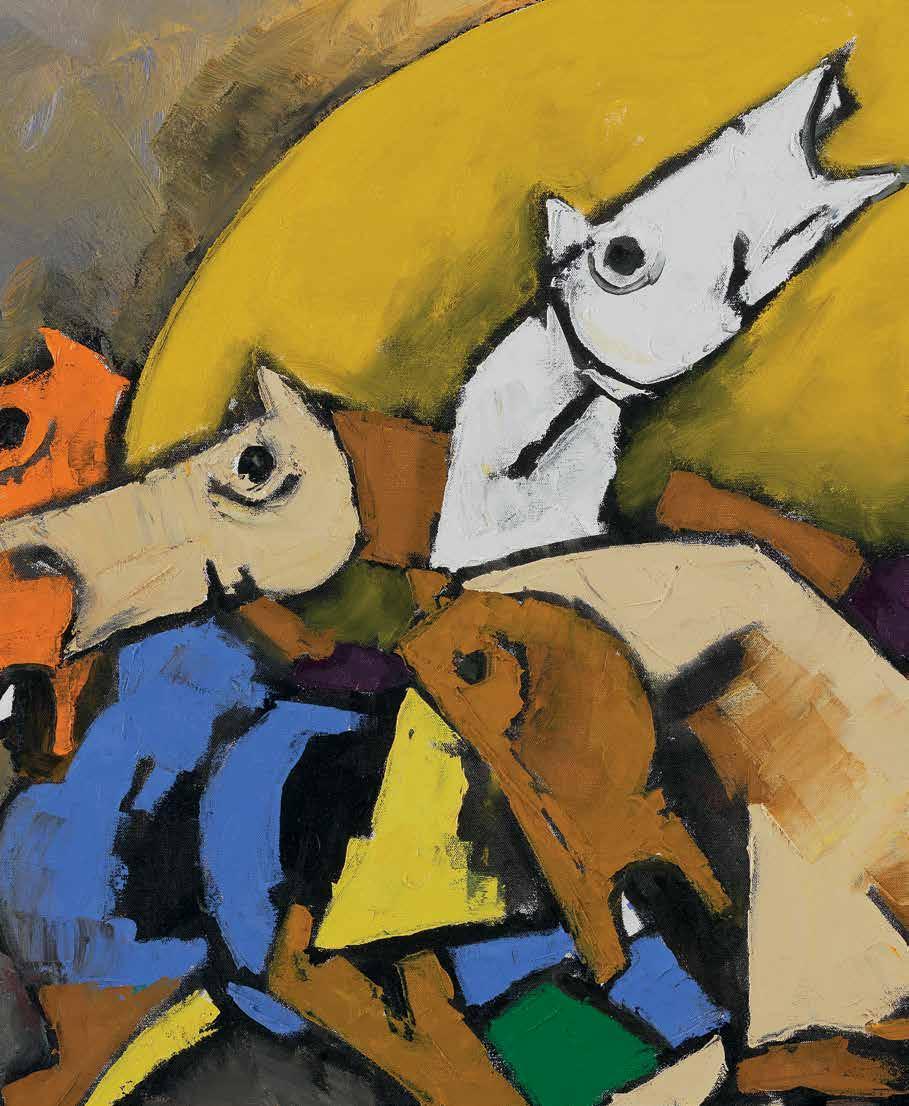
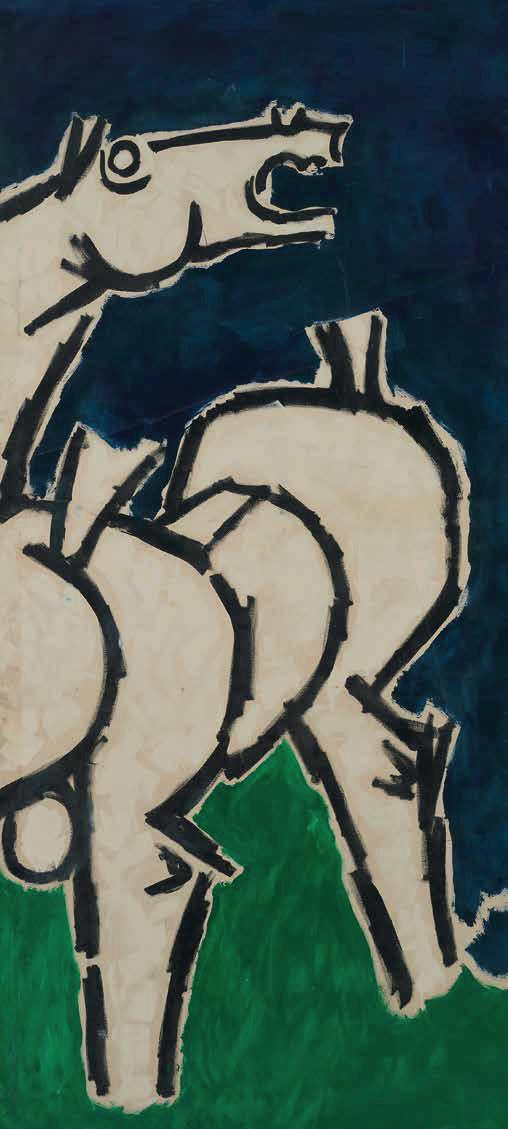
Lightning was created in 1975, during a controversial period in India’s history, to be the backdrop of then Prime Minister Indira Gandhi’s Emergency speech. Titled Lightning, because it came about in a flash, the masterpiece was made up of twelve massive panels with ten wild, white horses charging through an open space. The significance of the painting is heightened not only by its sheer size or brilliant rendering but also the by times it was executed during and the ideologies it stands for. This book was conceived in honour of Husain, and various anecdotal stories and interviews on the painting form a part of this book. It is an attempt to create a whole story around this masterpiece; every brush stroke and every inch of the canvas has a story, secretly tucked away in the midst of the powerfully rendered horses, that is left for the beholder to decipher.
124 photographs
LIGHTNING
BY M.F. HUSAIN
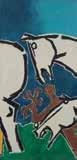




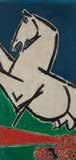
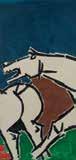
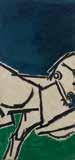
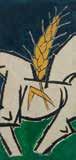
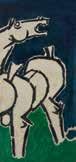
Lightning, a painted mural made for the Congress party campaign, was unveiled at a public rally at Bombay’s Shivaji Park in 1975.1 This was the year of the imposition of the Emergency. As such, this work annotates Husain’s engagement with an Indian modernism in a specific political context, but relays back to contexts that defy historical and spatial time frames.
Gayatri Sinha
LIGHTNING
BY M.F. HUSAIN
With Contributions by Susan S. Bean
Daniel Herwitz
Tom Keehn
Prasannan Parthasarathi
Gayatri Sinha
Boon Hui Tan
Published on the occasion of the exhibition
“M.F. Husain: Art and the Nation” organized by Asia Society, New York
March 20, 2019–August 04, 2019
First published in the United States of America in 2019 by TamarindArt and Kent Srikanth Charugundla 142 East 39th Street, New York, NY 10016 www.tamarindart.com
in cooperation with Asia Society Museum, New York 725 Park Avenue
New York, NY 10021 www.asiasociety.org and Mapin Publishing Pvt. Ltd 706, Kaivanna, Panchvati, Ellisbridge Ahmedabad 380006 INDIA
T: +91 79 40 228 228 • F: +91 79 40 228 201 E: mapin@mapinpub.com • www.mapinpub.com
Originally published privately in 2007 by TamarindArt and Kent Srikanth Charugundla © TamarindArt and Kent Srikanth Charugundla, 2007 and 2019
F.N. Souza, “Still Life” © Estate of F.N. Souza. All rights reserved, DACS / ARS 2019.
The images of S.H. Raza’s Untitled (p. 14) and Sapna (p. 99) are reproduced with the permission of the Raza Foundation, New Delhi © Raza Foundation, New Delhi
The image of Krishen Khanna’s Dusk (p. 15 above) is reproduced with permission of the artist © Krishen Khanna
The image of Ram Kumar’s Figurative (p. 15 below) is reproduced with the permission of the family of the artist © Ram Kumar
Best efforts have been made to obtain permission for:
V.S. Gaitonde, Untitled (p. 16)
Tyeb Mehta, Untitled (Lovers) (p. 17) from the Diagonal series
Akbar Padamsee, Joker (p. 18)
Bal Chhabda, Christ Head, Crucifixion, and Lady Liberty (p. 19)
All rights reserved under international copyright conventions. No part of this book may be reproduced or transmitted in any form or by any means, electronic or mechanical, including photocopy, recording or any other information storage and retrieval system, without prior permission in writing from the publisher. The moral rights of the authors of this work are asserted.
The moral rights of Tom Keehn, Susan S. Bean, Daniel Herwitz, Gayatri Sinha, Prasannan Parthasarathi, Boon Hui Tan, M. F. Husain, Marguerite Charugundla, and Kent Charugundla as authors of this work are asserted.
Executive Editor, Concept, Design, and Project Manager: Marguerite Charugundla
Editor: Sarina Charugundla
Proofreading: Marilyn Gore / Mapin Editorial
Editorial support: Neha Manke / Mapin Editorial
Graphic Design support and Typesetting: Sajeer Shamsudeen
Professional Photographer of the painting Lightning: Chris Burke Studios
Supporting Photographer: Chandra Mouli
Events Photographers: Brandon Keuchkerian and Sirish Birru
Logistics India: Steven Amulya
Production: Gopal Limbad / Mapin Design Studio
Printed at Thomson Press (India) Ltd.
ISBN-13: 978-0-9794495-0-5 (TamarindArt)
ISBN-10: 0-9794495-0-2 (TamarindArt)
ISBN-978-93-85360-68-8 (Mapin)
The publisher has undertaken no independent verification of any facts or information presented by the author. The publisher, therefore, makes no representation, express or implied, with regard to the accuracy of the information contained in this [book] and cannot accept any legal responsibility for any errors or omissions that may be made.
International Distribution
Worldwide (except North America and South Asia)
Prestel Publishing Ltd. 14-17 Wells Street
London W1T 3PD
T: +44 (0)20 7323 5004 • F: +44 (0)20 7323 0271
E: sales@prestel-uk.co.uk
North America
ACC Art Books
T: +1 800 252 5231 • F: +1 212 989 3205
E: ussales@accartbooks.com • www.accartbooks.com/us/
South Asia
Mapin Publishing Pvt. Ltd
KENT CHARUGUNDLA Foreword
Every artist has his/her zenith where energy is boundless and creativity is at its peak. The painting, Lightning, was born under such auspices in the year 1975. It was a critical time in Indian politics— activists and artists alike expressed their feelings in various forms through different media. It was at this time that Husain created Lightning for a political gathering in Bombay that was led by Indira Gandhi. The significance of the painting is heightened not only by its sheer size or the brilliant rendering of its subject by the artist but also the time it was executed and the ideologies it stands for.
This book was conceived in honor of Husain, who has always been extremely gracious, hospitable and who paved the way to my deeper understanding of contemporary Indian art. It is through Husain that I learned the importance of various leading trends and schools of Indian art, how to appreciate a work of art and what to collect. He introduced me to all the other senior artists who were his contemporaries, as well as younger talents. Husain was the catalyst in expanding my horizon to the contemporary Indian art scene, and to date continues to help me in my endeavors in collecting and promoting Indian art in the United States.
Selected authors were invited to write on Lightning and each essay is beautifully composed and addresses the painting as well as its creator from various angles. Susan S. Bean, in her essay, seeks out the sources of inspiration for Husain and his fascination for horses from the East. Flamboyant
with his language, Daniel Herwitz, on the other hand, addresses Lightning as his main subject and situates it in its socio-political context. However, his approach is also more semiotic in nature and therefore presents a personal interpretation of the various colors and forms used by the artist in this painting. Prasannan Parthasarathi’s essay focuses on Husain as an artist and on his contribution to modern Indian art. Gayatri Sinha’s piece is quite academic in nature. She situates the painting in its historical context and further explains the symbols used by the artist and their significance in relation to the current situation under which they were painted. Similar to Sinha’s essay, Boon Hui Tan’s essay is very academic in nature, where he talks about the painting Lightning and its historic significance in the year that Prime Minister Indira Gandhi imposed a state of Emergency across India, and further talks about the multitude of visual references to India in the 1970s and many of the challenges and controversies facing India at the time. He also expands to compare Indian art in the Emergency period to the Cultural Revolution in China and the art within a changing political context. Various anecdotal stories and interviews on Lightning form a part of this book. It is an attempt to create a whole story around this masterpiece; every brush stroke and every inch of the canvas has a story, secretly tucked away in the midst of the powerfully rendered horses, that is left for the beholder to decipher.
Acknowledgements
When we decided to republish this book, it felt right. When was a better time to publish the second edition than on the occasion of the exhibition The Progressive Revolution: Modern Art for a New India and M.F. Husain: Art and the Nation, organized and showcased by the Asia Society Museum of New York. It was the first comprehensive exhibition dedicated to the artworks of the Progressive Artists’ Group. Thanks to the curator and museum director, Boon Hui Tan and guest curator, Dr. Zehra Jumabhoy for such a major undertaking and making this exhibition possible and a great success.
The publishers would like to express their appreciation to all those who have generously given their time, made their resources available, and given valuable feedback to make this book a success.
Our utmost gratitude goes to the contributors, Susan S. Bean, Daniel Herwitz, Prasannan Parthasarathi, Gayatri Sinha and Boon Hui Tan, for their brilliant essays, as well as Tom Keehn, for his personal commentary.
Many thanks are in order for the Peabody Essex Museum for allowing us to use images from their collection for Susan Bean’s essay.
Lightning was the subject of a publication for the first time in the book titled Where Art Thou: M.F. Husain—an Autobiography with Khalid Mohamed.
We also would like to extend our appreciation to Khalid Mohamed and the late M.F. Husain for having allowed us to reprint the spread on Lightning from his publication.
Thank you to Asia Society for allowing us to publish this book in conjunction with the exhibition of M.F. Husain: Art and the Nation, March 20 through August 4, 2019 at Asia Society Museum of New York and part of the Progressive Revolution: Modern Art for New India and the Triennial. Also many thanks to Boon Hui Tan and Asia Society for allowing us to include Boon Hui Tan’s essay about the Progressive Artists’ Group and the mural Lightning.
We would like to extend our special thanks to the General Manager and staff of the Maurya Sheraton Hotel (New Delhi) for accommodating M.F. Husain’s request to close down the lobby in order to show the Lightning mural in its full glory.
There are number of others who were instrumental in making this process easier and productive, without whom this book would not have been possible, which includes the lighting and music engineers, the photographers, the organizers, the editors, the graphic designers, illustrators, event coordinators and art handlers.
Lightning
Horses as metaphor for tremendous energy, and exquisite grace and beauty. There are ten horses cutting across the horizon like lightning, and in between appears a baby horse wearing the nuclear crown, an indication that the world has entered the most dynamic nuclear era of its billions of years of existence. Here, there on the canvas, a few images of industry, agriculture, progress and family planning are inserted. The bold, black brush-strokes are like calligraphic form. In a way these black strokes become a “writing on the wall.” The world should take a note of it!
M.F. Husain, 2003
Journey of the Lightning, its Creator and the Progressive Movement
Lightning was created in 1975, during a very controversial period in India’s history, to be the backdrop of the then Prime Minister Indira Gandhi’s Emergency speech. Given the short time frame that Husain had to complete the work, it was titled Lightning, because it came about in a flash. The masterpiece was made up of twelve massive panels with ten wild, white horses charging through an open space. The depth in the painting is captured by coloristic blues and greens that go from dark to light following the progression of horses. Husain’s striking black lines that outline the horses stand out juxtaposed against the whites of their bodies. They resemble his billboard style, so that anyone viewing the work either up-close or from afar could see it in its full glory. Husain painted a nuclear crown above the head of a foal in a red semicircle, a red tank at war, and a bushel of wheat rising behind the last horse in the flock as a sign of the nuclear era, the Partition, and agriculture in India. The painting included depictions of family planning, farmers and their families, and a builder with an axe in hand. The work portrayed the political climate of the time in India post-separation.
Maqbool Fida Husain, commonly referred to as the “Picasso of India,” was born on September 17, 1915 in Pandharpur in Maharashtra, India. M.F. Husain was a self-taught artist living on the meagre funds he received from painting Bollywood movie posters. In 1935, he began to receive formal training at the J.J. School of Art in Mumbai. He applied the modernist concepts of Matisse and Cezanne to create masterpieces that portrayed Indian life in society. He began to garner national and international recognition in the 1940s. In 1947, he co-founded the Progressive Artists’ Group (PAG) with five others.
The six founding artists of the PAG were F.N. Souza, S.H. Raza, K.H. Ara, H.A. Gade, S.K. Bakre and M.F. Husain, whose operations were based in Bombay (Mumbai). Each artist brought a unique style influenced by European modernists, which allowed different perspectives and influences in their art as they became globally renowned.
K.H. Ara was mostly involved in female nudes, which raised concerns and criticism in India. He was later guided by the group and started creating astonishing art that shaped India.
S.K. Bakre was the only sculptor in PAG. His
works presented the face of India after colonialism and paintings that depicted modern art, which was ahead of its time.1
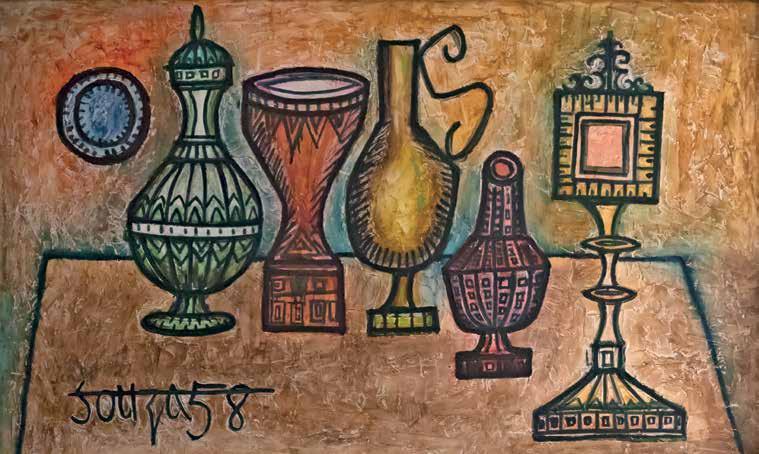
F. N. Souza (fig. 2) brought a level of expressionism to his works of nudes, human figures, sexuality and religious conflict between Christianity, Buddhism, and Islam. He expressed his feelings concerning the struggle during British colonialism in India. He was an internationally recognized artist.
M.F. Husain focused on cubism with scenes involving Indian history and methodology (fig. 3).
S.H. Raza represented the nature of India and the relationship between man and nature.2 He also created paintings with geometric abstraction (fig. 4) that usually left off at a bindu, or a point, that he talked about with several of his works of art.3 As Raza was the co-founder of PAG, he was very supportive of the Progressive Artists’ Group movement and he initiated Gade into the group.4
Each PAG artist had his own signature style, which allowed the artists to contribute ideas to one another.
1 Boundless: India (2011). Available from: www.sothebys.com/en/auctions/ecatalogue/2018/boundlessindia-in1801/lot.28.html
2 Progressive Artists Group (PAG): The artists who revolutionized Modern Indian Art (Oct 15, 2016). Available from: https://asiasociety.org/new-york/exhibitions progressive-revolution-modernart-new-india
3 Progressive Artists’ Movement. https://www.artsy.net/gene/progressive-artists-movement
4 The Progressive Artists’ Group and Its Impact on Indian Modern Art (April 24, 2017). Available from: https://www.artisera.com/blogs/expressions/the-progressive artists-group-and-its -impact-onindian-modern-art
(figure 2) F.N. Souza, Still Life
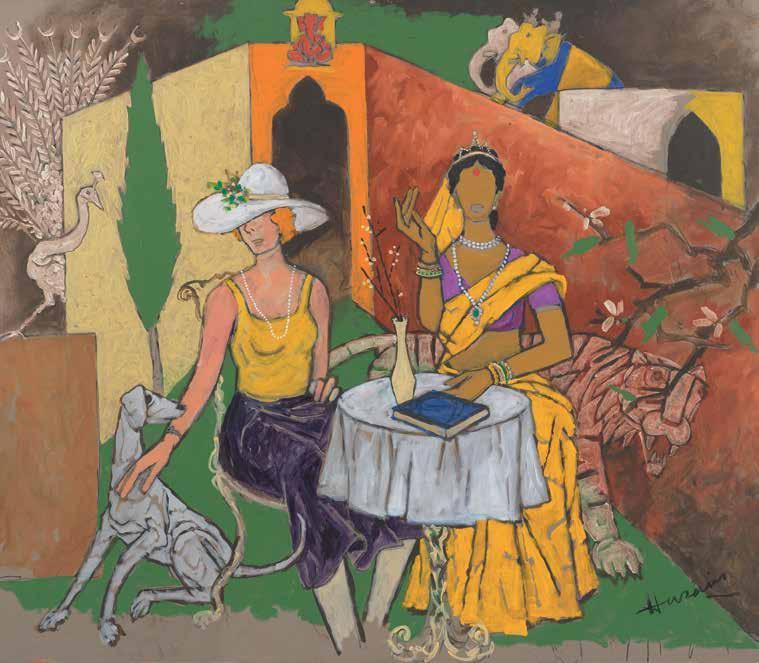
(figure 3) M.F. Husain, High Tea, 1985, from the Raj Series
Published in the book by Sumathi Ramaswamy titled, Husain’s Raj: Visions of Empire and Nation (pages 98, 99)
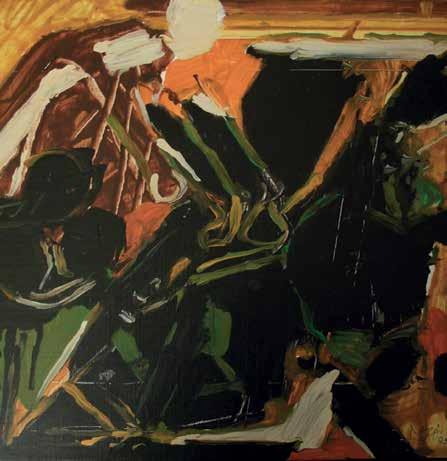
S.H. Raza, Untitled
The group aimed to break free from the nationalist Bengal school of art and take Indian art to a global level. A new movement started when the group encouraged Indian avant-garde artists of all skill levels to reclaim their freedom of expression through a global perspective, similar to European modernists. The PAG was also known as the Magnificent Six and Modern Artists of India. The group was formed after Partition.
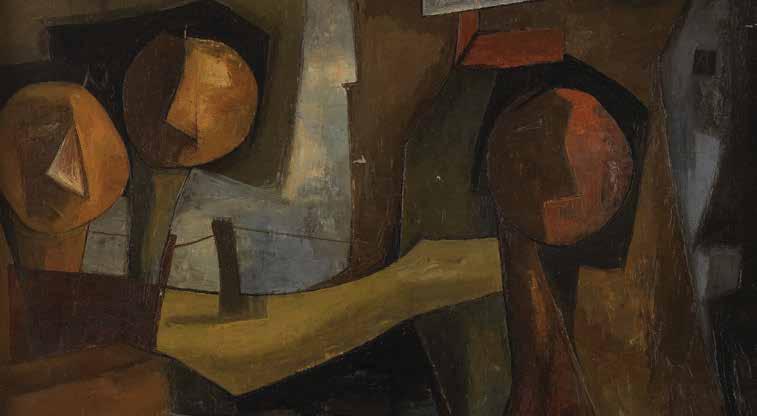
The founding members believed that India required a revolution to achieve their common goal of independent art, just as India gained political independence from Britain.5 During this time, only the art institutions governed by Britain held exhibitions, allowing them to dominate the market and control Indian art. The two institutions were the Government College of Art & Craft, Calcutta and the Bombay Art Society.6 The PAG sought to allow artists control over their technique and content. Souza, the leading member, and his team worked closely with the Progressive Writers’ Movement in rejecting the monopoly of these institutions, which gave them the title “Progressive Artists’ Group.” Many other artists such as Ram Kumar, Krishen Khanna, V.S. Gaitonde, and Tyeb Mehta, later joined the group. Kumar was known for his abstract landscapes, usually in oil or acrylic (fig. 5), and Khanna is known for gestural style and thick impasto surfaces (fig. 6). While Gaitonde’s works are known for evoking subliminal depths, with plain, large surfaces with paint layered that subtly characterize his work (fig. 7), Mehta’s work was characterized by matt surfaces, diagonal lines and images of anguish (fig. 8).
5 The Progressive Revolution: Modern Art for a New India (Sep 14, 2018). Available from: www.eikowa.com/blog/progressive-artists-group-pag-the-sextet-of-artists- that- incited-an-artisticrevolution-in-post-independence-india
6 The Legacy of the Progressive Artists Group and the Importance of Secularism in India (2018). Available from: https://frieze.com/article/legacy-progressive-artists-group-and-importance-secularism-india (figure 4)
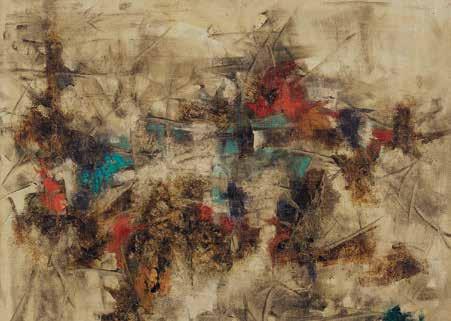
(figure 6)
Krishen Khanna, Dusk
Exhibited at the Queens Museum 2016, After Midnight: Indian Modernism to Contemporary India, 1947–1997
(figure 5)
Ram Kumar, Figurative
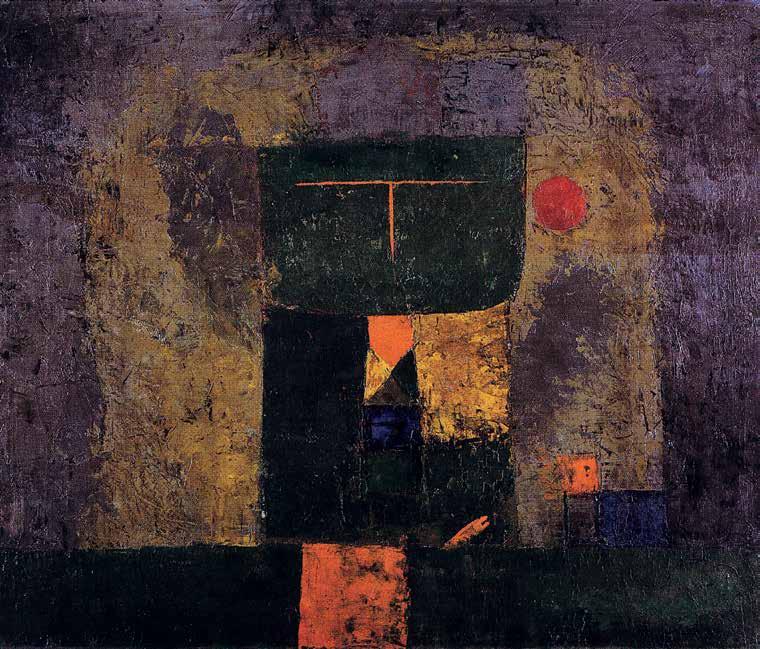
(figure 7)
V.S. Gaitonde, Untitled Exhibited at Asia Society Museum of NY, The Progressive Revolution: Modern Art for a New India, 2018–2019
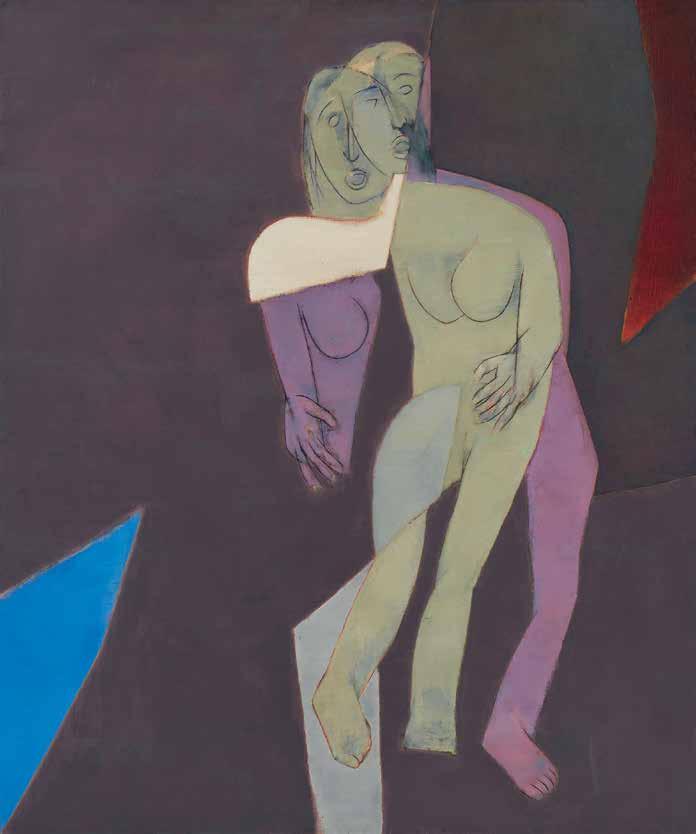
(figure 8)
Tyeb Mehta, Untitled (Lovers) from the Diagonal Series
Exhibited at Asia Society Museum of NY, The Progressive Revolution: Modern Art for a New India, 2018–2019
Exhibited at the Queens Museum 2016, After Midnight: Indian Modernism to Contemporary India, 1947–1997
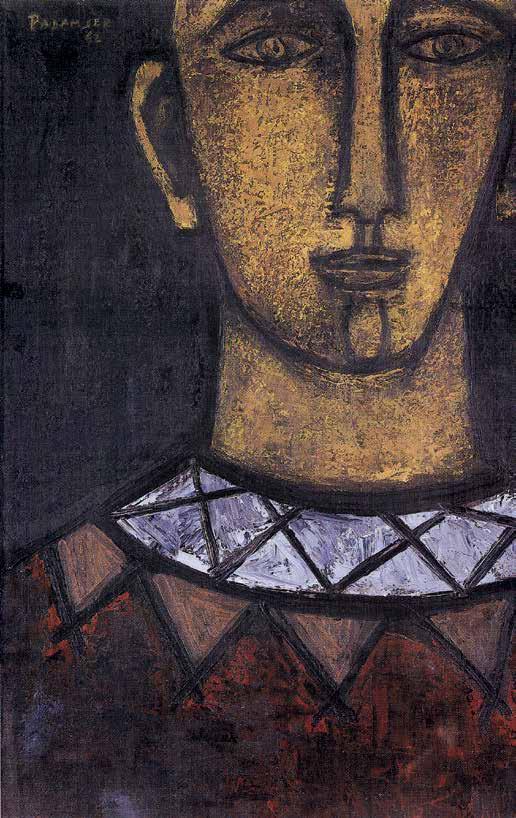
Akbar Padamsee (fig. 9) and Bal Chhabda (fig. 10) did not join the PAG but were very connected to the group. Padamsee’s works range from figurative to non-objective. His expressions of form, volume,
space, time and color can be seen in many of his works as can be seen in his painting Joker (fig. 9). He aided in shaping the perception of art in India and as they gained global traction.
Bal Chhabda, a self-taught artist who lived in Mumbai, began painting in oils in the late 1950s. He was famously adverse to both the market and publicity. His works were mostly in oil, with very bold lines and vibrant colors as can be seen in the Christ Head, Crucifix and the Lady Liberty paintings (figs. 10, 11 and 12).
(figure 9)
Akbar Padamsee Joker
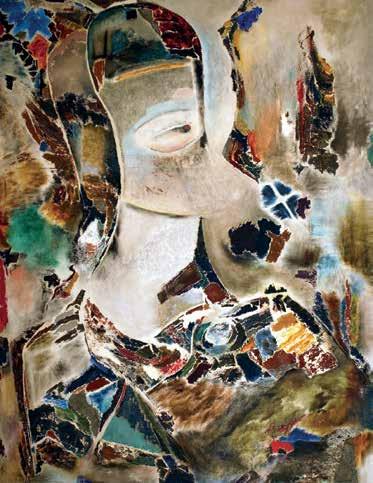
(figure 10)
Bal Chhabda, Christ Head Exhibited at TamarindArt, 50 Years of Bal Chhabda, a retrospective
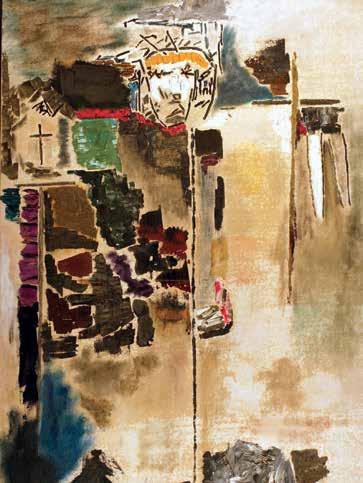
(figure 11)
Bal Chhabda, Crucifixion Exhibition at Delhi Art Gallery, India’s Rockefeller Artists, New York | Nov 7, 2017–Mar 3, 2018 (page 3)
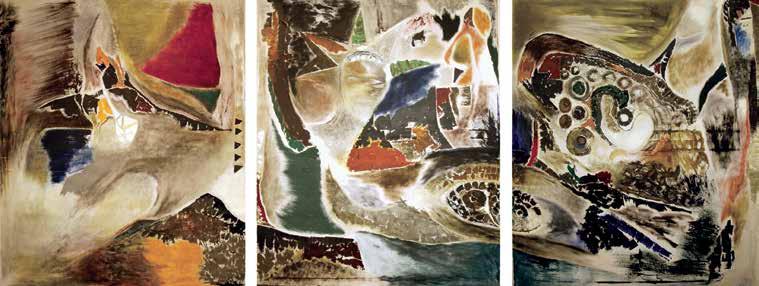
(figure 12)
All works that are illustrated here are from Bal Chhabda’s exhibition at TamarindArt, 50 Years of Bal Chhabda, a retrospective of the artist in New York in 2006.
Bal Chhabda, Lady Liberty Part of the publishing of the exhibition at Delhi Art Gallery, India’s Rockefeller Artists, New York | Nov 7, 2017–Mar 3, 2018 (page 380)
After establishing himself as a prolific and well-known painter within the group, Husain transferred his artistic talents to the film industry. He developed his first film, Through the Eyes of a Painter, in 1962, and premiered it at the Berlin Film Festival
figure, known for his eccentric yet iconic lifestyle and artwork.
Kent and Marguerite Charugundla were taken with his work, and after acquiring Lightning in 2002, they exhibited the painting for the first time at
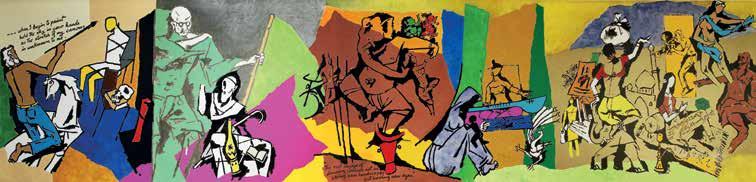
(figure 13), M.F. Husain, Voyage of Discovery, 2005 Exhibited at TamarindArt, Husain99, 2014.
where it won a Golden Bear, an award granted to the best film at the festival. Additionally, he created two more movies, entitled Gaja Gamini and Meenaxi: A Tale of Three Cities. Husain split his time between Dubai, London and New York, but travelled frequently. His work did not stop there, while in Qatar, he worked on three major projects: the history of Arab civilization, the history of Indian civilization, and a celebration of 100 years of Bollywood cinema in 2011.7 As he traveled, he was known for his long white beard, shoeless feet and paintbrush-shaped cane. M.F. Husain was an instantly recognizable
TamarindArt in 2003. He painted several artworks while he was in New York, including his largest painting, his autobiography, Voyage of Discovery. He created his life’s work in 2005 on a single canvas (fig. 13).
The international art community lost one of its most beloved painters on June 9, 2011 when Husain passed away at the age of 95 in London due to complications related to the heart condition he had been battling for nearly two months. M.F. Husain’s legacy and international presence will live on through his exquisite paintings, pencil drawings, watercolors, prints, sculptures and films.
7 M.F. Husain biography: paintings, life history, achievements, facts. Available from: https://www.google.com/amp/s/www.culturalindia.net/amp/indian-art/painters/m-f-hussain.html
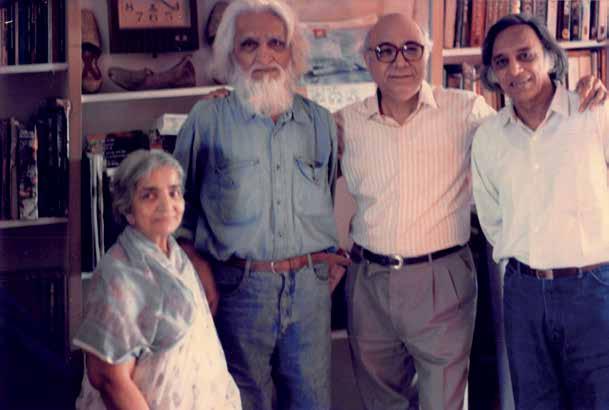
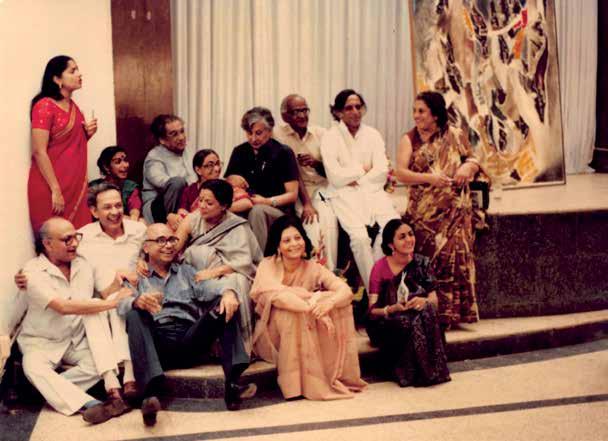
From the left: Sakina Mehta, Maqbool Fida Husain, Bal Chhabda, and Tyeb Mehta
The Progressive Artists’ Group and their spouses, including Syed Hyder Raza, Bal Chhabda, Akbar Padamsee, Krishen Khanna and Tyeb Mehta
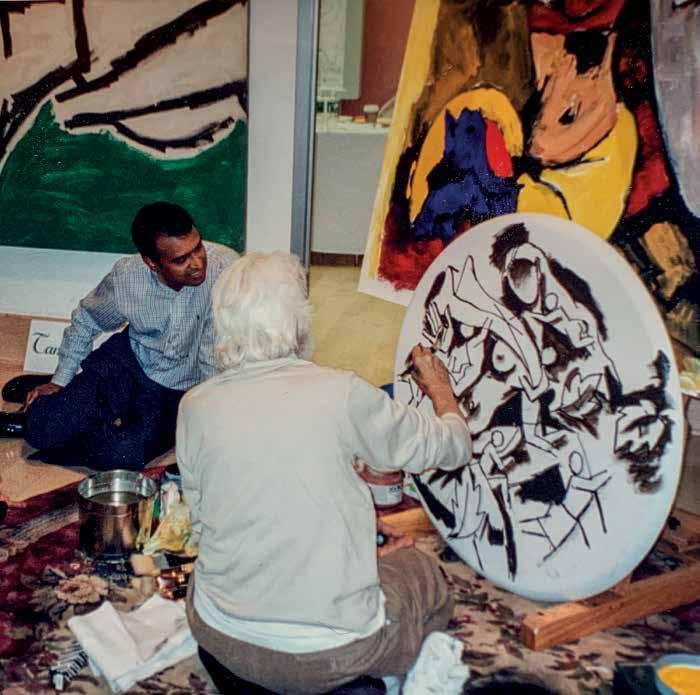
M.F. Husain painting live, the Renaissance canvas at TamarindArt, early 2000s
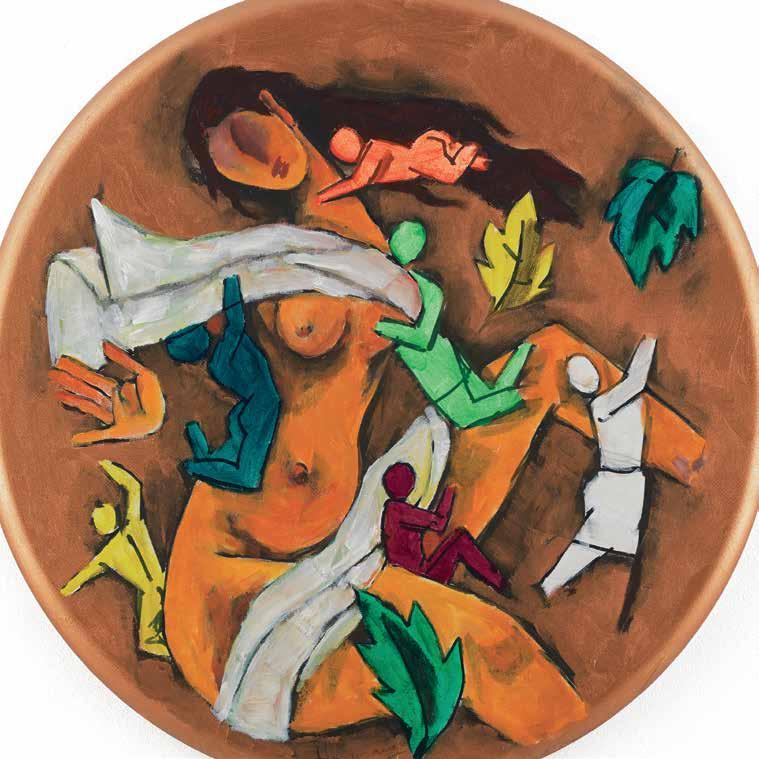
M.F. Husain Renaissance
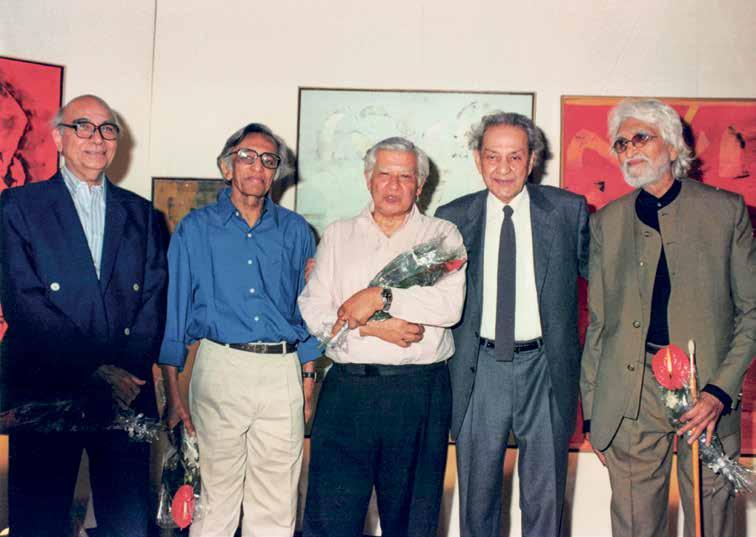
The Progressive Artists’ Group celebrating an opening From left: Bal Chhabda, Tyeb Mehta, Krishen Khanna, Syed Hyder Raza and Maqbool Fida Husain
Exhibitions of the painting Lightning (from 1975 to 2019)
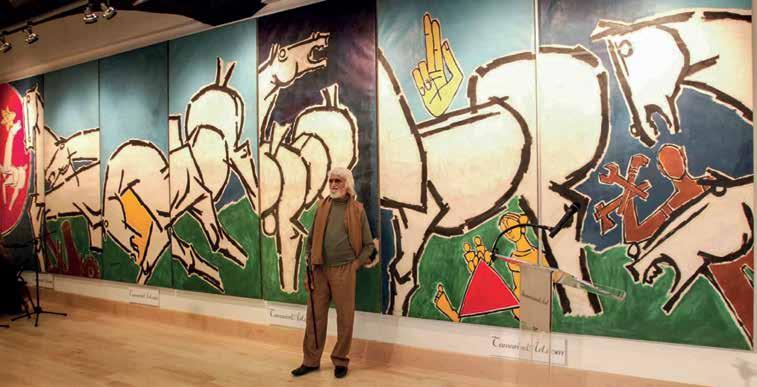
1975
Exhibited as a backdrop of the Emergency speech of the then Prime Minister Indira Gandhi.
1997
Exhibited in New Delhi, India, for the 50th anniversary of the India’s Independence
2003
Exhibited at TamarindArt, New York: The Unveiling of Lightning
2014
Exhibited at TamarindArt, New York: Husain99, together with the Voyage of Discovery, to celebrate the artist’s 99th birthday. It was a private gathering that included museums, art collectors and friends.
2019
Exhibited at Asia Society Museum of New York: M.F. Husain: Art and the Nation
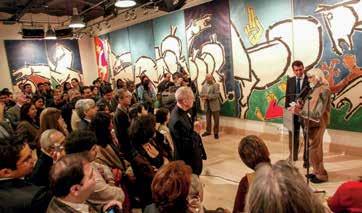
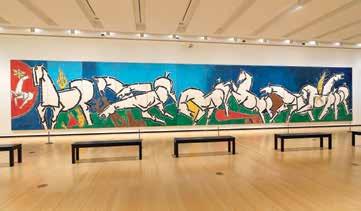
Installation view of M.F. Husain: Art and the Nation at Asia Society Museum, 2019 Photograph © Bruce M. White, 2019
THOMAS B. KEEHN
A Personal Commentary
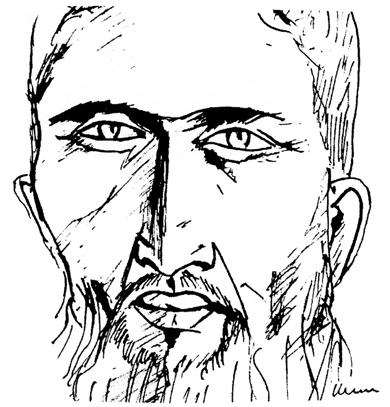
M.F. Husain and I were forty years old when we met in India and began a friendship that has endured for fifty-one years—from 1956 to 2007. He was a visible, rising young artist living in Bombay. I was at the beginning of a new phase of life in India, representing a Rockefeller-related non-profit organization. One of our mandates was to discover and assist the modern art movement in newly independent India. I began by traveling around the country, visiting artists in their homes and workshops. It seemed inevitable that these journeys lead to connections with Husain.
In early 1956—after consulting with some of the young artists and others in this field—we decided to organize an Eight Painters exhibition in New Delhi. An attractive brochure was produced, including information about the artists and reproductions of some of their works. One feature proposed by the artists was to have them work in teams of two, with each producing a drawing of the other. For example Husain produced a drawing of Ram Kumar and Ram did one of Husain. Here is the 1956 drawing of Husain as it appeared on the Eight Painters exhibition brochure. Two of Husain’s paintings included in the exhibition were Between the Spider and the Lamp and Yatra a Journey. They were recognized as some of Husain’s most important works in this early period. We were fortunate to acquire Yatra for our family collection. We also have a drawing of the figures of a man and a woman which Husain produced in 1956. It is vintage Husain—a kind of prototype for many of the estimated 50,000 paintings he would paint during the next fifty years. Through these years, Husain became a central figure in a group of eight to ten pioneers
M.F. Husain (1956)
in the Indian modern art movement. Two of them died in recent years—Souza and Gaitonde. The others have flourished—Ram Kumar, Tyeb Mehta, Akbar Padamsee, S.H. Raza, Krishen Khanna and Bal Chhabda. At 91, Husain continues to be very involved in individual and group exhibitions and retrospectives. In addition to his skills as an artist, he has produced award-winning films and written poetry. He has been recognized at international biennials and honored by the Government of India —a celebrity figure. In recent years, Husain has been subject to controversy created by social and political tensions between the Muslim minority and the Hindu majority in India. This has resulted in his current exile in Dubai. To which Husain responds, “There is no such thing as exile; I have been wandering the world and painting for fifty years and I am still doing it!”
A remarkable development in the last ten to twelve years has been the dramatic increase in the value of modern Indian art. The early pioneer group (mentioned previously) were among those who were beneficiaries of this phenomenon. Husain was one of the leaders in this market value increase but others followed: Tyeb Mehta, Raza, Souza, Gaitonde and Ram Kumar. What factors have contributed to this phenomenon? Auctions at established houses in New York, London, Hong Kong and India began to include modern Indian art in 1995. Art galleries focused on modern Indian art spread rapidly. There are half a dozen in New York, many in London and hundreds in India. Museums are beginning. Husain built four in India and six new ones are in the
planning stage, funded by wealthy Indians. Indians living abroad, including the business community, are increasingly supportive of modern Indian art.
Examples of this surge in values of modern Indian art abound. Here are two involving Husain. In 2002, a sixty foot, twelve panel mural Lightning was purchased by Kent and Marguerite Charugundla in New York for about $400,000. It will be on display at the exhibition opening at the TamarindArt Gallery on March 21, 2007. And, in Dubai on January 31 and February 1, 2007, Christie’s had a special auction of jewellery and art which included a Husain painting that sold for $442,000. Not bad for an exile who is often called the Picasso of India!
Perhaps more important than money is the legacy of family and friends. Here, Husain is richly endowed. His six children and grandchildren spend serious time with him wherever he happens to be. And the Keehn family home in Forest Hills, NY, is fortunate to be included in the travels of these young people. In the spring and summer of 2007, seven Husains will be arriving in waves. My six children and thirteen grandchildren will be on hand to join me in celebrating fifty-one years of connections with the Husains and India. Once again, we will turn the pages of the book INDIA INK—published in India as a memorial to Martha Keehn who died eleven years ago. The book includes the saga of our family collection of modern Indian art and reproductions of more than thirty pieces. It goes well with our memories of India years and our warm connections with the Husain family and other friends.
Note: This article was done in 2007. Except for Padamsee and Khanna, the others have passed away since the writing of this article.
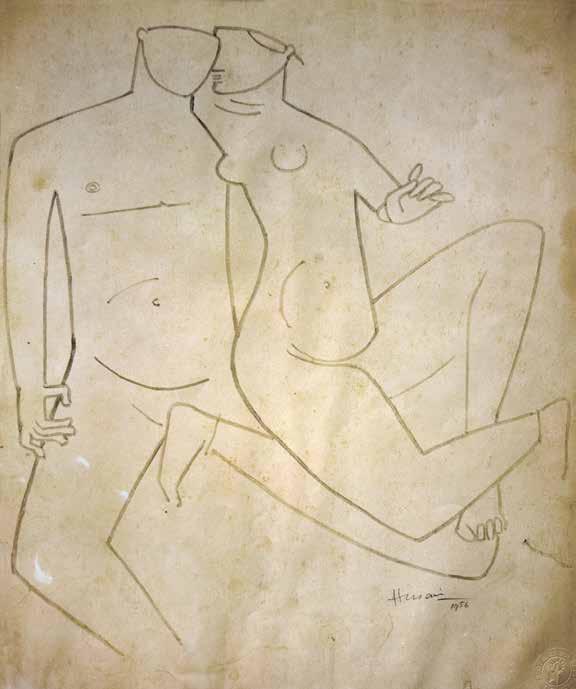
M.F. Husain, Man and Woman, drawing, 1956
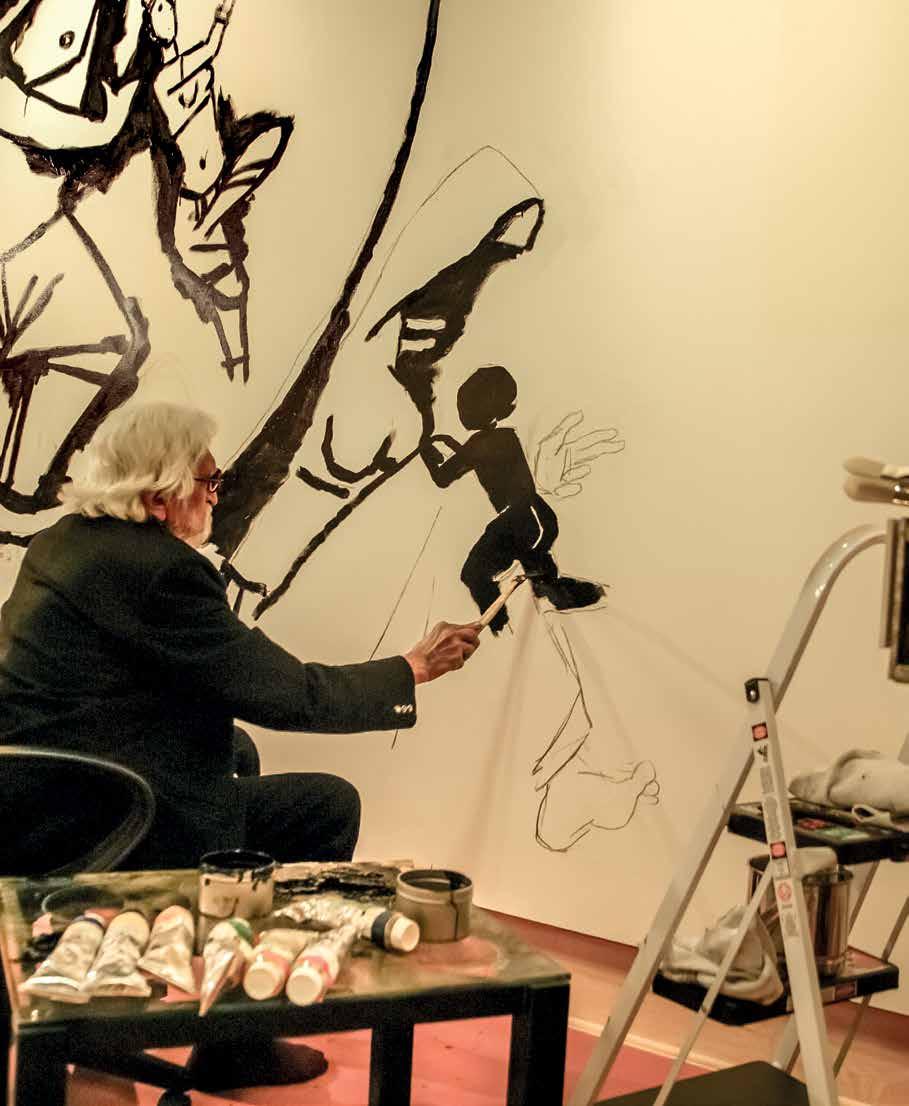
The artist portrays himself with his mother. Voyage of Discovery, 2005
MODERN & CONTEMPORARY ART
Lightning by M.F. Husain
Editedby Marguerite Charugundla
132pages,124photographs, 9x11”(228.6x280mm),hc–plc
ISBN:978-93-85360-68-8
₹2950|$65|£50
Fall2019•Worldrights
Publishedinassociationwith TamarindArt,NewYork,and AsiaSocietyMuseum,NewYork
Marguerite Charugundla is currently a Global Council Member on Asian Arts and Culture, and is co-founder of TamarindArt Gallery, New York.
www.mapinpub.com
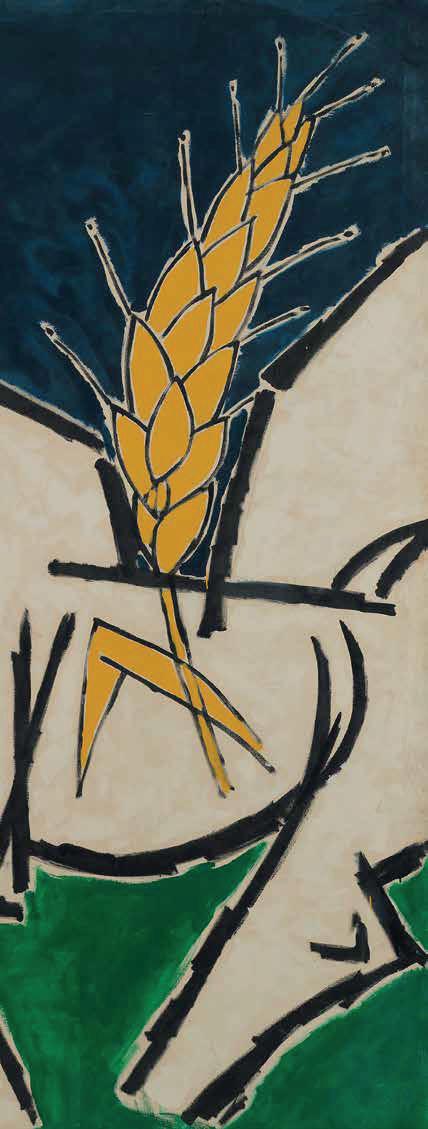
Lightning
Horses as metaphor for tremendous energy, and exquisite grace and beauty. There are ten horses cutting across the horizon like lightning, and in between appears a baby horse wearing the nuclear crown, an indication that the world has entered the most dynamic nuclear era of its billions of years of existence. Here, there on the canvas, a few images of industry, agriculture, progress and family planning are inserted. The bold, black brush-strokes are like calligraphic form. In a way these black strokes become a “writing on the wall.” The world should take a note of it!
M.F. Husain