
NEW YORK
LOS ANGELES
MIAMI
HAMPTONS
LAS VEGAS
ASPEN

MASS TIMBER:
A SUSTAINABLE REVOLUTION SHAPING THE FUTURE OF CONSTRUCTION
CAN SITE SOURCING TECH SOLVE FLORIDA’S HOUSING CRISIS?
BILLY COTTON BRINGS PARISIAN DECOR TO THE TREADWELL
THE SUSTAINABILITY ISSUE
COMMITMENT TO LUXURY AND HEALTH
Perfect Wellness Group
A
PERFECT WELLNESS Federico Checo, Founder and CEO,
Navigate turbulent times with confidence.

With our deep insight and experience, where others see challenges, we see opportunities.


• Registration/Breakfast: 9:30 am • Shotgun Golf Start: 11:30 am • Tennis & Pickleball Start: 1:30 pm • Cocktails/Dinner: 4:30 pm • For information contact: • 212.279.2522 / afrmc@afrmc.org • RSVP by May 20, 2024 • Country Club Attire (No Jackets Required) Register and Pay Online at: afrmc.org/golf COMMITTEE Robert Scheinman • Andrew Sachs • Beth Miller-Eidman Laura Gilbert • Adan Elias Kornfeld • James Orphanides Jason Rohlman • Yale Stogel • Robin Thompson Glenn Tolchin EVENT CHAIRS Stephen Siegel • Michael Bebon • Yoav Oelsner • Gadi Peleg ANNUAL GOLF & TENNIS TOURNAMENT REGISTER NOW AMERICAN FRIENDS OF RABIN MEDICAL CENTER MONDAY, JUNE 3, 2024 OLD OAKS COUNTRY CLUB PURCHASE, NEW YORK SUPPORTING REHABILITATION FOR WOUNDED SOLDIERS & CIVILIANS

They said it couldn’t be done. We didn’t listen.
We’ve done hard things before, we do them all the time.
For most cancer patients, the usual options are surgery, chemotherapy, or radiation. So we’re working on ways to get the immune system to deploy billions of cancer-killing cells and help more patients survive.
When some people experienced mysterious COVID symptoms and had nowhere to go, our team created the first Center for Post-COVID Care.
It wasn’t that long ago we had to open up your whole chest for heart surgery. Now we’re pioneering a bypass that goes through a few tiny incisions. With this surgery, we can get you back on your feet in weeks instead of months.
So if anyone ever tells you there’s no other way—don’t listen.


Newly Built, High-end Full Floor 561 7th Avenue Northeast Corner of West 40th Street 212.398.1888 | Handler-re.com Darell Handler, COO | 646.597.6171 | dhandler@handler-re.com Kyle Galin, Vice President | 646.998.6012 | kgalin@handler-re.com Isaac Leader | 646.747.4686 | ileader@handler-re.com The information contained herein has been obtained from sources believed reliable. While we do not doubt its accuracy, we make no guarantee, warranty or representation about it. The prospective tenant should carefully verify each item, and all other information herein. ENTIRE 11TH FLOOR: 3,944 RSF • New Building Installation • Landlord will Build to Spec for Qualifi ed Tenant • 3 Sides of Windows • Flooded with light • 24/7 Building Access • Owner Occupied • Access to all transit
TODAY’S MARKETS MOVE MORE QUICKLY THAN EVER.


Meridian’s national dominance in multifamily financing gives us a unique vantage point from which to approach markets on our clients’ behalf. By leveraging our 30+ year relationships and depth of experience, we are able to see what others can’t and produce exceptional outcomes — especially in turbulent markets. Remain informed and be agile with Meridian.





EDITORIAL Editor
Debra Hazel
Associate Editor
Alex Baumbusch
Laurie Melchionne
Copy Editor
Geraldine Melchionne
Director of Communications and Marketing
Penelope Herrera
Director of Newsletter Division
Cheri Phillips
PRESIDENT/CEO
Jeff Mann
ART Art Director
Serena Bhullar
Graphic Designer
Laura Chousa
Graphic Designer
Madi McCreesh
Cover Photography
Stefano Pasqualetti
CONTRIBUTORS
Vijay Anand
Jonny Britton
Frank DeLucia
April Intrabartola
Kris Kiser
Ira Meister
Andrew Pearl
James Philbin
Amanda Pflieger
Steve Ruggiero
Carol A. Sigmond
BUSINESS
Technology Consultant
Joshua Fried Distribution
Mitchell’s Delivery Service
DIGITAL MEDIA Designers
Serena Bhullar
Laura Chousa
Madi McCreesh
Editors
Alexandra Baumbusch
Debra Hazel
Penelope Herrera
Laurie Melchionne
Cheri Phillips
Web Developer CS Designworks


The opinions expressed by our columnists are not reflective of the views and opinions of the publisher or the editorial staff of Mann Report. Publication of such views and opinions does not constitute endorsement by Mann Report Any reproduction, including but not limited to internet usage, is prohibited without the express written permission of the publisher. West Coast Office: 578 Washington Blvd., Suite 827 Marina Del Rey, CA 90292 866-306-MANN (6266) mannpublications.com East Coast Office: 450 7th Ave, Suite 2306 New York, NY 10123 212-840-MANN (6266)



FOUNDED BY JACQUES D’AMBOISE


ARTISTIC DIRECTOR KAY GAYNER
EXECUTIVE DIRECTOR JERMAINE JONES
48TH ANNUAL

MONDAY, APRIL 15
BOARD CHAIR MARC S. SOLOMON





6:00 PM COCKTAILS | 7:00 PM DINNER, PERFORMANCE, HONORS, AUCTION

HONORARY CHAIRS
THE ZIEGFELD BALLROOM 141 WEST 54TH STREET | NEW YORK CITY
HONORING
RICHARD E. FELDMAN President, SHS Foundation
BILL IRWIN
Tony, Drama Desk, OBIE, and MacArthur ‘Genius’ Award Winner
REMEMBERING
ARNOLD S. PENNER
Dream Maker Award
WITH PERFORMANCES BY THE CHILDREN OF NATIONAL DANCE INSTITUTE
GALA COMMITTEE

Charlotte d’Amboise & Terrence Mann
Ariana DeBose
GALA CHAIRS
Paula & Jeffrey Gural
Helen Stambler Neuberger & Jim Neuberger
Amy Zhen & Christopher Schlank
Cindy Levine & Marc S. Solomon
GALA VICE CHAIRS
Madaleine Berley
Pamela Farr & Buford Alexander

Lauren B. Cramer
Trudy Chan & Thomas Discepola
Deborah Colson & Mark Diker
Jennie L. & Richard K. DeScherer
Valerie & Charles Diker
Patricia Dugan Perlmuth
Sari Chang Guthrie & Kevin Guthrie
Lisa A. Huestis & David E. Van Zandt
Laure & Maximilien Maisonrouge
Kathy & Joe Mele
Danielle Diniz & Daniel Ulbricht
NATIONALDANCE.ORG


WITH THANKS TO OUR SPONSORS
ARNOLD S. AND MADALEINE PENNER FAMILY FOUNDATION

CHARITABLE TRUST
TO BUY GALA TABLES OR TICKETS: Please contact the NDI Gala Office at (917) 287-1399 or email ndigala@rcspr.com, or scan this QR code.


ONE MANN’S OPINION
Happy Spring!
As the city wakes up from a dreary winter, I’m excited to feature Perfect Wellness Group on our cover. Maybe because we’re all focusing on wellness after an uncertain few years, or we just want to relax for a moment during a busy 2024, it’s a balm to feature this combination of luxury and health.
We’re also very excited to share photos from the National Realty Club’s first meeting of the year, where we debuted a new fireside chat format. Last month’s cover subject, Jodi Pulice, gave an honest interview about her efforts to boost women and persons of color in our industry — a principle we at Mann Report continue to support.
The format, where our speaker is literally interviewed by a fireside, was a big hit with our sold-out audience, and we are looking forward to featuring even more heavy hitters in the months to come. Check these pages and your emails for the announcements and contact me or Penny Herrera (penny@nationalrealtyclub.org) to find out how to become a member of one of the great networking groups in our industry.

Indications are everywhere that business is picking up — keep reading these pages to learn all of the latest news and trends.
“We win half of the battle when we make up our minds to take the world as we find it, including the thorns.”
– Orison Swett Marden

TABLE OF CONTENTS
EVENTS 16 National Realty Club Foundation Hosts Fireside Chat 18 Daniel Gale Sotheby’s International Realty’s Young Professionals Network Holds Second Annual Give for Good Fundraiser 20 Shawmut Design and Construction Honors Women in Construction Week NEWS BRIEFS 24 Commercial News 28 Residential News 32 Management News 36 Tech Talk 40 Breaking News FEATURES 50 Can Site Sourcing Tech Solve Florida’s Housing Crisis? 52 A New HQ in Morristown 54 Out of the Ashes: Safeguarding the Future of High-Rise NYC Multifamily Projects 58 Billy Cotton Brings Parisian Decor to The Treadwell 60 Mass Timber: A Sustainable Revolution Shaping the Future of Construction APRIL 2024
Photo by Brett Wood

9 One Mann’s Opinion
14 Editor’s Letter
64 Columns
90 Executive Changes
94
Commercial Corner: Adin Meir, Director of Sustainability, The Moinian Group
96
By the Numbers: Possible Progress

84 A Wider Road to Moreno Valley 86 Hive & Colony Marries Luxury and Function DEPARTMENTS
PERFECT WELLNESS: A COMMITMENT TO LUXURY AND HEALTH AEC
COVER FEATURE 44
Photo courtesy of JRM Construction Management
86
Preparing Students for the Future While Restoring the Past COLLEGES mannpublications.com APRIL 2024 | MANN REPORT 11 TOC APRIL 2024
Photo by scotthargisphoto.com
82



12 MANN REPORT | APRIL 2024 mannpublications.com High-end Midtown Pre-built Entire 16th Floor: 6,500 RSF 263 West 38th Between 7th & 8th 212.398.1888 | Handler-re.com Darell Handler, COO | 646.597.6171 | dhandler@handler-re.com Kyle Galin, Vice President | 646.998.6012 | kgalin@handler-re.com Richard Farley, SVP | 646.597.6179 | rfarley@handler-re.com Alex Bush, Senior Director | 646.517.8782 | abush@handler-re.com The information contained herein has been obtained from sources believed reliable. While we do not doubt its accuracy, we make no guarantee, warranty or representation about it. The prospective tenant should carefully verify each item, and all other information herein. PRE-BUILT SPACE AVAILABLE IMMEDIATELY • Built space in great condition • Concrete floors, raised ceilings + glass front offices • Creative + efficient floor plates • Access to all transit


From financing considerations, to property performance metrics, today’s real estate business is inundated with both challenges and opportunities. PKF O’Connor Davies has decades of experience working with a variety of assets including industrial, office and residential sites. Our experience in this complex field gives us the expertise to deliver strategic advice that drives real value. With the PKF O’Connor Davies Real Estate Team, our clients know greater service, know greater insights, Know Greater Value. pkfod.com Edward O’Connor, Partner 201.712.9800 eoconnor@pkfod.com KNOW GREATER VALUE
EDITOR’S
LETTER
Welcome to our annual sustainability issue, always in April in honor of Earth Day.
This year, however, our focus shifts a bit from saving energy, water, etc., to something a bit more about sustaining personal health and safety rather than the planet.
Our cover feature on Perfect Wellness focuses on the growth of its high-end spa (yes, please) collections, while other stories discuss the reinvention of downtown Morristown, New Jersey; fire safety’s more eco-friendly types of wood for construction and the ultimate item of sustaining life — an affordable home.
We’ve all come to understand that — at least for now — we only have Planet Earth to call home, and that we must find ways to preserve it. Now we’re looking to preserve ourselves. Think of it as the next phase of sustainability.
Also, as always, I’ll be at ICSC Las Vegas next month looking for stories to tell. Email me to set up a time to meet, and see you next month with our Retail Issue.

14 MANN REPORT | APRIL 2024 mannpublications.com
VISIT US ON mannpublications.com FOLLOW US ON INSTAGRAM @mannreport
TREE OF LIFE ® AWARD GALA

NEIL J. GOLDMACHER
Newmark Tree of Life® Award Honoree
SCOTT NADLER
CrossCountry Mortgage, LLC
Gregory A. Davis Leadership Award Recipient
MONDAY, JUNE 3, 2024 · 6:30 PM
Midtown East, Manhattan
RSVP to jnf.org/NYtreeoflife
CHAIR
Glen Weiss, Vornado Realty Trust
HONORARY CHAIRS
David R. Greenbaum, Vornado Realty Trust
Jeffrey E. Levine, Douglaston Development
More information
Sarah Azizi, Tristate Director, Manhattan sazizi@jnf.org • 212.879.9305 x505
JEWISH
mannpublications.com APRIL 2024 | MANN REPORT 15
l
l
l
l
,
JEWISH NATIONAL FUND-USA
HONORING
LEONARD LITWIN NEW YORK CITY REAL ESTATE
NATIONAL FUND
strong,
- USA builds a
vibrant future for the land and people of Israel through bold initiatives and Zionist education.
National Realty Club Foundation Hosts Fireside Chat
Photos by Howard Wechsler
In its first event of 2024, the National Realty Club debuted a new, more casual format, hosting a literal fireside chat with JRT Realty Group
Founder and CEO Jodi Pulice conducted by JRT COO Andrew Judd. Held in a private room at Frankie & Johnnie’s on West 37th St., Judd interviewed Pulice about her career and efforts to diversify the industry by the room’s hearth at the sold-out event.
“This is the next phase of the ongoing comeback of the National Realty Club, which was co-founded in 1947 by my father, Irving Mann, and some of the legends of the industry including Harry Helmsley, Irving Schneider, Alvin Schwartz, Aaron Gural, David Rose, Lawrence Wien and Jack D. Weiler,” said Jeffrey Mann, CEO of Mann Publications and president of the NRC.
After going dormant for many years, Jeffrey Mann and a group of colleagues revived the networking group, looking to diversify its membership and hosting a series of events with formal speeches.
“We decided that a fireside chat provided an even more intimate experience, allowing people to truly connect,” Mann said. “Jodi was a perfect speaker to kick off 2024, and we’re looking forward to more fireside chats in the future.”


16 MANN REPORT | APRIL 2024 mannpublications.com EVENTS
Andrew Judd, JRT Realty Group; Jodi Pulice and Jeffrey Mann, Mann Publications
Jodi Pulice, CEO of JRT Realty Group






 Steve Fischer, Konstantin Aksanyan and Amanda Cady, Marcum LLP
Brownette Cooke, Evans Electrical Services and Pay Wu, JRT Realty Group
Rick Marek, HelmsleySpear; Greg Smith, JRT; Jay Neveloff, Kramer Levin LLP and Aaron Boyajian, Goetz Fitzpatrick LLP
Lou Switzer, The Switzer Group and Jodi Pulice
Taylor Smith, Broma; Greg Smith of JRT and Jodi Pulice
Leslie Donato, REBNY; Jodi Pulice and Leslie Himmel, Himmel + Meringoff Properties Cara Faske, Pace Advertising; Andrew Judd, JRT and Janet Bade
Cara Faske, Pace Advertising; Jill Lotenebrg, Jill Photography; Michael Romer, Romer Debbas LLP; Neil Garfinkel, AGMB LLP; Ellen Israel, JRT Realty Group and Pierre Debbas, Romer Debbas LLP
Kyle Galin, Handler Real Estate; Steve Sladkus, SSRGA LLP; Matthew Kasindorf, Meister Seelig & Fein LLP; Darell Handler, Handler Real Estate and Ken Witler
Saul Rubin and Jeanne Gies
Steve Fischer, Konstantin Aksanyan and Amanda Cady, Marcum LLP
Brownette Cooke, Evans Electrical Services and Pay Wu, JRT Realty Group
Rick Marek, HelmsleySpear; Greg Smith, JRT; Jay Neveloff, Kramer Levin LLP and Aaron Boyajian, Goetz Fitzpatrick LLP
Lou Switzer, The Switzer Group and Jodi Pulice
Taylor Smith, Broma; Greg Smith of JRT and Jodi Pulice
Leslie Donato, REBNY; Jodi Pulice and Leslie Himmel, Himmel + Meringoff Properties Cara Faske, Pace Advertising; Andrew Judd, JRT and Janet Bade
Cara Faske, Pace Advertising; Jill Lotenebrg, Jill Photography; Michael Romer, Romer Debbas LLP; Neil Garfinkel, AGMB LLP; Ellen Israel, JRT Realty Group and Pierre Debbas, Romer Debbas LLP
Kyle Galin, Handler Real Estate; Steve Sladkus, SSRGA LLP; Matthew Kasindorf, Meister Seelig & Fein LLP; Darell Handler, Handler Real Estate and Ken Witler
Saul Rubin and Jeanne Gies
Daniel Gale Sotheby’s International Realty’sYoung Professionals Network Holds Second Annual Give for Good Fundraiser
Photos courtesy of Daniel Gale Sotheby’s International Realty
The Young Professionals Network (YPN) of Daniel Gale Sotheby’s International Realty, a luxury real estate organization serving Long Island, Brooklyn and Queens, held its Second Annual Give for Good fundraising event.
Held at The Inn at New Hyde Park (New York), the gala event, which included dinner, dancing, raffles and vendor tables, raised more than $50,000 for the Daniel Gale Foundation, a charitable organization that is wholly funded by donations from Daniel Gale Sotheby’s International Realty real estate advisors, staff, management, senior executives and board members.
The goal of YPN is to offer real estate advisors in the early stages of their careers a platform to build relationships, grow their business and make a difference. Fundraising, paired with networking events, plays a key role in the mission of benefitting the communities these outstanding young professionals serve.
“I am so impressed with what these highly motivated young professionals achieve with their efforts. Give for Good was an amazing evening on many levels — fundraising, fun raising and a demonstration of our strong Daniel Gale Sotheby’s culture,” said Daniel Gale Sotheby’s International Realty CEO Deirdre O’Connell, who joined the party.
The 10-member YPN advisory board is complemented by 45 members representing the firm’s 29 sales offices from Brooklyn to the East End of Long Island, all of whom also contribute to quarterly fundraising activities. Last year, YPN raised more than $100,000 for the foundation.
Give for Good was co-chaired by Melissa Stark, sales manager for Daniel Gale Sotheby’s Huntington and Northport offices, and Kathleen McCarthy, real estate advisor from the Garden City office, with the assistance of a committee of 11 volunteers made up of real estate advisors and marketing and administrative personnel.
“Melissa and I love working on Give for Good because we deeply believe that it is good to give,” said Kathleen McCarthy. “We couldn’t do it without the energy, commitment, and creativity of our committee and the overall enthusiasm and support of our Daniel Gale family.”
Because of the generous contributions of Give for Good event sponsors including Embrace Home Loans, Chase Home Lending, Citizen’s Bank, Wells Fargo, Sotheby’s International Realty, Bulovos Restoration, Financial Equities, Fuschetto Developments, Meadowbrook, Rally Point East, Valley Bank, Zito Firm, Patricia J. Petersen and Jon Pappas Esq., 100% of ticket sales were donated to the Daniel Gale Foundation. Mary Beth Darcy and Karen May

18 MANN REPORT | APRIL 2024 mannpublications.com EVENTS


 Wanda Dunaway, Sossego; Jeremy Libby, Google
Kathy Pisani, Melissa Stark, Scott Wallace and Nikki Sturges
Lowell Ackerman, Deirdre O’Connell and Joe LaViola
Kathleen McCarthy, Jackie Clancy, Monica Murray and Christine Cudahy
Beth Catrone, Phyllis Realmuto, Donna Rubertone and Bonnie Doran
Taylor Kane and Kalen Raynor
Aroza Sanjana, Andrew Moore and Jose Nunez
Tara Poli, Abby Sheeline and Katherine Cirelli
Kathleen McCarthy, Deirdre O’Connell and Melissa Stark
Anna Spagnolo and Leah Tozer
Wanda Dunaway, Sossego; Jeremy Libby, Google
Kathy Pisani, Melissa Stark, Scott Wallace and Nikki Sturges
Lowell Ackerman, Deirdre O’Connell and Joe LaViola
Kathleen McCarthy, Jackie Clancy, Monica Murray and Christine Cudahy
Beth Catrone, Phyllis Realmuto, Donna Rubertone and Bonnie Doran
Taylor Kane and Kalen Raynor
Aroza Sanjana, Andrew Moore and Jose Nunez
Tara Poli, Abby Sheeline and Katherine Cirelli
Kathleen McCarthy, Deirdre O’Connell and Melissa Stark
Anna Spagnolo and Leah Tozer
Shawmut Design and Construction Honors Women in Construction Week
Photos courtesy of Shawmut
Shawmut Design and Construction built on its year-round commitment to workplace equity by hosting impactful programming for Women in Construction (WIC) Week. The firm’s WIC Week activities were curated to align with this year’s theme, celebrating the strength and knowledge of women and their vital role in shaping the future of the construction industry.
This year marked Shawmut’s ninth year participating in the national celebration which recognizes the accomplishments and leadership of women in construction. Throughout the week Shawmut employee-owners nationwide engaged in open and honest discussions about how the industry can increase female representation, celebrated the progress that has been made and hosted panel discussions, roundtables, job site tours and more.
While WIC Week provides a platform and opportunity for the industry to come together, Shawmut is committed year-round to the advancement and diversity of its workforce. As a result, Shawmut leads the industry with a workforce comprised of 33% women (compared to the 10% construction industry average), with 20% in senior roles, the firm reported. The future is looking more equitable, as 30% of Shawmut’s Construction Management Skills Training (CMST) program for recent college grads is comprised of women.
“Women in Construction Week isn’t just about celebrating the incredible women already shaping our industry — it’s about recognizing their critical role in building a strong, equitable and sustainable future for construction,” said Les Hiscoe, CEO of Shawmut. “At Shawmut, we recognize the challenges to achieve a truly inclusive industry, but by addressing those challenges head-on, we can unlock the full potential of a workforce that reflects the richness of the communities we serve.”
Highlights from the week include the virtual opening ceremony with AGC of MA featuring a panel discussion with women from across the AEC industry; a roundtable discussion with Shawmut chair of the board Kim Bishop, board member Liyuan Woo and chief people and administration officer Marianne Monte and tours of projects with women leaders in New York, Los Angeles, and Boston.
In addition, the firm highlighted the work that the women at Shawmut are doing; launched new virtual micro-learnings on various topics, including reducing bias in the workplace, allyship, equity and inclusivity and partnered with Prudential Financial to host a webinar to provide retirement strategies geared toward women.
Outside of WIC Week, Shawmut continuously reviews and maintains pay and promotion equity, launched sponsorship relationships to elevate high-potential women to the leadership team, established a mentorship program that reduces the potential for unconscious bias in the matching process, continuously hosts enhanced education and awareness training programs to help employees learn about topics such as how to interrupt unconscious biases and prioritizes total worker health to create more inclusive job sites.


20 MANN REPORT | APRIL 2024 EVENTS
Shawmut employee-owners tour a commercial project in New York hosted by Project Manager Maggie Coppa and Assistant Project Manager Taylor Kulik
Shawmut Executive Vice President Dave Margolius, Chair of the Board Kim Bishop,Chief People and Administration Officer Marianne Monte, and CEO Les Hiscoe in New Yorkafter a roundtable discussion about learning throughout your career.
Shawmut employee-owners tour a recently completed luxury residential project in Los Angeles hosted by Project Manager Jennifer Callahan
C M Y CM MY CY CMY K
Shawmut employee-owners tour a university residential project in Boston hosted by Shawmut Project Manager Courtney Chan





mannpublications.com APRIL 2024 | MANN REPORT 21


THE FASTEST GROWING REAL ESTATE ORGANIZATION AND FOUNDATION IN THE CITY
THE FASTEST GROWING REAL ESTATE ORGANIZATION AND FOUNDATION IN THE CITY
THE FASTEST GROWING REAL ESTATE ORGANIZATION AND FOUNDATION IN THE CITY
THE FASTEST GROWING REAL ESTATE ORGANIZATION AND FOUNDATION IN THE CITY
$995/YEAR MEMBERSHIP
$995/YEAR MEMBERSHIP
$995/YEAR MEMBERSHIP
$995/YEAR MEMBERSHIP
Be a part of the who’s who in real estate while listening to guest speakers, enjoying an assortment of food and drinks and having a good time.
Be a part of the who’s who in real estate while listening to guest speakers, enjoying an assortment of food and drinks and having a good time.
Be a part of the who’s who in real estate while listening to guest speakers, enjoying an assortment of food and drinks and having a good time.
Be a part of the who’s who in real estate while listening to guest speakers, enjoying an assortment of food and drinks and having a good time.
A space where members can meet, connect, and work together to help real estate prosper more than ever
A space where members can meet, connect, and work together to help real estate prosper more than ever
A space where members can meet, connect, and work together to help real estate prosper more than ever
A space where members can meet, connect, and work together to help real estate prosper more than ever
We hope you see the vision of filling NYC with an abundance of success
We hope you see the vision of filling NYC with an abundance of success
We hope you see the vision of filling NYC with an abundance of success
We hope you see the vision of filling NYC with an abundance of success
Accepting new members for 2024.
Accepting new members for 2024.
Accepting new members for 2024.
Accepting new members for 2024.
For more information about membership, please contact penny@nationalrealtyclub.org
For more information about membership, please contact penny@nationalrealtyclub.org
Hell’s Kitchen 100% Affordable Housing Development Secures Construction Funds
A joint venture team of Douglaston Development and the Entertainment Community Fund announced closing on the construction financing for Rialto West, an eight-story, 140,000-square-foot, 158-unit, 100% affordable multifamily development for low- and moderate-income residents located at 509 West 48th St. in Manhattan’s Hell’s Kitchen.
In addition to the residential apartments, the development’s ground fl oor will include more than 5,500 square feet of cultural space, as well as a public restroom facing an approximately 25,000 square foot public plaza that will be built at 705 Tenth Ave. The public open space will be operated by the NYC Department of Parks and Recreation for public use and is to be named after Lorraine Hansberry, the famed playwright and author of “A Raisin in the Sun”. Construction on both aspects of the $125 million project is slated to begin this month.
The New York City Housing Development Corporation (HDC) and The New York City Department of Housing Preservation and Development (HPD) provided a combined total of more than $106 million in a senior recycled tax-exempt bond funded loans and subsidy loans, including city housing infrastructure fund loan for the foundation platform overbuild, spanning the active Amtrak Empire line at the residential building base and grant funding for the plaza construction.
“We are thrilled to be expanding our footprint across Manhattan’s West Side, in partnership with The Entertainment Community Fund, and providing critical affordable housing and designated artist spaces to the community,” said Jeffrey Levine, chairman of Douglaston Development. “We look forward to advancing this exemplary project involving the many city entities that have banded together to deliver a much-needed affordable housing resource to our city.”
Rialto West will deliver 158 permanently affordable housing units, a mix of studio, one-, two- and three-bedroom units that will be available to low- to middle-income households earning up to 140%

of the area median income (AMI). Fifteen percent of the units will be dedicated to serving formerly homeless households. Shared resident amenity spaces will include a fitness center, laundry room and bicycle storage area. The building’s ground fl oor will include approximately 5,500 square feet of cultural space. The JV owner team has been in discussions with Indie Space to lease and operate rehearsal and coworking spaces geared towards area artists, a resource often out of reach for many due to limited space and rental costs.
“We’re also excited to partner with IndieSpace as the Community Facility tenant who provides critical affordable workspace for artists and the creative community,” said Daniel Arnow, executive director of the Actors Fund Housing Development Corporation, a subsidiary of the Entertainment Community Fund. “With our deep roots in the neighborhood, we’re thrilled to be partnering with Douglaston Development on Rialto West and deliver this long-term community asset to Hell’s Kitchen.”
Levine Builders, the general contracting affiliate of Douglaston Development, will construct the residential building and the public plaza. Clinton Management, the management affiliate of Douglaston will manage the building upon completion. The project is slated for final completion in 2026.
GFP Real Estate’s 520 Eighth Ave. to Get Rooftop Bar
Rooftop Hospitality Group LLC, the team behind the renowned 230 Fifth Avenue Rooftop Bar, has signed a 20-year lease for 15,000 square feet to create a new rooftop restaurant and lounge on the roof of 520 Eighth Ave. in the Garment District, announced GFP Real Estate.
The new restaurant will feature sweeping views of Midtown South, Times Square and the Penn District, and will serve food and beverages to local offi ce workers and tourists alike. The new location, which has yet to be named, is not expected to open until early 2025.
“After recent discussions and an extension of its lease at 230 Fifth, Rooftop Hospitality Group was looking for ways to further expand its business,” said David Kaye, executive managing director of GFP Real Estate. “Excited by the concept, GFP looked at its portfolio and identified 520 Eighth as the perfect fit for a new rooftop restaurant and amenity space due to its proximity to Penn Station and The Port Authority, MSG, Times Square and Herald Square.”
During the day, the newly built rooftop space will serve as an outdoor meeting and amenity space for 520 Eighth Ave. tenants, adding value to existing tenants while attracting new companies looking for conveniently located offi ces with one-of-a-kind services and amenities.
To build the new restaurant space, Rooftop Hospitality Group will install a new fl oating deck system and construct a new kitchen space and

restrooms for guests. GFP will modify (extend) one of the building’s elevators to serve the roof, providing access via two elevators. The restaurant will have its own dedicated entrance on 36th Street.
230 Fifth Avenue Rooftop Bar is the largest rooftop bar in New York City, boasting 33,000 square feet of indoor and outdoor space. Open year-round, guests enjoy “fun décor” and seasonally crafted specialty cocktails. The rooftop bar and restaurant boasts heated igloos and signature red Snuggies during the winter months.
David Kaye and Matthew Mandell of GFP Real Estate represented the landlord, GFP Real Estate in the transaction, and the tenant, Rooftop Hospitality LLC.
24 MANN REPORT | APRIL 2024 mannpublications.com COMMERCIAL NEWS
Photo courtesy of Douglaston Development
Photo courtesy of GFP Real Estate


APRIL 2024 | MANN REPORT ד״סב NEAL BERMAN Brainstorm Promotions DEREK BESTREICH Bestreich Realty Group PETER BLOND Brandt, Steinberg, Lewis & Blond MITCHELL BLOOMBERG International Lights
BONARDI D&D Elevator FRANK DELUCIA HUB International DAVID DIAMOND Diamond Property Group TANG FAN JPMorgan Chase
FINKELMAN American Development Grp
FRANK Academy Energy Group
& WAYDE GILSTON Gilston Electric JOSH GOLDMAN Bargold Storage Systems
GORDON Land Appliance ALAN GREENE ESQ. Continental Abstract Corp. STEVE HERTZ Hertz, Cherson & Rosenthal DANIEL HEUMANN Meridian Capital MOSHIE HORN Tusk Equities SERGE HOYDA S&H Equities MICHAEL KESSELMAN Meridian Capital Group HANK LEVY Jewish Post NEIL LEVY Assured Partners JEFFREY MANN Mann Report LEV MAVASHEV Alpha Realty GARY MEILUS Oheka Castle ROBERT MILLER Hertz, Cherson & Rosenthal DAVID PELTON Merrill Lynch MICHAEL RAMIN Sharestates JACOB REKANT Landmark Abstract Agency ALLEN ROSS Duane Morris SHIMON SHKURY Ariel Property Advisors RONI SHOYFER Investors Bank ROBERT SINGER Singer & Falk JAMES SLATTERY Slattery Energy FREDDY TICHNER Mercury Paint ARNOLD WALDMAN Assured Partners THE 18 TH ANNUAL JEWISH CHILDREN’S MUSEUM Golf Tennis CELEBRATION and JULY 22, 2024 • COLD SPRING COUNTRY CLUB CHAIRMEN: MARK ENGEL & MATT ENGEL • Langsam Property Services JCM GOLF & TENNIS COMMITTEE FOR MORE INFO & TO RSVP Please contact Racheli • dassist@jcm.museum • 718.907.8829 ד״סב GOLF&TENNIS 18
MICHAEL
PERRY
ROBERT
JASON
IRA
Starwood Capital Entities and Jaws Mustang to Create a Publicly Listed, Hospitality Company
Investment entities affiliated with Starwood Capital Group that own interests in a portfolio of hotels comprised of the 1 Hotels properties in Manhattan and Brooklyn and the De Vere Portfolio in the United Kingdom, and Jaws Mustang Acquisition Corp, a special purpose acquisition company, have signed a non-binding letter of intent (LOI) for a potential business combination. Under the terms of the LOI, following the consummation of the business combination, the combined public company would be listed on a national securities exchange.
1 Hotels, created by Starwood Capital Group Chairman and CEO Barry Sternlicht (chairman and CEO of Starwood Capital Group) in 2015, is a mission-driven luxury lifestyle platform that places environmental sustainability at the forefront without sacrificing luxury or a premium guest experience. Each 1 Hotel is designed in collaboration with ecofriendly architects and craftsmen, and each property features a highdesign with low-impact that leverages reclaimed and natural materials wherever possible. The 1 Hotels portfolio has grown rapidly since inception and now comprises 11 operating properties and another eight under development across North America, Europe and Asia Pacific.
“I wanted to capture the beauty of nature in a hotel and commit to safeguarding it as best I can, a responsibility that I believe we all share,” Sternlicht said. “It’s 1 world. But 1 is more than a hotel, it’s a philosophy and a platform for change.”
The De Vere Portfolio, previously acquired by investment affiliates of Starwood Capital Group, consists of a collection of country estates and ancestral family seats that have stood the test of time — each with a long tradition of welcoming and entertaining guests from Winston Churchill to King Edward VII. These historic country estates and houses

have been enhanced to accommodate a 21st century lifestyle with modern event spaces. The De Vere experience offers the very best of attentive, personal service and thoughtful touches within atmospheric mansion house surroundings.
Under the terms of the LOI, the combined public company would become the direct or indirect owner of the Starwood Capital Entities’ interests in 1 Hotel Brooklyn Bridge, 1 Hotel Central Park and, in the De Vere portfolio, De Vere Wokefield Estate, De Vere Latimer Estate, De Vere Beaumont Estate, De Vere Horsley Estate, De Vere Cranage Estate, De Vere Tortworth Court, De Vere Cotswold Water Park and De Vere Grand Connaught Rooms.
The 1 Hotel Brooklyn Bridge and the 1 Hotel Central Park will continue to be externally managed by SH Group Hotels & Residences U.S. LLC and the De Vere Portfolio will continue to be managed by its internal operational team. It is expected that on an ongoing basis, the combined public company will seek to acquire additional hotel properties, including 1 Hotels properties.
SummerHill Sells 251-Unit Community in Santa Clara for $125M
SummerHill Apartment Communities has sold Prado Apartments, a 251-unit transit-oriented multifamily community located in Santa Clara, Califiornia for $125 million. The site was sold to PCCP of San Francisco and Alliance Residential Company of Scottsdale, Arizona.
The sale recorded in February 2024 and the new owner received the property fully stabilized. Located at 3560 Rambla Place, Prado is a seven-story building comprised of 251 residential units that include both one and two-bedroom apartments. Completed in 2021, it is part of the Nuevo master-planned community which SummerHill also developed.
“PCCP and Alliance are world-class real estate operators, and we are excited to see what’s next in store at Prado within this fantastic transitoriented development,” said Doug McDonald, president of SummerHill Apartment Communities.
With 600-plus additional units under construction in Santa Clara, SummerHill is continuing to provide much-needed housing in the area, the company said.
“We love Prado and believe Santa Clara will continue to be a very strong apartment rental market and we are thrilled to continue working with the City of Santa Clara to provide new housing,” added McDonald.

Situated within the Nuevo master planned community, Prado is surrounded by multiple parks and recreation as well as a community center.
KTGY Group, which SummerHill has partnered with on previous projects in the Bay Area, is the architect of record.
26 MANN REPORT | APRIL 2024 mannpublications.com COMMERCIAL NEWS
Photo via PRNewswire
mannpublications.com APRIL 2024 | MANN REPORT 27 Schulte Roth & Zabel’s Real Estate Group TRUSTED ADVISERS ON DEALS THAT DEFINE THE MARKET The contents of these materials may constitute attorney advertising under the regulations of various jurisdictions. Schulte Roth & Zabel LLP New York | Washington DC | London www.srz.com COMPLETING BILLIONS OF DOLLARS IN TRANSACTIONS ANNUALLY FOR MANY OF THE MOST INFLUENTIAL PARTICIPANTS IN THE REAL ESTATE INDUSTRY
Christie’s International Real Estate Unveils Global Luxury Real Estate Trends
From the concept of quiet luxury to the rise of the upscale college town, and from the arrival of the Gen Z homebuyer to the impact of mansion taxes, the luxury real estate market offers a number of interesting storylines this spring and beyond, according to a report from Christie’s International Real Estate. The findings are based on surveys and interviews with Christie’s International Real Estate affiliates in nearly 50 countries and territories around the world.
Most affiliates expect some relief to the inventory crunch throughout 2024, while U.S. brokers are more optimistic than their European counterparts regarding an increase in prices.
“A stable U.S. economy, early signs of recovery in Europe and the influence of Asian funds in high-end property markets around the world are all positive signs for the global luxury real estate outlook,” said Mike Golden, co-CEO of Christie’s International Real Estate. “Amid that backdrop, a number of interesting demographic, lifestyle and locational trends are taking shape, and the purpose of this report is to help luxury buyers and sellers spot and understand those trends, so they can be confi dent participants in the market this year and beyond.”
Luxury is being redefined, as Gen Z home buyers are entering luxury markets, prioritizing eco-friendly and high-tech features and lowmaintenance living. Today’s high-net-worth homebuyers are embracing the notion of “quiet luxury,” characterized by understated elegance rather than flashy displays of wealth.
Locations are changing, too. In the U.S., cities like Madison, Wisconsin, Ann Arbor, Michigan and Athens, Georgia have seen luxury home sales triple in recent years, as buyers seek big-city amenities in a small-town setting with a lower cost of living, the report noted. Emerging markets that are gaining interest for luxury investment include Malta, Nicaragua and Park City, Utah.

“Our Global Luxury Real Estate Report provides the unique perspectives of independent broker-owners and agents with boots on the ground in major financial centers, emerging markets and top resort destinations,” added Thad Wong, co-CEO of Christie’s International Real Estate. “They’re experiencing the market and offering feedback in real-time, and we’re fortunate to be able to tap into that network of luxury real estate experts to provide meaningful insights.”
Guzman and Fenicle Launch Luxe Realty
Brian Guzman and Matthew Fenicle recently unveiled Luxe Realty, a full-service boutique brokerage firm launched with the goal of “disrupting” the real estate industry in Phoenix.
With three decades of combined experience, Guzman and Fenicle said that they are committed to disrupting the market and redefining the standards of excellence in the field.
“Luxe Realty is best described as a small club of like-minded professionals where our agents and clients will gain not only the best real estate service we can provide, but also exclusive access to insider events, networking and philanthropy,” Guzman shared. “We will be truly blending the real estate aspect with the social culture of our company and the city.”
The firm launches with a small group of agents, including Jack Luciano and Raul Siqueiros, who previously led the opening of The Agency Scottsdale (Arizona) offi ce. They join as directors of the New Development and Estates Division. While the team puts the finishing touches on their new offi ce construction, they are taking meetings in a Phoenix offi ce building located in the Bank of America Tower.
“This is not your typical real estate firm,” Fenicle added. “While many of the existing firms are still hanging on to the traditional ways of buying and selling, we have our eyes on the future, understanding that every transaction and every client are different.”

28 MANN REPORT | APRIL 2024 mannpublications.com RESIDENTIAL NEWS
Matthew Fenicle and Brian Guzman (Photo via PRNewswire)
Park City, Utah








mannpublications.com APRIL 2024 | MANN REPORT 29 ד״סב THE JEWISH CHILDREN’S MUSEUM SAVE DATE THE FOR MORE INFO & TO RSVP Please contact Racheli • dassist@jcm.museum • 718.907.8829
Premiere Plus Realty Joins United Real Estate’s National Network
Premiere Plus Realty (PPR), the Naples-based, No. 2 market share leader in Southwest Florida, has joined United Real Estate’s family of companies. Premiere Plus Realty and its 1,500 agents retain their company name, staff and leadership.
The affiliation provides a roadmap for PPR to achieve its goals of becoming the most successful brokerage in Florida and among the top 25 in the United States. PPR produced over $3.29 billion in annual sales volume in 2023.
“It became evident that if we wanted to take our company to the next level, we needed a strong, collaborative partner. We are most excited about United leadership’s dedication to staff, agents and families and their focus on helping us achieve our goals,” said Premiere Plus Realty Owner Eric Gallus. “Their resources, including Learning Academy, Financial Wellness, United Referral Network and United Real Estate Group Healthcare, are unique in our market and further differentiate us from competing brokerages.”
PPR strengthens United’s presence to nearly 5,000 real estate professionals across the state of Florida and over 23,000 real estate professionals in the U.S. The move also expands United’s Specialty Properties Group portfolio, a collection of websites featuring luxury properties, golf properties, gated communities, waterfront properties and condominium property types at lifestyle.unitedrealestate.com.

“Over 20 years ago, Premiere Plus Realty was founded with the sole purpose of putting agents and clients above themselves. That simple pledge made them one of the most successful brokerages in America. Now, Eric, Jillian and their staff carry that mission forward by joining our national network to expand tools and service offerings for their agents and the clients they serve,” said United President Rick Haase. “The talent, knowledge and people-centric comportment they bring to our organization will improve us and our competitiveness and make us a better company.”
Sotheby’s International Realty Expands in California
Sotheby’s International Realty announced that Vista Real Estate in Northern California has joined the network and will now operate as Shasta Sotheby’s International Realty. The addition marks the brand’s continued growth in the state of California and its 111th offi ce in the state.
The company is owned and operated by Chad Phillips, who brings nearly 20 years of industry experience to the company. Headquartered in Redding, California, Shasta Sotheby’s International Realty will service four counties including Shasta County, Siskiyou County, Trinity County and Tehama County.
“Homebuyers migrate to the Shasta County area to enjoy its worldclass outdoor recreational pursuits and scenic views,” said Philip White, president and CEO, Sotheby’s International Realty. “The area is seeing interest from domestic buyers in major cities alongside the West Coast looking for a change of scenery and slower living. Chad has served the area as a top agent of luxury home sales for nearly two decades, and I greatly look forward to supporting the Shasta Sotheby’s International Realty team as we further expand our presence in the state of California.”
“The real estate market in Shasta County is a diverse mix of ranches, riverfront and lakeside residences, and homes with mountain views,” said Phillips. “Our mission has always been to provide luxury service to our clients with the utmost professionalism and compassion regardless

of price point. Our affiliation with Sotheby’s International Realty enables us to elevate our operations to a global scale, while utilizing the brand’s best-in-class marketing tools and resources.”
The company currently consists of 36 real estate agents with plans for continued growth.
30 MANN REPORT | APRIL 2024 mannpublications.com RESIDENTIAL NEWS




Risk & Insurance | Employee Benefits | Retirement & Private Wealth Ready for tomorrow. HUB International Northeast o Property and Casualty o Risk Management o Environmental Liability o Personal Lines o Employee Benefits & Life o Retirement and Private Wealth Reach new heights with your insurance program, work with the real estate industry experts. Let’s protect what matters most to you. hubinternational.com Frank DeLucia Senior Vice President (212) 338-2395 frank.delucia@hubinternational.com
R.D. Olson Begins Building on Appellation Hotel in Healdsburg
General contractor R.D. Olson Construction has broken ground on Appellation Healdsburg in Healdsburg, California’s North Village, a partnership of Comstock Development, Chef Charlie Palmer and Christopher Hunsberger’s newest hotels under the Appellation brand. The resort will be spread across eight acres in a campus style setting. It is scheduled for completion in the summer of 2025.
The “food-first” hotel will offer 108 guestrooms spread across 12 buildings, with high-end amenities including a restaurant serving signature Charlie Palmer cuisine, luxury wine country spa, lobby and rooftop bars, two swimming pools, modern fitness center and an expansive lawn and grange hall for events. A nearby mixed-use promenade will also offer 12,500 square feet of retail offerings for hotel guests and members of the community.
“We are thrilled to have started construction on Healdsburg’s North Village Appellation and are excited to bring this new hospitality brand to life” said Bill Wilhelm, president of R.D. Olson Construction. “This will truly be a destination hotel with luxury in every detail, and worldclass dining experiences, resort amenities, and wine country lifestyle for its guests.”
Approximately 80 miles north of San Francisco, the hotel will be conveniently located near Sonoma’s main transportation route, Redwood U.S. Highway 101, in the heart of Healdsburg’s plentiful wineries and tasting rooms, while also offering scenic surroundings of rolling hills and vineyards.

Valta Energy and Black Bear Energy Complete 1.7MW Solar Array in Los Angeles
Valta Energy and Black Bear Energy announced the completion of a 1.7 MW rooftop solar array on a warehouse property located in Torrance, California and owned by Ares Management (Ares) Real Estate funds. The newly constructed, fully leased facility is located in the South Bay industrial market.
The project, which is part of the Los Angeles Department of Water and Power (LADWP) Feed-in Tariff (FiT) program, will provide renewable electricity to the local utility grid. Launched in 2013, the FiT program incentivizes the deployment of solar through predetermined tariff rates for 20 years. The system, built by Valta Energy and facilitated by Black Bear Energy, will produce 2,963,023 kWh per year, equivalent to powering 202 homes yearly.
“We are excited to embark on this journey towards a more sustainable future with our partners,” said Steve Young, managing director in the Ares Real Estate team. “This rooftop solar project not only aligns with our initiative to support a transition to a lower carbon economy, but also demonstrates our commitment to driving positive change within the communities we operate.”
“We are thrilled to have collaborated with top caliber partners like Valta to complete projects of this scale which benefit the city of Los Angeles and support Ares’ commitment to solar,” said Drew Torbin, Black Bear’s founder and president.

32 MANN REPORT | APRIL 2024 mannpublications.com MANAGEMENT NEWS
R.D. Olson Construction’s partners on Appellation Healdsburg include architect Hart Howerton, EDG Interior Architecture & Design, structural engineers IMEG, MEP engineers EXP, civil engineer Carlile Macy and soils engineer Kleinfelder Inc.
Photo via Business Wire
Photo courtesy of R.D. Olson

IDB Bank’s Commercial Lending offers your business the level of attention you deserve and the capital you need to grow. IT’S OUR BUSINESS TO KNOW YOUR BUSINESS. Find out more about our unique relationships with our remarkable customers at IDBstories.com IDB Bank® is a registered service mark of Israel Discount Bank of New York. Member FDIC.
Michael Graves Architecture Acquires Studio Four Design
Global planning, architecture and interior design firm Michael Graves Architecture (MG) has acquired Studio Four Design, a Knoxville, Tennessee-based architecture and design firm.
The addition of Studio Four Design further solidifies MG’s commitment to nationwide services. In tandem, this strategic partnership bolsters Studio Four Design’s influence and capabilities, with a goal of positioning it as a leader in the Knoxville region.
“Welcoming Studio Four Design to MG signifies the latest development in our firm’s drive to set a new standard for design excellence,” said Joe Furey, president and CEO of MG, in the announcement. “This partnership expands upon the offerings of the firm, identifying a gap in the market and introducing services and capabilities that were previously unavailable to meet that need.”
Studio Four Design was founded in 2002 on the principle of “design matters.” Its team works across various sectors, including worship, higher education, athletics, workplace, retail and restaurants. Recent projects in its portfolio include partnerships with the University of Tennessee. It also has a specialty in the industrial market.
“This merger leverages the skillsets and experiences at Studio Four Design, allowing us to take our capabilities and offerings to a new level,” explained Stacy Cox, principal at Studio Four Design. “We’re eager to immerse our team in cross-collaboration and mentorship opportunities through MG’s vast network.”

Under the new company structure, Cox will continue to lead the 17-person team to further strengthen the firm’s presence in Knoxville. Guided by Furey, Studio Four Design will be purposefully integrated into the larger organization of MG, providing key insight and experience in the East Tennessee region as the combined firm widens its project scope and influence.
MG has been on a major expansion, with other recent acquisitions including Maryland-based Waldon Studio Architects (WSA), New Jersey-based Jose Carballo Architectural Group (JCAG), North Carolina-based Walter Robbs Callahan & Pierce Architects PA (Walter Robbs), Washington, D.C.-based PGN Architects (PGN) and Texasbased practice technology consultancy Parallax Team.
USGBC Honors Drivers of Green Schools Movement
The Center for Green Schools at the U.S. Green Building Council (USGBC) announced top schools, school districts, lawmakers and others as recipients of the 2024 Best of Green Schools Awards, an annual recognition in collaboration with the Green Schools National Network. This year’s recipients are:
K–12 School: St. Mark’s School in Southborough, Mass., reduced waste and water consumption, eliminating its carbon emissions from electricity consumption by entering into a green power contract and divesting from fossil fuels. In 2020, St. Mark’s created a climate action plan to reduce carbon emissions even further by 2025 and achieved those goals two years early.
School System: Boston Public Schools has invested in sustainability practices and programs that have created healthier learning environments and equipped its students with the knowledge and tools to create more sustainable, environmentally conscious communities.
School District Champion: Now retired, Lisa Randall served as sustainability program coordinator for Santa Fe Public Schools for 13 years. She led the district to generate 22% of its electricity from solar power and reduce water use by 52%, electricity use by 11% and natural gas use by 15%.
Policy Maker: U.S. Senator Cory Booker (D-NJ), U.S. Representative Jahana Hayes (D-CT) and U.S. Representative Raúl Grijalva (D-AZ) introduced the Green Ribbon Act, which will strengthen and expand the Green Ribbon Schools program at the U.S. Department of Education.
Ambassador: Director of Equitable Initiatives for Earth Charter Indiana and ECI’s Indiana Thriving Schools Challenge (ITSC) Tatjana Rebelle empowers K–12 schools to adopt sustainability practices in Indiana.

Michelle Curreri Collaborator Award: California’s Climate Ready Schools Coalition ensures that the buildings and sites of public schools are developed with sustainability and resilience.
Student Leader: Alex Wagonfeld from Nueva School in the Bay Area leads both the environmental club and the Nueva Fossil Fuel Divestment Team. He researched and proposed alternative investment strategies and collaborated with the schools’ endowment committee and other leaders to secure a successful commitment to divest from fossil fuels over a five-year period.
K–12 Educator: Amanda Talantis teaches sustainability and hospitality and tourism academies at Gulf Shores High School, and empowers her students and colleagues to create more sustainable and green environments through her courses on ecotourism and sustainability.
Business Leader: Arrowstreet designs PK-12 schools that advance sustainability, equity and wellness. Its portfolio includes over three million square feet of net zero buildings.
Moment for the Movement: The U.S. Department of Energy’s new school-focused programs have given renewed visibility to the role that schools play in ensuring a clean energy future and promoting healthy communities.
34 MANN REPORT | APRIL 2024 mannpublications.com MANAGEMENT NEWS


Bringing Innovation to Matthew Adam Properties is a long-time leader in bringing innovative ideas and programs to the properties we manage. Contact us to find out how we can innovate your building to a new level. Ira Meister, President | 375 Pearl Street - 14th Floor | New York, NY 10038 T: 212.699.8900 F: 212.699.8939 imeister@matthewadam.com | matthewadam.com property management
Study Finds AEC Firms’ Cloud Storage Needs Have Increased by Over 50% Compounded Annually
The Architecture, Engineering and Construction (AEC) industry within the Egnyte ecosystem is experiencing a signifi cant evolution in its data management landscape, according to the “2024 AEC Data Insights Report” from Egnyte, a cloud-based file-sharing solution. The report highlights the dynamic shifts Egnyte is seeing in data storage, security and collaborative practices adopted by industry professionals. This year’s report highlights the exponential growth in the AEC industry’s transition from local storage to cloud storage and collaboration solutions. Data storage requirements have risen from an average of 3.34 terabytes in 2018 to 25.64 terabytes in 2023, representing a compound annual growth rate of 50.3%.
This rapid growth trend began during the pandemic, but as companies started to see the benefits of the cloud, growth has maintained that pace. Transitioning to the cloud allows companies to leverage technology integrations, artifi cial intelligence, and real-time collaboration and meet strict regulatory requirements, such as the Cybersecurity Maturity Model Compliance (CMMC) in the United States and the Building Safety Act in the United Kingdom.
Users across all segments increase active collaboration by 10.5 times as they become familiar with cloud collaboration. However, the construction industry leads the category by far with a 29-times increase in active collaboration over time.
“The insights we gleaned from this year’s report reflect the conversations we have with AEC firms on a daily basis. Companies are relying more heavily on digital collaboration to get the job done, a trend that shows no signs of slowing down,” said Ronen Vengosh, senior vice president of industry solutions at Egnyte. “Their increased reliance on

The report examines the data usage patterns of over 4,000 companies across the AEC industry to gain insights into how companies rely on cloud collaboration now and anticipate how those needs will evolve. Findings are based on data from Egnyte’s customer base, which spans firms representing every stage of the AEC project lifecycle.
Homster Launches AI-Powered “Real-Time Personalized Virtual Tour”
In what it calls “a signifi cant shift in property marketing,” Homster, a provider of AI-powered and cloud-based interior design and visualization services, introduced the “Real-Time Personalized Virtual Tour” at the International Builders’ Show. The new service offers real estate developers, brokerages, property managers and agents a stateof-the-art tool to showcase properties through immersive, customizable 3D virtual tours created directly from fl oor plans.
Homster is enabling a dynamic, engaging and personalized interior design journey, allowing buyers to now visualize their future homes in unprecedented detail, customizing spaces not just to their liking but tailored specifi cally to meet their unique needs in real-time.
Key benefits of the service include full automation and effi ciency, transforming plans into detailed 3D virtual tours in minutes; a bundled interior design with every sale, allowing buyers to instantly customize their future homes; lower costs by using AI instead of manual labor; the use of game engine technology to produce 3D visualizations; real exterior views in virtual tours and optimized, cloud-based performance on any device.

36 MANN REPORT | APRIL 2024 mannpublications.com TECHTALK
cloud collaboration and file storage coupled with the high frequency of cybersecurity threats these firms encounter highlights the need for secure, reliable cloud collaboration solutions.”
Photo via PRNewswire

Concierge Medicine from Mount Sinai New York. Here in The Palm Beaches.
Concierge Medicine from Mount Sinai New York. Here in The Palm Beaches.
Mount Sinai New York–Concierge Care is a membership-based medical practice that has brought the world-renowned care of the Mount Sinai Health System in New York City, here to you in The Palm Beaches.
Mount Sinai New York–Concierge Care is a membership-based medical practice that has brought the world-renowned care of the Mount Sinai Health System in New York City, here to you in The Palm Beaches.
Our new concierge program o ers an outstanding patient experience and access around the clock. Our members receive comprehensive primary care, cardiac and dermatology assessments, and nutritional counseling, as well as amenities you would not find in a typical medical practice, such as home visits, urgent care, coordination of specialist care, travel medicine, and much more. Members will also have access to Mount Sinai’s Hudson Yards concierge practice in New York.
Our new concierge program o ers an outstanding patient experience and access around the clock. Our members receive comprehensive primary care, cardiac and dermatology assessments, and nutritional counseling, as well as amenities you would not find in a typical medical practice, such as home visits, urgent care, coordination of specialist care, travel medicine, and much more.
Members will also have access to Mount Sinai’s Hudson Yards concierge practice in New York.
Most importantly, you gain access to the full resources of the Mount Sinai Health System, for all of your health care needs. This is the health care experience you have been looking for.
Most importantly, you gain access to the full resources of the Mount Sinai Health System, for all of your health needs. This is the health care experience you have been looking for.
Learn more at mountsinaiconciergecare.org
Learn more at mountsinaiconciergecare.org
To inquire about membership, please call 561-328-7112.
To inquire about membership, please call 561-328-7112.
33401
mannpublications.com APRIL 2024 | MANN REPORT 37
Mount Sinai New York-Concierge Care 575 Fern Street West Palm Beach, FL 33401
Mount Sinai New York-Concierge Care 575 Fern Street West
Palm Beach, FL
Northspyre Unveils Generative AI Tool for Bidding Process
Northspyre, a real estate development platform for project delivery and capital management, has launched Northspyre AI, the first real estatespecifi c generative artifi cial intelligence (AI) tool designed to drive down costs by eliminating scope gaps in the construction bidding process and proactively flagging cost-saving opportunities on every line item.
Modeled with over $175 billion in real estate development projects and hundreds of thousands of project documents, Northspyre AI’s predictive algorithm enables developers to cut costs and refine their budget in the pre-development stage.
Northspyre AI is highlighted by a functionality designed to eliminate scope gaps in vendor bid proposals, one of the most frequent causes of cost overruns in construction, the company said. Using large language models fine-tuned and trained on thousands of vendor agreements categorized by specifi c scopes of work (i.e., structural engineers, interior designers, etc.), the platform reviews vendors’ incoming proposals and compares them with similar agreements. Leveraging the large language model, it then proactively identifies any shortcomings in the contracts, eliminating scope gaps before the contracts are signed.
With large-scale construction projects often involving hundreds of vendors, countless change orders can have a material impact on the financial viability of a development; by eliminating the need for the vast majority of change orders, this functionality is expected to provide developers with savings north of $1 million on large projects.
“In today’s economic environment, where factors like rising construction and material costs and capital market illiquidity pose a constant threat to commercial real estate development, the need for the industry to capitalize on technology innovation has never been greater,” said William Sankey, co-founder and CEO of Northspyre. “Developers are working with hundreds of vendors across a portfolio, which is extremely


challenging when relying on outdated, manual reporting methods that are highly prone to human error. By leveraging AI to not only review budgets and incoming contracts but provide actionable suggestions for cost savings, developers are setting their projects up for success before a shovel even hits the ground.”
Key features of Northspyre AI include reviewing early project budgets to identify potential cost savings and vendor recommendations; automatic response drafts to bidding vendors to clarify or include missing information and vendor ratings from Northspyre users.
“The U.S. commercial real estate industry is worth trillions of dollars, yet the industry’s tech stack has not kept up,” said Jeff Fluhr, general partner at Craft Ventures, an early investor in Northspyre. “Northspyre was created specifi cally for developers managing complex real estate projects and has already brought much-needed innovation to this space. Their new AI features meet the growing industry demand for technology solutions that help developers reduce cost overruns and unpredictability. This is especially needed in a time when commercial real estate developers are up against inflated construction costs and higher interest rates.”
Realtor.com and Zillow Ink New Rental Listings Syndication Agreement
Realtor.com and Zillow announced a new agreement for Zillow to be the exclusive provider of multifamily rental listings on realtor.com, generating additional exposure for listings to millions of renters.
As part of the new agreement, multifamily rental listings with 25 or more units advertised on Zillow will also be displayed on realtor.com. Renters who visit realtor.com will have an enhanced experience with Zillow 3D Home tours, interactive fl oor plans, walkthrough videos and more, powered by Zillow’s marketplace of listings. The data will complement realtor.com’s current rental content sourced from direct relationships with single-family and low-rise rental landlords through its Avail platform, Internet Listing Services and property management companies, as well as the rental content that realtor.com sources from multiple listing services nationwide.
“This new agreement allows us to deliver signifi cant value to realtor. com users, and in partnership with Zillow, realize a financial benefit for realtor.com. Consumers will have access to an enhanced rental experience while property management companies and landlords will be able to tap into a market-leading combined audience across both the realtor.com and Zillow platforms,” said Damian Eales, CEO of realtor. com. “On average, 70 million people each month turn to Realtor.com to find their next place to live, and we remain committed to delivering the best possible experience for renters, buyers and sellers at every stage of their real estate journey.”
Recognizing that nearly every homebuyer starts out as a renter,

this collaboration is designed to meet surging rental demand and support the immediate needs of both renters and property managers. Broadening access to Zillow’s multifamily listings on realtor.com will provide more renters an enhanced experience with a wide array of options and tools to navigate today’s challenging market.
“Extending Zillow’s multifamily rental listings to realtor.com’s platform will boost these properties’ visibility, helping our partners reach even more renters and propel their business forward,” stated Zillow co-founder and CEO Rich Barton. “We’re committed to delivering a superior experience for consumers and helping more and more people get home.”
Zillow continues to grow its multifamily rentals marketplace, with nearly 39,000 such properties advertising across Zillow as of the end of February 2024. Zillow will begin syndicating multifamily rental listings to realtor.com later this spring.
38 MANN REPORT | APRIL 2024 mannpublications.com TECHTALK
Fried Frank
Where major real estate transactions happen
“An extremely talented real estate group with an impressively deep bench: the team is ideal for handling the most complex matters.”
— Chambers USA

HUDSON YARDS
Counsel to Related Companies and Oxford Properties Group in connection with the development of and all leasing activities at the 26-acre Hudson Yards on the West Side, the largest private development in Manhattan since Rockefeller Center.
CHELSEA MARKET
Counsel to Google in connection with its US$2.4 billion acquisition of Chelsea Market in New York City.
BLACKROCK HEADQUARTERS
Counsel to BlackRock in its 850,000square-foot lease for its planned headquarters relocation to 50 Hudson Yards.
MANHATTAN WEST
Counsel to Brookfield Property Partners on all aspects of the development of Manhattan West in the Hudson Yards District, including its recent lease to the National Hockey League.
PENN STATION
Counsel to Vornado Realty Trust and Related Companies on the redevelopment of Penn Station, including the redevelopment of the James A. Farley building and construction of Moynihan Train Hall.
CENTRAL PARK TOWER
Counsel to J.P. Morgan, as lead lender, in its US$900 million construction loan syndication to Extell Development for the development of Central Park Tower.
ONE VANDERBILT
Counsel to SL Green Realty Corp., including all zoning approvals, in connection with the development and leasing of One Vanderbilt Avenue, an iconic 1,401-foot tall, 1.7 million square foot office tower being constructed on the full block to the west of Grand Central Terminal.
20 TIMES SQUARE
Counsel to Maefield Development in its approximately US$1.5 billion acquisition of the EDITION hotel, retail, and signage project known as 20 Times Square.
JP MORGAN CHASE HEADQUARTERS
Counsel to JP Morgan Chase in connection with various aspects of its planned 2.5-million-square-foot headquarters redevelopment at its 270 Park Avenue location.
mannpublications.com APRIL 2024 | MANN REPORT 39
New York | Washington, DC | London | Frankfurt | friedfrank.com Attorney Advertising. Prior results do not guarantee a similar outcome.
Marx Realty Signs UpSlide at 10 Grand Central
Marx Realty (MNPP) a New York-based owner, developer and manager of office, retail and multifamily property across the United States, announced UpSlide has signed a 10-year, 9,536-square-foot lease on the sixth floor at 10 Grand Central.
“We welcome UpSlide to 10 Grand Central’s unique and exceptional tenant roster,” said Craig Deitelzweig, president and CEO of Marx Realty. “UpSlide’s lease comes on the heels of announcing 24,000 square feet of new and renewed office leases at the building last month. The leasing velocity here stands as a testament to the success of 10 Grand Central’s one-of-a-kind hospitality-infused offering while companies continue to compete for the few remaining available spaces.”
UpSlide was represented by Lexie Perticone of Cushman & Wakefield. JLL’s Mitchell Konsker, Kyle Young, Carlee Palmer, Simon Landmann and Thomas Schwartz lead a team handling leasing for Marx Realty. Asking rent for the building ranges from $68 to $130 per square foot.
Ten Grand Central’s $45 million repositioning includes a top-to-bottom sensory experience including a new façade with marquee brass fins and oversized walnut doors, attended by a uniformed doorman, as well as a sleekly designed lobby featuring walnut wood and brushed brass accents. The 7,500-square-foot indoor/outdoor lounge and club floor is equipped with a café, a 40-seat conference space and The Ivy Terrace, an outdoor space reminiscent of a 1930’s garden party. The building is also home to the MarxMobile, an electric Porsche Taycan that serves

as the building’s house car, further blurring the lines between hospitality and office.
The redesign was led by David Burns, principal of Studios Architecture. Ten Grand Central has signed over 94,000 square feet of office and ground floor retail space in the last year.
The building’s roster of tenants includes bank holding company Merchants Bancorp; global asset manager Fin Capital and global independent fund manager DIF Capital Partners. High-profile tenants also include Dwayne “The Rock” Johnson’s production company, Seven Bucks Productions, insurance giant MassMutual and international news agency Agence France-Presse.
Newmark Launches Paris Office

Newmark Group Inc. has established a Paris, France flagship, hiring industry veterans Francois Blin and Emmanuel Frénot to lead the team. As the latest milestone in Newmark’s continued global expansion, the Paris office will initially focus on capital markets and leasing and is located at 32 Boulevard Haussmann 75009 Paris in the 9th arrondissement, home to some of Paris’ most iconic landmarks, including the Opera Garnier and the famous Grands Magasins.
Francois Blin and Emmanuel Frénot join from JLL and CBRE as chief business officer and deputy chief business officer, respectively, to lead the Paris team and to focus on Capital Markets. Antoine Salmon and Vianney d’Ersu, co-heads of retail leasing, join from Knight Frank to spearhead retail operations. Additionally, retail specialists Sarah Aghion, Alexandre Lechat, Louis Combet and Clara Leclerc will join to work alongside Salmon and d’Ersu.
Jérôme De Laboulaye, managing director, joins from CBRE Capital Markets France to contribute to and build Newmark’s Capital Markets
Office practice. Nicolas Coutant will join from JLL to contribute to and assist in building various business lines.
David Bourla, head of research, joins from Knight Frank to head French research initiatives, providing data-driven market insights and high-end economic analysis and surveys in support of clients and brokerage professionals. Alexandre Gotti, Newmark’s President of France, will oversee operations, strategic direction, growth and recruiting, assisting in developing Newmark’s footprint in France and Europe.
“Newmark continues to broaden its reach and evolve with the industry’s demands and our clients’ needs, and our expansion into France with the amalgamation of such an impressive team is a significant milestone in our growth strategy and presents yet another opportunity to generate outstanding results,” said Chief Executive Officer Barry Gosin. “We look forward to continuing to grow our European footprint and attracting top talent across the globe as we further increase revenues across our diverse geographies and service lines.”
40 MANN REPORT | APRIL 2024 mannpublications.com BREAKING NEWS
Photo courtesy of Marx Realty
Photo courtesy of Newmark
Understanding tax planning can be a taxing experience. It requires a dynamic knowledge of everchanging codes and regulations, plus a deep understanding of your individual needs and goals.
That’s where Janover comes in. We get to know both you AND your business. We then leverage our knowledge of the system to tailor a detailed tax plan that is unique to your specific needs.
At Janover, our greatest value is the ability to help you look at the whole picture - numbers, family, business. You’ve worked hard to have it all... wouldn’t you like to keep it?

Relationships beyond calculation Certi ed Public Accountants • Advisors www.janoverllc.com Long Island 100 Quentin Roosevelt Blvd. Garden City, NY 11530 516.542.6300 New York City 485 Madison Avenue New York, NY 10022 212.792.6300
Plentific Names Kaplan SVP for U.S. Market
Plentifi c, a provider of real-time property solutions, has appointed Marc Kaplan to the role of senior vice president for the U.S. market. Kaplan will drive Plentifi c’s growth and geographical expansion in the market and be part of the international leadership team.
Plentifi c provides a single real-time platform connecting landlords and property managers with residents and tradespeople to create a frictionless and more responsive solution to household maintenance issues. The platform digitalizes and streamlines household inspections, provides a real-time interface between landlords and residents, and uses AI to connect residents with the best local contractors at competitive prices.
Kaplan joins Plentifi c with over 25 years of experience in scaling and leading businesses within the property management sector. Previously, he was senior vice president, head of management for Akam, COO for C + C Apartment Management, executive managing director at FirstService Residential and vice president at Stonehenge.
“We’ve had fantastic momentum over the past year and Marc’s insight into the U.S. market is invaluable as we make headway in growing our transatlantic remit and expanding the business further,” said Cem Savas, CEO of Plentifi c. “He brings diverse perspectives, experiences, and leadership acumen to the Plentifi c team, as well as strong skills in strategic planning, business development, stakeholder engagement

and market analysis. We are signifi cantly investing in our operations and hiring best-in-class talent is crucial to the success of the strategy.”
Plentifi c has seen rapid growth across all markets over the past year, cementing its position as the property operations platform of choice for the social housing sector. In October 2023, six prominent social housing providers managing a combined 150,000 homes, including The Hyde Group, rolled out Plentifi c’s platform across their portfolios.
ServiceLink REPORT: Gen Z and Millennials are Ready to Buy
Gen Z and millennials are optimistic, eager and ready to buy a home. Relatively high mortgage rates and lower income levels aren’t stopping their plans to become homeowners in 2024, according to the “2024 ServiceLink State of Homebuying Report.”
Now in its fourth year, the report features insights from homeowners who either purchased a home or tried to purchase a home within the past four years, and focuses on yearly trends that provide valuable insights for lenders, servicers, investors and buyers alike.
More than six in 10 (63%) of Gen Z respondents and 59% of millennial respondents said they plan to purchase a home this year (compared to 45% of Gen X and 21% of baby boomers). Nearly half (47%) of all respondents, those who purchased a home or tried to purchase a home over the past four years, plan to purchase in 2024.
“This is an interesting and pivotal moment in the housing and mortgage industries as the younger generations are not only determined to buy but are seemingly undeterred by the higher price tags and interest rates,” said Dave Steinmetz, president of origination services at ServiceLink. “Our study suggests that Gen Z and millennials are poised to impact the market in several ways including purchase, refi and home equity, which is an opportunity for lenders to educate and usher these younger buyers through the process.”
The younger generations also have a more optimistic view of the housing market in 2024, with 56% of Gen Z respondents and 51% of millennial respondents saying conditions for buying are favorable (compared to 38% of Gen X and 18% of baby boomers). The largest overall demand comes from the renting community: 69% of renters and 70% of those living rent-free say they are planning to purchase. Only

34% of those who currently own a home plan to buy in 2024.
Interestingly, despite typically having lower incomes, the youngest generations are more willing to pay higher future interest rates than their older counterparts. Gen Z homeowner respondents — with an average current interest rate of 5.4% — would consider going as high as 6.3% in 2024. This compares with millennials, with a current interest rate of 5.2%, who would consider 6.2%; Gen X, with a current interest rate of 5%, who would consider 5.8% and baby boomers, with a current interest rate of 4.6%, who would consider 5%.
Some “would be” homebuyers abandoned the process in the last year, but plan to try again — 42% of respondents (both those who bought a home in the past four years and those who tried to buy) said they had considered purchasing a home the past 12 months but decided against it. This included 32% of Gen Z respondents, 29% of millennial respondents, 25% of Gen X respondents and 14% of baby boomer respondents.
42 MANN REPORT | APRIL 2024 mannpublications.com BREAKING NEWS
Photo courtesy of Plentific
Image via PRNewswire


WORKING CAPITAL THAT KEEPS YOUR PEOPLE WORKING. Don’t let cash flow disruptions slow your staffing business down. Access the working capital you need to achieve your goals now and as your business grows, with up to 95% advance rates on your invoices. Our tailored suite of flexible financing solutions are customized around your unique needs, so you can tackle every phase of business with confidence. (212) 887-7999 | whiteoaksf.com/commercialfinance | info@whiteoakcf.com CONTACT US CONTACT US

COVER STORY
Photo by scotthargisphoto.com

PERFECT WELLNESS A COMMITMENT TO LUXURY AND HEALTH
From stealthy steam generators and immersive outdoor saunas to snow rooms and experiential showers, Perfect Wellness Group looks to push the boundaries of spa innovation for any commercial, residential and private amenity space.
At the helm of what is arguably the country’s most luxurious spa and bathroom company is Federico Checo, the 36-year-old CEO who, at 25, left his hometown of Treviso, Italy, to make a name for himself in New York City. In doing so, he not only changed the narrative of an entire industry but has also become a thought leader in the American spa and wellness market.
“I was always obsessed with making sure excellence and innovation collided at every step of the process,” said Checo, noting that even just a decade ago, the industry suffered from stagnation, lack of innovation and quality control issues. “Early on, in the northeast of Italy as a young sales manager at a small enterprise manufacturing saunas and steam rooms with a huge U.S. customer base, I recognized that beyond manufacturing beautiful products, you need professionals that know your products intimately in the exported market. And you’d need those professionals to be able to service your products.”
Up to that point, the myriad of problems in the industry facing Italian companies arose from this central disconnect. The solution was clear: a physical presence was crucial to grow a spa business in the American market. And so, Perfect Wellness Group was born in 2015, acting as the exclusive distributor to Effe (one of the largest manufacturers of spa equip-
ment worldwide) in North America. Ever the innovator, Checo continued to expand the company’s limits, and by 2019 as he ascended to the role of CEO, the gamble was paying off.
“I turned us into far more than just a distributor,” he said. “We became a holistic spa partner — from planning and supplying to maintaining a complete spa experience.”
Under Checo’s leadership, sales quadrupled within 36 months, and within short order, the company had expanded out of New York City into new territories including Miami, Texas and Arizona. Today, Perfect Wellness Group is renowned for bringing customers’ visions to life, meticulously designing spaces that look as good as they feel. On a given day, the company might be working with top Miami developers on multifamily condos, high-net-worth homeowners on Park Avenue on a penthouse renovation, or a five-star hotel in Sedona or Las Vegas on an all-encompassing luxury spa. The firm spans all categories and asset classes and has 132 projects totaling over 50,000 square feet.
Looking forward, Perfect Wellness Group is poised for its most substantial growth to date.
“2024 is a pivotal turning point in our company’s growth trajectory. With the launch of our new products entering the marketplace from Effe, coupled with our growing suite of amenities including pools and experience showers, we are prepared to make the leap from start-up to an established corporate firm. We can confidently execute any customer’s vision, no matter how ambitious, as we now hold the resources
APRIL 2024 | MANN REPORT 45 COVER STORY
and expertise necessary,” said Lisa Lo Paro, director of marketing of Perfect Wellness Group.
Italian craftsmanship, revered for its quality and longevity, infuses every aspect of Perfect Wellness Group, from design to service. Checo has embedded this ethos into the company’s daily operations, from customer service to employee culture. The commitment to excellence has become the heartbeat of Perfect Wellness Group, transcending beyond mere products to storytelling and sensuality.
Recently, Perfect Wellness was entrusted with the design of a comprehensive amenity spa at The Ritz-Carlton Hotel in NoMad, New York. Perfect Wellness crafted a tranquil and serene escape from the bustling city. Housing eight treatment rooms, including a couple’s suite, relaxation lounges, experience showers, saunas and steam rooms, Perfect Wellness has contributed to a space perfectly suited for wellness and restoration.
“It’s fair to say Perfect Wellness Group has become synonymous with the wellness industry, offering not only best-in-class products but an immersive experience,” says Melanie Li of Flag Luxury Group, who worked with Perfect Wellness Group on the spa of The Ritz-Carlton NoMad. Quality service and an unwavering commitment to clients’ visions form the pillars of Perfect Wellness Group’s overarching vision.
In another recent project, Perfect Wellness Group collaborated with QC Terme, a European wellness brand that opened a location on Governor’s Island. With this endeavor, Perfect Wellness Group had the opportunity to craft a custom sauna mimicking the New York Skyline along its walls, designing a unique and distinctive sauna experience. Perfect Wellness created several custom saunas for the spa, as well as two unique steam rooms that call upon the natural environment that made Governor’s Island an oasis for city dwellers for generations.
At 200 East 83rd St., a luxury condominium designed by Robert A.M. Stern Architects, Perfect Wellness recently completed its contribution to the property’s expansive amenity space, with a custom sauna and steam room that encapsulates the modern beauty of their brand of luxury wellness.
Another such amenity space at One High Line, which also houses luxury condominiums, also features a custom sauna and steam room planned and executed by Perfect Wellness.
Perfect Wellness Group is always on top of its game, whether embracing energy-saving designs, customization features or technological advances. Rigorous aesthetic and reliability standards are the hallmarks of all Effe saunas. All wood types are tested for optimal functionality and to maintain the traditional sauna experience and are compatible with inevitable thermal stress during the sauna’s lifespan. Cabins can be constructed from over 10 different types of wood, from Canadian hemlock to heat-treated aspen, all painstakingly

selected and rigorously quality-controlled to provide a vast range of aesthetic solutions.
In addition to traditional sauna cabins, Perfect Wellness Group also creates custom and standard steam rooms with Effe’s proprietary “internal” steam technology, which does not require external boilers or access panels as traditional steam generators do.
A few of the many key differentiators between this technology and its steam competitors include its Smart Energy Control (SEC), which evenly spaces on/off periods for the heating elements to obtain even steam distribution throughout the session, and Smart Water Filling (SWF), optimizing management of boiler filling, intermediate rinsing and emptying process. The result is a steam experience like no other.
Some of Perfect Wellness Group’s latest and most highly-anticipated products include its Yoku SH integrated cabins, which combine two thermal spaces into one freestanding cabin, a dry heat sauna and a porcelain-tiled steam room, featuring a wooden frame that calls upon the beauty of nature, and its camouflage steam generators, designed to match the finish of hammam walls.
Also forthcoming are Snow Rooms and Snow Showers, set to change the trajectory of the wellness paradigm within the U.S. Configured by TechnoAlpin, the largest company in the world producing snow machines for mountains and ski resorts, Perfect Wellness has created a cabin that transports customers to the mountains, made with real snow from snow canals.
Post-sauna or steam, one can immerse oneself in a snow room experience that goes beyond the conventional cold plunge trend. Unlike brief cold plunges that shock the body, the snow rooms offer a gradual cooldown, fostering improved blood circulation, enhanced health and an extended, immersive experience. Made from natural materials, they create a true winter environment, providing vital cold exposure for those residing in warmer climates.
“This isn’t just a luxury,” Checo continued. “It’s an investment in well-being, especially beneficial for older individuals seeking to fortify their immune systems against the unexpected chill. The snow room experience is unprecedented and unlike any other amenity we’ve seen before in the spa realm.”
Checo’s journey is a narrative of resilience, innovation and an unwavering commitment to transforming spa and bathroom dreams into tangible experiences. As Perfect Wellness Group navigates toward a future of widespread acclaim, each project becomes a testament to its pursuit of spa excellence and the art of bringing dreams to fruition.
46 MANN REPORT | APRIL 2024 mannpublications.com COVER STORY
Photo by Stefano Pasqualetti
Federico Checo, CEO

“THIS ISN’T JUST A LUXURY, IT’S AN INVESTMENT IN WELL-BEING”
COVER STORY
Photo by Stefano Pasqualetti

tbarsh.com | 631 283 0202 268 Elm St, Southampton, NY tbar.nyc | 212 772 0404 116 E 60th St, New York, NY
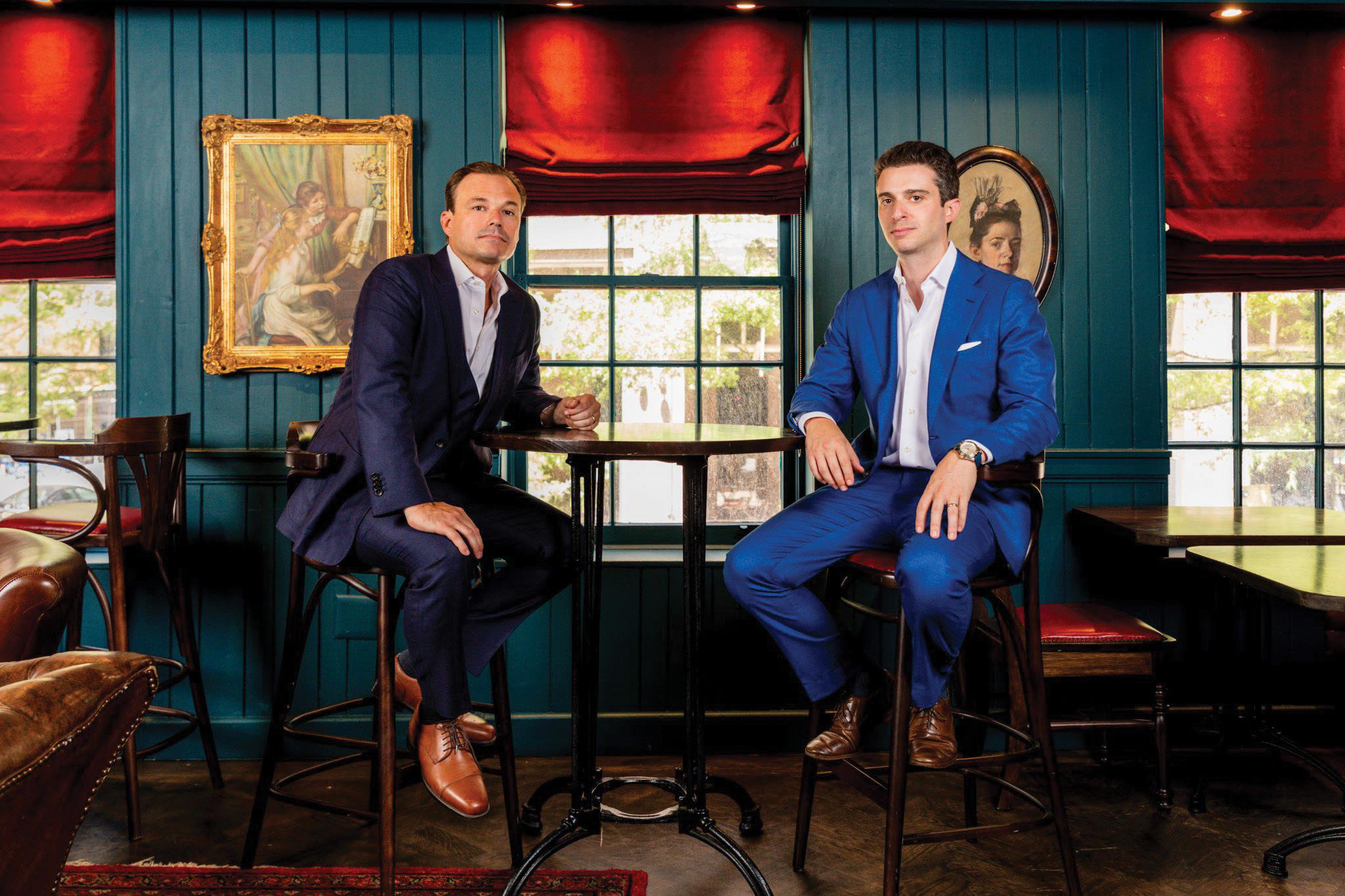

Levy Goldenberg stands out for its unwavering dedication to clients. Located in downtown Manhattan, Levy Goldenberg LLP specializes in commercial and real estate litigation. With a foundation of extraordinary legal representation, Levy Goldenberg LLP is becoming a trusted partner in the Big Apple's complex legal world.


We aim to provide a transparent, practical approach to commercial and real estate disputes in New York. Our vision is to not only offer exceptional legal services but also to drive progress and innovation in the legal community and New York City.


mannpublications.com
212-906-4499 | levygoldenberg.com

CAN SITE SOURCING TECH SOLVE FLORIDA’S HOUSING CRISIS?
BY JONNY BRITTON, CEO OF LANDTECH
FEATURES | TECHNOLOGY


For most people, Florida conjures up visions of theme parks, sun and sea (perhaps the occasional alligator, too), but the Sunshine State has a serious problem, and it’s not the Buccaneers trying to replace Tom Brady. Instead, it’s a critical shortage of affordable rental homes catering to extremely low-income households (ELIs).
The numbers paint a worrying picture. According to the National Low Income Housing Coalition (NLIHC), more than two in 10 (21%) of all renter households across Florida are ELI —those whose income level is at or below the poverty guideline. The maximum income for a four-person extremely low-income household at the state level is $26,500. The annual household income needed to afford a two-bedroom rental home at HUD’s Fair Market Rent is $63,622. That is a major affordability gap.
Plenty of factors are at play — the job market, wages and the cost of building materials, to name a few. However, fundamentally there is simply a lack of available affordable rental housing across Florida. The NLIHC estimates that the shortage of affordable rental homes for extremely low-income renters is 443,892. That’s a gargantuan deficit.
Cue the Live Local Act, state legislators’ attempt at turning the tide. Also known as SB 102, this comprehensive, statewide workforce housing strategy is designed to increase the availability of affordable housing opportunities for Florida’s workforce. In a sign of just how concerned legislators are about the ELI rental problem, the Florida Senate unanimously passed the bill by a vote of 40 to 0 earlier this year. Not a single state senator denies that housing affordability is a major issue.


The Live Local Act introduces a variety of measures to unlock rental housing development, such as height, density and tax exemptions. It also allows developers to build on land previously designated for commercial, industrial and mixed-use |purposes. In short, it says to developers: “Get building, and fast.” However, building 443,892 affordable rental homes at pace is easier said than done.
One of the biggest issues is site selection. Yes, the Live Local Act has opened up new land for development, but assessing thousands and thousands of potential sites isn’t exactly straightforward. Developers use a huge range of data points to accurately assess the viability of potential residential sites — comparables, ownership, zoning, building permits and future land use, for example. Then there’s the need to understand rezoning applications, environmental resource permits and hazard data. All that is before developers have even begun
to consider whether local demographic data aligns with their target market.
Gathering this information manually is a huge issue, particularly when state senators want developers to move fast. Manual processes are time-consuming and dangerously prone to human error, which increases the risk of overlooking crucial details. Plus, manual assessment often relies on disparate and inconsistent data sets, as well as many different platforms and tools to cover every step, resulting in a fragmented and inefficient approach. All told, the manual approach causes significant delays, meaning missed opportunities and increased costs for developers, as well as fewer rental units for the state.
The opportunities are there for developers, they just have to be unlocked. The key to doing that is technology.
Site-sourcing platforms like our own are dedicated to helping developers across Florida get to the best sites faster. Site-sourcing technology addresses the pain points of traditional site acquisition, by searching through huge volumes of data to find opportunities that match a developer’s ideal criteria, in a fraction of the time.
Developers can spot risks more quickly, discount sites and move on to the next, whilst the “one-stop-shop” nature of these platforms streamlines the prospecting phase and eliminates the need for extensive independent research across multiple tools. Plus, site-sourcing platforms lower the barrier to entry so that a more diverse range of companies can build what communities truly need.


Fundamentally, technology like this enables faster, more precise, data-driven decision-making, enhancing the likelihood of more developments and ensuring their success. For developers and state legislators, this is a win/win, leading to faster project timelines and more affordable rental stock hitting the market at volume.
Let’s be crystal clear; legislation alone will not change the lives of thousands of ELI households. Legislation has opened up a pathway to affordable rental development, but that path still has to be navigated by developers themselves. Relying on outdated manual site assessment will be like walking that path in a pair of lead boots — slow, inefficient and risky. Utilizing site sourcing platforms like our own will be like bounding down that path in a pair of rocket-propelled sneakers, resulting in more development sites unlocked, more affordable rental housing for Florida and countless lives dramatically improved.

FEATURES | TECHNOLOGY
A NEW HQ IN MORRISTOWN
One of the most urban areas in New Jersey will be renewed with the redevelopment of Headquarters Plaza into HQ Plaza in downtown Morristown, designed by Gensler.
Owned in partnership with The Olnick Organization and Fisher Development Associates, the one-million-square-foot mixeduse complex will feature 650,000 square feet of Class A office space, 100,000 square feet of retail space, the 256-room Hyatt Regency Morristown, a 40,000-square-foot Crunch health club with an indoor swimming pool and a 10-screen AMC theater atop a 3,000-space parking garage.
HQ Plaza is centrally located along the Morristown Green, where it offers convenient access to New Jersey Transit, as well as the area’s diverse retail and culinary scene, historic charm and new residential properties.
The onsite Hyatt, which recently underwent a full renovation designed by Gensler, features 31,000 square feet of meeting and conference space that includes four large ballrooms and 32 flexible conference rooms, enhanced with catering services and advanced audiovisual support to serve the business needs of tenants and hotel guests.
“We’re proud to work with Gensler to invigorate HQ Plaza as we apply a modern, energetic aesthetic to the development,” said Brian Fisher, principal partner at Fisher Development Associates. “This property is a well-established destination for business and leisure, and it brings us great satisfaction to unveil our new vision for the complex. The new design centers around providing our tenants with access to contemporary workspaces, thoughtfully curated hospitality, entertainment and the finest dining that Morris County has to offer.”
Tenants and visitors will enjoy an office experience anchored by a newly revitalized main concourse that provides access to HQ Plaza’s curated selection of amenities, dining and entertainment options. This open-concept area will facilitate access from east to west — from the office towers to the Hyatt — and will activate various lounge areas, dining and workspaces throughout the main corridor.
“The transformation of HQ Plaza offers an exciting new elevated experience for both office tenants and guests who visit the concourse each day. Infused with daylight and biophilia, the space will become a destination with a host of amenities and offerings that can support a variety of events and space for collaboration,” said Rene Cruz, project director at Gensler.
HQ Plaza has also inked leases with three restaurant concepts: Sushi Lounge, Parkside Tavern and Masseria by Joe Cetrulo.
These eateries will occupy HQ Plaza’s prime retail space located along Speedwell Avenue, creating a veritable “restaurant row” within this regionally celebrated, bustling downtown. Additionally, both grab-and-go and sit-down breakfast and lunch options are available at the Hyatt Regency Hotel and Morristown’s many other restaurants are just a short walk away.
“HQ Plaza is a centerpiece of one of the most desirable suburban downtowns in the state — seamlessly integrating live, work and play experiences for current and future tenants, as well as the surrounding community,” said Seth Schochet, president of The Olnick Organization. “The abundance of forthcoming restaurant and retail offerings will continue to enhance this stretch of Speedwell Avenue, bolstering Morristown’s profile while also facilitating convenience for our office tenants.”
Downtown Morristown is seeing several major commercial developments, including M Station, an office and retail complex also designed by Gensler and potential residential projects.
HQ Plaza also boasts a recently renovated outdoor plaza. Open to the public, the 50,000-square-foot space can be made available to office tenants, hotel patrons and the neighboring restaurants for use as an ancillary, multi-purpose event space.
“This iconic complex has long been a hub of professional activity, offering the Morristown community a range of expansive amenities. The planned renovations will further enhance its capacity to serve the Town,” said Morristown Mayor Tim Dougherty. “Contributing to the vibrancy of downtown, the new HQ Plaza will establish a revitalized epicenter for business, retail and dining on the Green, while also driving activity for the existing shops and restaurants along Speedwell Avenue. The evolution of this development is a foundational part of our strategy to elevate Morristown as a premier corporate and residential destination.”
These renovations will further accelerate the vibrant office leasing activity at HQ Plaza, which resulted in 14 new leases, totaling approximately 100,000 square feet, in the past year alone, the team reports. Robert Donnelly, Robert Donnelly Jr. and Ben Brenner of Cushman & Wakefield serve as leasing agents for HQ Plaza’s office space.
“Building a project of this scale in downtown Morristown was pioneering from the start. The original Headquarters Plaza, with its Class A office space, ample parking and outstanding amenities has been instrumental in enabling corporate employers to consistently attract and retain top talent over the years,” said Robert Donnelly Jr., vice chairman of Cushman & Wakefield. “The new HQ Plaza will further elevate Morristown’s reputation as one of the most desirable areas of the state to live, work and play.”
52 MANN REPORT | APRIL 2024 mannpublications.com FEATURES | COMMERCIAL

| COMMERCIAL
FEATURES
OUT OF THE ASHES : SAFEGUARDING THE FUTURE OF HIGH-RISE NYC MULTIFAMILY PROJECTS
BY STEVE RUGGIERO, VICE PRESIDENT AT PROJECT MANAGEMENT ADVISORS
Despite the potential financial burdens associated with insurance premiums and fire prevention measures, prioritizing fire safety in New York City multifamily highrise construction is an absolute nonnegotiable. Every possible precaution must be taken to prevent fires and systematically mitigate risks, and failing to fulfill this responsibility can lead to catastrophic consequences. It is imperative for those engaged in these projects to learn from the mistakes of the past and find new ways to safeguard construction sites from fire risks in the future.
For example, the 130 Liberty St. fire of 2007 in New York City tragically claimed the lives of two firefighters, caused numerous injuries and underscored the urgent need for increased NYFD onsite inspections and the implementation of maintenance mandates for pressurized Fire Standpipe systems. Similarly, the South Park Tower Fire in December 1998 resulted in the loss of four lives, prompting the establishment of new building codes and compliance regulations for all future residential projects. These incidents are just a few of many that serve as poignant reminders of the critical importance of fire prevention for developers, property owners and construction site managers.
SAFETY TAKES PRECEDENCE
Approaches to fire prevention vary by market. In New York City, apartment buildings pose unique challenges for fire safety, both during construction and upon completion. With families living in close quarters, the risks associated with fires are heightened, as the safety of one unit can impact the others. While the likelihood of a fire starting in an apartment is similar to that in a private
residence, apartment fires have a greater potential to spread throughout multifamily structures, endangering all residents, according to the FDNY.
Many high-rise buildings in New York City use open flame connections, temporary heating systems, combustible fuels and finish materials, making them highly susceptible to fire risks.
Prioritizing fire safety and prevention is crucial from the outset of these high-rise construction projects.
High-rise construction has specialized requirements mandated by the NYC Fire Department and Building Department, which include considerations such as the proper handling and storage of portable fueled space heaters, smoking prohibitions and signage, waste disposal procedures, correct storage and handling of flammable and combustible liquids, ventilation considerations and more.The Administrative Code of the City of New York §28-301.1 also mandates that property owners maintain their properties in a safe condition, minimizing the risk of accidents and fires. Stalled construction sites and poorly maintained properties are particularly vulnerable, and high-rise buildings under construction must have a licensed fire safety manager when they reach a height of 20 stories, a height of 250 feet or a lot coverage of 200,000 square feet or greater.
In 2021, the New York City Department of Buildings introduced significant legislation to update the city’s Construction Codes and aid in fire safety prevention. Notably, the code update mandated that whenever exits discharge directly outside without passing through a protected
area of vestibule, NYFD access must be provided to the exit stairway either from the protected area or within a minimum distance of it.
FIRE CAUSES, PREVENTION METHODS AND TECHNOLOGIES
There are a multitude of fire prevention methods and technologies that property owners and construction site managers must be aware of. Below are just a few key considerations.
Fire
Watch Procedures:
According to the Section FC 1408 of the fire code, when a site safety manager or coordinator is mandated by the Building Code, the owner must appoint a licensed fire safety manager who will be on-site to fire watch. This entails surveilling the project to prevent fires from happening, alerting emergency services in the case of a fire and protecting the public and workers from danger.
While fire watch is a crucial aspect of fire prevention, it is inherently flawed as a standalone protection measure. Although most projects employ security guards for fire watch duties, the effectiveness of this approach, especially in stick-frame buildings, is compromised by the potential for rapid fire spread. By the time fire watch personnel detect a fire, it may be too late to prevent significant damage. To address this issue, it is essential to incorporate remote heat sensors and wireless alert systems into construction projects.
These systems can promptly notify fire watch personnel of increased temperatures in specific sectors of the building, allowing for faster response times and potentially mitigating the extent of
54 MANN REPORT | APRIL 2024 mannpublications.com FEATURES | MANAGEMENT

damage. Relying solely on traditional fire watch measures without supplementary technology increases the risk of catastrophic outcomes.
Approved Portable Fire Extinguishers: They must be available on all floors, especially where combustible materials or liquids are stored.
Pressurized Temp Dry Standpipe Systems: Due to building heights beyond the reach of FDNY trucks at street level, National Fire Protection Association Chapter 14 requires a dry or wet standpipe system to be installed during construction or demolition. This system must be pressurized, tested regularly and include an alarm.
First Responder Box: The FDNY also requires a first responder box on every construction site, which contains all keys required to obtain access to the construction site and operate the hoist, the pre-fire plan, permits, logbooks and other documents required by this code or the rules to be maintained on the premises. The box needs to be in an approved location and be openable by use of a citywide standard key.
Avoiding Arson: Arson, often arising from individuals either smoking or seeking shelter or warmth, is one of the leading causes of fires on construction sites. This happens primarily in situations where inadequate security measures are in place, such as an absence of barricades and/or fencing due to budget constraints. To effectively address this risk, prioritizing perimeter protection and adding security with badge systems is essential, because it can help clearly define points of entry and exit. Additionally, installing perimeter cameras equipped with motion sensors and 24/7 monitoring capabilities is key, as these types of technologies can promptly alert the project team to any unauthorized entry.
Extreme Housekeeping: Extreme Housekeeping is another vital aspect of fire prevention. Debris acts as fuel for fires and wood framing debris is highly combustible, making the removal of loose debris containing wood, paper or other flammable materials essential. Implementing a formal, measurable housekeeping program to maintain cleanliness and remove debris is imperative to minimizing fire risks, and maintaining a diligent labor force to uphold cleanliness standards is essential in preventing the spread of fires.
Obtaining Hot Works Permits: Prior to the start of any construction work, creating a pre-written task planning document and obtaining all hot works permits is required by both OSHA and the NYFD. These permits are necessary for any operation involving open flames or that produce heat or sparks — such as brazing, torch cutting, grinding, soldering and welding — and must be prepared by a competent person.
Eliminate Heat Sources Where Possible: Instead of relying on hot work activities or temporary heat sources like kerosene or electric heaters, which pose fire risks, developers, owners and construction site managers should consider implementing external heat sources positioned around the perimeter, such as flameless heaters with ducts leading into the building. This approach keeps the heat source outside the building, reducing the risk of ignition, especially during the interior finishing stages involving plaster and paint. Another option is using compression fittings instead of welding for pipe connections to eliminate the need for open flames and heat-related work.
Fireproofing: Fireproofing is of the utmost importance across project sites. Materials such as gasoline need to be stored within fireproof enclosures when not in use, situated in designated areas away from buildings. Additionally, there are spray fire retardants available for wood surfaces. Whether you’re dealing with an open frame situation or closing the walls, there are a variety of products certified by the EPA which prevent fire ignition without posing harm to people and can be applied directly to combustible wood framing and materials during construction.
ALIGNING WITH DEVELOPER PRIORITIES
Developers and owners often prioritize the bottom line from a cost perspective, and some are willing to take risks on fire safety. However, insurance prices hinge on incident rates and reputation, underscoring the importance of taking preventative measures to mitigate fires and ensure project success.
Fire prevention stands as a key concern on any project site, and innovative fire watch and fireproofing approaches like heat sourcing and meticulous planning are instrumental in this. Investing in surveillance technology and deploying proactive measures to eliminate heat sources are vital components of site security. While traditional security guards may seem cost-effective, integrating additional technology and fire-retardant products offers broader coverage and facilitates real-time responses to potential threats.
By learning from the mistakes of the past, developers and owners can put a renewed focus on fire safety for future projects.
mannpublications.com APRIL 2024 | MANN REPORT 55 FEATURES | MANAGEMENT



SUNNINGDALE CO UN TRY CLUB
SCARSDALE, NEW YORK
MONDAY
June 10,
TOURNAMENT CHAIR
CHAIRS EMERITI
Robert E. Helpern*
Tannenbaum Helpern
Syracuse & Hirschtritt LLP
Roger A. Silverstein* Silverstein Properties, Inc.
Samuel B. Lewis* SBL Property Consultants, LLC
Stephen B. Siegel** CBRE, Inc.
* Member, National Jewish Health Council of Trustees | ** Co-Chair, National Jewish Health Council of National Trustees
Funds raised will support groundbreaking medical research and treatment for patients with lung, heart, immune and related conditions, including asthma.
REGISTER OR DONATE TODAY
njhealth.org/NYGolf
Mattie Shepheard | 212.297.0857
ShepheardM@njhealth.org
ANNUAL
2024 NATIONAL JEWISH HEALTH Breath of Life New York Golf Tournament ANNUAL 27 TH New York Golf Tournament
We’re banking experts. People experts, too.
Customized banking solutions for every customer.

We may be one of the 10 largest banks in the U.S., but we never lose sight of the individual. Our Relationship Managers personally get to know your business, taking the time to understand your unique needs before offering their custom solutions. And with over 150 years of industry experience, you won’t just like working with us. You’ll love it.
tdbank.com/commercialbanking
TD Bank, N.A.

BILLY coTToN BRINgS PARISIAN decoR To THE TREAdWELL
Vintage meets modern decor at two residences curated by interior designer Billy Cotton at The Treadwell, the Art Deco-inspired luxury condominium on the Upper East Side. Located on 62nd Street between Second and Third Avenues and equidistant to Central Park and the East River, the ground-up new development is set within an Art Deco-inspired building conceived by INC Architecture & Design. It houses 66 condominium units ranging from studio residences to three bedrooms and a penthouse level. Dart Interests is the developer. Zeckendorf Development is the co-development manager.
Cotton’s two- and three-bedroom residences embody intimate luxury with a simple, layered and architectural approach to the design concept. Many of the pieces are vintage and were sourced during trips to the Paris Flea Market and Marché aux Puces de Paris SaintOuen. The art, including a Paul Lee wall sculpture, a painting by Rosie Keyser and photography by Jack Pierson and Kerry Schuss were sourced from Cotton’s personal collection.
Cotton drew inspiration from 1930s French interiors, which he considers the birth of Modernism, to complement The Treadwell’s Art Deco exterior architecture, which also references the 1930s time period. The furnishings for the homes were envisioned as modern

Residence 18C
heirlooms that could evolve over time and be collected.
Highlights of Residence 18C, a 1,258-square-foot, two-bedroom, two-bathroom home, featuring a west-facing terrace with unobstructed views, include a custom sofa banquette piece outfitted in Pierre Frey fabric. It also incorporates two side tables that blend into one wall of the living area, as well as a custom contemporary Travertine coffee table and vintage slipper chairs reupholstered in Pierre Frey textiles. Curved Fledermaus chairs flank the glass-top dining table.
Residence 19B, a 1,693-square-foot, three-bedroom, three-bathroom home, includes a living and dining area with Noguchi lighting fixtures, as well as a custom dining banquette and oak dining table with Morentz chairs. A vintage French oak bookshelf, Jean-Michel Frank-inspired sofa, vintage armchairs and a Maison Jansen coffee table complete the space, which opens onto a gracious terrace with iron-framed chairs and upholstered cushions.
The primary bedroom’s custom fluted headboard in a luxurious Loro Piana fabric is complemented by the same fabric for the window treatments that wrap the room. 1970s-era lamps with fossilized leaves cast in resin bring natural materials into the space.
58 MANN REPORT | APRIL 2024 mannpublications.com

“the vision for these homes was to create spaces that are natural, simple and elegant.” -BILLY cotton
FEATURES | RESIDENTIAL
Photos by Brett Wood
MASS TIMBER: A SUSTAINABLE REVOLUTION SHAPING THE FUTURE OF CONSTRUCTION
BY ANDREW PEARL
For years, innovators have applied cuttingedge technologies to enhance wood’s key qualities. Products such as glued laminated timber (glulam) have been manufactured for over a century to make durable timber in complex shapes, while rigid and dimensionally stable products such as crosslaminated timber (CLT) are relatively new to the North American market. These products offer builders tremendous potential for innovative design, structural stability, cost efficiency, schedule efficiency and sustainable building.
ENVIRONMENTAL IMPACT
The 2023 International Mass Timber Report illustrates how mass timber can propel the North American construction industry toward its sustainability goal of carbon neutrality by 2034. With its low carbon footprint and ability to sequester carbon dioxide (CO2), mass timber has the potential to significantly reduce global CO2 emissions associated with construction activities.
Mass timber mitigates climate change in three ways:
1. Carbon sequestration: trees, through photosynthesis, capture CO2 from the atmosphere, reducing the overall CO2 in the atmosphere.
2. Carbon storage: wood and other biobased materials retain CO2 in long-term applications instead of being released into the environment through decomposition or combustion. When amassed sufficiently, the cumulative carbon sequestered can potentially surpass that of an unmanaged forest.
3. Carbon substitution: mass timber, with 30% to 50% fewer CO2 emissions compared to traditional concrete and steel structures, provides a compelling alternative, steering clear of high-embodied carbon materials.
INNOVATION AND VERSATILITY
Mass timber lends itself to innovative applications where standard materials or
techniques may prove too heavy or expensive. Its unique combination of strength and light weight make mass timber ideal for projects such as tall buildings, which require greater stability. The comparative weight advantage is staggering. A timber building, on average, weighs only 20% as much as its concrete or steel counterpart. This advantage is especially significant for sites with poor soil conditions, pressure limitations or high seismic activity, where a lighter building could be built larger and taller than a heavier building without compromising stability.
MASS TIMBER AND THE FUTURE OF CITIES
With its intrinsic sustainability, reliability and aesthetic appeal, mass timber promises to be the future of construction. To move urban environments into a greener future, contractors must engage with city and state regulatory agencies to advocate for updates to building codes that support the use of mass timber in commercial buildings.
Swinerton’s Heartwood project in Seattle exemplifies the power of this collaborative approach. Heartwood is Seattle’s first mass timber middle-income housing development, challenging traditional building practices via a new, replicable typology for mid-rise residential projects. The project utilizes CLT with exposed glulam columns and beams and is the first Type IV-C tall timber building entitled through the City of Seattle under the newly adopted 2021 International Building Codes (IBC), following the exact IBC provisions by design.
The West Coast is not the only place experiencing a mass timber breakthrough. A 2022 update to the New York City Building Codes explicitly provides for mass timber elements, aiding Local Law 97’s goal to establish carbon neutrality in the city by 2050 — one of the country’s most ambitious plans for reducing emissions. Additionally, the New York City Economic Development Corporation launched the New York City
Mass Timber Studio this year to support the development of mass timber projects in their early phases.
Since Swinerton expanded its operations into New York City in 2021, the firm has been at the forefront of the new opportunities. Also breaking into the East Coast scene is Timberlab, a wholly owned entity of Swinerton Incorporated offering design-build mass timber services.
The mass timber firm recently opened its East Coast glulam fabrication facility — located in Greenville, South Carolina — to build on the momentum of mass timber adoption across the eastern United States and to tap into the abundance of durable and fast-growing southern yellow pine, which has emerged as the preferred species for many architects.
THE FUTURE UNVEILED
The push for sustainable buildings and cities is dramatically shaking up the construction landscape, and regulatory updates are finally beginning to recognize the cost savings, improved sustainability and streamlined construction benefits that position mass timber as an integral piece of the movement.
The future of wood-based construction lies in reimagining and reclaiming one of the world’s oldest building materials to provide sustainable economic growth and preserve the environment. But to do this, firms need to remain nimble, adaptable and open to whatever comes next in the dynamic world of mass timber construction.
Andrew Pearl is vice president and division manager of Swinerton’s New York office, where he spearheads the growth strategy and provides leadership in overseeing construction project teams. In this capacity, he is dedicated to ensuring adherence to safety protocols, maintaining high-quality standards and achieving compliance with budgetary and scheduling requirements.
60 MANN REPORT | APRIL 2024 mannpublications.com FEATURES | MANAGEMENT

mannpublications.com

The size of our company is our ultimate strength.
Simplifying your life as a board member is our purpose.
“Being under the FirstService umbrella is more than building management. We’ve refinanced our mortgage through their financial team, completed major cap ex projects with the construction management team, and are now working on Local Law 97 compliance and an EV charging installation.
The board has never had access to this level of expertise and I feel like we’re just getting started.”
- Stephen V., NYC Board Member

Let’s talk.
www.fsresidential.com/new-york
212.634.5410
62 MANN REPORT | APRIL 2024 mannpublications.com



More than 35 years of real estate, condominium & cooperative experience
WilkinGuttenplan uses expert industry knowledge in accounting, audit, and tax services to assist New York City real estate owners, developers, and investors of commercial and residential properties identify opportunities and guide them on implementing strategies to stay ahead of changing times.




mannpublications.com APRIL 2024 | MANN REPORT 63 FEATURES | TECHNOLOGY New York | New Jersey 212.247.9000 | 732.846.3000 wgcpas.com
Condo-Co-op Helpline:
Building Defects – Where is the DOB?
 Carol A. Sigmond Partner Greenspoon Marder LLP
590 Madison Ave., Suite 1800 New York, NY 10022
carol.sigmond@gmlaw.com (212)524-5074
On Sunday, March 10, 2024, on page 6, “The New York Post” published an article about a newly constructed building on the Upper East Side where the construction defects included, among other items, an illegal combustible two-story staircase.
There is no reason for New Yorkers to be dealing with this level of defective work.
More than 2,000 people are employed by the New York City Department of Buildings (DOB), approximately 25% of whom are inspectors, reports SeeThroughNY. Surely with this level of investment in public services, there should be some tangible benefit, such as city inspectors finding these types of defects and not issuing certificates of occupancy, temporary or otherwise, until the buildings comply with the building code.
Beyond DOB employees, who are the last line of defense, there is a construction oversight system mandated under the building code and the state law under which architects and engineers have state-imposed life-safety obligations in the design phase and special inspectors. By city law, they are supposed to inspect specific items of work to ensure compliance with design drawings. However, owners must retain and pay special inspectors and licensed design professionals to monitor construction. If the developer/owner of the project is not paying for these services, then the system does not function as intended.
New York City tried to improve enforcement of building code obligations on developers/ owners and contractors by mandating site safety inspectors
and site superintendents. These private parties are charged with checking construction sites to ensure safe conditions for workers and to mandate daily checks of the work by licensed superintendents. But are they consistently employed as required by the building code?
This leads to an obvious question: how are these obligations — all of which are vested in private parties — enforced? In instances where compliance with state or city requirements by licensed personnel, such as registered design professionals, special inspectors, site safety officers and site superintendents, is deficient, there is the potential for adverse actions against their licenses. Adverse actions are taken in the form of fines, loss of self-certification privileges or license suspension. But are these actions taken frequently enough and are the penalties discouraging deficiencies?
And what of the developers/ owners who may not retain the staff anticipated by the building code? What can or should happen to developers/owners who do not retain the mandated special inspectors, site safety managers or site superintendents? Except for stop work orders, there is little that the Department of Buildings can do to owners or developers to obtain voluntary compliance with the law.
Consider the following: under certain circumstances, the building code requires an “engineer” for the developer to identify as a “structural stability engineer” for adjacent properties. If the owner does not provide funding for this
purpose, the engineer of record has little option but to resign from the project. But all that will cause is that a less ethical engineer will instead pick up the project and there will still not be a structural stability engineer. If those properties are damaged, the adjacent property owner will sue for damages and some insurance company will deal with the claim, and years later when the lawsuit concluded, it will raise everyone’s premium. But what penalty does the developer/owner who did not provide funds for the structural stability engineer face? Possibly additional interest on a construction loan or a delay to his project. At some point, these violations by owners or developers should be addressed by vacating permits or even by prosecution.
If you are looking at new construction for purchase or lease, given the current situation with the weakness in the oversite system, you would be well advised to have a detailed inspection of the property made by registered design professionals experienced in identifying construction defects. By way of example, there should be an emphasis on ensuring that windows and wall insulation comply with the offering plan and design documents to ensure compliance with Local Law 97 standards: HVAC systems should be balanced; the available power should be adequate for the drive to make New York “all-electric” and light switches and outlets should be code-compliant.
This column presents a general discussion. This column does not provide legal advice. Please consult your attorney for specific legal advice.
64 MANN REPORT | APRIL 2024 mannpublications.com COLUMNS


© 2022 Metropolitan Commercial Bank | “Metropolitan Commercial Bank” is a registered trademark of Metropolitan Commercial Bank. Metropolitan Commercial Bank Business • Commercial • Personal Banking | Global Payments 99 Park Avenue • 12th Floor • New York • NY • 10016 Welcome to The Entrepreneurial Bank Helping Our Clients Build and Sustain Wealth, One Client at a Time. For more than 20 years, our bankers have worked alongside middle-market and small business owners during the good times as well as the not-so-good –tailoring our traditional and innovative banking products and services to meet the challenges and seize opportunities in front of our clients. Laura Capra Executive Vice President 212 659-0606 | LCapra@MCBankNY.com
Real Estate Crime Insurance and Prevention
 Frank DeLucia Senior Vice President Hub International Northeast
frank.delucia@hubinternational.com (212)338-2395
Frank DeLucia Senior Vice President Hub International Northeast
frank.delucia@hubinternational.com (212)338-2395
Real estate crime insurance and prevention play crucial roles in safeguarding against potential crime risks. Property owners, however, frequently underestimate the vulnerability of their assets to criminal activities, resulting in avoidable incidents and increased insurance premiums.
It is imperative for owners to acknowledge and address the escalating threat of crimes on both retail and residential properties, regardless of their geographical location. By implementing effective prevention measures and securing appropriate insurance coverage, property owners can mitigate crime risks and ensure comprehensive protection against potential losses.
The surge in civil disorder and mass-theft incidents has heightened concerns among underwriters, leading to apprehension about insuring specific properties. Surveillance footage frequently captures sizable groups engaging in “smash and grab” retail thefts.
According to the Coalition of Law Enforcement and Retail, organized retail crime is estimated to contribute to $45 billion in annual losses. This alarming trend underscores the need for robust risk management strategies and insurance solutions to address the evolving challenges faced by property owners and insurers.
Law enforcement has had difficulty preventing and prosecuting these crimes. And property owners and operators that lack
proper insurance are paying the cost of the crime itself as well as that for defending themselves against any litigation following crimes committed on a property.
Real estate crime insurance and prevention help minimize loss. Before underwriting against losses due to crime, insurers will thoroughly investigate the safety and security of a given property. A high level of security increases the chance of a lower quote at renewal.
Here are five things real estate owners and operators can do to increase safety and security, and ensure they are properly covered in the event of a loss:
1. Conduct a property risk assessment. An owner may think that because their building is in a safe area it isn’t vulnerable to crime. However, many different elements other than location factor into crime risk. A property risk assessment will identify the security aspects that need improvement to improve crime prevention.
2. Implement technology. Residential high rises and commercial offices can install barriers to entry such as electronic key cards. For retail, security cameras and alarms can discourage criminals, while silent alarms that alert authorities can protect employees. Additionally, video surveillance and analytics software will, at the least, provide a record of stolen items in submitting a claim.
3. Train employees and add personnel. Employee and
customer safety is the most important element in security. Staff, whether at retail or commercial properties, should be trained to ensure safety in case of a crime on the premises. Hiring extra security services and guards can reduce crime, particularly important in areas where law enforcement cannot respond quickly.
4. Improve the property.
Expanding building security systems and adding highintensity LED lights in public areas can dissuade criminals.
Maintenance is also important. A building owner can have a crime claim denied if locks, alarms, generators and backup systems aren’t working properly. In addition, it helps to position customer checkouts near the exit, properly position mirrors and security cameras and post signage that outlines the consequences of theft.
5. Consider Real Estate Crime Insurance. Many property owners believe that General Liability (GL) insurance will cover all losses stemming from crime, but GL insurance only covers third-party bodily injury and property damage. Real estate Crime Insurance (CI) specifically covers losses related to crime. Property owners should determine a maximum allowable crime loss and ensure their CI coverage is commensurate with that amount.
Work with an experienced insurance advisor for more information on deterring crime and assessing the risks for building owners and operators.
66 MANN REPORT | APRIL 2024 mannpublications.com COLUMNS


A MODERN APPROACH TO COMMERCIAL REAL ESTATE,

POWERED BY A CENTURY'S WORTH OF EXPERIENCE.



We would like to take this opportunity to thank the following people:
Our team & staff for their endless dedication and support
Our tenants for their cooperation to keep our buildings safe
Our partners for their trust and confidence in these challenging times
All New Yorkers working tirelessly to keep our city moving
We hope everyone continues to be healthy and safe in 2021.


K A U F M A N O R G A N I Z A T I O N . C O M L E A S I N G | M A N A G E M E N T | I N V E S T M E N T S
Five Messages a Yard Sends to Potential Home Buyers

Kris Kiser
Outdoor
Power Equipment Institute
TurfMutt Foundation Equip Expo
1605 King St. Alexandria, VA 22314 turfmutt.com opei.org (703)549-7600
More than three-quarters of Americans who have a yard say it’s one of the most important parts of their home, according to a poll commissioned by the TurfMutt Foundation and conducted online by The Harris Poll. The poll also shows that nearly three-quarters of Americans overall (72%) say a spacious yard would be at the top of their wish list if they were looking for a new home. Another report from Zillow indicates that the backyard is a musthave feature for buyers.
With the continued importance of outdoor space, you should think about what your yard says to potential home buyers if you are trying to sell. Your yard has an impact on curb appeal, of course, but there are other messages your yard is sending that could also make or break a deal.
The yard is so important that the TurfMutt Foundation, which advocates for the care and use of the green space around us, including our own backyards and neighborhood parks, introduced the term “backyarding,” which is the trend-turnedway-of-life of moving indoor activities into the outdoor space around us.
The TurfMutt Foundation says homeowners and their real estate advisors should recognize these five messages a yard sends buyers:
1. This home is worth viewing You only have one chance to make a good first impression, and your yard is a huge part of your home’s curb appeal. Set a welcoming vibe with cared-for landscaping and color that invites buyers to imagine themselves living here.
2. This home is well cared for. The condition of your yard gives buyers a glimpse at what they can expect inside. A manicured lawn, clean flower beds, fresh mulch and flowering plants send the message that you care for your entire home — not just the yard.
3. My kids and pets will be safe here. Many families shopping for a new home want space where their kids and/or pets can play safely. Buyers in this category will be drawn to properties that offer large grassy areas, fenced yards and shade trees for cooling off under during hot days.
4. This yard will support our lifestyle. Outdoor living is a way of life now, so more than anything buyers will want to be able to envision themselves outdoors. Just like you stage interior spaces, you can also set up your outdoor space to illustrate your yard’s potential for any type of buyer. Set up some lawn games on your grass. Set a patio or picnic table for a feast to set the scene for outdoor dining. Use plants
to create privacy, camouflage unsightly HVAC or pool equipment and fashion boundaries between various activity areas.
5. This yard will assist pollinators and other wildlife. Nature starts in your backyard, providing habitat and food for birds, butterflies, bees and more. Potential buyers will see flowering plants, trees and shrubs as a way to connect to the natural world around them on a micro-level while doing some good for the planet.
Remember, putting the right plant in the right place is the key to successful backyarding, whether you’re trying to sell your home or not.
More than just sun vs. shade exposure, this “Golden Rule” of backyarding means selecting plants that will thrive in your climate zone, choosing a variety of plants that will bloom year-round to support local pollinators and serve the connected ecosystem and strategically placing plants in your yard to support your family’s lifestyle.
For more information, sign up for “Mutt Mail,” a monthly e-newsletter with backyarding tips and all the news from the TurfMutt Foundation. To learn more about creating the yard of your dreams, visit turfmutt.com. Look for Mulligan the TurfMutt on the CBS “Lucky Dog” television show.
68 MANN REPORT | APRIL 2024 mannpublications.com COLUMNS
LANGSAM PROPERTY SERVICES CORP., AMO
Langsam Property Services Corp. is a Bronx-based real estate management company. These buildings are located in the Bronx, Manhattan, Queens, Brooklyn, and lower Westchester County.
Langsam is designated as an Accredited Management Organization (AMO), a standard of excellence in management conferred by the Institute of Real Estate Management (IREM).
1601 Bronxdale Avenue Bronx, New York 10462
Tel: 718. 518. 8000
Fax: 718.518. 8585

www.langsampropertyservices.com
Mark Engel, CEO Matt Engel, President
Deb’s Retail Dish and Deals:
The Not-So-Dying Department Store

Debra Hazel
Debra Hazel Communications
North Las Vegas, NV (201)618-5247
Since I began writing about retail real estate, I’ve heard the phrase, “The mall is dead” about 1.2345 billion times. And, yes, lots of malls have closed since their 1980s/1990s heyday as times, neighborhoods and retail have changed.
Not so coincidentally, the same has been true of the department store, which from the 1970s and 1980s saw major names turn away from selling hard goods and then consolidate into national companies that frequently had no historical or emotional connection to their markets. (Newbies, look up Burdine’s, Jordan Marsh, D.H. Holmes, Sakowitz, Robinson’s, I. Magnin, Marshall Field and — sob — Abraham & Straus, among others.)
Those are just a couple of the reasons that you see a lot of vacant department stores in downtowns around the country, with Macy’s in Union Square in San Francisco the latest to announce its closing, and suburban malls.
But some companies are figuring out that maybe, just maybe, people want to buy different types of goods in one store that isn’t a warehouse club.
That’s why I’m excited about latest announcement from Kohl’s. Brand reviver WHP Global has announced a new partnership that will bring WHP’s Babies”R”Us to about 200 of its 1,100-plus stores this year, beginning in August. The departments will range
from 750 square feet to 2,500 square feet of dedicated space selling baby gear, activity, bath, furniture, feeding and safety products. This space will complement the existing Kohl’s assortment of baby apparel which will be adjacent to the new offerings, creating a comprehensive baby shop for customers. A larger selection will be available online, with Kohl’s serving as the exclusive retailer for Babies’ registry.
“Evolving our assortment and bringing more relevant products to the millions of customers we serve is a core focus as we continue to deliver on Kohl’s broader growth strategy,” said Tom Kingsbury, Kohl’s chief executive officer, in the announcement. “We see significant opportunity in the baby gear category and partnering with Babies”R”Us is another example of how we are finding new ways to optimize our assortment and further establish Kohl’s as the go-to brand for families.”
This continues an existing reinvention at the retailer. Kohl’s already has implemented the in-store shop with Sephora, bringing a more sophisticated beauty department to its shoppers. Another 140 stores will house Sephoras over the next few months, and the retailer projects that Sephora will bring $2 billion in sales by 2025.
Even with that boost, Kohl’s needs to expand its appeal. Its critical same-store fourth-quarter sales fell 4.3%, making it
the eighth quarter in a row of declining revenues — though it did post a profit of $186 million versus a loss of $273 million in the year-ago period. It already has increased the space dedicated to home décor and gifts and has picked an ideal partner to create yet another comprehensive department.
WHP seems to have figured out the secret sauce of shopin-shops. Its Toys R Us (TRU) units inside Macy’s have benefited both companies, and now TRU is once again opening standalone stores.
The in-store boutique was once one of retail’s most exciting concepts, epitomized by the late, great Henri Bendel’s Street of Shops, introduced in the late 1950s to give a European flair, and introduce new brands. Other companies developed in-store boutiques, creating the prototype that’s still being used today.
The difference now is that Kohl’s is using the concept to bring back the harder goods that department stores abandoned decades ago to specialty retailers such as Best Buy and furniture chains.
A couple of years ago, thenKohl’s CEO Michelle Gass (now president and director of Levi Strauss & Co.) noted that Kohl’s was “evolving” from a department store. Respectfully, Kohl’s new leadership may just be finding the formula for reinventing them — and saving itself in the process.
70 MANN REPORT | APRIL 2024 mannpublications.com COLUMNS


mannpublications.com APRIL 2024 | MANN REPORT 71
Spring Cleaning for Buildings
 Ira Meister
President and CEO
Matthew Adam Properties Inc.
Ira Meister
President and CEO
Matthew Adam Properties Inc.
375 Pearl St. – 14th Floor New York, NY 10038 (212)699-8900
imeister@matthewadam.com
As we begin to put away our boots and heavy coats — yes, we had some snow this winter — it’s time to prepare for the spring and summer. It’s a period to assess the condition of the property and see what repairs and improvements can be made.
In recent years, we have been fortunate that mild winters reduced the need for some repairs at properties. Yet, as I write this, it is still uncertain if Old Man Winter will smack us with formidable snow, ice and freezing temperatures, leaving problems in their wake.
Serious problems include cracks in sidewalks and the building exterior, which are made worse when water seeps into cracks and then freezes, expanding and creating holes of various sizes.
Regardless of the requirements to comply with the city’s Local Law 11 program to inspect and repair weaknesses in a building’s envelope, property managers should check for even small leaks that can metastasize and are the canary in the coal mine for major problems.
This also applies to the roof, where even a small leak can create significant damage. The roof needs additional attention to be certain that all leaves and
other debris that have accumulated over the winter and can clog drains are removed. This can cause leaks and floods. Sidewalks are another area requiring inspection from a safety viewpoint and aesthetically.
It’s wise in the coming months to schedule annual maintenance for heating systems. Summer is the best time for this so the system doesn’t have to be shut down during the cold months. Building managers literally don’t want to be left out in the cold and have difficulty scheduling maintenance.
Periodic maintenance of all systems is vital to keep them running efficiently and to extend their useful lives. Trying to save money by forgoing this usually leads to much greater expenses in the future.
If the co-op or condo is on a fiscal year that begins July 1, work as the weather warms up could be advanced on the annual budget which is usually devised by the building’s treasurer, property manager and accountant.
While a fiscal document, the annual budget also sets a property’s priorities for the coming year and into the future. As part of this effort, smart boards should have a five-year capital budget that prioritizes major repairs and
projects and identifies sources of financing.
If the building has grilling equipment, these should be checked so they are in safe working order.
Though this should be an ongoing responsibility, it is a good time to carefully inspect all recreational areas, such as equipment in the health clubs and basketball courts if applicable. Winter is a time of heavier use as more people workout indoors, particularly in the first few months as they seek to keep their New Year resolutions to be more active.
If the building has a pool, don’t delay bringing in the service company so its opening won’t be delayed.
Finally, pay attention to the landscaping. A harsh winter can damage plants and some perennials might need to be replaced. The first impression by any potential buyer or renter often determines their entire outlook about the building and the apartments, and has a dramatic impact on their decision to buy or rent. It’s called “curb appeal.”
Spring is a time of increased buying activity and an attractive look of the entrance and other areas can help project a positive view of the property.
72 MANN REPORT | APRIL 2024 mannpublications.com COLUMNS


Since 1979 we’ve brought a passion for the details to every facet of our business. As a multi-faceted real estate company and owner/ operator of more than one million square feet of commercial space, our decades of perspective ground our get it done approach.
Ownership/Management/Leasing • Tenant Representation Agency Representation • Co-GP and LP Real Estate Investments Scott Galin, Principal/CEO | 212.398.1888 | Handler-re.com HANDRO PROPERTIES LLC | ESSH INVESTMENTS LLC Tenant Representation Actively involved in over 50 transactions in 2023 Decades of Perspective PASSION FUELED BY HUSTLE ESSH Investment Platform 110 total transactions including 20 in past two years NYC Ownership Portfolio 95% leased
New Ruling May Reshape Self-Employment Tax Laws for Real Estate Partnerships
 James Philbin, CPA, PFS, MST, CFP
Partner, Tax & Business Services Marcum LLP
James Philbin, CPA, PFS, MST, CFP
Partner, Tax & Business Services Marcum LLP
Boston, MA james.philbin@marcumllp.com
In light of the Tax Court’s refusal to grant summary judgment in Soroban Capital Partners et al. v Commissioner, real estate partnerships must approach the categorization of partnership income and guaranteed payments with caution. While a partner’s share is often exempt from self-employment (SE) tax, the November 2023 ruling brings attention to the Self-Employed Contributions Act (SECA) tax compliance and the IRS’s heightened scrutiny on this issue. This case highlights the necessity of a functional analysis to determine SE tax exceptions and may have wider implications for self-employment tax laws and compliance strategies.
Soroban Capital Limited Partnership was formed under Delaware law in 2015 and is a tax partnership for federal income tax purposes. Three of its partners received guaranteed payments for services performed for the partnership and an allocation of partnership income, which was shown on the entity’s U.S. tax filing as not subject to SECA tax. Upon audit, the IRS increased the partnership’s net earnings from self-employment to include the distributive share income.
Most business income allocated to a partner is subject to self-employment (SE) income tax, but under IRC sec 1402(a)(13), limited partners’ distributive shares, except for guaranteed service payments,
are excluded.
This is referred to as the Limited Partner exception. In Soroban, the petitioner asserted that the Limited Partner exception applies, and the distributive share is excluded from the SE tax.
The court stated that it must interpret the statutory language contained in the Limited Partner exception based on its actual wording. The statutory exception does not apply to “limited partners” but to “limited partners, as such.” It focuses on the phrase “as such” as providing a limitation on the SE tax exception and concludes that it does not apply broadly and automatically to all state law limited partners of limited partnerships.
The court believes the service is correct in proposing a functional analysis to determine whether the exception should apply in a particular case.
This case is important since it is one of several docketed cases dealing with the Limited Partner exception from SECA and indicates that under the SECA tax compliance program, the IRS is scrutinizing limited partnerships and LLCs more. These cases collectively suggest that simply holding a partnership interest is insufficient to categorize earnings as passive and exclude them from self-employment tax when the partner actively provides ser-
vices to or for the partnership.
This ruling may have significant ramifications for the future of the self-employment tax. If the case results in a decision that sets a legal precedent, it can influence how similar cases are decided in the future, potentially affecting many taxpayers. It may also provide new guidance on what constitutes self-employment income and who is subject to self-employment tax.
The IRS may then respond to a court decision by amending regulations or issuing new guidance to clarify how the self-employment tax applies in situations like Soroban.
Significant court decisions can lead to legislative changes if Congress decides to amend the tax law to address issues raised by the case. As a result, taxpayers, especially partnerships and their partners, may need to review and adjust their tax planning strategies based on the case’s outcome.
For those in the professional community affected by this case or interested in its impact on self-employment tax, consulting with a tax professional or attorney specializing in tax law is advisable. These experts can provide detailed analysis and advice based on the specifics of the Soroban Capital Partners L.P. case and any relevant court opinions or documents associated with it.
74 MANN REPORT | APRIL 2024 mannpublications.com COLUMNS


SERVING COMMUNITIES AND HONORING THE VALUE OF THEIR INVESTMENTS SINCE 1955
serve a large community of luxury multifamily, residential and mixed-use cooperatives, condominiums and rental properties throughout New York City. Our services include: 156 WEST 56TH STREET, 6TH FLOOR | NEW YORK, NY 10019 (212) 247-2603 | ORSIDNY.COM
Comprehensive Residential Property Management
Back Office Accounting Services
Risk Management • Energy Consulting
Commercial Leasing
Residential Brokerage and Sales
Project Management Consulting
We
•
•
•
•
•
•
The Future of Proptech in the Real Estate Industry
 Amanda Pflieger Vice President Curbio
1325 Seven Locks Rd., Suite 200 Potomac, MD 20854 (844)944-2629
Like many other sectors, real estate continually adapts to incorporate technological advancements to meet the evolving demands of modern consumers. While integrating technology is crucial for staying competitive, it’s imperative to recognize that it doesn’t replace the role of real estate professionals.
At its core, real estate is a relationship-based business reliant on the expertise and guidance of brokers and agents to thrive. The proptech solutions that will continue to emerge in a constantly evolving real estate market are the ones that are designed to complement and enhance the work of these professionals, seamlessly integrating into their existing practices to streamline daily operations. This begs the question: what does the future hold for proptech in the real estate industry?
Empowering Real Estate Agents
Real estate agents must equip themselves with tools that foster business growth and set them apart in a competitive market. Utilizing proptech as a strategic asset to distinguish themselves is essential for gaining a competitive edge in this dynamic industry. By leveraging proptech solutions effectively, agents can strengthen their value proposition and emerge as standout professionals in a sea of competitors.
Through advanced analytics and market intelligence, proptech innovations provide agents with actionable insights they can use to help their clients make informed decisions. These insights optimize return
on investment and effectively mitigate risks associated with real estate transactions. In turn, real estate agents have time to prioritize understanding their client’s wants and needs, guiding them through the home buying and selling process.
Enhancing Customer Experiences
In today’s fast-paced world, convenience is essential for modern consumers, and proptech is the key to meeting this demand for real estate professionals. Proptech innovations have already revolutionized nearly every aspect of the listing process, boosting convenience and enhancing the overall customer experience.
These elements have significantly enhanced customer interactions, from comprehensive listing platforms such as Zillow, to virtual property walkthroughs with Matterport and pay-atclosing home improvements with Curbio. This trajectory toward enhanced experiences will only continue as the years go on, with turnkey, convenient solutions defining the standard for modern real estate transactions. Being aware of advancements in proptech is essential, as it will soon become the expected norm in the industry.
In addition to facilitating the home search process, technology plays a pivotal role in streamlining the selling process. Take the preparation for selling a home. Tech-driven platforms like Curbio can revolutionize the renovation process, from project management to cost optimization. This approach maximizes the property’s value and enhances its market appeal.
Driving Operational Efficiency
Proptech solutions help to eliminate inefficiencies and optimize workflows, enabling agents to allocate less time to tedious tasks and more time to understand and address their clients’ desires. In the future, there will be a heightened emphasis on automation, the integration of AI-powered tools and the seamless incorporation of existing tools into proptech.
However, implementing effective solutions in real estate requires more than just one-off fixes. Collaboration and partnerships across the sector are crucial. Technology companies must engage in meaningful partnerships with brokerages, real estate agents and even other proptech companies to gain a deep understanding of the industry’s wants and needs. Vertical integration is key to delivering a seamless experience, and without the collaboration between technology providers and the real estate sector, these developments will not be possible.
Proptech can expedite timelines and reduce disruptions for homeowners and investors alike by automating critical stages of the home sale process. There’s no need for concern; technology will never overtake the real estate industry because, fundamentally, real estate demands relationships.
Modern real estate agents should leverage technology to fuel success. Technology doesn’t eliminate human interaction; rather, it smooths out the wrinkles, enhancing the overall experience.
76 MANN REPORT | APRIL 2024 mannpublications.com COLUMNS




Since 1930, Mandelbaum Barrett PC has prioritized providing clients with proactive legal protection spanning over 30 practice areas:
Alternative Dispute
Resolution
Appellate Advocacy
Banking & Financial Services
Banking Litigation & Consumer Finance Defense
Bankruptcy & Creditors
Rights
Cannabis
Commercial & Corporate
Litigation
Construction
Corporate
Education
Elder
Emerging Markets
Environmental
ERISA & Employee Benefits
Healthcare
Hospitality Services
Immigration
Intellectual Property & Brand
Management
Internet Labor & Employment
Life Sciences
Dental
Matrimonial & Family
Mergers and Acquisitions
Personal Injury
Privacy & Cybersecurity
Real Estate
Securities
Special Needs
Tax
Trusts & Estates
Veterinary
mannpublications.com APRIL 2024 | MANN REPORT 77
Your Legal Partner for Financial Excellence
RICHARD SIMON, ESQ. | PARTNER CHAIR, BANKING AND FINANCIAL SERVICES
JEFFREY ROSENTHAL, ESQ. | PARTNER CHAIR, BANKRUPTCY AND CREDITORS RIGHTS
Collar & Criminal
Workers’
NEW YORK | ROSELAND | EDISON ELIZABETH | EATONTOWN | LYNDHUSRT DENVER | BOCA RATON | NORTH PALM BEACH
US: WWW.MBLAWFIRM.COM (973) 736-4600
White
Defense
Compensation
CONTACT
Incorporating Responsible AI into Real Estate Technology: Best Practices
 Vijay Anand Vice President of AI MRI Software
Solon, OH 44139 www.mrisoftware.com vijay.anand@mrisoftware.com
Artificial intelligence (AI) is transforming the real estate industry, from automating tasks and creating efficiencies to enhancing customer service and improving retention. However, AI also comes with challenges and risks, such as ethical dilemmas, bias, privacy breaches, inaccurate data and liability issues. Commercial real estate (CRE) firms and proptech providers must adopt a “Responsible AI Framework” to ensure their AI products are trustworthy, fair, transparent and accountable.
At MRI Software, we’ve established such a framework, which resembles those of software behemoths. It is rooted in five principles: Accountability, Fairness and Inclusivity, Transparency, Reliability and Safety, and Privacy and Security.
Accountability: We hold ourselves and our AI systems accountable for the outcomes and impacts of our products. It is not the machine or the algorithm; it is the human, such as the product owner, AI scientist or the reviewer, who is accountable for that output.
We design and evaluate our AI models and data with human oversight and review, providing mechanisms for feedback and redress. For example, MRI Contract Intelligence, an AI-powered lease abstraction tool, allows users to review, edit and validate extracted data before exporting or integrating it with other systems.
Fairness and Inclusivity: Our AI products should avoid unjust impacts on people; they should benefit all individuals and communities across cultures and societies.
AI-powered tenant screening tools should assess applicants based on a comprehensive set of non-discriminatory criteria, ensuring a fair and equitable process for all potential tenants. This helps mitigate biases and promotes a more inclusive real estate market.
Transparency: We provide clear and comprehensible explanations of how our AI products work, how they use and process data and how they make decisions. Transparency is critical in AI-driven valuation and market analysis tools. Any “explainable AI tooling” incorporated into one’s software can provide this transparency or link clearly to source systems and data. Valuation models, for instance, provide clear insights into how property values are determined, including the factors considered and their weight in the final assessment.
Safety and Reliability: We ensure that our AI products function consistently, accurately and securely, without causing harm or disruption.
Although our AI models aren’t designed to be dangerous, they must nonetheless be built with proper inputs and controls in place. For example, predictive maintenance software utilizing AI to analyze data from IoT devices and sensors within buildings can foresee maintenance needs before they become critical issues.
Security and Privacy: We respect and protect the privacy and security of our clients and users, as well as their data. We comply with relevant laws and regulations, and we follow best practices for data governance and protection. Furthermore,
we do not collect, use or share data without consent or authorization.
In real estate, where vast amounts of sensitive data are processed, companies should follow similar data management and governance practices. AI technology developed or used by companies should have robust encryption and access control mechanisms, ensuring that personal and financial information remains protected against unauthorized access and breaches, and that it isn’t used for building foundational models or exposed unintentionally.
Incorporating these principles into AI-based software is easier if you follow two simple steps:
1. Require software development teams who build AI-based systems and product owners who buy them to be held accountable for the selection and choice. They should ask the right questions before making decisions. An AI checklist is always helpful.
2. If you are using a software development platform like Jira or AzureDevOps, set up templates that align with the “responsible AI” framework whenever an AI feature is being developed or integrated. Such templates prompt teams to make the framework a part of their work.
By focusing on the responsible AI framework, real estate firms can harness the power of AI to drive innovation while ensuring the technology is used in a way that benefits all stakeholders and upholds the highest ethical standards. The results are greater efficiencies, lower costs and a promising future for the industry.
78 MANN REPORT | APRIL 2024 mannpublications.com COLUMNS





SAVE THE DATE 26TH ANNUAL ACCOUNTANTS & BANKERS RECEPTION For more information, contact Alex Autrand aautrand@bigsnyc.org | 917.510.5764 Tickets start at $550 | Sponsorships begin at $3,500 Wednesday, May 15, 2024 6pm-8pm Inside Park at St Bart's
Healthy Re-uses for Retail
 April Intrabartola Vice President Eastman Cooke & Associates
875 Sixth Ave. #1010 New York, NY 10001 (212)265-2191
The past few years have been quite a surprise for those who predicted vast retail deserts in New York City, largely attributed to online shopping. However, in lieu of endless blocks of empty storefronts, we are seeing dozens of storefronts repurposed into healthcare facilities stretching along the city’s avenues and side streets, including satellite clinics for hospital groups, urgent care centers, surgical clinics, dental clinics, ambulatory clinics, wellness/chiropractic practices, medical spas and various other treatment centers. There even has been a surge in veterinary clinics in former retail sites.
The adaptive reuse of retail space for healthcare purposes is not only a boon for the economy, but also contributes to the health of communities, especially in lower-income neighborhoods where access to medical care has not been as available.
Although this trend points to an excellent use of commercial space that may no longer be all that relevant for certain types of conventional retail, there are significant challenges in the construction of any kind of healthcare facility in order to comply with stricter codes and provide healthy environments for patients.
Beyond the basic buildouts, there are such considerations as ADA compliancy — which can be especially demanding in landmark-designated properties. In addition, adapting a former retail unit inevitably entails comprehensive infrastructure upgrades, including new HVAC units, electricity and plumbing.
It is a great deal more extensive — and expensive — than tidying a former clothing store and adding dressing rooms.
Moreover, considering healthcare facilities typically consume twice as much energy per square foot as other commercial facilities — including office buildings, hotels and warehouses — the construction of clinics, surgical centers and medical centers must be precisely planned to achieve energy management mandates.
Long before the 2019 Climate Mobilization Act, many of us in construction were opting to use low V.O.C. materials and low emissivity glass, that is, Low E glass in windows, doorways and paneling. Air filtration systems in commercial buildings were already being upgraded before the pandemic and in medical centers and clinics, and often included the installation of HEPA filter systems.
A prerequisite of any retail to medical facility conversion is the installation of ADA-compliant bathrooms with good space flow, and the use of low V.O.C. materials, including paints, finishes and flooring. Equally important is to install Low-E glass in storefront windows and use insulation that reinforces energy efficiency. Air filtration systems in former retail spaces especially need to be upgraded to provide constantly circulating air, always with HEPA and/or MERV filtration systems.
A few years ago, our team completed its first two clinics for the American Endovascular & Amputation Prevention Group at East River Plaza in East Har-
lem. The facilities comprised a 4,200-square-foot clinic in a former Sleepy’s store, and a 5,000-square-foot, full-service surgical center in an empty retail space on the same level.
Both of the units in this busy Costco-anchored shopping center had been vacant for a long period and would have required extensive renovations for any use. Each one had large picture windows and neither were energy-efficient. To address air quality and leakage issues, we installed insulated thermal barriers around the glass. We also added highefficiency HVAC systems and centrally controlled lighting systems to the interiors.
These systems offered practical solutions specific to this type of adaptive reuse project. Added benefits of the energy-efficient insulation and upgrades included reduced utility costs for the practice.
This pragmatic approach to the revitalization of retail corridors was not necessarily inevitable a few years ago, but today there are few urban areas that do not have urgent care facilities and healthcare clinics filling vacancies and adding vitality to communities nationwide.
In older cities, there are a host of construction challenges to overcome. But as building standards and materials continue to improve, it is incumbent on those of us who are responsible for constructing, renovating and adapting spaces into healthcare facilities to commit to materials and processes reflecting the safest and most sustainable solutions available.
80 MANN REPORT | APRIL 2024 mannpublications.com COLUMNS


Support our Annual Benefit for Kids! April 11TH 6:00 - 8:00PM 360 Park Avenue SouthAvenue South Honoring: Heather Kahn Senior Vice President, BXP John Drew President, District Council 9 of the International Union of Painters and Allied Trades John O’Hare Managing Director, Building Contractors Association To sponsor or donate, contact: Clair Vogel, Development Manager (646)424-0392 x808 clair@creativeartworks.org creativeartworks.org
PREPARING STUDENTS FOR THE FUTURE WHILE RESTORING THE PAST
With New York City facing a continuing shortage of modern schoolrooms in New York City, Plaza Construction was charged with expediting the timeline on the building of Brooklyn Gardens Elementary School (PS 557K) by nine months so it could open in September 2023.
Then add in the restoration of the landmark façade, and some creative thinking was needed to get the job done.
“To meet the urgent demand for educational space, we implemented an innovative solution with a temporary façade, allowing us to welcome students and staff at the start of the school year,” said Matthew DiGiorgi, vice president and project executive at Plaza. “This challenge highlighted our team’s ability to problem-solve under pressure, showcasing our flexibility and expertise in restoration and modern construction. We take immense pride in fostering an environment where students can learn, and teachers can inspire, all while adhering to the strict guidelines set forth by the city, PTA and teachers’ union to ensure that our ongoing work does not disrupt the educational process.”
The project encompasses the development of a new 54,000-square-foot, four-story primary school facility in conjunction with the meticulous restoration of a landmark façade. Design services are provided by Rawlings Architects PC, with Silman delivering engineering solutions. Plaza, the general contractor since June 2021, is steering this ambitious project toward completion, with the landmark façade anticipated by Summer 2025.
Plaza Construction has adapted its operations to accommodate the bustling school schedule and ensure minimal disruption to the educational process. The team swaps out temporary fixtures for permanent ones during nighttime hours and school breaks. Furthermore, significant work on the façade is strategically scheduled for the summer break, ensuring progress continues seamlessly alongside the daily life of the school.
A pivotal aspect of this project is carefully integrating a historic masonry facade from a former 19th-century police station into the new school’s architecture, Plaza observed. This complex process required the temporary bracing and subsequent demolition of the old structure, paving the way for constructing a new, reinforced concrete framework that thoughtfully incorporates the historic façade.
Given the intricacy of preserving and blending the old with the new, this task demands precision and time, necessitating the extension of façade restoration work over two summers. This phased approach ensures that each detail of the façade is preserved and integrated with the utmost care and fidelity, reflecting a deep commitment to honoring the architectural heritage while crafting a state-ofthe-art educational facility.
Plaza Construction works during off-hours and school breaks to replace temporary installations with permanent fixtures. Due to the sensitive nature of the façade work, major renovations will take place during the summer break to minimize the impact on the school’s operations.
82 MANN REPORT | APRIL 2024 mannpublications.com COLLEGES

COLLEGES
Photos courtesy of Plaza Construction

A Wider Road in
MORENO VALLEY

If there’s one thing that growing areas of Southern California must have, it’s more — or larger — roads. That’s why the recent expansion of the State Route-60 (SR-60) Moreno Beach Drive interchange in Moreno Valley, California was so important. The project replaced the SR-60/Moreno Beach two-lane bridge with a seven-lane bridge, reconfigured the north side of the interchange and added a westbound auxiliary lane.
Completed by global construction and development firm Skanska, the $27.8 million project replaced the 50-year-old, two-lane bridge with a seven-lane bridge, as well as the reconstruction and realignment of westbound on-ramps and off-ramps. The interchange now has a cloverleaf in the northeast quadrant and a dedicated southbound Moreno Beach Drive to westbound SR-60 on-ramp.
The eastbound ramp terminals were raised to meet the new grade of the bridge. The result enhances freeway access and accommo-

dates increased traffic demands in the growing community.
“Skanska is proud of the improvements we were able to make to the Moreno Beach Drive interchange,” said James Bailey, executive vice president of Skanska USA Civil’s West Coast operations. “These improvements have decreased congestion for commuters and residents, and our collaboration with the City of Moreno Valley has allowed us to upgrade the existing infrastructure to improve the safety and flow of traffic for the community. We are happy to announce that all travel lanes across the bridge as well as onramps and off-ramps are now open to traffic.”
Along with interchange improvements, the project included new traffic signals and a 1,500-foot-long, 90-inch storm drain system.
Skanska was awarded this project by the City of Moreno Valley in 2022 and began construction in November of that year.

AEC
ARCHITECTURE | ENGINEERING | CONSTRUCTION

mannpublications.com APRIL 2024 | MANN REPORT 85
Photos courtesy of Skanska


ARCHITECTURE | ENGINEERING | CONSTRUCTION
Photos courtesy of JRM Construction Management

HIVE & COLONY MARRIES LUXURY AND FUNCTION
Luxury meets functionality at the new Hive & Colony boutique, with 1,850 square feet of retail space for the brand’s bespoke menswear at 485 Madison Ave. in the heart of New York City.
Crafted under the artistic direction of Heitler Houstoun Architects, the glass door entrance leads into a world where every detail is curated for the ultimate shopping experience. The chic tile flooring, complemented by Level 5 finishes, sophisticated wall coverings and a stylish wood base, creates a backdrop that is as fashionable as it is welcoming. This allure is enhanced by a state-of-the-art lighting system, thoughtfully designed to showcase Hive & Colony’s exclusive collections.
“We are thrilled to announce the completion of the Hive & Colony retail space, a testament to our commitment to excellence and our ability to seamlessly merge luxury with practicality. This project exemplifies our dedication to elevating the retail landscape of New York City and further solidifies our reputation for delivering exceptional construction ventures,” said Joseph P. Romano, president of JRM Construction Management, which oversaw the building of the space.
JRM’s commitment to excellence extends beyond aesthetics. The space boasts a suite of modern upgrades, including a new sprinkler system, top-tier plumbing fixtures and an advanced AC system for optimal comfort. The unveiling of Hive & Colony’s retail space not only elevates the retail landscape of New York City but also reflects JRM’s ability to blend high-end design with practical, functional solutions, the firm said.
APRIL 2024 | MANN REPORT 87 AEC


88 MANN REPORT | APRIL 2024 mannpublications.com MONDAY, NOVEMBER 6, 2023 5:30PM THE PLAZA HOTEL, NYC KEYNOTE SPEAKER THE 13th PRIME MINISTER OF ISRAEL Naftali Bennett HONORING Yitzhak Rabin Visionary Business & Civic Leadership Award Scott Rechler CEO & Chairman RXR Yitzhak Rabin Lifetime Real Estate Leadership Award Mitchell Rudin Chairman & CEO Savills North America Yitzhak Rabin Entertainment & Media Leadership Award Shari Redstone Chair, Paramount Global President & CEO, National Amusements Special Lifetime Achievement Award Abraham Foxman Anti-Defamation League, National Director Emeritus afrmc.org/donate 636 BROADWAY, SUITE 618, NEW YORK, NY 10012 • AFRMC.ORG Donate to American Friends of the Rabin Medical Center of Greater Tel Aviv to an emergency medical fund afrmc.org/donate • (212) 279-2522 • afrmc@afrmc.org Limited Gala Seating Available Property Management Banking Scan for more information about our relationship-priced, tailored packages. Property Management Banking from Webster Bank Extensive years of Industry Experience covering Deposits, Lending and Technology. 1412 Broadway, 7th Floor New York, NY 10018 Meet your extraordinary team. At Webster Bank, you’ll find products designed for the property management industry – and a team of professionals with the experience to put them to work for you. Your Webster Bank Relationship Manager and Property Management Team know the challenges you face and give you access to the tools you need to e ectively manage them. Value, solutions and service – put our resources to work for you. Mark Reid Managing Director, Relationship Manager O ce: 215.900.1874 mreid@websterbank.com Robert Mallimo Director, Relationship Manager O ce: 212.661.0943 Cell: 631.620.4444 rmallimo@websterbank.com Trevor Hintzen Director, Relationship Manager O ce: 212.661.0739 Cell: 917.727.5272 thintzen@websterbank.com Rainier “Ray” Guanlao Segment Leader Sr. Managing Director O ce: 212.661.0790 Cell: 908.720.4223 rguanlao@websterbank.com John Kowalski Managing Director, Relationship Manager O ce: 212.661.2307 Cell: 646.629.9586 jkowalski@websterbank.com Anna FusGorniak Managing Director, Relationship Manager O ce: 212.661.0236 Cell: 917.231.6758 afusgorniak@websterbank.com


Burger Launches Infinity Global Real Estate Partners
Just four months after departing his post as CEO of Silverstein Properties, Marty Burger has launched Infinity Global Real Estate Partners, a real estate company focused on development, acquisitions, financing and fund management across the United States. Established in partnership with Andrew Farkas’ Island Capital Group, Infinity Global will pursue developments including conversions from office to residential uses and larger mixed-use development projects, opportunities involving under-capitalized operating properties and will build a debt platform to fund both operating properties and new developments through construction loans.
“I am excited to launch Infinity Global, particularly at this time in the real estate cycle,” said Marty Burger, CEO of Infinity Global. “From development of worldclass projects, to acquiring great operating assets and building platforms for debt and other real estate
investment strategies, there are outstanding opportunities for the firm across the industry.”
At Silverstein, Burger led the company’s day-to-day operations from 2010 through 2023, and focused on its acquisition, development, financing and fund management efforts in the United States and abroad.
Before joining Silverstein, Burger was president and CEO of Artisan Real Estate Ventures, a company he founded in 2006. A seasoned industry executive, Burger also held senior roles at The Related Companies L.P, where he was employed for 15 years and was involved in developments such as the Time Warner Center in New York City, CityPlace in West Palm Beach and the World Market Center in Las Vegas. Earlier in his career, Burger worked for The Blackstone Group and Goldman Sachs, focusing on acquisitions and real estate opportunity funds.
Adams Joins Cox, Castle & Nicholson LLP as Partner
Veteran attorney Jason Adams has joined Cox, Castle & Nicholson LLP, a full-service law firm specializing in real estate in the United States, as a partner. Adams joins Cox Castle’s litigation team, handling both construction disputes and insurance and risk management matters.
Adams specializes in construction law, insurance law and risk management and business and civil litigation. He represents developers, contractors, subcontractors, designers and other construction professionals through all phases of the construction process. He brings extensive experience in contract negotiation, procurement and evaluation of insurance programs, project delays, defects, insurance claims and disputes. He is also a licensed property and casualty insurance broker and certified Construction Risk & Insurance Specialist (CRIS). In addition, Adams has
significant trial and arbitration experience and serves as outside general counsel to a variety of businesses.
“Cox Castle is a leader in real estate litigation and counseling, and Jason’s experience and expertise in construction disputes and insurance and risk matters is an excellent complement to our practice and will certainly expand and deepen our market-leading capabilities,” said Dwayne McKenzie, managing partner, Cox Castle.
Adams joins Cox Castle from Gibbs Giden Locher Turner Senet & Wittbrodt LLP, where he was a partner. He is based in Cox Castle’s Los Angeles office.
Adams is a fellow with the Construction Law Society of America and serves as a mediator and arbitrator with the American Arbitration Association.
Empire State Realty Trust Appoints Chiu as President, Horn as CFO/CAO
Empire State Realty Trust (ESRT) has promoted Chief Operating Officer & Chief Financial Officer Christina Chiu to president and Senior Vice President, Chief Accounting Officer Stephen V. Horn to executive vice president, chief financial officer and chief accounting officer. Anthony E. Malkin will continue to serve as chairman and chief executive officer.
“In her nearly four years with ESRT, Christina has grown with experience, led with strength, contributed materially to the sector-leading successes of ESRT and been a great partner. Her well-deserved promotion recognizes her capabilities, responsibilities and value add to ESRT and reflects our success in the attraction, development and promotion of talent for our
present and future opportunities,” Malkin said.
“Steve Horn has been a tremendous asset to ESRT since he joined us in December 2020, and his promotion to chief financial officer and chief accounting officer reflects our view of his capabilities,” Chiu said. “When we brought Steve on board, we had his potential to fill this role in mind, and I will continue to work closely with Steve on his growth and development in his new role at ESRT.”
Tom Durels continues in his role as executive vice president of real estate and as a key partner to Malkin, Chiu and Horn. Chiu continues her close partnerships with Malkin and Durels on all matters.
90 MANN REPORT | APRIL 2024 mannpublications.com
EXECUTIVE CHANGES


Shawmut Design and Construction Adds Strategic Development Leaders in New England
Shawmut Design and Construction has added business development directors Michael Christopher and Caren Jenkins to its New England region.
Christopher, a former leader at the Boston Planning & Development Agency (BPDA), and Jenkins, a longtime client strategist in the pharma/biopharma industry, will bolster Shawmut’s strategic growth plan to drive increased market share of projects in the commercial, life sciences/advanced technology and education sectors.
“We are excited to welcome Michael and Caren. They are demonstrated leaders in the region and their expertise fits precisely with our dedication to having the most skilled talent to support our partners’ visions and deliver exceptional building experiences,” said Kevin Sullivan, executive vice president of Shawmut’s New England region.
Christopher most recently served as the director of development

review at the Boston Planning & Development Agency, where he provided direction for the review of development proposals from commercial and non-profit entities seeking to renovate and/or construct commercial, industrial, institutional, residential and mixeduse projects in Boston. Under his leadership, more than 65 million square feet of new development space was permitted since 2016, with total investment exceeding $36 billion.
Jenkins most recently served as client strategist at CRB, a design, engineering, construction and consulting firm specializing in life sciences. Her career spans more than 15 years with a focus on executing client pursuit and business development strategies across the AEC, life sciences, biopharma manufacturing and biotech industries.
Christopher and Jenkins are joining Jeff Cammuso, a 17-year industry veteran, as the firm’s business development leads in its New England region.

AO Expands Leadership with Two New Partners
Full-service architecture firm AO announced the first of what it said would be several company promotions with the appointment of Ruba Awad-Moran and Paolo Leon as partners. Both new partners formerly served in the role of principal at AO and join the firm’s leadership team as it celebrates 50 years.
“As our newest partners, Ruba and Paolo embody AO’s core values and dedication to delivering exceptional client service,” said Rob Budetti, managing partner at AO. “We are excited to see them take on this important new role, and are confident in their abilities to drive innovation, collaboration and success across the firm.”
Awad-Moran, LEED AP, is an architectural and interior designer with
27-plus years of experience. As a partner in AO’s interiors studio, her notable projects include Starbucks flagship stores at Downtown Disney in Anaheim, California, Orlando, Florida and Ramsay’s Kitchen in Las Vegas.
Leon, AIA, NCARB, leverages over a decade of architectural expertise at AO, overseeing projects from design through construction. As a partner in the multifamily studio, his notable projects include Alamo Street Apartments, the first multifamily podium development in Simi Valley, The Market Place Apartments in Irvine, California and Residences at Rio 2100 in Tempe, Arizona. Beyond AO, he advocates for industry progress as president of the AIA Orange County Chapter and board member of the AIA California Council.
mannpublications.com APRIL 2024 | MANN REPORT 91
Michael Christopher Caren Jenkins
EXECUTIVE CHANGES
Paolo Leon Ruba Awad-Moran
SMART MANAGEMENT PROGRESSIVE TOOLS EXPERT TEAM
SMART MANAGEMENT PROGRESSIVE TOOLS EXPERT TEAM
HAPPY RESIDENTS
HAPPY RESIDENTS

We
constantly upgrading our approach and methods to save our clients time and money by delivering the most progressive services and tools in the industry.
We are constantly upgrading our approach and methods to save our clients time and money by delivering the most progressive services and tools in the industry.
Why? To always increase the value of our buildings and enhance the lifestyles for our residents.
Why? To always increase the value of our buildings and enhance the lifestyles for our residents.
Large to small, we tailor all our services to meet the unique needs of each of our clients. A total commitment to quality service is what has made Century one of the most trusted management companies in New York for over 40 years.
Large to small, we tailor all our services to meet the unique needs of each of our clients. A total commitment to quality service is what has made Century one of the most trusted management companies in New York for over 40 years.
Connect with our expert team today to find out how we can help.
Connect with our expert team today to find out how we can help.

92 MANN REPORT | APRIL 2024 mannpublications.com VISIT CENTURYNY.COM
are
OUR EXPERTISE AT A GLANCE Residential Property Management Financial Management Risk Management Residential Sales & Rentals Coop and Condo Conversions Construction Coordination Project Management Long Term Capital Planning 440 Ninth Avenue 15th Floor New York, NY 10001 212.560.6400 VISIT CENTURYNY.COM
OUR EXPERTISE AT A GLANCE Residential Property Management Financial Management Risk Management Residential Sales & Rentals Coop and Condo Conversions Construction Coordination Project Management Long Term Capital Planning 440 Ninth Avenue 15th Floor New York, NY 10001 212.560.6400





www.kaufmanorganization.com A MODERN APPROACH TO COMMERCIAL REAL ESTATE POWERED BY A CENTURY’S WORTH OF EXPERIENCE KAUFMAN'S REPOSITIONED PROPERTIES WEST 23 155WEST23RD.COM MADISONSQUAREPORTFOLIO.COM 450SEVENTHAVE.COM

Director of Sustainability
Adin Meir
Adin Meir boasts over a decade of sustainability and commercial real estate experience. Prior to joining The Moinian Group, Meir most recently served as president of CodeGreen Solutions. Before becoming president, he served as the firm’s director of energy practice, overseeing the planning, completion and delivery of over 100 Local Law 87 energy audits and led concurrent energy studies and LEED certification for clients.
He also serves on the boards of various organizations including the New York Energy Consumers Council and Camp Ramah in the Berkshires. Meir additionally serves as a member of the National Ski Patrol, occasionally providing emergency medical care as part of the Okemo Mountain Resort Ski Patrol in Vermont. Meir holds a B.A. in History from Binghamton University and a Master of Science in Energy Management and Mechanical Engineering from the New York Institute of Technology.
How long have you been in the industry?
I have been in the industry since 2010, when I finished my Master of Science in energy management at the New York Institute of Technology and started a job as an energy engineer and energy modeler for a Weatherization Assistance Program implementor in Long Island City, Queens. I spent the prior decade serving as the director of operations for Subway Restaurants in Brooklyn, New York.
What brought you to the business?
My early career post-college was unremarkable, and in my mid-20’s, I was feeling unfulfilled. I quit my job, moved to Vermont to become a ski patroller and [found] an engineering-focused master’s program that taught a practical approach to energy management in the built environment. After graduating I received an offer to become an energy engineer and never looked back.
Who inspires you?
The scale of the energy transition and the brilliant minds that are working on solutions are my biggest inspirations. During my last role as president of CodeGreen Solutions, an energy and sustainability-focused consulting firm for real estate, every team member inspired me to keep pushing, keep growing and keep innovating. The fact that there are seemingly endless solutions to this transition speaks to the level of innovation and drive that inspires me daily. I often think about my children a lot as it pertains to why I do what I do. I want my boys to understand that if they don’t take respon-
sibility to fix what is wrong with the world, they cannot rely on others to do so.
What brought you to Moinian?
The Moinian Group is a developer, manager and operator, has held its properties for decades and had never had an energy expert in the company before. These factors allowed me to envision an opportunity to implement what I had been recommending to clients for years and to play a critical role in seeing projects through to their completion. For someone in my position, the opportunity to watch projects reduce our emissions over time is a dream come true.
What have you achieved so far?
Our milestones include: an absolute YOY carbon reduction portfolio-wide of 19%, with a weather-normalized reduction of 16% in 2023 compared with our 2022 baseline; earned Energy Star label for 13 of our properties (all eligible properties) – 43% of total portfolio square footage; installed boiler controls throughout the portfolio resulted in a weather normalized oil reduction of 29% vs 2022, burning almost 65,000 fewer gallons of fuel oil at a savings of over $300,000 and secured $2.54 million in incentives from state and federal incentive programs.
Where is the greatest opportunity?
Many will tell you that the greatest opportunity is in technology. I believe the greatest opportunity now is closing the skills and training gap between how commercial buildings have been historically operated (tenant comfort, reducing hot/cold calls) and how they need to be operated (right on the line between efficiency and comfort). Out of all of the accomplishments of our sustainability program in its first year, I am most proud of receiving a $300,000 grant from NYSERDA as part of its Workforce Development Training program. This program is designed to train and educate onsite building operators to operate efficient, lower-carbon buildings. Installing technology-forward solutions in buildings is vital at this juncture, and onsite building teams must be properly trained in how to utilize the tool to better operate the facility.
What keeps you up at night?
As it relates to the built environment, simply that we are doing too little, too late. We have the means to navigate this transition, but geopolitical realities, shortsighted policy and governmental dysfunction have slowed down our transition in many ways. What helps me sleep is all of those working tirelessly to make a difference, one tree, one kWh, one MTCO2e at a time.
94 MANN REPORT | APRIL 2024 mannpublications.com
COMMERCIAL CORNER
Adin Meir
The Moinian Group


BHI IS THE FINANCIAL PARTNER YOU NEED TO HELP YOU GROW YOUR BUSINESS
SECTOR EXPERTISE. TAILORED SOLUTIONS.
The financial backing of a global bank, and the streamlined structure and agility of a boutique bank that will keep your business moving forward.
BHI offers full commercial banking services that combine the personal attention of a prestigious boutique bank with the expertise and financial strength of Bank Hapoalim – the leading financial institution in Israel.
With a footprint in the largest U.S. metropolitan areas, we are committed to creating innovative funding solutions for your short– and long-term needs and providing convenient banking and liquidity products for your everyday business needs.
mannpublications.com APRIL 2024 | MANN REPORT 95 www.bhiusa.com BHI is a registered service mark of Bank Hapoalim B.M. Member FDIC. Deposit accounts offered by the New York Branch are fully insured by the FDIC to the maximum extent permitted by law. Deposit accountsoffered by the Americas Tower Branch and Plaza Branch are not FDIC insured.
Possible Progress
When the first Earth Day was held more than five decades ago, sustainability and “green” building were considered a joke. Very few people are laughing now, as climate change increasingly affects businesses, homes and our everyday lives. Fortunately, many in real estate have seen the light — and the financial advantages of energy- and water-efficient buildings. Now, it’s Earth Day every day, as you can see by the numbers.
50%
The percentage of realtor respondents who said that in the prior 12 months they had been directly involved with a property with green features, either on the buyer or seller side. (National Association of Realtors, “2023 Realtors & Sustainability Report-Residential”)
9%
The year-over-year growth in LEED certifications. New project registrations rose 51%. (U.S. Green Building Council)
90%
The possible cost savings from a successful water management program. (INJ Architects, “Sustainability Trends in the Real Estate Industry 2024 and Beyond”)
96%
The year-over-year growth of BREEAM-certified assets in North America in 2023. (BRE Group)
75%
The percentage of investors who believe that in the next five years, the “green premium” will be the main factor dictating real estate values. (BCLP, The Sustainability Imperative)
10.5%
The average reduction in operating costs in the first 12 months for new green buildings. (World Green Building Trends 2021)
96 MANN REPORT | APRIL 2024 mannpublications.com BY THE NUMBERS
96 MANN REPORT | APRIL 2024 mannpublications.com

SOPHISTICATED COUNSEL FOR COMPLEX CONSTRUCTION.


Founded over 30 years ago, Zetlin & De Chiara LLP is one of the nation’s leading construction law firms. Our attorneys deliver a full range of legal services centered around construction law throughout the United States and abroad.


SECOND AVENUE • NEW YORK, NY
WWW.ZDLAW.COM 801

marcumllp.com Ever wonder where the people with all the answers get all the answers? Ask MARCUM MARCUM’S NATIONAL CONSUMER PRODUCTS GROUP LEADERS: MICHAEL SACCO, CPA Partner & National Consumer and Industrial Products Leader michael.sacco@marcumllp.com RONALD FRIEDMAN, CPA Partner & California Consumer and Industrial Products Leader ron.friedman@marcumllp.com
