



In shifting markets, we’re taking the long view, so you can seize the moment — now and for years to come.



































































EDITORIAL
Editor
Debra Hazel
Director of Communications and Marketing
Penelope Herrera
Director of
Newsletter Division
Cheri Phillips
PRESIDENT/CEO
Jeff Mann
ART
Art Director
Caroline Thomas
Cover Photography Courtesy of Macklowe
Frank DeLucia
David Faber
Ed Hanley
Merilee Kern
Kris Kiser
Bob Knakal
Mark Plechaty
Gustavo Rusconi
Stuart Saft
Carol A. Sigmond
Technology Consultant Eric Loh
Distribution Mitchell’s Delivery Service
DIGITAL MEDIA
Designers
Caroline Thomas
Editors
Debra Hazel
Penelope Herrera
Cheri Phillips
Web Developer CS Designworks
West Coast Office: 578 Washington Blvd., Suite 827
Marina Del Rey, CA 90292 866-306-MANN (6266) mannpublications.com


East Coast Office: 450 7th Ave, Suite 2306
New York, NY 10123 212-840-MANN (6266)












Spring is finally here, a time of renewal and rebirth.
That’s why April is the perfect month for our Renovation Issue, and I’m especially excited that in our cover feature, we’re showcasing the work DeSimone Consulting Engineering has done to convert One Wall Street into a spectacular residential building.
We all talk about the need for more housing, and the need to renovate older office buildings to today’s standards. Sometimes, the two converge, as at One Wall Street — despite some major difficulties. My thanks to DeSimone’s Mark Plechaty for his detailed description of the challenges in this extraordinary redevelopment, which makes us appreciate the achievement even more, and provides some serious guidance for other companies looking at conversions.
The National Realty Club also held the first Fireside Chat of the year, featuring my old friend (and this magazine’s very first cover subject), broker extraordinaire Bob Knakal. A sold-out audience heard about Bob’s storied history, including founding and selling Massey Knakal Realty services, work with other major firms and, now, his pioneering new company BK Real Estate Advisors, an investment sales and capital markets brokerage firm that is exploring new technological paths. A fine time was had by all, as you’ll see in the photos in these pages.
See you next month!

“If we had no winter, the spring would not be so pleasant: if we did not sometimes taste of adversity, prosperity would not be so welcome.” — Anne Bradstreet












by Adrian













MONDAY
May 5, 2025
El Caballero Country Club Tarzana, California
SPONSORSHIPS

David Sonnenblick Chair
Anthony Behrstock
Zach Brandler
Maxx Cohen
Steven Cohen
Charles Eberly
Ron Friedman
Carrie Jenkins
Jake Kushner
Jason Mandel
Je Mann
Deborah Medway
Eric Nelson
Danielle Weiser
Matthew Winnick







Ongoing
Strictly Contingent











An older city means a lot of things — mature neighborhoods, sophisticated transportation — and some really old buildings that need to be modernized for users today. That’s why we’re highlighting Renovations in this April issue.
Our cover story discusses the details behind one of the most elaborate renovations in New York City — the conversion of storied One Wall Street from offices into a decidedly posh residential and retail project. I once had offices nearby, and it’s a thrill to see the final result of all that scaffolding I navigated for years.
But we also focus on smaller projects, as well. In a conversation with Jon Grishpul of greatbuildz.com, our friend Merilee Kern offers advice that agents can pass on to clients who are renovating a home for a sale. Also look at the ins and outs of demolition — there’s a lot more to it in a densely packed city.
Meanwhile, others are growing, as you’ll see in our feature on the newly created Goetz Platzer LLP, formed by the merger of two boutique law firms whose complementary strengths now expand their reach.
Welcome spring, and see you next month!




The National Realty Club Foundation hosted its first Fireside Chat of 2025 with old friend Bob Knakal discussing his newest venture. Held at the recently renovated Versa, on the seventh floor of the Renaissance Hotel, the event brought together more than 100 real estate professionals for networking, canapés and cocktails.
Knakal, founder of BK Real Estate Advisors (BKREA), has been a member of the National Realty Club from his early career, learning from industry legends. Now, he shared his own experience. He discussed moving from a major brokerage to co-founding and operating Massey Knakal Realty Services. For 26 years, he focused on intensely training his team until selling the firm in 2014. Today, there are 29 companies, or divisions of companies, that are either owned or run by, former Massey Knakal professionals. After stints with Cushman & Wakefield and JLL, he founded BKREA, an investment sales and capital markets brokerage firm in New York City which blends best-in-class analog datasets with AI technologies to create a new brokerage firm for a new era.
“Bob is the epitome of what the NRC is all about — learning from industry leaders who shared their experience and wisdom and then, eventually, becoming the person passing on knowledge,” said Jeffrey Mann, president of the National Realty Club Foundation. “We thank our corporate sponsors Lighthouse Living Realty, Goetz Platzer, Hub International, Kaufman Organization and Kramer Levin for the support of this event, and are already planning our next, with details to be announced soon.”





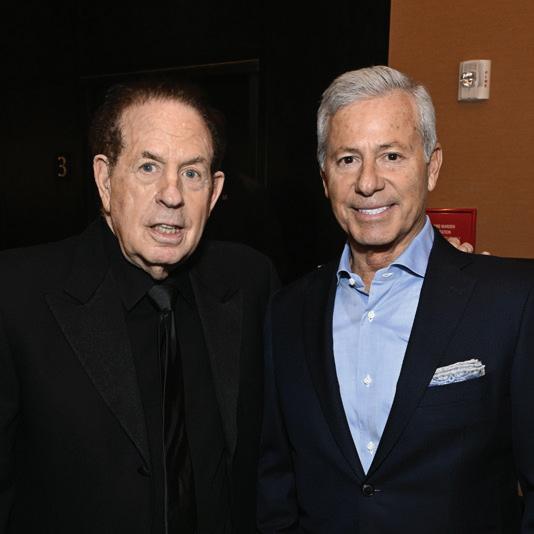
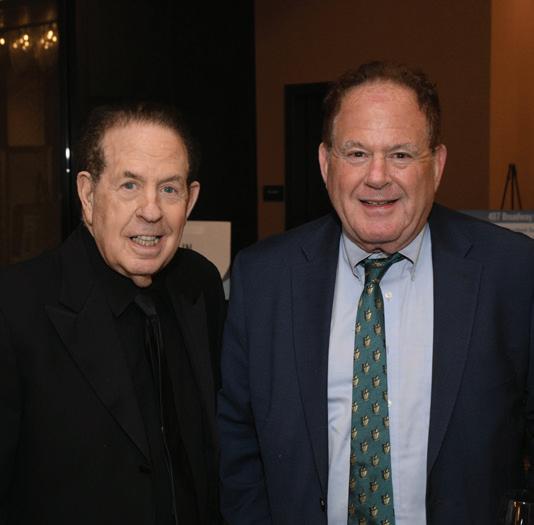


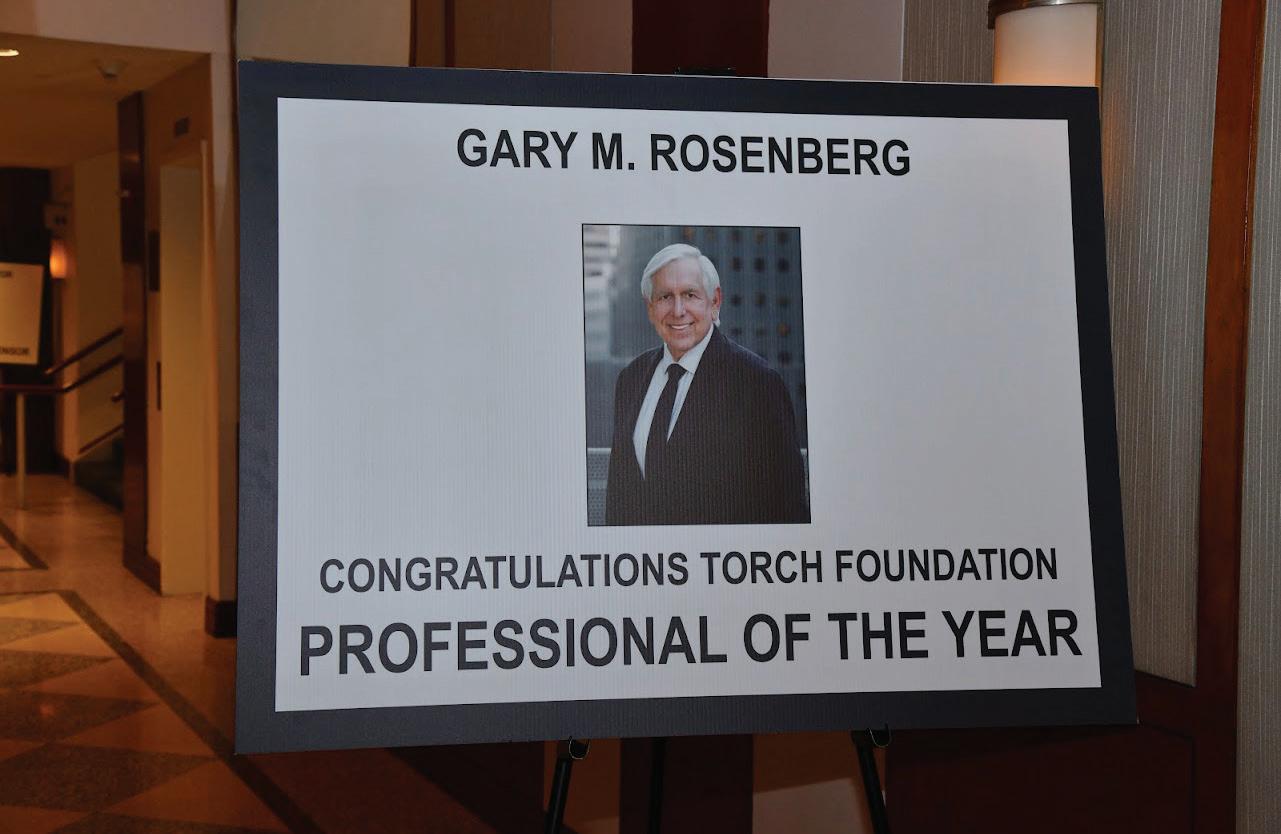
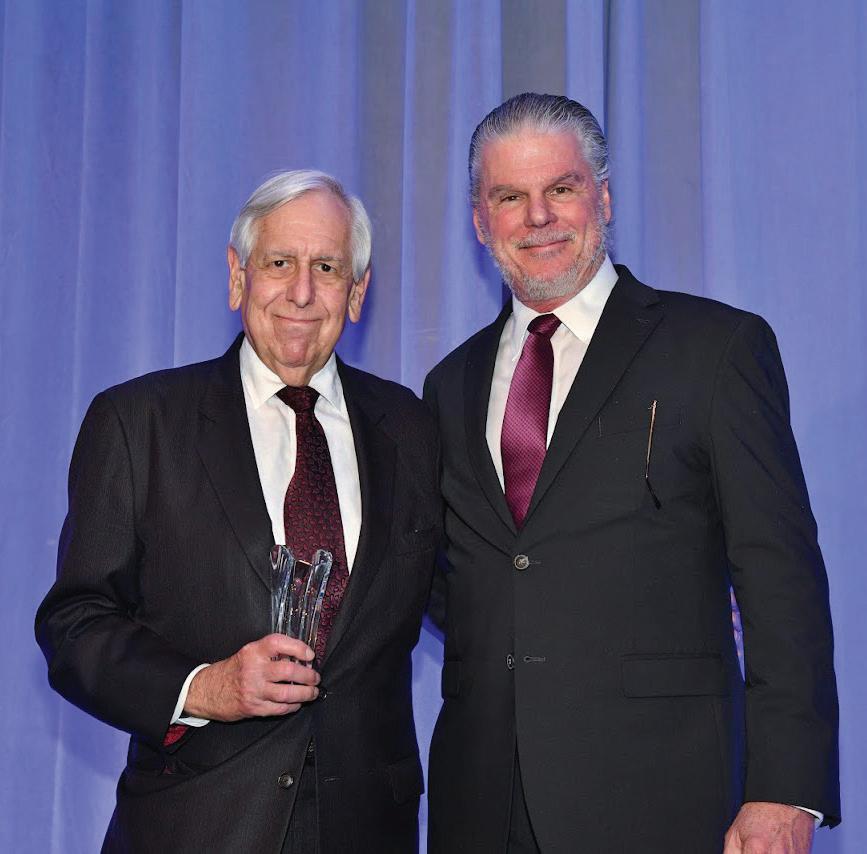
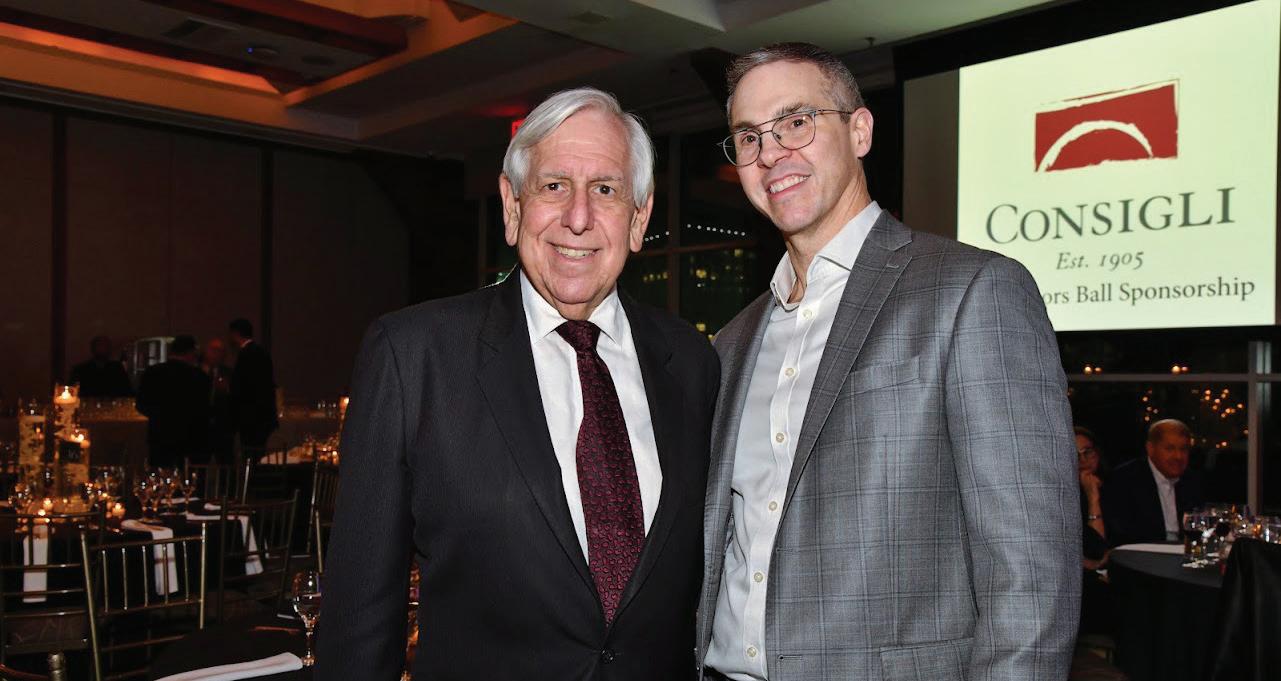
Rosenberg & Estis P.C. Founding Member and Chairman Gary Rosenberg was recently honored as 2025 Professional of the Year at the Torch Foundation’s 35th Annual Monte Carlo Night held at Chelsea Piers in Manhattan. Laura Bush, regional director, NYC Metro of Consigli Construction Co. Inc., was also recognized. The event drew members of New York’s real estate and construction community to support the work of the evening’s designated charity, Memorial Sloan Kettering Pediatric Center, and the Torch Foundation’s ongoing mission to raise funds for children’s charities and medical organizations that provide services for those in need of special medical care.
New York City’s largest firm specializing in real estate, representing owners, developers and other entities in all aspects of real estate, Rosenberg & Estis P.C. is a long-time supporter of the foundation and its work, sponsoring events including the annual Monte Carlo Night and Charity Golf Outing.
“I’m truly honored to be recognized by the Torch Foundation for supporting its incredible mission,” Rosenberg said. “The work they do to raise funds for children’s charities and medical organizations is life-changing, and I’m grateful to play a small part in it. My team and I remain committed to helping in any way we can.”














































Senior Director Mitsui Fudosan America
Gala Chair
JENNIFER L. WIDAY Kaback Service, Inc.
Chairs Emeriti


















KATHY A. CHAZEN, CLU, ChFU Trustee, National Jewish Health
ROGER A. SILVERSTEIN Silverstein Properties, Inc. Trustee, National Jewish Health




















THURSDAY, MAY 1, 2025 | 7 p.m. Ascent Lounge New York








REGISTER AT njhealth.org/NYAir or contact Mattie Shepheard: ShepheardM@njhealth.org or 212.297.0857 @ nyair society













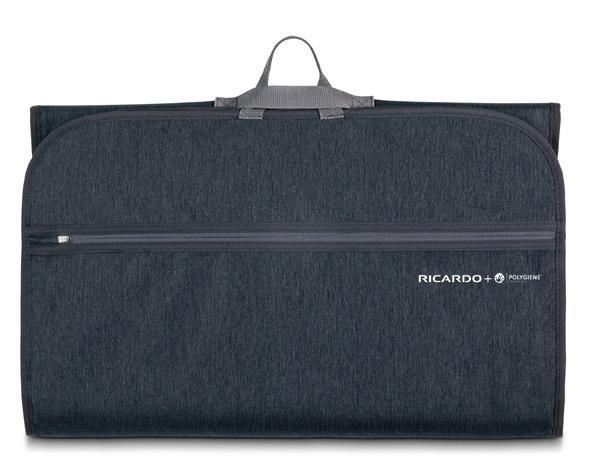

• Anti-odor StayFreshTM treament by Polygiene®
• Durable ripstop polyester with water resistant coating
• Front quick-access zippered pocket
• Anti-wrinkle garment bars

• Full-length middle and bottom zippered opening
• Two internal mesh zippered pockets
• Internal adjustable hanging loop secures multiple hangers
• Multi-use carry handle for hanging
• Bi- or tri-fold carry/packing options
• Two seperated slip-through openings for additional hanging options
• Gusseted sides

Marx Realty, a New York-based owner, developer and manager of office, retail and multifamily properties across the United States, and French Maison Baccarat announced the official unveiling of their collaboration at 545 Madison. The building, colloquially known as the Baccarat Building, is located on Madison Avenue between 54th and 55th Streets. The completion of its 10,000-square-foot penthouse headquarters and mezzanine — complemented with Baccarat masterpieces throughout — marks Baccarat’s expansion into a full suite of luxury lifestyle offerings beyond the home.
Opulent chandeliers grace the lobby, while crystal barware enhances the Leonard Lounge and bold statement pieces are displayed in the namesake penthouse showroom and office.
“Marx and Baccarat’s collaboration represents an evolution of our hospitality-infused aesthetic and approach,” said Craig Deitelzweig, president and CEO of Marx Realty. “With Baccarat’s essence throughout 545 Madison, we’ve seamlessly blended the lines between elegant workspaces and luxury-branded hospitality. The combination of these two iconic brands has created a one-of-a-kind experience for our tenants and their guests.”
Baccarat’s new office space features floor-to-ceiling windows, warm white oak wood floors, sliding glass walls and a private terrace that offers a seamless indoor/outdoor experience. A central, light-filled staircase

— augmented with blonde wood and copper finishes — connects the two-story space, enhancing the open and airy atmosphere.
Located on the building’s eighth floor, the Leonard Lounge offers a café and landscaped terrace, as well as featuring Baccarat fixtures, barware and accessories. Even the building’s house car, a sleek electric Rivian, carries the Baccarat experience, with the brand’s signature scent infused into its ventilation system.
“We’re thrilled to bring Baccarat’s art de vivre to 545 Madison,” said Adam Banfield, president and CEO of Baccarat North America. “This collaboration is an exciting step in our journey to creating captivating worlds beyond living spaces and hospitality. Infusing Baccarat into this stunning office space in New York City — a strategic hub for Baccarat in the U.S. — provides an important step in our evolution as a lifestyle house.”
The Domain Companies announced new retail leases with Gowanus Marketplace and Hey Clay at 420 Carroll, the first mixed-income building developed through the 2021 Gowanus Neighborhood Rezoning. Slated to open on 420 Carroll’s ground floor, the two businesses will offer a robust retail environment for residents and the Gowanus neighborhood.
Adam Joly at Igloo NYC brokered both leases on behalf of ownership, and the businesses will open this year.
“Our mission is to help facilitate the connection of business and community,” said Joly, a principal at Igloo. “The combination of a fresh, accessible food grocer and a community-centric space for art is representative of this connection — businesses that promote holistic well-being for the residents and neighborhood while championing the character of the Gowanus community. Gowanus represents a unique opportunity for new retail concepts. We believe that Hey Clay and Gowanus Marketplace will both be wonderful additions.”
Gowanus Marketplace, a premier grocery store owned operated by Shogy Saleh, has signed a lease for approximately 2,250 square feet. The store will offer building residents and other locals a wide variety of local and organic foods, handcrafted sandwiches, salads, freshly squeezed juice, smoothies and a full café.
Hey Clay, which has signed a lease for approximately 1,750 square feet, is a modern pottery studio with a mission to promote community wellbeing by expanding access to the mindful practice of pottery. The studio, founded by Cauvery Patel, will offer classes and memberships for new and seasoned potters.
“I have lived in Gowanus and the neighboring areas for the last six years,” said Patel. “I love living here. The unpredictability of the neighborhood is attractive to me — you never know what you might find around the corner. I also appreciate its industrial history and its transformation into a hub for artists and makers.”
In addition to the retail space now occupied by the marketplace, 420 Carroll recently launched its affordable housing lottery for 90 homes reserved for families between 40% and 100% of the area median income, which is 25% of the total 360 apartments in the development.
Located at 420 Carroll St. on the Gowanus waterfront, the development will include a 21-story tower and an adjacent 16-story tower connected by a subterranean tunnel so residents can access amenities in both buildings.
Residents will have access to “The Shop,” Domain’s third location offering 14,000 square feet of coworking and affordable art studios, a lounge, multiple outdoor greenspaces including a public plaza, a fullyequipped fitness center, a children’s playroom, on-site bike storage and the MyDomain suite of resident services that is offered at all Domain properties.
Designed by FXCollaborative and with interiors by Alan Mainer Studios, the project began construction in May 2022.






JLL announced that it has has leased an additional 19,000 square feet of office space at the recently repositioned 5 Penn Plaza, which continues strong leasing momentum after 70,000 square feet of new leases were announced in January.
In the largest transaction, NY E-Health Collaborative leased 15,000 square feet of office space on the 12th floor. The non-profit organization that works in partnership with New York State Department of Health to connect healthcare professionals was represented by Joe Speck and Reid Longley from Colliers.
Tech company Dynatrace also signed a new lease to occupy 4,000 square feet on the 24th floor of the building, which features a private wraparound terrace and sweeping views of the city. The tenant was represented by Reeves McCall and Taylor Walker from CBRE.
The transactions follow a major repositioning to upgrade the historic property owned by 5 Penn Plaza LLC, a firm led by investor Stephen Haymes. Other new tenants include digital health company Noom, real estate tech company Altus, trading advisory Octaura and engineering services leader Dewberry.
“5 Penn has been powerfully repositioned to meet modern office demand and we are thrilled to welcome two more new tenants to the property,” said JLL’s Mitch Konsker, who leads the exclusive agency team that includes Christine Colley, Kristen Morgan, Greg Wang, Kate Roush and Dan Turkewitz.
Located in the epicenter of Hudson Yards on Eighth Avenue between West 33rd and 34th streets, 5 Penn’s recent redevelopment included
of New York’s Hospitality Division Honors Ian

a new Gensler-designed lobby and amenity center paired with a conference center that provides a hospitality-level experience and a dog-friendly roof deck with 360-degree views.
Second-floor hospitality suites named “Print & Press” feature a highend fitness center with showers and lockers, a library with fireplace, expansive lounge space with open seating, a podcast room, golf simulator and grab-and-go food experience on the ground floor.
“5 Penn has been a hub of collaboration, communication, and technology for the world’s leading companies for over a century,” Haymes said. “Our continued investment in the property ensures that it remains a leading destination address for businesses seeking an elevated office experience in the heart of Manhattan.”
SH Hotels & Resorts, the parent company of brands including 1 Hotels, Baccarat Hotels and Treehouse Hotels, celebrated its 10th anniversary by officially rebranding as Starwood Hotels, reviving the global brand created nearly 30 years ago by Barry Sternlicht. In addition, Starwood Hotels is poised for significant growth in 2025, with more than 40 properties open or in development across its three brands on four continents.
“Reintroducing the Starwood Hotels name is personally very exciting for me. It’s a tribute to a legacy that millions of people know and trust and it comes at a decisive moment in our company’s history,” said Sternlicht, founder and chairman of Starwood Hotels and chairman of Starwood Capital Group. “Over the past decade, SH Hotels & Resorts has built three extraordinary brands, including the missiondriven 1 Hotels, which demonstrates how guests can live a luxurious, sustainable life without sacrifice. I didn’t want to do another typical hotel brand after W. The world doesn’t need another brand, it needs a Starwood Hotels name, we aim to marry this trusted legacy of youth, innovation and guest focus with our modern, tech-enabled, personalized approach to hospitality. As we take this next step, we’re doubling down on our mission to inspire, innovate and make a difference — for our guests, our partners and the planet.”

Greece),
and
Following the success of its flagship property — Baccarat Hotel New York — the brand will expand into Rome and Florence, Italy, Riyadh, Dubai and the Maldives in coming years.
The year will bring global growth, including the debut of flagship Melbourne and Copenhagen, as well as further Middle East and Southern Europe.
Treehouse Hotels, the newest of Starwood’s three brands, will expand to Manchester U.K. and Silicon Valley this spring. Additional hotels in the pipeline include Adelaide (Australia), Riyadh and Brickell (Miami).



In 2025, 1 Hotels & Homes will new locations in Seattle, Melbourne, Copenhagen and Tokyo. Openings beyond 2025 include Cabo San

“Our journey has just begun,” said Sternlicht. “As we embrace bold ideas, expand into new markets and continue to reinvent the hospitality landscape, we hope to build a legacy that will inspire future generations. The best is yet to come.”


















MONDAY, AUGUST 4, 2025




The Seawane Club | Hewlett Harbor, NY
Rockaway Hunting Club | Lawrence, NY
Hempstead Golf & Country Club | Hempstead, NY




Sunrise Day Camp–Long Island is the world’s first full-summer day camp for children with cancer and their siblings, provided completely free of charge.
Sunrise Day Camp–Long Island is a proud member of the Sunrise Association, whose mission is to bring back the joys of childhood to children with cancer and their siblings worldwide. Sunrise accomplishes this through the creation and oversight of welcoming, inclusive summer day camps, year-round programs and in-hospital recreational activities, all offered free of charge. Sunrise Day Camp–Long Island is a program of the Friedberg JCC, a beneficiary agency of UJA-Federation of New York.


International real estate brokerage network Forbes Global Properties has welcomed Carolwood Estates, recently ranked the No. 1 boutique residential brokerage in Los Angeles, to its ranks. Carolwood will exclusively represent the brand in Los Angeles.
Founded in 2022, Carolwood Estates quickly grew to 180 associates representing a portfolio of some of the most sought-after properties in the area. Carolwood Estates’ commitment to offering a personalized approach to every transaction has translated into a 35% market share in the $20 million-plus residential market and a 27% share in the $10 million-plus sector.
“We are thrilled to welcome Carolwood Estates to our network of best-inclass real estate partners,” said Michael Jalbert, CEO of Forbes Global Properties. “Their exceptional track record, commitment to excellence and dedication to serving the unique needs of their clients make them a perfect fit for our global platform.”
“At Carolwood Estates, we believe that exceptional service, innovative marketing and deep market knowledge are the cornerstones of our success,” said Drew Fenton, CEO of Carolwood Estates. “Partnering with Forbes Global Properties enhances our ability to present our exclusive listings to an international audience, offering even more opportunities to our clients.”
The exclusive worldwide residential real estate partner of Forbes, Forbes Global Properties provides branding and marketing services to the world’s premier real estate firms and is now represented by real estate agents across 26 countries in more than 600 locations.
As members of this exclusive network, Carolwood Estates will benefit from Forbes’ engaged audience of more than 167 million to connect,







inspire and inform affluent potential homebuyers and sellers about the finest properties for sale globally, the company said.
“The collaboration with Forbes Global Properties strengthens our position at the forefront of high-end real estate marketing,” said Ed Leyson, CMO and co-founder of Carolwood Estates. “Through Forbes’ powerful digital platform and authentic global presence, we can ensure maximum exposure for our listings and access to the most discerning buyers in the market.”
Homes are presented across Forbes and Forbes Global Properties print, digital and social media channels. Carolwood Estates’ prime residential listings will also be showcased on forbesglobalproperties. com, a curated collection of high-value, quality home listings.
Urban Capital Group and Prosper Property Group have completed the acquisition of 34 Walker St., finalizing the assemblage of 32 and 34 Walker St. into a corner mixed-use development in Tribeca.
Backed by a $32 million acquisition and construction loan from Kriss Capital, the 30,000-square-foot project will introduce a boutique condominium featuring five luxury loft residences and ground-floor retail. The building is approved by the Landmarks Preservation Commission (LPC) and was designed to preserve and integrate the historic castiron textile warehouse at 34 Walker St. with a contextual and elegant new structure at 32 Walker St. GRA Equities, led by Gary Romaniello, and PZ Realty Investments, led by Peter Zuccarello, are partners on the project. The financing was arranged by Andy Iadeluca, principal, New Development Capital.
“Our goal from the start was to acquire both sites at 32 and 34 Walker Street and seamlessly merge old and new,” said Eddie Bender, principal and CFO, Prosper Property Group.
Designed by Soma, in collaboration with Turett Collaborative, the development will offer a modern, amenitized living experience while respecting Tribeca’s historic character. The existing historic façade will feature preserved cast iron elements alongside a new natural limestone façade, ensuring an elegant blend of heritage and contemporary design. The general contractor is First Standard Construction.
The project will rise seven stories, offering three- and four-bedroom full-floor residences spanning 3,500 square feet and more. Homes

will feature 12- to 16-foot ceilings, abundant natural light and layouts designed to evoke true Tribeca loft living, a rarity for new developments in the historic district.
“We studied the neighborhood and collaborated closely with our architectural team, our historic consultant Higgins Quasebarth and the Landmarks staff to craft a design and asset that embodies modern Manhattan living while honoring Tribeca’s rich history,” said Cedric Abboud, principal, Urban Capital Group, in the announcement.
“Securing an LPC approval with strong support by the Community Board is a testament to our team’s dedication to thoughtful, contextual development and embracing its surroundings. We are now on the ground and commencing work immediately.”
Project completion is expected in the second quarter of 2026.
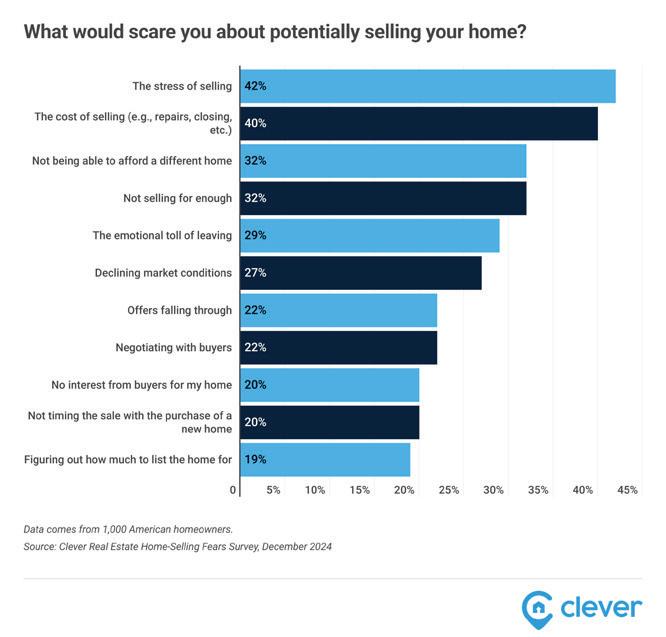
Nearly nine in 10 homeowners (88%) have fears about selling their homes, according to new reports on home-selling stress and where homes take the longest to sell from Clever Real Estate, a St. Louisbased real estate company.
A survey of 1,000 homeowners revealed that the top selling-related fears are: the stress of the sale (42%), selling costs (40%), not being able to afford a different home (32%) and not being able to sell for enough money (32%).
The biggest worry for 85% of homeowners is that they’ll feel pressured to accept a lowball offer. Many also worry about buyers demanding too many concessions (72%) or backing out at the last minute (70%). Among those with mortgages, nearly half (47%) locked in an interest rate under 4% and 30% fear losing their current rate.
A major economic downturn is the top reason sellers would delay plans (29%), while a property tax increase would be Americans’ No. 1 motivator to sell faster (43%).
Nearly half would feel more confident about selling if they already secured a new home (45%), received a cash offer (44%) or had a trusted agent (43%).
Americans’ home-selling concerns may be warranted in the slowest markets, where homes sit for a median of 57 days — well above the national average of 37 days.
Additionally, these 10 cities have an oversaturated market with about
courtesy of PRNewswire
3.5 months’ worth of housing inventory, compared to just 2.8 months on a nationwide basis.
The slowest-selling housing markets are: Miami (69 days); Austin, Texas (66 days); Jacksonville, Fla. (63 days); San Antonio, Texas (62 days); Birmingham, Ala. (57 days); Nashville (56 days); Pittsburgh (55 days); New York (55 days); Phoenix (54 days) and Chicago (53 days).
Conversely, the fastest-selling markets are: Grand Rapids, Mich. (13 days); Buffalo, N.Y. (14 days); Seattle (15 days); San Jose, Calif. (16 days); Richmond, Va. (18 days); Boston (21 days); Indianapolis (21 days); Sacramento, Calif. (23 days); San Diego (23 days) and Fresno, Calif. (23 days).
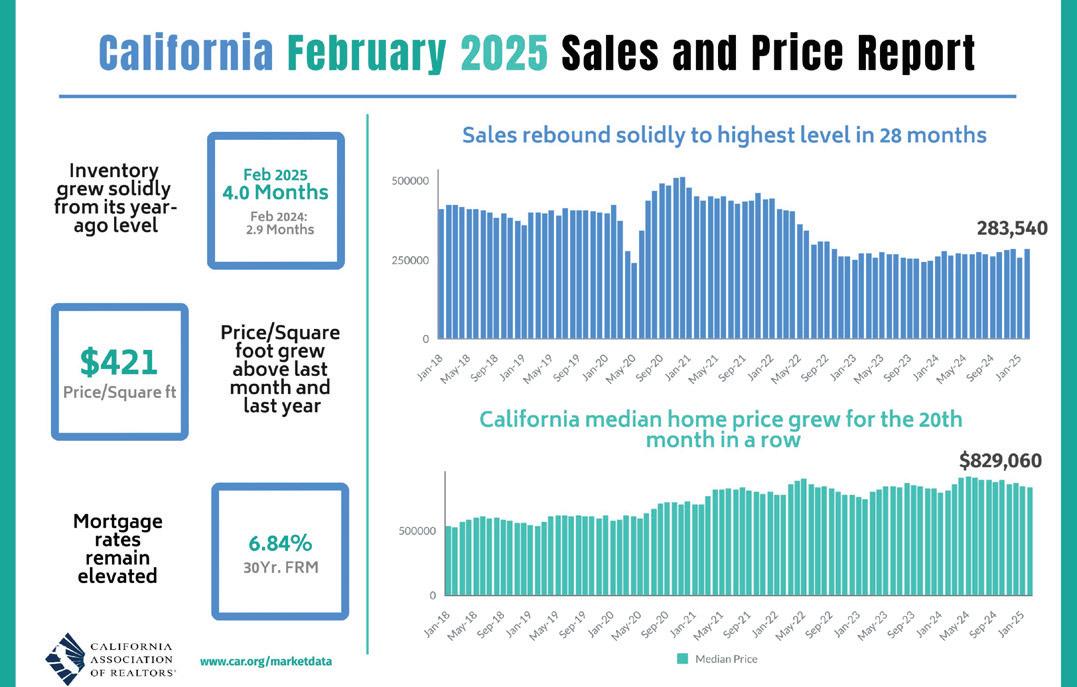
California’s housing market rebounded in February as statewide home sales reached the highest level in more than two years amid declining mortgage rates at the start of the year, said the California Association of Realtors (C.A.R.).
“California home sales rebounded strongly in February after a sluggish start to the year, supported by increased buyer activity and more available homes on the market,” said C.A.R. President Heather Ozur, a Palm Springs realtor. “Lower borrowing costs made homeownership more accessible to buyers who were previously sidelined by affordability challenges, while the rise in available inventory will help ease some of the competitive pressures that have defined the market in recent years and set a positive tone for the market for the rest of the year.”
Closed escrow sales of existing, single-family detached homes in California totaled a seasonally adjusted annualized rate of 283,540 in February, according to information collected by C.A.R. from more than 90 local Realtor associations and MLSs statewide. The statewide annualized sales figure represents what would be the total number of homes sold during 2025 if sales maintained the February pace throughout the year. It is adjusted to account for seasonal factors that typically influence home sales.
February’s sales pace surged 11.6% from the 254,110 homes sold in January and was up 2.6% from a year ago. The February sales level was the highest since October 2022. Although home sales have rebounded strongly, they have remained below the 300,000 mark since September 2022. With uncertainty remaining the theme for at least the first half of this year, housing sentiment could be negatively impacted and home sales, as a result, could remain soft in the upcoming months, the association said.
Statewide pending sales in February dipped from last year’s level for the third consecutive month, but the drop was much smaller than the decline observed in January. The sales dip of homes in escrow could
be due in part to a jump in mortgage rates at the beginning of February, but the public’s growing concern of a recession may also have played a role in the slowdown in housing demand in recent weeks. The ongoing policy and economic uncertainties have weighed on consumer confidence and have created instability in the financial market in the past few weeks. With mortgage rates expected to remain volatile in the near term, pending sales could continue to fluctuate as the market enters the spring homebuying season.
The February statewide median price increased on a year-over-year basis for the 20th straight month, but the gain recorded was the smallest since July 2023. On a month-to-month basis, the February median price dipped from the prior month, and the monthly drop was larger than the 10-year historical average dip of -0.7% recorded between the two months. The downward trend in the statewide median price will likely reverse in the coming months, however, as home prices typically begin rising in March and continue climbing until the end of the homebuying season in August.

OneService Commercial Building Service & Security announced the expansion of its commercial office cleaning services throughout New York City and Nassau and Suffolk Counties in New York.
Ronkonkoma, N.Y.-based OneService’s office cleaning services include standard cleaning tasks such as regular disinfecting, dusting and trash removal, as well as specialized services like floor care and window cleaning.
The company prioritizes eco-friendly cleaning products and advanced technologies to ensure a thorough and sustainable cleaning process. This approach supports a healthier workplace, benefiting both employees and visitors.
A well-maintained office can enhance employee satisfaction, minimize the risk of illness and contribute to an overall productive atmosphere. Their professional cleaning services are designed to alleviate the burden of daily cleaning tasks, allowing businesses to focus on their operations and growth, the company said.

The Center for Green Schools at the U.S. Green Building Council (USGBC) announced the 2025 Best of Green Schools Awards recipients, recognizing top schools, school districts, lawmakers and others who work to advance safer and more resilient schools across communities.
The annual recognition was announced at the 2025 Green Schools Conference in Orlando, Fla. in collaboration with the Green Schools National Network.
“This year’s Best of Green Schools awardees are individuals and organizations dedicated to improving our schools and creating healthy and resilient learning environments,” said Anisa Heming, director at the Center for Green Schools. “The awards are an opportunity to spotlight how anyone can make an impact in their community and support students and educators. We are grateful for all those who believe in our mission and join us in achieving it.”
This year’s recipients are:
K-12 School — Rochester School in Colombia, which has achieved over 70% energy savings and 40% potable water savings compared to a conventionally-built school of the same size. The campus features a solar aquatic center, intelligent classroom hubs and other campus features that serve as a living textbook for the curriculum.
Ambassador — Lauren Click from Arizona, who is transforming food waste education in public schools. In 2024, Let’s Go Compost, which provides hands-on composting educational tools, expanded from a single school to 111 public schools, 75% of which are Title I.
School System — Denver Public Schools, which has worked on sustainability initiatives since 2009, focusing on environmental protection, economic prosperity and social development.
Student Leader — Molly and Emma Weber, from Boulder, Colo., who have spearheaded a local campaign for climate justice in their school district and later expanded to a statewide movement. They built a network of over 60 students in their school district, won a first-of-itskind Green New Deal for Schools resolution through their school board

and are currently working with state senators and representatives to pass legislation.
Business Leader — Texas Disposal Systems, whose education program Eco Adademy is designed to help minimize waste in Central Texas schools by educating K-12 students about trash, recycling and composting options on their campuses.
Policy Maker — U.S. Rep. Robert C. “Bobby” Scott (D-Va.) and U.S. Senator Jack Reed (D-RI), who have introduced the Rebuild America’s Schools Act, which, if passed, would invest $130 billion in school buildings.
K-12 Educator — Erin Stutzman, an educator in the Boise School District, who empowers students through community outreach and project- and place-based learning, helping them use their voices to create meaningful change at local, state and national levels.
In collaboration with Nez Perce youth and tribal elders in Lapwai, Idaho, Stutzman’s students secured rooftop solar panels through grant writing, advocated for climate action in schools and supported the nationally recognized Save Our T-Pack initiative to protect Idaho’s wolves.
School District Champion — Darien Clary, the director of sustainability at Austin Independent School District, who has led efforts to integrate sustainability across 130 facilities, serving 73,000 students and 10,000 staff since 2016.











RICHARD SIMON, ESQ. | PARTNER CHAIR, BANKING AND FINANCIAL SERVICES





JEFFREY ROSENTHAL, ESQ. | PARTNER CHAIR, BANKRUPTCY AND CREDITORS RIGHTS


Since 1930, Mandelbaum Barrett PC has prioritized providing clients with proactive legal protection spanning over 30 practice areas:
Alternative
Appellate
Banking
Banking
Cannabis





National commercial general contractor Hitt announced the acquisition of Central Consulting & Contracting, a healthcare construction firm based in the New York metropolitan area. The move strengthens Hitt’s presence in the Tri-State area of New York, New Jersey and Connecticut while reinforcing its commitment to delivering high-quality healthcare construction solutions that support patient-centered care. By combining Central’s deep industry experience with Hitt’s national resources, the firm is well-positioned to meet the growing demand for complex medical facilities, Hitt said.
“For more than 30 years, Central has been a trusted leader in healthcare construction, earning a strong reputation across the New York region. We’re proud to welcome their team of experts to Hitt,” said Hitt Vice President and New York Office Leader Andre Grebenstein in the announcement. “Their specialized industry knowledge, commitment to quality and strong relationships will be invaluable as we continue to expand in this key market.”
The acquisition positions Hitt to meet increasing demand for medical facilities in one of the largest and fastest-growing healthcare markets in the U.S. Central brings an longstanding relationships with major healthcare institutions, including Englewood Health, Montefiore Health System and St. Barnabas Health System Bronx.

Central’s Founder and CEO Richard Simone has joined Hitt’s New York team as vice president, bringing decades of experience and deep industry relationships. He will work closely with Hitt’s New York leadership to ensure a seamless transition while maintaining the high standards of quality and service that clients and partners have come to expect.
Central’s team members have also officially joined Hitt, expanding the firm’s local presence to more than 70 New York-based team members.
“Joining forces with Hitt marks an exciting new chapter for Central and our clients,” Simone said. “Our shared values, dedication to quality, and passion for healthcare construction make this a perfect partnership.”
Top executives from some of the nation’s largest construction companies and unions hosted the inaugural CEO Advisory Council meeting focused on preventing suicides in the construction industry. Members of the CEO Advisory Council gathered to evaluate current initiatives, discuss industry-wide strategies and establish goals to lower suicide rates and improve mental health across the construction industry. The meeting was hosted by the American Foundation for Suicide Prevention (AFSP), and executives attended from Bechtel, Fluor, Turner Construction, North America’s Building Trades Unions (NABTU), Kiewit, Clark Construction and Skanska.
“The suicide rate in construction is more than double the national average across industries. In fact, the suicide fatality is more than five times the rate of workplace fatalities. Our focus on workplace safety needs to be applied to mental health,” said George Pfeffer, CEO, DPR Construction. “Construction is seen as a tough industry, but we’re all just people at the end of the day, and sometimes we need extra help and support. This council is about tackling an issue that has been overlooked for too long.”
“As leaders, it’s our shared responsibility to help the construction professionals building our country get the resources and support they need to thrive,” said Brendan Bechtel, Bechtel chairman and CEO. “The high rate of suicide in the construction community demands that we find new and better solutions that prioritize mental health as much as we do physical safety. The partnership between CEOs from some of the industry’s biggest and best companies, along with AFSP, will help us all achieve this goal faster and more effectively.”
The council set clear goals for collaboration and outlined next steps to drive progress in reducing suicide rates within the construction industry. In the near term, efforts will focus on evaluating the impact of current initiatives and developing targeted education and support programs to address challenges such as cultural and communication barriers and resource gaps.

“Although the industry has experienced a higher rate of suicide, we know through research that there are effective educational strategies and sound interventions that can curb this trend,” said Robert Gebbia, AFSP CEO. “With the support of Bechtel and commitment from other leading and dynamic industry leaders, we know we can make mental health on job sites as important as physical safety — and we are going to pave the way forward together to support construction workers now and in the future.”
Together, the group represents more than three million construction and union workers across the U.S. This effort will bring resources and support to them and also aims to reach construction workers and companies of all sizes nationwide.
“The well-being of our workforce is at the core of everything NABTU does, and NABTU is honored to serve on this CEO Advisory Council to better address the unique risks in our industry and develop comprehensive solutions that protect our workforce,” said Sean McGarvey, NABTU president. “We thank Brendan Bechtel for his leadership in putting this together. The construction industry has long prioritized occupational safety and health, but we are now placing equal emphasis on mental health. Addressing the crisis of suicide in construction requires taking critical steps together as an industry to ensure that every worker has access to the resources, education and support they need. Together, we will build a culture that fosters mental well-being and saves lives.”
Procurement and vendor management platform VendorPM has launched its Contract Management module, making it the only industry solution to unify vendor credentialing, e-tendering and contract management into a single, streamlined workflow, eliminating the inefficiencies of fragmented systems and multiple logins, the company said.
Property management professionals have long struggled with disconnected point solutions and manual processes when managing vendor relationships, leading to unnecessary risk exposure, inefficient processes and an overall lack of visibility and governance. VendorPM’s new Contract Management module addresses these challenges by centralizing contract storage, automating renewals and AI-driven analysis to drive costs down within one platform.
“Our mission since day one has been to modernize and streamline vendor management for property managers across North America,” said Emiel Bril, CEO and co-founder of VendorPM. “With the launch of our Contract Management module, property managers no longer have to juggle multiple logins, disparate systems and manual workflows. From vendor onboarding to contract management and compliance tracking, everything is now accessible in one seamless experience.”
The announcement follows a year of enhancements by VendorPM, including Yardi ERP Integration; AI-Procurement CoPilot; RFX Templates (reusable, customizable RFP/RFQ templates to streamline procurement processes, ensure consistency and save time across all tendering activities) and scalability for enterprise clients.

Hive MLS has announced an investment and long-term partnership with SourceRE, a provider of multiple listing service (MLS) data infrastructure. Using SourceRE, Hive MLS plans to achieve seamless integration between current and future front-end vendor systems.
“This collaboration sets a new benchmark for what MLS organizations can achieve with a data exchange,” said Bill Fowler, president of SourceRE. “With Hive MLS’s forward-thinking leadership and SourceRE’s advanced technology, we are creating a future where MLSs manage their own data stewardship and innovation.”
This initiative signals a broader industry shift toward MLSs taking proactive control of their data ecosystems, Hive MLS said. Rather than relying on a small group of third-party solutions and major public entities with competing interests, Hive MLS and SourceRE are working together to build an MLS data exchange without vendor-specific constraints, technical dependencies or timeline limitations.
“MLSs must be proactive in shaping their technology outcomes,” said Andrew Coca, CEO of Modern.tech, parent company of SourceRE. “We are demonstrating that MLSs can execute upon the conversations the industry has been having for years around data independence.”
The partnership’s primary focus is creating improved data accuracy that enhances listing visibility and sales performance for agents and brokers for Hive MLS’s brokers and agents. Interoperability between MLS front-end systems allows brokers to better manage their data and streamline operations across multiple MLS markets and geographies.
“Our partnership with SourceRE is founded on synergy,” said Daniel
Jones, CEO of Hive MLS. “Hive’s investment reaps greater returns when SourceRE grows. SourceRE benefits from the value of our data when Hive grows. This synergy is further strengthened as SourceRE becomes Hive’s technology division. Together, our vision is to enable a seamless data interchange between all our MLS partners.”
Hive MLS’s investment in SourceRE allows it to fast-track its technical advancements without the traditional overhead of building an in-house engineering team.


Real estate investment and deal management platform Dealpath has formed a strategic partnership with CBRE Capital Markets to accelerate investment sales opportunities with prospective buyers through Dealpath Connect.
All deals visible on CBRE Deal Flow will be available on Dealpath Connect, ensuring that relevant investment opportunities are served in real time to institutional investors. With this partnership, Dealpath Connect has created the only investment platform directly integrating listings from the largest real estate brokerage firms, including CBRE and JLL, the company said.
“Dealpath’s deep integration into the investment workflows of over 300 institutional buy-side clients uniquely positions us to partner with CBRE,” said Mike Sroka, CEO and co-founder of Dealpath. “Together, we’re empowering the fantastic teams at CBRE to seamlessly surface high-quality opportunities and deliver a white-glove client experience to these leading investors — driving greater efficiency and velocity in institutional real estate transactions.”
Dealpath Connect is a unified, integrated listings and deal management platform which standardizes and extracts data from key brokerage partners, providing clients with real-time access to investment opportunities. Listings are enriched with critical market intelligence including sales and lease comparables, demographic insights and other key data, creating a centralized repository of information to drive more informed investment decisions.
“We’ve worked closely with Dealpath over the past year and have seen firsthand how Dealpath Connect and CBRE Deal Flow Sync provide certainty that deals were received, routed and reviewed by
the right individuals at target investment firms,” said Bryan Doyle, managing director of capital markets and head of the Private Client program at CBRE. “We’re excited for this big step forward and to work with Dealpath, a preferred partner, to bring digital transformation to commercial real estate capital markets and add a significant capability that brings exceptional outcomes to our shared clients.”
With Dealpath Connect, sell-side broker partners are seeing more than an 80% gain in the visibility of their opportunities with top institutional clients and a 30%-plus increase in confidentiality agreements signed, the company said. The investment teams that are leveraging the platform are achieving more than a 200% increase in relevant deals screened and a 30% decrease in errors in underwriting, diligence and deal execution.

Exergio, a company specializing in artificial intelligence (AI)-driven energy management tools for commercial buildings, will begin training its first humanoid robot, powered by Nvidia’s Gr00t system, to improve management, detect faults and enhance real-time system monitoring in commercial buildings.
While most humanoid robots today are designed for general purpose tasks such as aiding in household chores, according to Donatas Karčiauskas, CEO of Exergio, the industry needs to break this pattern and start using humanoids in professional use-cases, such as energy management in commercial buildings.
“Application of humanoid robots can be used beyond household tasks. They have plenty of potential in professional environments,” Karčiauskas said. “Managing energy in commercial buildings is complex. It’s not just about turning off lights or adjusting the thermostat. It requires real-time monitoring, predictive analysis and the ability to act fast. AI-powered humanoid robots can process vast amounts of sensor data, identify ineffi ciencies and respond instantly to anomalies. For example, a robot can detect an overheating component before it fails or pinpoint false alarms that would otherwise waste time and resources.”
The humanoid robots used by Exergio will be equipped with Nvidia’s Gr00t system, which has an advanced AI framework designed to enhance perception and motor skills.
Unlike proprietary humanoid AI models, Gr00t offers open accessibility, and allows companies to train and adapt robots for their specific needs.
“We chose the Nvidia Gr00t platform because it provides the adaptability necessary in real-world industrial applications,”
explained Karčiauskas. “With Gr00t, we can train robots to conduct on-site equipment inspections, detect early signs of system failures and respond to alerts faster than human operators. In theory, such robots can verify false alarms, analyze inefficiencies in HVAC systems and even assist in emergency scenarios by guiding personnel to safe exits. We’re here to train them.”
Exergio’s AI-based solutions applied in shopping mall Ozas in Vilnius, Lithuania, helped reduce energy waste by 29% and save more than €1 million.
The first training phase for Exergio’s humanoid robots is beginning this month.


















Pronto Housing, an affordable housing Software-as-a-Solution (SaaS) and services platform, has announced a partnership with AppFolio, the property management software provider. Pronto provides AppFolio customers with affordable housing consulting services and compliance automation software that delivers additional value to those managing affordable housing units with AppFolio’s platform.
“We’ve had a chance to get to know the AppFolio Affordable Housing team and have seen firsthand their commitment to the space,” said Christine Wendell, Pronto Housing CEO and co-founder. “We’re excited to complement their offerings with our expertise. This partnership empowers AppFolio customers to simplify, streamline and outsource their affordable housing compliance with confidence.”
Pronto joins the AppFolio Stack Marketplace as a new solution partner focused on full-service affordable housing compliance. Pronto’s solution allows on-site property managers to manage more units, lease faster and improve the resident experience, the company said. By harnessing intuitive technology and user-centric design, AppFolio aims to remove barriers by simplifying complex compliance requirements, allowing property managers to focus on serving their communities.
“At AppFolio, we’re deeply committed to doing our part in improving housing affordability,” said Josefin Graebe, vice president, productdomains, AppFolio. “By partnering with Pronto Housing, we’re able to offer a unique solution that combines our streamlined property management approach with their compliance expertise. Together, we simplify the experience of managing Affordable Housing while creating a better experience for everyone involved.”
Lee & Associates has expanded its Nevada presence with the opening of an office in Las Vegas. The office will specialize in industrial owner/ tenant representation, investment sales and land sales, with plans to strategically recruit teams to grow their capabilities in the office, retail and multifamily sectors.
The Lee & Associates Las Vegas team will be led by John Sharpe, SIOR, CCIM, LEED-AP as president. The founding team includes Danielle Steffen, SIOR and Geoffrey West, both as principals in the office. The team will also include April Wesley as office manager.
“John has been a champion of the Lee & Associates broker-owned model for years, and his leadership, vision and experience make him the ideal choice to lead our new Las Vegas offi ce,” said Jeffrey Rinkov, CEO of Lee & Associates. “Under his leadership, supported by our collaborative national platform, this offi ce will bring the exceptional service and expertise that clients have come to expect from Lee & Associates.”
Sharpe is a seasoned commercial real estate professional with nearly three decades of industry experience specializing in industrial and investment sales, leasing and land transactions. In 2002, he cofounded Lee & Associates of Illinois, growing it into a full-service brokerage with more than 50 professionals. He currently serves on the Lee & Associates board of directors and as the firm’s expansion chair, leading strategic growth initiatives on a national scale. A graduate of Indiana University with a degree in finance and real estate, he holds professional licenses in Illinois, Indiana, Wisconsin and Nevada.








































Real estate investment firm Arch Street Capital Advisors, in partnership with Artemis Real Estate Partners, has acquired a 2.4 million-squarefoot industrial portfolio located in the Kansas City metropolitan area.
“We are delighted to expand our industrial footprint with this highquality portfolio in partnership with Artemis,” said Gautam Mashettiwar, executive vice president of Arch Street. “Their strategic approach and thoughtfulness make them an ideal partner, and we look forward to pursuing more compelling investment opportunities together.”
The portfolio consists of four Class A industrial properties, all fully leased to a tenant roster that includes several investment-grade, Fortune 500 companies. The assets are strategically positioned near the BNSF intermodal facility, a modern, 443-acre logistics hub providing direct rail access and both domestic and international intermodal services.
“We are excited to partner with Arch Street and look forward to identifying additional strategic investment opportunities together,” said Michael Vu, senior managing director at Artemis. “This portfolio aligns well with our focus on institutional-quality industrial assets in supply chain-critical locations.”
Arch Street manages a diverse portfolio of investments across multiple sectors, including industrial, office, multi-family, single-family,

hospitality, retail, health care, student housing and land. Artemis has raised over $11 billion of capital across core, core plus, valueadd and opportunistic strategies. The firm makes equity and debt investments in real estate across the United States, with a focus on residential, industrial, seniors housing, medical outpatient, selfstorage, hospitality, retail and office.
Real estate law firm Belkin Burden Goldman LLP (BBG) has established a Tax Exemptions and Zoning Incentives Department with the addition of five attorneys from Seiden & Schein P.C. The new practice group will be led by Partners David Shamshovich and Jason C. Hershkowitz, joined by Associates Brenda J. Slochowsky, Camila Almeida and Frank Baquero.
“With this new team, BBG cements its position as the go-to law firm for real estate developers looking to maximize available tax benefits and housing incentives,” said Jeffrey L. Goldman, co-managing partner and co-founding partner of BBG.
The new practice group will provide counsel on critical tax incentive programs driving New York real estate development, including:
• 485-x (Affordable Neighborhoods for New Yorkers Program);
• 421-a (Affordable New York Housing Program);
• 467-m (Commercial-to-Residential Conversions Tax Incentives) and
• ICAP (Industrial and Commercial Abatement Program).
The team will also guide developers through residential zoning bonus programs such as the newly enacted Universal Affordability Preference

(UAP) Program and the now-expired Voluntary Inclusionary Housing Program, as well as fulfilling the affordable housing requirements under the Mandatory Inclusionary Housing (MIH) Program. These zoning programs are designed to work in tandem with the tax exemption programs, requiring a sophisticated legal strategy to fully capture financial benefits while ensuring regulatory compliance, a hallmark of BBG’s new team.


By Mark Plechaty, PE, Managing Principal –DeSimone Consulting Engineering
The constant transformation of the city over time barely elicits notice from New York City urbanites these days. But, even for those inured to the ebb and flow of buildings and lots across the vast grid of city streets, the office-toresidential conversion of the landmarked One Wall Street stands out as an exceptional feat of engineering innovation.
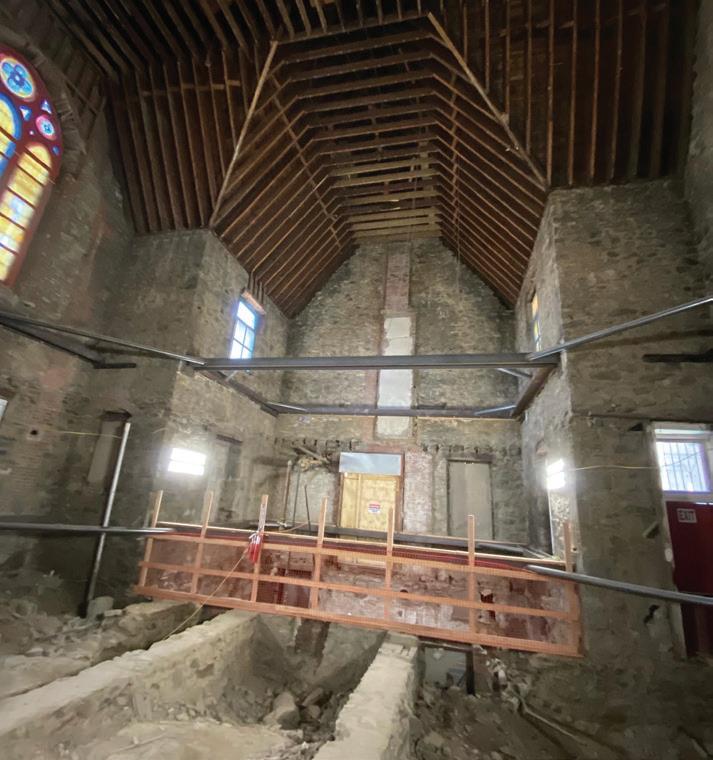
The transformation of this Art Deco masterpiece to residences — the largest such historic conversion in New York City when completed — was far from business as usual. As the lead structural engineer, I’ve never been involved in a project quite like it.
Located in the heart of lower Manhattan’s Financial District, the original 1931 office tower and its 1965 annex were transformed into luxury condominiums through the vertical addition of six floors at the top and 175,000
square feet of retail at its street-level base — and so much more. While this may sound simple, only a great measure of technical ingenuity, in balance with a deep respect for architectural heritage, could make the reimagining and retrofit of One Wall Street a reality.
Like so many other iconic, early 20th century New York City office buildings, One Wall had become an outdated behemoth that had ceded its market edge to newer, shinier towers in lower Manhattan. The original, 50-story, limestoneclad tower and its 30-story steel-framed annex totaled 1.6 million square feet over a full city block — including five basement levels that once guarded gold bullion in a massive vault 72 feet below the building.
But in 2014, developer Harry Macklowe, owner of Macklowe Properties, purchased One Wall with a laser-focused vision to convert its many
office floors into the highest-end residential units and luxe retail — and give the landmark a brilliant, age-defying second act.
The challenges to moving forward, however, were many. For starters, the NYC Landmarks and Preservation Commission had imposed restrictions on exterior modifications when it designated the original tower, designed by Ralph Walker for the Irving Trust Bank, as a landmark back in 2001. While the extensive redesign of most of the building’s interior remained in play, the protected status of its fluted exterior added a significant layer of complexity to the project.
Other monumental challenges included determining the limits of these older structures to support six additional residential floors and a rooftop pool, and how to get past those limits. A looming question was whether the existing foundations, steel beams and concrete slabs could withstand the countless invasive interventions needed to radically reshape the interior spaces and base for luxury living and retail. Add to these challenges a tight urban site that itself lay within the boundaries of a historic district, flanked by an active subway station and other landmarked buildings.
Given this array of challenges, my team embraced from the outset that nothing short of creative, out-of-the-box thinking could assure the integrity of the structures, preserve and restore the historic facades, and reimagine One Wall for modern, luxury living.
Structural Modifications to the Tower
We dove in at the deep end. Collaborating closely with Macklowe and SLCE Architects, we focused on the most critical challenge, upon which the project’s success ultimately depended: how to add six new floors and a pool atop the 30th floor of the1965 annex to create a 36-story tower.
Here’s how. The annex building — a steel moment frame with concrete-encased beams and concrete slabs — would become significantly taller and heavier, and needed to meet wind loads under the current code. Combined with the removal of two lower floors, the engineering team needed to significantly fortify the structure, known as stiffening, as additional height was added to the building.
To ensure that the additional height and associated weight did not destabilize the structure, particularly with a weakened base due to the removal of lower floors, the DeSimone structural team designed a stiffening system that incorporated high-performance materials to control the effects of wind sway — and support the added mass at the top.
To meet zoning requirements, the new overbuild levels were required to set back,


referencing the “wedding cake” setbacks of the Art Deco architecture and original annex building just below. But a complication arose. Because of this new setback, none of the new columns in the overbuild would align with those in the existing structure below. In response, we designed a reinforced concrete structural transfer slab to redistribute loads from the new floors to the existing columns in the original structure below.
Standard residential structures utilize flat concrete slabs some 200mm thick. But since the One Wall Street conversion was anything but standard, that approach would add excessive weight beyond the existing structure’s capacity. Instead, DeSimone opted for the innovative use of voided concrete slabs (in this case, a Cobiax product) using a high-strength, lightweight concrete mix.
Essentially, each concrete slab is embedded with a series of hollow, recycled plastic, ellipsoid void formers, which effectively reduce the weight while preserving the existing structure’s integrity. By combining the lightweight mix design and the voids, the overall weight of the concrete slab was reduced by 40%. Better yet, less concrete means less embodied carbon and a more sustainable building solution.
The overall reduction in weight in the overbuild, in turn, reduced the thickness required for the transfer slab, mitigating the need for more extensive column reinforcement — thanks to adding less overall mass to the top of the building.
The resulting structure is a lighter and more flexible structure that meets the performance requirements for wind and seismic forces.
Key to a luxury urban residential high-rise is convenience and the inclusion of luxe retail.
To create the long span spaces needed for highprofile, high-end retailers like Whole Foods, Life Time Fitness and the renowned French department store, Printemps, we created a glass retail addition elegantly cantilevered off the annex building, which also enabled us to avoid drilling into the Wall Street subway station directly below. We removed the entire second floor support structure of the south tower, along with sections of the third floor, redistributing the floor area.
This created a significant interruption in the supporting steel frame, which now needed
reinforcement. Installing a large steel plate truss at the underside of the new third floor did the trick. This truss connected to three new concrete shear walls, which were added to redistribute the loads and increase stiffening at the base of the tower.
The shear walls were designed to resist the loads delivered from the steel plan truss. These walls also provided a much-needed stiffening mechanism, ensuring that the newly added weight and height did not compromise the building’s stability. The decision to use concrete encasement for existing steel elements was also a strategic one. Encasing the steel beams and columns in concrete allowed for greater stiffness and load-bearing capacity, while simplifying construction in areas obstructed by lead paint, rivets or other older construction materials.
The very features of the Wall Street neighborhood that lent it its charm — the crooked, winding streets and landmarked architectural gems, including Trinity Church across the street — added yet more complexity to realizing this intricate conversion. The existence of the Wall Street subway station, just under the sidewalk on Broadway, made structural reinforcement and construction especially fraught, with heightened security measures at the nearby Stock Exchange further complicating site access and logistics.
Where, for example, could a crane be placed? Installing a conventional crane for the overbuild at such a dense site would be nearly impossible. Choosing to use cast-in-place

concrete meant the concrete could be poured with a pump. Formwork and reinforcing bars could be brought up the hoist. A crane was no longer necessary.
Only the spectacular former banking room, known as the Red Room, designated an interior landmark in 2024 for its striking, floor-toceiling terrazzo murals in deep reds and golds, was left completely intact, though restored. Otherwise, the vast interior of One Wall Street experienced a massive restructuring and reimagining to adapt it for not only residential living, but to meet the elevated standards of luxury lifestyle living.
First, we modified the structure to bring as much light as possible into the deepest areas
of this full-block residence. Then we carved out new windows and masonry openings, and converted rooftops into amenity terraces. We punched new openings through existing office floor slabs and severed or removed beams throughout the interior to direct plumbing and utilities to each private living space. We even removed 34 elevators (20 of which had served the upper floors, many of which hugged the perimeter, blocking light to the interior) and 16 escalators. We relocated others, resized shafts, introduced 10 new elevators into the building core and created new staircases, all of which required creative engineering on a mindboggling scale.
To accommodate the depth of a spectacular pool to crown the new addition, we created a long-span, steel structure for a wide-open,

column-free space at the floor below.
Technical Ingenuity in Service to Adaptive Reuse and Luxury Living
One Wall Street exemplifies the complexity and innovation required to undertake large-scale conversions in historic urban environments. The engineering solutions — ranging from lightweight slab design to complex structural reinforcement and logistical coordination — demonstrate not only the need for creative approaches to engineering, but a keen understanding of architectural heritage and modern building performance requirements. Through a combination of innovative materials and adaptive engineering strategies, the project team successfully transformed a revered but hobbled office building into a model for luxury urban living.














OLD


TOURNAMENT CHAIR
Roger A. Silverstein Silverstein Properties, Inc.
Member, National Jewish Health Council of National Trustees
CHAIRS EMERITI
Robert E. Helpern Tannenbaum Helpern Syracuse & Hirschtritt LLP
Member, National Jewish Health Council of National Trustees

Samuel B. Lewis

SBL Property Consultants, LLC
Member, National Jewish Health Council of National Trustees


Stephen B. Siegel CBRE, Inc.
Co-Chair, National Jewish Health Council of National Trustees


Photos courtesy of Spartan Demolition
With the rise of construction in New York City — even beyond pre-pandemic levels — there are more demolition projects than ever. From new and redeveloped housing to hotels, airports, schools, prisons and various other structures, there is a building boom. And most often, what comes up must come down first.
According to the organization Union-Built Matters, several industry watchdogs are predicting that construction in the city will reach $115 billion in 2025, up 32% from prepandemic years. According to IBIS World and State Industry Research reports, the New York City demo market size is $428.1 million.
“Demolishing a building in New York City, a densely populated urban area, is far more complex than knocking down interior walls and clearing debris,” said Marc Alleyne, CEO of Spartan Demolition, which he founded in 2012. “In urban environments, every step — from permitting to community relations — needs to be carefully planned and executed to avoid legal, financial and reputational risks.”
Alleyne’s most recent projects in the Tri-State area include the United Airlines hangar at Newark Airport and work for Hunter College,


St. John’s University, J Lindeberg, Blink Fitness, Winick Realty, RFK Properties, Brown Harris Stevens, Douglas Elliman, Levittown Public Schools and CityMD. Alleyne has worked for the Department of Parks and Recreation, the Metropolitan Transportation Authority, Triborough Bridge and Tunnel Authority, Dormitory Authority of the State of New York, both the City and State Universities of New York. the United Nations and the U.S. Army.
Spartan was voted 2015 Minority Entrepreneur of the Year by the New York Small Business Association and, most recently, Demolition Company of the Year by The Red Awards 2025.
Alleyne said that every real estate developer should review these basics before starting demolition: permits and regulations, assess sitespecific risks, structural and safety precautions, and community environmental responsibilities, insurance and legal protections and stakeholder communication.
Demolishing a building in New York City is nothing like tearing down a structure in other parts of the country, he continued. Whether you are a developer planning a new project, a
townhouse owner considering an expansion, or a neighbor living next to a demolition site, understanding the unique challenges of the process is critical. In New York, every square foot is valuable, every neighbor has a voice, and many city agencies have a say in the process.
The first difference is the web of permits and approvals required before demolition can begin. In many cities, a single demolition permit may suffice. In New York, developers must navigate multiple layers of oversight from agencies such as the Department of Buildings (DOB), the Department of Environmental Protection (DEP) and the Landmarks Preservation Commission (LPC). If asbestos, lead or other hazardous materials are present, environmental clearances are mandatory. If the building sits in a historic district, the LPC’s approval is needed before even minor demolition work can begin.
There are also regulations related to noise mitigation, sidewalk protection, rodent control and dust suppression. Missing a single permit or failing to follow one of these requirements can result in immediate stop-work orders, significant fines and long project delays.
Another unique feature of demolition in
New York is the intense relationship between developers and neighbors. In this densely built city, what happens on one property inevitably affects the structures next door. Before any demolition begins, developers are required to conduct a pre-construction survey of neighboring properties and submit plans for protecting shared or party walls. This is particularly relevant for townhouse owners, many of whom live in buildings dating back more than a century, where brick walls and foundations may be fragile. Communicating proactively with neighbors — explaining timelines, safety measures and work hours — is not only good practice but essential for avoiding legal disputes and complaints to the DOB, Alleyne said.
Space constraints create another layer of complexity. In many parts of the country, demolition contractors have the luxury of setting up large equipment yards and keeping debris containers nearby. In New York, space is at a premium. Buildings are often just inches apart, and the streets are crowded with pedestrians, cyclists and delivery trucks. As a result, demolition contractors must rely on carefully coordinated site logistics, including the use of scaffolding, protective sidewalk sheds and cranes. Trucks for debris removal must adhere to strict delivery windows to avoid blocking traffic, and crews must secure additional permits for any street or sidewalk closures.
Noise and dust, inevitable byproducts of demolition, become hot-button issues in residential neighborhoods. In New York, where people live directly adjacent to construction sites, complaints to 311 can trigger inspections and penalties. The city requires developers to actively suppress dust, often through misting systems, and to control noise with barriers and limited work hours. Most demolition work is restricted to weekdays during daylight hours. Developers who ignore these rules risk not only fines but the wrath of community boards and neighborhood associations — groups with the power to block or delay future permits.
Beyond regulatory hurdles, New York City’s history adds another layer of complexity. Beneath the city’s streets and behind its walls are unexpected hazards, from abandoned oil tanks to lead pipes and asbestos insulation. Attention to safety is paramount.
“I practice what I preach,” said Alleyne. “Spartan has a pristine safety record of no accidents or injuries.”
Demolition teams must be prepared for environmental remediation, which can add significant time and cost to projects, he explained.
“In historic districts, the process becomes even more delicate,” Alleyne said. “Even if a building is not officially landmarked, its architectural features — such as cornices or decorative facades — may require careful documentation and preservation. In some cases, developers must restore these features once construction is complete, adding another wrinkle to the process.”
Despite these challenges, the potential rewards of redevelopment in New York remain unmatched. For townhouse owners, replacing an aging rear extension or gut-renovating a structurally compromised building can significantly increase property value. For developers, demolishing underutilized lowrise buildings to create larger, mixed-use developments can unlock tremendous financial potential, particularly in neighborhoods with high demand for housing.
Ultimately, demolishing a building in New York is not just a technical exercise — it is a high-stakes negotiation involving city agencies, neighbors, community groups and environmental regulators. Each of these parties has a voice, and successful developers
understand how to manage these relationships while adhering to the city’s complex rules.
“If you are considering demolition in New York, working with experienced architects, engineers, legal counsel and demolition contractors familiar with the city’s unique rules is essential,” Alleyne advised. “This is not the place to learn on the fly. Preparation and expertise can make the difference between a smooth project and one mired in costly delays.”

Everyone knows there are no guaranties in life. When it comes to business, business owners can take concrete steps to secure their current operations while facilitating growth. This is exactly what the attorneys of Goetz Fitzpatrick LLP and Platzer, Swergold, Goldberg, Katz & Jaslow LLP did by joining to form Goetz Platzer LLP on January 1, 2025.
Goetz Platzer doubled the size of each firm to a total of 40 attorneys, propelling growth and collaboration in their core practice areas of construction law, finance, real estate, commercial litigation, commercial collections, bankruptcy and trusts and estates.
Goetz Fitzpatrick LLP (Goetz) was founded in 1967 as a boutique law firm focusing on construction law, building a practice that served national and international owners, contractors, subcontractors, lenders, design firms in dispute resolution and litigation. Founders Peter Goetz and Gerry Fitzpatrick grew the firm, with continued expansion through the years, including bringing on Donald J. Carbone in the 1980s. Goetz died in May 2024, and Carbone remains an active pillar of the firm today.
Meanwhile, Platzer, Swergold, Goldberg, Katz, & Jaslow LLP (Platzer), also a boutique law firm more than 50 years old, had focused on bankruptcy law, secured transactions, general corporate law, litigation, commercial collections and more. The firm had established a reputation for excellence in the fields of bankruptcy law, debtor and creditor rights, insolvency, secured transactions, general corporate and commercial law, litigation and related legal matters.
“We have an opportunity to exponentially expand the platforms of the firms,” said
Aaron Boyajian, co-managing partner of the newly combined law firm and equity partner of Goetz since 2018. “We have the ability to really grow.”
Platzer’s Cliff Katz serves as co-managing partner of Goetz Platzer with Boyajian.
The law firms had much in common despite offering client services in different practice areas, Boyajian said. Both firms were about 50 years old, were based in Manhattan, and serve the New York metropolitan area. And both faced the challenges of boutique firms in terms of efficiency and offering full services to their clients.
“We started talking with Howard Jaslow and Cliff Katz about two years ago,” Boyajian said. “They helped clients navigate finance issues, particularly clients in the garment industry. We found that their focus and ours were very complementary. There was a great potential integration there.”
Previously, Goetz would need to refer a client elsewhere for certain financing matters; Platzer would do the same on construction matters. Now, Goetz Platzer can simply bring someone in from down the hall at One Penn Plaza, Goetz’s longtime headquarters, which welcomed the Platzer team in late 2024. “Now we can keep it all under one roof and keep all our expenses under one roof, Boyajian said.
“While we’ve been attending to the succession of our own business, we are simultaneously helping our clients with their own business succession planning,” said Alison Arden Besunder, chair of the Trusts & Estates and Fiduciary Litigation practices. “Business succession requires intentionality of its owners. My partners and I have applied that to grow Goetz Fitzpatrick to the second generation, and now to a third act as Goetz Platzer. Our own experience with business succession informs our advice to our valued clients.”
Howard Jaslow, the senior equity partner from the original Platzer firm agreed with both Boyajian and Besunder. “There was a clear synergy between the two firms, which we hope will benefit the new entity and both existing and new firm clients,” he said.
“We went from a construction law boutique to a well-rounded law firm doing things outside construction law,” Boyajian recalled.
A 1999 merger with another law firm had brought in labor and employment practices to Goetz Fitzpatrick LLP. That was the last real growth until 2019 when Besunder joined

the Goetz Fitzpatrick as an equity partner, after founding her own firm Arden Besunder PC in 2009. She added a significant expansion to the existing trusts and estates practice.
“We have a full team of attorneys and staff, offering services from basic planning to very thorough advanced succession needs,” Boyajian said.
Succession planning is a key component of estate planning for business owners and has resonance with nearly all of Goetz Platzer’s clients, the two said.
Planning for what happens to a company when current ownership or management retires or dies is never easy, Besunder noted. It is not as simple as directing that a business be left to the next generation. A business owner must consider how to maintain the continuity of business operations, maintain key employees and continue the flow of servicing the clients and customers. These are complexities that need to be resolved for owners who are too busy running their core businesses to become experts in other fields.
“We help business owners navigate the maze
of business succession so that they can focus on their business and have peace of mind that their business will continue,” she said.
“The approach to business succession depends on the core business. A real estate holding company can easily be left to second- or third-generation heirs who then hire people to manage it for them. They can remain largely hands-off if they wish,” Boyajian observed.
The fashion industry, which manufactures tangible goods and has direct relationships with textile providers and more that cannot be outsourced, is different.
“There is tangible product,” Boyajian explained. “There are more personal touches on the manufacturing side than on the real estate side. A fashion company may not make it to the next generation unless the owner fosters the continuity of the relationship to the next generation.”
Because the personal business relationships matter, succession planning is as much an art as it is applying the law, Besunder observed. It can be a very emotional process for a business owner as with many estate planning clients. This is especially true of companies that may be small entities without sophisticated business coaching.

clients’ objective to a legal document that lays out a road map for the plan and translating to the client what is possible in the law. There are also special considerations to elicit from the client by asking questions that the client might not think of that may affect the plan. Does the business have special certifications? Are they minority-owned businesses? What are real estate regulations now and what may change that could impact the plan?”
The power of Goetz Platzer’s combined practice areas adds value to this process.
“Platzer’s real estate practice focuses on the residential side. However, they also perform a lot of bank work, servicing the banks and other types of lenders,” Boyajian said. “I do a lot of office leasing, and we’re certainly growing that practice. With lease amendments, keeping the buildings occupied and changing deals, there’s never a dearth of opportunity.”
Platzer’s expertise in the financial industries, along with its more than 50 years of banking relationships, is another tool in the arsenal, while the former Goetz side can help garment industry and building owners deal with energy efficiency, leases, compliance and more.
That depth also allows Goetz Platzer LLP to compete with much larger firms, Boyajian said.
“As a business owner myself, I try to meet the client where she is,” she said. “It doesn’t have to be complicated. All clients process information differently.”
There may also be serious tax implications for a business owner if they lack the liquidity to satisfy estate taxes that may result from the value of the business.
“A lot of people think that estate planning or any succession planning is simply pushing a button and generating a one-sizefits-all document,” she said. “The notion that this is a do-it-yourself project is dangerous. Lawyers add value by translating the
“We had debt expertise before the merger and good attorneys,” he said. “With the Platzer side bringing the same level, we can offer what the big firms do with the debtor creditor workouts.”
There are some areas that the combined law firm still doesn’t serve, including criminal and matrimonial matters. But clients are starting to learn about the expanded services that the Goetz Platzer attorneys can now access — a substantial construction and commercial litigation practice, for example.
“We are excited to join with dynamic attorneys who are passionate about the law and who have a positive impact on each other’s existing cultures. Bringing new people into the mix brings new expertise, new perspectives,” Besunder observed. “And there are a lot of cross-marketing opportunities so that we can help each other help our clients.”
Jaslow agreed and suggested that, “Our combined years of experience, now under one roof, allows us to offer more streamlined, comprehensive representation to current and future clients.”



By Merilee Kern
As the real estate market stabilizes, advising clients on strategic home improvements is more important than ever. Sellers are looking for guidance on which renovations will provide the highest return on investment and increase buyer appeal. With countless options available, it’s easy for homeowners to feel overwhelmed about where to start.
To help your clients make informed decisions, Jon Grishpul, Co-CEO of GreatBuildz.com — a free service that connects homeowners with vetted general contractors — shares 10 smart, cost-effective renovation strategies that can enhance property value and attract serious buyers. From minor updates that boost curb appeal to targeted interior upgrades, these improvements can make a significant difference in resale potential. By equipping your clients with these insights, you position yourself as a trusted advisor who not only helps them sell but maximizes their return.
Curb appeal cannot be understated, and buyers like to have a group area to come home to. This includes the front yard, backyard, any patio space and even the driveway. If any of these structures need serious renovation or repair, consider prioritizing this area to increase home value.
Driveways, in particular, can add a lot of value. This is particularly true if you have an unpaved driveway or can expand the driveway to be wider. These will not only add value, but they will also attract attention. Another addition that can make a huge difference is an outdoor living area, such as a deck or patio. Homeowners have found that they get nearly 100% back on this investment, so it can be a great way to enjoy the outdoors and then increase your resale value down the line.
When doing large landscaping and paving projects, however, you should not DIY these renovations unless you have experience with these
projects. Hiring a professional will be more expensive, but the results will be far more successful.
Thanks to celebrities and popular architects, outdoor showers are having a moment this year as a major remodeling trend. They’re practical outdoor remodeling projects that serve multiple purposes and add unique designs to traditional neighborhoods. You could use your shower to rinse off after swimming in your pool or mowing your lawn. Wash your dog in your outdoor shower to minimize the inevitable indoor mess. They’re also great additions to coastal rental homes for guests who frequently jump into the waves.
If you’re considering an outdoor shower, remember to select features like water-resistant tiles to make it last longer. It should also have complete privacy from any neighbors and drainage that directs water away from your home’s foundation.
3. Built-In Bookshelves
Wobbly bookshelves and temporary furniture are old news. People are looking forward to installing built-in bookshelves this year instead. They add value to any property and give it instant character — built-in shelves are more of a bold statement than standing shelves. They’re also a fun opportunity to create a secret doorway or an entertainment cabinet – talk about a fun remodeling trend!
4. Fireplace Addition
Many buyers are looking for homes that have charming and warm fireplaces in their homes, and they’re not always a common feature. Depending on the layout of your home, it can cost just a few thousand dollars to do this renovation.
Even though the investment is small, the return that you might see when reselling is huge. Plus, it will help your home stand out from others that don’t have comparable features. This is a definite must if comparable homes in your area all have fireplaces. Without one, you might miss out on great potential buyers.
5. Expansive Windows
Wider windows are popular for numerous reasons. They let more



sunlight into your home, decreasing the need for lamps and more electricity. Big windows can also make rooms appear bigger. Your home will feel brand new with a slightly more expansive view of your backyard or neighborhood.
6. Tankless Water Heaters
Instead of consuming electricity to continuously heat a large tank of water for small usages, tankless heaters warm water only when you need it. They’re more cost-efficient for long-term use than water tanks because you’ll use much less daily electricity.
7. Hidden TV Centers
People don’t want to get rid of their televisions, but sometimes it’s nice to hide TVs away for more family time and a cleaner aesthetic. Building a built-in bookshelf that spans a living room wall or an alcove with hidden doors above a fireplace has great appeal. Whether you have a large flatscreen that prioritizes the environment or a vintage television, you can build an entertainment center that tucks it out of sight whenever you want to unplug.
8. Jetted Bathtub
Going to the spa is always a treat, but people might not schedule appointments as often as they’d like. That’s one reason homeowners are installing jetted bathtubs in their bathrooms. You can relax in luxury without leaving your home when you remodel your bathroom to fit your preferred jetted model. The simple element will help relieve your daily stress if you love to soak in a bubble bath.
9. Walk-In Closets
Bigger closets give buyers more room to store their belongings, but they’re so much more than storage space. They also add luxury to any home and create new opportunities for personalization. Advise clients to consider remodeling their closet this year to include features such as cabinets, built-in lighting, display shelves and seating. It will add value to the home and make it feel like a mansion. Plus, it’s always helpful to have extra storage.
10.
When buyers are browsing real estate listings, many seek stunning kitchens with amazing details. If your listing doesn’t have this yet, upgrading the
kitchen is one of the best renovations that you can recommend. Note that kitchen remodels can be incredibly expensive — but the return on investment can be huge. Some sellers who renovated their kitchen before selling found that their home resale value rose by more than $80,000 after a kitchen remodel, and they even got multiple offers.
If comparable properties in your area have renovated kitchens, this will be a must if you want to increase the listing price. If properties do not have renovated kitchens, this might be a great time to stand out. To cut back on costs, consider only renovating part of the kitchen, especially if the kitchen is already partially updated.
A client can spend less than $20,000 on renovations if they only update one or two of the following:
• Cabinetry
• Appliances
• Countertops
• Flooring
• Lighting and fixtures.
Of course, consider your budget when choosing between these enhancements. It’s OK if your client cannot take on a huge renovation project. Even small investments can double back the money they earn at resale, so think logically as you help them plan your next steps.
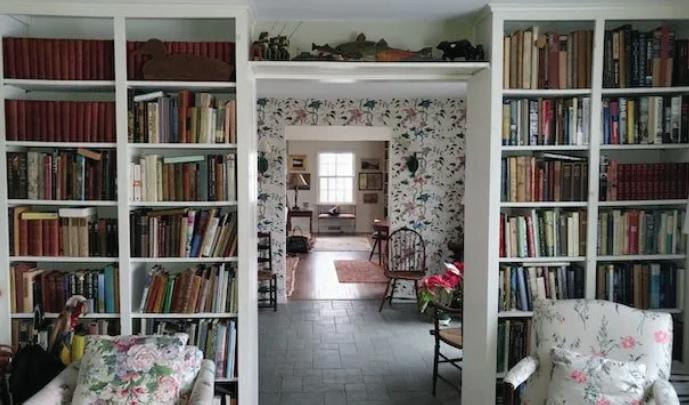

By Debra Hazel
The understatement of the century is that working in New York real estate isn’t easy — but it’s worth the patience, effort and money, said speakers at the RETCon conference, held in March in Las Vegas.
The key is finding the openings in the market, building the right product and employing the right technology. The biggest need and challenge, not surprisingly, is helping people find a place to live.
“New York needs tremendous investment in housing; unfortunately, we have not seen that in decades,” said Brian Peters, chief operating officer at Rose Associates.
The 34,000 new units that came on line in 2024 is the same as in Raleigh, N.C., he observed.
“It’s almost a tale of two cities,” Peters continued. “Among market apartments, we’re seeing rising rents and vacancy is very low. Rents at market units are extremely high — $120 per square foot per year.”
The best thing to be in New York City is a multifamily owner, said Frank Monterisi, Jr., executive vice president at Related Companies, whose portfolio operates at a 99.2% occupancy.
“But getting through the development is fraught with peril,” Monterisi said.
Construction is difficult, he said, reminding the audience that Related’s Hudson Yards was built over an active rail yard.
“The politics are scary; New York is very regulated. Costs go through the roof,” Monterisi said. “And it’s very litigious. Assembling sites can be very difficult. But you get through that to the other side, New York is a great place to be.”
Related’s new development on Roosevelt Island is seeing rents twice that of its previous projects.
Those difficulties in building actually can be a competitive advantage for those who know

what to do, said Tiago Correia, senior vice president of development at Extell.
“We’re very specifically focused on luxury new construction, so we’re somewhat insulated by that. It’s the nature of the condo business,” he said, acknowledging that “New York is notoriously tough, competitive and hard. I don’t know if any of us would have it any other way. That’s how our product stands out. The only way to hedge is for your project to be excellent.”
Related’s development at Willets Point, across from Citi Field in Flushing, Queens, has taken nearly 15 years to begin construction, Monterisi noted. The 60-acre project, a joint venture with Sterling Equities, the New York City Football Club and the New York City Economic Development Corporation, will consist of a soccer stadium and 2,500 residential affordable housing units.
“We’re really proud of this project,” Monterisi said. “We’re building new housing in an area that needs new housing.”
There also is some need for new office space that offers the amenities that tenants now expect.
“We have tenants who are always looking for more space,” but the right space isn’t available, said Neil Mohamed, vice president of technology at Rudin Management. “Park Avenue is a construction site. Everyone is being patient.”
Location is also important — while some areas have seen immense vitality, other neighborhoods continue to struggle.
“The City of Yes program relieves some of the regulatory burden in the development process, Peters observed. “Also helpful is selective rezoning, such as in Midtown South, which is home to many 80-year-old office buildings. We’re trying to create an environment where office to residential can be done.”
But buildings have to have good bones, the right depths to be converted without massive
engineering issues, and no tenants in place, Correia said.
“It’s really like the decathlon from hell — it’s rather chaotic,” Correia said. “On any given day, we encounter a multitude of challenges. That’s what makes it fun for some of us, but also challenging.”
One thing that can help is technology, with AI reading and summarizing complex documents helping to manage buildings.
“Durst is doing more in predictive modeling,” said Mark Domino, director of digital at the Durst Organization. Robotics also can play a role — Durst has used robots for cleaning windows, under human supervision. “There is a reduction of engineering/labor roles, with not a lot of people going into those jobs. We’re looking into programs.”
There is still a long way to go for an industry that had historically been slow to adopt new technologies. But the potential is there.
“The way fintech transformed banking, the same has to be said in real estate in New York City,” said Mohamed. The way leases are negotiated, and digital brokerage have definitely moved ahead, as other areas still need improvement.
“AI has not had a significant impact in many places yet, but multifamily is an area where it can,” Peters said. “The next two to three years will see a tremendous evolution in the city.”
Tech also is expanding the commercial pool.
“We looked up the number of venture-backed businesses in Manhattan, and there are roughly 550,” said Stuart Bern, JLLT managing director, Americas advisory services. “Why are all these startups choosing the concrete jungle to be their home? There’s the best talent and access to a lot of diversity and capital. Within proptech, there is a lot of access to neat real estate, which drives innovation.”

By David Faber, McCarthy Building Companies

The United States is grappling with critical challenges in water infrastructure, resulting in an unprecedented demand for innovative treatment solutions. Many existing systems, constructed between the 1950s and 1970s, are becoming increasingly inadequate to meet the needs of expanding urban areas. This inadequacy is especially pronounced in drought-prone regions such as California, Nevada and Arizona, where water scarcity is a pressing issue.
Several interconnected factors contribute to this growing crisis. The changing climate is altering precipitation patterns and exacerbating drought conditions, placing additional stress on already strained water resources. Simultaneously, population growth in urban areas drives up demand for water, leading to greater competition for this finite resource.
Production increases in industrial markets, like power, food & beverage, mining, pharmaceuticals, semiconductor, data centers, automotive and agriculture also further intensify the need for reliable water supply even as many companies implement strategic initiatives to
reuse and/or reduce their water consumption.
In response to these issues, municipalities, companies and developers are increasingly looking for sustainable water management strategies. Advanced technologies and collaborative delivery methods are essential to creating effective solutions.
Advanced Water Treatment (AWT) technologies, particularly membrane filtration, are emerging as vital tools for both wastewater treatment and desalination projects. These technologies enable the efficient purification of water, allowing for the recycling of wastewater and the production of high-quality drinking water from previously unusable sources.
Ultimately, addressing the water infrastructure issues in the United States requires a multifaceted approach that embraces innovation, sustainability and collaboration.
Considering the pressing water challenges confronting our communities, builders must recognize their pivotal role in adopting innovative solutions.
McCarthy Building Companies (McCarthy) has harnessed these developing technologies in partnership with clients and municipalities, paving the way for the future of water.
New Environmental Protection Agency (EPA) regulations are significantly reshaping how water infrastructure projects are designed, with a stronger emphasis on water quality and sustainability.
Recent wastewater discharge standards include stricter requirements for the removal of nutrients like nitrogen and phosphorus, which contribute to harmful algal blooms and environmental degradation if left untreated.
These rules are pushing municipalities to adopt advanced biological nutrient removal technologies, which are now essential to meeting water quality goals. Additionally, new standards for per- and polyfluoroalkyl substances (PFAS) require water systems to monitor and reduce these harmful chemicals by 2027.
However, rising material costs and ongoing supply chain disruptions pose obstacles to meeting these standards. The complex nature of water projects, combined with economic pressures, often lead to longer project timelines and increased costs. Early-stage planning and collaboration between municipalities, engineers and contractors are essential to address these hurdles and ensure successful project delivery.
Strategic partnerships and value engineering also help mitigate risks, allowing projects to stay on budget despite fluctuating costs.
Workforce development is another critical factor in the industry’s adaptation to these new standards. The growing demand for specialized skills in environmental engineering, particularly in chemical and biological processes, underscores the need for training programs.
Developing a pipeline of talent is essential for implementing these new technologies and meeting regulatory requirements, ensuring long-term sustainability in the water sector.
Advancements in water treatment technology are helping municipalities address both immediate and long-term water management needs. Several technologies are gaining traction:
• Membrane Processes: Widely used in both desalination and wastewater treatment, membrane technologies remove contaminants at a microscopic level, offering efficient solutions for treating and
recycling water.
• Ultraviolet and Ozone Disinfection: These chemical-free disinfection methods are becoming increasingly popular due to their environmental benefits and effectiveness in eliminating harmful pathogens and destruction of harmful organic contaminants like PPCP’s, 1,4 dioxane and NDMA.
• Biofiltration and Activated Carbon: These techniques help remove organic contaminants, improving water quality and enabling more effective recycling efforts.
• Indirect Potable Reuse (IPR) and Direct Potable Reuse (DPR): Treating wastewater to a potable standard is an emerging trend, particularly in drought-prone areas where water conservation and reuse are essential.
As these technologies continue to evolve, they offer promising solutions to the growing global challenges of water scarcity and sustainability.
To address the complexities of modern water projects, municipalities are increasingly drawn to the value of collaborative delivery models such as design-build and integrated project delivery (IPD). These approaches foster earlystage collaboration among key stakeholders — including engineers, contractors and municipal leaders — facilitating a unified vision from the outset.
This collaborative environment helps reduce delays and optimizes resource allocation throughout the project life cycle.
One of the primary advantages of these delivery models is the integration of process engineering and design during the planning phase. By involving engineers and designers in the early stages, projects can achieve better regulatory compliance.
This proactive approach allows for a thorough understanding of local, state and federal regulations, ensuring that all necessary permits and approvals are obtained efficiently. It also minimizes the likelihood of costly redesigns or adjustments later in the process, which can arise from unforeseen regulatory challenges.
Additionally, early collaboration can enhance the project’s overall sustainability.
By considering environmental impact from the beginning, teams can design water treatment facilities that are not only compliant with regulations but also environmentally friendly.
This can include selecting energy-efficient technologies, optimizing land use and integrating green infrastructure solutions that protect local ecosystems.
The use of collaborative delivery models also enables municipalities to leverage the diverse expertise of various stakeholders. This interdisciplinary approach fosters innovation and allows for the sharing of best practices, resulting in more effective and efficient solutions to water management problems.
With a shared commitment to project goals, stakeholders can better anticipate and address potential risks, leading to improved project outcomes.
Looking ahead, sustainability and resilience will be the cornerstones of future water infrastructure projects. With climate change accelerating water scarcity and increasing the frequency of extreme weather events, it is essential to design systems that are both adaptable and sustainable. This means prioritizing technologies like water recycling, energy-efficient treatment systems and resilient infrastructure capable of withstanding environmental stresses.
The focus on Advanced Water Treatment technologies, such as membrane filtration and bionutrient removal, will continue to grow as municipalities and developers seek to meet evolving regulatory requirements and address long-term water management hurdles.
By investing in innovative solutions today, the U.S. water infrastructure can be better prepared to meet the challenges and demands of a changing world.
McCarthy has completed several water infrastructure projects across the U.S. that set benchmarks for advanced water treatment, including the Oxnard Water Treatment Facility in Oxnard, Calif.
The Oxnard Advanced Water Purification Facility (OAWPF), located in Southern California, was developed to provide the city with an alternative to imported water from northern California.
This innovative facility employs a newly installed microfiltration system combined with reverse osmosis and ultraviolet (UV) disinfection, allowing it to produce locally controlled recycled water that is independent of external factors like climate and governmental regulations.


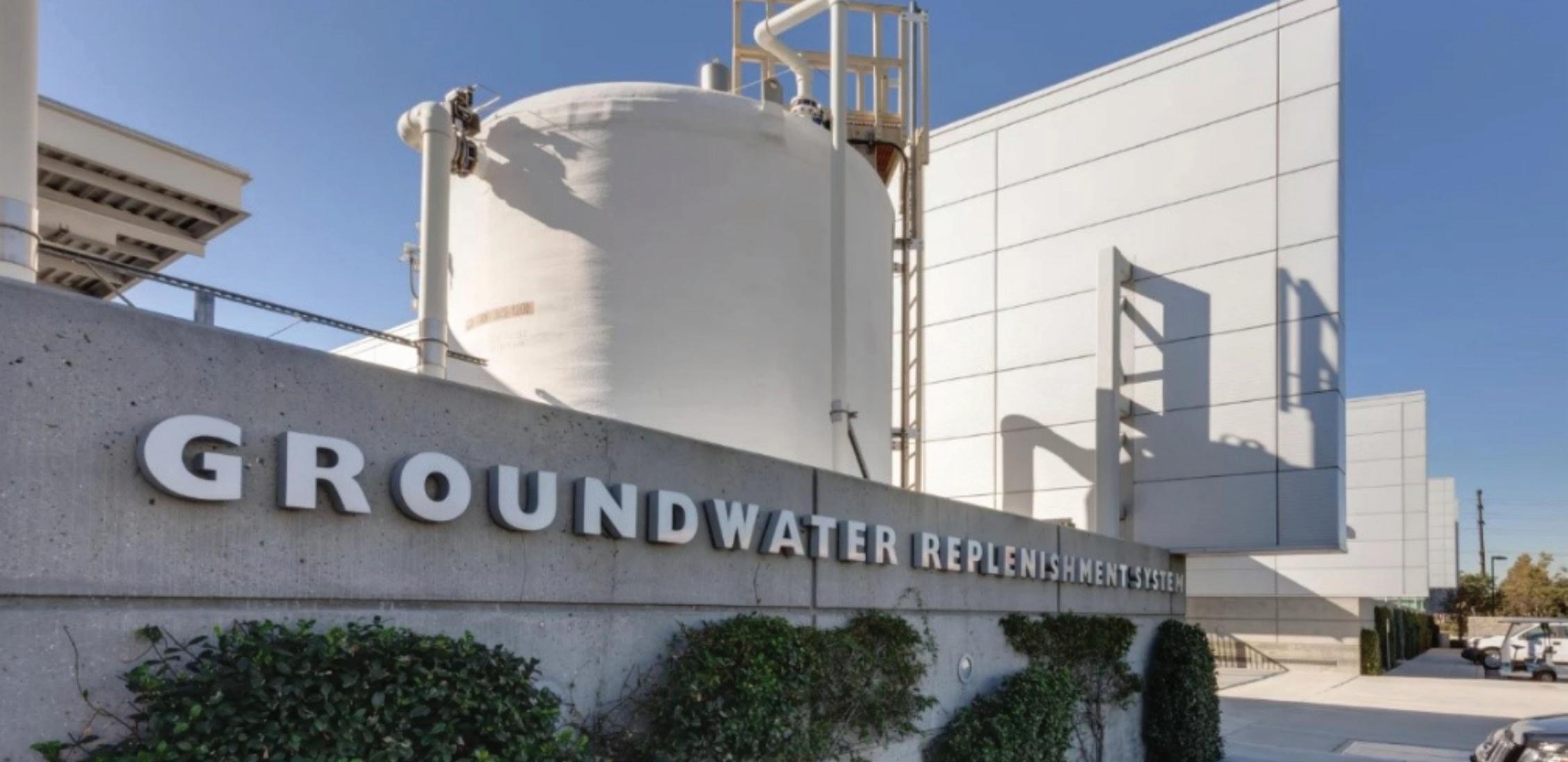
The 60,000-square-foot facility spans five acres and has a process that requires less energy than traditional water importation methods. The recycled water generated will serve various applications, including industrial processes, irrigation, and indirect potable reuse through groundwater injection.
By prioritizing local resources and reducing reliance on outside influences, the AWPF exemplifies a forward-thinking approach to sustainable water management.
The Orange County Water District (OCWD) Ground Water Replenishment System is the largest advanced water purification facility in the world and produces up to 130 million gallons of purified water daily. Originally built as a 70-million-gallon-per-day (MGD) facility, it underwent significant expansion and modernization to enhance its capacity and energy efficiency.
As part of the 30 MGD expansion, McCarthy added eight new concrete underground basins which contain the hollow fiber membrane modules for the microfiltration system. A new, 32,000-square-foot reverse osmosis building was constructed by the team of builders, along with two large 7.5-million-gallon water tanks.
The foundations of these tanks were designed with fewer joints, allowing for more efficient concrete pouring.
Throughout the expansion, the plant remained fully operational. McCarthy coordinated closely with the water district to minimize downtime, a critical effort given California’s ongoing drought.
Ariz.)
The 90-acre Airport Water Reclamation Facility (AWRF), operated by the City of Chandler, Calif., provides recycled water for irrigation, benefiting over 248,000 residents in the growing area.
To address the community’s increasing water demands, the facility underwent an upgrade and expansion, increasing its processing capacity
from 10 to 15 MGD. This project involved implementing advanced treatment processes, installing new equipment and enhanced reclaimed water capabilities.
The expansion included the installation of new equipment and reservoirs for the distribution system, along with upgrades to treat 15 MGD of equivalent solids.
Improvements comprised a pre-stage basin, aeration basins, secondary clarifiers, solids storage tanks and a reclaimed water reservoir, in addition to necessary piping, electrical systems and controls.
To ensure adherence to the project’s schedule, quality and safety standards, all concrete work and process piping installation were carefully managed. Virtual design technology, including 3D modeling, was utilized to enhance quality and expedite procurement.
Throughout the construction process, the facility remained operational, consistently producing Class A+ reclaimed water that meets Arizona’s highest standards.







Carol A. Sigmond Partner
Greenspoon Marder LLP
1345 Avenue of the Americas Suite 2200
New York, NY 10105
carol.sigmond@gmlaw.com (212)524-5074
There are two updates on the legislative front that boards of directors or managers for residential cooperatives and condominiums and their managing agents should be aware of: the New York State Fair Chance Act and the limbo status of the Corporate Transparency Act.
As part of New York City’s overall effort to give ex-offenders opportunities for employment and housing, effective January 1, 2025, residential cooperative and condominium boards may not ask prospective purchasers or renters about certain criminal convictions.
Among other things, all application forms must be revised to exclude general questions about criminal history, and routine criminal background checks are basically prohibited. Similarly, criminal history questions are not permitted in oral interviews. Managing agents should provide an information sheet about the law to all applicants for cooperative and condominium units.
If there is a full review by the board of the application and other factors and provisional approval, then a background check of three years for a misdemeanor and five years for a felony is permissible. Also, if the person has been released from custody within the last year, looking at the conviction that led to incarceration may be permissible. Any decision to commence a criminal investigation must be documented. It would be best to consult counsel before commencing any criminal background investigation. Moreover, before starting the search, the applicant must be informed and have five days to rebut any adverse information.
The Fair Chance Act does not apply to offenses that result in a listing on the New York State Division of Criminal Justice Sex Offender Registry or other similar registries.
The CTA is a 2021 federal law intended to disrupt and prevent money laundering and other criminal activities including financing. The CTA was intended to become fully effective in 2024. As of January 1, 2025, all corporations, LLCs or limited
partnerships formed or operating under the laws of the United States or any political subdivision, including individual states, Native American Tribes or territories, were to file with the U.S. Department of the Treasury the names of individual beneficial owners of these companies.
Twenty-three types of businesses, including banks, credit unions and insurance companies, were exempt. Large businesses, defined as those with 20 or more full-time employees or gross receipts (or sales tax receipts) of more than $5 million were also exempt. Beneficial owners were those with functional day-to-day control over the corporation or the ability to remove those exercising such authority. Failure to register was punishable by civil and criminal fines and up to two years of incarceration. There was no exception for nonwillful acts or negligence.
The CTA was controversial, as it was the first time beneficial ownership of a business entity came under the remit of law enforcement agencies.
From the outset, the law was criticized for being overreaching and costly. For example, residential cooperative corporations and condominium associations were deemed to be required to report beneficial ownership under the CTA. This was considered an unfair expense for residential cooperative corporations and condominium associations.
The Biden Administration responded to criticism by delaying the effective dates. The Trump Administration has announced it will not enforce the CTA against US citizens or companies. A new proposed rule limiting the CTA to non-U.S. entities is expected to be issued later this month.
At least for now, residential cooperative corporations and condominium associations are not going to be forced to fi le under the CTA and not be subject to civil penalties, criminal fi nes or incarcerations for beneficial owners.
This column presents a general discussion. This column does not provide legal advice. Please consult your attorney for specific legal advice.

Frank DeLucia Executive Vice President
Hub International Northeast frank.delucia@hubinternational.com
(212)338-2395
Like any infrastructure, buildings require ongoing maintenance to maintain their stability and safety. If structural issues go unnoticed and unaddressed, they can pose significant risks to occupants and lead to major financial costs for owners. Here are five key actions building owners should take to proactively prevent major structural issues:
One of the most important steps building owners can take is scheduling annual inspections by experienced, third-party professionals. These inspections help identify potential structural problems before they escalate into serious issues. A structural engineer should be included in this team, particularly when inspecting critical components such as load-bearing walls, beams, and foundations. Their expertise is essential for evaluating the overall health of these fundamental structures.
In addition to routine checks, post-event inspections are crucial. Natural disasters such as earthquakes, hurricanes or heavy snowfall can cause hidden damage. Post-event evaluations help identify problems like blocked drains, roof damage or weakened structural elements that could worsen over time. For example, a blocked drain might seem like a minor issue, but water pooling over time could cause signifi cant damage or undermine the building’s structural integrity.
For high-rise building owners, monitoring for concrete spalling is particularly important. Spalling occurs when pieces of concrete break off or detach from columns, walls or fl oors, often indicating underlying issues such as steel reinforcement corrosion. If spalling is detected, immediate action is required, and a structural engineer should assess the damage to determine the severity of the deterioration.
Additionally, owners should monitor cracks in walls, especially in newer buildings still settling. While small, superfi cial cracks may be normal, cracks that grow or spread could indicate more serious underlying problems. Structural cracks, particularly in load-bearing walls, can compromise a building’s stability if left unchecked. Regular inspection and timely repair of these cracks can prevent more extensive damage in the future.
Effective financial planning is essential for managing long-term maintenance and necessary upgrades. Delaying repairs or upgrades due to budget concerns is a common mistake that can lead to larger, more expensive issues later on. By postponing maintenance, small
problems can escalate into costly, complex repairs or, in worst-case scenarios, result in structural failures.
For instance, neglecting minor foundation cracks can allow water infiltration, which can slowly damage the foundation over time. By creating a comprehensive financial plan that includes earmarking funds for maintenance and improvement projects, owners can stay ahead of potential structural problems and protect a building’s long-term health.
Involving building management and maintenance staff in early risk detection is another proactive measure. Building managers should be familiar with the structure and conduct regular assessments in addition to formal inspections. Educating maintenance staff to recognize early warning signs of structural damage can prevent minor issues from turning into major problems.
This could involve detecting unusual sounds in the building, observing changes in the alignment of doors or windows, or noticing new water stains on walls and ceilings. Implementing a system to document and track these observations ensures that smaller issues are addressed promptly and that they don’t go unnoticed. Having a clear record of these findings can also aid future inspections and help reduce liability risks for both the building and its occupants.
Maintaining up-to-date insurance coverage is an essential part of any risk management strategy. Building owners should regularly review their insurance policies with a trusted advisor to ensure the property is adequately covered. While it may be tempting to reduce coverage to save on premiums, doing so can leave the building vulnerable to significant risks.
It’s vital that the insurance coverage matches both the current value of the building and the specific risks it faces. In addition to standard liability and property insurance, owners should consider specialized coverage for threats such as flooding, earthquakes or wind damage, depending on the location of the building. Regular reviews by an experienced insurance professional can help ensure that the building’s insurance is both comprehensive and tailored to its unique needs.
By taking these proactive measures, building owners can safeguard their investment, protect the well-being of their occupants and avoid the financial burden of structural failures. Collaborating with experienced structural engineers and insurance professionals can further strengthen a building’s risk management plan and enhance its long-term resilience.



From financing considerations, to property performance metrics, today’s real estate business is inundated with both challenges and opportunities.
PKF O’Connor Davies has decades of experience working with a variety of assets including industrial, office and residential sites. Our experience in this complex field gives us the expertise to deliver strategic advice that drives real value.
With the PKF O’Connor Davies Real Estate Team, our clients know greater service, know greater insights, Know Greater Value.

pkfod.com
Edward O’Connor, Partner 201.712.9800 eoconnor@pkfod.com


Kris Kiser
Outdoor Power Equipment Institute
TurfMutt Foundation Equip Expo
1605 King Street Alexandria, VA 22314
turfmutt.com opei.org (703)549-7600
“Backyarding,” the act of using our yards, parks and other green spaces for activities typically associated with our indoor life — like dining, entertaining, working, exercising and more — has gained a lot of traction in recent years.
With spring around the corner, the TurfMutt Foundation encourages everyone to increase their backyarding activities by knowing the purpose of your yard and how it will meet the needs of your family and pets.
Additionally, knowing your climate zone and the mix of trees,
shrubs, grass and flowering plants that will grow sustainably in your microclimate is key to designing a dream yard. Family yards are not only a sanctuary for families, but they also provide food and shelter for wildlife and important pollinators such as birds, bees and butterflies. While you’re getting it in top shape for warm weather, remember to keep safety top of mind, especially with outdoor power equipment and tools.
This infographic offers tips from the TurfMutt Foundation to help realtors and homeowners get ready for spring and summer backyarding, safely and efficiently.









We would like to take this opportunity to thank the following people:
Our team & staff for their endless dedication and support
Our tenants for their cooperation to keep our buildings safe
Our partners for their trust and confidence in these challenging times
All New Yorkers working tirelessly to keep our city moving
We hope everyone continues to be healthy and safe in 2021.




Debra Hazel
Debra Hazel Communications
North Las Vegas, NV
(201)618-5247
From cyclical closing of stores to a projected drop in international tourism to domestic financial worries, it’s starting to feel a little bit like 2020. Fortunately for retail real estate, its ongoing discipline is continuing to pay off at a time when a lot of resilience may be needed.
After massive closures in the early part of this decade, retailers more recently had been opening more units than they had shuttered. Now, the cycle is turning again, with Joann, Forever 21, Party City, Big Lots, Macy’s, CVS, Advanced Auto Parts and more announcing closures. On the positive side, however, others such as Barnes & Noble (who would have thought it?), Whole Foods and, yes, the dollar stores are expanding.
“For the first time since 2020, retailers are projected to close more stores than they opened in 2024, signaling a more cautious market stance. Yet retail occupancy rates, excluding malls, have reached a decade-high of 95.6%, demonstrating the sector’s resilience and stability,” said Colliers’ report “CRE Outlook 2025.”
Colliers expects occupancy rates to remain fairly steady because of lack of new construction, reporting that less than 20 million square feet of new space will be delivered this year, a 45% drop year-over-year. This continues a disciplined approach dating from even before the pandemic, and one that is now exacerbated by construction costs that are 30% to 40% higher than before 2020. (And with the tariff announcements varying day by day, and sometimes hour by hour, as I write this, who knows how high they will go or if any will actually be imposed?)
The positive, according to the report? People still want to go into a store to shop, although they expect technology to play a greater role in their experience.
“Demand for retail space is expected to remain strong because of the ongoing need for strategic physical locations,” the report said. “Net absorption may decline slightly but is still likely to stay positive for both malls and shopping centers. This dip reflects the reduced number of new retail completions and a potential slowdown in leasing due to market stabilization.”
But another concern is who will be shopping. The University of Michigan’s Consumer Sentiment Index declined 10.5% to 57.9 in March over February, reaching its lowest level since 2022 and a 27.1% drop from its level one year ago, with consumers expressing concern about policy and other economic factors.
“Consumers are becoming increasingly selective, driven by financial concerns continuing into 2025. Forty-seven percent feel pessimistic about finances, while record-high credit card debt and soaring interest rates are driving more deliberate spending,” the report said. “With 60% of consumers spending more on groceries due to inflation, discretionary spending is expected to decline. To adapt, retailers should highlight savings opportunities and create bundled offerings for cost-conscious shoppers.”
Other factors affecting spending include the slowdown in the housing market (likely to continue as the Fed is holding rates steady, citing economic uncertainty) and consumers contend with high credit card debt and rising prices of goods. Many retailers, including Abercrombie and Target, have cut projections for 2025 profits.
This could be especially true for cities like New York that see sales bolstered by tourism. Retailers may have to rely more on domestic shoppers, as geopolitical tensions lead visitors from Canada, Mexico and the European Union to choose other options for leisure travel, according to a February report from Tourism Economics.
International inbound travel to the United States is projected to decline by 15.2% compared to baseline projections. Inbound travel spending in 2025 could fall by 12.3%, amounting to a $22 billion annual loss, Tourism Economics said. Total U.S. travel spending, including both domestic and inbound travel, could be 4.1% lower than baseline expectations, representing a $72 billion reduction in total travel expenditures.
According to a March 2025 report from New York City Comptroller Brad Lander, of New York City’s 64 million visitors in 2024, international guest constituting 20% of that number and an even higher percentage of spending. And visitor spending supports 5% of local jobs in retail.
So, at least for now, it seems like we’ll be in for a bit of a ride that will change from day to day.
“In 2025, the retail industry will be defined by adaptability and resilience,” wrote Anjee Solanki, Colliers’ national director, retail services and practice groups, U.S., in the report. “With consumers prioritizing value amidst economic pressures, retailers must double down on blending convenience and experience in brick-and-mortar spaces while leveraging technology like AI to anticipate needs and create seamless omnichannel journeys that empower shoppers to spend wisely.”

Langsam Property Services Corp. is a Bronx-based real estate management company. These buildings are located in the Bronx, Manhattan, Queens, Brooklyn, and lower Westchester County.
Langsam is designated as an Accredited Management Organization (AMO), a standard of excellence in management conferred by the Institute of Real Estate Management (IREM).
1601 Bronxdale Avenue Bronx, New York 10462
Tel: 718. 518. 8000
Fax: 718.518. 8585

Ed Hanley Managing Director
Cbiz
53 State St., 17th Floor Boston, MA 02109 ed.hanley@cbiz.com (415)869.5577
The commercial real estate (CRE) industry today contends with inflation, higher interest rates and refinancing pressure, all of which are tempered by improving market dynamics, steadying demand and regional incentive programs. The following high-level overview outlines several areas that will, for better or worse, shape the sector’s performance over the following months.
A record number of CRE loans are due to mature between 2025 and 2027, inviting refinancing pressure. Meanwhile, interest rates were cut three times during 2024, with the Fed signaling that they will likely remain stable barring major economic developments. The 10-year Treasury yield, an influential driver of CRE mortgage rates, is expected to range from 3.8% to 6% through 2025. Industry analysts expect deal flow over the year ahead to follow the relatively anemic trend of activity established over 2024, with the caveat that rent growth could accelerate deal activity in the second half of the year.
The stated desire of the current administration is to extend the significant tax breaks first introduced by the Tax Cuts and Jobs Act (TCJA), currently scheduled to sunset in 2026. Advisors, investors and property owners are keeping a close eye on the following provisions:
• Bonus Depreciation: Bipartisan Congressional support suggests 100% bonus depreciation could be restored and incentivize property investment, improvement and development.
• Qualified Business Income Deduction (QBI): The expense associated with extending the 20% QBI deduction means it may be extended in a modified form, but extension efforts have received support.
• SALT Deduction Cap: The expiration of the $10,000 SALT deduction cap could benefit CRE investors in high-tax states, but the costs at the federal level are significant and its extension remains uncertain with discussions ongoing.
Following nine consecutive quarters of rising vacancies, office vacancy rates finally stabilized in 2024 and are expected to peak in 2025. Class A buildings enjoy the highest rates of occupancy, while lowerquality buildings are expected to continue to suffer high vacancy rates. However, the low rate of new office
construction buoys hopes for the long-term prospects of these properties.
In some markets, including major metro areas like New York, Chicago and Washington, D.C., tax breaks are available to incentivize conversions of office property into residential and industrial property. Industry analysts expect particularly strong demand for senior housing and data centers based on economic and demographic data.
The industry at large continues to struggle with persistent labor concerns. According to constructconnect.com, 90% of contractors have reported difficulties filling hourly and salaried positions alike. In addition, as I write this, various tariffs are due to take effect within the next few weeks and are expected to increase the costs of essential materials and could encourage construction companies to reconfigure their supply chains.
The industry has seen strong demand across several sectors, notably warehousing and hotels, while 2024 saw a record number of new multifamily units constructed with an estimated two million more to be built by 2028.
Insurance premiums have risen alongside inflation and construction costs. Claims related to catastrophic weather events are a major driver of premium costs, with 24 weather-related disasters causing losses of more than $1 billion in the first 10 months of 2024. Risk assessments can help identify vulnerabilities, evaluate exposure and enhance risk management strategies across property portfolios.
Additionally, sustainability and resilience initiatives can help control the costs associated with physical, regulatory and economic vulnerabilities. Energy efficiency, building standards and green building methods are incentivized by many municipalities, while complex compliance requirements further encourage the refinement of industry practices.
The year ahead offers a mixed bag of indicators, with persistent challenges and plenty of emergent opportunities alike. Investors and owners can best prepare for success in 2025 by evaluating market opportunities, enhancing tax and financial strategies and reinforcing risk management efforts.






Stuart Saft Practice Group Leader
New York Real Estate Practice Group Holland & Knight
787 Seventh Ave., 31st Floor New York, NY 10019
stuart.saft@hklaw.com (212)513-3308
There is a war between the New York governor and the U.S. president over congestion pricing,
In fact, one could argue that the city and state manufactured all the congestion in order to get congestion pricing, but the real goal is to get Manhattan residents to stop using automobiles. I am concerned that the end result of everything that is going on is that fewer people will come into Manhattan to shop, be entertained and stay in our magnificent hotels. Does anyone consider the unintended consequences of these isolated actions?
But the real question is, why have the streets become so congested? Here are six reasons:
1. The city’s Department of Transportation decision to narrow many streets by putting in bike lanes, having cars park in the middle of the street and creating turning lanes. For a city so concerned about handicapped residents, did anyone consider how difficult it has become for anyone crossing Third Avenue, First Avenue and others for someone who is not trained for a marathon? Yes, I love walking in Paris, but I think it is a mistake to try to transform New York City into Paris.
2. Bike racks that have been placed on streets throughout the city.
3. Allowing unlicensed motorbikes free reign of our streets. How many times have you seen motorbikes violate every conceivable traffic law and how many times have you been hit or almost hit by these bikes riding at excessive speeds and narrowly missing pedestrians? They should be fined or lose their bikes, but since they are unlicensed, there is nothing we can do about them. Still, they create congestion. By the way, how many fires and deaths must the city endure before the city bans lithium-ion batteries?
4. The limit on the number of taxis that have medallions while there is no limit on the number of car services that drive the streets waiting for customers to dial in to get a ride. I cannot keep track of all the cars with TLC licenses plates that are just roaming the streets waiting to be called. How about designating unused spaces on
the periphery of Manhattan as waiting areas for these cars and get them off of our streets?
5. Trucks that are moving billboards.
6. Closing Broadway around 42nd Street. It has been great for the pickpockets and the cartoon characters who have taken over the area, some of whom fleece our tourists and residents, but it has created a nightmare for cars on Seventh Avenue and Broadway and the intervening crosstown streets.
However, the worst is yet to come. Obviously, New York City has several hundred million dollars to waste because the city is now planning to narrow Park Avenue and Fifth Avenue from 59th Street to 42nd Street. This will make it much more difficult to get to the large office buildings on both avenues and side streets, as well as hotels, shops, restaurants and Grand Central Terminal. What will the other north-south streets look like when the city narrows two of its main avenues? Create havoc on Park Avenue and Fifth Avenue and watch the congestion pricing tolls collapse.
Equally bad are the trash bins that the city is spending hundreds of millions of dollars to buy, which will live on our streets and permanently block our sidewalks. After placing these huge garbage bins on every street, how will deliveries be made to buildings? How will fire engines and ambulances get to and from buildings?
Has anyone considered having the garbage picked up more frequently? Perhaps use private carters or at least test private companies removing garbage daily and not just twice a week.
The problem is that we elect people to office whose expertise is running for public office, and not necessarily governing or planning. For the most part, young college graduates work for an elected official and when that office opens, they run for the seat. But they have little real-world experience.
As a result, we the residents of New York are the subject of one experiment after another and by the time it fails, the elected officials have moved on to another office.


Gustavo Rusconi, CPM
Vice President, Director of Management
Argo Real Estate
50 West 17th St. New York, NY 10011
(212)896-8600
With the first round of fines now being levied on buildings with 25,000-plus square feet not meeting regulatory criteria outlined in Local Law 97 (LL97), some New York City property owners and coop and condo boards will purchase carbon offset certificates, a.k.a., carbon credits from the New York City Department of Buildings (DOB) as temporary solutions to mitigate costs.
Carbon credits may be especially helpful for properties requiring extensive infrastructure upgrades, which potentially could cost millions of dollars. With LL97 fines averaging $268 per ton of CO2 emission overages, buildings that exceed their allotments could face annual fines of $100,000 or more across the first threshold, which is effective from 2024 to 2029.
At this juncture, buildings are only allowed to purchase 10% of their carbon emission overages. But even if the credits do not eliminate fines altogether, they can provide a little extra time to make a building compliant. The credits will enable many owners and managers to prepare the work incrementally. The difference could be annual fines of a few thousand dollars or more over 10 years, versus immediate sixfigure outlays.
According to Darren Johnson, senior account manager, Bright Power Inc., “Carbon credits could be part of a strategy to meet carbon emission limits, alongside other investments and improvements.”
Many perceptive building owners and managers began addressing the need for building upgrades when the Climate Mobilization Act was passed in 2019 and started arranging financing for the renovations. At that time, rates were still low, and financing was readily available.
But shortly after the legislation, the pandemic hit. Lockdowns prevented the work from starting and supply chain issues compromised costs and access to needed materials. More than five years later, in a stable economy with available supplies, buildings that were prepared early on at much lower borrowing rates are ahead of the curve.
For many properties, whether well-funded or not, the fact remains the main focus of the work will be done incrementally because of the high costs of electrification, which include necessary materials and building-wide construction.
There is also universal concern as to whether the city’s grid is ready to handle an electric volume expected to rise dramatically, especially over the next 15 years, when the law requires an 80% reduction in carbon emissions.
Starting the Process
The initial work on any building should address façade leakage by making sure windows are tightly framed and vent systems up-to-date, which will automatically reduce emissions. Another strategy is to update heating and HVAC systems. Sadly, an unintended consequence of a potentially healthier environment is that electric heating systems are much more expensive for the consumer than those run by gas or oil. Electric cooking appliances raise costs, too.
The different types of buildings in New York City also factor in the wide range of expenditures required to meet sustainability goals and compliance. Older masonry-clad buildings in good condition tend to be relatively energy-efficient because of the way they contain and release heat. Although aging infrastructures will require new heat pumps, new boilers, updated electric wiring, new windows, new roofs, etc., if operated efficiently, prewar properties could be made compliant faster than many postwar structures featuring glass curtain walls, large windows and energy-guzzling PTAC systems.
The long-term benefits of adapting New York buildings to meet new energy efficiency standards are a given. But when the law passed, many of the guidelines did not factor in the prohibitively high costs of meeting the ongoing and increasingly stringent criteria of the Climate Mobilization Act and its centerpiece, LL97. Nor are there enough incentives available to significantly mitigate the prohibitively high costs of compliance. For the moment, the only respite may be the purchase of carbon offset certificates or carbon credits.
Property owners and managers who prepared early for Local Law 97 by refinancing mortgages and taking out loans at low interest rates before 2022 have been better able to make necessary renovations and limit their exposure to fines. There is no question that many buildings may be forced to take a more longterm approach by accepting the fines, while scaling the necessary upgrades over time.
Fortunately, Argo’s residential portfolio is 96% compliant, much of which may be credited to our inhouse Compliance Department headed by Jessica Tusing, vice president, who works closely with Bright Power Inc. and other consultants to address ways to meet carbon emissions criteria.
Nearly all buildings that were constructed prior to 2010 will need some types of upgrades to reduce carbon emissions and help make New York a healthier, more livable city. If we do it right, we will not only be known worldwide as the center of finance and culture, but also as a modern paradigm for urban sustainability.



More than 35 years of real estate, condominium & cooperative experience
WilkinGuttenplan uses expert industry knowledge in accounting, audit, and tax services to assist New York City real estate owners, developers, and investors of commercial and residential properties identify opportunities and guide them on implementing strategies to stay ahead of changing times.











Bob Knakal
BL Real Estate Advisors
New York, NY
bk@bkrea.com
If you are selling an apartment building in New York City, are you selling that building, or are you really selling something else?
That might seem like a strange question, but the answer depends upon whether that building is subject to New York State’s rent regulation system.
If your apartment building is subject to rent regulation, you might think you are selling the bricks and mortar that are sitting on your parcel’s land, but that’s not actually what you are selling, and not really what the property’s value is based upon. You are really selling the boxes of paperwork that you have in your manager’s office, and the quality of that paperwork is highly correlated to the price you will get.
This is a very difficult concept for many people to understand. The draconian Housing Stability and Tenant Protection Act of 2019 (HSTPA) changed the nature of the business dramatically and has been very successful in completely vaporizing hundreds of billions of dollars of equity value in New York City’s rentregulated housing stock.
If circumstances don’t change, one owner of several thousand units here in New York has said that the only end-game he sees is handing the keys to his buildings back to the banks or losing title in real estate tax foreclosures. This is how dire the system has become. Effectively, expenses on rent-regulated housing are going up at a significantly greater rate than income is allowed to go up.
HSTPA marginalized two programs that incentivized the private sector to invest tens of billions of dollars into the housing stock. The Major Capital Improvement program (MCI) and the Individual Apartment Improvement program (IAI) both allowed property owners to recoup capital expenditures through rent increases. This incentivized the private sector to invest in the quality of the housing stock.
In 1978, before these programs were implemented, the dilapidation rate in New York City’s housing market was 14%. That means that14% of housing units were in such poor condition they were deemed uninhabitable. In 2019, after the MCI and IAI programs had been around for quite a while, the dilapidation rate had fallen
to 0.04%. This led to better-quality housing stock and a better quality of life for the residents of those buildings.
HSTPA successfully marginalized both of those programs such that, when a previously rent-regulated unit becomes vacant today, it more likely than not remains vacant. In the pre-HSTPA days, the owner would spend $100,000 to $150,000 to renovate the unit, bring it up to modern standards and rent it for a sum that provided a return on that invested capital.
Today, that is no longer the case. It is estimated that as many as 80,000 apartment units in New York City are sitting vacant because it does not make economic sense for those units to be renovated and rented at rents that do not allow for even a minimal return on the invested capital. Therefore, supply has been taken off the market, exerting upward pressure on the rents on the units that are available. This dynamic helps to create the 1.4% vacancy rate that we currently have in New York City.
In addition, you are only able to collect those rents if you have the proper paperwork substantiating that the rent is at a legal level. If your paperwork is lacking, your asset is not worth very much. Physically, the building could be in fantastic shape, but I think that every single owner of apartment buildings in New York would prefer to have a building in poor condition that has excellent paperwork, over a building in excellent condition with poor paperwork.
It is imperative that paperwork is investigated and verified prior to understanding what it is that you are buying or selling. Today, we will not even take an apartment building to the market without ordering a thorough investigation by a expert third party to determine the legal rents.
If you are a lender on these types of properties, it is probably better to have the paperwork as collateral for the loan than to have the building as collateral for the loan. If you get the building back and don’t have the paperwork, that building isn’t worth nearly what you think it might be, or should be, worth.
Understanding the profound implication of paperwork in rent-regulated housing is a critical aspect of the way the business works today. Know what you are selling and understand the quality of your paperwork!













Redevelopment of Lehigh University’s Historic Clayton University Center in Bethlehem, Pennsylvania

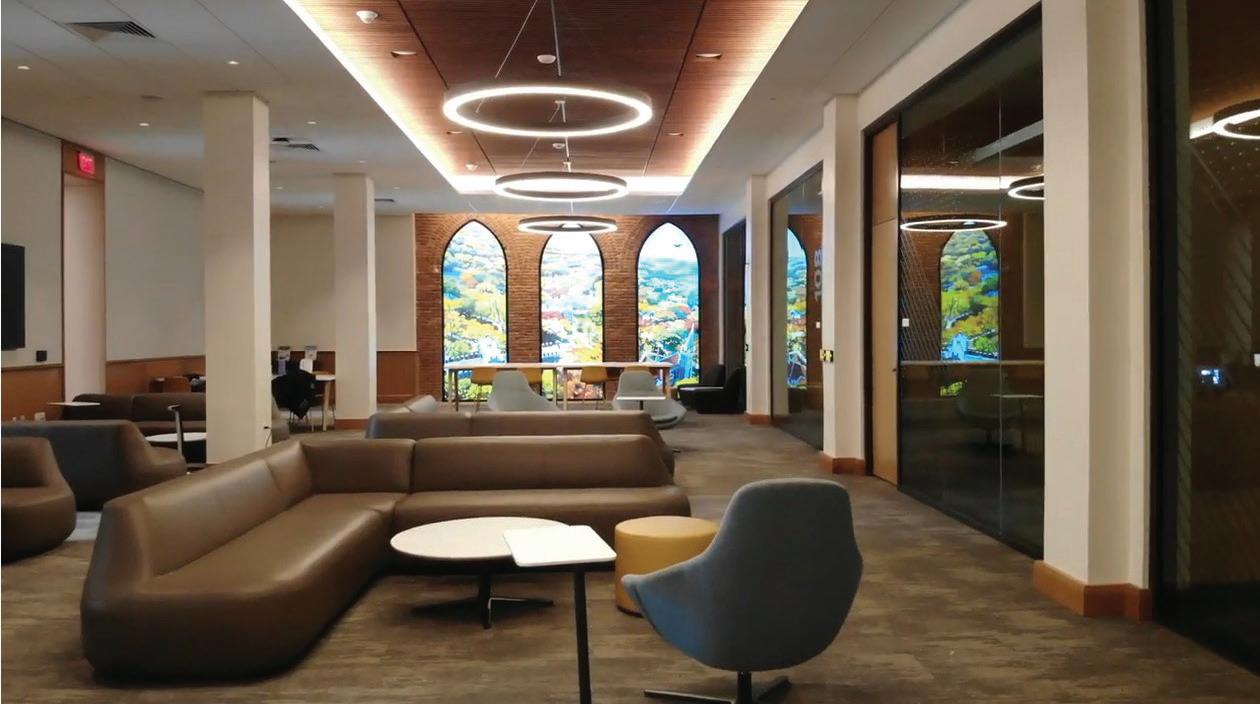

Modern tech met a historic university building as Skanska has completed the $70 million redevelopment of Lehigh University’s historic Clayton University Center located in Bethlehem, Pa.
According to Lehigh’s Student Center Operations, the Clayton University Center at Packer Hall, originally known as Packer Hall, was built in 1868 by university founder Asa Packer. It was the first building specifically constructed for Lehigh. The original architectural drawings were lost, said the university’s newspaper, and it was last renovated in 1956. Skanska was charged with preserving the hall’s historic character while reinventing it for current student needs.
“We’re thrilled to celebrate with Lehigh University on the completion of the Clayton University Center renovation, which will ensure the longevity and viability of this 157-year-old building for years to come,” said Todd Lofgren, senior vice president and account manager for Skanska’s Metro Philadelphia building operations.
“Our skilled team, in collaboration with Lehigh University, the design team and our partner firm Webco Construction, utilized their extensive experience in renovation and historic preservation to deliver a state-of-theart student center that maintains the historic nuances of the building.”
The project, designed by architecture firm Shepley Bulfinch, encompassed both interior renovations as well as restoration of the exterior façade of the Clayton University Center, both of which ensured the building’s historic character was maintained throughout the construction process. Key elements of the project included upgrading utilities, such as a new electrical service, mechanical systems and equipment, installation of a full fire protection system, as well as installing multiple kitchen and food
delivery areas including Grab and Go kiosks and an Amazon Go.
Renovations improved interior building flow and created multiple spaces where students can gather and collaborate. And while the exterior stone façade was restored, all doors, windows and the slate and copper roofs were replaced to improve interior natural lighting and energy efficiency.
To prioritize preservation in the reconstruction of the historic spaces, the team incorporated a range of emerging technologies including the use of laser scanning, which provided a non-contact method for surveying the 100-plus-year-old building. The captured 3D data enabled detailed analysis and visualization, ensuring the accurate restoration of historical structures. Additionally, building information modeling was employed to facilitate comprehensive planning, coordination and visualization of as-built conditions, optimizing both the efficiency and accuracy of the project.
In addition, the project focused on procuring low-emitting materials to promote a healthier indoor environment and most of the construction waste was recycled and diverted from landfill.
Construction began in December 2022 and the team achieved substantial completion in January 2025.
“The renovation of the Clayton University Center represents a remarkable milestone in our commitment to enriching the student experience at Lehigh,” said Chris Cook, Lehigh University’s interim vice president for finance and administration. “In partnership with Skanska, we’ve not only preserved the building’s historic grandeur but have also transformed it into a vibrant, flexible space that will serve as a true community crossroads for students, faculty and staff. This project has been driven by student feedback and the desire to create a welcoming environment for collaboration, socializing and academic engagement. We are proud of what we’ve accomplished together.”
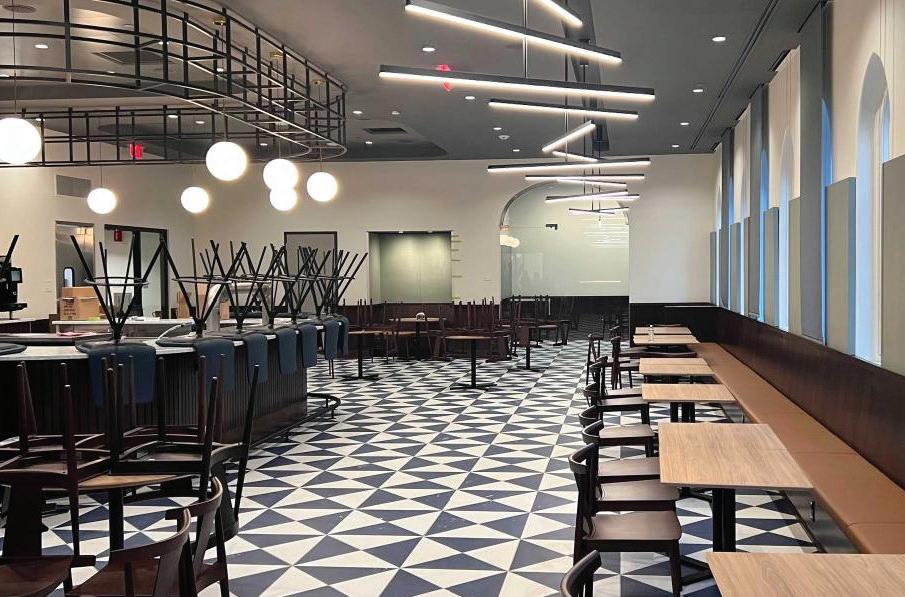





646.597.6171
646.597.6171
dhandler@handler-re.com
dhandler@handler-re.com
Richard Farley, SVP
646.597.6179
646.597.6179
rfarley@handler-re.com





646.998.6012
646.998.6012
kgalin@handler-re.com
kgalin@handler-re.com
rfarley@handler-re.com Alex
646.517.8782
646.517.8782
abush@handler-re.com
abush@handler-re.com









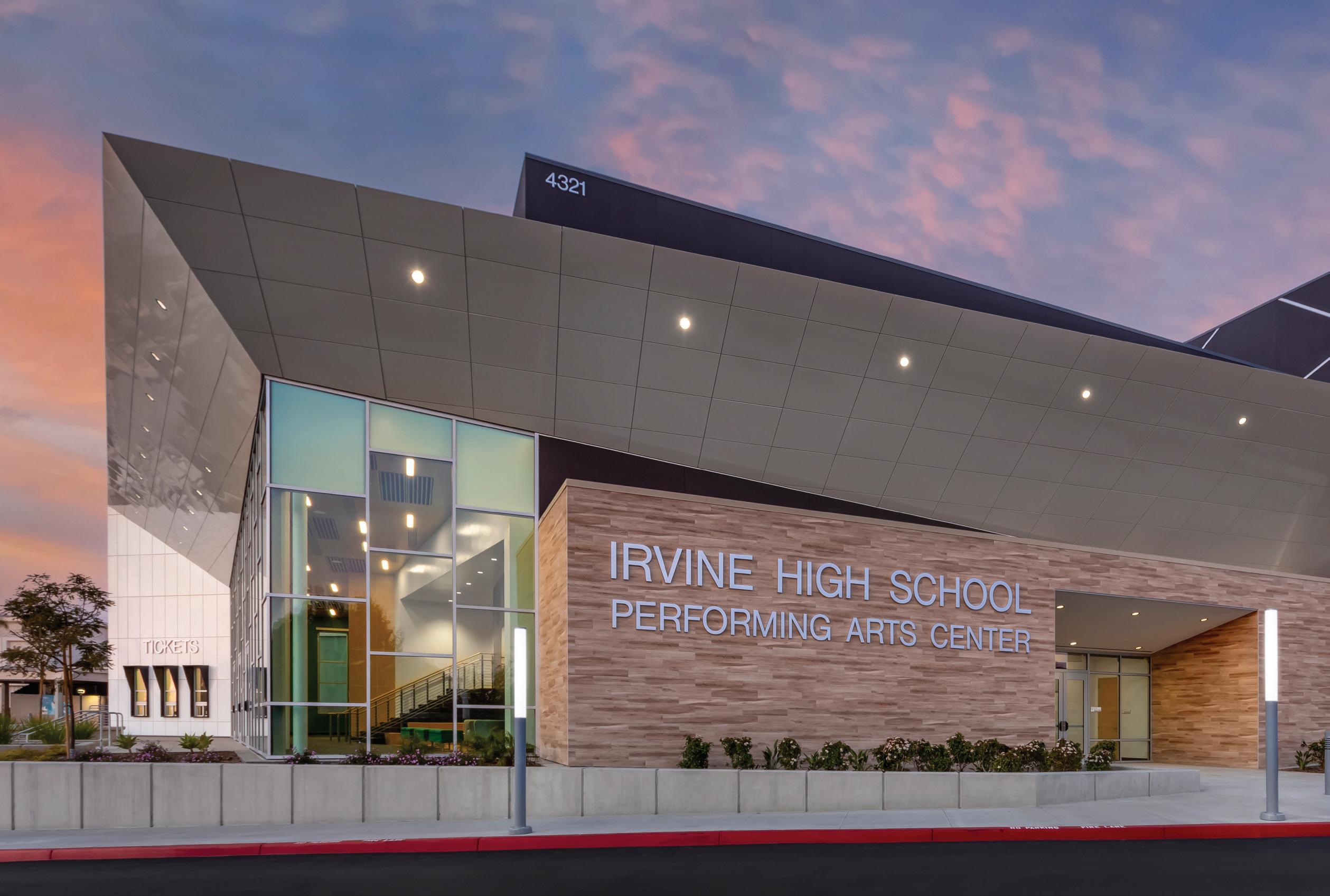
Supporting the arts and future performers is the goal for the recently completed Irvine (Calif.) High School Performing Arts Center, a cutting-edge facility designed to inspire creativity. The $35 million, 25,000-square-foot, single-story complex opened its doors to the community in February in time for the school’s 50th anniversary.
The venue features a 650-seat main theater equipped with advanced sound, lighting and rigging systems, providing students and the community with a professional-grade performance experience for the school’s dance, choir and instrumental students. Additional spaces include a black box theater, scene shop, dressing rooms and a modern lobby, ensuring the facility supports a wide range of performances, rehearsals and events. Outdoor spaces also provide opportunities for perfoming and socializing.
The steel and metal frame diaphragm building features a combination of metal panels, plaster and curtain wall system finishes.
“We are honored to have worked on such a world-class performing arts center, which will serve as a beacon of creativity and collaboration for students throughout the district and the Irvine greater community,” said Ashcon Hekmat, project manager at C.W. Driver Companies, which completed the ground-up construction, which began in January 2023 and was completed in early 2025.
From the initial demolition and site preparation to the final finishes, the team prioritized quality and functionality, creating a space that elevates the arts and provides long-term value to the community. Additional services in the first phase included site utility relocations, grading and deep soil mixing columns/ground improvements. Phase Two consisted of building construction, site paving, concrete flatwork, utility systems and landscape planting/irrigation.
“We have envisioned this facility for years, and it’s truly exciting to see it come to life,” said Kelvin Okino, executive director, facilities and construction, Irvine Unified School District. “Through the voters’ passage of Bond Measure E, we were able to construct a new stateof-the art Performing Arts Center. The success of the project is a testament to the incredible collaboration and partnership we’ve had with C.W. Driver Companies throughout this process. Together, we’ve created a space that will empower creativity and serve our community for generations to come.”
The community celebrated the grand opening of the complex with performances by Irvine High School students, guided tours of the facility and remarks from school and community leaders.
This project was a collaboration between C.W. Driver Companies and Ruhnau Clarke Architects.



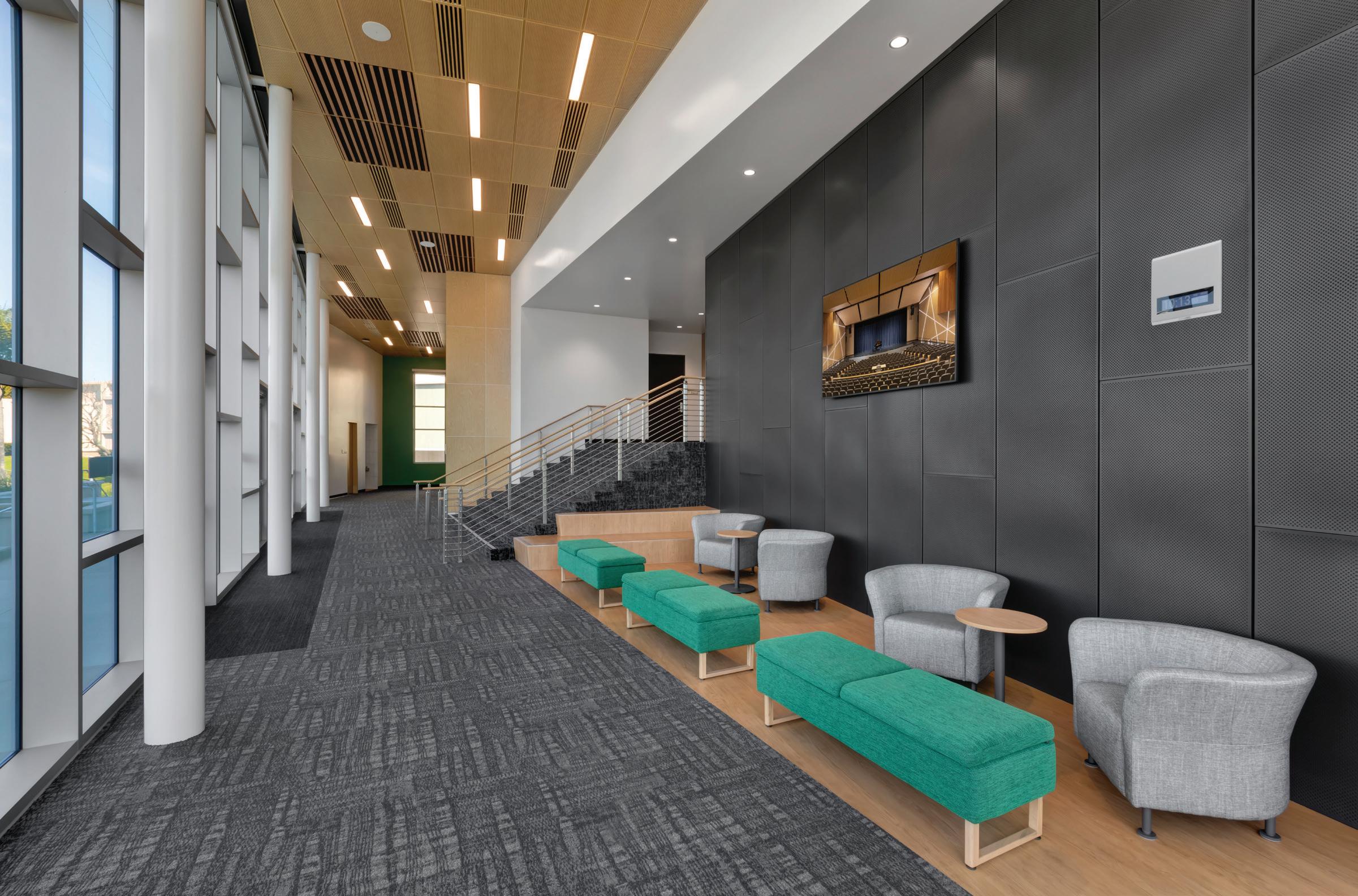

Once a racetrack, now a new retail district: The Shops at Hollywood Park has created a retail, dining and entertainment complex that encapsulates Los Angeles’ vibe while offering urban connectivity.
Architect of record AO and designer BCV Architecture + Interiors completed an 890,000-square-foot complex including The Promenade, which links SoFi Stadium to Century Plaza, and the Alley, an eclectic hub for boutique shops and restaurants. Kia Forum is adjacent to the center.
The Hollywood Park retail district features a refined material palette that balances durability with timeless design. The buildings incorporate light-toned natural stone and mid-tone wood, reflecting the warmth of the Southern California landscape. A variety of stucco finishes — from smooth, monolithic applications to more textured surfaces — enhances the architectural character while adding depth and visual interest. Ornamental metalwork introduces texture and detail, while canopies and trellises were carefully designed to provide both structural function and shade, contributing to the pedestrian-friendly environment.
The design of The Shops at Hollywood Park emphasizes human-scale placemaking and integration with its surroundings. Inspired by historical design principles, including the Golden Ratio and classical proportions, the district achieves a sense of balance and timelessness. Deep storefronts, generous overhangs and shaded plazas create an interplay of light and shadow, modulating the Southern California sun. Key public spaces, such as Century Plaza and the Promenade, were designed with layered massing and axial intersections, fostering a sense of discovery and inviting community interaction.

The Shops at Hollywood Park was a groundup construction project, developed by Wilson Meany as part of the larger 300-acre transformation of the historic Hollywood Park Racetrack. The low-profile building structures required careful coordination to integrate structural, mechanical, electrical and plumbing systems within compact vertical heights. Waterproofing solutions for canopies and planters adjacent to building facades presented additional challenges, which were addressed through collaborative problem-solving and detailed execution.
The Shops at Hollywood Park’s connectivity offers a walkable, pedestrian-friendly environment in a region historically defined by car culture. With 12 miles of trails and 25 acres of parks, the district encourages walking, cycling and outdoor engagement — connecting retail, dining and residential spaces with nearby entertainment venues.
By reimagining the legacy of the Hollywood Park Racetrack, the development honors the site’s history while creating new opportunities for economic growth and community activation.











Extensive years of Industry Experience covering Deposits, Lending and Technology.
At Webster Bank, you’ll find products designed for the property management industry – and a team of professionals with the experience to put them to work for you. Your Webster Bank Relationship Manager and Property Management Team know the challenges you face and give you access to the tools you need to e ectively manage them.


908.720.4223

Value, solutions and service – put our resources to work for you. Mark Reid
917.231.6758 afusgorniak@websterbank.com




Turnberry has named 20-year hospitality industry veteran Mary Rogers as executive vice president of hospitality operations.
With a focus on value creation, enhancing guest engagement and elevating service standards, Rogers will lead all aspects of Turnberry’s hospitality operations and oversee hospitality leadership teams across all properties. Her responsibilities will extend to strategic planning, budgeting and sales and marketing initiatives, with a focus on repositioning assets with innovative service models, programming and world-class dining and lifestyle experiences. She will also play a critical role in talent development and leadership cultivation, the company said.
In this role, she will work closely with Turnberry branding partners, including Marriott and Hyatt, to optimize brand alignment and execute long-term strategic initiatives including the pre-opening and stabilization of properties.
Turnberry currently has two major luxury hospitality projects in development: The St. Regis Nashville and The Residences at The St. Regis Nashville, with 145 hotel guest rooms and 192
residences and the 800-key Grand Hyatt Miami Beach connected to the Miami Beach Convention Center in partnership with Terra Group.
“We are thrilled to welcome Mary Rogers back to the Turnberry team,” said Jackie Soffer, chairman and CEO of Turnberry. “Mary brings the expertise, skill set and drive we need to maintain the standard of excellence we’ve established across our growing hospitality portfolio. Her leadership will be essential as we continue shaping the future of Turnberry’s hospitality division and setting new industry benchmarks.”
Previously, Rogers was the nanaging director and area general manager of Montage Laguna Beach, Montage Healdsburg, Pendry West Hollywood and Pendry San Diego, all in California. Before Montage, Rogers was the vice president and general manager of Fontainebleau Miami Beach, the first female to serve in that capacity since the resort’s opening in 1954. Prior, she had worked at The Ritz-Carlton Hotel Company, working at hotels and resorts across the U.S. and beyond.
Rogers holds a Bachelor of Arts in hotel and catering management and graduated magna cum laude from Atlantic Technical University in Galway, Ireland.
National workspace operator Workbox has appointed Robert Cartwright as executive vice president, chief operating officer.
As COO, Cartwright will oversee Workbox’s national expansion, member experience and operational team and look to further institutionalize the company’s operational capabilities and improve data collection as Workbox continues to expand nationally. He will also play an integral role in enhancing Workbox’s flexible office space, business acceleration and capital advisory services, the company said.
“We are excited to add another industry veteran to the team at Workbox as we look to grow our presence nationally over the next few years,” said John Wallace, CEO. “Rob brings a diverse operational background in hospitality, real estate and workplace innovation which aligns perfectly with our mission of redefining the modern workplace and supporting our members.”
Cartwright joins Workbox with 30 years of experience in hospitality and commercial real estate, including serving as global head of hospitality real estate at Fidelity Investments, where he led strategic initiatives to optimize real estate assets and workplace experiences globally.
Prior to Fidelity, he was COO of CBRE’s coworking brand, Hana, which was later acquired by Industrious. He also served as senior vice president of global operations and member experience at WeWork for four years.
His hospitality experience in the hotel sector spans nearly 20 years at Starwood Hotels & Resorts, where he served in several senior leadership roles in property management, brand operations, finance and performance innovation.
Cartwright is a Certified Six Sigma Master Black Belt from ASQ (American Society for Quality) and is a recognized thought leader in the future of work, workplace experience, and hospitality-driven real estate strategies.
Herrick announced that Eliad S. Shapiro, a commercial litigator known for his deep experience in real estate, has joined the firm as a partner from Moses & Singer LLP. Shapiro is the third senior addition to Herrick’s litigation practice this year.
“We are excited about the continued strategic growth at Herrick,” said Belinda Schwartz, executive chair of Herrick. “Eliad is a great addition to our collaborative team, and our clients will benefit greatly from his experience in complex commercial and real estate disputes.”
Shapiro has led a wide range of complex commercial litigation matters at both the trial and appellate levels. His clients include corporations, high-net-worth individuals, family offices and offshore trusts. In the real estate sector, he serves commercial property owners, developers, investment funds, commercial tenants and other stakeholders.
“Eliad is yet another high-quality addition to our litigation team,” said Carol Goodman, cochair of the firm’s litigation department. “He is a seasoned litigator who will bolster the firm’s existing strong capability representing investors, property owners, developers and other key players in the real estate sector in a wide range of disputes.”
Prior to joining Herrick, Shapiro was a litigator in the offices of Clifford Chance and Smith & Shapiro.
“I am delighted to join such a dynamic and growing team at Herrick,” said Shapiro. “The firm’s deep experience across its full-service practices complements my clients’ needs and is a great platform for them to thrive. It’s also the perfect environment for me to continue growing my practice, while contributing to the firm’s robust litigation and real estate disputes capability.”

Brokerage Houlihan Lawrence has announced that Stephanie Williams has been promoted to senior vice president of marketing.
Williams joined the company in 2018 as head of digital and was promoted to vice president in 2020. She has played a pivotal role in transforming the firm’s digital strategy, modernizing its technology infrastructure and elevating its marketing offerings for agents and clients, the company said. In her expanded role, Williams will continue to lead all marketing and public relations efforts
across the company.
“Stephanie has been a key asset to Houlihan Lawrence, and her contributions have shaped our marketing and digital strategies,” said Liz Nunan, president and CEO of Houlihan Lawrence. “We look forward to her continued leadership as we navigate an evolving industry.”
Before joining Houlihan Lawrence, Williams gained valuable experience at Goldman Sachs in strategic marketing, digital initiatives and brand positioning.


Architecture firm Moody Nolan has promoted Ochuko Edema, AIA, NCARB, LEED AP, BD+C, to director of New York operations. In his new role, Edema, who has served as a project manager in the firm’s New York office since 2021, will leverage the strong foundation of Moody Nolan’s brand to create new client relationships while targeting growth in key sectors such as healthcare, education, housing and civic.
As director of New York operations, he will lead a multidisciplinary team fostering collaboration and innovation to deliver high-quality projects tailored to market needs. Edema will serve as the New York team’s primary liaison to the national Moody Nolan network, implementing the company’s overarching strategic vision and goals while driving business development and facilitating long-term local partnerships.
“Since its establishment in 2017, our New York City office has drawn inspiration from the hub of
architectural innovation and history that exists within the city,” said Jonathan Moody, CEO of Moody Nolan. “With an enhanced understanding of our team’s regional operations and a keen familiarity with our mission and values, Ochuko will spearhead initiatives that continue to broaden our reach in the New York metropolitan area and beyond.”
His portfolio over 20 years includes a diverse range of projects with Moody Nolan, including the New York City Department of Design and Construction-led, $170 million community building reconstruction in Chinatown. He also led projects with J.P.MorganChase, delivering complex new build and fit-out retail bank branch locations across the Northeast and Mid-Atlantic regions, including a $6 million renovation and relocation project for the J.P.MorganChase flagship branch at Madison Square Garden.
Edema holds a Master of Architecture from the University at Buffalo and a bachelor’s degree from the University of Jos in Nigeria.

Partner, Fried, Frank, Harris, Shriver & Jacobson LLP
Tree of Life® Award Honoree
JAY MILLER
Managing Partner, BayBridge Real Estate Capital
Gregory A. Davis Leadership Award Recipient
TUESDAY, JUNE 10, 2025
6:00 pm
Midtown East, Manhattan
RSVP to jnf.org/NYtreeoflife
CHAIRS
Glen Weiss, Vornado Realty Trust
Neil J. Goldmacher, Newmark
HONORARY CHAIRS
David R. Greenbaum, Vornado Realty Trust
Jeffrey E. Levine, Douglaston Development
More information
Sarah Azizi, Tristate Director, Manhattan sazizi@jnf.org • 212.879.9305 x505
JEWISH NATIONAL FUND - USA builds a strong, vibrant future for the land and people of Israel through bold initiatives and Zionist education.








Treat yourself to the ultimate glow with HydraFacial! This refreshing treatment deeply cleanses, hydrates, and revitalizes your skin for an instantly radiant complexion. Relax, unwind, and give your skin the care it deserves book your HydraFacial today at Oasis Day Spa No downtime just gloww!



Lance Bergstein joined Lincoln Equities in 2018 to bolster and grow the firm’s acquisition and development efforts. He has worked on significant development and repositioning projects that equate to billions in deal capitalization. He has worked on projects for UPS, Amazon, Home Depot and a handful of life science users. Prior to Lincoln Equities, he led the strategic development group for Crossix Solutions.
Bergstein began his career at UBS as an investment banker in the Global Healthcare Group, where he advised healthcare REITS and various healthcare services companies on billions of dollars of transactions. He graduated cum laude from Baruch College. In his spare time, Bergstein races cars in professional series around the world.
How long have you been in the industry? Seven years.
What brought you into the business?
After six years in corporate finance, the tangible nature of the assets in real estate was really intriguing. It was the idea of being able to physically see, touch and feel my projects that was very compelling.
Who inspires you?
I am fortunate to get to follow in my father’s footsteps. While Lincoln Equities Group was never intended to be a “family business,”
being able to work hand in hand with my dad daily really inspires me. His loyalty, creativity, charisma and positive outlook are qualities I try to embody.
What development opportunities are you seeing in the Northeast?
The multifamily and industrial sectors still have a strong demand for new product. Location is becoming more paramount in the industrial space but not for reasons it was historically. Today, location dictates a price point. Rents in the port market have become so high that even though the location is considered primary, the gross rental dollars eliminate a majority of the tenants in the market. Building in locations where projects can support lesser rents and still make interesting returns are where the lowhanging fruit is.
On the multifamily side, the Northeast does not have nearly enough attainable housing. Figuring out sites and locations that work for attainable housing projects is interesting. On the luxury side, there continues to be demand for housing. As a developer, I stay away from regions that have rent regulations.
Has the situation evolved as interest rates began dropping in 2024?
I think it possibly has helped shape tenant demand a bit, but overall, the impact has not been super significant. The volatility in the 10year creates uncertainty. The situation would
Lance Bergstein CEO Lincoln Equities
evolve a lot more if there was predictability.
How did you get into race car driving? Does it help/relate to how your conduct your real estate business?
As a kid, I was a nationally ranked tennis player. At 21 years old, my tennis career was over, and I went to a racing school as a bucket list item. From Day One, I was able to turn relatively competitive lap times. For the last 15 years, I have continued to hone the craft and have raced in professional series across the U.S. and Europe.
It 100% helps how I conduct my real estate business. To race cars, you must be able to weigh risk in the blink of an eye and you must be decisive. Real estate development is all about taking appropriate amounts of quantifiable risks. I never have buyer’s remorse — when I make a decision there is no looking back.
What keeps you up at night?
Racing cars is fun and challenging and being the CEO of a prominent development company is thought-provoking and often times stressful and lonely, but what keeps me up at night is parenting. It is by far the hardest job I do and perhaps the most impactful. I hope that I am able to teach my kids resilience, instill a moral compass and give them a perspective and love of life to a level close to what my parents provided for me.




The financial backing of a global bank, and the streamlined structure and agility of a boutique bank that will keep your business moving forward.
BHI offers full commercial banking services that combine the personal attention of a prestigious boutique bank with the expertise and financial strength of Bank Hapoalim – the leading financial institution in Israel.
With a footprint in the largest U.S. metropolitan areas, we are committed to creating innovative funding solutions for your short– and long-term needs and providing convenient banking and liquidity products for your everyday business needs.
www.bhiusa.com
Remodeling — whether it’s a small bathroom in an apartment or a massive redo of commercial office space, it takes time, patience and money. But as current stock of all categories of real estate ages, renovations are needed to attract current tenants and buyers. That’s why it seems this year will be a busy one for the construction industry, as we can see by the numbers.
$69 billion
The forecast value of construction spending in 2024, up 3.5% over the five-year pre-pandemic rate after adjusting for inflation. (New York Building Congress)
$660 per square foot
The average cost of renovating an office in a multistory building. (The Cumming Group)
45,691
The number of businesses involved in commercial property remodeling in the U.S. in 2024 (IBISWorld)
1.2%
The projected year-over-year increase in home renovation and repair spending in 2025. (Harvard University Joint Center for Housing Studies)
70%
The percentage of U.S. industrial space that was built before the 21st century, with more than one-third of all inventory more than 50 years old. (Newmark)

67%
The percentage of homeowners who prefer to renovate instead of moving. (Angi)



Zetlin & De Chiara LLP, one of the country’s leading law firms, has built a reputation on counseling clients through complex issues. Whether negotiating a contract, resolving a dispute, or providing guidance to navigate the construction process, Zetlin & De Chiara is recognized as a “go-to firm for construction.”