




As one of the nation’s leading providers of factoring and financing, we match our 100-plus years of experience with flexible solutions and actionable insights. Our team has the financial savvy to help companies unlock liquidity and manage credit risk so they can fulfill business demands and keep growing stronger. Let’s explore how we can put our experience to work for you.



EDITORIAL
Editor
Rose Leveen
Editorial Consultant
Debra Hazel
Associate Editor
Penelope Herrera
Southeast Editor
Shanna Forrestall
Director of Communications and Marketing
Penelope Herrera
Graphic Design
Virginia Sanchez
Director of Newsletter Division
Cheri Phillips


PRESIDENT/CEO
Jeff Mann
ART DIRECTOR
Virginia Sanchez
COVER PHOTOGRAPHY
University of Fashion Instructor
Anna Leighton
CONTRIBUTORS
Charles Klein
David Harouche
Daniella Platt
Debra Hazel
Francesca Sterlacci
Frank DeLucia
Krieger Worldwide
Merilee Kern
Olga González
Paul Magel
Rabbi David Laine
Ron Friedman
Sharooz Kohan
BUSINESS
Technology Consultant
Joshua Fried
Distribution Mitchell’s Delivery Service
California Distribution MD Service
West Coast Advisor
Ilse Metchek
DIGITAL MEDIA
Virginia Sanchez
Web Developer
CS Designworks
West Coast O ce: 578 Washington Blvd., Suite 827 Marina Del Rey, CA 90292 866-306-MANN (6266) mannpublications.com


East Coast O ce: 450 7th Ave, Suite 2306 New York, NY 10123 212-840-MANN (6266)
Before I talk about the rest of the magazine, I’m most excited about the amazing cover feature we have this issue. We always cover the newest, most innovative happenings in the fashion industry, and this month is no exception. Francesca Sterlacci is an incredibly talented fashion designer who founded the University of Fashion. She wrote us a great story about the fashion’s hottest topic: AI fashion design. AI is taking over every industry, especially fashion, so you don’t want to miss this exclusive article.
We’re heading into summer, but I’m still thinking about the CBIZ Consumer Products and Retail Symposium of last month—it was such a hit! There’s still so much buzz about it that several attendees are sharing their experiences at the symposium, including our Mann Report editor and Ron Friedman, my good friend and the event’s co-founder, along with myself. Even bigger things are on the horizon next year, so be on the lookout.
Our photo event section is growing every month, with so many exclusive events sent to us that it’s hard to pick just a few. This issue, we’re highlighting important, high-caliber happenings like Escapades, where the top lawyers got together to discuss brand protection. You’ll also read about the star-studded event where attendees volunteered in style, wearing Jamie Mizrahi’s new capsule collection.
Before I go, I want to say how excited I am for summer and all the spectacular events coming up. Summer is defi nitely tradeshow season, so check out our tradeshow section and some incredible ads for shows like Magic and WWIN.

I’ll be traveling throughout the summer, to the West Coast, to the Hamptons, to Florida—and everywhere in between. I’m excited to connect with dear friends this season, and I wish everyone reading a very happy summer.
“I cannot even imagine where I would be today were it not for that handful of friends who have given me a heart full of joy. Let's face it, friends make life a lot more fun.”
— Charles R. Swindoll

As May turns to June and spring transitions to summer, Fashion Mannuscript is bringing you all new coverage on the fashion industry. This is such an exciting time of year, as Summer 2025 collections hit the shelves and summer tradeshow preparations get underway.
In this issue, you’ll read about the future of AI and fashion, with an incredible cover story by Francesca Sterlacci. Francesca is a talented designer and the founder of the University of Fashion, which offers online, on-demand fashion design lessons. She has been on the forefront of the newest technological developments in fashion design, and her insights are invaluable.
Our other features include an exciting profile on Sardwell, who founded the structural fine jewelry brand Renisis; a look at Dolce Vita’s collaboration with Hilos to create on-demand, 3D-printed footwear; and a story about RobertJames, a brand redefining luxury handbags.
Summer is a major season for tradeshows, including Magic, WWIN, Las Vegas Apparel and more. FM’s August issue will be all about tradeshows, but we’re giving you a sneak peek this issue with special tradeshow ads and features. You’ll also get to read about Dallas Market Center’s recent webinar, where independent retailers shared crucial insight on how to successfully navigate and adapt to tariffs ahead of its upcoming June market.
May went by so fast, but that means summertime is nearly here! I hope you enjoy this issue of Fashion Mannuscript, and I hope you make the most of the beautiful summer season.









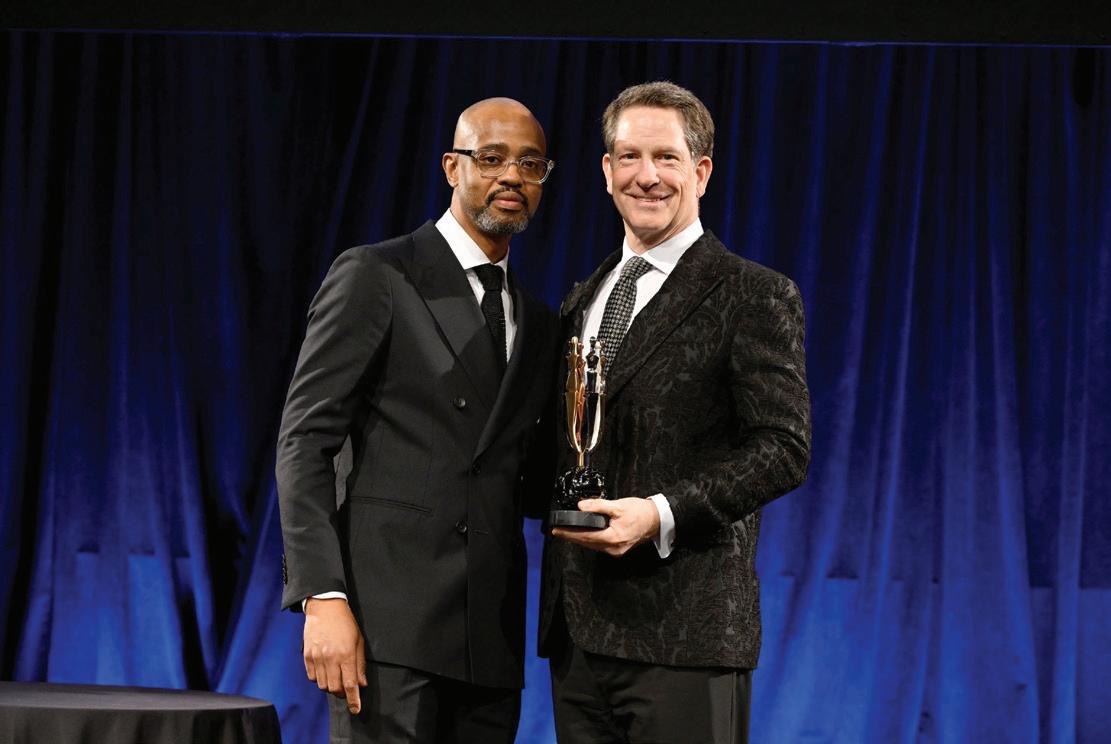

The American Apparel & Footwear Association (AAFA) hosted the 2025 AAFA American Image Awards at the iconic Gotham Hall in midtown Manhattan. Emceed by Bloomberg’s chief markets correspondent, Scarlet Fu, the gala honored leaders and advocates across the apparel and footwear industries. The Council of Fashion Designers of America (CFDA) Foundation is the event’s longstanding charitable beneficiary.
The AAFA American Image Awards honorees included Target as Retailer of the Year, accepted by Bill Foudy, senior vice president and president of Owned Brands; American Textile Company as


Company of the Year, accepted by Lance Ruttenberg, president and CEO; D’Wayne Edwards, president of Pensole Lewis College, as Fashion Maverick; Katherine Gold, president and CEO of GoldBug, as Trailblazer; Apparel Impact Institute as Eco-Steward of the Year, accepted by president Lewis Perkins; and Ulla Johnson as Designer of the Year.
AAFA is the national trade association representing apparel, footwear, and other sewn products companies and their suppliers, which compete in the global market. Representing more than 1,100 world-famous name brands, AAFA is the trusted public policy and political voice


of the apparel and footwear industry, its management and shareholders, its more than 3.5 million U.S. workers, and its contribution of more than $509 billion in annual U.S. retail sales. AAFA drives progress on three key priorities: brand protection; supply chain and sourcing; and trade, logistics and manufacturing. AAFA approaches this work through the lens of purpose-driven leadership in a manner that supports each member’s ability to build and sustain inclusive and diverse cultures, meet and advance environmental, social and governance (ESG) goals, and draw upon the latest technology.
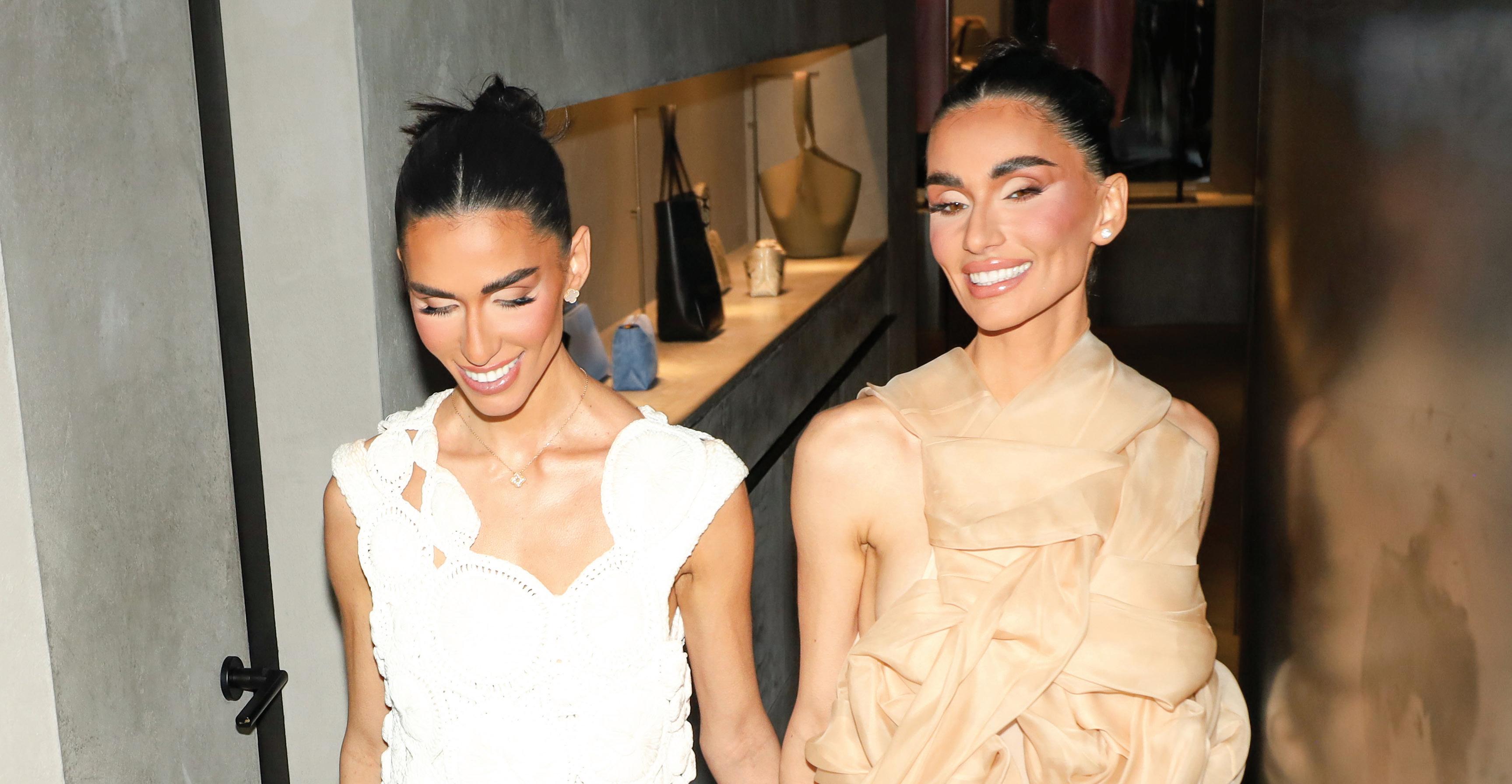
On April 30, a dazzling crowd of tastemakers, creatives and changemakers gathered for a purpose-driven evening hosted by twin entrepreneurs Shay and Shabnam Safarzadeh. The occasion? The official launch of the Safar Global Foundation (SGF), a nonprofit dedicated to expanding educational access for girls worldwide.
The exclusive event brought together New York’s most stylish and socially conscious names for an evening of impact and inspiration. Guests, including Jenna Lyons, Cass Bird, Charlotte Groeneveld, Jennifer Rubio, Gracie Cashman, Alexander Hankin and more, were treated to a private preview of a Spring/Summer 2025 capsule collection, co-curated by the Safarzadeh sisters in partnership with a leading fashion house. Ten percent of all sales from the evening went directly to SGF, funding scholarships, mentorships and critical school resources for underserved communities across the globe.
“Education changed our lives—and we believe every girl deserves that same opportunity, no matter where she’s born. Safar Global Foundation is our way of investing in futures that deserve to shine,” said Shabnam Safarzadeh.
The evening was more than a fashionable affair; it was a celebration of possibility. The Safar sisters, known for their entrepreneurial success across sectors—from healthcare and AI-powered tech to sustainable fashion—are now directing their influence toward global philanthropy. With SGF, they aim to create long-term impact through scalable, accessible educational support.
As the evening unfolded, it was clear that this was just the beginning. The Safar Global Foundation stands not only as a reflection of Shay and Shabnam’s vision but as a call to action for a stylish new generation of philanthropists ready to uplift the next.


In celebration of Earth Month and the launch of luxury eyewear brand Silhouette’s new Clear Sky collection, the brand hosted an elegant sunset cocktail event on April 29, 2025. Held at the penthouse of The Greenwich by Rafael Viñoly, the evening featured sustainability advocate, model and brand ambassador Arizona Muse.
The event took place on the 87th floor of the iconic building, the last property Viñoly created before his passing. Silhouette took over the entire floor, which features an emerald-green indoor pool with a 360-degree viewshed featuring unprecedented vistas of the East and Hudson rivers.
Silhouette marked a groundbreaking moment in sustainable eyewear, with the debut of its first-ever biocircular optical collection, Clear Sky. The collection was showcased through an interactive exhibition, allowing guests to explore the innovative materials and sustainable technologies behind the design. Debuting exclusively at the event, Silhouette unveiled three frames from the Clear Sky collection, which featured fashionable, tinted lenses. In a meaningful collaboration, 100% of the proceeds from these limited-edition frames will benefit Arizona Muse’s nonprofit, Dirt.
Guests also enjoyed an evening of live music sets by the DJ duo, The Muses, along with passed hors d’oeuvres and an open bar by Creative Edge, live digital sketching by @drawntogethernyc, and the opportunity to chat and meet the Silhouette executive team and Arizona Muse.
The Clear Sky collection breaks new ground in sustainability as the first-ever eyewear collection developed with biocircular material: SPX Green+. Made with organic by-products from industries like agriculture, forestry and aquaculture, the result is a high-performance frame of exquisite comfort, durability and elegance. SPX Green+ reduces its climate impact, using 100% renewable energy in its manufacturing process. The new biocircular material reduces carbon emissions by 60% compared to the production process of traditional raw material made from fossil fuel.



Toms and top Hollywood stylist Jamie Mizrahi celebrated the launch of their limited-edition capsule collection, The Monochrome Edit, with a volunteer event focused on giving back. Hosted at the Baby2Baby headquarters in Los Angeles, the event invited friends of the brand and Mizrahi, press and celebrity guests to roll up their sleeves to prepare essential items for families in need across the country.
Attendees, including Nicole Richie, Katharine Mcphee, Leslie Mann, Judd Apatow, Jennifer Meyer, and Kelly Sawyer Patricof and Norah Weinstein, co-CEOs of Baby2Baby, joined Mizrahi in supporting Baby2Baby’s mission to provide children living in poverty with diapers, clothing and other essentials. Together, the group packed Baby2Baby maternal health and newborn supply kits with critical supplies that are vital for the well-being of mom and baby, and assembled bundles
with special gifts for mothers impacted by the Los Angeles fires. Styled in Mizrahi’s collection, each attendee enjoyed the comfort of Toms’ newest slip-on while giving back. The warehouse itself was drenched in color to match the collection’s bold, monochrome aesthetic, incorporating Mizrahi’s signature red shade. Campaign images highlighting the full shoe collection were also displayed throughout the space, and a print designed by Mizrahi’s own children was featured on custom aprons and tablecloths.
“I am so proud of this collection and collaboration. I can’t think of a better way to celebrate the launch than with an event grounded in giving back with Baby2Baby—a cause and organization so close to my heart and so connected to the great work that Toms does supporting children’s education, health and well-being,” shared Mizrahi.





“I am so proud of this collection and collaboration. I can’t think of a better way to celebrate the launch than with an event grounded in giving back with Baby2Baby..."

– Jamie Mizrahi


At Escapades, a premier intellectual property (IP) and brand protection conference, attendees had the opportunity to engage directly with top IP and brand experts in interactive discussions, build meaningful relationships, and discover solutions to today’s toughest brand protection challenges. IP attorneys, brand innovators and in-house counsel from leading global companies, including Barstool Sports, Celsius Energy Drink, Christie’s, Warner Music Group, and Kravet, attended. Panel topics included licensing IP online enforcement strategies for the digital age, IP and collaborations in the social media era, and global IP protection for the modern brand.


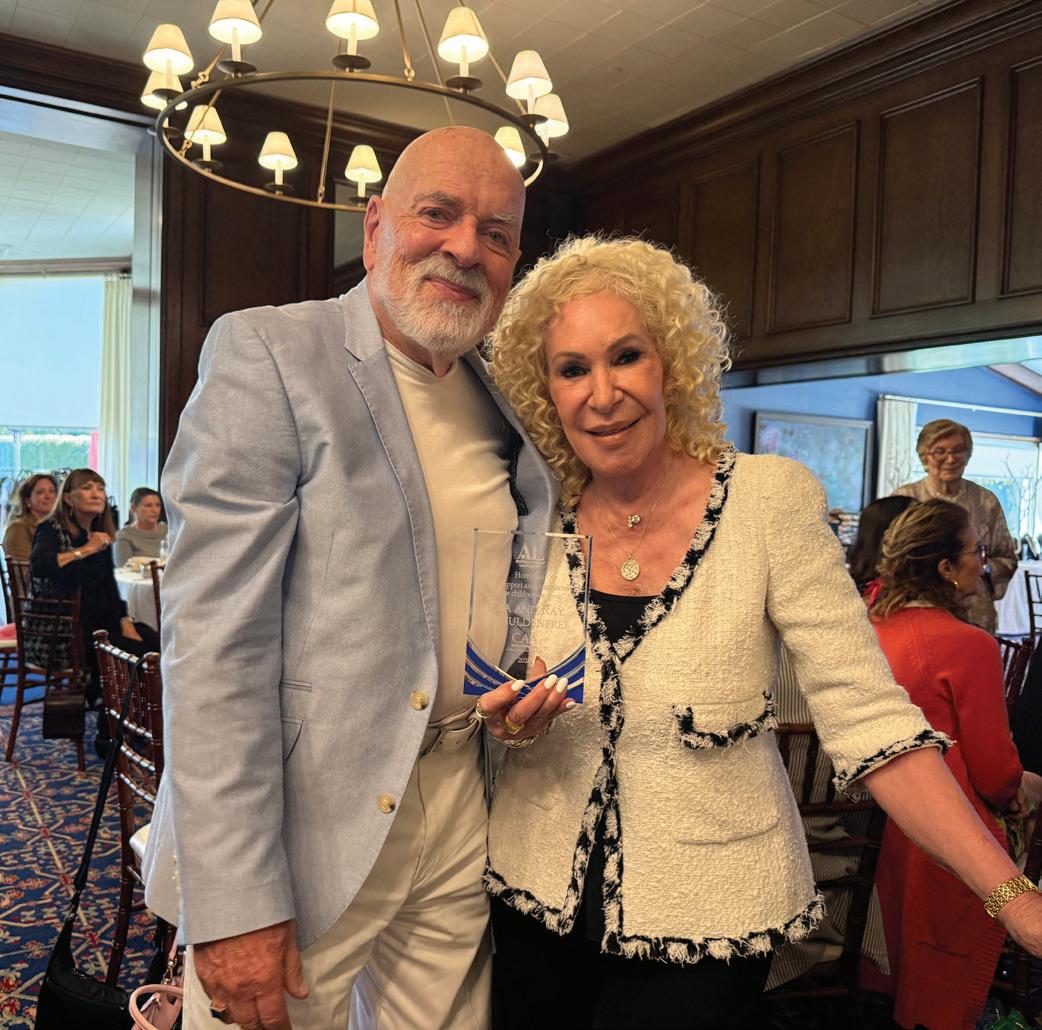
A Chic Affaire lit up Lakeside Golf Club in Los Angeles with fashion and purpose.
Hosted by the Assistance League of Los Angeles’ College Alumni Auxiliary (CAA) on May 1, 2025, the afternoon featured a Michael Kors runway show, a boutique luncheon with designers like Malibu Road, and shopping for a cause.
Guests honored Dia and Ray Schuldenfrei while raising funds for vital programs supporting over 22,000 underserved children in Los Angeles, including those affected by the 2025 wildfires. Proceeds benefit initiatives like Operation School Bell, Foster Children’s Resource Center and the College Scholarship Program.
It was a beautiful celebration of style, community and giving back.









The Lycra Company, a global leader in developing sustainable and innovative fiber and technology solutions for the apparel and personal care industries, announced that Melissa Riggs, director of marketing, North America, has been promoted to the role of chief marketing officer (CMO).
Riggs brings more than two decades of brandbuilding experience in consumer packaged goods, and the apparel and footwear industries to her new role, including experience with the Gore-Tex brand. Before joining The Lycra Company in 2022, Riggs spent 11 years at Molson Coors Beverage Company, specializing in partnership marketing and distributor go-to-market planning.
“I am pleased to recognize exceptional talent from within our organization,” said Gary Smith, The Lycra Company’s CEO. “Melissa’s promotion reflects the importance we place on building upon our company’s unique marketing capability and the value it brings to our customers.”
As CMO of The Lycra Company, Riggs oversees the planning, development and execution of brand and marketing initiatives supporting the company’s business objectives and growth strategies.
“I am honored and excited to lead The Lycra Company’s marketing organization and work with the global leadership team to help the company achieve its goals,” said Riggs. “For the past three years, I’ve had the privilege of collaborating with an incredibly skilled team. Stepping into the CMO role, I look forward to unlocking new ways to invigorate our ingredient brands, elevate our partners and make our impact felt throughout the value chain."


Dallas Market Center recently hosted a timely webinar exploring how independent retailers are adapting to tariffs, evolving consumer behavior and supply chain challenges. Panelists included Ashley Alderson of The Boutique Hub, Alison Dodson Anderson of A. Dodson’s, Kenneth Ludwig of Kenneth Ludwig Chicago, Sara Faircloth of Faircloth Boutique, Mary Liz Curtin of Leon & Lulu, and Beth Rich of Mix It Up.
1. Navigating Tariff Uncertainty
Panelists agreed that tariff challenges vary by category. Retailers are experimenting with how to manage rising costs—some adjust prices, others absorb increases, and some list tariffs as separate line items. The retailers all agreed that tariff unpredictability adds complexity to buying decisions.
2. Shifting Preferences
Panelists noted that customers are paying closer attention to where products are made, often favoring non-China goods and brands with transparent sourcing. Inflation and economic uncertainty are fueling more cautious spending.
3. Strategic Inventory and In-Store Engagement
Retailers are rethinking inventory strategies in response to supply chain issues and shifting customer expectations. While new arrivals help maintain interest, storytelling, curated displays and in-store experiences drive traffic and strengthen brand connection.
4. Building Community Through Retail
Panelists emphasized the value of local, communityfocused experiences in building loyalty, especially in slower categories like furniture. Personal connection—not just product—keeps customers coming back.
5. Sourcing Smarter
The panel discussed growing interest in sourcing from Mexico and other nearby regions as alternatives to Asia, both for logistical advantages and customer appeal. Attending the June Dallas Market Center markets was encouraged to find new lines and adapt to shifting conditions.
6. Staying Positive and Flexible
The webinar ended on an optimistic note, highlighting flexibility, creativity and strong relationships as keys to success. While challenges persist, focusing on community over competition will help retailers grow and thrive.
The Classic T-Shirt Company, a family-run brand known for its ethical production and versatile designs, announced its expanded lineup of men’s and women’s t-shirts and sweatshirts, all made in Los Angeles using 100% organic cotton. Reflecting a commitment to healthy living, sustainability and premium quality, the new range caters to consumers seeking everyday essentials that align with eco-friendly values and local craftsmanship.
“I’ve worn our organic cotton tees exclusively for years because nothing else compares in softness or breathability,” said Paul Garibian, co-founder of the company. “We’re excited to extend that same comfort and durability into our sweatshirts— perfect for year-round layering or an active lifestyle.”
Key Highlights
• 100% organic cotton and LA-made: Each tee and sweatshirt is crafted in Los Angeles from certified organic cotton—grown without harmful pesticides or chemicals—ensuring a skin-friendly and environmentally responsible choice.
• Men’s and women’s fits: With dedicated styles for men and women, the collection offers inclusive sizing and modern silhouettes, catering to diverse body types and personal tastes.
• Versatility for active and casual wear: From sports (tennis, golf, boxing) to office layering under a blazer or cozy weekend looks, these tees and sweatshirts transition effortlessly between work, play and leisure.
• Sustainable and ethical: In addition to using Global Organic Textile Standardcertified organic cotton, The Classic T-Shirt Company follows fair labor practices in its local facilities, ensuring transparency and high standards at every production stage.
This new collection is part of The Classic T-Shirt Company’s broader mission to redefine sustainable fashion by promoting healthy living and mindful consumption. By sourcing organic cotton and avoiding toxic chemicals, the brand helps preserve soil health, safeguard water resources, and protect the well-being of both farm workers and consumers.
“We want people to feel good not just physically, but also knowing their clothing aligns with their values,” added Olga Garibian, co-founder. “Being L.A.-based keeps our supply chain short and transparent, while giving our customers the peace of mind that they’re supporting ethical labor and local communities.”


Infinity Sun, the iconic brand behind some of the beauty industry’s most advanced sunless tanning technology, unveiled its newest innovation: a trio of luxury body oils designed to hydrate, firm and illuminate the skin while extending the life of a tan. Created by beauty industry leader and Infinity Sun founder Veronique Munro, the collection reflects over two decades of skincare expertise and a deep commitment to performance and sustainability.
The collection includes:
• Monaco Glow: A rich bronze shimmer oil for sun-kissed luminosity and bronze shimmering radiance
• St. Tropez: A no-shimmer, deeply hydrating formula with skin-firming benefits, ideal for everyday radiance
• Riviera Radiance: A luminous gold shimmer oil that evokes the glamour and elegance of the French Riviera
Each formula is infused with avocado oil, coconut oil, argan oil, squalane and Hydra Synol DOI, a cutting-edge hydrator known for increasing moisture retention and improving skin elasticity. These nourishing, antioxidant-rich ingredients work synergistically to soften the skin, create a silky finish, and enhance the depth and longevity of any sunless tan.
In alignment with Infinity Sun’s ongoing commitment to quality and eco-conscious innovation, the oils are housed in minimalist glass packaging, offering a luxurious yet sustainable alternative to conventional plastics. This launch continues the brand’s legacy of responsible packaging, which includes its pioneering Plug & Spray technology and bag-in-a-box architecture, reducing waste and environmental impact across its product line.
“This launch is the culmination of everything I believe in—results-driven skin care, conscious beauty, and the feeling of confidence that comes from glowing, healthy skin,” said Munro. “These oils are carefully formulated to deliver results and a sensory experience while staying true to our mission of sustainability and luxury without compromise.”



Don’t let cash flow disruptions slow your staffing business down. Access the working capital you need to achieve your goals now and as your business grows, with up to 95% advance rates on your invoices.
Our tailored suite of flexible financing solutions are customized around your unique needs, so you can tackle every phase of business with confidence.


As fashion and apparel brands face increasing pressure to operate faster, leaner and more transparently, many are turning to Industry 4.0 to future-proof their supply chains. In this exclusive Q&A, Paul Magel, president of Computer Generated Solutions (CGS), breaks down what Industry 4.0 really means for the fashion sector and why embracing connected technologies, AI-driven insights and data-led decision-making is no longer optional.
Q: There’s a lot of buzz around Industry 4.0. What does it mean for fashion and apparel brands?
A: Industry 4.0 isn’t just about futuristic factories or robotic automation. For fashion brands, it’s a practical shift: from disconnected systems and manual guesswork to integrated, data-driven decision-making.
Picture Internet of Things (IoT)-connected shop floors, real-time visibility into production, AI-driven forecasting and digital twins that simulate outcomes before you commit resources. It’s about building the infrastructure to act faster, smarter, and with more confidence, which is especially important as supply chains face increased pressure.
Q: Why is now the right time for brands to act on Industry 4.0?
A: Because disruption is the new normal. From shifting tariffs and inflation to heightened expectations around speed, sustainability and transparency, the pace of change isn’t slowing down any time soon.
Brands that invested early in digital infrastructure are more agile, more efficient and, frankly, more competitive. They’re adjusting sourcing strategies in real time, fixing production issues before they escalate, and launching products faster without compromising quality.
By Paul Magel and Computer Generated
At this point, Industry 4.0 isn’t a “nice-to-have.” It’s the price of staying in the game.
Q: Can you give a real-world example of a brand seeing results?
A: We’re seeing measurable results from brands that have embraced connected solutions like BlueCherry Shop Floor Control, enterprise resource planning (ERP) and product life cycle management (PLM) integration, and smart machine connectivity.
They’re improving forecasting accuracy with live demand signals; tracking environmental, social and governance (ESG) compliance across the product life cycle; and significantly reducing lead times.
One example is our ongoing partnership with Juki, where we’ve combined their smart sewing technology with BlueCherry’s real-time production system. The result is a connected shop floor that delivers greater visibility, less waste and faster, more precise output.
Q: For brands that are just starting this journey, what is your advice?
A: You don’t need to overhaul everything on day one. But you do need to start somewhere.
My advice is to start by making sure your internal systems and external supplier data are connected; that visibility is foundational.
From there, invest in your people. Train teams not just on tools but on the shift toward proactive, data-led thinking.
And focus on the metrics that truly matter: production uptime, lead time, sell-through, returns. These are what drive performance and growth.
It’s also important to capture and document your wins—even the small ones. Use cases where AI or automation have improved accuracy or efficiency will help justify larger investments down the line.
Q: Final thoughts—what is the biggest Industry 4.0 myth you would like to bust?
A: That it’s some distant, futuristic concept. It’s already here.
The brands that survive the next wave of disruption, and thrive beyond it, are the ones putting in the work now to digitize, integrate and future-proof their operations.
And here’s a gut-check I always recommend: If something broke in your supply chain tomorrow, would you know in time to fix it?
If the answer is “maybe not,” that’s your opportunity.
By Krieger Worldwide
The pace of the fashion world has never been faster, and neither has the freight that fuels it. As consumer demand for immediate access to the latest styles accelerates, fashion brands are turning to agile logistics partners to keep up or stay ahead. For importers and manufacturers alike, speed is only part of the equation. Today, the real competitive edge lies in the ability to be fast, data-driven, compliant and sustainable all at once.
This new era of logistics is transforming how fashion products move from sketch pad to storefront, and how importers manage their supply chains end to end.
The traditional, linear supply chain model of predicting volumes far in advance, producing in bulk, and shipping by ocean often no longer fits today’s dynamic fashion market. Fashion cycles are shorter, collections are more diverse, and social media can turn a trend viral overnight. In response, fashion brands must integrate agility into their logistics strategies.
This means diversifying transportation modes, such as leveraging air freight to expedite hot items or using regional distribution centers to respond faster to demand shifts. Importers now routinely adjust inbound logistics based on evolving market signals, from seasonal surges to geopolitical events and tariff shifts. As tariffs remain incredibly dynamic, fashion importers are finding creative ways to leverage bonded warehouses or foreign trade zones to keep their pieces on the shelves.
Nimble logistics strategies allow brands to release capsule collections on short notice, restock bestsellers quickly, and even test new markets with minimal lead times.
To manage such complexity without losing control, importers are increasingly turning to supply chain
analytics. In an industry where timing and precision are everything, data isn’t just useful, it’s essential. Just as the right pair of shoes can transform an outfit, the right logistics tools can transform your supply chain performance. Importers should review their logistics partner’s available data and reporting on a regular basis to shape their future decisions.
Some of the most impactful analytics in fashion logistics include:
• Transit time analysis: Understanding shipping durations from various suppliers and regions allows brands to fine-tune their sourcing strategy and allocate buffer time where needed.
• Carrier performance tracking: By monitoring on-time delivery rates and service quality, importers can identify highperforming freight partners and hold others accountable.
• Cost by mode and route: Analyzing freight spend across air, ocean, rail and trucking helps identify opportunities for consolidation or switching modes to reduce cost and environmental impact.
• Inventory movement and forecasting: Advanced tools now integrate sales data with logistics planning, helping brands avoid overproduction and minimize markdowns.
With this visibility, importers can make more informed decisions and reduce costly delays.
Agility and sustainability are often seen as competing priorities, but in reality, they can work hand in hand. The most forward-thinking fashion brands are reengineering their supply chains to be both fast and eco-conscious.
Key strategies include:
• Mode optimization: Using ocean freight when possible for planned orders helps reduce emissions while reserving air freight


for only critical or time-sensitive items.
• Shipment consolidation: By aggregating orders from multiple suppliers into single containers, importers can lower freight costs and carbon footprint at once.
• Eco-friendly packaging: Brands are moving away from single-use plastic and opting for biodegradable, recyclable or reusable materials in shipping.
• Smarter inventory planning: With better demand forecasting, importers can reduce excess inventory, limiting waste and avoiding unnecessary shipping activity.
• Carbon offsetting: Brands are tracking their carbon footprint and leveraging the data to offset their carbon emissions impact through verified carbon reduction projects.
These efforts not only align with brand values but also appeal to today’s sustainability-conscious consumers, particularly Gen Z and millennials who want to know how their clothes are made and moved.
Agile, sustainable and data-driven logistics are no longer optional, they are strategic assets in the fashion business. As retail moves toward smaller, more frequent drops and greater personalization, the supply chains that support it must be equally responsive and resilient. Importers and manufacturers who embrace this mindset can respond to consumer trends faster, lower their environmental impact, and stay ahead of the competition.
In the age of fast fashion, it’s not just about getting there first, it’s about getting there smart. And for fashion logistics, that means blending speed, insight and sustainability into every shipment, from the runway to the rack.

By Ron Friedman

The highly anticipated CBIZ Consumer Products and Retail Symposium took place in Los Angeles, California, on April 24, 2025.
Hosted at the E-Central Hotel, the event brought together a diverse group of industry leaders, experts and professionals to discuss the latest trends, innovations and challenges in the consumer products and retail sectors, with a focus on the effects of new tariffs and their impact on the industry.
The symposium featured two distinguished keynote speakers who provided invaluable insights into the future of retail and consumer products:
• Marshal Cohen, chief industry advisor at Circana, delivered an engaging keynote address, titled “Retail—the Perfect Storm—It’s a Lot More Than Just Tariffs.” Marshal shared his expertise on emerging consumer trends, the impact of technology on shopping habits, and strategies for retailers to work through tariffs and stay ahead of the curve in an increasingly competitive market.
• Robert Krieger, president of Norman Krieger Inc., a leading customs brokerage firm, presented on “Tariffs and Their Toll on Retail.” Robert’s address covered crucial topics such as international trade regulations, supply chain disruptions, and best practices for ensuring smooth and efficient global operations as retailers work through the latest tariff rates.
The symposium featured a panel discussion that delved into critical issues facing the industry today, including:
• Adapting to the new retail landscape: Industry leaders discussed how retailers can adapt to the rapidly changing retail environment, emphasizing the importance of omnichannel strategies and the integration of digital and physical retail spaces.
• Navigating with suppliers: New tariffs are impacting the cost of every consumer product imported. We explored how manufacturers will work with their retail customers for the increase in cost associated with the new tariffs.
• Sustainability in consumer products: Experts explored the growing demand for sustainable products and practices. The discussion highlighted ways companies can implement environmentally friendly initiatives and appeal to eco-conscious consumers.
• Innovations in e-commerce: This panel focused on the latest advancements in e-commerce technology, from AIdriven personalization to the role of social media in driving online sales. Panelists shared insights on how to enhance the customer experience and boost online engagement.
One of the symposium’s most valuable aspects is the opportunity for networking and collaboration. Attendees connected with peers, industry leaders and potential business partners during a fabulous cocktail reception with plenty of food and drinks. These interactions fostered meaningful connections and provided a platform for sharing ideas and best practices.
This year’s CBIZ Consumer Products and Retail Symposium in Los Angeles proved to

be a resounding success, offering 200 attendees a wealth of knowledge and actionable insights.
Key takeaways included:
• The importance of staying ahead of consumer behavior trends to remain competitive in the retail market
• Strategies for navigating the complexities of global trade, tariffs and supply chain efficiency
• The growing significance of sustainability in consumer products and how to meet the demands of eco-conscious consumers
• Innovations in e-commerce and the role of technology in shaping the future of retail
My Own Takeaways
The tariffs need to be negotiated with countries around the world and resolved by the end of May or early June. If this is not accomplished, then will there be a Christmas and holiday season with products to sell? Manufacturers need to place orders with suppliers with sufficient lead time to meet the demands of the holiday season. If everything comes down to the last minute, the freight companies will not have the cargo ships available to meet the demand, and the cost of
freight will be very high. I hope I am right and trade agreements will be concluded by mid-June at the latest.
The 2025 CBIZ Consumer Products and Retail Symposium was an enlightening and inspiring event that provided industry professionals with the tools and knowledge to thrive in a dynamic and evolving market. With expert speakers, engaging discussions and valuable networking opportunities, the symposium reinforced CBIZ’s commitment to supporting the growth and success of the consumer products and retail sectors.
For those who missed this year’s event, stay tuned for information on the next CBIZ Symposium, which promises to deliver even more insights and opportunities for industry advancement.
Until next time, remember what I always conclude with—if you are not having fun, then do something else!
Ronald S. Friedman, CPA, is an advisory and assurance managing director in the Los Angeles office of CBIZ (formerly Marcum LLP) and a retail practice leader in the consumer and industrial products group. Contact him at ronald.friedman@cbiz.com.
“Attendees connected with peers, industry leaders and potential business partners during a fabulous cocktail reception with plenty of food and drinks.”
– Ronald S. Friedman


Choosing between running your own warehouse or using a third-party logistics provider (3PL) is one of the most critical decisions an apparel business can make. While both approaches come with benefits, the right fit depends on how you manage logistics— specifically, how you handle receiving inventory and shipping orders.
Let’s break down the pros and cons of each option and how they impact your day-to-day operations.
Receiving: In-House vs. 3PL
Own Warehouse: Receiving in your own warehouse means full control. You can schedule inbound shipments based on your priorities, check in goods according to your quality standards, and train your team to inspect styles, colors and sizes exactly as needed. Damaged cartons or miscounts can be addressed immediately, often before the truck even leaves.
3PL: A 3PL will receive goods on your behalf, but processes are standardized across clients. The provider may charge fees for label discrepancies or pallet configurations that don’t match its rules. The benefit is scalability—your containers can be received quickly without expanding your team—but you may lose the nuanced, product-specific quality control (QC) an in-house team provides.
Shipping: In-House vs. 3PL
Own Warehouse: Shipping from your own facility allows more flexibility. You can prioritize rush orders, customize packing slips or carton labeling, and hold shipments if a last-minute change arises. It’s easier to handle boutique shipments, electronic data interchange (EDI)-compliant retailer orders,and special packaging requests when your team is just steps away.
However, maintaining fast shipping requires staffing,
By Shahrooz Kohan | CEO of Aims360
warehouse management software and equipment. It also means you carry the burden of order spikes or delays.
3PL: A 3PL’s core strength is fulfillment at scale. It already has infrastructure to process thousands of orders daily, integrate with major carriers, and optimize shipping costs. For high-volume e-commerce, this can be a game changer. But brands with complex wholesale requirements may find 3PLs less nimble when it comes to labeling, pack-out specifics or split shipments.
Own Warehouse: You manage the staff, space, supplies and systems. This means more overhead but tighter control. Inventory counts, reorders and cycle counts are in your hands, and you’re not charged per transaction or stock-keeping unit (SKU) stored.
3PL: 3PLs charge by service: storage, pick-andpack, label printing, returns, etc. While this can help cash flow early on (you only pay for what you use), costs can scale quickly. You’re also dependent on the provider’s systems, processes and responsiveness to urgent changes.
Whether you ship from your own warehouse or partner with a 3PL, Aims360 makes logistics simpler.
• 3PL integration: Aims360 connects directly with leading 3PLs like NRI and Boxzooka. When orders are placed, they’re automatically sent to the 3PL, and inventory updates and tracking come back into your enterprise resource planning (ERP) in real time—no manual entry, no delay.
• In-house warehouse management system (WMS): If you operate your own warehouse, Aims360 gives you powerful tools
to manage bins, barcode scanning, order picking and shipping. It handles apparelspecific needs like color/size breakdowns, prepack logic and carton labels for retailers like Nordstrom or Macy’s.
• Hybrid flexibility: Many growing brands use a mix of both. Aims360 supports splitwarehouse fulfillment, allowing you to ship some orders from your facility and others from a 3PL—based on channel, location or order size.
If you need control and customization, your own warehouse may be the right choice. If you need scale and speed, a 3PL could be the answer. Whichever model you choose—or if you use both—Aims360 ensures your inventory, orders and fulfillment stay in sync, and your business runs efficiently.
For fashion brands scaling from $1 million to over $100 million, it’s not about choosing warehouse or 3PL—it’s about choosing the right system to support both. That’s where Aims360 comes in.


By Olga González


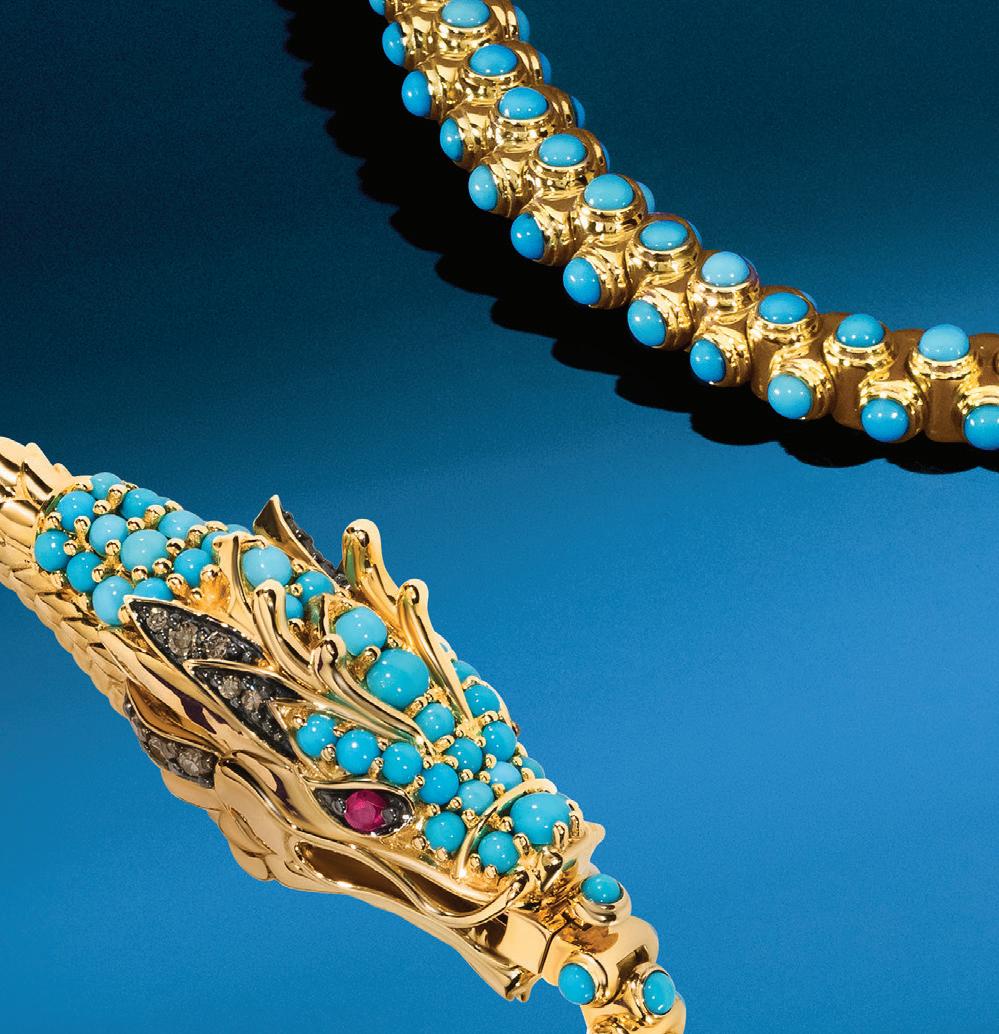
In the shadow of Idaho’s Sawtooth Mountains, a new kind of luxury is taking shape—one not built on trends but on transformation. Jensen Stern, the celebrated gallery nestled in Ketchum, Idaho, has debuted Renisis, a sculptural fine jewelry brand whose debut collections—Evidence of the Future and Curl—redefine the possibilities of adornment. Designed by Sardwell, a multidisciplinary artist and traveler, Renisis isn’t just a brand; it’s a philosophy rendered in gold, pearl and light.


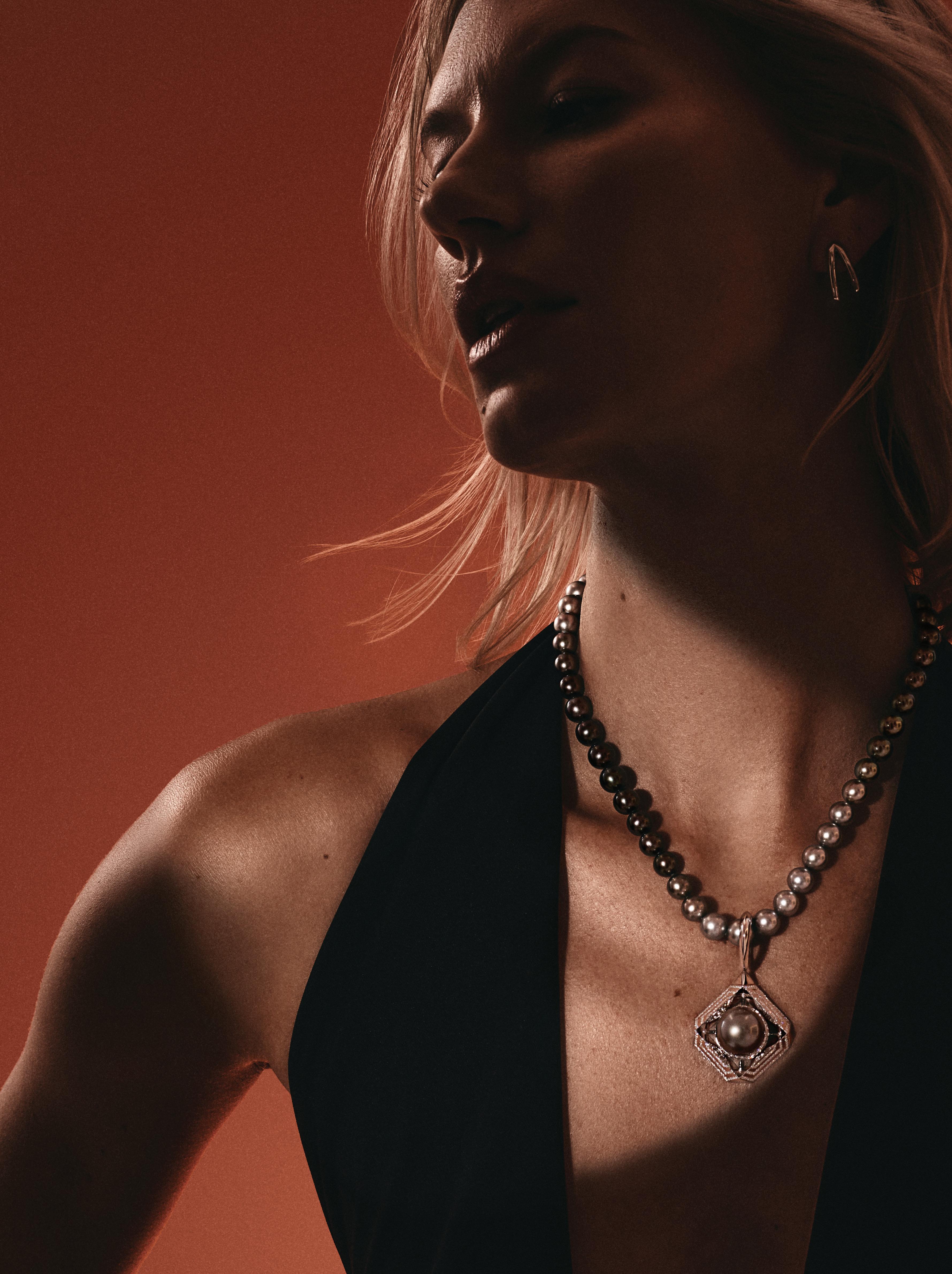


Rooted in the Latin words “renitor” (struggle) and “genesis” (rebirth), the name Renisis speaks to the brand’s core belief: that true beauty emerges from challenge. This belief is not simply poetic. It is personal. Sardwell, the brand’s founder, has spent over 15 years living and learning across continents, from the silversmithing villages of Guizhou, China, to the ateliers of Brazil, to the opera houses of Buenos Aires. Her practice, shaped by sculpture, theater and performance, has now distilled itself into high jewelry designed not just to be worn but to awaken. “The transformational ability that sculpture has to alter space is a revolutionary power,” Sardwell explained. “Now it’s harnessed to be worn on the body as jewelry.” What she once achieved through room-sized installations, she now channels into intimate, architectural forms—jewelry that, like armor or costume, empowers the wearer to step into a new version of themselves.

softness. “My early large-scale theatrical installations enveloped the viewer’s senses,” Sardwell recalled. “Developing Renisis, I ambitiously would like to recreate a sensory world within Renisis like the stage of sculptural installations, … sculptural jewelry that transcends and transforms the wearer into a more courageous and better version of themselves.” The artist’s voice is calm but driven—someone whose creative process is both introspective and explosive.


Evidence of the Future, Renisis’ bold inaugural collection, draws from a fusion of East and West, ancient and imagined. Inspired by the drama of ancient Asian armor and the raw edge of American statement jewelry, these pieces aren’t just ornaments—they are talismans. Under black light, fluorescent diamonds glow. Shimmering surfaces hide private patterns of Japanese indigo florals. Stones like black jade, long used as protective amulets, are paired with luminous Tahitian pearls and motherof-pearl inlays to create an emotional architecture that is both grounding and transcendent. The standout Guardian Temple Pendant, for example, takes its shape from Edo-period Japanese armor. Sardwell described it as “a sturdy masculine form, yet soft and shimmering with light,” an object meant to evoke reflection, literally and spiritually. “It’s an art piece that I hope sways us to look within the eye and reflect upon our inner core,” she added. Nearby in the collection, the Sting Ray Ring slices through visual softness with diamond-edged precision, while Wish Arrow Studs act as symbols of elevation— simple yet charged with meaning.


That creative process is central to every Renisis piece. Beginning with sketches and 3D modeling, Sardwell considers not only composition but the interaction of light, shadow and the human body. “A sculptural approach engaging light and shadow gives each piece a presence and soul,” she said. “It allows the jewelry to be seen not as static but as alive—changing with the angle of the light, the gesture of the body, the energy of the day.” Renisis’ debut has not gone unnoticed. The brand was recently named a finalist in two categories of the prestigious 2025 JCK Jewelers’ Choice Awards. The Triple Infinity Gold Earrings earned both the Editors’ Choice and Influencers’ Choice awards for Best Gold Jewelry, while the Pearl Curl Ear Cuff was a finalist in the Pearl Jewelry over $5,000 category. These honors underscore what those who encounter Renisis already know: This is more than fine jewelry. It is fine art.


In contrast, the Curl Collection offers a quieter power. Where Evidence of the Future is armor, Curl is memory. These looping, spiral designs are intimate homages to the geometry of the helix, the flow of curly hair, the cyclical nature of identity. South Sea pearls, custom-cut bullet stones and inverted diamonds flow through the Harmony Curl Ring, Infinity Loop Earrings and Bullet Stone Curl Ring, each one a tactile meditation on strength and

Jensen Stern, known for its elevated curation and intellectual sensibility, is the perfect launchpad for this brand. “Introducing Sardwell’s pieces to our clients is not only an honor,” said co-founder Jessica Herner, “but a celebration of artistry that resonates with the spirit of discovery and design at the heart of Jensen Stern.” For Sardwell, this partnership is also a homecoming of sorts—a place where her deeply personal work can be experienced in a gallery that treats jewelry as both artifact and invitation. “At Jensen Stern, jewelry is treated as a living object,” she said. “This is exactly what Renisis stands for. It’s not about trends. It’s about art and a sensitive cultural perspective.” As visitors step into Jensen Stern to encounter Renisis, they are not simply buying jewelry. They are stepping into a story—a myth of their own making. And perhaps that is Sardwell’s greatest act of artistry: not just crafting jewels of power but quietly inviting us to become something more than we were before.


Nash
Let your inner light shine throughout with the Hammered Doorknocker Earrings from Patricia Nash Designs. While known for finely crafted handbags using 100% full-grain leather, Patricia Nash Designs has delved into many other fashion sectors, including footwear, men’s accessories, home decor, knitwear, sunglasses and now jewelry. These pure formationinspired earrings—approximately 2.5 inches in drop and 1.5 inches in width, pay homage to timeless style and the natural beauty around us. The hammered texture of these doorknocker earrings reflects light beautifully, adding intricate dimension and depth. With their iconic doorknocker shape, they’re perfect for both day and night, bringing a touch of glamour to any outfit. Some of its features include metal-plated material made with zinc alloy and brass, posts with a bullet/disc back, nickelfree materials and delivery in a luxe protective pouch. These earrings come in two color ways including, worn gold/silver ox and silver ox. These statement earrings complement nearly any and all attire, whether you’re enjoying summer tropical travels, romantic date nights or coastal cruising. Inspired by classic


By Merilee Kern, MBA


life big, bold and lavishly. patricianashdesigns.com
vintage design and her extensive travels, founder and style icon Patricia Nash has crafted this piece for the fashionista who lives life big, bold and lavishly. patricianashdesigns.com


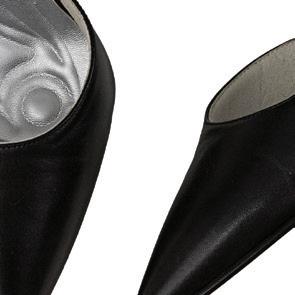
The Vida Half D’Orsay Pump From Antonia Saint NY Strut with style and comfort this season and beyond in the Vida Half D’Orsay Pump from Antonia Saint NY. When you want a sexy cut-out at the arch of the foot and a graceful curved topline, this chic shoe is for you. Set on a 90-millimeter angled heel, the elegant style of this pump is crafted in supple fabrications and innovative shoe tech that provides supreme comfort. The Vida heels are built with Antonia Saint NY’s newly refined Slim SoftSurround System—a patented technology that creates a soft, forming cushioning around the whole foot, providing ample support for all areas of pressure. Combined with more flexible foam insole and outsole, this design provides cushioning you’d never expect in such a high heel. The pointed toe and attractive lower-cut vamp showcase a timeless look for a beautiful finish. Plus, the expertly placed curves reveal the foot’s beautiful shape, exuding confident power with every step. Colors available include karma snakeskin emboss, black Nappa leather, jute Nappa leather and black patent leather This company’s allinclusive sizing—ranging from 4 to 13 in narrow, standard, wide and wider—makes sure everyone can sashay with their fiercest foot forward. antoniasaintny.com




their




style with high-impact appeal. Whether you’re


Summer is the season of self-expression—where sunshine, travel and social events call for effortless style with high-impact appeal. Whether you’re looking to elevate your everyday wear, find the perfect accessories for a getaway, or gift something thoughtful and trend-forward, this curated collection has you covered. From artisanal jewelry and fashionforward footwear to functional lifestyle finds, these standout picks strike the ideal balance between chic and practical—making them a great get for summer wardrobes and beyond.


Sunday Swagger’s ‘Polos with Personality’
Whether you’re chasing birdies or just showing up in style, this go-to gear is for a good time all year round. Sunday Swagger’s “polos with personality” are great for summer, golf, travel and warmer weather. Crafted from a breathable, four-way stretch poly-spandex blend, these moisture-wicking, wrinkle-resistant polos provide UPF 40 sun protection—perfect to keep you cool in that summer heat. The premium hats offer both style and functionality, with moisture-wicking technology in classic and modern designs to complement any outfit. Sunday Swagger’s inclusive sizing, playful prints and breathable fabric make the line’s clothes a great gift option and a fun way to match as a family, couple or group. The company has created more than 300 distinctive and unique designs in men’s, women’s and youth polos, t-shirts, hats and outerwear, and when a particular print sells out, Sunday Swagger quickly pivots to unveil new styles. Sunday Swagger crafts its products in its Southern California headquarters for aficionados of fun around the world. sundayswagger.com

Amid the Father’s Day holiday, here’s a timely find. Guys can step into the summer season in style with Oxy Originals’ lightweight, breathable
The Playamigo Portable Lounger With Storage Meet Playamigo—the new go-to summer style-on-the-go companion perfect for those who love to lounge at the beach or park. Available in three colors, this sleek and versatile portable chair is designed with integrated carrying capacity, making it easy for outdoor enthusiasts to unwind without the hassle of hauling bulky gear to their next picnic, beach day or concert. Playamigo’s innovative wedge-shaped lounger features an internal frame that provides structural support while reclining but remains lightweight, comfortable to carry, and easy to maneuver. Weighing under five pounds, it can be worn as a backpack, crossbody, or over the shoulder—depending on the user’s preference. It’s also collapsible, making it easy to pack in a suitcase or stow away, and

and oh-so-comfortable footwear—perfect for the warmer temps. Created with everyday wear in mind, the Oxy Originals is just what feet need for a full day of adventures. The brand pioneered the use of microfiber in shoes, resulting in durability, flexibility and breathability. Its Originals Sport collection for women, men and kids is the brand’s iconic look, but every shoe is Oxy Originals distilled to its core—style, comfort and ease of use are all at the forefront of these designs. The brand’s Hercules Black Dress Shoe is a particularly nice option to pair with both casual and formal looks. Unlike typical brogues, oxfords and even some loafers–which can be painful, tiring and uncomfortable to wear–Oxy Originals’ handsome and stately rendition brings unparalleled comfort to the classic style. This is done by strategically infusing rubber sections into the outsole, among other mindful features. Other popular Oxy Originals styles include the Light, Basic, Expedition, Explorer, Escape, Alpine and Portofino—ranging from the company’s take on tennis shoes and flip-flops to elegant driving shoes. After all, that’s the mission behind the global company: timeless designs infused with modern technologies that add a little kick to the owners’ everyday outfits and a lot of comfort to their lives. Whatever dad’s speed, you’ll find Oxy Originals is the perfect partner for their active, contemporary lifestyle. oxyoriginals.com

includes a fold-out mat for extra stretching room during use. Adventurers can rest easy knowing their Playamigo is both durable and multifunctional, thanks to a variety of thoughtful features: a removable zippered pouch to protect valuables, elastic straps to secure items, a large padded pocket on the back for electronics, magazines, or newspapers, and exterior zippered pockets to keep frequently used items within reach. The brand is so confident you’ll love Playamigo that it proudly backs the product with a 30day money-back guarantee. theplayamigo.com

By Francesca Sterlacci
In a world where trends blaze through faster than a New York minute, one might expect the fashion industry to wholeheartedly embrace the transformative power of 3D and AI. Yet, the reality reveals a more nuanced picture—a hesitant tiptoe rather than a confident stride. This cautious approach to groundbreaking technology isn’t entirely new to an industry steeped in tradition. For the past 50 years, as a designer, former Fashion Institute of Technology (FIT) professor and fashion department chair—witnessing this evolution firsthand—I observed similar initial resistance to the introduction of computer-aided design (CAD) tools for drawing and pattern design software (PDS) for pattern making, marking and grading. It’s almost hard to believe now how indispensable programs like Photoshop and Illustrator, along with digital tools like Gerber, Lectra and Tukacad, have become. And yet, today, as founder of University of Fashion, the first and largest online fashion education learning platform, I’m witnessing similar pushback when it comes to 3D and AI.
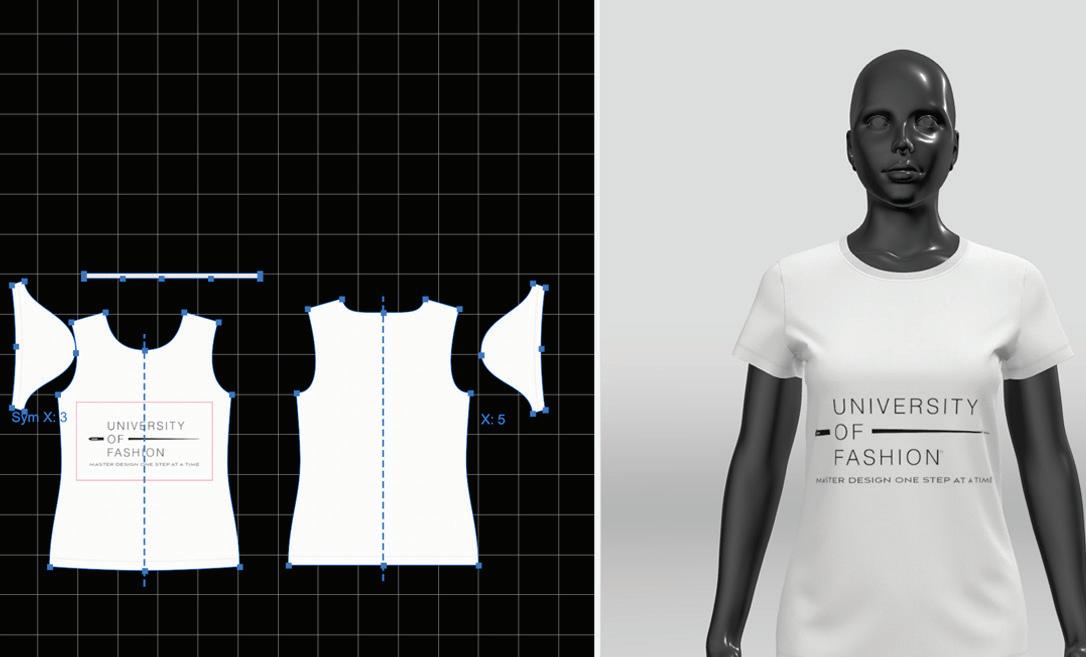

Despite the inevitable acceptance of Photoshop and Illustrator within the fashion industry, the launch of our 3D lessons at University of Fashion in 2022 and our AI lessons in 2024 were met with some skepticism. I began receiving emails from our subscribers challenging whether these programs constituted “real designing.” However, let me be unequivocally clear: These are not fleeting fads; they are fundamental tools that are undeniably here to stay. While the specter of job displacement looms large in some minds when AI is mentioned, the practical reality is that these technologies serve as powerful catalysts—used to stimulate inspiration, expand creative boundaries (allowing designers to visualize complex forms or explore unconventional silhouettes with unprecedented ease), and ultimately enhance, not replace, human work.
Photos courtesy of University of Fashion
University of Fashion’s lesson on how to design and construct garments with Clo 3D software, taught by Lane Odom

Reinforcing the notion that AI is not a fleeting trend, McKinsey analysts predict that generative AI could significantly boost fashion industry profits by $150 billion to $275 billion by 2030. Further emphasizing this shift, their recent survey claims that a substantial “73% of global fashion executives consider generative AI to be an important strategic priority.” Therefore, embracing AI across a comprehensive spectrum of tasks, including designing, sewing, merchandising, production, marketing, promotion and sales, is clearly the way forward.
I will explore how some fashion brands have already incorporated AI into their design processes and are even using it to create valuable legacy archives. This widespread acknowledgment by industry leaders underscores the vital role of the University of Fashion in upskilling and educating the fashion industry in these new technologies—affordably, on demand, 24/7, and conveniently in the privacy of your home or office.

In our inaugural AI lesson, Anna Leighton, winner of AI Fashion Week Season 1 (2023) and Season 2 (2024), charts AI’s fascinating history, from its theoretical beginnings to its profound and transformative role in shaping the fashion landscape today. You’ll discover how AI is fundamentally reshaping the industry—conceiving novel aesthetics, intelligently allocating resources, and even forecasting the next must-have trends.
In 2023, the Spanish fashion brand Desigual launched its first “Online Only On-Demand” collection. The garments and denim bags were produced once the customer bought them online, with an estimated manufacturing time of 90 days. This innovation allowed the brand to make better forecasts for raw material needs and logistics. According to Desigual, the key to success in this process has been learning to manage the technology to enhance creativity. This strategy not only improves efficiency but also offers a more personalized and sustainable fashion experience for consumers.
In 2024, Tommy Hilfiger boldly stepped into the metaverse with “FashionVerse,” an interactive mobile game powered by generative AI. This innovative platform allows users to create photorealistic avatars and design entire virtual worlds, from backdrops to props, all while styling digital fashion looks. This immersive experience fosters a deeper connection with the brand, enabling players to participate in styling challenges and potentially influence future trends. By analyzing player style choices within FashionVerse, Tommy Hilfiger gains valuable insights to predict emerging fashion trends, which are then incorporated into unique styles for its TommyNow collections. These AI implementations underscore Tommy

Hilfiger’s commitment to leveraging cutting-edge technology to revolutionize design processes, enhance customer engagement through personalized experiences, and solidify its position as a forward-thinking brand in the digital age.
In our second AI lesson, “AI: Getting Started with Prompts,” you’ll unlock the secret to transforming AI from a mere tool into a true creative partner. A great prompt isn’t just a description; it’s a meticulously crafted recipe where every carefully chosen word adds a layer of richness, detail and profound depth to your design, ultimately transforming your vision into a stunning reality. Specifically, you’ll learn how to construct a fashion image from the ground up by carefully describing each intricate design detail, setting the perfect angle, and choosing ideal lighting, among other crucial elements. By focusing on the nuances of prompting, you’ll discover how to translate your unique perspective and vision into a captivating image and compelling story.
In 2024, G-Star Raw collaborated with artificial intelligence to create a groundbreaking denim collection. The project resulted in 12 unique, cape-like denim designs, each showcasing futuristic silhouettes and innovative techniques that push the

boundaries of traditional denim, making it the world’s first AIdesigned denim garment realized in the physical world.
In our third AI lesson, “AI: Midjourney, the User-Friendly AI Platform,” you will learn the practical steps to using Midjourney that will truly bring your most imaginative fashion design ideas to vibrant life. You will be guided through the simple process of setting up Midjourney on Discord and be shown the seamless navigation of this dynamic online platform. By the end of this lesson, you will master the techniques to generate stunning, portfolio-worthy visuals, effortlessly experiment with a vast array of design variations, and ultimately unlock the boundless creative potential that this incredible and accessible tool offers.
Illustrating the power of platforms like Midjourney, Hillary Taymour, the visionary creative director at Collina Strada, collaborated with the AI image generator to conceive her Spring/ Summer 2024 collection. She expertly input images of previous Collina Strada designs and then used precise text prompts to guide the AI in radically remixing and innovatively reimagining them in entirely new ways. Far from being an instant solution, Taymour noted that designing with AI was a deeply iterative process. For certain designs, she meticulously navigated over 200 iterations with the AI, patiently refining the AI-generated images until they perfectly aligned with her artistic vision and achieved the desired outcome.
Norma Kamali
In 2023, designer Norma Kamali partnered with Meta Maison to develop a proprietary AI model trained on her archives to preserve her legacy. In February 2024, she showcased her AI-generated designs in an installation called “Fashion Hallucinations.” Kamali told Glossy magazine, “AI is set to shape the industry’s approach to archiving and to facilitate creative longevity.”
As we navigate the evolving landscape of AI—even amid technological advancements—our mindset and perspective play a crucial role in shaping our experiences and the future we create. So, remember to keep in mind this inspiring quote:
“The greatest discovery of all time is that a person can change his future by merely changing his attitude.”
—
Oprah Winfrey
Join us August 17–20, 2025, at the Expo at World Market Center Las Vegas for the Summer edition of WWIN and The Men’s Edit—two unique orderwriting fashion experiences under one roof. Explore a curated mix of women’s and men’s brands in a welcoming, connection-focused setting.
CURATED SHOW FLOOR
Cross-category shopping in a seamless ecosystem
CONVENIENT LOCATION
Minutes from the Las Vegas Strip and Convention Center
UNMATCHED HOSPITALITY
Complimentary meals, happy hours & free parking



EXPANDED FASHION OFFERINGS
Co-located with Las Vegas Apparel
STRONGER BUYER CONNECTIONS
Targeted matchmaking for impactful order-writing
VIBRANT ATMOSPHERE
Live DJ & energizing activations




DON’T MISS THE AUGUST MARKET SUNDAY, AUG 17 - WEDNESDAY, AUG 20, 2025 THE EXPO AT WORLD MARKET CENTER / 435 S GRAND CENTRAL PKWY / LAS VEGAS, NV 89106 Be a part of THE Premier Las Vegas Fashion Ecosystem!


WELLS FARGO CAPITAL FINANCE FACTORING
ASSET-BASED FINANCING
ACCOUNTS RECEIVABLE MANAGEMENT
ACQUISITION FINANCING
INVENTORY FINANCING
IMPORT AND EXPORT FINANCING
LETTERS OF CREDIT

In an industry that endlessly strives for the next big thing, having the flexibility to adapt at a moment’s notice is key to success. With Wells Fargo, you get the strength and stability you need, along with the nimbleness you want. Our flexible financing may support your growth, and our proven track record in factoring and receivables management helps make sure you’re ready for whatever’s next.
Tap into our knowledge, experience, and broad o ering of products so that your business’ success never goes out of style. Learn more at wellsfargocapitalfinance.com/apparel.
Peter Pugliese
Senior Vice President, Regional Sales Manager 212-703-3551
peter.pugliese@wellsfargo.com


In many ways, retail for Holiday 2025 will look a lot like 2024, with a number of trends remaining the same and even accelerating. That is, of course, if retailers figure out the everchanging tariff situation in time to put goods on the shelves.
Managing retail in a volatile period was a major focus of CBIZ’s Consumer Products and Retail Symposium, held in Los Angeles in late April.
“Holiday 2025 will be a lot like Holiday 2024, with one major exception—the election,” said keynote speaker Marshal Cohen, chief retail adviser at Circana. “Black Friday will be the same, Cyber Monday will be the same. But you have to have newness. Without newness, you won’t have growth. This was the biggest mistake during COVID. We had nothing new and exciting. We must engage consumers.”
Despite the turmoil, there are positive signs for retail sales overall, he noted.
“There are opportunities out there,” Cohen said. “Darn right there are.”
Five years post-COVID-19 shutdowns, it’s time for consumers to replace purchases made back then—and small appliance sales have risen 3%. This bodes well for certain electronics, such as televisions, and active apparel. The beauty business is now appealing to a surprising new consumer.
“What does the average 8- to 14-year-old want? A Sephora gift card,” Cohen observed. “They have a beauty regime that’s unbelievable, and manufacturers are marketing anti-aging skin care to 8-year-olds.”
Even so, retailers are in the midst of a perfect storm, with tariffs meeting consumer trends such as higher debt and rising credit card delinquencies, Cohen observed.
“The last person to respond to a tariff is the consumer,” he


reminded the audience. “The more we spend on food, the less we have to spend on discretionary general merchandise.”
Then comes tariffs, which not only could increase the price of merchandise itself but even individual components, such as gift boxes, or equipment that could manufacture items in the U.S.
“I thought trade agreements were holy,” said Robert Krieger, president and CEO of Krieger Worldwide, a domestic and international logistics firm. “POTUS thinks he can rip them up. We’ll find out in 10-15 years.”
For some sectors, lower tariffs will have a negligible impact—a $100 dress will still sell at $120, he said. In addition, retailers are telling suppliers their limits on pricing, and if a manufacturer won’t meet it, they will find another source.
“A lot will have to be absorbed inside,” Cohen said.
Chinese retailers Temu and Shein may need to warehouse goods in the U.S. because of tariffs. Younger consumers are visiting wholesale clubs, dividing the bulk items to achieve the savings without the storage needs.
A bigger concern is the toy industry, where 75% of goods sold in the U.S. come from China.
“I’m concerned right this second,” said Brian Kessler, founder and president of Maui Toys, and an inventor and consultant who works with multiple retailers around the world. “To have products on the shelves for Christmas, you must ship between now and May.”
The result, otherwise, is empty shelves or higher prices.
Apparel maker Buck Mason has several contingency plans in place, the result of a 2018 commitment to eliminate manufacturing in China.
“We are still exposed in other countries, but we are cautiously optimistic,” said Tim Johnson, Buck Mason CFO.
The result has been a delay in orders—major discounters are delaying placing beauty product orders, risking shortages for holiday, said Linda Wang, founder and CEO of Karuna and Avatara, makers of affordable South Korean skin care. None of her ingredients come from China, and even if a component is involved—say, the sheet part of a sheet mask—it comes through South Korea, she explained.
But timing is everything. Items that must be shipped in September for holiday shelf appearance must start manufacturing shortly.
“Stay calm, stay informed, stay involved,” Wang said. “Always have different solutions mapped out.”
Krieger noted that it’s important for suppliers to protect their shelf space with their clients.
“If you lose it, you may not get it back,” he observed.
The key challenge for anyone in the business right now is consistency, as information can change day by day.
“It’s very difficult to stay informed,” Krieger said. “We all get directives from the White House, then Customs gets it and it’s up to interpretation.”
“I believe there needs to be a clear direction from the White house in the next 14 days,” Kessler said. “We don’t have 75 days.”
In the end, whether it’s a supplier dealing with a retailer or a store helping a shopper, the advice is the same.
“You need to stay close to your customers,” Krieger said. “Understanding their needs and explaining the reality is important.”
“THE LAST PERSON TO RESPOND TO A TARIFF IS THE CONSUMER.”
Marshal Cohen


Bringing you the latest breakthroughs in software, I.T. and fashion technology. From creative solutions to insights from experts, we are the source for all things fashion tech.
courtesy

SpreeAI, a leader in fashion tech innovation, is transforming retail with its photorealistic try-on product so lifelike that the naked eye can’t tell it’s virtual. Combined with sizing technology boasting 99% accuracy, SpreeAI delivers hyper-personalized shopping experiences that enhance both retail companies’ operations and consumers’ satisfaction. Designed for seamless use, both in-store and online, SpreeAI is reshaping shopping by merging advanced AI with real-world applications.
For consumers, SpreeAI adds an unparalleled level of personalization, allowing shoppers to become the model and visualize clothing in a lifelike, photorealistic way. Packed with upcoming features like an AI stylist, a virtual wardrobe and more, SpreeAI creates a dynamic and engaging shopping experience. For retailers, SpreeAI is engineered to reduce returns and boost sales conversions, offering a transformative solution for the fashion industry.
Led by visionary co-founder and CEO John Imah, SpreeAI’s board is bolstered by legendary supermodel and fashion icon Naomi Campbell, alongside entrepreneurs Bob Davidson and Larry Ruvo. Having one of the world’s most recognized fashion figures on the board underscores SpreeAI’s fusion of high-fashion insight with cutting-edge tech. The company recently achieved a $1.5 billion valuation after an undisclosed funding round led by The Davidson Group, a prominent family office known for supporting groundbreaking ventures. This milestone valuation reflects the market’s confidence in SpreeAI’s mission and its rapid growth at the intersection of technology and style.
“It’s inspiring to be part of SpreeAI’s transformative journey under John’s visionary leadership,” said Campbell. “I’ve always believed in pushing boundaries and embracing innovation, and seeing John’s passion and determination firsthand makes me even more excited about the future we’re creating together. SpreeAI represents the powerful fusion of fashion, technology and inclusivity—and I’m thrilled to be on this groundbreaking path.”
Exclusive collaborations with the Massachusetts Institute of Technology (MIT) and Carnegie Mellon University, across research initiatives, talent development and technical collaboration, drive SpreeAI’s deep commitment to innovation. Additionally, SpreeAI’s partnership with the Council of Fashion Designers of America (CFDA) further solidifies its intersection between advanced technology and high-fashion expertise. These prestigious alliances enable the company to lead the industry with unmatched solutions. With four issued patents and 23 pending, SpreeAI safeguards its proprietary technology, ensuring its position as a frontrunner in the competitive retail tech market. This foundation of innovation is further supported by internal initiatives like Protea—a platform that helps retail partners integrate and test SpreeAI’s solutions—empowering brands to enhance operational efficiency and customer experiences.



“The CFDA is proud to collaborate with SpreeAI, a fashion technology leader delivering innovative solutions to help designers and brands thrive in the fashion industry,” said Steven Kolb, CEO of CFDA.
“AI is poised to revolutionize many things, including e-commerce,” explained Deva Ramanan, professor at the Robotics Institute at Carnegie Mellon.


“SpreeAI is pushing the forefront of this for a truly personalized garmentshopping experience, by leveraging collaborations with academia and assembling a team that understands both the deep technical challenges and their product impact.”
2025 is set to be a transformative year for SpreeAI, with major retail and luxury brand partnerships, and new product features on the horizon. As part of this momentum, SpreeAI is announcing new partnerships with luxury fashion label Sergio Hudson and London-based contemporary womenswear brand Kai Collective. The timing of these collaborations coincides with a cultural moment: the 2025 Met Gala’s theme, “Superfine: Tailoring Black Style,” which honors Black designers. Both Sergio Hudson and Kai Collective’s founder, Fisayo Longe, are celebrated Black designers at the forefront of fashion innovation. Imah attended the Met Gala as the firstever CEO of a fashion tech and AI startup to be invited, underscoring SpreeAI’s prominent role in the fashion world and its commitment to celebrating the creative visionaries who inspire its technology.
“We’re thrilled to partner with SpreeAI and aim to create a personalized experience for Sergio Hudson and drive increased sales,” said Hudson.
“At Kai Collective, we’re always looking for ways to fuse innovation with storytelling,” said Longe. “Collaborating with SpreeAI allows us to explore how technology can elevate the customer experience while staying true to our brand’s identity and values.”
These designer partnerships exemplify how SpreeAI’s technology unites with creative vision to redefine customer engagement. And SpreeAI isn’t stopping here—the company has hinted that even more collaborations with major luxury fashion houses are on the way. By keeping details under wraps, SpreeAI is fueling a buzz of excitement and industry-wide anticipation for what’s coming next.
“Our approach will always be customer-focused— that means both the retail partners and the consumers we serve,” said Imah. “We don’t just look at the shopping landscape; we reimagine it. Whether it’s in-store or online, we step back and ask how AI can transform real-world challenges into seamless, exciting experiences. This mindset drives us forward as we continue shaping the future of retail and fashion with AI, blending innovation with personalization to empower and inspire. The possibilities are limitless, and we’re just getting started.”
At the recent Texprocess Americas show in Atlanta, the BlueCherry team from Computer Generated Solutions (CGS) showcased its latest innovations in smart manufacturing, spotlighting advanced technologies that help apparel and sewn product manufacturers modernize operations and drive measurable gains in productivity, quality and visibility.
BlueCherry delivered live, hands-on demos of its award-winning suite of digital supply chain solutions, including real-time shop floor control, enterprise resource planning (ERP) and product life cycle management (PLM) integration, automated quality management tools, and the immersive JaNets Experience—a collaborative showcase developed in partnership with industrial sewing machine leader Juki. The showcase demonstrated how intelligent software and smart hardware can work in tandem to deliver a more connected, agile and efficient production environment.
Attendees were eager to see how BlueCherry’s tools can support real-time decision-making, reduce downtime, and improve communication between machines and teams on the factory floor. BlueCherry’s Shop Floor Control system provides operators and managers with live dashboards that track worker performance, monitor production in real time, and identify issues before they escalate— leading to faster throughput and less rework.
“These are not theoretical technologies—we’re helping manufacturers put Industry 4.0 into practice today,” said Paul Magel, president of CGS. “BlueCherry fuses data, hardware and software in real time to unlock a new level of precision, flexibility and automation. Our partnership with Juki exemplifies how the right combination of tools can drive factory-wide transformation.”
In addition to the in-booth experiences, BlueCherry was featured in a panel discussion led by Mihaela Coapsi, senior director of product management. A 25-plus year veteran in apparel manufacturing tech, Coapsi spoke about the expanding role of AI in production—from enhancing standardization and responsiveness to helping global brands navigate supply chain volatility. Her session offered realworld examples of how AI-powered platforms are streamlining complex workflows and enabling smarter, faster decision-making across the product life cycle.


Untuckit recently introduced CottonTek, a groundbreaking new shirt construction and fabric innovation. Blending the crisp, timeless feel of the brand’s wrinkle-free cotton with cutting-edge performance features, CottonTek is designed for the modern man who wants it all—comfort, versatility and style.
“CottonTek is for the man who refuses to compromise—he loves the comfort of cotton but wants performance built in,” said Chris Riccobono, Untuckit founder and CEO. “It’s the shirt we’ve always wanted ourselves, and we’re thrilled to offer it as a game-changing new category for our customers. The feel of cotton. The power of performance. Only from Untuckit.”
CottonTek, distinct for bridging Untuckit’s wrinkle-free and performance shirts, delivers the best of both worlds. The collection features a soft, breathable cotton feel that appeals to those who prefer natural fabrics over synthetics, combined with modern performance elements like fourway stretch, sweat-wicking properties and advanced Brrr˚ cooling technology for lasting comfort throughout the day. With its easy-care, wrinkle-free finish, CottonTek offers a low-maintenance solution to keep men looking sharp with minimal effort—wash, wear, and go.
Created in 2011 by Chris Riccobono and Aaron Sanandres, Untuckit has given men a seamless way to look sharp and feel casual by creating shirts designed specifically to be worn untucked. The brand has since expanded to offer fit combinations for all shapes and sizes, as well as new product categories like pants, polos, tees, Henleys, sweaters, jackets and sport coats. It also offers a wide selection of shirts, dresses and jackets for women. Untuckit is dedicated to creating an unmatched shopping experience with more than 80 physical retail locations across the U.S. and Canada.
Brrr° was founded in 2014 with a vision to develop advanced cooling fabric technology that could improve the items we wear and touch in our everyday lives. Brrr°’s patented technology combines the powers of natural cooling minerals, active wicking and rapid drying to create a “Triple Chill Effect” that instantly and continuously draws heat and moisture away from the skin to keep you cooler and more comfortable everywhere life takes you. Every Brrr° fabric is tested by independent third-party labs and is proven to keep you cooler.

In a world where luxury is often loud, RobertJames is whispering—confidently. This rising American label is turning heads for all the right reasons, crafting ultra-exclusive handbags from rare exotic leathers and redefining what it means to carry quiet luxury on your arm.
At the helm is designer James Norton, a seasoned creative force with roots in high-end interiors and a lifelong eye for beauty. Together with his partner Robert (the brand’s namesake), Norton has built a boutique brand that’s less about trends and more about timeless treasures. Each piece is a collectible, crafted in limited numbers from rare skins like crocodile, python, ostrich and lizard— each hand-selected, each with its own story to tell.
“There’s something special about knowing your bag is one of one, or maybe two,” Norton shared. “We source exotic skins in the most extraordinary colors and finishes—once they’re gone, they’re truly gone.”
And the colors? They’re not just beautiful— they’re unforgettable. Picture a soft ombré purple melting into midnight on the Wrenley Tote, or a flash of matte white dipped in metallic raspberry on the Anka Top Handle. These aren’t accessories—they’re wearable art.
But RobertJames didn’t start in a Paris atelier or a flashy New York studio. It began with scissors, tape and metallic markers on Norton’s kitchen island.
“I’d literally cut bags out of construction paper,” he laughed. “I wanted to live with the shapes, see how they felt in my hands. I still do it. It’s how I work out the proportions and personality of each bag.”
That tactile, almost childlike approach to design is matched by Norton’s unwavering commitment to quality. Having spent years immersed in the luxury lifestyle—designing elegant interiors, hosting designer trunk shows, even running a curated resale brand—Norton knows what elevated looks and feels like. And he’s not willing to compromise.
“Mass production was never on the table,” he said. “We use skins so soft you could make garments from them. Every stitch matters. Every detail counts. I want clients to feel the difference the moment they touch the bag.”
The debut collection, inspired by family and named after loved ones, is a love letter to the women Norton admires most. It blends functionality with fantasy—bags that are as suited to brunch in Palm Beach as they are to black-tie galas in Manhattan. Luxurious yet livable, with 24-karat gold-plated hardware and interiors thoughtfully designed for modern life.
Valerie Cooper, a devoted fashion insider and friend of the brand, has amassed a collection of RobertJames bags—and she’s not slowing down.
“They’re beautifully made and surprisingly wearable,” Cooper said. “The only struggle is choosing which one to carry that day. These bags elevate every outfit, every time.”
That’s exactly the point. Norton’s vision isn’t about fast fashion or fleeting trends. It’s about legacy.
“I want our bags to feel just as elegant 20 years from now,” he explained. “I want daughters to inherit them and feel like they’re holding something meaningful. Something rare. Something real.”
With its artisanal heart and couture-level execution, RobertJames is doing more than redefining exotic handbags—it’s quietly, confidently reshaping the landscape of modern luxury.

Tuesday, August 5, 2025

The Glasshouse 660 12th Avenue, NYC
Featuring the Twenty-second Annual Student Design Contest “Intimately Reimagining Sport”


Hub International frank.delucia@hubinternational.com 212-338-2395
Worker safety has always been a major point of scrutiny for the fashion and apparel business, and one that deserves attention when it comes to proactive safety and coverage measures.
The loss of experienced employees due to injury can be a major threat to your business. Understanding your risks and implementing proactive risk management strategies can help you prevent injuries and reduce insurance coverage costs. Some common causes of injuries in the fashion and apparel industry include, but are not limited to:
• Slips, trips and falls: Slips, trips and falls are among the most common and costly workplace accidents across all industries. The good news is that most slips, trips and falls in the workplace are preventable. Investing in employee education on preventing slip, trip and fall hazards and ingraining safety best practices into your workplace’s culture can lead to substantial long-term cost savings.
• Prolonged standing: When workers must stand for lengthy periods on concrete or similarly hard surfaces, they can develop swollen or painful feet or legs, tendinitis, heel spurs, varicose veins, knee problems, lower back pain, and neck and shoulder stiffness.
• Overexertion: Bending, stretching to reach, repeatedly grasping, lifting, pulling and pushing
By Frank DeLucia
can cause sudden trauma or cumulative strain, sprains and tearing injuries to muscles, tendons, ligaments and other soft tissue. Carpal tunnel syndrome is a common overexertion injury caused by the type of repetitive tasks found in textile work.
• Contact with machinery: Employees risk having their fingers, hands or arms stuck in machinery. This may lead to serious crushing and tearing injuries, including loss of body parts, bruises, cuts and/or burns.
• Exposure to fibers and dust: Anyone working with fibers should be masked, as inhaling dust from synthetic fibers or natural fibers, like cotton and wool, can cause acute and chronic lung damage.
However, accidents happen. And incredibly serious accidents happen in the workplace, even when an employer has implemented strict safety protocols and training programs. If a workplace injury occurs at your place of business, that’s when workers’ compensation (WC) insurance comes into play.
Just like your business has commercial property insurance to pay for the costs of theft or fire, or a commercial auto insurance policy to pay for the costs associated with a vehicle collision, it must have a WC policy to pay for the costs of injuries that employees sustain in the workplace.
WC insurance pays monetary benefits to injured employees to compensate them for temporary and permanent disability associated with their workrelated injury or disease. Equally important is that workers’ compensation insurance supplies, at no cost to injured employees, medical benefits related to the work-related injuries. In general, this means that injured employees are furnished with a primary care physician and specialists when needed, hospitalization needs, medical tests, prescription drugs, physical therapy and rehabilitation care.
Most WC policies are comprised of two parts which address workers compensation and employers’ liability:
• In the first part, the insurer agrees to pay whatever a state’s required compensation
amounts to, since workers’ compensation (unlike other kinds of insurance) does not have a ceiling or limit on a policy amount. The insurance company pays whatever the employer is statutorily obligated to pay as a result of an employee’s injury. In the second part, the workers’ compensation policy provides coverage where an employee sues the employer for workrelated injury or illness that is not subject to state statutory benefits. This part of the policy does have a monetary limit.
• It also covers other kinds of liability that may be imposed upon an insured employer. For example, coverage applies to third-party claims, where an injured employee sues someone other than the employer and then the third-party tries to hold the employer responsible. Workers’ compensation also covers situations in which the spouse of an injured employee files a lawsuit against the employer for loss of consortium.
It’s important to assess and manage workforce and workplace risks and create a WC coverage package that meets the employer’s specific unique situation and insurance requirements.
Employers should also work with their insurance advisor and their risk management teams to reduce workplace injuries by providing guidance on best practices for creating healthy and safe working environments. Pre-hire screenings, enhancing the physical workplace with healthy food options and access to walking trails, work-focused options like task-based work rules and employee safety training, daily check-in requirements for workers that perform injury-prone tasks, and wellness programs to promote employee physical and emotional health are all lynchpin elements for creating a comprehensive and affordable risk management and workers’ compensation strategy.
Frank DeLucia currently serves as executive vice president of Hub International Northeast, a leading full-service global insurance brokerage. With over three decades of experience, Frank specializes in building insurance and risk management programs for the real estate and apparel industries and is a long-time active member of the Fashion Service Network (FSN). For more information on Hub, please visit hubinternational.com.


Capital One® Commercial Banking offers you the financial services your business needs to succeed. You get customized solutions designed by a dedicated team of Consumer Products bankers with a combined track record of more than 75 years in the apparel, footwear, accessories and beauty sectors—and they’re backed by the full-services capabilities of a top 10 U.S. bank.*
Let us create a solution that matches your vision
capital.one/commercial

Davidoff Hutcher & Citron LLP
ck@dhclegal.com
646-428-3240
While economists may argue about whether globalization has turned the world flat, there is no doubt that American fashion companies and designers have increasingly looked abroad to grow their businesses. I know from where I speak. I’ve represented a leading urban brand in its license and distribution agreements in every continent, famous Seventh Avenue designers in Japanese license and distribution agreements, and one of America’s leading retailers in connection with contracts to open stores under its trademark in China.
A trademark license agreement involves the grant of the right to use one or more trademarks in a specific territory, for a specified time period, in connection with the manufacture, sale, promotion and advertising of specified products, in exchange for the payment of monies called royalties. A distribution agreement involves the grant to a distributor of the right to sell specified products it buys from the brand owner under a trademark, in a specified territory, for a specified term, at specified pricing terms.
In order to do business abroad and protect its trademark, the brand owner must register its trademark where it wishes to do business in the product category. Any brand with plans to establish an international business should embark promptly after its launch on a program to register its trademark in countries where business success is likely. Although the business prospects for different brands in different countries may well vary depending on the brand’s image, distribution level, design concept and the country’s taste, it is fair to say that key countries/ regions outside the U.S. for fashion trademark registrations are Canada, Mexico, the European Union, Japan, China, Korea, Saudi Arabia, the United Arab Emirates, Australia, Panama and Brazil.
A brand owner should investigate carefully the experience, reputation and integrity of the licensee/ distributor and its ability to operate and grow the
By Charles Klein
business under the brand and to pay the monies due the brand owner.
The typical term for a license agreement is three years (sometimes with a six-month start up) plus a three-year renewal term. Japanese trading companies often prefer a five-year initial term with no renewal. If a license to open one or more major retail stores is granted, the licensee may want to receive multiple renewal terms in order to recoup its substantial investment. Distribution agreements may run from one to three years, often with a renewal right.
Heretofore, I’ve been referring to licensees/ distributors. However, there is a significant difference between license agreements and distribution agreements, and thus to licensees and distributors. In a license agreement, the licensee, the recipient of the license, can do its own manufacturing and, subject to the brand owner’s approval, do its own designing. In a distribution agreement, the distributor must buy all its products from the brand owner (or the brand owner’s U.S. product licensees). The monetary terms also differ. In a distribution deal, the brand owner makes its money on the distributor’s purchases of the products; in a license deal, the brand owner makes its money on the royalties paid on the sale of products, or through minimum royalties.
In a distribution deal, the brand owner has more control over the design and quality of products. All the products being sold in the foreign territory have been designed by the brand owner and manufactured by factories used by the brand owner, pursuant to the brand owner’s specifications. In a license arrangement, there needs to be substantial brand owner control as well. The licensee is responsible for the manufacture of the goods, but subject to brand owner approval as to design and product quality.
A foreign company may resist being a distributor for several reasons. First, the clothing product made for the U.S. market may not be sized to fit the foreign customer; this is especially true in Asia. Also, the foreign company may be able to obtain a better deal from its own manufacturers and thus make more money manufacturing the product itself even after payment of license royalties to the brand owner.
Sometimes a hybrid solution works best. The brand owner may permit the licensee to make certain products itself (subject to the brand owner’s approval of design and quality) but require the foreign company to buy other products from the brand owner. A
further refinement could require that for products made directly by the licensee, that a minimum percentage, e.g., 75%, be based on the same designs used by the brand owner for its products.
Controlling the brick-and-mortar outlets for products abroad is generally more complicated than in the U.S. where the American brand owner knows the retailers that are appropriate. The brand owner should do its homework for the foreign territory and also ask the licensee/distributor to provide information about proposed retail outlets.
In a license agreement, the licensor will typically require the licensee to pay a percentage royalty on net sales as against a minimum royalty payable regardless of sales. The U.S. brand owner must also ensure that these monies will actually get paid. If the foreign licensee wants to set up a new company to be the licensee, the main foreign company must guaranty the royalty payments. The U.S. licensor may also want to insist on the foreign licensee’s posting of a letter of credit with a U.S. bank to secure the royalty payments.
In a distribution arrangement, the parties must provide for a price standard, for example a percentage above the free on board (FOB) cost, for products to be purchased by the foreign distributor. The brand owner should make sure that a substantial percentage of the purchase price is paid up front. The U.S. brand owner should also impose minimum purchases on the distributor, which, if not met, will result in the brand owner receiving lost profits on the purchase shortfall, and/or the termination of the agreement. Again, the brand owner may also insist on a guaranty and/or letter of credit to secure payments.
The brand owner may also wish to require that the foreign licensee/distributor spend a percentage of sales to promote and/or advertise the brand, with all social media and advertising approved by the brand owner.
If the foreign licensee/distributor is given the right to retain sublicensees or subdistributors, the brand owner must control both their selection and operation. A separate agreement must be signed by the sublicensee and subdistributor, as the case may be, obligating it to comply with certain provisions in the main agreement and giving the brand owner the right to terminate the sublicense or subdistribution agreement if there are contractual defaults.

Debra Hazel Communications North Las Vegas, Nevada 201-618-5247
Summer arrives with a slew of new fashion boutiques, dining and more. Get out and enjoy!
All About Apparel and Accessories
NakedCashmere, a California-based luxury direct-toconsumer brand, has secured a location for 949 square feet at 353 Bleecker St. in the West Village. The store is expected to open this summer. Crémieux’s menswear can now be found at its new shop at 650 Madison Ave. Los Angeles Apparel is coming east for its first New York City location at 480 Broadway. Designer apparel boutique Ludivine’s new flagship has opened at 24 E. 73rd St. Welcome Old Navy back to Herald Square, as it has signed a lease for 55,000 square feet at 50 W. 34th St. Reformation’s sustainable designs are coming to 122 Fifth Ave.
Oh, To Be Young
Childrenswear store Peanut and Honey is one of two new tenants announced for Jasper, a mixed-use development in Long Island City, Queens. Joining the apparel retailer will be KidStrong, a children’s athletic play center, Both will open later this year. Childcare and early education franchise The Learning Experience (TLE) has signed a lease at Extell’s new waterfront development, Hudson Piers, in Downtown
By Debra Hazel
Yonkers, New York. Located at 159 Alexander Drive, TLE has inked a deal for 11,183 square feet on the ground floor.
L&L Holding Company has leased 425 Park Avenue’s last remaining availability—a premier 7,629-squarefoot, bi-level retail space—to Ferrari North America Inc., which will open a new flagship showroom at the tower.
Angelina Bakery, the New York City bakery famous for serving the “Greatest Bomboloni in America,” will open its first-ever store outside New York City at 142 Linwood Plaza in Fort Lee, New Jersey. The milestone marks the start of a larger expansion, including a new unit underway in Boston. SA Hospitality Group’s Felice is coming to Manhattan’s Upper East Side at Trump Plaza at 167 E. 61st St. Carrot Express’ healthy cuisine will be coming to 100 Kenmare St., its fifth NYC location.
Luxury jewelry brand David Yurman has opened its newest Miami flagship in the Design District. Artist Romero Britto debuted his 14th Britto store at Dolphin Mall at 11401 NW 12th St. The new flagship destination invites locals and visitors alike to step into Britto’s vibrant universe and marks a major milestone in the brand’s U.S. expansion. Fast fashion brand Akira is taking Forever 21’s former space at 701 Lincoln Road.
South Coast Plaza in Costa Mesa, California, announced multiple new stores, including a West Coast flagship for Dior Beauty, luxury swimwear label Eres, and a new Tiffany pop-up, along with buzzed-about dining concepts. Ramen Nagi brings its artisanal approach to Japanese cuisine and Vox Kitchen offers a modern interpretation of Chinese/ Peruvian cuisine. Coming later this spring or summer are Ami Paris, Eleventy and Guerlain as
well as new stores for Gianvito Rossi, Moncler, Roger Vivier, Sandro and See’s Candies. Coming this fall are Alo and Skims, along with new concepts for Bottega Veneta, Camilla, Club Monaco, Crate & Barrel, MaxMara and Tumi.
San Franciscans can shop for Bulgari’s jewelry at its new 206 Grant Ave. location. BSH, the home appliances division of the Bosch Group, opened its latest Experience and Design Center (EDC) showroom in North America at 257 N. Canon Drive in Beverly Hills. Spanning 6,684 square feet and showcasing BSH’s North American brands Bosch, Thermador and Gaggenau, the showroom offers a hub for design, real estate, builder, architecture, culinary and consumer groups to experience the appliances’ design and quality. Visitors can interact with the newest products while exploring their own unique design tastes. The showroom also facilitates personalized consultations with specialists, providing tailored solutions.
Italian athletic wear brand UYN (an acronym for Unleash Your Nature) is coming to the U.S. with a store on Boston’s Newbury Street. Westfield Montgomery in Bethesda, Maryland, announced that Thai Express and Subway will join the shopping center, as Janie and Jack relocates to a new space across the hall to accommodate a new retailer that will be announced soon. Shortly after, Uniqlo will open a nearly 12,000-square-foot store, Lululemon will relocate to a larger, remodeled space, and Below Zero Swiss Science will debut, aiming for a late spring grand opening. Closing out the second quarter, fashion retailer Garage will open, followed by restaurants Shiki Fusion and Nan Xiang Soup Dumplings within the dining terrace.







�aturday June 7, 2025

Honoring
Darrin Beer

Celebrate the Roaring ´20s Presented by CIT Commercial Services and Republic Business Credit
CIT Commercial �ervices Matthew Begley Republic Business Credit

BENEFITING NATIONAL JEWISH HEALTH
Enjoy a dazzling gala celebrating two outstanding leaders in business and the community. Prepare to be captivated by live musical performances and show-stopping dancing when the ballroom doors open and we celebrate the roaring ‘20s.
THE BEVERLY HILTON
9876 Wilshire Blvd., Beverly Hills, California 90210
6 p.m. Cocktails
7:30 p.m. Dinner, Dancing and More
Black-Tie Attire
Complimentary Valet Parking
Event Contact Information: Marisa Edwards EdwardsM@njhealth.org | 818.905.1372 njhealth.org/lablackwhiteball

Consumer Behavior Advisor hello@lookinggoodyaya.com
When the American consumer feels good, they shop. Despite the tidal wave of tariff confusion and global headwinds that left us off-balance, if you were to ask, “Which global fashion market is growing in importance?” the answer is the U.S. The idea of tariffs stirred the pot, sending ripple effects everywhere, from our skin care to jeans.
But do not let this stop you!
We tuned into the CBIZ Consumer Products and Retail Symposium in Los Angeles and one message was clear: Uncertainty happens, but do not cancel your orders. The American consumer loves to reward themselves.
What is happening? Manufacturers are mapping out multiple scenarios to adapt. And they’re also using this time of change to connect and build their community. It’s very simple in the playbook of building fans for life: The more you understand your customers and your target audience, the better positioned you’ll be to share their story, and yours.
And your story, your big idea—that is your big selling point. It’s what invites others to create, collaborate and grow with you. It’s what will push people to spend more on your products and services.
How can you plan? Here are few highlights.
The 12% threshold. Retail analyst Marshall Cohen of Circana revealed that U.S. consumers will absorb up to a 12% price hike without flinching. Your $100 jeans? Fine at $112. But push it to $120? Expect hesitation. This razor-thin margin pressures brands
By Daniella Platt
to communicate your story, your value and purpose like never before.
Consult, don’t cancel. Amid tariff waves, brands must stay strategic. Kreiger Worldwide advises consulting with a freight forwarder to discuss financing and warehousing solutions.
The production calendar for Holiday 2025 is beginning. Don’t pause too long and risk critical production windows. Production in June and July will have your products delivered on time for September and October. Miss it, and the joyful shelves in November will be filled with who knows what.
Focus on fundamentals. Tim Johnson, CFO of Buck Mason, emphasized staying calm and doubling down on timeless quality, not trends.
Entrepreneur Linda West struggled with eczema and skin problems, which led her to create Karuna, a skincare line for adults, now sold at Whole Foods. And after seeing tweens use the wrong products for their skin, she launched Avatara, known for a clean, mass-market face mask available at Target. When asked if she could reshore production, Linda explained that Korea has perfected the mask technology and raw material sourcing. She can move production to the U.S., but without the technology and ingredients needed, the change will not happen overnight. Is she pausing? No! The desire for skin care in the U.S. is pervasive, and a phenomenon beginning as early as age 8.
Be optimistic and focused. Look at the U.S. retail scene:
• Consumers are ready to replenish. Out with the old, in with the new. Pandemic-era purchases like TVs, phones and sweats are outdated.
• Generational crossover is real. Skin care for 8-year-olds. Pickleball for Boomers and Gen
Z. Brands that understand cross-age trends will win.
• Ozempic. KFF’s May 2024 health tracking poll found that 1 in 8 Americans have experimented weight-loss medications. And when you feel good, you shop!
While there is a rollercoaster reacting to change, the new playbook for brands is:
1. In the short term, stay calm, informed and nimble.
2. Map out multiple “what-if” solutions.
3. In the long run, love your community and deepen your relationship.
4. Tell your story.
5. Keep going forward.
The American consumer will always rise. This is the beginning of the next.
Consumer behavior expert Daniella Platt is obsessed with decoding what makes people tick (tok!) and shop. She consults with magazines and brands for sales, activations and storytelling, as well as faculty at LIM Fashion College. Find out “How To Create a Sustainable Apparel Line and Sell Like Crazy” at udemy.com/appareldaniella.


August 17–20, 2025

Register Today at LasVegas-Apparel.com
The Expo at World Market Center
435 S. Grand Central Parkway, Las Vegas, NV 89106

LasVegas-Apparel.com #shoplva | @apparelmarkets


Join us at Las Vegas Apparel in August for maximum discovery of new and leading brands at our co-located show with Womenswear in Nevada (WWIN). Our partnership offers an easy-to-shop buying destination, generous amenities and a fun, comfortable atmosphere for placing orders. Don’t miss the excitement! Save the date for August 2025 and discover more about Womenswear in Nevada at WWINshow.com.

ADORA
Adrienne
Aryeh
Bara Bohome
BE Stage
Brazilian Bra Straps
Celeste Design
Lime N Chili

J.Y.S. Enterprise Inc.
Original USA
Petalo Inc.

Davi & Dani
Easel
ENTRO
Ee:some
Gigio
Glam
J.Lee Bag Co.
J.NNA
Rachels Best Soap
Rebel Rose
Ricki Designs

Rokoko by Dazz
She & Sky
Silver N Accessories
Soruka Spin USA
Surbhi Shawls
Timing
Umgee
...plus hundreds of brands at WWIN!

Director of Chabad Vocational Schools
T: 718-773-5875 C: 718-450-2004
By Rabbi David Laine
Shavuot 2025 (a two-day holiday, celebrated from sunset on June 1, 2025, until nightfall on June 3, 2025) coincides with the date that G-d gave the Torah to the Jewish people at Mount Sinai, more than 3,000 years ago. It comes after 49 days of eager counting, as we prepared ourselves for this special day.
It is celebrated by lighting candles, staying up all night to learn Torah, hearing the reading of the Ten Commandments in synagogue, feasting on dairy foods, and more.
Shavuot in a Nutshell
Shavuot commemorates the date when G-d gave the Torah to the Jewish people at Mount Sinai, more than 3,500 years ago in the presence of over 3 million people. Every year on the holiday of Shavuot we renew our acceptance of G-d’s gift, and G-d “re-gives” the Torah.
How Is Shavuot Celebrated?
• Women and girls light candles to usher in the holiday on both the first and second evenings of the holidays.
• It is customary to stay up all night learning Torah on the first night of Shavuot.

• All men, women and children should go to the synagogue to hear the reading of the Ten Commandments on the first day of Shavuot.
• As on other holidays, special meals are eaten, and no “work” may be performed.
• It is customary to eat dairy foods on Shavuot. Menus range from traditional cheese blintzes to quiches, casseroles and more.
• On the second day of Shavuot, the Yizkor memorial service is recited.
• Some communities read the Book of Ruth during morning services, as King David—whose passing occurred on this day—was a descendant of Ruth the Moabite.
• Some have the custom to decorate their homes (and synagogues) with flowers and sweet-smelling plants in advance of Shavuot.
What Is the Significance of Eating Dairy Foods on Shavuot?
One explanation is that the Torah is compared to milk and honey, and dairy foods symbolize the sweetness and richness of the Torah.


Founder and CEO, Multimedia Plus
By David Harouche
The arrival of new product in stores is a high-stakes moment. Marketing campaigns are in motion, visual merchandising has been updated, and customer interest is peaking. But too often, these efforts fall short because the associates on the floor haven’t been trained on the new product—or worse, the wrong team is scheduled altogether.
This disconnect isn’t intentional. It’s the result of how most organizations still separate workforce scheduling from associate training. Each is managed by different teams using different tools, with little coordination between when someone is working and what they’ve been trained to do. The result is inconsistency: a wellpromoted launch met by a team unprepared to engage, educate, and convert customer interest into sales.
Retailers are beginning to see the value of closing this gap. By aligning scheduling and enablement strategies, they can ensure that the associates working key shifts— such as a product launch or promotion start—are also the ones who’ve received the relevant training. This creates a more consistent and confident customer experience while also reducing stress on floor teams who might otherwise be scrambling for answers.
One approach to achieving this involves linking labor optimization tools with mobile learning and task management platforms. A clear example is the partnership of StoreForce, which manages workforce planning and performance metrics, with Incite, a mobile platform that delivers training and communications to associates. By connecting the two, retailers can ensure that only those associates who have completed new product training are scheduled during high-priority selling windows. Training status becomes a scheduling consideration, not an afterthought.
This has implications beyond launch day. When training and scheduling are aligned, it’s easier to sustain knowledge and performance over time. Associates get regular access to relevant content based on their shifts, while store leaders have visibility into who is prepared and who may need follow-up. This eliminates the lag between information delivery and on-the-floor execution.
For store teams, this model is more supportive and realistic. Instead of being expected to review training modules on their own time or in rushed backroom sessions, they receive timely, in-context enablement that connects directly to the work they’re doing that day. Whether it’s a product knowledge refresher, talking points, or setup instructions, the content becomes actionable rather than abstract.
It also allows for better accountability. Managers can track training completion before assigning key shifts, ensuring the right people are in place for peak performance. This is especially valuable in environments with high associate turnover or a large part-time workforce, where knowledge gaps can easily form between product cycles.
More broadly, this kind of synchronization supports brand consistency across store locations. It reduces reliance on informal communication and personal initiative, which can vary greatly from one team to another. With the right tools in place, every store receives the same playbook—and every associate, regardless of tenure, has access to what they need to succeed.
Ultimately, the goal is simple: When the product hits the floor, the right team should be ready to sell it. That means not just being present but being prepared with the confidence, knowledge and tools to create a positive and persuasive customer interaction. Bridging the gap between scheduling and enablement helps ensure that happens not occasionally but every time.
David Harouche is the founder and CEO of Multimedia Plus. For more than 20 years, David has developed innovative, technologydriven programs for a broad range of clients, making Multimedia Plus the foremost provider of learning and communications solutions and a resource for market intelligence.

Director, 7thonline
Merchandise assortment planning has undergone a major transformation over the past few decades— from manual processes and spreadsheets like Excel to various planning systems and advanced analytics. Tech advancements in retail added some structure, but many still relied on guesswork, labor-intensive processes and siloed data.
As the retail landscape became more complex (such as with the rise of omnichannel) and consumer expectations rose, the need for sophisticated tech solutions became even more pronounced. That growing complexity paved the way for artificial intelligence to transform how retail brands think about their merchandising strategy.
Despite advances in technology, many retailers continue to face stubborn pain points leading to off-the-mark inventory decisions. Data is often fragmented and scattered across teams and systems, resulting in information overload without actionable insight. Adding to the challenge: the expansion of omnichannel operations, global supply chain disruptions, tariffs, market saturation, waning brand loyalty and more. The stakes are too high for patchy assortment strategies.
In 2023, the fashion industry produced between 2.5 billion and 5 billion units of excess stock. That’s up to $140 billion in lost sales, according to Business of Fashion. Meanwhile, consumers are frustrated— brands are losing out on an average of 20% in monthly profit due to out-of-stock sizing, a shopper’s biggest complaint.
By Lauren Taubes
Retailers are increasingly turning to data-driven tools to overcome these challenges—striking the right balance between demand, availability and profitability with AI-powered tools. A recent study found that 75% of fashion executives plan to adopt advanced analytics and AI to automate key processes, from forecasting to inventory allocation, in 2025. These proactive strategies are already delivering results for forward-thinking brands, reporting AI has improved stockouts by as much as 25%. AI enhances the art of merchandising and strengthens it through powerful data-backed insights. Creativity and brand identity still matter, but now they’re supported by real-time, data-informed decision-making.
AI enables a more agile, responsive approach to inventory planning. It processes vast datasets in real time, revealing insights that manual processes would miss or take weeks to uncover. Forecasting becomes more precise by analyzing historical trends at a granular level. Risk is reduced as production decisions are informed by what actually sells, cutting down on waste and markdowns. And with full visibility across channels, teams can better align around performance metrics for direct-to-consumer (DTC), wholesale and e-commerce. A single source of truth empowers smarter collaboration across departments, from design and production to planning and finance.
As manual errors decline and efficiency improves, customer satisfaction rises. Meeting demand with the right products in the right sizes at the right locations ultimately drives profitability and strengthens brand performance.
With AI
Perfecting merchandise assortment with AI begins with smarter planning. Retailers must analyze past sales and behavioral data to uncover not just what sold, but why. AI uncovers deeper insights, including customer affinities and regional preferences, to guide more targeted assortment decisions.
Next, teams must align around common inventory goals, lead times and budget constraints. When all departments operate from the same playbook, planning becomes proactive rather than reactive.
Then, it’s all about placement—which products to put where, and when. AI enables retailers to determine the most optimal localized assortment mix, determined by each stock-keeping unit’s (SKU’s) propensity to sell at each location, based on demand drivers like historical sales and even weather patterns. By combining push strategies, using preset rules like store size and sales volume, with pull strategies driven by real-time demand, retailers ensure each store has the essential initial stock.
Once inventory runs out, it’s time to replenish. AI also enhances replenishment strategies; when items sell, inventory can be shifted from other locations or reordered as needed. This adaptability reduces the risk of overproduction and keeps shelves stocked.
Continuous Optimization: Analyze, Forecast, Repeat
Assortment planning doesn’t end once the product lands in shoppers’ hands. AI thrives on continuous data feedback, improving forecasting models with every cycle. Over time, planning becomes more accurate, responsive and aligned with customer demand.
Perfecting your merchandise assortment with AI isn’t about removing human insight—it’s about unlocking its full potential. By turning complex data into clear direction, AI helps retailers thrive in a world where speed, precision and personalization are no longer optional—they’re essential.
Lauren Taubes is a seasoned retail leader with a proven track record in the SaaS and retail technology industries. Currently the director of business development at 7thonline, Lauren specializes in strategic growth initiatives, leveraging analytics and AI/ ML-powered solutions to optimize merchandise planning, and demand forecasting for global retailers and wholesale brands.



1. Kopari: Rose Gold Sun Shield Body Glow SPF 45

This sheer, lightweight gel SPF is packed with moisturizing oils and vitamins, shielding you from the sun and nourishing your skin at the same time. Ethically sourced rose gold pearlescent minerals give the skin a sunkissed glow, and the juicy guava mango scent is an additional perk.
$42 | koparibeauty.com
2. Agua by Agua Bendita: Magenta Floritura Bikini Bottom and Magdalena Floritura Bikini Top

This set features a bikini top with underwire support for a structured yet seamless fit and a high-waisted bottom that’s figure-flattering and comfortable. With UPF 50 sun protection, the bikini is ideal for lounging by the pool or sunbathing at the beach.

$400 | us.aguabyaguabendita.com
3. Abrand Jeans: Venice Short in Bella
The Venice Short is a high rise, loose-fi tting short made from comfort rigid denim, a denim that softens and molds to your body over time with wash and wear. This ensures perfect fit and increased comfort, great for long walks and hot days.
$98 | abrandjeans.com


4. Madewell: The Camren Straw Bag in Sagebrush
This shoulder bag is a summer essential, complementing the flowy, feminine style that sunny days encourage. It features a laid-back yet structured design and a handwoven leather strap, plus a magnetic closure to keep everything secure.


$118 | madewell.com
5. Seven Wonders: Poppy Midi Dress in Lemon

With its form-fi tting, drop-waist silhouette, the Poppy Midi Dress from Seven Wonders is an elevated take on the classic summer sundress. Ruching around the bust and hips adds playful movement for a dress that fits any occasion.
$139 | runawaythelabel.com
6. Melissa: Solar M Chic Sandals in Brown


$59 | shopmelissa.com
The Solar M Chic Sandals from Melissa are the ultimate versatile summer footwear, perfect for lounging at the beach or walking around the city. The adjustable buckles keep you secure and comfortable, while the monogrammed appliqué adds an additional sophisticated, feminine element.





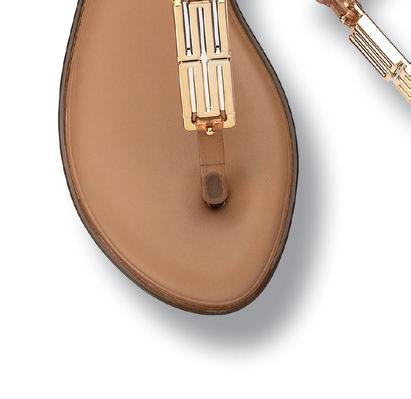


Inspired by vibrant Marrakech city life and serene desert wonders, H&M Studio brings together harmonious contrasts and an emphasis on craftsmanship for the Resort 2025 capsule collection. Airy summer dresses, kaftans and knits meet bold, minimalistic silhouettes in tailoring and denim separates. Each piece is designed for a magical summer getaway and beyond.
“For the H&M Studio Resort capsule collection, we turned to the vivid sights of Marrakech and serene beauty of the surrounding desert. There’s an eye for intricate detail and love of craftsmanship that we also wanted to bring through with the different embellishments and embroidery, but also shapes of necklines and hems. The result is dreamy yet fierce and modern,” said Kathrin Deutsch, collection designer at H&M Studio.
The color palette ranges from terracotta and sandy beiges to black, crisp white and vibrant blues. Materials include linen, cotton and chiffon that move with ease. Key pieces include a cropped beige cotton jacket with a statement neckline, embellishment and a heavily embroidered pattern, designed to be paired with curved leg jeans with studs along the side seams. The collection also features full-length kaftans with custom patchwork prints inspired by Moroccan motifs.
Accessories in the capsule include a terracotta bikini with an asymmetrical top, golden flat mules with knot detailing, rope high heel sandals and a suede bag with whip-stitch detailing, alongside sunglasses and jewelry.
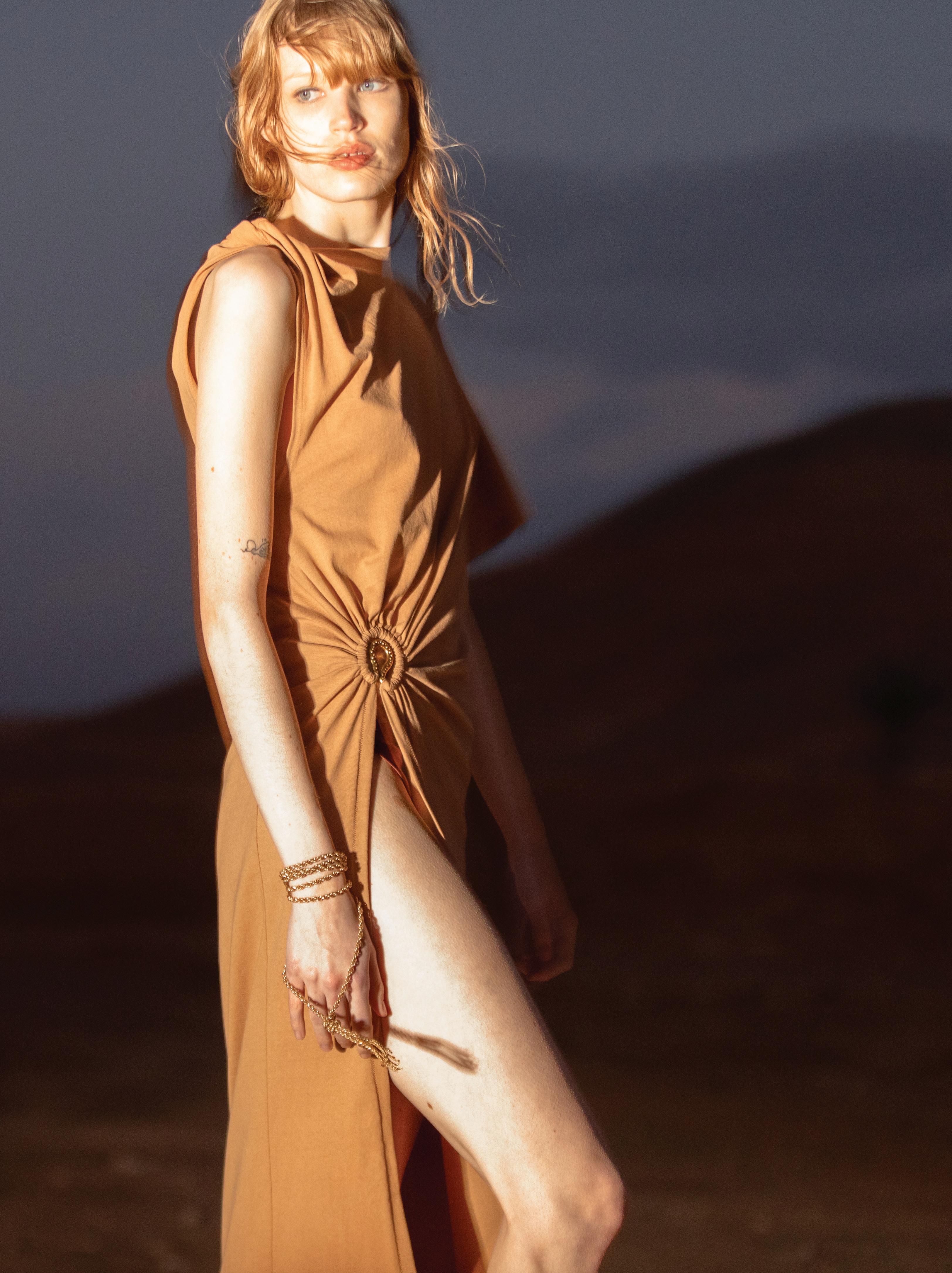


For Gen Z, getting dressed isn’t just about what’s trending; it’s about identity, experimentation and expression. That’s where Aelfric Eden comes in. The Los Angeles-based brand has quickly become the go-to for Gen Z style stars, offering a scroll-stopping mix of nostalgia and streetwear. If your “For You Page” (FYP) feels like a rotating closet of bold prints, oversized silhouettes and cheeky graphics, odds are it’s Aelfric Eden.
’80s and ’90s, remixing them with the brands own flair.

Founded in 2014, the brand’s rise to fame wasn’t built through traditional runways or press cycles, but thanks to a deep understanding of what makes Gen Z tick. Individuality is non-negotiable. Inclusivity is expected. And creativity is currency. From sold-out drops to the brand’s instantly recognizable Cartoon Dachshund Hoodie and Murder Goose Sweater to the leopard print jeans and star sweatshirts dominating every TikTok FYP, Aelfric Eden has become a mainstay in the wardrobes of trendsetters who want to stand out.
Aelfric Eden’s massive rise can be credited in large part to its digital-first strategy. From TikTok to Instagram, the brand meets Gen Z where they’re at: their phones. Signature graphic prints, exaggerated silhouettes and playful details define the collections, which regularly reference everything from skateboarding and graffiti to Y2K nostalgia and ’90s grunge. Social media isn’t just a marketing tool, it’s a mirror. By watching, engaging and responding in real time, Aelfric Eden has created a fashion loop powered by the algorithm and ruled by the youth.
Celebrity fans like Hailey Bieber, Alex Cooper and McKenna Grace only amplify that buzz. But it’s the microinfluencers and everyday creators on TikTok, who style the pieces their own way, that keep the brand at the forefront of fashion culture. Aelfric Eden has the unique ability to make truly unisex pieces that can be seen on everyone. Bow sweatshirts and camo jorts are seen rocked by anyone on its website.
Earlier this year, the brand launched The Encyclopedia of Fashion, a love letter to decades past, told through a modern lens. The collection nods to the iconic style moments of the ’70s,
The ’70s edit is all about psychedelic love and freedom. Aelfric Eden revives the spirit with loose knits, funky colors, popping prints and distressed textures that feel both retro and current. The ’80s vibes are about mosh pits and grunge. The alt rock vibe is expressed through raw hems, flannels, rips and leather. For the ’90s, the brand went for “baggy and saggy,” focused on color blocking, baggy silhouettes and lots of layers.
The Encyclopedia of Fashion is a crash course in the cultural power of fashion, designed specifically for a generation that loves to relive the past. It’s not just retro, it’s relevant. And it proves Aelfric Eden doesn’t just keep up with the trend, it’s making them.
What sets Aelfric Eden apart from other streetwear brands is how completely it’s built for Gen Z from the ground up. The brand’s mission is rooted in accessibility, optimism and self-expression. Its designs are unisex and size inclusive. Plus, Aelfric Eden offers student discounts and even funds young dreamers through initiatives like “Dreamers Unite.”
Aelfric Eden’s aesthetic embraces imperfection and randomness. Graphics are quirky. Silhouettes are oversized. Prints are chaotic in the best way. Each piece encourages individuality, whether you’re pairing it with chunky sneakers, a vintage bag, or bleached brows and rhinestones.
The brand’s website reads like a mood board. From the loud zip-ups and 3D-embroidered sweatshirts to baggy pants and animal prints, the vibe is all about personality-first dressing. Some of the most in-demand pieces are the Dinosaur Cartoon Pattern Knit Sweater and the brand’s many leather jackets. Many of the site’s product pictures are shown on both masculine and feminine models, in outfit inspo mockups and on influencers.
The brand’s collabs with TikTok creators have also driven major demand, reinforcing that when it comes to youth culture, Aelfric Eden knows how to tap the right voices at the right time.

EXCLUSIVE DETAILS FOR SHOWS IN:
• Dallas
• Denver
• Las Vegas
• Los Angeles
• Nashville
• Orlando
• New York


CONNECTING THE FASHION INDUSTRY WITH THE WORLD OF TRADESHOWS

Each day offers interactive moments to connect and celebrate the season.
• Tuesday: Permanent bracelets with Bara Boheme; mimosas with Skies Are Blue and Current Air; “Build Your Own Ring Stack” with Erin Gray; espresso martinis with Renewal Logistics; and the Atlanta Apparel Denim Party with live music, cocktails and giveaways
• Wednesday: Permanent bracelets with Bara Boheme; mimosas with Skies Are Blue and Current; “Touchdowns and Tequila” with Lisi Lerch; Oddi’s spiked lemonade cart; and the Atlanta Apparel x Westside Provisions District partnership that will shuttle buyers to nearby dining and retail outlets
• Thursday: “Market Bestie Charm Bracelets” with Atlanta Apparel
Atlanta Apparel continues momentum for the 2025 market season with a comprehensive presentation of Autumn/Winter 2025 styles across contemporary, young contemporary, shoes and accessories categories, plus expanded experiences and buyerfocused initiatives, June 3-6, 2025, at AmericasMart Atlanta.
“We’re always listening to what our buyers and brands need, and this June market is built around that,” said Caron Stover, senior vice president of apparel at Andmore. “With Autumn/Winter 2025 in full focus, the timing is crucial for retailers to place orders and refresh inventory. Add in a strong mix of new resources, events and amenities, and we’re creating a market experience that’s efficient, productive and enjoyable for everyone.”
The June edition of Atlanta Apparel will bring buyers together with some 2,800 brands across permanent showrooms and temporary exhibits, showcasing Autumn/Winter 2025 styles across top categories, including Accessories, Game Day and Resort.
Atlanta Apparel will present four floors of temporary exhibits, with three new lines and one notable expansion. Millibon, BiBi Clothing and Buttermelon are new to Atlanta Apparel this June, while Mary Square expands its footprint.
Throughout the market’s six permanent showroom floors, new showrooms include Jacobi Jewels, Jen & Co. (a longtime favorite in the temporaries), and Revuse Jewelers. Expanded showrooms include Ambrosia & Company, Mavi, PJ Harlow, Reeves & Company, and an expansion and relocation for Milio Milano.
Atlanta Apparel permanent showrooms will be open on six floors: 6 (Fine Jewelry), 7 (Cash & Carry), 8 (Accessories and Contemporary), 9 (Contemporary Men’s and Women’s), 11 (Contemporary and Accessories) and 13 (Children’s). Temporary exhibits are concentrated on four floors: 1 (Young Contemporary and Cash & Carry), 2 (Accessories, Premiere Apparel and Shoes), 3 (Accessories and Apparel) and 4 (Young Contemporary and Contemporary).
Daily perks include breakfast and coffee stations with Café Fwi and Stellow Coffee, as well as lunch and live music on Floor 5. First-time attendees can join New Buyer Orientation daily at 9 a.m. in the Floor 2 Atrium, and enjoy a New Buyer Happy Hour on Wednesday at 3 p.m. The Buyer Resources Lounge on Floor 5 remains open through Friday.
Trend Moments and Photo Ops Inspiration continues with the New-and-Now Vignette, Atlanta Apparel Bistro Photo Op and Curated Category Lounges on floors 3 and 4, highlighting Game Day and Accessories.
Atlanta Apparel’s permanent showrooms and temporary exhibits open concurrently on Tuesday, June 3, and run through Friday, June 6. The market is open 9:00 a.m. to 6:00 p.m. daily, except on Friday, when showrooms close at 6:00 p.m. and temporary exhibits close at 2:00 p.m.

ATLANTA APPAREL UNVEILS PACKED JUNE MARKET WITH AMENITIES, EVENTS AND MORE
June 3-6, 2025, at AmericasMart Atlanta

By Daniella Platt, Consumer Behavior Expert


In today’s fast-moving fashion world, collaboration and education are essential. I recently caught up with Riccardo Rizzi of Renovazio and WorldBrandMarket, a fashion textile leader whose vision aligns perfectly with a mission close to my heart: passing along years of knowledge to those who want to achieve.
While I focus on helping brands share their stories and create purpose-driven brands that sell like crazy and shine, Rizzi’s mission is to help brands craft beautiful collections using the most sought-after materials—designs that command luxury price tags in the trend-setting stores.
Rizzi and I share a common goal to empower today’s creators with the tools to build a standout success. To better help you source materials, here’s a piece of our conversation:
Q: Which textile brands are in your showroom, and what’s the common thread?
A: To highlight a few of the prominent names we represent, in exclusivity for the U.S., many are globally recognized heritage brands, such as Vitale Barberis Canonico (est. 1663), Olimpias, Jackytex, Bottonificio La Perla, Tejidos Royo, Tessilgodi, Lampo Zippers, Vivolo, Tessitura di Crevacuore, etc. These are just some of our Italian partners, as our portfolio spans numerous countries. We host our private show in New York in June to introduce our FW26 textile and trim collections, and in September in Los Angeles.
Q: What’s next for Renovazio?
A: Renovazio’s next step is to keep on selling the best textile options to all our U.S.-based clients. We are also focused on launching an engaging educational program, featuring talented individuals and guests from across the fashion industry.
Q: What challenges do young designers face, and what can they do to stand out?
A: Designers currently face the challenge presented by the rise of AI, which can create the illusion that anyone can become a designer instantly. To stand out, it’s crucial for designers to first master the fundamentals, such as some basic textile knowledge and technical expertise.
Q: How do you envision your brand’s long-term impact on the fashion industry?
A: I envision striving to usher in a new era of transparency and clear information within the industry. A brand must be adaptable to the marketplace while consistently embracing innovation, technology and sustainability. I believe in great products and circularity; therefore, I will be making sure to create garments that will last generations.
Renovazio handles high-end textile and garment needs. Whether you’re a supplier or a customer, the firm offers comprehensive consultancy services tailored to your specific requirements. Its extensive portfolio includes a diverse range of Italian, European and Asian fabrics. To learn more, visit renovazio.com and worldbrandmarket.com.

Curve
Curve New York returns Aug. 3-5 to the Javits Center River Pavilion, with a slate of international, intimate apparel, swim, athleisure and accessory brands— all showcasing Spring/Summer 2026 collections. Show highlights include the return of Object of Desire, an incubator space for new-to-market designers looking to excel in retail and gain valuable brand recognition. Buyer Speed Dating, a connection-focused event that matches retailers and brands, is also making a return this season. New to the show this season is the unveiling of a Buyer Beauty Lounge, where attendees can sample the latest products in skin care, fragrance, makeup and accessories.
In a crucial time for the international lingerie market, Curve New York provides a timely opportunity to negotiate directly with suppliers ahead of upcoming tariffs. With the ability to directly connect with brands and preview this season’s latest collections, this year’s attendance is critical to stay ahead of the curve and competition amid global supply chain disruptions.
Season after season, Curve welcomes a vibrant mix of brands, featuring exquisitely crafted lingerie, eco-friendly loungewear, cozy pj’s, diverse swimwear labels, shapewear solutions and innovative intimate bedroom accessories. Buyers can explore a fresh range of styles, silhouettes and perspectives showcasing the creativity redefining today’s intimates market.
This summer, Curve connects buyers with over 125 international lingerie brands across two major cities, offering meaningful opportunities to build relationships with global suppliers and exclusive first looks at Spring/Summer 2026 collections.
Curve announced the return of Object of Desire, an exclusive, atelier-style space dedicated to spotlighting emerging design talent shaping the future of the industry.
Following a highly successful debut last season, Object of Desire returns as a curated platform for startup and scale-up brands redefining intimate apparel through innovation, inclusivity and sustainability. This distinctive space showcases fashionforward exhibitors who embody ethical practices, authentic storytelling and a passion for craftsmanship. With a strong focus on design, Object of Desire celebrates bold, disruptive aesthetics and originality.
“Object of Desire is more than a showcase—it’s a commitment to nurturing the rising stars of intimate apparel,” said CEO of Comexposium, Raphael Camp. “Our goal is to cultivate future industry champions who will lead innovation and inclusivity in the market.”
Curve invites industry buyers, media and insiders to explore this dynamic space and engage with the next wave of leaders in intimate apparel at the upcoming August show.
Attendees at Curve will have the opportunity to engage with industry experts through panels focused on trends, sales tactics, solution-driven products and so much more. Guests will dive into the evolving world of bodypositive fashion through an insightful conversation on shapewear.
Additional events on the Curve trade show floor include a trend presentation by two esteemed fashion editors and daily fit workshops. Freddy Zappe, celebrating 25 years as a fit educator, will be instructing Curve attendees on how to help women of all shapes and sizes find their perfect bra, with a special focus on fuller cup sizes. Global lingerie brand, Eveden, known best for its inclusive sizing brands, including Elomi, Freya, Fantasie and Goddess, will showcase its latest collections through daily runway presentations on the show floor.
Ahead of the runway, buyers are invited to explore a special trunk show hosted by Wolf & Badger in Soho on Saturday, Aug. 2. This exclusive collaboration will showcase standout participants from Curve’s Object of Desire exhibition, offering a sneak peek at the design direction for Spring 2026. A limited selection of styles will be available for purchase—an exciting opportunity for fashion-forward shoppers eager to discover the next rising stars in intimate apparel.
On Monday night, Aug. 4, Curve will celebrate creativity and collaboration with a multibrand fashion show and party. This invitation-only event will bring the visions of 10-12 international designers to life, highlighting the dynamic and ever-evolving spirit of the intimates industry.
Curve will also be hosting its annual Canadian show, Curve Montréal, July 13-14 at Gare Windsor. Set in the heart of downtown Montréal in Quartier de L’innovation, Gare Windsor boasts a beautiful space for dozens of international brands to showcase SS26 collections to the Canadian market—including hundreds of retailers in Canada and those looking for an international summer escape. The highlight of the show will be a Meritas awards ceremony recognizing excellence of brands and retailers in intimate apparel.


DOLCE VITA and HILOS ANNOUNCE WORLD’S LARGEST ON-DEMAND, 3D-PRINTED FOOTWEAR LAUNCH of ITS KIND

Footwear and accessories brand Dolce Vita launched the largest on-demand, 3D-printed footwear collection to date, powered by its partnership with Hilos, the zero-limit design software company changing the future of on-demand product creation.
Using the Hilos sketch-to-3D design platform, Dolce Vita and Hilos are setting a new standard in footwear creation. The result is the launch of the Holis 3D, a reimagination of a signature Dolce Vita silhouette from Spring 2024 that now blends a high-quality, 3D-printed outsole and upper with a heritage leather-wrapped footbed—bringing together the most advanced manufacturing technology with the craft and comfort of Dolce Vita.
The fan-favorite Holis 3D is available at dolcevita.com for $130 in ivory, light sage, light yellow and café colorways, in women’s sizes 6-13.
Through this partnership, Dolce Vita opens a new chapter in footwear innovation alongside the leading brands in highvolume 3D-printed footwear, such as Adidas and Asics. Most notably, the Dolce Vita Holis 3D breaks industry expectations as the only commercially available 3D-printed shoe manufactured on demand in the U.S. The scale of this launch is a glimpse at the future 3D printing holds for innovative design language, reduced waste, and a rebirth of domestic manufacturing.
Behind the design of the Holis 3D is the partnership with Hilos, the first design-driven platform for end-to-end product creation in the footwear industry. By combining the freedom and creativity of digital design with the precision and control of engineered 3D, Hilos is dissolving the barriers between design and production.
“At Dolce Vita, we’re committed to leading sustainability by collaborating with emerging tech startups and piloting alternative production methods. Our partnership with Hilos pushes the boundaries of footwear innovation— leveraging cutting-edge technology and circular, low-waste manufacturing,” said Dolce Vita president, Kerry Norlin. “Fashion has the power to drive real change, and when we pair that influence with science-backed solutions like Hilos, we move the industry forward. The more brands that invest in responsible innovation, the closer we get to making sustainability the standard.”
“It’s an honor to collaborate with Dolce Vita to reimagine one of their most popular styles in a 3D-printed, on-demand format,” said Elias Stahl, Hilos CEO and co-founder. “Our industry is at a turning point, and it’s been incredible to see such a storied brand as Dolce Vita lean into a new way to design ... that is true to their heritage and craft while also setting new rules for design and production. This is a truly historical launch.”


Global vacation lifestyle brand Cupshe unveiled its latest partnership with fashion influencer and “The Bachelor” Season 28 winner, Kelsey Anderson. As the brand’s newest ambassador, Anderson has co-designed the exclusive Cupshe x Kelsey Anderson: Summer Postcards collection, a refined, romantic take on summer swim and resort wear. The limited-edition collection debuted in two parts.
“Designing this collection with Cupshe has truly been a full-circle moment,” said Anderson. “I’ve been a fan since college—Cupshe was the only stylish swimwear I could afford on a student budget, and I always trusted the fit and quality. Bringing my own style and story to life through this collaboration was incredibly special.”


The first release, Summer Postcards: Daybreak, features 28 daytime swimwear and apparel styles, including bikinis, one-pieces, swim cover-ups and vacation dresses. Each piece reflects Anderson’s signature charm and love for travel, expressed through rich and soft shades of blue, white and black, and timeless silhouettes in elevated fabrics.

The second drop, Summer Postcards: Golden Hour, includes 18 styles designed for sunset moments and summer evenings. The collection debuted during Anderson’s appearance on the runway at Cupshe’s Miami Swim Week show.
“Cupshe is about stylish authenticity, celebrating who you are and your community,” said Iris Yen, chief marketing officer at Cupshe. “Kelsey has loved Cupshe since college, and now she’s the creative force behind the Cupshe x Kelsey Anderson collection. This has been a journey of growth for both of us, and we are thrilled to do it together as we celebrate Cupshe’s 10-year anniversary as a leading vacation brand.”



Dynamic’s latest online platform, DYNAMIC TMS, automates the tendering of a shipment to the preferred carrier based on your criteria. The system automates the routing, optimization, and real-time visibility of each transaction resulting in a more efficient cost saving solution.
Retailers are successfully using our new user-friendly technology and experiencing great results. Contact us today to learn how our new platform can improve your shipping experience.