


BY ANGELA LOVELL
The federal government recently announced that the interest-free limit for the Advance Payments Program (APP) will remain at $250,000 for the 2025 program year, which is good news for beef producers facing uncertainty and potential volatility in world markets.
“The APP gives producers flexibility to market their animals when they want to, provides upfront cash for inputs and other financial decisions they need to make for their operation, and saves them a lot of interest costs,” says Rebecca Fraser, Program Manager at Manitoba Livestock Cash Advance Inc. (MLCA), the office that administers the
program for both livestock and crops in Manitoba and Saskatchewan.
Each year, around 350 producers use the APP program through MLCA, which provides up to $1 million in total cash advance payments, with the interest on the first $250,000 being paid by the federal government. The
“The APP gives producers flexibility to market their animals when they want to, provides upfront cash for inputs and other financial decisions they need to make for their operation, and saves them a lot of interest costs,” says Rebecca Fraser, Program Manager at Manitoba Livestock Cash Advance Inc. (MLCA), the office that administers the program for both livestock and crops in Manitoba and Saskatchewan.
interest- bearing portion of the loan is at a competitive rate; prime -0.25% for 2025. The loan is paid back as the animals are sold throughout the loan period.
Get what you need for your agribusiness without the high upfront cost, and reduce your tax bill! Ask your Sunrise Lender about thebenefits of leasing.


MLCA offers advances on cattle, lamb, goats and bison and grain. The APP provides loans for different types of livestock operations including a continuous flow option for feedlots and a breeding inventory option for producers selling breeding stock. The loan covers a 24-month production period for cattle, and for other livestock and crops it is 18 months, and 12 months for the continuous flow option.
To be eligible for the APP, producers must be enrolled in a business risk management (BRM) program such as AgriStability or Livestock Price Insurance. It’s a requirement that cow/ calf producer, Peter Penner of Penner Stock Farms Ltd near Winkler, who has participated in the APP program for about a decade, sees as a double benefit. page 2

Since Manitoba Beef Producers’ 46th Annual General Meeting in February, it has been very busy on a variety of different fronts. These involve efforts both here in Manitoba as well as nationally, as we’ve been working on advancing a number of initiatives for the Manitoba and Canadian cattle industries. Discussions, resolutions and meetings around the MBP AGM have helped give us some clear direction for these efforts.
Obviously, trade and the potential impactions of tariffs have been a huge part of the conversations and these matters change and evolve at a rapid rate. As we can all imagine, trying to address these situations and hopefully stay ahead of them for our sector takes a lot of effort on the part of MBP staff and board members. To look at this with a different lens, and having the mindset that we should never let a disaster go to waste in terms of lessons to be learned, while this is a challenging landscape to navigate, there is also the opportunity to come out of this stronger than ever. This includes strengthening inter-provincial trade options for many sectors, as well as further breaking down barriers that hamper the speed and efficiency of trade and transportation across provincial jurisdictions. Also, times like these force us to put additional resources towards breaking down other impediments to trade with different countries.
A number of us attended the Canadian Cattle Association (CCA) Annual General Meeting in Ottawa to discuss issues on a number of different fronts. A big piece of news that all of us should be incredibly proud of is that former MBP president Tyler Fulton was elected as President of the CCA, and he will help lead the cattle industry through these trying times. He is very deserving of this spot. We congratulate him and have full faith in his strength and his ability to lead. It’s always wonderful to see the great leadership that MBP board

MATTHEW ATKINSON President’s Column
members and staff bring to the national level and that is reflected in many positions of leadership. This annual trip to Ottawa in general was a littler quieter than usual without Parliament in session and we do look forward to picking back up on many of our advocacy efforts following the federal election.
Some of us also attended the Canadian Cattle Identification Agency (CCIA) AGM in Calgary. As we have mentioned previously, the federal government has been working on the new traceability regulations for cattle for a number of years. We are currently in another period of further delay, due to the federal election blackout. Following the formation of government and new cabinet ministers getting their instructions, we would expect the publication of these regulations to come out in Canada Gazette 2. This is significant for the CCIA, as it will require a lot more producer cattle movement reporting and therefore, see a drastic increase in the amount of data submitted to CCIA. This higher level of reporting, while more work for producers and more data to store for the CCIA, is vital information in order to successfully trace out potential disease and herd health events. We are attempting to, where possible, to work with third party farm management and technology and digital manifest providers to find ways to minimize the reporting workload for producers.
Another important matter on which MBP has been working for some time is the need for improvements to the Disaster Financial Assistance (DFA) program. The
federal and provincial governments enter into Disaster Financial Assistance Arrangements, and when disasters such as severe floods occur, provinces can deliver DFA programs to help people facing damages caused by these events.
MBP has long been advocating for changes to the DFA program in Manitoba to address concerns related to producer eligibility and assistance levels. This included the need to allow farms and ranches with gross revenue higher than $2 million to be able to access DFA, and the province is now looking at changing that to $15 million in gross revenue, which will make more farms eligible for aid in future disasters. There have also been restrictive rules related to how farms are structured which limited eligibility, such as excluding farms that have more than two owners. The province is looking to remove restrictions like this. Other challenges MBP had identified included the need for timely payments, and the need to increase the maximum amount of allowable assistance for private sector claimants, which is also going to change from $300,000 to $3 million. The province is also looking at providing support for disaster victims in areas such as financial counselling and mental health counselling. MBP is pleased the provincial government has been listening to concerns like these and others that we have raised about the DFA program and we hope the end result of the changes will be a program that is more responsive to the needs of beef producers.
These are just a small selection of the many ongoing issues to both respond to, and pursue proactively along the way. With the weather warming up and the snow melting, winter chores have transitioned to spring and summer tasks and here’s wishing everybody the best as we head into a new season.
“With the political climate that we have right now you just don’t know what is going to happen, so if the market tanks you have got the cash advance and have also protected yourself through insurance,” he says, adding he values the market flexibility the program gives him.
“It works well for us because we background our calves, we don’t sell them in the fall, but hold them until January or mid-February, so the cash advance helps because we have money in April and that gives us flexibility coming into spring to play the market a bit and sell at the time that we want to.”
DISTRIC T 1 TYLER FEWINGS Boissevain-Morton, Brenda-Waskada, Grassland, Deloraine-Winchester, and Two Borders
DISTRIC T 2
MARK SCHRAM
Argyle, Cartwright-Roblin, KillarneyTurtle Mountain, Lorne, Louise, Pembina, and Prairie Lakes
DISTRIC T 3
ANDRE STEPPLER
Cartier, Du erin, Grey, MacDonald, Portage la Prairie, Rhineland, Roland, Stanley, Thompson, Montcalm, Morris, and Ritchot
DISTRIC T 4 BYRON FALK De Salaberry, Emerson-Franklin, Hanover, La Broquerie, Piney and Stuartburn, Montcalm, Morris, Ritchot, Spring eld, Ste. Anne, Taché, R.M. of Piney and Reynolds
Atkinson says given the uncertainty facing the industry, there has never been a better time to take advantage of BRM tools, and the APP may offer producers a way to offset some of the cost of those programs.
“If producers are considering BRM programs the savings in interest that the APP offers can help cover the costs of enrolling in those programs,” he says.
There is a $500 administration fee for the initial application with MLCA but producers can apply for additional advances during the loan period.
“If they have purchased more animals or have
DISTRIC T 5 STEVEN MANNS Cornwallis, Elton, Norfolk-Treherne, North Norfolk, Oakland-Wawanesa, Glenboro-South Cypress, and Victoria
DISTRIC T 6 BRIAN ENGLISH Pipestone, Riverdale, Sifton, Souris-Glenwood, Wallace-Woodworth, and Whitehead
DISTRIC T 7 T YLER FULTON
DISTRIC T 9 TREVOR SUND Alexander, Brokenhead, East St. Paul, Lac Du Bonnet, Rockwood, Rosser, St. Andrews, St. Clements, St. Francois Xavier, West St. Paul, Whitemouth, Woodlands, LGD of Pinawa, Reynolds, Spring eld, Ste. Anne, and Taché
DISTRIC T 10
MIKE DUGUID
SECRETARY Armstrong, Bifrost-Riverton, Fisher, and Gimli
2ND VICE-PRESIDENT Ellice-Archie, Hamiota, Prairie-View, Riding Mountain West, Rossburn, Russell-Binscarth, and Yellowhead
DISTRIC T 8 MATTHEW ATKINSON Clanwilliam-Erickson, Glenella-Lansdowne, Harrison-Park, Minto-Odanah, Oakview, North Cypress-Langford, Rosedale, and West Lake-Gladstone
DISTRIC T 11
ARVID NOTT VEIT Coldwell, Grahamdale, St. Laurent, and West Interlake
DISTRIC T 12 MARK GOOD TREASURER Alonsa, Lakeshore, McCreary, and Ste. Rose
additional inventory, a producer could come and get an additional amount, and the fee is $100 for a subsequent application,” Fraser says. “The MLCA staff are always available to help producers fill out their applications over the phone and help them with any questions that they may have. The APP is an important financial tool that producers can utilize for their operation.”
Atkinson is hopeful that more producers will take advantage of the Advance Payments Program.
“I don’t think enough producers know that the APP is an option and that it is available to them year in and year out,” he says.


Hello folks,
Hope the recent change in weather has been welcome on your operations. It has been a bit a yoyo over the last few weeks, with added moisture here and there. However, we know some areas of the province are still dry, so added moisture this spring will be welcome. I am sure many of you are gearing up for planting, so I wish you the best in that busy time.


Speaking of ups and downs, the trade situation with our partners to the south has been hard to predict. When the first round of tariffs came on for a day, we know it cost industry a lot of dollars in a short period of time. However, we were happy to see that was reversed fairly quickly. The challenge though is the impact on markets and the unpredictable nature of the new trade relationship with the US administration.
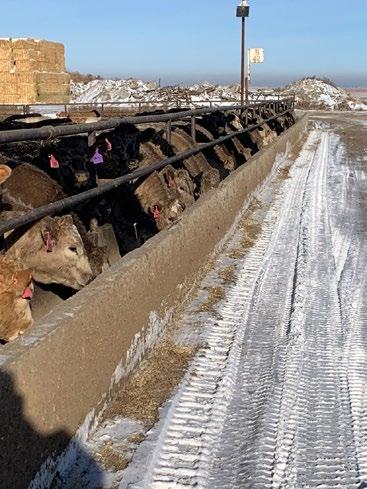
Data will be collected on practices of backgroundi across Canada
Speaking of ups and downs, the trade situation with our partners to the south has been hard to predict. When the first round of tariffs came on for a day, we know it cost industry a lot of dollars in a short period of time. However, we were happy to see that was reversed fairly quickly. The challenge though is the impact on markets and the unpredictable nature of the new trade relationship with the US administration. The beef industry, including our national partners like the Canadian Cattle Association and National Cattle Feeders Association, has been down in Washington DC a lot lately to continue to press the importance of our integrated cattle market with the USA. The intertwined relationship between the USA and Canadian cattle market has been very important, so any trade barriers and added costs would be detrimental to both sides of the border. With the current tariff ex emptions on Canada-United States-Mexico Agreement m , Gus Halibert - Msc Candidate (USASK) gus Gabriel Ribeiro - Assistant Professor (USASK


Gus Halibert - Msc Candidate (USASK Gabriel Ribeiro - Assistant Professor ( Help Develop A the Canadian Fe
Your input is critic extension projects assessments, and
input is critical to help impro sion projects, beef industry ssments, and more
Your input is critical to he extension projects, beef assessments, and more
Gus Halibert - Msc Candidate (USAS Gabriel Ribeiro - Assistant Professor Help Develop A
Gus Halibert - Msc Candidate (USASK) gu Gabriel Ribeiro - Assistant Professor (USA

Your input is critical to h extension projects, beef assessments, and more
Gus Halibert - Msc Candid Gabriel Ribeiro - Assistant
Project funding provided by: ces of background s Canada
Project funding provided by: is critical to help improve b projects, beef industry life-c ts, and more.
Project funding provided by:
Project funding provided by: a e i
nding provided by: groups
libert - Msc Candidate (USASK) gus haliber Ribeiro - Assistant Professor (USASK) gabr
sc Candidate (USASK) gus halibert@usas - Assistant Professor (USASK) gabri l ib i
Proj g p y: e p j , assessments, and more
Project funding provided by: extension projects, beef indu assessments, and more
ovided by: c g
Gus Halibert - Msc Candidate (USASK Gabriel Ribeiro - Assistant Professor




BY: DR. TANYA ANDERSON, DVM
The recent news reports of measles outbreaks, some requiring hospitalization, in certain regions of the province highlights the importance of vaccination for disease prevention and reduction of healthcare costs. The same is also true for cattle - an ounce of prevention is worth a pound of cure.
Healthy productive cattle are disease free but not pathogen free. Germs and bugs are part of life and a functioning immune system keeps animals healthy. Good nutrition and environmental management keep cattle immune systems strong and able to ward off disease. Training that immune system by vaccination should be part of a herd health program. Core vaccines are those that are common in an area and for which all cattle should be immunized while non-core vaccines are those which should be used in herds that meet certain risk requirements. This article will briefly review core vaccines for cow/calf herds.
The definition of a core vaccines is one that provides protection from diseases in the area which are virulent or highly infectious and capable of causing disease in cows, bulls, replacement heifers and/or calves. All cow/ calf herds should receive a vaccine to provide protection against Bovine Viral Diarrhea (BVD), Infectious Bovine Rhinotracheitis (IBR, Bovine Herpesvirus), Bovine Respiratory Syncytial Virus (BRSV) and the Clostridial organisms. BVD and IBR cause reproductive losses in cows and respiratory disease in calves. BRSV is a common viral infection causing severe asthma type

pneumonia and “summer” pneumonia. Clostridial organisms are commonly present in the soil. The various strains cause different diseases due to infection and the toxins that are released - tetanus, blackleg, gut diseases and sequella following liver fluke infection are the most common in Manitoba.
The health of calves is only as strong as the health of the cow. Well-vaccinated cow herds have fewer open cows and abortions. Well-vaccinated cows produce higher quality colostrum which is critical for newborn and pre-weaning health. Calves that have health issues like pneumonia, scours or navel ill within the first two months of life did not receive enough colostrum, whether due to a lack of quality or quantity. Calves that do not obtain colostral immunity are 12.5X more likely to die in the feedlot. Well-vaccinated calves that perform well in the feedlot command a premium.
Preparation for a healthy herd starts with the calf. Review your vaccination program with your veterinarian. Vaccination can be done at birth, spring processing (~two months age) and weaning. When to do and which product to use depends on the health concerns in your herd. For example, if you experience pneumonia in preweaned calves, consider changes to the vaccination of cows pre-calving and calves at birth based on a thorough diagnostic workup. Knowing the pathogen giving you grief helps you develop a solid preventative program.
Protecting the reproductive health of cows requires immunity prior to breeding. If you keep your own replacements, start developing that immunity as a calf. As mentioned earlier, several of the pathogens causing
pneumonia in young stock cause reproductive disease in mature cattle. The vaccine combo products on the market were developed with this knowledge in mind - to simplify implementation of a core vaccination program. Cows and bulls are considered protectively vaccinated if they have had at least three vaccinations prior to breeding - pre-weaning as nursing calves, at weaning and then one month pre-breeding. If purchased cattle with no or an unknown vaccine history, two doses three to four weeks apart with the second dose at least one month pre-breeding is required for optimal protection against infectious reproductive disease.
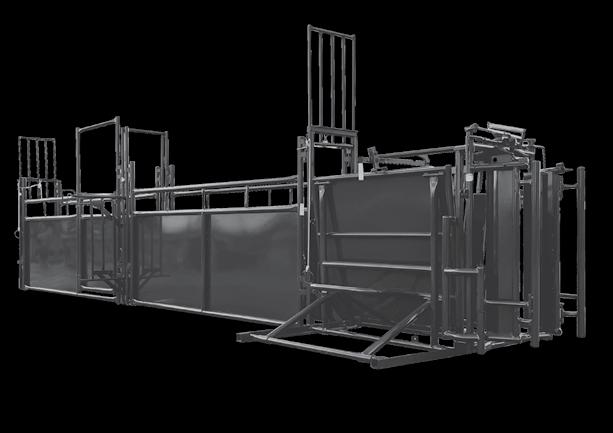
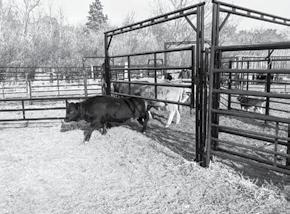
A variety of vaccines are available - killed, modified live, autogenous, single or multiple antigen. If you are already vaccinating, review your program with your veterinarian to ensure that the timing and the products in use are still relevant for your herd’s risk factors. One common excuse for not implementing a vaccination program is the inconvenience of spring processing prior to breeding. That is a valid concern - processing cows with young calves at foot in the mud is fraught with issues. Discuss with your veterinarian about the options that exist to implement a program in the fall. Sit down with your veterinary team and clearly communicate what you can and cannot do health wise to develop a tailored program that works for you and will optimize your herd’s health. Make disease outbreaks like abortion storms or blackleg and pneumonia deaths a thing of the past.

BY ANGELA LOVELL
The subject of intergenerational farm transition has never been as important as it is today, not only because it’s an inevitability that farms will change hands as the baby boomer generation ages, but also because there has never been a time when so much wealth has been at stake. The high value of farm assets such as land, equipment and buildings are making it hard for the next generation to buy out Mum and Dad. And Mum and Dad have had some lean years during their farming lifetimes, so many just don’t have the financial security for their retirement to be able to gift the farm to their kids.
Making sure a farm transition is orderly and successful for everyone involved takes careful planning, and ideally begins years in advance, but the reality is that many farm families don’t have any kind of transition plan beyond ‘it’ll all be yours someday.’ So why are so many farms putting off the conversations they need to have with each other to start the transition planning process?
Finding fairness in farm transition requires transparency and honesty, says Farm Family Transition Coach, Elaine Froese, particularly when it comes to discussions about money and assets, but these are often the conversations farm founders want to avoid having because they fear conflict.
Fear of conflict is often the main thing holding people back from transition planning. “Many people have anticipatory worry,” she says. “Which means they are worrying instead of taking action. You have to deal with all the feeling, conflict, emotion, disappointment, expectation, hopes and dreams. When you can faithfully put that on the table then you can start sorting it out.”
But that’s not happening nearly as often as it should, and Froese believes agriculture is in turmoil because of it.
“It has always been a tough conversation, but people are not making it easier on themselves because they are not coming to the table, they’re not building up a good team of advisors to make decisions and they are not seeing conflict as a good thing,” she says. “Conflict is good when it gives you gives you clarity of expectations, so you can have a timeline to agreements and a commitment to action. There are going to be some emotionally laden conversations but you’re going to come to solution.”
Cattle producers, especially, have been through a lot of tough years for various reasons during the lifetime of the generation that’s getting ready (or not) to retire from active farming. They have done a great job of weathering the storms, but those years of thin margins haven’t left much leeway to put a little aside for their retirement. Consequently, they may be inclined to hang on longer than farmers in other commodities, treating the transition as some fixed point in time that they will reach one day that will just happen.
“Transition is when labour, management and ownership changes and those all don’t happen at once; they happen over time,” Froese says. “But you have a lot of stubborn, independent producers who say these are my cattle, this is my farm, you’ll deal with it when I die. That’s not giving the next generation the equity and the debt servicing capacity that they need to grow and manage the risk of being a cattle producer.”
Overwhelmed by transition
People can often also feel overwhelmed by the complexity of a transition.
“People pull back because they don’t understand estate freezes or shareholder agreements or tax-free savings accounts,” Froese says. “There are so many things they don’t understand, but they don’t want to ask questions.”
Or they can simply get shut down by their own emotions. “They don’t like how it feels and so they shut down,” Froese says. “You can’t create solutions with a brick wall, you have to talk.”
The older generation is often fearful that the next generation will undo all the hard work that they have done during their lifetime to build the farm, which makes them reluctant to let go of any control.
“I don’t think that’s going to happen unless they have kept all the cards, the finances, the management
to themselves, and their 54-year-old son is just an indentured servant,” Froese says. “We have way too many founders who do not embrace financial transparency, do not embrace robust conflict conversations and do not embrace planning now and transferring wealth while they are still alive.”
Make a contingency plan
Many farmers also have no contingency plan in the event something happens to them. The loss to the farm without it can be devastating because it’s not just about losing labour, but knowledge, experience and management ability.
“The contingency plan is a power of attorney, having conversations, sharing assets now, sitting down with your accountant to see how you can start transferring the wealth or the ownership so that the responsibility and liability is shared,” Froese says.
But sometimes it’s up to the next generation to initiate the transition conversation, hard as that can be. Froese says one of the most powerful ways to get the ball rolling is to simply write a letter to the older generation.
“Write a letter of appreciation but also your vision of how things would be different if you were in charge and the timelines expected,” she says. “We need clarity of expectations, so if you can put into writing how you foresee a workable future for you on this cattle farm, describe what that looks like.”
Transition mindset
A successful transition is more about the mindset of the people involved, though, than any legal document or financial tool. It’s about being committed to honest communication and a willingness to learn.
“The early adopters, lifelong learners and people who are open to taking advice and building an amazing team will have an amazing life,” Froese says. “It will be grandchildren who do ag business courses, and watch their numbers well, and have financial transparency at an early age that will be the most successful because they will learn the financial literacy skills that nobody’s learning in school. Get yourself more financially literate with your local bank manager or credit union person and learn how money works.”
The right way to approach farm transition
Andrea Brocklebank and her husband, Brad Kilpatrick were a couple of years into their transition plan on Brocklebank’s family farm west of High River, Alberta when sadly, her dad, Bart, died in a farm accident in 2021.
As the family struggled through the grief and pain, Brocklebank received calls from the many farmers they knew across the country to offer their condolences, and the next question they asked was ‘how is the farm?’
“I was able to say, it’s good, we have a plan,” Brocklebank says. “What was interesting was so many of these producers, who were in their 40s, 50s or 60s said we haven’t had that conversation yet as a family, we don’t have a plan.”
Brocklebank is eternally grateful for the foresight of her dad and Mum, Rosemary, who were always willing to have honest and open discussions about how they were going to transition the farm to the next generation. Those conversations, and the time they put into transition planning, have made their accelerated transition – under the worse imaginable circumstances – much less stressful than if there been no plan or frank conversations among the family.
“It made me fully appreciate how progressive my parents were because they were both willing to have those conversations, and not all of them were easy, but from the start we had the agreement that at the end of the day we wanted to be able to sit down to supper together as a family. It was always about preserving the legacy of the farm but also maintaining the family structure,” Brocklebank says.
Fair not equal
The family assembled a team of experts to help them with the transition planning process including their lawyer, banker and accountant. One of the big considerations was the high value of their land, which is heavily influenced by its proximity to Calgary rather than on its agricultural value.
Manitoba Beef Producers will be hosting a farm transition producer workshop in the Dauphin area in July. More information will be available in the June edition of Cattle Country, along with the MBP E-Newsletter, website, and social media channels.
It’s a common conundrum today for farms facing transition, the fact that farm assets like land have record high values, but that value isn’t liquid, it’s not cash; it’s needed to remain as part of the farm to continue generating income. Yet, at the same time, parents want their all children, including non-farming ones, to derive some benefit from the farm assets.
“The conversation was really about what fair versus equal would be, because equal would mean selling land and the farm is mid-sized so it wouldn’t be sustainable if we had to sell land,” Brocklebank says.
The farm was already under a corporate structure in which Brocklebank and her sister both owned shares along with mum and dad. They developed a shareholder agreement that is a vital roadmap, guiding the farm’s operation, but also covering things such as what would happen upon the death of a family member, or if anyone wants to leave or sell their shares.
“We agreed to buy out my sister’s shares over a period of time and also structured some insurance, and my parents personal investments, to make sure that we weren’t having to sell land moving forward,” Brocklebank says. “We also were able to include a bad year clause, so we were able to defer payment to my sister for a year if we needed to. That helped ensure that the plan worked for her but also that it was economically feasible for us.”
Lessons learned through transition
As well as grassing around 500 yearlings each summer, Brocklebank and Kilpatrick continue to pursue off-farm careers as well. Brocklebank is the Executive Director of the Beef Cattle Research Council and Kilpatrick works in the oil and gas industry. They made the decision to move back to the farm with their two sons (Blake, now 14 and Colin 11) in 2015.
What Brocklebank quickly learned after her dad passed away was while transition is about corporate structures, wills, and operational control, equally important is the transition of knowledge and management that takes time, patience and trust.
“Dad was really good about stepping back and letting us fumble through decisions and be in the background providing perspective, but not controlling things,” she says. “I wish we had had more time doing that, but I really appreciated that.”
She has also learned that transition is not a one and done task or a defined point in time. It’s an ongoing, fluid process that needs to be revisited often to accommodate changes in the farm and the family’s life stages and needs.
“It is something that you constantly need to keep an eye on just like you do with your budget or your expenses,” she says. “And when big life changes happen, revisit and think about how things look you for your long-term plan. We continue to have conversations with Mum about how things need to shift or change.” Start now
Brocklebank has become a huge advocate for transition planning and urges producers to get started on the process sooner than later.
“It’s so important for producers to have those conversations,” she says. “And if tragedy strikes, being able to continue to move forward based on work invested previously is something I can’t emphasize enough. If we hadn’t done some of that work, just based on various dynamics, we probably would have been selling land at some point in time. Don’t be ashamed that you haven’t started the process yet, just start it. It doesn’t matter what age you are at, just take those first steps and have those meetings.”
And don’t be afraid to ask for external help and advice from experts, but also from other producers who have been through the transition planning process, she adds.
“Asking other producers for their experiences is huge and every operation is different,” she says. “Also, being willing to invest in that external help. It costs but it’s so worth it because we can’t see some of the things that they see. When you are talking about the value of some of these operations, and the implications if you don’t sort through this, the investment is worth it to pay for experts.”
The Manitoba Crop Variety Evaluation Team (MCVET) annual forage trials were run at four sites in 2024 across the province including Melita, Roblin, Arborg and Carberry. The objective of the program is to test different varieties of annual crops for forage yield and quality across Manitoba. Six different annual crops were compared including a cereal/pea mixture.
The 2024 MCVET annual forage trial results, including yield and feed quality information can also be found in the Seed Manitoba 2025 Variety Selection and Growers Source Guide. Overall across all four sites on average, sorghum was the highest yielding at 9.3 tonne/acre of dry matter, followed by barley at 6, the pea/cereal mix at 5.7, oats at 5.4, triticale at 4.8 and millet at 3.7. This is the same order as 2023 except millet and triticale swapped places. Barley had the highest overall relative feed value and energy, but was lowest in protein. The pea/cereal mix had the highest protein at 10.6 percent and was second for both relative feed value and energy.
1 Quality tests were done by wet chemistry and were a composite of the three plots/site.
2 Relative feed value (RFV)
3 Crude protein (CP)
4 Total Digestive Nutrients (TDN)
5 Due to lack of availability, common seed was used.
The 2024 annual forage trial combined all crops and varieties in one trial with three replicates per site. Quality is highly dependent on plant maturity at harvest. Barley was harvested in mid dough stage; oats & triticale at milk- early dough stage; peas at early pod wrinkle; millet and sorghum at heading.
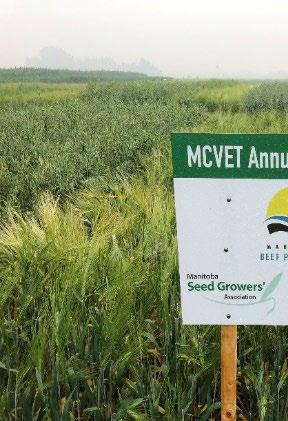
(continued) ANNUAL FORAGES
The 2024 annual forage trial combined all crops and varieties in one trial with three replicates per site. Quality is highly dependent on plant maturity at harvest. Barley was harvested in mid dough stage; oats & triticale at milk- early dough stage; peas at early pod wrinkle; millet and sorghum at heading.
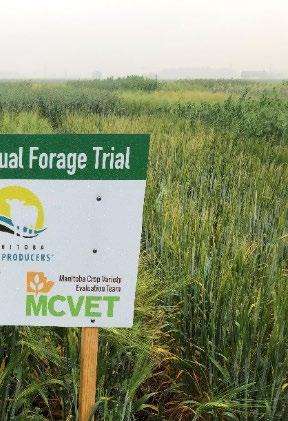
The 2024 trials are sponsored by the Manitoba Crop Variety Evaluation Team (MCVET), Manitoba Seed Growers Association, Manitoba Beef Producers and Manitoba Agriculture. We would like to thank the staff at each of the four Diversification Centers for conducting the trials.
1 Dry matter yields measured under a one-cut system.
2 Due to lack of availability, common seed was used.
* Sorghum and millet were harvested later due to their later maturity
Dry yields under Due common was used. Sorghum millet harvested their
For more information, contact your nearest Manitoba Agriculture office or shawn.cabak@gov.mb.ca or 204-239-3353.

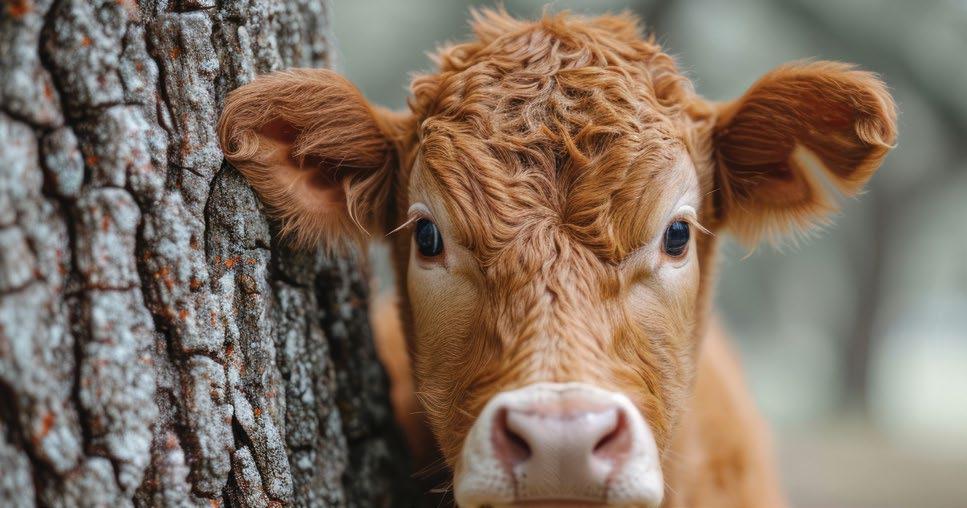
From harsh weather to rugged terrain, various hazards can impact the lifespan of your indicators. Factors like vegetation, fencing and water sources can contribute to wear and tear. Increase retention by implementing environmental modifications or choosing an indicator best suited to your area.
Don’t forget to check the manufacturer recommendations and best practices for the applicator and indicators that you are using. Proper indicator placement is key to increasing retention.
CCIA is led by industry to
better protect your investment.


Pam Iwanchysko Livestock and Forage Extension Specialist, Manitoba Agriculture
Pamela.Iwanchysko@gov.mb.ca
Question: I have always wondered when the best time is to let my cattle out onto pasture in the spring, to not reduce the productivity in the long-term.
Answer: A recent article published by the Beef Cattle Research Council (BCRC) reflected on how pasture is a key component of beef cattle operations and one definitely worth managing. The article stressed the four principles of grazing management.
At first glance, grazing a pasture may appear as simple as placing cattle in a fenced area with a water source. However, practising effective grazing management is an art and a science.
Pasture conditions and types vary widely from native grassland to tame forage, with stands comprised of many diverse plants or even just a simple mixture of a few grass or legume species. Regardless of the pasture type, focusing on a few key principles can help maintain forage productivity, ensure stand longevity, sustain a healthy plant community, conserve water and protect soils. Here are four main factors to remember:
• Balance forage supply and livestock demand. Avoid overstocking a pasture by ensuring there is adequate forage available for the number of cattle and the length of time the cattle will be grazing. BCRC’s Carrying Capacity Calculator can help producers determine a starting point for their stocking rates which can be accessed by scanning the QR code in this article. In addition to grazing, remember to factor in a utilization rate to account for trampling, wildlife or insects. General guidelines for native pasture suggest a utilization rate of 25-50 per cent, and for tame pasture, a utilization rate of 50-75 per cent is a built-in buffer that allows the pasture to sustain itself.
• Distribute grazing pressure across the pasture. When left on their own, cattle will prefer to graze moist, productive areas of a pasture and avoid dry hilltops where the forage quality may be lower. Cattle can be managed to graze a pasture in a relatively uniform manner using different methods depending on forage type, topography and goals. Temporary or permanent fencing, placement of salt and mineral, and stock water locations can all be strategically maneuvered to effectively move cattle.
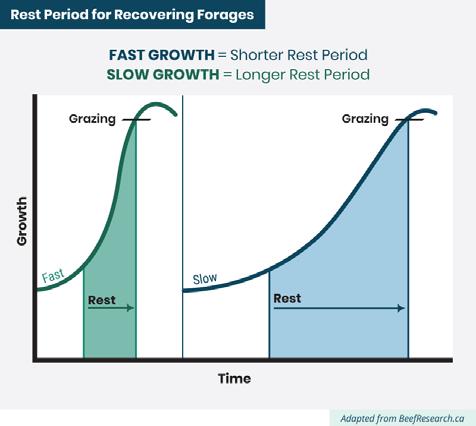
• Provide rest for pasture plants during the growing season to help plants recover. Forage plants need time to rest to allow them to replenish their energy reserves and prepare for the next grazing event. If plants don’t have adequate time to recover, pasture productivity can dwindle, and pastures can become susceptible to weed infestations, soil erosion and winterkill.
• Avoid grazing during sensitive times. Grazing too early can set a pasture back for the whole season. A general rule of thumb is for every day grazing is deferred in the spring, you gain two days of grazing in the fall. Other situations, such as grazing wetlands or species at risk habitat, may benefit from deferring grazing until nesting season is over or flood potential has subsided.

Lois McRae & Joyce Gordon RR 1 Box 57 Brandon, Manitoba R7A 5Y1
h: 204-728-3058
c: 204-573-5192
f: 204-727-7744
marmacfarms1@gmail.com
The leaf stage of a plant can also help a producer decide when the plant has enough leaf area to best tolerate grazing. Research at the University of Nebraska has shown that cool season grasses can be grazed in the spring, but as a rule of thumb, they need to develop three leaves before you allow them to grazed. After the third-leaf stage, the plant has captured enough energy reserves to regrow once the plant has been defoliated. The plant’s stores are not quite built up at the two-leaf stage. Grazing at the two-leaf stage could weaken the plant. To graze warm season grasses, wait until the grasses have reached a four-leaf stage.
There are three important factors that affect how grasses respond to grazing: frequency, intensity and season. Range ecologists and physiologists have found that as grazing increases, grass productivity typically declines. Frequency can be more important than intensity. A plant that is harvested often has more photosynthetic tissue removed and little opportunity for regrowth. These plants may enter a period when soil moisture, temperature and growth stage limit regrowth and little leaf area remains for photosynthesis. Thus, their ability to replenish reserves or produce additional new tillers is restricted.
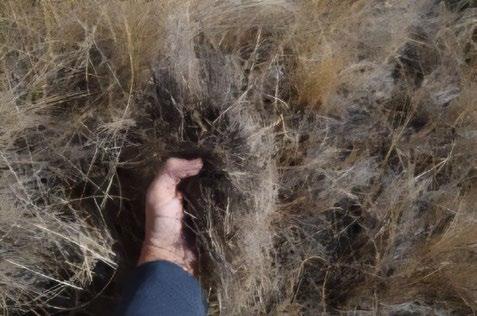
Manage pastures to retain adequate “litter” cover. Litter is the dead or decaying plant residue left from previous growing seasons, and it is a valuable resource in both tame and native pasture stands. Litter insulates the soil, keeping it warm in the winter and cool in the summer. As it breaks down, litter provides nutrients to the surrounding plants and it is a wonderful safeguard for reducing soil erosion and water loss due to evaporation.
Develop flexible grazing management strategies that allow plants a rest or deferment after grazing. This is necessary for regrowth and to maintain sufficient leaf area for growth and maintenance.
Heavy grazing throughout the growing season usually is the least desirable grazing strategy. A management strategy that incorporates rest periods and movement of animals through different pastures typically is more desirable for grass growth than season-long grazing. If you know the amounts, kinds and locations of available plants (cool- and warm-season grasses), and what grasses grazing animals prefer, you can develop a strategy that meets the needs of plants and animals.
Management plans should use the forage resource and maintain it through time. Grazing plans, however, must be flexible. Consider differences in growing conditions across years as a result of drought or wet cycles, depletion of forage supply by wildlife or insects and other rapidly changing environmental conditions, along with the impacts of grazing livestock to determine what effects the combined impacts will have on plants.
Try to avoid rigid plans that require moving animals from one pasture to another on given dates. Other environmental factors will also influence grass growth and use at any point in time so base your decision to move stock on how much the grasses are used and how much green leaf material remains, not on a predetermined date.
In the next issue of Cattle Country, a Manitoba Agriculture forage and livestock specialist will answer a selected question. Send your questions to Elizabeth.Nernberg@gov.mb.ca.
StockTalk for Cattle Country is brought to you by Manitoba Agriculture. We encourage you to email your questions to our department’s forage and livestock team. We are here to help make your cattle operation successful. Contact us today.
Kristen Bouchard-Teasdale Beausejour 431-337-1688 Kristen.BouchardTeasdale@gov.mb.ca
Pam Iwanchysko Dauphin 204-648-3965 Pamela.Iwanchysko@gov.mb.ca
Cindy Jack Arborg 204-768-0534 Cindy.Jack@gov.mb.ca
Juanita Kopp Beausejour 204-825-4302 Juanita.Kopp@gov.mb.ca
Elizabeth Nernberg Roblin 204-247-0087 Elizabeth.Nernberg@gov.mb.ca
One thing for sure in the cattle business is that ‘nothing is for sure.’ In the fall, everyone was excited about the new record cattle prices - finally cattle producers were getting paid fair prices for the hard work of raising cattle. No one thought it could get higher, and most were worried that the good prices would be short-lived. The first quarter of 2025 proved us wrong again with even higher prices! Q1 saw 850-pound steers worth 22% more than last year and 72% higher than the five-year average. Western steers were outselling the same steers in Ontario. 550-pound steers are still over 20% higher than last spring. Once again, the western Canadian market is higher than both the American and Ontario markets.
The complete unknown as to tariffs on Canadian cattle and beef products going south has caused some major uncertainty in the cattle markets. Even though cattle and beef are considered protected under the CUSMA trade agreement, President Trump has been treating the existing trade agreements as mere suggestions. In early April the futures were very volatile; on April 4 the cattle futures closed the “locked limit” down as much as eight cents on some months. That is the maximum drop in one day with the expanded limits. The livestock price insurance program in the USA stopped providing coverage that day due to the free fall in the market values. This was the biggest single-day drop since the COVID-19 crisis. The drop was driven by the fear of high tariffs, along with an economic slowdown.
The fund managers were liquidating their cattle positions into cash. With the drop in the value of the futures and the wide basis, forward contracts for cattle

off the grass were hard to find. Some producers were looking for risk management to protect their inventory, but the numbers were not there. I personally think that, if we get an average crop, the yearlings off the grass will be very strong this fall. So many of the cattle that go to grass are in confinement feedlots and will stay there for the summer. Those cattle are usually retained-ownership cattle and are not resold. Honest grass cattle available for sale in Canada will be in short supply this fall.
Up until then, the cash market seemed to be operating independently from the futures markets. Volumes of cattle on offer were higher and many of the classes of cattle were $300 to $400 offside. The few days prior to the tariff announcements, the cash market saw a slight correction, especially on the Monday prior to the announcement. By the following week, the market had fully recovered - the front-end grass cattle were even higher. I watched 635-pound black steers bring $5.11 per pound and 850-pound black steers at $397.00.
The fed cattle market on the cash trade remained strong and packers were current. There was strong demand from US packers for Canadian cattle, provided the cattle were delivered prior to the April 2 announcement from the White House.
Producers who were fearful of the tariff threats continued to market their cattle earlier than normal. By
BY: ALEX FROESE, MANITOBA BURROWING OWL RECOVERY PROGRAM
The Manitoba Burrowing Owl Recovery Program (MBORP) was established in 2013 to address the urgent need to conserve the endangered Burrowing Owl in Manitoba. Like many grassland bird populations, the numbers of Burrowing Owls have declined significantly over the past 50 years. Specifically, Manitoba’s Burrowing Owl population has decreased by 95% since the late 1970s.
Burrowing Owls face numerous challenges to their survival, with habitat loss being one of the most significant. Globally, grasslands are under threat, with less than 1% remaining intact. In Canada, over 50% of grasslands have been converted to other uses, such as agriculture, housing, energy exploration, and road development. The remaining grasslands are primarily used as grazing pastures for cattle, which have replaced the once wide-ranging grazers, the American bison. To maintain their integrity, grasslands need to be grazed or burned. Cattle play an important role in this environment by helping to preserve the grassland areas that are critical for the survival of grassland species.
Migration also presents many challenges for migratory bird species, particularly due to the decreasing availability of safe stopover habitats. Habitat loss, changes in land use, and habitat fragmentation all contribute to these difficulties. Additionally, climate change plays a significant role, leading to erratic and unexpected weather events in the areas where migratory birds travel.
The MBORP aims to increase Burrowing Owl populations through fieldwork and educational conservation efforts. The organization prioritizes collaboration
the end of March, Alberta was down 3%. Saskatchewan marketings were up a whopping 26% ahead of last year. Manitoba saw an increase of 13% more cattle sold at auction than the previous year. With the declining cow herd in each of the provinces, any increase in the volumes on offer is the direct result of good prices and fear of tariffs upsetting the market prices.
The official beef cow numbers have been released by Statistics Canada. The beef cow herd for the end of 2024 was down another 1.2%, showing the lowest beef cow inventory since 1989. Manitoba has 370,000 beef cows with the projection that the Manitoba beef herd will drop again in 2025 to 367,000. With high prices of heifers to put on feed, there seems to be limited purchases of heifers to breed. This will delay the rebuilding of the cow herd. The butcher cow market is very strong with most of the cows staying in Canada for harvest. Prices in the first quarter were only up 12% to 15%, which is lower than the average in cow price increases in the first quarter. Despite a very weak Canadian dollar, cow exports to the US were lower than last year. Approximately 60% of the slaughter bulls were exported to the USA in the first quarter. We can expect tighter supplies of cull cows moving forward this spring.
By the time this goes to press, most of the auction markets will be running the summer schedule. It would be advisable to call ahead to book your cattle in and make sure there is a sale that week. From the auction market point of view the consensus is that barring drought, it will be a very quiet late spring and summer at the auctions.
Until next time Rick
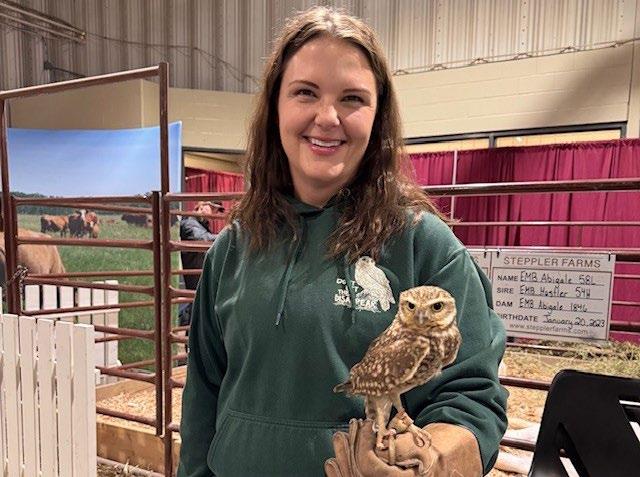
with cattle farmers in southwestern Manitoba to enhance grassland habitat for Burrowing Owls. Some of their activities include modifying grazing practices before and during the breeding season to create optimal habitats, installing predator-proof artificial nest burrows, and monitoring wild Burrowing Owl individuals, pairs, and nests. Over the last decade, MBORP has successfully installed more than 350 artificial nest burrows, thanks to the support of numerous landowners and volunteers.
From 2020 to 2024, there has been a small resurgence of Burrowing Owls returning to southwestern Manitoba, many of which are now using artificial nest burrows. The program has also observed banded owls returning to these burrows during the breeding season. MBORP bands owls to track their movements and identify owls both on the breeding and wintering grounds. As a migratory owl, Burrowing Owls do not remain in one location year-round; they can be found in Manitoba from April to October each year before migrating south to the southern United States and Mexico for the winter.
MBORP operates solely on private and public funding. In recent seasons, private contributions, grants, and public donations have sustained MBORP. We could not continue our vital work without the generous support from donors like the Manitoba Beef Producers. For more information visit https://www.mborp.ca/ index.html

BY PETER FROHLICH, NATIONAL CENTRE FOR LIVESTOCK AND THE ENVIRONMENT, UNIVERSITY OF MANITOBA
More than 600 researchers, government representatives, farmers and industry members logged on to view the 10th Annual Sustainability of Canadian Agriculture Virtual Conference, co-hosted by the National Centre for Livestock and the Environment (NCLE) at the University of Manitoba and Agriculture and Agri-Food Canada (AAFC).
From March 4-6th, speakers explored Indigenous perspectives for a secure food system, the factors leading to producer decisions when adopting best management practices (BMPs) and on the potential to expand the boundaries of agricultural production systems in Canada. The event featured panel discussions, a GHG farm emissions modelling workshop and student presentations highlighting the latest in food systems research.
What does it mean to be a carbon neutral company?
Micheal McCain, Executive Chair of the Board at Maple Leaf Foods (MLF) kicked off the event with a keynote presentation that provided insight on how the company evolved and changed to become carbon neutral. To drive change, it is impossible to be a thriving sustainable enterprise while ignoring the degradation of the environment, animal welfare, human health, food insecurity and diet related diseases.
He shared his perspectives about the importance to creating business value by providing solutions to some of the world’s critical issues while protecting the companies’ brands and reputation since “trust is everything over time”. As a result of these goals, the company has become a North American leader in raising animals without antibiotics, invested in systems for open sow housing, eliminated ingredients from products that people can’t find in their pantry, is on the path to 100% sustainable packaging and has established the Maple Leaf Centre for Action on Food Security.
McCain believes that the company is integrally tied to the health and wellness of the ecosystem and to the societies within and wants to ensure that the natural environment is recognized as a vital stakeholder.
Maple Leaf Foods continues to invest in practices that benefit their competitive advantage and the natural environment like regenerative agriculture and anaerobic digestion.
McCain’s message to the industry highlighted the need for the Canadian agri-food sector to lead and to continue to make significant strides in building a sustainable industry, focusing on long term goals and not on the alure of short termism. His message to students who are launching their careers was to use their energy and passion to work towards meaningful change that will lead sustainable food production into the future. It’s about the people and building resilient food systems
Derrick Hastings is a farm manager at the Tr’ondëk Hwëch’in farm and market garden. Located on Tr’ondëk Hwëch’in territory, southeast of Dawson City, the farm has some of the best soils in the Yukon and produces a diverse line of products that include vegetables, grains, livestock and honey. The produce from the farm serves as a local supply of organic food that provides fresh, healthy meals benefiting the people and the land. As the only First Nations working farm north of the 60th parallel, the farm is an example of the revival of northern farming and its products contribute to food security in the region.
Hastings emphasized the role of the farm to function in harmony with the environment, the surrounding wildlife and to meet stewardship values and philosophy of the Tr’ondëk Hwëch’in people. The farm also plays an important role in training as it specializes in education and youth mentorship by creating a healthy environment for learning while providing a sense of community for the people in the area.
Hannah Keenes is a River Métis Citizen. She is the Agriculture Portfolio Lead with the Manitoba Métis Federation (MMF) – National Government of the Red River Métis. Keenes defined what Red River agriculture looked like in the past and what it looks like today. She described the MMF government structure and how
MMF programming engages Métis Citizens across all levels of the food system with a focus on environmental sustainability, economic resiliency and establishing infrastructure to address food insecurity across the Métis Homeland.
Programs administered by MMF include an onfarm climate action program, a food security initiative, Riel House Graden, a small scale Three Sisters planting research project and the care of a small bison herd. Initiatives also engage youth and community through field days, crop tours and other training events.
This session was moderated by Kyle Bobiwash, Assistant professor and Indigenous Scholar, Department of Entomology at the University of Manitoba.
Making decisions and adopting best management practices
Shawn Catherwood is a 5th generation farmer in Ceylon, SK. Continuing the family legacy of farming is a powerful motivator that drives him to find ways to ensure his farm will have future success. He addressed the questions “Who do I farm for? And why do I farm for them?” and described his transition from farming in a conventional framework to a more regenerative one. Catherwood made reference to the need for shifting mindsets, setting goals that lead to positive changes to the farm business and to soil health. His philosophy is to observe and cooperate with nature and don’t compete with it.
Tyler Fulton is a producer who owns and operates a 600 head cow/calf/backgrounding operation south of Birtle, MB. He serves as a director with Manitoba Beef Producers, is the President of the Canadian Cattle Association and is passionate about improving the tools and programs available for cattle producers to manage risk.
Fulton shared several factors that influence successful adoption of BMPs including producer’s time management, use of technology and innovation, social norms and values and cost/benefit tradeoffs. Further, Fulton drew on the practical experiences gained on his
ranch and shared these perspectives regarding factors that led to sustained, effective practices, as well as those that were less successful. He suggested developing a scoring system that combines all the factors and assesses the likelihood of successful outcomes from BMP adoption.
Cam Dahl is the General Manager at Manitoba Pork. He has broad experience throughout the agriculture sector in grain and livestock production. Dahl described the importance of an inclusive collaborative process throughout the value chain during BMP development ‒ one that includes producers, processors, retailers with consideration of fiscal and capital realities. He used the Canadian Round Table for Sustainable Beef and the Verified Beef Program as an example of a successful collaborative program that has delivered benefits to producers.
Dahl believes that the process of consultation with producers is integral to the successful rollout of sustainability programming and must occur throughout the development of BMPs. Finally, he suggested that incentives through market forces or government intervention are effective to mitigate BMP adoption risks.
Marla Riekman is a Soil Management Specialist at Manitoba Agriculture and provides extension to promote sustainable practices, improve soli health and maintain long-term productivity of farms across the province. Riekman discussed three key audiences for Manitoba Agriculture’s extension programs including farmers, agronomists and the public. According to Riekman, extension can be a challenge because the benefits from adopting certain practices are not realized immediately. The solution lies in actively demonstrating research results, providing visual, innovative, engaging, repetitive and fun methods of extension, and where possible, building one-on one relationships with farmers.
This session was moderated by Susie Miller, Executive Director with the Canadian Roundtable for Sustainable Crops.
Expanding the Boundaries of Ag Production Systems
Shabtai Bittman, a Senior Researcher with AAFC Agassiz Research and Development Centre works to improve soil nutrient management in the Lower Fraser Valley which he described as a peri-urban region. A peri-urban region is a non-urban landscape that is
adjacent to or surrounding metropolitan areas that can include agriculture. The Lower Fraser Valley region is subject to substantial agriculture activity and a large population base, and these activities result in increased nutrient flow and nutrient overloading in the ecosystem, specifically nitrogen from both humans and animals.
Bittman and his team are exploring strategies to mitigate increased nutrient flows from agriculture practices in this valley, which is vulnerable due to vital watersheds and airsheds, wildlife and endangered soils. He provided examples of mitigation strategies that include internal improvement to farm nutrient management, like testing a high efficiency manure applicator, intercropping over winter using cover crops as well as integrating manure across farms, and co-processing human waste from cities.
Karen Landman is a Professor Emerita from the School of Environmental Design and Rural Development at the University of Guelph. She has expertise in horticulture, landscape architecture, cultural geography and has worked with students on design and research for green infrastructure, including urban agriculture. Urban agriculture involves growing food for local consumption on a scale larger than a backyard garden.
available to local producers. Crow believes that the long days and cool nights of the Yukon’s short growing season contribute to the great taste of the veggies grown on the farm. The farm receives support from the communities in the area because it strives to be a consistent, reliable and affordable source for locally grown food for residents in the region.
Crow discussed the challenges and the opportunities of farming in Yukon. He believes that the secrets of success of farming in a Northern community include knowing your market, diversifying, scaling up, investing and value adding. For Crow it is important to advance sustainability wherever possible, to farm for the next generations while ensuring profitability.
This session was moderated by Emma Stephens, Research Scientist with AAFC.
Twenty-one graduate students featured their research to improve the sustainability of agriculture in 3-minute videos. The short videos covered topics ranging from livestock production, agronomy and soil health to grain and oil crop processing. The top videos were submitted by Laura Carruthers from the University of Saskatchewan, and Zainab Husain and Amanda Desrochers from the University of Manitoba. Fatemeh Mohammadian, also from the University of Manitoba received the People’s Choice Award.
With increasing consumer interest in food, a more ethnically diverse population, and a growing urban population, Landman suggested that there is an opportunity to help connect people to their food system via urban agriculture. She discussed opportunities, benefits and challenges for designing food production back into the city. Several successful urban farming initiatives discussed included the McQuesten Urban Farm, roof top food production, including urban agriculture into the City of Guelph official plan and repurposing arable city lands for food production.
Laird Crow is the Farm Manager at the Yukon Grain Farm in Whitehorse and passionate about the role the farm plays in the food security of the local community. Located north of Whitehorse along the banks of the Yukon River, the farm produces grains and vegetables. Grains are processed on the farm into livestock feed
More than 100 conference participants joined the Holos model training workshop and received hands-on training using the model, designed to estimate and reduce greenhouse gas (GHG) emissions based on information entered for individual farms.
The 2025 Sustainability of Canadian Agriculture Conference organizing committee would like to thank all speakers, session moderators and student video session chairs and conference participants for making this annual conference a success. For questions and comments about the conference please contact Peter. Frohlich@umantoba.ca See you all next year!
Visit the SCAC 2025 conference website to view recorded presentations, information about speakers, student research videos and more. https://umanitoba.ca/ agricultural-food-sciences/sustainability-canadian-agriculture-2025




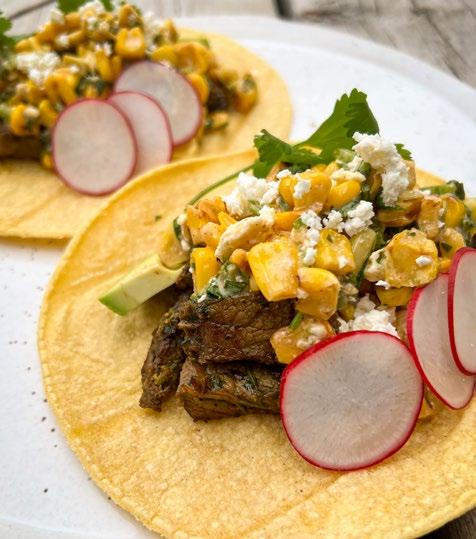
(Makes 4-6 servings)
½ tsp Garlic, minced
¼ Cup Mayonnaise
3 Tbsp Lime Juice
½ tsp Paprika
½ tsp Kosher Salt
⅛ tsp Cayenne, ground
¼ tsp Cumin
½ Jalapeno, seeded, minced
METHOD:
2 Tbsp Cilantro, chopped finely
2 Tbsp Green Onion, thinly sliced (green part only)
1 Tbsp Canola Oil
4 Cups Corn Kernels, fresh or frozen
½ each Jalapeno, seeded, minced
½ Cup Feta Cheese, crumbled
1. In a medium sized bowl, whisk together garlic, mayo, lime juice, salt and spices.
2. Into the dressing, stir in the minced jalapeno, cilantro and green onion. Set aside.
3. Heat the oil in a large cast iron pan over high heat. Once oil is hot, add the corn. Stir so the corn is evenly coated with the oil and then let the corn sit over the high heat for about 2-3 minutes to allow corn to char on one side. Stir corn and continue to cook until all sides are charred, about 8-10 minutes total.
4. Transfer charred corn to a plate and chill for about 15-20 minutes.
5. Once corn is cooled a bit, add to the bowl containing the dressing, add the feta cheese and stir until evenly coated. Adjust seasoning to taste.
6. Serve immediately or chill for 1-2 hours before serving.

BY: ANNA HYMERS
One of the “beautiful things” about March weather in southern Manitoba is the delightful unpredictability. On a recent night, my partner and I were sitting on the patio, basking in a sunny 12°C evening, and then, just 24 hours later, I was looking out the window at snow blowing sideways as if it’s mid-January. Yuck. But when the weather can’t make up its mind, this recipe will bring the summer vibes, no matter what’s happening outside. While I’d recommend using fresh corn (if you can get it), if it’s not corn season, don’t panic – that half-bag of frozen corn lurking at the bottom of your freezer will work just fine in a pinch. However, let’s imagine it’s corn season for a moment – just brush your fresh cobs with a light coating of canola oil, toss them on a hot grill, and let them char on all sides before cutting off the kernels. Here’s a hot tip to avoid a giant mess: use a bundt pan! Stand the cob upright in the center, and as you slice, the pan catches all those flying kernels – no corn decorating your counter or floor. Trust me, it’s a game-changer.
But let’s get real. It’s March, there’s a blizzard outside (sigh!), and the grill is nowhere in sight. Enter the trusty cast iron. It’s just as effective. The key is to let the corn sit in the hot pan for a few minutes to get that perfect char. You’ll be tempted to stir it every few seconds, but resist! Let it sit long enough to develop that nice dark colour and then give it a stir.
By the way, if you watched this past season of Great Tastes of Manitoba or flipped to the back page of the February 2024 issue of Cattle Country, you’ll recognize the method – I used the same technique for my Carne Asada nachos. And, spoiler alert, that carne asada made it into my tacos, too!
Now, this Mexican street corn salad is perfect as a topping for tacos, nachos, or as a side salad for those backyard BBQs (we’ll pretend it’s summer). If there’s any left over, it’s even better the next day. Trust me – I know how it feels to have a second helping.
So, no matter if it’s rain, snow, or shine, this recipe is adaptable to whatever Manitoba weather decides to throw at you. Made with humble ingredients but with a sneaky punch of flavour, nothing echoes Canadian adaptability quite like this dish.
Enjoy!