INSIDE www.makeitkenya.go.ke
Export requirements and licences to access avocado export market
The Kenya avocado revolution
The Fruit that keeps on giving

INSPIRING GLOBAL TRADE 2
Vision
To transform Kenya into a top global Brand

Mission
Brand Kenya, Export Kenyan, Build Kenya
Tagline
Inspiring Global Trade
The Kenya Export Promotion and Branding Agency (KEPROBA) is a State Corporation established under the State Corporations Act Cap 446 through Legal Notice No.110 of August 9th, 2019 following the merger of the Export Promotion Council and Brand Kenya Board. Its Core Mandate is to implement export promotion and nation branding Initiatives and policies to promote Kenya’s export of goods and services.
A publication of the Kenya Export Promotion & Branding Agency (KEPROBA)
Copyright © 2021
THE EXPORT AGENDA 6TH ISSUE | 2022 INSPIRING GLOBAL TRADE 3
MADE IN KENYA FAMILY
BUY KENYA BUILD KENYA


INSPIRING GLOBAL TRADE 4
SCAN HERE TO APPLY FOR THE MADE IN KENYA MARK
THE EXPORT AGENDA 6TH ISSUE | 2022 INSPIRING GLOBAL TRADE 5 THE EXPORT AGENDA ISSUE 6, 2022 CONTENTS Foreword 7 Export requirements and licences to access avocado export markets 8 County Governments behind Kenya’s Global Avocado Export Success . . . . 9 SHIRO NDIRANGU: From a prestigious bank job to exporting avocados 11 Sunripe Limited Flags Off First Consignment Of Fresh Avocados To China 13 Jubilation and unanimous approval greets Kenya avocados’ arrival in Shanghai Province 14 The Kenya avocado revolution . . . . . . . . . . . . . . . . . . . . . . . . . . . . . . . . . . . . . . . . . . . . . 16 The Fruit that keeps on giving 17 Large-scale avocado farming investments is good news for avocado exports 18 Lucrative Avocado Farming Attracts a New Breed of Investors 20 An Avocado A Day 22 For any occasion 22 Kenyans and Avocados 24 Challenges and Opportunities in the Avocado Sector 26
MAUREEN MAMBO Editor-in-Chief
Dear Reader,
The avocado fruit is called green gold for good reason. It is highly nutritious, delicious, in high demand and it brings handsome returns for growers and countries alike. Kenya is one of the top producers and exporters of avocado in the world. In this issue, we look at the entire value chain of avocado production in Kenya, from the government’s contribution to the growth and development of the sector, innovations, statistics to challenges experienced.
The Kenya Export Promotion and Branding Agency, in collaboration with sponsors and industry regulators, has supported the avocado sector by engaging farmers in its product development program where they are guided on export requirements, market opportunities, packaging and value addition.
The continued growth of the avocado sector lies in value-addition. Avocado oil has a ready market all over the world and there are products that can be made from seeds and skin such as briquettes and animal feeds.
Enjoy your reading.
Head Office
THE BOARD OF DIRECTORS
Mr. Jaswinder Bedi, EBS, MBSChairman
Mr. Mark Bichachi - Independent Director
Ms. Jacqueline Muga - Independent Director
Veronica Okoth - Alternate to P.S –National Treasury
Leah Aywah - Alternate to Hon. Attorney General
Dr. Bruno Linyiru - Alternate to P.S – Ministry of Investments, Trade & Industry
Josiah M’Mbogori - Chair – Audit Committee
Gerald Mwangi - Alternate to Inspector General (Corporations)
Dr. Wilfred Marube - Chief Executive Officer
THE EDITORIAL TEAM
EDITOR-IN-CHIEF:
Maureen Mambo
EDITORS:
Mariam Maina-Kamau
Molly Wambui
Joanne Wanjala
Esther Maina

Whereas every editorial care has been taken, Kenya Export promotion and Branding Agency accepts no responsibility for errors or omissions in the articles. The views expressed herein are those of the contributors and do not necessarily reflect those of the Agency.
No part of this publication may be reproduced in any form or by any means without the prior permission of the publisher.
1st and 16th Floor Anniversary Towers, University Way
P.O. Box 40247 00100 GPO Nairobi, Kenya.
Tel. +254 20 222 85 34-8;
Cell: +254 722 205 875, | +254 734
228 534
Fax: + 254 20 222 85 39 | + 254 20
221 80 13
Email: chiefexe@brand.ke
DESIGN & LAYOUT:
Samuel Njaaga
CONTRIBUTORS:
Dorcas Isaboke
James Kariuki
Robert Nyagah
Chrispine Onyango
Josiah Mwangi
Nicholas Mundia
Addriene Wacera
Gertrude Mirobi
INSPIRING GLOBAL TRADE 6
Dr. Wilfred Marube, PhD




Avocado is one of Kenya’s most demanded products for local and export markets. The avocado fruit is now known as green gold due to its rapidly growing demand and the willingness among consuming countries to pay ever higher prices. There are over 40 varieties of avocado countrywide, but the Fuerte and Hass varieties remain the preferred varieties. The ideal growing conditions for the fruits are found in areas with adequate sunlight and well-drained soil such as Murang’a, Meru, Kisii , Naivasha, some parts of North Rift, Machakos, Makueni and the Western region.
Kenya produced around 322,000 metric tons of avocados in 2020, a 20% increased from 264,000 metric tons in 2019. The top destinations for Kenya’s avocados are the Netherlands, United Arab Emirates (UAE), France, Spain and Saudi Arabia. This year, Kenya surpassed South Africa to become Africa’s leading exporter of Avocado. This brought sweet returns for the industry players as they raked in KShs. 14 billion in revenue last year.
This edition highlights the strides that have been made in making the avocado one of the highest foreign exchange earners in the country.

THE EXPORT AGENDA 6TH ISSUE | 2022 INSPIRING GLOBAL TRADE 7
TOP DESTINATIONS FOR KENYA’S AVOCADOS NETHERLANDS UNITED ARAB EMIRATES (UAE) FRANCE SPAIN SAUDI ARABIA 322,000 METRIC TONS 264,000 METRIC TONS 2019 KENYA’S AVOCADO PRODUCTION 2020
CEO Kenya Export Promotion And Branding Agency
Export requirements and licences to access avocado export markets
This is the Export 101 part of how to get your avocados into the export market.
According to Kenya’s Trade Information Portal;
· Avocado exporters must register on the Agriculture and Food Authority Integrated Management Information System (AFA IMIS) portal.
· After successful registration, one needs to apply for an export licence by submitting an application for the same. Before the licence is given, there will be an inspection of the farm, transport vehicles and packhouse facility (this applies for facility owners). KEPHIS is responsible for carrying out periodic field inspections, keeping monitoring records of quarantine pests and pest management measures implemented as well as carrying out phytosanitary treatment of the fresh avocado fruits by fumigation before export.
· Once the inspections are completed, payment and issuance of the export licence is done.
· The next step is to register as an exporter. Exporters are also required to apply for registration on the Electronic Clearing System (ECS). ECS is an electronic method of fund transfer from one bank account to another. It is generally used for bulk transfers performed by institutions for making payments.
· The ECS registration enables the exporter to obtain user credentials and ECS user rights letter.
· After ECS one registers for the Kenya Electronic Single Window System (KESWS) via submission of a company registration certificate. On successful completion, the exporter is given user credentials. At this point, a registration letter is given to the applicant to help facilitate the process of the verification of the origin of goods.
· Samples are then tested to ascertain the quality is right for the export market. The evidence of this is a fruit quality inspection report, a document handed over to the exporter. These documents cover the journey of pre-production and production.
By Dorcas Isaboke
· The exporter then contracts a clearing agent who will help them acquire the pre-clearance documentation. Once this is done, the process of obtaining an EU certificate of origin begins. This procedure involves requesting for the certificate of origin, paying for it, obtaining a certificate of origin form, typesetting of the certificate of origin, submitting it for signing and obtaining the certificate of origin.
· The next document needed is the customs entry. One is required to register and pay the fees and charges for bank requirements before they can obtain it in under control status. This means that the exporter allows the avocados to be in the safe custody of customs staff, with appropriate controls, including the customs seal and security.
· All producers and exporters intending to export fresh avocados must have all their production farms, packhouses and fumigation treatment facilities registered by KEPHIS and a phytosanitary certificate issued.
· The phytosanitary certificate with a lifespan of sixty days covering the usual deadlines for shipping and international freight shows that a particular shipment has been treated to be free from harmful pests and plant diseases. It must be issued before the customs clearance for export and import is issued.
· Once the phytosanitary certificate is acquired, the exporter needs to apply for and obtain an export certificate. At this point, the consignment is ready for export.
· The final step is obtaining a Kenya Revenue Authority (KRA) release by submitting clearance documents for verification. The consignment then goes through physical verification and then it is released for export.
· Once the consignment is exported, the exporter is given a certificate of export number.
INSPIRING GLOBAL TRADE 8
County Governments behind Kenya’s Global Avocado Export Success
JAMES KARIUKI jkariuki@apn co ke
County governments’ social investment in establishment of fruit tree nurseries, farmer training and provision of subsidised certified seedlings is paying off handsomely with Kenya becoming Africa’s top exporter-producer of avocados.
It has birthed multi-billion shillings investments across the value chain with money going into tree nurseries’ expansions and cold storage facility establishments, purchase of chiller vans, new agro-shops, private extension services and some into the export business logistics.
County governments have also created new legislation to guide all activities in avocado production from raising seedlings, crop cultivation to harvesting as well as facilitated inspection and certification of readily
harvested fruit for the export market to curb theft of avocados fueling illicit trade where immature fruit is exported to established markets.
Last November, Kenya banned avocado exports citing deterioration of avocado prices which was blamed on unscrupulous and undocumented dealers who ‘sneaked’ in immature avocado fruits to the market.
According to the Horticultural Crops Directorate (HCD) performance report for last year, the volume of avocado export increased from 70.3 million kilos in 2020 to 84.5 million kilos in 2021 with Murang’a County leading at 31 percent of total avocado exports followed by Kiambu, Nakuru, Kisii, Nyamira, Meru and Bomet counties.
With a Hass avocado tree estimated to yield between Kshs. 8,000 and
Kshs. 9,000 worth of fruits annually, small holder farmers with as few as 10 avocados trees are actively involved in the export trade.
Siaya County Government recently partnered with the Japan International Cooperation Agency to boost avocado farming with 6,000 seedlings of Hass variety distributed among farmers who have now placed 130 acres under avocado cultivation compared to 2015 acreage that stood at 40 acres.
Recently, Kirinyaga County spent Kshs. 2.5 million on purchasing 60,000 avocado seedlings that were later distributed to at least 30 farmer’s groups through the first round of the National Agricultural Rural Inclusive Growth Program (NARIGP).
As at 2021, the county’s annual avocado production stood at 15,000 metric tons worth around Kshs. 300 million but is now projected to rise to 21,000 metric tons that earn farmers around Kshs. 700 million annually.

In 2021, small scale farmers from Gucha’s Boochi, Machoge Basi and Sengera Bosoti wards received 1,050 avocado seedlings from Nyamira County Government that also sponsored farmer training sessions on how to plant the seedlings to get productive yields.
With entry of Avofresh Oil factory in Kisii, avocado farmers are set for better times after Kisii County Government and Avofresh officials signed a partnership agreement where farmers will now be engaged in contract farming of avocados. This will see them earn pre-determined prices for delivery of fruits to AvoFresh.
Currently, Kisii County has 34 major wholesalers of avocado who export about 28,800 tons of avocado per year. Farmers mainly produce avocado, the Kisii Landraces at 70 per cent, Hass at 20 per cent and Fuerte at 10 per cent. Better times beacon ahead for Hass
THE EXPORT AGENDA 6TH ISSUE | 2022 INSPIRING GLOBAL TRADE 9
variety 300,000 Hass seedlings were distributed by the County Government in the past three years.
This year, Nakuru County Government increased its budgetary allocation for avocado seedlings distribution program by 23.8 percent to Sh 52 million up from Sh 42 million spent last year aiming to benefit 10,000 smallscale farmers in Kuresoi South, Njoro, Gilgil, Molo, Nakuru East, and Nakuru West Sub-counties.
Meru County Government has since distributed 210,000 Hass avocado seedlings and signed a partnership with a private company to establish a million avocado tree nursery for avocado and macadamia seedlings. The government also distributed 98,000 avocado seedlings while setting up facilities to market the product.
Last year, Trans Nzoia County Government disbursed 43,300 Hass avocado seedlings to farmers across the county through the Agriculture Subsidy Program while Laikipia Government distributed 6,000 avocado seedlings to small scale farmers in Mukogodo East, Mukogodo West, and Segera areas.
Murang’a county which has distributed two million avocado seedlings to small-scale farmers has also launched the Avocado Farmer’s Co-operative Union to oversee development of avocado sub sector ensuring proper practices are observed and helping to source for buyers for the produce. The union brings together eight avocado farmer societies and is tasked with locking out brokers from the subsector.
The co-operative society approach has ensured a stronger bargaining power for farmers when signing contractual terms with input providers, buyers and seeking assistance from various public entities.
In 2020, Kiambu County Government distributed 62,500 avocado seedlings and facilitated signing of a contract between the newly formed Kiambu County Avocado Farmers Cooperative Society and a fresh produce exporter. The move is aimed at ensuring farmers earn higher prices for their produce as well as ensuring all produce exported meets the set quality standards.
Last year, Uasin Gishu County distributed 150,000 seedlings of avocado where farmers earn about Kshs. 600,000 per annum from an acre of the avocado crop. The earnings have seen many farmers diversify from maize farming. This year the County Government distributed 75,000 Avocado seedlings to 2,626 farmers across the county, covering 925 acres valued at Kshs. 33.75 million.
A partnership programme aimed at increasing Bomet County’s forest cover last year saw 78,000 avocado seedlings distributed by Bomet County Government which

is being undertaken in partnership with Jomo Kenyatta University of Agriculture and Technology.
Kenya Forest Service (KFS) and the National Irrigation Board (NIB) have also chipped in the quest to introduce avocado farming by supporting various activities aimed at enhancing tree cover within private farms.
Bomet County recently benefited from 10,000 avocado seedlings donated by NIB under a programme targeting to replace eucalyptus trees with avocados. On its part, KFS is discouraging the planting of eucalyptus trees along rivers and water catchment areas while encouraging farmers to plant avocado seedlings.
INSPIRING GLOBAL TRADE 10
SHIRO NDIRANGU: From a prestigious bank job to exporting avocados
 James Kariuki jkariuki@apn co ke
“Formal employment earnings have never made anyone rich the way avocado farming is positively impacting the lives of smallholder farmers who now enjoy a perpetual return. It gets better every time they increase acreage under avocado and practise better crop husbandry.”
Afrex Gold Limited Managing Director, Shiro Ndirangu assertively states during our hourlong interview on smallholder hass, fuerte and jumbo avocado farming that many smallholder farmers have benefited from avocado farming where payments are made directly to them while packers avail certified seedlings to them as well as conduct crop husbandry and required fruit handling techniques that the market demands.
“In the past 22 years we have been in the avocado export business, smallholder farmers have formed self-help groups within their localities that act as local agents in ensuring proper farm husbandry
practices are adhered to and no one harvests fruits prematurely as this would affect their reputation leading to poor sales and prices,” she says.
The firm started off with a carton weighing 10 kilogrammes but has since grown to exporting 500 tons a month with a ready supply from 1,000 smallholder farmers who have benefited from a supply of 20,000 seedlings from the firm.
A Bachelor of Commerce holder from Strathmore University says she quit her banking job where she had been for seven years to join the family owned Afrex Gold Limited after she realised, earnings from formal employment only helped one to settle bills and place food on the table.

“We speak to workers and our farmers alike where the message is to transform your life, one needs to grow some avocado trees to get sustainable earnings. Everywhere we go, we supply seedlings to farmers, enabling them to grow multiple avocado trees. They get fruits for export, food and trees which are a
natural forest cover that helps improve the environment,” she says.
Shiro says they started off with one worker but have since increased their staff to 100 employees who are engaged during the peak harvest season. She adds that they have acquired covered trucks exclusively used to collect avocado fruits from different farms where their staff supervise the harvesting. This she observes, is the bane in many farms where poor handling and bad harvesting practices adversely affect quality of fruit leading to rejection at 20 percent. She adds their harvesting party has helped reduce post harvest losses guaranteeing farmers better returns.
Shiro says increased demand for Kenyan avocados has seen them invest more in raising certified seedlings that are sold to partner-farmers and new entrants. This enables farmers to get the right seedlings that are market-driven.
“Market-driven farming must
THE EXPORT AGENDA 6TH ISSUE | 2022 INSPIRING GLOBAL TRADE 11
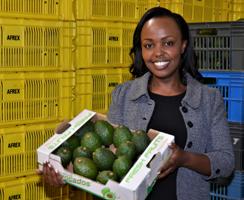
Shiru with Grown in Kenya avocados ready for export
inform every venture and our task is provide farmers with the right information as well as end-to-end service that benefits farmers from seedlings, crop husbandry training, logistics to export,” she says.
She adds that having partner-farmers in Kiambu, Murang’a, Nyeri, Embu, with new partner farmers located in Nakuru’s Solai area, Kangundo and Baringo is aimed at enabling them to have ready avocado fruits round the year.
“We are now witnessing an influx of investors in the avocado value addition chain and that has informed our ambitious tree nursery expansion where we are targeting to distribute 200,000 seedlings within the next two years,” she says.
They export to Germany, Ukraine, Egypt, Saudi Arabia, Bahrain, Qatar, Oman, Netherlands, UK and will soon start exporting avocado fruits to India.
Shiro noted that avocado commercial farming has positively affected gender mainstreaming as most farmers are women and workers in the fresh produce packer-cum-exporter are mainly women.
“We insist that partner-farmers within an area must form self-help groups that also include women leaders and trainer-of-trainers. We have witnessed our partner farmers lives improve where children go to school, build better houses and are able to increase acreage under avocado,” she says. “Avocado farming has also attracted interest among young people who
have turned their inherited land into avocado farms that provide them with new harvests every four months.”
To ensure effective crop husbandry practices, the firm has also been advising partner-farmers to grow Cypress and Grevillea trees to raise local sources of firewood as well as a wind buffer along the farms’ fences.
Ms Ndirangu adds that the search for new markets has been costly since on two occasions, she catered for her flight and accommodation during the Berlin and Dubai Trade fairs. This, she says, makes it impossible for smallholder farmers and new packers to venture into direct exports.
To boost growth of new avocado exporter-entrants, the firm facilitates cleaning, grading and packing as well as facilitating pre-export chilling.
“Kenya only exports 10 percent of its avocado fruits which earned us Kshs.14 billion last year. If we inject more funds into farm development, farmer training, avail patient capital for purchase of capital machinery, Kenya could produce cheap avocado cooking oil,” she adds.
On exports, Shiro observes that Kenya needs to incentivise exporters of fresh produce by acquiring a cargo freighter that will help reduce the time taken at the airport waiting to ship out consignments. This, she adds, makes it very expensive to ship out consignments via other airlines that take advantage of the transport shortage to charge prohibitive fees.
“Kenya has enough avocado for oil processing and all we need are incentives to attract multi-billion investors to put up oil processing factories. That means new jobs, cheaper cooking oil and higher revenues for county and national governments,” she says.
INSPIRING GLOBAL TRADE 12
Embu
Having partner-farmers in Kiambu, Murang’a, Nyeri, Embu, with new partner farmers located in Nakuru’s Solai area, Kangundo and Baringo is aimed at enabling them to have ready avocado fruits round the year.
Sunripe Limited Flags Off First Consignment Of Fresh Avocados To China
 By Gertrude Mirobi: GMirobi@brand.ke
The official flagging off the first consignment of fresh avocados to China by Sunripe Limited was held on 2nd August 2022 at the Horticulture Crops Directorate Depot in Limuru. Sunripe Limited are producers and exporters of fresh and frozen agricultural products.
While presiding over the flagging off, the Chief Guest, Chief Administrative Secretary in the Ministry of Industrialization, Trade and Enterprise Development, Hon. David Osiany, who applauded the efforts undertaken by the leadership of various Ministries, the Chinese Government and the private sector as well as other key players in the avocado value chain who took part in the successful journey of exporting fresh avocados to China.
In March 2019, the Kenya Export
Promotion and Branding Agency (KEPROBA) facilitated Phytosanitary Inspectors from China to come undertake a Pest Risk Analysis on avocados. Kenya was unable to meet the requirements for fresh avocados at that time and the Inspectors were taken to Sunripe’s Naivasha Plant to witness the processing of frozen avocados which complied with the standards. Kenya became the first African country to export frozen avocados to China.
The Kenya Plant Health Inspectorate Service (KEPHIS) has been engaging avocados exporters to comply with China requirements for fresh avocados and so far 8 companies have been approved to export avocados to China. They include Sunripe, Kakuzi PLC, Soloplant, Keitt, Vegpro, Benta Fresh, East African Growers and Mofarm (which KEPROBA has assisted to
grow in Utawala), Vegpro and Kakuzi have already shipped their maiden containers to China.
The facilities that have complied with China Phytosanitary requirements are 15 orchards, 10 pack houses and fumigation by Tamia Limited which is a service oriented company offering hygiene and sanitary services. The approved companies can only source from their approved orchards, use the approved pack house and fumigation facility approved by the General Administration of Customs of the People’s Republic of China (GACC).
Dr. Wilfred Marube, CEO, KEPROBA appreciated the stakeholders involved in achieving this great milestone and called for deeper cooperation and collaboration between the public and private sector networks. KEPROBA is keen on undertaking its mandate of branding and promoting exports in a bid to penetrate and grow market share in the lucrative Chinese market. Fresh horticulture produce exports from Kenya have played a big role over the past 50 years and placed Kenya on the global map. Avocados are among the 22 priority export products for Kenya. Kenya is the 6th leading exporter of avocados in the world and 1st in Africa.
The 1.4 billion population in China will provide a large market opportunity that will positively affect Kenya’s balance of trade and further create a platform to initiate discussions on exports of other fresh produce.
THE EXPORT AGENDA 6TH ISSUE | 2022 INSPIRING GLOBAL TRADE 13
Mr. Hasit Shah Managing Director Sunripe Limited appreciating Government Institutions for assisting the avocado sector to access the Chinese market.
Jubilation and unanimous approval greets Kenya avocados’ arrival in Shanghai Province
James Kariuki jkariuki@apn.co.ke
Chinese fresh produce importers received Kenya’s avocados with pomp and jubilation on July 29, 2022 in China’s biggest city and global financial hub, Shanghai.
A tweet from China’s Department of African Affairs Director-General Wu Peng said, ”First batch of #Kenyan fresh avocado arrived in #Shanghai on 27th July! I’m told #Chinese importers show strong interest in these highquality avocados and plan to import in a bigger scale. I look forward to more good news on the import of African agri-products.”
Kenya Export Promotion and Brand Agency (KEPROBA) hailed the news saying it was the culmination of a three-year journey since March 2019 when KEPROBA facilitated China Phytosanitary Inspectors to come to Kenya and undertake Pest Risk Analysis (PRA) on avocados.
“Kenya has become the first country in Africa to export frozen avocados to China. Kenya Plant Health Inspectorate Service (KEPHIS) has been engaging avocados exporters 24/7 to comply with China requirements for fresh avocados,” said KEPROBA Trade Advisory Services Manager Charles Tumbo who added, “the next target market is Malaysia.
KEPHIS was instrumental in helping fresh produce firms and farmers to fulfil
China export requirements where its staff actively conducted farm-to-farm visits as well as inspected and certified farms and packing houses.
The regulatory agency also introduced farm-to-market regulations that every avocado farmer and exporter must meet before being allowed to deal in avocados.
The state agency’s all-round role is to ensure provision of clean seedlings, overseeing regular inspections within fruit tree nurseries, avocado farms and packhouses as well as the export hubs at Jomo Kenyatta International Airport before issuance of a quality assurance aka ‘good and healthy’ avocado certificates thereby enabling the avocado market to thrive.
Early this year,10 avocado grower farms were cleared to undertake Hass Avocado cultivation with KEPHIS announcing completion of the required phytosanitary assessments of the first 10 packaging facilities to be used to export avocados to China.
“The regulatory agency is working flat out to ensure that all eligible avocado growers and packhouses that meet the stringent phytosanitary standards are accorded an opportunity to enjoy the Chinese market prospects. Our role is to facilitate trade, especially export of fresh fruits. We have stepped up field audits and facility inspections for
more avocado growers and exporters planning to explore the Chinese market,” said KEPHIS Managing Director, Prof Theophilus Mutua.
The role of KEPHIS as agreed by Kenya and China authorities is to undertake stringent pre-shipment inspections for all avocado consignments heading to China to affirm compliance with the Chinese plant health standards that include mandatory fumigation with methyl bromide and temperature control of all shipments.

KEPHIS is also tasked with submission of grower and exporter lists to China for registration as its commitment to enforcing world-class phytosanitary and related plant health regulatory standards.
In 2019, KEPHIS successfully lobbied South Africa to lift a 10-year avocado import ban allowing resumption of avocado exports to Africa’s wealthiest nation.
INSPIRING GLOBAL TRADE 14
South Africa had claimed Kenya’s avocado imports were infested with fruit fly with the blame being apportioned to nearly all avocado growing areas.
The ban prompted enactment of new requirements that require avocado fruits destined to South Africa will be packed at source under strict adherence to the guidelines. The farms (production sites), packhouses and storage facilities must be approved and registered annually by KEPHIS.
KEPHIS is also tasked with conducting regular pest monitoring in the production sites with fruit fly monitoring done before any harvesting takes place. The state agency inspectors are expected to visit farms when the avocado crop starts flowering, with the inspection continuing till the end of harvest.
The new guidelines, hailed for encouraging avocado growers to form their own associations to affirm compliance, also requires that farm
owners maintain every crop’s data and submit a copy to KEPHIS on a quarterly basis. In turn, KEPHIS regularly monitors the farms to ensure the data as maintained is a true reflection of the situation on the ground.
The partnership between KEPHIS, local farmers, county governments and fresh produce exporter companies has propelled avocado to new heights with last year’s earnings rising to Kshs.14 billion.

The state agency has also been holding training workshops for self help youth groups where they are taken through practical lessons on avocado farming from selection of clean seedlings, tending the crop to post harvest handling requirements.
This exercise is conducted online so as to attract a higher number of tech savvy youth accessing the learning materials via their smartphones thereby enabling them to enjoy practical lessons while onsite (within their farms) or at a tree
nursery looking for clean planting material or at a packing house near them.
KEPHIS says anyone planning on venturing into avocado farming must conduct a market survey to inform choice of avocado variety that is highly favoured by their target markets, understand crop cycles, test soil and other agro inputs before planting.
Application of compost manure, proper land preparation practices and obtaining of avocado seedlings from registered nurseries is encouraged.
For nursery operators, KEPHIS has been conducting nursery inspections to ascertain the quality of propagation material that must be free from pests and diseases. The nurseries must adhere to phytosanitary requirements and that no new materials should be introduced to the production sites to avert spread of harmful pests and diseases.
KEPHIS has also partnered with Kenya Agricultural and Livestock Research Organisation to establish surveillance sites across the country to inform mitigation measures in case of discovery of fruit flies in any region.
This is also informing farmers’ investment plans about pest free zones that can support avocado farming across the country. The scientifically proven data has also attracted attention of county governments, local and foreign investors who are actively engaging farmers in matters of avocado farming.
With the right information, active and well publicised regulations and a ready market can only spur increased investments in avocado farming.
THE EXPORT AGENDA 6TH ISSUE | 2022 INSPIRING GLOBAL TRADE 15
The Kenya avocado revolution

In Murang’a, known for its premium coffee farms, 549,200 Hass variety seedlings were distributed among farmers together with 168,000 Fuerte seedlings bringing the total to 717,200 seedlings. Murang’a currently controls up to 31 percent of avocado exports and the new ‘mature’ trees could see their annual production triple.
James Kariuki jkariuki@apn.co.ke
An amplified and ambitious drive that saw 5.7 million Hass and Fuerte avocado tree seedlings planted four years ago is affirming Kenya’s position as a global powerhouse in avocado production.
Unlike past activities that were largely motivated by individual family nutritional needs, the new regime is market driven where out of the 5.7 million certified seedlings, farmers received 3,587,904 Hass avocado variety reflecting its global popularity followed by the Fuerte avocado variety where 2,021,236 seedlings were planted. Other varieties accounted for 123,257 seedlings sold to farmers with 98,572 seedlings being Avocado Rootstock among other avocado varieties.
The social capital investment largely driven by county governments, incoming contract farming investors as well as individual farmers has redefined the avocado value chain with individual farmers, avocado packhouse operators and exporters as well as transporters queuing for a share of the expected returns running into billions of shillings.
All exporters and avocado oil processors mainly go for the two varieties, and this has informed the direction of the avocado industry where Kenya Plant Health Inspectorate Services (KEPHIS) has been empowered to affirm certification of avocado tree seedling propagation activities as
INSPIRING GLOBAL TRADE 16
well as on-site(farm) inspection prior and during rearing of the crop until fruition.
According to Horticultural Crops Directorate data, the 20182019 financial year saw Nairobi public and privately owned tree nurseries release one million certified Hass (507,500) and Fuerte (501,300) avocado seedlings to farmers for planting. The seedlings were mainly replanted in Kajiado, Machakos, Kiambu, Murang’a, Kirinyaga, Embu and Nyeri counties, among other areas.
Nairobi hosts several state agencies that propagate fruit tree seedlings for research activities, notably Kenya Forest Service, Kenya Agricultural and Livestock Research Organisation (KARLO) and KEPHIS.
In Murang’a, known for its premium coffee farms, 549,200 Hass variety seedlings were distributed among farmers together with 168,000 Fuerte seedlings bringing the total to 717,200 seedlings. Murang’a currently controls up to 31 percent of avocado exports and the new ‘mature’ trees could see their annual production triple.
The wheat farms’ haven of Uasin Gishu County comes third with a total of 488,034 Hass seedlings and 192,016 Fuerte seedlings sold to farmers totalling 680,050 seedlings while Nakuru had 603,740 seedlings (297,500 Hass and 302,000 Fuerte seedlings as well as 4,240 avocado stock variety seedlings.
Trans Nzoia county, traditionally revered as Kenya’s corn basket is evidently diversifying from the norm with 169,100 Hass seedlings and 416,520 Fuerte seedlings planted totalling 585,620 seedlings. The departure could have been informed by diminishing returns from maize farming leading to reduction of acreage under maize.
303,600 avocado seedlings have been planted in Laikipia where 153,600 are Hass seedlings and 150,000 are Fuerte seedlings while Kiambu is also witnessing uprooting of coffee trees in favour of 249,350 avocado seedlings planted during the period under review or 246,000 Hass seedlings and 3,350 Fuerte seedlings.
The ever green tea zones of Kericho are also hosting 215,000 Hass tree seedlings and 5,000 Fuerte seedlings totalling 220,000 avocado trees now ready for their debut harvest while 214,322 avocado seedlings planted in Nyeri were 86,502 of Avocado Stock variety, 1,100 Fuerte and 126,720 Hass seedlings.
The avocado ‘bug’ appears to have bitten farmers in Bungoma county where 209,400 seedlings were planted being 180,000 Hass seedlings,15,000 Fuerte seedlings while the rest were assorted varieties.
THE FRUIT THAT KEEPS ON GIVING
Addriene Mureithi amureithi@apn.co.ke
Avocados, like most fruits, have a short shelf life and can easily lead to heavy losses hurting prospective profits for a farmer, broker, retail seller, exporter or consumer.

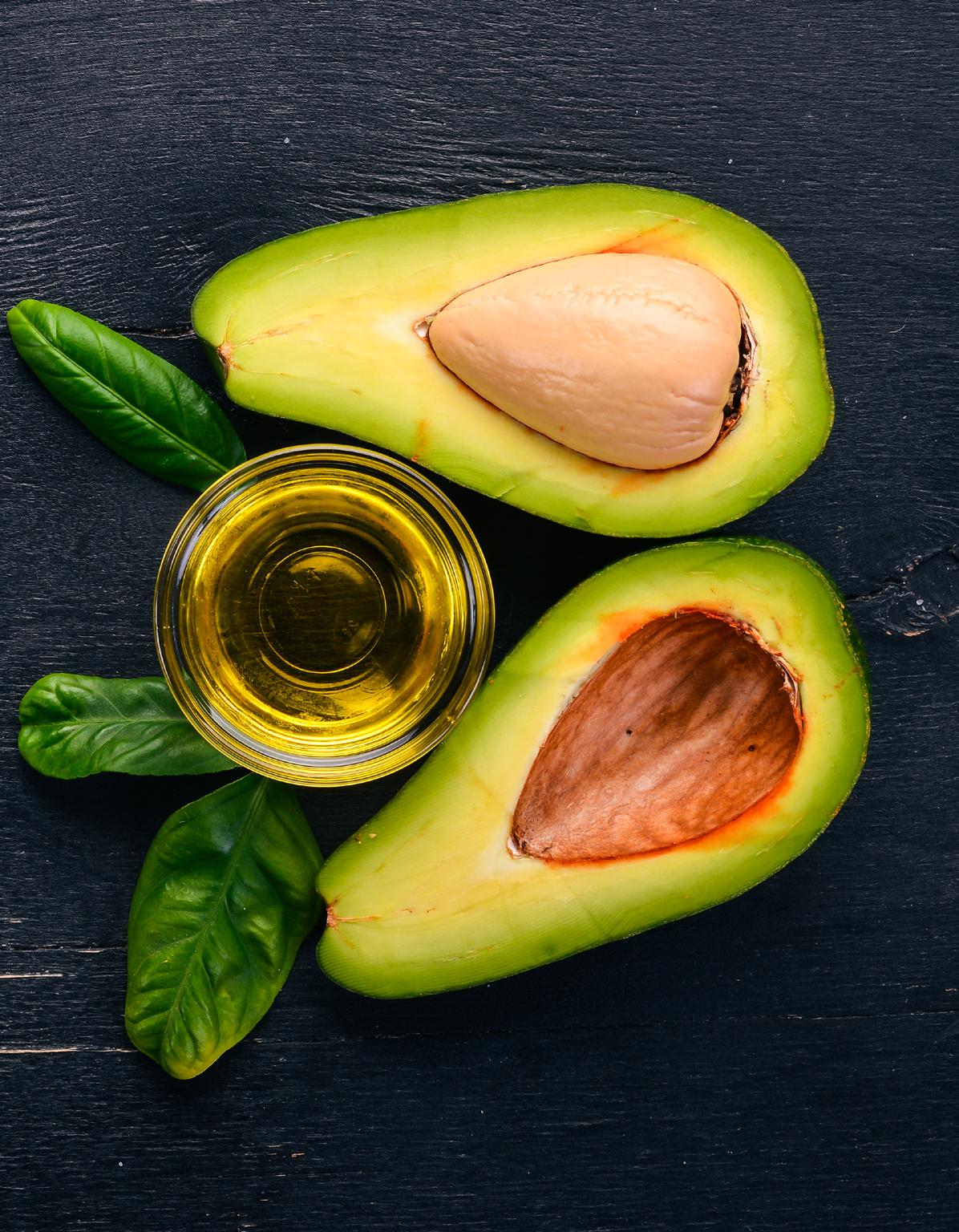
To generate more benefits from Avocados, investors have initiated value addition activities that target the use of avocado rough-edged skin, the soft pulp to the seed as raw materials for various products notably:
AVOCADO OIL
In a world that is tilting away from processed cooking oils towards plant-based oils, avocado oil is slowly finding its way on most household kitchens due to its oft-touted nice taste. It is reportedly healthier than olive oil due to the minimal processing to extract the oil.

THE EXPORT AGENDA 6TH ISSUE | 2022 INSPIRING GLOBAL TRADE 17
A good avocado fruit being delivered to an oil processor should be freshly harvested with minimal defects. For good and pure oil, the fruit should not be overripe and should exhibit minimal rot. The seed and the skin is removed, and the flesh is grounded to a thick paste and malaxed for an hour at 4550 degrees centigrade. Later the oil is separated from the water on a highspeed decanting centrifuge before it is cold pressed like virgin olive oil.
Family-run Crofts Limited based in Thika which was founded in 2013 is among the frontrunner processing Hass and Fuerte avocados into extra virgin avocado oil that is sold locally and internationally in high end stores.
Apart from exporting freshly harvested avocados from its partner farmers in Murang’a and its neighbouring counties, the world’s largest producer of extra virgin avocado oil, Olivado has expanded its operations to Kenya putting up a plant that processes organic extra virgin avocado oil.
On its part, Nairobi-based Great Global avocado has concentrated its efforts in processing crude oils from avocado for the pharmaceutical and cosmetics
industry for manufacturer of facial and hair oil while Avodemia’s Ruiru-based factory processes Avocado oil for cooking.
HAIR MASK AND SHAMPOO
Traditionally, Kenyan women have
While this has been deemed wasteful of a good fruit, it has attracted the eye of commercial cosmetic manufacturers who have processed avocado into various skincare and hair care products, mostly for type 4B and C kind of African hair-known for its predominantly thick and kinky features.
BRIQUETTES

applied avocado pulp to soften the skin on their face and to their hair for nourishment. To make a home-made hair mask, whisk together one avocado, one egg, 2 tablespoons of olive oil and apply the paste from the root to the tip of the hair. Let it seep in for 15 minutes and then run it under a hot shower cap for 30-60 minutes then wash off with an avocado based shampoo. Eggs are rich in protein and help to strengthen the hair, protecting the hair from heat damage and split ends.
Large-scale avocado farming
James Kariuki jkariuki@ke.apn.co.ke

Biomass briquettes are a great example of sustainable energy made from agricultural and forest waste. They are a great substitute for charcoal as they smoke less, cost less and burn longer. Companies engaged in avocado processing use by-products to make briquettes. The avocado wastes including peels and seeds are compressed before being placed in measured moulds to dry. Briquettes reduce the rate of deforestation and lowers the pollution levels in urban areas.
Fresh Produce Exporters Association of Kenya (FPEAK) is Kenya’s premier trade association representing growers, exporters and service providers in the horticulture industry since 1975. Writer James Kariuki spoke to FPEAK Chief Executive Hosea Machuki.
Which are the top 10 key markets where Kenyan grown avocados are performing well?
The main markets for Kenya’s avocados is the European Union, United Kingdom, United Arabs Emirates, Russia, Hong Kong, South Korea, Singapore
INSPIRING GLOBAL TRADE 18
investments is good news for avocado exports
Hosea Machuki. Chief Executive officer FPEAK
and South Africa. There are efforts underway to export avocados to China. The main varieties sold in these markets are “Hass” and “Fuetre” with the former being more popular. Kenya has around 7% of the avocado market share facing competition from Peru, Mexico, Columbia, South Africa and Netherlands.
With this unsung revolutionary success, how many jobs (formal and informal) have been created across the value chain?
The horticulture sub-sector supports over 700,000 livelihoods directly and indirectly and provides formal and direct employment opportunities to about 50,000 persons.
Have we seen new investments across the value chain. How are we doing on this front?
There is an increase in large-scale avocado farming investments. This means that there are more orchards coming up across the country. Farmers are also moving away from the traditional avocado-growing counties like Murang’a, Kirinyaga, Embu, Meru, Machakos, Nakuru, Kisii, Nyamira, Makueni, Nyeri, Kiambu, among others and moving into counties like, Narok, Kajiado, Uasin Gishu, Bomet, Trans Nzoia, Kakamega, Bungoma, Busia, Homa Bay, Migori, among others. Some exporters have also set up processing facilities (packhouses and oil extraction) across the country where they deal in fresh and processed fruits.
Can incentives attract more investments across the avocado value chain?
Yes, for instance, provision of agroinputs subsidies, government stimulus packages, reducing the cost of freight (air and sea), would go a long way in making the Kenyan avocado competitive in the International Markets. Several development partners
working in Kenya have also supported the avocado value chains in different ways.
FPEAK has also built the capacity of over 10,000 farmers directly and indirectly on good agricultural practices, different market requirements and regulations which help to increase production of avocados and improve the quality of the fruits produced. We need to create synergies between the private sector players and government agencies in marketing the horticulture value chain regionally and internationally.
Let’s talk about value addition. Where are we, what value added products do we have as a country?
There are a number of products that can be made from processing avocados. You may extract avocado oil, hair and skin products, biogas,
with small-scale farmers across the country to increase production of highquality fruits. However, more needs to be done to increase the number of companies that process avocados in Kenya.
As a members’ organisation, what has been your input in preparing farmers, workers at various facilities handling avocado and investors at large?
Lobbying and advocacy – FPEAK engages with the government, industry stakeholders and market players for a conducive national and international business environment, Policies, tariffs and trade agreements on behalf of avocado growers and exporters. Market Linkage – FPEAK Links growers and exporters of avocados to national and international markets. This is
organic fertilizers, among others. There are a few companies, Olivado EPZ Ltd and Persea Oils Ltd who are FPEAK members who extract oil from avocados. There is increased interest in other companies following the value addition path since it is a lucrative market.
Has Kenya invested in preparing manpower for this value addition industry?
There are several private investors who have set up shop in Kenya to process avocados, notably, Olivado EPZ Ltd and Persea Oils Ltd. These companies work
possible by creating direct market linkages, supporting members to attend national and international trade fairs and providing timely market information. FPEAK also organizes the annual Fruits, Vegetables and Herbs Conference & Exhibition which brings importers from the international markets closer to the producers and exporters from Kenya and the African region.
Capacity Building – FPEAK has a robust training unit where we train farmers, technical officers, government officials, on production, market requirements of avocados and other horticultural produce.
THE EXPORT AGENDA 6TH ISSUE | 2022 INSPIRING GLOBAL TRADE 19
FPEAK has also built the capacity of over 10,000 farmers directly and indirectly on good agricultural practices, different market requirements and regulations which help to increase production of avocados and improve the quality of the fruits produced.
Support in Compliance to Standards
– FPEAK supports players in the horticulture value chains to comply with national and international market requirements and conventions (official and private standards). FPEAK collaborates with standard owners and implementers to bring compliance closer to Kenyan producers through participation in the interpretation and harmonization of standards. These standards include KS 1758:2016 –Horticulture Code of Practice, Global G.A.P., GRASP, SMETA, ETI, BRC, EU Organic, among others.
How can Kenya take advantage of this new cash crop to boost livelihoods?
Is there something you feel we can improve on to better returns?
Producers should seek market information and technical support
Lucrative Avocado Farming Attracts a New Breed of Investors
James Kariuki jkariuki@apn.co.ke
before embarking on production. This would enable them to get the right varieties for marketing and establish proper production systems. Compliance to the market requirements and our very own KS 1758;2016 – Horticulture Code of Practice, would also go a long way in marketing the Kenyan avocado. The Kenyan Government, the National Plant Protection Organization (NPPO) should assist producers and exporters to comply to the Sanitary and Phytosanitary (SPS) requirements of the different countries and/regions that we trade with.
Your parting shot
Kenya is the sixth-largest exporter of avocados in the world and the leading exporter in Africa, representing 81.6 percent of EAC avocado fruit exports.
Kenya exported 87,000 tons of the fruit in the year 2021 from 72,000 tons exported in 2020 representing a 24% increase in volumes. As much as we are increasing production of avocados across the country, we should aim to maintain a good image in the market. Producers should ensure that they buy seedlings from registered and certified nurseries, they employ a proper Integrated Pest Management (IPM) program which will help deal with quarantine pests like False Coddling Moth (FCM) and fruit fly, they should also harvest mature fruits, transport the fruits in a manner which would not damage the fruits and handle the fruits in clean environments which would not compromise the safety of the food.
Hass avocado is currently the most preferred variety due to its demand for export in the European markets. It is estimated that the venture gives a farmer annual income returns of Ksh. 400,000 per acre in the recommended ecological zones if good crop husbandry is practised.
Growing fruits, vegetables and flowers for the export market appears to have informed targeted investments in fruits and vegetable farming where a new breed of investors has set up camp in Kenya to operate big ticket commercial farms.
The agri-investors have also engaged local small-scale farmers in raising fresh produce that is then consolidated into one consignment destined for the export market. This has led to emergence of contractual farming where agreements are penned to promote farming of identified crops.
For instance, avocado farmers in Othaya signed a Kshs. 250 million deal with a French company in March this year where a single fruit will retail at Kshs.17.50 for the next six months. In turn, the contractor, Agrivalue Kenya Limited pledged to invest in logistics from transport to storage facilities with an initial investment of between Kshs. 250 million to Kshs. 350 million.
To ring fence its farmers against brokers who buy avocados at throwaway prices, the Kiambu county government signed an agreement with packer-cum-exporter Mofarm Fresh Fruits Exporters. The former Governor, James Nyoro said many households in Kiambu have been planting avocados on small scale for food and as a source of income.
INSPIRING GLOBAL TRADE 20
“In most cases, middlemen exploit farmers and consumers. Avocado is one of the major export crops within the horticultural sector that is fetching good income. If farmers turn to fruit farming, they will increase their income,” he said.
The county chief said farmers have since formed Kiambu County Avocado Farmers Cooperative Society which will oversee all avocado activities from farm to market thereby ensuring
markets every month. The firm has been working with small-scale farmers with an average of 10 – 25 trees and has been exporting approximately 45 containers of hass avocados which translates to 1,035 tons annually.
Under the contract farming method, the firm has contracted 1,500 households who receive inputs, technologies, credit and other services via their organised farming groups that made it easy to
Avocado farmers in Othaya signed a Kshs. 250 million deal with a French company in March this year where a single fruit will retail at Kshs.17.50 for the next six months. In turn, the contractor, Agrivalue Kenya Limited pledged to invest in logistics from transport to storage facilities with an initial investment of between Kshs. 250 million to Kshs. 350 million.
only mature fruits are harvested and that farmers adhere to the laid down regulations.
500-member strong Mathioya Avocado Farmers Co-operative Society and Keitt Exporters Ltd renegotiated their existing contract an avocado will be sold at Kshs. 20 from the earlier Kshs.11.
In 2018, Fair Trade Enterprises Limited, a social enterprise fresh produce exporter sought a partnership with 10,000 farmers to grow hass variety of avocados to meet its demand of over 690 tonnes of avocados that it exports to the European Union (EU)

manage farming activities and bulking purposes.
An initiative supported by the Nandi County Government in areas of capacity building, management and funding through the National Agricultural and Rural Inclusive Growth (NARIGP) project saw Nandi Avocado Co-operative Society sign a contract with Sunripe Company Limited to produce and sell avocados at a standardised rate of not less than Kshs. 55 for fuerte variety and not less than Kshs. 80 per kilo for the hass variety.
Injection of private funds has helped
formalise commercial farming where farmers are encouraged to form co-operative societies that oversee farming activities and also market the produce solely on behalf of farmers.
This has informed local conversations where farmers interact with one another thereby curbing harvest of immature crops that fetch poor prices in the market. This has seen local cooperatives open collection centres where all fruits are inspected and then collected by the chilled vans for transportation to the packing houses.
Hass avocado is currently the most preferred variety due to its demand for export in the European markets. It is estimated that the venture gives a farmer annual income returns of Ksh. 400,000 per acre in the recommended ecological zones if good crop husbandry is practised.

Listed agricultural firms, Kakuzi and Sasini derive avocados from their nucleus farms produce as well as from contracted farmers. This has enabled provision of clean and quality avocado seedlings as well as increased extension services to the out-grower farmers thereby improving crop husbandry for higher productivity.
The arrangements have also promoted easy access to markets since the largescale operators enjoy global and direct affiliation with retail chains.
AN AVOCADO A DAY
For any occasion
Norah Rotich
nrotich@apn co ke
A consensus has never been reached on this controversial topic - whether one should sprinkle sugar or salt on their fresh slice of ripe avocado before or during consumption. But everyone agrees that avocados are absolutely delicious. On top of all that goodness is that avocado is good for your mind, eyes, heart and skin, I mean, it is nutrient-rich. Avocados contain vitamins, minerals, and antioxidants including vitamins K, C, E, B, potassium, and many more. They also contain mono-unsaturated fats that promote glowing skin, bright eyes, shiny hair and improved cholesterolexplains why people use it for skin care.
In addition to being delicious and a great way to boost your health (did I mention delicious?), avocados invite variety. The avocado is a very diverse fruit that can be used to complement and supplement various types of meals throughout the day. It works incredibly well whether it is for breakfast in a sandwich, for lunch in a taco, for supper in a salad, or even as a snack. How can you not love this superfood?
Now I am sure you probably want to go grab an avocado or two and try out a few recipes that will spice up your meals or snacks!
RECIPE 1

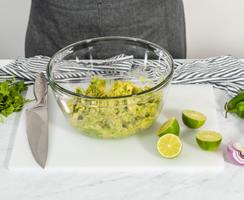
Guacamole Recipe

Ingredients
2 avocados
2 teaspoons salt
1 large tomato, diced
1 onion, diced
2 chilli peppers, chopped
1 tablespoon chopped, fresh coriander
2 tablespoons fresh lime juice
Directions
1. Peel the avocados and dice.
2. In a medium bowl, mash the avocados and stir in salt to taste.

3. Mix in the tomato, onion, chilli pepper, coriander and lime juice.
4. Cover and chill in the refrigerator for at least 30 minutes.
5. Serve alongside a meal of your choice and enjoy. (Tortilla chips is a great option as well)
INSPIRING GLOBAL TRADE 22
Egg Salad Avocado Toast

(1 serving)
Ingredients
1 avocado
½ teaspoon lemon juice
½ teaspoon black pepper

Pinch of salt
1 egg
2 slices of bread
1 teaspoon margarine/ butter
Directions
6. Hard boil the egg for about 10-12 minutes and set aside to cool.
7. Place a pan on medium-high heat. Spread the butter/ margarine on both sides of the bread slices and place them on the pan to cook for about 2 minutes on each side. Let them brown to your preference.
8. In a small bowl, mash avocado with lemon juice, black pepper and salt.
9. Chop up the hard-boiled egg and mix it in with the avocado.
10. Spread on the toast and enjoy.
RECIPE 3
Avocado Carbonara Pasta
Ingredients
(For 2 servings)
1 avocado
1 egg yolk
½ cup heavy cream
1 clove garlic
½ lemon, juiced
½ cup grated parmesan cheese
3 strips of bacon
Spaghetti (225 g)
1 tablespoon olive oil
(All ingredients are locally sourced)
Directions
1. In a powerful blender or food processor, combine the avocado, egg yolk, garlic, and lemon juice.
2. Pulse to combine, then gradually add heavy cream. Once the sauce is blended until smooth, set aside.
3. Cut up the strips of bacon and cook in a large pan.
4. In a large pot, bring water to a boil and cook the spaghetti according to package directions.
5. Drain the water and coat the cooked spaghetti with olive oil.
6. To the spaghetti, add the avocado sauce, bacon, parmesan, salt and pepper while stirring until wellcombined.
7. Serve, sprinkle with parmesan cheese, and enjoy.
INSPIRING GLOBAL TRADE 23 THE EXPORT AGENDA 6TH ISSUE | 2022
RECIPE 2
Kenyans and Avocados
There is something about Kenyans and avocados. We have seen memes and jokes going round about avocados and how they should be respected. Many of you have seen that if a Kenyan cuts an avocado in half and it is perfect, with no ‘defects,’ they claim that ‘that avocado is from the group of schools’ read- high end. A spoilt avocado receives a ‘moment of silence.’


So what is it about Kenyans and avocados? Well, we took time and engaged some Kenyan avocado lovers and this is what they said about the fruit.

FRANK NG’ANG’A, 27, Realtor
Where do you purchase your avocados from? Do you have a specific part of this country where you prefer your avocados to come from? How much does it cost?
I source my avocado from Ruiru market. I prefer avocado from Kisii or Murang’a. Avocados cost me between 15- 30ksh each.
What are some of the uses you have for avocados in your daily life?
My avocados are for consumption purposes only.
How often do you consume avocados?
I take avocado at least 4 times a week.
Name any three horticultural products that Kenya exports. Kenya exports other horticulture products like roses, lilies and pineapple.
What are some of the avocado recipes or dishes you know?
Avocado toast and avocado smoothie
Do you know the different types of avocados? Avocados have different types like hass and maluma.
MARLINE KHAVWENGESI, 27 Communications
 Consultant
Where do you purchase your avocados from? Do you have a specific part of this country where you prefer your avocados to come from? How much does it cost?
I get my avocados from the Kawangware market, especially those from Kakamega or Kisii. I buy an average Kshs. 20 to Kshs. 40 depending on the size.
What are some of the uses you have for avocados?
I consume it as a fruit, meal accompaniment and for homemade facemask. Avocados are perfect for facemasks. You should try it.
How often do you consume avocados?
My family consumes avocados on a daily basis especially for my three-year-old son who loves mashed avocados.
Name any three horticultural products that Kenya exports. Flowers, mangoes, avocados
What are some of the avocado recipes or dishes you know?
I usually make avocado smoothies and guacamole for the family.
INSPIRING GLOBAL TRADE 24
Do you know the different types of avocados?
I do not know the different avocado species, but I consider them based on where they come from.
EMILY ONYANGO, EARLY 30S, Events Consultant

Where do you purchase your avocados from? Do you have a specific part of this country where you prefer your avocados to come from? How much does it cost?
I get my avocados from home, which is in the Kakamega and Kisii regions. If not, I purchase from any Naivas Food Market for a price of Kshs. 100 per kilo.
What are some of the uses you have for avocados in your daily life?
Other than for food consumption, I get avocados for cosmetic purposes for hair and skin application.
How often do you consume avocados?
My husband and I consume on average thrice a week.
Name any three horticultural products that Kenya exports. Flowers, mangoes, vegetables
What are some of the avocado recipes or dishes you know?
Avocado smoothies and guacamole
Do you know the different types of avocados?
I do not know the different avocado species.
JUSTIN JUMBE, 24, Student and Academic Writer

Where do you purchase your avocados from? Do you have a specific part of this country where you prefer your avocados to come from? How much does it cost?
I get my avocados from the Ruai market for a price of Kshs. 20 to Kshs. 50 depending on the size.
What are some of the uses you have for avocados in your daily life?
I use it mainly for consumption.
How often do you consume avocados?
I consume avocados twice a week especially when they are in season.
Name any three horticultural products that Kenya exports. Flowers, vegetables, avocados

What are some of the avocado recipes or dishes you know?
Guacamole
Do you know the different types of avocados?
I do not know the different avocado species.
DENNIS KALELI, 24, Student
Where do you purchase your avocados from? Do you have a specific part of this country where you prefer your avocados to come from? How much does it cost?
I get my avocados from home in Ukambani. I also source from Komarock market with prices ranging from Kshs. 20 to Kshs. 40 depending on supply and season.
What are some of the uses you have for avocados in your daily life?
My avocados are for consumption purposes only.
How often do you consume avocados?
On a daily basis especially during the avocado season
Name any three horticultural products that Kenya exports. Flowers, mangoes, avocadoes
What are some of the avocado recipes or dishes you know?
Smoothies and guacamole.
Do you know the different types of avocados?
I do not know the different avocado species.
THE EXPORT AGENDA 6TH ISSUE | 2022 INSPIRING GLOBAL TRADE 25
Challenges and Opportunities in the Avocado Sector
By Chrispine Onyango conyango@apn.co.ke
Kenya’s avocado business has been transformed into a fully formalized value chain. The increase in demand for the commodity in the local and international markets has seen farmers earn considerable income.

Exports have doubled over the last five years and planted area is expected to grow by around 1,500 hectares a year in the coming five years, thanks to commercial production to satiate rising avocado demand from Kenya avocado lovers across the world.
Kenya’s avocado export market is dominated by five major exporters: Kakuzi, Vegpro, Sunripe, Kenya Horticultural Exporters, and East African Growers. These companies source their avocados primarily from smallholder farmers, although some firms also source from larger growers
or own plantations. Evidently, farmers in different parts of the country are turning to avocado farming to reap something from the profitable industry.
According to the Agricultural Outlook 2021-2030 report from the Organization for Economic Cooperation and Development (OECD) and the Food and Agriculture Organisation (FAO), avocado is expected to become the second-most traded major tropical fruit by the year 2030, after bananas.
Kenyan avocados are mostly consumed in Europe but recent market expansion missions have yielded fruit with the Middle East and Asian countries joining the fray. The United States of America and the European Union are expected to remain the largest importers with OECD/FAO saying the two regions will gobble up more than 70 percent of global imports by 2030.
Last March, China gave a nod to Kenyan farmers to export avocados to the world’s most populous nation in what is seen as a major development that will boost the avocado market. The latest official FAO statistics shows that Kenya is currently one of the largest producers of avocados globally, with production at over 234,000 metric tons per year.
Mexico leads the global rankings followed by the Dominican Republic and Peru. For farmers and exporters, it will be important to focus on specific regions where the demand has room to grow while also diversifying their markets with anticipation that markets become less concentrated.
Several barriers
Avocado production in Kenya has for many years been controlled by a few packers working with countless smallholder farmers. A report by the International Food Policy Research Institute shows that smallholder avocado farmers in Kenya face several barriers to participating in export markets.
INSPIRING GLOBAL TRADE 26
Capital and liquidity constraints are a major barrier making it impossible for them to participate in export markets. For instance, being able to buy or grow higher quality avocados from certified seedlings remains a mirage as a seedling goes for as high as Kshs. 250 each.
After a three-year lull, farmers who have to rely on other sources of income to survive harvest their avocado fruits bearing their own costs and hire transport to ferry the fruits to the nearby collection sheds or pack houses. They have to endure a further two-week wait for payments.
Poor infrastructure and limited access to production technologies and institutional support such as credit and training remain a major hurdle to many farmers with lush parcels of land. At the same time, lack of good roads is making it difficult and costly to
transport produce to markets in far-off areas.
Quality problems
Despite the increasing export numbers, East Africa is still not the preferred origin for many European buyers. Exporters need to keep working on the reputation of East African avocados as becoming a preferred supplier to Europe takes more than competitive prices and a seasonal gap.
Quality problems have affected the reputation of avocados from the region. This has been occasioned by the long transit times, issues in the supply chain, and the large number of out growers. In the long run, the transformation of the country’s avocado industry toward higher-quality fruit and more efficient logistics is necessary.
For a while now, Kenya has been in the
process of gaining market access to China, but this has only been granted for frozen avocado products. Increased joint efforts are needed to improve quality, improve reputation, and gain access to a wider range of markets around the globe.
While most farmers boast of owning lush arable lands, contract farming is fast birthing source of perpetual income for the smallholder families who have been surviving on their meager income.
Once farmers commit to contract farming agreements, a portion of their land is utilized for avocado farming with the investor footing the bill from planting to harvesting. This sees the farm-family enjoy attractive returns unlike the past when the farms lay fallow.

THE EXPORT AGENDA 6TH ISSUE | 2022 INSPIRING GLOBAL TRADE 27

INSPIRING GLOBAL TRADE 28 1st & 16th Floors, Anniversary Towers, University Way P. O. Box 40247 – 00100 Nairobi, Kenya. Tel. + 254 20 222 85 34-8 Fax: + 254 20 222 85 39, 221 80 13 Cellphone: +254 722 205 875, +254 734 228 534 Email: enquiries@brand.ke | Website: www.makeitkenya.go.ke
MakeItKenya
