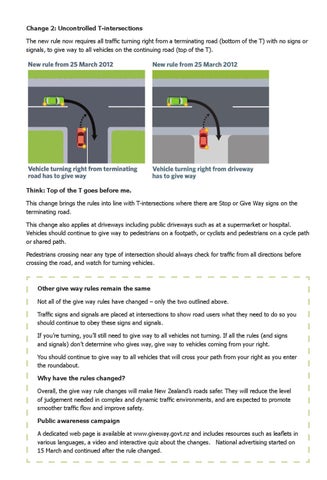
Change 2: Uncontrolled T-intersections The new rule now requires all traffic turning right from a terminating road (bottom of the T) with no signs or signals, to give way to all vehicles on the continuing road (top of the T).
Think: Top of the T goes before me. This change brings the rules into line with T-intersections where there are Stop or Give Way signs on the terminating road. This change also applies at driveways including public driveways such as at a supermarket or hospital. Vehicles should continue to give way to pedestrians on a footpath, or cyclists and pedestrians on a cycle path or shared path. Pedestrians crossing near any type of intersection should always check for traffic from all directions before crossing the road, and watch for turning vehicles.
Other give way rules remain the same Not all of the give way rules have changed – only the two outlined above. Traffic signs and signals are placed at intersections to show road users what they need to do so you should continue to obey these signs and signals. If you’re turning, you’ll still need to give way to all vehicles not turning. If all the rules (and signs and signals) don’t determine who gives way, give way to vehicles coming from your right. You should continue to give way to all vehicles that will cross your path from your right as you enter the roundabout. Why have the rules changed? Overall, the give way rule changes will make New Zealand’s roads safer. They will reduce the level of judgement needed in complex and dynamic traffic environments, and are expected to promote smoother traffic flow and improve safety. Public awareness campaign A dedicated web page is available at www.giveway.govt.nz and includes resources such as leaflets in various languages, a video and interactive quiz about the changes. National advertising started on 15 March and continued after the rule changed.