28TH OCTOBER 2022 LONDON LIVE ONLINE


Front Cover Lot 287 [detail] Inside Front Cover Lot 353 [detail] Left Lots 276 & 289 [detail] Above Lot 322 [detail]


FRIDAY 28 OCTOBER AT 10AM
The Mall Galleries
The Mall
VIEWING
Tuesday 25th October 5pm-8pm
Wednesday 26th October 10am-5pm
27th October 10am-5pm
28th October from 9am
CONTACT
LONDON
(0) 207 930 9115
(0) 131 557
Sale Number LT695 Left Lots 18 & 340 [detail]
Thursday
Friday
LONDON SW1
+44
EDINBURGH +44
8844 info@lyonandturnbull.com
BUYER'S GUIDE
This sale is subject to our Standard Conditions of Sale (available at the back of every catalogue and on our website).
If you have not bought at auction before we will be delighted to help you.
BUYER’S PREMIUM
The buyer shall pay the hammer price together with a premium, at the following rate, thereon:
26% up to £20,000
25% from £20,001 to £500,000 20% thereafter.
VAT will be charged on the premium at the rate imposed by law (see our Conditions of Sale at the back of this catalogue).
ADDITIONAL VAT
† VAT at the standard rate payable on the hammer price
‡ Reduced rate of 5% import VAT payable on the hammer price
Ω Standard rate of import VAT on the hammer price
Lots affixed with ‡ or [Ω] symbols may be subject to further regulations upon export /import, please see Conditions of Sale for Buyers Section D.2.
No VAT is payable on the hammer price or premium for books bought at auction.
DROIT DE SUITE
§ indicates works which may be subject to the Droit de Suite or Artist’s Resale Right, a royalty payment for all qualifying works of art. Under new legislation which came into effect on 1st January 2012, this applies to living artists and artists who have died in the last 70 years. This royalty will be charged to the buyer on the hammer price and in addition to the buyer’s premium. It will not apply to works where the hammer price is less than €1,000 (euros). The charge for works of art sold at and above €1,000 (euros) and below €50,000 (euros) is 4%. For items selling above €50,000 (euros), charges are calculated on a sliding scale.
More information on Droit de Suite is available at www.dacs.org.uk
BIDDING & PAYMENT
For information on bidding options see our Guide to Bidding & Payment at the back of the catalogue.
REGISTRATION
All potential buyers must register prior to placing a bid. Registration information may be submitted in person at our registration desk, by email, or on our website. Please note that first-time bidders, and those returning after an extended period, will be asked to supply the following documents in order to facilitate registration:
1 – Government issued photo ID (Passport/ Driving licence)
2 – Proof of address (utility bill/bank statement).
We may, at our option, also ask you to provide a bank reference and/ or deposit. (Particularly for bidding on lots marked by the high value lot symbol )
By registering for the sale, the buyer acknowledges that he or she has read, understood and accepted our Conditions of Sale (available at the back of every catalogue and on our website).
CATALOGUE DESCRIPTIONS
All item descriptions, dimensions and estimates are provided for guidance only. It is the buyer’s responsibility to inspect all lots prior to bidding to ensure that the condition is to their satisfaction. Our specialists will be happy to prepare condition reports and additional images. These are for guidance only and all lots are sold ‘as found’, as per our Conditions of Sale.
IMPORT/EXPORT
Prospective buyers are advised that several countries prohibit the importation of property containing materials from endangered species, including but not limited to; rhino horn, ivory, coral and tortoiseshell. Accordingly, prospective buyers should familiarise themselves with all relevant customs regulations prior to bidding if they intend to import lots to another country. It is the buyer’s sole responsibility to obtain any relevant export or import licence. The denial of any licence or any delay in obtaining licences shall neither justify the recession of any sale nor any delay in making full payment for the lot.
ENDANGERED SPECIES
Please be aware that lots marked with the symbol Y contain material which may be subject to CITES regulations when exporting outside Great Britain. For more information visit http://www.defra.gov.uk/ahvla-en/ imports-exports/cites
COLLECTION & STORAGE
Following the auction, the works will be divided, with works belonging to Scottish buyers/vendors being stored at Lyon & Turnbull, 33 Broughton Place, Edinburgh EH1 3RR, and works belonging to international or rest-of-UK buyers/vendors moving to Stephen Morris Shipping, 15 Ockham Drive, Greenford, UB6 0FD. Tel 0208 832 2222. Open 9am – 5pm by prior appointment only.
Please ensure payment has been made prior to collection. This can be done online, by cheque, bank transfer or in person at our office - details will be shown on your invoice. Please note we are unable to take payments over the phone, and we are unable to accept payments in cash.
LONDON LOT COLLECTION
Items will be available to collect from The Mall on Saturday 29th October from 10am until 4pm. Following this, items will be moved to Stephen Morris Shipping where they can be collected from Tuesday 1st November. They will be stored free of charge until Monday 14th November. From Tuesday 15th November, clients will be charged by our storage partners at the following rates: Insurance 0.25% (all items); Small objects (including paintings) - £2.50 admin fee then £1.00 per day; Large or furniture pieces£5.50 admin fee then £2.50 per day.
EDINBURGH LOT COLLECTION
Scottish buyers’ and vendors’ items will be available to collect from Wednesday 9th November at 9am from Lyon & Turnbull, 33 Broughton Place Edinburgh EH1 3RR. All collections must be by prior appointment (this applies to both carriers and personal collections). Please book appointments by email at info@lyonandturnbull.com or telephone 0131 557 8844. 22.3
6
Philip Smith London



of Sale
Simon Hucker London

Prints
Alice Strang Edinburgh


Sculpture
Prints & Sculpture
At Lyon & Turnbull we want to make buying at auction as easy and enjoyable as possible. Our specialist team are on hand to assist you, whether you are looking for something in particular for your home or collection, require more detailed information about the history or condition of a lot, or just want to find out more about the auction process. MEET THE SPECIALISTS
Head
philip.smith@lyonandturnbull.com
Paintings,
&
simon.hucker@lyonandturnbull.com
Paintings,
alice.strang@lyonandturnbull.com
Joy McCall
London Design joy.mccall@lyonandturnbull.com John Mackie Edinburgh Design john.mackie@lyonandturnbull.com Matthew Yeats London Sale Administrator matthew.yeats@lyonandturnbull.com Carly Shearer Edinburgh Paintings, Prints & Sculpture carly.shearer@lyonandturnbull.com 7
“ What an artist is trying to do for people is bring them closer to something, because of course art is about sharing.
You wouldn’t be an artist unless you wanted to share an experience, a thought.”
David Hockney
Lot 339 [detail] 8
Welcome to the Autumn 2022 edition of Modern Made We are delighted to be returning to the Mall Galleries in St James’s London for the seventh occasion with a wonderful array of works that demonstrate the multi-disciplinary and cross-cultural nature of the art world in the pre- and post-war years, expressing the vitality of the art scene over this period.
From paintings to printmaking, ceramics to glass, silversmithing to jewellery, textiles to furniture, Modern Made showcases in one space some of the best of modern art, craft and design from key practitioners in their movements. Displaying work of different generations and media allows for reciprocal links and for unexpected questions to be posed and examined, with the hope of allowing it to be a forum for exploring new artists and works from modern masters to cutting edge contemporary makers.
At the heart of this edition is the largest collection of work by mid-century modern designer Gerald Summers to come to the auction market, supported by works of other leading international modernist designers of his generation. In his use of plywood Summers is considered to be one of the most innovative British designers of the 20th Century. His visionary technical engineering knowledge, combined with an aesthetic appreciation of the material, placed him as one of a group of international modernist designers, such as Alvar Aalto, Marcel Breuer and Charles & Ray Eames, who pushed the formal and structural limits of exciting new materials coming to the fore over this mid-century period.
Leading our Modern British Art section of the sale is a personal group of works by Robert Polhill Bevan from the Artist’s Estate that reveal his achievements as a painter, draughtsman and printmaker. There are also fascinating groups of works by mid-century British artists John Bratby and sculptor Bernard Meadows, that reveal a new approach to their practices in the post-war years. Contemporary art works are led by important paintings by Canadian-American artist Jack Goldstein from the 1980s that capture ‘the spectacular instant’ that had predominantly been the domain of photography. A sculptural work Still Life (Cardboard Leaning on the Wall) by leading Swiss artist Ugo Rondinone offers a witty reminder that anything can be art.
Further highlights include a section celebrating contemporary craft featuring important metalwork by Ndidi Ekubia and Junko Mori, jewellery by Peter Chang, ceramics by Akiko Hirai and Magdalene Odundo, as well as notable furniture by George Nakashima and Rick Owens.
We hope that you find the catalogue, exhibition and auction enjoyable and that you discover works that captivate and intrigue you whatever your taste or budget.
Philip Smith
Head of Sale | October 2022

9

Lot 303

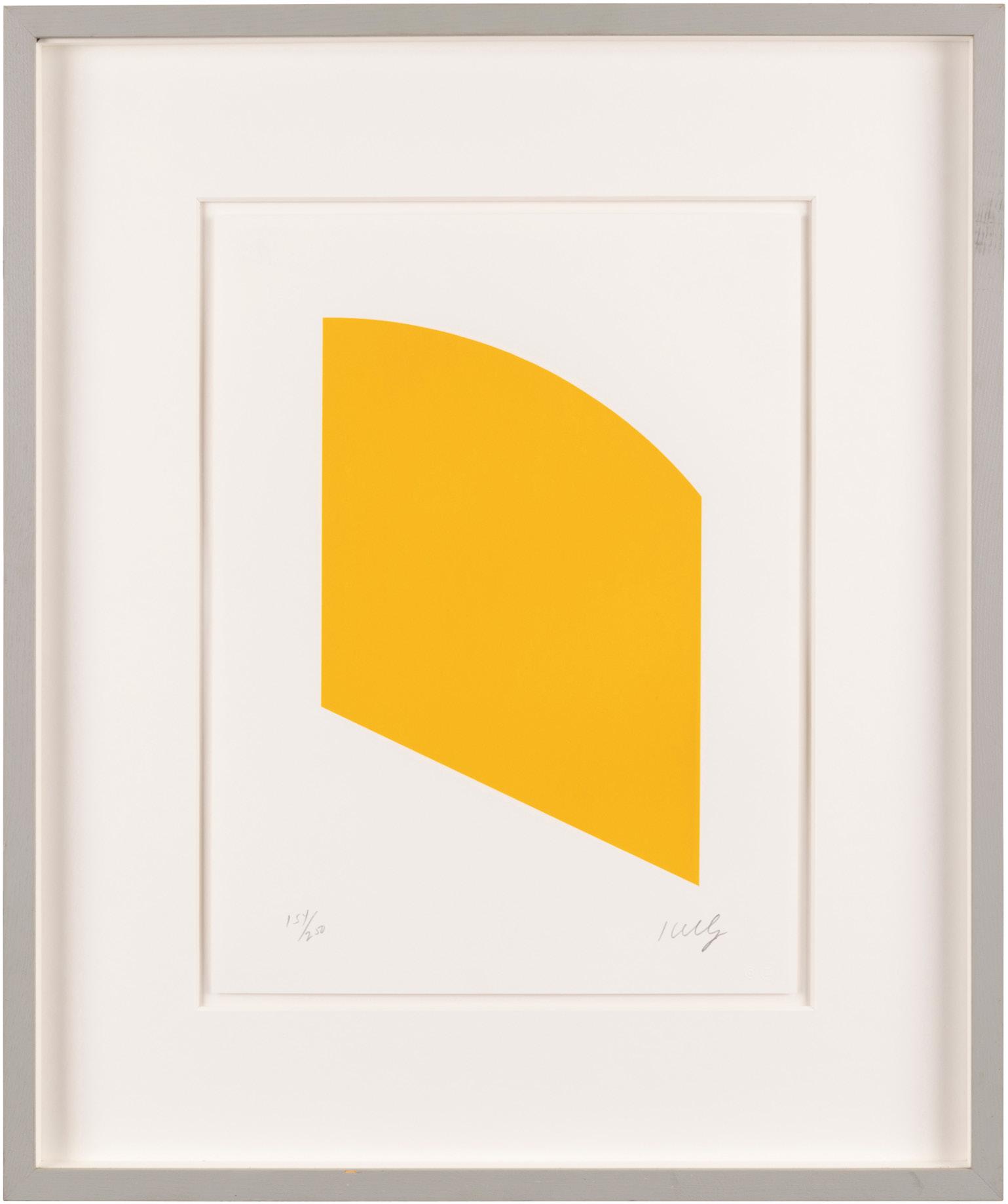
1 ELLSWORTH KELLY (AMERICAN 1923-2015) ORANGE, 2004 157/250, signed and numbered in pencil, lithograph on Rives BFK paper, with blindstamp from the publishers Gemini G.E.L., Los Angeles (lower right) 40.6cm x 30.5cm (16in x 12in) £5,000-7,000 11 Other fees apply in addition to the hammer price: see the ‘Buyer’s Guide’ section on page 6
§
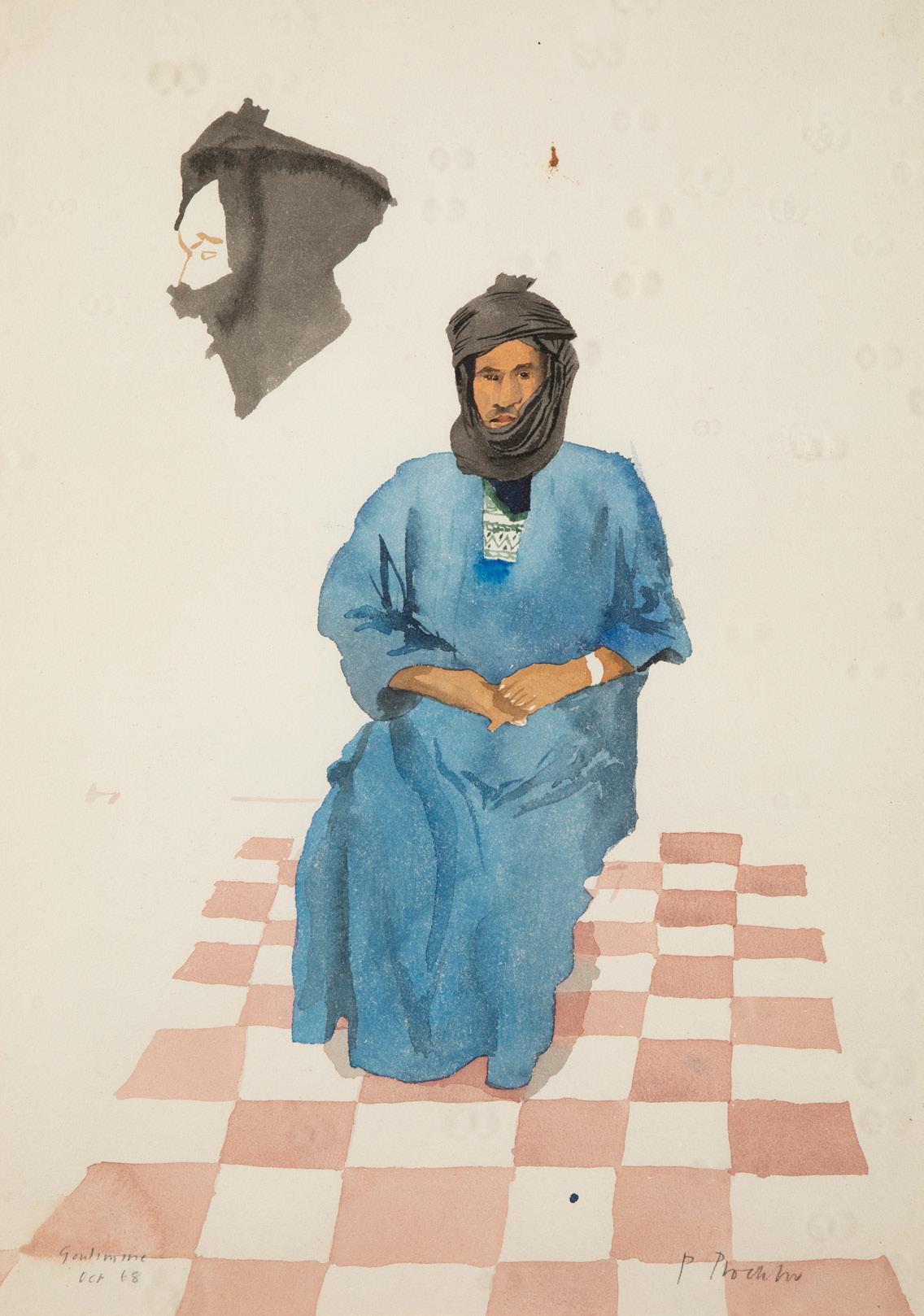
PATRICK PROCKTOR (BRITISH 1936-2003)
BLUE MAN, GOULIMINE, 1968 signed, titled and dated in pencil, pen, ink and waterolour 35cm x 24.5cm (13 3/4in x 9 5/8in)
Provenance: The Redfern Gallery, London; Collection of the Late Sir Richard Shepherd, MP. £1,000-1,500
WADE WHITE (AMERICAN 1909-1995)
THE WINDOWSILL, 1930s initialled (lower right), pen, ink and gouache on paper 20cm x 13cm (7 7/8in x 5 1/8in)
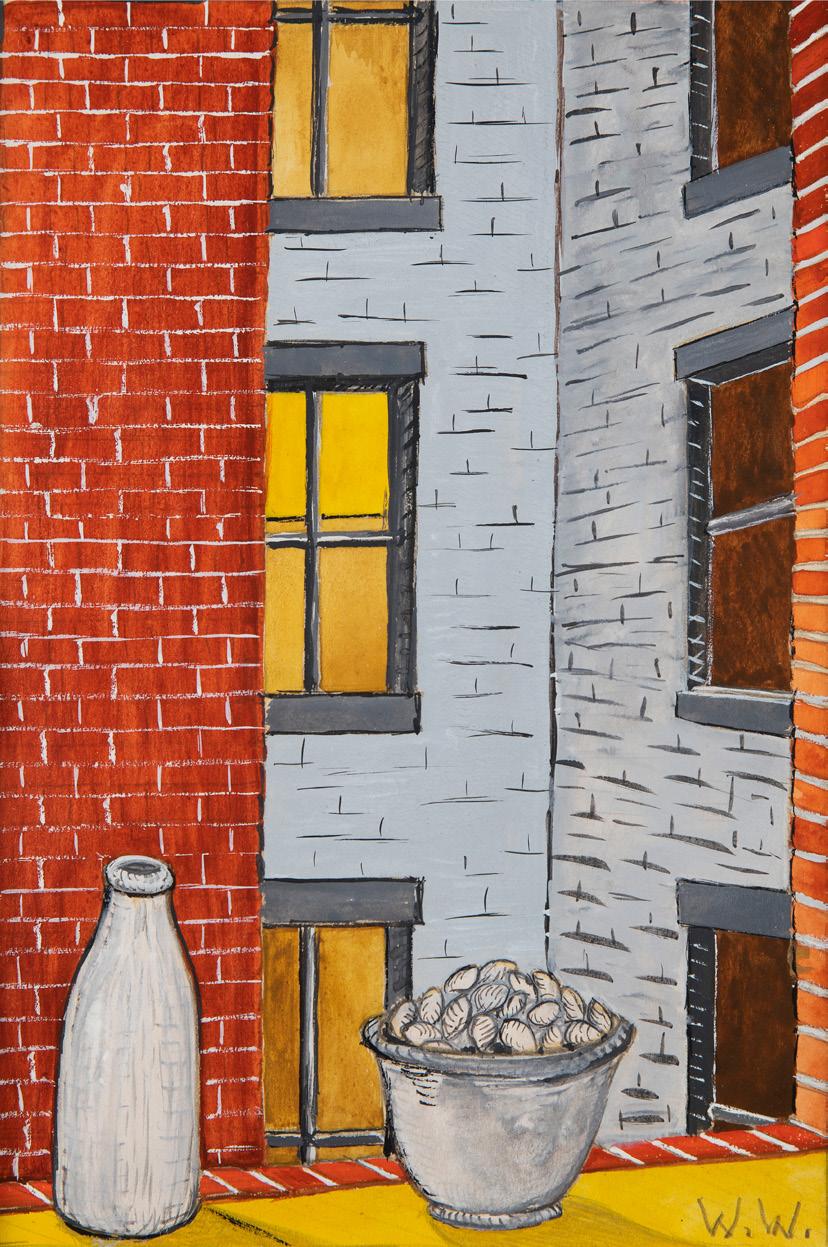
Provenance: Janet Marqusee Fine Arts Ltd., New York, 1999; Private Collection, London. £500-700
2
3
12 Other fees apply in addition to the hammer price: see the ‘Buyer’s Guide’ section on page 6

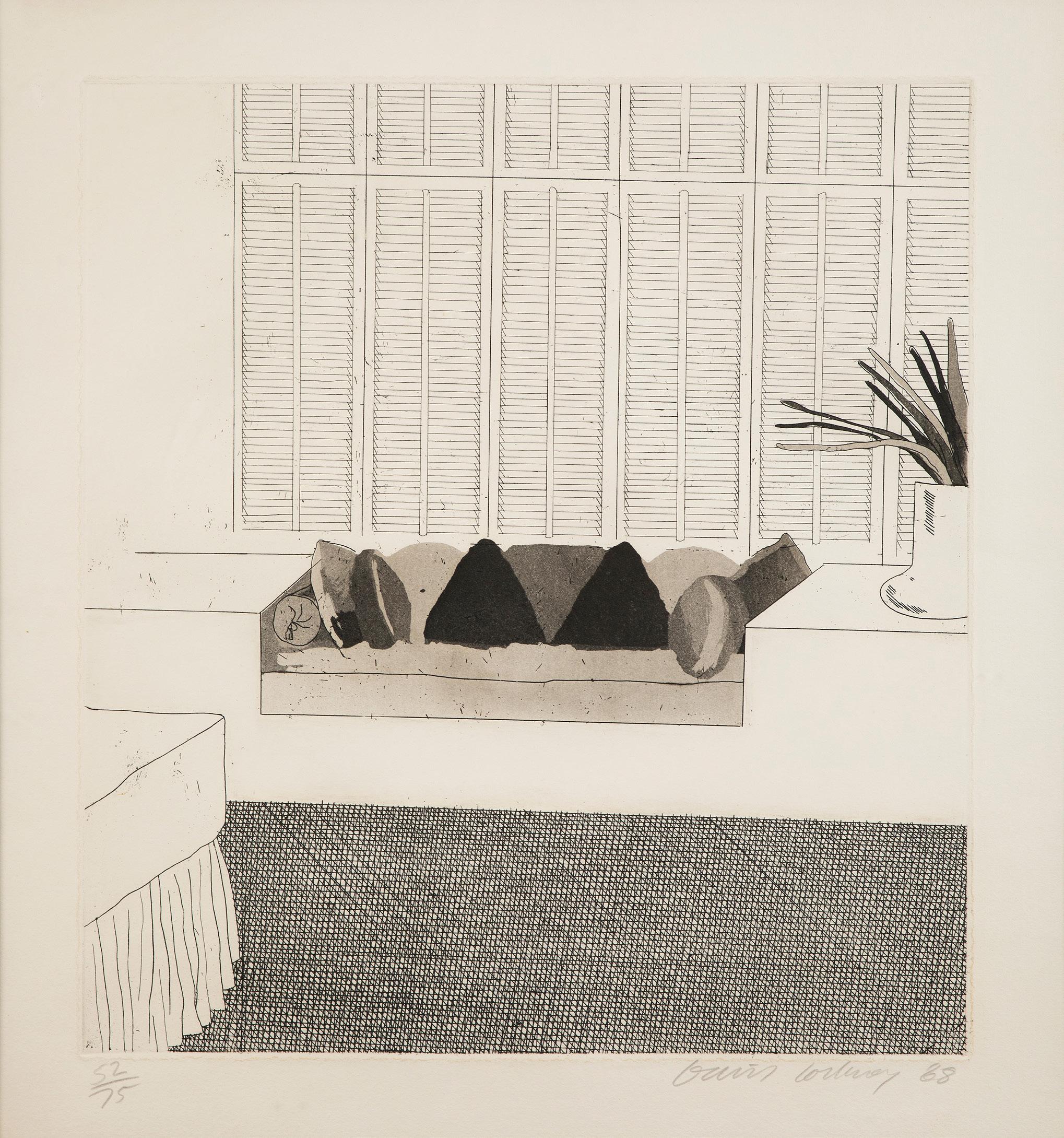
4 § DAVID HOCKNEY O.M., C.H., R.A. (BRITISH 1937-) CUSHIONS, 1968 (S.A.C. 64) 52/75, signed, dated and numbered in pencil (in the margin), etching on paper 38.5cm x 35cm (15 1/8in x 13 3/4in) Provenance: Redfern Gallery, London, 1970; Collection of the Late Sir Richard Shepherd, MP. £6,000-8,000 13 Other fees apply in addition to the hammer price: see the ‘Buyer’s Guide’ section on page 6
KENNETH SNELSON (AMERICAN 1927-2016) EASTER MONDAY, 1976
signed, dated and inscribed, aluminium and stainless steel wire
high,
wide
3/4in high, 15 1/4in wide)
Snelson’s sculptures, thrusting skywards like towers and stretching out in extended cantilevers above the ground, can be found in museums and public parks around the world. Snelson’s forms

the structure through the outward push of the compression
of the tension
5
HC,
50.5cm
38.5cm
(19
Kenneth
maintain
tubes and inward pull
cables. £3,000-5,000 14 Other fees apply in addition to the hammer price: see the ‘Buyer’s Guide’ section on page 6
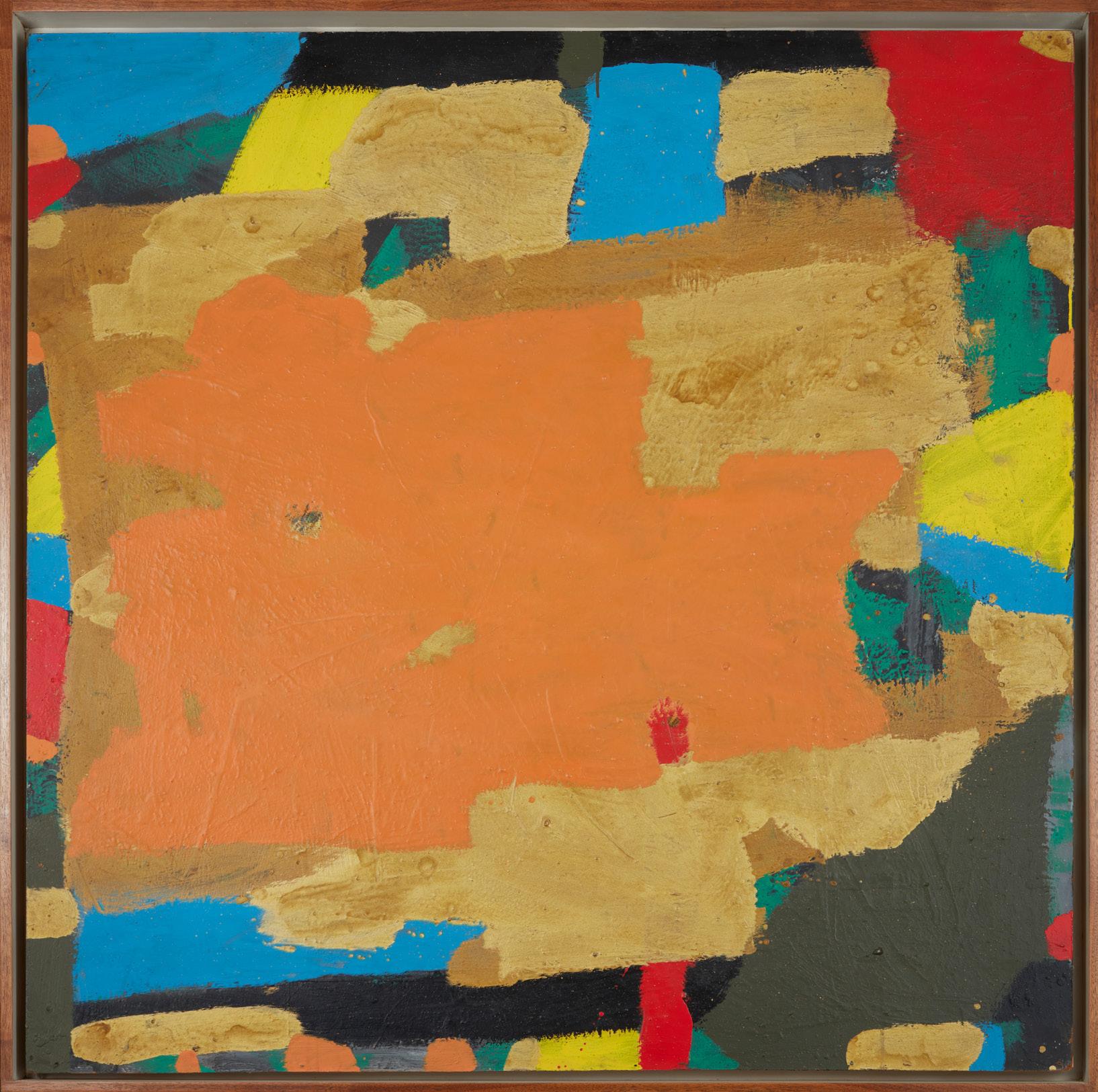
BERNARD COHEN (BRITISH 1933-)
BLACK BASE, NOVEMBER 1958
signed, titled and dated (to reverse), oil on board 122cm x 122cm (48in x 48in)
Provenance: Marden Hill House, Hertfordshire; Rowntree Clark Gallery, Norfolk.
Bernard Cohen, alongside his brother Harold (see lot 283), was part of an exciting generation of artists that emerged from London’s art schools in the late 1950s and early 1960s. Whether abstract (Cohen, Robyn Denny, Richard Smith) or loosely figurative (Hockney, R.B. Kitaj, Allen Jones) these original young British artists were linked by their love of all things American – seeing New York, not Paris (as previous generations had), as the centre of the art world. They had first seen the new American painting up close in 1956, when Abstract Expressionism formed a small but significant part of a Tate Gallery survey as 20th century American art. Three years later, the Tate mounted another exhibition, although this time dominated by abstraction and the work of the New York School. This show, however, was less of a revelation for the likes of Cohen and more a confirmation, as in the intervening years – in works such as Blake Base – he had already created a language of gestural abstraction of his own. What they took, instead, was the ambition and scale of American painting – and in the 60s, Cohen’s work would become vast and more minimal, with Kasmin’s legendary gallery on Bond Street really the only place it could be shown.
In 1957 Cohen received a Boise Traveling Scholarship and, together with the French Government Scholarship awarded to him in 1954, he was able to travel and work in France, Spain and Italy. Here he would have come into contact with tachisme – the French version of Abstract Expressionism, where the brushstroke – or tache – had been liberated from describing anything but itself, or a sense of movement or emotion. However, with his eyes on America, Cohen gives the heavy existentialism of tachisme an open, upbeat twist. Despite its title, Black Base is all about colour, as well as the weight of the paint itself (as the elements seem to hang vertically off the backing). It is a painting perfectly aligned to Clement Greenberg’s dictats – a painting that has no reference outside its own making - and yet in its colour, its informality, it does capture something of what would become Pop Art, the Technicolor world of 60s London, as it emerges from the black and white of the 50s.


6 §
£7,000-10,000
15
JENSEN
fabric
Kern Gallery,
Sergej Jensen expressed that his work was “painting without paint”.
Known for working with an assortment of found and altered fabrics, his textile works can include wool, cashmere, silk, burlap and hand-knitted swatches, that have been glued, bleached, painted, sewed and stretched in methods that play with the idiosyncrasies of the material. Jensen’s art works often incorporate a muted palette and gestural marks that combine the representational and the abstract.
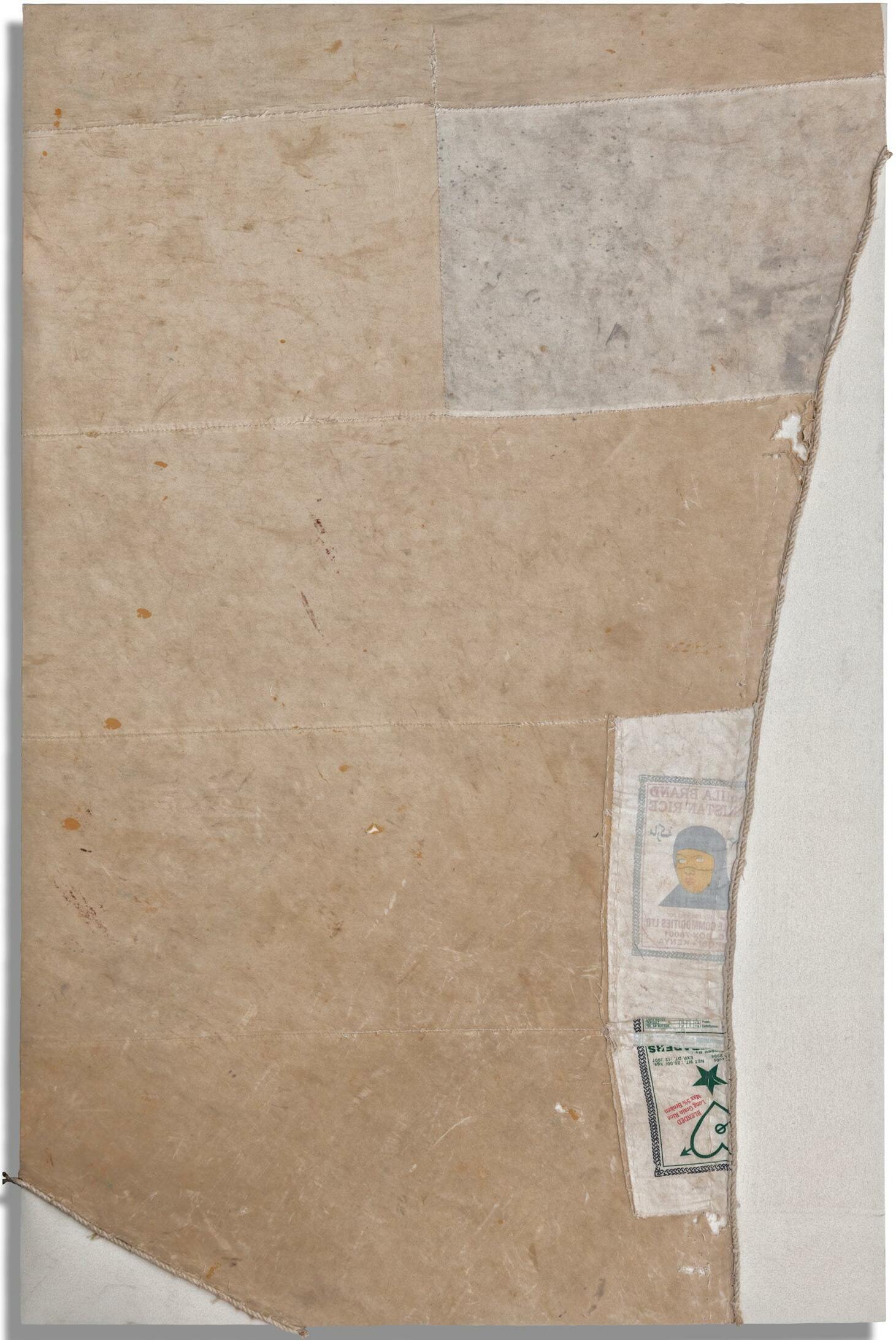
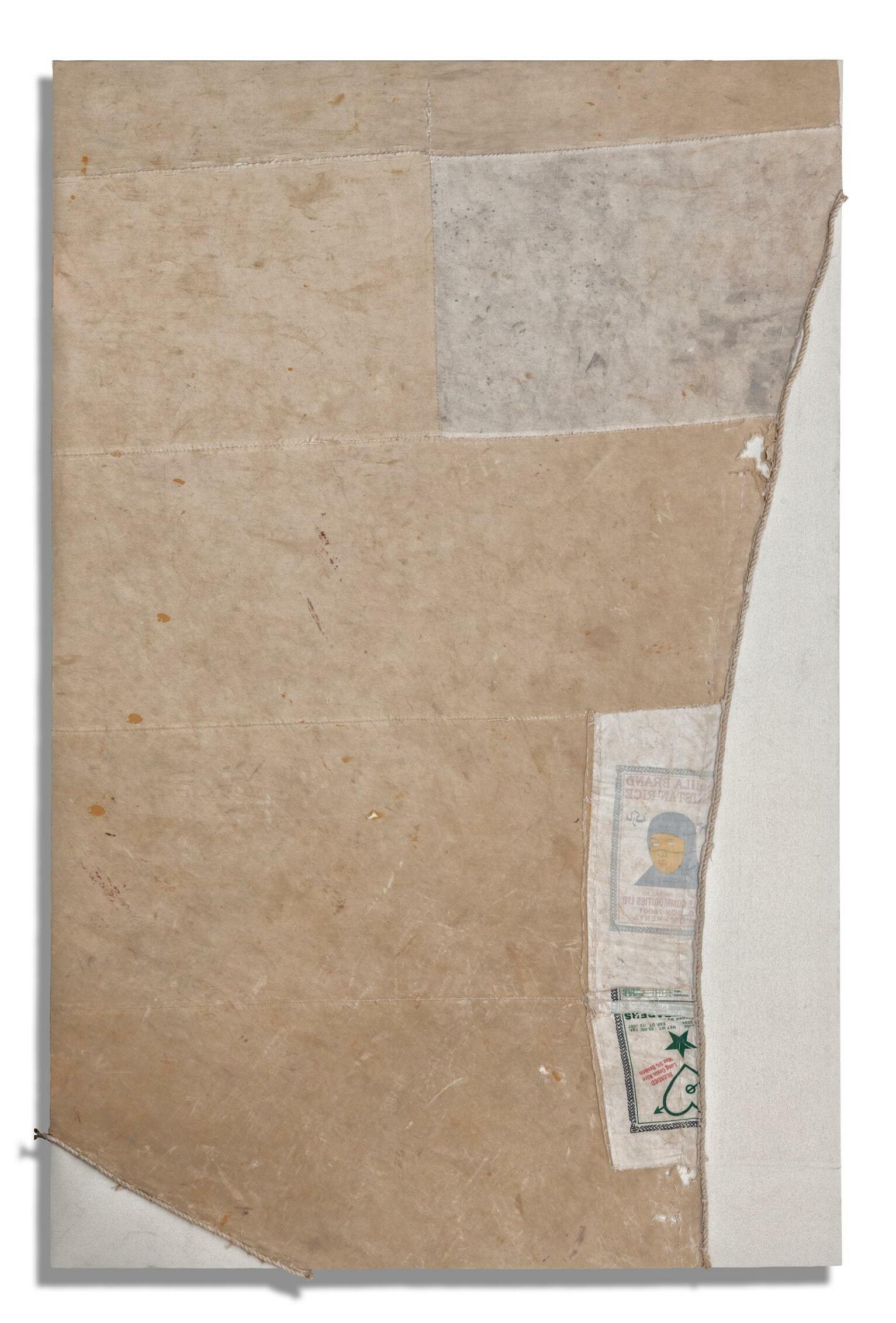

7 § SERGEJ
(DANISH 1973-) UNTITLED, 2007 sewn
on linen 310cm x 201cm x 4.5cm (122in x 79 1/4in x 4 3/4in) Provenance: Galerie Neu, Berlin; Acquired from the above by the present owner. Exhibited: Anton
New York, Sergej Jensen: Pictures and Paintings, April - May 2008. £15,000-25,000
16
8
DOUGLAS GORDON (BRITISH 1966-)
BLACK SPOT, 2000
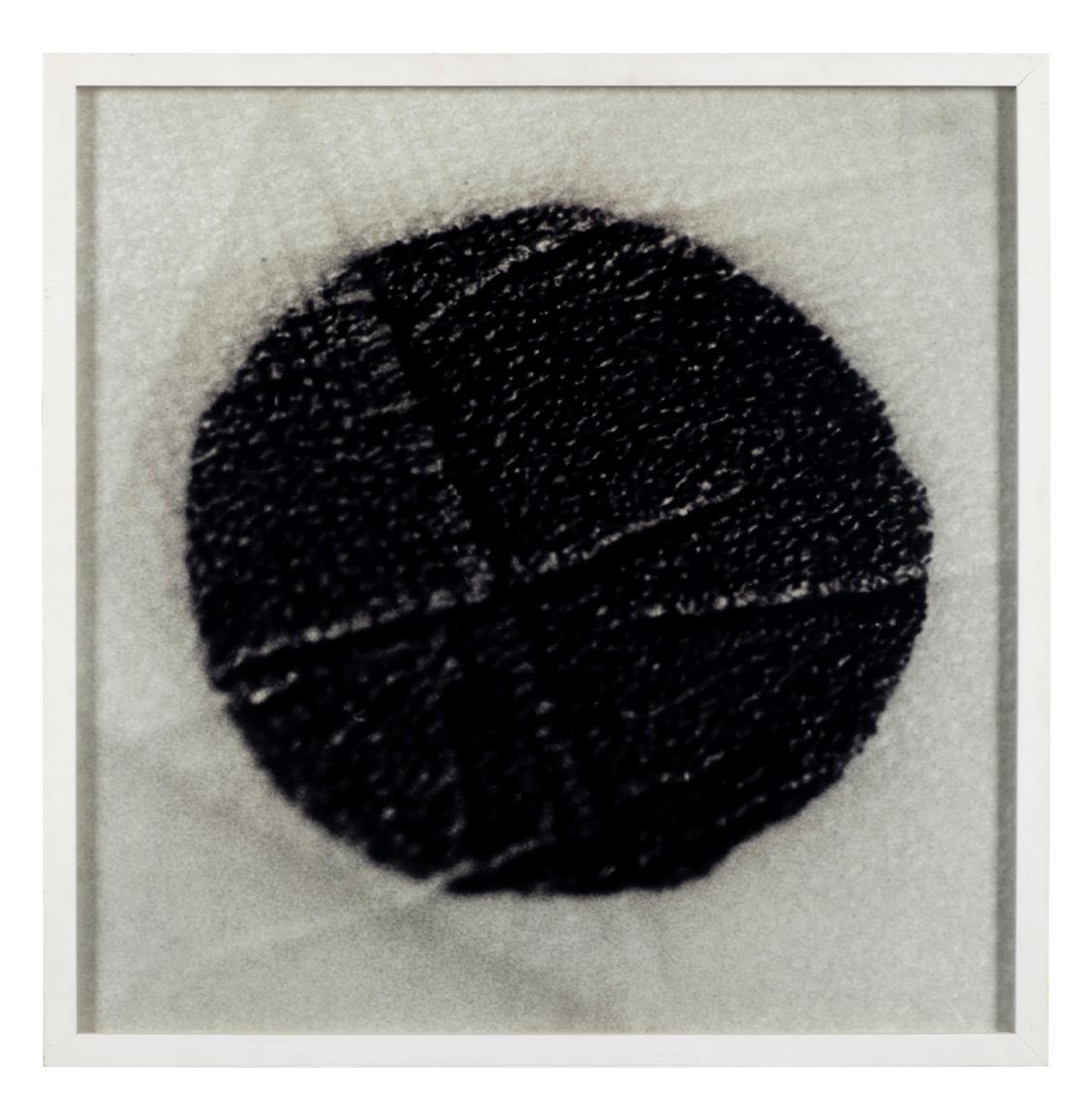
4/13, signed and numbered in pen (on label to reverse), c-print
73.7cm x 73.7cm (29in x 29in)
Provenance: Yvon Lambert Gallery, Paris; Private Collection, UK.
£1,500-2,000
LORENZO QUINN (ITALIAN 1966-)
GIVE AND TAKE
389/495, signed and numbered, silver plated resin on black marble base 46cm high (18in high) including base, 43cm wide (16 7/8in wide)
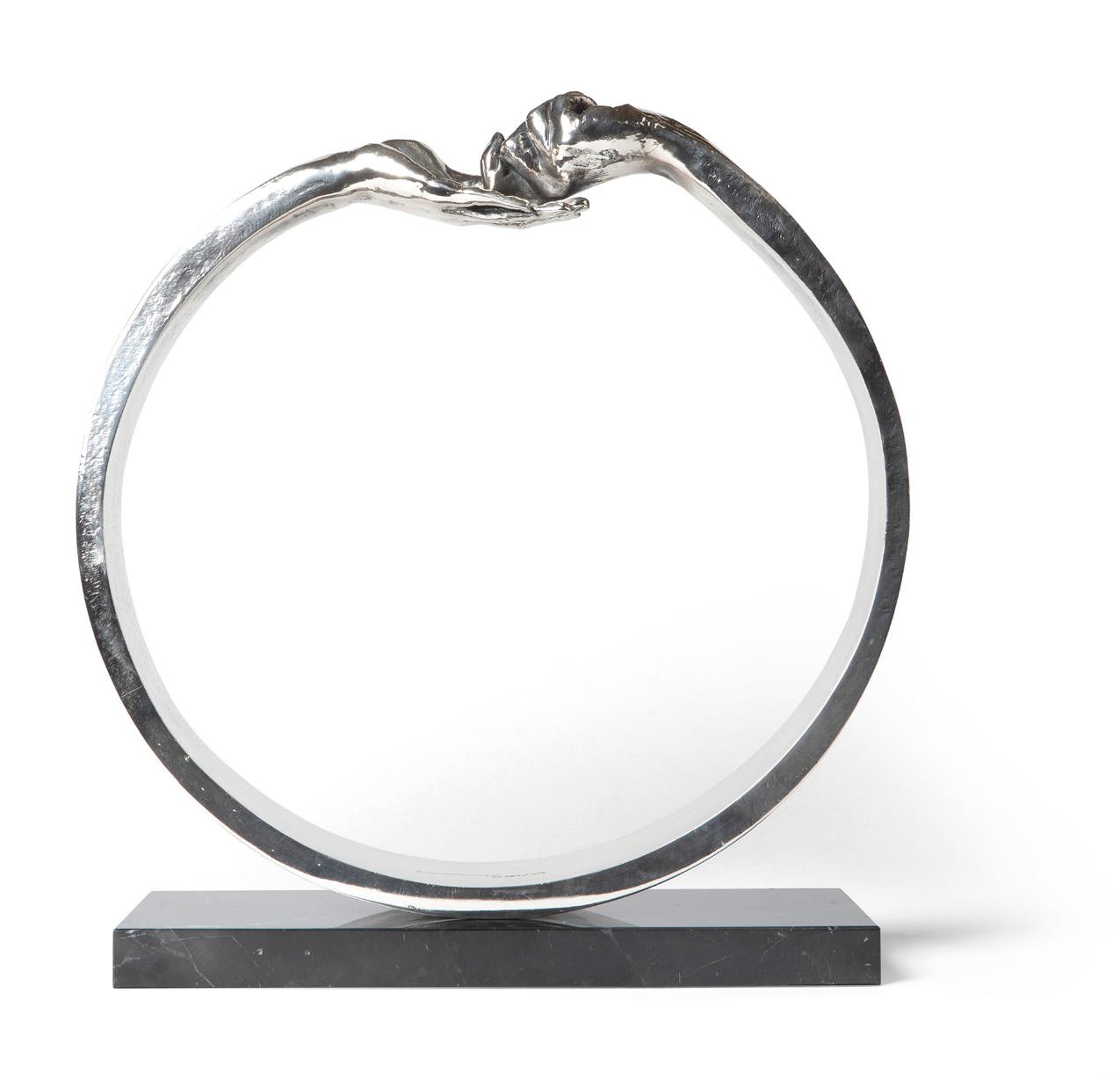
£1,000-2,000
ALIK CAVALIERE (ITALIAN 1926-1998)
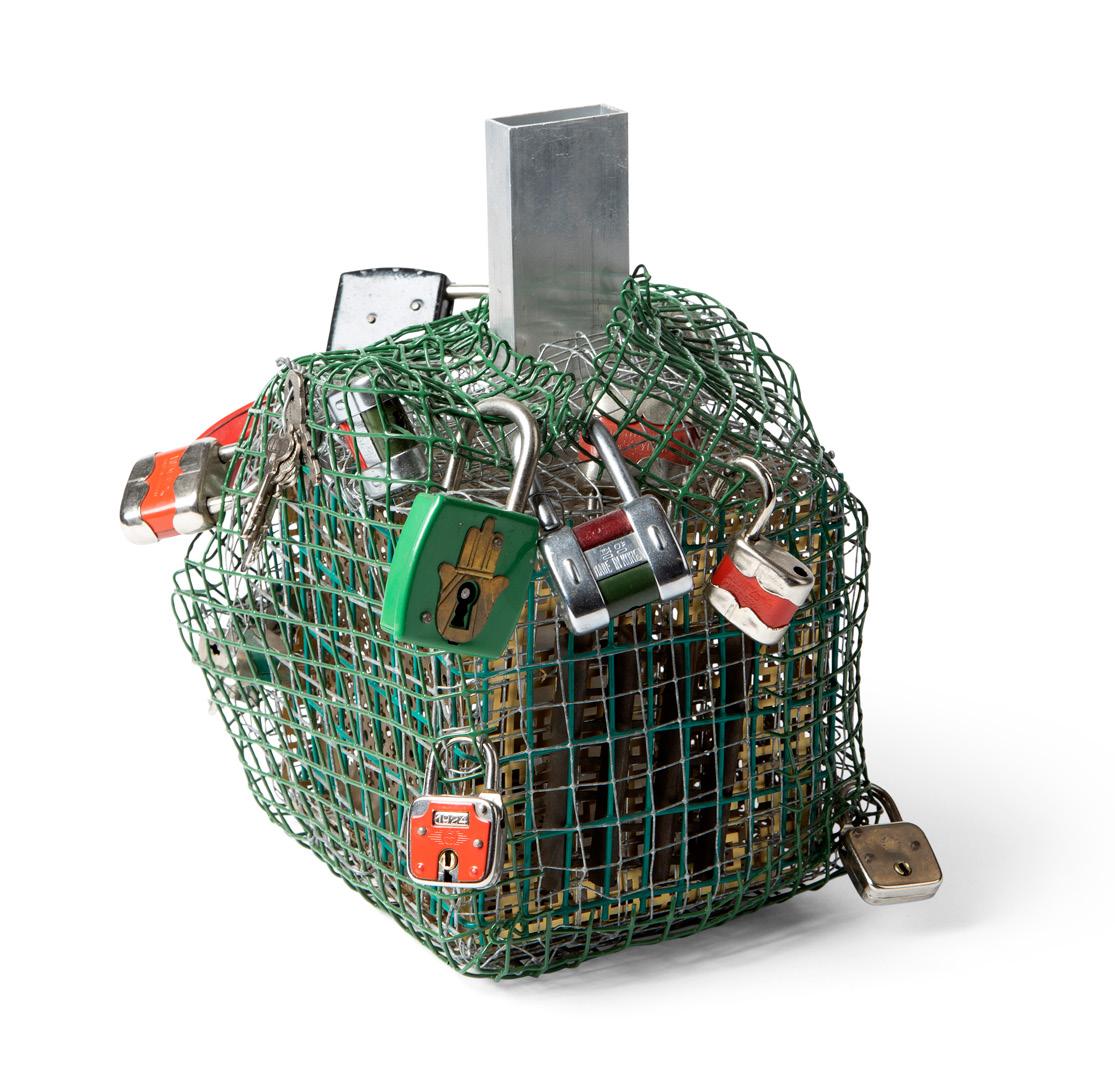
THE MONEY-BOX, 1972 unique, following a generic design used for an edition of 2000, wire, steel, plexiglass, extruded aluminium tube, with 12 padlocks and 2 bunches of keys, from Toys by Artists, copyright and patent Bonnier International Design 1972 24cm high, 22cm wide (9 1//2in high, 8 5/8in wide)
Exhibited: City Museum and Art Gallery, Birmingham, Toys by Artists, 1972.
At the close of the exhibition in Birmingham the exhibits were distributed to the show’s staff by the exhibition organisers.
£500-700
10 §
§
17 Other fees apply in addition to the hammer price: see the ‘Buyer’s Guide’ section on page 6
“I always say that you don’t have to understand an artwork. You have just to feel it. In my work I use very basic raw symbols, something that everybody can relate to, from a child to an old person, from the East to the West.”
Ugo Rondinone
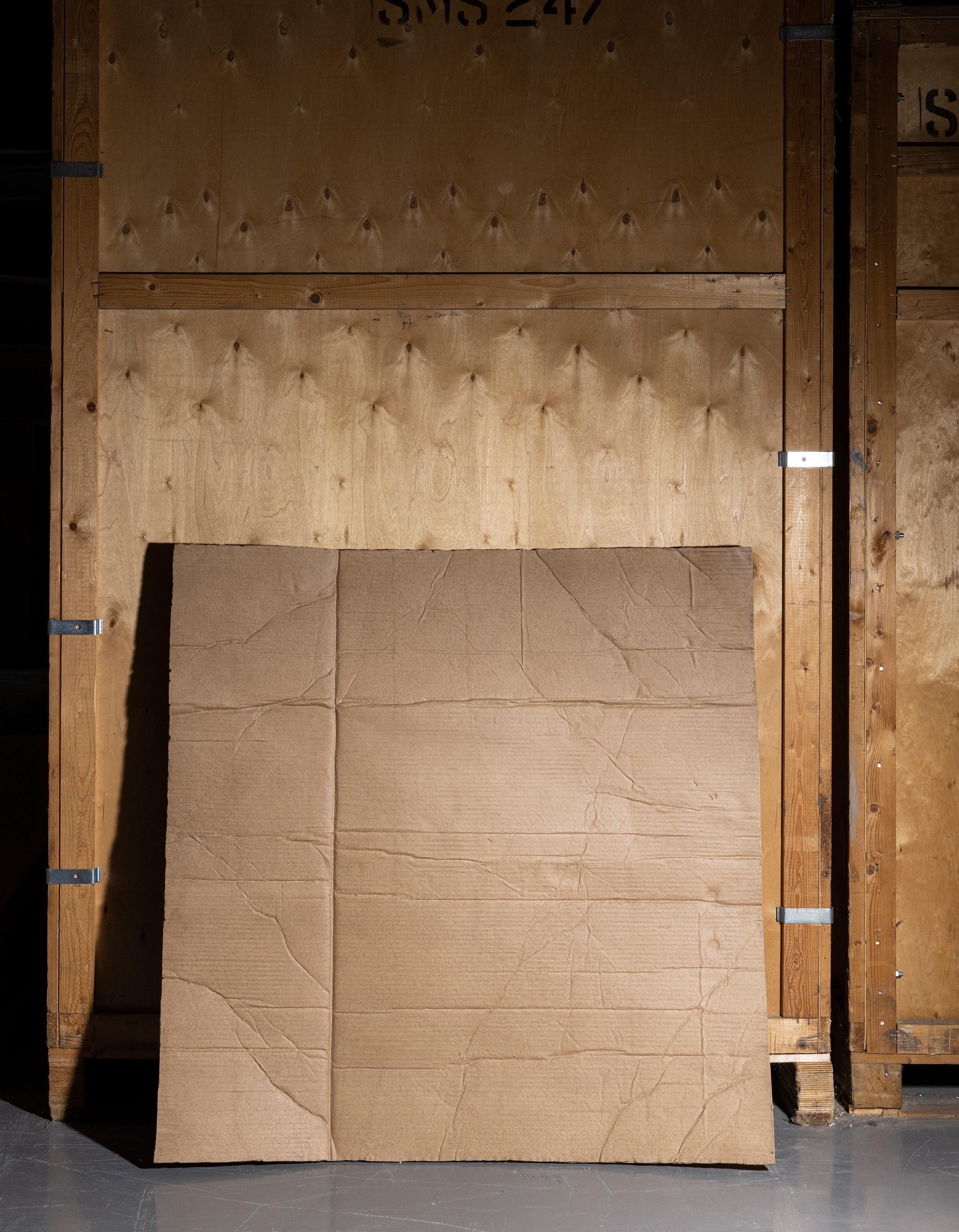
RONDINONE (SWISS 1964-) STILL LIFE (CARDBOARD LEANING ON THE WALL), 2009
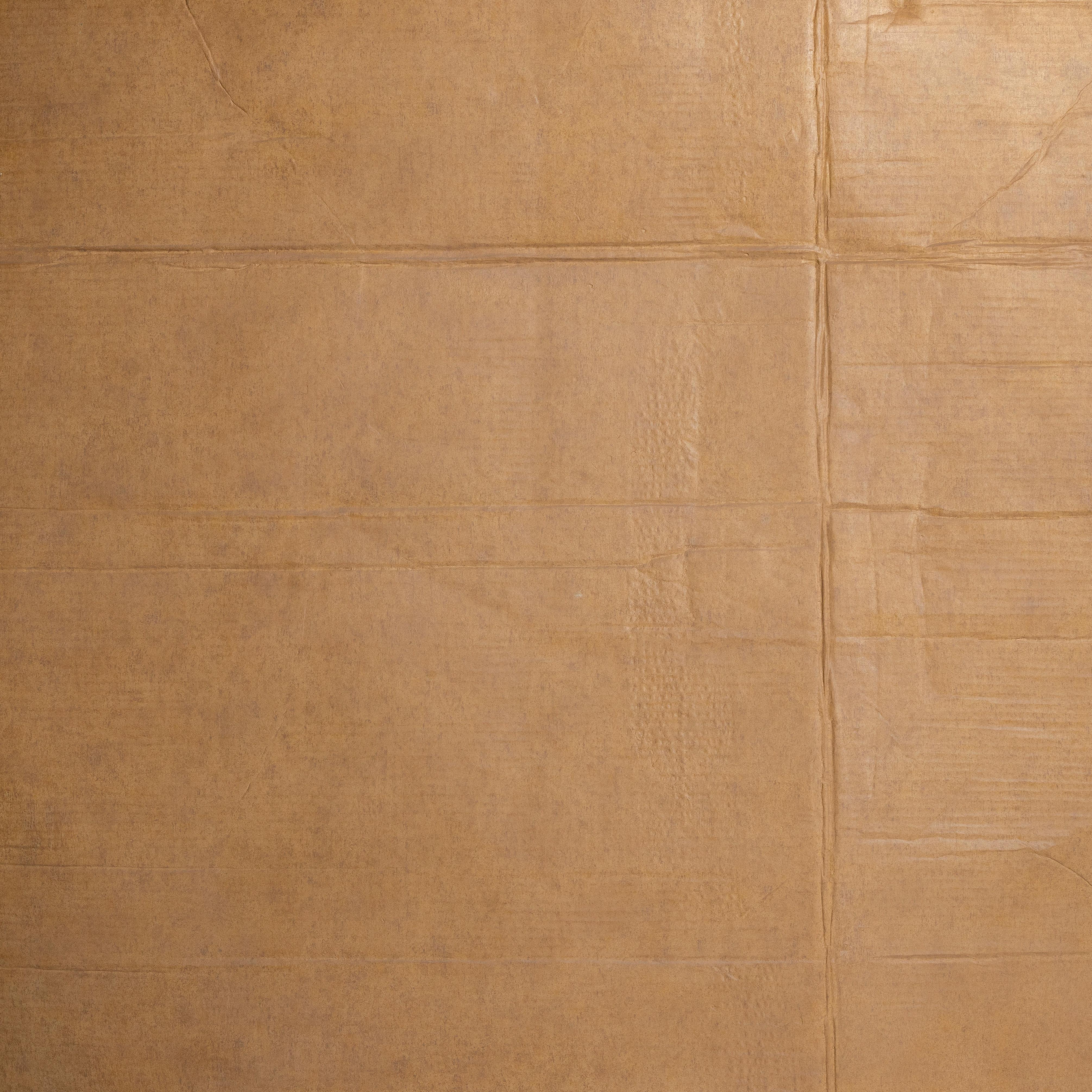
initialled and dated ‘u. r. / 09’, bronze cast, lead and paint
x 115.8cm (46in x 45 1/2in)
Swiss artist Ugo Rondinone’s Liverpool Mountain currently stands outside Tate Liverpool – a glorious and joyful statement on both the power of colour and the presence art objects can have within the wider world. Whilst its form is minimalist and brutal – part megalith, part Constantin Brancusi’s Eternal Column – the colour is maximal, playful and bright. It is this push and pull between minimalism and the expressive, conceptualism and humour, that defines Rondinone’s work – and is very much in evidence in the present work.
Still Life is, simultaneously, a minimalist sculpture, in the tradition of Donald Judd, Robert Morris, Richard Serra et al. and a ‘found object’, akin to Marcel Duchamp’s urinal or bottle rack. It is also a beautiful, witty reminder that anything can be art, if you approach it with the right mindset. Essential to these various elements working in sync is the quality of the object itself. It has to trick the eye into looking
like cardboard (for it to be a kind of Ready-made) and yet it has to have a cool beauty all of its own (to read as a work of Minimalism). This has been achieved by a painstaking process of casting the original card in bronze and then filling the cast with lead (to give it dead-weight) and then painting the surface with absolute flatness, so the only marks on it are created by shadows in real folds. That these folds then take on a painterly quality, a hint of Abstract Expressionist dynamic, is a further layer that Rondinone adds. Placed against a wall it is inevitable that our minds should wander across the lines, their intersections, and start investing them with intention and emotion.
If art’s defining purpose is to make us look again at the world around us, and to imbue it with a sense of wonder, then Rondinone’s Still Life is a perfect example. The everyday – and especially a discarded sheet of card – will never be ordinary again.
11 UGO
1/1,
116.7cm
£30,000-50,000
18 Other fees apply in addition to the hammer price: see the ‘Buyer’s Guide’ section on page 6
§
KLEIN (FRENCH 1928-1962)
ANTHROPOMETRIE ANT 83
of 200, numbered, estate stamped and signed by his widow (to reverse), screenprint

x 78cm (21 1/2in x 30 1/2in)
§ MICHELANGELO PISTOLETTO (ITALIAN 1933-) FRATTALI (YELLOW), 1999-2000 signed, titled and dated (to reverse), acrylic on mirrored glass
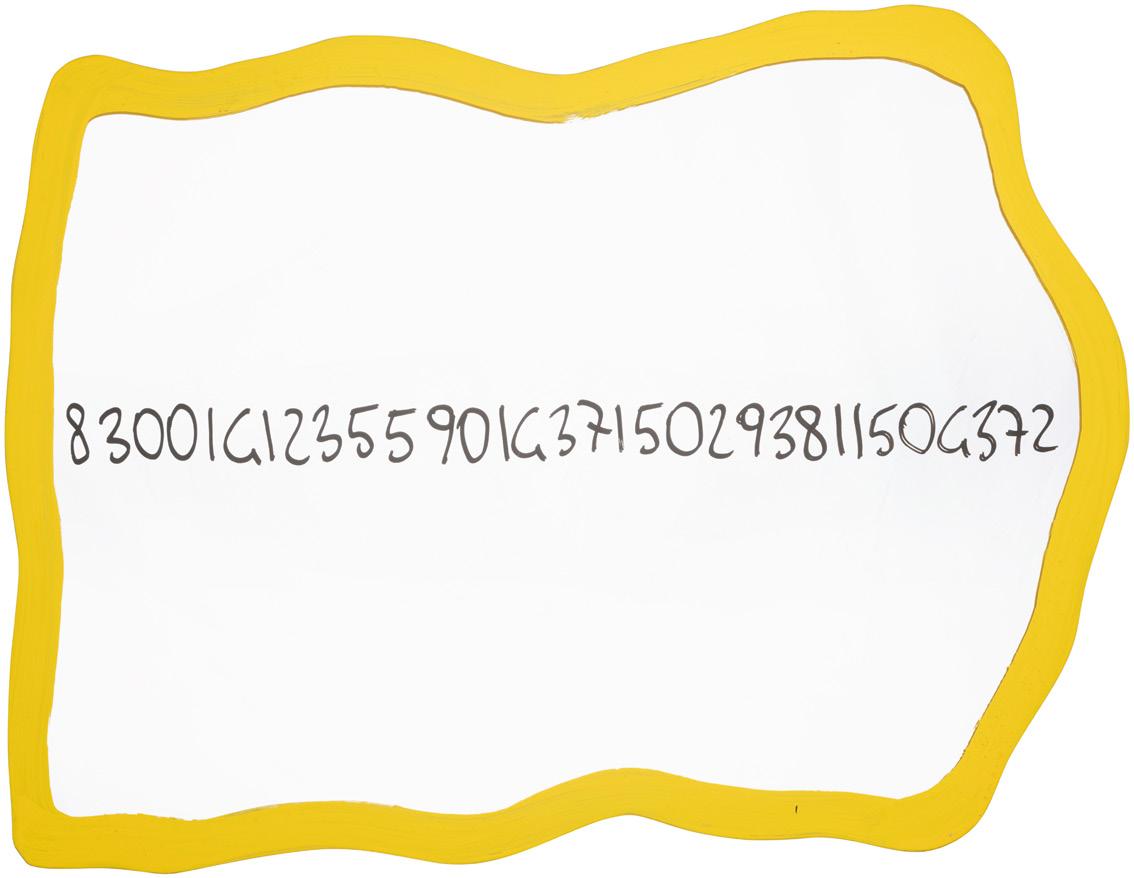
x 75.7cm (22 1/2in x 29 3/4in)
14 §
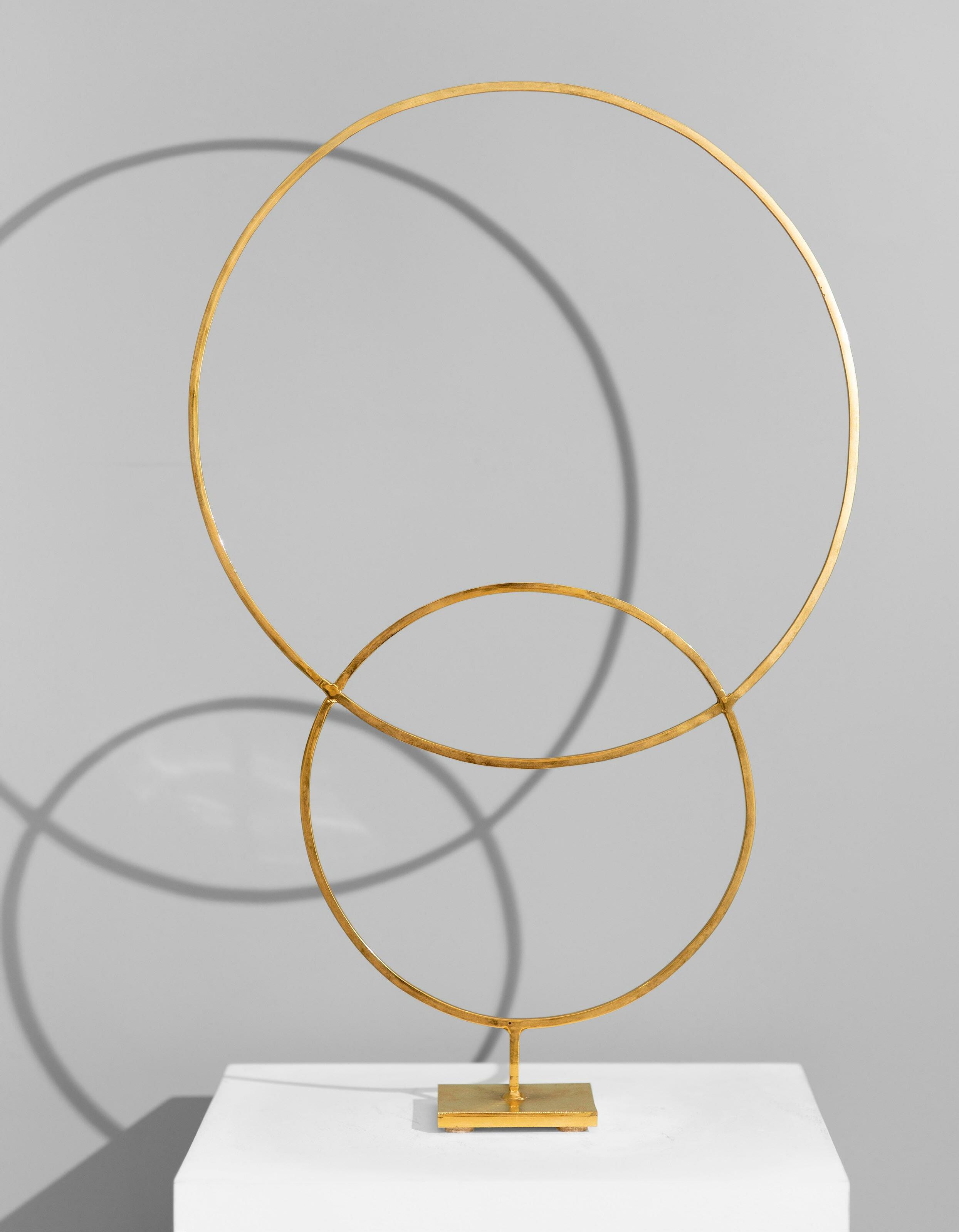
KEITH COVENTRY (BRITISH 1958-) SUPERMODEL (KATE MOSS), 2000 No. 1, stamped ‘KC / 2000 / NO 1’, gold-plated steel 66cm high, 42.5cm wide, 10.2cm deep (26in high, 16 3/4in wide, 4in deep) This work was produced in an edition of 10, plus 5 artist’s proofs. Keith Coventry is one of the least-heralded of the generation of Britsh artists that came to be known as the ‘YBAs’, despite his work featuring in many of the key exhibitions of the period, including the era-defining Sensation at the Royal Academy of Arts, London in 1997, which burnished many of the YBA (Young British Artists) artists’ legends. Coventry’s work has all the hallmarks of the ‘YBAs’: funny, irreverent, obsessed with pop culture and very deliberately – and knowingly - eliding the borders between ‘high’ and ‘low’, in terms of subject-matter. However, where it differs is that Coventry chose to filter contemporary life through the lens of art history – such as in his most famous paintings that recast council hoardings mapping the layouts of grim housing estates into the hermetic visual language of Russian Suprematism.
We see the same tactics at play in the present work: Kate Moss, the pop icon of 90s and early 2000s Britain, her image as ubiquitous as that of Liz Taylor equivalent when Warhol got his hands on here [see lot XX], is here abstracted into two mysterious golden rings. It is contemporary art recast in the language of geometric Modernism, albeit with a hint of post-Modernism and Duchamp. It is a sculpture that would be at home in Tate Modern. But equally, in the use of gold, it could also work as a totem from an ancient culture, a goddess of some unknown religion, to be found in a vitrine in the British Museum. When the ‘supermodel’ works were show at Emily Tsingou’s gallery in 2000, the only clue as to what the viewer was seeing was to be found on a postcard left near the gallery entrance. It featured a photograph of Moss on the cover of Vogue, with two circles drawn over her, revealing the underlying geometry that becomes the extent of the final works. As the critic Jonathan Jones noted in his review of the exhibition in The Guardian, ‘All [the supermodel works] have been made using a technique…Coventry borrowed from a 1930s book, Cassell’s New Popular Educator, whose cover has a man staring into the sun of knowledge and promises to inform readers about “art and literature”, “languages and history”, and “science and mathematics”. The drawing method Coventry discovered here claimed to reduce visible reality to its geometrical essentials. The inspiration came from Cézanne’s statement that one must look in nature for the sphere, the cone and the cylinder. Coventry has looked for the sphere, the cone and the cylinder in the pages of Vogue”. One might add to Jones’s review, that these shapes Coventry found in Vogue, very pointedly, turned out to be hollow.
12
YVES
edition
54.5cm
£1,000-1,500 13
57.3cm
£3,000-5,000
£5,000-8,000 20 Other fees apply in addition to the hammer price: see the ‘Buyer’s Guide’ section on page 6
21
15 §
TERRY O’NEILL C.B.E. (BRITISH 1938-2019)
JANE FONDA IN BETWEEN TAKES ON THE SET OF JULIA, NORFOLK, ENGLAND, 1977
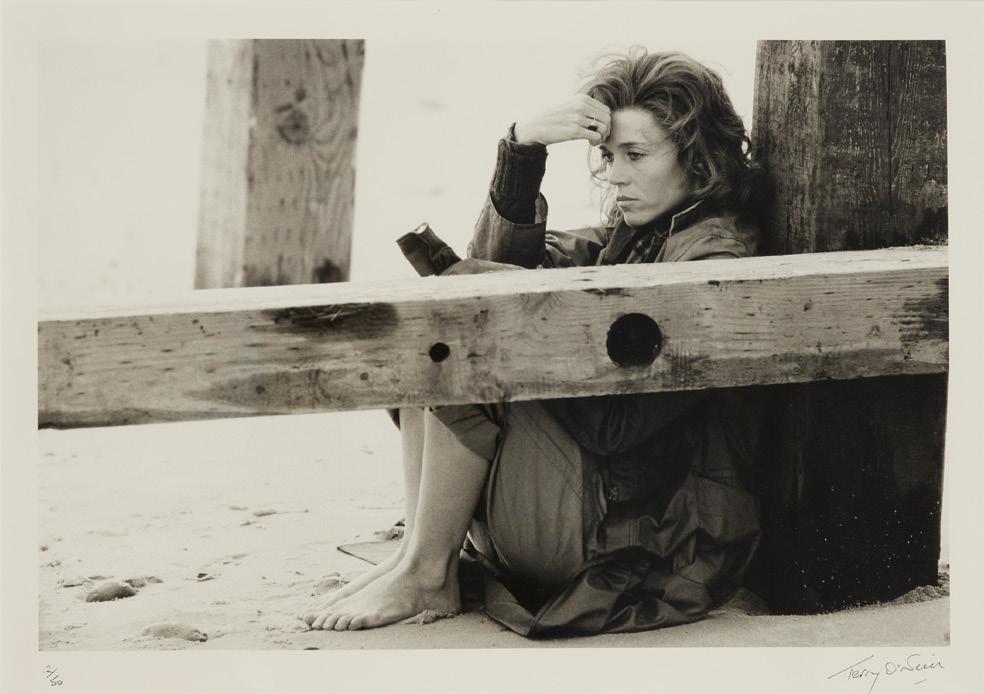
12/50, signed and numbered in ink (to margin), silver gelatin print, a later impression image size 34cm x 50.5cm (13 1/4in x 19 3/4in) £500-700 16 §
TERENCE DONOVAN (BRITISH 1936-1996)
JULIE CHRISTIE II, 1962/2013
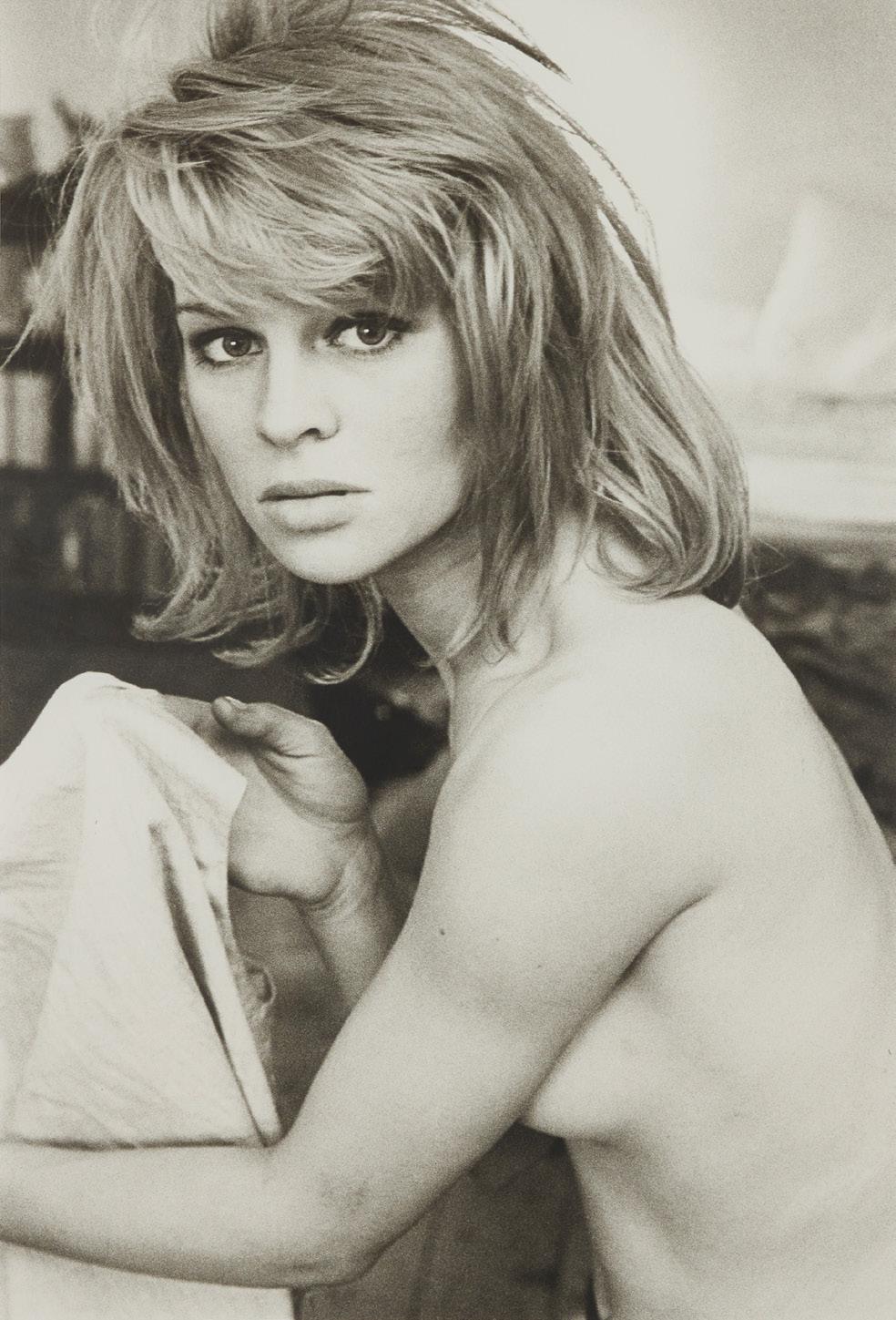
46/50, photographer’s copyright and estate stamps (to reverse), silver gelatin print, printed in 2013 50cm x 34cm (19 3/4in x 13 3/8in)
Provenance: Beetles and Huxley, London. £800-1,200
17 HELMUT NEWTON (AMERICAN 1920-2004)
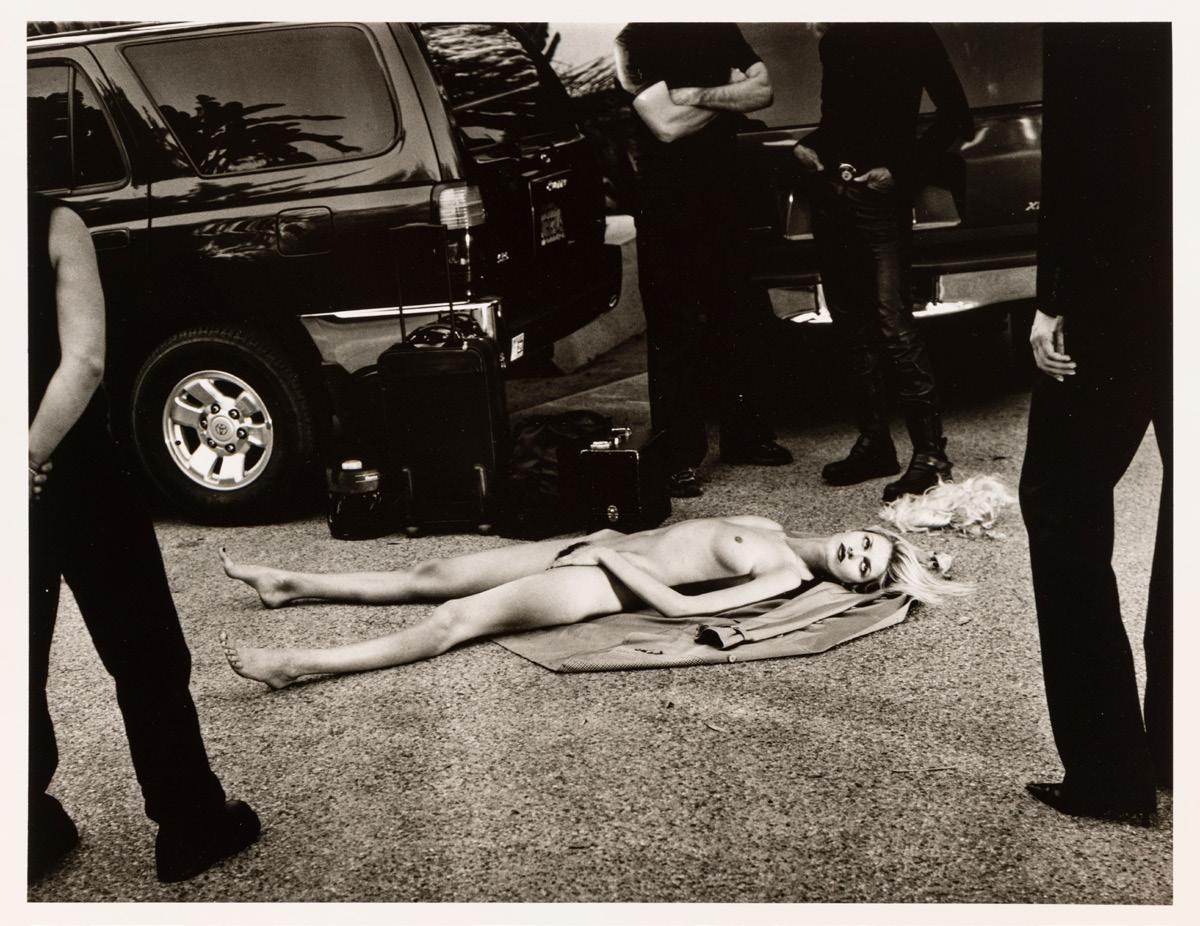
CYBERWOMAN 2, 2000
101/500, numbered in pen and with portfolio copyright credit and reproduction limitation stamp (to reverse), gelatin silver print 25cm x 32.5cm (9 7/8in x 12 3/4in) £800-1,200
22 Other fees apply in addition to the hammer price: see the ‘Buyer’s Guide’ section on page 6
§
IGOR MITORAG (POLISH 1944-2014)
ARGOS
incised with the artist’s signature ‘MITORAJ’, incised ‘E.A.’ and stamped with foundry mark ‘FONDERIA TESCONI PIETRASANTA’ (lower right edge), bronze 39.5cm high, 47cm wide (15 1/2in high, 18 1/2in wide)
A similar work appeared at Sotheby’s, New York, on 9 March 2012 (Lot 290) titled ‘Argos’, from an edition of 8 and dated to 1987.
£10,000-15,000
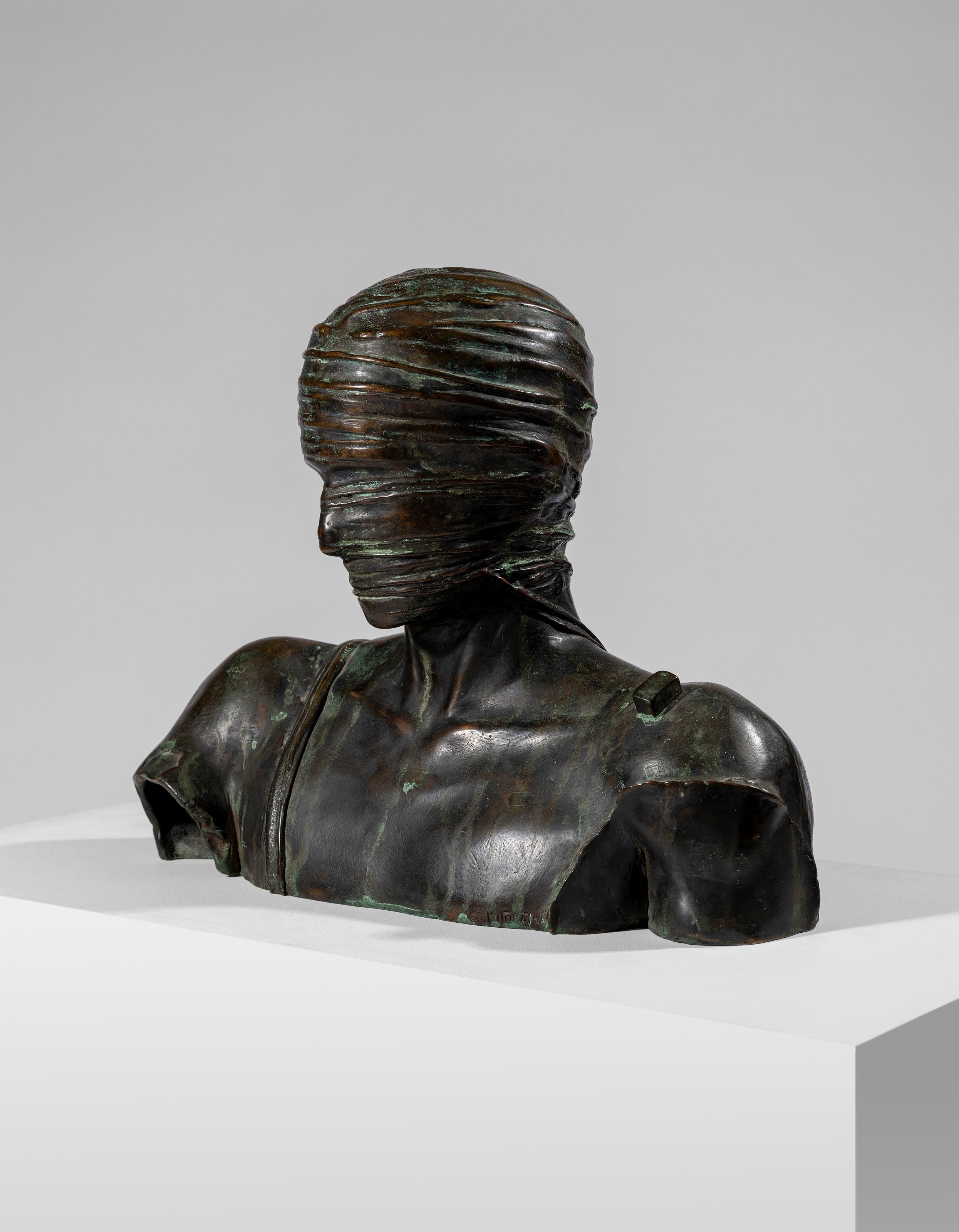
“My work is not concerned with recreating what has already been done but it is simply an attempt to shape into familiar forms the drama of life.” Igor Mitoraj
18
23
Masters of Light: Italian Mid-century Lighting Design

Italian lighting design is steeped in a long and rich history of innovation and tradition. With the rise of Milan as a centre of design in the mid-20th century, designers took up the responsibility of creating fresh and exciting lighting solutions for the innovative domestic interiors they were creating.
Numerous iconic design houses specialising in lighting flourished in Italy in the post-war years, such as Fontana Arte, Stilnovo, Arteluce and Oluce, and they were led by pioneering figures including Max Ingrand, Gino Sarfatti and Gaetano Sciolari, whose ground breaking innovations on the play of light shaped the field globally for decades to come. The variety and quality of lamps and chandeliers produced, from Stilnovo’s iconic ‘Sputnik’ lights to Fontana Arte’s globular ceiling lights and Magistretti’s ‘Atollo’ lamps, demonstrates the versatility and vibrancy in the field, and the adaptability and possibilities of being able to incorporate them into almost any interior.
What distinguishes these Italian lighting designers is their concern both with the form and aesthetic qualities of the light, and the technical aspects of the quality of light and shade itself, whether the nuances of the glow and reflectors or new potential achievable with halogen and neon. This coming together of art and science, stems from many of the designers having originally trained as architects, and an ingrained cross-disciplinary nature in the Italian arts.
Viewed through a contemporary lens most of the works remain as fresh today as when they were first conceived, and due to their innovative approaches mid-century Italian lighting can still be a perfect accompaniment to any modern interior.
24
19
MAX INGRAND (FRENCH 1908-1969)
FOR FONTANA ARTE
CEILING PENDANT LIGHT opaque glass and brass
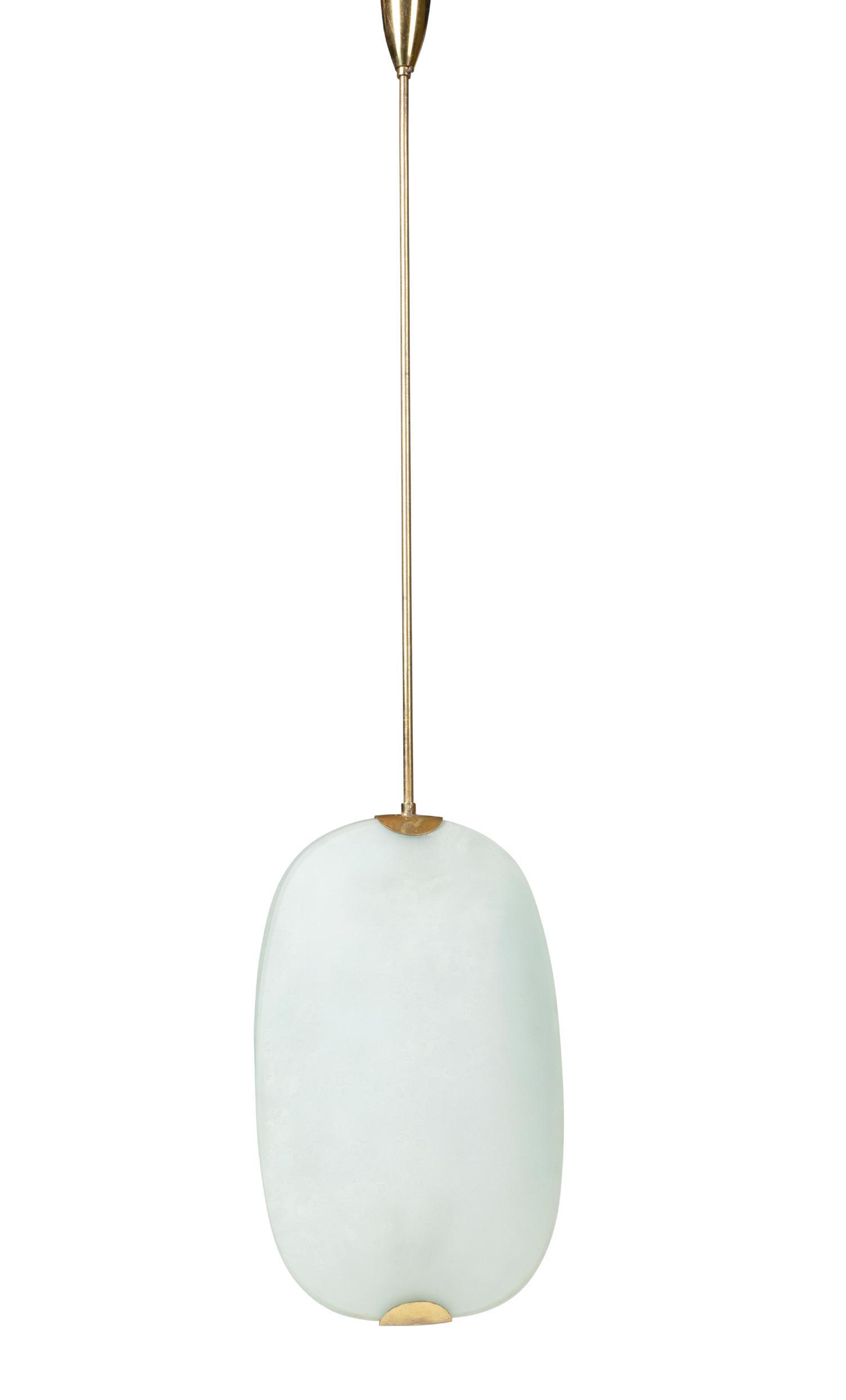
113.5cm drop, 23.5cm wide (44 3/4in drop, 9 1/4in wide)
Literature: Deboni, Franco, Fontana Arte: Gio Ponti, Pietra Chiesa, Max Ingrand, Umberto Allemandi & Co., Turin, 2012, fig. 15 for examples of this model in a shop window display of the Fontana Arte store in Milan, Carnival 1956. £2,000-3,000
20 MAX INGRAND (FRENCH 1908-1969)
FOR FONTANA ARTE
WALL LIGHT
model no. 2254, nickel plated brass and glass 72cm high (18 3/8in high)
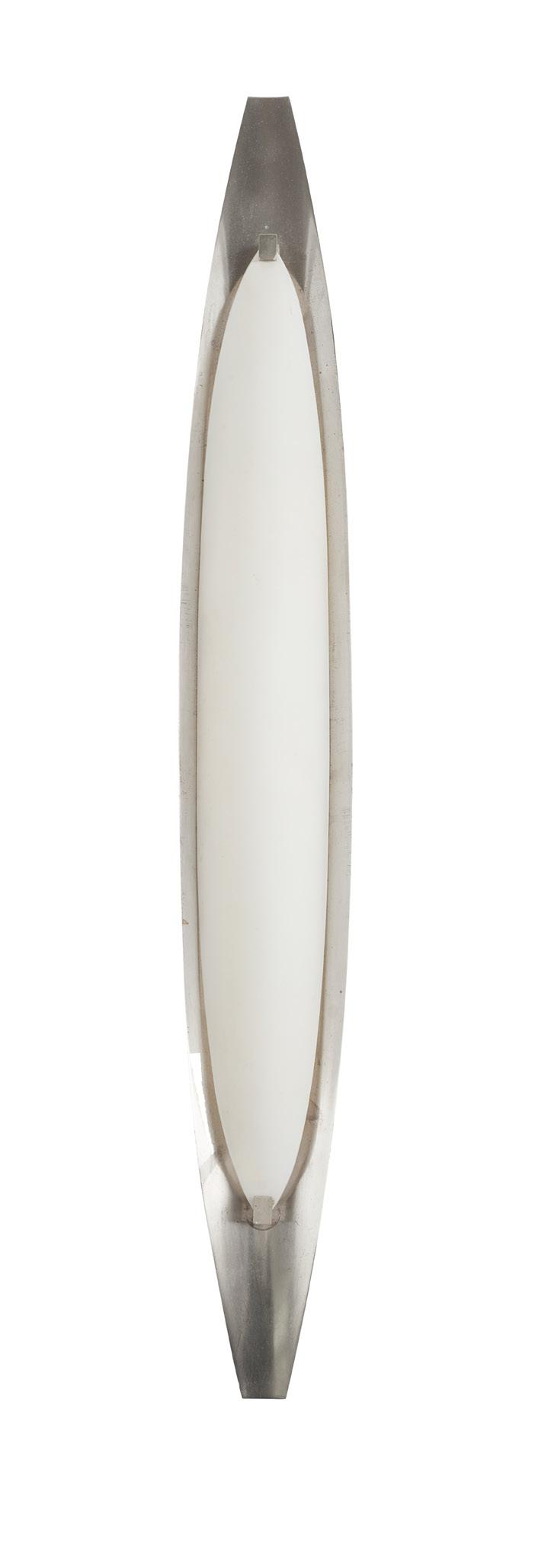
£1,500-2,500
At the forefront of modernity in interior décor, the Milanese manufacturer Fontana Arte was founded in 1932 by Luigi Fontana and Gio Ponti. The very name Fontana Arte reflects the fundamental values of the company, their innovations being a balance between art and industry, as well as functionality and design: Fontana Arte elevates the domestic to the artistic, bringing art into the centre of the home. Since its creation, the company has received multiple awards, including the Compasso d’Oro for Creativity (1998) and the Wallpaper Design Award (2022), both signalling the establishment as an agent of ingenuity in design. Notably the production periods of the company’s artistic designers trace a stylistic outline through 20th century design, from modernism to post-modernism; the artistic directors include Gio Ponti, Pietro Chiesa, Max Ingrand and Gae Aulenti. Today, the company is deemed one of the most influential Italian design firms, synthesising functionality and decorative interior design.
25 Other fees apply in addition to the hammer price: see the ‘Buyer’s Guide’ section on page 6
MAX INGRAND (FRENCH 1908-1969) FOR FONTANA ARTE
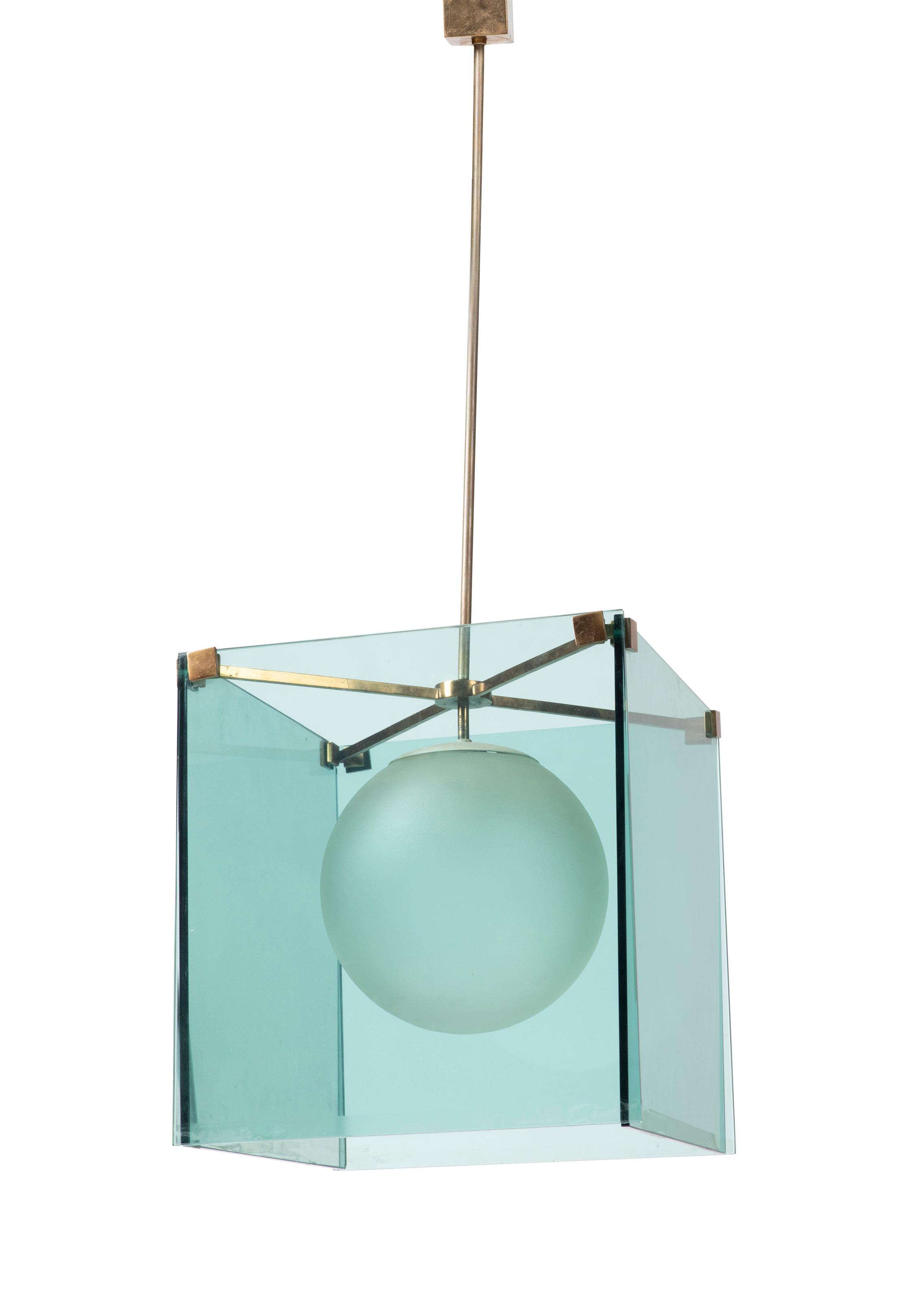
21
CEILING LIGHT model no. 2073, coloured glass, frosted glass and brass 104.5cm drop, 39cm wide, 39cm deep (41 1/8in drop, 15 3/8in wide, 15 3/8in deep) £1,500-2,000 26 Other fees apply in addition to the hammer price: see the ‘Buyer’s Guide’ section on page 6
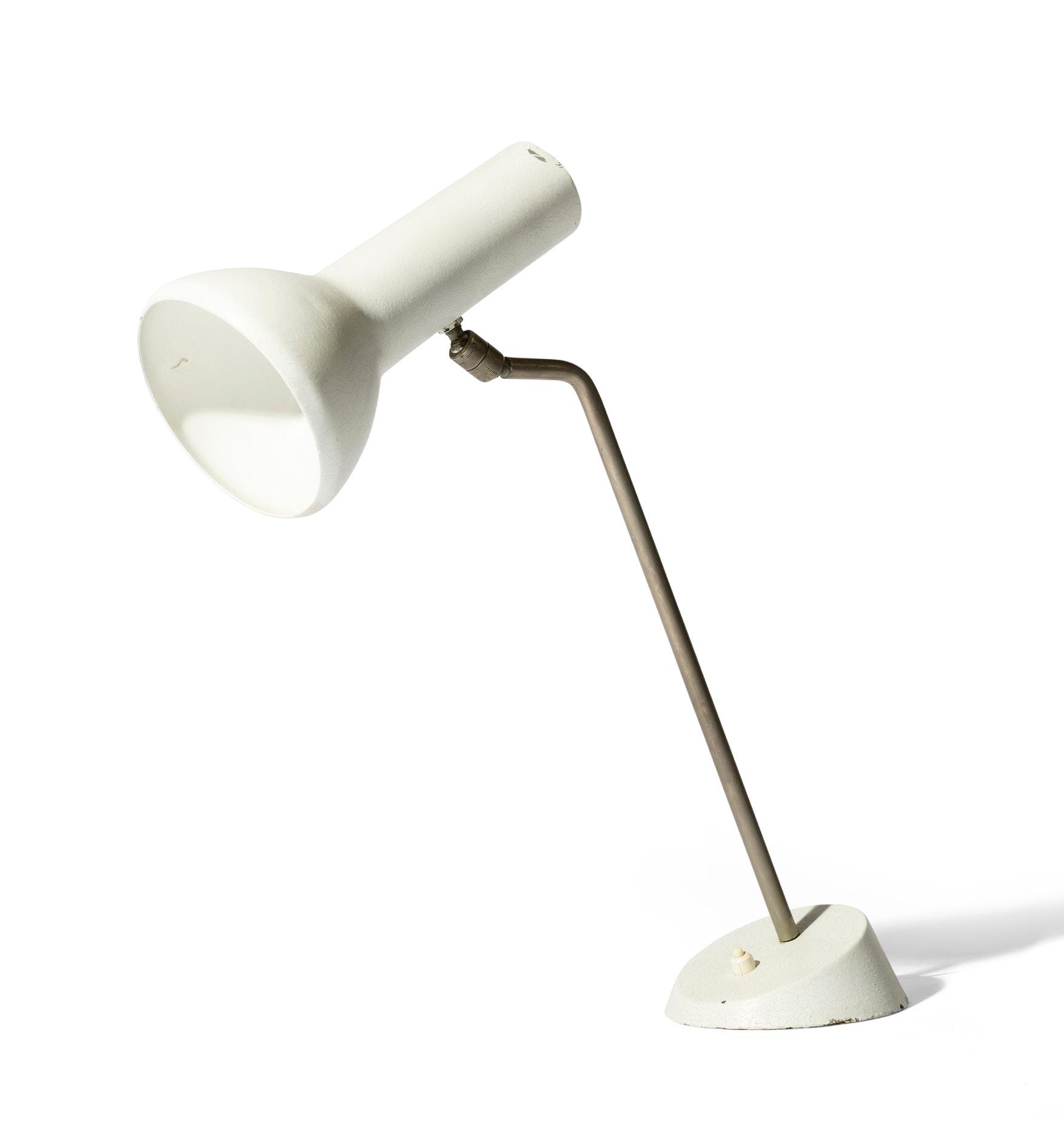
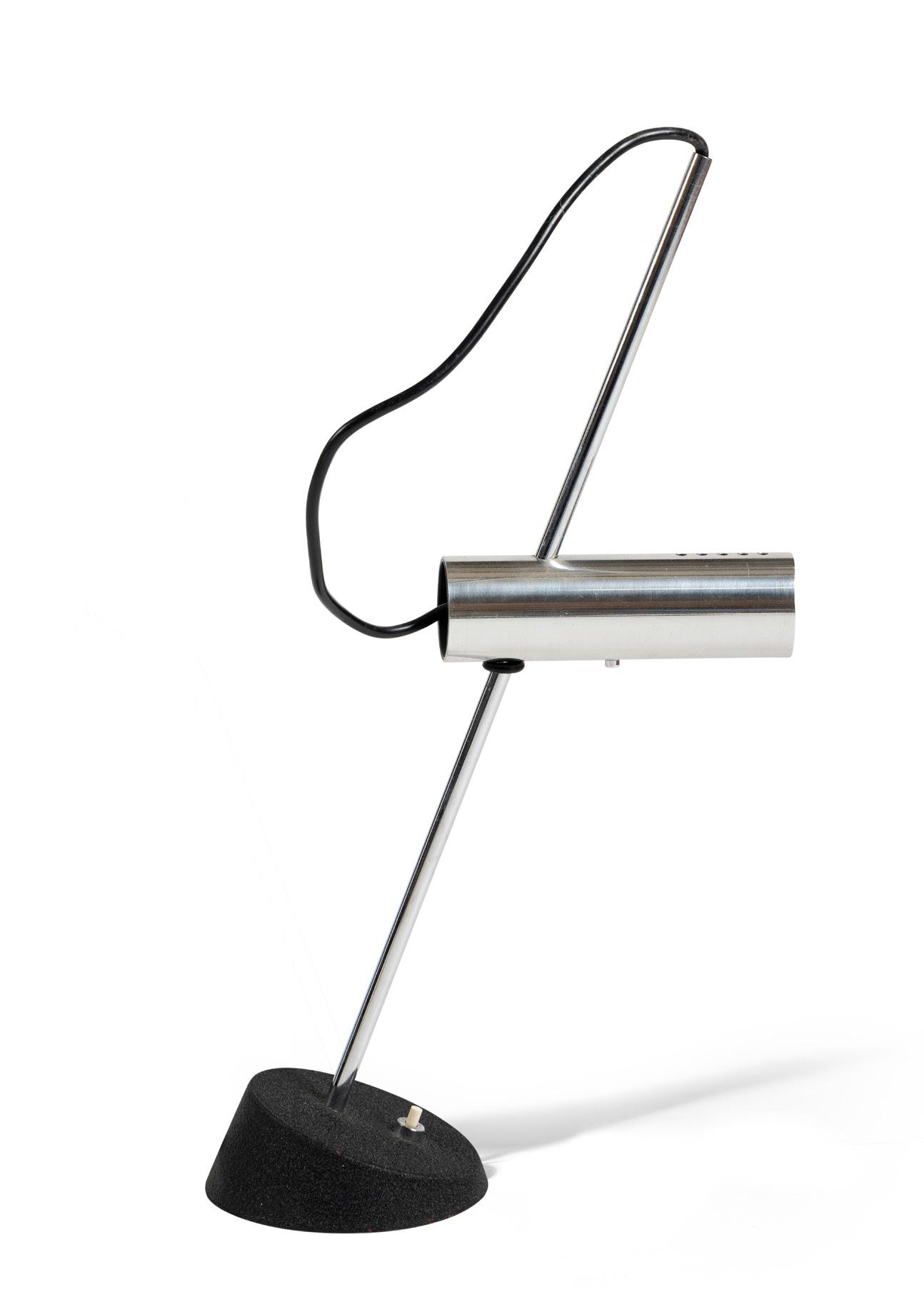
GINO SARFATTI (ITALIAN 1912-1985) FOR ARTELUCE
TABLE LAMP, CIRCA 1956
model no. 566, enamelled steel and aluminium 50cm high (19 3/8in high)
Literature: Romanelli, Marco and Sandra Severi, Gino Sarfatti: selected works 1938-1973, Milan, 2012, pp. 278-9.
In model 566 Sarfatti recalled the principle that ‘operational lamps must tilt the light source towards the user’ and it was one of the first to use the Cornalux bulb, whose distinctive feature was the triangular light beam, considered by Sarfatti to be the most suitable for lighting a working space. It also had the added feature of making the wire part of the design. (Romanelli, p. 279)
GINO SARFATTI (ITALIAN 1912-1985) FOR ARTELUCE
TABLE LAMP, DESIGNED 1960
model no. 581, painted aluminium, chromium plated metal and iron 47cm high (18 1/2in high)
Literature: Romanelli, Marco and Sandra Severi, Gino Sarfatti: selected works 1938-1973, Milan, 2012, p.435.
22
£1,500-2,000 23
£2,000-3,000 27
ANGELO OSTUNI (ITALIAN 20TH CENTURY) AND RENATO FORTI (ITALIAN 20TH CENTURY) FOR O-LUCE FLOOR LAMP, DESIGNED 1958 model no. 397, enamelled black metal with yellow flexi-shade 140.5cm high (55 1/4in high)
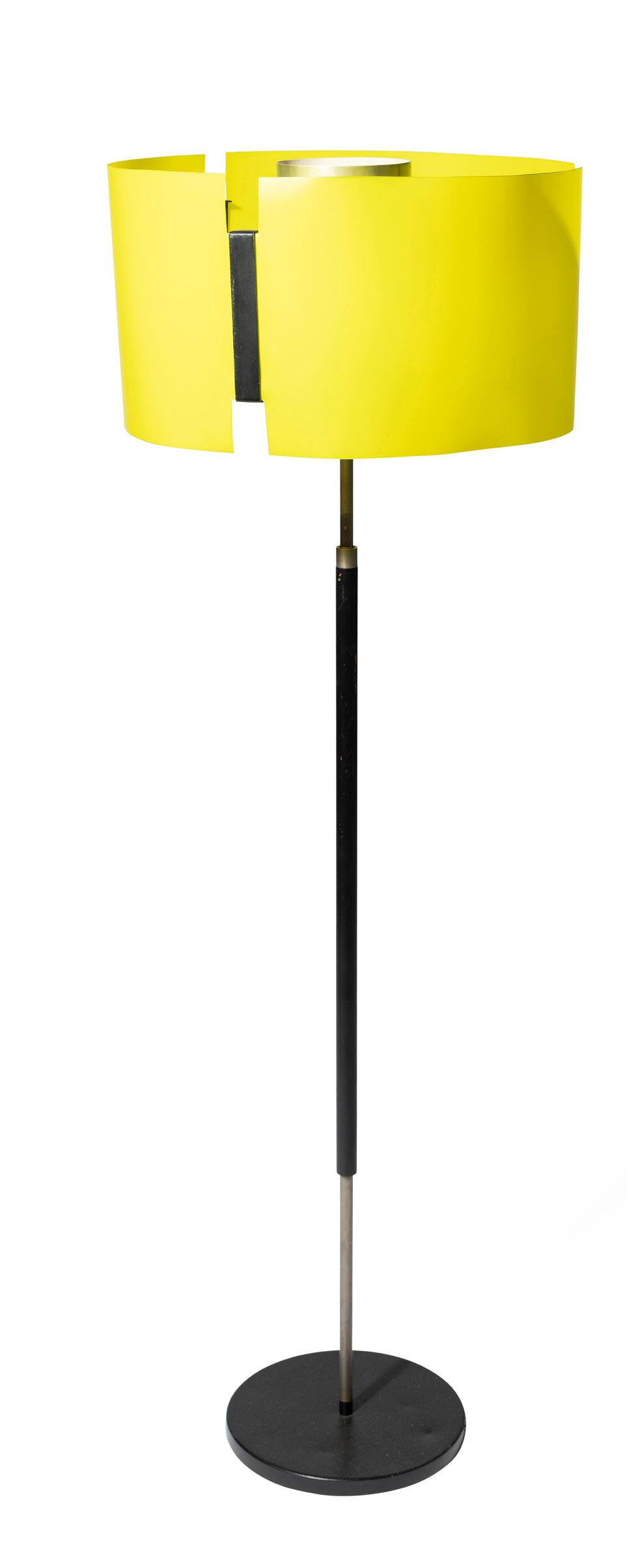
Literature: Braeuniger, Thomas, O-LUCE di Giuseppe Ostuni, volume II, Lumi Press, pp. 3523 (another example illustrated). £2,000-3,000
25
STILNOVO, ITALY
FLOOR LAMP, CIRCA 1955 enamelled metal, brass and marble 186cm high (73 1/4in high) £4,000-6,000
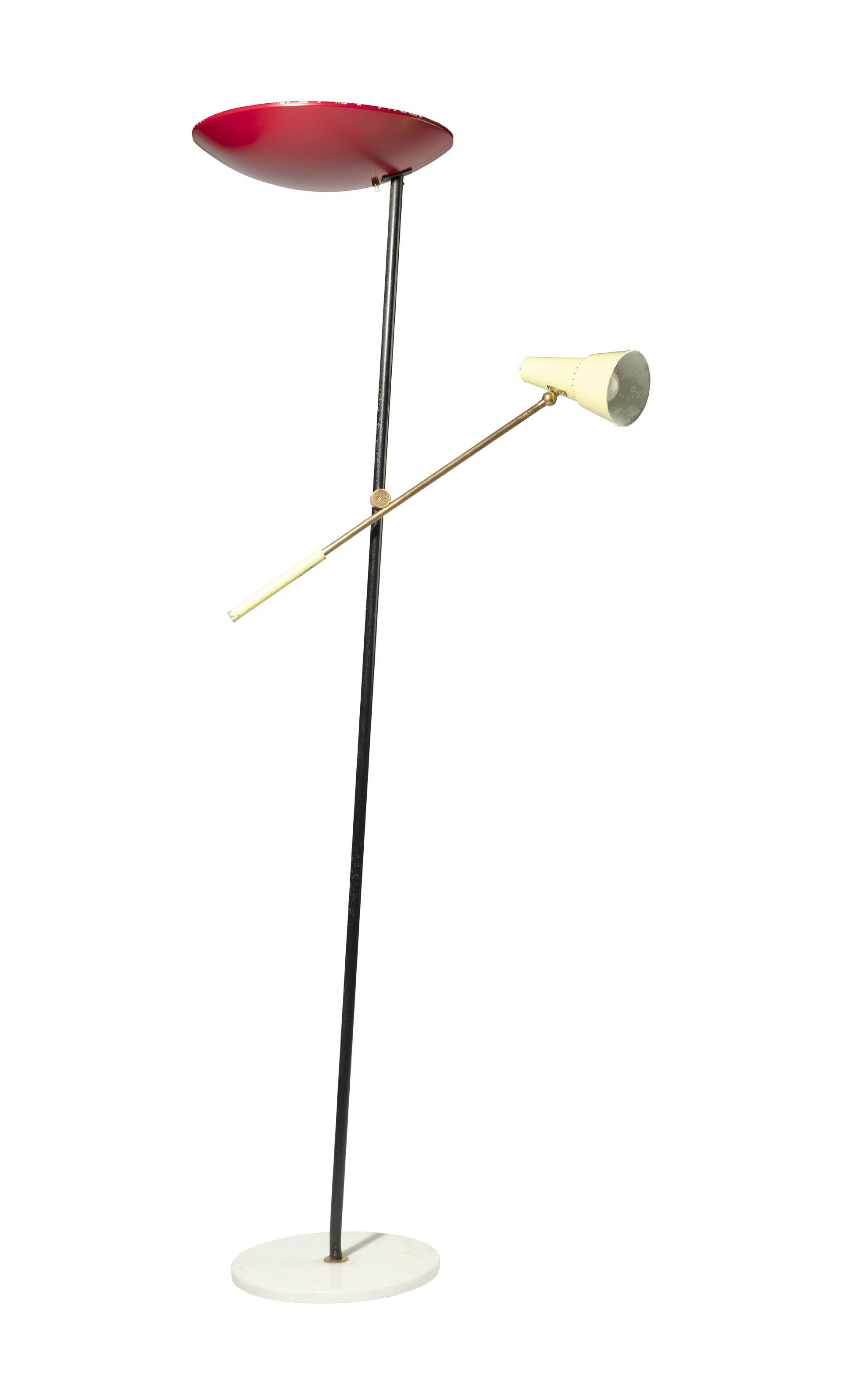
24
28
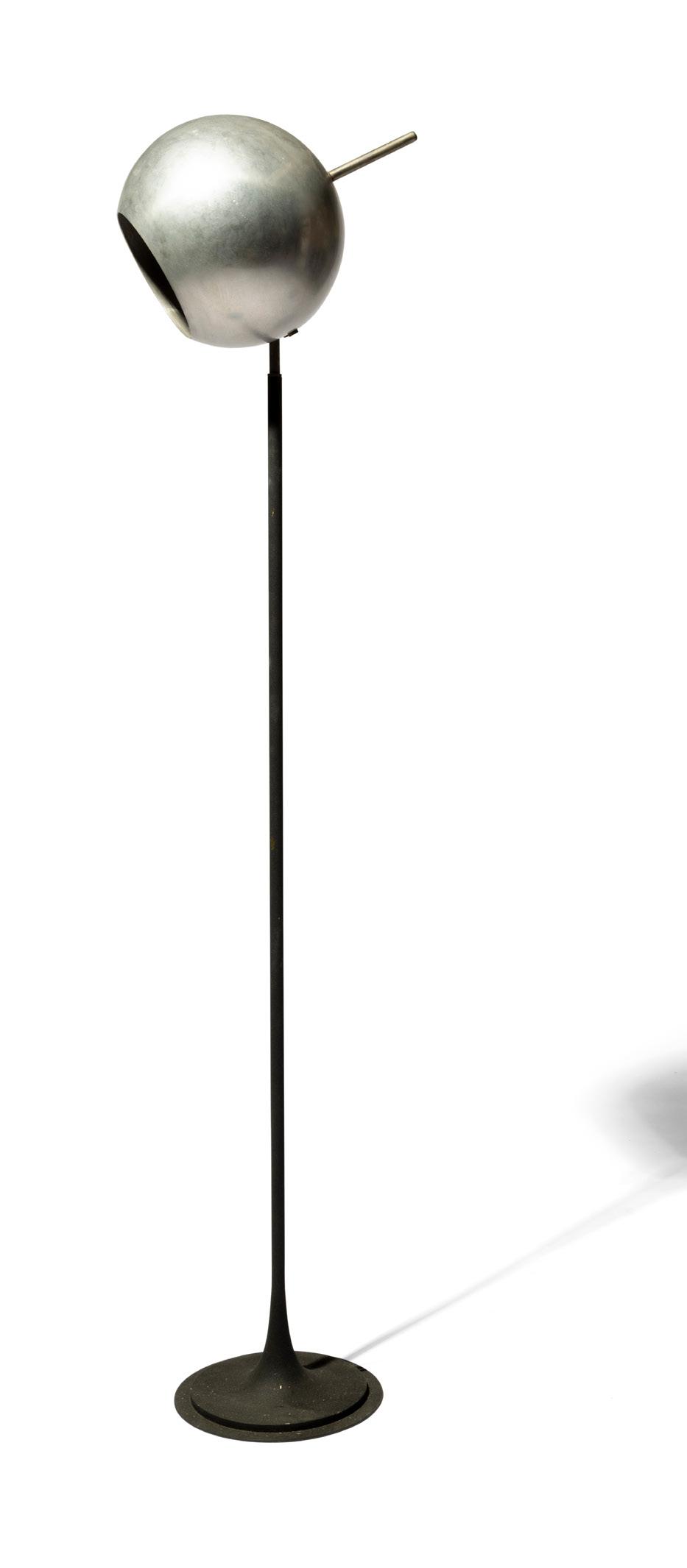
GINO SARFATTI (ITALIAN 1912-1985) FOR ARTELUCE
FLOOR LAMP,
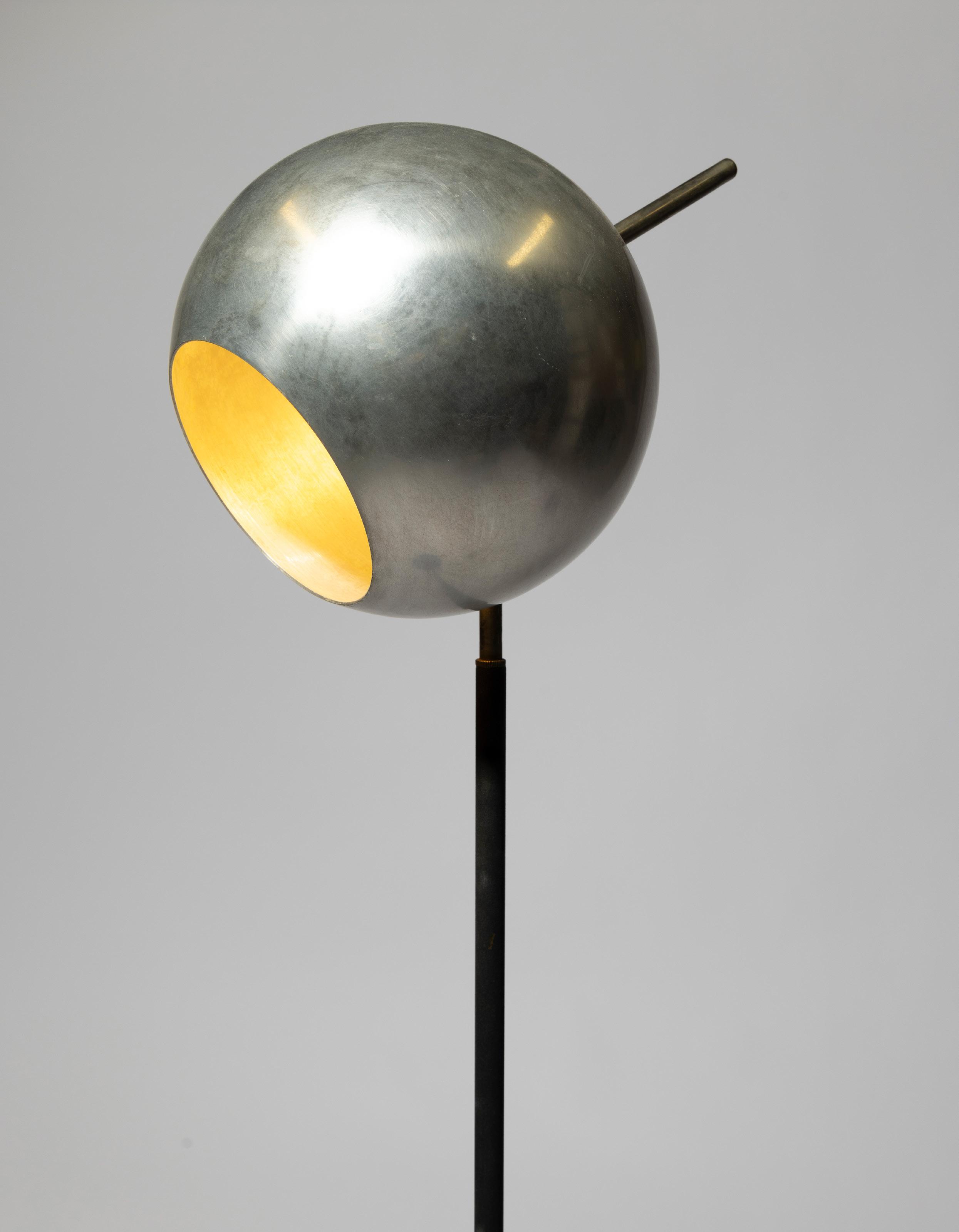
26
DESIGNED 1962 model no. 1082, aluminium and enamelled steel 120cm high (47 1/4in high) Literature: Romanelli, Marco and Sandra Severi, Gino Sarfatti: selected works 1938-1973, Milan, 2012, p. 456. £3,000-5,000 29 Other fees apply in addition to the hammer price: see the ‘Buyer’s Guide’ section on page 6
27
GRUPPO A.R.D.I.T.I, NUCLEO FOR SORMANI
‘PRISMAR’ TABLE LAMP, DESIGNED 1972 smoked glass, mirrored glass and enamelled steel 35.3cm high, 31.5cm wide, 31.5cm deep (13 7/8in high, 12 3/8in wide, 12 3/8in deep) £800-1,200
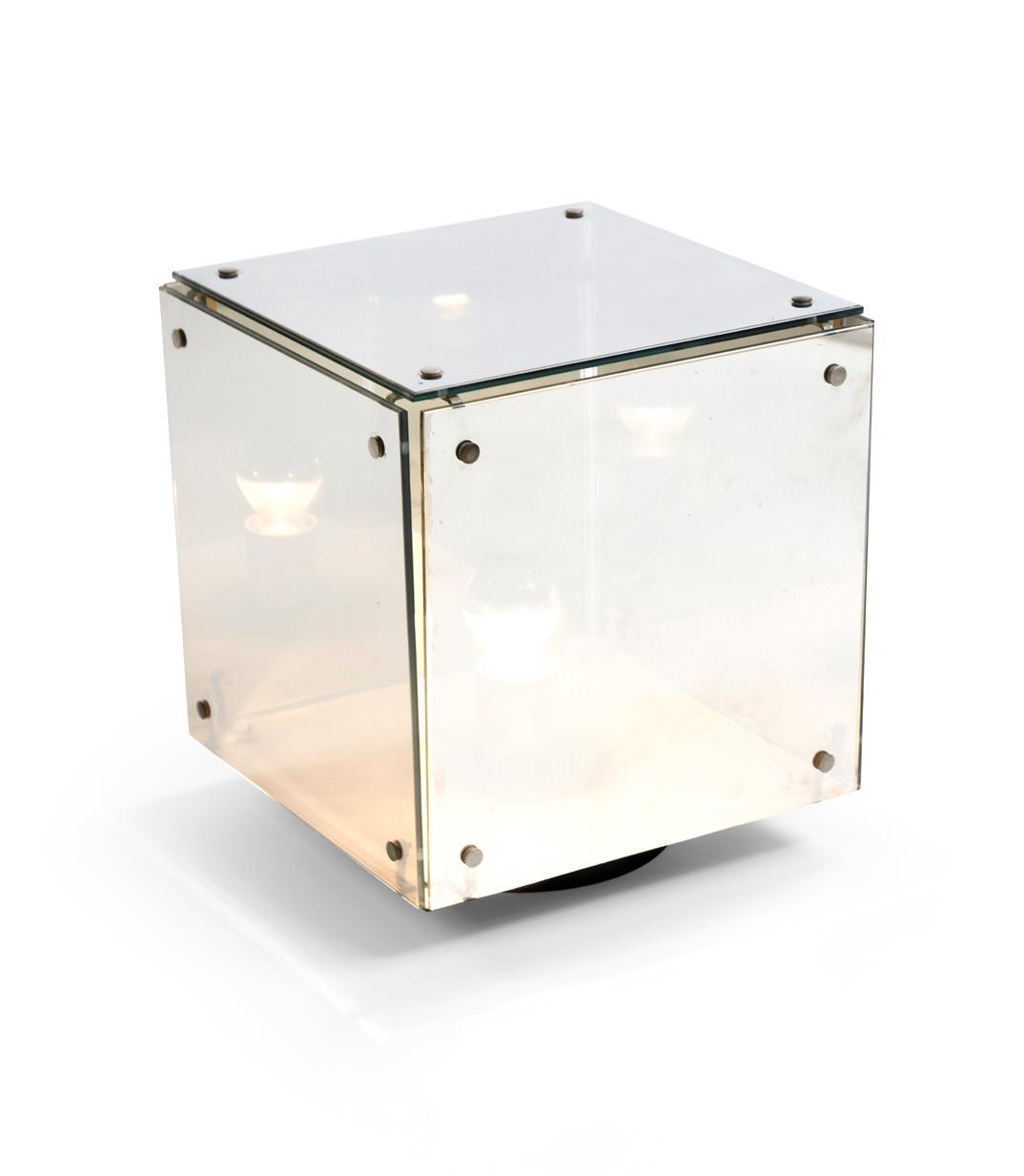
28 STILUX
‘ORLEANS’ DESK LAMP, DESIGNED 1955 ‘Stilux Milano’ label, perspex, metal and marble 48.5cm diameter (19in diameter) £400-600
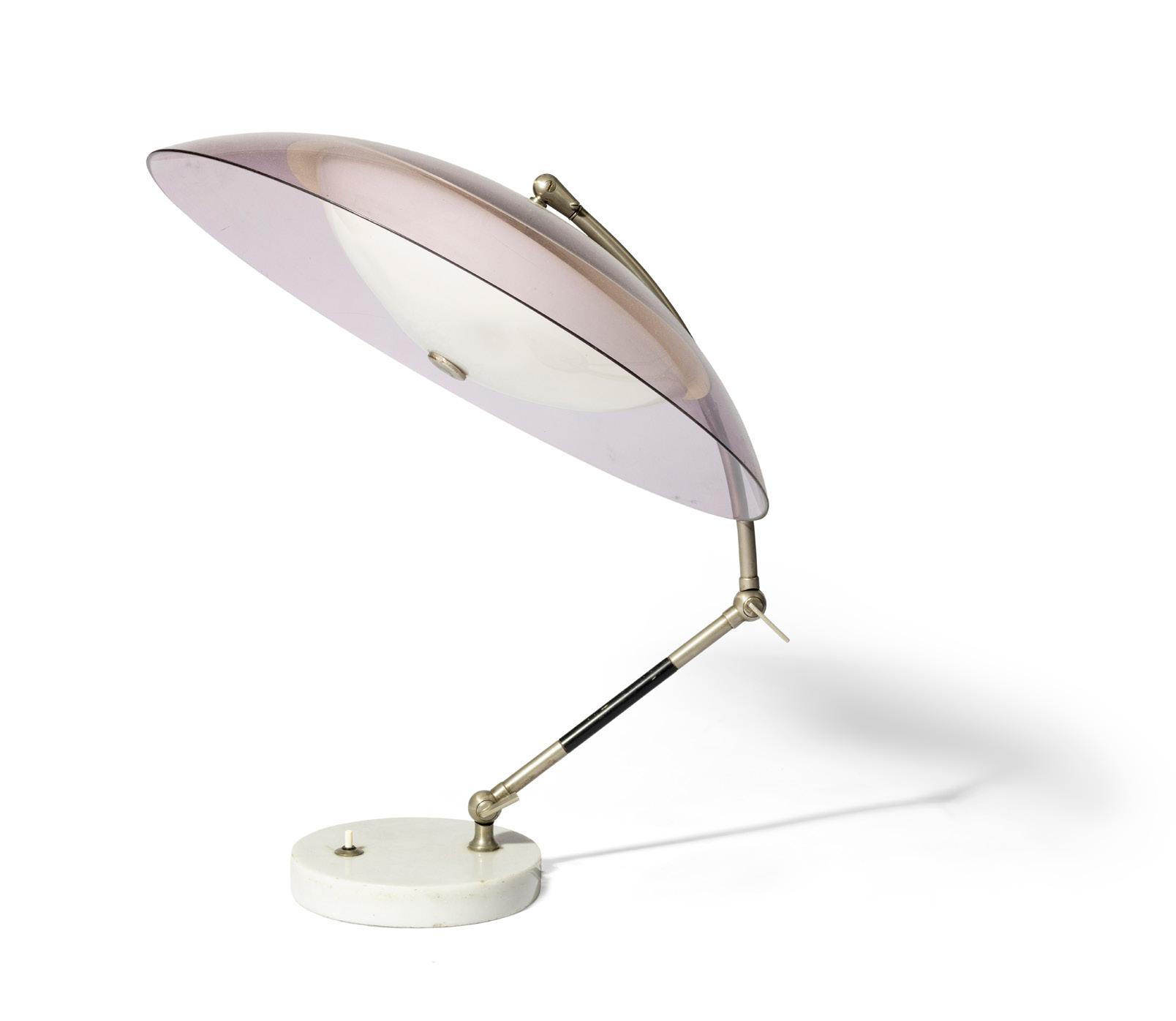
29
ACHILLE CASTIGLIONI (ITALIAN 1918-2002) FOR FLOS
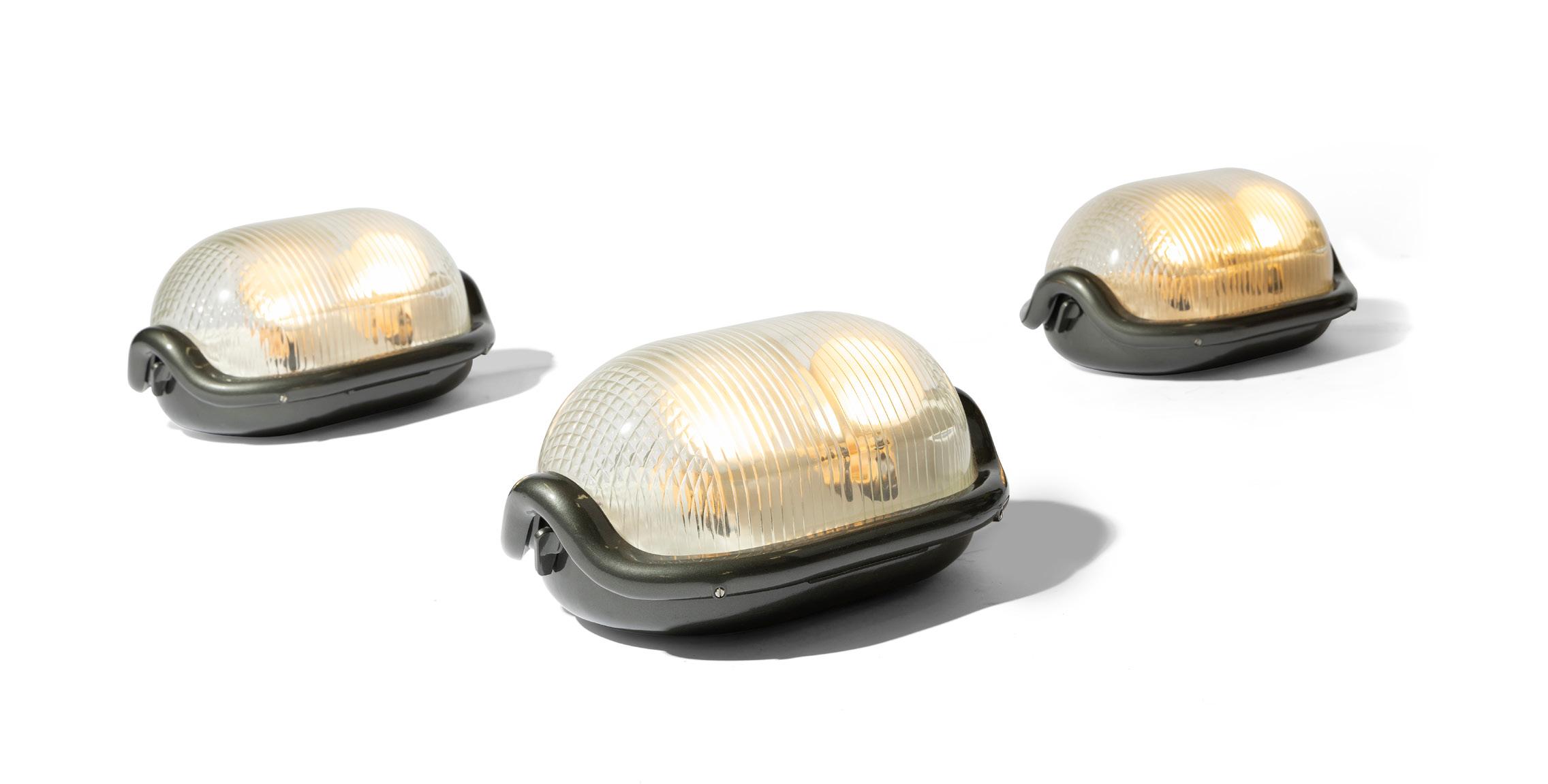
THREE ‘NOCE’ FLOOR LIGHTS, DESIGNED 1972 each with manufacturer’s mark (to reverse), aluminium, pressed glass (3) each 37cm long (14 1/2in long) £300-500
30
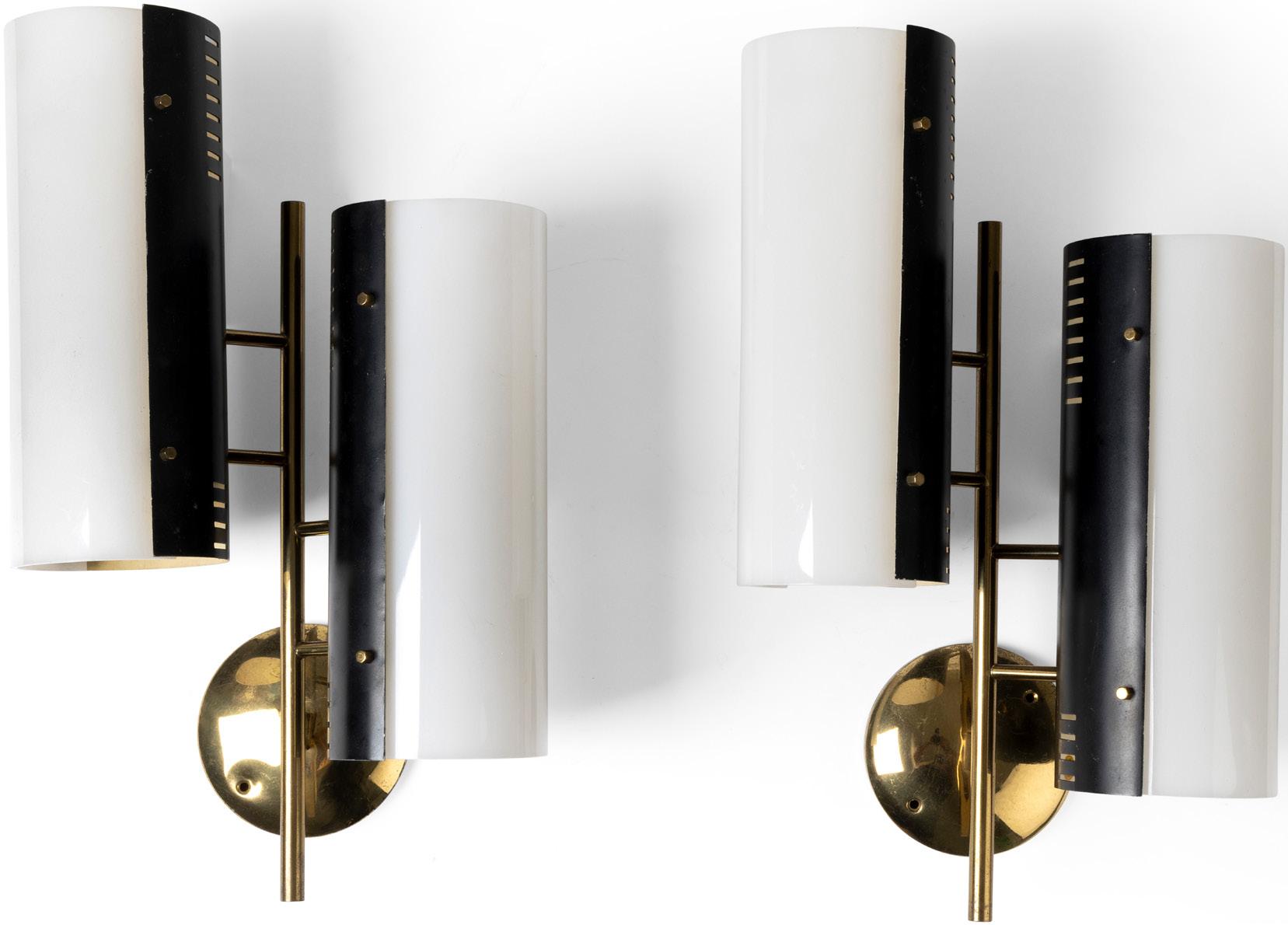
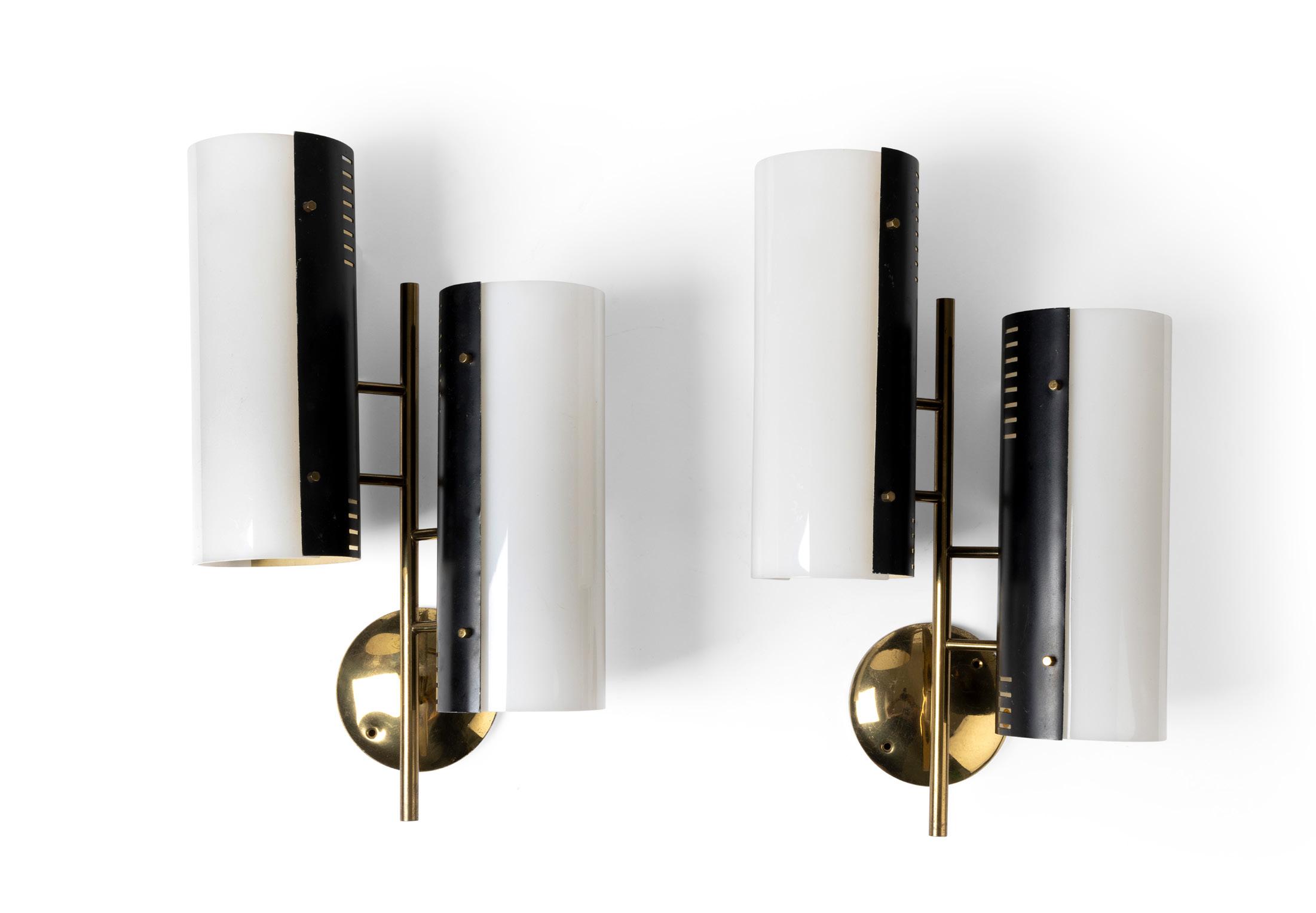
30 STILNOVO
PAIR OF WALL LIGHTS each with manufacturer’s label, perspex, brass and lacquered metal (2) 44.5cm high, 27.5cm wide (17 1/2in high, 10 7/8in wide) £1,500-2,000
VICO MAGISTRETTI (ITALIAN 1920-2006) FOR OLUCE ATOLLO TABLE LAMP, DESIGNED 1977 manufacturer’s label, black lacquered metal
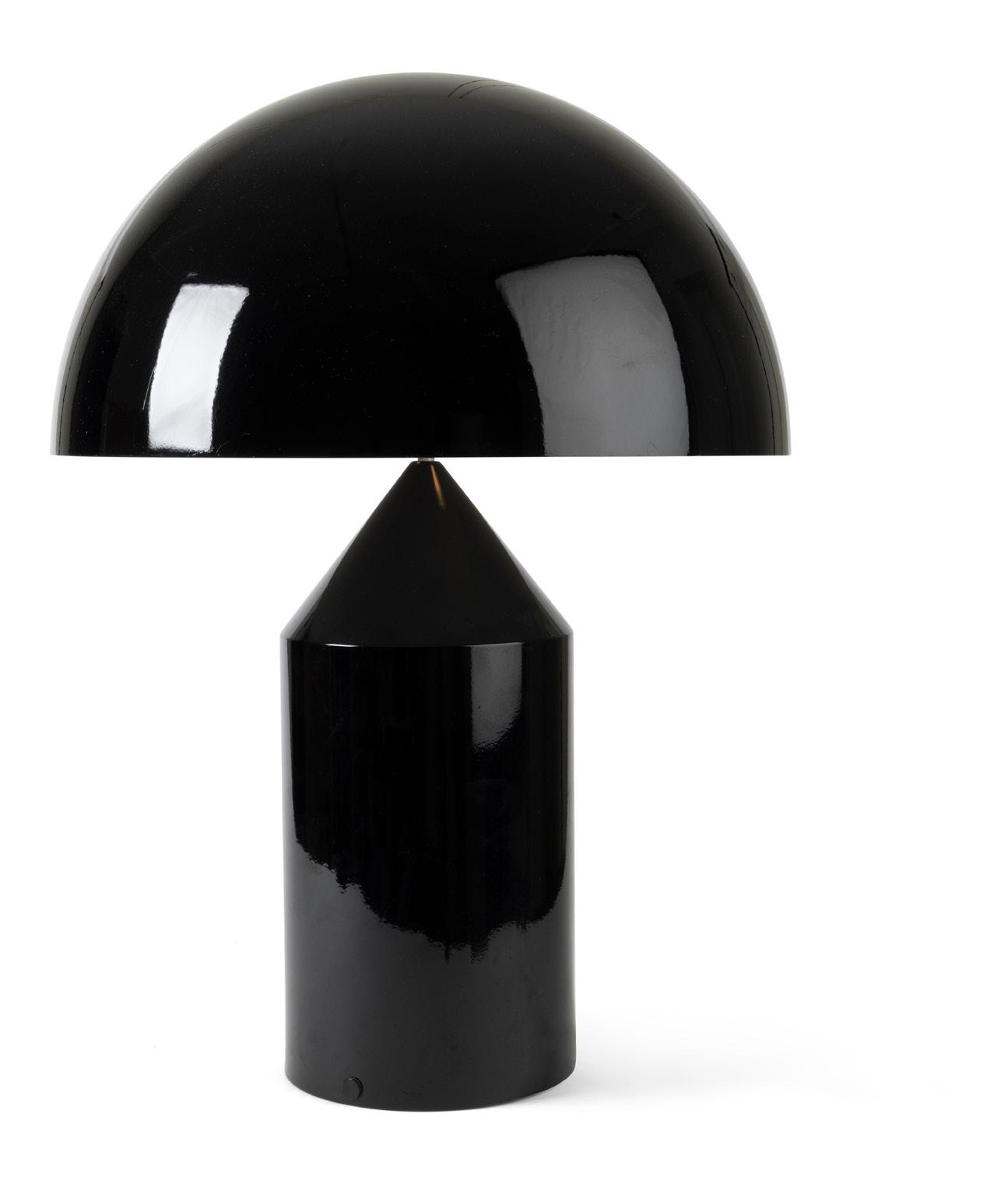
31 Other fees apply in addition to the hammer price: see the ‘Buyer’s Guide’ section on page 6
MARCEL BREUER
“I thought that this out of all my work would bring me the most criticism. It is my most extreme work both in its outward appearance and in the use of materials; it is the least artistic, the most logical, the least ‘cosy’ and the most mechanical”.
Marcel Breuer
32
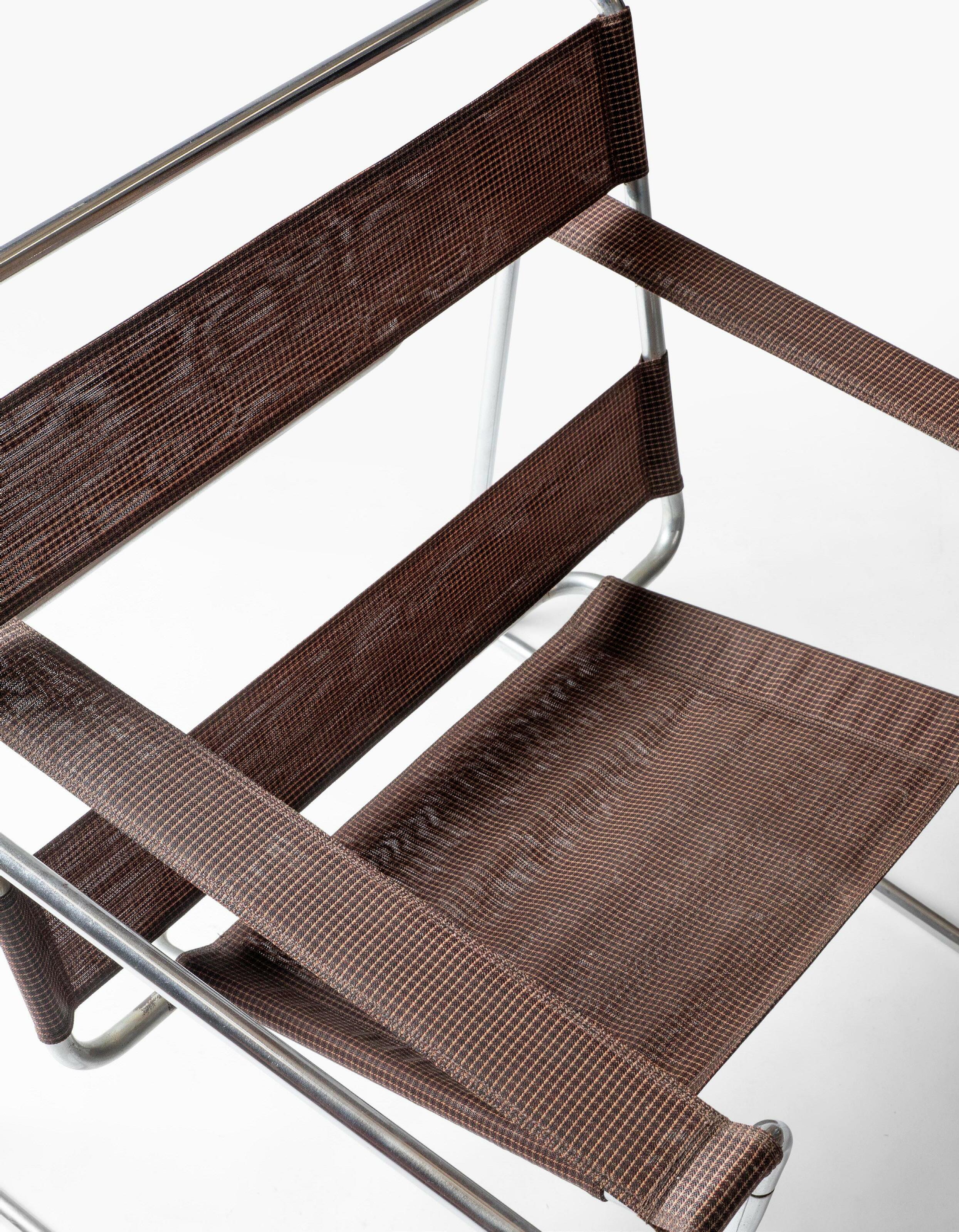
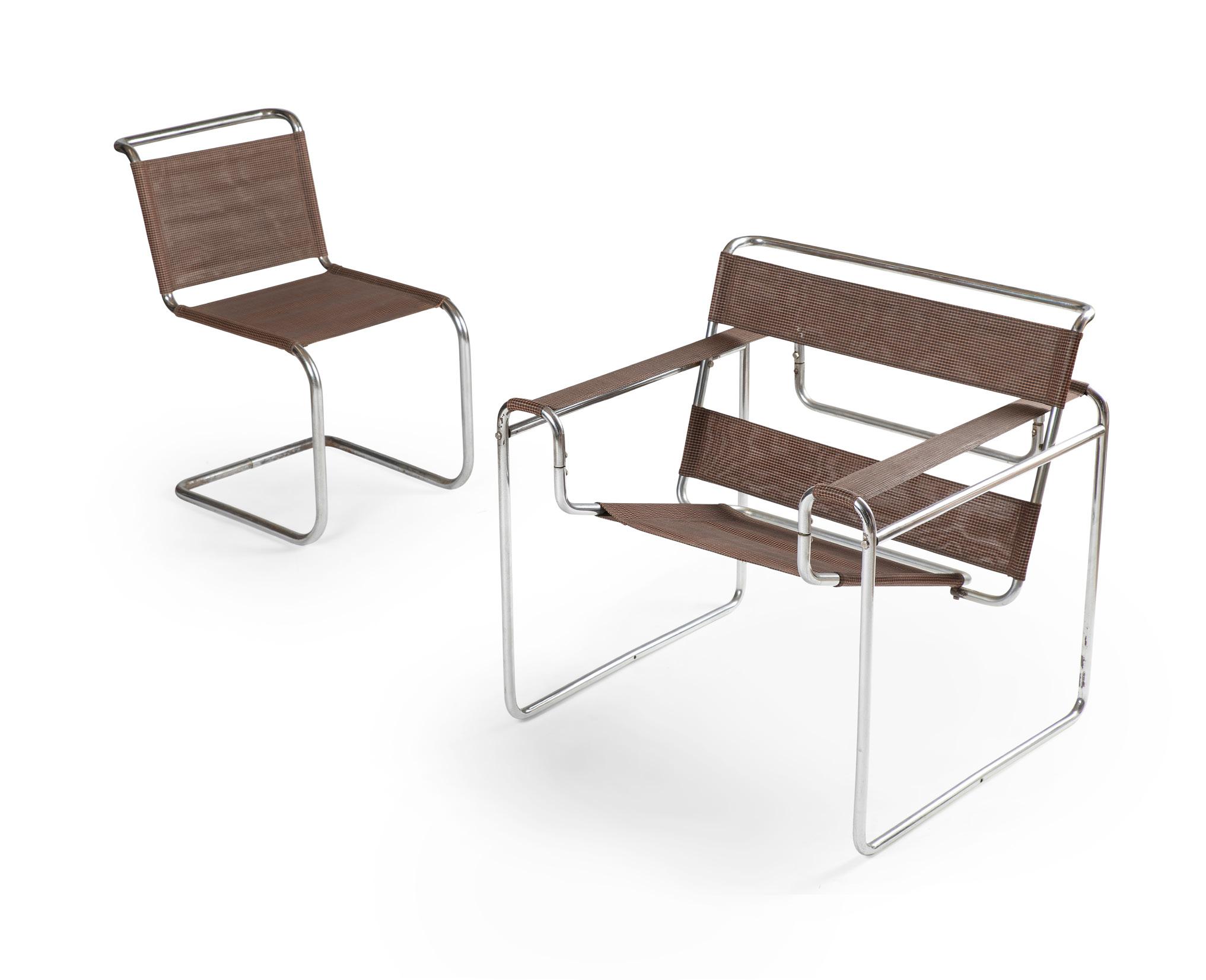
MARCEL BREUER (HUNGARIAN 1902-1981) FOR THONET
‘B3’ CLUB CHAIR, DESIGNED 1925-7 AND ‘B33’ SIDE CHAIR
tubular steel frames, slung with Tygan, 1930s production (2)
Club Chair: 75.5cm high, 74cm wide (29 3/4in high, 29in wide); Side Chair: 78.7cm high, 47cm wide (31in high, 18 1/2in wide)
Provenance: Collection of Zeev Aram, London since the 1960s.
£700-900
Marcel Breuer first developed the design for the ‘B3’ or ‘Wassily’ Chair in 1925, taking ‘the pipe dimensions…from my bicycle. I didn’t know where else to get it or how to figure it out’. Over a period Breuer developed the chair from the original version which connected the side legs in a sled or runner arrangement, to the later version where the uprights are connected in an uninterrupted design. By the 1930s Thonet modified Breuer’s design without his permission, as they held copyright, by altering the frame at the front edge of the seat and adding a floor stretcher to stabilise the form.
33
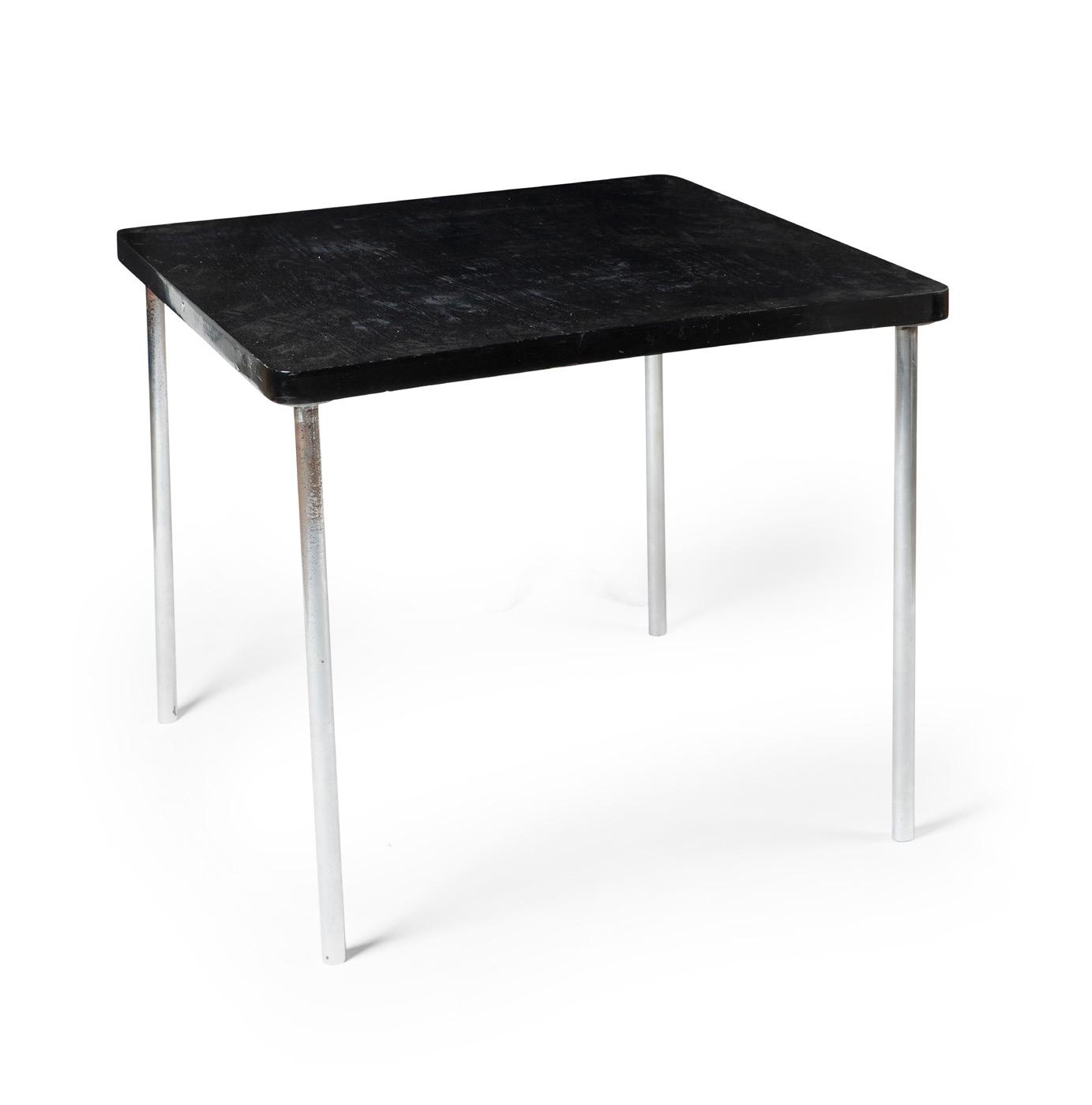
MARCEL BREUER (HUNGARIAN 1902-1981) FOR THONET
‘B14’ TABLE
manufacturer’s metal circular disc label, laminated wood and tubular steel 75cm high, 90cm wide, 90cm deep (29 1/2in high, 35 1/2in wide, 35 1/2in deep) £1,500-2,000
33 Other fees apply in addition to the hammer price: see the ‘Buyer’s Guide’ section on page 6
ALVAR AALTO

From the early 1930s the Finnish architect and designer Alvar Aalto was inspired by the Bauhaus designers to experiment with tubular metal. However, he progressively opted to utilise natural materials rather than industrial ones and particularly favoured birch wood from the forests in Finland, which he used in a laminated form. The angular and geometric forms of earlier Modernism were replaced by the Mid-Century organic curves that have come to characterise so much Scandinavian design and so appealed to the American and British markets. One particular individual who was evidently inspired by his work was the British designer Gerald Summers, who viewed the exhibition of Aalto’s work at Fortnum & Masons in 1933.
34
ALVAR AALTO (FINNISH 1898-1976) FOR THE PAIMIO SANITORIUM
SIDE TABLE, DESIGNED 1932 painted tubular steel and wood, ward markings (to the underside of top)
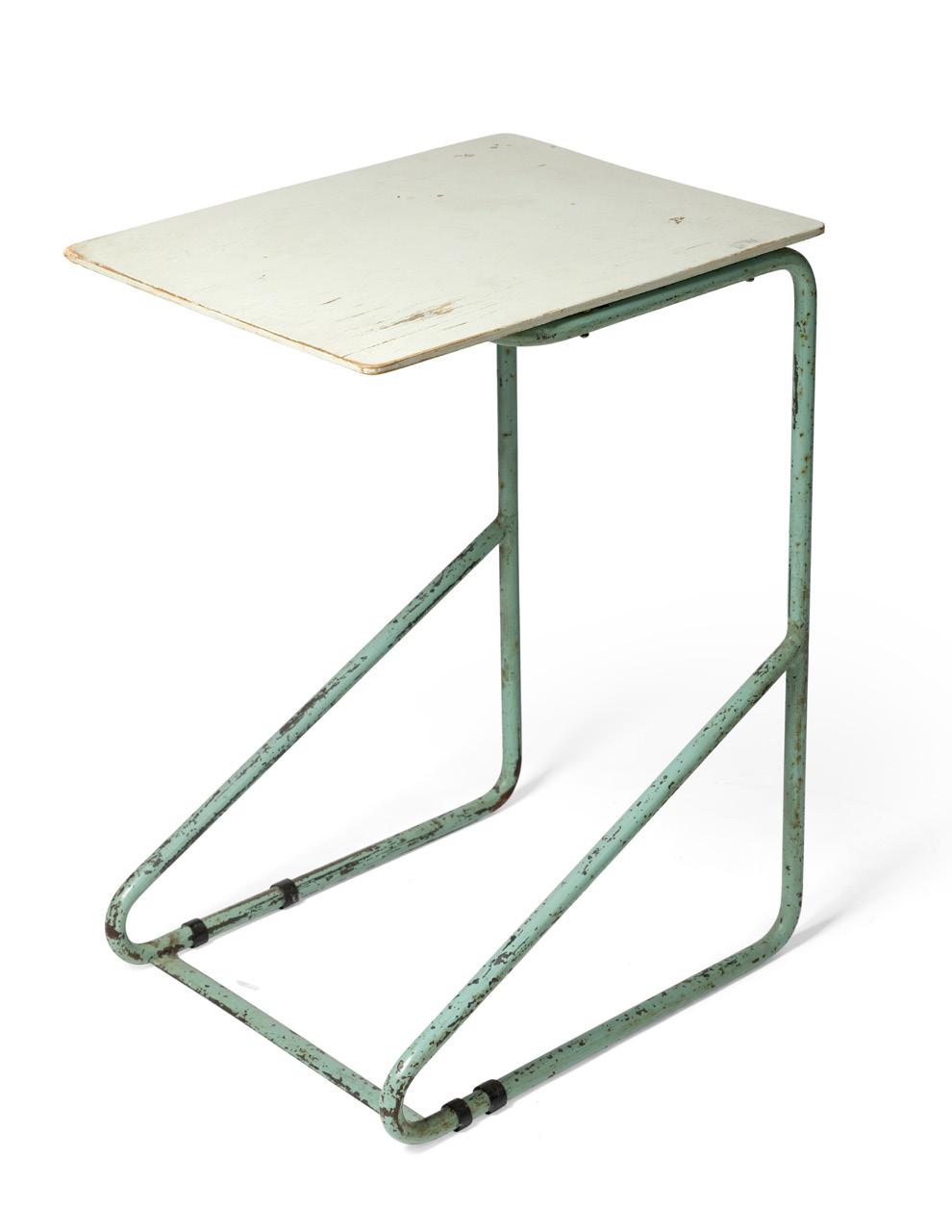
76.5cm high, 45cm wide, 55cm deep (30 1/8in high, 17 3/4in wide, 21 5/8in deep)
£1,500-2,000
35
ALVAR AALTO (FINNISH 18981976) FOR ARTEK, FINLAND
SCREEN, DESIGNED 1936-7, PRODUCED 1950s
model no. 100, white painted pine 150cm high, 192cm wide (59in high, 75 1/2in wide) fully extended
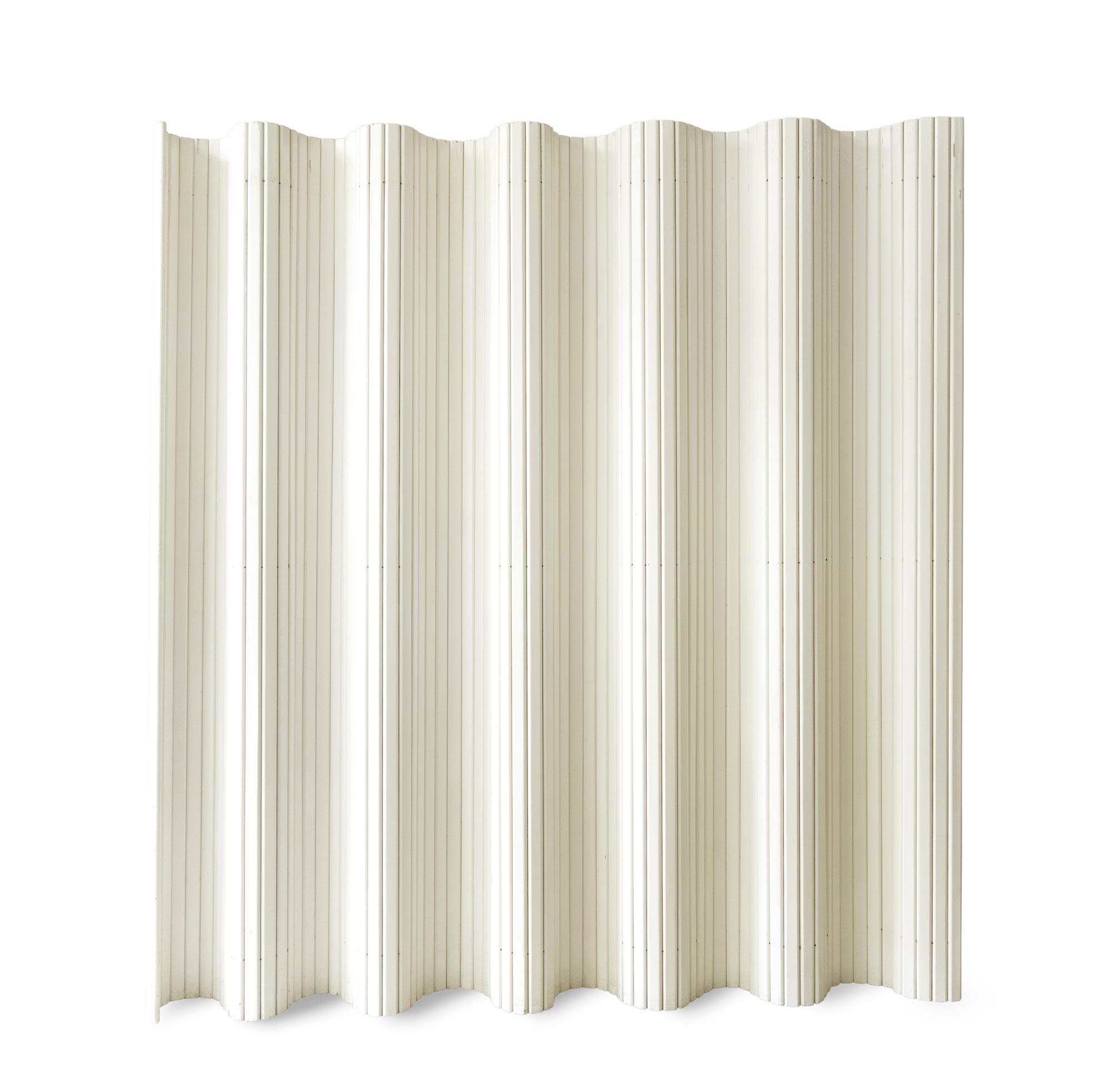
Provenance: Jackson Design AB, Stockholm where acquired by the current vendor.
£1,500-2,000
35 Other fees apply in addition to the hammer price: see the ‘Buyer’s Guide’ section on page 6
36
ALVAR AALTO (FINNISH 1898-1976) FOR FINMAR
ARMCHAIR, DESIGNED 1933
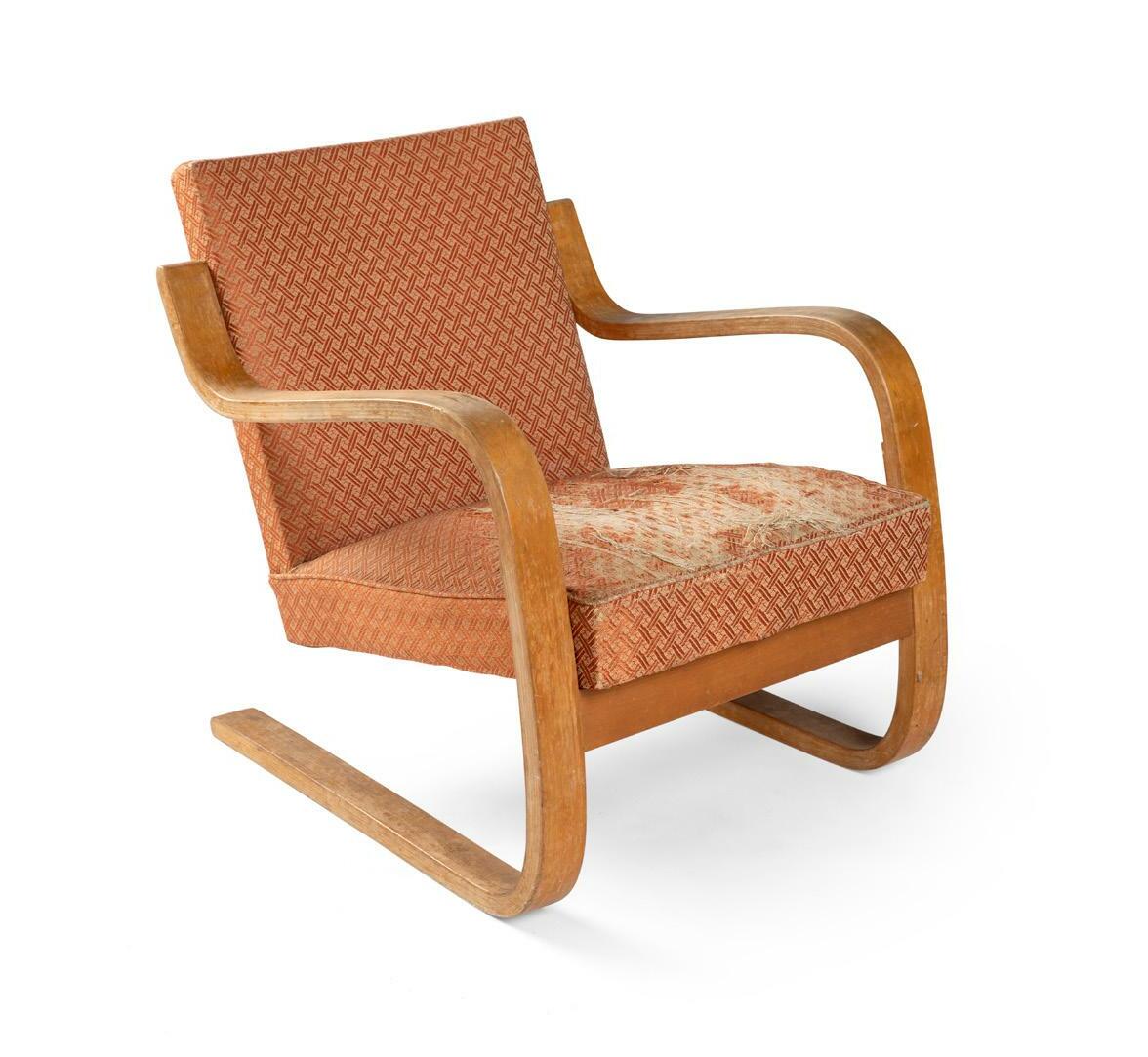
model no. 402, retailer’s label (to underside), laminated birch, fabric 66cm high, 60cm wide (26in high, 23 5/8in wide)
Provenance: Collection of Zeev Aram, London. £800-1,200
37
ALVAR AALTO (FINNISH 1898-1976) FOR FINMAR ARMCHAIR, DESIGNED 1932
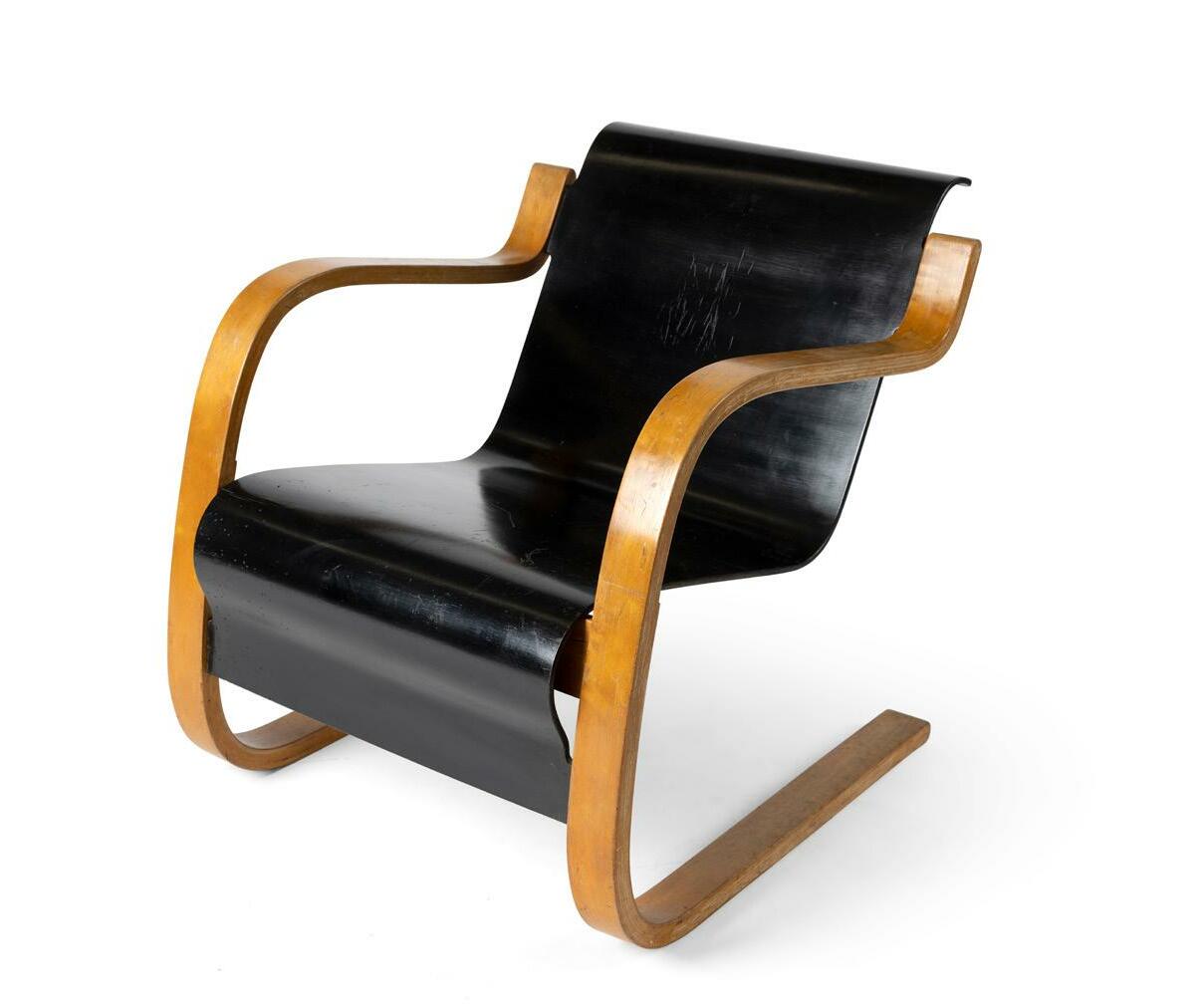
model no. 31, retailer’s label (to underside), laminated and ebonised birch 65cm high, 60cm wide (25 1/2in high, 23 5/8in wide)
Provenance: Collection of Zeev Aram, London. £1,000-2,000
38
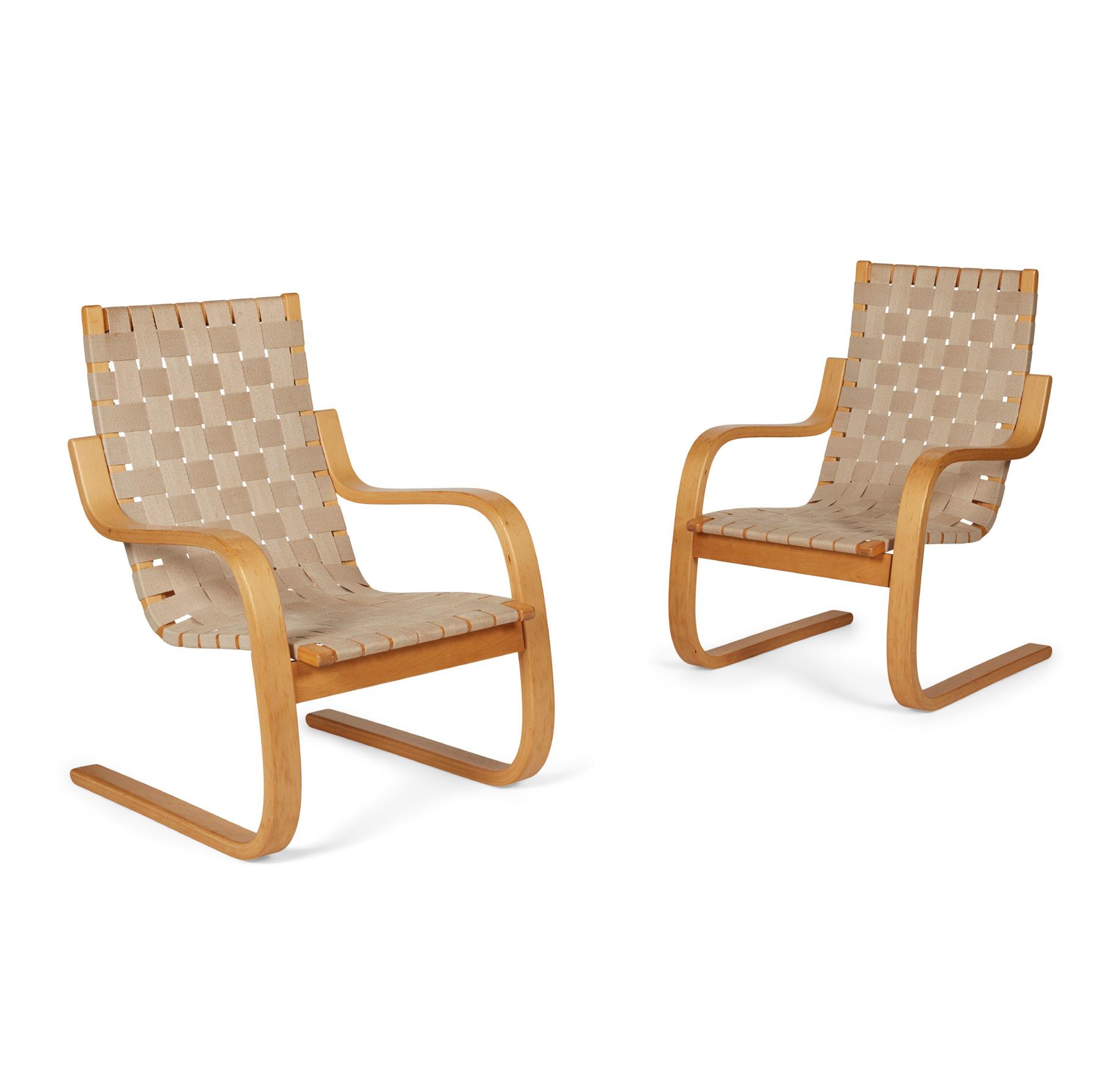
ALVAR AALTO (FINNISH 1898-1976)
PAIR OF ARMCHAIRS
model no. 406, stamped twice ‘14866’ and ‘15822’, laminated birch, and canvas webbing (2) 88.5cm high, 59cm wide, 68cm deep (34 7/8in high, 23 1/4in wide, 26 3/4in deep)
£400-600 36 Other fees apply in addition to the hammer price: see the ‘Buyer’s Guide’ section on page 6
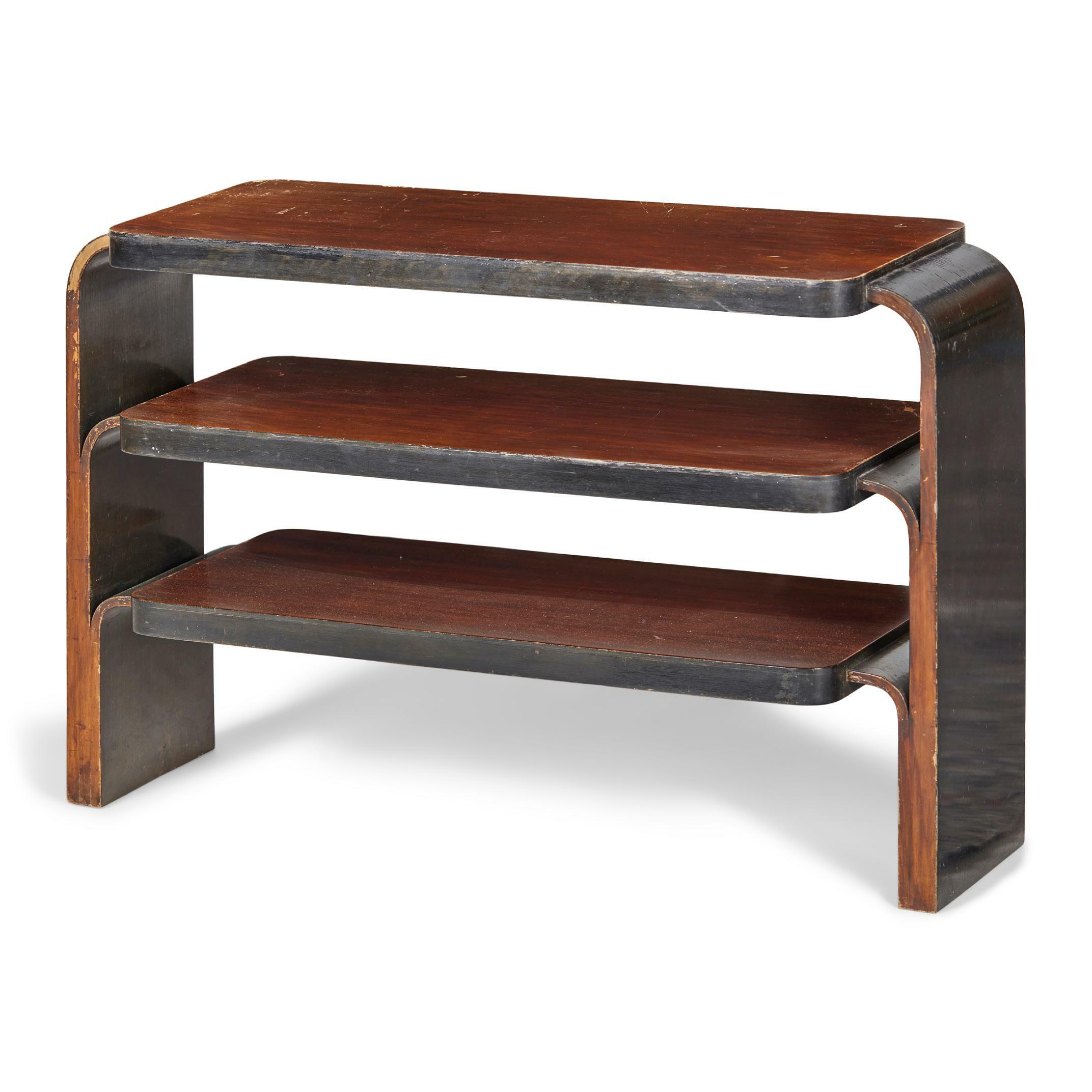
39 ALVAR AALTO (FINNISH 1898-1976) FOR FINMAR SHELF UNIT model no. 111, retailer’s label (to underside), laminated birch plywood 54cm high, 83cm wide, 30cm deep (21 1/4in high, 32 5/8in wide, 11 3/4in deep) £4,000-6,000 37
An Important Collection of Furniture by Gerald Summers
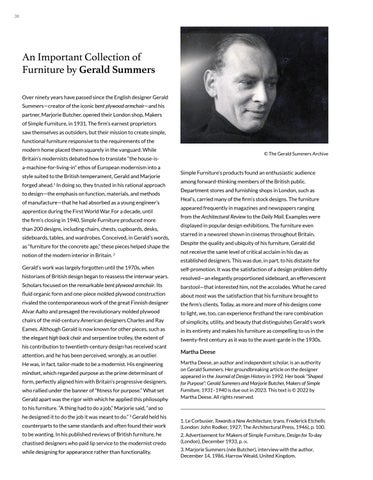
Over ninety years have passed since the English designer Gerald Summers—creator of the iconic bent plywood armchair—and his partner, Marjorie Butcher, opened their London shop, Makers of Simple Furniture, in 1931. The firm’s earnest proprietors saw themselves as outsiders, but their mission to create simple, functional furniture responsive to the requirements of the modern home placed them squarely in the vanguard. While Britain’s modernists debated how to translate “the house-isa-machine-for-living-in” ethos of European modernism into a style suited to the British temperament, Gerald and Marjorie forged ahead.1 In doing so, they trusted in his rational approach to design—the emphasis on function, materials, and methods of manufacture—that he had absorbed as a young engineer’s apprentice during the First World War. For a decade, until the firm’s closing in 1940, Simple Furniture produced more than 200 designs, including chairs, chests, cupboards, desks, sideboards, tables, and wardrobes. Conceived, in Gerald’s words, as “furniture for the concrete age,” these pieces helped shape the notion of the modern interior in Britain. 2
Gerald’s work was largely forgotten until the 1970s, when historians of British design began to reassess the interwar years. Scholars focused on the remarkable bent plywood armchair. Its fluid organic form and one-piece molded plywood construction rivaled the contemporaneous work of the great Finnish designer Alvar Aalto and presaged the revolutionary molded plywood chairs of the mid-century American designers Charles and Ray Eames. Although Gerald is now known for other pieces, such as the elegant high back chair and serpentine trolley, the extent of his contribution to twentieth-century design has received scant attention, and he has been perceived, wrongly, as an outlier. He was, in fact, tailor-made to be a modernist. His engineering mindset, which regarded purpose as the prime determinant of form, perfectly aligned him with Britain’s progressive designers, who rallied under the banner of “fitness for purpose.” What set Gerald apart was the rigor with which he applied this philosophy to his furniture. “A thing had to do a job,” Marjorie said, “and so he designed it to do the job it was meant to do.” 3 Gerald held his counterparts to the same standards and often found their work to be wanting. In his published reviews of British furniture, he chastised designers who paid lip service to the modernist credo while designing for appearance rather than functionality.
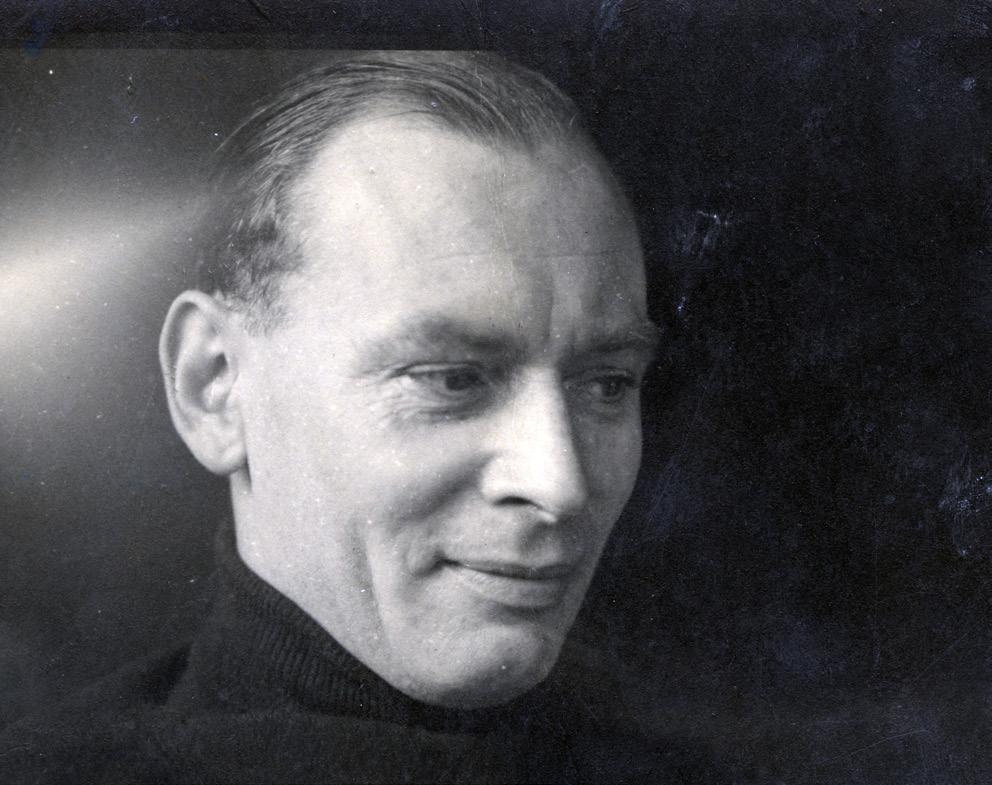
Simple Furniture’s products found an enthusiastic audience among forward-thinking members of the British public. Department stores and furnishing shops in London, such as Heal’s, carried many of the firm’s stock designs. The furniture appeared frequently in magazines and newspapers ranging from the Architectural Review to the Daily Mail. Examples were displayed in popular design exhibitions. The furniture even starred in a newsreel shown in cinemas throughout Britain. Despite the quality and ubiquity of his furniture, Gerald did not receive the same level of critical acclaim in his day as established designers. This was due, in part, to his distaste for self-promotion. It was the satisfaction of a design problem deftly resolved—an elegantly proportioned sideboard, an effervescent barstool—that interested him, not the accolades. What he cared about most was the satisfaction that his furniture brought to the firm’s clients. Today, as more and more of his designs come to light, we, too, can experience firsthand the rare combination of simplicity, utility, and beauty that distinguishes Gerald’s work in its entirety and makes his furniture as compelling to us in the twenty-first century as it was to the avant-garde in the 1930s.
Martha Deese
Martha Deese, an author and independent scholar, is an authority on Gerald Summers. Her groundbreaking article on the designer appeared in the Journal of Design History in 1992. Her book “Shaped for Purpose”: Gerald Summers and Marjorie Butcher, Makers of Simple Furniture, 1931–1940 is due out in 2023. This text is © 2022 by Martha Deese. All rights reserved.
1. Le Corbusier, Towards a New Architecture, trans. Frederick Etchells (London: John Rodker, 1927; The Architectural Press, 1946), p. 100.
2. Advertisement for Makers of Simple Furniture, Design for To-day (London), December 1933, p. ix
3. Marjorie Summers (née Butcher), interview with the author, December 14, 1986, Harrow Weald, United Kingdom.
© The Gerald Summers Archive
38
GERALD SUMMERS
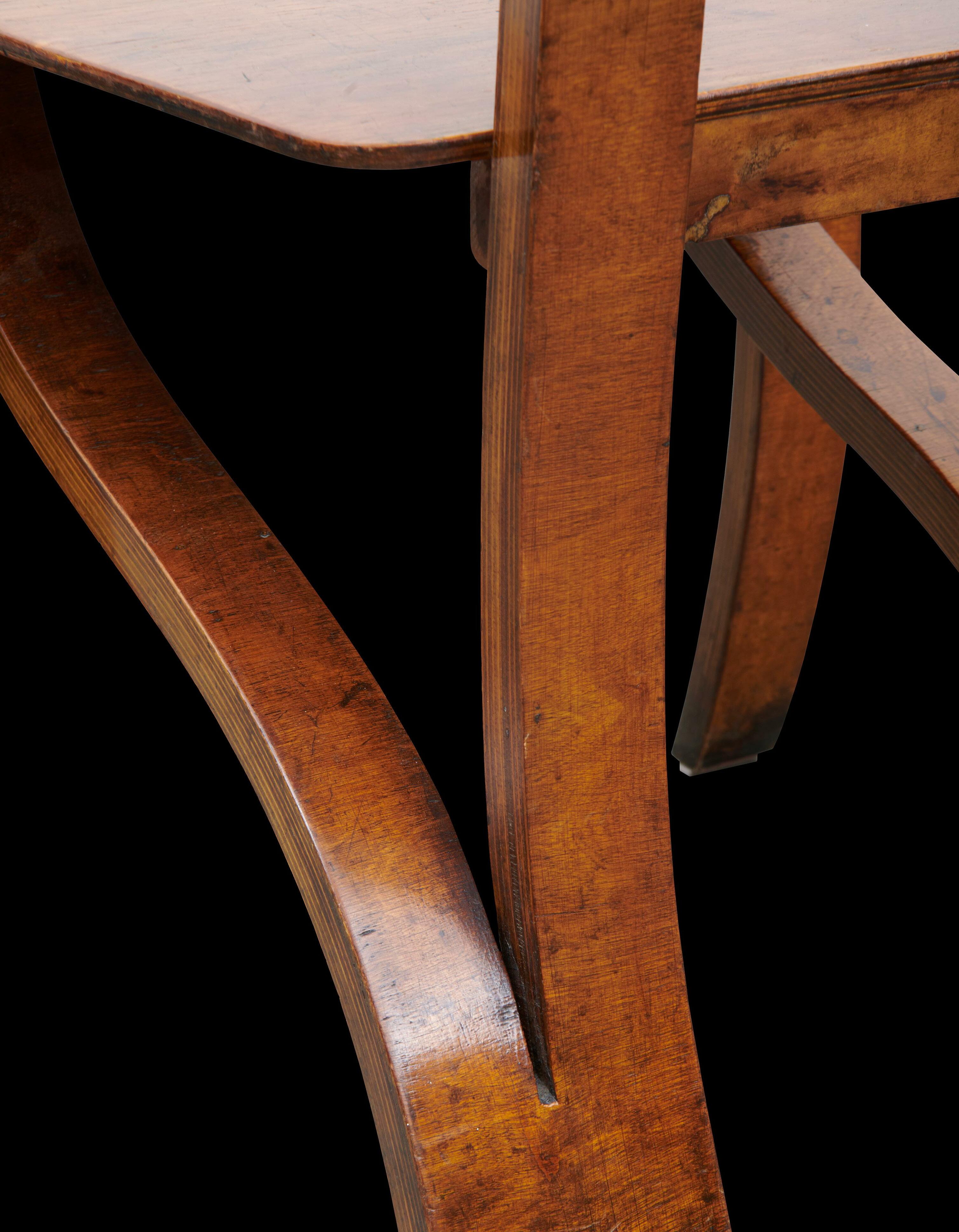
Lot 62 [detail]
40 GERALD SUMMERS
(BRITISH 1899-1967) FOR MAKERS OF SIMPLE FURNITURE TWO-TIERED OCCASIONAL TABLE, CIRCA 1934
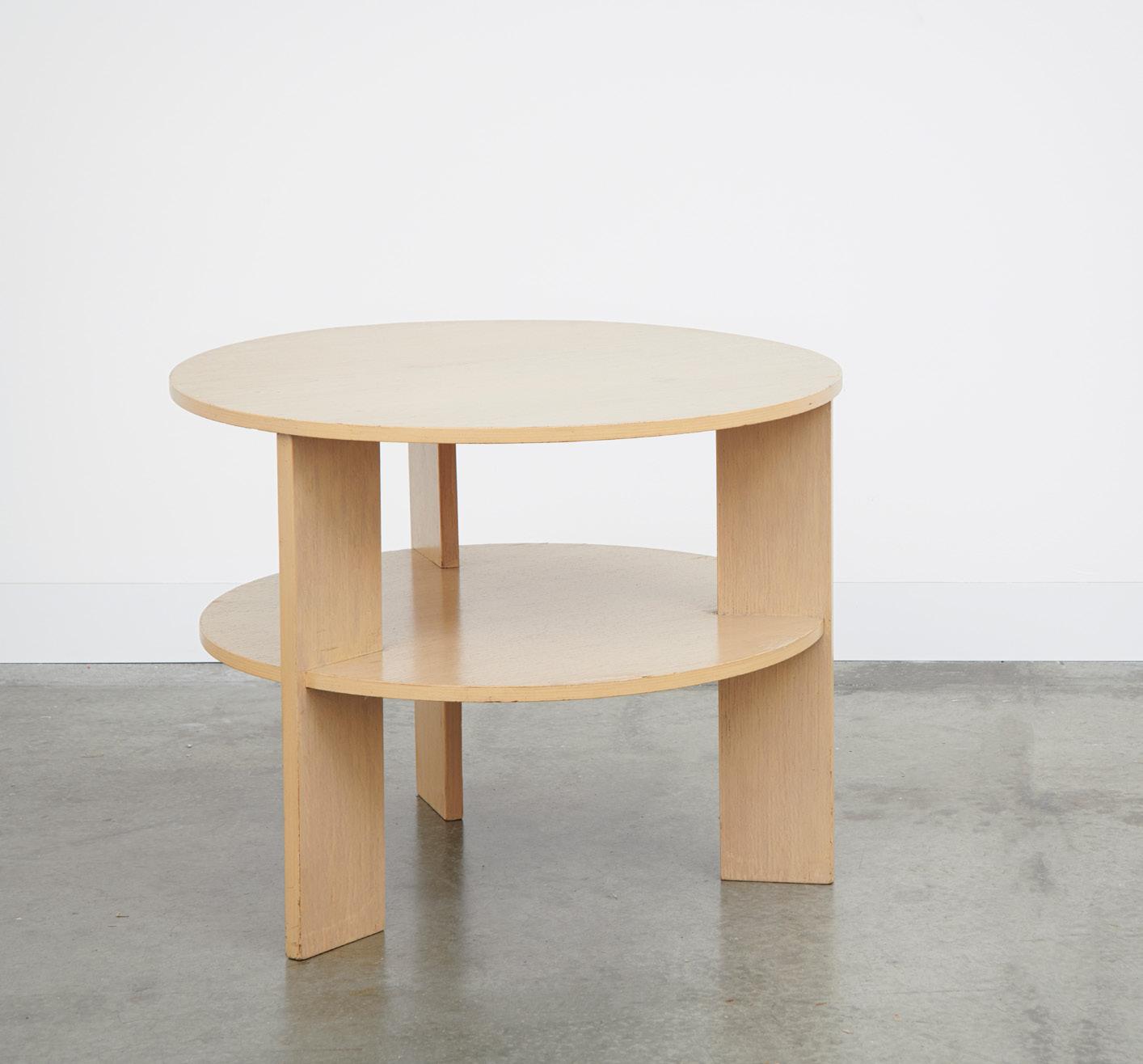
birch plywood
51cm high, 64cm diameter (20 1/8in high, 25 1/4in diameter)
Literature: Sloane, Abel and Ruby Woodhouse, The Simple Heart of Plywood, an Introduction to Gerald Summers and the Makers of Simple Furniture, London, 2018, p.29, fig. E (similar example illustrated).
£1,200-1,800
41 GERALD SUMMERS
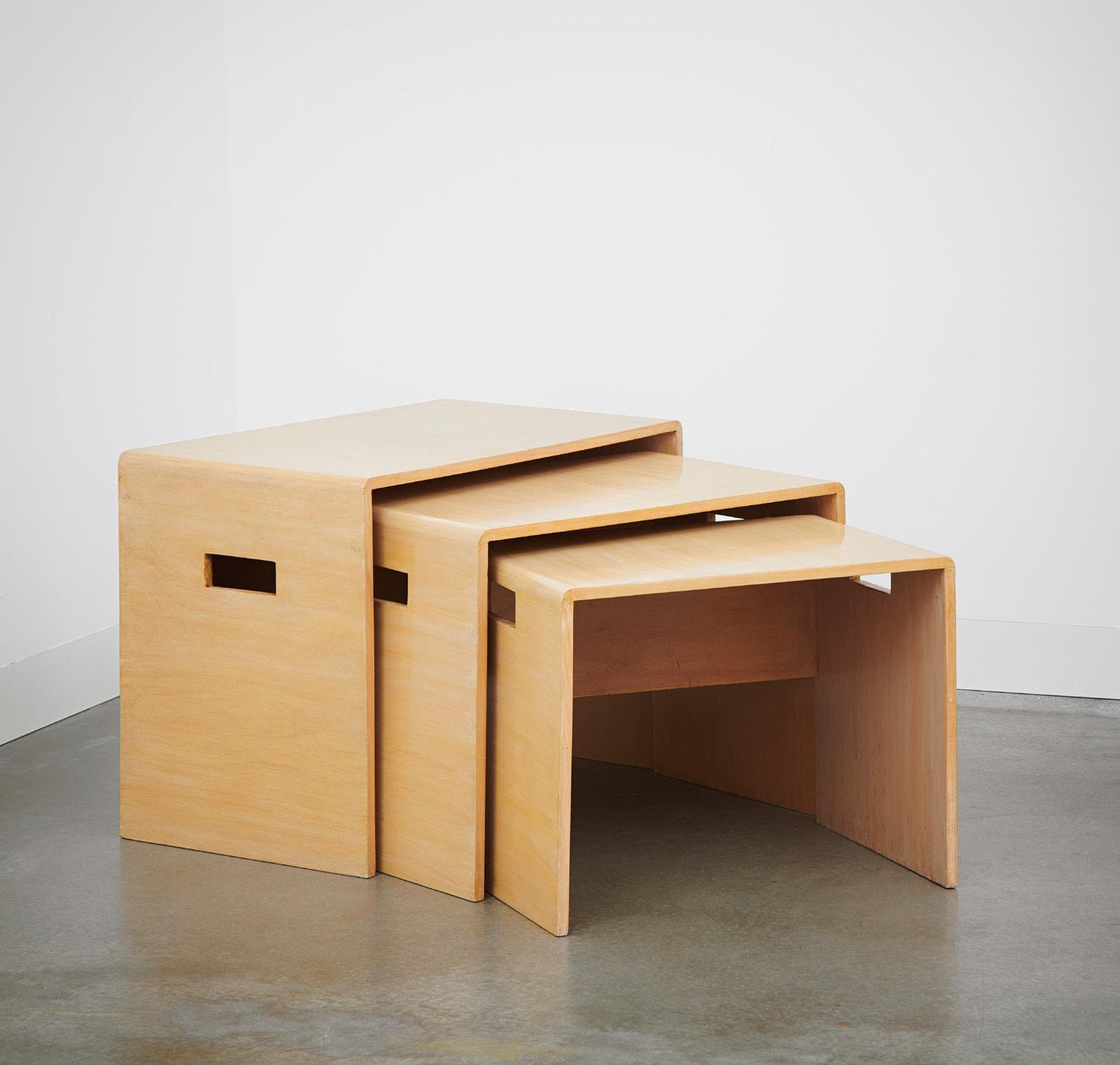
(BRITISH 1899-1967) FOR MAKERS OF SIMPLE FURNITURE NESTING TABLES, CIRCA 1935
birch plywood (3)
The largest: 44.5cm high, 61.4cm wide, 35.5cm deep (17 3/8in high, 24 1/4in wide, 14in deep)
Provenance: Purchased new by C. Handisyde Architect & author and thence by descent; Private Collection, U.K. where acquired by the current vendor.
Cecil Handisyde (b.1908) was one of a team of architects who designed the Lansbury Estate in Tower Hamlets, London; a redevelopment project following the damage suffered during WWII. The first phase of building was undertaken as the ‘live architecture’ element of the 1951 Festival of Britain exhibition. Handisyde together with D. Rogers Stark were responsible for the design of the Trinity Congregational Church (now Methodist) on East India Dock Road. The church was a strikingly modern light and airy space designed to be versatile and also to continue its role as a community and social centre.
£1,500-2,000
40
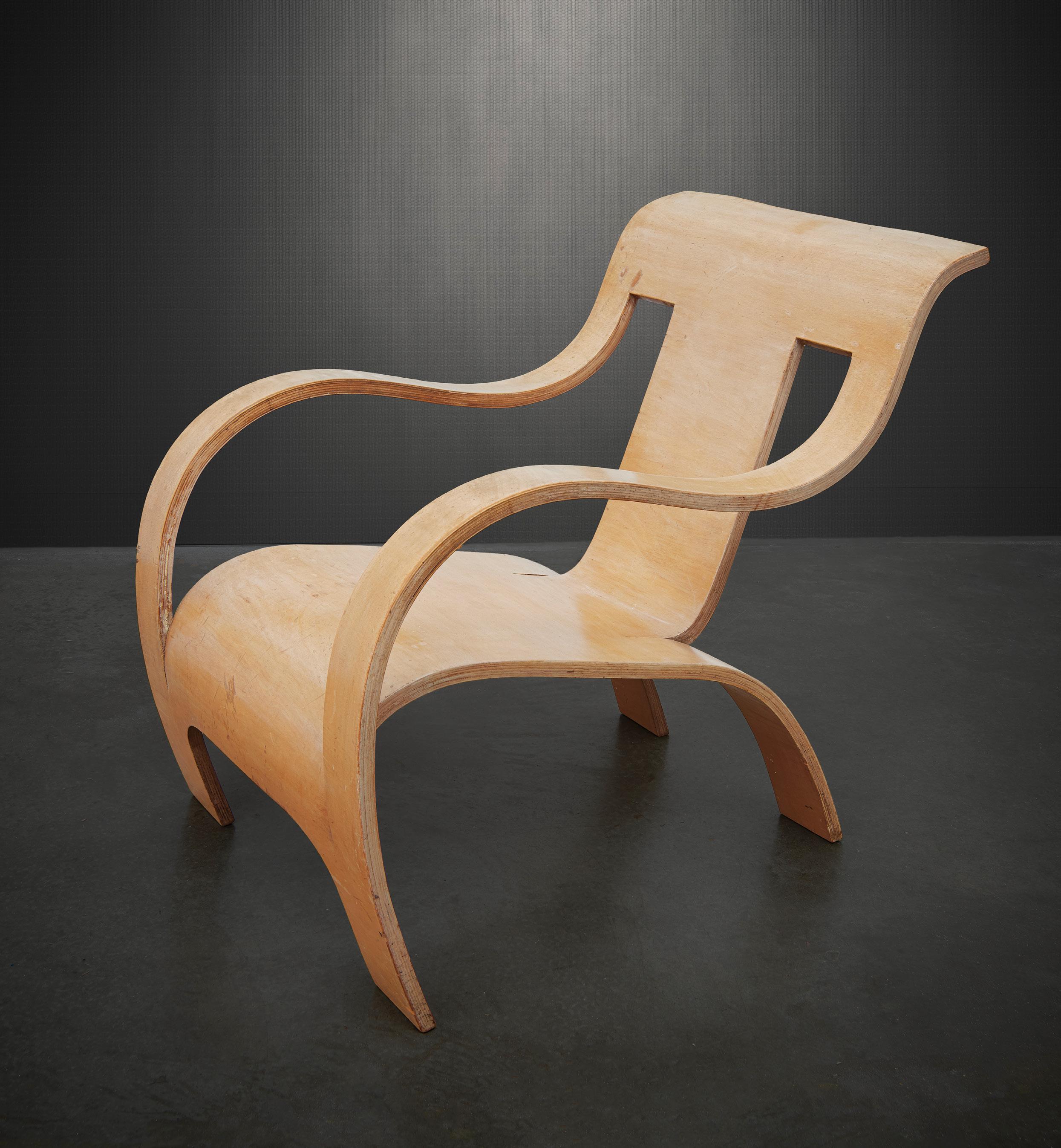
GERALD SUMMERS (BRITISH 1899-1967) FOR MAKERS OF SIMPLE FURNITURE ARMCHAIR, 1933-34
white-stained birch plywood, stamped ‘REGD. No. 791116’ and stamped ‘37’ (under front apron) 74.5cm high, 60.2cm wide, 94cm deep (29 3/8in high, 23 3/4in wide, 37in deep)
Literature: Sloane, Abel and Ruby Woodhouse, The Simple Heart of Plywood, an Introduction to Gerald Summers and the Makers of Simple Furniture, London, 2018, p.17, fig. 13 (similar example illustrated); Wilk, Christopher and Elizabeth Bisley, Plywood, A Material Story, London, 2017, p. 155, pl. 202 (similar design illustrated); Fiell, Charlotte and Peter, 1000 Chairs, Cologne, 2005, p. 174 (similar design illustrated); 100 Masterpieces from the Vitra Design Museum, Weil am Rhein, 1995, pp. 110-111 (similar design illustrated); Ostergard, Derek (ed.), Bent Wood and Metal Furniture 1850-1946, New York, 1987, p. 158, fig. 5-65; p. 318, fig. 106 (similar designs illustrated).

Provenance: Purchased new by Oxford artist Juliette May Lucille Edwards (1909-2011), and acquired by the current vendor from works from her estate in 2011.
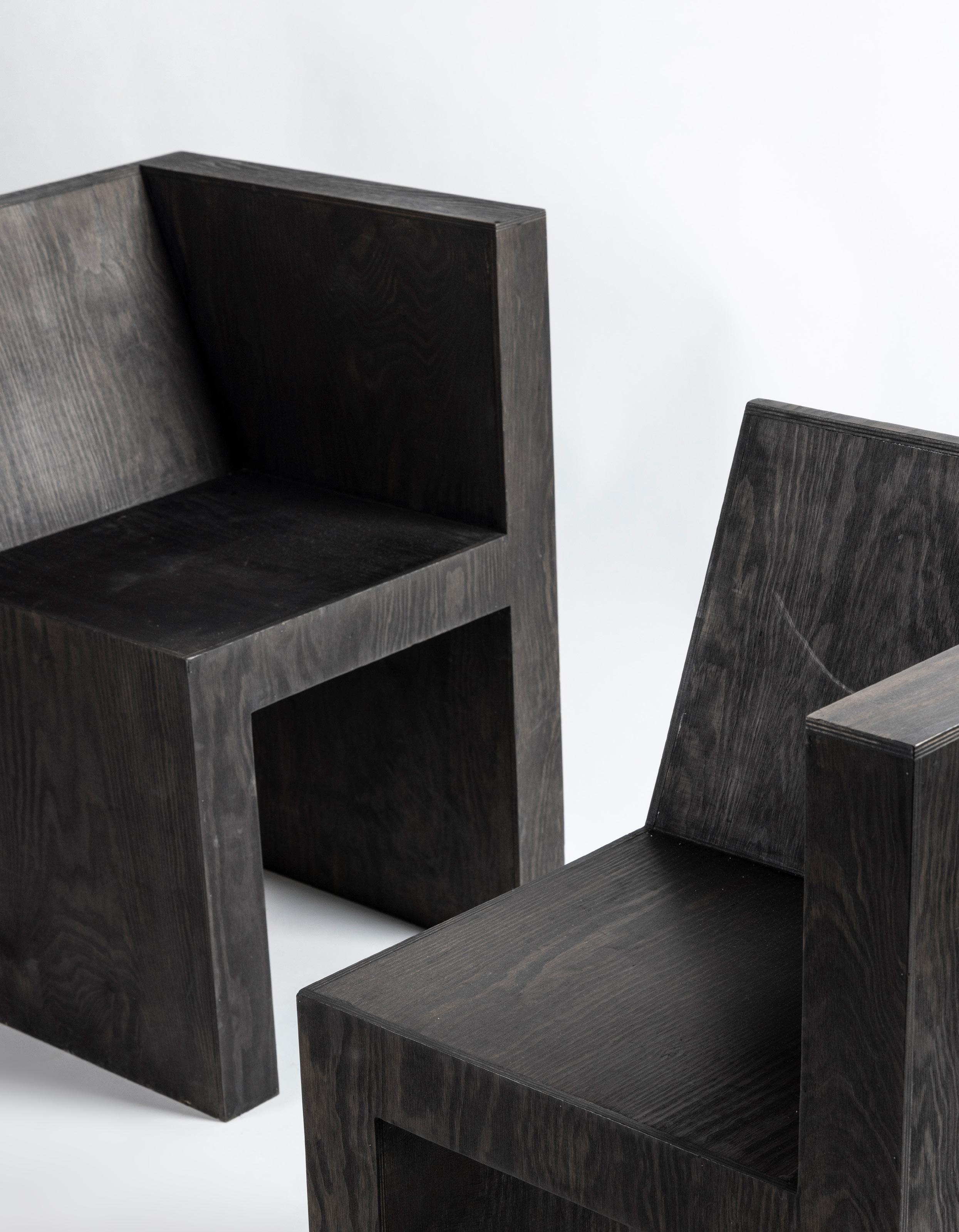
Summers had the ingenious vision to try and construct a chair from a single sheet of plywood. The form does not depend on any joins, pegging or connectors and has very little waste materials as its design primarily relies on simple incisions and mould bending. £7,000-9,000
42
41 Other fees apply in addition to the hammer price: see the ‘Buyer’s Guide’ section on page 6
GERALD SUMMERS (BRITISH 1899-1967) FOR MAKERS OF SIMPLE FURNITURE
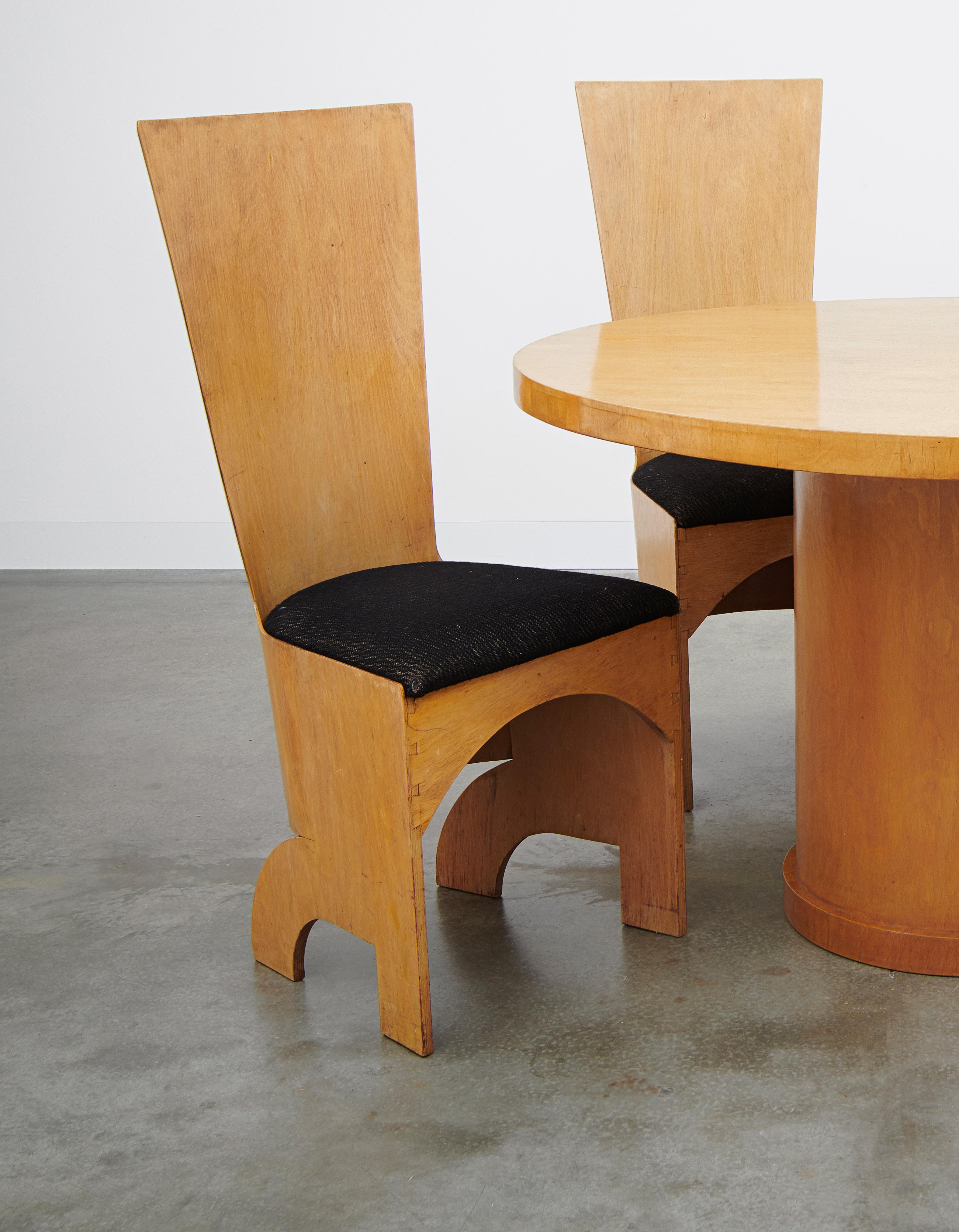
TWO HIGH BACK CHAIRS, CIRCA 1936
stamped to the upper surface of seat ‘158’, ‘159’, birch plywood, later upholstered seat (2) 103cm high, 44cm wide, 37cm deep (40 1/2in high, 17 1/4 in wide, 14 1/2in deep)
Provenance: Private Collection, US; Friedman Benda, New York, USA.
Literature: Ostergard, Derek (ed.), Bent Wood and Metal Furniture 1850-1946, New York, 1987, p. 163, fig. 5-73; p. 318, fig. 105B (similar designs illustrated).
SUMMERS (BRITISH 1899-1967) FOR MAKERS OF SIMPLE FURNITURE DINING TABLE, CIRCA 1935
plywood
high, 115cm diameter
1/2in high,
1/4in
44 GERALD
birch
72.5cm
(28
45
diameter) £2,500-3,000 43
each
£5,000-7,000 42 Other fees apply in addition to the hammer price: see the ‘Buyer’s Guide’ section on page 6
45
GERALD SUMMERS (BRITISH 1899-1967)
FOR MAKERS OF SIMPLE FURNITURE TWO HIGH BACK CHAIRS, CIRCA 1936 each stamped to the upper surface of the seat ‘156’, ‘157’, birch plywood, later upholstered seat (2) 103cm high, 44cm wide, 37cm deep (40 1/2in high, 17 1/4 in wide, 14 1/2in deep)
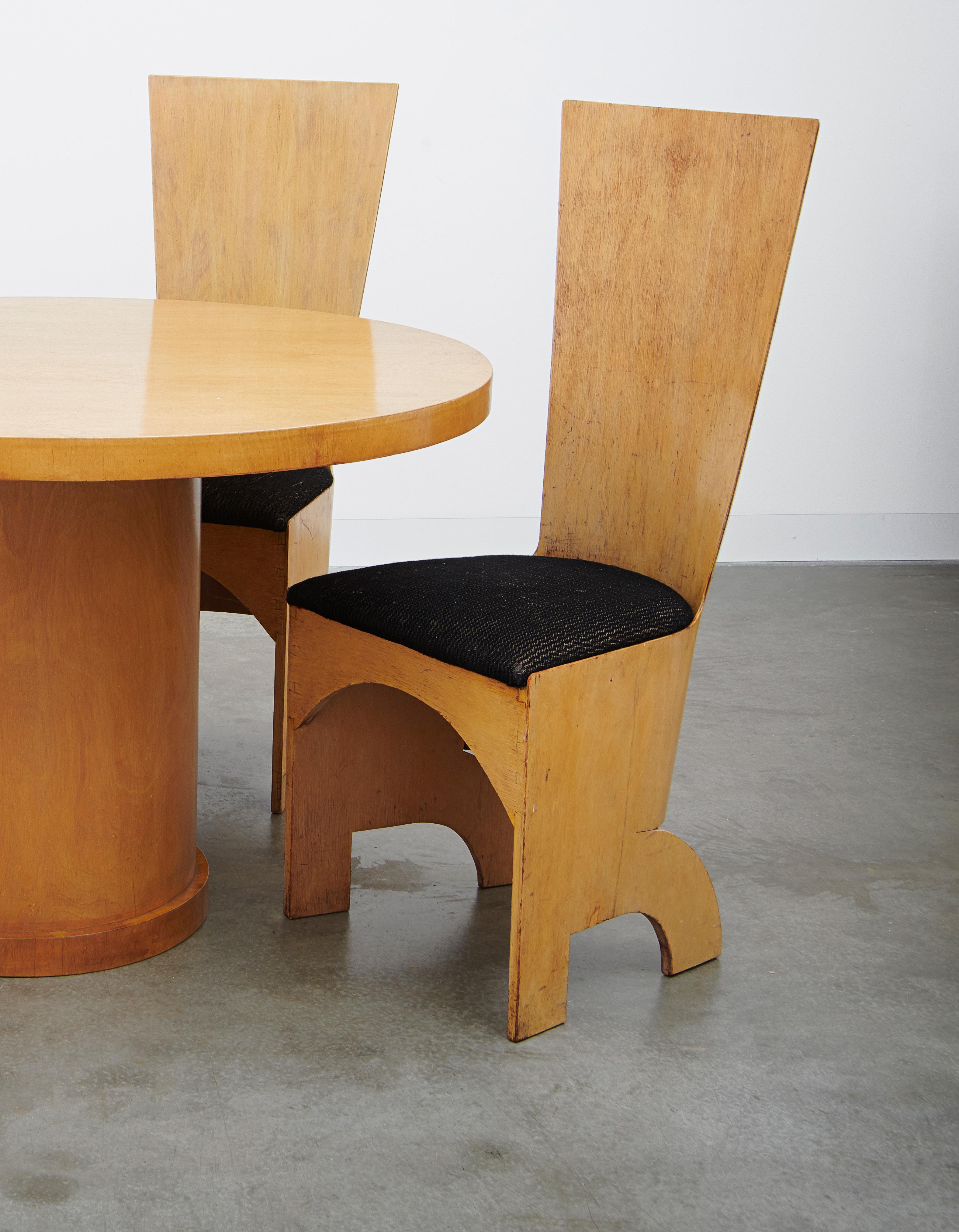
Provenance: Private Collection, US; Friedman Benda, New York, USA.
Literature: Ostergard, Derek (ed.), Bent Wood and Metal Furniture 1850-1946, New York, 1987, p. 163, fig. 5-73; p. 318, fig. 105B (similar designs illustrated).
£5,000-7,000
43
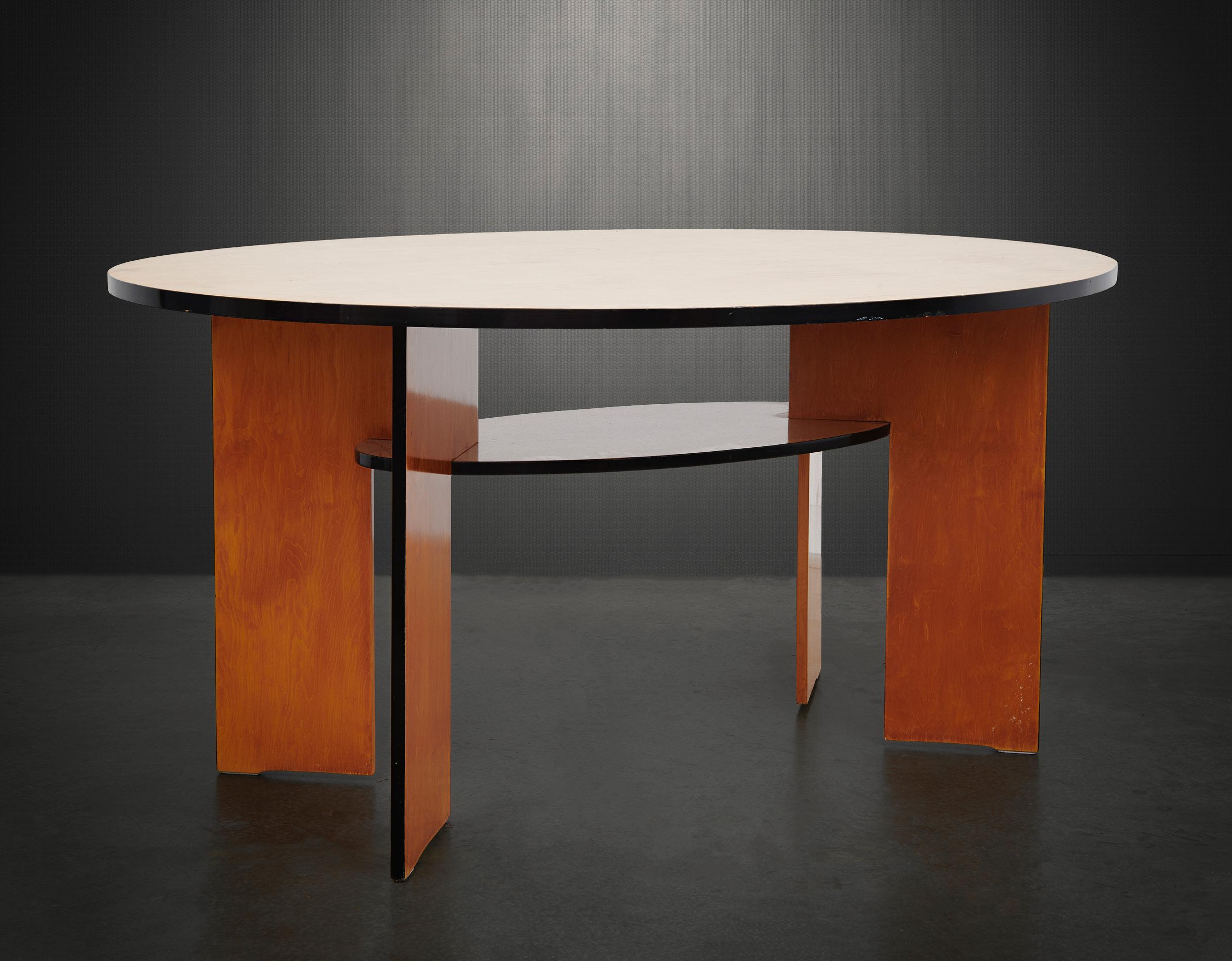
46 GERALD SUMMERS (BRITISH 1899-1967) FOR MAKERS OF SIMPLE FURNITURE DINING TABLE circular inset Heals label to underside of upper surface, birch plywood with black lacquer 73cm high, 150.5cm wide, 107cm deep (28 3/4in high, 59 1/4in wide, 42 1/8in deep) This design was retailed through Heal’s of London. £4,000-6,000 44 Other fees apply in addition to the hammer price: see the ‘Buyer’s Guide’ section on page 6
GERALD SUMMERS (BRITISH 1899-1967) FOR MAKERS OF SIMPLE FURNITURE DINNER WAGON, CIRCA 1936
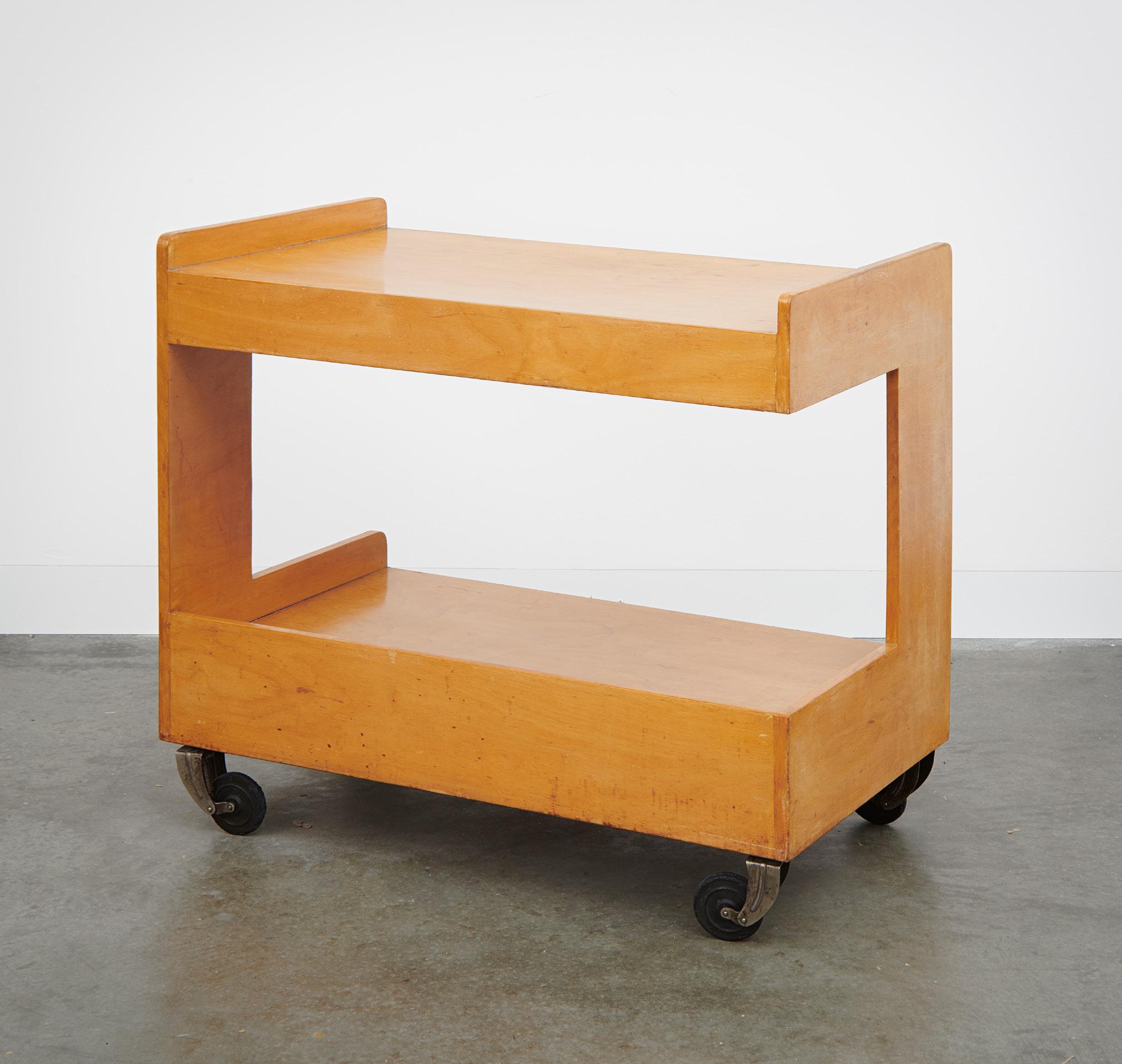
birch plywood on castors
68.5cm high, 76.3cm wide, 43.3cm deep (27in high, 30in wide, 17in deep)
Provenance: Jessie Ball, employee of Makers of Simple Furniture; Andrew McIntosh Patrick Collection, UK.
An example of this design is held in the V & A Collection, London (RF78 / 1124). For increased functionality the design features only two uprights. The design drawing from 1935 specified that it should have ‘Flexello’ castors and that the tiers should have rubber liners which could be removed for cleaning. The design was available in natural polish, as well as black or white.
£1,500-2,000
47
45
48
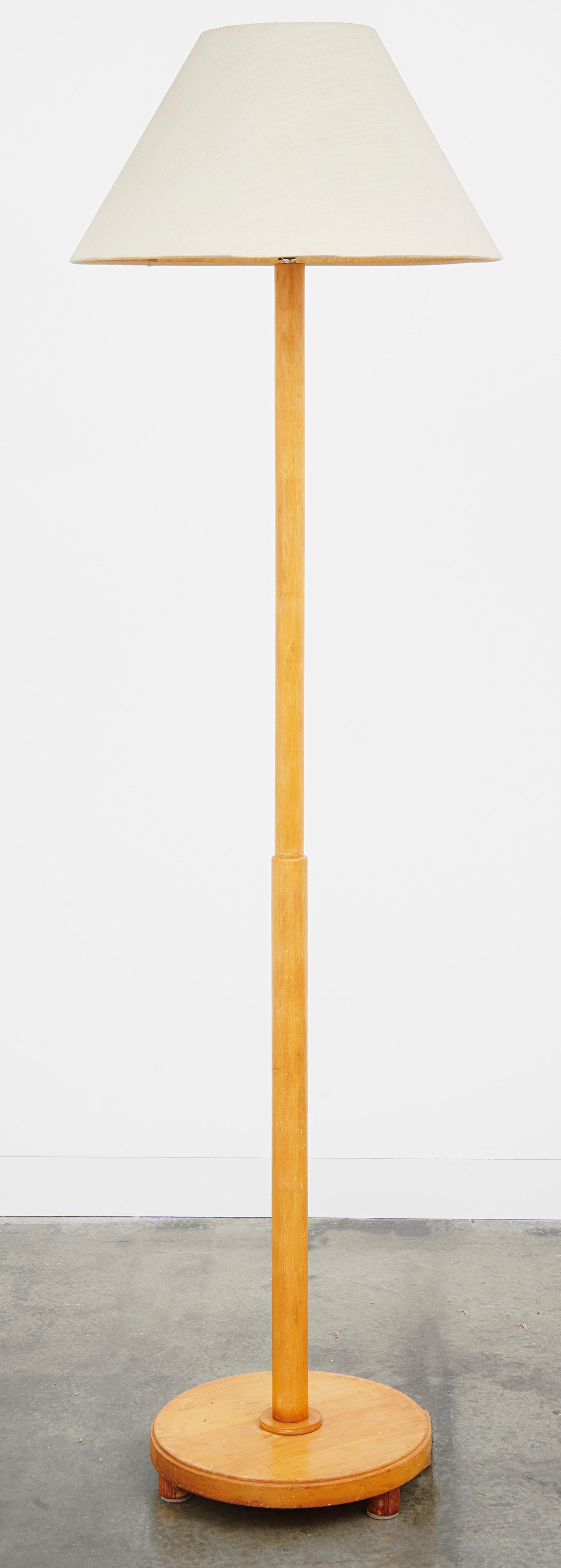
GERALD SUMMERS (BRITISH 1899-1967)
FOR MAKERS OF SIMPLE FURNITURE FLOOR LAMP, CIRCA 1935 birch, later shade 151cm high (59 3/4in high) excluding fitment £800-1,200
49 GERALD SUMMERS (BRITISH 1899-1967)
FOR MAKERS OF SIMPLE FURNITURE WASTE-PAPER CYLINDER, CIRCA 1935 white-tinted birch plywood 46cm high, 30.5cm wide (18 1/8in high, 12in wide)
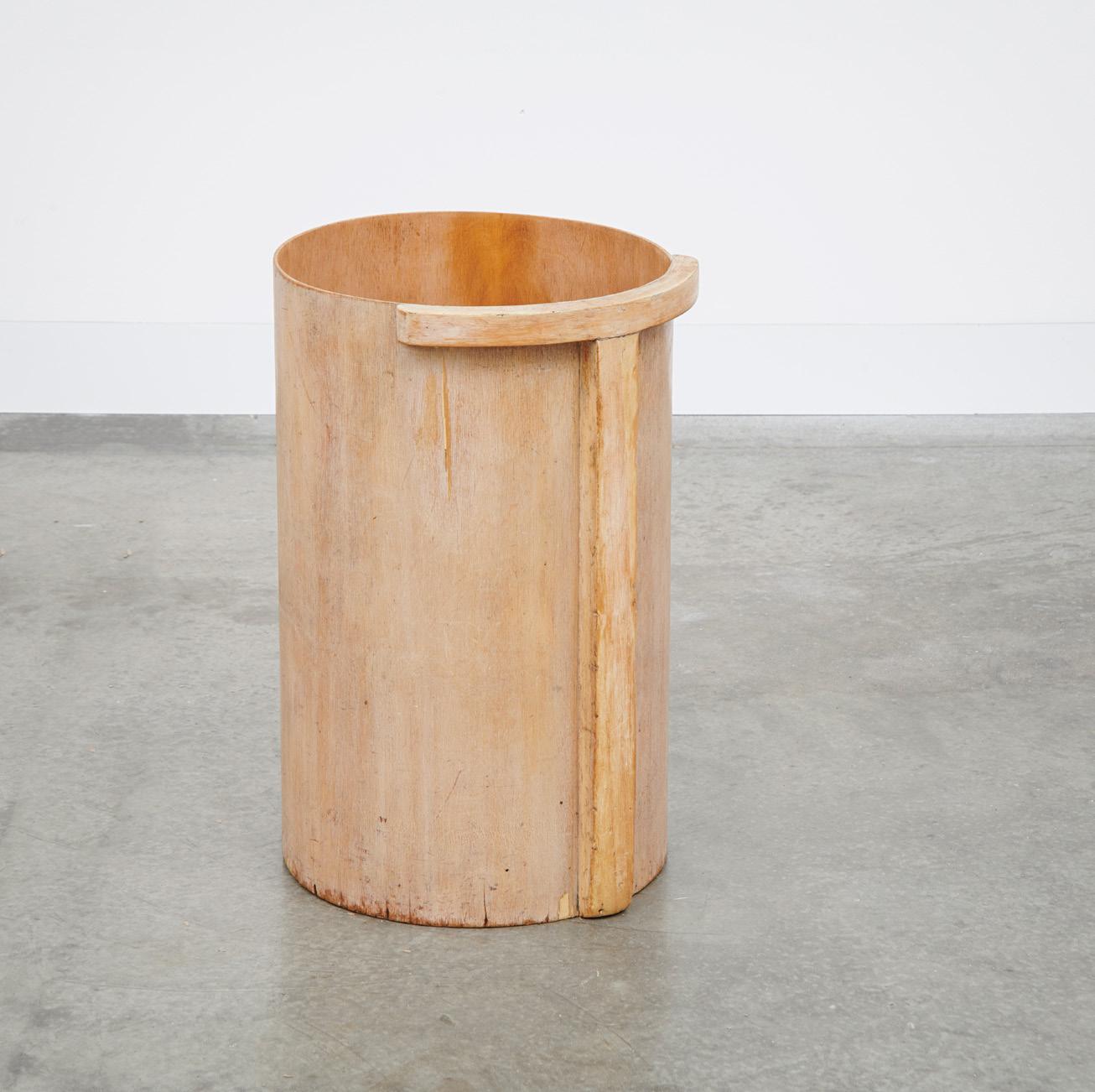
Literature: Furnishing Trades Organiser Publication, 1935 (similar example illustrated in a library). £800-1,200
46 Other fees apply in addition to the hammer price: see the ‘Buyer’s Guide’ section on page 6
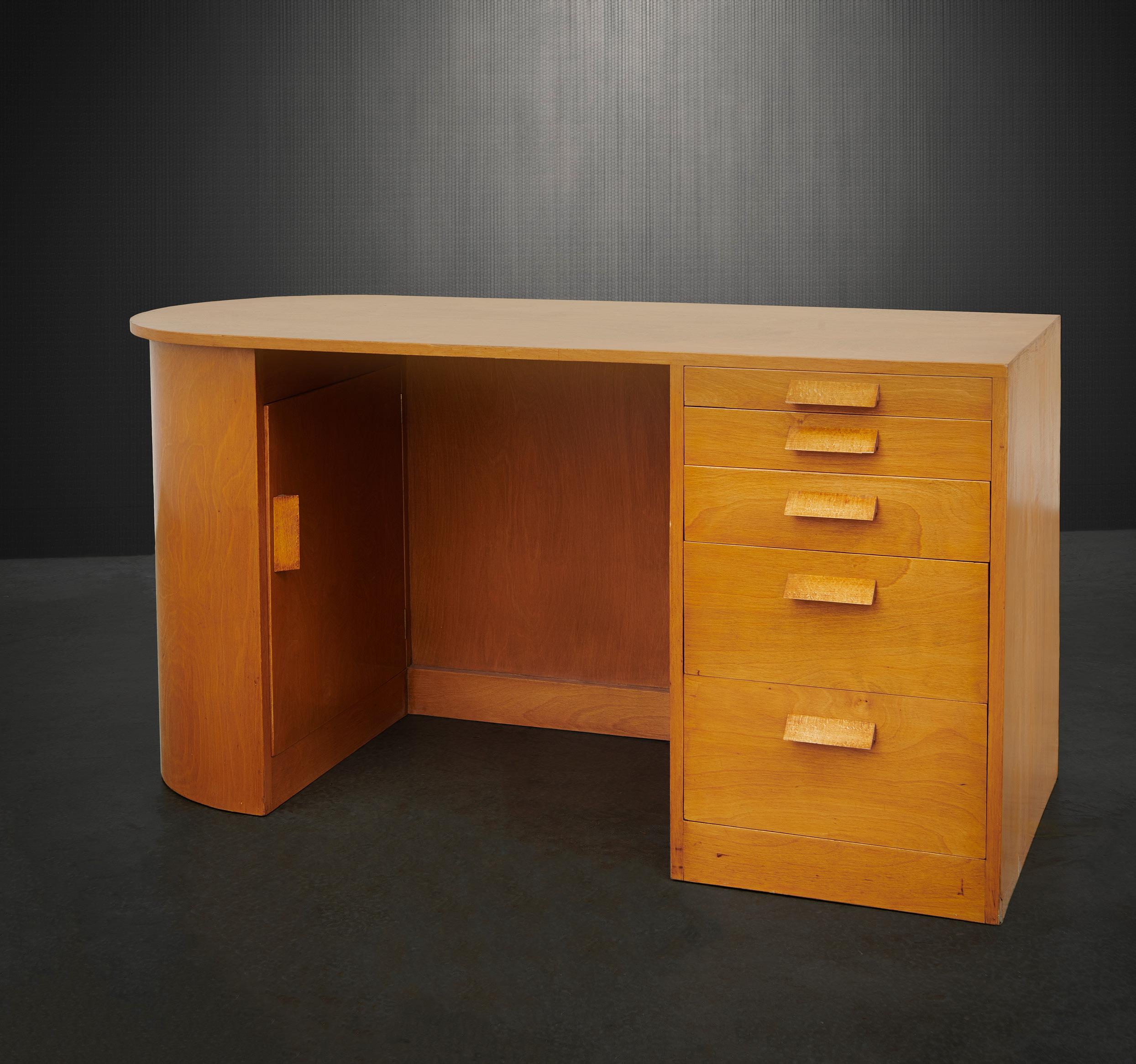


50 GERALD SUMMERS (BRITISH 1899-1967) FOR MAKERS OF SIMPLE FURNITURE D-END DESK, 1934 retailed by Heal’s, birch plywood 71.3cm high, 133.5cm long, 56cm deep (28 1/8in high, 52 1/2in long, 22 1/8in deep) Literature: Sloane, Abel and Ruby Woodhouse, The Simple Heart of Plywood, an Introduction to Gerald Summers and the Makers of Simple Furniture, London, 2018, p.11, fig. 5 (similar example illustrated). £1,500-2,000
“Gerald wanted to work in the modern materials, the materials that were available. And so he was using plywood in its form because that is what he wanted to use. He didn’t want to hide it with something.”
Majorie Summers
47
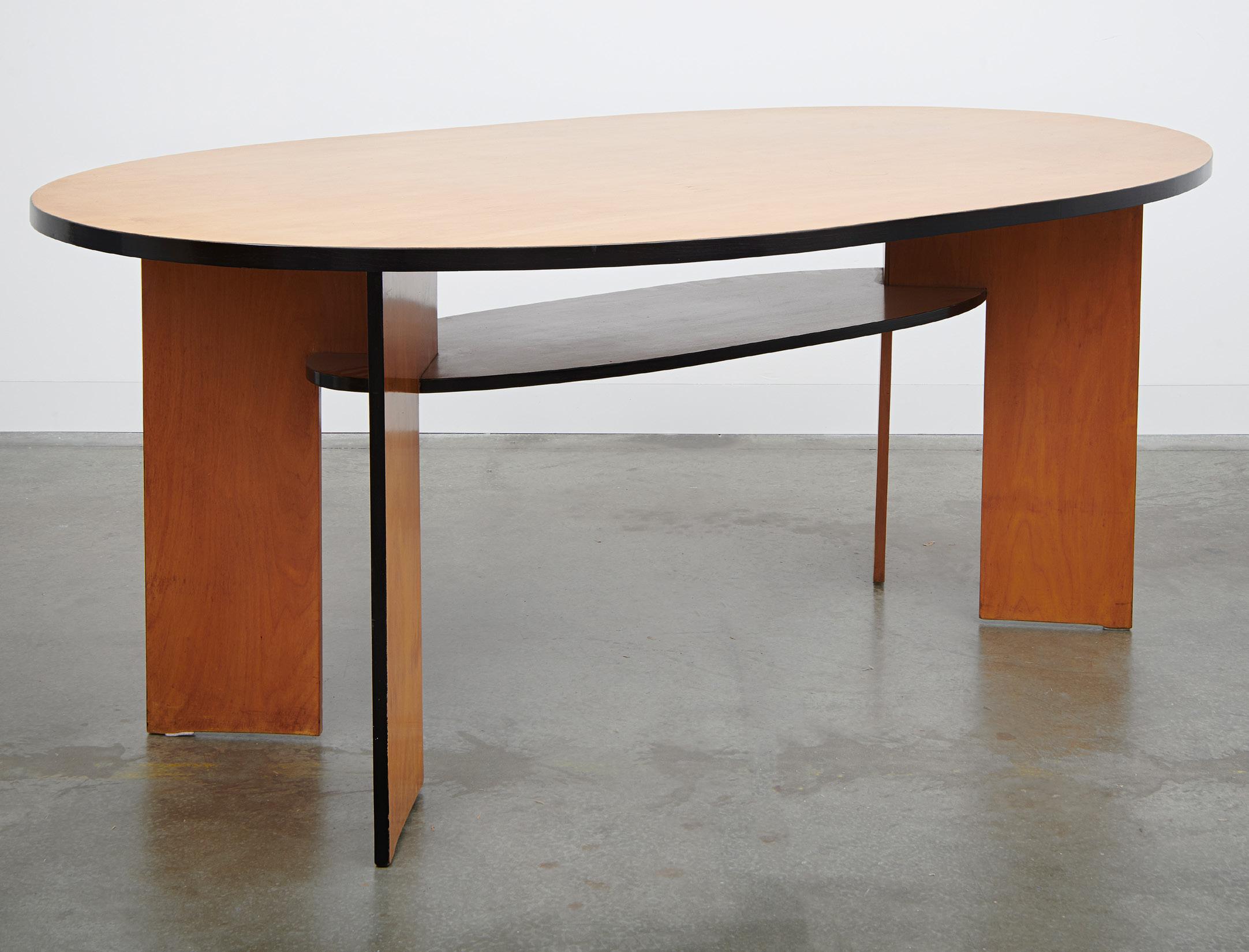
51 GERALD SUMMERS (BRITISH 1899-1967) FOR MAKERS OF SIMPLE FURNITURE DINING TABLE, CIRCA 1936 birch plywood with black lacquer 72cm high, 183cm long, 107.2cm deep (28 3/8in high, 72in long, 42 1/4in deep) £4,000-6,000 48 Other fees apply in addition to the hammer price: see the ‘Buyer’s Guide’ section on page 6
GERALD
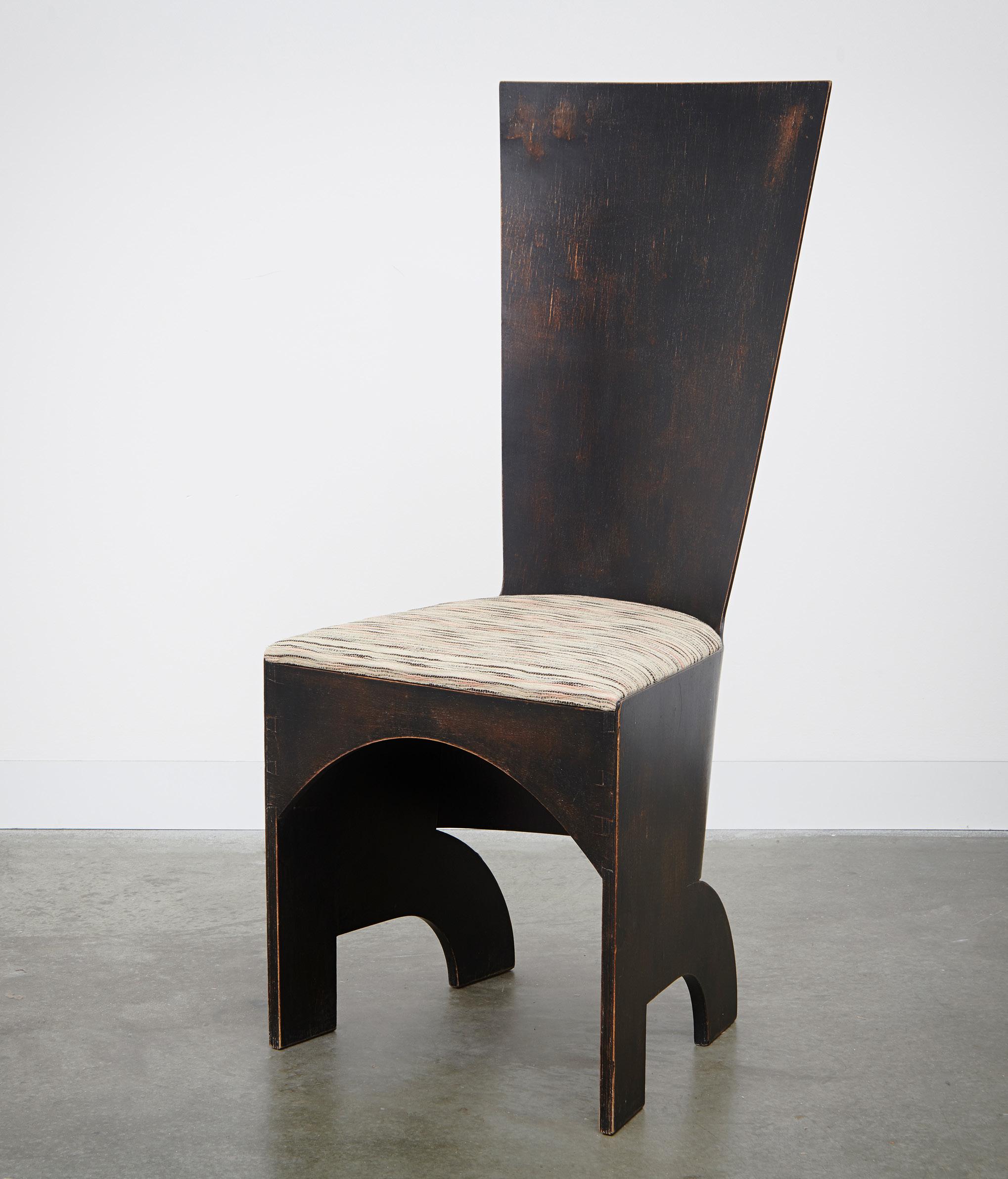
52
SUMMERS (BRITISH 1899-1967) FOR MAKERS OF SIMPLE FURNITURE HIGH BACK CHAIR, CIRCA 1934 black-stained birch plywood, later upholstered seat 103cm high, 44cm wide, 38cm deep (40 1/2in high, 17 3/8in wide, 14 1/2in deep) Literature: Ostergard, Derek (ed.), Bent Wood and Metal Furniture 1850-1946, New York, 1987, p. 163, fig. 5-73; p. 318, fig. 105B (similar designs illustrated). £4,000-6,000 49
let’s keep them functional shaped for purpose pleasant to feel looking quiet with guts cheerful picked out in roses? ugh nor encrusted with cherubims dust and death this is life what about space light and colour Gerald Summers, a poem to express his view of Simple Furniture in the first brochure for his business, 1933

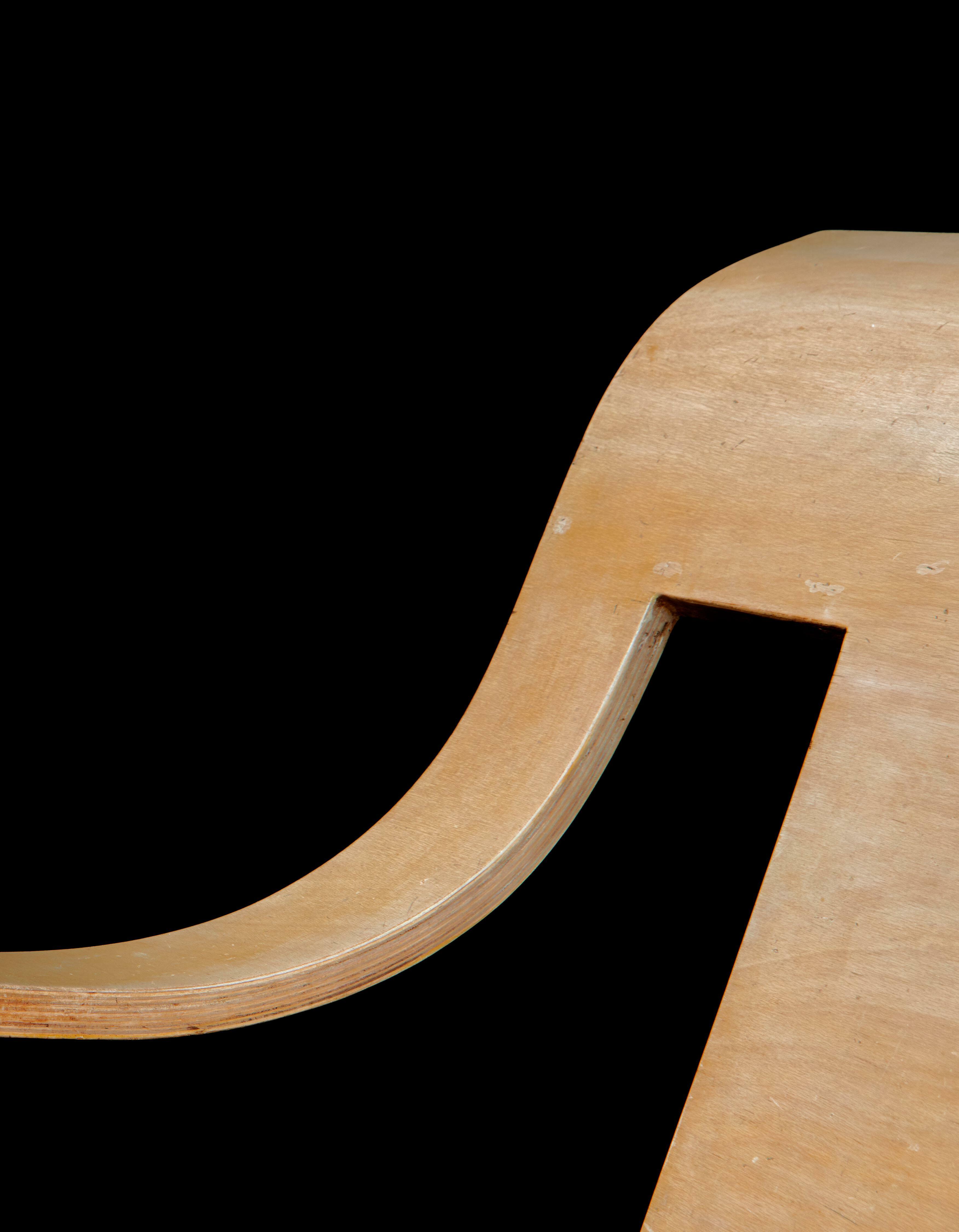
Lot 42 [detail] 50
51
53

GERALD SUMMERS (BRITISH 1899-1967) FOR MAKERS OF SIMPLE FURNITURE HIGH BACK CHAIR, CIRCA 1934 white-stained birch plywood, later upholstered seat 103.3cm high, 44cm wide, 38cm deep (40 5/8in high, 17 1/4in wide, 15in deep)
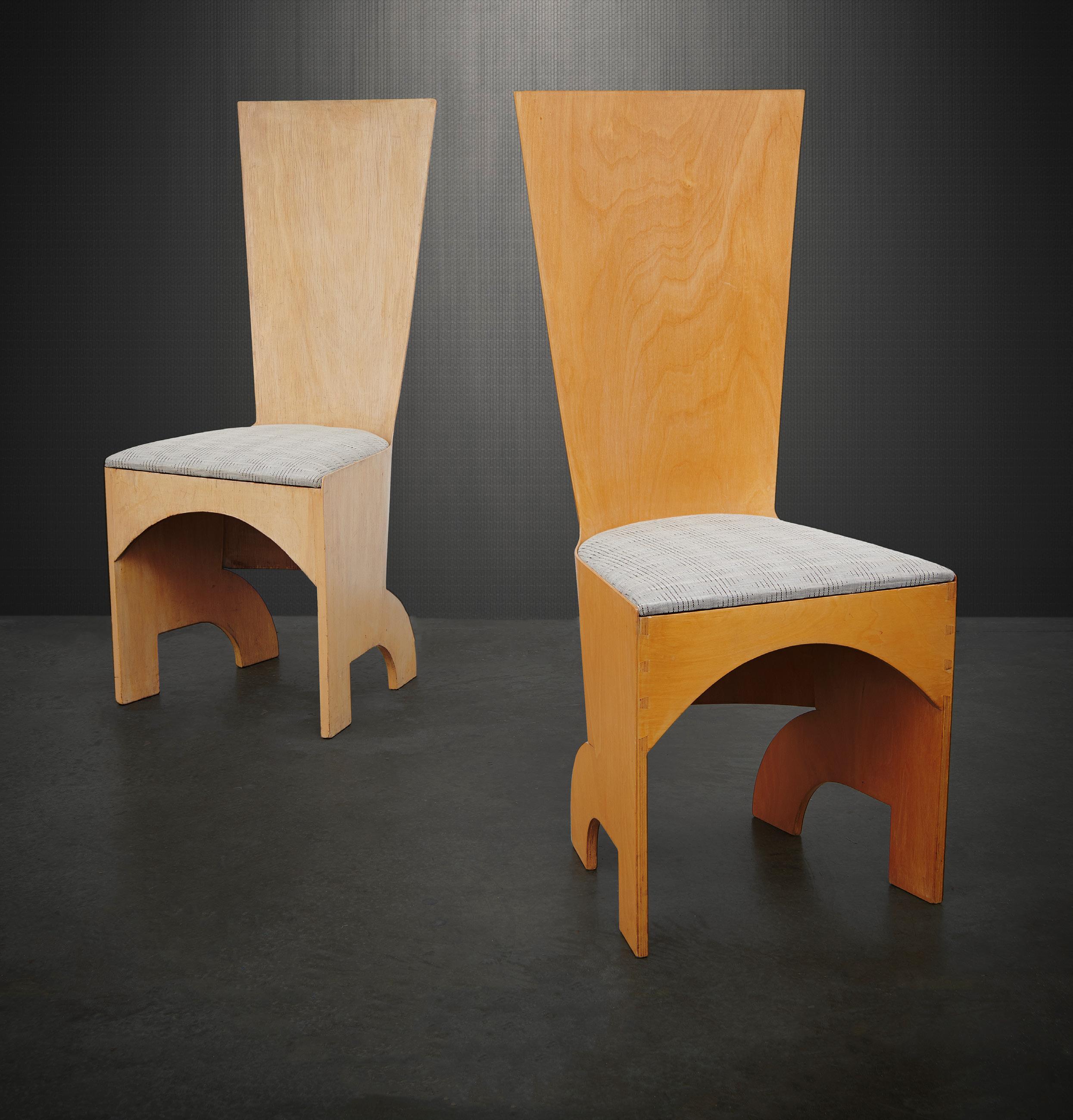
Provenance: Private Collection, UK; Fine Art Society, London.
Literature: Fiell, Charlotte and Peter, 1000 Chairs, Cologne, 2005, p. 175 (similar design illustrated); Ostergard, Derek (ed.), Bent Wood and Metal Furniture 1850-1946, New York, 1987, p. 163, fig. 5-73; p. 318, fig. 105B (similar designs illustrated).
£4,000-6,000
54
GERALD SUMMERS (BRITISH 1899-1967) FOR MAKERS OF SIMPLE FURNITURE HIGH BACK CHAIR, CIRCA 1934 stamped ‘67’ to upper surface of seat, birch plywood, later upholstered seat 103.5cm high, 44.5cm wide, 37.5cm deep (40 3/4in high, 17 1/2in wide, 14 3/4in deep)
Provenance: Private Collection, UK; Fine Art Society, London.
Literature: Ostergard, Derek (ed.), Bent Wood and Metal Furniture 1850-1946, New York, 1987, p. 163, fig. 5-73; p. 318, fig. 105B (similar designs illustrated).
£4,000-6,000
52
GERALD SUMMERS (BRITISH 1899-1967)
FOR MAKERS OF SIMPLE FURNITURE
TROLLEY, CIRCA 1937-8 for Isokon, stained ash plywood and brass 68.8cm high, 95.7cm wide, 43.2cm deep (27 1/8in high, 37 3/4in wide, 17 in deep)
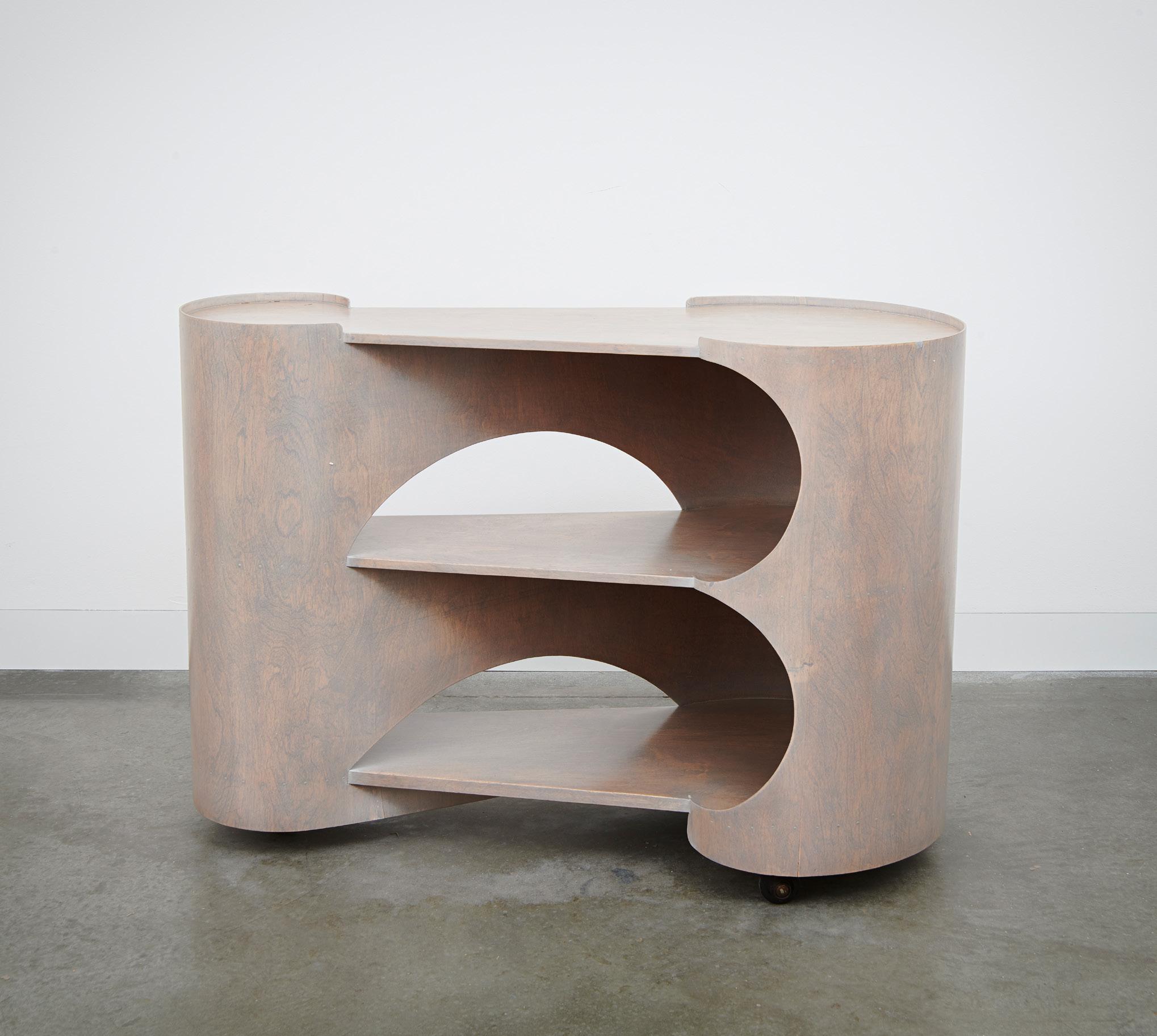
Provenance: Barry Friedman Ltd, New York, U.S; Sandy and Sherwin Schreier, Southfield, Michigan, U.S.
Literature: Ostergard, Derek (ed.), Bent Wood and Metal Furniture 1850-1946, New York, 1987, p. 319, fig. 107 (probably this example illustrated)
This trolley design is Summers’ only documented design for the company Isokon. Isokon was founded by Jack Pritchard and Welles Coates and they sold furniture by other mid-century modernist designers such as Alvar Aalto and Marcel Breuer. The design featured in the Bent Wood and Metal Furniture 1850 - 1946, September 1986 to October 1988, organised by The American Federation of Arts and which travelled to nine institutions around the US. £12,000-18,000
55
53 Other fees apply in addition to the hammer price: see the ‘Buyer’s Guide’ section on page 6
57
GERALD SUMMERS (BRITISH 1899-1967) FOR MAKERS OF SIMPLE FURNITURE SIDEBOARD, 1930s
birch plywood 76.3cm high, 121.8cm wide, 48cm deep (30in high, 47 7/8in wide, 18 7/8in deep)
Literature: The Cabinet Maker, September 1937 (similar example illustrated).
The Cabinet Maker reviewed a display at Harrods and described Summers’ work as “white birch furniture in the Baltic style” and also commented “note the curious graduation in the size of the drawers”.
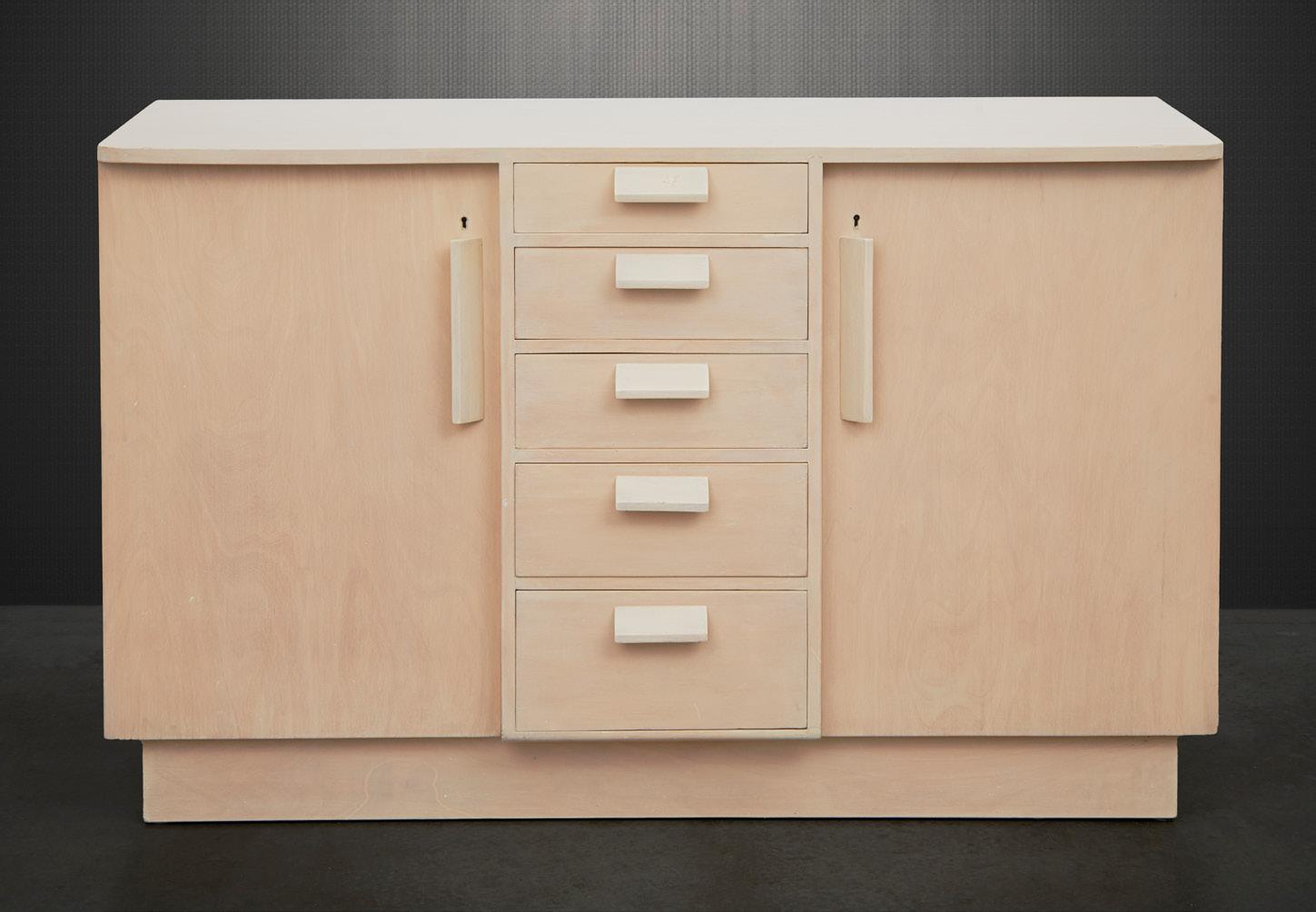
£700-900
56
GERALD SUMMERS (BRITISH 1899-1967) FOR MAKERS OF SIMPLE FURNITURE
WARDROBE, CIRCA 1935
plywood, later painted 152.5cm high, 99cm wide, 60cm deep (60in high, 39in wide, 23 5/8in deep)
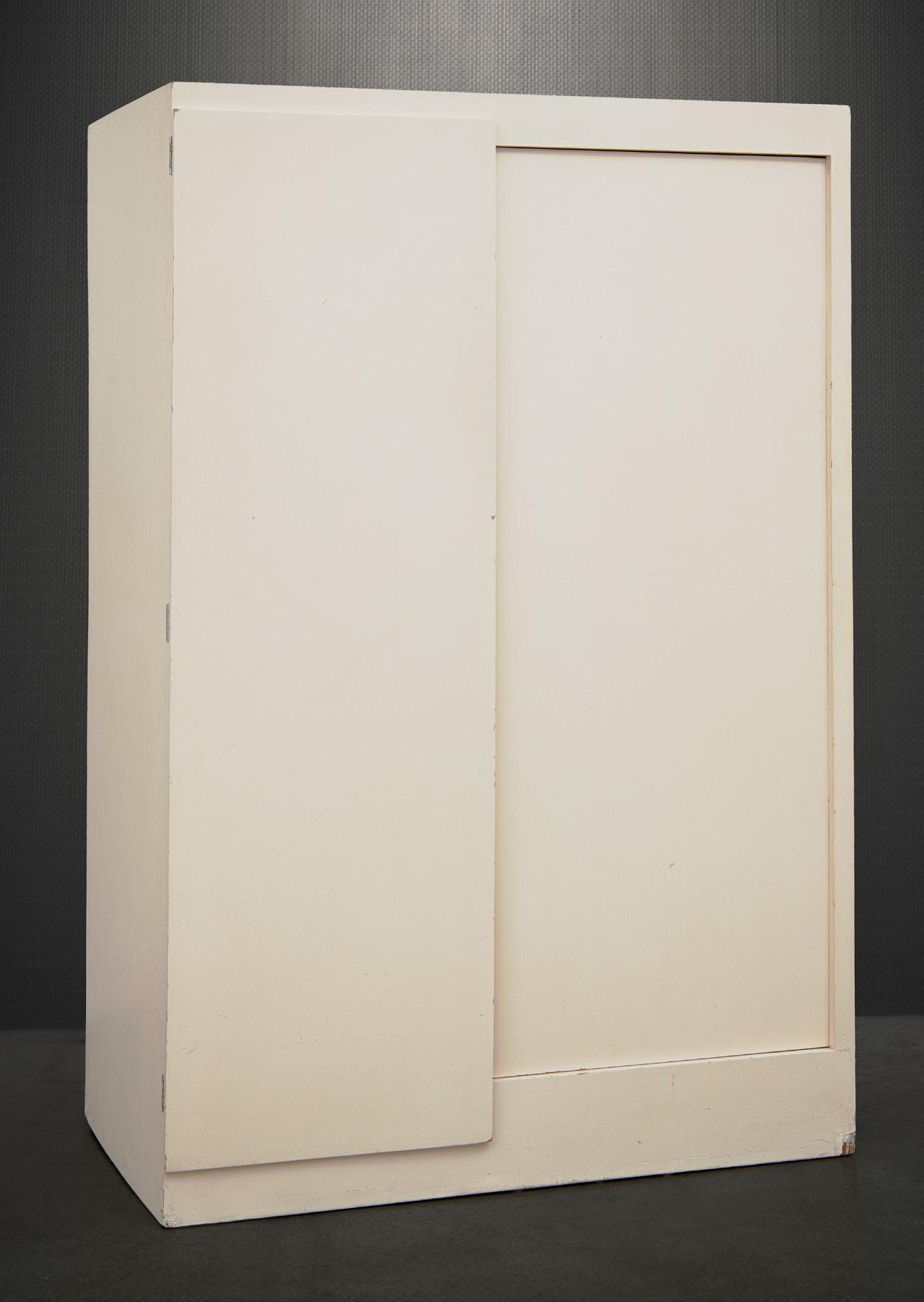
Provenance: Reputedly from Lawn Road Flats, Hampstead, London - Isokon Building - designed by Wells Coates; Private Collection, UK.
Literature: Vogue House & Garden Book, 1937 (similar example illustrated in a Whiteley’s advert and described as being “white birch”.)
£2,500-3,000
54
GERALD SUMMERS (BRITISH 1899-1967) FOR MAKERS OF SIMPLE FURNITURE D-END DESK, 1934
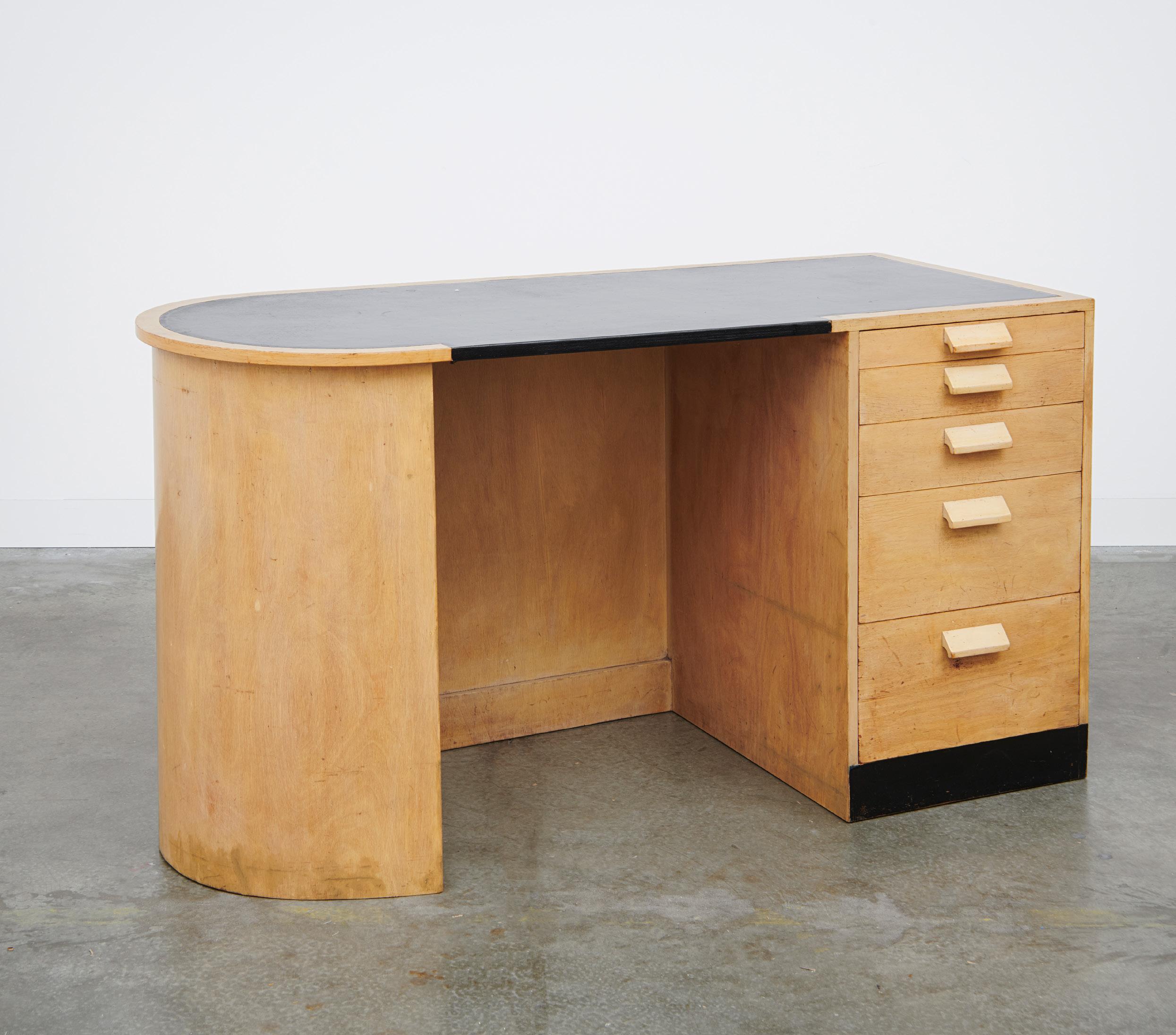
retailed by Heal’s, birch plywood, white stained and black painted, with canvas cloth writing surface
71cm high, 133.5cm wide, 55.5cm deep (28in high, 52 5/8in high, 21 7/8in deep)

Literature: Sloane, Abel and Ruby Woodhouse, The Simple Heart of Plywood, an Introduction to Gerald Summers and the Makers of Simple Furniture, London, 2018, p.11, fig. 5 (similar example illustrated).
£1,500-2,000
58
55 Other fees apply in addition to the hammer price: see the ‘Buyer’s Guide’ section on page 6
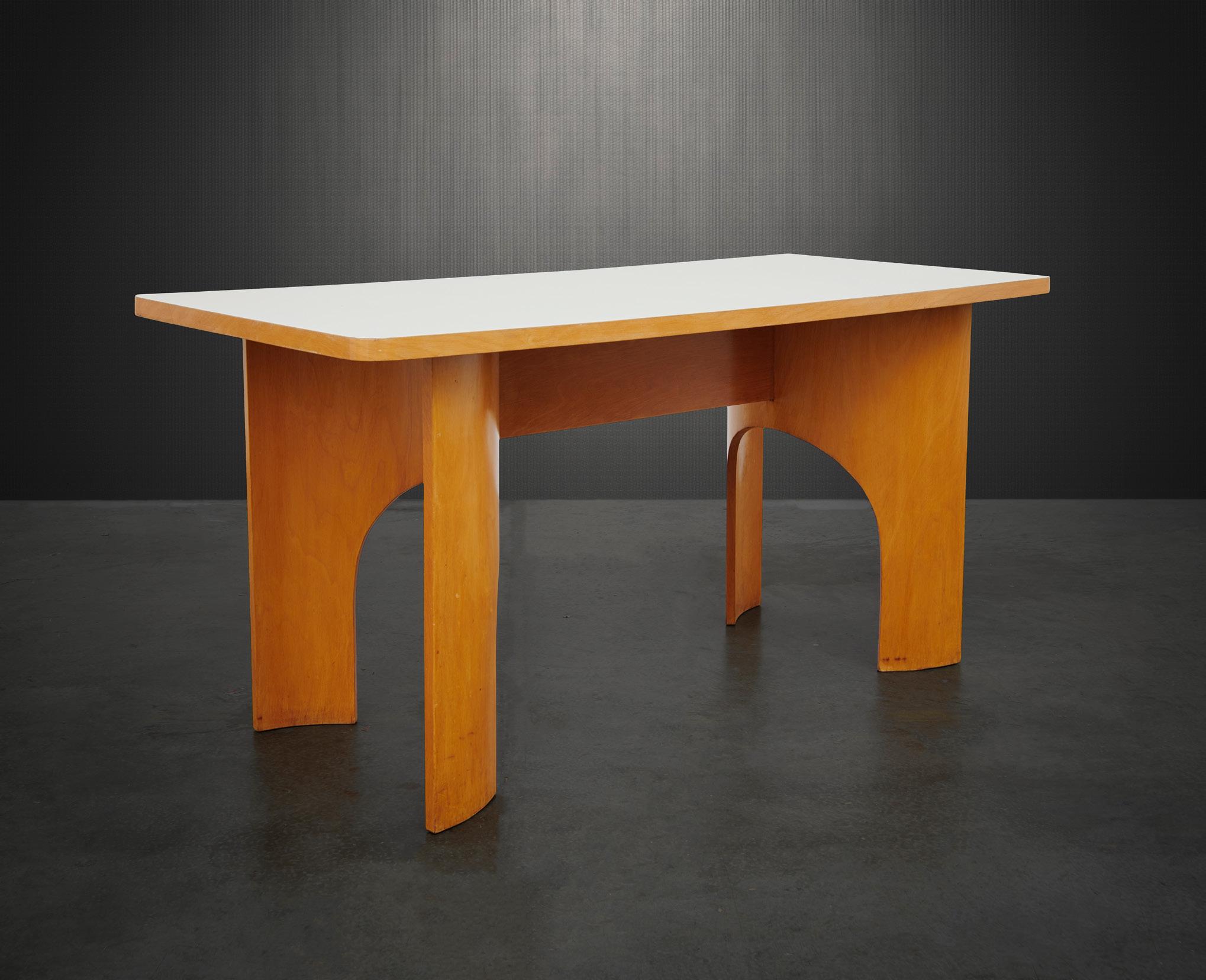
59 GERALD SUMMERS (BRITISH 1899-1967) FOR MAKERS OF SIMPLE FURNITURE DINING TABLE, CIRCA 1935 birch plywood, Traffolyte surface 74.4cm high, 152.3cm long, 68.5cm wide (29 1/4in high, 60in long, 27in wide) £1,500-2,000 56 Other fees apply in addition to the hammer price: see the ‘Buyer’s Guide’ section on page 6
GERALD SUMMERS
(BRITISH 1899-1967)
FOR MAKERS OF SIMPLE FURNITURE COCKTAIL STOOL, 1930s
white stained and black stained birch plywood, with canvas cloth seat 70cm high, 33cm wide (27 1/2in high, 13in wide)
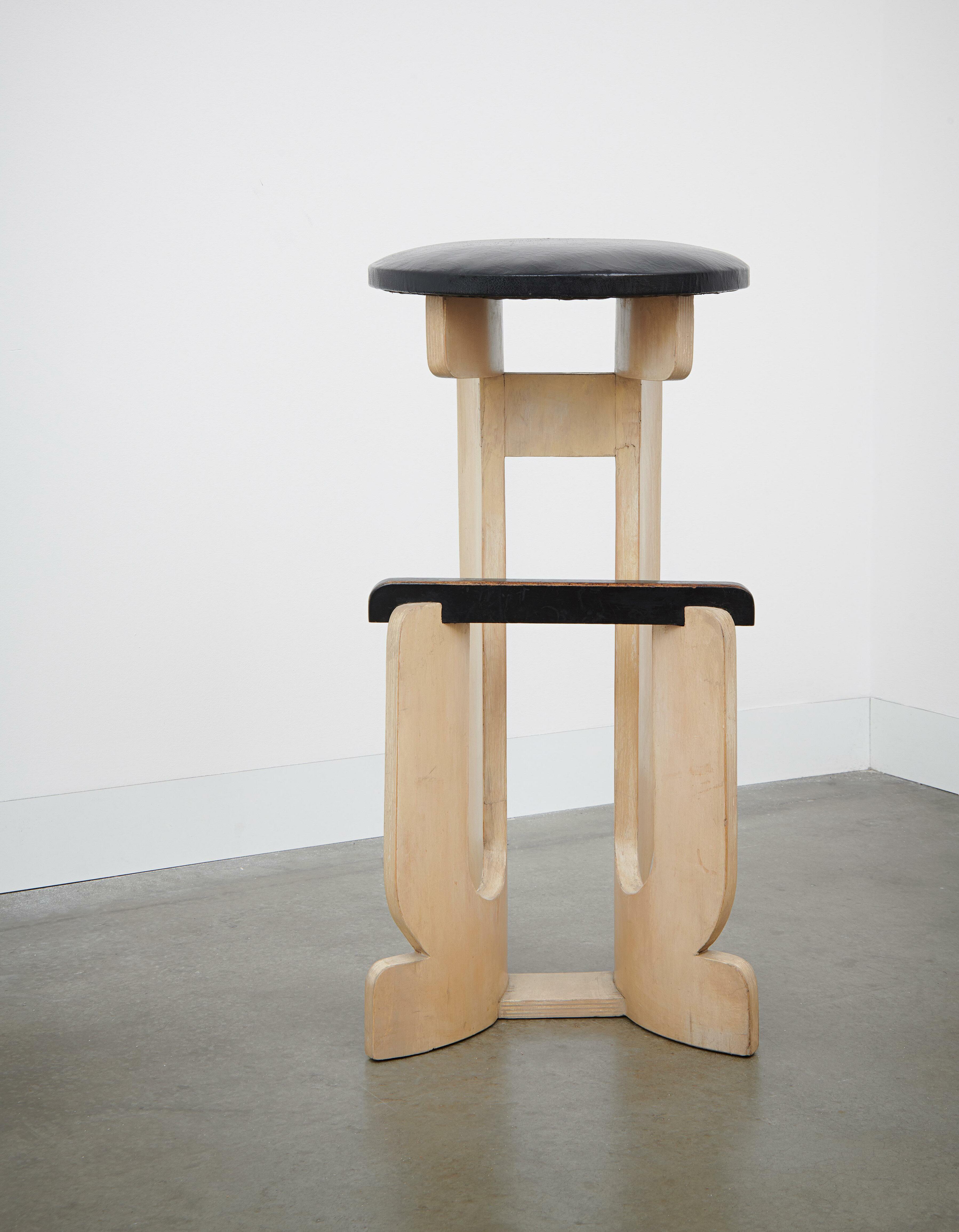
Provenance: Andrew McIntosh Patrick Collection, UK.
This is believed to be one of only two known examples to exist.
£8,000-12,000
60
57
GERALD SUMMERS (BRITISH 1899-1967)
MAKERS OF SIMPLE FURNITURE DINING TABLE, CIRCA 1934
high,
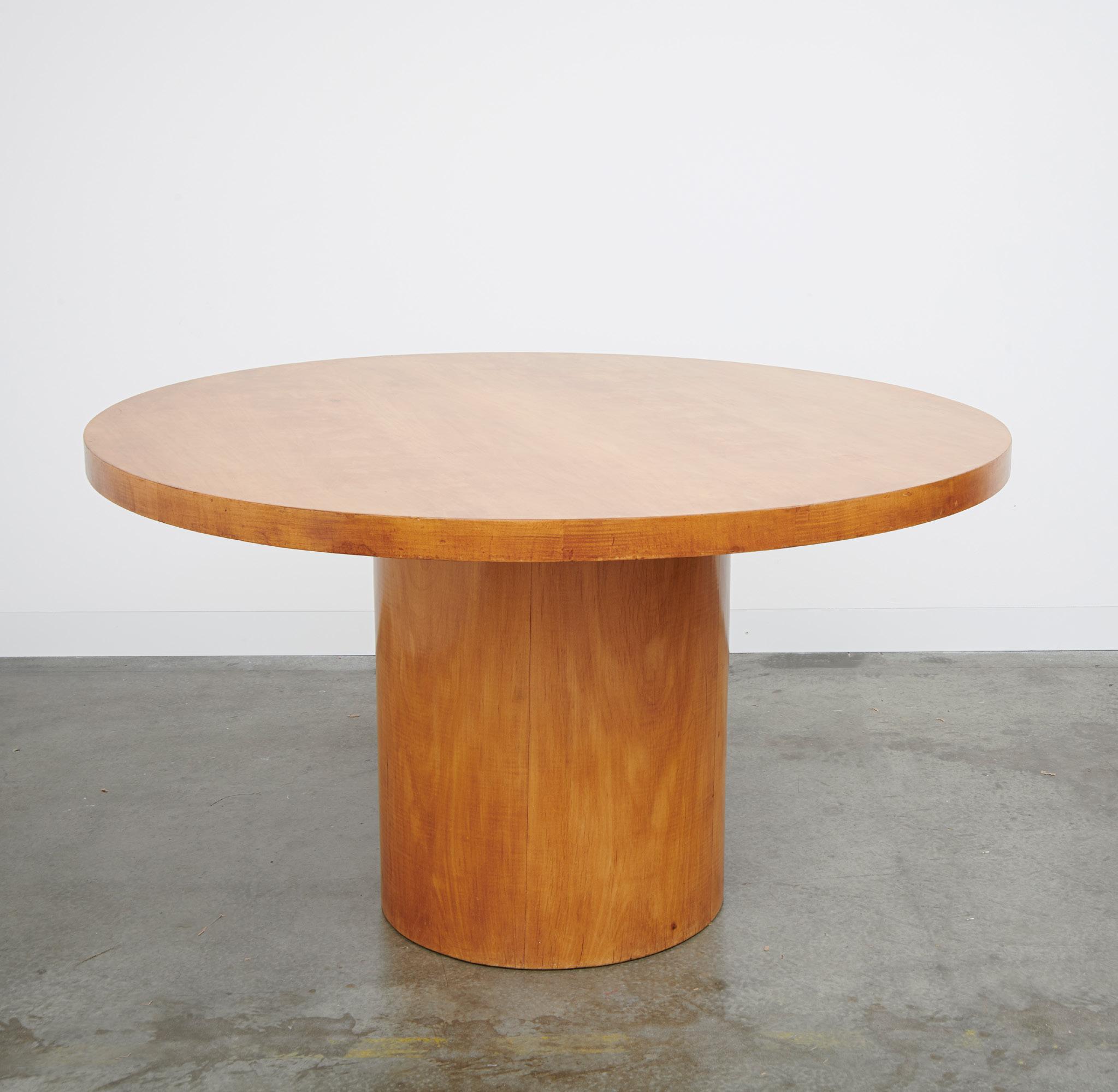
61
FOR
birch plywood 74cm
129.5cm diameter (29 1/8in high, 51in diameter) £2,500-3,000 58 Other fees apply in addition to the hammer price: see the ‘Buyer’s Guide’ section on page 6
The legs of this chair have been formed from single strips of bent plywood, which rise to form the back supports. The great Italian architect and designer Carlo Mollino created a pair of plywood chairs for the Casa Cattaneo (now held in the Vitra Design Museum), which have highly comparable leg arrangements but he did this 20 years after Summers had designed his Type P chair. This is believed to be the only example of this chair to exist, though it is known that two were originally produced. It was described in the Makers of Simple Furniture advertising as: “Suitable for occasional or dining use. Constructed of selected birch and finished in clear polish”.
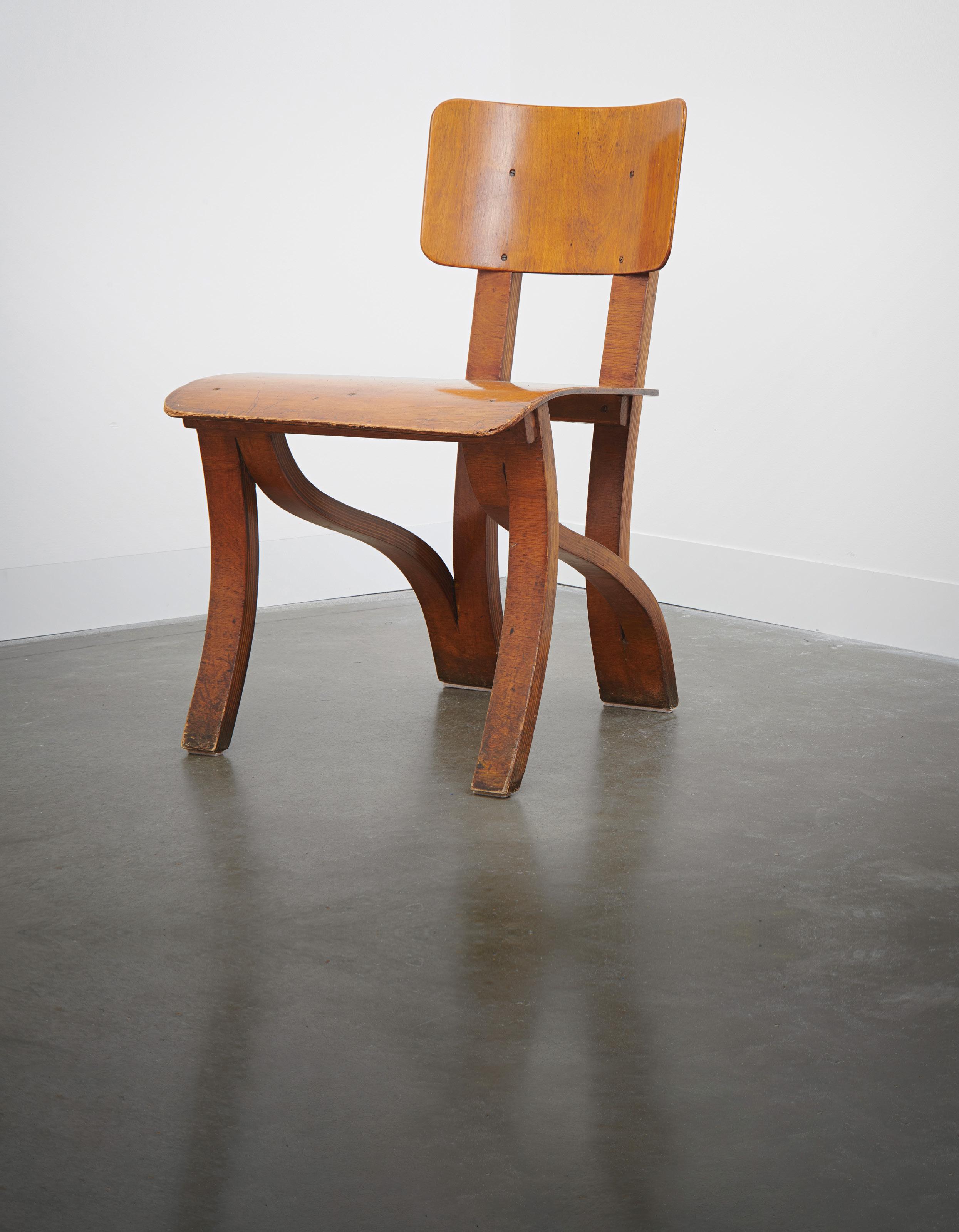
62 GERALD SUMMERS (BRITISH 1899-1967) FOR MAKERS OF SIMPLE FURNITURE RARE TYPE P CHAIR, CIRCA 1934 birch plywood 72.3cm high, 45cm wide, 49.5cm deep (28 1/2in high, 17 3/4in wide, 19 1/2in deep) Provenance: Private Collection, London; Decorative Arts, Christie’s, London, 16 February 1994, lot 74; The Fine Art Society, London; Private Collection, UK; Private Collection, London. £12,000-18,000
59
64 §
HENRY HAMMOND (BRITISH 1914-1986)
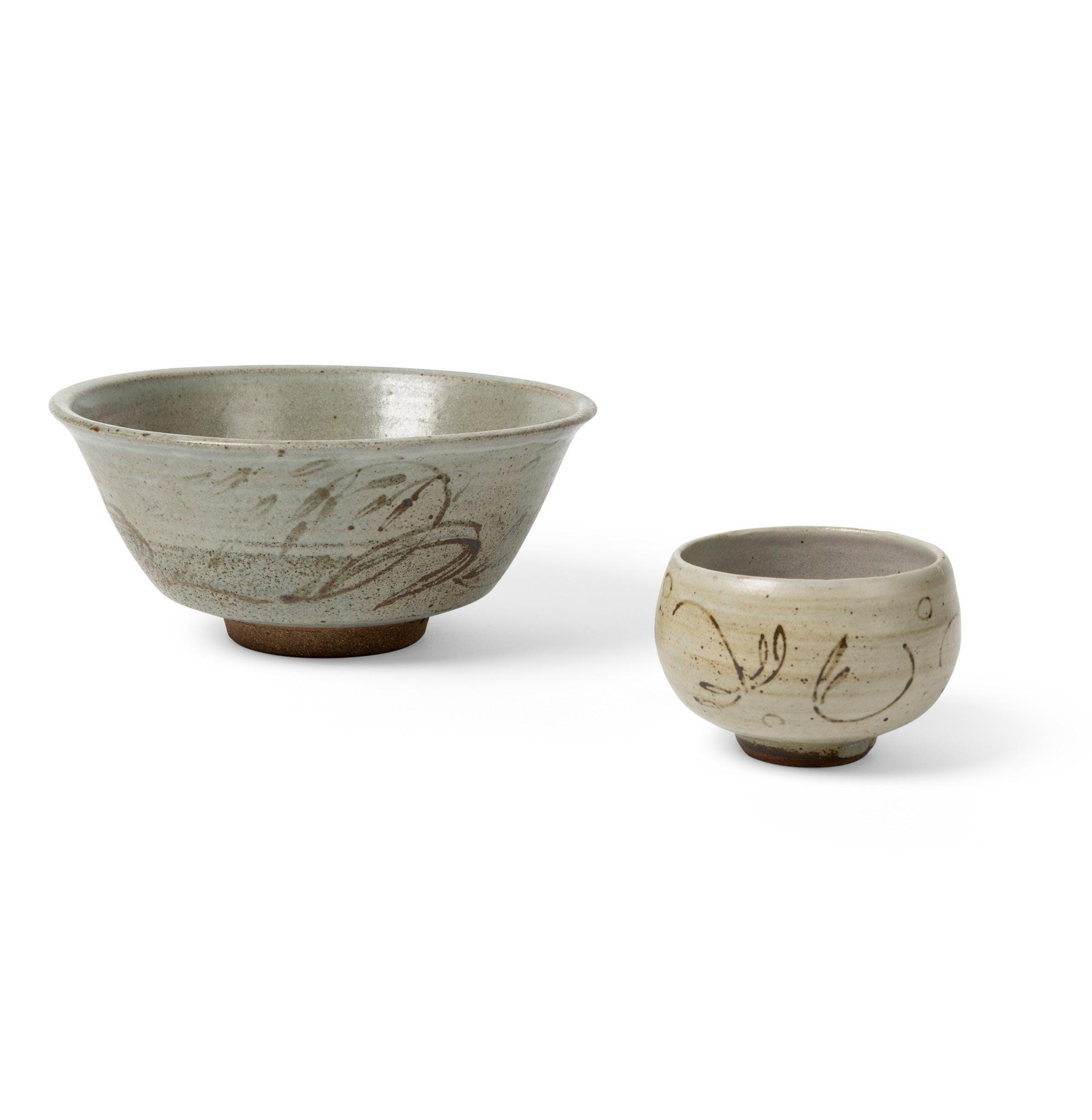
TWO BOWLS
each impressed artist’s seal, stoneware, with brush work decoration (2)
the larger bowl 10cm high, 23cm diameter (4in high, 9in diameter); the smaller bowl 7.5cm high, 11cm diameter (3in high, 4 3/8in diameter)
£400-600
SHOJI HAMADA (JAPANESE 1894-1978)
CHAWAN OR TEA BOWL
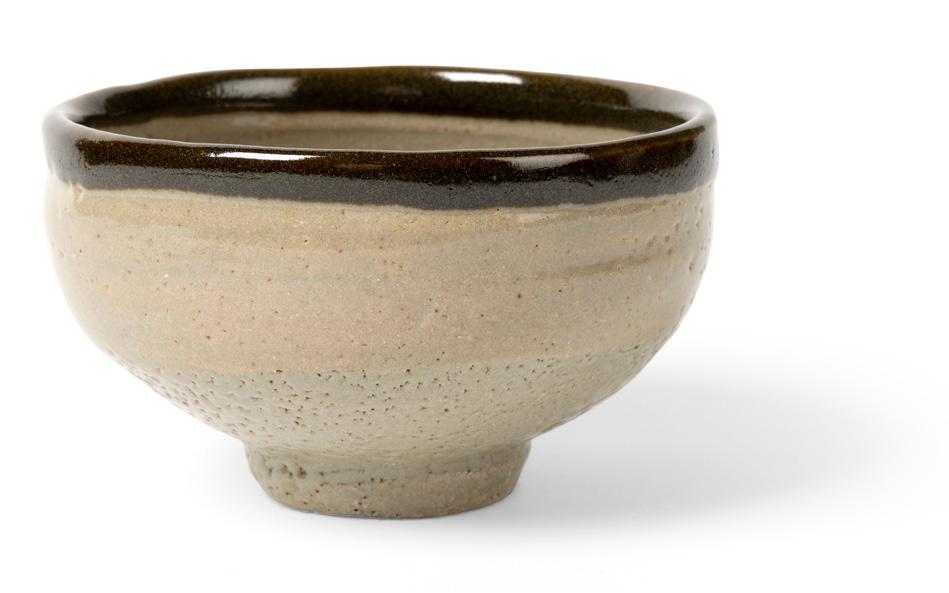
stoneware, nuka glaze with band of iron glaze to the rim 8cm high, 14cm diameter (3 1/8in high, 5 1/2in diameter)
Provenance: Bonhams, London, 9 November 2004, Lot 56; Mike O’Connor Collection, where acquired by the current vendor. £600-800
65 §
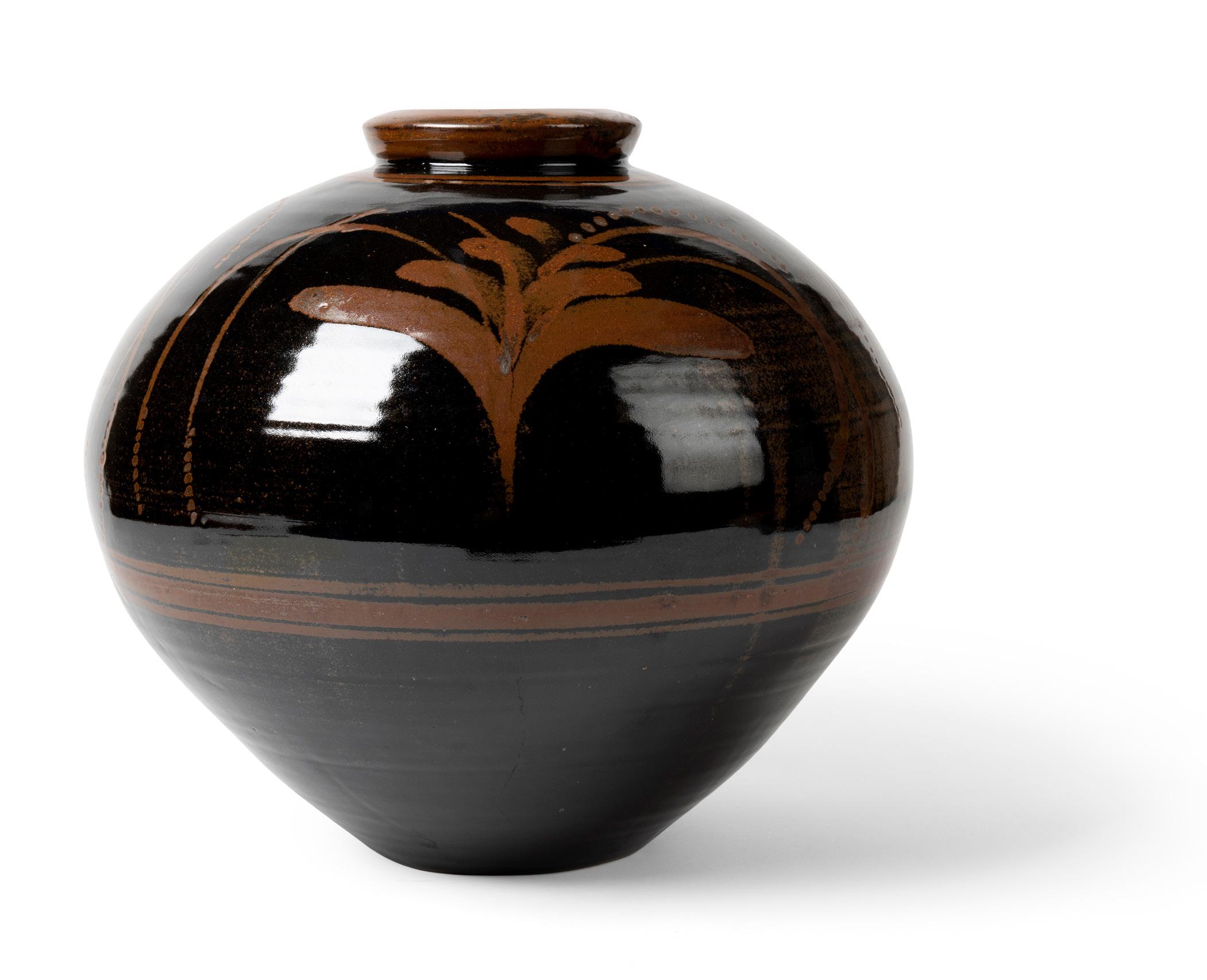
DAVID LEACH O.B.E. (BRITISH 1911-2005)
VASE
impressed artist’s seal, stoneware, tenmoku with ‘Foxglove’ motif 34.3cm high (13 1/2in high) £600-800
60
66 §
NORAH BRADEN (BRITISH 1901-2001)
DISH
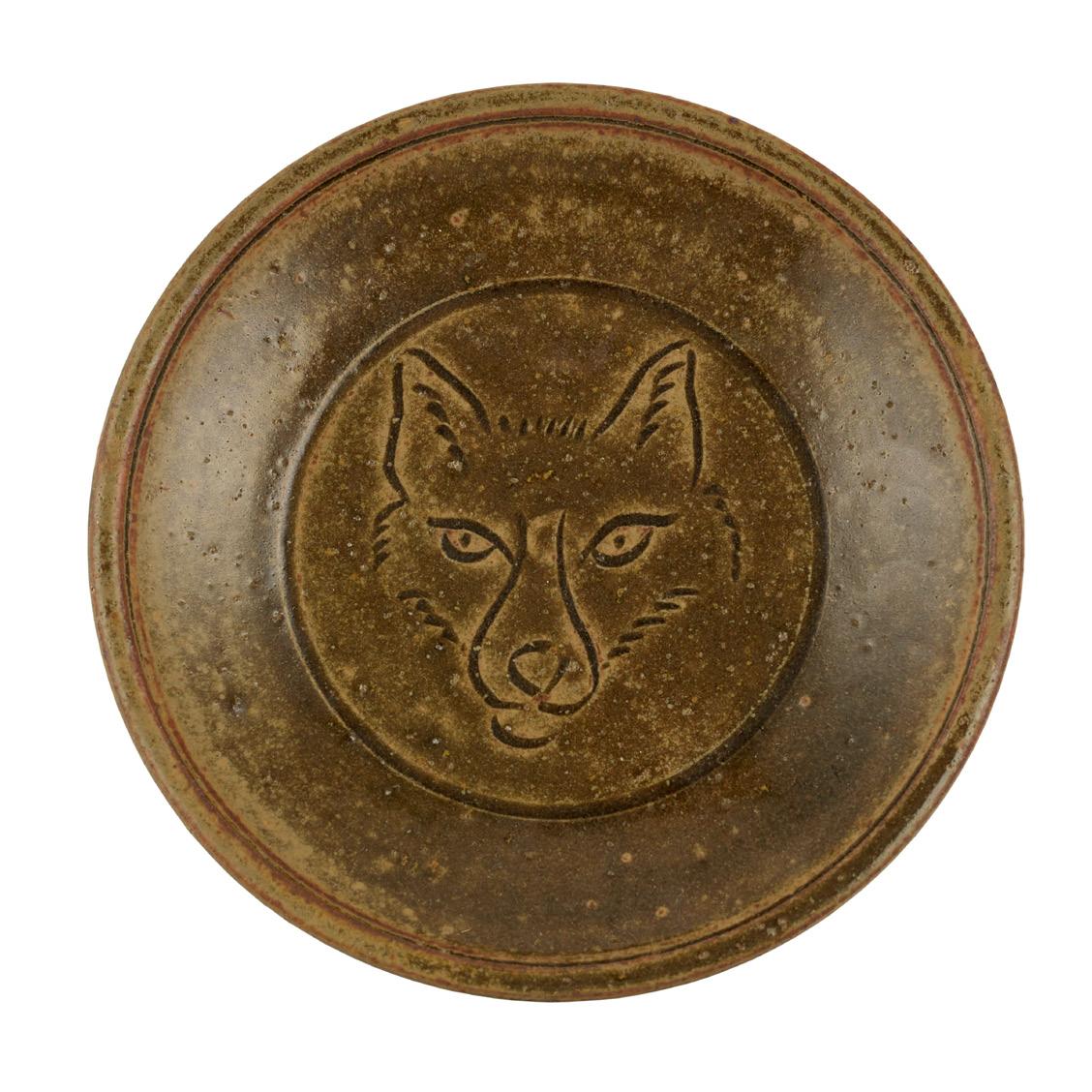
impressed artist’s seal, stoneware, ash glaze, with sgraffito decoration of a fox 17cm diameter (6 5/8in diameter) £300-500
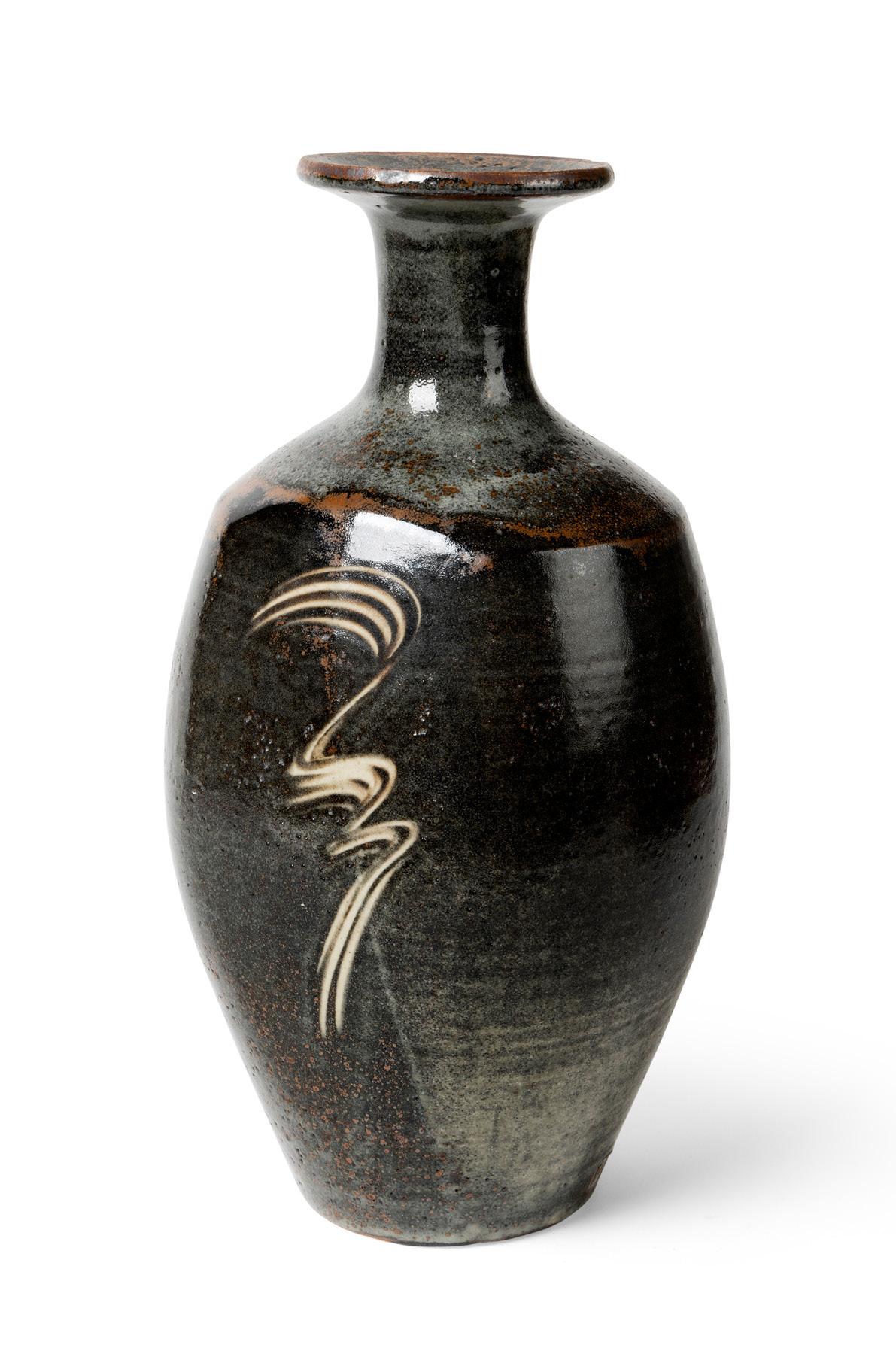
§
WILLIAM MARSHALL (BRITISH 1923-2007)
VASE, 1984 impressed artist’s seal and date, stoneware, tenmoku with green splash 33cm high (13in high) £500-700
68 §
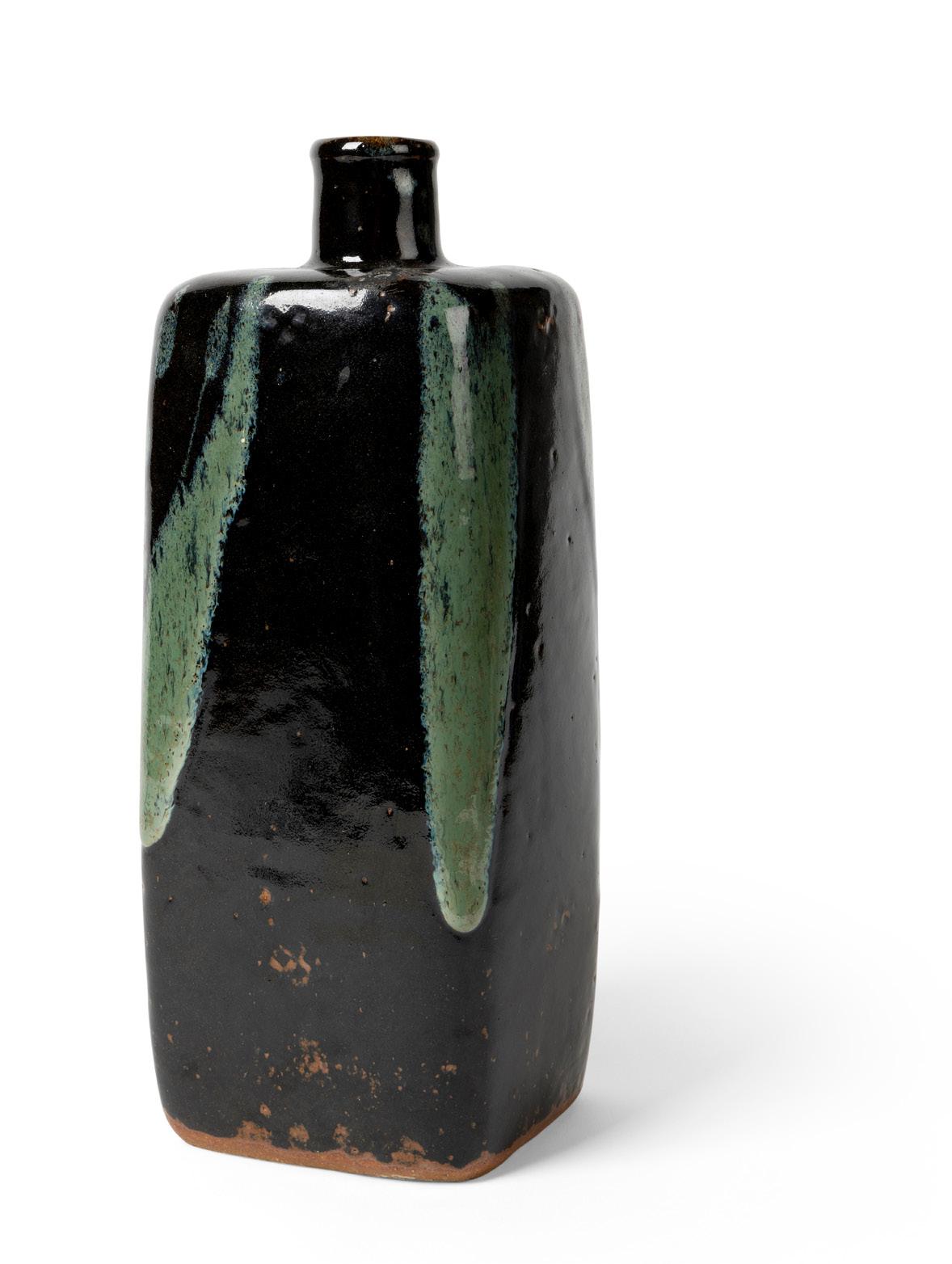
DAVID LEACH O.B.E. (BRITISH 1911-2005)
VASE
impressed artist’s seal, stoneware, brush work motif 38cm high (15in high) £400-600
67
61 Other fees apply in addition to the hammer price: see the ‘Buyer’s Guide’ section on page 6
69 §
RICHARD BATTERHAM
(BRITISH 1936-2021)
LARGE FOOTED BOWL stoneware, faceted, dark green glaze running over iron 23cm high, 37cm diameter (9in high, 14 1/2in diameter) £500-700
70 §
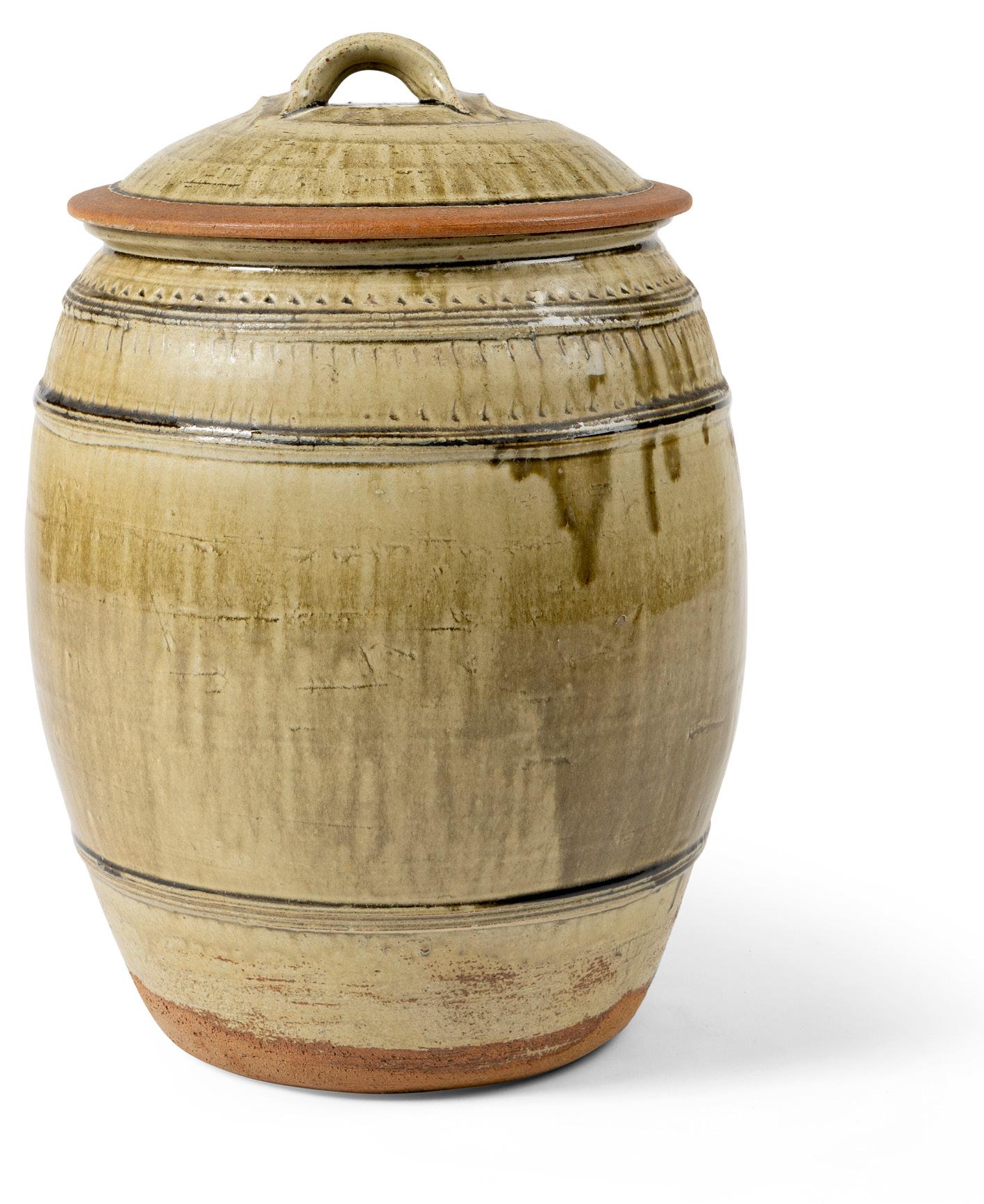
RICHARD BATTERHAM
(BRITISH 1936-2021)
LARGE LIDDED VESSEL stoneware, ash glaze 51cm high (20in high) £1,000-1,500
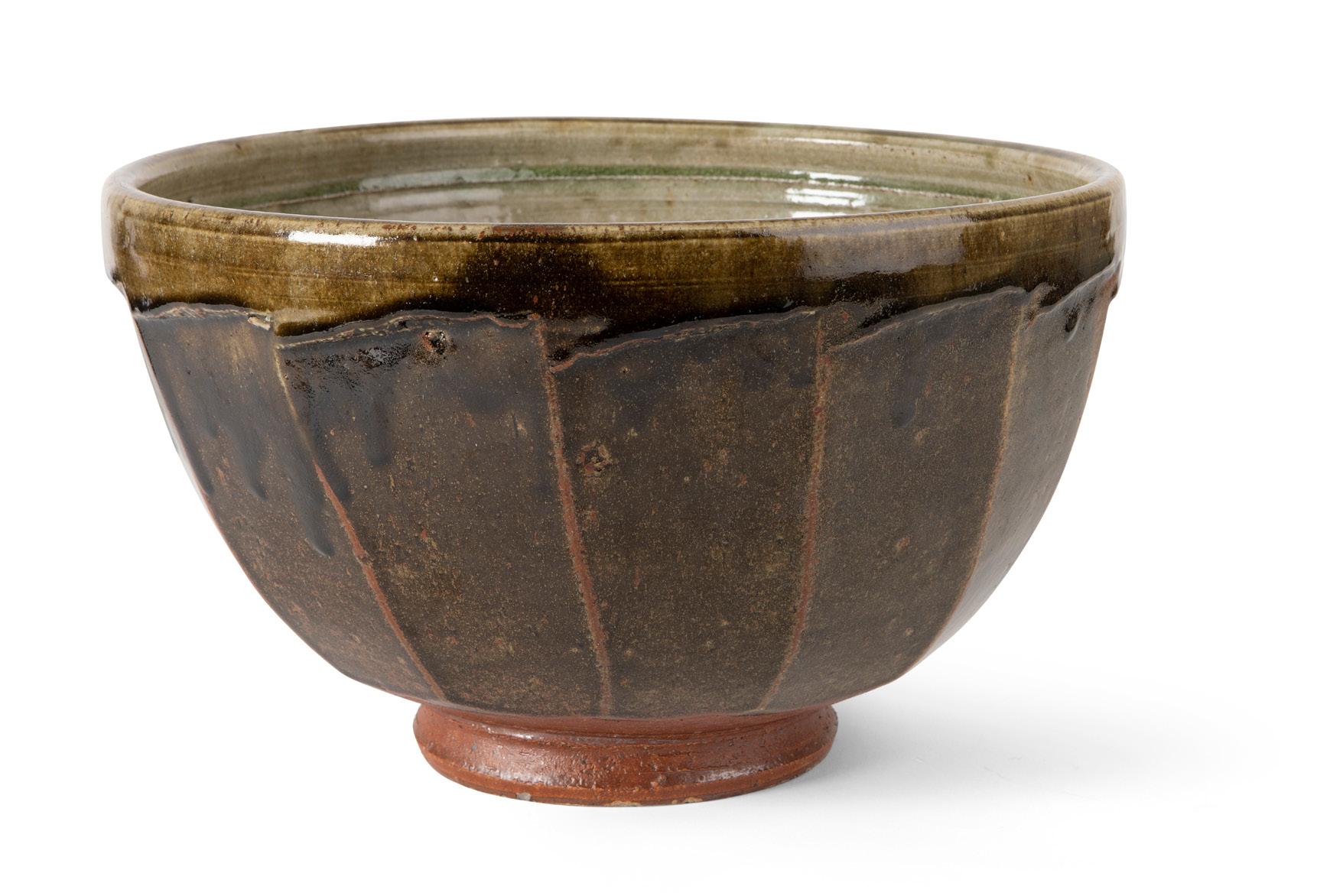
62 Other fees apply in addition to the hammer price: see the ‘Buyer’s Guide’ section on page 6
IAN GODFREY (BRITISH 1942-1992)
IAN GODFREY (BRITISH 1942-1992)
FOOTED CUP FORM WITH BIRDS
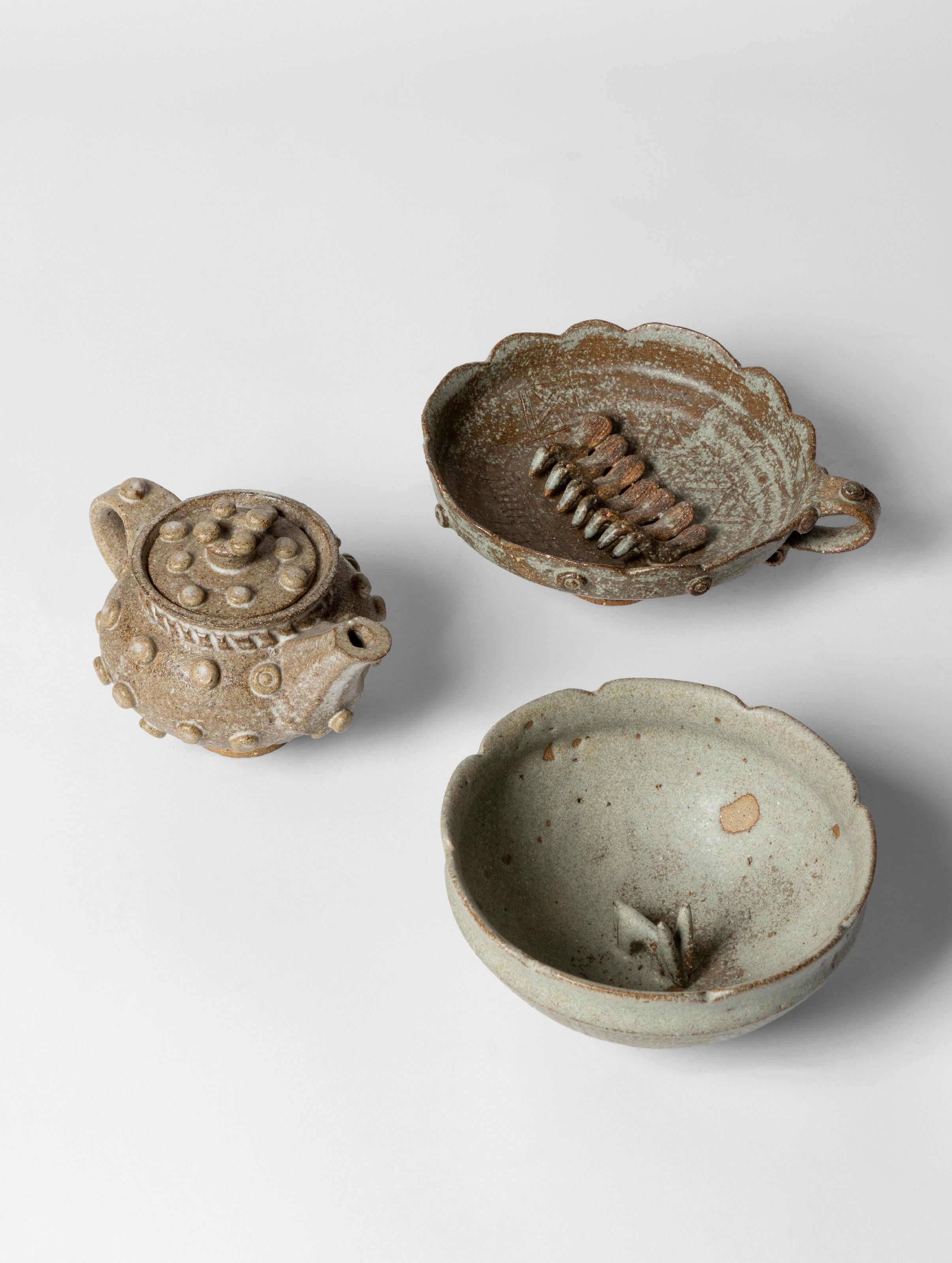
5.5cm high,
1/8in high,
1/4in
GODFREY (BRITISH 1942-1992)
73 § IAN
FOOTED BOWL stoneware 7cm high, 13cm diameter (2 3/4in high, 5 1/8in diameter) £250-350 72 §
TEAPOT stoneware 8.5cm high, 14cm wide (3 3/8in high, 5 1/2in wide) £200-300 71 §
stoneware
16cm wide (2
6
wide) £300-500 63
DAVID LEACH O.B.E. (BRITISH 1911-2005)
TWO FLUTED BOWLS
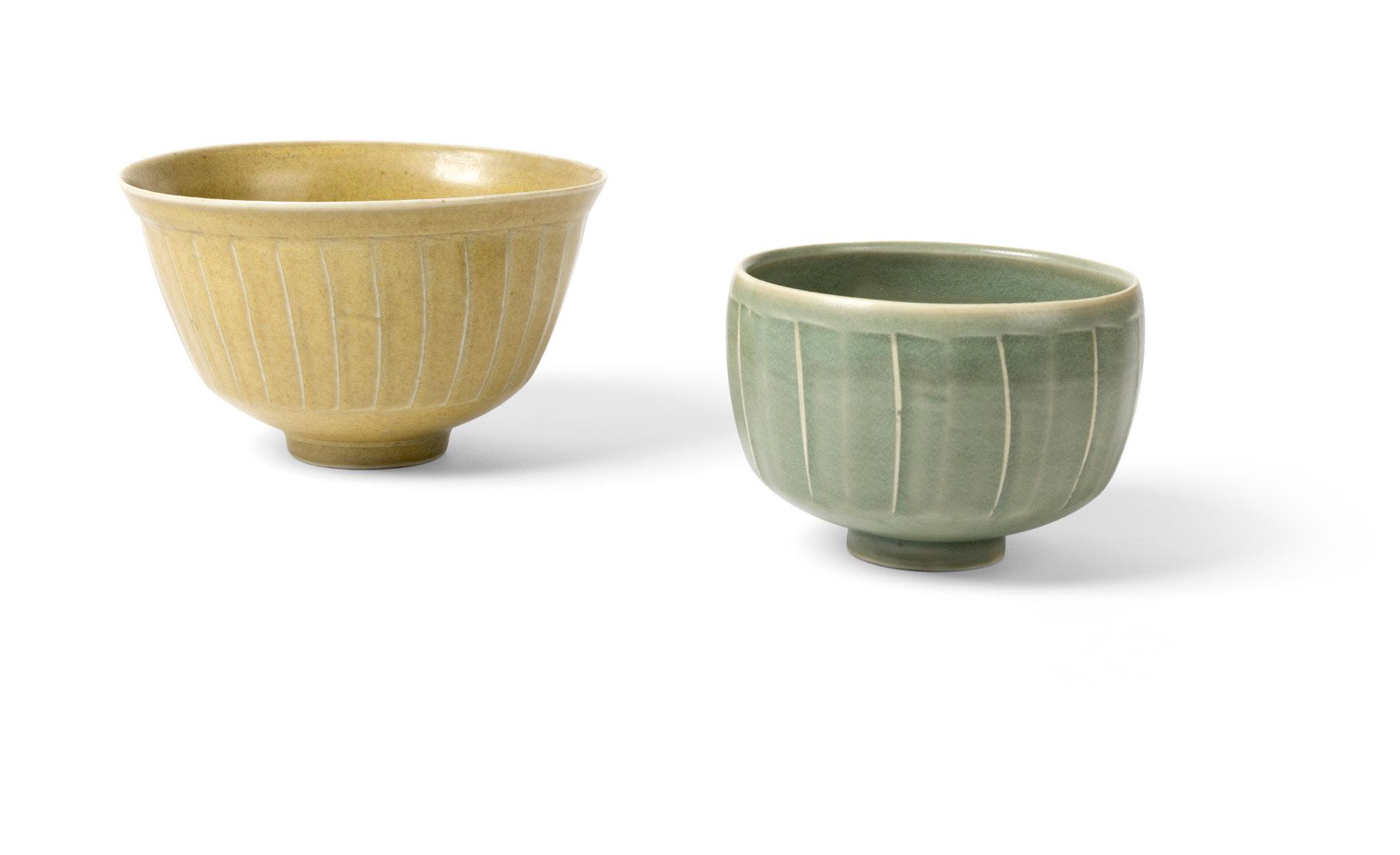
impressed with artist seals, porcelain (2)
Larger bowl 10cm high, 16.5cm diameter (4in high, 6 1/2in diameter);
Smaller bowl 9cm high, 13cm diameter (3.5in high, 5 1/8in diameter)
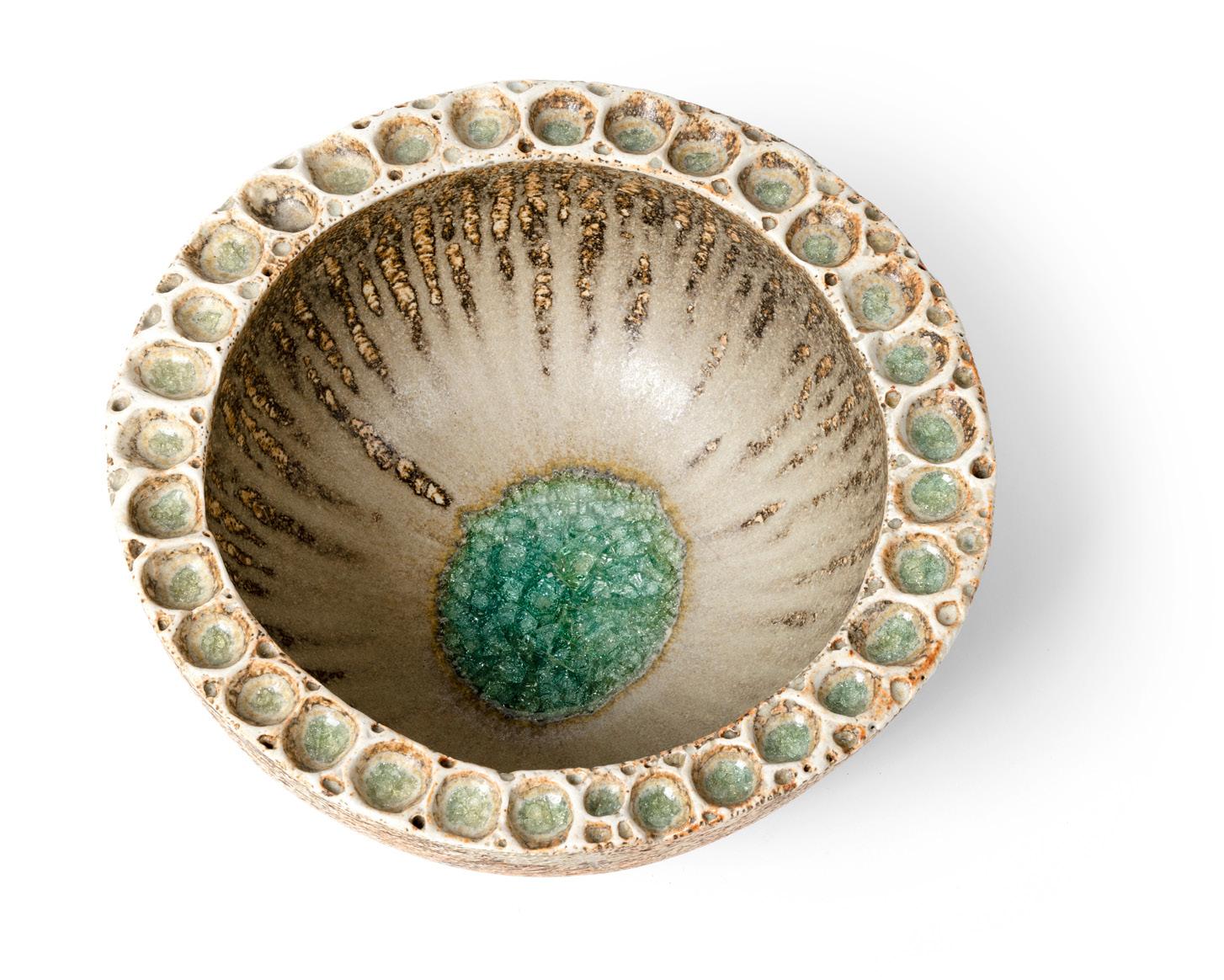
75 § ALAN WALLWORK (BRITISH 1931-2019)
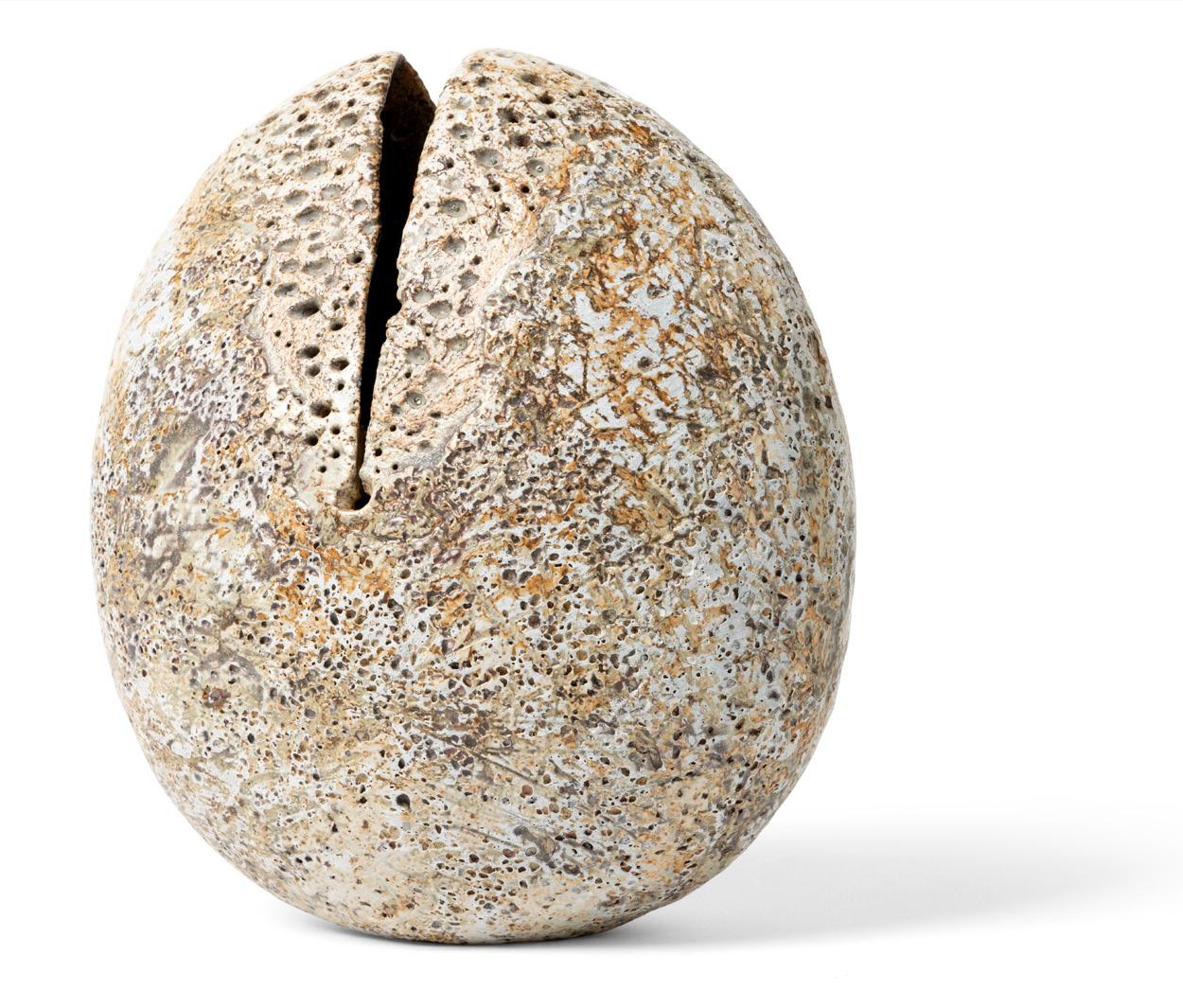
‘SPLIT POD’ FORM
incised artist’s intials, stoneware 23cm high, 20.3cm wide (9in high, 8in wide) £300-500
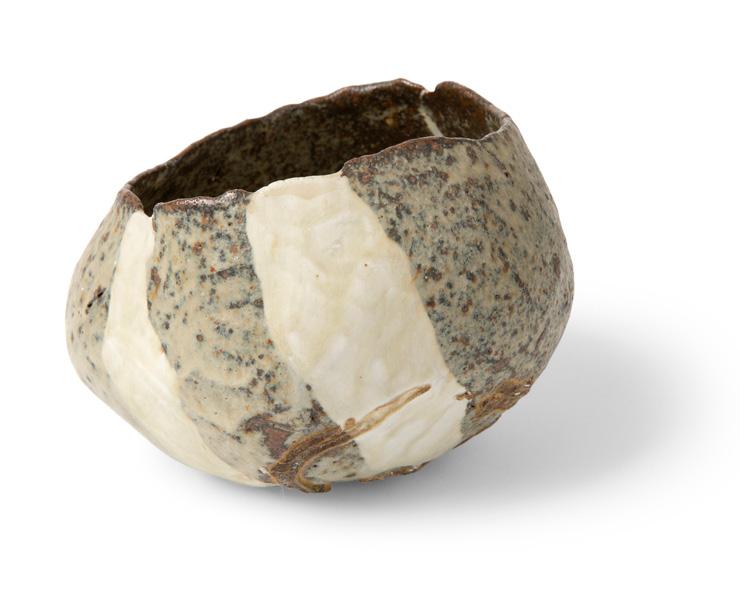
ALAN WALLWORK (BRITISH 1931-2019)
incised artist’s initials, stoneware 12cm high, 25.5cm diameter (4 3/4in high, 10in diameter) £300-500
64 Other fees apply in addition to the hammer price: see the ‘Buyer’s Guide’ section on page 6
77 §
EWEN HENDERSON (BRITISH 1934-2000) BOWL
mixed laminated clay 11cm high, 16cm wide (4 3/8in high, 6 1/4in wide) £250-350
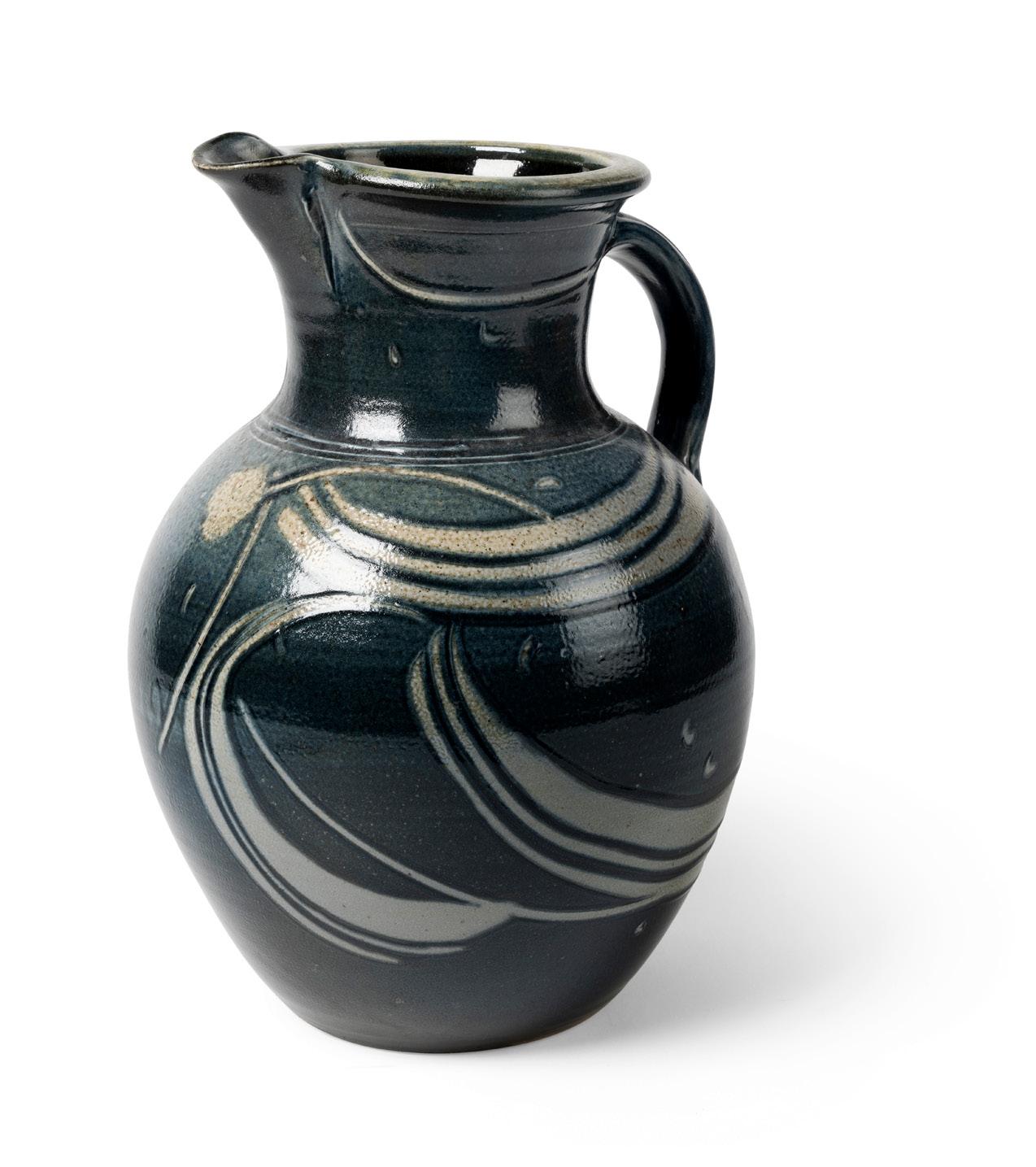
MICK CASSON O.B.E. (BRITISH 1925-2003)
impressed artist’s seal, stoneware 29cm high (11 3/8in high)
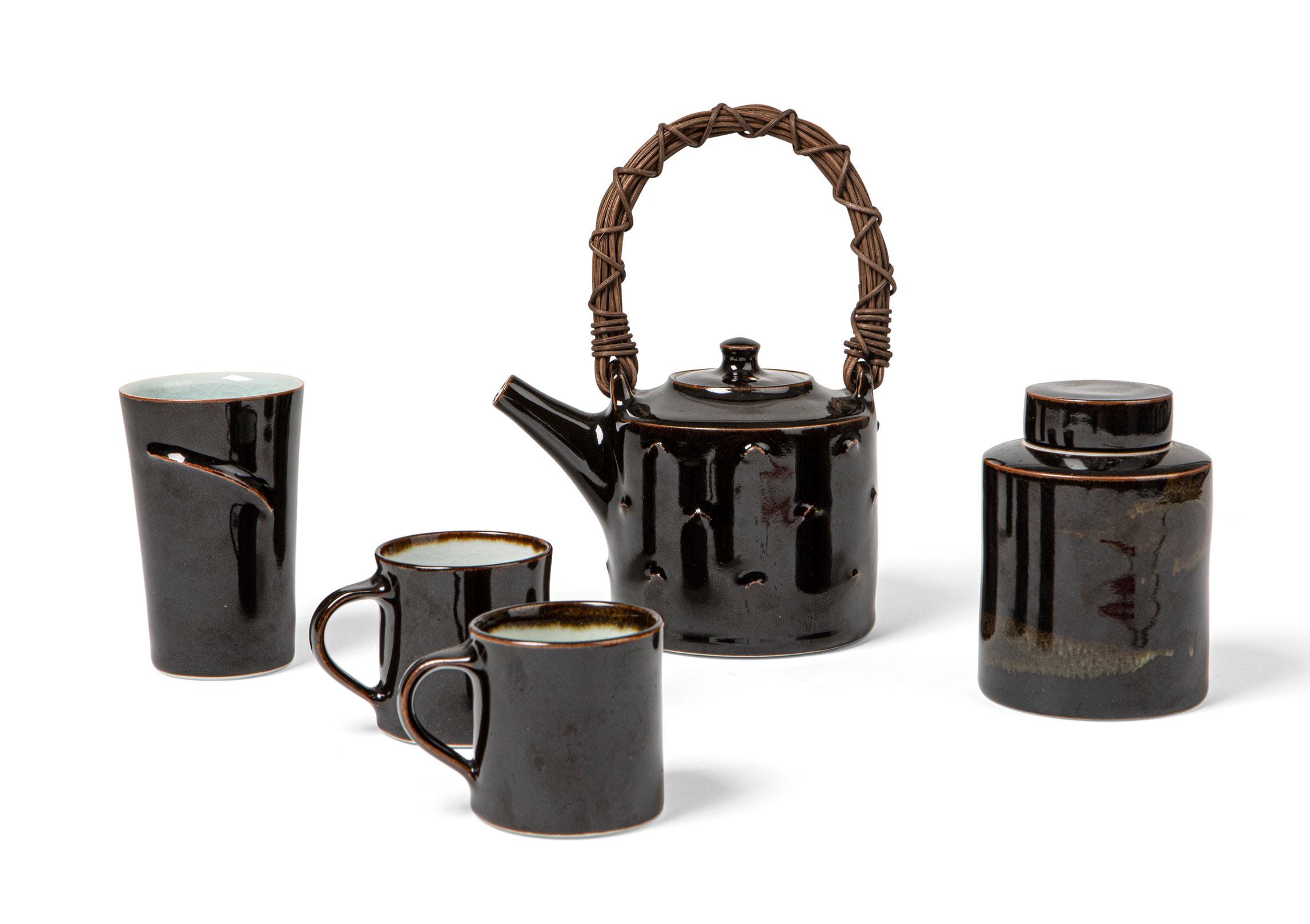
79 § CHRIS KEENAN (BRITISH 1960-) TEASET, CANNISTER AND BEAKER comprising teapot, two cups, cannister and beaker, each impressed artist’s seal, porcelain with dark brown glaze (5) the teapot 20cm high including handle (7 7/8in high), 14.5cm wide (5 3/4in wide) £300-500
65
Robert Polhill Bevan: Works from the Artist’s Estate
The following highly personal group of works by Robert Polhill Bevan (1865-1925) come from the Artist’s Estate and reveal his achievements as a painter, draughtsman and printmaker. Bevan was born in Hove, Sussex in 1865 and grew up in Horsgate, near Cuckfield. He studied at Westminster School of Art, London and at the Académie Julian in Paris. His training during the 1890s also included two periods in Pont-Aven in Brittany – where he met Paul Gauguin – as well as time spent in Madrid and Tangier.
In 1897, Bevan met and married the Polish artist Stanislawa de Karlowska (1876-1952). Three years later they moved to 14 Adamson Road, London, which remained their base for the rest of Bevan’s life. The couple became key figures in London’s art world before and after World War One and held popular ‘at homes’ on Sunday afternoons during the 1910s.
As Alice Strang has explained: ‘Harold Gilman and Spencer Gore…saw Bevan’s work for the first time at the Allied Artists Association exhibition of 1908. As a result, they invited him to join Walter Sickert’s Fitzroy Street Group and Bevan was ushered into the heart of a loose association of pioneering artists.’ 1 As a founder member of the Camden Town Group (1911-13), London Group (from 1913) and the Cumberland Market Group (191419), Bevan deepened his association with these artists and others, such as Walter Bayes, Malcolm Drummond, Charles Ginner and William Ratcliffe, putting him at the forefront of English art of the period.
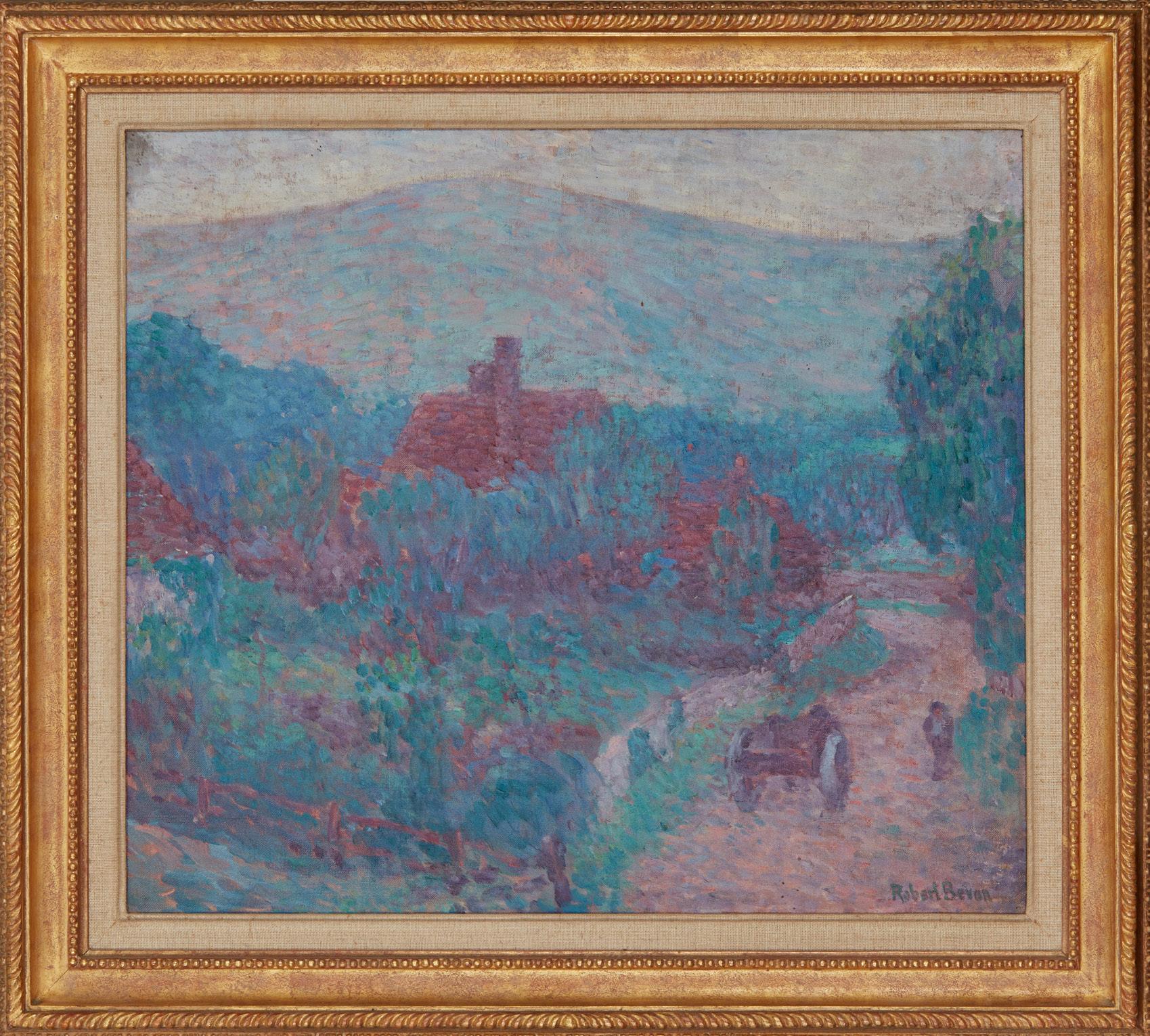
Karlowska’s family owned an estate at Szeliwy in Poland and the Bevans stayed there during several summers in the early 1900s. Wagon and Figure in a Landscape relates to a style of painting which he developed there and reveals Bevan’s engagement with contemporary French painting. A palette based on high-pitched tones of blue, green and violet is applied in deliberate, separate brushstrokes akin to Impressionism and even Pointillism.
The intimate Houses and Field shows how Bevan’s technique developed to create smoother fields of bold, unrealistic colour, which owes more to Post-Impressionism and Fauvism. Works painted in a related manner proved controversial when they were included in his first solo exhibition, held at the Baillie Gallery in London in 1905. Critics used words such as ‘garish’ and ‘violent’ to describe them and Bevan was to thereafter change aesthetic direction.2
In contrast, the early lithographs The Plough and Hawkridge (A Lonely Farm) show Bevan’s engagement with the Pont-Aven group, in particular Gauguin, as well as the work of Vincent van Gogh, in their curvilinear and rhythmic approach to landscape motifs. Graham Dry has explained that The Plough is one of eight lithographs of Breton subjects which are presumed to have been drawn on the stone at Pont-Aven between 1891 and 1894.3 Hawkridge (A Lonely Farm) is one of eleven lithographs based on scenes in Exmoor, where Bevan worked from 1894 until 1896, some of which were printed after his marriage in 1897. 4
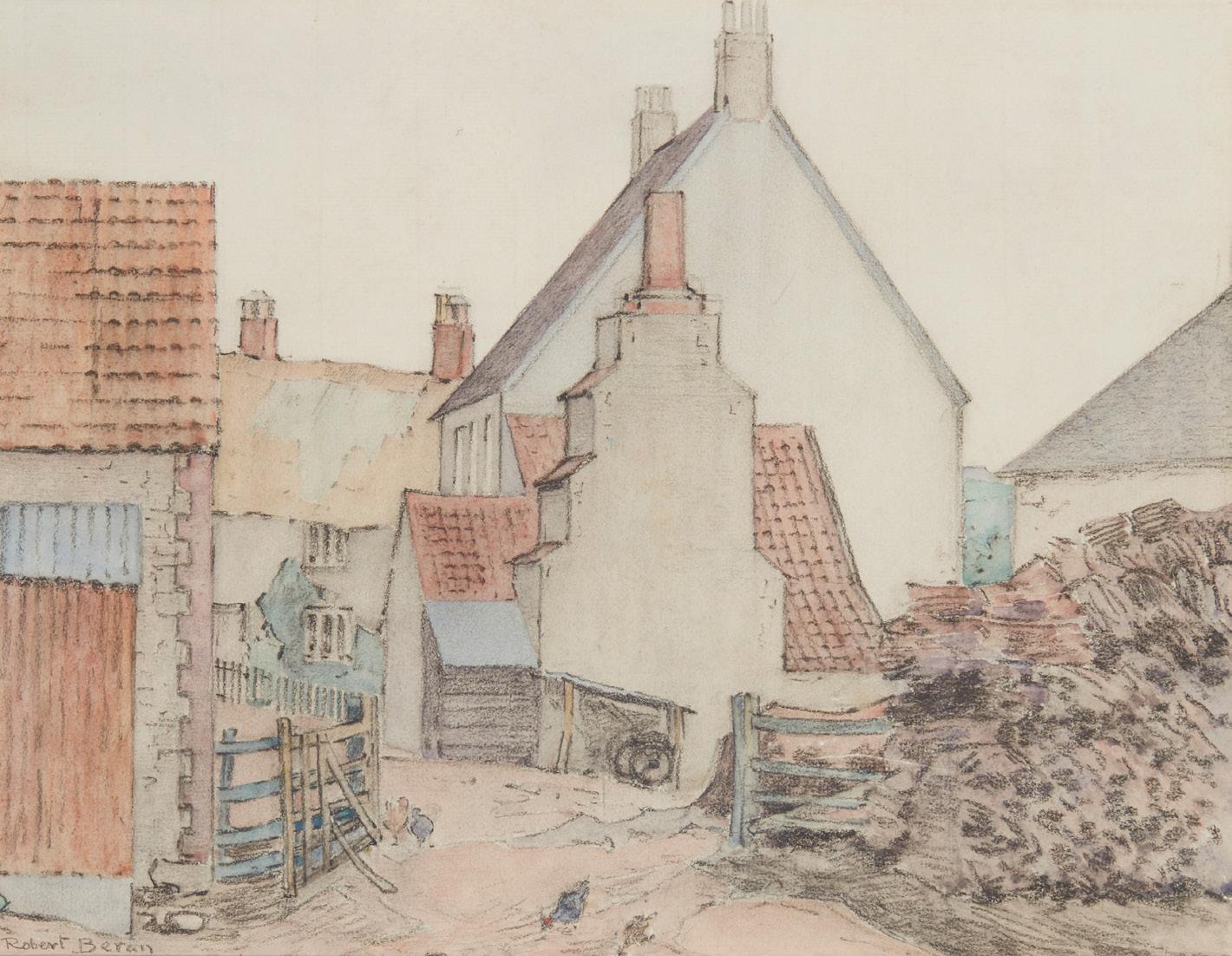
Bevan was a keen countryman and spent a significant amount of time from 1912 until his death working on the Devon-Somerset borders, particularly in Applehayes, the Bolham valley and Luppitt. The Pub at Luppitt of c.1923 is a charming rural scene, executed in watercolour, crayon and pencil. Features such as the roof tiles and fence posts are carefully delineated, whilst the pecking hens in the foreground bring the scene alive. Bevan’s interest in agricultural architecture is also clear in Mount Stephen of 1924. It is a late painting of a favourite farmhouse which was the subject of at least one other canvas and of his only known wood engraving. A more subtle palette and gentle technique make it an idyllic image of life in the countryside.
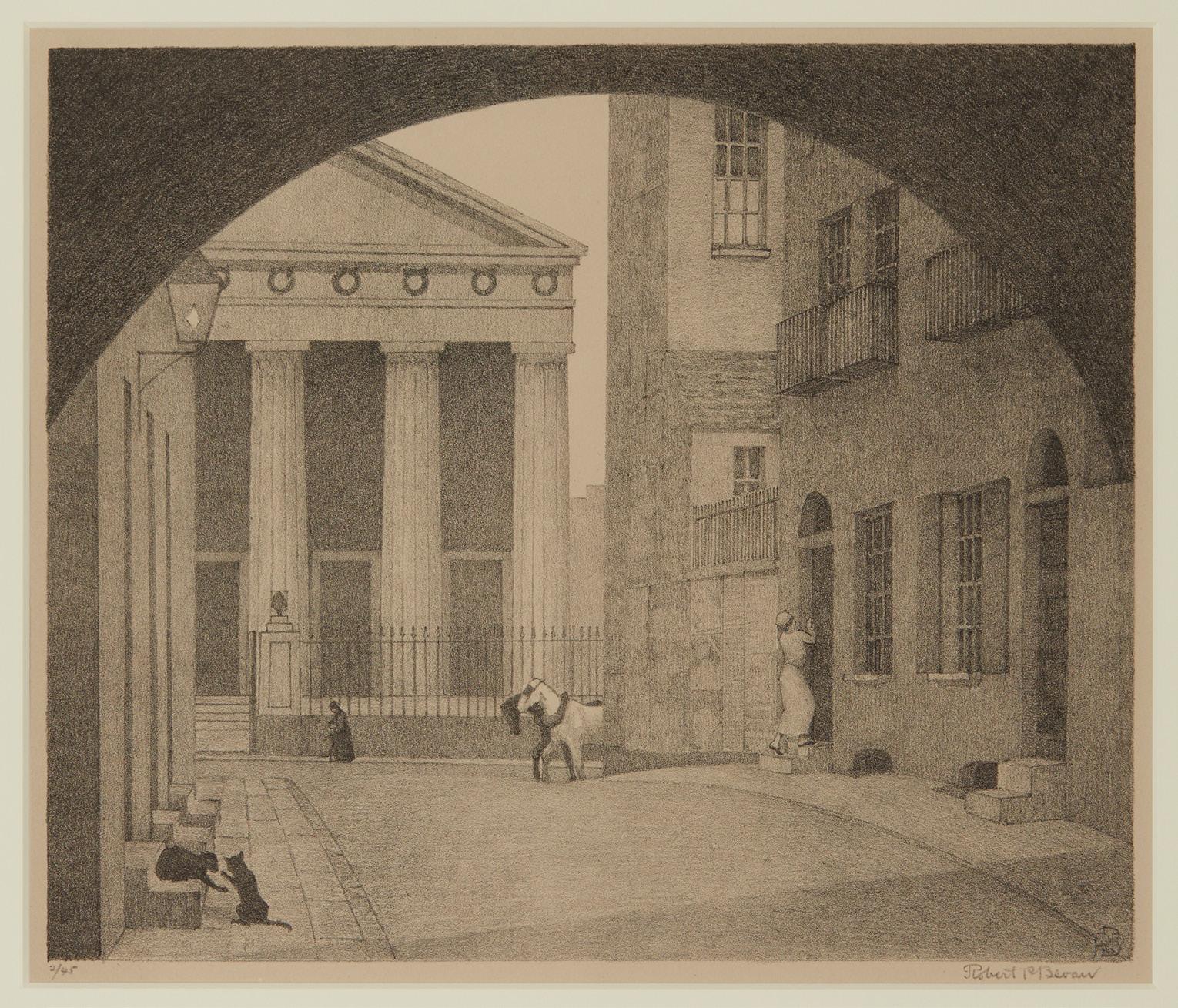
During the late 1910s and early 1920s Bevan developed a striking graphic style which was shown to best effect in his lithographs. Having abandoned the medium in 1901, he returned to it in 1918 with aplomb. The Smithy, Luppitt of 1920, Rosemary, Devon and The Plantation, both of 1922, show his mature mastery of the technique, along with a simplification of form, angular structure and clarity of composition; pastoral scenes are viewed through an avant-garde lens to great effect. A London Church of 1924 shows how Bevan was able to convey subtle light effects in an image celebrating architectural splendour as the backdrop to daily life.
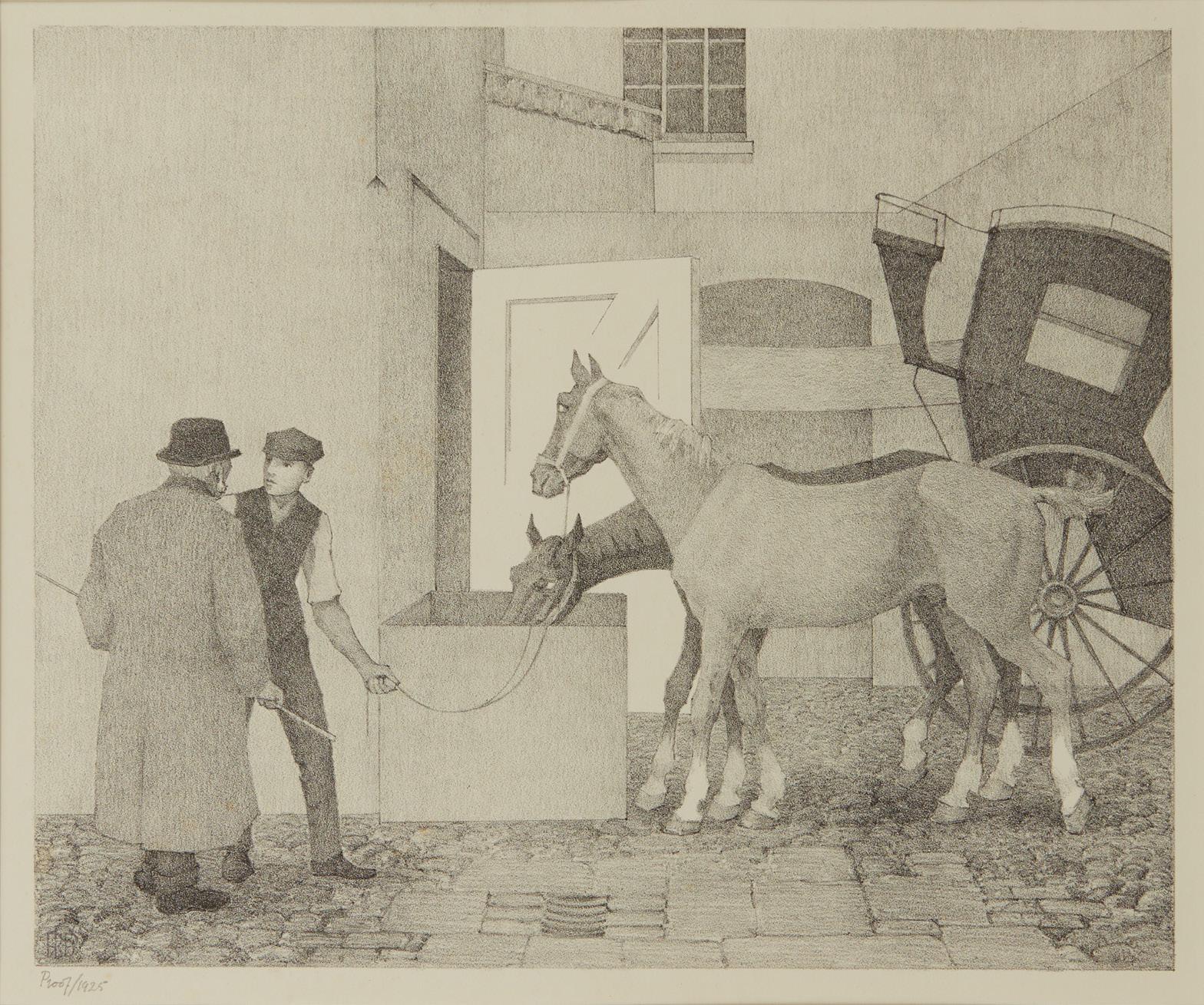
Bevan was a highly-skilled horseman and his images of horses, whether depicted in hunting or farming scenes, or in cab yards and at horse sales, are amongst the most celebrated of his oeuvre. He would sketch during the sales at the Barbican, Aldridge’s, Ward’s Repository and Tattersall’s, working up his notes and drawings into paintings and prints once back in his studio. He enjoyed the interaction between people and animals as much as the pace and spectacle of the event, as can be seen in lithographs such as Horse Dealers (Ward’s Repository No.1), The Horse Mart (Barbican No. 1) and Horse Dealers at the Barbican (Barbican No.2) of 1919 to 1921. Crocks of 1925 was his final lithograph and shows a pair of horses having been taken out of a cab’s shafts and led to a trough for a drink. 5
Following Bevan’s death in 1925, memorial exhibitions were held at the Goupil Gallery in London and at Brighton Art Gallery. Bevan’s works are held in many major public collections, with particularly significant holdings in the British Museum, Victoria & Albert Museum, Yale Center for British Art and the Ashmolean Museum, Oxford. As the artist’s son wrote: ‘I doubt whether Bevan earned as much as £4,000 in the whole of his working life. But he was at all times a whole-hearted professional artist of great determination, painting, as Frederic Gore…[wrote]… in 1965, ‘with the quiet assurance of a man who is certain of immortality.’”
6 Footnotes are available on www.lyonandturnbull.com
66
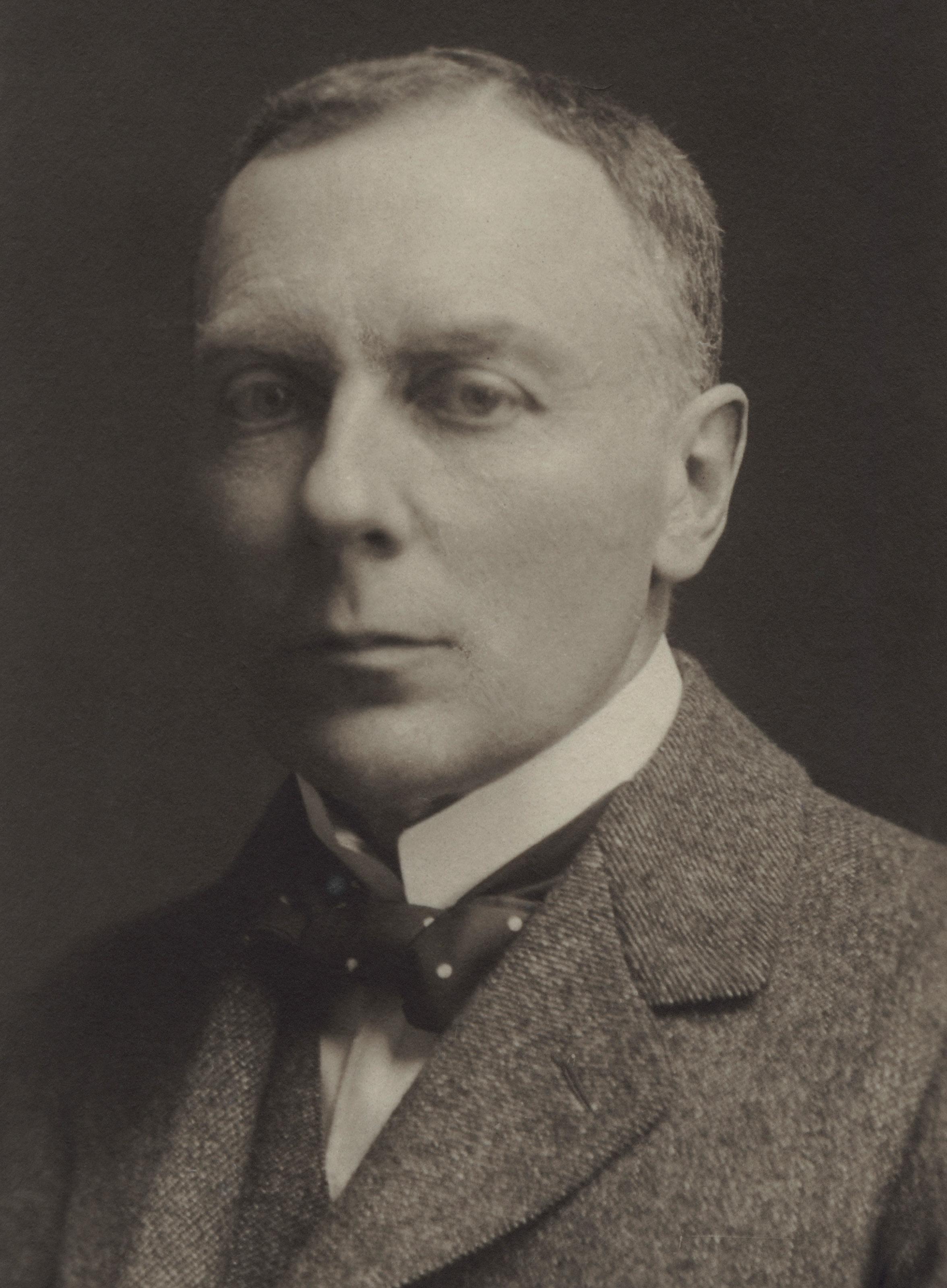 Unknown photographer, Robert Polhill Bevan, c.1914. © National Portrait Gallery, London
80

ROBERT POLHILL BEVAN (BRITISH 1865-1925)
WAGON AND FIGURE IN A LANDSCAPE, EARLY 1900s signed (lower right), oil on canvas 47cm x 54.5cm (18 1/2in x 21 1/2in)
Provenance: Estate of the Artist and thence by descent to the present owner. £3,000-5,000 81
ROBERT POLHILL BEVAN (BRITISH 1865-1925)
HOUSES AND FIELD, EARLY 1900s oil on canvasboard 25cm x 31cm (9 3/4in x 12 1/4in)
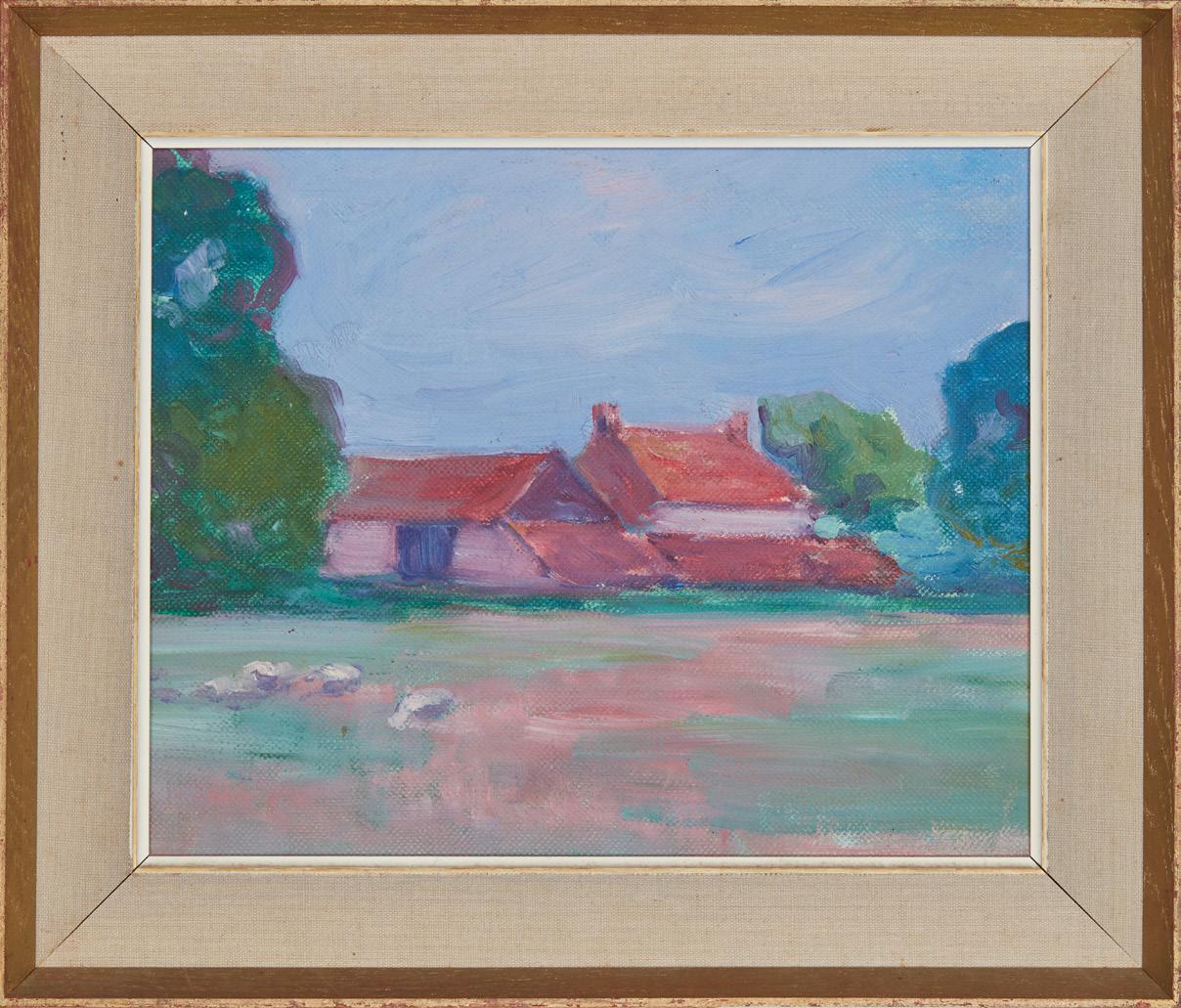
Provenance: Estate of the Artist and thence by descent to the present owner. £1,200-1,800
In 1897, Bevan attended the wedding of Eric Forbes-Robertson and Janina Flamm, whose bridesmaid was the Polish artist Stanislawa de Karlowska (1876-1952); she and Bevan married in December that year. As a result, Bevan spent the summers of the early 1900s painting in Poland, where he made work in the style of Wagon and Figure in a Landscape
68 Other fees apply in addition to the hammer price: see the ‘Buyer’s Guide’ section on page 6
82 ROBERT POLHILL BEVAN (BRITISH 1865-1925)
MOUNT STEPHEN, 1924 oil on canvas
56cm x 65.5cm (22 x 25 3/4in)
Provenance: Estate of the Artist and thence by descent to the present owner
Mount Stephen is an L-shaped farmhouse in Luppitt, Devon of seventeenth-century origin.
A related painting of the same subject was included in the exhibition A Countryman in Town: Robert Bevan and The Cumberland Market Group, held at Southampton City Art Gallery in 2008 (private collection, repr. col. in the catalogue p.39 pl.26.)
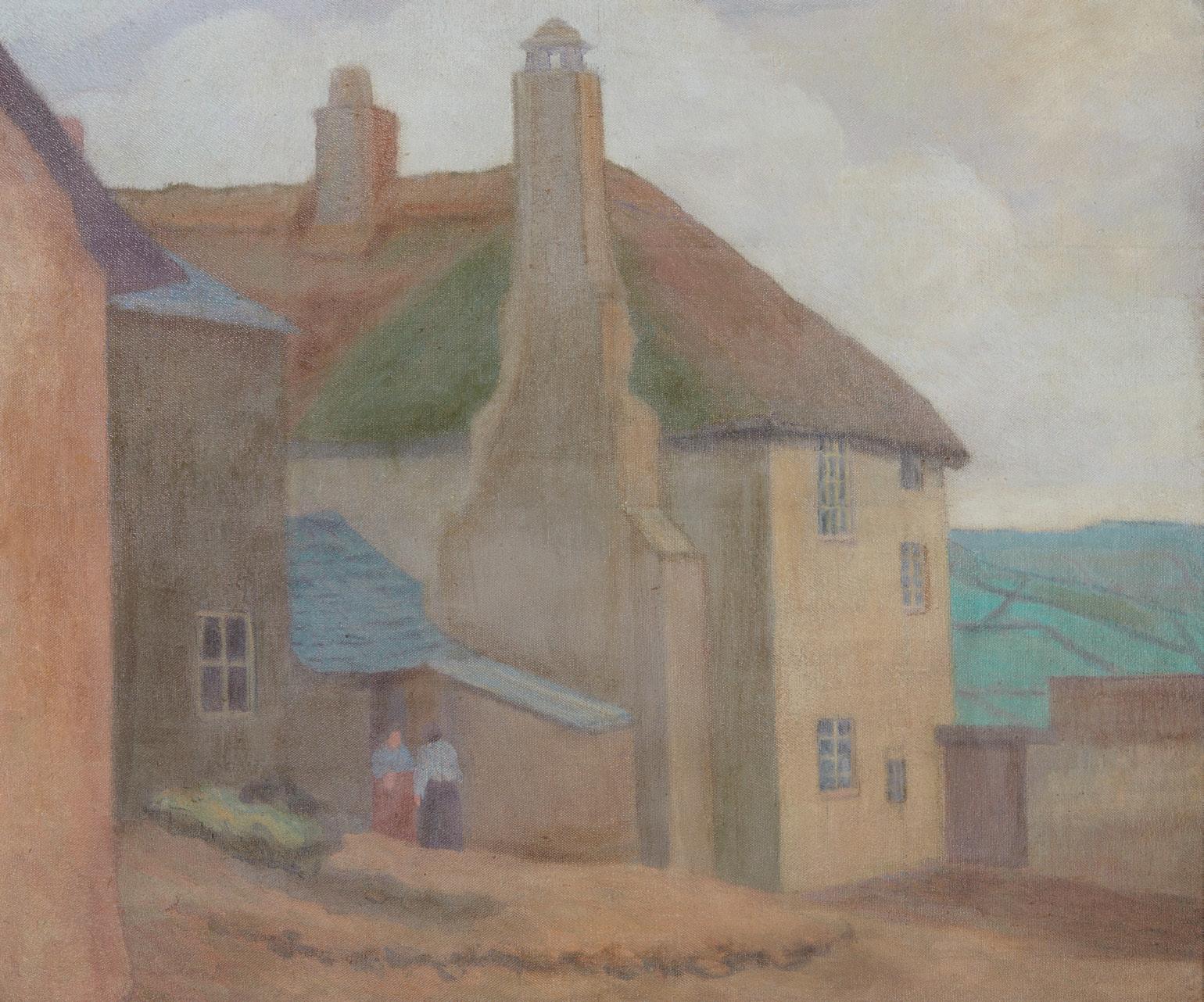
£5,000-7,000
83 ROBERT POLHILL BEVAN (BRITISH 1865-1925)
THE PUB AT LUPPITT, CIRCA 1923
signed (lower left), watercolour, crayon and pencil on paper 26.2cm x 33.5cm (10 1/4in x 13 1/4in)
Provenance: Estate of the Artist and thence by descent to the present owner. Exhibited: Scottish National Gallery of Modern Art, Edinburgh, From Sickert to Gertler: Modern British Art from Boxted House, 15 March - 22 June 2008 (and tour to Gainsborough’s House, Sudbury 4 October - 13 December 2008), listed p. 75; Brighton Museum & Art Gallery, Brighton, From Sickert to Gertler: Modern British Art from Boxted House, 17 April12 September 2010, no cat.no.s.
Luppitt is a village in East Devon. Bevan lived on Luppitt Common in 1920 and again from 1923 until 1925.
£1,500-2,500
69
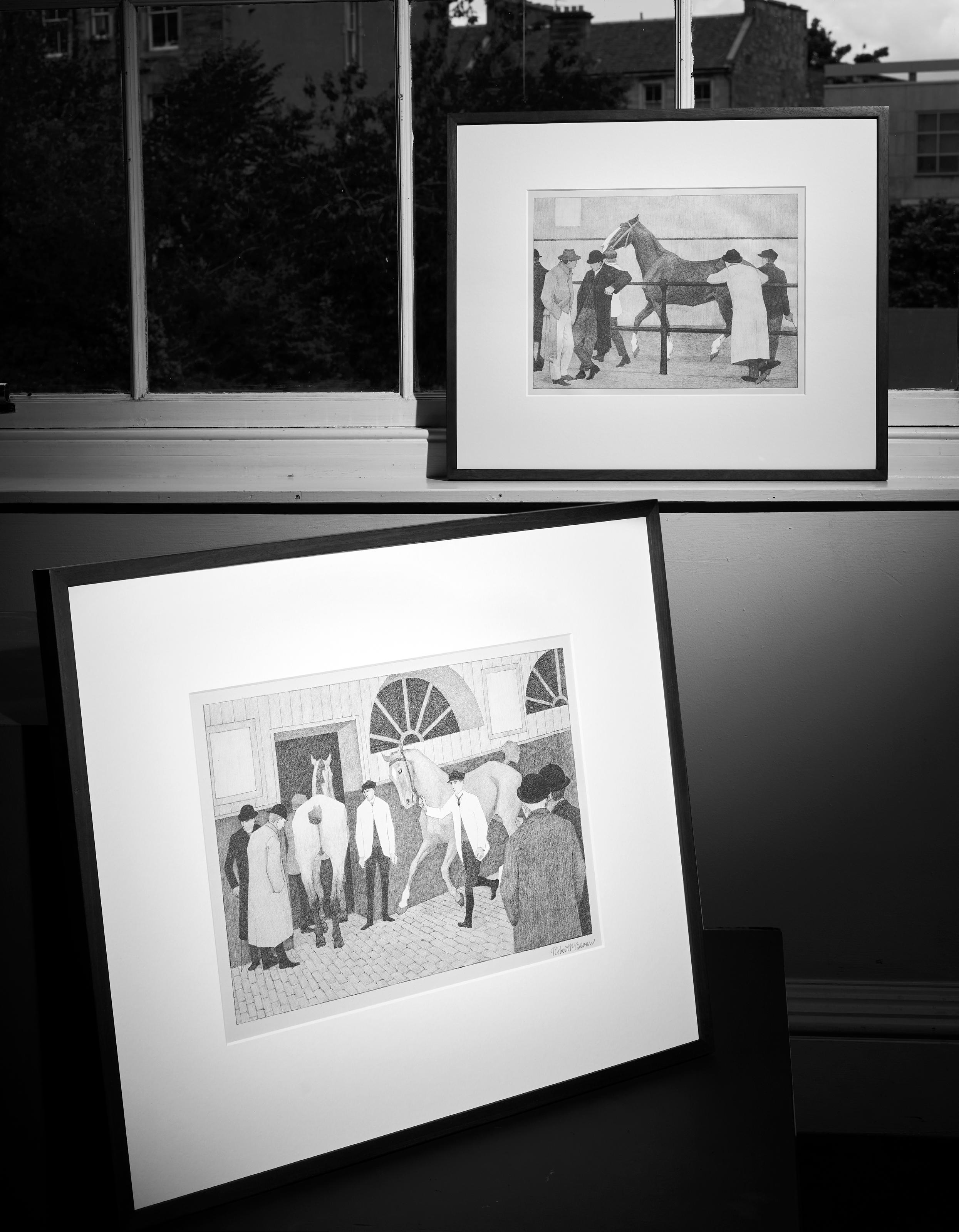
“Lithography was a very important part of his artistic expression. He found it a very suitable medium for his skills…At all times he loved the feel of lithographic chalk and the handling of it on the smooth stone.”Robert Alexander Bevan the artist’s son, 1968
70
ROBERT POLHILL BEVAN (BRITISH 1865-1925)
HORSE DEALERS (WARD’S REPOSITORY NO.1), 1919 inscribed by another hand ‘Ward’s No. 1’ (lower left), lithograph on paper
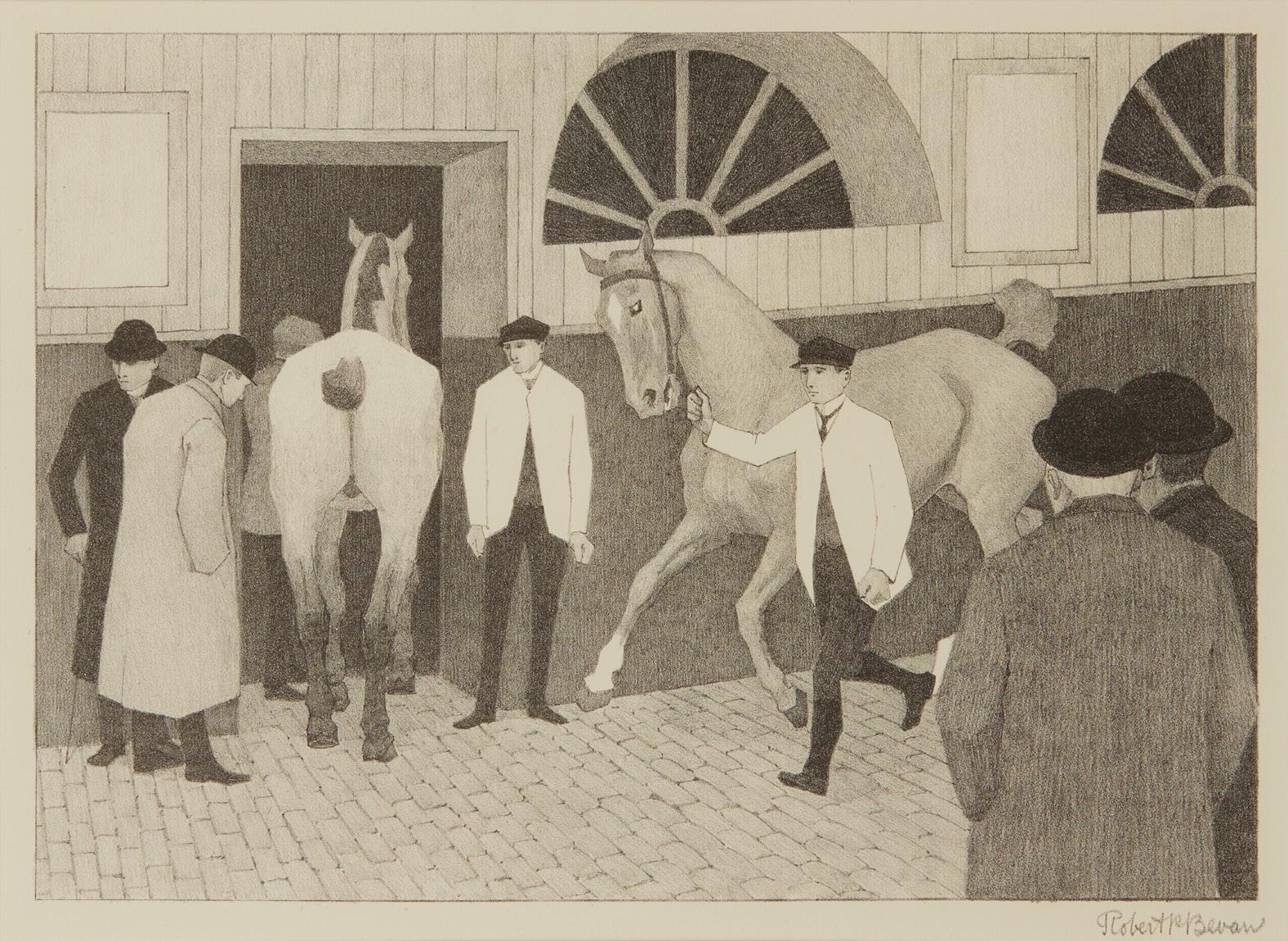
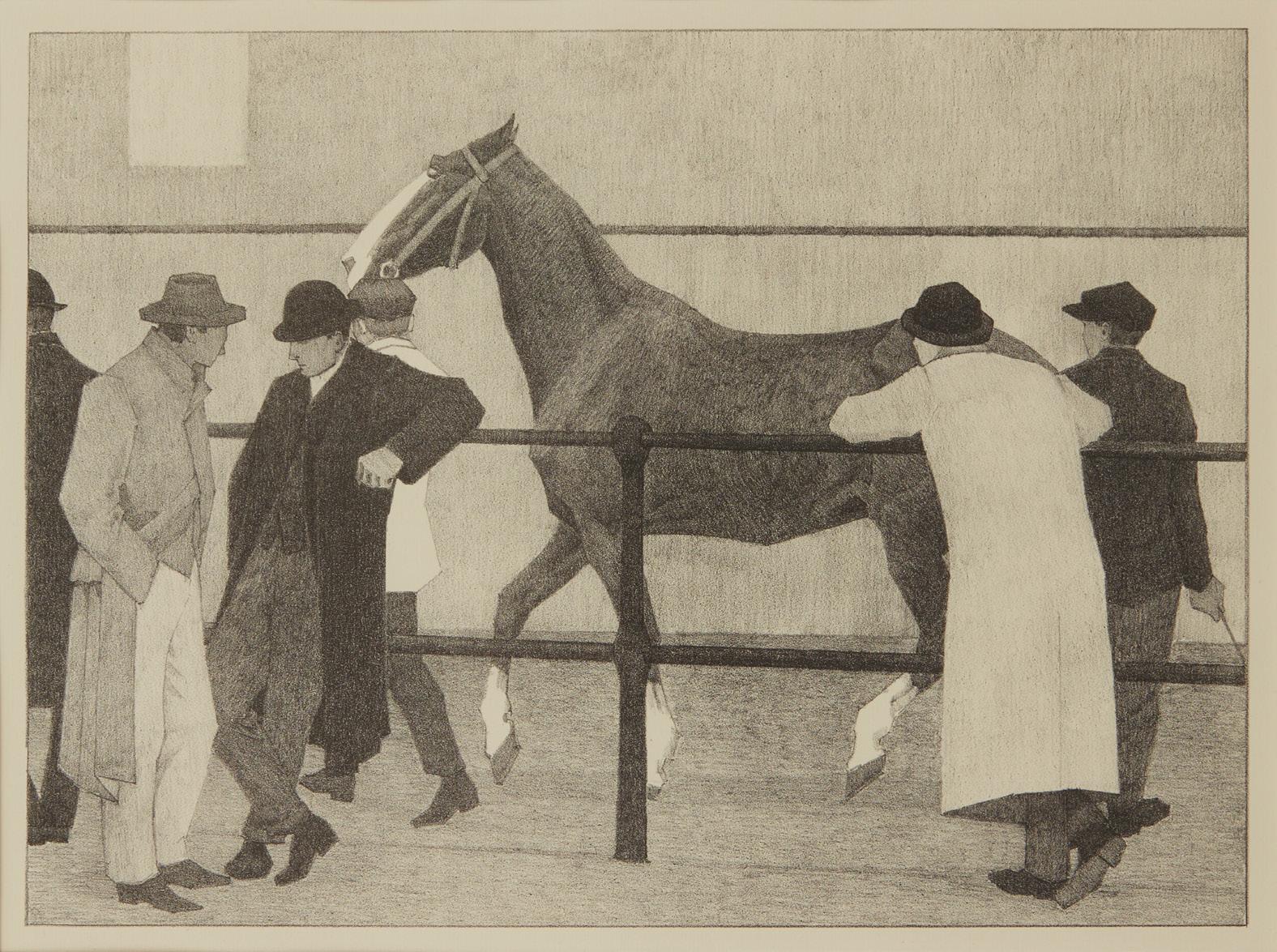
plate: 27.5cm x 38cm (10 3/4in x 15in); sheet: 44cm x 57cm (17 1/4in x 22 1/2in)
Provenance: Estate of the Artist and thence by descent to the present owner.
Literature: Bevan, R.A., Robert Bevan 1865-1925: A Memoir by his Son, Studio Vista, London 1965, another example from the edition repr. b/w pl.62 (as ‘Horse Dealers’ and dated 1921); Dry, Graham, Robert Bevan 1865-1925: Catalogue Raisonné of the Lithographs and other Prints, The Curwen Press, London 1965, another example from the edition repr. b/w no.33 (as ‘Horse Dealers (Ward’s Repository No.1)’ and dated 1919).
From an un-numbered edition of eighty plus three proofs. This work is also known as Ward’s No.1. It is related to the oil painting Horse Dealers (Sale at Ward’s Repository No.1) of 1918 which was purchased by Manchester Art Gallery in 1935 (acc.no.1935.157). Ward’s Repository off the Edgward Road, London, was the first of the horse sale yards to close.
85 ROBERT POLHILL BEVAN
(BRITISH 1865-1925)
THE HORSE MART
(BARBICAN NO.1), 1920
signed in pencil (lower right), inscribed by another hand ‘Barbican No. 1 1920’ (lower left) and ‘ginner’ (lower right), lithograph on paper plate: 26.6cm x 37.8cm (10 1/2in x 14 3/4in); sheet: 46cm x 58.7cm (18in x 23in)
Provenance: Estate of the Artist and thence by descent to the present owner.
Literature: Dry, Graham, Robert Bevan 1865-1925: Catalogue Raisonné of the Lithographs and other Prints, The Curwen Press, London, 1965, another example from the edition repr. b/w no. 34.
From an un-numbered edition of sixty-five plus two proofs. This work is based on the oil painting The Horse Mart of 1917-18, in the collection of the Yale Center for British Art (acc.no. B2001.2.110).
84
£1,500-2,000
£3,000-5,000 71 Other fees apply in addition to the hammer price: see the ‘Buyer’s Guide’ section on page 6
87 ROBERT POLHILL BEVAN (BRITISH 1865-1925)
CROCKS, 1925
inscribed in pencil ‘Proof / 1925’ (lower left), stamped with the artist’s monogram, lithograph on paper plate: 29.5cm x 35.3cm (11 1/2in x 14in; sheet: 43.4cm x 56cm (17 1/4in x 22in)
Provenance: Estate of the Artist and thence by descent to the present owner.
Literature: Dry, Graham, Robert Bevan 1865-1925: Catalogue Raisonné of the Lithographs and other Prints, The Curwen Press, London 1965, another example from the edition repr. b/w no.39 (dated 1924-25).
From a numbered edition of forty plus four proofs. Graham Dry has explained ‘Bevan saw the proofs of this lithograph before he died and the printing was supervised by the artist’s son.’ (op.cit.) This work is based on an oil painting of the same title of 1922, whose location is unknown.
86
ROBERT POLHILL BEVAN (BRITISH 1865-1925)
HORSE DEALERS AT THE BARBICAN (BARBICAN NO.2), 1921
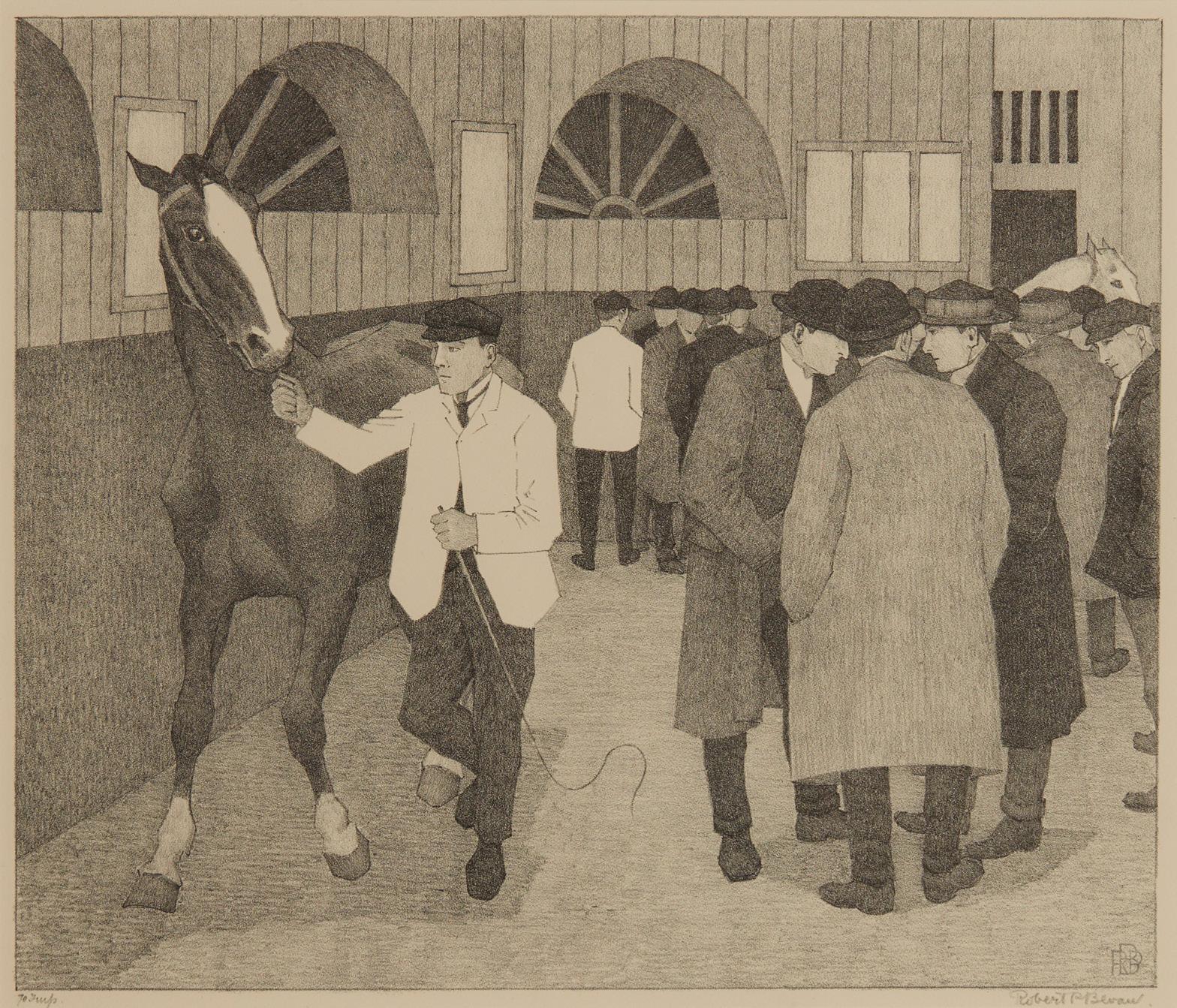
signed and inscribed in pencil ‘70 Imp.’ (lower right and lower left) and stamped with the monogram, lithograph on paper plate: 30cm x 35.6cm (11 3/4in x 14in); sheet: 44.5cm x 57.2cm (17 1/2in x 22 1/2in)
Provenance: Estate of the artist and thence by descent to the present owner.
Literature: Dry, Graham, Robert Bevan 1865-1925: Catalogue Raisonné of the Lithographs and other Prints, The Curwen Press, London 1965, another example from the edition repr. b/w no.35.
From an un-numbered edition of seventy. This work is based on an oil painting of the same title, with some alterations, whose location is unknown.
£3,000-5,000
£3,000-5,000 72 Other fees apply in addition to the hammer price: see the ‘Buyer’s Guide’ section on page 6
88
ROBERT POLHILL BEVAN (BRITISH 1865-1925)
ROSEMARY, DEVON, 1922 30/40, signed and numbered in pencil (in the margin), stamped with the artist’s monogram, lithograph on paper
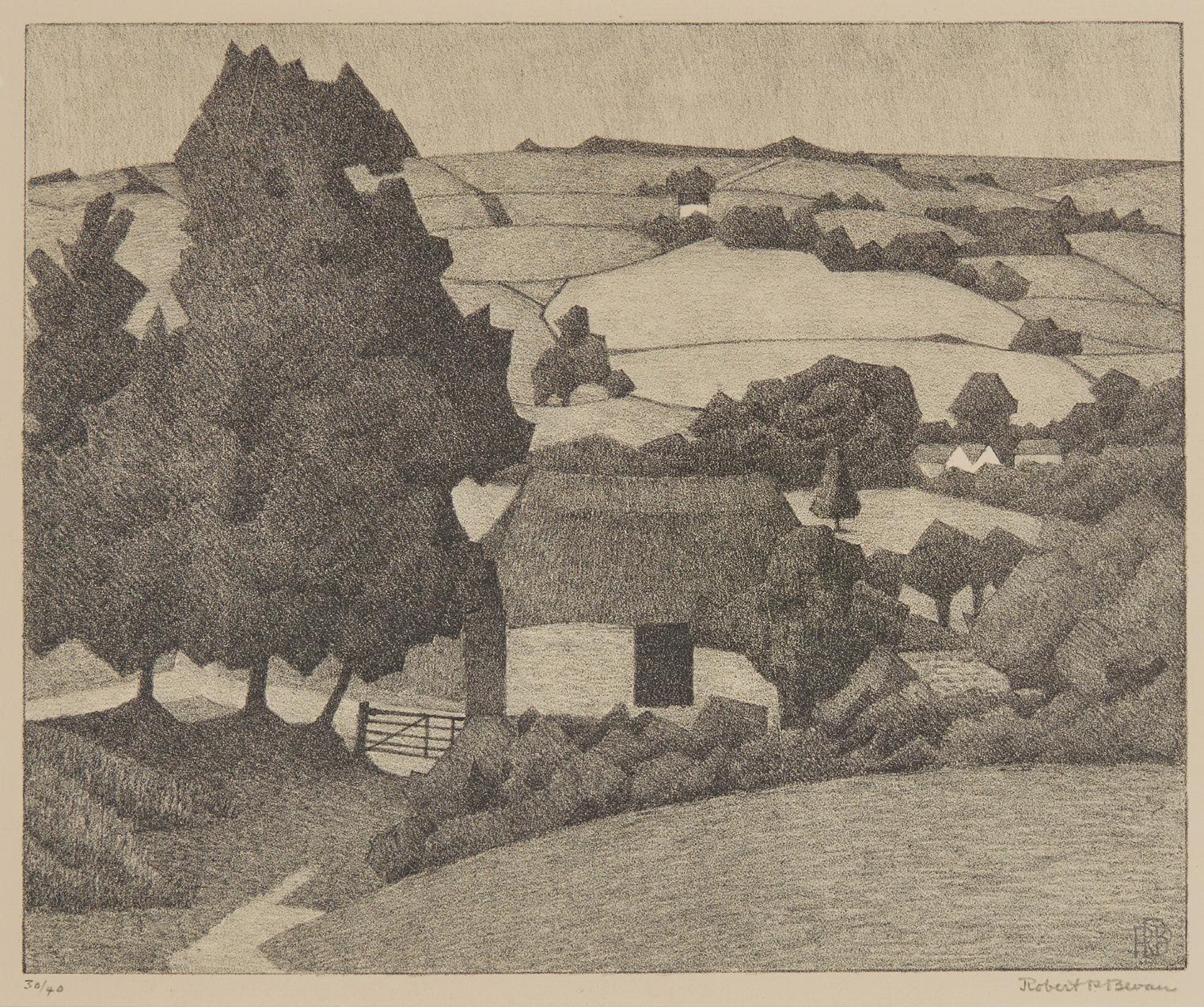
plate: 23.3cm x 29cm (9 1/4in x 11 1/2in)
Provenance: Estate of the Artist and thence by descent to the present owner.
Literature: Bevan, R. A., Robert Bevan 1865-1925: A Memoir by his Son, Studio Vista, London, 1965, another example from the edition repr. b/w pl.72; Dry, Graham, Robert Bevan 1865-1925: Catalogue Raisonné of the Lithographs and other Prints, The Curwen Press, London 1965, another example from the edition repr. b/w no.31.
From an edition of 40. This lithograph is based on an oil painting of the same subject and title dating from 1917.
£800-1,200
89 ROBERT POLHILL BEVAN
(BRITISH 1865-1925)
A LONDON CHURCH, 1924
2/45, signed in pencil (lower right), numbered in pencil (lower left), stamped with the artist’s monogram, lithograph on paper
plate: 29.5cm x 35.3cm (11.5 x 14in); sheet: 38.2 cm x 50.8cm (15in x 20in )
Provenance: Estate of the Artist and thence by descent to the present owner.
Literature: Bevan, R.A., Robert Bevan 1865-1925: A Memoir by his Son, Studio Vista, London 1965, another example from the edition repr. b/w pl.88;
Dry, Graham, Robert Bevan 1865-1925: Catalogue Raisonné of the Lithographs and other Prints, The Curwen Press, London 1965, another example from the edition repr. b/w no.38.
From a numbered edition of forty-five. The artist’s son has explained that this work depicts the church of St John the Evangelist, Waterloo Road, London, seen through a railway arch (op.cit.) It is based on an oil painting of the subject made during the winter of 1922-23, whose location is unknown.
£1,000-1,500
73
91 ROBERT POLHILL BEVAN (BRITISH 1865-1925) HAWKRIDGE (A LONELY FARM), 1900
signed in pencil (lower right), stamped with the artist’s monogram, lithograph on paper
plate: 34.6cm x 40.6cm (13 1/2in x 16in); sheet: 45.5cm x 58.5cm (18 x 23in)
Provenance: Estate of the Artist and thence by descent to the present owner.
Literature: Dry, Graham, Robert Bevan 1865-1925: Catalogue Raisonné of the Lithographs and other Prints, The Curwen Press, London, 1965, another example from the edition repr. b/w no.22 (as ‘Hawkridge’).
Graham Dry has explained that an example of this edition was exhibited as A Lonely Farm in Bevan’s solo exhibition at the Baillie Gallery, London in 1905 and that the accompanying catalogue stated that there were ‘eighteen impressions only’ of it (op.cit.). According to Dry it is the largest of Bevan’s lithographs.
ROBERT POLHILL BEVAN (BRITISH 1865-1925)
THE PLANTATION, 1922 35/40, signed and numbered in pencil (in the margin), stamped with the artist’s monogram, lithograph on paper
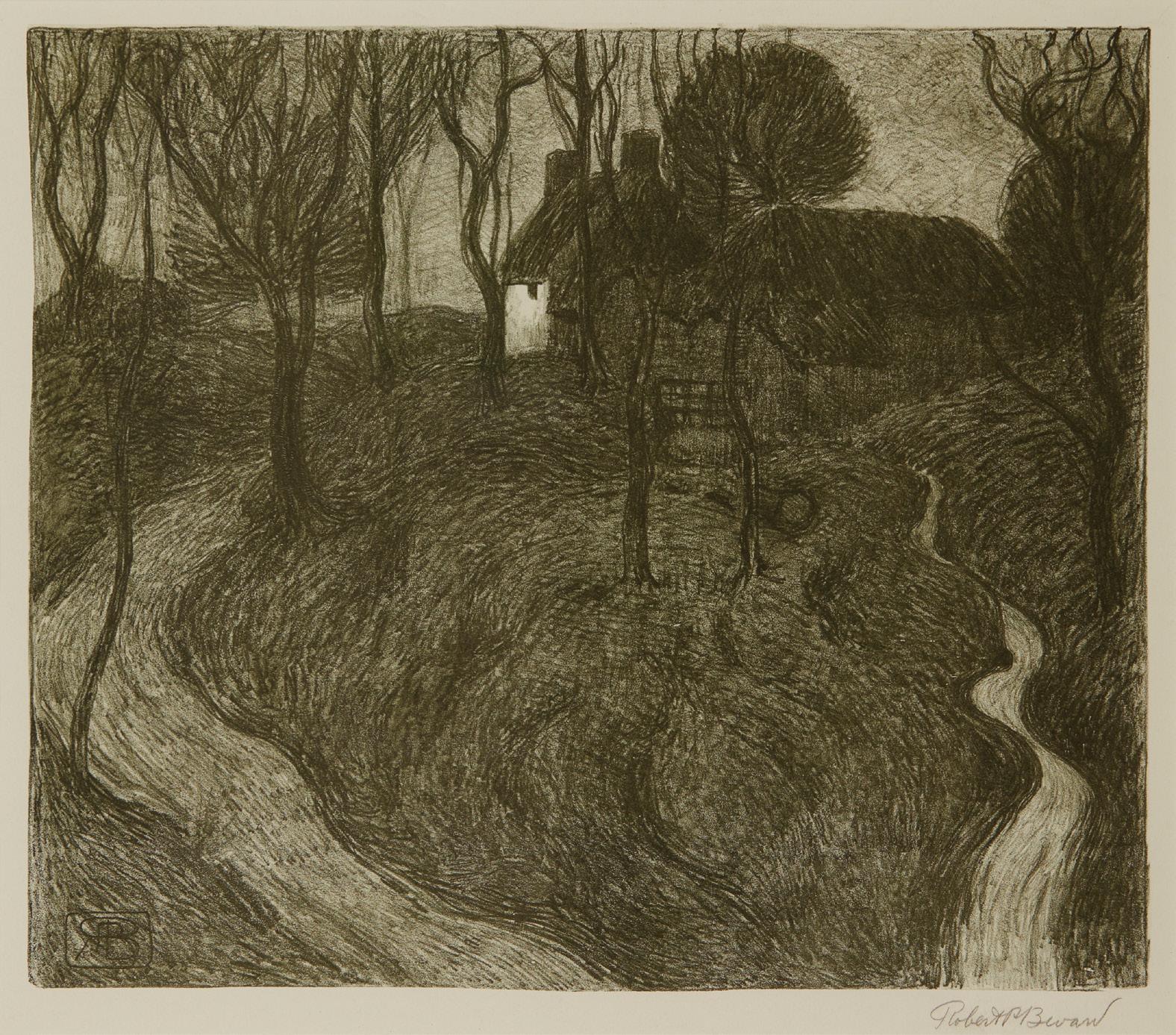
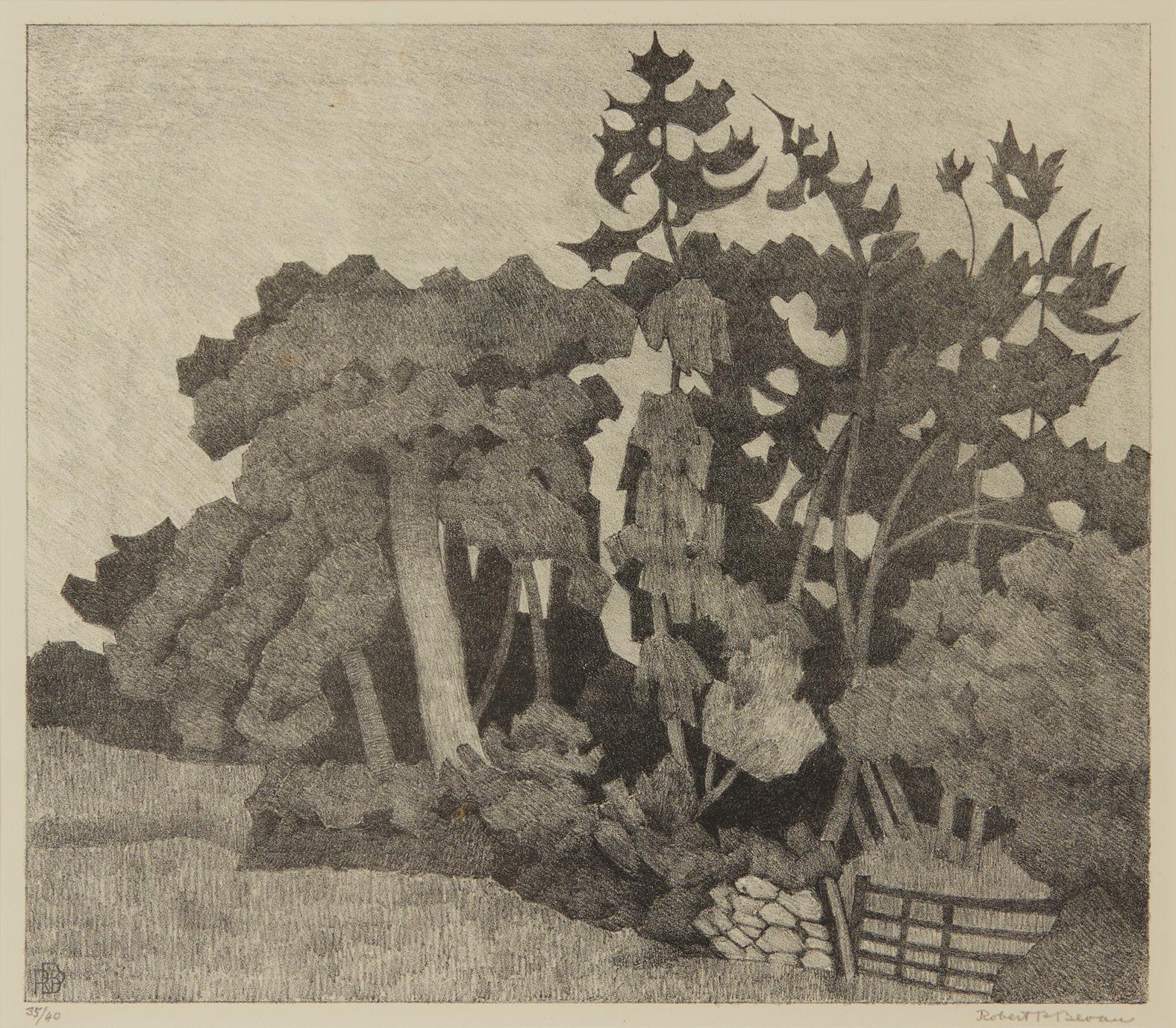
plate: 30.7cm x 35.5cm (12in x 14in); sheet: 44cm x 57cm (17 1/4in x 22 1/2in)
Provenance: Estate of the Artist and thence by descent to the present owner.
Literature: Dry, Graham, Robert Bevan 1865-1925: Catalogue Raisonné of the Lithographs and other Prints, The Curwen Press, London 1965, another example from the edition repr. b/w no.37.
From a numbered edition of forty. This work is based, in reverse, on an oil painting of the same title of 1919, whose location is unknown.
90
£1,200-1,800
£1,000-1,500 74
92
ROBERT POLHILL BEVAN (BRITISH 1865-1925)
THE SMITHY, LUPPITT, 1920 signed and inscribed ‘45 Imp.’ in pencil (lower right and lower left), stamped with the artist’s monogram, lithograph on paper
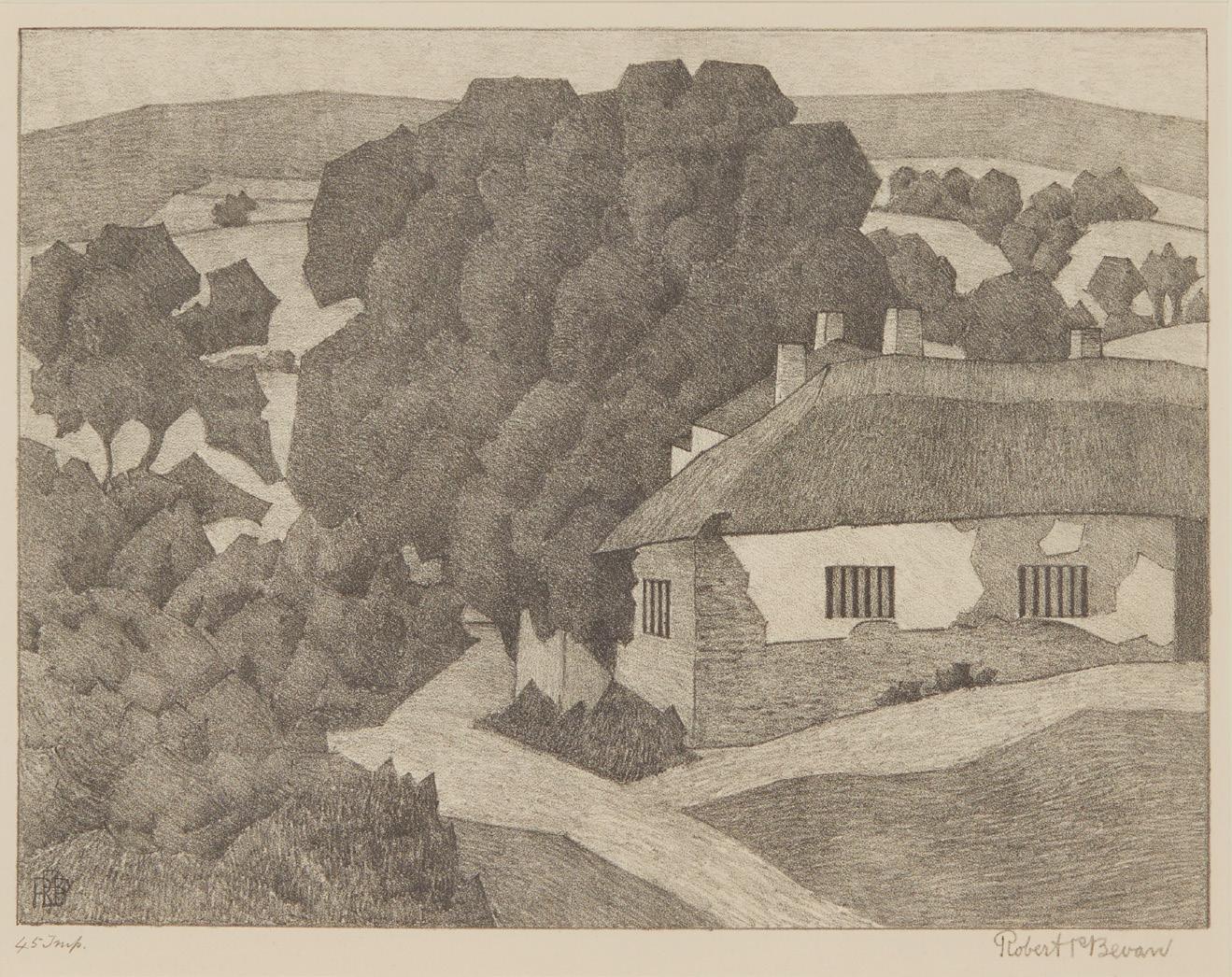
23.2cm x 31cm (9 1/4in x 12in) (plate)
Provenance: Estate of the Artist and thence by descent to the present owner.
Literature: Dry, Graham, Robert Bevan 18651925: Catalogue Raisonné of the Lithographs and other Prints, The Curwen Press, London 1965, another example from the edition repr. b/w no.28.
From an un-numbered edition of 45. This work is based in reverse, with minor variations, on an oil painting of 1920.
£800-1,200
94
HAROLD GILMAN (BRITISH 1876-1919) AND CHARLES GINNER A.R.A. (BRITISH 1878-1952) PAINTINGS AND DRAWINGS BY HAROLD GILMAN AND CHARLES GINNER IN THE COLLECTION OF EDWARD LE BAS
93
ROBERT POLHILL BEVAN (BRITISH 1865-1925)
THE PLOUGH, CIRCA 1893
stamped with the artist’s monogram in reverse, lithograph on buff paper
25.5cm x 34.5cm (10in x 13 5/8in) (plate)
Provenance: Estate of the Artist and thence by descent to the present owner.
Exhibited: Scottish National Gallery of Modern Art, Edinburgh, From Sickert to Gertler: Modern British Art from Boxted House, 15 March - 22 June 2008 (and tour to Gainsborough’s House, Sudbury 4 October - 13 December 2008), listed p. 75; Brighton Museum & Art Gallery, Brighton, From Sickert to Gertler: Modern British Art from Boxted House, 17 April - 12 September 2010, no cat.no.s.
Literature: R. A. Bevan, Robert Bevan 1865-1925: A Memoir by his Son, Studio Vista, London 1965, another example from the edition repr. b/w pl.4.
Graham Dry, Robert Bevan 1865-1925: Catalogue Raisonné of the Lithographs and other Prints, The Curwen Press, London 1965, another example from the edition repr. b/w no.7.
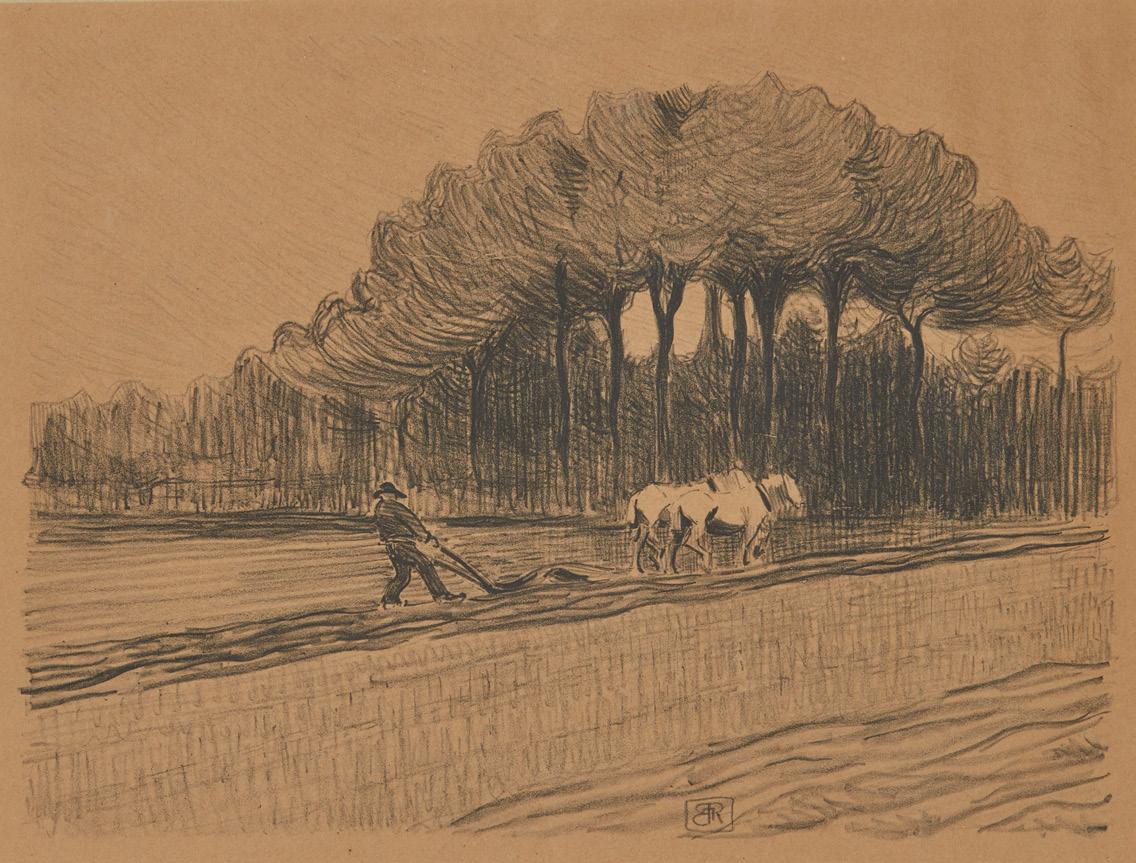
R. A. Bevan, the artist’s son, has explained about this work that ‘not more than half a dozen prints are known to exist’ (op. cit.) Graham Dry has stated: ‘Possibly no more than six proofs survive...All are...with the monogram RPB in reverse.’ (op.cit.)
£800-1,200
London: Fairfax Hall, 1965. First edition, one of 105 numbered sets only, comprising title-leaf with (limitation statement verso) and 36 mounted colour prints after paintings by Gilman or Ginner, all loose as issued in original green crushed half morocco portfolio, complete with accompanying text volume (4to, original green crushed quarter morocco, housed in recess to portfolio inside front cover) mount dimensions 55cm x 40.5cm (print dimensions vary)
Provenance: Robert Alexander and Natalie Bevan, Boxted House, Boxted, Essex and thence by descent to the present owner.
Robert Bevan, Harold Gilman and Charles Ginner were all members of the Camden Town, London and Cumberland Market Groups active in London from 1911. The artist Edward Le Bas (1904-66) became financially independent after his father’s death and from the late 1930s was an enthusiastic and generous collector. He became good friends wtih Ginner and was elected to the London Group himself in 1942. This portfolio celebrates the works he acquired by Gilman and Ginner, some of which were included in the exhibition A Painter’s Collection, held at the Royal Academy of Arts, London in 1963. Images are available to view on www.lyonandturnbull.com
£150-200
75 Other fees apply in addition to the hammer price: see the ‘Buyer’s Guide’ section on page 6
Lot 117
GILMAN (BRITISH 1876-1919)
ROMNEY MARSH, CIRCA 1910 signed (lower right), oil on board 25cm x 35.5cm (9 3/4in x 14in)
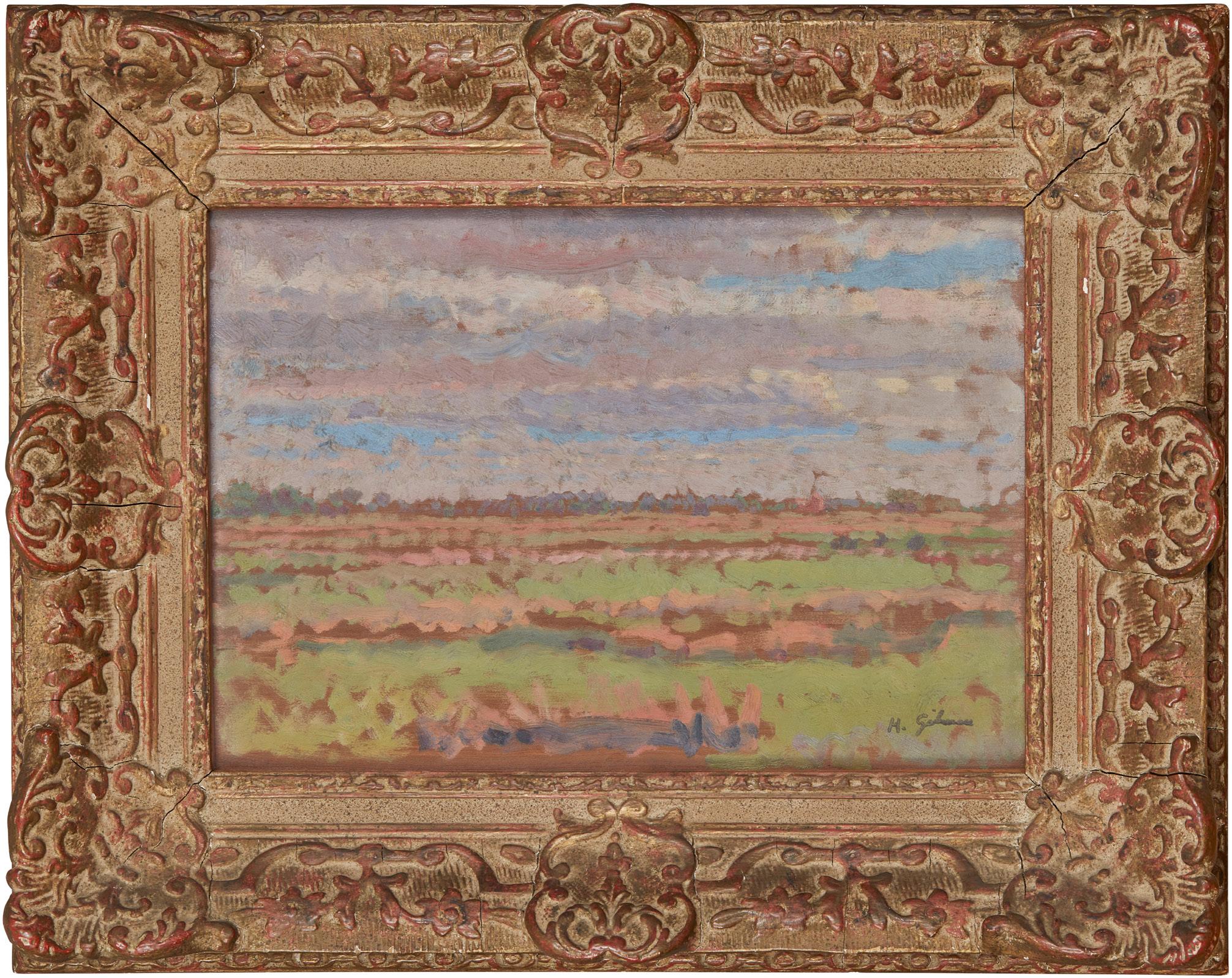
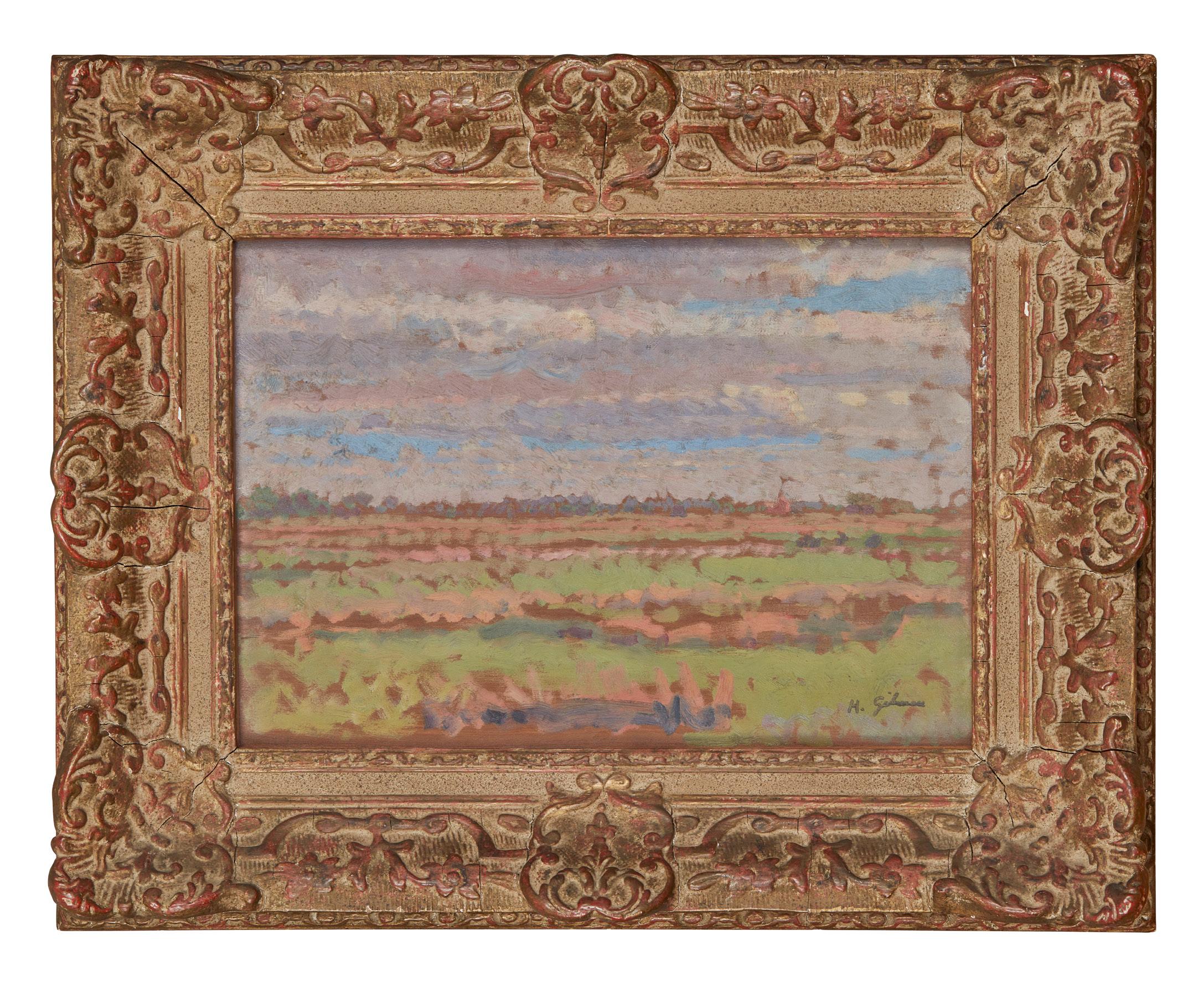
Provenance: Alex Reid & Lefevre Ltd., London; Frank Aldous Girling, Lawford, Essex; Robert Alexander and Natalie Bevan, Boxted House, Boxted, Essex and thence by descent to the present owner..
Exhibited: Tate Britain, London, Modern Painters: The Camden Town Group, 13 February - 4 May 2008, p. 154, no. 82 (illustrated).
Harold Gilman was born in Rode, Somerset. In 1890 he moved with his family to Romney Marsh, Kent, where he lived until 1908. He trained at the Slade School of Fine Art, London and, after meeting Walter Sickert in 1907, became a founder member of the Fitzroy Street, Camden Town and London Groups. Robert Upstone has explained about this work: ‘Gilman made a sequence of studies of Romney Marsh between about 1909 and 1912...The landscape is expressed by strictly modulating the paint in a series of broken dabs of heightened colour that lend it visual interest and these touches of paint also suit perfectly the scrubby terrain’s character. Painted on board, it is just possible that Gilman painted this before the subject, although his usual practice was to work from drawings. The picture was acquired by Gilman’s fellow Camden Town painter Robert Bevan.’ (Modern Painters: The Camden Town Group, op.cit, p.154)
95 HAROLD
£4,000-6,000
77 Other fees apply in addition to the hammer price: see the ‘Buyer’s Guide’ section on page 6
GERALD FESTUS KELLY K.C.V.O., P.R.A., R.H.A., H.R.S.A. (BRITISH 1879-1972)
VIEUX PORT, MARSEILLES, 1908 inscribed (to reverse), oil on board 17.2cm x 14cm (6 3/4in x 5 1/2in)
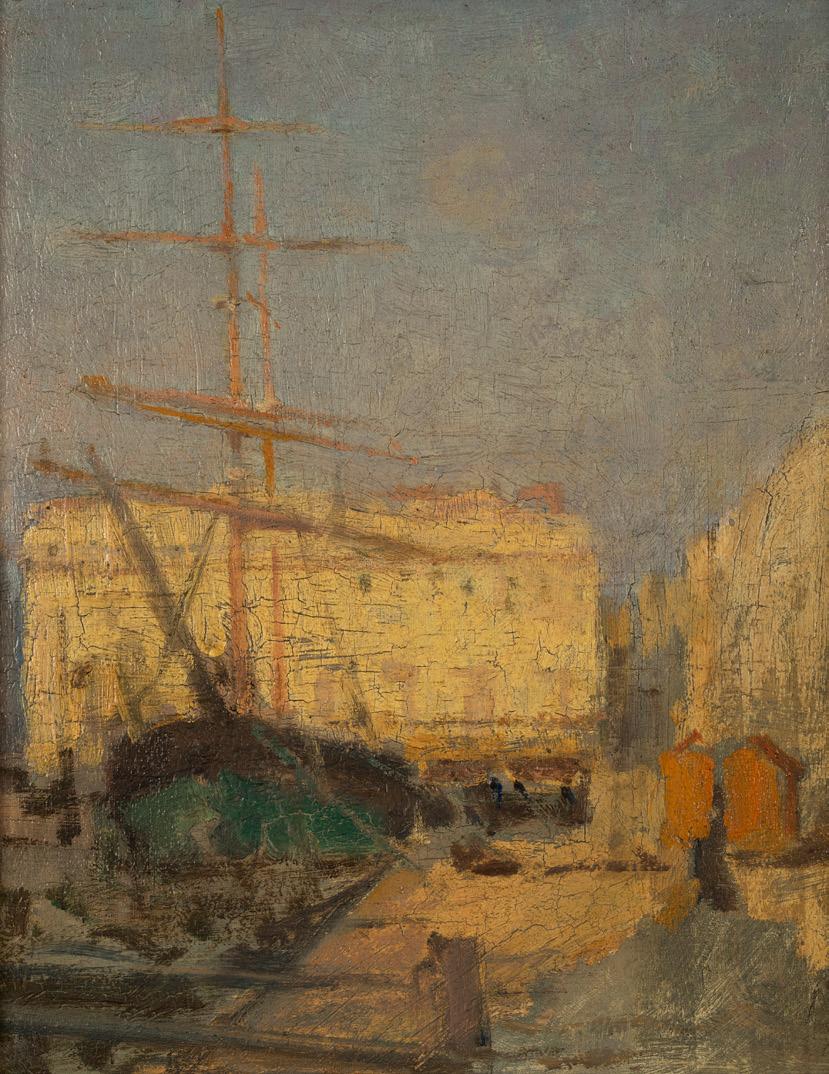
Provenance: Michael Parkin Fine Art, London; Collection of the Late Sir Richard Shepherd, MP. £1,000-1,500
97 §
BERNARD DUNSTAN R.A. (BRITISH 1920-2017)
NUDE IN THE DOORWAY
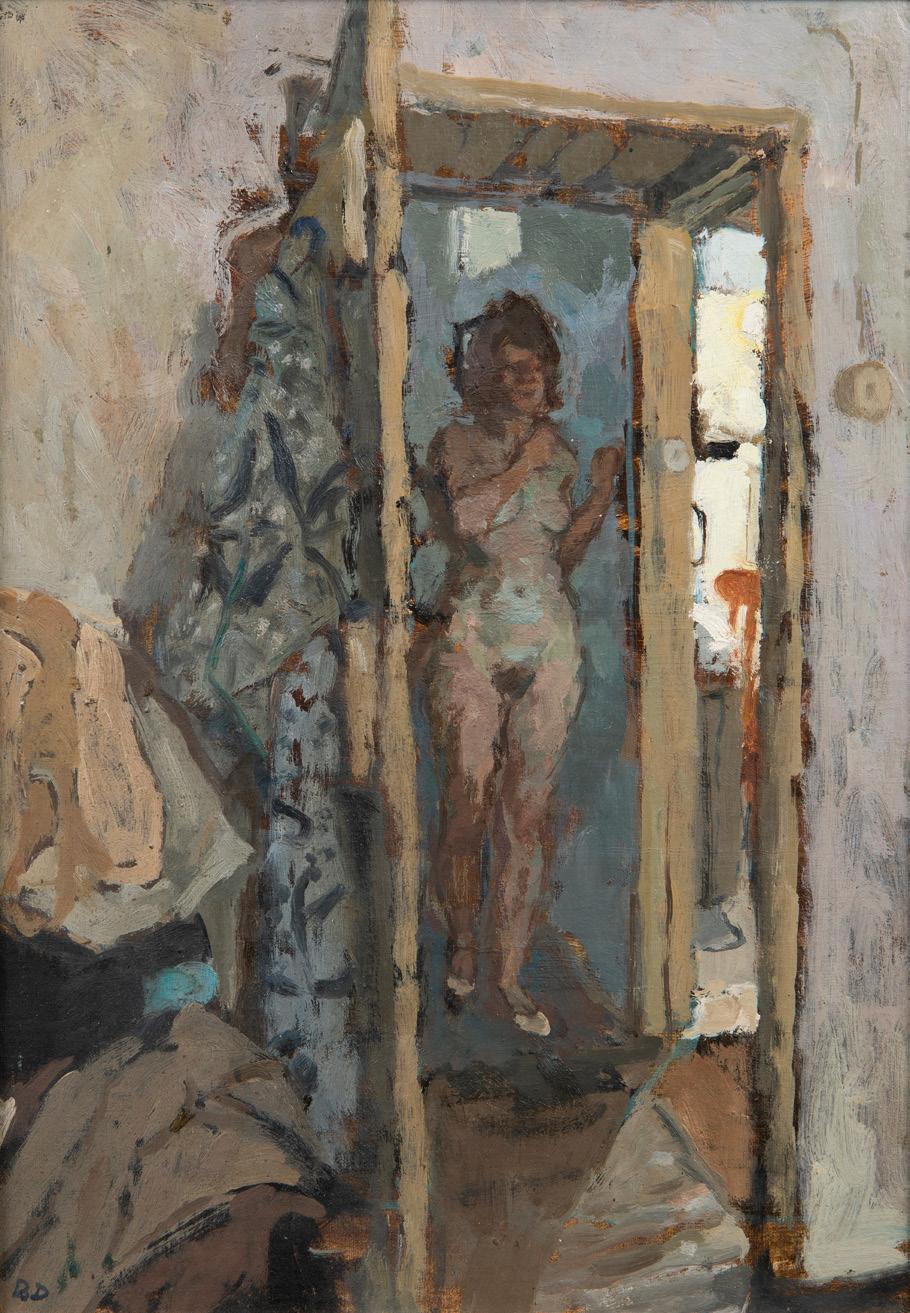
initialled (lower left), oil on board 37cm x 26cm (14 1/2in x 10 1/4in)
Provenance: Waterman Fine Art Limited, London; Private Collection, UK. £2,000-3,000
98 §
BERNARD DUNSTAN R.A. (BRITISH 1920-2017)
THE COURBET EXHIBITION, 1978
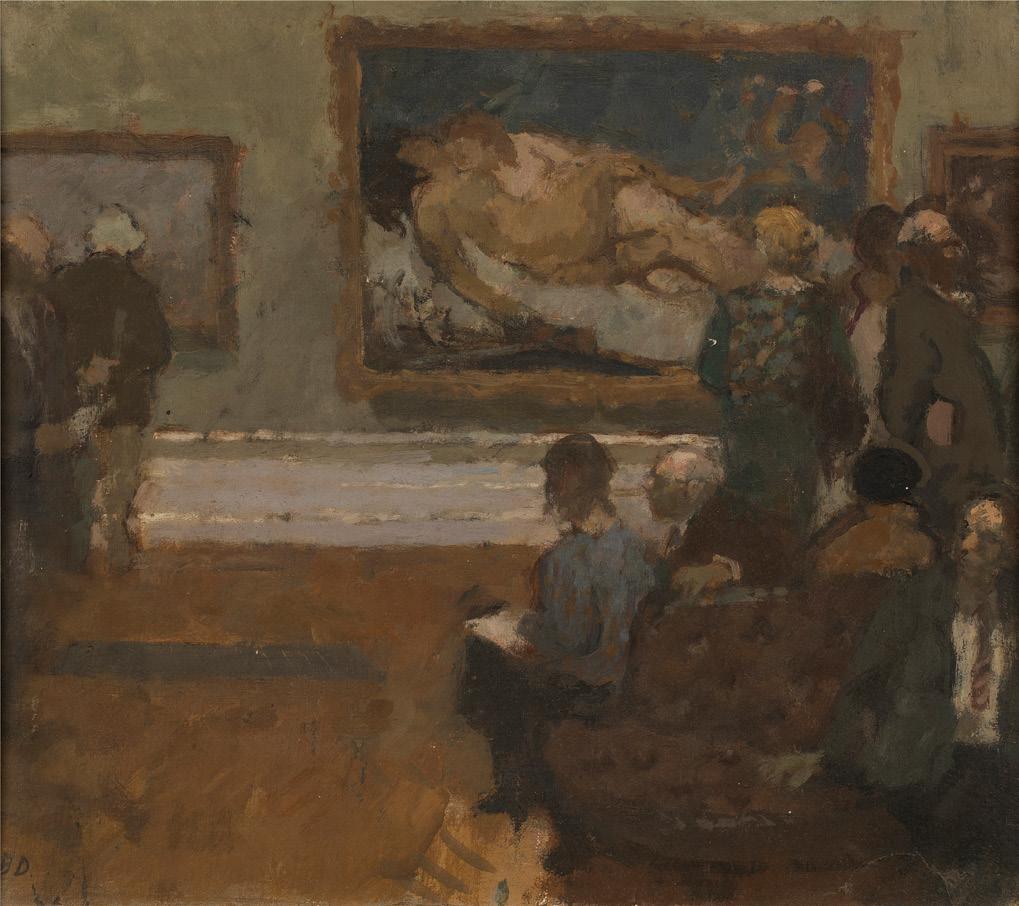
initialled (lower left), titled and dated (to reverse), oil on board 27cm x 30.5cm (10 5/8in x 12in)
Provenance: Collection of the Late Sir Richard Shepherd, MP. £1,000-1,500
96 §
78 Other fees apply in addition to the hammer price: see the ‘Buyer’s Guide’ section on page 6
99 §

WILLIAM BROOKER (BRITISH 1918-1983)
BOTTLES ON A TABLE signed (lower right), oil on canvas 29cm x 50cm (11 1/2in x 19 3/4in)
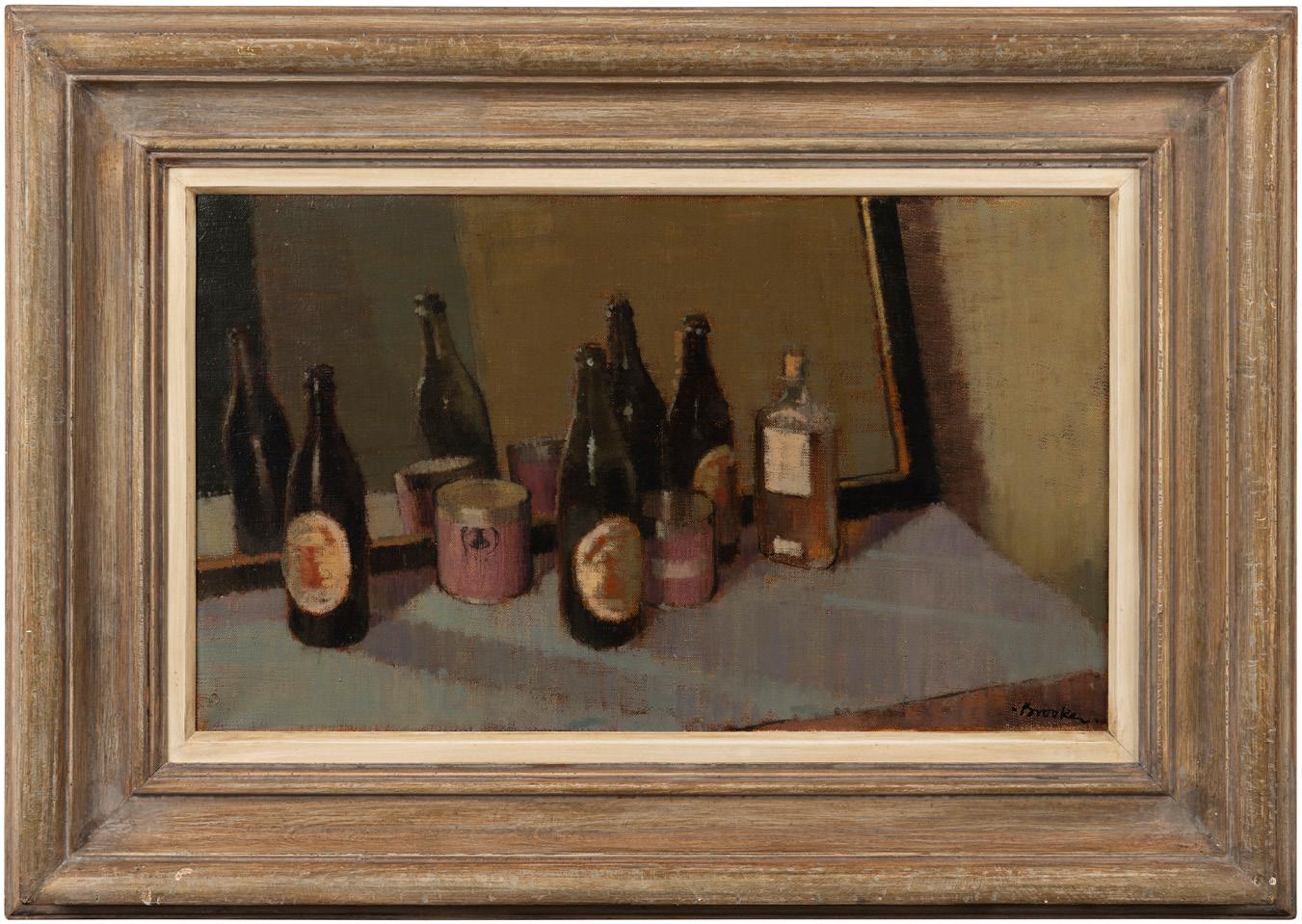
Provenance: Agnews, London, 1994; Private Collection, London. £2,000-3,000
100
TENG-HIOK CHIU (CHOU TING-HSU) (CHINESE 1903-1972)
RAILROAD THROUGH FIELDS, 1926 signed and dated (lower left), oil on board 24.5cm x 33cm (9 5/8in x 13in), unframed It has been suggested that this work could be A Farm in Wiltshire, which was exhibited in the First Exhibition of the New Kingston Group in June 1930. £1,500-2,000
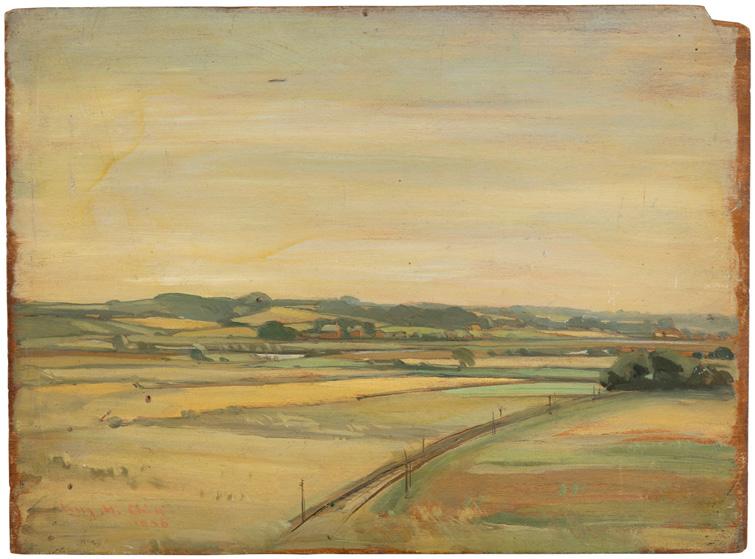
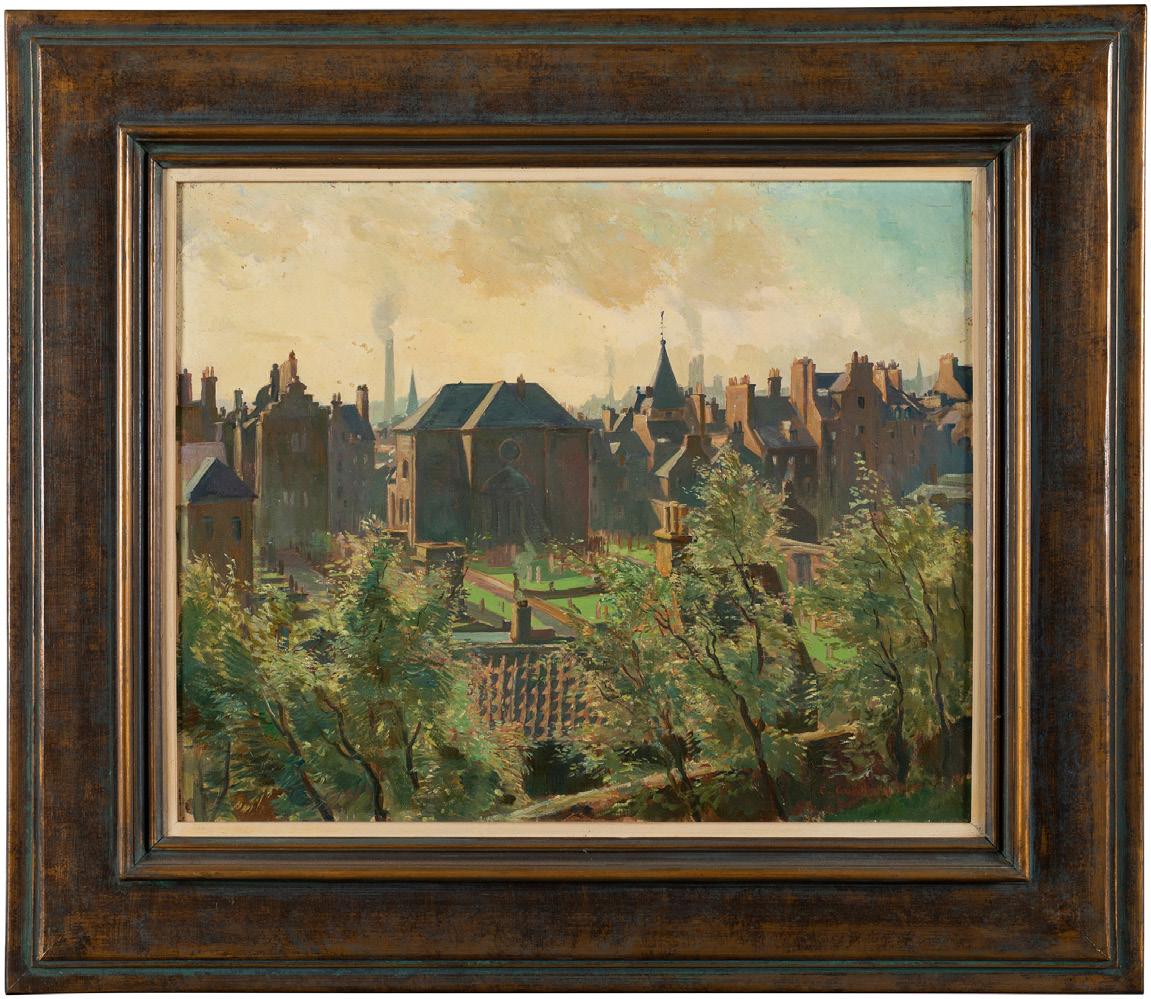
101 § CHARLES ERNEST CUNDALL R.A., R.W.S., R.P., N.E.A.C (BRITISH 1890-1971)
CANONGATE CHURCH, EDINBURGH, 1927
signed and dated (lower right), oil on board 36cm x 45cm (14 1/4in x 17 3/4in)
Provenance: Collection of the Late Sir Richard Shepherd, MP. £700-1,000
79 Other fees apply in addition to the hammer price: see the ‘Buyer’s Guide’ section on page 6
§
DORIS CLARE ZINKEISEN
1898-1990)

THE DRIVING MATCH BETWEEN LADY LADE AND MRS HODGES
(lower right), oil on canvas 50cm x 100.5cm (19 3/4in x 39 1/2in)
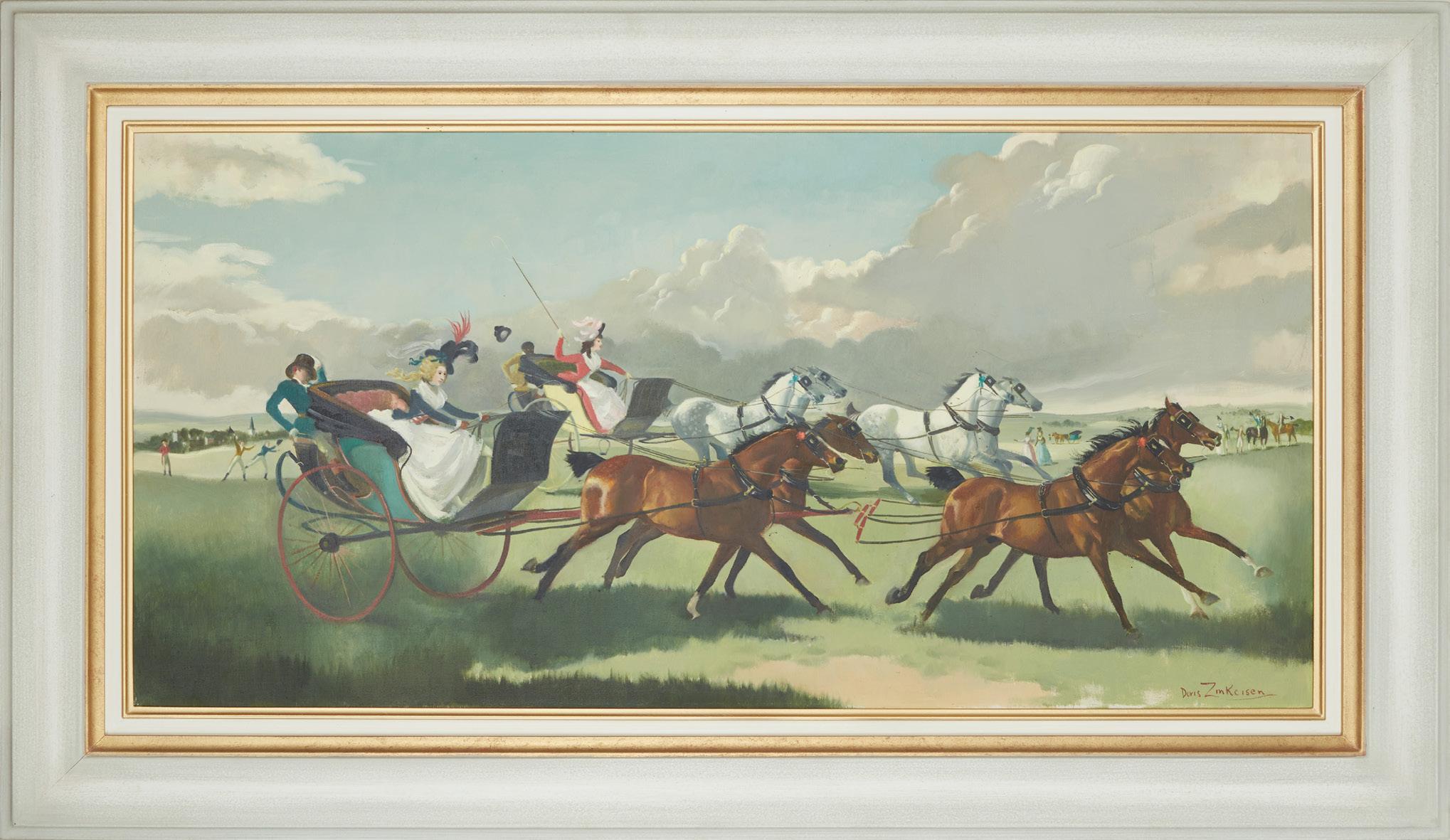
103 § ANNA ZINKEISEN
(BRITISH 1901-1976)
FÊTE CHAMPETRE
signed (lower right), oil on canvas
x 74.5cm (24 1/2in x 29 1/2in)
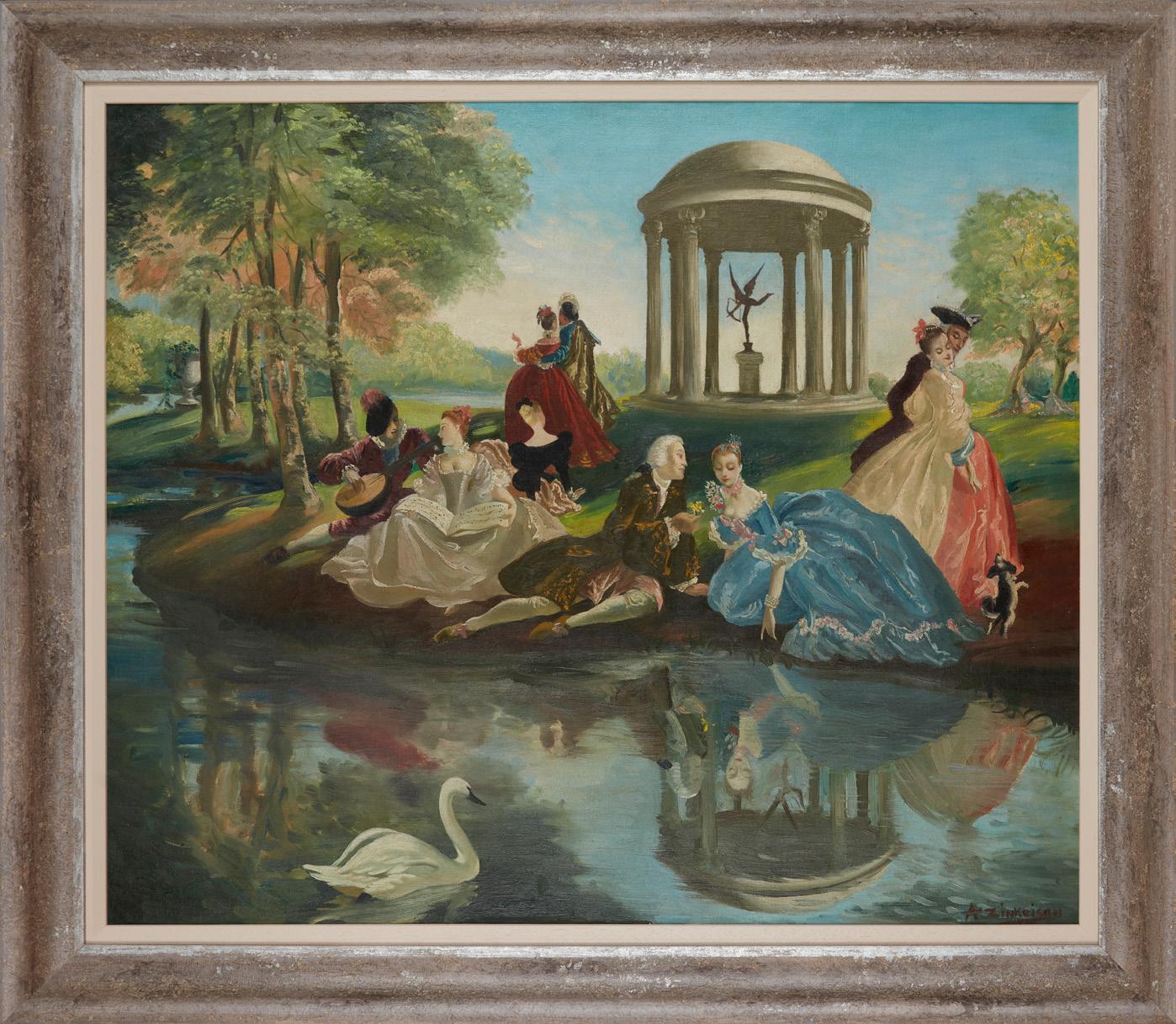
102
(BRITISH
signed
£2,000-3,000
62cm
£1,000-1,500 80 Other fees apply in addition to the hammer price: see the ‘Buyer’s Guide’ section on page 6
105 GEORGE ERNEST STUDDY (BRITISH 1878-1948)
LOVE-STRUCK BONZO signed and inscribed ‘Good Luck to Magda Feher from GE Studdy 1939’ in ink, watercolour and body colour 35.5cm x 24cm (14in x 9 1/2in)
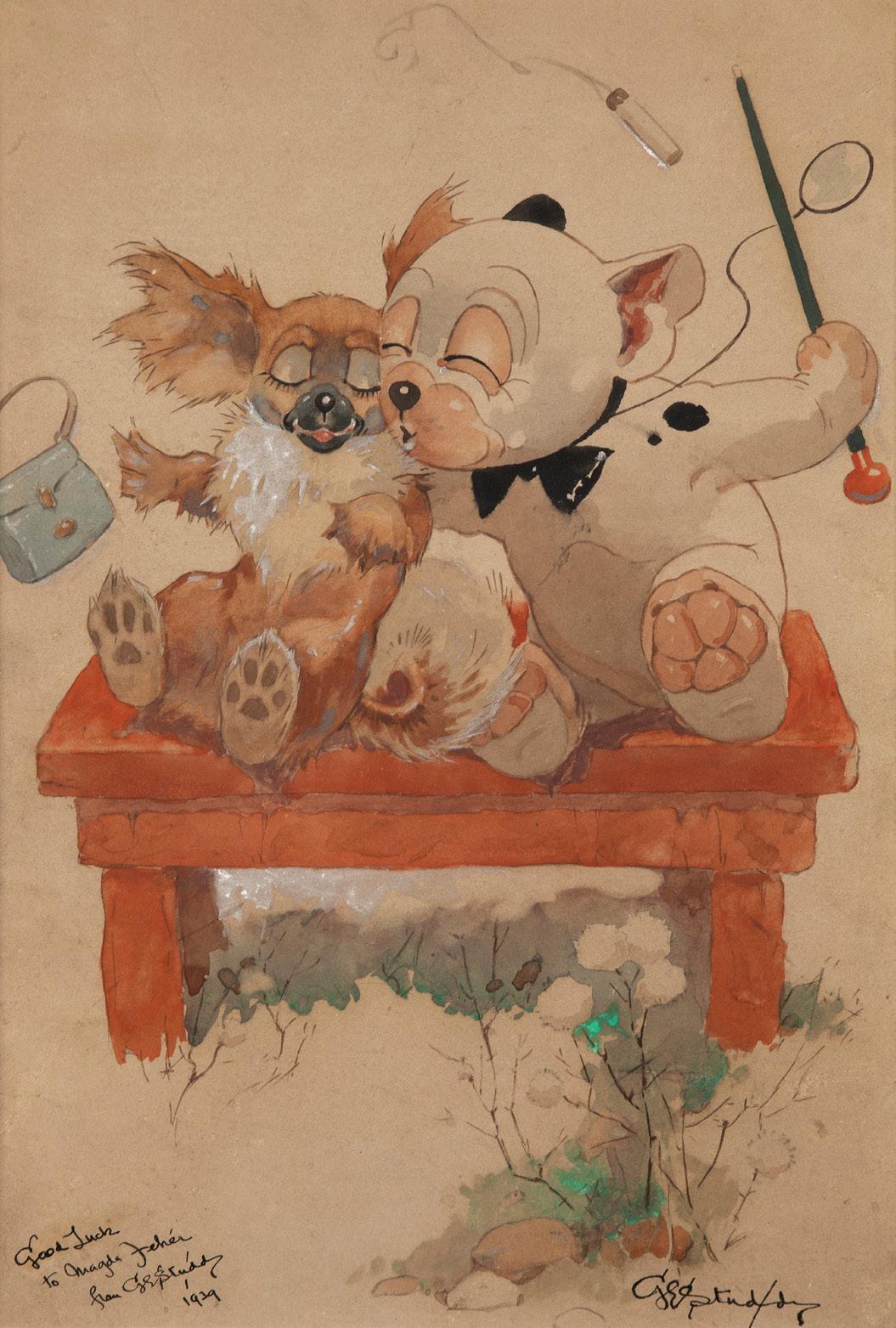
Provenance: Chris Beetles Limited, London; Private Collection, London. £800-1,200
104
REYNOLDS BEAL
(AMERICAN 1867-1951)
THE CIRCUS, 1939 signed and dated in pencil (lower right), crayon on paper 34.5cm x 38cm (13 1/2in x 15in)
£800-1,200
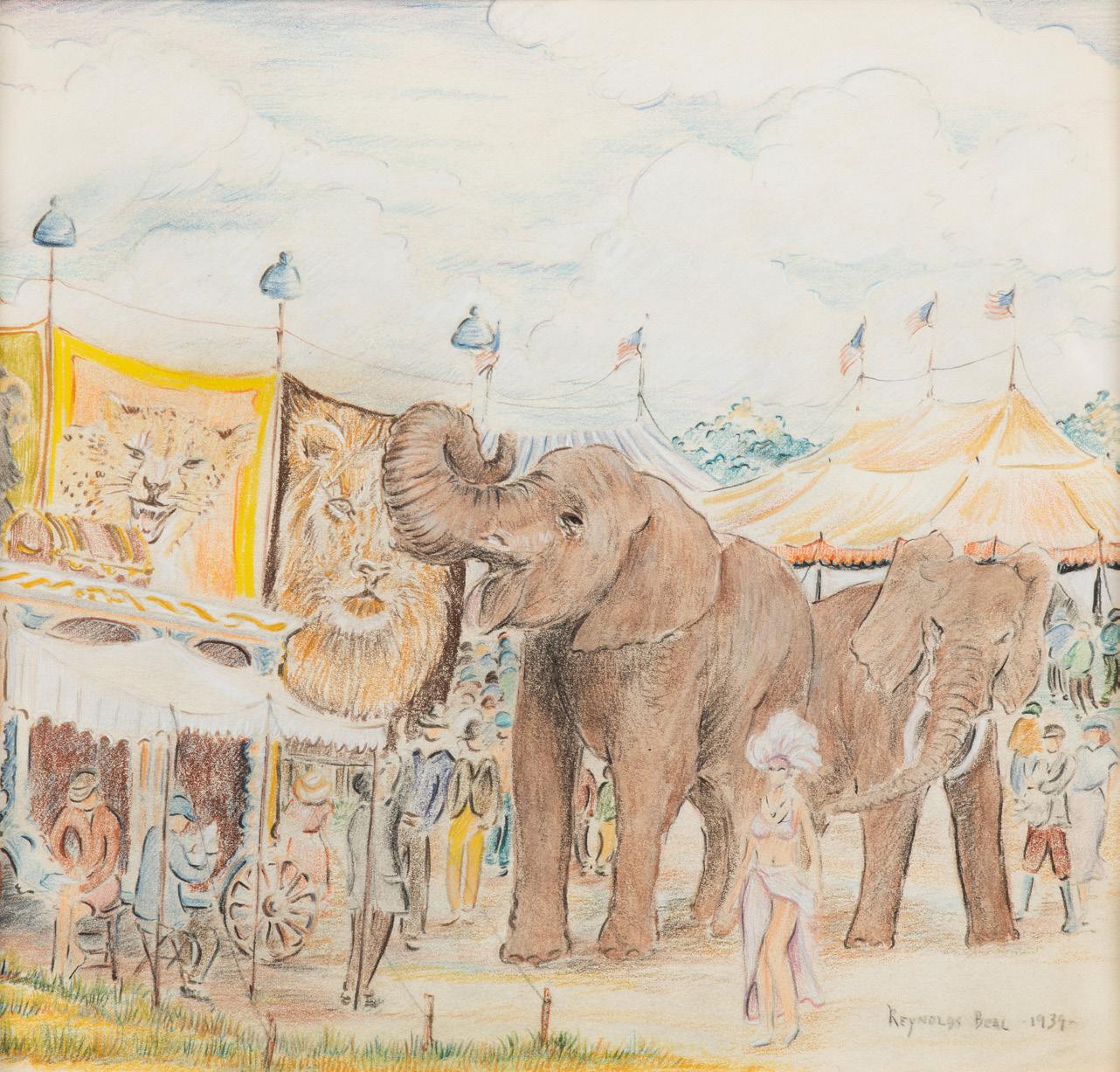
81
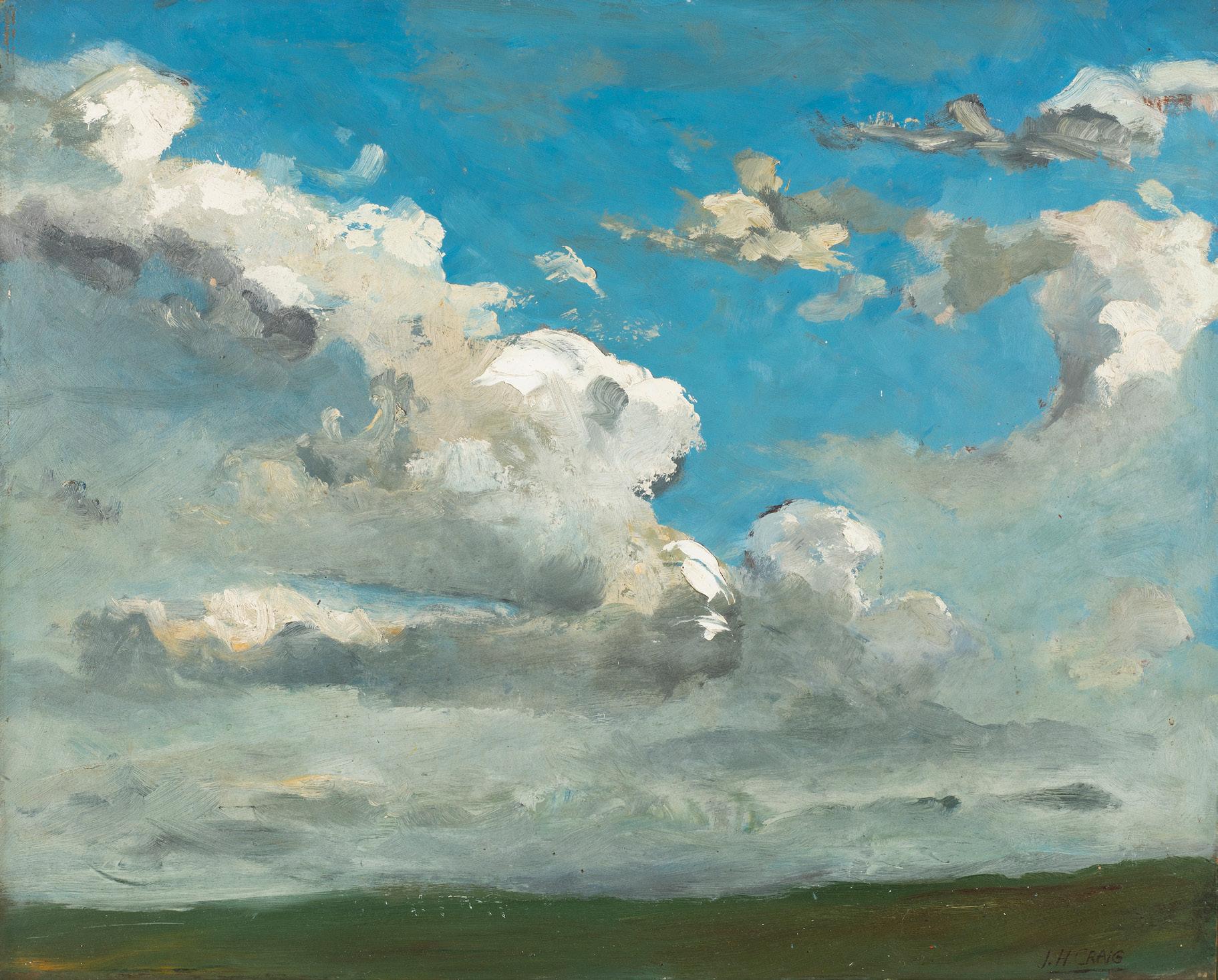
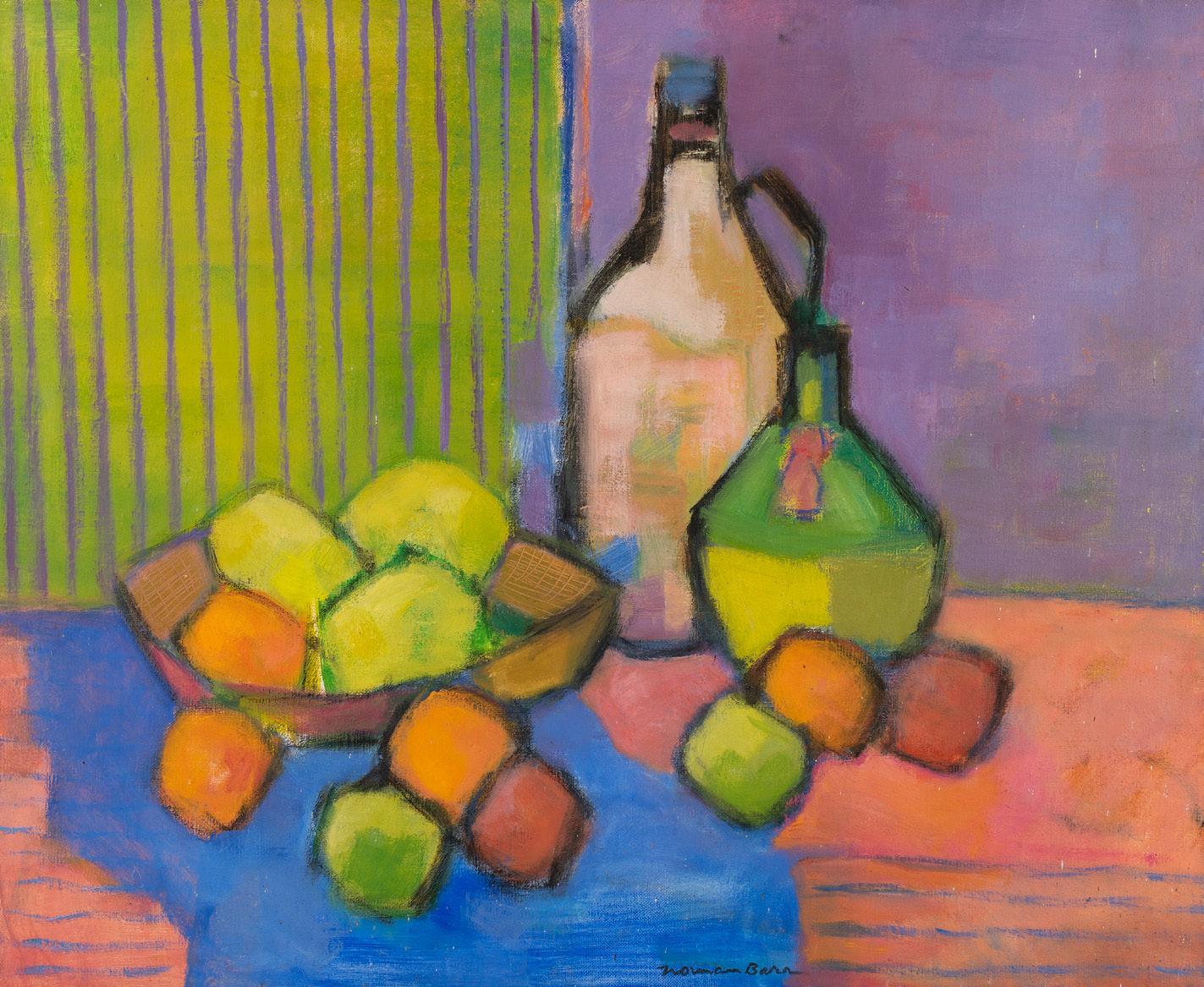
106 JAMES HUMBERT CRAIG (IRISH 1877-1944) CLOUD FORMATION signed (lower right), oil on board 50cm x 61cm (19 3/4in x 24in) £2,000-3,000 107 NORMAN BARR (AMERICAN 1908-1994) BOTTLES AND FRUIT signed (lower right), oil on canvas 61cm x 76cm (24in x 29 7/8in) £400-600 82 Other fees apply in addition to the hammer price: see the ‘Buyer’s Guide’ section on page 6

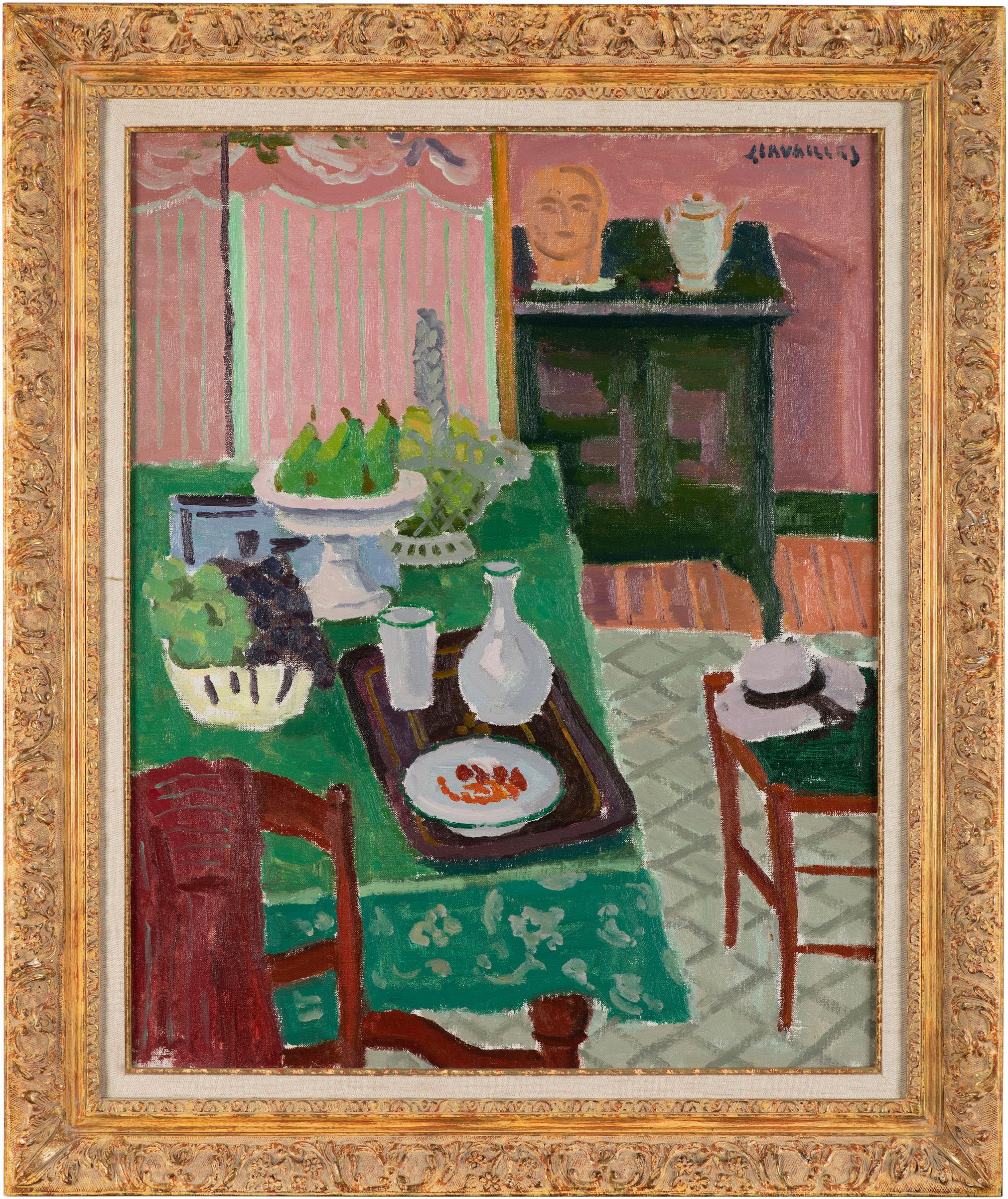
108 § JEAN JULES LOUIS CAVAILLES (FRENCH 1901-1977) INTERIOR signed (upper right), and inscribed ‘CAVAILLES / 4 square Desnouettes / Paris XV’ (to reverse), oil on canvas 79.5cm x 63cm (31 1/4in x 24 3/4in) £5,000-7,000 83
109 §
EDWARD WOLFE R.A. (SOUTH AFRICAN / BRITISH 1897-1982)
PORTRAIT OF A LADY, PURPORTEDLY CHARLOTTE HALDANE, 1932
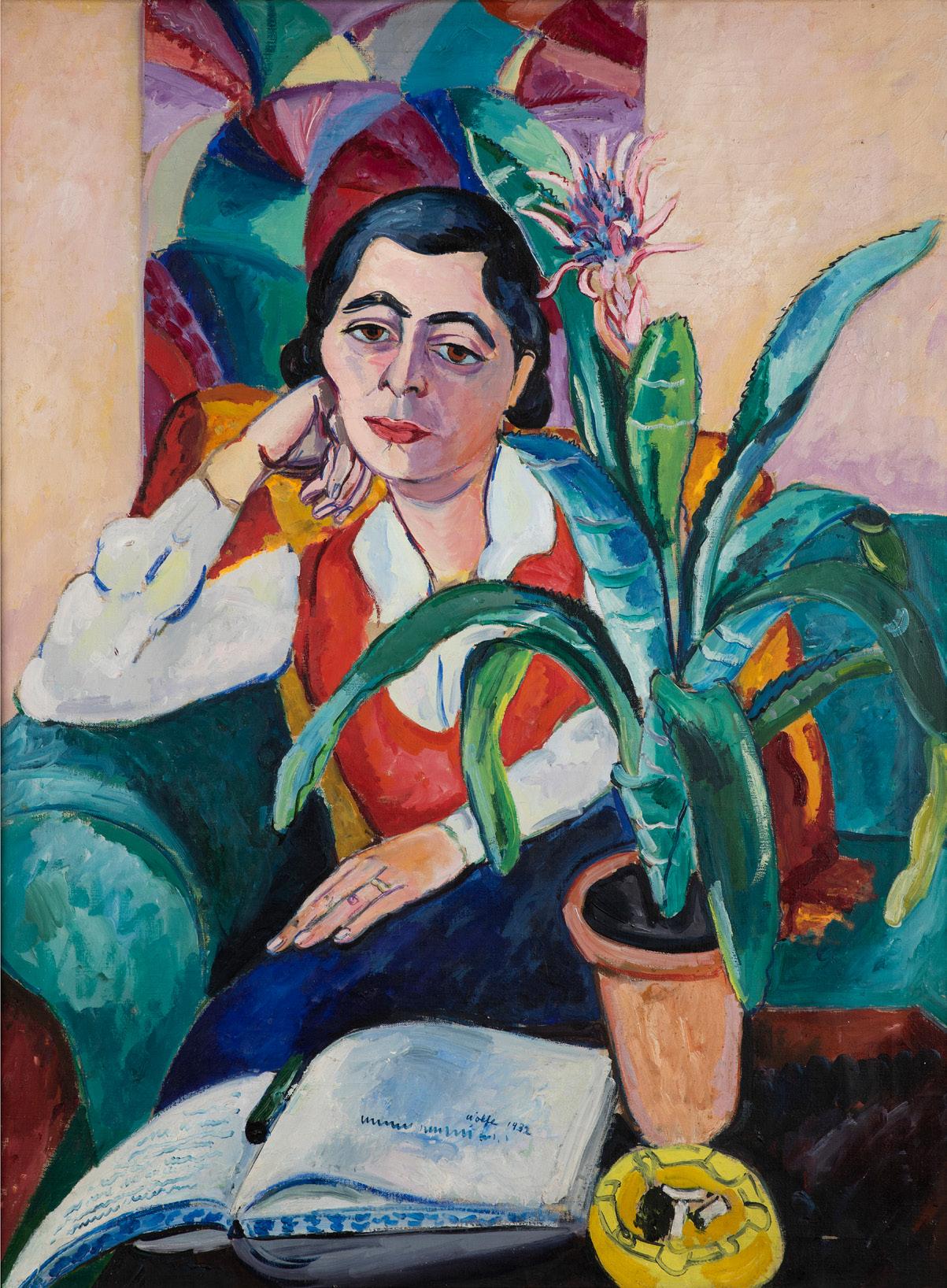
signed and dated (lower right), oil on canvas
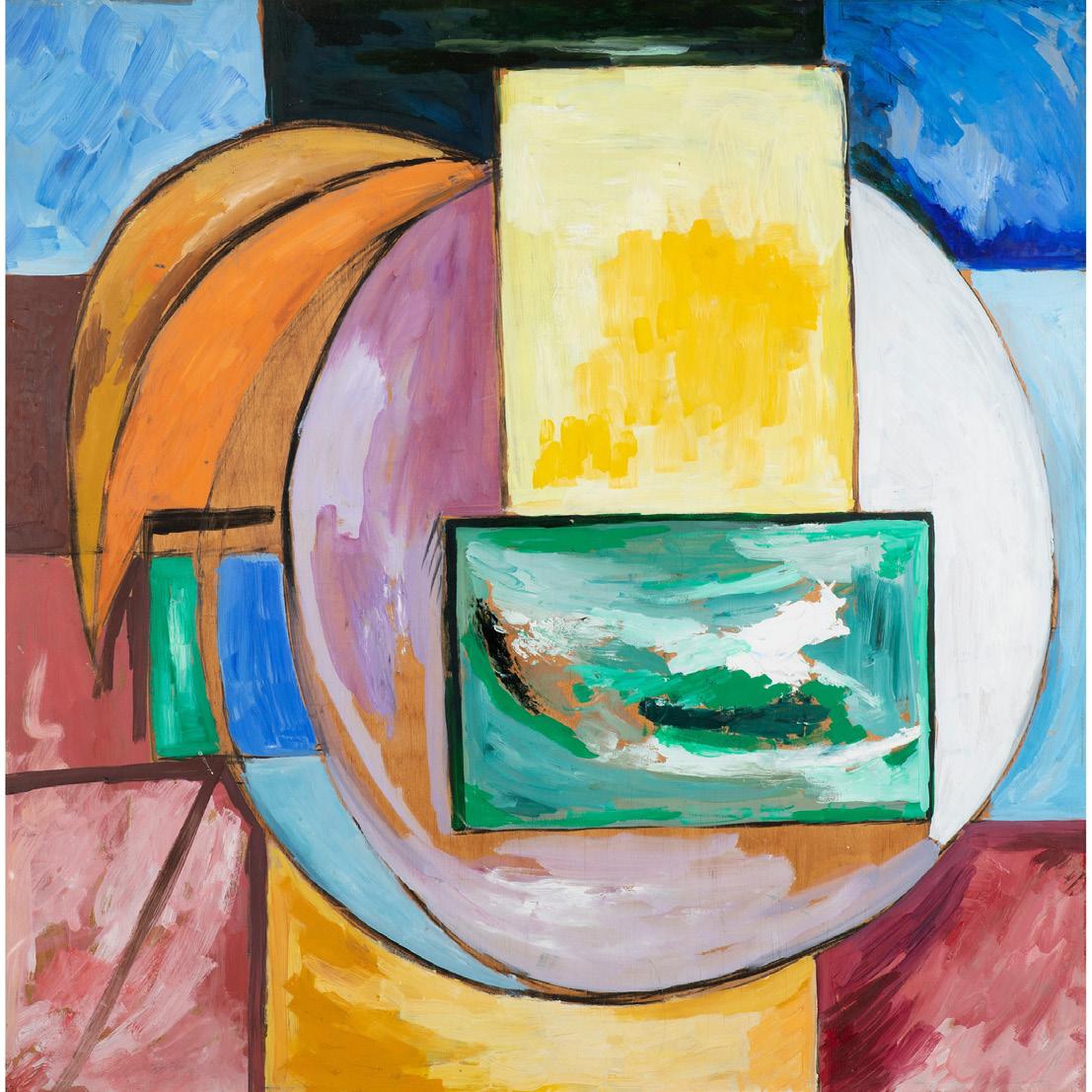
101cm x 75.5cm (39 3/4in x 29 3/4in)
Literature: Russell-Taylor, John, Edward Wolfe, Trefoil Books, London, 1986, p.126, no.107 (illustrated) as ‘Portrait of a woman’.
Charlotte Haldane was a British feminist author whose work included Man’s World (1926) and Motherhood and its Enemies (1927). She became an advocate for divorce reform, married woman’s employment and easier access to contraception. £4,000-6,000
EDWARD WOLFE R.A. (SOUTH AFRICAN / BRITISH
110 §
1897-1982) ABSTRACT oil on board 90cm x 90cm (35 1/2in x 35 1/2in) £2,000-3,000
84
111 §
GEOFFREY KEY (BRITISH 1941-)
RIDER WITH STRIPED SILKS, 2004 signed and dated ‘25.08.04’ (lower right), mixed media on paper 54cm x 39.5cm (21 1/4in x 15 1/2in) £2,000-3,000
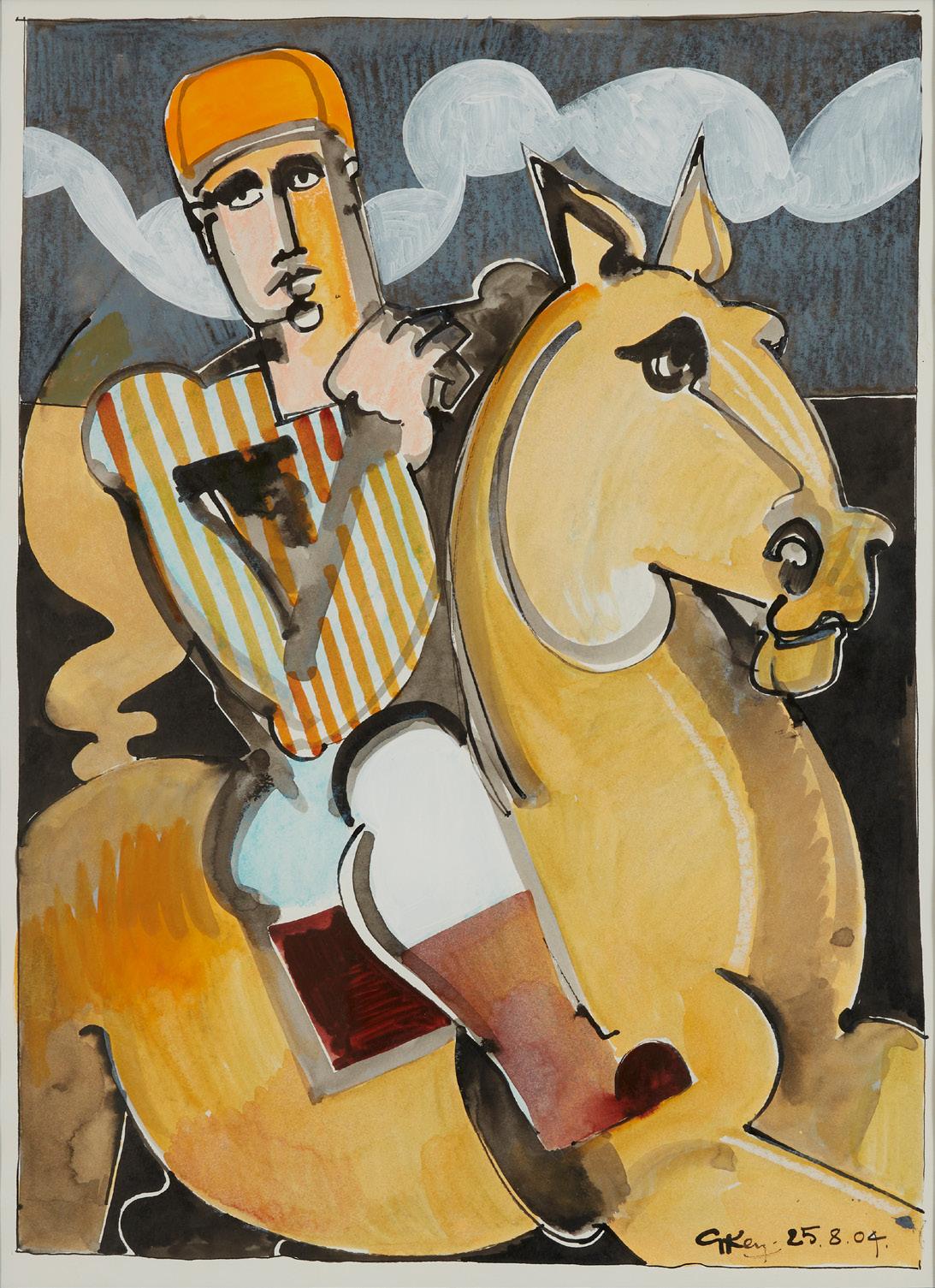
112
APPUKUTTAN ACHARY (INDIAN 1925-1997) MADONNA AND CHILD incised with initials (to base), hardwood carving affixed to a wooden plinth 60cm x 10cm x 6cm (23 1/2in x 4in x 2 1/2in) excluding plinth £1,000-1,500
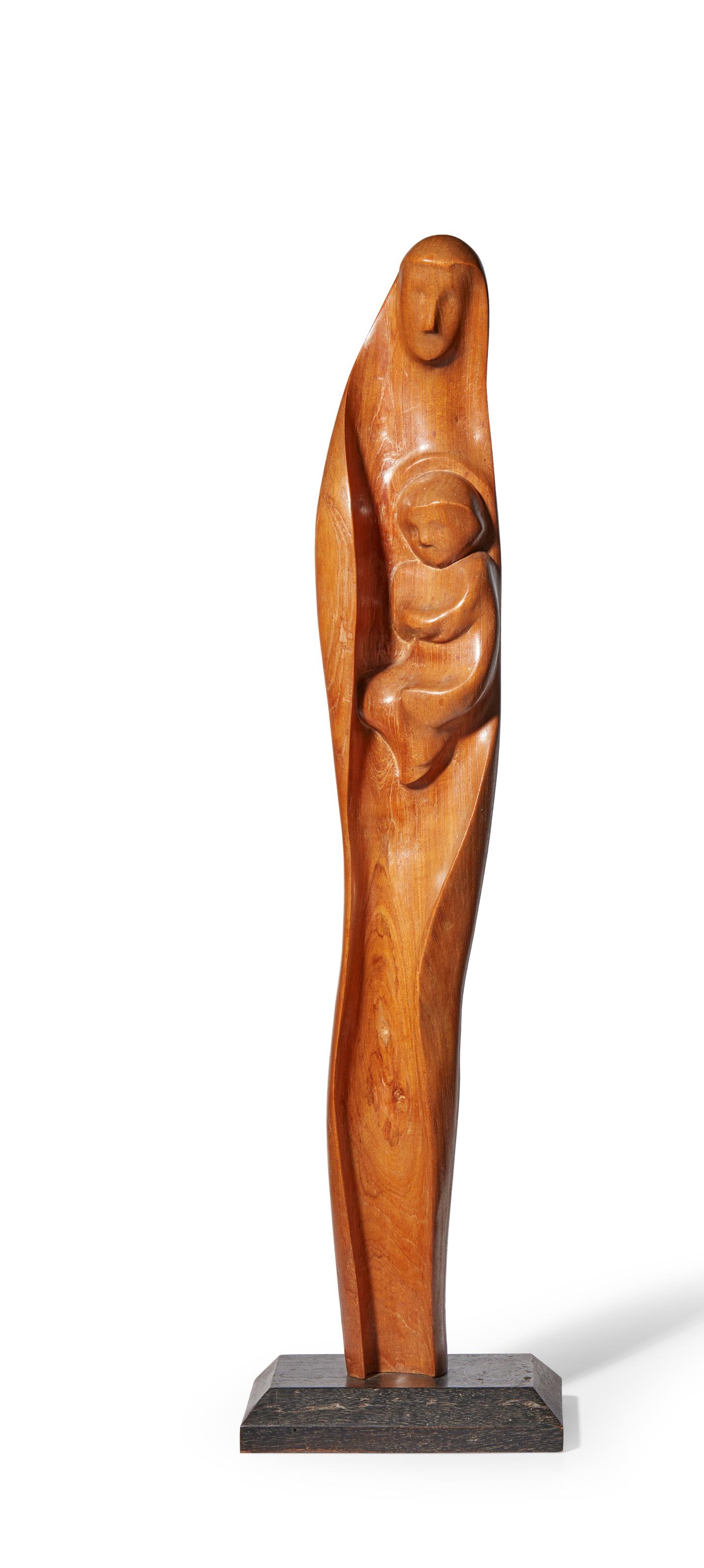
85 Other fees apply in addition to the hammer price: see the ‘Buyer’s Guide’ section on page 6
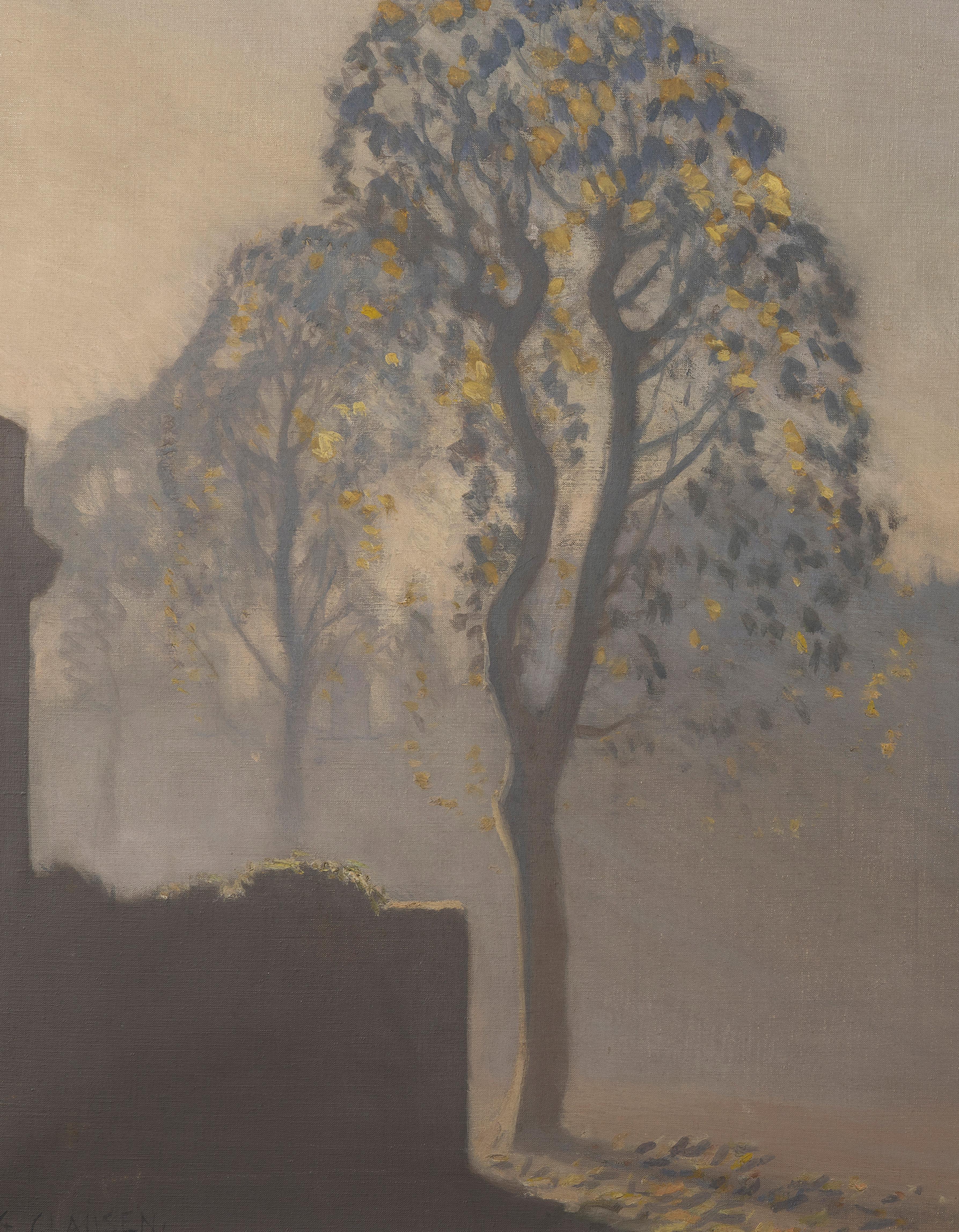
113 DAME ETHEL WALKER A.R.A.
(BRITISH 1861-1951)
THE FAUN AND WOMEN IN THE FOREST
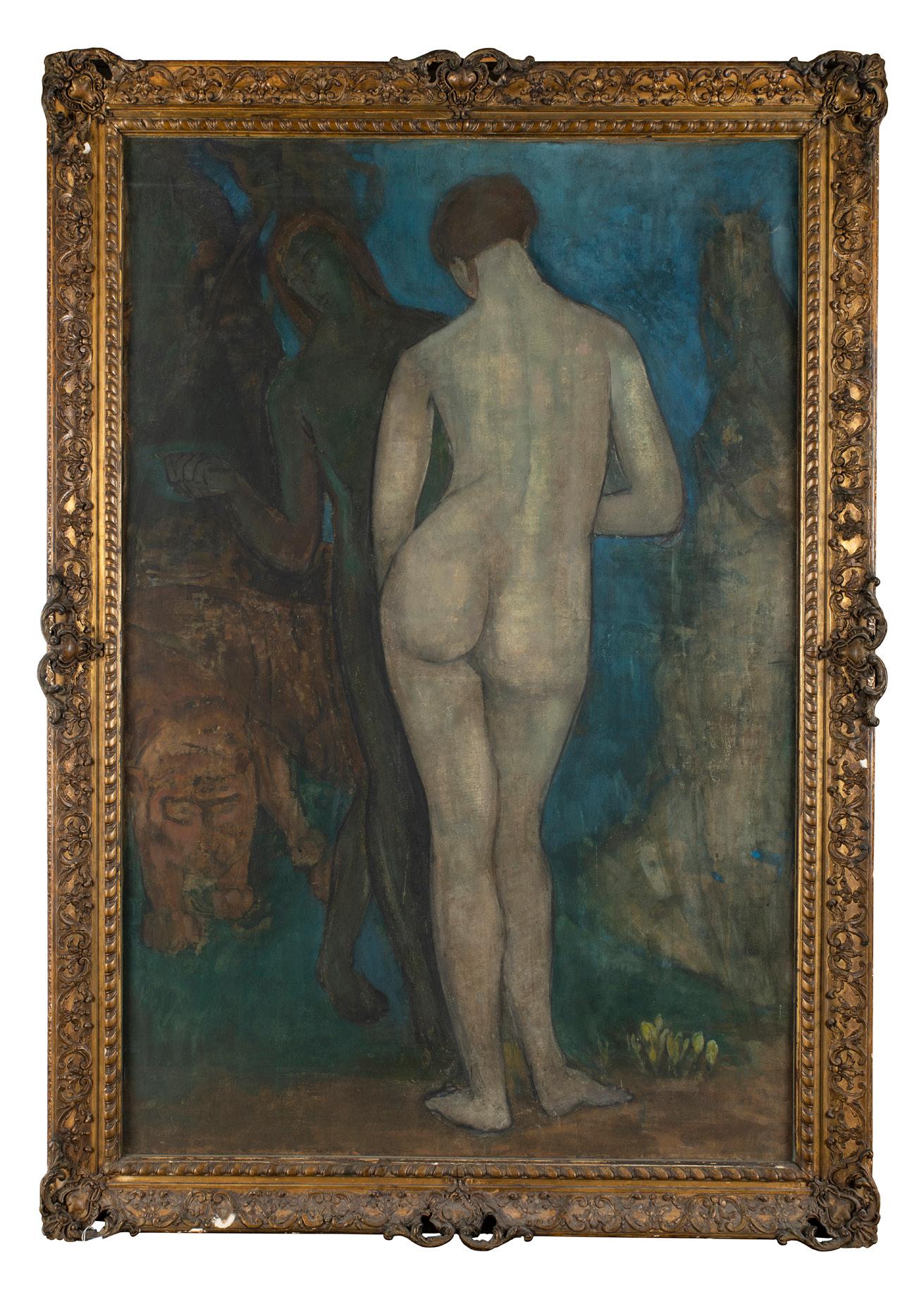
partial paper label with inscription (to reverse), oil on paper laid on canvas 136cm x 89cm (53 1/2in x 35in)
Provenance: Collection of the Late Sir Richard Shepherd, MP. £1,500-2,000
§
HERMANN ISRAEL FECHENBACH (GERMAN 1897-1986)
PORTRAIT OF MRS ESME ABLETT signed (lower right), oil on canvas 59cm x 49cm (23 1/4in x 19 1/4in)
Provenance: Commissioned from the artist by the sitter’s husband, by whom given to the present owner.
Fechenbach studied at the Academies of Art in Stuttgart, Munich, Florence and Vienna between 1919 and 1926. In 1939, fleeing the outbreak of World War Two, the painter emigrated to Buckinghamshire in England, where he continued to paint until his death. This portrait was executed in Oxfordshire.
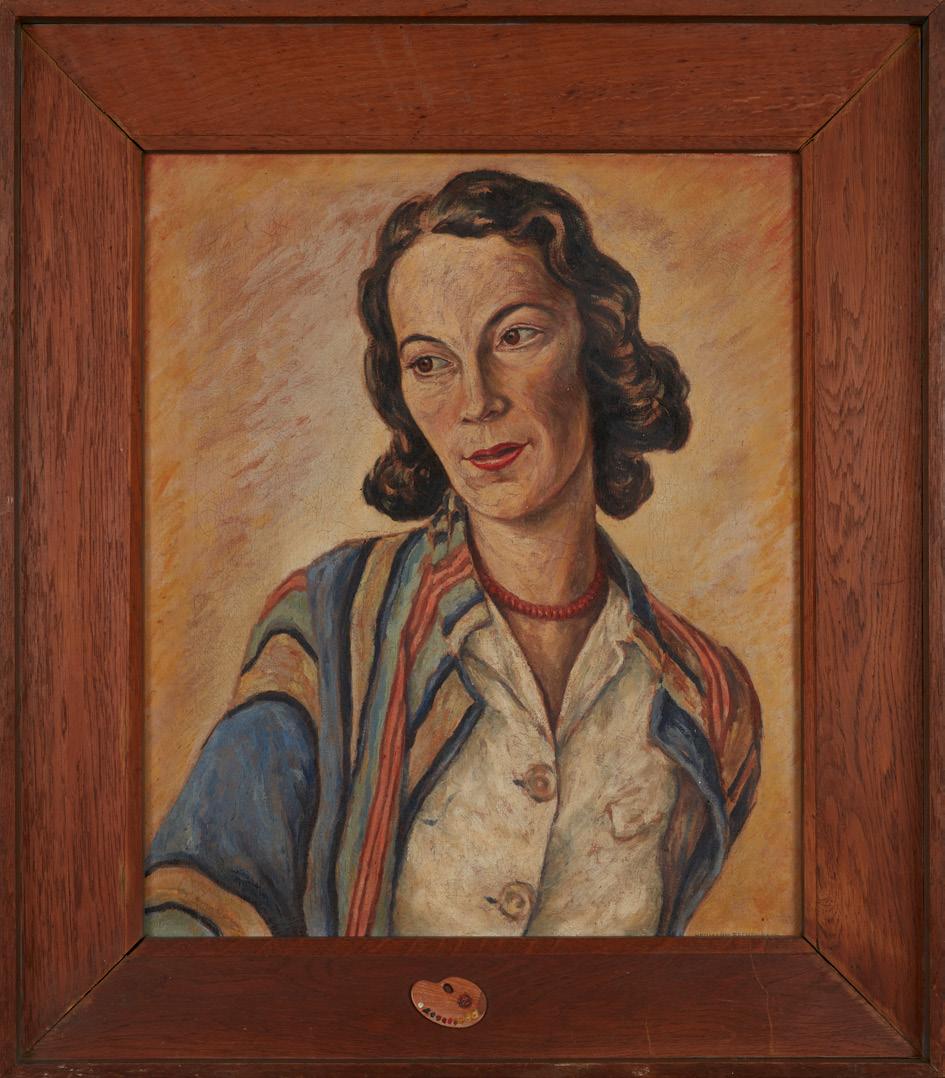
114
£1,000-1,500
Left Lot 118 [detail] 87 Other fees apply in addition to the hammer price: see the ‘Buyer’s Guide’ section on page 6
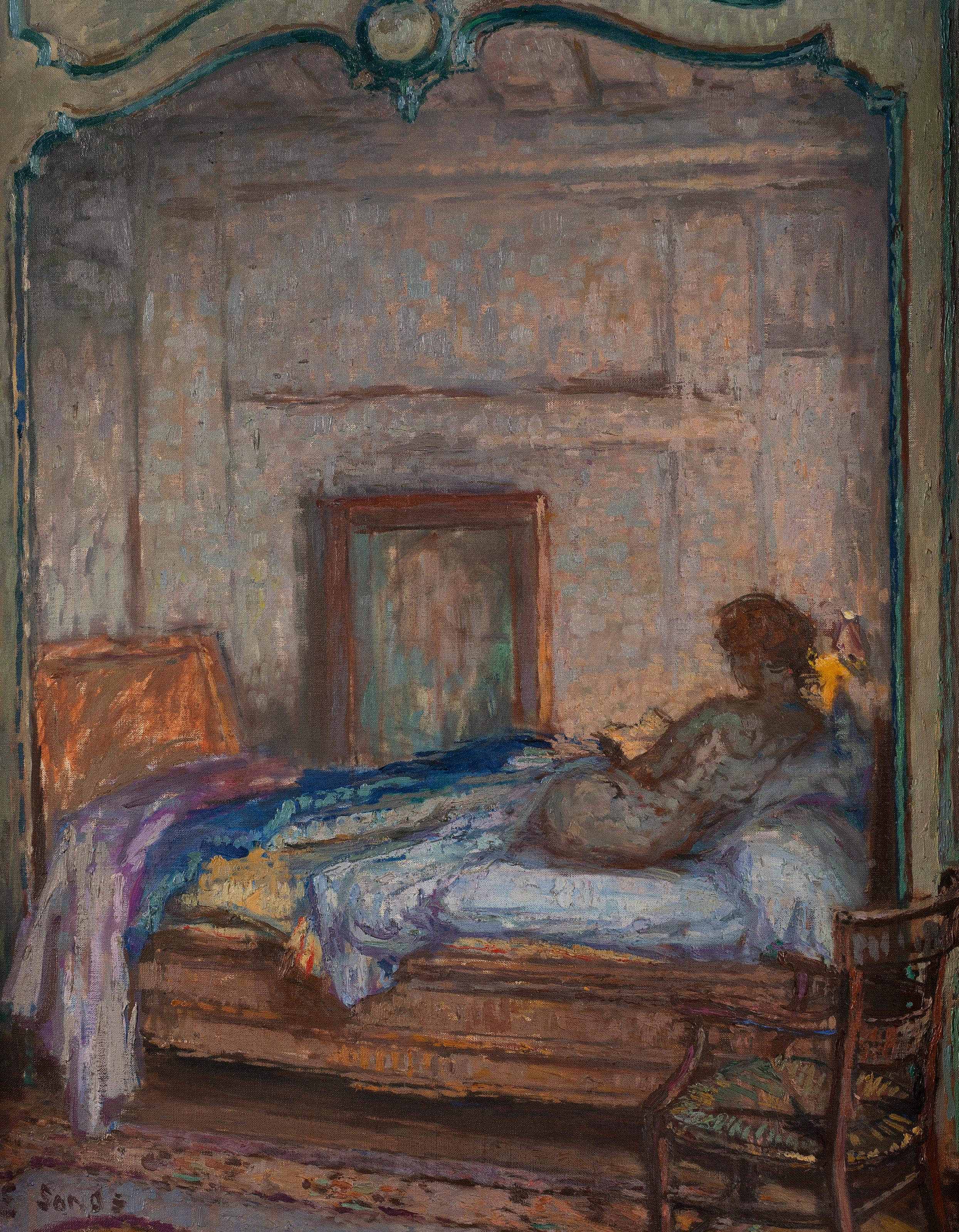
ETHEL SANDS (AMERICAN/BRITISH 1873-1962)
THE BOUDOIR
signed (lower left), oil on canvas 60.5cm x 49cm (23 3/4in x 19in)
Provenance: Collection of the Late Sir Richard Shepherd, MP. £1,500-2,000
116
WALTER SICKERT A.R.A. (BRITISH 1860-1942)
THE BRIDGE, CHAGFORD
signed (lower right), oil on board 23.2cm x 15cm (9 1/8in x 5 7/8in)
Provenance: Redfern Gallery, London, 1931; G. Howarth Esq.;
Collection of the Late Sir Richard Shepherd, MP.
Exhibited: Michael Parkin Fine Art, London, The Artist, His Wife, His Mistress, His Friends and One Enemy, December 1992.
£4,000-6,000
117
WALTER SICKERT A.R.A. (BRITISH 1860-1942)
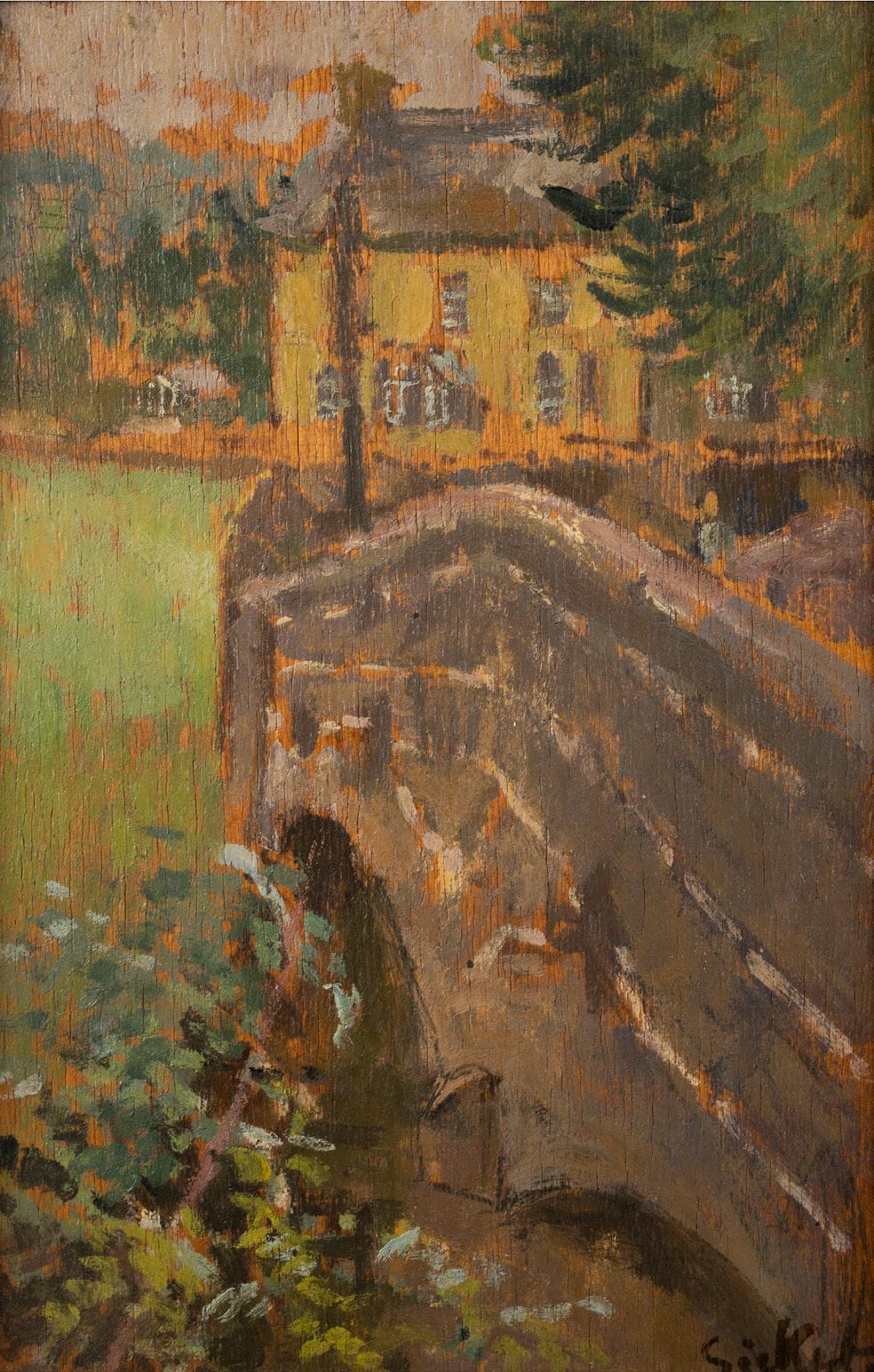
CHEVET DE L’EGLISE, CIRCA 1914
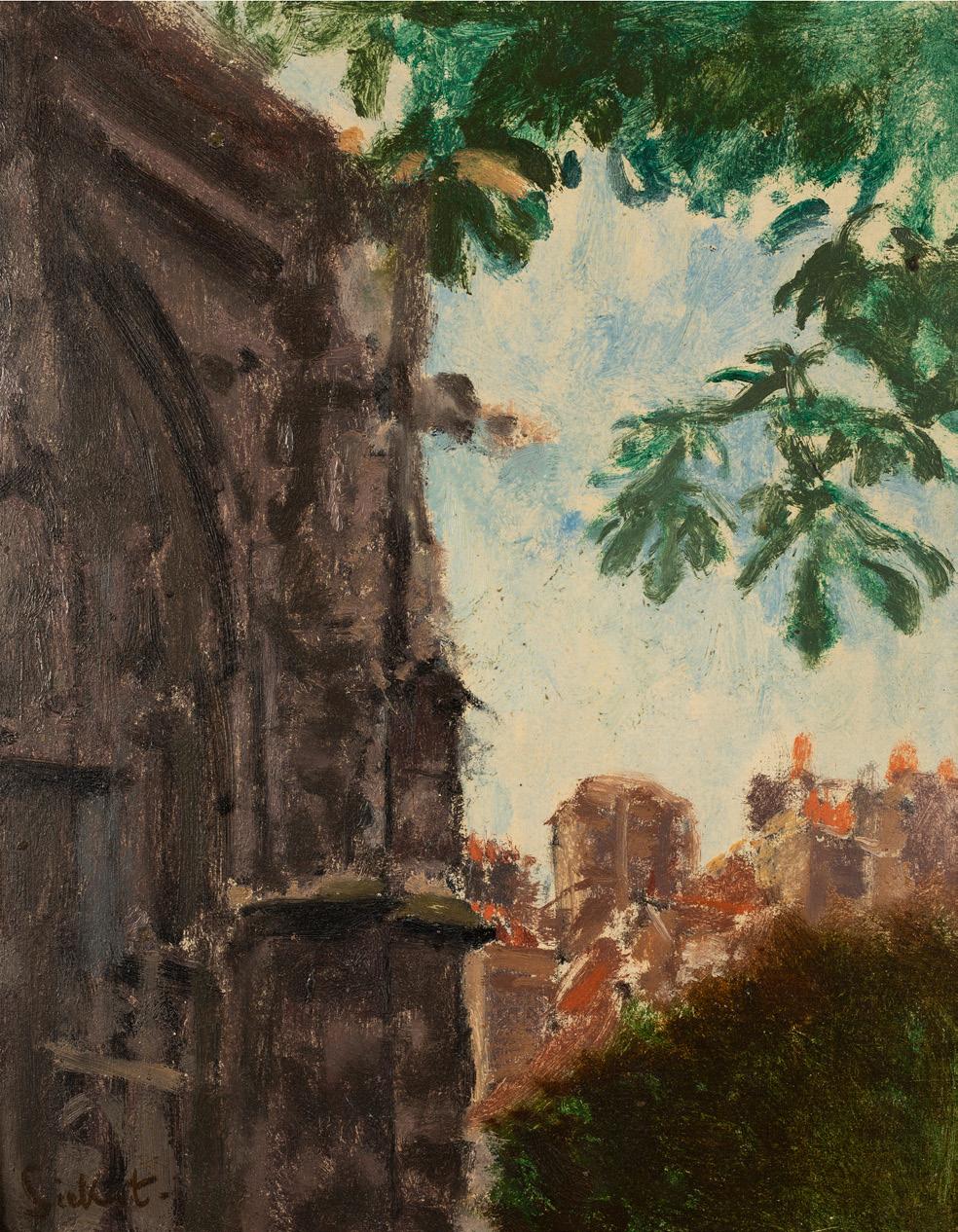
signed (lower left), oil on board
23.2cm x 18cm (9 1/8in x 7 1/8in)
Provenance: Redfern Gallery, London, 1931; G. Howarth Esq.;
Collection of the Late Sir Richard Shepherd, MP.
Exhibited: Michael Parkin Fine Art, London, The Artist, His Wife, His Mistress, His Friends and One Enemy, December 1992.
£4,000-6,000 115 §
89 Other fees apply in addition to the hammer price: see the ‘Buyer’s Guide’ section on page 6
SIR GEORGE CLAUSEN R.A., R.W.S (BRITISH 1852-1944)
HAMILTON TERRACE, AUTUMN MORNING, 1933
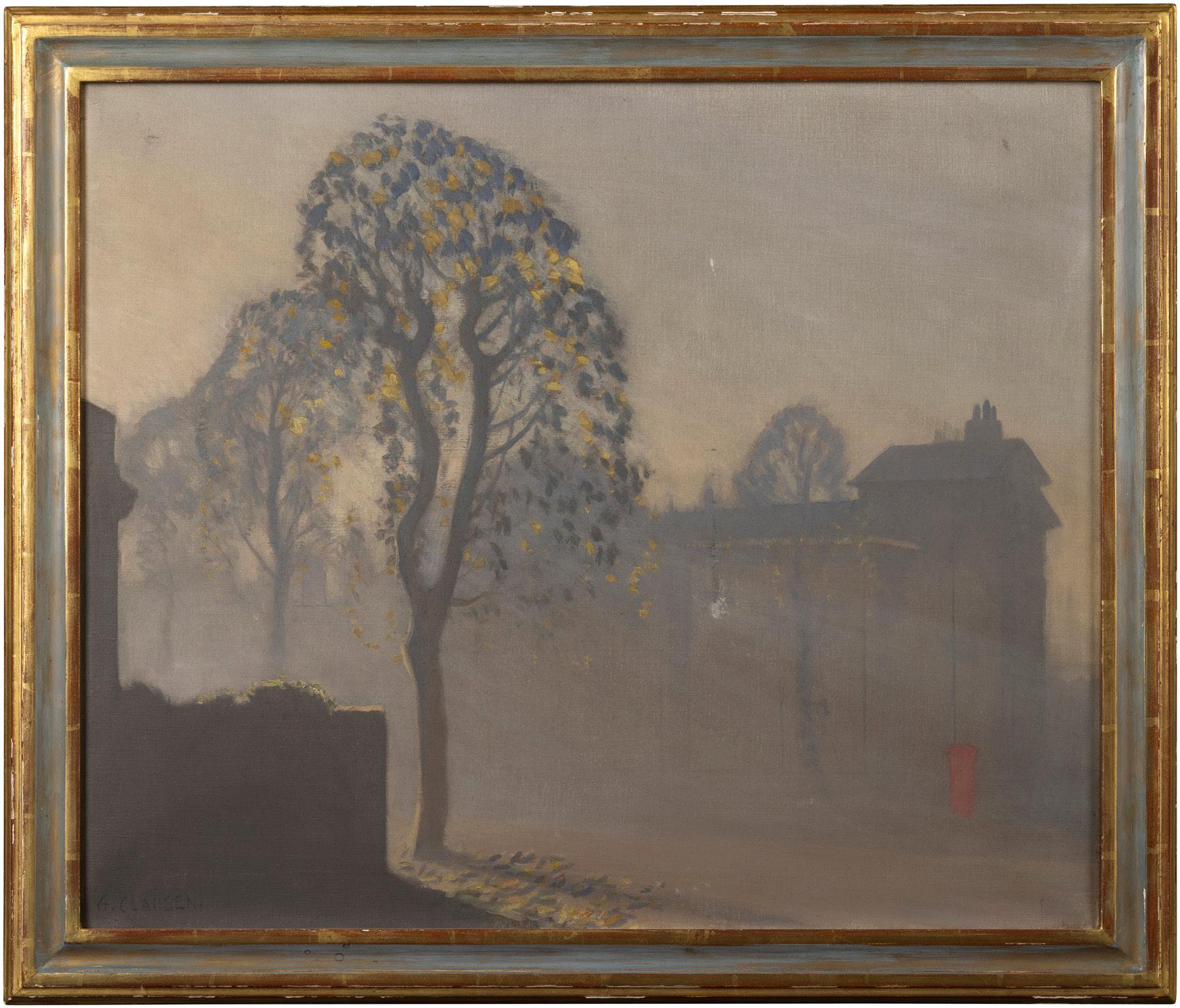
(lower left), titled and dated (to reverse), oil on canvas 50cm x 60cm (19 3/4in x 23 5/8in)

Spinks, London, label K24546; Collection of the Late Sir Richard Shepherd, MP.
George Clausen was born in London in 1852. His wide-ranging training included stints at the National Art Training School, South Kensington, Antwerp Academy and later at the Académie Julian in Paris. His career began in London in the 1870s before moving to St Albans in 1881. There he had access to plentiful rural subjects, the depiction of which revealed his deep admiration for the naturalist Jules Bastien-Lepage. In 1886 Clausen was a founding member of the progressive New Art Club before a move to Essex in 1890 ushered in a new chapter of works based on country life. He was eventually appointed Professor of Painting at the Royal Academy Schools, becoming an Academician in 1908 and a Senior Academician in 1927, the year in which he received a knighthood. After serving as an Official War Artist during World War One, Clausen split his time between London and Essex. He spent World War Two living in Berkshire, where he died in 1944. Hamilton Terrace, Autumn Morning of 1933 is an assured, mature work on the theme of early morning light for which Clausen is renowned. Hamilton Terrace in St John’s Wood, London, runs in a south-easterly direction off Carlton Hill, where Clausen had a house from 1905 until his death. The source of the low seasonal light is hidden, whilst its rays cast architecture into profile and trees into shadow, except those autumnal leaves caught in golden highlights. Chiaroscuro and a muted palette create an atmospheric scene, steeped in the promise of the day to come.
118
signed
Provenance:
£6,000-8,000
90 Other fees apply in addition to the hammer price: see the ‘Buyer’s Guide’ section on page 6
ORLOFF
FILLE A LA NATTE
FRENCH
GIRL
Born in Ukraine in 1888, Chana Orloff settled in Paris in 1910 becoming a naturalised citizen in 1926. She was associated with the Fauves and Cubists early in her career, and was a greatly admired and successful member of the École de Paris artists during the 1920s and 1930s. Alongside the likes of Amedeo Modigliani, Pablo Picasso, Jean Cocteau and Marc Chagall, she exhibited regularly in all the major Salons and exhibitions in Paris. She worked in a wide variety of media, sculpting primarily genre subjects and portraits of which the present model is a graceful example.
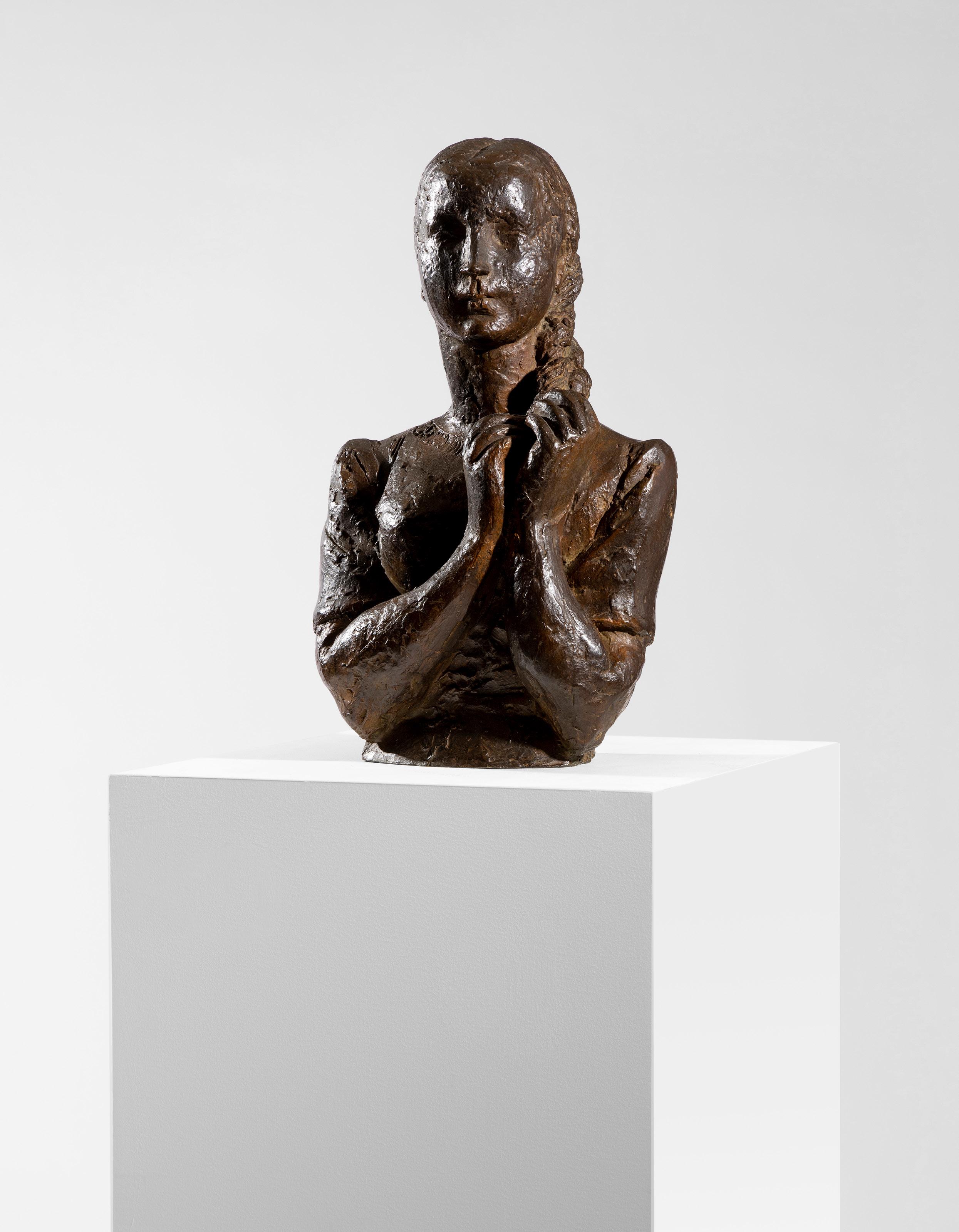
119 § CHANA
(UKRANIAN /
1888-1968) JEUNE
[YOUNG
WITH A BRAID], 1951 signed and dated ‘Ch. Orloff 51’, ‘Susse Fondeur Paris’ foundry mark, patinated bronze 45cm high, 27.5cm wide (17 3/4in high, 10 3/4in wide) Provenance: Christie’s, New York, Fine 20th-century Decorative Art, 22 March 1986, Lot 54; Private Collection. Literature: Felix Marchilhac, Chana Orloff, Paris, 1991, no.322. £10,000-15,000
“At first I am attracted by the plastic decorative side, if you prefer, and the character... I would like my works to be as alive as life...”
Chana Orloff
91
120
SIR BASIL SPENCE O.M. O.B.E. R.A. (BRITISH 1907-1976) FOR H. MORRIS & CO., GLASGOW
‘ALLEGRO’ DINING TABLE, DESIGNED 1947-8 maker’s label ‘MORRIS MADE/ GUARANTEED TRADE MARK/ GLASGOW’, laminated wood 74cm high, 166cm long, 58cm deep (29in high, 65 1/4in long, 22 7/8in deep)
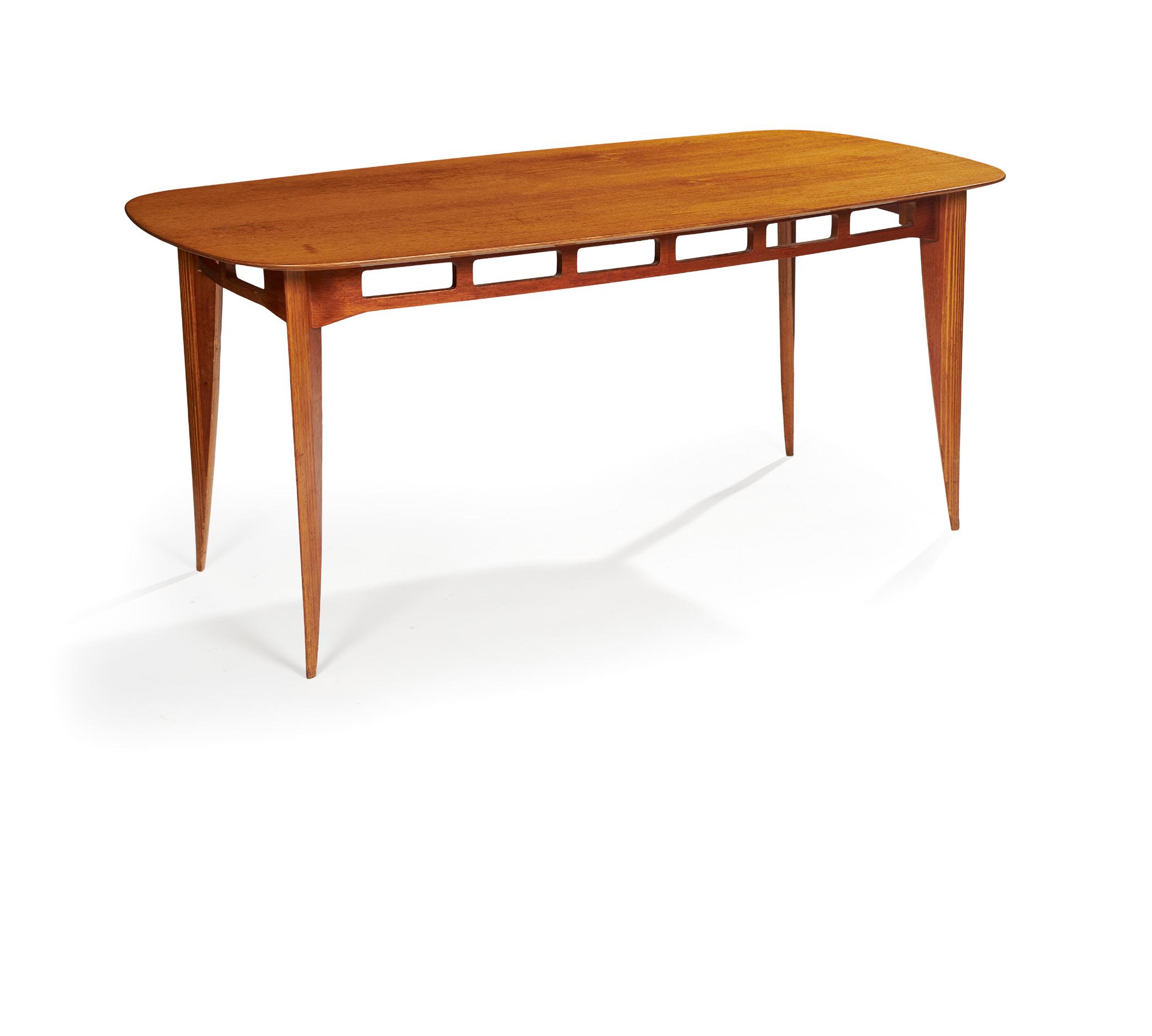
Literature: Studio Yearbook of Decorative Art, 1949, p. VIII (advertised); “Austerity to Affluence: British Art & Design 1945-1962”, The Fine Art Society, London, 1997, p. 14 and p. 22, cat. no. F27 (an example of chair illustrated); Long, Philip and Thomas, Jane (Edit.) “Basil Spence”, Architect National Galleries of Scotland in Association with RCAHMS, Edinburgh 2008, p. 52 and p. 54, fig. 55 (another example illustrated).
121
SIR BASIL SPENCE O.M. O.B.E. R.A. (BRITISH 1907-1976) FOR H. MORRIS & CO., GLASGOW ‘ALLEGRO’ SIDEBOARD, DESIGNED 1947-8 maker’s label ‘MORRIS MADE/ GUARANTEED TRADE MARK/ GLASGOW’, laminated wood 94.5cm high, 158.5cm wide, 55cm deep (37in high, 62 3/8in wide, 21 5/8in deep)
Literature: Studio Yearbook of Decorative Art, 1949, p. VIII (advertised); “Austerity to Affluence: British Art & Design 1945-1962”, The Fine Art Society, London, 1997, p. 14 and p. 22, cat. no. F27 (an example of chair illustrated); Long, Philip and Thomas, Jane (Edit.) “Basil Spence”, Architect National Galleries of Scotland in Association with RCAHMS, Edinburgh 2008, p. 52 and p. 54, fig. 55 (another example illustrated). £3,000-5,000
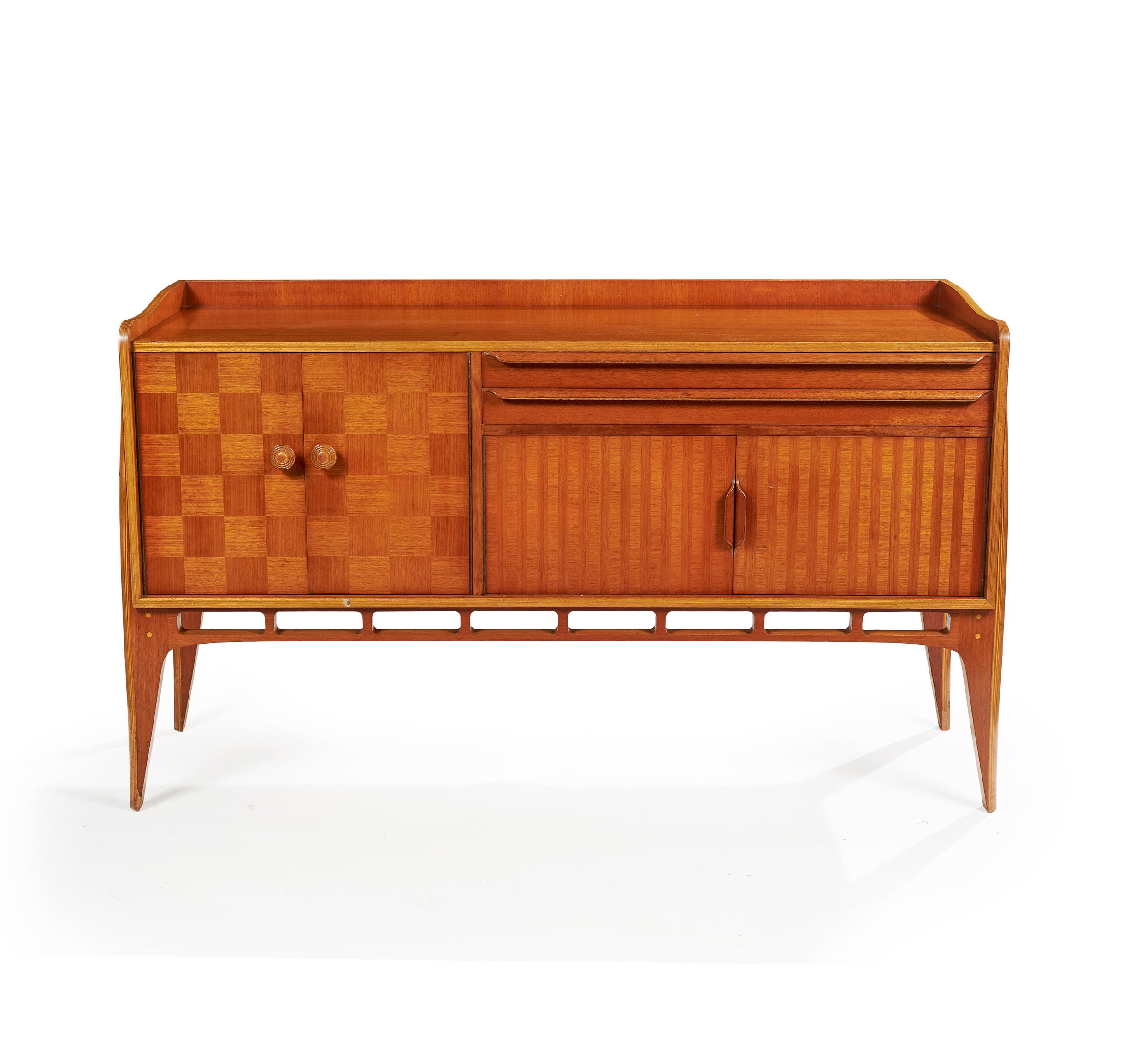
£2,500-3,500 92 Other fees apply in addition to the hammer price: see the ‘Buyer’s Guide’ section on page 6
MANNER OF SIR BASIL SPENCE O.M. O.B.E. R.A. (BRITISH 1907-1976) ARMCHAIR
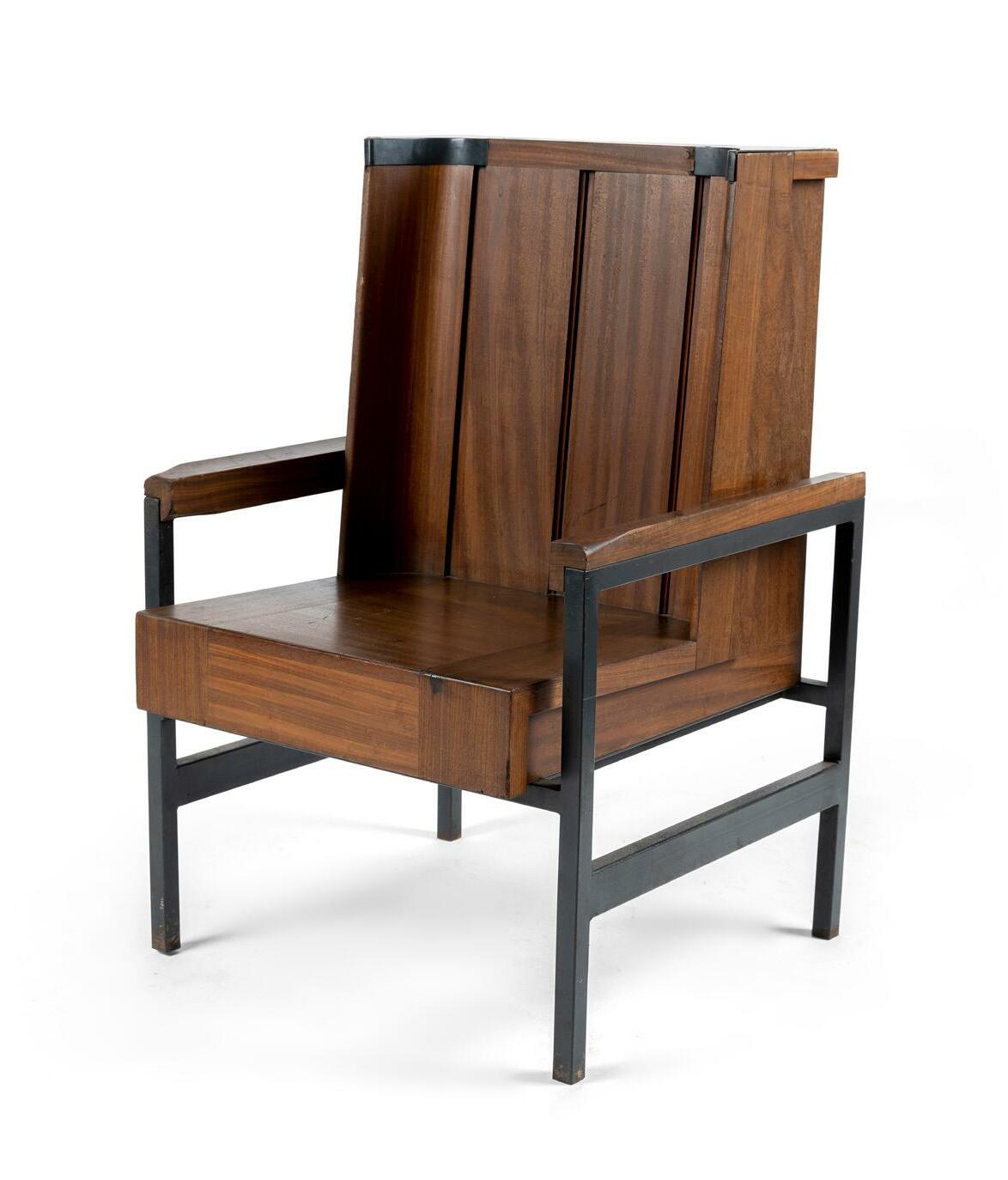
teak and painted metal
94cm high, 61cm wide, 63cm deep (37in high, 24in wide, 24 3/4in deep)
Literature: Knight, Marcus, Exeter Cathedral, Pitkin Pictorials, London, 1976 (for similar example of this model).
£800-1,200
By repute this chair and bench originally came from Exeter Cathedral, and historic photographs of the interior show similar furniture in the church. Sir Basil Spence is not recorded as having designed work for the cathedral, however he was working on the University of Exeter in the late 1950s and early 1960s and it has been suggested that it might have been possible that furniture could have found its way from university to cathedral or he could have run something up for the cathedral while he was looking at the University projects.
The bench and seat also bears comparison to another Spence, Glover and Ferguson project at St Aiden’s Church in Leicester, whom the Bishop of Leicester had asked Spence to design in 1955, in its use of materials and some of the stylings of the furniture.
123 MANNER OF SIR BASIL SPENCE O.M. O.B.E. R.A. (BRITISH 1907-1976) SETTLE / BENCH
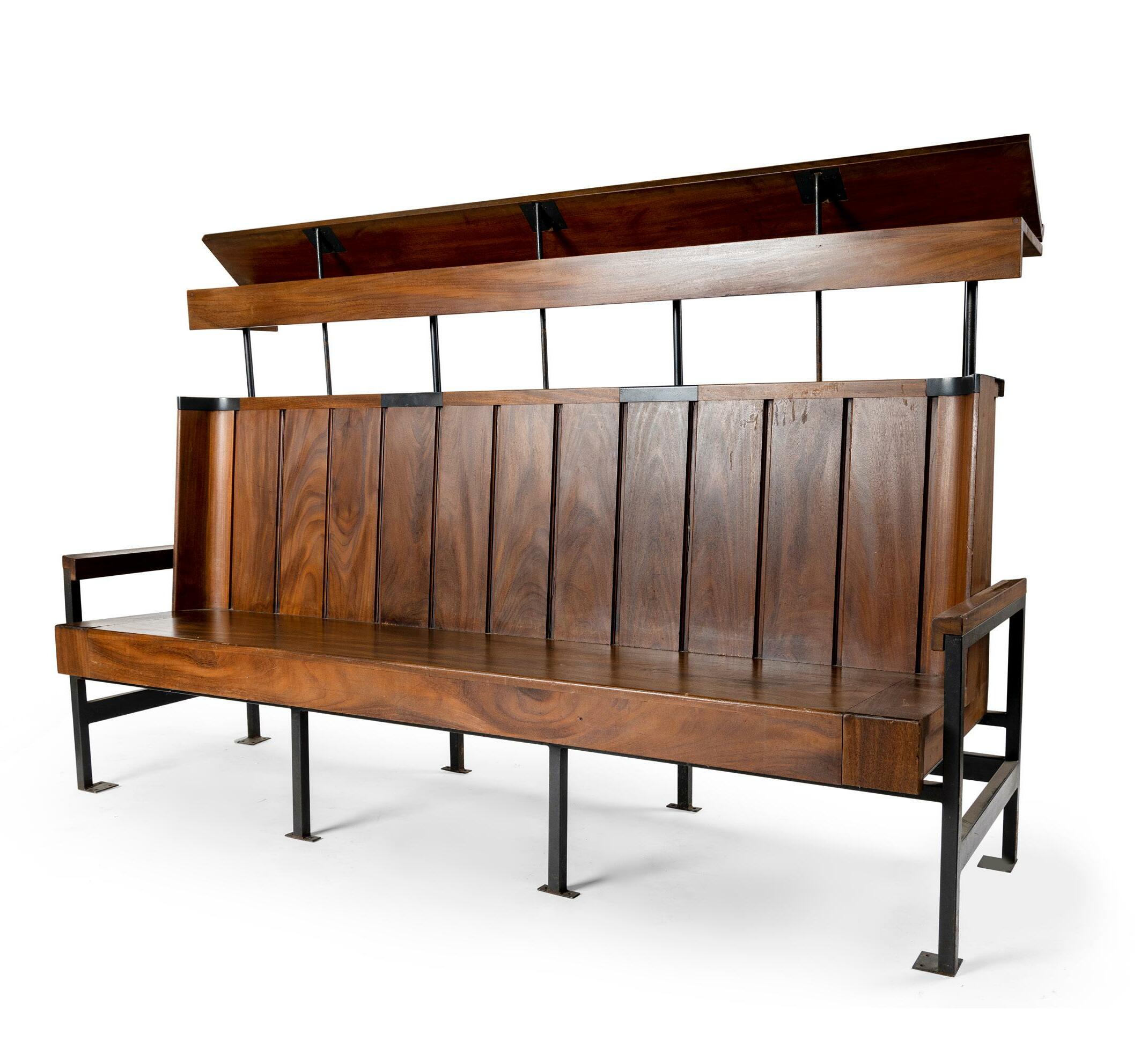
teak and painted metal
122cm high, 203cm wide, 62.5cm deep (48in high, 80in wide, 24 5/8in deep) (bookrest not extended)
Provenance: By repute from Exeter Cathedral.
Literature: Knight, Marcus, Exeter Cathedral, Pitkin Pictorials, London, 1976 (for similar examples of this model). £800-1,200
122
93
125
CHARLOTTE PERRIAND (FRENCH 1903-1999) FOR B.C.B. STOOL, CIRCA 1951
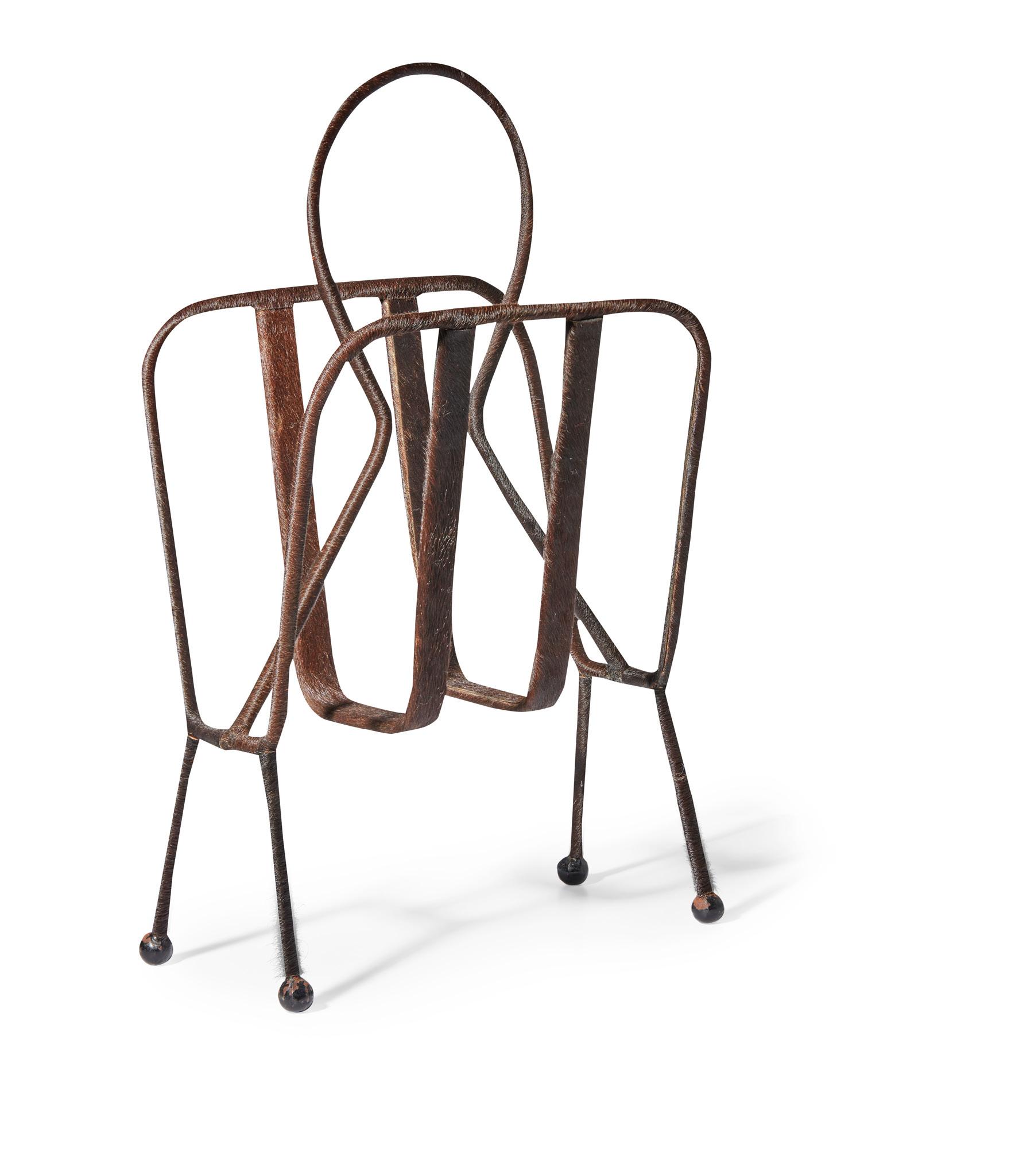
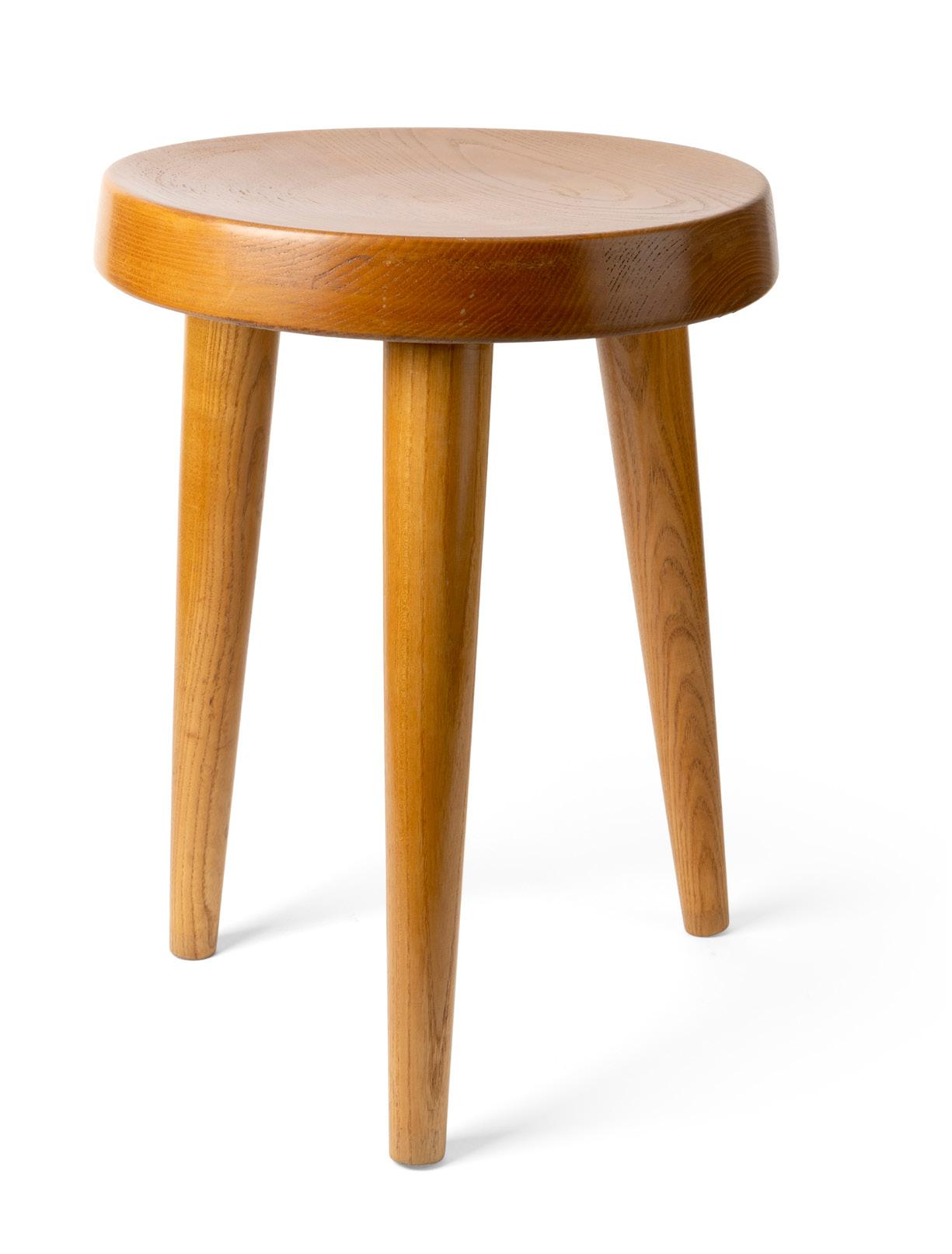
124 JACQUES ADNET (FRENCH 1900-1984)
MAGAZINE STAND, 1950s
hide and steel
high,
1/4in
£3,000-5,000
pony
51.5cm
33cm wide, 18cm deep (20
high, 13in wide, 7 1/8in deep) £800-1,200
ash 45cm high, 35cm diameter (17 5/8in high, 13 3/4in diameter) Provenance: Christie’s, Paris, Rendez-Vous - Interieurs Contemporains, 9 October 2013, lot 229. Literature: Barsac, J., Charlotte Perriand, un art d’habiter, Norma, Paris, 2005, p. 323.
94 Other fees apply in addition to the hammer price: see the ‘Buyer’s Guide’ section on page 6
126
SIDO AND FRANCOIS THEVENIN (FRENCH (1936-1986 AND 1931-2016)
HALL STAND, 1970
signed and dated, patinated wrought steel and sheet steel
198cm high, 81.3cm wide, 20cm deep (78in high, 32in wide, 7 7/8in deep) £3,000-5,000
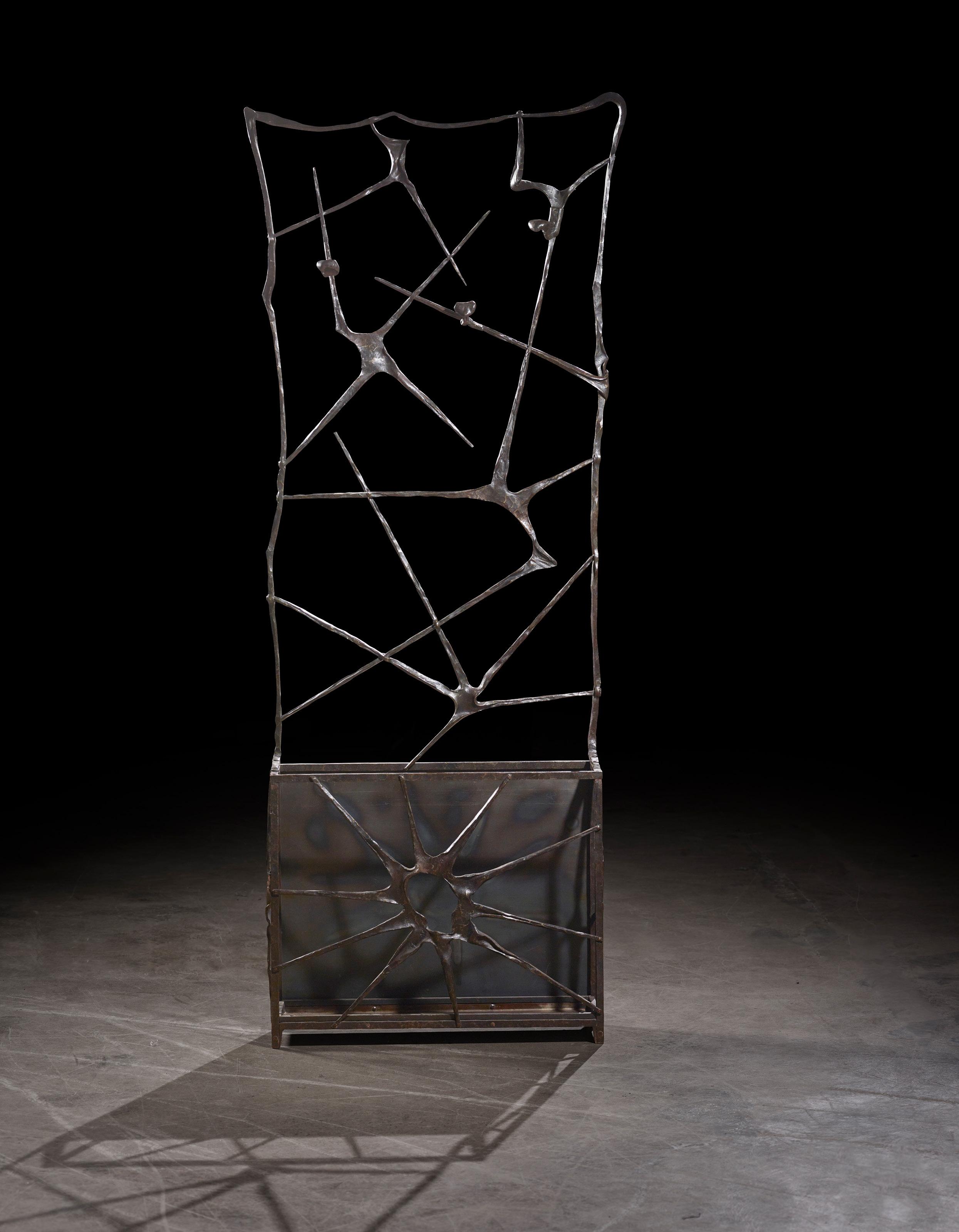
95
JEANNERET
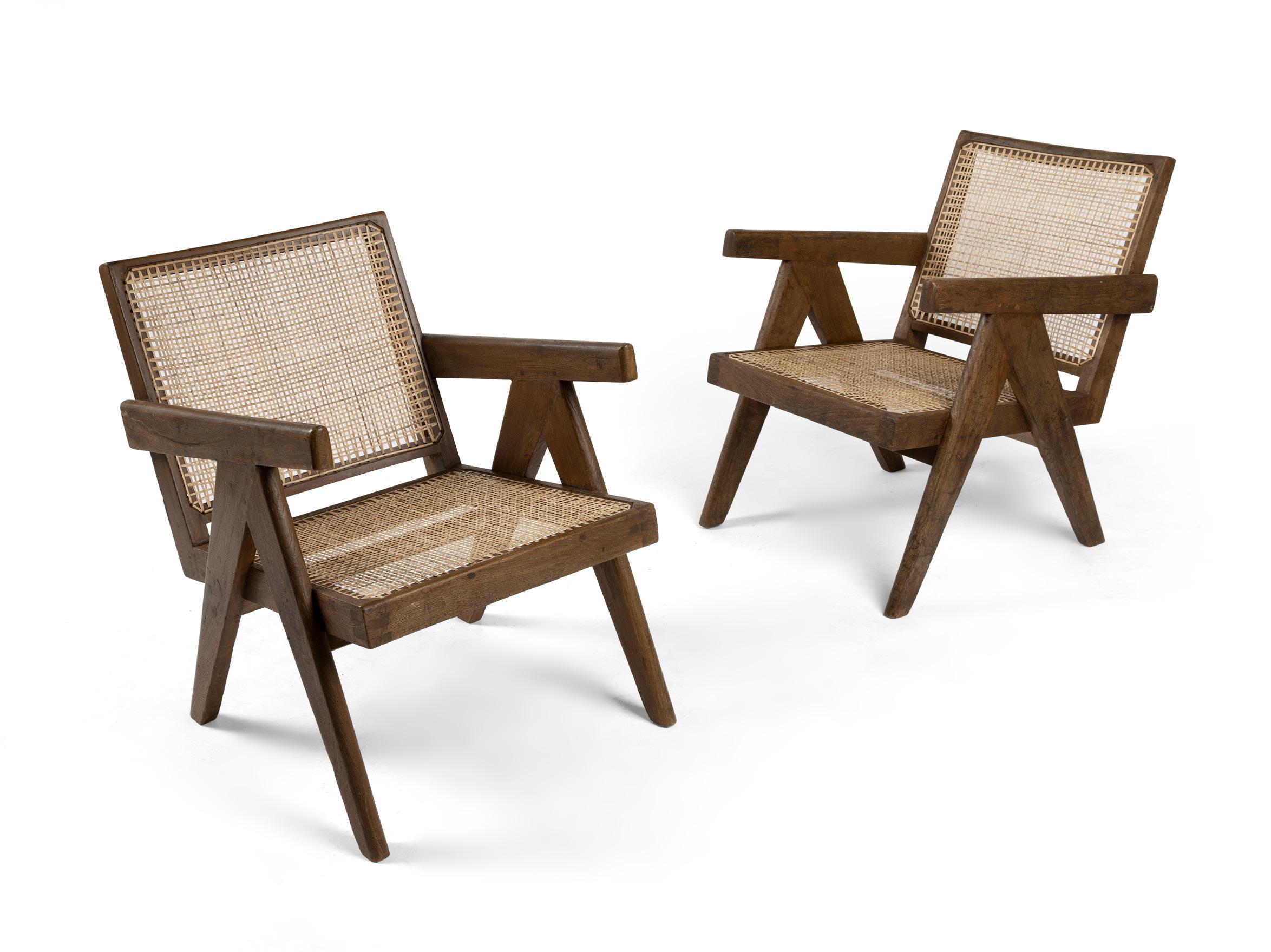
127 PIERRE
(SWISS 1896-1967) PAIR OF ARMCHAIRS painted mark ‘P.U.Ec./57’ and ‘P.U.Ec/52’ (to seat rails), teak and cane (2) 68cm high (26 3/4in high), 51.5cm and 52.5cm wide (20 1/4in and 20 5/8in wide) Provenance: Punjab University, Engineering College, Chandigarh, India. £5,000-7,000 96 Other fees apply in addition to the hammer price: see the ‘Buyer’s Guide’ section on page 6
128
PIERRE JEANNERET (SWISS 1896-1967)
DESK AND OFFICE CHAIR painted mark ‘M.S. - 621/St. T./4’ (to desk top stretcher) and ‘II-325’ (to chair), teak and cane (2) desk: 71cm high, 122cm wide, 61cm deep (28in high, 48in wide, 24in deep); chair: 75.5cm high, 43.5cm wide, 47cm deep (29 3/4in high, 17 1/8in wide, 18 1/2in deep)
Provenance: Chandigarh, India; Private Collection, UK. £6,000-8,000
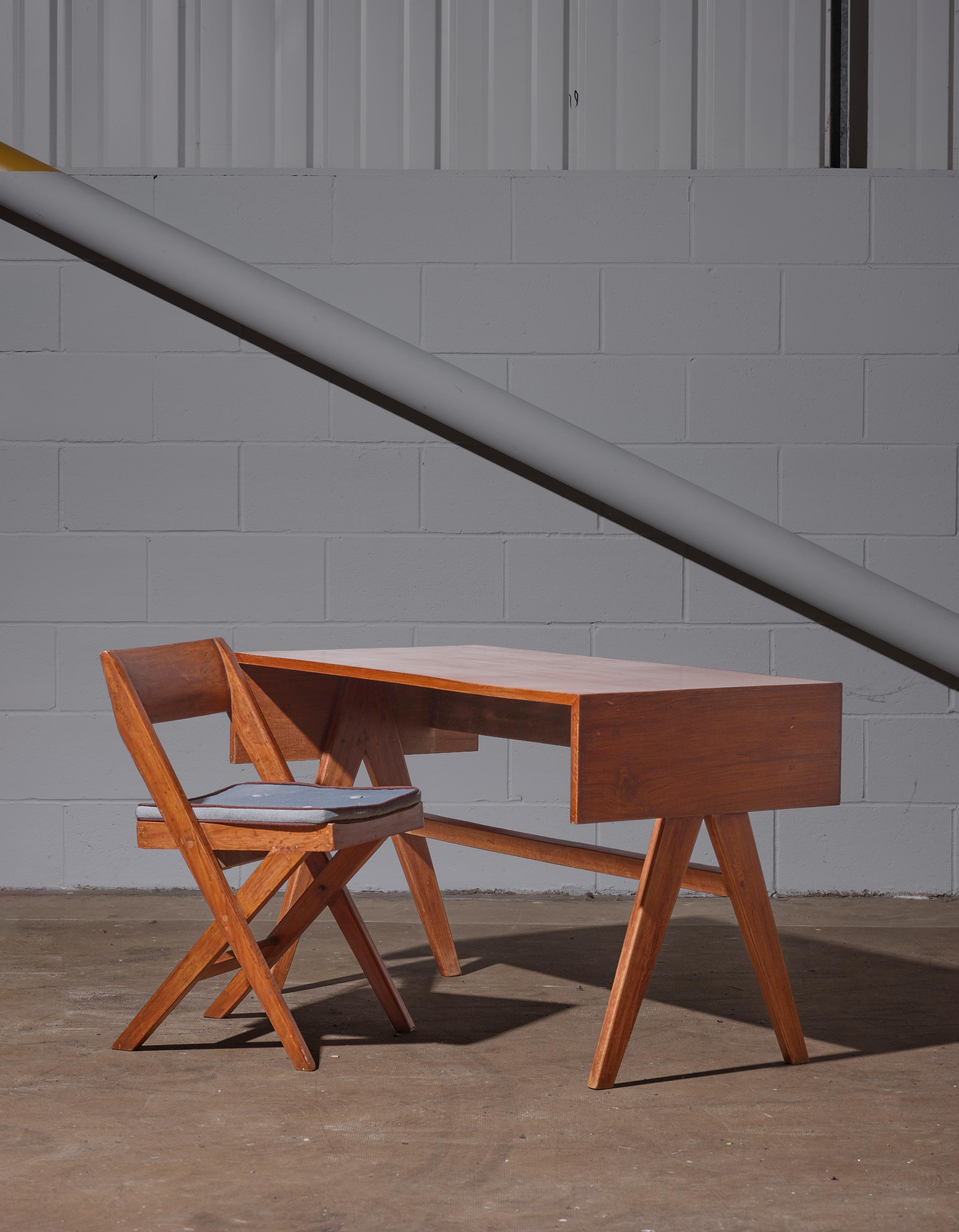
97
FONTANA ARTE COFFEE TABLE
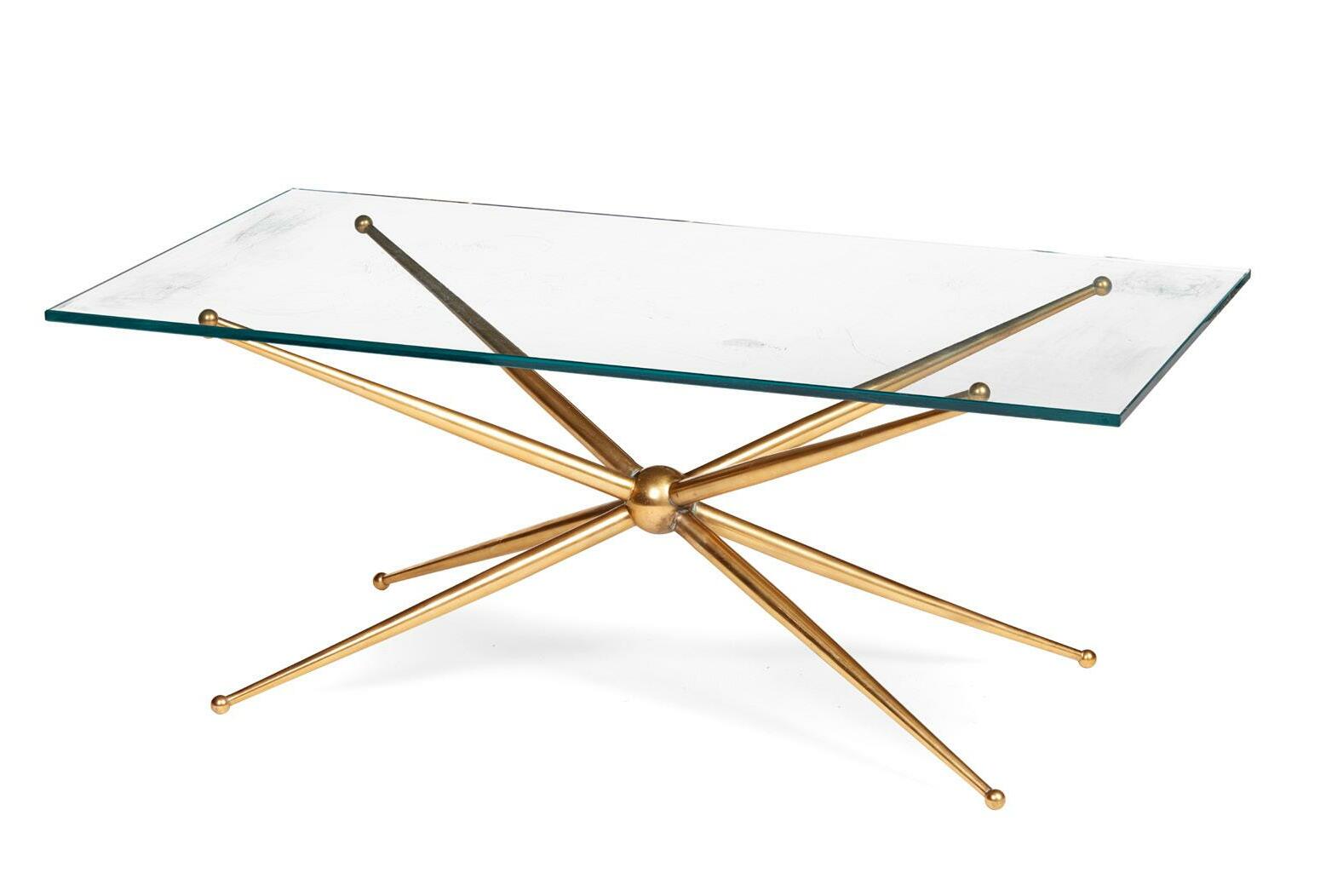
brass and glass, stamped ‘F / MURANO’, stamped monogram to brass also 42.7cm high, glass 105cm long, 55cm deep (16 3/4in high, 41 3/8in long, 21 5/8in deep); brass base: 41.4cm high, 81cm wide, 41.4cm deep (16 1/4in high, 31 7/8in wide, 16 1/4in deep) £3,000-5,000
model no. 646, ash with contemporary Kvadrat fabric upholstery (4) 83cm high, 42cm wide (32 5/8in high, 16 1/2in wide) £2,000-3,000
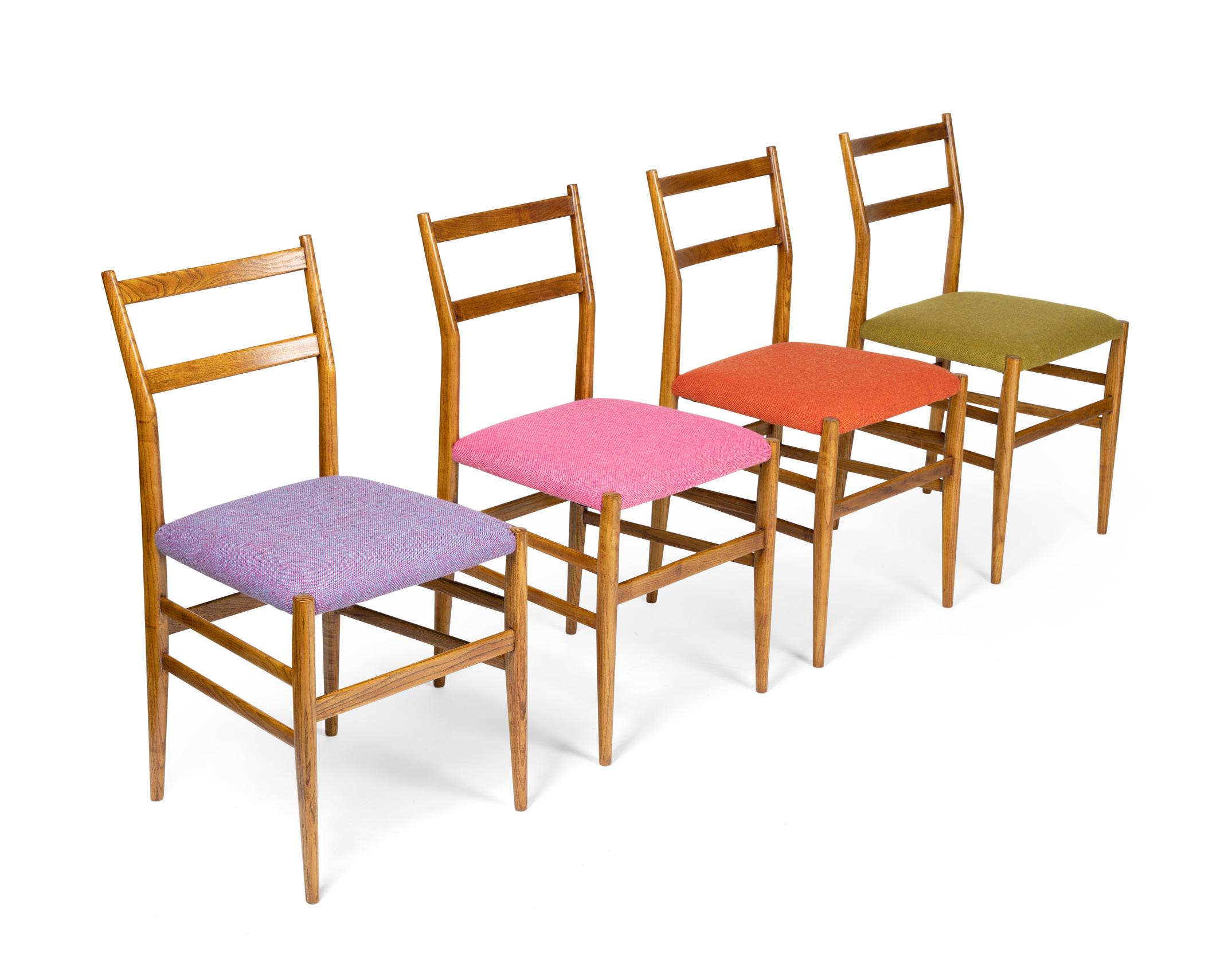
130
98 Other fees apply in addition to the hammer price: see the ‘Buyer’s Guide’ section on page 6
131
ISAMU KENMOCHI (JAPANESE 1912-1971) FOR TENDŌ MOKKŌ JAPAN
PAIR OF OCCASIONAL TABLES (MOD. HACO), CIRCA 1966 Japanese elm (zelkova) plywood, elm veneer (2)
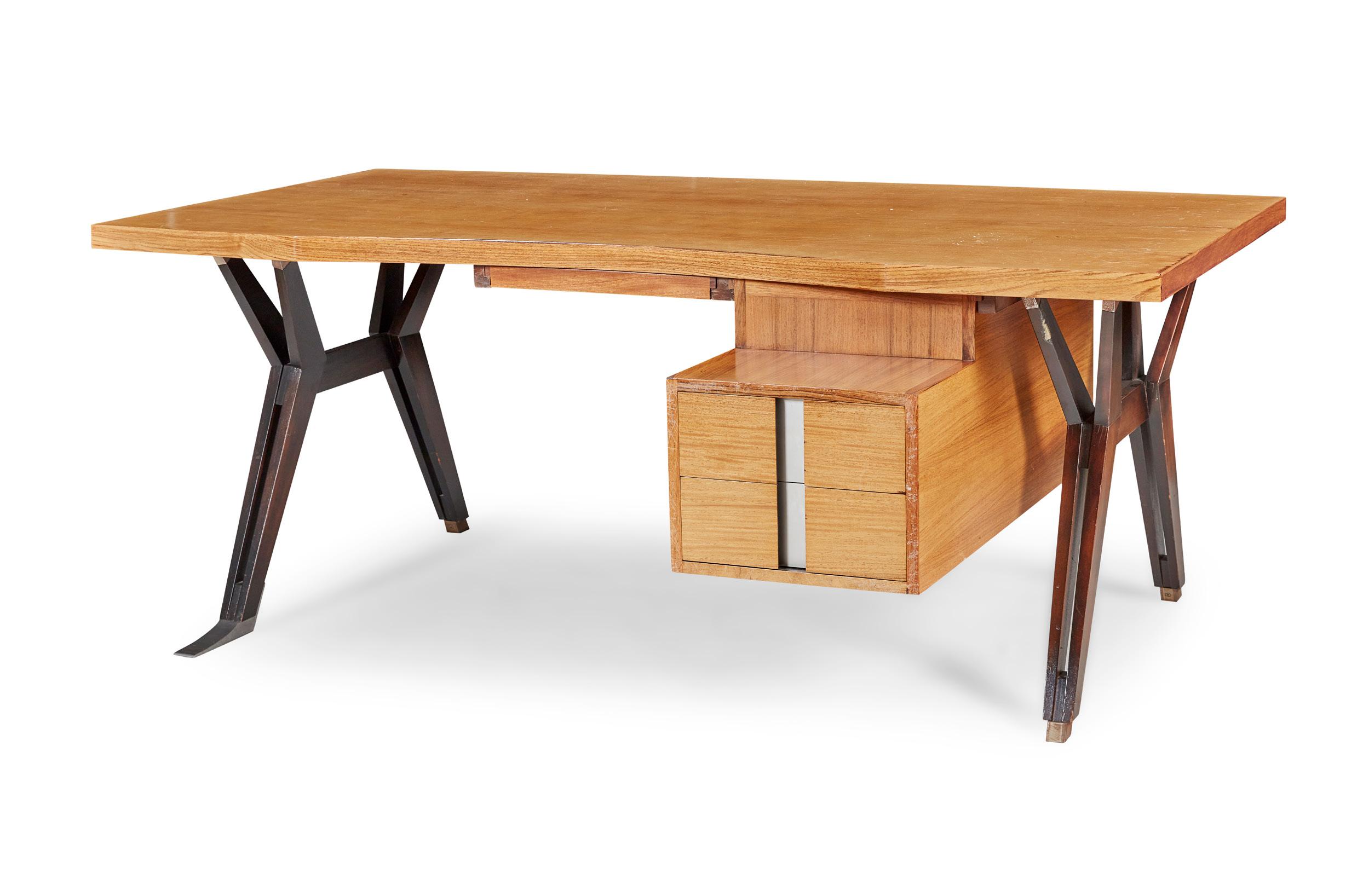
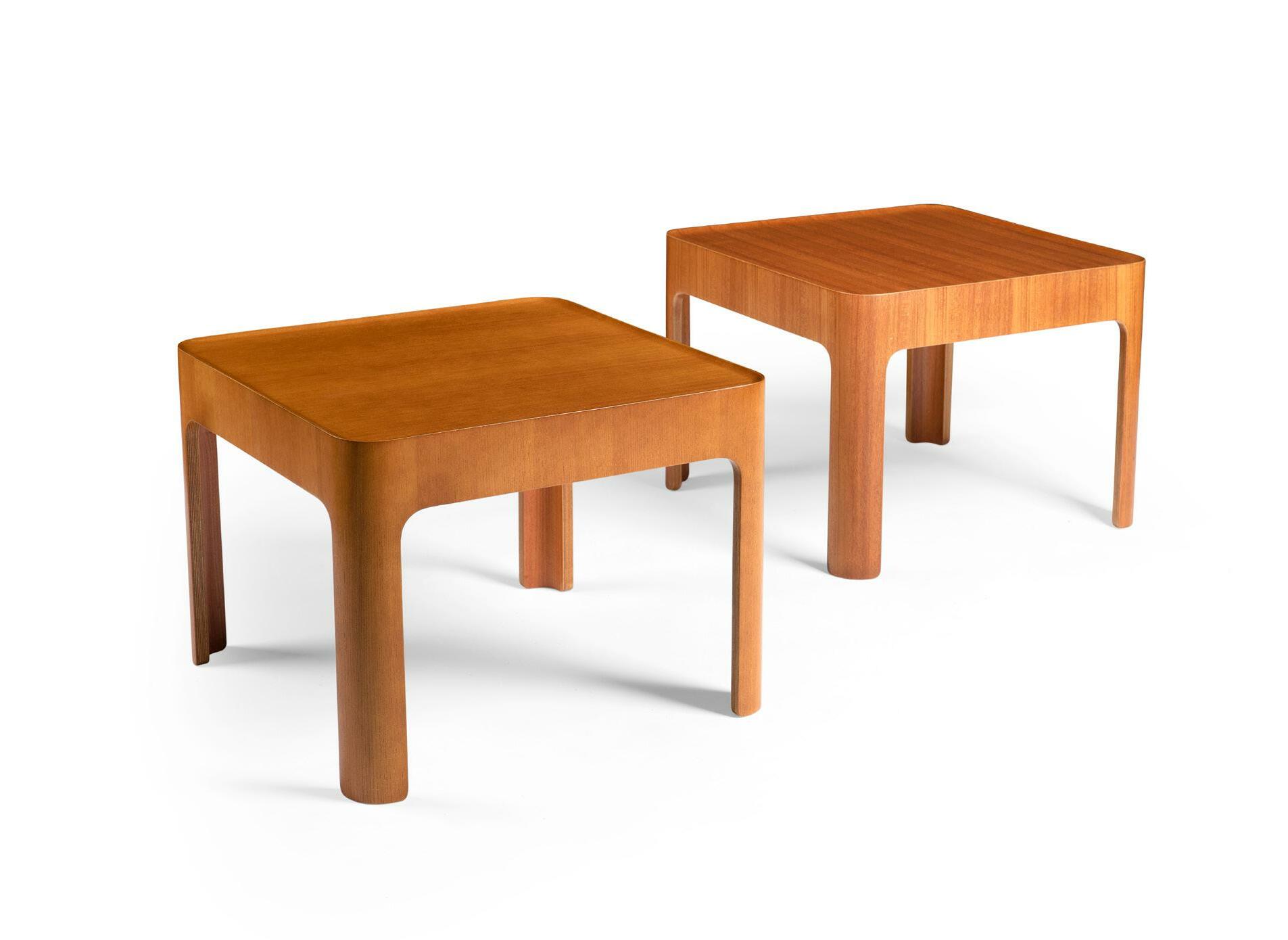
45cm x 60cm x 60cm (17 3/4in x 23 5/8in x 23 5/8in)
Literature: Kenmochi Isamu: Japanese Modern, 2004, pp.
and
£800-1,200
132 Y
ICO PARISI (ITALIAN 1916-1996) FOR MIM, ROME ‘TERNI’ DESK, DESIGNED 1958
rosewood, mahogany and aluminium, with a three and
module and two shallow drawers under the top, circular manufacturer’s disc to one
72cm high, 180cm wide, 113cm deep (28 1/4in high,
Provenance: Themes & Variations, London; Private Collection, London.
Note: Sold in compliance with
3/4in
1/2in
102
195.
two partners drawer
support
70
wide 44
deep)
CITES regulations, with (non-transferable) Transaction Specific Certificate no. 613065/01. £2,000-3,000 99 Other fees apply in addition to the hammer price: see the ‘Buyer’s Guide’ section on page 6
PIERO FORNASETTI (ITALIAN 1913-1988)
SET OF NINE ‘ASTROLABIO’ PLATES, CIRCA 1971 printed marks (to reverse), porcelain with lithographic design (9)
134
PIERO FORNASETTI (ITALIAN 1913-1988)
SET OF EIGHT ‘ASTROLABIO’ PLATES, CIRCA 1971 printed marks (to reverse), porcelain with lithographic design (8) 23cm to 24.5cm diameter (9in to 9 5/8in diameter)
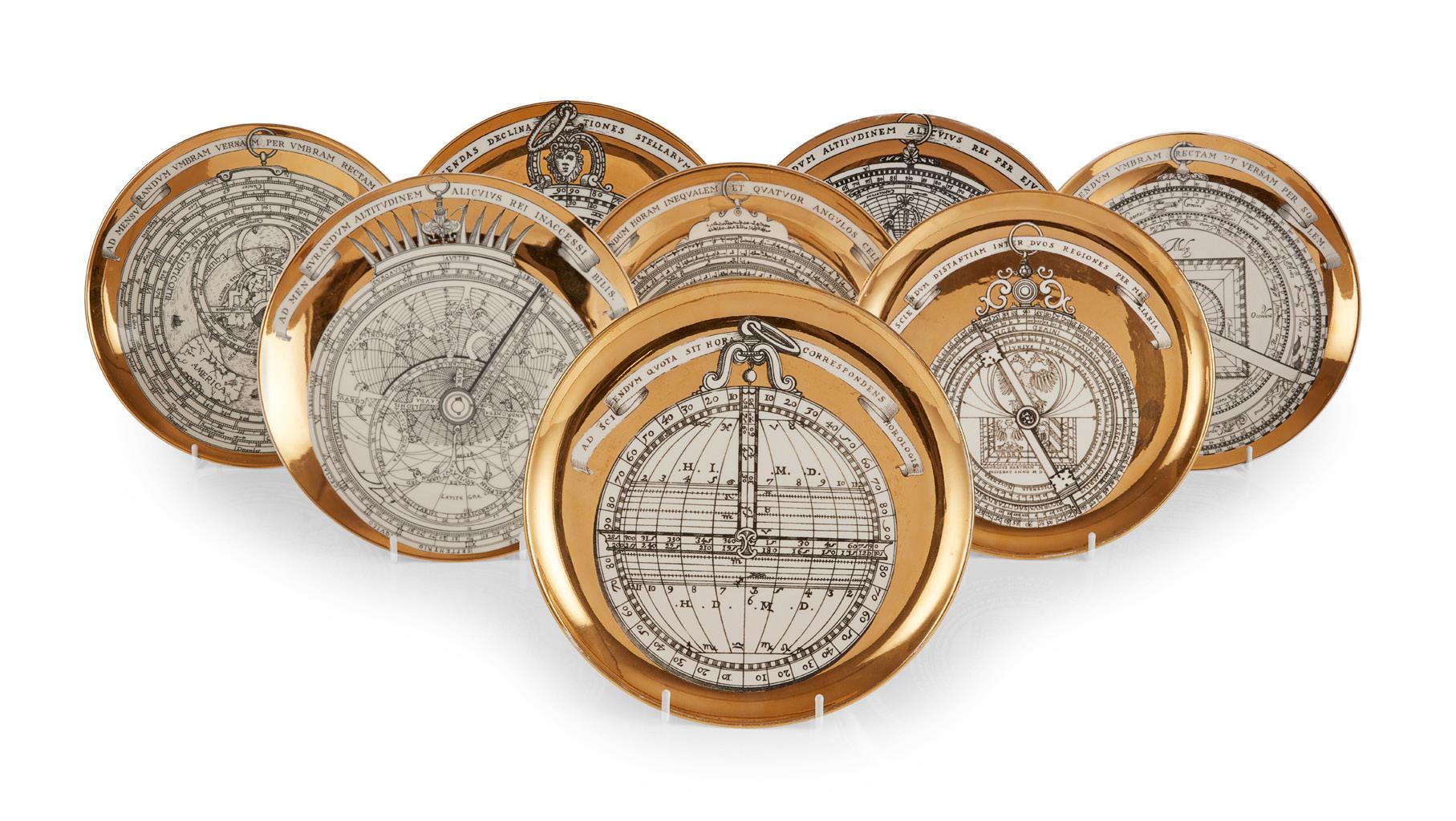
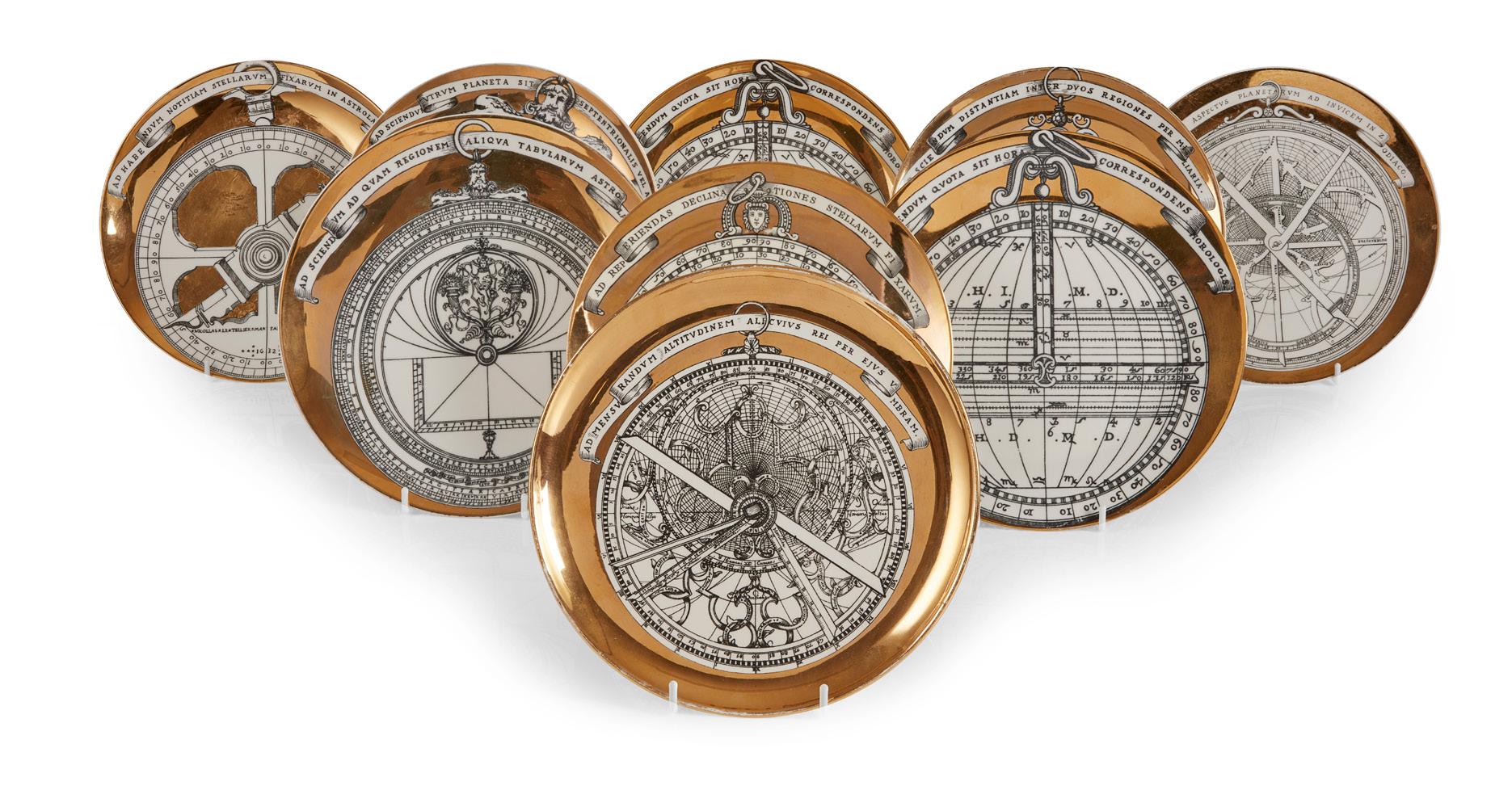
PIERO FORNASETTI (ITALIAN 1913-1988)
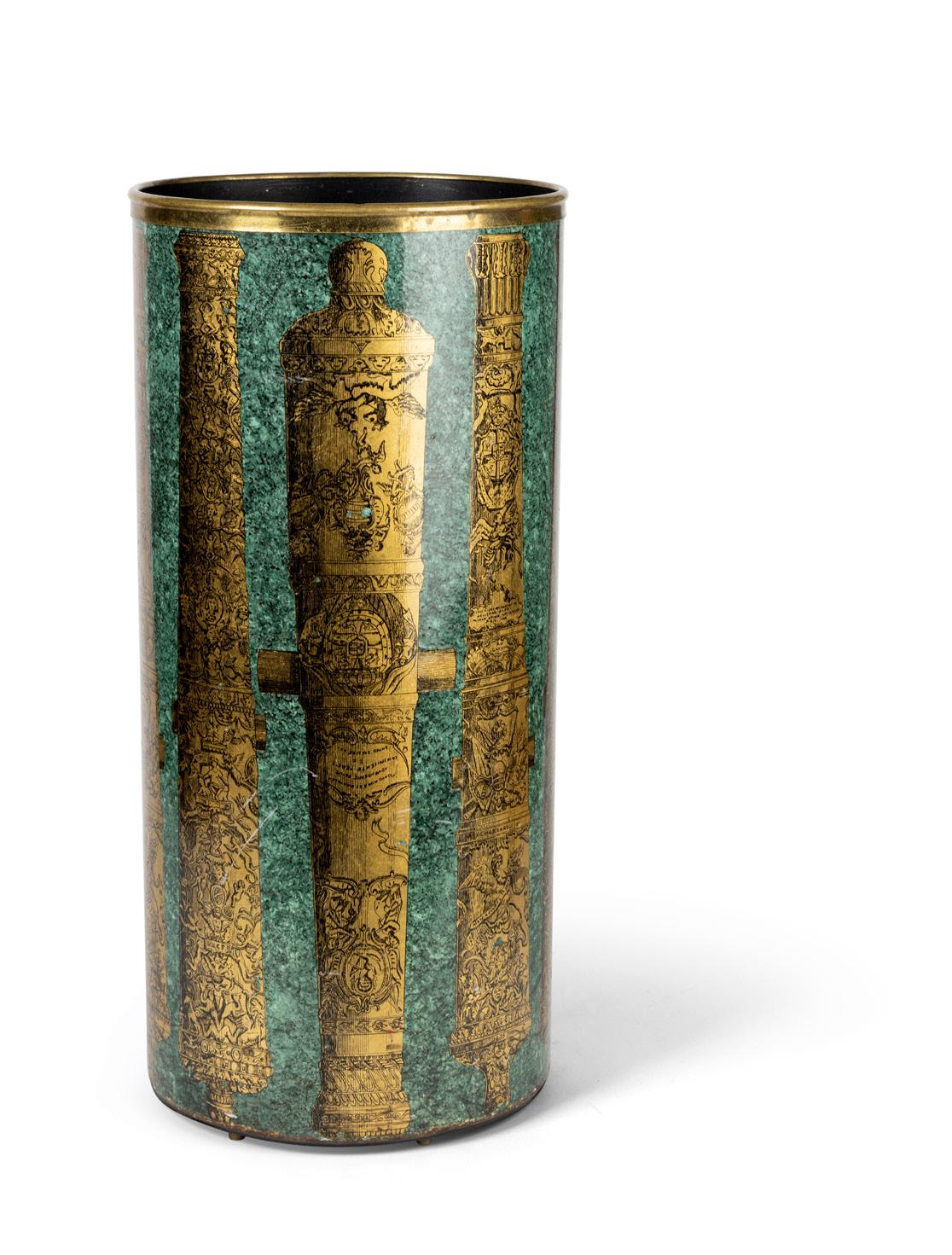
UMBRELLA STAND, 1960s
printed manufacturer’s mark ‘FORNASETTI MILANO / MADE IN ITALY’ (to underside), lithographic printed metal 57cm high, 26.5cm diameter (22 1/2in high, 10 1/2in diameter)
136
ALESSANDRO MENDINI (ITALIAN 1931-2019) FOR ZANOTTA
‘ZABRO’ METAMORPHIC CHAIR / TABLE, DESIGNED 1984 from the ‘Nuova Alchimia’ series, signed ‘Alessandro Mendini’ (to rear leg), painted wood and leather table: 70.2cm high, 92.5cm diameter (27 5/8in high, 36 3/8in diameter); chair: 136cm high, 92.5cm wide, 49cm deep (53 1/2in high, 36 3/8in wide, 19 1/4in wide) Literature: Bangert, Albrecht, Italian Furniture Design, Bangert Pubications, Munich, p.141, no.113 (another example illustrated). £2,000-3,000
100 Other fees apply in addition to the hammer price: see the ‘Buyer’s Guide’ section on page 6
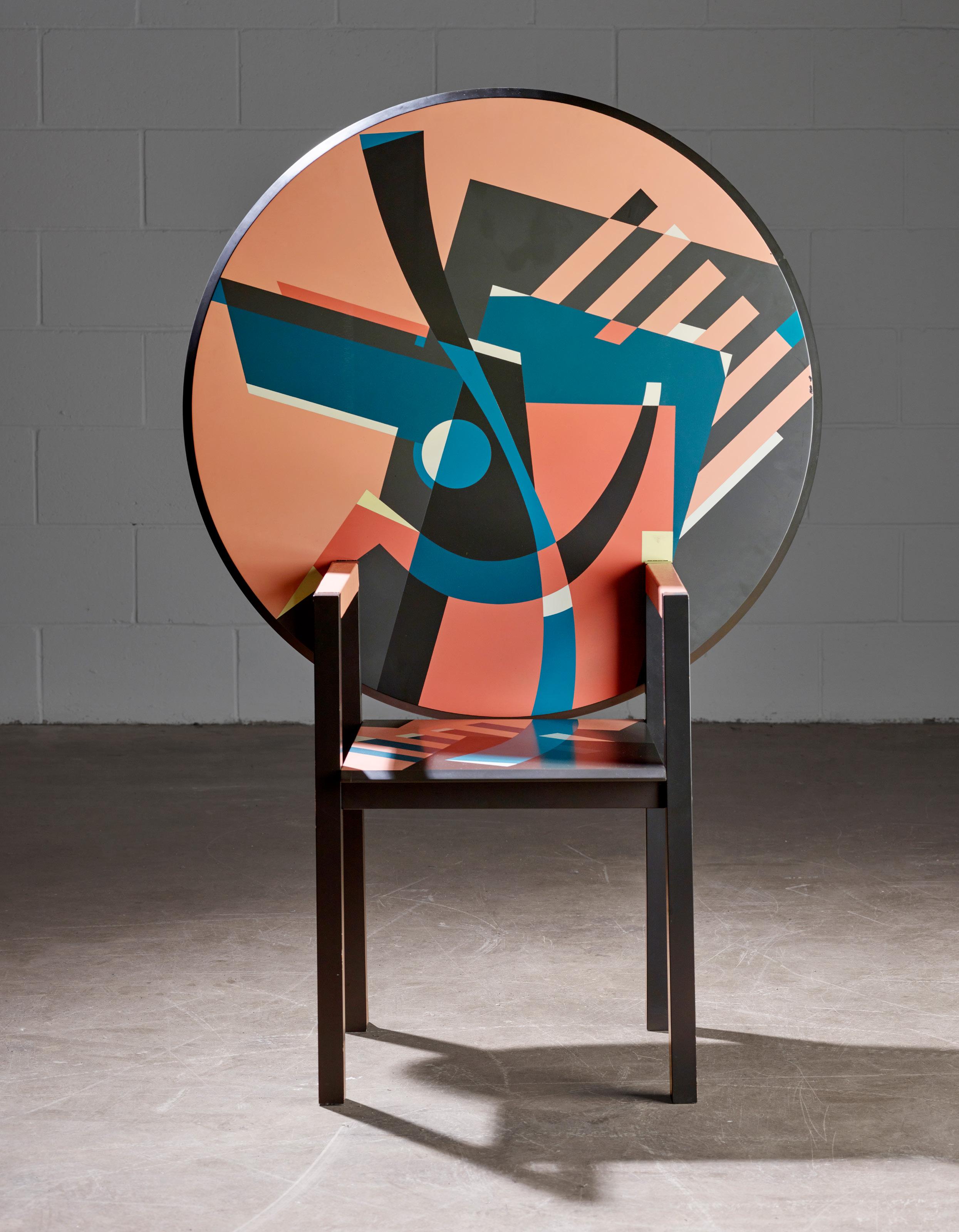
101
MARIO PINZONI (ITALIAN 1927-) FOR SEGUSO VETRI D’ARTE VASE
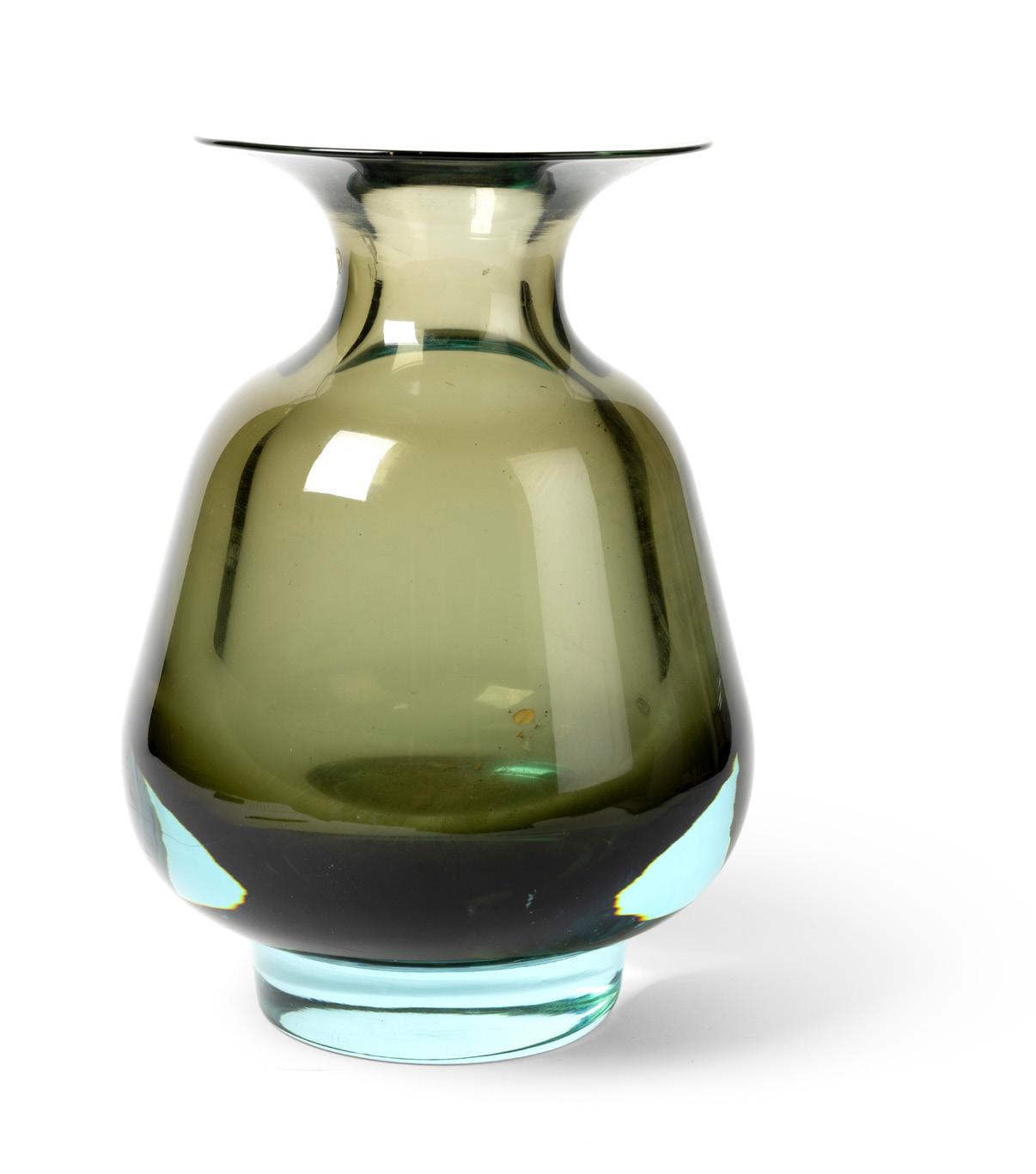
ANTONIO DA ROS (ITALIAN 1936-2012) FOR VETRERIA GINO CENEDESE ‘SOMMERSO’ VASE
green cased in light green / yellow glass
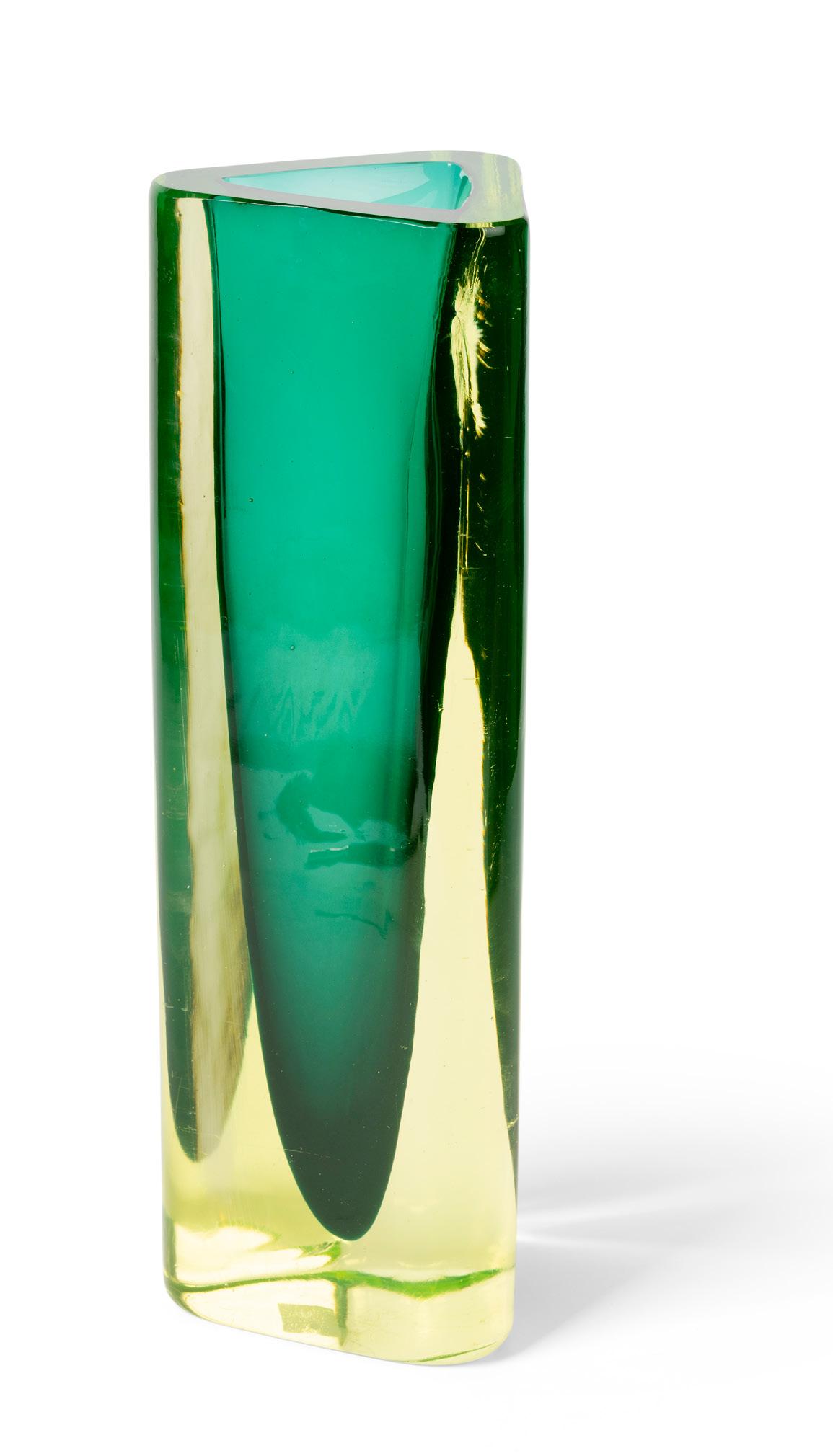
high, 13cm
£300-500
(15
MARIO PINZONI (ITALIAN 1927-) FOR SEGUSO VETRI D’ARTE
‘SOMMERSO’ VASE
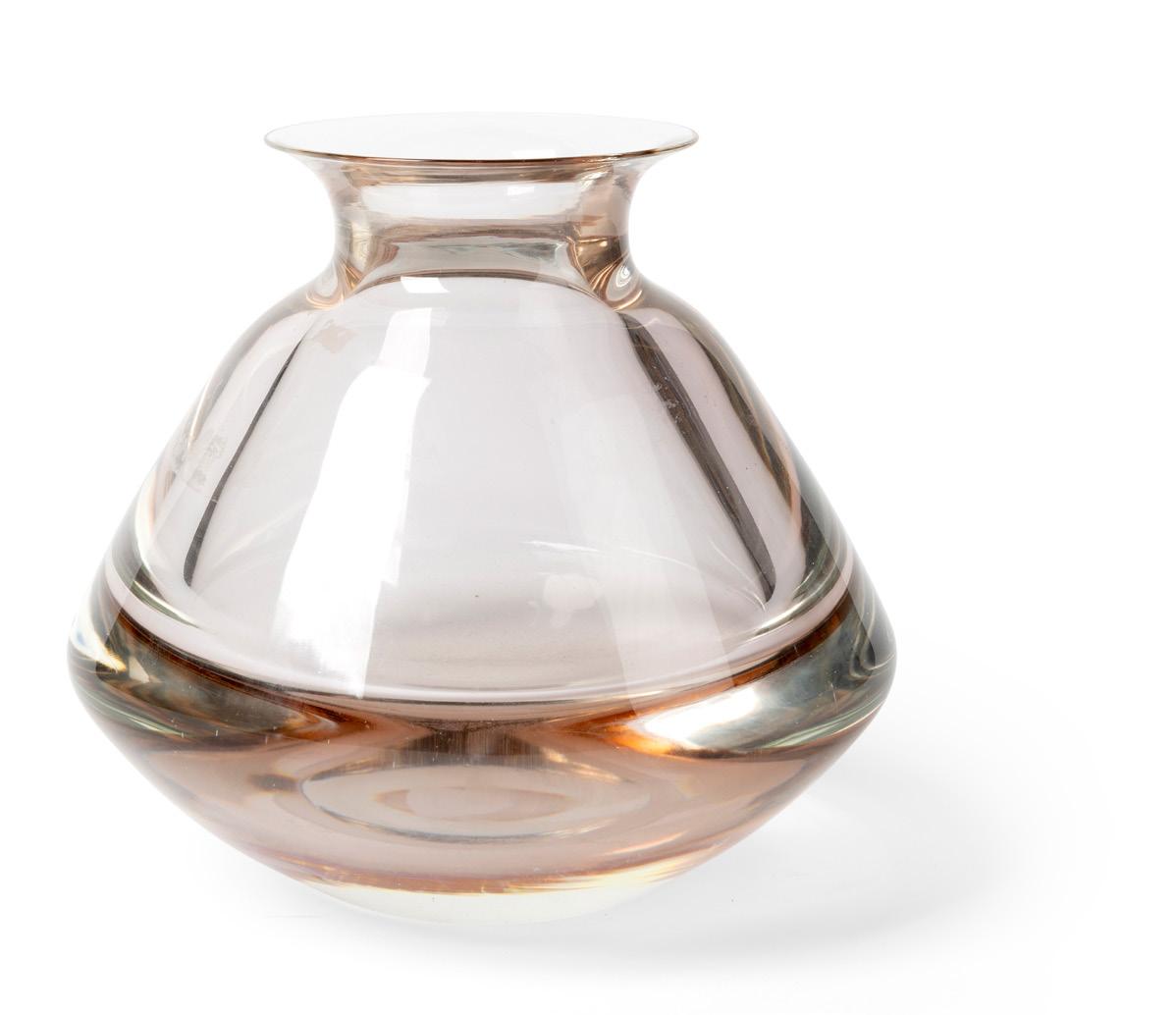
137 §
aubergine coloured cased glass 21cm high (8 1/4in high) £400-600 139 §
partial ‘Seguso’ label, olive green cased glass 28.5cm high (11 1/4in high) £500-700 138 §
dark
39cm
wide
3/8in high, 5 1/8in wide)
102
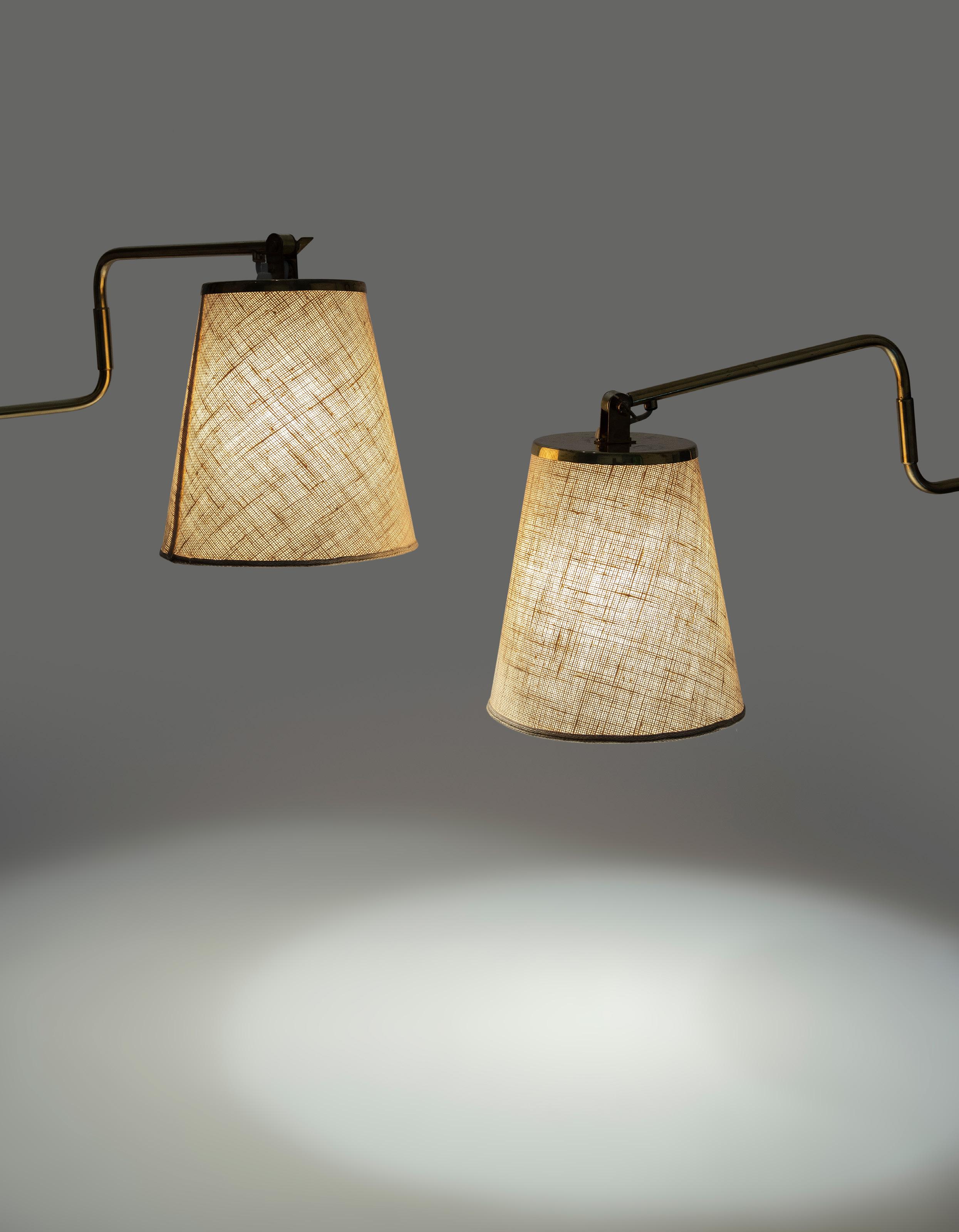
Lot 181 [detail]
SIR TERENCE CONRAN (BRITISH 1931-2020)
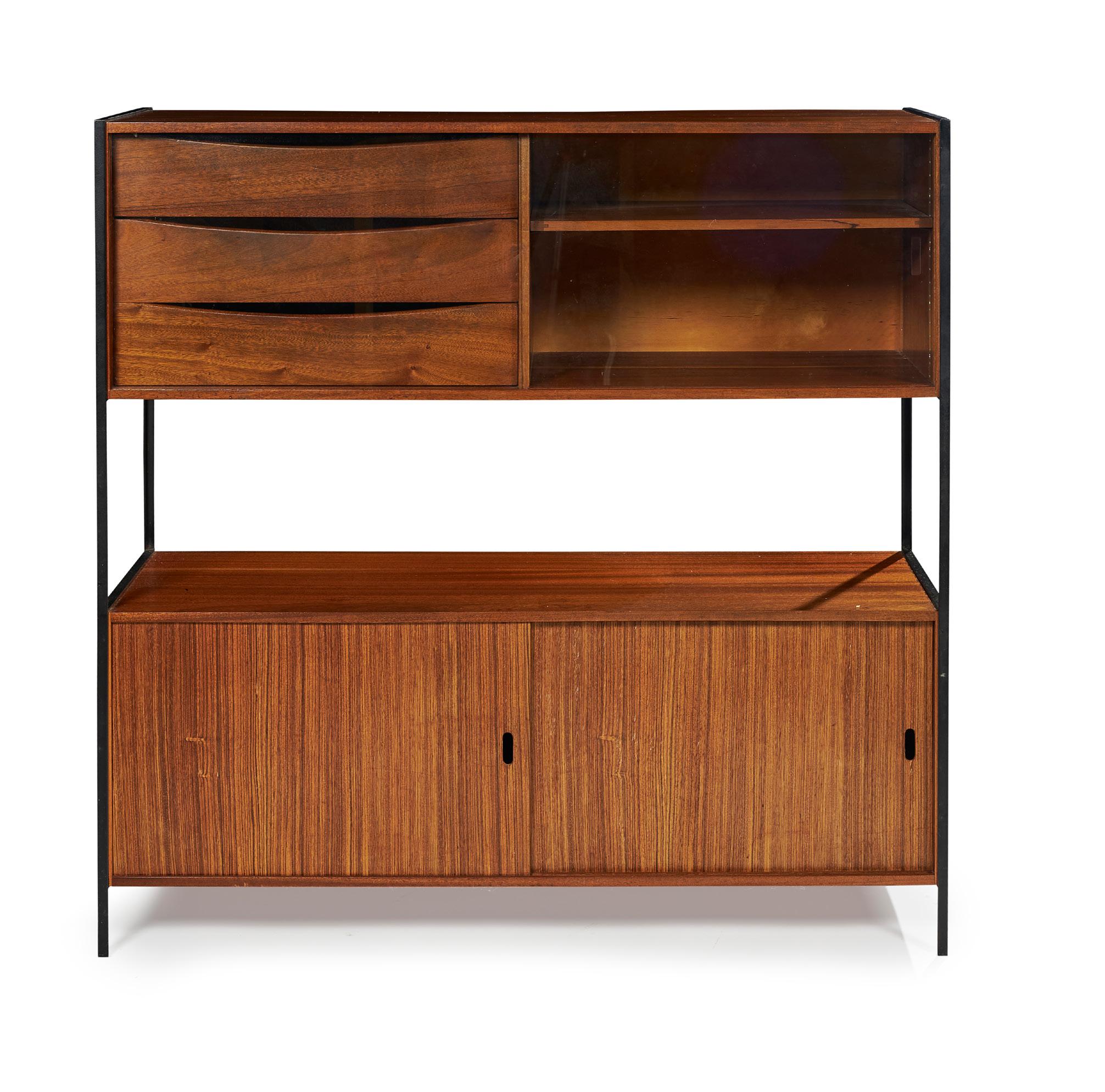
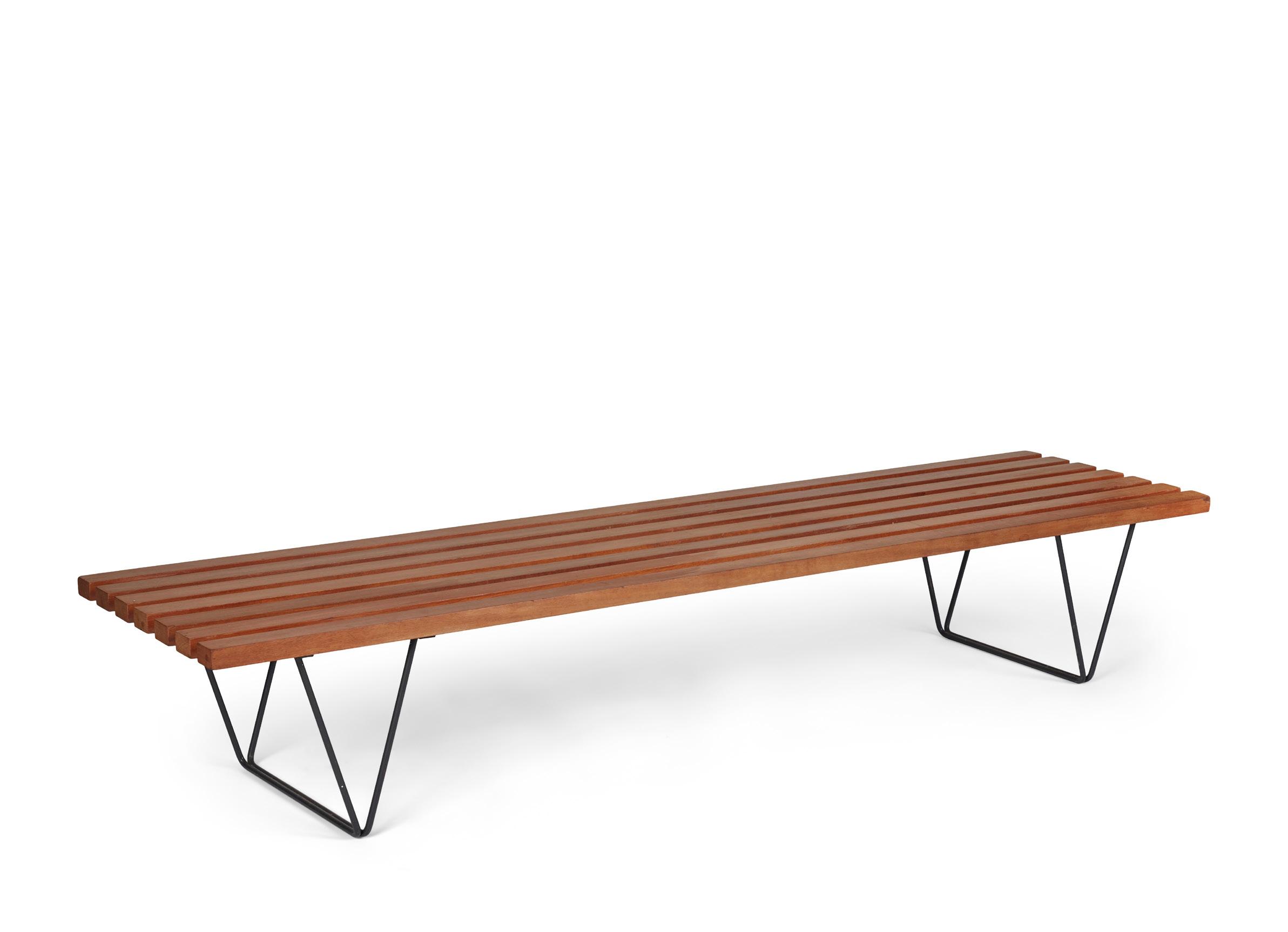
DESIGNED CIRCA
DAY (BRITISH 1915-2010) FOR HILLE
DESIGNED
141 ROBIN
BENCH,
1954 mahogany and wrought steel 31.5cm high, 183cm long, 46cm deep (12 3/8in high, 72in long, 18 1/8in deep) £600-800 140
CABINET,
1953 walnut, black enamelled steel and glass sliding doors 121.5cm high, 123cm wide, 38cm deep (47 7/8in high, 48 3/8in wide, 15in deep) Exhibited: London, The Design Museum, Terence Conran, The Way We Live Now, 16 November 2011 - 12 April 2012 (another example, with black and white lower sliding doors). £800-1,200 104
ALESSANDRO MENDINI (ITALIAN 1931-2019) FOR VENINI
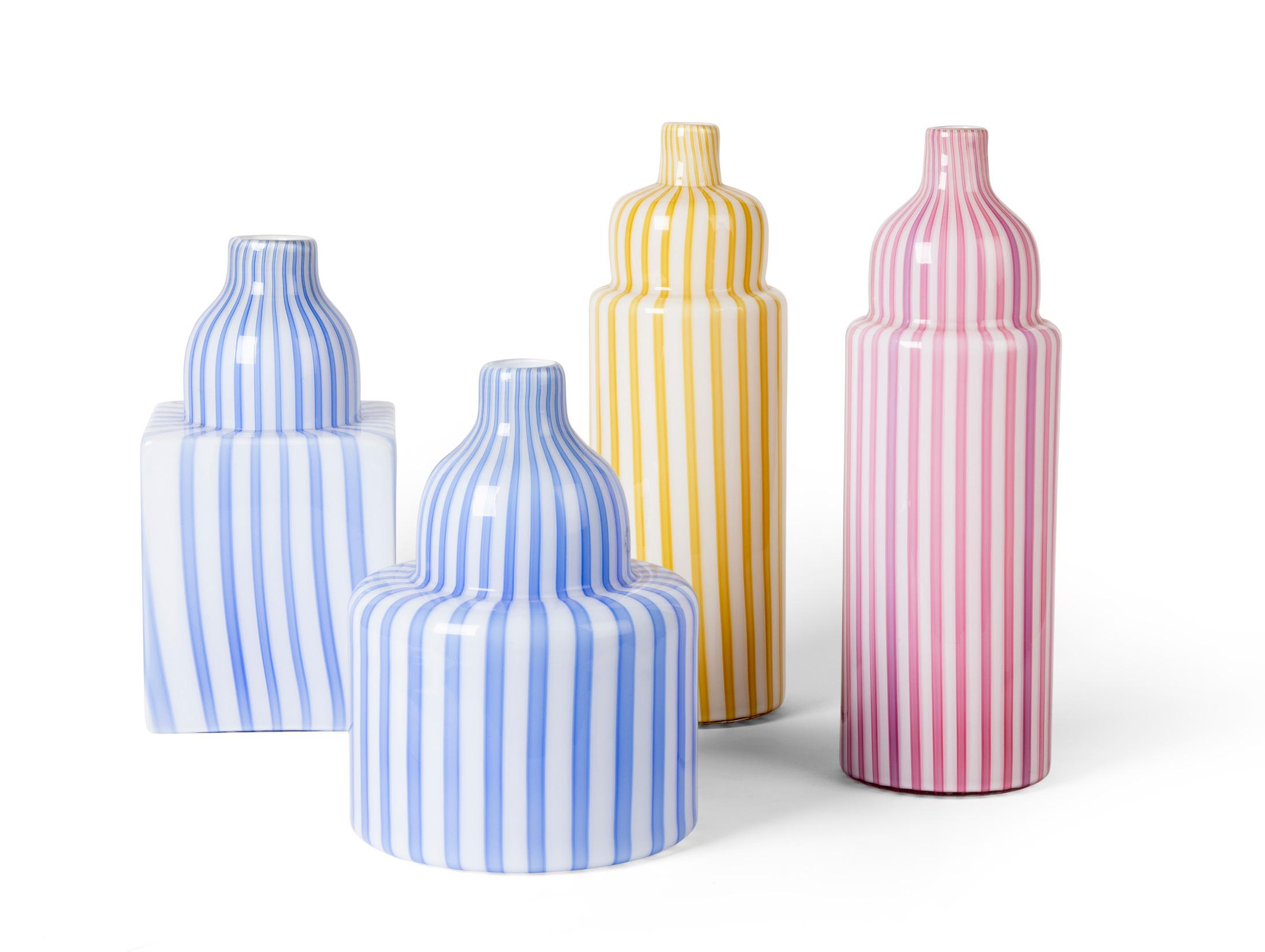
142 §
FOUR ‘BERITO’ VASES, 1991-2 each signed ‘Venini’, the pink and small blue dated ‘91’ and the yellow and large blue dated ‘92’, each with ‘Venini / Murano / Made in Italy’ labels, white striped glass (4) yellow: 36cm high (14 1/8in high); pink: 37cm high (14 1/2in high); large blue: 29.2cm high (11 1/2in high); small blue: 25.4cm high (10” high) £1,000-2,000 105 Other fees apply in addition to the hammer price: see the ‘Buyer’s Guide’ section on page 6
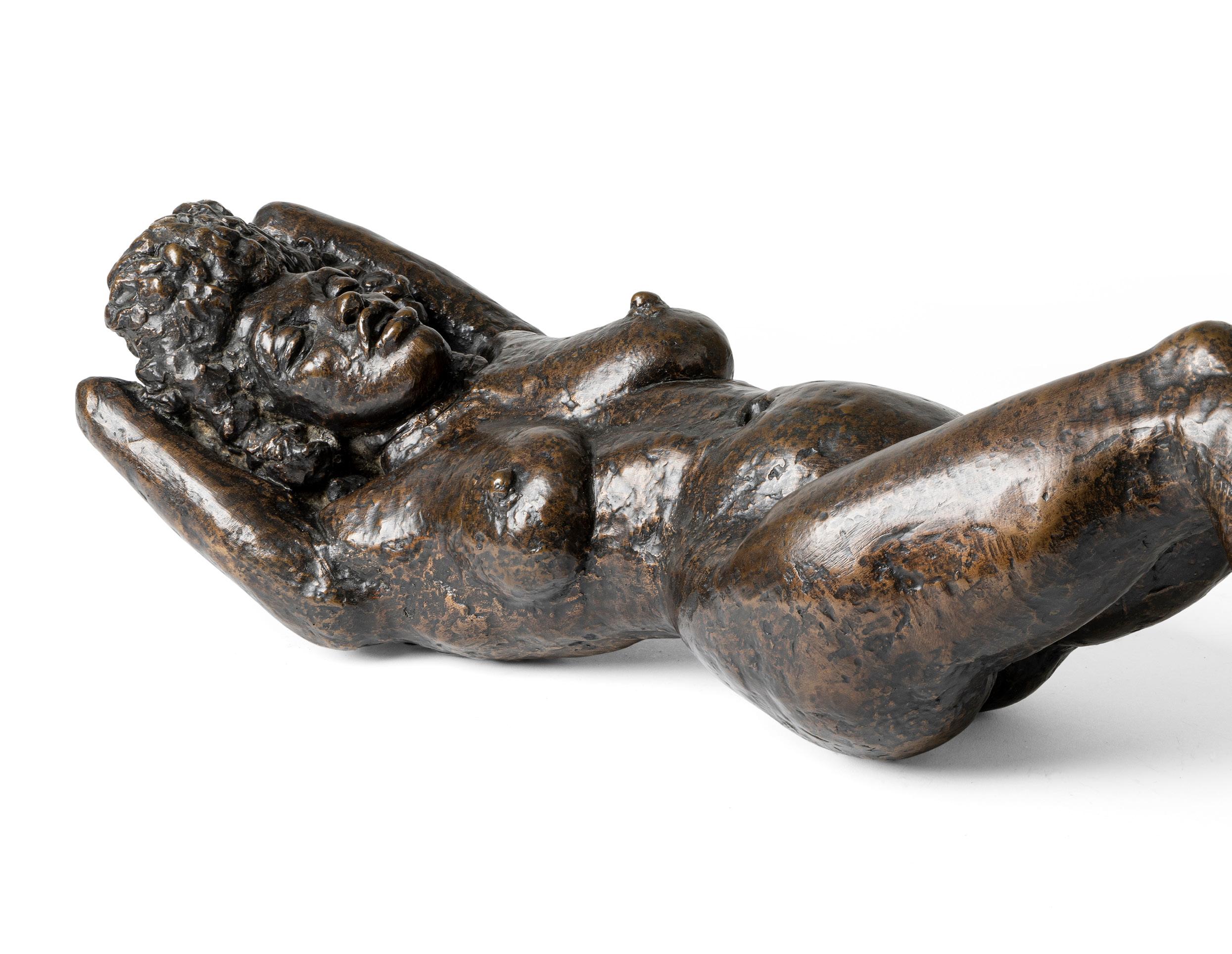
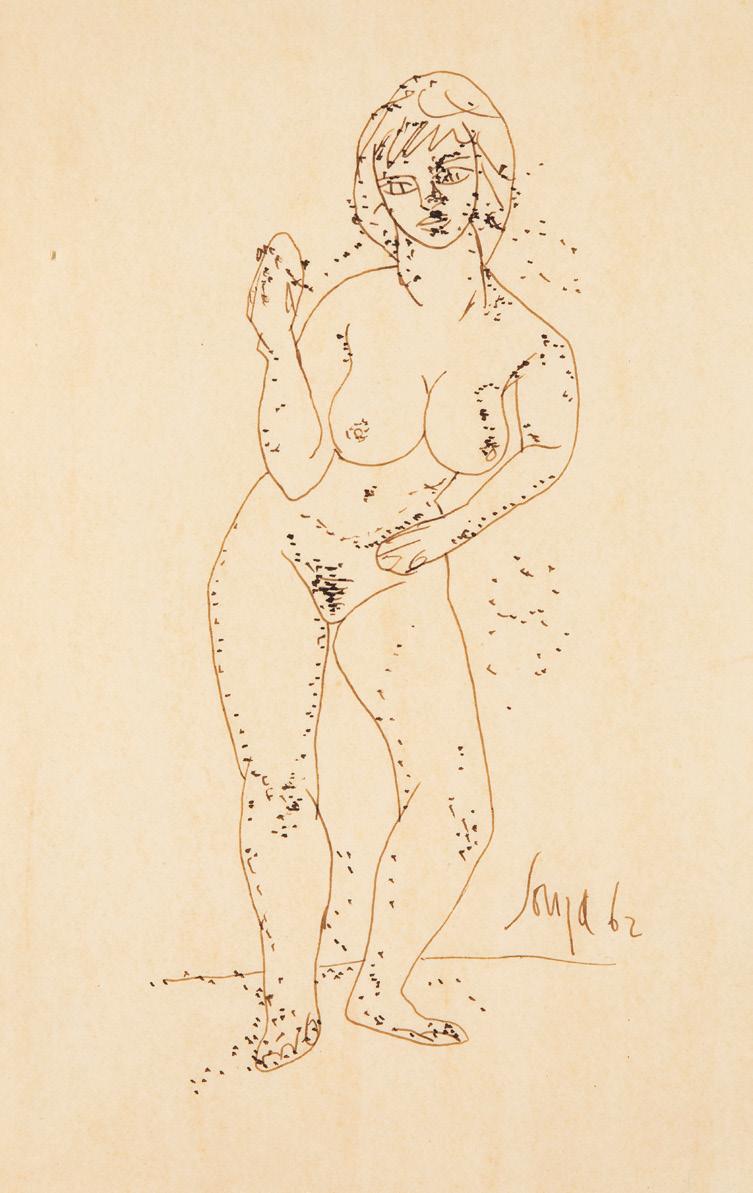
143 § FRANCIS NEWTON SOUZA (INDIAN 1924-2002) STANDING WOMAN, 1962 signed and dated (lower right), pen and ink on paper 28.5cm x 17.5cm (11 1/4in x 6 7/8in) £500-700 144 § SIR JACOB EPSTEIN (BRITISH 1880-1959) NUDE STUDY (BETTY PETERS), CONCEIVED 1943-5 patinated bronze 75cm long (29 1/2in) Provenance: Estate of Theodore and Dede Edlich; Doyle, New York, 11 July 2008, Lot 41; Private Collection, UK. Literature: Buckle, Richard Jacob Epstein Sculptor, London, 1963, p. 281, pls. 429-30 (another cast illustrated); Schinman, E.P. and B.A. Schinman (eds.), Jacob Epstein, A Catalogue of the Collection of Edward P. Schinman, Cranbury, 1970, p. 105 (another cast illustrated); Silber, Evelyn, The Sculpture of Jacob Epstein, Oxford, 1986, p. 193, cat. no. 342, (another cast illustrated). £5,000-7,000 106 Other fees apply in addition to the hammer price: see the ‘Buyer’s Guide’ section on page 6
145 §
ANDRÉ DERAIN (FRENCH 1880-1954)
TWO FIGURE STUDIES
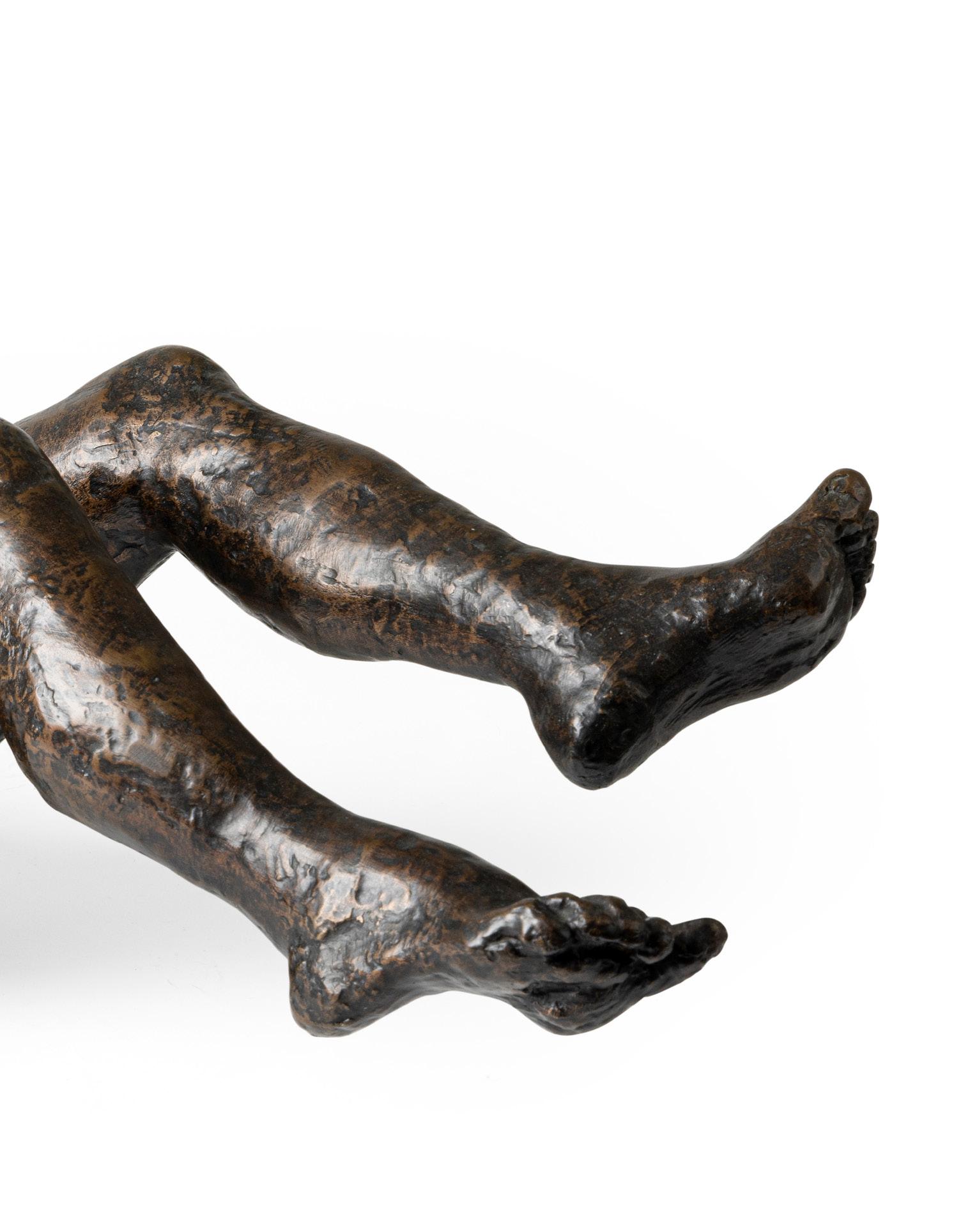
a pair, each with ‘Atelier André Derain’ ink stamp (lower right), pencil, pen and ink on paper (2) each 31cm x 21cm (12 1/8in x 8 1/4in) £1,000-1,500
146 §
FRANCIS NEWTON SOUZA (INDIAN 1924-2002)
FOLIO OF FOUR EROTIC DRAWINGS
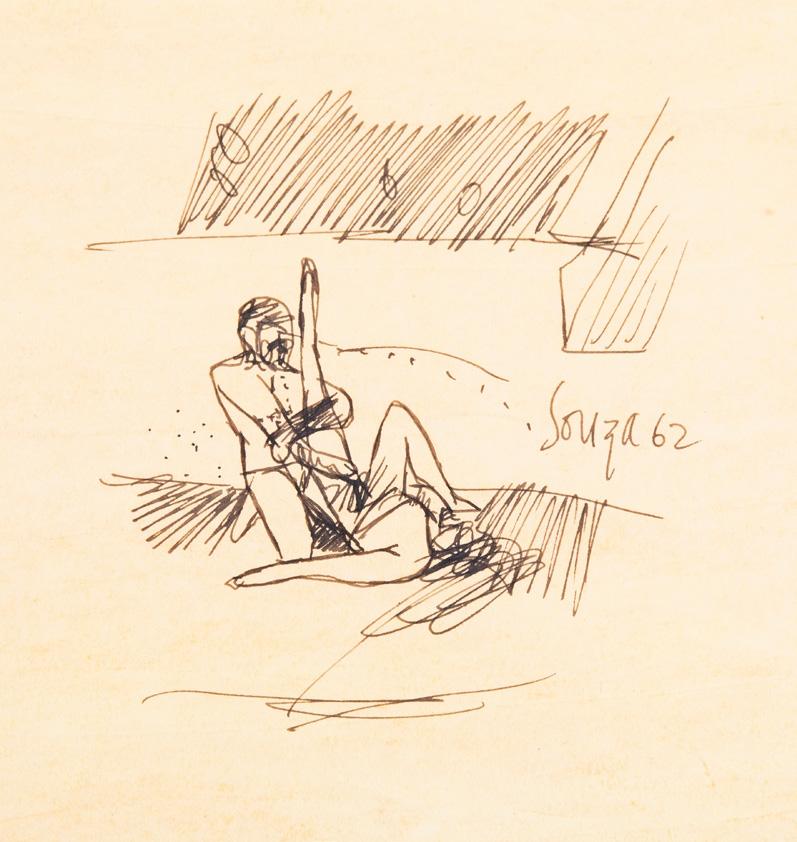
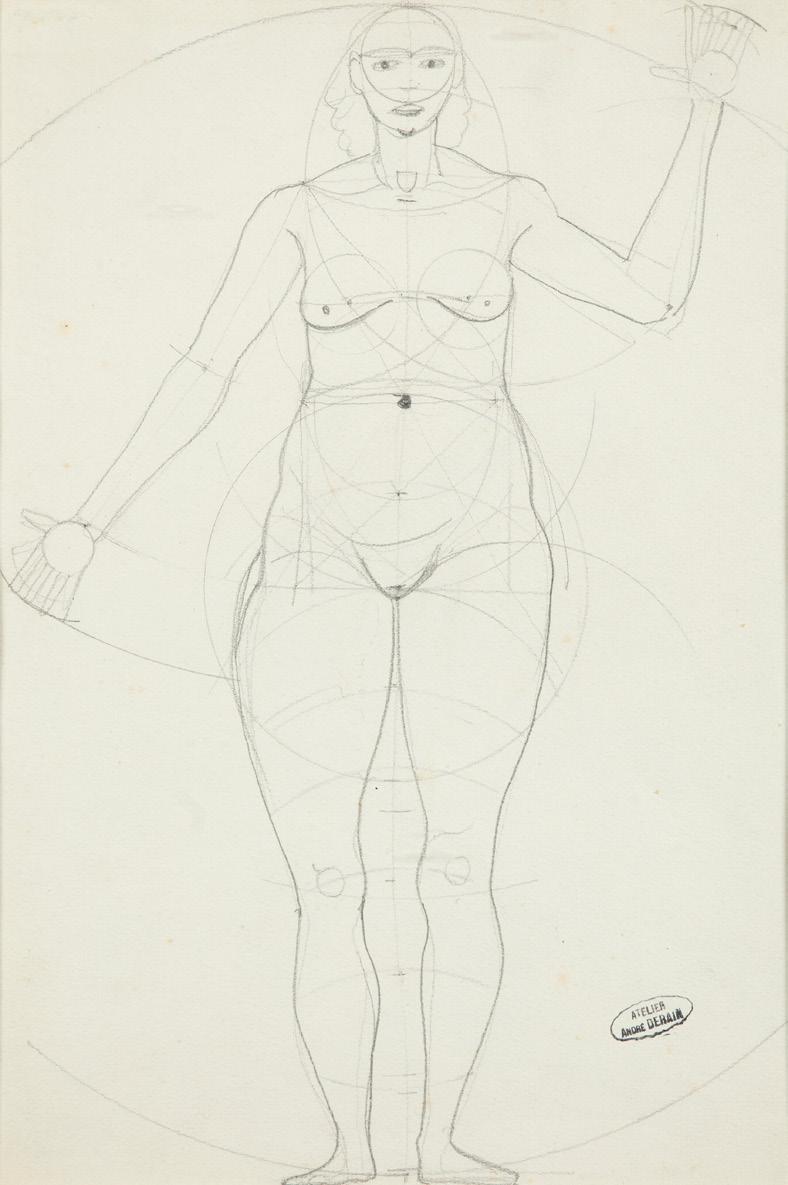
comprising Lovers, 1962, signed and dated in pen, pen and ink on paper; Lovers, 1963, signed and dated in pen (upper left), pen and ink on paper; Lovers, 1962, signed and dated in pen (lower left), pen and ink on paper; Bound Figure, 1962, signed and dated in pen, pen and ink on paper (4) 13cm x 14cm (5 1/8in x 5 1/2in); 40cm x 53cm (15 3/4in x 20 7/8in); 27cm x 43cm (10 5/8in x 17in); 19cm x 34cm (7 1/2in x 13 1/2in), all unframed
£1,500-2,000
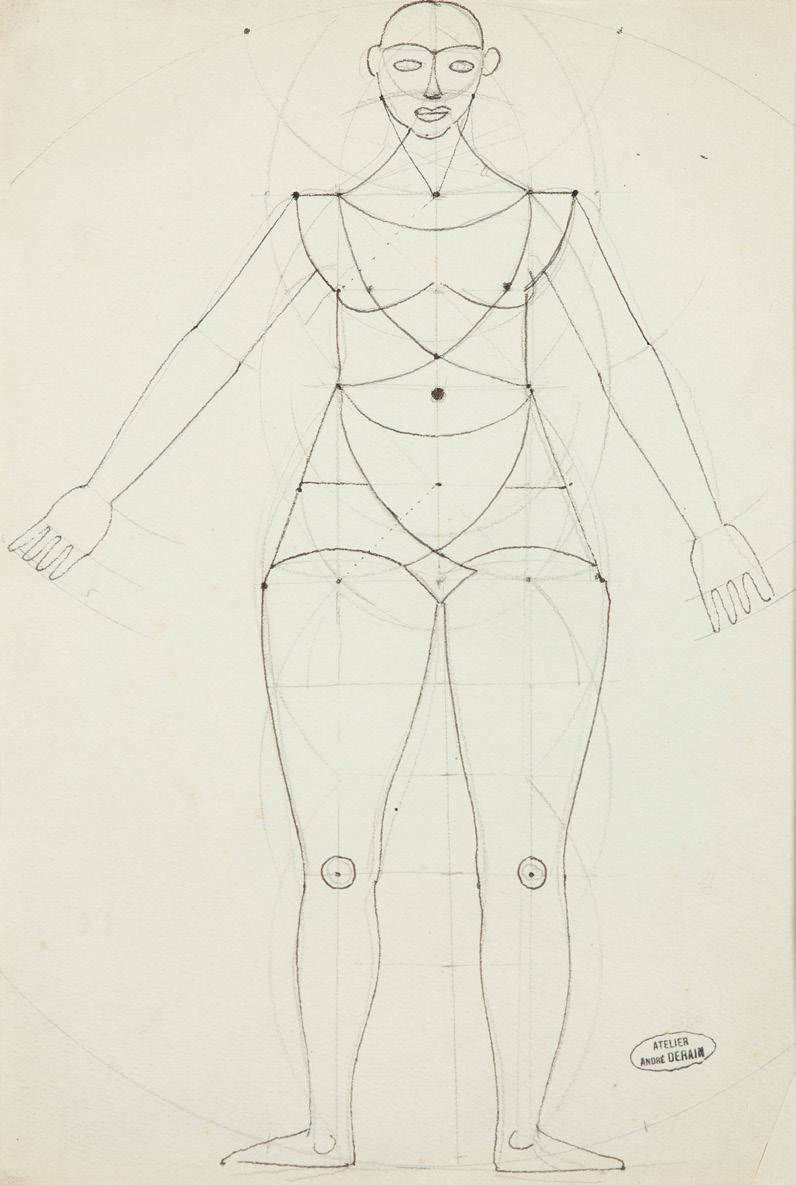
107
JOHN BRATBY (BRITISH 1928-1992) SELF-PORTRAIT WITH FINGERPRINTS oil on board
66.5cm x 57cm (26 1/4in x 22 1/4in)
Provenance: Julian Hartnoll, London, 9 July 2003.
Literature: Yacowar, Maurice, The Great Bratby, A Portrait of John Bratby, Middlesex University Press, London, 2008, p.58, illustrated. £5,000-7,000
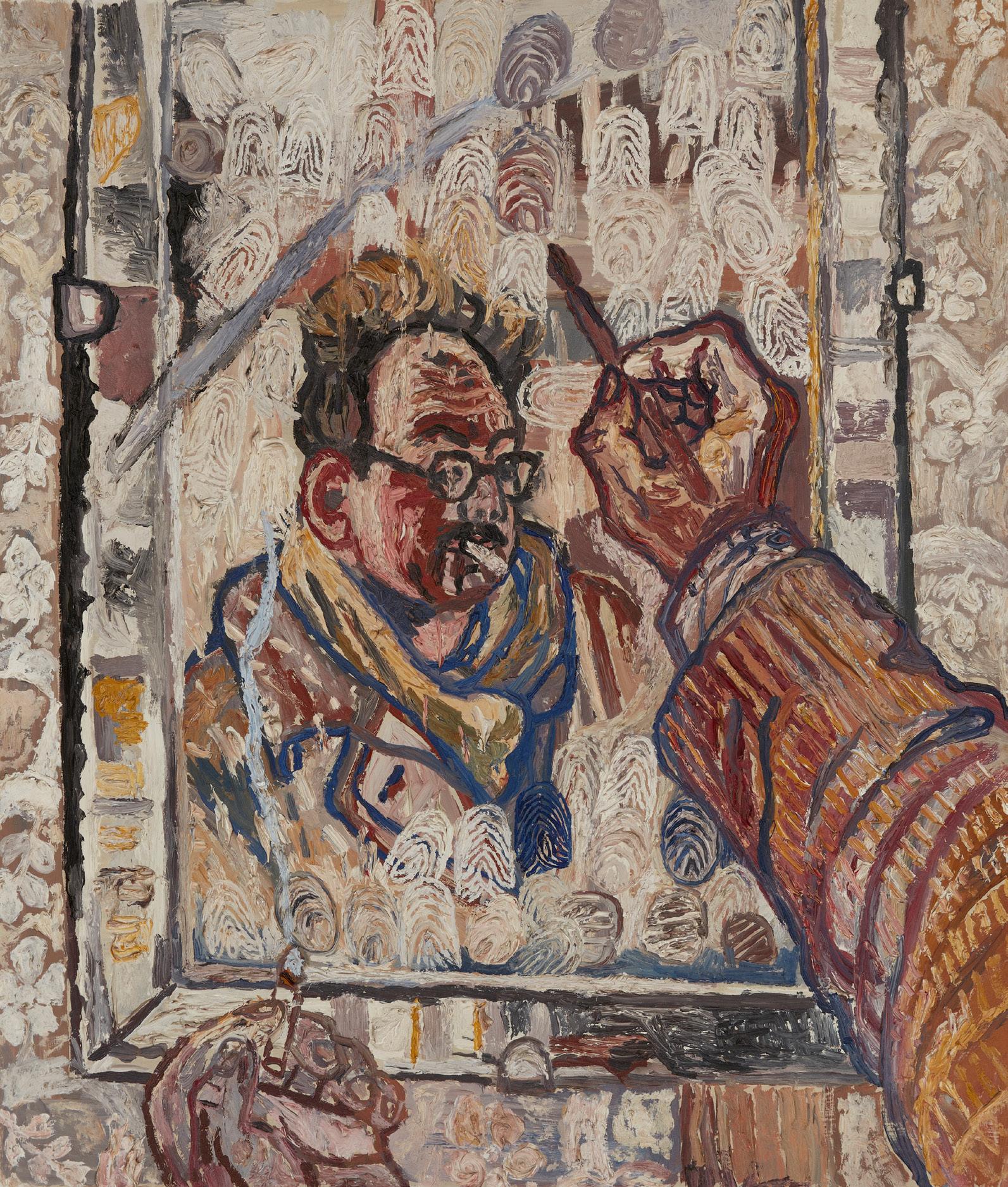
The following group of four works by John Bratby perfectly embody the style and subject-matter of this most unique artist. Bratby was the enfant terrible of 1950s British Art – precocious, confrontational, full of swagger – who turned his razor-sharp eye and mordant wit on a world undepicted by many artists of the time. Bratby mined both the simple pleasures and existential pain of domestic life, particularly the bohemian poverty in which he and his fellow ‘Kitchen Sink’ painters lived. His is an art of drabness but also of burning passion –an art of contradiction – often expressed in the paint itself, which on first glance appears prosaic, hemmed in between thick black outlines, but when seen close-to is a celebration of texture and colour and the expressive quality of brushstrokes themselves.
Like his (now far more fêted) contemporaries, Frank Auerbach and Leon Kossoff, Bratby’s key interest is that the objects in his painting – people, still life, flowers – have a weight and presence that is equivalent to their weight and presence in real life. In White and mauve Butterfly Irises, the flowers in an ordinary suburban garden take on an almost human presence (John Wyndham’s dystopian sci-fi
novel, Day of the Triffids, was written in 1951). It’s the everyday seen as extraordinary – essentially a Surrealist idea, with these overgrown flowers as personnages, actors in our experience of the world around us. In Boats and David, the two fishing boats drawn up on the shingle are realised with a heavy clarity, whilst the portrait of his son is unresolved, blurred, which, in turn, gives the boats a slightly eerie quality: why are they in focus but the boy isn’t?
From the Terrace, Gritti Palace, Venice is a later work, from the period where Bratby’s new status as part of the art establishment ran counter to his still chaotic personal life, increasingly marred by drink. In some ways it is a painting as far removed from his early work that defined the ’Kitchen Sink’ aesthetic: grimy cisterns full of washing up here replaced by ice buckets and champagne. Yet in the rendering of the dome of the church of the Salute, in ghostly hues reminiscent of Sickert – that other great British painter of the dirty corners of modern life – Bratby still imparts a psychological undertone, even to this depiction of calme, luxe et volupté
147 §
108
§
148
JOHN BRATBY (BRITISH 1928-1992)
BOATS AND DAVID signed (lower left) and inscribed (to stretcher), oil on canvas
116.5cm x 87cm (45 7/8in x 34 1/4in)

The current work was probably painted around 1965 when Bratby was in Dungeness, on the Kent Coast. It depicts his son David standing behind the fishing boat ‘RX72’ £5,000-7,000
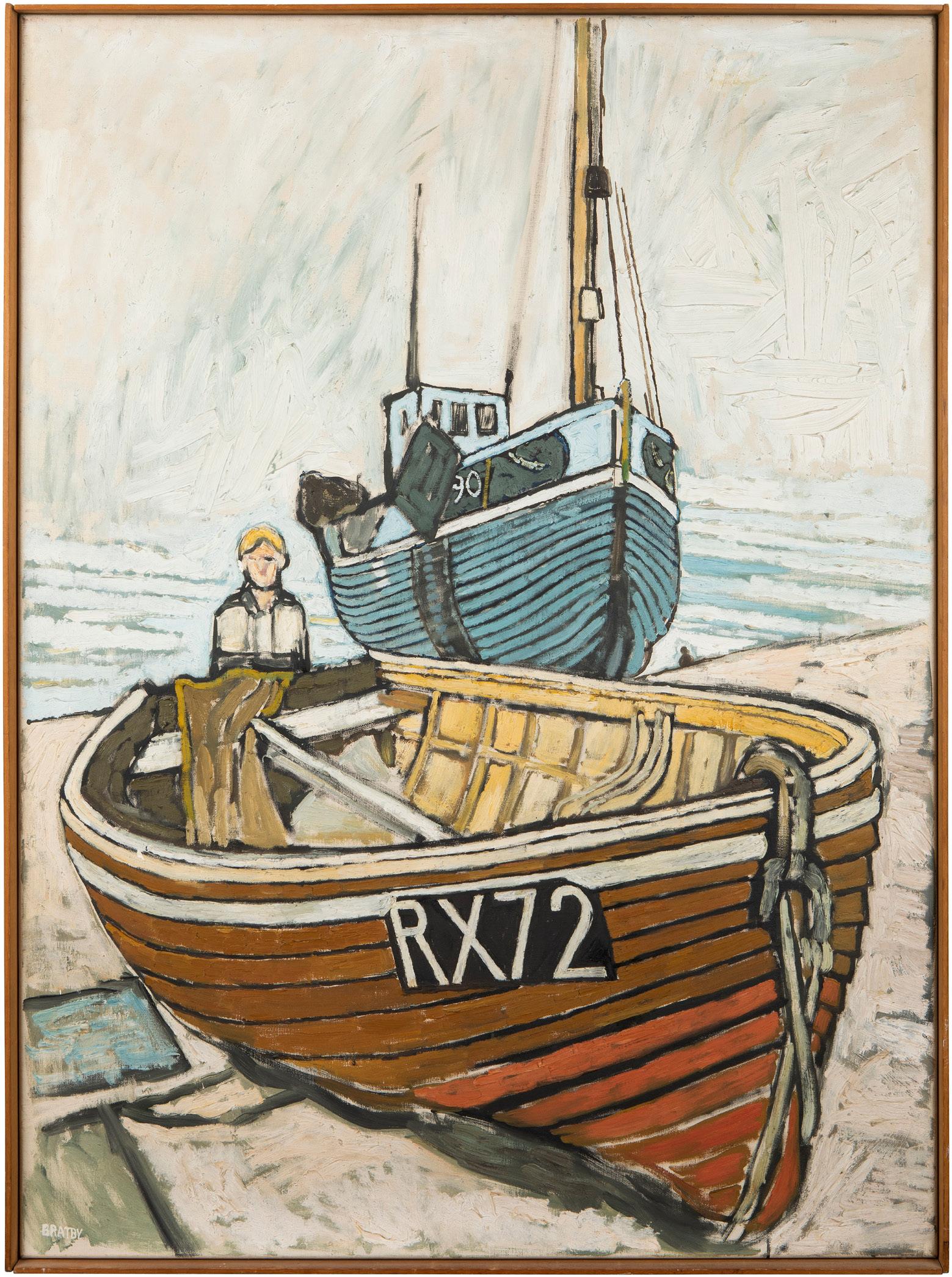
109 Other fees apply in addition to the hammer price: see the ‘Buyer’s Guide’ section on page 6
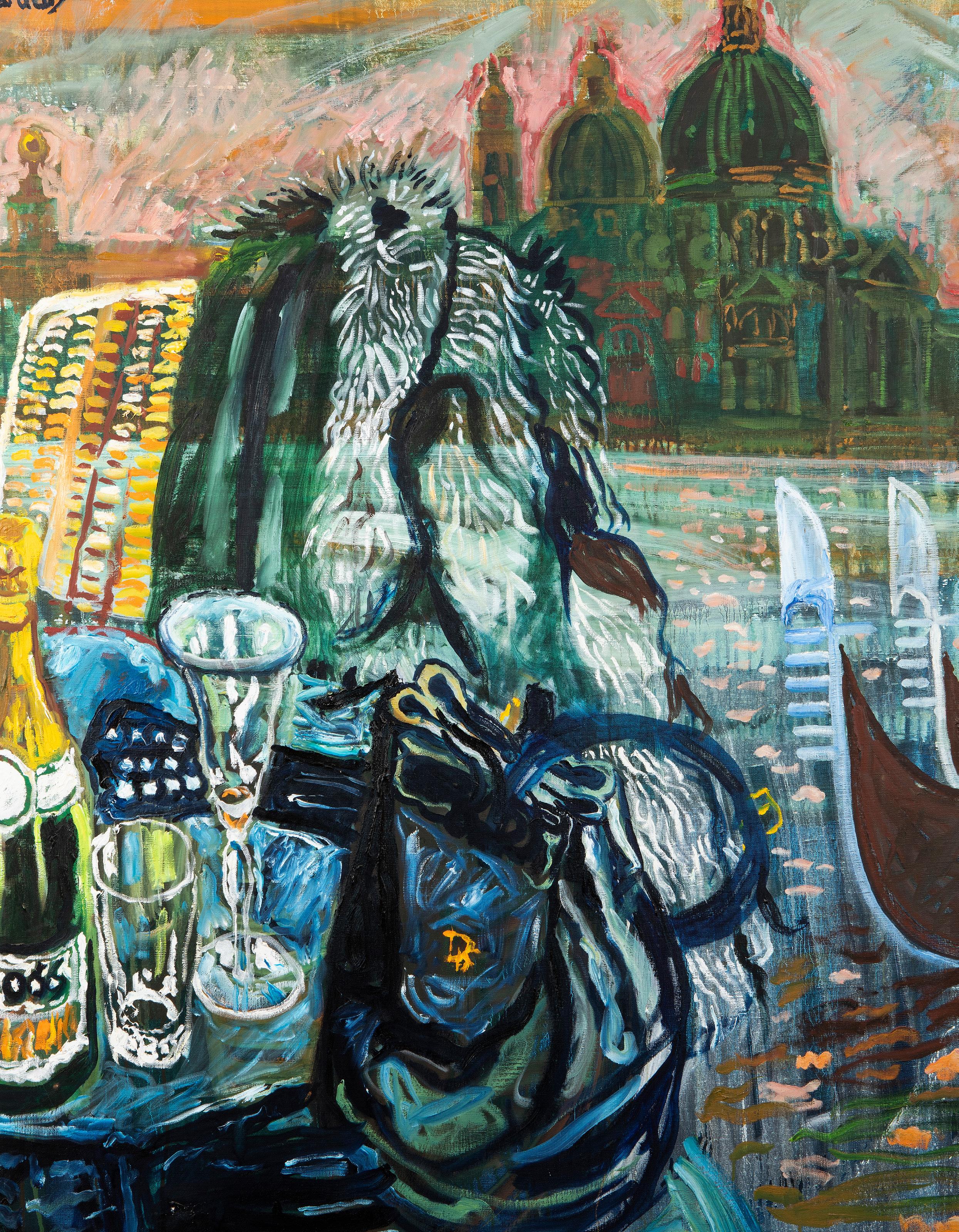
JOHN BRATBY (BRITISH 1928-1992)
JOHN BRATBY (BRITISH
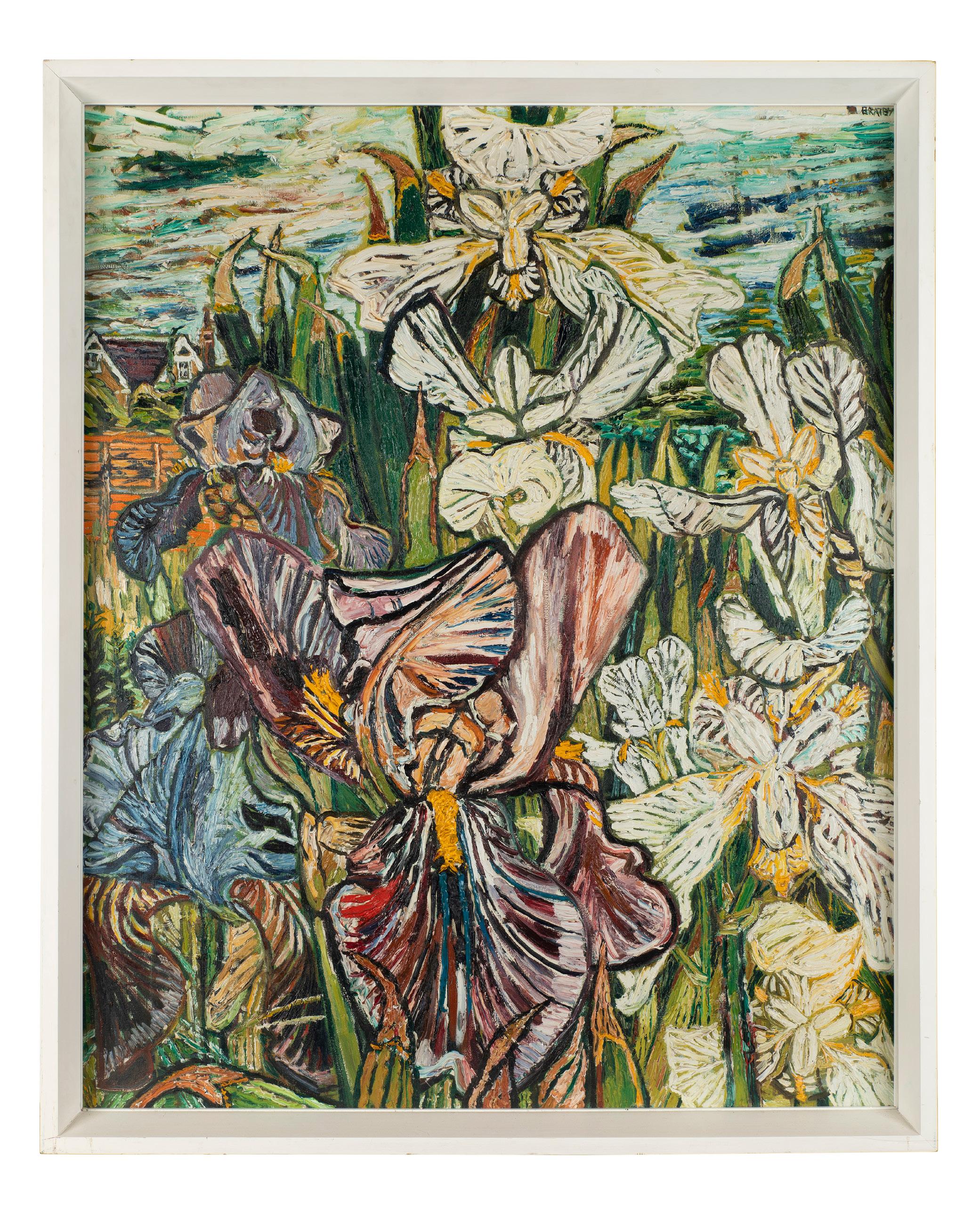
150 §
1928-1992) WHITE AND MAUVE BUTTERFLY IRISES, 1966 signed (upper right) and dated ‘11, 10, 9, 8 June 1966’ (to stretcher), oil on canvas 110cm x 89cm (43 1/4in x 35in) Provenance: The Furneaux Galleries, Wimbledon, London; Julian Hartnoll, 2005; Private Collection, UK. £6,000-8,000 149 §
FROM THE TERRACE, GRITTI PALACE, VENICE signed (upper left), oil on canvas 121.5cm x 91cm (47 3/4in x 35 3/4in), unframed £3,000-4,000 111 Other fees apply in addition to the hammer price: see the ‘Buyer’s Guide’ section on page 6
§
MICK ROONEY R.A. (BRITISH
RESETTLEMENT, 1989 signed and dated (lower right)
x 74cm (23 1/4in x 29 1/8in)
Mercury Gallery, London; Private Collection, UK.
151 § JOHN BELLANY C.B.E., R.A. (BRITISH 1942-2013)
THE OLD MAN AND THE SEA, 1987 signed (lower right), signed, titled and dated (to reverse), oil on canvas 120cm x 90cm (47 1/4in x 35 1/2in)
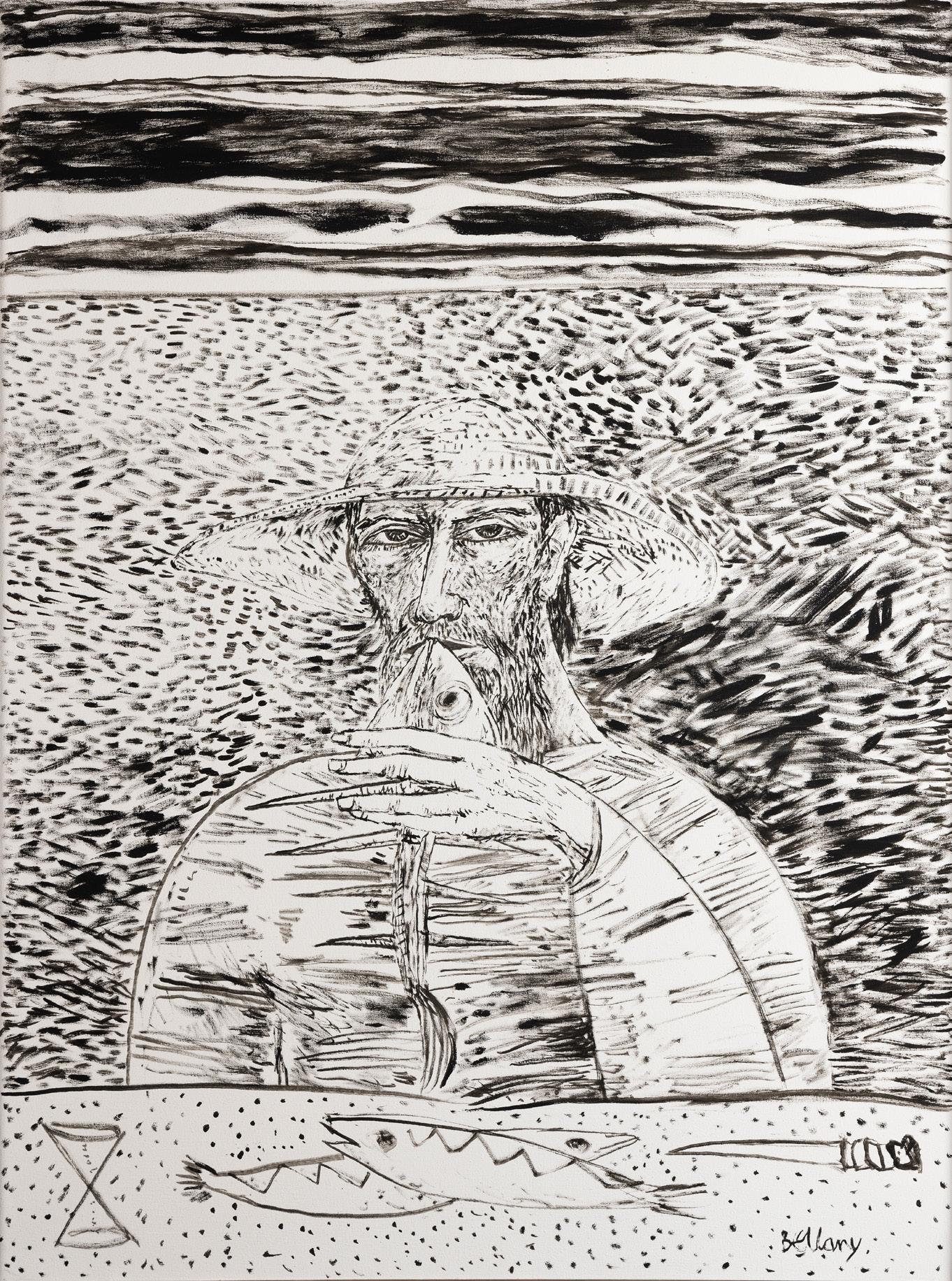
Provenance: Beaux Arts, Bath; Private Collection, London. £3,000-5,000
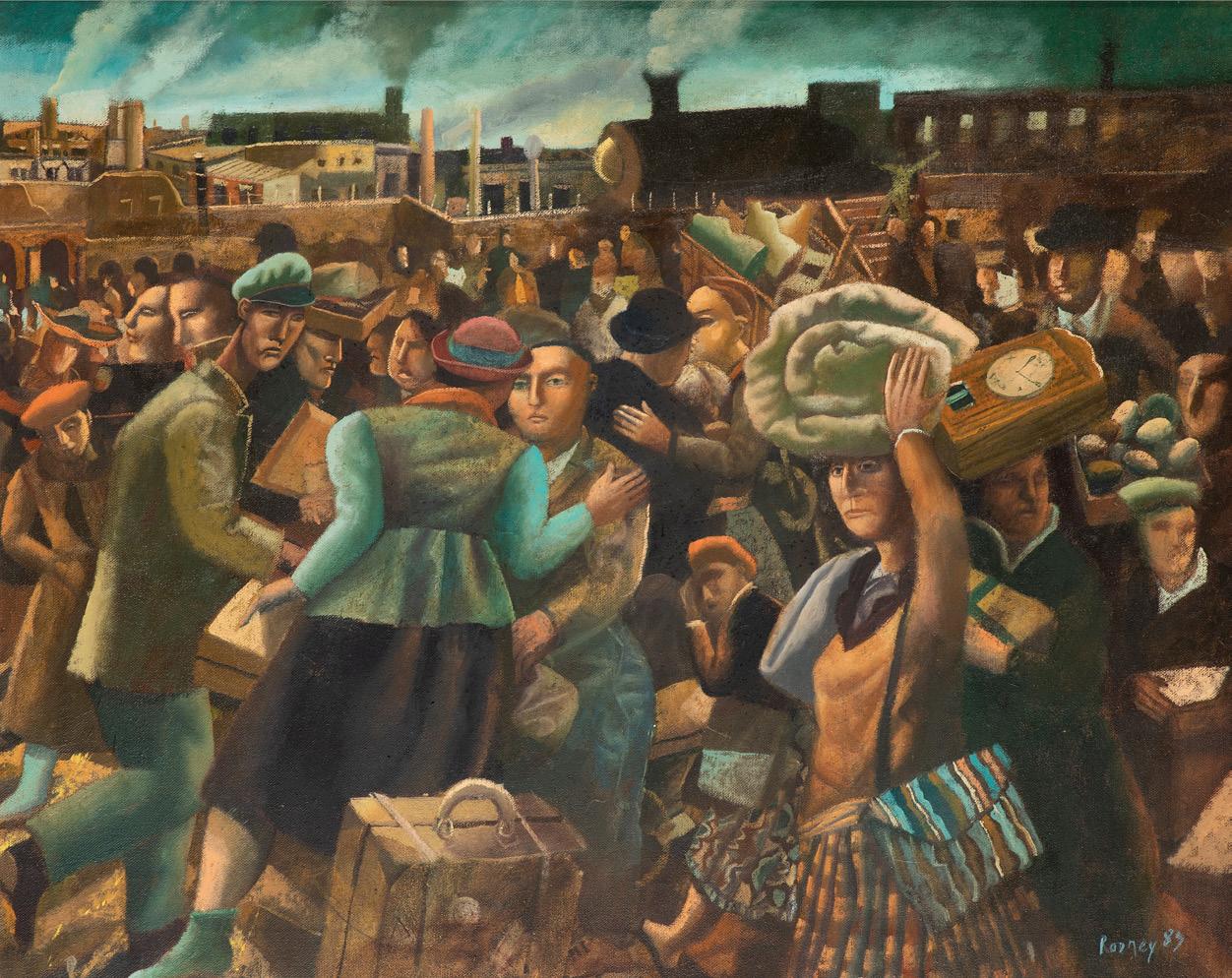
152
1944-)
59cm
Provenance:
£1,500-2,500
112
JOHN BELLANY
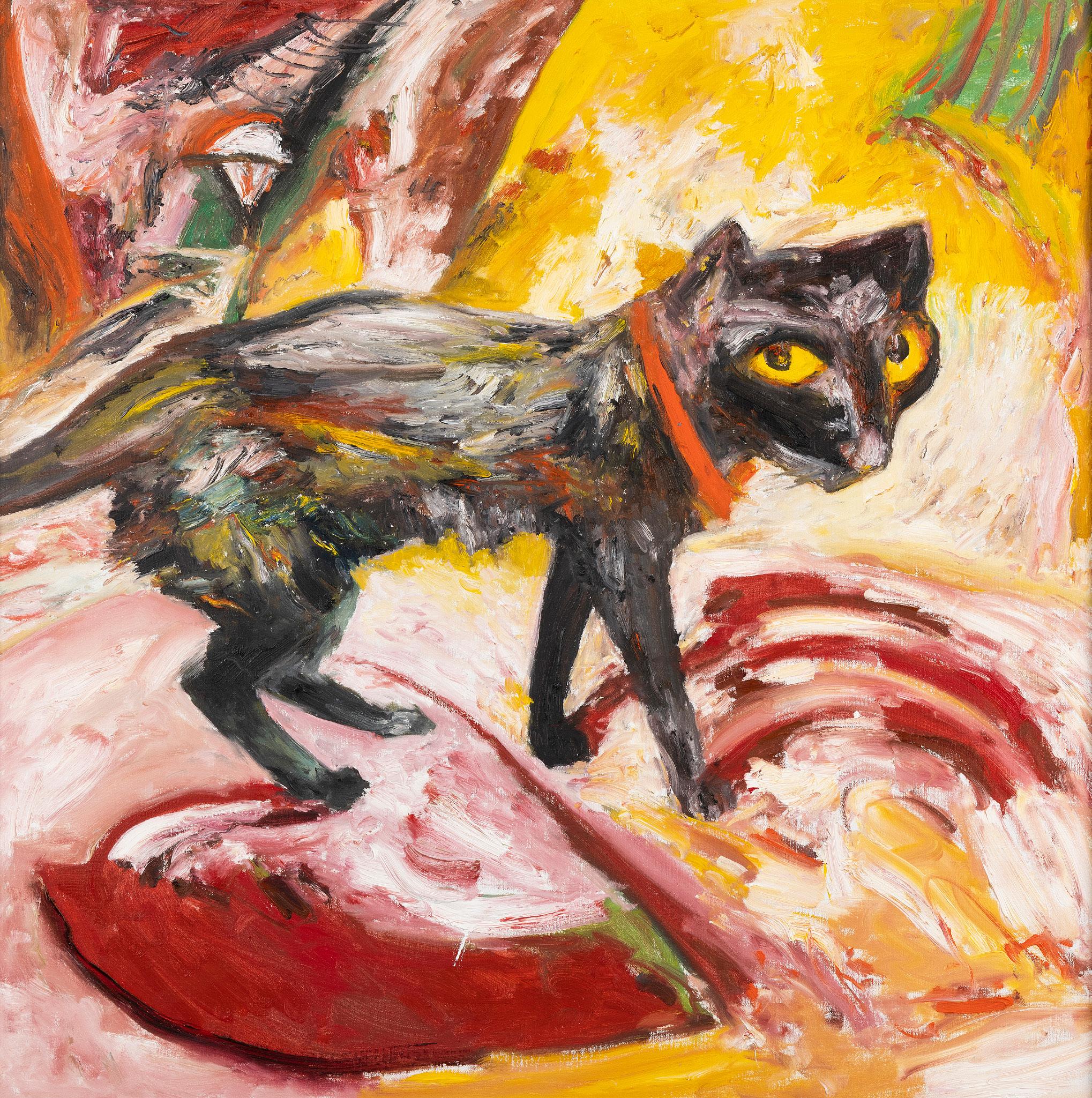
153 §
C.B.E., R.A. (BRITISH 1942-2013) THE CAT signed (to reverse), oil on canvas 90cm x 90cm (35 1/2in x 35 1/2in) Provenance: Beaux Arts, Bath; Private Collection, London. Exhibited: Fitzwilliam Museum, Cambridge, John Bellany in Cambridge, 19 March - 20 June 1991 (illustrated); Kelvingrove Art Gallery and Museum, Glasgow, A Long Night’s Journey Into Day, 10 July - 30 August 1992. £4,000-6,000 113 Other fees apply in addition to the hammer price: see the ‘Buyer’s Guide’ section on page 6
154 §
JOHN BANTING (BRITISH 1902-1972)
STILL LIFE OF PLANT oil on canvas 69.5cm x 90cm (27 3/8in x 35 1/2in)
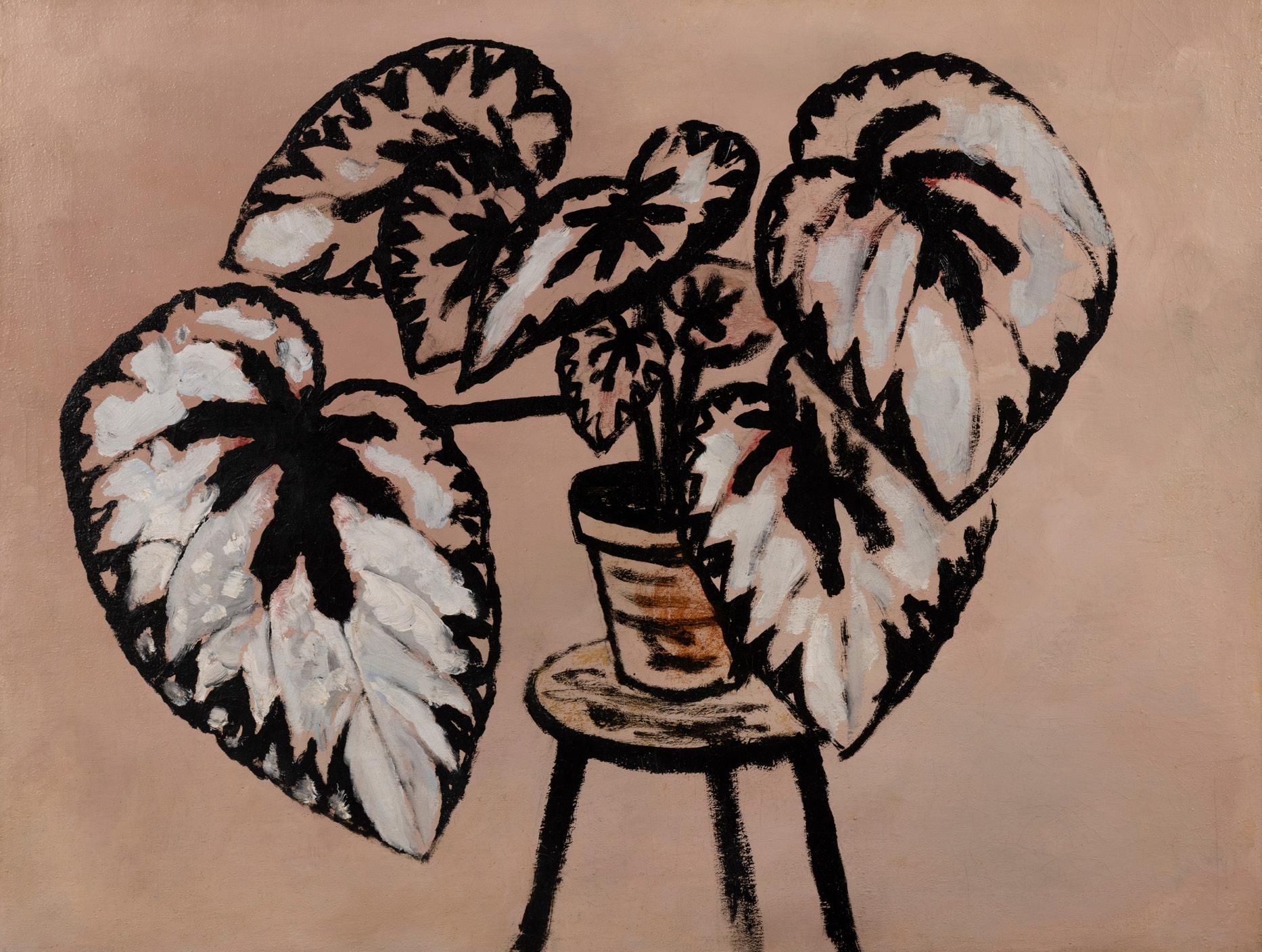
Provenance: Christies, London, 7 March 1986; Private Collection, London. £1,500-2,500
155 §
JOHN CRAXTON R.A. (BRITISH 1922-2009) ARTICHOKES, 1987 signed and dated in pen (lower left), pastel on paper 32.5cm x 49.5cm (12 3/4in x 19 1/2in) £1,500-2,000
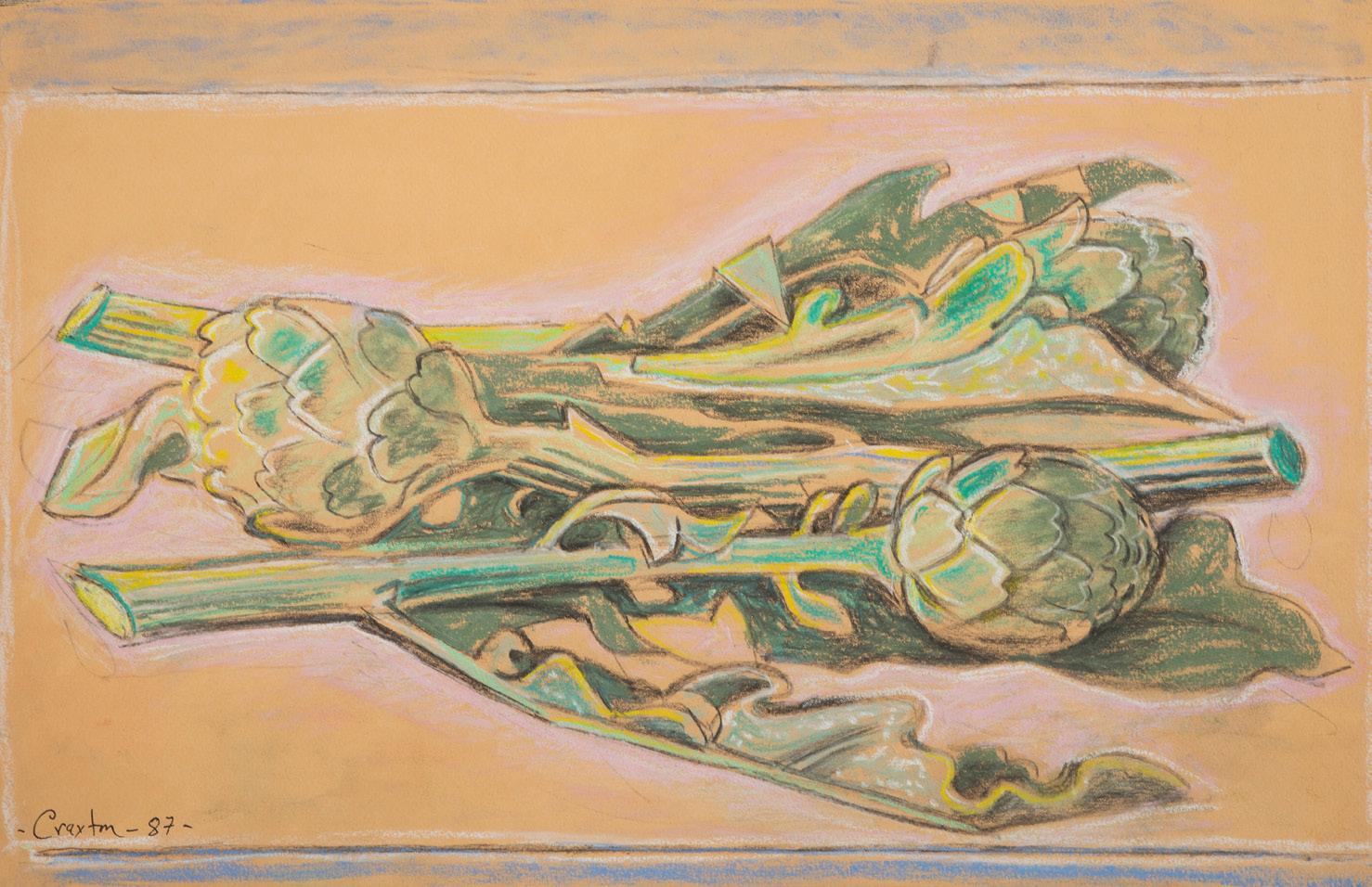
114 Other fees apply in addition to the hammer price: see the ‘Buyer’s Guide’ section on page 6
156 §
TRISTRAM HILLIER (BRITISH 1905-1983)
SAN JUAN DEL CAMPO / DESERTED MONASTERY IN CASTILE, 1978
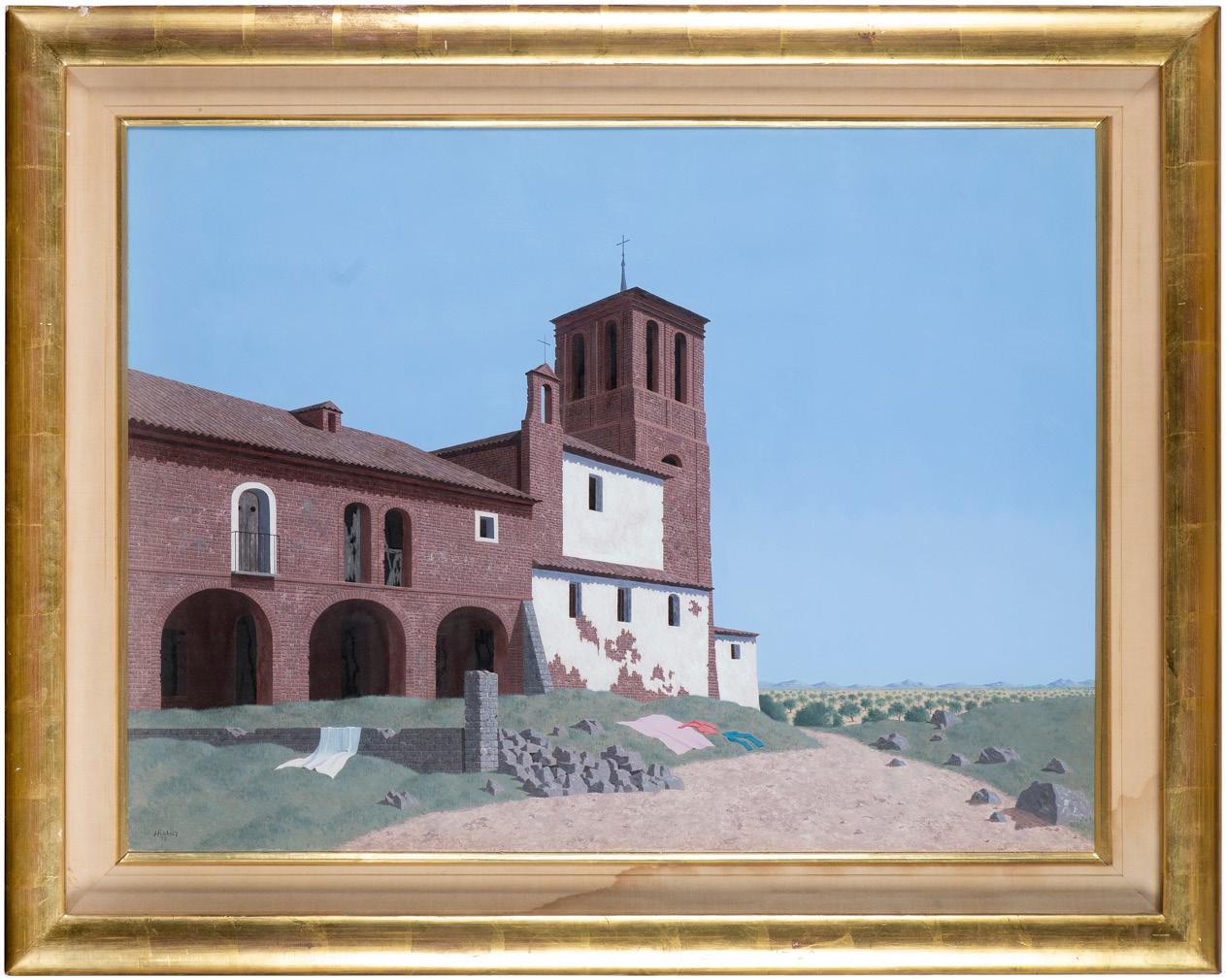
signed and dated (lower left), oil on canvas 59.5cm x 80cm (23 3/8in x 31 1/2in)
Provenance: The Lefevre Gallery, London; Christie’s, London, Modern British Art, 10 June 2005, Lot 174; Private Collection, London. Exhibited: Bradford Art Galleries and Museums, Bradford, A Timeless Journey, June - September 1983, cat. no. 72. £7,000-9,000
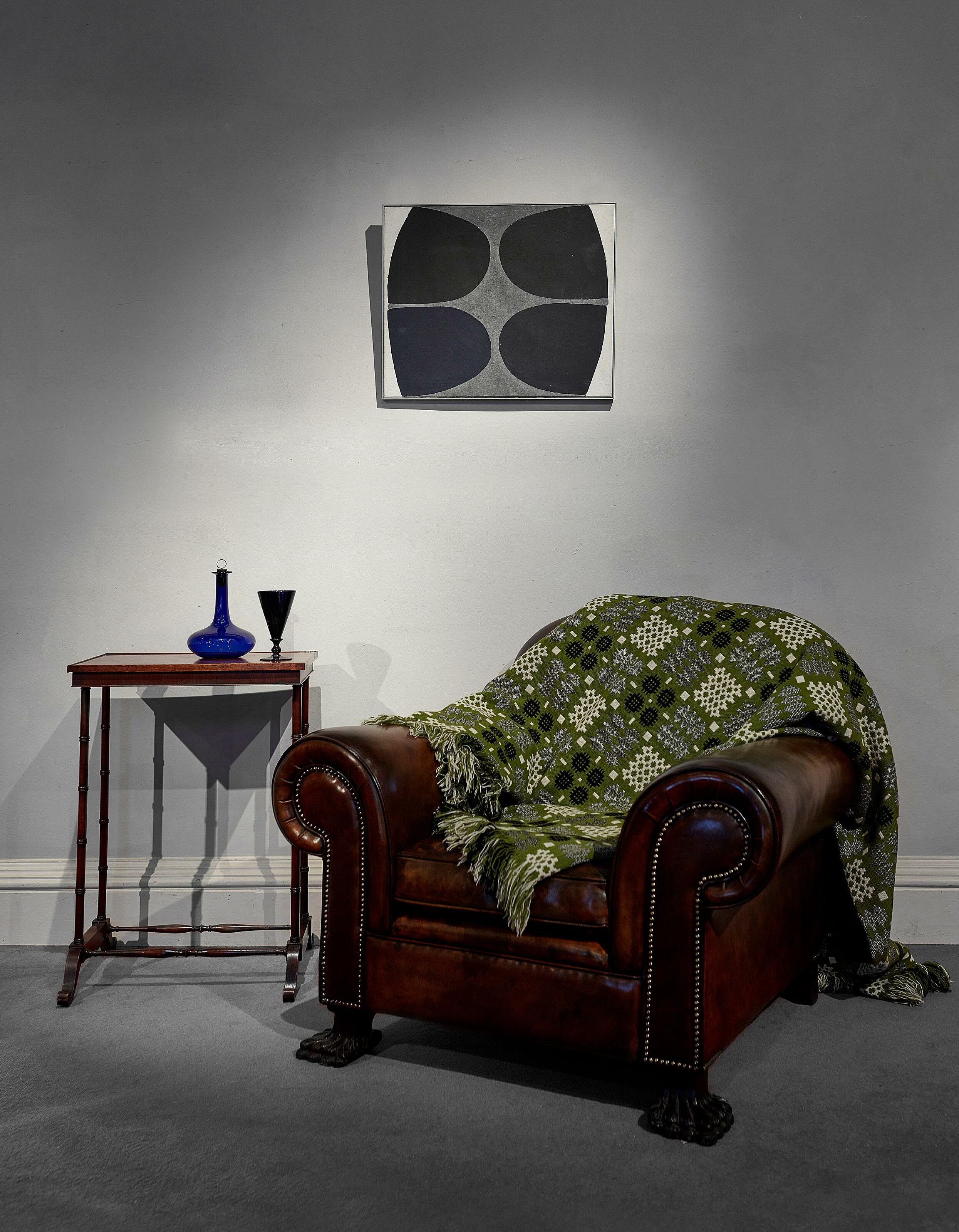
115
157 §
PABLO PICASSO (SPANISH 1881-1973)
MEURTRE, AVEC SPECTATEURS, 1966 (B. 1436; BA. 1466)
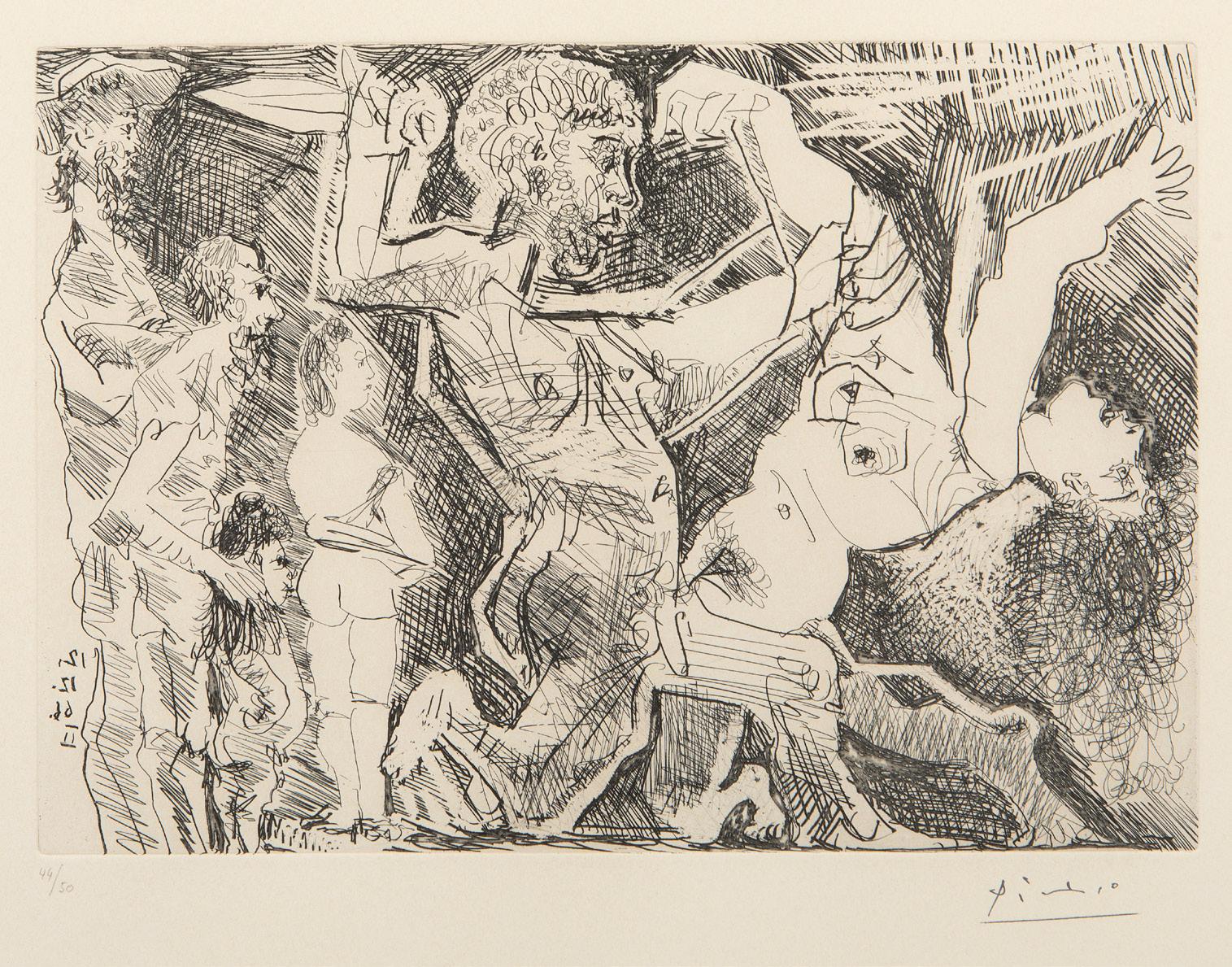
44/50, artist’s stamped signature and numbered in pencil (in the margin), etching, printed by Crommelynck, published by Galerie Louise Leiris, Paris, on wove paper 22.4cm x 32cm (8 7/8in x 12 5/8in)
§ HENRY MOORE O.M.,C.H (BRITISH 1898-1986)
SIX HEADS OLYMPIANS, 1982
signed and numbered in pencil, lithograph in colours 84.5cm x 58cm (33 1/4in x 22 7/8in)
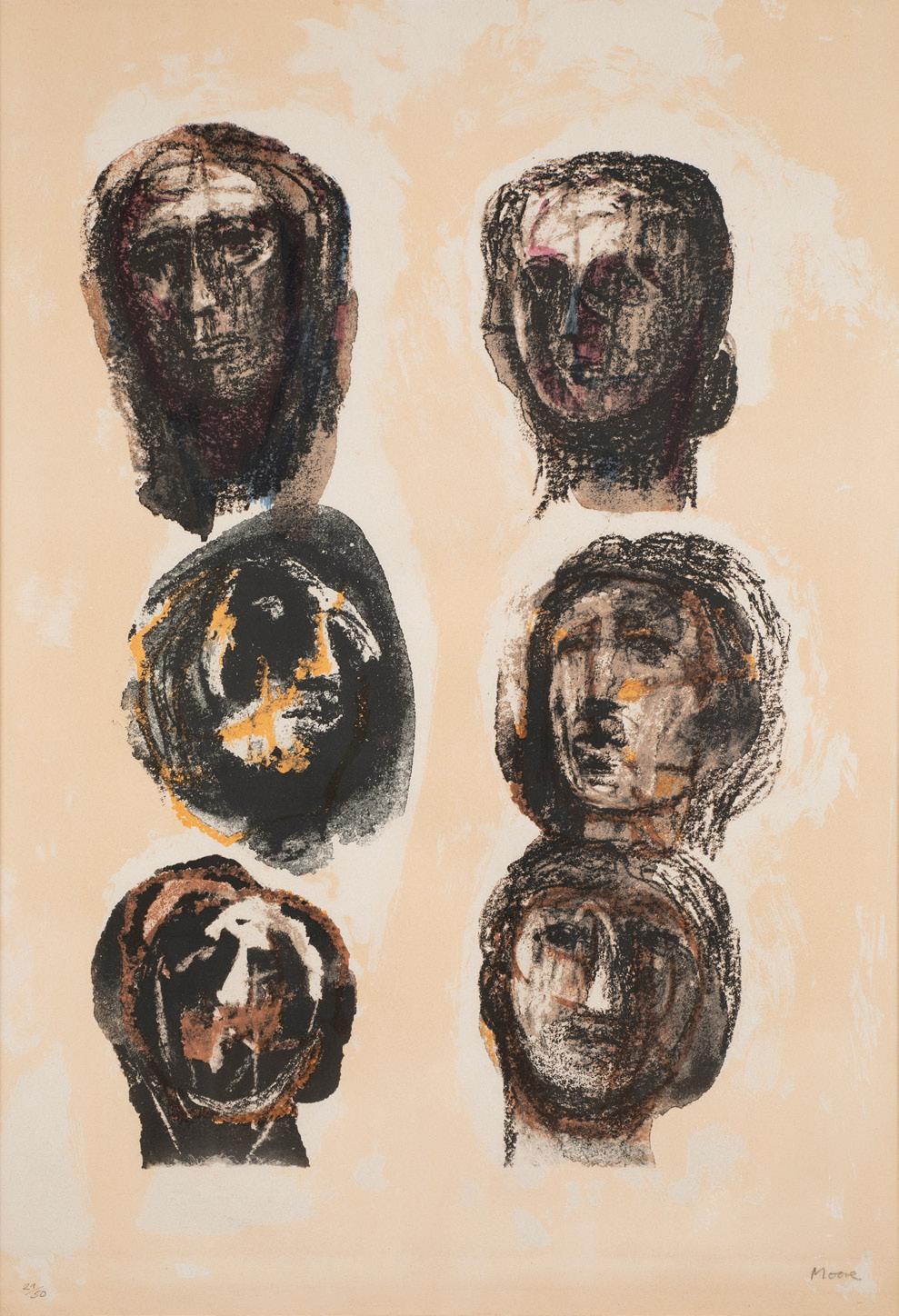
158
29/50,
£800-1,200
£3,000-5,000 116 Other fees apply in addition to the hammer price: see the ‘Buyer’s Guide’ section on page 6
GEOFFREY CLARKE R.A. (BRITISH 1924-2014)
BIRD I, 1954
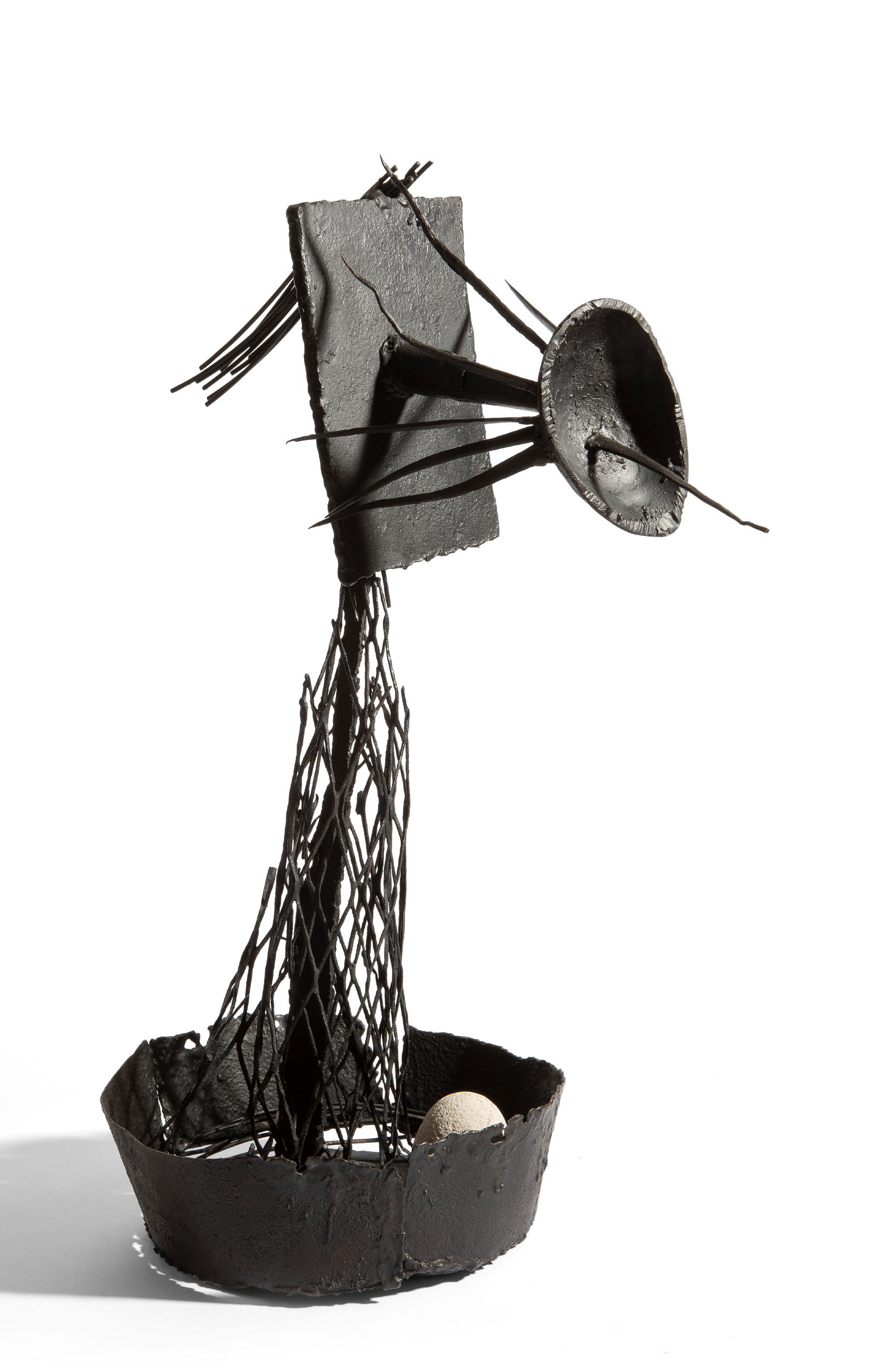
unique, iron and stone
71.7cm high (28 1/4in high)
Provenance: Acquired directly from the artist by the present owner after the 1955 exhibition.
Exhibited: Gimpel Fils, London, Recent Sculpture, Drawings and Engravings by Geoffrey Clarke; collages by Austin Cooper, January 1955, no.17.
Literature: LeGrove, Judith, Geoffrey Clarke: A Sculptor’s Materials, Bristol, 2017, pp.112-113 (illustrated);
LeGrove, Judith, Geoffrey Clarke: Sculptor: Catalogue Raisonné, London, 2017, p.40, no.578 (illustrated).
This work also has a variant title of ‘Rook’. £7,000-9,000
Geoffrey Clarke, like so many of his contemporaries, found almost instant success and acclaim through his inclusion in Herbert Read’s selection for the 1952 British Pavilion at the Venice Biennale. It was in the catalogue for this show that Read coined the term ‘The Geometry of Fear’, which later stuck as a ‘group’ name for these artists without too much in common, beyond personal friendships. Read was attempting to capture a particular quality of these young artists’ work, in counterpoint to the subtle curves of Henry Moore, whose work also featured in the Pavilion that year. For Read, the spiky and etiolated forms of these new welded and forged sculptures, often made from iron rather than bronze, spoke to the existential crisis of the post-war period, as humanity tried to reimagine itself burdened by the knowledge of Auschwitz and Hiroshima.
For all the ‘Geometry of Fear’ artists, one theme seems to have been constant: that the human and the animal were interchangeable – that man had become a changeling being, easily becoming a beast. Equally, the ‘innocence’ of animals could also stand as a clear metaphor of our ability to wreak suffering on our fellow man. Clarke, Turnbull, Meadows, Chadwick and Paolozzi – perhaps more so than Adams, Butler or Armitage – all created bestiaries of creatures imbued with human emotion. In a way, Bird One can be seen almost as the pendant to Clarke’s Complexities of Man (1951) now in the Tate. Both works resonate with human angst, but also with something deeper and more compelling. In Bird One, this is realised in the juxtaposition of the smooth, beautifully carved stone egg with the scored and rough surface of the nest and the striated form of its protective parent, its head and beak striking out into space. The mass of the egg weights and centres the work, lending the initially terrifying form of the bird an underlying warmth and humanity, its primal scream turning to a song of motherhood.
159 §
117
Bernard Meadows, like so many of his contemporaries, such as Geoffrey Clarke (lot 159) and Eduardo Paolozzi (lot 257-265) found success and acclaim through his inclusion in Herbert Read’s selection for the 1952 British Pavilion at the Venice Biennale. It was in the catalogue for this show that Read coined the term ‘the geometry of fear’, an attempt to capture a particular quality of these young artists’ work, with their spiky and attenuated forms that spoke to the existential crisis of the post-war period, as humanity tried to reimagine itself, burdened by the knowledge of Auschwitz and Hiroshima. Read’s catalogue text was certainly inspired by Meadows’ iconic crab sculptures: ‘These new images belong to the iconography of despair, or of defiance; and the more innocent the artist, the more effectively he transmits the collective guilt. Here are images of flight, or ragged claws “scuttling across the floors of silent seas”, of excoriated flesh, frustrated sex, the geometry of fear.’
In the 1950s, crabs and birds were the mainstay of Meadows’ iconography. He wrote that ‘Birds can express a whole range of tragic emotion, they have a vulnerability which makes it easy to use them as a vehicle for people’ and in a statement written for Bryan Robertson, who curated his second solo exhibition at Gimpel Fils in 1959, Meadows also observed: ‘I look upon birds and crabs as human substitutes, they are vehicles expressing my feeling about human beings. To use non-human forms is…less inhibiting: one is less conscious of what has gone before and is more free to take liberties with the form.’
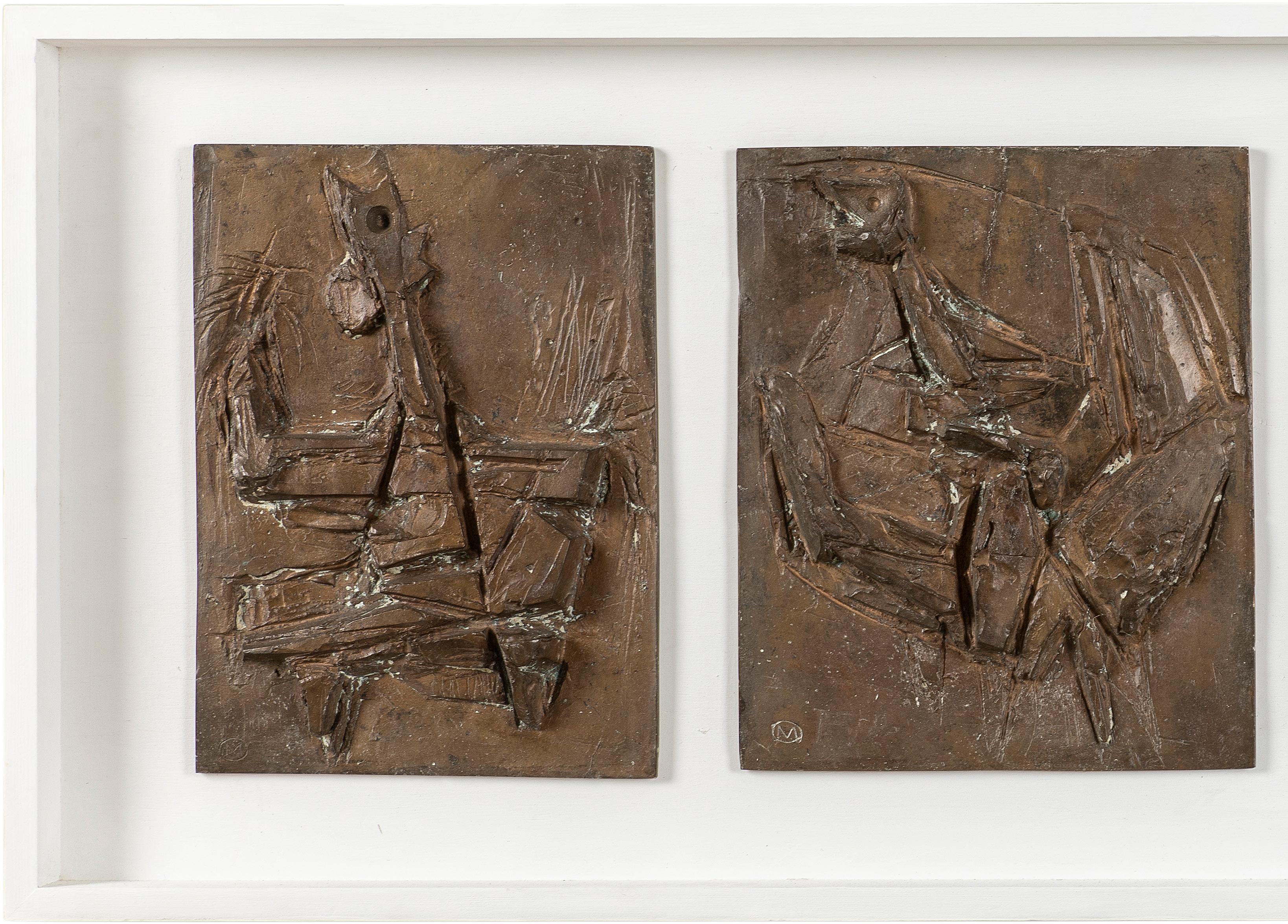
In the 1960s, however, Meadows did not continue to plough the ‘geometry of fear’ furrow, much as perhaps his gallery and the market would have liked. Instead, like his contemporary Kenneth Armitage, he looked to find a new sculptural vocabulary that spoke to the nascent optimism of the 1960s. An element of joy returns. Sculptures such as Pointing Figure and Relief: Watchers are classic

118
Meadows of this period. Although superficially abstract, their strong anthropomorphism is clear, the rounded forms being heads (with eyes), although slippery enough to also connote bellies or even an entire body reduced to a singular form. This shifting nature of what the forms could be is enhanced by the smooth surfaces. In contrast to his 1950s sculpture, there are no jagged edges to arrest the eye, to turn you back on yourself. Instead, Meadows’ sculpture flows with you and the space surrounding it and in this way his work returns to the conceptual world occupied by his former employer and mentor, Henry Moore.
160 §
BERNARD MEADOWS (BRITISH 1915-2005)
FOUR RELIEFS ON A COCK (LARGE), CONCEIVED 1958 from an edition of 6, each panel stamped with monogram, patinated bronze 39.4cm x 28.9cm (15 1/2in x 11 3/4in); 39.4cm x 33cm (15 1/2in x 13in); 39.4cm x 33.7cm (15 1/2in x 13 1/4in) and 40cm x 29.2cm (15in x 11 1/2in), all mounted and framed on one board
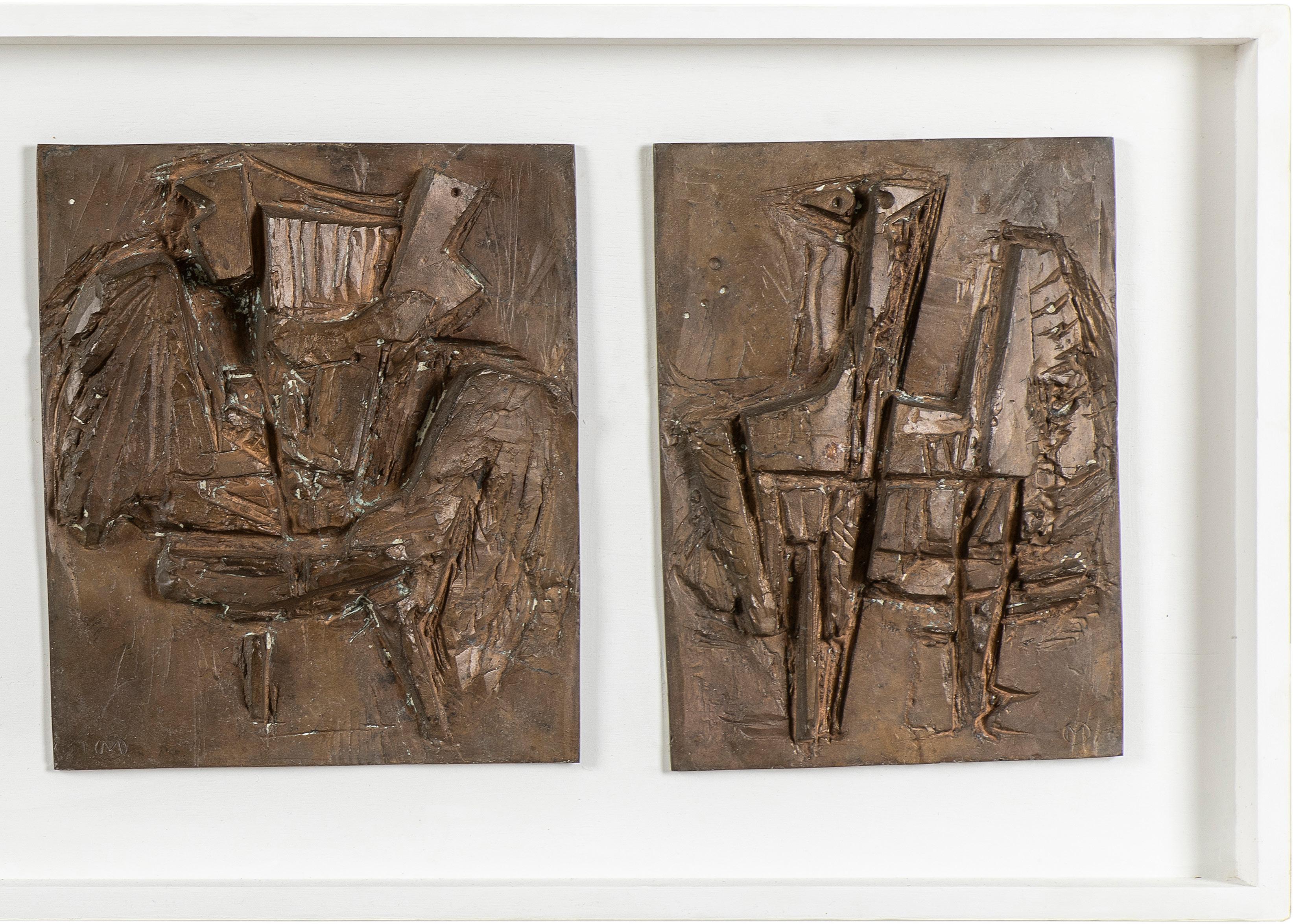
Provenance: Gimpel Fils, London.
Literature: Bowness, Alan, Bernard Meadows: Sculpture and Drawings, Lund Humphries, London, 1995, p. 140, no.49 (another cast illustrated).
Exhibited: Gimpel Fils, London, Recent Sculpture by Bernard Meadows, April 1959, no. 45; Ottawa, British Council Tour, National Gallery of Canada, Recent British Sculpture: Robert Adams, Kenneth Armitage, Reg Butler, Lynn Chadwick, Hubert Dalwood, Barbara Hepworth, Bernard Meadows, Henry Moore, Eduardo Paolozzi, April - June 1961, no. 48: this exhibition toured to Montreal, Montreal Museum of Fine Arts, August - September 1961; Winnipeg, Winnipeg Art Gallery, September - October 1961; Saskatchewan, Norman Mackenzie Art Gallery, Regina College, November 1961; Toronto, Art Gallery of Toronto, January - February 1962; Ontario, Public Library and Art Museum, February - March 1962; Vancouver, Vancouver Art Gallery, March - April 1962; Auckland, Auckland Institute and Museum, July 1962; Wellington, Dominion Museum, August - September 1962; Dunedin, Otago Museum, October 1962; Christchurch, Canterbury Museum, November - December 1962; Perth, Western Australia Art Gallery, January - February 1963; Melbourne, National Gallery of Victoria, July - August 1963; Sydney, Art Gallery of New South Wales, September - October 1963; Brisbane, Queensland Art Gallery, November - December 1963; New South Wales, Newcastle War Memorial Cultural Centre, January 1964; Canberra, Albert Hall, February 1964; Tokyo, Bridgestone Art Gallery; and other Japanese venues, including Kyoto, Museum of Modern Art, July - August 1964; and Hong Kong, City Hall Art Gallery, August - September 1964.

£6,000-9,000
119 Other fees apply in addition to the hammer price: see the ‘Buyer’s Guide’ section on page 6
BERNARD MEADOWS (BRITISH 1915-2005)
POINTING FIGURE, 1967
unique, verdigris and polished bronze 20.2cm high, 57.5cm wide (8in high, 22 5/8in wide) excluding plinth
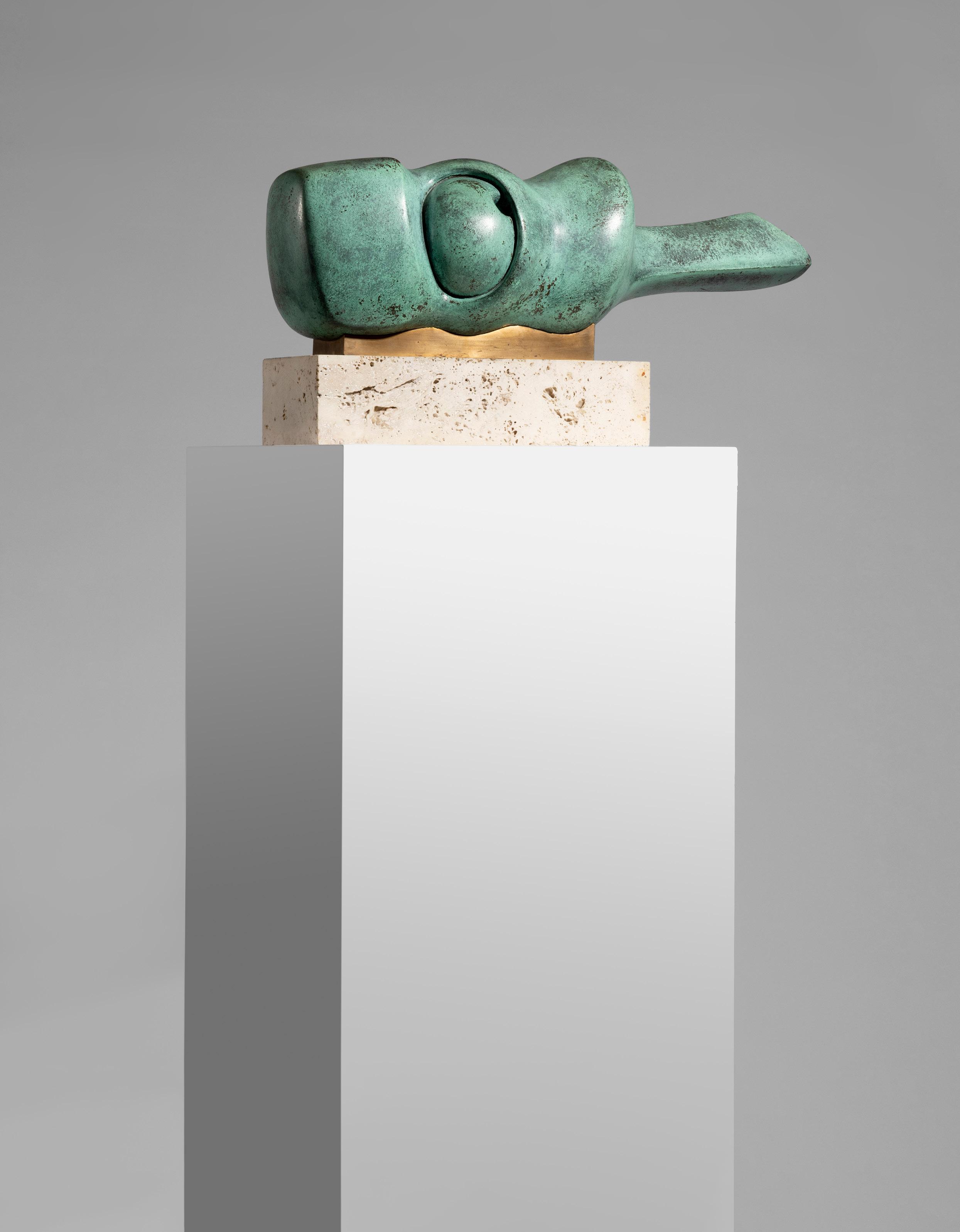
Provenance: Gimpel Fils, London, 1995; Private Collection, London.
Exhibited: Gimpel Fils, London, Bernard Meadows Retrospective, 1995.
Literature: Bowness, Alan, Bernard Meadows: Sculpture and Drawings, Lund Humphries, London, 1995, p.88, no.112, pl.70.
161 §
£4,000-6,000 120
162 §
ROBERT ADAMS (BRITISH 1917-1984)
DRAWINGS FOR FIGURE SCULPTURES, CIRCA 1948 blue ink on paper 30.5cm x 44.5cm (12in x 17 1/2in)
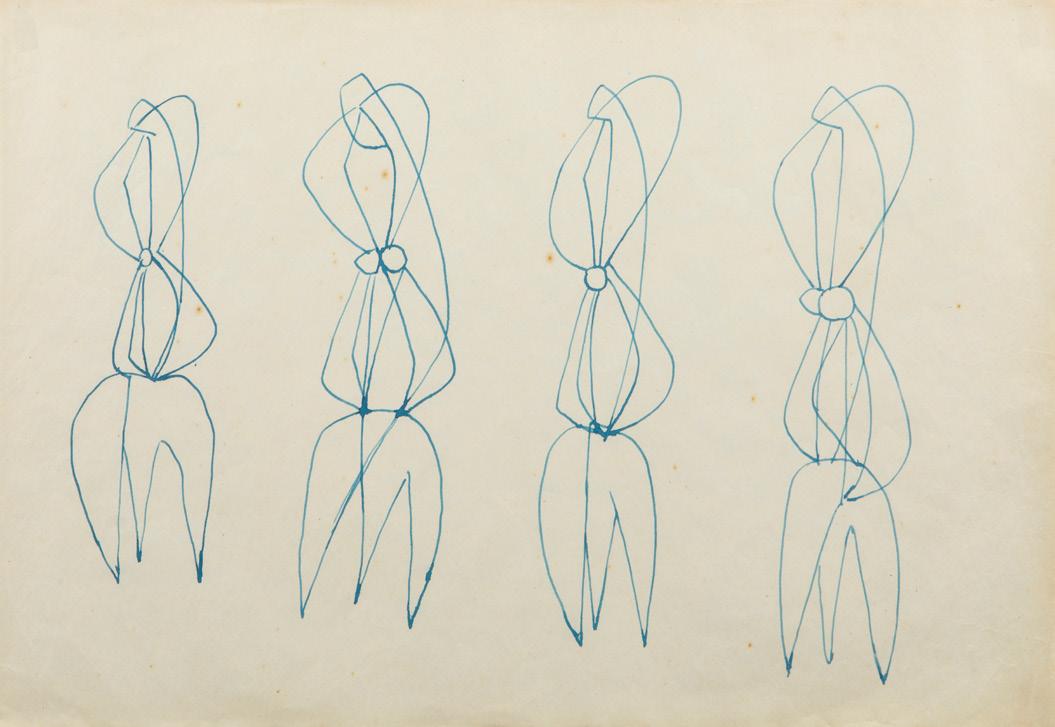
Provenance: Gimpel Fils, London. £600-800
164 §
ROBERT ADAMS (BRITISH 1917-1984)
AGRICULTURAL MACHINERY, 1944 signed and dated in pencil (lower right), pen, ink and watercolour on paper 35.5cm x 25.4cm (14in x 10in), unframed
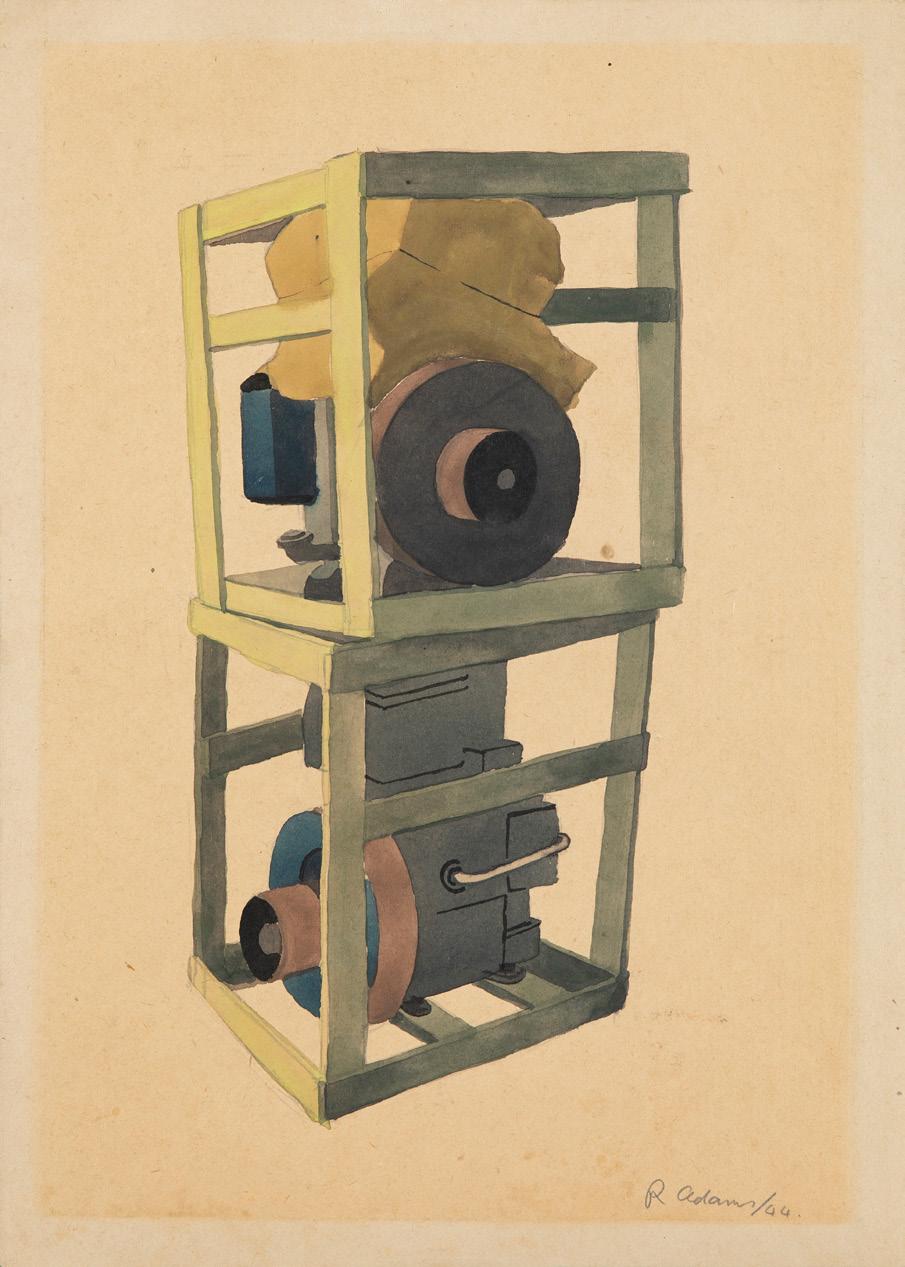
Provenance: Gimpel Fils, London. £600-800
163 §
BERNARD MEADOWS (BRITISH 1915-2005)
RELIEF: WATCHERS, 1966 edition of 6, brass 40cm x 28.5cm (15 3/4in x 11 1/4in)
Literature: Bowness, Alan, Bernard Meadows: Sculpture and Drawings, Lund Humphries, London, 1995, p. 144, no.99 (plaster illustrated). £4,000-6,000
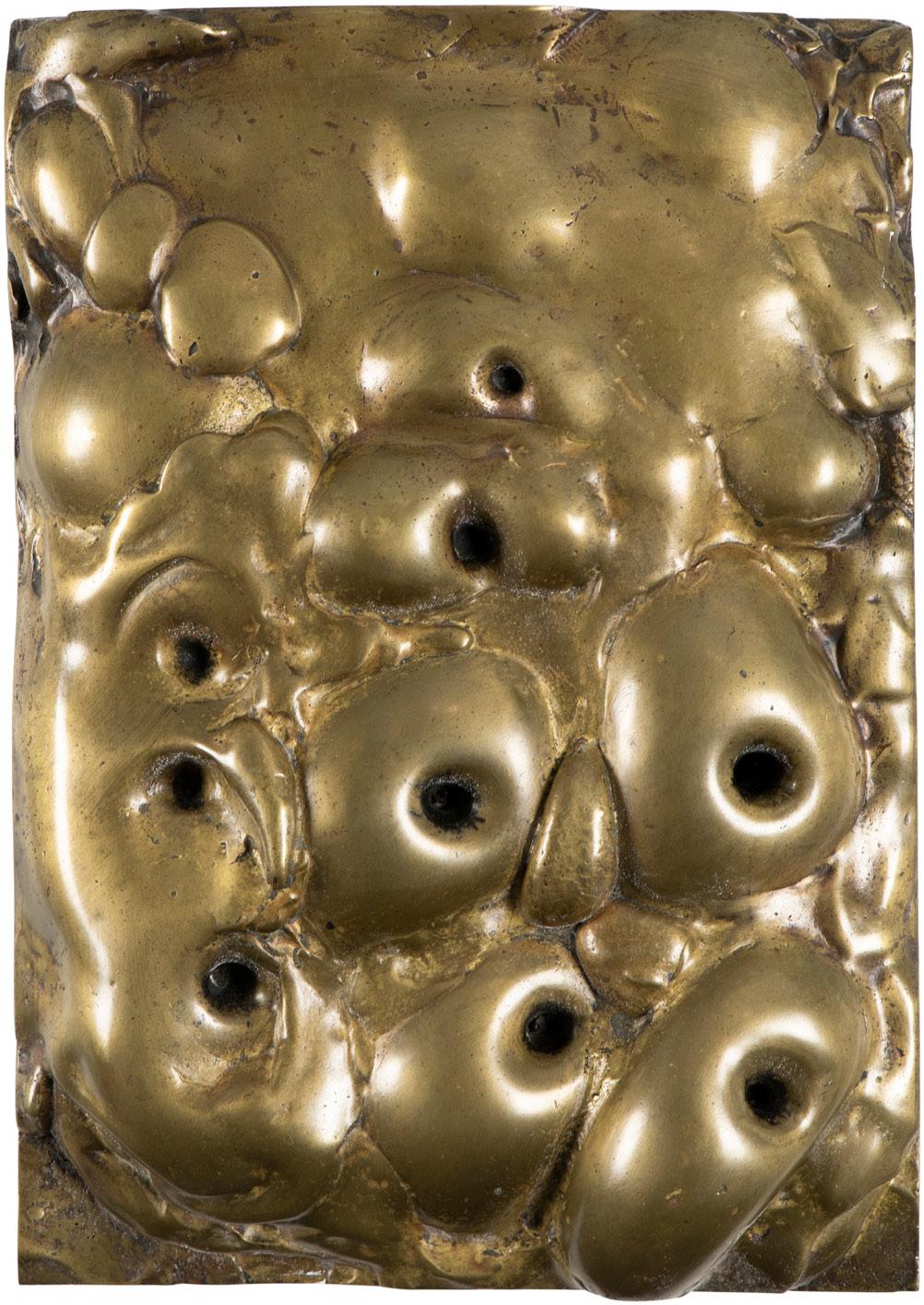
121 Other fees apply in addition to the hammer price: see the ‘Buyer’s Guide’ section on page 6
166 § ADRIAN HEATH (BRITISH 1920-1992)
UNTITLED, 1959 signed and dated
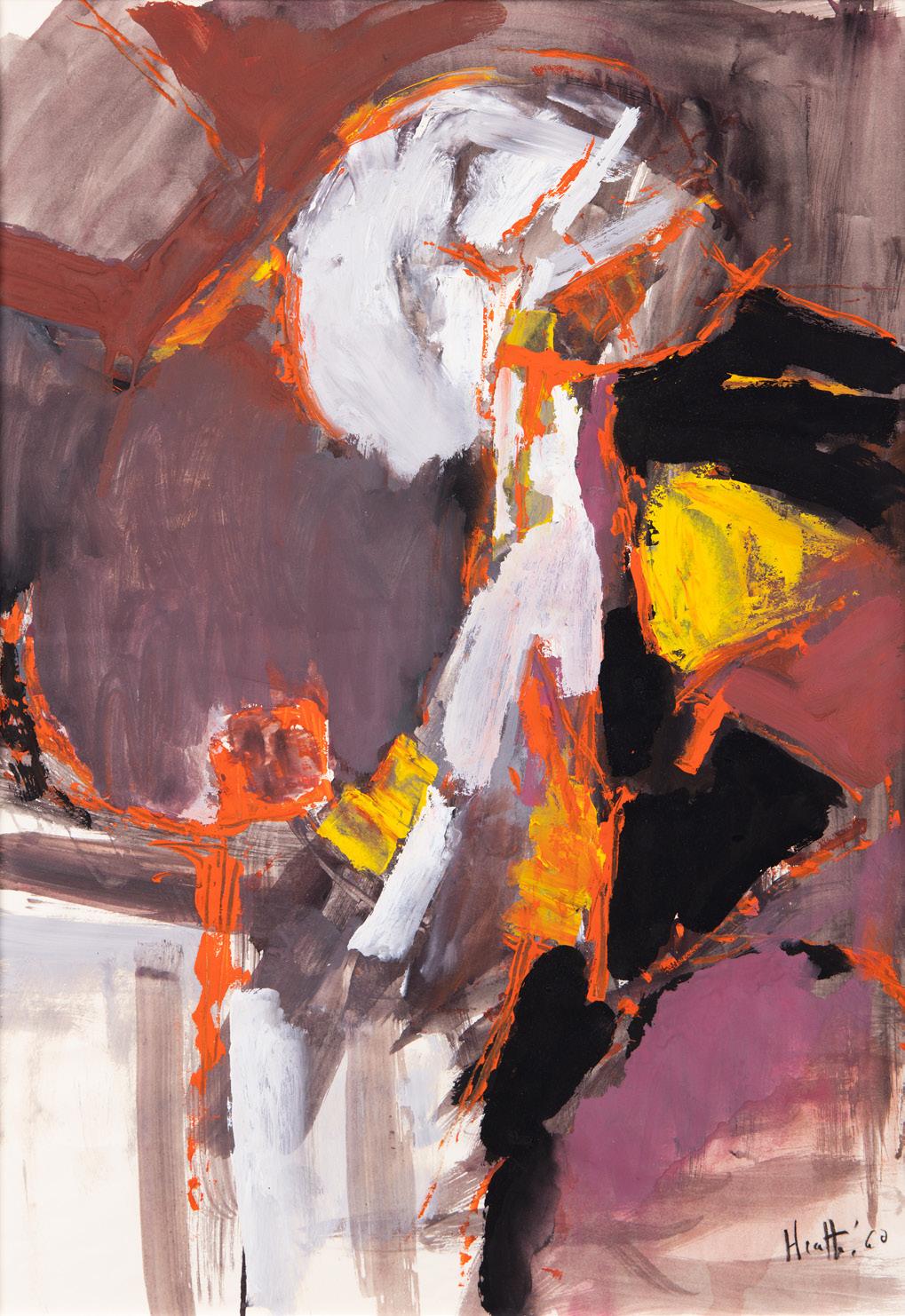
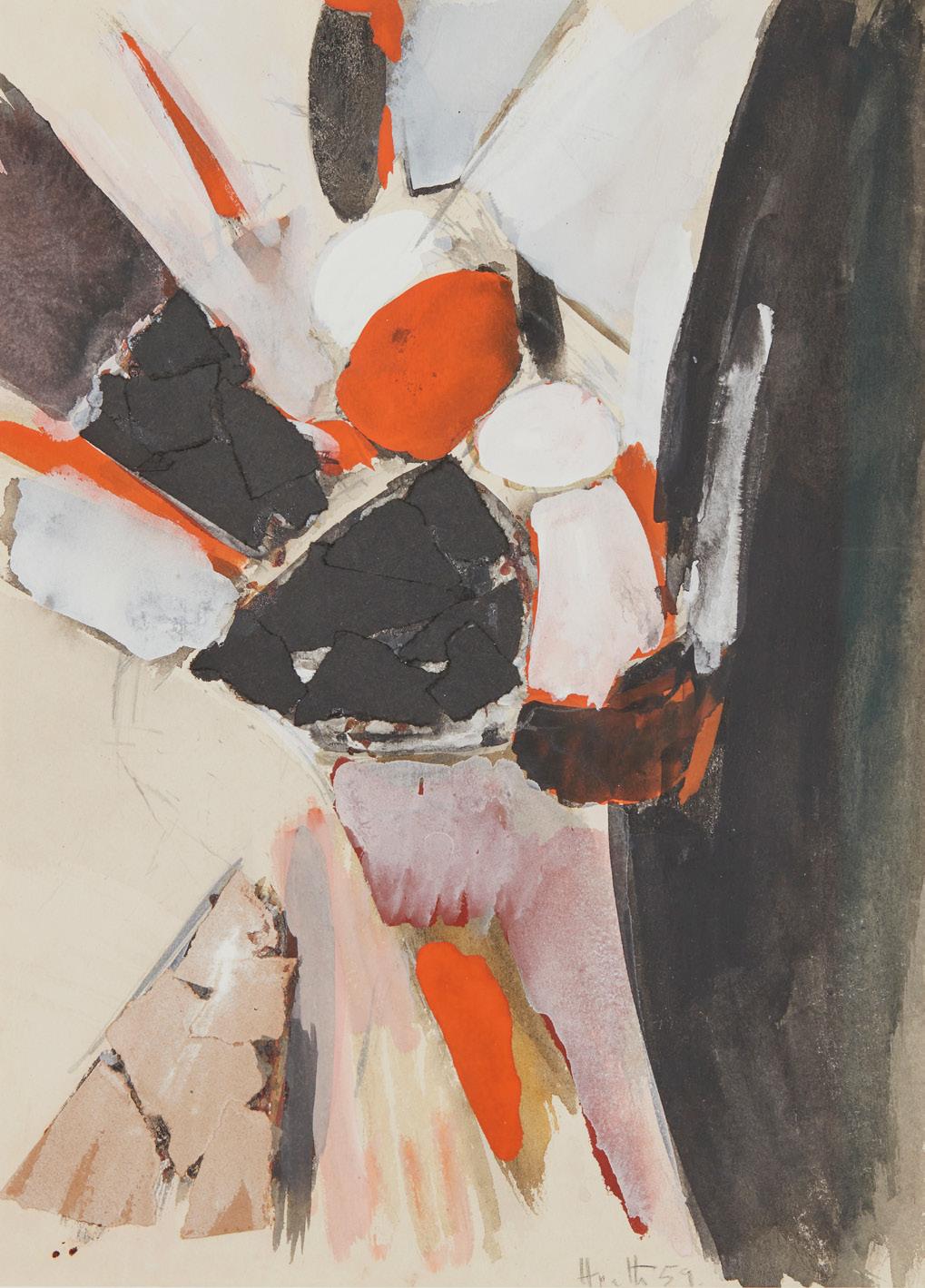
mixed media
165 §
ADRIAN HEATH (BRITISH 1920-1992)
UNTITLED, 1960 signed and dated (lower right), mixed media on paper 74cm x 52cm (29 1/8in x 20 1/2in)
Provenance: Presented by the artist as a wedding gift to a close friend; Private Collection, UK. £2,000-3,000
(lower right),
collage 36cm x 26cm (14 1/4in x 10 1/4in) £2,000-3,000
122 Other fees apply in addition to the hammer price: see the ‘Buyer’s Guide’ section on page 6
167 §
WILLIAM GEAR R.A., F.R.S.A., R.B.S.A. (BRITISH 1915-1997)
BLACK/BLUE (ABSTRACT), 1966
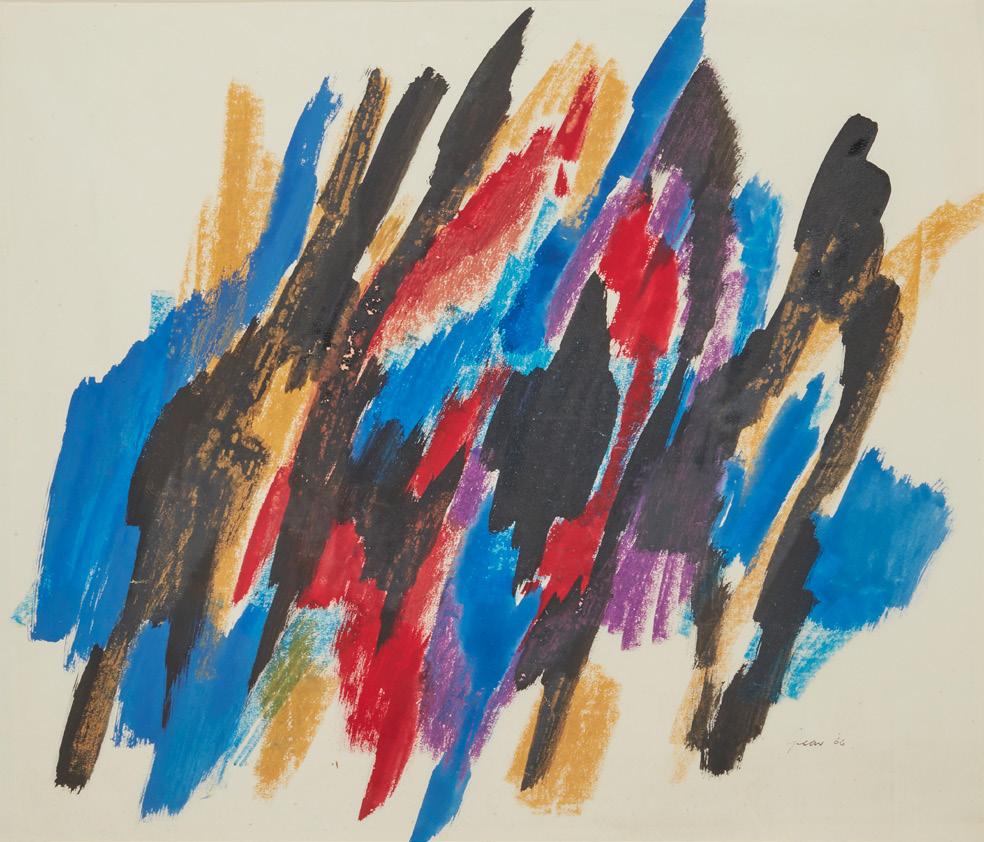
signed and dated (lower right), gouache and oil pastel on paper 53cm x 64.5cm (20 3/4in x 25 1/2in) £1,000-1,500
169 §
SCOTTIE WILSON (BRITISH 1891-1972)
BIRDS AND TREE signed ‘SCOTTIE’ (lower right), coloured inks and crayons on paper laid on board 61cm x 86.5cm (24in x 34in), unframed £800-1,200
168 §
ALAN DAVIE C.B.E., R.A., H.R.S.A. (BRITISH 1920-2014) UNTITLED, OPUS OG.54-381, 1954 signed and dated in pencil (lower right), oil on paper 49.5cm x 38cm (19 1/2in x 15in)
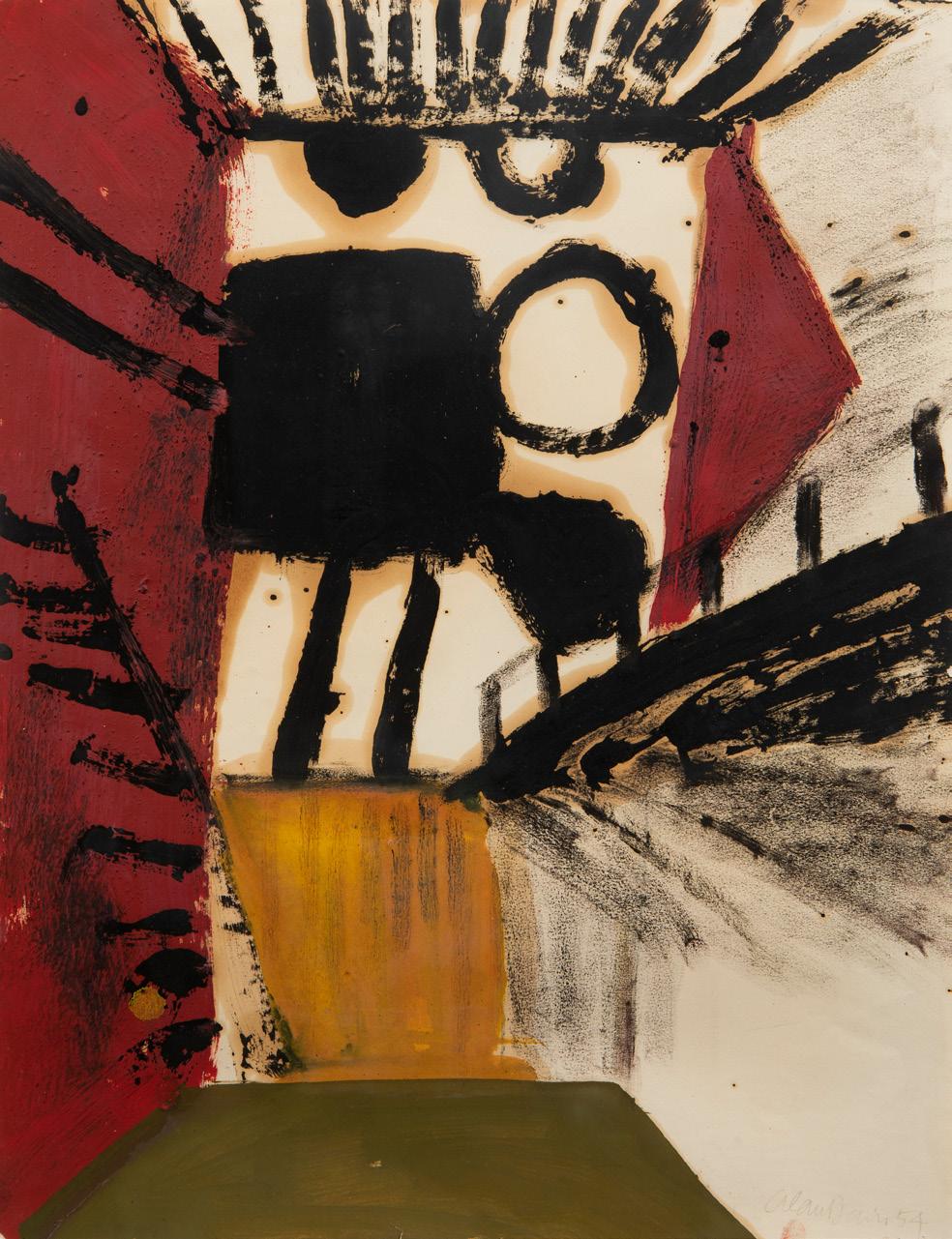
Provenance: Gimpel Fils, London; Private Collection, London. £2,000-3,000
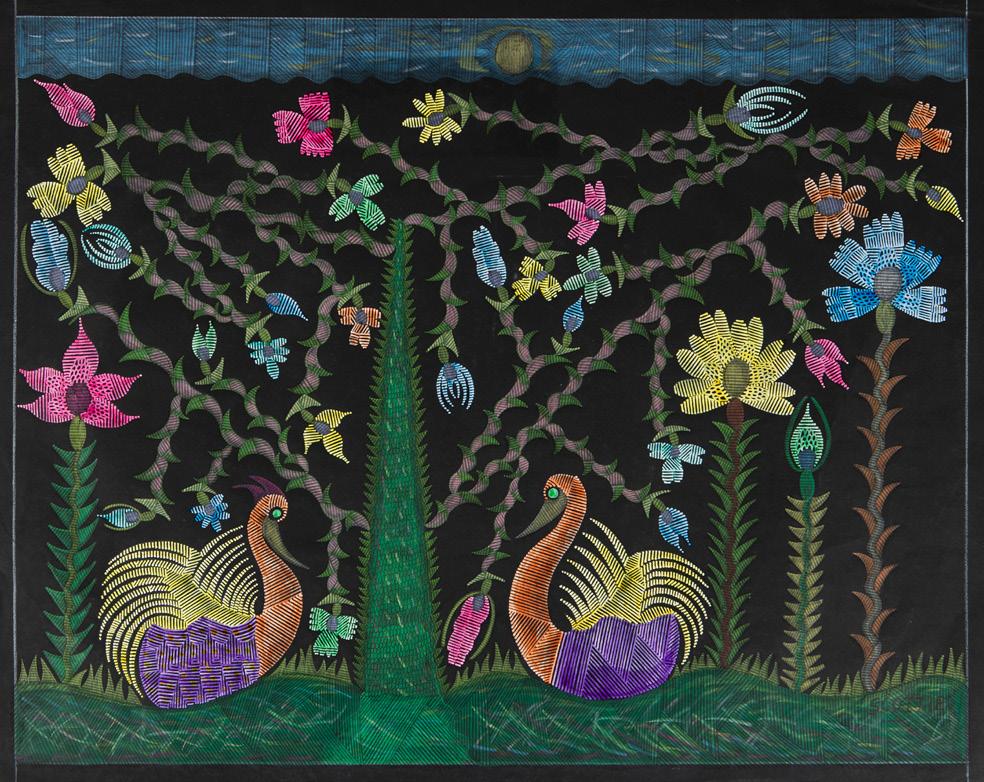
123
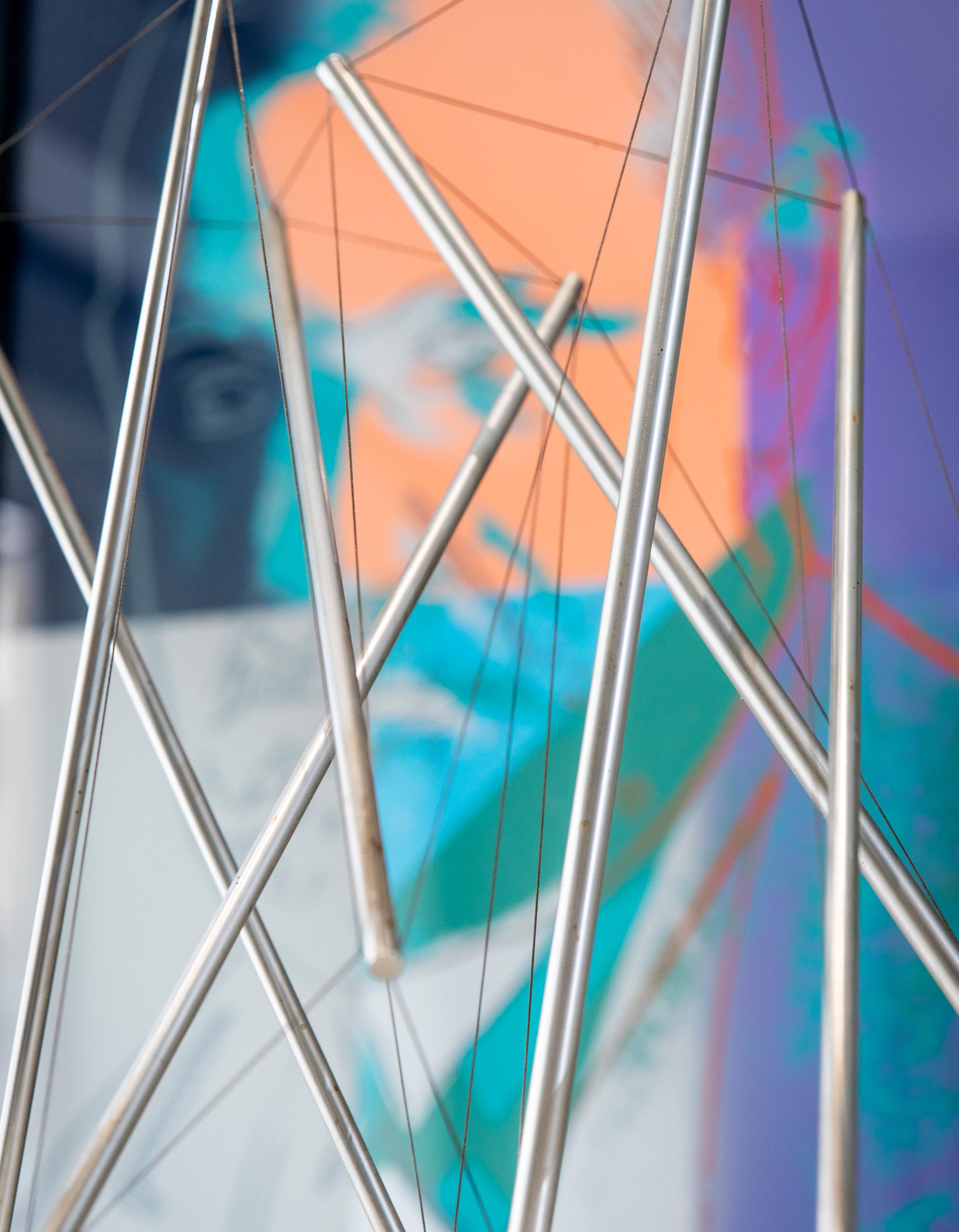
“
Not only does the bespattered and encrusted surface of Davie take on a positive richness, as of medieval jewellery or stained glass, but formal analogies appear… the froth of new buds or leaves seem to crystalize out of the swift, ragged calligraphy; there, flat blunt chinks of form resolve themselves into somewhat heraldic emblems of the human figure.” Patrick Heron, 1956
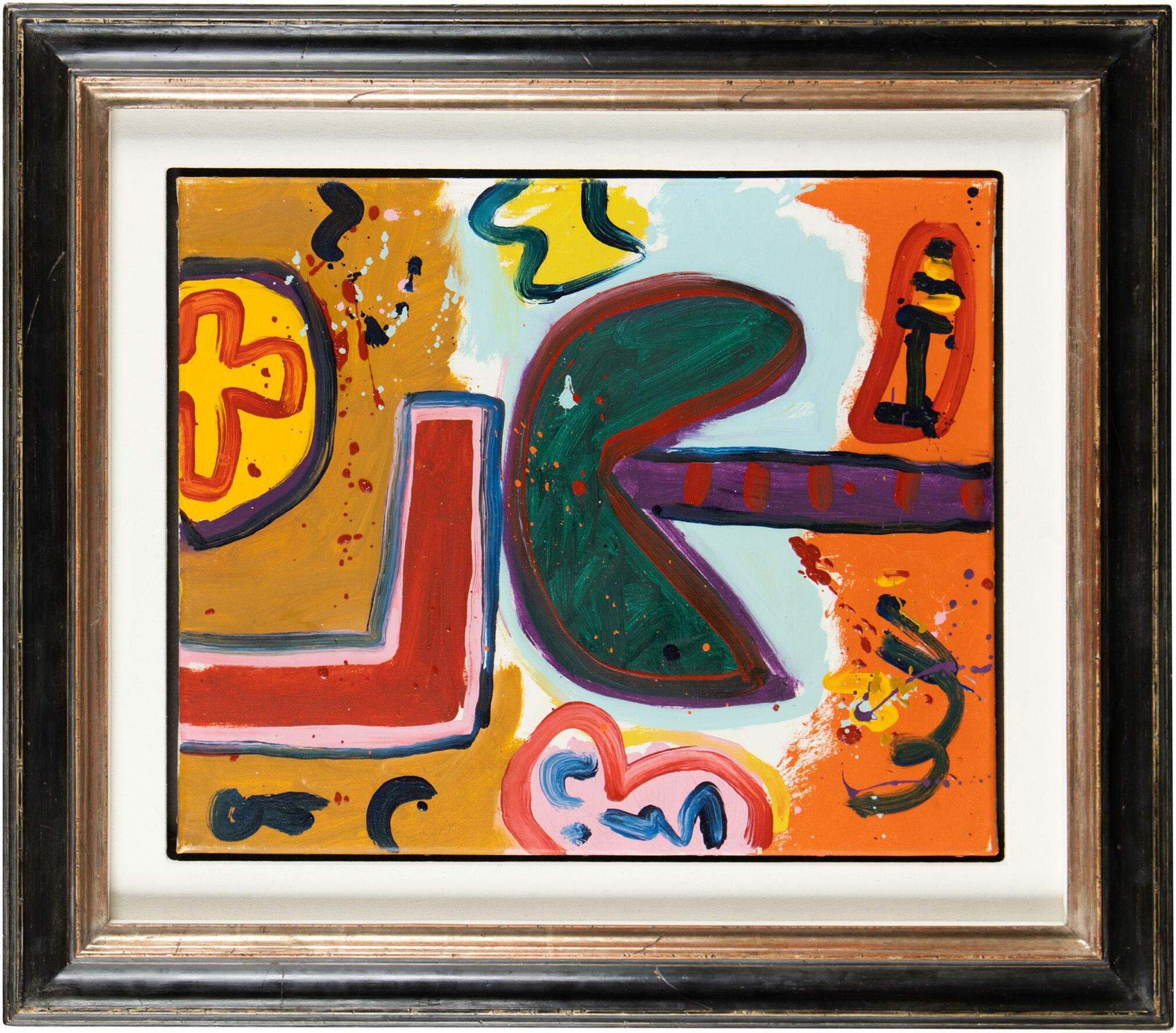
170 § ALAN DAVIE C.B.E., R.A., H.R.S.A. (BRITISH 1920-2014) SMILE OF THE CHAMELEON NO.2, SEPTEMBER 1967 signed and dated (to reverse), oil on canvas 50cm x 59.5cm (19 3/4in x 23 1/2in) Provenance: Gimpel & Hannover Galerie, Zurich; Private Collection, Munich; Collection, UK. £10,000-15,000
125 Left Lots 5 & 286 [detail]
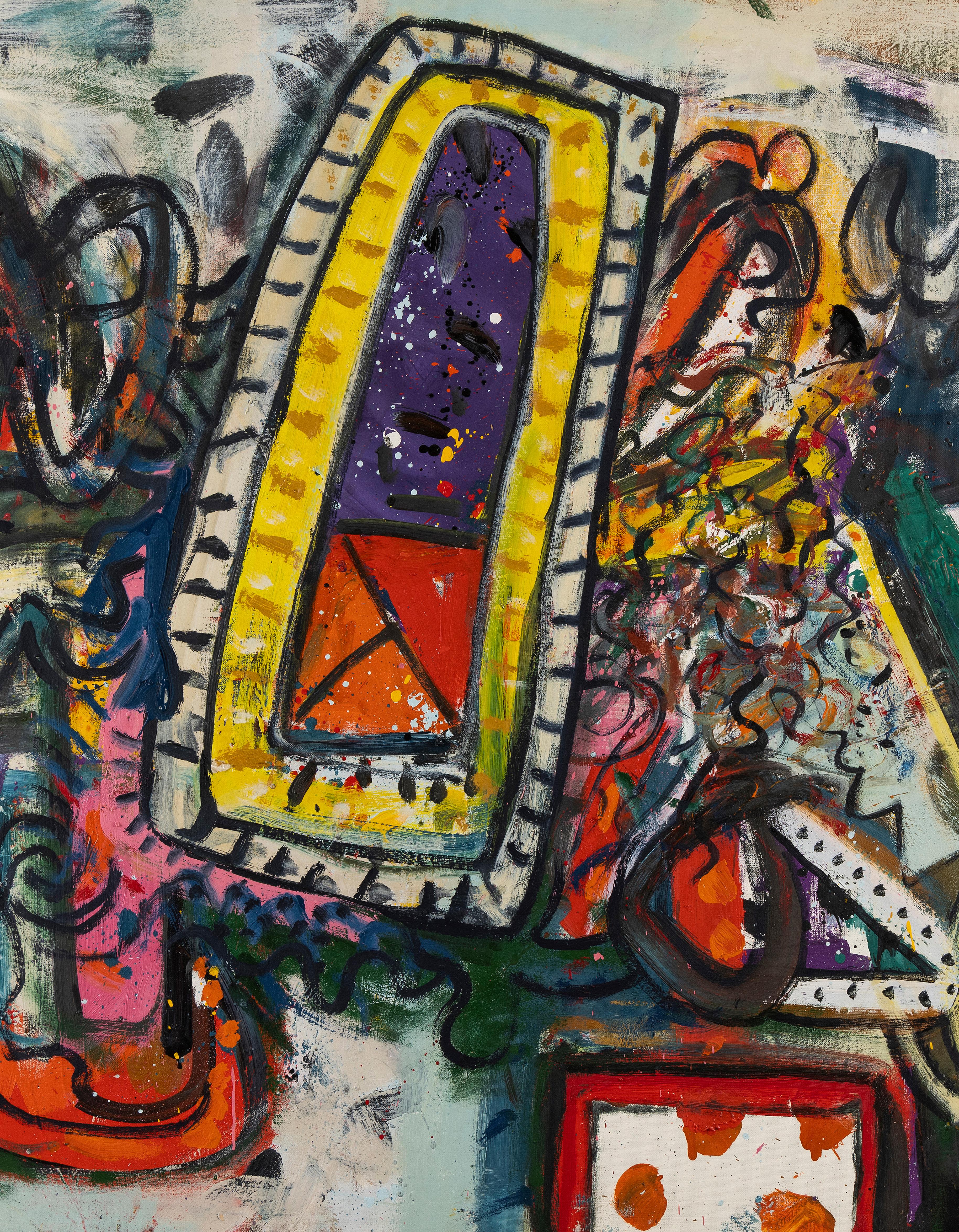
126
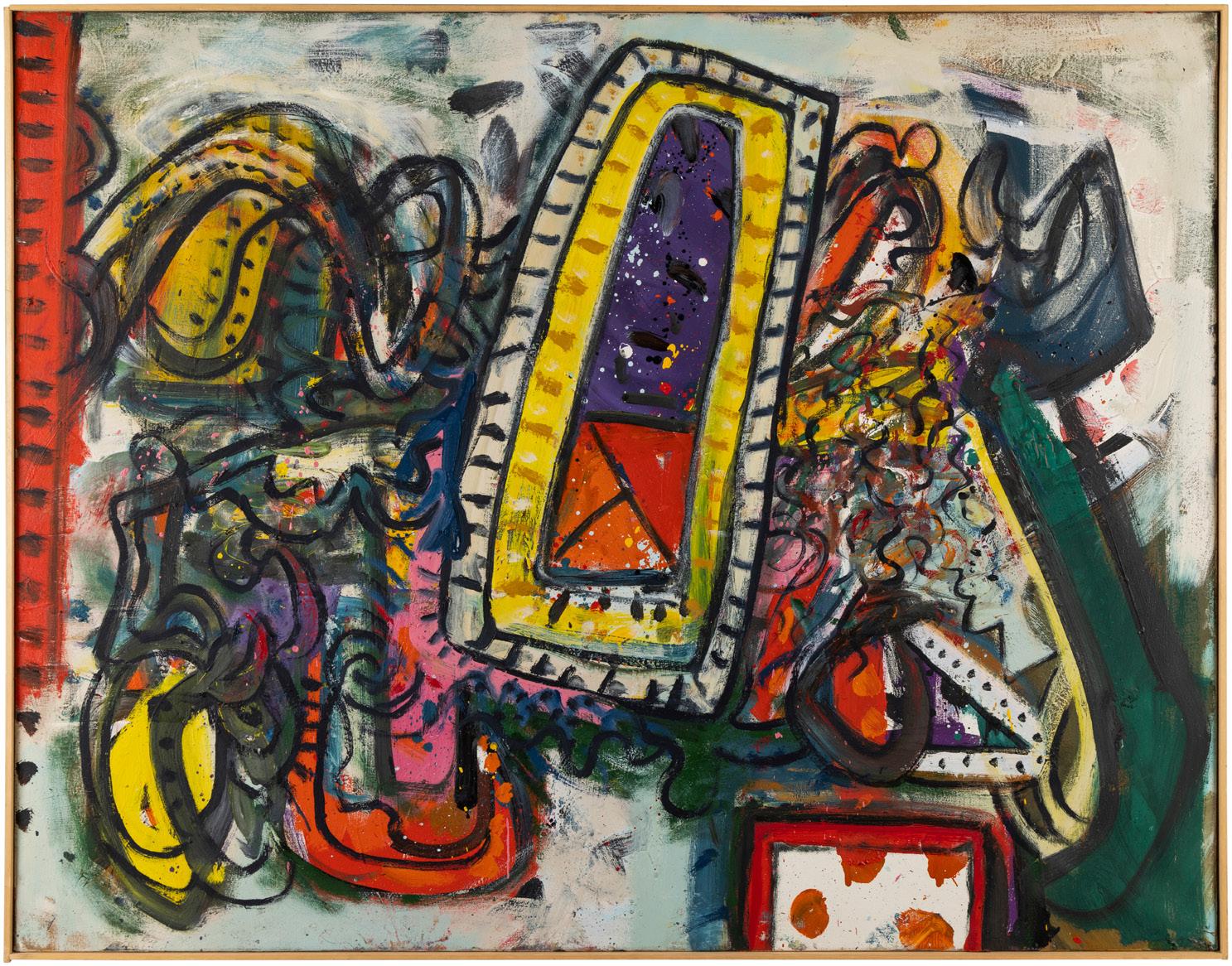
171 § ALAN DAVIE C.B.E., R.A., H.R.S.A. (BRITISH 1920-2014) ANGEL’S HIDING PLACE, OPUS O.592A, 1968 signed, titled, dated and inscribed (to reverse), oil on canvas 122cm x 152.5cm (48in x 60in) Exhibited: Gimpel Fils, London, Alan Davie: Major Works of the Sixties, 3 October - 11 November 1989, cat. no. 12 (illustrated). £15,000-20,000 127
COKER (BRITISH 1926-2004) LANDSCAPE
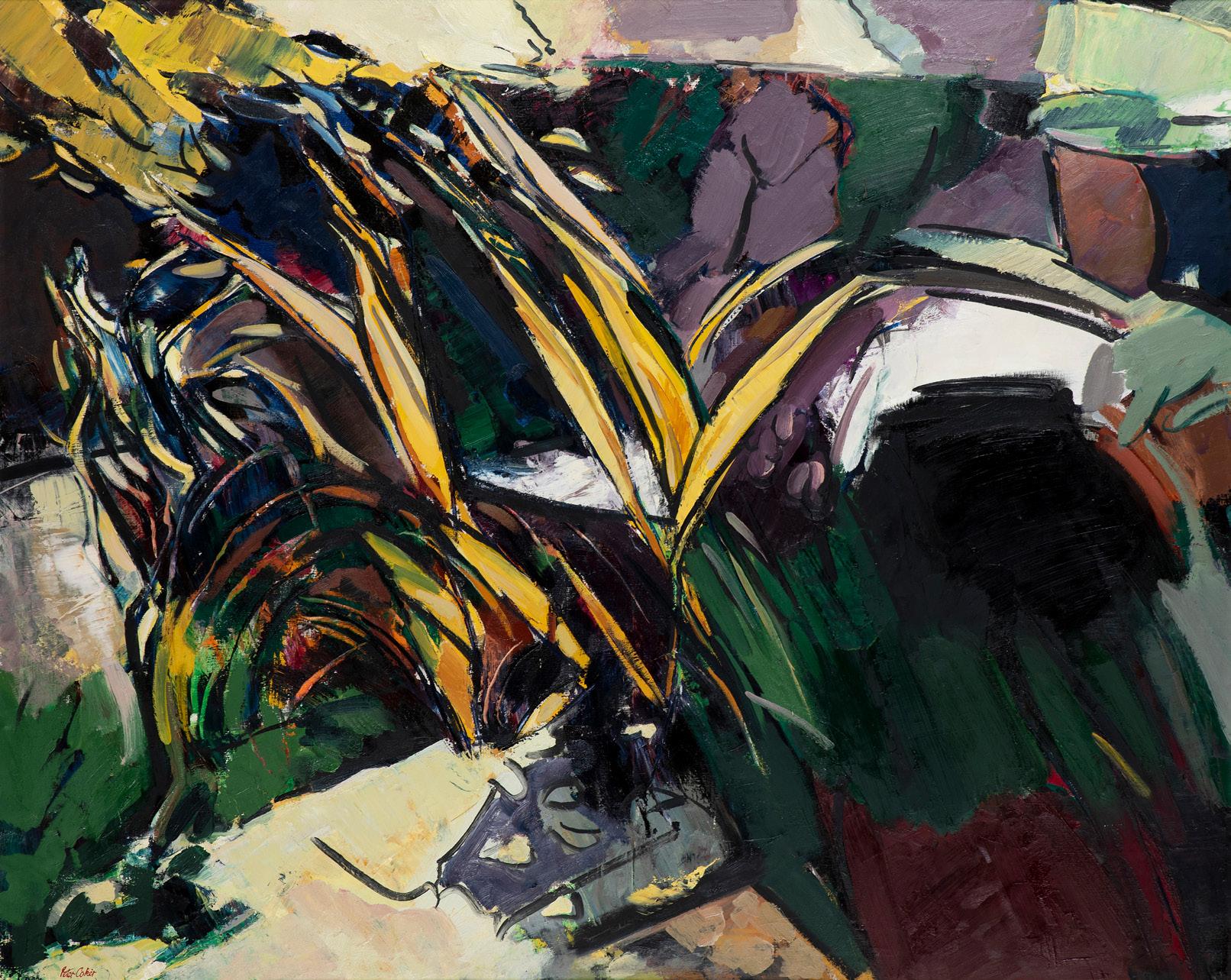
(lower left),
on
ANTHONY WHISHAW R.A. (BRITISH 1930-)
SPANISH GORGE, 1964
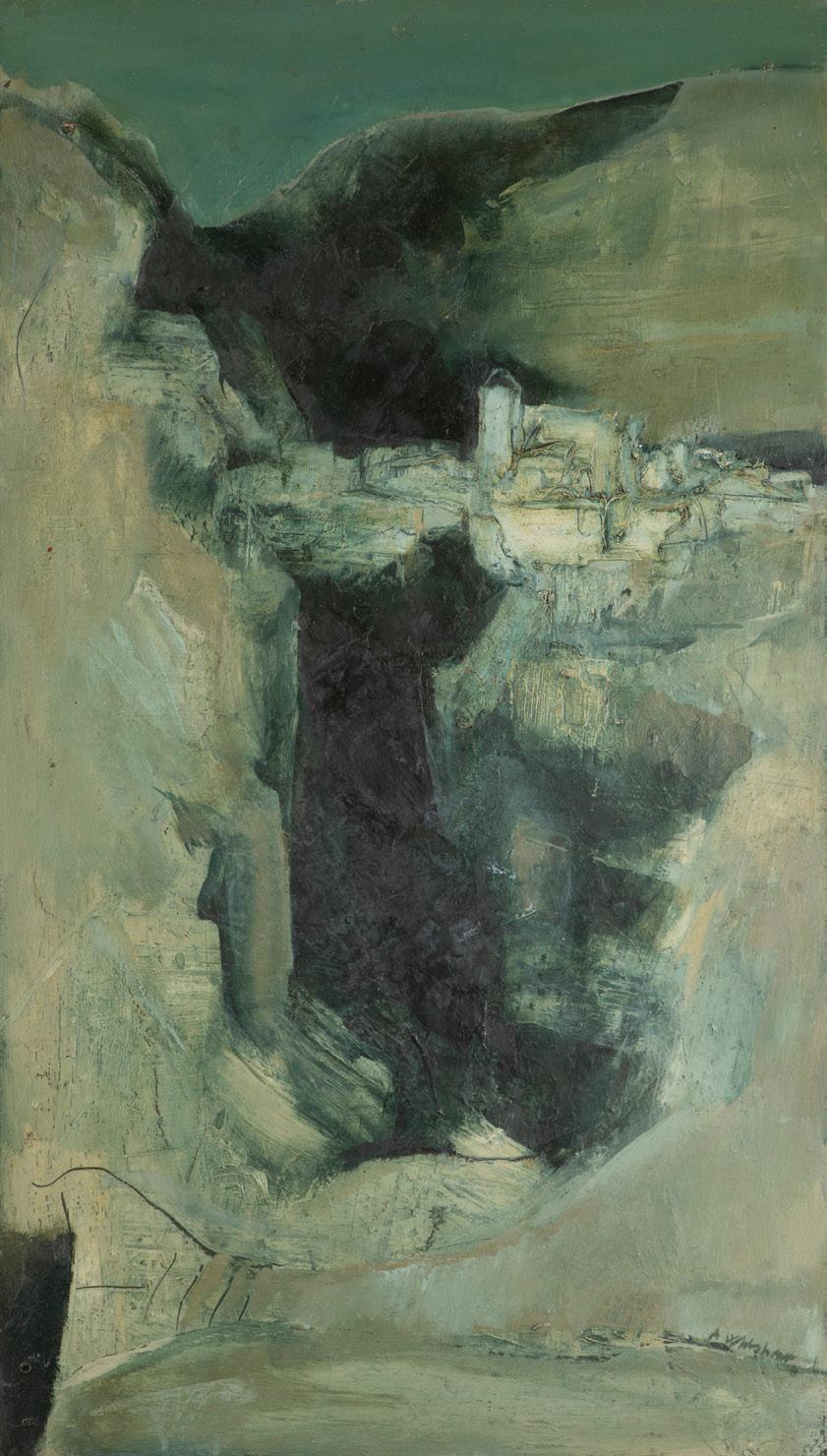
and dated (lower
on
172 § PETER
signed
oil
canvas 129.5cm x 161.5cm (51in x 63 1/2in) £2,000-3,000 173 §
signed
right), oil
board 106.5cm x 61cm (42in x 24in) £700-1,000 128 Other fees apply in addition to the hammer price: see the ‘Buyer’s Guide’ section on page 6
174 §
WILLIAM GEAR R.A., F.R.S.A., R.B.S.A. (BRITISH 1915-1997)
STILL LIFE WITH BOTTLE, 1955 signed and dated (lower right), signed, titled and dated ‘Aug. ‘55’ (to reverse), oil on canvas 49cm x 59.5cm (19 1/4in x 23 3/8in)
Provenance: Private Collection, London, acquired directly from the artist.
£6,000-8,000
William Gear was relatively rare amongst British artists of the 1950s in his being a fully paid-up member of a European avantgarde movement: in his case, CoBrA, named after the three key sites of affiliation: Copenhagen, Brussels and Amsterdam.
Gear had spent the years immediately after the war in Paris, still just about the centre of the art world (before New York began to draw artists across the Atlantic) and had become entwined in what was known as the Ecole de Paris, where European painting started its own journey towards abstraction. He became friends with Nicholas de Staël and there is a definite confluence between the two artists’ work in the early 1950s, as can be seen in Still Life with Bottle. An image that is nominally figurative (depicting objects in a three-dimensional space) but which is
really about abstract values – the interplay of colour and form, creating a procession for the eye to travel around the painting, which in turn asserts its own flatness – its artificiality – in the heavy slabs of colour applied with a palette knife. The abstract nature of the work is further enhanced by its loose orthogonal structure, and Giorgio Morandi distilled through Piet Mondrian, so it could – if one wanted – be read as entirely abstract, the direction of travel for Gear himself and his work of the 1960s.
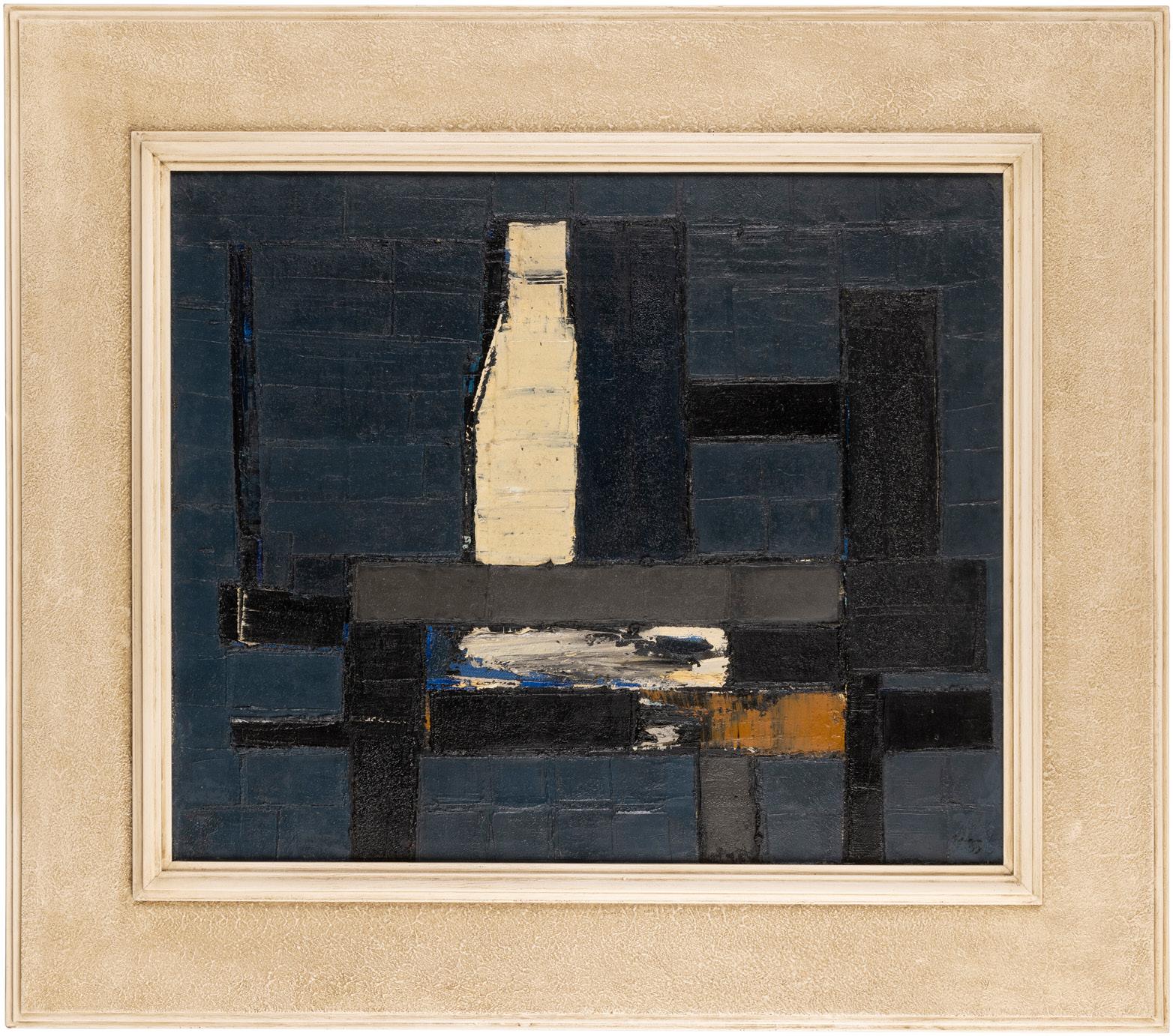
Gear’s palette in the mid-50s is often dominated by these steely blues, flat greys and blacks – close harmonies of tone through which Gear creates subtle shifts of mood. Here his work comes close to another friend from the Ecole de Paris, Pierre Soulages, himself a master of the emotive oscillation between black and blue.

129
175 Y
NIELS MØLLER (DANISH 1920-1982) FOR J. L. MOLLER MODELS
SET OF EIGHT CHAIRS
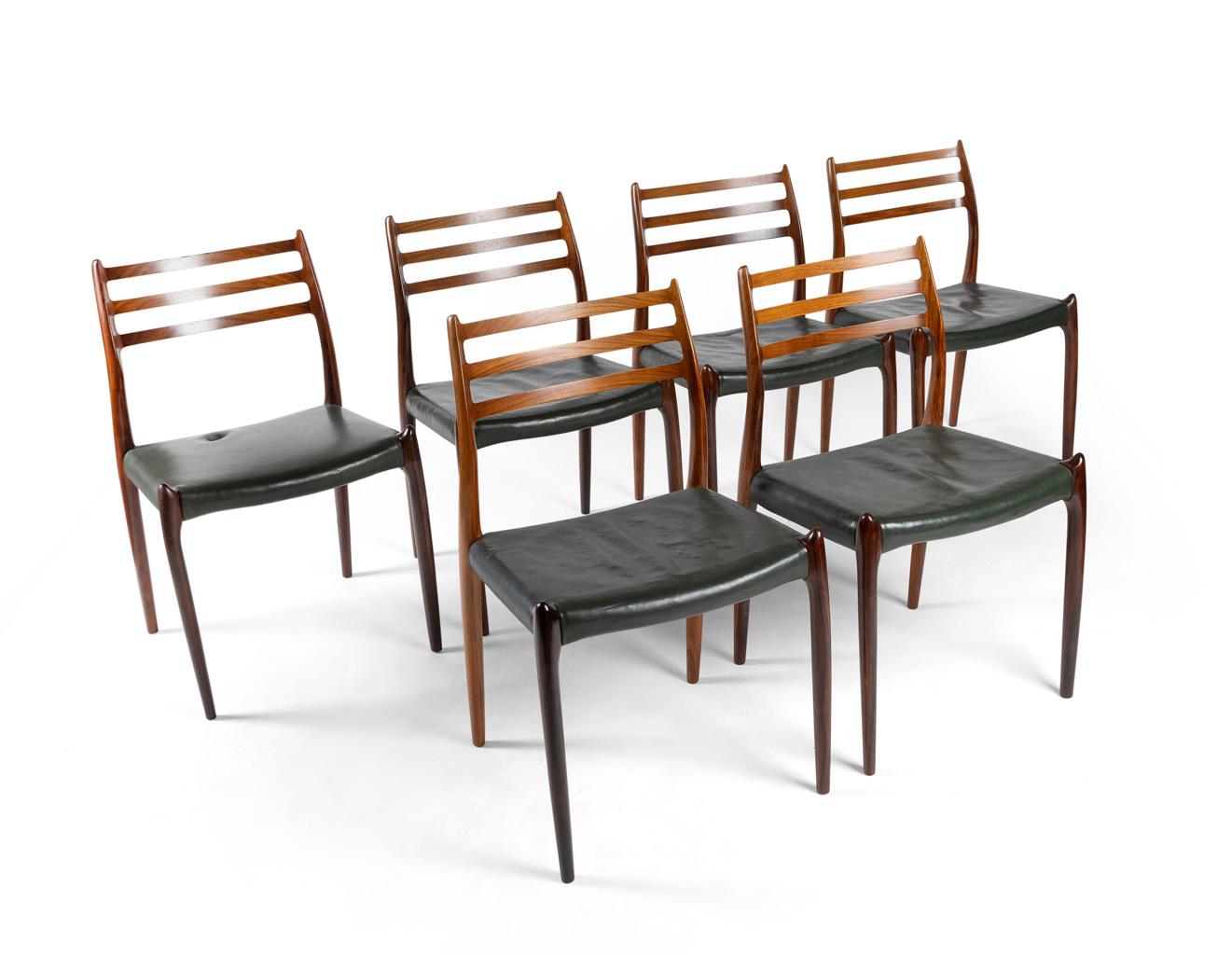
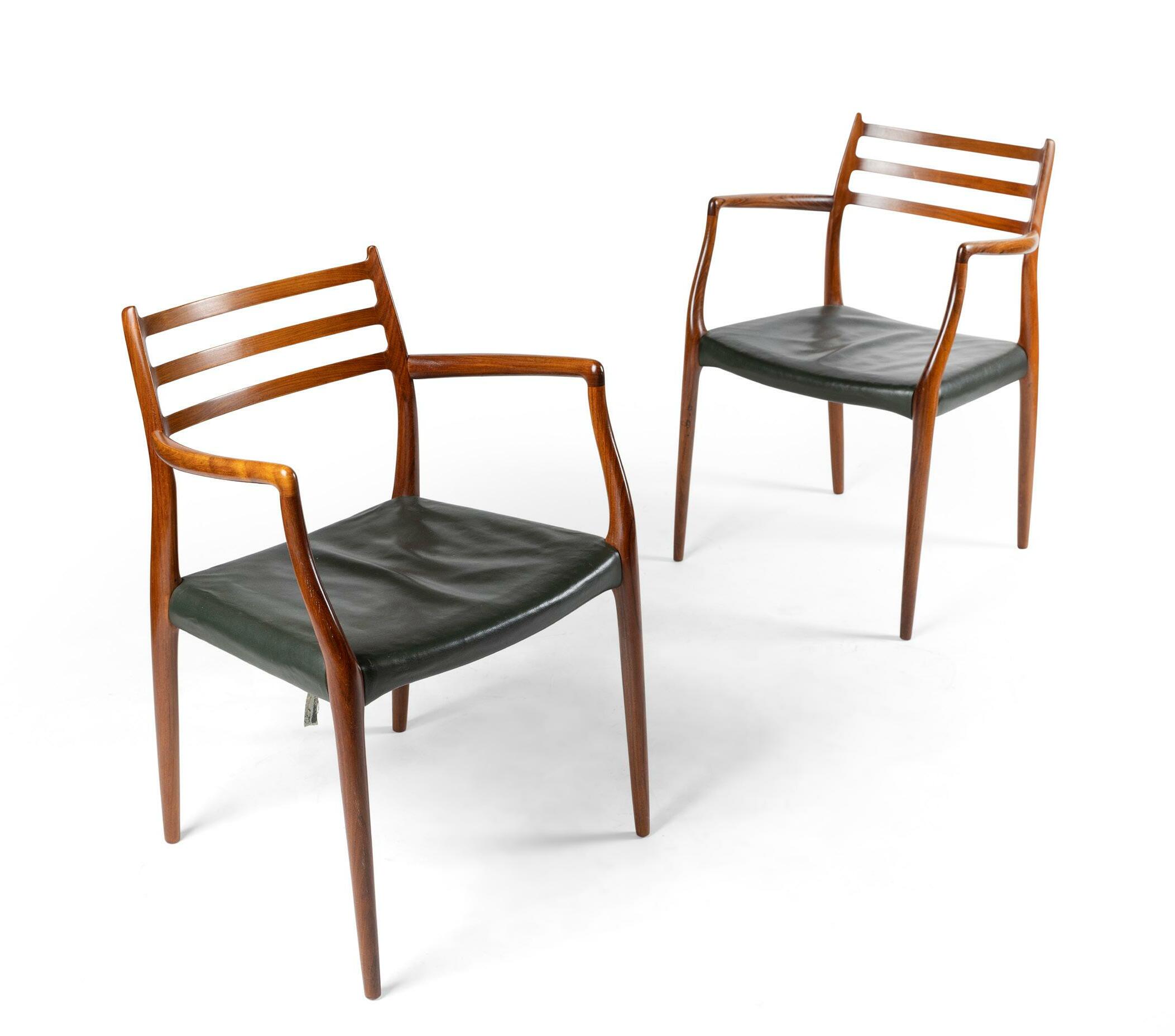
model no. 78, each branded with manufacturer’s marks, rosewood and green leather, comprising six side chairs and two armchairs (8) armchairs: 80.5cm high, 55cm wide (31 5/8in high, 21 5/8in wide); side chairs: 80.5cm high, 48.5cm wide (31 5/8in high, 19in 1/8in wide)
Note: Sold in compliance with CITES regulations, with (non-transferable) Transaction Specific Certificate no. 621188/03. £3,000-5,000
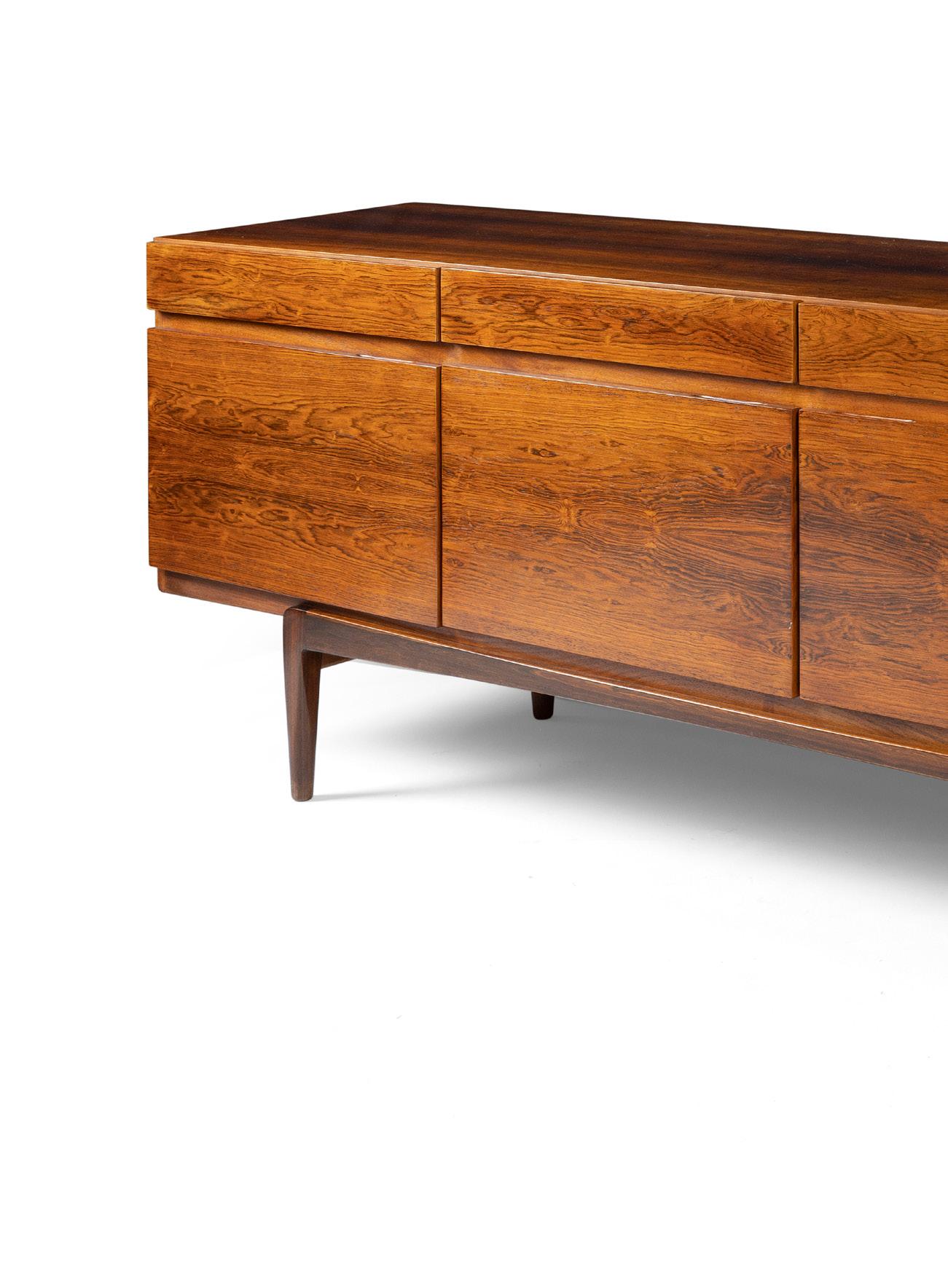
130
Y
IB KOFOD-LARSEN (DANISH 1921-2003) FOR FAARUP MØBELFABRIK
SIDEBOARD
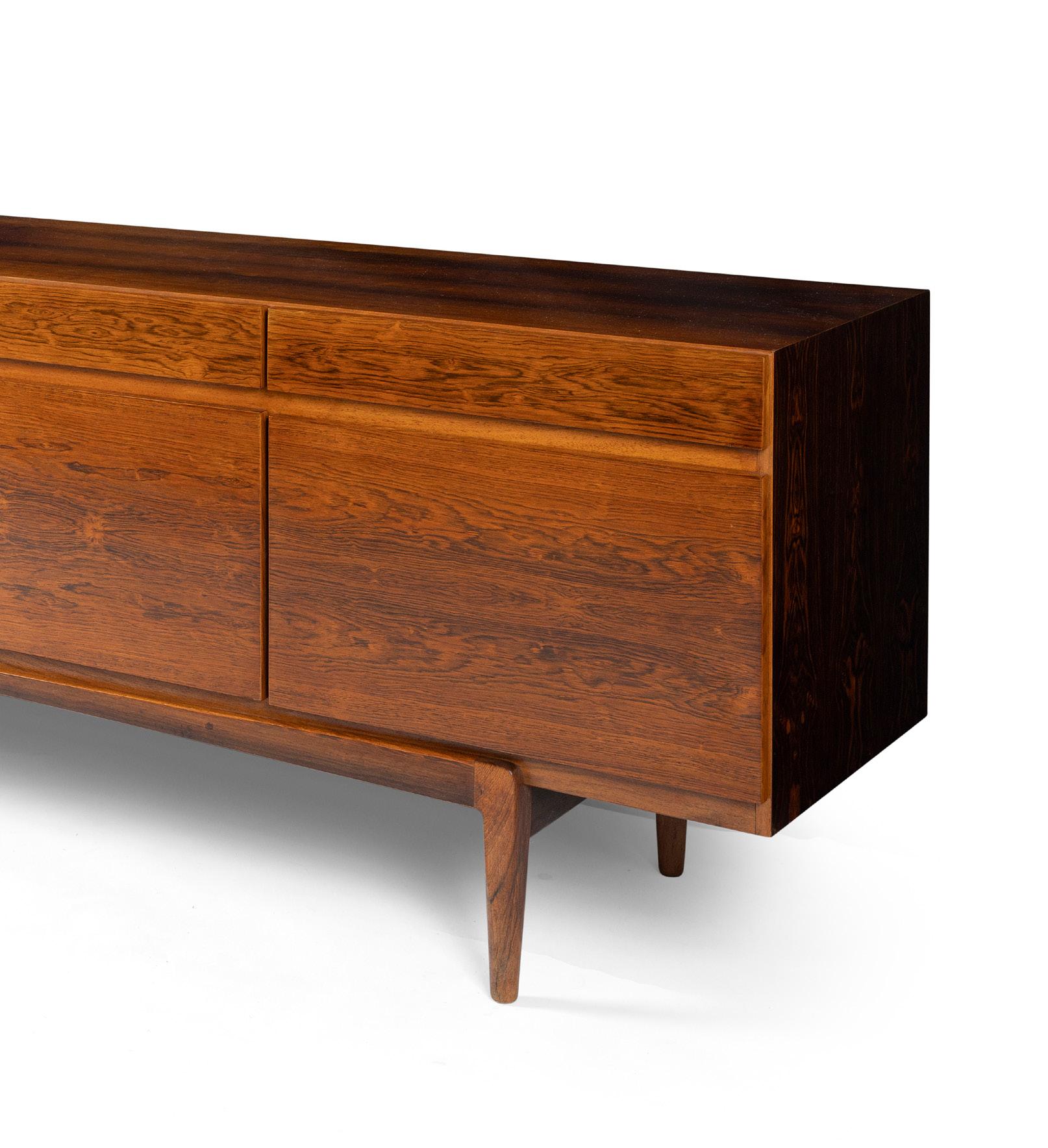
model no. FA66, with manufacturer’s label, rosewood
77.2cm high, 230cm wide, 50cm deep (30 3/8in high, 90 1/2in wide, 19 1/2in deep)
Note: Sold in compliance with CITES regulations, with (non-transferable) Transaction Specific Certificate no. 621188/01.
177 Y JOHN MORTENSEN FOR HELTBORG MØBELFABRIK EXTENDING DINING TABLE
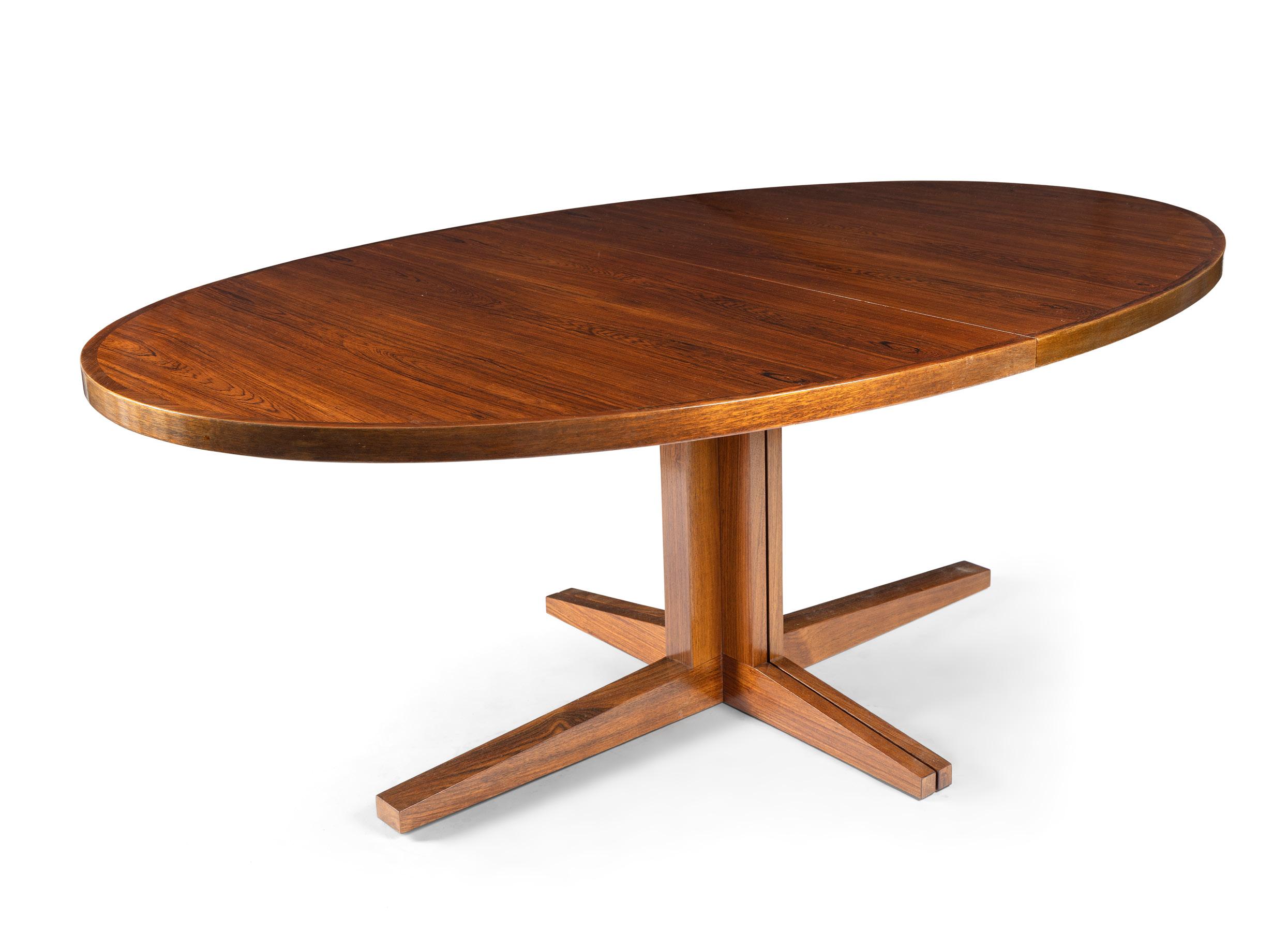
model no. HM55, rosewood
71.5cm high, 289cm long, 122.5cm deep (28 1/4in high, 113 3/4in long, 48 1/4in deep) fully extended with two leaves
Note: Sold in compliance with CITES regulations, with (non-transferable)
Transaction Specific Certificate no. 621188/02.
£1,200-1,800
176
£3,000-5,000
131 Other fees apply in addition to the hammer price: see the ‘Buyer’s Guide’ section on page 6
ARNE VODDER (DANISH 1926-2009)
FOR FRANCE & SON
SET OF EIGHT CHAIRS
model no. 203, comprising two armchairs and six side chairs, teak, with vinyl seats and woven backs, each with maker’s label (8)
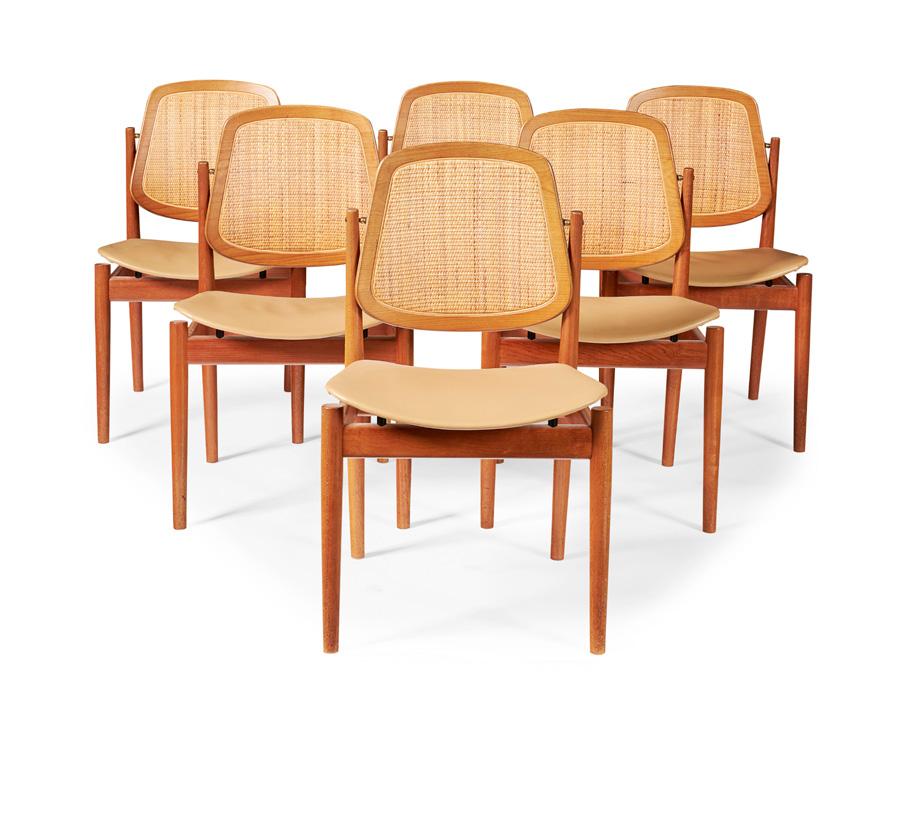
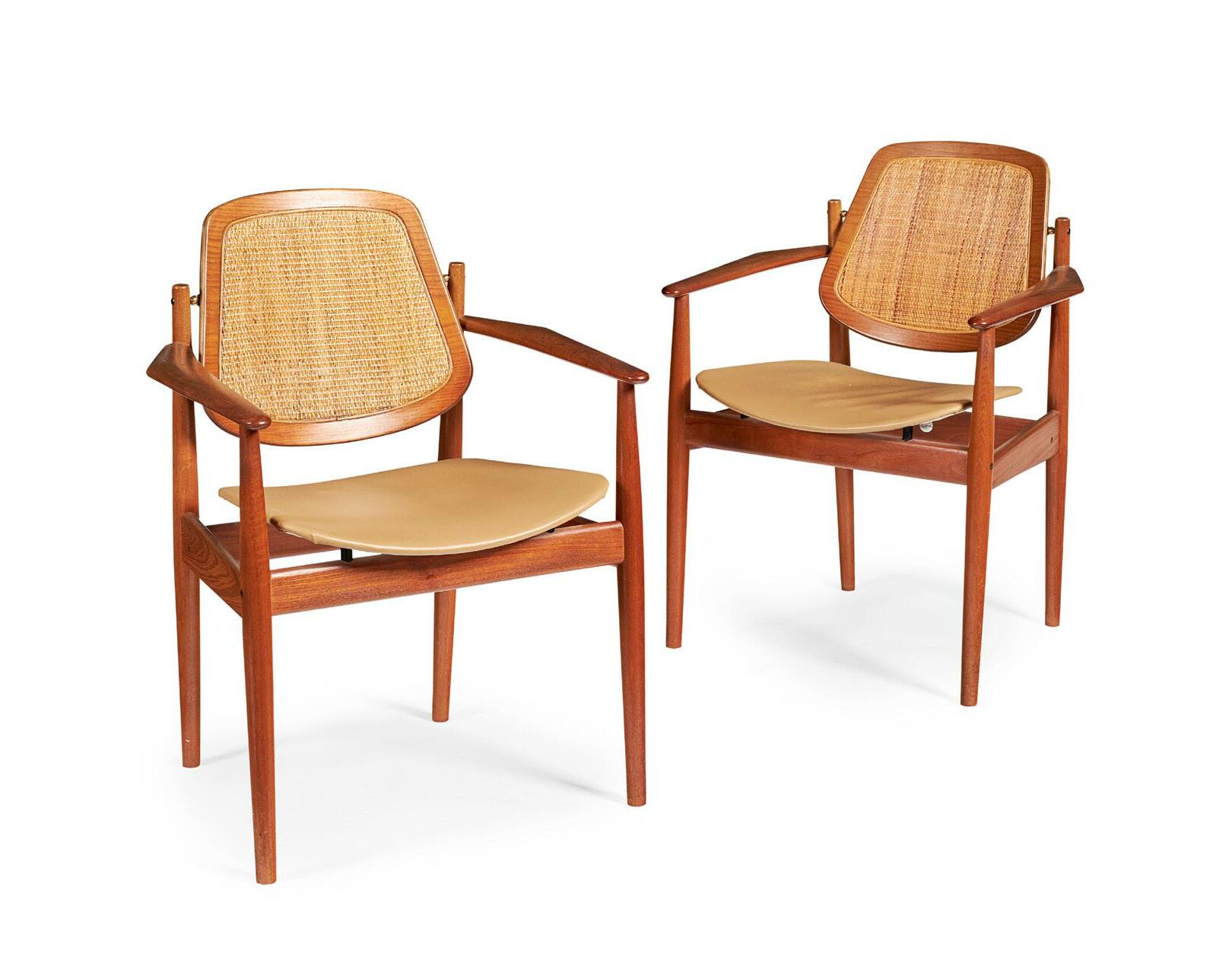
armchairs: 84.5cm high, 62cm wide, 46.5cm deep (33 1/4in high, 24 3/8in wide, 18 1/4in deep); side chairs: 84.5cm high, 51cm wide, 46cm deep (33 1/4in high, 20in wide, 18 1/8in deep)
FINN JUHL (DANISH 1912-1989) FOR FRANCE & SON EXTENDING DINING TABLE
model no. FD540, including two leaves, the leaves stamped ‘553’ 73cm high, 286cm long extended / 186cm closed, 100cm deep (28 3/4in high, 112 5/8in long extended / 73 1/4in closed, 39 3/8in deep)
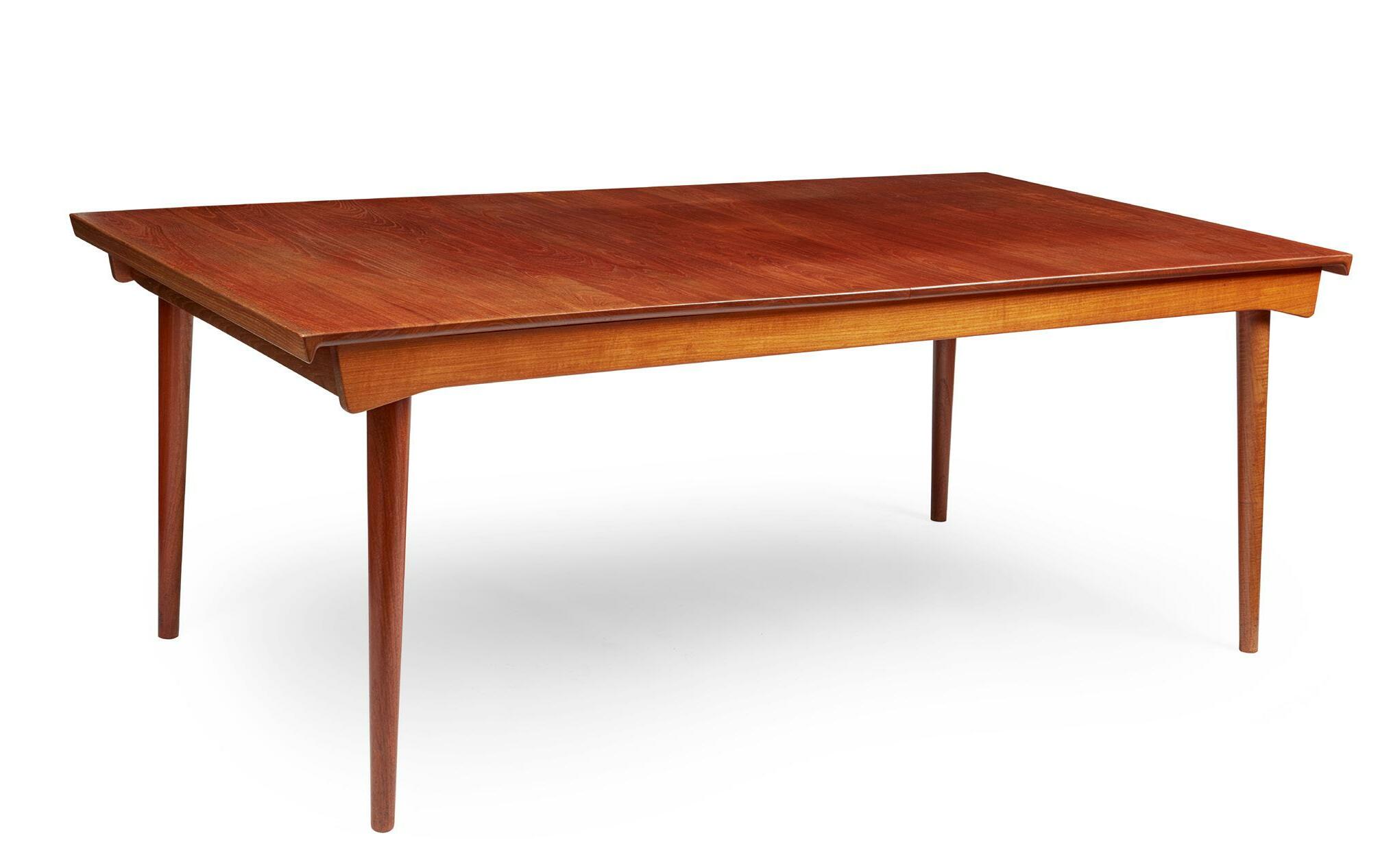
178
£1,000-2,000 179
£600-1,000 132 Other fees apply in addition to the hammer price: see the ‘Buyer’s Guide’ section on page 6
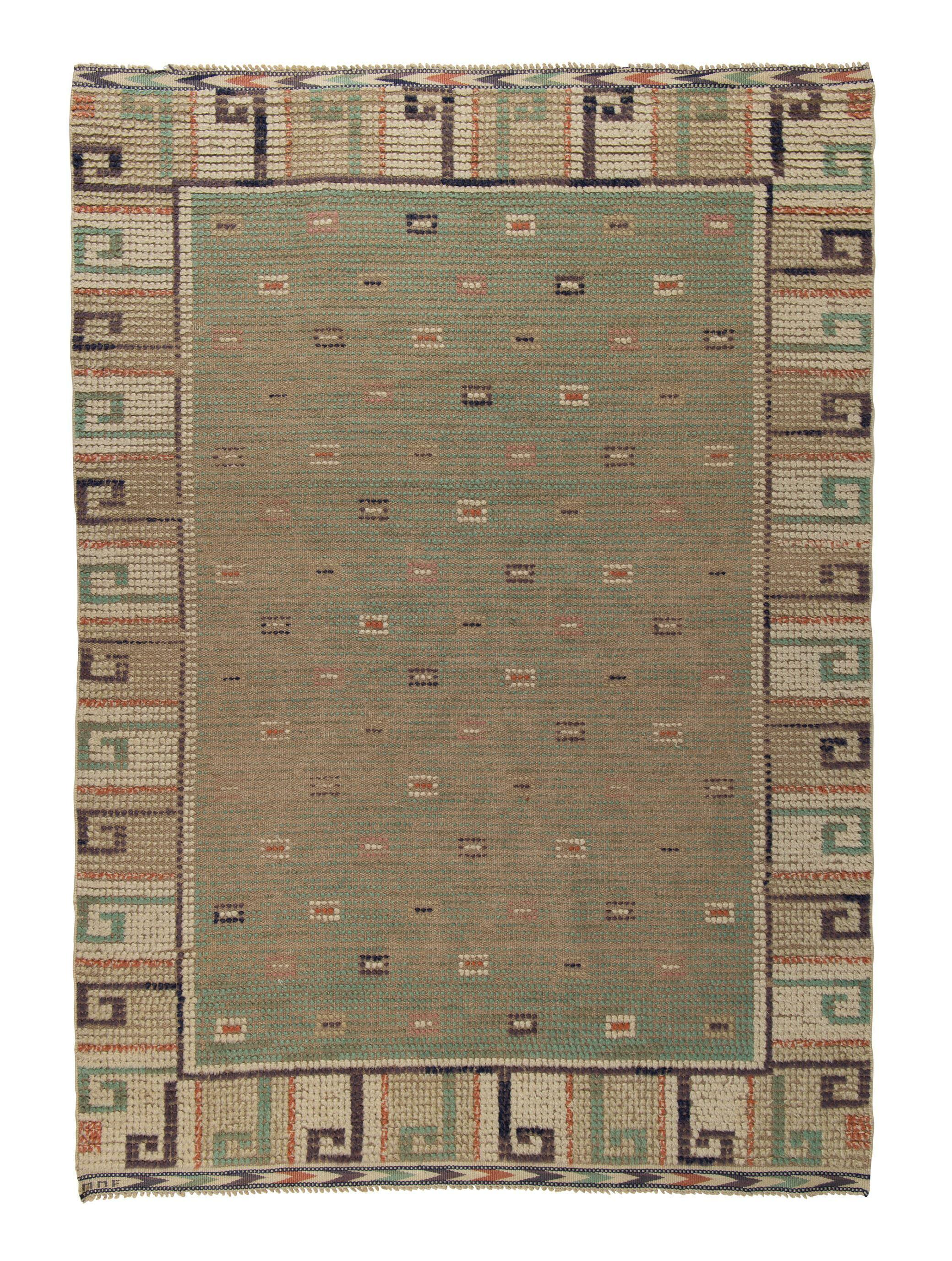
180 MÄRTA MÅÅS-FJETTERSTRÖM (SWEDISH 1873-1941) RUG signed ‘MMF’ (lower left), wool and linen 210cm x 150cm (82 1/2in x 59in) £2,000-3,000 133 Other fees apply in addition to the hammer price: see the ‘Buyer’s Guide’ section on page 6
181
PAAVO TYNELL (FINNISH 1890-1973) FOR TAITO OY, HELSINKI
PAIR OF WALL LIGHTS model no. 9414, each impressed manufacturer’s mark ‘OY TAITO AB’, brass and fabric shades (2) 73cm wide extended (28 3/4in wide) including shade £3,000-5,000
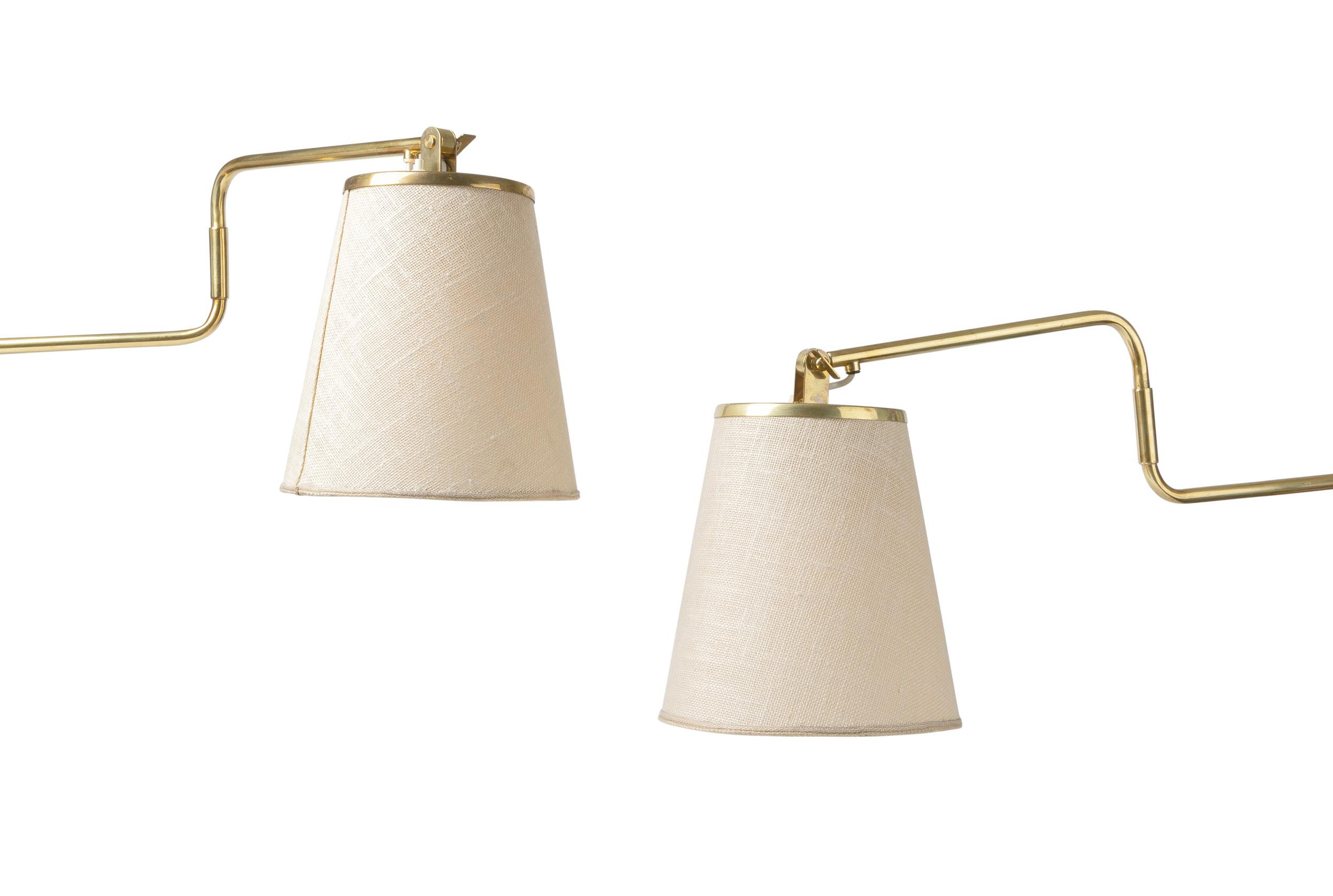
182
POUL KJAERHOLM (DANISH 1929-1980)
FOR E. KOLD CHRISTENSEN ‘PK22’ LOUNGE CHAIR, CIRCA 1960 model EKC-22, steel and leather, stamped manufacturer’s mark to frame 70.5cm high, 63.5cm wide, 70cm deep (27 3/4in high, 25in wide, 25 1/2in deep) £800-1,200
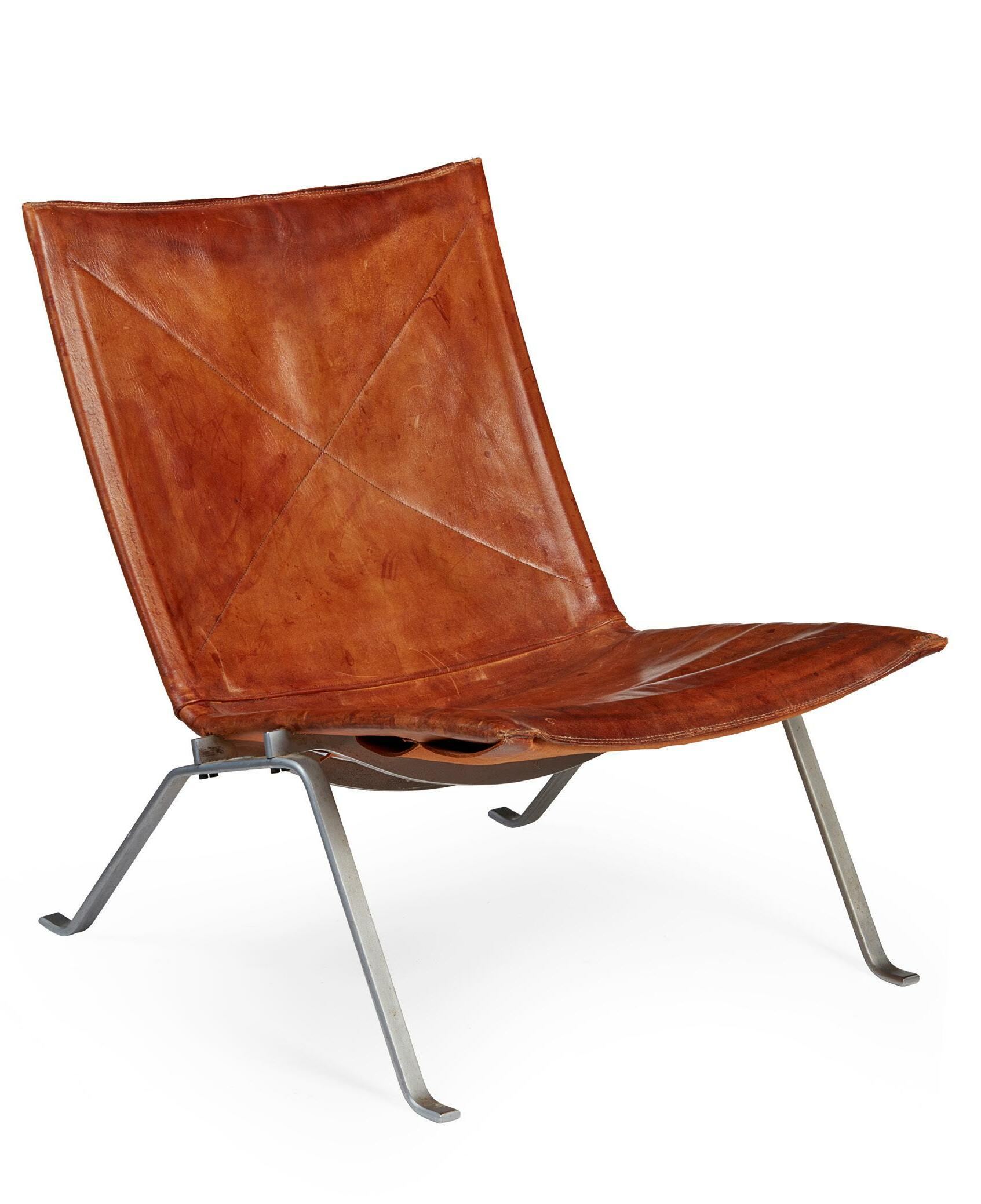
134
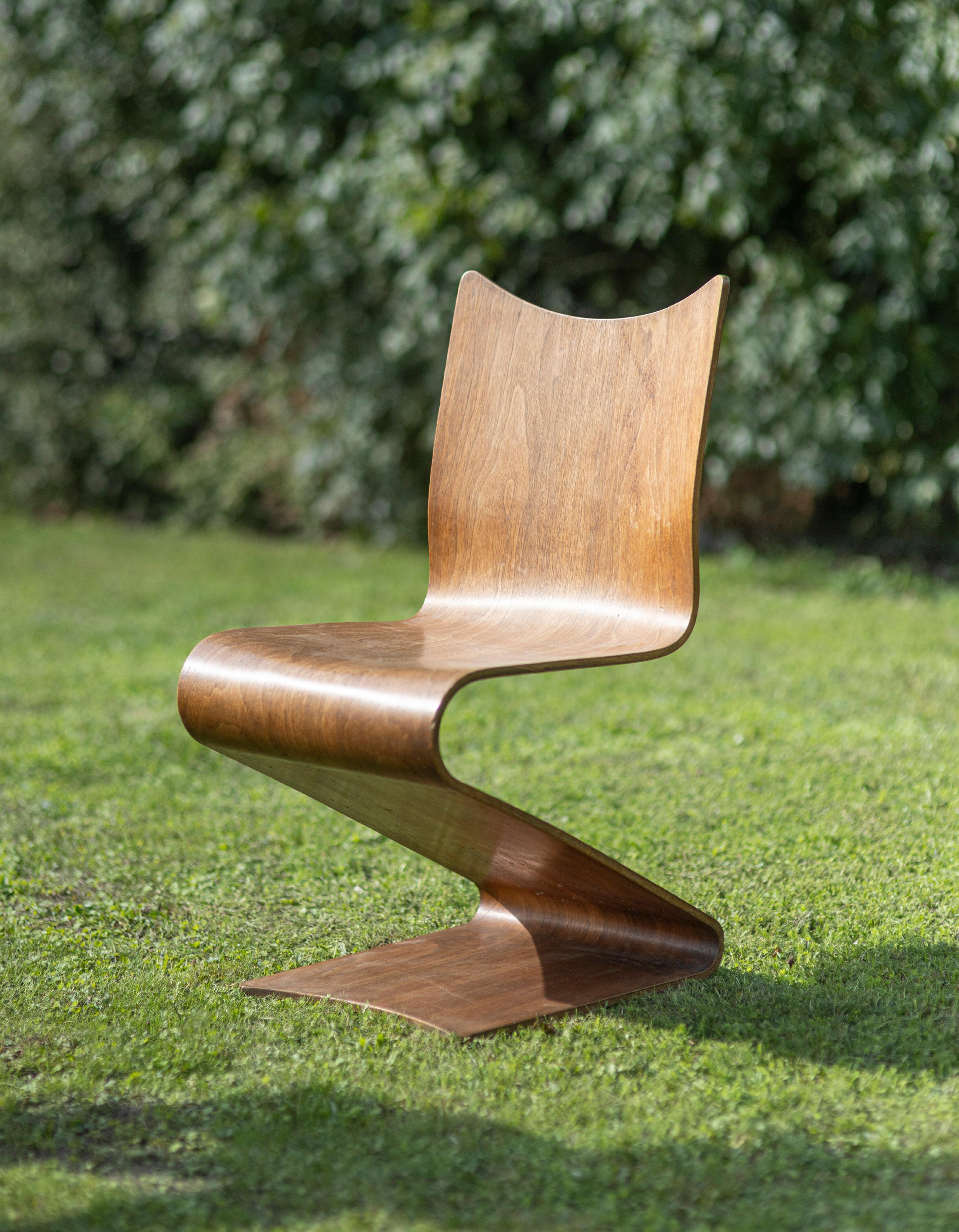
183 VERNER PANTON (DANISH 1926-1998) FOR A. SOMMER, GERMANY S-CHAIR, DESIGNED 1956 model no. 275, bent and moulded plywood 83cm high, 41.5cm wide (32 5/8in high, 16 3/8in wide) Literature: Von Vegesack, Alexander, and Mathias Remmele, Verner Panton: The Collected Works, Weil am Rhein 2000, p. 249 (another example illustrated in black and white). £5,000-7,000 135 Other fees apply in addition to the hammer price: see the ‘Buyer’s Guide’ section on page 6
184 KAY BOJESEN (DANISH 1886-1958)
DACHSHUND stamped ‘Kay Bojesen, copyright Denmark’ to front legs, teak 15cm high, 25cm long (5 7/8in high, 9 7/8in long)
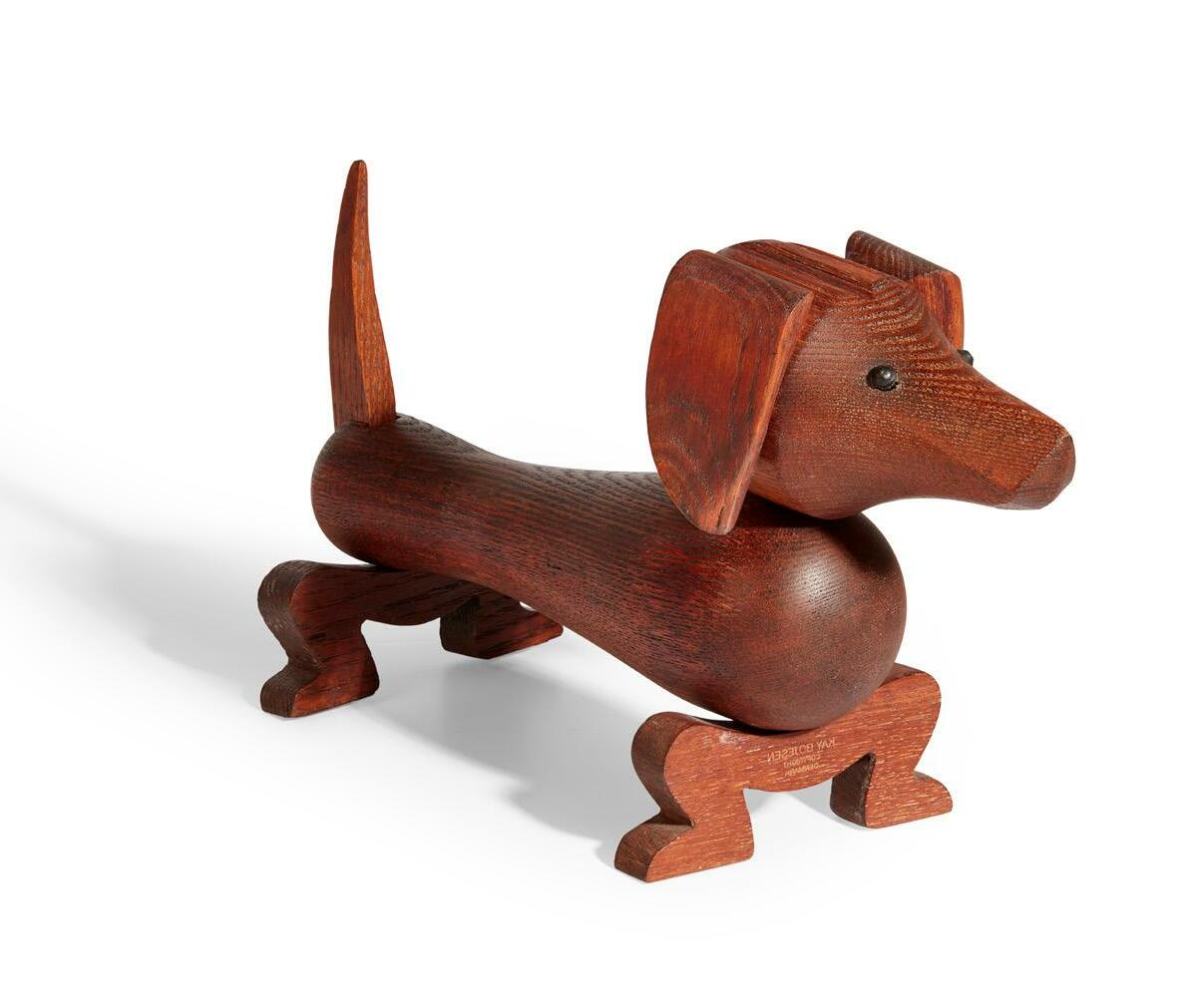
185 GUIDO GAMBONE (ITALIAN 1909-1969)
BOWL AND LIDDED JUG each signed ‘GAMBONE’, stoneware (2)
Bowl: 16.5cm diameter (6 1/2in diameter); Jug: 16cm high (6 1/4in high) £500-700
186 KNUD KYHN (DANISH 1880-1969) FOR ROYAL COPENHAGEN
CALF AND ELEPHANT model nos. 21736 and 20198, each incised artist’s monogram and manufacturer’s marks, stoneware (2)
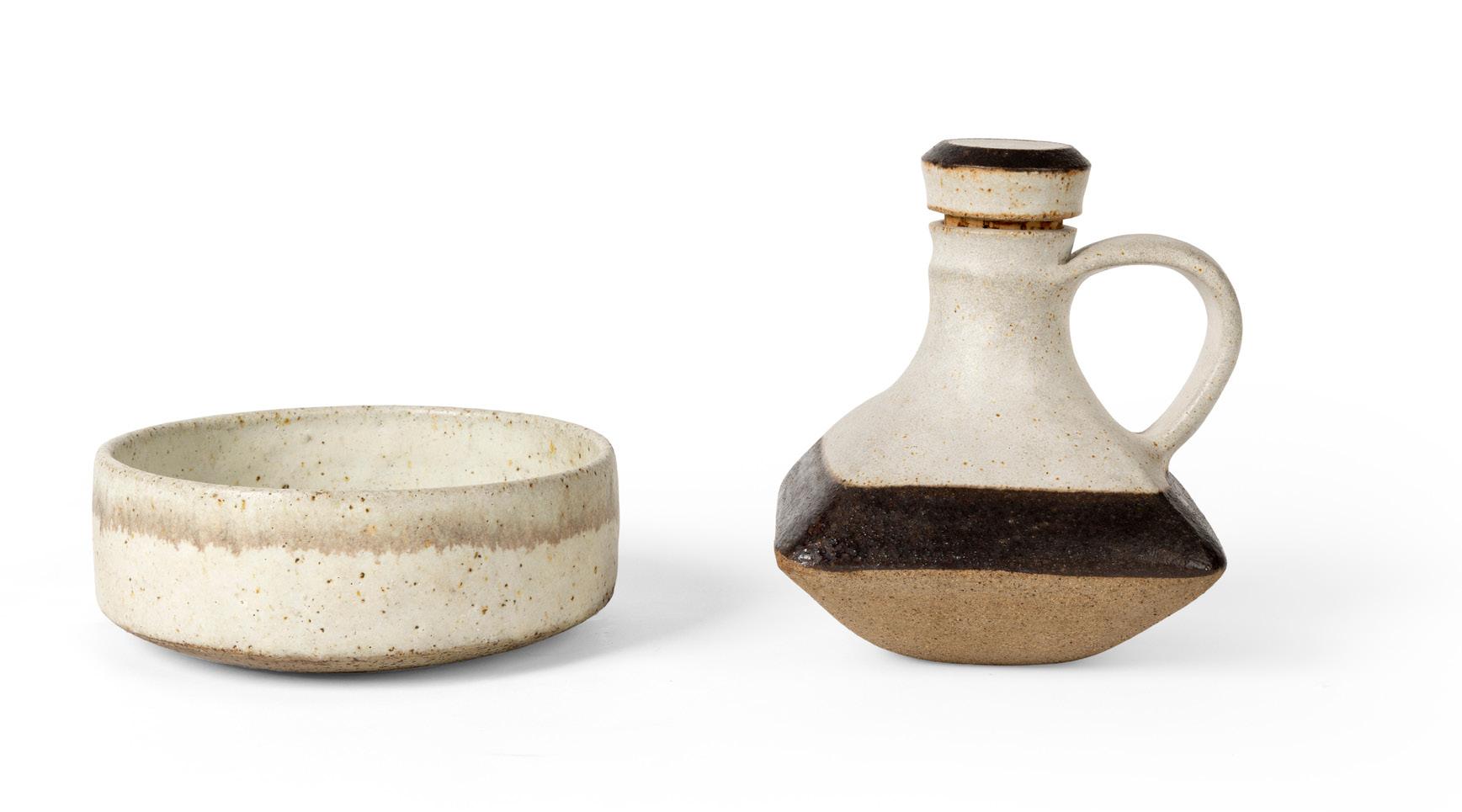
Calf: 18.5cm high, 24.5cm wide (7 1/4in high, 9 5/8in wide); Elephant: 19.5cm high, 22.5cm wide (7 5/8in high, 8 7/8in wide)
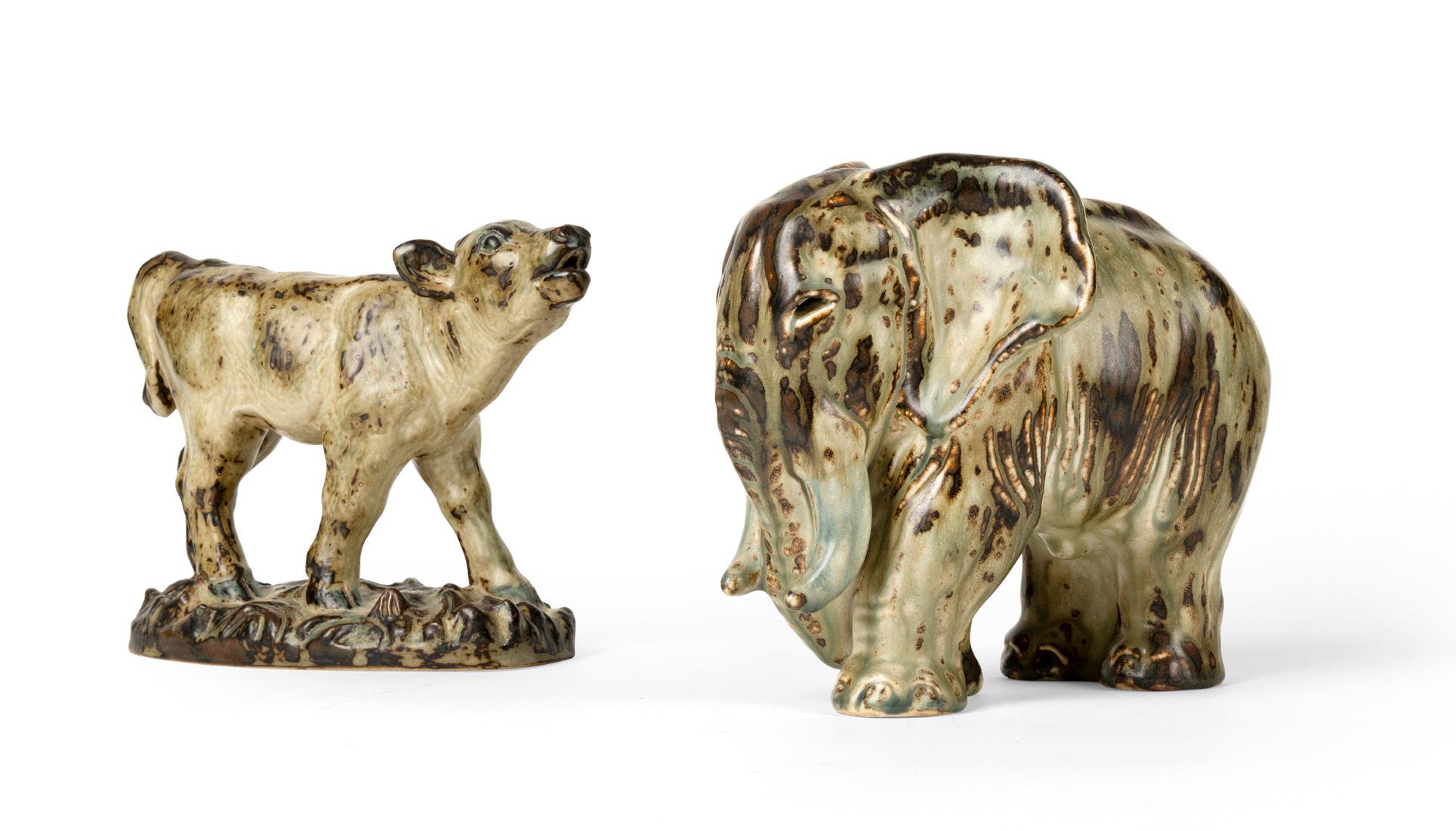
£300-500
£500-700
136 Other fees apply in addition to the hammer price: see the ‘Buyer’s Guide’ section on page 6
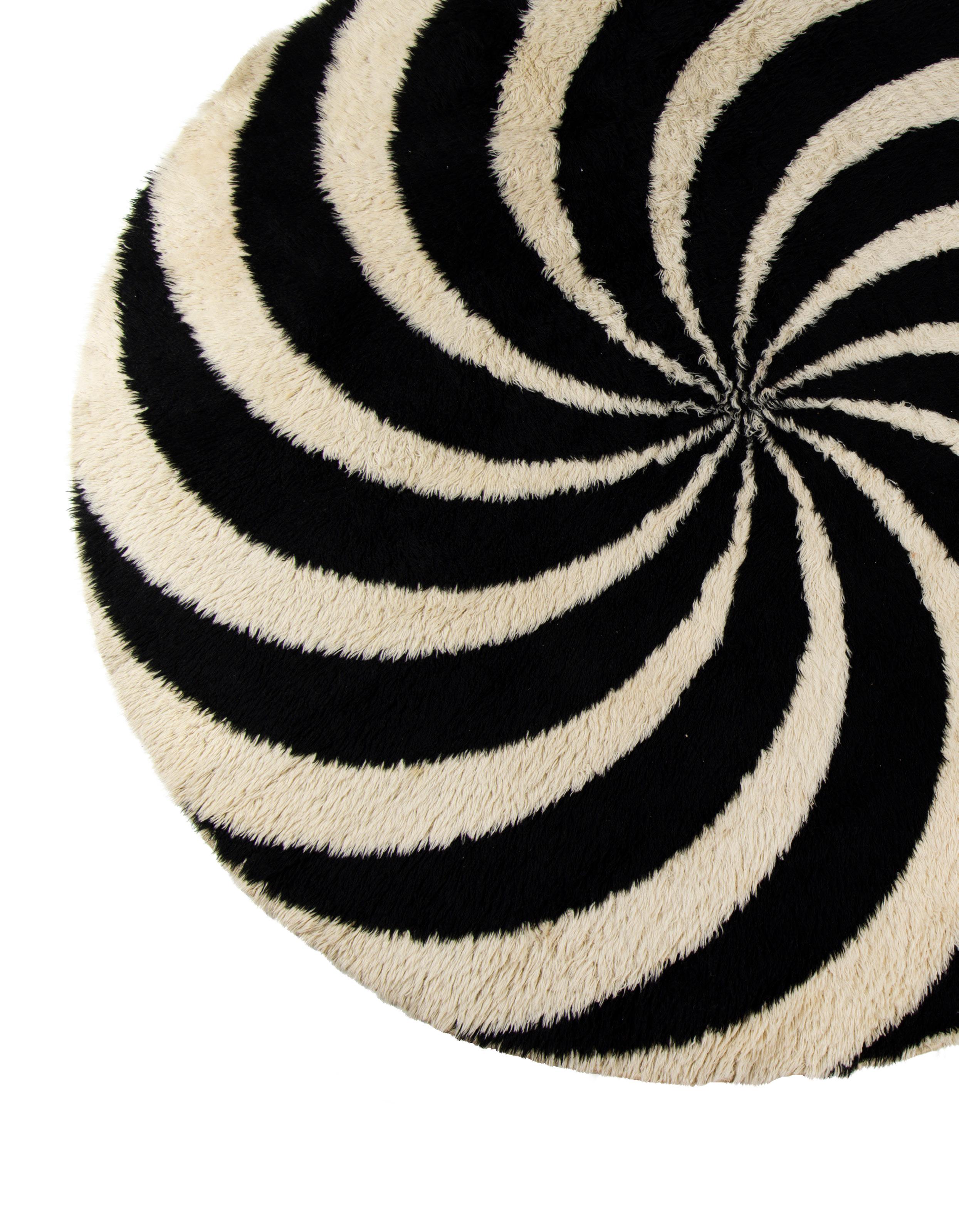
187 NANNA DITZEL (DANISH 1923-2005) FOR HALLING-KOCH DESIGN CENTER, COPENHAGEN ‘WINDMILL’ RUG, CIRCA 1965 tufted wool 246cm diameter (96 3/4in diameter) £4,000-6,000
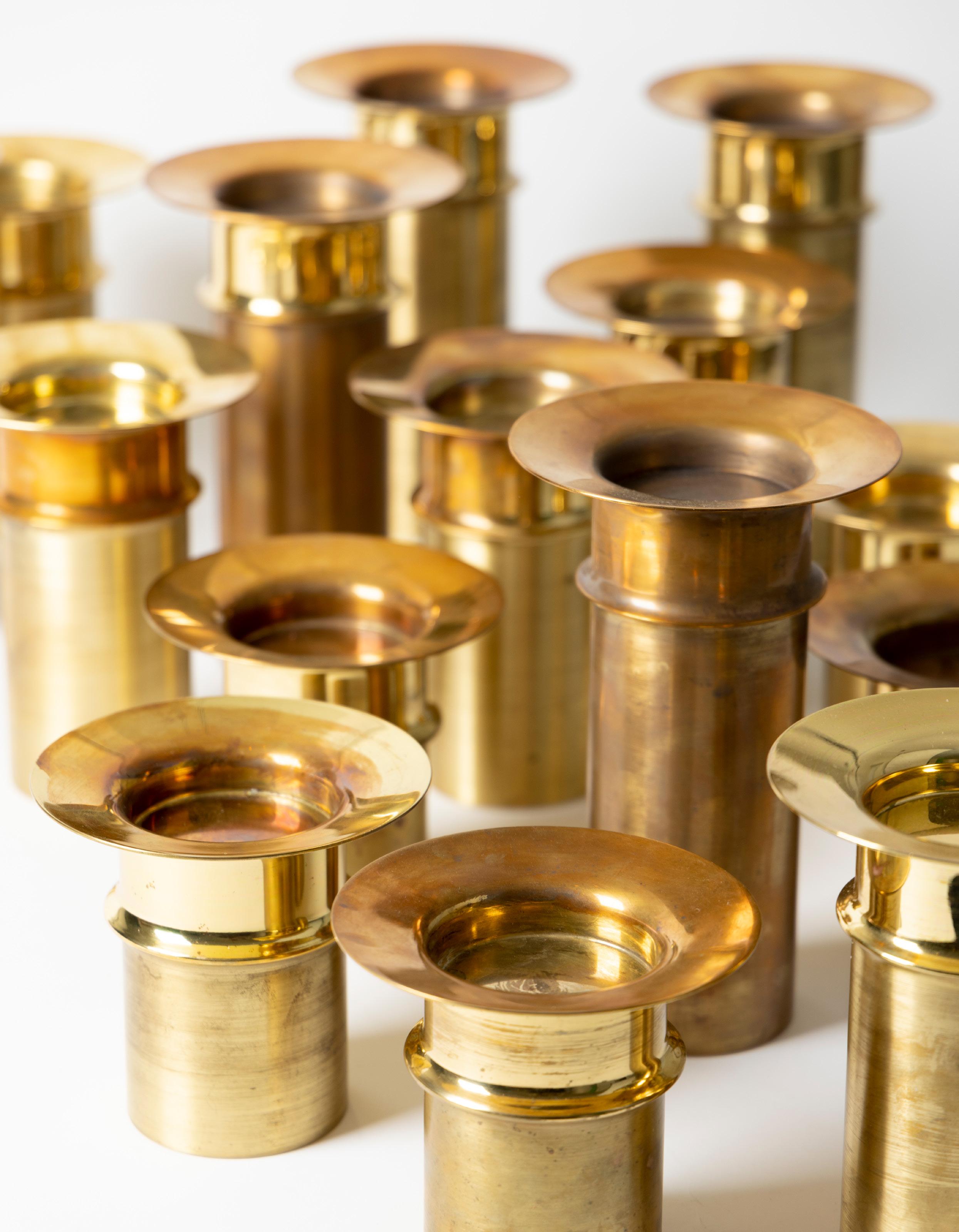
138
188
TAPIO WIRKKALA (FINNISH 1915-1985) FOR KULTAKESKUS OY
FIFTEEN ‘TW486’ CANDLESTICKS
each impressed ‘KULTAKESKUS OY / MADE IN FINLAND / DESIGN / TAPIO WIRKKALA’, one with monogram and date ‘4.8.79’ (to base), brass (15) the tallest 22.5cm high (8 7/8in high); mid-size 18cm high (7in high); smallest 13cm high (5 1/8in high) £2,000-3,000
189 §
JEAN BESNARD (FRENCH 1889-1958) VASE
earthenware, signed ‘Jean Besnard’ 16cm high (6 1/4in high) £500-700
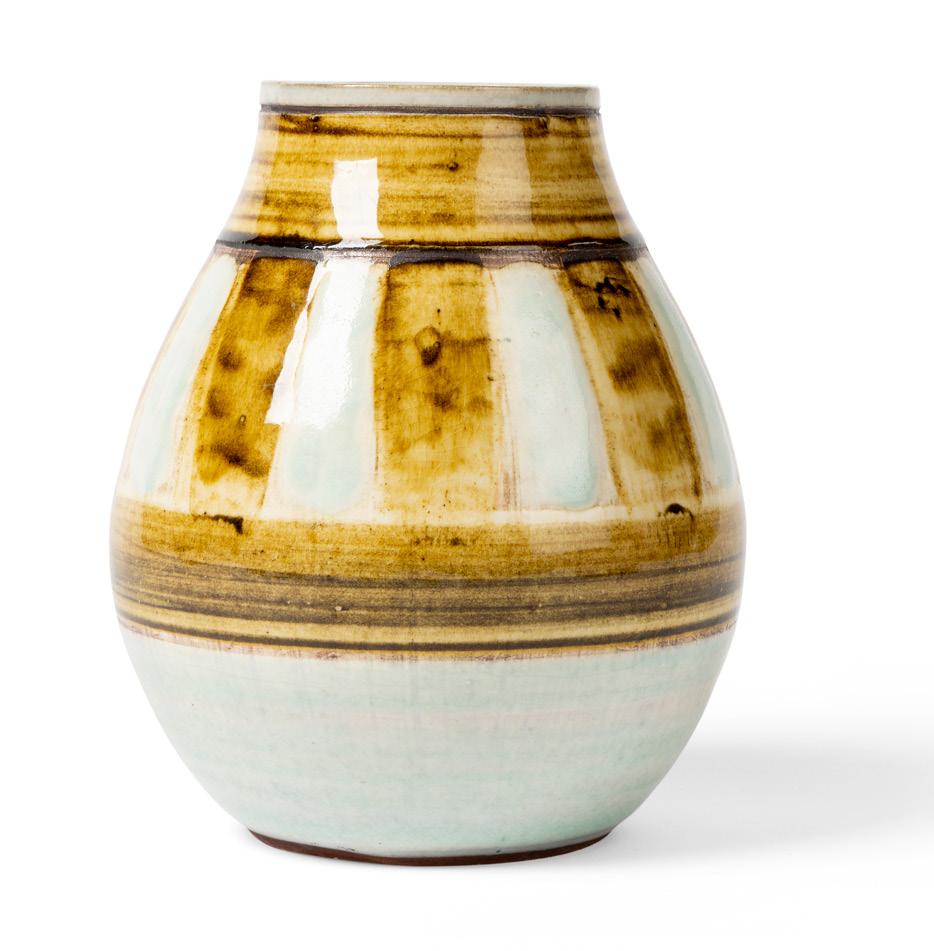
191
AXEL SALTO (DANISH 1889-1961) FOR ROYAL COPENHAGEN VASE
signed ‘SALTO’, manufacturer’s mark, stoneware with celadon glaze 24.5cm high (9 5/8in high) £600-800
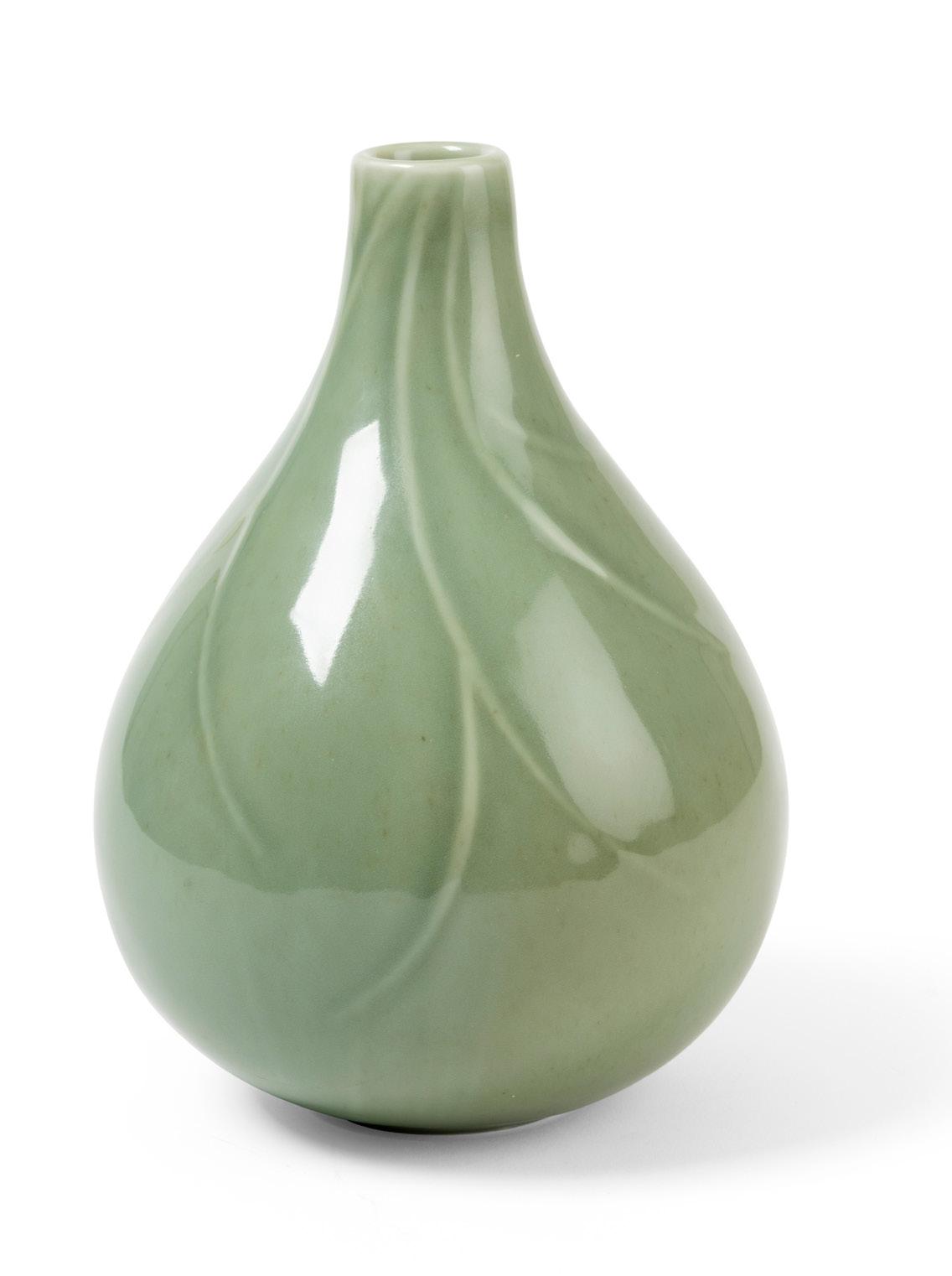
190
TIMO SARPANEVA (FINNISH 1926-2006) FOR VENINI KUKINTO VASE, 2001
signed, dated and inscribed (to base), with Venini label, glass 25cm high, 21cm wide (9 7/8in high, 8 1/4in wide) £600-800
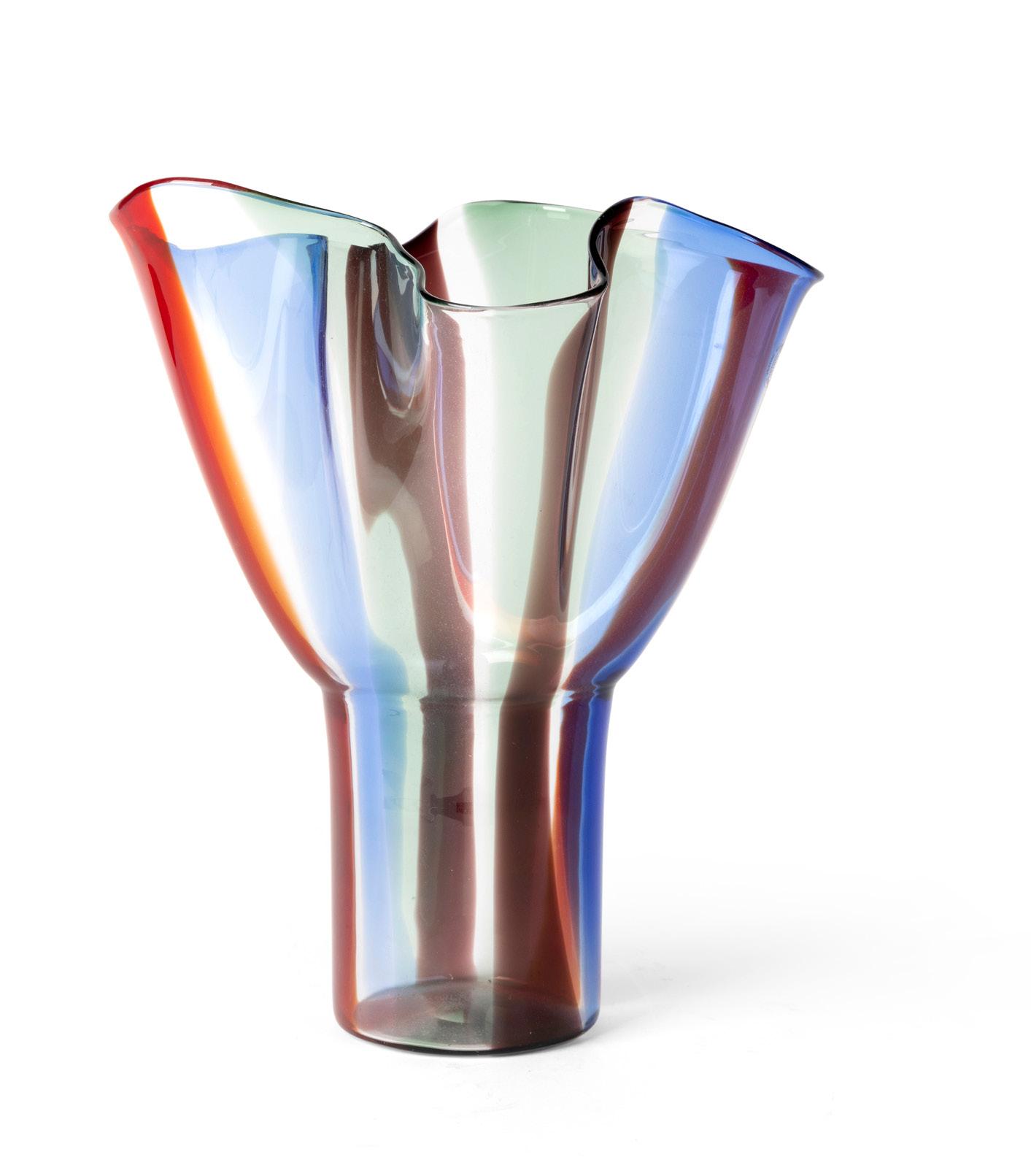
139 Other fees apply in addition to the hammer price: see the ‘Buyer’s Guide’ section on page 6
192
HENNING KOPPEL (DANISH 1918-1981)
FOR GEORG JENSEN BRACELET
no. 270, silver, stamped manufacturer’s marks and ‘925S DENMARK’ internal width
193 HENNING KOPPEL (DANISH 1918-1981)
FOR GEORG JENSEN TWO BROOCHES
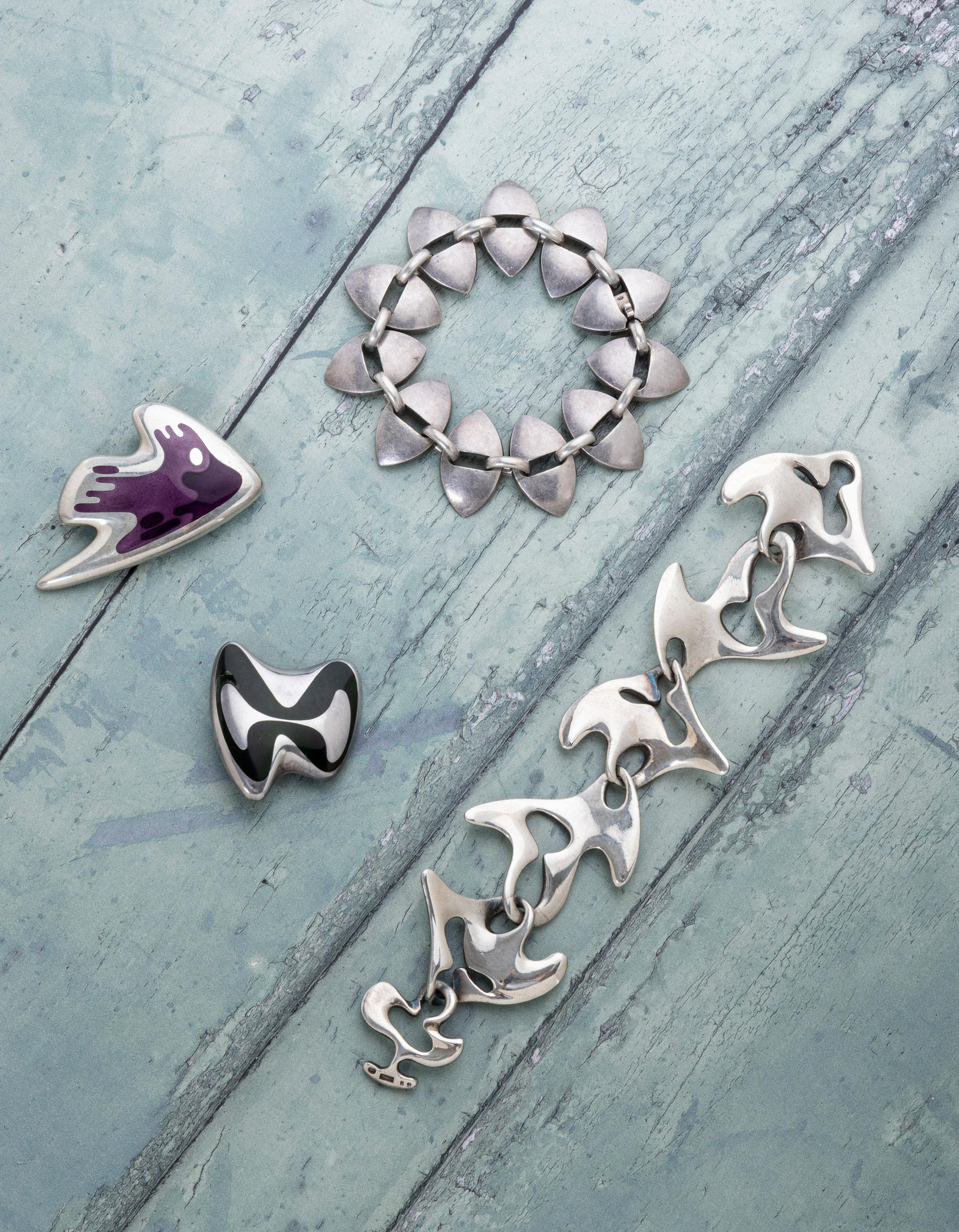
model nos. 307 and 315, silver and enamel, stamped manufacturer’s marks, ‘STERLING DENMARK’ and artist’s monogram (2) 6cm and 4.2cm wide (2 2/3in and 1 5/8in wide)
194
HENNING KOPPEL
(DANISH 1918-1981)
FOR GEORG JENSEN BRACELET
model no. 89, silver, stamped manufacturer’s mark, model number and ‘STERLING DENMARK’ 19cm long (7 1/2in long) £600-800
model
6cm (2 3/8in) £400-600
£250-350
140
195
ARNO MALINOWSKI (DANISH 1899-1976) FOR GEORG JENSEN BROOCH
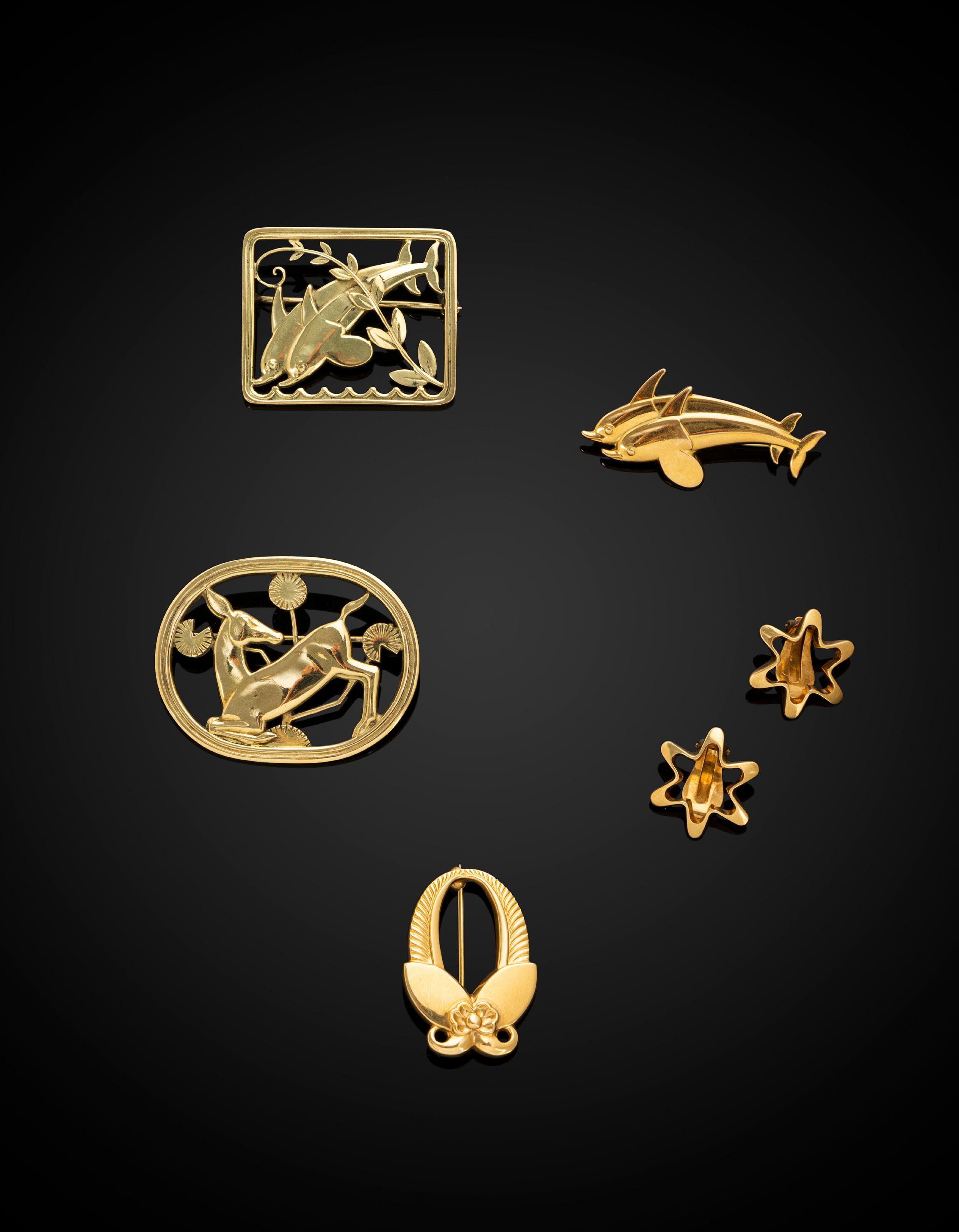
model no. 332, stamped manufacturer’s mark, ‘18K’ and ‘765’ 3.7cm wide (1 3/8in wide), weight approximately 14.1 grams £500-700
199
GUNDORPH ALBERTUS (DANISH 1887-1969) FOR GEORG JENSEN BROOCH model no. 1227, stamped manufacturer’s mark and ‘750 / 18K’ 3.2cm long (1 1/3in long), approximately 5.65 grams £250-350
196
HARALD NIELSEN (DANISH 1892-1977)
FOR GEORG JENSEN BROOCH model no. 1317, stamped manufacturer’s mark, ‘18K’ and ‘750’, and import marks for London, possibly 1971 4.1cm wide (1 5/8in wide), weight approximately 5.15 grams £300-500
197
ARNO MALINOWSKI (DANISH 1899-1976) FOR GEORG JENSEN BROOCH model no. 343, stamped manufacturer’s mark, ‘18K’ and ‘765’ 4.4cm wide (1 3/4in wide), weight approximately 18.1 grams £500-700
198 HENNING KOPPEL (DANISH 1918-1981)
FOR GEORG JENSEN PAIR OF EARRINGS model no. 1139, each stamped manufacturer’s marks, ‘750 / 18K’ and ‘DENMARK’ (2) 2cm wide (3/4in wide), approximately 5.55 grams £300-500
141 Other fees apply in addition to the hammer price: see the ‘Buyer’s Guide’ section on page 6
200 ASTRID FOG (DANISH 1911-1993) FOR GEORG JENSEN NECKLACE / PENDANT
model no. 122, silver, stamped manufacturer’s marks and ‘925S DENMARK’ 37cm long (14 1/2in long) including chain £500-700
201
NANNA & JØRGEN DITZEL (DANISH 1923-2005 & 1921-1961) FOR GEORG JENSEN BRACELET
model no. 107, silver, stamped manufacturer’s marks, ‘STERLING DENMARK’ and artist’s monogram internal width 4.8cm (1 7/8in) £500-700
202
NANNA DITZEL (DANISH 19232005) FOR GEORG JENSEN BRACELET
model no. 106, silver, stamped manufacturer’s mark and ‘STERLING DENMARK’, import marks for London internal width approximately 6cm (2 3/8in) £300-500
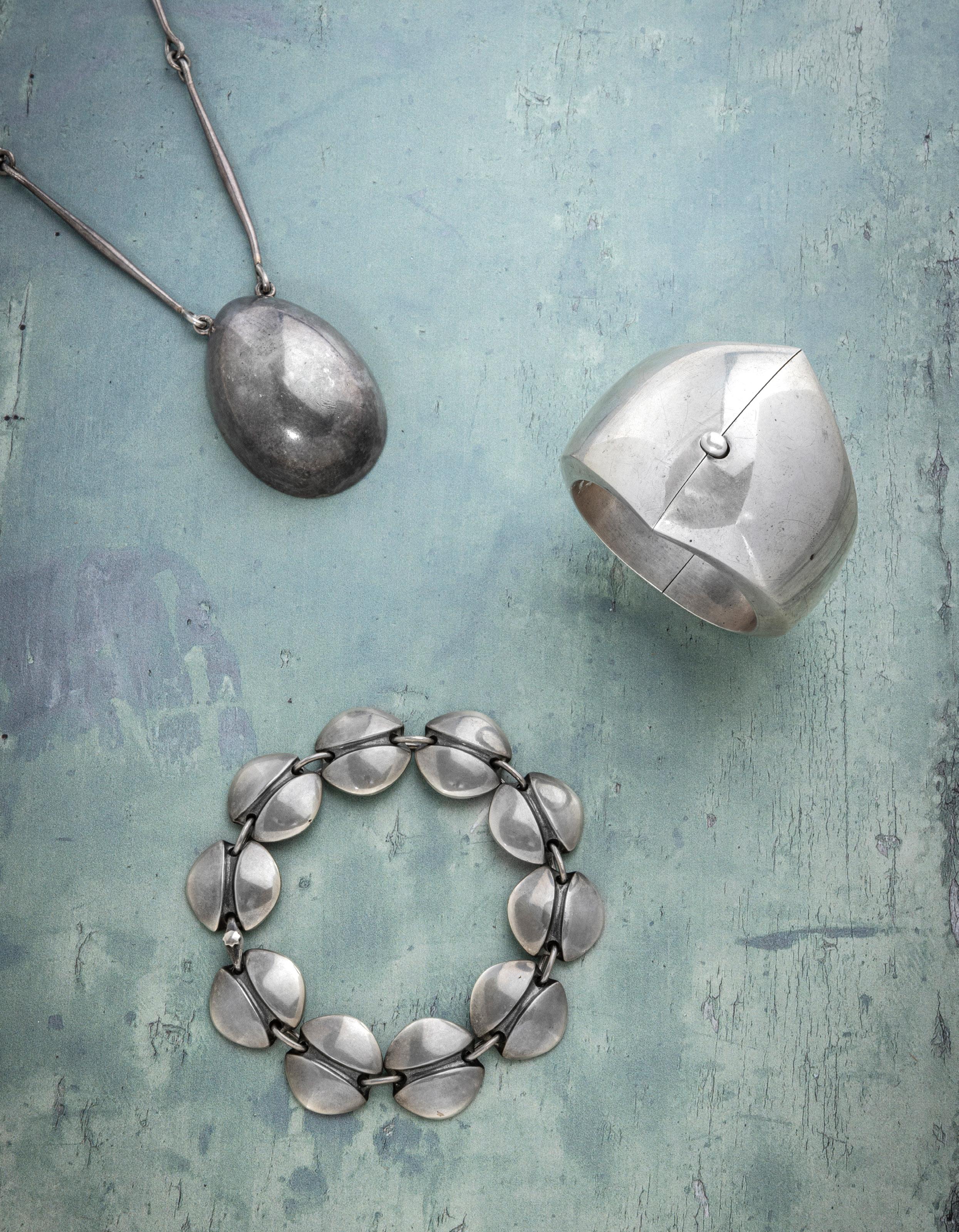
142
203
BENT GABRIELSEN (DANISH 1928-) PENDANT AND CHAIN the pendant set with green cabochon stone, the pendant and chain each stamped ‘BGP / 585 / DENMARK’ the pendant 6.7cm wide (2 5/8in wide), approximate weight of pendant (including stone) and chain 47.8 grams £1,500-2,000
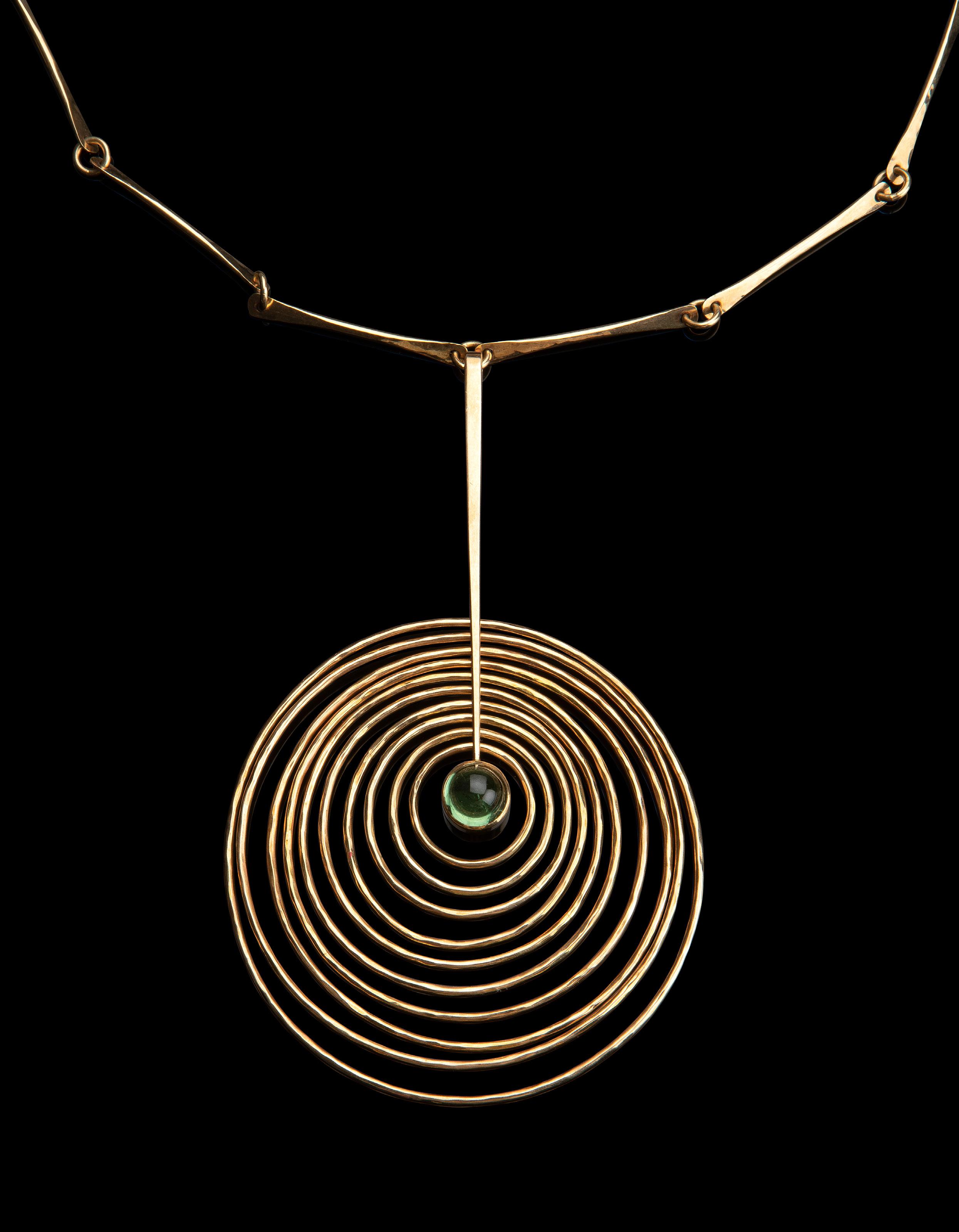
143 Other fees apply in addition to the hammer price: see the ‘Buyer’s Guide’ section on page 6
204 VIVIANNA TORUN BÜLOW-HÜBE (SWEDISH 1927-2004) FOR GEORG JENSEN BRACELET model no. 203, silver set with agate, stamped manufacturer’s mark, ‘TORUN’, ‘925S / DENMARK’, with import marks for Birmingham Assay Office internal width 5cm (2in) £700-900
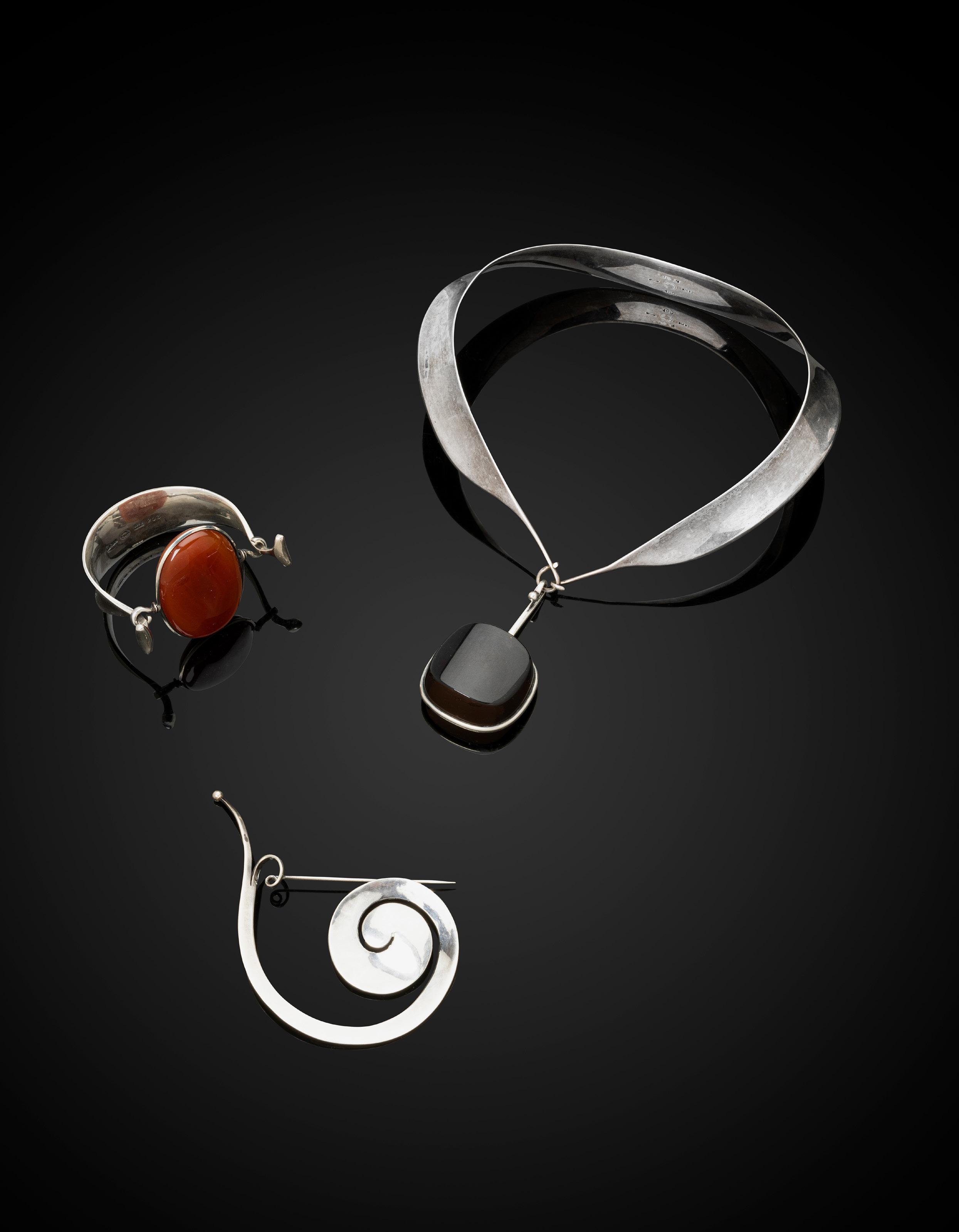
205 VIVIANNA TORUN BÜLOWHÜBE (SWEDISH 1927-2004)
FOR GEORG JENSEN
PENDANT AND COLLAR model nos. 132 and 160, silver and smoky quartz, each stamped manufacturer’s mark, ‘TORUN’, ‘925S’ and ‘DENMARK’ internal width of collar 12.7cm (5in) £1,200-1,800
206
VIVIANNA TORUN BÜLOW-HÜBE (SWEDISH 1927-2004) FOR GEORG JENSEN BROOCH model no. 392, stamped manufacturer’s mark, ‘TORUN’ AND ‘925S / DENMARK’, import marks for Birmingham 8cm high (3 1/8in high) £400-600
144 Other fees apply in addition to the hammer price: see the ‘Buyer’s Guide’ section on page 6
TORUN BÜLOW-HÜBE
AND COLLAR
TORUN BÜLOW-HÜBE (SWEDISH 1927-2004) FOR GEORG JENSEN PENDANT AND COLLAR
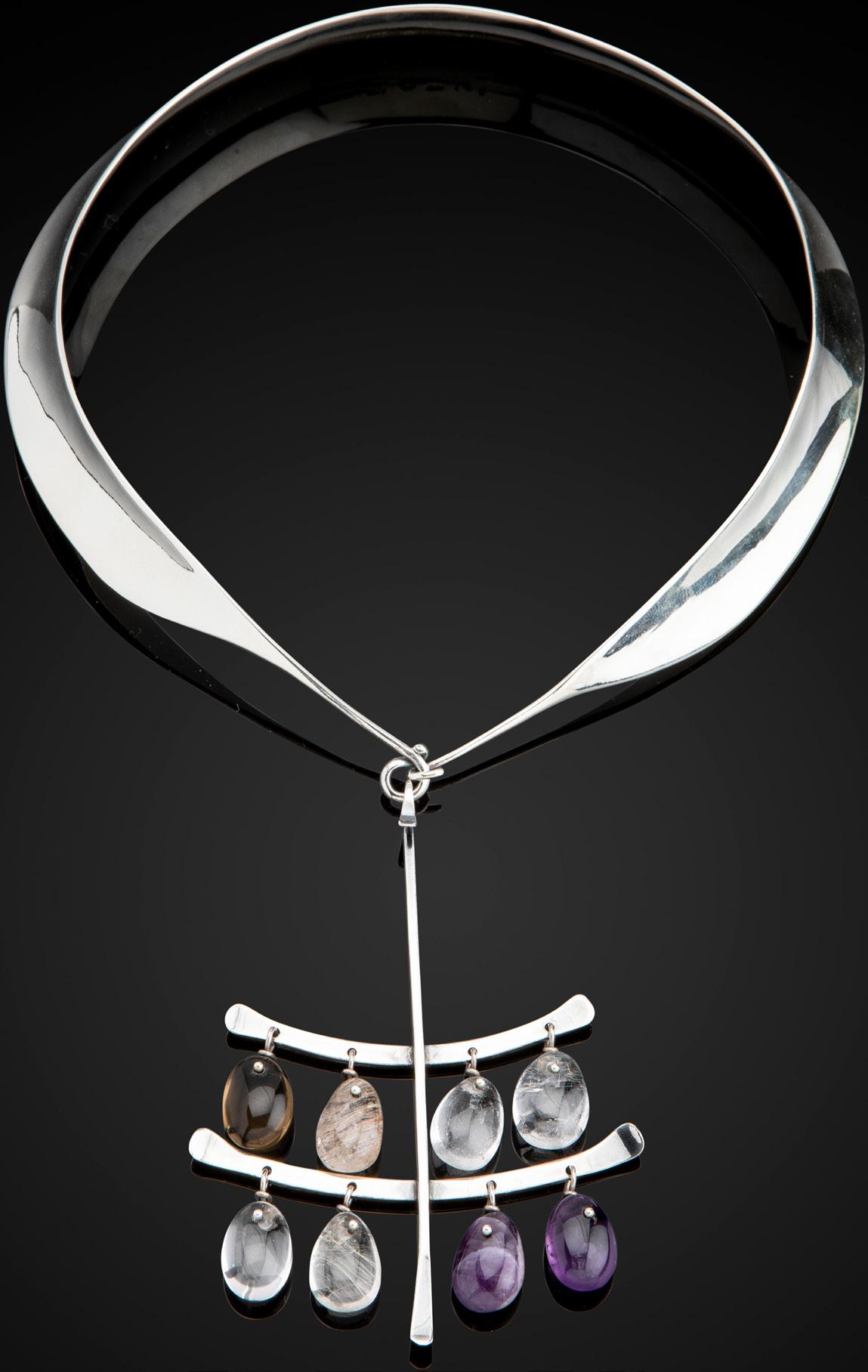
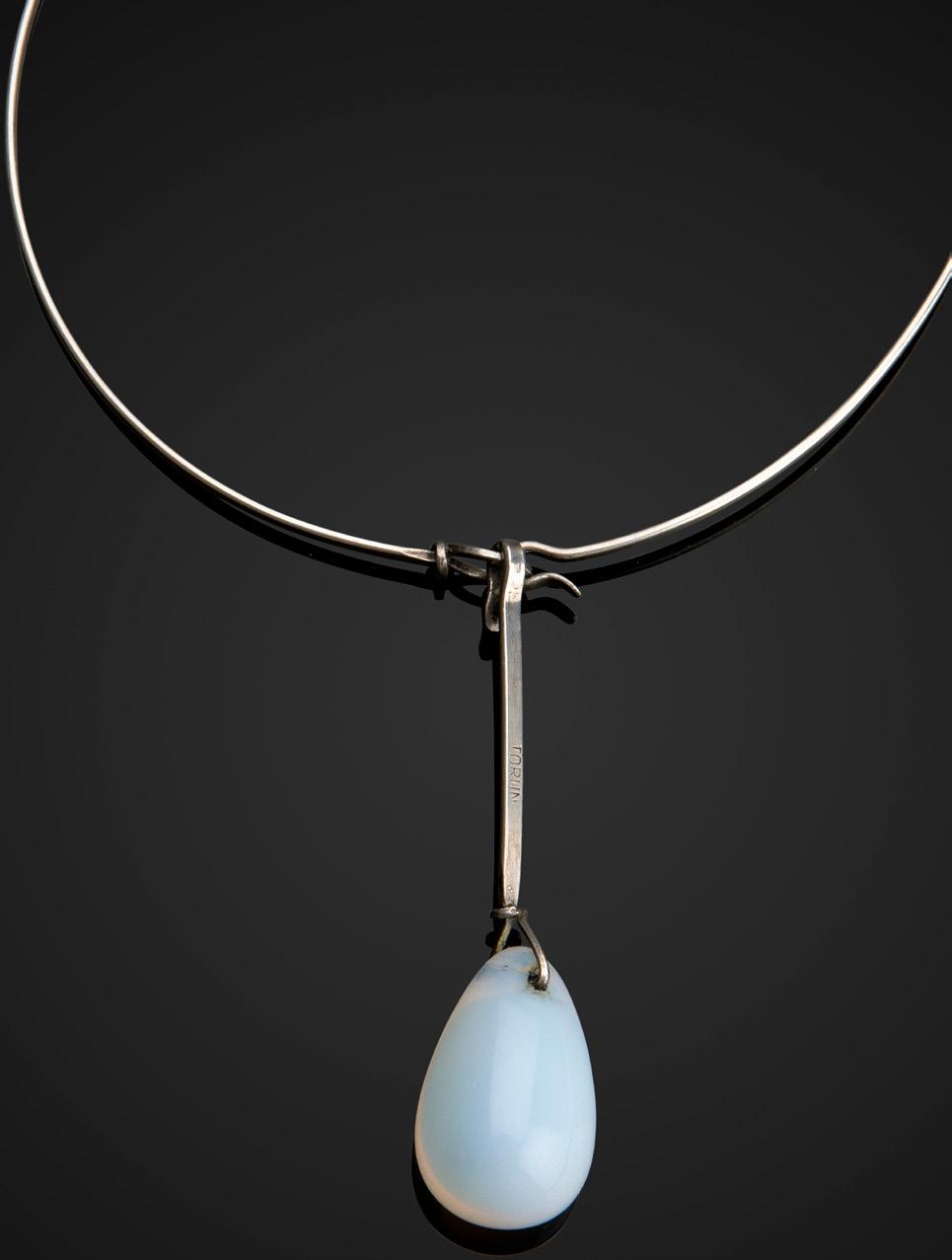
nos.
and
silver and
pendant with rock crystal and amethyst
pendant and collar stamped
mark,
marks
width of
TORUN BÜLOWHÜBE (SWEDISH 1927-2004)
AND COLLAR
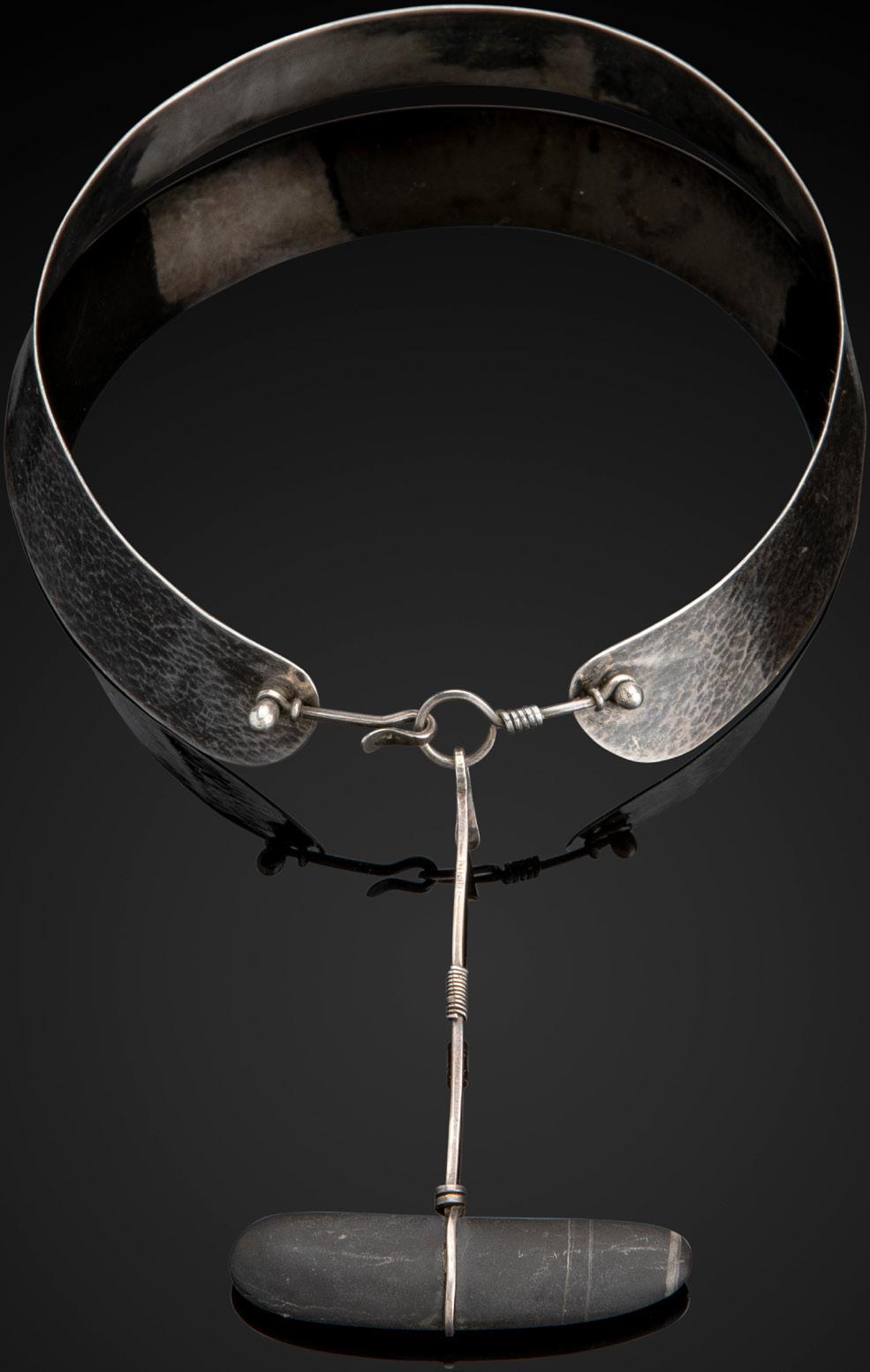
207 § VIVIANNA
(SWEDISH 1927-2004) PENDANT
white metal and opalescent glass drop, the collar and pendant each stamped ‘TORUN’ internal width of collar 11cm (4 1/4in) £700-900 209 § VIVIANNA
PENDANT
white metal and polished pebble, the pendant stamped ‘TORUN’ internal width of collar 9.5cm (3 3/4in) £1,000-1,500 208 VIVIANNA
model
135
160,
the
drops, the
manufacturer’s
‘TORUN’, ‘925S / DENMARK’, and with import
for Birmingham Assay Office internal
collar 12.5cm (4 7/8in) £2,000-3,000 145
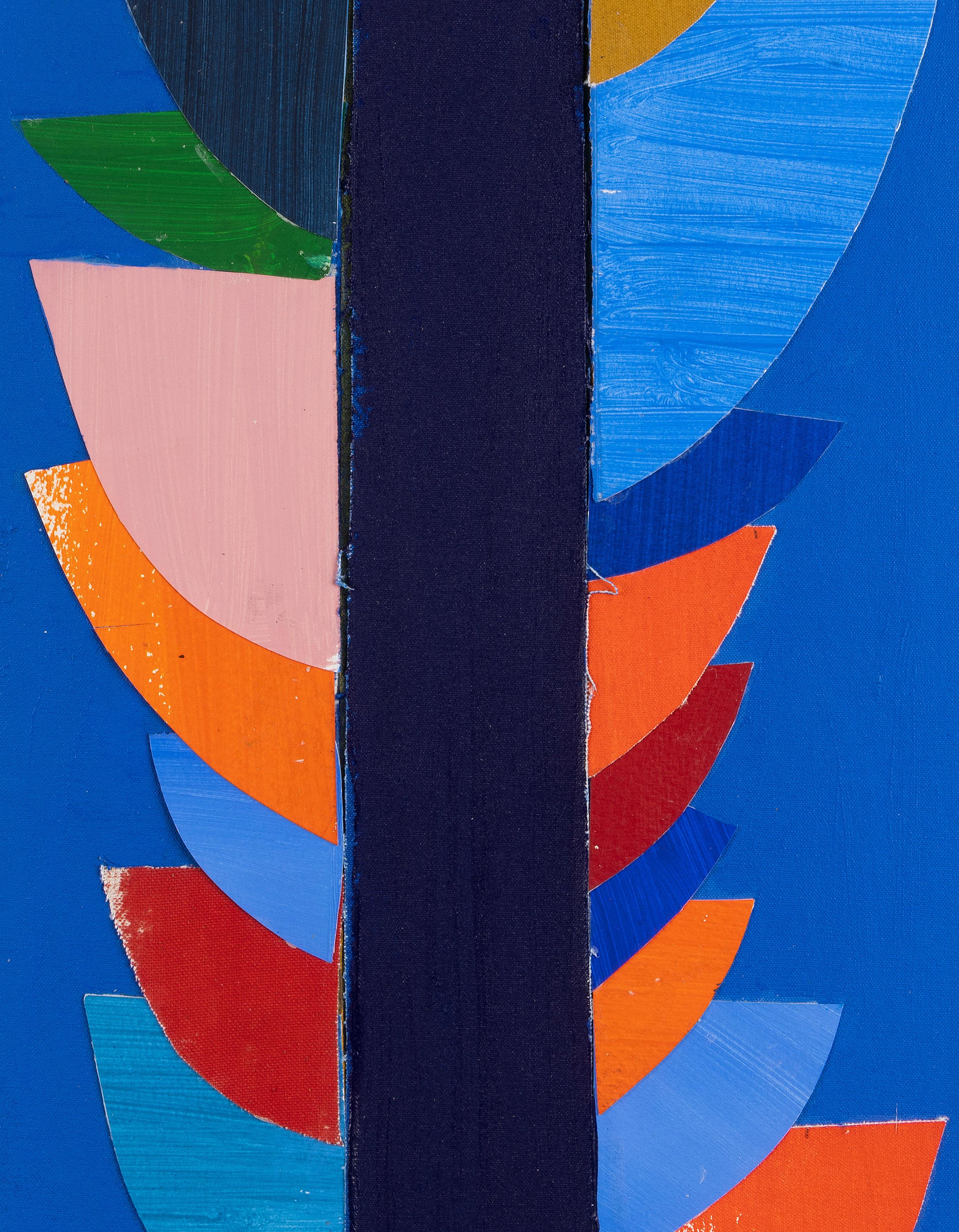
BELL (BRITISH 1930-2017)
(ABSTRACT), 1958 signed and dated (lower left), oil and mixed media on paper laid on board
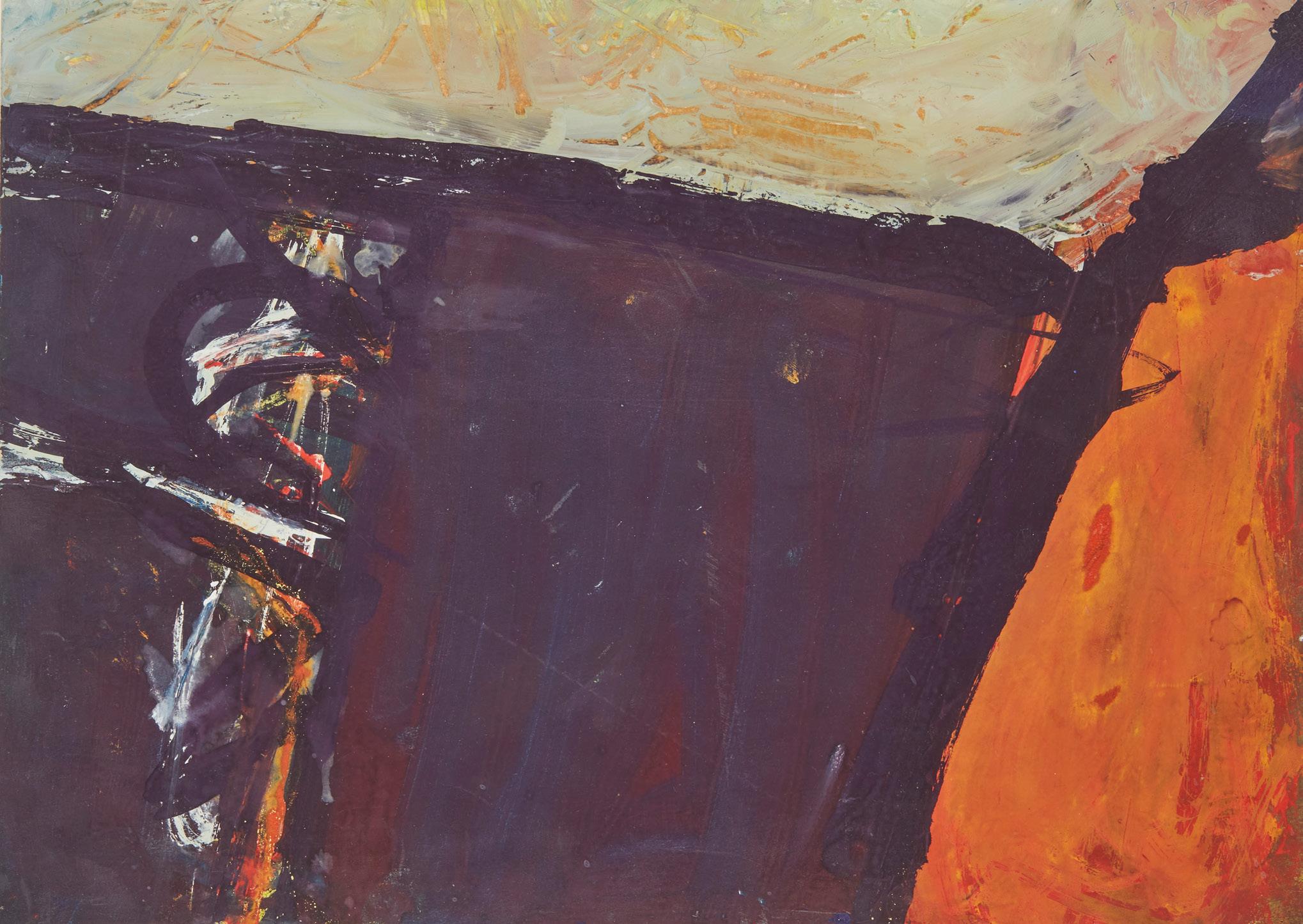
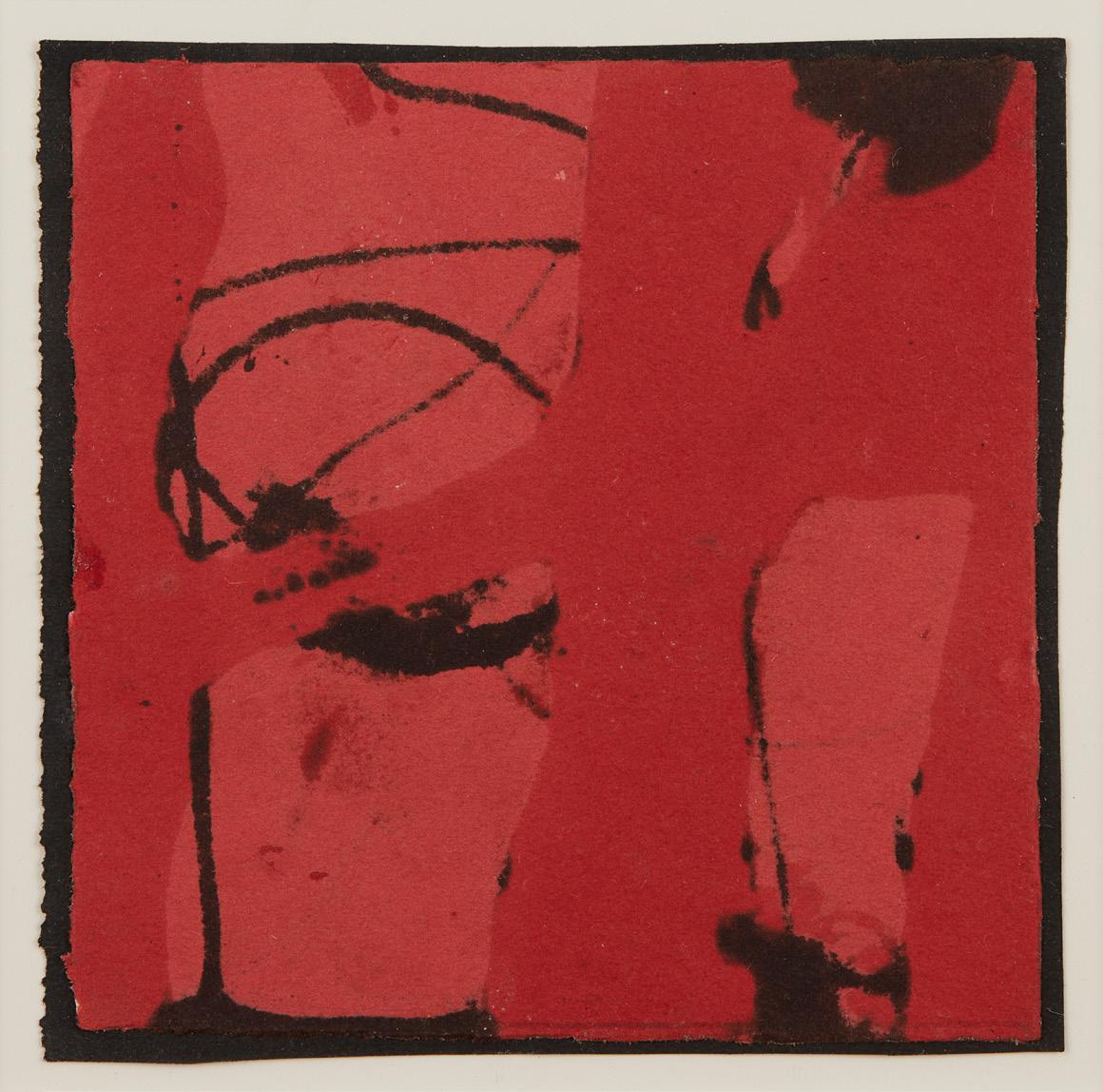
x 40cm (11 1/2in x 15 3/4in)
SANDRA BLOW R.A. (BRITISH 1925-2006) COMPOSITION gouache on paper
x 14cm (5 1/2in x 5 1/2in)
Gimpel Fils, London.
work is believed to date from the 1950s.
210 § TREVOR
UNTITLED
29cm
£1,500-2,000 211 §
14cm
Provenance:
This
£800-1,200 Left Lot274 [detail] 147 Other fees apply in addition to the hammer price: see the ‘Buyer’s Guide’ section on page 6
213 §

BRYAN INGHAM (BRITISH 1936-1997)
PENSIVE WOMAN
initialled in pencil (lower right), collage, oil, pencil and wood relief on board 29cm x 19cm (11 1/2in x 7 1/2in)
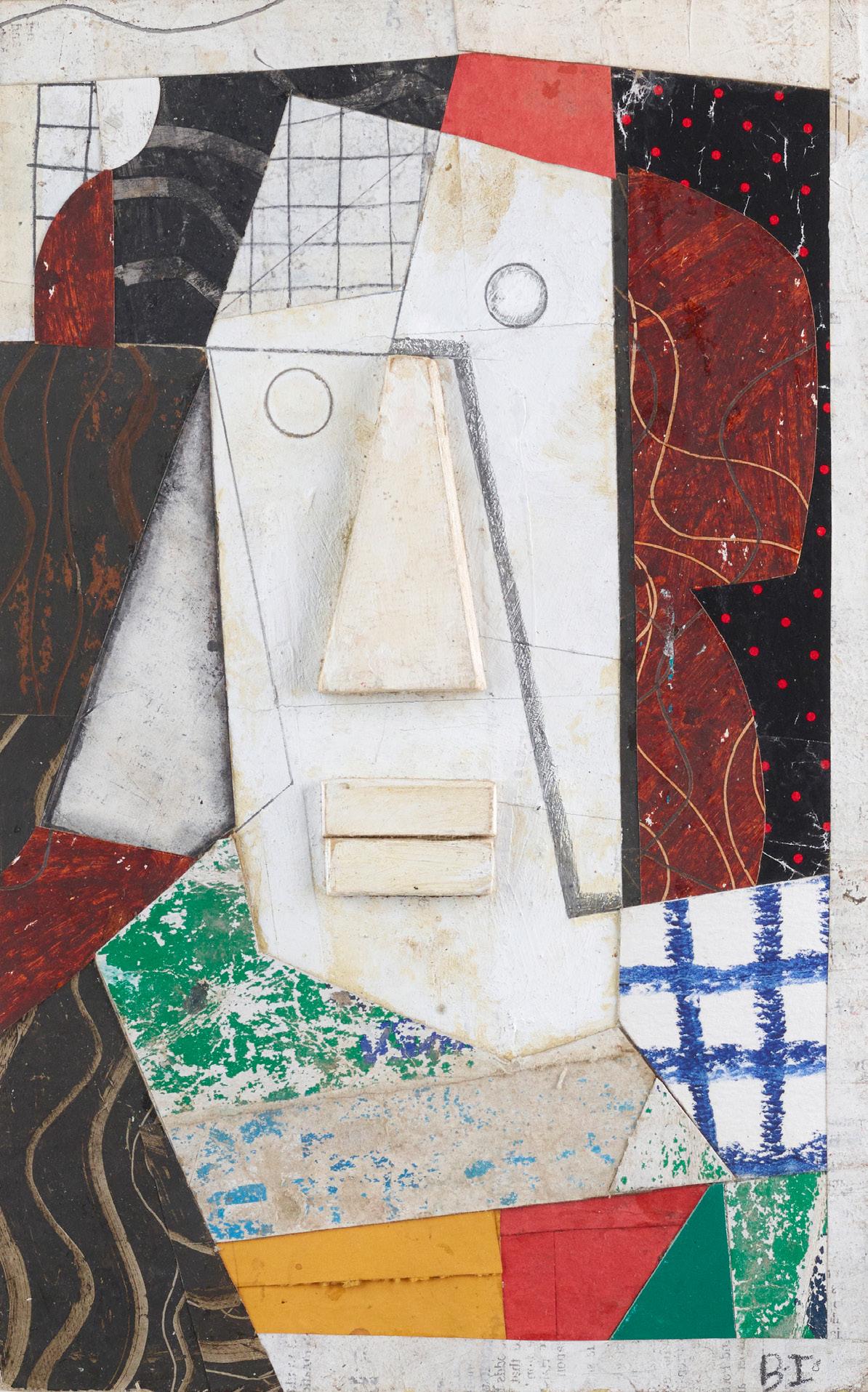
Provenance: Estate of the Artist. £2,500-3,500
212 §
BRYAN INGHAM (BRITISH 1936-1997)
APRIL IN BERLIN, CIRCA 1988 collage on board 10.5cm x 8.5cm (4 1/8in x 3 3/8in)
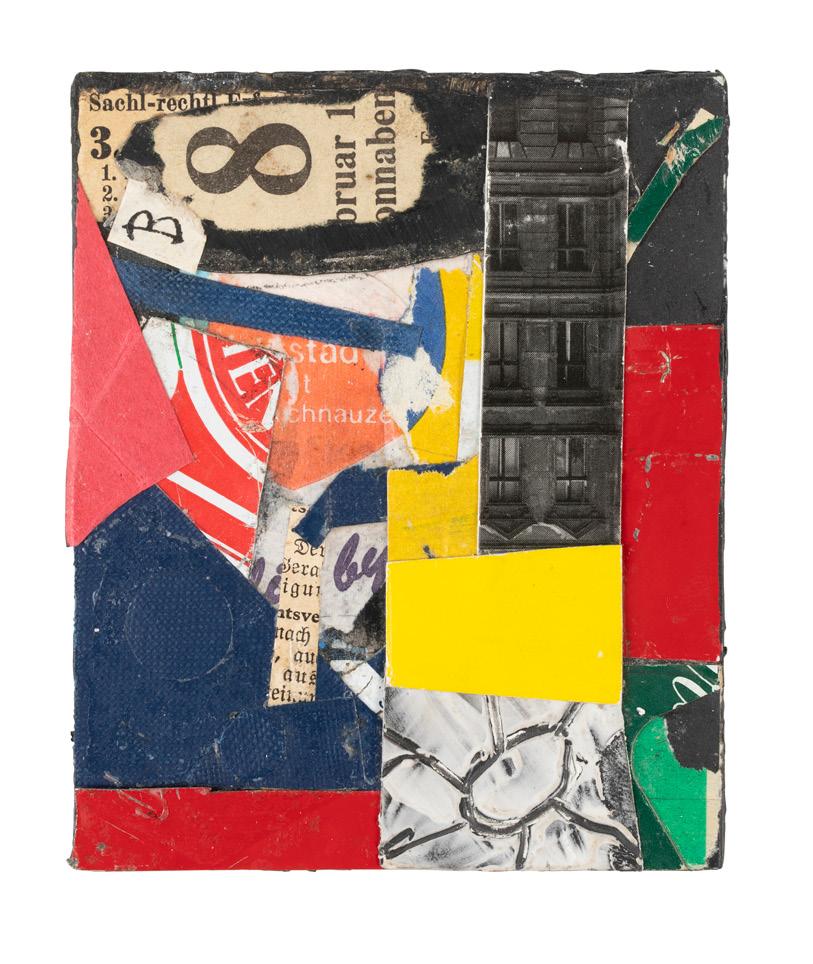
Provenance: Estate of the Artist. £500-700
214 §
BRYAN INGHAM (BRITISH 1936-1997) BUTTERFLY
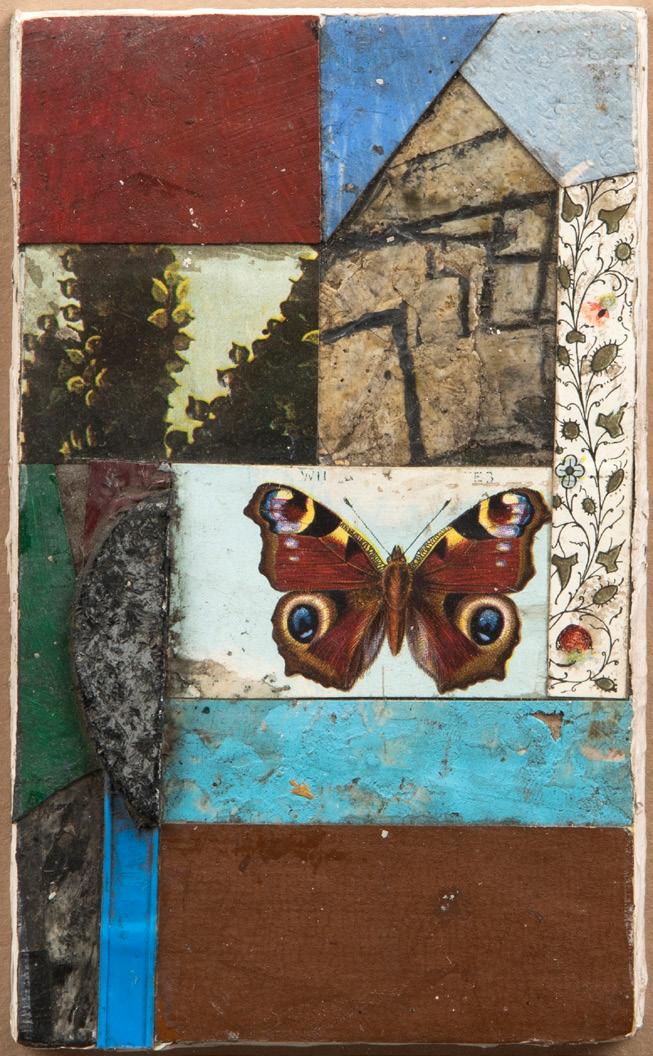
artist’s estate stamp (to back board), mixed media and collage on board 14.2cm x 8.5cm (5 5/8in x 3 3/8in)
Provenance: Estate of the Artist. £700-900
148
215 §
PAUL FEILER (BRITISH 1918-2013)
BOATS AT NEWLYN, 1963
signed and dated in pencil (lower right), pen, ink and chalk on paper 35cm x 22cm (13 3/4in x 8 5/8in)
Provenance: The Redfern Gallery, London; Twenty Twenty Gallery, Ludlow; Private Collection, UK.
Exhibited: Redfern Gallery, London, Paul Feiler: Works on Paper, 30 January -23 February 2019, p.48 (illustrated), no cat.no.s (as ‘Newlyn’)
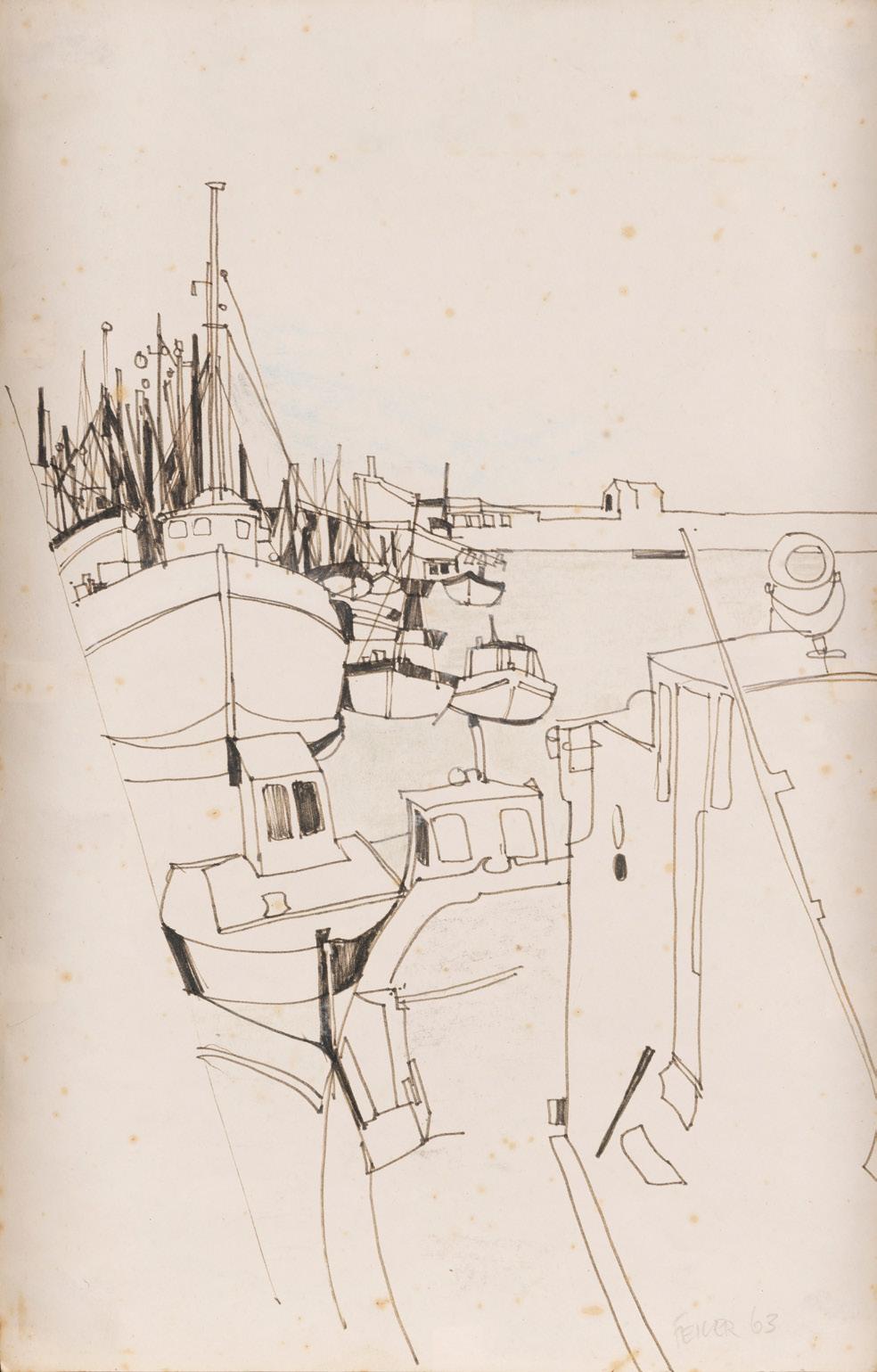
£1,500-2,000
216 §
BRYAN INGHAM
(BRITISH 1936-1997)
MEDITERRANEAN HEAD, 1993
initialled and dated (to reverse), artist’s estate stamp (to base), plaster 23cm high (9in high)
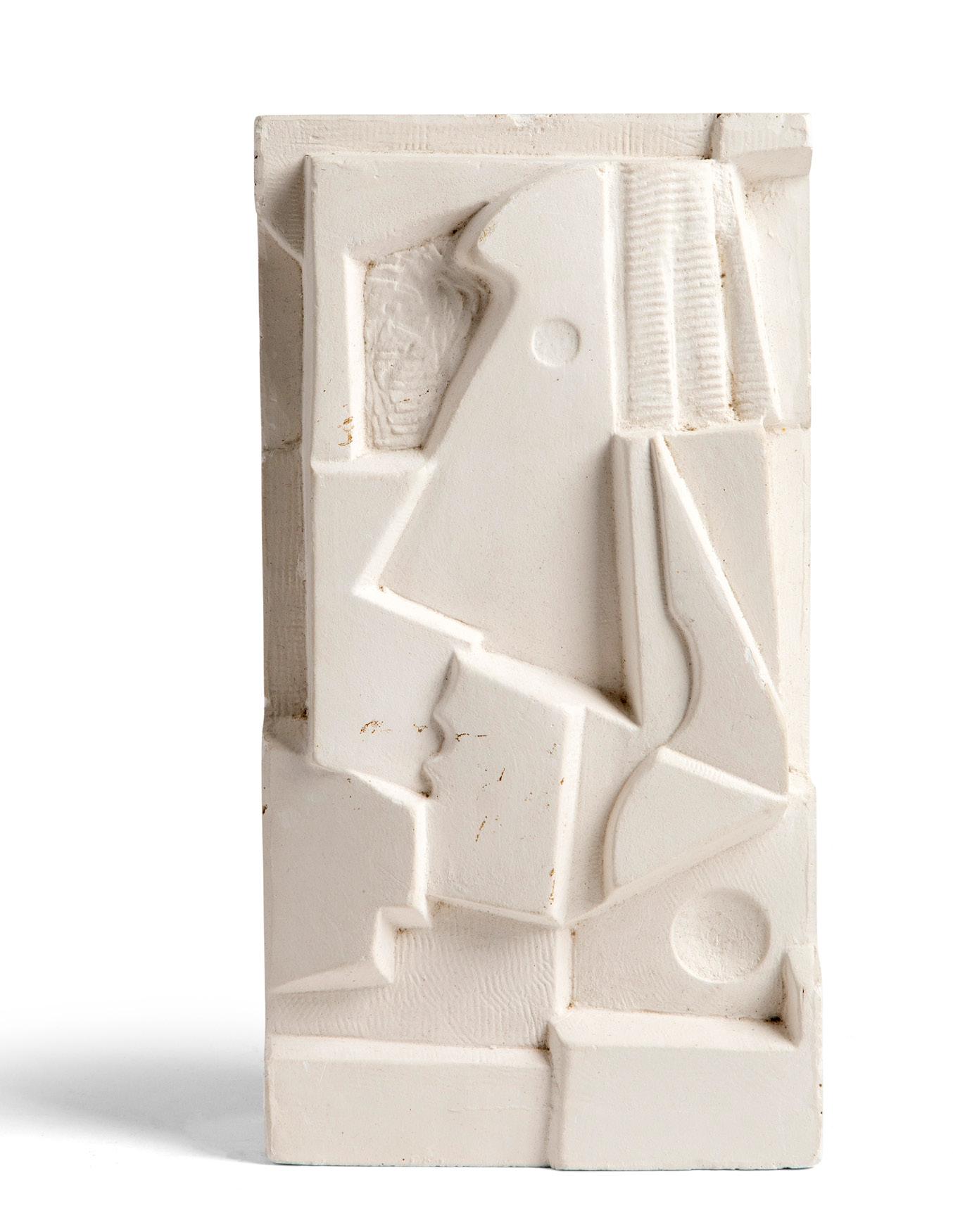
Provenance: Estate of the Artist.
£800-1,200
217 §
BEN NICHOLSON O.M.
(BRITISH 1894-1982)
FORMS IN A LANDSCAPE, 1966
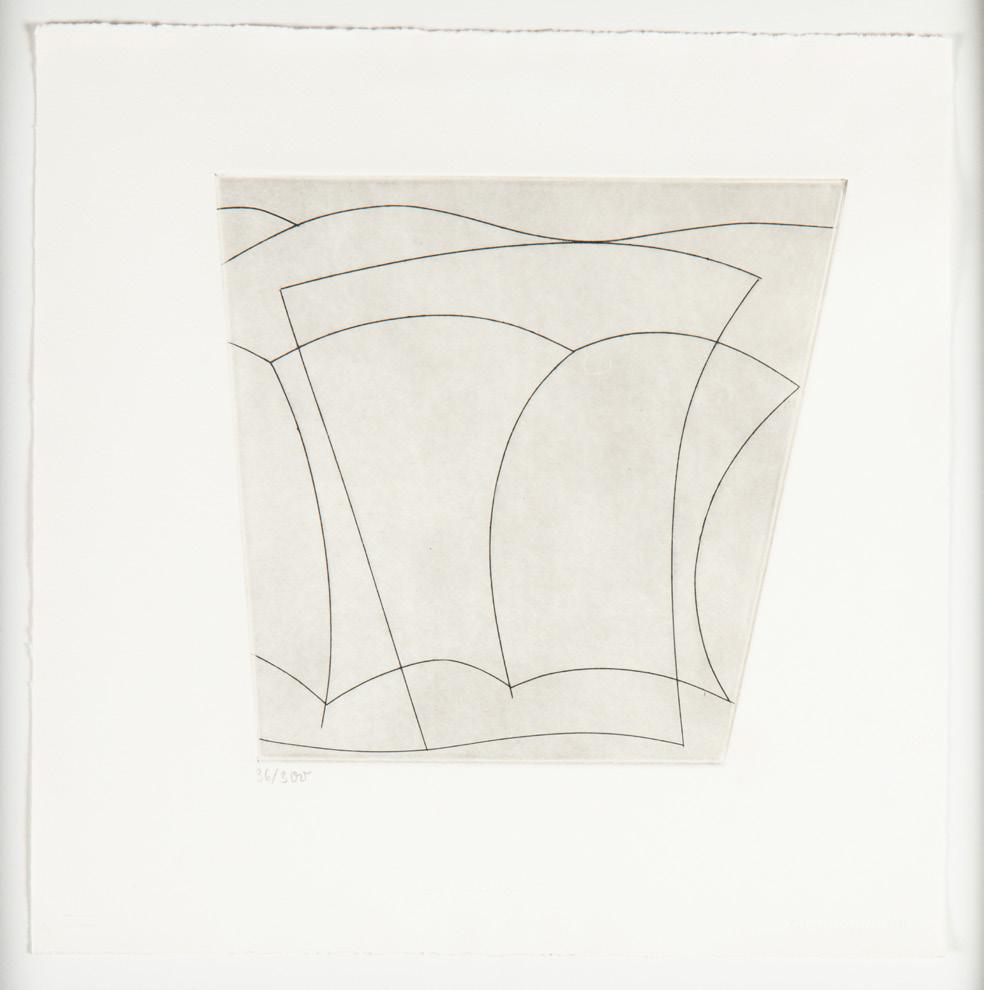
36/300, numbered in pencil in the margin (lower left), etching on paper, from the edition of 300 numbered, but unsigned, prints published by Kestner Gesellschaft, aside from the signed edition of 50 (ref. Lafranca 15)
The sheet 31.5cm x 31.5cm (12 3/8in x 12 3/8in)
£700-1,000
149 Other fees apply in addition to the hammer price: see the ‘Buyer’s Guide’ section on page 6
GUY TAPLIN (BRITISH 1939-)
FLYING DUNLIN
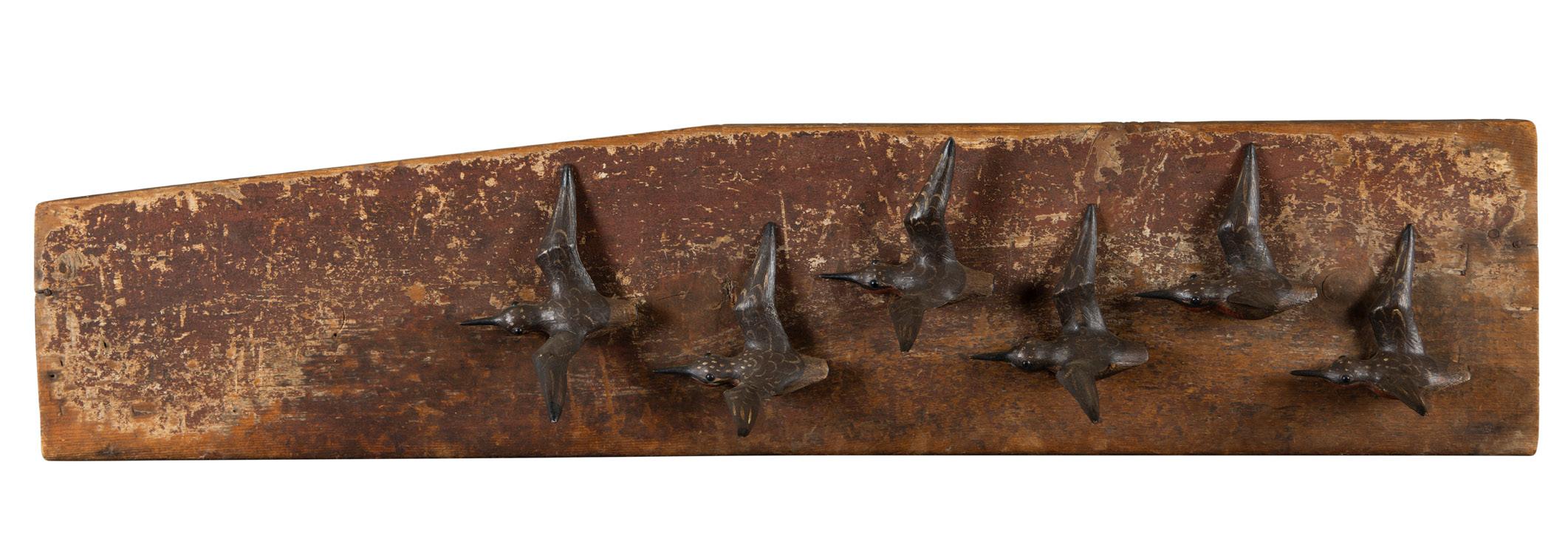
and titled (to edge),
high,
WINIFRED NICHOLSON (BRITISH 1893-1981)
x
the
PATRICK HAYMAN (BRITISH 1915-1988)
DOG, RED CAR, 1984
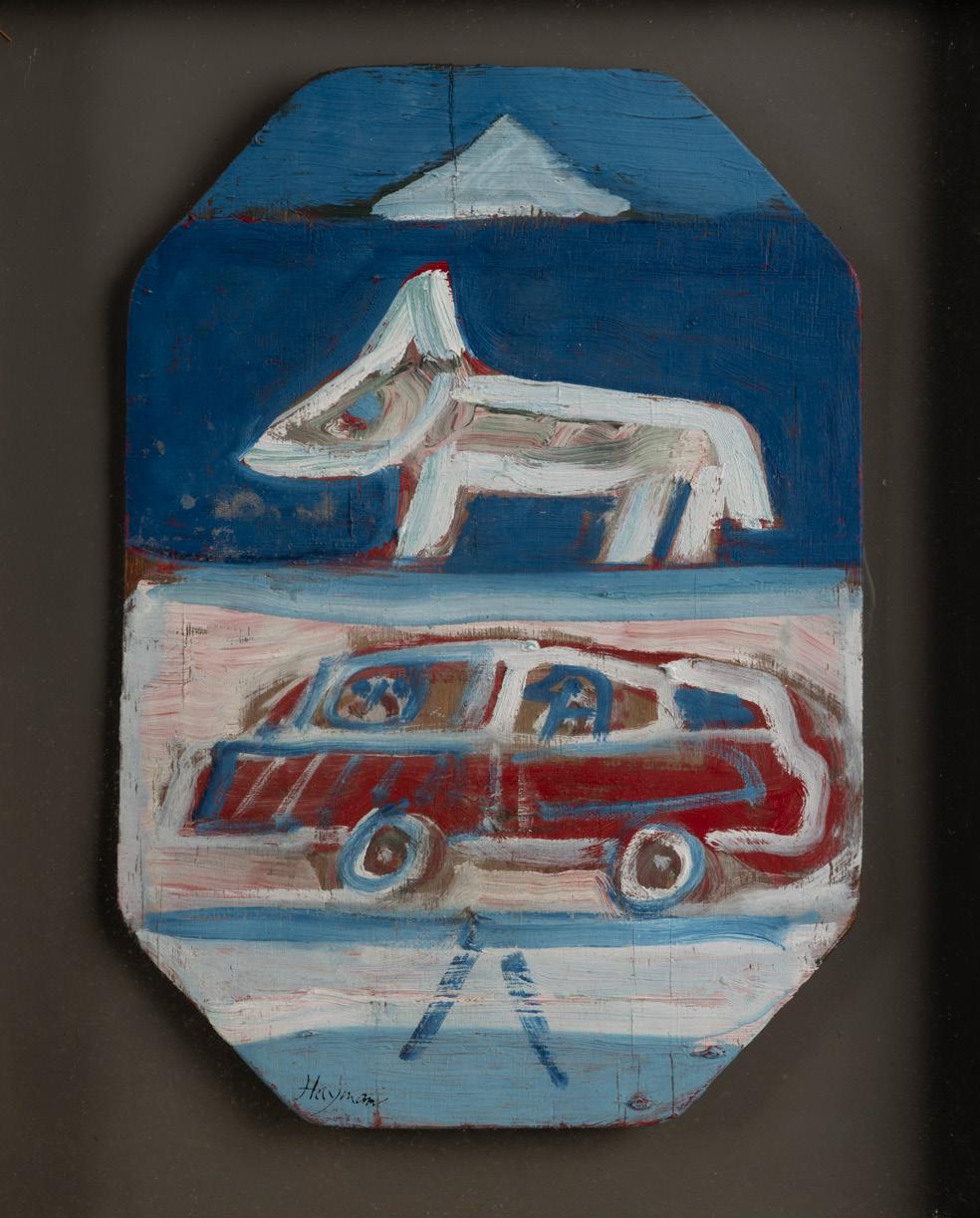
(lower left),
on
titled and dated (to
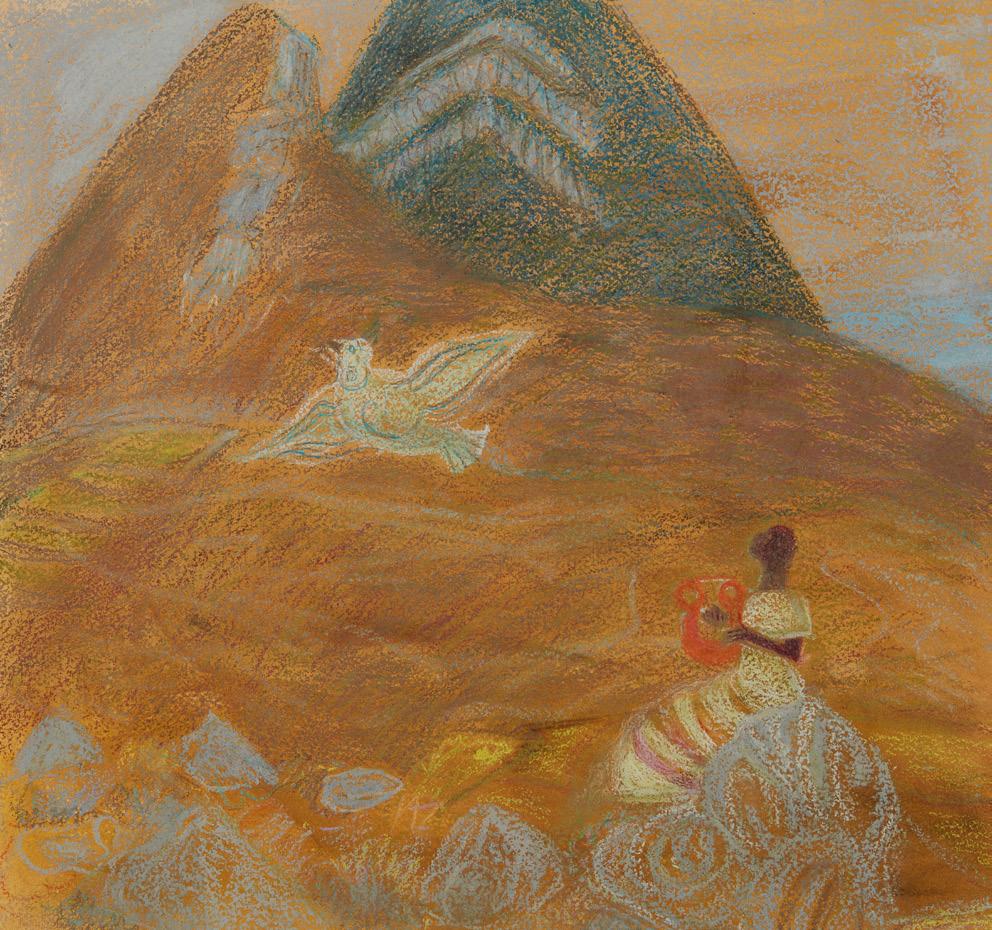
x
Hallett
220 §
WHITE
signed
signed,
reverse), oil
board 25cm
17cm (9 7/8in x 6 5/8in) Provenance: Louise
Gallery, London; Private Collection, London. £800-1,200 219 §
PYLOS, 1965 inscribed (to reverse), pastel on buff paper 56cm
60cm (22 1/4in x 23 3/4in) Provenance: Estate of
Artist, and thence by descent to the present owner. £700-900 218 §
SIX
signed
painted wood and driftwood 27cm
122cm wide (10 5/8in high, 48in wide) £700-900 150
“ It’s odd, but although my paintings are almost always abstract, my sculptures are almost always of some animal, bird or person. I don’t know why this is; but maybe painting is a language - a language writ on hardboard, paper or canvas. The language of colour and form - as John Wells says: “whereas sculpture is objects”. And an object, unless it be a stone, must be of something.”
Breon O’Casey
221
BREON O’CASEY (BRITISH 1928-2011)
STUDY FOR ÉAN MÓR, CIRCA 2006
III/V, initialled and numbered (to underside of base), patinated bronze, marble base 20cm high, 20cm wide (7 7/8in high, 7 7/8in wide) excluding base
The large scale Éan Mór is situated at Phoenix Park, Dublin. £6,000-8,000
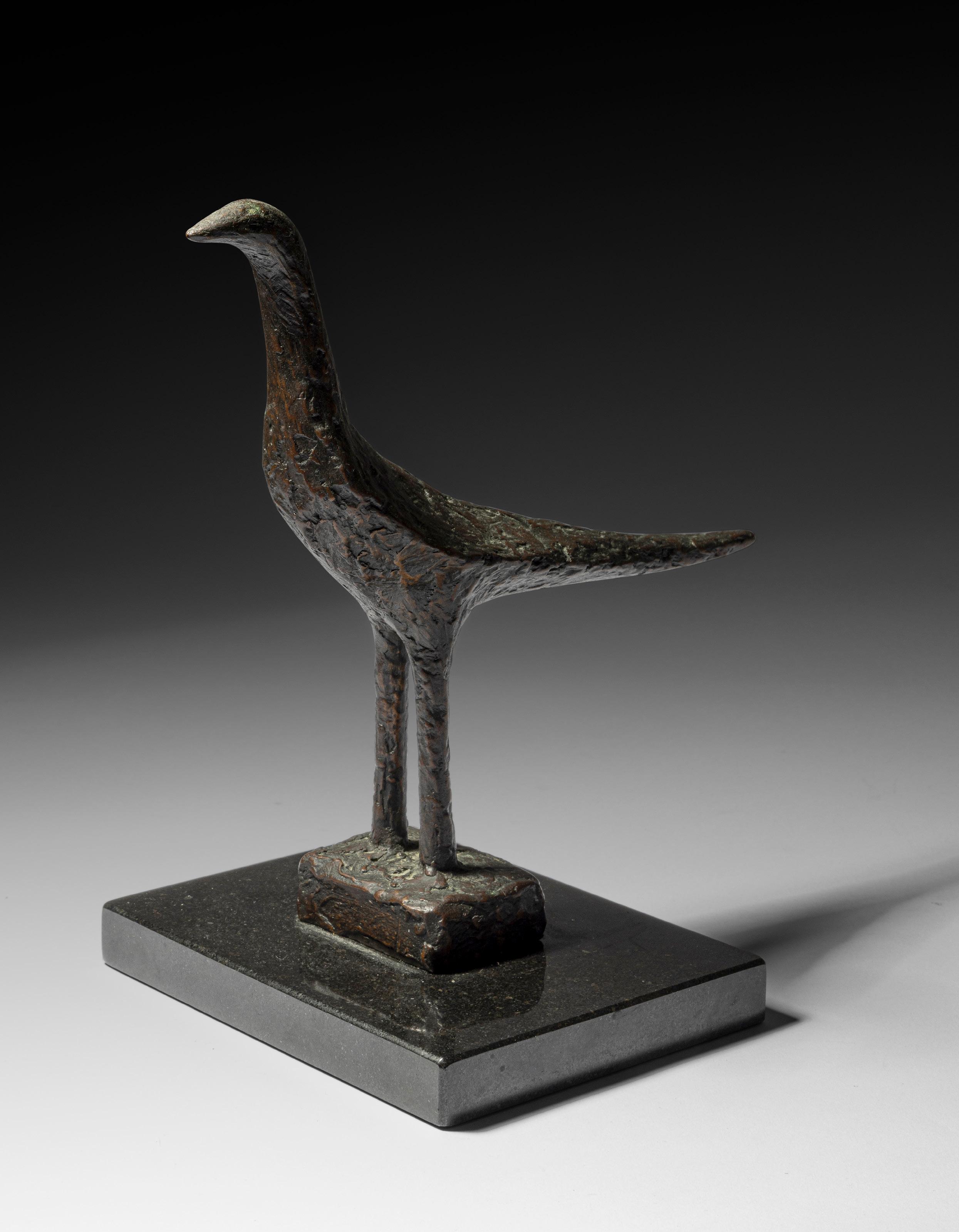
§
151 Other fees apply in addition to the hammer price: see the ‘Buyer’s Guide’ section on page 6
222 §
JOHN WELLS (BRITISH 1907-2000)
UNTITLED, 76/5D, 1976 signed and dated in pencil (lower left), signed, dated, numbered and inscribed in pencil (to reverse), pencil, charcoal, pastel and watercolour on paper 16cm x 24cm (6 1/4in x 9 3/8in)
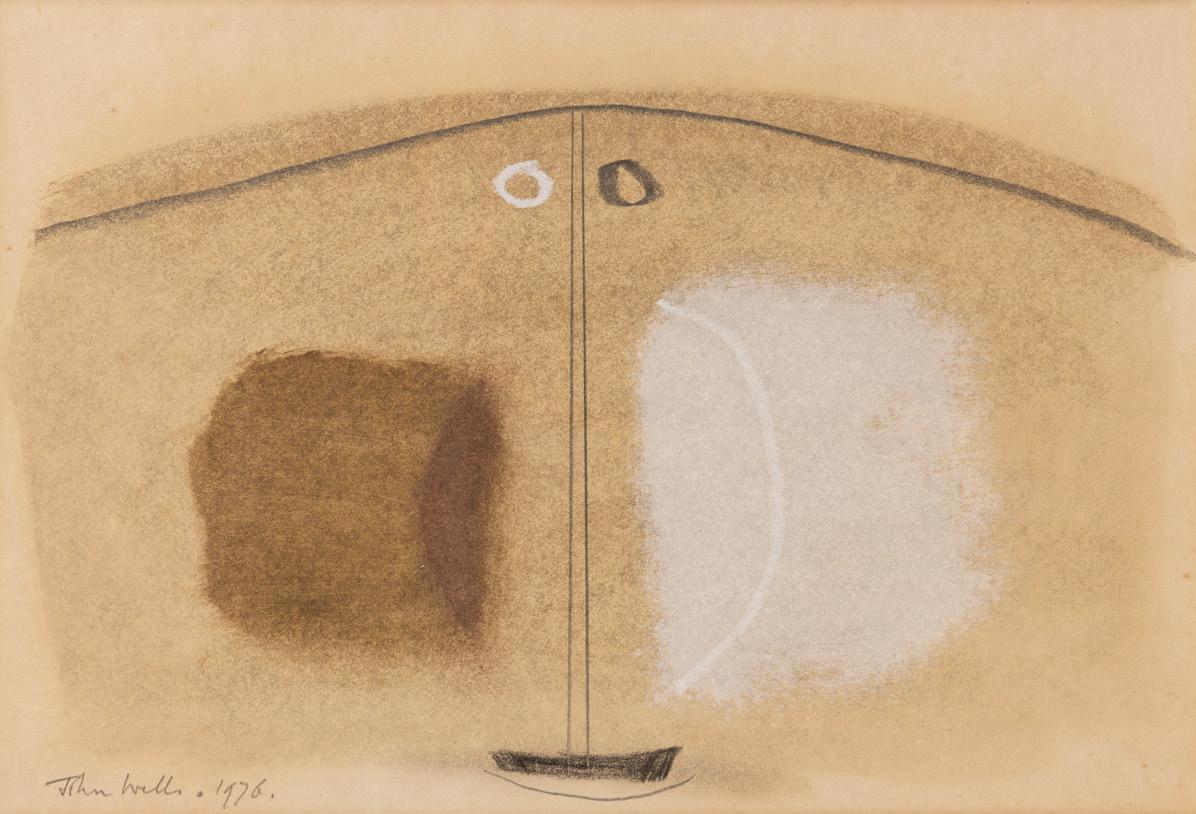
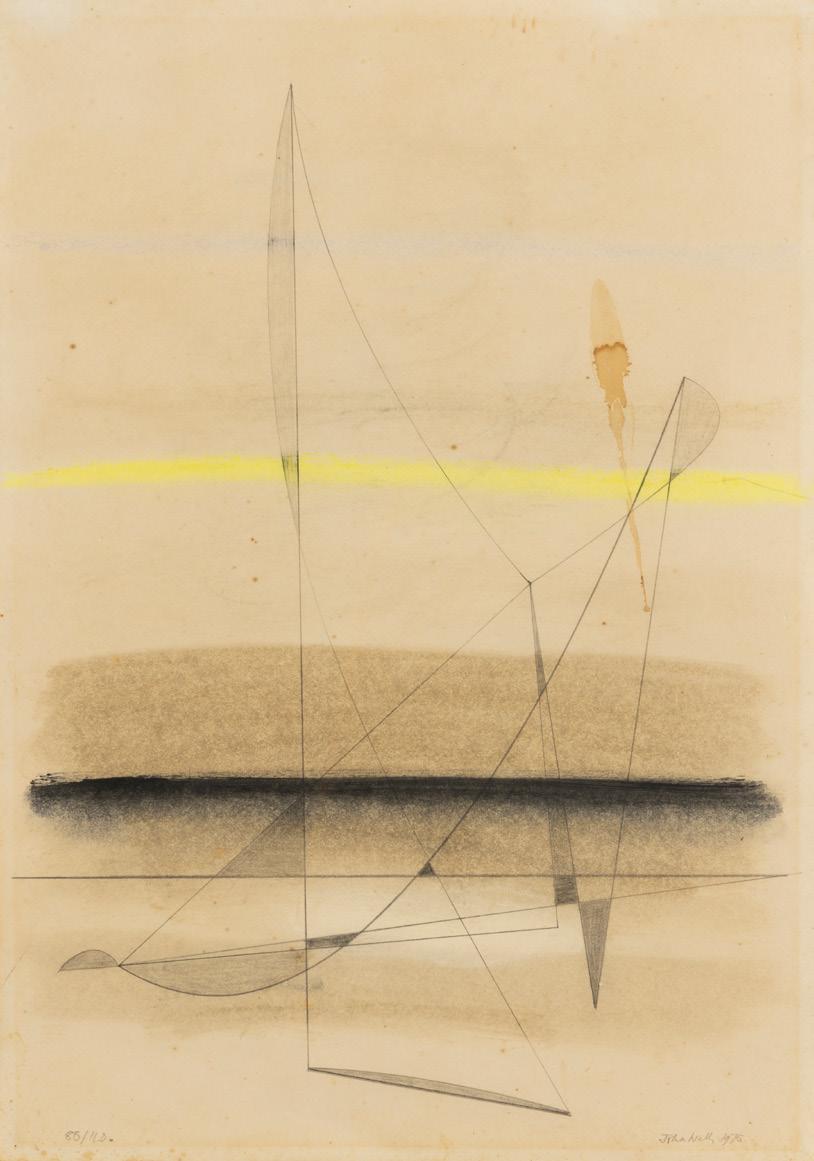
Provenance: The Penwith Society of Arts, St Ives; Private Collection, London. Together with original receipt from the Penwith Society of Arts.
£800-1,200
223 § JOHN WELLS (BRITISH 1907-2000)
UNTITLED, 79/3D, 1974 signed and dated (lower right), numbered in pencil (lower left), pencil, charcoal and watercolour on paper 24.5cm x 34cm (9 5/8in x 13 3/8in)
£1,000-1,500
224 § JOHN WELLS (BRITISH 1907-2000)
UNTITLED, 86/11D, 1975 signed and dated (lower right) and numbered in pencil (lower left), pencil, charcoal and pastel on paper 35.5cm x 25.5cm (14in x 10in)
£1,000-1,500
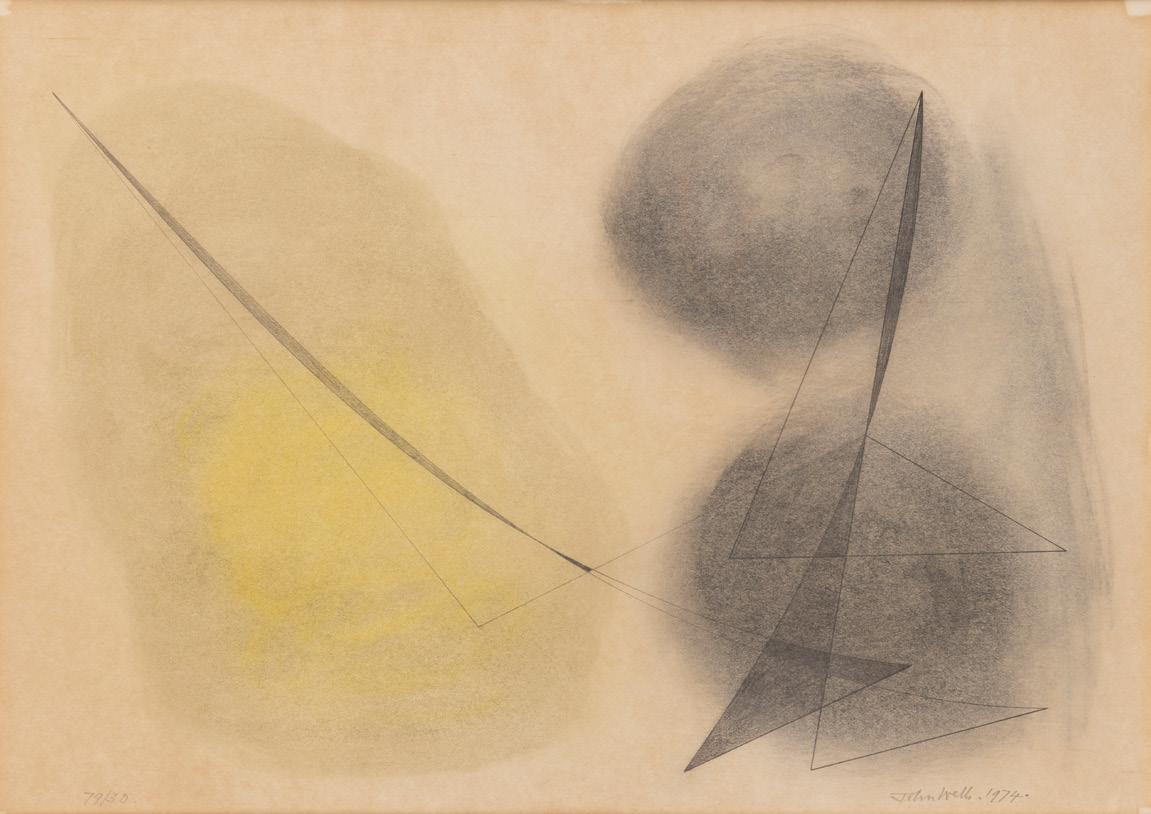
152
BERNARD MCGUIGAN (BRITISH 1956-) KNOWING
CHRIS BUCK (BRITISH 1956-)
ALL THAT YOU TOUCH
Overall
Provenance:
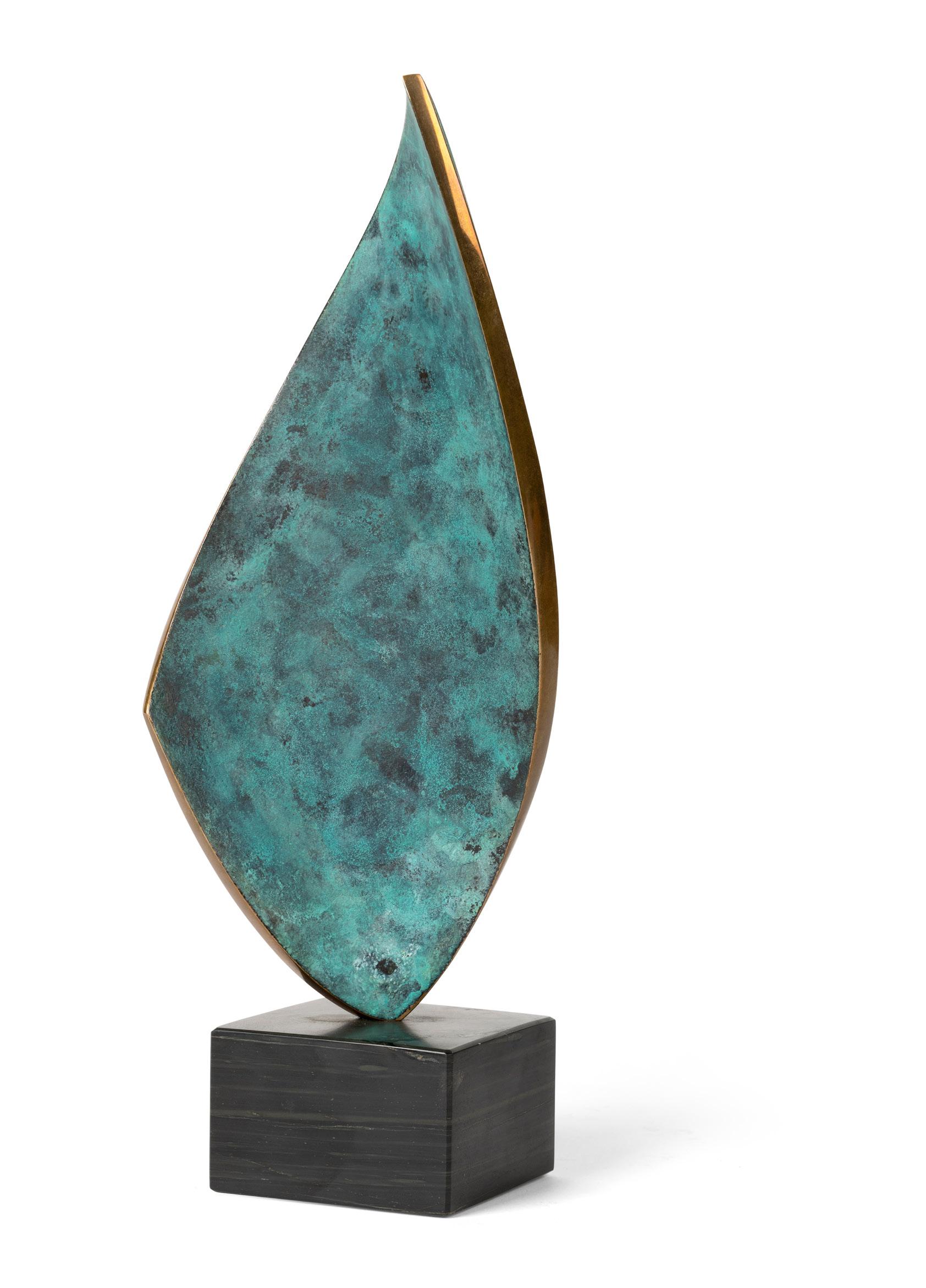
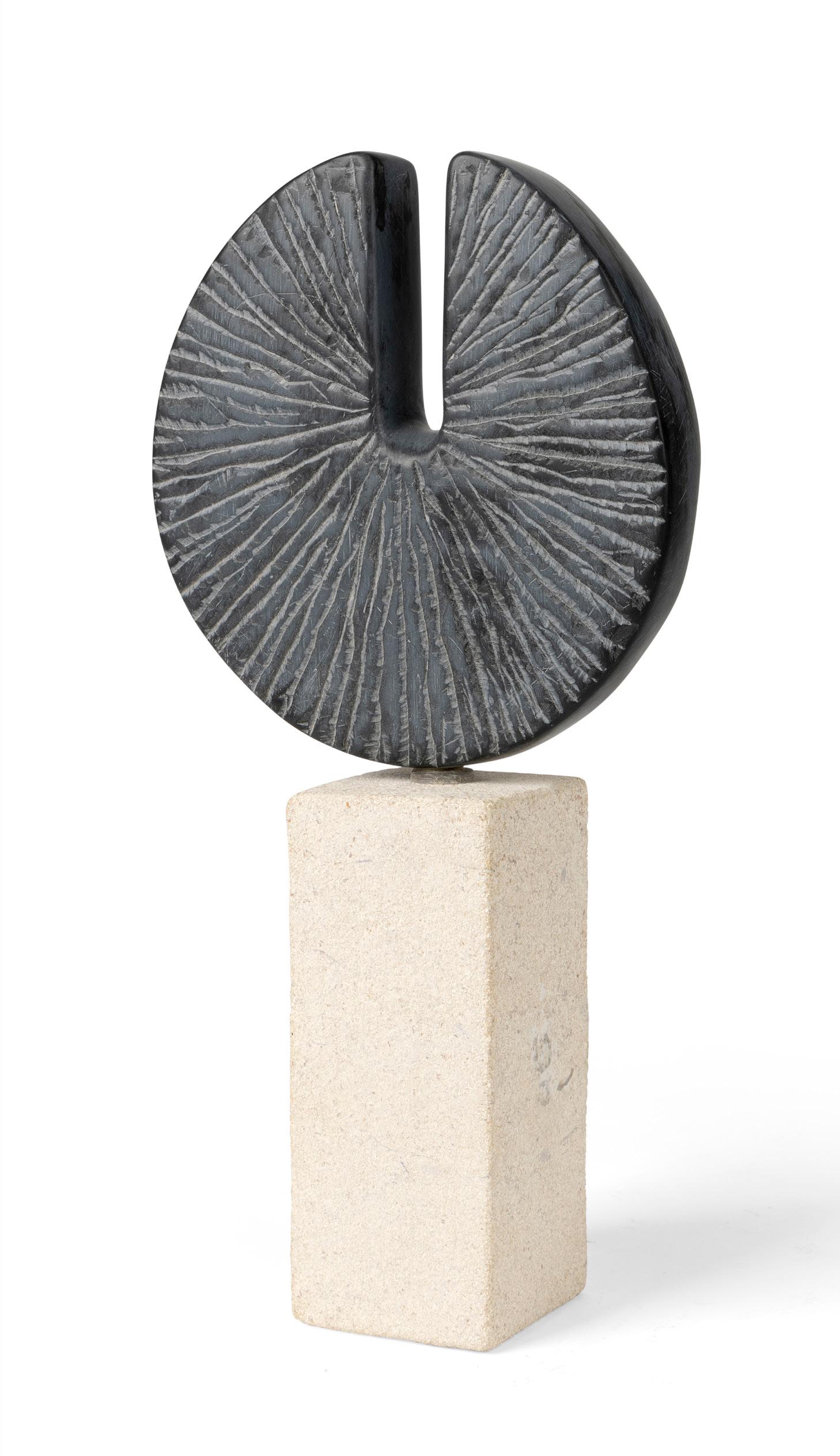
225 §
blue slate and limestone Overall 32.5cm high, 16cm wide (12 3/4in high, 6 1/4in wide) (including base) Provenance: Commissioned from the artist by the current vendor. £800-1,200 226 §
VIII/IX, incised initials and numbered, polished and patinated bronze on marble base
32cm high (12 5/8in high) (including base)
Purchased directly from the artist by the current vendor. £600-800 153 Other fees apply in addition to the hammer price: see the ‘Buyer’s Guide’ section on page 6
227 § BRYAN PEARCE
(BRITISH 1929-2007)
HARBOUR
signed in pen (lower right), pastel and ink on paper 24cm x 31cm (9 1/2in x 12 1/4in)
Provenance: Beaux Arts, Bath; Private Collection, London. £1,500-2,000
228

CHRISTOPHER WOOD (BRITISH 1901-1930)
TWO NUDES IN A BEDROOM, CIRCA 1924 pen and ink on paper 47cm x 60.5cm (18 1/2in x 23 3/4in)
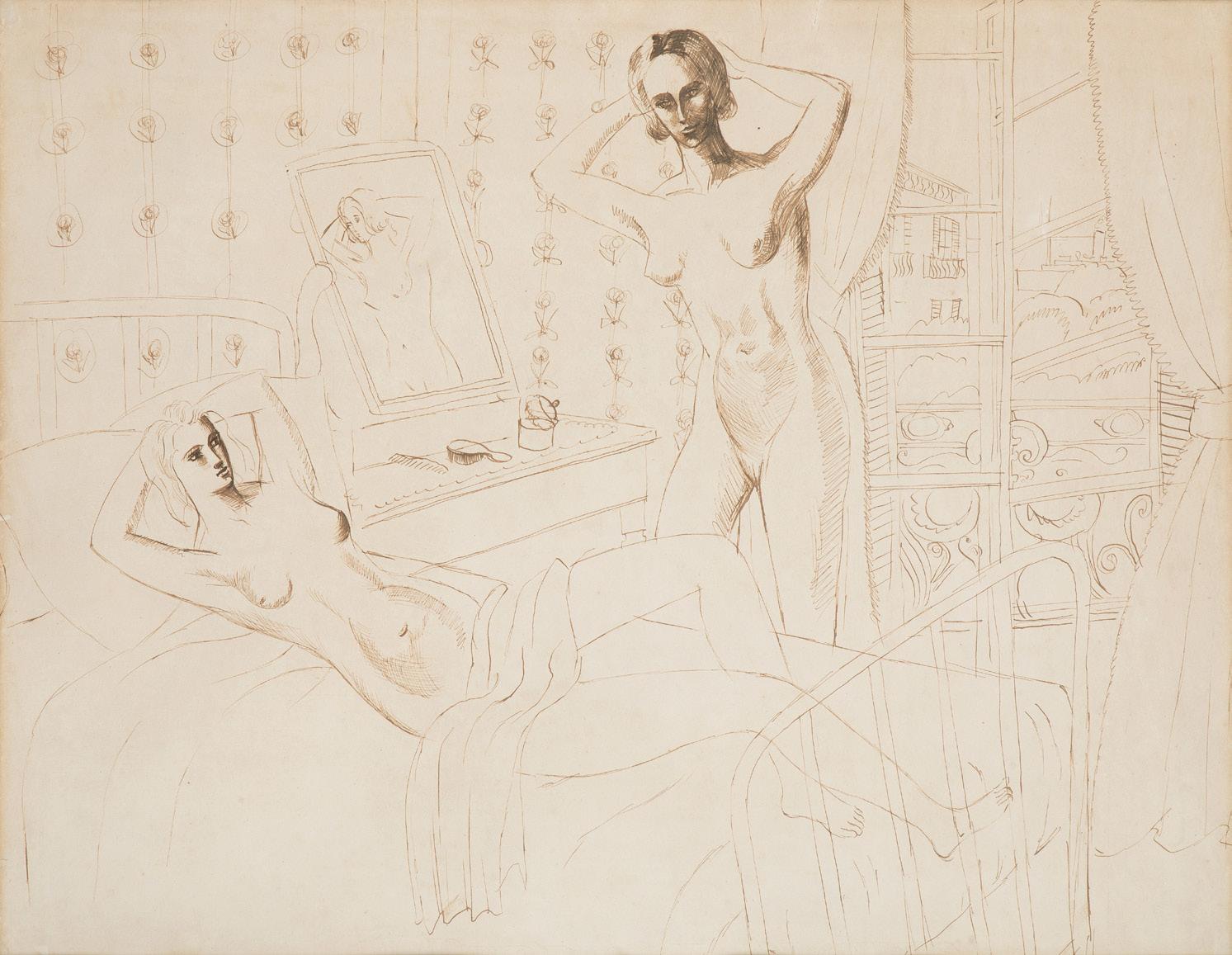
Provenance: Sotheby’s, London, 20th-Century British and Irish Art, 23 November 2005, lot 41; Duncan Miller Fine Arts, London; Private Collection, London. £2,000-3,000
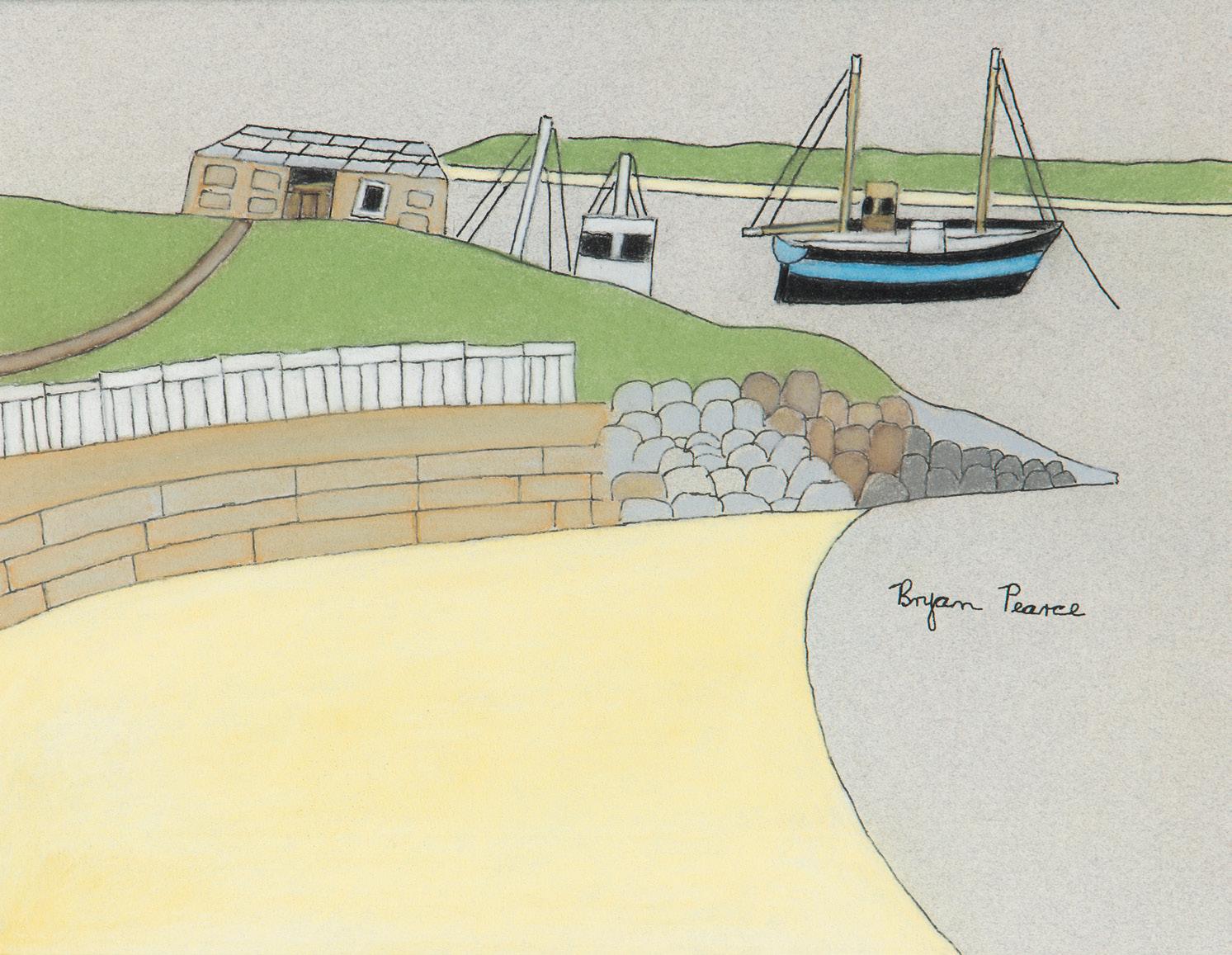
154 Other fees apply in addition to the hammer price: see the ‘Buyer’s Guide’ section on page 6
MARY FEDDEN O.B.E., R.A., R.W.A. (BRITISH 1915-2012)
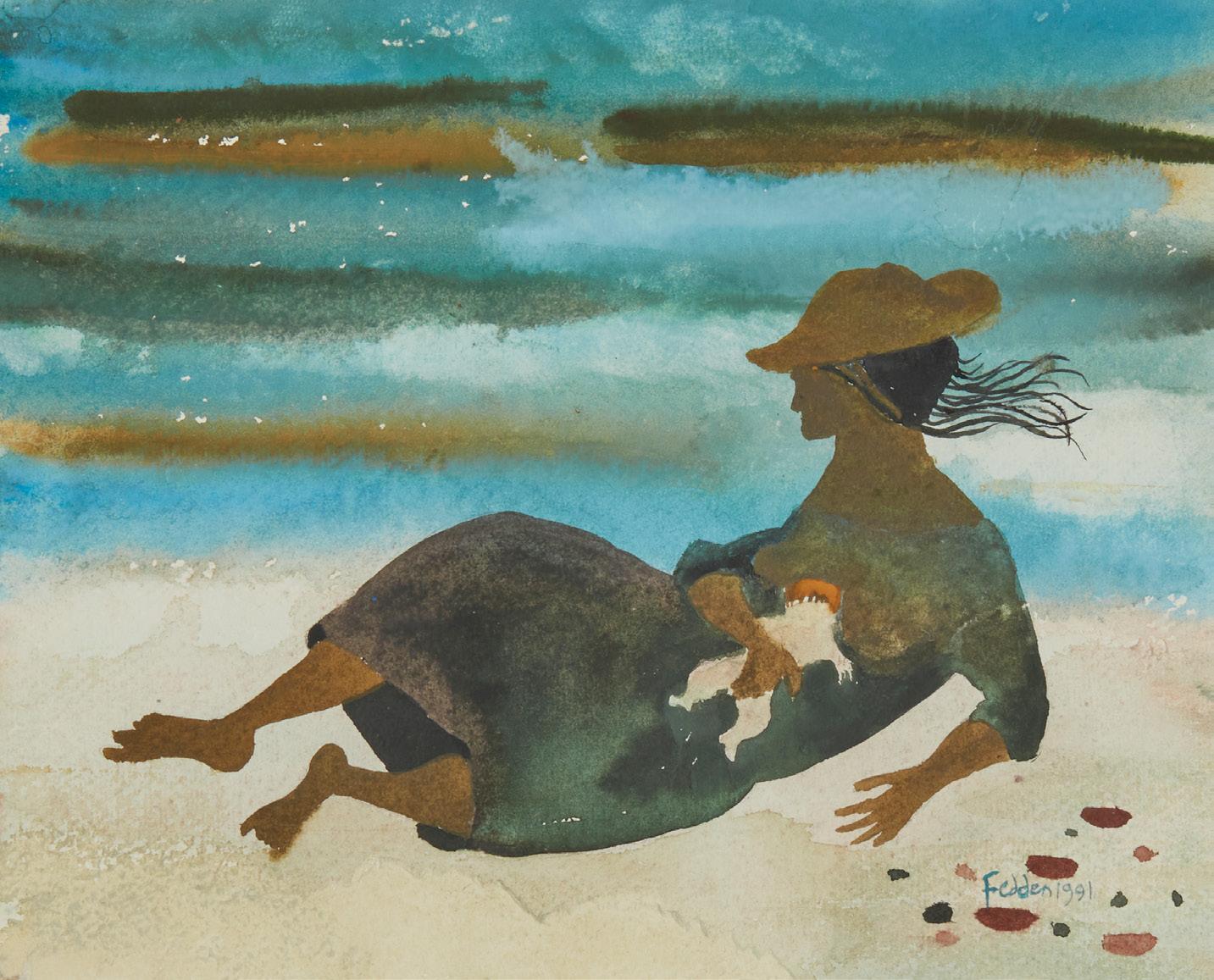
BY THE SEA, 1991
signed and dated (lower right), watercolour 20.5cm x 26cm (8in x 10 1/4in) £2,500-3,500
230 §
PAUL MOUNT (BRITISH 1922-2009) POINT OF DEPARTURE
signed (to base), stainless steel on slate base 57cm high (including base), 86cm wide (22 3/8in high (including base), 33 3/4in wide) £2,000-3,000
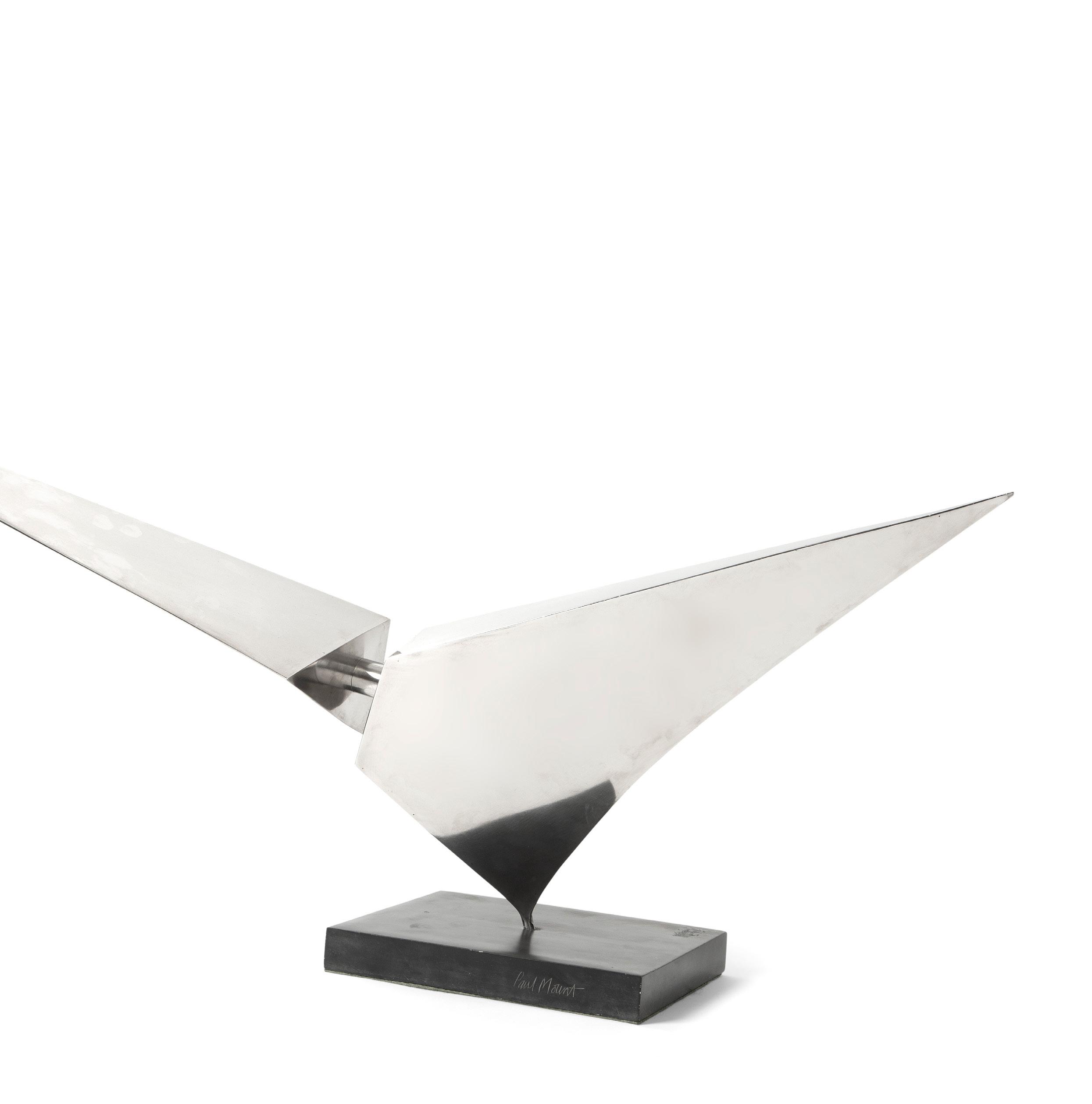
229 §
155
232 §
BRYAN INGHAM (BRITISH 1936-1997) NUDE bronze
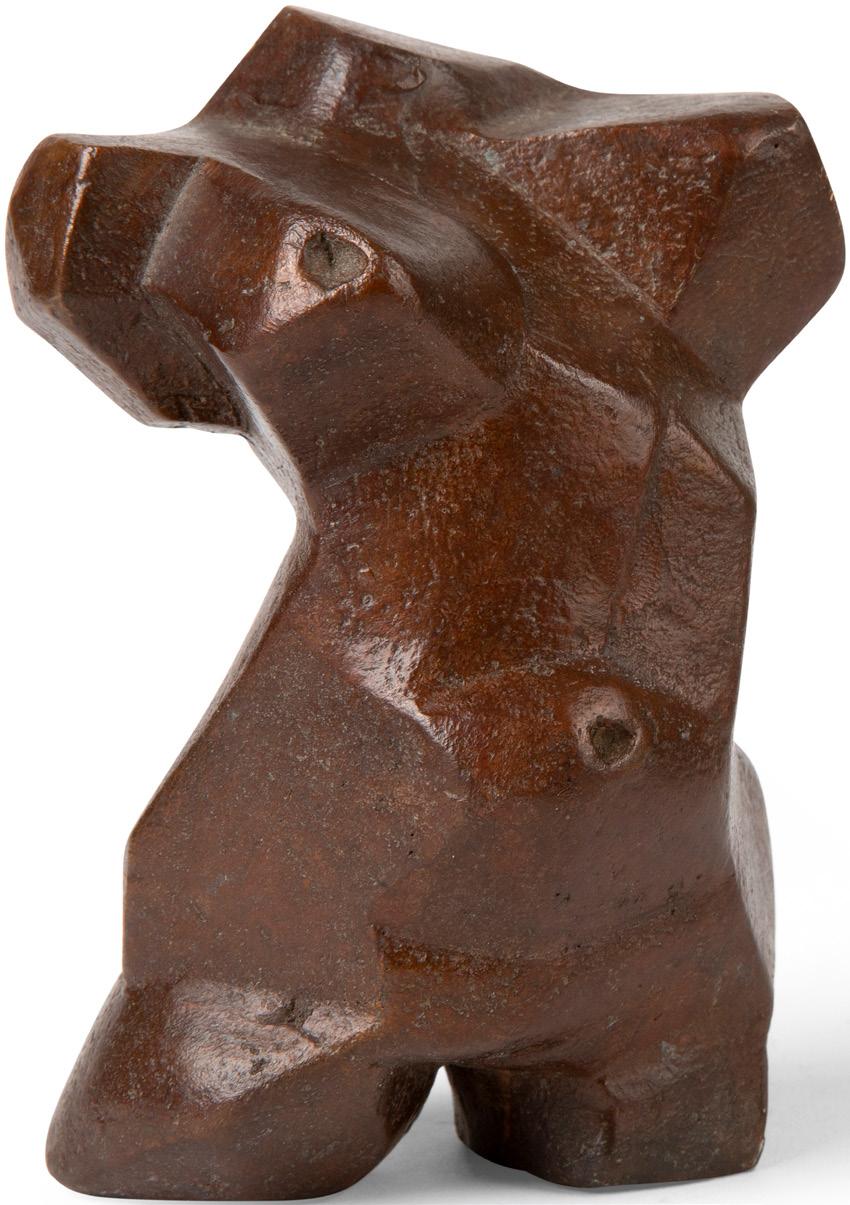
10.2cm high (4in high)
Provenance: Estate of the Artist. £1,000-1,500
231 §
BRYAN INGHAM (BRITISH 1936-1997) FEMALE NUDE FIGURE
artist’s estate stamp (to base), plaster on marble base 18.1cm high (7 1/8in high) excluding base
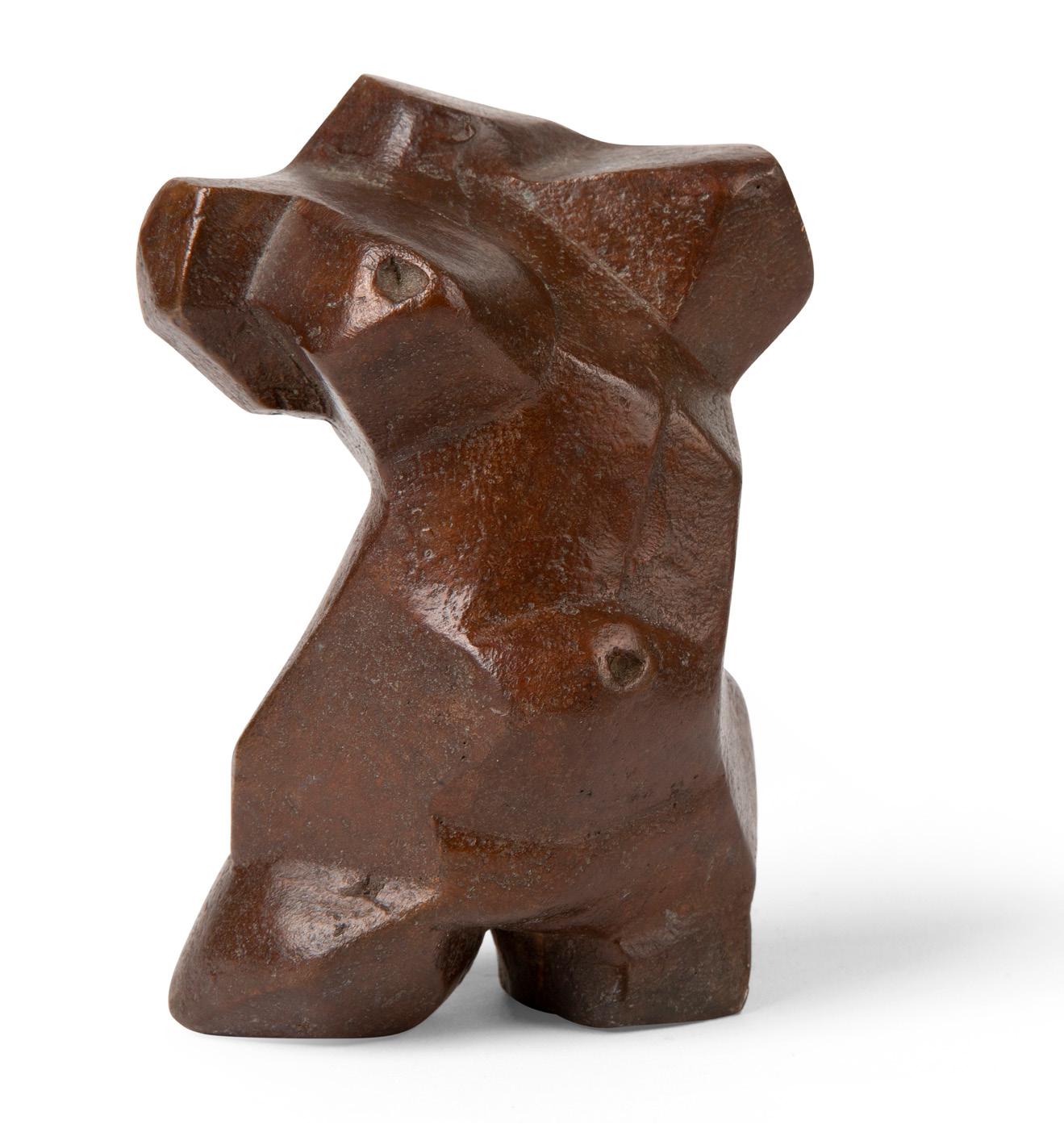
Provenance: Estate of the Artist. £1,200-1,800
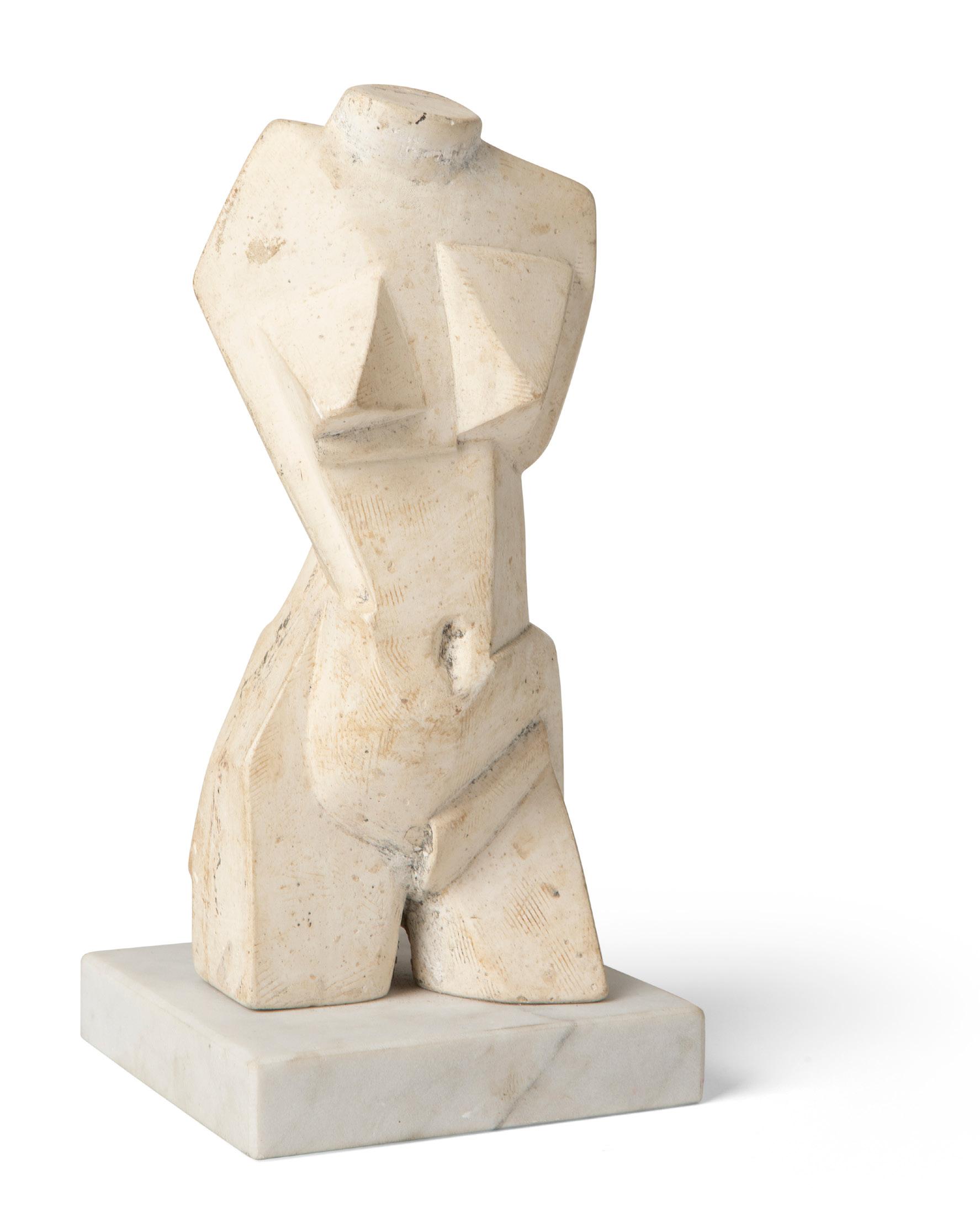
156 Other fees apply in addition to the hammer price: see the ‘Buyer’s Guide’ section on page 6
Lot 237 [detail]
233 §
RUPERT SPIRA (BRITISH 1960-)
JUG
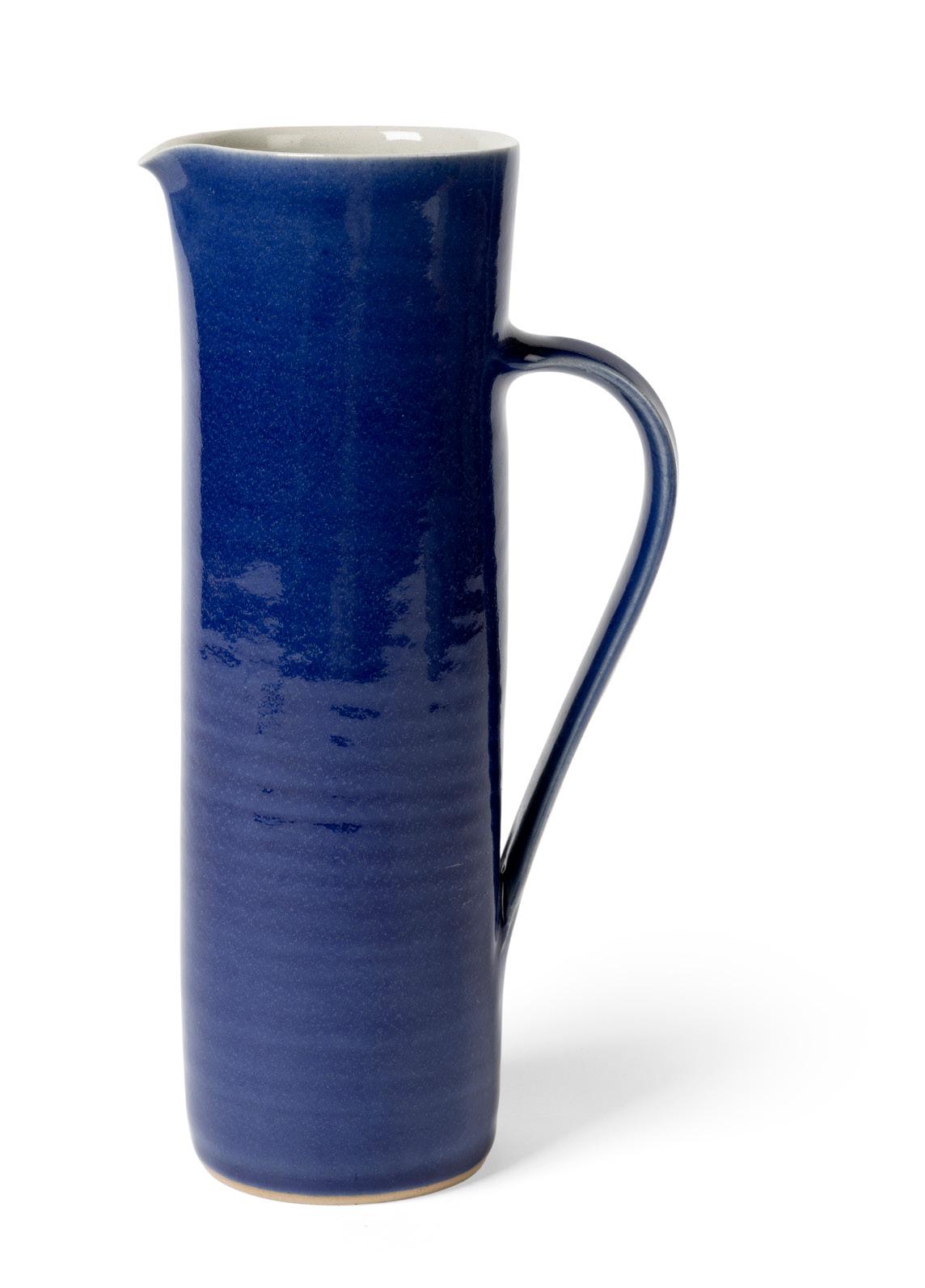
impressed artist’s seal, stoneware 25cm high (9 3/4in high)
£300-500
234 §
JOANNA CONSTANTINIDIS (BRITISH 1927-2000)
TAPERING BOTTLE
impressed artist’s seal, stoneware 47cm high (18 1/2in high) £400-600
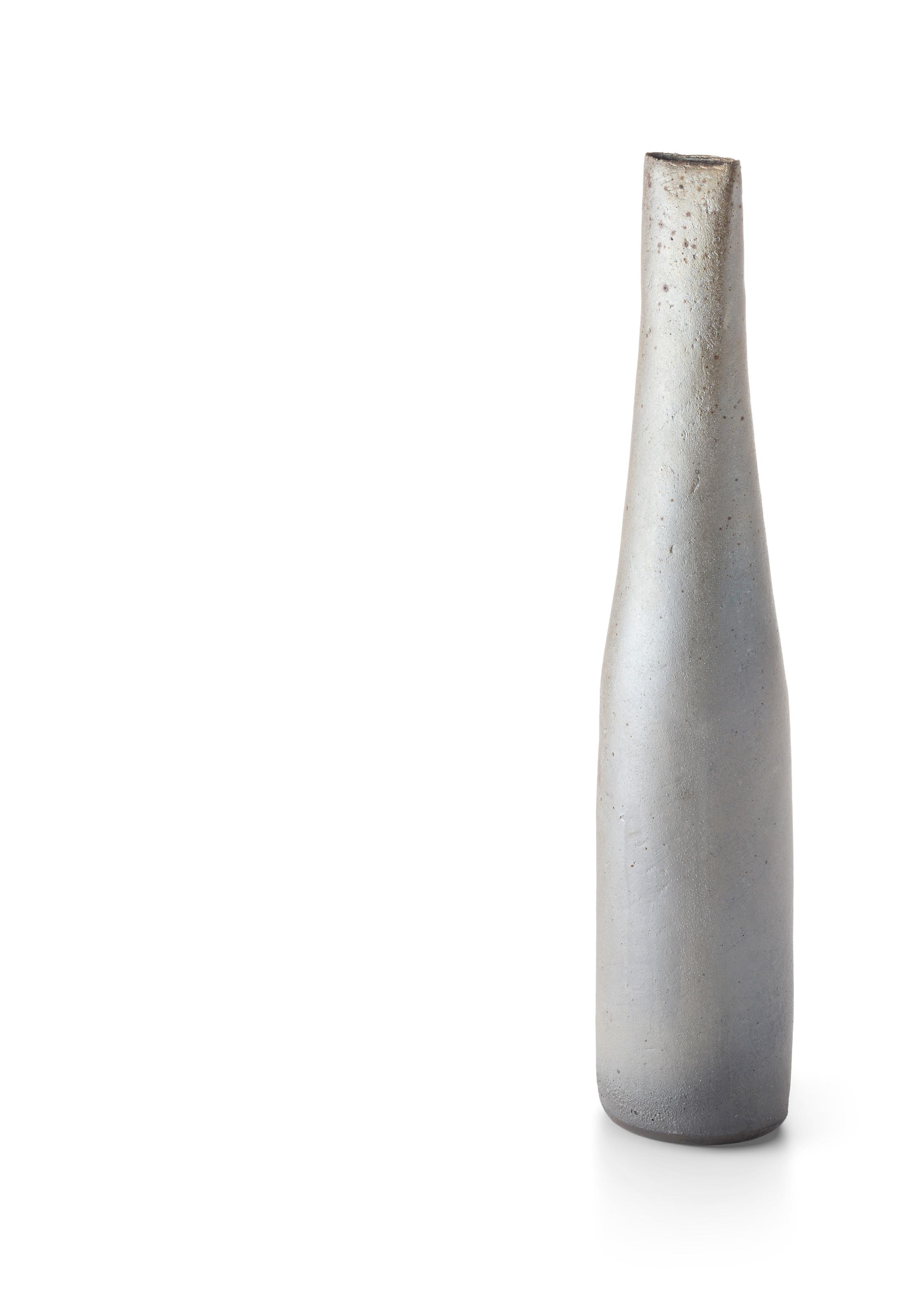
235 §
RUPERT SPIRA (BRITISH 1960-)
THREE POURING VESSELS
each impressed artist’s seal, stoneware (3) 14cm high, 12cm high and 10.5cm high (5 1/2in high, 4 3/4in high and 4 1/8in high) £700-900
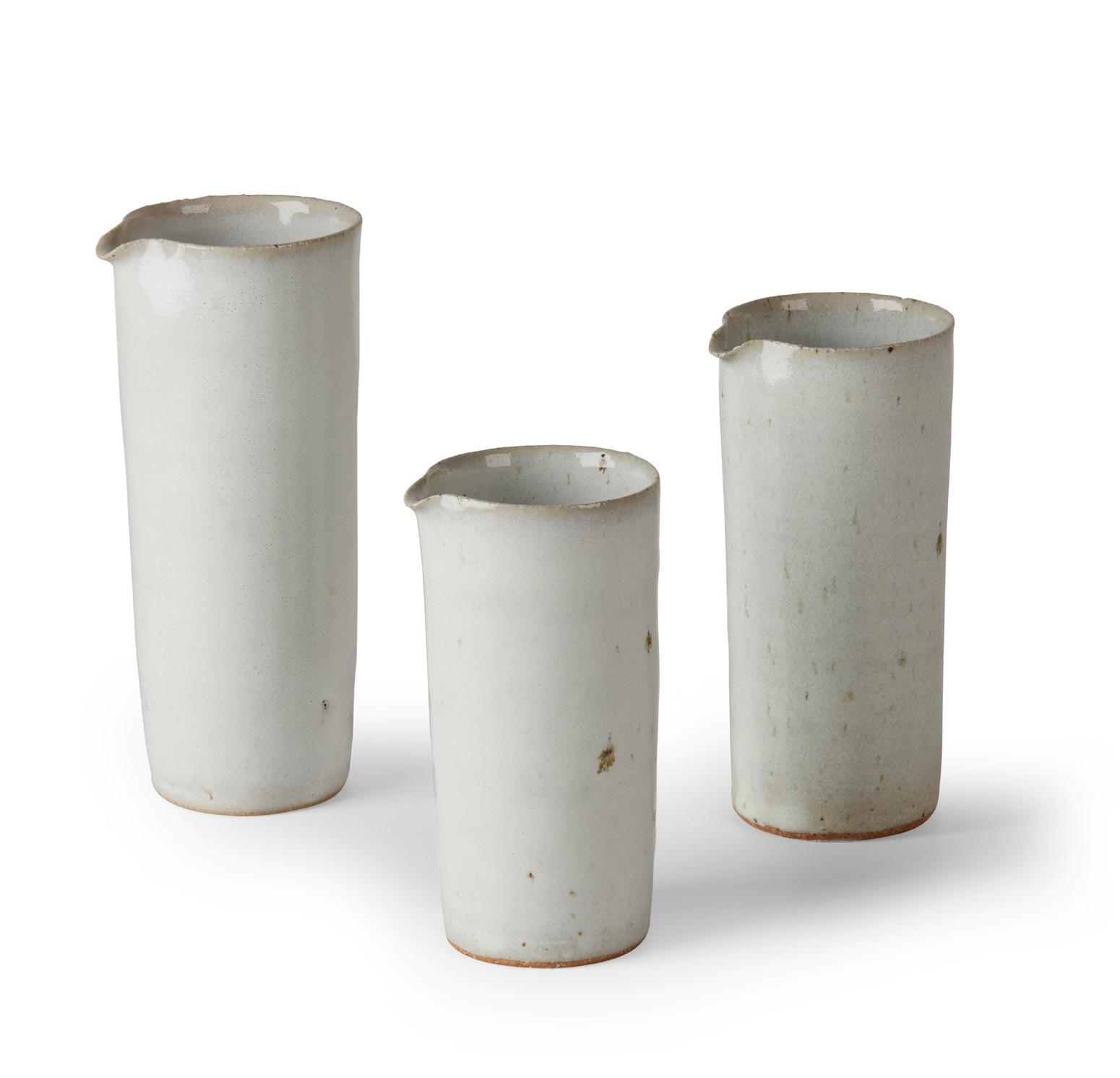
158
236 §

EMMANUEL COOPER O.B.E. (BRITISH 1938-2012) BOWL
impressed artist’s seal, volcanic glaze 6cm high, 15.2cm diameter (2 3/8in high, 6in diameter) £1,500-2,000
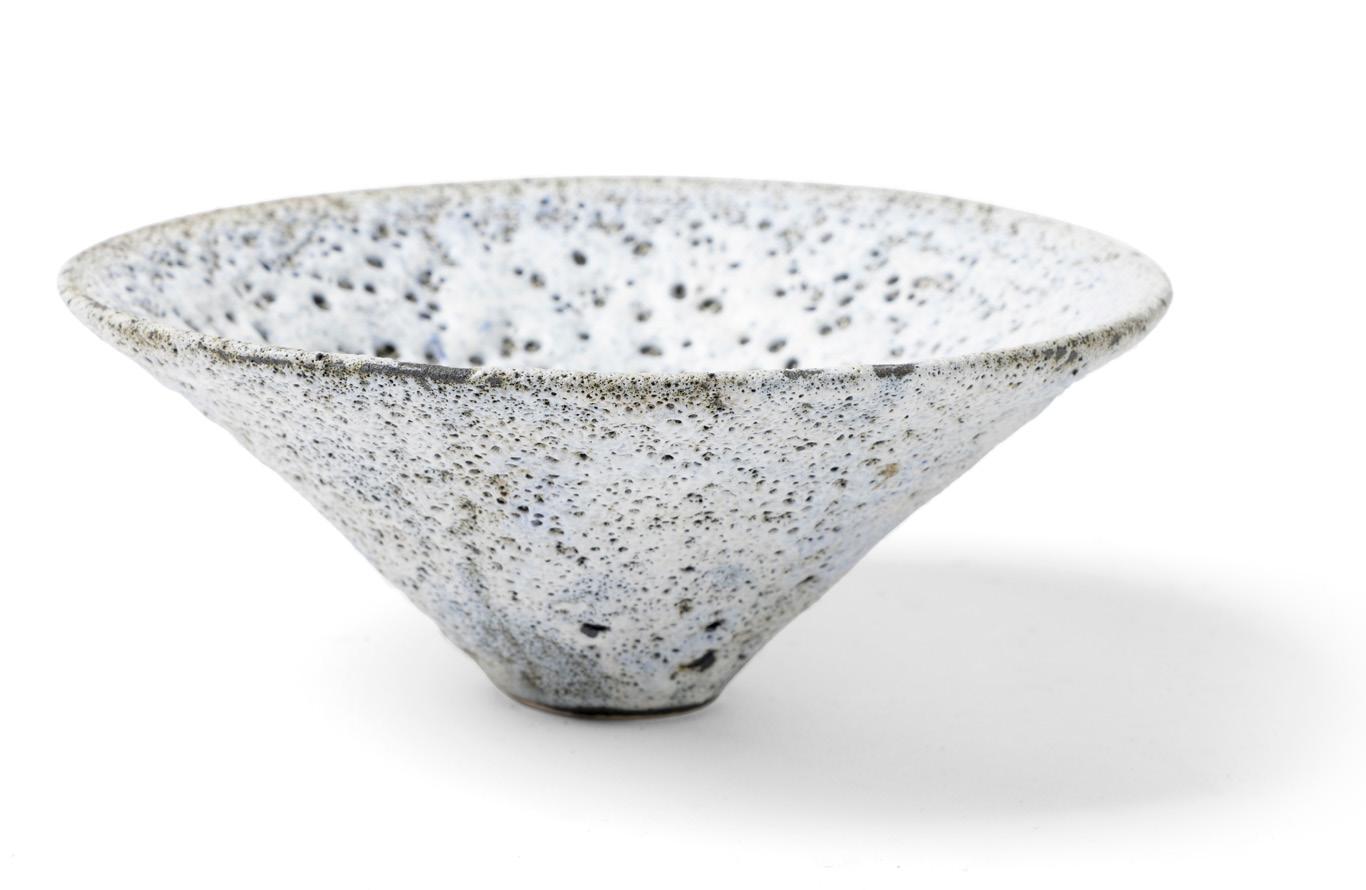
EMMANUEL COOPER O.B.E. (BRITISH 1938-2012)
impressed artist’s seal, blue volcanic glaze with gold lacquer spots 17.2cm high, 23cm wide (6 3/4in high, 9in wide)
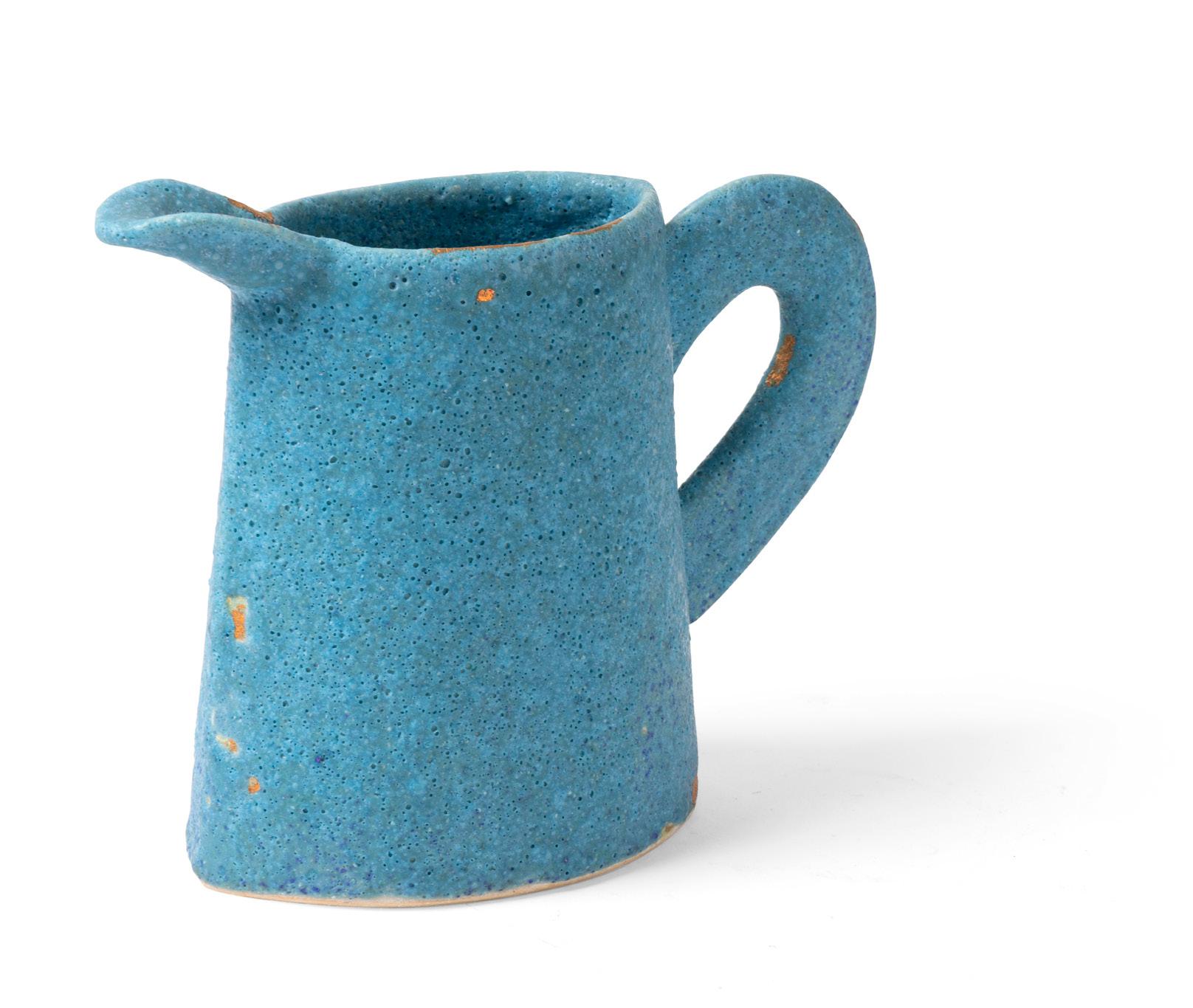
159 Other fees apply in addition to the hammer price: see the ‘Buyer’s Guide’ section on page 6
PEARSON (BRITISH 1923-2007)
VESSEL
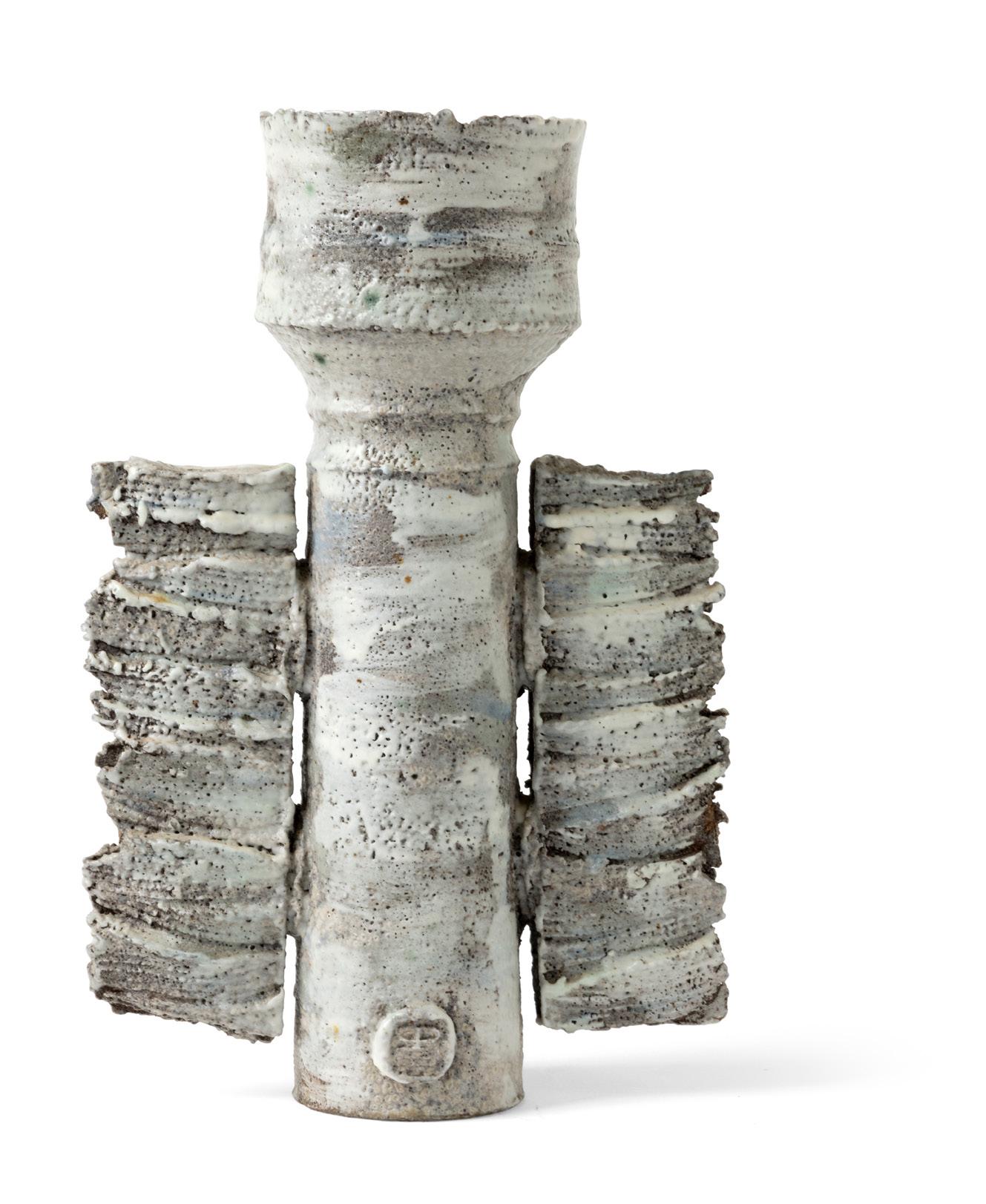
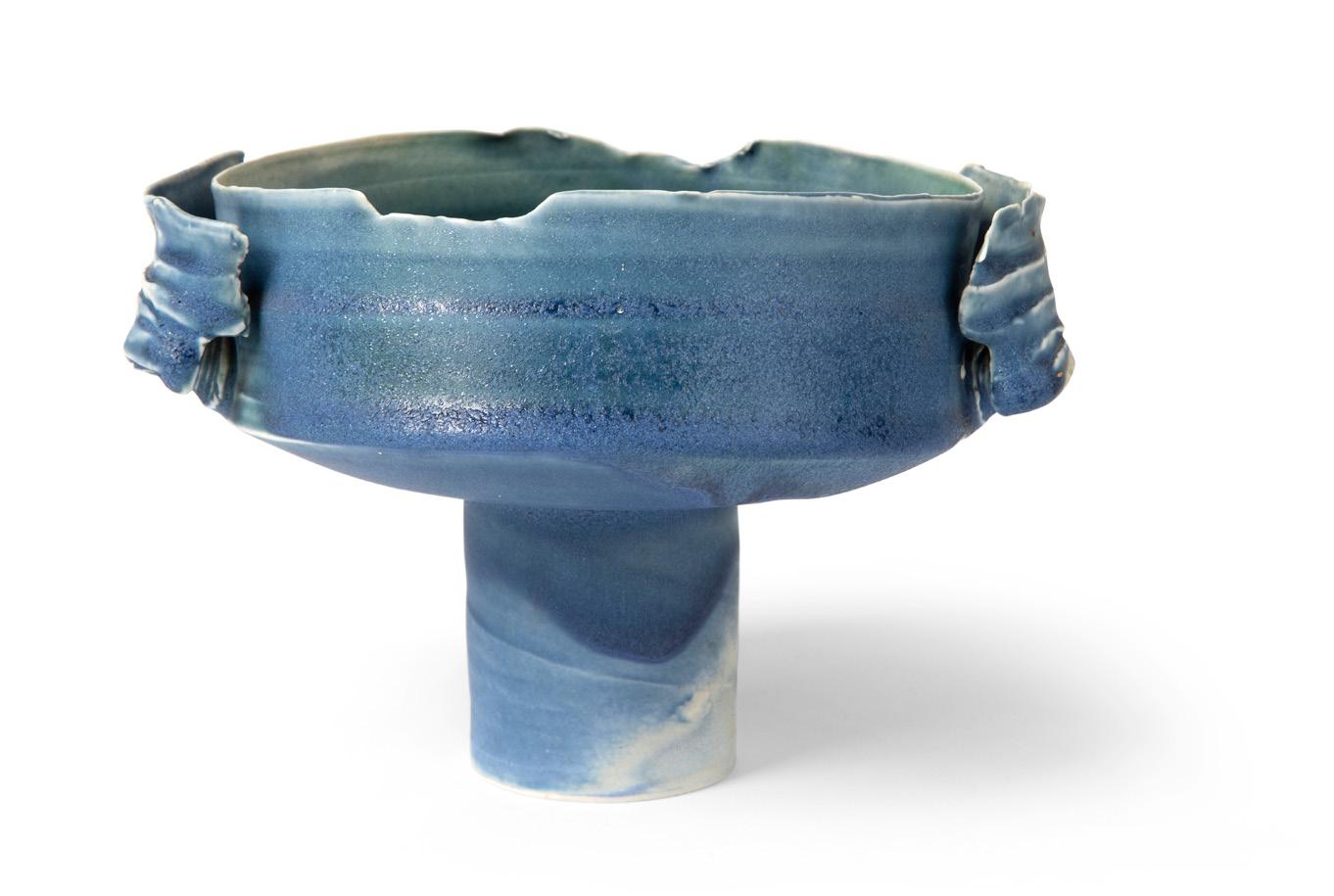
PEARSON
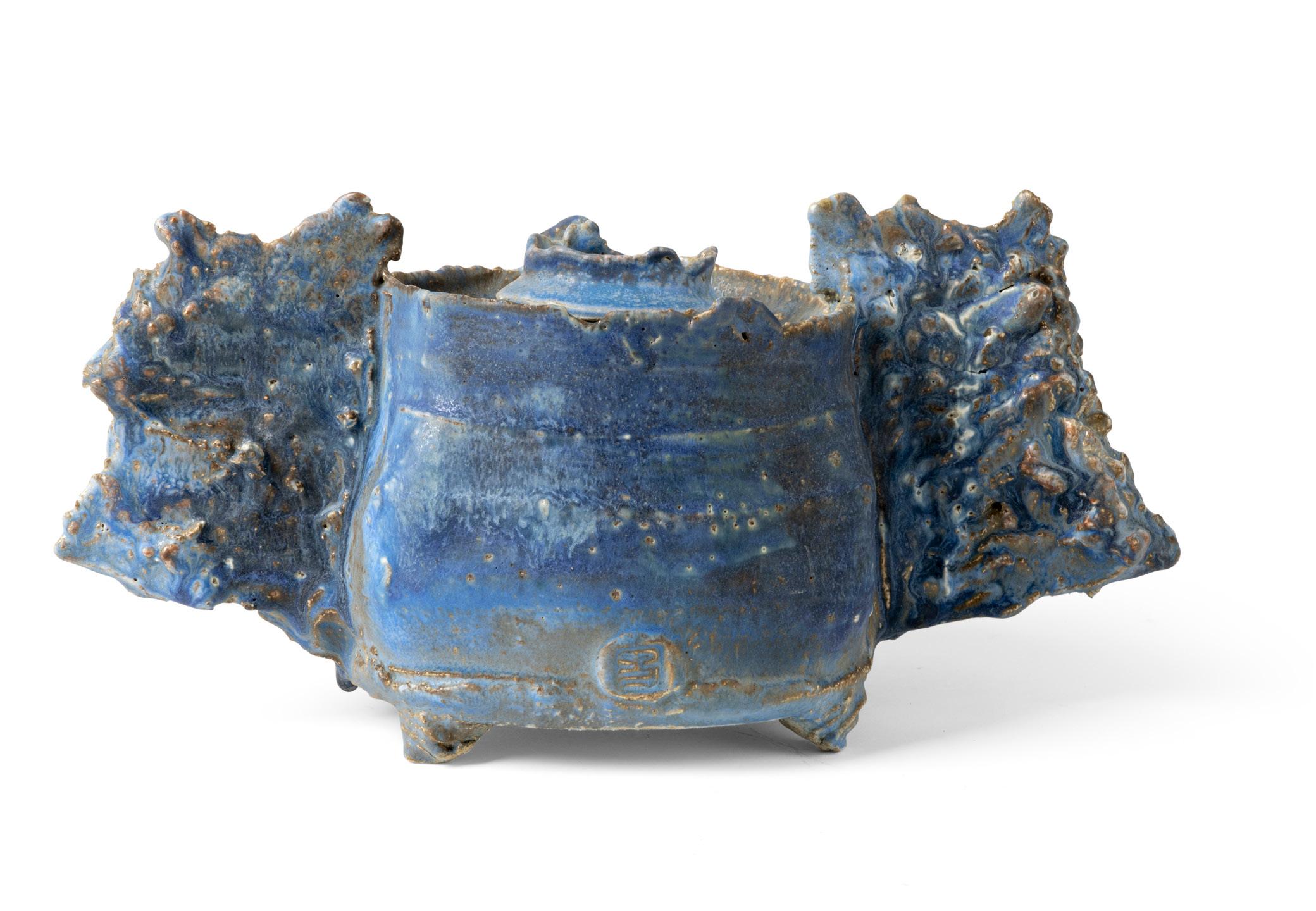
239 § COLIN PEARSON (BRITISH 1923-2007) VESSEL WITH WINGS impressed artist’s seal, stoneware, grey / white glazes 28cm high, 18cm wide (11in high, 7in wide) £500-700 240 § COLIN
(BRITISH 1923-2007) 238 § COLIN
WITH WINGS impressed artist’s seal, porcelain 12cm high, 17.7cm wide (4 3/4in high, 7in wide) £250-350 160
241 §
GARETH MASON (BRITISH 1965-) LARGE VESSEL impressed artist’s seal, porcelain, celadon with splashed red glaze 51cm high (20in high) £500-700
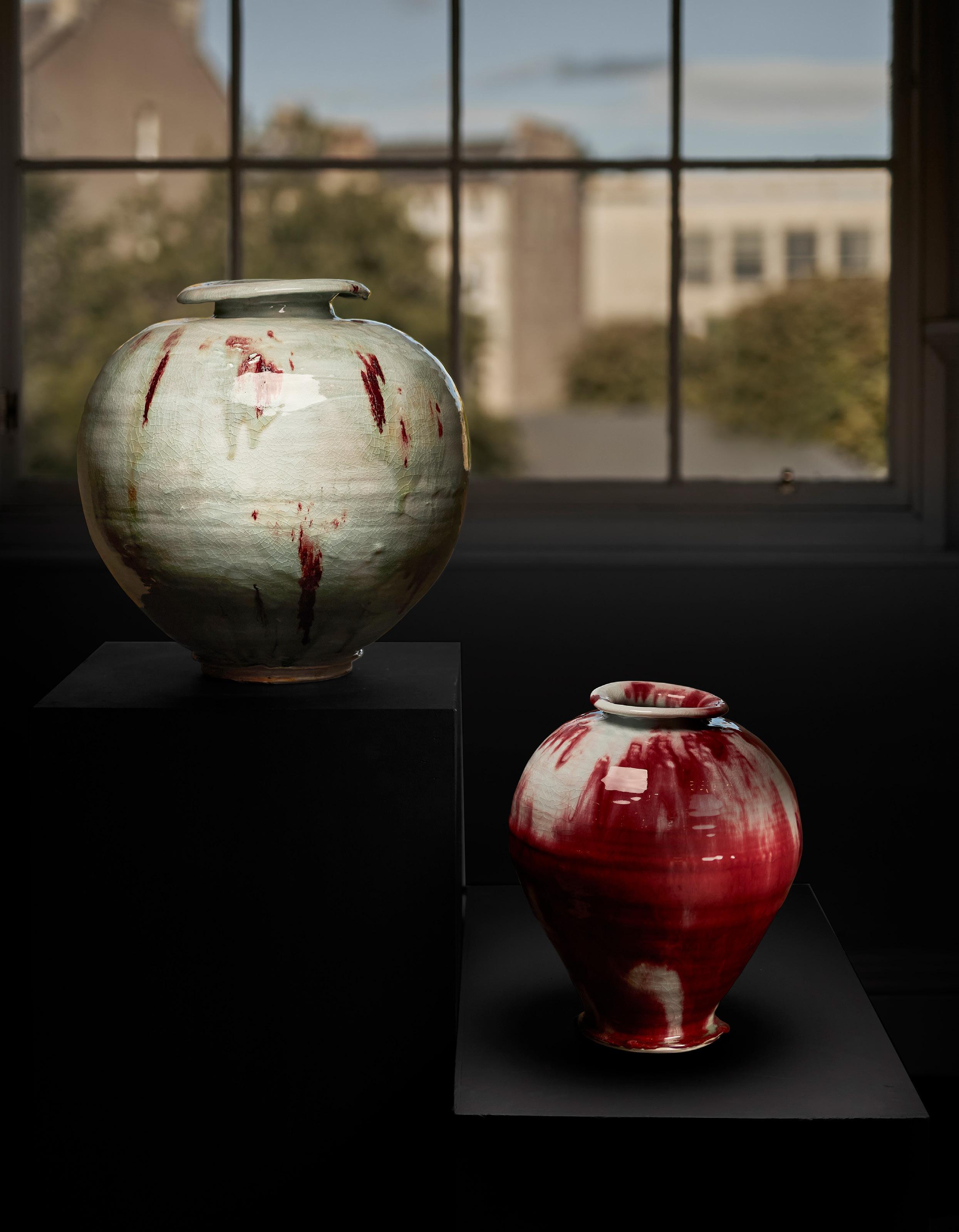
242 §
GARETH MASON (BRITISH 1965-) VESSEL impressed artist’s seal, porcelain with celadon and red glazes 40cm high (15 3/4in high) £300-500
161 Other fees apply in addition to the hammer price: see the ‘Buyer’s Guide’ section on page 6
243 §
SUTTON TAYLOR (BRITISH 1943-)
FOOTED BOWL
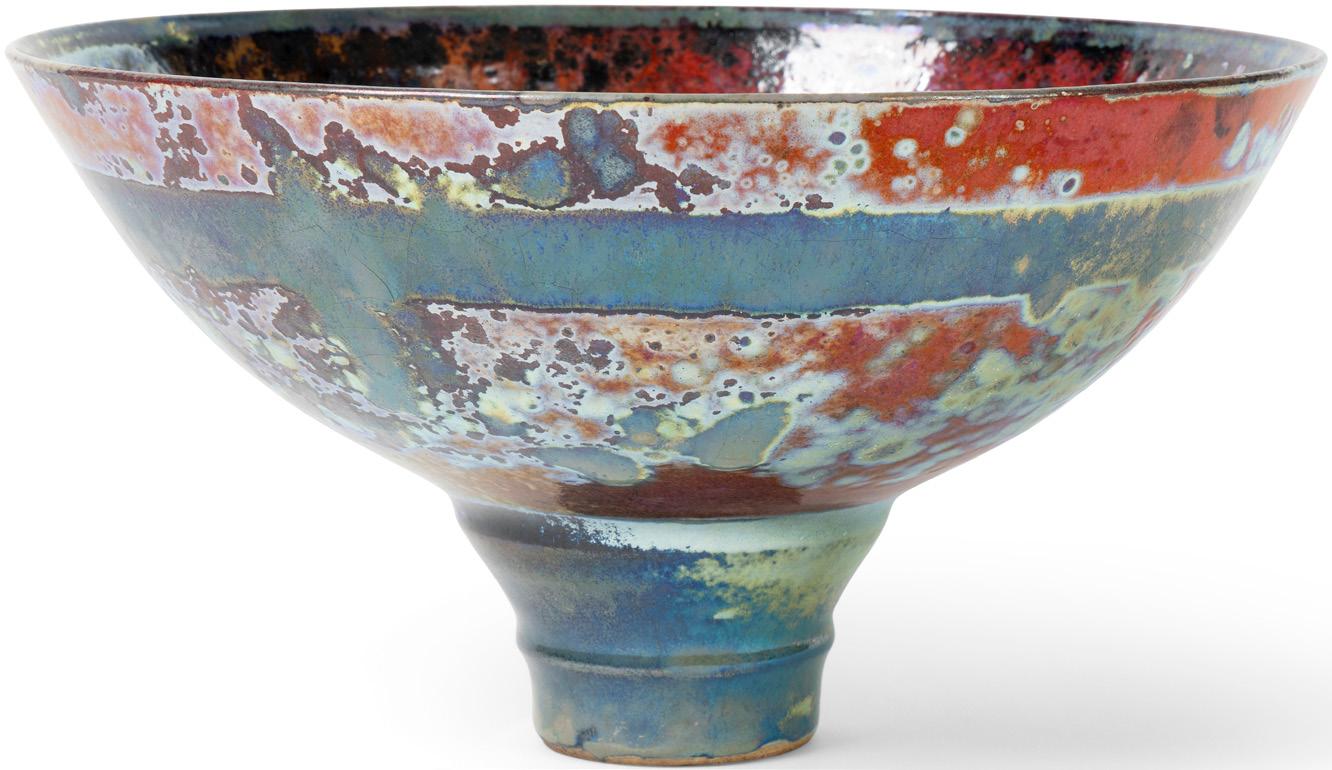
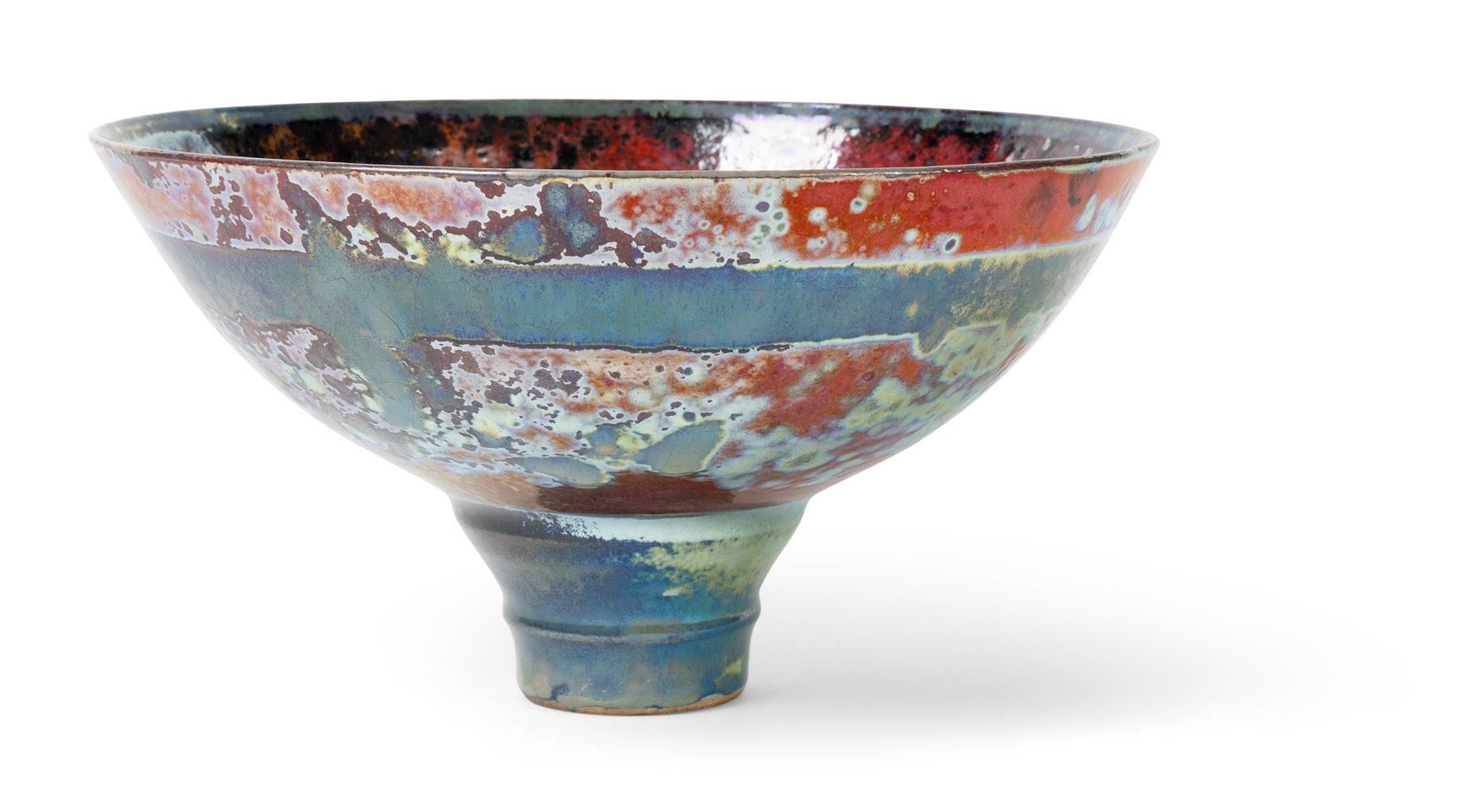
impressed artist’s seal, earthenware, lustre glazes
13cm high, 24cm diameter (5 1/8in high, 9 1/2in diameter)
£300-500
244 §
SUTTON TAYLOR (BRITISH 1943-)
LARGE FOOTED BOWL
impressed artist’s seal, earthenware, lustrous abstract designs
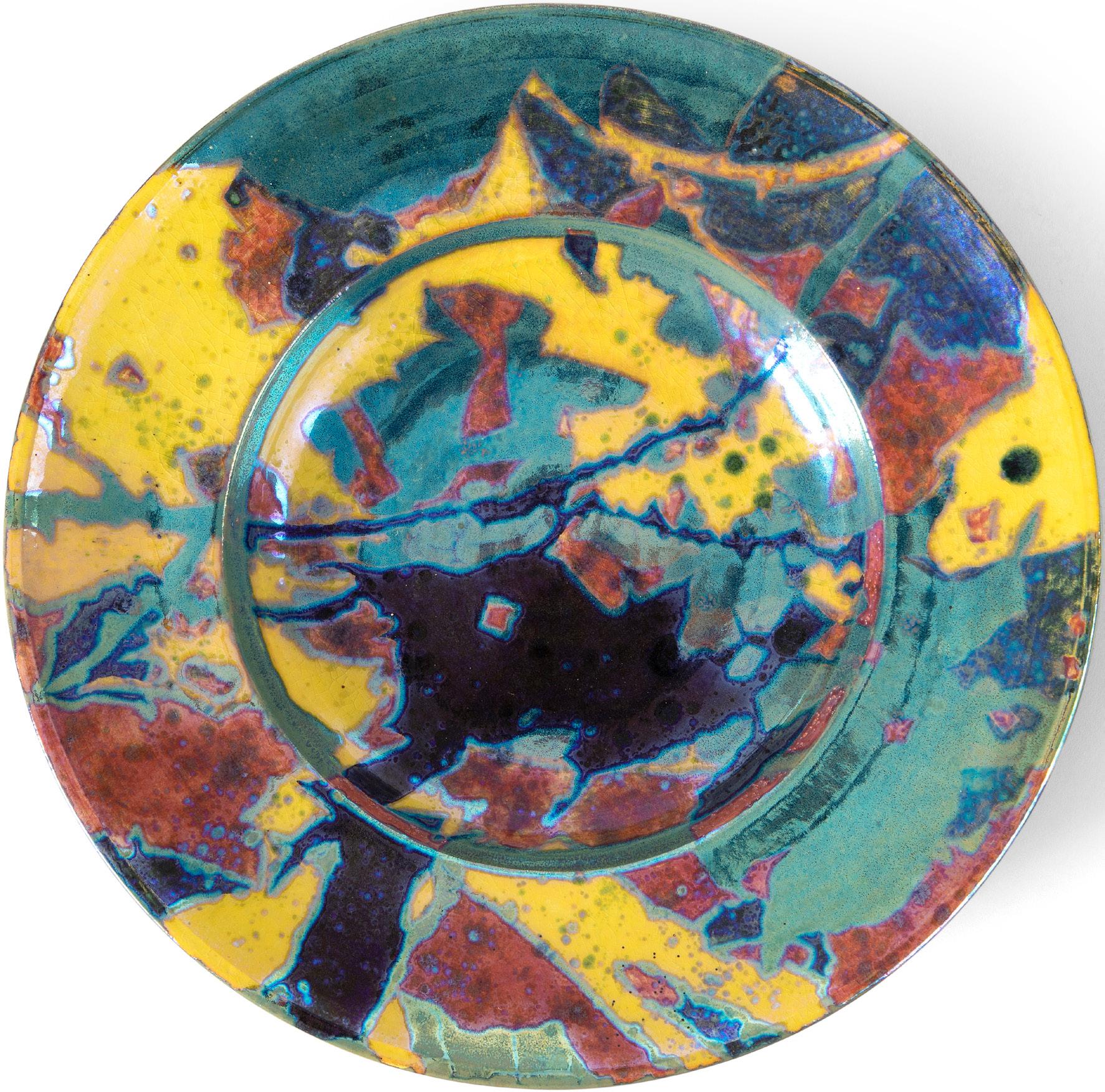
7.5cm high, 42.5cm diameter (3in high, 16 3/4in diameter) £600-800
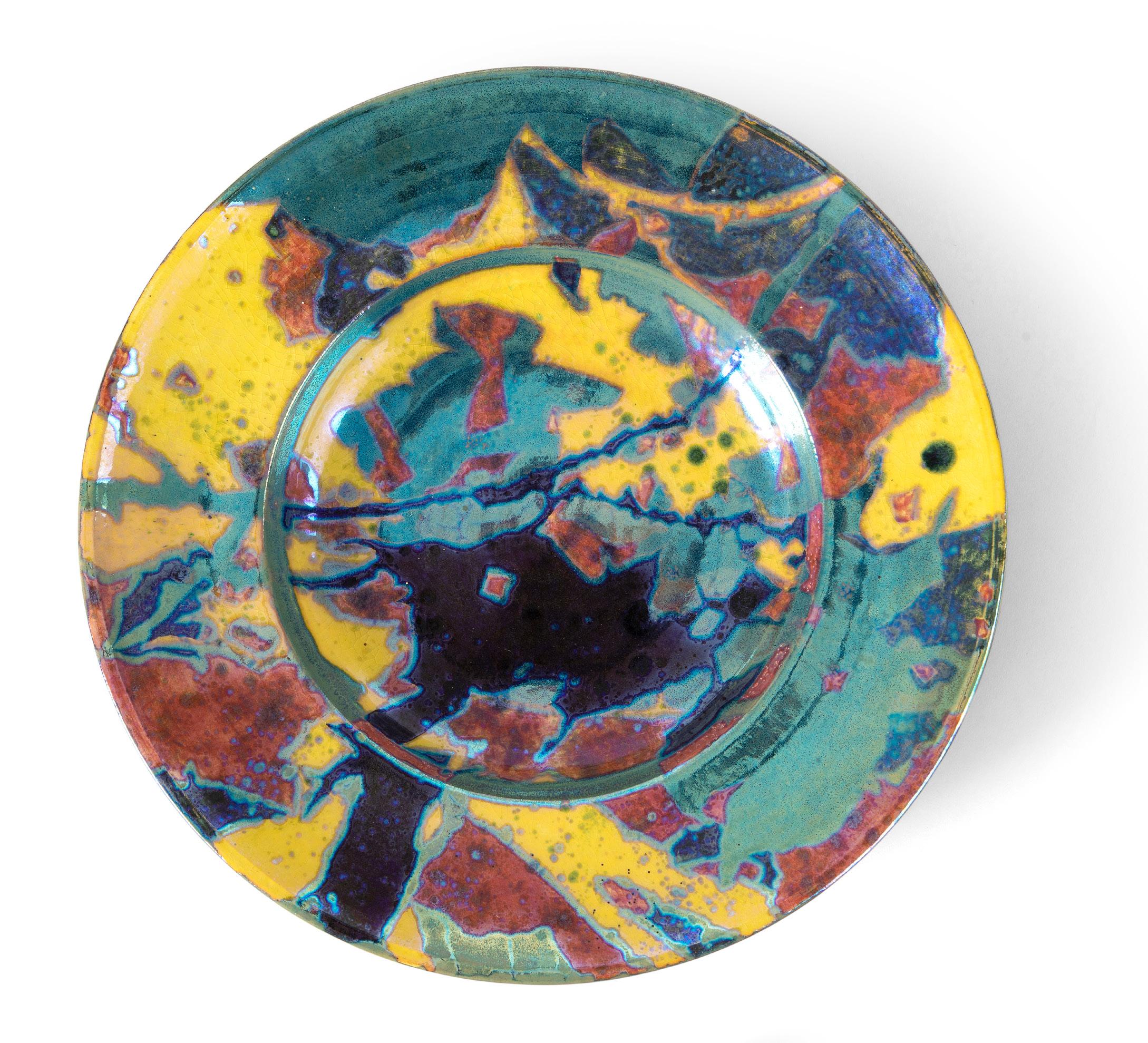
162 Other fees apply in addition to the hammer price: see the ‘Buyer’s Guide’ section on page 6
245 §
JOHN MALTBY (BRITISH 1936-)
HAPPY BIRTHDAY MUSIC BOX signed (to the reverse), collage, painted wood and music box 22cm high (8 5/8in high) £300-500
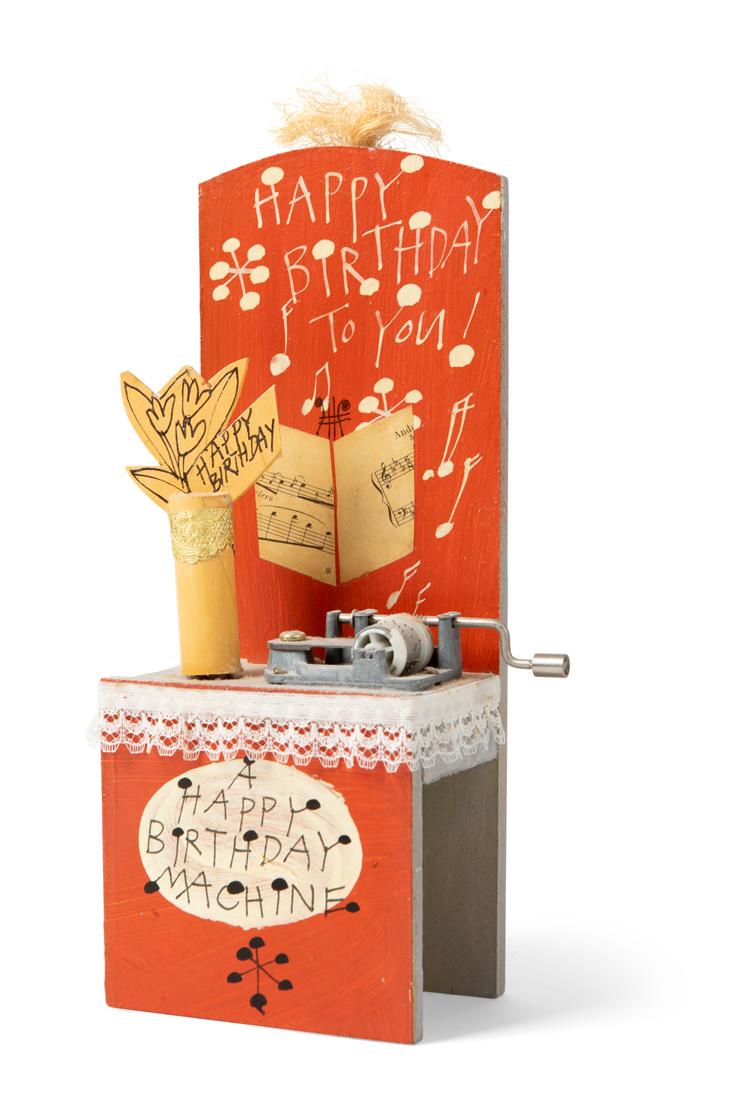
246 §
ROBIN WELCH (BRITISH 1938-2019)
VESSEL
impressed artist’s seal, stoneware 26cm high (10.25in high) £300-500
247 § DUNCAN ROSS (BRITISH 1943-) VASE
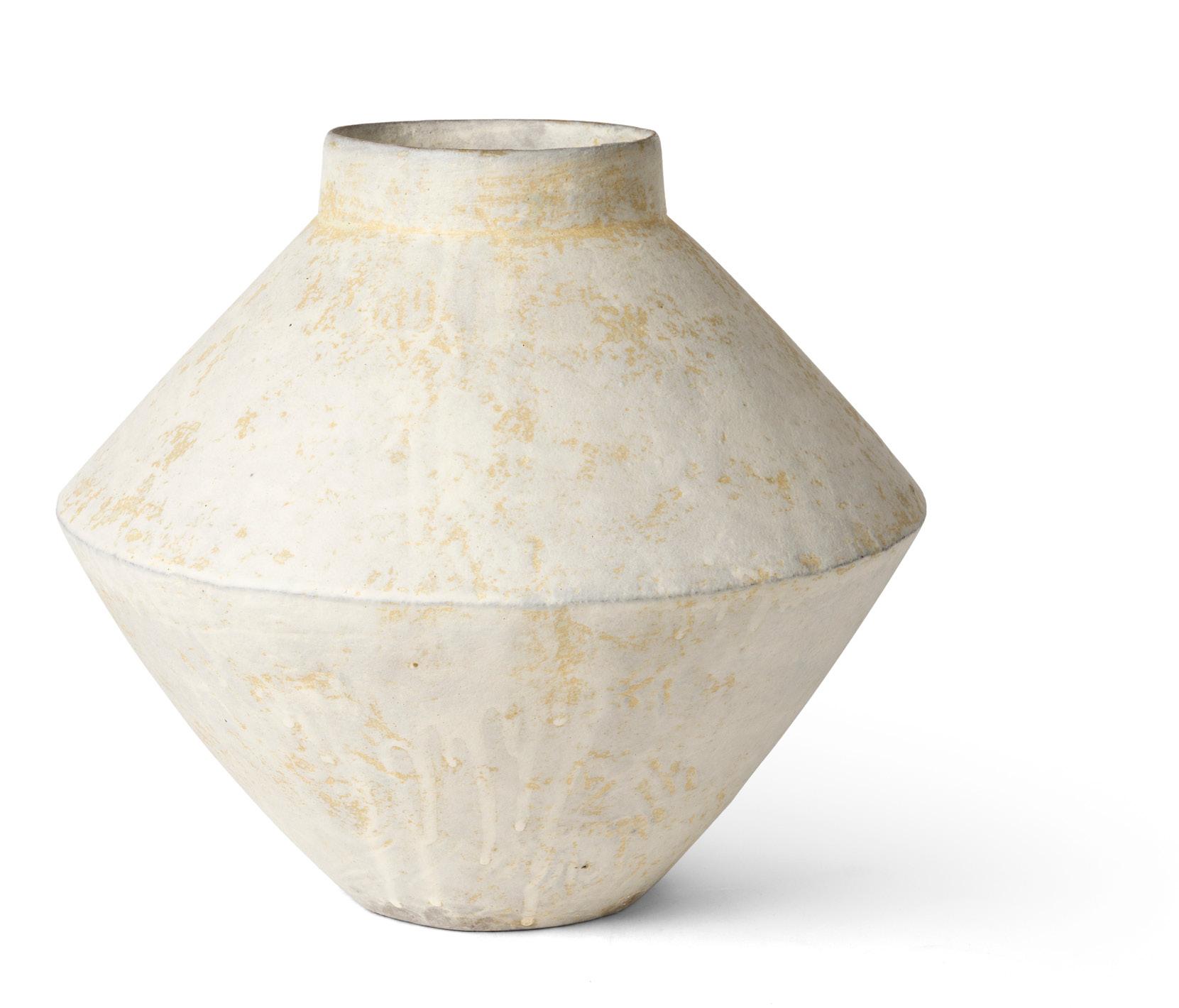
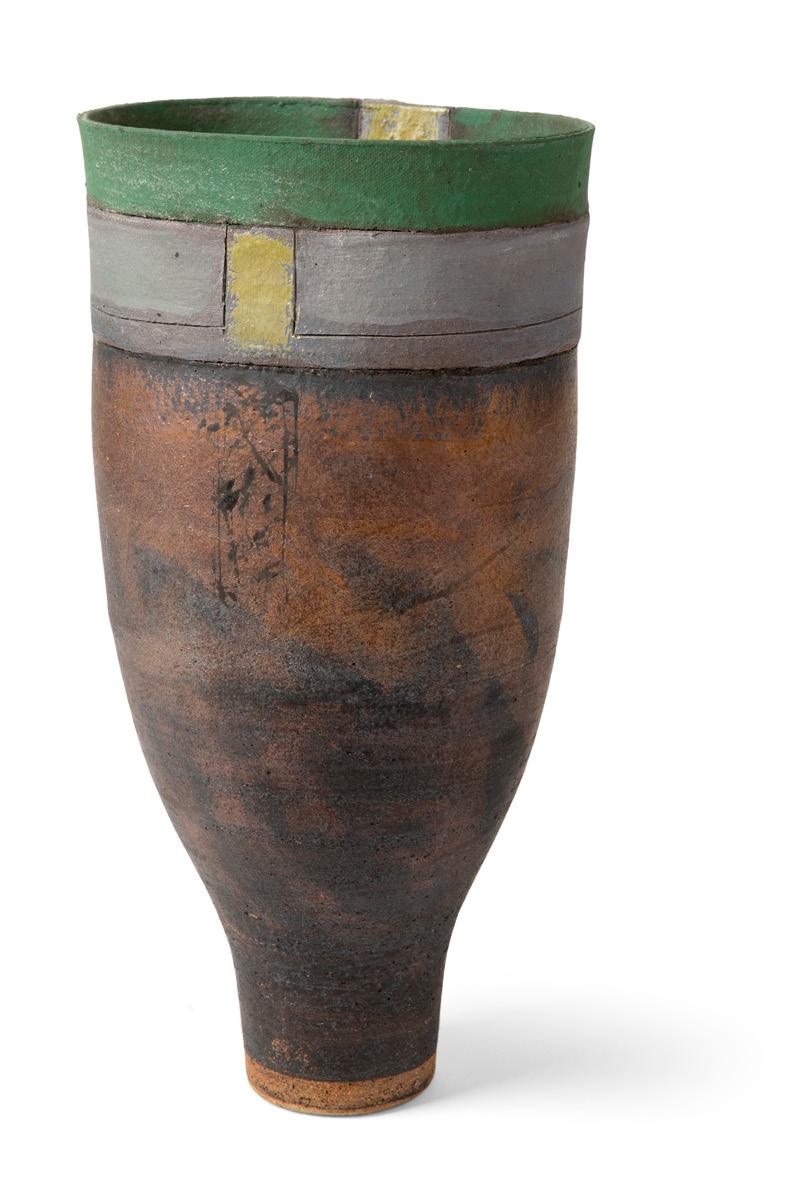
impressed artist’s seal, earthenware, smokefired and burnished terra-sigillata orange slips 18.7cm high (7 3/8in high) £300-500
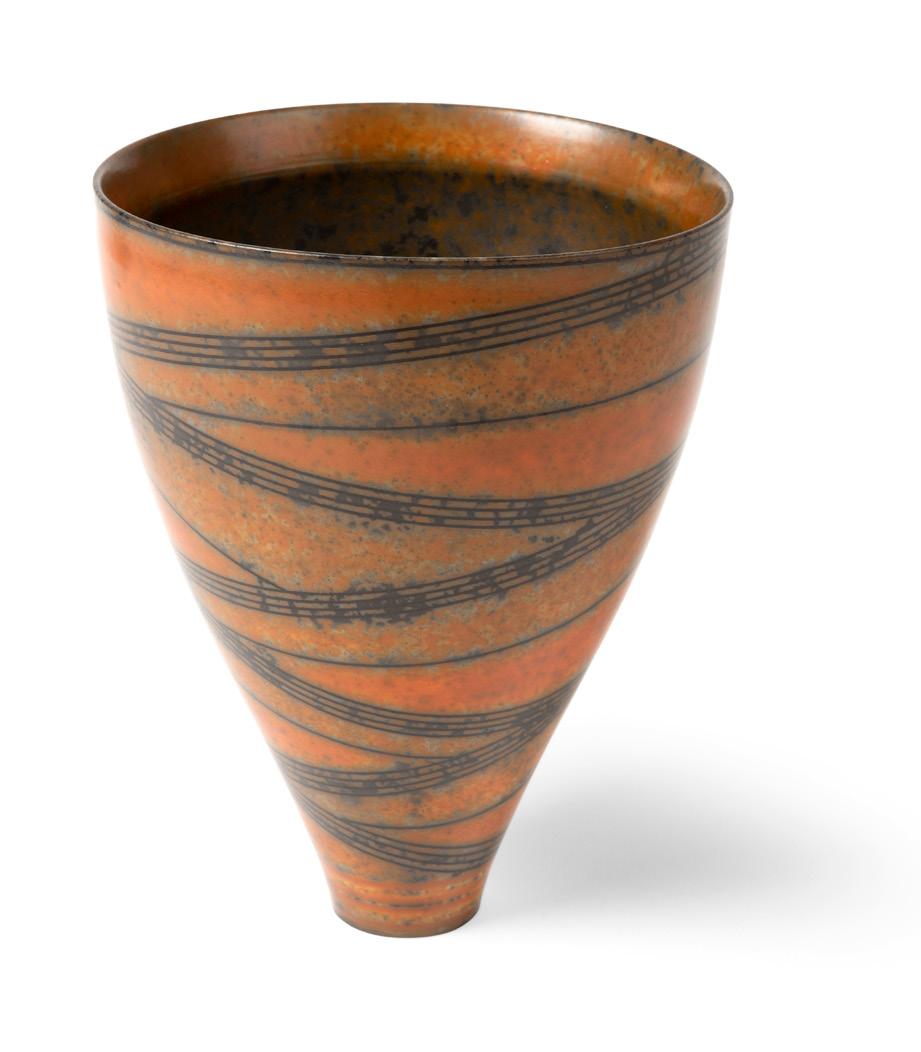
248 §
PAUL PHILP (BRITISH 1941-) VESSEL
impressed artist’s seal, stoneware 29.5cm high (11 5/8in high)
£1,000-1,500
163
250 §
JOHN MALTBY (BRITISH 1936-)
LARGE FOOTED CUP FORM WITH HANDLE signed ‘MALTBY’, stoneware 14.5cm high, 19cm wide (5 3/4in high, 7 1/2in wide) £500-700
249 §
JOHN MALTBY (BRITISH 1936-) BOAT PEOPLE
signed and titled (to base), stoneware on wooden base overall 15.2cm high, 15.2cm wide (6in high, 6in wide) £500-700
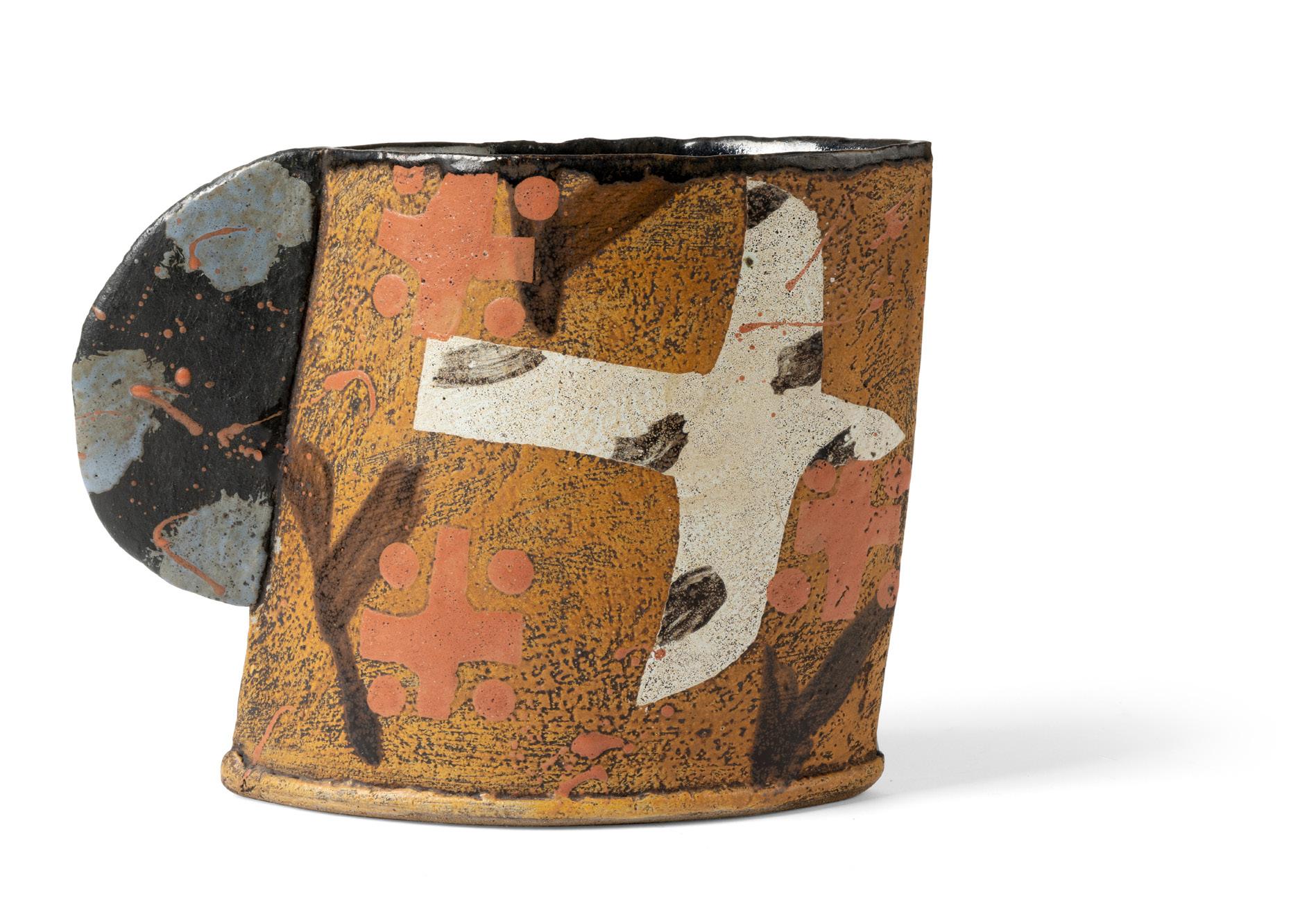
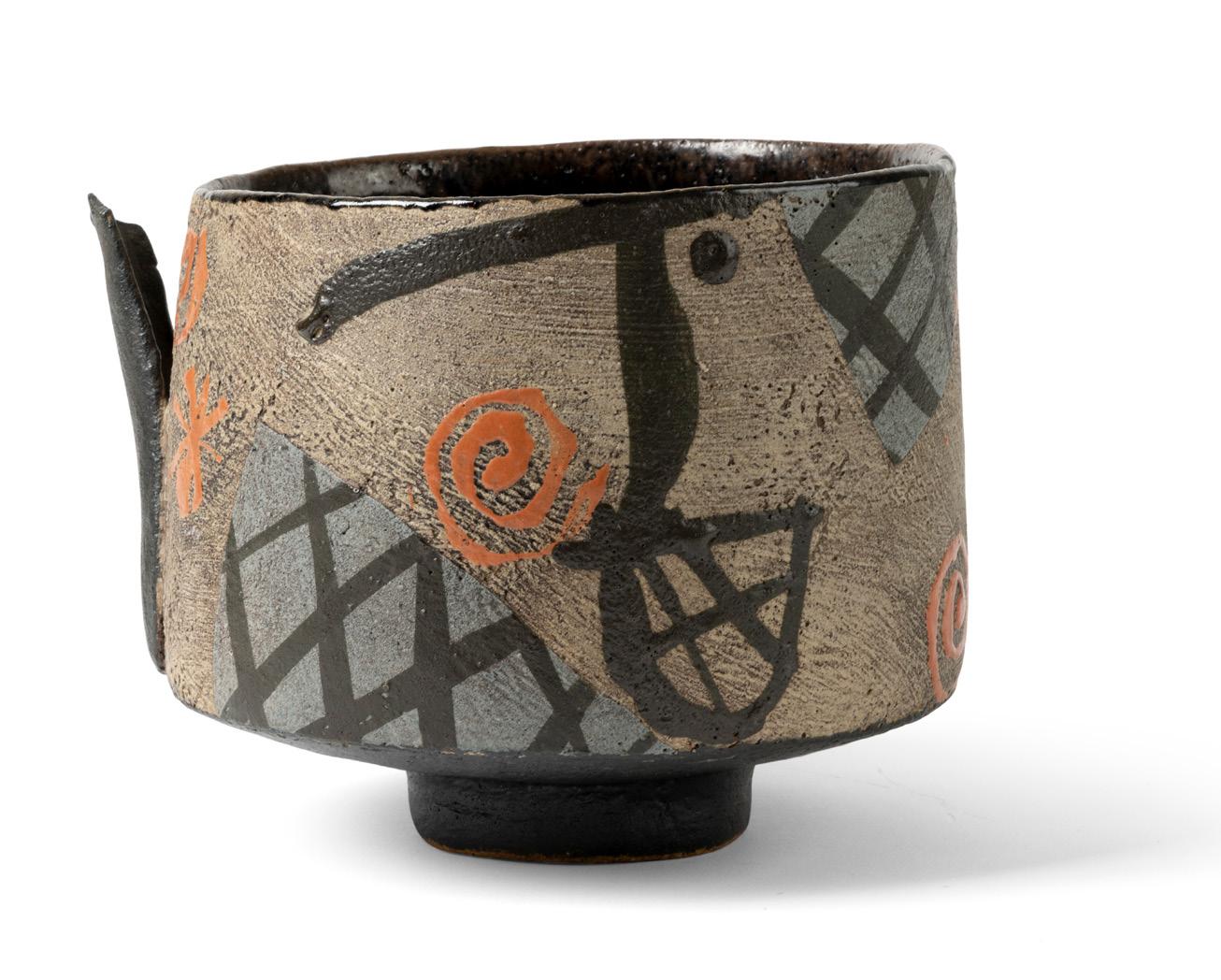
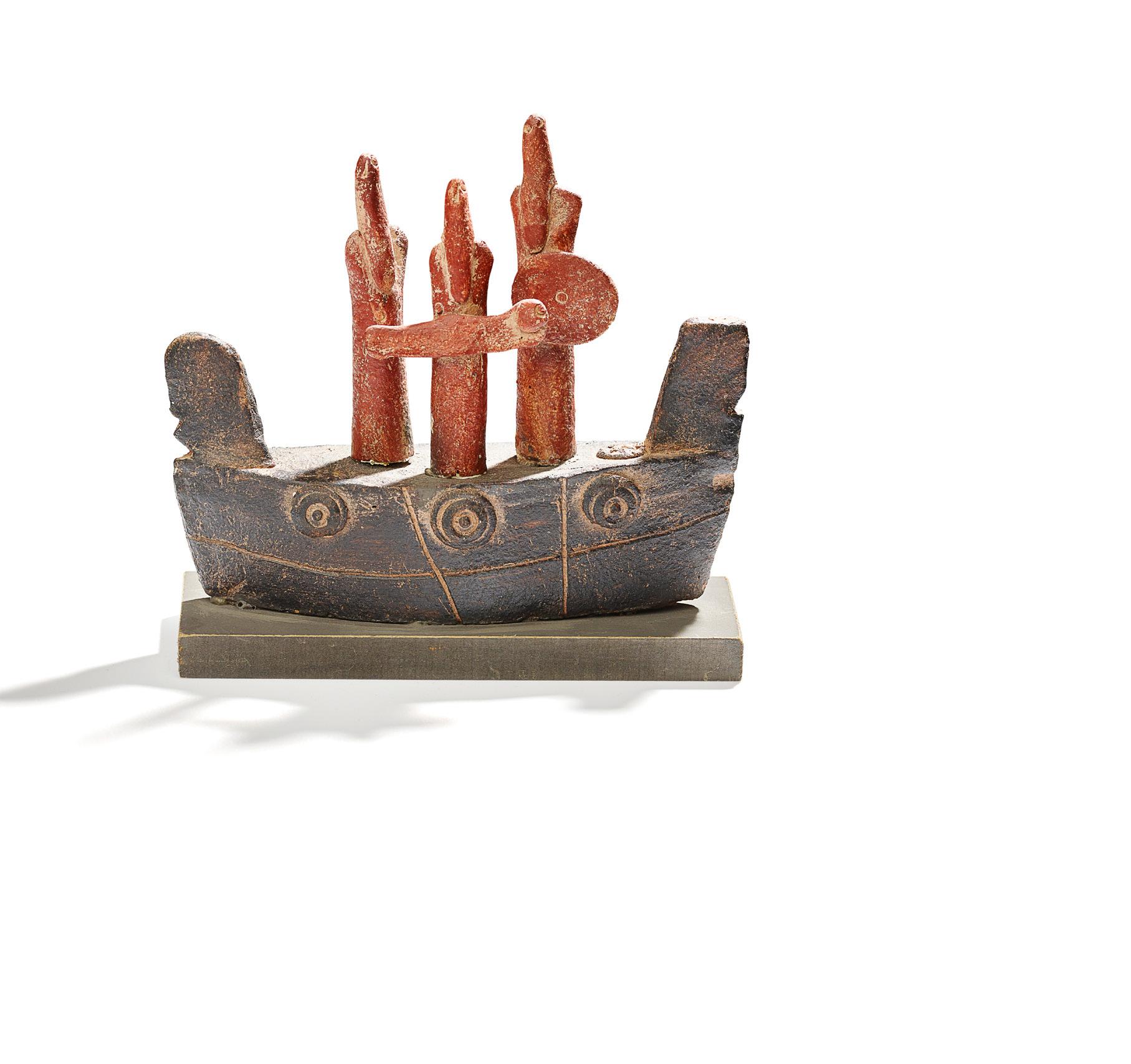
JOHN MALTBY (BRITISH 1936-)
19cm high, 24cm wide (7 1/2in high, 9 1/2in wide)
164 Other fees apply in addition to the hammer price: see the ‘Buyer’s Guide’ section on page 6
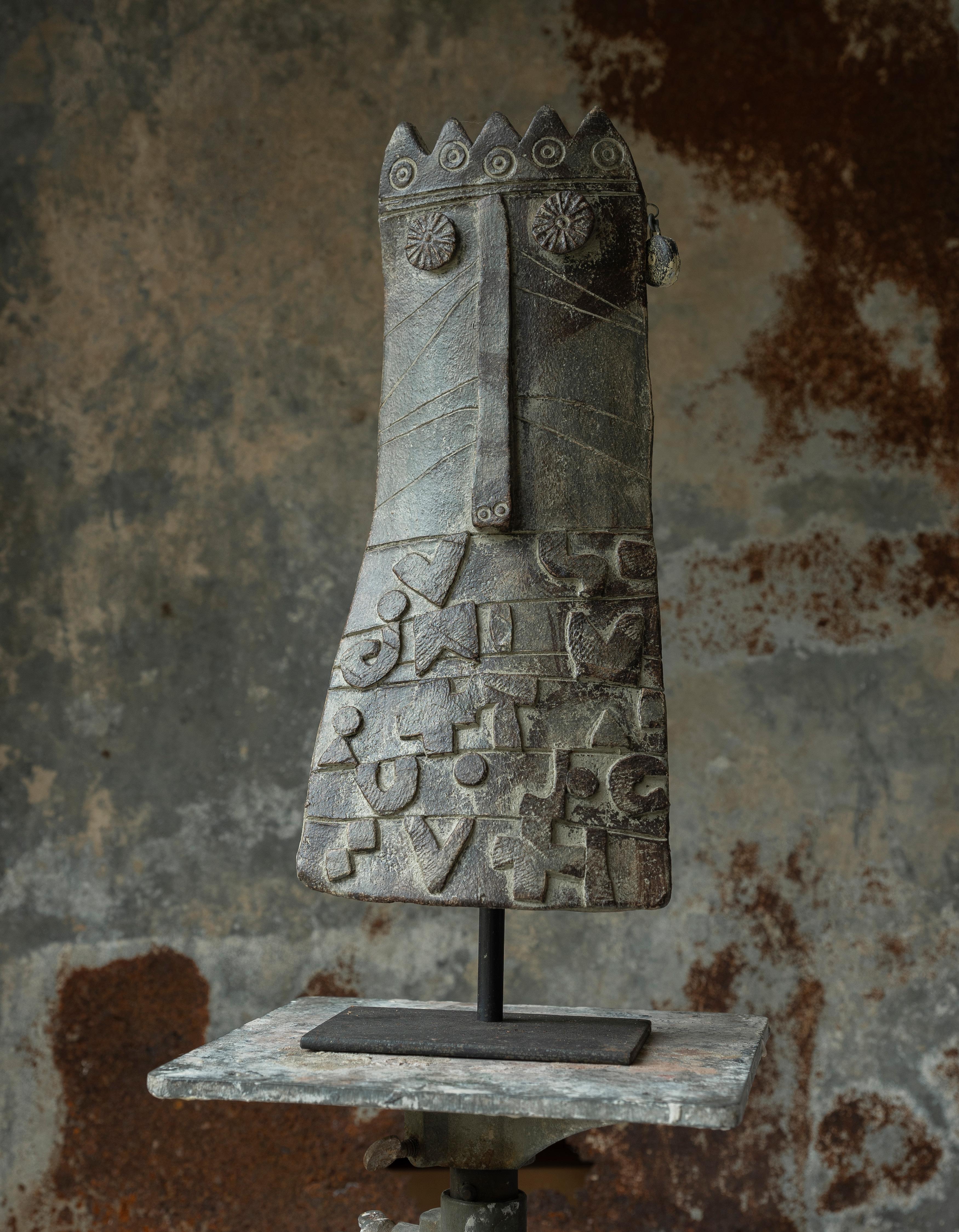
252 § JOHN MALTBY (BRITISH 1936-) ANCIENT KING, 2013 signed, titled and dated (to base), stoneware, set on metal stand 44.5cm high, 17cm wide (17 1/2in high, 6 3/4in wide) £1,500-2,000 165
DAME LUCIE RIE (BRITISH 1902-1995)
BOWL, CIRCA 1965 impressed artist’s seal, stoneware with manganese and sgraffito decoration to the inside, and speckled oatmeal glaze to the exterior 7.5cm high, 30cm wide (3in high, 11 3/4in wide) £2,000-3,000
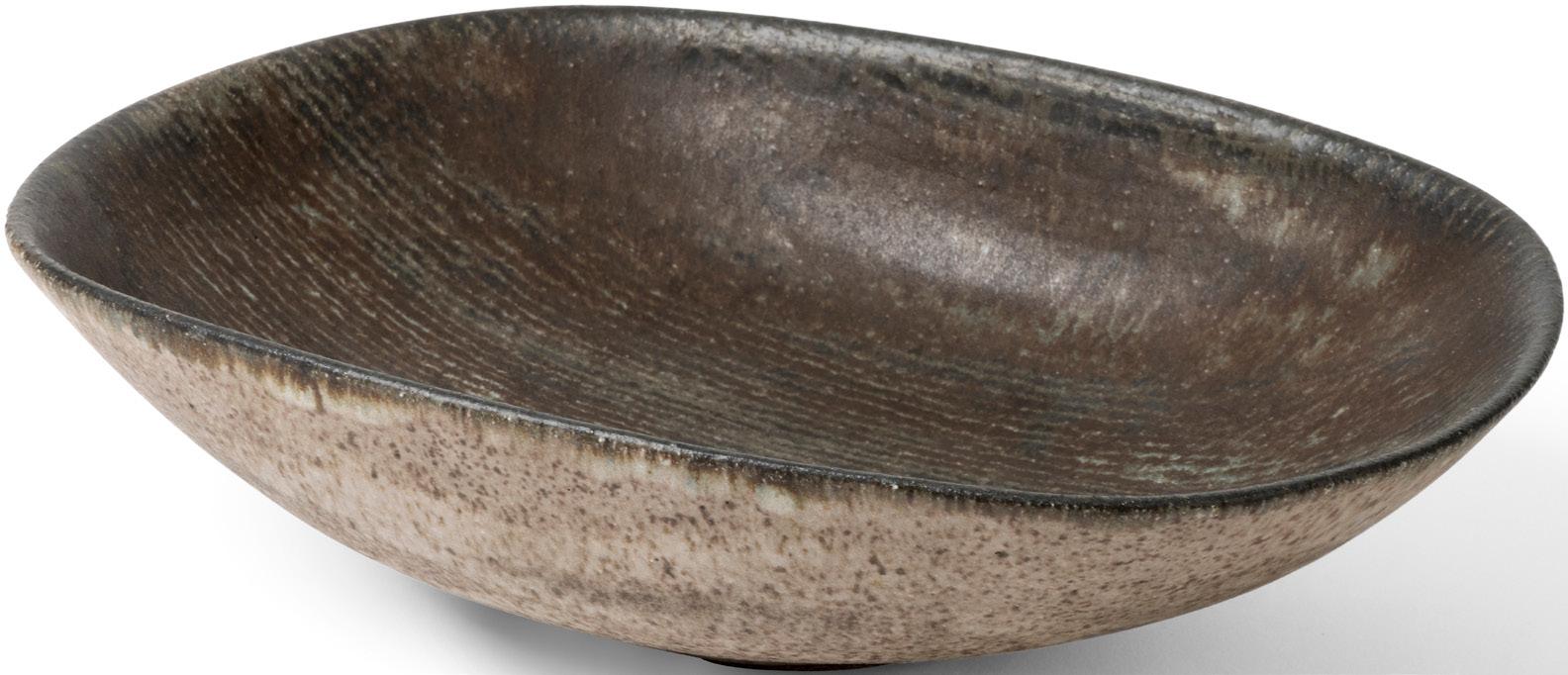
DAME LUCIE RIE (BRITISH 1902-1995)
PAIR OF BOWLS
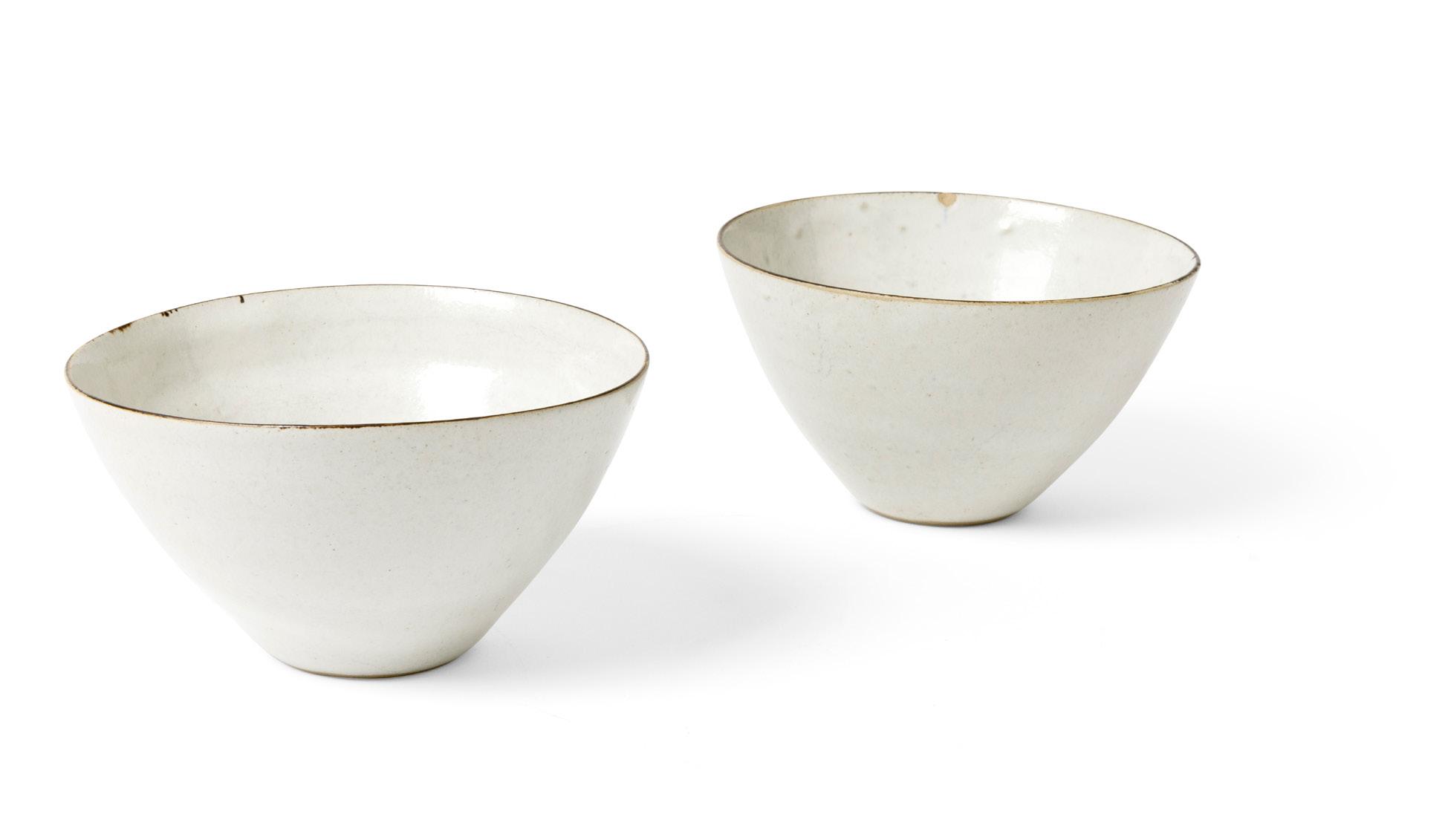
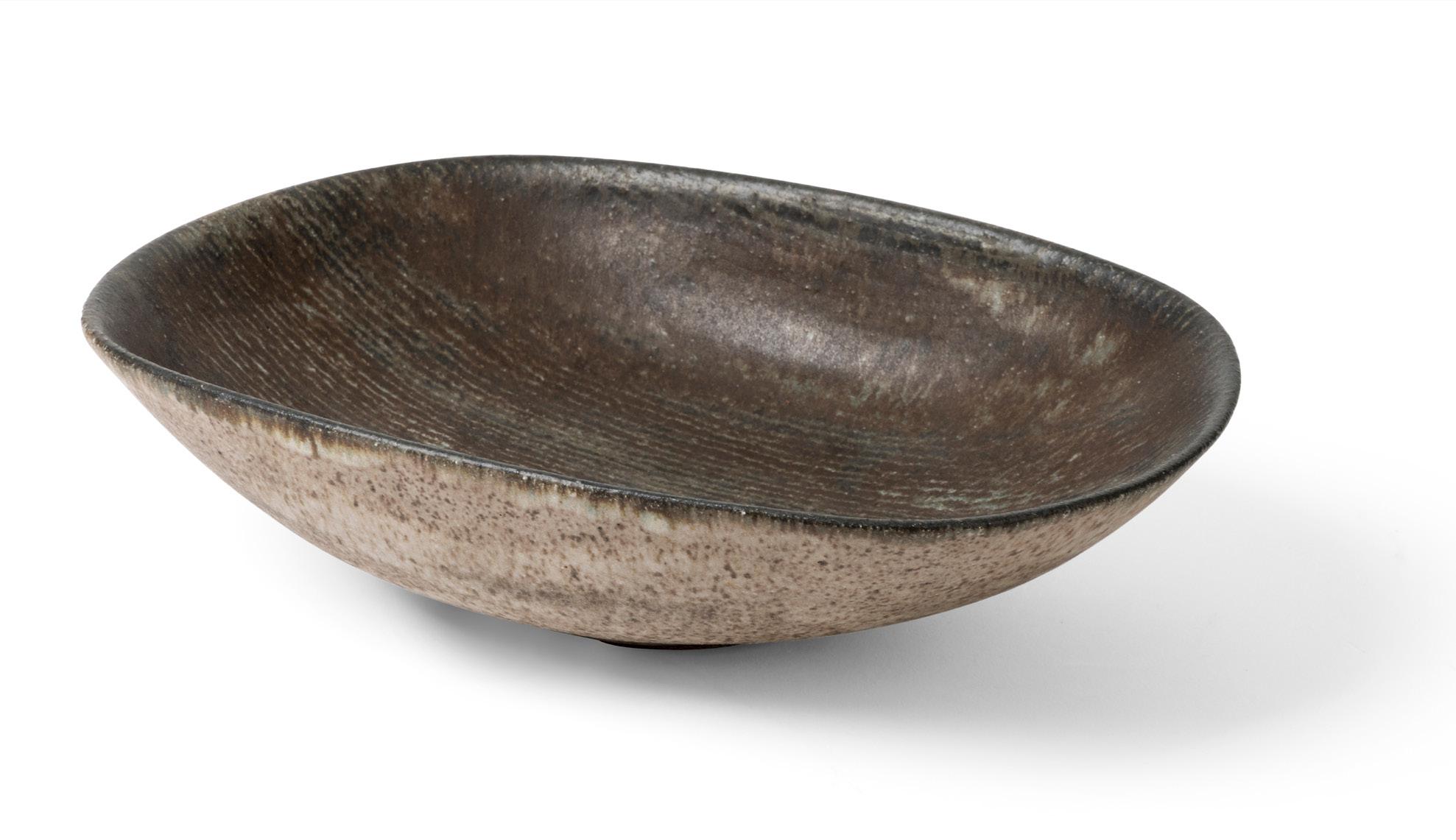
each impressed artist’s seal, stoneware, white glaze with manganese band to rim (2) 7cm high, 12.5cm and 12.7cm diameter (2 3/4in high, 4 7/8in and 5in diameter)
Provenance: Private Collection, UK. £1,000-1,500
253 §
254 §
166 Other fees apply in addition to the hammer price: see the ‘Buyer’s Guide’ section on page 6
LUCIE

255 § DAME
RIE (BRITISH 1902-1995) FOOTED BOWL impressed artist’s seal, porcelain, pale blue glaze with delicate craquelure 8.7cm high, 16.5cm diameter (3 3/8in high, 6 1/2in diameter) £4,000-6,000 167
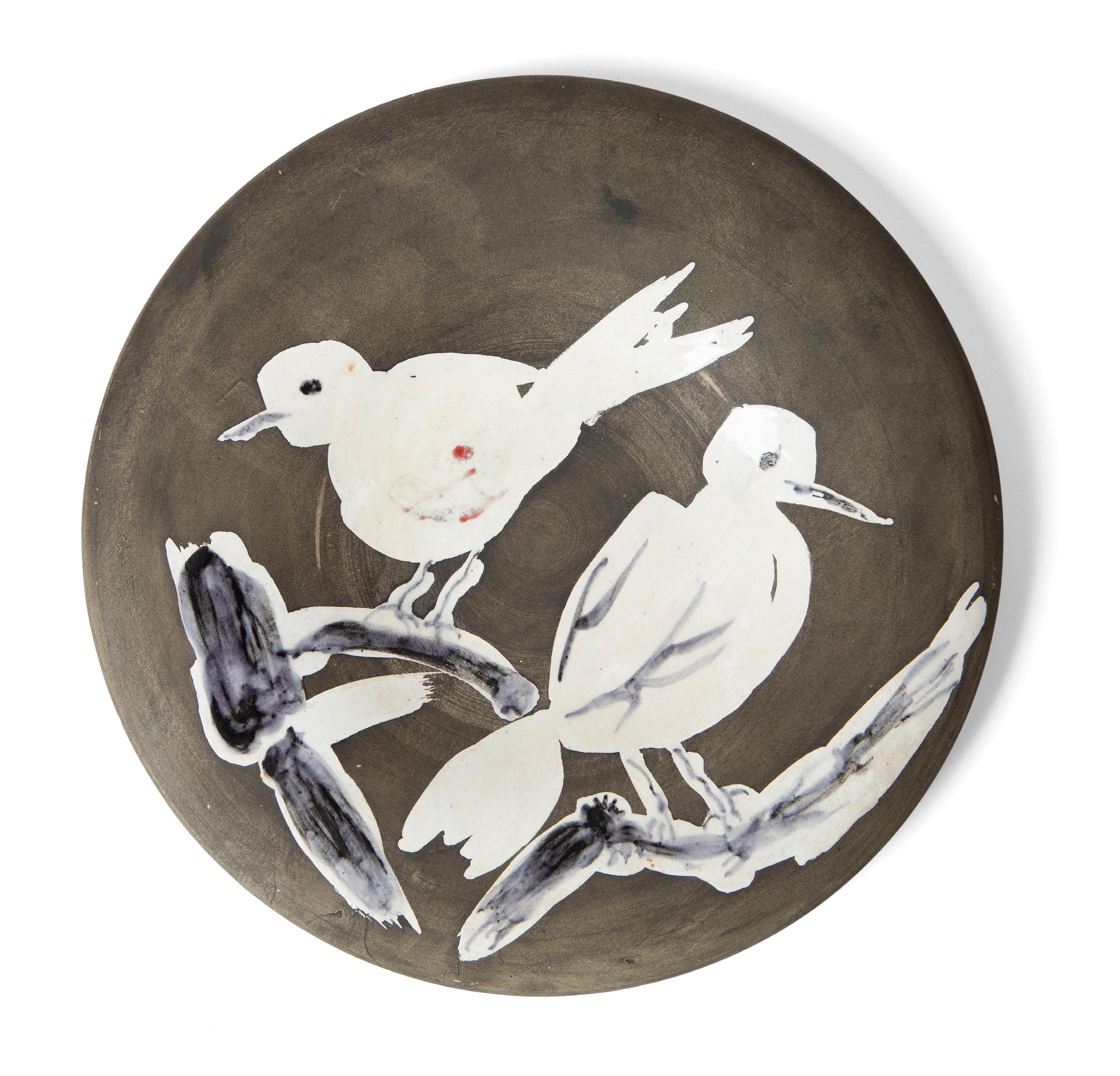
256 § PABLO PICASSO (SPANISH 1881-1973) FOR MADOURA POTTERY DEUX OISEAUX (NO. 95, A.R.487), CONCEIVED 1963 85/150, numbered, painted ‘Edition Picasso’ and ‘Madoura’, partially glazed and painted earthenware. 25.7cm diameter (10 1/8in diameter) Provenance: Galerie Ritthaler, Munich; Private Collection, London. £3,000-5,000 168 Other fees apply in addition to the hammer price: see the ‘Buyer’s Guide’ section on page 6
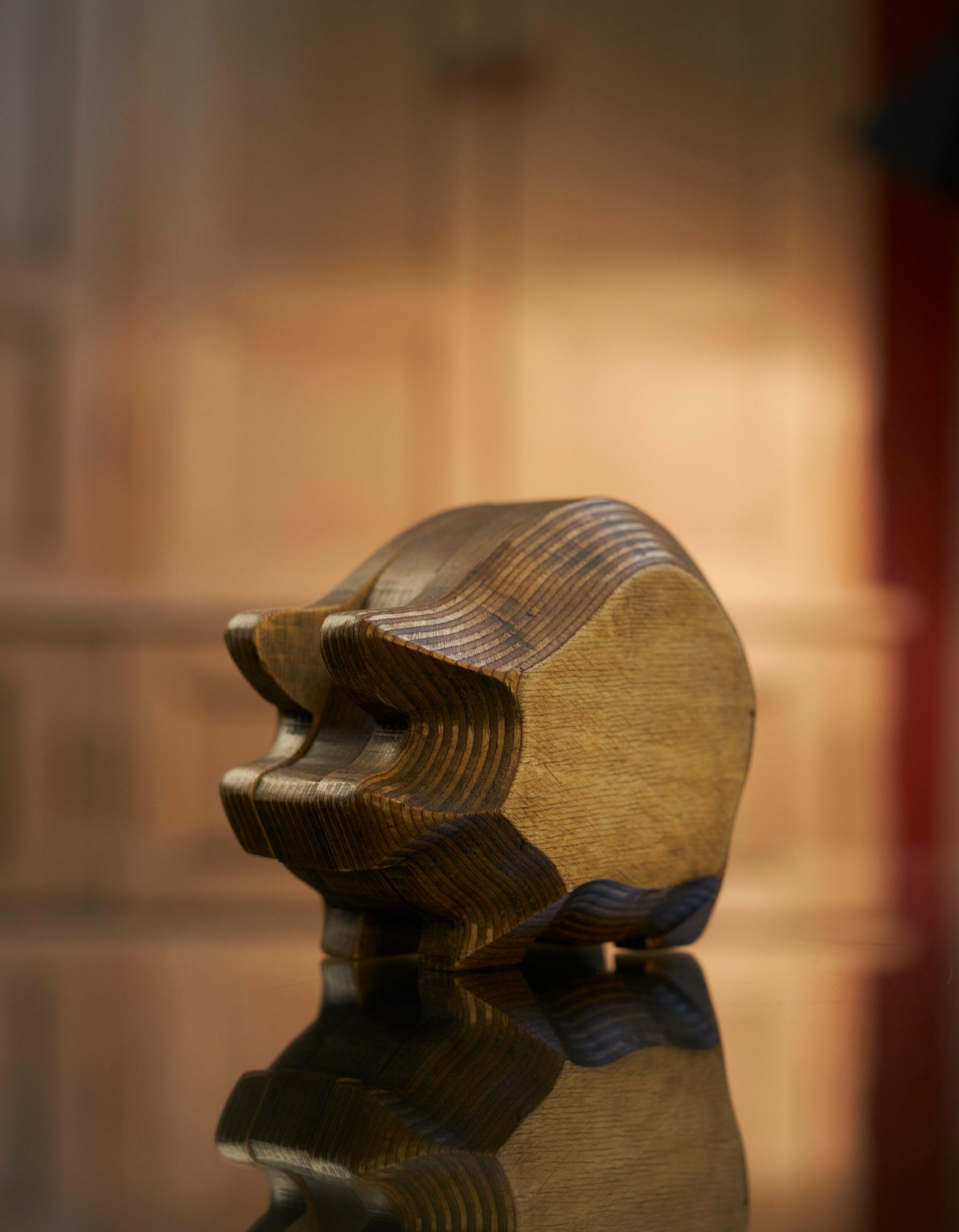
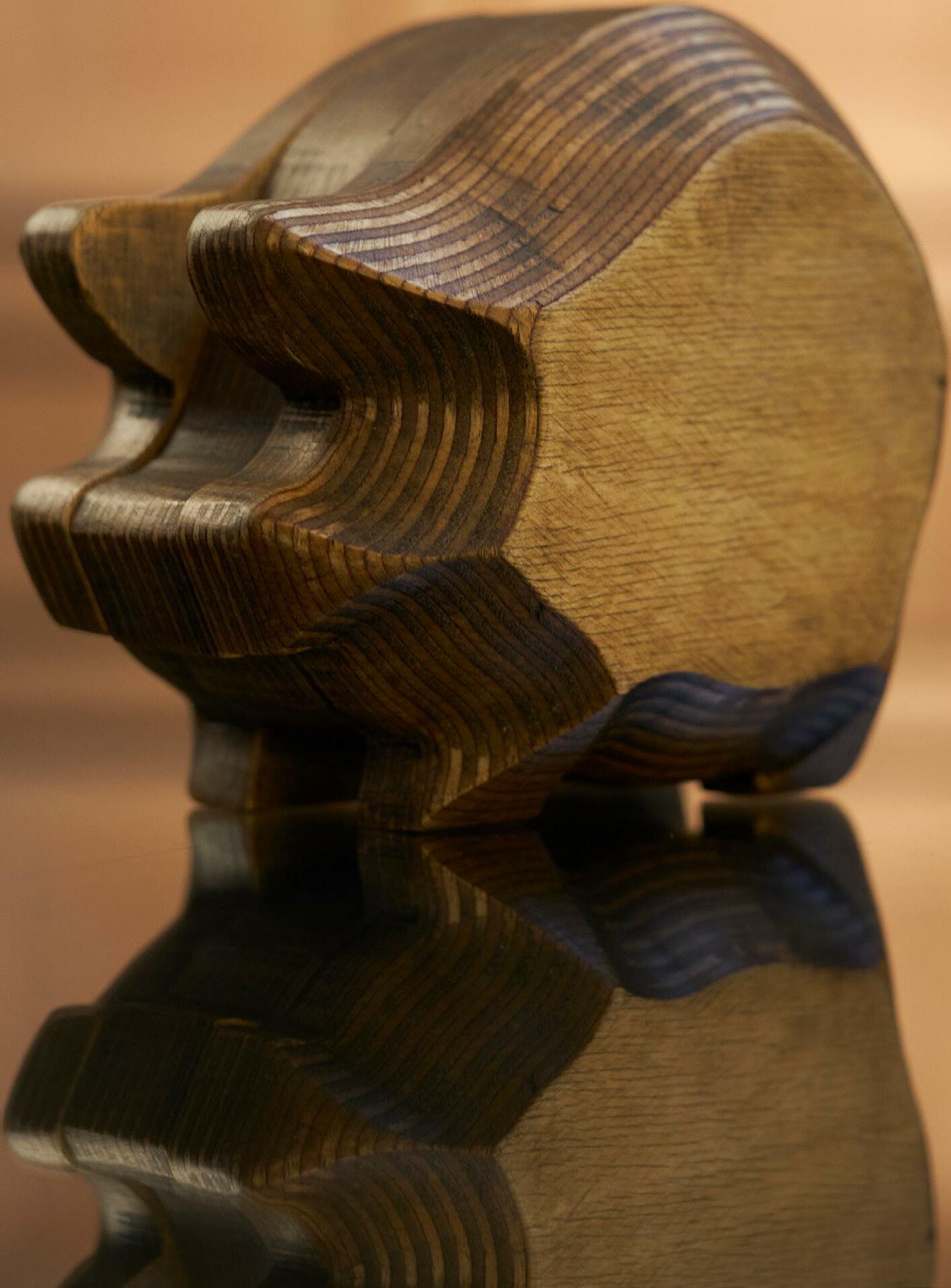
257 § SIR EDUARDO PAOLOZZI R.A., H.R.S.A. (BRITISH 1924-2005) PIGGY BANK signed ‘E L. PAOLOZZI’, plywood 12cm x 14cm x 9cm (4 3/4in x 5 1/2in x 3 1/2in) The current work possibly dates from the artists’ childhood years. As a boy Paolozzi signed himself ‘E L Paolozzi’ and it could be that he made this work for himself at school or at home. We would like to thank Dr. Judith Collins for her assistance in cataloguing this lot. £500-700
258 §
SIR EDUARDO PAOLOZZI R.A., H.R.S.A. (BRITISH 1924-2005)
UNTITLED, CIRCA 1967-9
probably unique, stamped with the ‘Noack Berlin’ foundry mark, polished bronze on wooden base
30cm high (11 4/5in high) including base, the bronze 26.5cm high (10 2/5in high)
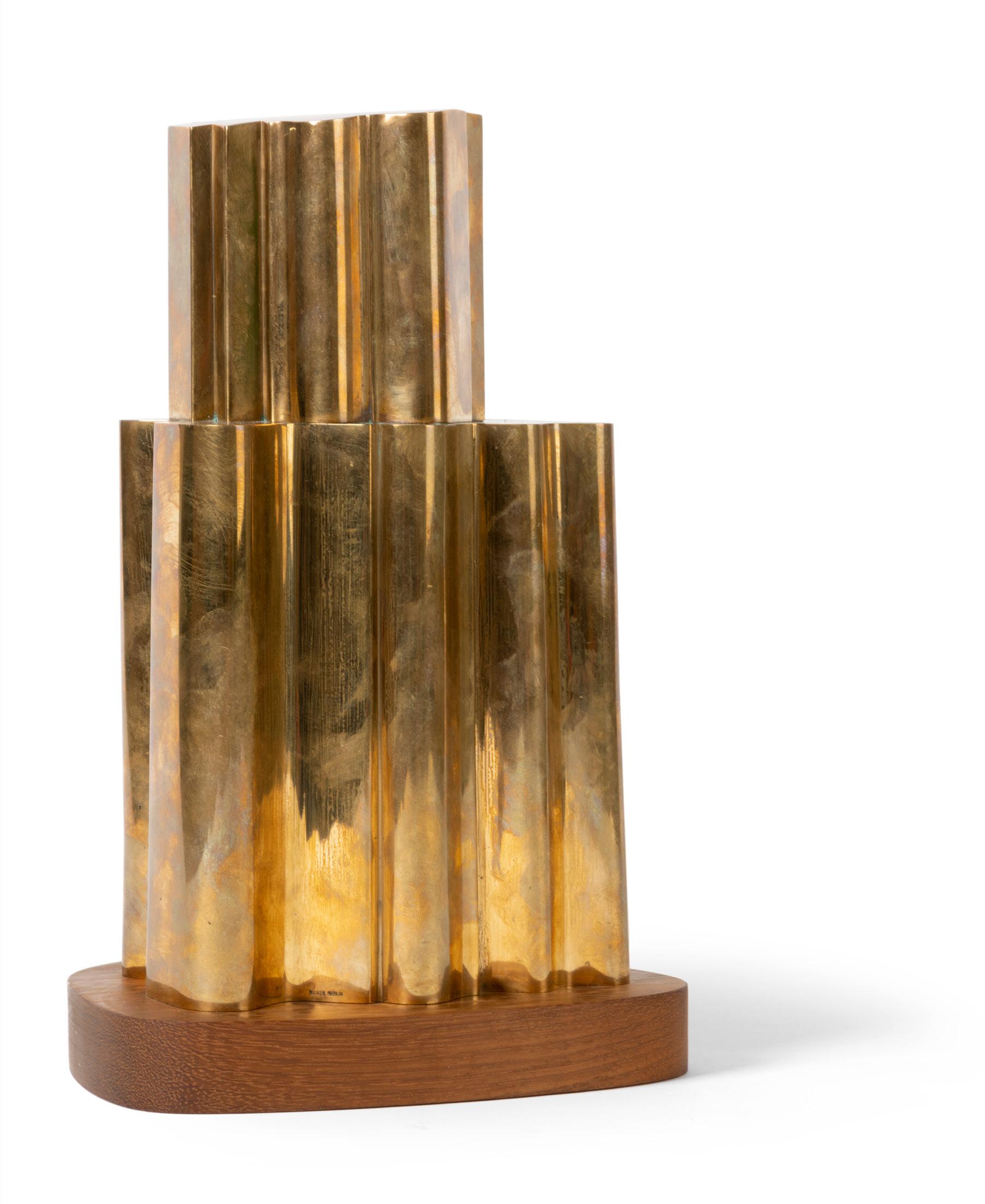
Provenance: Collection of Zeev Aram, London.
We would like to thank Dr. Judith Collins for her assistance in cataloguing this lot.
£3,000-5,000
Pioneer of the Pop Art movement, Sir Eduardo Paolozzi’s sculpture and printmaking is iconic.
Paolozzi initially intended to pursue a career in commercial art, but following studies at Edinburgh College of Art and the Ruskin School of Drawing & Fine Art, Oxford, he determined that he ‘wanted to make things’. In 1945 he commenced a sculpture diploma at the Slade School of Fine Art in London, where he immersed himself in European Modernism. His early sculptures in coloured concrete were exhibited to such acclaim in 1947 that he abandoned his Diploma and promptly moved to Paris, following in the footsteps of the Cubist and Surrealist artists he so admired. While in France he met many Modernists, but it was Alberto Giacometti who made the greatest impression.
After returning to London in 1949, Paolozzi taught at St. Martin’s School of Art and developed a sculptural technique he dubbed ‘the metamorphosis of rubbish’. This involved creating plaster impressions of found objects, which he would then cast in wax. These wax forms were then assembled to evoke body parts. These ‘Machine Age’ cast reconstructions appeared to examine the relationship between man and the mechanical, and were felt by many to define the atmosphere of the Cold War, earning the artist international renown.
In 1987, the novelist J. G. Ballard reflected that ‘if the entire twentieth century were to vanish in some huge calamity, it would be possible to reconstitute a large part of it from Paolozzi’s sculpture and screen prints.’
Other fees apply in addition to the hammer price: see the ‘Buyer’s Guide’ section on page 6
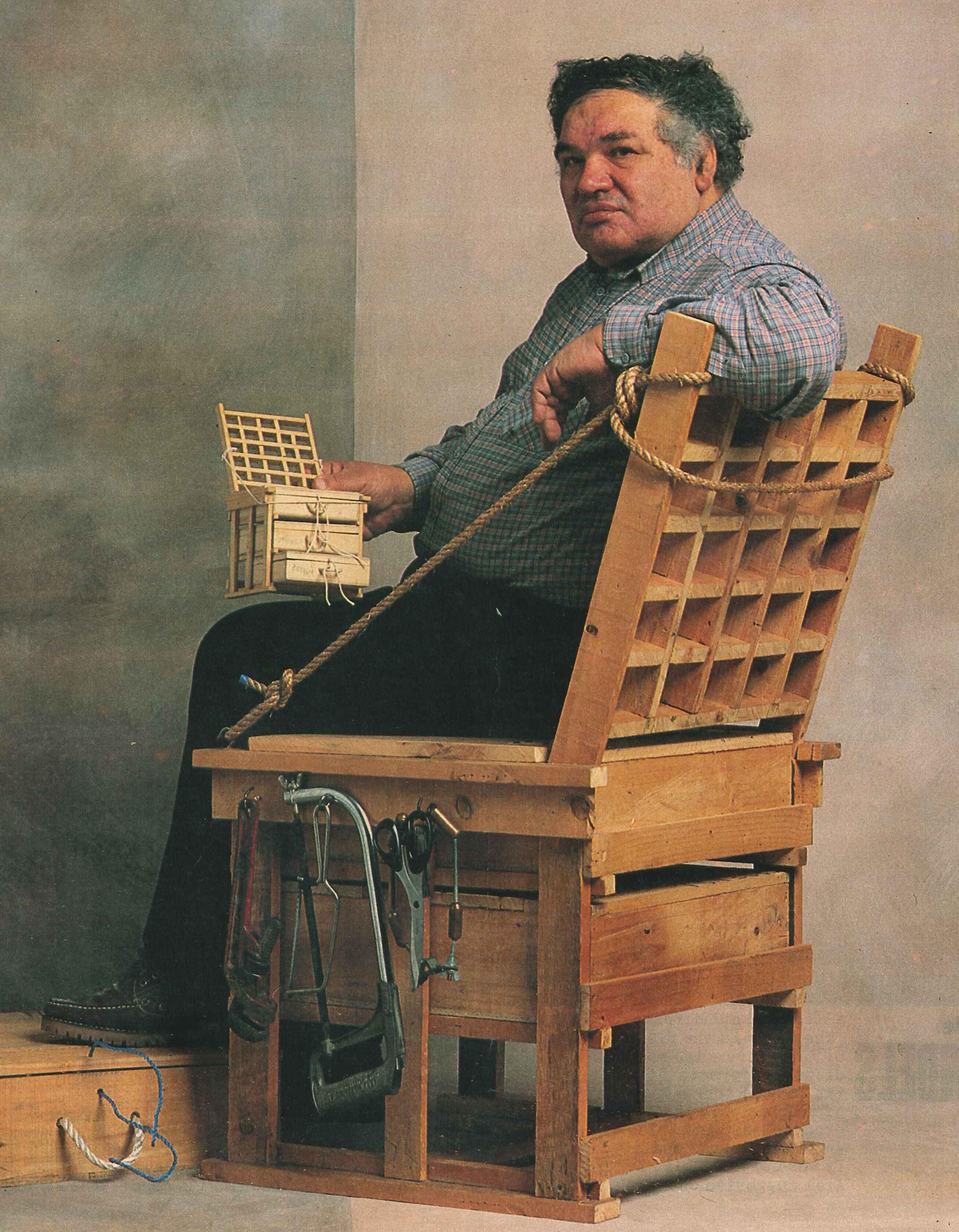
“Above all, [I am interested] in investigating the golden ability of the artist to achieve a metamorphosis of quite ordinary things into something wonderful and extraordinary that is neither nonsensical nor morally edifying.”
Eduardo Paolozzi, 1960
171
SIR EDUARDO PAOLOZZI R.A., H.R.S.A. (BRITISH 1924-2005)
TWO CUBIST HEADS
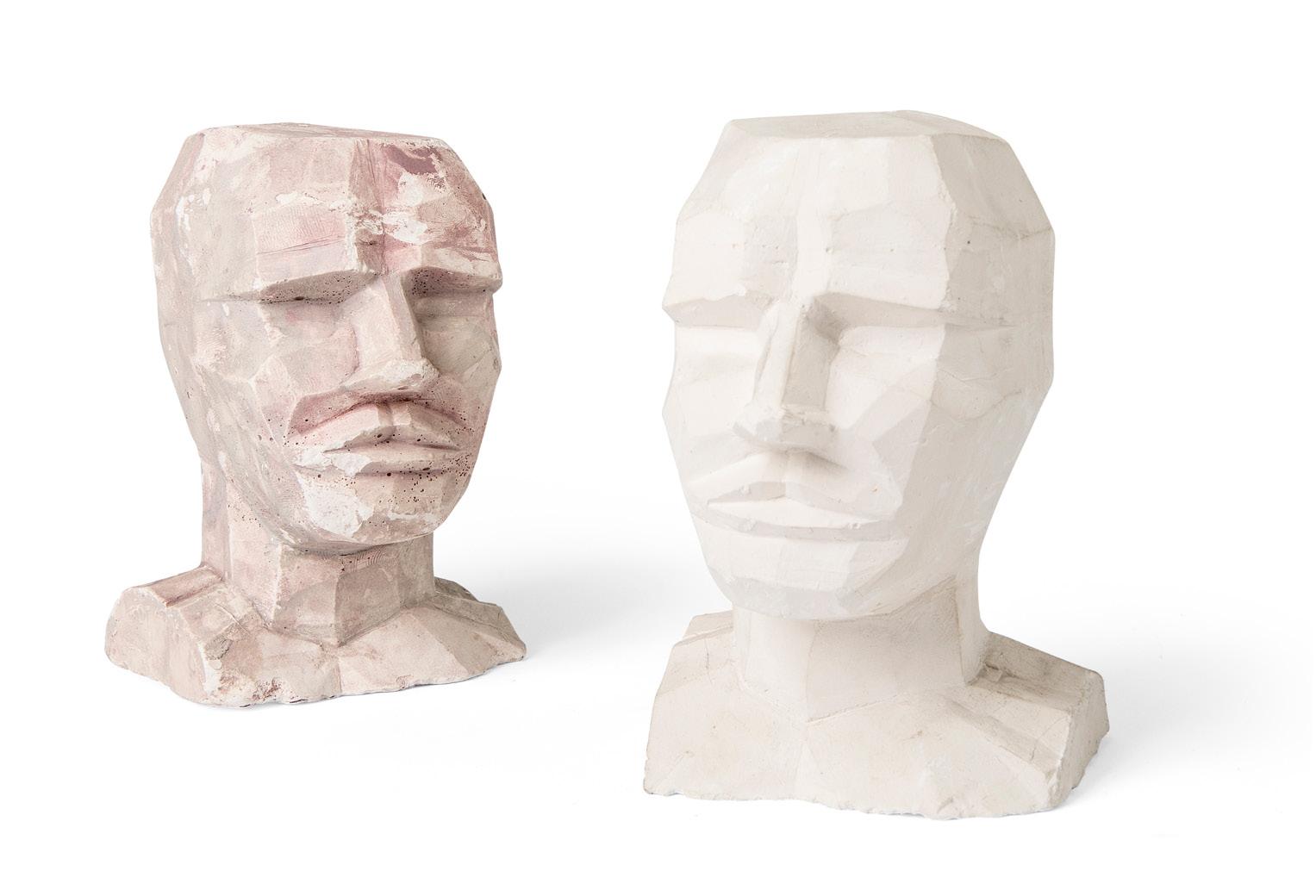
one signed and dated 1992, both plaster, one painted 18.5cm and 18cm high (7 1/4in and 7in high)
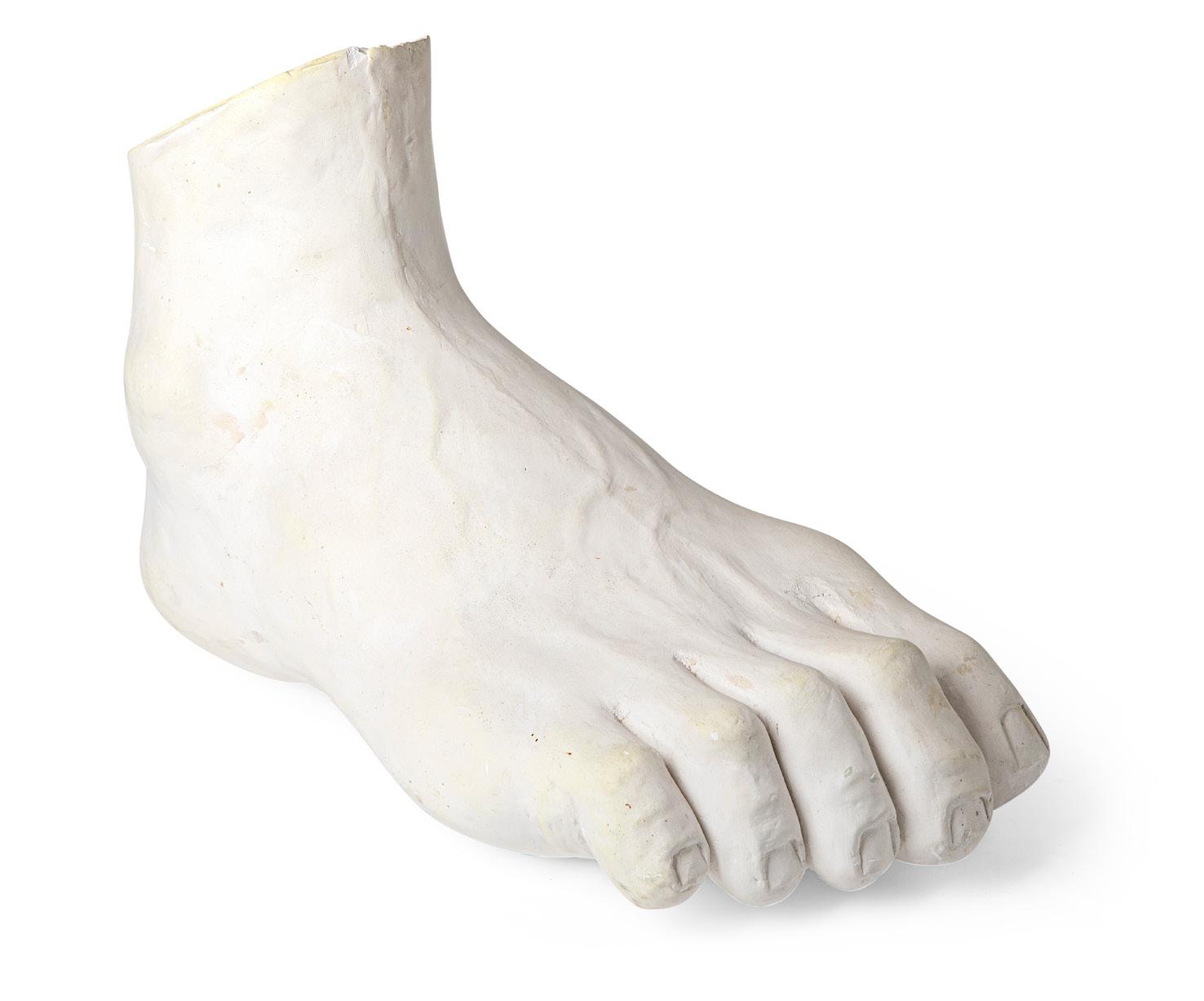
Provenance: Collection of Zeev Aram, London. £1,500-2,000
260 §
SIR EDUARDO PAOLOZZI R.A., H.R.S.A. (BRITISH 1924-2005) HAND plaster
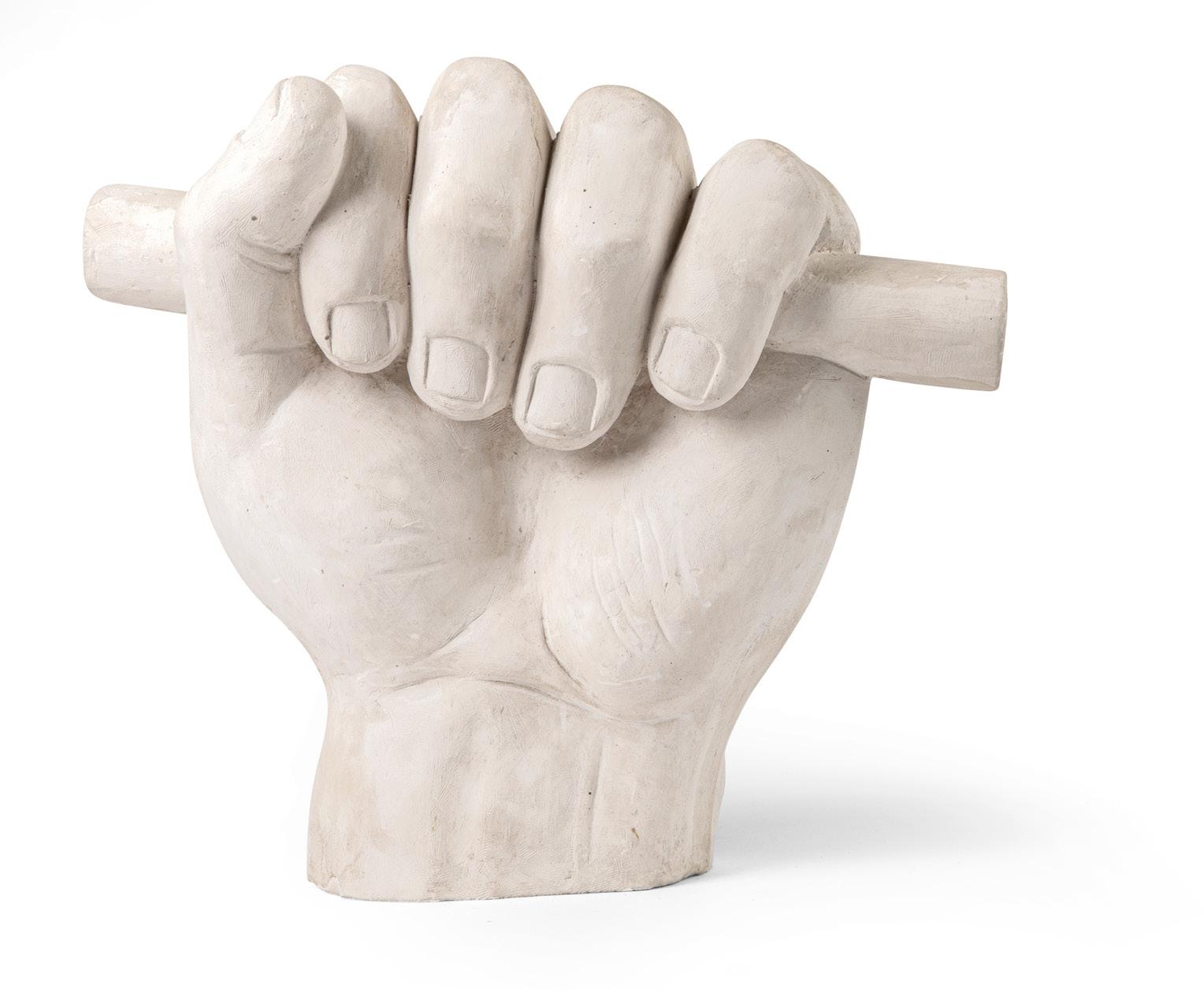
32cm high, 34.5cm wide (12 1/2in high, 13 1/2in wide)
Provenance: Collection of Zeev Aram, London. £600-800
261 §
SIR EDUARDO PAOLOZZI R.A., H.R.S.A. (BRITISH 1924-2005) CLASSICAL FOOT plaster
34cm high, 49cm wide (13 2/5in high, 19 1/4in wide)
Provenance: Collection of Zeev Aram, London. £600-800
172 Other fees apply in addition to the hammer price: see the ‘Buyer’s Guide’ section on page 6
262
SIR EDUARDO PAOLOZZI R.A., H.R.S.A. (BRITISH 1924-2005) PROTOTYPES FOR THE DESIGNER’S SATURDAY AWARD, 1986 in bronze resin and plaster, the resin signed and dated in the cast, and inscribed ‘PRESENTED BY DESIGNER SATURDAY AND SIAD’ (2) 19cm high x 12.5cm wide(7 1/2in high x 5in wide)
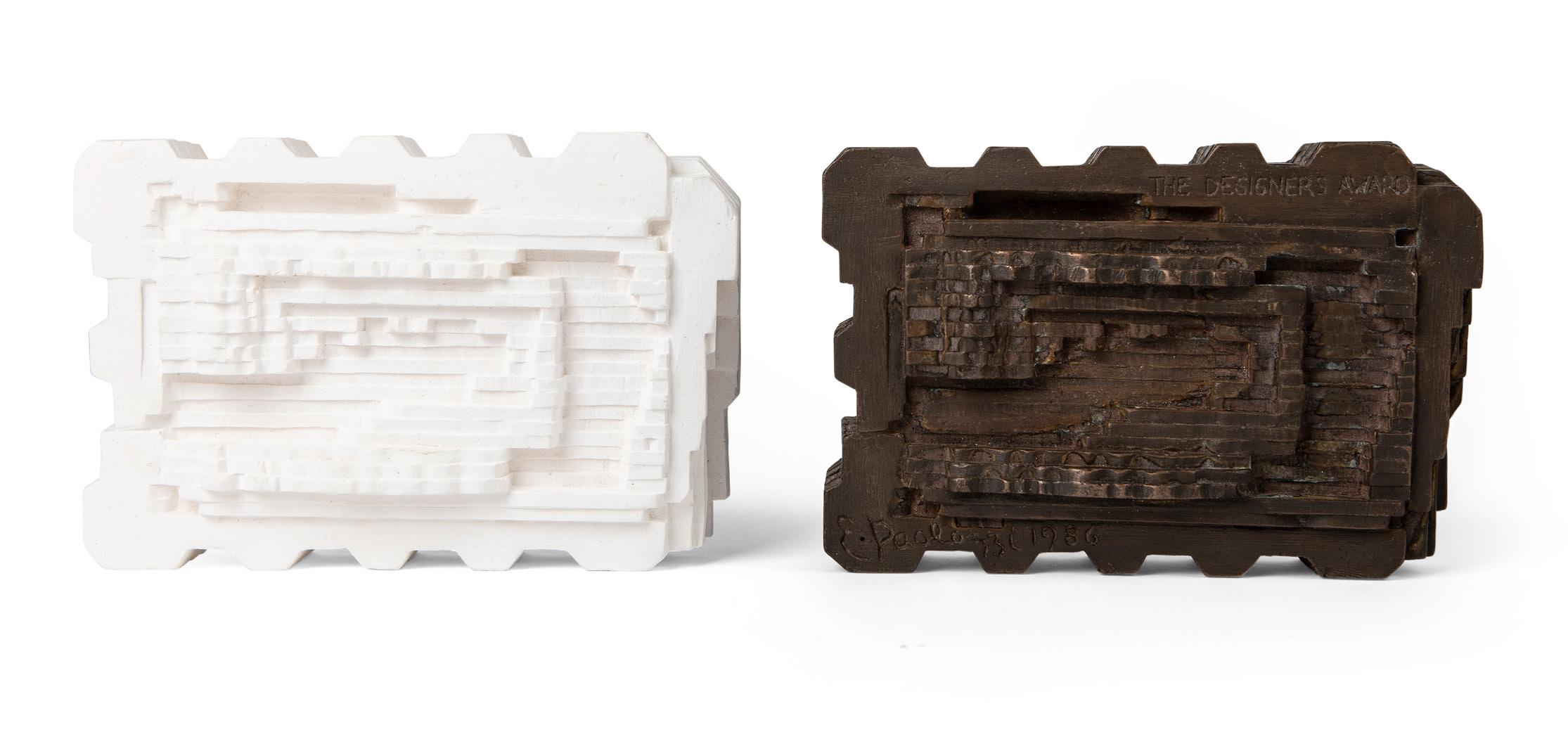
Provenance: Collection of Zeev Aram, London. £800-1,200
Designer’s Saturday was a London-wide Design Festival that ran from 1981 to 1988 and it gave companies the opportunity to present their new products and establish contacts to customers, designers and architects. Each year a leading artist or designer was commissioned to create a unique artwork to mark the event including Allen Jones, Peter Blake and Eduardo Paolozzi.
263
DESIGNER’S SATURDAY COLLECTION OF FIVE SCREENPRINTS, 1982-6 comprising works by Eduardo Paolozzi, Alan Fletcher, Peter Blake, Patrick Hughes and Allen Jones, each signed and dated in pencil, and four numbered, on wove paper, published by Aram Designs, London (5) the Paolozzi sheet 39.5cm x 39.5cm (15 1/2in x 15 1/2in), the other four approximately 26cm x 26cm (10 1/4in x 10 1/4in), all unframed
Provenance: Collection of Zeev Aram, London.
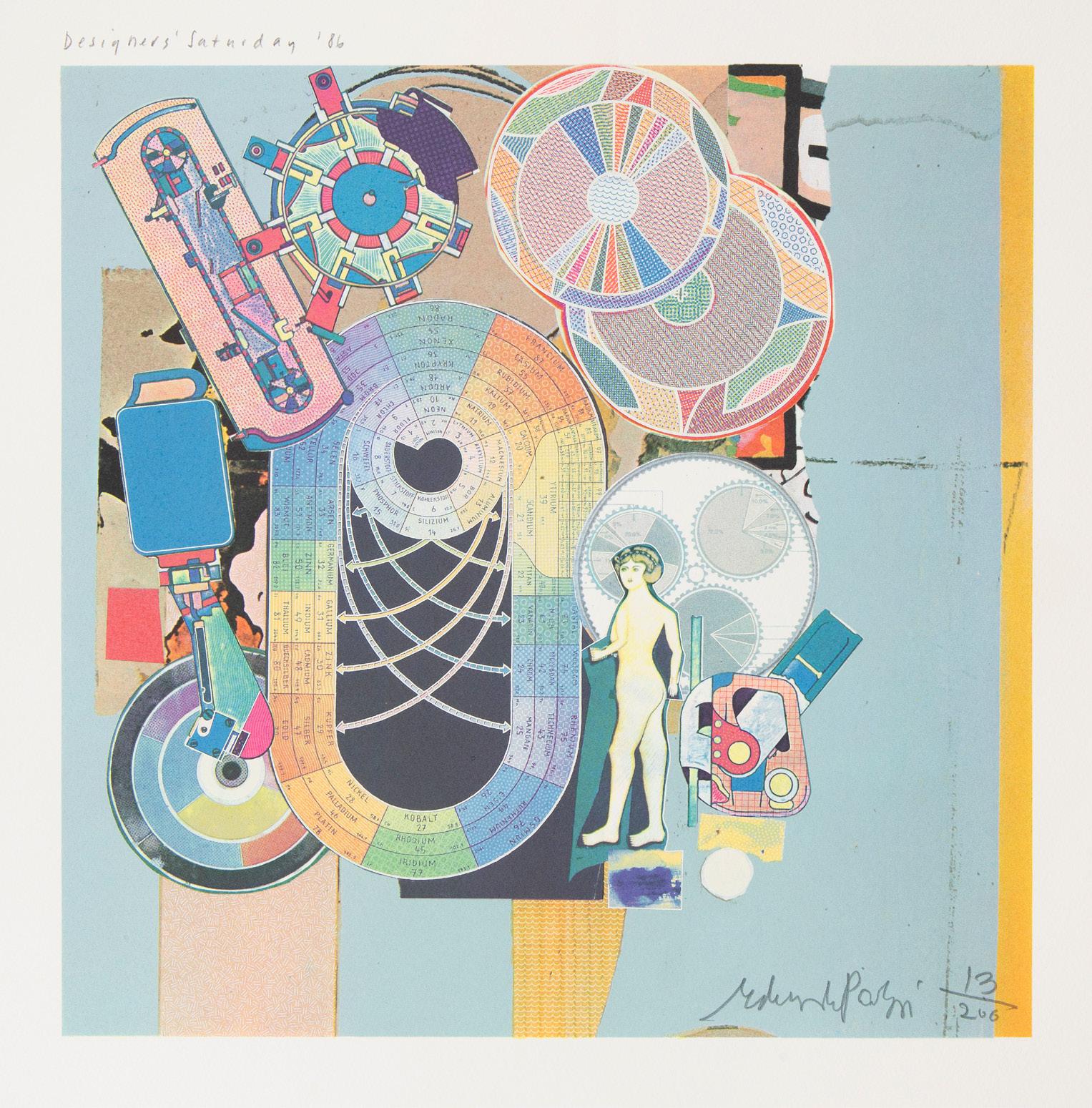
£500-700
§
173
Sculptor’s Chair, created from shipping crates salvaged from the back of the Aram Design store in London, is a significant example of one of the founders of British Pop Art’s use of found objects and collage, elements that had been continuously present in Paolozzi’s work since the 1940s.
Paolozzi drew his own observations in the catalogue for the show that celebrated the 23rd anniversary exhibition of Aram Designs in 1987, where Zeev Aram had commissioned various designs by the likes of Peter Blake, Allen Jones, Norman Foster and Jasper Morrison: “A room without furniture, an empty house, a desert island – starting from scratch with a few packing cases.
In any of these situations the sculptor, after a lifetime of improvising, will reach for his tools. They are contained in a shallow box with a linen hinge and a rope handle. Another box contains the essentials of life – soap & salt, a towel and two mugs. To hand these minimal items on the wall a grill is made with the same dimension as the boxes.
SIR EDUARDO PAOLOZZI R.A., H.R.S.A. (BRITISH 1924-2005)
SCULPTOR’S CHAIR, 1987 beech, birch plywood, rope, linen, nylon cord, hammer, metal hooks and nails, together with the handmade wooden maquette, with miniature Christmas cracker plastic tools, contained within a panelled wooden box The chair: 108cm high, 63cm wide, 57cm deep (42 1/2in high, 24 3/4in wide, 22 1/2in deep); the maquette 14.5cm wide (5 3/4in wide)
Provenance: Collection of Zeev Aram, London. £8,000-12,000
The grill also acts as a backrest for the boxes now transformed into a chair. Being geometric these boxes may evolve into a bed or, with additions stack to become a major storage unit.
Like the raw material itself, each part has a strength and individual identity and peculiar honesty, like Shaker furniture. Using basic box wood, an improvised look with the woodwork bearing the stamps of its travels or provenance, one is reminded of early still life constructions of Picasso or Rodchenko.”
 (Eduardo Paolozzi)
In his use of found objects Paolozzi’s Sculptor’s Chair is a reaction to the branding, advertising and mass-market consumerism prevalent at the time and is suggestive of a simpler existence.
264 §
174 Other fees apply in addition to the hammer price: see the ‘Buyer’s Guide’ section on page 6
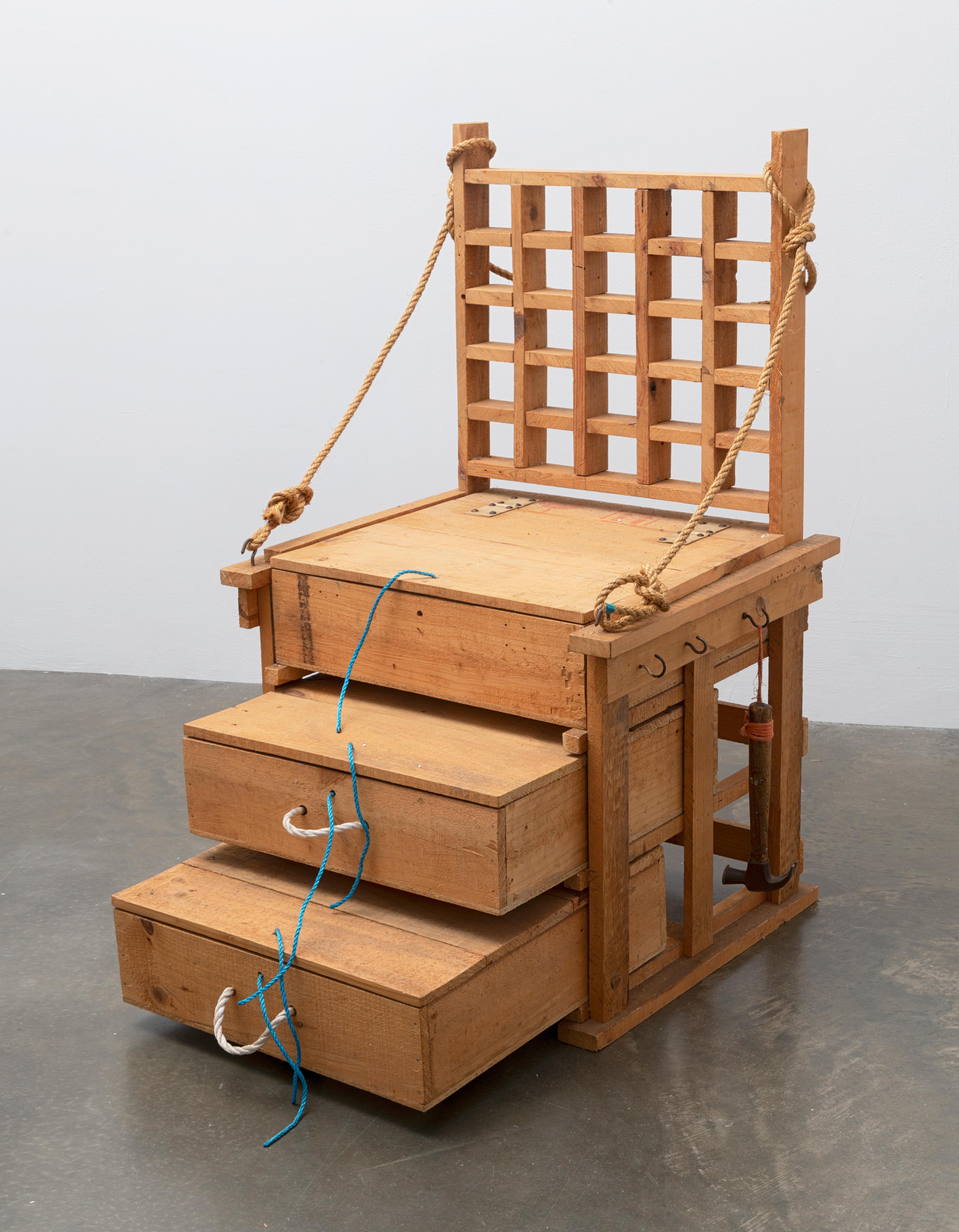
175
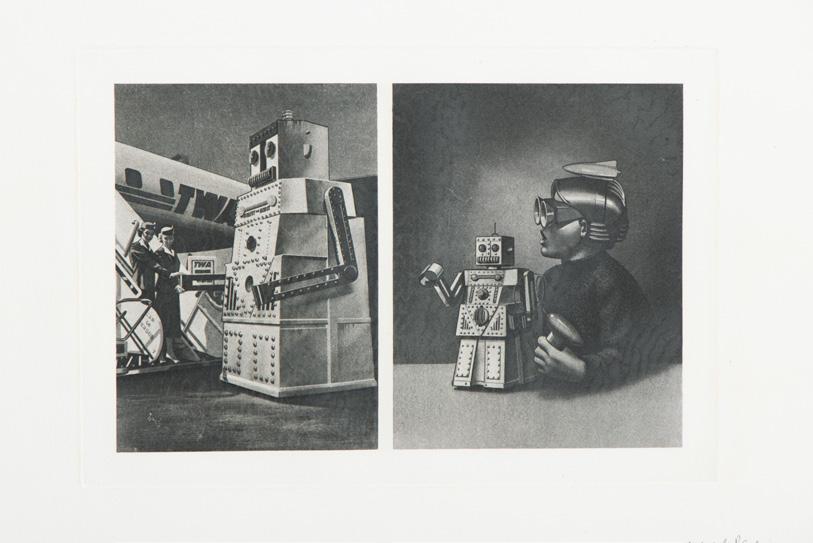
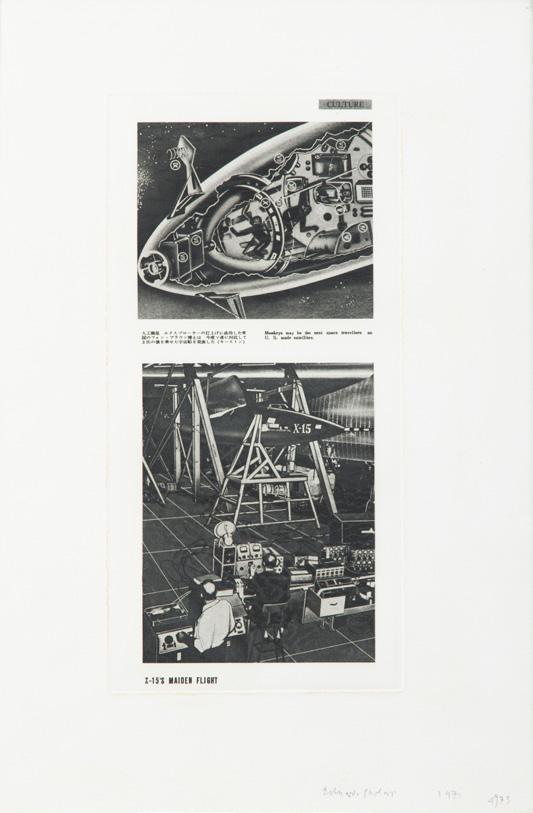
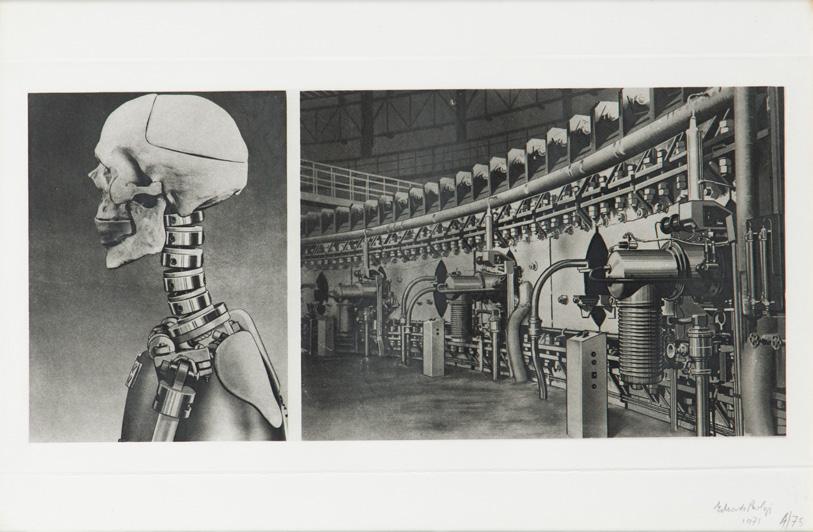
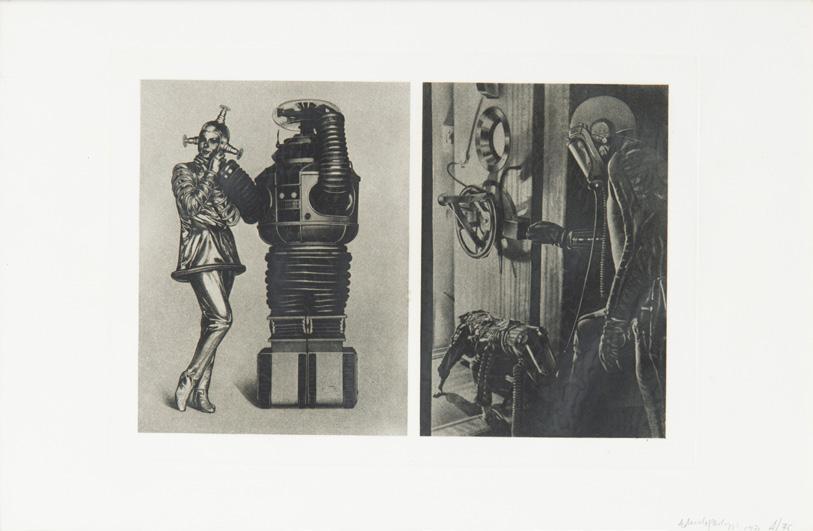
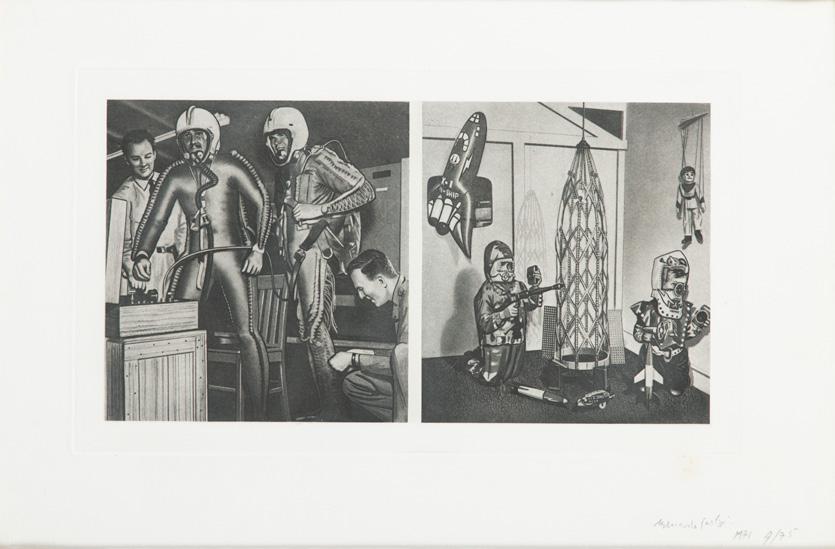
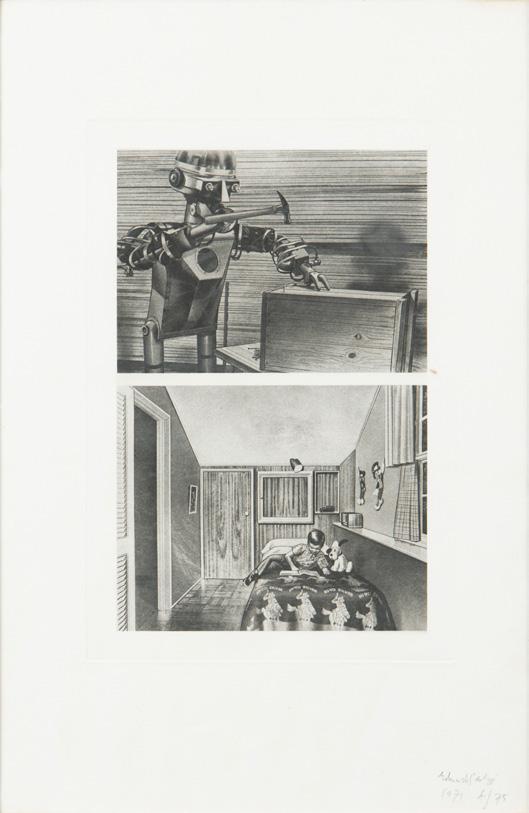
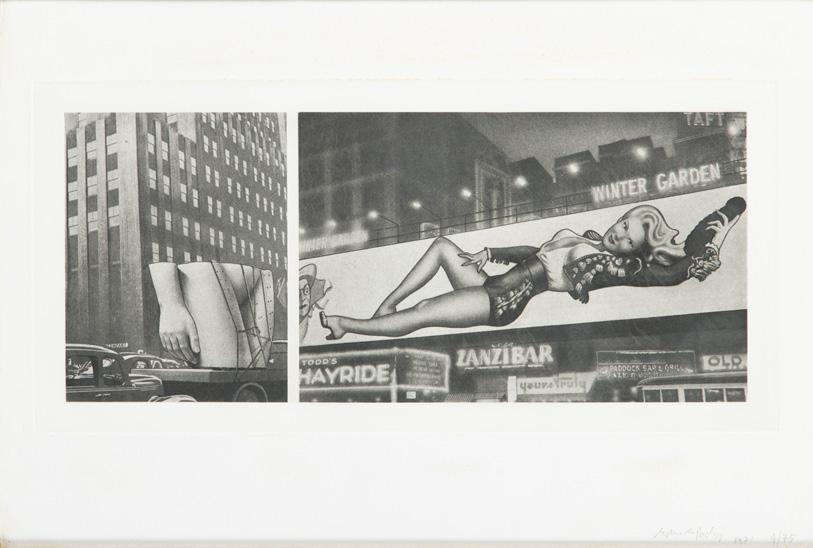
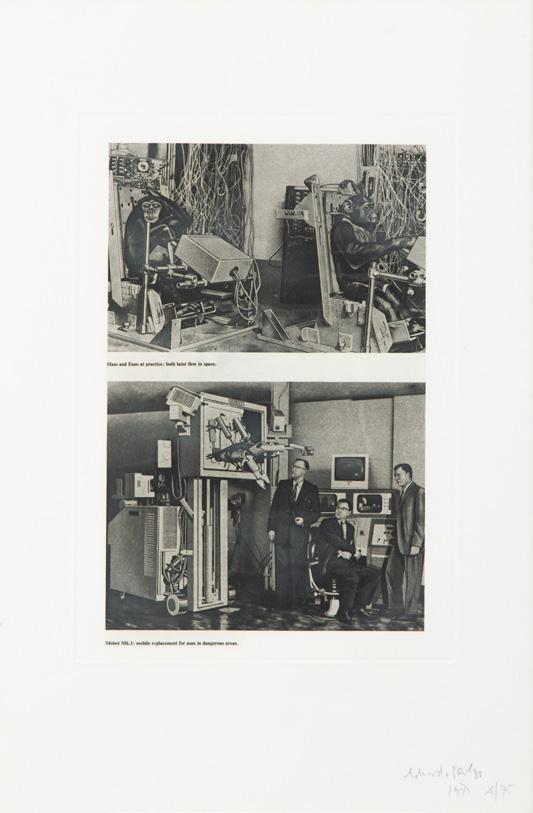
265 § SIR EDUARDO PAOLOZZI R.A., H.R.S.A. (BRITISH 1924-2005) CLOUD ATOMIC LABORATORY, 1971 4/75, each signed, dated and numbered in pencil (lower right), the full set of eight photogravure etchings on wove paper, printed by Alecto Studios, London, published by Editions Alecto, London, for a commission by British Olivetti (8) Each sheet 52.7cm x 35cm (20 3/4in x 13 3/4in) £1,200-1,800 176
266
IRVING PENN (AMERICAN 1917-2009)
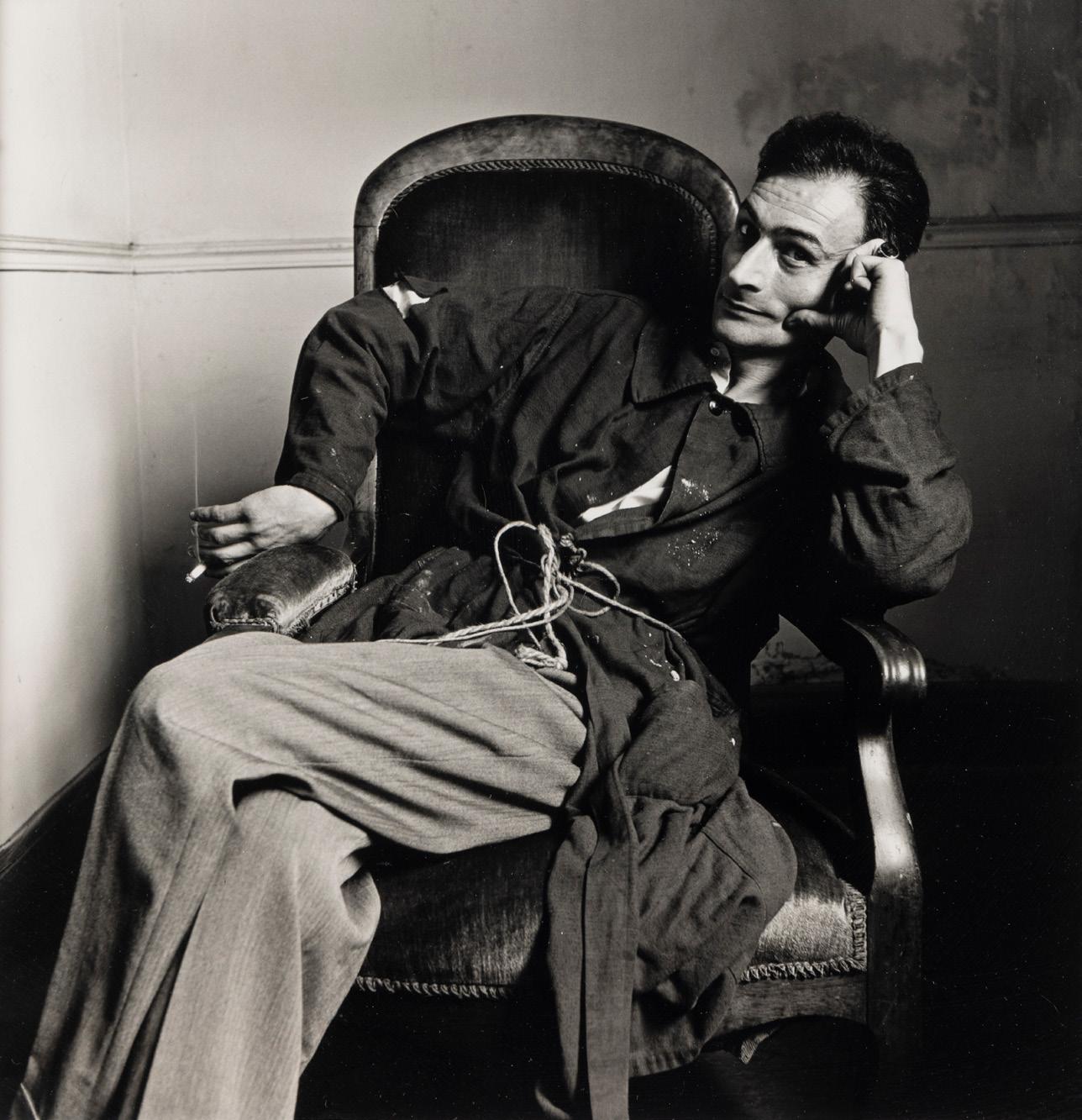
BALTHUS (D), 1948/2002
edition of 16, signed, titled and dated in pencil (to reverse), and printed stamps (to reverse), gelatin silver print
x 38.5cm (15 1/2in x 15 1/8in)
£1,200-1,800
267 §
HORST P. HORST (GERMAN/AMERICAN 1906-1999)
MARLENE DIETRICH
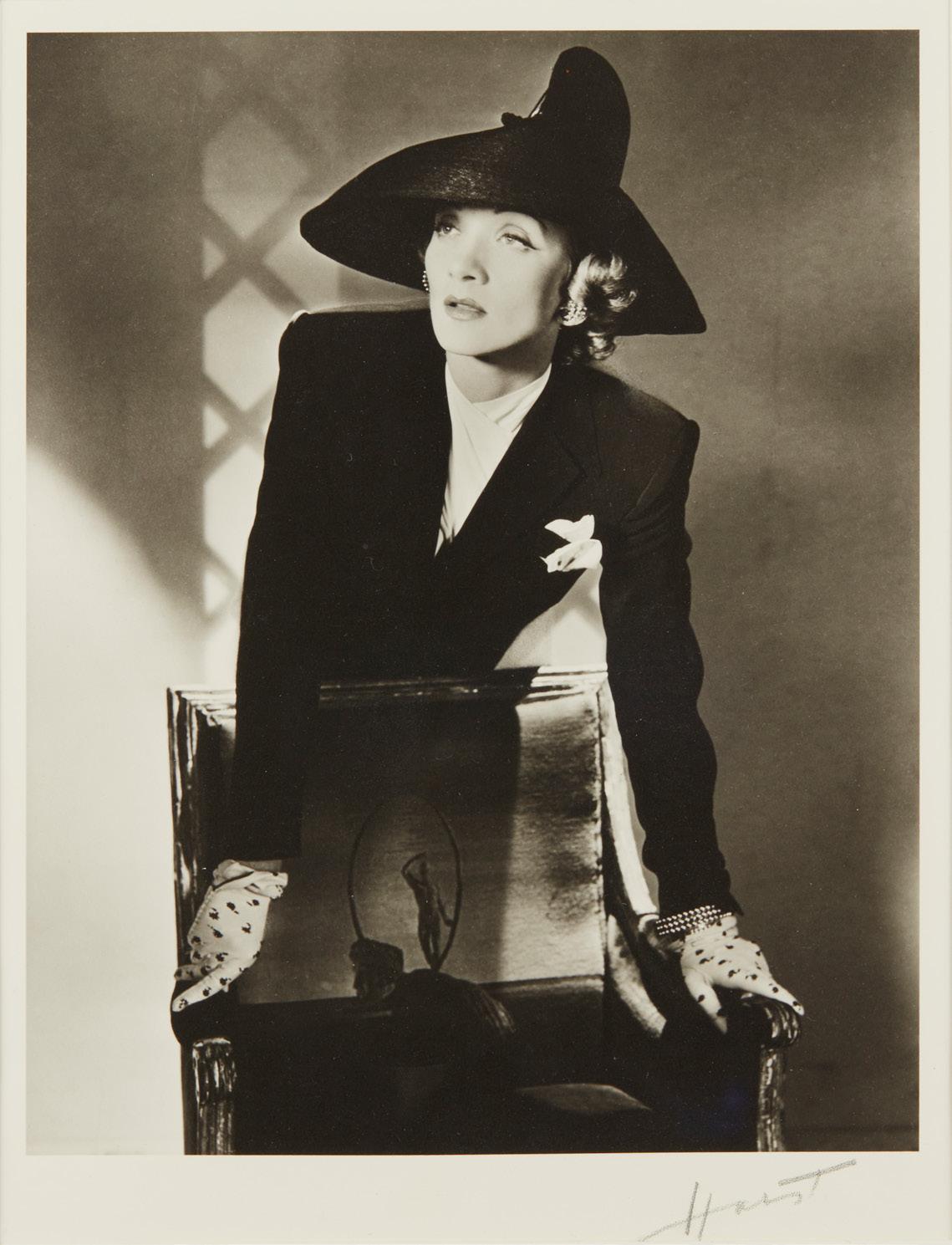
signed in pencil in the margin (lower right), signed in pencil, stamped ‘Horst ©’ in blue ink and stamped ‘Agfa’ in black ink (to reverse), silver print on Agfa paper
24.2cm x 19.3cm (9 5/8in x 7 5/8in); sheet: 35.3cm x 27.6cm (13 7/8in x 10 7/8in)
£2,000-3,000
39.5cm
image:
177 Other fees apply in addition to the hammer price: see the ‘Buyer’s Guide’ section on page 6
MICHAEL ARGOV (AUSTRIAN / ISRAELI 1920-1982)
UNTITLED, 1972
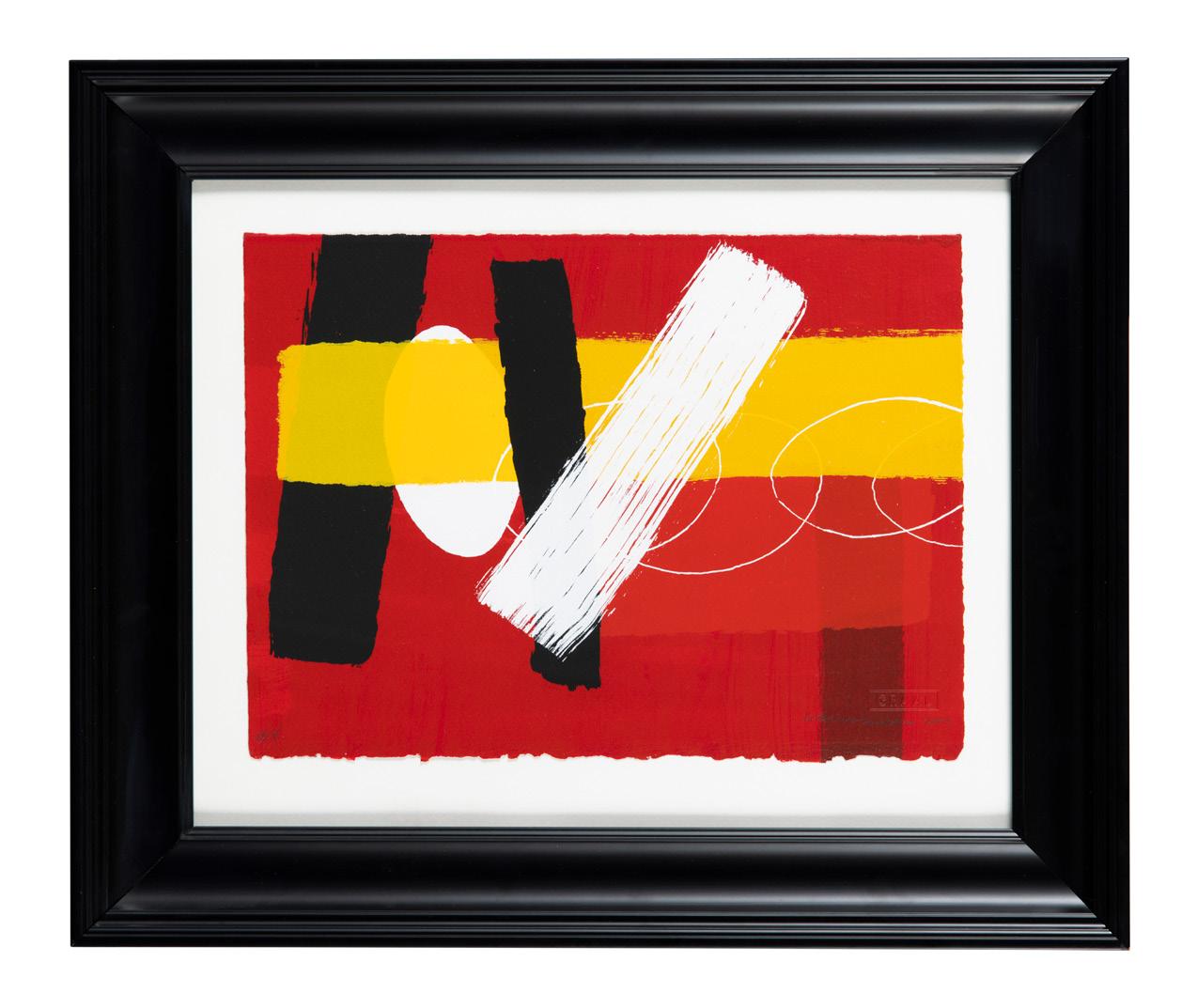
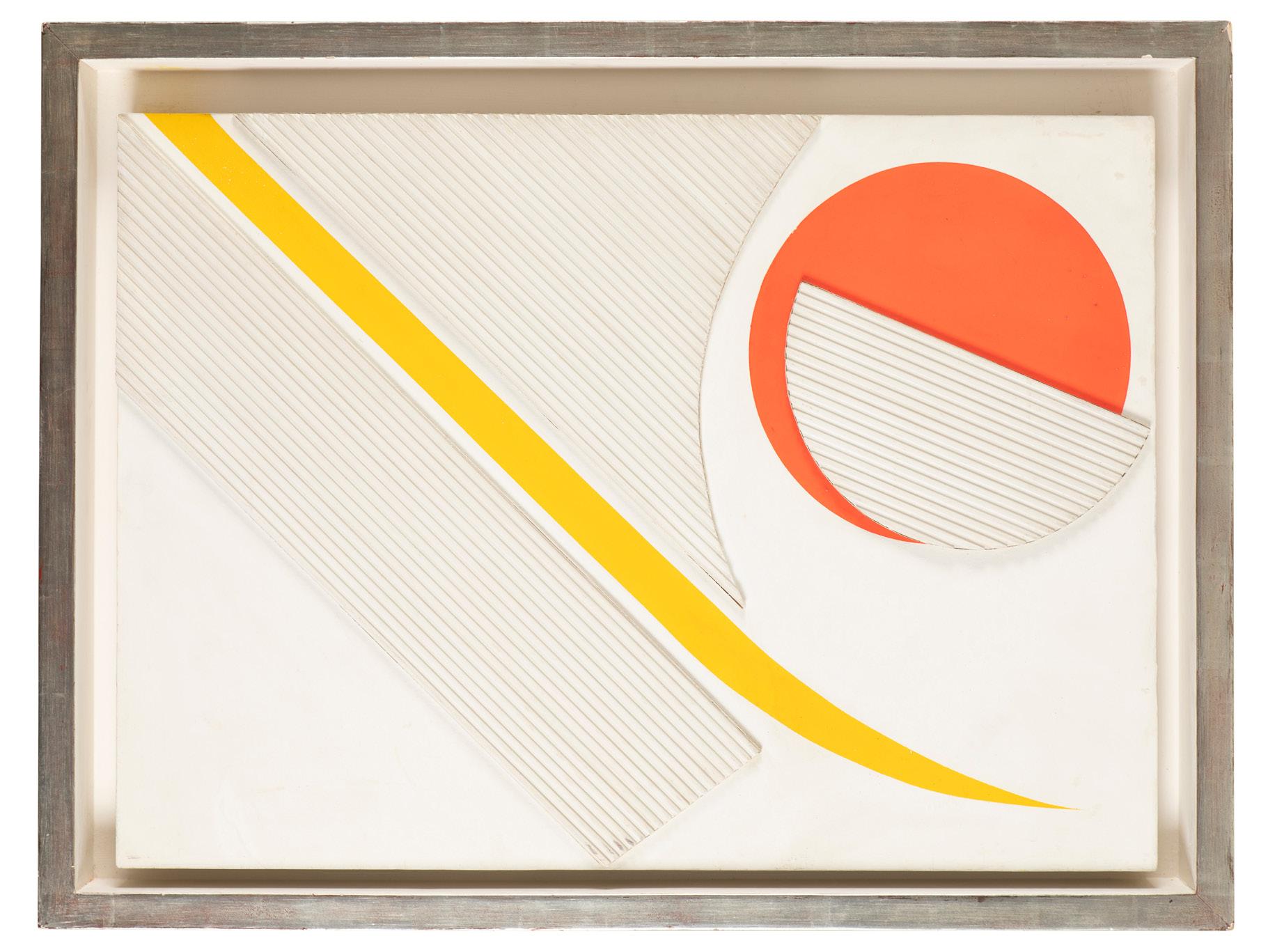
dated and inscribed ‘Argov 1972 982’ (to reverse), oil and corrugated
on canvas on board
x 76cm (21 5/8in x 29 7/8in)
Alon Zakaim, London;
WILHELMINA BARNS-GRAHAM
C.B.E. (BRITISH 1912-2004)
PLAYING GAMES III, 2001
signed, numbered and dated
with ‘GRAAL’ blindstamp, screenprint on Arches Velin Blanc
paper
x 40cm (11 3/8in
268 §
signed,
cardboard
55cm
Provenance:
Private Collection, London. £600-800 269 §
RED
28/75,
in pencil,
400gsm
29cm
x 15 3/4in) £800-1,200 178 Other fees apply in addition to the hammer price: see the ‘Buyer’s Guide’ section on page 6
Prunella Clough relished the overlooked, the inconsequential and the mundane. Urban landscapes and industrial hinterlands were her territory.
Later in her career Clough’s work tended towards abstraction, and Skip Rope is therefore an interesting later example of representative painting of the period. This work was completed in 1999, the final year of Clough’s life; three months before her death, she was awarded the Jerwood Painting Prize.
London-born Clough studied at Chelsea School of Art. She is regarded as one of the most significant British post-war painters, and her work is held in major collections including Tate, the Courtauld Gallery, the Government Art Collection and the Ashmolean Museum. In 2007 a major retrospective of her work was held at Tate.
270 §

PRUNELLA CLOUGH (1919-1999)
SKIP ROPE, 1999 oil on canvas 58.5cm x 58.5cm (23in x 23in)
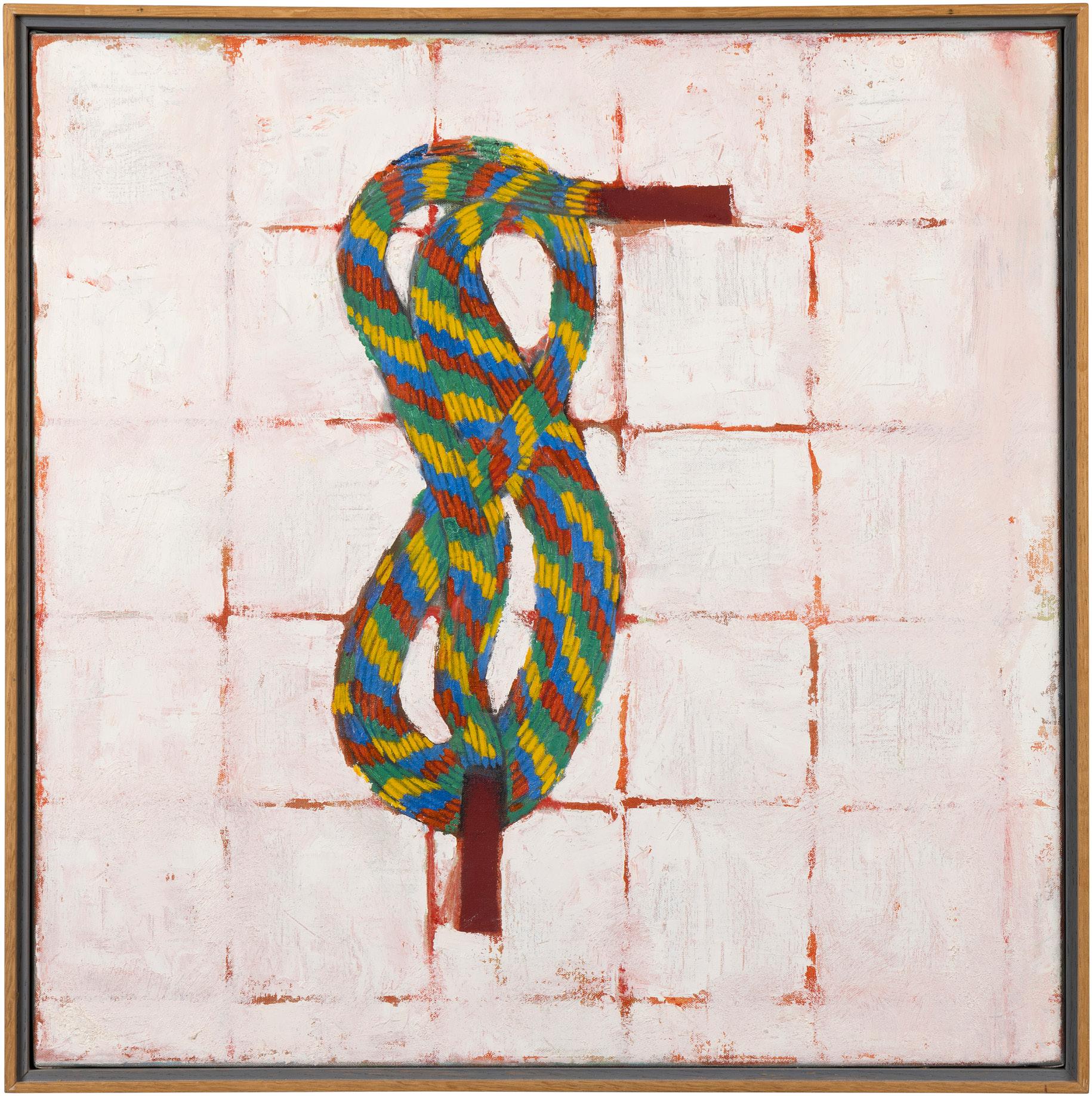
Provenance: Annely Juda Fine Art, London, 2000; Private Collection, London.
Exhibited: Annely Juda Fine Art, London, Prunella Clough: The Late Paintings and Selected Earlier Works, November - December 2000, cat. no.6. £5,000-8,000
179
SIR TERRY FROST R.A. (BRITISH 1915-2003)
COMPOSITION (RED & BLACK), 1982 signed and dated (lower right), collage on paper 30cm x 30cm (11 3/4in x 11 3/4in)
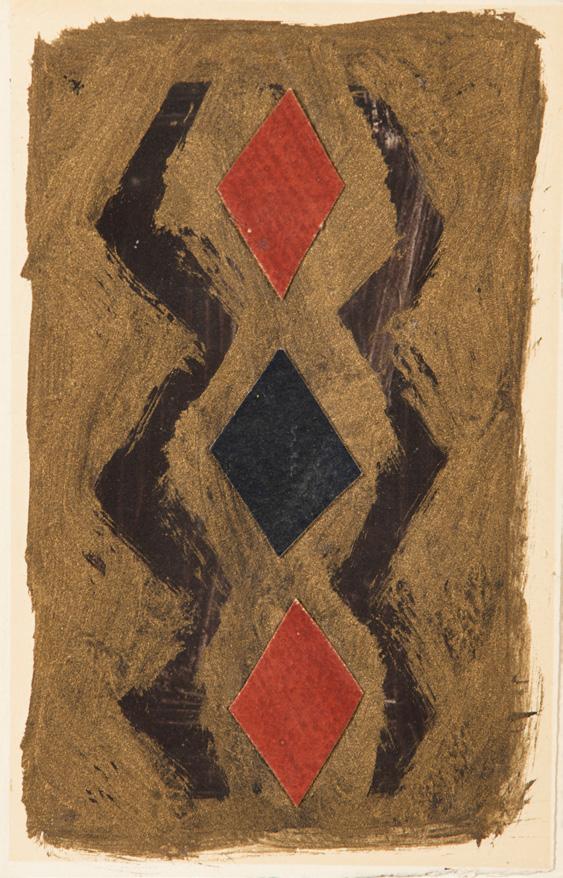
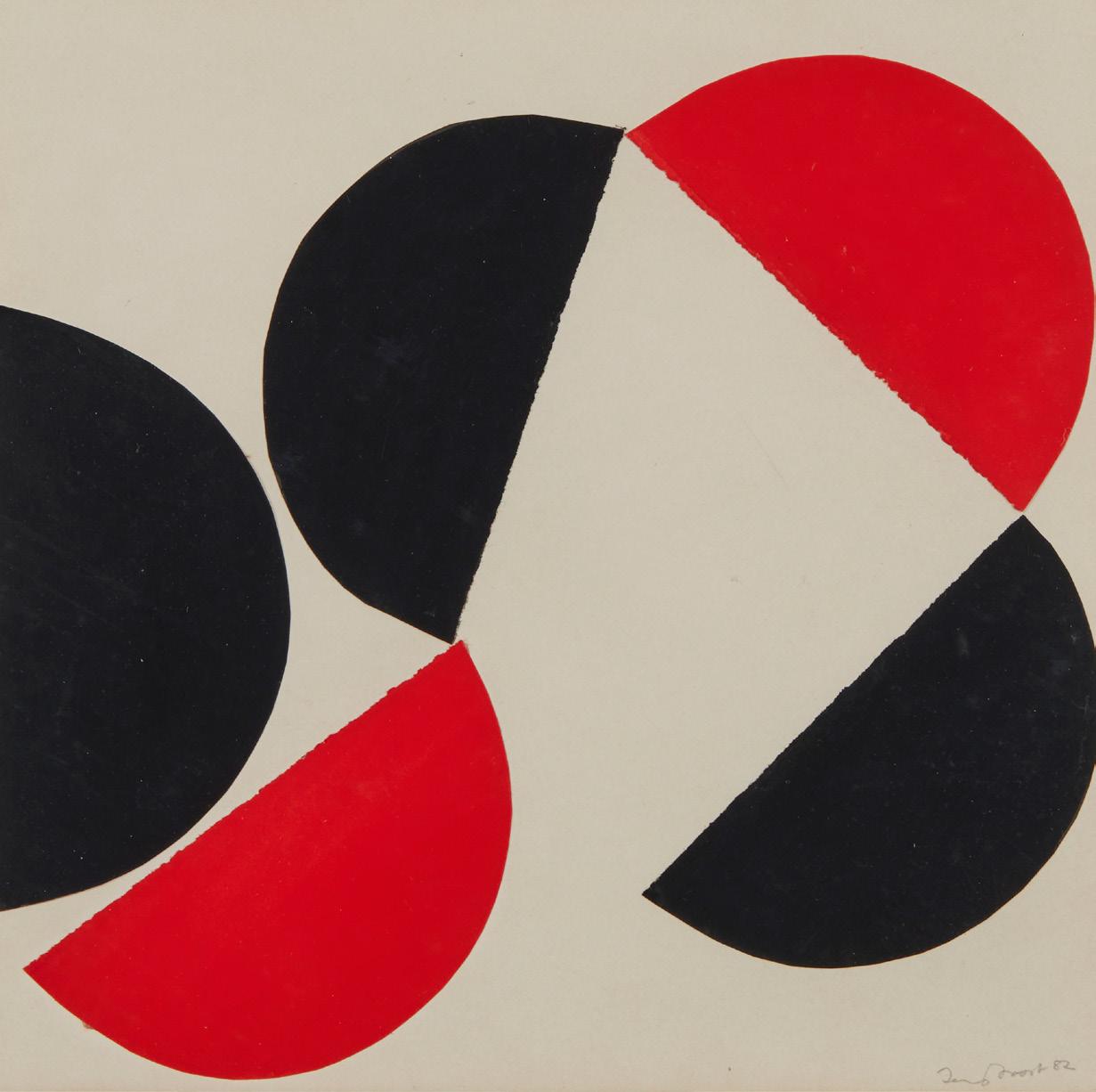
272 § BREON O’CASEY
(BRITISH 1928-2011)
CHRISTMAS CARD
inscribed ‘A Merry Christmas and a Happy New Year / love Breon and Doreen’ in pen (to reverse), mixed media and collage
17.5cm x `11.5cm (6 7/8in x 4 1/2in) £500-700
SIR TERRY FROST R.A. (BRITISH 1915-2003)
COMPOSITION (BLUE, YELLOW, BLACK), 1982 signed and dated (lower right), collage on paper 30cm x 30cm (11 3/4in x 11 3/4in)
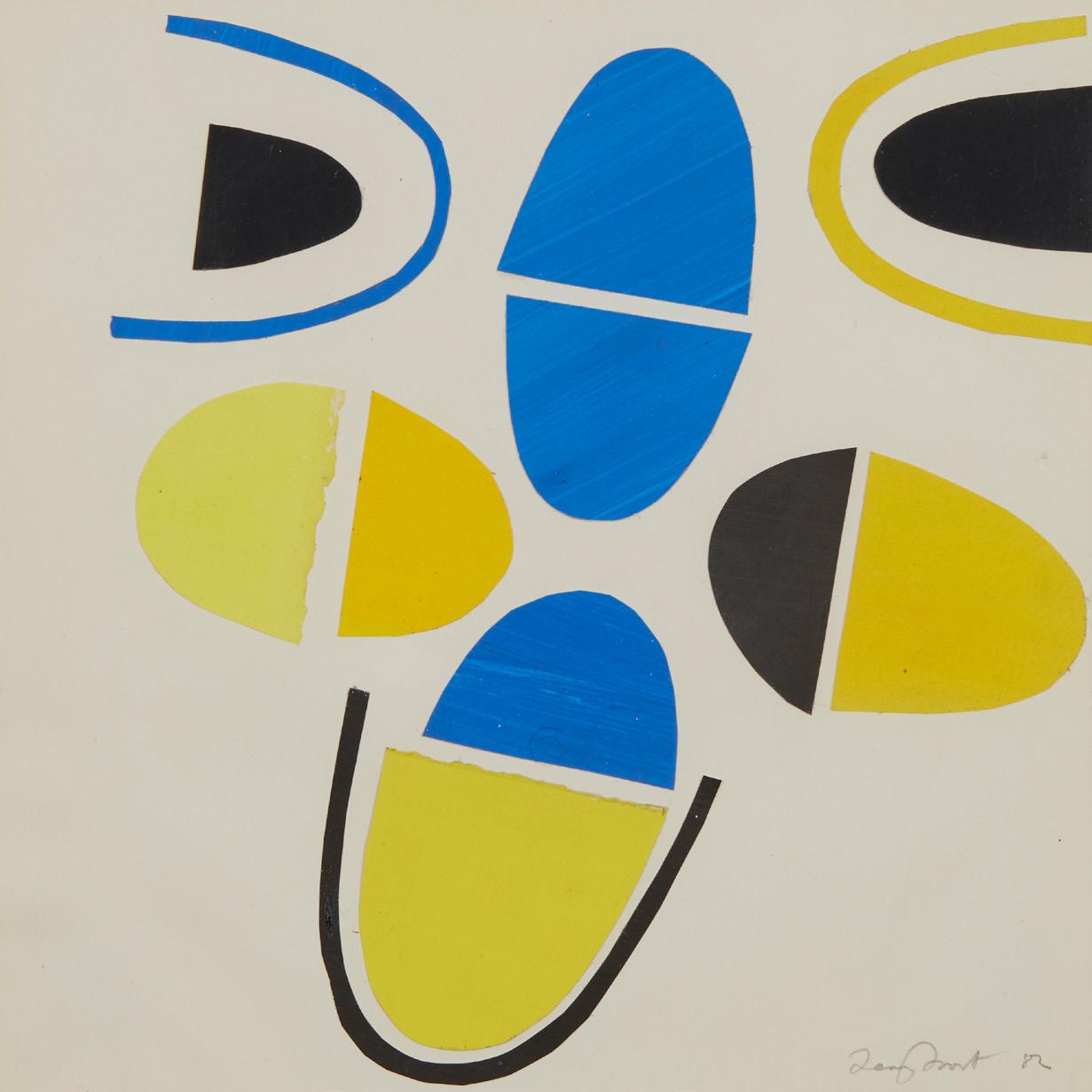
271 §
£1,000-1,500 273 §
£1,000-1,500
180 Other fees apply in addition to the hammer price: see the ‘Buyer’s Guide’ section on page 6

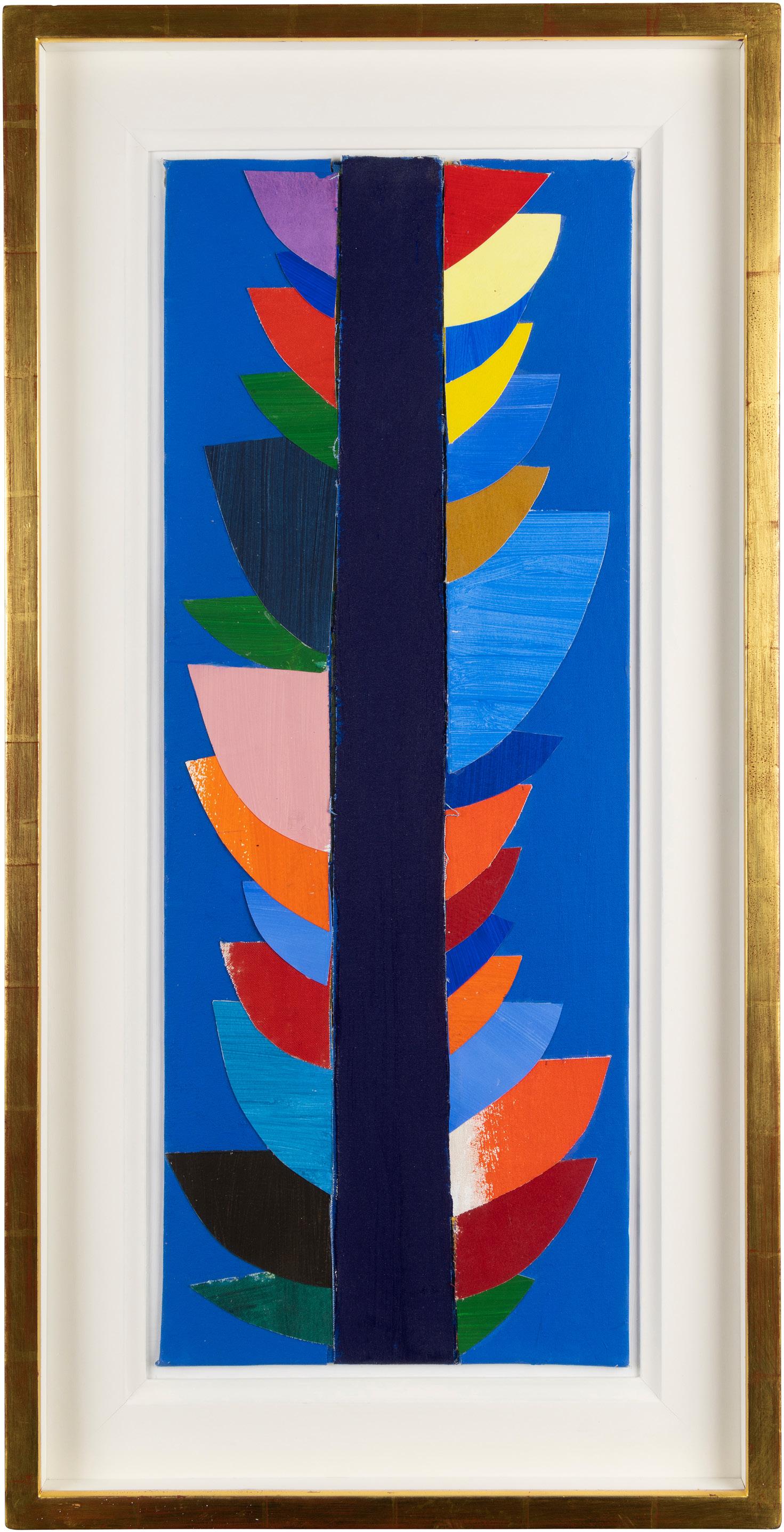
274 § SIR TERRY FROST R.A. (BRITISH 1915-2003) LONGSHIPS LIGHTHOUSE, 1997 signed, inscribed ‘Longships’ and dated (to back board), acrylic and collage on canvas on baord 79.5cm x 29.5cm (31 1/4in x 11 5/8in) £5,000-7,000 181
275 §
VICTOR PASMORE C.B.E., C.H. (BRITISH 1908-1998)
POINTS OF CONTACT NO. 14, 1969
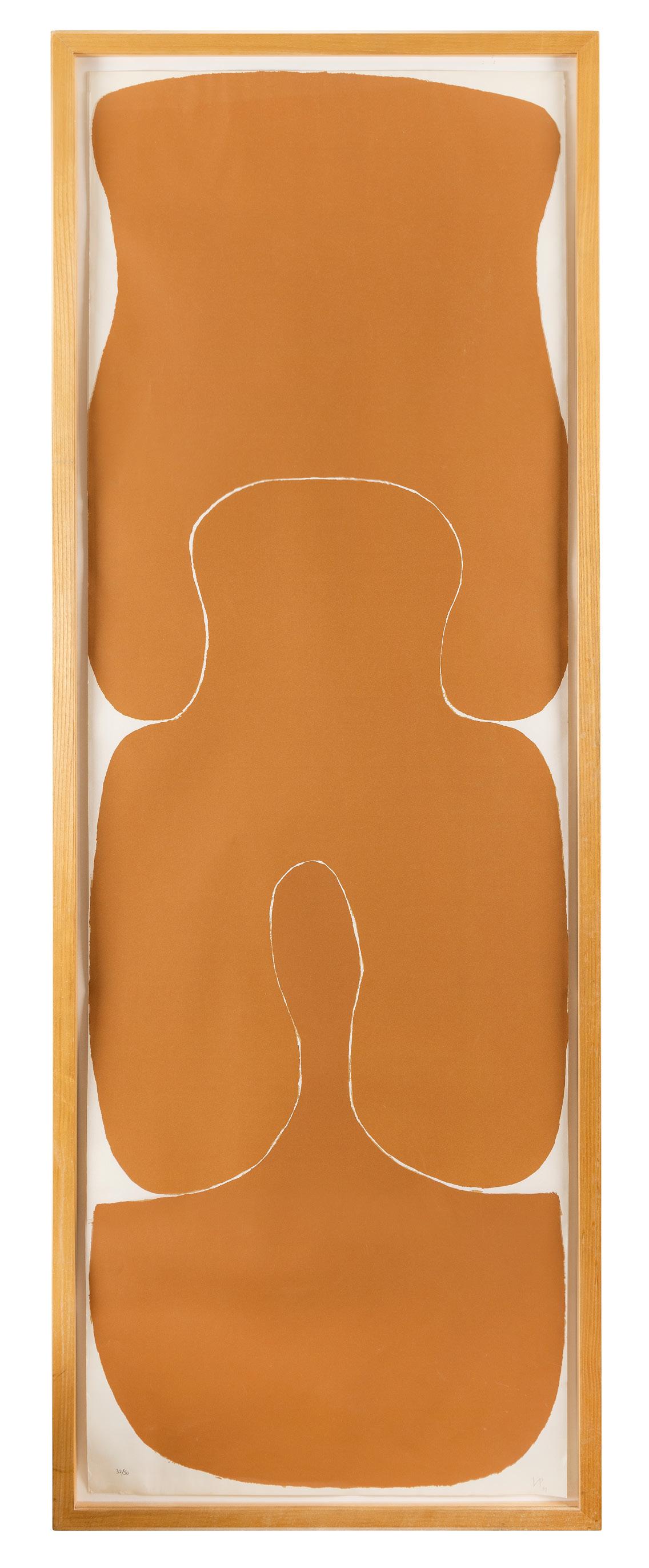
276 § ÉMILE GILIOLI (FRENCH 1911-1977)
LE GLACIER, 1961
signed and dated (to underside), polished marble 27cm high, 29cm wide, 20cm deep (10 5/8in high, 11 3/8in wide, 7 7/8in deep)
Provenance: World House Galleries, New York, 1962; Joseph H. Hirshhorn, New York, 1962-1966; Gift to the Hirshhorn Museum & Sculpture Garden, Washington; Christie’s, Modern Paintings, Drawings and Sculpture, 23 February 1994, lot 90 where sold by the Order of the Trustees of the Hirshhorn Museum.
£5,000-7,000
32/50, initialled, dated and numbered in pencil, screenprint on paper 190cm x 62cm (74 3/4in x 24 3/8in) £2,000-3,000 Émile Gilioli was one of the pre-eminent sculptors of the new abstract movement in France in the 1950s. He believed that the foremost challenge in sculpture was the synthesis of architecture and art, and that the choice of material, whether it be marble, onyx, bronze, lapis-lazuli, agate, alabaster or cement, was of utmost importance in shaping the form of the object.
Having studied at the École des Beaux-Arts in the 1930s, the influences of the pre-war Paris school of artists such as Brancusi and Henri Laurens clearly shine through in his work and after the World War Two he associated and exhibited with the leading avant-garde artists of the period including Giacometti, Picasso and Soulages. This included being vice-president of the leading abstract collective, Espace, initiated by André Bloch, Le Corbusier and Fernand Léger.
Gilioli went on to exhibit internationally, his work is held at major institutions such as Tate Modern, London, Museum of Modern Art, New York and Museu de Arte Moderna, São Paulo. Gilioli was honoured with a retrospective at the Musée National d’Art Moderne, Centre Georges Pompidou in Paris in 1979 after his death.
182 Other fees apply in addition to the hammer price: see the ‘Buyer’s Guide’ section on page 6
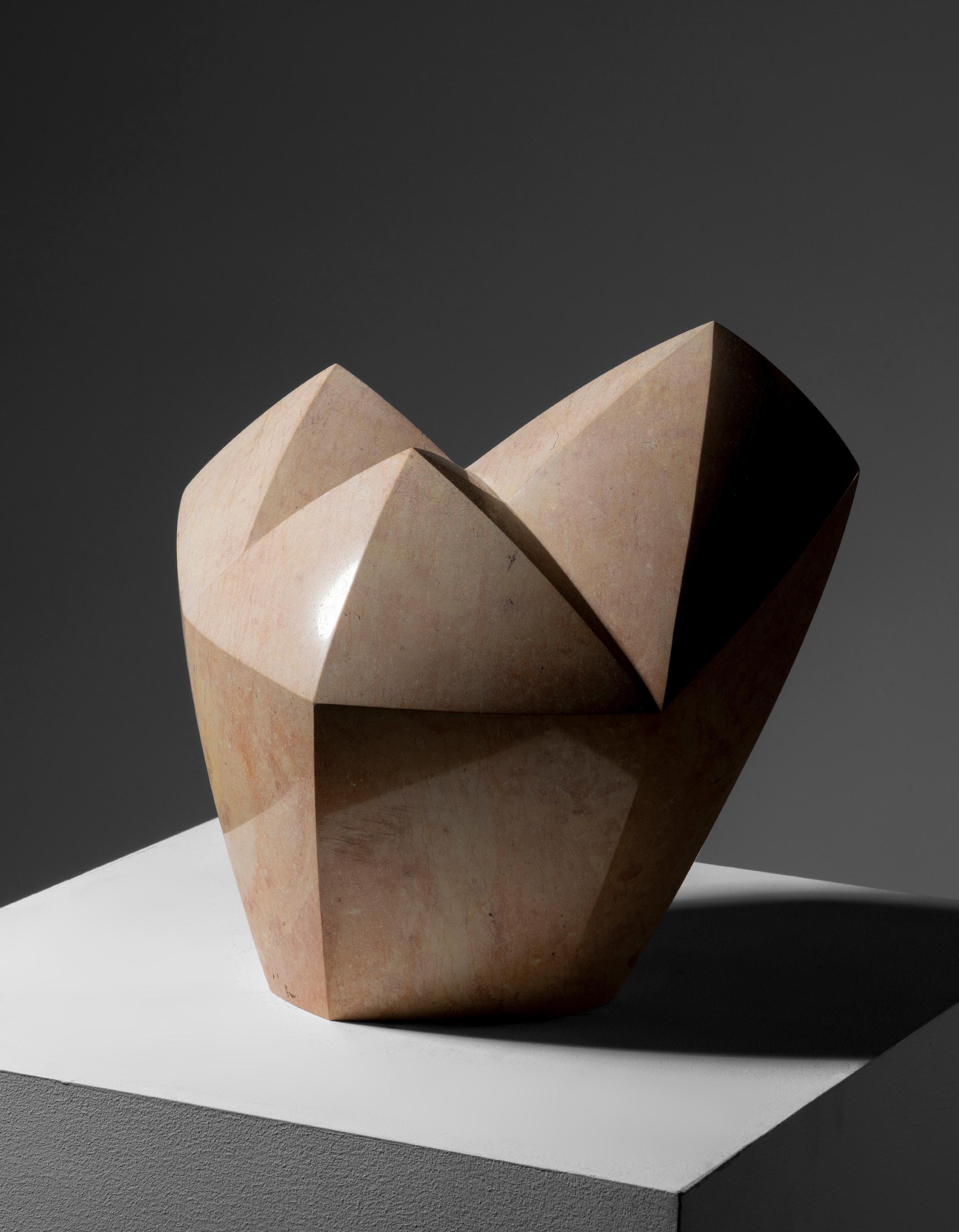
183
ÉMILE GILIOLI (FRENCH 1911-1977) LYS
1/5 and 3/5, each signed and numbered (to the marble), polished bronze and marble (2) each 27.5cm high, 30cm wide, 12cm deep (10 3/4in high, 11 3/4ing wide, 4 3/4in deep) including base
Provenance: Edition 1/5: Estate of Lee A. Ault; Sotheby’s, New York, 12 June 1997, lot 257. Edition 3/5: M. Knoedler & Co., Paris, 1961; Joseph H. Hirshhorn, New York, 1961-1966; Gift to the Hirshhorn Museum, 1966; Christie’s, Modern Paintings, Drawings and Sculpture, 23 February 1994, lot 89, where sold by the Order of the Trustees of the Hirshhorn Museum. £10,000-15,000
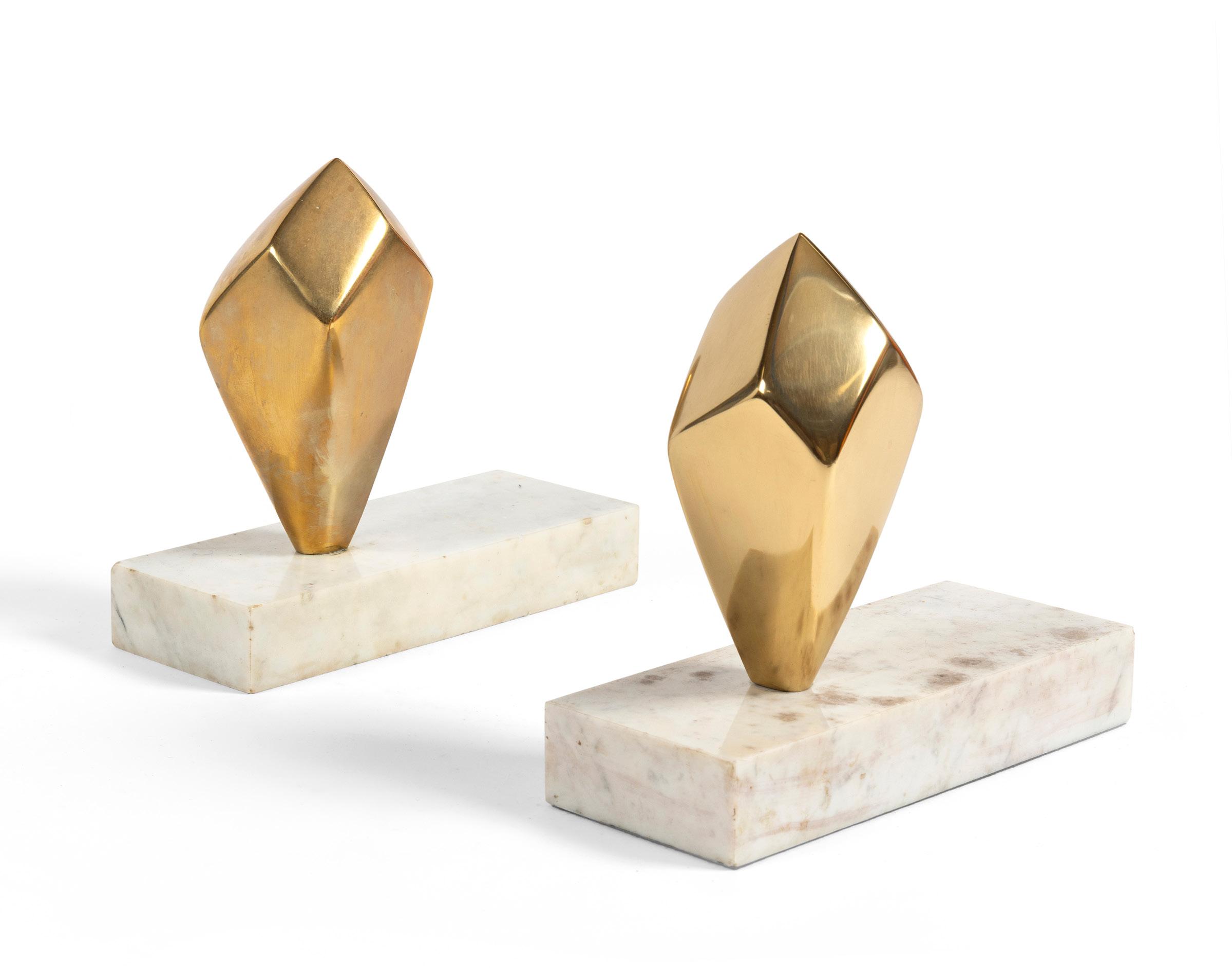
277 §
184 Other fees apply in addition to the hammer price: see the ‘Buyer’s Guide’ section on page 6
STEPHANE GRAFF (BRITISH 1965-)
GLASS
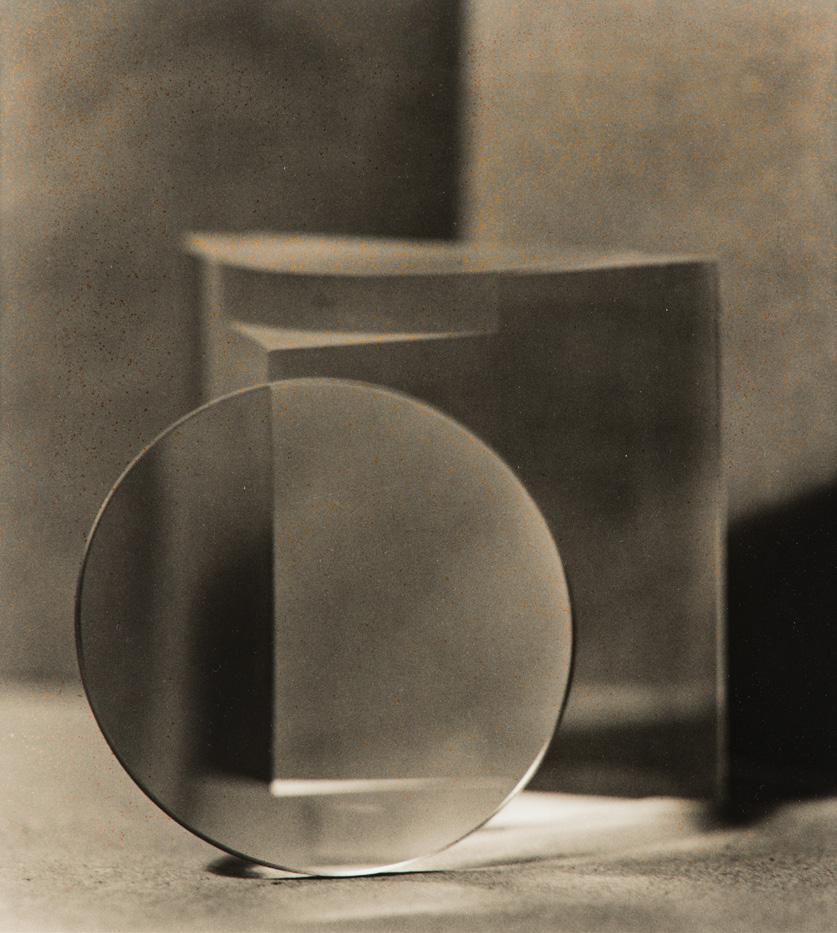
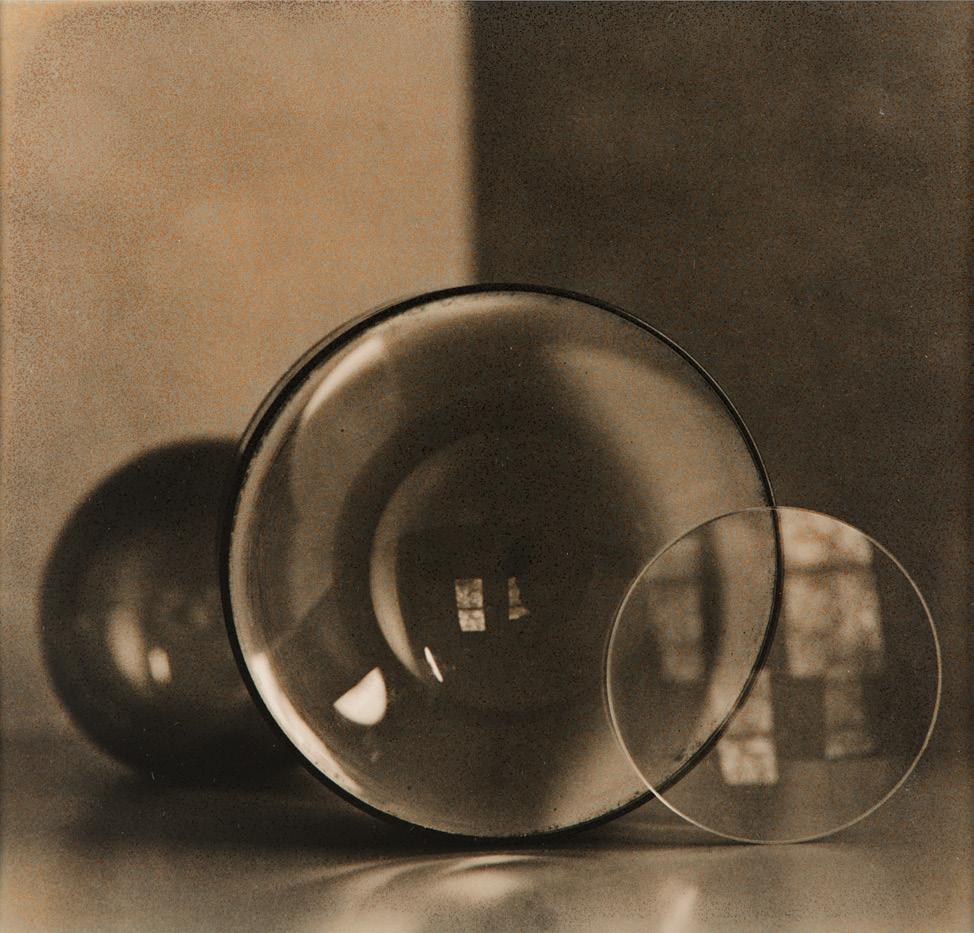
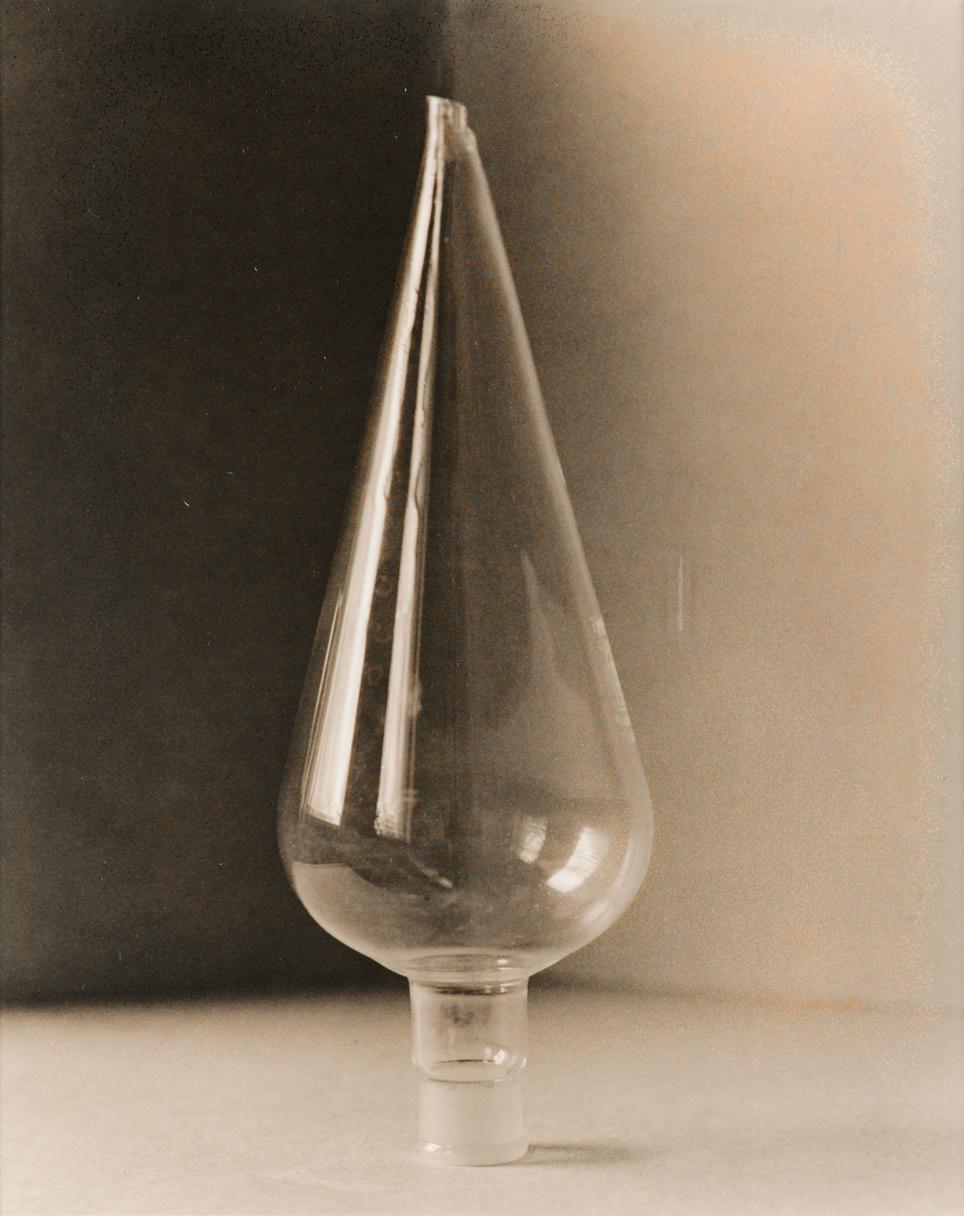
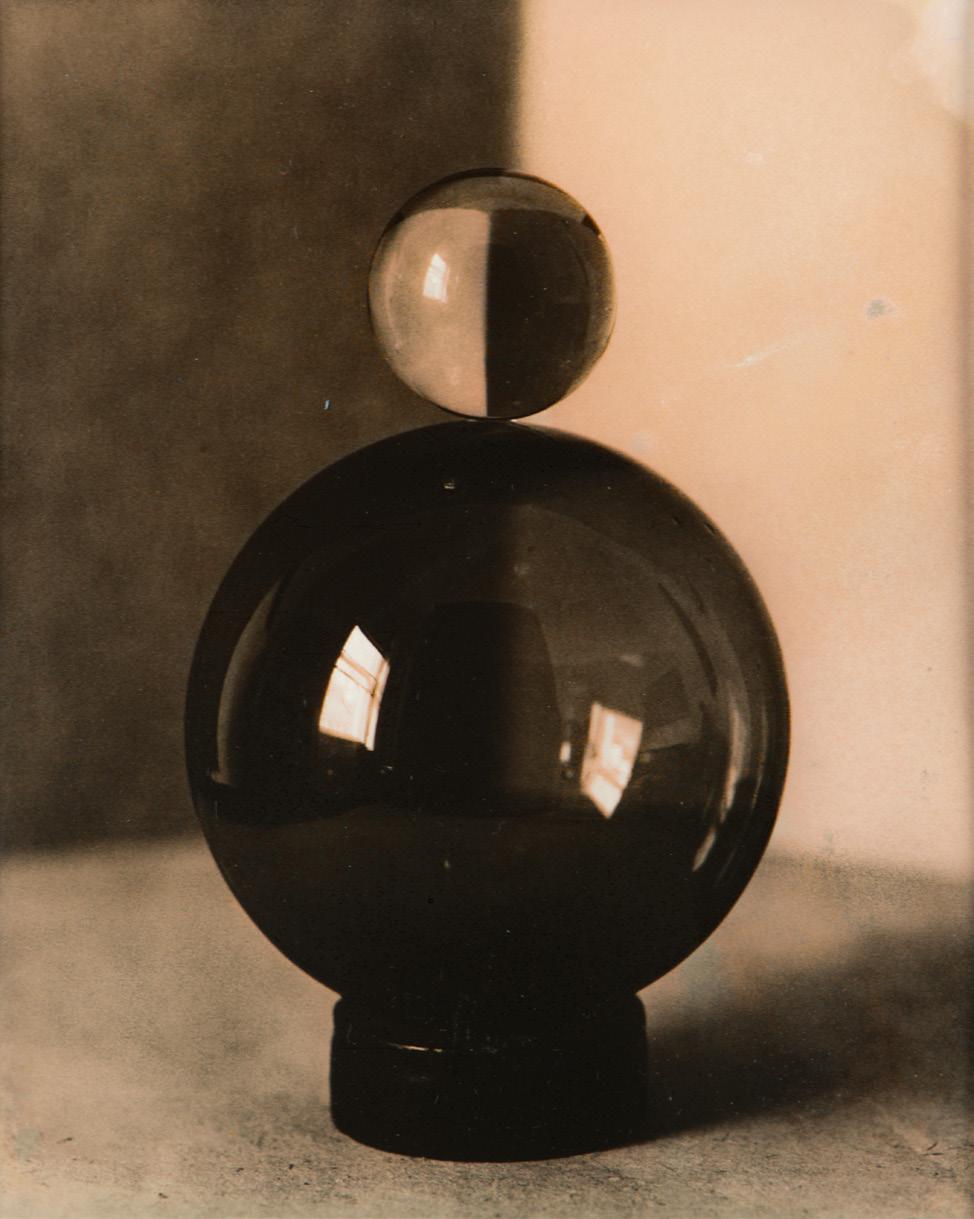
278 §
STILL
SERIES, NOs. 5, 17, 18, 24 7/25, 5/25, 4/25, and 2/25 respectively, each signed, titled and numbered (to reverse), silver gelatin print (4) 25cm x 20cm (9 7/8in x 7 7/8in); 21cm x 22cm (8 1/4in x 8 1/2in); 26.5cm x 21cm (10 3/8in x 8 1/4in); 23cm x 20.5cm (9in x 8in) respectively Provenance: Michael Hoppen Gallery, London. £800-1,200 185
280 § MATTHEW LANYON
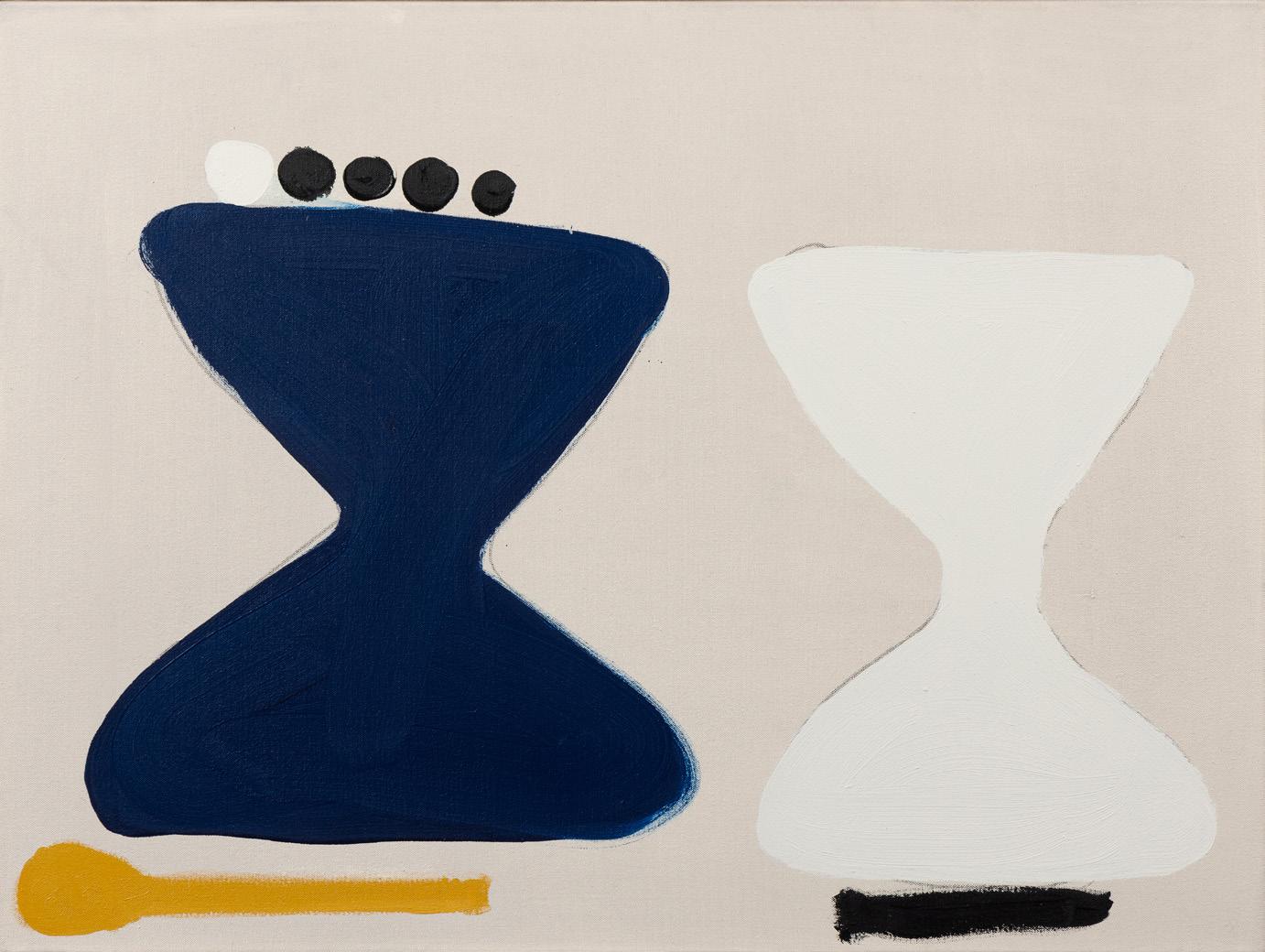
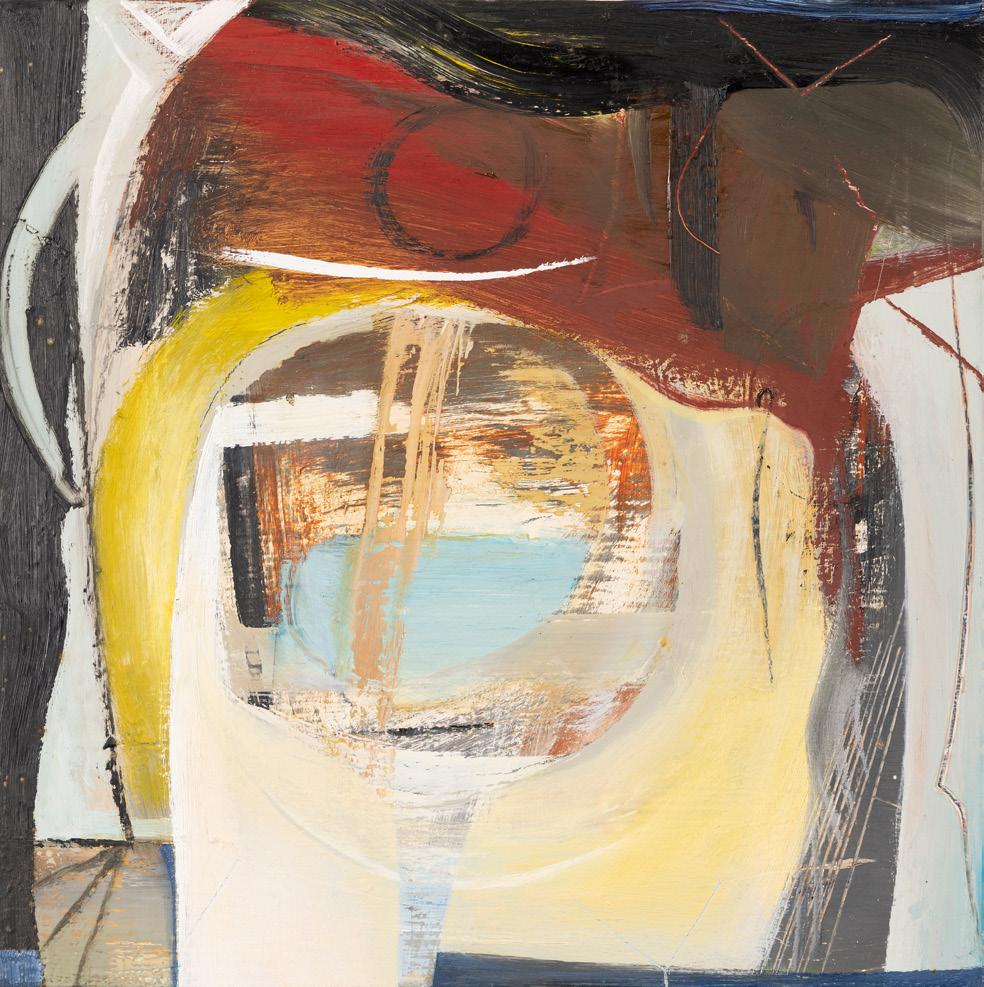
(BRITISH 1951-2016)
COMPOSITION, 2004 signed, dated, and inscribed (to reverse), oil on board 29.2cm x 29.2cm (11 1/2in x 11 1/2in) £1,000-2,000
279 §
FRANCIS DAVISON (BRITISH 1919-1984)
STUDIES FOR COLLAGE stamped with ‘Aldeburgh’ postmark in red ink, pencil on paper envelope 23cm x 31cm (9in x 12 1/8in)
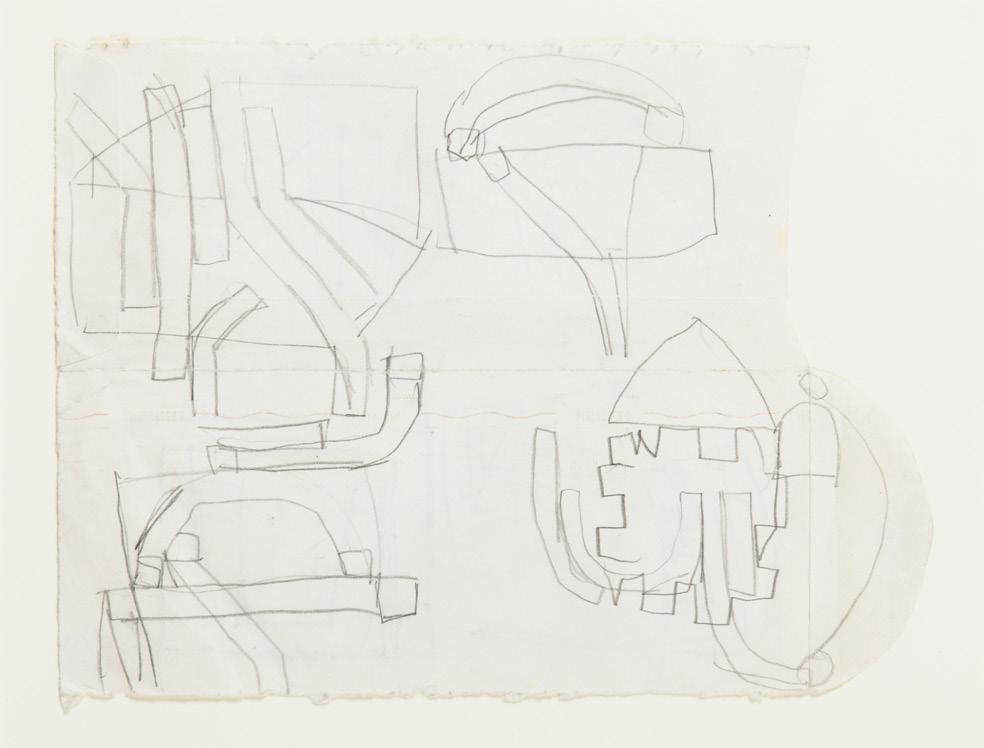
Provenance: The Artist’s Family. £400-600
281 §
HENRIETTA DUBREY
(BRITISH 1966-)
CRUET, 2014 signed, titled and dated (to reverse), oil on canvas 47cm x 61cm (18 1/2in x 24in) £600-1,000
186

282 § DENIS MITCHELL (BRITISH 1912-1993) UNTITLED, 1969 unique, initialled and dated (to underside of base), brass 26cm x 2.5cm (10 1/4in x 1in) excluding base Provenance: Commissioned by George Dannatt and thence by family descent; Askew Art, London, where acquired by the present owner Exhibited: Maltby Contemporary Art, Winchester; Rosenberg & Co., New York. Literature: George Dannatt and Friends, exhibition catalogue, Osborne Samuel, London, 2015, p.50, illustrated p.62; Modern British Masters, Rosenberg & Co., New York, 2017. £4,000-6,000 187 Other fees apply in addition to the hammer price: see the ‘Buyer’s Guide’ section on page 6
Despite being included in all the key exhibition of new British art in the 1960s – including the 1966 Venice Biennale as part of the show Five Young British Artists – Harold Cohen remains less well-known than many of his contemporaries. In part this could be due to his long parallel career in academia at UC San Diego, which began in the late 60s, but it could also be proof that it is possible – just sometimes – to be too far ahead of the curve for your own good, for Cohen has been mapping the worlds of computers and artificial intelligence since the former were a recent invention and the latter didn’t really exist. Indeed, Cohen’s experiments in fully computergenerated art in the 70s and 80s can be seen as crucial early enquiries into AI. He creation of AARON, a computer program designed to produce art autonomously, puts Cohen’s art in a space that is only just being occupied today – although today’s artist programmers seem intent in making their avatars paint figuratively, rather than ask them to
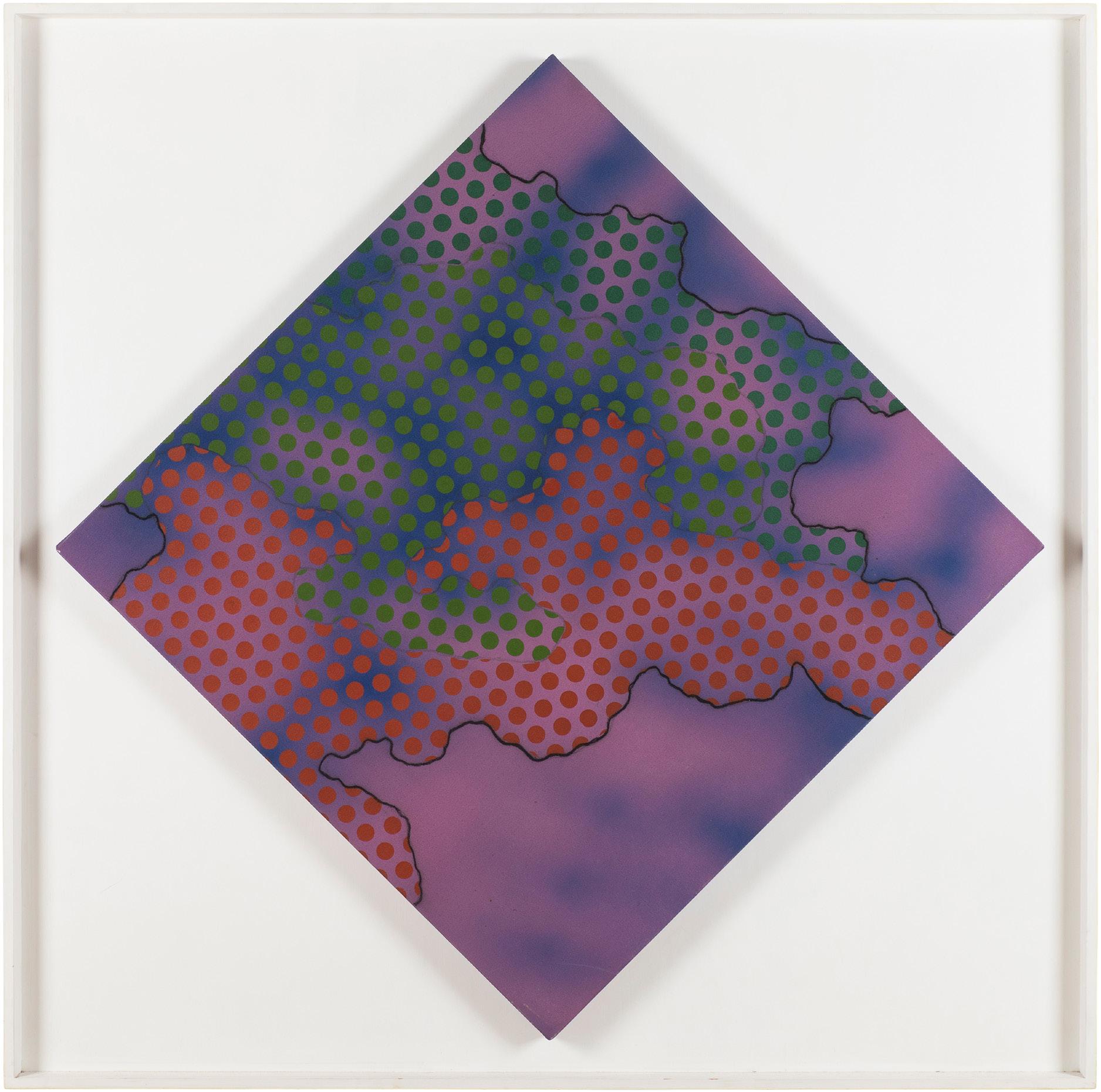
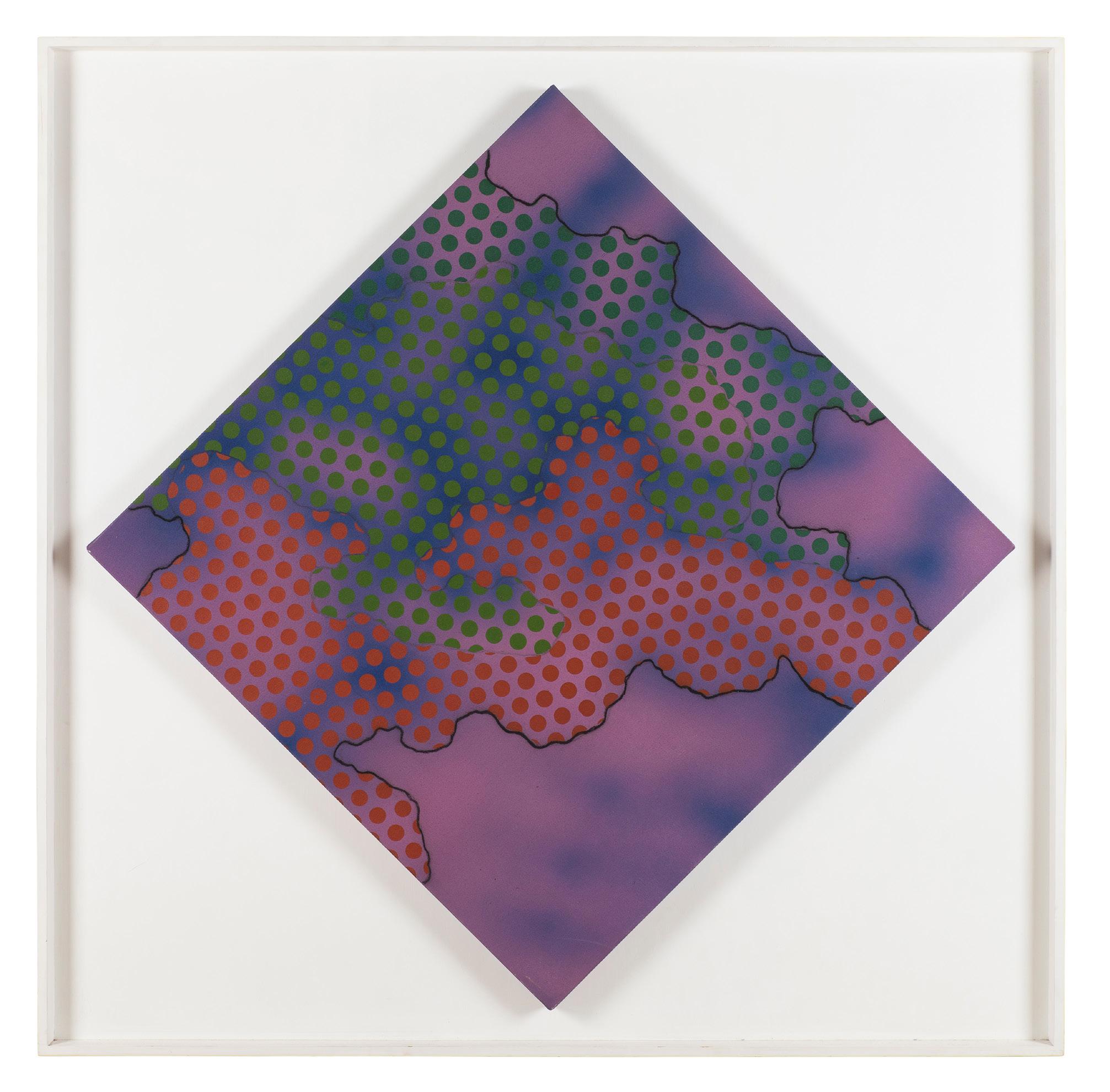
evoke something of their own electric dreams. Carahadras is an imaginary place – the fateful mountain in Tolkein’s Lord of the Rings and Cohen no doubt was aware of Tolkein’s own beautiful maps of his unseen world. Yet everything about this painting – in the colours, in the way its painted – seems the opposite of Tolkein’s feudal, medieval landscape. Carahadras is irrefutably futuristic, diagrammatic – the green and red dots forming their own binary code, on shifting wafers of a motherboard. Yet elements, too, are very much of their time. The deliberate rotation of the square canvas to form a lozenge places the work in line with American minimalism of the same date – the likes of Ellsworth Kelly – and the work’s all over surface, with no real sense of there being a ‘foreground’ or ‘background’ locates the work within Clement Greenberg’s axioms for abstract art. It is therefore very much a 60s painting, albeit one that presages a future that was, at that point, only fiction.
HAROLD COHEN (BRITISH 1928-) CARADHRAS, 1967
titled and dated (to reverse), acrylic on canvas the canvas 100cm x 100cm (39 3/8in x 39 3/8in)
Provenance: Purchased directly from the artist in July 1980 from a selling exhibition of his paintings at the Slade School of Fine Art, London prior to his departure to the U.S.A.; Private Collection, UK.
City Museum and Art Gallery, Birmingham,
loan
283 §
signed,
Exhibited: On long
to the
1980-6. £2,000-3,000
188
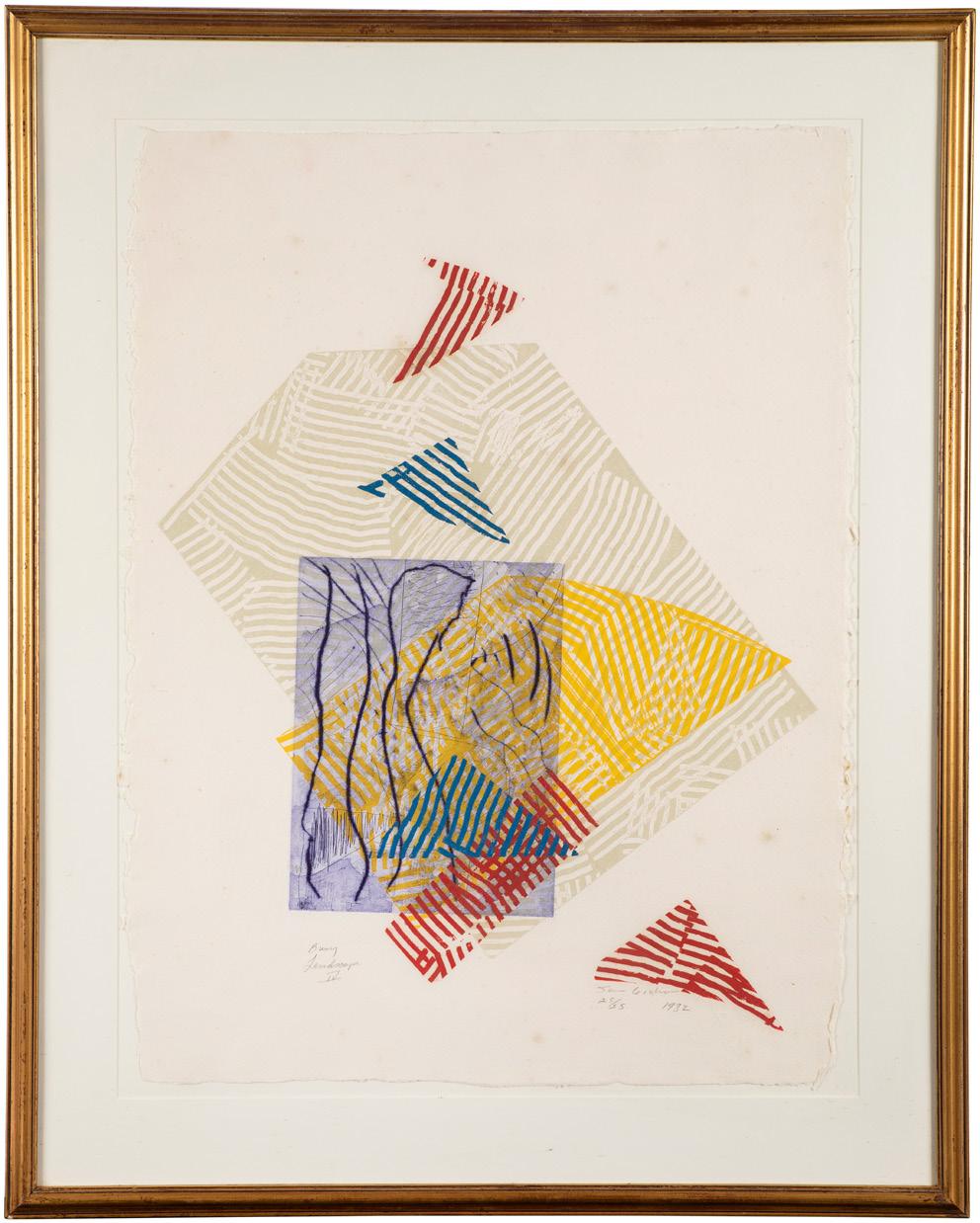
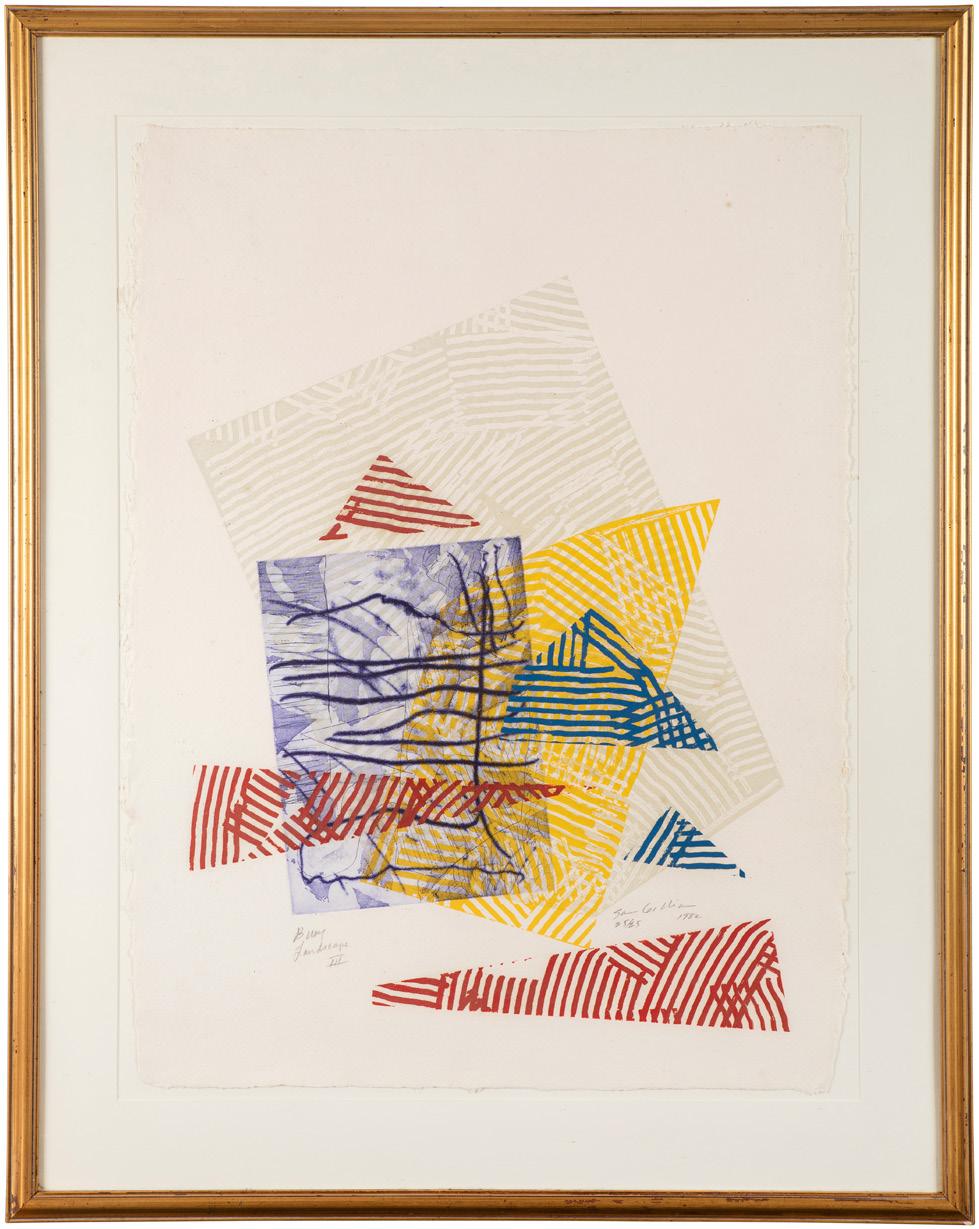
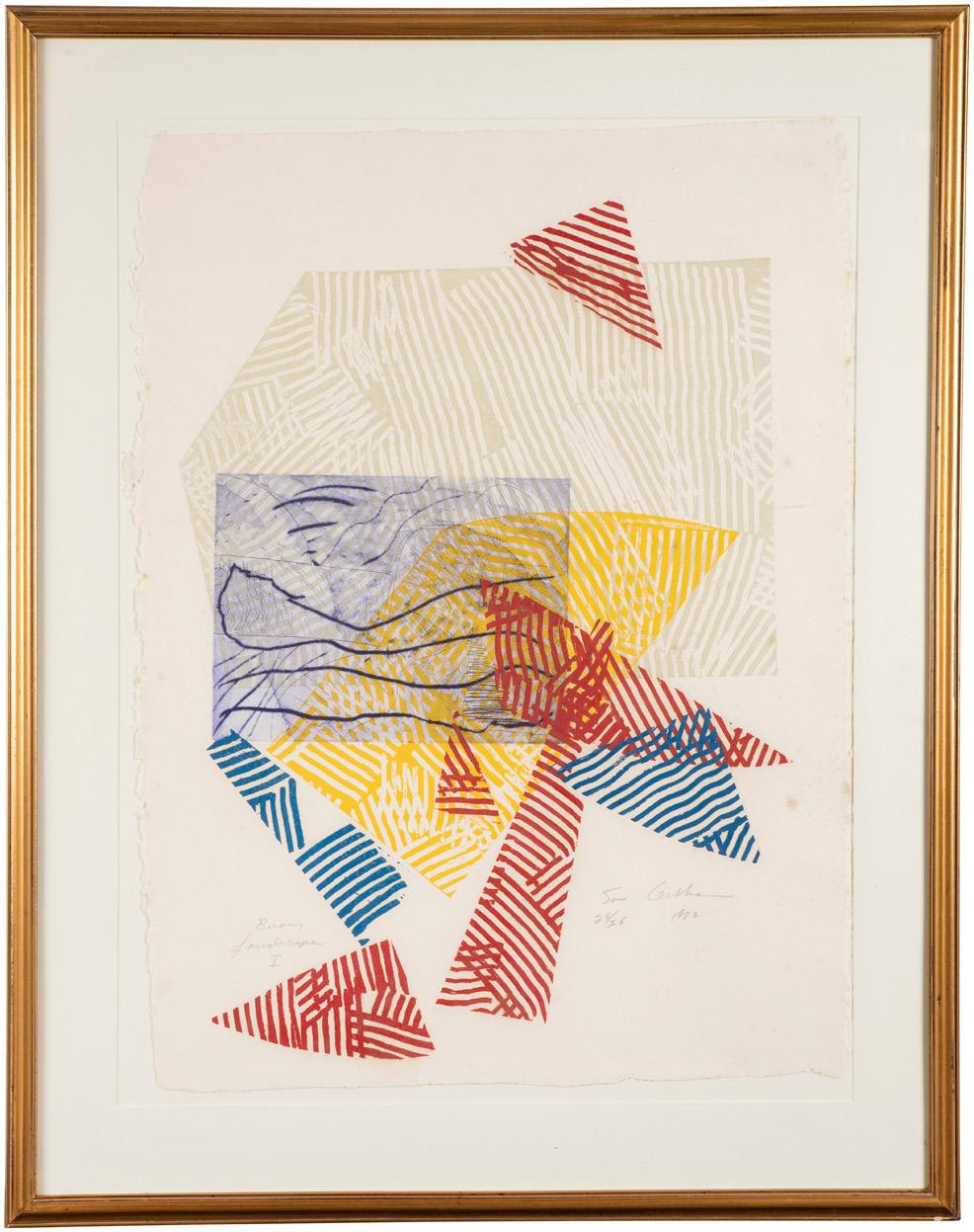
284 SAM GILLIAM (AMERICAN 1933-2022) BUOY LANDSCAPE I, III AND IV, 1982 25/75, each signed, numbered, dated and titled in pencil, etching, aquatint, drypoint and roulette on handmade wove paper (3) each sheet 80.5cm x 61cm (31 3/4in x 24in) £1,500-2,500 189 Other fees apply in addition to the hammer price: see the ‘Buyer’s Guide’ section on page 6
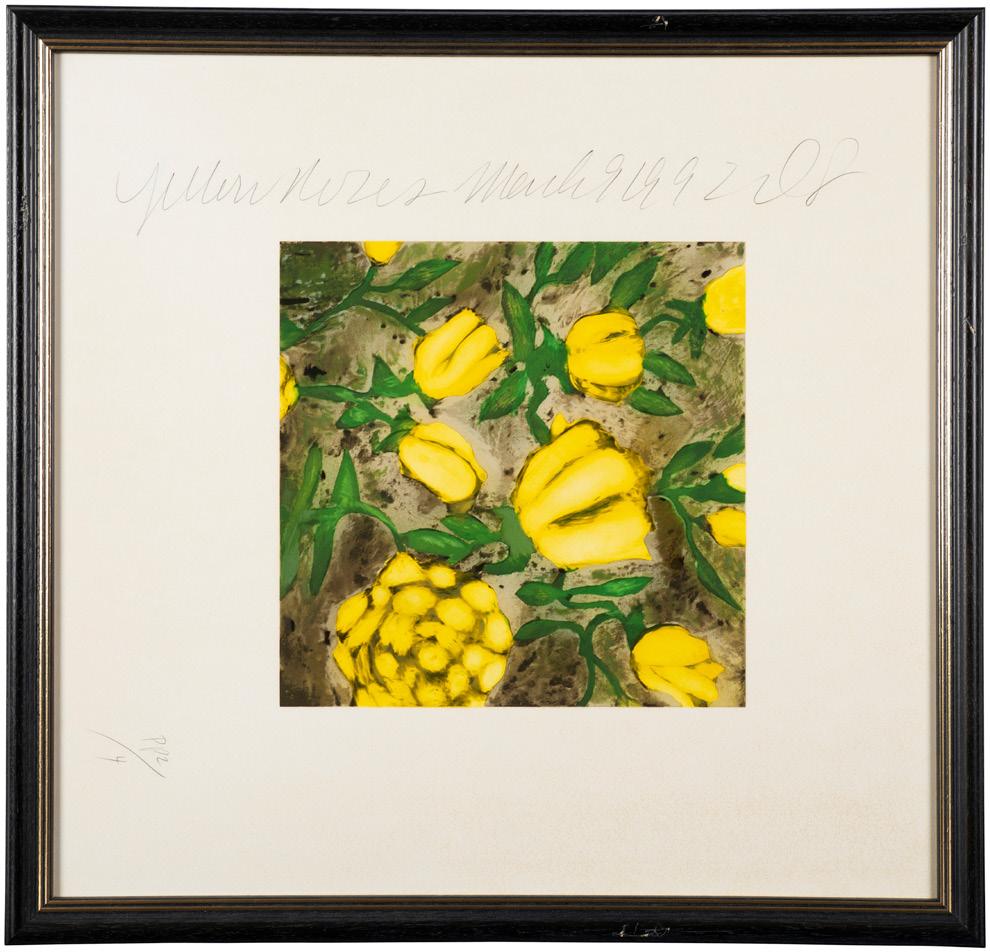
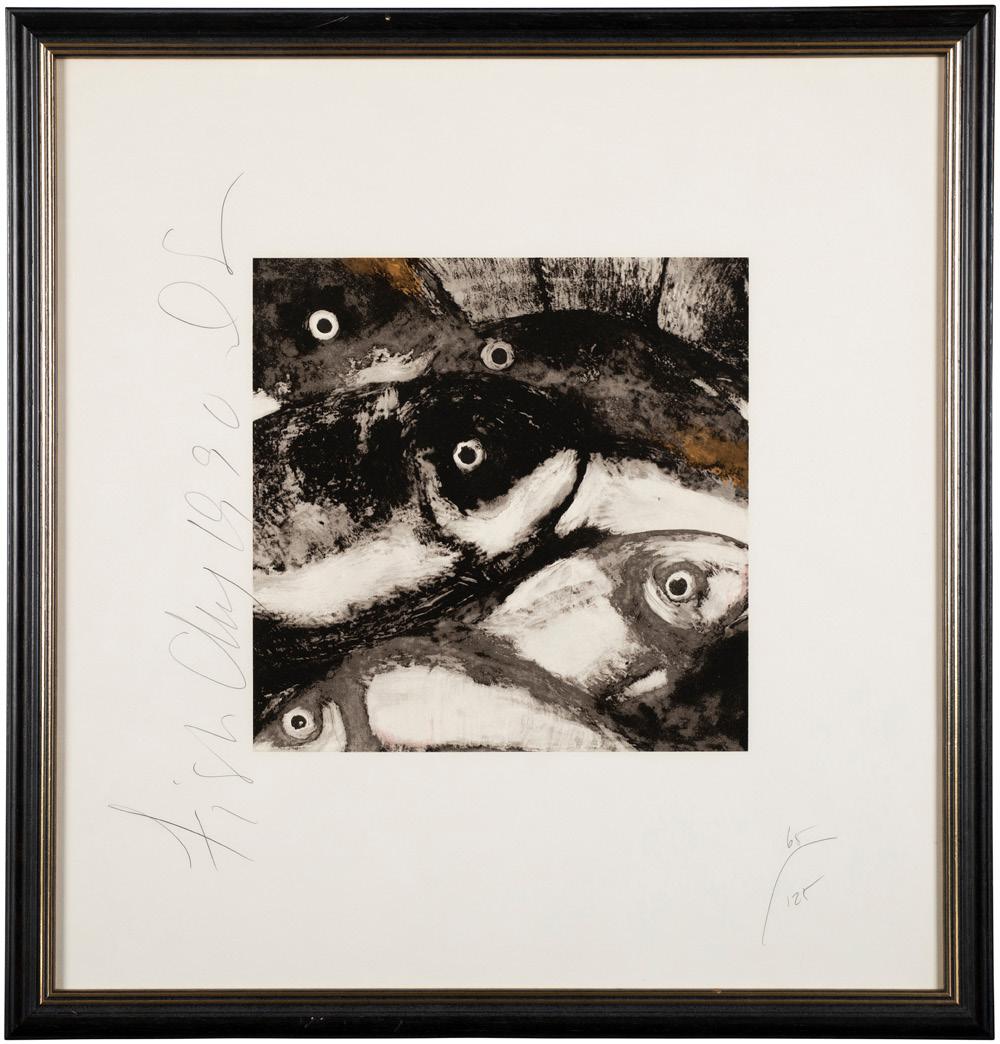

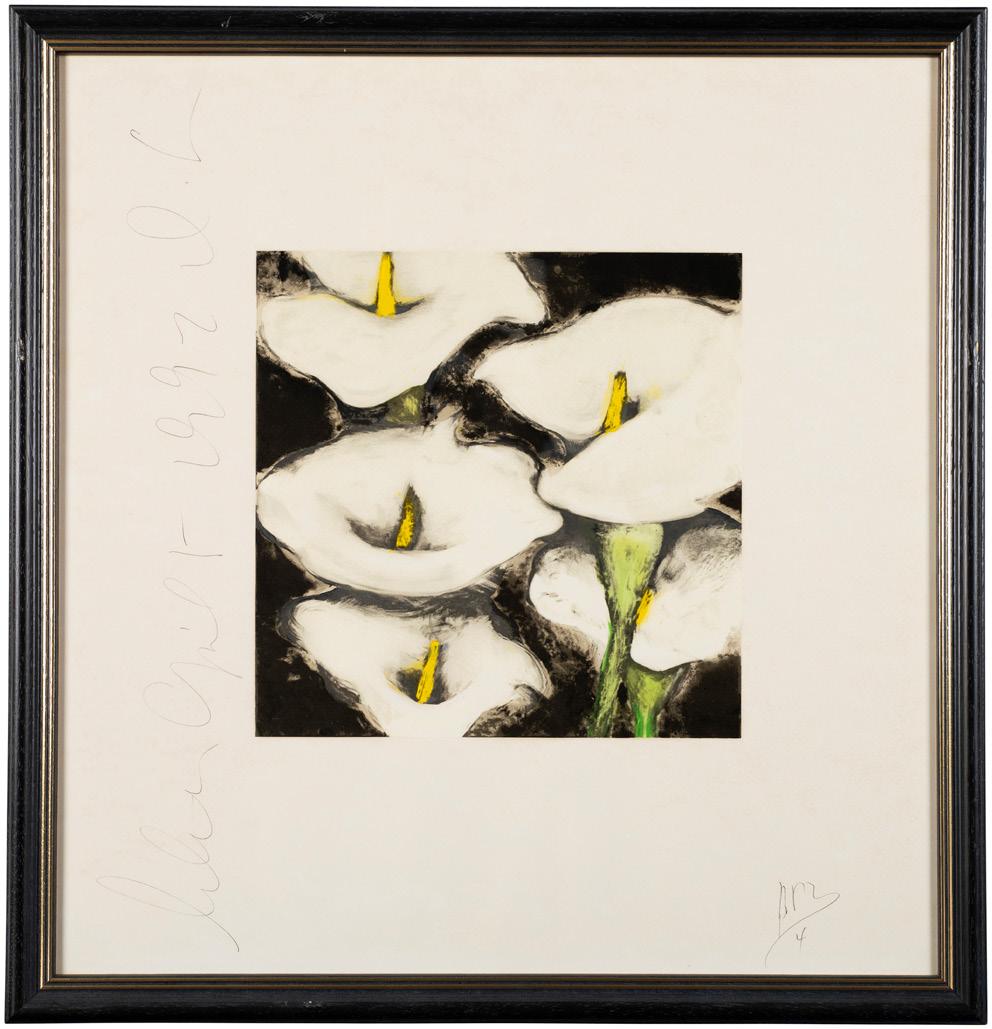
285 DONALD SULTAN (AMERICAN 1951-) FISH, 1990; FIVE LEMONS, A PEAR AND EGG, 1994; YELLOW ROSES, 1992 AND LILLIES, 1992 65/125 and PP2/4 (the remaining three), each initialled, numbered, titled and dated in pencil, screenprints (4) each 30.5cm x 30.5cm (12in x 12in) Provenance: Ikkan Art International Inc.; Private Collection, London. £2,000-3,000 190 Other fees apply in addition to the hammer price: see the ‘Buyer’s Guide’ section on page 6
ANDY WARHOL
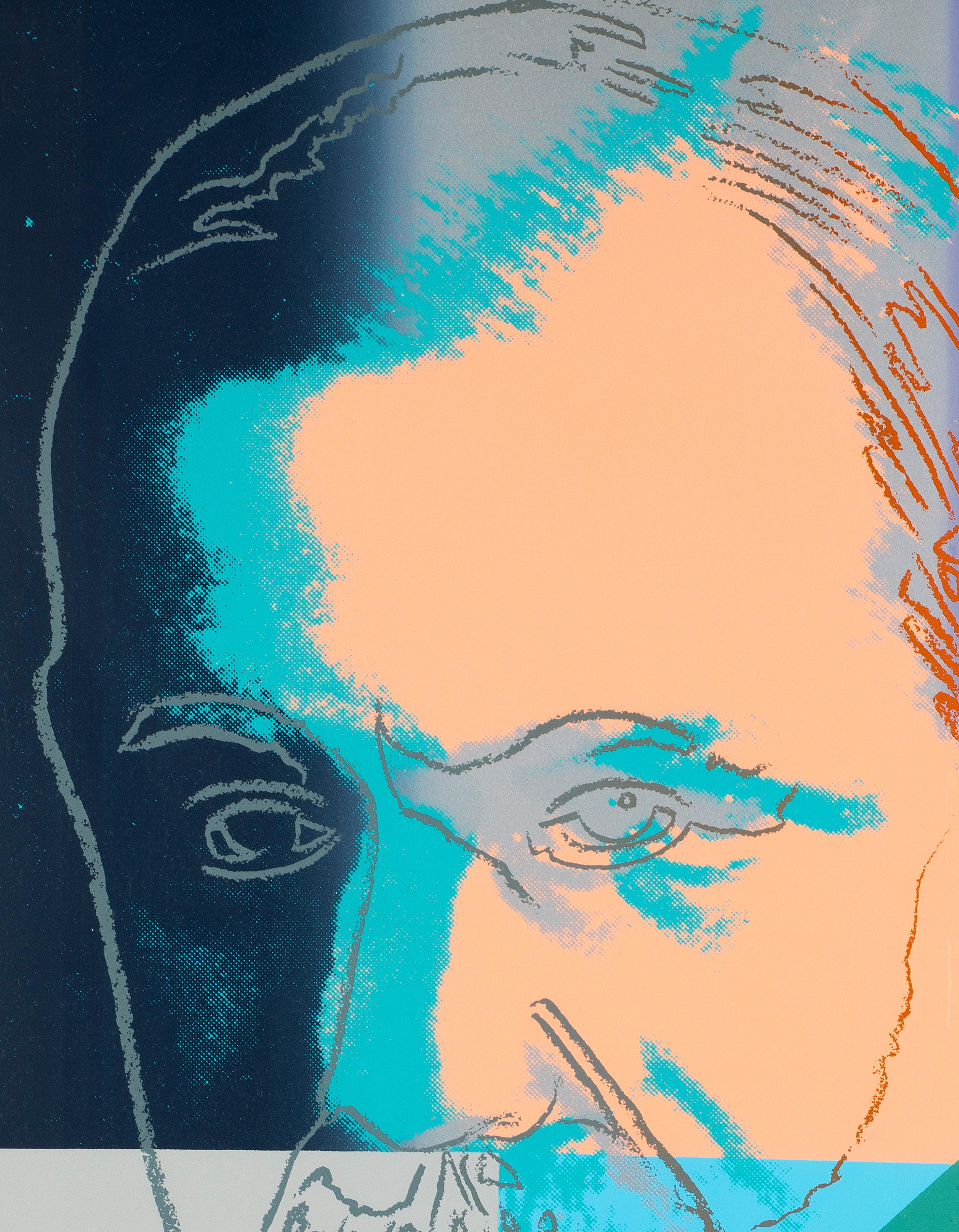
Modern Icons Meet
Andy Warhol was a game-changer in the art world, with an amazingly prescient view of how the culture of celebrity and image-making would evolve into the 21st-century. Obsessed with celebrities and commercial advertising techniques and imagery, he developed iconic works.
Both sitters in the print works offered here are icons; Dame Elizabeth Taylor was a Hollywood megastar, as well known for her work on-screen as her private life. Married eight times, famously twice to the same man, she was also an astute businesswoman who was one of the earliest celebrities to endorse perfumes, a move followed by film and music stars today as a way to diversify their income and personal brand. Sigmund Freud is an icon in a completely different area but with no less impact. His research into the human psyche and resultant theories have made him a pervasive cultural figure, consistently referred to across cultural and artistic thought and debate.
Warhol was intrigued by mortality, the vibrant image of someone in life masking the inevitability of their death and the powerful endurance of an image beyond that death. He first depicted Elizabeth Taylor in the early 1960s when she was at the height of her career, but also seriously ill with pneumonia, one of many illnesses that would plague her across her long life. Meanwhile his portrait of Freud is from a series he created in 1980 entitled Ten Portraits of Jews from the Twentieth Century, in which all the sitters, selected for their impact within their fields, were already dead.
In both depictions, Warhol applies his signature technique, overlaying a promotional image of Taylor with bold sections of colour across her lips and eyes. This painterly and dramatic make-up transforms the straight forward posed portrait into a piece of Pop Art, playing up the glamour of her celebrity image.
As art historian Robert Rosenblum has commented, ‘the contradictory fusion of the commonplace facts of photography and the artful fictions of a painter’s retouchings was one that... became a particularly suitable formula for the recording of those wealthy and glamorous people whose faces seem perpetually illuminated by the afterimage of a flash-bulb.’
The portrait of Freud has a more eventful history. Made when the artist’s career was starting to taper off in 1980, the concept for the series was suggested by his publisher Ronald Feldman and the ten subjects were selected by Susan Morganstein, the art gallery director of the Jewish Community Centre of Greater Washington. The initial exhibition of the resultant works divided critics, some of whom felt it in bad taste and others experiencing it as a creative celebration of the Jewish impact on twentiethcentury culture. With time, the series has been further interrogated and more widely celebrated, with certain images becoming widely known within Warhol’s artistic legacy. The Pop Art approach that was Warhol’s hallmark is apparent in the depiction of Freud, the line drawing outline portrait was developed from an archival photograph, which Warhol laid over blocks of colour then added some loose highlights for depth. The resultant effect is a slight disconnection of the figure, transforming an image into an icon, onto which we could read many of Warhol’s theories of self.
Warhol liked to explore the gaps and overlaps between man and machine, advertising and art. In 2022, these images, as well as their sitters and the artist remain iconic, maintaining a glamour and enigma that continues to enthral us.
192 Other fees apply in addition to the hammer price: see the ‘Buyer’s Guide’ section on page 6
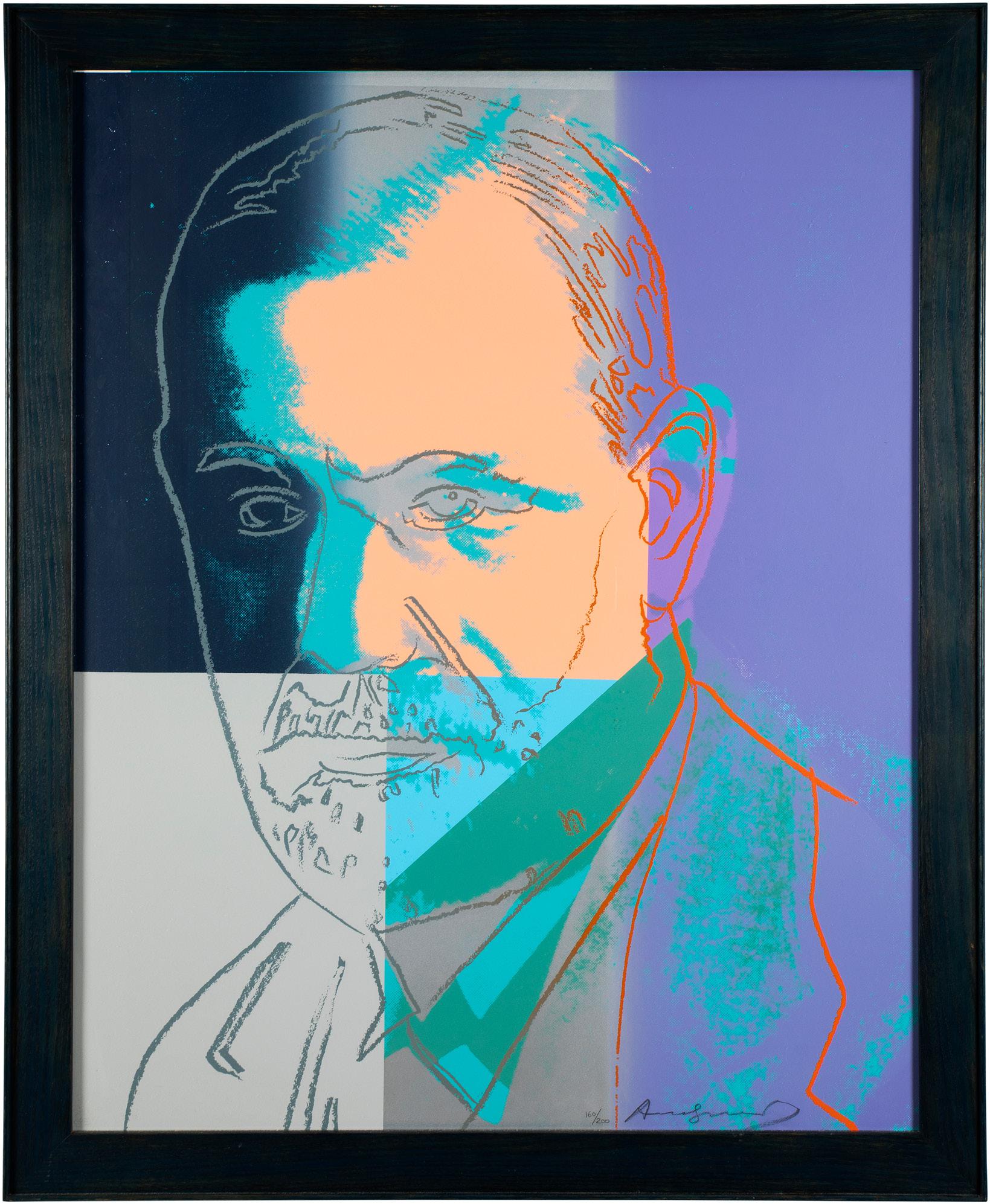
286 ANDY WARHOL (AMERICAN 1928-1987) SIGMUND FREUD, 1980 (F. & S. II. 235) 160/200, signed and numbered in pencil (lower right), from Ten Portraits of Jews from the Twentieth Century, on Lenox Museum Board, with the blindstamp of the printer, Rupert Jasen Smith, copublished by Ronald Feldman Fine Arts, New York and Jonathan A Editions, Tel Aviv and with artists’s copyright inkstamp (to reverse) 102cm x 81.3cm (40 1/8in x 32in) £15,000-25,000
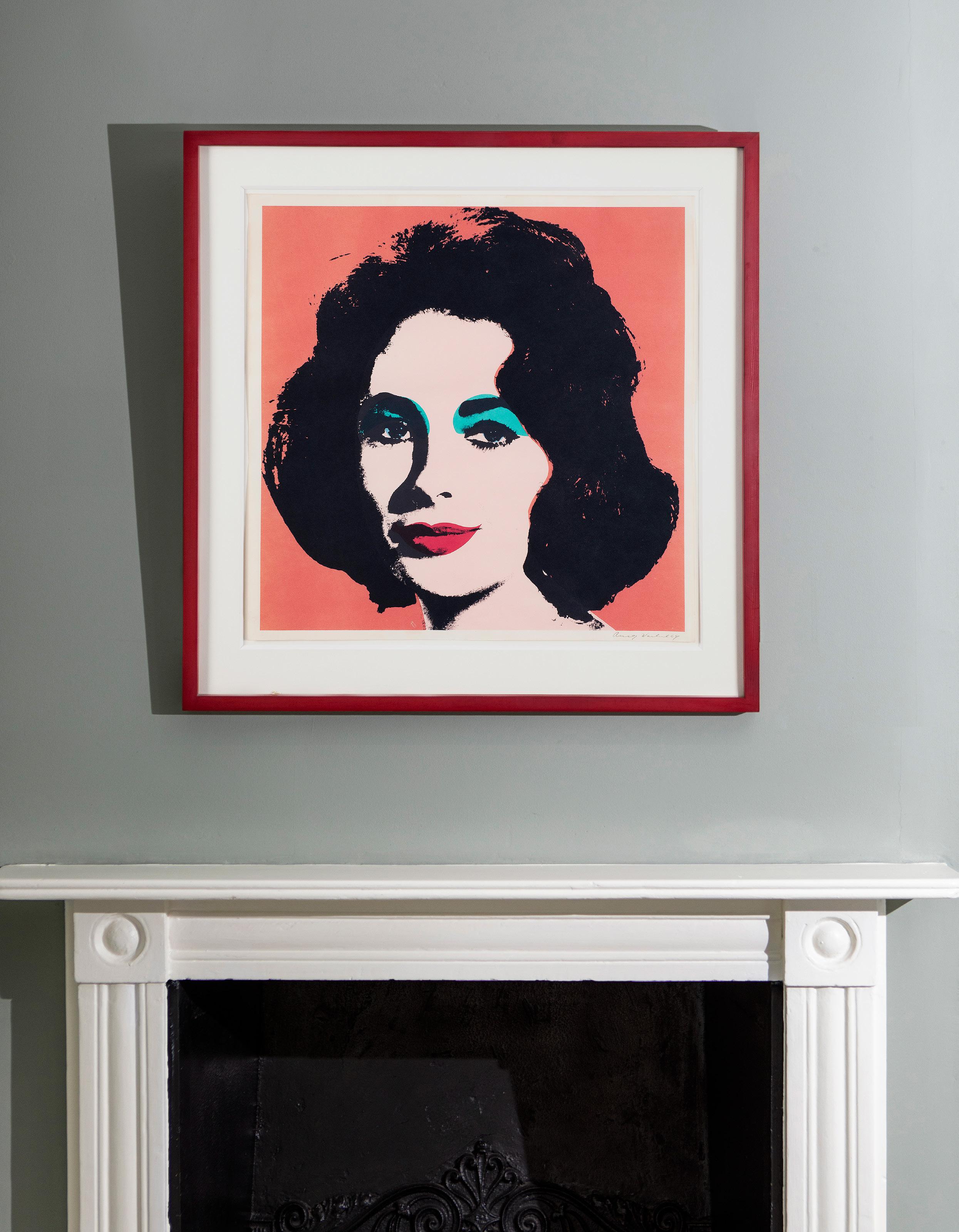
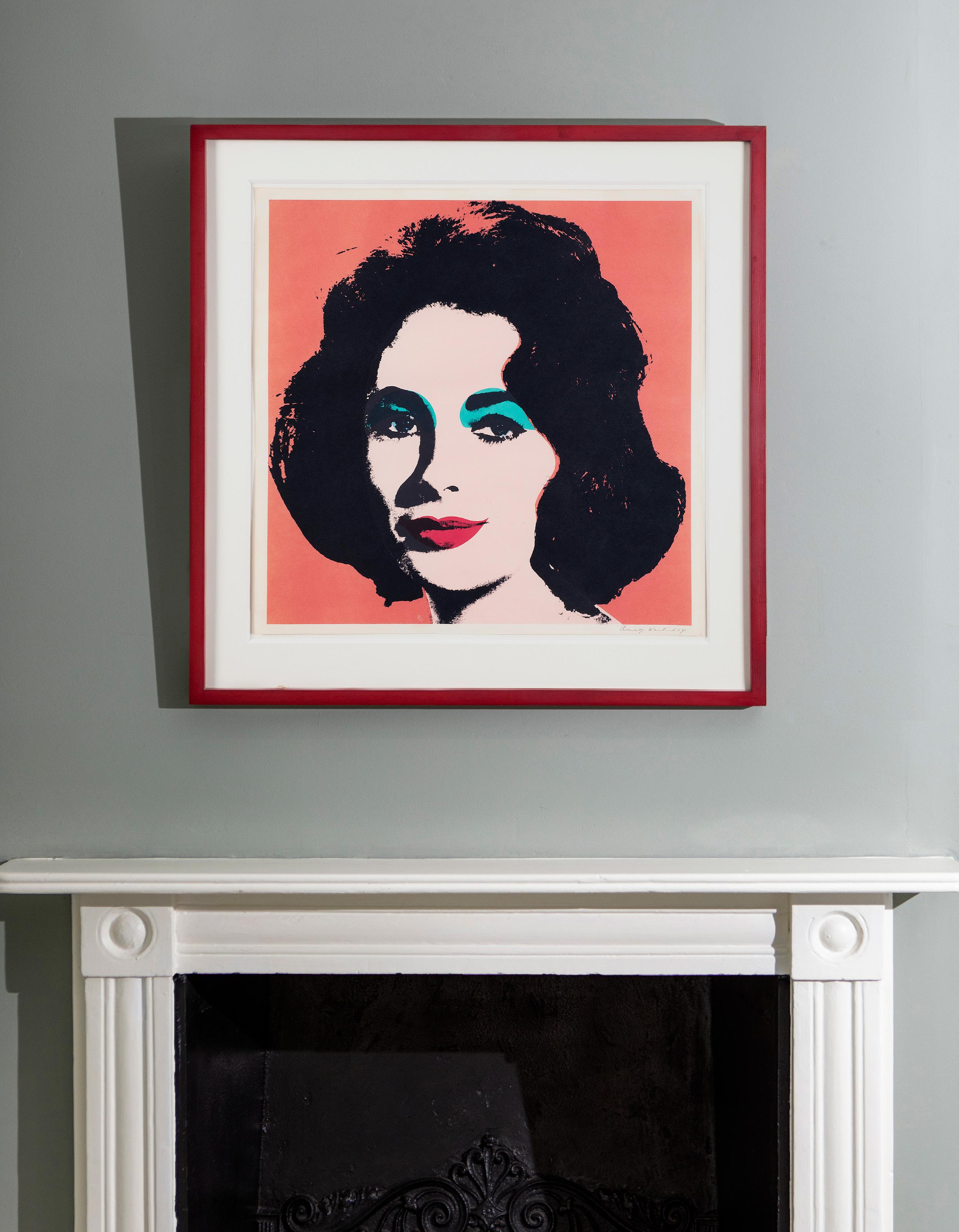
287 ANDY WARHOL (AMERICAN 1928-1987) LIZ, 1964 (F. & S. II. 7) signed and dated in ball-point pen (lower right), edition of approximately 300, printed by Total Color, published by Leo Castelli Gallery, New York, offset lithograph printed in colours the sheet 58.7cm x 58.7cm (23 1/8in x 23 1/8in) £25,000-35,000 194
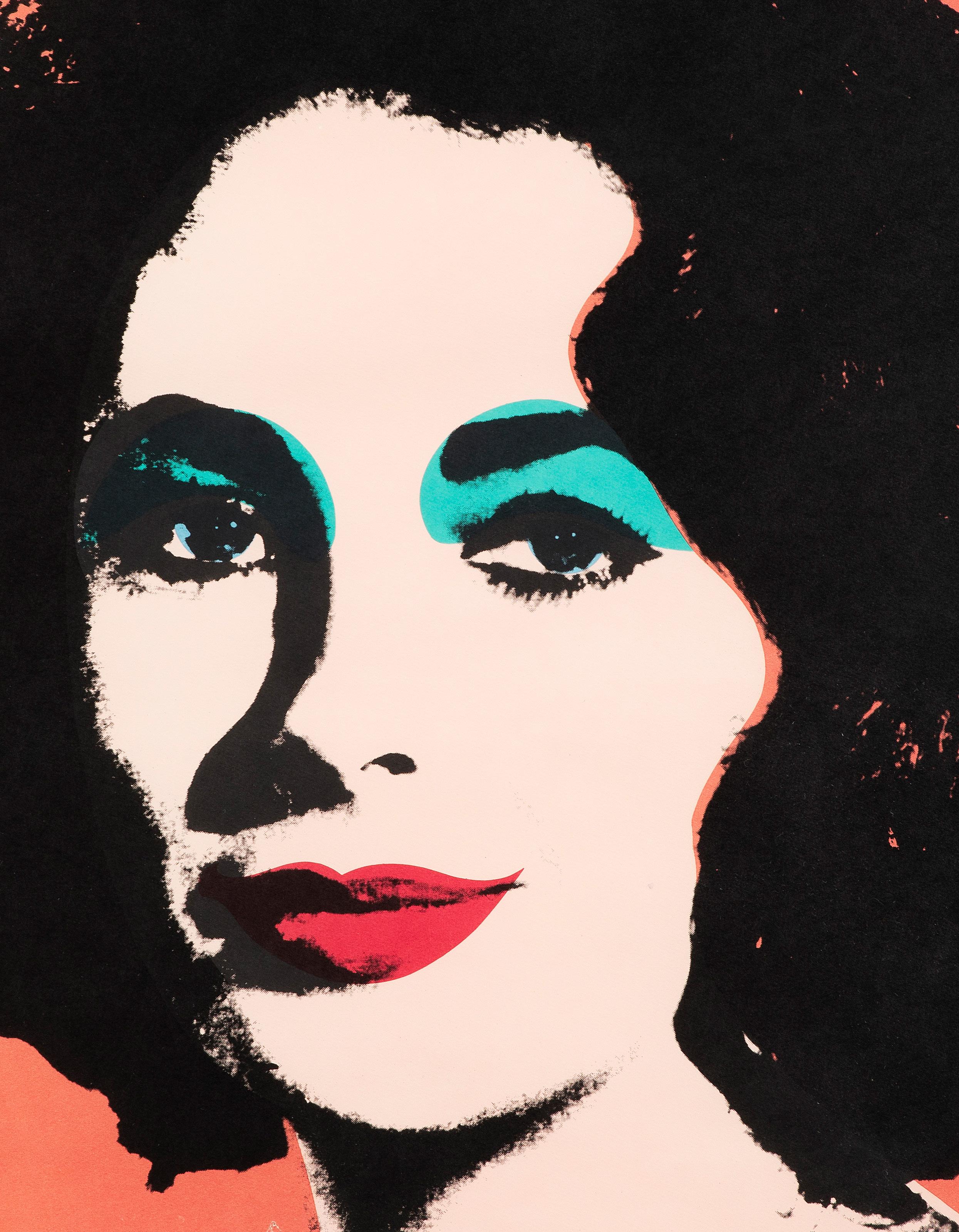
“It would be very glamorous to be reincarnated as a great big ring on Liz Taylor’s finger.”
Andy Warhol
195
JONES
1937-) LEGS, 1970 signed and numbered ‘119’ in ink (on label to reverse), published for xartcollection, vacuumformed acrylic and cellulose in black and white 63cm high, 35.5cm wide (24 4/5in high, 14in wide) £1,500-2,000
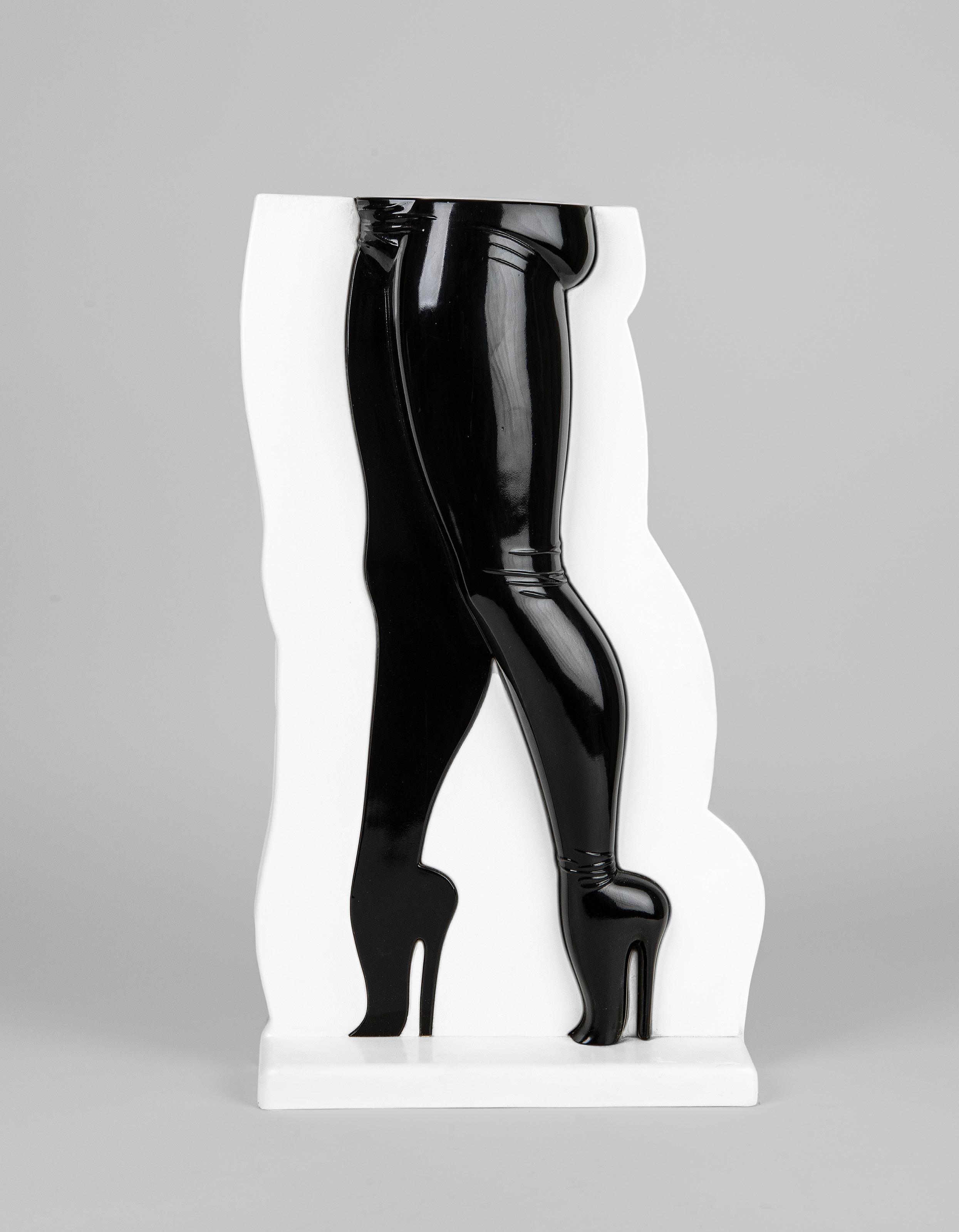
288 § ALLEN
(BRITISH
196 Other fees apply in addition to the hammer price: see the ‘Buyer’s Guide’ section on page 6
DAHN (GERMAN 1954-) TAXI, 1986 signed and dated
canvas
spray paint and
A pioneer of ‘Bad Painting’, and co-founder of the significant Mülheimer Freiheit group, Walter Dahn developed a style of painting. This questioned the idea of the medium in his simplifications and appropriation of slogans, influencing a generation of artists known as the Neue Wilde (New Fauves) movement in 1970s and 1980s Germany.
‘We were all people who came from simple or middle-class backgrounds. The wild is also a large part of the attitude at that moment’ noted Dahn. The punk movement was an important influence for him and those painters around him. Indeed, Dahn explained ‘For us, like the punk musicians, it was about creating images that we wanted to see but didn’t exist’.
With its broad brushstrokes, bright intense colours and slogan Taxi evokes punk attitudes and opposition to the avant-garde movements of minimalism and conceptual art that had been so pre-dominant. However it still manages to poke fun at itself and the movement it espouses in its simplistic pop forms.
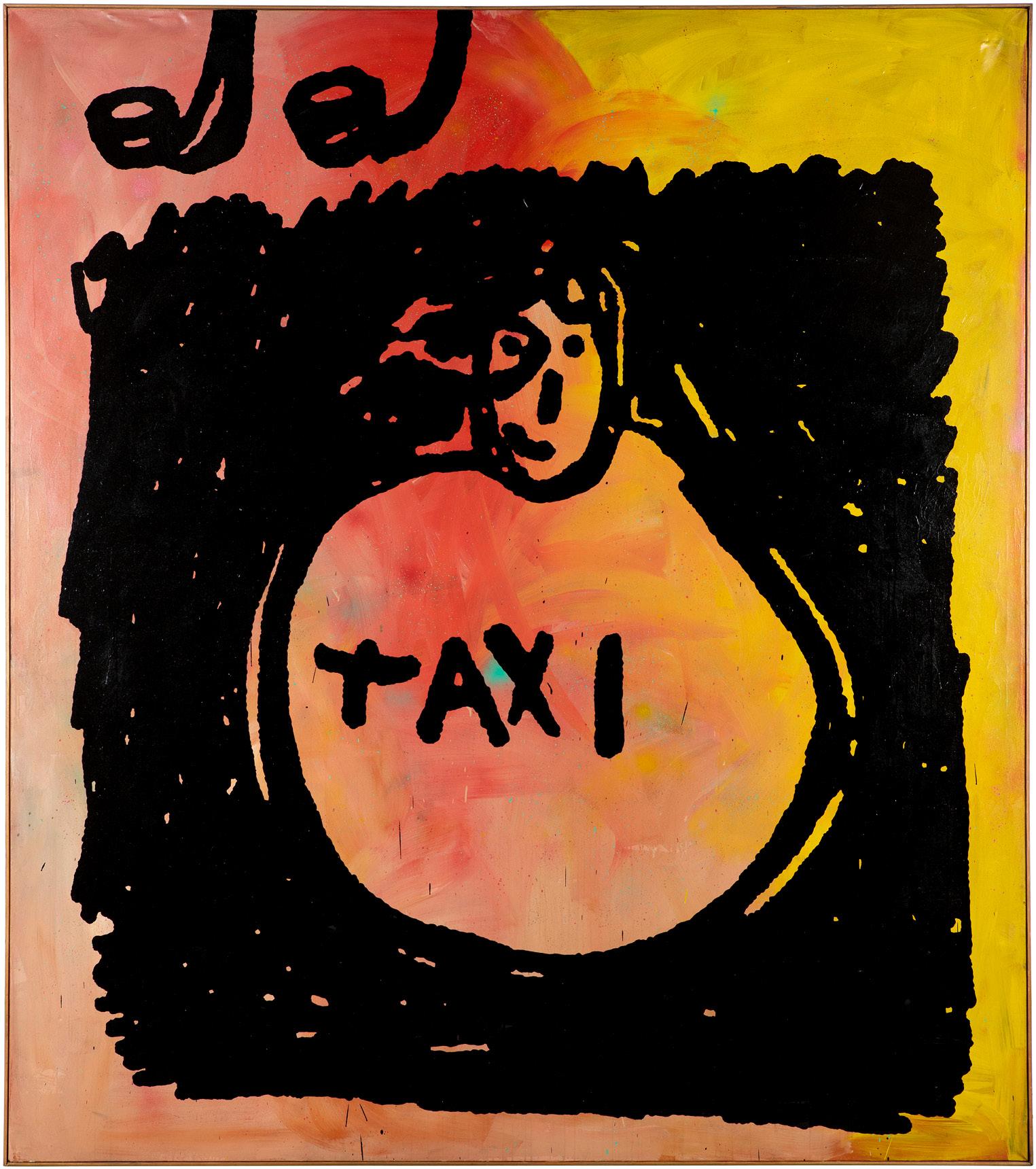
289 § WALTER
(to reverse),
acrylic on
240cm x 209.5cm (94 1/2in x 82 1/2in) Provenance: Private Collection, London, since 1992. £8,000-12,000
197
AKIKO HIRAI
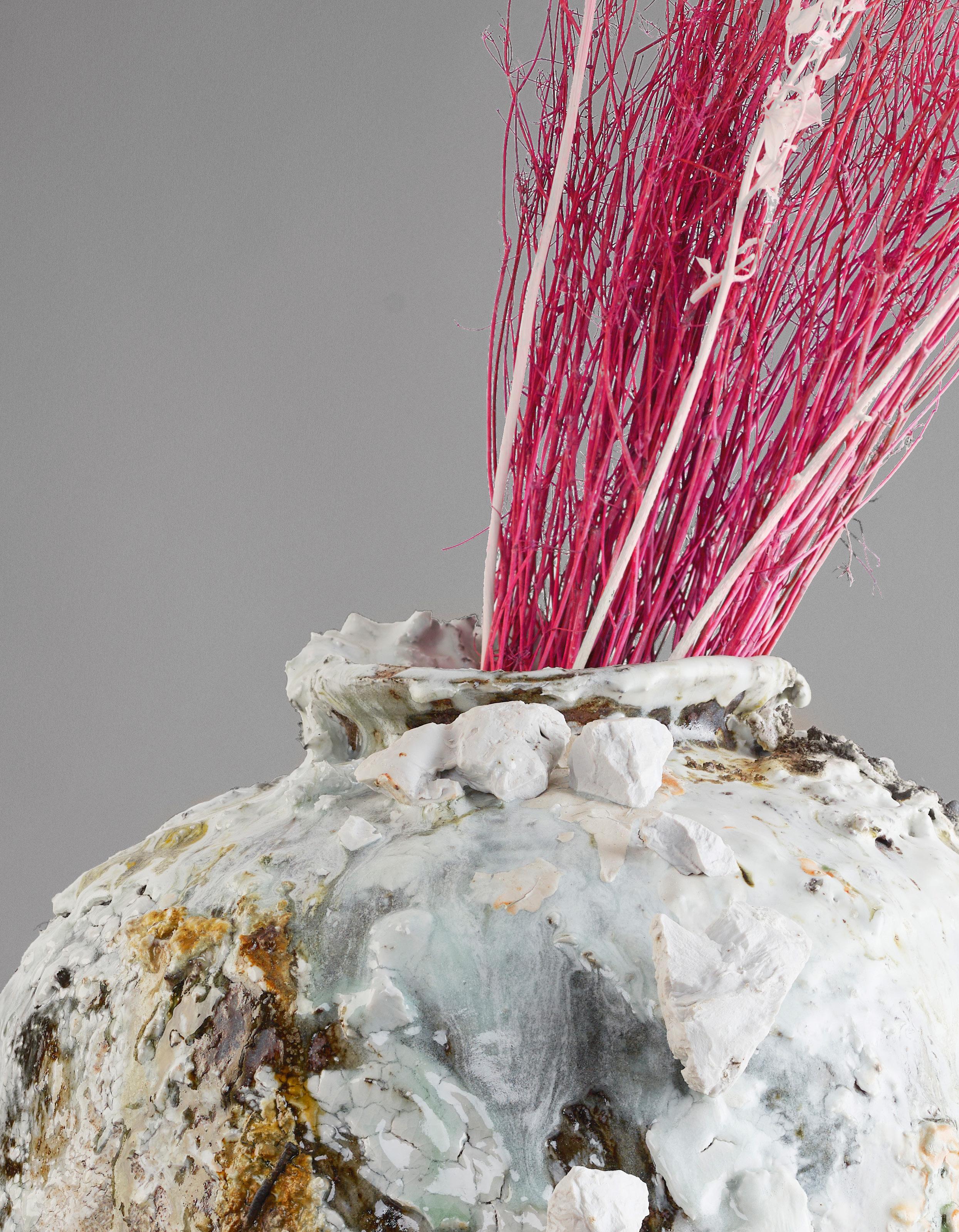
Lot 299 [detail]
290 §
AKIKO HIRAI (JAPANESE 1970-)
LARGE FOOTED CHARGER
faint artist’s mark, stoneware with kintsugi 7cm high, 42.5cm diameter (2 3/4in high, 16 3/4in diameter) £700-1,000
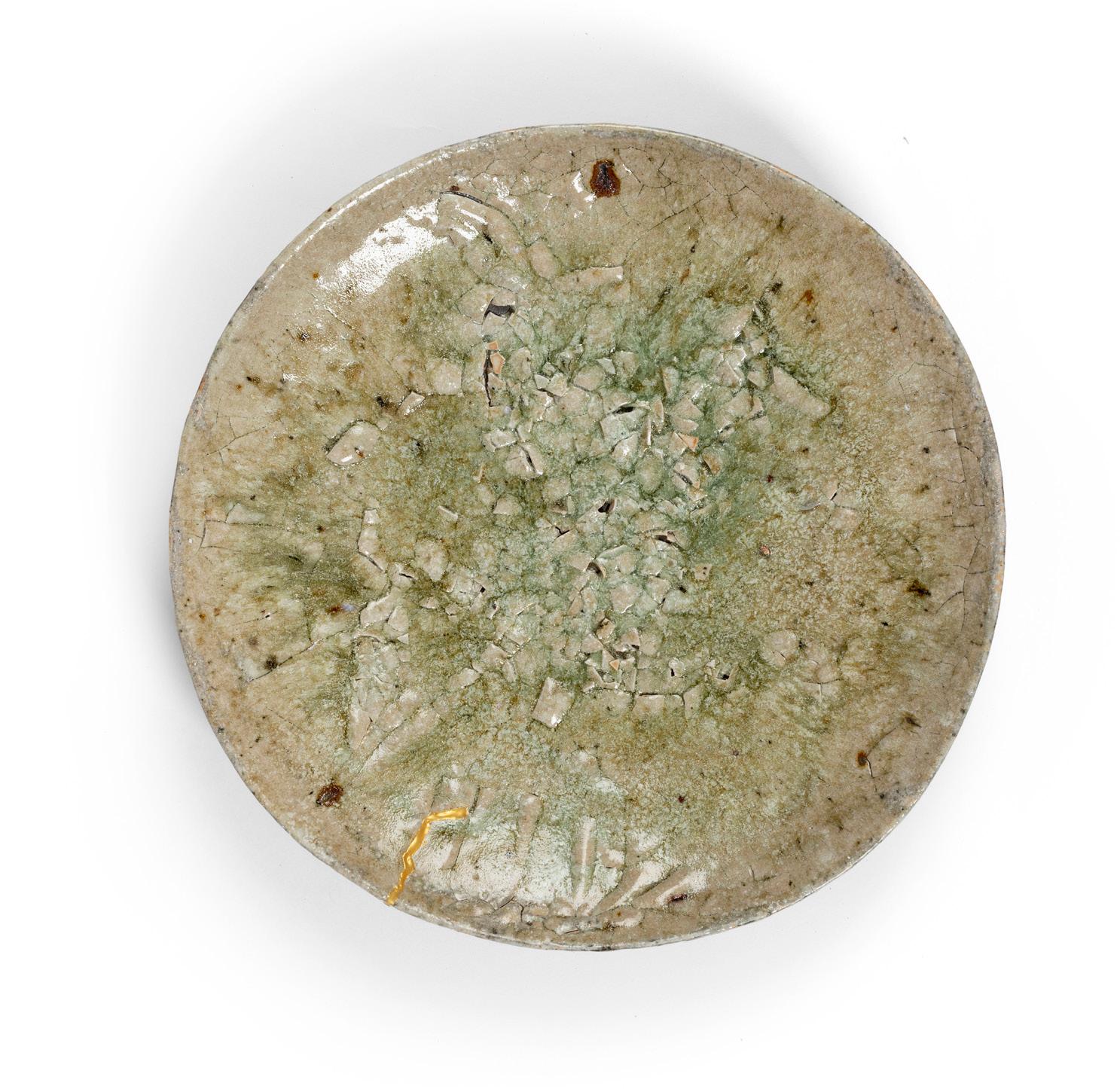
Known for her exploration of the contrast between rough clay and smooth, translucent glaze, Akiko Hirai is one of the most prominent contemporary ceramicists currently working. Born in Japan in March 1970, Hirai originally studied cognitive psychology before she was inspired to take up ceramics following her discovery of the Korean moon jars in the British Museum. She relocated to London in 1999 and enrolled at University of Westminster in 2000 and then Central St. Martins in 2002 to study ceramics. From 2004 until 2015, she taught ceramics at the Kensington & Chelsea College in London, where she was the head of the ceramics department for the final three years.
AKIKO HIRAI (JAPANESE 1970-)
MOON JAR, CIRCA 2005 stoneware with kintsugi, splashed brown, green and ash glazes 49.5cm high (19 1/2in high) £1,000-1,500
Hirai describes her work as a response to human senses, with each piece being made up of unique deep textures, cool colours, and simple forms to allow the viewer to understand her works in their own terms. The way in which she blends Japanese and British pottery techniques results in her celebrated, asymmetrical natural forms that are distinctly contemporary and evoke the inspiration she finds in her urban environment along with everyday scenery. Motivated by the excitement of turning her visualised ideas into reality, she embraces imperfection, irregularity, and chance in line with the Japanese tradition of Shibui that refers to an aesthetic of simple, and unobtrusive beauty. The resulting ceramics are at once subtle and quiet yet surprising.
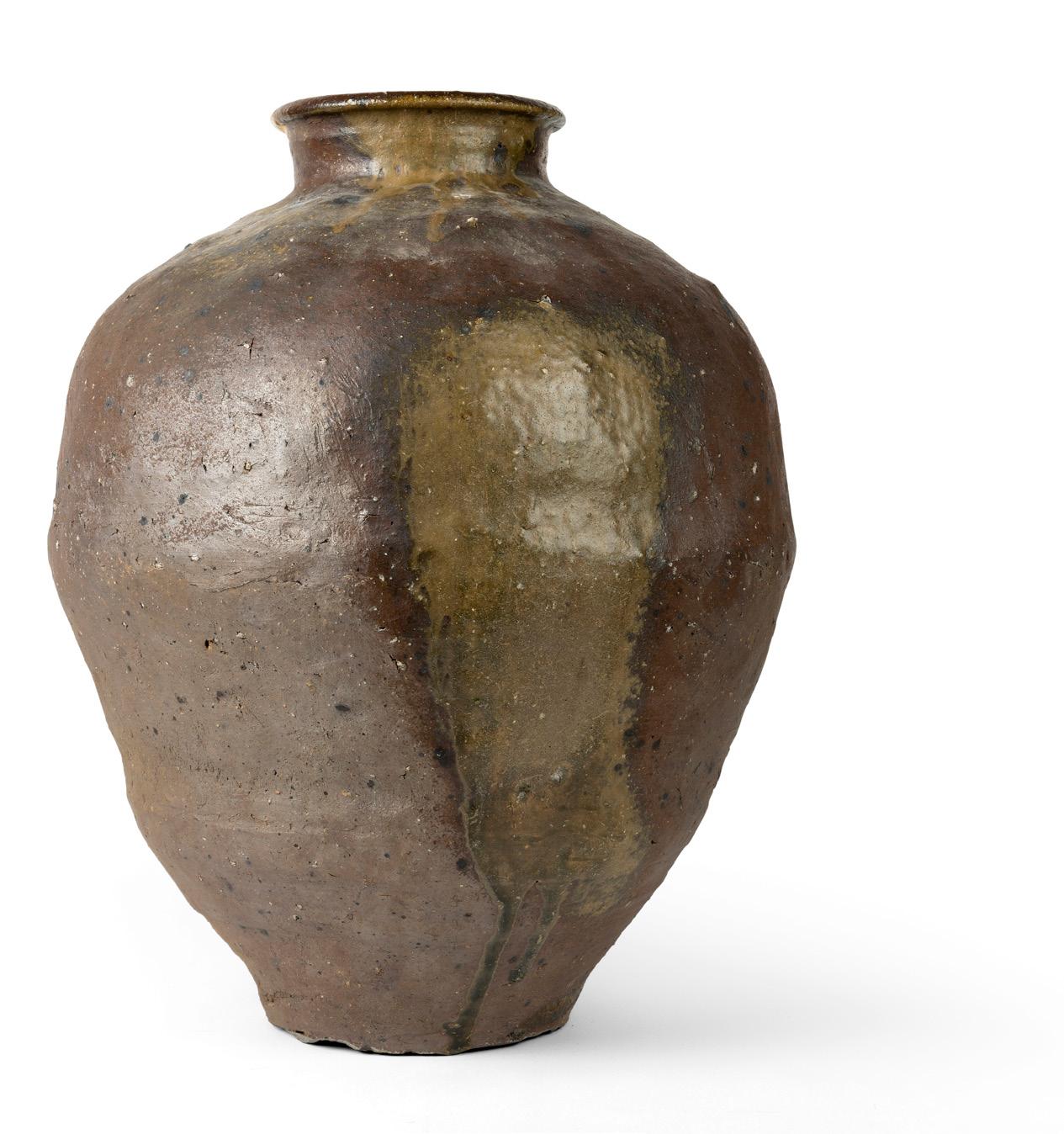
199 Other fees apply in addition to the hammer price: see the ‘Buyer’s Guide’ section on page 6
292 §
AKIKO HIRAI (JAPANESE 1970-)
TEA BOWL
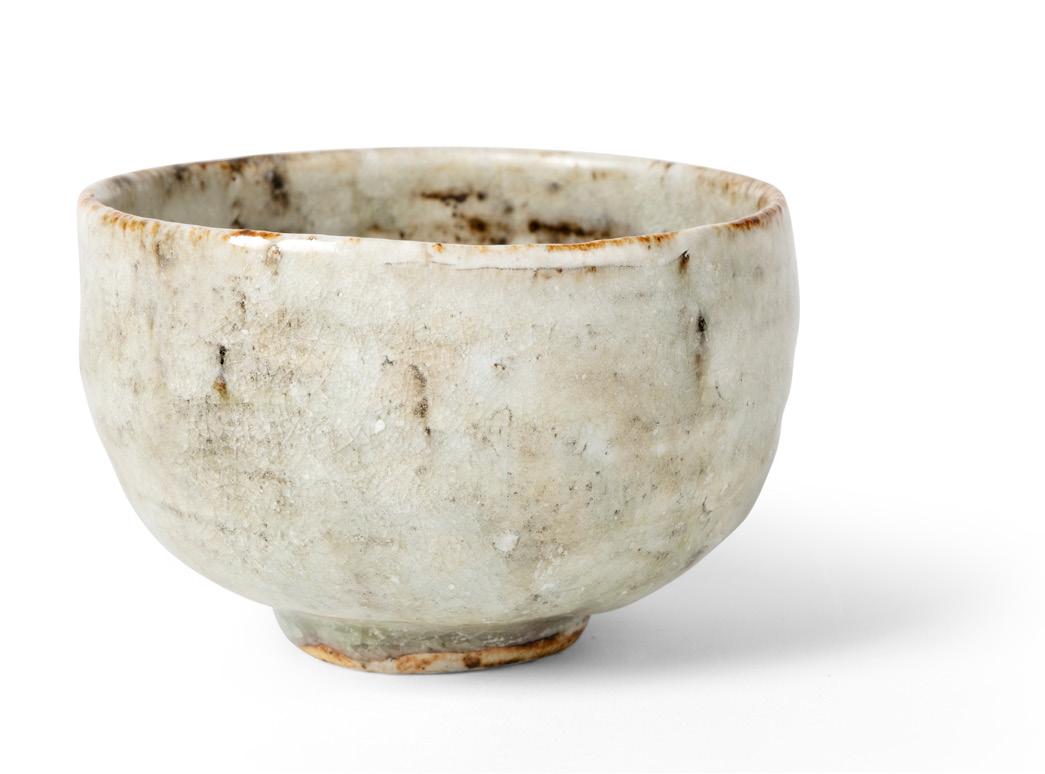
painted artist’s mark, stoneware
7.5cm high, 12cm diameter (3in high, 4 3/4in diameter) £300-500
293 §
AKIKO HIRAI (JAPANESE 1970-)
SAKE BOTTLE
painted artist’s mark, stoneware, rugged porcelain deposits 15.5cm high (6 1/8in high) £500-700
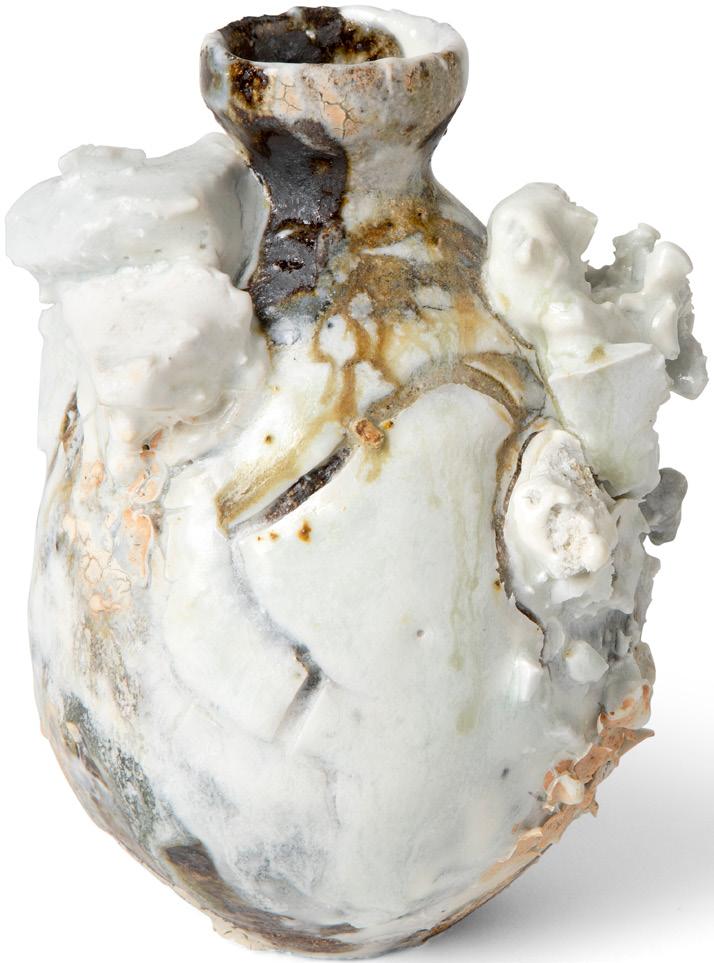
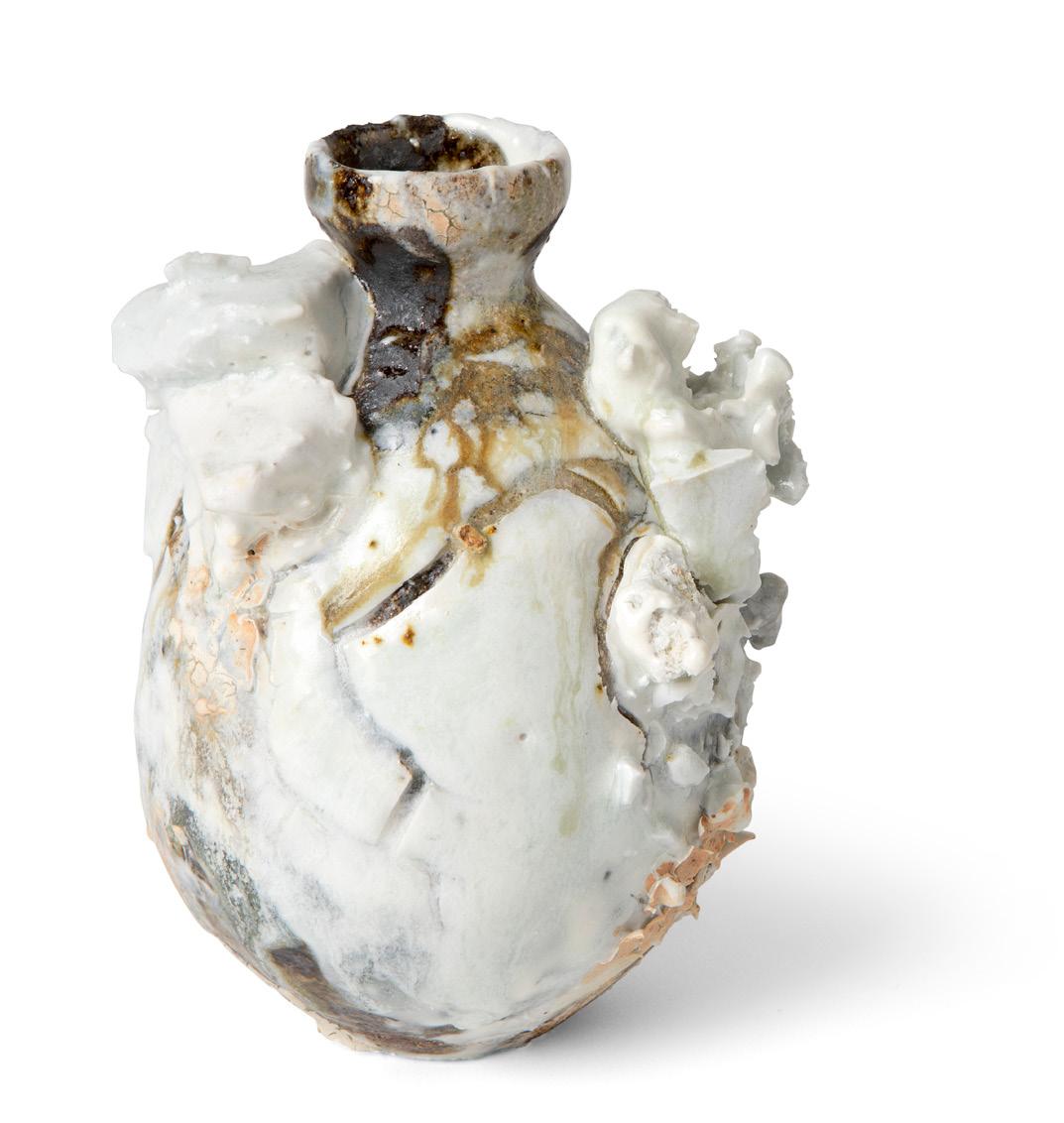
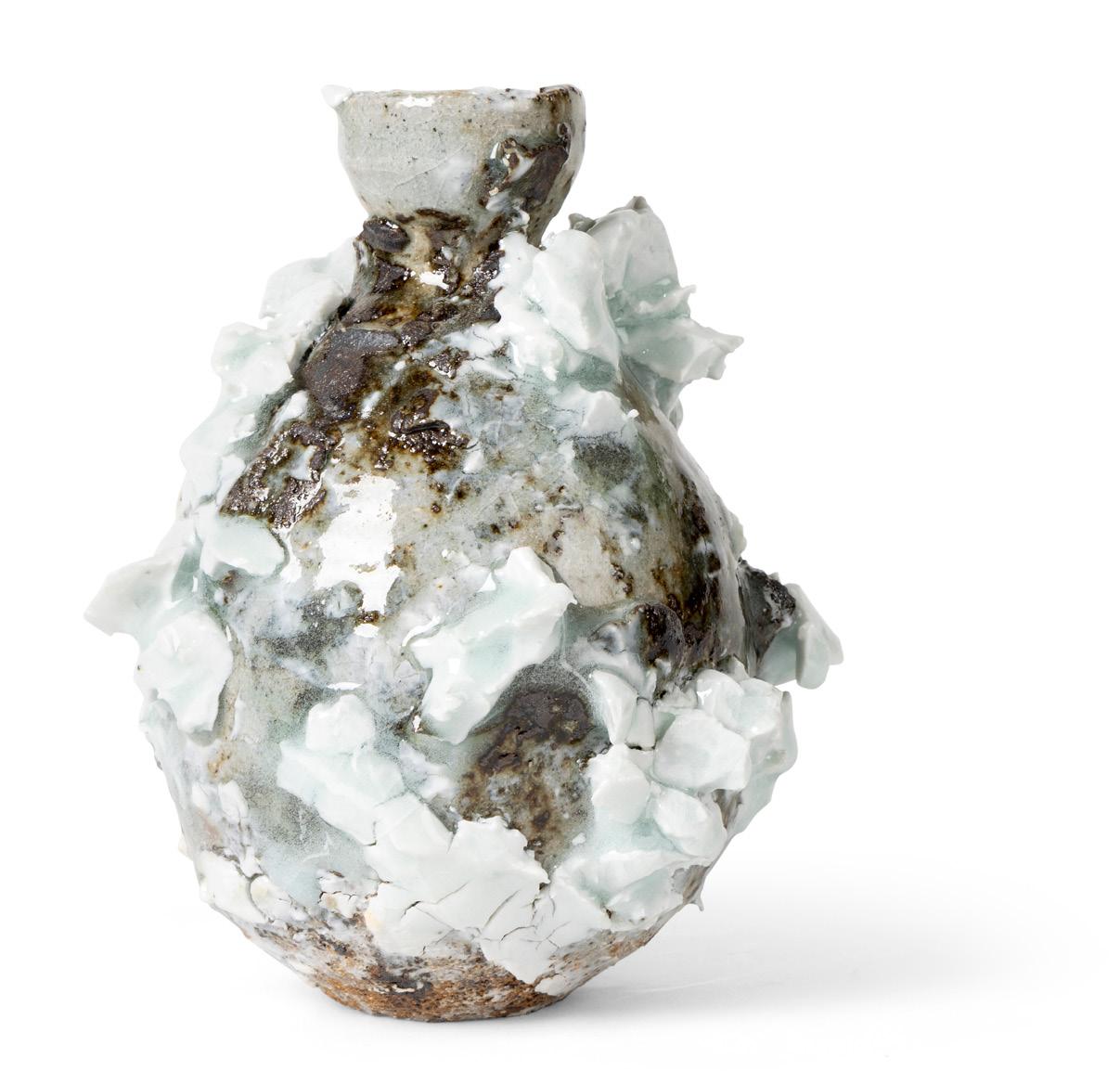
294 §
AKIKO HIRAI (JAPANESE 1970-)
SAKE BOTTLE
painted artist’s mark, stoneware with porcelain deposits
15cm high (5 7/8in high) £500-700
AKIKO HIRAI (JAPANESE 1970-)
‘DRY KOHIKI’ TEAPOT stoneware, twisted willow handle 25.3cm high (10in high) including handle, 14.5cm wide (5 3/4in wide)
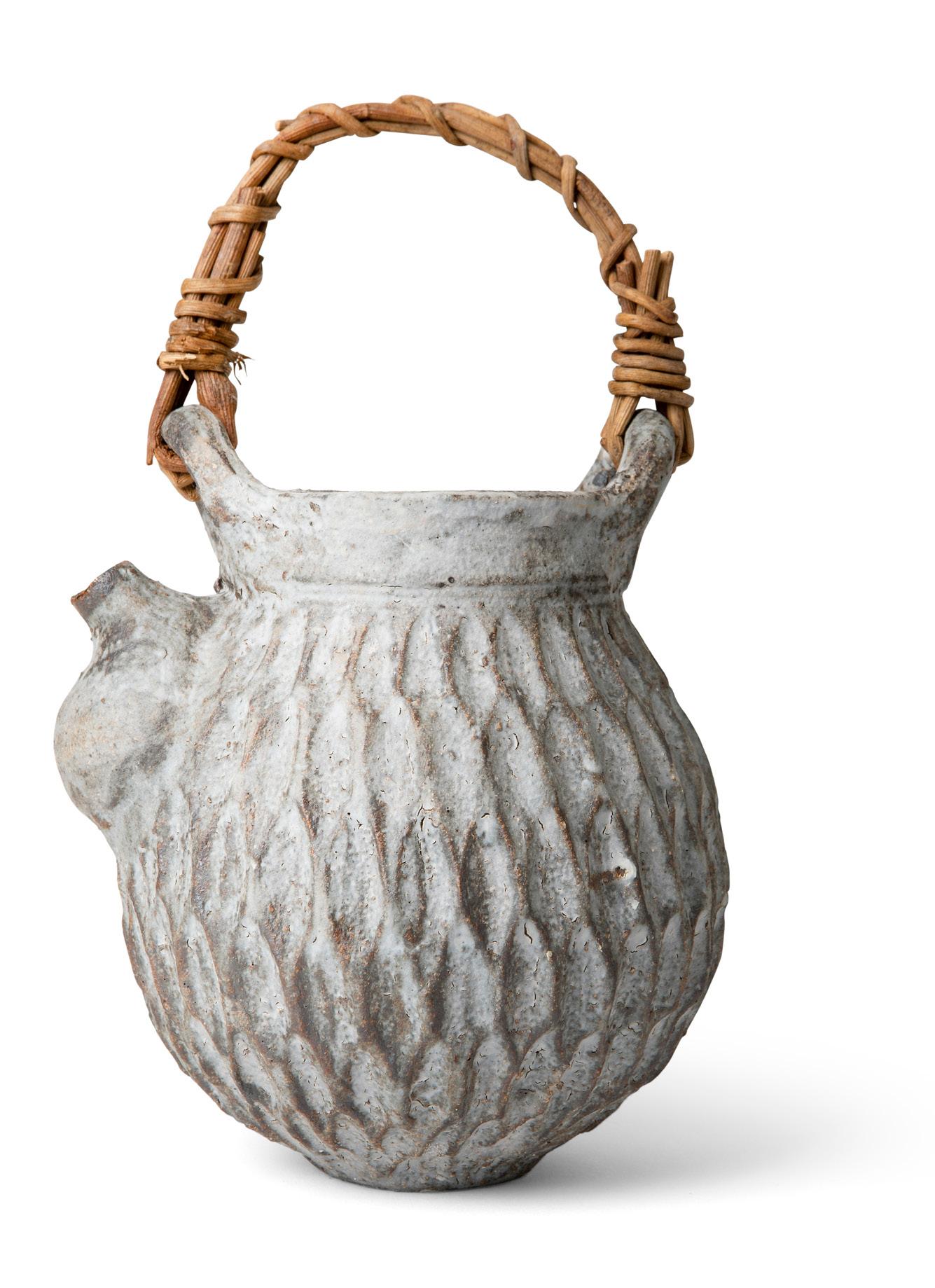
200
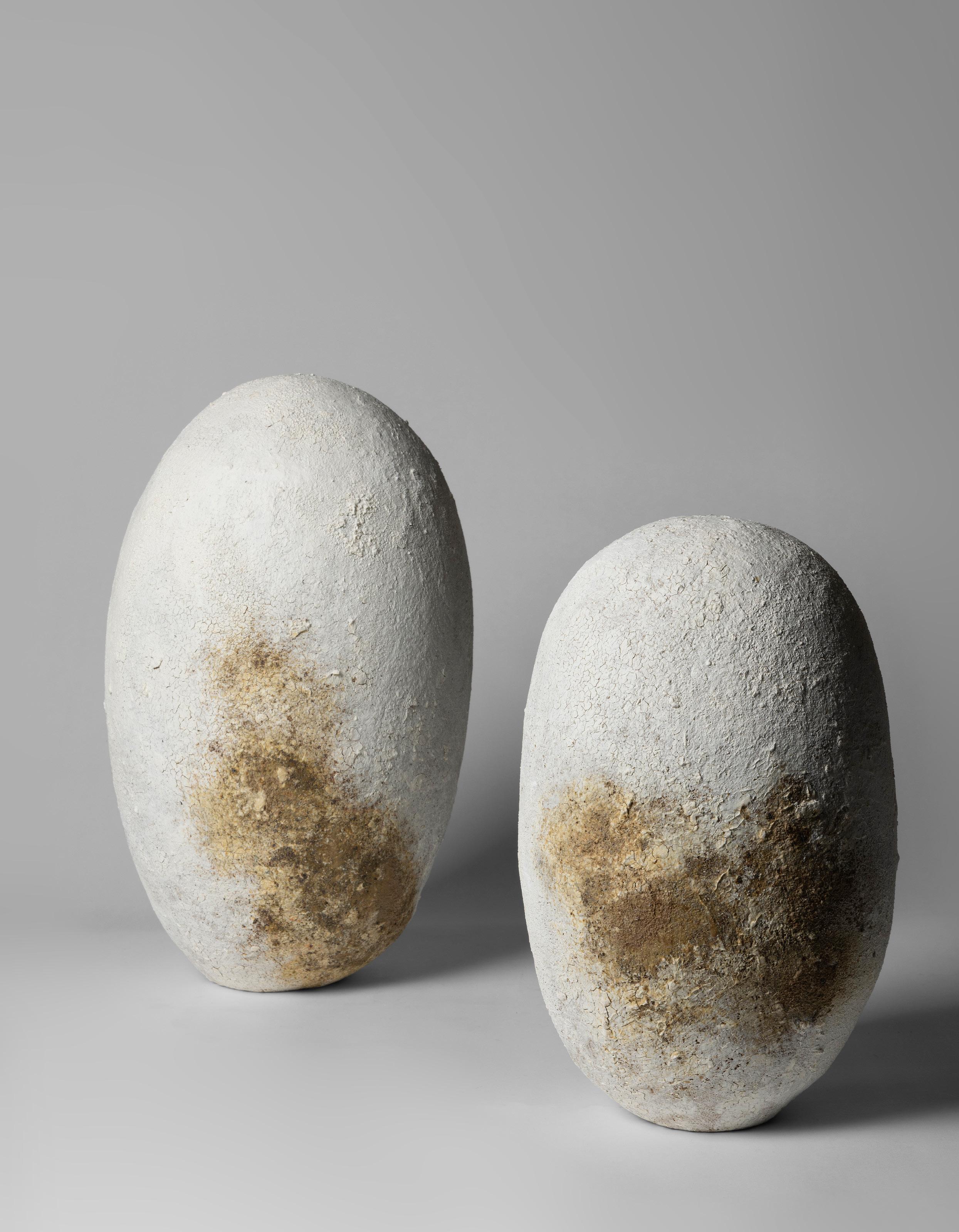
296 § AKIKO HIRAI (JAPANESE 1970-) TWO ‘COCOON’ VESSELS each painted artist’s mark, cracked and crawling white slip (2) 43cm high and 36cm high (16 7/8in high and 14 1/8in high) £2,000-3,000
“You imagine the shape first and may even make a drawing of it, but once you’re working with the clay it just happens” Akiko Hirai
201 Other fees apply in addition to the hammer price: see the ‘Buyer’s Guide’ section on page 6
AKIKO HIRAI (JAPANESE 1970-) ‘POPPY SEED’ VASE
painted artist’s mark, stoneware, dry white slip with cracked surface
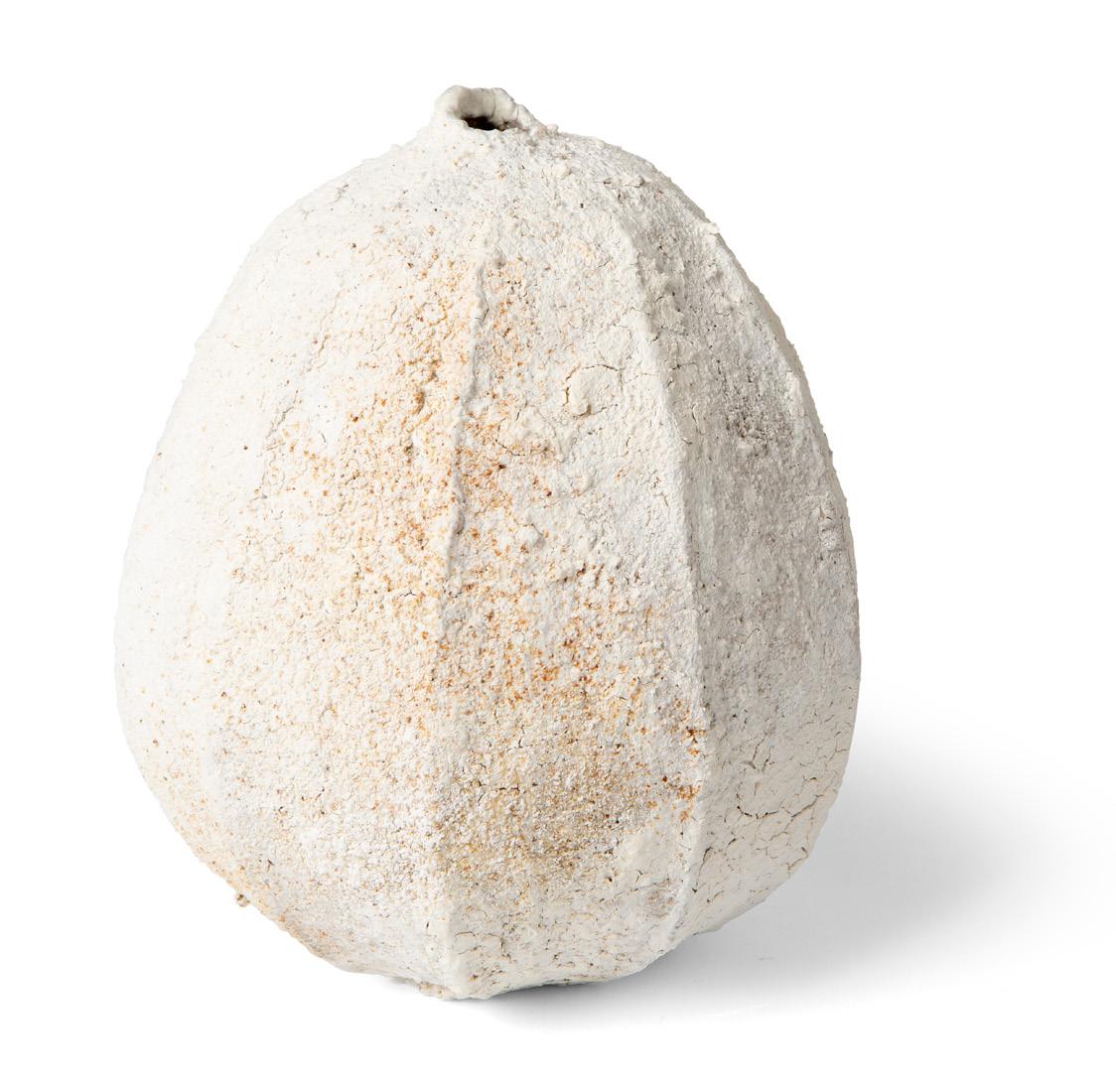
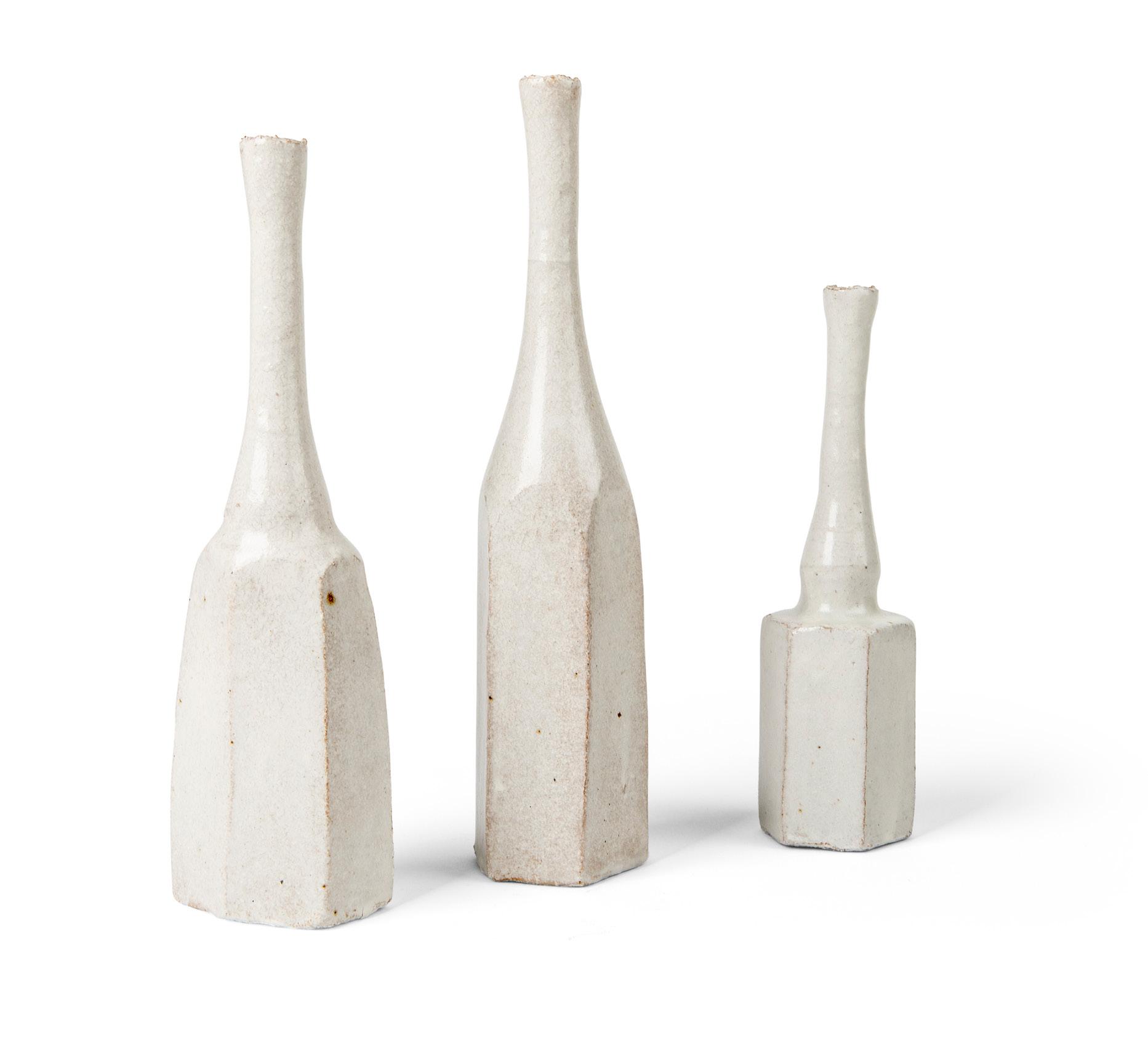
16.5cm high, 14cm wide (6.5in high, 5 1/2in wide) £500-700
HIRAI (JAPANESE 1970-)

298 § AKIKO
THREE ‘MORANDI’ BOTTLES 297 §
202 Other fees apply in addition to the hammer price: see the ‘Buyer’s Guide’ section on page 6
AKIKO HIRAI (JAPANESE
LARGE MOON JAR,
artist’s mark, grogged stoneware, rugged and cracked porcelain deposits with running ash glaze
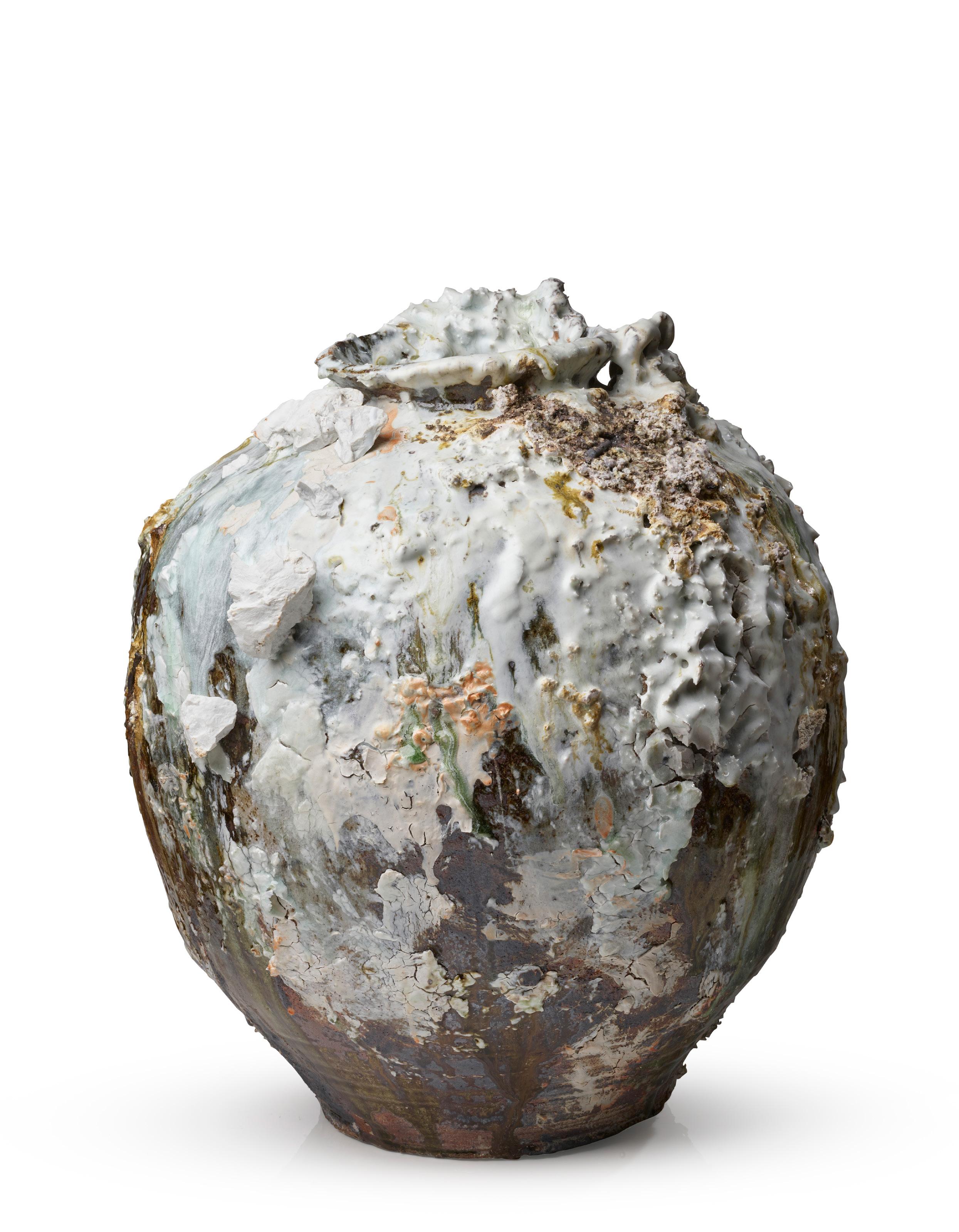
high, 43cm diameter (18 7/8in high, 16 7/8in diameter)
Scottish Gallery, Edinburgh, Akiko Hirai: In Praise of Shadows, 2017.
299 §
1970-)
2017 painted
48cm
Provenance: The
£5,000-7,000 203
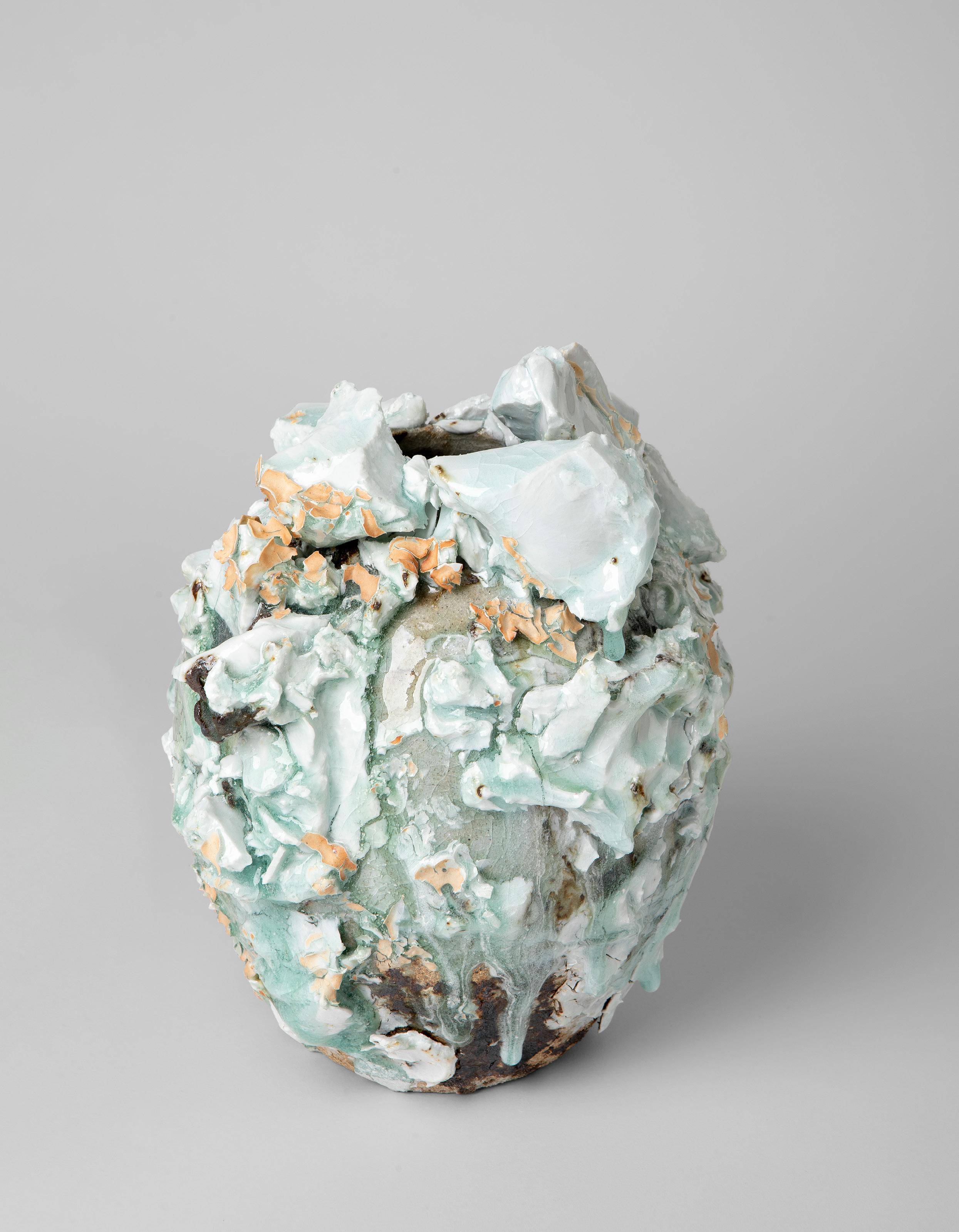
300 § AKIKO HIRAI (JAPANESE 1970-) MOON JAR painted artist’s mark, stoneware with porcelain deposits 26.5cm high (10 1/2in high) £2,500-3,500 204 Other fees apply in addition to the hammer price: see the ‘Buyer’s Guide’ section on page 6
HIRAI (JAPANESE 1970-)
BOTTLES
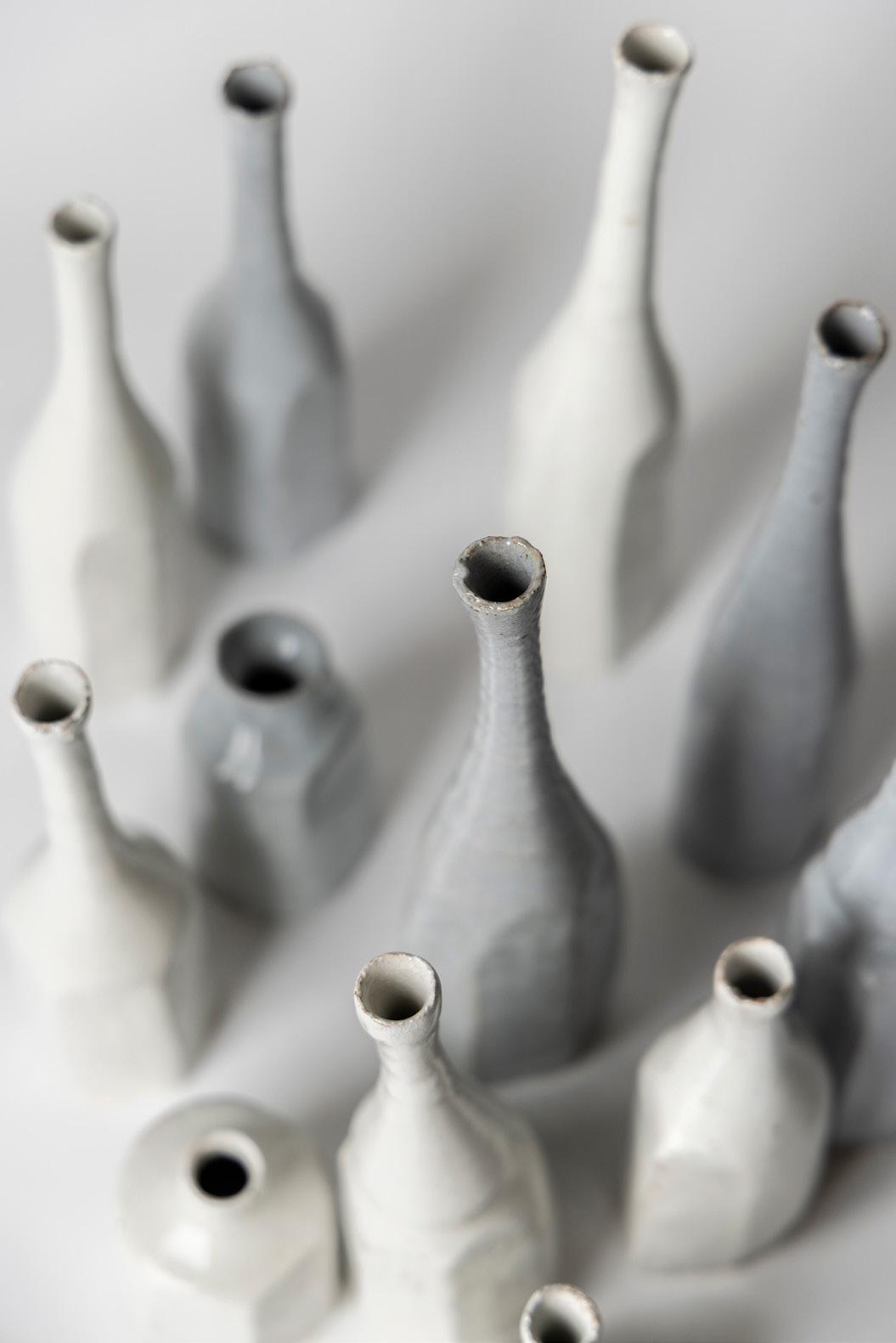
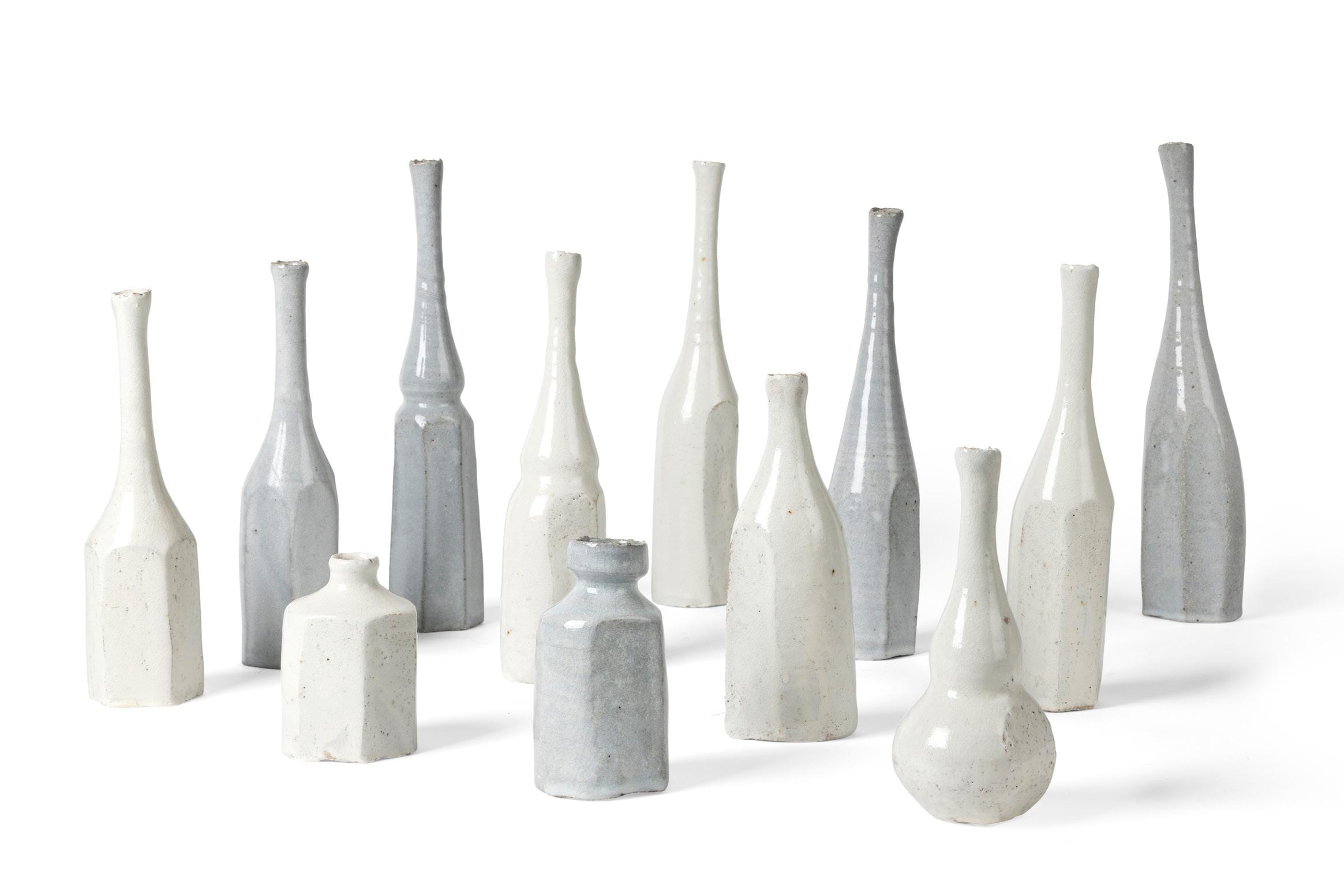
301 § AKIKO
12 ‘MORANDI’
each incised artist’s initials, stoneware, matte white and gray glazes (12) tallest: 28cm high (11in high); smallest 9cm high (3 1/2in high) £2,000-3,000 205
MAGDALENE ODUNDO
DAME MAGDALENE ODUNDO O.B.E. (KENYAN 1950-)
BOWL, CIRCA 1981-2
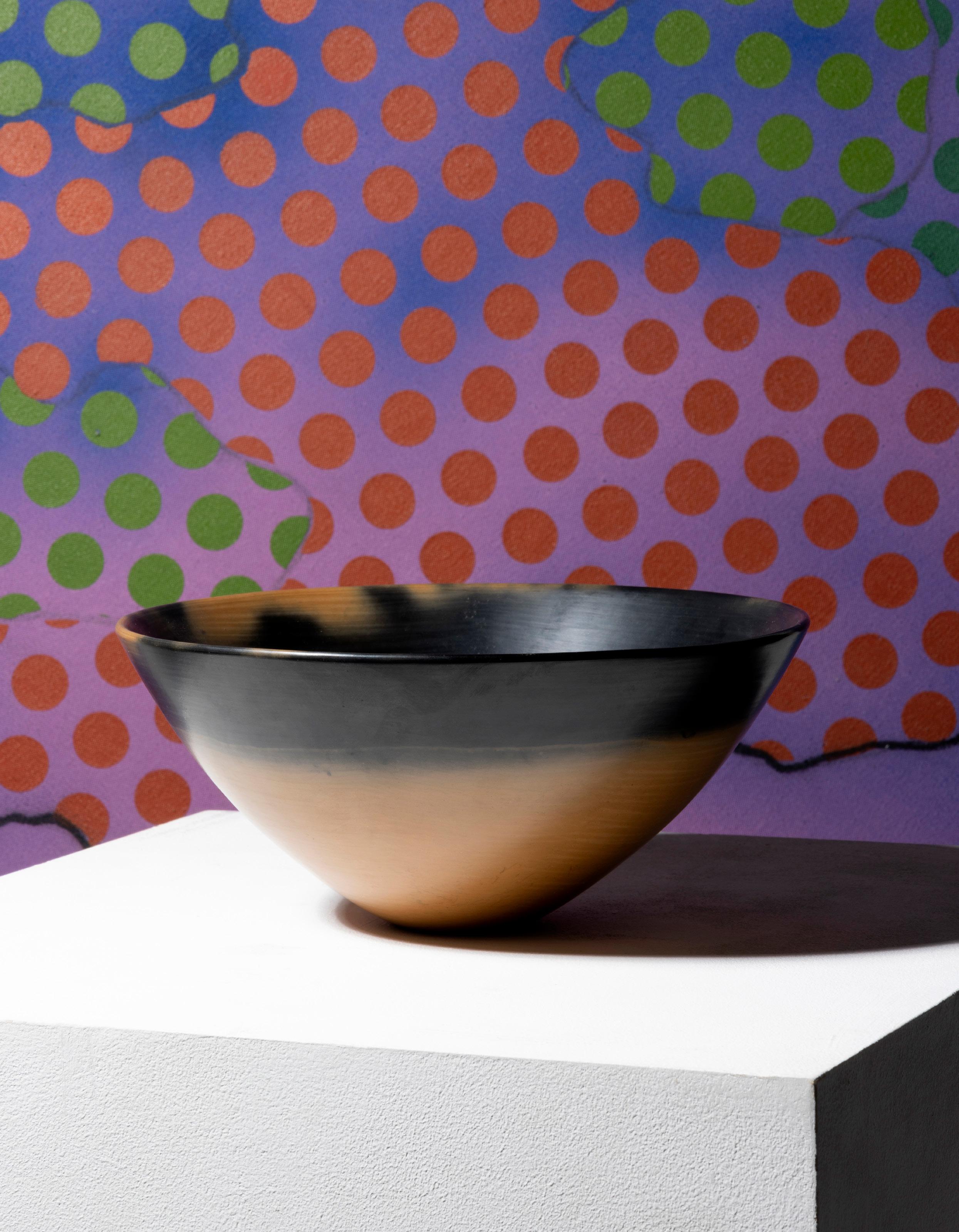
and carbonised terracotta
high, 23.5cm diameter (4in high, 9 1/4in diameter)
Royal College of Art Degree Show, London, 1982; Private Collection, UK, where acquired by the current vendor.
302 §
burnished
10cm
Provenance:
£1,500-2,000 206
MAGDALENE
UNTITLED,
O.B.E.
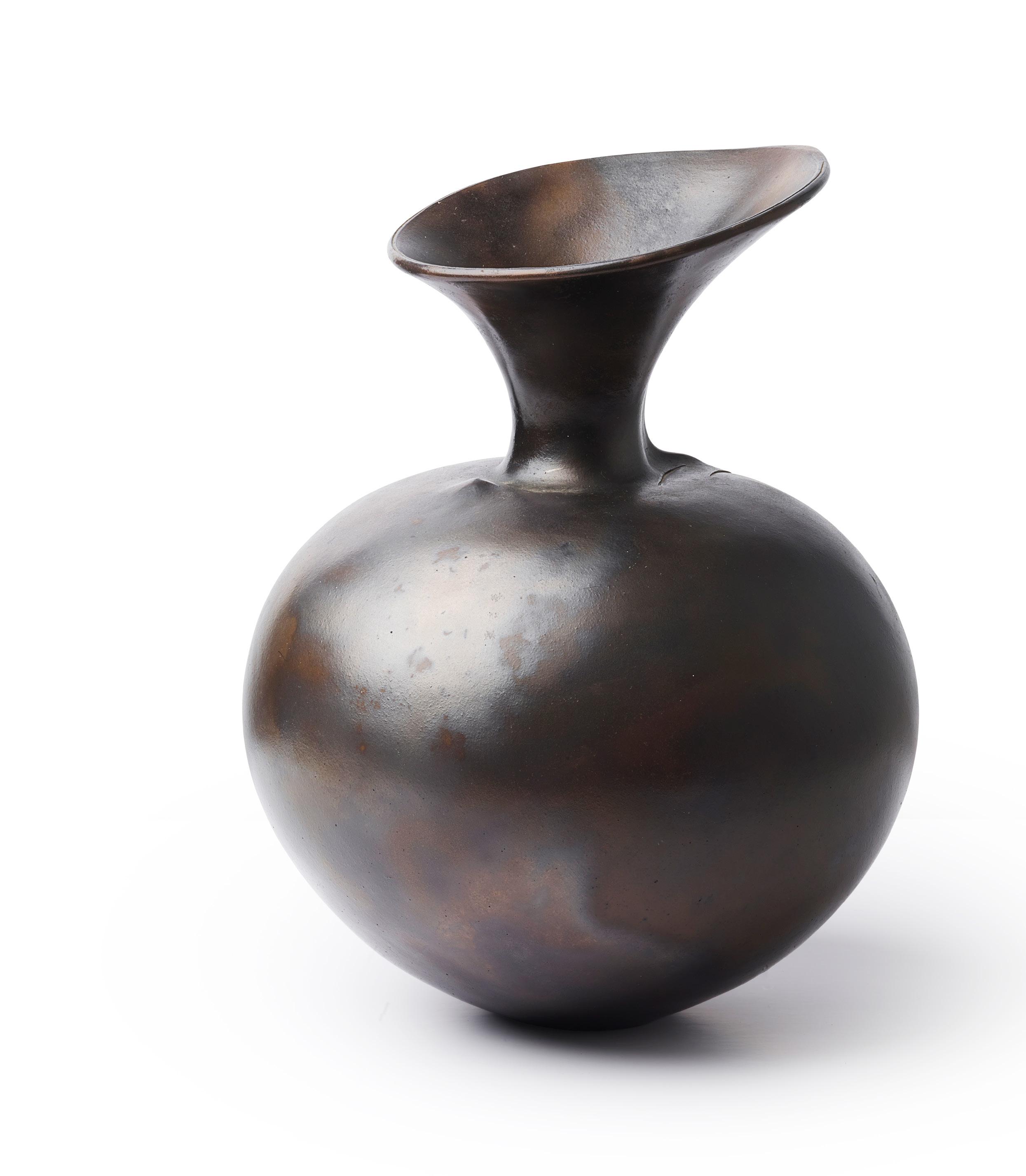
303 § DAME
ODUNDO
(KENYAN 1950-)
VESSEL, 1986 signed and dated ‘ODUNDO 1986’, burnished and carbonised terracotta 27.5cm high, 21.5cm wide (10 7/8in high, 8 1/2in wide) Provenance: Christie’s, London, British Decorative Arts 1860 to the Present Day, 1 March 1996, Lot 497; Private Collection, UK. £10,000-15,000
“ I think very much of the body itself as being a vessel; it contains us as people ”
Magdalene Odundo
Other fees apply in addition to the hammer price: see the ‘Buyer’s Guide’ section on page 6
Contemporary Craft
From ceramics to glass, silversmithing to jewellery, textiles to furniture making, crafts have played a complicated and multifaceted role in the cultural, social and art historical history of contemporary Britain that has sometimes been overlooked. During the last few decades the distinctions between art, design and craft have become increasingly blurred and crafts growing significance was demonstrated over the pandemic as the number of buyers of contemporary craft increased by over 270%, whilst over the last 15 years craft sales in Britain alone have tripled to over £3 billion.
In particular its growing importance is recognised by a younger audience keen to invest in physical disciplines, the artists and their stories. In a world often revolving around the impersonal, craft objects have become a conduit for the imagination in our homes, and there has been a growing transformation of outlook concerned with the importance placed on the integrity of the material and ideas.
We are delighted to present, promote and celebrate a number of works from multiple mediums that demonstrate the breadth, quality and diversity of artists working at the highest level in contemporary craft today. Highlights include Blossom Heart (2005) made from forged mild steel by Junko Mori, a significant and monumental Tornado Swirl (2007) vessel by Ndidi Ekubia in copper and gold leaf, and two remarkable pieces of plastic sculptural jewellery by the socalled ‘Faberge’ of the 21st Century Peter Chang.
Lot 318 [detail]
304 §
LIAM FLYNN (BRITISH 1969-2017)
VESSEL
signed (to base), limed oak 24.5cm high, 24.5cm wide (9 5/8in high, 9 5/8in wide) £600-800
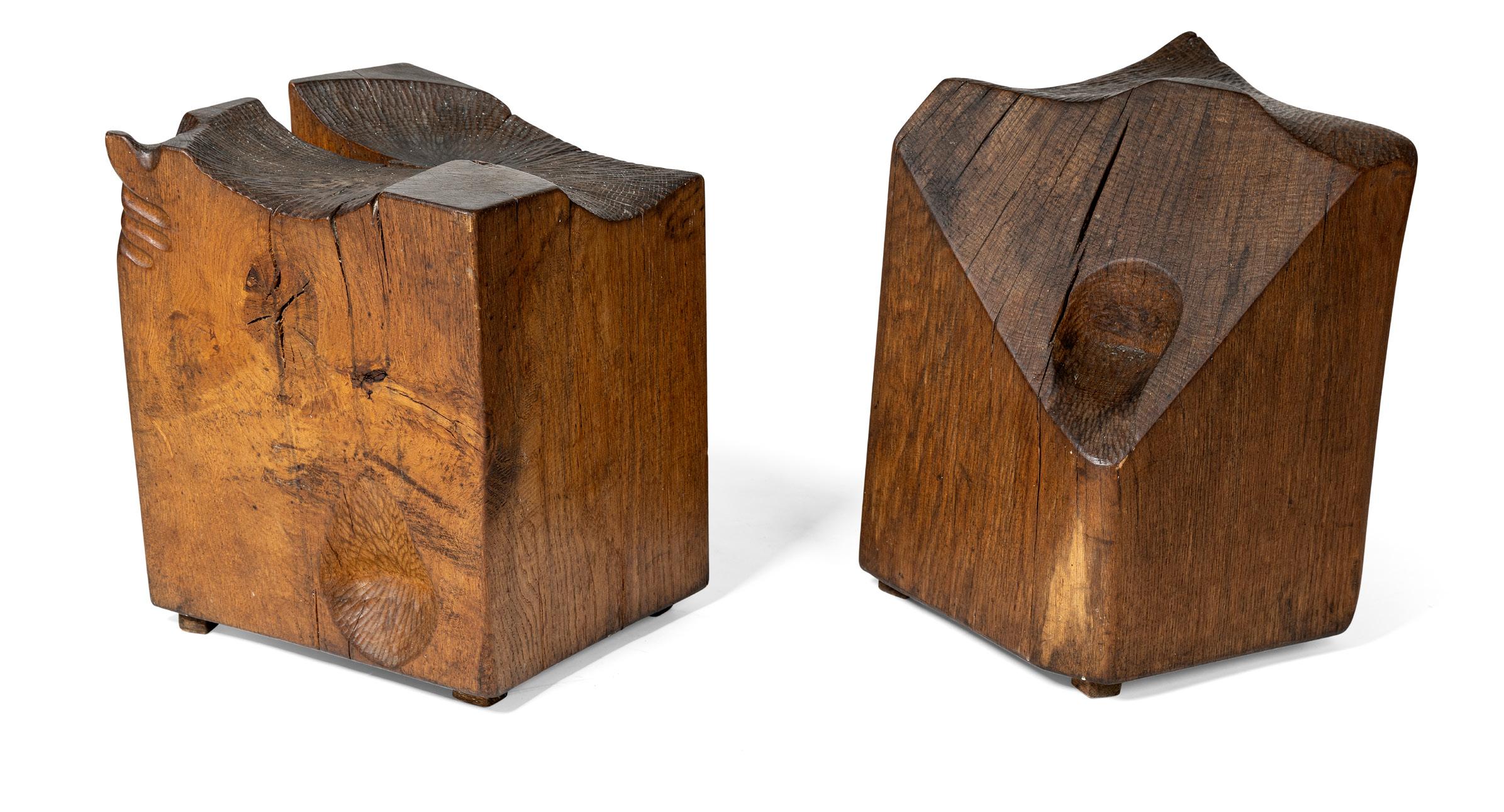
305 §
JIM PARTRIDGE (BRITISH 1953-)
FOOTED BOWL stamped ‘J. B. PARTRIDGE’, scorched oak 7.5cm high, 36cm wide (3in high, 14 1/8in wide) £500-700
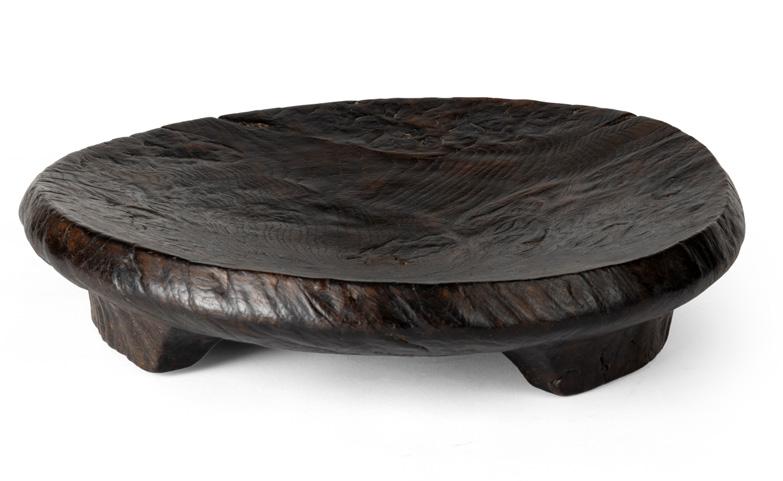
306 §
ALISON CROWTHER (BRITISH 1965-) TWO BLOCKED SEATS, CIRCA 1987-9
carved oak (2)
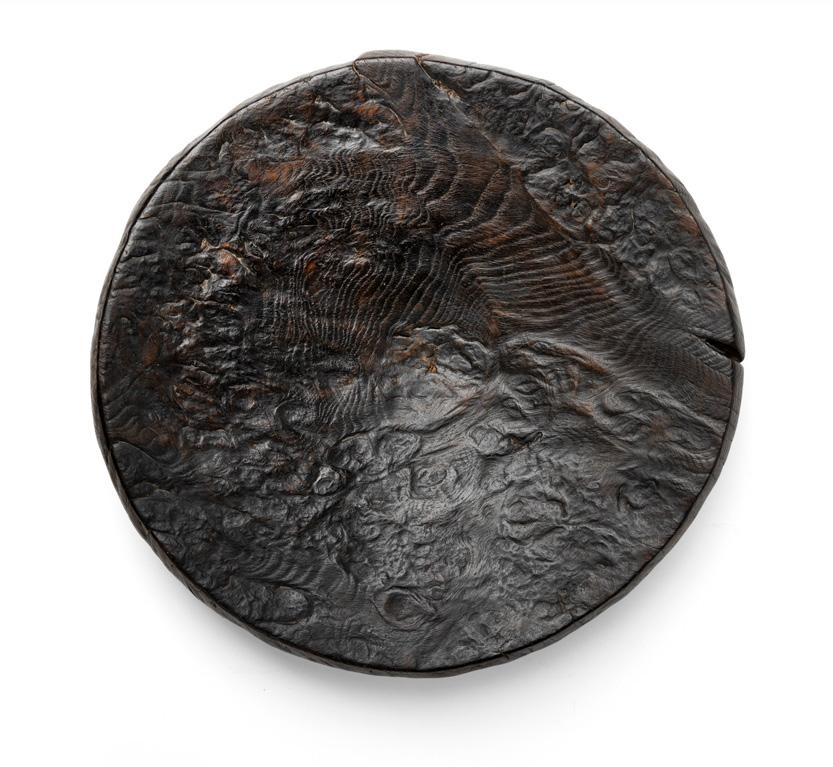
larger stool: 49cm high, 33cm wide, 33.5cm deep (19 1/8 in high, 13in wide, 13 1/4in deep); smaller stool: 43.5cm high, 37.5cm wide, 35cm deep (17 1/8in high, 14 3/4in wide, 13 3/4in deep)
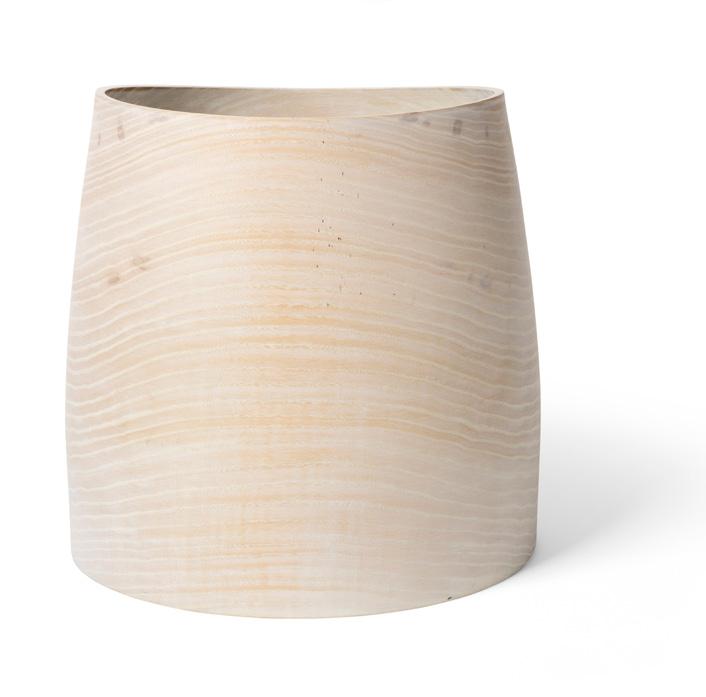
Provenance: Purchased directly from the artist by the current vendor.
£600-800
209 Other fees apply in addition to the hammer price: see the ‘Buyer’s Guide’ section on page 6
Plastic Fantastic
“
The pieces I create can be sculptures or they can be worn as jewellery. Each individual will have a different response to them and I like that. ”
Peter Chang
307 § PETER CHANG (BRITISH 1944-2017)
MAN’S RING, 1988 acrylic and silvered metal 6.7cm high, 6.7cm wide (2 5/8in high, 2 5/8in wide)
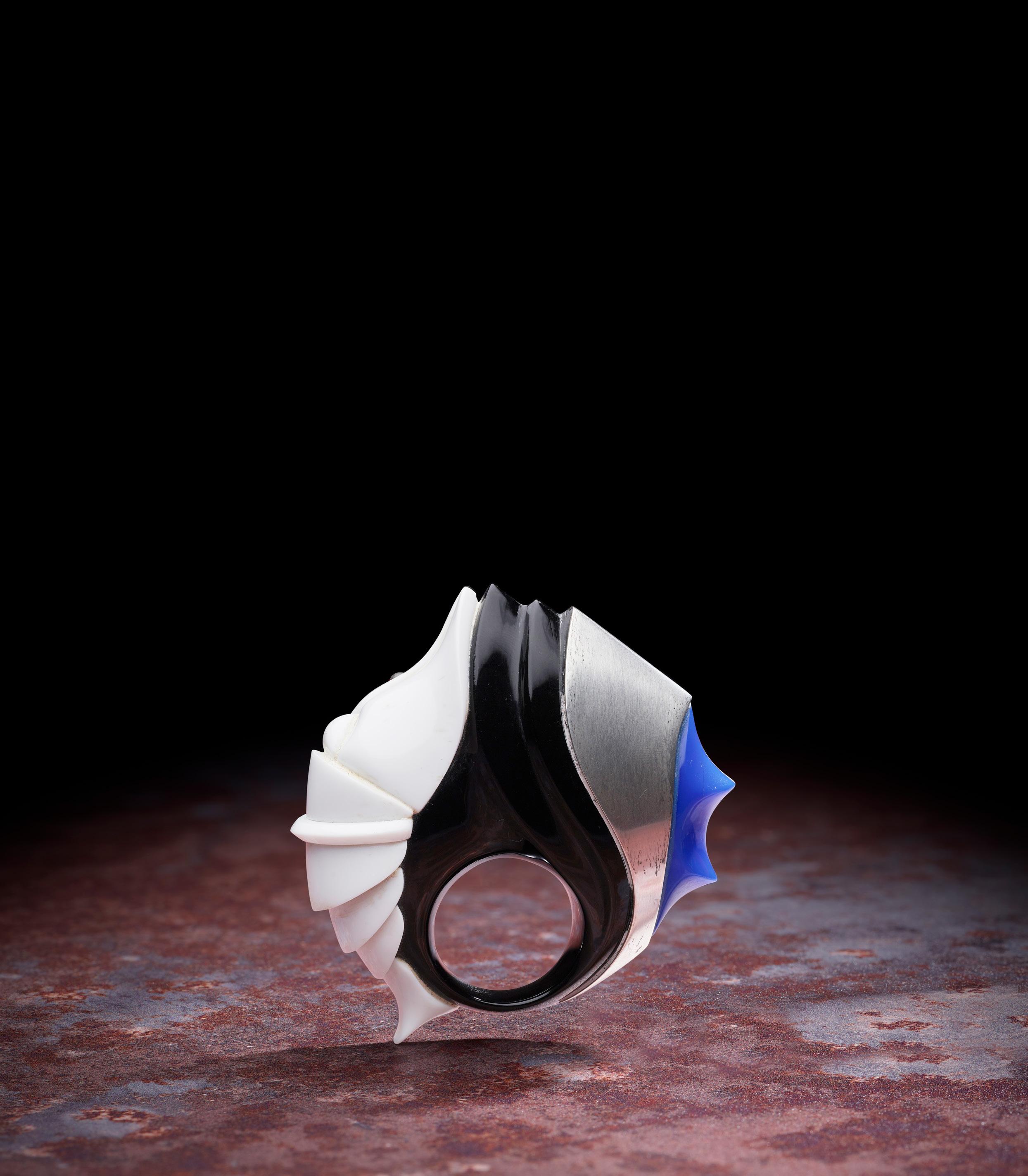
Provenance: Scottish Gallery, Edinburgh; Private Collection, London.
Exhibited: Schmuckmuseum, Pforzheim, Peter Chang: It’s Only Plastic ... Schmuck Objekte Skulpturen, June - September 2002 travelling to Kunstgewerbemuseum, Berlin (October 2002 - January 2003), Bayerischer Kunstgewerbeverein, Munchen (January 2003 - March 2003) and Deutsches Goldschmiedehaus, Hanau (March 2003 - May 2003); Walker Art Gallery, Liverpool, Peter Chang, JuneSeptember 2007, travelling to Somerset House, London and Kelvingrove Museum, Glasgow.
£1,000-2,000
Peter Chang had been called the Faberge of 21st Century, with his outlandish, extravagant, unorthodox and off-the-wall jewellery creations. He exploited the fundamental qualities of plastic with his high voltage colours and the malleability of the material, continually developing new techniques and ideas that earnt him a global reputation as one of the foremost maker’s in his field.
Chang used plastic because it reflected the age we live in, was anonymous and could be moulded and sculpted into objects of splendour and frivolity. He saw himself as a visual artist aiming to create a synthesis between jewellery and sculpture with a hint of fantasy thrown in and he noted that ‘I like to incorporate a bit of fun: spice it up. People take things too seriously,’
Over his career he won numerous international awards including the Jerwood Prize for Applied Arts in 1995 for his ‘lasting significance and daring brilliance’, had major exhibitions at the likes of the Musée d’Art Moderne, Paris, and in Germany at the Schmuckmuseum Pforzhei and his work is now held in the collections of museums including the Metropolitan Museum of Art in New York, the Smithsonian, the Musée des Art Decoratifs, Montreal and the National Museum of Scotland.
210 Other fees apply in addition to the hammer price: see the ‘Buyer’s Guide’ section on page 6
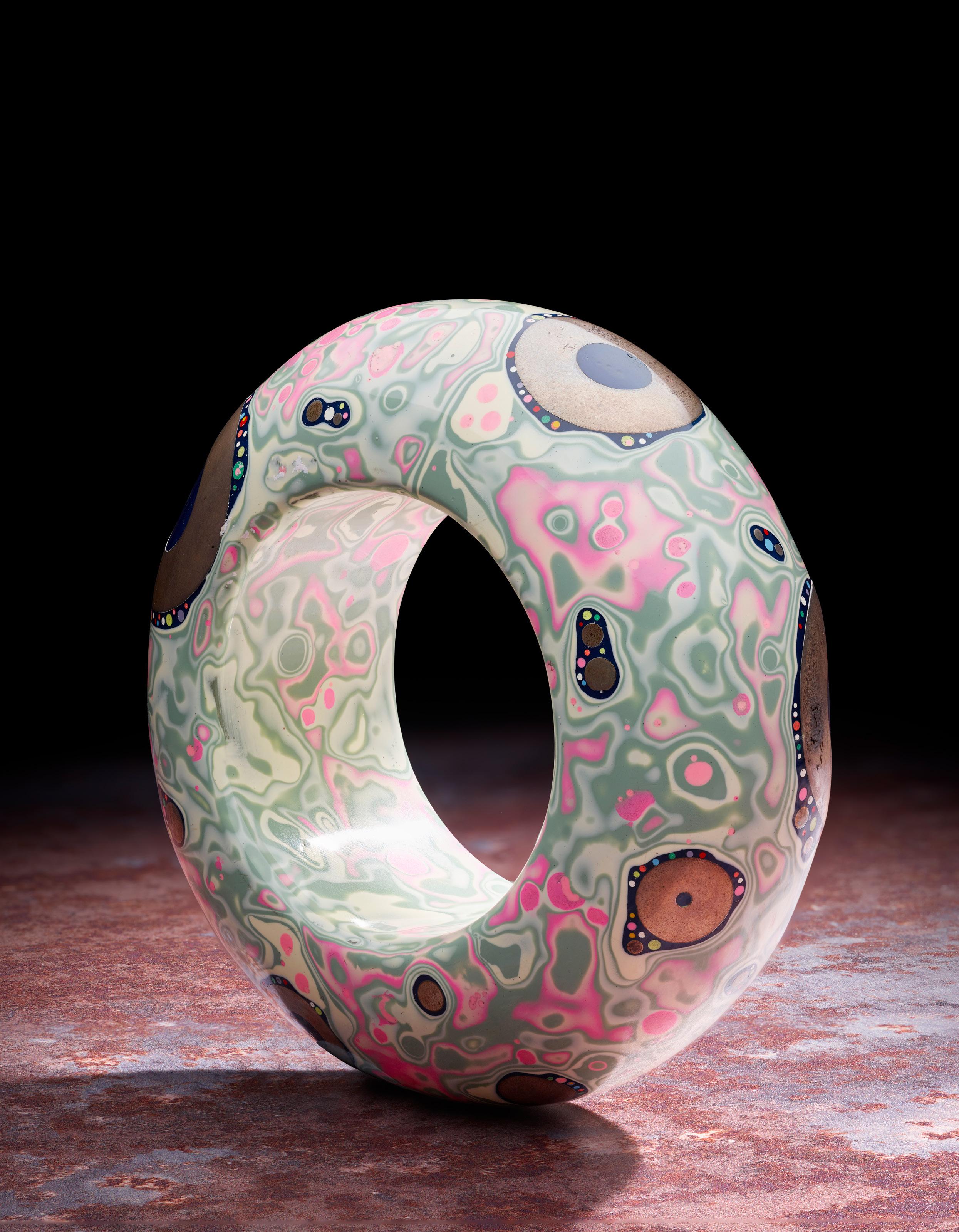
308 § PETER CHANG (BRITISH 1944-2017) BRACELET acrylic and silvered metal 12.3cm diameter (4 7/8in diameter) Provenance: Purchased directly from the artist; Private Collection, London. £1,000-2,000 211
309 § PETER COLLINGWOOD
O.B.E. (BRITISH 1922-2008) RUG
wool, in shades of blue, with plaited ends
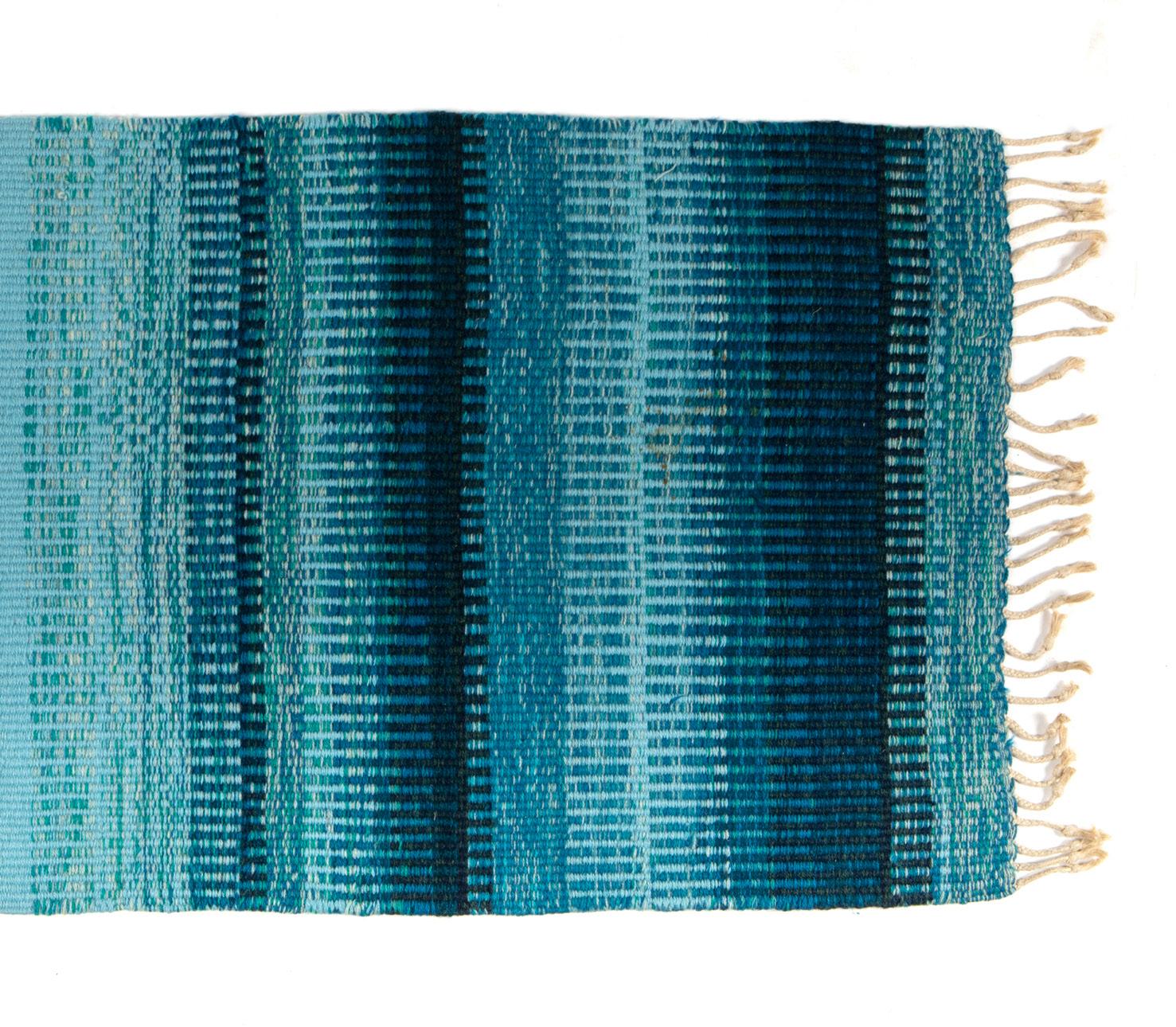
138cm x 71cm (54 1/4in x 28in) £400-600
310 § HAZEL THORN (BRITISH CONTEMPORARY) VESSEL, 2013
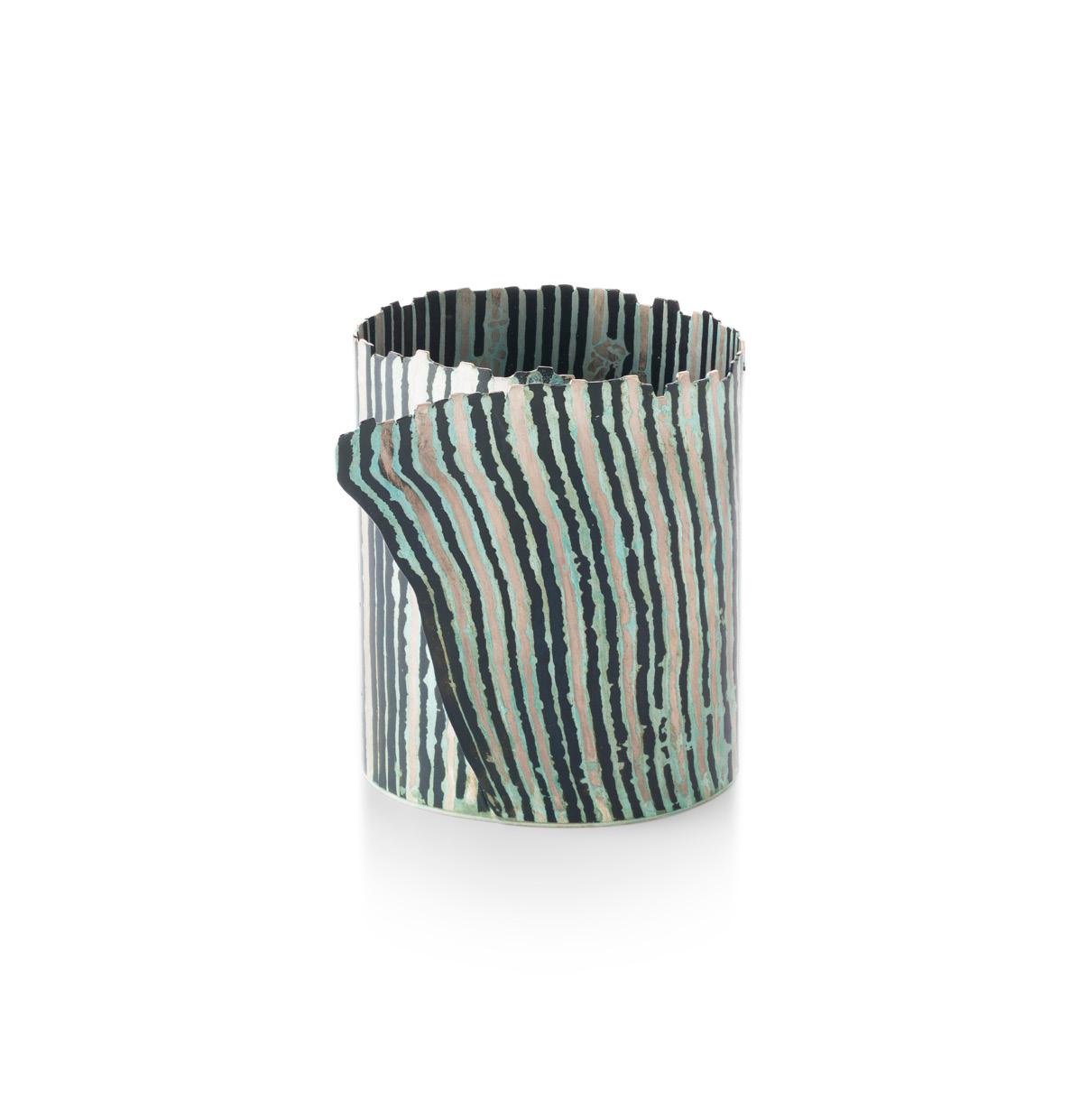
silver, stamped ‘HT/ 925/ +METAL’, hallmarked for Edinburgh 10.1cm high (4in high) £300-500
311 BRETT PAYNE (BRITISH 1959-)
GROUP OF SIX BOWLS, 2001
silver, hallmarked for Sheffield 2001 (6) four 16.8cm diameter (6 5/8in diameter); two 11cm diameter (4 1/4in diameter), 1746 grams £800-1,200
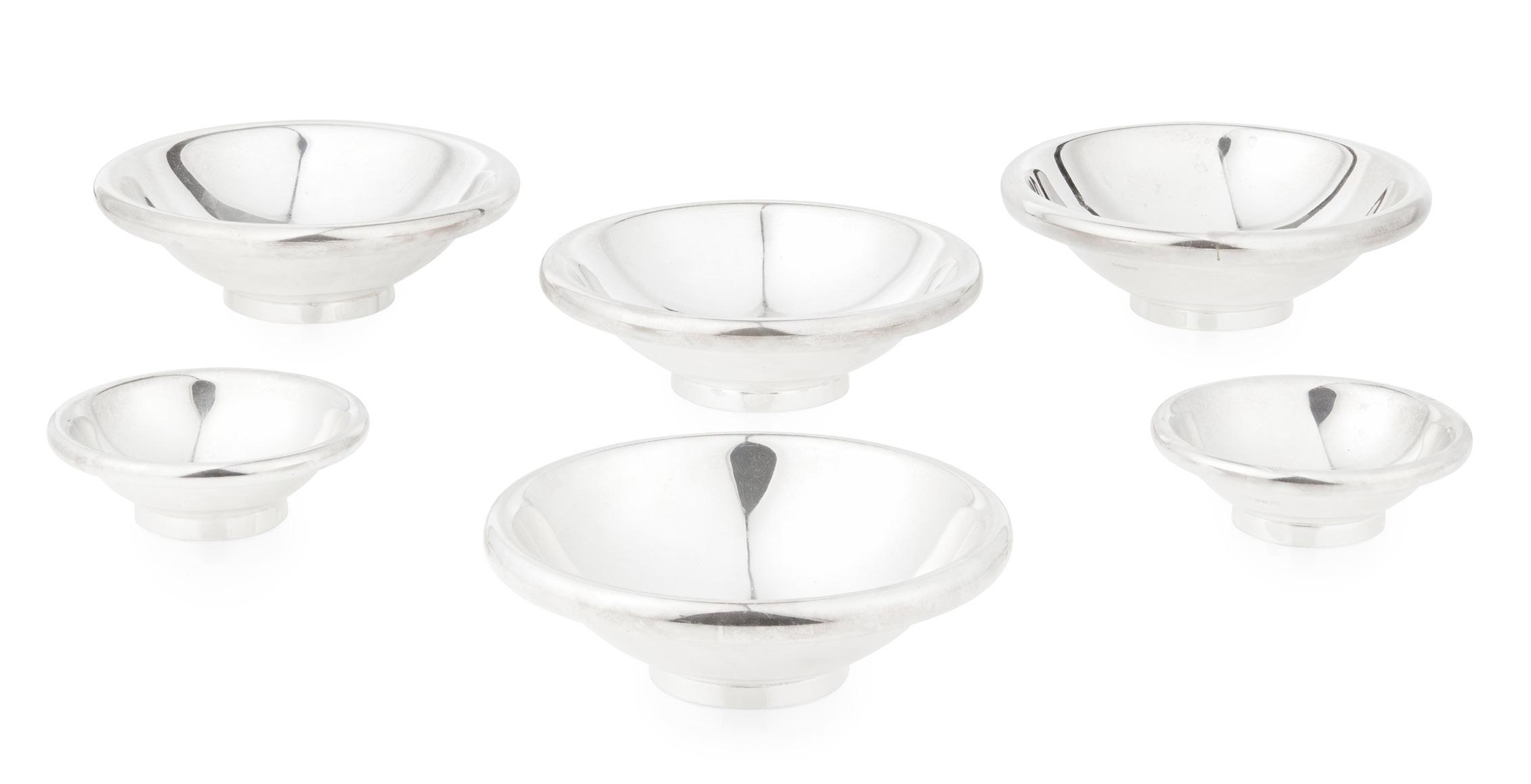
212 Other fees apply in addition to the hammer price: see the ‘Buyer’s Guide’ section on page 6
NDIDI EKUBIA (BRITISH 1973-)
TORNADO SWIRL, 2007
patinated copper with applied gold leaf 46.5cm high, 86cm wide (18 3/8in high, 33 7/8in)
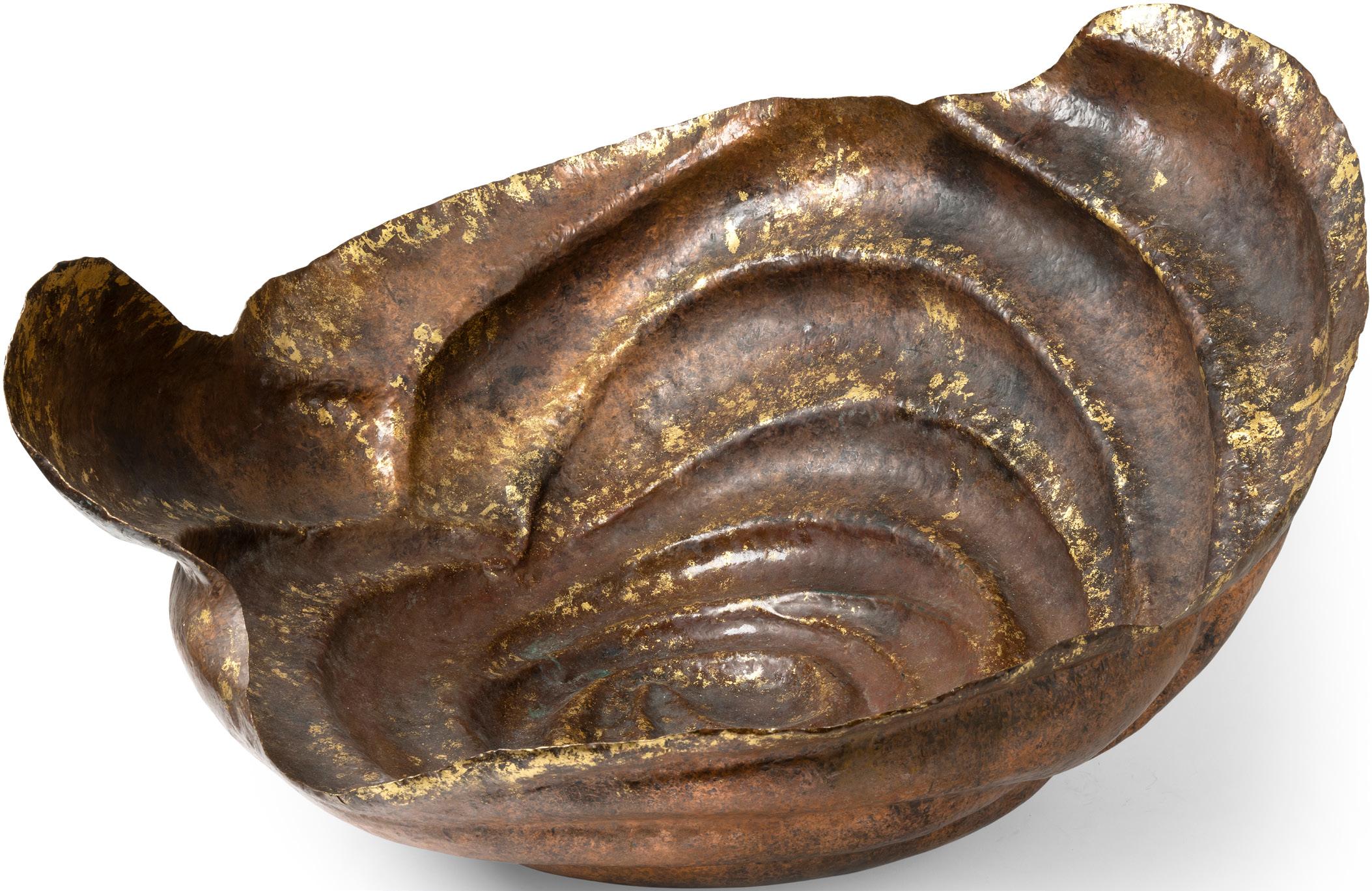
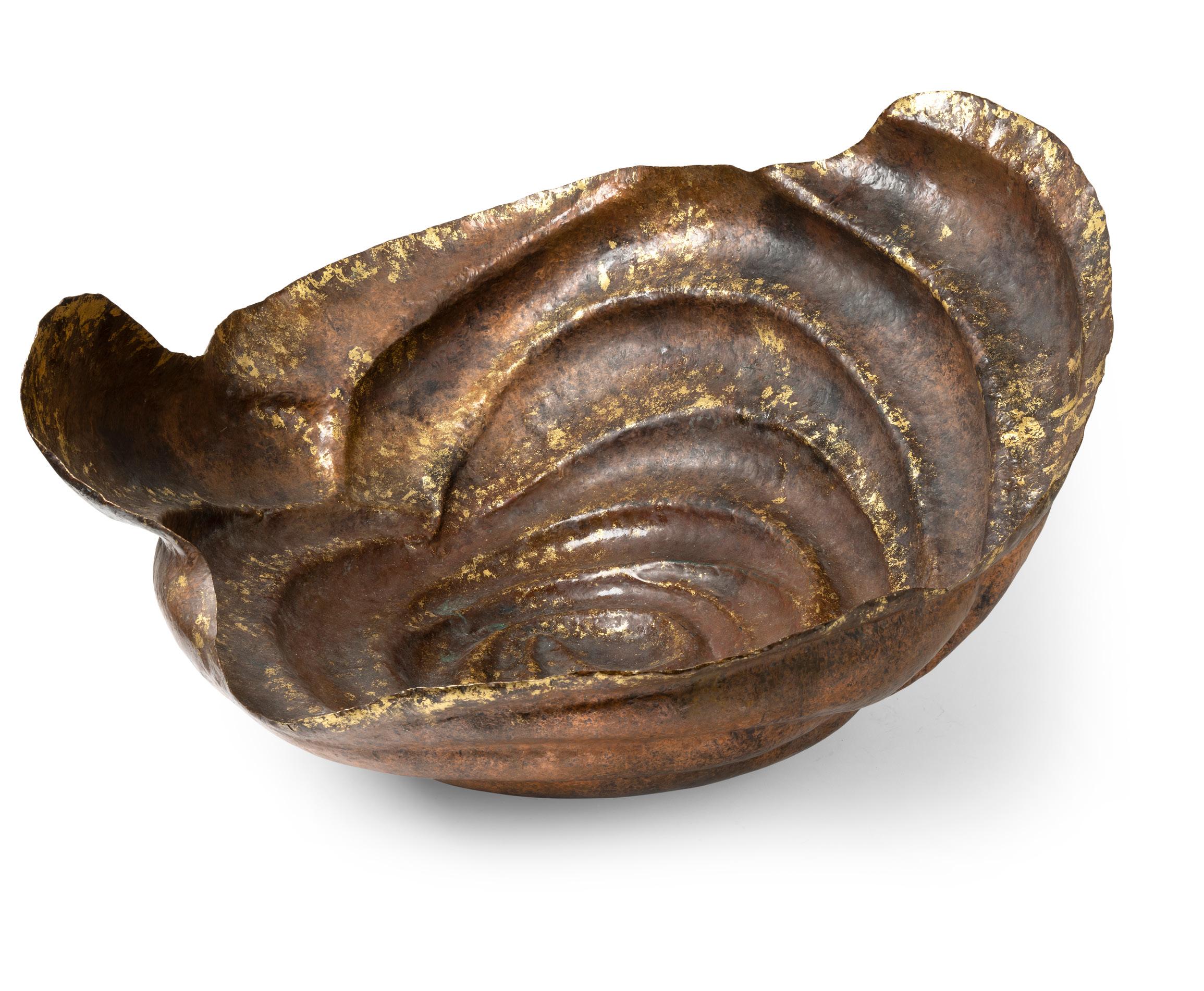
Provenance: Purchased directly from the artist by the current vendor; Private Collection, London. £3,000-5,000
Celebrated British silversmith Ndidi Ekubia’s large vessel forms are instantly recognisable for the fluidity of their hand-finished, planished surfaces. Born to Nigerian parents in Manchester in 1973, Ekubia studied 3D Design in Wolverhampton before obtaining an MA in Goldsmithing, Silversmithing, Metalwork & Jewellery at the Royal College of Art in 1998.
Her practise involves ‘pushing the metal to its limit, emphasising the fluid vitality of each form’ (Glanville, Philippa, Fluid Vitality: the Silver of Ndidi Ekubia, Goldsmiths’ Review 2013-4, pp. 30-33) and she immerses herself in
the creative process to produce works that emphasise the inherent quality of the material and permit the viewer to experience its three-dimensional aspects, as with the current work, where each angle offers a different view.
Ekubia is represented in important private and public collections of contemporary craft including the Victoria and Albert Museum, London; Ashmolean Museum, Oxford; Crafts Council, London; Aberdeen Art Gallery, Aberdeen; Winchester Cathedral, Winchester and the Goldsmiths’ Company, London. She was awarded an M.B.E. for services to silversmithing in 2017.
312 §
“ I am excited by the sensual and rich forms that can be created by the rhythmic process of making and believe my nature is reflected through my work. It is delightful to be absorbed in every stage, from design to the finished piece. ”
Ndidi Ekubia
213
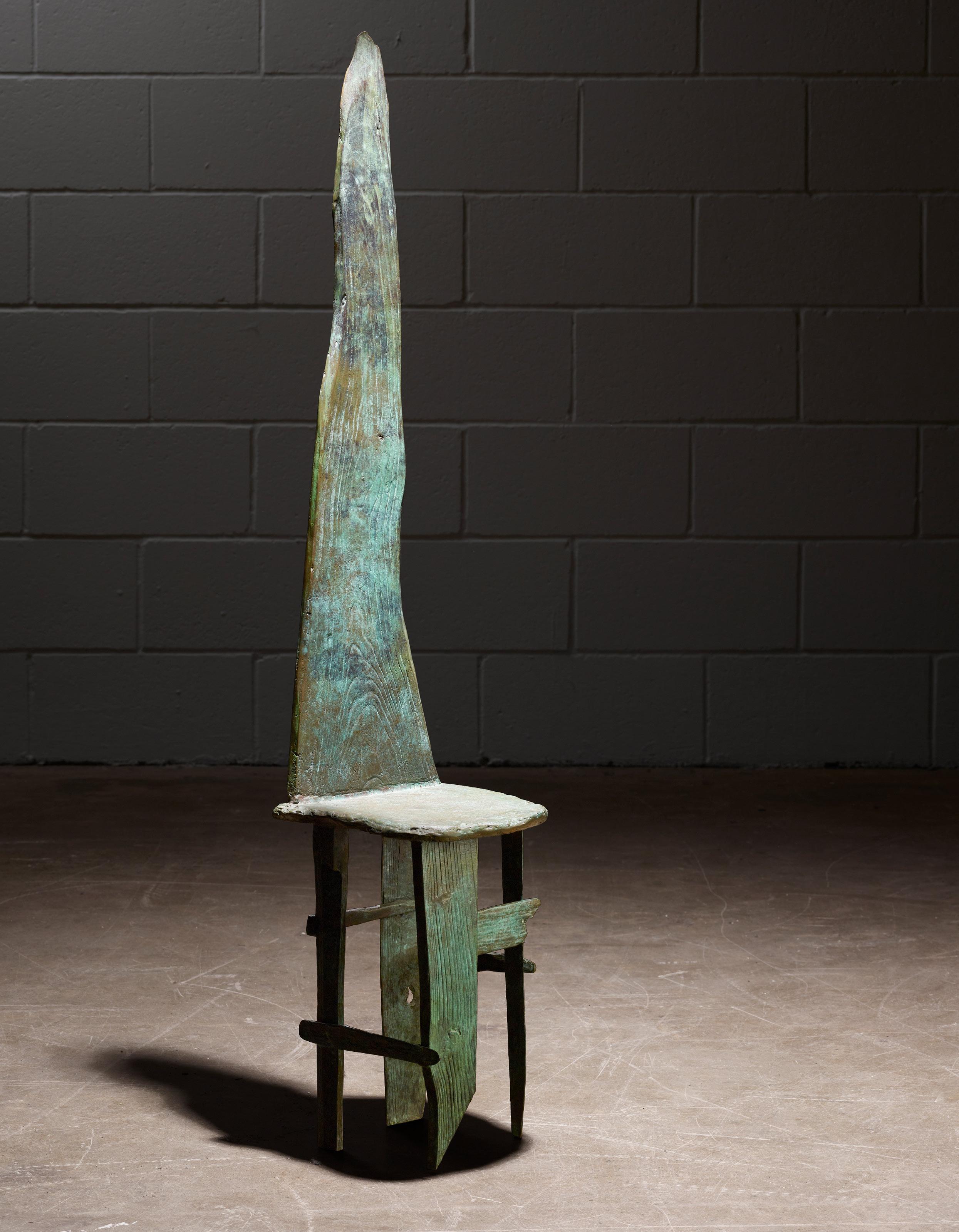
313 § HELEN SINCLAIR (BRITISH 1954-) SOLID-BACKED CHAIR, 2001 1/7, incised initials and numbered, patinated bronze 136cm high, 98.5cm wide, 27.5cm deep (53 1/2in high, 38 3/4in wide, 10 7/8in deep) £4,000-6,000 214
314 § BERTIL VALLIEN (SWEDISH 1938-)
UNTITLED
unique, glass and wood,
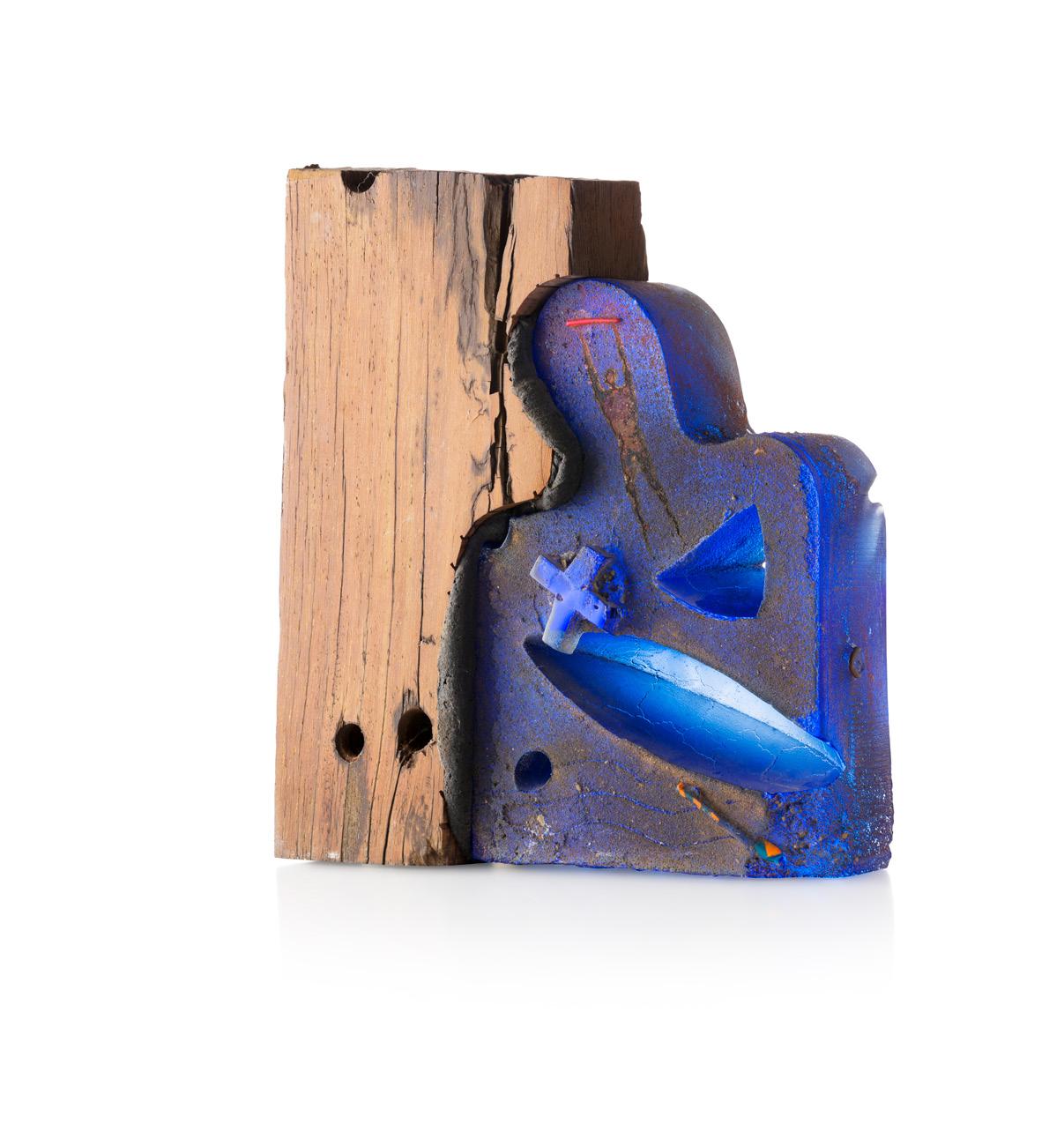
315 §
RAYMOND MARTINEZ (FRENCH 1944-)
UNTITLED, 2000
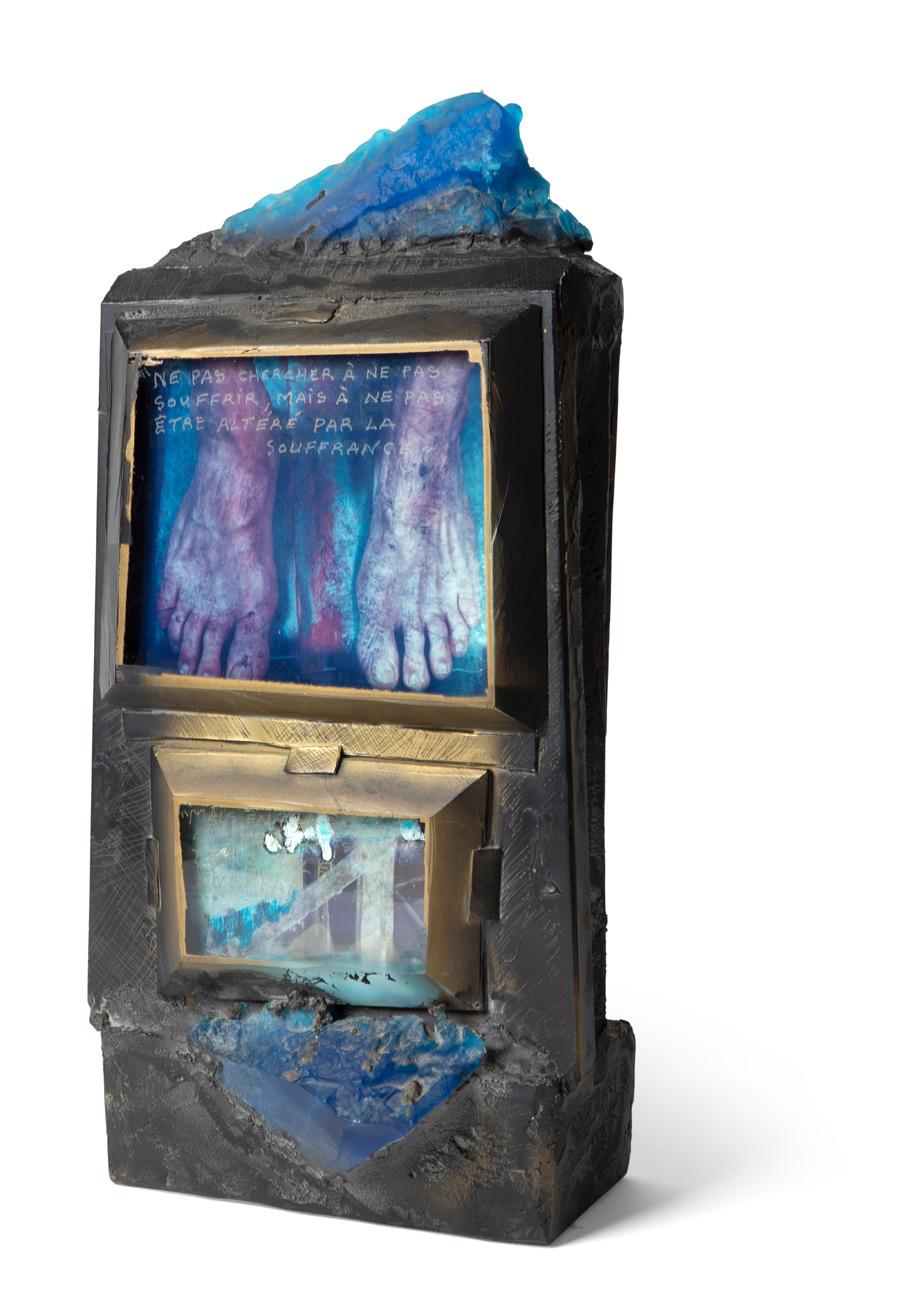
signed, dated and inscribed, glass, with citations by French philospher Simone Weil including ‘Le malheur contraint à reconnaître comme réel ce qu’on ne croit pas possible’ and ‘Ne pas chercher à ne pas souffrir... mais à ne pas être altéré par la souffrance’ 45.5cm high, 21cm wide, 17cm deep (18in high, 8 1/4in wide, 6 3/4in deep) £800-1,200
316 §
JACQUI CHANARIN (BRITISH 1975-) PIGEON, 2002
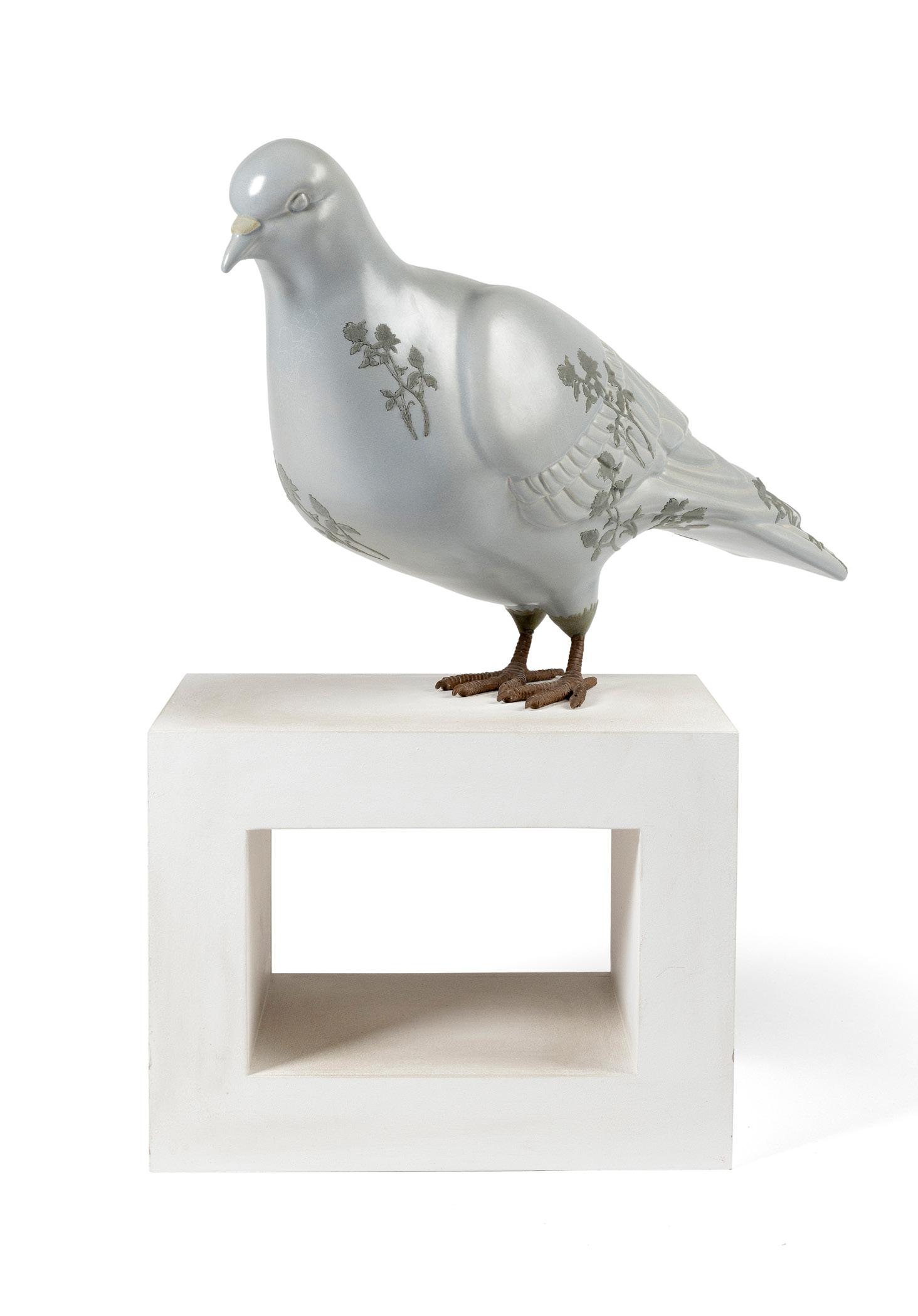
ceramic, felt and copper wire on MDF base
cm high, 52cm wide (29in high, 20in wide) including base
Provenance: Royal College of Art Degree Show, London; Private Collection, London.
We would like to thank Jacqui Chanarin for her help in cataloguing this lot.
£400-600
73.5
numbered ‘8021 – 051’ 37cm high, 32cm wide (14 1/2in high, 12 5/8in wide) £600-800
215 Other fees apply in addition to the hammer price: see the ‘Buyer’s Guide’ section on page 6
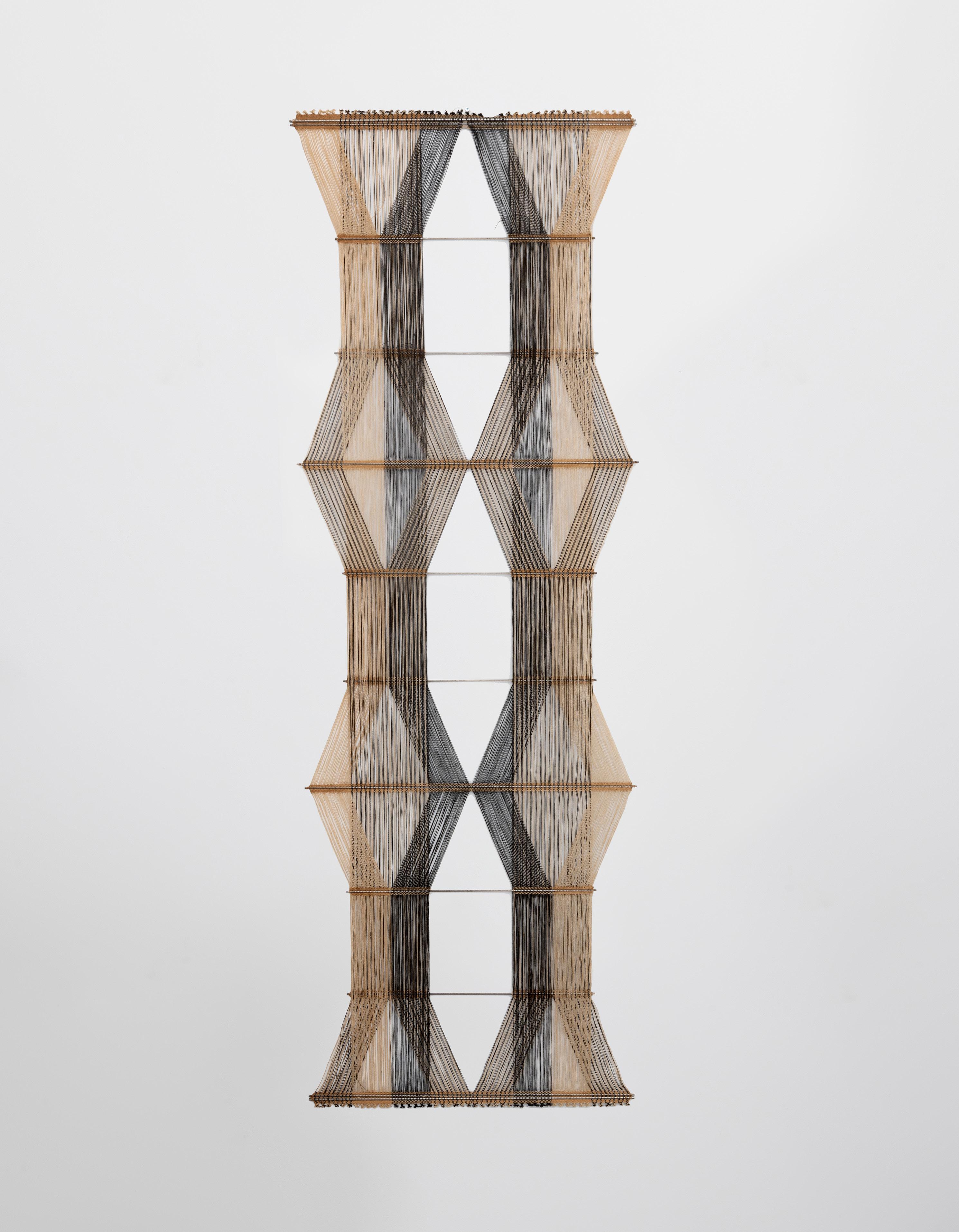
317 § PETER COLLINGWOOD O.B.E. (BRITISH 1922-2008) ‘M.306/A NO2’ MACROGAUZE WALL HANGING signed ‘P. Collingwood’ and titled (on a metal strip), linen and stainless steel 185cm long, 63cm wide (72 3/4in long, 23 3/4in wide) £2,000-3,000 216 Other fees apply in addition to the hammer price: see the ‘Buyer’s Guide’ section on page 6
318
JUNKO MORI (JAPANESE 1974-) BLOSSOM HEART, 2005 wax-coated forged mild steel 50cm high, 55cm wide (19 5/8in high, 21 5/8in wide)
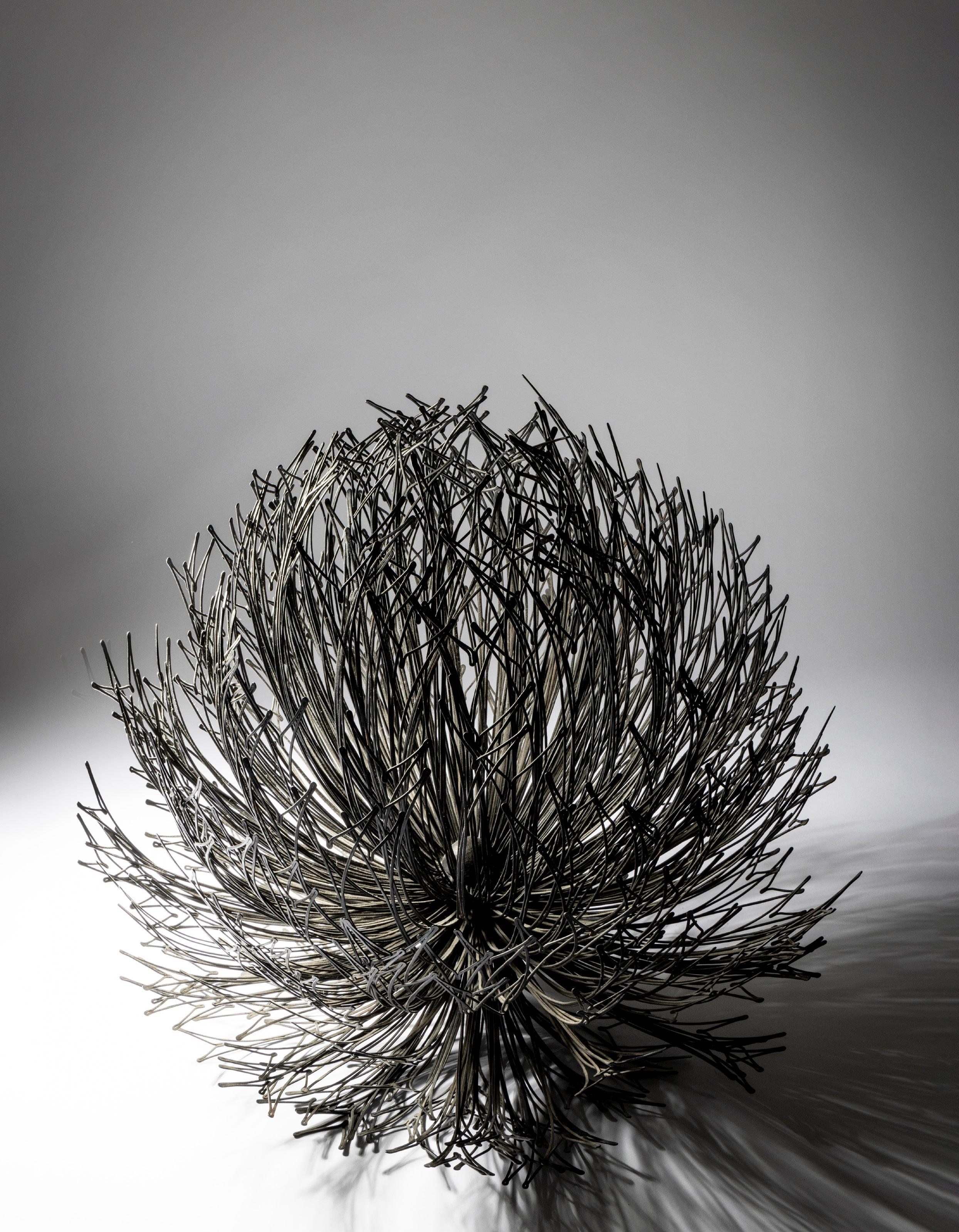
Provenance: Adrian Sassoon, London; Private Collection, London £4,000-7,000
“I am always drawn to the visual impact of an aggregate assembled with many small components: I find infinite possibilities of the form multiplied by the vital power beyond the physical space, such as cell division through the microscope... No piece is individually planned but becomes fully formed within the making and thinking process. Repeating little accidents, like the mutation of cells, the final accumulation of units emerges within the process of evolution. The uncontrollable beauty is the core of my concept.
” 217
TOM DIXON (BRITISH 1959-) FOR SALVIATI 12 ‘SALVIATI MEETS LONDON’ VESSELS, 2000 each signed, dated, and inscribed ‘Salviati Meets London’, and with manufacturers stamp, cased glass, from the Entente Cordiale and United Colours series, each in original Salviati box (12) the largest 24.5cm high, 30cm wide (9 5/8in high, 11 3/4in wide), the smallest 24cm high, 15cm wide (9 1/2in high, 6in wide)
Provenance: Vessel Gallery, London; Private Collection, London. Salviati Meets London was an exhibition curated by Vessel gallery in the year 2000. It sought to use some of Britain’s foremost creative talents, including Tord Boontje, Nigel Coates, Tom Dixon and Anish Kapoor, to collaborate with Salviati creating works executed in Murano by Italy’s master craftsmen. Nadia Demetriou Ladas, Director of Vessel stated that the collaboration was about ‘paying homage to the old techniques but the forms are very different to the Venetian styles - much simpler and purer’.
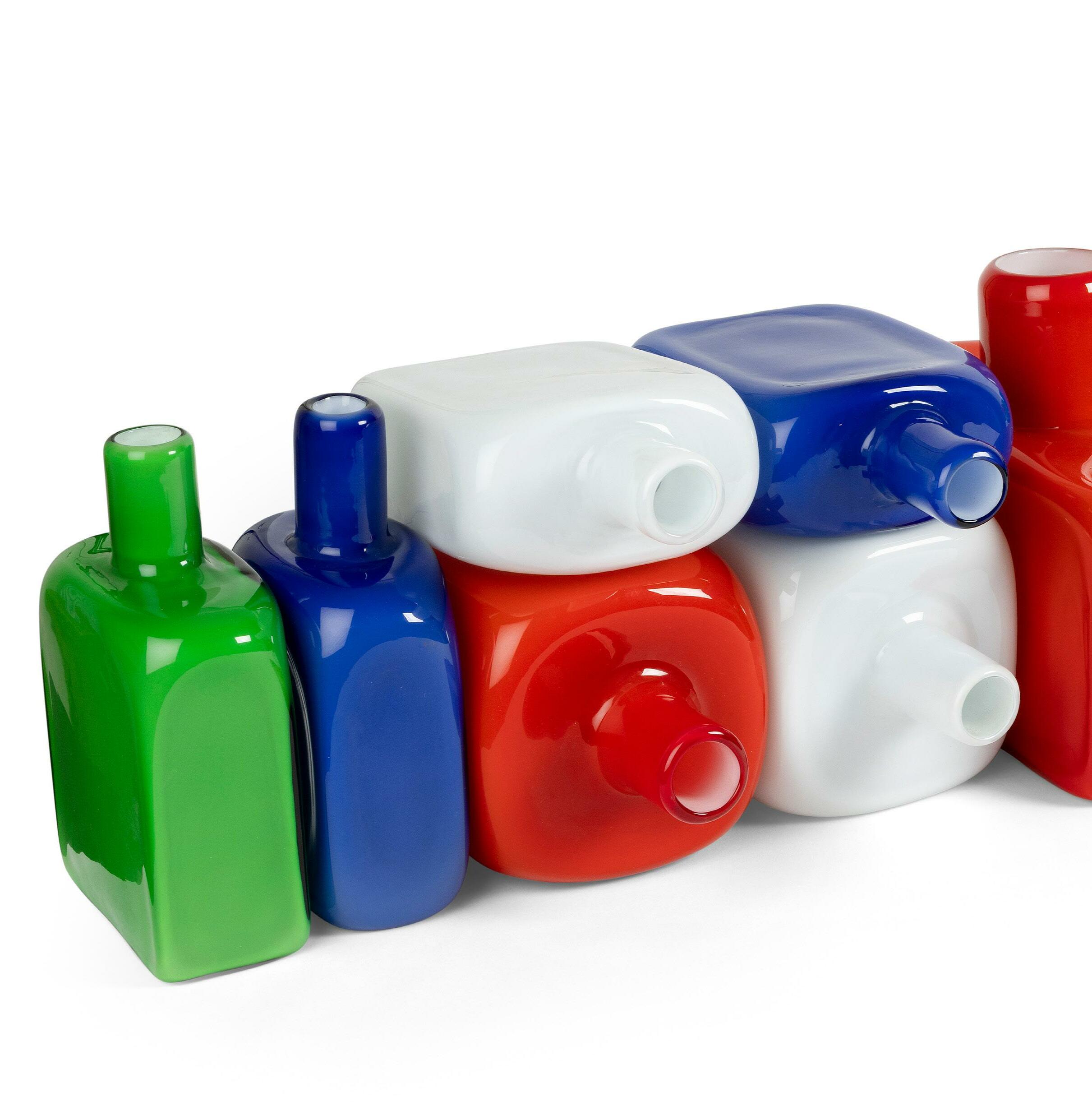
319 §
£1,500-2,000 218 Other fees apply in addition to the hammer price: see the ‘Buyer’s Guide’ section on page 6
SARA MOORHOUSE
(BRITISH 1974-)
PLANES’ FOOTED BOWL
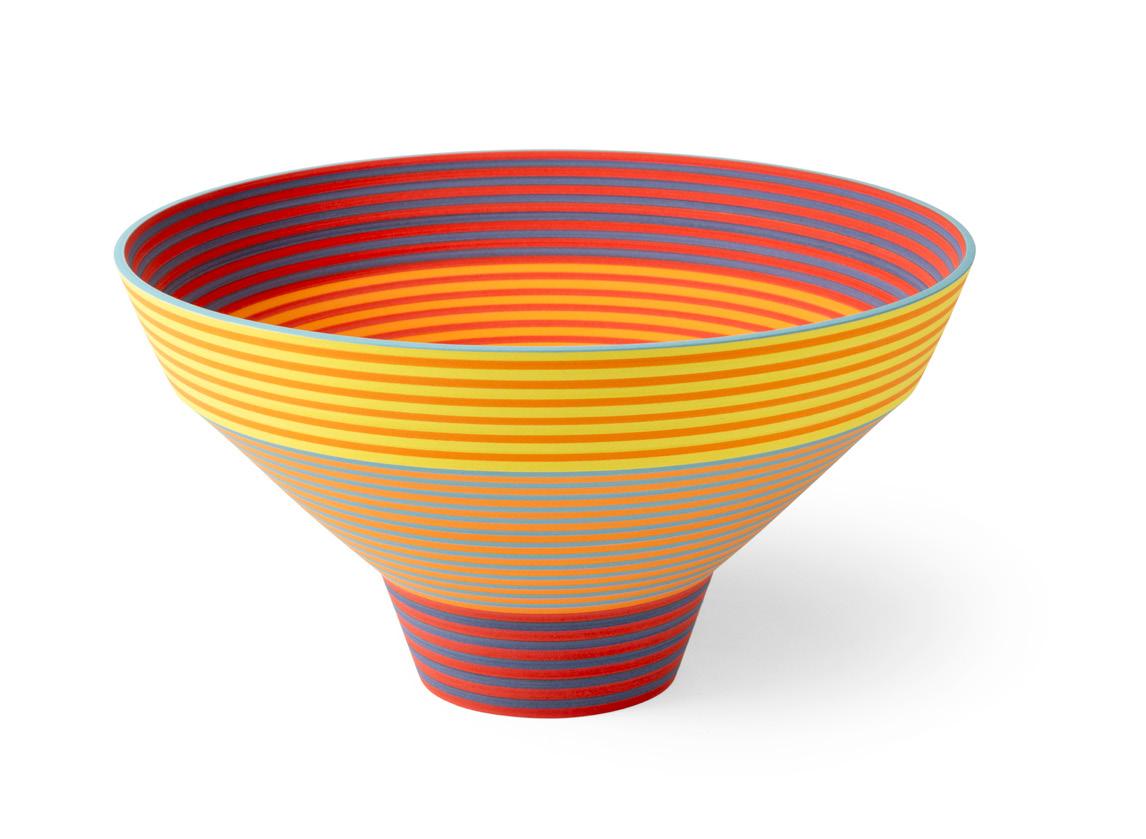
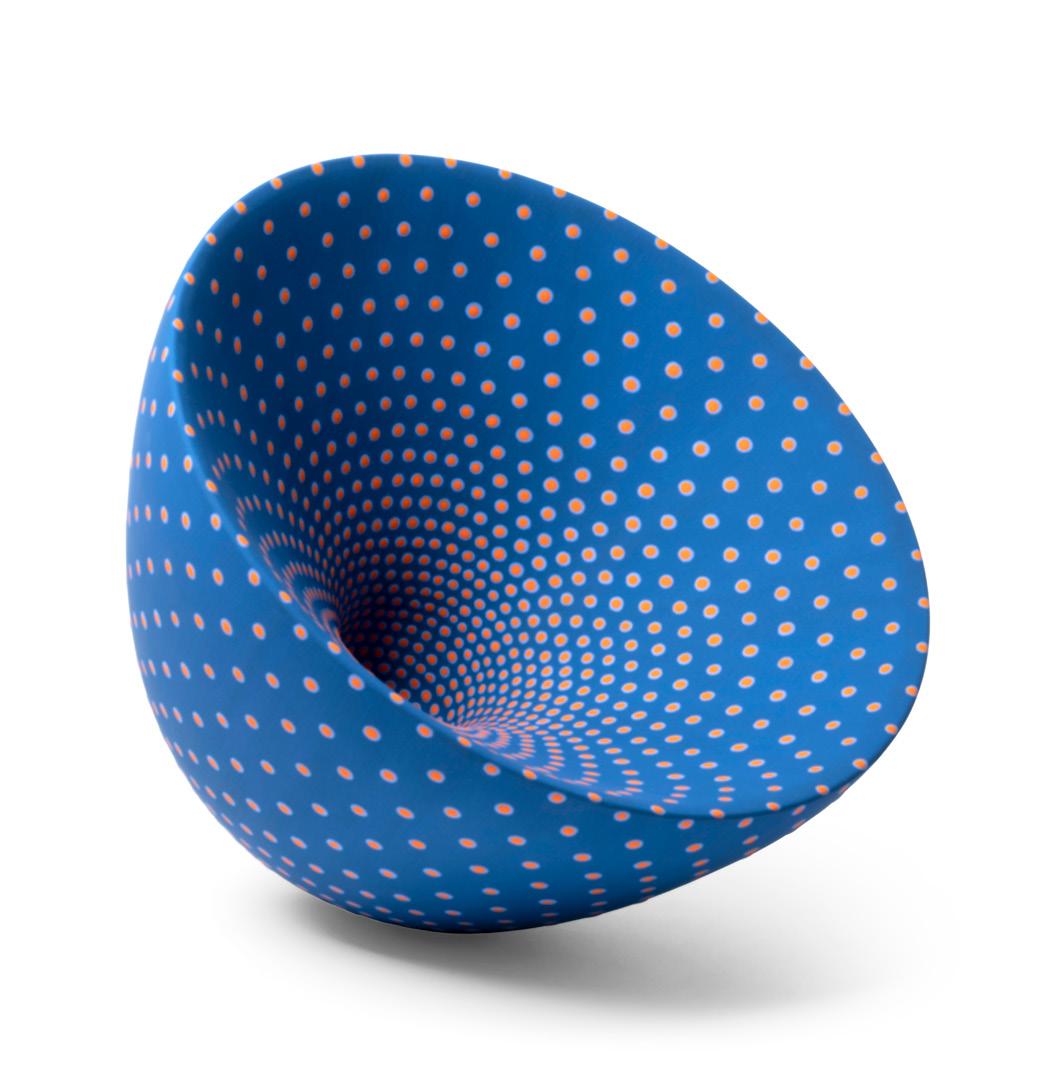
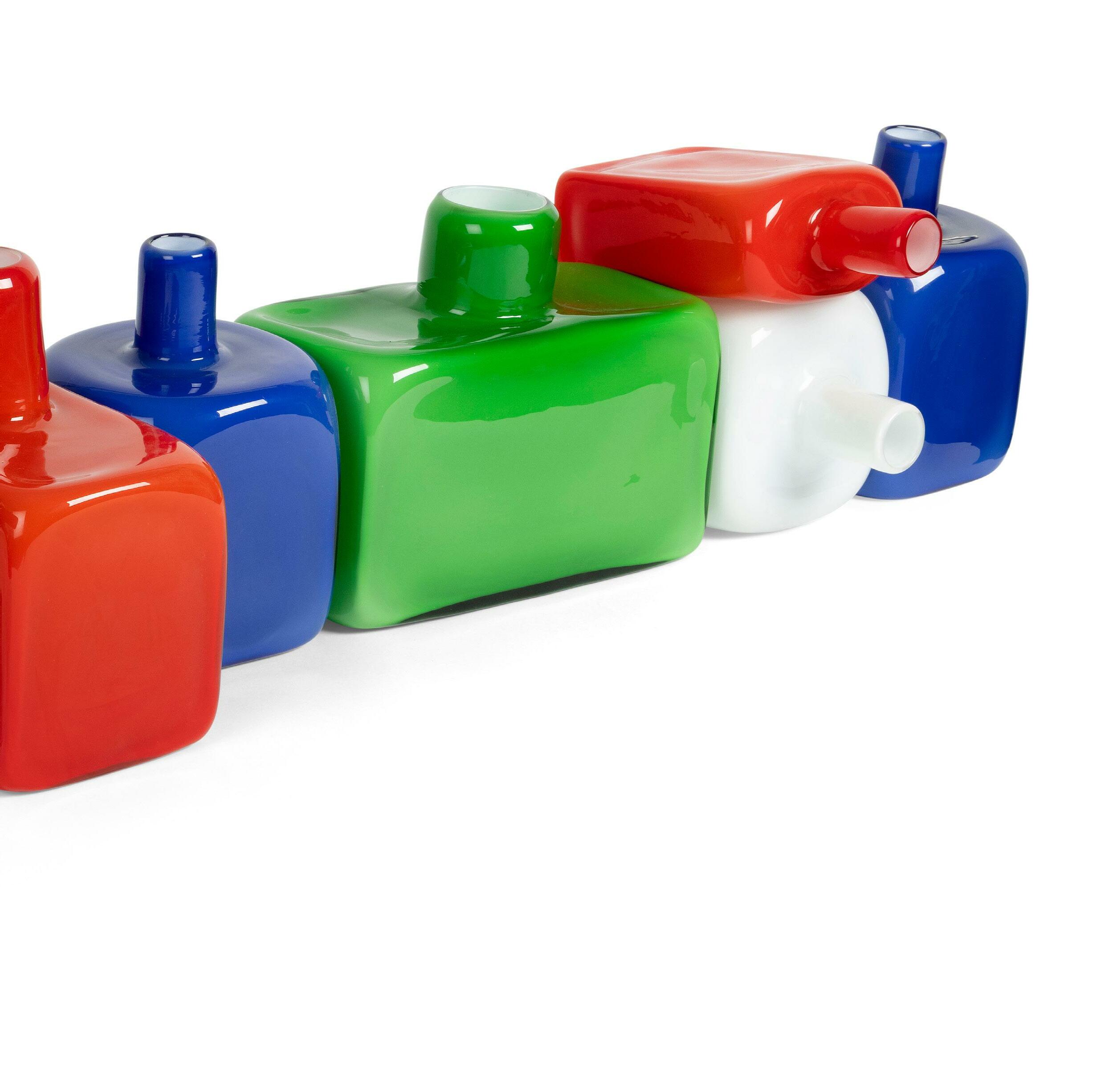
initials, porcelain
WATTS
321 GRAINNE
(IRISH 1960-) ‘VORTEX’ VESSEL artist’s monogram (to base), stoneware, in midnight blue, indigo and burnt orange 19cm high, 26cm diameter (7 1/2in high, 10 1/4in diameter) £2,000-3,000 320
‘SATURN
incised
15cm high, 28cm diameter (5 7/8in high, 11in diameter) £700-900 219 Other fees apply in addition to the hammer price: see the ‘Buyer’s Guide’ section on page 6
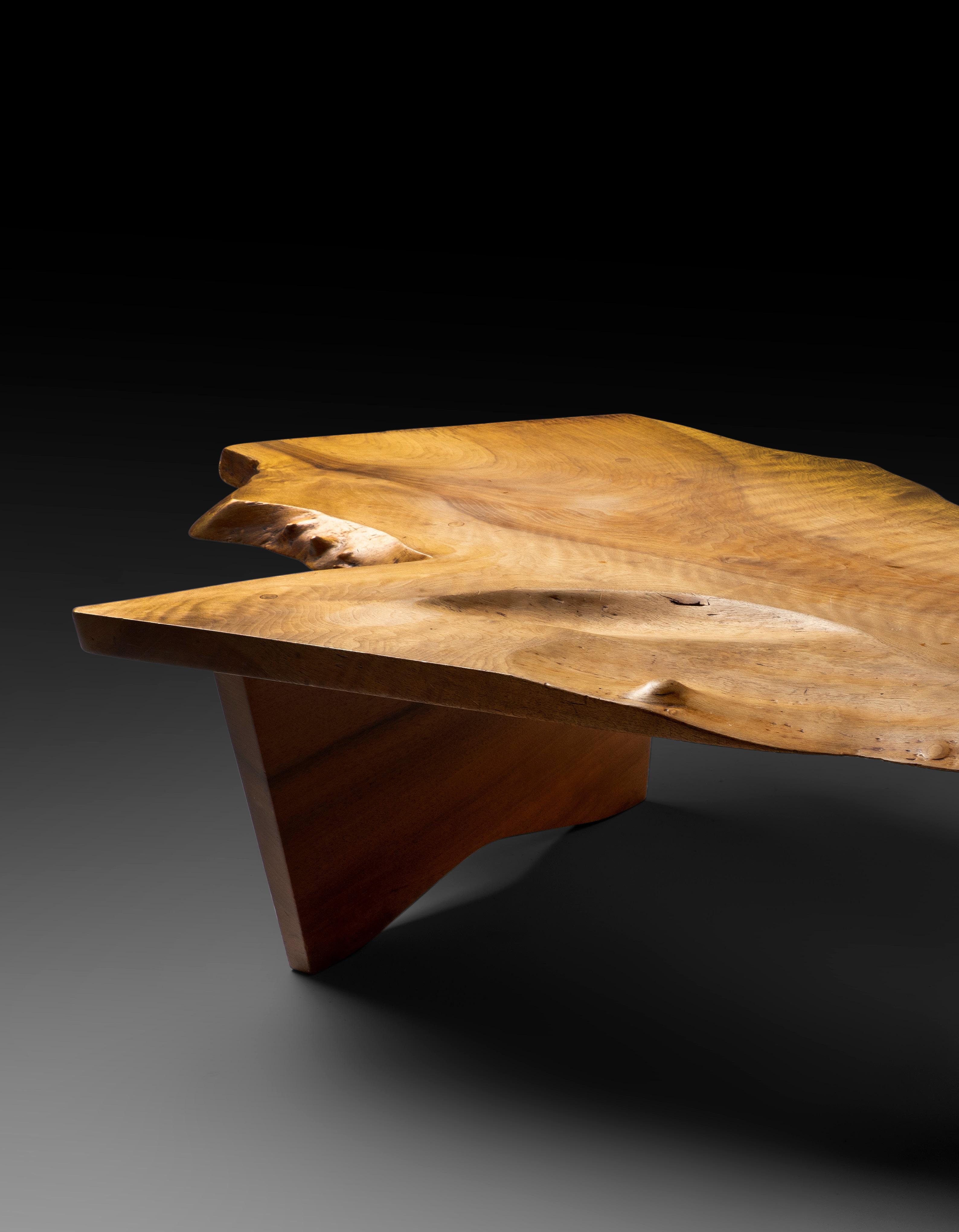
“Each flitch, each board, each plank can have only one ideal use. The woodworker, applying a thousand skills, must find that ideal use and then shape the wood to realize its true potential” George Nakashima
220
NAKASHIMA (AMERICAN
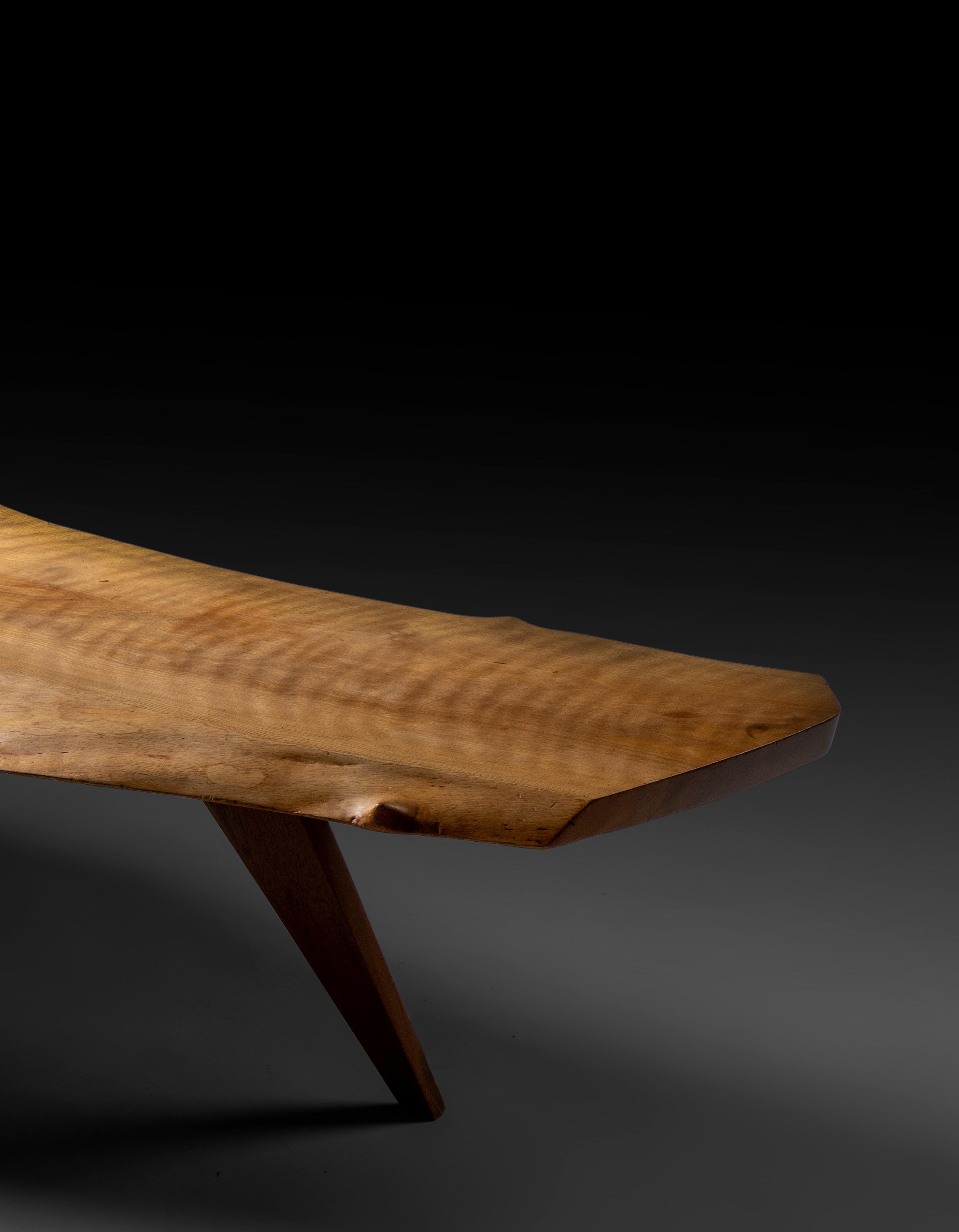
TABLE, CIRCA
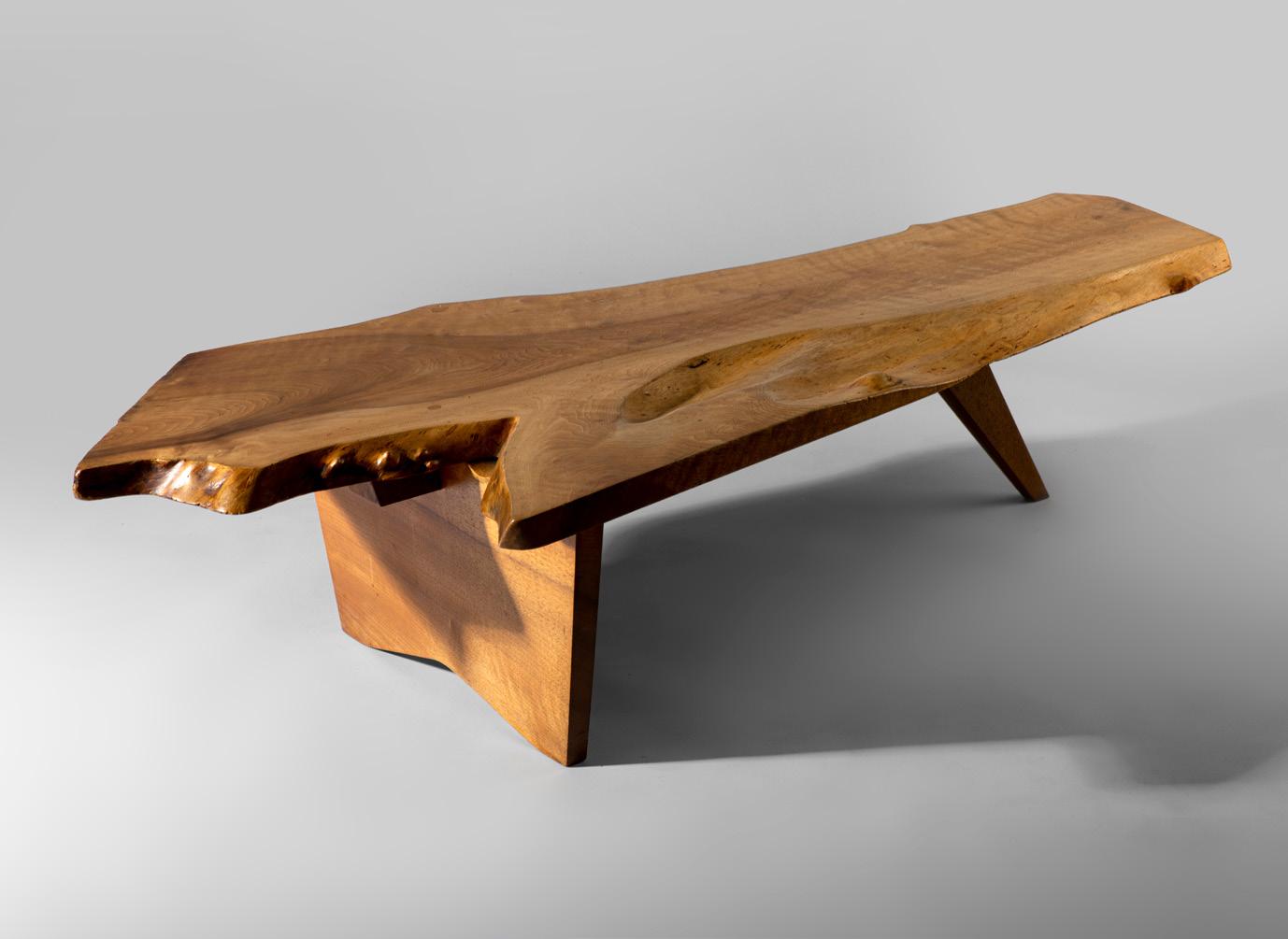
high,
the underside), English Walnut
long,
deep
Robert E. Wallace Jnr.,
George Nakashima
322 GEORGE
1905-1990) ‘SLAB’
1960/1 inscribed ‘WALLACE’ (to
31cm
137cm
66cm
(12 1/4in high, 54in long, 26in deep) Provenance:
1961. This lot is accompanied by a facsimile copy of the original order card from
Woodworkers. £10,000-15,000 221 Other fees apply in addition to the hammer price: see the ‘Buyer’s Guide’ section on page 6
323
LE CORBUSIER (SWISS / FRENCH 1887-1965)
FOR CASSINA
PAIR OF ‘LC3’ ARMCHAIRS
manufacturer’s label (under seat cushion), black leather and polished chrome steel (2)
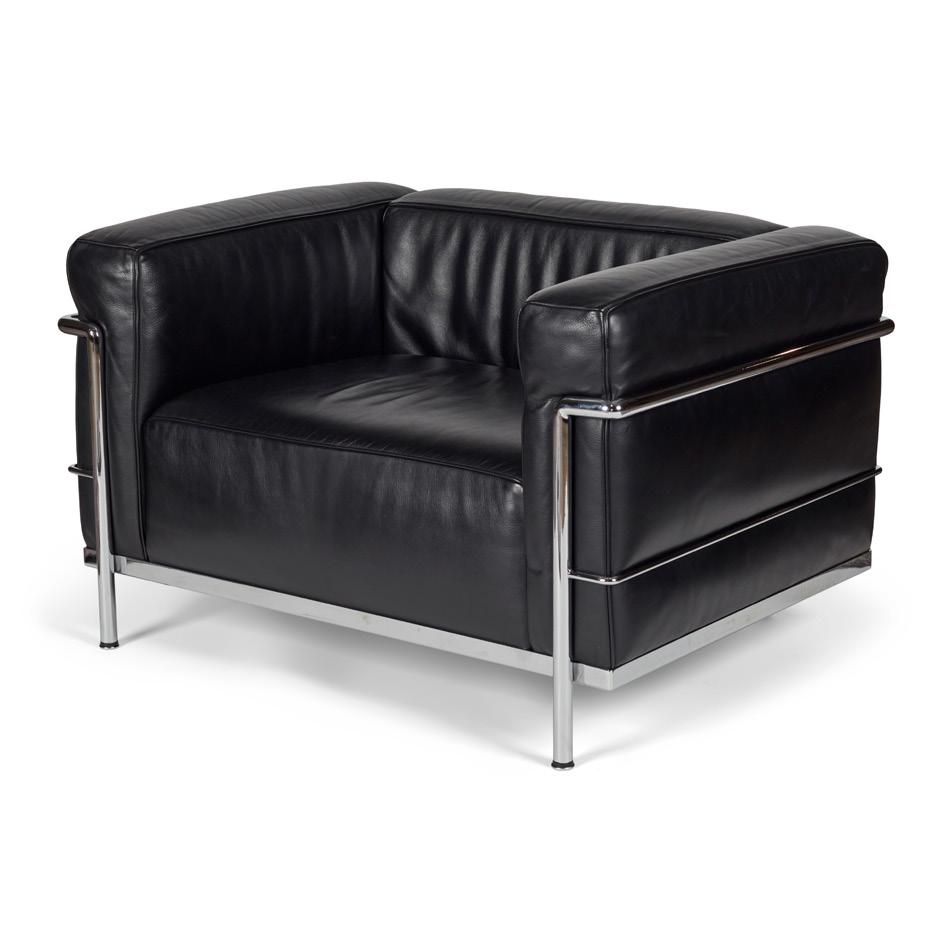
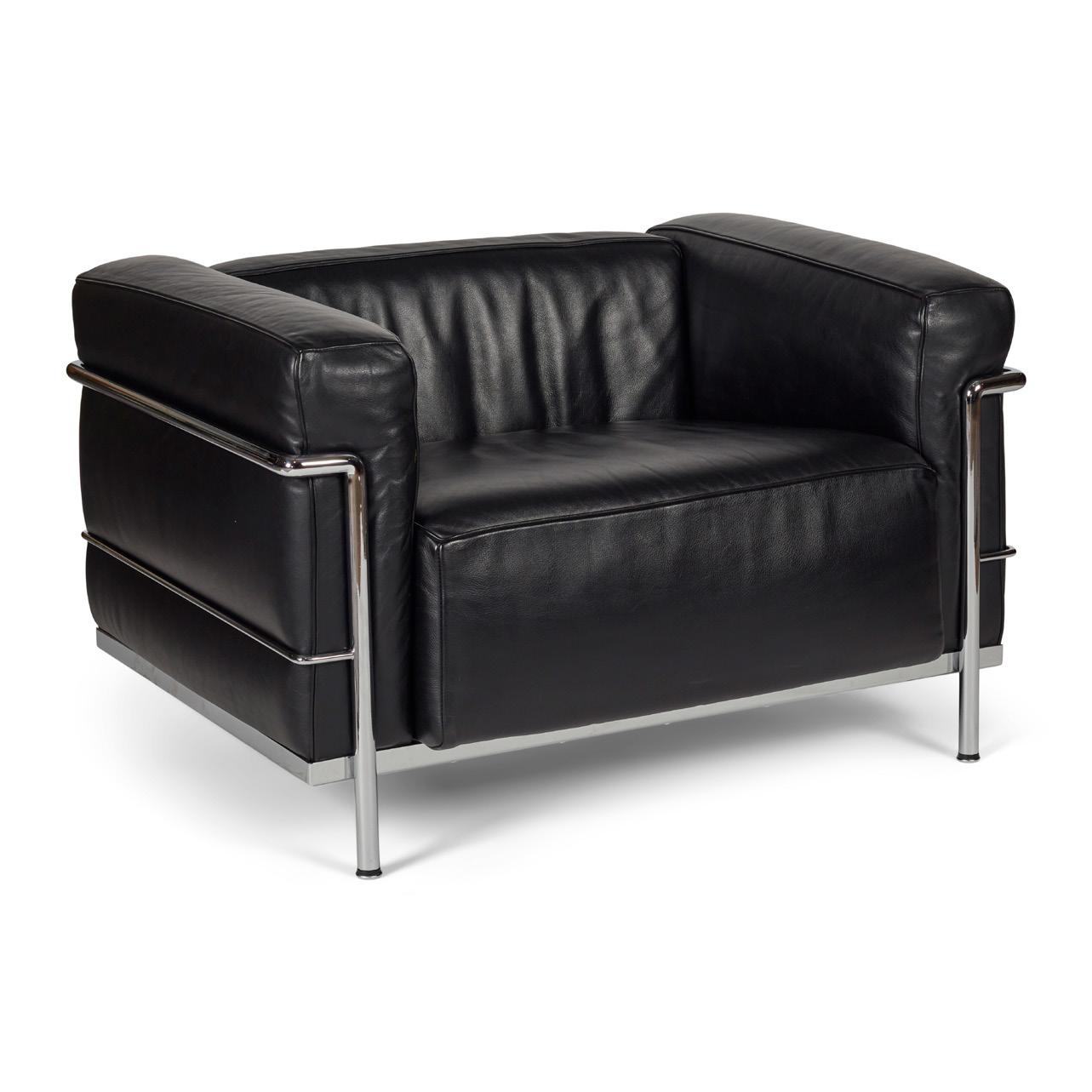
60cm high, 98cm wide, 72cm deep (23 5/8in high, 38 1/2in wide, 28 3/8in deep)
£1,500-2,000
324
KARL SPRINGER (GERMAN 1931-1991) DINING TABLE
plywood, timber and parchment 74.5cm high, 244cm long, 122cm deep (29 3/8in high, 96in long, 48in deep)
£2,000-3,000
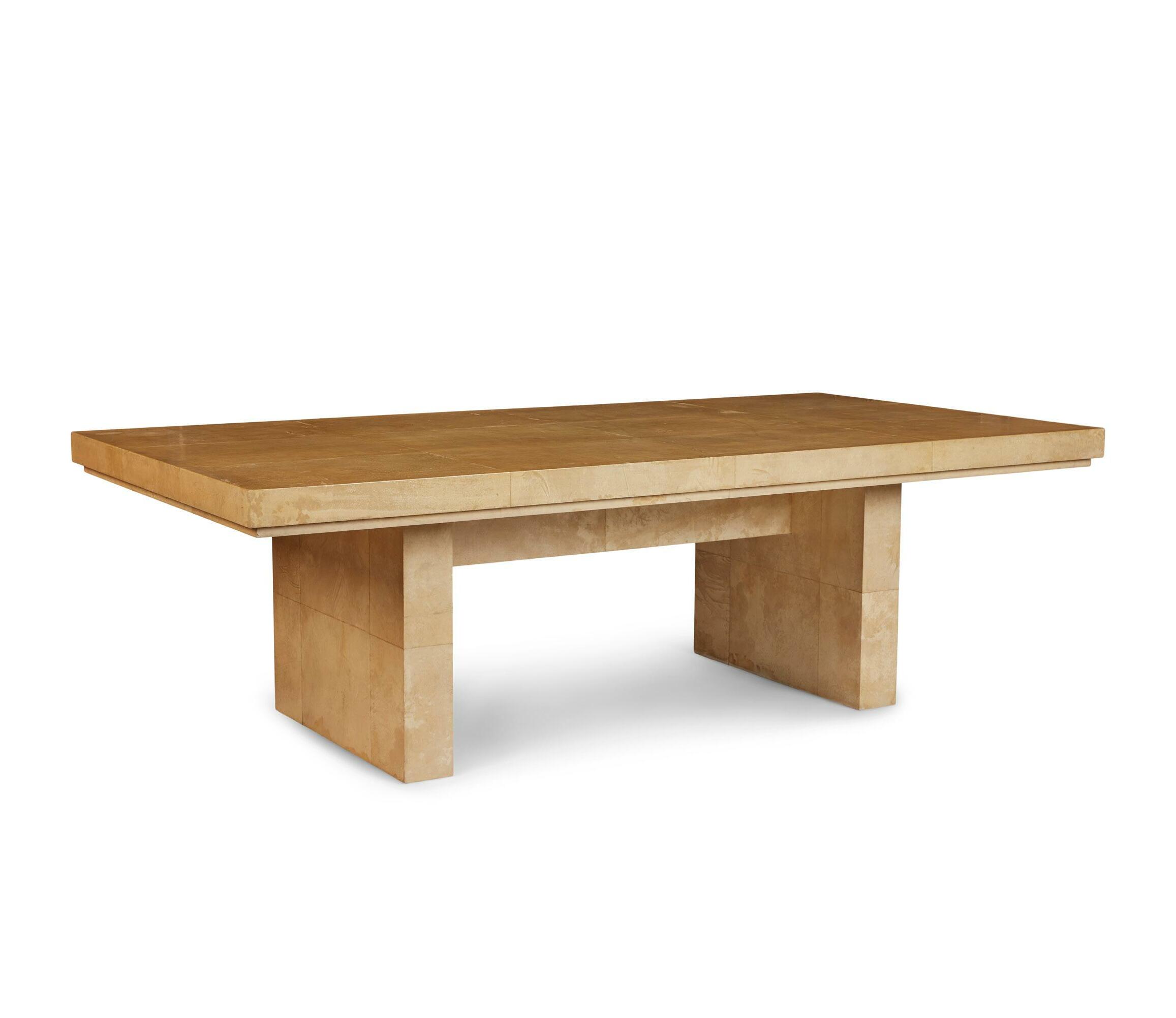
222 Other fees apply in addition to the hammer price: see the ‘Buyer’s Guide’ section on page 6
325
LE CORBUSIER (SWISS / FRENCH 1887-1965), PIERRE JEANNERET AND CHARLOTTE PERRIAND FOR CASSINA
‘LC4’ CHAISE LONGUE manufacturer’s mark and stamped ‘LC4 14810’ (to frame), leather and patinated steel
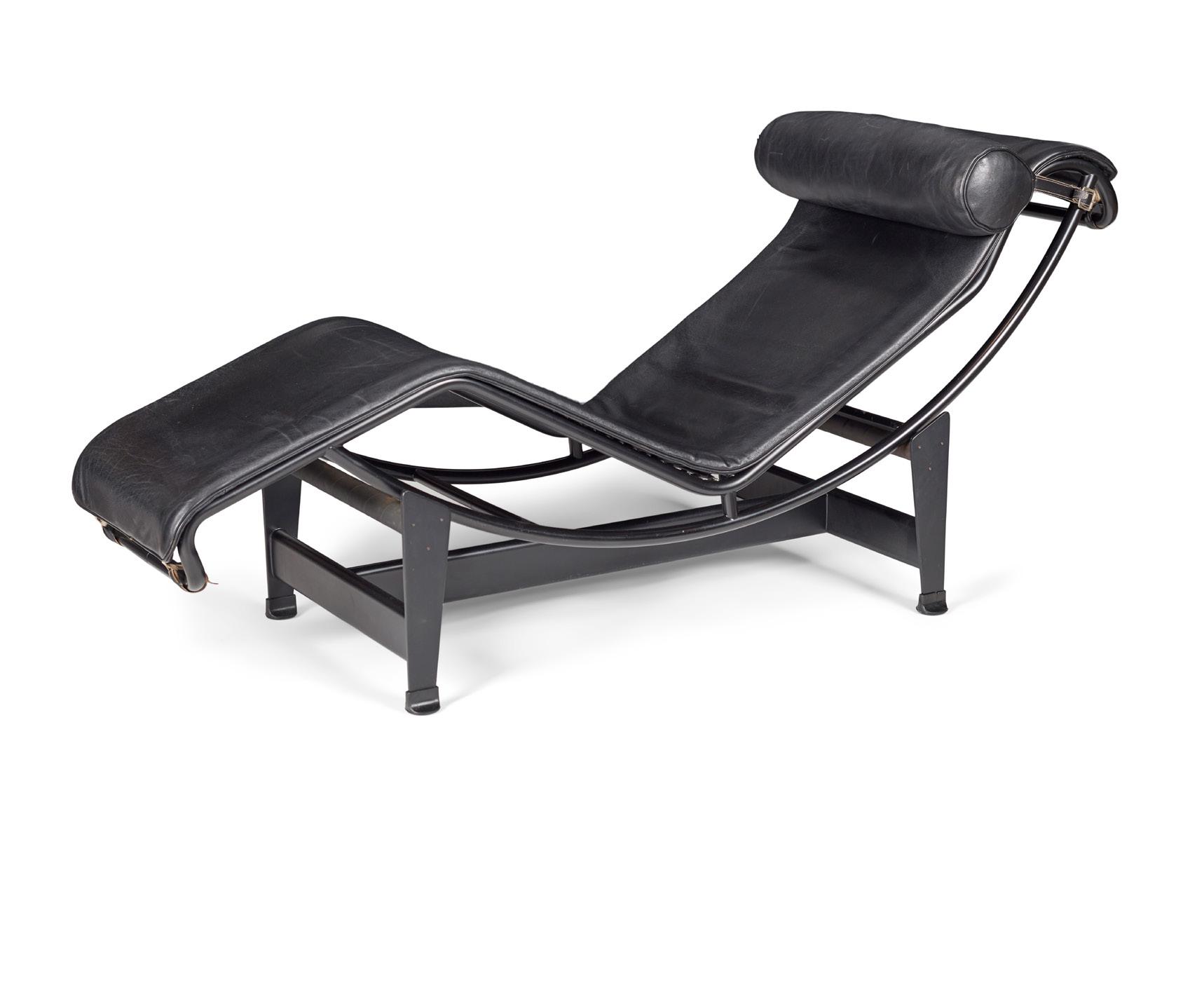
85cm high (adjustable), 163cm long, 56cm deep (33 1/2in high (adjustable), 64 1/8in long, 22in deep) £800-1,200
CHRISTIAN LIAIGRE (FRENCH 1943-2020)
PAIR OF ‘KALFA’ CLUB CHAIRS, DESIGNED 1994

with manufacturer’s labels, on stained wooden feet (2)
70cm high, 106cm wide, 78cm deep (271/2in high, 41 3/4in wide, 30 3/4in deep) £800-1,200
327 LE CORBUSIER (SWISS / FRENCH 1887-1965) FOR CASSINA
‘LC3’ TWO SEATER SOFA
manufacturer’s label (to underside of cushion), black leather and polished chrome steel 62cm high, 168cm, long, 73cm deep (24 3/8in high, 66 1/8in long, 28 3/4in deep)
£1,500-2,000
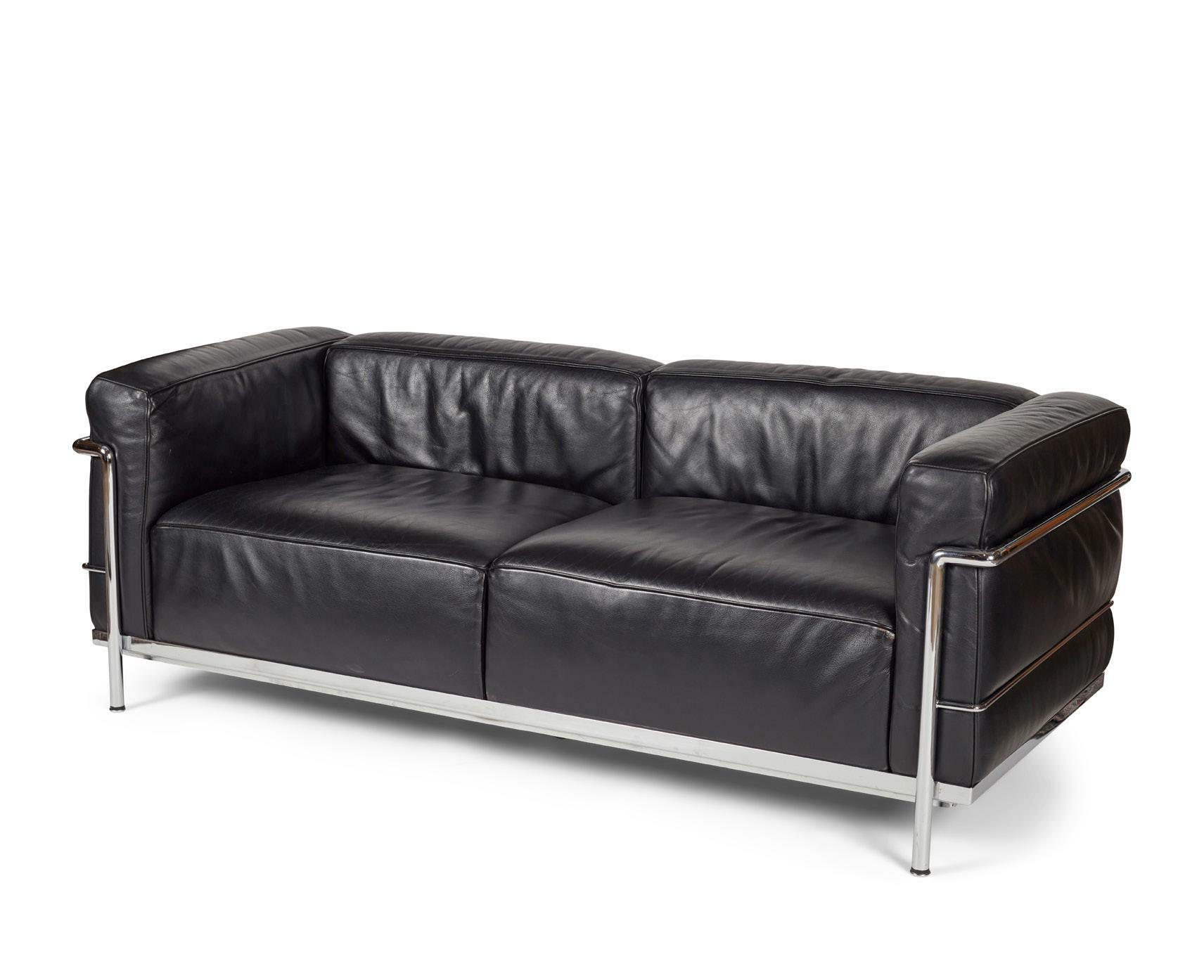
223
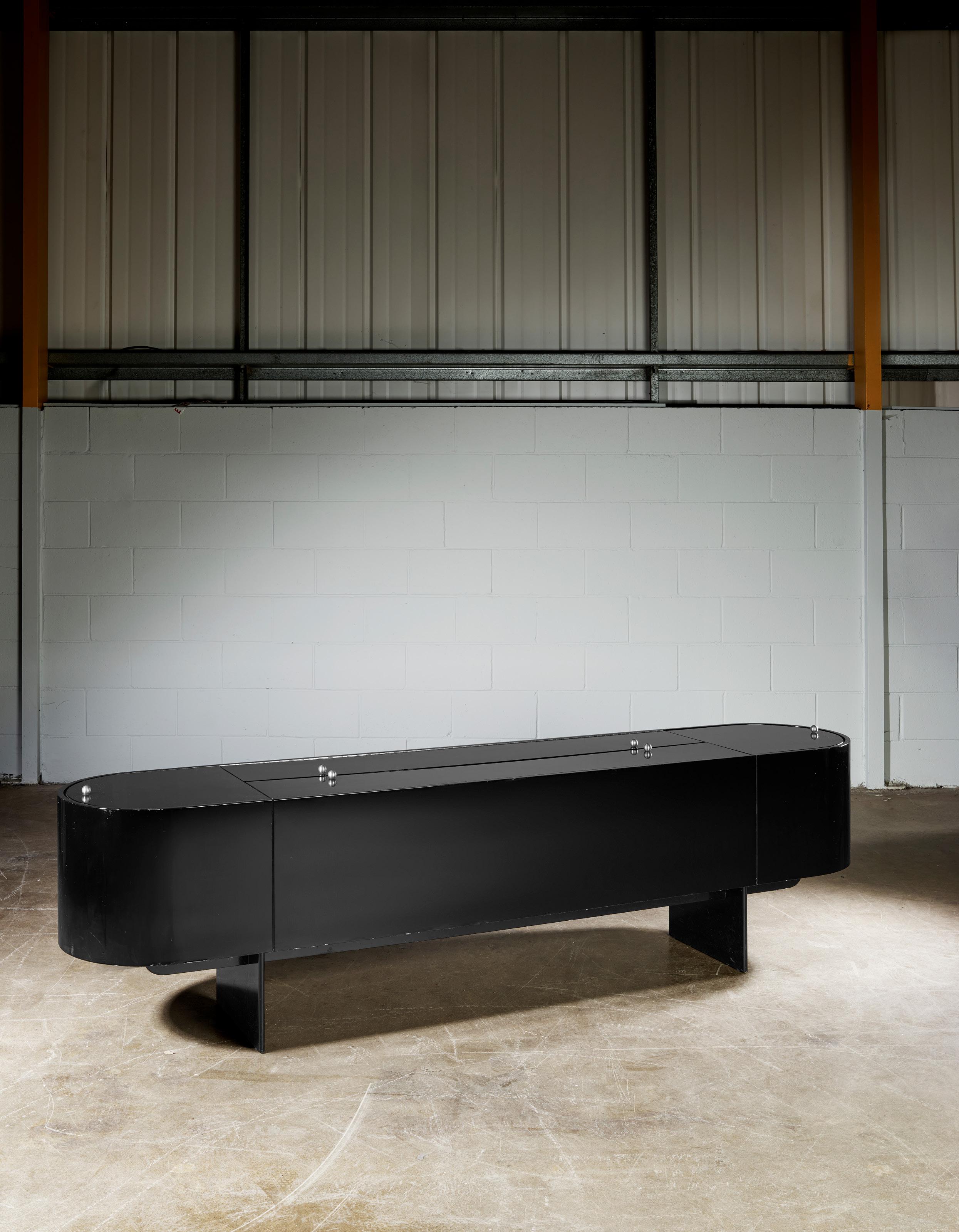
328 LUIGI SACCARDO (ITALIAN) FOR ARRMET ‘PARENTESI’ SIDEBOARD / BAR, DESIGNED 1976 lacquered wood and brushed steel 66cm high, approximately 248cm long, 50cm deep (26in high, approximately 97 5/8in long, 19 5/8in deep) Literature: Domus Magazine, No.555, 1976. £1,500-2,000 224
DAME ZAHA HADID (IRAQI / BRITISH 1950-2016) FOR WMF SIX FIVE-PIECE ‘ZAHA’ CUTLERY SETS, DESIGNED 2007 stainless steel, with manufacturer’s marks and original cases, comprising 6 knives, 6 forks, 6 small forks, 6 spoons, 6 small spoons (30) the knives 24.5cm long (9 5/8in long) £2,000-3,000

LINO SABATTINI (ITALIAN 1925-2016) ‘ALASKA’ VASE stamped with manufacturer’s mark, silver plated 25.5cm high, 49.5cm wide (10in high, 19 1/2in wide) £500-700
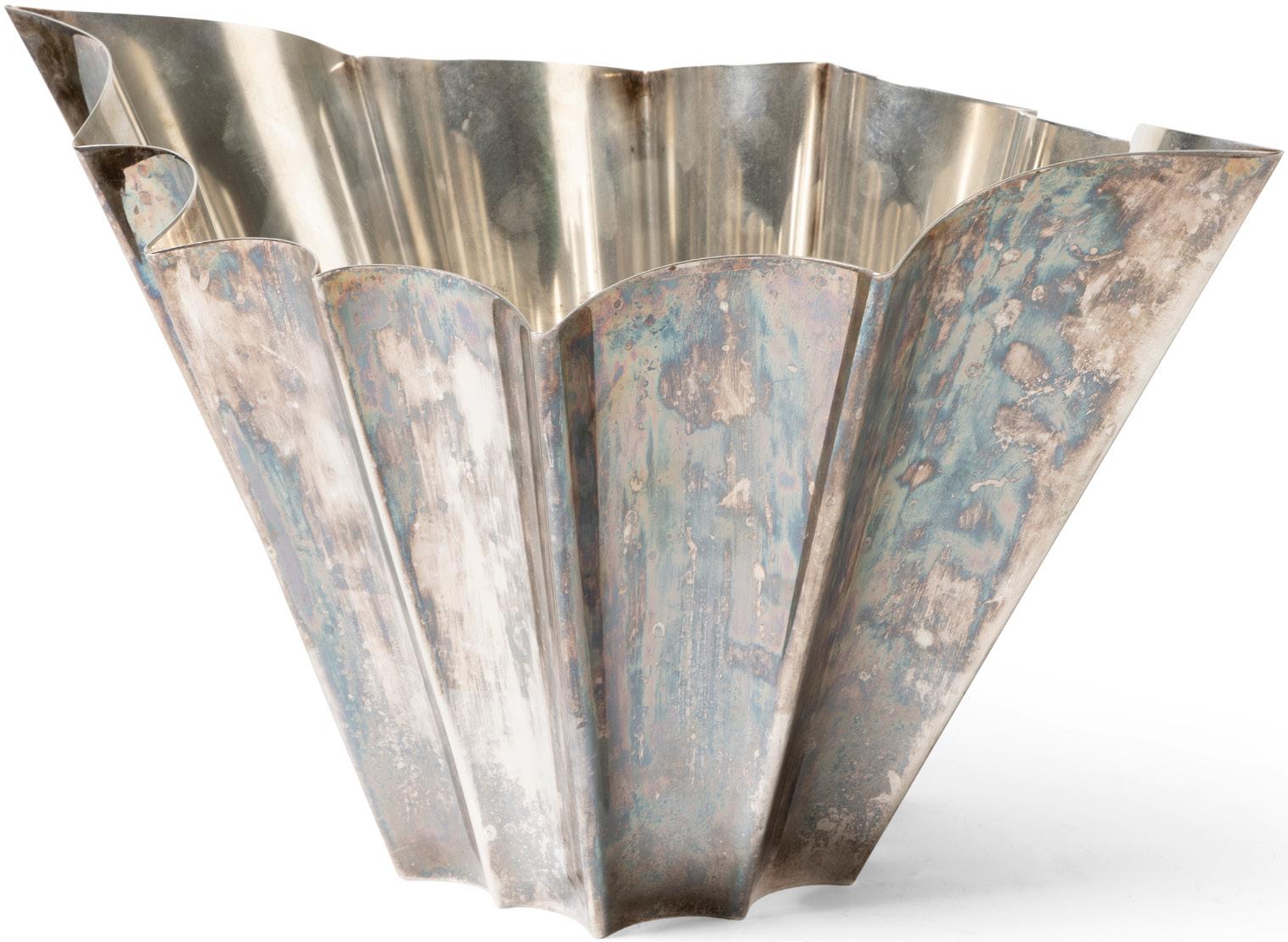
329
225 Other fees apply in addition to the hammer price: see the ‘Buyer’s Guide’ section on page 6
Y
CHARLES & RAY EAMES (AMERICAN 1907-1978 & 1912-1988)
FOR HERMAN MILLER AND HILLE LOUNGE CHAIR & OTTOMAN, DESIGNED 1956
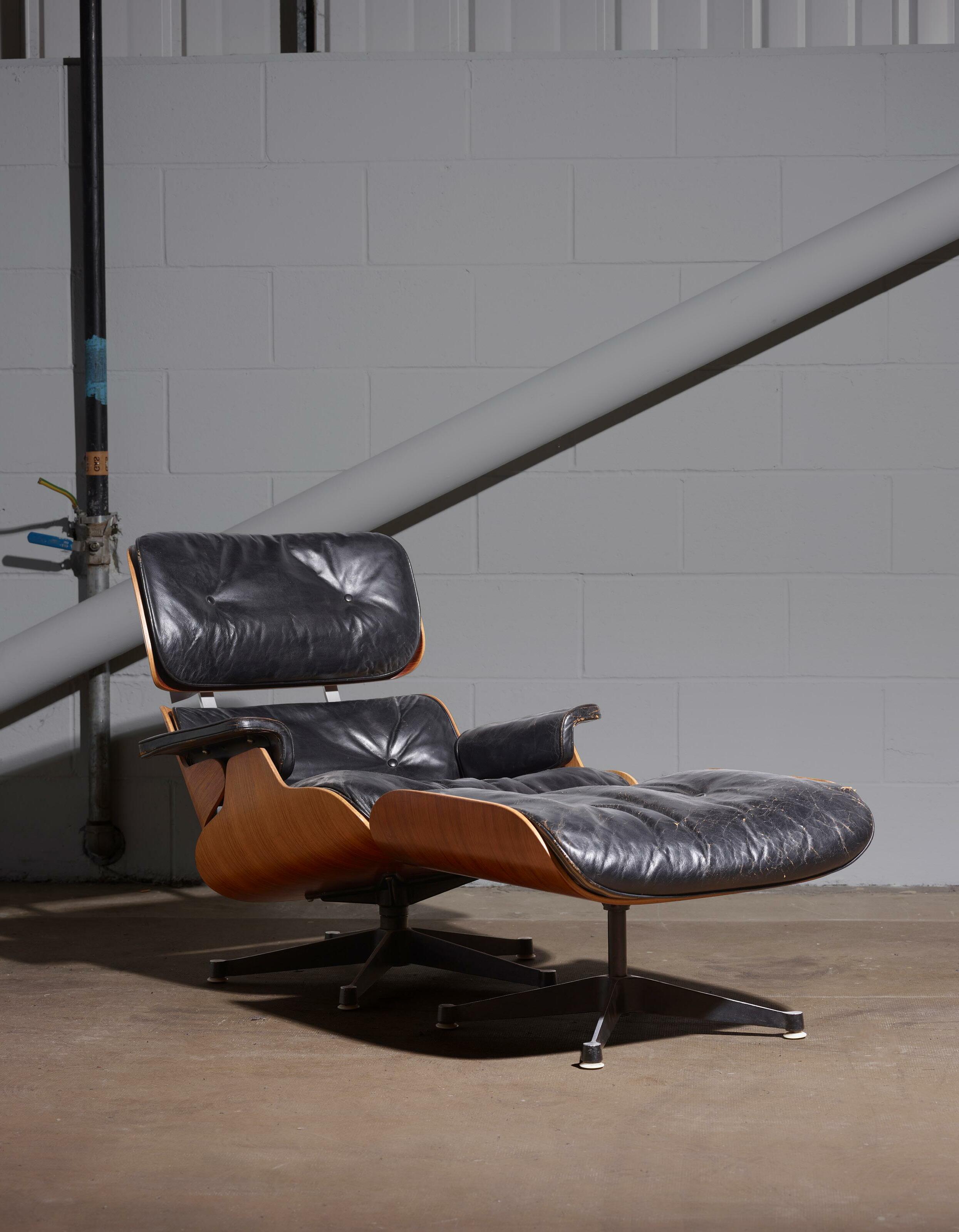
model nos. 670 and 671, manufacturer’s label, molded plywood, rosewood veneer, leather, enamelled aluminium and enamelled steel chair: 82cm high, 83cm wide (32 1/4in high, 32 5/8in wide)
Note: Sold in compliance with CITES regulations, with (non-transferable) Transaction Specific Certificate no. 622293/01.
331
£1,000-1,500
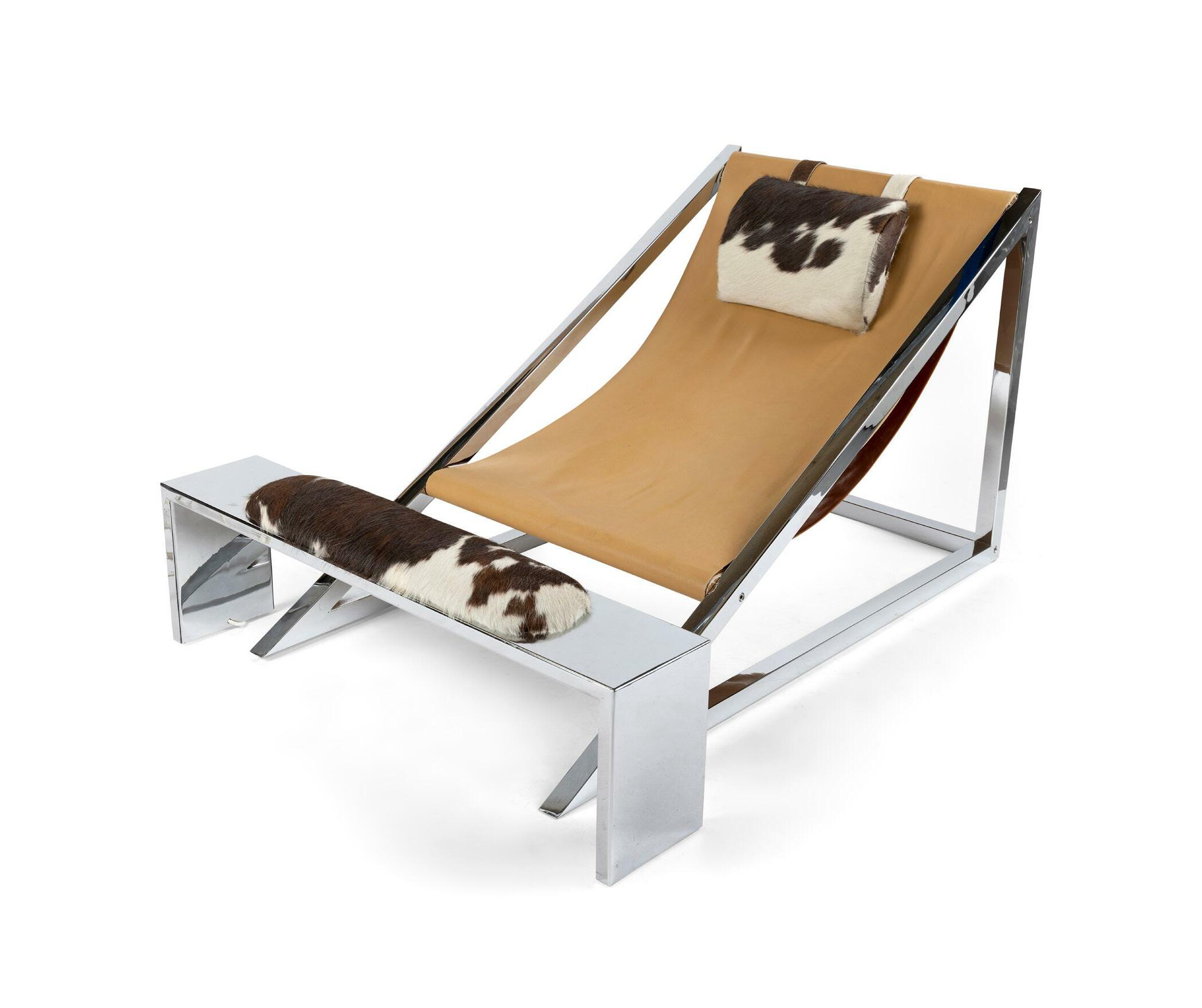
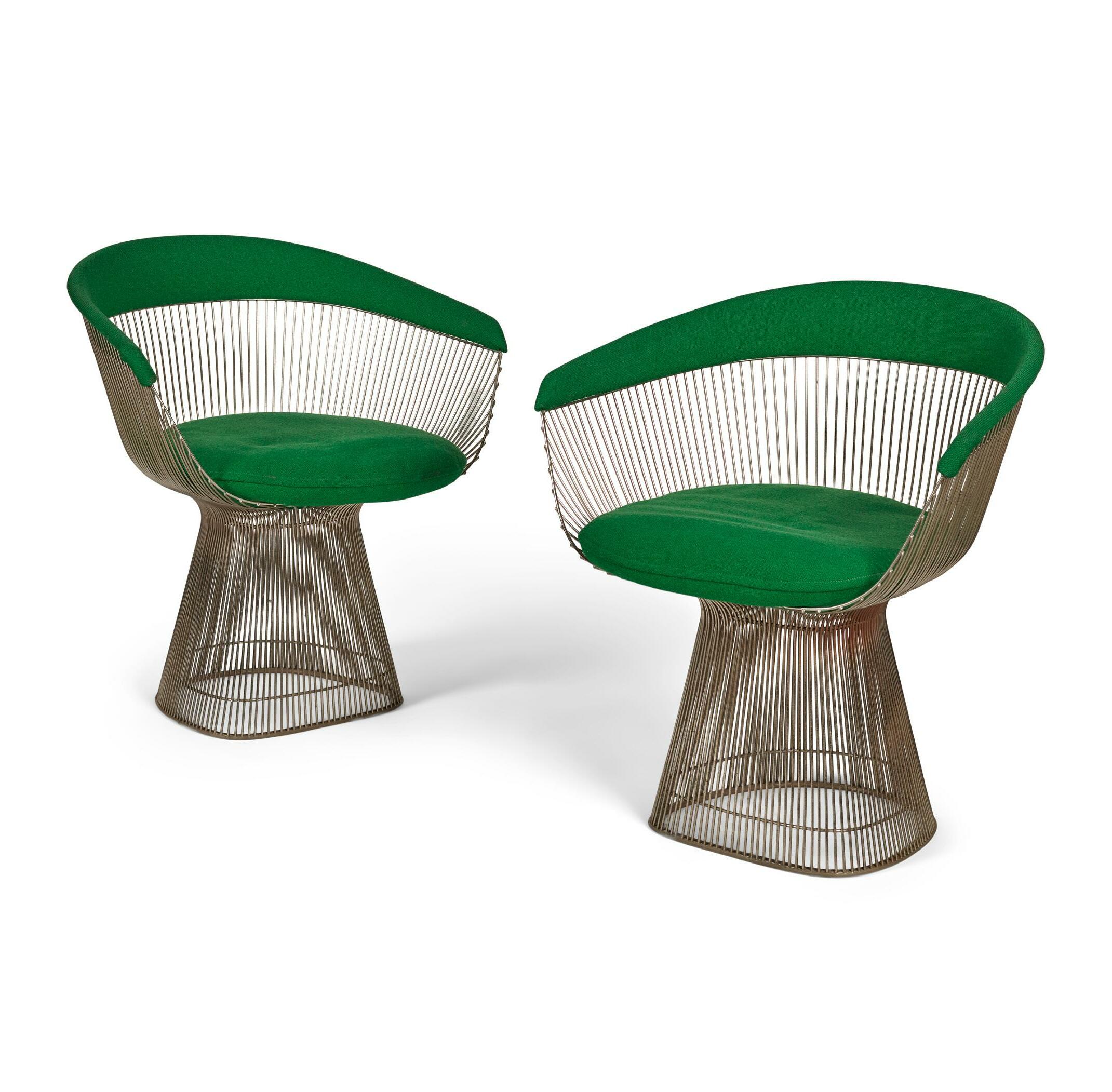
332 ARCHIZOOM ASSOCIATI FOR POLTRONOVA ‘MIES’ ARMCHAIR AND OTTOMAN, DESIGNED 1969 chrome-plated steel, hide, rubber chair: 75.7cm high, 73.7cm wide, 129.5cm long (29 3/4in high, 29in wide, 51in long) £2,000-3,000 333 WARREN PLATNER (AMERICAN 1919-2006) FOR KNOLL INTERNATIONAL PAIR OF CHAIRS, DESIGNED 1962, MANUFACTURED 1973 decal manufacturer’s label, ‘Houston Chronicle 7181’ metal label to one chair, steel and green upholstery (2) 74cm high, 69cm wide, 51cm deep (29 1/8in high, 27 1/8in wide, 20in deep) £2,000-3,000 227 Other fees apply in addition to the hammer price: see the ‘Buyer’s Guide’ section on page 6
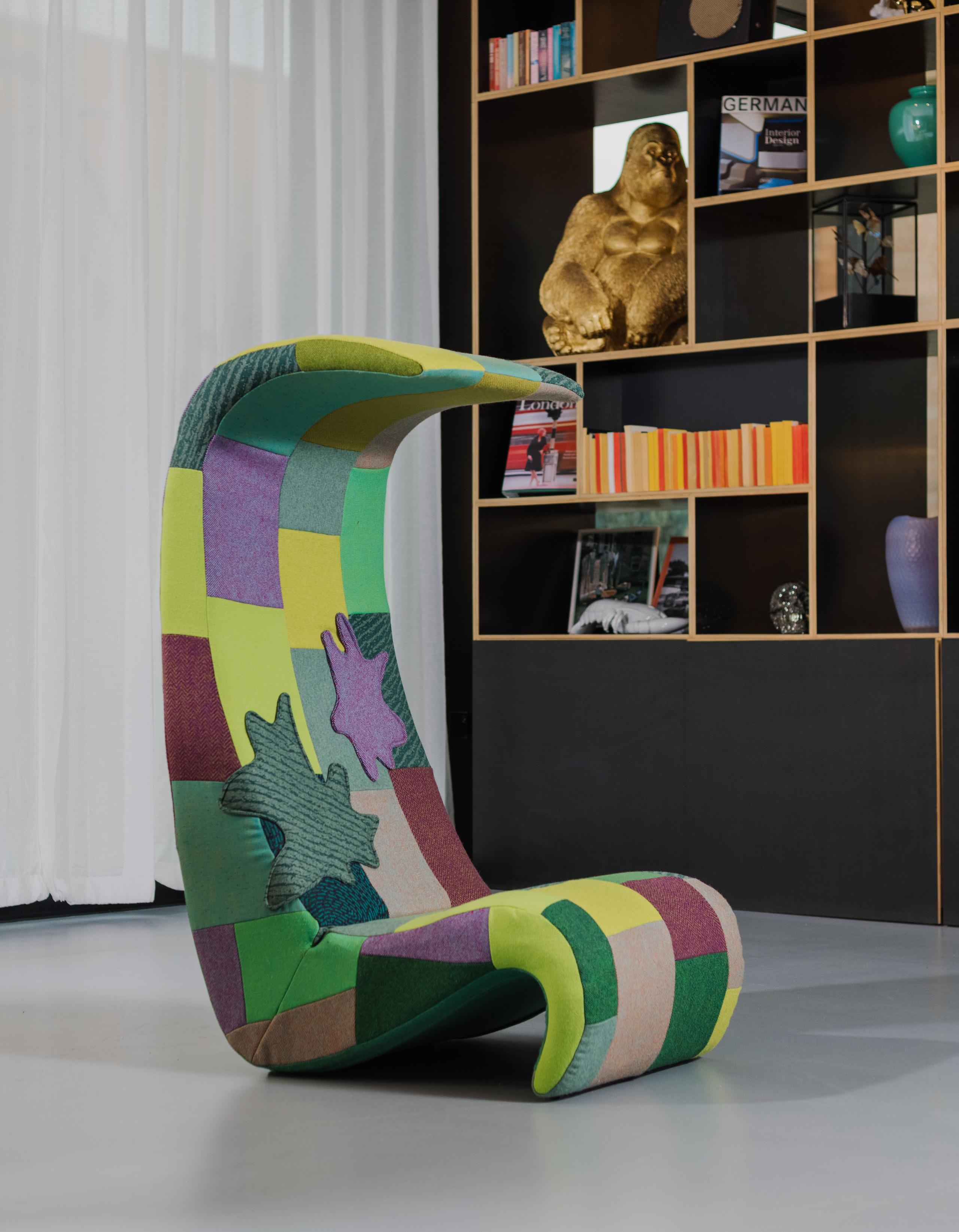
334 VERNER PANTON (DANISH 1926-1998) FOR VITRA REPURPOSED BY YUN LIU (CHINESE 1996-) FOR CITIZENM AMOEBE HIGHBACK CHAIR, 1970 / 2021 Bute Fabrics 129.5cm high, 60cm wide, 87cm deep (60in high, 23 5/8in wide, 34 1/4in deep) This chair is being auctioned to fund future sustainability education at the Glasgow School of Art. £800-1,200 228 Other fees apply in addition to the hammer price: see the ‘Buyer’s Guide’ section on page 6
Coinciding with COP26, the international conference on climate change in Glasgow in 2021, the affordable luxury hotel brand citizenM partnered with The Glasgow School of Art and Bute Fabrics to give new life to three pieces of the instantly recognisable furniture by Vitra that adorn their hotel. Two of these objects are being auctioned to fund future sustainability education at the Glasgow School of Art.
The Amoebe Highback Chair by Verner Panton (Danish 1926- 1998) was originally designed for Vitra in 1970, and was repurposed by Masters student Yun Liu. For this piece, Liu was inspired by the Glasgow Botanical Gardens. Using a patchwork-style motif with mixed fabrics, she imagined the chair as a living organism that lands on lawns across the city, absorbing and feeding off its greenery.
Originally designed for Vitra in 2006, this Alcove Two-Seater by Ronan and Erwan Bouroullec (French 1971- and 1976-) was reimagined by Masters student Ying Chang. For her sofa, Chang was inspired by the Bouroullec’s concept of seating that creates a room within a room, and explored how that can be translated to work within a space such as a hotel lobby to create a sanctuary from such a busy public space.
citizenM was launched in 2008 with a purpose – to disrupt the traditional, stale hotel industry. Rattan Chadha was inspired by his employees to create a hotel for today’s frequent travellers, giving them everything they need and nothing they don’t.
RONAN AND ERWAN BOUROULLEC (FRENCH 1971- AND 1976-) FOR VITRA REPURPOSED BY YING CHANG (CHINESE 1995-) WITH FILAMENT PD FOR CITIZENM
ALCOVE HIGHBACK SOFA, 2006 / 2021 unique prototype, Bute Fabrics and metal 138cm high, 155cm wide, 91cm deep (54 3/8in high, 61in wide, 35 3/4in deep) Alcove Two-Seater for Vitra reimagined by Ying Chang who graduated from MDes in Interior Design from the Glasgow School of Art in 2021. This piece is being auctioned to fund future sustainability education at the Glasgow School of Art. £1,000-2,000
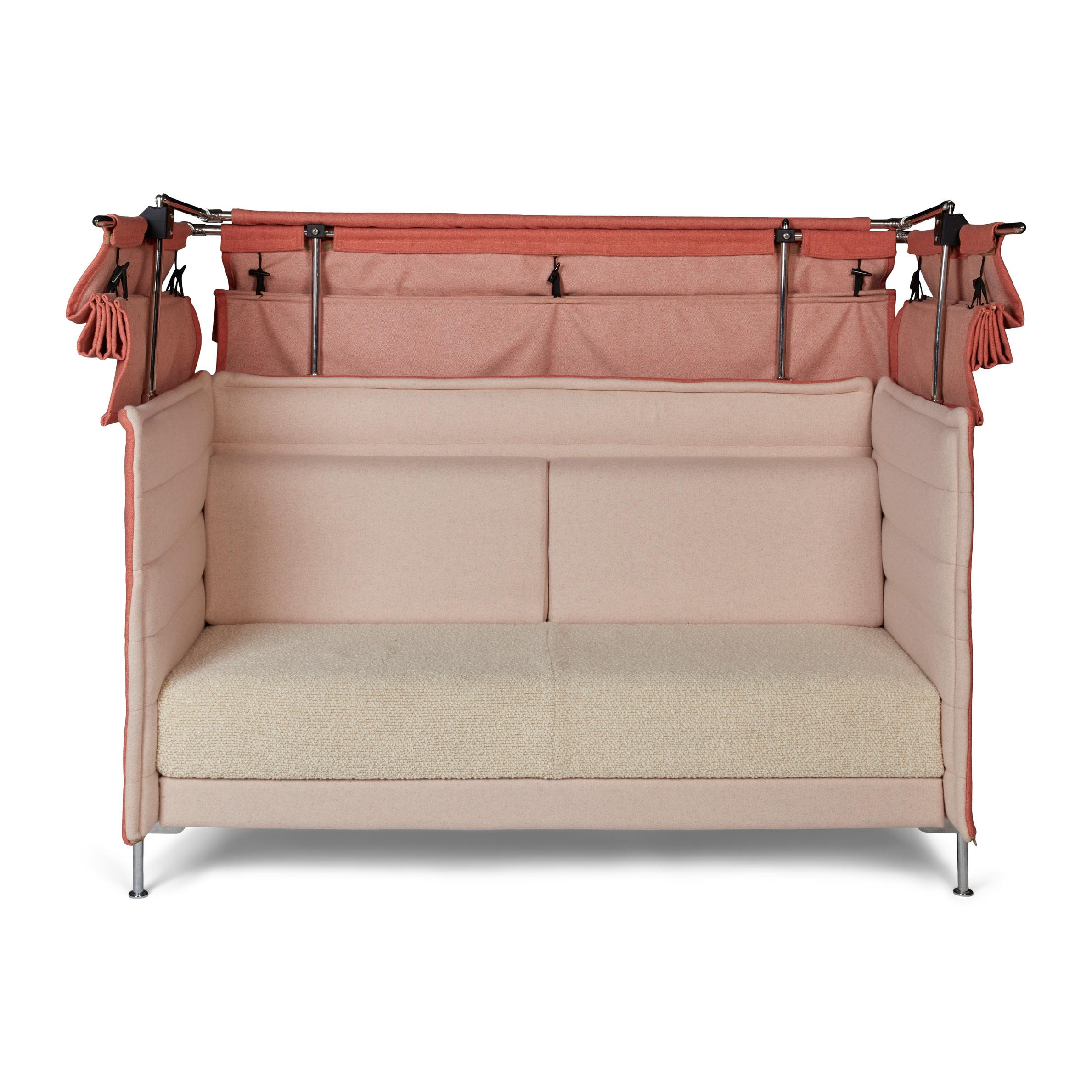
335
229 Other fees apply in addition to the hammer price: see the ‘Buyer’s Guide’ section on page 6
336
MATTHEW HILTON (BRITISH 1957-)
ANTELOPE TABLE, DESIGNED 1987 signed and numbered ‘M. HILTON 008’, sycamore, aluminium and MDF 72.5cm high, 85cm diameter (28 1/2in high, 33 1/2in diameter)
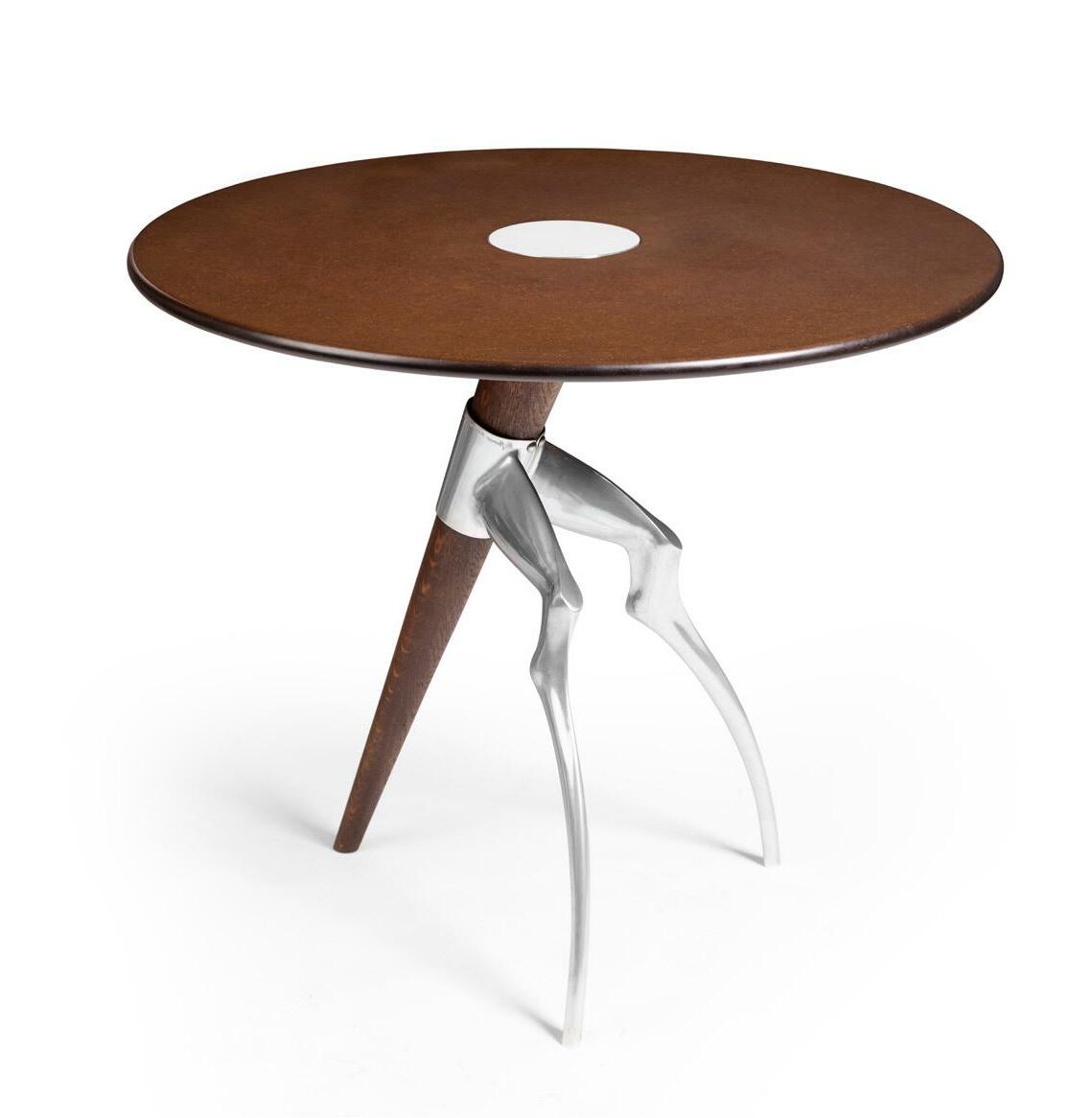
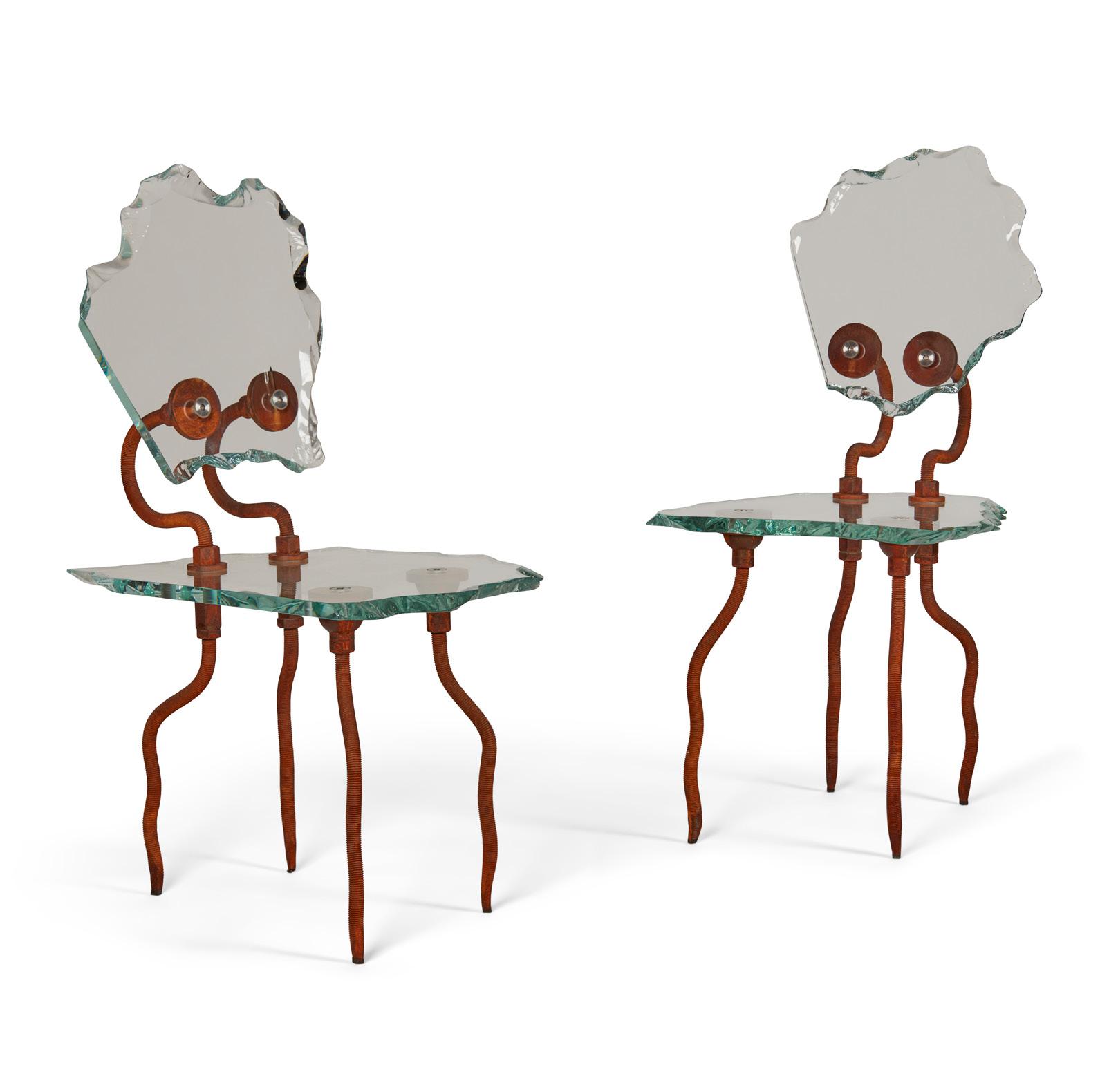
Provenance: Themes & Variations, London; Private Collection, London.
337
DONALD JUDD (AMERICAN 1928-1994) FOR LEHNI OF SWITZERLAND
‘NO. 15’ CHAIR, 1984/2018 signed with impressed manufacturer’s mark ‘Donald Judd TM / Swiss made by Lehni / 15 © 2018 /137’ (to underside), grey painted aluminium 75cm high, 50cm wide, 50cm deep (29 1/2in high, 19 3/4in wide, 19 3/4in deep) £2,000-3,000
338 DANNY LANE (AMERICAN 1955-)
PAIR OF ‘ETRUSCAN’ CHAIRS
etched ‘DANNY LANE/ 6.09/ 1:12’, the other ‘2:12’, rust finished mild steel legs, components and glass (2)
1:12: 92cm high, 45cm wide, 52cm deep (36 1/4in high, 17 3/4in wide, 20 1/2in deep); 2:12: 91.5cm high, 41.8cm wide, 59cm deep (36in high, 16 3/8in wide, 23 1/4in deep)
£2,500-3,500
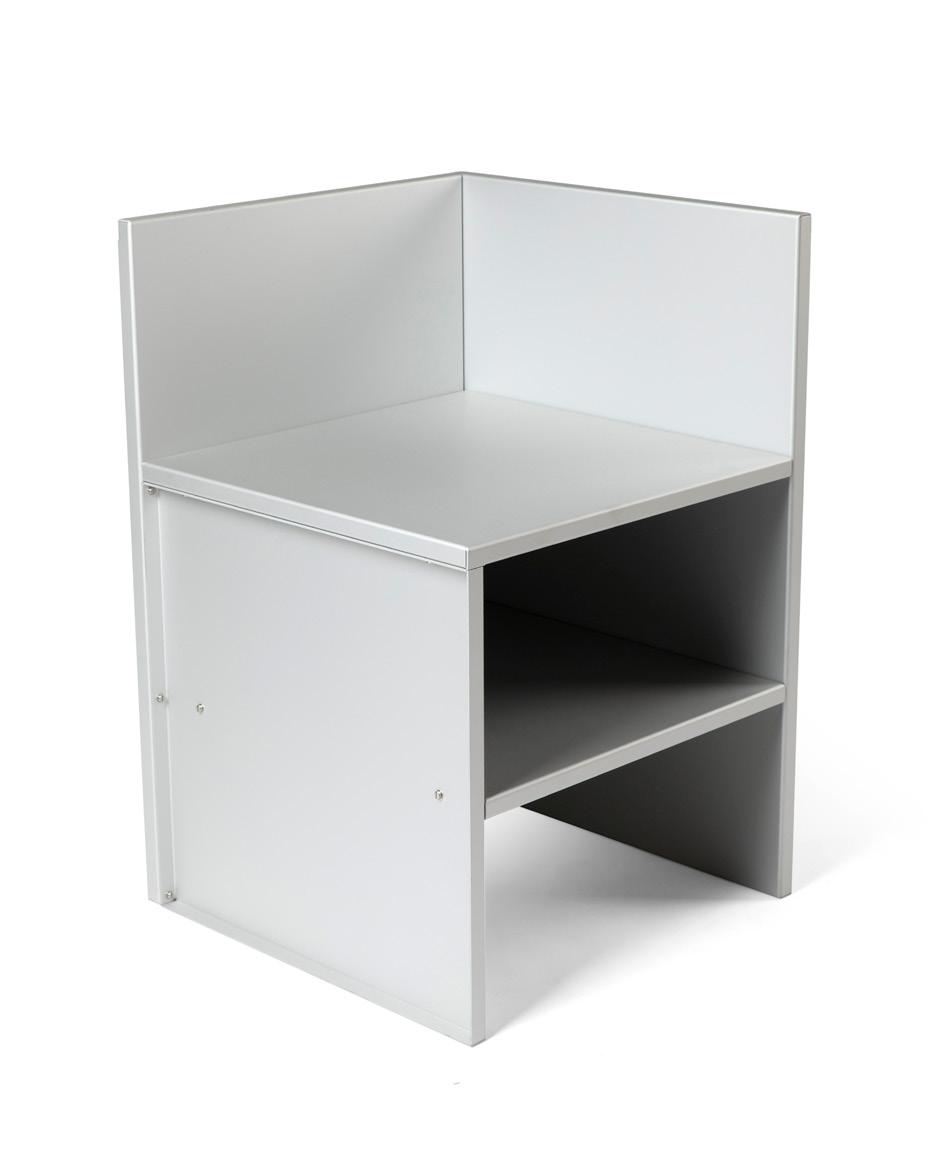
£500-700
230 Other fees apply in addition to the hammer price: see the ‘Buyer’s Guide’ section on page 6
RICK OWENS (AMERICAN 1962-)
PAIR OF ‘HALF BOX’ CHAIRS, DESIGNED CIRCA 2011
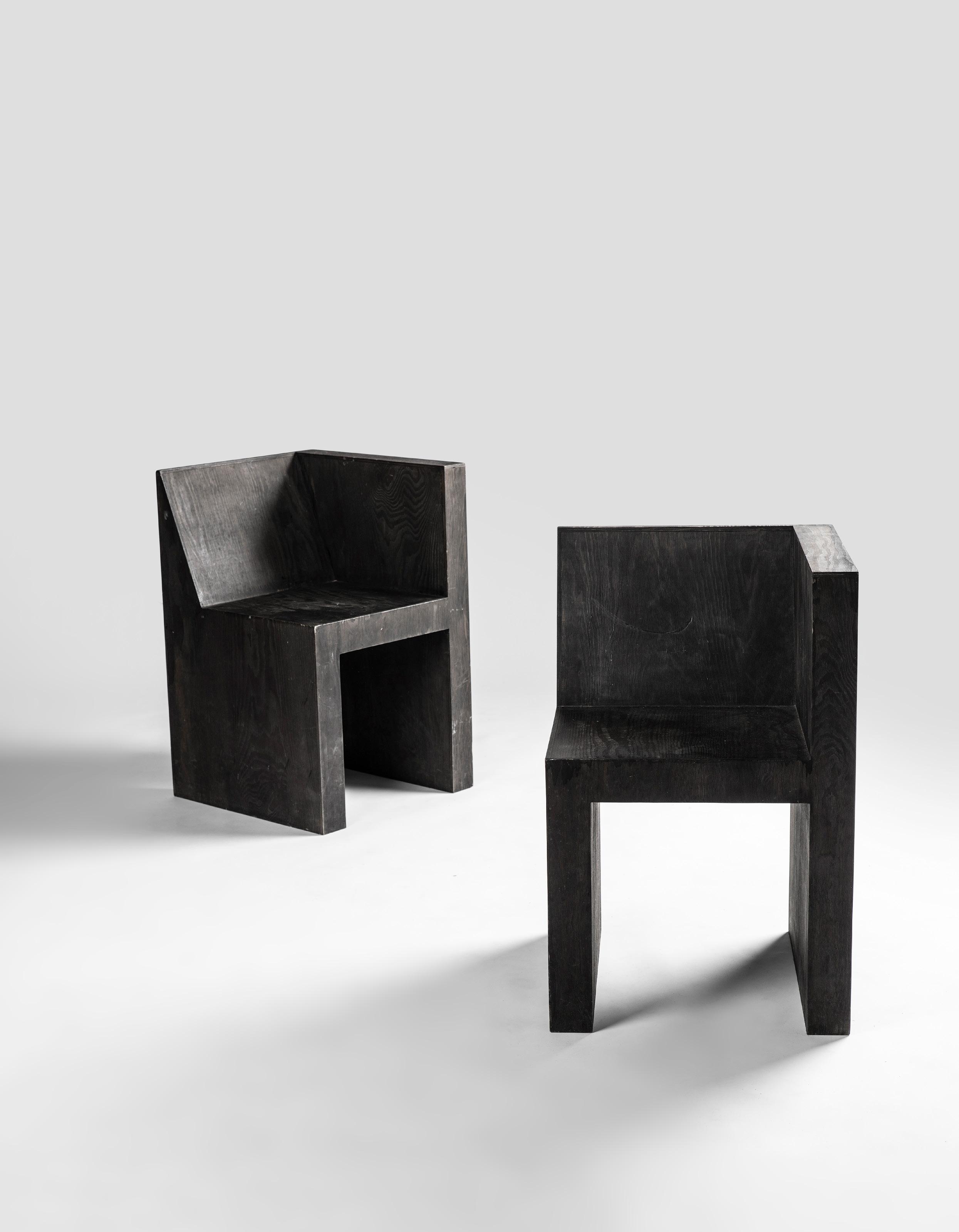
black plywood (2)
each 76cm high, 50cm wide, 49cm deep (30in high, 19 3/4in wide, 19 1/4in deep)
Acclaimed fashion designer Rick Owens began designing bespoke furniture, in his dark and minimalist style, for his bunker-style loft in Los Angeles. From this he has developed a collection of pieces, working alongside leading crafts people, that articulates his singular style in the volume and cut of the works. Owens’ designs evoke classic furniture, including the ‘Curial’ ceremonial chair, the ‘Trident’ chair and current works, the ‘Halfbox’ chairs, crafted from a chest, all developed in his juxtaposing palette of black and white.
£6,000-8,000
339
231 Other fees apply in addition to the hammer price: see the ‘Buyer’s Guide’ section on page 6
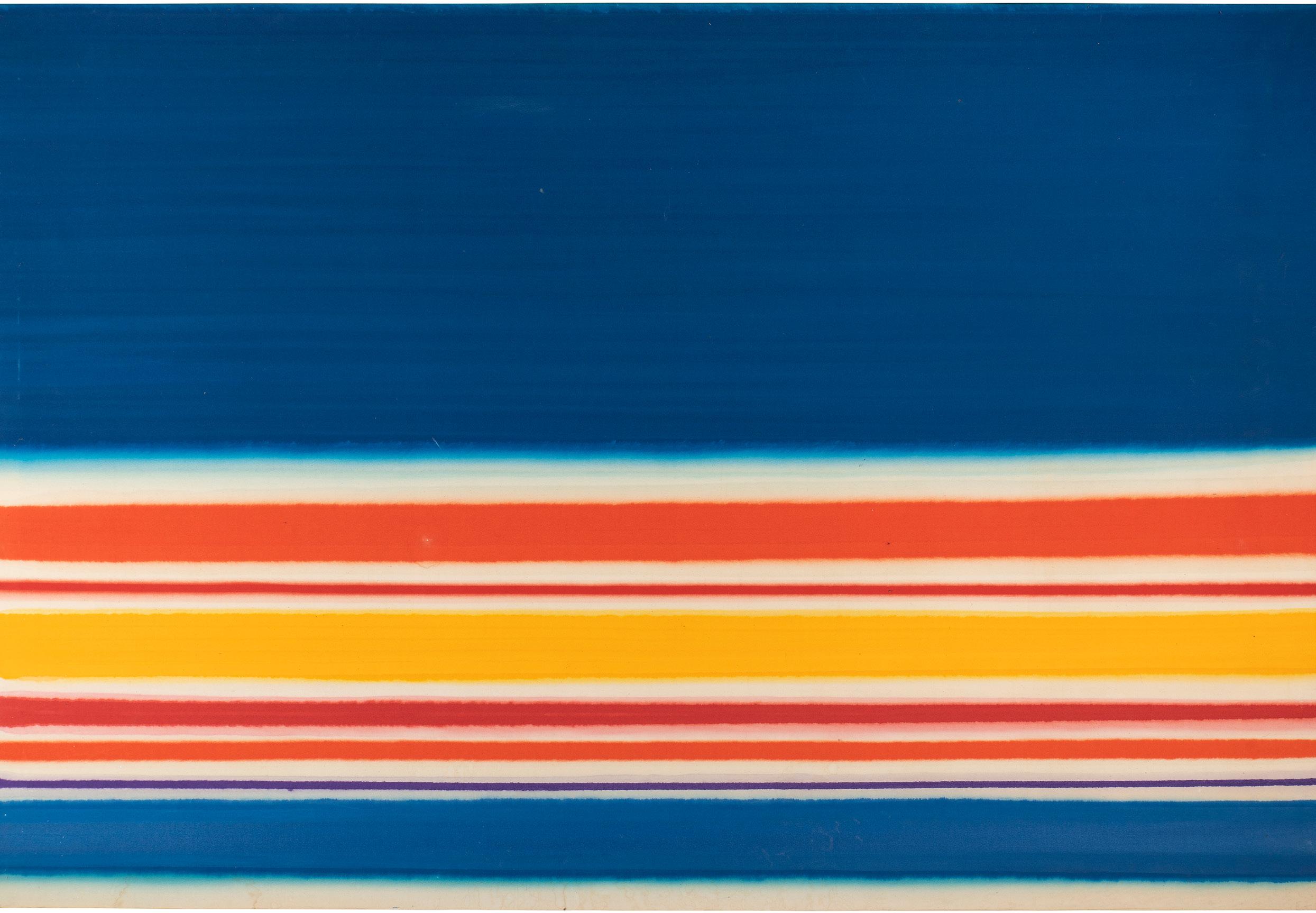
340 § JOHN BAINBRIDGE COPNALL (BRITISH 1928-2007) BLUE AND COLOURED STRIPES, 1972-5 signed and dated (to reverse), oil on canvas 171.5cm x 255cm (67 1/2in x 100 3/8in) £800-1,200 232 Other fees apply in addition to the hammer price: see the ‘Buyer’s Guide’ section on page 6
PANAMARENKO (BELGIAN 1940- 2019)
CHAMP MAGNETIQUE “A” (MAGNETIC FIELD “A”), 1988 signed and inscribed ‘enig A van A tot J. Panamarenko’ (on a label affixed to the underside), printed paper laid down on wooden board, polyurethane G4, aluminium, metal, four flat coils and electric cable on a metal stand 127cm high x 66cm wide x 60cm deep (50in high x 26in wide x 25 5/8in deep)
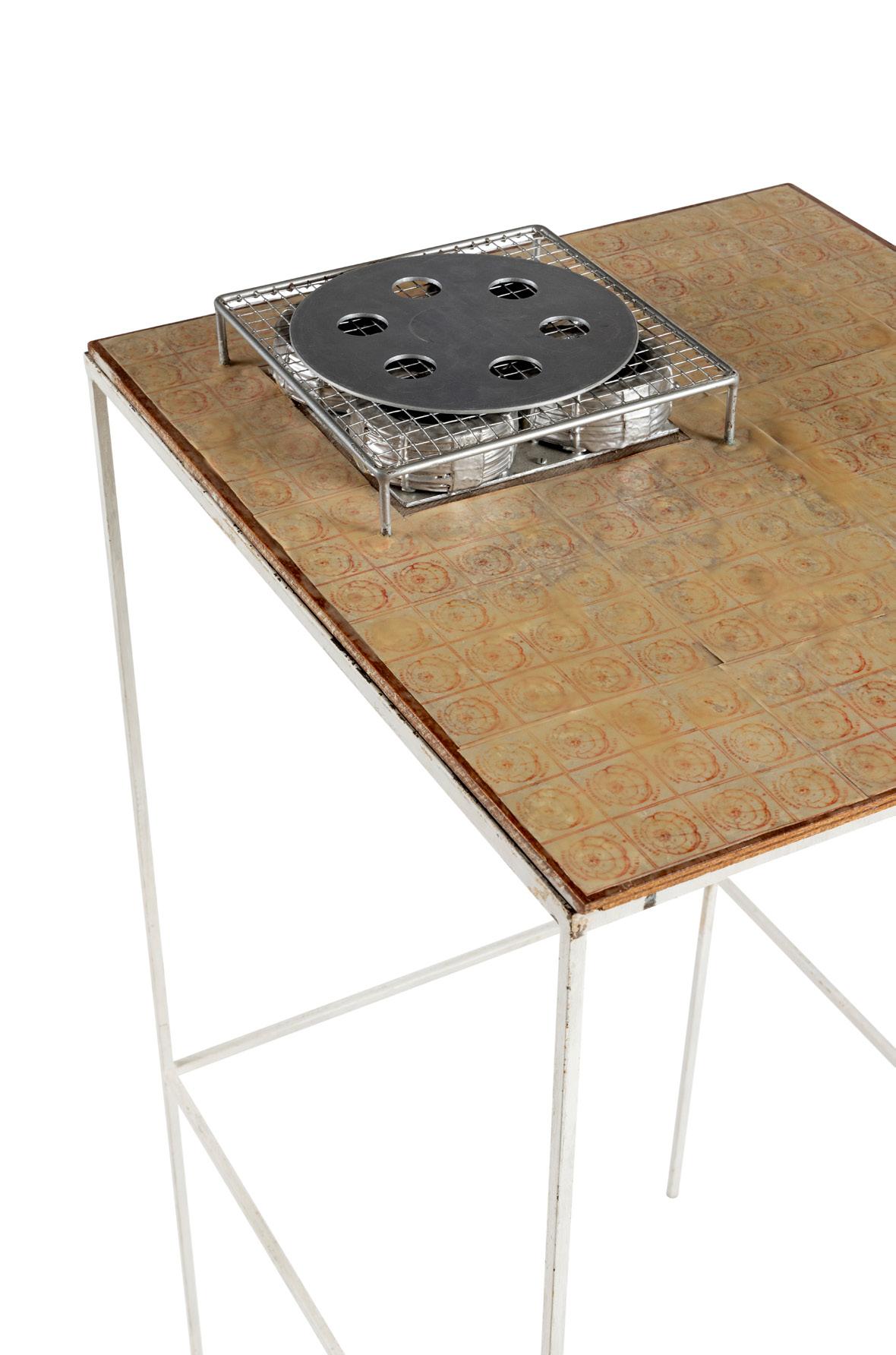
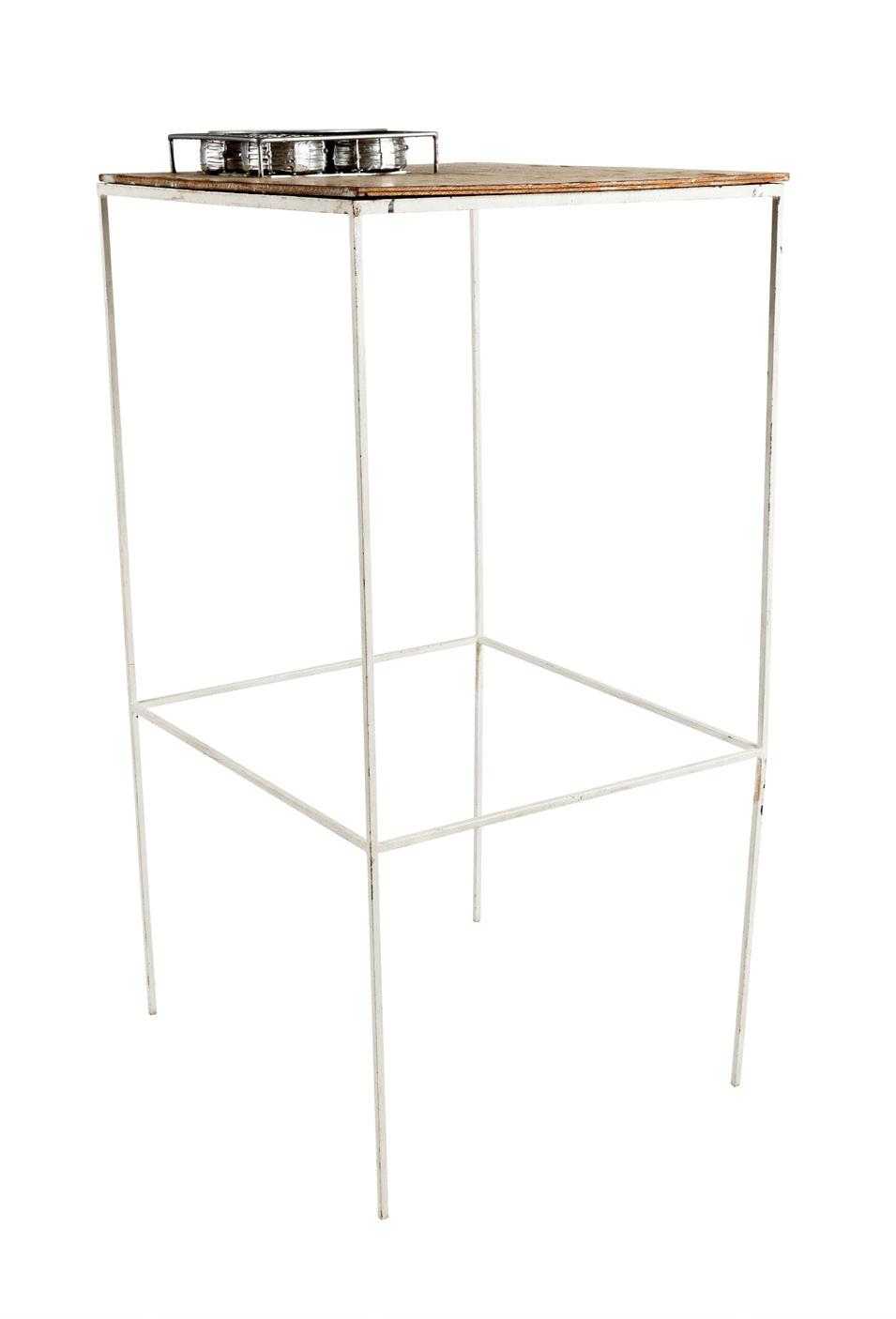
Provenance: Galerie Isy Brachot, Paris; Gimpel Fils, London.
Exhibited: Gimpel Fils, London, ‘Panamenko’, July - August 1993 (illustrated in catalogue); Gimpel Fils, London, ‘Collectors Choice’, 21 January - 4 March 2017.
Literature: Theys, Hans, Panamarenko: A Book by Hans Theys, Brussels, 1992, no.102, p.107; Panamarenko, Galerie Isy Brachot, Paris, 1989, p.21 (illustrated); £5,000-7,000
Henri van Herwegen, known by the name Panamarenko, became renowned as a painter, performance artist and sculptor whose fascination with science and technology led him to create aircraft and flying objects both semi-functional and fantastical. Martha Schwendener wrote ‘to understand Panamarenko’s work, you have to understand that lift-off is only one of many possible measures of success.’ (Artforum Review, December 2001)
Born to a family of boat mechanics in Antwerp in 1940, Panamarenko studied at the city’s Royal Academy of Fine Arts from 1955 to 1960. He soon became interested in aeroplanes and human powered flight, and this was reflected in the name he chose which is purportedly an acronym for ‘Pan American Airlines and Company’. Projects stemmed from his first major work Das Flugzeug in 1967, to a Zepplin named The Aeromodeller (1969-71) and Archiaeopterix III (1990), a mechanical chicken intended to look like a pre-historic flying dinosaur.
Champ Magnetique is part of a group of works that focuses on the kinetic force of a mechanical movement and magnetic forces, with the intention of animating the metallic disc, awaiting levitation, playing with ideas of spacecraft using electromagnetic energy. Panamarenko continued these ideas with a prototype for a seven metre in diameter flying saucer Bing of the Ferro Lusto X (1997). Designed to capture then recycle magnetic fluids, which in turn created sideways and upward movement, it offered the viewer the hypothetical knowledge of possible escape.
341 §
233
342 § IAN DAVENPORT (BRITISH 1966-)
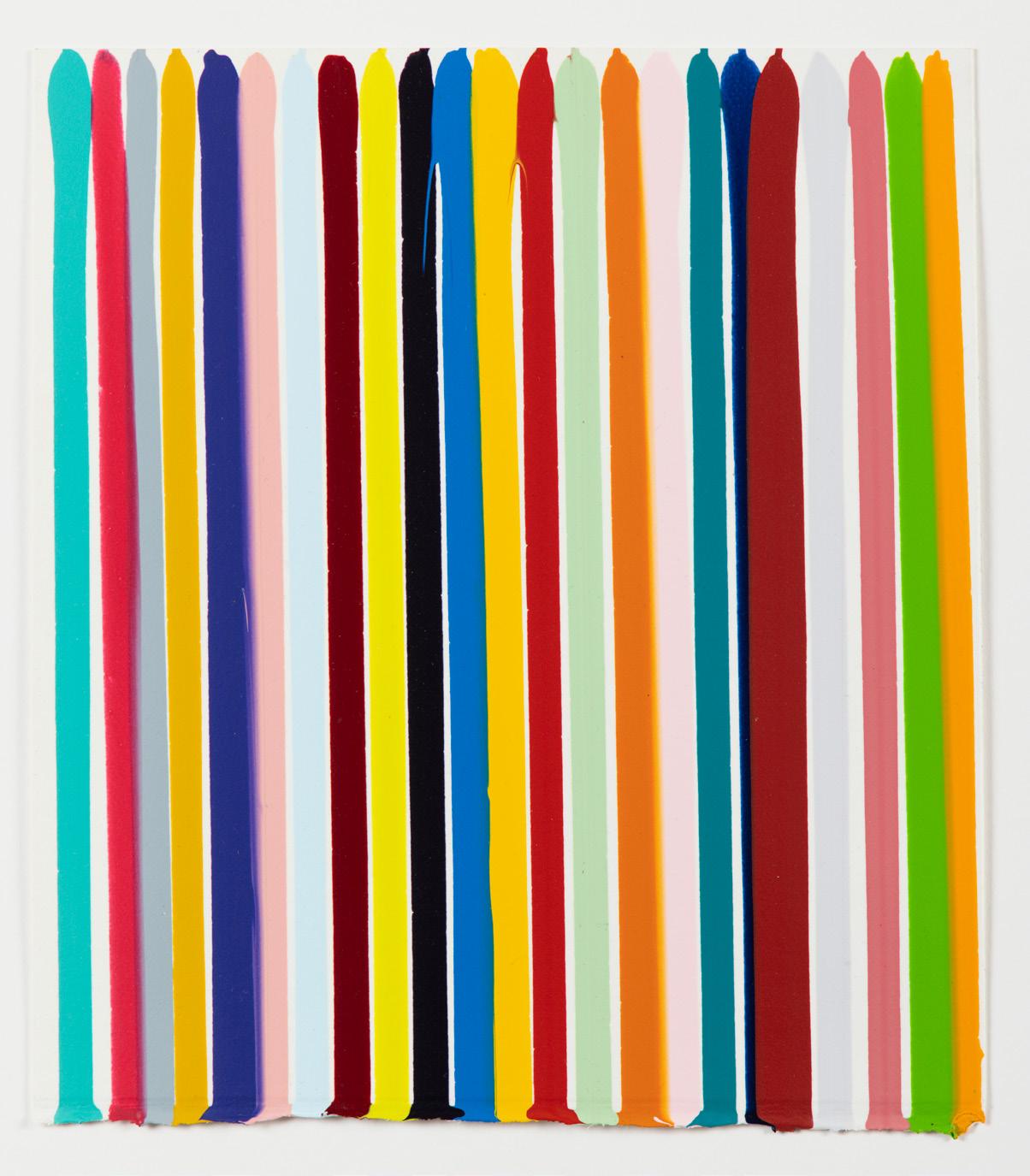
UNTITLED (NO.15), 2014
15/30, signed, dated and numbered in pencil (to reverse), acrylic on paper
30.5cm x 27cm (12in x 10 5/8in)
From a series of thirty works undertaken by Davenport to mark the publication of the artist’s monograph.
£3,000-5,000
343 §
DAMIEN HIRST (BRITISH 1965-)
FRUITFUL (SMALL), 2020 (H8-2) 2060/3308, signed and numbered in pencil on label (to reverse), laminated giclée print on aluminium composite panel, published by HENI Editions, London 39cm x 39cm (15 3/8in x 15 3/8in)
£700-1,000
234
MARK FRANCIS (BRITISH 1962-)
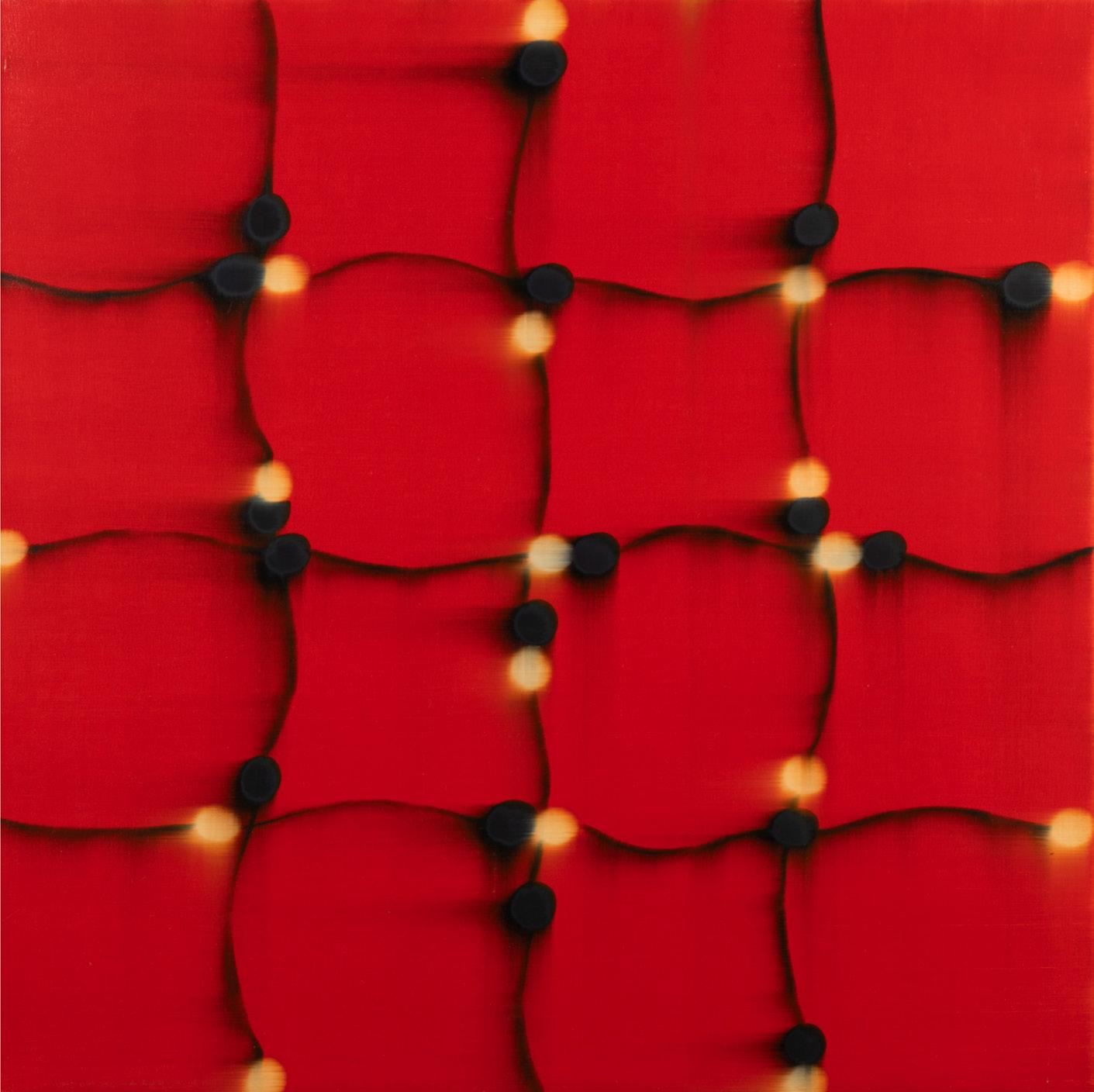
PULSE (STUDY),
344 §
GRID /
1999 signed, titled and dated (to reverse), oil on canvas 91cm x 91cm (35 7/8in x 35 7/8in) Provenance: Kerlin Gallery, Dublin, 1999; Private Collection, London. £5,000-7,000
“I like to use a grid to convey order and chaos. Both things can reside on the same plane”
Mark Francis 235 Other fees apply in addition to the hammer price: see the ‘Buyer’s Guide’ section on page 6
345 §
DAN BALDWIN (BRITISH 1972-)
AUTUMN LEAVES IN THE CITY
titled and inscribed (to reverse), acrylic on canvas 99cm x 99cm (39in x 39in)
£2,000-3,000
346 §
DAN BALDWIN (BRITISH 1972-)
VASE, 2008
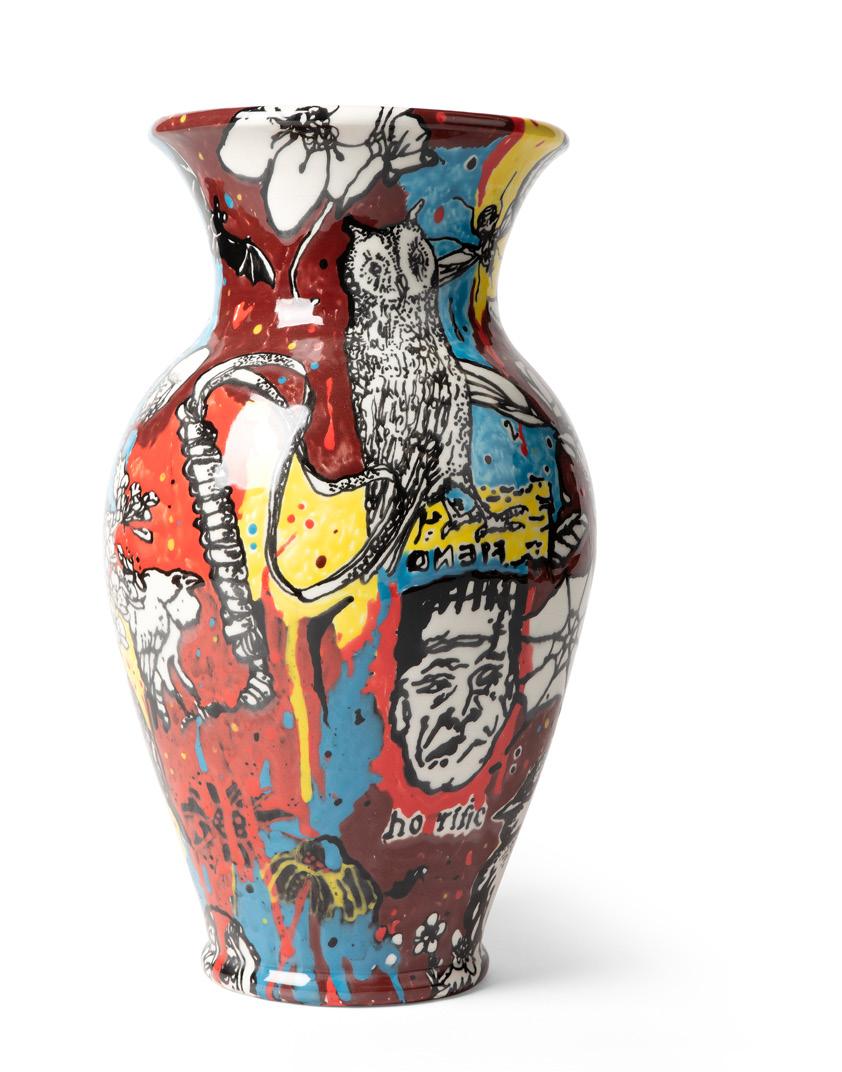
signed and dated (to base), handpainted earthenware 35cm high (13 3/4in high)
£800-1,200
347 §
DAN BALDWIN (BRITISH 1972-)
LOVE AND DECAY, 2007
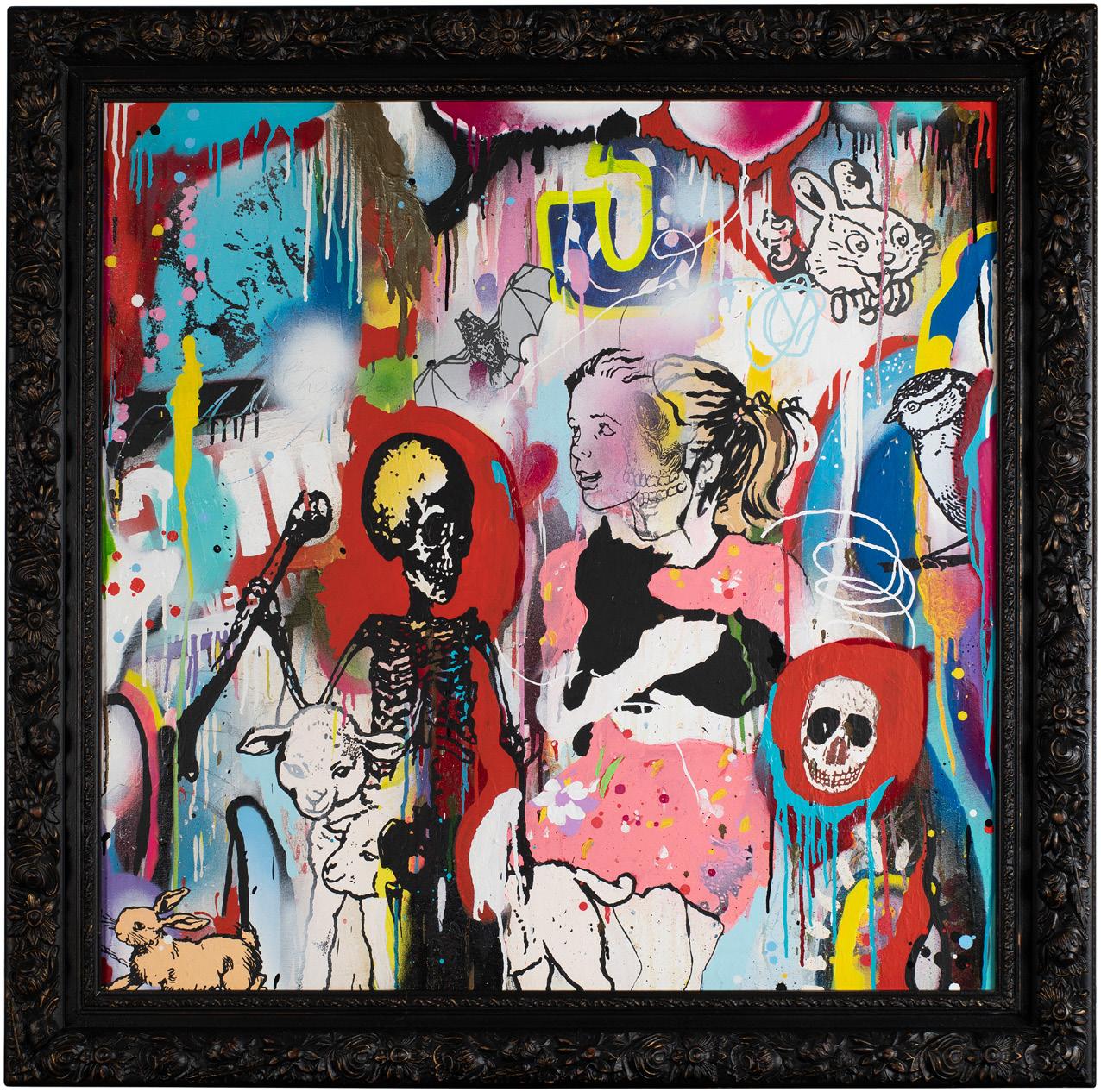
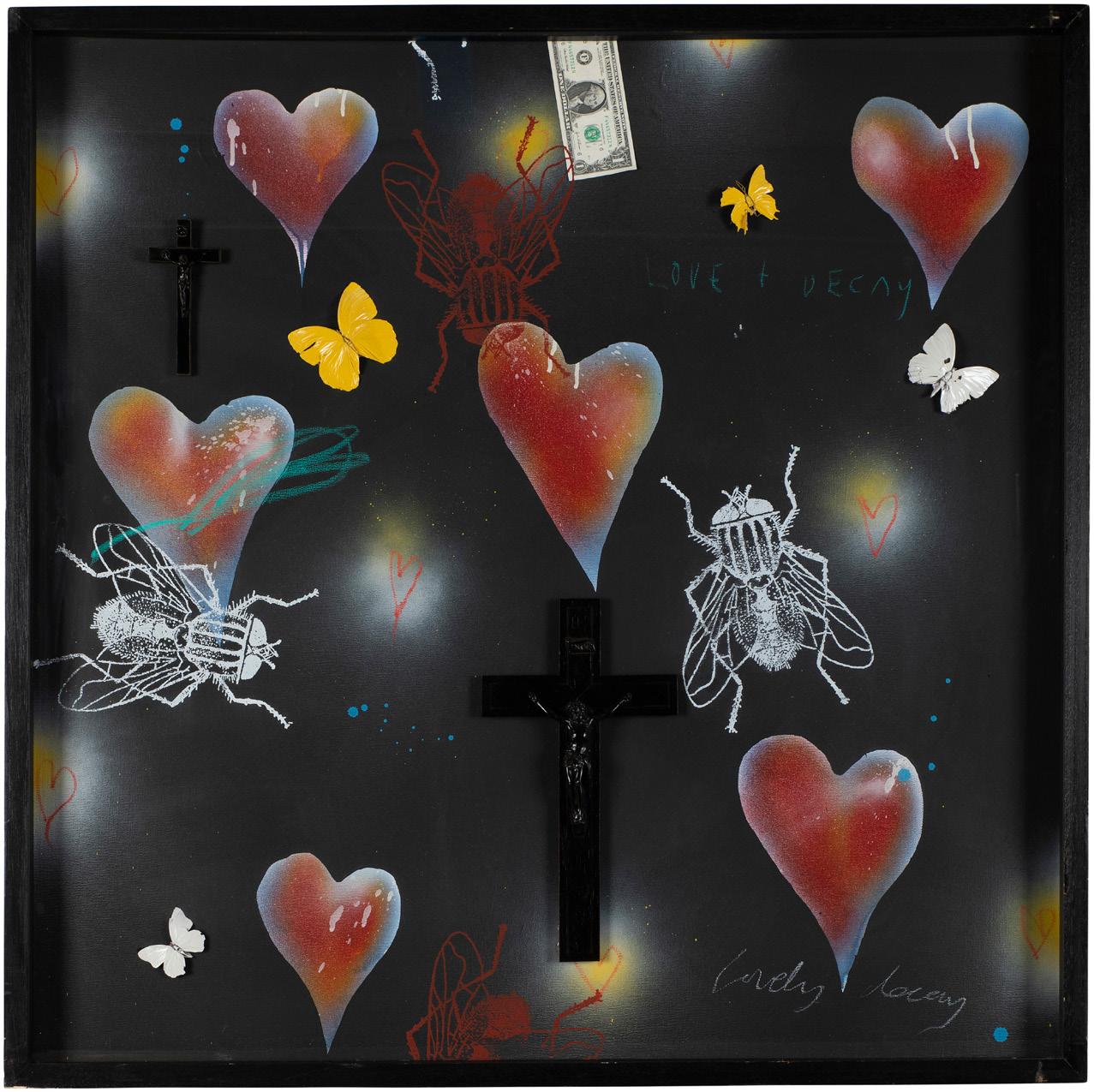
signed, titled and dated (to reverse), acrylic and mixed media on canvas 99cm x 99cm (39in x 39in)
£1,500-2,000
348 §
DAMIEN HIRST (BRITISH 1965-)
POLITENESS, 2021 (H9-4)
1231/1549, numbered and signed in pencil (to label to reverse), from The Virtues, laminated giclée print on aluminium composite panel, published by HENI Editions, London 119.5cm x 95.5cm (47 3/8in x 38in)
£10,000-15,000
236 Other fees apply in addition to the hammer price: see the ‘Buyer’s Guide’ section on page 6
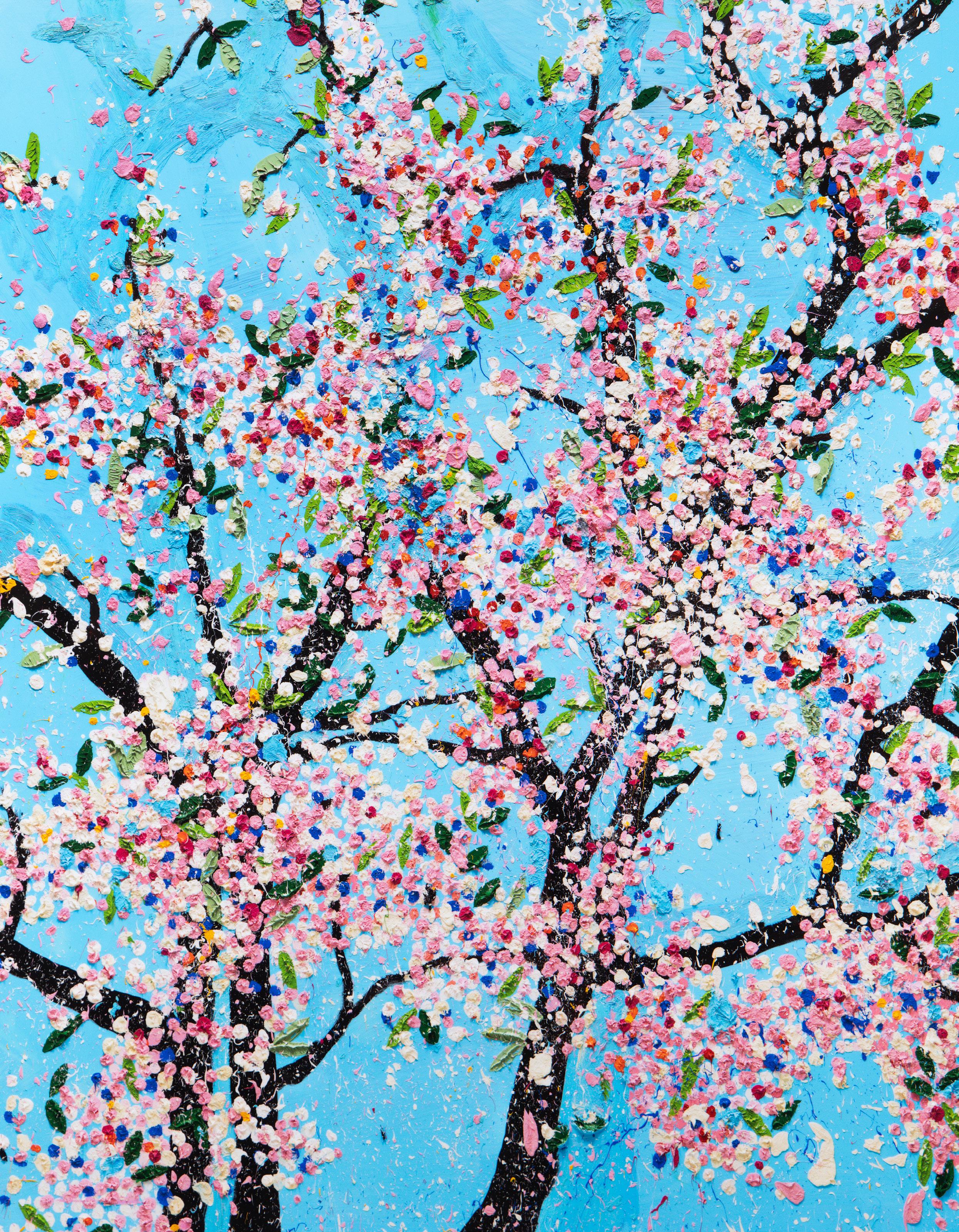
349 § DAMIEN HIRST (BRITISH 1965-) THEODORA, 2022 (H10-3) 400/3315, signed and numbered in pencil (to label to reverse), from The Empresses, laminated giclée print on aluminium composite panel screenprinted with glitter, published by HENI Editions, London 100cm x 100cm (39 1/4in x 39 1/4in) £3,000-5,000
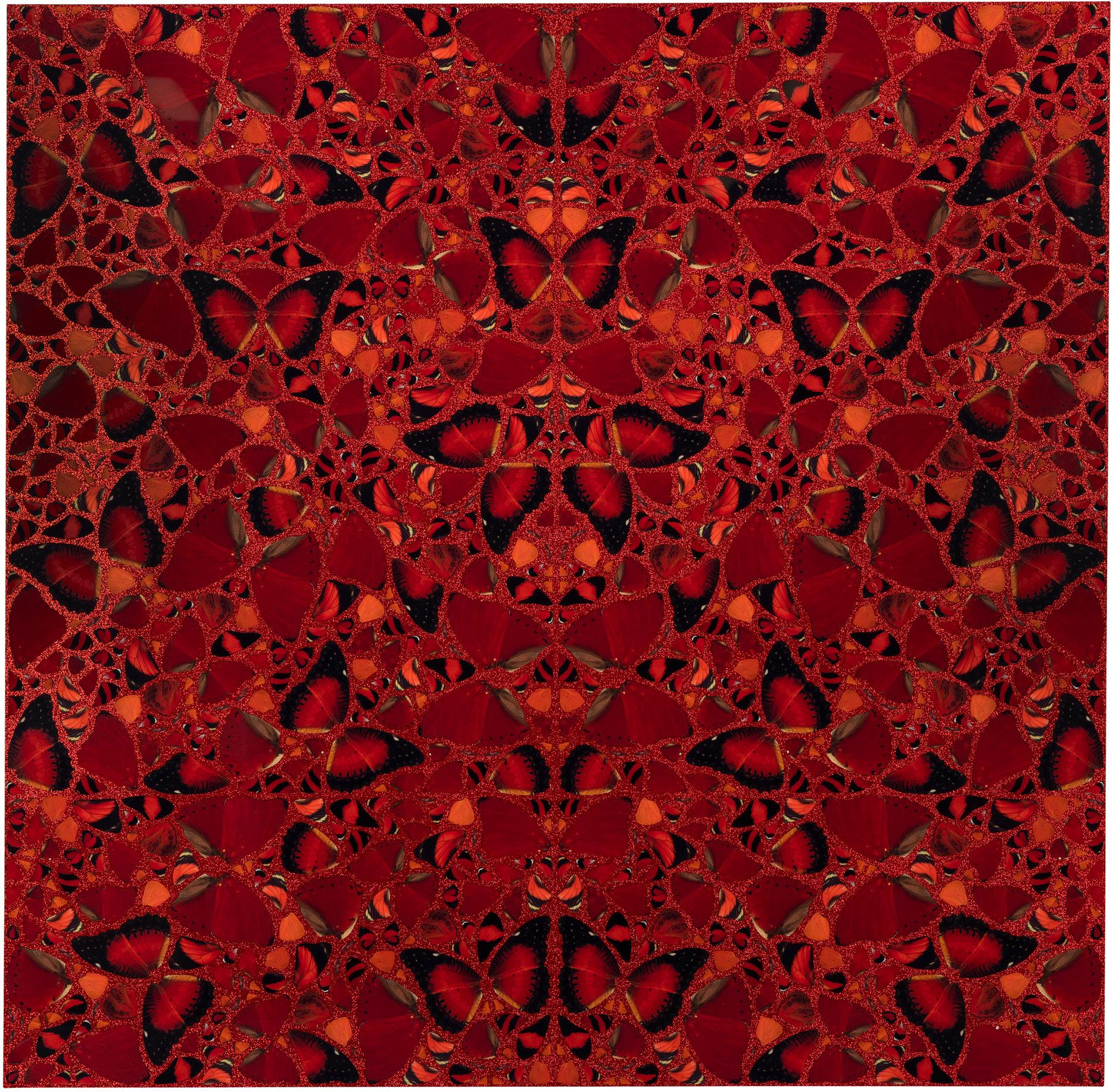
350
YAYOI KUSAMA (JAPANESE 1929-) PUMPKINS (YELLOW/BLACK AND RED/WHITE), 2016 the set of two cast resin multiples, each stamped with the artist’s name on the underside, in original boxes (2) each 10cm high, 8cm wide, 8cm deep (4in high, 3in wide, 3in deep) £700-1,000
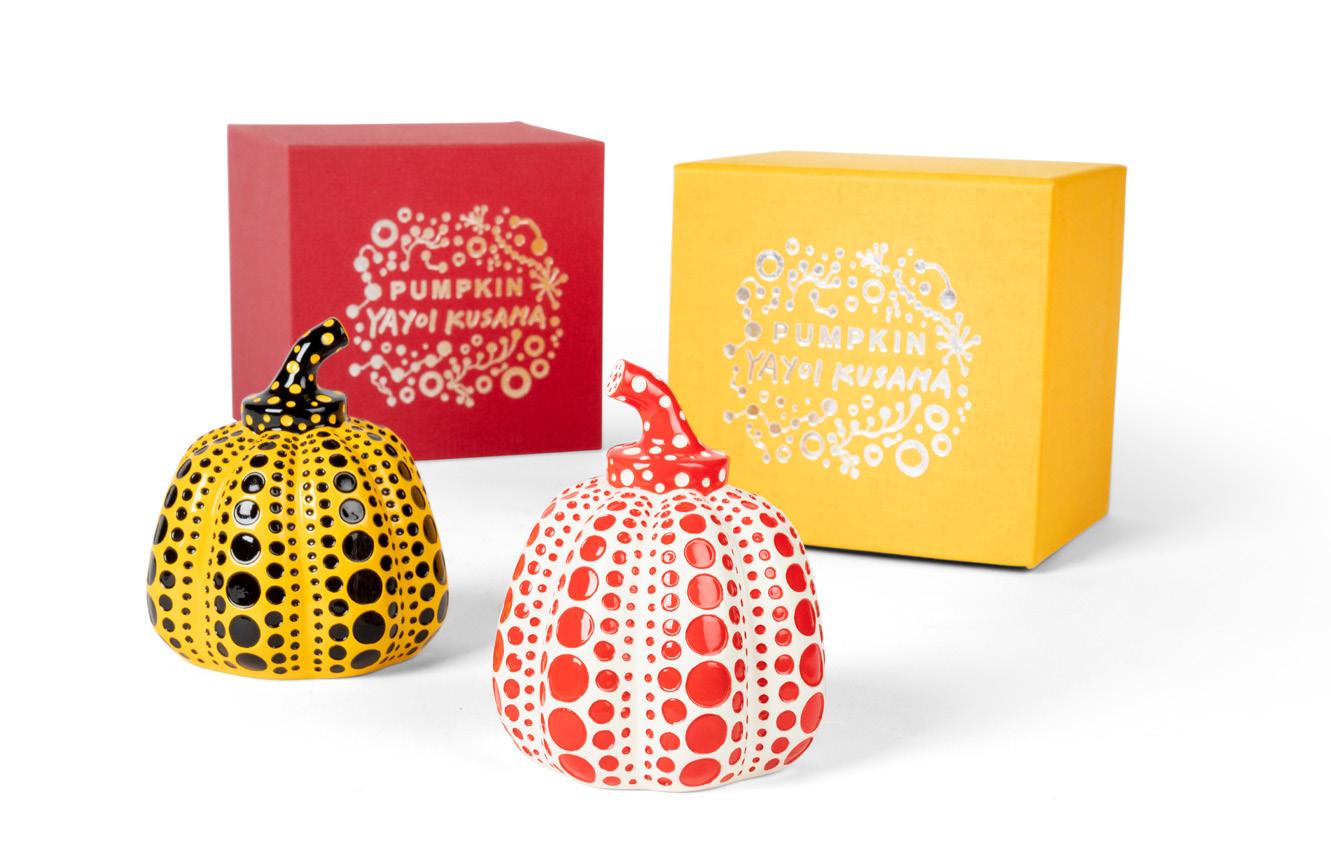
238 Other fees apply in addition to the hammer price: see the ‘Buyer’s Guide’ section on page 6
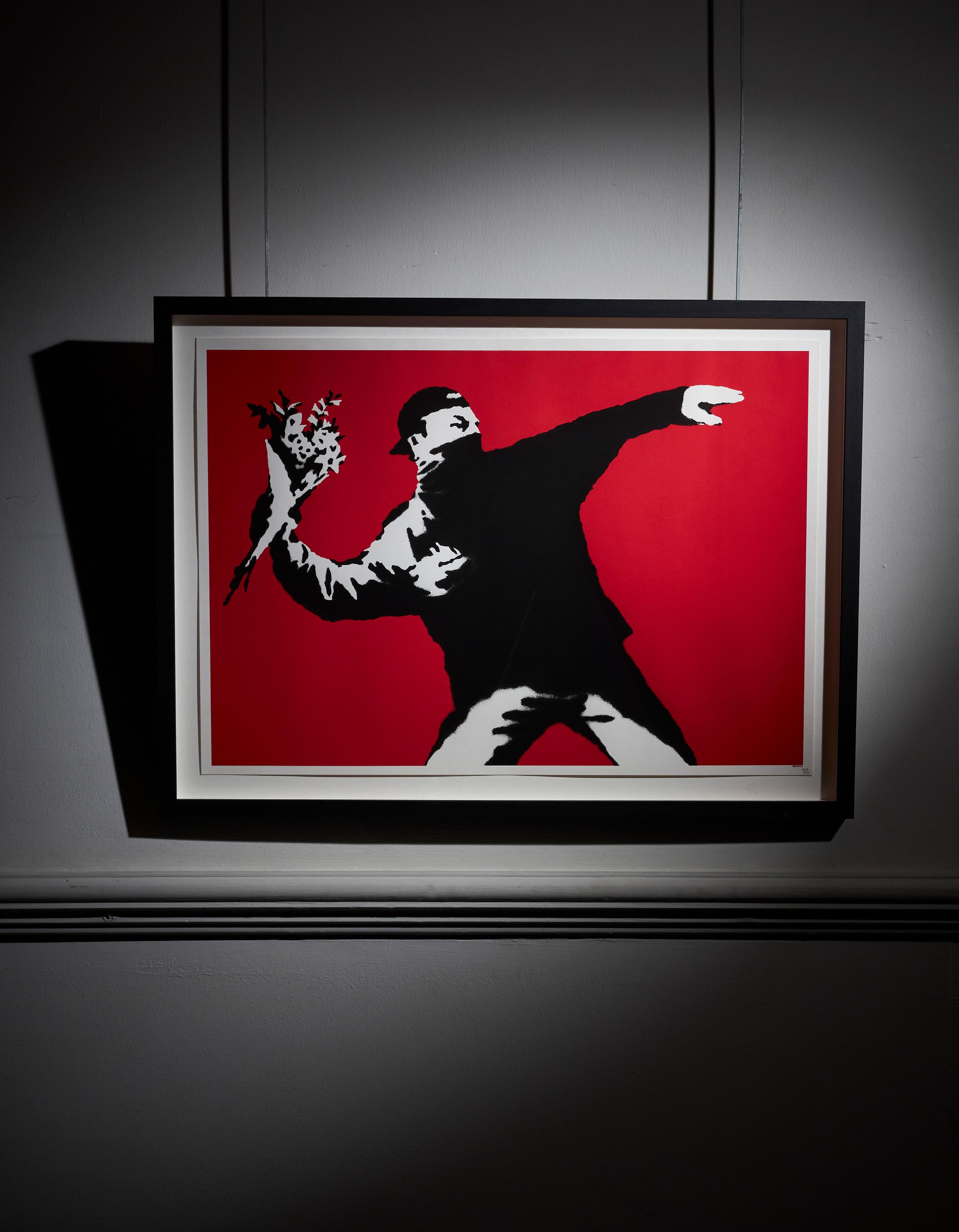
351 § ◆ BANKSY (BRITISH 1974-) LOVE IS IN THE AIR, 2003 429/500, numbered in pencil (to margin), screenprint, printed and published by Pictures on Walls, London the sheet 49.5cm x 69.5cm (19 1.2in x 27 1/4in) This work is accompanied by a Certificate of Authenticity issued by Pest Control Office. £40,000-60,000 “Art should comfort the disturbed and disturb the comfortable” Banksy 239
JACK GOLDSTEIN

Described by David Pagel in The Times as ‘a master at capturing some of the mystery that lurks just beneath reality’s surface’, Jack Goldstein remains one of the most prominent figures in conceptual art and was heralded for his role in the re-birth of painting in the late twentieth century.
Born in Montreal in 1945, he relocated to California with his family as a child. Goldstein received his training at the Chouinard Art Institute and as a member of the inaugural class of the California Institute of Arts, worked under the celebrated conceptual artist John Baldessari. After initial conceptual performance works in the early 1970s, he became involved in the Pictures Group. Taking their name from their 1977 exhibition Pictures at New York’s Artists Space gallery, the group including well-known figures such as Cindy Sherman and Robert Longo, strove to reestablish the genre of painting, with shared themes such as an interest in representational imagery and references to mass media. During the exhibition critic Douglas Crimp described Goldstein as the most prominent and most paradigmatic appropriation artist. In direct reaction to this classification Goldstein decided to start painting, continuing this for the rest of his life to the extent that many remember Goldstein primarily as a painter, rather than for his other achievements as film-maker, performance artist, musician and photographer.
With their psychedelic imagery and supernova like epicentres, the current works reflect Goldstein’s interest in documentary and archival painting developed as he sought to capture ‘the spectacular instant’ that had predominately been the domain of photography. Each painting is quiet yet explosive, instantly impactful yet pensive, distinctly contemporary yet unequivocally intertwined with history.

Often struggling with the notions of experience and presence, he was one of the first artists who sought others to carry out the physical production of his work. This desire to remove himself from his practice perhaps echoes his nihilistic explorations of the emptiness and purpose of postmodern society via authorship and documentation.
Critic Ronald Jones notably described Goldstein’s painting practice in 1987 explaining ‘Time and again he portrays the spectacular instant, its gorgeous effects: intimidating thunderstorms, majestic views of interstellar space, the staggering effects of computer imaging, the utter silence of night flying. Before his pictures it is natural to remember the vivid and poignant scenes of J.W.M. Turner and Frederic E. Church, or James McNeill Whistler’s Nocturne in Black and Gold: The Falling Rocket. It is natural, but rarely useful. Goldstein portrays the drama of split-second timing, the precipitous vision of the photograph and the video screen. It is his way to leave us without recourse to the narratives so necessary to the meaning of earlier art. Goldstein’s art suspends time and our gaze precisely at the point where origins and endings blur beyond recognition’ (R. Jones, Jack Goldstein: Recent Work, 1986-1987, New York, 1987, n.p.).
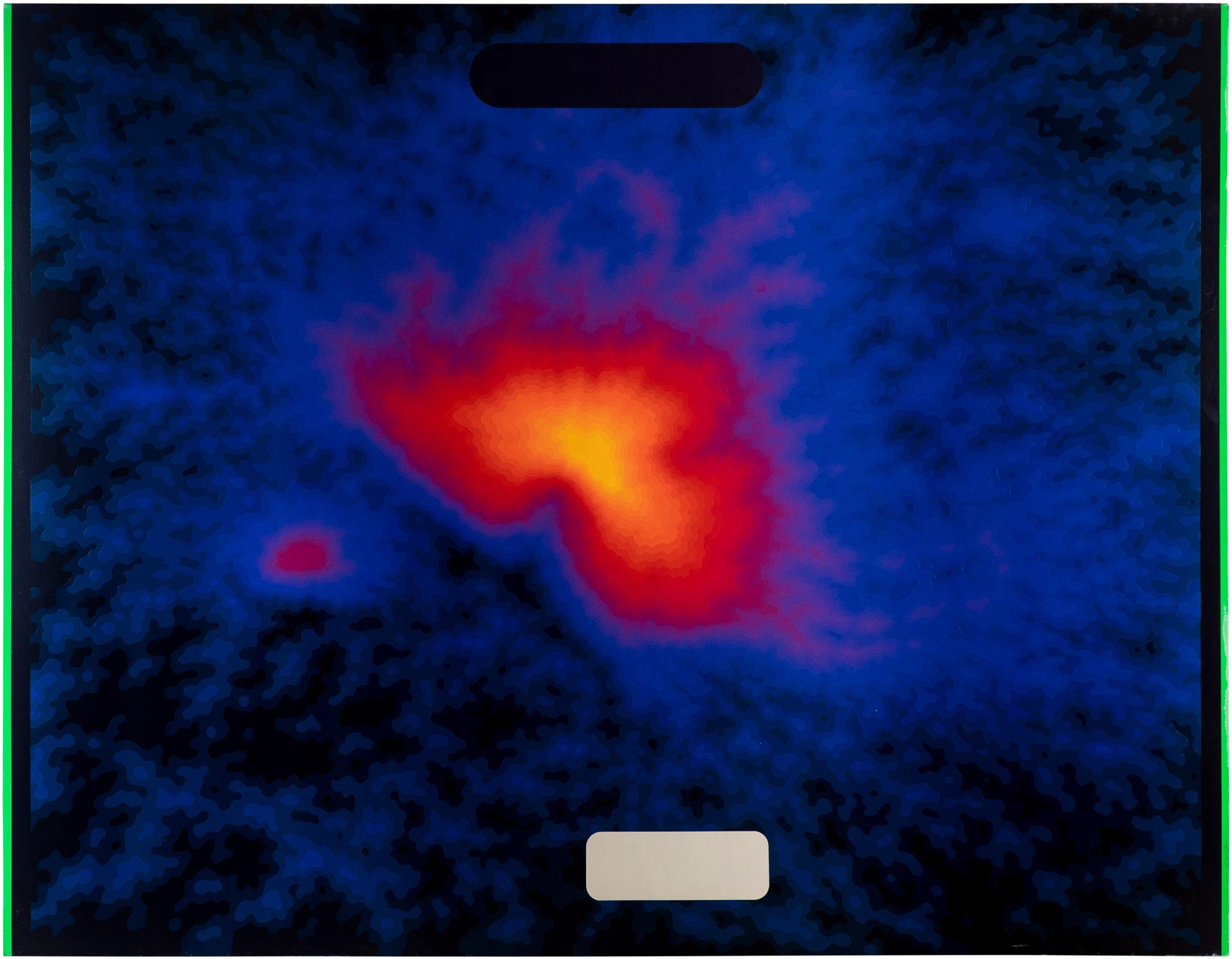
352 JACK GOLDSTEIN (CANADIAN 1945-2003) UNTITLED acrylic on canvas 213cm x 274cm (83 7/8in x 107 7/8in) Provenance: Private Collection, London, since 1992. £20,000-30,000 242
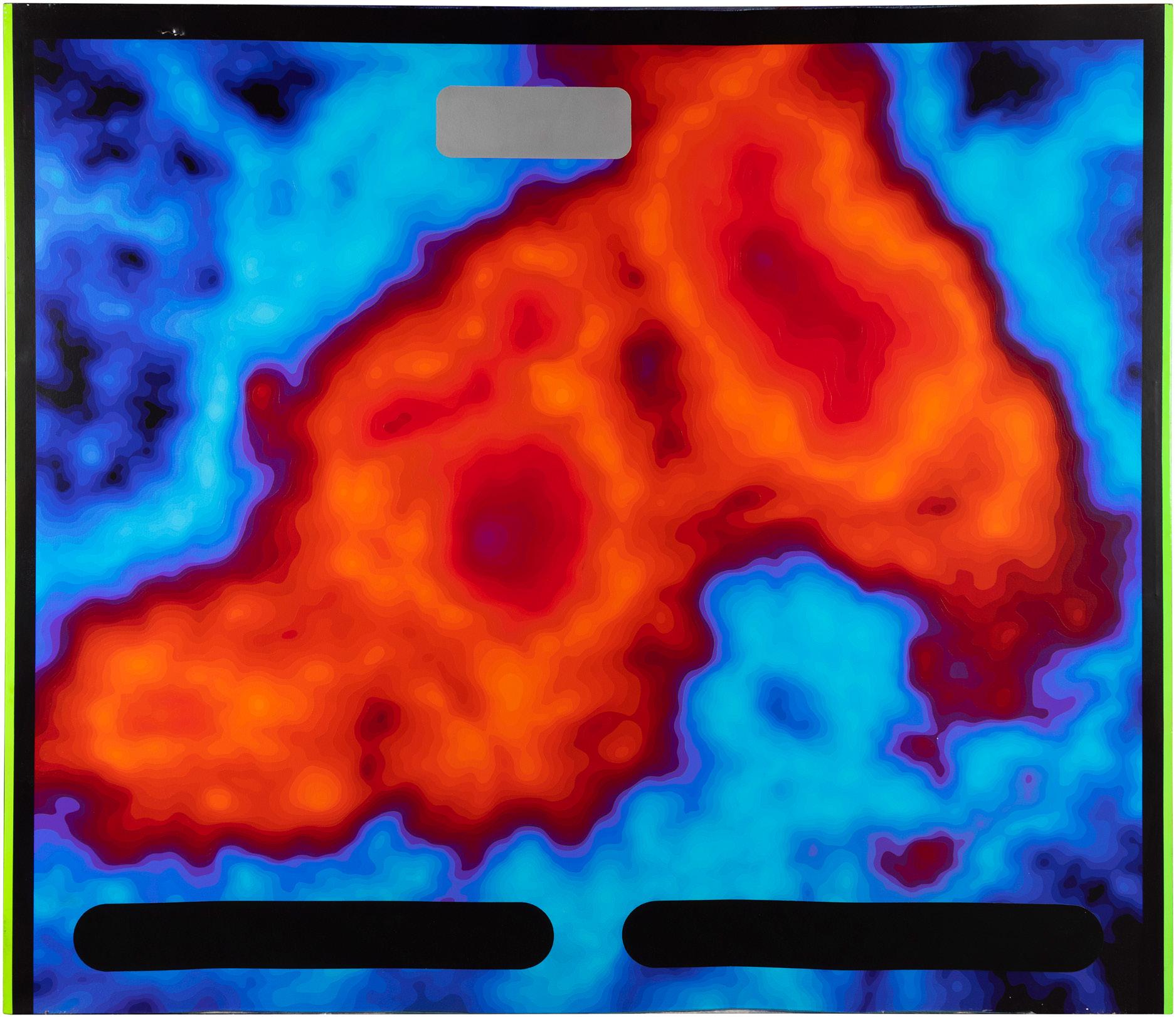
353 JACK GOLDSTEIN (CANADIAN 1945-2003) UNTITLED, 1988 signed, dated and inscribed ‘A/C’ (to reverse), acrylic on canvas 213.5cm x 243.5cm (84in x 95 7/8in) Provenance: Private Collection, London, since 1992. £10,000-15,000 243 Other fees apply in addition to the hammer price: see the ‘Buyer’s Guide’ section on page 6
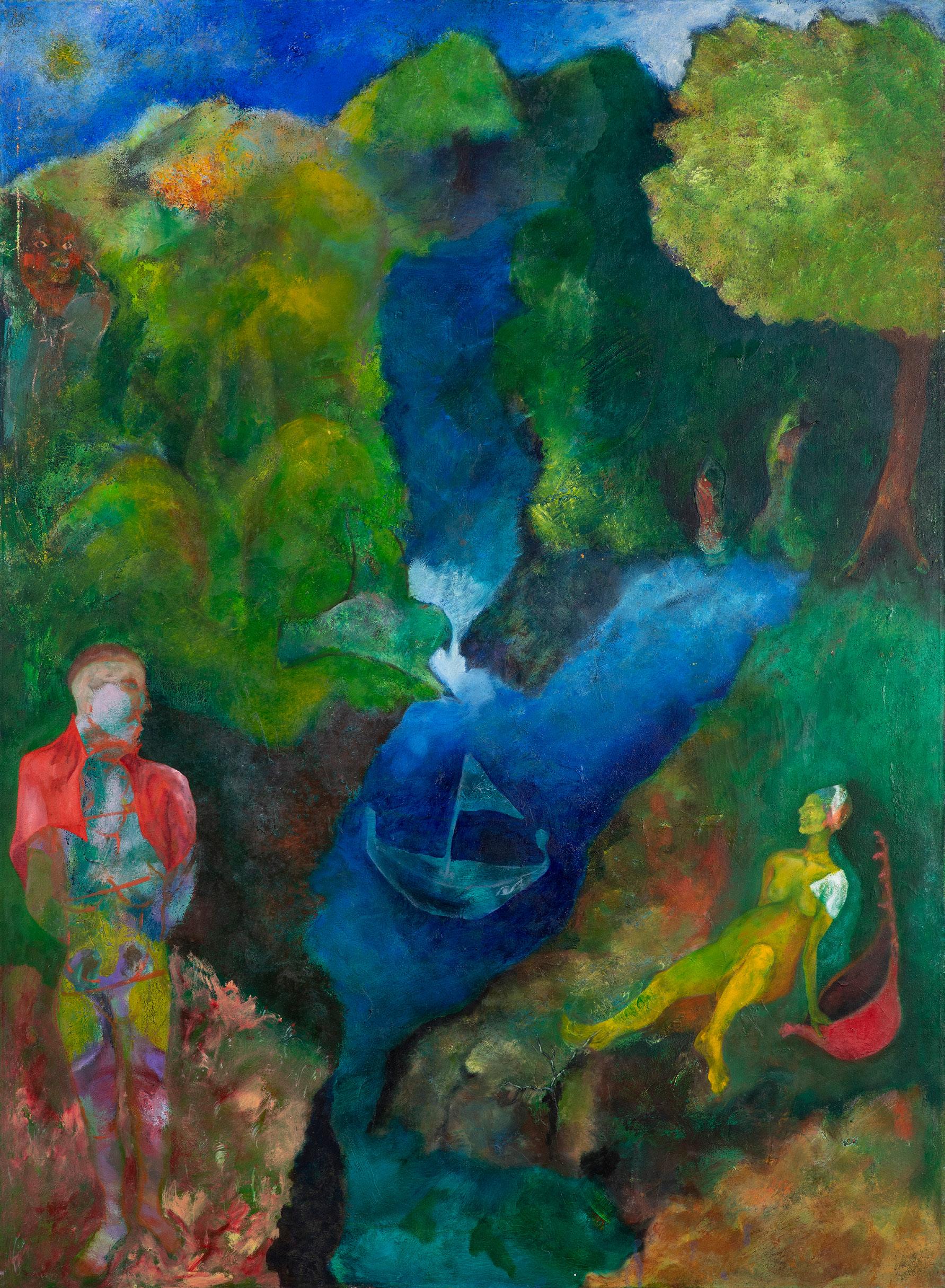
354 § JACINTA FEENEY (IRISH 1954-) A CORNER OF EDEN BEFORE THE FALL titled (to reverse), oil on canvas 166cm x 123cm (65 3/8inx 48 3/8in) Provenance: Christie’s, London, The Vincent Ferguson Collection, 8 May 2009, Lot 304; Private Collection, UK. £800-1,200 244
355
TAKASHI MURAKAMI (JAPANESE 1962-) HOMAGE TO FRANCIS BACON, STUDY OF ISABEL RAWSTHORNE, 2003 226/300, signed and numbered in ink (lower right), lithograph in colour, published by KaiKai Kiki Co., Tokyo
sheet: 68cm x 68cm (26 3/4in x 26 3/4in)
Provenance: Sims Reed Gallery, London, 2004; Private Collection, London. £1,000-1,500
356 § DAVID MACH H.R.S.A., R.A. (BRITISH 1956-) AND GRAHAM WATTIS BATTERSEA CHAIR I, 1993
signed ‘Wattis / Mach’ and dated in pencil (lower right), crayon and pencil on paper
59cm x 84cm (23 1/4in x 33in)
Provenance: Jill George Gallery, London, 1995; Private Collection, London. Mach collaborated with his former student Graham Wattis to create this work.
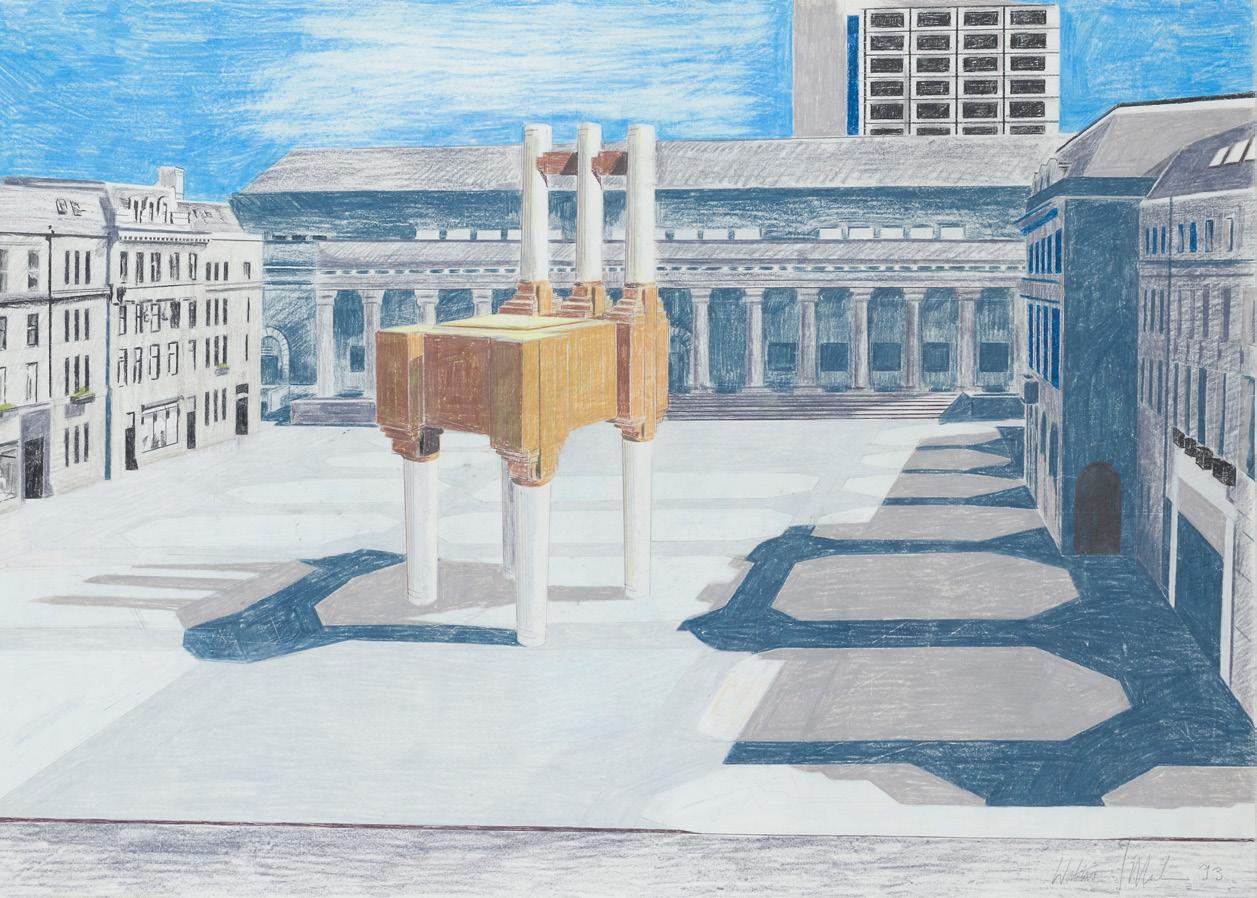
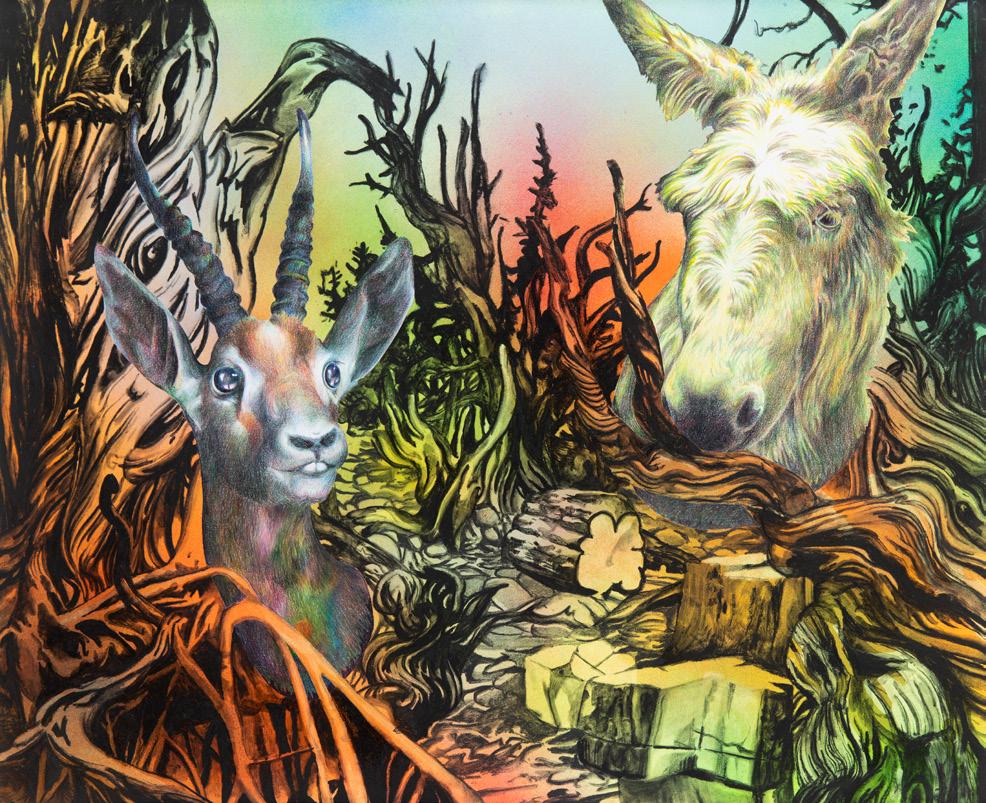
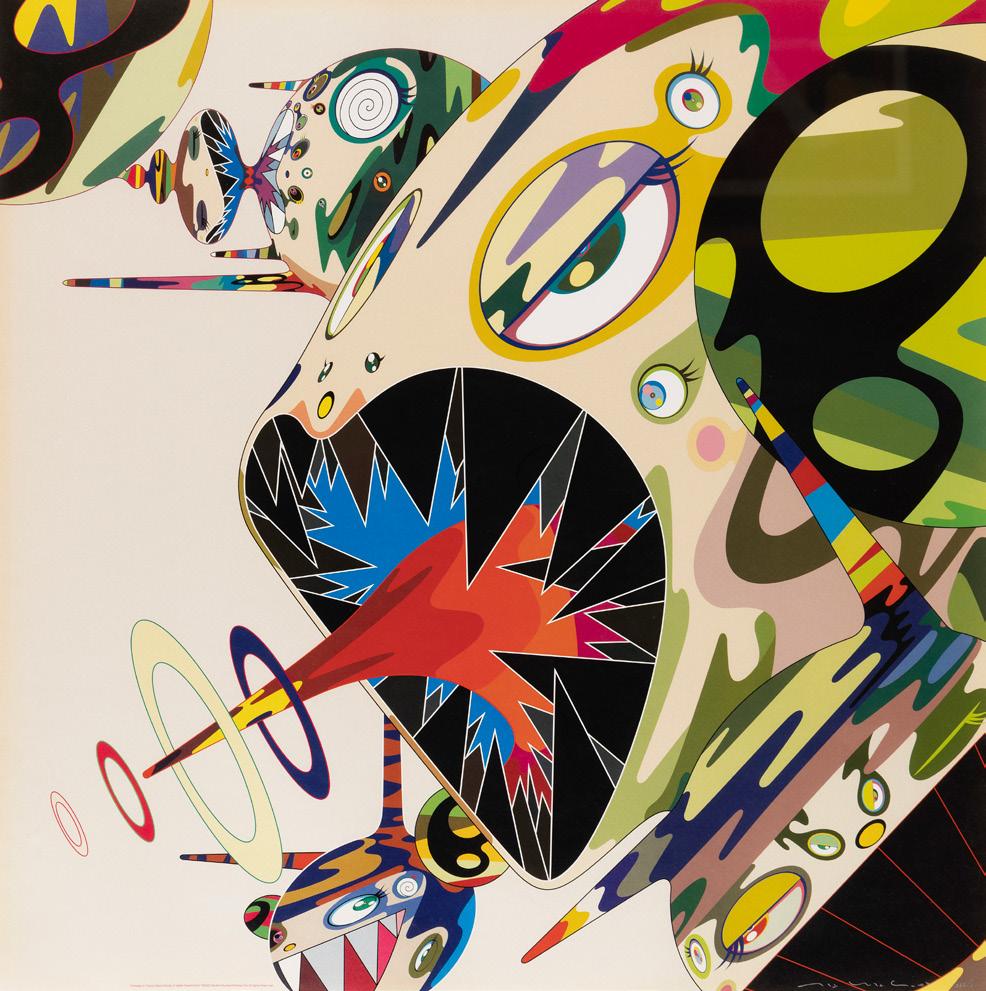
£1,500-2,000
357 § PAUL MCDEVITT (BRITISH 1972-) CONJURED, 2003
pencil, charcoal and spray paint on paper 55cm x 67.5cm (21 5/8in x 26 1/2in)
Provenance: Purchased from Hales Gallery, London at Frieze, 2003; Private Collection, London. £800-1,200
245 Other fees apply in addition to the hammer price: see the ‘Buyer’s Guide’ section on page 6
358 §
DAVID SHRIGLEY O.B.E. (BRITISH 1968-) PORTRAIT, 1997
1/3, painted steel 194cm high x 60cm wide x 12.5cm deep (76 3/8in high x 23 5/8in wide x 4 7/8in deep) £4,000-6,000
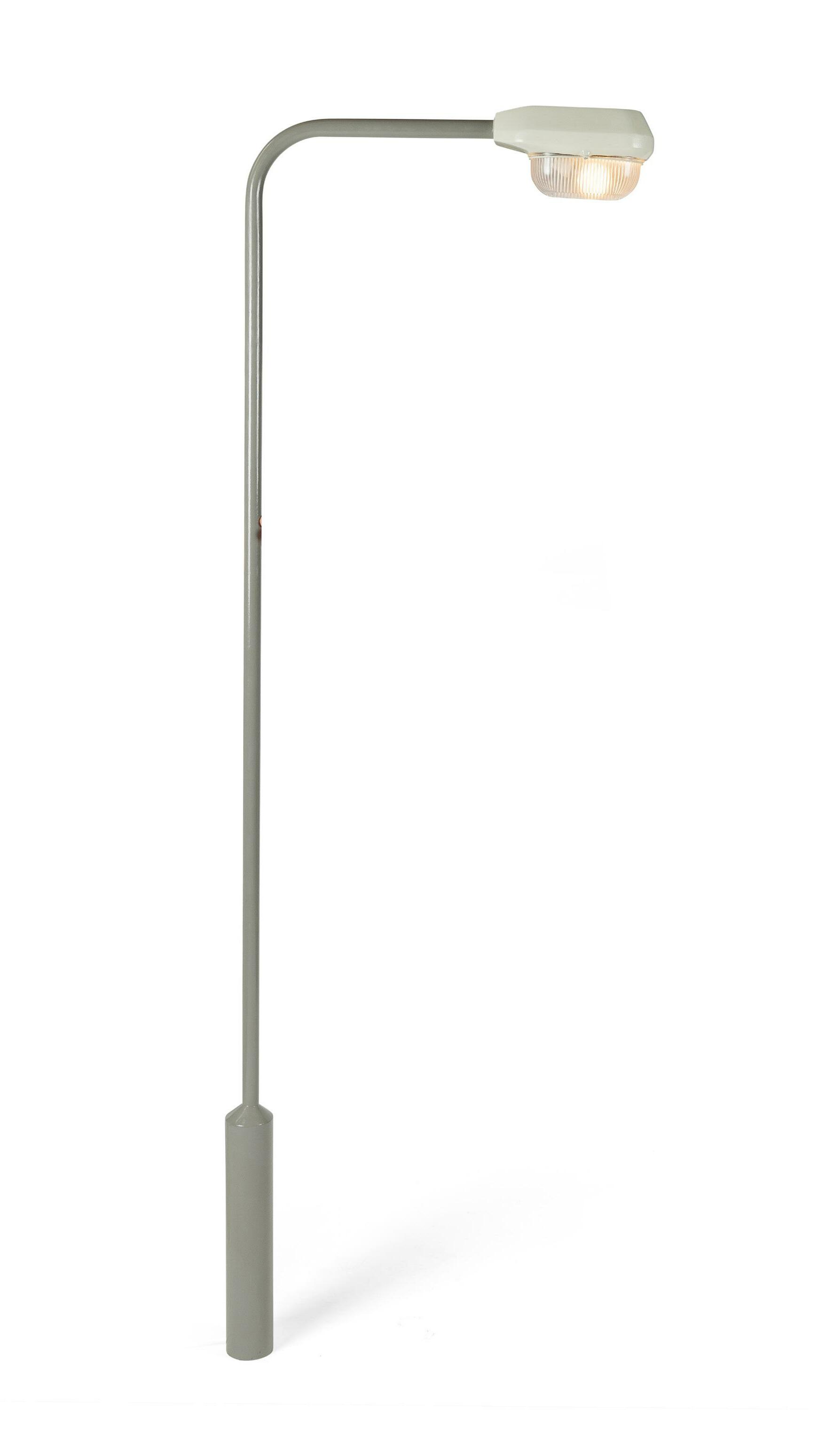
David Shrigley is perhaps best known today for his quick-witted drawings with satirical and political themes, often based on overheard conversations that highlight the absurdity of everyday fears and aspirations. However, in the mid-1990s, when he rose to prominence alongside those artists who came to be known as the ‘YBAs’, Shrigley was known more for his sculptural work, of which Portrait is a stunning example. There is always humour in Shrigley’s work, as well as a love of ordinary things – that can be transformed by the artist into sites of reflection, inspiration and joy. Here, a standard suburban lamp post is shrunk to the height of a human being. Then title of the work then demands we see this object as an avatar of a person. The world has become strange and real streetlights turned into giants, the walls of the gallery dissolved into the outside world. It’s key that the light works: this functionality stops it from becoming, truly, a sculpture, whilst, of course, it remains useless as a piece of street furniture. It’s in this middle zone that Shrigley holds us and makes us question.
Born in Macclesfield in 1968 and educated at the prestigious Glasgow School of Art from 1988 until 1991, Shrigley’s work spans an extensive range of media including sculpture, installations, painting, music and photography. Inspired by artists such as Marcel Duchamp and René Magritte, he teases the viewer with humorous moral conundrums, about which he has commented: ‘It’s a matter of making fun of the things you could get depressed about’.
246 Other fees apply in addition to the hammer price: see the ‘Buyer’s Guide’ section on page 6
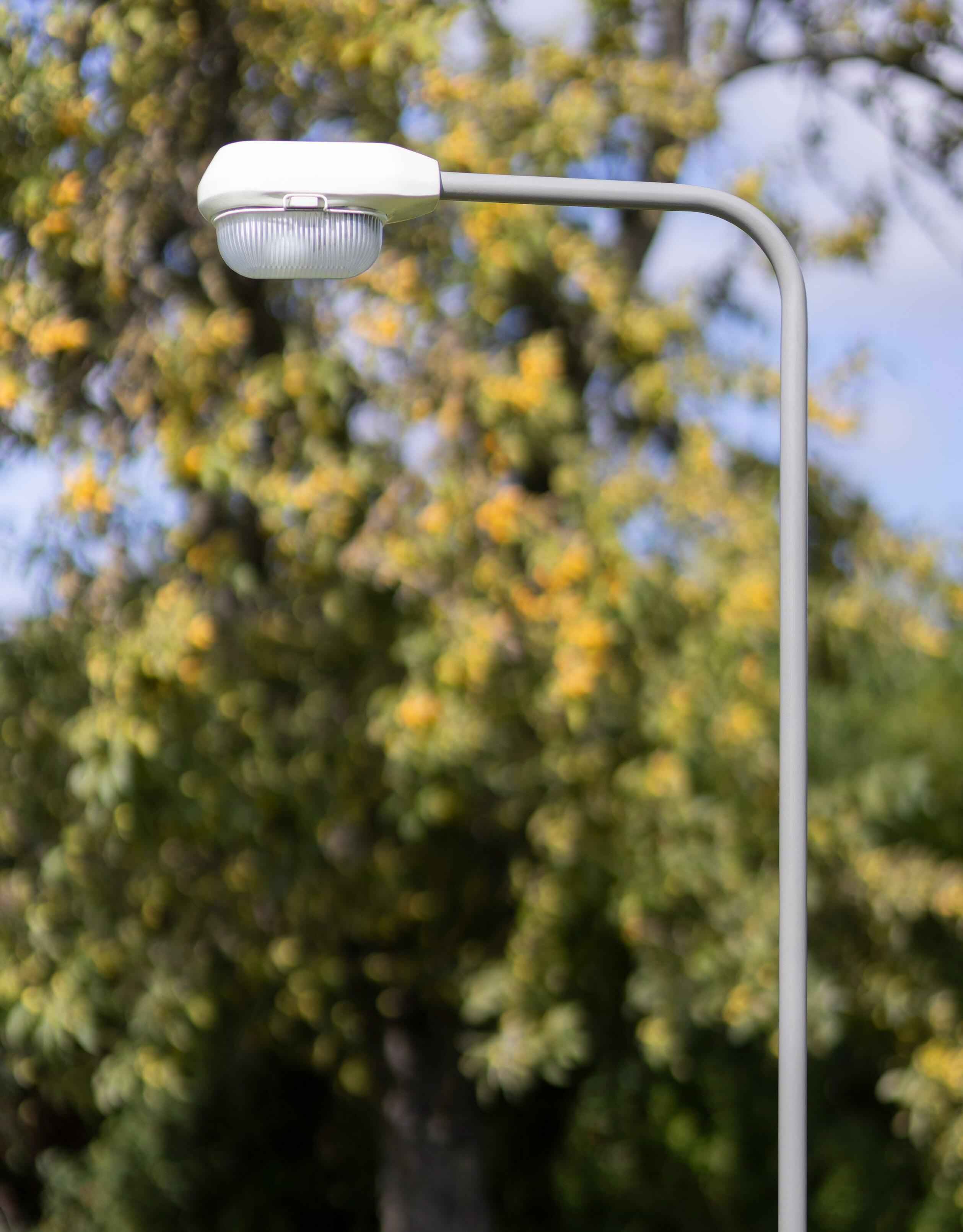
INDEX OF ARTISTS
Aalto, Alvar 34, 35, 36, 37, 38, 39
Adams, Robert 162, 164 Adnet, Jacques 124
Albertus, Gundorph 199 Argov, Michael 268
Baldwin, Dan 345, 346, 347
Banksy 351
Banting, John 154 Barns-Graham, Wilhelmina 269 Barr, Norman 107 Batterham, Richard 69, 70 Bell, Trevor 210 Bellany, John 151, 153 Besnard, Jean 189
Bevan, Robert Polhill 80, 81, 82, 83, 84, 85, 86, 87, 88, 89, 90, 91, 92, 93 Blow, Sandra 211 Bojesen, Kay 184 Bouroullec, Ronan And Erwan 335
Braden, Norah 66 Bratby, John 147, 148, 149, 150
Breuer, Marcel 32, 33 Brooker, William 99 Buck, Chris 226 Bülow-Hübe, Vivianna Torun 204, 205, 206, 207, 208, 209 Casson, Mick 78
Castiglioni, Achille 29 Cavailles, Jean Jules Louis 108 Cavaliere, Alik 10 Chanarin, Jacqui 316 Chang, Peter 307, 308 Chiu (Chou Ting-Hsu) , TengHiok 100 Clarke, Geoffrey 159 Clausen, Sir George 118 Clough, Prunella 270 Cohen, Bernard 6 Cohen, Harold 283
Coker, Peter 172 Collingwood, Peter 309, 317 Conran, Sir Terence 140 Constantinidis, Joanna 234 Cooper, Emmanuel 236, 237
Copnall, John Bainbridge 340 Corbusier, Le 323, 325, 327 Coventry, Keith 14 Craig, James Humbert 106 Craxton, John 155 Crowther, Alison 306
Cundall, Charles Ernest 101 Da Ros, Antonio 138 Dahn, Walter 289 Davenport, Ian 342 Davie, Alan 168, 170, 171 Davison, Francis 279 Day, Robin 141 Derain, André 145 Ditzel, Nanna 187 Ditzel, Nanna And Jørgen 201, 202 Dixon, Tom 319 Donovan, Terence 16 Dubrey, Henrietta 281 Dunstan, Bernard 97, 98 Eames, Charles & Ray 331 Ekubia, Ndidi 312 Epstein, Sir Jacob 144 Fechenbach, Hermann Israel 114
Fedden, Mary 229 Feeney, Jacinta 354 Feiler, Paul 215 Festus Kelly, Gerald 96 Flynn, Liam 304 Fog, Astrid 200 Fornasetti, Piero 133, 134, 135 Francis, Mark 344 Frost, Sir Terry 271, 273, 274 Gabrielsen, Bent 203 Gambone, Guido 185 Gear, William 167, 174 Gilioli, Émile 276, 277 Gilliam, Sam 284 Gilman, Harold 95 Godfrey, Ian 71, 72, 73 Goldstein, Jack 352, 353 Gordon, Douglas 8 Graff, Stephane 278 Hadid, Dame Zaha 329 Hamada, Shoji 63 Hammond, Henry 64 Hayman, Patrick 220 Heath, Adrian 165, 166 Henderson, Ewen 77 Hillier, Tristram 156 Hilton, Matthew 336 Hirai, Akiko 290, 291, 292, 293, 294, 295, 296, 297, 298, 299, 300, 301 Hirst, Damien 343, 348, 349 Hockney, David 4 Horst, Horst P. 267 Ingham, Bryan 212, 213, 214, 216, 231, 232 Ingrand, Max 19, 20, 21 Jeanneret, Pierre 127, 128 Jensen, Sergej 7 Jones, Allen 288
Judd, Donald 337 Juhl, Finn 179 Keenan, Chris 79 Kelly, Ellsworth 1 Kenmochi, Isamu 131 Key, Geoffrey 111 Kjaerholm, Poul 182 Klein, Yves 12 Kofod-Larsen, Ib 176 Koppel, Henning 192, 193, 194, 198 Kusama, Yayoi 350 Kyhn, Knud 186 Lane, Danny 338 Lanyon, Matthew 280 Leach, David 65, 68, 74 Liaigre, Christian 326 Måås-Fjetterström, Märta 180 Mach, David 356 Magistretti, Vico 31 Malinowski, Arno 195, 197 Maltby, John 245, 249, 250, 251, 252 Marshall, William 67 Martinez, Raymond 315 Mason, Gareth 241, 242 McDevitt, Paul 357 McGuigan, Bernard 225 Meadows, Bernard 160, 161, 163
Mendini, Alessandro 136, 142 Mitchell, Denis 282 Mitorag, Igor 18 Møller, Niels 175 Moore, Henry 158 Moorhouse, Sara 320 Mori, Junko 318 Mount, Paul 230 Murakami, Takashi 355 Nakashima, George 322 Newton, Helmut 17 Nicholson, Ben 217 Nicholson, Winifred 219 Nielsen, Harald 196 O’Casey, Breon 221, 272 Odundo, Magdalene 302, 303 O’Neill, Terry 15 Orloff, Chana 119 Ostuni, Giuseppe 24 Owens, Rick 339 Panton, Verner 183, 334 Paolozzi, Sir Eduardo 257, 258, 259, 260, 261, 262, 264, 265 Parisi, Ico 132 Partridge, Jim 305 Pasmore, Victor 275 Payne , Brett 311 Pearce, Bryan 227
Pearson, Colin 238, 239, 240 Penn, Irving 266
Perriand, Charlotte 125 Philp, Paul 248 Picasso, Pablo 157, 256 Pinzoni, Mario 137, 139
Pistoletto, Michelangelo 13 Platner, Warren 333
Ponti, Gio 129

Procktor, Patrick 3 Quinn, Lorenzo 9
Rie, Dame Lucie 253, 254, 255 Rondinone, Ugo 11 Rooney, Mick 152 Ross, Duncan 247 Sabattini, Lino 330 Saccardo, Luigi 328
Salto, Axel 191 Sands, Ethel 115 Sarfatti, Gino 22, 23, 26 Sarpaneva, Timo 190 Shrigley, David 358 Sickert, Walter 116, 117 Sinclair, Helen 313 Snelson, Kenneth 5 Souza, Francis Newton 143, 146 Spence, Sir Basil 120, 121, 122, 123
Spira, Rupert 233, 235 Springer, Karl 324
Studdy, George Ernest 105 Sultan, Donald 285
Summers, Gerald 40, 41, 42, 43, 44, 45, 46, 47, 48, 49, 50, 51, 52, 53, 54, 55, 56, 57, 58, 59, 60, 61, 62
Taplin, Guy 218 Taylor, Sutton 243, 244 Thevenin, Sido And Francois 126
Thorn, Hazel 310 Tynell, Paavo 181 Vallien, Bertil 314 Vodder, Arne 178 Walker, Dame Ethel 113 Wallwork, Alan 75, 76 Warhol, Andy 286, 287 Watts, Grainne 321
Welch, Robin 246
Wells, John 222, 223, 224 Whishaw, Anthony 173 Wilson, Scottie 169 Wirkkala, Tapio 188 Wolfe, Edward 109, 110 Wood, Christopher 228 Zinkeisen, Anna 103 Zinkeisen , Doris Clare 102

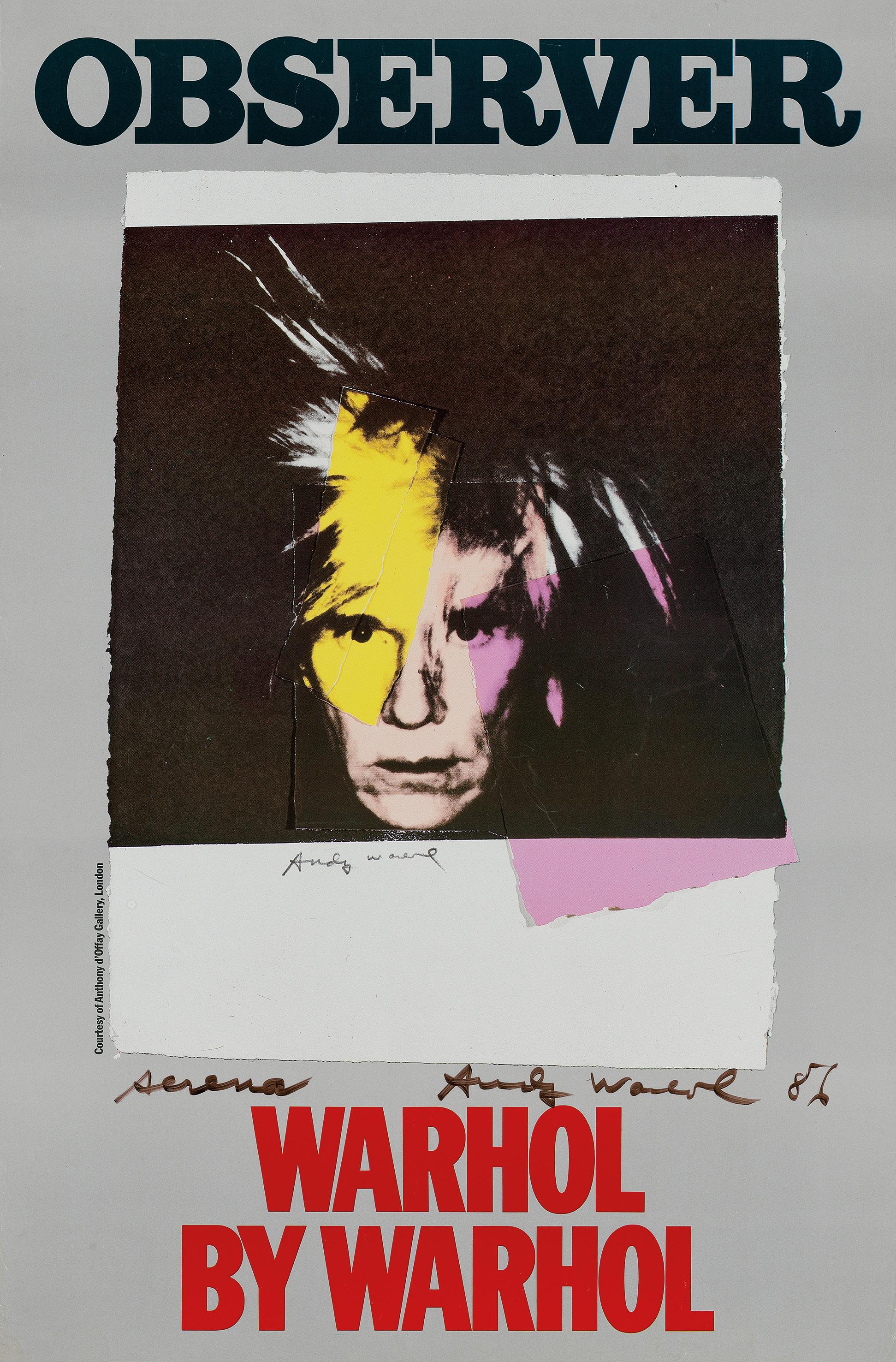
AUCTION 27 OCTOBER 2022 LIVE ONLINE For more information please visit our website or contact Matthew Yeats 0207 930 9115 matthew.yeats@lyonandturnbull.com
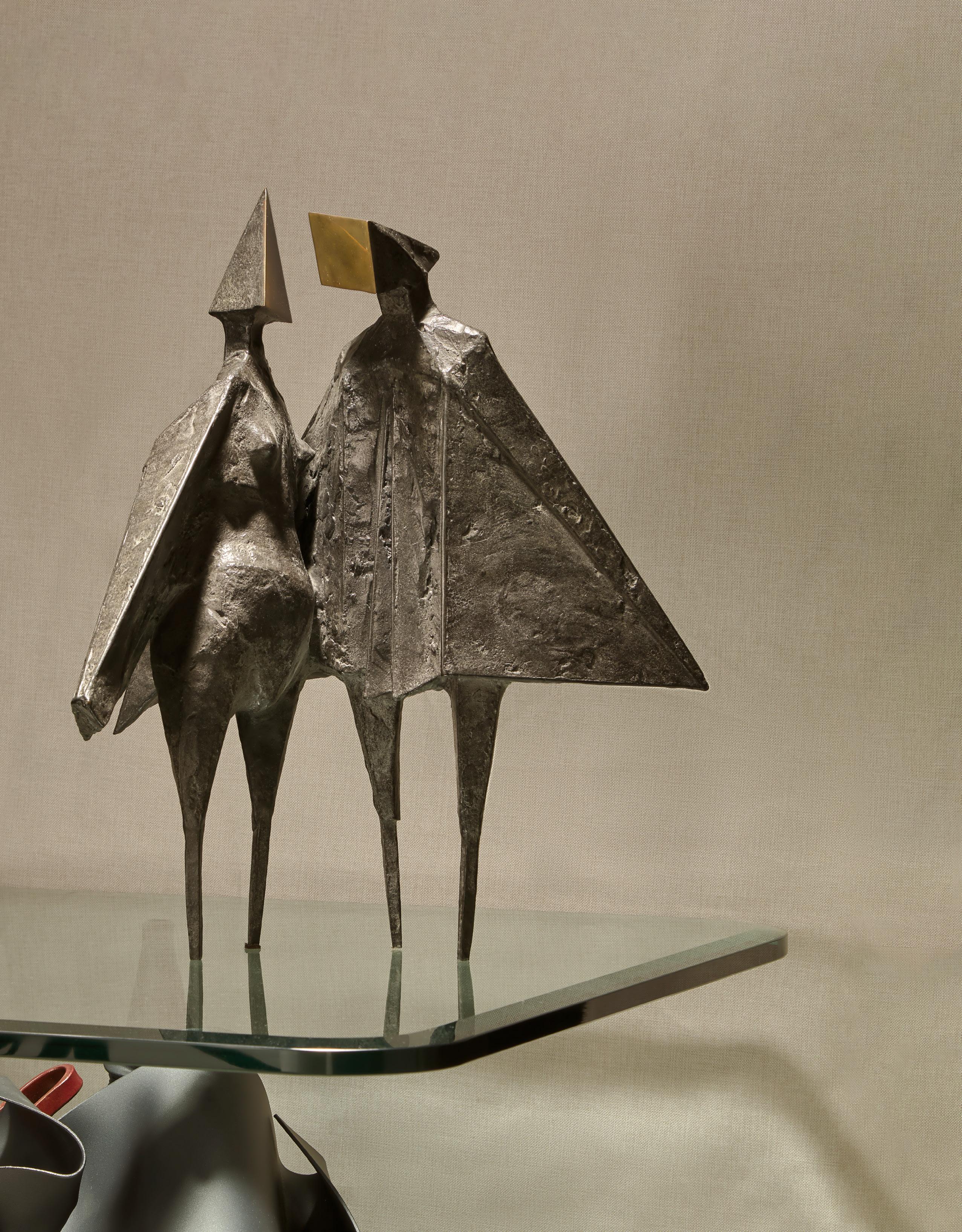
Modern and Contemporary Art Auction October 25 ILLUSTRATED Lynn Chadwick (British, 1914-2003) Winged Figures II , 1975 $60,000-80,000 CONTACT Lisa De Simone +1 267.414.1223 modernart@freemansauction.com
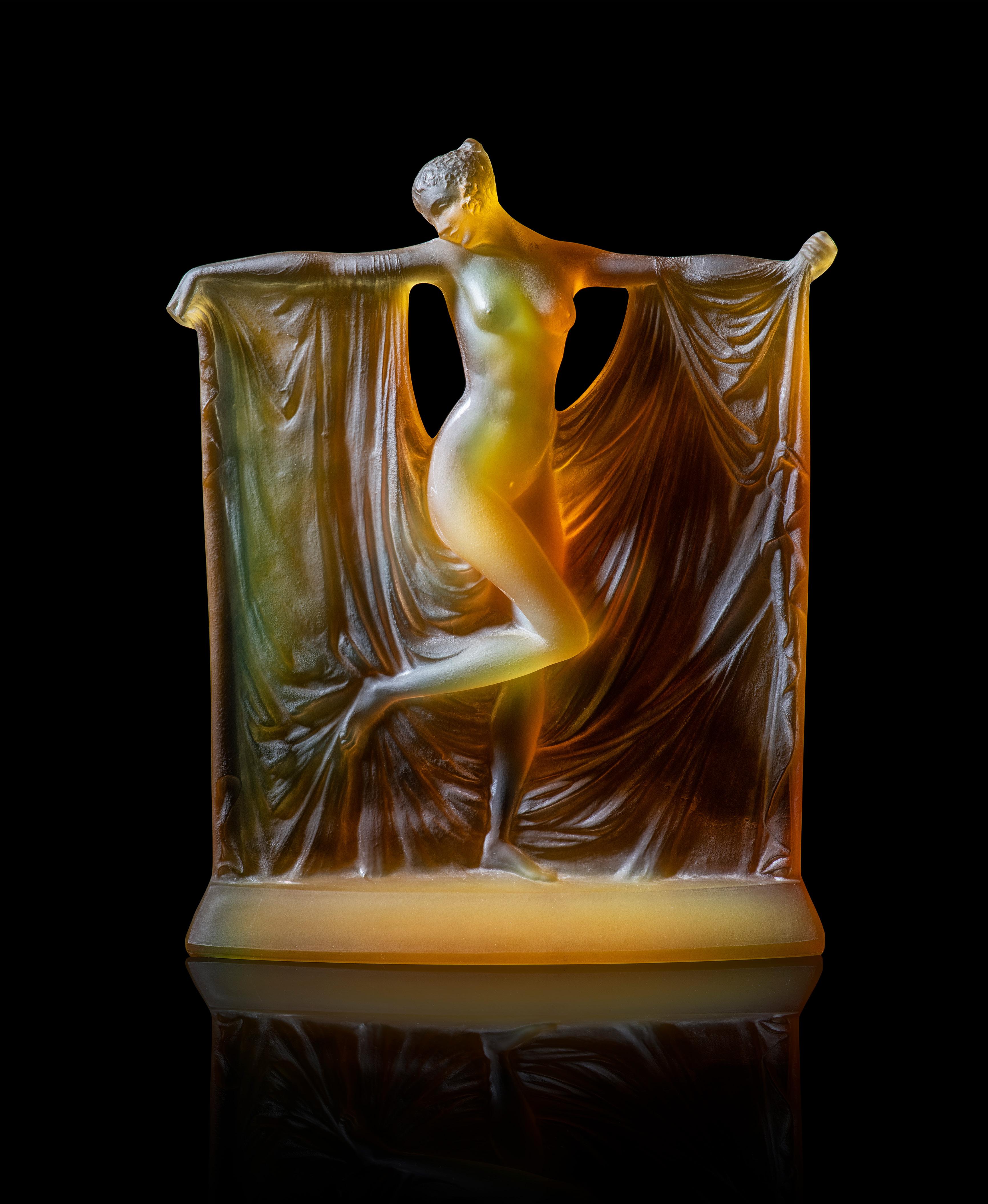
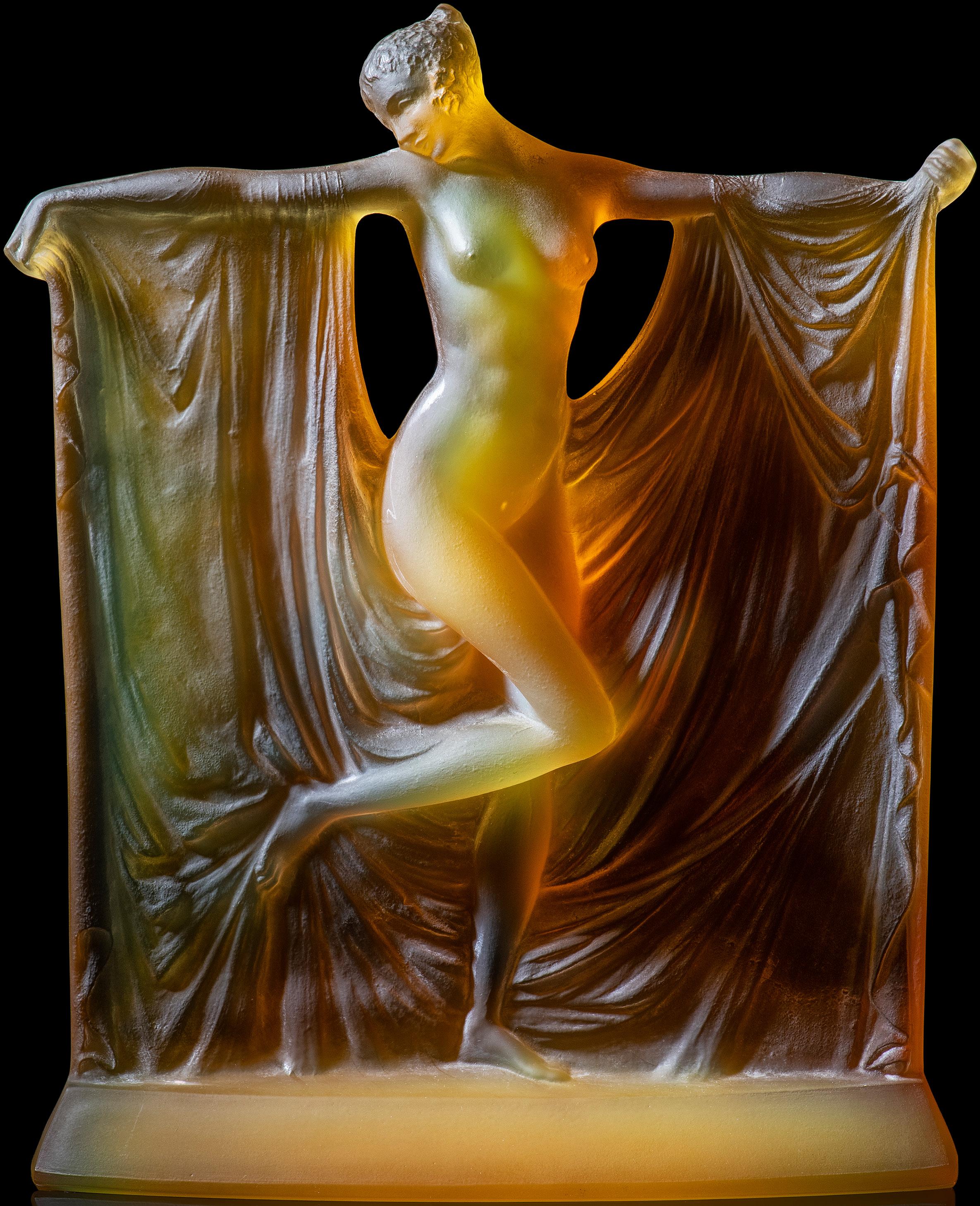
251 For more information please visit our website or contact Joy McCall 0207 930 9115 joy.mccall@lyonandturnbull.com AUCTION 27 OCTOBER 2022 LIVE ONLINE | LONDON RENÉ LALIQUE (FRENCH 1860-1945) SUZANNE STATUETTE, NO. 833 designed 1925 £12,000-18,000
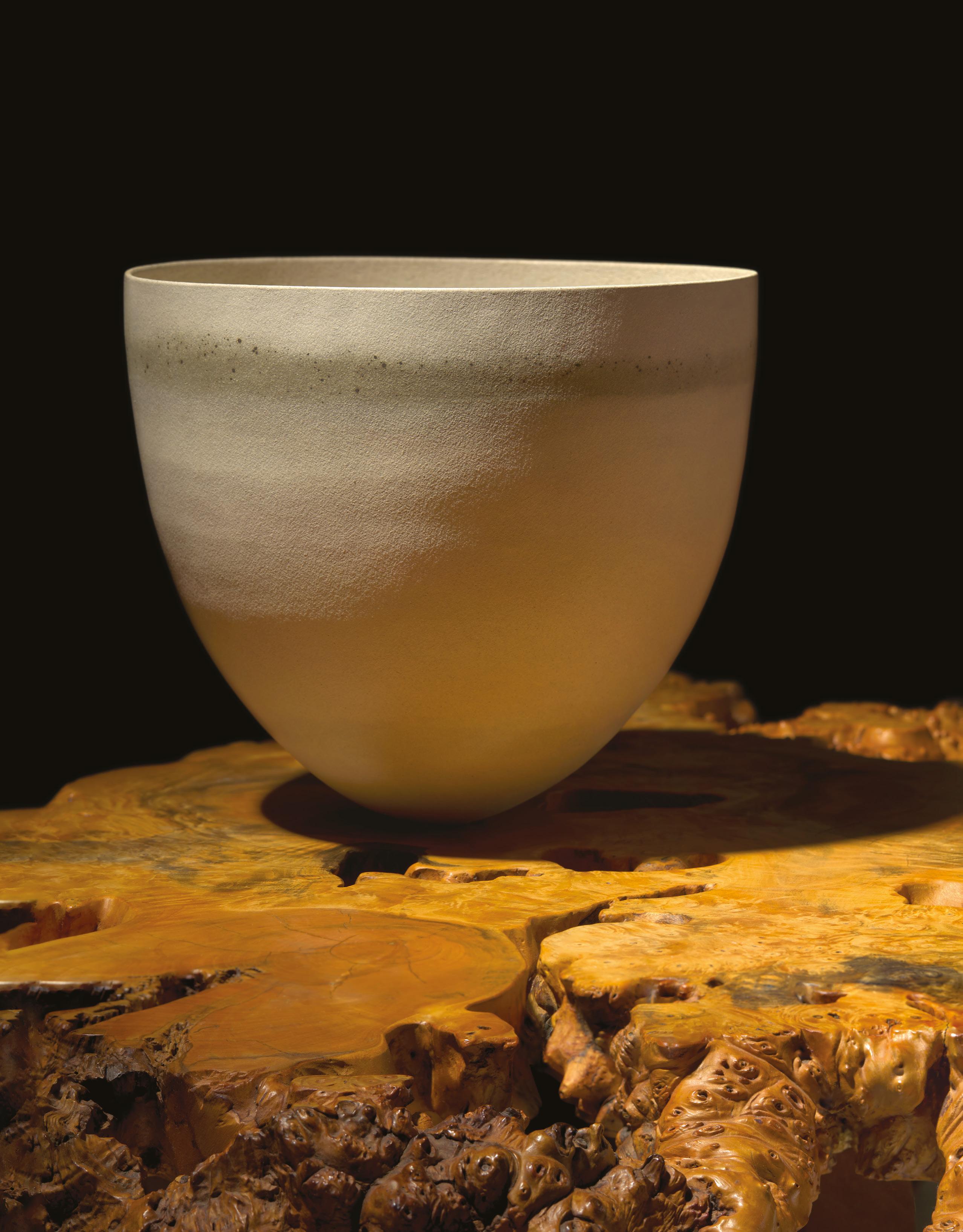
ILLUSTRATED Jennifer Lee (British, b. 1956) Spangled Bowl, Olive Speckled Band $20,000-30,000 Design Auction October 26 CONTACT Tim Andreadis +1 267.414.1215 design@freemansauction.com
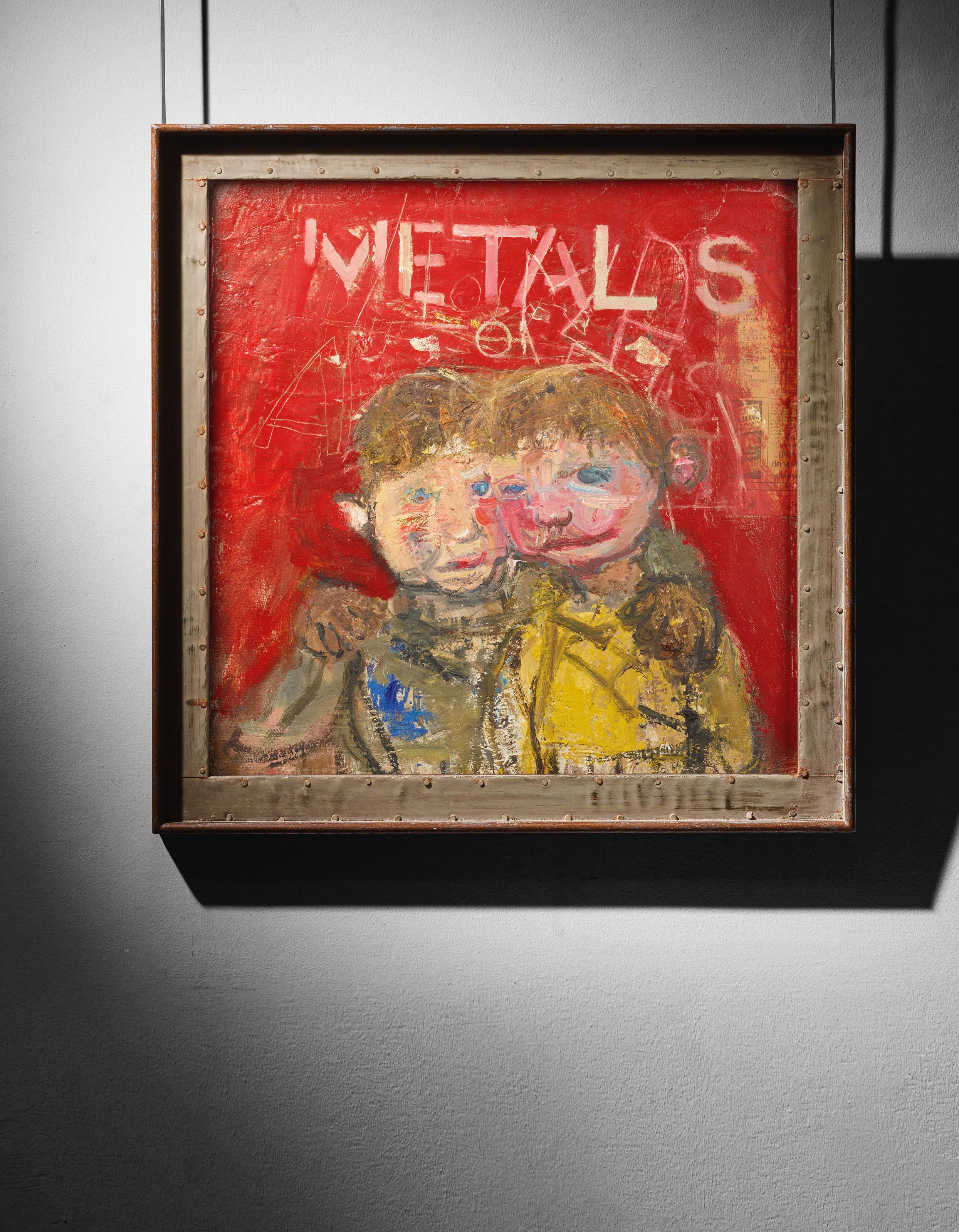
For more information please visit our website or contact Nick Curnow 0131 557 8844 nick.curnow@lyonandturnbull.com JOAN EARDLEY R.S.A. (SCOTTISH 1921-1963) THE YELLOW JUMPER, 1963 £100,000-150,000SCOTTISH PAINTINGS & SCULPTURE AUCTION 08 DECEMBER 2022 LIVE ONLINE | EDINBURGH
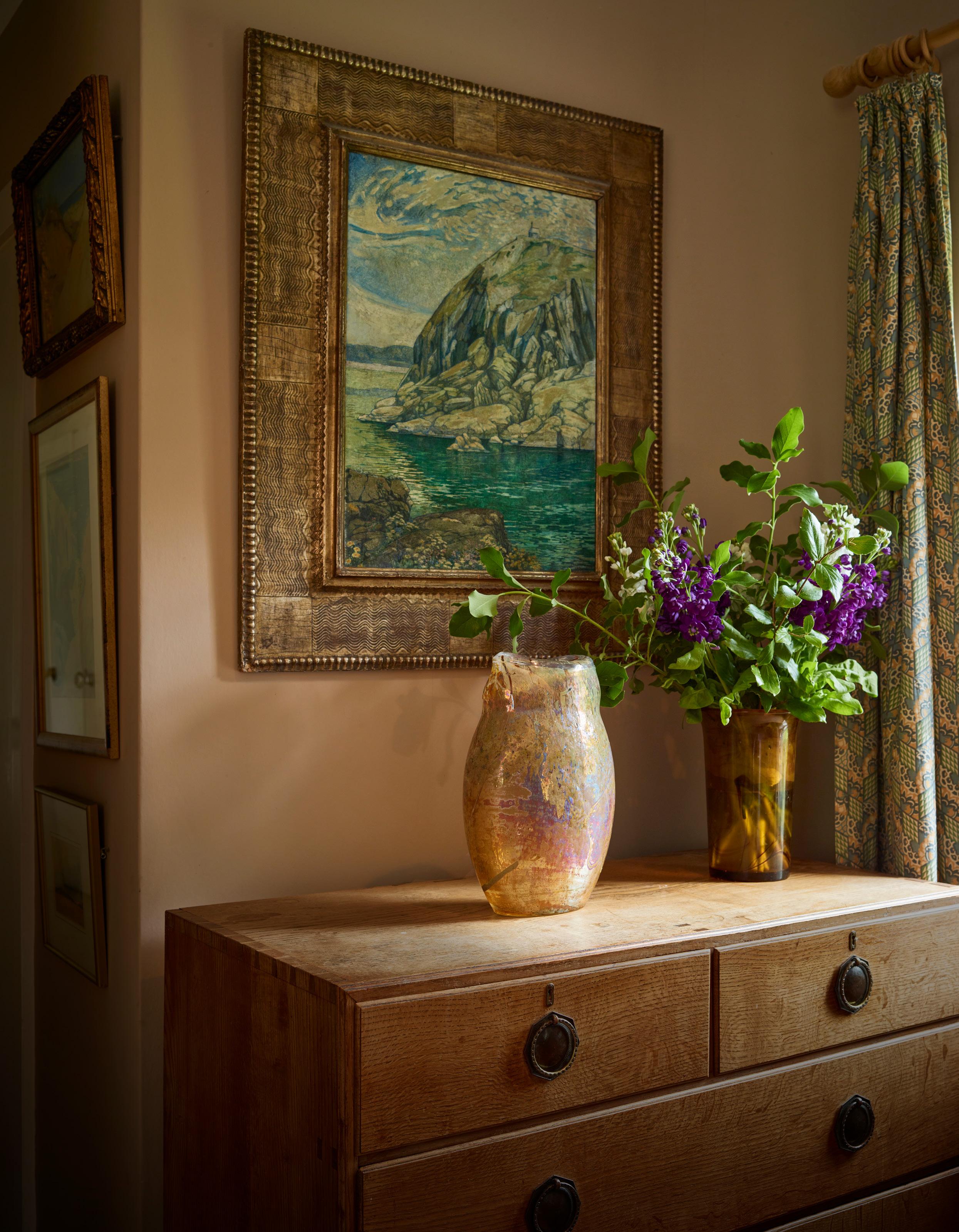
A wonderfully considered Private Collection featuring works from the Arts & Crafts movement, through mid-century design to Modern & Contemporary art. For more information please visit our website or contact Philip Smith 0207 930 9115 philip.smith@lyonandturnbull.com AUCTION 25 JANUARY 2023 LIVE ONLINE | EDINBURGH
Elements returns for 2022, bringing together forty-six of the UK’s finest Jewellers and Silversmiths for a selling fair, exhibition and series of events at the stunning showroom of Lyon & Turnbull in Edinburgh. From silver vases glittering with flecks of gold, to colourful, three-dimensional sculptural jewellery, Elements celebrates the vast range of expert craftsmanship and innovative design of makers from across the UK.
For the first time, award-winning work from the prestigious Goldsmiths’ Craft & Design Council (GC&DC) Competition, will be showcased in Scotland at Elements. The exhibition will feature a selection of work by some of the UK’s most renowned designers and craftspeople, including some stunning examples of Cartier and Goldsmiths’ Company Awards. This will be alongside a display of drawings and jewels to celebrate the vision, skill and extraordinary legacy of GC&DC Lifetime Achievement Award winner, the late Dorothy Hogg mbe, on loan from The Goldsmiths’ Company Collection.

Elements
Elements
Tickets










is a partnership project between Lyon & Turnbull Auctioneers and The Scottish Goldsmiths Trust. Image: Karen Westland
is open to the public from 11am to 6pm 28 & 29 October and 11am to 5pm 30 October
available online and at the door Lyon & Turnbull, 33 Broughton Place, Edinburgh EH1 3RR
FOR BUYERS (UK)
These Conditions of Sale and the Saleroom Notices as well as specific Catalogue terms, set out the terms on which we offer the Lots listed in this Catalogue for sale. By registering to bid and/or by bidding at auction You agree to these terms, we recommend that You read them carefully before doing so. You will find a list of definitions and a glossary at the end providing explanations for the meanings of the words and expressions used.
Special terms may be used in Catalogue descriptions of particular classes of items (Books, Jewellery, Paintings, Guns, Firearms, etc.) in which case the descriptions must be interpreted in accordance with any glossary appearing in the Catalogue. These notices and terms will also form part of our terms and conditions of sales.
In these Conditions the words “Us”, “Our”, “We” etc. refers to Lyon & Turnbull Ltd, the singular includes the plural and vice versa as appropriate. “You”, “Your” means the Buyer. Lyon & Turnbull Ltd. acts as agent for the Seller. Lyon & Turnbull Ltd. acts as agent for the Seller. On occasion where Lyon & Turnbull Ltd. own a lot in part or full the property will be identified in the catalogue with the symbol (��) next to its lot number.
A. BEFORE THE SALE
1. DESCRIPTIONS OF LOTS
Whilst we seek to describe Lots accurately, it may be impractical for us to carry out exhaustive due diligence on each Lot. Prospective Buyers are given ample opportunities to view and inspect before any sale and they (and any independent experts on their behalf) must satisfy themselves as to the accuracy of any description applied to a Lot. Prospective Buyers also bid on the understanding that, inevitably, representations or statements by us as to authorship, genuineness, origin, date, age, provenance, condition or Estimated selling price involve matters of opinion. We undertake that any such opinion shall be honestly and reasonably held and only accept liability for opinions given negligently or fraudulently. Subject to the foregoing neither we the Auctioneer or our employees or agents accept liability for the correctness of such opinions and no warranties, whether relating to description, condition or quality of Lots, express, implied or statutory, are given. Please note that photographs/ images provided may not be fully representative of the condition of the Lot and should not be relied upon as indicative of the overall condition of the Lot. All dimensions and weights are approximate only.
2. OUR RESPONSIBILITY FOR OUR DESCRIPTION OF LOTS
We do not provide any guarantee in relation to the nature of a Lot apart from our authenticity warranty contained in paragraph E.2 and to the extent provided below.
(a) Condition Reports: Condition Reports are provided on our Website or upon request. The absence of a report does not imply that a Lot is without imperfections. Large numbers of such requests are received shortly before each sale and department specialists and administration will endeavour to respond to all requests although we offer no guarantee. Any statement in relation to the Lot is merely an expression of opinion of the Seller or us and should not be relied upon as an inducement to bid on the Lot. Lots are available for inspection prior to the sale and You are strongly advised to examine any Lot in which You are interested prior to the sale. Our Condition Reports are not prepared by professional conservators, restorers or engineers. Our Condition Report does not form any contract between us and the Buyer. The Condition Reports do not affect the Buyer’s obligations in any way.
(b) Estimates: Estimates are placed on each Lot to help Buyers gauge the sums involved for the purchase of a particular Lot. Estimates do not include the Buyer’s Premium or VAT. Estimates are a matter of opinion and prepared in advance. Estimates may be subject to change and are for guidance only and should not be relied upon.
(c) Catalogue Alterations: Lot descriptions and Estimates are prepared in advance of the sale and may be subject to change. Any alterations will be announced on the Catalogue alteration sheet, made available prior to the sale. It is the responsibility of the Buyer to make themselves aware to any alterations which may have occurred.
3. WITHDRAWAL
Lyon & Turnbull may, at its discretion, withdraw any Lot at any time prior to or during the sale of the Lot. Lyon & Turnbull has no liability to You for any decision to withdraw.
4. JEWELLERY, CLOCKS & OTHER ITEMS
(a) Jewellery:
(i) Coloured gemstones (such as rubies, sapphires and emeralds) may have been treated to enhance their look, through methods such as heating and oiling. These methods are accepted practice but may make the gemstone less strong and/or require special care in future.
(ii) All types of gemstones may have been improved by some method. You may request a gemmological report for any Lot which does not have a report if the request is made to us at least
three weeks before the date of the sale and You pay the fee for the report in advance of receiving said report.
(iii) We do not obtain a gemmological report for every gemstone sold in our sales. Where we do get gemmological reports from internationally accepted gemmological laboratories, such reports may be described in the Sale Particulars. Reports will describe any improvement or treatment only if we request that they do so, but will confirm when no improvement or treatment has been made. Because of differences in approach and technology, laboratories may not agree whether a particular gemstone has been treated, the amount of treatment or whether treatment is permanent.
The gemmological laboratories will only report on the improvements or treatments known to the laboratories at the date of the report.
(iv) For jewellery sales, all Estimates are based on the information in any gemmological report or, if no gemmological report is available, You should assume that the gemstones may have been treated or enhanced.
(b) Clocks & Watches: All Lots are sold “as seen”, and the absence of any reference to the condition of a clock or watch does not imply the Lot is in good condition and without defects, repairs or restorations. Most clocks and watches will have been repaired during their normal lifetime and may now incorporate additional/newer parts. Furthermore, we make no representation or warranty that any clock or watch is in working order.
As clocks and watches often contain fine and complex mechanisms, Buyers should be aware that a general service, change of battery or further repair work, for which the Buyer is solely responsible, may be necessary. Buyers should also be aware that we cannot guarantee a watch will remain waterproof if the back is removed. Buyers should be aware that the importing watches such as Rolex, Frank Muller and Corum into the United States is highly restricted. These watches cannot be shipped to the USA and only imported personally. Clocks may be sold without pendulums, weights or keys.
(c) Alcohol: may only be sold to persons aged of 18 years and over. By registering to bid, You affirm that You are at least that age. All collections must be signed for by a person over the age of 18. We Reserve the right to ask for ID from the person collecting. Buyers of alcohol must make appropriate allowances for natural variations of ullages, conditions of corks and wine. We can provide no guarantees as to how the alcohol may have been stored. There is always a risk of cork failure and allowance by the Buyer must be made. Alcohol is sold “as is” and quality of the alcohol is entirely at the risk of the Buyer and no warranties are given.
(d) Books-Collation: If on collation any named item in the sale Catalogue proves defective, in text or illustration the Buyer may reject the Lot provided he returns it within 21 days of the sale stating the defect in writing. This, however, shall not apply in the case of unnamed items, periodicals, autographed letters, music M.M.S., maps, drawings nor in respect of damage to bindings, stains, foxing, marginal worm holes or other defects not affecting the completeness of the text nor in respect of Defects mentioned in the Catalogue, or at the time of sale, nor in respect of Lots sold for less than £300.
(e) Electrical Goods: are sold as “works of art” only and if bought for use must be checked over for compliance with safety regulations by a qualified electrician first. Use of such goods is entirely at the risk of the Buyer and no warranties as to safety of the goods are given.
(f) Upholstered items: are sold as “works of art” only and if bought for use must be checked over for compliance with safety regulations (items manufactured prior to 1950 are exempt from any regulations). Use of such goods is entirely at the risk of the Buyer and no warranties as to safety of the goods are given. We provide no guarantee as to the originality of any wood/material contained within the item.
B. REGISTERING TO BID
1. NEW BIDDERS
(a) If this is Your first time bidding at Lyon & Turnbull or You are a returning Bidder who has not bought anything from us within the last two years You must register at least 48 hours before an auction to give us enough time to process and approve Your registration.
We may, at our discretion, decline to permit You to register as a Bidder. You will be asked for the following:
(i) Individuals: Photo identification (driving licence, national identity card or passport) and, if not shown on the ID document, proof of Your current address (for example, a current utility bill or bank statement)
(ii) Corporate clients: Your Certificate of Incorporation or equivalent document(s) showing Your name and registered address together with documentary proof of directors and beneficial owners, and;
(iii) Trusts, partnerships, offshore companies and other business structures please contact us directly in advance to discuss requirements.
(b) We may also ask You to provide a financial reference and/or a deposit to allow You to bid. For help, please contact our Finance Department on +44(0)131 557 8844.
2. RETURNING BIDDERS
We may at our discretion ask You for current identification as described in paragraph B.1.(a) above, a finance
CONDITIONS OF SALE 22.3 256
reference or a deposit as a condition of allowing You to bid. If You have not bought anything from us in the last two years, or if You want to spend more than on previous occasions, please contact our Finance Department on +44(0)131 557 8844.
3. FAILURE TO PROVIDE THE RIGHT DOCUMENTS
If in our opinion You do not satisfy our Bidder identification and registration procedures including, but not limited to, completing any anti-money laundering and/or anti-terrorism financing checks we may require to our satisfaction, we may refuse to register You to bid, and if You make a successful bid, we may cancel the contract between You and the Seller.
4. BIDDING ON BEHALF OF ANOTHER PERSON
(a) As an authorised Bidder: If You are bidding on behalf of another person, that person will need to complete the registration requirements above before You can bid, and supply a signed letter authorising You to bid for him/ her.
(b) As agent for an undisclosed principal: If You are bidding as an agent for an undisclosed principle (the ultimate Buyer(s)) You accept personal liability to pay the Purchase Price and all other sums due, unless it has been agreed in writing with us before commencement of the auction that the Bidder is acting as an agent on behalf of a named third party acceptable to us and we will seek payment from the named third party.
5. BIDDING IN PERSON
If You wish to bid in the saleroom You must register for a numbered bidding paddle before You begin bidding. Please ensure You bring photo identification with You to allow us to verify Your registration.
6. BIDDING SERVICES
The bidding services described below are a free service offered as a convenience to our clients and we are not responsible for any error (human or otherwise), omission or breakdown in providing these services.
(a) Phone bids
Your request for this service must be made no later than 12 hours prior to the auction. We will accept bids by telephone for Lots only if our staff are available to take the bids. If You need to bid in a language other than English You should arrange this Well before the auction. We do not accept liability for failure to do so or for errors and omissions in connections.
(b) Internet Bids
For certain auctions we will accept bids over the internet. For more information please visit our Website. We will use reasonable efforts to carry out online bids and do not accept liability for equipment failure, inability to access the internet or software malfunctions related to execution of online bids/ live
bidding.
(c) Written Bids
While prospective Buyers are strongly advised to attend the auction and are always responsible for any decision to bid for a particular Lot and shall be assumed to have carefully inspected and satisfied themselves as to its condition we shall, if so instructed, clearly and in writing execute bids on their behalf. Neither the Auctioneer nor our employees nor agents shall be responsible for any failure to do so. Where two or more commission bids at the same level are recorded we Reserve the right in our absolute discretion to prefer the first bid so made. Bids must be expressed in the currency of the saleroom. The Auctioneer will take reasonable steps to carry out written bids at the lowest possible price, taking into account the Reserve. If You make a written bid on a Lot which does not have a Reserve and there is no higher bid than Yours, we will bid on Your behalf at around 50% of the lower Estimate or, if lower, the amount of Your bid.
C. DURING THE SALE
1. ADMISSION TO OUR AUCTIONS
We shall have the right at our discretion, to refuse admission to our premises or attendance at our auctions by any person. We may refuse admission at any time before, during or after the auction.
2. RESERVES
Unless indicated by an insert symbol (∆), all Lots in this Catalogue are offered subject to a Reserve. A Reserve is the confidential Hammer Price established between us and the Seller. The Reserve is generally set at a percentage of the low Estimate and will not exceed the low Estimate for the Lot.
3. AUCTIONEER’S DISCRETION
The maker of the highest bid accepted by the Auctioneer conducting the sale shall be the Buyer and any dispute shall be settled at the Auctioneer’s absolute discretion. The Auctioneer may move the bidding backwards of forwards in any way he or she may decide or change the order of the Lots. The Auctioneer may also; refuse any bid, withdraw any Lot, divide any Lot or combine any two or more Lots, reopen or continuing bidding even after the hammer has fallen.
4. BIDDING
The Auctioneer accepts bids from: (a) Bidders in the saleroom; (b) Telephone Bidders, and internet Bidders through Lyon & Turnbull Live or any other online bidding platform we have chosen to list on and; (c) Written bids (also known as absentee bids or commission bids) left with us by a Bidder before the auction.
5. BIDDING INCREMENTS
Bidding increments shall be at the Auctioneer’s sole discretion.
6. CURRENCY CONVERTER
The saleroom video screens and bidding platforms may show bids in some other major currencies as Well as sterling. Any conversion is for guidance only and we cannot be bound be any rate of exchange used. We are not responsible for any error (human or otherwise) omission or breakdown in providing these services.
7. SUCCESSFUL BIDS
Unless the Auctioneer decides to use their discretion as set out above, when the Auctioneer’s hammer falls, we have accepted the last bid. This means a contract for sale has been formed between the Seller and the successful Bidder. We will issue an invoice only to the registered Bidder who made the successful bid. While we send out invoices by post/or email after the auction, we do not accept responsibility for telling You whether or not Your bid was successful. If You have bid by written bid, You should contact us by telephone or in person as soon as possible after the auction to get details of the outcome of our bid to avoid having to pay unnecessary storage charges.
8. RELEVANT LEGISLATION
You agree that when bidding in any of our sales that You will strictly comply with all relevant legislation including local laws and regulations in force at the time of the sale for the relevant saleroom location.
D. THE BUYER’S PREMIUM, TAXES AND ARTIST’S RESALE ROYALTY
1. THE PURCHASE PRICE
For each Lot purchased a Buyer’s Premium of 26% of the Hammer Price of each Lot up to and including £20,000, plus 25% from £20,001 to £500,000, plus 20% from £500,001 thereafter. VAT at the appropriate rate is charged on the Buyer’s Premium. No VAT is payable on the Hammer Price or premium for printed books or unframed maps bought at auction.
Live online bidding may be subject to an additional premium (level dependent on the live bidding service provider chosen). This additional premium is subject to VAT at the appropriate rate as above.
2. VALUE ADDED TAX
Value Added Tax is charged at the appropriate rate prevailing by law at the date of sale and is payable by Buyers of relevant Lots.
(a) Lots affixed with (†): Value Added Tax on the Hammer Price is imposed by law on all items affixed with a dagger (†). This imposition of VAT maybe because the Seller is registered for VAT within the European Union and is not operating under a Margin Scheme.
(b) Lots affixed with (*): A reduced rate of Value Added Tax on the Hammer Price of 5% is payable. This indicates that a Lot has been imported from outwit the European Union. This reduced rate is applicable to Antique
items.
(c) Lots affixed with [Ω]: Standard rate of Value Added Tax on the Hammer Price and premium is payable. This applies to items that have been imported from outwit the European Union and do not fall within the reduced rate category outlined above.
3. ARTIST’S RESALE ROYALTY (DROIT DE SUITE)
This symbol § indicates works which may be subject to the Droit de Suite or Artist’s Resale Right, which took effect in the United Kingdom on 14th February 2006. We are required to collect a royalty payment for all qualifying works of art. Under new legislation which came into effect on 1st January 2012 this applies to living artists and artists who have died in the last 70 years. This royalty will be charged to the Buyer on the Hammer Price and in addition to the Buyer’s Premium. It will not apply to works where the Hammer Price is less than €1,000 (euros). The charge for works of art sold at and above €1,000 (euros) and below €50,000 (euros) is 4%. For items selling above €50,000 (euros), charges are calculated on a sliding scale. All royalty charges are paid to the Design and Artists Copyright Society (‘DACS’) and no handling costs or additional fees are retained by the Auctioneer. Resale royalties are not subject to VAT. Please note that the royalty payment is calculated on the rate of exchange at the European Central Bank on the date of the sale.
More information on Droit de Suite is available at www.dacs.org.uk.
E. WARRANTIES
1. SELLER’S WARRANTIES
For each Lot, the Seller gives a warranty that the Seller;
(a) Is the owner of the Lot or a joint owner of the Lot acting with the permission of the other co-owners, or if the Sellers is not the owner of or a joint owner of the Lot, has the permission of the owner to sell the Lot, or the right to do so in law, and;
(b) Had the right to transfer ownership of the Lot to the Buyer without any restrictions or claims by anyone else. If either other above warranties are incorrect, the Seller shall not have to pay more than the Purchase Price (as defined in the glossary) paid by You to us. The Seller will not be responsible to You for any reason for loss of profits or business, expected savings, loss of opportunity or interest, costs, damages, other damages or expense.
The Seller gives no warranty in relation to any Lot other than as set out above and, as far as the Seller is allowed by law, all warranties from the Seller to You, and all obligations upon the Seller which may be added to this agreement by law, are excluded.
2. AUTHENTICITY GUARANTEE
We guarantee that the authorship, period, or origin (collectively,
257
“Authorship”) of each Lot in this Catalogue is as stated in the BOLD or CAPITALISED type heading in the Catalogue description of the Lot, as amended by oral or written saleroom notes or announcements. We make no warranties whatsoever, whether express or implied, with respect to any material in the Catalogue other than that appearing in the Bold or Capitalised heading and subject to the exclusions below.
In the event we, in our reasonable opinion, deem that the conditions of the authenticity guarantee have been satisfied, it shall refund to the original purchaser of the Lot the Hammer Price and applicable Buyer’s Premium paid for the Lot by the original purchaser. This Guarantee does not apply if: (a) The Catalogue description was in accordance with the opinion(s) of generally accepted scholar(s) and expert(s) at the date of the sale, or the Catalogue description indicated that there was a conflict of such opinions; or (b) the only method of establishing that the Authorship was not as described in the Bold or Capitalised heading at the date of the sale would have been by means or processes not then generally available or accepted; unreasonably expensive or impractical to use; or likely (in our reasonable opinion) to have caused damage to the Lot or likely to have caused loss of value to the Lot; or (c) There has been no material loss in value of the Lot from its value had it been in accordance with its description in the Bold or Capitalised type heading. This Guarantee is provided for a period of one year from the date of the relevant auction, is solely for the benefit of the original purchaser of the Lot at the auction and may not be transferred to any third party. To be able to claim under this Authenticity Guarantee, the original purchaser of the Lot must: (a) notify us in writing within one month of receiving any information that causes the original purchaser of record to dispute the accuracy of the Bold or Capitalised type heading, specifying the Lot number, date of the auction at which it was purchased and the reasons for such dispute; and (b) return the Lot to our registered office in the same condition as at the date of sale to the original purchaser of record and be able to transfer good title to the Lot, free from any third party claims arising after the date of such sale.
We have discretion to waive any of the above requirements. We may require the original purchaser of the Lot to obtain, at the original purchaser of Lot’s cost, the reports of two independent and recognised experts in the field. The reports must be mutually acceptable to us and the original purchaser of the Lot. We shall not be bound by any reports produced by the original purchaser of the Lot, and Reserves the
right to seek additional expert advice at its own expense. It is specifically understood and agreed that the rescission of a sale and the refund of the original Purchase Price paid (the successful Hammer Price, plus the Buyer’s Premium) is exclusive and in lieu of any other remedy which might otherwise be available as a matter of law. Lyon & Turnbull and the Seller shall not be liable for any incidental or consequential damages incurred or claimed, including without limitation, loss of profits or interest.
3. YOUR WARRANTIES
(a) You warrant that the funds used for settlement are not connected with any criminal activities, including tax evasion and You are neither; under investigation, have been charged with or convicted of money laundering, terrorist activities or other crimes.
(b) Where You are bidding on behalf of another person You warrant that: (i) You have conducted appropriate customer due diligence on the ultimate Buyer(s) of the Lot(s) in accordance with all relevant anti-money laundering legislation, consent to us relying on this due diligence, and You will retain for a period of not less than five years the documentation evidencing the due diligence. You will make such documentation promptly available for immediate inspection by a third party auditor upon our written request to do so;
(ii) The arrangements between You and the ultimate Buyer(s) in relation to the Lot or otherwise do not, in whole or in part, facilitate tax crimes, and;
(iii) You do not know, and have no reason to suspect that the funds used for settlement are connected with the proceeds of any criminal activity, including tax evasion, or that the ultimate Buyer(s) are under investigation or have been charged with or convicted of money-laundering, terrorist activities, or other crimes.
F. PAYMENT
1. MAKING PAYMENT
(a) Within 7 days of a Lot being sold You will pay to us the Total Amount Due in cash or by such other method as is agreed by us. We accept cash, bank transfer (details on request), debit cards and Visa or MasterCard credit cards. Please note that we do not accept cash payments over £5,000 per Buyer per year.
(b) Any payments by You to us can be applied by us towards any sums owing by You to us howsoever incurred and without agreement by You or Your agent, whether express or implied.
(c) We will only accept payment from the registered Bidder. Once issued, we cannot change the Buyer’s name on an invoice or re-issue the invoice in a different name.
(d) The ownership of any Lots purchased shall not pass to You until You have made payment in full to us
of the Total Amount Due. The risk in and the responsibility for the Lot will transfer to You from whichever is the earlier of the following:
(i) When You collect the Lot; or
(ii) At the end of the 30th day following the date of the auction, or, if earlier, the date the Lot is taken into care by a third party unless we have agreed otherwise with You in writing.
(e) You shall at Your own risk and expense take away any Lots that You have purchased and paid for not later than 7 working days following the day of the auction or upon the clearance of any cheque used for payment whichever is later. We can provide You with a list of shippers. However, we will not be responsible for the acts or omissions of carriers or packers whether or not recommended by us.
(f) No purchase can be claimed or removed until it has been paid for.
(g) It is the Buyer’s responsibility to ascertain collection procedures, particularly if the sale is not being held at our main sale room and the potential storage charges for Lots not collected by the appropriate time.
2. IN THE EVENT OF NONPAYMENT
If any Lot is not paid for in full and taken away in accordance with these Conditions or if there is any other breach of these Conditions, we, as agent for the Sellers and on their behalf, shall at our absolute discretion and without prejudice to any other rights we may have, be entitled to exercise one or more of the following rights and remedies:
(a) To proceed against You for damages for breach of contract;
(b) To rescind the contract for sale of that Lot and/or any other Lots sold by us to You;
(c) To resell the Lot(s) (by auction or private treaty) in which case You shall be responsible for any resulting deficiency in the Total Amount Due (after crediting any part payment and adding any resale costs).
(d) To remove, store and insure the Lot in the case of storage, either at our premises or elsewhere and to recover from You all costs incurred in respect thereof;
(e) To charge interest at a rate of 5% a year above the Bank of Scotland base rate from time to time on all sums outstanding for more than 7 working days after the sale;
(f) To retain that or any other Lot sold to You until You pay the Total Amount Due;
(g) To reject or ignore bids from You or Your agent at future auctions or to impose conditions before any such bids shall be accepted;
(h) To apply any proceeds of sale of other Lots due or which become due to You towards the settlement of the Total Amount Due by You and to exercise a lien over any of Your
property in our possession for any purpose until the debt due is satisfied.
You will be deemed to have granted such security to us and we may retain such property as collateral security for Your obligations to us; we may decide to sell Your property in any way we think appropriate. We will use the proceeds of the sale against any amounts You owe us and we will pay any amount left from that sale to You. If there is a shortfall, You must pay us the balance; and
(i) Take any other action we see necessary or appropriate.
G. COLLECTION & STORAGE
(1) It is the Buyer’s responsibility to ascertain collection procedures, particularly if the sale is not being held at our main sale room and the potential storage charges for Lots not collected by the appropriate time. Information on collection is set out in the Catalogue and our Website
(2) Unless agreed otherwise, You must collect purchased Lots within seven days from the auction. Please note the Lots will only be released upon full payment being received.
(3) If You do not collect any Lot within seven days following the auction we can, at our discretion;
(i) Charge You storage costs at the rates set out on our Website.
(ii) Move the Lot to another location or an affiliate or third party and charge You transport and administration costs for doing so and You will be subject to the third party storage terms and pay for their fees and costs.
(iii) Sell the Lot in any way we think reasonable.
H. TRANSPORT & SHIPPING
1. TRANSPORT AND SHIPPING
We will include transport and shipping information with each invoice sent to You as well as displayed on our Website. You must make all transport and shipping arrangements.
2. EXPORT OF GOODS
Buyers intending to export goods should ascertain;
(a) Whether an export licence is required; and (b) Whether there is any specific prohibition on importing goods of that character, e.g. items that may contain prohibited materials such as ivory or rhino horn. It is the Buyer’s sole responsibility to obtain any relevant export or import licence. The denial of any licence or any delay in obtaining licences shall neither justify the recession of any sale not any delay in making full payment for the Lot.
3. CITES: ENDANGERED PLANTS AND ANIMALS LEGISLATION
Please be aware that all Lots marked with the symbol Y may be subject to CITES regulations when exporting these items outside the EU. These regulations may be found at http:// www.defra.gov.uk/ahvla-en/imports-
258
“
exports/cites
We accept no liability for any Lots which may be subject to CITES but have not be identified as such.
I. OUR LIABILITY TO YOU
(a) We give no warranty in relation to any statement made, or information give, by us, our representatives or employees about any Lot other than as set out in the authenticity warranty and as far as we are allowed by law, all warranties and other terms which may be added to this agreement by law are exclude. The Seller’s warranties contained in paragraph E.1 are their own and we do not have a liability in relation to those warranties.
(b) (i) We are not responsible to You for any reason whether for breaking this agreement or any other matter relating to Your purchase of, or bid for, any Lot other than in the event of fraud or fraudulent misrepresentation by us other than as expressly set out in these conditions of sale; or
(ii) We do not give any representation, warranty or guarantee or assume any liability for a kind in respect of any Lot with regard to merchantability, fitness for a particular purpose, description, size, quality, condition, attribution, authenticity, rarity, importance, medium, provenance, exhibition history, literature or historical relevance, except as required by local law, any warranty of any kind is excluded by this paragraph.
(c) in particular, please be aware that our written and telephone bidding services, Lyon & Turnbull Live, Condition Reports, currency converter and saleroom video screens are free services and we are not responsible for any error (human or otherwise) omission or breakdown in these services.
(d) We have no responsibility to any person other than a Buyer in connection with the purchase of any Lot
(e) If in spite of the terms of this paragraph we are found to be liable to You for any reason, we shall not have to pay more than the Purchase Price paid by You to us. We will not be responsible for any reason for loss of profits, business, loss of opportunity or value, expected savings or interest, costs damages or expenses.
J. OTHER TERMS
1. OUR ABILITY TO CANCEL
In addition to the other rights of cancellation contained in this agreement, we can cancel the sale of a Lot if;
(i) Any of our warranties are not correct, as set out in paragraph E3, (ii) We reasonably believe that completing the transaction is or may be unlawful; or
(iii) We reasonably believe that the sale places us or the Seller under any liability to anyone else or may damage our reputation.
2. RECORDINGS
We may videotape and record proceedings at any auction. We will keep any personal information confidential, except to the extent disclosure is required by law if You do not wish to be videotaped, You may make arrangements to bit by telephone or a written bid or bid on Lyon & Turnbull Live instead. Unless we agree otherwise in writing, You may not videotape or record proceedings at any auction.
3. COPYRIGHT
We own the copyright in respect of all images, illustrations and written material produced by or for us relating to a Lot. (Including Catalogue entries unless otherwise noted in the Catalogue) You cannot use them without our prior written permission. We do not offer any guarantee that You will gain any copyright or other reproductions to the Lot.
4. ENFORCING THIS AGREEMENT
If a court finds that any part of this agreement is not valid or is illegal or impossible to enforce, that part of the agreement will be treated as deleted and the rest of this agreement will remain in force.
5. TRANSFERRING YOUR RIGHTS AND RESPONSIBILITIES
You may not grant a security over or transfer Your rights of responsibilities under these terms on the contract of sale with the Buyer unless we have given our written permission. This agreement will be binding on Your successors or estate and anyone who takes over Your rights and responsibilities.
6. REPORTING ON WWW.LYONANDTURNBULL.COM
Details of all Lots sold by us, including Catalogue disruptions and prices, may be reported on www.lyonandturnbull. com. Sales totals are Hammer Price plus Buyer’s Premium and do not reflect any additional fees that may have been incurred. We regret we cannot agree to requests to remove these details from our Website.
7. SALE BY PRIVATE TREATY
(a) The same Conditions of Sale (Buyers) shall apply to sales by private treaty.
(b) Private treaty sales made under these Conditions are deemed to be sales by auction and subject to our agreed charges for Sellers and Buyers. (c) We undertake to inform the Seller of any offers it receives in relation to an item prior to any Proposed Sale, excluding the normal method of commission bids.
(d) For the purposes of a private treaty sale, if a Lot is sold in any other currency than Sterling, the exchange rate is to be taken on the date of sale.
8. THIRD PARTY LIABILITY
All members of the public on our premises are there at their own risk and must note the lay-out of
the premises, safety and security arrangements. Accordingly, neither the Auctioneer nor our employees or agents shall incur liability for death or personal injury or similarly for the safety of the property of persons visiting prior to, during or after a sale.
9. DATA PROTECTION
Where we obtain any personal information about You, we shall use it in accordance with the terms of our Privacy Policy (subject to any additional specific consent(s) You may have given at the time Your information was disclosed). A copy of our Privacy Policy can be found on our Website www. lyonandturnbull.com or requested from Client Services, 33 Broughton Place, Edinburgh, EH1 3RR or by email from data enquiries@lyonandturnbull. com.
10. FORCE MAJEURE
We shall be under no liability if they shall be unable to carry out any provision of the Contract of Sale for any reason beyond their control including (without limiting the foregoing) an act of God, legislation, war, fire, flood, drought, failure of power supply, lock-out, strike or other action taken by employees in contemplation or furtherance of a dispute or owing to any inability to procure materials required for the performance of the contract.
11. LAW AND JURISDICTION
(a) Governing Law: These Conditions of Sale and all aspects of all matters, transactions or disputes to which they relate or apply shall be governed by, and interpreted in accordance with, Scots law
(b) Jurisdiction: The Buyer agrees that the Courts of Scotland are to have exclusive jurisdiction to settle all disputes arising in connection with all aspects of all matters or transactions to which these Conditions of Sale relate or apply.
K. DEFINITIONS & GLOSSARY
The following words and phrases used have (unless the context otherwise requires) the meaning to given to them below. The go Glossary is to assist You to understand words and phrases which have a specific legal meaning which You may not be familiar with.
1. DEFINITIONS
“Auctioneer” Lyon & Turnbull Ltd
(Registered in Scotland No: 191166
| Registered address: 33 Broughton Place, Edinburgh, EH1 3RR) or it’s authorised representative conducting the sale, as appropriate;
“Bidder” a person who has completed a Bidding Form
“Bidding Form” our Bidding Registration Form our Absentee Bidding Form or our Telephone Bidding Form.
Buyer” the person to whom a Lot is knocked down by the Auctioneer. The Buyer is also referred to by the words
“Your”
Buyer’s Premium” the sum calculated on the Hammer Price at the rates stated in Catalogue.
“Catalogue” the Catalogue relating to the relevant Sale, including any representation on our Website
“Condition Report” the report on the physical condition of a Lot provided to a Bidder or potential Bidder by us on behalf of the Seller.
“Estimate” a statement of our opinion of the range within the hammer is likely to fall.
“Hammer Price” the level of bidding reached (at or above any Reserve) when the Auctioneer brings down the hammer;
“High Cumulative Value of Lot” several Lots with a total lower Estimate value of £30,000 or above;
“High Value Lot” a Lot with a lower Estimate of £30,000 or above;
“Lot” each Item offered for sale by Lyon & Turnbull;
“Purchase Price” is the aggregate of Hammer Price and any applicable Buyer’s Premium, VAT on the Hammer Price (where applicable), VAT on the Buyer’s Premium and any other applicable expenses;
“Reserve” the lowest price below which an item cannot be sold whether at auction or by private treaty;
“Sale” the auction sale at which a Lot is to be offered for sale by us.
“Seller” the person who offers the Lot for Sale. We act as agent for the Seller.
“Total Amount Due” the Hammer Price in respect of the Lot sold together with any premium, Value Added Tax or other taxes chargeable and any additional charges payable by a defaulting Buyer under these Conditions;
“VAT” value added tax at the prevailing rate at the date of the sale in the United Kingdom.
“Website” Lyon & Turnbull’s Website at www.lyonandturnbull.com
2. GLOSSARY
The following have specific legal meaning which You may not be familiar with. The following glossary is intended to give You an understanding of those expressions but is not intended to restrict their legal meanings:
“Artist’s Resale Right” the right of the creator of a work of art to receive a payment on Sales of that work subsequent to
“Knocked Down” when a Lot is sold to a Bidder, indicated by the fall of the hammer at the Sale.
“
Lien” a right for the person who has possession of the Lot to retain possession of it.
“Risk” the possibility that a Lot may be lost, damaged, destroyed, stolen, or deteriorate in condition or value.
“
Title” the legal and equitable right to the ownership of a Lot.
“You” and
22.3 259
GUIDE TO BIDDING & PAYMENT REGISTRATION
All potential buyers must register prior to placing a bid. Registration information may be submitted in person at our registration desk, by email, or on our website. Please note that first-time bidders, and those returning after an extended period, will be asked to supply the following documents in order to facilitate registration:
1 – Government issued photo ID (Passport/Driving licence)
2 – Proof of address (utility bill/bank statement).
We may, at our option, also ask you to provide a bank reference and/or deposit.
By registering for the sale, the buyer acknowledges that he or she has read, understood and accepted our Conditions of Sale.
BIDDING IN THE SALEROOM
At the Sale Registered bidders will be assigned a bidder number and given a paddle for use at the sale. Once the first bid has been placed, the auctioneer asks for higher bids in increments determined by the auctioneer. To place your bid, simply raise your paddle until the auctioneer acknowledges you. Please ensure that the auctioneer repeats your bidder number correctly when confirming the sale. If there is any doubt at this stage as to the hammer price or buyer it must be brought to the auctioneer’s attention immediately. All lots will be invoiced to the name and address given on your registration form, which is non-transferable.
BIDDING OUTSIDE THE SALEROOM BY PHONE
A limited number of telephone lines are available for bidding by phone through a Lyon & Turnbull representative. Phone lines must be reserved in advance. All bid requests must be received an hour before the sale. All telephone bids must be confirmed in writing, listing the relevant lots and appropriate number to be called. We recommend that a covering bid is also left in the event that we are unable to make the call. We cannot guarantee that lines will be available, or that we will be able to call you on the day, but will endeavour to undertake such bids to the best of our abilities. This service is available entirely at our discretion and at the bidder’s risk.
IN WRITING
Bid forms are available at the sale and/or the back of the catalogue. These should be submitted in person, by post, or by fax as soon as possible prior to the sale and we will bid on your behalf up to the limit indicated.
In the event of receiving two identical bids the first one received will take precedence
All bids must be received an hour before the sale. This service is provided entirely at the bidder’s risk.
ON THE INTERNET - ABSENTEE BIDDING
Leave a bid online through our website, call us on 0131 557 8844 or email info@lyonandturnbull.com - BID LIVE ONLINE
Bid live online, for free, with Lyon & Turnbull Live. Just click the button from the auction calendar, sale page or any lot page online to register.
PAYMENT
Our accounts teams will continue to be available to process payments and answer queries. We will be able to accept online payments through our website and bank transfer. On-site payment facilities are available by appointment.
Payment is due within seven (7) days of the sale. Lots purchased will not be released until full payment has been received. Payment may be made by the following methods:
BANK TRANSFER

Account details are included on any invoices we issue or upon request from our accounts department.
ONLINE CREDIT OR DEBIT CARD PAYMENTS
We no longer accept card payments by phone. Please use our online payment service (provided by Opayo).
You will find a link to this service in any email invoice issued or you can visit the payments section of our website.
CASH
No cash payments will be accepted for this auction.
COLLECTION OF PURCHASED LOTS
Please refer to page 6 of this catalogue.
Inside Back Cover: Lot 321 [detail]
260


LONDON | EDINBURGH | GLASGOW LYONANDTURNBULL.COM