SMART LIGHTINGTransforms
A MANUFACTURING CAMPUS


At Acuity, your growth is our goal. Let’s work together to uncover hidden business opportunities in your existing customer base:
■ Many systems installed 5–8 years ago have 20 – 30% lumen depreciation
■ LED drivers may be approaching end-of-life at 50K – 60K hours
■ Facility owners may be unaware of declining light quality
Ready to help your clients be prepared?
■ We’ll help you review your past projects to identify retrofit candidates
■ Provide modern solutions and controls for better performance and savings
■ You bring the relationship — we bring the tools, insight, and product
Ready to uncover new opportunities?
Reach out to George Mcintyre at Acuity to explore how we can grow your business together. CONTACT














Editor and Publisher
Randy Reid
Assistant Editor
Bridget Leary
VP, Associate Publisher, Advertising
Cliff Smith 917.705.3439

Shirley Coyle has worked in the North American commercial lighting industry for several decades, holding various leadership roles. A Past President of the Illuminating Engineering Society (IES), Shirley is very active in the lighting community, including participation on lighting standards development.
Art Direction
Seraphine Morris
Lighting Management & Maintenance (LM&M) publishes information for the benefit of its members and readers. The sponsor (NALMCO), publisher and editor of LM&M cannot be held liable for changes, revision or inaccuracies contained in the material published. For detailed information on the products, programs, services or policies covered, it is recommended readers contact the appropriate person, company agency of industry group.
LM&M is published by EdisonReport (ISSN 2835-821X). Statements and opinions expressed in articles and editorials in LM&M are the expressions of contributors and do not necessarily represent the policies or opinions of the EdisonReport. Advertisements appearing in the publication are the sole responsibility of the advertiser.
On The Cover
Centerline Windsor Ltd. Windsor, Ontario





















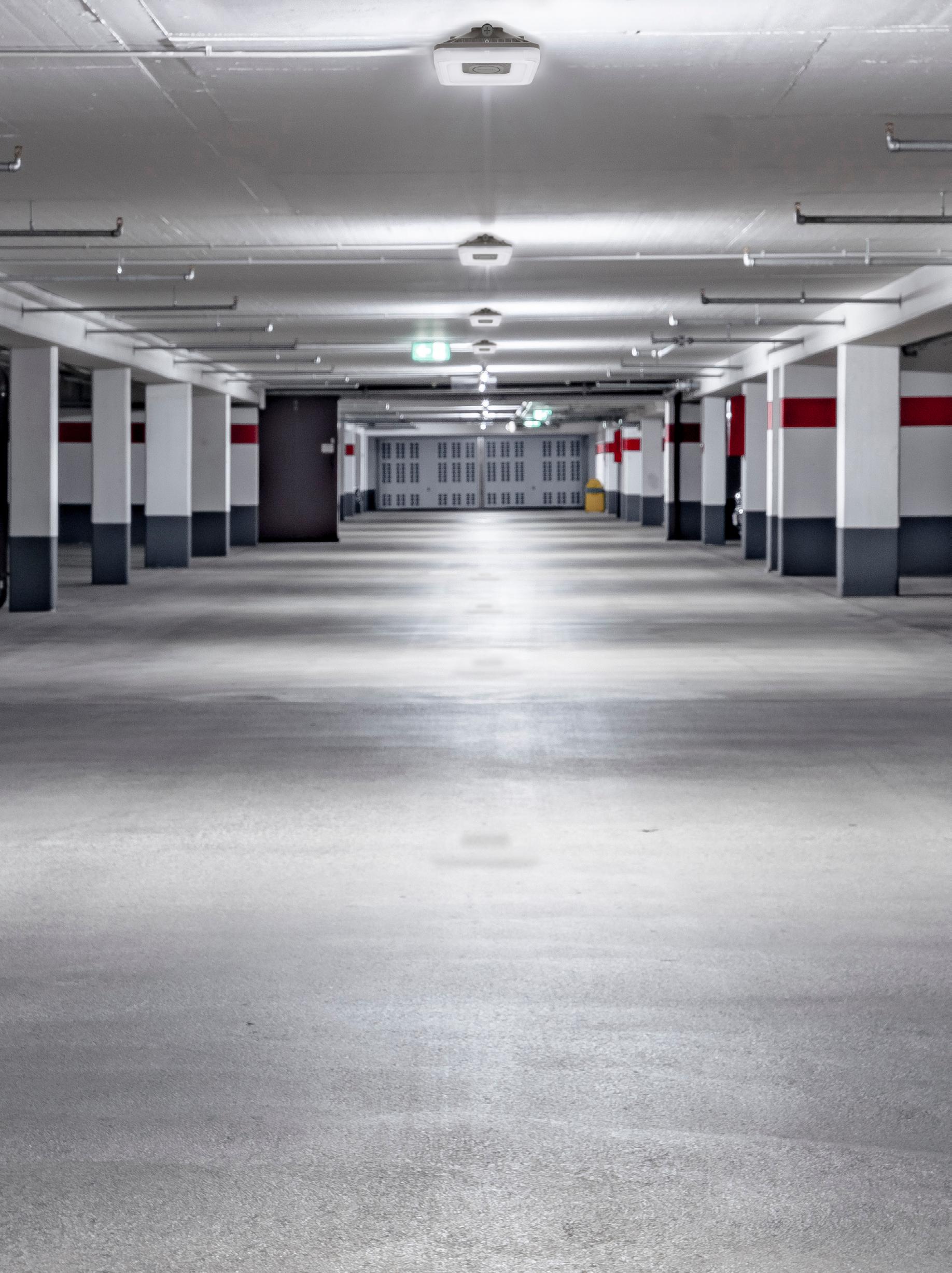
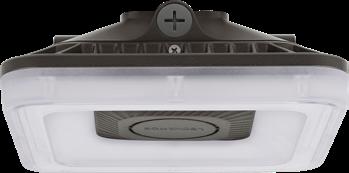
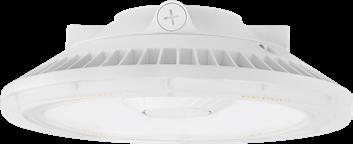
Single optic for both garage and canopy applications
In these innovative dual beam luminaires, a single optic balances light across both parking garage and canopy applications—no switches or lens swap required. They feature on-site CCT/wattage selectability and an integral photocell, and they’re 100% controls-ready.
– Available in Round and Square options to match the job and decor
– Embedded uplight helps reduce “cave effect”
– Designed for quick, easy installation
– Optional emergency battery backup available
members and industry colleagues,

ERIK J. ENNEN
CLMC, CLA, CLCP, CSLC, CLEP, C-GUVMP President, NALMCO Board of Directors Center for Energy and Environment
As we navigate a year shaped by ongoing global developments, I’m reminded of the resilience and adaptability that define NALMCO and its members. Across the country, lighting professionals continue to operate in a rapidly evolving environment— one influenced by the growth of data centers, sustainability initiatives, workforce challenges, artificial intelligence, and rising client expectations. Through it all, our members remain at the forefront, demonstrating leadership, professionalism, and a steadfast commitment to excellence.
At its core, NALMCO exists to support you. Your work is essential to advancing our industry and delivering meaningful value to the customers we serve.
Education remains a priority for NALMCO. Through certifications, technical resources, and industry advocacy, we are committed to helping our members stay ahead of change—not simply respond to it. Our Certified Lighting Management Consultant (CLMC®) program continues to set the standard for professionalism in the lighting management field. At the same time, we are exploring new ways to expand learning opportunities, strengthen industry collaboration, and create additional business opportunities, including through our latest GUV certifications.
Equally important is the strong sense of community within NALMCO. With our Annual Convention & Trade Show right around the corner, I encourage every member to attend in October. These gatherings go beyond traditional networking—they create opportunities to exchange ideas, tackle challenges, and build lasting professional relationships. Your involvement doesn’t just make a difference—it drives momentum across your organization and the entire association.
As President, I want to recognize and thank the NALMCO board members, committees, and staff who generously contribute their time and expertise to advancing our mission. Their dedication ensures the association remains relevant, responsive, and forward-looking. I also want to recognize our member companies, whose continued support makes everything we do possible. You are what makes NALMCO the organization it is today.
Looking ahead, the lighting industry will continue to evolve. By working together—sharing knowledge and embracing innovation—we can help ensure a bright future for our profession.
Thank you for being part of NALMCO. I look forward to connecting with many of you in the months ahead.
Warm regards,



the easiest part of your





You get a real person— every time— ready to help you solve problems.
THAT CONTINUES AFTER
SALE We stand behind our products and support you long after installation.

One of the great privileges of publishing LM&M is having a front-row seat to the evolution of our industry. This issue highlights several developments that suggest the lighting management profession is entering another important transition period — one where contractors and lighting professionals are being asked to deliver far more than fixture replacements alone.
The clearest example is NALMCO’s growing international recognition in the germicidal UV-C space.
At ICULTA 2026 in Berlin, one of the world’s leading conferences focused on UV technologies and applications, NALMCO President Erik Ennen joined Dr. Katja Auer to present on germicidal UV-C certifications, workforce preparation, and safety validation.
The article explores NALMCO’s three-tier GUV certification structure, why measurement and commissioning procedures matter, and how safety standards are shaping the future of UV-C deployment. Most importantly, it shows that NALMCO is helping lead this conversation on an international stage.
That same theme of “the next phase” appears throughout this issue.
My conversation with Jeff Seifert of SnapCount examines the growing opportunity in LED-to-LED retrofits as first-generation LED systems begin aging out. We also explore how NALMCO and the DesignLights Consortium are finding common ground around controls integration, HVAC coordination, and practical energy savings strategies for commercial buildings.
In addition, two project features — a manufacturing campus retrofit in Ontario and the adaptive reuse of a Wyoming warehouse into a modern office environment — offer practical lessons lighting contractors can apply immediately.
Taken together, the articles in this issue point toward a profession becoming more technical, more integrated, and more valuable than ever before! ■



Certified Apprentice GUV Technician (CA-GUVT)
• Introduction to germicidal GUV technology
• Principles and mechanisms of germicidal GUV disinfection
• Safety considerations and protocols

Exam Fee: $350
Certified Lighting Management Consultant® (CLMC®)
• Characteristics and proper usage of lamps, ballasts, fixtures, and controls
• Lighting layout designs and applications
• Energy conservation related to lighting and controls and sustainable lighting practices

Exam Fee: $500 (Member Rate)
Prerequisites: 3
Contact Kelly
Certified Lighting Controls Professional™ (CLCP™)
• Introduction to lighting, switching, dimming, personal lighting, wireless lighting, and intelligent lighting control
• Daylight harvesting, energy codes, LEDs, etc.

Exam Fee: $200 (Member Rate)
Certified Lighting Auditor (CLA)
• Perform accurate, energy-efficient lighting audits
• Assures clients of precise, comprehensive audit recommendations
• Ideal for lighting professionals, energy auditors, and facility managers

Exam Fee: $225 (Member Rate)
Bridget Leary
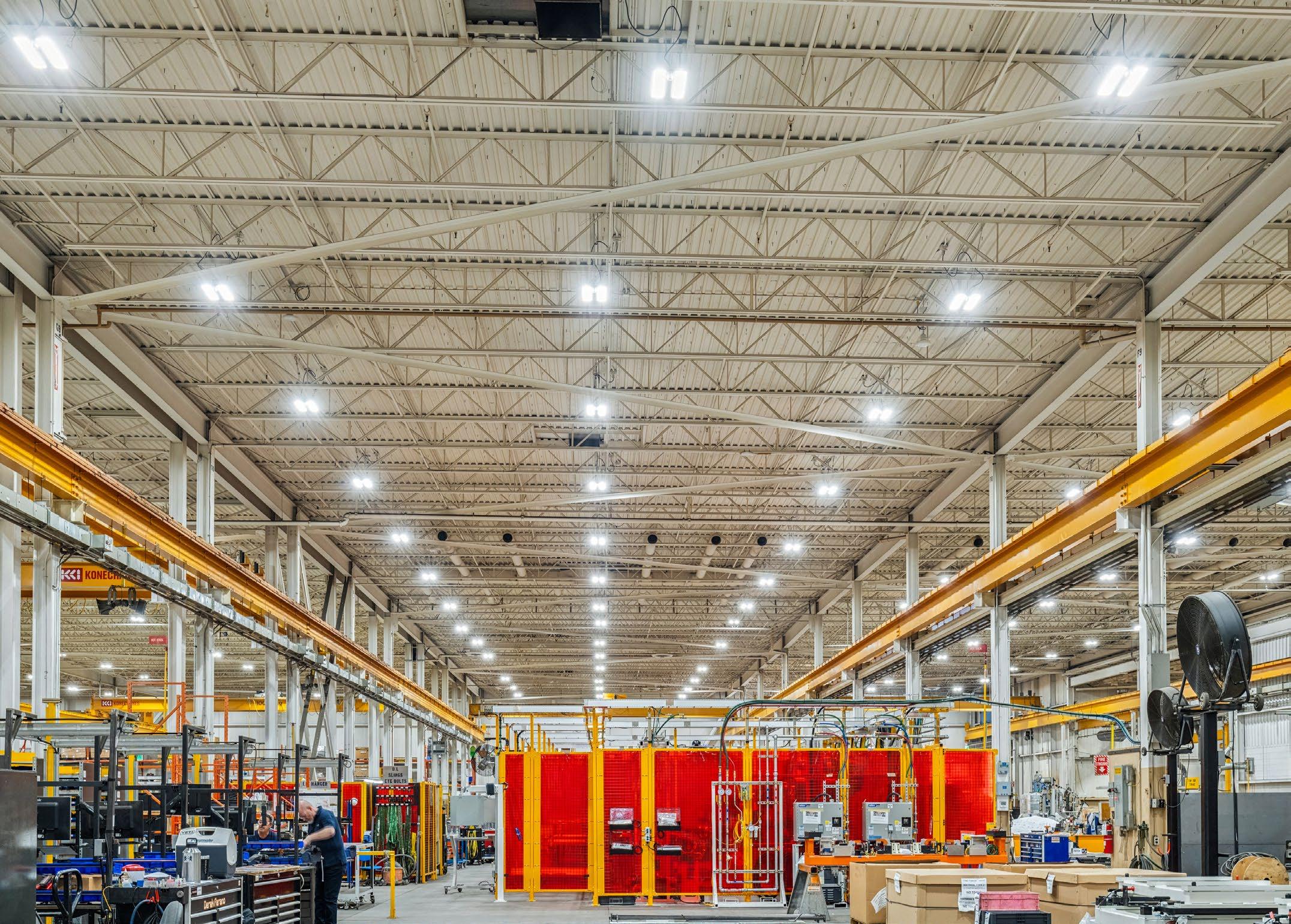
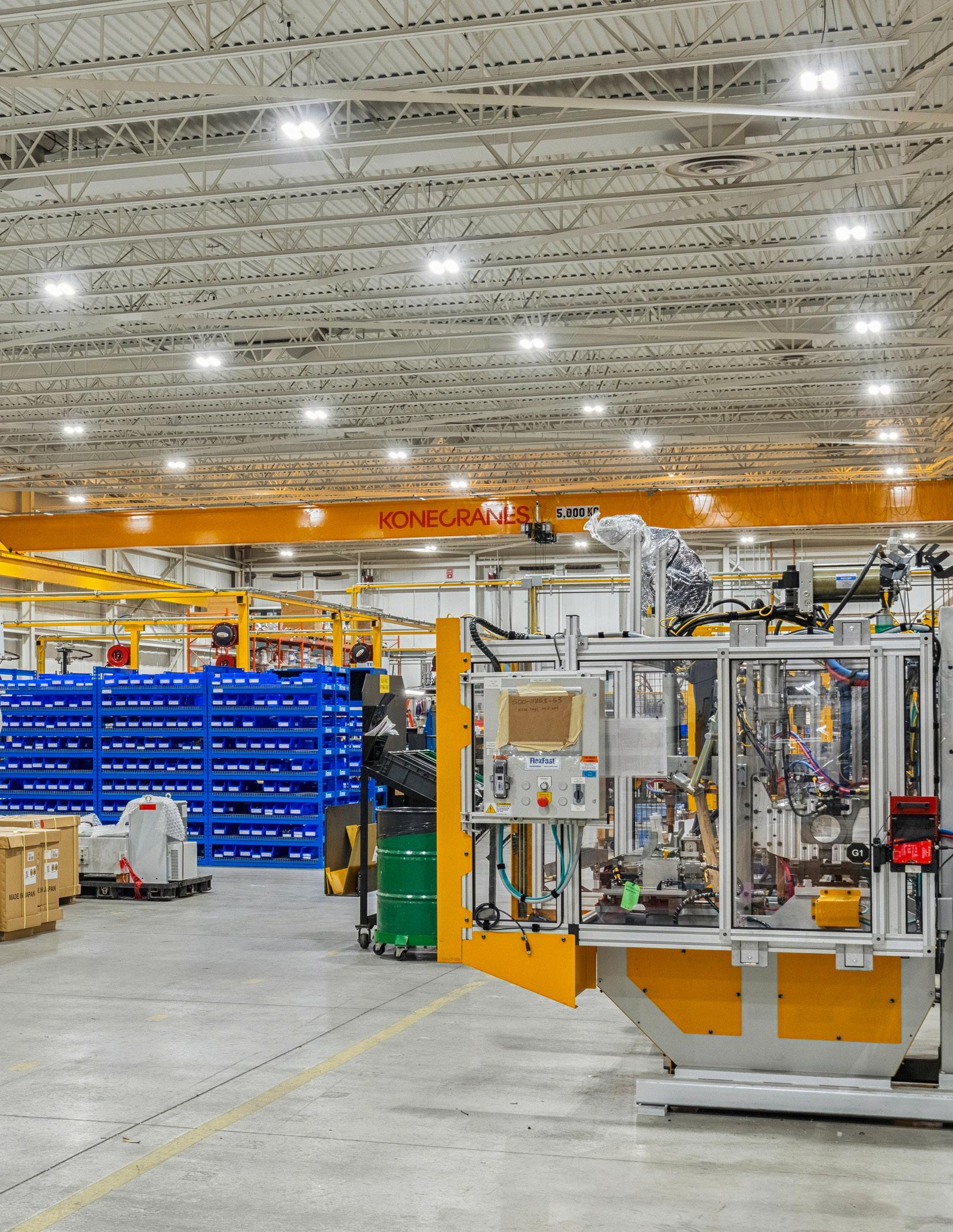
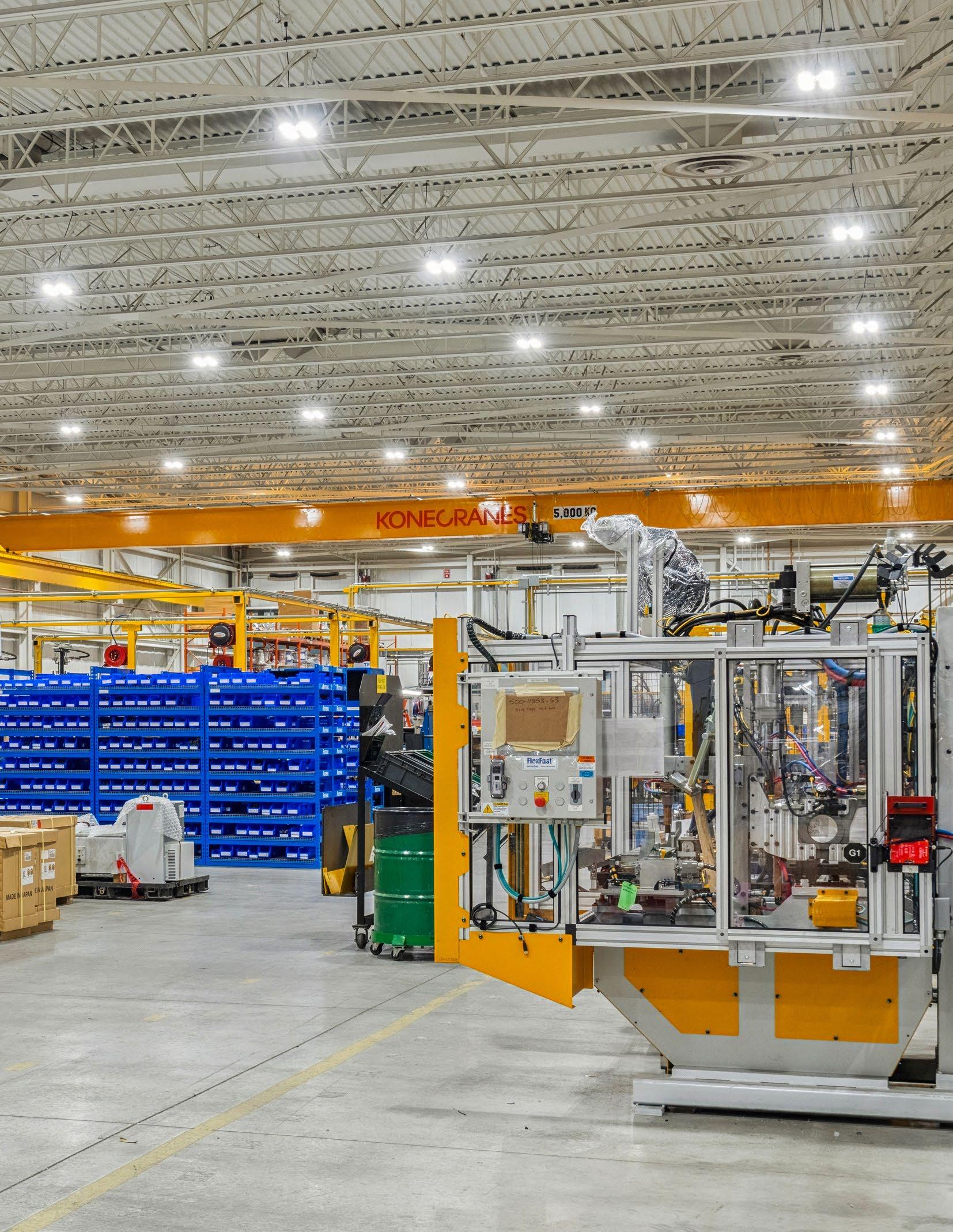
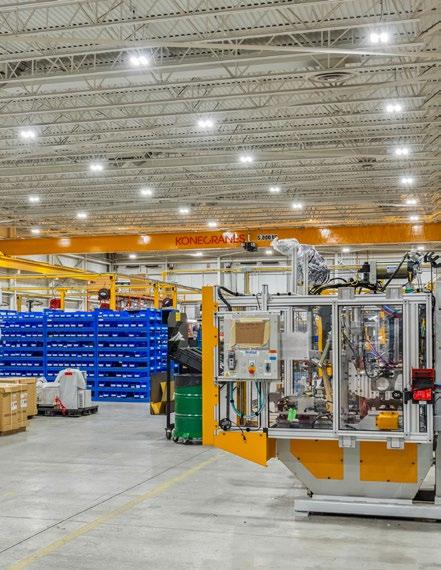
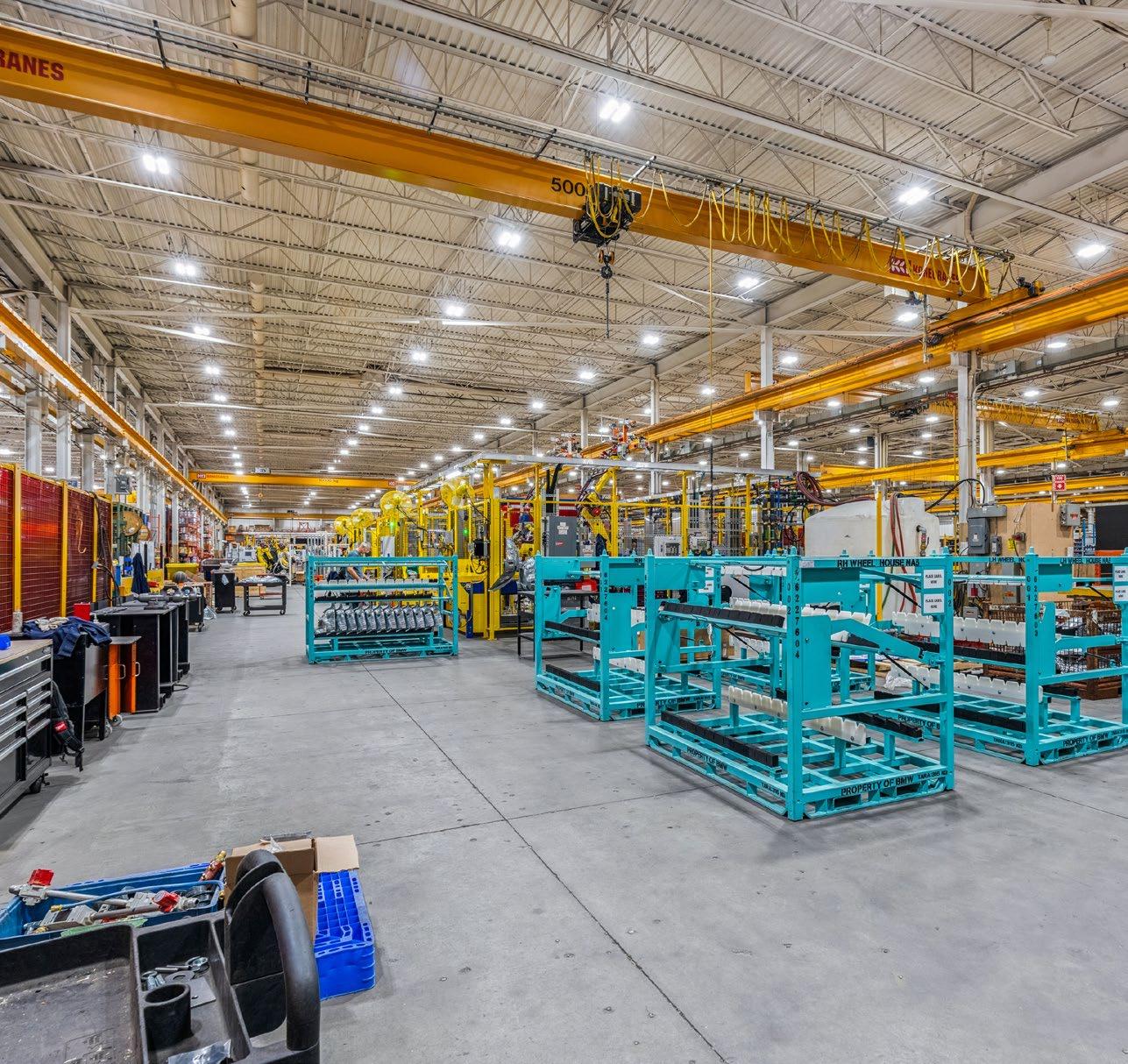
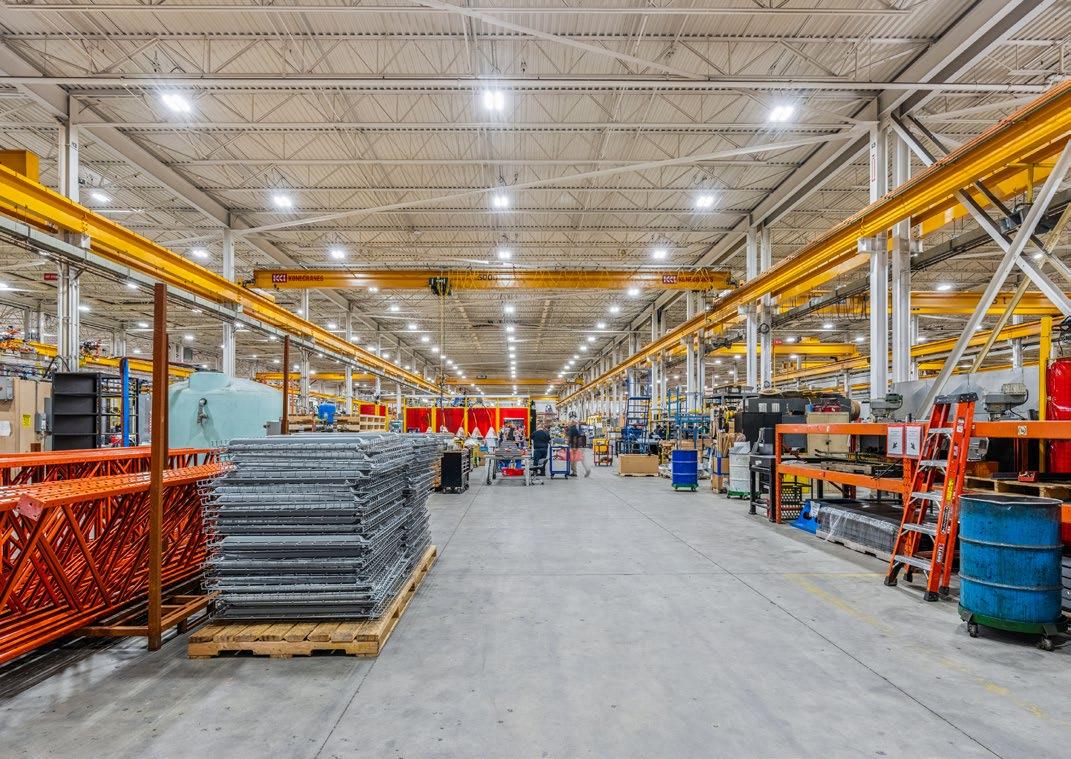
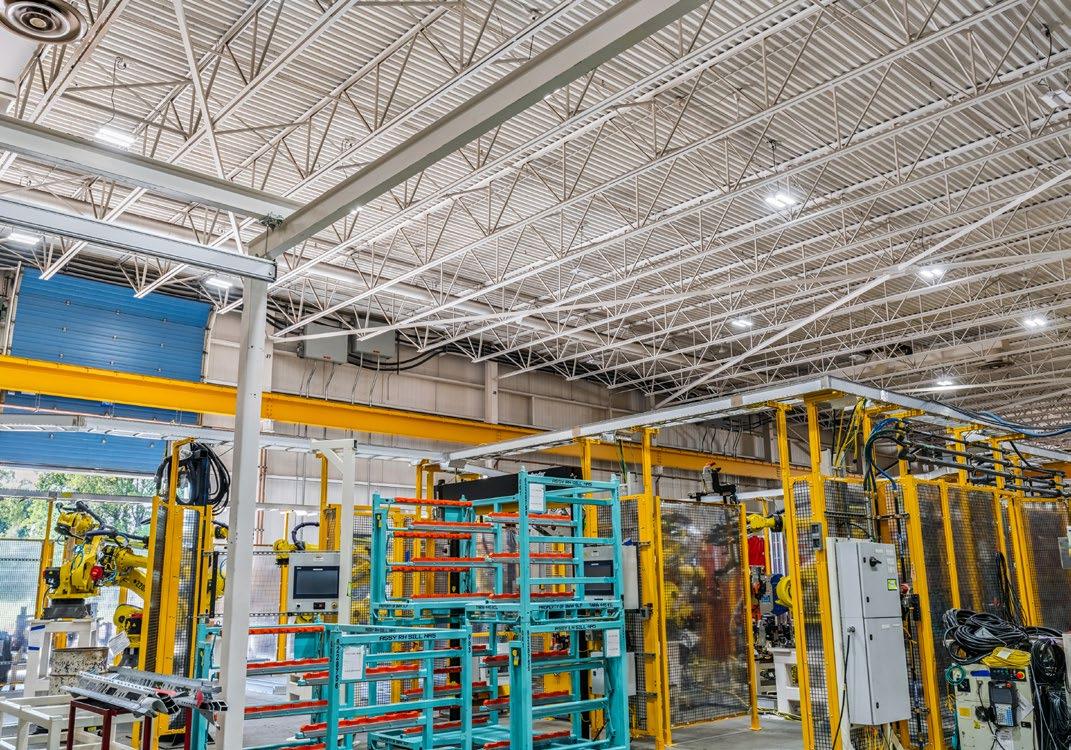
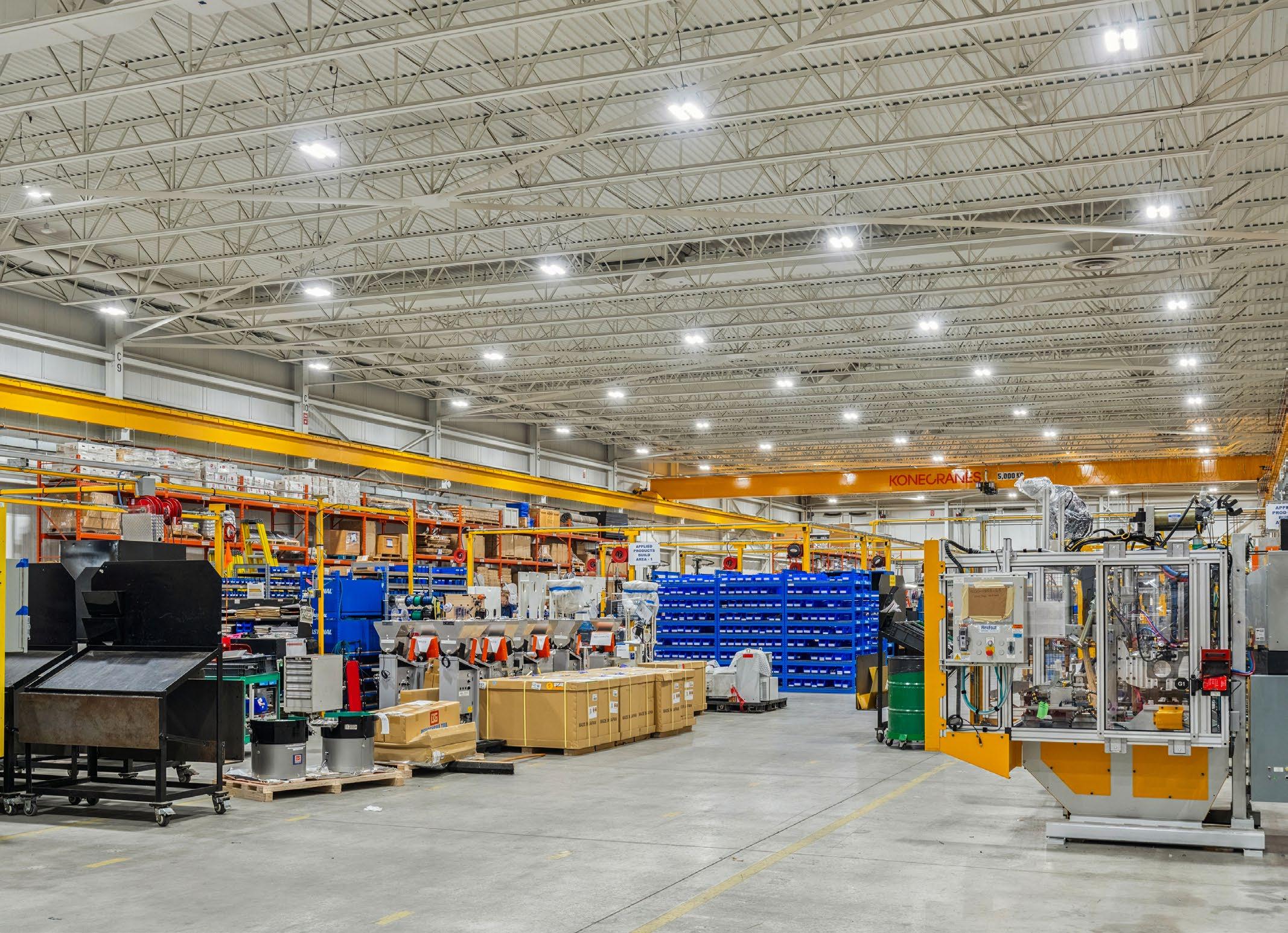
Large-scale manufacturing facilities across North America are facing the same issue: aging high bay systems that no longer meet modern performance expectations. A recent four-building retrofit in Windsor, Ontario shows how contractors can upgrade lighting, improve visibility, and significantly cut energy use—without disrupting operations.
Centerline Windsor Ltd., a global automation manufacturer, recently completed a full lighting upgrade across its campus, replacing outdated high bays that had been in service for more than a decade. The project offers practical lessons for contractors working in active industrial environments.
The existing system—linear high bays installed in 2009— had reached the end of its useful life. Light levels had dropped, fixtures were failing, and maintenance teams were constantly relamping and renting lifts.
Even after cleaning, performance gains were minimal. Average light levels hovered around 27 foot-candles—well below what is needed for precision manufacturing tasks like CNC machining and robotic assembly.
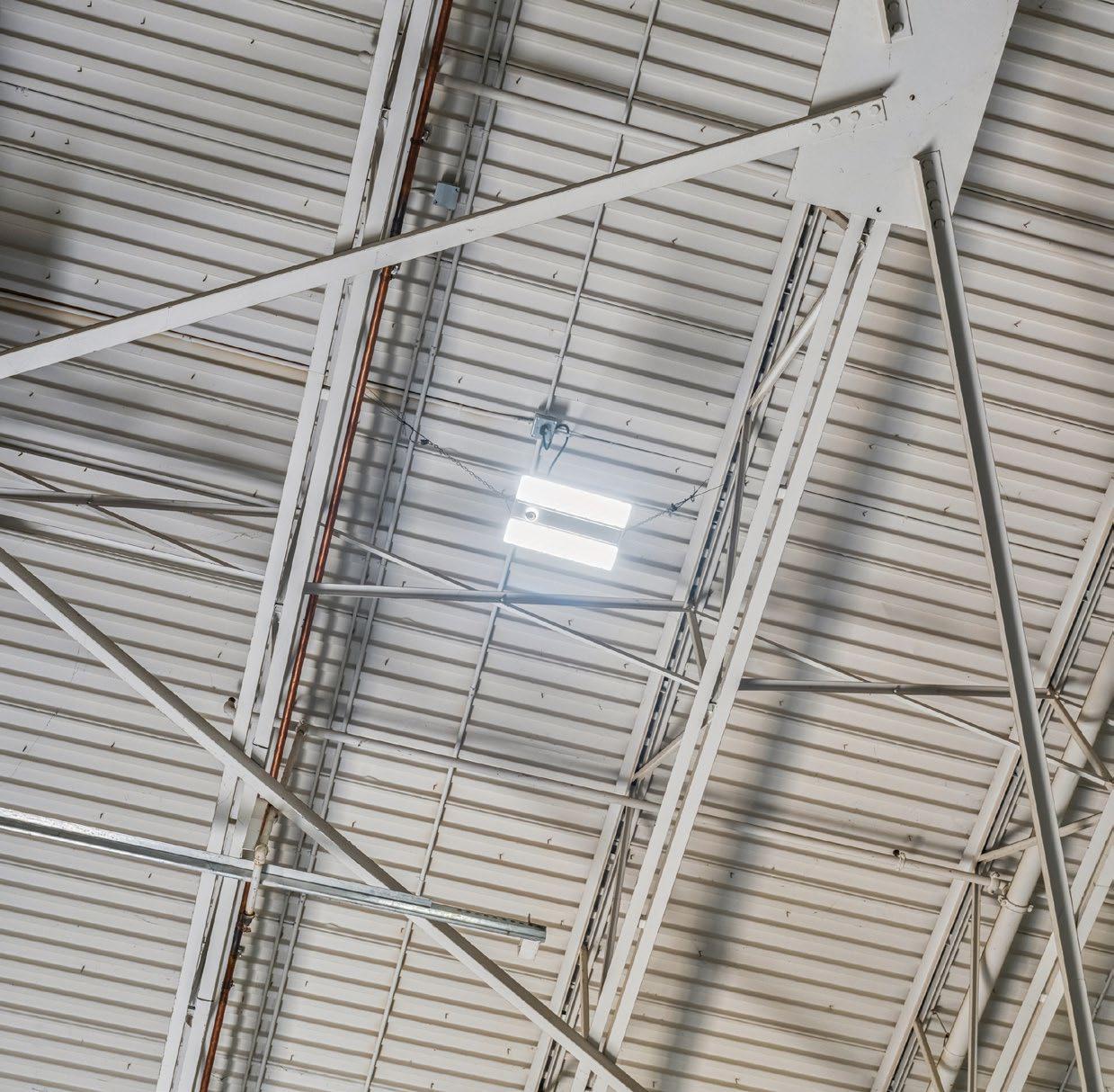
For lighting contractors, this is a familiar tipping point: when ongoing maintenance costs and poor performance justify a full replacement rather than another patch.
The solution was straightforward but effective—replace fixtures one-for-one with modern LED high bays equipped with integrated occupancy sensors.
A total of 887 high bay fixtures were installed across four buildings. The upgrade focused on three priorities:
• Increase light levels and uniformity
• Reduce energy consumption through controls
• Minimize disruption during installation
The selected fixtures, supplied through WESCO and manufactured by LEDVANCE, allowed the team to meet all three goals without requiring major infrastructure changes.
One of the biggest advantages for contractors was the use of integrated PIR sensors within each fixture. No additional control wiring or centralized system was required.
The programmed sequence was simple:
• After 30 minutes of no activity, fixtures dim to 50 percent
• After an additional 15 minutes, they dim further or switch off
This approach effectively turned each fixture into a standalone control point. For contractors, that means faster installs, fewer callbacks, and easier commissioning.
Perhaps the most important takeaway is how the project was executed.
The entire retrofit was completed by the facility’s inhouse maintenance team while the plant remained fully operational. Work was done in zones, allowing production to continue uninterrupted.
Key factors that made this possible:
• Reuse of existing wiring and voltage infrastructure
• Compatible mounting and connection points
• Reliable product availability through distribution
For contractors, this reinforces the value of selecting retrofitfriendly fixtures that don’t require extensive rework.
The improvements were immediate.
Average light levels increased from roughly 27 foot-candles to more than 60 foot-candles, providing better visibility for detailed tasks. Workers reported noticeable improvements, especially when reading fine markings and part details.
Energy savings also climbed quickly. With occupancy-based dimming and shutoff, many areas now operate at reduced
levels during off-hours, cutting runtime significantly.
Maintenance costs dropped as well. The facility eliminated frequent relamping cycles, cleaning efforts, and lift rentals associated with the old system.
This project highlights several trends that apply directly to warehouse and manufacturing retrofits:
• One-for-one LED high bay replacements remain the most efficient upgrade path
• Integrated controls eliminate the need for complex lighting systems
• Light quality and uniformity are critical in precision environments
• Retrofit-friendly products reduce labor time and disruption
• Energy savings now depend as much on controls as on wattage
For contractors, the message is clear: today’s high bay upgrades are no longer just about swapping fixtures. The real value comes from combining performance, controls, and ease of installation into a single solution.
And in facilities where downtime is not an option, that combination makes all the difference. ■


By Sean Grasby, SVP & GM, Construction, Wesco

When was the last time you evaluated your lighting? A 2010-era lighting retrofit was largely focused on swapping lamps or fixtures to LED to reduce wattage, minimize maintenance and capture savings. And while these older lighting systems were efficient, they were not adaptive. They often lacked the controls, visibility and ability to integrate with a building management system (BMS), leaving facility teams in the dark regarding how spaces were being used. Back then, the industry focused on siloed, static solutions that may have lowered energy bills at the onset, but couldn’t adjust to future innovations and needs.
Since then, LEDs have evolved significantly. If your last retrofit was from more than a decade ago, or if your current LEDs are from that era, it might be time to consider retrofitting again. LEDs today have enhanced light quality, dimming capability, compatibility with controls and longevity of drivers and components. While early retrofits often replaced inefficient light sources, they often didn’t address how, when or why lights were being used.
In contrast, modern retrofits look to solve for performance, intelligence and adaptability. And today, savings don't just come from wattage reduction. Thanks to advanced controls, demand-response capabilities and operational efficiencies, organizations can realize additional savings through reduced maintenance and labor.
Today’s energy strategies depend on measured performance, adaptability and integration, all of which are difficult to achieve with early-generation LED retrofits. Modern upgrades are system-based, not component-based

and typically include high-efficiency LED luminaires, integrated or sensor-ready drivers, networked controls and software dashboards for monitoring and optimization. And installation can be phased or layered onto existing infrastructure to minimize disruption while reaping significant benefits, as the overall potential for energy savings has significantly improved.
The biggest misconception when it comes to lighting is having a mindset of “we already went LED, so we’re done.” This narrow view threatens to thwart progress and ignores many of the benefits that modern retrofits or newer LEDs provide. Today’s LEDs can enhance worker productivity and safety, reduce operational complexity, and provide valuable facility data.
Instead of considering it a finished project, organizations should view lighting as an evolving system. Today’s upgrades can empower facility managers to reprogram spaces, adapt to new use cases and capture ongoing value beyond initial energy savings. Just as building managers wouldn’t rely on a thermostat from 2010 to manage today’s HVAC systems, outdated lighting technology limits performance and control in today’s facilities. Upgrading today is about transforming lighting into a controllable, datagenerating asset.
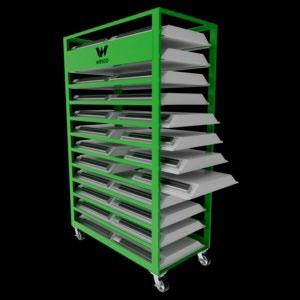
Today, lighting doesn’t just provide significantly more lumens per watt, improved color quality and stable drivers. Modern lighting is now a managed, programmable system encompassing networked, wireless controls systems, fixture-level control and demand response integration. Controls have evolved from a basic tool to a comprehensive intelligence system, networked with granular zoning, scheduling and remote management.
Modern retrofits boast real-time data and analytics, providing unprecedented insights into occupancy trends, space utilization and energy consumption, routinely helping to drive additional energy savings. In many facilities, lighting is now considered an invaluable data source, not just an energy load. Today, lighting can play a key role in ESG reporting, decarbonization strategies and operational decision-making.
Fueled by real-time energy monitoring insights and predictive maintenance alerts, lighting controls are instrumental in supporting energy management, operations and building intelligence. This can be especially helpful
in manufacturing or industrial settings. Previously, a key light or fixture going down could take production offline. Today’s fixtures, however, can provide predictive alerts to maintenance personnel, allowing technicians to proactively replace them at a more advantageous time.
Modern lighting controls and sensors have turned lighting from a static utility into a dynamic, data-rich system that drives energy, operations and user experience all at the same time.
Keeping up with lighting upgrades also helps facilities capitalize on incremental energy savings, reduced maintenance costs and the ability to respond to rising utility rates. If energy prices or demand charges rise, inefficient or legacy lighting systems amplify the negative impact. Advanced controls can act as a hedge by dynamically reducing usage when needed. Older lighting systems also make it harder to support carbon reporting, tenant expectations and stringent energy codes, which are increasingly driving capital decisions.

There’s also a strategic risk. Many incentives and tax programs—such as utility rebates and Section 179D deductions—are time-bound. Waiting can turn what is currently a 1–4-year payback into a much longer one. Deferring an upgrade will lead to higher energy spend, higher maintenance cost, missed incentives and lower asset value. The ROI case is stronger than ever.
Emerging technologies like luminaire-level lighting controls, wireless commissioning, and IoT-enabled software platforms reduce installation complexity while dramatically increasing system flexibility and insight.
Many believe AI-driven lighting systems are next - one that enables predictive maintenance, automatically optimizes schedules and light levels, and learns usage patterns, making lighting the digital backbone of the building, not just illumination.
In practice, this evolution will look less like a single “AI fixture” and more like AI layered onto networked controls and software dashboards that continuously tune setpoints and schedules based on real occupancy and daylight patterns. As interoperability standards mature and systems connect more tightly with BMS and energy platforms, lighting can become a low-friction sensing and control layer across the entire facility. The biggest variables will be data governance and cybersecurity—how buildings protect access to these networks while still


If older systems were about using less power, today's systems are about using light intelligently, understanding how the building operates and actively optimizing performance in real-time. The value of lighting is no longer measured in just watts, it's measured in insight, control and adaptability. ■

Sean Grasby is a transformative leader with over 20 years of experience driving business growth and strategic innovation across diverse industries, currently serving as the Senior Vice President & GM, US Construction and Wesco Energy Solutions. Previously serving as President of EECOL Electric, he guided the organization's strategic direction for the past five years.
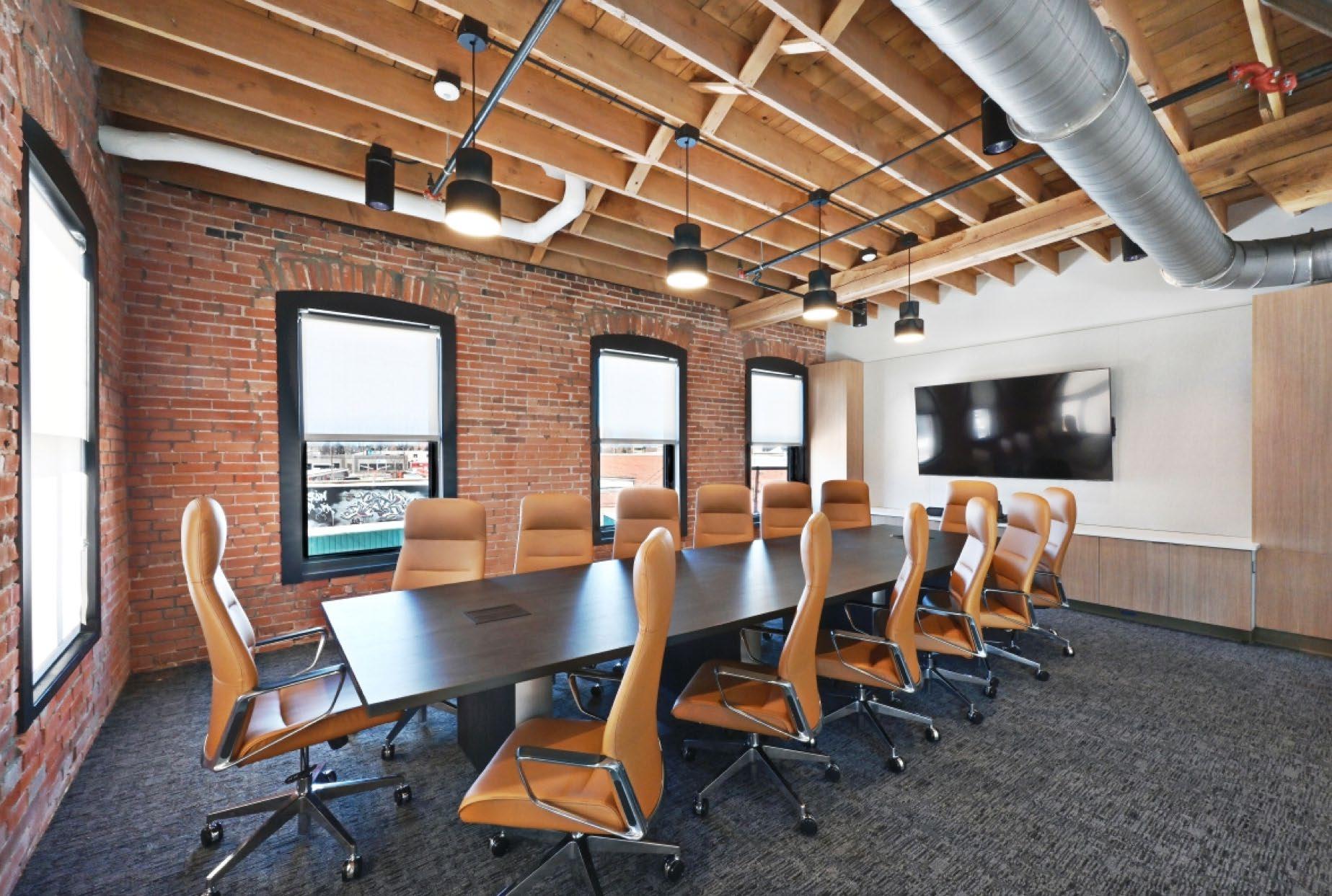
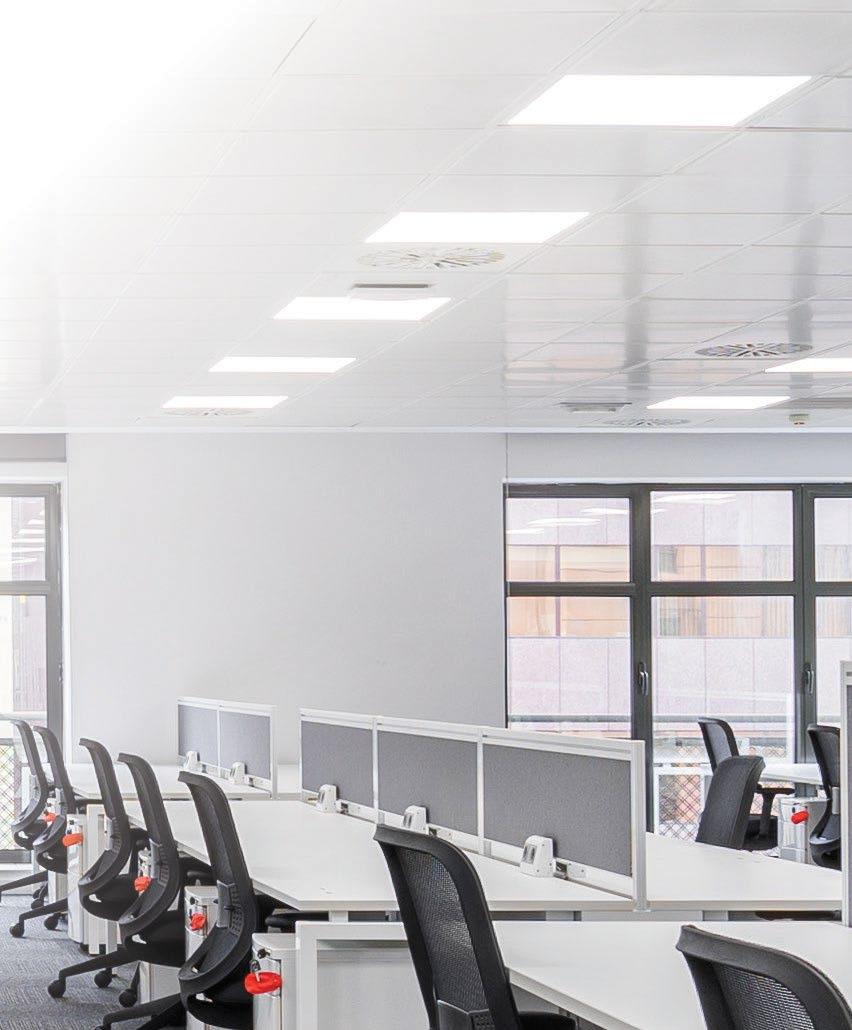
Warehouse retrofits continue to gain traction as companies look to repurpose existing structures rather than build new.
A recent project in Cheyenne, Wyoming offers a strong example of how contractors can turn a deteriorated shell into a functional, high-end workspace—with lighting playing a central role.
MHP, one of Wyoming’s oldest accounting firms, relocated from its long-time office to a 24,000-square-foot warehouse on the edge of town. The goal was simple: create a modern environment that attracts talent and supports clients, while preserving the character of the original building.
For lighting contractors, this type of project hits familiar challenges—existing structure constraints, mixed-use
spaces, and the need to balance aesthetics with performance. Throughout the project, Eureka Lighting luminaires were specified, providing a consistent design language while meeting the performance demands of each space.
The design team kept much of the warehouse’s original structure intact, including wood beams and brick walls. That decision impacts installation from day one. Uneven surfaces, exposed ceilings, and limited mounting points require flexibility in fixture selection and layout.
Suspended luminaires from Eureka Lighting were used
throughout the project. This approach avoids extensive ceiling reconstruction and allows installers to work around existing infrastructure. It also simplifies future maintenance and reconfiguration—something contractors should highlight to clients considering adaptive reuse.
Unlike high-design architectural projects, this retrofit prioritized usability—especially in work areas.
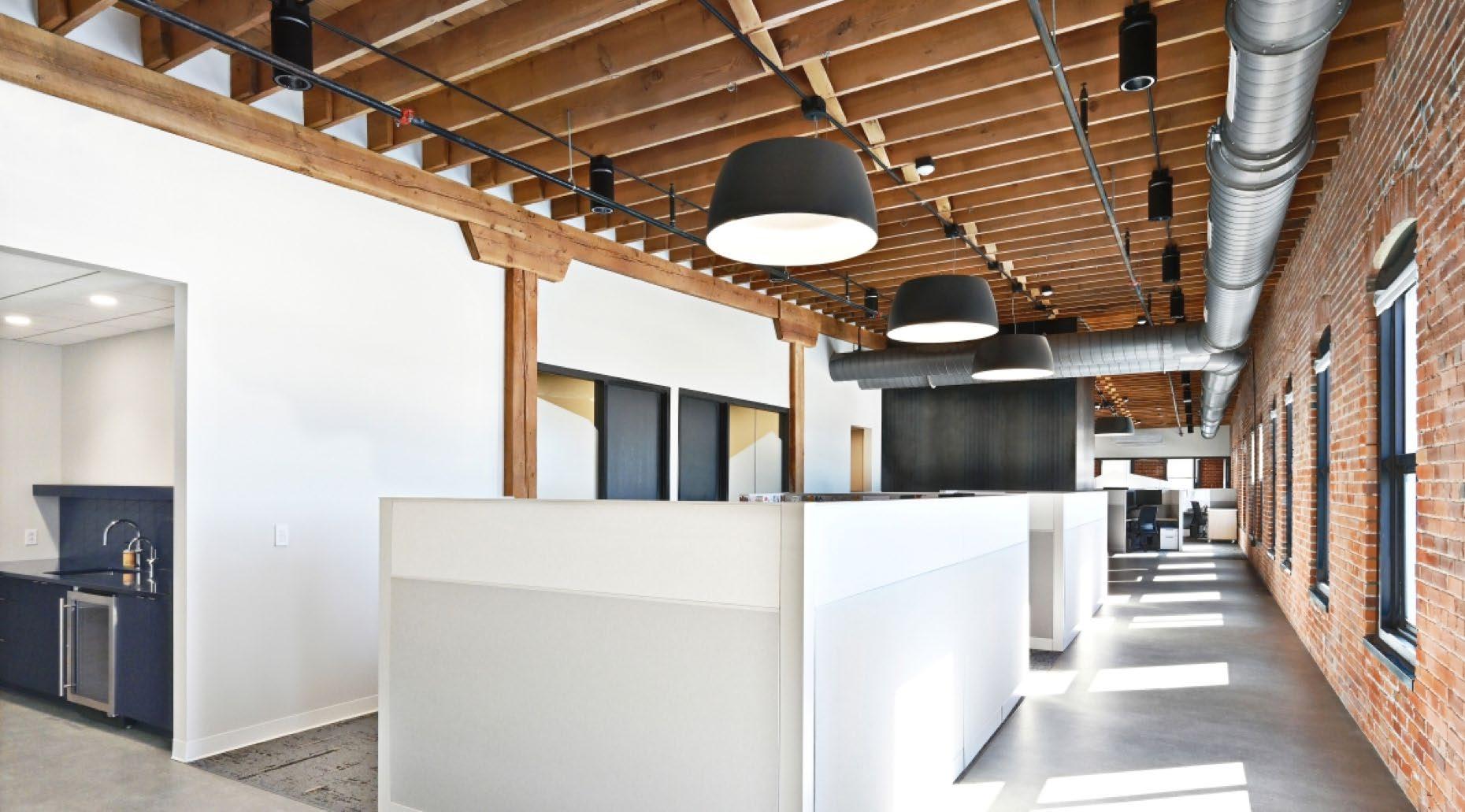
On the second floor, open office workstations were illuminated with suspended fixtures designed to minimize glare on computer screens. That’s a critical detail for contractors working on office retrofits inside warehouses. Poor glare control leads to complaints and costly callbacks.
The fixtures provided:
• Even distribution across workstations
• Reduced direct glare for screen-heavy tasks
• Consistent light levels across large open areas
For contractors, this reinforces the importance of selecting fixtures that balance output with visual comfort—not just lumen packages.
Warehouse retrofits often rely on lighting to define zones instead of building out full partitions.
In this project:
• Large decorative pendants were used to anchor reception and lounge areas
• Circular fixtures helped visually separate meeting zones
• Smaller-scale luminaires created rhythm over workstation rows
This reduces construction costs while still delivering clear functional areas. Contractors can use this strategy to help clients stay within budget while achieving a polished result.
One standout feature was the employee break room, which doubles as a training and event space. Lighting here needed to adapt to different uses throughout the day.
Dimmable fixtures were installed over a central counter area, allowing the space to shift from task lighting during lunch to softer lighting for events. For contractors, dimming and controls are no longer optional in these environments— they’re expected.
Key takeaway: Always plan for flexibility in retrofit projects, especially when spaces serve multiple purposes.
Even in a warehouse conversion, first impressions count. The reception area and boardroom were treated with more decorative lighting, but still tied into the overall system.
Contractors should note that these areas often require:
• Higher aesthetic consideration
• Clean installation details (visible fixtures, exposed ceilings)
• Coordination with architectural finishes
This is where craftsmanship shows—and where clients tend to notice.
The building ultimately earned historic preservation recognition and industry attention, but the real success is practical: a functional, comfortable workspace delivered within the constraints of an existing structure. ■

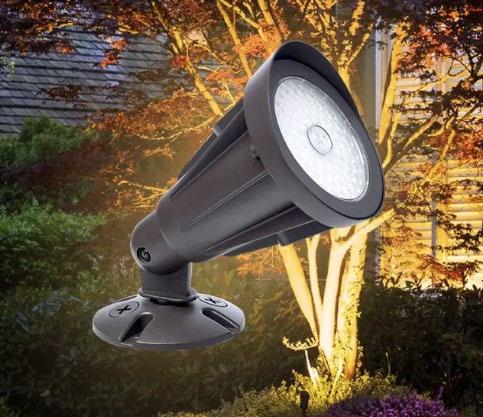
The SATCO|NUVO High Performance LED flood lights deliver precise, targeted illumination for outdoor applications where control and flexibility are essential. Featuring NEMA beam angle selectability, these fixtures allow for tailored light distribution to suit specific lighting objectives, from narrow spot lighting to broader coverage. Selectable wattage and CCT further enhances versatility, enabling installers to adjust light output and energy consumption on-site.


The new SNV-CS-10 Combo Sensor Controller from Synapse Wireless is a contractor-ready wireless lighting control solution designed for both indoor and outdoor applications. Combining wireless communication, dimming, occupancy sensing, daylight response, and scheduling into a single costeffective device, it simplifies installation while delivering reliable smart lighting control.

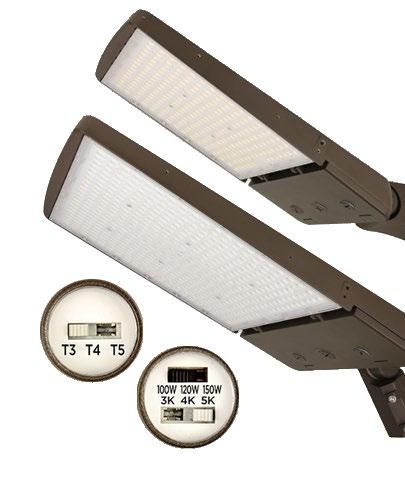
MaxLite’s AE Switch Remote Control Area Light delivers exceptional flexibility with fieldselectable wattage, CCT, and distribution options all in one fixture. Using a remote control from the ground, users can easily switch between Type III, IV, and V distributions while also adjusting color temperature settings for maximum on-site versatility. Available in 75W–300W models with 120-277V or 277-480V options, the fixture features two low EPA housing designs, multiple mounting configurations, visor accessories, robust surge protection, and dependable performance — all packed into MaxLite’s competitive Value Series offering.
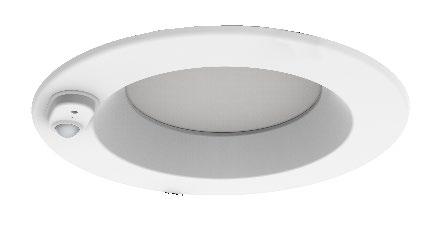
The DRSB series simplifies your lighting controls as a smart driver LED commercial downlight family, designed for retrofit or new construction. Optional integrated sensor on trim opens up large rebate and LLLC capabilities in a downlight family. 4" / 6" / 8" / 10" round commercial downlights with a regressed, smooth baffle and frosted, low-glare lens delivering even illumination, tunable output, and single SKU wireless lighting controls.

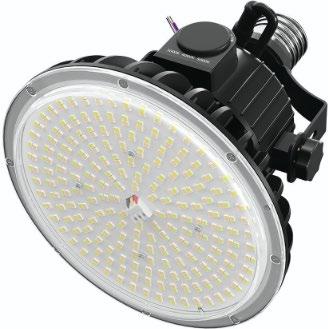
The HyLite Lotus Lamp (40W–60W) is a high-performance, dualwattage lighting solution designed for maximum flexibility and energy savings. Featuring selectable 3000K, 4000K, and 5000K color temperatures, multiple beam angles, and efficacy up to 166 lumens per watt, it delivers powerful, high-quality illumination with >90 CRI. Suitable for enclosed fixtures, the Lotus Lamp offers easy retrofit installation, IP65 protection, smooth dimming compatibility, and a 60,000-hour lifespan for reliable long-term performance.
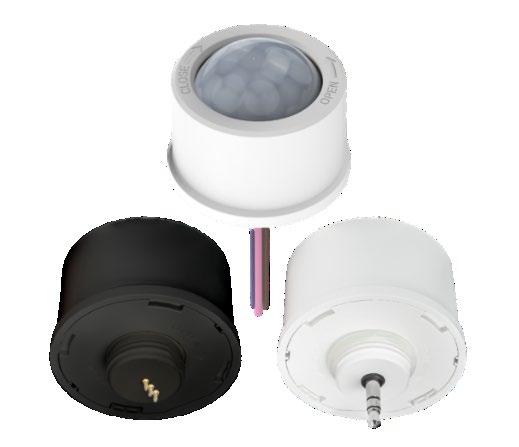
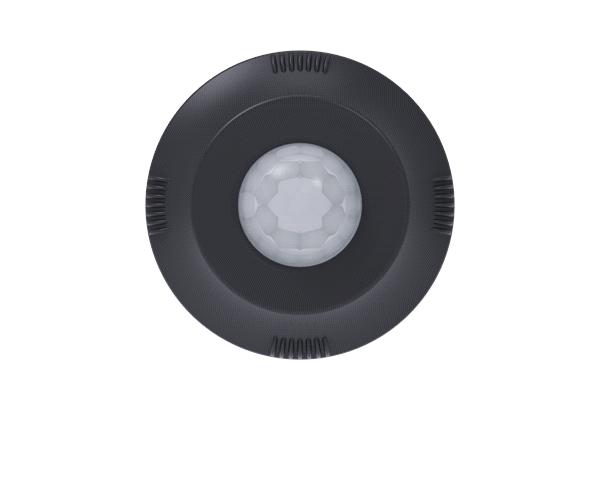
The trusted TLS Twist-to-Lock Sensor family now includes the TLS ODP Twist-to-Lock Sensor by SensorSwitch™ for outdoor applications. It delivers motion detection and photocell control with the same easy, toolless twist-to-lock installation. Available embedded in EAX luminaires or as a plugin sensor for EAX and XPCNY luminaires by Lithonia Lighting®.

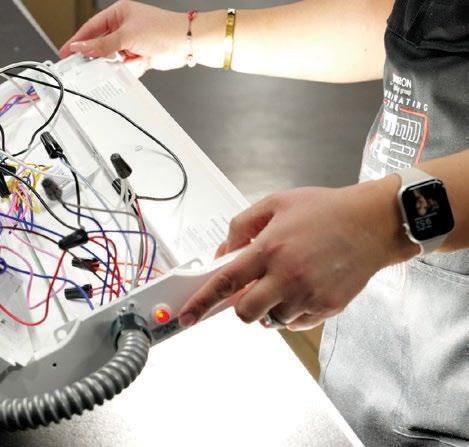
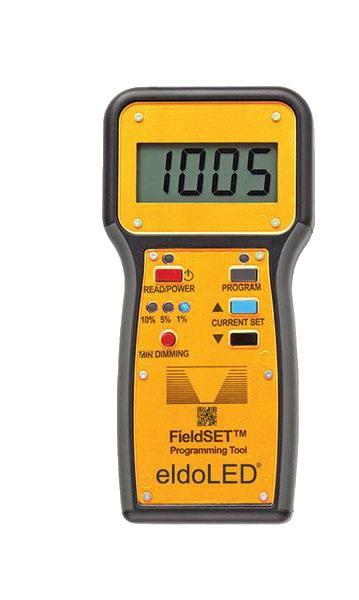
A faster way to simplify LED driver replacement in the field with the eldoLED FieldSET Programmable LED Drivers. These programmable drivers allow quick on-site configuration using a single handheld tool— no internet required. Designed for ease of installation and maximum flexibility, FieldSET helps contractors streamline commissioning and replacements with greater speed and confidence.
RADIALUX 5.5 COB RGBTW TAPE LIGHT Alloy LED’s Radialux 5.5 COB RGBTW Tape Light represents a refined convergence of performance and design versatility. This premium five-channel tape light seamlessly integrates dynamic RGB color-changing with tunable white light ranging from 2700K to 6500K, all within a dotfree Chip-on-Board (COB) construction. The result is a smooth, uninterrupted line of illumination that elevates architectural spaces.
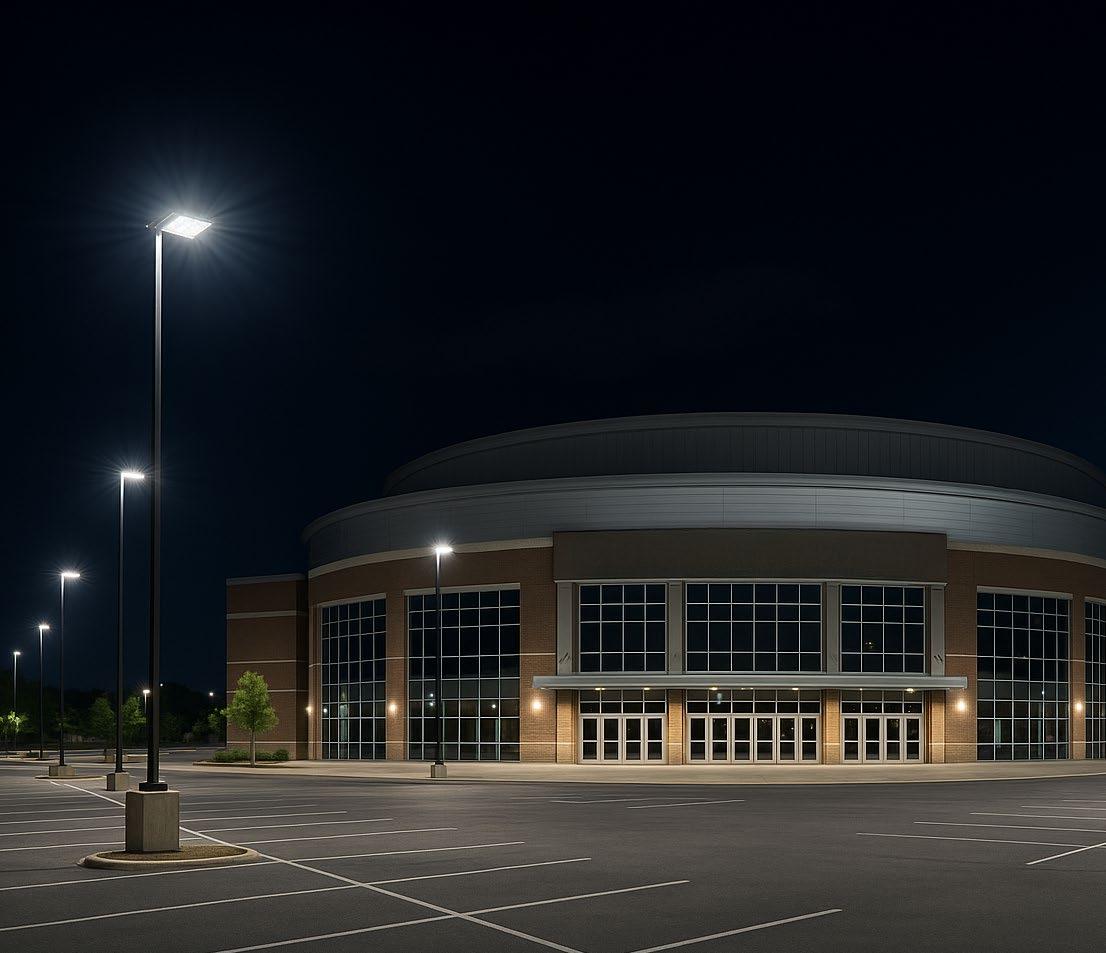
By Randy Reid
Supply chain management has become one of the most critical—and frustrating—aspects of the lighting business. Contractors, distributors, and ESCOs are all feeling the pressure: fewer stocked items, longer lead times, and more complexity on the jobsite. In that environment, any product that reduces variables is more than a convenience—it’s a competitive advantage.
One of the clearest examples of this shift is the growing importance of luminaires that operate across a full voltage range, from 120 through 480 volts. According to Dan Sorensen of Litetronics International, this is a newly developed technical capability—one that also delivers
huge supply chain advantages.
Dan, who has spent his entire 20-year career with the company and now serves as Vice President of the Midwest, has watched the industry evolve from lamp-based systems to today’s highly engineered LED platforms. What stands out to him now is how much the conversation has shifted away from pure performance and toward logistics.
“The goal,” Dan explained, “is to remove voltage from the list of things a contractor has to worry about. If you can do that, you simplify everything—from ordering to installation.”
Traditionally, voltage has been one of the biggest drivers of SKU complexity. A contractor working on a project might need separate fixtures for 120V, 277V, and 480V applications. Distributors had to stock each variation, often tying up capital in inventory that might sit on shelves.
That model doesn’t work well in today’s environment. “When you can cover 120 through 480 volts with a single product, you eliminate a huge amount of friction in the supply chain,” Dan said.
The benefits ripple across the entire channel:
• Distributors can stock fewer SKUs while covering more applications
• Contractors reduce ordering errors and jobsite surprises
• ESCOs gain flexibility when retrofitting older buildings with unknown or mixed voltages
• Manufacturers streamline production and forecasting
In practical terms, it means one box on the truck instead of two—and far fewer headaches.
At the center of this shift is the LED driver. Historically, drivers have also been the most failure-prone component in a luminaire. Dan noted that more than 95% of failures can be traced back to the driver.
That reality drove Litetronics to rethink its approach.
“The project didn’t start as a voltage play,” Dan explained. “It started with reliability. We wanted full control of the driver—from design to manufacturing—so we could eliminate failure points.”
From that effort came a proprietary driver platform capable of operating across a wide voltage range—internally spanning approximately 105 to 550 volts. While marketed as 120–480V to align with industry standards, the broader capability provides additional tolerance in real-world conditions.
The result is a system that not only reduces SKUs but also improves reliability—two factors that directly impact project timelines and service calls.
The goal, is to remove voltage from the list of things a contractor has to worry about. If you can do that, you simplify everything—from ordering to installation.”
Today high-voltage capability comes at a cost. Contractors pay a premium for fixtures that can handle higher voltages like 347V or 480V.
Today, that equation is changing.
“If you charge a premium, you defeat the purpose,” Dan said. “The whole idea is to make it just as competitive as a 120–277 product so there’s no reason not to use it.” I mentioned to Dan that I worked in the ballast industry when 120–277 dual-voltage ballasts were first introduced. There was a small premium at first, but it didn’t last long.
That same pattern appears to be repeating. By eliminating the cost barrier, manufacturers can move wide-voltage luminaires from niche applications into the mainstream.
For lighting contractors, it removes the need to make tradeoffs between cost and flexibility.
Voltage is only one piece of the puzzle. The broader trend in lighting is toward multi-functional luminaires that reduce the number of decisions required before installation. Litetronics has extended this philosophy into other areas:
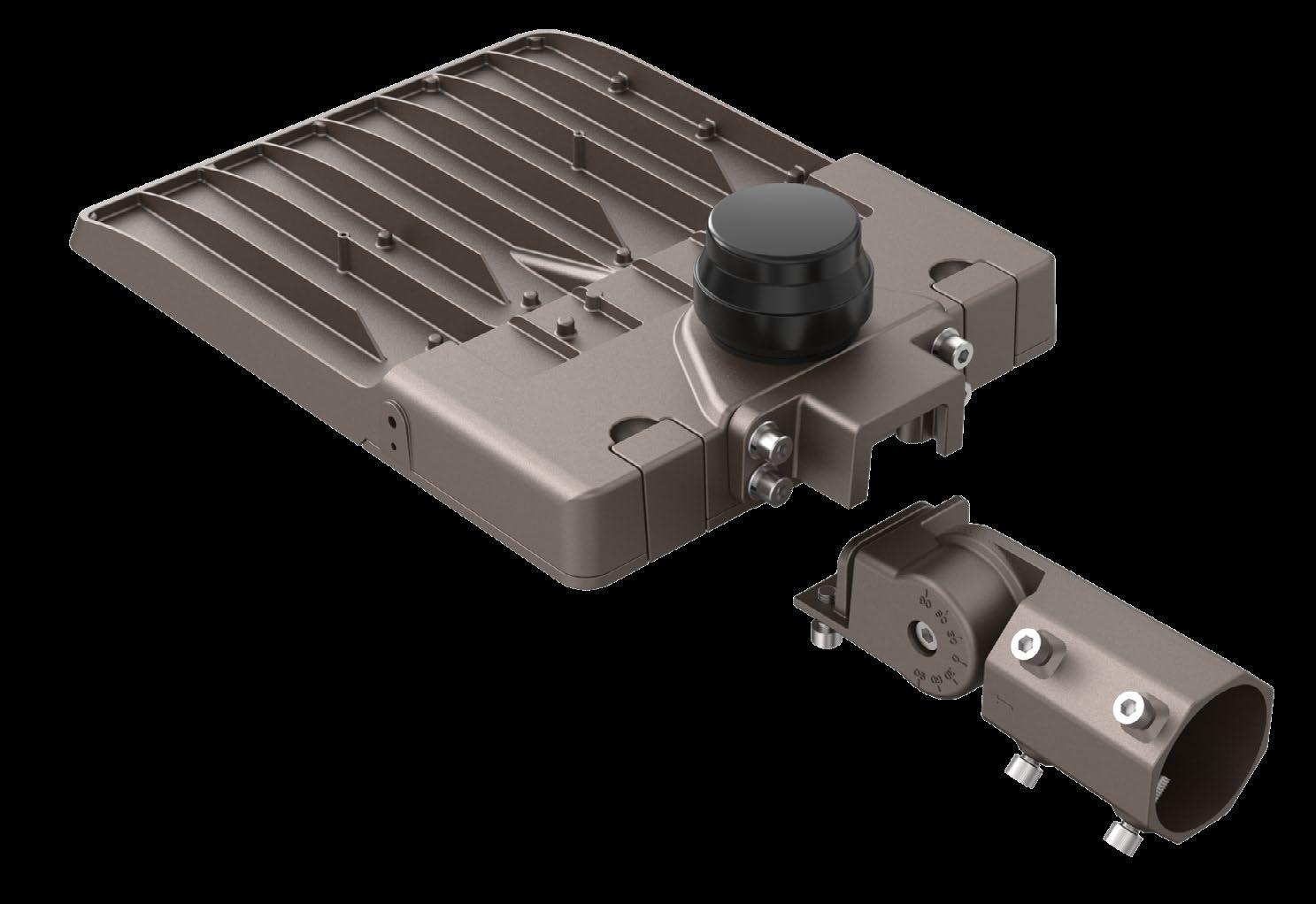
• Wattage selectable
• Color temperature selectable
• Distribution selectable (Types 2, 3, 4, and 5 for area lighting)
All of these adjustments can be made in the field using simple dip switches inside the fixture.
For lighting contractors, this is a major shift. Instead of committing to a specific configuration during ordering, they can adapt on-site. “I had a customer call me,” Dan recalled, “and their installers found a section of the building running at 480 volts that no one knew about. They were
panicking—until they realized the fixtures would handle it. They just installed them and moved on.”
That kind of flexibility reduces delays, change orders, and return shipments—each of which carries both cost and risk.
I told Dan that during my ballast product management days, many of the so-called defective returns showed clear signs of overvoltage—often the result of contractors wiring a 120V or 277V ballast to a 480V circuit.
Over the past decade, distributors have steadily reduced inventory levels. Carrying large volumes of product is expensive, and unpredictable demand makes it even riskier. Wide-voltage, multi-configurable luminaires align perfectly with this leaner model.
“This is the ideal stock product,” Dan said. “It covers almost everything.” For a distributor, that means fewer part numbers but broader coverage. For a contractor, it means a higher probability that the right product is already on the shelf.
In an industry where time often matters more than anything else, that availability can win jobs.
The impact of 120–480V luminaires is especially pronounced in certain applications:
• Warehouses and industrial facilities, where mixed voltages are common
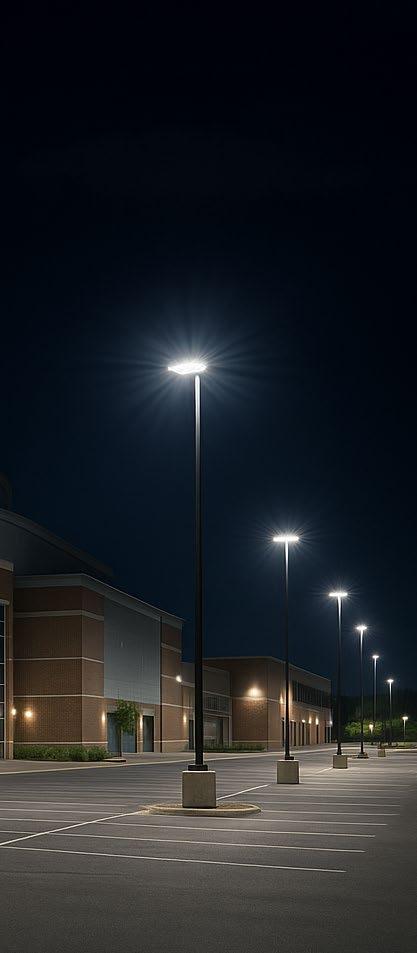
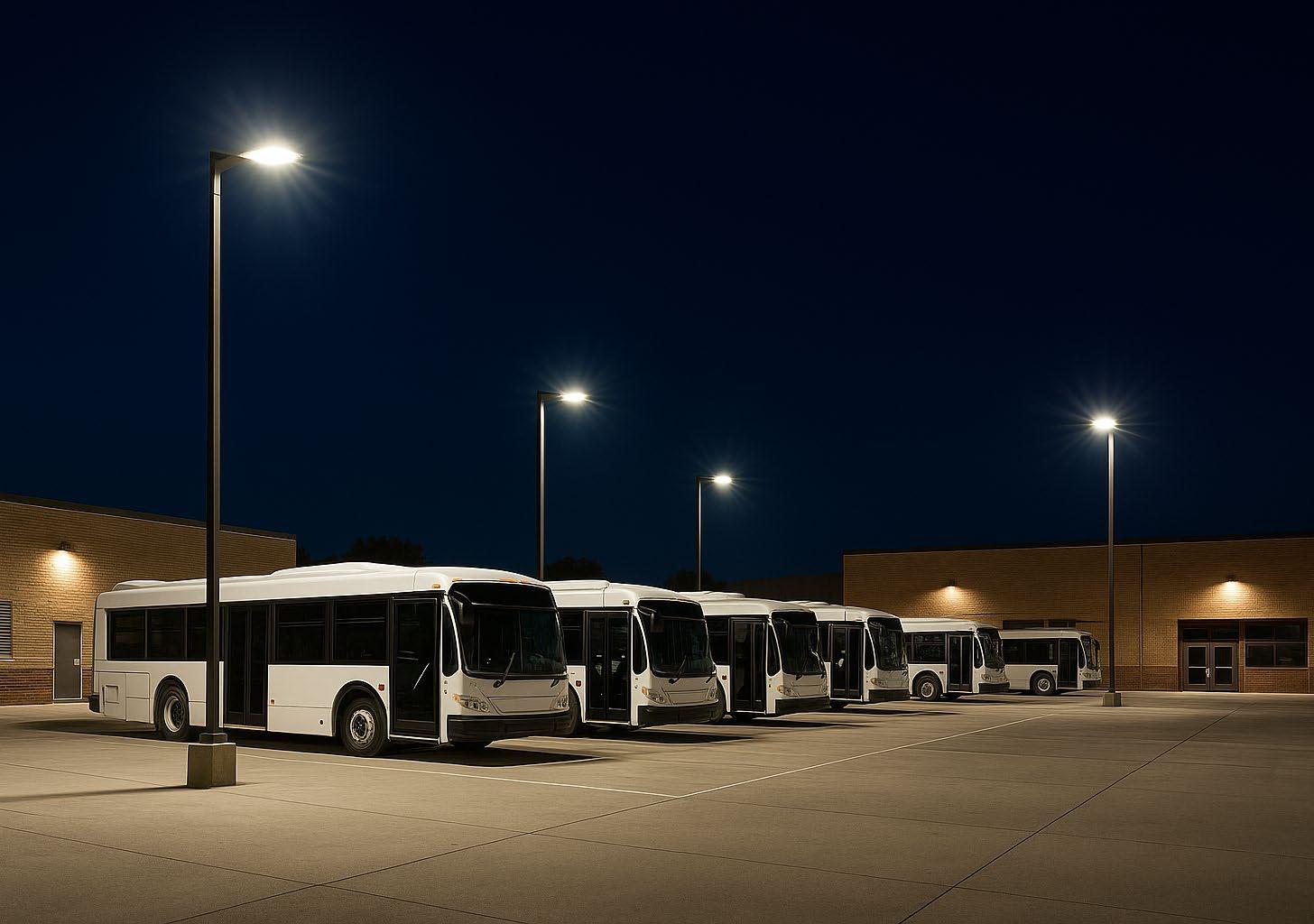
• Parking lots and area lighting, where 480V circuits are frequently used
• Municipal and roadway projects, where voltage
You don’t run into more 480V issues anywhere than you do in area lighting
requirements can vary by location
• Retrofits, where existing infrastructure is often inconsistent or undocumented
Area lighting, in particular, has emerged as a strong growth category. The combination of wide voltage, selectable distribution, and field adjustability makes these fixtures highly adaptable.
“You don’t run into more 480V issues anywhere than you do in area lighting,” Dan noted.
While Litetronics’ approach is notable, the underlying trend extends beyond any single manufacturer. The lighting industry is moving toward simplification—fewer SKUs, more flexibility, and greater control over critical components.
That shift reflects a broader reality: the supply chain is no longer just a back-end function. It’s a central part of the value proposition. Products that reduce complexity, minimize risk, and improve reliability are no longer optional—they are expected.
For contractors, the takeaway is straightforward. Widevoltage luminaires are not just a technical upgrade—they are a practical tool for managing today’s challenges. Fewer SKUs mean fewer mistakes. Field adjustability means fewer delays. Reliable drivers mean fewer callbacks.
And in a market where margins are tight and schedules are tighter, those advantages add up quickly. As Dan put it, the goal is simple: “Take one more thing off the contractor’s plate.”
In today’s supply chain environment, that may be the most valuable feature of all. ■

The lighting industry has spent the past 15 years converting fluorescent, metal halide, and HID systems to LED. According to Jeff Seifert, Co-founder at SnapCount, that first wave of conversions is now creating the industry’s next major opportunity: LED-to-LED retrofits.
Jeff presented his findings at the recent NAILD conference, where distributors and contractors gathered to discuss the future of lighting upgrades. His message was clear: the easy fluorescent conversions may be slowing, but the retrofit market is far from over.
“We’re roughly about 72% converted from legacy lighting technologies,” Jeff explained during our interview. “That means fluorescent, metal halide, HID — all of those categories combined. So yes, we’re approaching saturation in traditional retrofit opportunities. But that creates a completely new opportunity in LED-to-LED.”
Jeff noted that once the market moves beyond roughly 85% conversion, the remaining customers become increasingly difficult to persuade.
“That’s when you’re getting into people who want to be buried with their fluorescent fixtures,” he joked.
Still, the larger story is not about the remaining fluorescent holdouts. It is about the millions of square feet already converted to early-generation LED systems that are beginning to age.
Jeff’s presentation divided the LED retrofit movement into multiple “waves,” beginning with the early adoption period from roughly 2010 through 2015.
Those first-generation LED products often carried rated lives between 35,000 and 75,000 hours. Efficacy levels were far below current products, and controls adoption remained limited. Depending on burn hours and application type, many of those systems are now approaching replacement age.
Using data derived from U.S. Department of Energy market characterization reports, combined with industry trend analysis and SnapCount audit data, Jeff estimates that approximately 8.9 billion square feet of lighting installations from that first retrofit wave are now entering the potential re-retrofit cycle.
That number includes both retrofit projects and LED-based new construction completed during the same timeframe.
“If you installed LED in 2010 in a high-burn environment, that product could have been ripe for replacement by 2017,” Jeff said. “The opportunity window stretches all the way to 2035 depending on burn hours, maintenance practices, and the customer.”
The second major retrofit wave — projects completed from approximately 2016 through 2019 — represents an even larger future opportunity. Jeff estimates that wave alone could eventually represent nearly 30 billion square feet of potential retrofit activity.
“So yes, there’s still fluorescent and HID out there,” he said. “But there’s also a huge installed base of older LED systems that are going to be ready for upgrading.”
SnapCount’s internal audit data appears to support the trend.
By Randy Reid

Jeff revealed that more than 500,000 lighting projects have been audited within the SnapCount platform over the past decade and a half. That enormous data set provides a unique window into what contractors and distributors are now seeing in the field.
According to Jeff, approximately 25% of the lighting systems currently appearing in SnapCount audits are already LED installations.
“That number is ramping aggressively,” he said. “My guess is we’ll probably be at 35% next year, and it’s just going to continue climbing.”
Historically, many contractors encountering existing LED systems simply selected the “do nothing” option because the economics did not appear compelling enough to justify replacement. However, Jeff believes the financial case is improving rapidly as fixture efficacy rises and controls become more sophisticated.
One of the biggest misconceptions surrounding LED-to-LED retrofits is the belief that the payback periods are too long.
“I hear people say it’s going to be a 17-year payback,” Jeff said. “I don’t think so.”
To illustrate the point, Jeff modeled a common troffer replacement scenario. In his example, an older 39-watt LED troffer installed roughly a decade ago was replaced with a modern 26-watt fixture delivering similar light output.
Using average national electricity costs and incorporating utility rebates, the simple payback landed around 6.2 years. When luminaire-level lighting controls, daylight harvesting,
and top-end tuning were added, the payback improved further.
“It’s not the 1.8-year paybacks from the early retrofit boom,” Jeff admitted. “But it’s also not 17 years.”
Controls play a particularly important role in improving economics. Utilities increasingly reward advanced control strategies with larger incentives.
“The more controls you add, the more rebates you get,” Jeff explained. “Utilities are grasping for savings, and the best way to save energy is when the lights are dimmed or off.”

Jeff emphasized that contractors and distributors need to expand the conversation beyond kilowatt-hour reductions alone.
The next generation of retrofit selling, he argued, will increasingly focus on productivity, maintenance reduction, aesthetics, safety, and integration with building systems.
He referenced the well-known Jones Lang LaSalle “3-30300” framework, which compares building operating costs per square foot:
• Approximately $3 for utilities
• Approximately $30 for rent
• Approximately $300 for labor
“If labor costs are exponentially higher than energy costs, then even a small improvement in productivity becomes a huge value proposition,” Jeff said.
Safety can also become a compelling argument, particularly in industrial and manufacturing environments where inadequate lighting can contribute to accidents or OSHA claims.
Meanwhile, aging LED systems frequently create aesthetic inconsistencies as fixtures dim unevenly, color shift occurs, or drivers begin failing.
“Customers may tolerate some lights being out,” Jeff said. “But when you start talking about matching fixtures,
improved appearance, and better environments, that changes the conversation.”
The transition toward LED-to-LED retrofits will likely require electrical contractors to become more comfortable with software, networking, and controls commissioning.
“I think the profession is becoming a little more like the IT profession,” Jeff said. “Contractors are going to have to become more fluid with software and configuration because that’s where the future benefits reside.”
Integrated HVAC and lighting controls, luminaire-level lighting controls, occupancy sensing, and advanced analytics are all expected to become more common components of future retrofit projects.
Jeff believes one of the smartest places for contractors to begin searching for LED-to-LED opportunities is within their own customer base.
“They already know you. They already trust you,” he said. “You know their building types, their burn hours, and roughly when those systems were installed.”
With historical project data and modern AI analysis tools, contractors can begin identifying which customers are most likely approaching re-retrofit readiness.
“If you don’t have SnapCount, but you’ve got spreadsheets full of project data, upload it into Claude or another AI platform and start analyzing it,” Jeff suggested.


To explain why functioning LED systems will still be replaced, Jeff used an analogy that resonated strongly with attendees at the NAILD conference.
In 1950, only 9% of U.S. households owned a television. By 1960, television ownership had reached 90%. Conventional wisdom at the time might have suggested the market was finished.
Instead, the industry evolved repeatedly through color televisions, flat panels, smart TVs, and streaming technology.
“The point is that people replace technology when the improvement is meaningful enough,” Jeff said. “Just because something still works doesn’t mean people won’t upgrade it.”
For contractors, distributors, and lighting professionals, that may become one of the defining business opportunities of the next decade. ■

The point is that people replace technology when the improvement is meaningful enough, just because something still works doesn’t mean people won’t upgrade it.




LIGHTING TECHNICIAN™
Colorado Lighting
Noah Edwards, CALT
JOIN DATE: 4/4/26
EMC LLC
Mariah Roque Bautista, CALT+
JOIN DATE: 3/19/26
Greentech Energy Services
Joseph Cossman, CALT
JOIN DATE: 3/29/26
Jon Ortiz, CSLT, CLCP
JOIN DATE: 4/17/26
Lighting Technologies Inc.
Will Rechsteiner, CALT
JOIN DATE: 3/15/26
NaturaLED
Mike Kipp, CALT
JOIN DATE: 4/27/26
Pacific Energy Concepts
Taylor Bluebaugh, CALT
JOIN DATE: 3/10/26
Sitelogiq
Nathan Evans, CSLT, CLCP
JOIN DATE: 3/13/26

Colton Bishop, CSLT
JOIN DATE: 3/13/26
US LED
Demond Thomas, CALT
JOIN DATE: 4/20/26
Wholesale Electric Caribe Inc.
Eric Ellendorf, CALT
JOIN DATE: 4/10/26
Acuity Brands
Aastik Bhardwaj, CLCP
JOIN DATE: 4/21/26
Chesapeake Lighting
Anne Marie Beckman, CLCP
JOIN DATE: 4/1/26
Gasser Bush Associates
Abbey Kojima, CLCP
JOIN DATE: 5/2/26
Mike Husband, CLCP
JOIN DATE: 5/2/26
Greentech Energy Services
Otto Scharf, CLA, CLCP
JOIN DATE: 4/20/26
Jon Ortiz, CSLT, CLCP
JOIN DATE: 4/27/26
Hesco Solutions
Miller Aubrecht, CLCP
JOIN DATE: 4/29/26
IOT Deployment Services
Lesley Foster, CLCP
JOIN DATE: 4/6/26
Sitelogiq
Nathan Evans, CSLT, CLCP
JOIN DATE: 4/3/26

Millard Voigt, CLCP
JOIN DATE: 5/1/26
Greentech Energy Services
Jon Ortiz, CSLT, CLCP
JOIN DATE: 4/20/26
Sitelogiq
Nathan Evans, CSLT, CLCP
JOIN DATE: 3/26/26
Colton Bishop, CSLT
JOIN DATE: 3/29/26
UNC Charlotte
Trailokya Bhattarai, CA-GUVT
JOIN DATE: 3/30/26
CERTIFIED SENIOR
LIGHTING TECHNICIAN™
Colorado Lighting, Inc.
Marcus Huser, CSLT
JOIN DATE: 4/12/26

When John Hamilton talks about lighting, he rarely starts with aesthetics. He starts with accountability.
That perspective comes from years spent inside the energy services market, where lighting projects are measured by performance, installation speed, rebates, and long-term reliability. Today, John brings that mindset to Spring Lighting Group (SLG), a Texas-based manufacturer quietly building a strong reputation in the contractor and ESCO markets.
Now, John is also helping strengthen SLG’s involvement with NALMCO.
“Everybody who goes to NALMCO wants to see everybody succeed,” John said during a recent conversation with LM&M. “You don’t get that at other shows.”
John joined SLG nearly three years ago after working with several large lighting manufacturers. Along the way, he developed deep relationships in the ESCO and energy retrofit markets.
At SLG, he found something different. A quiet company with big growth.
Many in the industry may not recognize the SLG name immediately. According to John, that is because the company spent nearly three decades operating primarily as an OEM manufacturer behind the scenes.
Founded more than 30 years ago near Houston, SLG built its early business producing outdoor lighting products for other brands. About a decade ago, company leadership decided it was time to establish a stronger domestic presence.
That growth accelerated over the past several years.
“They really went full bore,” John explained. “Project by project, they built the business. Win one project, do well, be accountable, and then earn another opportunity.”
Today, SLG works through a nationwide network of lighting representatives and distributors. John said the company has shifted heavily toward dedicated lighting agencies rather than traditional pipe-and-wire representation.
That transition has helped expand the company’s architectural and specification opportunities.
One of the more interesting developments is the launch of SPRNG Architectural, a focused architectural lighting line featuring cylinders and linear fixtures designed to deliver strong value while maintaining shorter lead times and competitive pricing.
John believes that combination resonates with both lighting agents and ESCOs.
“If you had a little more quality and a little more flexibility, agents realized they could sell a lot of it,” he said. “We found there was a real opportunity to provide valueengineered architectural products that are available quickly and priced competitively.”
John’s experience in the energy services market heavily shapes his approach to lighting.
He understands the frustrations many ESCOs face when manufacturers struggle with long project timelines, shifting product availability, or complicated support structures. “Most manufacturers want to design a product, get it off the shelf, and move on,” John explained. “But in the ESCO world, a project may not happen for three years.”
SLG, he said, approaches those projects differently.
The company focuses heavily on high-efficacy products, simplified installation, and responsive support. John noted that even saving contractors a few minutes per fixture can create significant labor savings on large retrofit projects.
He also believes SLG’s lean organizational structure helps. “At some companies, there are four layers of people getting paid on a project,” John said. “We’re very thin operationally, and that allows us to be aggressive and focused.”
That flexibility has helped the company gain traction in large retrofit, municipal, and sports lighting projects.
For John, joining NALMCO was a natural extension of the work he was already doing.
He has attended NALMCO events for years while working for previous manufacturers. When he joined SLG, he
encouraged company leadership to become more active in the organization.
“I saw a lot of value in the collaboration,” he said. “Contractors, manufacturers, distributors — everybody is trying to help each other solve problems.”
John believes NALMCO’s culture stands apart from many industry events.
“It’s not the cool guy show,” he said with a laugh. “People are approachable. They want to know who you are and how they can help.”
He especially values the informal conversations that happen outside formal presentations. “A lot of the real connections happen in the hallways and during happy hour,” he said.
One of the details that caught LM&M’s attention was SLG’s unusual one-year labor warranty. John acknowledged that it often surprises people. “If we install something and there’s an issue, we’re not just going to leave the contractor holding the bag,” he explained.
That accountability starts at the top.
According to John, company owner Michael Wu has personally handled many warranty investigations himself over the years, even climbing lifts to inspect fixtures in the field. “It sounds unusual, but Michael wanted firsthand knowledge of any issue,” John said. “He wanted to understand exactly what happened.”
SLG also performs final assembly and modifications in Houston using a dedicated in-house team rather than temporary labor. John believes that attention to detail has helped the company maintain quality while supporting demanding retrofit and ESCO projects.
For a company that spent years operating quietly behind the scenes, SLG appears increasingly comfortable stepping into the spotlight.
And with leaders like John Hamilton building relationships through organizations like NALMCO, the company’s visibility within the lighting management community is likely to continue growing. ■
I saw a lot of value in the collaboration, contractors, manufacturers, distributors — everybody is trying to help each other solve problems.
JOHN HAMILTON
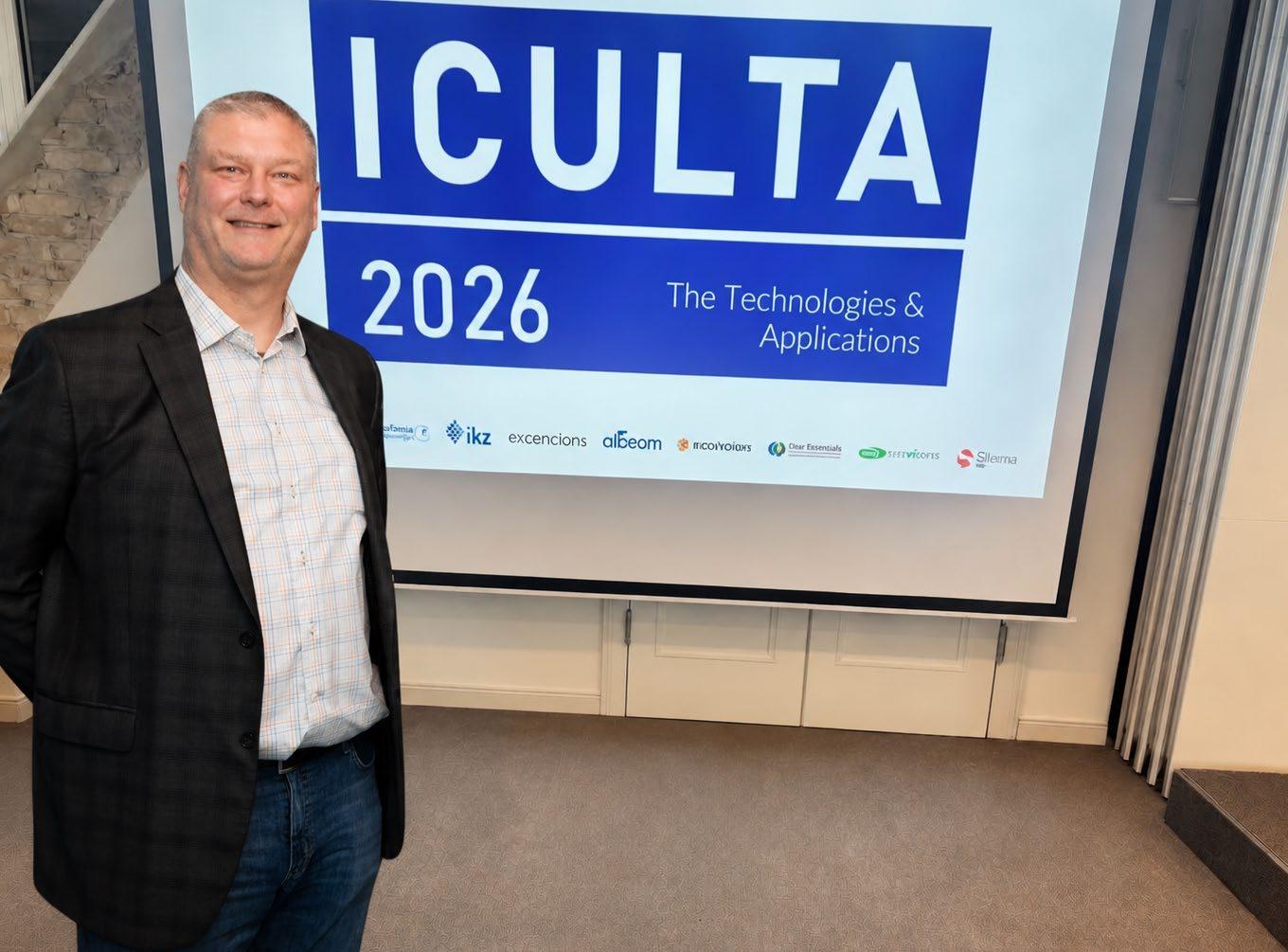
At the International Conference on UV LED Technologies & Applications (ICULTA) 2026 summit in Berlin, one message came through clearly: germicidal UV-C technology is moving beyond the experimental phase and into broader real-world deployment. But with that growth comes a pressing need for
proper certification, installer training, and safety validation.
Representing the lighting management community, NALMCO President Erik Ennen joined Dr. Katja Auer to present a detailed session on germicidal UV-C certifications and
workforce preparation. Their presentation focused on the growing role contractors and lighting professionals will play in the safe implementation of upper-air UV-C systems designed to reduce airborne pathogens.
For LM&M readers, perhaps the most significant takeaway was that NALMCO was invited to present at a highly respected international conference focused on UV technology and public health. The invitation reflects the growing global recognition of NALMCO’s leadership in lighting management, training, and certification. It also signals that lighting contractors are becoming an increasingly important part of the broader conversation surrounding UV-C deployment, safety standards, commissioning, and long-term system maintenance.
According to the presentation, the ASHRAE GPC-37 guideline is being developed to establish minimum requirements for the safe and effective application of upper-room UV-C devices intended to control airborne pathogens. The guideline addresses proper dosing, placement, operation, and maintenance procedures for both passive and fan-assisted upper-room UV-C systems.
That emphasis on safety became a recurring theme throughout the session.
Ennen and Auer explained that the industry has identified a clear need for standardized certification processes. As more contractors enter the UV-C market, customers increasingly want assurance that installations are being performed by trained professionals who understand exposure limits, system commissioning, and long-term maintenance requirements.
The presentation repeatedly emphasized that “qualified installers promote UV-C safety” and that properly trained technicians help maintain installed systems over time.
For lighting contractors, that distinction matters. Unlike conventional lighting retrofits, germicidal UV-C systems involve occupant safety considerations that require measurement, validation, and ongoing monitoring. A poorly installed system can create potential exposure risks, while a properly designed and commissioned installation can provide effective airborne pathogen mitigation.
The speakers highlighted several sectors expected to benefit from UV-C certification programs, including healthcare, government facilities, higher education, hospitality, commercial real estate, retail, grocery, and food service applications.
One of the most notable aspects of the presentation was the collaboration between lighting professionals and public health experts.
The educational initiative was spearheaded by Don Milton,
MD, PhD. According to the presentation, funding for the development of free public germicidal UV education was provided by the Balvi Foundation.
The program is hosted through the University of Maryland School of Public Health and includes online educational modules and certification pathways designed to help professionals better understand germicidal UV applications.
That partnership between lighting practitioners and public health researchers reflects how UV-C has evolved since the pandemic years. The technology now sits at the intersection of lighting, HVAC, occupational safety, and infection control.
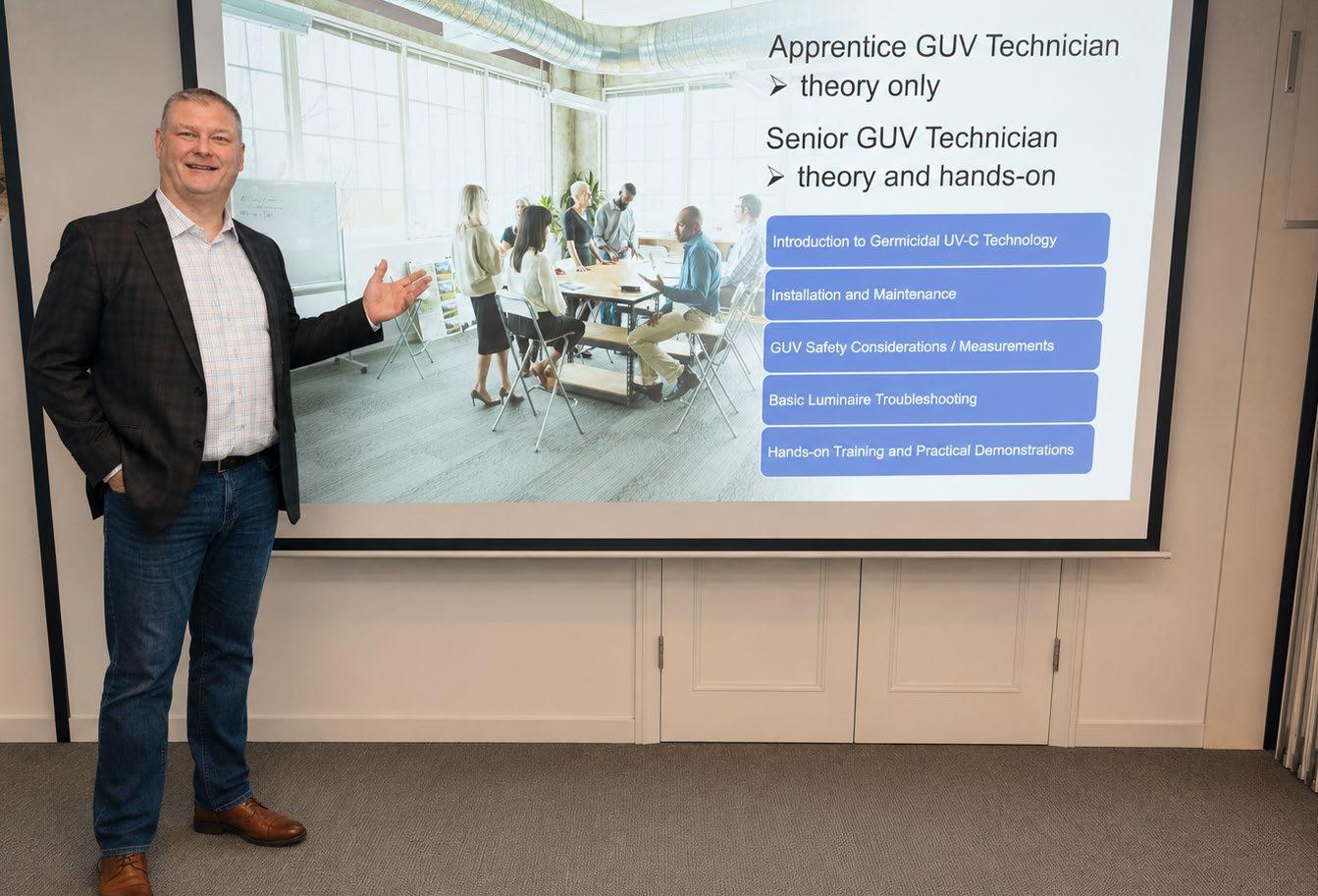
NALMCO’s certification structure includes three distinct designations tailored to different experience levels and responsibilities.
The first level is Certified Apprentice GUV Technician (CA-GUVT), which focuses primarily on theory-based instruction. Training includes introduction to germicidal UV-C technology, installation and maintenance procedures, safety considerations and measurements, and basic luminaire troubleshooting.
The second designation is Certified Senior GUV Technician (CS-GUVT), which combines theoretical education with handson training and practical demonstrations.
The third and most advanced designation is Certified GUV Management Professional (C-GUVMP). This certification covers principles and mechanisms of germicidal UV-C, luminaire design and layout, safety protocols and standards, commissioning procedures, and practical demonstrations.
For contractors, the tiered structure provides a pathway for both field technicians and management personnel to develop expertise in UV-C deployment.
One of the more practical portions of the session involved UV safety instrumentation and field validation tools.
The presentation included a video segment featuring David Sliney discussing measurement devices used by specialists working with germicidal UV systems.
Sliney explained that professionals validating occupiedspace UV-C systems rely on specialized instruments to confirm safe exposure levels. He demonstrated a handheld meter configured to measure specific UV wave lengths and equipped with a black baffle designed to simulate the field of view of the human eye.
According to Sliney, the baffle helps the instrument replicate what an occupant’s eye would receive in a space where germicidal UV is operating overhead.
For contractors unfamiliar with germicidal UV applications, this serves as an important reminder that UV-C installations
require more than fixture mounting and electrical connections. They also require proper measurement and commissioning procedures to verify occupant safety.
The presentation also stressed alignment with industry safety standards, including IES RP-27 and RP-44.
Those standards are becoming increasingly important as owners, facility managers, and specifiers seek documented assurance that systems are designed and installed correctly.
According to the presentation, key benefits of certification include:
• Verified installer qualifications
• Validated design approaches
• Improved occupant safety
• Compliance with recognized industry practices
For contractors, certifications may also become a competitive differentiator as UV-C projects become more common in specifications.
Auer and Ennen emphasized that the training structure was intentionally designed to make certification accessible to working contractors and technicians.
Training is currently available online, in person, and through designated training sites throughout the United States. The online programs are available 24/7, allowing participants to complete coursework on flexible schedules. Annual recertification is also handled online.
That accessibility could help accelerate workforce development in a market that still lacks large numbers of trained UV-C professionals.
For LM&M readers, the broader takeaway from ICULTA 2026 is that germicidal UV is steadily becoming part of the professional lighting conversation—and NALMCO is playing a leading role. As building owners continue looking for indoor air quality solutions, contractors with verified UV-C knowledge may find themselves increasingly well-positioned for future projects.
The technology itself may still feel new to many in the lighting management industry. But the push for certifications, standards, and measurable safety protocols suggests the market is maturing quickly. ■


By Randy Reid
A recent conversation with Stuart Berjansky and Christina Halfpenny of the DesignLights Consortium (DLC) revealed something important for NALMCO members: the two organizations are more aligned than many contractors may realize.
That alignment centers on a shared goal—helping contractors deliver better-performing, energy-efficient lighting systems, particularly in the small- to mid-sized buildings that make up the backbone of NALMCO’s work.
Stuart, who recently attended a NALMCO Spring Seminar noted that the overlap became clear almost immediately. “When I saw the agenda—system integration, LED retrofits, controls, light pollution—it aligned closely with what DLC is working on,” he explained. “There’s a lot of overlap.”
That overlap creates opportunity.
NALMCO contractors typically serve facilities under 50,000 square feet—spaces that have historically been overlooked in large-scale retrofit programs. Yet these buildings represent roughly half of all commercial square footage in the U.S.
“These customers aren’t going out to bid,” I noted during the discussion. “They’re looking for trusted solutions with a clear payback.”
That’s where DLC’s tools—particularly its Qualified Products List (QPL) and specifications—can support contractors in the field. By helping validate product performance and rebate eligibility, DLC provides a framework that contractors can use to build confidence with end users.
At the same time, DLC benefits from closer ties to contractors. “We want feedback,” Stuart said. “Anything that helps contractors do their job better—we want to hear it.”
Both organizations agree that the industry is entering its next phase. LED-to-LED retrofits are accelerating, but simply swapping fixtures is no longer enough.
“The opportunity isn’t just replacing luminaires,” Stuart said. “It’s improving how the system operates.”
“They’re looking for trusted solutions with a clear payback.” STUART BERJANSKY
That means controls—and increasingly, integration.
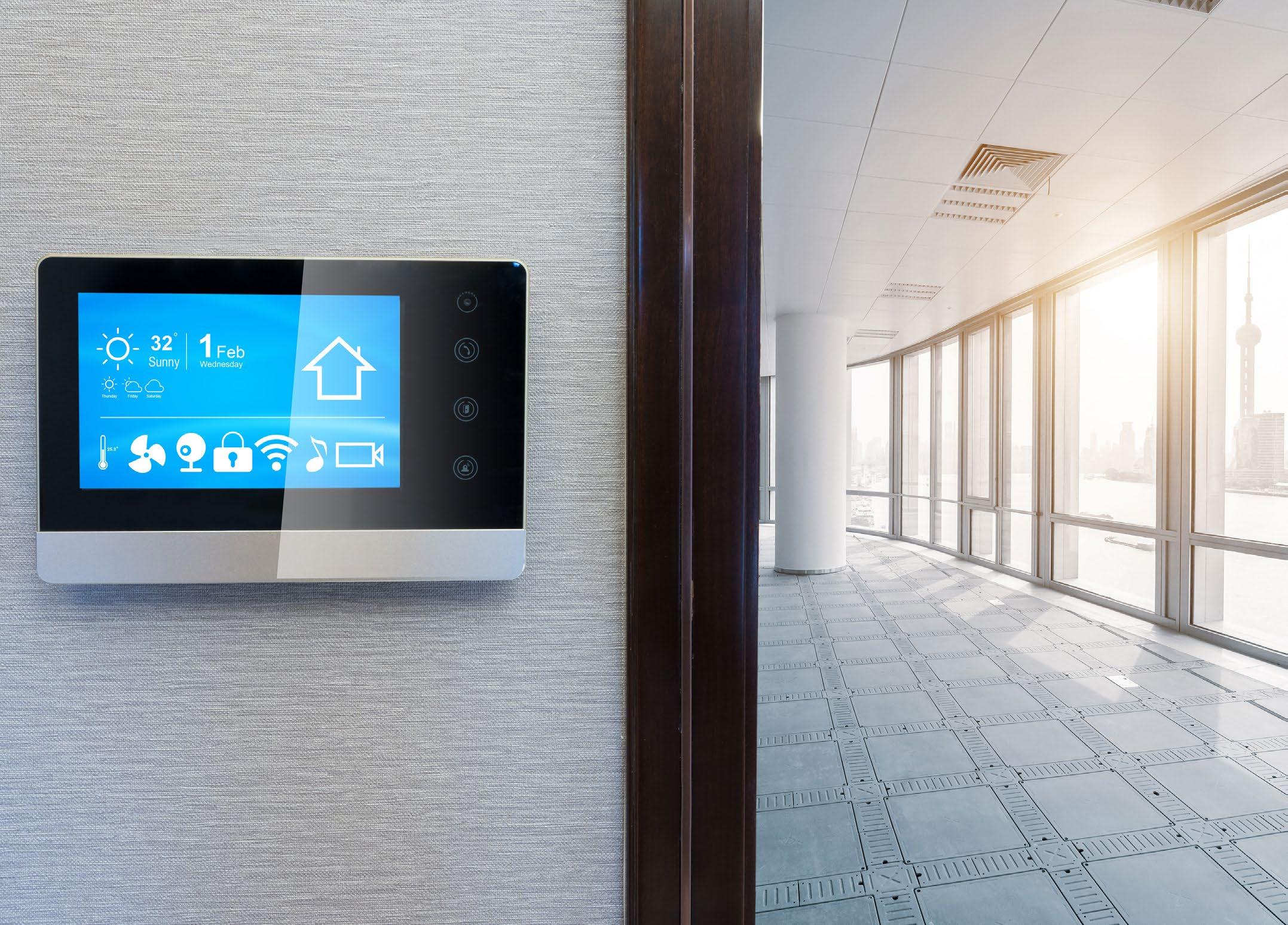
Tina emphasized that the next major step is combining lighting with HVAC systems. “The biggest opportunity for additional energy savings is integrating lighting and HVAC,” she said.
For contractors, this is a practical evolution. Occupancy data from lighting systems can now drive HVAC setbacks, especially in smaller buildings where traditional building management systems were previously too costly or complex.
Despite significant potential for savings, Network Lighting Controls (NLC) themselves and NLC-HVAC integration, in particular, have been slow to catch on in the commercial building market. To address this, the DLC created an NLCHVAC Integration Toolkit, which is available to download for no charge on the DLC website. This resource aims to break down barriers and improve collaboration between the professional worlds of lighting and HVAC, enabling greater energy savings in all sorts and sizes of commercial facilities.
Energy demand is shifting. While EV charging remains a factor, new pressures—such as data centers and changing peak load patterns—are making energy management more critical than ever.
“Managing load is just as important as reducing it,” Tina noted.
That puts contractors in a stronger position. By combining lighting upgrades with controls and system integration, they can deliver greater savings and stronger ROI for their customers.
For NALMCO members, the takeaway is clear: DLC is not just a specification body—it is a potential partner.
Both organizations are working toward the same outcome: practical, scalable energy savings delivered through better lighting systems. With increased collaboration, contractors gain access to stronger tools, while DLC gains valuable field insight.
As Stuart concluded, “We want to be accessible. We want contractors to use our resources—not just for rebates, but to help them succeed.”
Stuart emphasized his commitment to accessibility, inviting NALMCO members to reach out directly with feedback on how DLC can support their business growth. He has even authorized sharing his email: sBerjansky@designlights.org
For an industry built on relationships and results, that kind of alignment deserves attention. ■


By Shirley Coyle, LC
When you ask Michael Bifarella how he ended up in the lighting industry, his story describes a journey that starts in the warehouse of his father’s lightingfocused business, breaks away to work outside the family business, features some time studying law, and ultimately leads to founding his own company in a rapidly changing and often unforgiving market. “I’ve been through it from the grassroots,” he explains, “warehouse, field, service, project management, and then ownership. I’ve seen all sides of the business.”
Michael’s career in lighting began right out of high school, working for his father’s Rochester, NY-area electrical company. After learning how things worked, he ended up in the field installing: “it was 2011 and we were primarily doing T12 to T8 conversions. My father was a huge subcontractor for Sylvania, and it was the heyday of retrofitting with kits of T8s and electronic ballasts. It was definitely getting thrown into the fire,” he recalls. “Lighting is fast; you have to anticipate rapid growth and changes. And at that point, everyone in the industry was still learning what was coming.”

Seeking personal and professional growth, Michael took a leap and joined A&K Energy Conservation, where he worked under owner Pattie Caglewho became and continues to be an important mentor. For several years, Michael worked as a service tech for A&K, learning another side of the business and seeing the rollout of early generations of LED products.
A return to school was next for Michael with ideas of being either a chef or an attorney: “’I’d still like to study law to an extent, and I’m a darn good cook.” But after graduation, his father’s passing pulled him back in to help manage the family business. Michael notes: “you need to learn when to take a step back and re-evaluate, and when to leap into the unknown. In 2022 Michael took a leap into the unknown, and started
his own company, Optimal Energy Solutions, LLC
When New York’s Small Business Direct Install (SBDI) lighting incentives were cut in 2025, Michael’s firm lost a long-standing revenue stream and had to pivot quickly—from largely labor-only projects under ESCOs to more turnkey solutions, as well as expanding into school contracts and heat pump work tied to emerging utility incentives.
At the same time, he has navigated intense price pressure from low-cost offshore products, while consistently advocating for proven brands with real data and reliable support. “That’s a huge challenge in the lighting industry,” Michael explains. “We want to pitch products we know and trust, with proven data, from manufacturers that stand behind their warranty claims. But you’re up against hundreds of cheaper options that look good on paper and on price.”
Michael emphasizes transparency with clients, honoring warranties, labor, and promises, and being realistic about what his company can and cannot do. One of the most important lessons he’s learned is the power of saying no: “sometimes saying no is a good thing,” he notes. In a relationship-driven world of ESCOs and repeat clients, he’d rather protect longterm trust than chase every short-term opportunity.
A strong believer in continuous learning, Michael credits NALMCO and mentors like Pattie Cagle and Joan Blacker, with helping his company grow and gain confidence. NALMCO, he says, feels like a “second family,” a place where collaboration, not competition, drives everyone forward. Attending both the Spring Seminar and the Annual Convention in the fall, Michael adds: “the relationships we made with labor partners, with suppliers…it’s just a great place to network, to vent, to discuss what’s next in the future…everyone pushes each other to be better.”
That’s where Michael’s communication skills and industry knowledge come in.
While he does have a sales liaison, he is often the person who steps in for the complex conversations, walking customers through the why, not just the what. “You have to educate them,” he emphasizes. “And they have to be willing to listen. The right person, with the right approach, can make the difference between suspicion and understanding.”
For those looking to follow a similar path, Michael’s advice is pragmatic: *find your niche and master it first. Once operations in that area run smoothly— “on autopilot,” as he puts it—that’s when you invest time in learning the next capability, whether it’s controls, new technologies, or additional services. He also stresses the importance of using the “good days”—when the pipeline is full and operations are humming—to research, train, and plan. Waiting until work slows down to think about diversification is often too late.


Outside of work, Michael’s life is full. He and his wife are raising four children, all eight and under, and he jokes that they are “very busy.” He’s also an avid cook, especially of authentic Roman Italian food.

Michael’s other deep passion is his love of aviation. He describes himself as a “crazy, huge plane enthusiast,” especially when it comes to commercial aviation. In his basement, he has a “flight wall”—an LED reader board that displays flights within a 20-mile radius, showing carriers, routes, aircraft types, and altitudes. One day, when business and family life allow it, Michael has a clear goal: earn his pilot’s license.
In many ways, Michael’s story mirrors the industry he’s devoted his life to: dynamic, evolving, occasionally turbulent—but always moving forward, guided by a steady hand and a clear view of what’s possible. ■