www.sussexbusinessgroup.co.uk 1 ISSUE 468 FREE SBT POWERED BY: SERVING THE SUSSEX BUSINESS COMMUNITY SINCE 1975
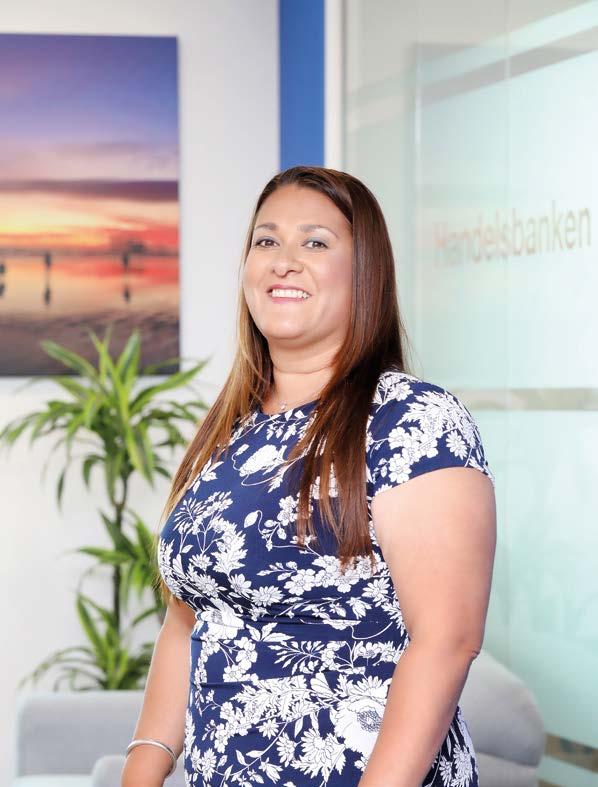
LONG-LASTING RELATIONSHIPS IN ONE-TO-ONE CORPORATE BANKING WITH RACHEL GERG FROM HANDELSBANKEN
BUILDING
All business is symbiotic in nature. You can be inspiring your peers one day, learning from them the next. In the end, people buy people. That makes sharing our stories the most compelling way to connect with one another.
What’s needed is a platform to embrace and empower our regional business ecosystem. Where varied backgrounds and perspectives provide new context. Harnessing potential, enabling growth. And at the heart of it, a dedicated term of curators unlocking insights for the good of us all.
So we’re changing the way people think of connecting. Because we believe in self-reflection, rather than self-promotion. By demystifying the art of storytelling, we deliver authentic thought leadership through events, publishing and broadcast media.
We come together to discover, share and grow. But we won’t be limited by geography, or our imagination. Instead, we’ll seek out local leaders, visionaries and experts, wherever great businesses thrive. Growing communities, in partnership with the businesses that power them. And nurturing the enterpreneurial spirit in everyone.

JOIN OUR COMMUNITY
SBTWelcome


Welcome to another issue of SBT


Being true to who we are is something most of us take for granted.
Often, it’s about following a dream or a passion. Our cover story this month features Rachel Gerg, the Corporate Banking Manager at Handelsbanken in Brighton. She was inspired to work with money after developing a fascination with the way cash moves around. Initially, she thought she would follow in her uncle’s footsteps and become an accountant - until a summer job at a bank changed her mind.
For some, being true to who we are is about speaking up. Dr Cheryl Lambe, Consultant Fertility Specialist at The Agora Clinic, raises the issue of menopause in the workplace. Her feature highlights the fact that many women are still reluctant to talk about how this stage of life affects them.
But what if you can’t be your true self because you are afraid?
What if you are gay, transgender or having relationship or career difficulties - and can’t tell anyone?


In a month that will celebrate Brighton Pride, it is important to recognise
and understand that everyone has a right to be who they really are.
Sophie Cook knows what it is like to be afraid. She has been transgender from the age of seven, but kept it to herself until 2015. She recognised life was not worth living if she couldn’t be her authentic self. We meet Sophie in this month’s magazine and discover why every day is now a bonus and why positive energy is key.
Of course, it wouldn’t be the Sussex Business Times if we didn’t also include the latest legal and financial advice as well as a round-up of networking and charity events.


Look out for another instalment of our Hospitality Hotspot series, along with business, lifestyle and motoring news that will inform and inspire.


It may not have been a very summery start to August, but we hope to brighten the holiday season with advice, information and groundbreaking stories.
Sam Thomas, Managing Director
www.sussexbusinessgroup.co.uk 3
WELCOME
VALUE ADDED PARTNERS
20
Joint Managing Director Lee Mansfield lee@lifemediagroup.co.uk
26
28
Monthly News
Tech talent in the spotlight at Digifest and Crimtan discusses the importance of sustainable practices in the programmatic tech space. Plus, news from Gaydio and more.

Valued Added Partner Spotlight

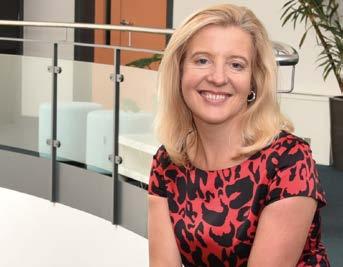
County Business Clubs Sussex throws the spotlight on Serena May, of The HR Dept Sussex-by-the-Sea.

Finance
Carpenter Box outlines the seven key financial planning tips for business success and Andy Page from SEICO Group underlines the sound financial sense of using a commercial finance broker.
Legal
EMW Law has been recognised for its commitment to social good and environmental stewardship while Nick Stockley, of Mayo Wynne Baxter, outlines how new rules will impact the recovery of legal costs in dispute cases. In addition, Alex Jones, of 365 Employment Law, examines how an amendment to existing law will impact flexible working.
Cover Story
Meet Rachel Gerg, the Corporate Banking Manager at Handelsbanken in Brighton. She explains how one-to-one banking is forging long-lasting relationships that support customers with their financial goals.
Pride Special
Sophie Cook is living as her authentic self - but it took four decades of inner turmoil and fear to reach a pivotal moment that saved her life. Read her moving story.
Charity
Meet Baton of Hope, the organisation smashing the stigma of suicide - one conversation at a time. Plus, Rockinghorse Children’s Charity is named a finalist in major awards.
Networking & Events
34
Spotlight on City Girl Network, Sussex Business Show names sponsors and Bradley Hatchett discusses the challenge of joining conversations at networking events. Plus, news from the Property Professionals’ Lunch, the Big Business Breakfast Club, Sussex Cricket Foundation, and Best of British Events.
Motoring
46
All material in this publication is strictly copyright and all rights reserved. Reproduction without permission is prohibited. The views expressed in Sussex Business Times Magazine do not necessarily represent the view of The Business Group Sussex Ltd. Every care is taken in compiling the contents but the publishers of Sussex Business Times Magazine assume no responsibility for any damage, loss or injury arising from the participation in any offers, competitions or advertisement contained within Sussex Business Times Magazine. All prices featured in Sussex Business Times Magazine are correct at the time of going to press.
Copyright The Business Group Sussex Ltd. 2020 ©

48
Rivervale announces second acquisition of 2023 and vehicle provider £2,500 closer to £10,000 fundraising target for local charity.
Chamber News
Ana Christie, of Sussex Chamber, outlines the British Chamber network’s new Trade Manifesto and Brighton Chamber highlights how Plumpton College is leading the way on sustainability.
Lifestyle
52
Dr Cheryl Lambe discusses menopause in the workplace and Sussex Cricket Ground is revealed as this month’s Hospitality Hotspot. Meanwhile, there is something stirring in the fashion world - it’s a Greek collaboration between award-winning designer Konstaninos Tsigaros and local businesses.
58
Wine of the Month
Michael Yeoman shares his top tipple for County Business Clubs’ August Wine of the Month.
4 www.sussexbusinessgroup.co.uk Issue 468
Managing Director/Publisher
Joint
Sam Thomas sam@thebusinessgroup.co.uk 07894 762304
Published by The Business Group Sussex Ltd. Licenced to TBG by Pixel Publications Ltd Unit 1a Swan Barn Business Centre, Swan Barn Road, Hailsham, BN27 2BY Printed by Gemini Print Group 1A Dolphin Way Shoreham-by-Sea West Sussex BN43 6NZ 01273 464884 www.gemini-print.co.uk Cover 468 06
Production & Design Kim Butler kim@lifemediagroup.co.uk Accounts Clare Fermor clare@lifemediagroup.co.uk
10
12
15
www.sussexbusinessgroup.co.uk ISSUE 468 FREE BUILDING LONG-LASTING RELATIONSHIPS IN ONE-TO-ONE CORPORATE BANKING WITH RACHEL GERG FROM HANDELSBANKEN
Are you ready to Go?

www.sussexbusinessgroup.co.uk 5
Spotlight on UK tech talent at digital showcase DigiFest
A digital showcase to celebrate all that the south east tech community has to offer is taking place on September 22 in Sussex – with two of the UK’s foremost tech champions, with links to Microsoft, headlining the event.
DigiFest will show off the area’s digital talent and give visitors the opportunity to chat with digital professionals, make new connections, find work opportunities, and build partnerships.
Sarah Cronk, DigiFest event organiser, said: “Covering everything from sector studies, starting up, and finding talent, to diversity in tech and how to make your digital business greener, there’s really something for everyone.
“Or why not pop into one of our skillsbased workshops to learn something new about coding or digital marketing?”
Speakers at the event, organised by Chalk – a business-led initiative started in 2020 and run by custom software specialists Switchplane – include Amali de Alwis MBE, who is a serial entrepreneur and tech startup business leader.
She was more recently CEO at Subak, the world’s first not-for-profit accelerator and data community that scales climate impact through data, policy, and public behaviour.
Prior to this, she was UK Managing Director of Microsoft for Startups, and CEO of multi award-winning social enterprise Code First: Girls.
Amali was named The Most Influential Woman in UK IT by Computer Weekly and

awarded an MBE in 2019 for Services to Diversity and Training in the Tech Industry.
Her session will be a fireside chat, with Josh Babarinde OBE, on building tech into early-stage business.
Philip Fumey is Technology Strategist for the Professional Services Industry at Microsoft.

He is a CTO and consulting lead for UK High Tech companies and is passionate about how inclusive tech can transform businesses to offer sustainable and profitable businesses. His session will be Building Future Services – Digital Readiness from Cyber Security to AI.
Whether you’re a digital professional, a business, a student taking your first steps on the career ladder or a company looking for a new tech partner, DigiFest invites you to be inspired and learn something new.
There will be talks, workshops, tours, and an exhibition, as well as the opportunity to network and enjoy a drink with other attendees.
Digifest is being organised by custom software specialists Switchplane and supported by PRG Marketing Communications, Recursive, Racquet Studios, Eastbourne Chamber, Josh Babarinde OBE, East Sussex Careers Hub, and Bees Homes. Sponsors include Cloud ConnX, Birchwood Group, East Sussex College Group, FOUNDRY, Hetherington International Services, Bexhill College, and Switchplane.
The event takes place on Friday, September 22 at Eastbourne’s Welcome Building, BN21 4BP. Tickets cost £17.50 and include a sandwich lunch. To book, and for more information, see the website: https:// www.eastbournedigifest.com/
6 www.sussexbusinessgroup.co.uk MONTHLY NEWS SPONSOR
Monthly News
Digital advertising has an increasing negative impact on the environment, due to the vast amount of computer power required to transfer data and bet on and serve ads to consumers. The energy used for programmatic advertising has a significant impact on carbon emissions worldwide. As such, programmatic specialist Crimtan is weighing in on the impact of the structure and technology used to create these ads and how to adapt responsibly to the landscape.
A report found that the total emissions for a mock digital advertising campaign came to 323 tons of CO2eq, which is roughly the annual carbon footprint of 16 American citizens[1]. Furthermore, with the internet producing more greenhouse emissions annually than the aviation industry[2] through elements such as 5G and ad exchange, digital marketers need to consider ways to reduce carbon footprint, while also delivering results.
Reducing the load time of an ad means using less data to bring the ad to fruition. Some creative formats and sizes have a longer load time due to compression type, frame rate, view length and screen sizes, which can impact the weight of the file, the amount of data transfer needed and, therefore, the overall carbon emissions of the ad. To reduce the load time of an ad, marketers can use display rather than video, as a 15-second video ad can produce 85% higher carbon emissions than display due to
the load times and the amount of data needed to process the ad.
It is not only the load time that uses large amounts of data, but also the heavier the colour, the more data is needed to process it. Crimtan advises creatives to consider using lighter colours and one or two shades only to decrease emissions by up to 16%.
Advertisers should also consider compressing display ads and using smaller display formats. For example, a billboard produces 1,508% more emissions than a 300x50 mobile banner. Converting display ads into a more compressed format will also help to preserve the image quality. Images can also be optimised by compressing and resizing them and saving them in smaller formats like a JPEG.
Going forward, it is vital for businesses to futureproof campaigns, adopting new methods to make a positive impact on the environment while also creating successful campaigns. One effective tool available is Crimtan’s attention time tool, which enables advertisers to optimise and measure metrics beyond viewability and gain a comprehensive understanding of the effectiveness of campaigns. Recent studies have shown that by eliminating advertising from domains with attention times below 0.5 seconds, carbon emissions can be reduced by up to 63%.
Another key strategy is implementing the correct frequency capping. Overwhelming consumers with excessive ad frequency not only strains
the consumer-brand relationship but also contributes to unnecessary carbon footprint. By setting appropriate frequency caps, advertisers ensure that their customers receive timely and relevant communications without being overwhelmed, effectively reducing carbon emissions.
Furthermore, streamlining the programmatic bidding process can lead to significant reductions in carbon emissions. Simplifying the involvement of multiple marketplaces and intermediaries minimises the number of calculations and reseller chains involved, resulting in a lower environmental impact. By reducing the number of stakeholders in the auction process, advertisers can contribute to the overall reduction of carbon emissions in the advertising ecosystem.
Paul Goad, CEO at Crimtan, said: “When we consider our environmental impact and strive to minimise our footprint on this planet, we must consider both the short-term and long-term implications.

“We are working diligently, both internally and with our clients, to reduce our long-term carbon footprint, helping to mitigate issues that jeopardise the future of humanity and our planet.”
If you’d like to know more about improving the sustainability of your programmatic campaigns, you can download Crimtan’s guide here: https://www.crimtan.com/ wp-content/uploads/SustainableProgrammatic-Guide.pdf
www.sussexbusinessgroup.co.uk 7 MONTHLY NEWS SPONSOR
Monthly News
Crimtan says both short and long-term implications of environmental impact.
The importance of implementing sustainable practices within programmatic and the ad-tech space – and how to do it
Alex Ryan and Oli Halliwell join the board of Gaydio Brighton
As Brighton readies itself for another glittering Pride, a celebration that reflects both the community’s vibrant diversity and the city’s own sense of local pride, Gaydio, a headline sponsor of the festivities, is proud to announce two board appointments.
Gaydio Brighton, the leading LGBTQ+ radio station
and part of the wider Gaydio network, has announced the appointment of Alex Ryan and Oli Halliwell to its board of directors. Their extensive experience and commitment to the LGBTQ+ community will contribute significantly to the station’s development. Alex Ryan will also become chair of the board.
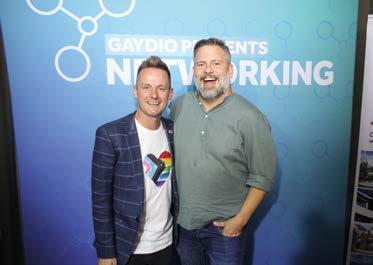
Alex takes on the role with a wealth of expertise in marketing, having run his own agency, Marketing 101, since 2020. He is well-known as a DJ throughout Brighton and served as a Friday-night DJ on Gaydio for several years from 2013. His deep understanding of the community’s needs and his links to local business will allow Gaydio Brighton to increase connections across the city.
Oli Halliwell is a proud Brighton local with a great understanding of the area. In his day-time role, he works for one of the biggest marketing agencies as managing partner.
Gaydio has long been at the forefront of LGBTQ+ representation in media, providing a platform for queer artists, activists, and community leaders. With the addition of Alex and Oliver
to its board, the station reinforces its commitment to fostering inclusivity, diversity and progress.
Speaking about the new appointments, Gaydio Brighton’s Director, Ian Wallace, expressed his enthusiasm, stating: “We are thrilled to welcome Alex Ryan and Oliver Halliwell to the board of Gaydio Brighton. Both bring unique skills and perspectives that will undoubtedly strengthen our organisation. As we continue to amplify LGBTQ+ voices, their contributions will be invaluable in shaping our programming, community outreach, and strategic direction.”
Alex and Oliver Halliwell are equally excited about their new roles and the opportunities they present. Both
expressed their dedication to furthering the mission of Gaydio Brighton and using their positions to create positive change within the LGBTQ+ community across Brighton & Hove.
The appointments come at an exciting time for Gaydio Brighton – with this October marking five years since the station launched on FM in the city, and with an extension to the licence pending with Ofcom. Gaydio is also in the process of building their new studios in the shared LGBTQ+ resource building, The Ledward Centre on Jubilee Street.
Gaydio Brighton looks forward to the continued growth and success of the station under the guidance of these influential new board members.
8 www.sussexbusinessgroup.co.uk MONTHLY NEWS SPONSOR
News
Monthly
Carpenter Box supports multi-million pound employee ownership trust

Carpenter Box’s corporate finance and tax teams have supported the Sevenoaks-based RJ Power Group of companies in a multi-million pound transaction that transfers ownership of 70% of the business to employees.
Carpenter Box, a leading provider of accounting and advisory services across Sussex and the South East, provided tax advice both to create a group structure for RJ Power in readiness for the employee ownership trust (EOT), and to complete the transaction in the most tax-efficient manner. The firm also supported the Group in determining an appropriate market valuation of the business for the sale to the EOT.
“We are delighted to have supported the RJ Power Group of companies in their transition to employee ownership,” said Alistair Aird, Corporate Finance Director at Carpenter Box.

“Employee ownership, enabled through EOTs, is a proven way of motivating people to drive the long-term success of a business and we look forward to the RJ Power Group of companies thriving under this new ownership model.”
RJ Power Group provides integrated design and engineering solutions to the power sector across the UK, with four complementary businesses covering rail, private networks and connections covering design, installation testing and commissioning applications for customers in the UK.
“We are excited about this new chapter in the development of RJ Power.” said Peter White, Group
Chief Executive Officer. “The Management are committed to the long-term success of the Group and are confident that this transaction will make a positive impact on our business, our employees and our clients. The knowledge and expertise of Carpenter Box made the whole process quick and smooth and we look forward to working with them in the future.”
The EOT is a significant milestone for RJ Power Group and its employees. Employee ownership is a proven model for success as evidence shows it leads to more motivated and productive employees, who are able to earn income tax-free bonuses up to £3,600.
At the same time, any disposals of a controlling interest in the company transferring to an EOT are also free from Capital Gains Tax.
The EOT model is becoming increasingly popular in the UK, with the RJ Power Group of companies joining over 1,300 employee-owned businesses in the United Kingdom, which account for total combined sales of over £20bn.
www.carpenterbox.com
www.sussexbusinessgroup.co.uk 9 MONTHLY NEWS SPONSOR
Monthly News
Alistair Aird
LoveLocalJobs.com and ICP Search tackle skills shortage with Wired Sussex
The critical skills shortage in the tech, digital and creative sectors will be addressed after the award-winning Sussex jobs board LoveLocalJobs.com and global talent consultancy ICP Search joined forces with leading non-profit membership organisation Wired Sussex.
Tech, digital and creative industries are worth £1bn to the local economy but face an ongoing shortage of the skilled talent necessary to help them expand.
To overcome this challenge
LoveLocalJobs.com and ICP Search will be working in close partnership with Wired Sussex, combining their expertise to help tech, digital and creative organisations in Sussex scale and gain access to incredible talent.
Gary Peters, CEO of ICP Search and Founder of LoveLocalJobs.com, said: “We are thrilled to be collaborating with Wired Sussex on this important initiative.

“By combining our expertise, networks and resources, we believe we can
make a significant impact on the skills shortage issue in the tech, digital, and creative sectors.”
Together the organisations will make job vacancies easier to find, make leading employers from the tech, digital and creative sectors more visible and will combine forces to reach as many qualified candidates as possible.
By streamlining the recruitment process and promoting vacancies together, this initiative will create a more robust talent pipeline for the tech, digital, and creative industries.
It will also address issues such as skills development, talent retention and diversity and inclusion within the industry.
Iain Mckenna, CEO of Wired Sussex, said: “I’ve been CEO for almost
six months now and in that time the most common discussion I’ve heard amongst our members is their collective challenge in finding the right talent to grow their businesses.
“As the voice for tech, digital and media businesses on a local, regional and national Government level, Wired Sussex is committed to supporting the growth and competitiveness of our industries.
“We believe this partnership represents a major step forward in achieving our goal and we are excited to work hand in hand with LoveLocalJobs.com and ICP Search to create meaningful opportunities for job seekers and employers alike.”
For more information, visit https://www. wiredsussex.com/
10 www.sussexbusinessgroup.co.uk MONTHLY NEWS SPONSOR
Monthly News
Value Added Partner Spotlight
Tell us about your business journey
In 2012 I was working as the HR Manager at a prestigious Independent School. I had been there for 12 years and had always yearned to be my own boss. I knew that if I didn’t make the break then, I never would. So, in October 2012 I handed in my notice and set up The HR Dept Eastbourne in January 2013.
The HR Dept is the UK’s largest HR Franchise, and we have a fantastic, friendly and collaborative network. So good, in fact, that in 2022, I joined forces with another franchisee, Sue Beeby, to become The HR Dept Sussex-by-theSea. We now cover the majority of East and West Sussex with a unique offering of being local and personal (we’re not a call centre!), no unreasonable contract tie–ins and advice backed up by tribunal indemnity insurance. A luxury often only afforded by larger corporates.

What has been your biggest business challenge to date?
Growing the team. The requirements and expectations of our clients are high. They come to us with diverse contractual terms, differing cultures and personalities, as well as industryspecific needs. We are so lucky to have employees who are approachable, knowledgeable, confident, and flexible in their approach. To find such individuals has been extremely challenging. Every day is different. Sometimes it may feel like you have experienced careers worth of HR challenges in just a week! It’s not for everyone and a world away from being the HR Adviser for one company.
What has been your greatest or proudest business achievement to date?
There have been many highlights over the years, but my most recent proudest achievement was winning the Professional Services Award at the Eastbourne Business Awards last year. The team worked so hard during Covid, really going the extra mile to keep our clients up to date with government changes and providing them with advice and guidance throughout. It was lovely to have recognition for all the hard work. I should add that the unsolicited thanks received by many clients during and post covid was quite humbling.
What type of clients do you currently work with and who are you looking to meet?
We work across all sectors and all sizes of businesses. From start-ups taking on their first employee to larger organisations with in-house HR teams that need extra support or a sounding
board to check they are doing the right thing. If they have staff, we can help!
Tell us a story/fact about yourself that people might not know I have a Black Tag in Tae Kwon Do. It’s the last belt before Black Belt, but I haven’t trained for some time now. Unfortunately, I snapped my cruciate ligament during a training session and never made it back to training for my Black Belt. It was a long recovery before I could train again and by that time, I had lost my enthusiasm and confidence for the sport. Now I think I’m too old for getting kicked around the head!
https://www.hrdept.co.uk/sussex-bythe-sea/
www.sussexbusinessgroup.co.uk 11
VAP Spotlight
Overcoming the challenge of growing a team. Meet Serena May, of The HR Dept.
VAP SPOTLIGHT SPONSOR
Key financial planning tips for business success

Creating a solid financial plan is vital for the success of your business, explains Carpenter Box.
A financial plan provides a roadmap to guide decision-making and ensures the efficient allocation of resources. With a well-crafted plan, businesses can set realistic goals, track progress, and make informed financial choices. It helps in managing cash flow, controlling expenses, and identifying potential risks or opportunities.
Finance
A financial plan also aids in securing funding and attracting investors by demonstrating a clear strategy and
projected profitability. By regularly reviewing and adjusting the plan, businesses can adapt to changing market conditions and navigate economic challenges, ultimately increasing their chances of long-term success.
We’ve put together some tips to help you navigate the realm of financial planning and set your business on a path to success.
1. Create a budget
First you need to lay a strong foundation by creating a detailed budget. A budget
for a business requires careful planning and an understanding of your financial goals. Start by outlining revenue sources and expenses, including fixed and variable costs. Analyse past financial data to inform projections and adjust accordingly. Monitor your budget regularly to ensure you stay on track and make adjustments as necessary.
2. Monitor cash flow
Keep a close eye on cash flow, particularly during periods of growth or change. Cash flow is crucial to ensure the financial health of your business.
12 www.sussexbusinessgroup.co.uk
It enables better decision-making, and helps ensure the company has enough resources to operate smoothly. Proactively projecting your company’s cash flow allows you to identify and address potential shortfalls in advance.
3. Plan for taxes
Having a sound understanding of your tax obligations means you can develop strategies to minimise your liabilities whilst remaining compliant with regulations. It’s essential to stay informed of any changes in tax laws and regulations and to seek professional assistance in creating a tax plan. Strategic tax planning can help to achieve significant benefits for any business, fuelling consistent business growth and saving your company money. A good tax adviser will work with you to provide proactive advice, plan for upcoming tax changes and consider key business decisions that could maximise tax relief opportunities.
4. Utilise financial software
Technological developments in recent years have had a profound impact on businesses and investing, the right

software can help to streamline your financial management. With the right tools, you can efficiently track expenses, generate invoices, and monitor payments. Cloud accounting has established itself as a fundamental pillar in the everyday running of a business. It allows you to see your finances in real time, collaborate with colleagues and accountants within one space and stores your vital information in a central location. As cloud accounting continues to grow there are more sector specific add-ons becoming available that are tailored specifically to the needs of certain businesses.
5. Build an emergency fund
Safeguard your business by setting aside funds for unexpected expenses or revenue fluctuations. Having an emergency fund will prevent depletion of reserves or reliance on debt. An emergency fund in a business requires careful planning and consistent contributions. Start by setting realistic savings goals and contributing small amounts regularly. Consider depositing a percentage of your revenue and keeping the funds in a separate account. Monitor and adjust
the fund as needed to ensure financial stability.
6. Focus on growth
Embrace innovation and explore avenues for sustainable growth. Growth opportunities can vary greatly depending on the industry and market. These may include expanding into new markets, introducing new products or services, enhancing marketing and branding efforts, improving operational efficiency, acquiring other companies, or partnering with other businesses to create synergies and expand your customer base.
7. Regularly review your financial plan

Reviewing your financial plan is critical to ensure it remains relevant and aligns with changing circumstances. This may involve analysing the business’s financial position, reviewing goals, assessing progress, and making adjustments as necessary. It’s essential to regularly monitor financial performance, evaluate risks, and incorporate new information or external factors that can impact your business.
to master your financial planning
Ready
and ensure long-term business success? Our expert advisers can provide guidance tailored to the needs of your business.
Contact
www.sussexbusinessgroup.co.uk 13
our team today to discuss how our financial planning services can empower your business and help you achieve your goals. Call 01903 234094, email info@carpenterbox.com or visit www.carpenterbox.com FINANCE SPONSOR
Why should you use a commercial finance broker?
At a time of market uncertainty, Andy Page, Head of Commercial Finance at Seico, explains why it makes sound financial sense.

I hope you’re taking time out from your busy schedule to enjoy another (glorious?) summer of English sport, perhaps even getting to the County Ground to watch our beloved Sussex. Who knows, perhaps your next business idea might come to you as you watch a cover-drive race away to the boundary for

4. So, what’s your best course of action once that light bulb has appeared above your head?
If you’re looking to buy a business premises, invest in property or to expand your business, here are 5 good reasons why talking to Seico Commercial Finance makes sense.
1. Access to a wider range of lenders and financing options. At Seico, I have relationships with numerous lenders and can find the best terms and rates for your specific business needs. This saves you time from having to shop around on your own.
2. Expertise and market knowledge. Brokers are experts in commercial financing and stay up-to-date on the latest products, rates, and regulations. They can advise you on the pros and cons of different options.
3. Efficiency and convenience. A broker handles the loan paperwork, communication with lenders, and
negotiations on your behalf. This streamlines the financing process.
4. Better terms. Brokers may be able to negotiate better interest rates or fees compared to what you could get directly from a lender and will go into bat on your behalf. Their relationships with lenders provide leverage.
5. Unbiased guidance. As an independent third party, a commercial finance broker can provide unbiased recommendations on the best lending options for you. They are not tied to any one lender.
In summary, a commercial finance broker serves as an intermediary to simplify financing, leverage relationships with lenders, and ultimately help secure more favourable loan terms for your business. Their expertise and efficiency can save you time and money.
Seico has been successfully looking
after clients since 1991. If you have an idea which requires funding, please get in touch with me- there’s nothing to lose by having a discussion.
You can email: Andrew@seicogroup.com Or call: 03330 063 095 www.seicogroup.co.uk/commercialfinance
14 www.sussexbusinessgroup.co.uk FINANCE SPONSOR
Finance
Andy Page, Commercial Finance Manager – Seico Group
Image credit: Servo Private Wealth
EMW Law secures B Corp certification

Gatwick-based law firm EMW has become a B Corp, placing social good and environmental stewardship at the heart of its strategy.
The B-Corp Certification follows a complex two-year process, with the prestigious status awarded only to those businesses that meet very high standards in social and environmental performance, transparency and accountability. It is assessed every three years.
The B Corp movement began in 2006 with the idea that a different kind of economy is needed, giving companies the chance to move toward a more conscious model with business as a force for good. Many global brands have now adopted the B Corp standard, with famous examples including Ben & Jerry’s, Emma Bridgewater, Eileen Fisher and Patagonia. It is much rarer, however, within the legal sector, with
just nine UK law firms having met the necessary standards.
EMW is a full-service law firm with offices in London, Milton Keynes, Gatwick and Brighton, working with both UK and International clients.
Nick Lloyd, Chair at EMW, said: “We’re thrilled to see EMW become B Corp Certified. It’s a huge achievement and we’re all very proud. When I first became aware of B Corp, it’s entire ethos struck me as being incredibly powerful and also something that I, my partners, and all of our wonderful EMW people were already massively aligned with.
“We must be the change we seek in the world and business has a huge and largely undervalued role in this. EMW has never been driven solely by profit, instead taking a stakeholder-focused approach which has played a major role in the strategic direction of the business, the work that we do and the impressive, loyal client base we have been able to build.

“While we look after the bottom line, like any successful firm, we have always understood the importance of being a force for good, appreciating the role that businesses play in creating positive change.”
James Geary, Managing Partner, added: “Businesses are facing a huge number of challenges, not just within the legal sector but across all industries, so it’s important that firms have an eye fixed firmly on the future, ensuring that they have the right framework and capabilities in place to tackle those challenges effectively. B Corp felt like a great fit for EMW - it’s an important element of an ambitious strategy and will help to ensure that the firm succeeds in creating a positive legacy.”
https://www.emwllp.com/
www.sussexbusinessgroup.co.uk 15
The achievement recognises the law firm’s commitment to social good and environmental stewardship.
Legal LEGAL SPONSOR
Legal costs may put a party in a fix
One of the most common questions from clients, who are engaged in a dispute is, “do I get my costs back if I win?”. The answer to that question often starts with “it depends”. However, that answer going to change after 1 October 2023 in both commercial disputes and a lot of civil litigation.
On 1 October 2023, new cost recovery rules are going to come into force which
apply to parties to a dispute. At the moment, the general rule on recovering legal costs in commercial disputes can be summarized as follows.
Small claims
If the claim value is under £10,000 then neither party can recover its legal costs, even if they win, beyond a fixed sum prescribed by the court. The level of recoverable costs is very low in comparison with the legal costs that a party may incur. This rule is not going to change after 1 October 2023.
Fast track claims
If the claim value is between £10,000 and £25,000 the winning party can try to recover its legal costs from the other party subject to some restrictions.The level of the recoverable costs will be at the court’s discretion but the general guidance is that a court will award a winning party about 70% of its legal costs.

Multi-track claims
If the claim value is over £25,000 then the winning party can generally recover
16 www.sussexbusinessgroup.co.uk
Nick Stockley, a Partner at Mayo Wynne Baxter, explains how new rules will impact the recovery of legal costs from October.
Legal
its legal costs from the other party. The level of the costs will again be at the court’s discretion but a rule of thumb is that a court will award a winning party about 70% of its legal costs.
The New Rules
The new rules that are going to be introduced on 1 October 2023 will relate to both the Fast Track cases where the value is between £10,000 and £25,000. The court is also going to introduce a new category of cases which it will call the “Intermediate Track”. These will be claims where the value is between £25,000 and £100,000 and the new cost recovery rules will apply to these cases.
There are exceptions to these rules for certain personal injury, disease, clinical negligence, jury claims, child abuse and neglect and claims against the police. There are also some housing claims that do not fall under these rules.
The new rules are that a party to a dispute, where the value is between £10,000 and £100,000, will only be entitled to a fixed prescribed amount towards their legal costs if either they win their case or it settles during the life of the case. The recoverable amount of costs will be determined by three main factors:
1. The value of the case;
2. The complexity of the case;
3. When the case concludes.
The court rules contains a schedule which sets out exactly how much a winning party can recover in costs depending on when the case concludes
What is the benefit?
The general benefit is that there will be cost clarity to parties from the outset. At the moment, the general advice to clients is that, if the claim is over £10,000, a solicitor can, if they win, do what she/he can in order to recover as
much money as she/he can. The world of litigation can feel that it is full of uncertainty. Therefore, it is positive that there is a greater degree of certainty in the future. The introduction of these rules will also reduce both general court and legal assistance time.
Currently, if the claim is over £25,000 then parties must, as part of the litigation process, prepare cost budgets. The winning party also has to make a further cost claim once they win. Both of these processes can be both disputed and lead to extra court hearings. The associated costs and time of these stages will be completely removed and so the general process may be both quicker and, in theory, cheaper to clients.
There is also benefit to the court; the civil court systems, which is already overloaded, will be able to progress cases without the need for extra hearings.
Parties can assess their overall financial risk in a dispute much earlier. A party will know both how much they will recover in costs if they win and how much they must pay in costs if they lose. These
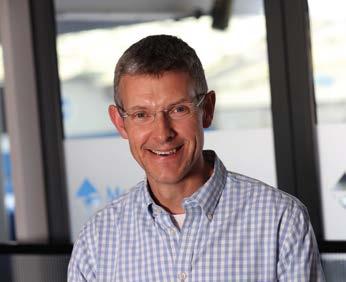
are determinant factors in settlement discussions. Parties will have more information which will help them make settlements decisions.
There is now a specific recoverable cost sum if the case settles before any court proceedings are issued. This means that a defendant is put under immediate financial pressure from the outset to address matters. It also means that a claimant may benefit from settling early because they will recover more of their legal costs if they do so.
What to do next
If a court claim is sent to the court after 1 October 2023, then there will be a restriction on the recovery of legal costs. If you have already incurred legal costs in a matter then you may lose the chance to recover a greater proportion of those costs if you start legal proceedings after 1 October 2023.
https://www.mayowynnebaxter.co.uk/
www.sussexbusinessgroup.co.uk 17 LEGAL SPONSOR
Nick Stockley
Flexible working: the new law

The Employment Relations (Flexible Working) Bill, proposed as a Private Members’ Bill by MP Yasmin Qureshi, when first introduced, aimed to give workers the right to request variations to particular terms and conditions of employment, including working hours, times and locations. The bill planned to introduce a requirement for employers to consult with employees before rejecting their flexible working request, as well as allowing employees to make
two requests in a 12-month period as opposed to one. It also proposed day one, rather than after six months, flexible working request rights. The employer decision period would also be reduced from three months to two months, and the requirement for employees to explain the impact on the organisation if they switched to flexible working would be removed.
The Flexible Working Bill will shortly amend the existing law. The final version is a pale comparison of what was originally proposed, and gives no
real flexible working rights, other than slightly better rights to request such flexible working.
Flexible working is a broad term and can relate to working hours or pattern including part-time, termtime, flexi-time, compressed hours, or adjusting start and finish times. It can also include flexibility over where someone works, whether that be from home or a satellite office shortening their commute. As well as clear benefits to workers, the measures are also good for British business.
18 www.sussexbusinessgroup.co.uk
Alex Jones, Managing Director of 365 Employment Law, explains how an amendment to the existing law will impact flexible working.
Legal
Research has shown companies that embrace flexible working can attract more talent, improve staff motivation and reduce staff turnover – boosting their business’s productivity and competitiveness.

CIPD research shows that 6% of employees changed jobs last year specifically due to a lack of flexible options and 12% left their profession altogether due to a lack of flexibility within the sector. This represents almost 2 and 4 million workers respectively. Business and Trade Minister Kevin Hollinrake said: “A happier workforce means increased productivity, and that’s why we’re backing measures to give people across the UK even more flexibility over where and when they work. Not only does flexible working help individuals fit work alongside other
commitments – whether it’s the school drop off, studying or caring for vulnerable friends and family – it’s good business sense too, helping firms to attract more talent, increase retention and improve workforce diversity. I want to thank Yasmin Qureshi MP, and all the campaigners who have helped make this Bill a reality and improved the lives of workers across the UK.”
The fanfare on the bill coming into law does not reflect the reality of the watered down version that will become law. I have seen lots of comments in the last few weeks about the new law, most of which don’t understand what the amendments to the law do, and in fact how limited they are. It does very little. It does not give a right to request flexible working for all from day one (that was removed), it does not require employees to fully explain to staff why any request is rejected, and it does not grant specific flexible working rights. It does grant the right to make two requests per year rather than one.
It is certainly not the giant leap forward many think it is. The process to request flexible working already existed, which of itself is bad law as it grants no specific rights. Employers have to follow that process, and now more specifically have to give limited reasons to reject a request (without any specifics as to how those reasons are given). Most potential breaches of flexible working rights (including
a rejection under this process) will almost certainly still be because of discrimination under The Equality Act.
In conclusion, the new Flexible Working Bill in the UK represents a small but insignificant step forward in providing workers with greater flexibility in their employment.
Please always take advice on any staff related issues.
365 Employment Law Solicitors
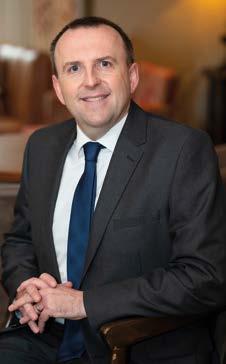
Tel: 01903 863284
ajones@365employmentlaw.co.uk
www.365employmentlaw.co.uk

www.sussexbusinessgroup.co.uk 19 LEGAL SPONSOR
Alex Jones
Building long-lasting relationships in one-to-one corporate banking
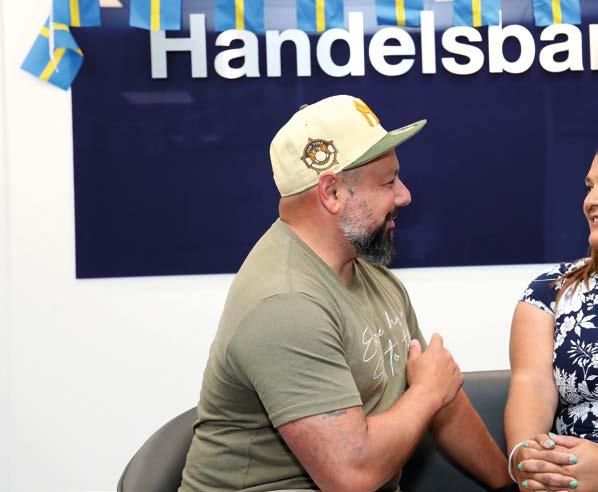
Rachel has possessed a keen interest in finance from a very young age. When she wasn’t learning personal finance tips from her father on how to save, she was fascinated by her uncle’s profession as an accountant. Their many conversations spawned Rachel’s
intrigue in this career path. However, in the end, it was banking that reeled her in. The Sussex Business Times asked her to share more…
How did your career start and progress?
Whilst studying Economics at university, over the summer months I undertook a placement at a high street bank, working
in leveraged finance which sees different groups come together to provide syndicated loans.
Following a successful summer placement, I was offered the opportunity to join the bank’s graduate program subject to achieving my degree. Excited by the prospect of working within the underwriting team,
20 www.sussexbusinessgroup.co.uk
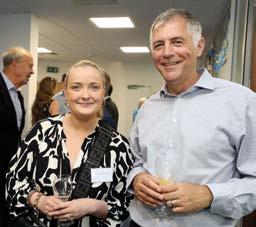
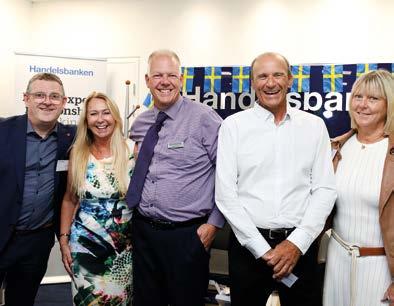
We meet Rachel Gerg, Corporate Banking Manager at local relationship bank Handelsbanken’s East Sussex branch.
Cover Story
I left home in Liverpool and made my big move to London in 2004. Whilst in my first role I was incredibly keen to learn more, develop my skillset and really understand the impact our decisions as an underwriting team would have on our customers. I would ask plenty of questions and given my interest in customer impact, senior colleagues encouraged me to consider entering the relationship management side of banking.
So when an opportunity within the bank came up to become the Business Relationship Manager for Sussex, based in Chichester, I just thought ‘What an opportunity!’, grabbed it with both hands and moved down to the
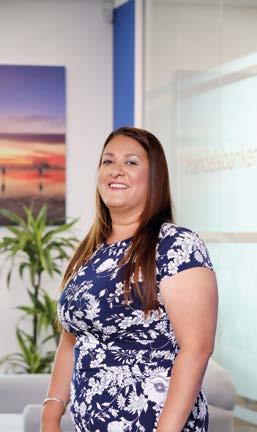
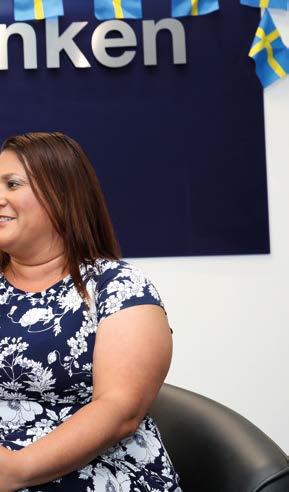
South Coast at just two days’ notice.
At the time, I’d just been offered another job in London but just something didn’t feel right. I wanted to work directly with customers and that’s what enticed me about my move to Chichester. In my new role, I looked after a portfolio of clients and ended up in the Specialist Property Lending team covering Surrey, Sussex and Kent.
Why did you end up making the move to Handelsbanken?
I was aware of the bank’s stellar reputation for customer service, strong culture and appetite for long-term relationships. So when the bank were
recruiting in Eastbourne, eight years ago, I pursued it.
After some time working in Eastbourne I ended up moving to Brighton thanks to the fantastic support of the bank. When my beautiful little boy was born three months prematurely, the bank could not have done more for me as an employer. Testament to our wonderful culture. After some time had passed following the birth, I decided to come back to work earlier than I had originally planned and expressed an interest in moving to Brighton. Handelsbanken were amazing and supported me as a mother. I’m delighted with the opportunity Handelsbanken has offered me to develop my career whilst having a family.
www.sussexbusinessgroup.co.uk 21 COVER STORY SPONSOR

22 www.sussexbusinessgroup.co.uk COVER STORY SPONSOR
How does the bank help corporate customers?
We offer a dedicated account manager service. Our decentralised approach means that our branches are empowered to make the majority of credit decisions. Our corporate banking customers speak directly to a decision maker. Enabling us to deliver an efficient, reliable and personal service to support their financial goals.
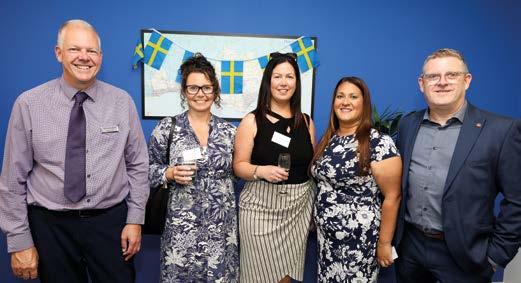
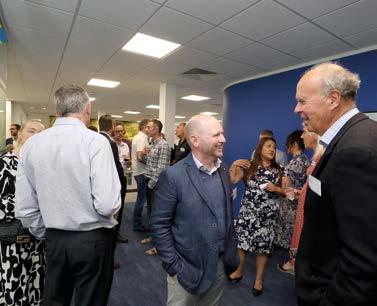
We know and understand the local community and market. I’m regularly out at networking events, meeting solicitors, accountants and business owners - and building relationships. We don’t just serve the community, but we are part of it.
Handelsbanken is a little different. Can you tell us more about it?
At Handelsbanken you can expect a private banking experience for your
personal finances, and as a corporate customer you benefit from specialist services backed by an expert team.
We make decisions to meet customer needs, not sales targets. The handbook of our culture states: “Our advice must
always be what is best for the customer, not what is most profitable for the Bank at the time.”
We are passionate about delivering a truly personal banking experience built on long-term relationships, so from day
www.sussexbusinessgroup.co.uk 23
COVER STORY SPONSOR
one of the relationship we get to know each and every customer’s situation, their aspirations and what they need to reach their goals.
The bank also, and importantly, has an AA credit rating from Fitch and is recognised as the safest commercial bank in Europe. Handelsbanken is also very focussed on the environment and this culture is reflected at branch level here in East Sussex.
What do you do when you are not working?
I run around after my little one quite a lot!
My family are from Liverpool so I spend a lot of time travelling up and down to see them.
Other than that, I enjoy going to see shows at the theatre and dining out in restaurants.
What have been your career highlights so far?
I would say getting my first job and also moving into my Corporate Banking Manager role here at Handelsbanken.
Do you have some tips for anyone interested in a career in banking?
Banks are made up of lots of different departments. You don’t have to be
a numbers guru to work for one. For example, they have marketing and other teams.
Network and make sure you have a strong LinkedIn portfolio. Push yourself.
Take that extra step and don’t be afraid to fail.
Has anyone inspired you?
Definitely my uncle and my dad. My dad came from India with just £5 in his pocket. He is a doctor. He taught me a lot about personal finance and is so proud that his daughter works in a bank. I’m very fortunate to have him as a source of inspiration in my life.
Rachel Gerg Corporate Banking Manager

01323 432 030
rachel.gerg@handelsbanken.co.uk
www.handelsbanken.co.uk/eastsussex
24 www.sussexbusinessgroup.co.uk COVER STORY SPONSOR
‘Every day is a bonus’ - how Sophie lives as her true self with positive energy
During Pride Month, we talk with Dr Sophie Cook about mental health, facing fears and becoming the first transgender woman to work in a Premier League football club.
When Sophie Cook addresses an audience, she does so with confidence and passion. Her ability to connect with people on a human level, sharing her story, chips away at misconceptions while showing others they too can live as their authentic selves.
She has engaged audiences at a wide range of events, including TEDxBrighton. But, before her days as a public speaker, Sophie had hurdles to overcomedifficult ones. In fact, she spent more than four decades of her life knowing that she was transgender; too frightened
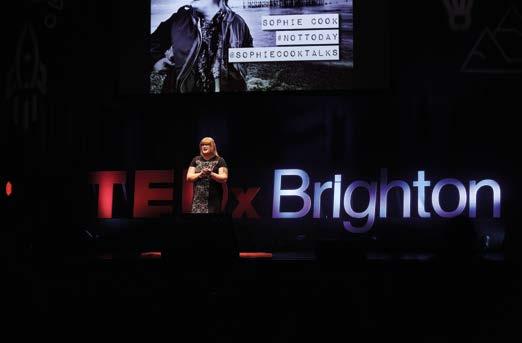
to tell anyone. She was 48 by the time she realised life was not worth living as someone she wasn’t.
The turning point came in 2015the year the football club she has supported her entire life and worked for as a photographer was promoted to the Premier League. While AFC Bournemouth’s first team marked the greatest day in the club’s history with Champagne celebrations on the pitch, all Sophie felt was fear.
“I had reached the point where I had to decide between changing my life or ending it,” she remembers. “I first tried to
take my own life at 12 years old and those thoughts were never far from my mind. I was in so much pain. I knew I had to address this dissonance within myself.”
Sophie’s first step was to tell her wife and children.
“My youngest daughter was 11 at the time,” Sophie says. “She knew all about the Kardashians. She started asking about Caitlyn Jenner and my wife said ‘Do you think we should tell her?’. My daughter went through all five stages of grief in about 10 minutes. She did denial, she did bargaining, and all the rest of it
26 www.sussexbusinessgroup.co.uk
PRIDE SPECIAL SPONSOR
Pride Special
and, after the 10 minutes, we got to acceptance - when she said to me ‘What’s in your make-up bag?’
“Then I had to think about telling the football club. At the time, there wasn’t anyone transgender in the game. I had a job that I truly loved and we’d just reached the Premiership - such an unbelievable dream. I thought I was going to lose it all. I was surrounded by celebrations, but I was terrified.”
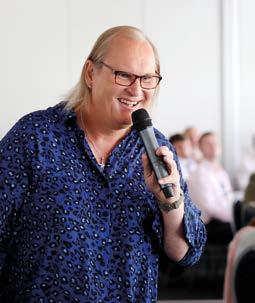
As it happens, AFC Bournemouth and their manager Eddie Howe were supportive. At last, Sophie was free to be… Sophie.
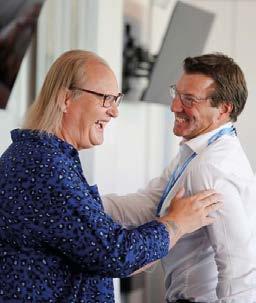
When we put it to Sophie that she is an inspiration, she is not wholly convinced. “I feel as though I am just living an authentic life and being myself. I’d love everyone to be able to live as their authentic self.”
She stresses: “It’s not just transgender people who struggle to find that authenticity - people struggle in relationships, with their sexuality and in their jobs.”
Talking about mental health and the importance of being open about it is something that has won Sophie recognition. She suffered from PTSD after rendering life-saving first aid to a young man following an explosion on an aircraft while serving in the RAF at just 18.
When she first started talking about it, she remembers people telling her mental health was a topic that shouldn’t be openly discussed. She carried on regardless, inspired by a story she was once told.
She explains: “The story goes… There’s a woman walking along a beach covered in starfish. She starts picking them up and throwing them back into the sea. An old woman comes along and says ‘There’s miles of beach, and millions of starfish. You can’t hope to make a difference.’ The woman picks up a starfish and throws it into the sea. She says: ‘I’ve made a difference to that one.”
It is what drives Sophie to continue talking about mental health,
understanding the enormity of reaching just one person.
Sophie says that her life now has purpose. “Every single day is an extra - it’s a bonus. I have a finite number of days left on this planet, they need to mean something. The future is about doing whatever I can to raise awareness - about mental health and about creating safe and open cultures where everyone can be their authentic self.
“We need to learn to love ourselves and the planet. We live in a society that exploits us and the Earth. We need to start caring. I want to help people understand their role in the world and how to put positive energy into every day.”
Positive energy is something that Sophie exudes. She had to endure unimaginable pain to be the person she has always been - and that person is a warm, intelligent and, occasionally, witty thought leader whose voice deserves to be heard.
https://sophiecook.me.uk/
www.sussexbusinessgroup.co.uk 27 PRIDE SPECIAL SPONSOR
Smashing the stigma of suicide, one conversation at a time
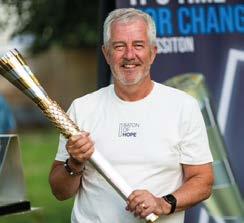
In Summer 2023, the Baton of Hope toured 12 UK cities in 12 days, aiming to unite the country to talk more openly, confidently and compassionately about suicide, and to push the issue of suicide prevention up the Government’s priority list. On 5th July, the Baton came to Brighton and Hove. Local Project Lead, Rose Rowkins shares the Baton’s journey and the impact it has had on the community.
This isn’t an easy thing to write or read, but if I’ve learned one thing it’s that we mustn’t shy away from the tough stuff. Not any longer. The sad truth is that most if not all of you reading this have been affected by suicide, in some way. Suicide is around us. It touches our professional lives and personal lives.
Maybe you have lost a loved one to suicide, or a colleague or client. Maybe you’ve supported someone who was struggling to stay alive. (It’s quite possible, by the way, that you saved their life, even without knowing, simply by ‘being there’ and showing you cared.) Maybe you’ve thought of suicide yourself at times. Maybe you’ve acted on those thoughts and survived.
The Samaritans estimate that 5% of the population, that’s 1 in 20 people, are thinking of suicide right now. No-one is immune from suicide thoughts. There is no ‘them’ and ‘us’.
We know that most people who are thinking of suicide don’t want to die; they want their pain to end. And yet people do die by suicide. Far too many. Around 6,000 people take their own life in the UK each year. That’s 17 people every single day, or one person every 90 minutes. Three quarters are men.
As I said, suicide is around us; it’s more common than we’d like to imagine. Despite great efforts from those of us in the suicide prevention community to educate and raise awareness, these numbers have stagnated. And behind every number is a grieving family, a community left with unanswered questions and unspeakable pain.
Something big needs to shift, and, I believe, now is the time.
The Baton of Hope in Brighton and Hove Suicide isn’t something we typically talk
about, and that’s the point. We must. Because talking about suicide is the best form of prevention we have. Talking about suicide saves lives.
This was precisely the aim of the Baton of Hope, the UK’s biggest ever suicide prevention initiative, which toured the UK earlier this Summer: to start long-overdue, courageous, life-saving conversations.
Founded by Mike McCarthy and Steve Phillips, who each lost a son, Ross and Jordan, to suicide, the Baton of Hope is a symbol to unite anyone
28 www.sussexbusinessgroup.co.uk CHARITY SPONSOR
Charity
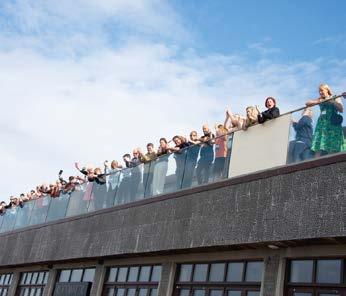
Rockwater Business Breakfast guests applaud the Baton © Xavier Clarke
affected by suicide; a way to leave behind generations of stigma, so that anyone struggling today with thoughts of suicide feels confident to seek help, and anyone worried about a person knows what to say and do. Hundreds of people across the UK carried it on the inaugural tour, across 12 cities from Glasgow to London.
In late March 2023, I was approached to organise the Brighton route and a day of events. With the support of a formidable team and hundreds of local individuals and businesses, what we achieved and the waves that have followed surpassed
our wildest imaginings and is one of my proudest achievements.
Allow me to guide you along the Baton of Hope’s Brighton journey:
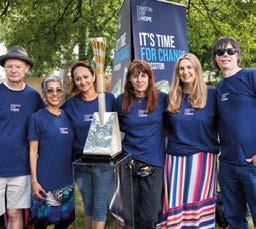
At 8am on Wednesday 5th July, under a blue sky, over 50 people gathered by the Peace Statue to welcome the Baton to Brighton. It had ended its previous day at Milton Keynes’ Peace Pagoda; a coincidence that took on a special poignance in this context.
First it travelled westwards, exchanging hands every 300 metres. Over the day,
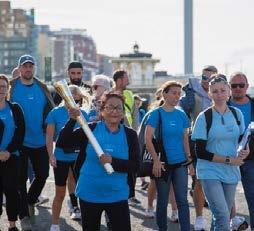
90 Baton Bearers walked sections of the 27km route, in memory of a loved one or in honour of their own survival, coordinated and held safely by Hema Patel and Lauren Carvalho, and shepherded by Iain Riddell and other volunteers.

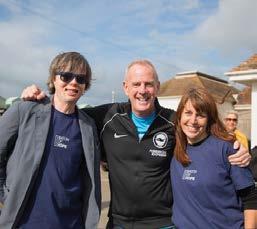
At the Big Beach Café, Norman Cook aka Fatboy Slim hugged the Baton Bearer tightly; her daughter had been a regular in his café before she took her own life, and Norman had served her personally. One of many raw connections made that day.
The Baton returned to Rockwater where the Business Breakfast, created by Sam
www.sussexbusinessgroup.co.uk 29
CHARITY SPONSOR
Baton Bearers © Beth Wild
Brighton Baton of Hope Team © Xavier Clarke
Marc Convey, Norman Cook & Rose Rowkins © Beth Wild
Baton Bearers © Kitty Wheeler Shaw
Thomson (Hexagon Hive), was in full swing. Were you there? Everyone I spoke to said this was “no ordinary Business Breakfast”. People were crying, laughing, connecting, like I have never witnessed before at a business event, and have said it was an “absolute privilege” to be there: “powerful”, “inspiring” and “a moment in time that will last with me forever”.
Guests were treated to talks from Olympian Leon Taylor, in conversation with Sam Thomas, Neil Laybourn and Jonny Benjamin MBE, and Mike Turner from Bird and Blend Tea Co. I was honoured to speak last. I shared five brief tips for talking about suicide and an acronym for HOPE which I have held close for a long time and which many people have told me feels helpful: ‘Hold On, Pain Ends’.
Later, outside Platf9rm, Jess Samson, Marc Convey and Cllr Andrei Czolak (policy lead for mental health) each spoke movingly about their own losses and struggles, along with their learnings and hopes. Music was from talented BIMM students.
The Baton was carried along the beach, the Pier, and into Kemptown. At the new community café created by Brighton Table Tennis Club and Fitzherbert Hub, Mayor Cllr Jackie O’Quinn spoke from her heart, followed by paramedics
Angelique Henderson and Adam Mason – for many people the highlight of their day. Music was from AudioActive.
At Brighthelm Gardens, Cascade Creative Recovery shared music, drama and poetry, and then the Baton travelled to a family BBQ at the Bevy pub, with still more moving talks and music, supported by Dad La Soul, Grassroots Suicide Prevention and Plus X Innovation.

We felt it was important to end our Brighton day on a high, before the Baton was taken to London for its final day, where it would end at the Houses of Parliament. And so we did, by producing, along with Partridge Events, a specially curated show at Brighton Dome: ‘An Evening of Hope.’
We brought together a choir, an international beatbox star, an awardwinning poet, a powerful dance troupe, a rapper, a drag queen and more to spread the message of hope and the need to #passiton. Stories were shared safely, with raw and honest emotion, and the connection in the room, between the performers and audience, was palpable. One guest called it “a night of inspiration, community, humility, education, understanding, generosity, artistry, bravery but the most important lesson is ‘we are one!’”
The impact of the Baton
The Baton of Hope aimed to start conversations, and that it did:
One of our Baton bearers, a woman in her 60s, whispered to one of our volunteers: “I’m a suicide survivor.” Forty years ago, she had survived a suicide attempt. She had never previously told her husband or children, but on 5th July, she carried the Baton proudly, shedding 40 years of shame. She would go home later, she told us, and share her story publicly on Facebook. She wanted to tell people: I survived suicide. It can happen to anyone. I’m here to tell the tale. I’m no longer ashamed. Anyone can find hope.
Baton bearers, volunteers and even passers-by on the day have commented since on what the day meant to them:

• “What a mammoth day of connection, inspiration and hope. I am sure this is the start of many more conversations that will save lives.”
• “I was surprised at how it has made me reflect on things and want to do more. I was inspired by the strength and spirit of so many people and the connections. It showed me that we are not alone, and we can support each other by listening and talking more.”
30 www.sussexbusinessgroup.co.uk CHARITY SPONSOR
Baton Bearer © Neil Stoddart
Platf9rm speakers © Kitty Wheeler Shaw
• “It was an opportunity to be with people who understood; no questions, no judgement. A shared understanding and journey, an emotional and powerful event. I really do feel this is the beginning of something big! We need to have honest conversations about mental health and suicide.”
• “I felt it connected a huge amount of people who had experienced similar things and made them feel valid. It celebrated people who were no longer with us and it got people talking about suicide prevention in a way I’ve not witnessed before.”
What you can do
Too often I am invited into businesses, to talk to staff or deliver suicide prevention training, after the death of a colleague by suicide. It’s devastatingly tragic, not least because we have come to understand that most suicides can be prevented. I implore you, don’t let this be you.
So as a Sussex business owner, what can you do to make your corner of the world safer from suicide?
To make your workplace as safe and healthy as it can be for your employees, simply put, you need to create the conditions where they can talk openly about how they’re feeling, including
if they are really struggling. If you’re a manager or CEO, this includes you too! The simple truth is suicide is best prevented through not being afraid to ‘say the word’. Through people feeling seen, heard, accepted and valued, even in their darkest times. That’s the support that employees want—and it’s what being human is all about.
Some things to consider:
• Use supervision time wisely. Ask questions that seek to understand each employee as a whole human. Put staff wellbeing (in and out of work) at the core of your strategy; it’s good for them and it’s good for business!
• Book suicide prevention skills training. Some companies are making this mandatory, not only for leaders or HR; all staff should feel empowered to spot signs and have a life-saving conversation.
• Rethink your benefits and policies to provide staff with continuous opportunities to learn, grow, and tackle burnout long before it happens.
• Make time for meaningful reflection; introduce Reflective Practice Supervision or Compassion Practices if you haven’t already.
• Acknowledge and empathise with your youngest employees; they are likely struggling in ways the older staff aren’t.
The stigma around mental health, thankfully, seems to be losing its power, certainly out here in the ‘real world’. But how welcome are conversations about mental health – and more specifically
suicide – in your workplace really? If we can have “difficult” conversations outside of work, we need to be able to have them at work too.
Courageous new conversations are starting. They must not stop. Because where there are open conversations, there is connection, and there is hope. And where there is hope there is survival.
Watch a short film of the Brighton tour at www.bit.ly/ BOHbrightonfilm
When not volunteering for the Baton of Hope, Rose Rowkins is a suicide prevention skills trainer. Find her on LinkedIn or at www. starttheconversation.uk
Follow the Baton of Hope at www.batonofhopeuk.org or @ batonofhopeuk
Do you need support for yourself or someone else?
Start here: preventingsuicideinsussex.org
Download ‘Stay Alive’ the free app from Grassroots Suicide Prevention
Helplines: Samaritans 116 123
Papyrus HopeLine (for under 35s) 0800 068 4141
Suicide & Co (for anyone bereaved by suicide) 0800 054 8400
Sussex Mental Healthline 0800 0309 500
www.sussexbusinessgroup.co.uk 31 CHARITY SPONSOR
Baton of Hope Co-Founder Mike McCarthy © Neil Stoddart
Children’s charity named a finalist in the Third Sector Awards
Rockinghorse Children’s Charity has been shortlisted in the Third Sector Awards and is in the running for the Medium Charity of the Year, 2023.
The prestigious awards recognise individuals, businesses, and notfor-profit organisations who make a contribution within the third sector and are driving positive change in their industry and communities.
Rockinghorse is a Brighton-based charity that has been changing the lives of babies, children, and young people in Sussex for over 55 years. They are the official fundraising arm of the Royal Alexandra Children’s Hospital and they raise money to provide life-saving
medical equipment and additional services with the aim of improving the lives of sick children throughout Sussex.


The Chief Executive Officer, Donna Holland said: “This is a great achievement for Rockinghorse, and one that we are all incredibly proud of. We work with local and broader communities in filling a critical gap in NHS provision for every aspect of children’s healthcare both now and for many years in the future, and this award helps solidify the incredible work we do.”
The awards ceremony will take place at lunchtime on Friday, 22nd September, at the Royal Lancaster Hotel, hosted by stand-up comedian Maisie Adam.
Alex Marshall, Head of Marketing and Communications, said: “We look
forward to celebrating at the ceremony in September and meeting with the other finalists who all support the Third Sector.”
The support Rockinghorse provides is critical within the county. Without the team’s dedication and contributions, countless children and families would be left without the essential support, resources and opportunities they need to get through situations that they never expected could happen to them.
If you want to donate, volunteer or fundraise for Rockinghorse, visit their website here - https://www. rockinghorse.org.uk/
32 www.sussexbusinessgroup.co.uk CHARITY SPONSOR
Rockinghorse a contender in the Medium Charity of the Year category.
Charity
Could Your Business Help Support Young People Who Need Us?
With the kind support from businesses like yours, you will help us to remove roadblocks that a young person may be facing and give them the opportunity to completely change the trajectory of their life.
“I grew up in Brighton and receiving financial assistance from the Starr Trust is more meaningful to me coming from local businesses and has helped me overcome huge barriers to realise my aspirations for a medical career in the NHS. Without this support, my story would be a very different one.”



Find out how to get involved:


www.sussexbusinessgroup.co.uk 33
www.starrtrust.org
City Girl Network brings community together with a new series of events
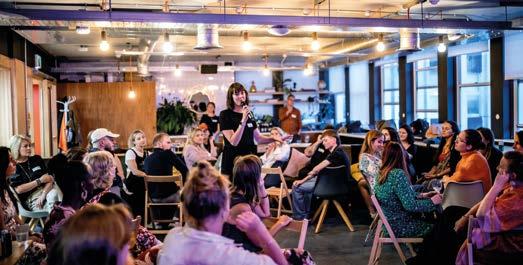
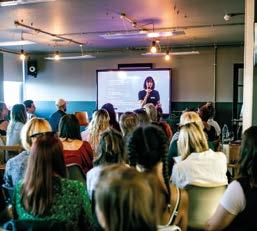
Last month, 60 people gathered at PLATF9RM’s North Road venue for the the City Girl Network’s first Brighton Business Connections event. The mission was simple: make it fun, varied and encourage as many people to talk as possible.
Networking & Events
The event officially began at 6.30pm with informal networking – though a good 20 people arrived 15 minutes earlier to kick off the party even sooner.
City Girl Network Founder Pippa Moyle said: “With drinks flowing, people chatting, and my dog (Scruffy) highpawing everyone who walked through the door, it was clear from the outset that we were in for a good time.
“Brighton Business Connections is a brand new series of networking events powered by the City Girl Network – my business, to be specific.”
The City Girl Network is a Brightonborn media and events company helping to connect over 110,000
women in 18 communities across the country. Locally, there is Brighton Girl (29,000 members), Worthing Girl (2,000 members) and, as of last month, Rural Sussex Girl (500 members).
Pippa added: “We help women find friends, business connections, jobs, housemates, travel companions and things to do in order to feel more connected to where they are. Every week we host multiple events across the country, publish online content and moderate thousands of posts in our Facebook Groups.
“Since March, we’ve been running a series of monthly panel events for the Brighton Girl community – covering numerous conversations about growing a creative career, running an ethical business and highlighting local Founders stories. Hundreds of our members
have been able to grow business connections, find work and gain valuable professional development advice in a safe, supportive space.”
The majority of Brighton Girls who attend those events have never been to a formal networking event.
Pippa explains: “This inspired us to replicate our safe, supportive and energetic experience in an all-gendered space with networking at the very heart of it. Giving it the straight-to-the-point title: Brighton Business Connections.
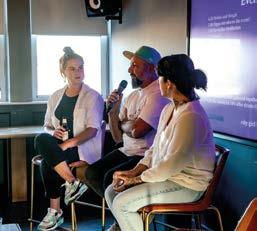
“By 7pm, everyone took their seats for a 10 minute meditation by Emily at Revitalise (our wellbeing sponsor for the event). It gave everyone the opportunity to centre their intentions and shed any anxiety that was lingering. This followed a panel discussion with Sam
34 www.sussexbusinessgroup.co.uk NETWORKING & EVENTS SPONSOR
Each panellist came from a slightly different part of the creative industries: Sam from his experience running the Sussex Business Times, County Business Clubs and Firm Balls, Anna from her the publishing industry, and Maya from running the recent Brighton Book Festival.
The discussion was followed by a short networking break before coming back together for a lively Q&A with the panellists and a quickfire pitch round
for five professionals chosen from a hat, including one from our charity partner, Together Co.
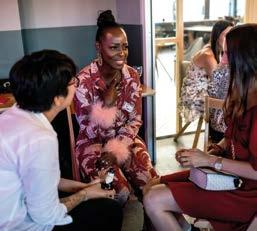
Another short networking break led into a speed-networking session for the second half of the evening. It was a lively session of multiple rounds, with everyone feeling that they’d met most people in the room in some form or another as the event drew to a close.
Whilst some left at the end of the event, a big group continued the conversation down at The Dorset afterwards, who’d offered a discount to our attendees – an unexpected tradition that the Network
fully intends to continue at the next one.
Since that night, attendees have gone on to find new jobs, clients and collaborative opportunities, as well as investing in courses and services (i.e. accountants, marketing and legal representation).
These events will happen every other month, with the next one happening on Thursday 7th September and the main panel discussion focusing on utilising marketing, PR and branding.
https://citygirlnetwork.com/tickets/ brighton-business-connectionscreative-industries

www.sussexbusinessgroup.co.uk 35 NETWORKING & EVENTS SPONSOR
Thomas, Anna Burtt and Maya Leftwick, discussing growth and management of a career in the creative industries.”
















BRIGHTON DOME SEPT 2023: 28 100+ Exhibitors FREE to attend LOCAL B2B Event GAME THEMED ENTREPRENEUR KEYNOTE TALKS CASINO FUN LOUNGE THE TIGER’S PEN BUSINESS MASTERCLASSES 01273 833 222 sussexbizshow.com
Photo Credit: Hugh Fox
HEADLIN E SPONSO R
Photo Credit: Jim Stephenson


















www.sussexbusinessgroup.co.uk 37 THANK YOU TO
OUR SPONSORS HEADLINE PARTNER MEDIA PARTNER AWARDS PARTNER TIGER’S PEN PARTNER TECH SPONSOR GAMES SPONSOR FLOORING SPONSOR CHARITY SPONSOR KEYNOTE SPONSOR NETWORKING SPONSOR PRINT SPONSOR APP SPONSOR COFFEE SPONSOR SHOWBAG SPONSOR LANYARD SPONSOR T-SHIRT SPONSOR #SussexBizShow
ALL
Joining the Conversation at a Networking Event
In the latest edition of The Networker, Bradley Hatchett from Network My Club dives into the challenge of joining conversations at networking events, which groups to join, and how best to approach them.
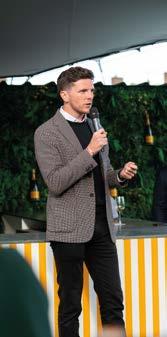
It’s a common challenge shared by subscribers in response to their biggest networking challenge:
How to join and break into conversations. Sound familiar to you? Let’s dive in.
In my time I’ve witnessed (and been on the receiving end of) some very dubious methods to joining conversations. From the bull-in-a-china-shop style entrance to the awkward lingerer shuffling in and appearing from no where, and everything in between.
Thankfully, it’s not complicated, doesn’t need to be overthought, and with a few considerations, you’ll be cruising into conversations smoother than silk in no time.
Today we’ll explore:
• Why is joining conversations a challenge?
• The reality of the dynamics of conversation at events
• Who to pick out
• Joining conversations
Why does this feel like a challenge?
I put this down to a number of things (you might relate to one or a few):
• Fear of rejection
• Wondering what others will think
• Not knowing what to say or how to break in
• Not wanting to come across rude or gatecrashing the conversation
• Imposter syndrome - “they are better and more successful than me”
Any resonate with you?
But let’s stop there one second.
Reality Check
Time for a quick reality check.
Before we get practical.
Here’s the reality of most conversations you see at a networking event.
To remind yourself of if you get that fear or anxious feeling of joining a conversation:
• Everyone is there for the same reason - you’ve not gone into a nightclub or bar where everyone is with their own group of friends. Where joining in those conversations would be strange.
• You’re at a networking event. Where everyone is there to do the same thing.
• To meet new people.
• Most groups and conversations have formed by chance - they’ve been formed through the serendipitous moment after grabbing a coffee, at the bar, or meeting on the way in.
• Very few are by design.
• Most share this same fear or are as unsure as you - so will be grateful you’ve taken the leap to join the conversation.
• There is equally a fear of leaving conversations - for those already in
conversations, they are unsure how to leave, so someone new joining the group to change the dynamic is welcomed.
• No one is having private conversations- these are what meetings are for. So unless the conversation is in the corner of the room and the signs are telling you it’s privateyou’re not walking into someone spilling the beans on some juicy gossip.
• You won’t be met by a similar scene from Mean Girls.
So, there’s a bit of reality served on the rocks.
38 www.sussexbusinessgroup.co.uk NETWORKING & EVENTS SPONSOR
Networking & Events
Let’s get practical.
Who to Pick Out and What to Look Out For
So, who do you look for? What is the best group to pick or dynamic to pick?
Here’s a few do’s and don’ts:
Don’t immediately look at the epicentre of the event - this is usually where the refreshments are, either the bar or tea/coffee area.
It’s much like the kitchen at a house party. Everyone seems to congregate there. It’s often crowded and loud - so not always the most conducive environment to starting a new conversation.
Do look at the edge of room - this is great place to start and one that is often ignored.
After you’ve grabbed a refreshment, look around the edge of the room and spot the person on their own (I guarantee there will be one).
1. It’s less intimidating than already established groups
2. You’ll make a great first impression having saved them from doing it themselves
3. You’ll be more comfortable as others join in your already established group
4. It’ll be quieter and not so congregatedso easier to compose yourself and chat
They will be thinking the same as you. Waiting for their moment to join a group. Or for someone to save them and join them.
This serves you well in a couple of ways:
Do pick out a small group of 2-3 people - no person on the edge of the room? No problem. Here’s your next best bet. 2-3 people is a comfortable number to join in without it becoming ‘an audience with’ everyone in the conversation.
Don’t go for groups of 4+ - these are not only daunting if you’re already feeling that way, but they become too crowded and are a tough amount for everyone to feel included. Quiet ones can also get left out.
My last point is - consider the dynamic where you’ll be most comfortable. As this when you’ll be your most authentic self. And authenticity is key to true connection.
Joining Conversations
Quick check - shifted your mindset? You realise everyone is there for the same reason?
Great, this makes it 10x easier to join the conversation.
Know who you’re going to approach?
It’s time to go in:
Don’t linger awkwardly - make a subtle acknowledgement, have a smile, and ask if you can join.
Don’t be that person hovering over someone’s shoulder waiting to catch awkward eye contact or be asked to join the group.
Take responsibility to join in.
Casually and politely ask permission - particularly for groups already established, be aware of the fact they are in a conversation.
Here’s a couple of lines I like to use: “Do you mind I jump in? Feel free to carry on, what were you talking about?” Asking this helps people continue where they were and bring you up to speed to include you too.
This is where curiosity is key. Ask questions for clarity or to learn more. This comes across brilliantly and will be appreciated by those you join.
“Do you mind if I join? Don’t let me stop you. I’ll jump in when the time is right.” What I’ve found both these lines do is immediately break down the feeling that they need to stop and turn all their attention to you.
I find there is onus on you when joining a conversation to allow them to continue. To avoid that dreaded moment all conversation stops mid-flow and attention turns to you.
But sometimes, you’ll find the conversation was fading out and you’ve joined at the perfect time!
Don’t start selling and pitchingunless you are looking for sure fine way to turn everyone off and make that bad first impression.
Be curious about others, don’t make it all about you, and you’ll need not worry about what others think.
Basically, avoid doing this:
The Wrap Up
I totally get it. Joining a group or forming a new conversation can be daunting.
But don’t overthink it.
1. Remember everyone is there for the same reason
2. Most are feeling the same way you do
3. If joining a group mid conversationhelp them continue where they were
4. Be polite, curious, and don’t start pitching
5. Watch your conversations flourish
Try it at your next event.
The first time will be the hardest and feel the most awkward (to you).
But it gets easier.
Particularly when you realise how warm others are.
www.sussexbusinessgroup.co.uk 39 NETWORKING & EVENTS SPONSOR
Kevin Byrne OBE inspires attendees at Property Professionals’ Lunch
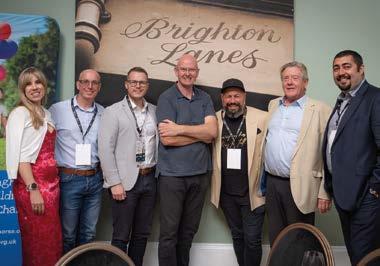
The event, staged on July 20th, was a sell-out success.
Last month gave way to this year’s third rendition of the Property Professionals’ Lunch – and it was as brilliant as ever.
Networking & Events

The event saw the return of host Sophie Campbell-Adams, Director and Solicitor at Britton and Time Solicitors, alongside many other businesspeople throughout Sussex.
After Sophie’s introduction, Matt Turner. of year-long headline sponsor Creative Pod, spoke about helping businesses – both large and small – grow, alongside highlighting marketing techniques that all aspiring businesses should capitalise on.
Up next came Christopher Coleridge Cole from Gresham Street Partners as event sponsor. He gave the attendees some top tips on dealing with the inevitable issue of taxes, especially when it comes to property and estate planning.
Terrifically, the event raised over £650 for its charity sponsor, Rockinghorse Children’s Charity.
Two lucky winners won signed copies of best-selling author Peter James’s ‘I Follow You’ and ‘Picture You Dead’ - fantastic prizes for those into their crime fiction! A mystery prize also saw one lucky winner walk away with a vineyard tour for two.
The star of the event was guest speaker Kevin Byrne OBE, an entrepreneur and founder of Checkatrade. Kevin spoke in-depth about the trials and tribulations of setting up your own business. The key takeaway was that whilst you will face challenges when venturing into the business world, perseverance is vital, and you should not give up on pursuing your dream.
Other sponsors of the event included year-long media sponsor County Business Clubs Sussex, year-long print sponsor Connect Media UK and Westgate Chambers as drinks sponsor.
All the sponsors factor into making the event a huge success, and it has been great to see businesses in Sussex supporting each other.
Host Sophie Campbell-Adams had this
to say about the event’s success so far this year: “It has been such a pleasure to take over the event since the start of 2023 and see it facilitate the very best of what Sussex has to offer; the support of businesses has been incredible, and I am really excited to see what the future holds for us.”
Tickets for the final event of 2023, taking place Thursday October19th, are already on sale. Early bird tickets are sold out, with general tickets now available. So, if you are interested, ensure you book on via the event’s Eventbrite page below:
Property Professionals Lunch - 19 October 2023 Tickets, Thu 19 Oct 2023 at 12:30 | Eventbrite.
Alternatively, feel free to contact Sophie at sca@brittontime.com for an exclusive invitation.
40 www.sussexbusinessgroup.co.uk NETWORKING & EVENTS SPONSOR
BBBC supports Golden Lion Children’s Trust - thanks to Sussex Business Show
The Big Business Breakfast Club’s next event is taking place on Friday, August 18th at The Grand Hotel, Brighton, from 8am.

Networking & Events
expect a friendly team to be on hand to facilitate any introductions.
Alex Ryan, of Marketing 101, will offer valuable insights with his regular marketing hints and tips.
As always, the room will remain open after breakfast so that everyone has plenty of time to meet like-minded businesspeople.
Guest sponsor this month is the Sussex Business Show and its organiser, Sonny Cutting, has chosen the nominated charity for August - Golden Lions Children’s Trust. Please show your support and make a generous donation when you purchase your ticket, which they’ll get directly.
About the sponsor - Sussex Business Show
Sussex Business Show is the premier B2B trade show with a twist.

Its mission? To transform the events industry and make networking fun!
The annual Sussex Business Show’s casino-themed event includes highlights that include: four keynote speakers, eight masterclass talks (on various themes including mental health), a Wellness Lounge and other surprises.
Whether you’re looking to make new connections or enjoy the best of local businesses in the area, join Sussex Business Show in September.
August’s sponsor
Sponsor’s nominated charity – Golden Lion Children’s Trust.

The Golden Lion Children’s Trust is a charity dedicated to providing hope, help and happiness to children with special needs and those who are disadvantaged. The Trust maintains its links with Gatwick Airport, where the roots of the Trust began, but can reach out to a much wider field - thanks to the many supporters and volunteers it has.
The Big Business Breakfast Club team looks forward to seeing you on Friday 18th August. Tickets will sell out, so book in advance.
Book here: https://www. bigbusinessbreakfastclub.co.uk/
If you are interested in learning more about becoming a sponsor of the BBBC then, please get in touch with the team at team@ bigbusinessbreakfastclub.co.uk
www.sussexbusinessgroup.co.uk 41
NETWORKING & EVENTS SPONSOR Join us for the next Big Business Breakfast Club Friday 18th August 2023 The Grand, Kings Rd, Brighton BN1 2FW from 7.30am TM every 3rd Friday of each month For tickets visit www.bigbusinessbreakfastclub.co.uk PRODUCTION MANAGED BY SPEAKERS INCLUDE ALEX RYAN FROM AS SEEN IN brought to you by in association with
supporting the charity & Face Media Group’ Internaional Hawaiian Shirt Day







42 www.sussexbusinessgroup.co.uk EXCITING CRICKET & FOOTBALL ACTIVITIES 12.00 – 4.00PM THE 1ST CENTRAL COUNTY GROUND, HOVE Bring your family down for a day of fun you’ll never forget. Full of exciting activities and special guests from both clubs! FAMILY TUESDAY 15TH AUGUST FREE ENTRY! PROUDLY PRESENTED BY: EVENT SPONSORED BY: www.oandg.co.uk PLEASE REGISTER TO SECURE YOUR PLACE: ALBIONINTHECOMMUNITY.ORG.UK/FREE-FAMILY-FUN-DAY SCAN TO REGISTER
Cricket foundation opens indoor net facility for community use in Crawley
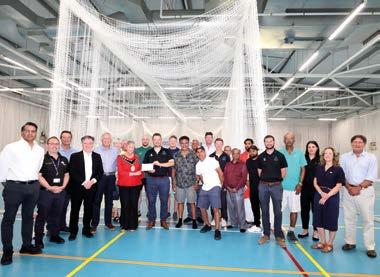
People from all backgrounds will benefit from the new cricket initiative.
Sussex Cricket Foundation has officially opened a brand-new indoor net facility at the Apple Tree Centre, a modern multi-purpose meeting place offering a wealth of facilities for business and community use located in Crawley, West Sussex.
Networking & Events
The opening represents a huge step in the Foundation’s ambitious Crawley Urban Plan, which aims to provide as many opportunities as possible for people from all backgrounds to play the game of cricket.
Representatives from Sussex Cricket and the Sussex Cricket Foundation were joined by several key figures from the local community including, John Barclay Trustee of the Cama Cricket Charitable Trust & Sussex Cricket President, Conservative MP for Crawley Henry Smith and The Worshipful the Mayor of Crawley Councillor Jilly Hart, for the official ceremony.
The installation of the nets will help to provide indoor cricket provisions for local Clubs and community groups within the town, allowing them to train throughout the entirety of the year.
The space allows for up to three cricket lanes to be used at any one time and is fully air conditioned, as well as having underfloor heating, meaning it can be used 365 days a year.
To help deliver the project, the Sussex Cricket Foundation acquired financial support from the Cama Cricket Charitable Trust, who previously helped to provide all-weather pitches around other locations in Crawley.
Speaking on the support provided, Chris Warne, a Trustee of the Trust, said: “The Trustees of the Cama Cricket Charitable Trust believe Spen would have been delighted that they have given financial support towards the development of indoor cricket facilities at the Apple Tree Centre and phase one of the Crawley Urban Plan.
“This results in the creation of new facilities for a thriving, passionate and diverse cricket community.”
The Sussex Cricket Foundation will also utilise the facility to run school
and community programmes such as Street Cricket.
Matt Parsons, Territory Manager for the Sussex Cricket Foundation, added: “The opening of this brand-new facility in the heart of the community in Crawley represents another massive step in our Crawley Urban Cricket Plan.
“At the time of launching the plan, there was not a single indoor cricket facility in the entire town, so creating a facility such as this was a huge priority for the Foundation.
“I am extremely grateful to everybody who has made this possible and I am certain that this facility will enable people from all backgrounds to play the game that we all love.”
https://sussexcricket.co.uk/sussexcricket-foundation
www.sussexbusinessgroup.co.uk 43 NETWORKING & EVENTS SPONSOR
Representatives from the Sussex Cricket Foundation, Sussex Cricket, Henry Smith MP, Cama Cricket Charitable Trust, The Worshipful the Mayor of Crawley Councillor Jilly Hart and volunteers from the Apple Green Centre.
Photo credit: Sussex Cricket
Best of British Events deliver again at the Waldorf in London
On a sunny summer’s day in London, nearly 200 people attended the Best of British London event in aid of Care for Veterans where awareness of this fantastic charity, and many thousands of pounds, were raised, writes Sam Thomas.
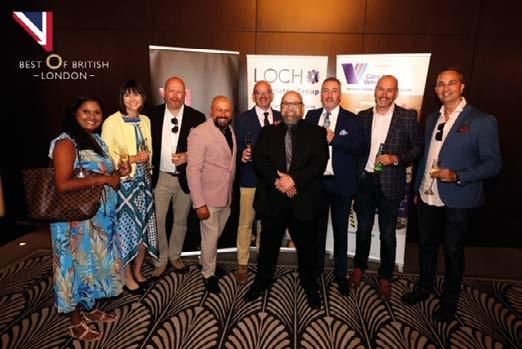
and very humorous Gareth Chilcott.
Networking & Events
Many members of the Sussex business community made the trip to London - and it was well worth the journey. The event, brilliantly hosted by the always entertaining Aaron James, whilst raising funds from heads and tales and a fantastic auction.
Attendees heard from charity Ambassador Nicholas Witchell before being inspired and entertained by some great stories from the legend
Credit, as always, must go to Ryan Heal and the Best of British team, whether it is a members’ club event for 50 people, 500 people at the Grand in Brighton or 200 people at the Waldorf in London, the attention to detail of every aspect of the event that is run meticulously. It is just a true joy and honour to be part of. The SBT team is so delighted to be media partners once again for 2023. This is always the perfect way to entertain our members and partners.
The event was generously supported by headline sponsor Loch Associates Group, along with co sponsors, Handelsbanken, RubixVT, DevAssist and Webtrends Optimize.
Check out the amazing images, courtesy of the fabulous Sam Stephenson.
Go to www.bestofbritish.org.uk for details of future events.


44 www.sussexbusinessgroup.co.uk
NETWORKING & EVENTS SPONSOR
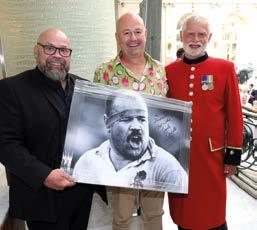
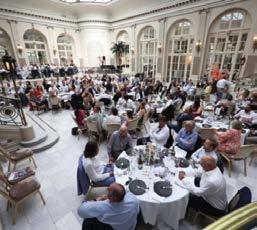
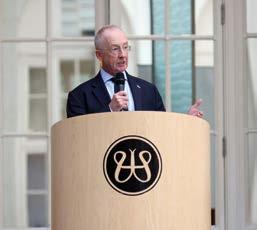
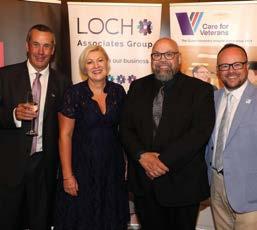
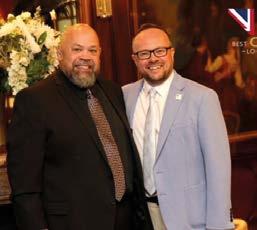
www.sussexbusinessgroup.co.uk 45 NETWORKING & EVENTS SPONSOR
Rivervale announces second acquisition of 2023
Rivervale, the long established, Brighton based leading automotive group providing leasing, purchasing, servicing and vehicle management for cars, vans and minibuses, is pleased to announce the acquisition of Worthing-based leasing broker OSV.

The acquisition is part of Rivervale’s expansion plan following the management buyout in 2022, which saw the company become fully owned by its directors. Rivervale aims to grow its market share and customer base by offering a wider range of vehicle leasing solutions and services.

OSV, established in 1997, has a wealth of experience in the vehicle leasing industry, providing bespoke and
impartial advice to customers across the UK. OSV has a strong reputation for delivering excellent customer service and value for money, and throughout the years has built an impressive client base.
By acquiring OSV, Rivervale will be able to leverage its expertise and resources to offer more choice and flexibility to its customers, as well as access to new markets and segments. The acquisition will also complement Rivervale’s existing portfolio of customers who are currently in contract with a vehicle lease.
Rivervale CEO Vince Pemberton said: “We are delighted to welcome OSV to the Rivervale family. This acquisition is a strategic move that will help us deliver our vision to be the UK’s most trusted vehicle provider across several different sectors. We look forward to working together to provide the
best possible service and solutions to customers, and continue to make motoring manageable.”
Andrew Kirkley, one of the co-founders of OSV, said: “Debs and I| are very excited to join forces with Rivervale, a company that we have admired and respected for a long time. We believe that this is a great opportunity for both our customers and our staff, who will benefit from being part of a larger and more diverse organisation. We are confident that Rivervale will continue to uphold the high standards and values that we have established at OSV.”
The acquisition was completed on 25 July 2023, and OSV will operate as a trading style of Rivervale Cars Ltd. The terms of the deal were not disclosed.
www.rivervale.co.uk
46 www.sussexbusinessgroup.co.uk
Motoring News
Automotive group acquires Worthing-based leasing broker.
MOTORING NEWS SPONSOR
Rivervale £2,500 closer to fundraising target for children’s charity
To be the UK’s most trusted vehicle provider, Rivervale continues its ongoing commitment to helping raise money and support local communities and charities. With the aim to raise £10,000 for Rockinghorse Children’s Charity, we are well on the way to raising an amazing amount of money for them! We are proud to have already raised £2,500 and have plenty of events coming up soon to reach our target.
Since the beginning of this year, we have fundraised at the Brighton Marathon and London-Brighton-Paris EV Rally, collected donations and eggs for Easter and auctioned Brighton & Hove Albion tickets. But, we plan to do even more!
Recently, we hosted the Rivervale Golf

Day at the Dyke Golf Club in Brighton, organised by Toby Graves a TPG Sports Events. We invited friends and clients to come along for 18 holes.
We received loads of positive feedback about the day. It was a great excuse to bring people together, have fun and raise an impressive amount of money that will help make a positive impact on the children in need. Following the success and interest in this event, we are going to host many more charity golf days in the future.
Rivervale has partnered with Sam Thomas, the co-founder of County Business Clubs Sussex and Managing Director of Sussex Business Times. He is also a parent trustee at Rockinghorse Children’s Charity and, like us, is determined to continue to raise awareness and money for this cause.
The team is looking forward to working with Sam on some exciting ventures over the next 12 months. Sam also took the delivery of his fully electric Peugeot e-208 from us which will be seen whenever he visits any events in the future.
Rivervale continues to strive to make motoring manageable and help improve the local community and help those in need. We can’t wait for our next big fundraising event to be announced soon!
For your next car, van or minibus, get in contact with Rivervale today. Give us a call on 01273 433480 or visit www.rivervale.co.uk
www.sussexbusinessgroup.co.uk 47 MOTORING NEWS SPONSOR
Motoring News
The vehicle provider aims to raise a whopping £10,000 for Rockinghorse.
British Chamber network Trade Manifesto: ‘Digitalisation and Green Trade’

Ana Christie, CEO of Sussex Chamber of Commerce, explains how the organisation is constantly asking questions of the thousands of businesses in the national Chamber network to find out what’s happening in the world of trade.
The evidence is clear; internationally active firms are more productive and resilient. Companies are more likely to report increased investment and cash flow.
As the UK’s trading relationships around the world changes, we understand that businesses will need greater support, information, and incentives to adapt, identify opportunities to increase trade, and attract investment.
The world of trade is in constant flux, fresh markets are emerging, the digitalisation of trade documents is accelerating, and more sustainable goods and services are being developed. We have an opportunity to be at the vanguard of this new wave of commerce for years to come.
The Chamber network is a reliable partner to the UK government when it seeks advice on developing trade policy and reaching, implementing and monitoring international
agreements. We need to help the UK government improve market access for UK companies - to open up new opportunities on digital trade, green growth, e-commerce and services for UK exporters, both large and small.
51% of exports are now processed digitally putting us in the top 3 countries in the world. Several developments are now happening which could further accelerate digital trade and boost exports, such as digitalising trade documentation further, digitalising
48 www.sussexbusinessgroup.co.uk
Chamber News
CHAMBER NEWS SPONSOR
border processes and interfaces, trade agreements to address digital trade issues to promote export growth and more services provided by digital means to be free of customs duties.
The transition to Net Zero and the commitments undertaken by both developed and developing countries at the Paris and Glasgow COPs create great opportunities for UK exporters. The focus must be on the technologies to support this transition, and the services which underpin them.
The WTO’s World Trade Report last autumn emphasised the potential benefits of trade liberalisation by eliminating tariffs and addressing nontariff barriers to green trade, exports in this sector could rise markedly by 2030, expanding global access and growth (by as much as 0.8% of global GDP), and providing a further reduction in global carbon emissions (by 0.58% by 2030). Bilateral trade agreements between countries are helping to promote this agenda, but further impetus could be delivered at plurilateral level through the WTO Trade and Environmental Sustainability Structured Discussions (TESSD).
Alongside this agenda are emerging bilateral and plurilateral initiatives on the greening of supply chains, and dealing with the effects of carbon leakage, both before and after the outbreak of war in Ukraine last February. The US and EU are in advanced discussions on the launch of a Global Sustainable Steel and Aluminium Arrangement as soon as late 2023, which other countries may be able to join, to reduce the carbon footprint of steel imports from markets which embed high levels of carbon in their production. The EU’s Carbon Border Adjustment Mechanism (CBAM) comes into operation in October 2023 in terms of reporting requirements on
imported goods produced outside the EU Single Market, and from 2026 on the key trading provisions within the scheme. The UK government has recently consulted on similar policies to tackle carbon leakage, including the introduction of a potential UK CBAM later this decade.
Moreover, investment in green technologies has become of great significance in global industrial and economic policies. The US Inflation Reduction Act (IRA) is providing up to $369bn in subsidies and tax credits for production of turbines, electric vehicles, and other climate- friendly technologies in the US and connected supply chains under its trade agreements. The EU has adopted a Green Deal as part of its industrial strategy, and further measures may be undertaken at EU and member state level to permit subsidies in key sectors like electric battery and vehicle production.

Taken together, these emerging
developments present challenges as well as opportunities on green trade, decarbonising supply chains, and on future investment and subsidies policies.
Sussex Chamber knows all about what is needed to set a business on the road to successful overseas trade.
Contact us to find out more export@ sussexchamberofcommerce. co.uk or customs@ sussexchamberofcommerce.co.uk
Recommendations set out by the British Chamber network on how the UK should grow digital trade as well as a comprehensive green trade strategy are included in the full Trade Manifesto Report: https://www. sussexchamberofcommerce.co.uk/ article/bcc-trade-manifestoandnbsp

www.sussexbusinessgroup.co.uk 49 CHAMBER NEWS SPONSOR
Ana Christie
Plumpton College - leading the way in sustainability

Plumpton College hosted Brighton Chamber’s latest Net Zero Champions event, taking Chamber members on a tour of their beautiful farm campus and explaining how sustainability plays a role in everything they do. Kitty Blake, Campaigns Assistant Intern at the Chamber, shares what sustainability looks like on a campus with 4,000 students.
At the end of June, a group of Brighton Chamber members ventured out of the city to the world of Plumpton College, for our latest Net Zero Champions event. This 2,500 acre sustainable ecological campus is home to 4,000 students (and many more plants and animals), offering vocational courses from entry level all the way up to Masters level.
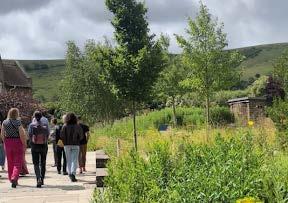
Chamber News
The event began with an introductory talk by Chris Knell, Plumpton’s Finance Director, who explained that Plumpton is the largest educational farm in the country, and that by September, all 19 of their courses will have sustainability built into their curriculum. This was followed by a tour of Plumpton with Sarah George and Alex Waterfield, exploring the old church, the animal management buildings and the winery.
Students and sustainability
From the moment one arrives, it’s obvious that sustainability is at the heart of everything going on in this expansive campus. It is a refreshingly logical operation, where decisions are made according to the ‘conditions of the soil, not the recommendations of the accountant’. The focus is not simply on reducing emissions, but making sustainability come
50 www.sussexbusinessgroup.co.uk
CHAMBER NEWS SPONSOR
alive for students. By implementing logical practices in their daily life on campus, students carry forward these positive changes into their future careers and be able to make good changes for the rest of their life. This proves that sustainability is not just an environmental concept, but a social one too: every choice made at Plumpton College is intentional and designed to last.
The campus incorporates both old and new techniques to ensure the survival and protection of its natural landscape. The ancient woodlands provide 95% of the carbon sequestration for the whole area; regenerative agriculture techniques are used to ensure the sustainable quality of topsoil; and all new buildings have their own energy hub (with excess being siphoned off onto the National Grid). What’s clear at Plumpton is its flexibility: all practices are explored and appreciated, meaning students get the most well-rounded education possible.
Wine production at Plumpton College
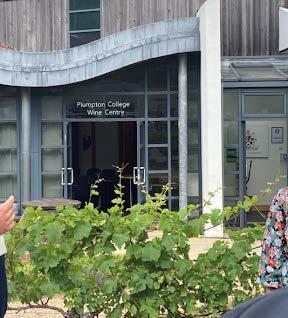
Wine is a very important part of what’s on offer at Plumpton. Students can obtain Masters-level certifications, which at Plumpton is both a vocational course and a commercial outfit. They describe themselves as ‘semi-commercial wine makers with an academic approach’, producing 25-30,000 bottles each year.
The winery has adapted to the natural (although changing) landscapes, using lab grown PIWI grapes which are more suited to our cooler temperatures. Even the winery’s wavy roof reflects the rolling hills of the Downs that the farm sits in. Sussex’s vine-growing belt now matches temperature records of the Champagne region of France 200 years ago, so local winemakers must remain flexible to the ever-changing weather patterns and temperature increases.
Some take-aways from our visit
We are right to feel optimistic about the future of our planet. We are surrounded by people who are prioritising sustainability and ecological understanding, and we can be sure that the students graduating from Plumpton will be leading the way in spreading factbased hope about the future.
Don’t just rely on one technique to guide your work and discredit the rest. Plumpton has shown us the advantages of exploring every avenue to create a well-rounded student and a happier landscape. As Sarah George said; “it’s not about one big change, but 50 smaller changes - that’s how you make a difference.”.
Social sustainability and ecological sustainability go hand-in-hand, and an
environment where both are prioritised will be one of the healthiest around.
Our Net Zero Champions are the people in business who are driving the journey to Net Zero, with sustainability at the heart of what they do. To find out more about our Net Zero Champions, and how to join, head over to https://www.brightonchamber. co.uk/net-zero-in-brighton
Brighton Chamber is a dynamic, inclusive and welcoming membership organisation for businesses of all sizes. Head over to brightonchamber. co.uk/event for networking events and more.

www.sussexbusinessgroup.co.uk 51
CHAMBER NEWS SPONSOR
menopause
the
The menopause is a normal, natural part of ageing, which affects all women and is defined as the last menstrual period. It is a retrospective diagnosis that can be confirmed when a woman has missed her periods for 12 consecutive months. The gradual transition over the preceding years is known as “the perimenopause”. During this time, which can last up to 10 years, the ovaries gradually produce less oestrogen, periods may become irregular, fertility decreases and women may begin to experience menopausal symptoms.
Lifestyle
Most women (around 80%) will have symptoms relating to their menopause. One in four women define these symptoms as having a severe impact on their family, work, and home lives but despite this, less than 50% of perimenopausal symptomatic women will access medical help. The British Menopause Society cites 55 common symptoms attributable to the menopause. These include changes in menstrual cycle, vasomotor symptoms (sweats and flushes), sleep disturbance, fatigue, sexual dysfunction, urinary symptoms, vaginal dryness, mood changes,
poor concentration, weight gain, headaches, palpitations, joint pain, impaired cognitive function “brain fog”, low self-esteem, and difficulties in decision making. No one symptom is diagnostic and many other symptoms are possible.
Due to changing demography, the menopause is having an increasing impact on the workforce. In 1850, female life expectancy was only 45. By 2018, when the average age of menopause was 51, our life expectancy had increased to 83. Women are now spending greater than 30% of

52 www.sussexbusinessgroup.co.uk LIFESTYLE SPONSOR
Dr Cheryl Lambe, Consultant Fertility Specialist at The Agora C linic, discusses the impact on careers as well as symptoms, treatment and workplace best practice.
Coping with the
in
workplace - your career doesn’t need to be over
their life in a post-menopausal state. Given that around 3.5 million women aged between 50 and 65 are currently employed in the UK, the menopause has huge socioeconomic implications. Menopausal women are now the fastest growing workforce demographic.
Coping with menopause in a workplace environment can be challenging and many women still feel reluctant to talk openly to their employers about the impact their symptoms are having on their productivity and performance. The menopause hits at an age when many women are enjoying more senior and substantive roles. Perimenopausal loss of confidence can lead to avoidance of promotion and stagnated career progression and have detrimental effects on professional relationships. Many women feel ill prepared to cope and need additional support. Although some workplaces are now acknowledging the impact of the menopause and putting into place workplace strategies, many remain poorly equipped. 90% of female staff report that their organisation offers no menopause support. Women still feel that certain symptoms e.g. dysfunctional uterine bleeding remain shrouded in stigma and taboo and are often unwilling to disclose the extent of their problems. Many will go to lengths to try to mask symptoms at work. One study showed that 47% would take time off work without disclosing the true reason for their absence. Many women drop their hours during the menopause and up to 10% stop working altogether, resulting in loss of talent and increased staff turnover.
Ideally, all women should be encouraged to access individualised specialist advice on how they can optimise their menopause transition.
The rationale for hormonal replacement therapy is not only to treat symptoms and improve quality of life but also to minimise the impact of chronic diseases
such as cardiovascular disease and osteoporosis. A major opportunity exists at the onset of the menopause to identify longer-term health risks and initiate prevention strategies.
Oestrogen replacement can be taken in the form of tablets, patches, gels or sprays. It can also be administered vaginally, which is useful for local urogenital symptoms. A second important hormone is progesterone. If we give oestrogen alone in women with a uterus it can thicken the lining of the uterus leading to an increased risk of endometrial cancer. The progesterone can also be administered via a tablet, patch or a Mirena coil. Other hormones, such as testosterone can be considered for women with persistent troublesome low libido.
There are very few absolute contraindications to HRT treatment but there are some indications when HRT needs to be prescribed with caution. In these cases, or for those wanting to avoid HRT, non-hormonal alternatives can be used.
Alternative remedies, cognitive behavioural therapy and lifestyle intervention such as diet, exercise, smoking cessation, alcohol reduction and stress management all play an equally important role.
So, what can businesses and organisations do to help?
• Recognise the extent of the problem.
• Create a safe culture- challenge negative stereotypes, end stigma and encourage communication.
• Develop a menopause policy. Currently only a quarter of all employers have a menopause policy in place. A robust policy minimises the risk of litigation and reputational damage. Although there is currently no specific legislation relating to the menopause,
cases have been brought against employers on grounds of direct and indirect discrimination, unfair dismissal, harassment and personal injury. A policy provides management with clear direction and can reduce absences and maintain productivity.
• Provide educational and training resources in the workplace for all staff members.
• Appoint a menopause champion who can provide empathy and can signpost women to appropriate resources.
• Consider reasonable workplace adjustments for those in need eg table fans/ quiet spaces, altered hours/ menopause leave where appropriate.
Finally, It should also be remembered that the menopause can also affect younger women - those suffering from premature ovarian insufficiency, as well as trans men, non-binary and intersex people and although this article focuses on women, there is increasing evidence for a male equivalent “the andropause”, when men can suffer from depression, loss of sex drive and erectile dysfunction along with other physical and emotional symptoms in their late 40s/ early 50s.
Let’s move away from the workplace as the “final frontier” in terms of menopause recognition. Nurture staff who are struggling and prioritise the inclusion of menopause management as part of all workplace health and wellness strategies.
To find out how we can help you or your staff please go to https://agoraclinic. co.uk/reproductive-health/managingthe-menopause/ or call 01273 229410 to book a Menopause Assessment

www.sussexbusinessgroup.co.uk 53 LIFESTYLE SPONSOR
Hospitality hotspot - behind the scenes at Sussex County Cricket ground
Sussex County Cricket Ground, also known as The 1st Central County Ground, is a historic cricket venue located in Hove. It has a rich history dating back to the early 19th century.
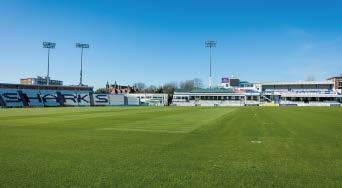
Did you know, the ground offers excellent hospitality and hosts a variety of events in addition to cricket matches?
Hospitality at Sussex County Cricket Ground: This includes the provision of various hospitality packages for spectators looking to enhance their match-day experience. These hospitality options may include private boxes, premium seating areas, and exclusive lounges with excellent views of the cricket action. Guests availing these packages often enjoy a range of benefits, such as complimentary refreshments, a dedicated host or hostess, and access to exclusive facilities.
The hospitality offerings at Sussex County Cricket Ground cater to different preferences and group sizes, making it an ideal choice for corporate events, private celebrations, or a day out with friends and family.
Events at Sussex County Cricket Ground: Apart from cricket matches, the venue hosts a diverse range of events throughout the year. These events may include music concerts, charity fundraisers, outdoor festivals, and other sporting events.
Music Concerts: The cricket ground occasionally hosts live music concerts featuring popular artists and bands. These concerts attract music lovers from the region and beyond, providing a unique setting for enjoying live
performances. Most recently seeing the Who take to the stage.
Charity Fundraisers: Sussex County Cricket Ground often collaborates with charitable organisations to host fundraising events. These events leverage the popularity of cricket and the venue to raise funds for various worthy causes.
Outdoor Festivals: The expansive space at the cricket ground makes it a suitable venue for outdoor festivals and community events. These festivals may include food and drink fairs, cultural celebrations, or family-friendly activities.
To find out more about what’s on at the ground, visit https://sussexcricket.co.uk/
Pictures: Stephen Lawrence
54 www.sussexbusinessgroup.co.uk
Lifestyle
LIFESTYLE SPONSOR



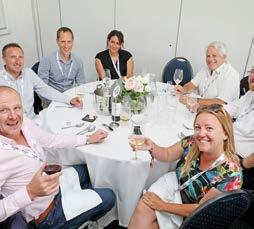

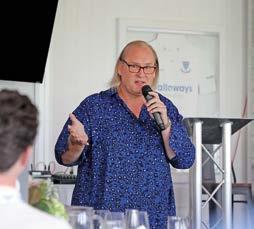
www.sussexbusinessgroup.co.uk 55 LIFESTYLE SPONSOR
A true Greek collaboration for Brighton
Nostos, Little Jasmine Therapies and Spa and Simply Urban are thrilled to announce a collaboration with award-winning fashion designer Konstaninos Tsigaros.
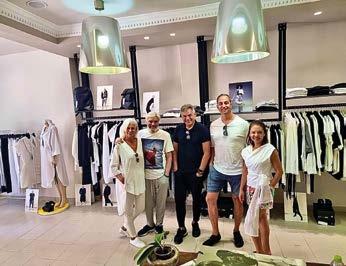
Announcing the new collaboration, cofounder and managing director Kyriakos Baxevanis said it was an ‘exciting’ project - not just for him and his family but for Brighton too.
“Konstantinos’ work over the last 20plus years in the fashion industry has been spectacular. k7 is a fairly new project that perfectly aligns with our principles of sustainability, environment and inclusiveness,” he said.
“Our staff at Little Jasmine Therapies and Spa, Simply Urban and Nostos will be donning his latest designs, exhibiting his eco-friendly and gender-free line.
“His latest clothes line, k7, will also be available for retail in Brighton through Nostos! We instantly felt that his clothes are “made for Brighton” and that they will be greatly appreciated.
The feedback we’ve received talking to various industry insiders has been overwhelmingly positive.”
Kyriakos added: “k7 Konstantinos Tsigaros was launched in autumn 2020. Already in its third season, the fashion line has participated in many national and international fairs, standing out for its quality and design, as well as its ethics in sustainability. Is a slow fashion, eco-friendly and gender free line. All the clothes are designed on avatars and they use eco-friendly textiles.”
Konstantinos says of his creations: “Our designs are versatile, allowing you to mix and match pieces to create your own unique look. Our collections are made with attention to detail and a commitment to sustainability so you can feel good about your purchase ”
About the fashion line : k7 Konstantinos Tsigaros latest gender-
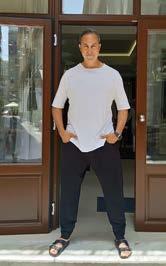
neutral collection is where minimalism meets fashion as less is more.
“Minimalism is the essence of style. The K7 fashion line focuses on clean lines, neutral colors and high-quality fabrics to create timeless pieces that transcend gender boundaries,” the designer says.
Konstantinos Tsigaros believes that fashion should be all-inclusive and accessible to everyone. The ethos of the collection centres around minimalism, with a careful consideration of sustainability. Each piece has been meticulously crafted with attention to detail, ensuring the brand’s commitment to sustainability.
https://www.konstantinostsigaros.gr/
https://www.konstantinostsigaros.gr/ bebuilder-813/
https://www.
k7konstantinostsigarosgallery.com/
56 www.sussexbusinessgroup.co.uk LIFESTYLE SPONSOR
Lifestyle





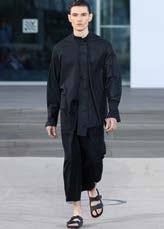
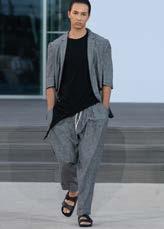


www.sussexbusinessgroup.co.uk 57 LIFESTYLE SPONSOR
County Business Clubs’ Wine of the Month August 2023
Upperton Nebula English Sparkling Brut 2021


This month’s Wine of the Month comes from Upperton Vineyard which is in the shadow of the South Downs National Park near the village of Petworth in West Sussex.
Upperton was one of the first English vineyards I ever tried over 10 years ago. In fact I still have a bottle from that first visit in the cellar, hidden somewhere. The owner Andy Rogers is in the same cellar door tendering his wines. There is a nice air of relaxation from Andy and his vineyard, this is probably down to the fact that he is now semi-retired. I find the same wines but new vintages. There is something nice about visiting a vineyard that was part of your introduction to English wines, it feels like coming home or putting on a comfortable hoodie. We spent over an hour tasting his wines with a little dash of my spirits, exchanging funny stories on English wine and the characters within it.
About the Upperton’s wines
I tried all four of Andy’s wines, which varied in age from 2019 to 2021 vintage and have tastes to suit most palate;
1. Alia - We make Alia solely from Chardonnay grapes that are given time to reach their full potential before we harvest them. This ensures that Alia will mature into a truly distinctive ‘blanc de blanc’.
2. Nebula - is a meticulous blend of our Pinot Noir, Pinot Meunier and Chardonnay, creating a wine with rich fruit flavours, power and finesse.
3. Aurora - The imposing strength of Chardonnay is matched by the deep, rich qualities of Pinot Noir and complemented by the soft, gentle warmth of Pinot Meunier.
4. Tenebris is born from our superlative Pinot grapes which envelope our exceptional south facing slopes. Being pressed from the black sparkling wine grapes Pinot Noir and Pinot Meunier.
Michael’s choice and comments on Nebula
The wine I have chosen from the above is the Nebula which is a young vibrant sparkling wine which has a great freshness and balance. Very easy to drink and great with food!

Pale gold colour with hints of pink. Fruit on the nose, with apple and peach dominant and aromas of brioche. Palate is crisp, with green apple and citrus notes and a full, refreshing finish. Considerable finesse. Excellent quality English sparkler made with Pinot Noir and Pinot Meunier and Chardonnay.
This wine retails at £29.50 a bottle and can be purchased directly from the vineyard https://www. uppertonvineyards.co.uk/the-wines/ You can also book a tour of their vineyard and tasting with stunning views, so book in online for this.
Written for County Business Club
by Michael Yeoman, English Wine Specialist and producer of Spirit of the Downs, award-winning local artisan Brandies and Grape spirit.
58 www.sussexbusinessgroup.co.uk
Comment from the winemaker’s Tom and Simon
WINE OF THE MONTH SPONSOR

Get your tickers now for the rockinghorse bonfire quiz
2 november 7.3o-1o.3opm 1st central county
to get your tickets, visit our website at rockinghorse.org.uk
the qr code
thursday
ground hove
or click
below










D R I N K S O N 3 C O U R S E T H E S E A R C H S E V E N Charity Ball A N E V E N I N G T O C E L E B R A T E R A I S I N G £ 1 0 0 , 0 0 0 F O R C H A R I T Y