19 3s
USA 60c. DENMARK 3Kr. HOLLAND 2G. GERMANY 1.8 DM:
OZ talks to DR G the only groupie with a Ph.D in captivity. —
Why the Press Council is a dangerous hoax. Why Portugal the poorest country in Europe has a defence budget second only to the United States. —
—
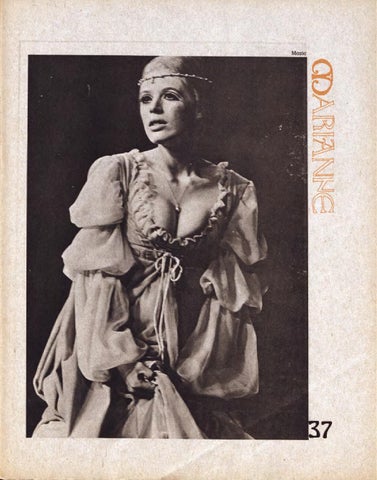
What the man who discovered that cannabis is non addictive said to Caroline Coon. Millions are starving...Millions of pounds worth of food is dumped each year. Why? You've never seen Ophelia looking like Marianne Faithful looking like this. Led Zeppelin...Murray Roman...Everly Brothers...The Incredible String Band ...Two Virgins...BOB DYLAN For those who find OZ hard to read this issue is the next best thing to braille.
LONDON OZ is published monthly by OZ Publications Ink Ltd, 52 Princedale Road, London, W11. Phone: 229 7541. Directors: Richard Neville, Andrew Fisher. Iditor: Richard Neville Design: Jon Goodchild, Virginia. Writers: Andrew Fisher, Ray Durgnat, Germaine, David Widgery, Angelo Quattrocchi, Fletcher Watkins. Stozic: Felix Dennis. Research: Jim Anderson. Artists: Martin Martin Sharp, Bob Hook, John Hurford, Womack, Phillipe von•Mora Photography: Keith Morris. Advertising: Felix Dennis. Pushers: Louise Ferrier, Brigid Harrison, Cosi Pavalko. Lyn Richards. Typesetting: Papyrotype. Distribution:Britain loverground) Moore-Harness Ltd, 11 Lever Street, London, EC1. Phone: CLE 4882. (Underground) ECAL, 22 Betterton Street, London, WC2. Phone TEM 8606. Transmutation. Guildford 65694. California: Rattner Distributors, 2428 McGee St, Berkley, Calif. 94703. Holland: Thomas Rap, Regulierdwarstraat 91, Amsterdam, Tel: 020-227065 Denmark: George Streeton, The Underground, Larsbjorn straede 13, Copenhagen K. Printed by: UZ Publications Ink Ltd,
if NEW YORK:Lower East Side types all disclaiming knowledge of where the several thousand neatly-rolled joints came from the ones that arrived in New York • es on St Valentine's Day accompanied by a irt-encircled fact sheet which declared that irihuana is not habit-forming any more than are iiie movies' despite the 200,000 arrests for possession ►,1st year. The Ononymous donors promised that more tits would be sent out Mother's Day 'to persons -cted from the phone books.' Yippie Abbie ffrnan, sometime spokesman for the Tompkins uare community, says: 'Wish we knew who did it; never got any. My theory is that it's the American ,bacco company. They know that with all this pressure on tobacco that cigarettes will be declared "'egal soon. They've already registered names like apulco Gold and Panama Red and now they're king around for ways to test new products.' Ford's Theatre in Washington spent thousands on tailing hard-bottomed seats, replicas of those in the theatre when Lincoln was shot-, only to discover (after complaints from patrons) that asses are apparently not the same shape today. Red velvet cushions have been ordered . DC's radical newsletter Mayday (now seeking suggestions for a new mime because Mayday ,has been previously copyrighted) says the Federal government is growing marihuana for "testing" "irposes on Senator James Eastland's Mississippi Senators Albert Gore and Everett Dirksen are m iding over whether the, iris (Gore's choice) or the rigold should be proclaimed the national flower. The men's john in the .anwhile, Rome burns No preme Court building dispenses watered soap ..vs is Agnew. Everybody's into the movie thing these days with .hniques often getting more attention than the actual utent. Montage or collage films, for example, Aping up on all sides with various methods aimed at same results. Two projectors with different films nbine beautifully on one screen (Warhol ?etc) but can also get, the same effect in the processing (as in Chamberlain does in his "Secret Life of Hernando ,rtes"). And you can even do it in the camera by vinding the film back to a certain point and double oosing as you shoot a different scene over the first. Seeman specializes in this method with his •id-blowing Frank Zapppa footage (now being edited Zappa for release in the spring). Chamberlain, by way, has also screened a color movie called 'Wide int' which displays fragmentary scenes and images seven enormous screens at once. Fascinating to in how much more one's eyes can be forced to ,orb simultaneously. Then there are the Maysles others whose latest epic is about a team of 'le-salesmen touring the south, making their pitch at ne gruesomely suburban homes. The Maysles —
.
,
.
.
.
.
.
.
.
.
.
.
.
ose everybody gets used to you and you end up with fit as close to real-life as you can get. In the case of the "Salesman" it works marvellously. Universities were described as "mere trade scoop for the military-industrial complex" by California delegates to a recent Peace & Freedom party conference at Venice. Committees were set up to study lowering the voting age, institute free public tranportation and change the present penal system Charter flights to Africa for $450 roundtrip are being organised by Jimi Daniel, 1833 New Hampshire Ave NW, Washington DC 20009 The NY Post and other straight papers around the country are currently on a sobstory kick interviews with the families of slaughtered GIs who invariably 'didn't want to go to Vietnam'. Presumably the reporters didn't think it cool to ask the obvious question, 'Then why did you let him go?' And none of the stories chooses to make the point that if a kid willingly goes off to a foreign country to kill complete strangers without asking 'Why?', then neither he nor his family has any kick coming if he doesn't come back "Poems are too siititual for Americans" (Greenfeel a commune magazine, 25t from. Box 1037, Carmel, Calif. 93921). The California firm, Computicket Corp, that's replacing those old-fashioned gaudy-colored theatre tickets with a standard computer-punched one, book European theatre tickets within seconds Nixon's foodtaster is stoned most of the time Bantam Books offers to pay expenses involved in setting up press conferences between its author and college newspaper editors Why does Douglas Fairbanks call himself 'Junior'? Does he still see himself as a child? What may have killed Ramparts was its hang-up on glossy paper, full-color photographs, general extravagence. Ramparts, top brass threw money around from the beginning like a drunken sailor; on that budget almost any competent newsman could have kept the mag going for at'ieast four times as long. Ramparts' problem was that it always had more money than experience (or commonsense) as became only too sadly clear when they had SF virtually to themselves during the newspaper strike and filled the gap with a subcollegiate tabloid that nobody bothered to buy or read William Buckley's rightwing National Review gave a glowing testimonial to Boston's Avatar which, unlike most undergrounds says NR writer,4nthony Dolan, is 'patriotic' Sad that Bill Graham's Fillmore had to go the slickpaper route with his pocket-size program tha t looks like a replica of Broadway's Playbill. It could have been a creative product. But then one sees all the ads (20 out of 24 pages) and remembers that friendly Bill Graham isn't in this business to be creative, right? Courses on belly-dancing, medical aspects of drugs, gourmet cooking, rock music, stained glass art, witchcraft and communal living are offered by SF's Heliotrope (Free University) which adds that courses 'generally take place in the warmth and comfort of the instructors home but they may meet at the beach, or in a tree' .. .
.
—
.
.
.
.
.
.
.
.
.
.
.
.
.
.
.
.
.
.
.
.
to discuss things or even help if I can. I wish OZ all the best. Agnes Diannent Commite d'action de langues Sorbonne/lensier. U.S
Dear OZ I belong to a `commite d'action' at the Sorbonne and we -were all upset to read: "Unmask a teacher, you'll find a copper" (Angelo Quattrrochi — OZ Feb 69). The other day, 200 teachers occupied the Sorbonne to protest against repression and students being sent to the army because of their political action. Most teachers want revolution; its obvious, as during our active strike; we interrupted some lectures to explain this strike, and most teachers didn't object — though some students did. Also, I don't like this RMS idea if those people talk of "Professionals" or of "part-time Revolutionary Militant Student". Revolution is not a new
game or fashion — it's very serious, and if one really believes in it, anything he does or says is revolution. I was quite upset too to read the French addresses given by the RMS at the moment, only the "commites d'action"can be powerful as they unite all revolutionary tendencies. And we're precisely trying to get rid of the PSU and other Unions, because of all they do is make a lot of publicity — even abroad, as OZ print it for their own little pointless Unions — Unions have proved to be useless before May. May was an action of the masses (and not of the Unions) and Unions like those mentioned in OZ won't make a revolution. If Angelo Quattrrochi or anybody from OZ is still in Paris, I'd like to meet this person as I quite like OZ '(except what I mentioned) and I'd like
'Why wait till you're 40 to head up your own company? live r future, mut decision...choose
ARMY (WS
Dear Oz, What is happening.? What's with all this violence? These Poor Bastards are sick. Let's stop now before these phoney cunts blow the whole scene. Everybody knows that a social Revolution is just underway. Our attitudes have changed radically in the last 5 years. More sweeping changes are yet to come. Grass will win the day we hope we have the control to achieve the aim's of most. A peaceful society. A love community. Naked and unafraid: 'What do the petrol bomb mob want, Stalin!? A policed state. That's great for the States. They're that already. What do they want in the words of the Prophet? Fuck knows! If they want to kick shit in the face of the establishment, there are nicer ways. In the spring when the gardens are reborn lets go out into the streets Naked. Make love in the streets. On Buses in Trains. Fuck in the Parks and Squares. Give flowers and grass to the fuzz. Lets do it in the road! Fuck for peace. You must agree its no more ridiculous than throwing molotov cocktails at policemen, and if its publicity that they're after they'll get it; look at the spread that the nude at the Albert Hall got, and John & Yoko. But please, don't lower yourselves to the violence that typifies the grey world that surrounds us. Don't imitate it like a bunch of sheep. Kids have got more sense. Let's have a revolution by all means but lets not act as sick as the rest of the Alf's. Dear Harold & Papa God Nixon included. I hope somebody feels the same and rewrites this better than I have. Love Pete
Sir, It has come to my notice that a disgusting and pornographic publication called OZ is being mailed to this address. Take notice, that under no circumstances are any further copies of this filth to be delivered to my daughter at this or any other address. L A Bidmead 46 Onslow Road, Burwood Park, Walton-on-Thames, Surrey. Comrades: I dont know where comrade Buckman got his information on Anarchism,— from the columns of the "Guardian" perhaps, being charitable. Malatesta defined anarchism as "Society organised without Authority" In what respects could that differ from "counter-authoritarian society? On the charge that "Their beliefs are based ... on everyone being members of a community able to sustain itself without rules" I would reply, firstly, that this differs not at all in essence from his own concept of autonomous communities (unless by revolutionary state he means revolutionary Stage, which is particularly a contradiction in terms). Secondly, it is not necessary to overthrow the State before carrying out liberation activities. Counter-authoritarian activities can be carried out here and now by anarchist and liberation groups. The East London Libertarians , active in the London Squatters Campaign (and elsewhere) are a case in point. It is possible that some such libertarian groupings could act as base-units for Comrade Buckman's autonomous communities, co-operating and helping each other on "Mutual Aid" — for, as he himself admits, "If [the individual] steps too far out of line the system will clobber him" Collective action is necessary in Leftie jargon — its called "Solidarity". He further accuses the anarchists of "imposing" their system on those "unwilling to accept it". Yet he regards the Left generally as potential allies — and is thus put in the position of singling out for authoritarianism precisely the one tendency of the Left. which is uncompromisingly counter-authoritarian, and enlisting the aid of groups whose belief in Authority is complete, (as long as they have the authority). They are also dogmatic, despite comrade Buckmans ideas about them — the S.L.L. and certain Maoist groups are notable in this respect. As to the Corrara Congress; perhaps I should quote 'Freedom% "after all old revolutionary movements there is
alWayl 'a' tesitlu of the old taithtul
the main things it opposes! By doing
who have come to regard themselves an establishment." There was a division between those whp wanted an institutionalised adherence to a doctrine, and those, who wanted freedom of revolutionary action. The British delegate indeed opposed 'the idea of national delegations, as accepting those "bourgeois concepts which destroy the roots of international revolutionary solidarity" (Freedom, 21-9-68)Many of comrade Buckman's concepts are unclear — I would presume that by "discipline" he means self-discipline (as opposed to externally imposed rules of behaviour) — an essential in all anarchist thought. But what does he mean by "organisation"? Too many people on the Left equator organisation with bureaucracy, ennobling them on the one hand to justify their own bureaucratic excesses as "organisation," while condemning the anti-bureaucratic anarchists as being, therefore, anti-organisation. Iwould agree on the inadvisability of merely "dropping out" in the purely. emotional involvement of the "hippie". Quite apart from such an action's impotence in the face of repression, such involvement without a defensive basis of theory, can be dangerous (Hitters adaptation of the "Wandervogel" of the twenties to become the Hilterjugend of the thirties, and the Mahirishi Mahesh Yogi, are two cases to think about). Finally, while agreeing whoheartedly on the inappropriatness of Third World models, Ishould like to end with a quotation from the "Red Book" (CH.26) 1. The individual is subordinate to the organisation 2. The minority is subordinate to the majority 3. The lower level is subordinate to the higher level 4. The entire membership is subordinate to the Central Committee So much for the questioning of authority implied in the red-book waving Red Guards (although the situation in China is complex). Those who would ally themselves with British Maoists, please note. Fraternally, Mike Don
that we would be indistinguishable from warmongers who say in order to have peace there must be a war. The whole idea of drop out city is beautiful, but free meals, never, someone has to pay for them in a place like the smoke. Why not take over a deserted stretch of coast line and make shelters of branches or driftwood, grow all necessary food and all excess trade for things that Mother Nature doesn't provide, only then could it be a moneyless society. Love to those who want or need it. Tiesse.
•
'
Oz Baby, It seems really sad to me that in order to create Drop out city, (Pouts letter Oz 18) the method suggested involved founding it with bread derived from shows etc. surely this is just bloody hypocritical. How the hell can any society be justified when its founded by one of
•
I'm really just sitting here listening to Bobbie Dylan. I had a friend called Keith, he wrote a poem called 'Bob Dylan My Idol'. This was to be a lengthy piece ... no, piece, of writing, but well now I just don't know. Bob Dylan's pretty good, some of lyrics really screw me up, I think he's a druggie, I also think, no believe he's a horse addict. I wish Ihad an object in life but I have'nt it doesn't really matter suppose. This is rather meaningless I know, but, well, I just a meaningless guy, sorry. I was going to end there well you know how it is.
Dedicated To No Alan Hunter
One
Sorry
Dear OZ,
The reproduction of Eugene Schoenfeld's proclivitites in OZ 17 could only be dismissed as iniquitous filth. Pages like this no doubt create pretentiousness, perhaps necessary for such a publication but this issue did not in anyway compare with the Sharp-Von Mora tacit well implied "Magic Theatre." Jeremy Hinds, Manchester 10. '
Dear Oz, Smash capitalism, violence, corruptness, stagnation, injustice, they all cry. And how are they going to do it? With violence, hash, acid, and their own form of injustice, intolerance. Policeman, nice guy, no harmful whims what to do? Kick him in the face, belly, anywhere, call him fuzz. Yes. Trample on all who are in the way, no clear sight here. My dear God. How many must be hurt by the herd with warped ideals, before somebody sees the light. BN. Dear Friends, was a little surprised by the criticism of David Ramsey Steeles' Smash Cash article. Anyone who works with money will realise the amazing amount of trouble cash in all its various forms can cause. In the past month the following things have effectively loused things up for me. (I am a salesman in an Electricity Show room). First of all a guy walked in complaining about getting a letter demanding that he pay two outstanding HP payments on his refrigerator. He said he'd paid them. The following day he was in again with 38 pieces of paper which were receipts for each of his HP payments. Checking through these I discovered he was in fact one short, and another receipt was invalid because it had not been machine printed through the shops till machine. This receipt had however been written out by me and I saw it as my responsibility, so on the spur of the moment I decided to offer to pay the payment in place of the invalid receipt. My charitable action however was not seen as such by our head office, and the following week one of my numerous superiors appeared with an accountant. I then found myself on the carpet — for offering to pay the money in myself — it was then suggested that at an earlier date I had accepted the money fron this guy, for myself by not making a permanant record of it by stamping the guy's receipt form. They then suggested that I had virtually confessed my crime by offering to pay the money in myself, at this later date. The whole thing is now I think cleared up, though I'm assured any further anomalies concerning my cash will be considered along with this one at a future date. And as you can imagine I'm sick to death of the whole money thing, I'm not employed as a cashier anyway, but due to staff shortages Ihave to look after as much as £500 a day. And further more I can work like hell all day, and all I have to show at the end is a pile of bits of paper I'd like to leave now and see if I can get .a less frustrating — and dangerous job, but if I leave now I imagine I'll get a lousy reference, so all I can do is stop on in the hope of being lucky and keeping on the right sides of the twisted valves of the land. I was going to give you a list of
some of the other problems I've had with money recently in the hope of showing what a stupid system the whole currency thing is however the final comment I will make is this one. There is plenty for all, at least in this country. Only money allows so few to have much more than their fair share, and I find only when people are very hard. will they bug and get something that isn't theirs. Love to all from the centre of a stupid battle of great sadness and bewilderment. Terry Kidd.
Road pubs with us and our discontents, which are legion, and forget for a moment the plush Common Rooms and effete Satirical Clubs of the University, where more hot air is dispersed nightly than in the Mill Road Public Baths? Yours fraternally,
Dear Editor, Isn't this just the time for Clive James (wind up Black Dwarfs, Oz, Feb. 69) to realise that sometimes, just occasionally, we dull, classic members of the British working class master the intellectual strength to digest his brilliantly reasoned column in Oz, and sometimes, just occasionally, have the impertinence to disagree with him? 'Britain is an inherently pluralist society.' Thank you for the information. Tell us of a society which is not. He talks of the 'anti-intellectual revolution'. Now then, Clive, principle down a bit here. The revolution only seems anti-intellectual to you, because you obviously see intellect as an entity valuable entirely in its own right with no necessary relevance to anything except itself. No intellect, not even our stunted working man Socialist tradition, even developed without something into which first to get its teeth. Give any man a steak and he will chew it. To be anti-intellectual now is the healthiest attitude a thinking man can have. Try to understand the real intellect of the historically hard-bitten century-old grass roots mostly uneducated international left and you will be helping your own brilliance to perhaps develop a little further. Does the 'classic Left' have 'only objective intellectual enemies'? Well, to be brief, the present student struggles are directly relevant to chipping away once again at our old enemies — the blind, selfish, albeit "civilised" councillors, politicians, financiers, businessmen, soldiers and all other heads of men who, once they have succeeded in grabbing something from the rest of us, wish to make bloody sure we don't ever get it back. And if all that Guss of Germany, Pasolini of Italy and James of Great Britain (or is it Australia?) can see as enemies of the revolution are their fellow-intellectuals, then you must be in an extremely fortunate, secure, well-heeled and blissful situation, and I wish you good luck. So, Mr. James, please continue to delight us with your frolics, thereby making an Emerald Isle, I assure you, even more cultured and civilised than it already may be. However, seeing that we both have the pleasure of living in the same nauseating, over-civilised city, may I recommend you to spend the odd evening out in the Newmarket
Sir/Madam, I don't have any money, but I have more sense than to eat the sort of food
•
.
Stuart Clucas, (Vice-chairman, Cambridge University Branch of the National Union of Public Employees) 13 Fair Street Cambridge.
recommended in your feature, 'Poverty Cooking'. On a diet of recipes like Beggars Stew, Cracked Egg Omelette, or Ballsed Up Bolognese, I would remain poor, physically, and spiritually, as well as materially, all my life. Being without money is often unavoidable, perhaps even laudable, but there is absolutely no need to eat ,poorly. 'Poverty cooking', no matter what variety of recipes turns up in subsequent issues, is wrongly 'conceived. Cheap, no doubt, beggars stew is. Delicious it may be (in a idegraded •sense — but this sort of concoction is ten times more delicious if it is made ten times more expensively) but these are hardly the two most important criteria. Is it rich in protein? Is it good for you? and the answer is of course, no. About as good for you as a meal you might buy in a Wimp/ Bar of a Golden egg or any other cheap restaurant chain in London — nutritive value, nil. Just platefuls of shit for those at the bottom of the heap. Shit to give you. bad skin, bad breath, constipation, piles', baldness, and generally to keep you running along at about half pressure. The droppings from the Fat Honky's table. Tenth rate imitations of some of the gastronomic delights of western cuisine. A cuisine which is thoroughly decadent anyway. An attitude to food which by ignoring the nature of man and what is good for him, and concentrating on appearance and taste, has most of its adherents diseased in some way by the time they are forty. The average life span in the west is about sixty five. For this longevity, of which it is so proud western civilisation relies not on the sensibility of its dietary habits, but on the brilliance of its surgeons, and the dubious efficacy of its drugs. That is the best that can be expected — and 'poverty cooking' represent that same attitude at its very worst. On beggars stew, life will be very short and very unhappy. Racked by disorders, both psychological and physical, you will be an easy prey for the vultures of capitalism and the overground. Don't beg, don't scrounge cracked eggs from Sainsbury's don't buy cheap spaghetti from cheap supermarkets, OPT OUT. Don't let your lack of bread turn the
getting of enough food into a middle class hang-up. Revolutionise your whole philosophy of eating — you are what you eat. Brown rice, fresh vegetables in small quantities are what you should start with; make every day a trip, spend less, go macrobiotic. Macrobiotics is simple intelligence, common sense and natural foods. The authors of your column should read up on the theory of yin and yang before digging deeper into the garbage can. Roast Trafalgar Square pigeon might, just might, be OK, but you would probably be better off eating the 6d carton of grain. Doses of strontium-90 all round. Richard O'Sullivan 5-7 Earlham St London WC2
'
,
Dear OZ, Sprats yes. But why potatoes and spaghetti? Cheap food can be
nourishing For instance, MUESLI can be made for under 2s. per pound as compared to 6s for a packaged brand. It contains oats, 2/6 2lbs; millet, 3/6 lb; whcatgerm, 2/- lb; barley kernels, 1/6; soya flour; nuts; Sainsburys walnut pieces are 1/5; sultanas 1 lb, 2/2; sea salt. It can be made as a porridge as normal. Or, with milk and fruit, There are endless cheap combinations. Vegetable soups are also very nourishing. Winter vegetables: carrots, onions, turnips, parsnips, cabbages, leeks, swedes, sprouts all combine well. Heat up thicken with soya flour of wholemeal; garnish with cheese. With wholemeal bread this is a good meal. You can make enough for 8 for about 5s bread inclusive. Lentil broth is another good stand by. Lentils cost about 2s per lb, simply soak overnight heat up, flavour with herbs. If your real interest lies in helping folk buy and cat cheap and nourishing food, why not put people in touch with wholesalers, or open a distribution centre for goods at almost wholesale prices, thereby avoiding food manufacturers con. By buying wholesale you can save from 15 to 50%. Cereals and vegetables are the cheapest foods. Yours, Anthony Lovell, UEA, Norwich.
could to help Winfred, as I was escorted out of the country by a Police Inspector. Maybe if you sent somebody who looks a bit straight just to be sure that his stuff is removed.. 'don't go yourself, you are sure to be arrested, they only ask to see your Passport, and that's enough. You may think I'm raving a bit, but believe me I have good cause to, I wonder that I . didn't go completely crazy. Good luck again, Sandy On the boat Ceuta Algeciras. Sandy is in London now. In Rabat the British vice-consulasked him towarn 'hippietravellers' that Moroccan pipe dream daysare.-over.Thecountry is being cleaned up fortourists.
Those who ploughed through the typist's idiosyncracies in my report from Marrakech last month may recall Lee, a charismatic International hippie consul who gives freely his love, food and accommodation to those passing through. On Feb 24, he sent me this message through a friend: "... enclosed with this letter is a witnessed copy of a letter I received from Sandy Stephenson, the kilted Scot you met in Marrakech. It sounds only too authentic. We do not know what is happening to his friend Winfred . Hanck, aged 22-23, but fear he might . be in the same position ... Cops are roaming around Marrakech stamping passports, controlling visas and the like, being very unpleasant to those who don't have any. Like Lee, Roy, Inger and a few others ...". This is the letter enclosed with Lee's message: 'Dear Lee, Winfred got busted yesterday, and I got busted about 3 or 4 weeks ago. I had 350 grams hash in my room and they came and searched my room and found it. I've been living in pure hell for those 3-4 weeks, and now I'm deported and repatriated. They decided right away that I was selling stuff and not smoking it as I told them, and to make me admit it, they tied my hands and feet and hoisted me on a length of steel scaffold between two desks and let me hang there by my arms and legs, they took my shoes and socks off and whipped the soles of my feet with a cowhide whip, they also tied a towel around my head and poured water onto it over my mouth and nose, this went on for half an hour every morning and afternoon for 3 days, while they shouted at me "you were selling it weren't you". I managed somehow to keep from admitting that, don't ask me how. I am 26 years old, and it's the first time I've cried I think since I was 10. I was thrown into a cell about 10 ft squ.
with 11 other people and a toilet, we had to lie on top of each other all night, and were eaten alive by lice. I am going to write to Time Magazine about it and will send you a copy when I do. Winfred had '/2 kilo of stuff in his sleeping bag, and I managed to pass a message on to my friend in Rabat to remove it, he promised to do so this morning, so I hope he has. My advice to you right now is to get out of Morocco as soon as possible, as my Consul tells me they are arresting people all over the country, about 30 were deported from Agadir recently. I realize you have no passport, and if you know of any way I can help you write and let me know. I will be living in London. My sentence was one month imprisonment suspended sentence and as they knew I had 250 DH (ÂŁ2-18) they fined me that, but that wasn't the end of my troubles. The Prosecutor for the King wasn't satisfied, and wanted to keep me in prison for another 3 months for another trial, and was going to give me two years. That's what I think Winfred will get if they find the stuff. I don't advise you to go and try to see him, because they will arrest you too, and no matter what you tell them, they won't believe it, and will not make any enquiries about it either. They decide what they will charge you with, and torture you until you admit it. Then if you don't admit it, they write out your confession and make you sign it anyway. They said in mine that I bought a little to smoke and the rest was for sale. To see Winfred in prison, you have to go and get special permission from the Tribunal, and they really HATE Hippies, so don't do It man, you might fuck it up for him. Don't forget to write if I can help you in any way. I did all .
STOP PRESS: An organisation called KK has just been formed byTom Cartwright (who wasbusted with Neal Philipsin Greece) with theco-operation of Release and Bit.It has three mainpurposes:- 1. To helpthose doingtimeor awaitingtrial bysending bread,books,clothes,etc. and providing legal advice: 2.To collect information on busts, severity of sentencesand prison conditions, to publicise such information and bring pressure to bearwhere necessary. 3. To act asanassociation comprising of bust-survivors, their friends and helpers, which will be a morale booster for those in jail. Anyone who can help with information, bread, clothes, books, letters or visits to prisoners, contact KK, Release Office, 50a Princedale Road, London, W.11. Tel: 01-229 7753. Abbie Hoffman's 'Revolution for the Hell of It' is the most important book yet to emerge, or rather, leap out of the Underground. Along with Paul Krassner (of the Realist) and Jerry Rubin (Of the Berkeley Free Speech Movement), Hoffman was a founder freak of Yippie! (Youth International Par ty, see 0 Z 10)- the anti-organisation which invented Chicago. This acid gamester is an intuitively brilliant media tactician, a tireless psychic guerilla and a profound dialectician of now style politics: 'Political irrelevance is more effective than political relevance ...Abe-in is an emotional Unitpd Nations.... If you want to begin to understand our culture you can start by cornIparing Frank Sinatra and the Beatles. The Viet Cong attacking the U.S.' Embassy in Saigon is a work of art there is no programme — a programmewouldmake ourmovement sterile'. Revolution for the Hell of It (written in three amphetamine days) is an epigrammanifesto for the only revolution possible in an age where there 'arc no more political solutions, only technological ones ... all the rest is propaganda' (Jacques Ellul), and as .
.
.
.
"
\,\
■
"
/// ,/j/,
•
\~OUGHTA II'OBVIOUSLY 1/1/0"7,','"ile,
IN EY CUTI E!
0+11073E/ I WANNIFI
Th0.4 rb YOU!
PLIPC—PANIT.•• SIGH—A NOTIE42_ FAILURE -CoUGN ,.. SPLUr. MY SEX LIFE SURE- 1.3 A MESS!,
Sick, AM 1 ? HA 1-4A...YoU'u_ FIND ovr plow,..HEM NOG"SICK" I AM! M'l.'
sucn is a total repudiation of New Lett political beauticians and their hoary Marxist utensils. His strategy I would call the Politics of Play, a concept which, along with his book, I hope to discuss in the next OZ. (Revolution for the Hell of it. Dial Press Inc, 750 Third Ave, New York, NY 10017; $1.95 .. some extracts appeared in IT 51). .
OZ urgently requires an amazing comic-strip artist. Send samples of your work to 52 Princedale Itoad,W11 for Jon Goodchild, or contact- turn direct at 352 7258 (evenings). Some readers may have detected an improvement in the quality of this magazine. Those with broad tastes may also have noticed Zeta's catastrophic slump into a mire of witless incomprehensibility. These two events are not un-connected. Paul Lawson, once our assistant editor, left OZ some months ago for the bounteous pastures of London's most unnecessary tit magazine. We wish him luck. Piper Greene seeks 'reviews, articles, editorial or stray facts' on John Mayall: write to Box 193, Kerhonkson, NY 12446, New York. High school age, mindblow writings on drugs, revolution, life, arts, race, the generational war, ecology, etc, are being anthologised by Keith Lampe (of Yippie and Liberation Magazine) and David Herres (of Liberation and WIN Magazines). 'People whose things are accepted eventually will receive tiny loaves of bread floating slowly back.' Send to — 10th Floor, 5 Beeckman St, New York City, 10038. It is doubtful whether the abovementioned yippie editors could extract much revolution from UK students, let alone schoolchildren, if a survey published in the latest issue of Sennet, the University of London Union newspaper, is to be taken as a guide. Sennet (Feb 26) has completed a survey of almost one thousand students, which they say is an accurate mirror of opinion at England's largest university. 'If Parliament were to be elected to-day', 32% of students would vote conservative, 30% Labour, 16% Liberal, although they would prefer Harold Wilson as Prime Minister. 41% are satisfied with the present political system, and 60% have changed their views since attending university. Of these 60%, 30% have shifted to the right. The survey concludes that students are 'parochial and insular.'After reading Sennet, Icame to the same conclusion — not about students, but about student editors. Why are British student papers so bad? Most of them look like trade journals for the asbestos industry. Even the best of them slavishly imitate traditional newspaper lay-out styles (bold intro pars, justified type, column heads etc). The prose is plank Fleet Street, the issues stubbornly provincial. Student journalists droop with surprise when it
°,0 00040
is explained that their publications lack one single, distinctive or original feature (good or bad) and that they have somehow managed to resist the sweeping technical and aesthetic printing advancements which rendered their efforts obsolete twenty years ago. The editorial mood is coy, soporific, unchallenging. A- week after Ijoined a student paper in Australia in 1962, the editor called fot the Vice Chancellor to resign, published highly confidential and scandalous minutes of Senate meetings, exposed Security links with the administration and created an outcry that reverberated around the lecture halls and newspaper columns of every city in the country. In Australia! In 1962! A few years later the same newspaper (Tharunka, laugh, it's Aborigine for 'message stick') was prosecuted by the Sydney Vice-Squad for obscenity, and its editors fined. Meanwhile, the editor of a nearby student paper Honi Soit) campaigned for the abolition of the student union and the substitution of a student-wide anarchist commune. The British editor's stock answer to any suggestion that they should ease their publication into the nineteenth century is: Oh! The printer wouldn't let us do that. Change the printer. 'But' they say, recovering their composure, 'they've been printing us for 25 years. Change the printer. 'But he does it as a favour very cheaply', Cheaply and badly. Change the printer, improve quality, boost circulation and advertising revenue. Oh yes, advertising. For all their demolition of iron gates, students are only too meek before the insane restrictions of bucholic agency hacks who even dictate the position of their hideous pieces of 'College Scarves' art work, (often on the front page). Most of the papers are printed on collapsing letterpresses and could easily be transferred to any of the numerous sheet-fed offset machines which at half the price, are hungry to print these uncontroversial parish rags. Pages could then be designed totally by students, like paintings or even sculptures, instead of left to molten-lead robots. No-one wants the papers to imitate OZ, merely to develop their own personality, like the 100 members of the Underground Press Syndicate, which share a family resemblance yet exhibit individual variations. Typically, few of the students have ever heard of the UPS or of such famous pioneering tabloids as Other Scenes, East Village Other, or the Berkeley Barb. The editors of the Buffalo Chip, from Omaha Nebraska, were in London recently. They produce a 20 page tabloid for £150 an issue and often set their type on nothing more sophisticated than an Olivetti portable. Their only two advertisers withdrew after being threatened with violence by outraged Nebraskans. Their brave and
fiery little tabloid makes Cherwell and Varsity seem like the prose prostitute's training-beds they really are. Student.. editors seem completely ignorant of the world-wide proliferation of Underground alternative publications which, from Dallas (Notes) to Zagreb (Paradoks), from Wellington (Cock) to Saskatchewan (The Carillon) from even Curacao (Vito) to Bombay (Anti/Pro) are light-years ahead of the sad, trite, grey banalities of undergraduate role playing. Recently, when Iwas showing the staff of Sennet samples of these amateur, indigent and much harassed newspapers, they at least had the integrity to be embarrased. But one of them asked plaintively, as she inspected the world's most beautiful newspaper, the San Francisco Oracle, 'WELL, suppose we did try and turn Sennet into something original. What would Fleet Street editors think? They might prefer Sennet like it is'. A question which reveals, Ithink, the reason for the contemptible standards of student publishing. We wish Private Eye goodluck with their libel fund and offer congratulations on their move to palatial three storey offices. Now the editors on the Wilton-carpeted top floor ring the secretaries on the cord-matted bottom floor for endless cups of tea , with which they scurry upstairs past the pleasant, always-on-the-verge-of-being-fired, Tony Rushton. -
The last Australian OZ was published in February. From its first issue (April Fools Day, 1963) Aust-OZ was a semi-digestible stew of satire, short stories, caricature, pertinent Hansard reprints, inside news and gossip. It was the only magazine to ever reveal the real cause for the unexpected resignation of Sydney's Archbishop Gough (who now presides over the smallest parish in Britain) and it once published a remarkable Guide to Sydney's Underworld with an accompanying pop Top Twenty chart of local hoods. (Unfortunately the latter precipated such a flood of underworld jealousy that there were several bashings and one near fatal gangland shooting). Regular outbursts of police atrocities were recorded under the title 'The stiff arm of the law' and a 'This month in censorship' feature was dropped as examples became too commonplace. The magazine exposed that sacred car, Holden, produced for Australia by General Motors (`At 60 miles an hour the only sound you can hear is the rust') the dishonesty of the press, the cowardice of the Australian Broadcasting Corporation and the abominable bellicosity, racialism and Rugby Club morality of th e Government. A Sydney magistrate, Gerald Locke, once ruled that 'the publication would deprave and corrupt young people or unhealthy minded adults so injudicious ,
SMALLS IF YOU SENT A SMALL AD TO US WITHIN THE LAST MONTH and it's not printed here then please ring or write to OZ at 52, Princedalc Road, London W11, where our embarrassed secretary will explain what she did with them. Our apologies to any of you who were inconvenienced. AMERICAN MUSICIAN, ex Butterfield Band, currently resident in Lond, seeks chick for 'name marriage' — to enable him to work and reside in UK. Box 19 (7) RELEASE office at 52, Princedale Road, W11. Holland Park Tube. Ring Office 229 7753. Emergency 603 8654. We sell OZ, IT, Peace News and Posters. Come and see us for legal or other advice. We need information about busts and irregular police behaviour etc. Ring us if you have, or want a room or flat to let. RELEASE needs your help — support us if you can.
SEND YOUR SMALL ADS TO OZ AT 52, PRINCEDALE ROAD, LONDON, W11 RATES:— 1/— PER WORD. BOX NOS. 3/— EXTRA. BOLD TYPE 6d EXTRA PER WORD
FORUM is a magazine about sex. About sexual behaviour, sexual problems, sexual happiness. 'A superbly human document destined to become the most powerful and controversial socio-sexual arbiter of our time.' Sold by subscription only. Send £3 for 12 issues to: FORUM dept 0, 170, !field Road, SW10
SUPERIOR MALE PHYSIQUE PHOTOS NEW MODELS! NEW SETS! Never Before Published.
GAY GORDON
Set of 4 Photos of Gordon In the sun for 10/-.
HUSKY KNIGHT
Young guy, do anything, anywhere, anytime, for bread. 01-675 0159 SUBSCRIBERS who sent in changed addresses during February please tell us again. There was chaos moving to our new office. Sorry. The number is 01-229 7541.
SET A 4 Superb Photos 10/SET B 8 Daring Photos 20/-
SPECIAL OFFER All 3 sets (16 Photos) for 36/-. Sent 5d post In plain sealed envelope. 7-day refund guarantee. ADULTS ONLY. Send Cheque/PO to J.D.S. Publications, Mortimer House, 13a Western Road, HOVE, Sussex.
LIGHT REMOVALS. DormDbiles with helpful, working drivers. GUL 8923 Taximoves. Please quote this advertisement.
IOW TO AC--I NE SEUL ECSTASY By Stephen Gregory. Sus published—a revolutionary new handbook of erotic technique that has sold over 100,000 copies inthe U.S. You'll want to read about: Beyond sexual infinity; Ultimate sexual sophistication, dependent upon time, place and circumstance; Special. ised erotic positions; For adventurers only; Threshold of the sexual psyche; Variety and adventure; Oral love; Erotogenic expertise and anatomy; Exploring the frontiers of sensuality. Hardbound, 224 pages, with 54 full page illustra. tions throwing light on the variety of sexual fulfilment amongst normal healthy men and women with avivid. ness never before possible. Published at 12s, but if you send your order right now, you will receive your copy at a2S% discount, pre-publication price of only 31s, POST FREE . If you are not convinced that "HOW TO ACHIEVE SEXUAL ECSTASY" stands unparalleled in its authoritative and courageous presentation of the techniques of sex, you may return it within 7 days for a complete refund.
11•11111111•1111•11111111•111111011111111MMIll Running Man Press, 1E Rocks Lane, London SW I3 Please send me a copy of "HOW TO ACHIEVE SEXUAL ECSTASY". Ienclose aremittance of 32s. which includes postage and packing. If Iam not convinced that "HOW TO ACHIEVE SEXUAL ECSTASY" is what you claim, I understand that I can return it within 7 days for a complete refund. NAME ADDRESS 02-1
PUSSYCATS — A BRAND NEW
SET,OF FIVE SUPERB FEMALE PHOTOS IN INTERESTING POSES — YOURS FOR ONLY 10/-. `LES-BITCHES' A SET OF FIVE SUPERB FEMALE PHOTOS FOR ADULTS — ONLY 10 /'DANDY JIM' — A SET OF THREE SUPERB MALE PHOTOS FOR ADULTS — ONLY7/-. SPECIAL OFFER — PUSSYCATS AND LES-BITCHES FOR ONLY lb/OR ALL THREE SETS FOR El. ALL SENT WITH A SEVEN DAY REFUND GUARANTEE BY 5d POST IN A PLAIN ENVELOPE. SEND CHEQUE OR P 0 ORDER NOW FROM.... MANNERS ART, Department ZO, 38 CRAWFORD ST, LONDON WI. .
I
EIGHT FIRST CLASS PHOTOS OF YOUNG MEN AT PLAY, and in a relaxed, 'informal' mood for only 16/- or a sample of 4 for 10/-. FIVE SUPERB FEMALE MODELS in 'interesting' poses for only 10/- or 8m and 5f photos at a reduced price of only 22/ALL THESE PHOTOS WILL COME UP TO YOUR EXPECTATIONS, OR YOUR MONEY REFUNDED, sent by first class post in plain sealed envelope. Cheque or P 0 to: G B PUBLICATIONS, DEPARTMENT ZO, 7b DRYDEN CHAMBERS, OXFORD ST, LONDON IN1 — Sorry no lists.
as to fancy it as literature and so misguided as to cultivate the habit of reading it'. He discarded the testimony of seventeen 'ex pert' witnesses who were so injudicious as to consider the magazine had literary merit and so misguided as to dispute its tendency to deprave and corrupt. Martin Sharp, art editor, was sentenced to four months hard labour and editors Neville & Walsh to 6 months. The prosecution had spent many court hours establishing whether a pun contained in a cartoon, 'Get Folked', was in fact a pun- which is some indication of the prevailing level of intelligence. Following the verdict, one of Australia's most popular news commentators, the late Eric Baume, had this to say: 'And I was very pleased indeed to see — and I don't care whether these people who talk about liberties and so forth jump in the lake — I was very pleased to see that three young men were gaoled on charges of publishing an obscene publication, OZ magazine. Well, that'sa good thing — to wipe OZ out will be one of thethest things for the country. A dirty little rag with filth in it'. Two years later Mr. Locke's verdict was quashed on appeal. The Australian OZ team are now to publish a monthly newsletter which will compensate for the infuriating vagaries of local media. £1/10/-; Box HI43, OZtralia Square, Sydney, Australia.
10
One of the more depressing memories of Australian OZ days, if readers will forgive the persistently autobiographical tone of this month's Spike, is the panic tour of print shops. I once saw about fifty printers in three days with proofs of a forthcoming issue (I still recall its cover picture of a British policeman verbally offering Profumo his sister, (sorry). The original printer had been scared off by police action and was anxious to unload the metal. It is not an enviable feeling, tramping streets with the hard-fought proofs of a magazine that may never be printed. Almost at the point of abandoning the whole OZ project, we visited — with a resigned jocularity — the Anglican Press, who, to our utter amazement, accepted the job without question. This experience of seeking out printers, with the desperation of a junkie haunting pharmaceutical warehouses, has occurred ever since, with the relentless consistency of the trade cycle. We have no idea what press — indeed, if any, this OZ is being prepared fqr. One printer (London Caledonian) reacted with such unsavoury hysteria to a Sunday Times news item linking our names, that, as you will see from their outburst below it was pointless proceeding with them - although a price had been agreed and a production schedule established. While generally admitting an absence of legal obstacles, printers' reasons for rejecting OZ include:
1. It will upset other clients ('we print lots of religious material'). 2. It will upset the unions ('too revolutionary'). 3. It will upset the tea lady ('tastelessness'). And, incredibly,4. one printer last week said, 'we'd love to do the job but we're too near Windsor'. Windsor? 'Yes, the palace you know. They might not like it'. Even the printers of Fanny Hill refused to quote for OZ. There will be no free press in this country until OZ, Black Dwarf, IT, Hustler, and the Running (late) Man establish their own printing company. •
Dear Sir, re: Oz. We act for London Caledonian Press Ltd. In the Sunday Times of 23rd February, 1969, there appeared on page 15 an article which stated that `OZ' was 'fixed up now with the London Caledonian Press'. Our instructions are is that there is no truth whatever in this allegation and we wrote accordingly on 27th to the Sunday Times. In reply they have written in their letter as follows: — 'We have made inquiries of the editor of the magazine and have been assured that such arrangements have been made'. Our clients inform us that they had in fact been approached by you and had submitted a quotation but that the question of publication was subject to a number of assurances to be given by you. In this connection, a Mr. Freedman, who informs us he is a partner in the firm of Accountants which act for you, telephoned us on 19th February. We discussed with him the question of certain assurances and indemnities which our client would require, and he said he would get in touch with your solicitors. Since then we have heard nothing from them, from Mr Freedman, or from their solicitors, or from yourself. Mr Blatt of the London Caledonian Press informs us that on Friday evening last, 28th February, you telephoned him at his home in connection with our letter to the Sunday Times. He made it quite clear to you that there was no arrangement for publication of your paper, and would not be until certain assurances had been obtained. In these circumstances, we must ask that you write to the Sunday Times immediately confirming that there has in fact never been any agreement by our clients to publish your paper. We must also ask that you let us have a copy of your letter to the Sunday Times, and we must make it clear that our clients reserve their rights against you in the matter. We are by the same post sending a copy of this letter to the Editor of the Sunday Times. Yours faithfully, (Unreadable) Seifert Sedley & Co. Solicitors, 14, Tooks Court, Cursitor St, Chancery Lane, EC4. —
Needless to say, it was thought better to suffer a production set-back than to enter into any sort of professional relationship with such people.
UPS THE UNDERGROUND PRESS SYNDICATE is an informal association of publications of the "alternative press" and exists to facilitate communication among such papers and with the public. UPS members are free to use each other's material. A list of UPS papers is available by sending a stamped self-addressed envelope to UPS, Box 26, Village P.O., New York, N.Y. 10014. A UPS Directory containing ad rates, subscription prices, wholesale prices and a great deal more is available for $2. A sample packet of a dozen UPS papers is available for $4, and a Library Subscription to all UPS papers (about 50) costs $50 for 6 months, $100 for one year. The above offers are available from UPS, Box 1603, Phoenix, Arizona 85001. Would-be members of UPS are requested to first send $25 membership fee and then ten consecutive issues of their publication to all members of UPS, after which time their membership will be granted automatically, assuming that a majority of the members have raised no objections.
From our correspondent : December last year, Time Out, our very own, hip, What's On In London, staged a successful non-event.They invented a West Coast blues bank, Heavy Jelly: reviewed their non-existant album and promoted it with a full page image advertisement. Harmless, adolescent, if perhaps weary stuff (OZ 17). The trendier half of London's underground smirked, (or yawned,) self indulgently at what soon became an open secret and Island Records moved quickly to cash in on the resulting publicity, (a mention in the Melody Maker Raver's column), releasing a single by a group of the same name. Next issue, Time Out used another half Page to explain to their doubtless
bewildered readers exactly what had happened. Under the heading, The Heavy Jelly Affair, they stressed that their advertisement had no connection whatever with the Island group as the name had already been promised to 'some very good musicians from several groups who want to record together but could not do so under their names because of contractual reasons'. They rounded off by saying, when these musicians produce their L P ... it should be an important event in British Blues'. Well, Head Records are soon to release this 'important event' with African drums, due out in the first week of April. The title of the record is interesting though; wait for it, yes, it's Time Out (The Long Wait).(FD) Incidentally, this brave new team of pop predators has taken to censoring its advertisements with such prurient enthusiasm that they are fast becoming known as the Mary Whitehouses of the Underground. 1NSMUTATION CO-OP .q.OJECT 1. DISTRIBUTION OF PHOTO/TYPOGRAPHIC INFORMATION. (OZ, ROLLING STONE, I GANDALFS GARDEN,etc) HELPERS/FUTURE ASSOCIATES? WITH VANS OR CARS — OR OTHER INDIVIDUAL THINGS. COMMUNICATION EXPLOSION — CONTACT AT c/o 27, Endell St (IT) phone 836.3727 or 727.1868.
Is the girl in this picture a tart? Yes! says Jimi Hendrix, who wouldn't be seen posing with her for OZ. It's the lovely Caroline Coon. When she arrived at Jimi's especially tarted-up for a groupie parody - an acolyte muttered: 'Jimi's the only one around here who's allowed to wear frizzed hair'.
TIME OUT
'Yes', added Mr. Hendrix, 'you don't have to prostitute yourself'. In that case, thought Caroline, I'll leave. Which she did. Followed by a sympathetic Noel Redding and Mitch Mitchell. Recalls Caroline: 'It was an awful Experience'. Teeny rave bop OZ • • • • • • O O OOOOOOOOO ••••••••.•
1.6d
•••
• •
• • • • 6 months — 9 issues — at 14/ • 1 year —19 issues — at 26/• • Name • • Address • • • Please make cheques/POs payable to TIME OUT • • / enclose E
• • •
events cinema records late night filnu folk cinema clubs
• • • • • •
s
d in payment for:
• • and send to: Time Out (Subscriptions) 70 Princedale Road, • • London. VV11.
• • •
11
xamining the struggle in iviozambique oetween the Portuguese colonialists and the local -4inhabitants is like re-reading some Mediaeval history book. All the hoary (and gory) ingredients of an old-style colonial* war are there. Fine cities set along the East Cpast of Africa have become fortress of privilege 'for the settlers from Lisbon. Perhaps there's a touch of the Crusades in it too; the noble sons of Portugal 70,000 men-at-arms travel to,parkest Africa to bring Christ and Portuguese -ulture to the 'uncivilised'. (Especially Christ. A tourist ist back from the capital Lourenco Marques said, 'The Portuguese are very religious. Whenever they kick or strike an African they cross themselves afterwards as an apology to God.' As an after thought he said, 'And you see a lot of people crossing themselves in Mozambique.') The,task of freeing Mozambique from Portuguese exploitation is in the hands of Frelimo, the Mozambique liberation movement which operates from the neighbouring state of Tanzania. Before discussing Frelimo's chances of wresting power from the Portuguese, it is appropriate to study the nature of the power of the oppressors. Portugal itself is an economically and socially bankrupt country. It has Europe's lowest Gross National Product (GNP) and the lowest literacy rate. But it manages to maintain colonies in Africa (Mozambique, Angola and Portuguese Guinea) many, many times its size because it believes in fascisms, and fascism is a safer alternative to communism particularly if you are an American State Department official or a gnome in Zurich. And since 1926 when Dr Salazar came to power fascism has kept Portugal (not to. mention Spain) an impoverished, yet stable, country. Then, of course, Portugal belongs to NATO which means her colonial aberrations gives her the tremendous military backing of the United States and Britain. Although the treaty is specifically directed towards peace-keeping north of the Tropic of Cancer, the Portuguese find no difficulty in shifting vast quantities of NATO guns, ammunition and bombs to the war zones in Mozambique. Portugal's trump, but unplayed, card is her close association with the appalling regimes of Balthazar Vorster (South Africa) and Ian Smith (Rhodesia). As Vorster so glibly put it two years ago: 'We are good friends with both Portugal and Rhodesia. Goad friends do not need a pact. Good friends know what their duty is when a neighbour's house is on fire.' A
-
-
,
-
Apart fn.—. investment Mozambique, South Africa sends 'advisers' to t.. fighting areas and hands over a steady supply of arms to help fight the 'common enemy' kaffirs. Since UDI the rebel Smith has also become 'a hero figure to the Portuguese settlers, and they have responded to his cause by permitting sanction busting traffic to the coast with tobacco and metals. Eighty thousand Rhodesian tourists a year spend their holidays in Mozambique where their passports and currency are still valid. No one in the liberation movement has any illusions about the might of the enemy. But there is a curious belief that the rightness of their struggle will transcend these massive obstacles to freedom and independence. Frelimo began in 1962 as a response to a horrible massacre carried out in the northern province of Mueda. Ori June 26, 1960, the peasants of the region held a peaceful demonstra9tin to protest against extreme economic hardship posed by the settler. labour laws. Portuguese soldiers opened fire on the unarmed crowd killing 500 Africans, more than eight times the number massacred at Sharpeville in South Africa in the same year. At the first major conference Eduardo Chivambo Mondlane was elected president, a post he was to hold until he was assassinated in Dar es Salaam in Jann lrtr this year. As a child, Mondlane was peculiarly fortu. He was able to go to school which was rare for an African. He went to university in South Africa and eventually completed his studies in the United States where he obtained a doctorate in sociology. He then spent five years in the trusteeship department of the United Nations. In 1961, however, he left the soft options of American university life and the corridors of the UN to return to Africa and engage directly in Mozambique's liberation struggle. It is necessary to spend so much time on fCiondlane's background in an attempt to show what special qualities he brought to bear on the character of the movement. As a sociologist, Mondlane was an intense humanist. He saw the role of the party not as strictly speaking a military weapon to stab and slaughter the existing tyrannical order. He fought for a coherent revolutionary strategy of integrated activity, in the military, political, economic, social and educational fields. Mondlane always insisted on the importance of education, both academic and Political. Through the Mozambique Institute set up it -
,
115 American wife, Janet, young Mozambiques are trained in educationa1, medical add social programmes. This y.ear there 'are,',200 students 'who have been :assisted by Frelimo studying at university '19vel overseas. In the brief years• of struggle Frelimo has been sueeessful -in securing the northern province or Cdto )elgado and Niassa. In these areas' one can get a glimpse of the New Order proposed by Frelimo. One of he first reports from the Frelimo-controlled areas said: One of the most urgent problems Frelimo is facing is o make good the years of neglect in education. The irst step has been to organise primary schools where :hildren can be taught Portuguese, basic literacy and lithmetic, and be given an outline of the history and Leo graphy of Mozambique.'
The next stage of i.lte liberation was to set. small clinics and first aid posts: the job of the Frelii , Public Health Department. By the end of 1967, 100,00Q people had been vaccinated against smallpox while smaller numbers had. been immunised against tyyhoid, tetanus and tuberculosis. Somehow this programme of revolution seems unreal to twentieth century revolUtionariesigho have lived with the purges of post czarist Russia,.the anti-reviiiionism of Mao and the ruthless detertnination of Ho. But Eduardo Mondlane, blown to pieces by a 'time boinb, was ;different sort of revolutionary. How successful was he? In July last year the party held its first national conference inside Mozambique.' In jungle clearinnc the leaders and -
13
-•■
delegates sat down to discuss the future of the struggle. At one time Portuguese aircraft spotted their meeting place and bombed it; but the talks merely shifted to another site and no one was injured. After a week of debate the Frelimo men melted back into the jungles to continue their work — but they had proved to the world that their strength was real. The only way to break Portugal's colonial grip, however, is to smash economically or politically the regime back in Lisbon. Mondlane's tactics of military harrassment were certainly helping this process. Under Dr Salazar defence spending reached a peak of £145 million. This year with conscription extended to all men between 18 and 45 and the serving period increased from two to three or even four years, the defence budget is likely to eat up 50 per cent of the national budget. The serious effect of this expenditure is reflected in the balance of payments. By the pruning of essential social services, this is still kept in surplus. But the £52 million credit registered at the end of 1967 was down to £25 million for the first nine months of 1968. How long will this depressed society take these enormously heavy overseas commitments? And as the battle sharpens, what effect will the heavy death toll have on the national conscience? (The Portuguese have officially admitted to 378 dead and 3,500 wounded in fighting to mid-1967. The Johannesburg Star suggested, however, that Portugal is now losing an average of 100 men killed in action each month). Frelimo's immediate job is to re-group around the Rev Simango, the new president and deliver mere decisive military blows on the Portuguese garrison. For this she needs more military support from the Organisation of African Unity, Russia and China. In Britain, support can only be of a specialised kind. It must be of a political nature and aimed at ending Britain's bland acceptance of Portuguese colonial rule in Africa. There is a long-held tradition in this country that Portugal is 'our oldest ally'. This must end. As Mondlane himself wrote: 'It is not that a change of attitude on the part of the West will alter the outcome of the struggle. But it could, we feel, help to determine' the time it may take for us to win.' INDEPENDENCIA OU MORTE — VENCEREMOS!
ZONES OF MILITARY ACTION
LIBERATED AREAS
Sena MANICA E SOFALA
•
Lourencoi Marques
Committee for Freedom in Mozambique 1 Antrim Road London NW3
I support the aims of the Committee for Freedom in Mozambique and send herewith a donation of £ s d I enclose 15/— for one year's subscription to Mozambique Revolution Name Organisation Address
For further information liberation struggle, write to: Miss Polly Gaster The Committee for Freedom in Mozambique, 1 Antrim Road, London, NW3.
Mozambique Please specify any particular aspects of the work for which you would like your contribution to be used.
There is too much food in the world. Far too much. And the surplus is growing at a terrifying, uncontrollable rate. Governments try to tackle this crisis by all sorts of restrictions on agricultural output — the most famous of which is the American practice of paying farmers to leave their land uncultivated: Areas to be cultivated for particular purposes are fixed farm by farm, and are subject to inspection by officials who have grown increasingly anxious, as surpluses have mounted, to check on anyone who is inclined to cheat. On occasion the inspection has taken on features of a military exercise, with the government men engaging in surprise aerial reconnaissance over suspicious fields of corn. Even so, the great flood of produce coming off American farms has not been checked.
In other words, even though the farmers are restricted in the acreage they can cultivate, the problem of excess food still gets worse, because they manage to produce more and more from a smaller and smaller amount of land. When other means fail, the last resort is destruction. Fields of sugar cane are burnt, baby pigs slaughtered by the million, milk poured down mine shafts, wheat tipped into the sea. Crops are ploughed back into the ground, and fruit left to rot on the trees. Remember that publicity campaign to keep the Biafran children alive until Christmas was over? Well, just up the road from Biafra, in the Ivory Coast, they were systematically destroying 100,000 tons of coffee. And in Europe, two immense (but by now familiar) crises were coming to a head: the French fruit glut (an annual affair), and the Common Market butter problem. In France over half a million tons of fruit and vegetables had to be destroyed. Fruit was tipped on to the roads by the lorryload, and tourists having to drive through this sticky mush were handed free gifts of peaches, together with protest leaflets. Grapes were dumped into rivers, abandoned at the roadside, and occasionally thrown by frustrated farmers at government buildings. As for the Common Market's dairy problems, the Financial Times commented: the butter surplus seems to be a problem almost beyond the wit of man to solve'. What could the EEC farm bosses do about their 350,000 tons excess butter? They thought of feeding it back to the cows, but that would cause the cows to supply more milk, resulting in a worse situation. Even
as things stand, next year's dairy surplus is expected to be more disastrous than ever (ie: bigger). They thought ' of getting rid of the stuff at half- price, but people in Europe are already eating enough butter, and couldn't consume much more, even if it was that cheap. They thought of turning the butter into something that couldn't spread, then presenting it as some new product and trying to sell it that way. They still haven't sorted the problem out, and sooner or later they will almost certainly be forced to slaughter a lot of dairy cows — probably four million out of the Common Market's 22 million. Of course, we all know that there are quite a few hungry people in the world, and for this reason talk of 'too much' food being a 'problem' seems ludicrous and bizarre. Those who admire Black Comedy can be recommended to read almost any material on agricultural economics. It is usually wildly hilarious, to a degree only possible with an undertone of stark horror. Picking on a couple of standard economics textbooks at random, I find the following gems: 'Unfortunately, with the help of fertilizers, modern chemicals and irrigation, some farmers managed to maintain their normal output on reduced acreage and receive the federal payment too.' It's the 'Unfortunately' that kills you. (The restrictive Agriculture Acts of the early thirties were) 'merely interim measures until the bounty of nature again became an embarrassment.' A beautifully coy way of putting it. Quotes such as these are beyond the imaginative
powers of a Kafka. Capitalism's insanity is so systematic, and such an everyday thing, that it is impossible to satirize. It is its own caricature. My favourite quote of the lot is from a 1958 Press Release of the Food and Agriculture Organization. Here, the problem of too much food is described as though it were a dangerous epidemic, a Black Death sweeping over the world: 'The 30th session of the Committee on Commodity Problems ended yesterday after almost two weeks of discussions on what it termed a grave situation for international commerce in agricultural products. The discussions of the 24-member committee have stressed the concern of delegates at the deterioration of the world agricultural economy. Accumulation of surpluses, contraction of international markets, the fall of world prices for most products and the slowing down of general economic activity were the chief factors involved. It was also noted that the chronic presence of surpluses had spread to new products and additional countries. The outlook was rather dark, and the attention of governments was drawn to the urgent need for measures to alleviate the situation... .At the same time it was recognized that from now on the problem of surpluses should be considered as a permanent characteristic of the world agricultural economy.
If there is too much food, if there is a volcano of
plenty threatening to engulf humanity, it would seem to follow that the thing to save the situation would be a colossal natural (or unnatural) catastrophe. And this is in fact the case. The present system of society, choking in its own abundance, would be perked up no end by a world-wide series of super-earthquakes, or some disastrous fallout of nuclear pollution. Anything that destroyed men, machines and materials in a really big way would provide a welcome shot in the arm. You cannot sell something unless it's scarce.
person has not yet realized that in a buying and selling world, a world which produces for the sake of cash, human needs can go and get stuffed. Money talks;" hunger is dumb. People are starving all right, not because there isn't any food for them, but because they've got no money to buy it. In other words: 'too much' means 'too much for a profitable market' not too much for human needs. Actually, starvation isn't as widespread as a lot of people think. Those who put it about that there is some sort of 'overpopulation problem' still bring up the old myth that 'two-thirds of the world are underfed.' It would be truer to say that two-thirds of the world suffer from malnutrition -- one-third from under-eating, one-third from over-eating. The idiocy of the money system is illustrated by what happened when America decided to give some of its surplus wheat away to India. This is just the sort of thing some woolly-minded Humanists advocate. The effect was, of course, to hinder the development of Indian agriculture, •and also to keep out exports of rice from Burma and wheat from Argentine, aggravating hardship in both these countries. Ironically, both Burma and Argentine get American aid. When surplus American corn was handed out in Israel, this cut the price of Israeli eggs (Hens eat corn). Israeli eggs were exported at prices so low that the European egg market was upset. Giving things away, within a buying and selling system, doesn't work. In a Moneyless World there would be no difficulty about improving farming in backward areas, and transporting food out to them at the same time, but under Capitalism these two obviously sensible actions are in direct conflict with each other. Similarly, I suppose most people are now aware that there's a certain amount of starvation in the USA, the richest nation in the world's history. The Observer mentioned this last August, and incidentally gave us another gem for our collection of Real Life Sick Gags: a Senator James Eastland opposes welfare hand-outs which he calls 'giving something for nothing' , whilst he gets £1,000 a week from the government for not growing cotton on his plantation. Why can't the US government simply open its granaries to the poor of America? Because even the poor, if they eat at all, pay for what they eat, and if they get their food free, they will no longer spend money on food, so the price of food will tumble down and the farmers will be hit. You can't operate bits of sanity inside an insane system.
As a matter of fact, that isn't as fanciful as it sounds. The big American drought of 1934 was a tremendous boon, reducing the wheat crop more effectively than any government action, and letting Agriculture Secretary Henry Wallace off the hook. It was reported that he: 'breathed a sigh of relief; it would not be necessary to write about the logic of ploughing up wheat while millions lacked ead' br That, of course, took place during a depression. 'Overproduction' has always been a feature of slumps. What is new about the modern overproduction of food is that it is permanent, chronic, continuing through boom and slump alike. In 1947 Marx and Engels described the crises of plenty as follows: 'In these crises there breaks out an epidemic that in all earlier epochs would have seemed an absurdity — the epidemic of overproduction. Society suddenly finds itself put back into a state of momentary barbarism; it appears as if famine, a universal war of devastation had cut off the supply of every means of subsistence: industry and commerce seem to be destroyed, and why? Because there is too much civilization, too much means of subsistence, too much industry, too much commerce...And how does the bourgeoisie get over these crises? On the one hand by enforced destruction of a mass of productive forces; on the other, by the conquest of new markets, and by the more thorough exploitation of the old ones. That is to say, by paving the way for more extensive and more destructive crises, and by _diminishing the means whereby crises are prevented.' The reason for today's permanent surplus of food in all the advanced countries is rather different. If governments stopped interfering in agriculture, food prices would dive and farmers would be going broke all over the place. Farming would become a permanently depressed sector (as it was in America during the twenties boom). Men, machines and land would move out of agriculture into other uses. This would keep on until food prices rose again to a profitable level. DAVID RAMSAY STEELE. Governments are not prepared to let this happen, for various reasons, so they 'support' the farmers and prevent food prices from falling. This sort of policy can have laughable Sources: Andrew Shonfield, Modern Capitalism, The consequences on a world sale. Thus, European Times, 30.11.68; The Scotsman, 16.8.68; Financial Times, governments subsidize the growing of sugar beet. At 30.10.68; Guardian, 19.10.68; P d' A Jones, The Consumer American Economy; FAO Press the moment the Common Market has a big Society; A J Brown, The Release, quoted in: Proceedings of the International headache with its million ton sugar surplus, whilst in Conference of Agricultural Economists, 1958; G N Peek, Why Cuba they've just introduced sugar rationing. Quit Our Own, quoted in: Brown, The American Economy; K I suppose there will be someone innocent enough Marx and F Engels, The Communist Manifesto; C Clark, to ask: 'How can there possibly be too much food in Population Growth And Land Use; R Bailey, Problems of the World Economy; Observer, 18.8.68. the world, when so many people are starving?' Such a
b
-1, ,
PROFESSOR NORMAN ZINBERG TALKS TO CAROLINE COON
Late one afternoon, Harvard's Professor of Social Relations sat cross-legged in his sitting room floor, saying goodbye to a stream of LSE students who were using the off-Kings Road house as a temporary home for their tutorials. Professor Norman Zinberg 'possibly the World's greatest expert on the smoking of cannabis', (Sunday Times) had decided not to drink the Martini that is a customary tonic prior to his frequent journeys — the next morning he and his wife were off on African safari — until after he had finished talking! The American magazine Science has published the results of the first truly scientific test ever made on the subject of pot, and after meeting Professor Zinberg, who is in England as Visiting Professor of Social Psychology at the London School of Economies, it was not difficult to see that he will play a significant role in bringing the issue into the open — then the myths about pot will not persist and Government Officials will have to revise their attitudes to the so called 'problem' of 'drug' use. Z. Let me tell you something which I think will interest you about experimental work in this area. Not only is there an overwhelming problem based on the legal position making it very hard to start any kind of research, but people suspect you because you're doing research in this field. The other night*the first question I was asked was 'Do you use pot?' I felt that this was the most definitive question of the evening it was really a question of establishing your credentials. If you are a drug user then anything you say cannot mean anything, and if you're not — are you afraid of it, of what? It's one of those questions where you start pissing on the toilet seat. You know, you're damned if you do it, and damned if you don't. I find, in this field it is difficult to establish yourself as a reasonably objective person. Arguments are thrown at you at every possible chance and in every possible way. We found, in working with naive subjects, (those who had never seen or smoked pot) and chronic users (those who had smoked pot daily for at least two years) that, instead of working like alcohol, where people have to learn to hold their liquor, with marijuana, as you become accustomed to its effects, it takes less, down to a specific base line, to enable you to get high. This is what is known as 'reverse tolerance'. We felt, on the basis of the information from users and from our experimental data, that it wasn't question of chemical accumulation with chronic users. It was too consistent. They took just about the same amount, depending on body weight and
what-have-you, to get them high. It didn't seem to matter how many years they had smoked. C. Hardin B Jones, Professor of Medical Physics & Physiology at the University of California,-argues that there is strong evidence for physiological, mental and social deterioration associated with prolonged use of Pot, and that accumulation of small doses injures the body and mind. Z. I think it would be very difficult to postulate an accumulation hypothesis given the kind of data we recovered after our experiments. To have such a hypothesis you would have to postulate a very complex chemical retention system — only retaining so much and no more — roughly on the basis of enzymatic action or endocrine action, or what-have-you that it was bound to a certain tension level. A very difficult hypothesis! C. What action do you think cannabis has on the central nervous system? Z. I don't really have a clue. But I do think we know a lot about cannabis and I do hate it when people say, "Well I can't have ar opinion because we are so ignorant. We know a lot of things, and a lot of people have used cannabis for quite some time, and if we don't know enough it's because we haven't allowed ourselves to look. On the other hand when it comes to the actual action — what makes up intoxication — what brain centres are involved — I think we truly don't know. For that matter, we don't know that much about alcohol. We felt, from our experiments, that it was probably the higher brain centres that were affected — the centres that control abstract and reasoning capacities rather than the brain centres which tend to be more automatised and control lawfulness, regularity and what-have-you. That might explain why a chronic user could do a test like the Digit Symbol Substitution Test (that is replacing numbers with symbols) rather well, and perhaps would do badly in the Speech Sample, when he turns back on his own imagination and abstract thinking — but that's all hypothesis. C. From your experiences could you say whether alcohol was physiologically more harmful than cannabis? Well, physiologically I would think that cannabis is Z. the less harmful. The thing is that it's hard to compare dosages. We take in a great deal of alcohol — we ingest it for one thing — and with ingestion we have much less ability to judge how much has been taken in. By the time you have absorbed it and it has gone to the blood
*at the meeting of the Society for the Study of Addiction where Professor Zinberg read the second part of his paper, Clinical and Psychological Effect of Marijuana in Man.
stream then to higher centres of the brain, you have taken in a great deal more than you think — I don't know if it has happened to you, but it has happened to me once or twice! When you have smoked cannabis you really know rather quickly how much has been absorbed and what the response is, probably in a very few minutes, so you are unlikely to take a consistent over-dose. The only way you would be able to make a valid comparison between cannabis and alcohol, is if you really gave people consistent over-doses of ingested cannabis over long periods of time, to see whether or not, at that level, it would have a great deal of effect relative to all the various physiological effects. I think the comparison of alcohol with cannabis doesn't really get anybody anywhere. If I were to say that cannabis is less harmful than alcohol, people would say, But under what conditions'. The conditions under which people smoke cannabis in this country — the average user — I would say, takes cannabis only once or twice a week, and considers himself a regular user — what is smoked amounts to only a very small dose. If you consider that regular use, occasional low dosage, you are talking about quite a different phenomenon from even the man who has three drinks before dinner every night — and doesn't in any way consider himself as an alcoholic! C. In that case, why is there such hysterical reaction to pot from the general public?
WHY CAT WE ALL BE NORMAL_
Z. Well, I guess that the only offering hypothesis prevalent at the moment is that it threatens peoples concepts of social order, individual psychic order, and that it offers some concept of hedonism, and so on. I don't think this is true, but I think in a way pot users have sold this idea to the other people, and I think they have also promised more than is true to themselves and to others. This whole idea of mutual disappointment has a lot to do with the kind of pressures that are involved. I don't really understand it yet, and it's what I want to find out. If you try to talk to people who are intelligent and reasonable or in legislative positions, they say that cannabis. is bad because it releases aggression. You say, well no, it is really more of a tranquilliser.Then they say, it leads to other drugs. Then you point out — I point out — that from the findings of my experiments it results in 'reversed tolerance', and for cannabis to seed to other drugs would mean increased tolerance
1
13z- Ac K
rather than decreased tolerance. Therefore, it is unlikely, in the classical sense of a drug progression, — growing tolerance, dissatisfaction & greater craving — that it does lead to other drugs. On the other hand, in the sense of so called 'horizontal' drug use, that is, where you are thrown in with other people and obtain your cannabis in a certain way so as to be in contact with other drugs, and if you are a curious person, you might want to try other things. Then, they say, 'what is going to happen to society if everybody uses drugs and drops out?' Then you have to differentiate! Are they dropping out because they use drugs, or does the use of drugs in society result in people dropping out? A hard question to answer. It's a result of the present social situation, not a cause of it. I don't think at this point we can answer in a Yes or No way. Certainly the other half say that people drop out and use drugs because they feel depressed and are concerned about the social situation. The fact is that, increasingly, I've seen so many middle-class people who do use drugs, and don't drop out. They don't get• picked up by the Law. Their drug use is discreet and careful. They think that their chances of being in trouble with the law, except by the greatest kind of fluke, are as close to zero as possible. Therefore, when you do find a group who use their drug use as a reason to drop out, you have to look further and deeper which is not all that simple. Each year I think this is more true, and for some reason it seems that these people that drop out, do find something for themselves in the definition of being deviants which has been put upon them, and once it's put upon them, somehow or another it fits. C. It seems, from what you have been saying that the 'Pot culture' could be described as an expressive social movement. Z. Again, that involves a differentiation between the actual effects of the drug, the personality of the user before he becomes a user, and then the impact of the person being defined by his larger society as a social deviant, of how this eventually affects his definition of himself. There is, I think, a lot of evidence that the third hypothesis, if not explanatory of the whole situation, is certainly a very important point. It is a problem of a self-fulfilling prophecy and I think I may make myself very unpopular by saying that the thing that most strikes me about it all is how opinionated people are on both sides, and how difficult it is to have a relatively objective view. But certainly the authorities who are still uptight make it impossible for anything to happen and I'll tell you a funny story. The other night I was invited to a dinner party to meet a very prominent English Minister. There were six men in the room as I walked in, all of us having separated ourselves from the ladies for coffee & brandy after dinner! I walked in and he was introduced to me. In a friendly and generous manner I was introduced as being here to do a study on drug use. The famous man then turned to me and asked me, in a very pleasant way, whether I thought there was any important difference in drug use in Great Britain and the United States. And I said inoccuously: well, to tell the truth I think there is astonishingly little difference — I have
.
19
THERE'S MORE To
THAN MEETS THE 5)/E! IN FACT nREINANI 15 THE FIRST At GA`/ MAGAZINE To FR-RAE
ToP
FASHION
ToP
FICTION
Top PICTURES] fop CARTooNS
-
ToP REVIEWS AND MUCH MORE— \IOU DON'T BELIEVE US? THEN SEND S.R.E. To -;-• 3--EREN11 PuBLICIRTIoNS, DEPT 02.1. 30, BAKER STREET LoNDors1
.
W. I....
FIND PRooE u5 cogor4Cx!
.41
MEN IT CAN BE DONE
Now available --- MAGNAPHALL --a sound and successful method of improving virility and increasing the size of the male organ. A method which is absolutely SAFE , involves no drugs or apparatus and is GUARANTEED MAGNAPHALL has helped thousands of men, all over the world. There is no longer a need for any man to envy the sexual vigour or proportions of others. You don't have to believe us -we can send you such PROOF as will convince even the most skeptical. For full ,details of how MAGNAPHALL works and posit ive proof of it's success, in strict confidence and with no obligation, write to:IMENSDALE PRODUCTS LTD. SECTION T SPRINGFIELD ROAD. LONDON. N.15.
Vaal difference 116Ve aat.t little I found. At which, he turned on me, and screamed- ridiculous! — the only reason why we have drug use in Great Britain is because the Americans and the Chinese and these chocolate coloured babies show up and bring in the drugs. You find me a real Englishman from my constituency (which shall remain nameless) and not one person uses drugs — I assure you, not one person! All these awful things are only done in ports, where all these people come to from outside. And so on and so forth. He went completely wild and really felt that my comment had been an accusation of him and all Englishmen, and that any right-thinking, moral, decent person wouldn't possibly do it. A very famous man, a very influential man. Ithink it gives you some idea of the extent of the prejudice in that direction. Now to go to the other side of it. Recently I was talking to somebody who you would, I guess, have to describe as a head, and I said; 'I do think that some of the people we work with like the chronic users have gotten too far out. I can't tell whether they were far out when they started using it, but they had been using some form of cannabis almost daily for three to four years, and I have had trouble talking to them. You know, we didn't really quite UVGII aULFLAJCSA
(,VII I1tlCL, Ill I.11V bUllbe
14 4
4
They were intellectually sound, they were working and doing okay, but I'm sure they felt the reason we didn't connect was my fault. The kinds of images they used — and it wasn't just pot like images but the philosophical images around Zen and abstractions — I found it difficult to found circumstantial and I establish communication'. This Head got mad at me too, when I said that. He said that I was really sticking to Western thought and western civilisation, and that my interest in talking to him was scientific. Science was the cause of all the trouble and it indicated 'that there was an invariant reality and the truth was that there wasn't an invariant reality — and he went on like this. And so I couldn't really talk to this man any better than I could talk to the Minister on his moral grounds. I still don't understand why everybody is so up tight about the issue, and really what I'm trying to do is study this and try to understand why it has become such an emotional issue. If in fact the drug, as you suggest, and lots of people suggest, is arelatively mild drug — let's say that it is — than the fact that on both sides people are so uptight about it, becomes even more remarkable.
A Notice to all ! Ours is the only His Majesty's Government liscence holder firm to have business of Hashish and Cannabis—Induces (PAHADI CHARES and GANJA). No other firms and black—marketeers are allowed to have business of these goods. His Majesty's Government will take action against those who go against this notice. For purest, cheapest and not to be cheated please do not forget to keep contact with us in the following address. ,
Krishna Lama, Sole Stockst, Whole—Sale and Retail Centre of Hashish And Cannabis-Induces 9/465, Khi lba Tole, Bhedasing
Kathmandu, Nepal.
21
PSYCHE
R 'LILA
Part Two: Blueprints & The Man.
Blueprints What could this post-industrial society look like? I want to emphasize that it is on this project that so many more people could become totally involved in the revolutionary process. If it would be by & large intellectuals, academics and students who would work on the analysis & critique of the growing corporation feudalism, it would be people from all walks of life who would be essential to this second necessity. You need men & women with years of experience in farming, small business, teaching, city planning, recreation, medicine, and on & on, to start discussing & writing about ways to organize that part of society they know best for a post-industrial America. You need to provide outlets via forums, discussions, papers and magazines for the pent-up plans & ideals of literally millions of well-trained, experienced, frustrated Americans who see stupidity & greed all around them but can't do a thing about it. You need to say, for example, "Look Mr & Mrs City Planning Expert trapped in this deadly bureaucracy controlled by big businessmen, draw up a sensible plan for street development, or park development, in your town of 30,000 people". "Look, Mr Blue Collar Worker, working for the big corporation, how should this particular plant be run in a sensible society?" And, you need not only to discuss & to develop these programs, you need to make them clear to every American, not only to the ones you might win to your side because the present system disgusts them morally, or exploits them, or ignores them, or rejects them. No, even more, you need to reach the many millions more who, once they did not fear you or distrust you, would be willing to live under either the new or old system. And make no mistake about their importance. When people talk about the small percentage of Bolsheviks who took over Russia, they often forget the overwhelming numbers who passively accepted them, in that case out of disgust with war, despair, and the lack of a plan of their own that they really believed in. Let me repeat to make its importance clearer: the neutralization of large masses should be a prime goal for a program to develop & present blueprints for a post-industrial America. To this end it should be personally handed by some one revolutionary to every person in America. Each person should receive a short, simple, one-page handbill especially relevant to his situation or occupation. It would begin, for example, "Policeman, standing here protecting us from Evil at this demonstration, where will you be after the revolution?" And then, in a few short sentences you will tell this bewildered soul, whom you embraced after handing him his message, that there will still be a great need for policemen after the revolution, but that policemen will tend to do more of the things that they like to do — helping, assisting, guiding — rather than the things that get them a bad name, to wit, faithfully carrying out the repressive dictates of their power elite masters. You will tell him that you know that some policemen are prejudiced or authoritarian, but you know that's neither here nor there, because orders on whether to shoot ("to do whatever is necessary to keep 'law & order' in this ghetto") or not to shoot come from officials higher up who are intimately intertwined in the corporate system. Similar handbills should be prepared for every person. Some would hear good things, like more money & better health. Some would hear things that would surprise them or make them wonder, like: 'You won't be socialized, Mr Small Businessman producing a novelty or retailing pets on a local level, because the socialized corporations can produce more than enough; and furthermore, keep in mind that government in a post-industrial America couldn't possibly harass you as much as the big bankers who won't lend you money, the big corporations who undercut you, and the corporate-oriented politicians who overtax you'. Others, for whom there is no good news would get such
cheery messages as Mr. Insurance Man we hope you have other skills, like gardening or typing;' Corporatc Manager — we hope you like working for the anonymous public good as much as you liked working for anonymous millionaire coupon clippers;' 'CIA Man — we hope you are as good at hiding as you are supposed to be at sneaking'. Perhaps most of all, there has to be a consideration of the role of Mr John Bircher, Mr Physician, Mr Dentist and others now on the New Right. They who are put off or ignored by the increasing corporatization have to be shown that their major values — individuality, freedom local determination — are also the values of a post-industrial America. This does not mean they will suddenly become revolutionaries, but it is important to start them wondering as to whether or not they would find things as bad in the new social system as they do in this system which increasingly annoys them, exasperates them, and ignores them. They must we weaned from the handful of large corporations & multi-millionaires who use them for their own end by talking competition while practicing monopoly, by ' screaming about taxes while paying very little, and by talking individualism while practicing collectivism. What would a post-industrial America look like? First of all, it would be certain American institutions writ large — like the Berkeley food Co-op that is locally controlled by consumers, like the Pasadena water & electric systems that are publically owned like the Tennessee Valley Authority which has allowed the beginnings of the sane, productive and beautiful development of at least one river region in our country. In short, the system would start from local controls and work up, as it used to before all power & taxes were swept to the national level, mostly by war and the big corporations. And, as you can see, it would be a mixed system, sometimes with control by consumers, sometimes with control by local government, sometimes with control by regional authorities, and sometimes — as should be made clear in the handbill to certain small businessmen — with control in private hands. For many retail franchises, for many novelty productions, and, I suspect, for many types of farms & farmers, depending on region, crop involved and other considerations, private enterprise may be the best method of control. The question will be raised — is this promise of some private ownership pandering to a voting bloc? Is it like the old Communist trick of the United Front? The answer is a resounding NO. Any post-industrial society that does not maximize chances for freedom, flexibility and individuality is not worth fighting for. Given the enormous capabilities of corporate production, the economic & cultural insignifiance of most small businessmen, and the very small number of family farmers, there is simply no economic or political or cultural reason to socialize everything. There is no "kulak" class, there is no "petty bourgeois". Pre- industrial societies may have had to socialize everything to defend their revolutions against hostile forces, but that is only another way in which your situation differs from theirs. I have left the most obvious for last. Of course the corporations would be socialized. Their profits would go to all people in lower prices (and thus higher real wages) and/or repair to local, state and national treasuries in the amounts necessary to have a park on every corner (replacing one of the four gas stations), and medical, dental, educational or arts facilities on the other corners (replacing the other three gas stations — there being no need for any but a few gas stations due to the ease of introducing electric car:, .vhen a few hundred thousand rich people are not in a position to interfere). But how to man this huge corporation enterprise? First, with blue collar workers, who would be with you all the way in any showdown no matter how nice some members of the corporate rich have been to them lately. Second, with men from lower-level management positions who have long ago given up the rat race, wised up, and tacitly awaited your revolution.'
The Plan: Psychic Guerilla Warfare
now existent in those two "highly profitable" but worthless areas of the corporate economy. Corporate retails would be I come then, finally to the third necessity, a program for broken up & given to local consumer co-ops, or integrated into taking the reins of government away from the power elite in nationalized producer/retailer units in some cases. Corporate order to carry out the plan developed by revolutionary transports (air, rails, buses) would be given in different cases to visionaries. It is on this point that there is likely to be found state, local and national government, as well as to, on occasion, the most disagreement, the most confusion, the most the retailers or producers they primarily serve. The public uncertainty and the most fear. But I think you do have utilities, as earlier hinted, would finally be given to the public, something very important to go on — the ideas & experiences mostly on the local & regional level, probably on the national & successes of the Civil Rights & New Left & Hippie level in the case of telephones. The only real problem, I think, movements of the past several years. If they have not given you is manufacturing, where you have to hold the loyalty of an analysis of corporation capitalism or a set of blueprints, technicians & workers to survive a transition. Blue collar which is their weakness, they have given you the incredibly control — syndicalism could be the answer in some cases, precious gifts of new forms of struggle and new methods of regional or national government control in others. Here, reaching people, and these gifts must be generalized, obviously, is one of those questions that needs much study, articulated and more fully developed. with blue collar & white collar workers in the various industries I have a general term, borrowed from a radical hippy, being the key informants & idea men. that I like to use because I think it so beautifully encompasses In addition to declining offers of coalition, and instead what these movements have given to you: "Psychic Guerrilla seeking converts, such a party should reject as inappropriate Warfare" — the "psychic" part appealing to my psychologist the Leninist "democratic centralism" for an American instincts and summarizing all hard-hitting non-violent methods, revolutionary party. Not that all the Old Lefties would give it the "guerilla warfare" part hopefully giving to those who want up — some would probably join your party and try to to take to the hills enough measure of satisfaction to allow "caucus" or "bore from within", but the open give & take of them to stick around & participate in the only type of guerrilla ideas and the local autonomy of chapters could handle the warfare likely to work in corporate America. For make no little organizational games they have become so good at while mistake about it, psychic guerrilla warfare is a powerful organizing & reorganizing each other over the past 30 or 40 weapon in a well-educated, sedate, highly industrialized years. country that has a tradition of liberal values & democratic So what does this party do besides present a constant political processes. And it is the kind of guerrilla warfare that withering critique of corporation capitalism and build America's great new acting-out girls can indulge in on an equal blueprints for a post-industrial America? It practices all forms basis with any male anywhere. It is the confrontation politics of psychic guerrilla warfare whenever & wherever there is a of the New Left-teach-ins, marches walk-ins, sit-ins, push-ins, possible convert. Eventually, and on the right occasions, it even love-ins, folk rocks and be-ins. It is the non-violent, enters elections, not to win votes at first, but to win converts. religiously-based, democratically-inspired confrontation In making its pitch, it doesn't ask men & women to quit their morality of Martin Luther King, and it is the unfailing good jobs or take to the hills, but rather it asks them to commit humot, psychological analysis and flower power of the Hippy. their allegiances to new socioeconomic arrangements, to help Together they are dynamite — what politician or labor leader dgvelop new social & intellectual institutions, to financially can fault confrontation, what true Christian or Jew can react support the growth of the party, to read party-orientated violently to non-violence, and what disgruntled middle-classer newspapers, to convert & neutralize friends & neighbours, and can fail to smile or admit begrudging admiration for the best in to stand firm if the corporate rich try something funny. American hippiedom? After building chapters in every town or city district in How do you direct this dynamite to its task of the country by word of mouth and small group contact, you destroying the ideological cover of the corporate rich? First, would gradually begin to participate in local elections to gain you start a new political party, a wide-open, locally-based further attention. Then you would enter legislative elections, political party dedicated to the development of blueprints for a both to gain convects and to win seats, for the more legislative post-industrial America guerrilla warfare. It should be a party seats you hold, state ,& national, the better for the sudden open to anyone prepared to abandon all other political takeover that will come later. You avoid like the plague winning affiliations & beliefs — in other words, it would not be an any executive offices, for to be a major or governor when you Anti-This-Or-That coalition of liberal Democrats, Communists, don't control the whole system as meaningless and a waste of Trotskyists and Maoists. In fact, ignore those groups. The best energy. You couldn't do anything liberals won't eventually do members will drop out & join yours. For the rest, they have until you control the presidency. In other words, I'm not non constituencies and would soon fall to fighting the Old suggesting a gradual takeover, which would wear you down, Fights among themselves anyway — Communist & compromise your program and 'Claus, what CRAP! Ed Anti-Communist, Pro-Soviet & Anti- Soviet, and On & On ad perhaps allow you to develop an ameliorist mentality as you tedium. No, you don't need that — it would destroy you like it got used to a little bit of influence & status. Indeed, the British destroyed them. In fact, they need you, for if you got Labour Party should be as sad a lesson to you as any other something going the party would be big enough for all of them •recent and you should not repeat their failure to to work in without seeing each other or having to defend the force a experience, total & complete change the minute you take power. If old Faiths. they couldn't do it, well, you can, because once you take over Fantasy? Perhaps, but don't under-estimate the cynicism at the Presidency in a one-election shot, there is enough power minor levels of the techno-structure. I have spoken with & to concentrated there to accomplish drastic changes overnight. In these groups, and there is hope. They are not all taken in, any short, the corporate rich are absolutely dependent upon the more than most Americans are fooled by the mass media about executive branch to keep their economic system from dedomestic matters. They are just trapped, with no place to go pression and collapse. but out if they think too much or make a wave. Now, "out" is I don't mean to imply that you would only control the easy enough if you're young & single, but it's a little sticky if Presidency, that you would only move on the national level. you didn't wake up to the whole corporate absurdity until you Actually, you should move on the whole system at once, for were long out of college and had a wife & two kids. Cultivate each local chapter would have developed parallel governments these well-educated men & women whose talents are wasted & that would also enter elections for the first time when you ill-used. Remind them that the most revolutionary thing they decided you had the popular support to win the Presidency. can do — aside from feeding you information & money so you All members of a given chapter would train themselves to fill can further expose the system, and aside from helping to plan some government job at local levels — they would be like the the post-industrial society — is to be in a key position in the shadow cabinets of British politics only more so. The transition technostructure when the revolution comes. You may not win would be sudden — one election — and it would be total in the many of them percentagewise, but then it wouldn't take many sense of taking money power and status from the corporate to help you through a transition. rich. Then too, part of the corporate system would disappear G William Domhoff (It 1Kr_ ReA)c(4.4.M041. Mans — one computerized system of banking & insurance would eliminate the incredible duplication, paperwork and nonsense. From the Entwistle Project peose, like, Itv:S, 1.0s LSE.
!)
Z3
A startling expose of the methods of the Press Council is contained in a recent Solidarity pamphlet 'Damned' by Andy Andersorf. Anderson is secretary of the Friends of King Hill, a direct action group that scored a notable victory over Kent County Council's treatment of homeless families in 1966. The group exposed official callousness, victimisation and inhumanity in hostels that one MP compared to concentration camps. At the height of the campaign, The People newspaper ran an article headed Don't Waste Your Pity On This Phoney Martyr. The puff for it said: (Everyone was sorry for poor Mrs Mills, the man in the hostel row. But read the full facts Today for the first time, The People reveals the full story about Mr Mills. It exposes him as nothing more than a phoney martyr. (2/1/66) . . .
With the tone safely set in the best traditions of the Sunday press the article proceeded to attack Mills — who had squatted in one of the hostels with the support of the Friends of King Hill. The article described Mills as a 'sponger'; asserted that in eight years `Mr Mills and his family have received more help than any other family in the country'; described Mills' propensity to 'fix the electricity meter wherever possible'; and gave a general impression of filth and degeneracy, concluding that `Mr Mills is the despair of all the people that have tried to help him. And yet he dares to play the martyr.' The article also attempted to show the patience and forbearance of the Kent County Council in putting up with him for so long. It ended with a plea that the KCC 'should do one more act of kindness — they should put the Mills children into a home. Then they should kick Mrs Mills out of the Hostel.' The article, apart from setting back the Campaign some weeks, had a profound effect on Mrs Mills. She had just come out of Chatham Hospital. When she read the article, she collapsed. Locking herself in the dingy Hostel, threatened with the loss of her children, she refused. to go out. Her children were jeered at in the streets, and some weeks later she was admitted to a London hospital, on the verge of a nervous breakdown. Such is the power of the People — THE PAPER THAT FINDS OUT! Mr Mills, with the help of the Friends, began an ill-fated libel action against The People. Money was donated and borrowed, but after about £150 had been spent, it became apparent that excessive amounts would be involved, and the action was dropped. The People's editor refused to discuss the matter, so an agit-prop pamphlet campaign was started, refuting the most flagrant of the articles' allegations. Odham's Press was picketed daily, and two of the Friends were arrested for obstruction. With few illusions about the outcome, the Friends decided to see what the Press Council would do with the 11,41/NretferY With 39 complaints against the People article. This correspondence piled up over eighteen months and 17,000 words before a decision was reached. The Friend s general complaints about The People article were. 1. the bulk of the article contained lies, half truths and insinuations. 2. it was unwarranted, misleading and disgraceful comment. 3. it was highly defamatory and malicious. In the Friend s document — five statements were signed supporting allegations about lies in the People's article. Three people categorically denying statements attributed to them in the article. Each was witnessed by two out of four people — including a doctor, a teacher, a computer programmer and a civil. servant. In addition, one section (39) contained attested staffnents on the methods used by Patricia Elston in compiling A
The People article. This was an additional cause for complaint. Noel S Paul replied for the Council on 13 Feb, insisting that all complaints should also be represented to The People editor Robert Edwards. This had already been done, but further copies of all documents were sent to Edwards on 14 Feb 67. Edwards replied on 14 March 67 saying that he was 'fully satisfied' that the article on Roy Mills 'was accurate in every particular, was fully justified .... was fair comment on a matter of public interest ... and The People was thoroughly entitled to take the view it did.' A copy of this letter was sent to Noel S Paul a press council secretary, who replied by asking that the complaints sign a 'legal document' releasing the People from any legal complaints arising from the matter, and insisting that the campaign against the paper be halted. The Friends signed this document on 8 May 67, reasoning that if they didn't, the complaints would never be represented to the Council, and that in any case the document was not morally binding. Three days later they received an astonishing 1700 word letter from Paul. He had arbitrarily split the complaints into three categories: — A Substantial complaints which might or might not be subject to adjudication. (8 complaints). B. Complaints 'consequential in character' to the rust eight, which were not 'challenges of statements of fact' but complaints about 'unjustified comment'. If the council 'sees fit to adjudicate' on the first eight it would 'naturally' deal with some or all of the eight complaints in this category. C. 'Complaints about which 1 (Paul) am unable to find anything substantial' and which would not be presented to the council. Twenty—three complaints were relegated to this category. It was an appalling situation. Not only had the Press Council, through Paul, claimed to be the final arbiters of the matter-(by insisting that the Friends signed the 'legal document') — but it was painfully apparent that the complaints would go under the virtual censorship of Noel S Paul, and against whose decisions there could be no appeal. We have a selection from the correspondence limiting it to the original People statement, the Friends complaints and the subsequent and awe inspiring acrobatics of Mr Noel S Paul, in selecting which of the 39 complaints were to be considered. Mr Paul, at the time a 'secretary' to the Council, has since trodden the primrose path to 'assistant Secretary' (1967), and in 1968 he was appointed Secretary in place of the retiring Col. W C Clissit.
)
Category series of well-wishers gave them (the Mills family) accommodation.' The People, 2.1.66. Untrue. No-one had ever given the family accommodation, there had always been rent to pay. A Mr Hopkins put the family up, and asked for 'about lOs per week' towards gas and electricity, which the Mills paid. Paul produced no other case of 'free' accommodation.
2. A complaint about words attributed to Mr Hopkins, who was quoted as saying that he let the Mills family one room in the house and ...
Z7
. . . when they left, our new settee and the mattresses and bedclothes had to be destroyed. The People, 2.1.66.
recognised his difficulities and sentenced him to two years probation. The People made no mention of this, but the This was a flagrant lie. Hopkins made the following malicious intent is obvious. statement to two of the Friends on 9 Jan 66: I, Brian William Hopkins of (address) have at no time Category 'C' stated that after Mr Roy Mills and Mrs Mildred Mills left my house, 'our new settee and the mattresses and bedclothes had Finally, some examples of the complaints Paul rejected, and to be destroyed' as stated in The People on Sunday 2 January which therefore would not be presented to the Council. His 1966, nor is it true that because of the Mills family I had to excuses are threadbare to the extreme. destroy a settee and matresse and bedclothes. Objection was raised to People reporter Patricia Elston's In a letter to the editor of the People Hopkins made a methods in gathering material for the article. Facts were similar statement, but the Press Council made no further distorted or omitted, in line with the general editorial reference to this complaint. instructions she had received. Elston visited Mr Mills, and after telling him that the article would be a hard-hitting description 3. 'A stream of social workers and welfare officers have tried of the plight of the homeless, she got her interview. More to help the Mills family. Their aid has either been ignored or seriously, she visited KCC officials, who broke their own rules thrown back in their faces . . in giving private information about the homeless. She This too was a distortion. No social workers or welfare attributed statements to people which were the very opposite workers ever visited the Mills. of what they had said to her. Paul's answer to this complaint was short — 'I am unable 4. 'A woman social worker called on Mrs Mills to help her to find any grounds on which to seek an adjudication.' plan her household budget properly. When Mr Mills discovered Another complaint was directed against The People's this service did not include the lady doing the family's to be giving 'the full facts' about Mills, which was very housework and shopping, he told her to go.' The People, claim far from the truth — for example the following quote: 2. I .66. 'Then Mr Mills had an accident and was off work. The Another lie. The woman was in fact a Home Help, forbidden by the terms of her employment to help with People, 2.1.66. budgeting or to handle money. Elderly and untrained, she did the paper's passing reference to Mills cannon shell accident and little housework. Mrs Mills real problem was budgeting, and resulting long period of urnemployment. The incident itself had serious repercussions in Mr Mill s'life. But Paul's reason for although her husband made a special request for expert help it rejecting this complaint: was never provided. When Mrs Mills got a job, the Home Help 'What comprises a lull story' is entirely a matter of was removed because it was against the County's rules. Even Mr W E Allison, the Kent official who gave so much opinion. That a 'full story' is not in someone else's opinion of information to The People, said later `the service was sufficient extent does not provide grounds for complaint.' Mr Mills is the despair of all the people who have tried withdrawn because Mrs Mills declared her intention to go to to help him. And yet he dares to play the martyr.' The People, work in a factory.' 2.1.66.
5. The People article stated that a Mrs Molly Riley had said' that, when the Mills family were homeless, she had let them two rooms in her house. According to The People, Mrs Riley said that she and her husband had been through some hard times themselves and ... . . we felt we ought to help this family. We decided
This was quite untrue — another sneer at MR Mills. For a start, the 40 members of the Friends of King Hill did not 'despair' of him. Paul's reply — . many people may have a high opinion of Mr Mills and his family, but that does not extinguish the newspaper's' right to make the statements here given.'
we could let them have the two top rooms in the house. The rent was 30s. a week, plus half the gas and electricity bills. The Millses stayed for six months, paid the rent intermittently and contributed a total of £1 to the gas and electricity bills. The People, 2.1.66.
'The Kent County Council gave him a council house. Eventually, even the council's patience was exhausted and in 1962 Mr Mills was turned out for non-payment of rent.' The People, 2.1.66.
The Friend s accusation that this passage contained downright lies was supported by a statement signed by Mrs Molly Riley on 9 January 66 and formally witnessed by the doctor and the civil servant referred to above. Mrs Riley completely denied having made a number of the remarks attributed to her in The People article. She said: 'I, Mrs Molly Riley, of (address), do hereby state that Mr Roy Mills and Mrs Mildred Mills were not our tenants at any time and that there was never any question of them paying rent to me or my husband. Nor was there at any time any agreement about paying for the gas and electricity ...'
This was a false fact, designed to restore the Kent County Council's tarnished image. In fact the house belonged to Maidstone Borough Council. Important facts were omitted — Mills was still suffering from the shell accident, and that the arrears were only £20 (and paid in full 3 weeks after eviction). Paul's reply: — 'Although it may be (I have not investigated the point) that the wrong housing authority has been named, the error, if it is one, clearly does not inflict injury on anyone.' The Friends wrote back angrily that the complaint illustrated the general inaccuracy of the article, in that the council was hardly 'patient' under the circumstances.
Category 'B'
Again the Kent County Council took pity on them and allowed Mrs Mills and her children into the West Mailing Hostel.' The People, 2.1.66.
6. Some of the complaints in Paul's category B were just as serious, but these too were to be rejected by the Press Council (if, in fact, they ever saw them.) Here are two examples. . Over a period of eight years Mr Mills and his family
have received more help than any other family in the country. The People, 2.1.66.
Another attempt to restore the Kent County Council's image. There was no 'pity' involved. The KCC had a statutory duty under the National Assistance Act to provide accommodation. Noel Paul's excuse for excluding this complaint was that ... ... the expression 'took pity' in the context, even if it were considered inappropriate, would not be a substantial matter of complaint.'
7. Mr Mills 'fixes' the electricity meter whenever possible.' This sweeping statement is based on one conviction
Mrs Mills has three rooms in King Hill Hostel), with cooking facilities and the use of a communal room.' The People, 2.1.66.
This was patently untrue, a sweeping statement for which there could be no evidence. However it certainly shows The People's heavy hand in developing the picture of Mills as a 'phoney martyr.'
some years before. It neglects to add that at the time Mills was suffering severe injuries, and had been unemployed for some months. While digging in his garden, he set off a wartime cannon shell, and suffered shrapnel injuries. The court
In fact there was no communal room. The Friend s campaign demanded the provision of such a room. One MP had described the Hostel as 'like a prison camp.' Paul's reply:
'The only challenge here seems to be in respect of the communal room. The injurious nature of this statement, if it is incorrect, is not apparent .. 'Kent County Council should do one more act of kindness — they should put the Mills children into a home.
Then they should kick Mrs Mills out of the Hostel.' The People, 2.1.66.
The KCC had already been pursuing this policy for years — setting an all-Britain record for children in care over the past 14 years. The King Hill Campaign put a complete stop to this inhuman policy. This too, was totally false and misleading. Paul's reply — 'The newspaper is entitled to take the view that it would be an act of kindness to put the children into a home, just as your organization is entitled to take a contrary view.' Mrs Mills has been in the Hostel longer than the three-month maximum period — so the Council does not take the £1 2s 6d rent. Her husboid is staying with yet another kind-hearted well-wisher — and he pays no rent either.' The People, 2.1.66.
Another distortion. Mrs Mills was defying the rules by staying in the Hostel, and the Council could not accept the rent because it would nullify trespassing charges being brought against the squatters. At the same time, Mr Mills was paying rent where he was staying, and a statement was produced to this effect. Paul's reply — 'The facts do not appear to be challenged.'
that finds out and publishes the facts as they really are.' 'A group of agitators' had 'initiated against Pat Elston and The People a filthy public campaign .... one of the most disgraceful smear campaigns ever launched against a newspaper.' With such strong convictions, it's odd that The People have never bothered to sue the Friends for libel. Certainly' he financial problems wouldn't be too great. IPC's profits at October '68 were up to £6,236,000. Compare this with the Friend's failure to raise more than £150 for their first abortive libel action on behalf of Mr Mills. But the real importance of this case is that it exposes the Press Council as a complete fake. The Council is composed of at least 80% journalist, all dependent on the industry. All the Constitution has to say about lay representatives is that Representatives of the Public shall not exceed 20% of the total to vote. The same anachronism exists in the much-criticised Police Tribunals. Of course, the logical solution is contained in the Constitution of the Press Council. We quote Section 16: Dissolution: 'The Council may at any time terminate is existence if it appears to the members that the Council's voluntary nature and independence are threatened.' It's obvious to us that the Council never had any 'voluntary nature and independence' to begin with — by the very nature of it's Constitution.
'Yet he is not slow to cash in on someone else's misfortune. At one time the Mills family was renting a house at South Avenue, Rochester, Kent, for £4 10s a week. Yet Mr Mills had the nerve to charge a woman £5 rent for one room in the house.' The People, 2.1.66.
This was false and distorted. The Friend s produced a statement from the woman in question to show that the rent was much less than £5, and for it she received full board for herself and her two children (whom the People had not mentioned.) Paul's reply: 'It would seem appropriate to describe a lady with two children as a woman. The failure to mention the existence of the children does not affect the accuracy of the statement in the newspaper.' In any case, no further reference was made to any of these complaints, though some were easily as justified as those Paul included in his first category, and supported the Friend s accusations of 'malicious intent', insinuations and disgraceful comment'.
THE ADJUDICATION Six months passed. Despite letters and phone calls, the Friend s elicited only one piece of information: Paul's assistant, a Mr E Harrison, said that although he could give no information about the progress of complaints, he would say that the matter 'had become a nightmare for Mr Paul and no-one was more anxious than Mr Paul to get it off his desk.' On 28th July 1968, the Council's 670 word statement was published. Their adjudication was: 'The Press Council is satisfied that the article in The People contained no substantial inaccuracy and the complaint that it was vicious, malicious and grossly inaccurate is rejected.' As far as is known, The People was the only national paper to mention the adjudication Under the heading End of a Vile Campaign — The Paper that Finds Out on the front page of the 28 July issue, Editor Robert Edwards indulged in an orgy of self praise. 'It was, in fact, a masterpiece of good reporting' Once more The People has lived up to its reputation as the paper
UBSCRIBE TO OZ 36s,US $5,FOR 12 ISSUES NOS 7-18 AT 3s, N05 AT £1,N04 AT lOs Please send me the following back issues one year's subscription
Ienclose Name Full address
(19) 52 Princedale Road, London, W,11.
Mozic
THE UNIVERSAL TONGURATH A GROUPIts VISION Staff writer Germaine talks to Dr G, a celebrated (and over educated) international groupie.
' usicians, like other men, have always had "". 1 ""F\ women,but something in their way of having ..J L them was different by virtue of their being musicians, like it would differ again for airline pilots and lighthouse keepers. In the years BB(before Beatlemania) there were two kinds of musicians' birds, the musos' old ladies and the scrubbers. The rock-and-rollers picked up and put down the local goers like meals, perhaps storing a little woman at home, protected from the knowledge of her husband's promiscuity and lunatic fringes of his sexuality. The scrubbers suffered all his aggression, all his loneliness and self doubt. The Jazz musicians had a different scene. They toured less often and less spectacularly, and played to a discriminating clientele which came to listen. They were deep into their music, and so perforce were their women. Marriage was not common, but monogamy was the rule. It was a hard life for the birds, because they never went out at night except to sit out the old man's sets. There wasn't much money so they worked in the daytime, and fought fatigue and loneliness sitting in a dark corner where the clubowner would not find their presence intolerable. They came to listen instead of waiting a t home in bed because musicians were not often verbal in those days of separated media, and the only way they could hear the message of love was through the music. But cool jazz was cool. The message was often cold, inner-directed, and musos often lost their birds, not often to each other. Some of them took up a pose of embitterment, and took it out on the scrubbers. Lots of them drank or pilled up. One or two kept a wife in the suburbs. And took that out on the scrubbers too. 'The first boyfriend I ever had' said Dr. G, the Daytripper; 'was a jazz drummer, the best. I was with himfor a year, and I never danced with him: that was one of the things it meant. I couldn't even dance to his music, in front of him. Seems like I sat that whole year. In the end I became the hatcheck girl in the club. Then he took a long gig in another state. On his last night in the club he sang a blues just for me, about having a girl tenfoot tall, and I cried myself blind in the hatcheck room. The rag merchants talked all through it and then they all clapped their hands'. She knitted her brows. 'Then somebody told him I had been with somebody else, 2,000 miles away, and he just dropped me cold without another word. Can you imagine that?' But the post Beatle era was dawning and the media were drawing closer to each other for the fusion which
is now. Music became commercial and creative, not only notes but words, not only sound but physical onslaught, sight, movement, total enviroment. The jazz musician's love affair with his instrument moved out of his head and met the rocker's violent cruel sensuality at tenderness junction, and the girls sitting wiped out against cold nightclub walls in quiet clothes arose with their listening eyes and danced alone, opened out their beauty in the various light and sex flowed back into the scene and lapped all around them. Where all the currents intersected and flowed forward and back, there he was, the musical revolutionary-poet calling all to witness the new order and achieve the group grope, astride his thousands of volts, winding his horn while the mode of the music changed and the walls of the city fell and everybody burst out laughing. The women kept on dancing while their long skirts crept up, and their girdles dissolved, and their nipples burst through like hyacinth tips and their clothes withered away to the mere wisps and ghost of draperies to adorn and glorify, and at last the cunt lay open like a shining seapath to the sun. So who did it happen for? Not for everybody. For the musicians it happened, and for those same girls who dragged out their lives flattened against a leaf of sound, for their sisters and their daughters. The women who really understand what the bass guitar issaying when it thumps against their skin, a velvet-hard glans of soundwaves, nuzzling. To understand and face the possibilities of annihilation OM without flinching. To be limitless. Infinite. Bounty as boundless as the sea, and love as deep. Here's how it happened for one. 'I was very slow to turn onto pop. I turned down an invitation to a party for the Beatles. I moved from jazz through blues, skirted folk music, and ended up with Bach and Buxtehude. Monteverdi and the great madmen. Hobnobbed with guys who were called composers and wrote operas and ballets and stuff. Started to go to concerts of contemporary music and talk about it. Sang Carl Orff. The song that made the difference was I can't get no satisfaction and the original resensifiers were The Stones. I pay attention. The walls of the city began to shake.' 'It was evident that there was a pop conspiracy to blow the minds of my generation. I was interested but not involved. I only began to understand the group symbol when I met Simon Dupree and the Big Sound in a TV Studio. The place was full of smoothies and groovers being cool and calculating every move. The
31
Mozic sounds of sucking filled the air, when these little guys crazy improvised routine, as if we'd known each other blasted off, singing what was already an old number, for years. When it's right that'show it is. You recognise Reservations, I remember, and his underpants showed. each other, and you play in tune. Because you meet And he sweated a lot. And his sound blew out all the that way there are no hang-ups, no ploys, well, no crap and BBC gumshoes and I knew I was on his side. ways of exploiting each other. If you fuck, you do it You know what its like; all the technicians regard with the carnal innocence of children or cats or rockstars as freaks, the management regards them as something. When you've watched a man calling his call charming, rubby mental defectives. They a,0 and you've heard it and know what it means, there are cvna ofon; tgaig ct FrAa-."1 e me- no limits; the night you spend together is limitless Wkeaug waz aim aive-s- too...you might go off for a few days to a few places, S's is aws., age_ ar play i/ytisayvkia- but it's immaterial if you're still together... Sounds is sme 4 like a poor line in cheap mysticism, but that's how it 41U/47M aitt q -H4.4A07/4 rtm;$4 . eM can be. Usually you separate quite soon, because there , kxfiteal cif arid tARV are things to do, more things to have and do, and fr,rcbc cat k50-16i/m3 cut-vw-e • • • tu with a kind maybe it happens again a few times, maybe months of hot innocence, and I suddenly realised that /. apart. It's a bit like a jam session I suppose,Ora super groupiedom was possible. But the stitches were still in. group. Maybe he's married or got an old lady: that's Just say, it occurred to me. They all went off and took like his regular scene. He knows he can blow good a train to Aberdeen or somewhere, some gruelling things when he's with you, sometimes, things he can only blow with you, so you get together. That's how I bloody awful tour like it. Monogamy is death for me.' She's laughing but she means it. She explains that she's veryoromiscuous but out of the hundreds of guys that she's made, relatively few are popstars, but most of the popstars are names to conjure with. 'I guess I'm a starfucker really. You know it's a name I dig, because all the men who get inside me are stars. Even if they're plumbers, they're star plumbers. Another thing I dig is balling the greats before the rest of the world knows about them, before they get the big hype. Because I have to follow my judgement, not the charts, you dig? Now take Magic Terry, he's a star which your telescope hasn't picked up yet,Wemet at a party in New York, and he said he wanted to come and read poetry at my apartment. I believed him, although, it seemed unlikely and he came and did this amazing thing, this ENORMOUS poetry, which he's going to do soon (if he doesn't die or something) with the best hard rock backing money and his judgement oan get, and that is the best. When it happens it will all happen to me too, whether I'm there or not. The great thing about starfucking is that every time you play a record, or just dig his thing again. it's all there, like he was there.' I spy on her by looking through the records scattered round the turntable: they are the names I expect, with a few notable exceptions. I had seen her sharing Jim 'The first popstar I actually pulled was an entire Morrison's spotlight at the Doors concert so I asked accident. I was at this ball in the country (the best why there were none of their records there. scene for a calculated 'hit' now I come to consider it) 'I suppose I went there to get some Jim Morrison. I and I was having a dreary time because my bloke was never know until I experience the thing properly utterly spaced out, so I made myself mildly whether it's a good thing or not. Jim Morrison was a conspicuous . terrible bring down. I mean, he was there coming on (We should point out that Dr G's six feet and other like a fucking sex kitten, pouting and wiggling and freakish attributes make inconspicuousness a more slipping out of his clothes. He thought he was singing significant achievement) '- and sure enough in the first break the lead singer of to teeny-boppers and kept throwing them the and stuff and everyone froze with the group turned up next to me and stayed there, drumsticks embarrassment. The vibes were so bad that he started which was alright except it was a nowhere group who to have trouble getting it together. He went upstage were not getting it together and I didn't dig him. I and tried to bring himself jigging the maracas up started to kind of edge away and I walked into the and down with his elbow on down here so he'd have a lead singer of the star group and we went into this .
Mozic
stand to show the customers, and then he goes leaping down to show it to everyone and it's gone.' 'Most commercial groups are a terrible bringdown: it must be like fucking a whore, you know. You watch them standing there slapping their instruments with these terrible fixed expressions. Can you imagine sex with Andy Fairweather-Low or that podgy guy from the Amen Corner or is it the other one? Jesus, I never know which is which. That night the Doors communicated their impotence to all of us, and we sneaked home furtively, separately, ashamed of liking that LP so long ago. What a disgusting hype they are.' Most groups are hypes sure. That ought to be irrelevant. Like you and I both publish to earn a bottle of wine, you write The Wanker's Manual and I write Reality Sandwiches. But when a group is nothing but a hype, as I believe the Doors are, when they make love and revolution commodities , assassination is called for. Mind you, there are other kinds of motives for starfucking. Maybe if someone turned Jim Morrison on properly the Doors would open. But I'm really not a groupie-reformer, for God's sake.' 'But do you know I find Englebert very horny-making. He's so evil you know, getting all those lonely housewives to cream their jeans, with his tight highfronted shiny mohair trousers with just a touch of rubber hose. So fucking evil' She's still laughing, and I start her off on a different tack and she stops. 'I don't know. I mean everybody uses the sacrament Acid, most people some of the time. I only ever once went with anyone on horse, and I remember it as absolutely magical. I nearly turned on myself. He was as strong as a hawk, as light as a feather. His breath was a sweet as a child and his skin was hot and smelled dike sunlight. He slept and woke and made love and slept as easily as if it was happening every day instead of every hour. He was amazingly high energy, and unutterably tender. I thought it would be all monkey-on-my- back stuff, but it was unbelievably potent and delicate. I still feel very involved with him although I never see him. I heard he fell off a bandstand the other day and cut his head. He gets sick a lot and he's unhappy I think. That's a drag, not being able to help. I guess it's unemancipated or something but I won't call him. I only hope if it gets really bad he'll think of me...I love him you know, him and a thousand others as they say.' She is laughing again, but I am glad when the phone rings, and I put on a record while she talks.
girl in the glare of their headlights and they all jack off and stuff. I'd never be likely to wind up in that situation. But I'd love to be one of a group in a loving sexual situation. I just don't know very many groups who can get it together. The Airplane seem to love and listen to each other a lot, but Rolling Stone tells me they get uptight about sharing birds. Now RS is not always right anymore than a penis is called a Hampton Wick , but I haven't often come across groups that were so together that they could make that scene. Probably the MC5 are near it. I had to go to sleep in their hotel after Elektra had had to ring me up to get Rob Tyner to a conference, and they slept two to a room with the doors open and everyone walked through. I found out I really really liked being able to hear other people balling very close to me while I was, and I was very pleased; you see, the group fuck is the highest ritual expression of our faith, but it must happen as a sort of special grace. Contrived it could be really terrible, like a dirty weekend with the Monlees! 'When you asked me that question, you made like you thought that it was a kinky sort of thing, well it isn't you see, because kinkiness...it's the great British disease. Kirkiness comes from low energy. It's the substitution of lechery for lust. You don't really feel desirous so you turn yourself on with cute variants like rubber mackintoshes and nuns' habits... Lots of popstars run a sort of playboy scene where they lie about, being the rich tycoons, having skilled whores go to work on them, sort of refining sensations like learning about caviare. Look at the image Tom Jones puts out on his TV show, a sort of fat noseless Hugh Hefner, real consumer sex in selfseal plastic wrap. But the groups I dig, and who are likely to dig me, are high energy, high voltage tenderness! There are no taboos, you can do anything anywhere, from excess to excess. Rolling Stone speak true when he say The Happy Nation sucks. Frank Zappa's an odd case though: I fancy him like mad. Have you seen the photo on the American sleeve of Ruben and the Jets. Here they made it too little, but the big photo reveals that Frank Zappa is a Grade-A-High-School-Prom-Heart-Throb!
I digeverything he does, except when he goes his paranoid why — am — I — explaining — you — don't — care — or — understand routine, but I'd think twice about balling him because Ed Sanders told me that he has the same perversion as Tyrone Power on Hollywood Babylon and somebody else told me that that means he's a shit fancier! How do you get that together for Godsake? I don't really believe it. It's probably meant to frighten off all but the brave and resourceful. Still, maybe I'm not that What a bring-down... brave and resourceful. Nevertheless, because I really moo cue cellos botek I ask respond to his vibes, I want him, shit or no shit, because that's how it is if your body and soul and my last question. I phrase it awkwardly and the Doctor squeezes her fleecy hair up in her hands and mind are hooked up. I'd fuck Shakespeare, except that he specially asked that his bones not be disturbed.' laughs again. .
'It's not a matter of minding balling the whole group. They're not like the ton-up guys who'd hold a girl down while they all fucked her: that's the fascist sort of homosexual kick, like where the leader fucks the
She jumps up to get ready to go eat at the Macrobiotic (because she likes it!) and rattles on while she fluffs out her hair, about the cafe-au-lait groupies of New York, brittle and loveless, but beautiful and
Would we lie?
Apple thinks Jackie Lomax has a lovely album called "Is This What You Want?" Would we lie if we sa id, ves, it is what you want?
Mo zic
YOU MIGHT THINK IT'S A LOAD OF OLD COMMAN,BUT THAT'S YOUR HANGUP'
•
WO VIRGINS •Yoko Ono/John Lennon. Apple Records. . it Come to think of psychedelics, macrobiotics and just plain •idiotics have. bowled over an •awful lot of mu4icians these past few years. You know the SO of thing. 'Man , that was just the grooviest gig of my life' says the third-eyed drummer boy whose.holy sticks never actually made contact' with his kit during some transcendental solo which, horrors, threatened' to go on for a week. Or the spaced-out singer who's always mixing up the words and melody of his 'last and next songs with the one he's supposed to be into. And then talk into the orchestra pit. The luckier ones, ao their claim goes, and mine, wake up forever.: A world in a grain' of sound is their first, fabulous discovery. From that moment on' the steps might lead anywhere or nowhere birt they'll seem new steps and they'll seem revolutionary steps and they Might be. Melody, harmony rhythm die aS we've known them to be .reborn, perhaps. Those aged, exhausted imperatives„the G7 to. C, 4 x 4=12 The Blues syndrome can never again quite Seem the limit of music's possibilities. Some even get into the aleatory kick, that one musical' • • . territory-where advanced pop, jazz and "claesical" musicians can meet, fuse and. come up breathing the same musical language. (sometimes called Aleatory :Chance' br 'random') theory finally ' • 'and Crudely boils down to a kind of anything goes at long as it works for • eoryeone, somewhere.. It's criteria, to - say ihe least, is vague. To bore the tiff an audience is often pants • cori.sidered desirable. 'Inner tension' is perhaps the universally favoured 'expression of praise. Unpredictable 'factors like the creaking of a chair three rows from the back of a concert', hall can become acrucial ingredient of the performance, equal in musical status to say a pre-planned, notated instrumental sequence. Way back when flowers arid love and doing your own thing and smiling took at the fuzz were all in bloom I Part in what was probably the first attempt here to put aleatory principles
•
into .practice in a pup about. Neither' does it seethe ..,;; The result was that best-forgotten first LP magical insights claimed for it by Hapsash and the Colored Coat. I others. Better to welcome it on its or doubt, hovverVer, if 'the Pye Recording ground as agenuine happening Studio people will ever forget it. Every sound, crude and naive if compar manner of banged; plucked, stroked with the tried and tested master of 1 and blown sound prOducing device was avant garde, certainly less' boring tt put at our disposal. There was one some, more uncertain than must. instruction Only., from the rather fascinates, 'like the best bad 'art, r' excited sessions producer. 'Blow', he because of anindependent aesthe would say, frantically, dashing horn' life of its -dvvni i,bgt because it is.: one well-intentioned group to another. creation of those two spier)/ 'Blow, baby, blow;' For the.next three creatures on the sleeve about whom hours, with •incre-asing, timidity, know, superficially at any rate, nit( obssibly 100 people banged, plucked, than we ever did .about any B stroked and blewand looked as if they Beethoven or Boulez. It's a far fir were on the worst trjp of,their lives. unpleasant way of 'extending t An American friend of mine knowledge. And Parkinson's_ for one can hardly.ait operates. I used to play the same lousy tritk. the coming of the Third Virgin. You'd be settling into a nice scene at her place when suddenly without if by some chance you're warning she'd produce an equally interested in things aleatory pay a e bewildering array Of instruments and to the Arts Lab Tuesday nights, 8 There you'll find English music's: utterly obliterate your high by saying street -fighting' men, the AMM gror in, her New York kiddies, Martha They fucked their way out of virgin Graham-modulated, dance instructress years ago.and are today to be reckor voice: 'Come on. Everyone can hean with from Cologne to California. artist. 'Technique is the refuge of the For them, as with n insecure. Let's just forget all about our revolutionaries, whether in politipt self-consoious little egos and create . beautiful, beautiful sounds'. the arts, the - question is: Freed, How much real freedom can you h Just as the dancers go on and on ' and still:five? about. how the traditidnal concepts.of -the?' 'art are mere deformations of, . Translated into the language spontaniety so' the new musicians talk the •new musicians this mostly beco: endlessly of the need to disenslave a question of how much say themselves from "Bourgeoise" contemporary composer will allow proceedures. performer in determining the mu', There's lots of talk too about final shape and content. In other or.. John Cage, that most discussed least the traditional authoritarian concep listened tp maestro of modern music. hero-composer lording it over hun (those wanting to join in might first interpreter is being challenged. read Sifences . --Calder & Boyars: ' 'struggle over power no less. ' 841- or the more neCerit A Year From analogy with current political deba' Monday also C & 8; 55/ -) Obvious and fascinating. The perfor; • • Where in relation to all this do insists on a bigger share of the creir Two Virgins of Miss Ono and Mr cake. Sometimes he wins comp Lennon stand? Do they know their control. Ciornposer abdicates or rz: Cage? Does it matter'? Many of the new composer and performer become politicians couldn't care a stuff about and 'the same and a group like Marx so we might as well excuse -their AMM is the result. Their membL:, musical equivalents if they choose to include the . one. superstarof the local ignore the teachings of their. avant garde, Cornelius Carder, Prof. of predecessors. After all a Cage could b'e Composition at the Royal Academy a cage. and three ex-Mike Westbrook band For my money Two Virgins is jazzmen. Don't Fritts tilem. not the pretentious bore most of th established critics have complain Sebasoon Jorgensen.
35
Mozic
:PREVIEWS ED
ZEPPELIN Led Zeppelin.
:!antic 588171
g ry occasionally a long-playiu: released that defies immediate , ssification or description, simply ause it's so obviously a turning point rock music that only time. proves .able of shifting it into eventual spective. (Dylan s Bringing It All :k Home, The Byrds Younger Than .terday, Disraeli Gears, Hendrix's Are u Experienced? and Sgt Pepper). This 1 Zeppelin album is like that. ore joining the now sadly defunct dbirds Jim Page was acknowledged as 2 of the best session musicians on either side of the Atlantic. Here it's clear why. Few Lock musicians in the world could hope to parallel the degree of technical assurance and gutsy emotion he. displays throughout these nine tracks. Exactly eighty-four seconds after the beginning of Good Time Bad Times, the First cut, side one, Page does things with an electric guitar that might feebly be described as bewildering. From then on it only gets bettet. Lead vocalist, Robert Plant, is a blue-eyed-soul merchant Farlowe when he, isn't being Winwood, living proof or the Yo uDon'tHaveToBeBlackToSingfheBlues theory, formerly with a Birmingham based group, The Band of Joy, as is the Zeppelin's drummer, John Bonham: Bonham's technique is interesting. It's nice to be able to listen 43 a drummer whose use of bass pedal and cymbals is intelligent without bein itudied or contrived and at the other eriC o f the stick, powerful withou • deteriorating into frenzied, feverisl thrashing. John Paul Jones plays bass and organ for Led Zeppelin. It's enough to say that of both instruments he is an experienced resourceful master. This • album makes you feel good. I. makes you feel good to hear a band will o much to say and the conspicuou..
ability to say it as they feel it; to translate what's in:their heads to musk. It makes you feel good to hear Bonham and Jones, working together, creating those deep, surging, undercurrents of rhythm as Page again and again molest the more vulnerable areas of his Telecaster. Good to listen to Plant with his ugly, angry vocals, bellowing to his woman that he's leaving her -- right after the next fuck. Good to dig completely spontaneous but so, so btautifully controlled breaks in How Many More Times, or Jones running amok on his Hammond keyboard in. Willie Dixon's You Shook Me and to sway, entranced with Pa•ges's droning, mantra-like bow guitar in Dazed '& Confused. It makes you feel good because it is good; and in places mpcii more than that. Of course, as a result of this album we'll lose the group to the States, and almost certainly within the month the M M letters page will headline — 'Is Page BETTER Than God?!!' — and then the BBC will begin negotiations on a feature film but there's more to it than that. There is a phrase nobody uses anymore, (not since we de4reakeci our hair, handed back granny her beads quietly disposing of kaftans and joss sticks to jumble collectors). That phrase exactly sums up Led Zeppelin's debut album. Remember Good Vibrations? Felix Dennis
Sometime, somewhere they have been together in a recording studio to try and put something between the pretty coloured Rhinoceros. The results of their efforts don't take long to hear. The first time I played it I had to take it off again it was so bad. But the record came from Elektra, so I tried again later. After the sounds become familiar it's not so bad and occasionally a little bit of it nearly comes together, but then it is possible to become accustomed to things that are really quite unpleasant. Usually unpleasant things are best avoided. In this case it's easy. I still have my copy. One of these days somebody will get the hot eye for the pretty cover and take it away. That's how it goes.
Bryan Willis.
`PROJECTIONS'. The Concert Ensemble, featuring, John Handy, Michael White, Mike Nock, n, r• Cale, Larry Hancock. CBS.
Since first hearing John I Monterey, I have very much enjoyed hearing and selling all his albums. So f CBS have released four of the Monterey, 2nd Album, New View, al Projections. In 1965 Handy recorded Spanish Lady and if Only We Knew. These were liy recordings, and on this occasion 1! RHINOCEROS. Elektra EKS 74030. quintet consisted of Handy, also; Mil A decorated Rhinoceros with sort of White, violin; Don . Thompson, piano al multi-coloured scales, strewn with shells bass; Terry Hahn on guitar, and Ten ) Clarke on drums. On this occasion seven and beads. Very pretty. Inside seven cats looking serious or thousand people gave Ellandy a standing Western Movie Style mean. They have ovation. hats, rings, hair on their faces and scarves On his second LP, Mr 'Tandy gives us five around their necks. They come from the very different themes to work on. Electric Flag, The Iron Butterfly, The Dancy, Dancy is a simple little tune, in Buffalo. Springfield, The Mothers of the Bossanova beat, with some really • Invenlion and there is a cat from some nice drumming by Terry Clarke. Scene, X, on the other hand is, more serious, music school. and is in 5/4 timei, while tIlues For A High Strung Guitar is really beautiful, featuring Jerry Hahn on guitar. New View was recorded in 1967, and the line-up is completely changed. This time Mike White is not featured at „.411. Instead, Bobby Hutchinson, courtesy,' of Blue Note Records, plaYs vibrophone. This is not such an exciting sound, rather it is a sad sound, and was recorded at The. Village Gate in New York, some three weeks before the death of John Coltrane. In fact, Handy dedicates a track to that memory. This is mo serious Handy, and requires a mut, more concentrated attention. Projection is the latest releasF.and is very much more like the first album. Mike White is back with Handy, and the tracks all have a much lighter, air about them.
Mozic The track Projections itself is in waltz the eighty-seven bars of the introductory time, composed by pianist Mike Knock, guitar solo of 'I Wonder If I Care As featuring some excellent double stops Much'. This solo is a pure modern and exchanges between Handy and amplified coyote's lament, the song is a White. I think the track that reminds me great old hit risen from the grave, its most of Monterey is Senora Nancye rhythm is heavy tribal Cherokee and the because the opening is again result is one of the finest modern unaccompanied sax and the quartet come Cowboy songs in captivity. in with the same feeling. The album lasts Side two has two cuts worth quietly forty-two minutes, and is well worth the shouting about., 37/6d that I paid for it. If you can afford it, try and make up the set as it is alWays possible that CBS may decide to delete the earlier recordings.
Simon Stable
the interplay of tensions that provokes laughter, are spread pretty thin; at all times the style's the thing. All very well, but can you really get laughs by declaiming sotto voce and with echo: 'Smoke your draft card'? Well maybe, but not by paying the same kind of shallow lip service to psychedelic effect and serious modern preoccupation (such as drugs and race riots) for two entire sides of an LP. One can't blame Murray Roman for trying, I suppose, but having tried he should have had the grace to acknowledge the experime..t a failure. I think it's Shelley Berman in disguise.
Graham Carnock The third cut deserving a special mention might well be the high spot of the Warner Bros. Seven Arts Records album. It's the Merle Haggard c omposition, Sing Me Back Home. The WS1752 arrangement on this is so tight (!) that Roots by the old Everly Brothers is a the consequent tension provides some dandy bucketful of tunes that'll bring kind of wierd dimension that really that renegade Cowboy Spirit back home. makes this tune bite! Sing Me Back The album sleeve notes explain that the Home is the key to Roots and to album is an attempt by the brothers to Country & Western and it fits like a trace their roots or something like that finger. On the back of the key it says: and it sure does, sort of. They've You can do what you may to a man but sprinkled the album with some very you can't tear the music from him, it short bits of tape done by themselves was around long before he got there. along with Mom and Dad Everly, the 'Sing me back home, whole family pickin' plunkin' and singin' before I die away on their old radio show somewhere G B P
ROOTS, The Everly Brothers.
.
.
YOU CAN'T BEAT PEOPLE UP & HAVE THEM SAY I LOVE YOU Murray Roman Track 613 007 .........
tp in the Kentucky boondocks, wherever. The tape effect provides us with a ready reference for the progression of the Thing as a whole: it measures the exact distance that down-home hillbilly bluegrass could come if it wanted to. Romer is a smooth kind of thing like ethnic tennis balls bouncing down a mossy rock garden and the Everly Brothers, like the True Cowboys that they almost are, never expend too much energy. Roots rolls nice but it don't never tumble. Only once in the album do the brothers become a little too enthusiastic. Throughout and especially towards the end of T For Texas the electronicality gets to be a trifle obnoxious but after a few listens, one realizes that Don and Phil are carelessly constructing a special tin-foil and plastic platform of discord from which to dive straight down into
America never had music hall as such. It had saloons in frontier towns, and later it had silent films, prohibition and speakeasies. None of these are really ideal environments for the stand-up comic, the patter merchant who flourished on the British stage, and it wasn't until the advent of an electronic, tv-orientated age that the USA really got into the swing of this kind of humour. One it did, however, it produced some notable talents: Stan Freeberg, Shelley Berman and Bob Newhart among them. Murray Roman works in this tradition but uses the West Coast freakout idiom. Whether he's an entirely natural product of his time is arguable (he has groovy friends like Tom Smothers who count against him) but outside the bounds of this review; if he has cut his clothes to suit the style of the day then he's done it so well that none of the seams show. The patter is very neat. One of the faults of this album (it's as riddled as gruyere cheese) is that, if anything, the patter is too neat. Roman obviously believes a comic can get by on idiom alone, an idea so daring it hasn't been attempted since George Formby. Fuck content, Roman seems to be saying, a thing, anything, has only to sound funny to get you laughing. Even the relatively lucid ,straight tracks bow to this abnegation of content: canned phoney 'soul' music clatters in the background, swelling and fading, intercut at random to destroy any idea of sequence or cohesion; the traditional devices of humour, the juxtapositions,
TOUCH Deram. Mono DML Stereo SML 1033
1033.
When your organ gets out of control, pop-pickers, beware. No other instrument can compare with it for volume, variety or sustaining polder Equally no other instrument in the history of music has attracted so many meglomaniacs, pedants and bores. Only an organist (Al Kooper of Dylan backings and Super-Session fame) could bring out an album called "I Stand Alone". Probably the most sinister thing about the Right Hon. Edward Heath is not his tendency to keep us with the Powells but the fact that he's an accomplished player and a fully paid-up member of the Royal Society of Organists. So watch that organ. Don Gallucci is the somewhat
Mozic
overwhelming organist with this new group from California. Listening to Touch you get the feeling that he's very much the boss, that he's academically clever (probably a Julliard graduate or something) and that if only he'd work more at his piano he might end up a considerable jazz soloist. Some of the nicest things here take place when he shifts from key-board pipes to key-board strings. Despite blurb claims of "unique individuality" however,the other four members of "Touch" don't amount to much except as glorified organ stops for Maestro Gallucci to pull and shove. Nevertheless they are kept extremely busy. Touch is very tight, together and troubling. Apart from easy-going tracks like We Feel Fine, The Spiritual Death of Howard Green and Miss Teach the music has the character of a ritual funeral wake, all spooky organ riffs and stately drum beats. On the credit side however I've not heard a record since "The United States of America" which so boldly and effectively tackles the problems of avantegarde pop.
There may not be much joy but there's musical adventure galore. Eschewing the blues altogether and indifferent to the devices of straight pop "Touch" attempts a synthesis of post Sergeant Pepper esoterics twentieth century classical music and jazz with just a dash of electronics and mu sique concrete. Heady uncommercial stuff, heavily arranged and multi-multi-multi-tracked, pretentious certainly but not unattractively so. The lyrics are dreadful (Wake up and feel it in the air/It's a time of hope for man/Jesus was r ight/Sensitivity
THIS MAN IS DANGEROU Detective Sergeant Norman (normal) Pilcher is London's deadliest male groupie. Originally from Chelsea police station, he's now the Scotland Yard drug-squad's chief head-hunter. That's why big time dope criminals are rejoicing. Pilcher is a publicity junkie, who likes nothing so much as to bask in the limelight of celebrity arrests. Banal racketeers are not for him. For a cop, his tastes are amazingly hip. Twice he has beseiged the home of Brian Jones. Last year he lumbered into the bedroom of John Lennon and Yoko Ono. On the day Paul McCartney got married, Pilcher delivered a wedding present in the form of his own intruding person to the home of George Harrison. One day last year the intercom buzzed in a Chelsea studio: "Postman here, special delivery"...up the stairs came Pilcher and the boys puffing and panting and screaming "where's Eric Clapton, where's Eric Clapton?" Out, luckily, so the co-tenant was bagged instead. For God's sake, someone; give Pilcher a lead guitar and build a group around him. Sergeant Pilcher and the Great Alf Conspiracy. It might catch on. At least it would keep him off the streets.
Reigns/But yet the fighting and the hatred goes on and on and on) but the organisation and distribution of the vocal parts is often brilliant and original. Seldom have voices been used with such austere theatricalstyle in a pop context. On second thoughts though it could also be said that seldom have voices (the same is true of the lead guitar) sounded so much like they came from the organ. Drat that organ. Sebastian Jorgensen
mum41
Mozic
THE ONLY LIVING DYLANOLOGIST proletarian songwriter who wrote songs about the poor --' Hollis Brown'', Hattie Carroll ', ' Only a Pawn in Their Game and so on. So he was a leftist songwriter, a leftist poet. ' he travelled with a gun in every hand' gun is guitar in this context because Dylan says in every hand and you generally play a guitar with both hands ( unless you're Jimi Hendrix,that is). Woody used a similar metaphor when he wrote on his guitar case:' This machine kills fascists '. And here's something funny:Teen Star Time Magazine said April 1, 1966, Bob Dylan, who sings his own compositions, wears blue jeans and has little to do with barbers, and is armed with a guitar... ' (my emphasis). So that's weird. The whole melody and layout of this poem is extremely Guthriesque...' all along this countryside ', and why all along' ? Every word that Dylan uses has ironic meaning. ' All along the watchtower/Princes kept the view '; why ' all along '? If anyone has any ideas on this write to me in care of Broadside, 215 W 98St , NYC 10025. ' This countryside ' is the USA where ' he opened many a G: How about JOHN WESLEY HARDING? How does door '. ' Opened the door is a phrase used by some it stack up to his other work ? commercial trade publications to describe Dylan's effect on the music business around the time of Alan: First of all, in this album Dylan has changed his ' Blowing in the Wind '. For instance CASHBOX style of poetry. In the other recent LP s he used Magazine on Oct 5 1963, said: If the Kingston Trio surrealistic, 3-dimensional', multi-layered imagery in opened the door of the folk boom, then Bob Dylan order to get across what he wanted to say. Now in has opened the door much further with Blowin' in the JOHN WESLEY HARDING we have what are Wind. Others with Dylan's perspective can now get a apparently meaningful songs o n one level. But on this chance to be heard and display their musical wares. So level the meaning is kind of trivial ' John Wesley whether pro or con Bob Dylan, one cannot deny that Harding was a friend to the poor ' and all that crap. he is a major force to be watched and reckoned with '. It's enough for many people; few people look for So Dylan borrows this phrase from the commercial irony anymore since they tend to take Dylan quite pop music publications. ' But he was never known to literally; and the stories on JOHN WESLEY hurt an honest man '-- the singers whom Dylan replaced were dishonest in the sense that they didn't HARDING make sense on this level, to some degree They make more sense than the material on most of sing the truth, what was happening to them or going Dylan's previous albums, especially Bringing It All on in their minds; they sang almost exclusively about Back Home and Blonde on Blonde. You know that the true love and that sort of bullshit often entirely cat isn't going to write this simple kind of poetry. divorced from reality It was down in Chaney County ' Everything is going to have an ironic meaning. As ---down south in Mississippi where Chaney, Goodman and Schwerner were slaughtered. ' A time they talk Dylan says, Don't under estimate me and I won't under estimate you. ' This album is full of irony even about' ---they don't talk about it in the movie Don't, though you might not be able to find it at first glance. Look Back, where Dylan is shown in Greenwood, I happen to believe that the whole first side is Mississippi with Seegar and Bikel singing to a black autobiography, Dylan talking about his career audience. With his lady by his side '- at first I including the time he had the motorcycle accident. thought this line referred to Joan Baez, because in John Wesley Harding was a friend to the poor, he Oxford Town ' Dylan says,' Me , my gal, and my gal's travelled with a gun in every hand '. Here we apparen son,we got met with a teargas bomb '. I kind of erased tly have the Robin Hood superman outlaw. All along the information that Joan has no son and wasn't with this countryside he opened many a door '. He took off him in Greenwood. But then I remembered that a lot of people. ' but he was never known to hurt an 'Lady' was Dylan's symbol for the oligarchy in some honest man '. He only ripped off the dishonest rich. of his previous poems and when you reminded me that But when I hear it, it's a song about the old Dylan, i e. the Feds were behind the Civil Rights voter the Dylan of the TIMES THEY ARE A-CHANGING registration I realised he may have meant: With the days, who was ' a friend to the poor ', that is, a' Federal Government on his (political) side '. He took Recently The East Village Other has been featuring articles by A.J.Weberman, in which the self-styled 'Dylanologist' dissects at length the songs of Bob Dylan and of others (such as Hey Jude ) which he feels he can relate in some way to Dylan. The articles have produced not surprisingly, some outraged letters from EVO readers, containing comments ranging from outright abuse (' A J Weberman is an ass-hole ') to the restrained irony of ' soon he will be finding a meaning in such obvious nonsense poetry as Mother Goose. ' Weberman is shortly to publish a book about his findings in connection with Dylan. Dylan's new LP is due out sometime in April. The 'definite last word' on John Wesley Harding which follows, provides amusement, and a warning to those who want, at any cost, to load a simple song with significance and meaning. The text is taken from an interview with Weberman by Gordon Friesen, contributing editor of Broadside Magazine, which appeared originally in Graffiti. ,
'
'
-
'
'
'
'
'
-
'
'
'
Mozic
4„.
0401.11r. yAk II IN
kno it V
or 4 t o oopoi.
Mozic
a stand '---a microphone and a stand on the issues---' And soon the situation there was all but straightened out '.Hewentdown southtoprotest the murders and brutality going on (Dylan wasvery sincere in Don'tLook Back, ifyou look athis eyes while he singsOnly aPawn inTheir Game ' youwill see tears in them). But the Civil Rights linked murders went on the same asbefore---in fact, itwas after he went to Mississippi that Chaney Goodman,Schwerner, Viola Liuzzo andothers werekilled. And so, Bob Dylan in combination with our great Federal Government--didn't really helpthe situation at all. For he was always known tolenda helping hand ' --Dylan attributed this lack of success to the fact that the hand fate dealt him wasn'thigh enough to straighten out his own problems, let alone those ofthe black people,and when combined with the hand of the Federal Government was a stoned loser. All ' '.The across the telegraph ' make thosecapital T's ' Telegraph, a protypical American newspaper his name it did resound '. Dylan receiveda lot of publicity in the press media. But no chargeheld against him could they prove '. Thepress slandered him many of the articles written about Dylanwere derogatory. For example, Time Magazine had oneentitled Notquite a Genius Genius And Newsweek printed an article accusing Dylan of getting Blowin' in the Wind from aNew Jersey High Schoolstudent named LorreWyatt. As I Went OutOne Morning' has to do, I think, about what happened when Dylan got theThomas Paine Award from the Emergency CivilLiberties Committee. ' IDreamed I Saw St.Augustine'deals with Dylan thepoetic political activistprettymuch as he was during the Bringing It All Back Home Days. Thisis a good example of what happens tolisteners if not set to get into Dylan. It sounds like some semi-religious mystic poetry sufficient untoitself. But if you are hip to whereDylan's head is at,then you'll find that what appearssimple isactually alotof irony with hidden meaning. All along the Watchtower ' -thought this was about Dylan'sfriend at first I ' approaching Ginsberg. 'Tworiders' -writers were and the wind ' Dylan's most promising symbol, the wind began to HOWL 'Ginsberg's autobiographical poem I want tomake a confession. ' it Ieven went and askedGinsbergand he said, No, never took place. It never happened '. So I decided that Dylan istalking about when he became electrified, though I'mstill not sure ' the wind began tohowl '.Like theghost ofelectricity howls in the bones of her face '.Itfollows, becausehe thengoes ahead and tells about hisexperience as arocksinger in the ' Ballad of FrankieLee and Judas Priest. ' Which is very funny aseriesof misunderstandings between himself, hismanager,andthe folkniks.It's the longest cut on the album and from rappingwithfriends I gather that it's the mosttalked about cut.A very interesting riff. Frankie Lee ',FrankieLane,Frankie Lyman- it's Dylan the rock and roll singer. Dylan, 4th ' when he was making records like Positively Street ',' Like aRollingStone ',' PleaseCrawl out of YourWindow '.AndJudasPriest is none other than -
-
-
-
-
'
'
'
-
-
-
-
-
.
-
-
his manager, Al Grossman. Itcould be any kind of commercial character but it seems to be Grossman. The last cut on thefirst side 'ADrifter's Escape ' is Dylan telling abouthis motorcycle accident. The whole sideshows that Dylan is getting to be more autobiographical andmore concerned with what is going onin his head. G. Youhaven't had time toget intothe second side ? A.Notreally. I've onlybeenplaying the record five times a day now forsevenmonths. But I have some ideas. Dear ' Landlord ' is Ithink, addressed to a Dylan critic orinterpreter. ' Iam aLonesome Hobo ' isa very personal song. ' I pity the Poor Immigrant ' is, I think,about VietNam. The Wicked Messenger '- this song , is a veryshorthistory of Dylan's career from a radicalstandpoint.' There was a wicked messenger, from Eli hedidcome ' Dylan is thewickedmessenger,and Eli istheOld Testament from which he draws so much of his symbolism. ' Down Along theCove ' isanother verypersonal song. And ' I'll BeYourBaby ToNight ', I feel,although I'm not sure, isDylan saying that he is going to stop protesting.What makesme think that he is laying a 'message' onus is its positionat the endof the LP. Dylan often saves thelast cut on an album to tell us what he's going todo on thenextone. Hedid it with 'Restless Farewell', announcing he was going to change; he did it in 'Sad-Eyed Lady of the Lowlands', where he wasn't sure he should continue being a recording artist. So Ifelt thatin 'Baby To-night' Dylan is giving usa hint of what hisnextalbum is going tobe like. It'sgoing to be verysimple. Perhaps he is not really going tostop protesting, just seem to stop. The irony will still bethere, only it will be in a different form of poetry. I'm beginning to wonder if Dylan's not running out of autobiographical things to say he's said itall given his ideas about politics,leftists, rightists,man's condition, universities, the mass media, war, religion, philosophy, science, idealism, everything. A whole lifetime of ideas he's really offered what amounts toa complete systematised ideology, a complete world view. But then, Dylan has a way of presenting the same ideas in new forms. If you want to understand JOHN WESLEY HARDING you have to understand all of Dylan You have to take his first record BOB DYLAN, play the two original cuts on it, then go on and listen to every record, albums and singles Dylan has ever released, in chronological order. And toreally understand Dylan you have to be a revolutionary youhave to have an extreme dislike for our present society and a strong desire to overthrow it. '
.
-
-
-
-
-
G: Alan, how does your system of interpreting Dylan work ? It sounds quite complicated. Alan: First, you've got to get thoroughly acquainted with Dylanology. That means, among other things. you have got to realise that everything the cat says is packed with irony.If you can't find the irony that doesn't say it isn't there; it means only that you can't
FREE
V
cSI
NEW MIDDLE EARTH ROYALTY THEATRE LANCASTER ROAD, LADBROKE GROVE 229 1438
'Tons of Sobs' Fmk.. I LPS 9089 'What* Did On Our Holidays PRODUCED BY GUY STEVENS Fairport Convention ILPS 9092 PRODUCED BYJOE BOYD
Spooky Two Spooky Tooth ILPS 9098 PRODUCED BY JIMMY MILLER
March: Sat 22nd CARAVAN PETE BROWN & HIS BATTERED ORNAMENTS THE WRITING ON THE WALL. Fri 28th COUNTRY JOE & THE FISH + full supporting programme.
Sat 29th COUNTRY JOE & THE FISH + full supporting orogramme April: Sat 5th TYRANNOSAURUS REX Coming Soon STEPPENWOLF
ISL AND RECCMCPS UNITED
•
YDOR RECORDS tTD
ATLANTIC
A NEW MONTHLY MAGAZINE
THE AMAZING ADVENTURES f
PLAYMATES 81A FOTO-FILM SERIAL. tfl.dirricar.flwe7:.
1
4,
1
' I
I
Beautiful women, handsome fantasy, sex, exciting plots, over 600 carefully posed photos, aphs, a film-magazine for adults only. Please mail by return 1 copy of the first number of PLAYMATES 8/- (post paid).
the birth of stereo hee60^째r45 4
PHONOGRAPH THEsohoMAGIC tel street, loncion 4
WI
01-437 1604
'r mail order service ,
FAMILY ENTERTAINMENT FAMILY PRESENT THEIR 2nd ALBUM ON REPRISE RECORDS DUKES LODGE/APPLE PUBLISHING A DUKES LODGE ENTERPRISE
repn8e
RSLP 6340(s)
2 og
1.1
0 Cg 0
NAME (block letters) ADDRESS (block letters)
I enclose cheque, or crossed P.O. for 8/- to: PLAYMATES, 59 Old Compton Street, London, W.I.
Mozic ends to use it pretty consistently. Take the symbc lady' which came up before. Remember ' With his ady by his side/He took a stand ? The reason 1 said it .neant oligarchy in that context was because I had 'ooked at Dylan's use of the word in several. other •ontexts. You see, my brain is this computer, ' trogrammed with 'Dylan's poetry, so when I hear the , I think of ' Sad-Eyed Lady of tht world ' In the empty lot where the ladies pla, ..,owlands :31indman's bluff with the key chain ' and And the adies treat me kindly and furnish me with tape '. And As lady and I look out to-night from Desolation tow. ' When I substitute the word 'oligarchy' fc lady' in these lines, I get a coherent interpretation Dig it, Gordon ? In the empty lot '- America where he ladies '- the oligarchy ' pray blindman's bluff with he key chain ' plays meaningless games with the ration's wealth. And the' all night girls '- the poor 'whisper of escapades '- are forced into an . 3xistence where sex becomes another form of 3scape -` out on the D-Train. "Train' is a Guthrie ;ymbol wh ich Bob uses. Remember, This train don't carry no gamblers, this train '? I think Woody meant this 'life', the life cycle. Well, Dylan means the same thing. But 'D' is Death, so the D-Train becomes the Death Train, and this is a very apt metaphor sincr' the D-Train used to go through the Lower East Sid Bedford-Stuyvesant and Harlem, where death prevalent all around. Hey, `I bettr• run down my whole book. Of his new LP Dylan himself has had this to say: ' I can't remember too much about how I wrote the new songs It depends on where I am, what the weather is like and who is around at the time. The music is a little of everything. You'll know what it is when you hear it...The new songs are easy to sing and there aren't too many words' '
'
-
-
-
-
'
entertaining, and the softer girls who still hunt among the minstrels the familiar lineaments of a husband and cry by silent telephones in lofts along the Bowery, of the necessity of being into your own thing, of getting back into your body so if you understand and admire an artist your nipples erect when you read a line of him or hear a bar of his music (like berries under the brown gauze of her long dress whipped with old lace; so Norman Mailer's penis blossoms in her head, stopping suddenly to swoop and kiss me on the mouth with her hand cupping my breast as naturally asa nest a bird, akiss full of promise for a day when. we shall come to life among theflowersofBeulah, 'rejoicing in unity In the Four Senses,in theOutline, the Circumference and Form, for ever in the Forgiveness of Sins which is Self Annihilation', and I notice that she has changed the record. •
I'm soglad,I'm soglad, I'm glad, I'm glad, I'm gla
SICIANr 44 BERWICK ST.
I
ANDI DING
LONDON Wl. 01 734 5626 MC5 — KICK OUT THE JAMS TIM HARDIN 4 SUITE FOR SUSAN MOOP.E DR BYRDS AND`MR HYDE THIRD ULTIMATE SPINACH VELVET UNDER(iKUUND MOTHERS — UNCLE HEAT RASCALS — FREEDOM SUITE SALMAN YANOVSKY — ALIVE AND WELL IN ARGENTINA QUICKSILVER MESSENGER SERVICE — HAPPY THRAIL$ GARY BURTON — COUNTRY ROADS & OTHER PLACES DYLAN'S NEW ALBUM. SOON
IMPORTS for HEADS AT LAST ON RELEASF7 in the U.K.
Murray Roman You can't beat peopile tup and have them%say I LOVE YOU
second great album
arrow RIM
HAPSHASH & THE COLOURED COAT 'WESTERN FLIER'
COMEN GET IT KIDS
Once in awhile, somebody does something that is out of the mainstream. and this album is one of those things. Its an example of aunique, creative effort by an individual. Not to make a comparison, but .. it's like Catcher in the Rye. Lenny Bruce. Sergeant Pepper and King Kong ... all those other things that knock me out. I've known Murray Roman for a long time .. he blew my mind occasionally. He had some groovy ideas, but with this album. he suddenly just stepped out and became more than acomedian .. He became an innovator of a new style of comedy, and this record will become aclassic. These think so ... are some of the reasons why I (1) The concept of combining the music of today with comedic social comment. results inan emotionalimpact that transcends either music or comedy individually. One serves the other to make atotal marriage. (2) He did it in spite of the fact that all the major labels don'tthinkwe'll be able to said "I thinkit's great. but I distribute it. Some people will be offended." (3) Most of all. I think it will become aclassic. because it's done well ... it's beautiful and awkwardly naked .. •it's meaningful ... it's funny. am proud to be associated with Murray ismy friend, and I think it's wild, and I'm sure him and what he's done here. I you will want to play it for alot of your friends.asI have
673 007 Sonso playable mono
COME AND GET IT!! YOUR STABLE DIET AT SIMON'S STABLE 297 Portobello. Road. 01-969 4223 Closed all day Thursday.
▪
THE ENCYCLOPEDIA OF SEXUAL BEHAVIOR Edited by Albert Ellis, PH. D., and Albert Abarbanel, PH. D. 2 volumes—over 1,000,000 words. More than 100 learned contributors from 27 countries.
medical and psychiatric studies, from government files and sociolofists' field reports, have never before been in print. In fact, these books (although written in nontechnical language) were intended primarily for professional readers. For this reason, the set is rich in detail not ordinarily published.
The most surprising thing about this work is that responsible adult readers have had to wait so long for it. And yet a free access to all varieties of sexual knowledge is essential to anyone who would understand science, literature—or human life. In THE ENCYCLOPEDIA OF SEXUAL BEHAVIOUR this knowledge has been gathered in one set of books for the first time in Britain. Beginning with pre-historic sex idols, you'll find what you may be seeking about the hetaerae and the Venus Callipyge of antiquity sexual mores from polyandry to call girls quaint customs hermaphroditism such as "tinkling stones" and "witch pricking" .. the Early American customs of bundling and smock marriages . strange apparel from chastity belts to codpieces . . right on up to such contemporary figures as "Christine" and the cult of James Deafi.. The Encyclopedia holds no editorial prejudice. You'll find information about lesbianism, the erogenous zones in women's fashions, t. tificial insemination, the erotic terminology of food, etc.—information of the greatest value to all who want to understand the real and the "hidden" culture of our day It has gathered ideas of Margaret Sanger, Havelock Ellis, Magnus Hirschfeld, Bertrand Russell . of St. Thomas Aquinas, St. Augustine, St. Francis of Assisi, St. Paul .. . of Freud, Adler, Jung, Stekel, Kinsey and Margaret Mead, and placed them all in one set of books. Many of the findings, gathered from the closed vaults of libraries, from
Highest Scholarly Standards, Combined with Readability
More than a hundred eminent scientists from the U.S., Canada, Britain, Denmark, Iran, Thailand, Pakistan, the Netherlands, Malaya and other countries have contributed. All contributors were granted freedom of approach and frankness of expression. There is hardly any aspect of sexual behaviour that is not treated here is human behaviour shown in its astounding diversity and complexity.
. . .
.
. . .
.
.
. . .
.
.
.
.
.
Examine the Books With No Obligation If you return the Reservation Form below— making sure to sign the Certificate contained in it—we will send you THE ENCYCLOPEDIA OF SEXUAL BEHAVIOR. The two library volumes are bound in heavy, dark-blue cloth, published in large format. and boxed. Examine the Encyclopedia for 7 days. You are free to return it to us within the examination period,: This pari of our publication programme—release of the books to the general public—may have to be discontinued at any time. If you wish to secure a copy of the Encyclopedia for your library, be sure to send the Reservation Form below without delay.
.
50% DISCOUNT OFFER! M■■ E■ O■■ IN■ ■■■ ■ This monumental work in two volumes about the III Running Man Press, 28 Rocks Lane, Lond n SWI3 size and thickness of three London telephone TH ENCYCLOPEDIA OF directories combined, is normally sold in book- ■ Please send me a copy of "enclose a remittance of 4gns ■ SEXUAL BEHAVIOUR shops at a price of 7gns plus 7/6 postage and ■ which includes po stage and packing. other packing costs. By special arrangement with If I am not convinced that "THE ENCYCLOPEDIA OF the publisher the Running Man Press is making the EXUAL BEHAVIOUR" is what you claim, I understand set available at a fantastic 50% discount. This • that I can return it within 7 days for a complete refund. means that if you post the coupon today, to t er with 4gns we will send you THE ENCY C LOPE DIA • NAME OF SEXUAL BEHAVIOUR , post free, and by • return. You will be abl e to return the books within •• ADDRESS the 7-day trial eriod for a complete refund.
■ ■
OZ ■ ■■ 11111 ■■ 11■■ 111••■ 1111 ■■
•