
1902 by Rosita Rosenberg and Rabbi Lawrence Rigal (Liberal Judaism: The First 100 Years)
THE first service of Liberal Judaism – then called the Jewish Religious Union (JRU) – took place on Saturday 18 October 1902 in the Wharncliffe Rooms of the Great Central Hotel in Marylebone Road, starting at 3.30pm, with more than 300 people in attendance.
The prayers were read by Rev Simeon Singer and the sermon was preached by Claude Montefiore. There was a mixed choir accompanied by a harmonium. Men and women sat together in the congregation, with men having their heads covered. The service was taken from the JRU’s ‘provisional’ prayer book and was mostly in English. Some hymns were also sung in English. An advertisement in the Jewish papers said that the objects of the Union were “to provide means for deepening the religious spirit among those of the Jewish community who are not in sympathy with present synagogue services, or are unable to attend them”.
In 1906, Nathan Joseph prepared a small leaflet listing the 10 basic beliefs held by members of the JRU. It dealt with God, the soul and revelation. It also spoke of the duty of Jews to be ‘witnesses’ of God and of religion, and of their mission to show its truth to all mankind. The leaflet was very careful to say that the JRU did not insist on conformity of belief.
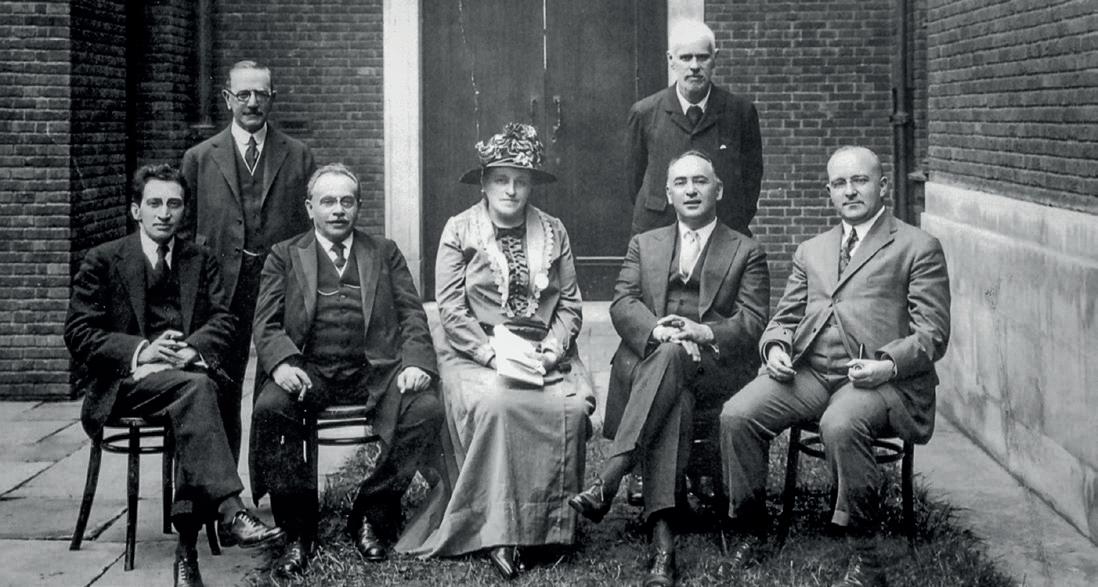
Liberal Judaism pioneers Lily Montagu, Dr Claude Montefiore and Rabbi Dr Israel Mattuck with other leading early Progressive Jews at the formation of the World Union for Progressive Judaism in 1926
2025 by Simon Rothstein
On Sunday 18 May 2025, at 11.40am, the member communities of Liberal Judaism and the Movement for Reform Judaism voted to unite into one Progressive Judaism for the UK and Ireland.
The decision was made at two parallel Extraordinary General Meetings (EGMs), with more than 95% of votes at each in favour of unification. Members celebrated together afterwards at an online ‘Open House’ event, hosted by Progressive Judaism CoLeads Rabbi Josh Levy and Rabbi Charley Baginsky.
Speaking as the results came in, Dr Ed Kessler MBE – who chaired the Path to Progressive Judaism Advisory Board – said: “This is the biggest change and most significant development in British Judaism since the Second World War. For the first time, we now have a single, unified Progressive Judaism – providing a voice and a space that brings together timeless Jewish tradition with the diversity and values of 21st-century Jewish life.”
The new Movement for Progressive Judaism will be rooted in shared values, diverse voices and a deep commitment to inclusion and equality.
It will be the UK’s largest synagogal Movement, by number of communities, representing 30% of synagogueaffiliated Jews and reaching out to the many non-affiliated Jews who align with Progressive Jewish principles.
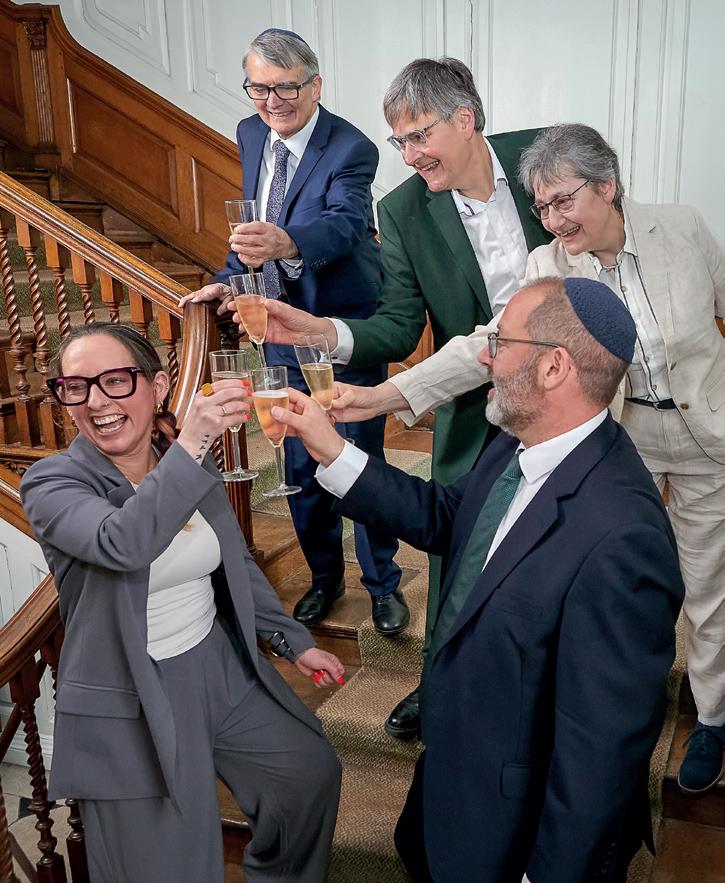
Today’s Progressive Judaism leaders Rabbi Charley Baginsky, Paul Langsford, Dr Ed Kessler, Karen Newman and Rabbi Josh Levy celebrating the formation of a new Movement
We hope you enjoy this final commemorative edition of lj today , as we look back at the incredible history of Liberal Judaism and ahead to our vision of a thriving Movement for Progressive Judaism. A new magazine will be released in January 2026.
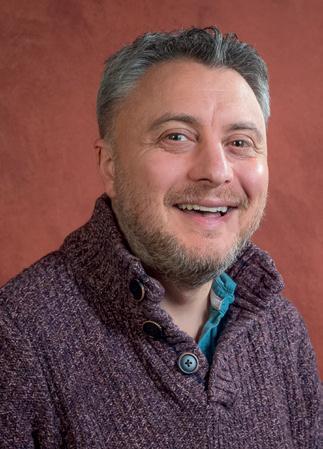
TO truly reflect on, and pay tribute to, 123 years of Liberal Judaism would take much more than the 12 pages we have in lj today
Indeed, many wonderful books have been written on the topic and it forms a key part of our innovative online Education Hub, which can be found at www.youtube.com/ @ProgressiveJudaismUK
Therefore what we have tried to put together in this issue is a flavour of the past and the future.
The next two pages lay out the vision and steps ahead in this exciting period for Progressive Judaism in the UK and Ireland.
We then hand over the issue to some of those who have served as President, Chair and CEO of Liberal Judaism in recent times. Each was asked to contribute something different – whether a written reflection, prayer, speech or to sit down for an interview.
Finally, as is customary in lj today, we turn to our youth. And while LJYNetzer isn’t going anywhere, this feels like a fitting time to look back at all the enriching and memorable experiences they have provided for young Liberal Jews down the years. Naturally this means there are many communities, moments and important people left out. If I’d had a book – which one day I might – I would love to have focused on the incredible contributions of so many individual clergy and communities. That must wait for another day.
I’d like to thank everyone who has contributed stories and photos to this magazine over the years, making it so special and enjoyable to edit.
As Rabbi Dr Andrew Goldstein writes on page 4, lj today can trace its history back to 1914 and has had many distinguished editors and writers. I am also blessed to report in to a wonderfully supportive, and eagle-eyed, Editorial Board.
Finally, I make you a promise that the spirit of lj today will live on through the new magazine we are now creating. Thanks for reading,
Simon Rothstein
ON Sunday 18 May 2025, something extraordinary happened.
After decades of discussion and years of hard work, Reform and Liberal Judaism voted to become one: the Movement for Progressive Judaism.
With overwhelming consent from members, this historic moment signalled the beginning of an exciting new chapter for British Jewry.
The Movement now exists – it has been formally incorporated. The full legal and financial work is expected to be completed, so it comes into being, by 1 January 2026.
The possibilities ahead are immense, but it’s also important to be clear-eyed about what’s needed next.
A period of careful endeavour now begins: the vital, behind-the-scenes work of unifying logistics, organisational structures, governance, and charitable status. The leadership of the new Movement is working closely with a project manager and legal team to ensure the full charity merger process is completed responsibly and transparently.
At the same time, this is a chance to dream together.
The Co-Leads of the new Movement for Progressive Judaism, Rabbi Josh Levy and Rabbi Charley Baginsky, said:
“This autumn will see a series of Open Houses, regional gatherings, and spaces to think collectively about what really matters. What kind of Judaism do we want to build? How do we support one another, engage the next generation, and live out our values in the world?
“We’re also inviting people across our communities to shape the future with us – including by putting themselves forward to serve on the launch Board of the Movement.
“Behind the scenes, branding and website work is also well underway – with a launch and celebratory fundraising dinner set for the end of November.
“We want to mark this moment with the creativity, visibility and substance it deserves. We hope you’ll be part of it.
“The Movement for Progressive Judaism is here – now the real work begins. And with it, the opportunity to build something remarkable… together.”
• Find out how you can get involved at www.pathtoprogressivejudaism.org.uk
By Rabbi Shulamit Ambalu and Rabbi Igor Zinkov
“Here I am about to do something new… do you not perceive it?”
Isaiah 43:19
WE are writing to you during the month of Elul, conscious that these times are unlike any other.
How can one speak of a new beginning? An inexplicable near two years of war in Israel, the unspeakable horrors both there and in Gaza, and the ongoing war in Ukraine. Suffering, its necessary accommodations, the exhaustion and the human cost.
Can we speak of something new? Our tradition teaches us: not only can we do that, but we must speak of renewal and hope. Isaiah’s famous words contain an implicit message. Here I do something new... do you not perceive it?” There will be something new. It is up to us to recognise the potential of that moment. To know when and how change will, and must come.
Our Reform and Liberal forebears were people who understood that religious change, a future-facing Judaism, was inseparable from their core political aspirations for justice, democracy, equality and the rule of law. They gifted this evolving tradition to us.
Their voices are alive in us today. Their recognition of the potential of the new is what lies at the heart of a growing Progressive Jewish community across the globe, who are working together to strengthen that vision in Israel and across the world. In turn, this strengthens us.
Isaiah’s message is not only that change will come; it is a reminder to recognise that moment, to understand its meaning, and to act on it.
May you and your loved ones find that moment of renewal, may you know the tremendous potential of Jewish community, and together may we approach 5786 with awareness, confidence and hope.
WE are delighted to announce a very special week, in June 2026, celebrating Progressive Judaism in the UK and around the world!
We start with two events running side by side at a beautiful Northamptonshire hotel and you can switch between them as you choose:
Thursday 18 June - Sunday 21 June: Shirei Chagigah
Shirei Chagigah is a specialist music conference. Led by wonderful teachers from the UK and abroad, it’s about singing, composing, learning new melodies and, above all, creating community.
This then is joined by the new flagship national conference for our new Movement for Progressive Judaism.
Friday 19 - Sunday 21 June: Hineinu
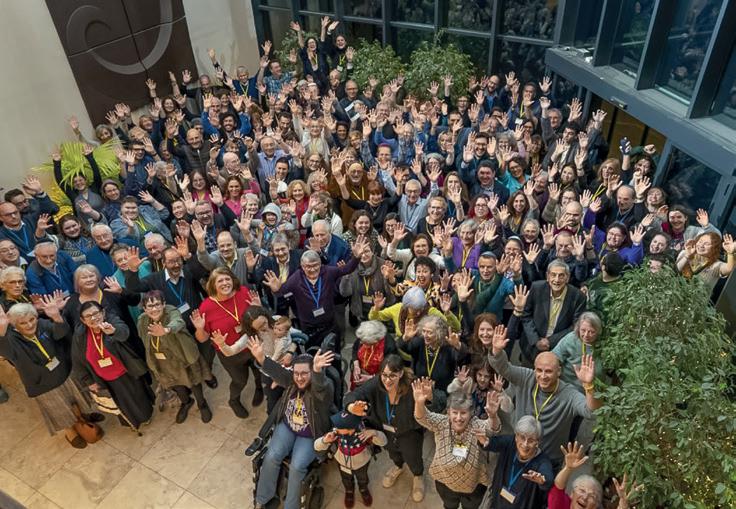
Hineinu: Here We Are is more than just a name. It’s a statement of presence and responsibility – a chance to come together across backgrounds, geography and generations. It will combine the best of our previous Liberal and Reform conferences, but with more participants, more wonderful speakers and session leaders, and more opportunities to explore your Judaism. Most importantly of all, it will be a key milestone as, together, we begin to shape the future of our new unified Movement.
Both Shirei Chagigah and Hineinu will take place at a gorgeous hotel in Daventry. Your ticket includes a hotel room, all meals, the full programme, and the option to switch between Hineinu and Shirei Chagigah, including all tracks within both, as you wish
Book your place today, so you don’t miss out: www.ti.to/MRJ/hineinu2026
This is followed by a week-long discovery and celebration of Progressive Judaism’s history.
Monday 22 - Friday 26 June: Jewish history and heritage walks
Saturday 27 - Sunday 28 June: WUPJ centenary celebration
We start during the week with standalone visits and trips to discover the extraordinary wealth of Jewish heritage in Britain, including planned visits to the British Library Hebrew Manuscripts and the Genizah Project in Cambridge, a walking tour following in the footsteps of our founders and an open study day at Leo Baeck College, founded in 1956. We then head into a weekend celebration of 100 years since the
creation of the World Union for Progressive Judaism (WUPJ), taking place over multiple locations in London including The Liberal Jewish Synagogue and House of Lords.
This landmark event – held in the very city where the WUPJ was founded by Lily Montagu and Claude Montefiore in 1926 – will welcome Progressive Jews from around the world as we honour an organisation that today represents 1.8 million of us.
It is being organised by The Ark Synagogue’s Rabbi Lea Mühlstein – Chair of the European Union for Progressive Judaism – and Edgware and Hendon Reform Synagogue’s Rabbi Mark Goldsmith, whose own family history within Progressive Judaism stretches back two centuries.
These standalone events can be booked separately to create an entire week celebrating Progressive Judaism with friends at home and around the world. You can register your interest now, via www.pathtoprogressivejudaism.org.uk, and we will contact you when prices and booking information are announced.
We have created this quick Q&A to help with any questions you may have:
What will Hineinu programme include?
You can expect thought-provoking discussions, interactive workshops, and inspiring keynotes that reflect the rich tapestry of Jewish life and thought.
Our programme is varied, with a range of tracks covering theology, history, liturgy, Torah, Israel, social action, culture, prayer, and community building.
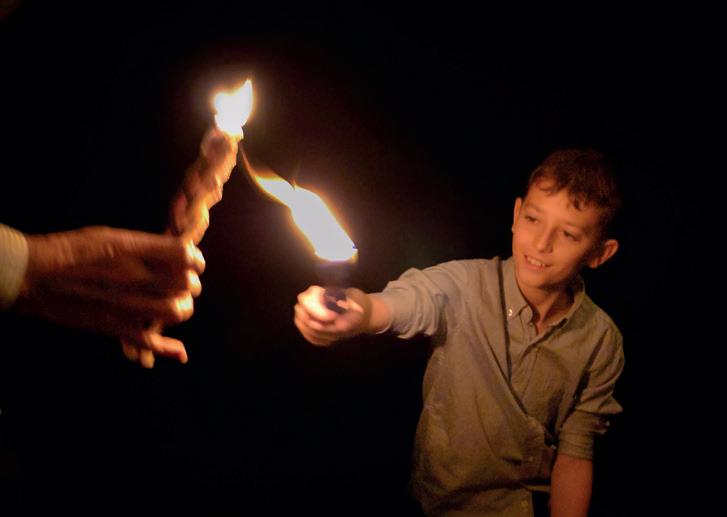
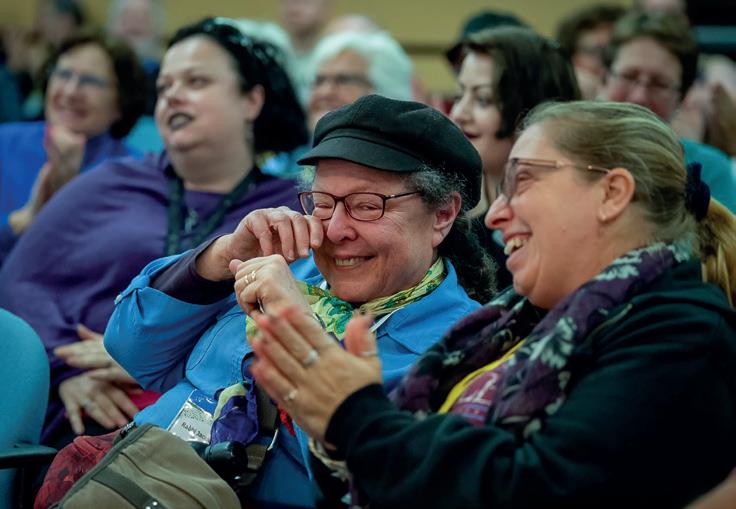
I only want to attend some parts of the week, is that possible?
Yes. We are trying to create as many flexible booking options as we can, so that people can attend what they choose.
Are the events family friendly?
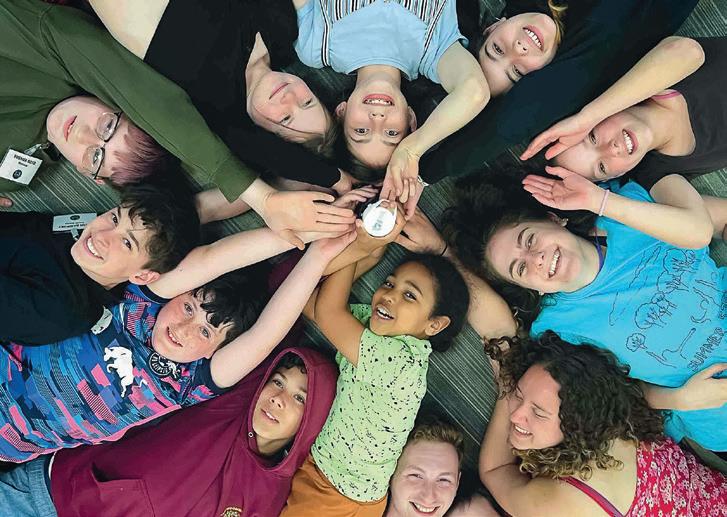
Definitely! LJY/RSY-Netzer are running a full weekend of activities (from Friday night until Sunday) at Shirei Chagigah/ Hineinu for young people aged 5+.
However, if you prefer your child to remain with you and join in with sessions that is absolutely fine. Or you can do a mixture of the two. Whatever is best for you and your family.
We will organise a crèche for those under 5 if the demand is there (we need at least five children). Unfortunately our insurance will not allow us to organise an evening babysitting service.
For the walks and WUPJ event, they will also be enjoyable for all the family – but we won’t have specific youth activities.
Can I get help with the cost?
The Movement for Progressive Judaism believes that all members of our communities should be able to take part in events without cost being a barrier.
If you would like financial support to attend, we ask that you first speak to your community and then come to us so we can try and make up the difference for you. Call Sarita for a completely confidential chat on 020 8349 5716.
Who can I contact with any questions?
If you need help with anything at all, email hineinu@progressivejudaism.org.uk
IT is humbling to realise I am now amongst the older of the still active Liberal Jews, having been involved since my days in the religion school at Birmingham Liberal Synagogue (now Birmingham Progressive).
This final publication released by our separate Liberal Movement has made me look back on the magazines I have read over the years.
Obviously not the Jewish Religious Union Bulletin of 1914 that morphed into the Liberal Jewish Monthly, sometime before the Second World War. But I do remember its revision in 1962, with the same name and edited by Rabbi Bernard Hooker. A small magazine but with varied content –current news and serious articles, plus a section aimed at children.
For a while there was a separate intellectual magazine Pointer that even had an article by Rabbi Immanuel Jakobovits – then Chief Rabbi of the United Hebrew Congregations of the Commonwealth – with a response from the Editor, Rabbi Sidney Brichto. The latter, with his co-Editor Rabbi David Goldberg, often had lively debates about Israel. Similar open discussions featured in the replacement for the LJ Monthly –ULPS News, which later became lj today
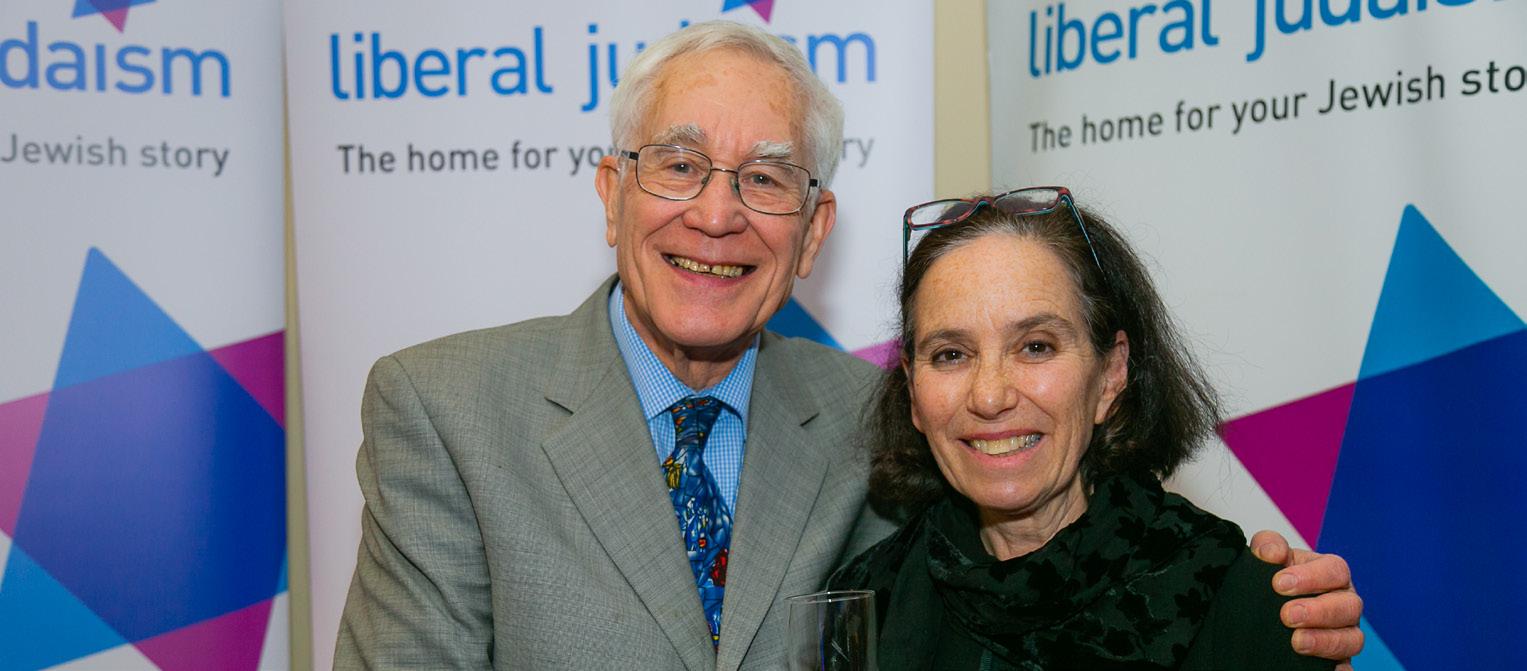
Other rabbis acted as Editor, Rabbi Frank Hellner and Rabbi Harry Jacobi, before professional lay journalists then took over. I recall the names of Peggy Lang, Pam Fletcher Jones, Gerry Smith, George Garai and Beattie Sayers... and for the last few years Simon Rothstein (with apologies for people I have missed out).
Simon also takes us into the future, and whatever the successor to lj today may be, as we develop a new Movement for Progressive Judaism.
For this brief, actually, Simon asked me to “write an article reflecting on the wonderful history and achievements of Liberal Judaism”. Not easy condensing 123 years into a couple of paragraphs! But I offer a few of my memories.
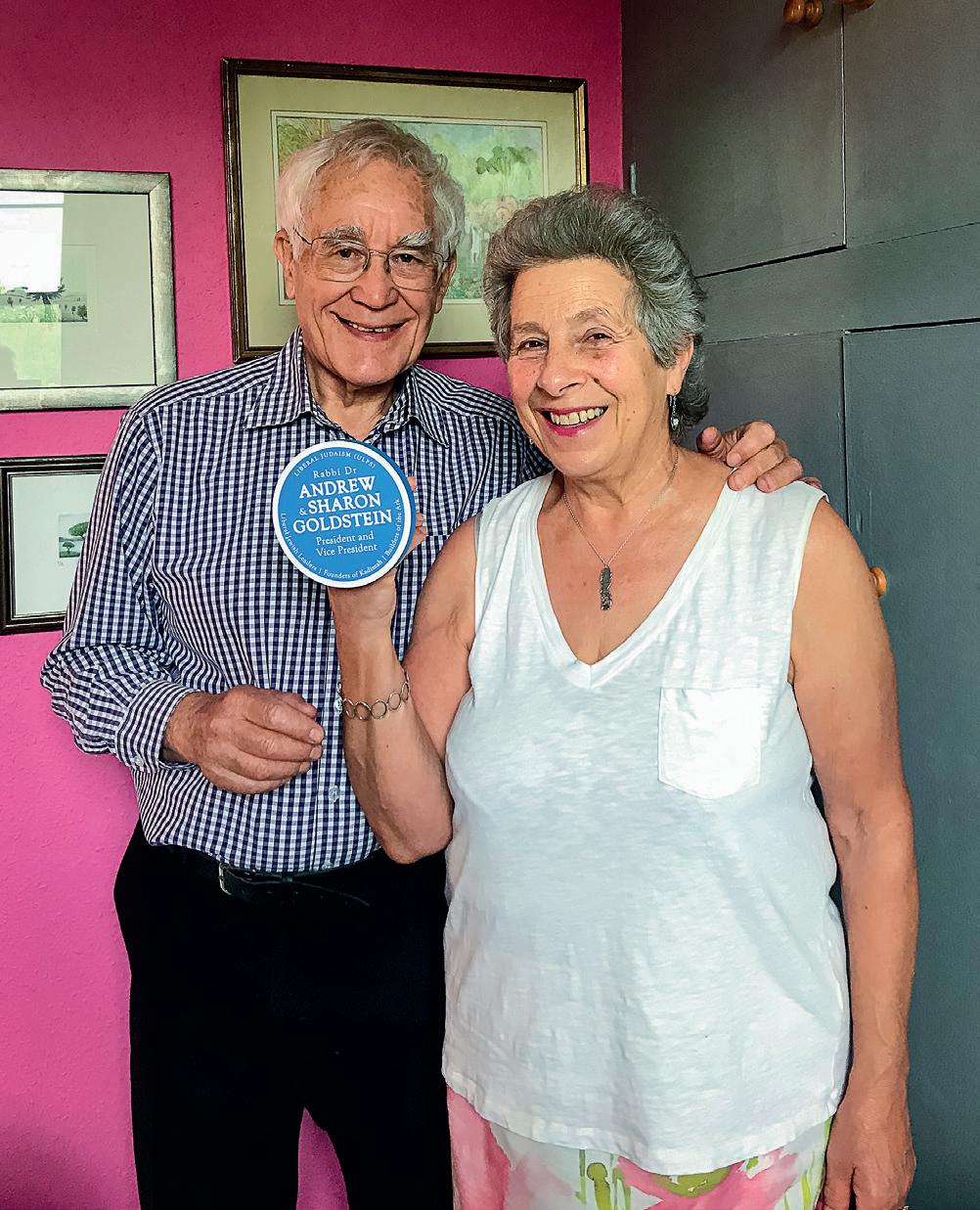
In 1964, being interviewed by Lily Montagu to see if I was fit to go to Leo Baeck College; a reminder of the incredible work and inspiration she brought to the founding and flourishing of Liberal Judaism (and the World Union for Progressive Judaism whose centenary we celebrate next year). She had an aura of spirituality that made its mark on our Movement.
From the beginning Liberal Judaism gave a lead in this country in creative liturgy.
Based on reforms made in Germany and America in the 19th century, Rabbi Dr Israel Mattuck produced
prayerbooks that featured a range of much shortened services, use of English and English hymns.
Rabbi John D Rayner created two generations of prayerbooks. Service of the Heart (1967) was the first to use modern English translations and Siddur Lev Chadash (1995) non-gendered translations with reference to God and humankind. Others followed this lead, with three generations of creative Pesach Haggadot and liturgy for Tikkun Leil Chadash and Israel Independence Day. Lily Montagu’s leadership ensured that women were given equality from the start. Men and women sat together from the very first service in 1902. In time, this insistence on equality led to a welcoming attitude to LGBTQI+ members and rabbis. Non-Jews were always welcome and conversion made possible. Liberal Judaism was the first to allow non-Jewish spouses to be buried in our cemeteries and then took a lead in allowing a blessing at a marriage of a Jew and a non-Jew.
Finally, I think of our innovative role in education. For years there was a very successful Evening Institute at the Montagu Centre and my own hobby was children’s education with a range of substantial publications of religion school textbooks for Yachdav, a Movement-wide post B’Nei Mitzvah scheme. This focus on education was manifest in the Kadimah Summer School founded in 1971 and, to this day, inspiring new generations of Liberal Jewish youth.
No doubt others can add memories of the innovations and key activities and culture of Liberal Judaism. Let’s now get involved to see that these positive achievements are carried forward and come to inspire our new Movement for Progressive Judaism.
IN the 1980s, when a serious merger between Liberal and Reform was last attempted, Rabbi Alexandra Wright was a student at Leo Baeck. In the four decades since, she has served both Reform and Liberal congregations – becoming the Senior Rabbi of The Liberal Jewish Synagogue and the final President of Liberal Judaism. On the day of the vote to unify into one Progressive Judaism, she offered this prayer:
THE concept of Oneness and Unity in Judaism begins with our faith in One God – a God of all humanity, a God who encompasses the universe and all creation.
Humanity is created in the image of One God. The Mishnah teaches: “When a person stamps coins with a single seal, they all appear identical to one another. But God has stamped all human beings with the seal of the first human being and not one of them is similar to another.”
We are unique, different, unalike; we have been given our own name by God, by those who have come before us, by our communities and their individual cultures, by their liturgies, their aspirations, by the people who belong to them.
Now with this momentous vote to create a new Movement for Progressive Judaism, we give thanks to those whose vision, dedication and sheer hard work has brought us to this day.
The leadership of our Movement has toured the country, speaking to each congregation where possible, fielding their questions, listening to their doubts, encouraged by their enthusiasm.
When Ezekiel envisioned the joining together of two sticks – of Judah and the Israelites associated with him, and of Joseph – the stick of Ephraim – and all the House of Israel associated with him –he saw in their symbolism the unification of Israel and Judah. Bring them close to each other, said the prophet, so that they become one stick, joined together.
Although Ezekiel’s prophecy was an idealised vision for Judah and the kingdom of Israel, the Northern
Kingdom that no longer existed, our own determination to create a stronger, more deeply resourced, energised and influential Progressive Jewish Movement is rooted in the existence of vibrant, active, spiritual and reflective communities with their own vision of a world in which all human beings embrace justice, equity, truth and peace.
May we be true to the vision of the founders of Liberal Judaism. Let us not lose sight of their spiritual aspirations to be faithful to the God of truth, the God of all humanity. Let us raise the banner of freedom for all God’s people and be part of this new Movement with an open heart, generosity of spirit and patience; willing to listen and learn, to honour and respect one another.
Let us rejoice over the things we share and embrace with curiosity and understanding what is diverse and different. We come together in ‘reconciled diversity’, mindful of difference, but rejoicing that our two Movements will be brought together as one, faithful to the words spoken by Moses to the children of Israel:
Shema Yisrael, Adonai Eloheynu, Adonai Echad – ‘Hear O Israel, the Eternal One is our God, the Eternal God is One.’
Zeh ha-yom asah Adonai, nagilah v’nis’mecha vo – ‘This is the day that the Eternal One has made, let us exult and rejoice on it.
Baruch attah Adonai, Eloheynu melech ha-olam, shehecheyanu, v’kiyyemanu, v’higgiyanu la’z’man ha-zeh.
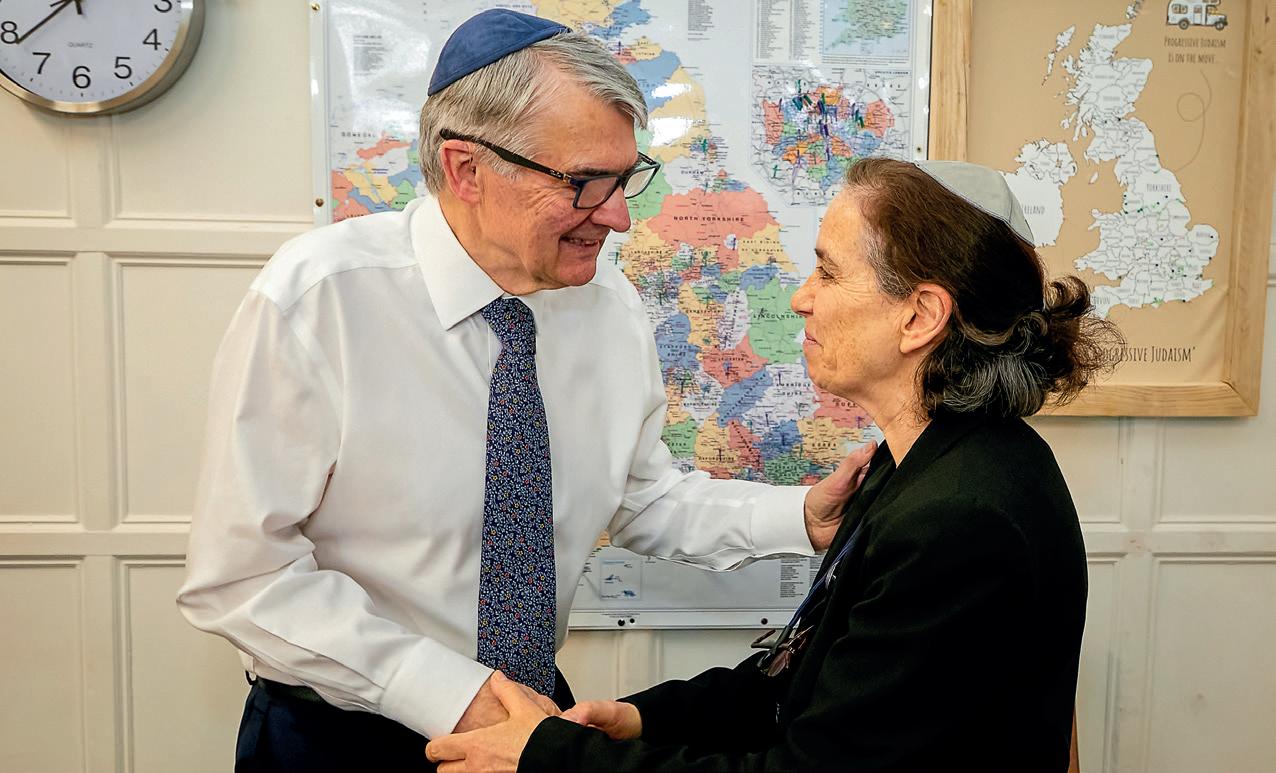
THE two most important figures in the founding of the Liberal Jewish Movement in Britain were Dr Claude Montefiore and Lily Montagu. They were both descended from famous Anglo-Jewish families.
Claude Montefiore was the philosopher and theologian who gave the distinctive teachings that inspired the thinking of the Movement in the early years.
His Outlines of Liberal Judaism (1912) became the standard for anyone wanting an account of the beliefs and ideology of Liberal Judaism, and was regularly referred to for inspiration and instruction.
Lily Montagu was the dedicated and spiritually minded leader, whose piety warmed the heart of all those she met and talked to.
All through her life, she felt that prayer was important, and believed that those whose Judaism was confined to ritual observance were missing something very valuable. She famously spoke of the need to “adapt the ancient faith of Judaism to the progressive needs of our contemporaries”.
She was also very practical, being a strong organiser who could pick good helpers and inspire them to reach higher than they themselves thought possible.
Together – later joined by a third ‘M’ in Rabbi Dr Israel Mattuck and with the input of many others – they created a form of Judaism that still inspires and guides so many today.
1902-1932: Dr Claude Montefiore
1932-1962: The Hon Lily H Montagu
1962-1965: Rabbi Dr Leslie I Edgar
1965-1972: Lord Cohen of Walmer
1972-1973: Eva, Marchioness of Reading
(Left vacant for a decade after the death of Eva)
1983-1987: Malcolm Slowe
1988-1995: Lord Goodman CH
1995-2005: Rabbi John D Rayner CBE
2006-2011: Baroness Rabbi Julia Neuberger DBE
2013-2022: Rabbi Dr Andrew Goldstein
2022-2025: Rabbi Alexandra Wright
• All the historical information in this edition of lj today is taken from Liberal Judaism: The First 100 Years by Rabbi Lawrence Rigal and Rosita Rosenberg, and checked and updated by former Liberal Judaism Archivist Alison Turner.
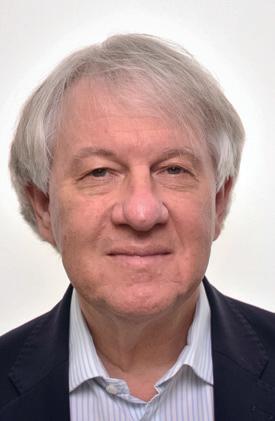
Former LJ Chair
Lucian J Hudson gave this rousing address at the final ever Liberal Judaism AGM
I WOULD like to start my speech by thanking Karen Newman, the Chair of Liberal Judaism, for such a warm welcome. As a past Chair myself, I congratulate you and Rabbi Charley Baginsky on the leadership you have shown at such a critical and potentially far-reaching time for our Movement.
When I was Chair from 2009 to 2015, the work I did with Rabbi Danny Rich on the matter of closer alignment of Reform and Liberal Judaism, which my successors Simon Benscher and Ruth Seager then built on, did pave the way.
Given the state of the world and our place as Jews within it, my theme for this speech is ‘Optimism or pessimism: the case for learned optimism’. Some of you will recall the old Jewish joke, What’s the difference between an optimistic Jew and a pessimistic one? The pessimistic one says, “Oh, things are bad, really bad, they really can’t get any worse”. The optimistic Jew adds, “Oh, yes, they can!”
We have every reason to celebrate, but in the spirit of our tradition, we can also challenge – ourselves and others – provided this is done in a spirit of understanding and inquiry; we can critique and renew our commitment to continuity and change.
It’s clear to me that if we want more of a voice and influence, now and in years to come, there is not only safety in numbers, but also strength.
Where we add significant value, to the Jewish community and wider society, is that we live that slogan used by a famous brand of beer: we are a Movement that reaches parts that others cannot. Whether it’s an ethical, religious, community, culture or education stance, I would ask us to remember this. Yes, power matters in this world – but so does influence, the right kind of influence, the influence to help people better to understand what’s really going on.
Ours is a Movement that thrives on the criticality of relationships, that most human of phenomena. We are Jews, but we also have other identities. Let’s see, hear and feel the human in all our policies, deliberations, decisions, successes and setbacks.
We are creatures and custodians of a Jewish enlightenment: to think freely is to think critically and creatively. Let us never forget this as part of our inheritance. We are part of a long tradition challenging theological and secular authority, often persuading, influencing, sometimes confronting.
We know this world is increasingly polarised, if not fragmented. But can we, could we, be a source of cohesion, catalysts for change that has people at its heart? Can we be active peacemakers, recognising there is also a need to fight, and fight hard? We know there is turbulence and often a deep need for certainty: but can we enable people to live with uncertainty, keep their minds and hearts open? Can we work with what knowledge we hold, but also embrace the liminal? There is opportunity in conflict, in tension, in not knowing.
Should we not be the grit in the oyster that produces the pearl? What I love about our approach to life is that, at our best, we see the extraordinary in the ordinary. Small steps matter. They give us the confidence to take bigger ones.
As I grow older, alas, I do acknowledge there is evil in the world. Equally, I try, however hard, to see that there are risks idealising or demonising individuals and peoples.
In my career, I have been taught to become ‘professionally paranoid’. I don’t think anything is lost by being vigilant, alert rather than alarmed; but the biggest gains are made through trust, creating trust and building it, recognising that trust is the regulation of one’s dependence on the other. Not surprisingly, we can never be entirely independent, not should we be totally dependent or inter-dependent.
The term ‘liberal’ has often been awkward for us, not least because we are not party political. But liberal, progressive values matter to us, even though what it means to be liberal –lower case L - has and will change.
If everything is permissible, nothing is permissible. Boundaries matter, but these can be negotiated and renegotiated, if we respect others, if we respect process. The difference between an adherent of liberalism and their arch opponent is that the liberal can and should say: “OK, on this point, liberalism sucks!” If we follow the wisdom of Solomon, there is a time to be emphatic and a time to be more nuanced in our judgments. There is no substitute for the exercise of judgment, even if judgment can prove faulty.
Being genuinely open and receptive to what is unknown and different, to embrace the stranger in us and in others, can be a source of growth and development.
Being too liberal has produced a backlash. Values come into conflict, and the combination of principle and pragmatism often serves us well, if only because we can never be quite sure until we have lived and experienced the changes we have adopted.
Ours is a singular Movement, accountable and responsible, working with and through others. But we are what we are, and need to have scope to become something even better, committed to enabling the realising of potential that exists in all of us.
I salute this leadership of Liberal Judaism - and Reform - so ably advised by Dr Ed Kessler, for turning into reality a vision I and others have had for many years of showing that collaboration adds value, especially if it is purposeful and does not gloss over nor duck the issues.
Ours is a Movement which has never stood still. Our endeavours don’t finish with our decision to create one Movement. The work carries on. In some senses, it has only just started.
Our tradition is defined by a questing and questioning spirit. I first heard this apt phrase from my predecessor as Chair, Nigel Cole. Yes, we value tradition, but also innovation. The composer Gustav Mahler is quoted as saying that tradition is the handing over of flames, not ashes. Critical to our evaluation of risk and opportunity is a mindset, as well as values and behaviours, that bridge what we espouse with what we practise.
Finally… how does this make me a learnt/learned optimist?
I have learnt that pessimists often happen to be more accurate, sadly, than optimists. But I have also learnt that optimists often achieve more. Why? They set themselves objectives, and withstand setbacks and disappointments better.
Many of you queried 20 years ago: why should such a distributed organisation as Liberal Judaism have a ‘strategy’?
Some asked why try again at working towards a closer union with Reform? My answer then, and it has been proved by experience, especially since October 7th, never has it been more important to have a clear, credible and compelling voice, both within our community and outside it. Quiet voice or loud voice, we should first listen, but then choose our moment and be heard. Hopefully, I can still make a contribution. We all can.
WHEN Karen Newman was unanimously elected as Chair of Liberal Judaism, she made history twice – as the first member of the LGBTQI+ community to hold the role, and as the only person to be elected LJ Chair while overseeing a merger that will see the position cease to exist. In this exclusive interview with lj today Editor Simon Rothstein, Karen reflects on her love for Liberal Judaism and shares her hopes for the new Movement for Progressive Judaism.
Looking back over the history of Liberal Judaism, what do you see as our proudest achievements?
Speaking from a personal perspective, I am so proud that Liberal Judaism was the first to fight for equal marriage and the full inclusion of the LGBTQI+ community in Jewish life.
We also led the way in recognition of patrilineal Jews, which has been really important for so many people – including myself.
For 70 years now, Liberal Judaism has affirmed equilineal descent – meaning Jewish status can be inherited from any parent (no matter whether mother or father), where someone has a Jewish upbringing and identifies as Jewish. Beyond these practical examples, what I think has been the most amazing achievement of Liberal Judaism is to create a faith-based community that enables us to express our Jewish identities within the context of our 21st-century lives.
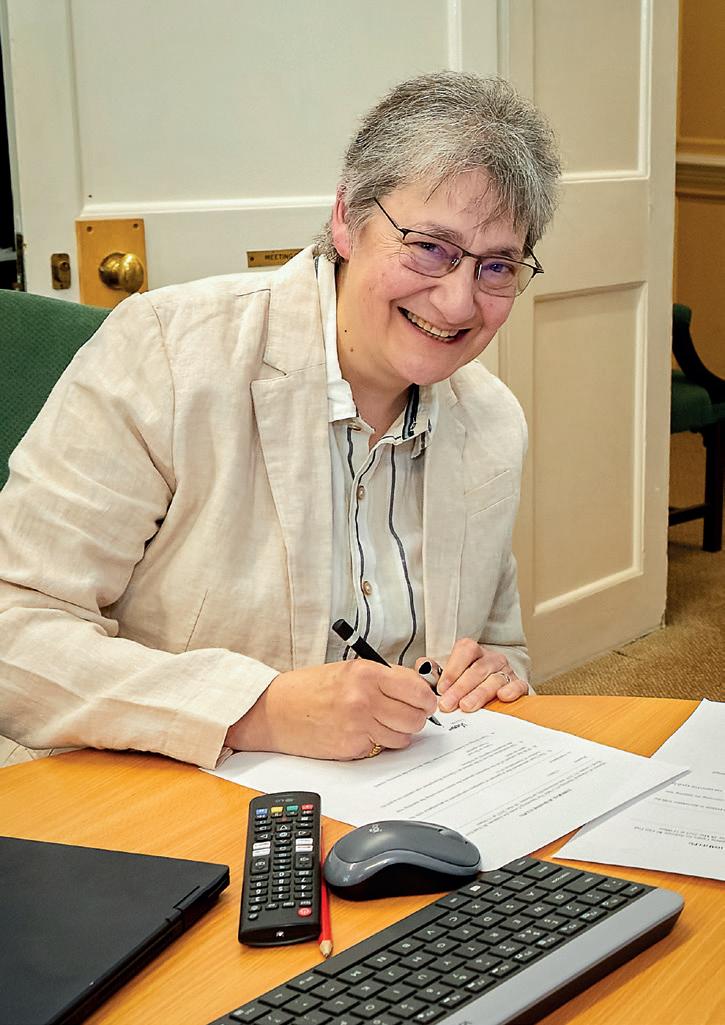
What do you think is the core of Liberal and Progressive Judaism?
The way we show that being religious is about exploring and engaging with a set of traditions, values, narratives and texts that have stood the test of time, and seeing if they have anything to say to you.
Liberal Judaism, and Progressive Judaism, doesn’t ask you to deposit your brain cells at the door… it wants them inside the synagogue with you.
What was your experience of the unification process?
I started out very worried that Liberal Judaism would be the junior partner in the relationship.
One of the reasons I am in awe of our CEO Rabbi Charley Baginsky is that –through the relationships she formed with Movement for Reform Judaism CEO Rabbi Josh Levy, Chair Paul Langsford and the MRJ Board – she created a true partnership of equals. The trust between myself, Charley, Paul and Josh has been fundamental to the success of the project.
As Chair, I have been the beneficiary of Charley’s work – along with that of my predecessor Ruth Seager and Dr Ed Kessler, the Chair of the Path to Progressive Judaism Advisory Board.
How does it feel being the last Chair of Liberal Judaism?
I feel very humbled to have been part of a Movement that has meant so much to so many.
I only see this as being the ‘last’ Chair of this particular phase. What is happening now is an evolution.
Liberal Judaism had to come into existence, because there was nothing around that did what the early Liberal Jews wanted Judaism to do.
But what we have had in recent years is two Movements where, if a very senior figure like Rabbi Alexandra Wright – who has served both – says you can’t put a cigarette paper between them, then that says it all!
By coming together we will be so much bigger and better – manifesting from day one a commitment to a Judaism that is non-dogmatic, inclusive and celebrates diversity in policy, prayer and practice.
What are the practical benefits?
Being one Movement means we can spend our resources where they are most needed – building community and investing in our youth and the future.
In these really conflicted times, we can also have a prominent and distinctive voice on the major issues of the day.
What are your hopes for the future?
I want this new Movement to continue making being Jewish exciting, and Judaism relevant to everybody’s lives. It should nurture a reverence for our texts, a knowledge of our tradition, and a love of who we are and what we stand for.
We also must continue to be community focussed and build congregations that add meaning and purpose to people’s lives. The way that 21st-century life has evolved means we interact with a screen for almost everything we used to interact with a person for. What we provide, at a community level, is being there for each other. I really got a sense of that walking into my community, The Liberal Jewish Synagogue, after my mum died. Six months later, it was my daughter Lily’s Bat Mitzvah. The congregation were there for me in both my happiness and my grief. Only community does that.
The third thing I’d like to see in the new Movement is for it to continue one of the real successes of Liberal Judaism in spotting tomorrow’s issue today, and having something to say about it.
1902-1932: Dr Claude Montefiore
1932-1962: The Hon Lily H Montagu
(In 1962, the role of Chair was then separated from that of President)
1962-1965: Dr Ralph Jessel
1965-1970: Malcolm Slowe
1970-1975: Geoffrey Davis
1975-1981: Cecil Reese
1981-1983: Clive Winston
1983-1988: David Lipman
1988-1995: Tony Sacker
1995-2001: Jerome Freedman
2001-2004: David Pick
2004-2009: Nigel Cole
2009-2015: Lucian J Hudson
2015-2020: Simon Benscher
2020-2023: Ruth Seager
2023-2025: Karen Newman
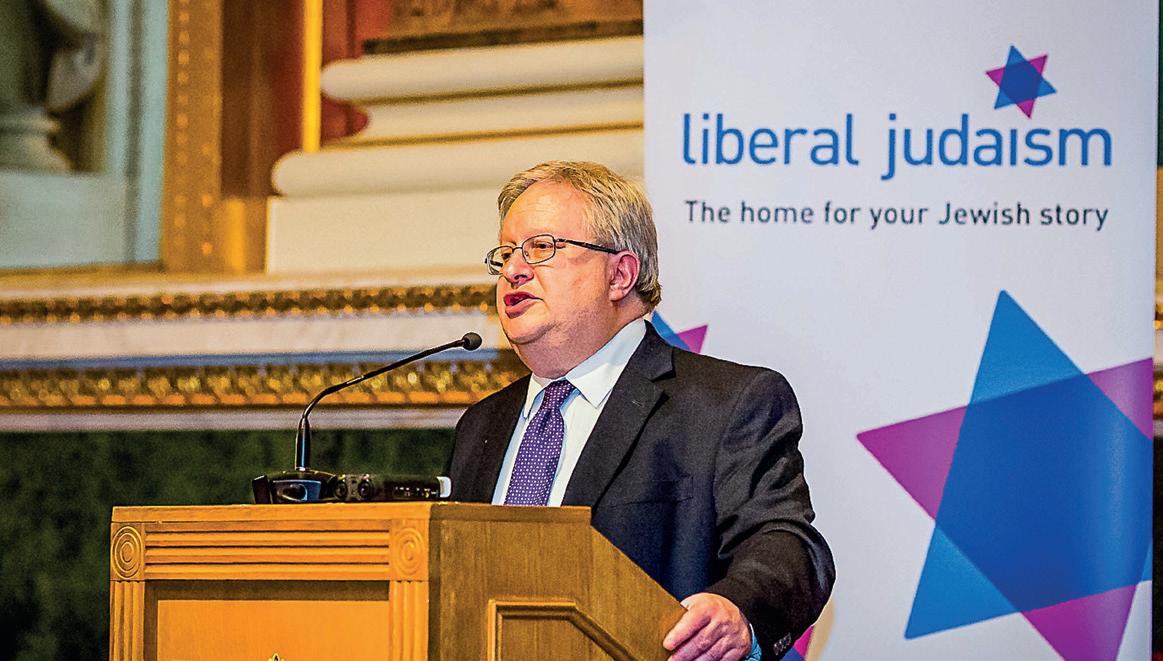
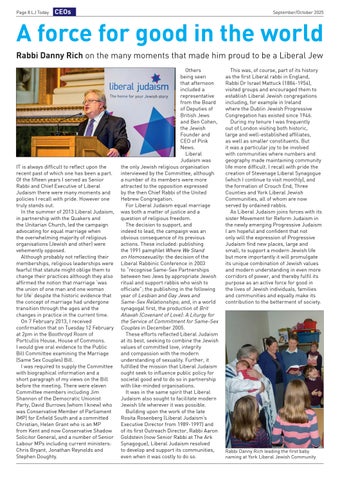
IT is always difficult to reflect upon the recent past of which one has been a part. Of the fifteen years I served as Senior Rabbi and Chief Executive of Liberal Judaism there were many moments and policies I recall with pride. However one truly stands out.
In the summer of 2013 Liberal Judaism, in partnership with the Quakers and the Unitarian Church, led the campaign advocating for equal marriage when the overwhelming majority of religious organisations (Jewish and other) were vehemently opposed.
Although probably not reflecting their memberships, religious leaderships were fearful that statute might oblige them to change their practices although they also affirmed the notion that marriage ‘was the union of one man and one woman for life’ despite the historic evidence that the concept of marriage had undergone transition through the ages and the changes in practice in the current time.
On 7 February 2013, I received confirmation that on Tuesday 12 February at 2pm in the Boothroyd Room of Portcullis House, House of Commons. I would give oral evidence to the Public Bill Committee examining the Marriage (Same Sex Couples) Bill.
I was required to supply the Committee with biographical information and a short paragraph of my views on the Bill before the meeting. There were eleven Committee members including Jim Shannon of the Democratic Unionist Party, David Burrows (whom I knew) who was Conservative Member of Parliament (MP) for Enfield South and a committed Christian, Helen Grant who is an MP from Kent and now Conservative Shadow Solicitor General, and a number of Senior Labour MPs including current ministers: Chris Bryant, Jonathan Reynolds and Stephen Doughty.
Others being seen that afternoon included a representative from the Board of Deputies of British Jews and Ben Cohen, the Jewish Founder and CEO of Pink News.
Liberal Judaism was
the only Jewish religious organisation interviewed by the Committee, although a number of its members were more attracted to the opposition expressed by the then Chief Rabbi of the United Hebrew Congregation.
For Liberal Judaism equal marriage was both a matter of justice and a question of religious freedom.
The decision to support, and indeed to lead, the campaign was an obvious consequence of its previous actions. These included: publishing the 1991 pamphlet Where We Stand on Homosexuality: the decision of the Liberal Rabbinic Conference in 2003 to “recognise Same-Sex Partnerships between two Jews by appropriate Jewish ritual and support rabbis who wish to officiate”; the publishing in the following year of Lesbian and Gay Jews and Same-Sex Relationships; and, in a world synagogal first, the production of Brit Ahavah (Covenant of Love): A Liturgy for the Service of Commitment for Same-Sex Couples in December 2005.
These efforts reflected Liberal Judaism at its best, seeking to combine the Jewish values of committed love, integrity and compassion with the modern understanding of sexuality. Further, it fulfilled the mission that Liberal Judaism ought seek to influence public policy for societal good and to do so in partnership with like-minded organisations.
It was in the same spirit that Liberal Judaism also sought to facilitate modern Jewish life wherever it was possible.
Building upon the work of the late Rosita Rosenberg (Liberal Judaism’s Executive Director from 1989-1997) and of its first Outreach Director, Rabbi Aaron Goldstein (now Senior Rabbi at The Ark Synagogue), Liberal Judaism resolved to develop and support its communities, even when it was costly to do so.
This was, of course, part of its history as the first Liberal rabbi in England, Rabbi Dr Israel Mattuck (1884-1954), visited groups and encouraged them to establish Liberal Jewish congregations including, for example in Ireland where the Dublin Jewish Progressive Congregation has existed since 1946.
During my tenure I was frequently out of London visiting both historic, large and well-established affiliates, as well as smaller constituents. But it was a particular joy to be involved with communities where numbers and geography made maintaining community life more difficult. I recall with pride the creation of Stevenage Liberal Synagogue (which I continue to visit monthly), and the formation of Crouch End, Three Counties and York Liberal Jewish Communities, all of whom are now served by ordained rabbis.
As Liberal Judaism joins forces with its sister Movement for Reform Judaism in the newly emerging Progressive Judaism I am hopeful and confident that not only will the expression of Progressive Judaism find new places, large and small, to support a modern Jewish life but more importantly it will promulgate its unique combination of Jewish values and modern understanding in even more corridors of power, and thereby fulfil its purpose as an active force for good in the lives of Jewish individuals, families and communities and equally make its contribution to the betterment of society.
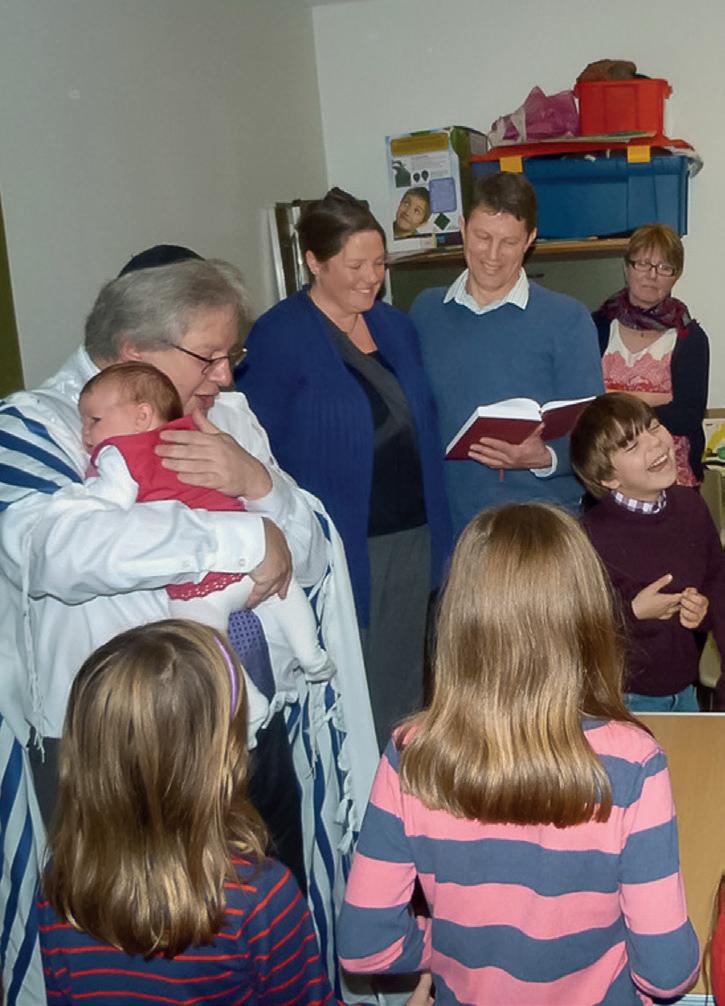
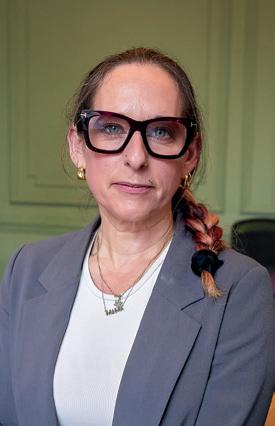
Rabbi Charley Baginsky on the privilege of leading Liberal Judaism during this pivotal time
I KNOW that most children do not dream of being the Chief Executive of Liberal Judaism. I was probably not most children.
To have held this role, and to have had the chance to lead Liberal Judaism at such a pivotal moment, has been the greatest privilege of my professional and personal life.
I am conscious, as we bring this chapter to a close, of how many shoulders I stand on. I have been supported by an extraordinary staff team, who give their time and passion to this work in ways that often go unseen. I have been guided by a visionary Board – led in turn by Chairs Simon Benscher z’’l, Ruth Seager, and now Karen Newman – each of whom has never stopped believing in what Liberal Judaism could achieve. And I have been sustained by our remarkable clergy and communities, without whom none of this would matter.
I have been privileged to share this journey in deep partnership with Rabbi Josh Levy, my Co-Lead as we form this new Movement for Progressive Judaism. I believe that, working together, we have shown what can be achieved when we let trust in a shared future guide us forward.
My journey has always been a Liberal Jewish one. From my days as an LJYNetzer and ULPSNYC participant (see the next page) to the pride I feel now that my own children are LJY-Netzer-niks, I have lived and breathed this Movement.
I am a lifelong Liberal Jew and, just as importantly, a lifelong Progressive Jew. The values and commitments I learned as a young person are the ones that continue to guide me as a leader today.
Liberal Judaism has always been a Movement that lives in the tension of contrasts, rooted in Jewish memory but alive to the demands of the present, respectful of tradition but unafraid of radical innovation. I have always loved the word radical, not as a synonym for extremism but as a reminder that to be radical is both to depart and to return, to depart from the conventional, and to return to our roots.
That, in essence, has been Liberal Judaism’s task from its very beginning.
Our communities embody this spirit every day. They hold space for joy and for sadness, for tradition and for change. They are places where we mark time through cycles of memory and ritual, where Shabbat and festivals give rhythm to our lives. They are places where we wrestle with questions of justice, equality and inclusion, and where we teach our children that Judaism must always speak to the challenges of the world around us.
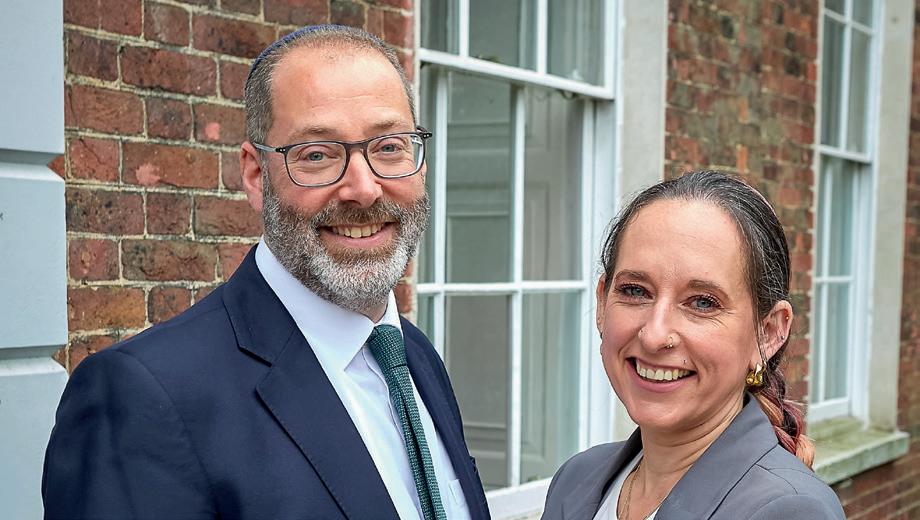
Our clergy, too, embody this vision. They are scholars, teachers, counsellors, activists, leaders and friends. They hold our hands through grief, they stand beside us in celebration, they challenge us to live more deeply and more fully. Without their dedication and courage, Liberal Judaism would never have been the Movement it has become.
If I have learned anything in these past years, it is that memory, while essential, is never enough. As Jews, we carry memory forward in order to transform it into something new. That is why I believe so deeply in this moment of transition.
I have spoken a lot about watching A Complete Unknown, the recent Bob Dylan film, and how key it was for my thinking. Dylan’s shift from acoustic folk to electric was controversial, painful even, for many who loved him. But it was not a betrayal of his roots. It was a reimagining of what music could be, a reinvention that amplified his voice and allowed it to reach new audiences. He understood that to remain relevant he could not simply repeat the past. He had to take a risk, to pick up not just a teaspoon but a shovel, and to reshape the world around him.
Liberal Judaism has reached that same moment. For 123 years we have been the teaspoons, carrying justice, equality and prophetic Judaism into British life one scoop at a time. But there comes a moment when teaspoons are not enough. When the task before us requires something bolder, bigger, braver. The new Movement for Progressive Judaism is our chance to take up that shovel.
History teaches us that Judaism has never survived by standing still. From the destruction of the Temple and the birth of the synagogue, to the reinvention of Jewish life in the modern State of Israel, our people have always reinterpreted the past in order to create a future.
This is not an ending. It is a beginning. It is the start of a new chapter in which all that we have loved about Liberal Judaism, our passion for equality, our commitment to justice, our belief in a Judaism of openness and love, will be the foundation stones of a stronger and more sustainable Progressive Movement.
So let us not think of this as the last word of Liberal Judaism, but as the first word of something new.
For almost 50 years the administration of both Liberal Judaism and The Liberal Jewish Synagogue was run together by the same dedicated but overworked people, mostly on a voluntary basis. Lily Montagu and Michael Duparc handled the administration.
The move towards greater professionalism began in 1946 with the creation of the post of Organising Secretary for Liberal Judaism. In the 1960s, the Movement appointed its first Executive Director in Rabbi Sidney Brichto, with Rabbi Danny Rich becoming the first CEO in 2005. Those to have held these three titles are:
Henry Solomons
Rabbi Herbert Richer
Greta Hyman
Rabbi Sidney Brichto
Rosita Rosenberg
Rabbi Dr Charles H Middleburgh
Rabbi Danny Rich
Rabbi Charley Baginsky
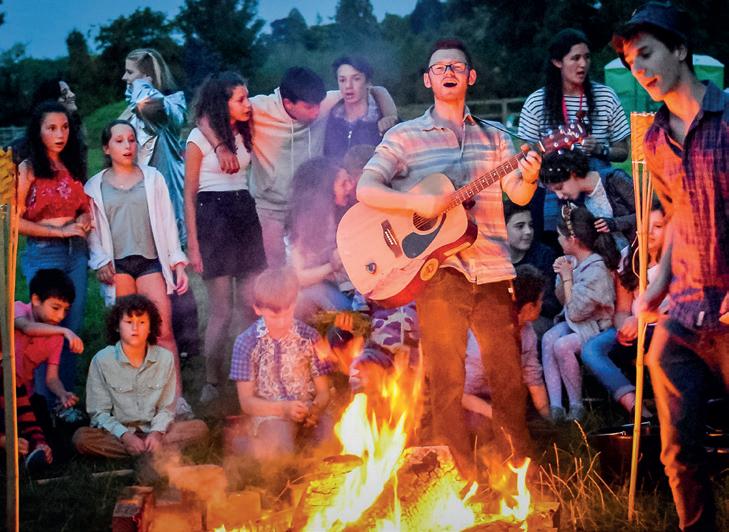
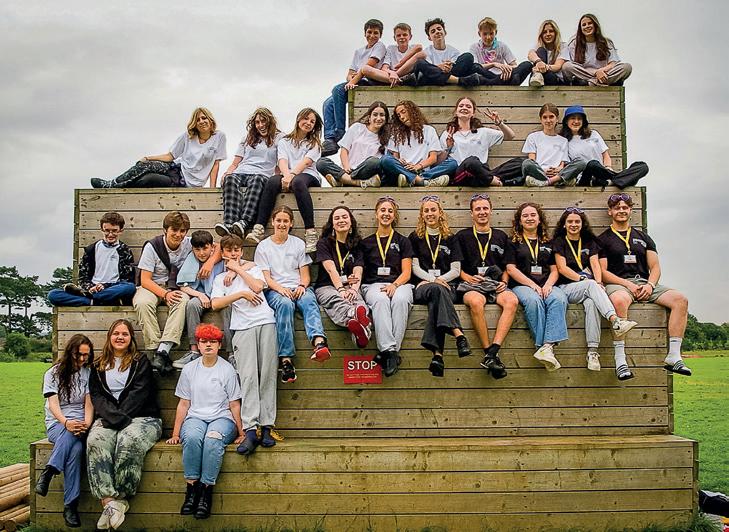
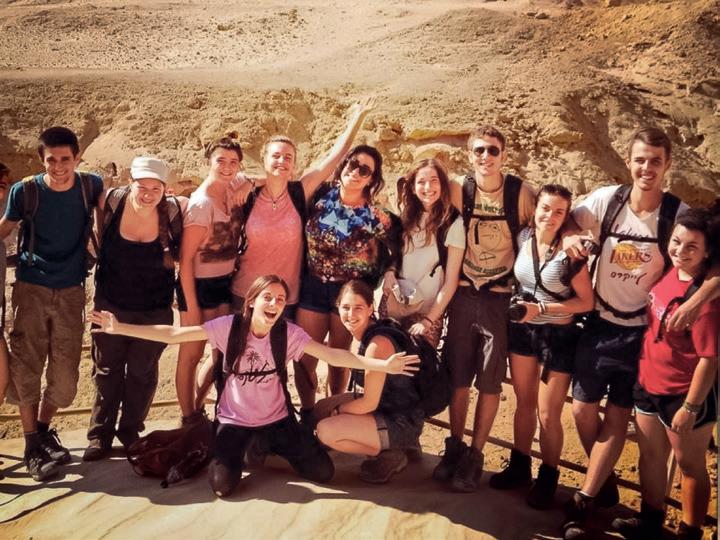
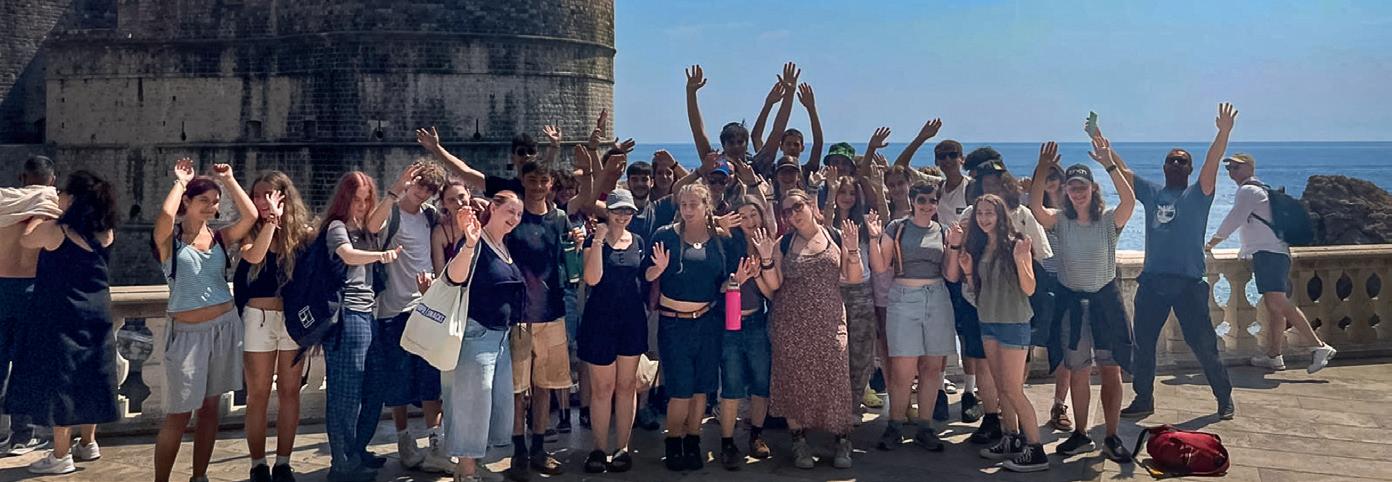
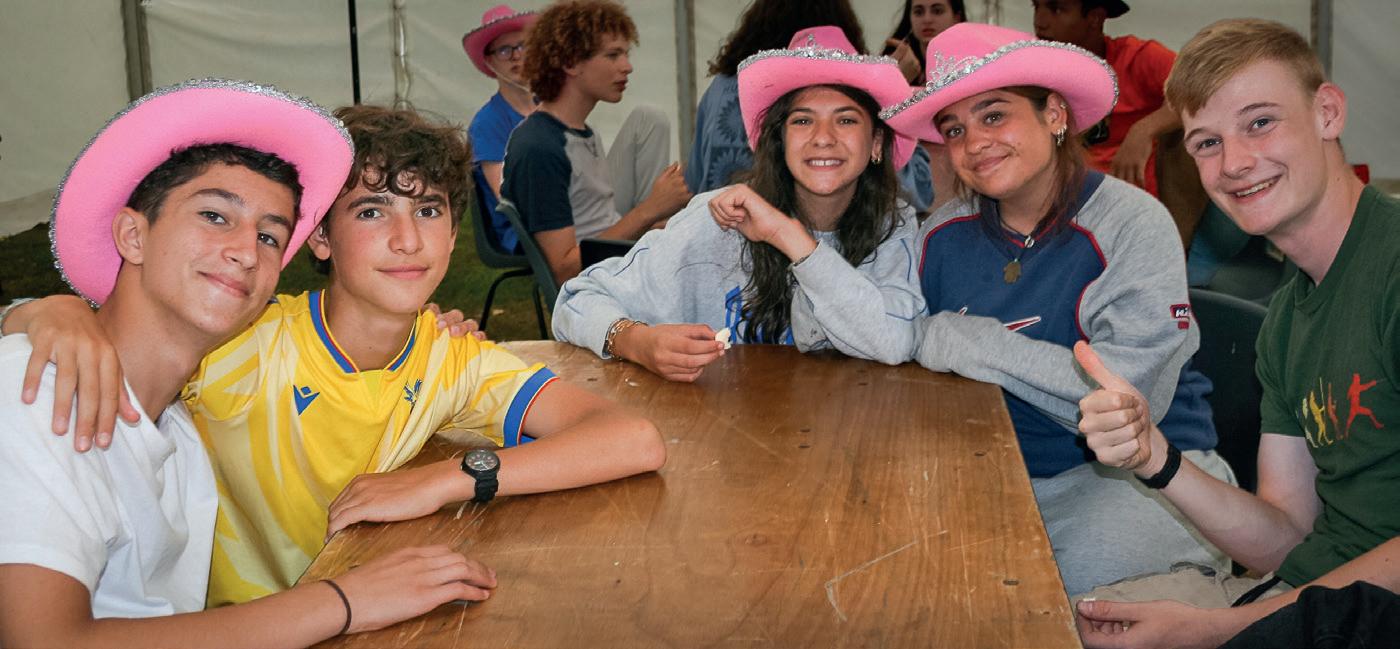
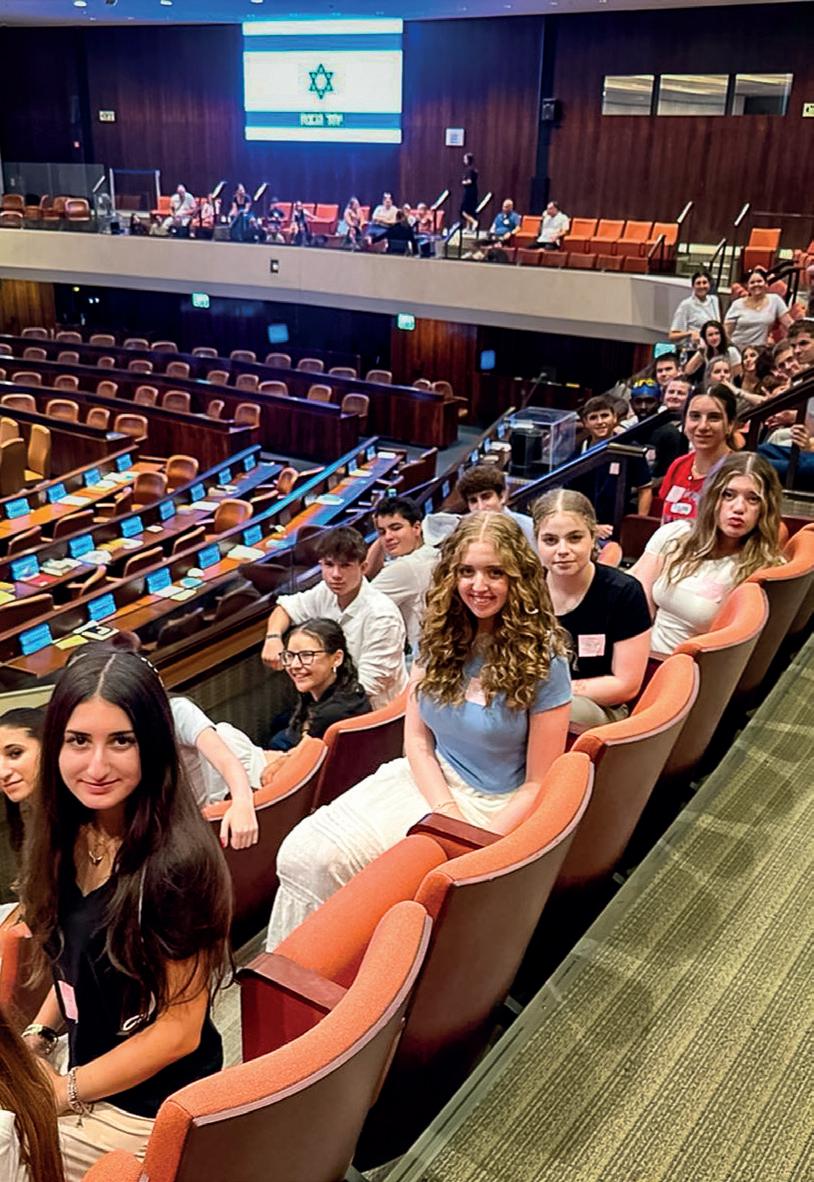
LJY-Netzer is one of two Progressive Judaism youth Movements. It gives young people the opportunity to develop a strong Jewish identity and make lasting friendships
LJY-NETZER is hugely excited to be part of this new era of Progressive Judaism in the UK and Ireland. Our members will benefit from improved resources and a shared infrastructure with RSY-Netzer, the wonderful Reform youth movement. We have already seen what working together, as we do on our joint gap year programme (Shnat Netzer), can achieve.
On a practical level, in terms of the camps and tours we run and the LJY-Netzer name, things won’t be changing. We are different youth Movements who have different offerings, at different times of the year, so there are no current plans to merge.
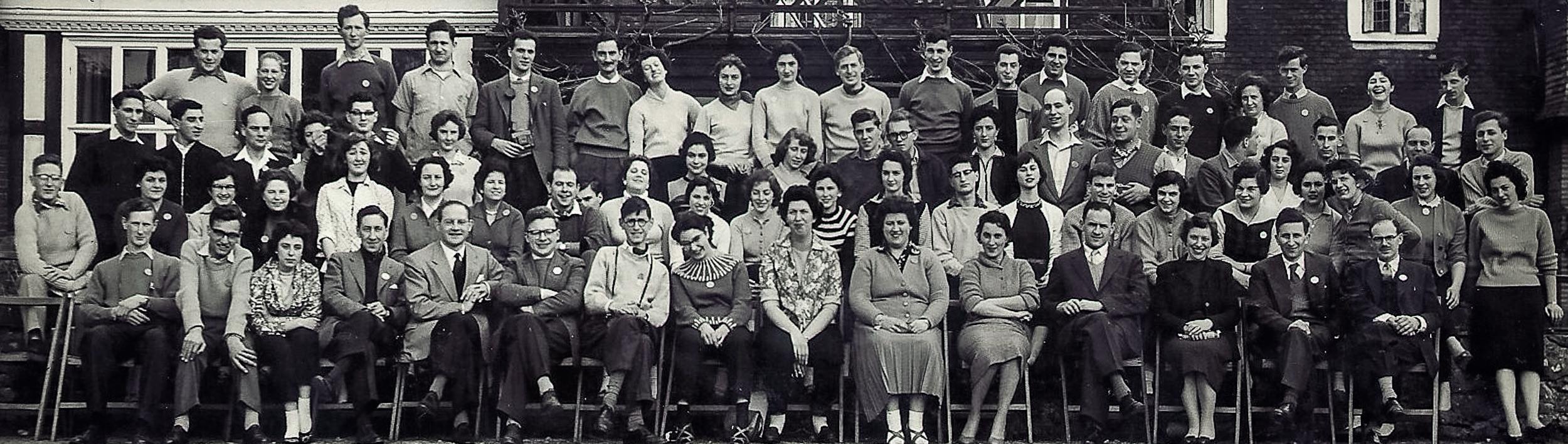
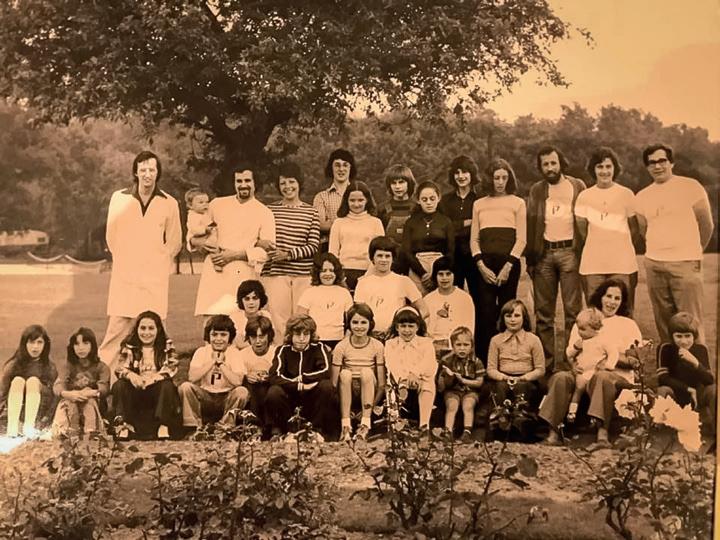
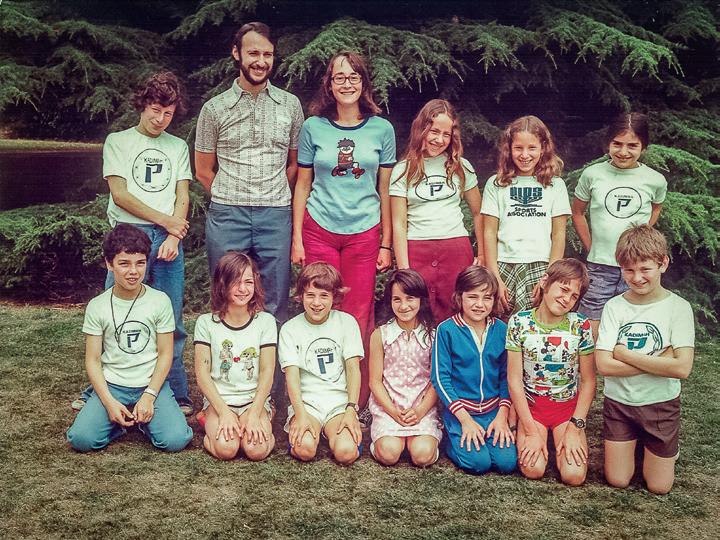
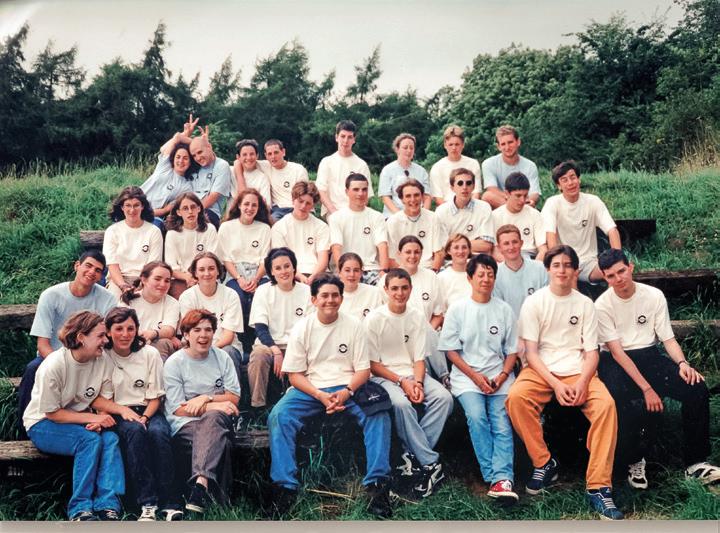
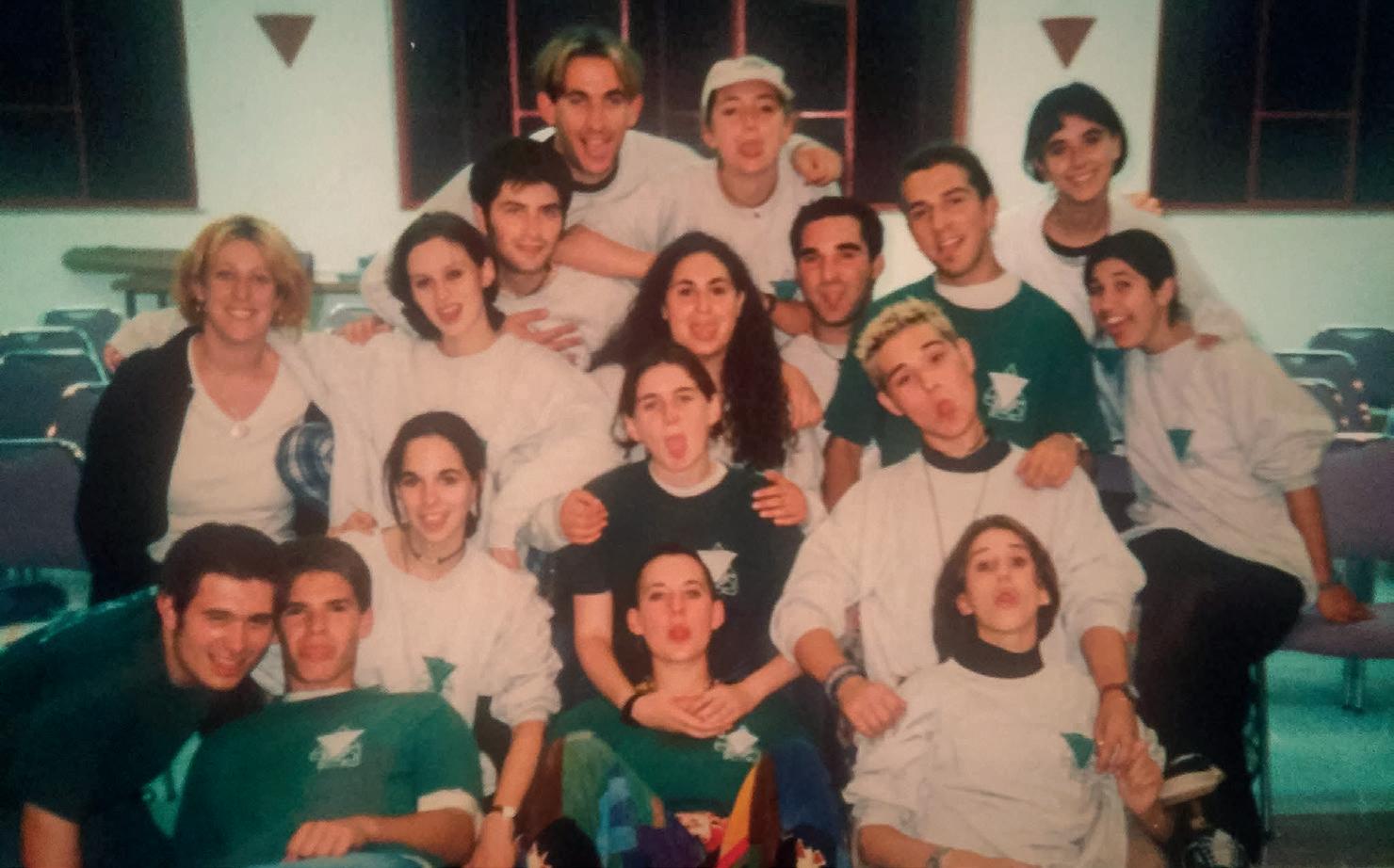
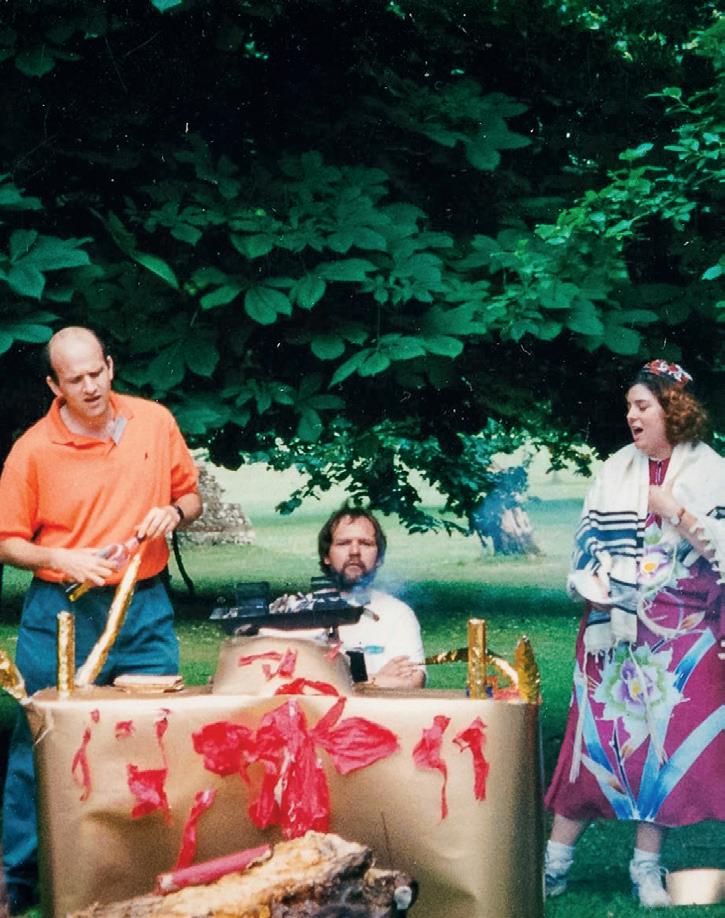
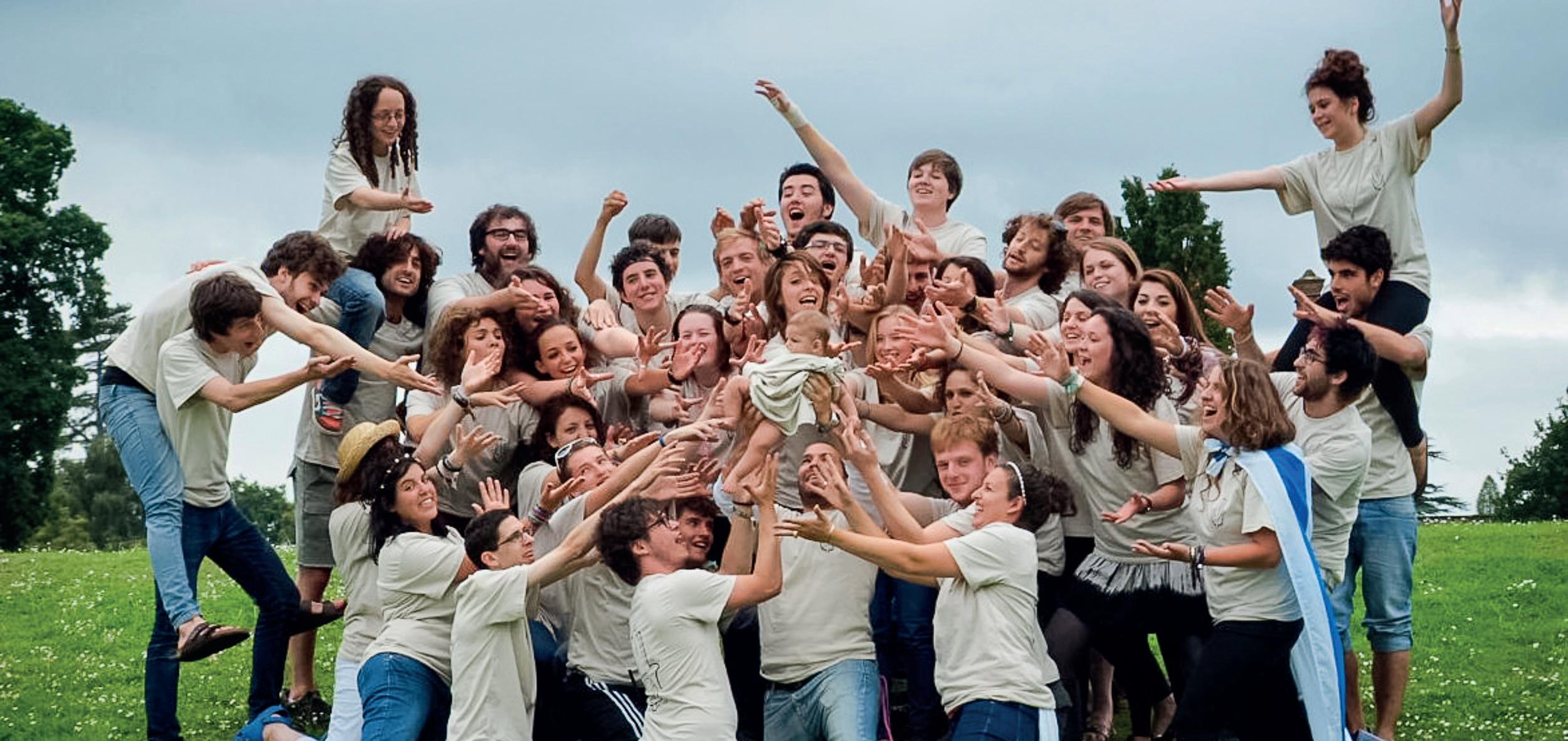
However, as this is the final issue of lj today, we still wanted to honour the history of LJY-Netzer and the Liberal youth Movements that came before it – FLPJYG and ULPSNYC – with these fabulous photos from our past and present.
See how many people you recognise...
The Ark Synagogue (Northwood and Pinner)
T: 01923 822 592
E: admin@arksynagogue.org W: arksynagogue.org
Bedfordshire Progressive Synagogue T: 0845 869 7105
E: info@bedsps.org.uk W: bedfordshire-ps.org.uk
Beit Klal Yisrael (London) E: admin@bky.org.uk W: bky.org.uk
Birmingham Progressive Synagogue T: 0121 634 3888 E: bps@liberaljudaism.org W: bpsjudaism.com
Brighton and Hove Progressive Synagogue T: 01273 737 223
E: info@bhps-online.org W: bhps-online.org
Bristol and West Progressive Jewish Congregation T: 0117 403 3456
E: info@bwpjc.org W: bwpjc.org
Crawley Jewish Community T: 01293 534 294
Crouch End Chavurah E: naomi@crouchendchavurah.org W: www.crouchendchavurah.org
Dublin Jewish Progressive Congregation
E: djpc@liberaljudaism.org W: djpcireland.com
Ealing Liberal Synagogue T: 020 8997 0528
E: admin@ealingliberalsynagogue.org.uk W: ealingliberalsynagogue.org.uk
East London & Essex Liberal Synagogue T: 0208 989 7619
E: administrator@elels.org.uk W: elels.org.uk
Eastbourne Liberal Jewish Community T: 07376 916 920
E: eljc.contact@gmail.com W: eljc.org.uk
Edinburgh Liberal Jewish Community T: 0131 777 8024
E: info@eljc.org W: eljc.org
Finchley Progressive Synagogue T: 020 8446 4063
E: fps@liberaljudaism.org W: fps.org
Kehillah North London T: 07706 354 602
E: info@kehillah.org.uk W: kehillah.org.uk
Kent Liberal Jewish Community T: 07384 993 553
E: enquiries@kljc.org.uk W: kljc.org.uk
Kingston Liberal Synagogue T: 020 8398 7400
E: kls@liberaljudaism.org W: klsonline.org
Leicester Progressive Jewish Congregation
E: chair@lpjc.org.uk W: lpjc.org.uk
The Liberal Jewish Synagogue (St John’s Wood) T: 020 7286 5181 E: ljs@ljs.org W: ljs.org
The Montagu Centre 21 Maple Street London, W1T 4BE T: 020 7580 1663
E: montagu@liberaljudaism.org W: liberaljudaism.org W: pathtoprogressivejudaism.org.uk
Liberal Judaism is the dynamic, cutting edge of modern Judaism. It reverences Jewish tradition, seeking to preserve the values of the past, while giving them contemporary force.
Charity Number: 1151090
lj today is edited by Simon Rothstein. Send news to SimonR@progressivejudaism.org.uk
The Liberal Synagogue Elstree T: 020 8953 8889
E: office@tlse.org.uk W: tlse.org.uk
Lincolnshire Jewish Community W: lincolnsynagogue.com
Mosaic Liberal Synagogue (Stanmore) T: 020 8864 0133 E: office@mosaicliberal.org.uk W: mosaicliberal.org.uk
Norwich Liberal Jewish Community E: nljc@liberaljudaism.org W: norwichljc.org.uk
Nottingham Liberal Synagogue T: 0115 962 4761
E: info@nottinghamliberalsynagogue.com W: nottinghamliberalsynagogue.com
Peterborough Liberal Jewish Community T: 07561 331 390 E: info@pljc.org.uk W: pljc.org.uk
Reading Liberal Jewish Community E: readingliberaljewishcommunity@ gmail.com W: readingljc.org.uk
Shir Hatzafon (Copenhagen) E: shir@shirhatzafon.dk W: shirhatzafon.dk
South Bucks Jewish Community T: 07377 157 261 E: info@sbjc.org.uk W: sbjc.org.uk
Southgate Progressive Synagogue T: 020 8886 0977 E: office@sps.uk.com W: sps.uk.com
The South London Liberal Synagogue (Streatham) T: 020 8769 4787
E: office@southlondon.org W: southlondon.org
Stevenage Liberal Synagogue T: 01438 300 222
E: stevenageliberalsynagogue@gmail.com W: stevenageliberalsynagogue.org.uk
Suffolk Liberal Jewish Community (Ipswich) T:01473 250 797
E: sljc@liberaljudaism.org
W: suffolkljc.co.uk
Three Counties Liberal Jewish Community (Gloucestershire, Herefordshire and Worcestershire)
T: 07900 612 058
E: info@3cljc.org.uk
W: 3cljc.org.uk
Wessex Liberal Jewish Community (Bournemouth) T: 01202 757 590
E: secretary.wljc@gmail.com
W: wessexliberaljudaism.org.uk
York Liberal Jewish Community T: 0300 102 0062
E: info@jewsinyork.org.uk
W: jewsinyork.org.uk
Oxford Jewish Congregation T: 01865 515 584
E: connections@ojc-online.org W: ojc-online.org
Chair Karen Newman
Deputy Chair Alex Kinchin-Smith Treasurer Leslie Moss Inclusion Alexandra Boyd
Communities and Social Justice Owen Power
Officers Penny Beral, Amanda McFeeters and Tommer Spence
President Rabbi Alexandra Wright
Vice Presidents Monique Blake, Nigel Cole, Lord (Stanley) Fink, Louise Freedman, Rabbi Dr Andrew Goldstein, Sharon Goldstein, Jane Greenfield, Lucian Hudson, Dr Edward Kessler MBE, Josie Kinchin, David Lipman, Frank Maxwell, Baroness (Gillian) Merron, David Pick, Rabbi Danny Rich, Tony Sacker, Joan Shopper and Phil Stone
Conference of Liberal Rabbis and Cantors Chair Rabbi Igor Zinkov
Chief Executive Officer / Progressive Judaism Co-Lead Rabbi Charley Baginsky
Director of Development and Membership Alexandra Gellnick Youth Director Becca Fetterman
Head of Comms Simon Rothstein Lifecycle Administrator Lisa Godsal Finance Janet Manderson
Administration Manager Tanya Garfield Student Chaplain Rabbi Leah Jordan
LJY-Netzer Events Coordinator Jess Mindel
LJY-Netzer Movement Workers Tali Ehrlich, Saskia Merrett and Jess Spanier