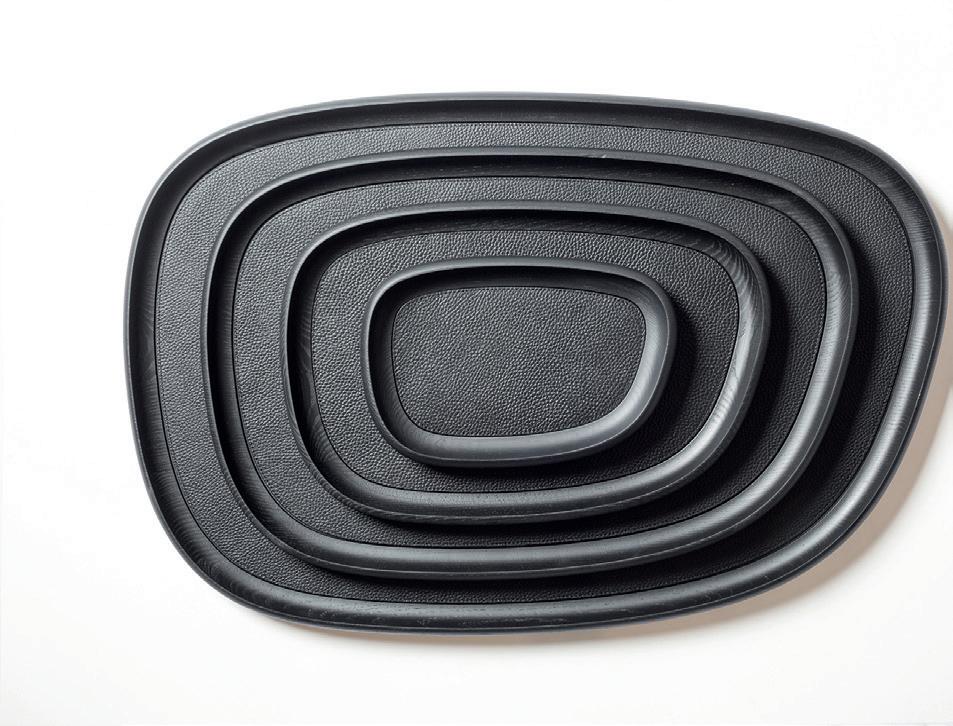
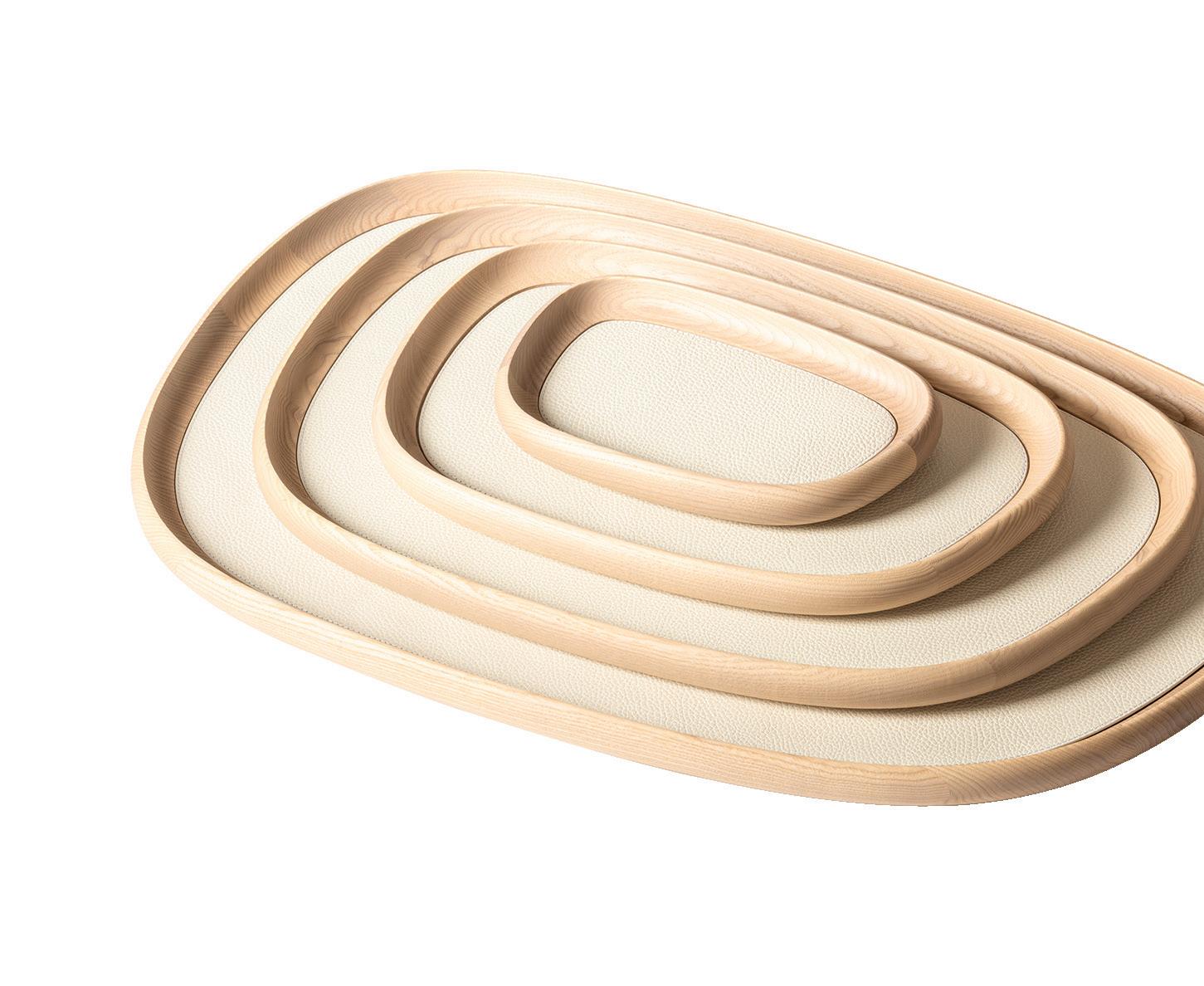
Steelite tell us about Utopia acquision 32 Category: Barware 40 In depth: Russian tableware 42 Trend: Inspired by organic shapes
Cover story we shine a light on Wilmax 20 Glassware some HoReCa must haves
46 Interview Clay Craft India tell us about their development and new collection
22 Interview master sommelier Matthieu Longuère
50 Ambiente
24 Collec tion Dissec tion Bolsius Professional
The focus is on hospitality
And just like that, the November/December issue is upon us. And what an exciting issue it is! The eagle-eyed amongst you will no doubt have noticed we’ve got the hottest ticket in town on our front cover. Maxwell & Williams has the global tabletop license for Universal’s Wicked movie and they are actively looking for distributors.
Welcome to the latest issue of HoReCa, brought to you from the Tableware International team. Now that we are o cially in Q4, it will be interesting to see how 2022 will end up comparing to 2021. Despite a cost- of-living crisis unveiling itself (in the UK at least), there remains a degree of optimism that – actually – people will seek to escape the overhanging fruits of doom and gloom. And if they have ex tra money to spend, it will be spent on hospitality and enter tainment. Good news for venues and good news for suppliers. But let ’s wait to see how the next few months transpire. Af ter the trauma of the past number of years, the sector is steeled for whatever the economy has to throw at it.
Max Grundmann, managing director and chief executive officer of Maxwell & Williams, told Tableware International that licensor Universal sought out a partnership with a brand that embodies “both artistic flair and practicality” –leading them to Maxwell & Williams. The new collection, which has just been released to coincide with the movie launch, covers tabletop, collectables and barware.
“We have worked exceptionally closely with Universal on the Wicked project, engaging in collaborative efforts at every stage to ensure our shared vision comes to fruition,” Max said. “From initial concept discussions to design development and final execution, our teams have maintained continuous dialogue, sharing insights and expertise. This close partnership has allowed us to seamlessly align our creative ideas, resulting in a collection that truly reflects the strengths and aspirations of both brands.”
56 Column Valda Goodfellow on 2024 60 Viewpoints what our contributors think
26 Column Valda Goodfellow wants her stock
28 Ambiente what ’s happening in the HoReCa hall
The movie has already been billed as an Oscarworthy classic so fingers crossed the tableware line is as much of a hit – we have no doubt it will be. Turn to page 30 to read more.
Mairead Wilmot
This issue of HoReCa, therefore, has lots of new products, industr y opinions and trends to sink your teeth into, including a super inter view with master sommelier Matthieu Longuère who is now wine development manager at the acclaimed Le Cordon Bleu London. He gives us some real insight into what makes wine sing, and yes, the glass really does have a par t to play. One of the key things I wanted to know was, when it comes to the glass – does it really matter if its handmade or manufac
he main di ence is nancial ness of the glass and the way the di e joined manufac , some you would not even notice e fr on page 22.
tor opinions in
our wpoints pages on 30, while Wilmax give us some insight into their vast assor tments on page 18. essional bring us up to speed on one of their must-have collec or the hospitalit on page 24 while our friends at Ambiente give us an update on the HoReCa hall on page 28. All this and much mor
PUBLISHER PAUL YEOMANS pyeomans@lemapublishing.co.uk
Royal Goedewaagen announced as a B Corp
Royal Goedewaagen has been recognised as a B Corp, an important milestone in the company’s history. Founded in 1610, the certification underlines the brand’s commitment to sustainability, social responsibility and transparent business operations. It fits seamlessly with the brand’s aim to create high-quality ceramic products that not only meet modern standards, but are also produced in a responsible way, with respect for both people and the environment.
"We not only want to preserve our heritage, but also take the next steps towards a more sustainable ceramic industry," says Pauline Spin, managing director at Royal Goedewaagen. "This certification is a recognition of our hard work and motivates us to take even bigger steps."
Cerve Group unveils new glassware brand
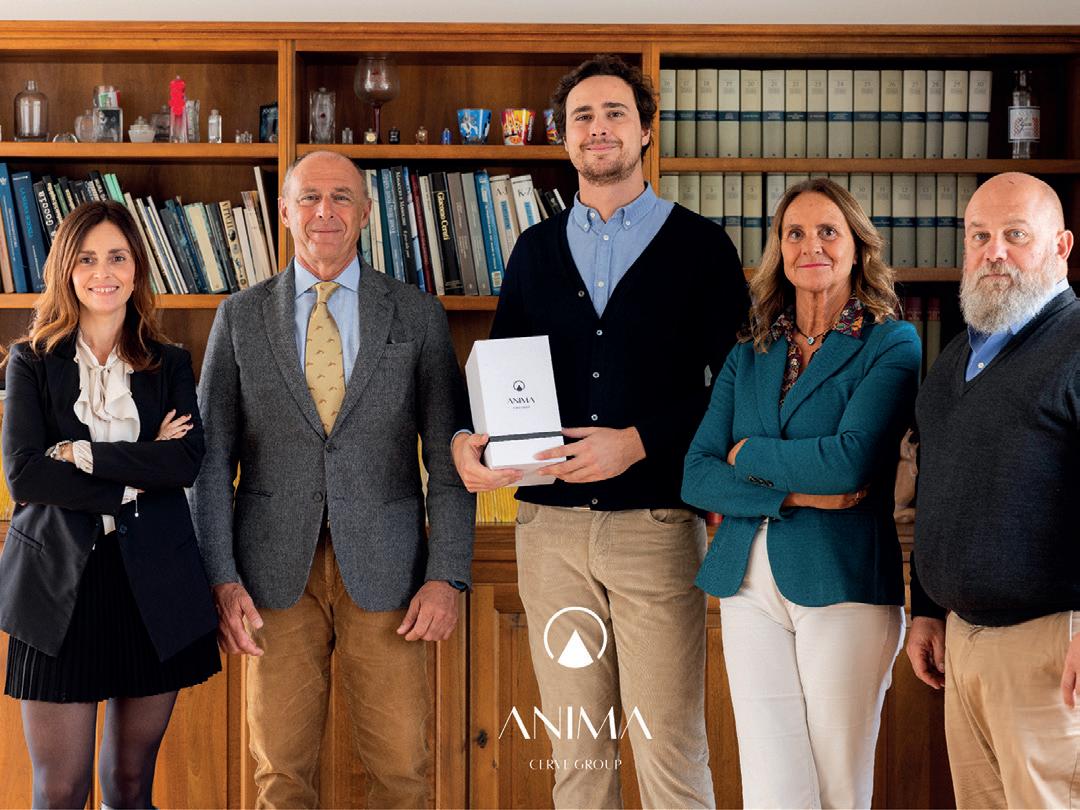
The Cerve Group has introduced Anima, a new glassware brand for high-end beverage producers, renowned wineries, and starred restaurants. With both collections of machine-made and hand-made glasses, meticulously designed to achieve the perfect blend of performance, functionality, and design for different "work" environments – from starred restaurants to wineries – Anima aims to become a benchmark for tasting and luxury hospitality professionals.
Beyond glassware, the brand also includes collections dedicated to the beer and beverage sectors, offering a comprehensive and versatile range.
Meanwhile, Anima Laboratorio, Anima’s creative atelier, serves as an innovation and consultancy space where expert designers collaborate with clients to develop exclusive projects that combine aesthetics, functionality, and uncompromising quality.
Email anima.italy@cerve.it for more details or visit www.animacerve.it.
Beatriz Ball makes Oprah’s Favorite Things list for 2024
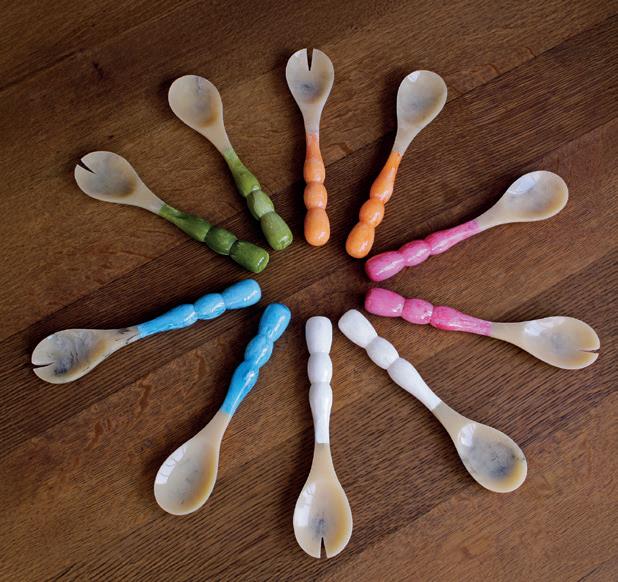
Beatriz Ball’s Resin Rio Bubble Salad Servers (available in five colourways) have been included in 2024 Oprah’s Favorite Things holiday gifts list.
“You can never have enough serving utensils. Anyone who entertains will appreciate this smart-looking and brightly coloured serving set. Ideal for last-minute givers – just needs a bow,” Oprah says on OprahDaily.com.
Oprah selected the New Orleans-based company’s Resin Rio Bubble Salad Servers in five colours: (white, green, pink, blue and orange). They add boldly colourful designs that bring life and fun to your table.
Basketball... but make it art
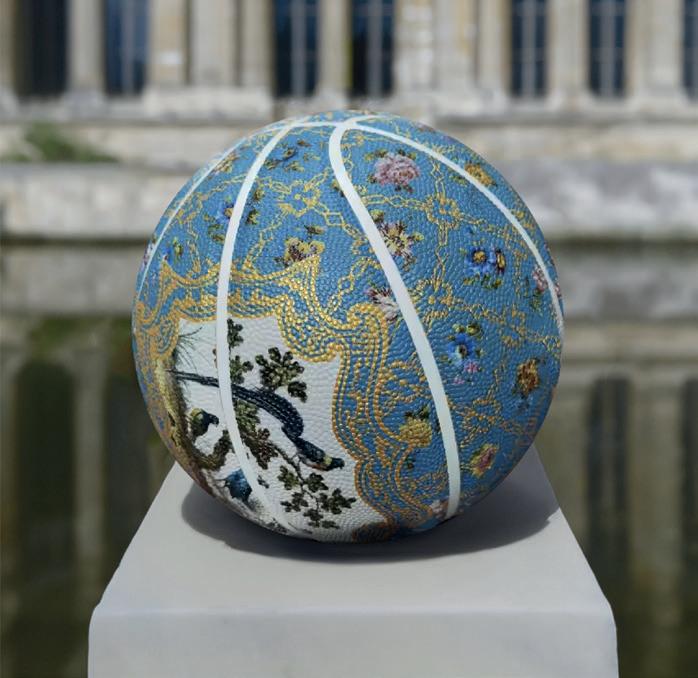
London-based artist Magnus Gjoen recently introduced his latest piece – the Sèvres Basketball. The piece marries the elegance of 18th-century French porcelain with the contemporary edge of sports culture.
Inspired by the iconic Sèvres porcelain crafted for French royalty, the Sèvres Basketball features two central artworks: one side depicts an enchanting image of birds perched on a tree, symbolising freedom and grace, while the opposite side showcases The Adoration of Venus, an ode to love and beauty. Each image is enclosed in an elaborate gold baroque frame. The remainder of the ball is adorned with a meticulously crafted flower pattern, which is encircled by a classical Sèvres-inspired gold chain motif. The Sèvres Basketball is limited edition.
Spotlight on… Yen Qin x Luzerne
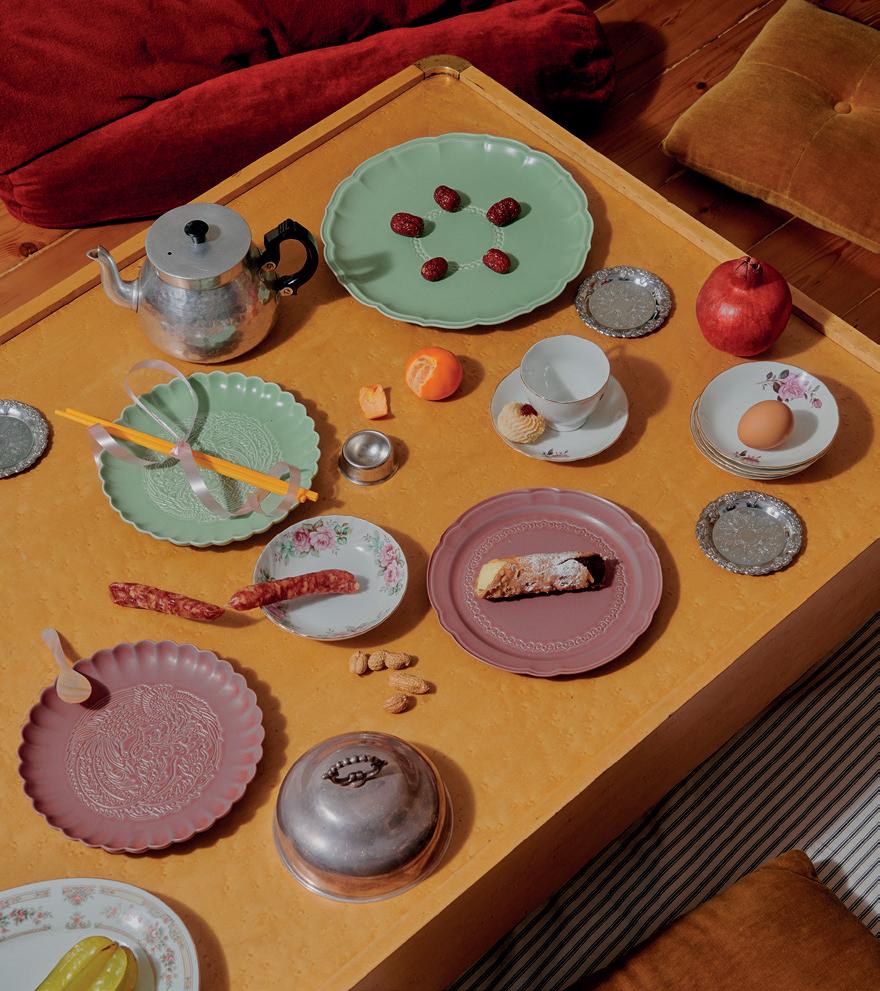
The Dynasty collection by ceramic artist Yen Qin and global tableware brand Luzerne brings a refined touch of Southeast Asia’s treasured Peranakan heritage to today’s modern table. Inspired by the Maritime Silk Road's legacy of cultural exchange, Dynasty unites East and West, where each piece is a tribute to the cultural richness of the region.
The debut release is a reflection of the ‘mix-and-match’ style of communal dining, offering plates in three shapes and five colours to create a vibrant, layered aesthetic perfect for any gathering. Each handcrafted piece is made in limited quantities, where ceramic artistry and time-honoured techniques come together to create something truly extraordinary.
www.yenqin.com/collections/all
Lewis Wark looks to expand work force
Job opportunities as brand expands into
new areas of luxury market
Lewis Wark is looking to expand its sales team as it seeks to make further inroads in the luxury market.
The company, which has marked 30 years since it was founded by Martyn Lewis and Jill Wark in 1994, has opened up three new positions.
The company seeks a business development sales manager, and two further sales managers.
Speaking to Tableware International, the company said: “Exciting opportunities await at Lewis Wark as we set our sights on expanding into new areas of the luxury market! If you have a passion for luxury brands and are eager to be part of an innovative team, we want to hear from you. We are seeking a dynamic senior team member – a business development sales manager and skilled sales managers to join our team and drive growth in
the luxury markets. If you have a passion for highend brands and a proven track record in sales, we want to hear from you.”
Lewis Wark, specialises in connecting luxury brands with discerning clients through their dedicated network.
Their focus, as agents and distributors, is to elevate the presence of luxury brands, ensuring that every brand they represent receives the attention it deserves.
Based in London, Lewis Wark also has strategically located warehouses in Biggleswade.
With a commitment to excellence and unparalleled service, they are poised to lead the market and elevate the shopping experience for our discerning clientele. Please email for information and to send CV details to jill@lewiswark.com
Gianluca Colonna
is new CEO of Rosenthal
Rosenthal GmbH recently welcomed a new CEO. Gianluca Colonna has a long history with Rosenthal, having served as chief operating & sales officer and managing director from 2009 to 2020. He brings invaluable experience from his subsequent roles at Venini S.p.A. and the Prada Group. Colonna, an alumnus of Milan's Bocconi University, is set to advance the brand development plan initiated by Rosenthal and elevate the positioning of the porcelain manufacturer on the global stage.
Franco Coppo will continue to hold overall responsibility as managing director of Rosenthal GmbH. “We are thrilled to welcome Gianluca Colonna back to our team. His extensive expertise will be instrumental,” says Coppo.
“I am truly honoured to rejoin the Rosenthal family. Together, we will uphold our tradition of excellence while exploring new avenues to enhance our brand's presence internationally,” adds Rosenthal's
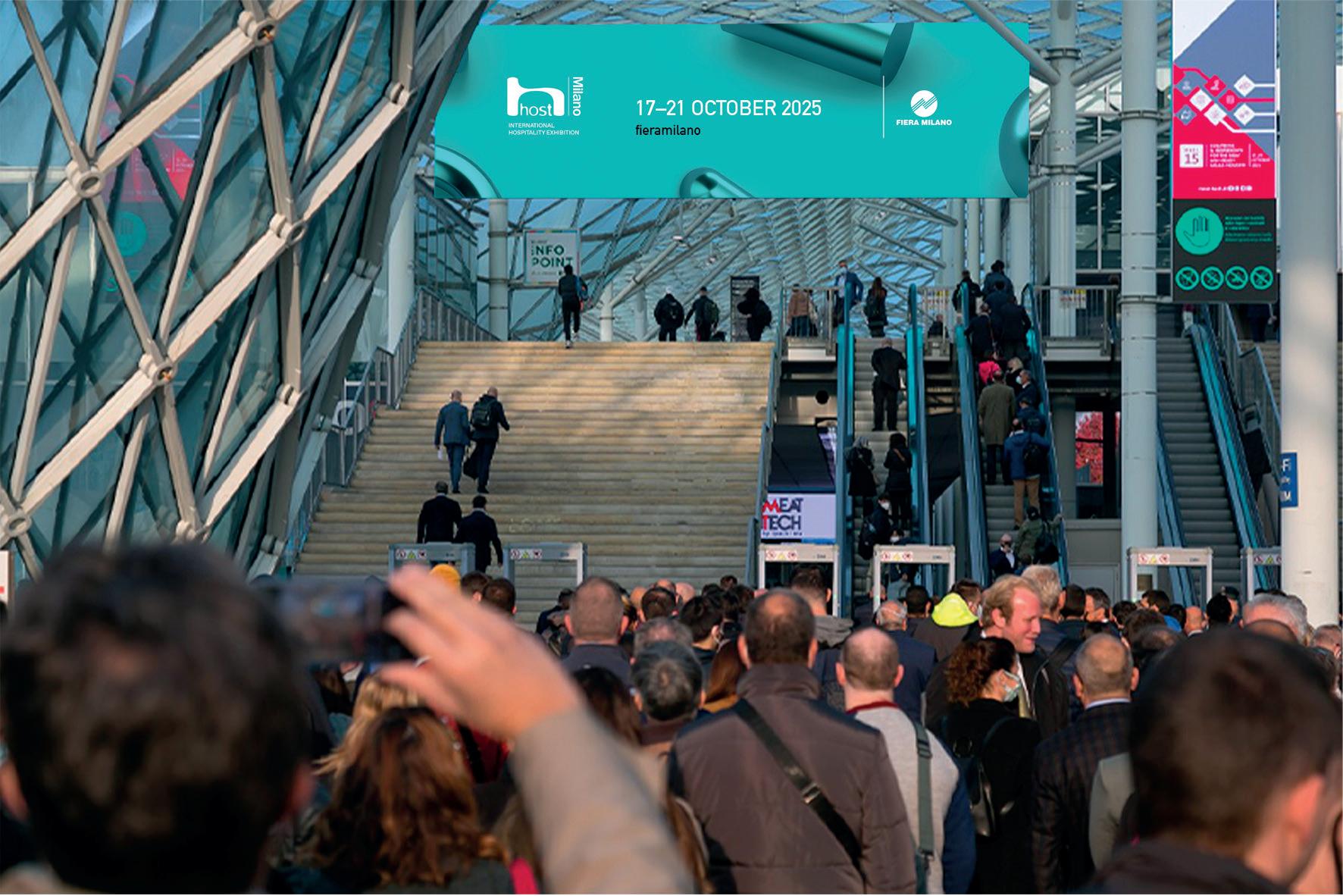
Are you ready for Host 2025?
HostMilano will open its door next October, and plans are already afoot to make the trade show one of the most dynamic and important for the professional hospitality industry. HostMilano, organised by Fiera Milano, will be held at fieramilano – Rho from October 17 to 21 October, 2025.
To date there are already more than 1,200 registered exhibitors, 40 per cent of whom are international from 43 countries. Visit www.host.fieramilano.it/en for more.
Lucideon completes 100 per cent hydrogen in major step towards energy efficiency for ceramics industry
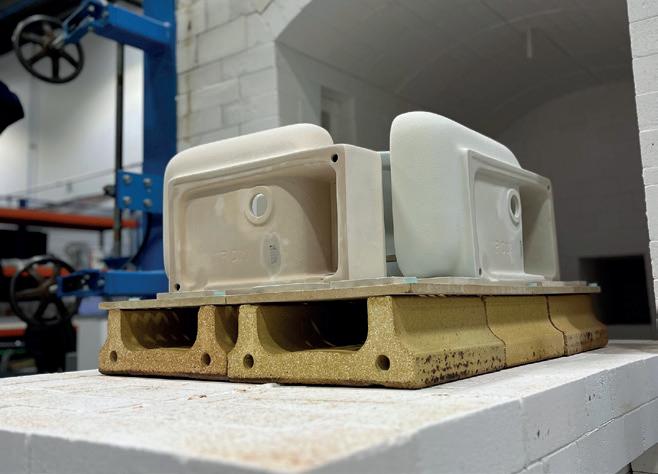
Lucideon – an advanced ceramics research organisation – has successfully completed the first 100 per cent hydrogen firing at a multi-million-pound open-access centre, which supports research and development in the advanced ceramics industry.
Lucideon worked with Creavit Türkiye on the alternative energy project to successfully fire sanitaryware solely by hydrogen, over 13 hours at 1200°C, at the £10 million AMRICC Centre, based in Staffordshire.
Firing using 100 per cent hydrogen represents a significant first in the innovation stakes for The AMRICC Centre, which operates under an open-access format, ensuring materials, processes, and technologies can be developed at a commercially relevant scale and shared across industrial and academic fields.
Mark Dudson, chief operating officer, Advanced Materials at Lucideon, oversaw the project.
Lalique honours Year of the Snake with several serpentinspired pieces
As the Chinese New Year starts on 29 January next, Lalique is marking the occasion with various sculptures sure to appeal to those who celebrate the event.
The snake is a symbol of wisdom and intelligence, known for being the most enigmatic animal in Chinese astrology.
Lalique is celebrating this zodiac sign with various sculptures - from an intertwined body forming an 8, the lucky number in Chinese culture to vases and jewelleryall handmade and hand signed 'Lalique' at its only factory in Alsace.
As well as contemporary items there is also a heritage collection such as this Serpent Vase which was originally designed by Rene Lalique in 1924 and is still sold throughout the world today.
www.lalique.com
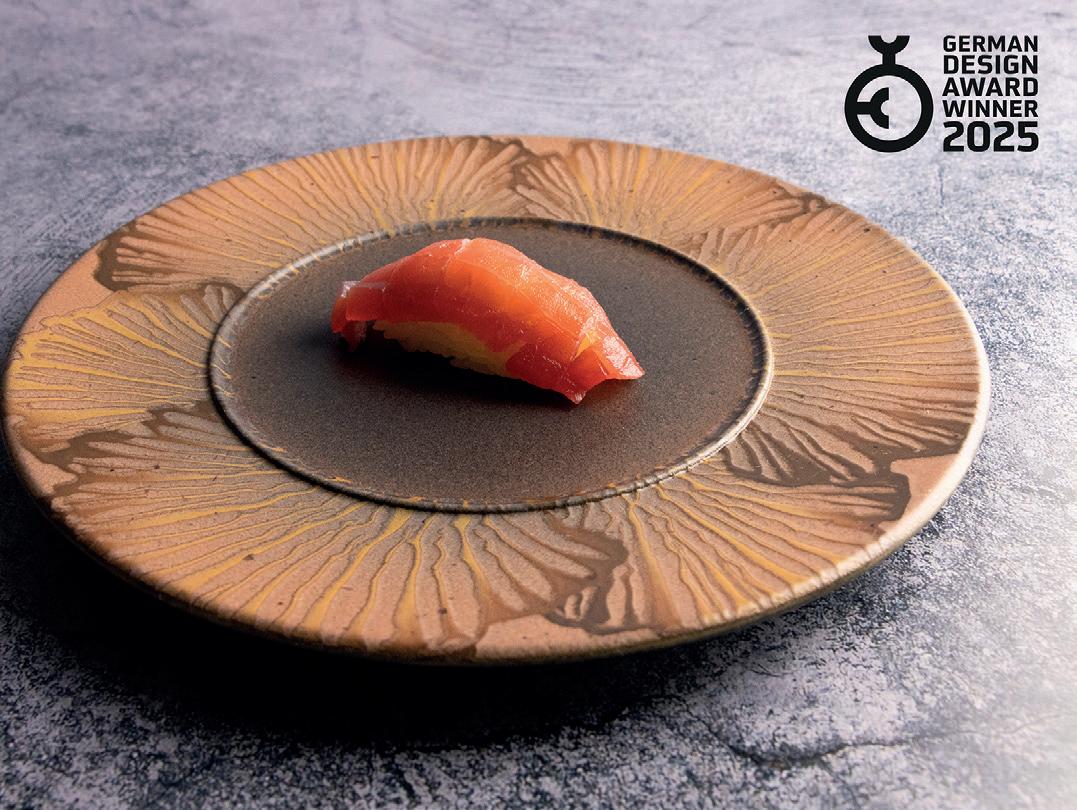
Mesa Ceramics triumphs at 2025 German Design Awards
Mesa Ceramics has scooped two German Design Awards 2025 in the Excellent Product Design category. The awards celebrate the company’s exceptional contributions to the design world, particularly through its acclaimed Akiko and Kaze collections. The Akiko collection stands as a testament to the beauty of imperfection, drawing inspiration from the Japanese aesthetic of wabi-sabi. Kaze, meanwhile, embodies the fluidity of nature with its striking serving set that features an elegant eco-friendly digital print. With collections like Akiko and Kaze, Mesa Ceramics says it continues to redefine the intersection of functionality and beauty, proving that exceptional design can indeed shape experiences.
Arcturus Group to distribute Ichendorf Milano
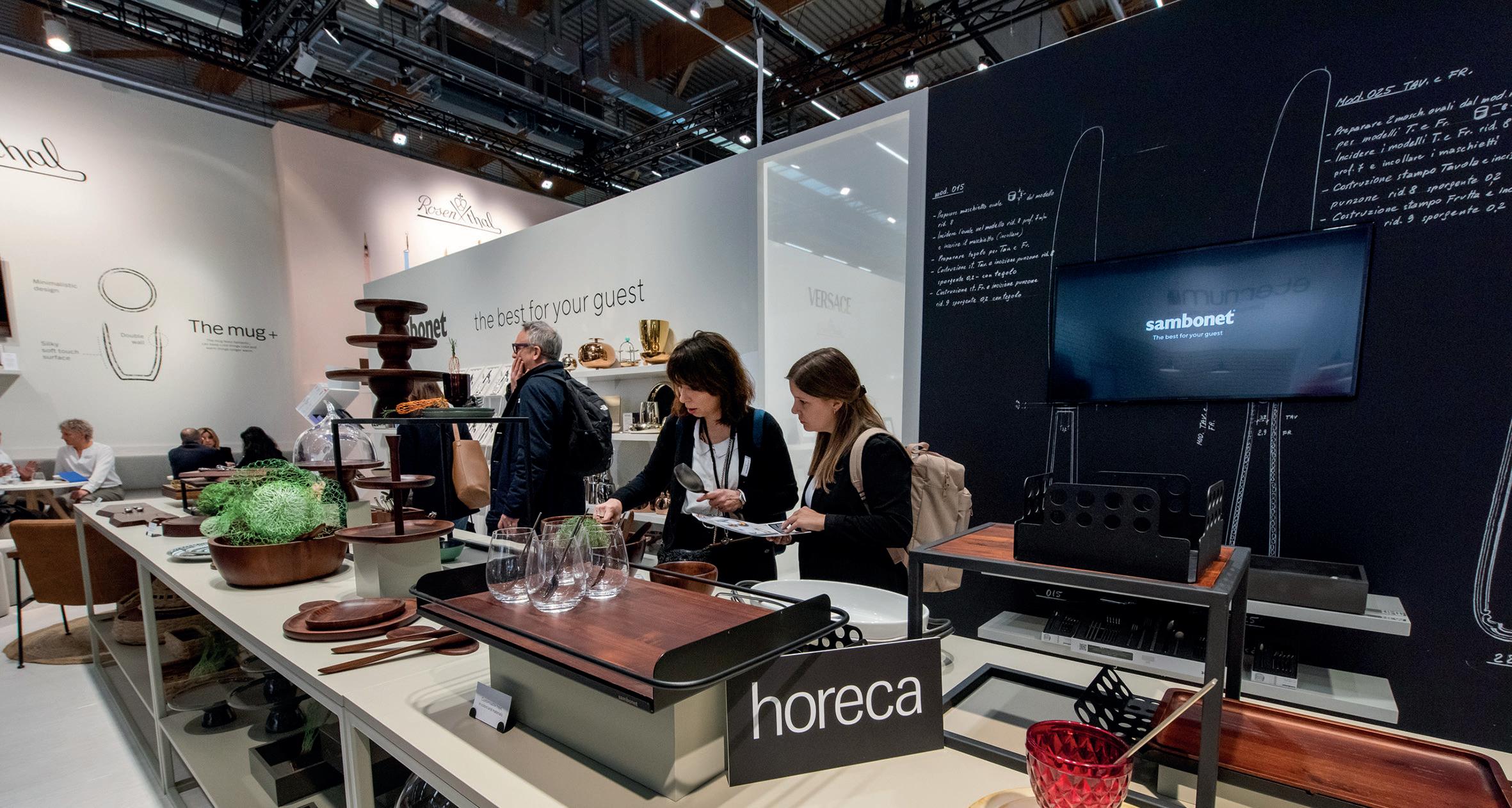
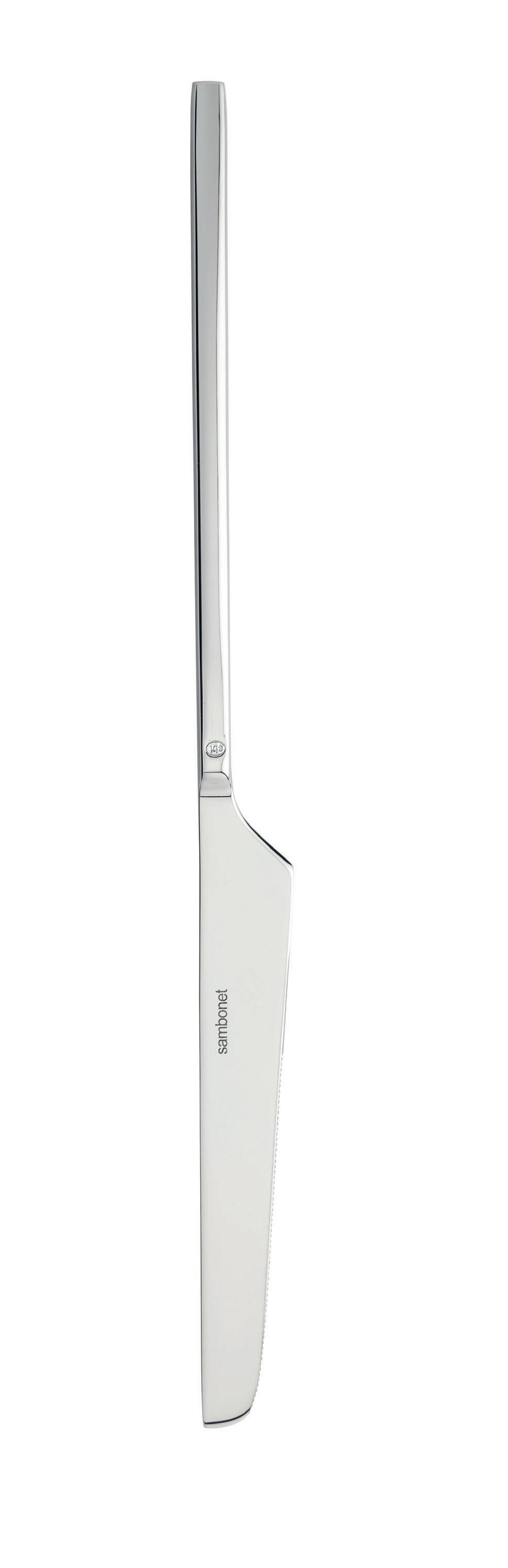
The Arcturus Group has signed an exclusive distribution agreement with Corrado Corradi Srl for the Ichendorf Milano brand. This commercial partnership will see Arcturus – which boasts brands such as Sambonet and Rosenthal under its remit – introducing Ichendorf glasses into the US market. "We believe that Ichendorf Milano perfectly embodies the values and quality standards that we strive to deliver to the market through authentic products and superior craftsmanship," commented Giovanni Coppo, chief executive officer of Sambonet Paderno Industrie.
Porcel marks 37th anniversary with new sculpture
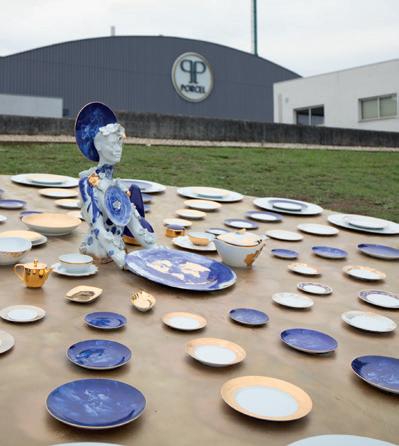
Porcel celebrated its 37th anniversary with the unveiling of a specially commissioned piece. On November 19, the brand marked 37 years since being founded by Adolfo Roque by revealing a sculpture in the company's garden. Porcelain Pantheon is the first porcelain piece designed by German artist Regina Frank. The artwork is an expression of respect for the heritage of porcelain, symbolising both tradition and innovation - core brand values.
2 - 4 MARC H
Chicago, USA
WHERE THE INDUSTRY CONNECTS
AROUND
INNOVATION AND INSPIRATION
The Inspired Home Show 2025 will be the 125th edition of the trade show. Although much has changed since the first event was held in 1939, one quality that has remained consistent throughout the decades is the Show’s dedication to bringing high-quality buyers and sellers together. In March, we will celebrate our past as well as our future as we continue to evolve in order to create the most productive and vibrant home + housewares marketplace possible
We look forward to seeing you in Chicago, 2-4 March!
– DEREK MILLER, President & CEO International Housewares Association
The work pays tribute to the durability and value of porcelain over several generations.
For more information and to register for your FREE entrance badge, please visit: TheInspiredHomeShow.com
Taste the spirit
Cumbria Crystal has released a series of six new taster glasses. Made of 24 per cent lead crystal, the Grasmere, Battuto, Helvellyn, Loop, Palm and Boogie Woogie are designed for connoisseurs of spirits. These stunning glasses are crafted by British artisans, mouth-blown in lead crystal before being painstakingly hand-carved on a diamond lathe. www.cumbriacrystal.com
Serving salad has never looked so good
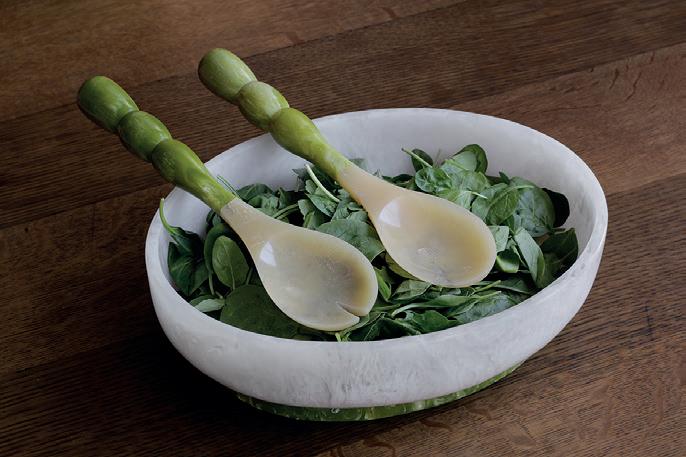
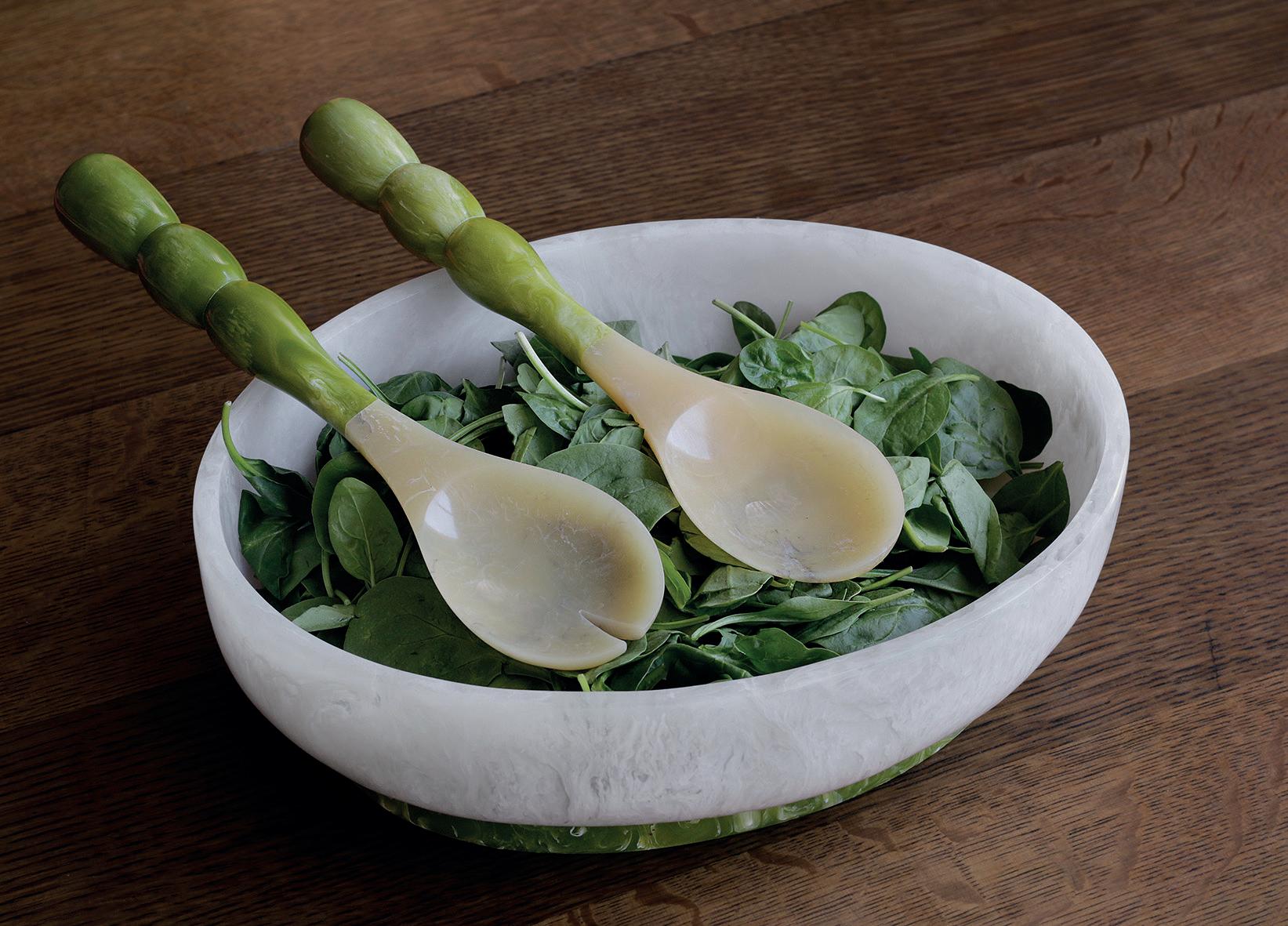
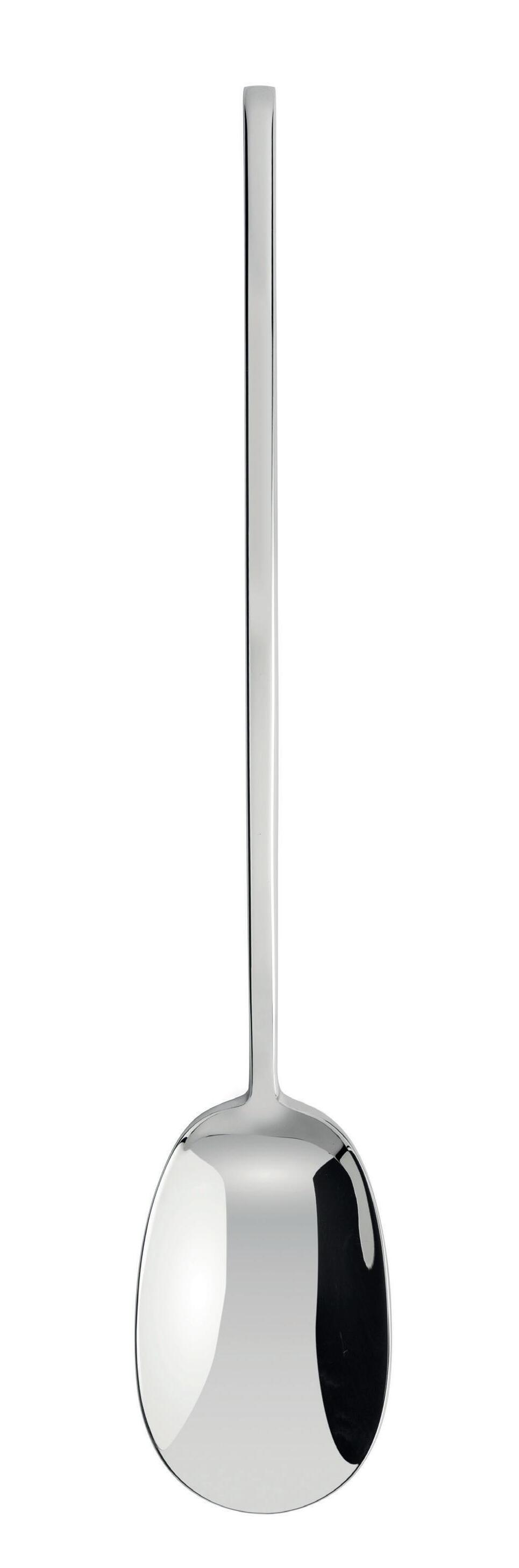
Beatriz Ball is introducing a new line of translucent resin salad servers with vibrant “bubble” handles, and tines and spoons resembling natural horn.
Available in five colour combinations – white, green, pink, orange and blue – the Resin Rio Bubble Salad Servers in green (shown) are perfect for serving salads, indoors or outdoors.
Rounding out the new resin offerings are large and small round bowls with contrasting bases, plus large oval bowls also with contrasting bases. Each resin piece is unique with its own swirled colour pattern, adding one-of-a-kind artistry to your table setting. And of course, they are BPA free.
wholesale.beatrizball.com
Dibbern expands Brasserie
Glass with Krosno class
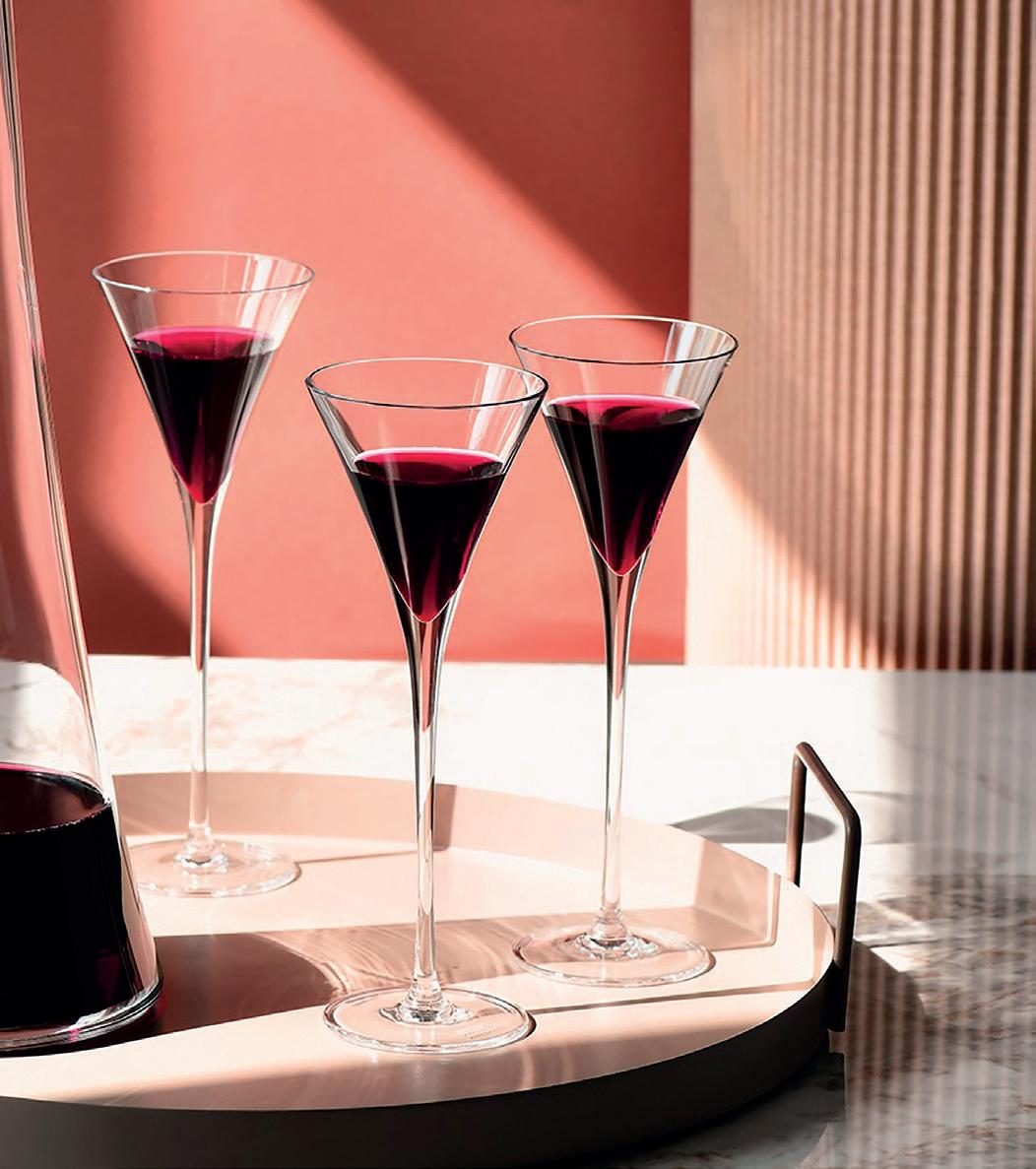
Krosno’s elegant Empire liqueur glasses immerse drinkers in a world of class and luxury. Handmade from Crystalline glass, Krosno say the glasses were “created out of a love for creating the perfect things, where subtlety and finesse are a key aspect”. www.krosno.com
Did you know?
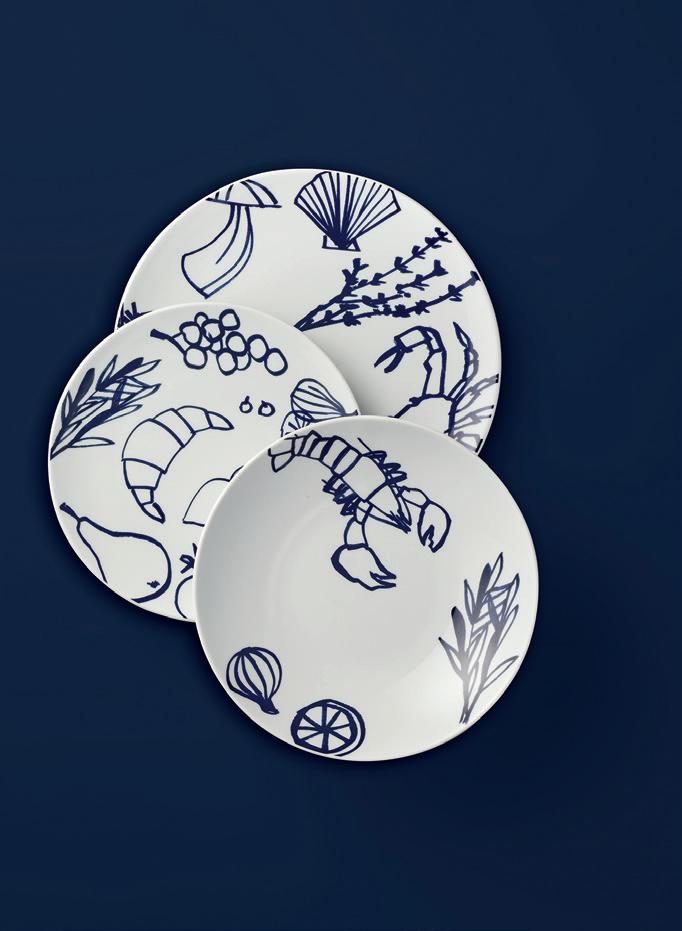
Dibbern’s Brasserie collection, imagined by Anna Pascher, has been expanded. Three new plate designs have been added to the collection which boasts maritime motifs (think shrimp, crabs, shells, and herbs) standing out in stylish blue on a white background. The designer has captured surreal table scenes, playfully depicting elements and delicacies of French cuisine. www.dibbern.de
The Le Thiers collection from Clause Dozorme consists of nearly 10 different models. One of the most jaw-dropping is the Le Thiers l’Ame Luxe, designed by none other than Baccarat’s Thomas Bastide. (The collaboration with the designer actually gave birth to three models – the Thiers, the Shadow, the Ame and the glamorous, Ame Luxe.) The ultimate in refinement, Le Thiers l’Ame Luxe, with its diamond-cut handle, takes you to the heights of luxury in cutlery. www.dozorme-claude.fr/en
The Lux effect
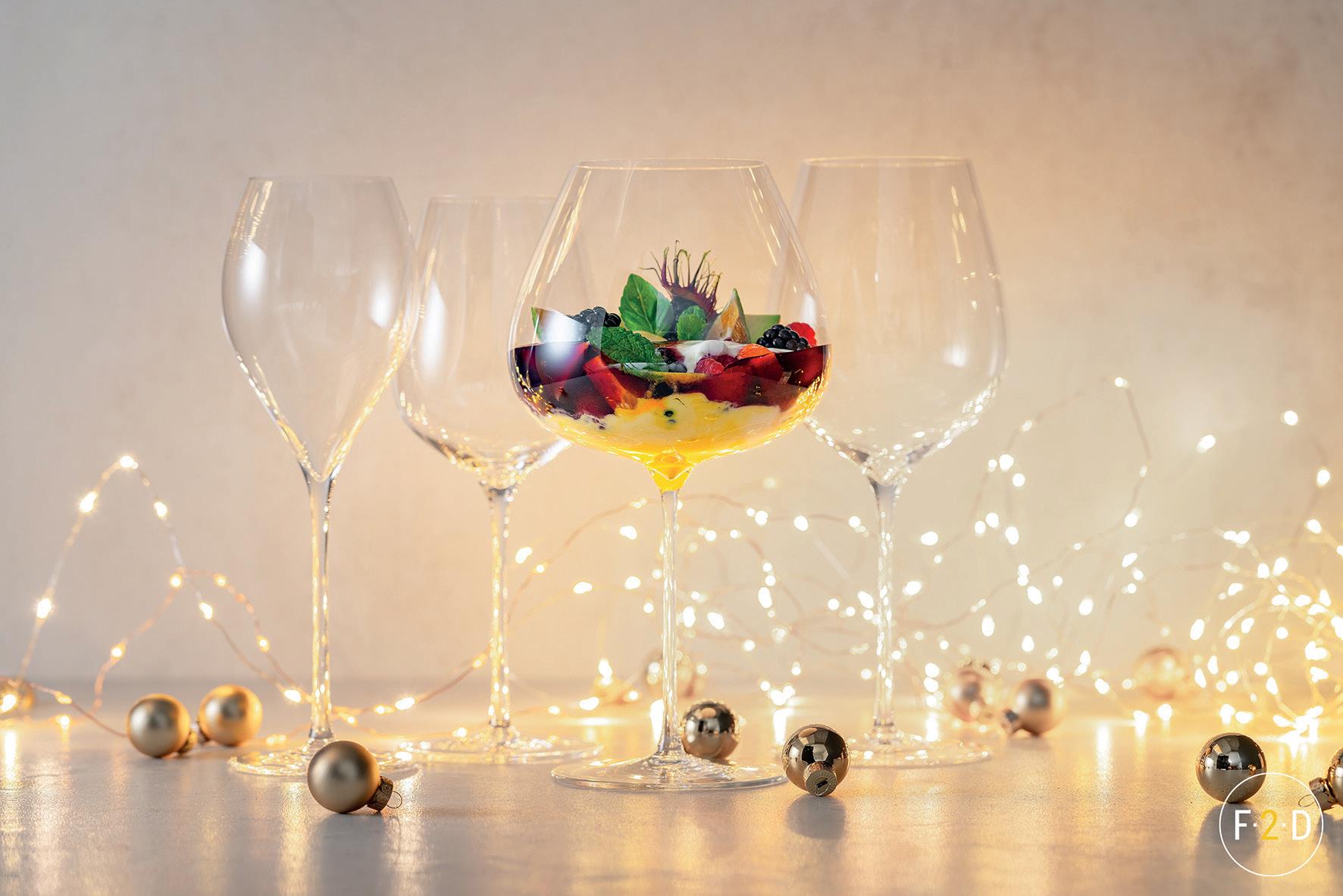
Fine2Dine’s new Lux collection of glasses – made from a special formula containing zinc, magnesium and barium – are remarkably light and thin.
Despite their fragile appearance, the brand says the glasses are surprisingly strong and flexible, thanks to their innovative composition. In addition, they are dishwasher safe, making them easy to clean and resistant to scratching and clouding. www.fine2dine.com
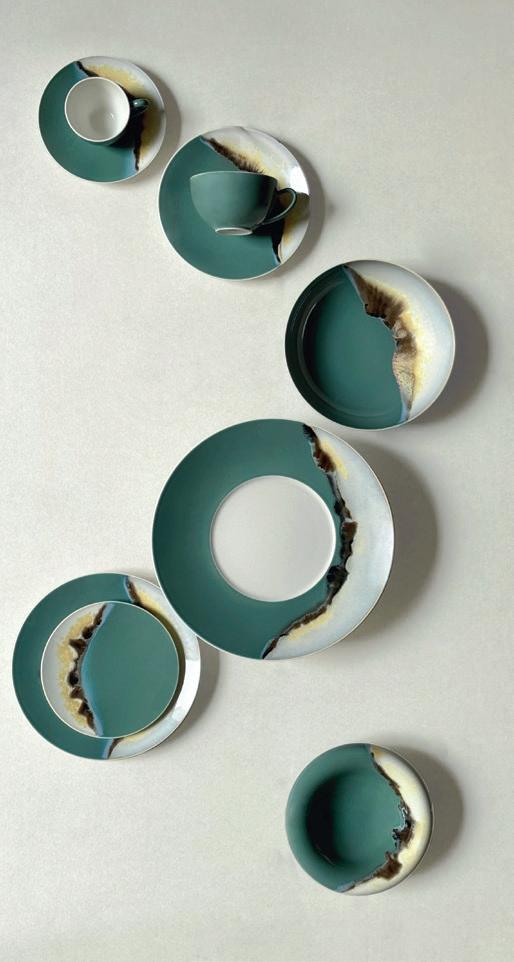
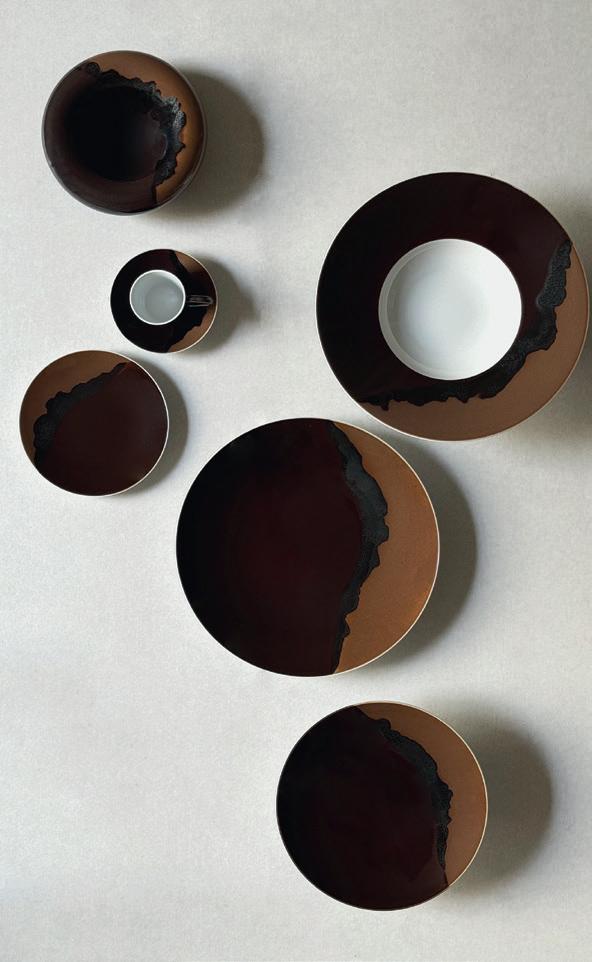
Jaune de Chrome inspired by great landscape
The Jaune de Chrome brand recently unveiled their stunning new porcelain collection.
Available in two impactful designs, Paysage takes its inspiration from the majestic beauty of landscapes from around the world. The brand says the collection captures the essence of nature with Iriomote and Kilimandjaro.
The contemporary Iriomote boasts a beautiful deep shade of green which meets paler iridescent colourways. Meanwhile, Kilimandjaro is a gloriously moody meeting of deep brown and black. www.jlcoquet.com
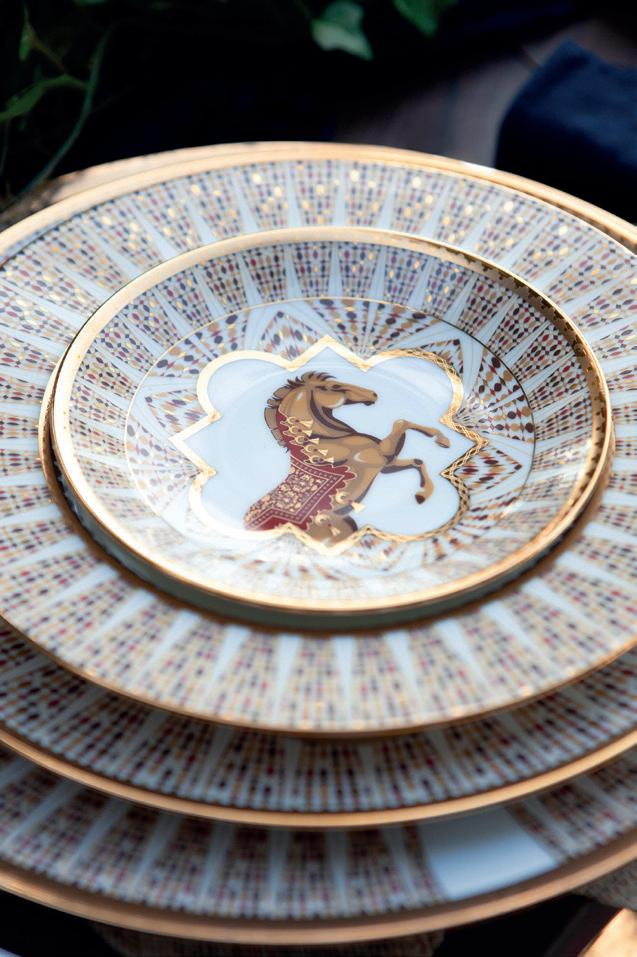
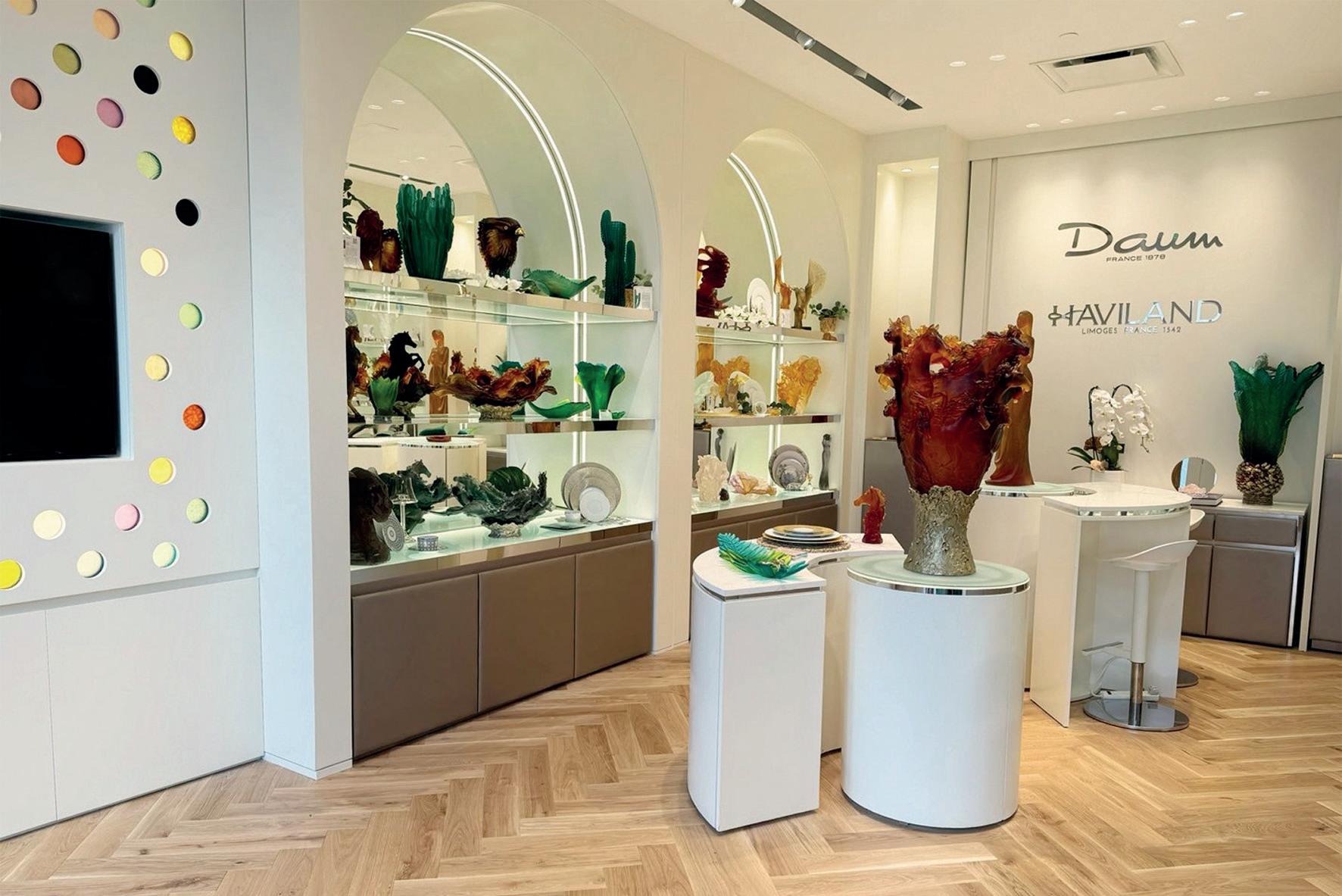
Haviland celebrates equestrian world with new collection
Maison Haviland’s newest collection marries exquisite design with innovative storytelling.
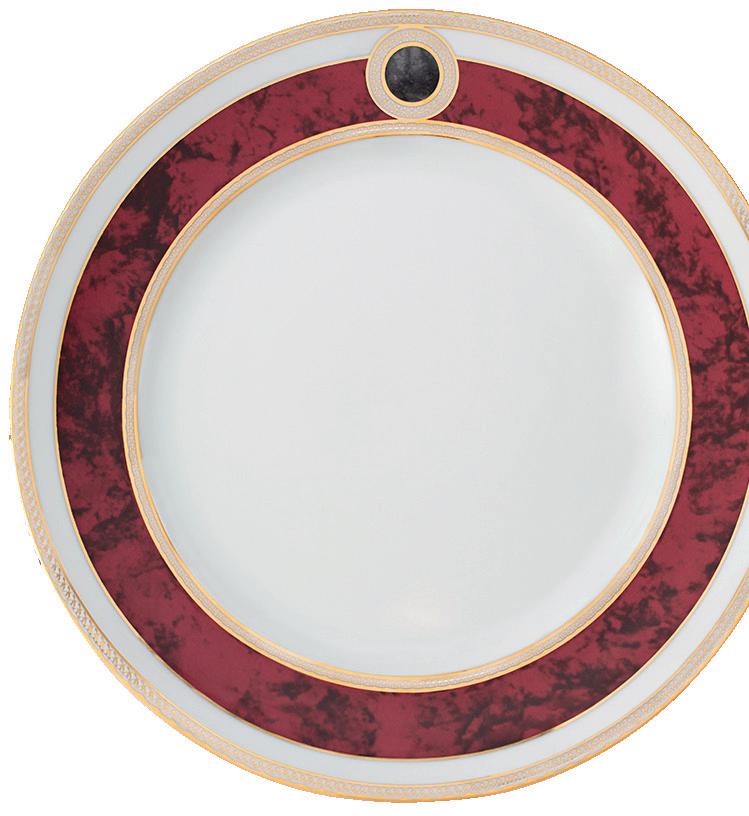
The creative workshop has crafted a new collection under the majestic name Cavalier Royal. This prestigious collection features designs with golden lines and geometric shapes, evoking pure Andalusian tradition. The innovative work by Haviland is a tribute to the timeless elegance of the equestrian theme. Note the tones of brown, beige, red, and gold redefining the lines of this vibrant harlequin. Playful curves, trompe l’œil effects, and imperfect asymmetries give the collection’s design a majestic feel.
www.haviland.com
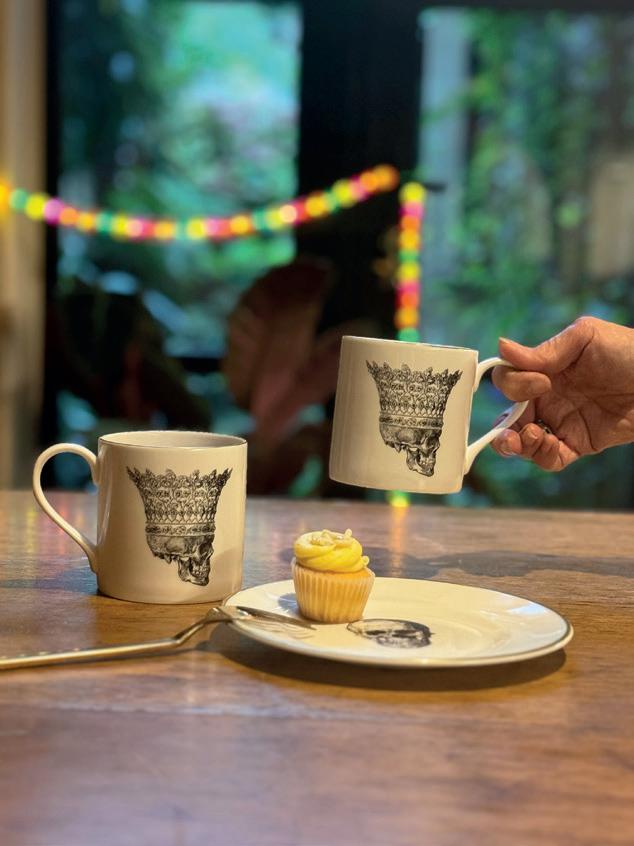
Melody Rose’s bestselling Skull in Crown design in your hands
Melody Rose has launched a new mug design featuring its bestselling Skull in Crown motif.
“It’s a little larger than our usual mugs so it’s absolutely perfect for morning tea but also coffee of course and hot chocolate,” the brand tells us. The new mugs have a hand painted 22kt burnished gold gilded rim and a dash of gilding on the hand for a splash of lux. www.melodyrose.co.uk
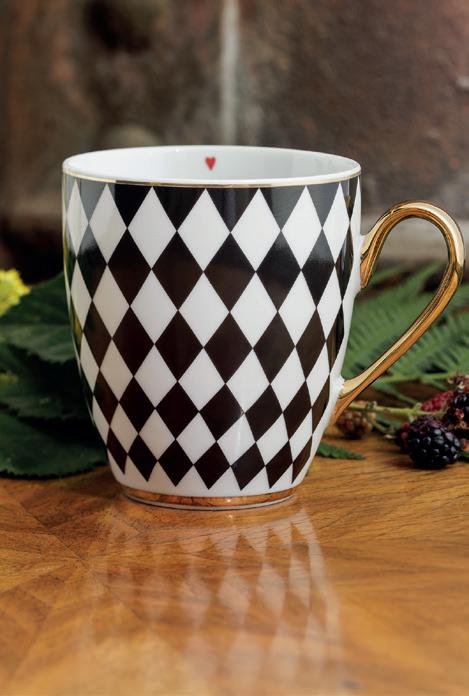
Meet the Queen of Hearts
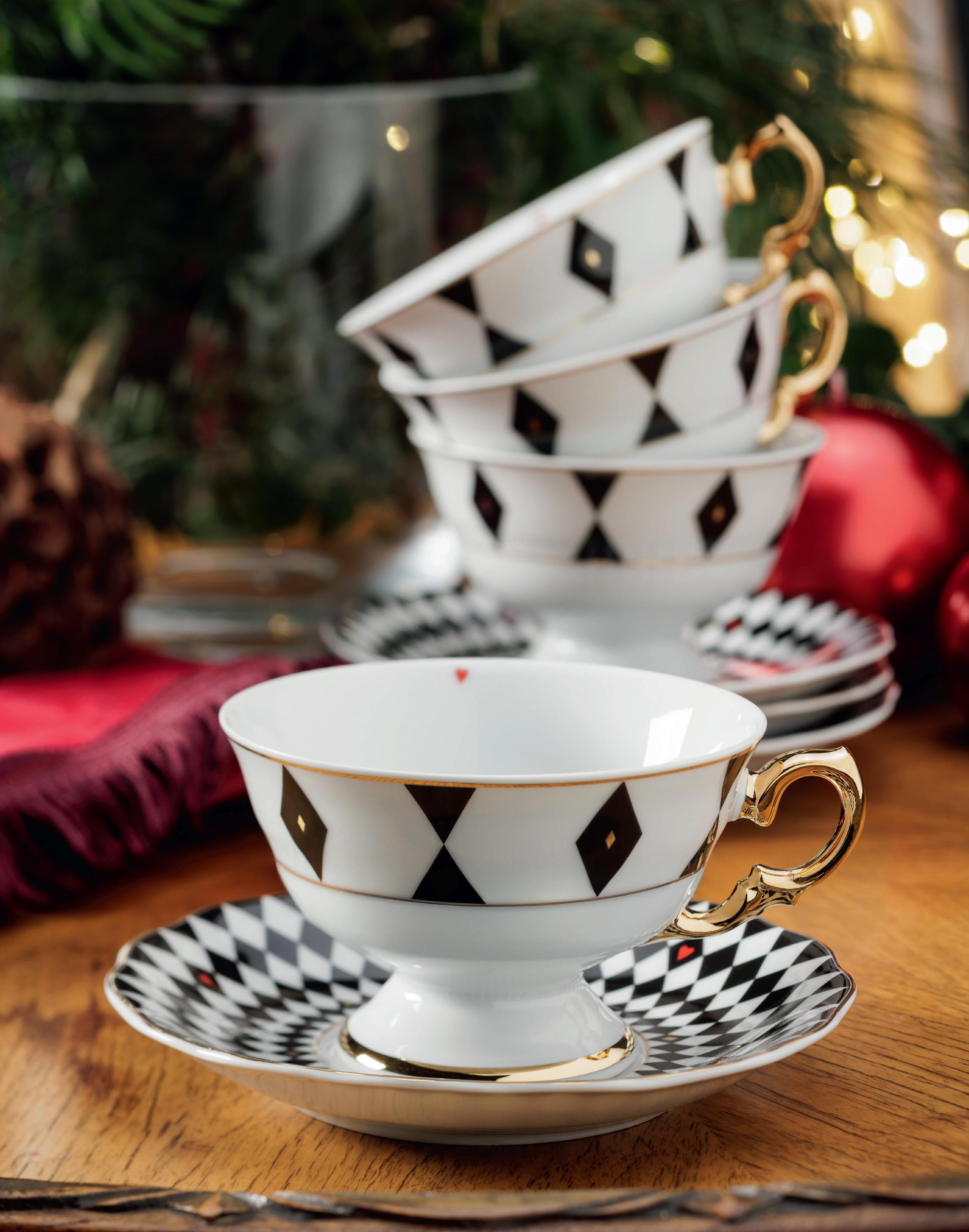
Elegant, classic, distinctive – the latest collection from Ćmielow Porcelain is a celebration of style. The white porcelain is contrasted with black diamond-shaped decorations, complemented with a subtle red heart, which serves as the collection’s leitmotif. Elements of the collection have been hand-painted in high-carat gold. www.porcelana.com.pl
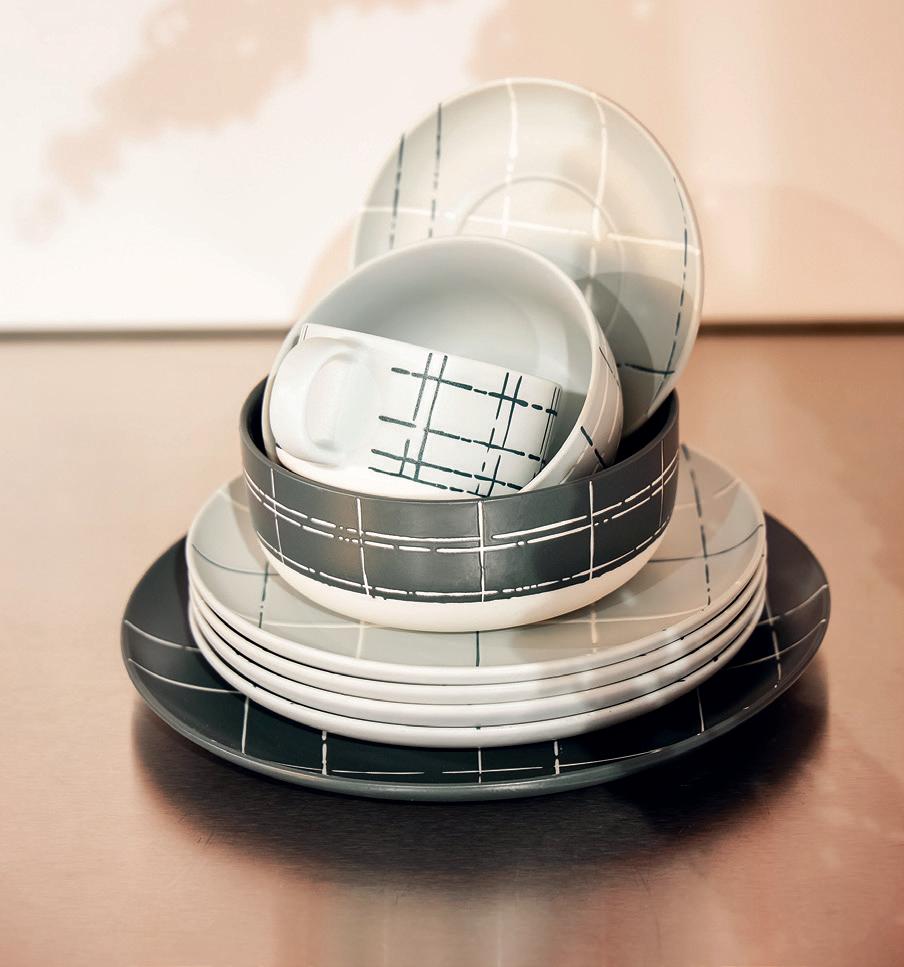
Fun Karo from Thomas celebrates relaxed dining
The new Fun Karo collection from Thomas boasts a unique décor with chequered lines, drawn in thinner and thicker strokes, as if by hand and applied in relief.
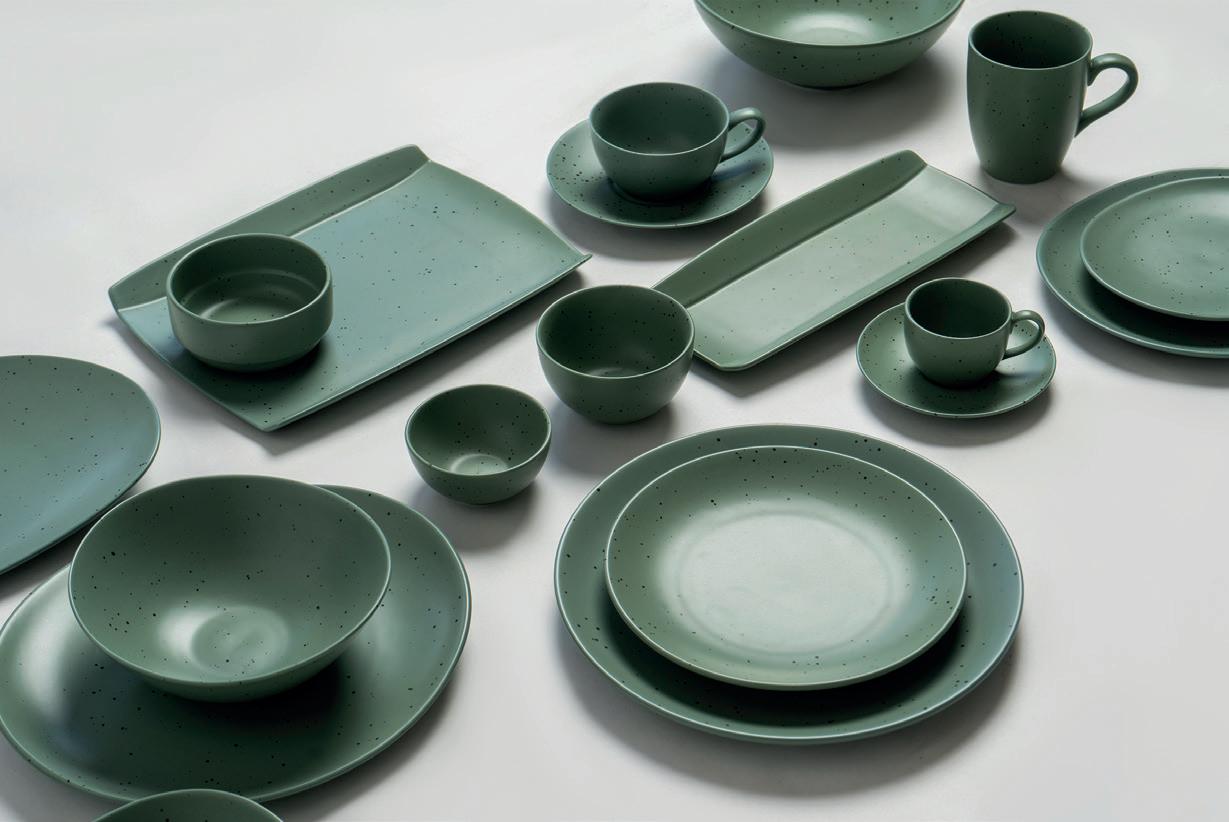
Fun Karo is all about casual, relaxed dining. The collection comes in bright and intense green shades while the porcelain plates, cups and bowls have a matt, handfinished look that is reminiscent of stoneware. Fun is available in two patterns; Karo Light and Karo Dark.
www.thomas-porzellan.de
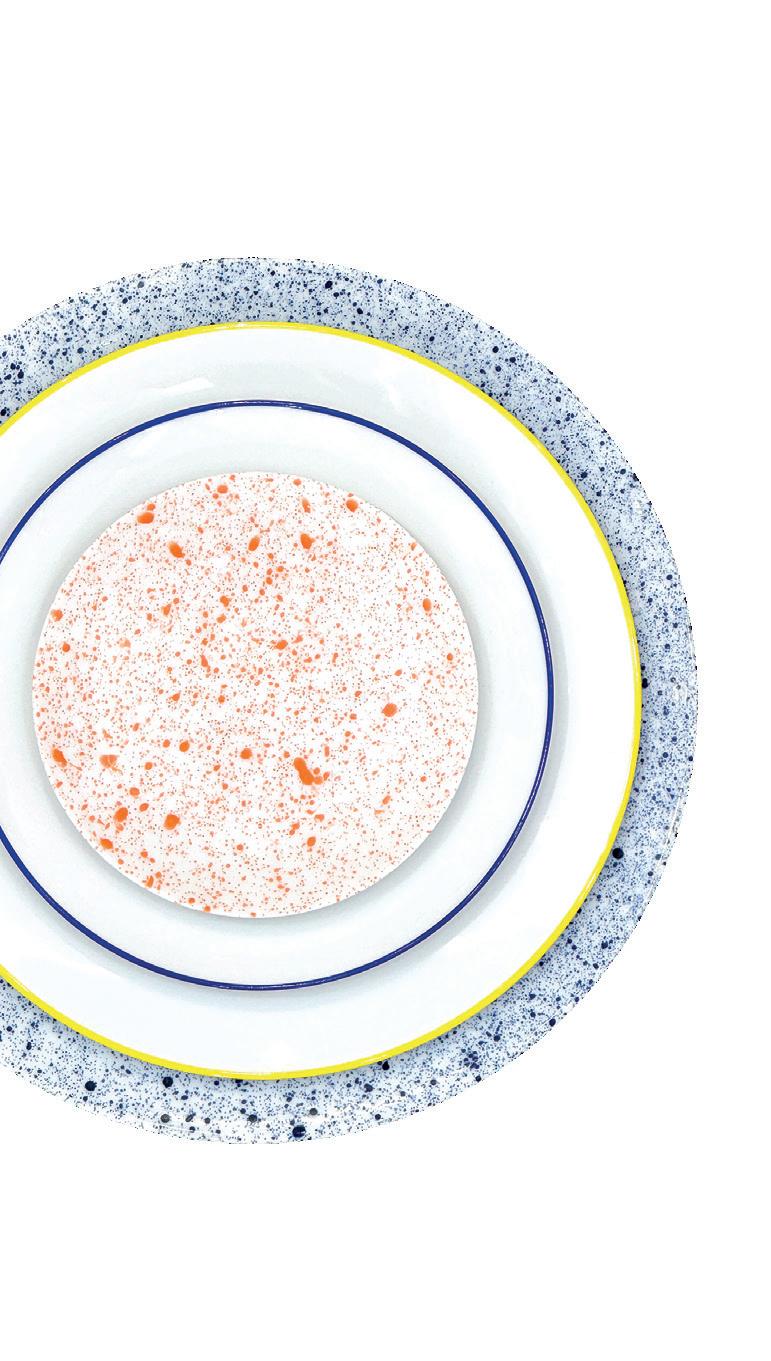
Non Sans Raison launches two fresh décors
Limogues porcelain brand Non Sans Raison has introduced two new décors to its offering – Splash and Plates. Each dinnerware collection is bursting with colour from pastel tones to vivid and bold shades.
Made from ultra-premium raw material, extra white kaolin, the brand’s porcelain boasts an incomparable whiteness, subtle translucency and remarkable lightness. There is a striking contrast between this pure white and the vivid colourways of Splash and Plates. Fired at hight temperatures, the colours fuse with the glaze, ensuring exceptional durability for intensive and daily use.
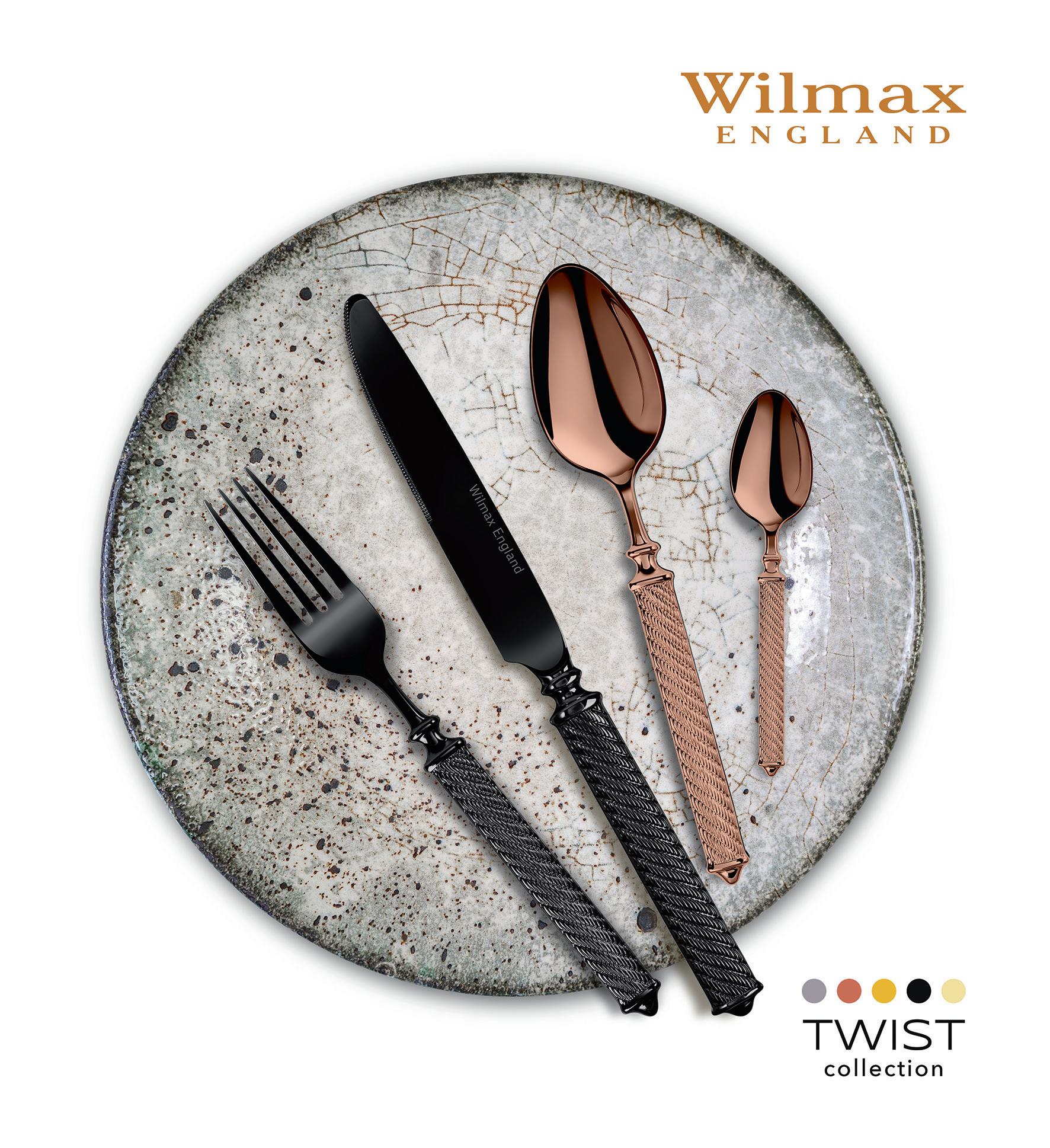
A new Twist from Wilmax!
Wilmax has introduced yet another design to its cutlery line. The new Twist collection features an intricate rope-twisted column pattern. As all Wilmax cutlery collections, the new Twist collection is made of high-grade 18/10 stainless steel. It comes in five colours: sliver, gold, bronze, black onyx and champagne and a mirror finish.
www.wilmax.uk
Inspired by… Monet’s garden
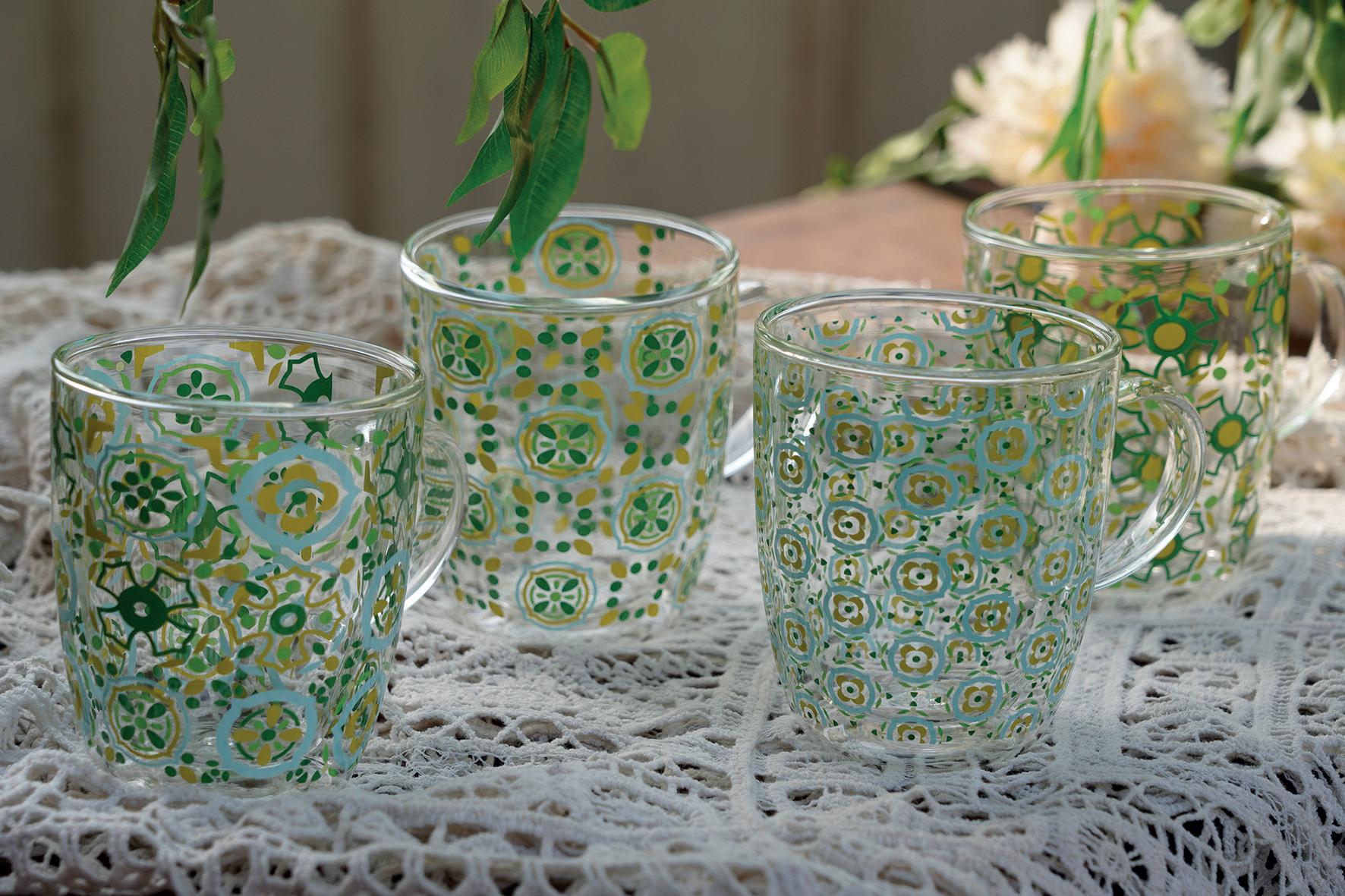
Wellwares has been inspired by Monet’s garden for the design of its latest glassware. High-quality glass beautifully displays beverages, while the ergonomic design ensures comfort. www.wws-ceramic.com
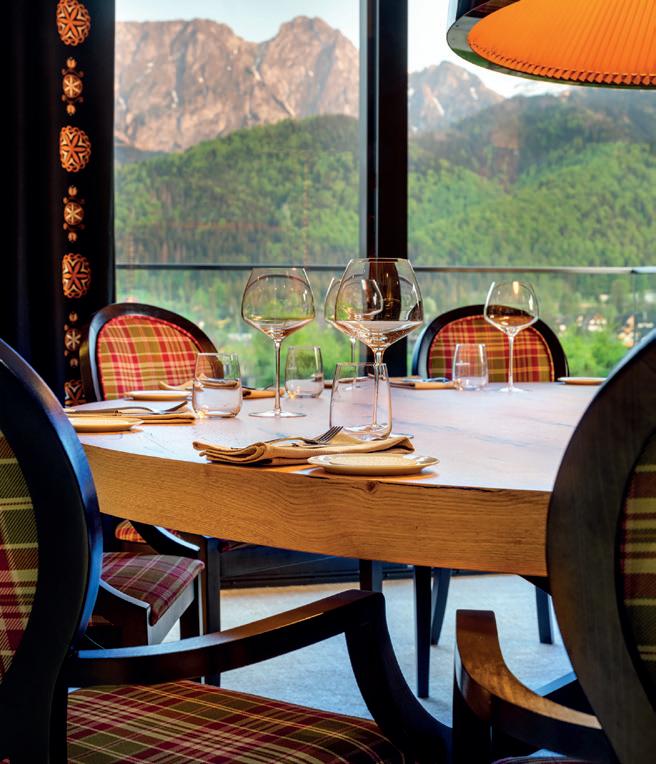
Krosno’s Vinoteca at Restaurant Giewont
A visit to the Michelin starred Restaurant Giewont in Poland will see you indulge in some of the finest wines, served to you in Krosno’s Vinoteca series.
The collection of handcrafted glasses is created for wine tasting, with noticeable craftsmanship, unique design, and perfect form, which brings out the flavour and aromatic qualities of the wine. Another super reason to visit this top-tier venue!
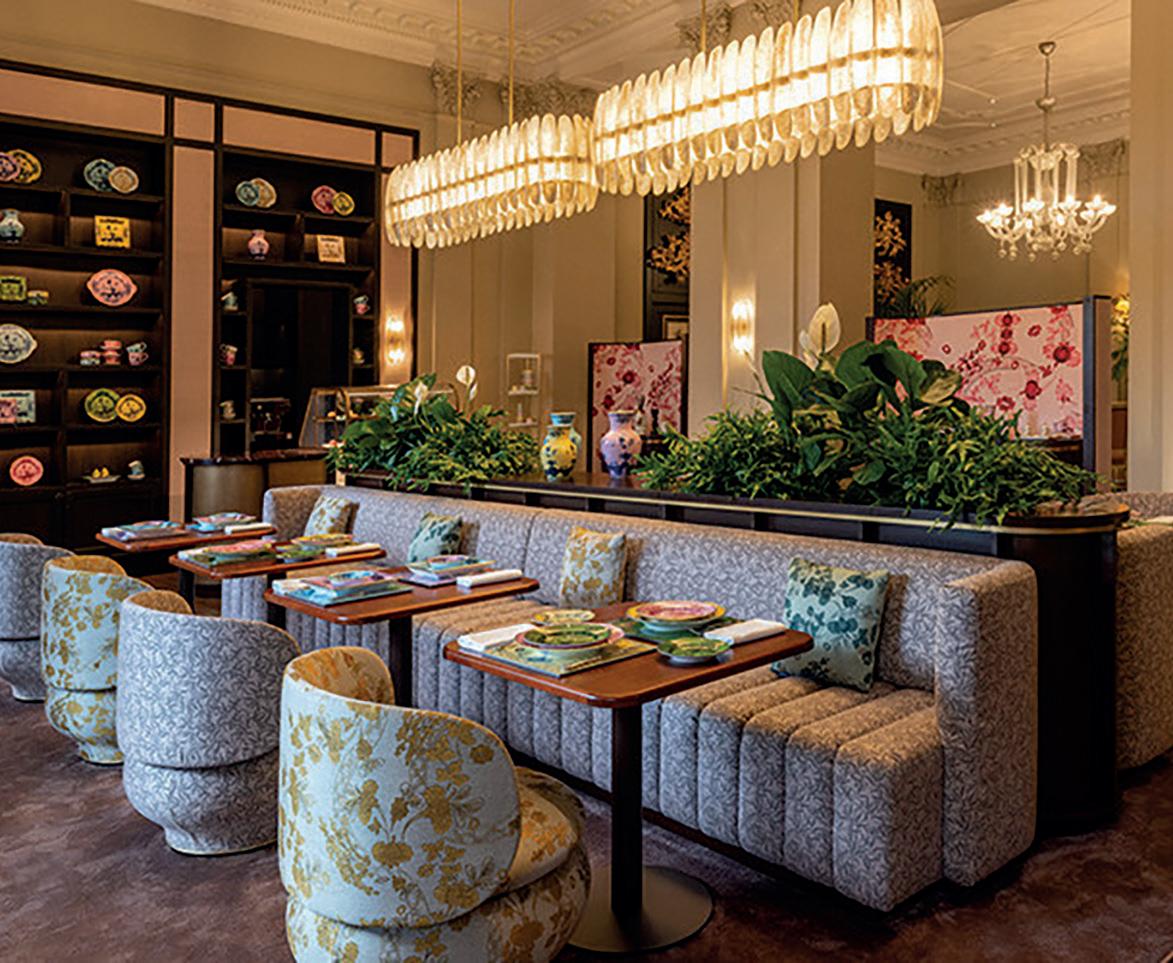
Ginori 1735 partners with St. Regis Hotels & Resorts on new project
Iconic porcelain brand Ginori 1735 has collaborated with St. Regis Hotels & Resorts on a worldwide partnership. The first Café Ginori created as part of this partnership officially opened on 26 November at The St. Regis in Florence, birthplace of the Ginori 1735 brand. This groundbreaking collaboration unveils a bold, unexpected dining experience that celebrates the joy of luxury hospitality and artistic expression in every detail. Following the Florence debut, Café Ginori will open at The St. Regis Saadiyat Island Resort, Abu Dhabi at the beginning of 2025, with more global locations to follow.
In 2025, the partnership with Ginori 1735 will expand across the Luxury Group portfolio at Marriott International, underscoring the dedication to delivering unexpected experiences on a grand scale.
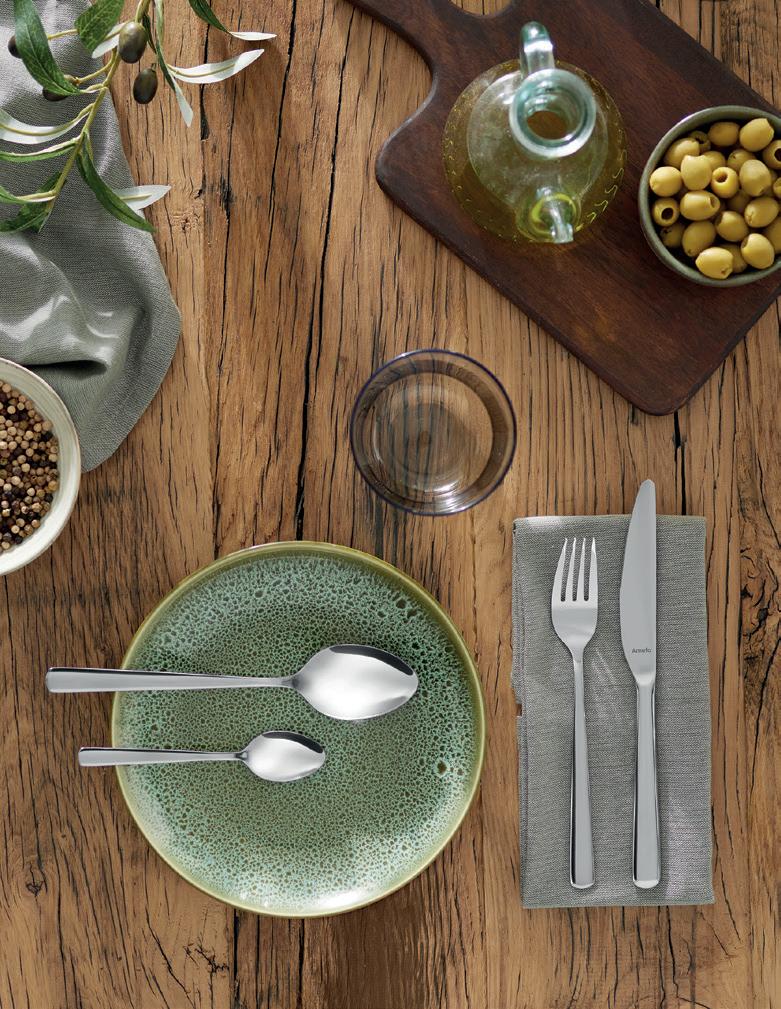
Amefa’s Pheonix uses recycled stainless steel
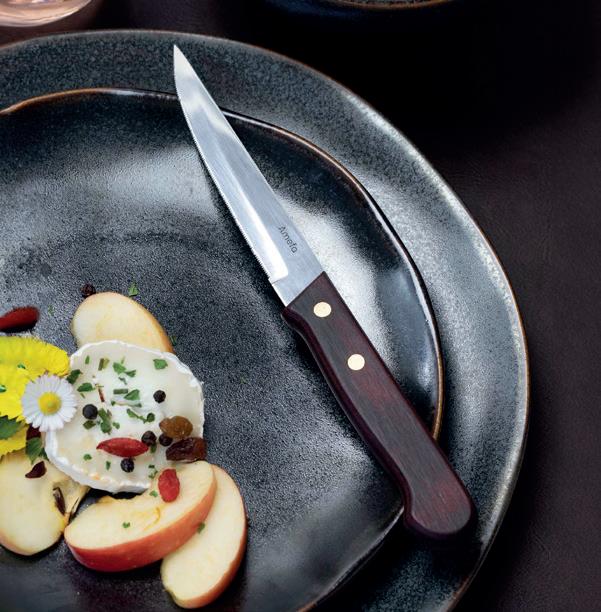
Cutlery specialist Amefa presents Phoenix – a new collection made of 2.5mm 18-0 stainless steel and made with a minimum of 80 per cent recycled stainless steel. The recycled material comes from postproduction and the remaining virgin stainless steel is needed to guarantee the food safety and an optimal quality. Amefa points out that for the production of recycled stainless steel, less energy is needed, which is why by choosing recycled cutlery you contribute to reducing the ecological footprint, decreasing the amount of waste and leading to a cleaner planet.
www.amefa.com
Meet the Versatile Vertis from Utopia
Utopia has launched Vertis, a striking glassware collection that combines versatility with elegance. It’s also superbly practical – made from borosilicate glass and very hardwearing – so can be used in all sorts of settings for a variety of applications.
Vertis features a vertical ribbed design that delivers both an eyecatching appearance and a beautifully tactile feel. What sets the collection apart is the one litre Vertis bottle. This straight-sided, tall and slender showstopper brings refinement and style, delivering a truly sophisticated serve. Both the glasses and the bottle are glasswasher safe, making them suitable for busy HoReCa settings.
Where might you find Mepra?
Mepra collections are amongst the best in the world so if you’re curious about where you might find them, we asked the brand to give us some insight.
-The Arte Ice Champagne is used by chef Yannick Alleno at his three-star restaurant Pavyllon.
-You’ll find the Perla Peltro Oro Nero series at the luxury Kona Village resort in Hawaii.
-Linea Oro is used at the Cedric Grolet Opera in France.
-The Seafood Stand Ice Bronzo is used at the Jean-Georges in London’s The Connaught.
-Linea Oro Nero and Avanguardia Oro can be found at the three-star Da Vittorio, Italy.
Nude Glass announced as partner of The
Michelin Guide ceremony Italy
and France
Şişecam’s global design brand, Nude Glass, has been announced as partner of the prestigious Michelin Guide Ceremony in Italy and France for 2025 and 2026. The debut partnership began with the prestigious Michelin Guide ceremony Italy, a private event hosted recently at the magnificent Teatro Comunale Pavarotti and Freni in Modena, during which the 70th restaurant selection dedicated to the country was unveiled. The gathering of 500+ guests, including top chefs, media and partners was followed by a cocktail party at the Palazzo dei Musei.
The 2025 restaurant selection of the Michelin Guide Italy celebrated
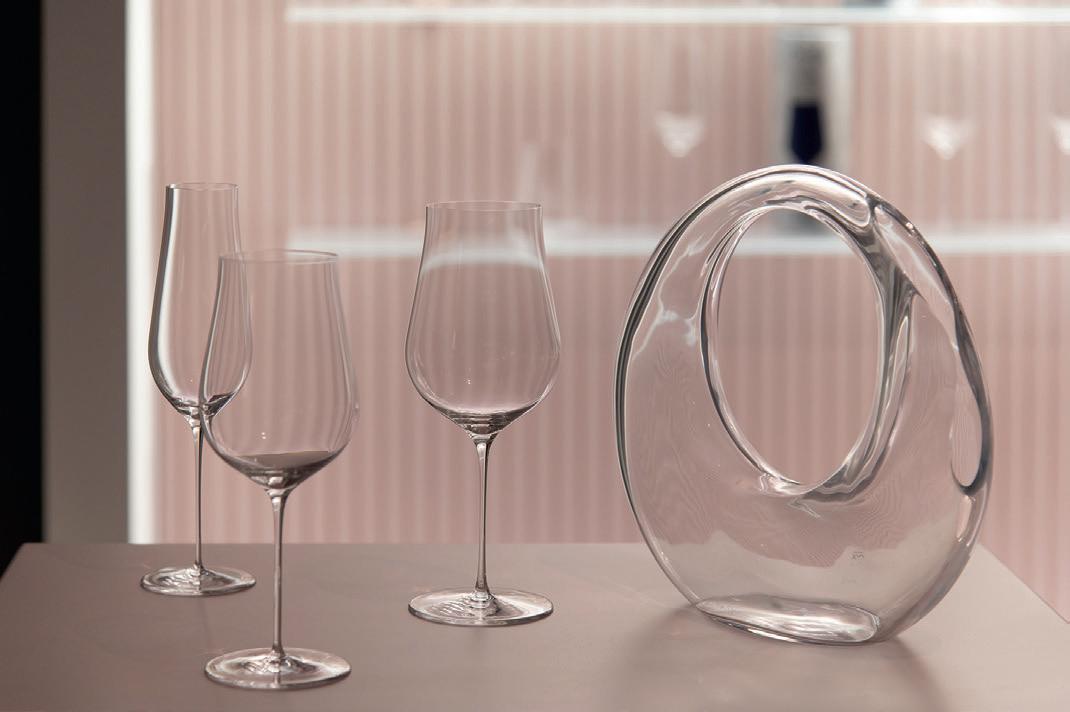
the richness and vibrancy of the Italian gastronomic scene, driven by young talents and committed, sustainable dining. The prestigious celebrations showcased the exceptional craftsmanship of NUDE glassware and featured the brand’s best-selling collections: Stem Zero and Ghost Zero wine glasses, the DecanteRing decanter, Blade Vase and Silhouette Bowls.
“We are excited to collaborate with Michelin, whose mission to spotlight the best gastronomic experiences aligns with NUDE Glass’ commitment to elevating the art of dining through beautiful and welldesigned glassware,” says Massimo Leonardi, sales manager, NUDE Glass Italy.
Zwiesel Glas is on the
Up!
Zwiesel Glas’ wine glass series Up recently scooped a Catering Star 2024 award. The honour from Cooking + Catering Inside in the Tabletop category recognises the most successful new products for the HoReCa segment and the brand picked up silver medal.
Chef Simon Tress becomes brand ambassador for WMF’s Second Life
Simon Tress is one of Germany’s most sustainable Michelinstarred chef. His ‘Restaurant 1950’ in Hayingen, Swabia, proves Michelin-starred dining can also be organic. As part of his strict sustainability strategy, he now uses WMF Second Life cutlery on the laid table. With Second Life, WMF Professional has set itself the task of returning secondhand cutlery and leftover stock back into the cycle.
The stonewashed menu items, coffee spoons and cake forks are mixed across the collection, lending a wonderful vintage
character to the table. Simon Tress is just as enthusiastic about this special charm as he is about the resource-saving aspect.
“WMF Second Life is a perfect match for our not-so-perfect vegetables, which we use to conjure up perfect cuisine on the plate,” explains Tress.
“We couldn’t think of a better brand ambassador than Simon Tress for WMF Second Life. Because he doesn’t just talk, he does something about waste,” says Carsten Kulcke, general manager of proHeq GmbH.
Let’s meet… Daff placemats and coasters
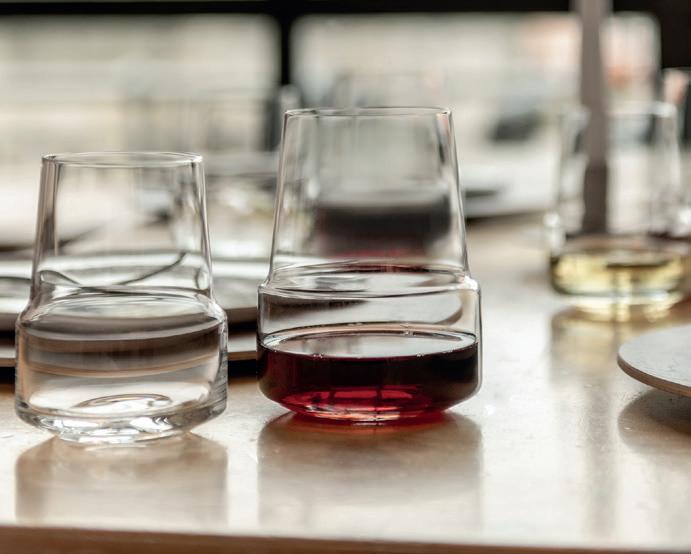
Zwiesel Glas’ first wine tumbler series literally takes drinking pleasure to the next level: three tumblers provide the perfect setting for enjoying sparkling wine, white wine and red wine. Minimalist, straightforward and reduced to the essentials – Up is the epitome of uncomplicated drinking pleasure. The collection is machine-made in Germany from Tritan crystal glass.
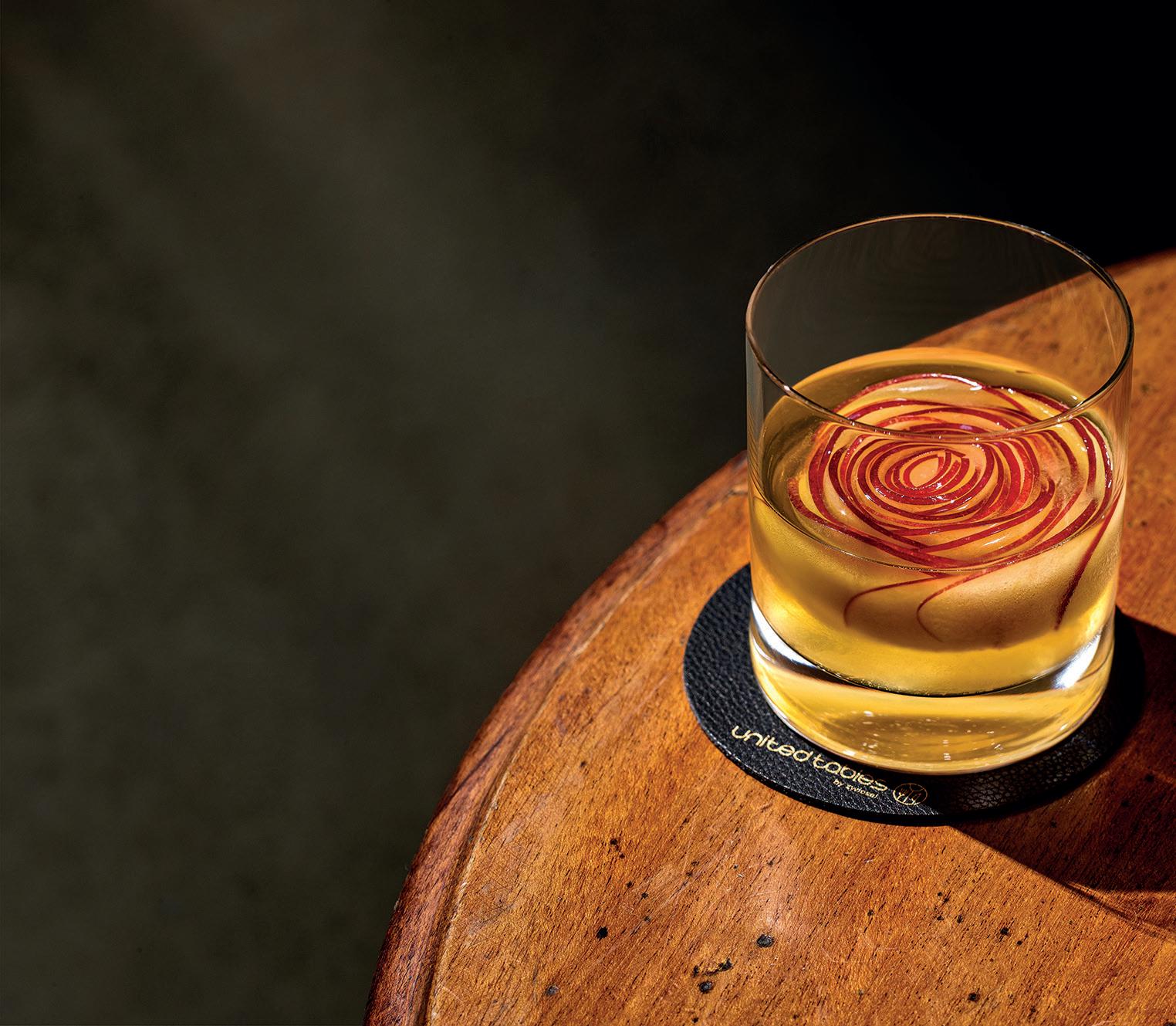
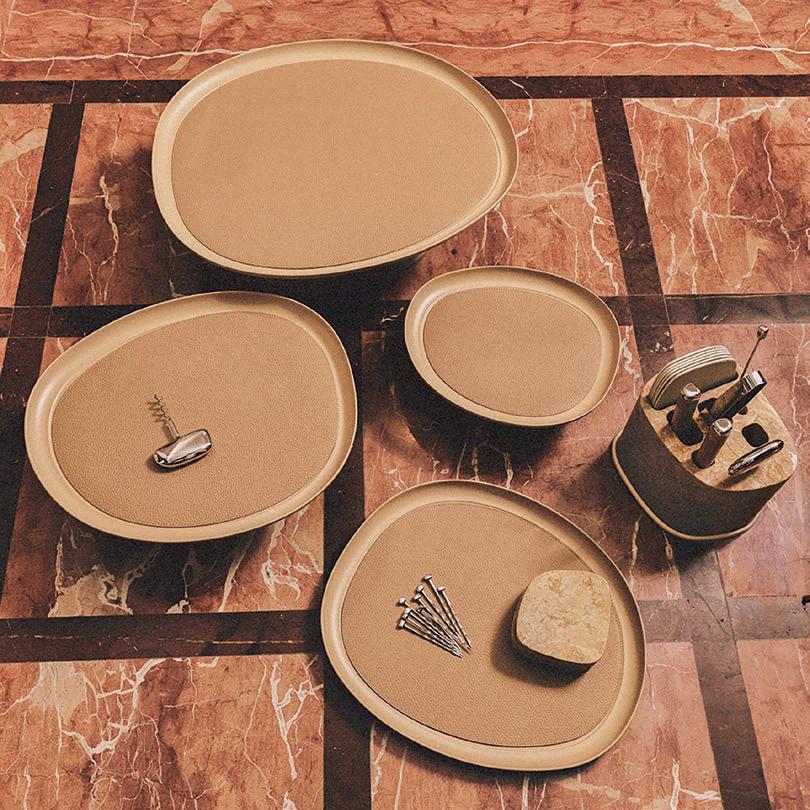
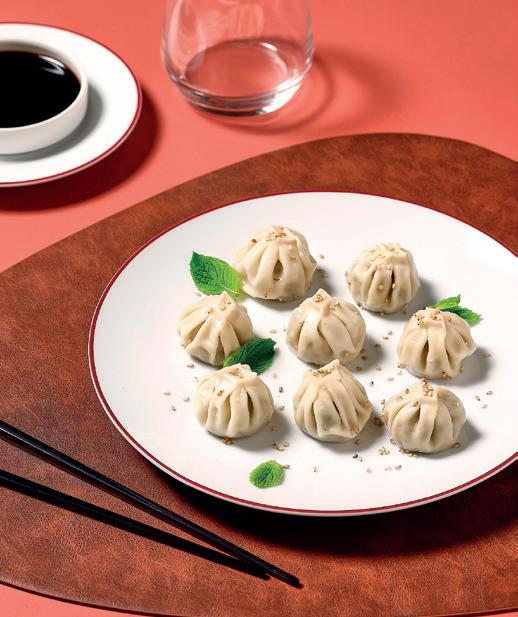
From the United Tables brand, Daff placemats and coasters are making all the difference. Sustainable materials and creative forms make textiles a leading part of table composition and restaurant culture. Restaurateurs and hoteliers value a harmonious interior down to the smallest detail. Exclusive and cleverly selected placemats and coasters, made of different materials, can add a special touch. Whether round, oval, organic, square or rectangular – with diverse shapes and a large colour selection, professional table decoration can be implemented in a completely individual way. New materials, such as recycled leather or PET felt, open up possibilities for aesthetically enhancing table culture. And all this is done in an environmentally conscious way and with indispensable properties for the catering industry: easy to clean and better yet, no need for ironing. Visit www.united-tables.de for more.
Harrods and Loeb scoop gia Top Window Awards
The Inspired Home Show and the International Housewares Association (IHA) recently announced the Global Honorees for the gia Top Window Awards.
The Global Honorees in the Small Company Category are Milly's, New Zealand and Bazaar La Barra, Uruguay.
Meanwhile, in the Large Company Category, Loeb AG, Switzerland and Harrods, United Kingdom scooped top places.
“2025 marks the 25th anniversary of the gia Global Innovation Awards! The most recent gia Top Window Awards competition had entries from 15 countries, and it is incredibly encouraging to see the creativity and passion that retailers are placing into their window displays,” said Derek Miller, IHA president & CEO. “We look forward to hosting the four gia Top Window Award winners at The Inspired Home Show in Chicago, along with more than 30 additional retailers who have won other gia countrylevel competitions.”
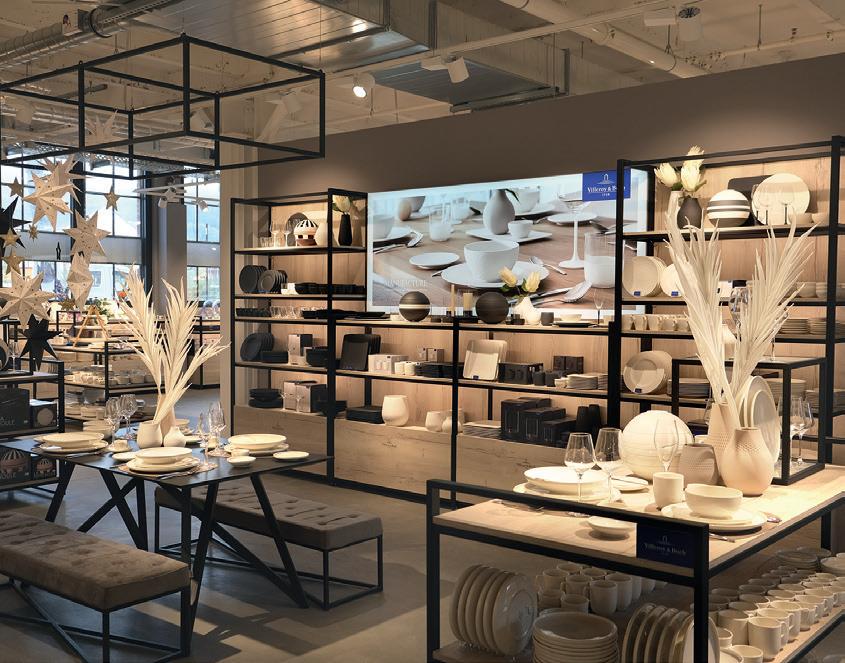
Villeroy & Boch opens new outlet
Villeroy & Boch has opened a new retail outlet at their company headquarters in Mettlach. The store opening is closely linked to another attraction, Villeroy & Boch World, which will celebrate its opening in January 2025 providing a comprehensive insight into the company. In recent years, Villeroy & Boch has carried out extensive refurbishment work at the company site. The entire grounds of the Old Abbey in Mettlach, which has been the company's headquarters for over 200 years, have been gradually renovated and revitalised.
“The new outlet is an important step in our long-term location strategy to make the company headquarters in Mettlach even more attractive. It reflects our vision of combining tradition and modernity and offering our customers a special experience. With the imminent opening of Villeroy & Boch World, we will be expanding this experience by offering a fascinating journey through our company history and innovations,” explains Gabi Schupp, CEO of Villeroy & Boch AG.
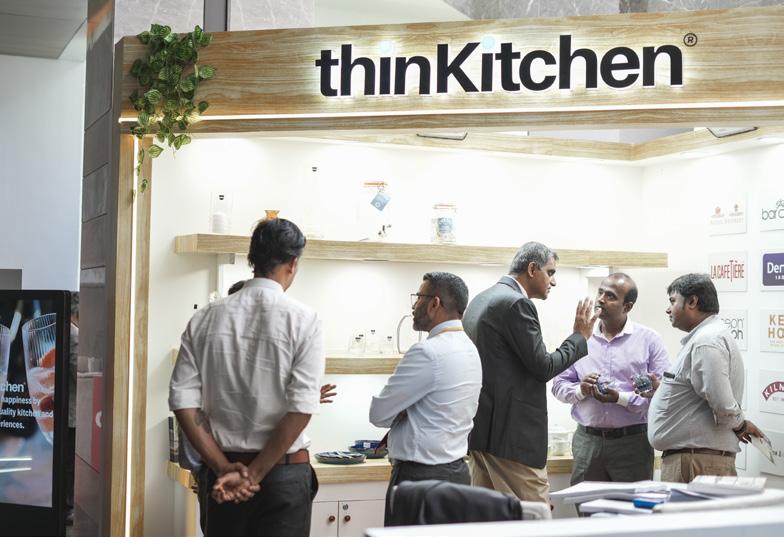
thinKitchen works to expand footprint
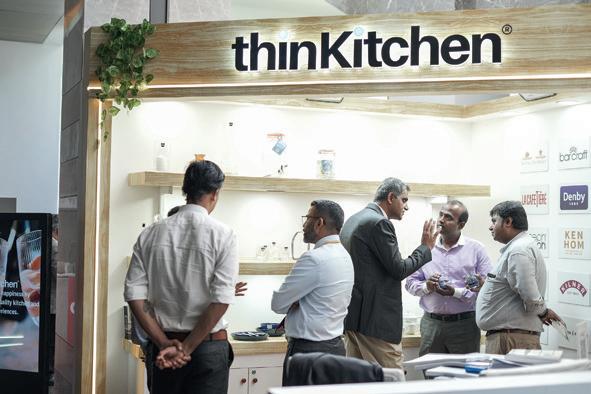
thinKitchen is now available at Food Square’s second outlet in Mumbai, and the brand is working on expanding its footprint with new locations of Shoppers Stop, Reliance Fresh Pik and Fresh Signature chains across India.
Divertimenti Cookery School partners with Bluewater
Divertimenti Cookery School, (well known along with its adjoining cookshop), has partnered with Bluewater. As part of the partnership, Bluewater has installed one of its premium water purification Kitchen Stations in the Divertimenti cookery school located in London’s exclusive and vibrant Knightsbridge area.
Morleys appoint Allan Winstanley as chief executive
Morleys Department Stores Ltd have appointed Allan Winstanley as their new chief executive starting in January 2025. He takes over from Nigel Blow who has been CEO for the past eight years.
Allan comes back to the UK having worked with Myer department stores in Australia where he co-lead the turnaround of the business, prior to that he worked with Sears in the US, De Bijenkorf in the Netherlands and 10 years with House of Fraser in the UK.
nora fleming supports independent retailers
In a groundbreaking move to celebrate Small Business Saturday, nora fleming, the family-owned brand known for its interchangeable serveware, opted to support its network of over 1,800 independent retailers nationwide. For the first time in its 20-year history, the company temporarily closed its online store for one day only on Saturday, November 30, to encourage US-based shoppers to visit local stores and shop small. The move underscores nora fleming’s unwavering commitment to its retail partners. Since its inception, the brand has prioritised relationships with independent stores, choosing not to sell its products in big-box chains. Nora Napientek, founder of nora fleming. Said: "By closing our online shop for the day, we’re shining a spotlight on the independent retailers who have supported our vision and helped make our brand what it is today."
Did you know?
Haviland recently opened a new showroom in NYC at the D&D building along with a new boutique at the Bal Harbour Shopping Mall in Miami.
TableArt hosts launch of Kelly Wearstler for GioBagnara
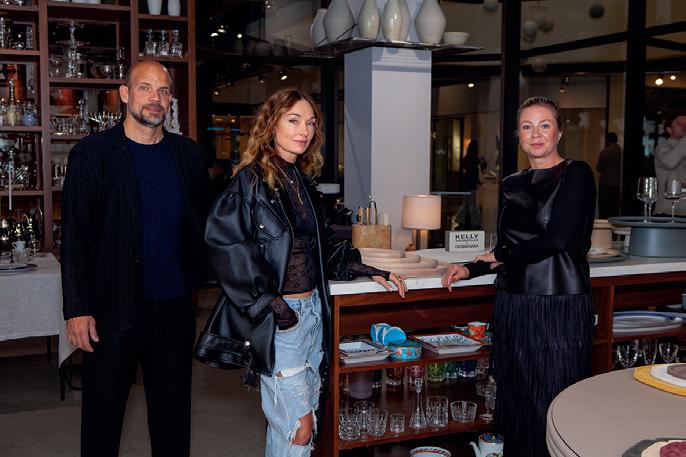
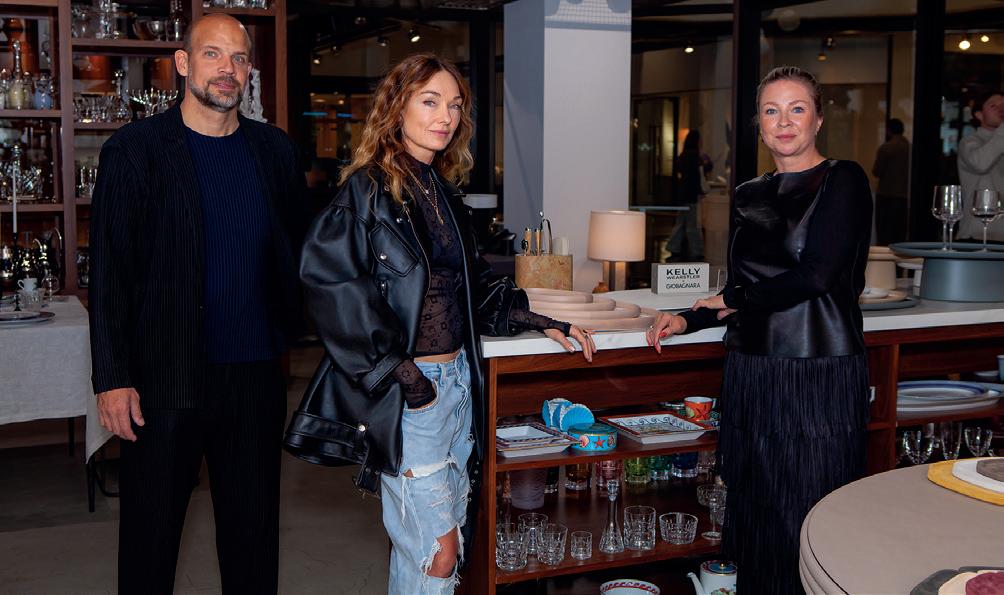
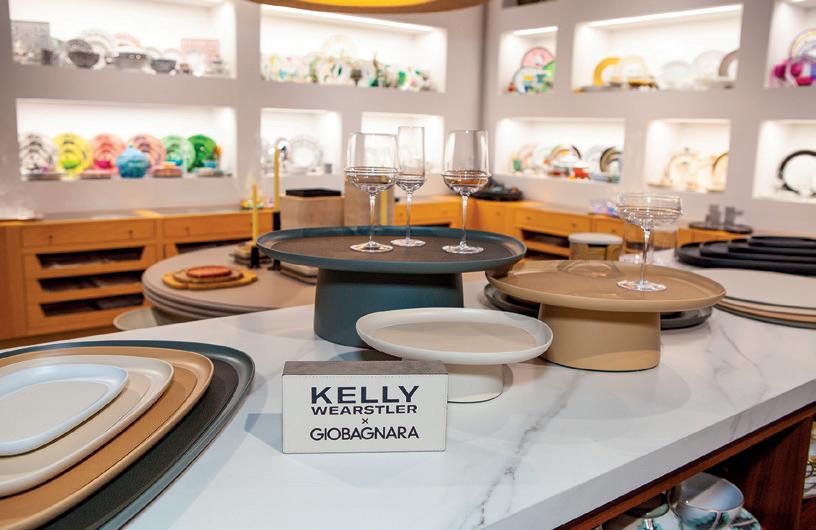
US retailer TableArt, owned by Walter Lowry, recently hosted the launch of the Maris barware collection, a collaboration between designer Kelly Wearstler and the Italian brand GioBagnara.
Founded by Giorgio Bagnara and his wife Vanessa, GioBagnara has long been known for its outstanding designs which speak of luxury without ostentation.
Famed American designer Kelly Wearstler was introduced to the GioBagnara team at Salone del Mobile two years ago by TableArt’s Walter Lowry,
leading to the creation of the Maris barware collection (which TableArt will stock exclusively until January). The collection will have its European launch at Maison & Objet in January ’25.
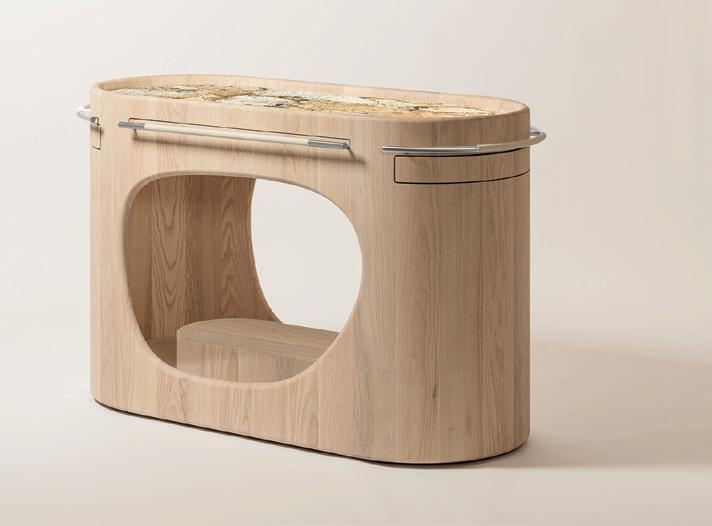
Look out for the impressive Maris Bar Cart, an ashwood piece with marble top boasting leather-lined drawers and resting
on wheels so it can easily follow the party.
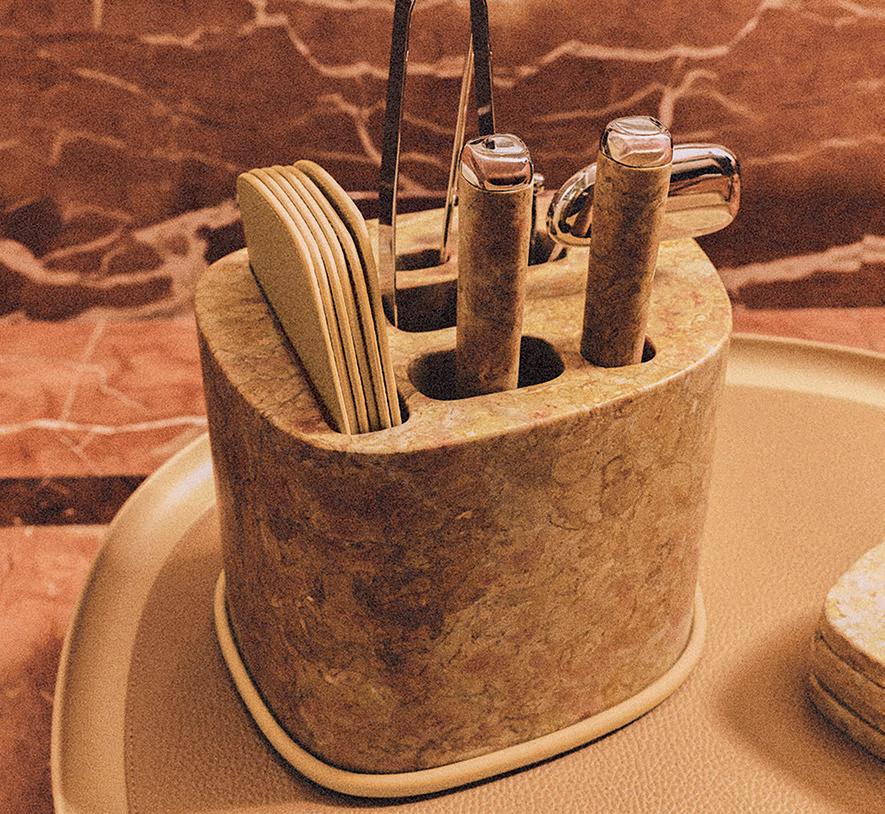
The sandblasted enamelled aluminium Maris Champagne bucket is another favourite, as is the marble bar accessory set which features a marble structure with sandblasted aluminium accents and stainless bar accessories. Visit www. tableartonline.com for more.
Giorgio Bagnara (left), with his wife Vanessa (right) and designer Kelly Wearstler (centre) pictured at the launch
TableArt's Walter Lowry speaks with Kelly Wearstler
Timelessly elegant, simple and beautiful.
“Retail is hard, but I love it”
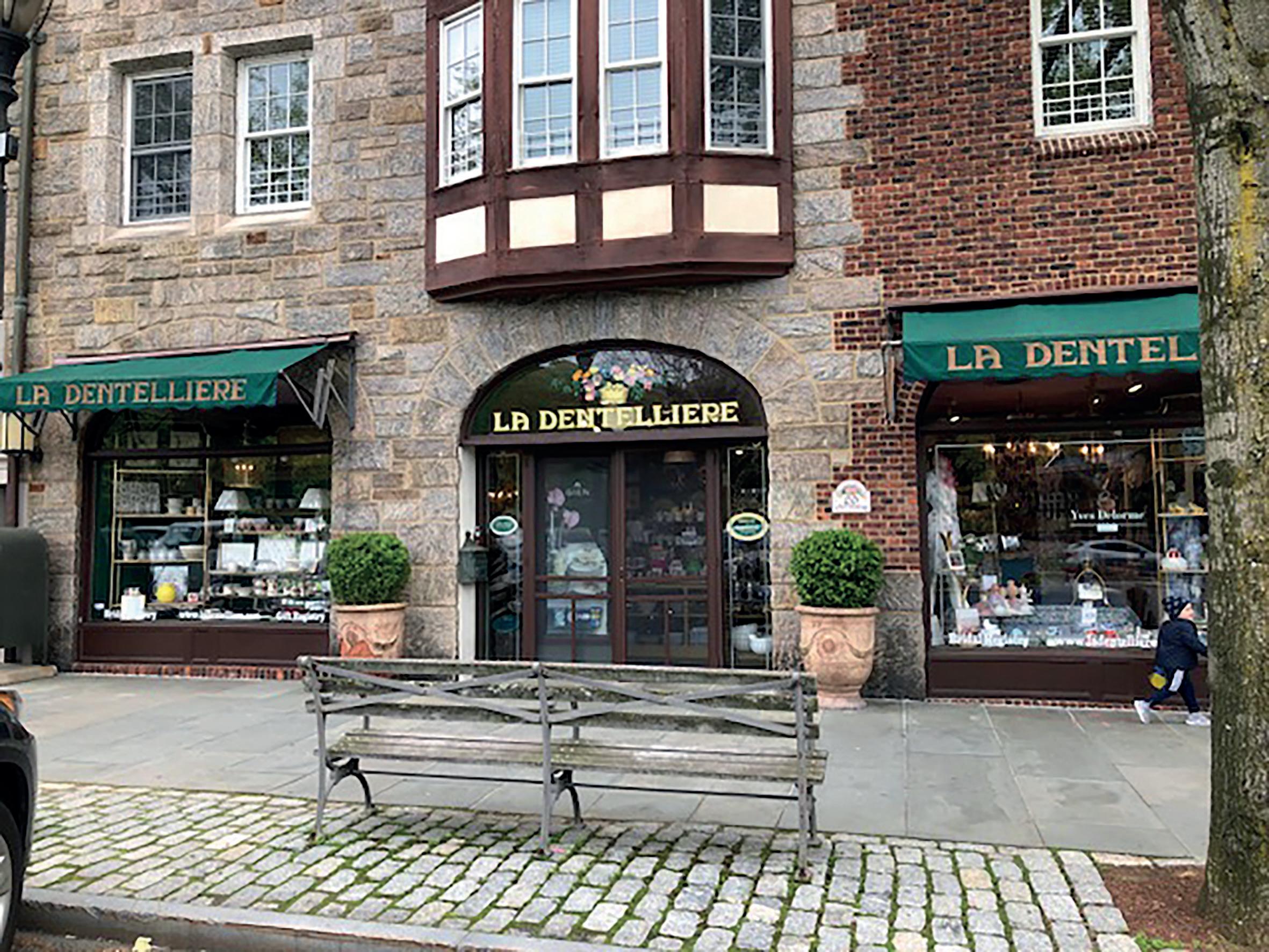
La Dentelliere was founded by Michelle Anderson in 1985. Since then, she has curated a little corner of French fancy in Scarsdale, New York. Tableware International finds out more about this perfectly perfect homewares store
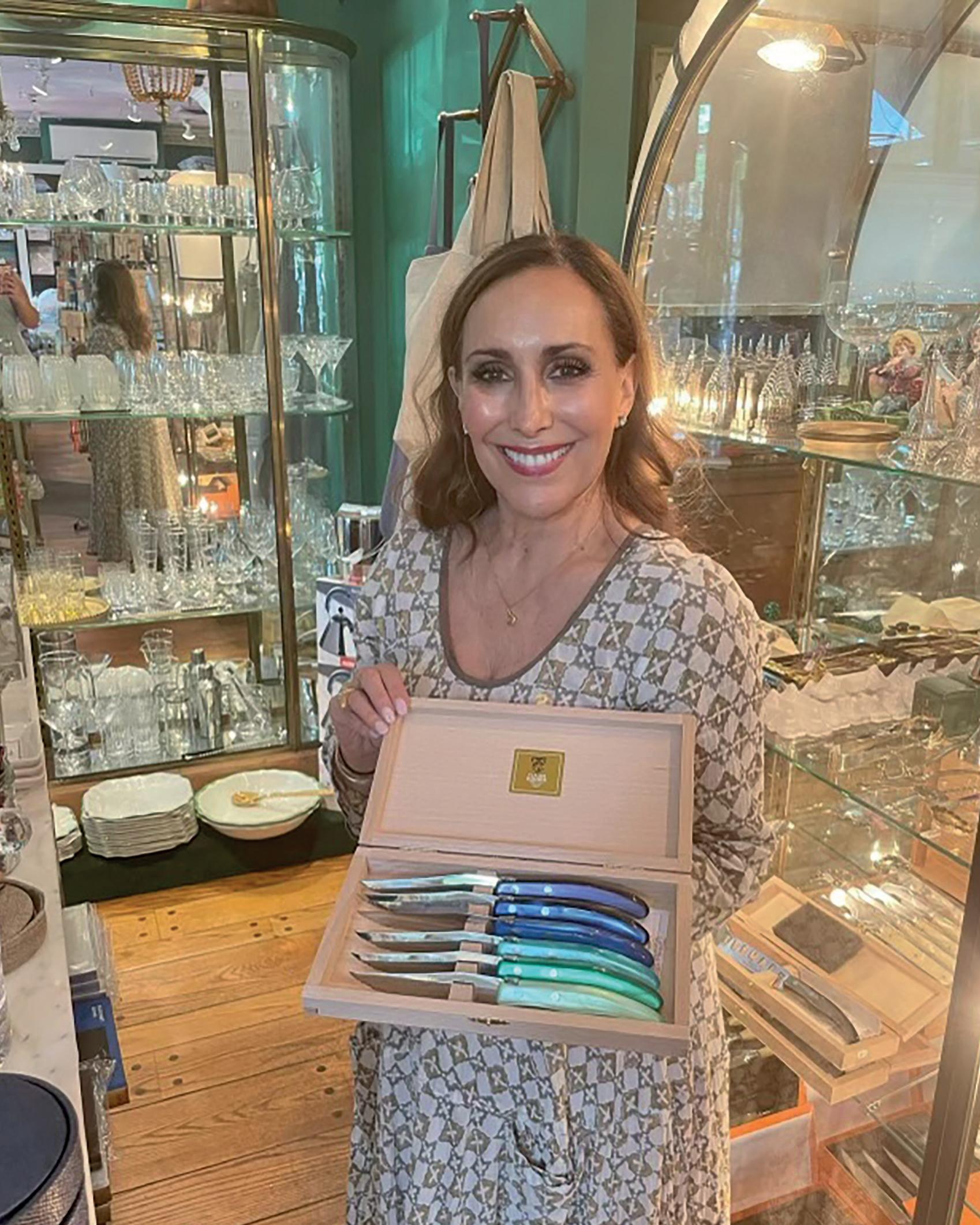
Michelle Anderson is owner of La Dentelliere, a store based in Scarsdale, New York. Founded in 1985, originally as a lace curtain shop, the store soon evolved to stocking tabletop and gifts to a well-heeled clientele.
“Our shop is known for women to get into trouble and men come in to get out of trouble!” jokes Michelle, who has curated a beautiful product selection in La Dentelliere.
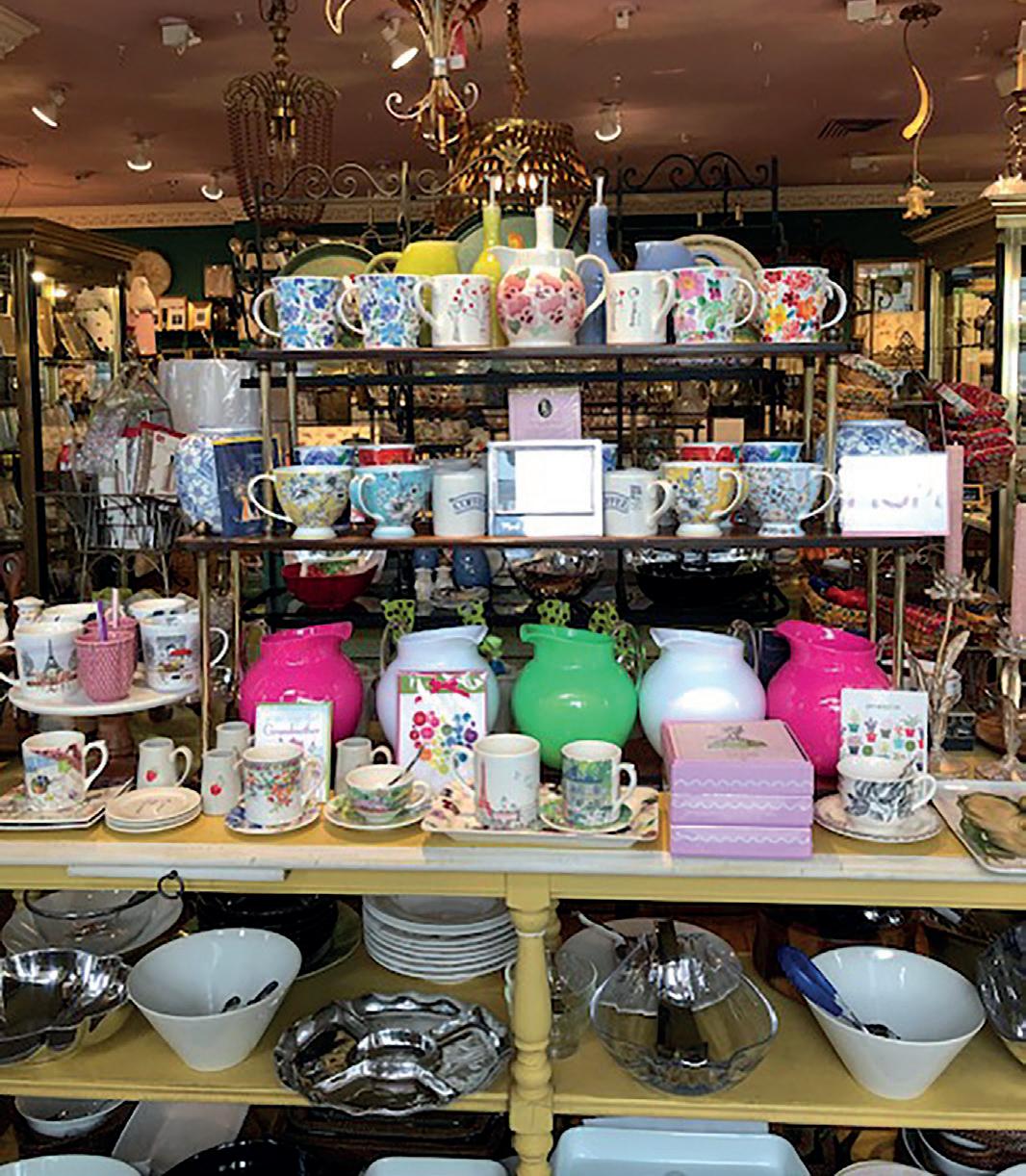
There you will find a thoughtfully considered assortment – think bedding, tableware, tablecloths, barware, scents, pyjamas, highand low-end glassware, jewellery – all chosen by Michelle and her team who pride themselves on knowing their customer base, and knowing them well. In essence, La Dentelliere is exactly what a good local retailer should be. They know what their clients like, they source stock for them, and to top it off, the store has a very clear identity.
“We are a very eclectic shop,” Michelle confesses. “We have beautiful greeting cards that are mostly handmade in the USA. Boxed stationary, books, men’s special gifts, Limoges china, mugs, espresso cups and wonderful French antiques!”
With the past year being an election year in the US, Michelle
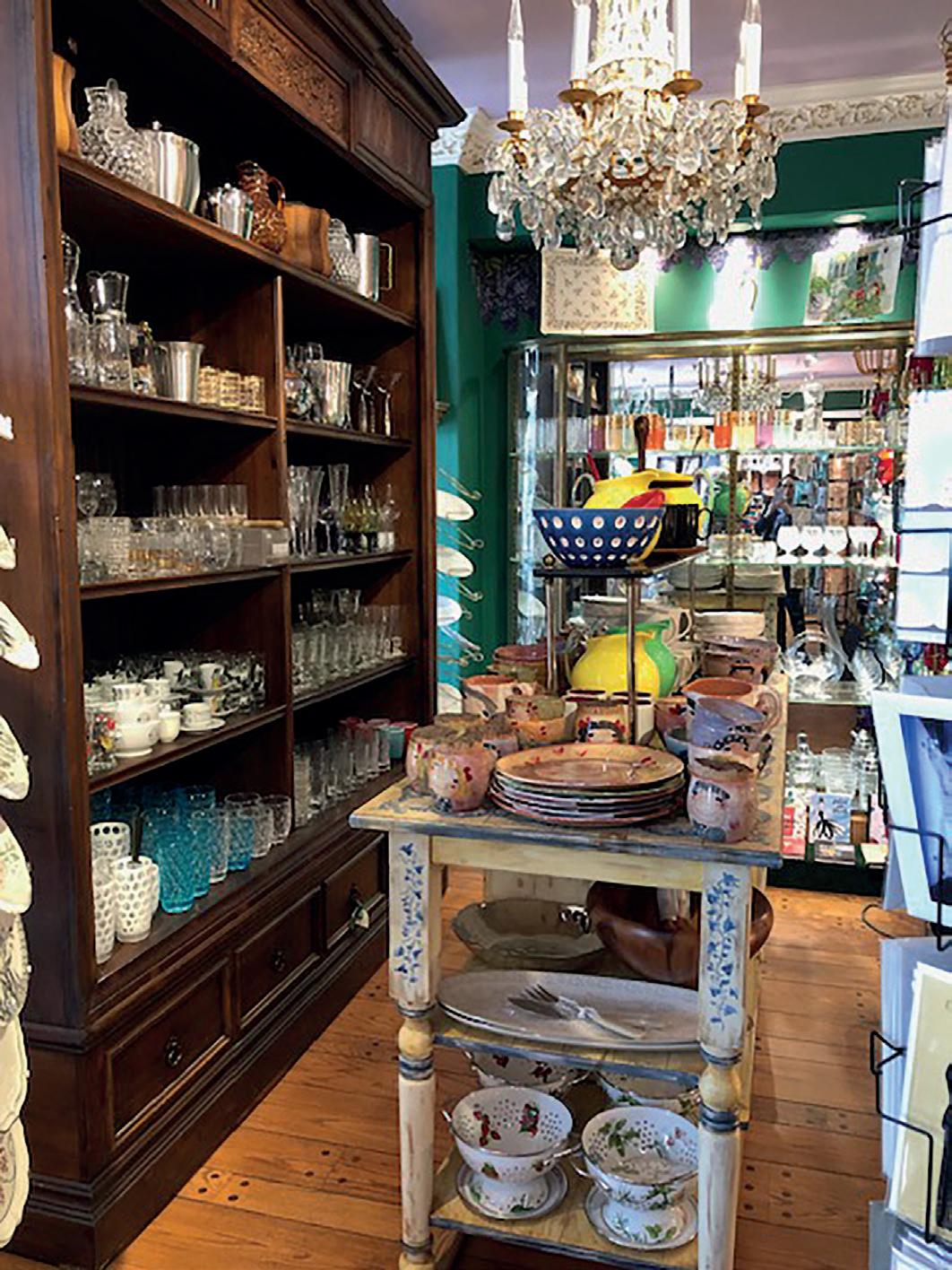
year to last. Why? Because people want to shop there. Known for its merchandising, everything has a place in La Dentelliere, nothing is left to chance when it comes to displaying product.
“Our store is known for its merchandising,” confirms Michelle. “We use every inch possible. Nothing is thrown together.
“We are always looking for quality items. Not always expensive, just good looking. We love colour”
says “people tend to hold back on purchases in those years. It’s been OK for us, but we jump through hoops for everyone. We’re on track to be about the same as 2023, which is good”.
It’s no surprise La Dentelliere is set to be on track for a similar
Everything is skilfully thought out and it always looks amazing.”
Taking its inspiration from a European aesthetic, Michelle sources her tabletop from brand names such as Gien, Deshoulieres, Capdeco, Sabre, Calaisio, Vista Alegre, Michael Aram, Kim Seybert, Beauville, Le
Jacquard Francais, Garnier, TTT (Tessitura Toscana Telerie), Juliska, Vietri, Michael Wainwright, Match Pewter, Arte Italica, L’Objet, Tizo, Addison Ross, Jill Rosenwald, Mariposa, Quail and more.
“Through the years, we have gone to France, Italy and England for a lot of our wares. We always do the Atlanta and New York shows. I’ve gone to other shows in the USA but they don’t have what I’m looking for,” Michelle says.
“We are always looking for quality items. Not always expensive, just good looking. We love colour. We are not a grey shop.”
While Michelle places huge importance in sourcing the right pieces for her store, she uses everything in her remit to market to her customer base too.
“Our best marketing tool has been Instagram. This is what has worked for us,” she says confidently, and a look at La Dentellier’s
Instagram page proves her words true. Michelle is front facing, talking to her customers as she showcases the store’s best product selection. But she also sees the benefit in print advertising too.
“We also have begun advertising in a French magazine called My French Country Home, which is our customer base. It’s an English woman who married a Frenchman, living in Normandy and once she became an empty nester, she started this magazine about seven years ago. I would say we communicate with our customers mostly with phone calls, texts, and Instagram.”
And while she has a loyal customer base, has La Dentelliere managed to corner the popular bridal market which is so prevalent in the US?
“Unfortunately, we would like to have a larger bridal business but I feel the department stores still get a lot of it. Honestly, I don’t know why? Because there’s nothing better than a small business to keep track of all the items a bride has chosen. “You don’t get the quality of service from a department store. Most times you have different employees working and they don’t know who you are. With a small business, you
see the same faces, you establish a relationship, you know what the bride wants to receive first. “You know what she needs to finish a registry. You don’t get that service from a department store. I must say that most of our bridal registries are from the children that we’ve watched grow up. It warms all our hearts!”
When asked how she would describe the retail climate in the US, Michelle says: “Retail is hard, but I love it! I love the challenge of finding the best that’s out there. I love hearing the customer’s comments when they enter the shop, men and women, always very positive. You must give the customer something for them to want to come back to shop with you. It all begins with a warm welcome as they enter.
“Our challenge is to have people come into our store to shop. To not purchase as much on the internet. We are here for you. We can explain how the item is made. Why it costs what it costs. Why we chose this item from this company instead of another company. We have the knowledge. We buy the best at the right price.”
Visit www.ladentelliere.com to see more of what’s on offer.
“I love the challenge of finding the best that’s out there”
Saying goodbye to
From going toe-to-toe with online retailers, to being inspired by new stock options, a lot has happened for retailers in 2024, as our columnist Michele Trzuskowski reports…
We’ve all heard the saying “ring out the old, ring in the new”, and as we approach year end, we are about to do just that. This made me reflect on 2024, all the changes as retail commerce continues to evolve. So, here’s my two cents on the good, the bad and the ugly of 2024, and what I’m looking forward to in 2025.
The good
In the tableware industry, newness and colour came back in a big way. This was especially notable in stemware and home décor. There was an emergence of green which appears to be continuing into the spring ‘25 season as we bring the outdoor colours in.
Stock fulfillment seemed to be better on core products from most companies (outside the core was more difficult). More and more vendors provided drop shipping methods direct to consumer which helped smaller retailers relying on their ecommerce.
Social media provided increased sales and exposure, especially if it was linked to your website or ecommerce platform. Additional improvements within social media made it easier to target customer segments while having posts directed to your sales platform. This was extremely helpful as, according to Emarketer, 50 per cent of online consumers in the US use social media to discover products. Creating a more personalise instore shopping experience continued to help growth in the brick-andmortar presence. Trunk shows, instore events, and specials all helped to balance the in-store competition against online shopping.
The bad
There seems to be diminishing customer and vendor loyalty with the continued growth of online giants like Amazon and other big box online retailers. We found some of our brands who used to sell to “boutiques only” were now offering to online retailers like Wayfair, and Home Depot (online) of all places. Technology, although so helpful in many ways, does come with a double edged sword. It’s made it easier to compare prices, products and services across a wide range of retailers. This makes the experience more fragmented and difficult to control. For example, I spent about 45 minutes with an older couple
to say, this doesn’t happen often, but it certainly illustrates the changing customer practices.
The ugly
From a cost structure perspective, small business is having a tougher time turning a profit. I find even for myself, as a well-established store with almost 25 years under my belt, between rising rents and inflation, combined with lower margins and higher freight costs, significant profits are harder to come by.
Inflation also impacted the purchasing power of many of our customers. The spontaneous purchases went by the wayside as many of them tightened their belts
There seems to be diminishing customer and vendor loyalty with the continued growth of online giants like Amazon and other big box online retailers
in my store that resulted in a sales order for some flatware. They left the store happy, and I felt good about closing the sale. About 45 minutes later, they came back with their niece wondering why she could find it cheaper online. Since it was a significant price difference, I investigated it and discovered it wasn’t comparing apple to apples. The item she was looking at was for a 3-piece versus a 5-piece place setting that the customer had ordered. Once I explained this to them, the customer’s niece (in front of me – mind you) said to her uncle, “just get a refund, I am going to find this for you cheaper online.” Needless
in an election year economy. We also faced more challenges with our ecommerce website. It is slower than that of Amazon, doesn’t have all the bells and whistles of the big box stores, and although it doesn’t seem to put off our regular customers, I’m sure it impacted some new ones, especially with the current price sensitivity and comparing prices online.
The future
We’re living in a tech driven era. When you think of it, the shifts in retail over the last couple of decades has been unprecedented, primarily due to the continual changes in technology. Bridging online and offline
About T is for Table
T is for Table is a luxury independent boutique, with a focus on tabletop, in West Palm Beach, Florida. Open more than 20 years, it offers an experiential and inspirational space dedicated to helping customers tell stories, create traditions and celebrate life. The boutique offers everything from fine pottery, china, glass, serveware and table accessories, to home décor, jewellery and body products, and delivers a custom service with its custom engraving, home visits and gift registries.
www.tisfortable.com
experiences with unique consumer experiences will be essential, creating branded experiences that are inviting, authentic, distinctive and personalised. Along with that, customer service is more important than ever, especially the post purchase engagements, and messaging to individual customers based on their preferences and purchase history. This is the only way I see helping that diminishing customer loyalty I spoke of earlier.
No matter where the interaction with the customer starts and finishes, creating a buying journey is essential this next year, and having the right technology infrastructure for both ease of transactions and data analytics is key. All this leads to the modern efficiencies that will meet the demands of a modern business. Cheers to a new year!
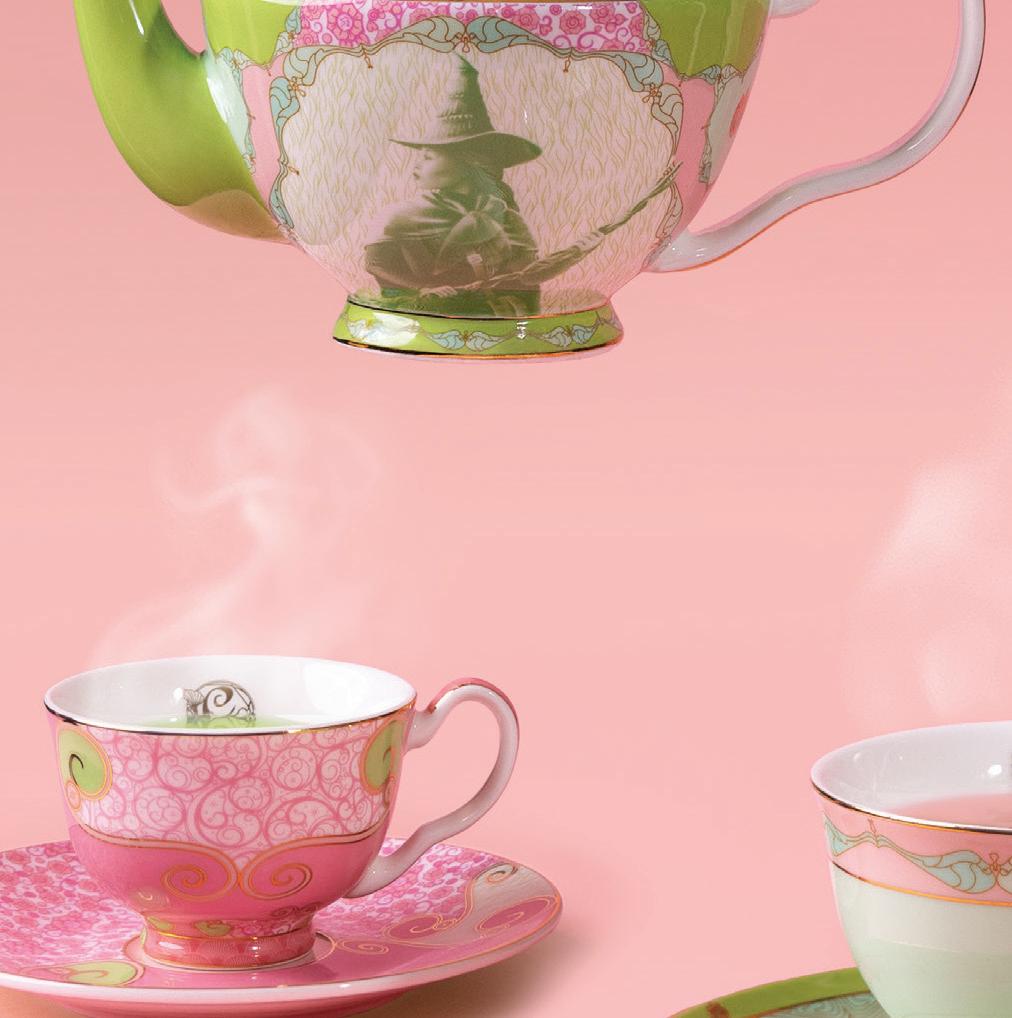
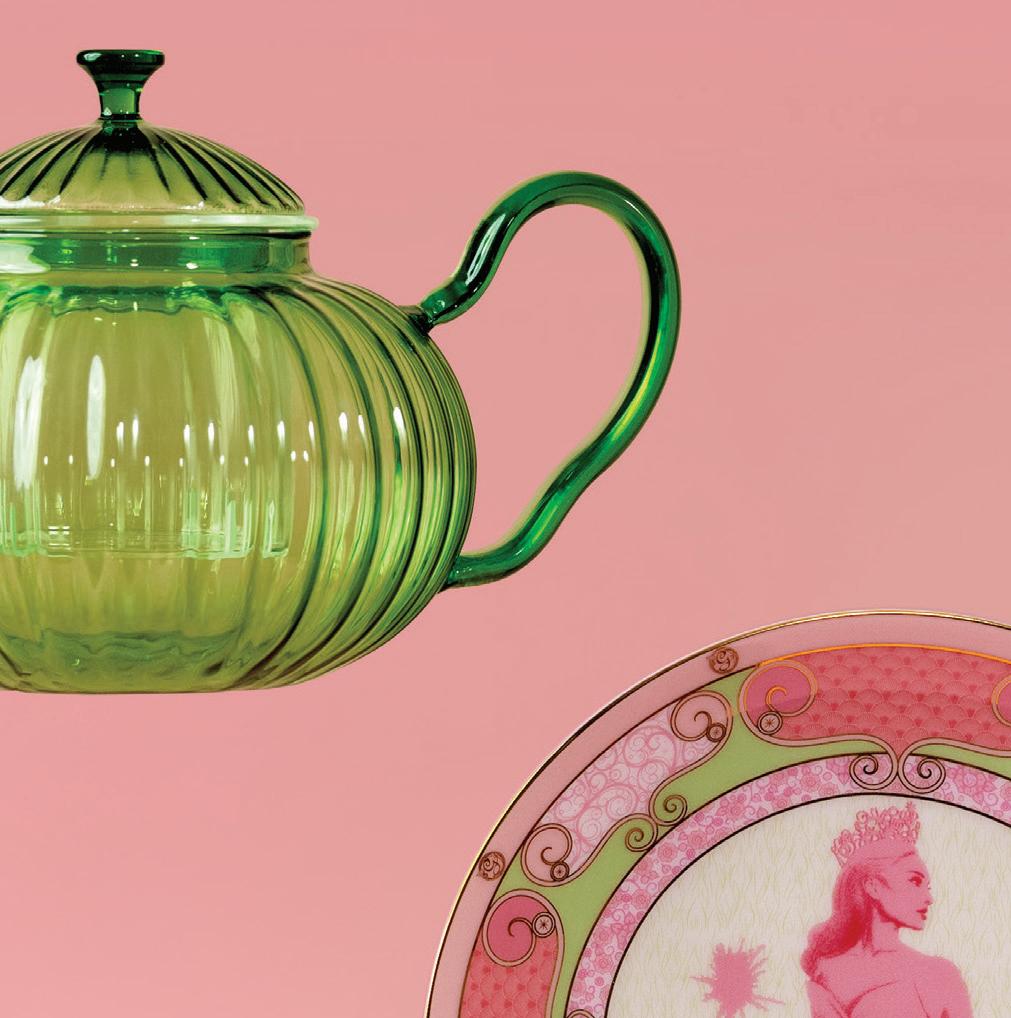
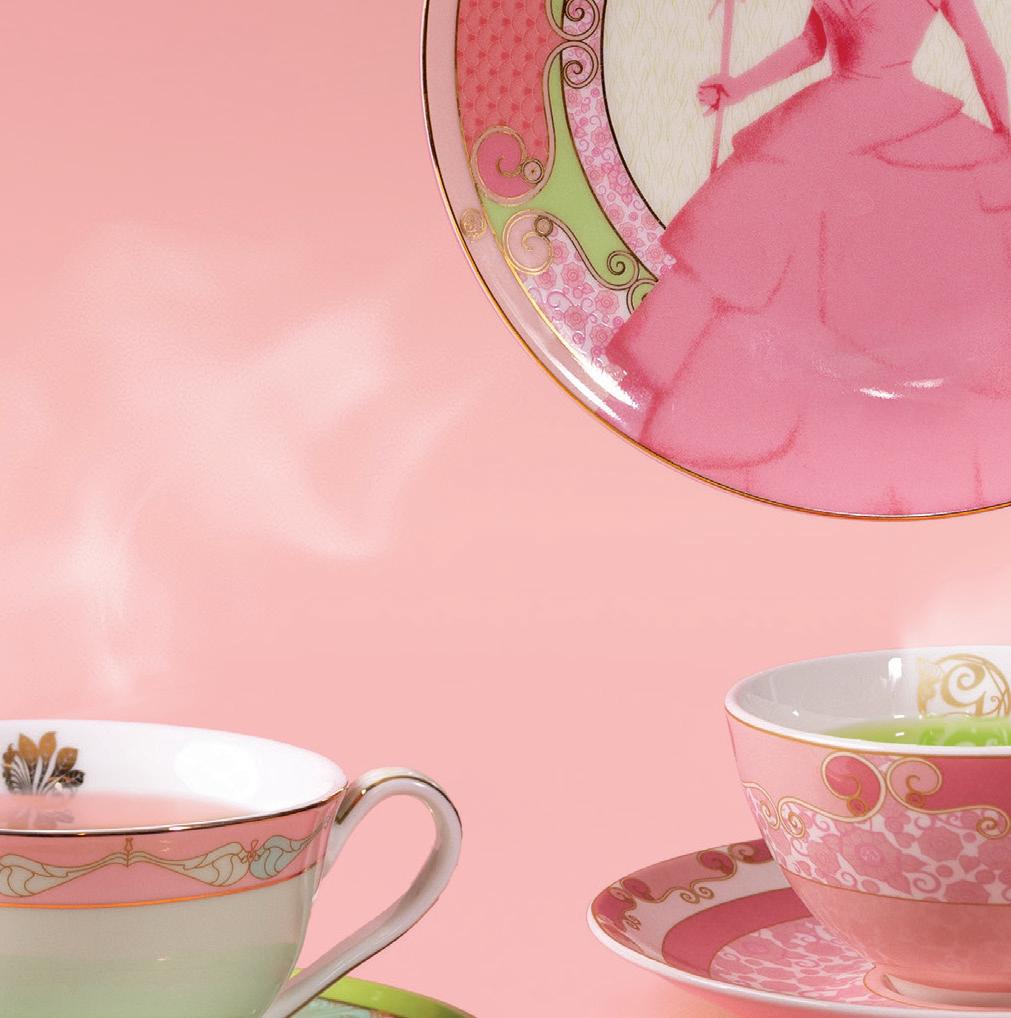
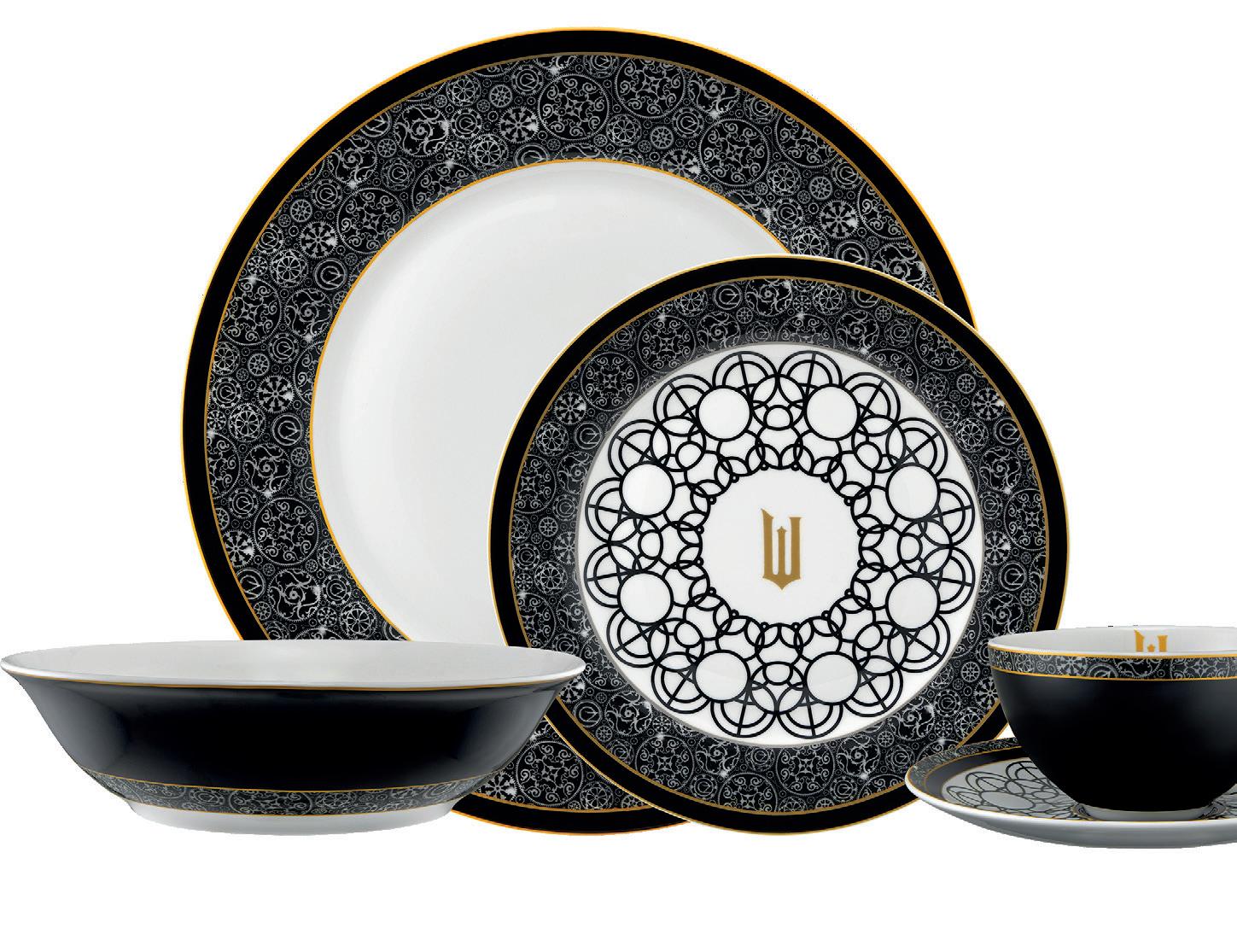
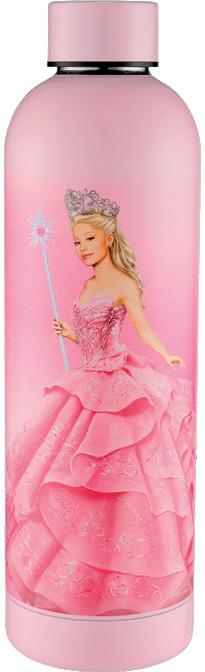
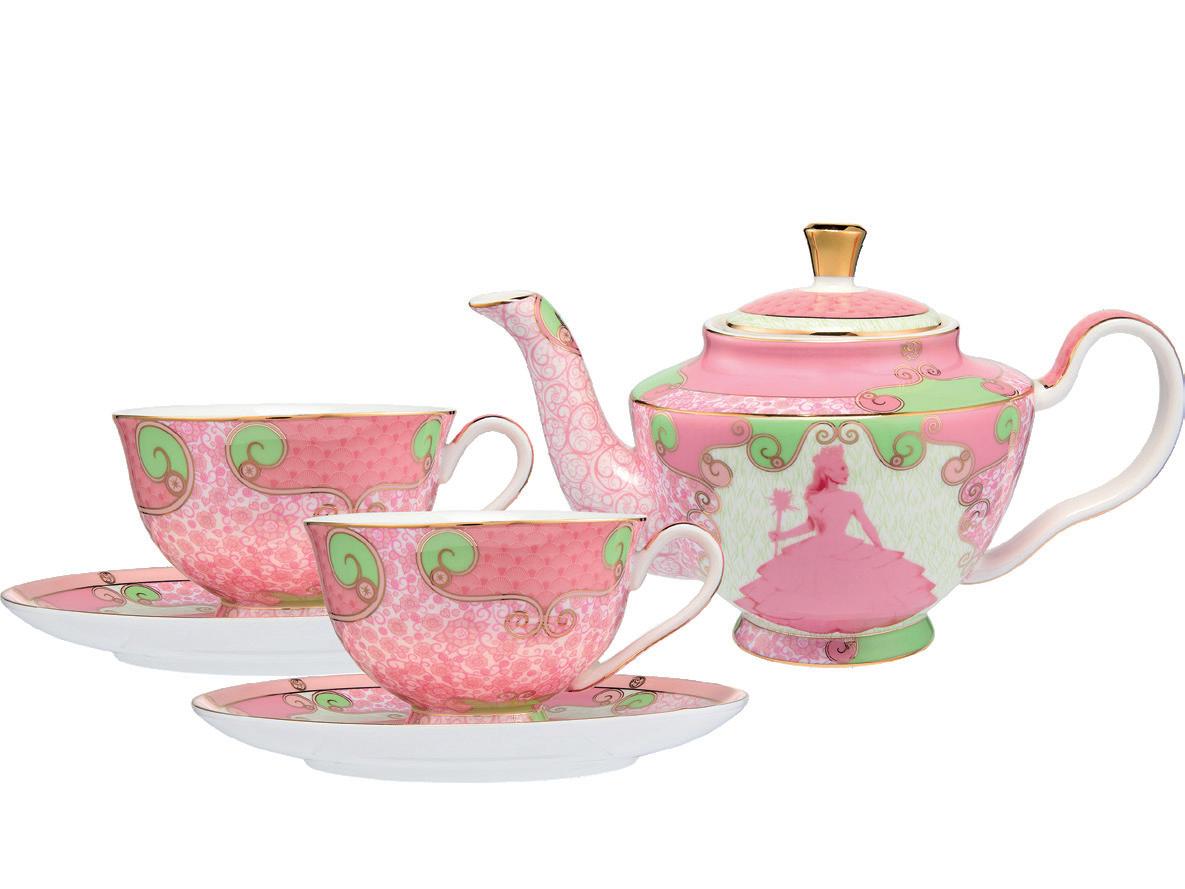
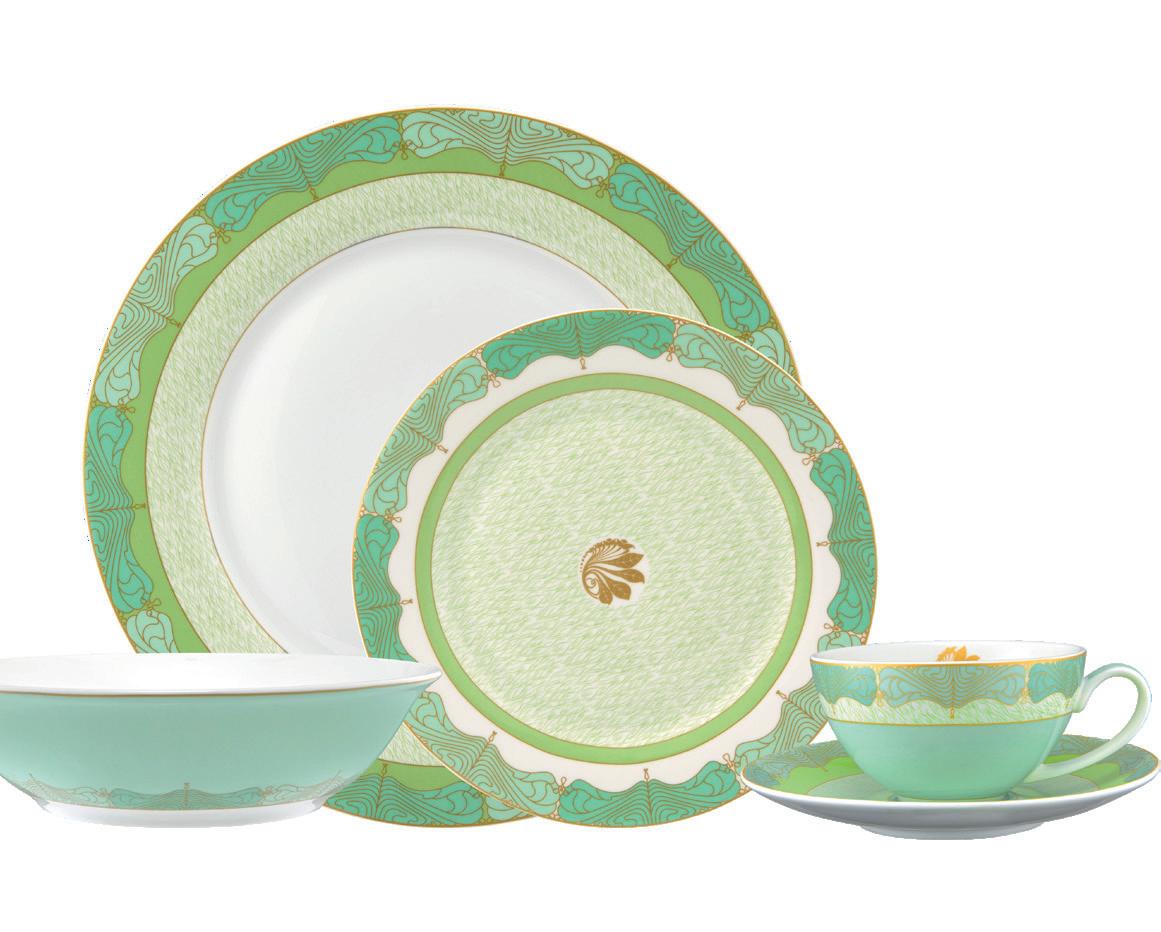
Unveil the magic and wonder of Oz with our exclusively designed Wicked collection. Inspired by the beloved characters and world of Wicked, this enchanting collection features exquisite dinnerware, teaware, glassware, barware and gifts. Perfect for fans and collectors alike, let the Wicked collection transform your retail space into a realm of fantasy and charm.
Contact us for more information: international@hag.com.au
How did the collaboration between Maxwell & Williams and Universal come about?
The collaboration between Maxwell & Williams and Universal arose from our recognition as Australia’s leading homewares brand, celebrated for our quality and innovative designs. Universal sought a partnership with a brand that embodies both artistic flair and practicality, and together, we aim to elevate everyday dining experiences. By merging tradition with modernity, we’re creating products that resonate with today’s consumers while honouring the essence of the Wicked story.
How closely have you worked with Universal on the Wicked project?
We have worked exceptionally closely with Universal on the Wicked project, engaging in collaborative efforts at every stage to ensure our shared vision comes to fruition. From initial concept discussions to design development and final execution, our teams have maintained
Bringing Wicked to the table
With cinemas across the globe preparing for the release of Universal Pictures’ hit musical Wicked, homewares brand Maxwell & Williams has secured the international license for tabletop.
As they actively seek distribution partners to expand the reach of the collection, TI’s editor Mairead Wilmot speaks with Max Grundmann, managing director and chief executive officer of Maxwell & Williams, to learn more about the collaboration…
continuous dialogue, sharing insights and expertise. This close partnership has allowed us to seamlessly align our creative ideas, resulting in a collection that truly reflects the strengths and aspirations of both brands.
Tell us about the collection – what can we expect stylistically?
The Maxwell & Williams Wicked collection invites you to "unveil the magic and wonder of Oz" through an exclusively designed range inspired by the beloved characters and enchanting world of Wicked
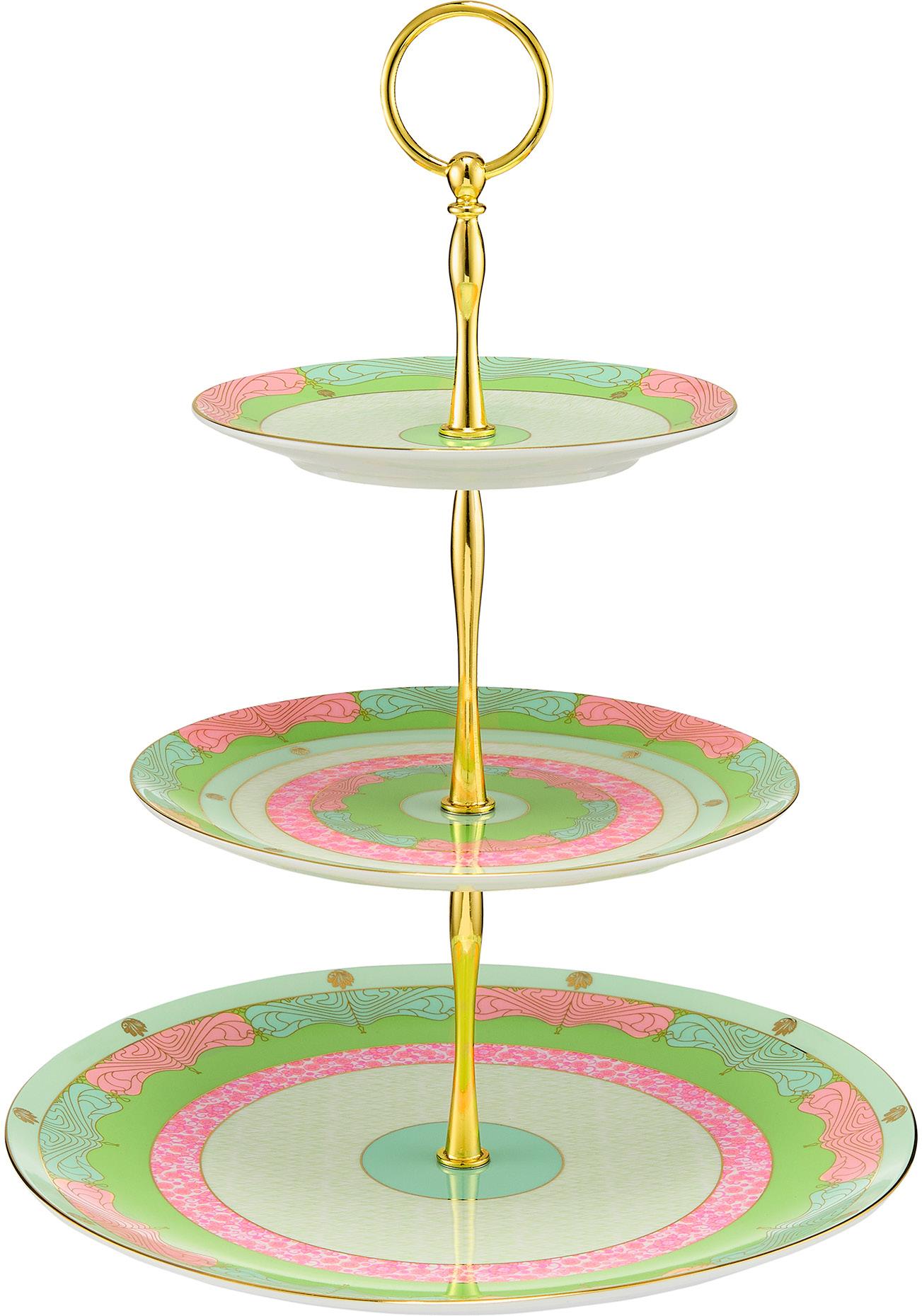
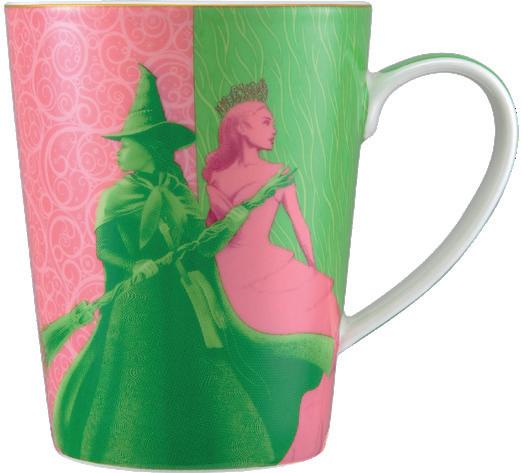
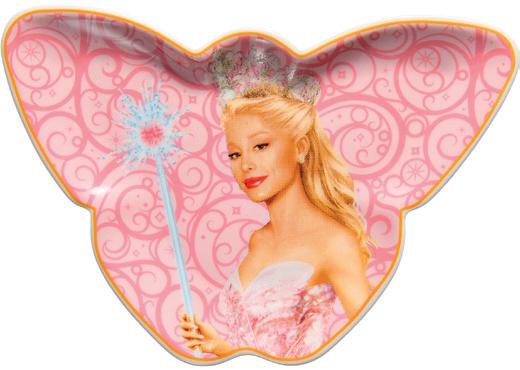
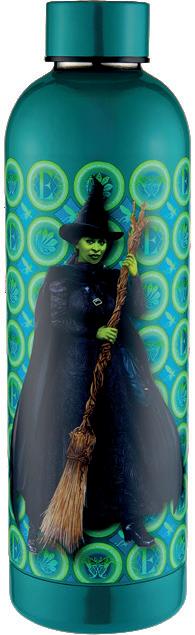
This captivating collection features exquisite dinnerware, teaware, glassware, barware, and unique gifts, each piece meticulously crafted to infuse a touch of fantasy into any table setting. Perfect for fans and collectors alike, the Wicked collection is designed to transform your retail space into a realm of charm and imagination, making it a must-have for anyone looking to celebrate the magic of this timeless story.
The collection
What efforts have you made to embody the spirit of the movie in the collection?
We have made substantial efforts to capture the spirit of the movie
The Maxwell & Williams Wicked assortment encompasses a variety of categories, including dinnerware, teaware, glassware, barware, and unique collectible gifts.
incorporating iconic themes and elements that resonate with the story of Wicked. Each piece is designed to reflect the enchanting characters and vibrant world, utilizing colour palettes
“Working on this high-profile license has been an exhilarating experience for the Maxwell & Williams team”
Max Grundmann
and motifs inspired by the musical's breathtaking visuals. By infusing a sense of whimsy and wonder into every item, we ensure that fans can experience the magic and emotion of the narrative in their everyday lives.
What do you anticipate your stand-out/hero product will be?
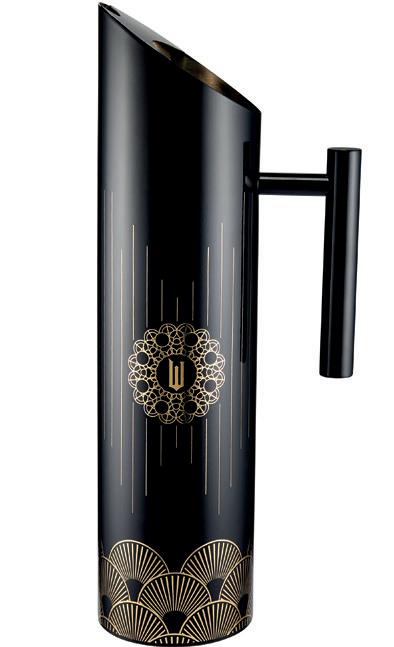
We anticipate that our standout hero products will include the dinnerware, teaware, and Wicked Palace barware ranges, each designed to immerse fans in the enchanting world of Wicked . The dinnerware and teaware collections feature beloved characters like Glinda, Elphaba, and the magical Land of Oz, with intricate artistry and high-quality craftsmanship that capture the essence of the Wicked story. These exquisite pieces are perfect for
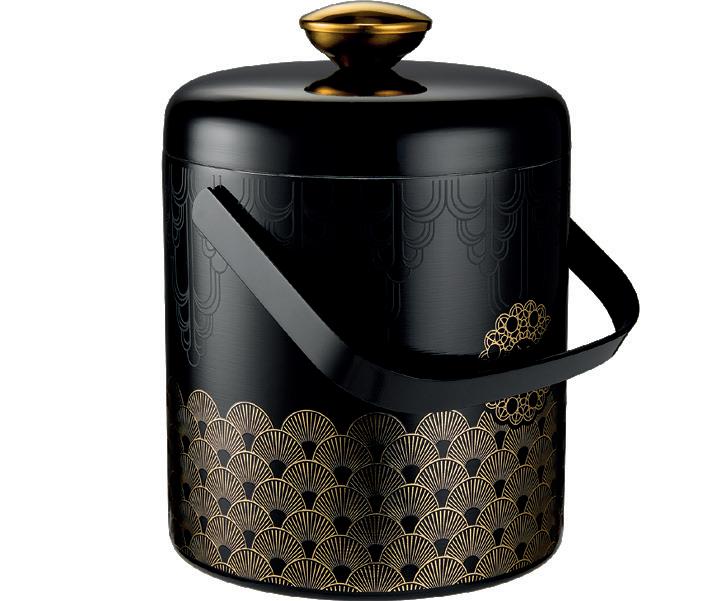
occasions, transforming each meal into a celebration of Oz. Adding a touch of opulent sophistication, our Wicked Palace barware range is crafted in sleek black with striking gold patterns, exuding an air of mystique and grandeur that’s worthy of Oz itself. Whether you're entertaining guests or savoring a quiet evening at home, this collection promises to elevate every sip with style and elegance, making it a must-have for fans and collectors alike.
Who is your target customer base for this collection?
Our target customer base includes everyday consumers, passionate fans, and dedicated collectors. We aim to appeal to those seeking to enhance their dining experiences with beautiful, high-quality pieces suitable for daily use. will find joy in owning items that celebrate their favourite characters and themes, while collectors craftsmanship and unique designs. Ultimately, we’ve created a collection that brings a touch of magic into every
The story...
Wicked tells the story of Elphaba (played in the movie by Cynthia Erivo), a young woman misunderstood because of her green skin, and her friendship with Glinda (played in the movie by Ariana Grande).
Following an encounter with the Wizard of Oz, their relationship soon reaches a crossroad as their lives begin to take very different paths.
What is your launch plan for the collaboration?
Our products became available at the end of October 2024, aligning perfectly with the upcoming movie release.
Is there anything else you want retail partners to know about the Maxwell & Williams tabletop launch?
We are excited to partner with retailers who share our passion for quality and design, and we believe this collection will create buzz and drive sales, appealing to a wide audience of fans and collectors.
How has the Maxwell & Williams team found working on such a high-
profile license?
Working on this high-profile license has been an exhilarating experience for the Maxwell & Williams team. The collaboration with Universal on Wicked has inspired us to push our creative boundaries and explore new design possibilities. We’ve relished the challenge of capturing the essence of these beloved characters and their enchanting world while upholding our commitment to quality and craftsmanship. Being part of a project that resonates with so many fans has motivated us to produce a collection that not only meets high expectations but also brings joy and magic to everyday moments. Overall, it’s been a rewarding journey that we’re proud to embrace.
Did you know?
Retailers interested in stocking the Maxwell & Williams Wicked collection in store can email international@hag.com.au
As Steelite settles into its buying of the Utopia Tableware brand, Ben Tearall, Steelite’s VP Sales UKI, tells Tableware International how what initially started as a collaboration quickly evolved into an acquisition…
“Steelite has acquired a very successful business with a superb operating platform”
Ben, thanks for speaking with us. Utopia was recently acquired by Steelite, but you were already working closely with them, distributing the brand in the US – what added benefits do you see from having the Utopia brand acquired?
The actual acquisition was at the end of June but as you rightly point-out, we had been successfully working with Steelite for more than a year in the USA to distribute the brand. Obviously, what started-out as a simple ‘supplier/distributor’ relationship began to develop into something more as we quickly realised there
were synergies at many levels in our two businesses – right from the top with a shared philosophy between John and Mark all the way through to both company’s approach to product innovation, forward planning and customer relationships. In other words, the initial courtship quickly resulted in a firm marriage!
This is the seventh Steelite acquisition under Arbor Investments’ ownership – what is Utopia bringing to the table that Steelite doesn’t already have in its remit?
At the risk of stating the obvious, Utopia is by far the largest supplier of Glassware to the UK
& Irish sectors along with very successful ranges of cutlery, tableware, eco products and of course tableware. There is very little ‘cross-over’ when you put our collections together. Therefore, the acquisition has made the joint company, the largest supplier to the hospitality market in these regions
Will we see any changes to the way Utopia does business now?
Steelite has acquired a very successful business with a superb operating platform (eCommerce website). As we go through this initial ‘discovery’ phase, we will be planning how we successfully transfer all Steelite products to this platform so that all the joint company customer base can enjoy the benefits of the system for both product ranges.
How is the hospitality market currently?
We are seeing more and more brands launching HoReCa-friendly collections – is it at risk of utter brand saturation?
It is no secret that the UK market is a little ‘bumpy’ at the moment
with a very poor summer and a difficult economic/political situation having an effect on demand. However, we are still experiencing year-on-year growth for the combined businesses, and this is mainly due to our breadth of range in both product offering and price span. There will always be competitor activity which we follow closely but our main concern is what we do and why we do it!
Steelite is undoubtedly a major force in the industry, where, if any, do you see opportunities for growth?
We now have huge global reach in distribution and a huge resource of supply partners. We can therefore provide virtually anything front of house to any establishment and if we don’t have it, we will find it for them.
Steelite-Utopia is a ‘one-stopshop’ to the trade and by close collaboration with our customers, we can enjoy mutual growth over the coming years.
Aside from Utopia, what can we expect from other Steeliteowned brands?
Steelite now owns several brands and has many ‘partner’ brands which we distribute in several markets. Willam Edwards Ltd is a fabulous example of a successful acquisition – purchased just
“We can provide virtually anything front of house to any establishment and if we don’t have it, we will find it for them”
before COVID in 2020, sales have more than doubled since than. WE is our most premium brand specialising in quality bone china tableware – an area which is more immune to economic fluctuations than the mid-market sector. When many competitors have reigned-in their product
development, WE has invested in hundreds of new products and is most certainly seen the benefits of this strategy. The acquisition of Utopia and the addition of the Nude ‘Stem Zero’ crystal glassware collection further strengthens the premium tabletop offering for high-end establishments.
Bon
Bistro
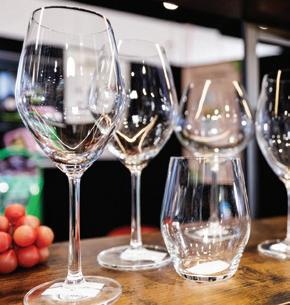
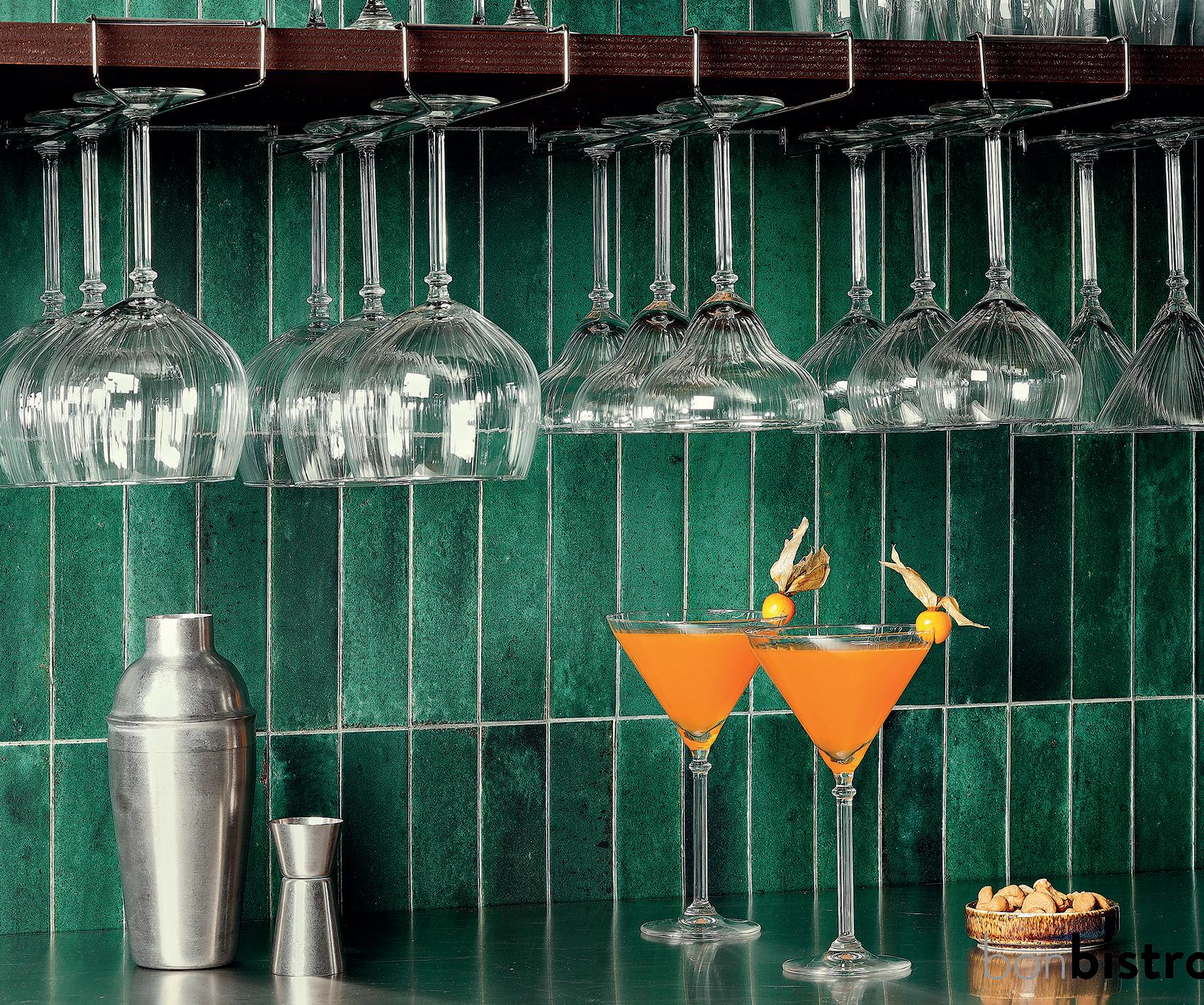
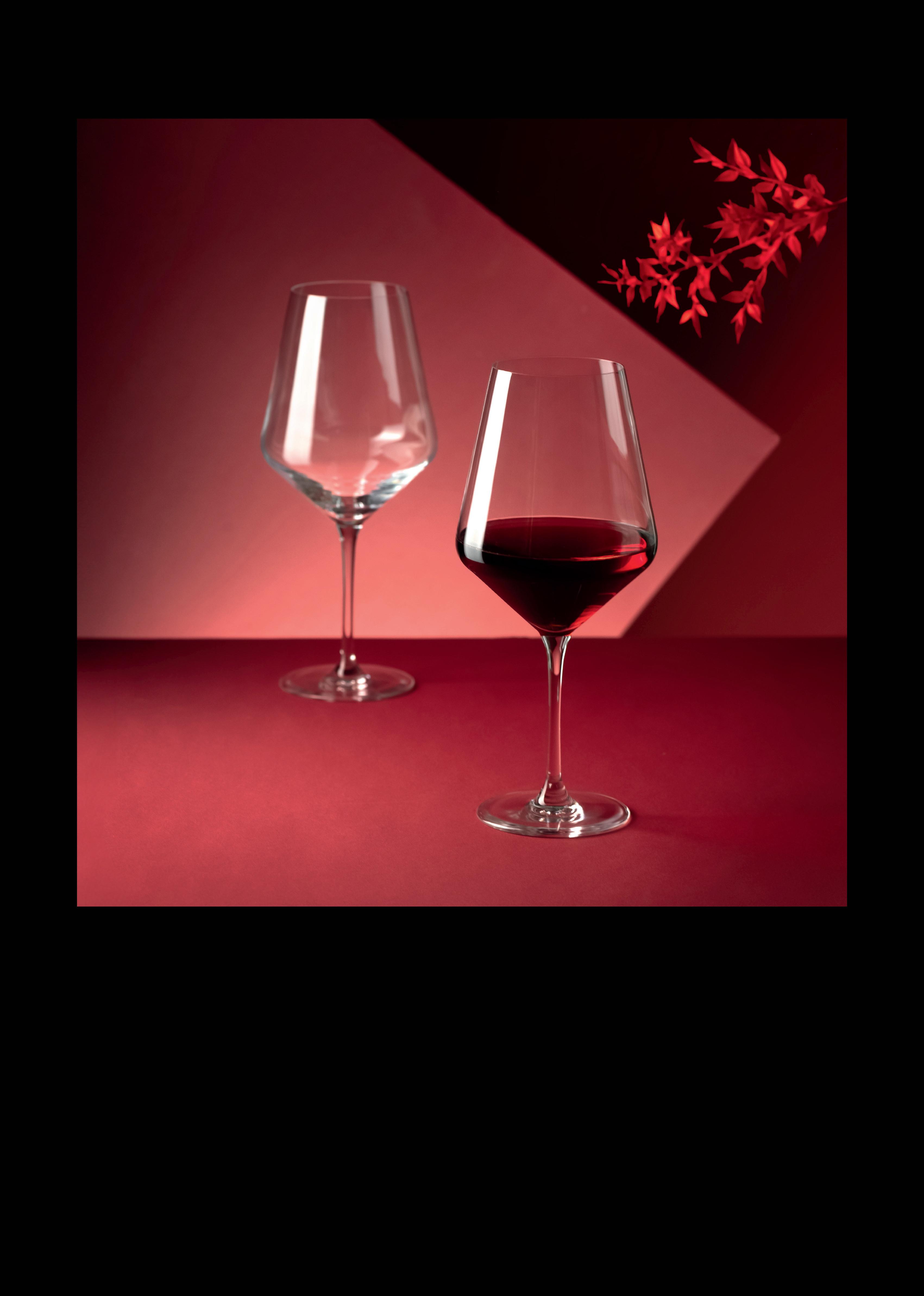
Just as clothes make the man, the right glass makes the cocktail. Because let’s face it, a delicious cocktail deserves the best glass.
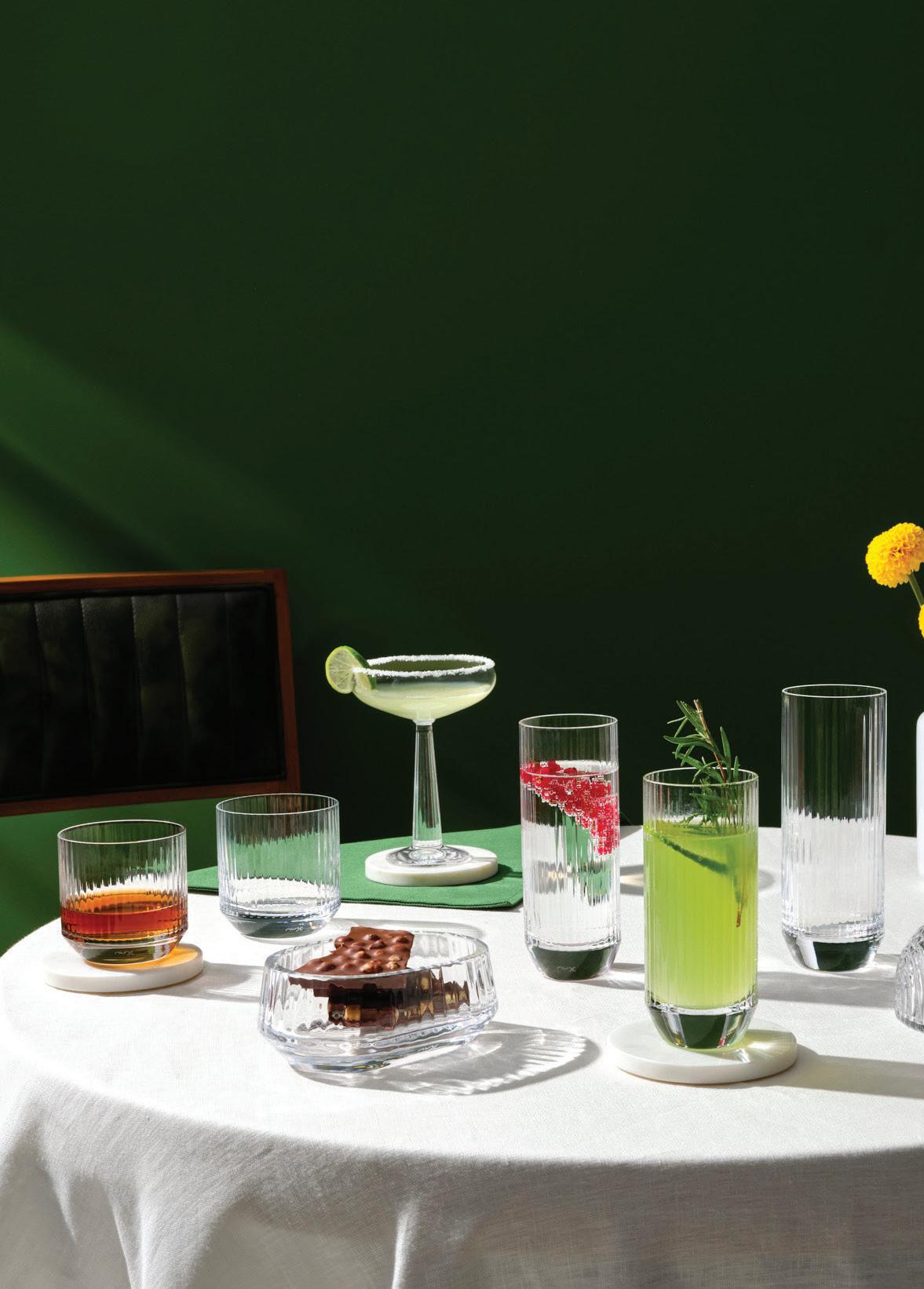
Bon Bistro’s Noble Collection consists of a selection of beautiful cocktail glasses: martini glasses, margarita glasses, coupes and copa glasses. Each glass features a subtle relief of vertical lines, adding a touch of elegance to any drink.
www.finediningandliving.com
In the mix
Barware is big business and catering to the demands of the mixology trade keeps plenty of suppliers on their toes. Durability and practicality must be comfortable bedfellows with attractive design and a certain amount of je ne sais quoi. We shine a light on some great barware options…
As a well-established, but niche, category – barware is something establishments need, and want – to get right. Adding to the overall ambiance, beautiful barware helps to give a venue the right vibe, and that’s why getting it right is so important.
“Good barware adds to the
“When we talk about bars, we talk about mixology, but that world is incredibly wide. It becomes difficult to recognise an indispensable kit: every customer is unique and has an equally unique proposal. As Paderno we try to have an offer that can meet everyone’s
“Everybody wants something elegant but they also want it to be stackable – combining these two proves very difficult!”
Matthias Van den Eynde, international key account manager, hospitality, Fine Dining and Living
theatre of serving high quality drinks, so anything the customer sees will add value,” agrees Kathryn Oldershaw, marketing director at Utopia Tableware. “Beyond just glasses, mixologists want equipment that stands out while delivering practical features that help keep drinks in perfect condition.”
Diego Palumbo, head of sales Europe, Arcturus Group who boast the renowned Paderno brand points out the mixology sphere is a vast one and those working in it are looking for long lasting, quality product.
needs. We have all kinds of jiggers, shakers and strainers, for example. In the catalogue you can find different types of bottles and sprays for angostura, but also cloches for smoking and much more.”
This type of all-encompassing offering has made Paderno one of the go-to brands for supplying barware. At the brand’s heart is its production of stainless steel products which Diego says are in demand, but equally they strive to deliver on-trend pieces in an array of finishes and colourways.
“The core of Paderno is stainless steel, and we produce a very wide range of cups, glasses and goblets, available in different colours. There are always those who prefer the classics and those who want something even more creative, and even then, we manage to satisfy the customer.”
Utopia, too, are delivering functional but aesthetic pieces. Kathryn says: “We offer a selection of barware featuring high-end designs and luxurious finishes, which includes a complete range of cocktail tools and double walled coolers.”
Kathryn highlights Utopia’s Satin
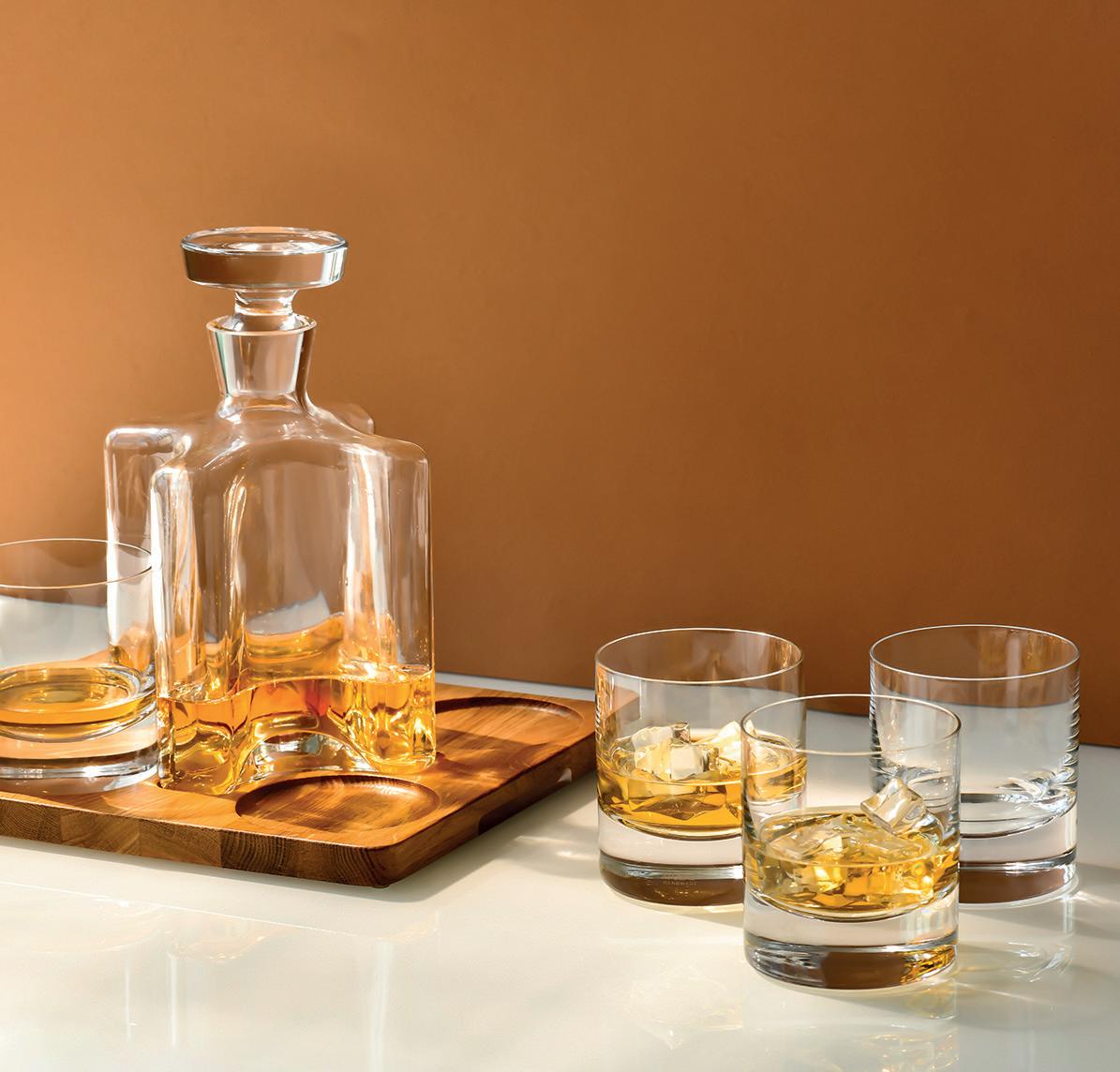
Created to be shared and handmade by the artists of the Krosno glassworks, the Sterling Oak glass set is designed for anyone who loves to treat themselves to the best. The set consists of a decanter with an original shape and four glasses with a thick bottom. The set is presented on a milled oak tray, into which the dishes fit perfectly. It has subtle recesses designed in it, making it easier to carry comfortably, as well as stabilising the silicone legs from underneath. The vessels are made of crystalline glass – charmingly shiny, reflecting the unique colour of whisky and allowing you to enjoy each of its mysterious, woody aromatic notes. Elegant and dignified oak is a symbol of tradition and durability. Its wood is an inseparable element of the culture of whisky production, aged in oak barrels and soaked in their aroma.
www.krosno.com
double walled range which includes a wine bucket, bottle cooler, an ice bath and a punch bowl.
“Its dual layer construction keeps drinks at the perfect temperature without allowing condensation to form, and features an understated faceted design combined with a beautiful satin finish stainless steel look.”
Speaking to Tableware International, Matthias Van den Eynde, international key account manager, hospitality Fine Dining and Living, points towards certain cocktails having their “moment”, and with that, the demand for matching glasses.
“We really see the Pornstar- and Espresso Martini hype reaching its peak.
The demand for typical glasses for these small cocktails is still really high.
“Next to that, we see a steady rise in cocktails like Negroni and Old Fashioned which are served in traditional but trendy tumblers. For the high-end segment we are experiencing demand for crystal tumblers and lightweight glassware.”
Matthias adds one of the challenges for barware suppliers is “to find a good balance between look and functionality. Everybody wants something elegant but they also want it to be stackable – combining these two proves very difficult!” We highlight some great barware options from glasses to jiggers over the following pages. Cheers!
Zwiesel Glas
The flair of big cities resonates in the design of the Zwiesel Glas Paris bar range. Its clear, geometric lines and rounded proportions reflect a frozen elegance. Its simplicity ensures that these glasses will look right anywhere in the world, no matter whether it is a lifestyle bar in New York or an hotel lounge in Paris. www.zwiesel-glas.com
Paderno
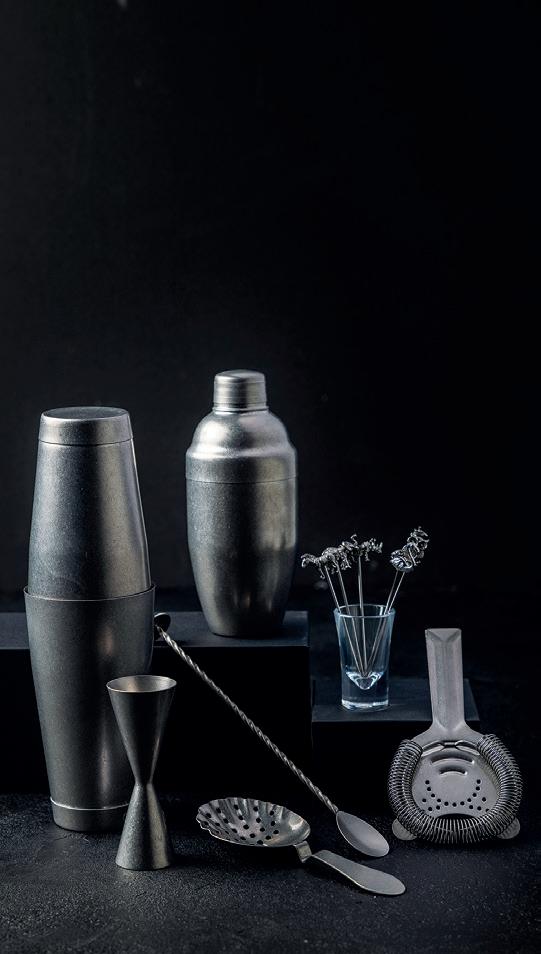
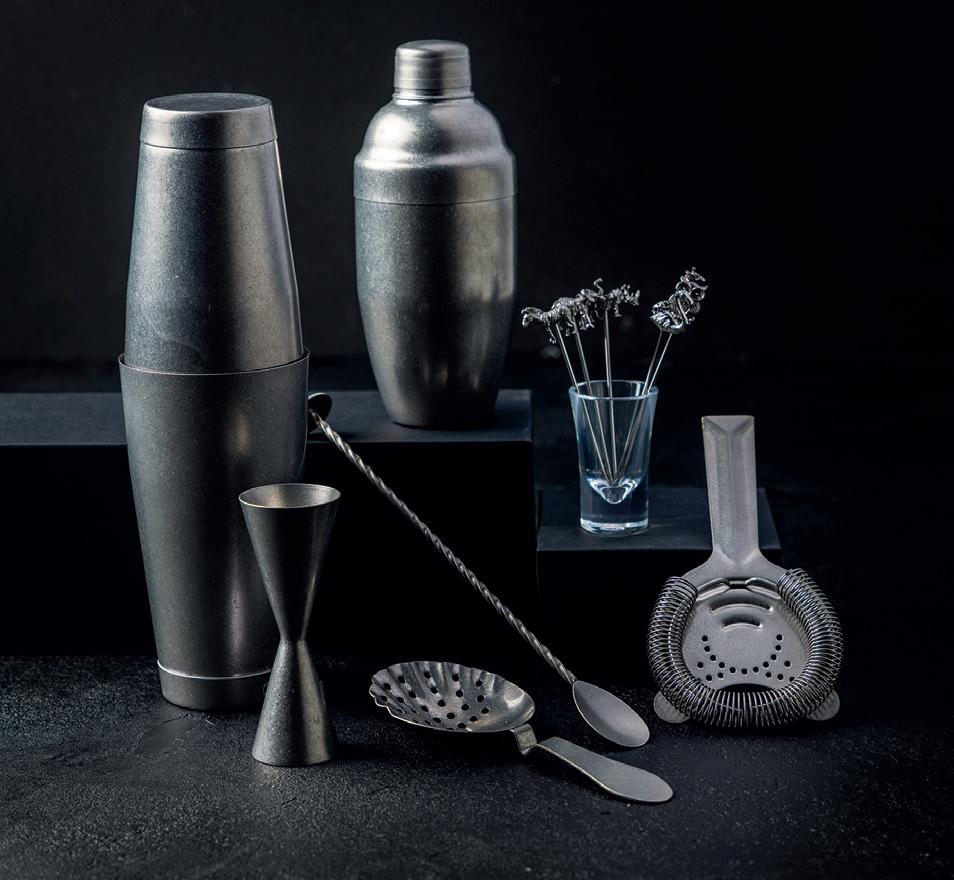
Paderno’s Mixology line has been extended adding the new Vintage finish to its range. Boasting a matt texture, featuring a deliberately worn look giving character to each element.
Paderno, always committed to offering good looking, quality products, completes its stainless-steel range with unconventional colours, giving a new way to add atmosphere and style to every location. www.paderno.it
Question Corner
“At thinKitchen we find the following are most essential when it comes to barware in hospitality in India –wine glasses, high ball glasses, shot glasses, craft beer glasses, mixing glasses and cocktail shakers.”
thinKitchen’s CEO Anand Baldawa on what Indian establishments are looking for from their glassware assortment.
Royal Scot Crystal
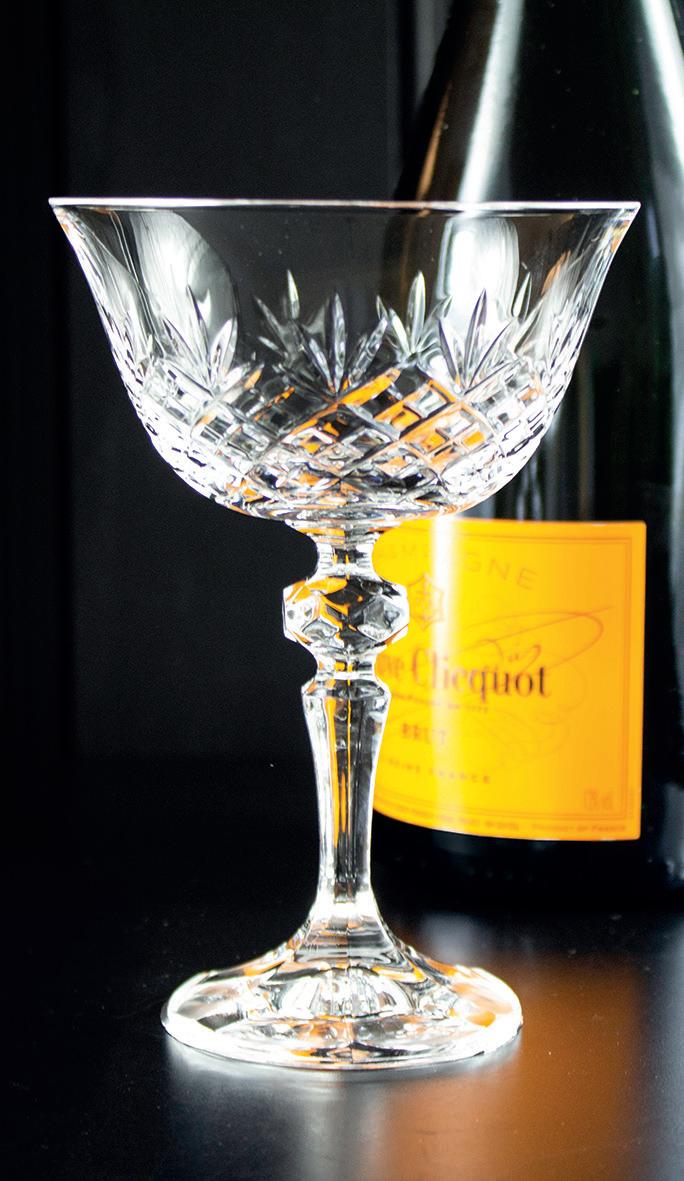
The celebrated coupe saucer champagne has been a huge success story this year and is very much the glass of the moment. Top London hotels are using Royal Scot Crystal coupes, not only for champagne but also for signature cocktails, Martini and speciality drinks. The antique inspired designs, Grapevine and Nouveau, are currently very popular and the Nouveau saucer champagnes were even used on screen on the highly acclaimed TV series Bridgerton. Just launched are Royal Scot Crystal coupe glasses in traditional popular hand cut patterns London and Edinburgh.
New additions this year include jugs and ice buckets in Royal Scot Crystal’s intaglio hand cut Grapevine and Nouveau designs, bringing added style and sophistication to bars. Royal Scot’s exquisite barley twist port glasses are a modern twist on an antique a mid-18th century glass, these port / sherry glasses are also being used to serve whisky and tequila!
Hotels and restaurants continue to serve Champagne, whiskies, spirits and long drinks in Royal Scot Crystal’s traditional tumblers and champagne flutes, enhancing the elegance, sumptuousness, and enjoyment of drinking out of fine hand cut crystal.
Bespoke glass cutting, engraving and branded boxes are available on request.
Diego Palumbo, head of sales Europe, Arcturus Group
Matthias Van den Eynde, international key account manager, hospitality, Fine Dining and Living
Lenox
Lenox has enhanced its Tuscany Classics range with gold and iridescent lines. Perfect for entertaining with friends or keeping a well-stocked home bar, Tuscany is always functional, durable and elegant. Featuring an assortment of classic and unique shapes, this barware collection also includes accessories for serving beverages and bar tools. Tuscany Classics will become a staple in your home for years to come.
www.lenox.com
MEPRA
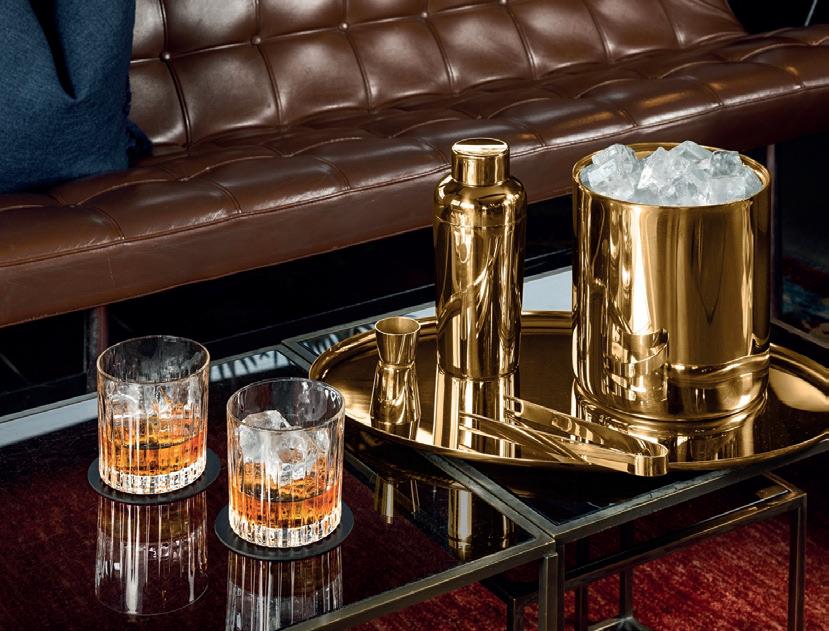
The barware collection from Mepra’s Stile by Pininfarina line is a seamless blend of elegance and function. This premium set includes every essential: a sleek shaker, precise jigger, sophisticated ice bucket, and a refined tray. Crafted to elevate any setting, each piece combines Pininfarina’s iconic design excellence with the quality needed for an exceptional bar experience. Perfect for home bars or professional use, this collection delivers a touch of Italian sophistication to every pour.
www.theluxuryartmepra.com
NUDE
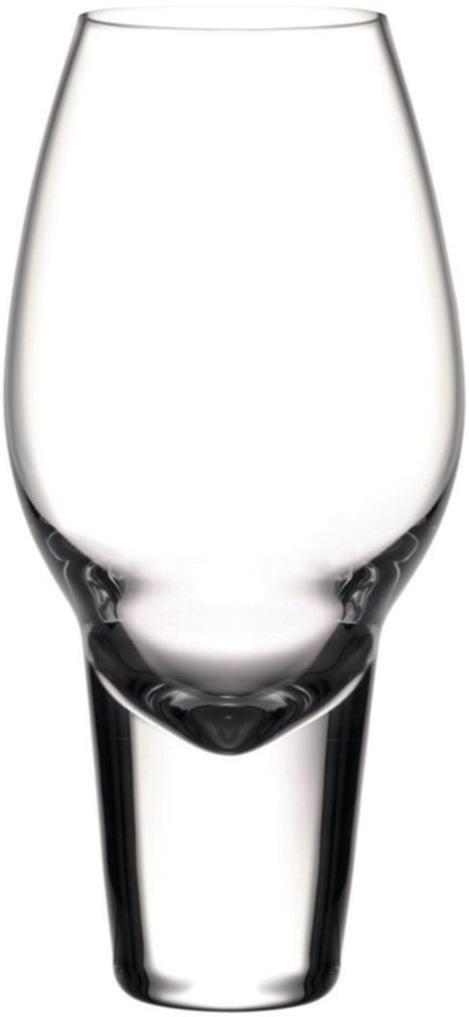
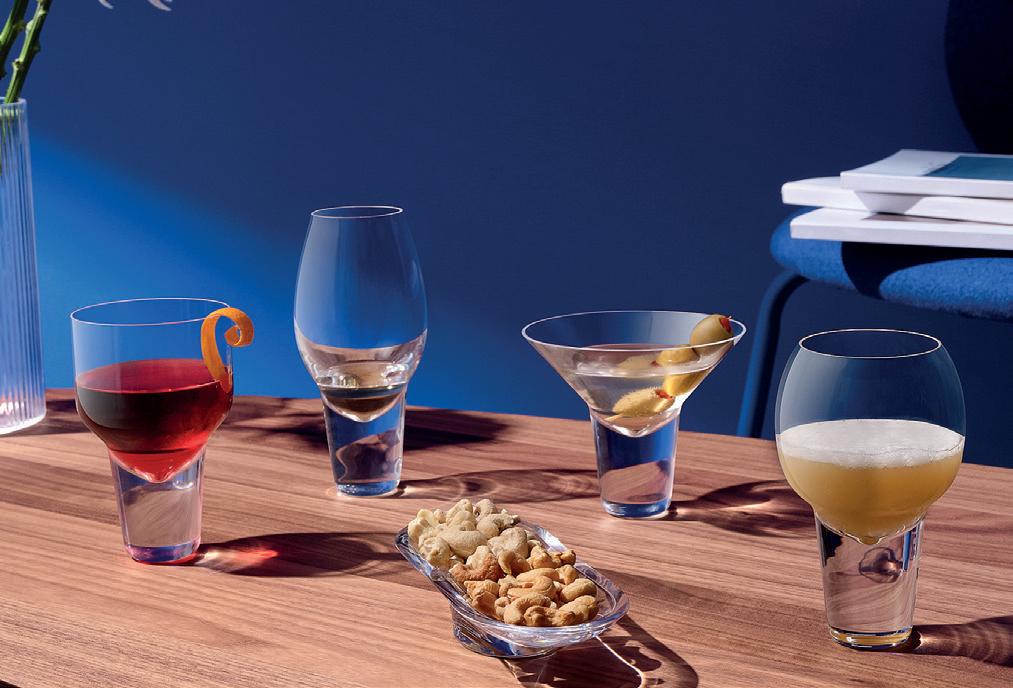
Combining functionality with design and pushing beyond the traditional boundaries of glassware, the new cocktail glasses added to Nude’s Gravity Collection were designed by Ali Bakova to break the monotony of everyday life and make every sip more special. The four new designs in the Gravity Collection, which evoke the mystery of space and moments when time seems to stop, highlight timelessness with their narrow and solid bases while subtly integrating with a voluminous texture elegantly placed within the designs. Handcrafted from lead-free crystal, the Gravity designs aim to bring vibrancy to users’ lives and their special moments.
eu.nudeglass.com
Utopia
Orrefors
The More Collection by Orrefors began as a restaurant collection, crafted through insights gained from restaurateurs on form, sustainability, and functionality. Designed by Erika Lagerbielke, this collection is celebrated in both Michelin-starred establishments and casual home gatherings.
The More collection epitomises the blend of elegance and practicality, featuring everything from wine and champagne glasses to a versatile multitumbler, all reflecting contemporary social dining trends: relaxed, inclusive, and enjoyable. In 2024, the collection welcomes exciting new additions: More Pinot, More Bistro, and More Champagne Boule. These new pieces enhance the collection’s versatility, offering stylish options for every occasion.
www.orrefors.com
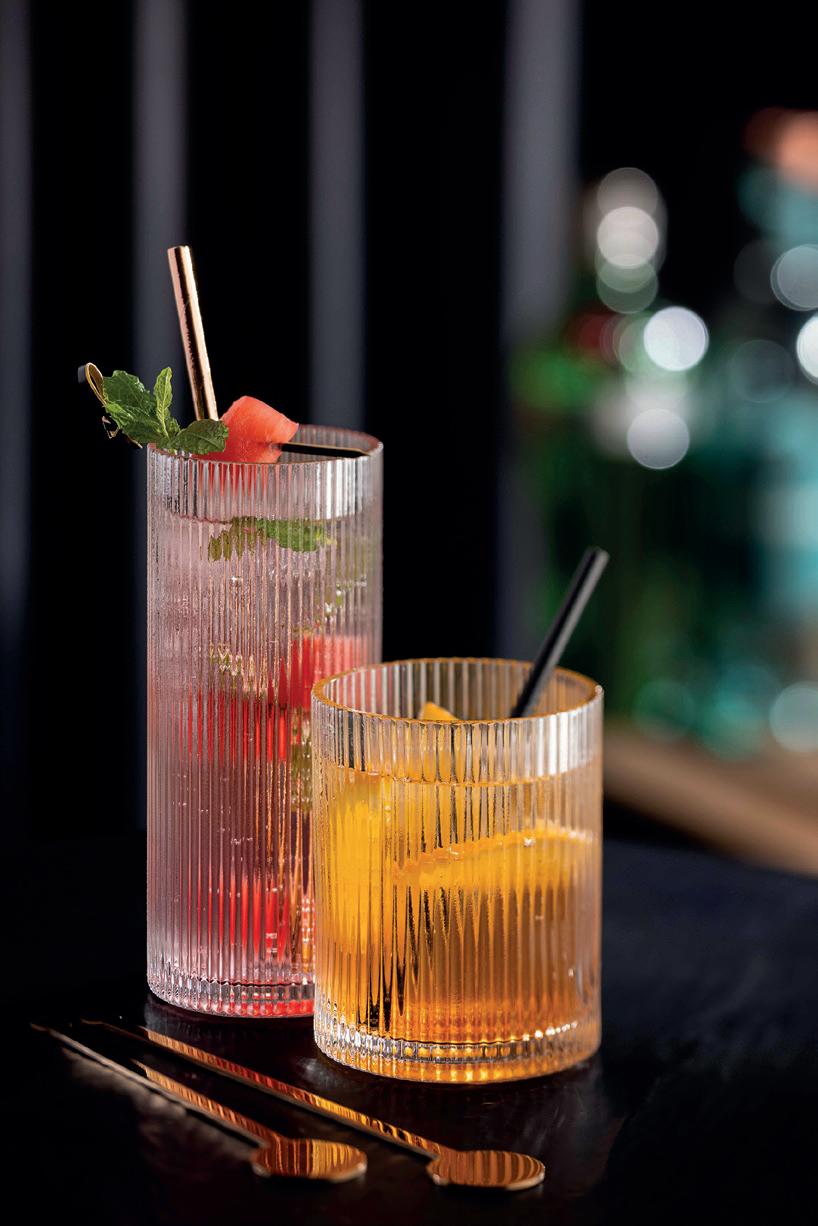
Singapore is the latest glassware collection from Utopia. These super-stylish tumblers feature crisp, precise vertical lines that both enhance the look of the serve and add a chic, tactile dimension to the drinking experience.
There are two glasses in the collection: a double old fashioned, 31cl / 11oz, and a hiball, which holds 32cl / 11.25oz. Their substantial weight is ideal for premium serves. With their sharp, glittering lines, which blur the drink and catch the light, both tumblers exemplify the cocktails and shots they are designed to serve: exotic and playful with a touch of the sinful! Precision-made from soda lime glass, Singapore tumblers are high quality, resilient and glasswasher safe, making them ideally suited to busy upmarket bar and restaurant environments. www.utopia-tableware.com
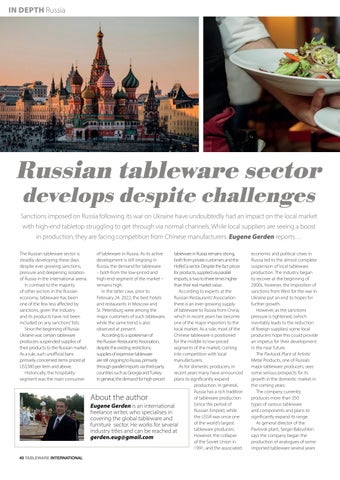
Sanctions imposed on Russia following its war on Ukraine have undoubtedly had an impact on the local market with high-end tabletop struggling to get through via normal channels. While local suppliers are seeing a boost in production, they are facing competition from Chinese manufacturers. Eugene Gerden reports…
The Russian tableware sector is steadily developing these days despite ever growing sanctions, pressure and deepening isolation of Russia in the international arena.
In contrast to the majority of other sectors in the Russian economy, tableware has been one of the few less affected by sanctions, given the industry and its products have not been included on any sanctions’ lists.
Since the beginning of RussiaUkraine war, certain tableware producers suspended supplies of their products to the Russian market. As a rule, such unofficial bans primarily concerned items priced at US$300 per item and above.
Historically, the hospitality segment was the main consumer
of tableware in Russia. As its active development is still ongoing in Russia, the demand for tableware – both from the low-priced and high-end segment of the market –remains high.
In the latter case, prior to February 24, 2022, the best hotels and restaurants in Moscow and St. Petersburg were among the major customers of such tableware, while the same trend is also observed at present.
According to a spokesman of the Russian Restaurants’ Association, despite the existing restrictions, supplies of expensive tableware are still ongoing to Russia, primarily through parallel imports via third-party countries such as Georgia and Turkey. In general, the demand for high-priced
About the author
tableware in Russia remains strong, both from private customers and the HoReCa sector. Despite the fact prices for products, supplied via parallel imports, is two to three times higher than their real market value.
According to experts at the Russian Restaurants’ Association there is an ever-growing supply of tableware to Russia from China, which in recent years has become one of the major importers to the local market. As a rule, most of the Chinese tableware is positioned for the middle to low-priced segments of the market, coming into competition with local manufacturers.
Eugene Gerden is an international freelance writer, who specialises in covering the global tableware and furniture sector. He works for several industry titles and can be reached at gerden.eug@gmail.com
As for domestic producers, in recent years many have announced plans to significantly expand production. In general, Russia has a rich tradition of tableware production (since the period of Russian Empire), while the USSR was once one of the world’s largest tableware producers. However, the collapse of the Soviet Union in 1991, and the associated
economic and political crises in Russia led to the almost complete suspension of local tableware production. The industry began to recover at the beginning of 2000s, however, the imposition of sanctions from West for the war in Ukraine put an end to hopes for further growth.
However, as the sanctions pressure is tightened, (which inevitably leads to the reduction of foreign supplies) some local producers hope this could provide an impetus for their development in the near future.
The Pavlovsk Plant of Artistic Metal Products, one of Russia’s major tableware producers, sees some serious prospects for its growth in the domestic market in the coming years.
The company currently produces more than 350 types of various tableware and components and plans to significantly expand its range.
As general director of the Pavlovsk plant, Sergei Babushkin says the company began the production of analogues of some imported tableware several years
ago and they have plans to meet the existing demand in full.
“So far, we have already launched the production of some types of tableware and components. For example, grinding wheels, which were previously purchased abroad. Now we make 80 per cent of these products ourselves. In addition, we have established our own production of polishing pastes, now this process does not depend on imported components,” Sergei Babushkin says.
Last year, the plant produced
has announced plans for expansion in recent months.
At present the Nytva Plant is one of the oldest tableware enterprises in Russia, established as far back as the 1930s.
According to Dmitry Butenko, general director of the enterprise, currently its range consists of about 400 items and this will be significantly expanded.
“The majority of the items are made of sheet steel. Among the major customers of our cutlery are the coffee brand Jockey, the largest ketchup producer in Russia
“According to experts at the Russian Restaurants’ Association there is an evergrowing supply of tableware to Russia from China, which in recent years has become one of the major importers to the local market”
about 10.5 million units of various tableware and components and is ready to increase production by two to three times in 2025.
In the meantime, JSC Nytvа Tableware Plant – located in the Perm Krai, Russia’s Siberia – is another major Russian tableware producer which
Baltimore Holding, the leading Russian airline Aeroflot and others,” he says.
The company hopes that due to the existing problems with the supplies of imported tableware to Russia at present, most of the major local customers will switch to domestic products.
SHOWROOMS: January 14–20, 2025 TEMPORARIES: January 15–19, 2025
Amefa Beatriz Ball
Amefa
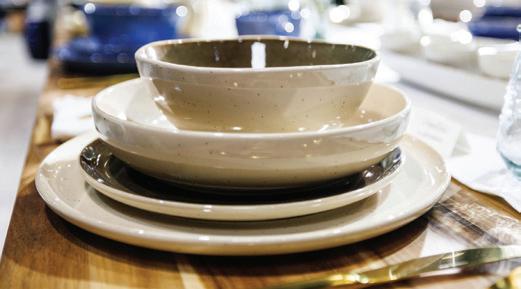
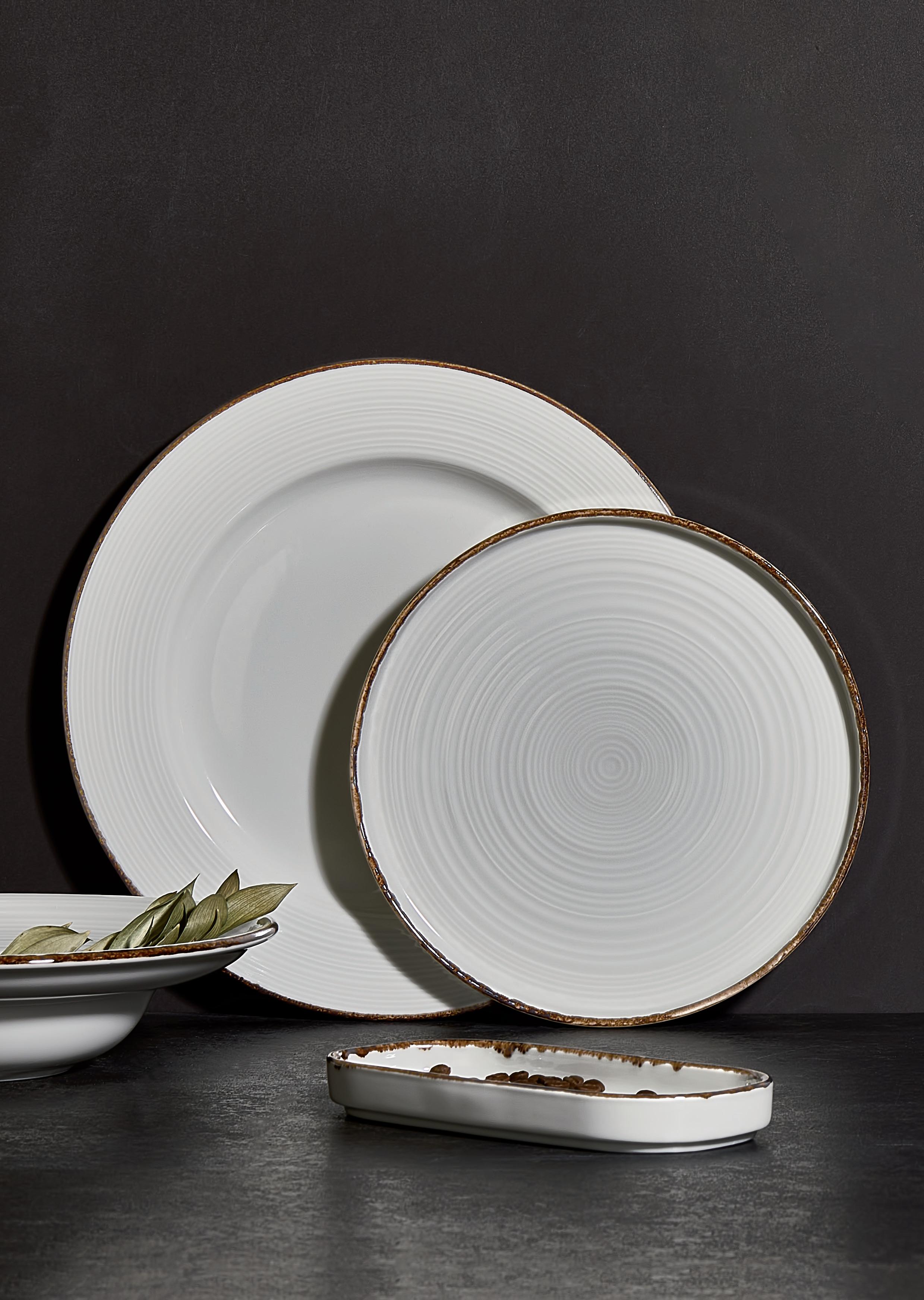
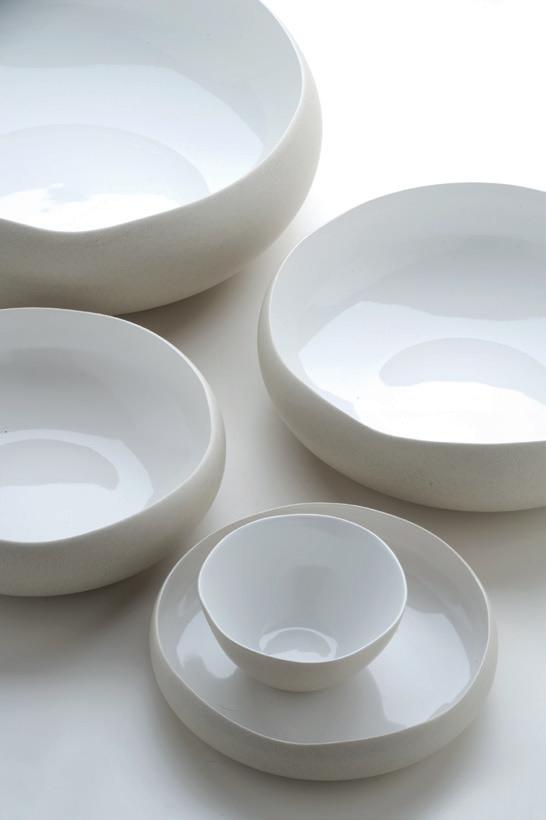
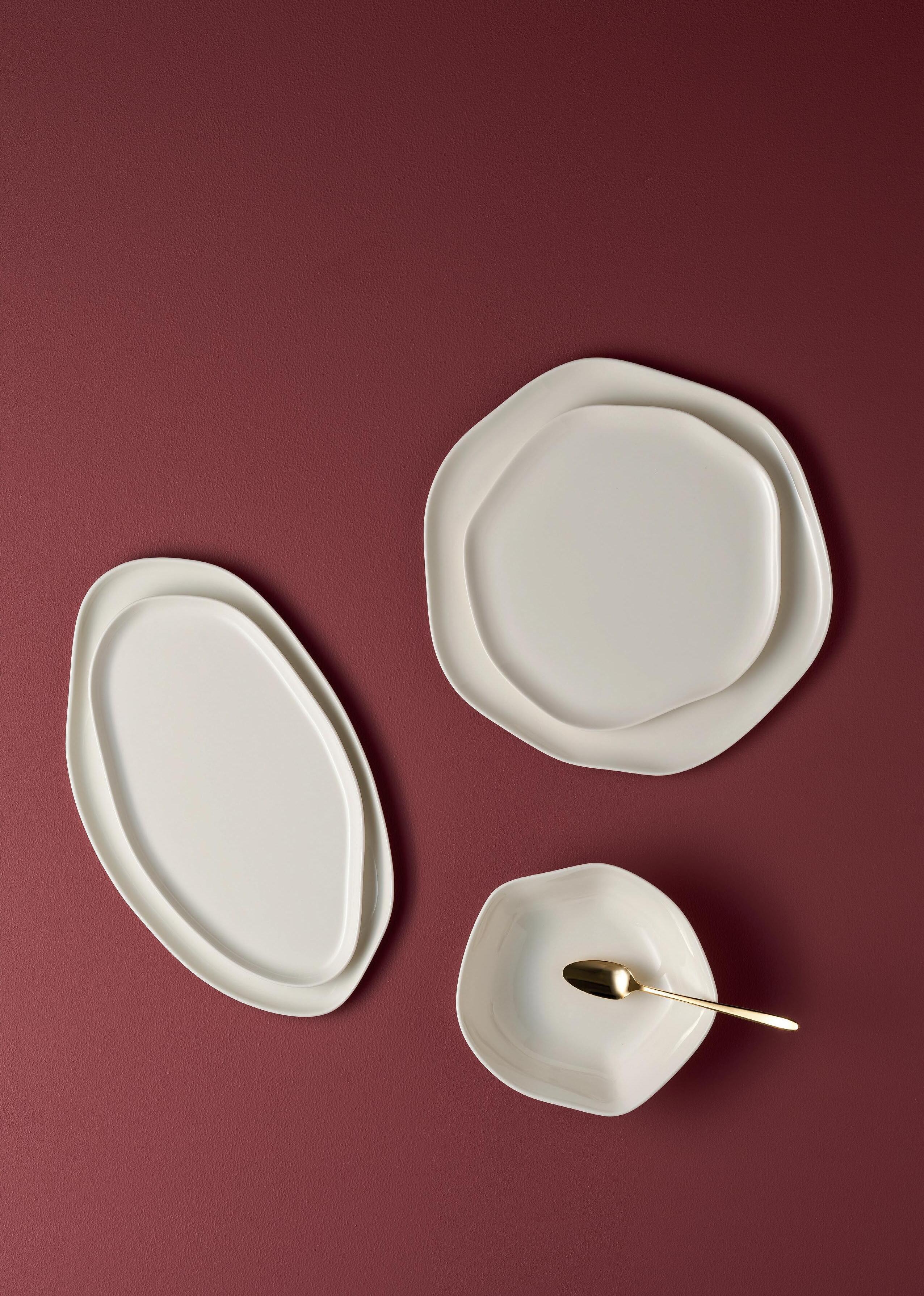
The Oslo collection from Médard de Noblat breaks from traditional tableware designs, offering organic shapes and a visionary aesthetic. Meticulously handcrafted, this stoneware range blends natural matte and glossy finishes, creating a sensual and modern table setting. Durable yet delicate, each piece is dishwasher and microwave safe, making it as practical as it is beautiful.
www.amefa.com
Beatriz Ball
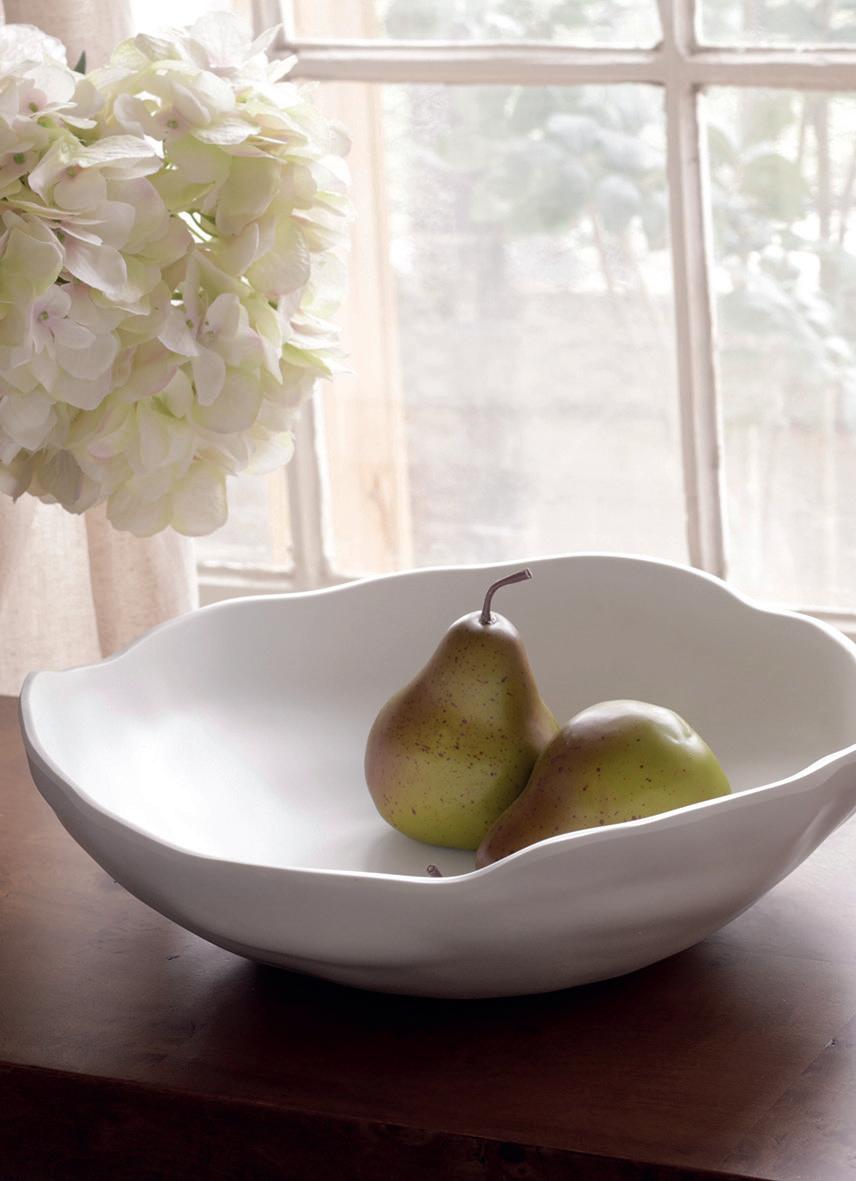
The bestselling Vida Nube Large Organic Bowl in white embodies an uncomplicated and straightforward design aesthetic with unmistakable Beatriz Ball flair.
Presented in a luscious satin finish, the pottery-inspired Nube pieces are as practical as they are beautiful. Generously sized and subtly styled, this fabulous large bowl makes a stunning centerpiece. Made of luxury melamine for everyday enjoyment, the dishwasher safe piece is ideally suited for indoor and outdoor entertainment.
wholesale@Beatrizball.com
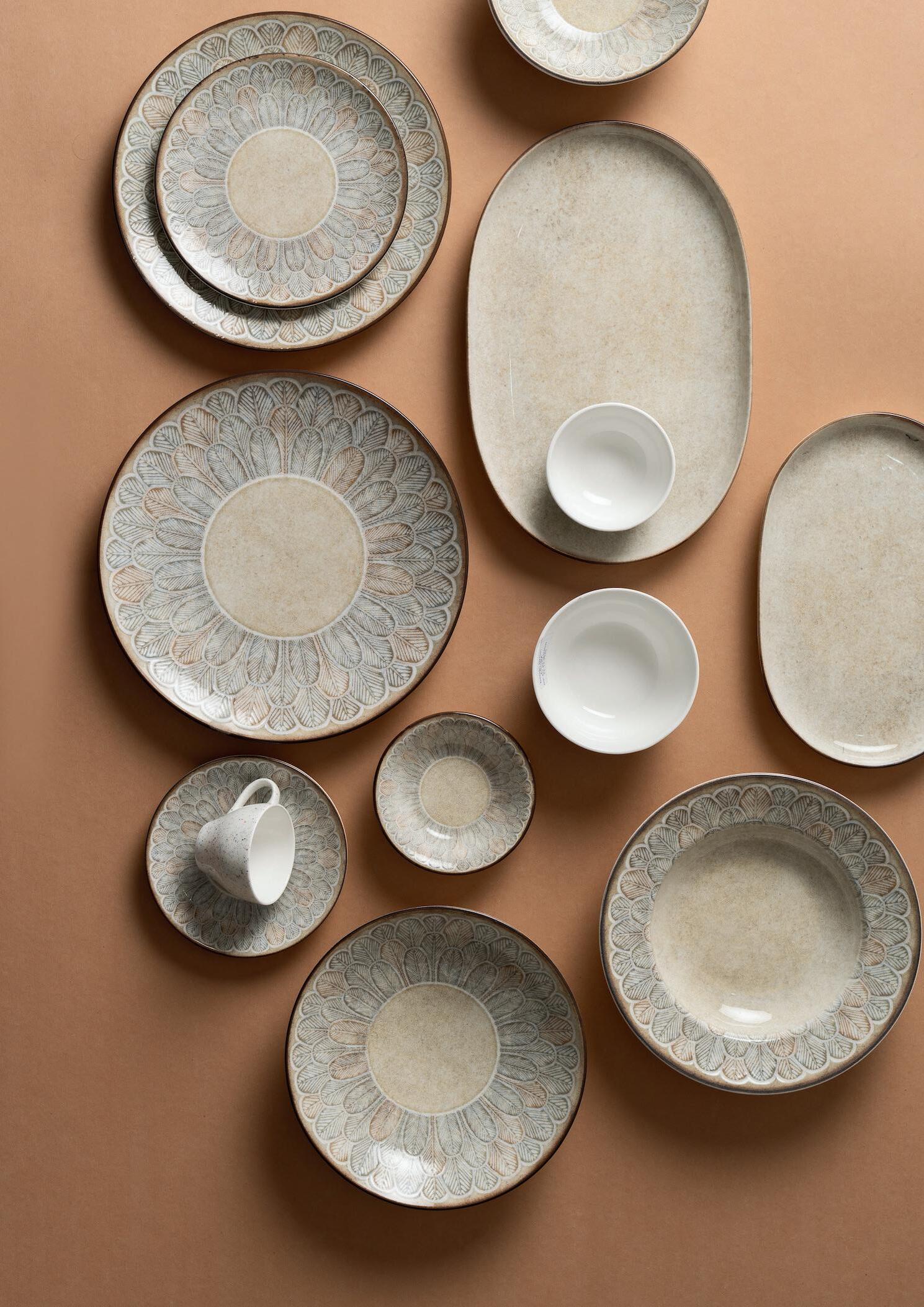
Organic matter
The pared back aesthetic which is so in vogue at the moment takes its inspiration from natural, organic matter – tabletop is pottery-inspired, with neutral colourways. We take a look at some key collections which are influence by the creative brief…
Denby
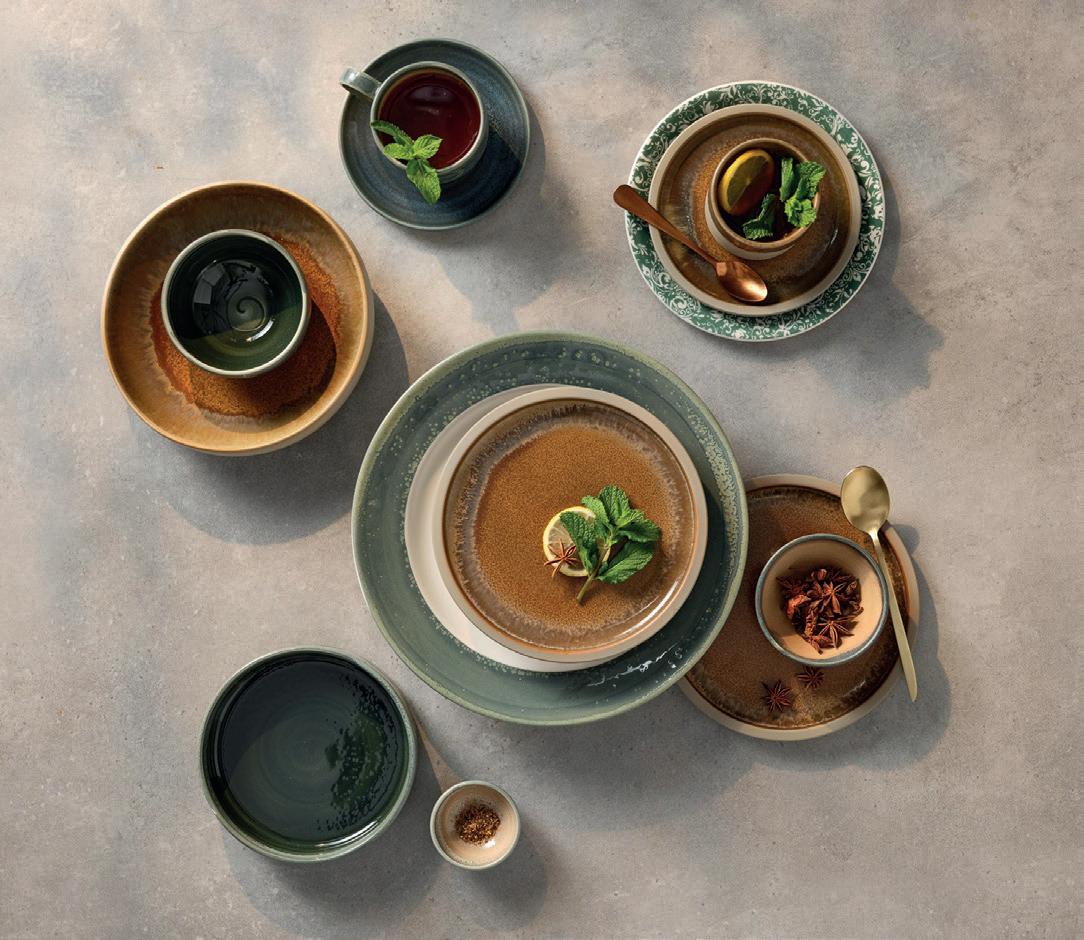
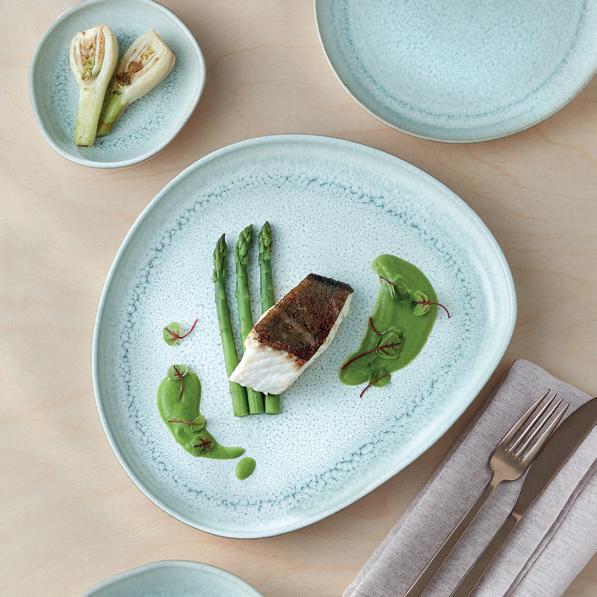
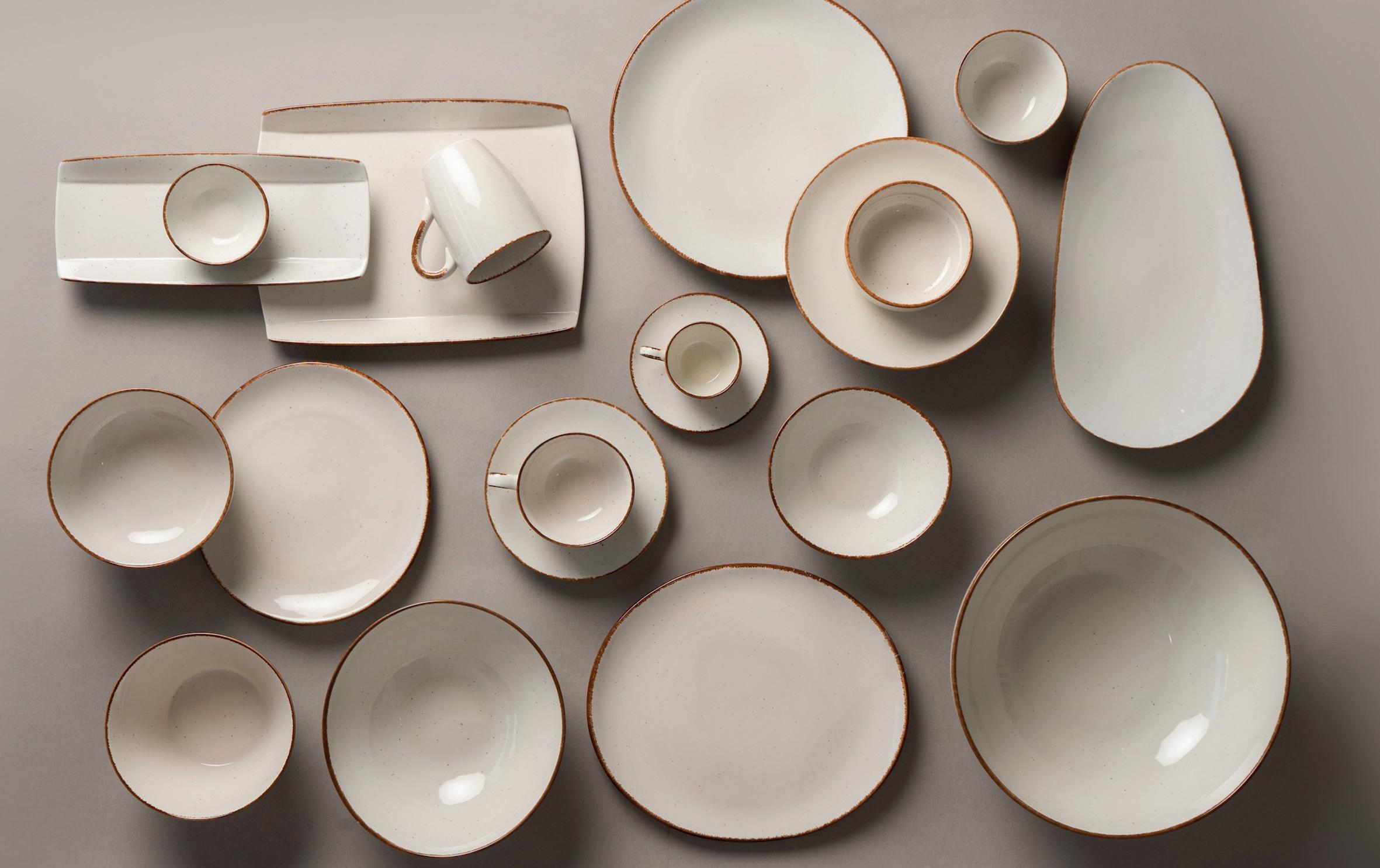
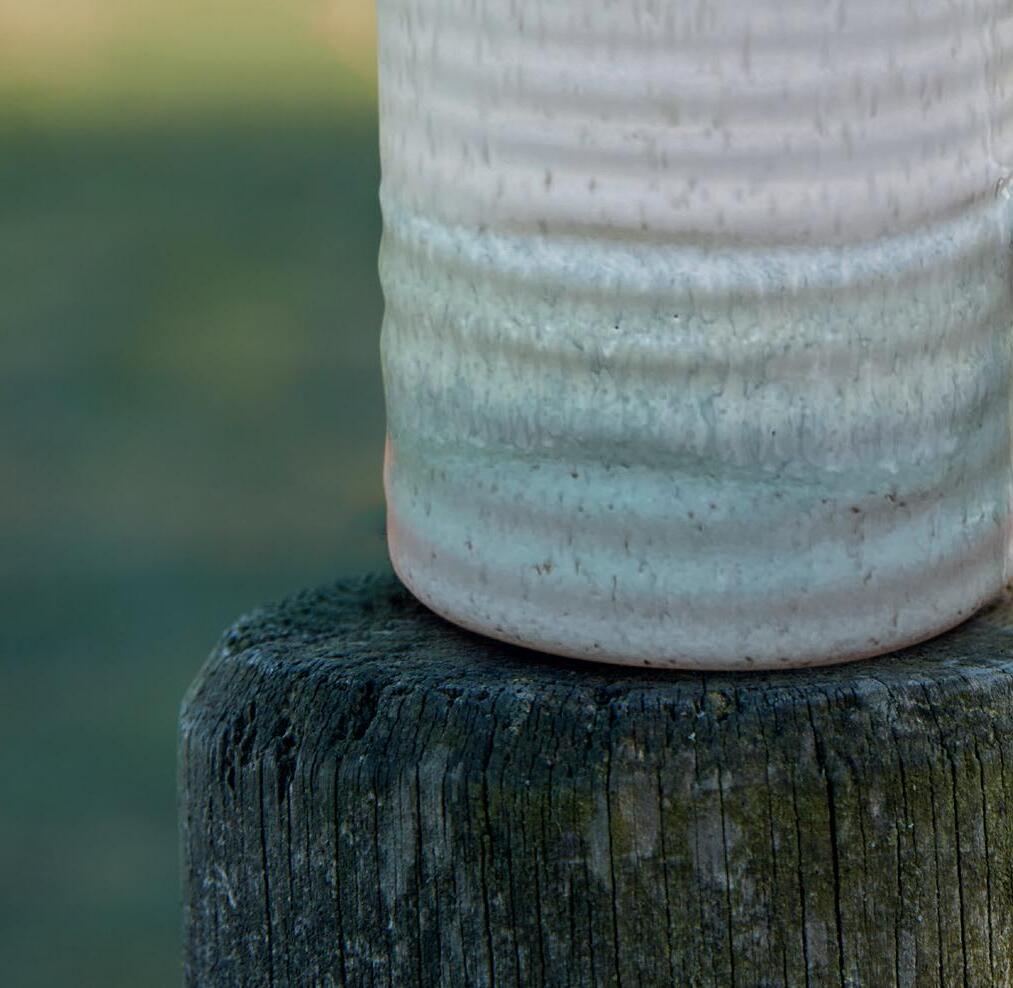
From Denby, Kiln embraces softer tones with pieces in a calming palette of chalk white, oatmeal and hint of grey, for a collection that is uncomplicated and a joy to have in the home. Paying homage to the brand’s long history of true British craftsmanship, Kiln is a celebration of ceramics that uses age-old techniques to create a unique freckling glaze effect that means each piece is truly one of a kind. The Kiln Green range features a calming palette of soft white and celadon shades of green, with tactile glazes, organic shapes and simplistic beauty that brings joy and serenity around the home. Kiln Green was created with nature and biophilic designs in mind and is a celebration of timeless studio pottery that is both beautiful and sustainably crafted to last a lifetime.
Pattern design manager, Nicola Wilson explains her inspiration behind the design: “Kiln Blue follows Kiln and Kiln Green in being inspired by the colours and textures found in the natural world. Kiln Blue is a response to the qualities of flowing water. The two glazes used in the collection echo the movement and multi-faceted tones of the sea’s waves as they combine.
www.denbypottery.com
Fine2Dine
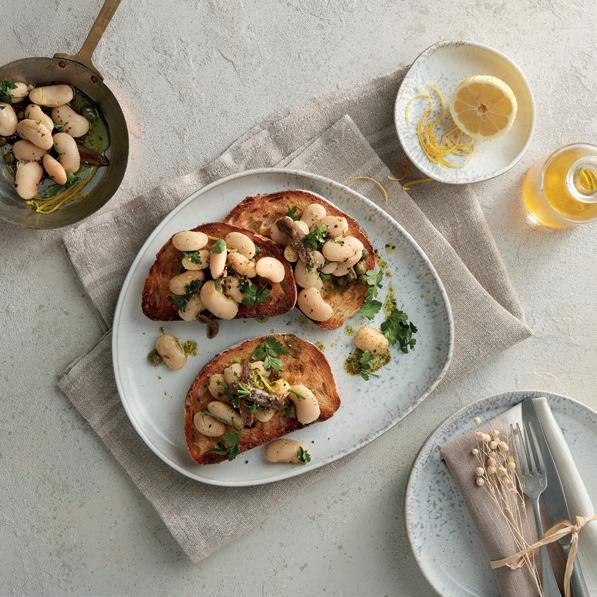
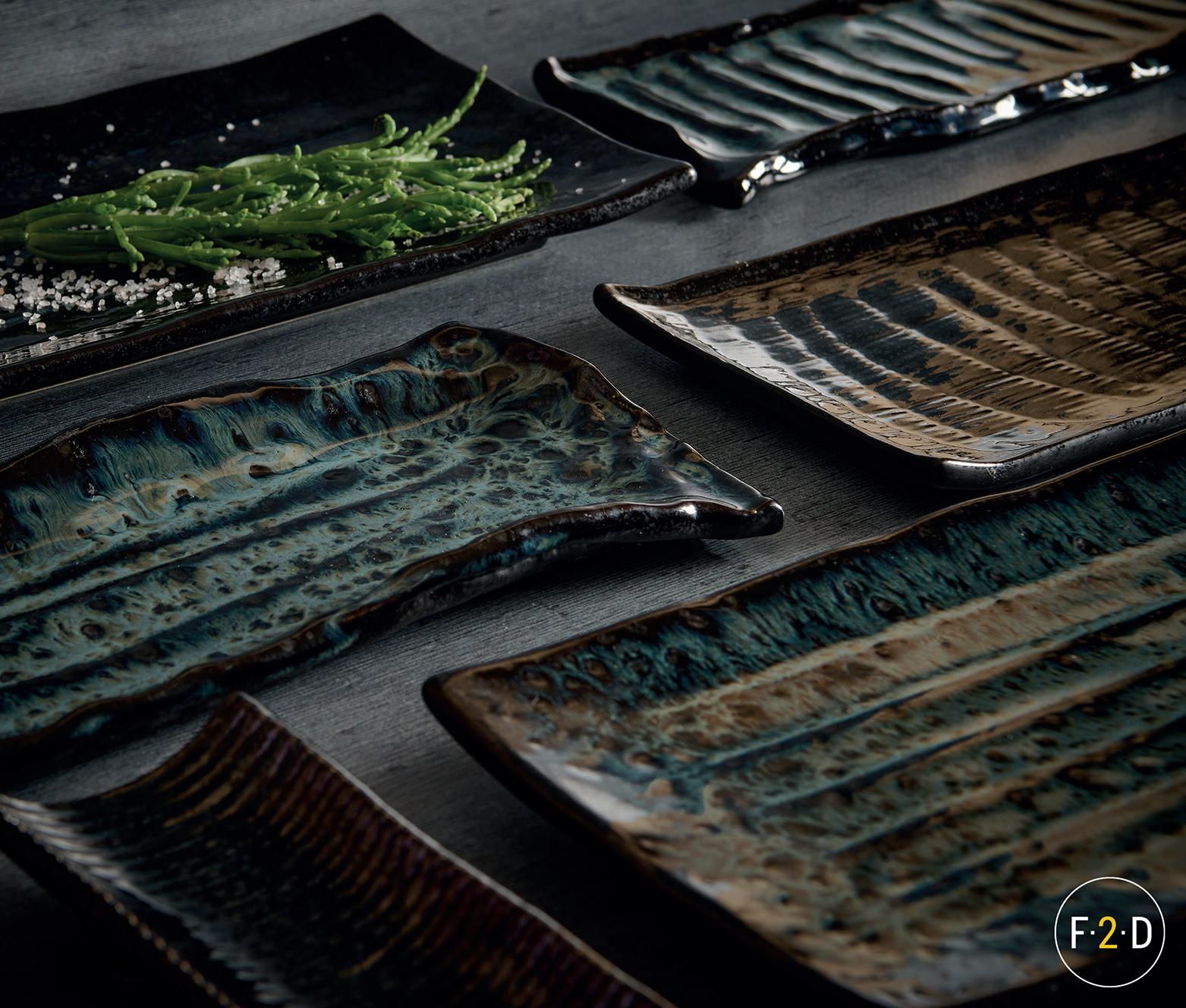
Umi is the Japanese-inspired tableware line from Fine 2 Dine that exceeds all expectations. Made of high-quality and durable hotel porcelain and finished with an authentic reactive glaze, this collection is perfect for serving oriental dishes. Umi is characterised by a mix of soft and strong textures and dark green and blue shades. Keep an eye out for Fine2Dine’s new Umi lines, set to be launched in January.
www.fine2dine.com
Denby
CHIC
The Terra Ochre collection from Chic exudes shimmering ochre splendour that truly embraces the notion of timeless elegance and style. Terra’s warm, shimmering colour evoke images of the sun slowly setting over a vast horizon, the earthy hues of nature blending with the sparkling gold of the evening glow. This sublime colour palette exude a sense of warmth and luxury. www.finediningandliving.com
Mesa Ceramics
The Fan collection by Mesa Ceramics redefines timeless elegance with a contemporary twist, building on the brand’s best-selling coupe design.
Created with an eye for refinement and durability, Fan presents a versatile aesthetic that adapts seamlessly to any table setting, from casual to formal.
Crafted with Mesa’s exclusive ID7 ceramic paste, this collection boasts remarkable impact resistance, especially around the edges, an innovation designed to combine beauty and long-lasting quality.
This robust material composition, shared with the acclaimed Único line, ensures that Fan pieces stand up to daily use while maintaining their original elegance. The decor of Fan is where artistry meets modern minimalism. The design is adorned with subtle, glossy drops that add a sophisticated shimmer to the surface. These delicate, bright drops catch and play with the light, creating a dynamic visual effect that enhances each piece’s timeless appeal. www.mesa-ceramics.com
Porcel
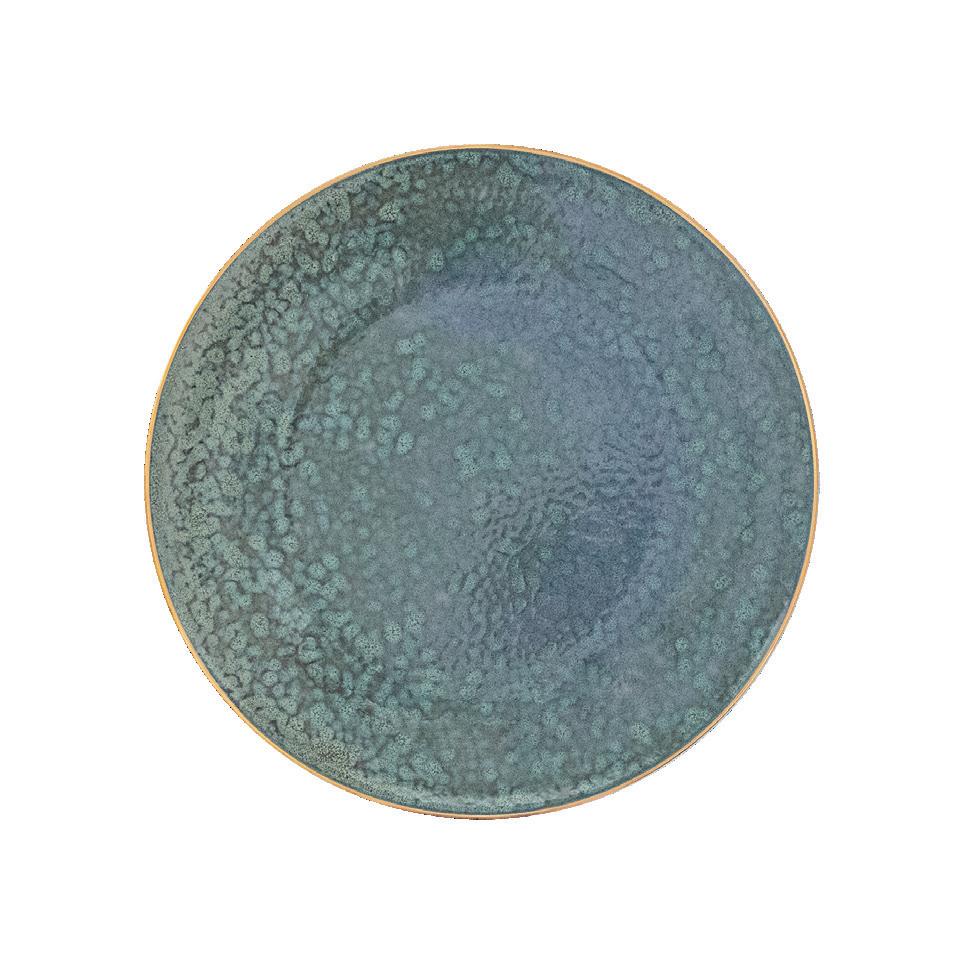
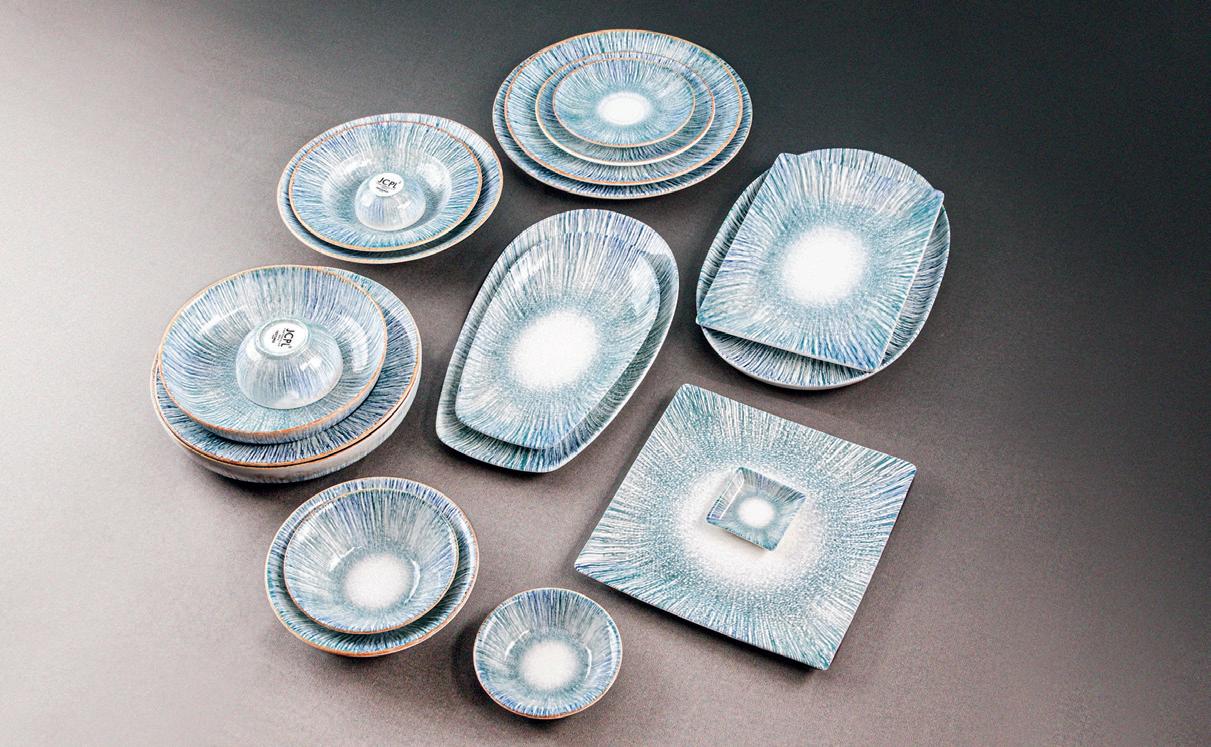
Drawing inspiration from delicate Coralline seaweed, Corallyn evokes the beauty of marine life with soothing blue and aqua-green tones, adding a refreshing sensation and sophistication to any dining experience.
Crafted by hand, each piece is unique, shaped by high-temperature firing that enhances its color and texture, and finished with Porcel’s signature gold rim. This handmade process ensures that Corallyn besides echoing the ocean visually it also embodies the natural, one-of-a-kind piece.
Meanwhile, the Tuareg collection offers a bold, nature-inspired statement for the table. With raw textures and earthy tones, Tuareg harmonises the strength of natural elements with the refinement of hand-painted golden edges. Each piece is unique, thanks to a reactive glaze that creates variations in color and texture, ensuring an eye-catching aesthetic with a handmade touch. This collection celebrates the simplicity of organic beauty, making it perfect for those seeking to bring a sense of organic pieces to their dining experience. www.porcel.com
Rayware
The timeless allure of French Provencial country kitchens inspires the elegant and sophisticated Rustic Charm collection from Mason Cash. Each piece features a subtle debossed heart motif, set in neutral tones and combining a harmonious blend of matt and gloss finishes. The collection includes a mixing/serving bowl, heart-shaped oven and tableware, and various storage options. Rustic Charm will bring understated luxury to your cooking and dining experience. www.rayware.com
Arthur Krupp
Arthur Krupp offers many material collections that are inspired by nature and evoke organic sensations. These include the Shade Matte collection in its Earth and Sea variants, where stoneware dishes are brought to the table in their original essence, a look that recalls the warmth and intimacy of handmade ceramics. Nuances inspired by the colors of the earth and water and open to combinations with other lines, such as the Galaxy collection. Once again, a textured collection, with clear references to the universe, mottling and color contrasts. The three-dimensional effect recalls the unexpected surfaces of unknown planets.
www.sambonet.com
Mesa
Porcel
Porcel Rayware
Going for growth
As they look to expand into new sales territories, Clay Craft India Private Limited is a company on the up. Boasting two tabletop brands – Clay Craft for fine bone china and JCPL for fine porcelain – Tableware International learns more about this growing company from director Deepak Agarwal
Clay Craft India Private Limited is the largest producer of ceramics in India, how has the past year been for the company?
The past year has been great for the company. The company say growth of 15 per cent year on year. Clay Craft works for different markets and each market has seen a significant growth. Though
India is our largest market, the international market has seen the most growth for us.
With our new factory in Jaipur, we were able to scale up fast and offer better lead times to big scale projects in hospitality, aviation and retail. Currently, Clay Craft has capacity to produce over 200k pieces daily with its two mega factories in Jaipur, India.
Did you know?
Clay Craft currently has capacity to produce over 200k pieces daily with its two mega factories in Jaipur, India.
“Clay
Craft has been focused on the Indian market but with our new factory in place, the company is exploring the global presence”
Give us some insight into what you produce and your production capabilities?
Clay Craft is India’s largest ceramic tableware manufacturer with two state-of-the-art factories in Jaipur. One factory for fine bone china and other for fine porcelain.
We have two brands: Clay Craft for fine bone china and JCPL for fine porcelain. Product segment wise, the company offers products for retail and hospitality, both
under the tableware category. The combined capacity across two factories is 200k pcs daily and the company is currently producing over 125k pcs daily.
What sales territories does Clay Craft India distribute to? Are you available in the US and Europe, for example?
Clay Craft has been focused on the Indian market but with our new factory in place, the
company is exploring the global presence with our own brands; Clay Craft and JCPL.
We currently export to the Middle East, UK, Europe and South America and are looking to partner with distributors across the globe.
retail including dinnerware, tea and coffee serving, mugs, gift items and more. For HoReCa, we offer plates, bowls, platters, tabletop accessories and more.
There are so many ceramic manufacturers, competition for new business must be
“With our new factory in Jaipur, we were able to scale up fast and offer better lead times to big scale projects in hospitality, aviation and retail”
Do you produce collections for other brands?
Yes, the company also offers OEM, private label and white label services to brands across the globe.
Do you produce for both hospitality and retail?
Yes, Clay Craft offers a wide variety of tabletop solutions for:
fierce – particularly from China and South East Asian companies – what does Clay Craft India offer that makes it stand out from the crowd?
Clay Craft promises to provide the right value between quality and price. To achieve that, the company has backward integrated most of its operations
Let’s learn about Textures
Textures is our latest collection which we are showcasing at Ambiente, 2025. This is a digital printed collection which is enhanced by machine learning and AI. Each piece of our fine porcelain tableware is inspired from textures around us which are found in elements like soil, buildings, trees, flowers, ocean etc. Our aim to provide beautiful nature inspired collection of fine porcelain to the table.
which enables us to have greater control over costs and achieve maximum efficiency. We also have our own decal printing unit and our own team of product designers using modern technologies for product and packaging development.
Operating sustainably is hugely important in the industry these days, so what efforts is your company making to produce collections in a more environmentally aware manner?
Clay Craft is proud to be the first ceramic tableware manufacturer in India to have its own solar plant which operates to fulfil more than 70 per cent of the company’s energy requirements. Both the factories are equipped with their own solar plants, resulting in lesser fuel emissions and a great contribution to the environment.
Are trade shows important to you and will we see your brand at any trade shows in 2025? Yes. We will be at Ambiente, Frankfurt in Feburary 2025. And many more to come.
Clay Craft is the first ceramic tableware manufacturer in India to have its own solar plant.
Amefa BonBistro
Trends Burgundy
The talk of the table
From Amefa, the Arizona steak knife is both ergonomic and robust. Note how the pakka wood steak knife asserts its presence on the table with a dark wooden handle and brass rivets. The burgundy glow of the wood makes this knife a perfect fit for the newest colour trend. The alternating micro-serrated blade offers unparalleled cutting precision.
www.amefa.com
A touch of class
If full-on burgundy frightens you, BonBistro has the answer with its collection of Basic White Burgundy. The collection does what it says on the tin – white plates with a burgundy rim. You can beautifully mix and match it with the other rims the brand has available in the collection including black, blue and green.
www.finediningandliving.com
Really chic
The Chic brand was one of the first to embrace burgundy with its Perla Burgundy line. The Perla pieces are crafted using the innovative SiloxiHT formula, which combines thinness, light transparency, and durability for unparalleled elegance and robustness.
www.finediningandliving.com
The beauty in burgundy
Hot to trot, burgundy is a hit colour this season. See all over the highstreet, it’s a warm nod to the winter season. Less aggressive than red and easier to style, burgundy is a marries beautifully with warmer shades. But how do we incorporate it onto the tablescape? We highlight some lovely ways to bring burgundy to the table…
A statement of style
As rich burgundy shades sweep through fashion and decor, translating this opulent hue into tableware has become a statement of style and sophistication.
Porcel’s Detail Collection embodying a luxurious essence with its scarlet marbled effect design and delicate golden accents. This collection takes inspiration from the elegance of a Broadway theatre lounge, combining tradition with a modern porcelain shape.
www.porcel.com
Elaborate detailing
Nothing screams Rosenthal meets Versace like this ornate medley of elaborate baroque plants and flowers alongside Versace’s famous Medusa head form the brand’s Medusa Garland motif. Featuring rich tones of red and gold, this delicate decoration adorns pieces offering a functional celebration of Versace’s most iconic emblem.
www.rosenthal.de
Colour focused
Mouth-blown in Zwiesel, Ink is truly impressive, with a coloured thread weaving through the stem matching the base in colour. A complex process based on traditional handicraft techniques generate unique colour gradients in the base, like a watercolour.
www.zwiesel-glas.com
Chic
Porcel
Zwiesel Glas
Sustai nably Made in Engla nd.
B e par t of th e a nti-la ndfill movement by choosing our handcrafte d ceramic s, homewa re and gif ts .
At Denb y, we ha ve been cra fting versatile, beautif ul and durable made-t o-last ceramics for o ve r 200 years on the same sit e in Der by shire, England, always subscribing t o the ethos of ‘buy well, buy once’.
To find out ho w our wide range of sustainably made ceramics, home wa re and gifts can help you stand out in a crowded market and make your offering rele va nt t o e ver-e volving consumer needs, vi sit www. denb ypott ery. com/trade
As the tableware industry’s premiere showcase approaches, Ambiente organisers are placing even further impetus on the importance of hospitality for the sector…
“Hospitality serves as a cornerstone of the industry”
Taking place this coming February, Ambiente 2025 is undoubtedly the tabletop sector’s most important showcase. The industry, as a whole, descends on Frankfurt yearly and 2025 will be no different.
As they seek to represent the entire dining arena, organisers Mess Frankfurt are placing special significance on hospitality, reflecting its importance in keeping the tabletop sector afloat.
In short, they have worked hard to enhance their offering with Thomas Kastl, director Ambiente
dining at Messe Frankfurt telling Tableware International: “In an increasingly competitive market, businesses that prioritise exceptional hospitality not only differentiate themselves but also create experiences that resonate with consumers.”
To ensure they are supporting the entire hospitality sector – from front-of-house to back-of-house – the trade fair has reorganised its offering for commercial bulk buyers and augmented its portfolio – all under the special interest category Hospitality. The fringe
programme, with the Hospitality Academy, Hotelier Day and themed tours, still have a place and are positioned to enhance the trade fair’s overall offering with inspiration and information. Explaining their new position, organisers say: “Ambiente is the quintessential go-to place for business success for hospitality professionals, real estate developers and furnishers: exhibitors from all relevant product segments present their product portfolio at Ambiente, from tableware, glassware and kitchenware to home accessories, interior design and office solutions. With the comprehensively reorganised special interest Hospitality, commercial buyers are pointed in the right direction to companies with expertise in equipping hotels and resorts, restaurants and caterers, cruise ships, lounges and other hospitality venues.
A key partner for the hospitality industry
In addition to the gastronomy and hotel industry in Hall 11.0, (previously known as HoReCa),
and including BHS tabletop, Kar Porselen with the Bonna brand, RAK Porcelain, Steelite and Utopia Tableware, the Hospitality area will also encompass, as before, suppliers from other dining halls with their own product lines for the hospitality industry. These include, for example, De Buyer, Ilcar Di Bugatti, Ruffoni and Victorinox in Hall 8.0, Casalinghi and Ideas Denmark in Hall 9.0, alfi and Lifetime Brands in Hall 9.1, and simplehuman in Hall 9.3.
In the Table and Table Select area in Halls 12.0 and 12.1, exhibitors such as Abert, Dibbern, Eternum, Grestel, La Rochère, Noritake and Porzellanfabriken Christian Seltmann will be represented with their ranges for the hospitality industry.
From the Ambiente Living area, exhibitors in the interior design Hall 3.1, such as blomus, Christine Kröncke, Lambert and Scholtisek, will complement the range.
For the first time, exhibitors from the Office Design & Solutions section at Ambiente Working in Hall 3.1 will top off the comprehensive portfolio for the hospitality industry.
In line with the Hospitality special interest, outfitters of properties outside the hospitality industry will find a comprehensive range of products under the special interest Contract Business.
Exhibitors of both special interest programmes will be listed in a printed guide that will be available on site during the event. Additionally, they will also be easy to find with a corresponding label at the stand and in the online list of exhibitors.
Hospitality Academy and Hotelier’s Day
The Hospitality Academy, formerly known as the HoReCa
Academy, in the north foyer of Hall 11.0 will return and its focus will be on current trends, concepts, best practices and practical tips from renowned experts – this is where professionals meet professionals. The focus is on answers to current questions and trends in the industry. In the lectures, trade visitors from the international hospitality industry will learn what is important for tomorrow’s success in this dynamic segment.
Meanwhile, as it continues to offer a 360-degree industry approach, Ambiente will host Hotelier’s Day. This is a tailored programme for decision-makers
Question corner…
Thomas Kastl, director Ambiente dining, Messe Frankfurt
Thomas, why is hospitality so important for the industry?
The global hospitality industry is currently experiencing steady growth. Hospitality serves as a cornerstone of the industry as it drives customer satisfaction, loyalty, and long-term brand success. In an increasingly competitive market, businesses that prioritise exceptional hospitality not only differentiate themselves but also create experiences that resonate with consumers. In the age of social media and online reviews, a commitment to hospitality amplifies a brand’s reputation, ensuring its relevance in a consumer-driven economy.
Ambiente is the quintessential go-to place for the hospitality industry when it comes to brand-enhancing experiences. The one-stop shop for the industry offers a wealth of cutting-edge solutions, products and partners for projects of any size.
Why is Messe Frankfurt putting such a focus on hospitality?
By focusing on the hospitality sector, Ambiente Dining is tapping more deeply into a dynamic, high-demand market that is driven by innovation, sustainability, and personalisation. These are values we as Messe Frankfurt share. Moreover, this approach aligns with the sector’s trajectory. We understand ourselves as a business facilitator and strong partner of the hospitality industry. With enhancing our offer, we are living up to our value proposition as an invaluable hub for sourcing, networking, and industry innovation.
in the hospitality sector, as this growth segment is expanding worldwide. With themed tours across the Ambiente Dining halls, a target groupspecific lecture programme on Hoteliers’ Day on 10 February and the special interests of Hospitality and Contract Business, the trade fair addresses professional hosts, purchasing decision-makers and project developers in the industry. The lectures cover topics such as sustainability, design and trends in the hotel industry and the
emotionalisation of the guest experience. Curated special presentations for cleverly and beautifully designed kitchen tools, as well as an outlook onto the guest room of the future complement the range.
“Ambiente is the quintessential go-to place for the hospitality industry when it comes to brandenhancing experiences,” Thomas reiterates. “The one-stop shop for the industry offers a wealth of cutting-edge solutions, products and partners for projects of any size.”
Beatriz Ball
B2 - 1101
From a renewed focus on their handmade metalware - rebranded “Atelier” - and the development of the new vintage-inspired Vienna Collection, to the extension of the glorious multicoloured Encanto line, to assembling an irresistible assortment of offerings in melamine, glass, and resin, this is an exciting time for the Beatriz Ball company. New melamine dinnerware featuring vibrant colours and patterns are just one example of what you’ll find at the Atlanta showcase. Wholesale.beatrizball.com
The gift marketof
Fast becoming a favourite with suppliers and buyers, Atlanta Market is one of the premier US trade shows, particularly for retailers interested in gifts, décor and lifestyle products. We highlight some of the key exhibitors relevant to tabletop…
Rayware B2 8- 893
Kilner will be previewing the new and improved Fresh Storage. The collection is practical and stackable and a sustainable alternative to plastic which can be used throughout the cooking process, from conception to consumption. Designed to keep food fresh, its durable borosilicate glass bases are freezer, microwave, and oven-safe, ideal for batch cooking and leftovers.
The new cheerful Home to Roost collection from Mason Cash, featuring intricately embossed, folk-inspired hen and cockerel motifs, adds a touch of joy to the kitchen. From beautiful mixing bowls to practical yet stylish storage, our range adds a delightful pop of personality to your baking routine.
Inspired by the delicate daisy flower, the new Daisy collectable range from Price & Kensington® features a pretty petal embossment in radiant yellow hand paint. Embracing our staple ergonomic ‘Betty’ shape, the collection includes a refreshed 6-cup teapot complete with 3D novelty lid and whimsical floral detail.
MEPRA
B2 8-861A
Mepra will be exhibiting at the Atlanta Market, where they will showcase products, including their cheese knife sets (available in both 3-piece and 5-piece sets). The knife sets are designed for both functionality and elegance, making them perfect for any cheese lover. You’ll also find the Brescia cake set (Michelangelo) in gold and ice gold, with the code 1020B44167. Visit Mepra at their showroom to see more.
Question Corner
Beatriz Ball
Atlanta Market is quickly gaining a name for itself as a must-attend show for those serious about targeting US retailers. You exhibit at the show – how do you find it? Why does it work for your brand?
“We have been exhibiting in the Atlanta Market for many years. We started out with a booth in the temporaries, and then made the move to our first permanent showroom. Following some strategic moves, we now have pride of place in the multi-line Ivystone showroom. The space is our flagship location featuring branded wall graphics, a large video screen, and inspiring product displays showcased on a variety of fixtures—a true immersive environment.
Atlanta Market is imposing, but decidedly user friendly. Its three inter-connected, high-rise buildings house a broad selection of brands and the country’s largest product mix. It is definitely a “must” for all serious buyers. Well-publicised and drawing an international customer base, we love meeting with our sales reps and loyal retailers during Atlanta Market.”
Beatriz Ball, Ivystone, Atlanta Gift Mart, B2 - 1101
“We opened our own showroom in Atlanta after exhibiting for many years in our reps showroom. We believe this show is getting more and more popular, not only in the south east but with retailers coming from all over the country. Together with Table Top in NYC and Las Vegas Market it is the place to be for Mepra. We will also be back at Dallas Market this year and we are very excited to go.”
Mepra’s Luca Prandelli on why Atlanta is a go-to trade show for them.
Ne w Cumbra e shape
It was all written
in the stars 2024?
About G & G
Founded by Paul and Valda Goodfellow, G & G Goodfellows is a creative design & distribution company with a showroom in Little Portland Street. Offering a truly hands-on service, Goodfellows passion is to bring new and exciting, bespoke food presentation concepts to the UK’s culinary scene. As well as offering a wide variety of the world’s best branded tableware and more.
Our hospitality columnist Valda Goodfellow reflects on the past year – the good, the bad and the ugly…
I blame it on the stars! In astrology, at least, I can find something to blame for the craziness of this year. Those who are not well versed in astral goings on; listen up. When 2024 started with Mercury in retrograde, you knew you were in for a bumpy ride. In fact, Mercury has been in retrograde four times through 2024, which brings with it miscommunication, indecision and general chaos. Apart from meddlesome Mercury, we have had four eclipses, which are harbingers of change heralding opportunities for letting go of the old, while bringing in the new. If that wasn’t enough, Pluto decides it will transition into Aquarius to push us into technological advancement and messing up our attitudes to social norms.
I could have just explained the effects of macro-economic instability, political upheaval, world wars and how AI is taking over the world; but that
time was unprecedented, but this has felt like a roller-coaster of uncertainty. Everywhere we look there is change and a lot of challenges. Not necessarily
“2024 has not felt like any other, especially for those of us in the hospitality sector”
sounded a bit boring compared to offering you all a little astrological enlightenment. So now you know. Just look to the stars for the answers!
Joking aside, what a year! 2024 has not felt like any other, especially for those of us in the hospitality sector. Yes, Covid-
because of what the sector is doing to itself, but by boring macro-economics etc. It has been a poor year for tourism in the UK, which has reduced hotel investment, restaurant openings, event bookings and general discretionary spend.
sknife knives are handcrafted in the watchmaking city of Biel. The design has been awarded with 4 international prizes, and the knives arenow used in the world‘s finest hotels &restaurants, boastinga total of 250 Michelin Stars.
Thanksto the innovative surgical steel, the knives are suitable forrestaurants by the sea and on yachts.
The weather also played a big part, soggy Britain isn’t the most inviting place on earth, but neither was much of Europe. Believe me, even Lake Como can be hell when the rain is lashing down in June.
The poor economic climate brings with it challenges for everyone in and around the hospitality sector, more so since taxation and increased employment costs will hit operators harder than ever in the UK.
Closures of restaurants continue unabated, and the UK’s October budget will no doubt hasten others. Resilience has been the order of the day, for those who have seen this all before and are determined to outlast this phase, hoping for better times ahead.
In October, with the Budget
their structures and strategies, to maximise concepts, brands and resources.
A lot of these factors have meant not a lot of creative happened in 2024. There weren’t many real break-out trends to get excited about, bar a couple of exceptions. As groups look to repeat winning formulas, it felt like we had seen it all before. Nevertheless, we lapped it up as we felt safe with the familiar.
All of this means chance is dictating how the hospitality landscape now looks, but there will always be those keen-minded entrepreneurs who welcome the winds of change blowing opportunities their way. Take Jason Atherton in London who I wrote about last month. Sael fast became the most talked-about
“The tectonic plates of investment in the UK have certainly shifted”
looming, something seemed to give. Previously stuck projects started to leap forward, and it felt there was a general resolve to get on with things. It was a relief and a release. But there was also a sense of adjusting to a new landscape.
This year, the big business focused on strategic partnerships, joint ventures and chasing highgrowth hotspots. The tectonic plates of investment in the UK have certainly shifted, with foreign investors and private equity funds snapping up iconic London sites.
Hotel groups are reorganising
new opening in London for all the right reasons.
So, let’s forget about the doom, gloom and astral interference as we look forward to a new year –2025 has got to be better than 2024, hasn’t it?
In fact, things feel like they are already changing, even if the economic signs are still indicating difficult challenges ahead. The hospitality industry is not only (almost) the oldest profession, but it has always been populated with immensely talented and creative people who look forward and adapt to change.
Valda’s faves!
“The trends that saw us through this year included a resurgence in high-quality, heritage copper tableware – it has to be Mauviel; the logo’d plate exemplars including Figgjo; beautiful white with a twist (Hering Berlin are simply incredible) and characterful (proper) reactive glaze stoneware by the amazing Montgolfier.”≠≠
I can totally understand why groups need to maximise ideas and resources. That’s what they are good at, and they deliver us the standards we rely on when we choose a known brand. But the beating heart of our industry is individuality, whether that is in the form of the person who sets the culture, or the team who bring together exciting new venues from scratch. The space left free by groups will certainly be filled with more creative ventures in 2025.
And this is my segue into the changes ushered in by technology. The use of AI in business is moving too quickly to be measured. Some say that 85 per cent of businesses (at least) are predicted to have used AI in some form in 2024. That’s great for productivity involving repetitive logical tasks and information-gathering, but I can’t see AI dominating true hospitalityled businesses. Our sector may become the last one to be replaced by AI. So, value those amazing
experiences created by real people while you can.
In terms of our business, we are certainly looking forward to welcoming the leading lights of creativity. We are ready with a changed approach to what our customers will be looking for.
Of course we will not reveal that yet, but while we look forward to the new, let’s celebrate a few stars of 2024.
The trends that saw us through this crazy year included a resurgence in high-quality, heritage copper tableware (it has to be Mauviel); the logo’d plate (exemplars include Figgjo); Beautiful white with a twist (Hering Berlin are simply incredible) and characterful (proper) reactive glaze stoneware (by the amazing Montgolfier).
Consulting the astral charts for 2025, my guess is that these will still be in the top 10 list no matter what changes, challenges and chances the stars bring their way.
Montgolfier
Mauviel
Anand Baldawa CEO, thinKitchen
“Geopolitical tensions, global softening, logistic challenges are some of the issues that have impacted the industry in 2024. At thinKitchen we have focused on the basics – Quality, Timely Deliveries and Customer Service –to be able to tide through the challenges.
“We significantly broadened our distribution across modern trade with a specific focus on premium modern trade in 2024. We are now present in Shoppers Stop, Reliance Fresh Pik and Food Square amongst others, which enables us to showcase our ranges to the relevant premium customer on a pan India basis, We would like the global tabletop industry to put the spotlight on India, both as a sourcing hub as part of the China plus one strategy and as a destination market for kitchen and homewares given the large opportunity in India with its growing affluence as well as digitally connected and well-travelled, aspirational customer base. We are cautiously optimistic about 2025, looking forward to new opportunities for growth yet mindful that the road ahead could be rocky as the world navigates through multiple challenges.”
Mepra
Luca Prandelli, managing partner, Mepra
“Our greatest success this year has been supplying a growing number of high-end hotels and restaurants”
“This past year, 2024, was an unusual year for our industry, marked by diverse developments: some countries began to invest and emerge, while others came to a halt. Our greatest success this year has been supplying a growing number of high-end hotels and restaurants and seeing our products featured in these prestigious locations. Customisation is key to us and witnessing the unique creations our clients achieve with our products is pure magic. In the tabletop industry, we hope to
shift perspectives on cutlery in hospitality settings. Often overlooked, cutlery is seen by many as an insignificant detail, yet to us, it’s the most essential item to consider– a true calling card for your guests. Think about it: when entering a restaurant, the first thing you notice on the table is the cutlery, and before tasting a dish, you’ve already formed an impression of the establishment. Furthermore, if the cutlery lacks balance, it can even alter the flavour of a dish. We hope the industry comes to appreciate this subtle yet impactful detail. We are incredibly excited to step into 2025, ready to face any challenges ahead.”
Viewpoints
As we wrap up 2024, we ask how key suppliers and manufacturers found the past year, and what they are looking forward to from the year to come…
Polskie Fabryki Porcelany Ćmielów & Chodzież
Joanna Niedziela, sales and marketing director
“We expect 2025 to be a challenging year, not only for the porcelain industry, but for the entire interiors sector”
“The past year posed numerous challenges for Polskie Fabryki Porcelany Ćmielów & Chodzież, requiring flexibility and rapid adaptation to changing market realities. One of our greatest successes was the implementation of our growth strategy in the premium segment. Growing customer interest in luxury products inspired us to invest further in this area. By acquiring new prestigious business partners in the B2B and B2C segments, we expanded the availability of our products.
In addition, we are developing our online shop and a chain of stationary company stores.
From the perspective of the available forecasts, we expect 2025 to be a challenging year, not
only for the porcelain industry, but for the entire interiors sector.
The global political and economic situation has an increasing impact on consumer attitudes and, unfortunately, directly affects their purchasing decisions. In the context of the upcoming challenges, Polskie Fabryki Porcelany Ćmielów & Chodzież are already preparing for new regulations, including the ESG reporting obligation. For my part, I can assure you that we will be proactive in aligning our operations with the highest standards. Our mission for 2025 is to increase consumer awareness about the origin and quality of table products. We see customers increasingly appreciate not only the aesthetics but also the transparency of the origin of the products they use every day.
We assure consumers that by choosing products from the Ćmielów & Chodzież Porcelain, they are receiving the highest quality porcelain, produced with attention to every detail and in accordance with the highest standards of safety and ethics.”
Cermer, Jonathan Shepherd
“This is Cermer’s second year in operation in HoReCa, and our ceramics are currently being used in cafés and restaurants, through to 4and 5-star hotels”
“We are pleased as we have built an encouraging level of distributor partners in Europe and the Middle East, and this is just the beginning. Our three different collections are the finest, sustainable affordable and natural tableware accessory solutions. If one thing could be changed about the tabletop industry in 2024, it would like if the sector became more sustainable and environmentally friendly. Cermer is committed to promoting environmental responsibility and energy efficiency. Through various projects, we have been at the forefront of research and innovation, aiming to reduce our carbon footprint and contribute to a more sustainable future. We are looking forward to helping the many HoReCa operators in Europe and the Middle East make sustainable benefit from using our products in 2025 and beyond.”
“Tableware is an art form that goes far beyond just pretty plates”
Nishita Thakurdas, creative head and founder of Nishita Design tells Tableware International about what makes her boutique brand so special…
Tell us a little about how Nishita Design came to life. While in college, I got the chance to design dinnerware for a boutique home store in Bangalore. That’s when I realised the potential plates held as canvases. The connection to dinnerware was instant but the journey to starting my company took longer. Even though my career pulled me into the corporate world, the idea of creating tableware always lingered at the back of my mind. 14 years after designing that first plate, I launched Nishita Design and I’m proud to say that I’ve never looked back since!
How would you describe your style of design?
Most of my inspiration is drawn from India’s rich cultural
tapestry of intricate patterns, exquisite colours and gilded accents. Each collection is created as a limited edition
“Currently, the focus is on entering emerging luxury markets, including regions like West Asia and Southeast Asia, and select areas in Europe and North America”
heritage, melding the diverse traditions of my homeland with contemporary styles. Every piece from Nishita Design is a
and represents a slice of Indian history, rendered in an aesthetic that is luxurious, timeless and modern.
Who is your typical customer?
Our products attract customers who seek exclusive and carefully curated pieces for their homes. Our collections are made for those with an eye for design and those who prioritise quality and craftsmanship. We also cater to corporate clients such as luxury real estate developers and large companies who choose us for sophisticated, artisanal gifts that align with their brand values. Renowned interior designers and architects working on luxury residential and hospitality projects often source our tableware for their clients. Collectors and connoisseurs view our limited-edition pieces
thinkQuality
as artistic investments and future heirlooms. We also cater to discerning gift buyers who turn to us for precious, handcrafted gifts for weddings, anniversaries and milestone events.
Do you distribute globally? Yes, we are thrilled to distribute our luxury tableware collections globally. Thanks to a strong network of international logistics partners, we ensure that our creations reach customers worldwide with the same care and precision as they are made. So, whether you live in Europe, the US, Asia or Australia, you can have Nishita
How do you support your retail base?
Our brand provides high-quality marketing materials, including imagery, product descriptions and display guidelines to help retailers create visually appealing and engaging in-store displays. We collaborate closely with our retail partners to ensure that the presentation of our tableware aligns with our brand’s luxury standards. Nishita Design retails at the Taj Khazana (of the Taj Hotels franchise). Our latest collection is also available at Thomas Goode, India. This is a special milestone
“Most of my inspiration is drawn from India’s rich cultural heritage”
Design tableware in your home. We’re also constantly growing, so keep an eye out for where we go next!
Where do you take your inspiration from?
It’s my personal belief that inspiration can come from anywhere, be it travel, art, architecture or music. Even the smallest Indian trinkets I’ve spotted have resulted in big ideas, reflected in our collections.
My creative process is instinctive, having been honed by years of experience. I love the balance of modernity and tradition and try to weave this harmony into every piece. Through my designs, I hope to showcase the nuances of India’s vibrant art globally.
I’ve always been inspired by other designers—across mediums and fields. Take Zaha Hadid, for instance. Her work was extraordinary, and her vision was spectacular. For her, it was truly all or nothing and you can see that ethos in every single one of her structures. I aspire to that level of commitment to the craft.
for me because Thomas Goode is a brand I’ve looked up to since my career began!
Are you looking to expand your distribution into new territories?
We are always on the lookout for partnerships with luxury department stores, boutiques and premium online platforms. Currently, the focus is on entering emerging luxury markets, including regions like West Asia and Southeast Asia, and select areas in Europe and North America. These territories have seen an increased demand for bespoke, high-end products, making them ideal for our expansion.
How many collections do you launch per year?
We launch one to two collections every year. We believe in slow craftsmanship to ensure perfection in every piece. I personally look into every detail in every collection.
At Nishita Design, we pride
ourselves on the level of attention and care our collections get and spend about six to eight months workshopping them before they hit the stands. The collections are made of fine porcelain and put through rigorous sampling and testing. Our collections are limited edition and are designed to be exclusive, avoiding repetition in designs, colours and patterns.
Which of your collections has resonated most with buyers?
Most buyers have resonated with The Arts Collection, specifically The Garden of Paradise, designed in collaboration with Senaka Senanayake, one of South Asia’s most prolific and famed artists. Inspired by his Garden of Paradise, the collection is an ode to the inexplicable beauty of a rainforest in full bloom, reimagined on fine porcelain. Another favourite is the Shores of Persia.
Do you cater for the hospitality industry?
Yes, we do cater to the hospitality industry. We have designed exclusive collections for two boutique restaurants, tailoring our pieces to highlight the unique ambience and culinary experiences they offer. Our tableware is crafted to enhance not only the presentation of the dishes but also the overall dining experience, creating a seamless dance
Nishita Design has created exclusive collections for two boutique restaurants and the brand is open to collaborating with Michelin-starred restaurants and luxury hotels. “Our bespoke services allow us to work closely with chefs, restaurateurs and hospitality designers to create custom collections that complement their signature styles,” Nishita says.
Limited-edition collections
Nishita Design’s collections are limited edition and are created to be exclusive, avoiding repetition in designs, colours and patterns.
Popular pieces
Most buyers have resonated with The Arts Collection from Nishita Design, specifically The Garden of Paradise, designed in collaboration with Senaka Senanayake, one of South Asia’s most prolific and famed artists.
between cuisine and design. We are also open to collaborating with Michelin-starred restaurants and luxury hotels. Our bespoke services allow us to work closely with chefs, restaurateurs and hospitality designers to create custom collections that complement their signature styles.
Visit www.nishitadesign.com for more.
Collection dissection
We look at Chic Tableware’s latest assortment for the hospitality sector
Collection name? Gravure Brand? Chic Tableware
When did the collection launch? June 2024
How did the idea for the collection come about?
The Gravure Collection was born from Chic’s dedication to crafting tableware that harmonises seamlessly with today’s fine dining experiences. The idea stemmed from our passion for blending timeless sophistication with designs that resonate with contemporary culinary trends. By incorporating delicate, hand-applied engravings, we aimed to create pieces that celebrate the artistry of dining while elevating the presentation of every dish.
Tell us about the collection’s décor and the colourways – why were they chosen?
The Gravure Collection features plates adorned with intricate, hand-applied engravings along their edges. This subtle detail adds depth and refinement, ensuring the tableware complements the visual appeal of fine dining presentations. The colour palette, consisting of soft white and neutral beige, was chosen to provide a versatile backdrop for a variety of cuisines, allowing the focus to remain on the culinary creations.
These tones reflect Chic’s philosophy of timeless sophistication while catering to modern dining aesthetics.
Is the collection available in all territories?
Yes, the Gravure Collection is available globally through our network of partners and distributors. Availability may vary depending on local demand, so we encourage customers to check with their regional retailers for precise details.