TableWare INTERNATIONAL www.tablewareinternational.com Month: May/June 2023 Issue: 2 Volume: 145


Distributed in the UK by Hard To Find Whisky
www.ar nolfodicambio.com





Original,


EDITOR
MAIREAD WILMOT mairead@lemapublishing.co.uk


PUBLISHER

PAUL YEOMANS pyeomans@lemapublishing.co.uk
MANAGING DIRECTOR




MARK NAISH mark@lemapublishing.co.uk


The May/June issue of Tableware International marks the halfway point in the year – remarkable really, considering it feels as if we have just started 2023.
CHAIRMAN
MALCOLM NAISH malcolm@lemapublishing.co.uk
But we forge ahead with a magazine filled with plenty of worthy content from a fascinating look at the Highland Stoneware glazes geological project (where they make glazes using stones that are 3000 million years old) on page 20, through to a look at whether melamine, yes melamine, is on the rise – turn to page 50 for that one.
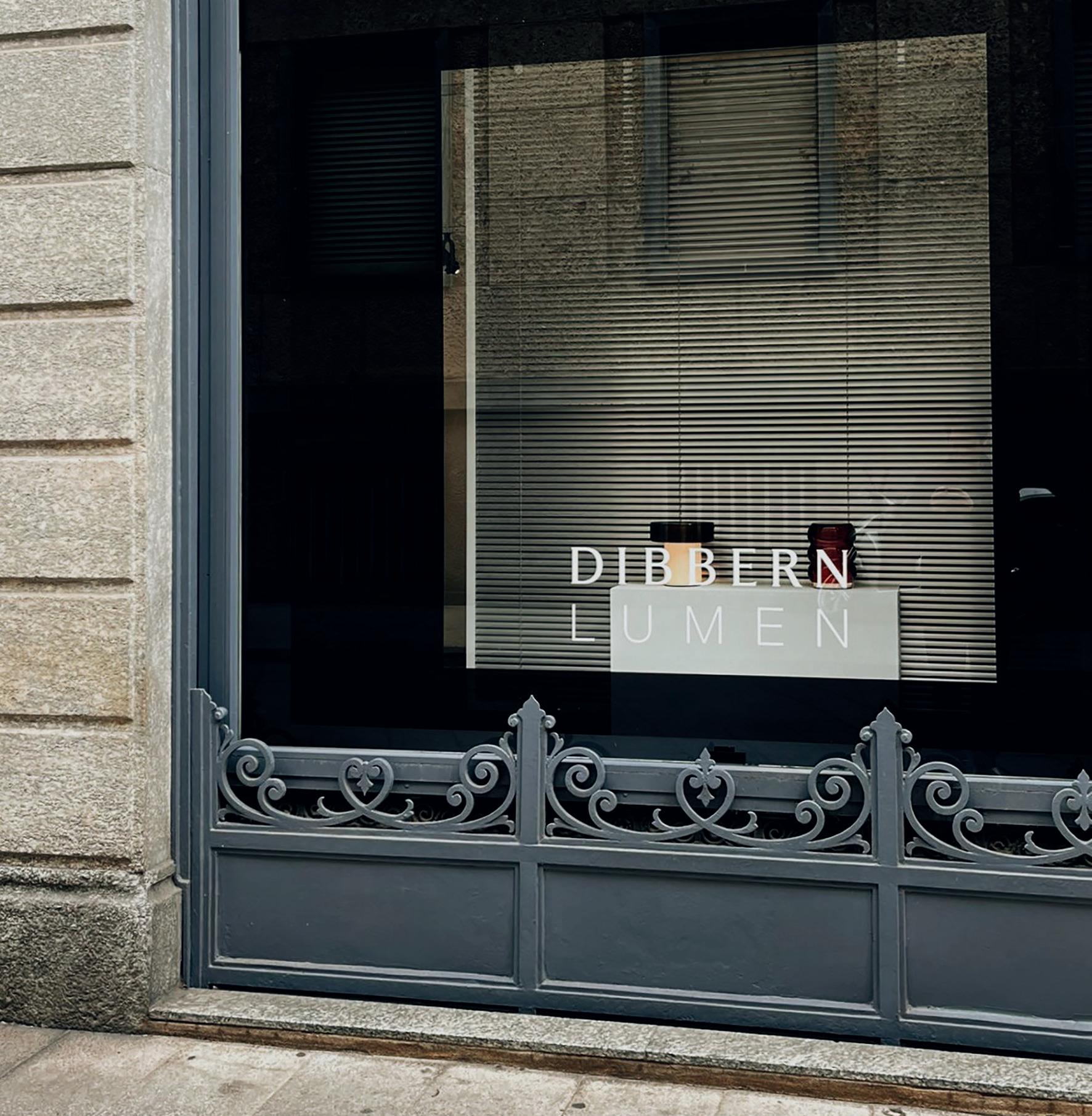
they created with designer Tobias Grau. Thus far, these have proven to be a real talking point at trade shows, so Jan and Ben Dibbern give us some more insight into pairing beautiful porcelain with bright light.
We also look at serveware (page 34), festive tableware (page 40), tabletop accessories (page 46) as well as tactile tableware (page 72).
PRODUCTION DIRECTOR
PAUL NAISH paul@lemapublishing.co.uk
Our cover story is given over to Noritake’s collaboration with chef Adam Liaw – the Everyday collection has taken Australia by storm, so we take a closer look at just what has made it so popular Down Under.
On page 38, we shine a light –so to speak – on Dibbern’s new Lumen series of table lamps which
There are also show previews of Exclusively which takes place in London this June, as well as Las Vegas and Atlanta markets. All this and plenty more! And as always, if you have any sector news or views, retail news or stories you’d like to share – just email mairead@lemapublishing.co.uk.
 Mairead Wilmot

As Krosno celebrates 100 years, the Polish glassworks has released a new limited-edition collection which takes its inspiration from the 1920s, with a nod to art deco.
Celebration consists of a jug, a carafe/vase, a salad bowl, and a series of glasses. The collection boasts impressive optics with strong, vertical refractions of glass which scatters the light.
Gift packaging referencing the aesthetics of the interwar period was also created. Designed by Anna Grabowska-Szczur, who has been designing unique items for the brand for 36 years, Celebration’s launch is supported by an atmospheric photo shoot showcasing the collection.

Krosno has also released a new anniversary logo to mark its 100 year anniversary.
Renowned artist Bertil Vallien will celebrate 60 years with Kosta Boda this year. Different exhibitions will be presented at locations such as the Corning Museum of Glass. For this occasion, Bertil Vallien has created new art pieces as well as new collections for Kosta Boda Artist Collection which will be launched this year.
Bertil Vallien as an artist and designer has made an indelible mark on the Kosta Boda legacy. At 85, he has spent the last 60 years creating commercial and art glass collections that are both popular and pioneering.


Stelton has completed the acquisition of Danish ceramic company Knabstrup Keramik.
Knabstrup Keramik was fully integrated into the Stelton company as of 1 May.
Michael Knudsen from Knabstrup Keramik will join Stelton's management team as marketing director of Stelton A/S.
"Ceramics have had fantastic development in recent years," says Stelton’s CEO Michael Ring. "Many new names have emerged, and many have also fallen, but Knabstrup Keramik still builds on the history of the old arts and crafts industry, which gives them great potential and relevance in the market."
Knabstrup Keramik will continue to develop new projects.
Glassware and home goods manufacturer, Decorium, has completed the catalogue image shots for its new collections. The styling consultancy for the project was handled by Elif Osmanoğlu, a photo stylist who works as a style editor for Marie Claire Maison magazine and manages projects for luxury brands. The photographs, taken by artist Rifat Pehlivan, showcase Decorium's collections which blend old and new, featuring striking colours and new product lines that bring freshness to living spaces.
Global design brand, NUDE, has received a Red Dot Award for Product Design 2023 and the iF Design Award 2023.
The No.3 x NUDE Martini Glass, in collaboration with No.3 Gin, has been awarded the highly coveted Red Dot Award for Product Design as well as the iF Design Award for Tableware. NUDE’s Dream Parade Gift Set has also been awarded the Red Dot Award for Product Design. Meanwhile, the iF Design Award is a globally recognised commendation for exceptional design, with almost 11,000 entries from 56 countries vying for the seal of quality this year. The No.3 x NUDE Martini Glass stood out with its contemporary, distinctive design and impeccable quality, winning over the 133-member international jury of independent experts

www.nambe.com

For Inquiries: IntlSales@portmeiriongroup.com

Spode’s collaboration with designer Kit Kemp launched in New York recently. Pictured at the event was the designer and hotelier along with Lisa Archambault, global design director, Portmeirion Group and Lou Scala, chief marketing officer, Portmeirion Group. Also present was Bill Robedee, global sales director and president North America, Portmeirion Group, and Mike Raybould, chief executive, Portmeirion Group.
Iris, you’re a tableware designer with more than 20 years’ experience, tell us about some of the services you offer?
Over the years, I have designed products in a wide range of fields and materials. When I came across ceramics and porcelain, I fell in love with the material and decided to focus on designing tableware and home accessories. That is why today I offer design services to brands and manufacturers of tableware.

What is your design ethos?
During 20 years of design work, I have developed a work methodology based on a deep understanding of the material and the production technology, with maximum consideration in the production methods. I offer a renewed observation on the design process based on the experience factor (I call it the X-factor!) – which is the emotional user experience while using the product. The experience created by innovative design concept that moves the user from the standard and familiar behaviour, toward new user experience that creates an emotional linkage to the product and to its usage. The design process lead by innovative thinking, shapes, uses and technological and creates for manufacturing brand a significant differentiation over its competitors in the industry . Finally, a successful product is a product that has synergy between the three components: technology, design and user experience.
How important to you is it to marry form with function?
Since graduating design academy, the principles of modernism including "form follows function" deeply embedded in my creative process and today they are already like my second nature. I believe those principles are the key for designing sustainable long last products.
Highlight three of your favourite pieces which you have designed and tell us a little about them?
The onion vase – this vase is a clear example of the synergy between the three elements of the design process: form, production and usability. The arrangement of the flowers in the onion vases is different from arranging flowers in a regular vase; it invites the user to pay special attention to the relationship between the vase and the flower.

Iconic Italian design brand, Alessi and Rosendahl Design Group (RDG), Denmark’s premier design house for home products, are expanding their US presence with opening of a joint showroom at 41 Madison.
The first ever US showroom for RDG, the new location at 41 Madison Avenue was opened recently.
Under the direction of Thomas Perez, who has been a leader in the North American housewares world for nearly two decades, RDG is planning to make a significant impact on the market landscape in the years to come. The co-branded showroom, located at 41 Madison Avenue, 6th floor.

The Hug Mug – a special mug for drinking hot chocolate designed for the Max Brenner brand. Drinking hot chocolate is a cozy and indulgent experience; the design of the cup meant to enhance the emotional experience.

Heart shaped mug - a coffee mug designed as a promotional product for a coffee company.


When I was looking for a design concept I was looking for something simple but touching. When I noticed the shape of a coffee cup handle, I duplicated it into the body of the mug and created a heart-shaped cut.
How do manufacturers get in touch with the Iris Zohar Studio?
Contact Studio Iris Zohar via our website www.iriszohar.com, mobile-972-52-3592025 or mail info@iriszohar.com

While it first hit the market back in the 1980s, Narumi’s Remembrance collection is enjoying a new lease of life. The company says the “sweet floral pattern is increasingly getting attention not only from retail but also from HoReCa customers”. They add the collection – which also boasts a golden edge – is “evidently an excellent match with classic afternoon tea and dessert, but also goes well with appetizers, main dish and multi-cultural cuisines”.


Costa Nova can now be seen on tables in US venues such as CASINO, Vicky’s and Little’s Oyster Bar. Costa Nova’s European handcrafted stoneware products combine enticing design, functionality, and durability to make it one of the more unique brands in the hospitality industry. The aforementioned venues are some of the brand’s most recently acquired clients in the US.

Sambonet and Rosenthal have taken centre stage at the Ca’ di Dio hotel in Venice.

“There is continuity in the service – we start with gold cutlery, during the entire meal we continue with satin-finished steel cutlery and end again with gold-shades for dessert,” says Samuel Baston, Ca’di Dio F&B manager. The hotel, part of the exclusive residence group VRetreats, experiments with the real meaning of Italian hospitality by proposing a refined mise-en-place composed of a selection of Rosenthal porcelain and a brand-new ad-hoc collection, alongside the timeless shapes of Sambonet cutlery designed by Gio Ponti.

WMF Professional has added two new décor to its Synergy line. InNature (right) features an organic relief structure in a warm, earthy tone, while Geometric (left) shines in a light grey shade with dynamic patterns. With these opposing designs, WMF Professional is giving restaurateurs and hoteliers unlimited creative freedom for designing harmonious table arrangements. Although InNature and Geometric are very different, both can be combined with the white items from the Synergy collection. This means there are virtually no limits to the different table creations hoteliers and restaurateurs can design.
“We knew we had the opportunity to work with the best. Everything we use to present food and beverage is a way of representing ourselves to our guest. It’s about the customer knowing there has been thought, time and effort going into every single touch point.”
Peter Bradley, director of food and beverage, Westin London City on why they work with Steelite International.

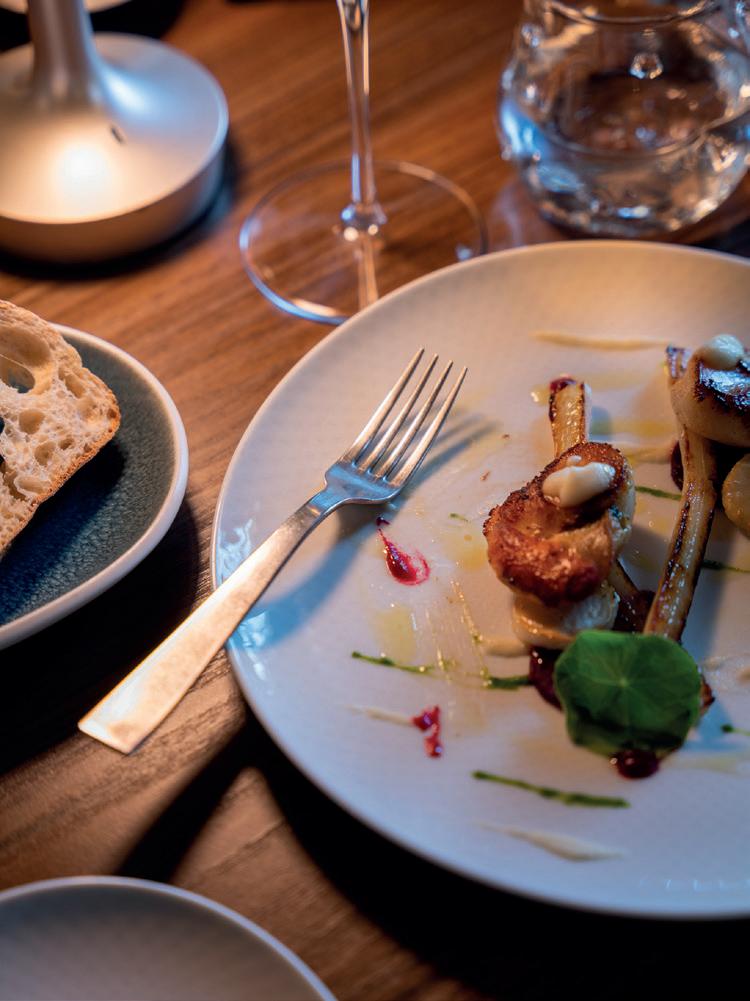
From Stölzle, The Stones line is notable for its realistic stone appearance and unique touch. They eliminate fingerprints while still providing easy handling, making The Stones a musthave at home as well as for the catering industry.

Rosenthal meets Versace has expanded the Le Jardin de Versace collection with new items for 2023. An enchanting décor depicts colourful flowers, cheerful butterflies in different variations and pastel colours. Shades of turquoise, red and gold adorn the coup plates, as well as small teapot and cups, in addition to bowls and dishes in various sizes – each reminiscent of French gardens and convey a spring-like lightness to the décor design of Le Jardin de Versace.

Decorative details are adorned with gold-tone ornaments, the grandiose Le Jardin de Versace décor creates imaginary places to explore.
www.rosenthal.de
As part of Spode’s recently launched collaboration with designer Kit Kemp, the brand is introducing the uber colourful Calypso line.
Boasting several colour accents, Calypso is a versatile series which joins other Kit Kemp dinnerware collections such as Tall Trees and Geo. Blues, yellows, pinks take centre stage in this joyful assortment which is the perfect nod towards summer.

“We always say colour makes us happy and it’s amazing how it can spice up our cooking. No matter what time of year it is always sunny in our house with this colourful range on the table,” Kit Kemp says of the collection.
www.spode.co.uk
Marni, the Milan-based luxury fashion house, recently announced the launch of its first tableware collection Midnight Flowers in collaboration with Belgian design label Serax, unveiled during Salone del Mobile in April.
Encompassing 120-pieces of hand-illustrated porcelain plates, dishes, cups, saucers and teapots, the botanical-inspired collection interprets the Marni brand values through a new medium, highlighting an avant-garde approach that holds a constant dialogue with the world of art, with Serax as proud partners.

Envisioned by creative director Francesco Risso, the sophisticated yet offbeat tableware
Denby will launch two new collections at Exclusively – turn to page 58 to learn more about Kiln Accents and Arc Grey Porcelain.
collection embodies Marni’s dynamic essence, with the intention to reawaken the tablescape with its playful energy and quirky elegance. With a range of different-sized plates, dishes and bowls, teapots, cups and saucers in slightly asymmetrical forms, the shape of each piece materialises the importance of the hand touch and emphasises the quality of the porce- lain. Embellished with colourful hand-illustrated botanical depictions, the collection’s nature-inspired motif presents a gentle palette of mauve, teal and rose with notes of lime, reminiscent of the floral patterns ever present in Marni’s ready-to-wear collections.
www.serax.com
DESIGN: BODO SPERLEIN, LONDON

WWW .DIBBERN.DE


Kosta Boda’s new launched Rocky Baroque collection is a playful remix of the classical column. Monumental contours meet raw, jagged surfaces in this collection of candle holders. Vibrant colours mix with unyielding shapes, and the item resides in the borderlands between sculpture and utility object, a recurring theme in designer Hanna Hansdotter’s design. Humour and irony are other tools used to interpret and challenge authoritarian principles. The result is its own genre –Rocky Baroque.

The collection, launched in 2023, is handmade in Kosta, Sweden. www.kostaboda.com
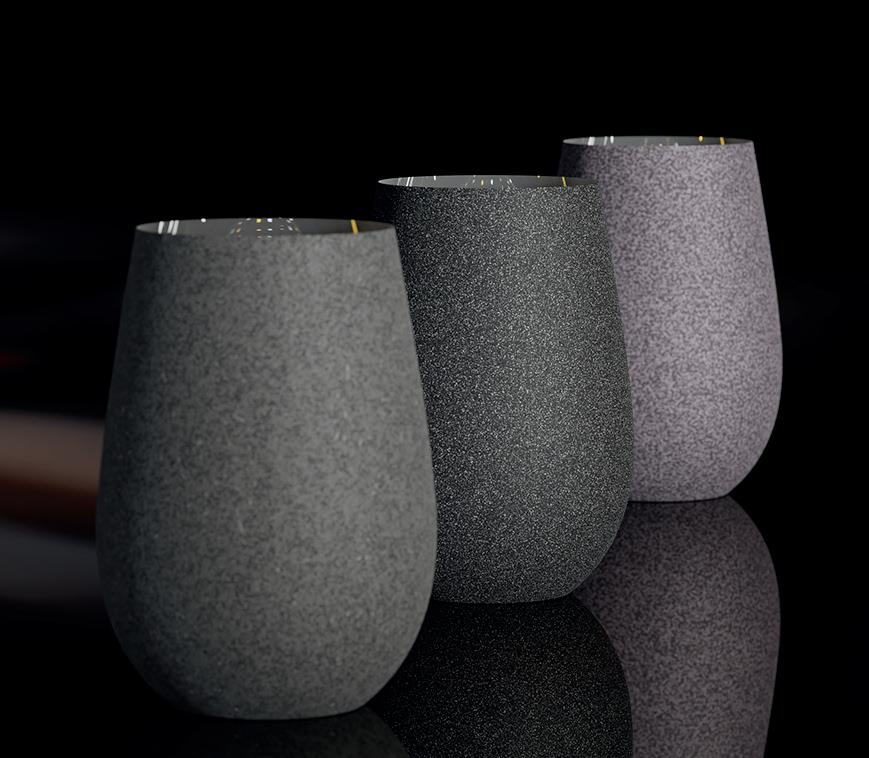
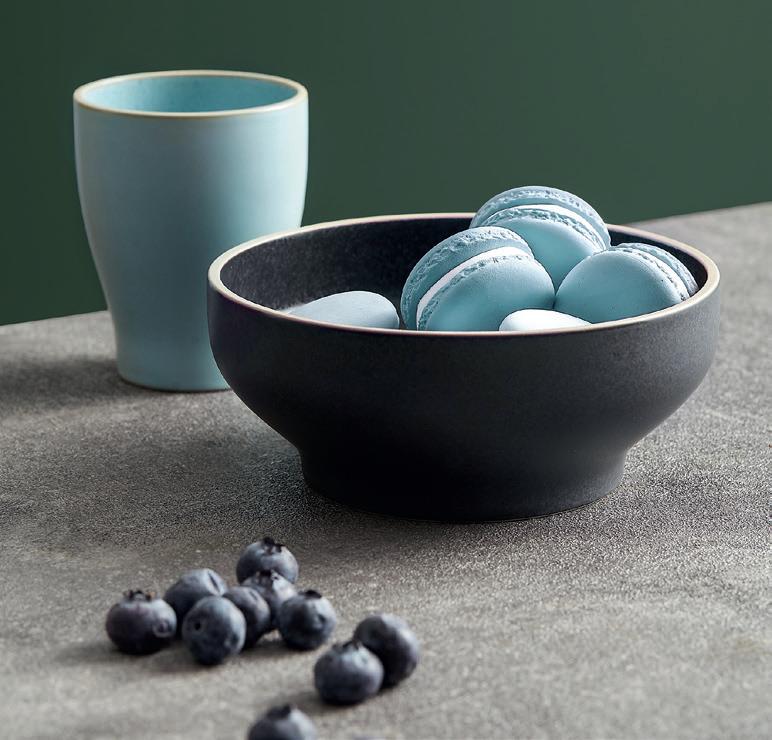
Luzerne has introduced a new stoneware series – Lek. Taking its inspiration from raw materials such as granite, stone and clay –Lek also pays homage to the Chinese family name ‘ 陆 ’, a direct translation of ‘land’. True to its origins, the series features designs that intimately reflect the nature of their base composition – clay.
Luzerne says “each piece nestling gently in both hands with the reassuring weight of stone. Touch it, feel it, run your fingers along their curves – Lek is a series that involves all our senses!” Luzerne.com

From the Couzon brand comes a new update on Side – a collection which boasts a contemporary form and structured lines with harmonious curves. True to its creative dimension, Side is now available in black, gold and copper PVD, which brings a new aesthetic to the collection.
Arthur Krupp’s Garden collection marries pure white porcelain and romantic appeal. The charm and freshness of 18th century English gardens inspire not only the name but also the neoclassical design of this refined dinnerware. The edges of the plates are smooth, with the relief festoon typical of porcelain of the past, while the width of the shapes meets the contemporary design of today's tabletop. Besides the brilliance of white, the collection is available in grey and antique rose.
www.arthurkrupp.com
Rosenthal’s Junto collection has a new colourway – a calm understated beige, Dune.


The specially developed colour glaze emphasises the sensuality of stoneware and gives the plates and mugs, the various bowls and dishes a unique colour blend. Each plate has an original colour pattern on the inside and an authentic, rough surface on the outside. Soft beige blends into warm shades of brown and caramel on the cups and bowls, which are glazed inside and out, giving free range to creative table settings. Junto Dune can be mixed well with the porcelain colours Opal Green or Ocean Blue, but also matches perfectly with Soft Shell. In the new colour Dune, but also in the popular aquamarine shade, vases of three sizes and a candle holder in a modern handmade look complete the portfolio of this collection.
www.rosenthal.de


The Highland Stoneware Geological Project – a case study of such interest that acclaimed designer David Queensberry is involved, and the V&A Museum has included it in its ceramics collection – is an inspired piece of work. Tableware International shines a light on the extraordinary brainchild of potter David Grant
If the acclaimed designer David Queensberry tells you something is important, then it probably is. The Highland Stoneware Geological Project is one such thing.
David Grant of Highland Stoneware – with potteries based in Lochinver and Ullapool – is behind a geological project that develops glazes using rocks, which – until recently – were believed to be the oldest in the world (older ones have since been discovered in Serbia).


The rocks come from an area called Assynt, a famous geological site in the northwest Highlands which is located in the NW Highland Geopark, an UNESCO World Heritage Site.
The Highland Stoneware team including potter Fergus Stewart, along with the help of oriental glaze expert Nigel Wood, have all played a part in developing these extraordinary glazes which have truly harnessed the power of nature.

David Queensberry has an interest
in the project because he tutored Highland Stoneware’s David Grant at the Royal College of Art in the early 1970s and is a director in the company.
“David Grant makes high fired reduction stoneware, which has in-glaze hand decoration,” David Queensberry explained to Tableware International. “In 2014 he became interested in using the local rocks in glazes… David started by discussing the project with Pete Harrison the leading geologist at the GeoPark, who
Did you know? The pottery has created bespoke orders for a number of restaurants. The Dipping Lugger in Ullapool uses only Highland Stoneware pottery with many glazes selected for specific food dishes featuring local ingredients.
suggested rocks whose composition indicated they might work well as/ in glazes. He has also had help and advice from the department of Geology at Edinburgh University.”
David continues: “Since the start of the project David, alongside his colleague Fergus Stewart, have tested hundreds of rocks from different parts of the GeoPark, and the results are stunning. One of the most interesting rocks used in the project is Lewissian Gneiss which is one of the oldest rocks in the world (3000 million years old), it produces a beautiful rich Tenmoku style glaze, using 100 per cent of the rock with no additions.”
Also central to the project’s development has been Joshua Wilson who along with another employee, Franci Hutchison, have made a great contribution.
One of the most challenge aspects has been grinding the rocks to the required particle size so the Highland Stoneware team has introduced rock crushing and milling equipment to the pottery. The pottery says it has taken a “practical approach to developing glazes, if it is too refractory – flux it, if it settles too quickly and doesn’t apply – put clay in it… We have developed some unique qualities this way, but perhaps some of the most remarkable have been working with the pure materials with no additions and trying various ways of making them work”. The resulting glazes and pieces (some of which are designed by David Queensberry) are a thing of beauty, not just because of their obvious aesthetic value but even more so because of their utterly unique composition. Visit www. highlandstoneware.com to learn more.

Italian brand honours 60 years of business with a special design competition, and exclusive invite-only event in six international cities…
Arnolfo di Cambio is marking its 60th anniversary with two very special, one-of-a-kind events – the first, a design competition; and the second, a series of invite-only evenings which take place in six different global cities – the most recent being in London’s Donovan Bar which was attended by Tableware International.
Firstly, to celebrate the notable occasion, the brand launched its Glass of the Future competition at the most recent Salone del Mobile in Milan. The concept of the competition is to design and make a glass that best represents
a vision of tomorrow. A panel of five international and multidisciplinary jurors (François Burkhardt, Gabriele Bagnasacco, Franck Millot, Andrea Ruggiero and Massimo Maestri) will choose three finalists, with the winner being announced during September’s Maison & Object where 3D printed models of the three selected projects will be presented during Arnolfo di Cambio Sixty Years of Design in Crystal exhibition. The audience will decide the overall winner.
Meanwhile, the brand has been busy hosting six exclusive
The Cibi glass designed by Cini Boeri for Arnolfo di Cambio was used in the Blade Runner (1981) film in an iconic scene with Harrison Ford. The double old-fashioned glass was personally chosen by director Ridley Scott for its inimitable shape that perfectly suits the main actor of the film.
Secret Night events where inviteonly guests sip cocktails made in Arnolfo di Cambio glasses.


The tour began in March 2023 in Rome, it then moved to Milan during Salone del Mobile before travelling to London, Shangai, Singapore, Barcelona and New York. The final leg will be in September at the Little Red Door in Paris, in conjunction with the Maison & Objet fair.

How was Hard to Find Whisky born?
What is the idea behind the brand?
Hard to Find Whisky was born in 2011 as an extension to our existing mail order company Hard to Find Records, which was established in 1991. The original idea of our brand is that we can make the unobtainable, obtainable.
More and more appreciated and consumed, whisky is by far the most interesting noble distillate to discover and drink in the UK. What are the most popular and consumed whiskies here?

Whisky is one of the most regulated and controlled drinks in the world, which is accompanied by a very long, rich history. Of the 140+ distilleries in Scotland, the majority have an amazing story to tell - these stories are naturally reflected in their whisky. As
with his film: Blade Runner. With the introduction of the tumbler that Rick Deckard, played by Harrison Ford, used throughout the film, the way people enjoy sipping whisky is completely changed. How much did this movie affect your choice to become the official Blade Runner Glass reseller in the UK?
When Blade Runner was released in 1982, it was received with a very mixed reception, misunderstood even. It could be argued whisky at the same time ran a parallel with this, as the whisky industry experienced a downward trend in the 80’s. As time has passed, both movie and whisky alike are now recognised for how iconic they truly are. This connection particularly resonates in the scene where Deckard,
As we previously mentioned, you are the official Blade Runner Glass reseller in the UK. Do you remember the first time you met Gabriele Bagnasacco, CEO of Arnolfo di Cambio? How did your collaboration start?
My first meeting with Gabriele was at the Asian restaurant in the Dorchester Hotel, London. Although this was some time after we had already sold several thousand Cibi's. Since the late 1980's I’ve wanted the Cibi glass for myself, so when I finally opened my own whisky store, my first thought was that we need to supply Cibi.
UK? Is it true that whisky is no longer just a liquor for mature men but it is actually growing among young people?
One of the many fantastic things about whisky is that it is so versatile. Although its origins are steeped in tradition, new distilleries and producers are coming up with new ideas, flavour profiles and production methods.
someone once said, there is no such thing as a particularly good single malt, they're all good.
You are currently selling various whisky glasses. Among them there is also the well-renowned Blade Runner Glass. In your opinion, why is it the best whisky glass and why would you recommend it to a whisky lover?
The Cibi is now over 50 years old, yet it looks like it was designed yesterday. It is a perfect match for consumption of any whisky, and if looked after should last the owner a lifetime.
In 1982, Ridley Scott changed the cinematic world and pop culture
the lead character, can be seen drinking Johnnie Walker Black Label from the Cibi Double Old-Fashioned Glass. Time has immortalised the movie, the whisky and the glass; interestingly with all three becoming more contemporary the older they become. I imagine anyone who watches Blade Runner would enjoy reliving this iconic futuristic scene, which is one of many reasons why Cibi is so sought after today.
Which whisky would you recommend tasting in this glass?
For complete authenticity, Johnnie Walker Black Label is necessary. Personally, I have recently been drinking single cask Glendronach, without ice of course.

2023 marks the 60th anniversary of Arnolfo di Cambio and the brand has launched “The Glass of the Future” a competition aimed at designing and making a glass that best represents a vision of tomorrow. Since you have many years of experience in this field, what tips would you give to the contestants? Perhaps try to put yourself in the mind of film director Ridley Scott, who at the start of the 1980's had to envisage what the future would be like whilst directing Blade Runner. It may also be good to consider the drinking experience as a whole – balancing how a glass looks as well as performs are equal in importance.
How do you think the whisky market will evolve in the
Thanks to this versatility, whisky is the hot drink amongst celebrities, world class athletes and the discerning drinker. The average age of the whisky drinker has drastically reduced recently, and the whisky industry is embracing this by creating new products to attract this younger generation of consumers.
Maison&Objet
September 07-11
2023 Paris
Deadline: June 18
arnolfodicambio.com/contest-rules/
“The Cibi is now over 50 years old, yet it looks like it was designed yesterday”The Glass of the Future An International Design Competiton celebrating the 60th anniversary of iconic Italian crystal brand Arnolfo di Cambio Arnolfo di Cambio
Each season Francéclat reveals its market trends for tabletop. For summer 2023, antique colourways take centre stage – think chalky whites, beiges and ivory married with Greek-inspired terracotta pink and blue for the ultimate summer vibe…


Chalk, ivory or porcelain whites will combine with Greekinspired antique blue and a soft, pastel terracotta pink for two-tone combinations.

Materials and motifs
Age-old and crafted materials are in focus. The motifs are inspired by antique columns – think draped and pleated, arts and crafts effects.
Shapes and finishes
The shapes are inspired by the construction of antique buildings. The volumes are classic or ultra-contemporary. The pieces are craftsman-finished, featuring undulations and grooves.


www.franceclat-international.com
Francéclat’s raison d’être is to develop French timepieces, jewellery and tableware. Working with experienced professionals from these signature fields, they strive to spread French art de vivre around the world. They have connections around the world, and their ambition is to pro-mote and drive French expertise through finely crafted, authentic French products.





A well-known face in Australia, Adam Liaw is a chef (and former lawyer) whose star is continuing to rise. After partnering with Noritake on the Adam Liaw Everyday collection, the series – which focuses on practicality – has enjoyed huge success, so much so that further collaboration is coming down the line. Tableware International learns more from the chef…
What made you initially want to work with Noritake?
Noritake is an iconic brand around the world and has a phenomenal reputation in Australia for quality and durability. I spent years working in Japan before returning to
Have you been surprised by the reaction to the Adam Liaw Everyday range?

I’ve been very pleasantly surprised. People have really connected with the message of the range, and how its functionality solves a lot of
Tell us a little about how you and Noritake worked together to create the collection? How hands-on were you and what sort of support did you get from Noritake?
From the beginning Noritake and I collaborated closely to bring this range to life.
materials but on the whole, I was amazed at how little we had to change from design to manufacturing to make the range do what we hoped it would.
Australia, so I was well aware of Noritake’s reputation for quality in Japan as well. This is a high-quality range where its everyday functionality is its most important feature so for me Noritake was an obvious choice.

modern challenges people have with cooking and eating at home. I always hoped this range would be genuinely helpful to people and it’s wonderful to see that that’s exactly how it’s being received.
I started conceptualising the pieces around five years ago, and worked with an appliance company at the very beginning to develop specific bowl shapes that would stack more easily in a modern dishwasher. From there I worked up sketches and specific dimensions that Noritake were able to turn into samples.
There was a little bit of work fine tuning the samples and
You have talked in the past about setting out to design a collection for how we eat today, can you expand a little on that.
From its beginning the range was born from the idea
“People have really connected with the message of the range”
that the plates and bowls we use today often didn’t take into account the specific demands of modern life.
Many modern households use dishwashers, so I designed the pitch of the Everyday bowls specifically to stack more easily in them. People have LOVED that very simple aspect of the range, and the response to that one feature has been phenomenal.
We also don't like waste and we're more environmentally conscious, so the plates act as lids for the bowls (and vice versa) to reduce the need for plastic wrap or containers, and because it’s not plastic it can easily move from the fridge to a microwave or oven to reheat.
We reduced the size of the plates to encourage more realistic portions. This smaller footprint also helps with
Steven Yeend from Noritake Australia initiated the Adam Liaw partnership. Here, he tells us more about how the collection came about, and its future potential…
up much space in the cupboard, and the range has a modular design that suits different styles of eating; whether you’re used to eating from a bowl or a plate, or with knife and fork, fork and spoon, or chopsticks.
In reality the design of the range was a series of very simple but very deliberate choices around functionality that have made the range incredibly useful. I have to say I always get a little thrill when I’m stacking the dishwasher and see how every piece fits so easily in it.
What were the key elements you really wanted a dinnerware collection in your name to have?


I honestly always hoped this would be a range that solved problems for people, and to see people using less plastic and hearing how the functionality we built into the range is making their everyday lives a little easier is exactly what we hoped for.
What sales territories is the collection currently available and do Noritake have any plans to extend its distribution?

At the moment the range is only available in Australia, but certainly we will be hoping to extend its distribution around the world. Its key messages are sustainability and versatility and I think these are pretty universal considerations.
Form versus function, what is more important to you?
Function definitely, but there is no reason why functionality can’t be beautiful too.
What next from Adam Liaw, can we expect more tableware collaborations?

With the success of the Everyday range to date, I’m already working with Noritake on where we go next with this so watch this space.
“Every plate has a matching bowl with which it can be paired for heating, serving and storage, making the range the ultimate dining all-rounder. The Adam Liaw Everyday (ALE) range has been a labour of love and nigh on four years in the making. I originally contacted Adam back in 2019 to ask whether he would be interested in designing a tableware range for Noritake and turned out this was something he had been contemplating. Right from the getgo his concept was to create something good looking and extremely versatile, that also reflected the diverse dining landscape we live in. Although only launched late last year, Noritake is heartened by the response to ALE and believe it will continue to grow in popularity as consumers become more familiar with it and its multifaceted functionality. Noritake sees ALE as a long-term project and we are already talking about what stage two product development might look like: whether it be additional pieces or a seasonal colourised version of the existing range. There are certainly plenty of ‘legs’ in this range and combined when with Adam’s everincreasing media profile we think the future is bright for this collaboration.
With respect to distribution beyond Australia, Adam’s profile is international with a particularly high following in the USA, so there is no reason why ALE could not be successful in any number of markets. Not only does the range skilfully combine elements of Western and Asian dining but its versatility adds universal appeal and the emphasis on sustainability is bound to resonate with consumers worldwide. Accordingly Noritake will include the ALE range as part of Noritake’s new product launch at Ambiente 2024."

As the saying goes, from little things, big things grow. Almost 20 years ago, in 2004, Patricia Velez started Ambiente Gourmet in her garage in Medellin. With a passion for cooking, a love of beautiful, useful things and an understanding that people want more than just a shopping experience, the Ambiente brand was born.
From that business created in her home, Ambiente Gourmet grew to having 40 stores across Colombia. On the back of this remarkable success, in 2014 Ambiente Living was born and it has evolved into an exciting offering of 30 product lines in a 12,000-square-foot (1100 m2) space that includes a thriving restaurant and bar.


Not stopping there, Patricia and her team have now grown Ambiente Living to seven stores across Colombia; in total there are more than 50 stores in 100 locations with 350 staff and four different brands: Ambiente Gourmet, Ambiente Living, Ambiente Patio and Ambiente Loft.
As one of the five Global Honorees at the 2023 Global Innovation Awards (gia) in Chicago, the gia expert jury praised Ambiente Living for its unwavering dedication to creating magical, memorable experiences for its customers.
“The Ambiente Living stores are true experience hubs,” one of the judges said. “The stores entice consumers with a multi-sensory
experience that is inspiring and highly memorable, with impactful visual displays, hearty cuisine, artisan perfumery and so much more.”
The jury also commended Ambiente Living for taking social responsibility seriously.
the support and flexibility they need to succeed both in their role as moms and at work.”
“The business implements sustainable sourcing practices, including sourcing from indigenous populations and artists, and their stores are mainly staffed by single mothers whose success is supported by providing them with
This focus on taking care of staff has meant that not only is staff retention high, but that the culture and atmosphere is one of support and genuine care, and so customers feel welcomed and like part of a family.
“We have always been very different,” says Andrea Freydell, chief growth officer of Ambiente Living, and proud daughter of Patricia. “We focus on offering our guests unique experiences. When customers come to us, I see this as inviting them into our home. I am a host and I want them to have the best experience possible. The only thing you cannot replace is an experience that you remember.
Ambiente Living in Colombia is a true retail success story that started out two decades ago in the garage of an entrepreneur who understands the priceless nature of memories.
Michelle Hespe learns more…
“We have always been very different,” Andrea Freydell, chief growth officer, Ambiente Living”
the number of Ambiente Gourmet retail stores in Columbia with seven additional Ambiente Living stores.
We are not easily replaced – even the Internet cannot do that. The memories that we make for the community will make us last.”
Ambiente Living is a place where everyone is welcome, and with so many different areas and scenes to take in there is something for everyone to admire and enjoy.

“We don’t want to appeal to just one generation,” says Andrea. “We have many female visitors in their 40s, young people in their 20s, teenagers, grandparents, men coming in for a drink and entertainment – there is something to spark enjoyment in everyone. Essentially, we are a multi-sensory lifestyle center.”
Patricia’s five-year-old niece says that the store is her favorite place in the world. “That is one of the best compliments you can get, and I think it’s because together –the music, the grand piano, people enjoying themselves, children carrying their dogs because we are dog-friendly – all makes for beautiful memories.”
Experiential branding to create those unique moments is a crucial part of Ambiente Living’s recipe for success. “Consumers can hear our piano from any point in the store, rejoice in freshly made pasta, discover new botanical perfumes and greet old friends as they dine,” Andrea says.
“All of these things are branding, but they also make memories.”
As the store has evolved, more and more attractions have been added to the eclectic mix.
“We’ve had orchestras playing in the store, art exhibitions, fashion parades and artisanal perfumes and jewelry shows,” says Andrea. “Recently we also started working with local artisans creating nonindustrialized work – such as street art and sculptures. We’ll keep adding more of this to the offering.”
The lighting and feel of the store is reminiscent of a New York Soho warehouse, with large wall art of iconic scenes – such as Brooklyn Bridge and rusty fire escapes – and exposed brick walls and decorative plants to bring a touch of green to the spaces. “The lighting in the

store is dramatic,” says Andrea. “We predominantly use our own lamps to focus and guide consumers’ attention as beams of light would in a theatre.”
The layout emphasizes the feeling that Ambiente Living is a world of its own, with many smaller places to be found within its eco system, and the staff and product placements encourages customers to drift off and explore different parts of it.
Within the creatively considered spaces, there is a high degree of multi-category integration, with objects placed between furniture groupings to lead customers from one place to another. “Each space has a particular composition that balances contrast and harmony,” says Andrea. “Each space tells a story as we mix textures and materials to evoke a particular type of luxury location.”
When it comes to products, there is an element that runs through all of the stores that Patricia embraced when she originally created Ambiente Gourmet.
“It’s about offering products that improve people’s lives,” says Andrea. “Things that are practical and beautiful. Once, the kitchen was hidden as it was considered a place where the work was done, and it was often messy. It was pushed to
Sponsored and organised by The Inspired Home Show and the International Housewares Association (IHA), gia (IHA Global Innovation Awards) is the world’s leading awards program honoring overall excellence, business innovation and creative merchandising in homegoods retailing. For more information about the gia retail program, the cosponsors or participating in gia, contact Piritta Törrö at piritta. torro@inspiredconnection. fi. Additional information on gia is also available online at TheInspiredHomeShow.com/ Awards/gia-Retailing. For more information about The Inspired Home Show 2024 and to pre-register for a free Show entrance badge, please visit TheInspiredHomeShow.com

the back of the house and was out of sight. Now it is at the forefront of the home and it’s a place you want to show your friends and family. We want the products you use in everyday life to be pieces you like to show others.”
Becoming a global honoree at the gia awards in Chicago was a memorable milestone for Andrea, her mother and their staff, but attending The Inspired Home Show and being a part of something bigger also meant a lot to them.
“We loved the human element of the show,” says Andrea. “The mentorship from the judges and expert jurors, the comradery between other retailers and suppliers. It was much more than just seeing suppliers – it is about growth and support for all of us in the industry. It’s so inspiring to see what others are doing, and we love being a part of it all.”
In total there are more than 50 stores in 100 locations with 350 staff and four different brands: Ambiente Gourmet, Ambiente Living, Ambiente Patio and Ambiente Loft.
If you live in the United States, along with most economies right now, you’d have to be living under a rock not to realize the difficult times confronting retail businesses and people in general.
Even with the announcements of more big box closures, there is still growth in retail, and those ready to take advantage of current trends will position themselves for years to come. There is no doubt that post-pandemic retail has changed but change can be good especially if it forces you to plan, react, and be relevant.
The National Retail Federation (NRF) forecasts that retail sales will grow this year – between four per cent to six per cent and although

related re-negotiated leases and balance sheet adjustments, store closures were kept down.
While the growth in new stores appears to be coming out of discount and off-price retailers, it doesn’t mean that luxury boutiques or small businesses in general are on the decline. It just means we may have to work harder and smarter in blending the channels to meet our customers, both online and in-store by creating an integrated experience. To be successful today, I believe it is so important to transform your business through innovation, engaging your customers regardless of how they want to shop. And, I personally don’t believe that means you must
world, 80 per cent (according to the NRF) of all shopping still occurs in the stores – so be ready to capture that customer.
Consider the following in this ever-growing competitive market to offer meaningful services to your consumer.
■ Offer to ship or deliver merchandise to your customer.
■ Create, if you already haven’t, curbside pick-up.
■ Offer a ‘buy online – pick-up at the store’ policy.
Furthermore, drive customers through your unique ability to offer what online platforms can’t.
T is for Table is a luxury independent boutique, with a focus on tabletop, in West Palm Beach, Florida. Open more than 20 years, it offers an experiential and inspirational space dedicated to helping customers tell stories, create traditions and celebrate life. The boutique offers everything from fine pottery, china, glass, serveware and table accessories, to home décor, jewellery and body products, and delivers a custom service with its custom engraving, home visits and gift registries. www.tisfortable.com
it’s not a high percentage it IS growth, and that growth rate is more than the pre-pandemic average which was around 3.6 per cent. That percentage combines brick and mortar and online purchases because retail is retail – online, in-store and everything in between.
While all we usually hear about is the store closings – again according to the NRF, store openings are more than double the number of closures. I believe between the government stimulus programs that helped to drive consumer spending, along with pandemic-
continually run sales promotions or discounts to achieve that.
When I recently did some research, I was surprised to find that nine out of the 10 best e-commerce sites also had a brick-and-mortar presence. So, clearly, if you haven’t put your store online, you’re headed in the wrong direction. Utilizing digital platforms is key to survival. Remember that your online presence is not separate from your brick and mortar – it’s all retail and should be treated as such. But as the role of brick-and-mortar stores continue to evolve into the digital

Give them a brand experience – you can do this both online and instore. Using platforms such as Facebook Live or Instagram, you can demonstrate your products on how to use them.
In the tableware industry, that ability is straightforward if you think of all the applications you can show – from mixing and matching dinnerware lines to having an online class showing how to mix cocktails using the products you sell.
Attract new online customers to your brick-and-mortar store by creating special offers that only happen in-store such as hosting “meet the artist” trunk shows, book signings, or events that allow them to see your product selections in-person.
Use eblasts or texts to communicate with your customers. We send out two emails a week, so as not to annoy our customers, while keeping the store and our events top of mind. One eblast focuses on tabletop trends and the second on favourite new items. Ninetynine percent of the time we get several hits off each email blast as it sends it directly to our online site. In addition, it generates orders and enquiries directly to the store.
Overall, what happens in the economy is beyond our control –just like pandemics, but it’s those who truly build relationships with their customers and understand their needs who will stand the test of time. And of course, it doesn’t hurt to have an employee or service who understands the social media digital world!
The retail scene may be challenging but using every weapon in your armoury can only help drive sales, says T is
Michele Trzuskowski…
“There is no doubt that postpandemic retail has changed”


What is the most pressing issue in the tableware industry currently?
Zwiesel Glas: Currently, we note that sales are quite volatile. There is no real planning certainty which makes our business, of course, difficult. It seems as if customers – both in B2B and B2C – have filled up their warehouses in the last months and are now reluctant to buy. Compared to the last 2 years, the Covid years so to say, especially in the global consumer sector we see a certain shift of private spendings happening since (amongst others) travelling is regaining importance in the private lives of our customers. Following this, consumer behaviour is – compared to the last years –returning to a normalized level. However the mix of huge inventory build-ups during the last years (both B2B and B2C), the return to normal with regard to budget allocation of private spendings, and the inflationary development lead to a business climate which is only hard to predict on a mid- and long-term basis.


Decorium: Globally, one of the most pressing issues in the tableware industry is the rising production costs due to increased raw material prices and tightening environmental regulations. In addition, the COVID-19

pandemic has had a significant impact on the sector. Restrictions in some countries have led to supply chain disruptions and production delays. This has resulted in depleted stocks and difficulties in meeting customer demand.
Are you forecasting a positive 2023 for sales?
Zwiesel Glas: After very positive and fruitful years in terms of sales and brand building incl. a recordbreaking anniversary year, 2023 is a challenging year due to the reasons mentioned above. Nevertheless, we look very positively and confidently into the future. In professional business we see and expect further fruitful developments due to a fortunately positive development of the out-of-home market (food and drinks) with regard to the upper-middle and the premium sector. In the consumer business we see and expect further positive developments especially in the premium branded-business, also with regard to national and international D2C activities. In the last years the foundation was successfully laid for continuous growth in those areas. To be honest, we were pretty spoiled by the run on our products directly after
Covid. Our fiscal year 21/22 broke all records! It is quite obvious that not each year can yield such recordbreaking results. So 2023 will be a challenging year. Nevertheless, we look very positively and confidently into the future.
thinKitchen: As per the World Bank, in 2021, over 55 per cent of the world’s population that is 4.2 billion people live in cities. And this is growing continuously. It is anticipated that by 2050, the urban population will be double its size. That is 7 out of 10 people would be living in the cities. Furthermore, changing lifestyle of people is also driving the growth for the tableware market. The number of home renovations and modular kitchen projects have been and will continue to be a major push for the growth this year. Consumers also continue to take the opportunity to invite friends and family home. This leads to the art of table setting continuing to be in focus in 2023. The IMF forecasts that India is the only large economy with a growth projection of above six per cent for both 2022 and 2023. This is exciting for us in the agency distribution business and we expect to build both pace and scale in meeting the growing
demand for premium, international kitchen and homeware in the market. As a result, we do expect a growth in the sector this year ahead.
Decorium: The tableware industry is expected to experience positive growth in 2023.
According to a research by Grand View Research, the global market size of the tableware industry is expected to exceed $50 billion by 2023. This growth is attributed to factors such as increased consumer demand and growing interest in eco-friendly products. Do you use influencer marketing? Has it yielded results?

Zwiesel Glas: Yes, we do use influencer marketing! Our goal is to build long-term relationships with influencers instead of shortterm activities. Most of them got long-standing close cooperation partners over the time that represent our brand and our products not only online, but also offline, e.g. on events, tastings, trade shows etc.. Also the boundaries between influencers and “classic” cooperation partners that originally are not focused on online activities blur nowadays and for us both are important. We strongly believe in this kind of marketing possibilities as one part of a 360° degree marketing approach and we are convinced by the results.
thinKitchen: Yes, we do use influencer marketing. Online shopping is on the uptrend with social media acting as a key decision driver for both men and women. The associations with the right set of influencers helps us in increased brand awareness and reaching out to the potential buyer who are constantly looking at social media for design & décor inspiration to choosing the right kitchenware. The relevance of social influencers and fitment to the brand are key
Discussing everything from influencer marketing to potential sales for the year ahead, our Viewpoints panellists share their thoughts…Anand Baldawa CEO, thinKitchen Ahmet Çığır Şahin CEO, Decorium Zoe Turner head of marcomms, Denby Lisa Müller team lead brand & product management, Zwiesel Glas
factors in identifying the right influencer to promote our brand. It allows brands with expanded reach and relevant audience targeting as Influencers often have a specific niche or demographic, they cater to and if the influencer’s followers align with brand’s demographic and interests, it leads to better engagement and even conversions.
Denby: Yes, we have a great influencer community who help to increase our brand awareness. We collaborate with a wide range of influencers for new product launches, campaigns, national days and seasonal occasions. The use of influencer marketing provides us with product reviews, testing and asset creation. With social media platforms continually evolving, influencers are an effective way to develop new content formats and to reach new audiences.
Decorium: Influencer marketing is becoming increasingly popular in the tableware industry. Statistics show that in 2021, 63 per cent of brands have used influencer marketing in their marketing strategies. However, there are many
factors to consider for influencer marketing to be effective. Choosing the right influencers, ensuring they provide a realistic experience to consumers, and maintaining transparent communication are key factors for a successful influencer marketing campaign.
How does your brand engage the modern consumer?
Zwiesel Glas: A 360° degree marketing approach that addresses the customer along the entire customer journey at all touchpoints in a consistent way is crucial. Beginning from online activities to “out of home campaigns”, packaging, to point of sales, a strong brand needs to be represented in a consistent and consequent manner. Also, we are convinced that nothing is more modern than true values. We are proud of our 150 years of history, of our traditions, of our craftsmanship and how we transform/bring all of this into the future, in innovations, sustainability, how we have been living our passion since the beginning, standing for common enjoyment and conviviality.
thinKitchen: Engaging with modern consumers requires a multi-faceted approach that takes into account the evolving needs and preferences of this audience. Embracing technology and social media becomes exceedingly important as today’s consumers are digital-savvy and spend a significant amount of time on social media platforms. They expect brands to be accessible on multiple channels. An E-commerce sites play a vital role in engaging with modern customers as it allows them to access your products or services at any time, from anywhere, using various devices. It eliminates geographical limitations and expands your customer reach. By embracing technology, we create an engaging and seamless customer experience. For example, using chatbots to provide customer service, using social media to share visually appealing and engaging content that showcases the products in day-to-day settings, beautiful table settings, recipes, and lifestyle inspiration etc.
Influencer collaborations play a key role in interacting with the modern consumer, associations with the right set of influencers helps us in reaching out and engaging with the potential buyer who are constantly looking at social media for design and décor inspiration to choosing the right kitchenware. Denby: Social channels such as Instagram, TikTok and Pinterest are proven to engage with younger and more contemporary audiences and we have been developing our strategy for these particular platforms. When looking for inspiration, modern consumers are using these visual platforms to source ideas and products for their homes; we’ve adapted our approach to content creation to ensure that we are focussing on building assets for these channels. With the rise of Instagram reels and TikTok videos, we now produce more video content to engage with these audiences. We also partner with like-minded brands to build brand awareness, community sharing and lead generation.
How much time do you spend collaborating with the hospitality sector when it comes to designing new collections/products?
To streamline and achieve maximum efficiency in our factory, we commission new designs or products based on our analysis of hospitality sector requirements from different regions. As such, we do not have any new collaborations at the moment but to fans of Luzerne, we have exciting plans in the pipeline!
Which of your collections is currently most in-demand in the professional sector?
Judging by the response I get from my partners in the sector, I’d have to say Mod, Ripple, and Dune. Special mention to Lek, a gorgeous new stoneware series with collections that simply enchant the dining table.
Designing for professional use versus designing for consumer -– what are the differences?
A design that fits both professional and consumer use, that is the beauty of Luzerne products. I can readily name you a few key features of our products that are designed
for professional use. Firstly, these products are fired at a much higher temperature than those for retail use, resulting in greater resistance against chips and cracks. They also become nonporous, which means water does not seep in easily to create odours or accumulation of bacteria. This is a priority since we all understand the importance of food safety and hygiene in professional kitchens. Secondly, these products are able to withstand a sudden change of temperature – another common occurrence in the kitchen! I would like to add that the process of glazing makes these products more scratch resistant, and that’s a good thing for top chefs as they prepare their culinary creations. Products designed for professional use also come in a variety of sizes so that our HoReCa partners are able to maximise full creativity in food presentations. There are murmurings that there is ‘too much of the same thing’ available to the hospitality sector at the moment, would you agree with this? Is there enough new, original design out there?
As a heritage brand with over 75 years of experience in the tableware industry, Luzerne is always looking out for technological innovations that bring surprises to the dining table. This is why we always strive to break the mould in new designs to create the Everyday Best experience for our fans. Many makers especially those in Europe (and
turkey) use digital print machines so perhaps that is why you feel designs are looking “the same”. However, our designs with glazing are expertly handled by our artisans for that handcrafted look. I can’t speak for others but at Luzerne, we are always pushing the envelope for new designs.


What are retail buyers looking for in terms of the next natural extension to tableware?


The contemporary table is becoming more and more flexible. Retailers are seeking show-cooking concepts to bring their recipes to the table with elegance. Thus Sambonet proposes the Home Chef 5-ply gourmet cookware, high-performance and ideal for serving directly to the table, as well as the stylish New Living serving porcelains. As accessories, the shapes of the ‘Gio Ponti’ centrepiece and miniatures, or the colours and finishes of the ‘Penelope’ stand collection, are perfect not only for dining but also for decorating a table, a bookcase and every corner of the home!
Do you find you are attracting more gift retailers as you extend your tabletop offering?
Consumers are constantly looking for novelties and, above all, something useful. Tableware is perfectly suited for this purpose, for example with cutlery gift set for any moment of conviviality. Cake forks for teatime, spoons for a coffee break, ‘Party Items’ forks for happy hour. Designoriented accessories such as the ‘Jungle’ cutlery make a distinctive and stylish gift, which can then be enjoyed all year round, during special occasions or to amaze guests!
Fine Dining & Living has a range of unique serveware pieces that make a statement. Take for instance the collections, Halo, Tapa, Apero and Dune (pictured) from the Fine2Dine brand, which are ideal for showcasing serveware and are not commonly found elsewhere. They have also kept this in mind for the CHIC brand, with Pura being a great example. Pura reimagines marble in a sturdy yet refined way, resulting in an exquisite dining experience. Additionally, they have expanded the serving bowl selection for BonBistro by introducing new options to the already popular Cirro range, as they noticed a high demand for them.
www.finediningandliving.eu
“Here at Portmeirion, we have a range of beautiful, large serveware which we have seen grow in popularity in recent months as more people are preferring to entertain at home. Thanks to the versatility of serveware, these pieces have a range of uses – whether that’s creating a statement piece in the home or serving to guests. Our current popular serveware products include the Sophie Conran Arbor & Floret Large and Medium Serving Bowls, the Sophie Conran White Large and Medium Salad Bowls, and the Sara Miller London Artisanne Noir Oval and Round Serving Platters, which is new for 2023.
In addition, we’re also finding stacking dishes and dip bowls becoming increasingly popular as consumers find they add a finishing touch to the dinner table when hosting for guests. Key products in our collections include the Sophie Conran Lavandula Three Bowl and Tray Set, also new for 2023, the Botanic Garden Stacking Bowl, and the Sophie Conran Arbor & Floret All Purpose Bowls.”
Andrea Waters, marketing director, Portmeirion on growing serveware
Serveware is a talking point and brands know it. We take a look at how the right serveware elevates food presentation, whether in a professional setting or at home…

New Living from Sambonet is an elegant line of stainless steel holders to accompany Rosenthal’s porcelain dishes. Molded and welded with the latest technical manufacturing expertise and made in Italy craftsmanship, New Living continues to prove Sambonet’s ability to combine functionality and style on your everyday table. Round, oval or rectangular, New Living can be used for cooking or serving at the table while keep food warm.
www.sambonet.com
“We have observed a shift in the trend of serveware, where smaller pieces and plates are becoming more popular. It seems that presenting an array of smaller plates has become the preferred method. Additionally, we have noticed that rectangular plates are making a comeback in the serveware market. We believe that these changes are due to a growing interest in creating visually stunning and unique presentations of food. These trends allow chefs and hosts to experiment with different plating techniques, creating more dynamic and creative food displays. As a result, we are constantly updating our product lines to meet these evolving needs, and we are excited to offer our customers a wide range of options for their serveware needs.”
Lynne Verrydt, content marketeer, Fine Dining & Living


What are retail buyers looking for in terms of the next natural extension to tableware?

“Serving pieces today need to earn their place in the home and transcend temporary fashions as we seek to be more sustainable and considered in our purchases,” says Denby’s design director Richard Eaton. “Denby Serving Bowls are produced to have both a functional use at the table for sharing salads, pasta etc. and are appealing as decorative statement pieces. Multi-purpose serving bowls can be individual characterful pieces which can be mixed and matched on the table also provide useful character display pieces around the home.” He adds: “Small bowls too can have multi-uses from central serving pieces to individual desert dishes, such as Denby’s new Kiln Accents bowls.” www.denbypottery.com
Seeing the rising trend of graze and butter boards continue, platters are a product to consider. Small plates and bowls seem to accompany these well when it comes to small sharing menus. Steelite’s Spice range by Maham Studio offers perfect small plates and sharing options, being able to mix and match colourways to suit each dish, including Sea Salt, Cardamom, Saffron and Pink Peppercorn.
www.steelite.com
The trend now is not to impress our guests at table with costly items, but to delight them with a thoughtful but fun mix of high and low, luxury and craft store, new and vintage; a curated approach that is anything but stuffy. As we all know, all good things in life happen around a table! With the influence, and wonderful inspiration and imagery from Instagram and other social media, it has inspired everybody’s creativity, and we all now love to build “stories” in our tables, using products that are eclectic, diverse, and at times unexpected. Our retailers have become experts in the art! I now design a line of linens and placemats, and offer candlestick holders, vases, and more.
Do you find you are attracting more gift retailers as you extend your tabletop offering?
I have always straddled gift and tabletop, and many of my best retailers have blurred the lines over the years.
Every time we introduce a new category, we find that we acquire new customers.
My company has become a lifestyle brand, with broad crossover appeal. This summer, I am introducing new rattan pieces that very well might end up in gift shops and expanding my tableware to include three fabulous and very special ceramic collections that are irresistible.


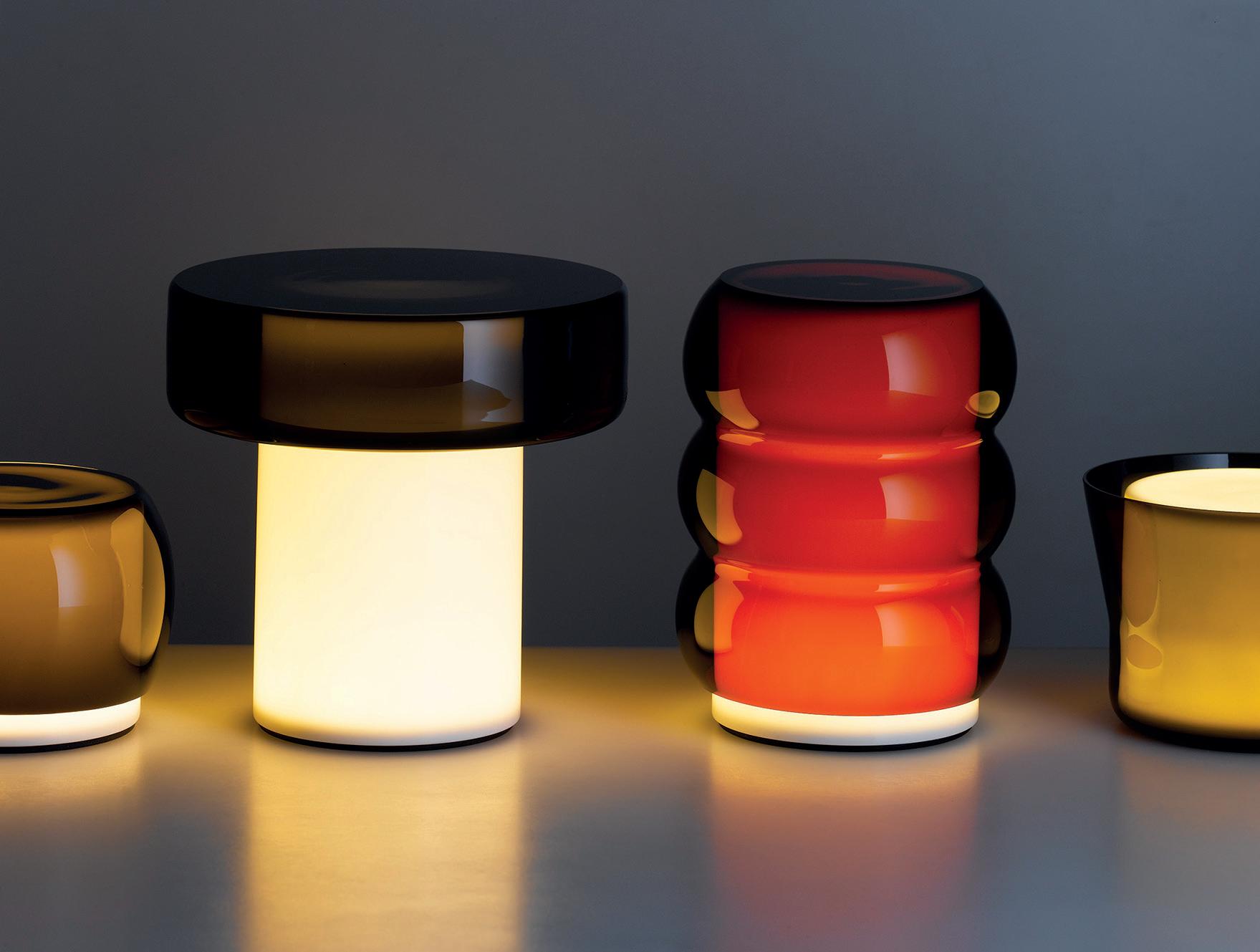
Designed by the multi awardwinning Tobias Grau, Lumen – Dibbern’s newly launched series of table lamps – has gone down a storm with buyers. The concept is a first for the porcelain manufacturer, who up until this point has worked with high-end designers, designed in-house, and produced highend tableware collections for discerning clients. Now, they have added a family of authentically designed table lamps which are as beautiful and delicate as they are practical and robust.
“Lumen is a first both for us and the designer,” Jan and Ben Dibbern tell Tableware International. “For the designer Tobias Grau because his previous design focused on lights for his own company, and for us, because it is our first light collection for Dibbern.”
Tobias Grau and Dibbern have worked together on previous projects, so they know each other’s working mechanisms well. “We have produced the lampshades for Tobias Grau lamps in the past,” Jan says. “We have known each
other for a long time, and he has experience with our fine bone china. Now he has given it a glow!”
In terms of aesthetics, Lumen has a simple porcelain cylinder body with a concentrated reduced design. The collection consists of four different porcelain bodies which have been designed as lights, on top sit four different glasses in two colours, all are interchangeable.

“Lumen consists of fine bone china cylinders of different sizes as luminous elements and different coloured glass elements that allow for many variations. The whole collection is based on the principle of ‘mix ‘n’ match’,” Ben adds. Interestingly, he says they set out to make Lumen because: “we wanted to make a product that highlights the unique translucency of our fine bone china.”
A design object in its own right, Lumen shone brightly at Milan Design Week recently where a collaboration with set designers Cameranesi Pompili showcased the true potential of the series. Lumen will be available from autumn 2023.

tipsyControl,
A first for acclaimed porcelain manufacturer Dibbern , Lumen is a new series of fine bone china table lamps. Switchless and wireless, the lamps launched this year and have thus far met with a rapturous response. We take a closer look…
a patented method that allows dimming and switching on and off by tilting, holding and setting down again, allows the lamps to shine at different levels of brightness. Switchless and wireless, the battery lights can be actively operated for seven hours.Dibbern’s display at Milan Design Week At Milan Design Week, set designers Cameranesi Pompili worked with Dibbern to showcase Lumen

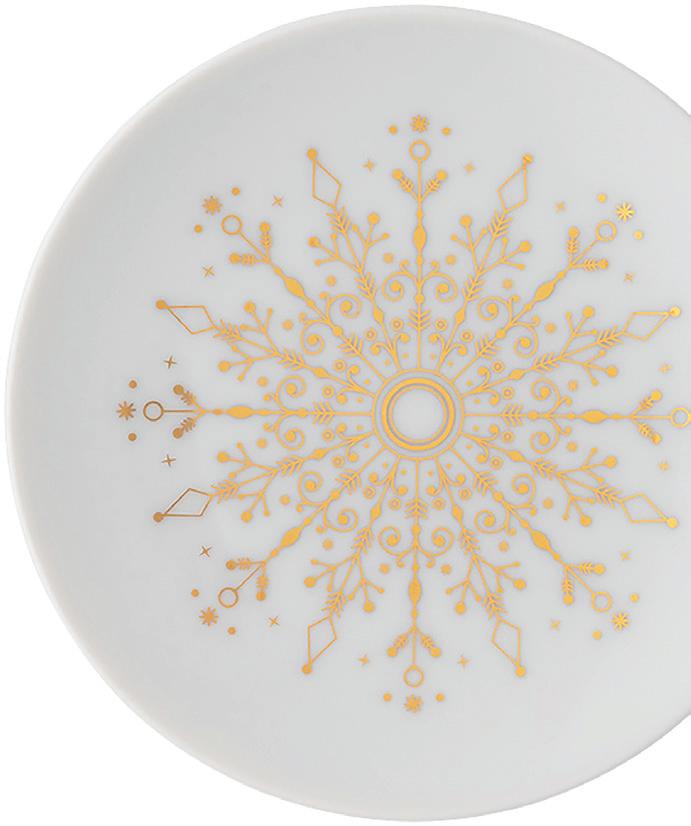
The legendary TAC service by Walter Gropius is getting a new festive décor. Decorative ornaments in noble gold allude to classic Rosenthal décors of past decades and adorn the strictly geometric Bauhaus designs, underlining their reduced formal language.
The iconic design looks stylishly elegant, while the decorative variations such as trees and stars in four different styles, which are solely featured on small plates, make the porcelain look particularly sublime. The delicate festive decorations on plates and cups as well as on the porcelain table light make a good figure on the festively set table, alone or together, but also go well with the new powdery TAC Sensual shades Gentle Grey and Comfort Blue.
Together they form a harmonious decorative arrangement with the timeless Bauhaus classic TAC, combining various gold ornaments, poetic motifs and tactile as well as visual highlights. They are not only appropriate for Christmas, but also for any other festive event.
The collection is available from autumn 2023 in selected stores and online. www.rosenthal.de

Denby’s Zoe Turner, head of marcomms, tells us how Denby works as well at Christmas as it does any other time of the year…
Historically, are Christmas-themed collections a seller for tableware suppliers?

Denby is ideal for Christmas dining – accessories such as foliage and handmade decorations, can give Denby’s collections that festive feel. Tableware should be used and loved every day, and it should be multipurpose, particularly in the current economic climate where consumers are looking for value and quality rather than one off or fast homewares.
Do you find it difficult to innovate new products for the festive period?
Porcelain Stars is popular overseas, especially in the USA, and is not only perfect for Christmas but works well for entertaining throughout the year. Denby does find that certain pieces are popular in the lead up to Christmas such as our turkey platter and sauce jug which are much in demand for festive dining.
Orrefors’s Annual Ornament series stretches back to the 1980s – adding a new, speciallymade piece in time for the holidays every year.
For 2023, Orrefors presents Paper Star, an ornament evoking childhood Christmases. It has a golden charm engraved with the year and with a gold-coloured band – it’s Scandinavian origami translated into sparkling crystal.
The Paper Star in Gold also comes in a limited edition of 125 copies, hand-painted in Sweden with 21-karat gold.
www.orrefors.com
A time of great celebration, the festive season is – traditionally – all about family, friends, food and the occasional drink or two. In short, it is the tableware industry’s time to absolutely shine...
Denby’s Porcelain Stars is a collection of key dining and serving pieces which was launched for Christmas 2022 and is available throughout the year to grace any special occasion such as Ramadan and Eid or to simply elevate the everyday. Denby Stars combines striking Porcelain White Arc and Blue Arc glazes with elegant and luxurious gold enamel stars to create a unique collection of serving, dining and decor pieces which complement their sister Denby Porcelain patterns and most existing tableware pieces already in the home.


www.denbypottery.com
Christmas Carols 2023 – “Am Weihnachtsbaum die Lichter brennen“
A festive Christmas walk through the snow-covered forest is featured in Hutschenreuther new collection along with the Christmas carol “Am Weihnachtsbaum die Lichter brennen” (The lights are burning on the Christmas tree) as a new limited-edition collection on porcelain. The contemplative melody jingles from the handpainted music boxes of two sizes and a world of wintry glitter in the snow globe makes children’s eyes beam with joy.
A colourful garland of red berries, cones, fir and mistletoe adorns plates, cups, napkins and biscuit tins, underlining a dreamy winter wonderland in the glow of the starry night. Delicate bells and balls, biscuit plates and a mini tree ornament set capture this poetic scenery.

Collector’s Edition 2023 – Christmas Sounds
With the new collector’s edition 2023
“Christmas Sounds”, Hutschenreuther composes a polyphonic symphony of city life at Christmas and lets a festive variety of sounds emerge on porcelain in the lovingly crafted drawings by Czech illustrator
Renáta Fučíková. In smooth colour nuances, the cheerful decor on mini stars and balls, napkins and biscuit tins depicts happy children singing Christmas carols, playing the violin or trumpet, and enjoying time together outside.

Short Set Series – Emily Ruby
The new collection Winter Glow from like. by Villeroy & Boch boasts reduced shapes and subtle cream tones but lashings of warmth. Smooth glazed premium porcelain alternates with the polished bisque porcelain. With its reduced shapes, a product selection focused on the essentials and gentle cream tones, the collection impresses with its understatement. But the wintry magic of course can’t be missed either: This is created by the white effect glaze, which creates the appearance that the porcelain is covered by a thick layer of icing. A sprinkling decor made of small stars and golden balls makes the glaze really sparkle and creates a celebratory glamour so that Winter Glow is also suitable for festive appearances.
A large selection of decorative elements from Winter Glow brings Scandinavian charm into the whole house. Ornaments shaped like stylised angles, stars or baubles in reduced design adorn branches and twigs, which are beautifully displayed in the simple vase. You will really get in the Christmas spirit when you have found the right place for candle and tealight holders, the snow globe and a porcelain Christmas tree.

www.villeroy-boch.com
The new Emily Ruby series by Hutschenreuther is a real treat for the eyes. Crafted from ceramics in festive red, the collection includes selected plates in various sizes and bowls. The sensual ceramics furthermore harmonises well with porcelain - it underlines the exquisite bone china of the classic Hutschenreuther Christmas collections Nora Christmas and Christmas Carols.

My Christmas Mug Collection
Hutschenreuther presents four new colourful motifs in the beloved My Christmas Mug collection in 2023. Adorned with red berries, fir and mistletoe branches, charming sayings such as Warm Christmas wishes, All you need is Christmas, as well as A merry Christmas to you and Have a holy Christmas conjure up a heartfelt message on the warm white bone china.
With great devotion to Christmas tradition, all the decorative details on the fine Christmas mugs are crafted in vibrant shades of red and green and bring solemn joy to coffee and tea or as a festive gift for family, friends or colleagues.

One brand that does Christmas very well is Hutschenreuther and their novelties for 2023 do not disappoint
Tradition is a key element of any culture, as it creates collective memories that bring us together. Nonetheless, as the years go by it is important to keep decorations current. Sometimes this means creating a softer Christmas table, with traditional elements, such as golden appointments as seen in Belle Époque alongside the porcelain white pieces of Ballet OB. Other times, it means surprising with a platinum table with collections such as Leaf and Royal Velvet, that bring a wondrous, as well as unforgettable, touch to the setting.
www.porcel.com
Historically, are Christmas-themed collections a seller for tableware suppliers?

Christmas-themed collections are huge in the US tableware market, and there is a staggering amount of variety of offerings – everything from rustic farmhouse to sophisticated penthouse, and many looks in between will always be a huge part of fourth quarter revenues for retailers.

For Spode, the new Kit Kemp collection includes some fantastic festive assortments.

The Kit Kemp Christmas Ornaments add a touch of colour and fun to your holiday celebrations with three unique collections, mannequins, baubles and patchwork animals. While the Kit Kemp Doodles Christmas brings festive cheer into the home with the Christmas Doodles collection illustrated by Willow Kemp. Each piece features a hand painted sketch brimming with whimsy and humour, perfect for lending that extra feel-good factor to the holiday season. The collection includes mugs ready for steaming hot chocolate and marshmallows (they’ll make ideal stocking fillers too!).
www.spode.com
Do you find it difficult to innovate new products for the festive period? It is tempting to say that it has all been done before, but every year we rise to the challenge to innovate. Two years ago, we introduced our popular festive season collection, “Happy Christmas,” a collaboration with noted American illustrator, Jennifer Orkin Lewis, working under the name August Wren. The artist contributed bright and happy watercolour depictions of wintery greens, birds and other animals to the collection reproduced on vinyl placemats, cork-backed coasters, and melamine snack plates.
Last year, we added melamine plates with a holly motif, and introduced the Norelle pattern on placemats a runner and napkins. My challenge was to design a pattern of red and green that is ideal for the Christmas table but could be used all year 'round. The easy-care Norelle Runner features lovely classic floral motifs combined with a simple solid green border that introduces a unique contemporary feel.
And this year we are so, so excited about our launch of our unique and special "Collectible Holiday Trees Collection", handmade, with exquisite colours and finishes, everyone that has seen them swoons over them. Our Crosby candlestick holders, available in three sizes and two finishes, are also standouts.

“Even though we do not have a Christmas collection in our range, Zwiesel Glas glasses are suitable for any occasion. With our different designs, the glasses fit harmoniously into a wide variety of table settings”
Lisa Müller, team lead brand & product management, Zwiesel Glas
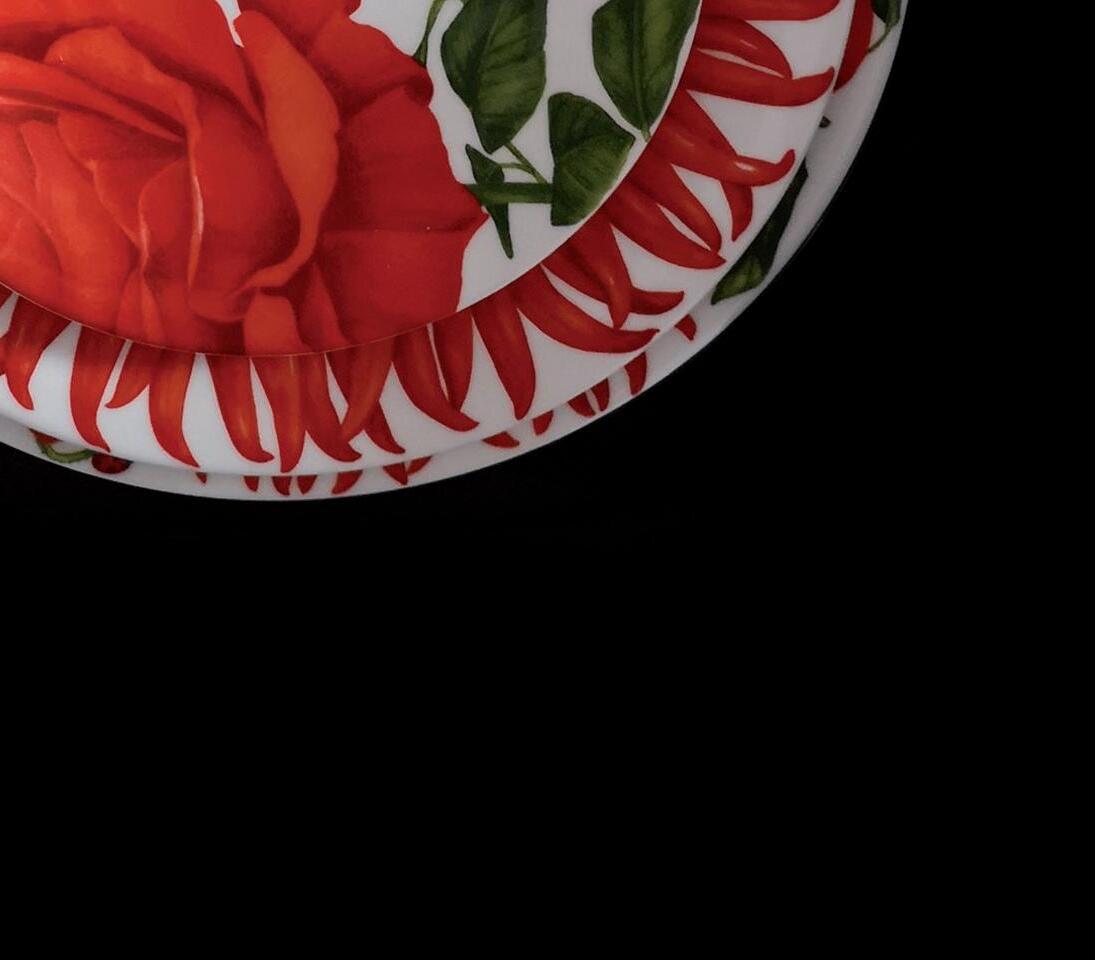




How many brands do you represent?
Our company, Fine Dining & Living, showcases a collection of seven exclusive label brands, comprising four aimed at the hospitality industry – Fine2Dine, CHIC, BONBISTRO, and WOOD&FOOD, and three for the retail sector – Salt&Pepper Europe, S|P collection and ONA. Our aim is to provide our clients with the best possible fine dining and living experience, by offering them a diverse range of brands to choose from.

What markets do you distribute to?
Our retail products are primarily distributed through independent stores, department stores, garden centres, and furniture stores.
For the hospitality market, we collaborate with local distributors, and a fraction of our products are sold directly to local end-users who visit our showroom. Additionally, we participate in the promotional market by providing loyalty programs and corporate gifts. We currently operate in approximately 50 countries worldwide.
As a distributor, are there any recurring issues/challenges you are facing?
As a distributor, we face numerous challenges on a daily basis. One of our primary challenges is managing the fluctuating transport costs from the Far East, along with the increasing local transport costs, which makes it difficult for us to maintain a consistent pricing policy. Furthermore, manufacturers often provide us with changing delivery times during production, making forecasting complex and occasionally leading to delayed release dates. In today’s rapidly evolving market, trends change at an unprecedented pace, necessitating the continuous updating of our product assortment. Additionally, we must manage our stocks with great attention to detail.
How do you engage with your brands and represent them to clients/prospective clients?
We believe in providing the right product for the right occasion and end-user, which is why we have our own sales team to offer expert advice to our customers. Our distribution partners on the other hand, also play a crucial
Name: Timo Ooms
Job title: Senior product & purchase manager
Company: Fine Dining & Living
role in informing customers about the features and qualities of our products, and we also work with agents in different countries. To showcase our latest novelties, we participate in international trade fairs every year, where we showcase our newest products and provide visitors with printed catalogues, that are also available digitally 24/7. Besides, we offer our customers the convenience of online purchases through our B2B portal, and each of our brands - Fine2Dine, CHIC, Salt&Pepper, SP Collection, and ONA - has its own website. We maintain an active presence on social media, including Facebook and Instagram, where we regularly update our customers on new collections and additions. Additionally, we collaborate with influencers who

“The Zwiesel Glas brand world is versatile and serves a wide range of target groups and demands. The worldwide market landscapes in which our Zwiesel Glas and Schott Zwiesel brands – and their mouthblown and machine-produced premium glasses – are listed and sold, is diverse. Partly, our products are presented in furniture provided by us, partly we are faced with the challenge of adequately presenting our products in brand-owned furniture, and clearly distinguishing our brands from the surroundings.
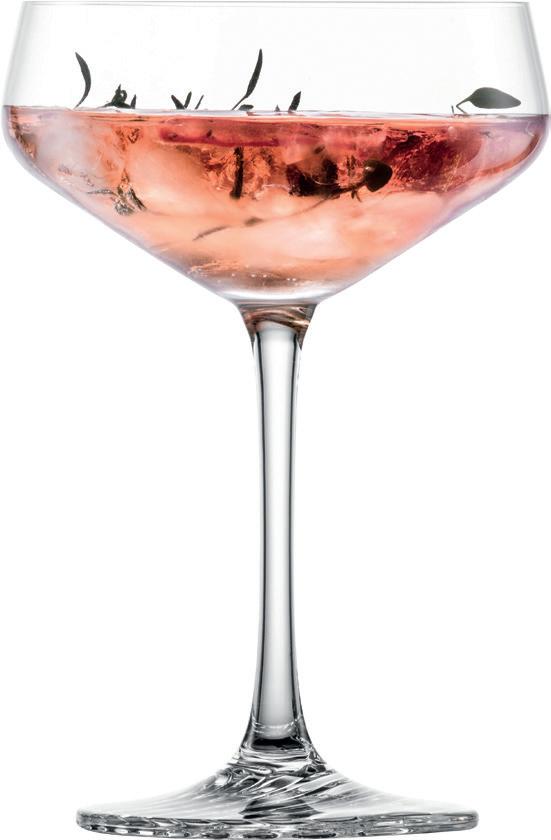
In order to offer the retail trade the possibility of presenting our brands and glasses to the end consumer in an even more vivid and target group-oriented way, we have developed a visual merchandising guideline and an associated point-of-sale
promote our brands to a wider audience. We also advertise in print ads such as in magazines and trade journals.
How has 2023 been for you so far, and what is your prospective outlook?
The retail market has experienced a significant decline in demand, and end-users have become increasingly price sensitive. As a result, offering products at affordable prices and providing interesting promotions is crucial to maintain their interest. We anticipate that this situation will persist throughout the year, but we are optimistic that it will improve from 2024 onwards. In contrast, the hospitality market continues to experience growth, primarily in our export markets due to the development of new markets.
(PoS) toolbox, which we have recently introduced to the retail trade. This PoS guideline offers advice for every circumstance so retailers can put the right advertising materials and tools at every touchpoint. For this purpose, the materials are assigned to the different shop types and compiled into practical sales packages. An attractive and realistic presentation helps sales partners to imagine the advertising materials on their own sales floors and simplifies the implementation. This is not only convincing in sales talks, but also ensures a unique brand presentation and an increase in turnover with, and among, the customers served.”
With product in 50 countries, Timo Ooms, senior product & purchase manager at Fine Dining & Living, gives us some insight into how they distribute their brands…

The Luna vases from Sieger By Fürstenberg are sculptural in nature. The tapering conical form – available in three sizes –beautifully showcase both smaller and more lavish floral bouquets. They are available either in pure white or a blackand-white decor that brings together both vertical and horizontal stripes – refined with 24-carat burnished gold. The vases are hand-crafted in Germany and available in the following heights: 203mm, 215mm and 325mm.


www.sieger-germany.com
From home fragrance to lighting to soft furnishings, accessories elevate a tablescape and luckily for us, leading brands are delivering lots of stylish options – perfect for injecting some glamour and some oomph
The Waters range from Zwiesel Glas boasts a unique blend of colour and tint evoking a tempestuous river, the organic shapes inspired by forces of nature. An exhilarating interplay of light and shade, caused by translucent, transparent structural colouring, creates a unique atmosphere in any room. Waters comes in two different sizes and five colours. As in nature, each vase is unique, and is handcrafted in Zwiesel using traditional glassmaking techniques of the very highest quality.
www.zwiesel-glas.com
Rosenthal meets Versace has expanded its 2023 novelties with an exclusive collection of tea lights and napkin rings. Available in gold, silver, gold-silver as well as classic black, the tea lights are decorated with a filigree Medusa head. The napkin rings - also available in four shades - are an absolute eye-catcher and can be perfectly combined with all Rosenthal meets Versace porcelain designs or cutlery series.
www.rosenthal.de


The Swedish designer Ingegerd Råman studied for a period in Italy, where her friends were surprised by the delight she took in flowers and candles. Influenced by this memory, she designed Lumiere. A candlestick with a reduced, minimalist shape that perfectly unites the crystal clear transparency of glass and the reflective qualities of metal.


Available in both stainless steel metal and now golden metal.
www.orrefors.com
Intertwined shape, flowing lines, soft porcelain – the ingredients of the Node vase are simple, and the result is captivating. In 12 cm size, the table vases with handpainted stripes design reveal their distinctive charm. The fine lines underline the dynamic shape of the node and provide Node vases a look that is both elegant and fresh. The colours surely contribute to this: mango, blueberry, plum and apple spark the desire for fruit ice cream and summer feeling. Also in the miniature version.

Designer Martin Hirth, one of the most acclaimed German newcomers of recent years, plays with common visual practices and at the same time puts them into question: with Node he fixes the moment of the usually only temporary and not static node in a small porcelain sculpture that look good both solo and as an ensemble.
www.rosenthal.de
Denby has beautiful, handcrafted fragrance pieces in its giftware selection with candles hand poured into Denby vessels and after the candle as burned away the candle pots have a multitude of uses around the home. Denby diffusers and candle pots – and their contents – are all made in England. Denby’s contemporary stunning vases look equally good feature pieces in a room grouped together with or without flowers making exceptional giftable pieces which are made to last.
www.denbypottery.com
Tulips, roses, a small shy bouquet, or a large wildflower arrangement - with Meadow there is a vase for all. But Meadow is just as beautiful on its own – an ornament worthy of its own place in the heart of every home.
Meadow is created with nature as inspiration. While still warm, the vases are rolled in small pieces of coloured, crushed glass. The glass pieces melt into the vase and become a part of the glass itself, which makes each one =unique. The combination of the straight lines and the organic pattern creates a playfulness that highlights the craftsmanship, just as the shape of the vases themselves embraces and highlights the plants they hold.

Meadow from Kosta Boda consists of vases in three different sizes and is available in two different colors.

www.kostaboda.com
The Haptics range from Eisch Germany boasts a tactile surface structure, refined in satin gold and combined with shiny platinum. The mouthblown collection comes in two sizes and is a real centre piece – both as decorative objects and for arranging flowers or individual branches.
Master glassblowers produce the vase by hand and in the painting of the pieces, a tactile silk-matt gold structure is applied and combined with real platinum.
In addition to the vases, the series includes plates suitable as dinner plates or place settings, and whisky carafes. Eisch.de
Experience the summer’s biggest in-person buying oppor tunity featuring your favorite ve ndors, new lines and cross-categor y product sourcing With hundreds of established and emerging brands in Tabletop, Housewares and Gourmet, we are your one-stop market destination.

Showrooms: July 11–17, 2023

Temporaries: July 12–16, 2023
Learn More and Pre-Register at AtlantaMar ket.com/Housewares
While melamine’s reputation has not always shone brightly, melamine tableware does enjoy some practical benefits. It is hard wearing, good value, easy to clean and dare we say, growing in popularity – particularly in hospitality where functionality is king.

Steelite, Utopia and Arthur Krupp all supply melamine collections to the service industry while Beatriz Ball has enjoyed success on the retail market with her melamine lines.

“Melamine is decidedly on the rise and happily, with no end in sight,” Beatriz Ball tells us. The designer introduced a melamine range more than five years ago but met with fierce opposition.
“When I first explored expanding into melamine, most told me not to do it. The consensus was that the category was too low-end, a mere commodity, but I saw the possibilities and I persisted.”
Beatriz took the designs of her already successful
metal collections Havana and Alegria and produced them in melamine – it worked.
“The pieces were immediate bestsellers, and one design was named one of Oprah’s Favourite Things just months after the launch. In today’s tableware market, casual and everyday rules, and melamine – with its ease of use, durability, and great price points – is a fast-growing category.”
Beatriz also came to the market with something different, she labelled her collections “luxury melamine” – and they went down a storm. “We are delighted to see that our pieces are now used indoors by our customers for decor and entertaining, as much, or even more, than for outdoors. I’ve since broadened my selection to new collections, finishes, colours, and patterns. Our melamine items are extremely durable and easy to care for. Made to our strict specifications, our heavy-weight 100 per cent melamine is both
BPA and PABA free,” Beatriz adds. But melamine is not for every manufacturer – Fine Dining & Living, for example – do not supply melamine products currently but they are open to the possibility.
“At the moment, we do not offer any melamine products in our assortment for various reasons. Firstly, there has not been significant demand from our clients for melamine products. Additionally, there are already many specialised brands that offer a wide range of melamine products on the market. We have also been hesitant to introduce melamine products to our assortment due to concerns about ecological aspects and food safety issues,” explains Lynne Verrydt, content marketeer, Fine Dining & Living.
“However, we have recently seen an increase in demand for melamine products, particularly in the professional market. As glass and ceramics have been banned from poolside and clubs, melamine has become more
important. Additionally, there are now improved materials on the market that are environmentally friendly, pose no health risks, and have good product features such as durability and lightness. The variety of melamine products available has also increased, allowing for more differentiation and personalisation. Seeing these factors, we are now considering introducing melamine ranges to our collections for both the hospitality and retail markets, in line with our look and feel.”
In a recent column for Tableware International, US-based retailer Michele Trzuskowski wrote about noticing an increase in demand for melamine from her clients.
“When I started my business more than 23 years ago, I never thought I would espouse the qualities of melamine tableware,” the retailer says. “In fact, if you asked me then, I despised it. It was plastic and only meant for outdoors – if that. But over the
While melamine might not be the most high-end material to produce a tableware collection in, it does have some merits and even appears to be increasing in popularity? So, is it here to stay?Beatriz Ball
past five years, like many others, I am recognising the changes to this category of dinnerware, and I’m happy to admit they are all for the better… today’s melamine is anything but just functional. Today’s melamine is chic, trendy, and dare I say it, even sophisticated.”
Michele cites brands such as the aforementioned Beatriz Ball, Qsquared (QHome), Juliska and Vietri as all producing their leading collections in melamine.
The hospitality sector is where
melamine really works hard. Take Steelite, for example, they supply melamine collections in their Baja, Craft and Pompeii décors. Pompeii by Creations is great for fast casual dining and works well in any environment, with a lighter weight and higher durability than
traditional tableware. Baja by Creations boasts a natural color palette while Baja Grey, Green, and Blue offer some versatility.
Taking inspiration from the Craft collection in Steelite’s Performance body, they’ve created a tableware offering in melamine that will work perfectly in any casual or buffet setting. Alongside the plates and bowls are four sizes of platters that look stunning on any counter serve or buffet display. Every item can be used for either hot
decorated plates such as Mosaic, and essential designs devoted to fusion cuisine such as Gourmet Two-Tone and Thara. The brand’s offering provides a complete extension of plates and serving accessories for end-consumer but also for the HoReCa sector.
Utopia too has an extensive melamine offering from the Pebble platters which combine the appearance of stone with the durability and practicality of melamine to the Slate/Granite range including platters, rame -

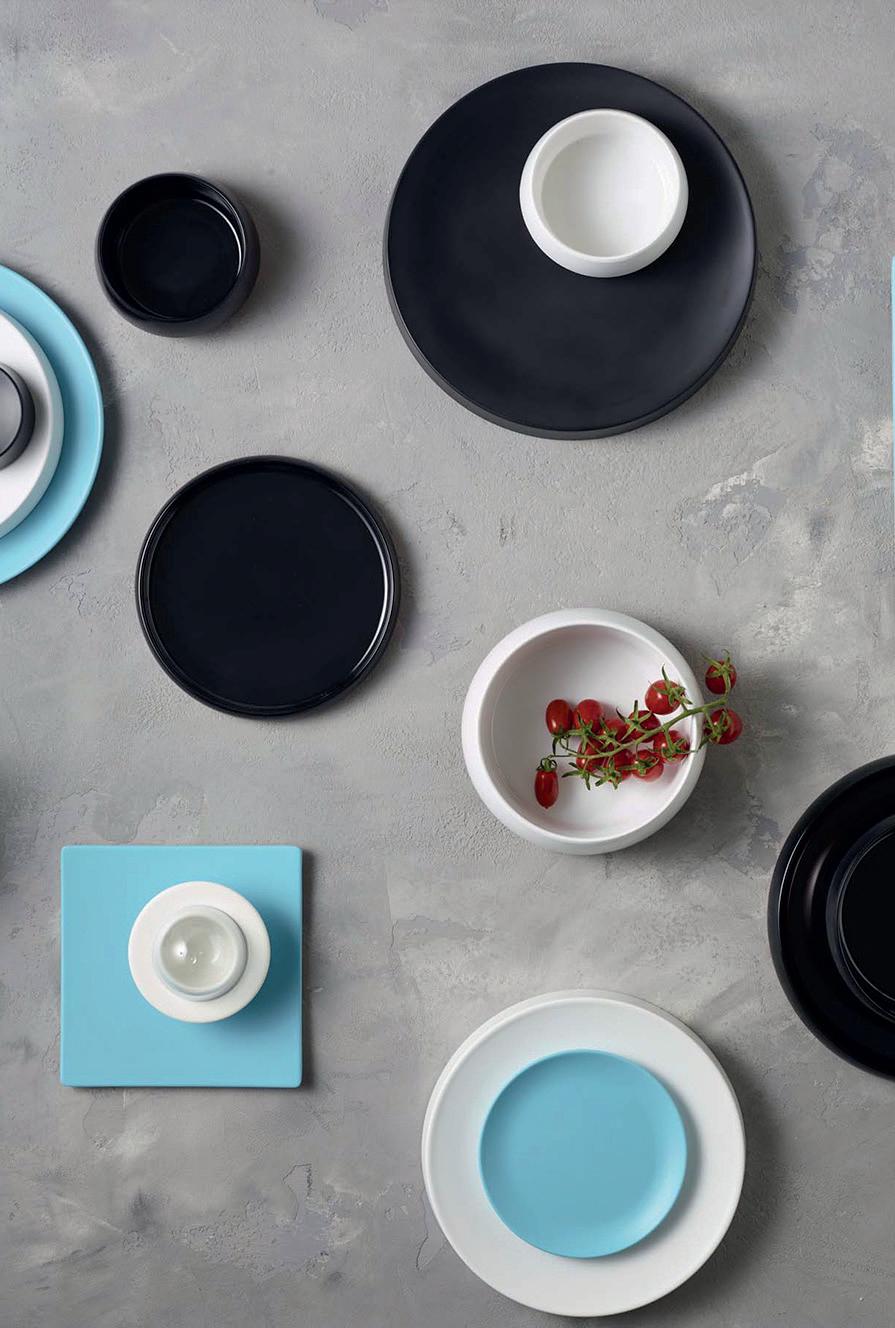
in either dusky blue or green ‘spinwash’ colourways that can be combined to stunning effect. Calypso, another design that uses the hand-thrown effect, is available in vibrant blue and red options for a summery Mediterranean or South American feel. Continuing the sunshine theme, Caribbean Crush and Spanish Steps use a white background adding bright primary colours around the rim of the plates to brighten up the design. There is also a vast selection of plain white melamine items that can be mixed and matched or used as a standalone range, depending on the venue.
or cold food types, and with a neutral colour palette, looks at home in any environment.
Arthur Krupp, meanwhile, has a full table range made of melamine. These collections include classic and refined shapes as Portrait, extremely
kins, bowls and dip dishes. These showcase a matte slate effect finish to one side and a glossy granite effect to the other.
Wildwood platters and bowls combine the appearance of hand thrown ceramics with the practicality of melamine. It is finished

As for whether or not melamine really explodes is yet to be seen, but as far as retailer Michele Trzuskowski is concerned, it is going nowhere.
“The reality is that melamine is here to stay. With a growing number of manufactures and improved quality and design it’s not just for picnic tables anymore,” the retailer adds.
“We have recently seen an increase in demand for melamine products, particularly in the professional market”Steelite Utopia Arthur Krupp
Name: Walter Lowry
Store: TableArt Inc.
Where: Pacific Design Center, West Hollywood, CA
Have you noticed a demand for any particular type of tabletop products from your consumer base?
Demand for high-end product for home dining and entertaining remains strong and is growing stronger. At the same time our new lines – complete collections of luxury bed linens, bath linens and bathroom accessories – are receiving a very warm welcome from our customers and is taking off nicely.
Currently, what are the biggest challenges you are facing as a retailer/buyer?
The challenges that face us personally revolve around our move: we closed our old location on Melrose Avenue during the first week of December; and our new location in the Pacific Design Center did not open until March 24. During this time, I was away for both Maison & Objet in Paris and Ambiente in Frankfurt. The move was a huge challenge, but well worth the effort. Our showroom is more than twice the size of our previous location, and the showroom is beautiful.
We are getting very positive feedback from our clientele. Bottom line: between the move and being very busy, we are stretched, but we are still delivering high quality customer service along with our unique, curated collection.
Do you deal with mainly US or global suppliers?
While we patronise US producers, including artisans, most of our product is from Europe. We continue to focus on our core group of producers
Name: Nancy and Angela Leoni
Store: i Leoni
Where: Petaluma, California
Have you noticed a demand for any particular types of tabletop products from your consumer base?
In Northern California, the lifestyle is so casual. Wine country alfresco dining can start in March and take you all the way to November. We see our customers gravitating to simplistic styles that are versatile and that can transition from weeknight to company’s coming. Unique serving utensils are popular for us – they can
and, at the same time, add new artists and producers who are doing special things.
What tableware products are you looking for at Market?
I am never looking for specific products at market. I look for ideas, creativity and inspiration. It never ceases to amaze me how many talented people there are out there, doing new things and launching new businesses. We enjoy being a part of this.
dress up the more simple styles. Our customers are also looking for natural fibers and colours in their linens. Beautiful oven-to-table pieces are also popular.

Currently, what are the biggest challenges you are facing as a retailer/buyer?

Some of our biggest challenges aside from rising costs on all fronts would be dinnerware being discontinued; competing with our own vendors’ websites; receiving damaged goods and then making returns. Through all the years of being in business we have seen brands be bought and sold, and with that we have seen a change in quality, service and lines. Also ordering pre-sale or seasonal items and then having them arrive after the season/holiday is a big challenge for our business. We also have a challenge finding appropriately priced everyday glassware. But ultimately after 19 years in business, we still love what we do and we love how our store contributes to our community and our customers lives.
Do you deal with mainly US or global suppliers? We mainly deal with US suppliers.
We have dealt with a handful of European brands, however it is much more challenging if our order is not correct, or if we have to make a return for damaged goods.
What tableware products are you looking for at Market?
We will always be looking for new brands. But we also love to support our existing brands through their new designs. Our customers also want to see products that are handmade or made in the USA or other EU countries. We are also looking for tabletop gifting ideas. We have a lot of customers who still like to give classic gifts – nice glassware, candlesticks, vases and serving bowls. We are bored with the boards, what is the next trend? We are always looking.

US retailers tell us about some of their biggest challenges while also giving some insight into what they will look for at IMC’s upcoming Atlanta
Las Vegas Markets
“While we patronise US producers, including artisans, most of our product is from Europe”
“We will always be looking for new brands”Name: Laura Havlek,
Store: Sign of the Bear
Where: Sonoma, California
Have you noticed a demand for any particular types of tabletop products from your consumer base?
We see ongoing increasing demand –with vendors moving into and expanding assortments – for newer shapes and colour as a texture. Also for melamine patterned after beautiful classic ceramic dinnerware in all different styles, from Spanish majolica to Italian country to Japanese kintsugi. In porcelainnew textures and shapes such as Asian fusion (ramen and pho bowls) continue to be staples for a whole new generation. Also new streamlined shapes and neo-neutral palette reminiscent of 60s, pastels, and vibrant stone and earth colours.
Currently, what are the biggest challenges you are facing as a retailer/buyer?
In this time of rapidly evolving expectations, three core ongoing challenges are, by definition, also opportunities. Our shared challenge is to keep surprising and delighting our core customers, and meeting and converting new ones.
Supply chain management continues to be a ‘new-in-our-careers’ necessity. We can no longer assume ordered goods are enroute without actively tracking them, but this means good in-stock status is a differentiator and impresses customers.

Draining of institutional expertise across all channels means we have, and see, enormous gaps in the lived reality and best-practice organization such as packing, picking, invoicing, product familiarity and training. There are enormous opportunities to reimagine how we might differently organise, streamline and make more beautiful.
Do you deal with mainly US or global suppliers?
We deal with US suppliers but increasingly also with overseas vendors who have managed freight. We purchase everything from cutlery to linens to wood to soap to dinnerware from overseas but only from vendors who have figured out how to make pricing predictable for us.
What tableware products are you looking for at Market?
We come hunting particular categories, but we are even hungrier for beauty and innovation –products to delight customers, tools to solve the daily-life problems we all have. One of the great gifts and joys of market, and AmericasMart in Atlanta in particular, is how, even so many years in, we are often surprised by innovation, cleverness and beauty we did not know exist. It has happened for everything from Charles Viancin to gorgeous Italian linens to stunning olivewood. We are also looking for items that sold brilliantly but whose supply chain has evaporated (or the company has been bought/ sold) - including well-priced and reliably-in-stock utensils, serveware, service pieces, chalkboard chickens, well-priced visually beautiful resin service pieces, just in time for summer. Beautiful handpainted vineyard-themed service platters and dinnerware and melamine. We’re also looking for manga/anime inspired graphics dinnerware or fresh interpretations of manga/anime for the younger generation.
YJC glass is launching a new collection “Scandinavian Modern”, this collection is inspired by the clean lines of the Bridge, combined expressive liner embossed design patterns and trendy Amber & emerald color.

They’re hand-finished and made from durable sodium calcium crystal glass, best of all, it is dishwasher safe and worry-free cleanup.
www.wws-ceramic.com

“We deal with US suppliers but increasingly also with overseas vendors who have managed freight”
The Costa Nova & Casafina brands will bring their undeniably stylish, quality assortments to Las Vegas Market. Visit them at C123 to discover the collections that are trend-right today as well as classics that have stood the test of time. www.costanova.com
Beatriz Ball will exhibit at the Summer 2023 Las Vegas Market, 30 July through 3 August, in the Ivystone Las Vegas Showroom, World Market Center, BLDG C, #696. Wholesale.beatrizball.com
The blomus KUMI tabletop range features typical Japanese shapes in natural colours, and in additional to typical tabletop items, also includes traditional Japanese items such as a small bowl for soy sauce and the characteristic tea mug without handle. KUMI is created with the Japanese process of reactive glazing, which comes out different with every firing and reacts to the slightest variations of oxygen in the kiln, making every KUMI piece a unique work of art. True to the Japanese philosophy of Wabi Sabi, to which beauty is found only in the imperfect, the pieces will feature slight variances which are part of the reactive glazing process. These characteristics of each piece are considered traits of the object’s personality and lend to its sophistication. Ceramic Stoneware is Dishwasher Safe and Microwave Safe. KUMI is a Japanese word meaning eternal beauty. Natural character that comes with use over time will increase the beauty and sentimental value of each piece of KUMI dishware. www.blomus.com

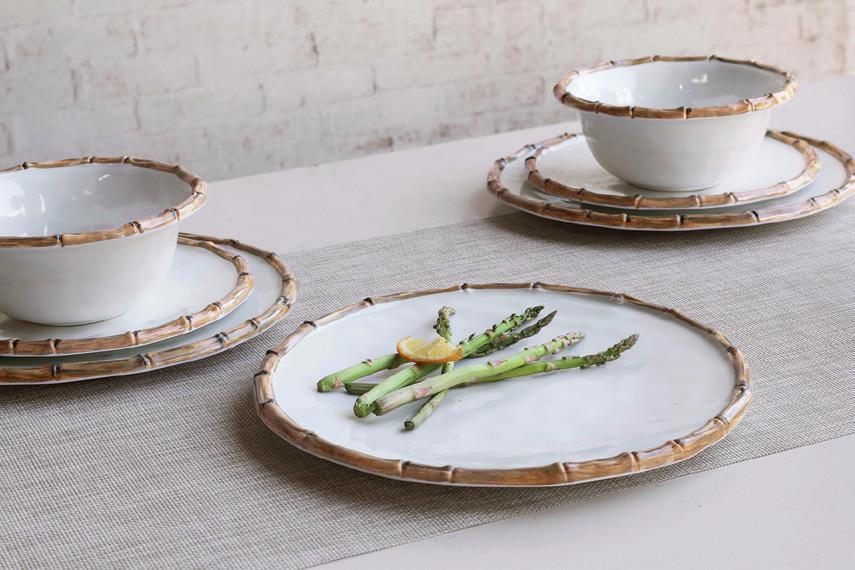
Visit Adama at LVM to see their collection of table runners and placemats made of unique, flexible and non-porous material. Soft, elegant, easy to clean and come in a wide variety of sizes and colours. Adama’s beautifully designed high-quality PVC / Polyester placemats are an ideal tabletop solu tion for your home.
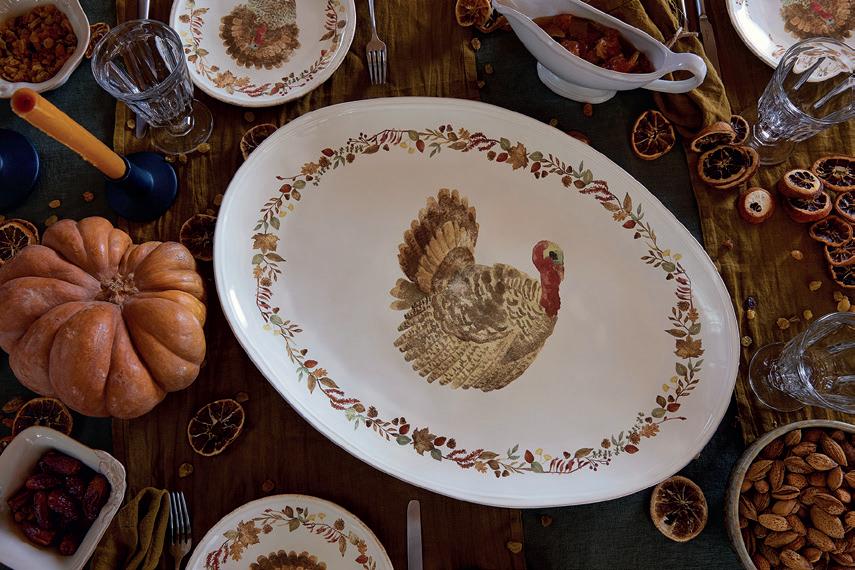

www.adamawholesale.com
The custom white, softly sponged glaze gives the new Cozina White Pitcher a casual but elegant look. Iced tea served in this pitcher never looked better! It holds about eight cups and is 8” high. Durable stoneware, dishwasher and microwave safe. Made in Portugal. www.carmelceramica.com
Did you know?A 25 per cent jump in gourmet and housewares offerings makes the Summer 2023 Las Vegas Market a must-visit destination for buyers looking for resources in these categories. The summer buying event will showcase 30+ new and established brands.

The summer 2023 edition of Las Vegas Market takes place at the end of July, bringing together retail-friendly brands from across the US and further afield. We shine a light at some of the brand’s exhibitingCosta Nova Beatriz Ball Blomus Adama Carmel Ceramica


B2 8-859A
Rosenthal Sambonet USA, the American branch of Italian Arcturus Group based in Randolph, New Jersey, will attend the Atlanta show in July. The showroom will open its doors to customers to showcase the 2023 novelties by the best selection of the Group’s brands. The focus on Rosenthal tableware will introduce the refined Maria Dream Blue porcelain collection and TAC Festive dinnerware, the new Christmas interpretation of the iconic shape designed by Water Gropius. For casual dining there will be the colourful Rosenthal Junto Dune, the natureinspired Thomas Clay Smoke and the trendy creative Rosenthal meets Versace novelties. For home décor, the Node vase will be displayed in new and charming variants. Finally, Sambonet will be focused on the kitchen, with the brand new ‘Home Chef 5-ply’ gourmet cookware. www.rosenthalusa-shop.com
Atlanta Market takes place this July – bringing together home and gift exhibitors. We highlight just a few key exhibitors…
What? Atlanta Market | When? 11-17 July 2023 | Where? Atlanta, USA
B1 18-E18
Enjoy sparkling beverages, champagne and cocktails in the regal elegance of the Aurelia Coupe Glass. With an opaque base reminiscent of milk glass and translucent top, this organic shaped stemware offers a vintage sensibility and trendy charm that’s perfect for events and everyday use.
www.accentdecor.com
B2 12-1200
Pampa Bay presents this new addition to its accessories collection. Whether it is a charcuterie board for two or desserts for a few, this tray is the ideal size for all casual parties. Slide this tray in the refrigerator to chill and keep all your servings fresh and tasty. Striking white porcelain with silver textured handles.

www.pampabay.com
Eleven educational seminars and workshops will allow Atlanta Market buyers to hear from trendsetters and experts as they prepare for the busy fourth-quarter season.

B3 13-S333
Beatriz Ball comes into the summer trade show season with some 100 new product introductions. The awardwinning brand is known for its metalware and melamine collections and has more recently expanded into glassware, ceramics, linens and placemats.


In the melamine category Beatriz Ball will add 17 items, including two new colours in the Vida Alegria collection – Sand and Sky. Melamine dinnerware items will also be added to the Nube collection in a matte finish. Nube has until now only included bowls, platters and serveware.
Beatriz Ball will expand its classic line of handcrafted metalware with new designs and textures. Some iconic pieces will be reinterpreted with proprietary new color finishes and some with an innovative Croc texture.
Wholesale.beatrizball.com
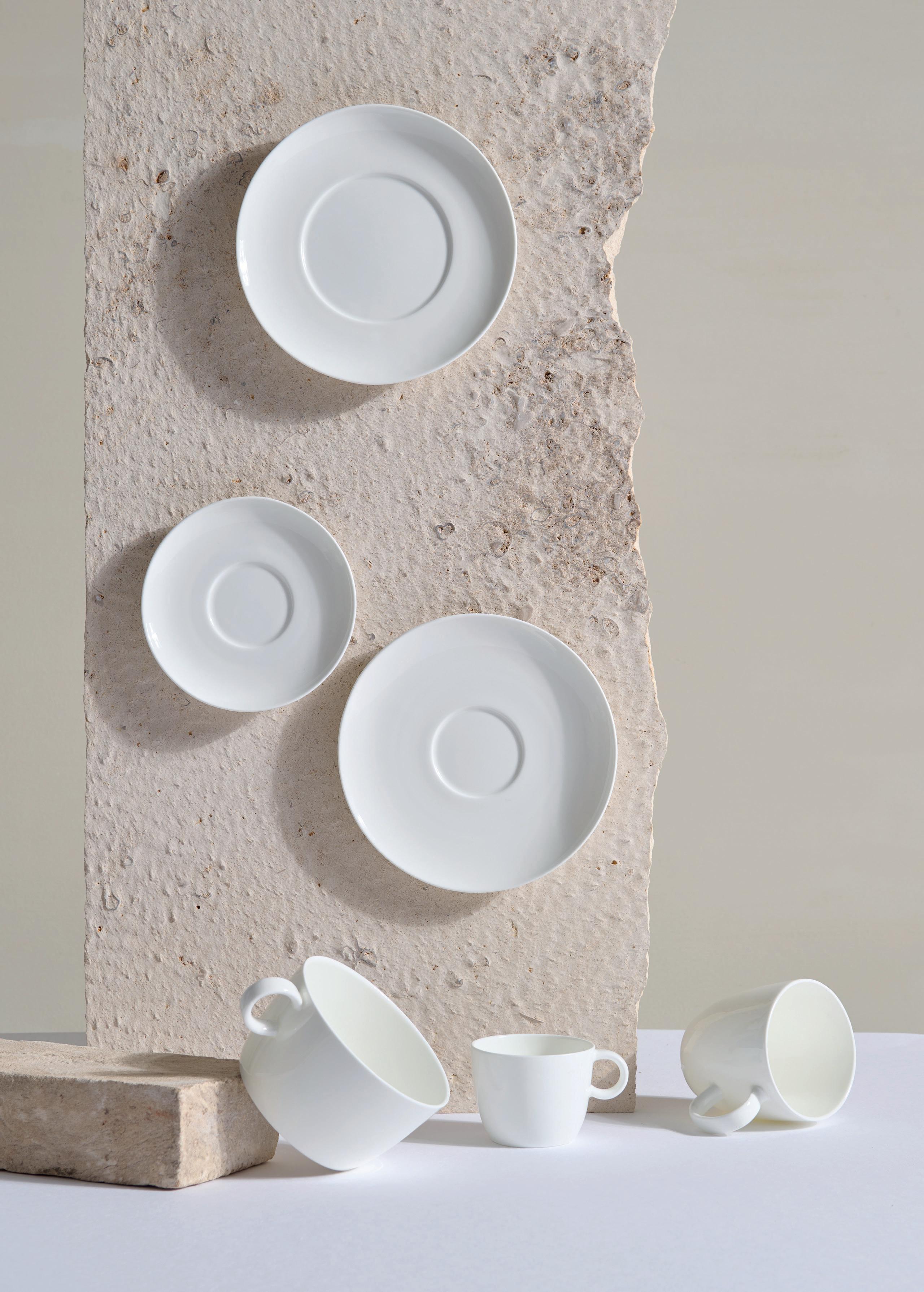

Exclusively takes place this June with a host of brands exhibiting over the course of the two-day show. We take a closer look at what visitors can expect…

Denby will use The Exclusively Show as an opportunity to launch new collections onto the UK market. Visitors can expect to discover the new Kiln Accents range (an expansion of 2022’s Kiln), while the brand’s porcelain offering is bolstered with the new Arc Grey line.
The Exclusively Show, organised by BHETA (British Home Enhancement Trade Association) takes place on 13th and 14th June at the Business Design Centre, London bringing together houseware, tabletop, gift and small domestic electrical brands.
Joining Denby will be brands such as Dartington Crystal, Elia, Robert Welch Designs, Rayware and Lifetime Brands Europe.

Trend consultants Scarlet Opus are once again supporting the show – think trend talks, displays of the most ‘on-trend’ products, and bookable trend tours. Visitors and exhibitors at the two-day show are invited to The Exclusively Show drinks reception from 5.30pm to 8.00pm on Tuesday 14 June. The Jazz Spivs – a collective of 1920s musicians who specialise in the vintage style will provide entertainment, and the event will be held in the Luncheon Room (off the Gallery opposite stand 456).
www.exclusivelyshows.co.uk
Visitors and exhibitors at the two-day show are invited to the Exclusively Show drinks reception from 5.30pm to 8.00pm on Tuesday 14 June.
Designed to meet the needs of small businesses and start-ups in the industry, the Launch Pad at Exclusively is a dedicated area for buyers to find new, innovative products and suppliers. Expect to find brands such as Sue Ure Maison (EH503) and Klimchi (EH510) – pictured.
Timelessly elegant, simple and beautiful.




Denby is launching Kiln Accents at Exclusively. An inviting and contemporary palette of warm, earthy tones and comforting humble hues, this studio pottery inspired collection features versatile shapes, unique glaze effects with layers of pattern and texture.

Made to be used and loved every day and for all seasons, Kiln Accents is a stunning ceramics collection available in new shades of Rust, Ochre, Slate and Taupe all of which blend seamlessly with Denby Kiln or as separate items for serving, entertaining, home decor and gifting.
Similarly, Denby is also launching Arc Grey Porcelain. This textured porcelain features a transparent glaze over a clean white body, revealing a stunning 'arc' self-pattern.
Available in Arc Grey are a mug, different size plates and bowls to create a stand-alone pattern which also works with Denby’s new botanical Constance Porcelain design and other porcelain pieces in the home. Available in Denby Porcelain are Classic White, Arc Blue, Arc White and the patterned Modern Deco with its geometric bold forms, Denby Stars and new Constance all featuring Denby's unique glazing techniques in jewel-like finishes.
www.denbypottery.com
The perfectly balanced Motive range is contemporary and bold, with its dramatically angled bowl and narrow aperture. Perfect for robust wines, the beautiful, tapered chimney helps to concentrate the aromas and reveal their harmonies.
Separately, a welcome addition to Elia’s diverse cutlery offering, Clara is timeless in its bold simplicity. Designed with clean fluid lines and a handsome profile, the generous handle ensures it is a real pleasure to hold. Clara is a clean classic range finished in 18/10 Stainless Steel that is sure to lift any casual dining setting. Clara is available in a 24-piece box with stylish compact black and silver packaging. www.elia.co.uk
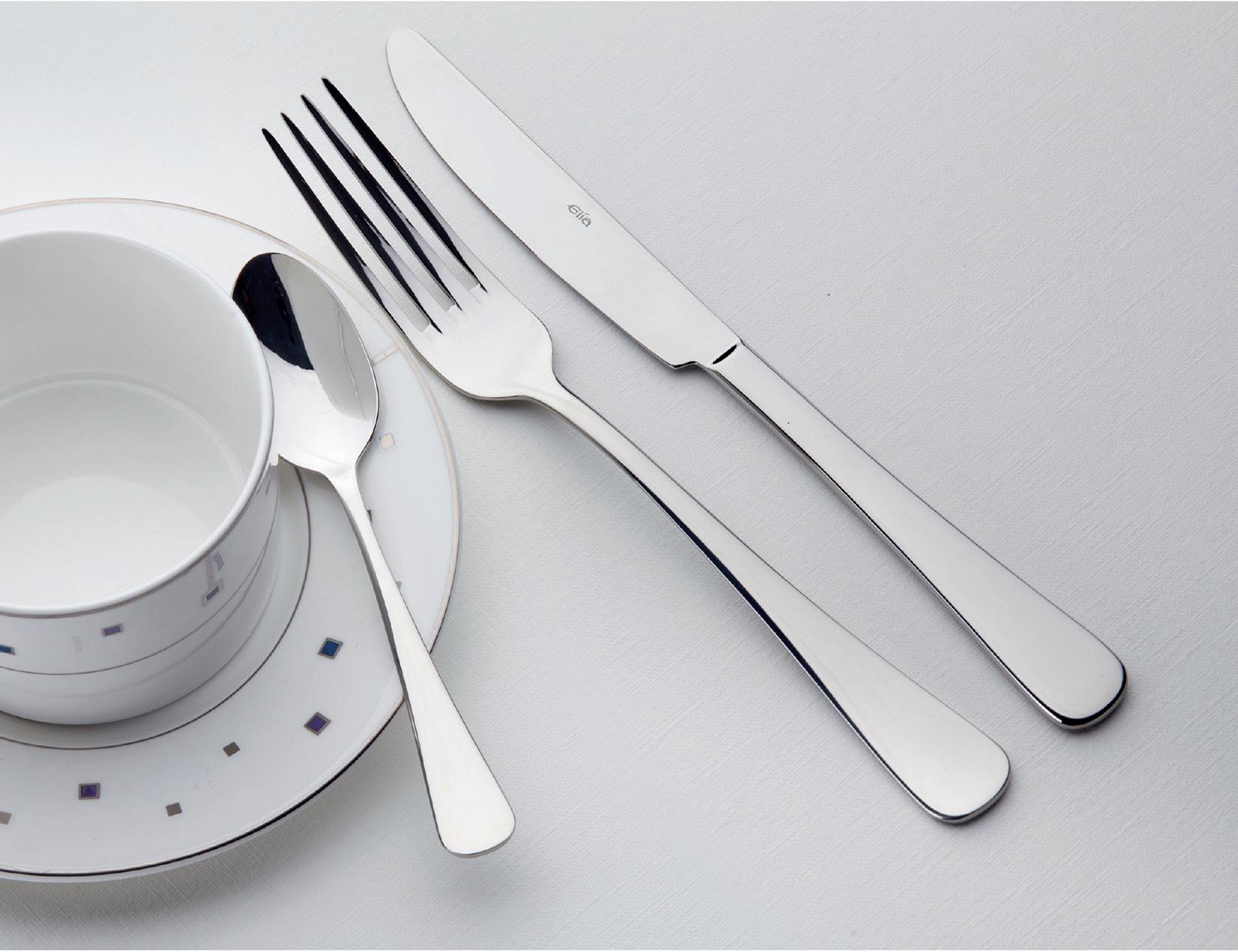
EH422
Dartington Crystal will showcase its latest products at Exclusively Show in London. Among the product highlights will be the new collection of drink and giftware alongside beautifully crafted pieces from the Royal Brierley premium cut crystal range.

Dartington’s trend led offering will be showcased at stand number EH422. If you are looking for high quality glassware or unique homeware pieces, be sure to visit. The products are sure to make a lasting impression on attendees and customers alike. www.dartington.co.uk
EH454
Visit Lifetime Brands Europe at the upcoming Exclusively Show where you’ll find a host of top-tier brands. For example, Mikasa’s new tabletop collection embraces lifestyle, expressing co-ordination, casual elegance in styles that suit a cross section of demographics. And what’s more, it omnichannel optimised. All items are packaged in sustainable, recyclable, drop test ready packaging with items beautifully gift boxed and individually barcoded for retailers who prefer to sell loose.
Better still, the different collections are easy to merchandise with other brands within the portfolio, be it MasterClass, KitchenAid or La Cafetiere. And they have created a wealth of marketing, lots of inspo from planograms to setting the tabletop instore to sharing a wide range of digital assets online.
Launching at Exclusively this June, comprising nine dinnerware collections across stoneware, fine china and porcelain alongside four glassware ranges, six cutlery sets and wonderfully tactile textiles, Mikasa has a setting suited to everyone. Then in time for the golden quarter they have added some glorious gifting collections boasting on trend colours and themes; in fact over 35 of them!
There is also new glassware and mugs to the award winning La Cafetiere range, each one is beautifully designed, but the detail is in the texture. www.lifetimebrandseurope.com


Hosted by the Hong Kong Trade Development Council (HKTDC) , up to seven trade fairs were held concurrently in April with the lifestyle, licensing events attracting close to 56,000 buyers…

Promoting cross-industry business opportunities, Hong Kong Trade Development Council (HKTDC) recently hosted parallel trade fairs aimed at the lifestyle and licensing industries.
The series of exhibitions and conferences covered various lifestyle sectors with the seven events running concurrently for the first time, from 19 to 22 April at the Hong Kong Convention and Exhibition Centre.


Included was the Hong Kong Gifts & Premium Fair; Home InStyle (formerly the Hong Kong Houseware Fair); the Hong Kong
International Home Textiles and Furnishings Fair; Fashion InStyle (formerly the Hong Kong Fashion Week); the Hong Kong International Printing & Packaging Fair as well as the Hong Kong International Licensing Show and Asian Licensing Conference which ended on 21 April.
Sophia Chong, deputy executive director of the HKTDC, said: “The development of the creative and knowledge-based economy has become a major driving force for global economic growth. For the first time in April, the HKTDC held seven major lifestyle and
About 60 per cent of buyers were non-local coming from mainly mainland China, association of Southeast Asian Nations (ASEAN), Taiwan, the United States, Japan and Korea.
licensing events concurrently. The Hong Kong Houseware Fair and the Hong Kong Fashion Week were rebranded as Home InStyle and Fashion InStyle respectively, offering more diverse creative products to international buyers; while the Licensing Show was repositioned to cover multiple lifestyle categories, bringing greater synergies and opening up more collaboration possibilities across industries. We are happy to see that many exhibitors were able to secure on-site orders, which is very encouraging.”
She added that Hong Kong was an important hub for promoting creativity and intellectual property trade in the region, with the advantage of being close to the mainland while connected to the world. Given the success of these events, the HKTDC hopes to seize more opportunities from the Regional Comprehensive Economic Partnership (RCEP) and ASEAN markets, as well as the global market, by organising more largescale international exhibitions, including CENTRESTAGE and the Hong Kong Watch & Clock Fair in September, further strengthening Hong Kong’s role as a global sourcing hub.
The six exhibitions, the physical editions of which have just concluded, attracted more than 4,100 exhibitors from 23 countries and regions.
Over 50 per cent exhibitors and buyers are optimistic about growth
Commissioned by the HKTDC,
an independent research agency interviewed around 850 exhibitors and buyers during the events. Over half of the respondents (52 per cent) expected the relaxed quarantine measures and restoration of business travel worldwide would have a positive impact on business and sales, while nearly 70 per cent expected business and sales would be back to pre-pandemic levels within six to 18 months. Most buyers also said Hong Kong (85 per cent) and the mainland (60 per cent) were their top choices for trade-fair participation.
The respondents also believed that the Northern & Western Europe (21 per cent) and ASEAN countries (15 per cent) would be their new target markets in the next two years, and they were optimistic about the growth prospects.
Regarding product trends, respondents at Home InStyle predicted sleek and simple design (41 per cent) will be in high demand, while respondents at the Gifts Fair foresee sustainable products (61 per cent) to be market trend. Products with the greatest growth potential are gardening, camping & outdoor products (24 per cent), eco-friendly products (20 per cent), health & wellness products (18 per cent) and kitchenware & tableware (18per cent); while for gifts, prospects are best for sustainable gifts (26 per cent), advertising gifts & premium (25 per cent) and tech gifts (23 per cent).

Porcelain is a special material. How did the idea to design a porcelain dinner service come about?
FÜRSTENBERG’s rich history in the production of fine porcelain and their commitment to the craft made them ideal collaborators for this range. The material and manufacturing process had always intrigued us, and it was exciting to explore the tactile qualities of porcelain with leading experts in



the field. The idea was to create an elegant tableware range, with pieces that could also be stacked efficiently for storage and transportation. We wanted people to be able to present these pieces on their dining table and then store them in a fridge or cupboard, without using plastic containers. Over the years, the practice has wormed on designs for a number of restaurants - it seemed natural to expand the scope of this work by also designing the table setting.
Can you give us a little insight into the work of your design team? How many designers did you work with in the team and how long did the development take?
The Industrial Design Team at Foster + Partners is made up of 15 designers from around the world. Every member of the team brings a unique perspective and insight. We frequently worn as an integral part of the overall
studio, designing specific building elements. We also develop products at a commercial and domestic scale.
The team developed DATUM over a two-year period, seeking input from internationally renowned chefs to understand their specific functional and aesthetic requirements. We also worked closely with FÜRSTENBERG’s technicians to understand how each piece would be made and how the design needed to adapt to a particular production technique. Maintaining the design geometry and tolerances with porcelain through each production stage is a real art.
Where did the inspiration for the tableware series come from? We wanted to create a tableware series that would work in a fine dining restaurant and the home. The idea was to pare down what
is needed in a dining set and let the form represent its function in a very purposeful way. The series was developed using very simple paper forms and a set of optimal dimensions, which we defined during the early stages of the design process.
What does the name DATUM stand for?
Datum refers to a fixed point that can be used to work out the geometry of a composition. The range is defined by common dimensions and details. The design team used a grid matrix to explore the direct relationship and interplay between the pieces. As well as allowing the pieces to be stacked efficiently and securely for storage and transportation, this approach provides additional functional opportunities. For example, a plate can be used as the lid of a bowl, allowing you to keep food warm or store it in the fridge for later.
Foster + Partners is a global studio for architecture, urbanism and design, rooted in sustainability, which was founded over fifty years ago in 1967 by Norman Foster. Since then, he and the team around him have established an international practice with a worldwide reputation for thoughtful and pioneering design, working as a single studio that is both ethnically and culturally diverse.


As with any industry, backing a winner yields dividends – but with so much product out there, and so much of it alike, how do you separate the wheat from the chaff? Valda Goodfellow on how to back the best…


The world is full of beautiful plates. Or so it seems if tableware is your business. If you are reading this magazine, then I presume it is.
So as the production of tableware grows; or it certainly seems like it is with so many new brand entries, how does anyone know what customers will want to buy? In some ways, that’s where wholesalers, distributors and retailers get involved if the manufacturer does not go direct to market. Our role as a distributor to the hospitality sector is to interpret the demands of the market and then find the products which satisfy that demand. In some cases, we can influence the market and in others, the manufacturer can offer incentives and benefits that make for compelling arguments to buy. Ultimately, it is the customer’s choice and while other distributors may use financial incentives to engineer choice, we let our customers decide as all products are marketed on an equal basis. That is how we build trust with our customers. They know from the start that we are not trying to sell them something that is the best for us. It is what is best for them that matters.

Of course, this only works if we manage to interpret market demands successfully, as we don’t use financial incentives to fall back on. So, our skill in being able to pick winners determines whether we succeed or not. I never really think about this until I visit trade shows and see how much product there is to choose from. There is an incredible amount
The Ridged Amuse Towers from Studio Mattes (pictured), the Le Marché Plate from Jacques Pergay and the Nido range from Serax are all pieces which Valda thinks will be market leaders.


Founded by Paul and Valda Goodfellow, G & G Goodfellows is a creative design & distribution company with a showroom in Little Portland Street. Offering a truly hands-on service, Goodfellows passion is to bring new and exciting, bespoke food presentation concepts to the UK’s culinary scene. As well as offering a wide variety of the world’s best branded tableware and more.
of product out there from great manufacturers across the world; and a lot of it looks so similar that there can only be aspects other than design that separates them. Whether it is price, availability, manufacturer’s marketing support or laziness; there can be lots of other reasons why we intermediaries choose some manufacturers over others.
We all want to back a winner. We all want the best products. But what actually determines a winner; and is a winner always the best in class?
Well, I would like to think that everything is down to skilfully judging market conditions; but there are some obvious factors which skew that theory. Scale is one. Think of the big, global brands that have quite rightly capitalised on being first and spreading fastest.
They have cultivated market influence, constructed highly effective networks, have invested in global marketing campaigns over the long term and can back everything up with sophisticated logistics networks and financial incentives to quash competition.
Some of these brands are market dominators who vie with each other for volume sales in order to achieve that critical influence. They produce great products and are very good at what they do, but how many of them are winners simply because they have the market position? Or are their products the best in class? You decide. The hardest thing to do is to fight all of that if you are a smaller producer, but it does happen. And sometimes winners
can be real long shots that come out of nowhere. Maybe not in terms of global numbers but in terms of influence. Something which captures a mood and sweeps through our global consciousness so that we all know what it is. This tends to happen more at the luxury or fine dining end of the market, than in casual dining.
Across the decades, when mostly all plates were marketed in hospitality by big manufacturers, we had the Villeroy & Boch Basket Weave pattern and Bernardaud’s Wide Rimmed Deep Bowl. In more recent times, our selection of manufacturers for hospitality has become more diverse and offers much more choice. In my tableware history the products that came out of nowhere included Degrenne’s Modulo Nature plate in grey, Dibbern’s Bodo Sperlein designed Tree Plate; and Montgolfier’s Clair de Lune.
Of course, there have been many others and winners are now being created via the power of social media. I am thinking particularly of the speed with which Arita’s Chrysanthemum Plate swept through the chef community on a veritable tsunami of lust. Spread by social media across the world, it instantaneously became a winner. Beautifully creative – it played to every chef’s imagination. It spawned a host of look-alikes but obviously, by the time they came to the market, the mood and demand had largely moved on. Having said that, a great design will always be a great design and some of the products this plate inspired are not copies.
They have their own characteristics and will likewise do very well.
So, where will today and tomorrow’s winners come from and how do we spot them? The big manufacturers employ incredible designers who try to create winners all the time, so you would think they are best placed to produce them, but as I have demonstrated, that isn’t always the case. In the future, the winners may not always be the traditional main course plate particularly with the trend for food becoming smaller, the presentation of snacks and small plates is equally as important to get right, as is the main event.
We look for producers who are capable of leading a market, not following it, so we intentionally seek out those who are brave enough to tread their own path, wherever it leads. Combined with our knowledge and deep-rooted instinct of what chefs and restaurateurs like, we try to guide and suggest wherever possible (and wherever they allow us) to help create winners.
The manufacturers who best exemplify this creativity are Studio Mattes, Montgolfier, Jacques Pergay, Serax and Cookplay. If you want my tips for the future, here are three runners and riders; The Ridged Amuse Towers from Studio Mattes; the Le Marché Plate from Jacques Pergay and the Nido range from Serax. Like other winners, success will be determined by whether our customers will love them as much as we do; but I for one will be placing my bets now.


Things have been notoriously challenging for glassmakers over the past year, have economic tensions eased for you at all?
The sector has faced challenges in the past year. Within that period, there has been a trend towards more sustainable and eco-friendly products, and so we took steps in this direction and kept up with the development within the sector. As you adapt to changes and the present progresses, the challenges become easier to overcome.
How is retail performing versus the professional hospitality market?
We are currently working to prove to all chefs how the clarity of glass will be in harmony when combined with porcelain on the tables. In this sense, although we are just at the beginning of the road, we want to develop ourselves rapidly and show the value of the glass produced by the spinning method with demands every year in the Horeca field.

What are your expectations for the year ahead?
We aim to reach for the stars! We work as a big team with a great devotion. At the same time, we are constantly growing and developing in parallel with the modern world. We trust our vision, and are very satisfied with our products. The intense interest we have seen proves this.


Things have been notoriously challenging for glassmakers over the past year, have economic tensions eased for you at all?
The energy costs are still intense, so we had to adjust prices twice in 2022. Our glasses are produced in one of the world’s finest manufactories for mouth-blown glasses. The topic of energy costs is dominant there. However, we are very positively positioned with our sales planning for the year 2023. We range only in the premium area for glasses, and there the necessary surcharges or the higher prices will be differently received by specialist dealers and end customers, as if we were in the glass mass domain.
Manufacturing at the highest level of quality is a manual, time and material intensive process where it is unequally more difficult to implement cost cutting measures.
How is retail performing versus the professional hospitality market?
A premium glass series like VISION handmade by a skilled craftsman is very much a retail topic. Wine enthusiasts like to invest in high end products to improve their wine experience. Therefor wine glasses with high performance are a must-have amongst

Things have been notoriously challenging for glassmakers over the past year, have economic tensions eased for you at all?
The big concern is the rising cost of energy, which has in turn caused instability in the supply chain. However, energy and the other issues that are contributing to glassmakers’ problems are now known, and so can be worked with. There needs to be ongoing help to support glass manufacturers, but, despite the problems they still face, moving forwards there does seem to be more stability than we have had in the past year.
How is retail performing versus the professional hospitality market?
As inflation pushes retail pricing higher there’s been a general pullback in consumer spending. That’s meant retail is seeing more of a drop than HoReCa –but the industry is used to that, as retail is always a more cyclical market. HoReCa has the same issues, in terms of reduced consumer spending, but is more consistent for us. That’s partly because operators are adapting and finding new ways to maintain or grow their business, despite the economic pressures.
What are your expectations for the year ahead?
2023 started with a certain amount of trepidation, but right now it seems there are signs that we are going to see a more positive year than last, even if it’s no calmer!
wine lovers who then recommend glasses they favour to fellow end consumers.
Restaurants and hotels are another matter: their daily largescale business relies on easy handling and cost efficiency. If they use premium glasses it is at exclusive occasions for a small number of guests where they radiate luxury. We appreciate everyone who chooses our products but the HoReCa market is way smaller then retail making us focus on the latter.

What are your expectations for the year ahead?
Well, hopefully it will be as good as the last year. We will continue our support for existing customers, be it with training of the sales staff - which is always very welcome – so that the staff is able to reliably provide arguments - or with more targeted and valuable support at the POS. Of course, we have a few other desired partners on our radar to get close to the sophisticated customers. I’m very optimistic about that.
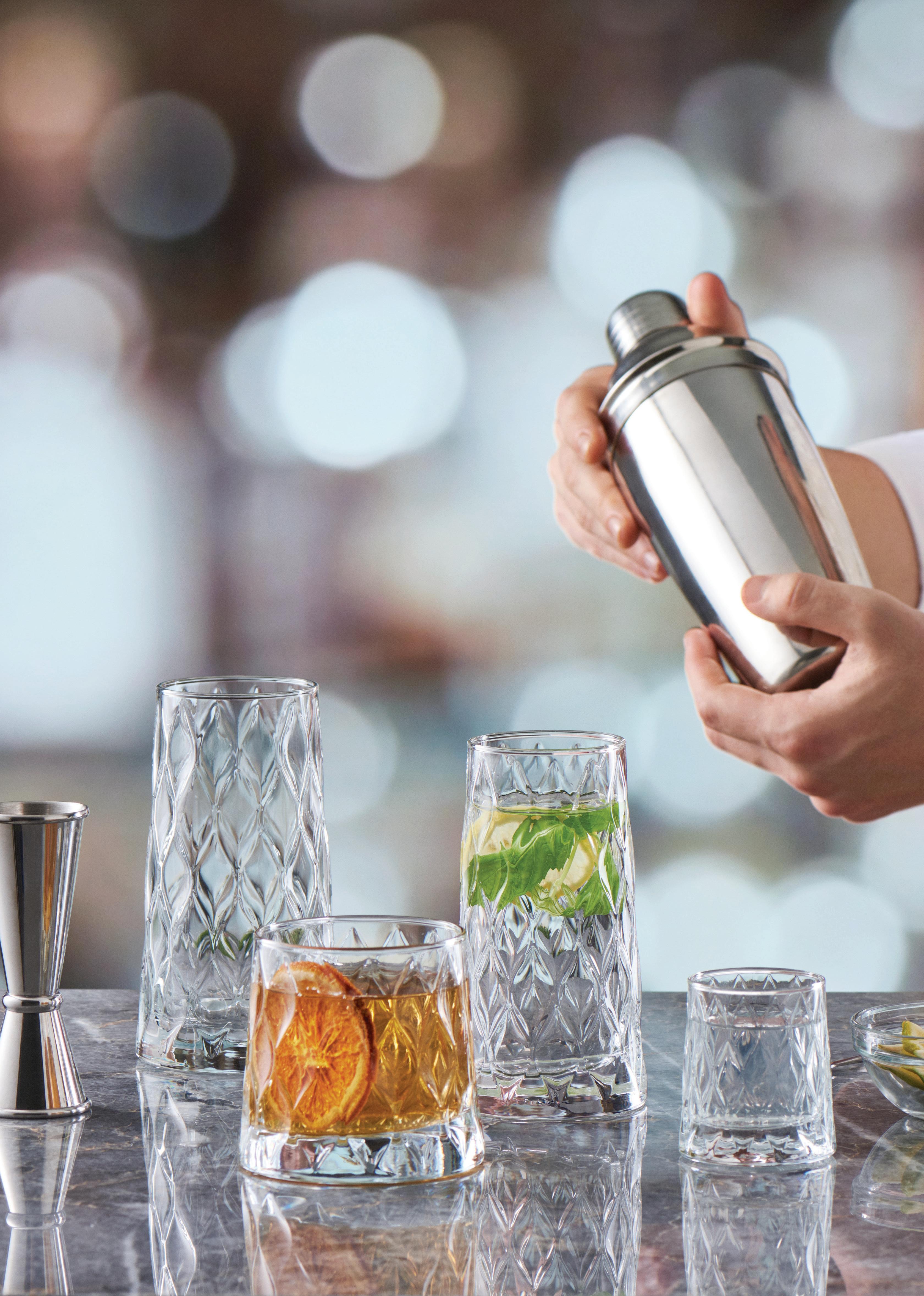


With its Signature collection Château Septfontaines, Villeroy & Boch combines design aspects from its own history with high-end materials and the latest production techniques to create exquisite tableware of the finest calibre. Classic style elements have been adapted with great delicacy and love of detail and carried over to a modern, contemporary aesthetic in the art déco style. This has resulted in the creation of an impressive collection, which glistens with an exciting interplay of matte and glossy surfaces: a new decor in relief look, the technique for which was designed by Villeroy & Boch itself, stands out from gently shimmering premium bone porcelain with matte surfaces and lends the fine, round shape of the crockery a unique and exquisite charm that fascinates both in looks and feel. A fine 20-carat gold rim, which is specially protected and dishwashersafe thanks to the innovative “Inglaze Gold” technology, further emphasises the high value of the collection. www.villeroy-boch.com
From Beatriz Ball, a clean and modern shape, faux crocodile hide texture and white and gold finish combines for a dramatic effect in the Croc Extra Large Tray from the Thanni Collection. Sand-cast in a dramatic texture, the tray adds a distinctive and sophisticated hint of the wild to home décor.

wholesale.beatrizball.com
If you’re looking for a rock-like texture, Utopia’s Moonstone collection supplies the solution. The cool grey interiors are handfinished and perfectly balance the beige exterior tones to give a distinct and contemporary setting. These colours go really well in a ‘mix and match’ with modern black and white designs, while the texture brings that touch of theatre to the table. Moonstone is available in a variety of distinctive plates and bowls as well as a 30cl chip pot.
www.utopia-tableware.com
Beautifully designed and created by Maham Anjum, the Maham Spice collection is a much-anticipated line of vitrified stoneware that features the look of hand-thrown terracotta with the durability for commercial foodservice. The unglazed terracotta outside is delightfully complemented by a colored reactive glaze on the inside, featuring an assortment of colors that are fashioned for the current trends in the market, including sea salt, cardamom, saffron and pink peppercorn. And an added bonus – the collection feels incredible to the touch.
www.steelite.com
The radiance of a shining star is what inspired Michael Sieger to create the Stella champagne tumbler from Sieger By Fürstenberg. Gentle relief lines in elegant perfection make taking pleasure in drinking a special, sensual experience. Plated inside
in 24-carat gold, the tumblers create hundreds of reflections when a drink is inside to exude an enticing impression of liquid gold. The filigree Stella relief tumbler is handcrafted in Germany.
www.sieger-germany.com
After the Jet Set cutlery collections inspired by Venice, Siena and Portofino, comes the Taormina series.
The Sambonet Jet Set cutlery collection boasts a refined texture, a decoration that in its motif preserves the artistic richness of the pearl of the Mediterranean’s varied cultural heritage: Taormina. Slim and stylish in its shape, the body of the Jet Set Taormina is ruled – both front and back – by a succession of geometric ornaments that evoke Byzantine art. Circles and rhombuses stolen from the mosaics and floorings of the 6th century, created in the Norman era by artists from Constantinople
Tableware plays such an important part in the overall sensory experience of eating – we highlight tactile collections which use various mediums of textureVilleroy & Boch Kosta Boda Beatriz Ball Mesa Ceramics
and still present in the Sicilian city today.
www.sambonet.com
Mason Cash’s In The Meadow collection includes the brand’s most popular sizes of mixing bowls in a range of colour palettes from soft pastels to a decadent purple.


The delicate embossments of a floral meadow invoke tactile senses with each bowl featuring a design inspired by its own unique flower. The mold maker hand carves the design into the original mold meaning that each design is crafted originally and authentically, making each flower design perfectly unique.
www.rayware.co.uk
Porcel’s Empire Silk encompasses two different porcelain finishes on the same pieces – velvety biscuit and silky glazing. This combination of tactile experiences combined
with a luxurious pattern make this a one-of-a-kind set.

www.porcel.com
Kosta Boda’s Crackle showcases cracks caught in glass, like a moment frozen in time.
First launched in 2020, Crackle is designed by contemporary artist and designer Åsa Jungnelius. The collection of vases and bowls, mouth-blown in Kosta, Sweden, is created from the elements of nature. The shape is carved in clay by hand, and the crackled surface is formed with an old technique where the hot glass is placed in cold water. The result is sculptural pieces reminiscent of frozen ice, available in different shades.
www.kostaboda.com
Narumi’s Terrace collection features concentric circles delicately carved on the rim. Matte glaze is applied on the relief while shiny glaze is applied on the plain surface, enhancing the lightand-shadow contrast created by
the relief. The smooth texture of the matte glaze is perfect for fine dining restaurants.


www.narumi.co.jp
New Mexico calling
Nambé’s Taos Collection has been inspired by the topography and architecture of New Mexico, combining clean lines with a bold colour palette. Each piece in the collection is finished with an adobe-coloured terracotta rim and a speckled, reactive glaze. Available in three colorways, Onyx, Jade and Agate, Taos can be mixed or matched and are ideal for casual dining.
www.nambe.com
Contemporary texture
With a contemporary feel, Alma presents a textured pattern that is both modern and timeless. Its unique combination of geometric and organic shapes creates a dynamic visual interest that can be applied to a wide range of shapes.
www.mesa-ceramics.com
“We have a very intimate relationship with tableware. There aren’t many products like mugs, glasses and cutlery that we pick up and put in our mouths. What I love about ceramics, in particular, is the variation in surface quality that can be achieved – from glossy, through to silky smooth to matt. Our fingers and mouths are super sensitive, and it can make or break a piece of tableware if it doesn’t feel good.”
Designer Robin Levien on the tactile nature of ceramics

From LSA International, Dapple is an assortment of mouth-blown glass drinkware and decorative pieces with a fluid texture inspired by dappled light. Expertly mouthblown from coloured glass producing pieces with fine rims and walls. The undulating surface refracts light, creating an effect reminiscent of dappled sunlight on the earth, water and in woodlands. www.lsa-international.com
From Lazzaro, the La Mer collection is an ode to the sea. Delicate textures mirror nature’s most precious touches, your table lapped by the calm relaxing energy of La Mer uniting both style and function. www.lazzaro.in
Koransha’s Cattleya Relief Collection is a celebration of texture. The surface of the white porcelain is sandblasted to give it a smooth texture and bluish tint that makes for a refined and exquisite look. The delicate relief pattern enhances the beauty of this piece and gives it a modern and sought-after style. www.koranshaus.com

With the Grounded, Frame and Fringe décors, Schönwald conjures up a feeling of balance and relaxed luxury with the Vibes porcelain collection. The finely structured, concentrically arranged rod relief stands out more clearly and points to the food as the focal point. In addition, the light,

Villeroy & Boch’s Château Septfontaines collection is named after the residence of the same name, which the Boch brothers built at the end of the 18th century next to their ceramics factory in Luxembourg.
monochrome colour gradients accentuate the design, which is reminiscent of sunbeams. Delicate and warm and warm colour nuances emphasise the regular rhythm of the repetitive relief.
www.bhs-tabletop.com
All the charm of tableware “à la francaise” is gathered in the Jet Textile collection, created and selected by Amefa’s design team, located in France. Jet Textile is decorated with a textile weaving effect on the handles, while the shape of the cutlery still honours the smooth lines and true French look and feel.


www.amefa.com
Richard Eaton, design director, Denby on popularity

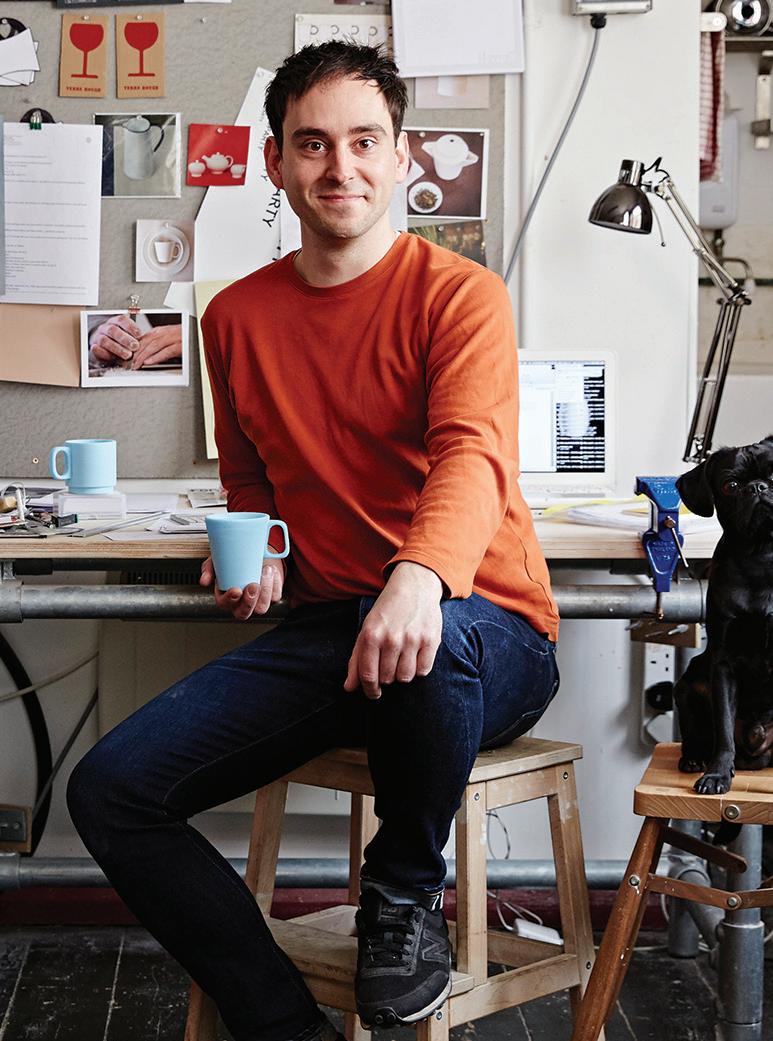

“From the deep visual texture within Denby glazes through to the tactile surface texture such as the chevrons on Natural Canvas or the ripples on the outside of the Kiln mugs, these all give the feel and look of handmade pottery. At Denby we also have a history of using surface texture within many of our patterns. From the Chevron texture originally taken from a potter’s roulette wheel developed by Jill Pemberton in the 1960s through to Denby’s Impression plates which have a spiral texture on the face, beloved by chefs as they present their food so well.
Denby has long used the combination of surface textural glazes to create beautiful ceramic effects and it’s true to say there are a great many more manufacturers currently using surface texture to create patterns. Surface texture or relief pattern which has been created in the moulds is a great alternative to litho or handpainting to create surface pattern. However, there are different ways of creating that raised texture which can also be achieved through transfers which give a pronounced pattern like a raised enamel, or equally there are materials that can push glaze into the surface and imprint the texture. There certainly has been an interest and revival in texture and we’re seeing it in every form –whether it’s in shape development, in print, in glazetexture gives life to a design. I think having ceramics that have an interesting feel because of the surface qualities just brings another dimension to the pot, so it’s as much about the visual look as the surface feel.”

“A relief or surface texture, however strong or subtle, plays into the multisensory nature of dining, no matter what level the experience is pitched at. It can also greatly enhance the framing of the food served and make us feel ‘closer’ to the material in hand, be it a smooth, glossy glaze or textured matte finish. I think these kinds of visceral moments are akin to the textures and sensations a chef considers when pairing different ingredients together on a plate.”
Billy Lloyd, creative director, MonnoLazzaro