Your table will be the canvas, and your paint palette pieces of delightful colors.


Your table will be the canvas, and your paint palette pieces of delightful colors.
EDITOR
MAIREAD WILMOT mairead@lemapublishing.co.uk
PUBLISHER
PAUL YEOMANS pyeomans@lemapublishing.co.uk


MANAGING DIRECTOR
MARK NAISH mark@lemapublishing.co.uk
CHAIRMAN
MALCOLM NAISH malcolm@lemapublishing.co.uk


PRODUCTION DIRECTOR
PAUL NAISH paul@lemapublishing.co.uk

Now thoroughly ensconced in the second half of the year, we are firmly looking towards Q4. It’s hard to get a true grasp on how retail sales are performing but certainly, there seems to be a sense things are tough out there, certainly for brick-and-mortar sales. In their first six months of trading for 2024, Portmeirion, for example, reported a downward trend in profits – 17 per cent to be precise – but all linked to lower order levels in South Korea. Group sales, excluding the South Korean market, were actually up five per cent in constant currency.
Perhaps encouragingly, Portmeirion reported: “Sales during the period in the US, our largest market, were up four per cent in constant currency combined with an improvement in gross margins however there continues to be a difficult market backdrop. In the UK, sales were significantly ahead of the prior year aided by further growth of over 25 per cent in Wax Lyrical, our home fragrance division, which benefitted from the impact of recent new listing wins in the grocery channel.”
But South Korea continues to cause difficulty for the brand: “In South Korea, sales were down 60 per cent against a comparison of an abnormally high first half in 2023. Softer consumer spending in South Korea was compounded by significant de-stocking by distributors and retailers.”


All in all, Mike Raybould, Portmeirion’s chief executive said he was “pleased with the progress we are making in the US, our largest sales market, with improving sales and higher gross margins and also the continued strong growth recovery in Wax Lyrical, although consumer markets remain uncertain around the world.”
He continued: “We are also encouraged by our advance US orders for Christmas which remain significantly ahead of last year. In South Korea, following a significant stock refill in 2022 and first half 2023, the more recent consumer slowdown has resulted in distributors and retailers needing to reduce high stock levels. This has impacted short

term orders for this market however we are confident that our Portmeirion brand remains ever popular with the end consumer as evidenced by healthy, growing online channel sales in the market.
“The benefits of our cost restructuring are on track, and this supports our commitment to growing our operating margins in the short and long term and we believe that our increasingly distributed brands are well placed to grow in the medium and long term."
Meanwhile, Villeroy & Boch, in their trading update for the first half of 2024, report a drop in revenue for their Dining & Lifestyle Division with brick-and-mortar retail sales down.
“The Dining & Lifestyle Division generated revenue of € 132.4 million in the first half of 2024, which was 3.5 per cent or € 4.8 million below the same period in the previous year. Good revenue growth was achieved both in e-commerce and in the company's own retail shops. On the other hand, sales at brick-and-mortar retail partners declined.
The Dining & Lifestyle Division had an operating result (EBIT) of €4.8 million, which was 5.9per cent below the same period in the previous year,” Villeroy & Boch reported. The group’s Bathroom & Wellness Division generated revenue of €513.5 million in the first half of the 2024 financial year, up 71.8per cent on the previous year due to acquisitions. “Overall revenue growth was strongest in the fittings and ceramic sanitary ware business. The Bathroom & Wellness Division achieved an operating result (EBIT) of €41.5 million in the first half of 2024, up 24.6 per cent compared to the same period in the previous year.”
For established brands such as Portmeirion and Villeroy & Boch, who have all been around the block more than once, trading conditions aren’t all bad, but they aren’t all good either. Let’s see what the rest of 2024 brings us.
Mairead Wilmot



Famed footballer Cristiano Ronaldo has bought a stake in Vista Alegre.
The Portuguese footballer initially purchased a 10 per cent stake in Vista Alegre Atlantis from Grupo Visabeira through his company CR7 SA with plans to buy 30 per cent of Vista Alegre Spain in the coming days through his company CR7.
It is understood both parties have also agreed to create a 50:50 joint venture in the Middle East and Asia to promote both the Vista Alegre brand and Bordallo Pinheiro brands.
Vista Alegre said they were “pleased” to announce they had reached an agreement with Cristiano Ronaldo, “kicking off a strategic collaboration at a global level through CR7, S.A.’s stake in its share capital”.
The brand added: “This deal between the Portuguese brand and one of the best players in the history of world football and the best-known Portuguese personality on the planet, is designed to accelerate the global expansion of the Vista Alegre group’s brands in the prestige/ luxury segment, both in retail and premium hospitality.
“Cristiano Ronaldo has now joined Grupo Vista Alegre, made up of Vista Alegre and Bordallo Pinheiro, brands he has always admired and he intends to help strengthen their position among the best brands in the world.”

Steelite International recently announced the acquisition of Utopia Tableware Ltd. The acquisition adds Utopia’s innovative product lines, premier brands, a centralised distribution center and state-of-the-art decorating facility to Steelite’s global footprint and expansive portfolio.
Steelite and Utopia began a commercial partnership in 2023 when Steelite became the exclusive distributor for Utopia, Pasabahce and Nude products in the US.
Steelite acquired Utopia from its founder and CEO, Mark Rammell, and his family, who built Utopia into one of the leading tableware suppliers in the UK.
Steelite is majority owned by Arbor Investments, a specialised private equity firm that focuses exclusively on acquiring premier companies in food, beverage, and related industries. Arbor acquired Steelite in December 2019.
BHS tabletop AG has taken a significant step towards its goal of sustainability and decarbonisation in the porcelain industry. The company has succeeded in firing porcelain exclusively with hydrogen. This breakthrough marks an important milestone in the further

Milano Home returns to the trade fair scene in January 2025. The exhibition born from the partnership between Fiera Milano and GEFI, will begin on 23 January and runs until 26 January 2025, having made its debut at the Rho exhibition centre in 2024. Milano Home has emerged as a new benchmark for the B2B home sector, catering to both traditional and emerging retailers, regardless of size, as well as professionals within the industry – including interior decorators, designers, and architects – looking to diversify their offerings with distinctive and unique products. milanohome.fieramilano.it

development of energy-intensive production processes and demonstrates the potential of alternative firing methods.
After extensive research and development, the company succeeded in firing porcelain with hydrogen in a firing trial. The resulting porcelain has the equivalent quality and colour characteristics of hard porcelain fired with natural gas. This test was intended to show whether firing with hydrogen as the firing gas, in which oxygen is extracted, is possible in principle.
BHS tabletop AG with its brands Bauscher, Schönwald, Playground and Heart&Soul been part of the Serafin Group since 2017.
HoReCa specialist Bonna has been announced as Türkiye’s export champion in the porcelain tableware and kitchenware sector.

Bonna has risen to the top in the porcelain tableware and kitchen products category according to 2023 data from the Turkish Exporters' Association.
General manager Erbil Aşkan collected the award recently at the Turkish Cement, Glass, and Ceramics Exporters' Association awards ceremony. According to the Turkish Exporters' Association 2023 data, Bonna is also one of the top 1,000 exporters of Türkiye across all sectors.


Tramontina has not only launched a new range of porcelain dinnerware, it has also announced the opening of a permanent showroom in Las Vegas.
The new porcelain collection offers décors in a variety of colours and options for buyers, merging functionality and beauty with a combination of Scandinavian elegance and Japanese restraint. Meanwhile, the brand has also opened a permanent showroom at the World Market Center in Las Vegas. The new Tramontina showroom is permanently located at World Market Exhibit Hall C#171.
Porland’s İmge Pamukçu, member of the board of directors, talks to Tableware International about their new brand Pioli, and retail performance
What new products are making waves in hospitality?
Porland, drawing upon its wealth of experience and expertise, remains steadfast in its commitment to enriching its comprehensive range of HoReCa products, focusing on both quality and variety.
This year, we're particularly excited about our latest endeavour: the exclusive HoReCa brand, Pioli. This brand represents a significant milestone for us, as it features not just one or two, but over 20 distinct collections, each showcasing unique designs and offering a diverse range of shapes and sizes. With Pioli, we aim to elevate the hospitality experience by providing establishments with a plethora of options to meet their specific needs and preferences.
From classic to contemporary, Pioli encompasses a wide spectrum of styles to cater to diverse tastes within the industry. We're confident that these new offerings will make waves in the hospitality sector and further solidify Porland's position as a leader in providing top-quality HoReCa solutions.
Are retail sales in trouble, and if so, how does the tableware sector connect with the consumer to reinvigorate them?
Certainly not. Porland's trend-setting identity has been creating ripples in the market, consistently captivating consumers with innovative designs and superior-quality products. The brand’s robust retail presence and consumer-centric approach ensure a continuous connection with the market, driving sustained sales growth. By anticipating trends and understanding consumer desires, Porland crafts products that align with contemporary lifestyles. Additionally, the strategic use of digital platforms and social media enhances direct consumer engagement, fostering a strong brand connection.
Looking ahead, the future is even brighter as Porland embarks on an international expansion. With over 35 owned stores and not a single franchise, we are now poised to grace the high streets and shopping malls of every major city. This strategic move promises to elevate our global presence and continue our legacy


of excellence in the tableware sector. This unwavering commitment to quality and design excellence not only excites customers but also revitalizes the tableware sector, ensuring a vibrant and thriving retail environment.
What are the key differences between selling into retail and selling to the professional sector?
Selling to the end consumer and the professional sector involves distinct approaches, each requiring a tailored strategy. For retail sales, the key lies in understanding the consumer's perspective and anticipating their expectations for home use.
Aesthetic appeal often takes precedence, with consumers prioritizing design, style, and trends. Durability is important but may not be as critical as it is for professional use. To effectively cater to this market, one must envision how the products will be used in a domestic setting, ensuring that designs and features align with consumer preferences and lifestyle needs.
Conversely, selling to the professional sector demands a different mindset. Products for this market must meet the rigorous demands of professional kitchens, where durability, functionality, and reliability are paramount. Professional chefs and hospitality businesses require high-performance items that can withstand intensive use. Thus, envisioning oneself as a professional chef or hospitality manager helps in designing products that cater to these specific needs.
Moreover, the expertise required in these two areas varies significantly, encompassing differences in salesforce training, cost structures, warehousing, and logistics. The dynamics of professional sales often involve bulk orders, specialized distribution channels, and a focus on long-term partnerships. Retail sales, on the other hand, rely on broad consumer reach, frequent stock turnover, and the ability to adapt quickly to market trends.
At Porland, we navigate these distinct markets by leveraging our extensive experience and adapting our strategies accordingly.
Jamie Oliver has partnered with Lifetime Brands on an all-new serveware and dinnerware collection, Big Love.
Created with Lifetime Brands, the beautifully simple statement pieces are carefully designed in organic, fluid shapes to inject existing homeware collections with new and useful design.
The collection encourages food to be shared, with items such as large platters, big salad bowls and serving boards all able to be slotted into a lazy-trivet to make feasting easy. Products will be available globally from January 2025.


Crystalex is preparing to open a flagship store in Prague this September.
Based in the prestigious Masaryčka area of the city, the luxury store will be an aesthetic delight for customers with a minimalist, design-led interior to showcase Crysalex’s product lines.
Michaela Šlegr, head of marketing for the brand says the store’s concept will be based around the principles of contrast with the product set against the industrial, minimalistic features of the store’s interior. Crystalex plan on welcoming customers in September.

The IHGF Delhi Fair – Autumn 2024 trade event – India's foremost showcase of creativity and craftsmanship, now in its 58th edition – takes place this October. Running from 16 to 20 October, the India Expo Centre & Mart in Delhi NCR will be transformed into a haven of innovation and inspiration.
Organised by the Export Promotion Council for Handicrafts, New Delhi, India, this trade event brings together more than 3,000 exhibitors, representing the pinnacle of Indian manufacturing prowess.
Comprising 14 meticulously curated segments, the IHGF Delhi Fair offers a comprehensive showcase of innovative concepts and products in 16 halls and 900 permanent showrooms at the India Expo Centre & Mart. A choice of over 2,000 products and more than 300 trend specific design developments define this show. www.epch.in

Zwiesel Glas has scooped yet another German Brand Award. The German Brand Award is presented annually to companies with successful brand management. Zwiesel Glas was able to convince the renowned jury for the fourth year in a row and received the award in the "Excellent Brands - Interior & Living" category.
It has been a century since the birth of artist Roberto Sambonet, and the company is paying homage to his genius by becoming a partner of Triennale di Milano, supporting La Teoria della Forma, an exhibition dedicated to him.
Sambonet’s says this special event represents the start of its image renewal and, at the same time, it offers a preview of the brand’s relaunch, telling its newfound identity, values and Italian genius.
The rebranding work will be visible to the public and consumers in this second part of the year and will culminate with the launch of a new cutlery design collection.

"The award is a confirmation of the path we took with Zwiesel Glas in 2020 and have been consistently pursuing ever since," says owner Prof. Andreas Buske, who is also pleased about a veritable shower of awards for Zwiesel Glas in the first half of the year. In addition to the prestigious award for the company's successful brand work, the 2024 novelties were also honoured with design awards. The Level wine goblet series received the Red Dot Award, the Symbiosis decanter the Iconic Award and the innovative Duo hybrid glass series presented in 2023 was honoured with the German Design Award.
Rosenthal picked up two awards at the prestigious German Brand Award 2024 for its innovative trade fair stand. The stand, showcased for the first time at this year's Ambiente, was honoured in two categories – Excellence in Brand Strategy and Creation: Brand Experience of the Year, and Excellence in Brand Strategy and Creation: Brand Communication - Fairs & Exhibitions.

This double accolade confirms Rosenthal's commitment to setting new standards in both design and brand communication.


“Food culture has changed quite a lot in recent years - there is not only one type of local food in a particular place,
but a much wider variety of food and a mix of cultures. For that reason, the plate has to suit any kind of food, and therefore to be a simple form, without a traditional decoration.”
Designer Naoto Fukasawa speaking about the concept behind Itsumo, his latest porcelain collection for Alessi Notably, Itsumo (which was first presented at Milan Design Week) is available in two versions, white or with a blue pattern, a decoration designed in collaboration with the centenarian artist Samiro Yunoki. Yunoki remained active as an artist for 101 years of his life, and this work was his last. Yunoki passed away on 31 January 2024.

The great minds at Bordallo Pinheiro have created a perfect ode to the olive. Olival is a new collection which celebrates the olive tree, a tree with a rich symbolism in Portuguese culture.
The collection boasts hand-painted ceramic reliefs featuring olive varieties, such as the Galega, Portugal’s most famous olive, and Olival’s entire creation was designed to emphasise the colour of the olive oil, contrasting with the white and hand-painted decorative elements.
Olival is made up of a platter, a jug, a salad bowl, a dessert plate, a cheese platter and an olive oil tasting plate, and brings a true aesthetic and sensory experience to the table.
www.bordallopinheiro.com

Denby has added new Brew drinkware pieces in two of its best-selling collections to elevate tea and coffee moments beyond the ordinary.
The additions are launching in the calming palette of Kiln and the granite and quartz texture of Studio Grey.
The Brew range includes large and small teapots (the latter with strainer), teacup and saucer, espresso cup and saucer, small jug and sugar pot. And for those who prefer coffee from a coffee brewing machine, Kiln now has an option of a small mug – which is destined to be a firm a favourite. Denby’s full range of Brew drinkware is also available in the popular Halo décor.
www.denbypottery.com/trade
Inspired by… the Japanese
Rosenthal’s new Kumi collection launches in

Trendy ice cream colours and optical braided patterns bring an elegant lightness to the table with Rosenthal’s new Kumi line.
This collection is named after Kumihimo, a traditional Japanese technique where yarns, ribbons, and cords are skilfully woven together. Inspired by the craftsmanship of baskets, leather handbags, and furniture, Kumi showcases the delicate appearance of woven fabrics. The new line also plays with trendy, delicate ice cream tones, featuring pastel colours such as white, blue, mint, and rose.
The range includes bread plates, breakfast plates, dinner plates, soup plates, cereal bowls, and mugs, all made of silicate porcelain, a material that is particularly break and edge-resistant and slightly transparent. The very flat rim and the unglazed exterior of the bowls accentuate the lively and delicate woven structure.
Rosenthal staged the shoot for the Kumi collection in Poggenpohl’s elegant showroom in Herford. Starting in September, Rosenthal porcelain will also be presented in the newly designed Poggenpohl showroom to complement the kitchens. Kumi will be available in stores and at rosenthal.de from September. www.rosenthal.de


The Grad No.1 Cooler continues to set the standard in premium beverage cooling, combining sleek Scandinavian design with cutting-edge functionality. Recently, the cooler has been updated to enhance its durability, portability, and battery life, ensuring it meets the demands of both private and commercial users. Key improvements include a more robust construction, designed to withstand frequent use and transport, making it a reliable choice for any setting. The cooler’s battery life has also seen a significant upgrade, now offering up to 10 hours of operation on a single charge. Portability is another standout feature, with its compact and lightweight design allowing easy movement and placement. For more information on the Grad No.1 Cooler, visit www.grad.dk or email contact@grad.dk.

Salt & Pepper’s new Tone collection includes a playful set of glasses and matching decanters in a variety of vibrant tints.
Offering timeless design, the collection is not only aesthetically pleasing but also functional and durable too.
saltandpeppershop.eu
Krosno’s Perfect Serve Aroma allows you to immerse yourself in the noble world of whiskey tasting with this professional tasting glass.
Uniquely designed to capture every nuance of taste and aroma, the 110ml glass comes with a fitted lid to help retain the whiskey aromas, allowing you to control the intensity and pace of the aroma release.
www.krosno.com


Meissen’s new coffee to go mugs have their origins in the brand’s unique Nova service shape. This comes with a completely new design language, which was developed from the idea of uncompromisingly capturing the current zeitgeist in both form and feel. Together with a genuine leather cuff, the new mug is not only practical beyond all measure, but above all has a lot of style. Whether natural and puristic all in white, other décor’s include Meissen’s Lucky Dragon, Blue Onion, Monkey & Sloth or with the famous crossed swords in gold. Combine the mug with your favourite motif and your favourite cuff to create your own personal Meissen favourite. www.meissen.com
Riedel’s new Superleggero Burgundy Grand Cru glass has been designed to support the delicate balance of fragility and fresh compact fruit in lightbodied wines. This year, Riedel has introduced two new coloured stems for this collection – black and red. This shape was one of the original ‘wine friendly’ glasses designed by ninth generation Claus J. Riedel. Its wide tulip shape and slightly flared lip emphasise sweetness while maintaining acidity and minimising alcohol impact. The collection includes the largest, thinnest, and lightest glasses with the widest base diameter ever produced on machine. But do note, the glass is not dishwasher safe and is handwash only.
www.riedel.com


From Polish Porcelain Factory Ćmielów & Chodzież comes Alaska Circus. The brand’s classic Alaska shape has been given a facelift with motifs inspired by the world of circus arts by graphic artist and illustrator Marek Mielnicki.

The collection delights with its traditional porcelain shape, decoration in a deep shade of blue, black or light pink with the finish hand-painted in gold. porcelana.com.pl
There is glam, and then there is the Rosenthal meets Versace (RmV) limited-edition golden Medusa floor vase glam.
The Italian fashion house and premium porcelain manufacturer have collaborated to launch a limitededition collection of the opulent Medusa Grande Gold floor vase. The exclusive design features a lavish, shiny gold finish meticulously spray- painted, featuring the iconic Medusa head in high-quality, 24-carat 999 fine gold plating and stands at around 66 cm high, 76 cm long and 48 cm deep. www.rosenthal.de


Only 30 limited edition floor vases will be produced by Rosenthal worldwide using the finest and most elaborate craftsmanship. The limited-edition vases are the crowning glory of the 30th anniversary that Rosenthal meets Versace celebrated last year. Each vase weighs an impressive 23.5 kilogram and costs €19,000 retail price (RRP).

Stelton has launched its fresh lines for AW ’24 – think elegant and timeless designs that blend Scandinavian minimalism with high functionality.
The new AW’24 collection features a wallmounted Brus, a new LED light bulb for the classic EM ship lamp, this season’s new colours for the EM77 jugs, and exciting new items from both the Emma and Pilastro series. All product available from October 2024.
www.stelton.com
Jancis Robinson OBE MW and Richard Brendon have released a new stemmed wine glass. The Precision Glass will be introduced to the Jancis Robinson Collection which now features two stemmed wine glasses, the machine-made Precision and the mouthblown Original, which was released in 2018. The Precision Glass shares the same height and bowl profile as the Original but carries more weight, making it more suitable for busy or fast-paced environments, whether that is a bustling restaurant or a lively party.
“When designing the Precision Glass, it was crucial we kept the essence of the Original,” says Richard Brendon. “While the two glasses share the same shape, Precision has a slightly thicker rim and stem. The concept is the same – one universal glass which offers a fantastic tasting experience for every wine.” www.richardbrendon.com


Fine2Dine has introduced its Filo series in a new colourway – Opal. Meticulously designed to match current trends, Opal brings a fresh and modern touch to the dinner table. The porcelain collection is notable for robust, artisanal finishes along the edges of bowls, serving dishes and plates. These rough edges reflect the strength of mountainous landscapes, ensuring durability and beauty in each piece. Turn to page 48 to see other ontrend collections in glorious green. www.fine2dine.com
Noritake will present a new HoReCa collection, designed in conjunction with chefs. The concept of CLéMENCE is unique from the brand’s other series and has been developed together with chefs.
“It was created with the vision of use by professional chefs in the top restaurants,” Noritake says. “The design has a global reach in mind, but with minimal simplicity.”
Noritake wanted to create a collection which would allow guests to enjoy food while engaging the five senses. “We were meticulous to care for the details from every angle to express the curves, form, the warmth, and texture,” they say.
“Working closely with chefs, the dimensions and placement of food was carefully considered. CLéMENCE was inspired for those culinary professionals who want to share something special through the art and display of their food.”
CLéMENCE to be featured at Ambiente 2025 in Frankfurt, Germany.
www.noritake.co.jp
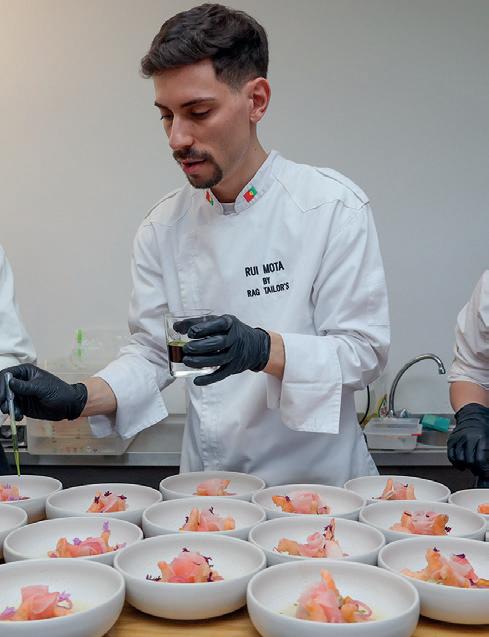
Portuguese chef Rui Mota, who has worked in noted venues such as El Celler de Can Roca in Spain and The Fat Duck in the UK, is pictured plating up on Mesa Ceramics’ Único collection.
Featuring ID7 vitreous stoneware, the collection has been designed for durability in hospitality kitchens without compromising elegance and complemented by the cookery skills of chefs such as Rui Mota.


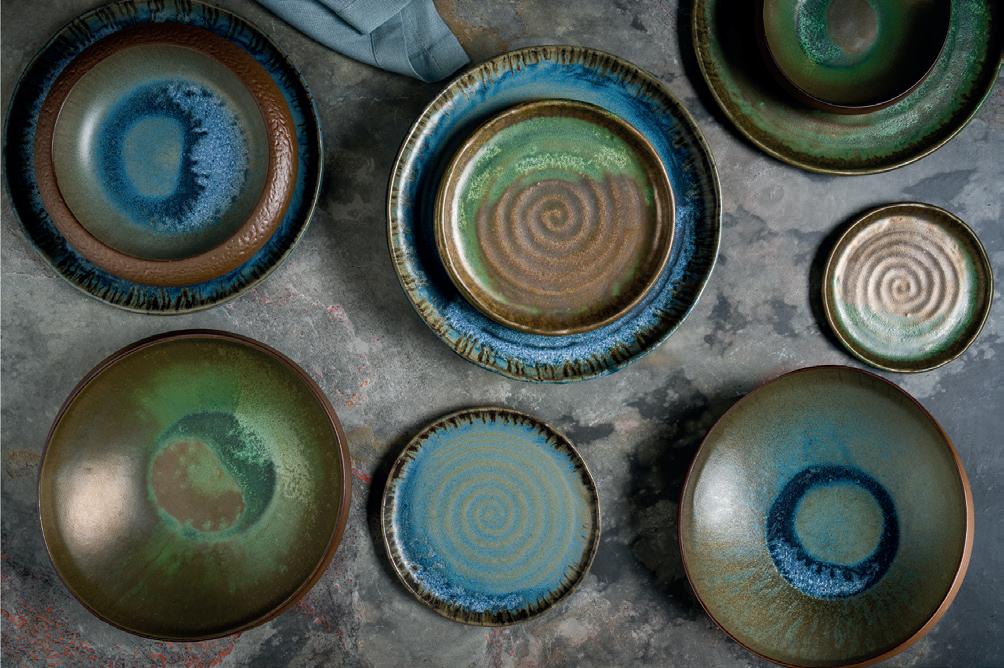
Bonna has launched a new collection inspired by the craters on the moon. Boasting crater-like, matte decal on the exterior – Crater’s structure evokes handmade pieces. Coming in a sand colourway with grey tints on the interior, Bonna has designed the collection to be paired with other new series Lagoon Ocean and Lagoon Olive, giving professionals the advantage of both versatility and functionality.
Meanwhile, the new Lagoon Ocean has been inspired by the serene depths of oceanic waters, and Lagoon Olive by serene olive groves. Each piece in Lagoon Ocean features a unique blend of deep blue and sandy tones, reminiscent of the seafloor swirling with marine currents. The textured, matte finish gives each item a handcrafted look.
Meanwhile, the Lagoon Olive collection captures the essence of the Mediterranean with its rich olive green hues and swirling patterns. Bonna encourages venues to mix and match the Lagoon Olive and Lagoon Ocean collections.
www.bonna.com.tr


Wabi-sabi, a Japanese philosophy referring to the beauty of the irregular or incomplete, served as inspiration for chef Pedro Sena Bastos when creating a piece for Vista Alegre’s Chefs’ Collection.
The plate, also designed to be used as a bowl, boasts delicate relief work on the porcelain reminiscent of roots. Part of the Chefs’ Collection, this biscuit piece combines the ideal size for the best tasting experience with a well-defined plating area which is the only glazed part of the dish with depth for pouring sauce. hotelware.vistaalegre.com

Narumi’s latest HoReCa collection – Tone – celebrates the traditional Japanese art of dyeing. The design motif, Narumi says, has been “deeply rooted in Japanese people’s lives since ancient times”.
The brand explains: “The textures and complex hues of dyeing, where shades deepen with each exposure to air during the manufacturing process, is expressed in the delicate and soft shades of the colour.” www.narumi.co.jp
Schönwald is highlighting ‘quiet luxury’ as a prevailing trend in tabletop. As per the brand’s Essential range, there is a demand for tableware reflecting a trend towards understated elegance and refined simplicity. “This movement prioritises highquality materials, impeccable craftsmanship, and timeless design. Key characteristics include minimalist aesthetics, neutral colour palettes, and subtle textures that exude sophistication without drawing attention,” Schönwald says.


Arthur Krupp’s Radici Buffet System – which was launched earlier this year – showcasing the work of chef Enrico Croatti at Moebius Restaurant in Milan. The Radici Buffet System by Arthur Krupp consists of risers, containers, trays and displays that are totally modular with each other. Made of acacia wood, the collection is lacquered with a natural varnish, protecting the appeal of the wood’s darker grain and making it suitable for professional use.


Zwiesel Glas has added placemats and glass coasters to its product range after acquiring the German brand daff.
The Zwiesel Fortessa Group’s vision is to become the global market leader for the complete table setting so the acquisition of daff is the next logical step in the company’s further development.
In the B2B sector, United Tables by Zwiesel, the professional subsidiary of Zwiesel Glas, will also offer a wide range of placemats and glass coasters made of high-quality and sustainable materials – in addition to top-quality glasses and first-class products from the porcelain and cutlery categories. Private end consumers can still order daff products at www.daff.de. The products are available in different versions, made from sustainable and/or vegan materials such as PET felt, recycled leather and LAV (Leather Alternative Vegan).


While matt tableware is a having a moment, it often tends to scuff, meaning it needs to be treated more carefully – which won’t suit every HoReCa venue. With this in mind, Utopia has launched Forma, a chic tableware that’s matt with a twist – it has a special low-sheen, satin-style glaze that makes the surface much more robust.
Forma is a vitrified porcelain collection that’s available in three colourways; vanilla, charcoal and forest green.
There’s a comprehensive choice of pieces, including four plates, with diameters from 17cm to 26.5cm, and four bowls, from 12cm to 24cm. There’s also a 31cm x 17.5cm platter and a 9cm dip pot. www.utopia-tableware.com
Rosenthal has created a unique high tea collection for the prestigious Althoff Collection Hotels group, including Schloss Bensberg, Ameron Neuschwanstein, and St James’s.
Rosenthal’s collection designed specifically for the sophisticated high tea at Althoff Hotels, features two popular and historic decors from Rosenthal’s range. The plates and saucers, inspired by the Medaillon line, showcase an elegant floral pattern on a turquoise and blue backdrop. The cups, bowls, and milk jugs, derived from Form 1382, enhance
the floral motifs with a refined white finish.

Serax has unveiled Out of Lines, a new tableware collection created by design collective Uncharted.
It was the lack of suitable tableware for their hospitality projects that led creative director Stéphanie Cohen, restaurateur/ entrepreneur Julien Cohen and designer Raphaël Navot to create Uncharted in 2023. Out of Lines, the design collective’s first collection, combines organic shapes with earthy hues such as off-white, deep black and vibrant ochre. The collection’s artisanal look and feel are accentuated by the materials they chose, such as stoneware and wood, whereas the high firing temperatures increase the tableware’s durability, even when stacked.
www.serax.com
the ovals found in nature, such as an olive, a lemon or a plum, Serax’s Out of Lines has over 30 different shapes that blend seamlessly.
Form 1382, created by engineer Hermann Gretsch, is a modern, functional porcelain design that has even been exhibited at the Museum of Modern Art in New York. Since this year, this design has been marketed under the Rosenthal brand name. Medaillon, belonging to the Thomas brand, features cylindrical porcelain pieces that combine minimalist shapes with the highest quality, exuding a restrained and contemporary aesthetic. www.rosenthal.de Did you know?


WMF Professional are taking on the buffet with the Fusiontec Mineral cookware series. Not only do the woks and braising pans look great with five mineral-inspired colours and shimmering metallic surfaces, but they are also complemented with chafing dishes and bowls. For use at the buffet, WMF Professional offers a matching pot insert made of white porcelain. Two practical lid holders complete the portfolio.
In the colours macadamia, rose quartz, dark brass, platinum and black with a subtle metallic effect, the Fusiontec Mineral braising pans bring visual diversity to the buffet. www.wmf-professional.com

Rosenthal works with 800 luxury hotels, restaurants, and chefs worldwide.


Rhythmical table settings – whereby you build colour, pattern and texture into a tablescape – is an artform. But having access to the right tableware, and enough of a variety of it, to create impressive and inviting tables is essential. This is where Wilmax can help…
Rhythm is a term used to describe the dynamics achieved in architecture, or works of art, by the combining and repetition of various visual elements. Using rhythm-building principles adapted by designers in table settings can help create an unforgettable atmosphere at the table. Simple rhythm is achieved by repeating the same shapes or colours, whereas a complex rhythm repeats groups of elements, playing with patterns and colours, for example the same style of candle sticks in different sizes, colours or design elements of table linen repeated in porcelain. Yet every piece of a table setting is a part of a composition and there should not be random elements.
Playing with shape
When opting for a round-shaped plate as the main element, it
would be recommended to use round place mats, base plates and salad plates. Adding a soup bowl or serving dishes and accessories of the same shape and repeating them in different sizes will create a nice rhythm on the table.
Simple rhythm setting is advised for formal dinner settings, using plain white porcelain or succinct, repeated embossed patterns.
Adding colour and texture
If a decision is made in favour of using the same colour, using multiple elements and repeating them will create a consistent and dynamic design. Adding shades of the same colour will strengthen the dynamics of the table setting rhythm and adding unusual or even clashing colour combinations will make the table setting more dramatic.
Patterned elements have
dynamics of their own, so they need to be balanced with plain elements. Plain elements can repeat colours of the pattern or compliment them, so creating a connection between the elements of the table setting.
Tableware texture gets noticed and it is to consider while creating rhythmical table setting. Matching and repeating makes setting more subtle and combining unusual textures will always add drama and dynamics to table setting. Be it a round plate with
texture of natural stone mixed or wooden elements or round textured serving dish added to a plate with pattern.
Combining different materials in the same table setting can add interesting accents. To make this connection harmonious, rhythm principles should be kept in mind. Same pattern applied to different elements of table setting made of different material create rhythmical design. So does same material used in different table settings elements.
Wilmax England tableware collection offers wide variety of shapes, so one can create dynamic rhythmical table setting adding multiple accessories to the main plates, playing with shapes, colours, textures and materials.

The Wilmax ColorBoom collection allows for playing with various shapes and seven different colours to mix and match, creating dynamic rhythmical table


The Wilmax Graphics collection combined with a textured pattern of the Monolith collection base plate and hammered serving ware


T is for Table is a luxury independent boutique, with a focus on tabletop, in West Palm Beach, Florida. Open more than 20 years, it offers an experiential and inspirational space dedicated to helping customers tell stories, create traditions and celebrate life. The boutique offers everything from fine pottery, china, glass, serveware and table accessories, to home décor, jewellery and body products, and delivers a custom service with its custom engraving, home visits and gift registries. www.tisfortable.com


Our retail columnist Michele Trzuskowski
from T is for Table
writes about the joy in variety – as she says “there is something for everyone” –and that means mixing brands as much as mixing collections…
In today’s tablescape environment there really is something for everyone. The variety of traditional to modern lines is quite amazing.
When I got married back in the eighties there wasn’t much of a selection to choose from. For the most part, we had the basic gold or silver banded china sets that were sold in a 5-piece place setting. Okay, there were some floral choices, but most looked like our grandmothers’ sets. And yes, a couple of companies might have offered a patterned salad plate with the setting, but it certainly wasn’t commonplace.
What a difference for today’s shoppers. They have choices galore with one major change from the “back in the old days” conversation. That change is the increasingly popular trend of mixing and matching patterns since everything now can be purchased “a la carte”. While some manufacturers have supported this idea for some time now, more manufacturers are picking up on this idea and are creating assortments to further enhance their existing dinnerware lines.
In ceramics I like the offerings that Vietri provides in their Santorini collection. You can purchase a complete 16-piece setting with each place setting having a different design while complementing each other with the idea of mixing and matching on the table – whether stripes, dots, flowers, or diamonds.
In addition, if you chose to do so, you can purchase a single design within the setting or a dinnerplate with one pattern, a salad plate in


a different option, and so on. This gives consumers so many choices and the opportunity to have fun when creating a tablescape.
Another way manufacturers are accomplishing this is by doing the same pattern either in solids or with designs but in different colors that the consumer can pick from to mix and match based on their own personal color scheme. Juliska does this with their Country Estate Collection. It is available in grey, delft blue, petal pink, and a holiday red collection. The grey and blue go beautifully together, as well as the blue and pink, as does the pink and grey etc. This collection also pairs well with several of their solid patterns. The Country Estate blue also sits perfectly with their Le Panier
and Primavera, especially when the Sol Y Sobre acts as the base.
But another interesting trend I see with customers in the store are mixing not only patterns but also brands. They may choose a dinner plate from one company and mix it with a salad plate from another company. That could be because we have a store that shows over 50 place settings that we encourage people to play with as they search for new dinnerware or as a complement to their existing pattern. But I also think more customers are trending towards making something more unique for themselves and when buying solely from one brand doesn’t meet that need, they reach for others.
You tend to think these
“More customers are trending towards making something unique for themselves and when buying solely from one brand doesn’t meet that need, they reach for others”
Delft Blue, while their country estate grey goes well with either their Emerson or Pewter collections.
In fine china, manufactures have often created an option for a different salad plate but now more so than ever they are encouraging a mix and match environment with pattern as well as colour.
For Raynaud, the Trésor Fleuri Collection immediately comes to mind. Not only do the patterns of florals complement each other, but so do the background colours of the plates – giving one many options to choose from. In addition, for someone too conservative with all patterned dinnerware they can complement it with Tresor solids to ground the pattern on their table.
Likewise, look at Christian Lacroix multiple collections for Vista Alegre that all offer mix and match capabilities between the Sol Y Sombre, Butterfly Parade, Caribe,
assortments are only in dinnerware but there are quite a few coloured assortments in stemware out there as well, again allowing for the mix and match effect on the dinner table. Take the hand-painted Regalia stemware available in an assortment of four different colours (although you can buy all the same colours) or the assortment of four coloured pastel stems in the Contessa Collection both by Vietri. More and more stemware companies are selling assortments the same way dinnerware companies are providing consumers as stated before with an abundance of options.
In this way I find the trend also mixes old with new. Younger consumers can take elements of the hand-me-downs they have received from grandparents or parents and mix and match with today’s fresher opportunities.
Raynaud

After 225 years in business, F.S. Kustermann , a family business in the seventh generation – is an exemplary example of a retail store that has evolved with its customers, always celebrating the joys of life and the home. Michelle Hespe finds out more…
In 1798 in Munich, employees of F.S. Kustermann were wearing decidedly different clothing to those working there today. Back then, Kustermann was a foundry and the staff battled the intense heat from open fires in protective coveralls as they melted metal and cast metal objects. It was a year before Napoleon Bonaparte rose to power in France, and eight years before Munich became the Kingdom of Bavaria. Back then, F.S. Kustermann was producing much-needed products for a city undergoing rapid industrialisation.
celebrated its 225th year in business and was chosen as the national winner in Germany for the Global Innovation Awards (gia) run by the International Housewares Association. In its 226th year, this remarkable department store that has seen more than two centuries of growth and innovation, became one of five Global Honorees at the gia gala dinner and awards ceremony in Chicago in March, cementing its place as one of the top home and housewares retailers in the world.
operates according to the principles of the Golden Circle by author, presenter and TEDx speaker Simon Sinek, who famously said: “People don’t buy what you do; they buy why you do it, and what you do simply proves what you believe.”
products for our guests.”
Although Kustermann’s impressive history and the aweinspiring building could be laurels easily rested upon, André explains that the store’s heritage is a cornerstone of its identity, but not only one part of its approach.
Today the foundry is no more, however there is still a small hardware store to be found within the modern Kustermann store – a nod to its humble and very different beginnings. Surrounding it are more than 70,000 products arranged across 5,000 square meters of department store, spread across three sweeping floors.
André Garcia, managing director, F.S. Kustermann
“This award propels us into the future with renewed vigor,” says Kustermann’s managing director André Garcia. “It also validates our blend of tradition and innovation, and it’s an encouragement to continue evolving without losing sight of our core values: tradition, delight and joie de vivre. It’s a significant moment that strengthens our position as a leader in the industry.”
“Our action revolves around the ‘why’ – we do it for the love of the home, which we believe is society’s heart,” says André. “This belief drives us and our staff to deliver our best, ensuring we provide products and services that enhance our guests’ lives at home.”
André and his staff felt that the gia application process was a reflective journey in itself.
“Word of mouth remains a powerful tool for us”
In 2023, F.S Kustermann
The company’s tagline is “Munich’s recipe for joy of life” and it
“It allowed us to evaluate our business through a magnifying glass,” he says. “It reinforced the importance of our mission to make life at home beautiful and easy, ensuring that we offer long-lasting
“Word of mouth remains a powerful tool for us, thanks to our deeply rooted history in and around Munich, and our commitment to quality is also paramount,” he says. “However, our marketing efforts have also played a significant role in broadening our reach, inviting new Munich citizens and tourists to experience what Kustermann stands for.”
The gia jury agreed.
“Kustermann is an old family store, however even with over 200 years of history, it remains relevant,
F.S. Kustermann has 70,000 products arranged across 5,000 square meters of department store.
the year F.S. Kustermann was founded.

always modernising its approach with updates and changes.”
The Kustermann customer experience
From the first sight of the commanding store lining a busy Munich street, Kustermann sets the scene for the sophistication and grand proportions to follow –imposing stone walls house four magnificent two-story high arched windows with beautifully themed window displays in each, surrounded by elaborate stone pillars and shaded by racing green awnings much like those on London’s Harrods. It’s a place where it is immediately obvious that tradition, heritage, innovation and the modern world flow seamlessly together.
“Guests feel a sense of tradition, delight and joie de vivre both when they step into our store, and when
they leave,” says André, who worked for many years in the hotel industry and prefers to call customers his guests. “We want them to feel inspired and appreciated, knowing they’ve found something truly special, or something that they truly want.”
André says that there are too many magical moments and experiences that have been created over the many decades at Kustermann’s to list, which all demonstrate the team’s commitment to personalization and attention to detail, but some do stand out. “Once, one of our staff facilitated a shelter for more than a hundred guests to stay overnight in the store during a terror attack in Munich,” he says. “They were true heroes.”
Another memorable story was about a special guest looking for a specific porcelain for a family tradition.

“Our team went above and beyond to find it for him, showcasing our dedication to making our guests’ experiences personal and heartfelt,” he says. “That guest was Freddie Mercury.”
The gia jury saw this as one of the reasons that Kustermann continues to succeed. “There is a great dedication to staff training and well-being at Kustermann,” they noted. “As the result, the staff of the store are very knowledgeable and passionate, and they’ve stayed with the company for a long time, establishing personal relations with customers.”
Looking ahead while honouring the past
André and his team see the future of retail as an integrated experience, blending the personal touch with digital innovation, sustainability and community engagement.
“Kustermann is a space where tradition and innovation coexist

Sponsored and organized by The Inspired Home Show and the International Housewares Association (IHA), gia (IHA Global Innovation Awards) is the world’s leading awards program honoring overall excellence, business innovation and creative merchandising in homegoods retailing. For more information about the gia retail program, the co-sponsors or participating in gia, contact Piritta Törrö at piritta.torro@inspiredconnection. fi. Additional information on gia is also available online at TheInspiredHomeShow.com/ Awards/gia-Retailing. For more information about The Inspired Home Show 2024 and to pre-register for a free Show entrance badge, please visit TheInspiredHomeShow.com.
enhanced our community engagement and customer loyalty.”
An impressive example of this is a drone video that was created in first person – as though someone was moving through the entire shop, soaring peacefully through the building. Watching the video is like flying through a warm world of endless delights – homewares lit up on stages and covering walls,
“Guests feel a sense of tradition, delight and joie de
vivre both when they step into our store”
André Garcia, managing director, F.S. Kustermann
harmoniously,” he says, while also noting that the pandemic underscored the importance of adaptability and the power of traditional, personal connection.
“The pandemic influenced a more thoughtful approach to shopping, emphasizing quality and significance, guiding us to refine how we meet our customers’ evolving needs as special in the digital world.
“Our use of social media and marketing has enabled us to connect with our audience in dynamic ways, sharing our story and values, which has significantly
grand staircases and beautifully lit aisles inviting guests to new places.
Despite this embracing of new technology and using it for marketing, the team will never stray too far from Kustermann’s roots. “While automation and AI have streamlined operations and enhanced customer service, we maintain a balance, ensuring technology enhances rather than replaces the personal, human touch that is synonymous with Kustermann,” André says.
To learn more about Kustermann, visit www.kustermann.de

Preparations are ramping up for Ambiente 2025. Taking place from 7 to 11 February, 2025 – the show will once again run alongside the Christmasworld and Creativeworld trade events…

As thoughts turn towards the organisation of Ambiente 2025, Messe Frankfurt has revealed the number of registrations for next year’s showcase is already ahead of 2024.
“We are on track and are currently setting the course for an unmissable trade fair experience in 2025,” Julia Uherek, vice president consumer goods fairs Messe Frankfurt, said recently during an online press conference.
“After every trade fair, we analyse the feedback from our exhibitors and trade buyers in detail and optimise where the market requires it. There is always potential for optimisation,” added Philipp Ferger, vice president consumer goods fairs Messe Frankfurt.
Ambiente – top brands to return Ambiente is further expanding its leading position in the dining, kitchen and household sector in the western area of the exhibition centre. This is confirmed by the return and participation of companies such as BHS Tabletop, Bonna (Kar Porselen),
RAK Porcelain, Rösle, Steelite and Wüsthof. Across all segments, the focus is on developing the quality of the product range. Brands such as Dibbern, Robbe & Berking, Rosenthal and Vista Alegre, for example, will once again enrich Table Select. The focus on the growth area Hospitality will be presented in new strength for the 10th anniversary. In Hall 8.0, very high-quality “Back of House” brands are registered in the Cook & Cut area. In Hall 11, the focus on commercial end consumers from the hospitality sector will be strengthened with pure hospitality ranges centred around “Front of House” and “Out of House”. At the same time, the range will be expanded to include even more suppliers of cutlery and buffet presentation. The Hospitality Academy and the Hotelier’s Day will be continued and there will be even more guided tours for trade visitors. In the eastern exhibition area, companies such as Affari of Sweden, Alessi, Bazar Bizar, Henry Dean, Kare Design, Lightmakers, pappelina and Reflections
The HoReCa sector will find itself under the spotlight as hospitality marks its 10th anniversary at Ambiente.
Copenhagen are registered for the Living area. Here, the focus will be further sharpened on the growth area of contract business with Blomus, Pure Yellow Single Member, Scholtissek, Trademark and XL Boom, among others.
The extensive fringe programme highlights exciting developments around the meta-topics of sustainability, design & lifestyle, new work, digitalisation and future retail. On the stage of the five academies, experts will share valuable insider knowledge and the three trend areas will provide orientation for the selection of attractive product ranges. “At the interface between interior design, hospitality and contract business, we are having the special area “The Lounge” designed by our new Ambiente Designer 2025 as the perfect link. We will reveal who this will be at the beginning of September, when we will also present an initial preview of the upcoming Ambiente, Christmasworld and Creativeworld Trends 25+,” adds Uherek. Interested young designers can apply for participation in the Talents programme until 25 October.
“Sustainability is and will remain one of the most important topics for success in the industry, which we will be focusing on very prominently at all three trade fairs,” says Uherek. The “Ethical Style” programme of the three trade fairs identifies exhibitors with ecologically and socially produced products. Companies can once again apply for the programme from the beginning of September until 22 November 2024 and be curated by an independent jury of international experts. There will also once again be two “Ethical Style Spots” on the exhibition grounds. The curated special presentations will showcase innovative product worlds that combine design and sustainability.
What’s happening with the digital offerings?
Supplementary online platforms such as Conzoom Solutions, the Nmedia.hub order platform, the digital exhibitor and product search, social media channels and smart matchmaking provide retailers with fresh impetus, an overview of relevant industry topics and the opportunity to place orders and network all year round.
Visit ambiente.messefrankfurt.com for more.


Entries are open from now until 8 November
Contact mairead@lemapublishing.co.uk pyeomans@lemapublishing.co.uk

The Tableware International team – editor Mairead Wilmot and publisher Paul Yeomans – took a trip to Denby recently. Here is how they got on…


Denby is a place teeming with history. First opened in 1806, since then it has embodied many life forms, initially as a producer of salt-glazed pottery through to kitchenwares, even producing telegraphic insulators and battery jars during the war years. Now it is better known for bringing us some of the UK’s most recognisable tableware collections – in fact, you’re likely know somebody who collects Denby, and if you don’t know them, your friends do.
The Denby complex in Derbyshire boasts a factory shop, garden stall and farm shop along with a coffee shop and bistro.
There is also a lovely craft studio where visitors can experience pottery workshops –

often under the watchful eye of master potter Sean.
Most interesting is a small museum, home to a superb collection of Denby memorabilia. The place has a genuine sense of warmth with an obvious fondness for the brand prevalent throughout.
The Tableware International team enjoyed a tour around the site by health and safety manager Julian Bell, followed by a meeting with global marketing director Hayley Baddiley and design director Richard Eaton.
Lunch was enjoyed with head of brand development Zoe Turner and corporate affairs manager Linda Salt. We even got to turn our hand to a spot of pottery making with master potter Sean – some of us being better at that than others.


Jazz Carafe: Fusing traditional craftsmanship with minimal contemporary aesthetics, the Jazz carafe stands out with its thin, elegant lines and emphasis on functionality. Handmade from lead-free crystal, the light ergonomic design is expertly shaped to enhance the sensory experience, while remaining versatile enough to complement existing glassware collections. NUDE welcomes the latest addition, featuring a marble base which has been designed to keep one’s drink cool without the need for ice.

Islands: Boasting an exquisitely simple silhouette, each tasting glass in the Islands collection features a gently flared rim designed to direct the drink to the tip of the tongue, amplifying its flavours. The accentuated, tulipshaped glass with a generous base and tight mouth elevates the nosing experience, enhancing aromas and minimising the dissipation of fumes. Joining the bestselling whisky glasses in the collection, NUDE introduces a new beer glass which features the same distinctive silhouette.
Global design brand NUDE welcomes new designs to its glassware offering for 2024. Spanning statement serveware to mouth-blown vases and fresh additions to its best-selling drinkware ranges, the new collections present beautiful, handcrafted glass for living and dining spaces…

Juno: The in-house designed Juno collection is characterised by curvaceous forms which undulate and intertwine, paired with an eye-catching orange hue. Handcrafted from crystalline glass, the range includes a carafe and glass, cake dome and two serving plates which were designed to bring people together to experience culinary delights. Each piece in the range makes a bold statement whether used separately or in unison.
Mars: Designed by Pentagon Design, these spherical vases are an homage to the planet Mars and its two moons. Mars, the fourth planet from the sun, has long captivated human imagination with its shades of orange and steel blue. Reimagined for the home, the Mars collection is crafted from mouth-blown glass and is available in three sizes.
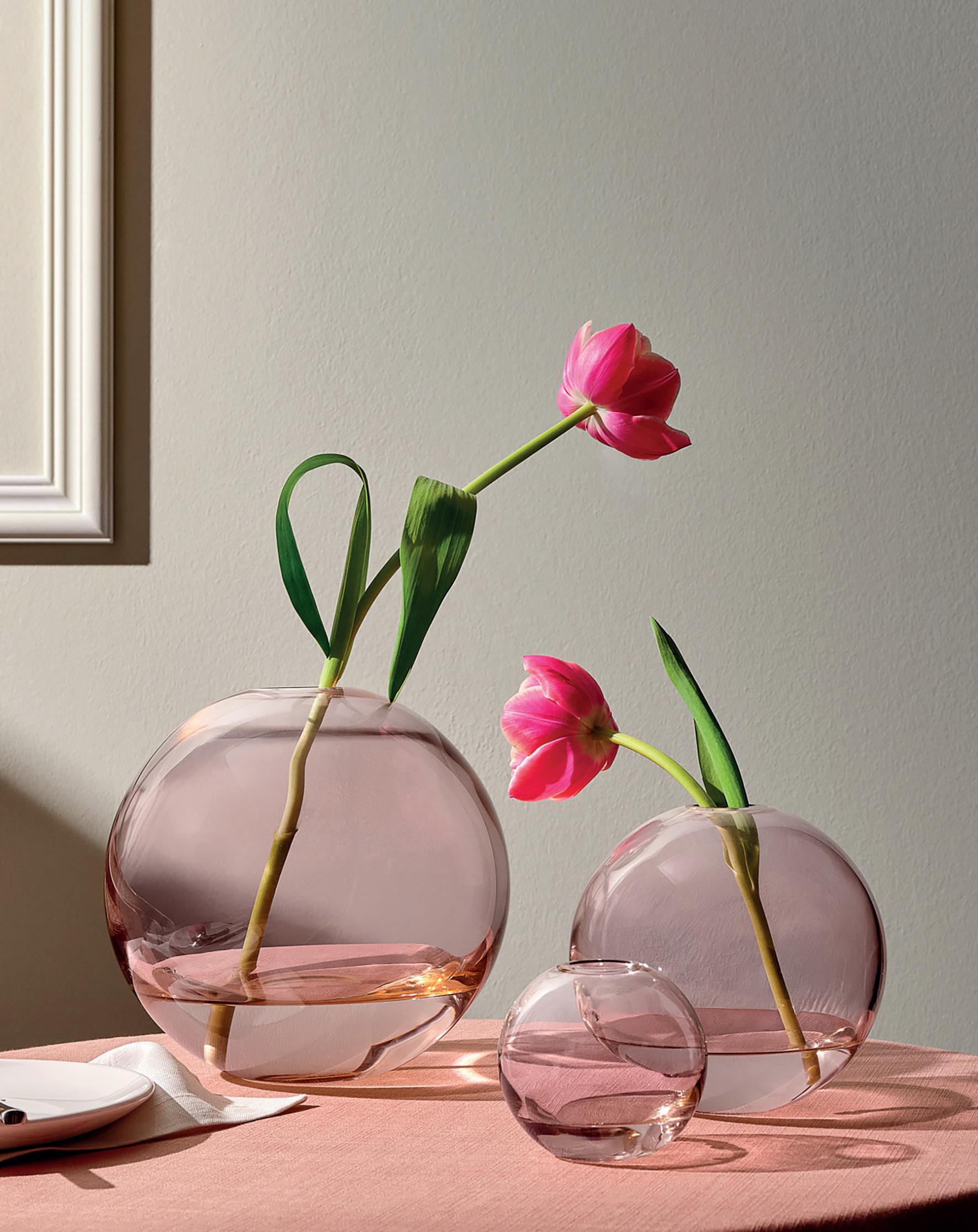


Contour: NUDE welcomes its steel blue colourway to the iconic Contour collection designed by Pentagon Design. Featuring three vases, the collection is characterised by a sculptural silhouette and visual illusion which makes the form seem at once solid and ethereal.

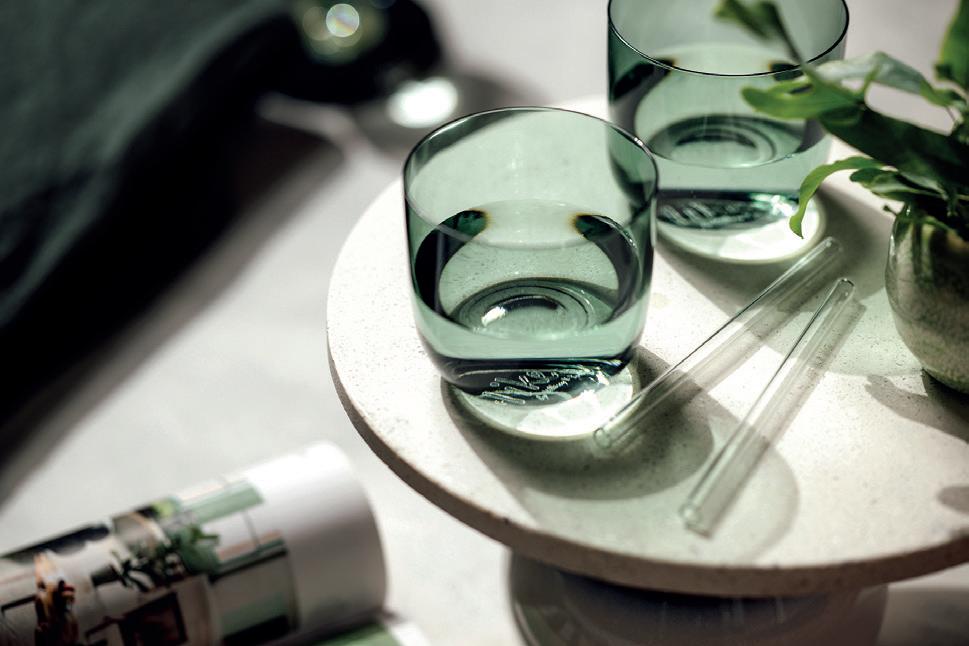
The seafoam green color adds a fun twist to your drinks, blending traditional craftsmanship with a modern look. Perfect for daily sips or gatherings. Cheers to more summer moments!
Green is enjoying an extended period in favour, so much so there is seemingly no end in sight for its popularity on the home décor front. With that in mind, TI shines a light on some perfect options for an on-trend tabletop from key suppliers…

Discover the powerful aesthetic of the Structo Turquoise collection, where strong structures and stackable shapes are at the heart of this unique range. Finding its inspiration in the bold lines of architecture and the solid structures of the construction industry, the collection has a simple and robust design. But what makes it truly special, is the use of mass-coloured products, each finished with a reactive glaze to create a beautiful, subtle and transparent look that provides each item with a unique character. www.fine2dine.com
Nature Essence is a porcelain collection born from the observation of nature. The plates are inspired by leaves, both in texture and color. The light reliefs on the surface draw the typical veins of the leaves, and the brighter green of some elements turns cooler on the others, recalling the different seasons. You can create a green forest on the table or combine them with other elements in the collection that instead recall different natural elements in colors and relief. www.sambonet.com
Green is often associated with nature, growth, and tranquility, making it an excellent choice for creating a calming and inviting table setting. Floral Charm green tableware comes in various designs, from intricate floral and botanical motifs to modern geometric shapes, allowing you to choose a style that fits your personal taste and the theme of your dining occasions. www.bhs-tabletop.com

Narumi’s Green Cloud boast nature-inspired watercolor gradients which match well with a variety of interiors. The fresh green gradation is perfect choice for every season. www.narumi.co.jp





Utopia has been leaning into green with some of its recent launches with a range of designs that showcase the versatility of the colour.
The Forest Green colourway of the Forma collection effortlessly fuses contemporary scandi aesthetics with practicality. The rich green low sheen glaze is contrasted against the crisp white edging of the rim, which fits in perfectly with a range of modern styles. Consisting of four differently sized plates, four bowls – two shallow and wide, two deep – a dip pot and a generously sized platter, Forma Forest demonstrates that green can find a home in the most sophisticated settings. www.utopia-tableware.com


The new Wine Collection features large, versatile bowls in fresh green hues inspired by the North’s nature, combining ice blue and mint green for a unique touch. These bowls serve as both serveware and décor pieces, enhancing culinary creations with elegance and personality. www.mesa-ceramics.com
The Simplicity decor consists of fine colored ribbons in nine different colours that can be used individually or combined with each other. Simplicity Green is a perfect embodiment of this design from Dibbern which is modern yet puristic with a fresh color palette.
The Simplicity decor also emphasises the delicacy of the beautifully presented delicacies in the catering trade, for example in the patisserie of the Connaught Hotel, London. Fine Bone China, dishwasher and microwave safe.
www.dibbern.de

Matcha: Matcha is a soft green collection, its coupe shape gives it a modern and contemporary look. Matcha is also vibrant and optimistic, perfect for a summer meal by the garden.
Olivia Lotus: Olivia Lotus features two different but harmo nious green hues. On the one hand, we have a selection of intense olive pieces, gilded with gold for a bold statement. On the other, Porcel has created a beautiful lighter green, topped with an exclusive, handmade Porcel technique. Olivia Lotus was launched alongside Violet Lotus and Louise Lotus.


Lush Forest: Lush Forest is an intense dark blue and deep green glaze that intends to be special and deliver a sophisticated approach to raw and earthen table trends. Each piece is brush gilded with gold and the patterns are randomly deter mined during the firing process in the kiln.
www.porcel.com


Created with nature and biophilic designs in mind, Kiln Green is a celebration of timeless studio pottery that is both beautiful and sustainably crafted to last a lifetime. In a calming palette of soft white and celadon shades of green along with tactile glazes, organic shapes and simplistic beauty all bring serenity around the home. Designed to make food look and taste beautiful, the expertly designed items in Kiln Green with their uneven forms and hand-thrown features, such as the collection of bowls and serving platters, sit effortlessly with the functional yet stunning place-setting items www.denbypottery.com


In Colour introduces a vibrant splash of modern shades to the Melody Rose collection, bringing a touch of glamour and intrigue to the exquisitely handcrafted fine bone china dinner plates. Designed to be mixed, matched and layered, the plates also work beautifully on their own or as a set of a single colour.
The Forest Green colourway has been inspired by the natural beauty of the woods and forests and taking influence from antique English and French fine china collections, Forest Green is the vibrant newest hue in the collection.
www.melodyrose.co.uk


The reactive glaze of Perlemor Alga combines all the colour nuances of the green sea. The solid-coloured premium porcelain made in Germany radiates optimism and freedom and is as calming as the sound of gently crashing waves. Tone-on-tone and paired with a modern shape, Perlemor Alga is the right choice for every occasion and always radiates relaxation and serenity.
www.villeroy-boch.de
In the golden era of the Art Deco movement, metals and precious stones were elements usually associated with the geometrization of the patterns, reflecting opulence inherent in artistic creation. The pieces in the Emerald dinner set, richly decorated with matte gold and dark greens, replace excess with elegance, recreating with modernity - using original pieces of the brand from the 30s - the typical exuberance of the period. www.vistaalegre.com

Let the Palermo Sun 16-piece Reactive Dinnerware Set from bloomhouse grace your kitchen or table with organic overtones and artisanal aesthetics every day. Made from carefully selected and sustainable clays, this stoneware dinnerware collection brings substantial style and heft to elevate dining and entertaining at home. Rustic shapes lend a handmade look and feel, like each plate and bowl came out of your favourite pottery studio.
gibsonhomewares.com
The Dalia cup collection in Harmony and Dalia boast two shades of green, each as appealing as the other. The Harmony cup is all about balance and sustainability. Harmony is about right proportions and compatible combinations. The Calmness Dalia cup evokes a state of spiritual harmony, a moment of meeting with one’s inner self. It is a moment of rest and focus on what usually slips away. www.porcelana.pl
When creating the Mikasa Jardin range, huge effort was made to create truly unique items with pooling reactive gloss glazes. The brand really tapped into what makes ceramics come alive, the reactive gloss glaze combined with the rich green colour and textured pattern evokes nature and hits the trend for bringing the outdoors in.
www.lifetimebrandseurope.com


Rocky Baroque Candlesticks in emerald green by Hanna Hansdotter from Kosta Boda offer a rebellious take with ancient roots. Monumental contours meet raw, jagged surfaces in this collection of vibrant candle holders. The piece resides in the borderlands between sculpture and utility object, a recurring theme in artist Hanna Hansdotter’s design.
Rocky Baroque is handmade in Kosta, Sweden, and available in a limited edition of 500 pieces.
www.kostaboda.com
The elaborate, handmade vases in the Shadow series feature a perfect interplay of light and shadow. Their unique colour transitions and elegant shape make them perfect accessories for contemporary interior design. Whether in restaurants, lobbies or living rooms, the sophisticated contrast of modern colours in different shades is a valuable addition to any hospitality environment. www.zwiesel-glas.com


The summer Vibe Borosilicate Green Glass Tumbler from Wellwares adds a fun twist to drinks, blending traditional craftsmanship with a modern look. www.wws-ceramic.co

The colours of the like. Glassware are all inspired by nature. And sage goes perfectly with Perlemor Alga – highlighted under the Lifestyle section – but also adds a striking accent to white porcelain.
www.villeroy-boch.de
The Riedel Laudon Tumblers are luxurious crystal glassware pieces that add style to any table setting. The bold dark green colour and cut-crystal design make them truly eye-catching. Perfect for whisky, water, cocktails, or mixed drinks, these tumblers reflect light, allowing them to sparkle.
www.riedel.com



Nikko’s newest HoReCa project Mineral Waves has been years in the making. Two series, Rinkou and Suzuhaku, will be released as the first and second collections from the project. Nikko says both have been completed through a process of trial and error, harnessing cutting-edge technology to bring the project to fruition.
They collaborated with bamboo craft artist Chifuyu Enomoto for Rinkou, while Suzuhaku is a collaboration between Nikko and tin made by Nousaku Corporation, a cast metal manufacturer in Takaoka City, Toyama Prefecture, Japan.


KERAjet is marking 25 years in digital printing – Tableware International learns more about the history of the Spanish leaders in ceramic printing
In 1998, KERAjet created history’s first ceramic piece of digital printing – the prototype of which sits in the KERAjet museum in Castellón, Spain.
On 7 October 1999, the company was founded, creating and patenting the first printer for the ceramic industry. It was unique in the market and would eventually revolutionise traditional ceramic decoration systems.
The machine was presented at the CEVISAMA fair (Valencia, Spain) in 2000 and received the prestigious Alfa de Oro, an award granted by the Spanish Society of Ceramics and Glass, which rewards the most important
innovations in the sector each year.
Since its inception, KERAjet has continued to evolve. As a pioneer in the field of digital printing, the company is in constant contact with its customers from different industrial sectors, giving it a precise and accurate knowledge of the international needs of surface decoration.
With constant investment, know-how and experience in all the processes involved in digital technology, the company has introduced several generations of machines over the years. Its target sectors include ceramics, textiles, glass, tableware, plastics, metals, cements, etc.
KERAjet has more than 4,000 production units operating globally.
More than 4,000 production units operate globally, confirming digital technology’s dominance in the ceramic field and KERAjet’s leadership in the sector.
Delivering progress with innovation and advanced technology
With a young, highly qualified technical team, and a great capacity for effort, hard work and self-improvement, KERAjet designs and develops mechanical, electronic and electrical technology for industrial digital decoration applications. Its 75,000m² facility located

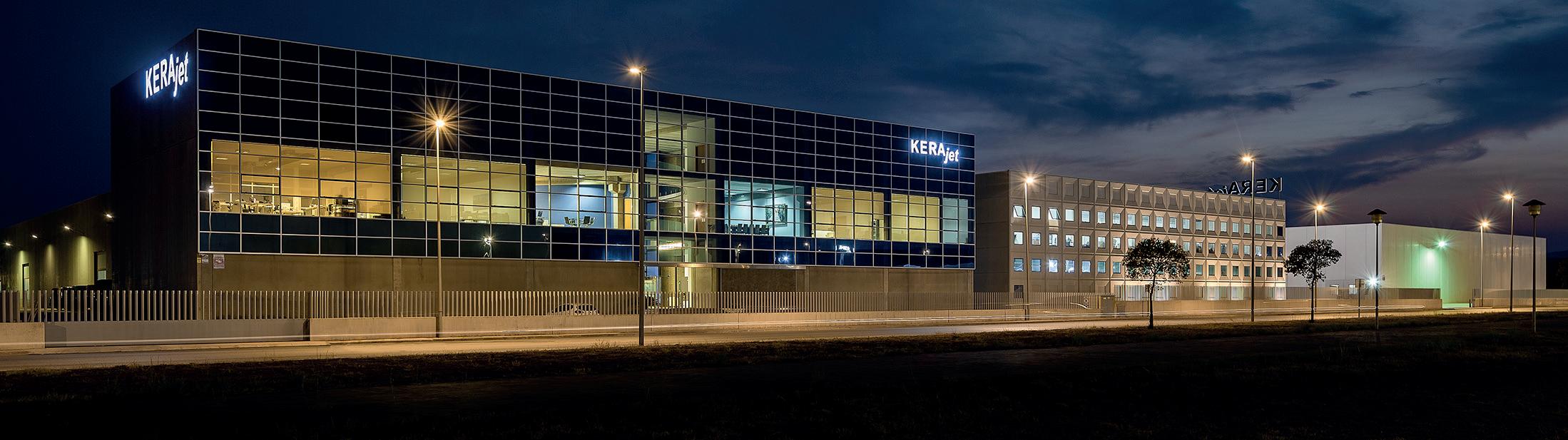
in Almazora, Castellón, Spain, is home to administration, software, electronic and mechanical engineering departments, a technical office, 24h technical assistance, electronic and chemical laboratories, a design centre, test line and machining centre and assembly workshops.
Its status as a benchmark brand in the field of digital ceramic printing is backed by its constant evolution and continuous investment in R&D&I, with the aim of improving its current products and researching, developing and providing new solutions to the present and future needs of the market.
Taking on tableware
In 2015 Kerajet installed the first
digital decoration machine for the tableware sector. It has been nine years since the first installation. Today they are the most experienced company in the field of digital decoration of tableware pieces with more than 200 machines installed in a total of 30 countries.
These machines are equipped with the most advanced technological advances to create an efficient and user-friendly production environment.
Meet the machines
KERAjet Plates S9, integrates the most advanced technology applied to the digital printing of tableware pieces. Its compact and robust design makes it the ideal, most versatile and productive
KERAjet has more than 200 machines installed in a total of 30 countries.
KERAjet has teams in Italy, Portugal, Brazil and China, offering an excellent service to its customers, both in terms of advice according to the initial project presented by customers and aftersales service when the machines start production 24/7.
machine to be integrated into industrial manufacturing lines. It has a specific assistant to produce tableware pieces. The machine is equipped with up to 16 freely configurable printing bars,
“We were pioneers in 1998, making the first digital printing with ceramic inks. Since then, we have travelled a path that has led us to change the industrial ceramic decoration for the world. Nowadays when a ceramic company has to install a decoration system, the standard technology is digital, this is the great achievement of KERAjet. Inspired by imagination, with innovation and development, we have created technology that has transformed the industrial world.”
Vicente Tomás Claramonte, CEO and founder, KERAjet

decoration height up to 22 cm and automatic cleaning with cleaner. It is the only machine on the market with centering of regular and irregular pieces managed by KERAJET VISIO (laser with 3D recognition). It can decorate at previously unimaginable levels of speed, precision and quality.
KERAjet Plates SP, with its compact, modular engineering design and easy access to all its components, is a commitment to simplicity and versatility.
It has been designed for decorating special pieces of

tableware (bowls, bowls, cups, etc.). Thanks to its vertical printing technology, it allows you to decorate with up to 16 different inks, high decoration speeds with precision and quality.
KERAJET ONE was created specifically for the marking or coding of the product piece by piece continuously. Its multiorientable printing unit allows printing on the horizontal plane as well as on the sides or bottom of the product.
KERAJET DECALS is a plotter for the digital decoration of decals, both for the development of small series or when decoration speeds are required at industrial level. It allows quick and easy printing, enabling the development of prototype parts at laboratory level. Its high productivity, high print quality and the possibility to configure up to 24 printing units make it an indispensable tool for any manufacturer.
To learn more about KERAjet, visit www.kerajet.com or email kerajet@kerajet.com

An age-old art form, there is evidence of people working with metals – bronze, copper, gold, silver – for centuries.
Today, metal is as precious as ever, but we have adapted it to suit our lifestyles with new colourways, finishes and innovative ways of using it on tables.
“Metalware is still a popular choice for buyers,” agrees Beatriz Ball, who recently rebranded her metalware line as ‘Atelier’, a move the company founder says is in “recognition of its importance, and of the intensely handmade, artisanal process of our metal items and collections”.
There is lots of innovation in the metalware category too with new finishes and techniques being applied to handmade pieces.
“We introduced proprietary metallic finishes and enamelled food safe coatings in recent years. Now, with our new multi-
Sambonet’s best-selling collection is Elite, a line characterised by nostalgic forms that have a subdued elegance and represent the contemporary alternative to classicism. Sphera is equally appreciated, but on the contrary it is recognised for its futuristic design and its round and symmetric forms. Linea Q is among the most popular with them: inspired by minimalism, this collection plays with square and rectangular forms made up of interchanging edges and curves. Sambonet has chosen to give these three collections a new look in 2024 with the introduction of new finishes.
www.sambonet.com
coloured Encanto collection, we’re incorporating vibrant enamelled colours and gold-tone details on charming bowls, trays and decorative picture frames.”
Sambonet, of course, specialises in stainless steel processing, although cutlery is at the core of the business, along with a wide range of holloware and tableware items. “In terms of turnover, in fact, it is a holloware line - our iconic Elite - that was the best-selling collection of 2023, a record that it is also maintaining in the current year,” says Elisabetta Mo, product manager Sambonet – Sambonet Paderno Industrie, Arcturus Group.
There has been no shortage of innovation coming from the Italian powerhouse. In fact, Sambonet has revealed a new finish for many of its most popular lines. Elisabetta explains: “Given the interest in this product category, we have expanded
One early example of metalwork is the stunning Mold Gold Cape which can be found in the British Museum. The ceremonial cape of solid sheet gold was discovered in Wales in 1833 by workmen allegedly quarrying for stone and dates all the way back to the British Bronze Age circa 1900-1600 BCE. Although, of course, much earlier examples of metal work exist, this is a stunning example showcasing the talents of early craftspeople.
Never out of
fashion, metalware has a solid foundation while also attracting lots of innovation and creative new design elements…

Amefa’s Phoenix with recycled stainless steel
Amefa presents Phoenix – a new cutlery set made of 18-0 stainless steel and containing minimum of 80 per cent recycled stainless steel. For the production of recycled stainless steel less energy is needed which is why by choosing recycled cutlery you contribute to reducing the ecological footprint, decreasing the amount of waste and thus to a cleaner planet. www.amefa.com


Mepra has been showcasing its latest flatware collections at summer trade events such as Atlanta Market and Las Vegas Market.
Two new patterns presented by the brand are the five-piece Bali and Neve settings. Bali boasts a bamboo-like pattern which is detailed and realistic and the setting is ideal for those seeking not only functionality and durability but also a unique and natural style.
Neve meanwhile captures the essence of simplicity and purity. This cutlery is distinguished by its clear lines and lack of superfluous ornamentation, which enhances its functionality without sacrificing elegance. www.theluxuryartmepra.com
our offer to meet the tastes and needs of a larger number of customers. Our most iconic lines are available from this year in new PVD colours – Antique - which gives the items an original matte appearance and a pleasant to touch texture and mirror finish. All the finishes applied to our items are made internally – they are the result of the know-how and continuous research that Sambonet carries out to create exclusive objects, an expression of the typical Italian genius of the brand.”
Metalware “has has a lot going for it, and in the right setting it will always be a winner” says Utopia’s marketing manager Josh Rammell.
“Right now, it’s very on trend, and buyers are definitely going for it. It offers a rather different approach compared to other tableware, giving a refined or industrial look, depending on the finish,” Josh says.
“In terms of presentation, it can be used to cut through the noise or to add to the general ambience
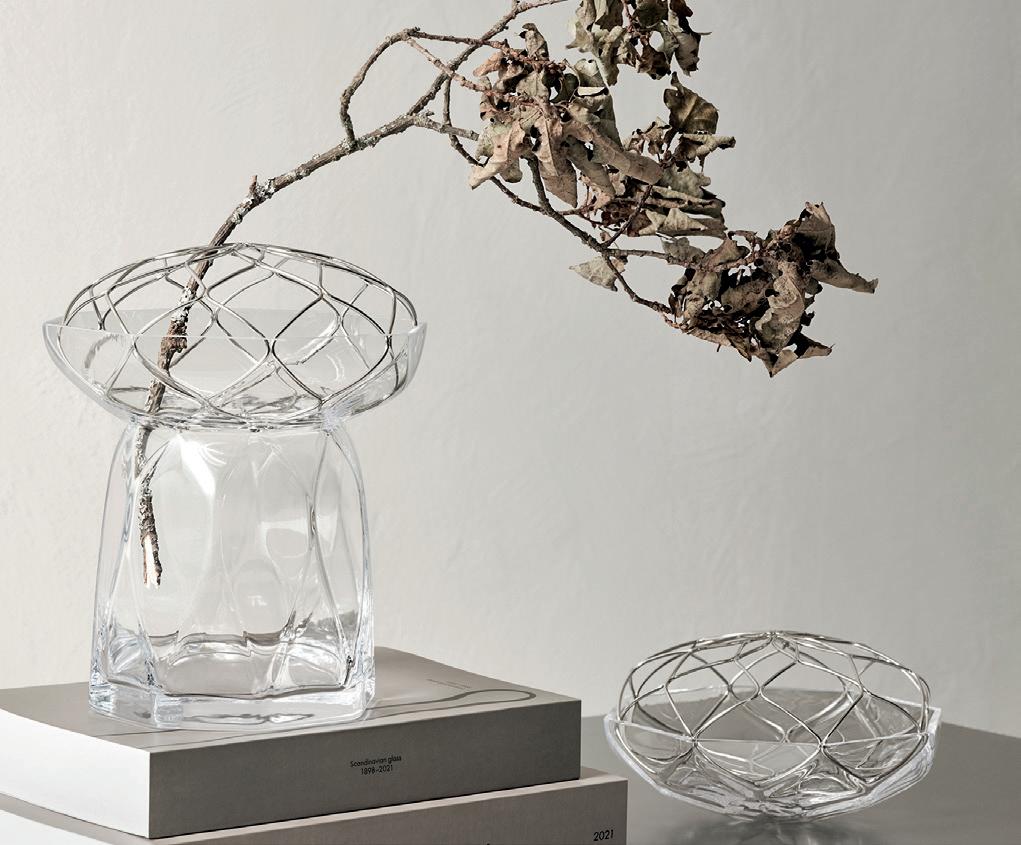
The Bloom vases from Orrefors see glass and metal unite. The glass bottom of the vase is mouth-blown and has the same motif as the organically shaped metal top. With Bloom, you can easily shape your own arrangements with any flowers or greenery from the garden. The vase is available in two sizes. Designed by Lisa Hilland.
Meanwhile the Lumiere Candlesticks by Ingegerd Råman are minimalistic and sharply unites the crystal-clear transparency of glass and the mirror-like metal.
www.orrefors.com
metalware is hugely practical in a HoReCa setting. It’s hard wearing, relatively easy to look after, and can be used with heat, cold and everything in between.”
Agreeing with Sambonet and Beatriz Ball, Josh says there has been a lot of innovation in the look of metalware.
“Right now, it’s (metal) very on trend, and buyers are definitely going for it”
Josh Rammell, Utopia
of the venue, and it’s versatile, offering lots of different ways to serve or dress up food.
“As well as the distinctive looks,

“You’re seeing different finishes, such as vintage or distressed, satin, polished and others, as well as different
colours, using PVD coatings to create a real point of difference and a dynamic presentation.
Indeed, with PVD, manufacturers can take the base product and give it a drastically different look. Another trend is to use different metal making and design techniques in the one product. For example, our seafood tower combines hammered metal with a mirrored design finish to create a real showstopper.”
With so much choice on offer in terms of product and finish, metalware continues to thrive – take a look at some options below from decorative to serveware to flatware.
Beatriz Ball’s new Encanto pieces boast beautiful colourways —soft lavenders, delicate blushes, calming turquoises, and stunning jewel tones, trimmed in gold. Colours also include such yummy sorbet tones as pistachio, and two delicious shades of pink. Additional hues of pale blue, white, and a deep, rich red round out the brilliant palette. Shapes include frames, fluted bowls, cracker trays and heart-shaped dishes. Wholesale.beatrizball.com
Beatriz Ball’s most popular ranges are the Soho, Vento, and Organic Pearl collections presented in signature hand polished metal. The newly introduced Encanto line accounted for the lion’s share of metal sales at the brand’s first market of the summer in Dallas.

The ability to connect and create is a gift, and Ana Roquero does this through design. Cookplay’s CEO gives Tableware International’s editor Mairead Wilmot some insight into how she creates collections that speak to the heart…


For Ana Roquero, design is inherent. She turns her hand to a tabletop collection as quickly as she does flatware. The object, however, always remains the same; to innovate, but to innovate in a meaningful, useful way.
With a background in industrial design, Cookplay’s CEO and chief designer spearheads an enigmatic approach to product which has resulted in her collections being used in some of the most innovative restaurants around the globe – think Paris’ two-star Maison Rostand, Barcelona’s threestar Disfrutar, London’s three-star Gordon Ramsay – the list goes on.
Cookplay began life 10 years ago with a simple ideal, Ana wanted to create a brand which responded and adapted to gastronomic trends. Crucially, Cookplay wanted to do it in a way which held the principles of innovation, design and sustainability as fundamental cornerstones of their design process.
“These aspects are totally linked to quality,” Ana tells Tableware International.
Tears which Ana describes as “a milestone” for the brand.
The team wanted to mark a decade in the hospitality market while simultaneously paying tribute to their inaugural series.
“Tears is an evolved redesign of what has always been our iconic collection,” Ana reveals. “It is never easy to redesign such a characteristic and recognised shape but I introduced surface textures that I had designed 10 years ago, recovering my drawings from that time, and the result has been very genuine.”
Keeping in step with market demands, Cookplay has also designed Eko – a biodegradable and compostable line for the hospitality market. In imagining the concept for Eko, Ana explains Cookplay was responding to the sector’s need for the replacement of single-use plastics.
“We looked for sustainable materials to replace single-use plastic pieces. After several trips to Japan researching new materials, we pioneered the use of sugar cane, a 100 per cent biodegradable
“Design is my passion, I like it in all its dimensions”
The Cookplay design ethos is so involved and detailed the company launches just one collection each year.
“It takes a long time to detect a new need, work on the design concept and different formats, produce it and bring it to the market,” Ana explains.
“It could be said the beginning is the creative part, everything is designed and drawn manually. Then it becomes technical, all the information is modelled in 3D for prototyping with the first samples and returns to be handmade –although our pieces by their formal complexity are porcelain injection, which requires more technology.”
Ten years on from Jomon, Cookplay’s first collection, comes
and compostable material. We also incorporated it into the design of our porcelain collections, offering a product that is not only sustainable but also innovative.”
Cookplay has also developed the Rama cutlery line which they describe as joining “functionality and innovation with a fresh and brave approach into the cutlery field”. But was approaching a cutlery collection any different to tableware, we ask? Not at all, says Ana who approaches each project with the same eye for detail.
“My background as an industrial designer has always led me to design under a briefing that serves as a guiding thread. My creative phase is very open, that is, I can design a collection of

tableware as well as a collection of cutlery. In this case, my brief was to design cutlery that would adapt its shape without losing its attractiveness for right and lefthanded use. I hope I succeeded!”
Throughout the course of her career, Ana Roquero has found herself designing a myriad of pieces from furniture to other consumer goods, and she has enjoyed it all but it is in the table and kitchenware field she currently feels happy.
“Design is my passion, I like it in all its dimension. I adapt very well to the parameters of different typologies, and I have to say that I have designed throughout my time as a consultant an endless number of different consumer goods and furniture. Now I find myself very comfortable with kitchenware pieces because they have a real scale format very adapted to the hand and to the object-use manipulation which is something that interests me a lot nowadays.”
The question must be asked,
however, does she consider herself to be, first and foremost, a designer or a business owner?
“I have always pursued to be a good designer, to leave a mark as a designer. At each stage of my professional life design has been the differentiation, and the backbone, but to make each project possible, I have had to become an entrepreneur.”

Interestingly, Ana doesn’t take inspiration from the Michelin-star chefs who use her products, (although she does enjoy the work of chefs such as Alvaro Garrido from Mina or Julen Baz from Garena), but likewise, she doesn’t think they take inspiration
Ana Roquero on her favourite collection…
“I always like the latest collections because they are
closer to my latest thoughts and evolution as a designer, but there is one that I especially like for its tenderness, which is more distant from a dish and resembles an

from her. Instead, she designs with a particular purpose in mind, she is responding to market demands as she sees them.
“I have always pursued to be a good designer… but to make each project possible I have had to become an entrepreneur”
“I like to know about the chefs when I work with them in my photo shoots, they bring me closer to their creativity and work philosophy. Some are more theoretical, others more pointillist, others more perfectionist, others messier ... it is a luxury to know that side of their personality that you never get to know eating in their restaurants.”

“I don’t think I am inspired by the chefs, nor do I think that they are inspired by my collections. It is rather that we found the same look, and the same way of understanding the dish. I design my own collections with a particular purpose, with a personal
response to a specific need, while the chefs create their dishes and then afterwards, they look for the best support. They look for the piece that best suits not only the requirements of the dish, but the rest of the dishes on the menu, the material of the table or tablecloth, or even the design of the restaurant and of course, their personal taste. It is in this search process they find my designs.”


The concept behind the Casa Maricruz brand
Casa Maricruz is committed to rescuing Spanish traditional artisans on the brink of disappearing in a globalised world. The brand merges traditional Spanish craftsmanship with a contemporary twist, offering handmade ceramics, glassware, wood, candles, and linens. With a focus on sustainability, local production, and zero waste, Casa Maricruz strives to safeguard Spain’s cultural heritage and engage with a youthful, contemporary audience. Its mission is to showcase the elegance of Spanish craftsmanship while nurturing a greater appreciation for these enduring traditions.
How Casa Maricruz began life
Casa Maricruz began when María Estrada, after living in Los Angeles for over seven years, recognised
When María Estrada founded Casa Maricruz from her base in Los Angeles, the Spanish native was driven by a keen sense of wanting to capture the quintessential gatherings and meals which are so central to her cultural identity. Tableware International learns more about this unique collective which seeks to bring Spanish craftsmanship to the masses
the uniqueness of Spain’s cultural heritage and its distinct identity. Missing the Spanish gatherings and meals where people lingered for hours in sobremesas, she felt the urgency to preserve these traditions that were on the verge of disappearing. Inspired by the rich history of Spanish artisanship and the vibrant culture of Mediterranean hospitality, she founded Casa Maricruz to ensure these traditions are celebrated and preserved.
The typical customer
The typical customers are those who understand the value of objects with deep cultural significance and are willing to create a lasting bond with the pieces. They cherish these items throughout their lives and pass them on to the next generation, filled with memories and ready to

bring joy to new owners. These customers value sustainability, authenticity, and the rich heritage embedded in each handcrafted piece.
International distribution
The brand’s mission is to reach every corner of the world with its cultural heritage and artisanal legacy. It aims to share the beauty and craftsmanship of Spain internationally, expanding its reach and connecting with new audiences who appreciate high-quality, handcrafted objects.
HoReCa focused work Casa Maricrus caters for HoReCa too, having completed projects for renowned hotels like Mongibello Ibiza and Zel Costa Brava, and Michelin-starred restaurants such as Mugaritz. The brand says it is always open
to beautiful collaborations and soulful projects that align with their values.
Contact the Casa Buyers and retailers can contact Casa Mricrus through its website, via email, or through social media channels, where they share not only about their artisans but also about the popular culture and traditions of Spain. They are always excited to connect with those who share their passion for Spanish craftsmanship.
They have also partnered with The Hērēs Guild to enhance support for the growing US-based business. The brand’s handcrafted products are now displayed at 41 Madison in NYC, allowing US retailers to experience the craftsmanship of the collections first-hand. For enquiries within the US, please contact casamaricruz@theheresguild.com


Shape and ceramic qualities – those have been David Queensberry’s key drivers throughout his career in the tabletop industry. He has certainly lived a life – (there is even a newspaper article about him – at 95-years-old – taking down a mugger outside his front door in April of this year).
His industry experiences are unmatched.
Tableware International’s Mairead Wilmot sat down with the designer at his London home…
It started at Eton – the worldfamous school frequented by the likes of Prince William and other esteemed notables. The art department was run by Wilfred Blunt, (brother of the infamous Soviet spy Anthony Blunt) – and was equipped with a kiln and some wheels.
“It’s an interesting thing to say you first got interested in pottery at Eton,” muses acclaimed designer David Queensberry from his kitchen table in a leafy London suburb. “The sort of people who go to Eton become ambassadors and those sorts of things… I suffer from dyslexia which slightly inhibited me in some ways academically.”
Born in London, David Harrington Angus Douglas, the 12th Marquess of Queensberry was born on 19 December 1929, a stone’s throw from Westminster.
“Being Irish, I’m not well versed on titles,” I tell the man better known as one half of design duo Queensberry Hunt. “I’d leave it that way,” he quips.
Becoming David Queensberry
“I really got somehow to think pottery isn’t all about the wheel, and Bernard Leach, and crafts”
After Eton, David went to the Chelsea College of Art and then Central Saint Martins “which was very into pottery”. At that time, he says, Central was run by the noted potter Dora Billington. “She had escaped Stoke on Trent by becoming the teacher
of pottery at the Central, and that’s where I first really got into ceramics,” David, now 95-yearsold, recalls. Shape has always been his passion, shape and ceramic qualities.
Ceramics at art college was was centered around throwing on the wheel, David remembers, and was dominated by the influence of Bernard Leach (the British studio potter and teacher).
“I met interesting people there (at the Central). In particular, the famous artist, Eduardo Paolozzi –we became friends and remained so until his death. Pottery isn’t all about the wheel, and Bernard Leach, the pottery industry in the post-war period was booming in England – I’m talking about the ‘50s, because there had been a ban on making decorated pottery all through the war – you could only make basic pieces.
“It was accepted we needed plates, but you didn’t waste time and money putting flowers and things on. Decorated pottery only came back in the ‘50s but I began to wonder more and more about the industrial way in which ceramics were made.”
Post war, business was booming. David’s (who never saw action but was conscripted to serve in the army of occupation) first trip to Stoke on Trent was on his motorbike when he was “22 or 23”. Using a family connection – (his grandmother, an interior decorator, had worked with Sir Ernest Johnson and wrote to him pleading her grandson’s cause – the Johnson family were considered the ceramic family of the 20th century).
“I was quite good academically in sciences so said he could get me a job as a laboratory assistant in the tile factory – so my first job was in
the Johnson Tile Factory. That’s how I got into the industry.”
At the Johnson Tile Factory David had access to a workshop which he used in the evening, and after a while he spread his wings.
“After a period, I left that job and started doing my own stuff, particularly with a company called Crown Staffordshire China. It was one of the many familyowned companies in Stoke. It was a big industry and very, very successful.”
Crown Staffordshire China was owned by Sam Green.
“He thought contemporary was going to grow. And of course, he was right. He gave me the opportunity to develop, (and I’ve still got odd bits), Queensberry China.
“Then I had the problem of getting it made on the factory floor and trying to sell it!”
David managed to get Queensberry China into Heals on London’s Tottenham Court Road, a shop which supported contemporary designs.
“There was a hell of a lot going on in modern design and it really stemmed from architecture and great architects like Mies van der Rohe,” he remembers of the time.
From Crown Staffordshire China, David found himself working for a company called Midwinter.
“It was run by a guy called Roy Midwinter who inherited the family business. He had been a
pilot in the war, and he turned the Midwinter factory into a contemporary one. He proved there was a fantastic market. Everyone else then started to copy him.”
Midwinter was David’s first success – in fact, it was hugely successful. “It looks pretty awful to me now,” he says truthfully. “It came out in the 1960s. I did the design and the pattern. The great thing about working with Roy, he was a great promoter of design.”
Midwinter was later sold on and eventually became part of Wedgwood.
The (disasterous) interview
“He knew all about me, I had everything he didn’t like, amongst other things I’m upper class, I had a title, all the sorts of things that put certain people off!”
By 1956, David was living and working in Stoke on Trent.
Midwinter was moving into serious production, and he was becoming “modestly well-known for contemporary style”.
While at Stoke, he was
“Would I say I’ve had many failures? Oh many. What I find the most curious thing is you can have ideas about what is good design, and ideas about function, but what you cannot be clear about is how the market is going to react, and many people I’ve known in the business agree with me.”
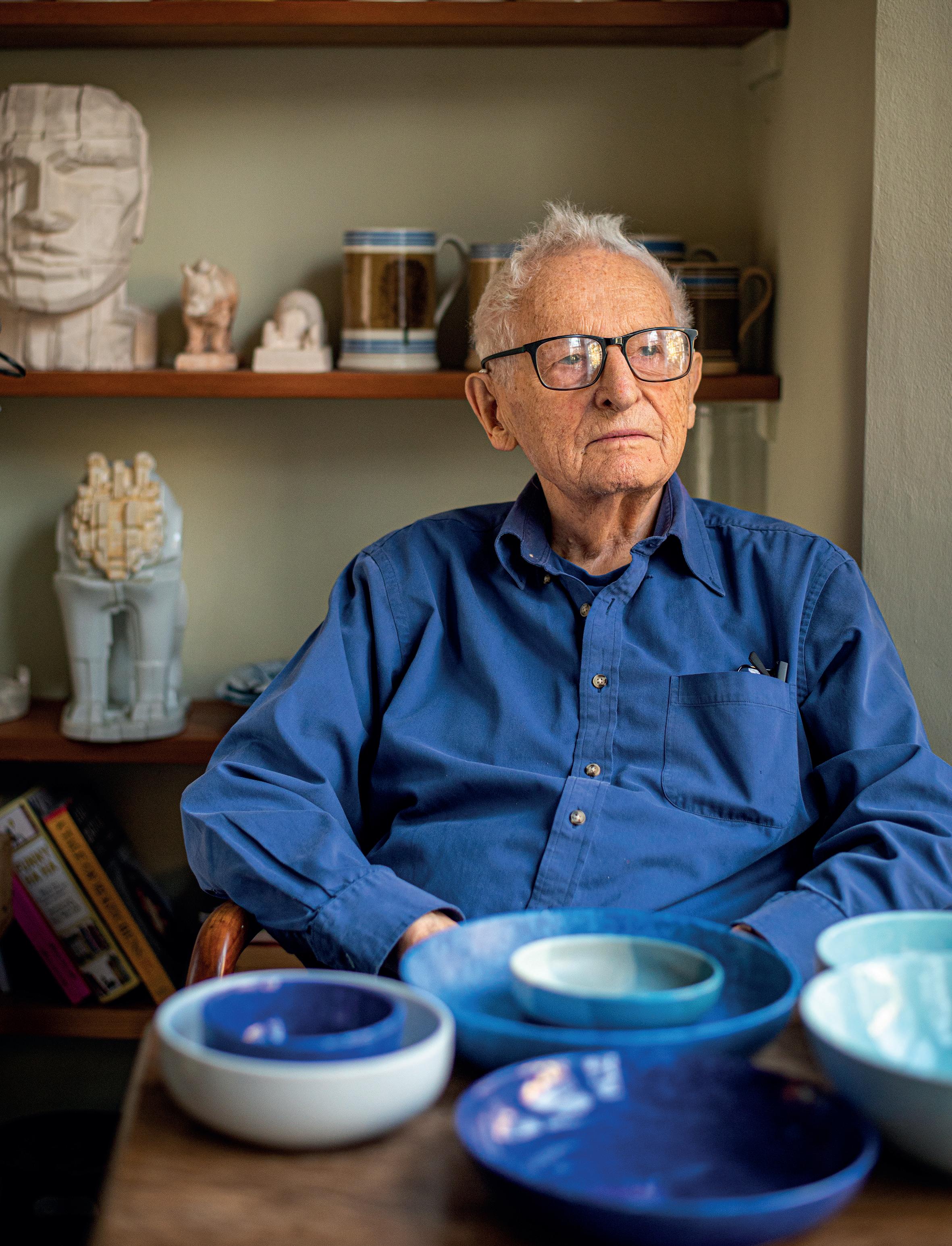
contacted by Peter O’Malley who worked at the Royal College of Art. “He was very technically minded,” David says of the former Etonian. At that time, the ceramics department at RCA was run by Bobby (Robert) Baker who David didn’t see eye-to-eye with, (“I had tried to get into the college, and Bobby Baker turned me down! – so I had already had a run-in with him”.). Bobby Baker and David Queensberry were very different animals. According to David, Bobby had close ties to Stoke on Trent and “had decided the purpose of the college was to produce people who would go up to Stoke and give the potters the sort of designs they thought they needed to sell to the American market, and he was closely involved with Wedgwood.
“I differed from him in that he thought the purpose of the college was to give the potters what the potters wanted. Sir Robin Darwin who ran the college began to feel that what was being done in the pottery department at Royal College was – let’s be polite – pretty unadventurous.”
This is where Peter O’Malley comes in, he contacted David to suggest he apply for the role of professor at the Royal College of Art, telling him it would be a fantastic opportunity. For his part, David wasn’t enjoying Stoke on Trent; “the idea of being in London was much more interesting than being in Tunstall”.
The interview was, by all accounts, a disaster. David was being interviewed by Dick Guyatt, the head of the graphic design department, Robin Darwin rector of the Royal College of Art and… Bobby Baker.
“He knew all about me. I had everything he didn’t like, amongst other things I’m upper class, I had a title, all the sorts of things that put certain people off!”
David, however, went into the interview armed with ideas and a belief that things needed to change. “By then I had matured a bit and got all my ideas together. I had a complete row with him at this interview and said you’ve got it absolutely wrong. What you are trying to do is give the industry what they want, what we ought to be doing is giving the industry what they ought to want, and what the market needs.”
The interview needless to say was a flop. “It was a most disastrous interview. I came back to my wife Anne and said I don’t think we are going to be moving down to London.” But David was wrong, the next day a letter arrived from Sir Robin offering him the job. “Subsequently I got to know Robin well and he said, the one thing I knew we needed was someone completely different to Bobby Baker.” David became professor of ceramics at the Royal College of Art in 1959 and remained so until 1983.
“The way in which people are eating is much more influenced by an Oriental way of living. The ramen bowl is great but 20 years ago it didn’t exist in England.”
could see if there was one person I wanted to have with me rather than against me competitively in the marketplace, it was Martin! I said why don’t we start our own little business, which was Queensberry Hunt. We stayed together until he died about four years ago.”

”I could see if there was one person I wanted to have with me rather than against me competitively in the marketplace, it was Martin. I said why don’t we start our own little business, which was Queensberry Hunt”
It was while he was professor at the Royal College he met Martin Hunt (“He was really, hugely talented. Far, far better designer than me.”). At that time professors were encouraged to have their own studios, so David was designing and working at the college simultaneously.
“I had a lot of work and couldn’t really do it all, so I said to Martin why don’t we work together. I
Of his friend and colleague, David describes him as “hugely important”, a man who did a lot of work, particularly for Rosenthal.
“The Queensberry Hunt business became such that we needed more space. It became clear to me that you couldn’t combine having your work as a professor and running a business, it didn’t work. Martin and I were getting bigger and bigger and we had to expand. At one point we had 12 people working for us. I realised for me; my interest was really more in this world rather than all the things in the college. The college was moving more and more away from industry. I quit in 1982 – I was there for about 18 years. I think, to be honest, it is much better for a teacher to be involved in the design world for the students, I think they need that.
The Royal College of Art now has virtually no involvement in commercial ceramics.”
Although Queensberry Hunt famously designed Loft and Trend for Rosenthal – along with
a plethora of others – one of the earliest designs considered a triumph was their work on Concept for Hornsea Pottery, founded by brothers Colin and Desmond Rawson.
“The Rawson brothers came out of the army and decided to start a pottery. One of them was fantastically clever technically, and they built a factory and started to make the most interesting contemporary ceramics. They proved the Stoke on Trent potters hadn’t got it all right. They said to me once, “we’d have never done it if we’d have been in Stoke, everyone would have told us that wasn’t what was wanted”. They became a bit of a model, and the Stoke on Trent potters started to copy what they were doing. Hornsea was definitely successful for Martin.”
David and Martin had a long professional relationship and friendship. “Martin was very much more hands-on design. He had his own studio down in Burnham-on-Crouch because he had a sailing boat moored in the river. He used to come up to London once or twice a week, but all his work was done in his studio and that worked quite well. He needed to come up to London, but I’d also like to think in some ways he needed me.”
Rising with Rosenthal
“Philip Rosenthal… He was the most amazing guy”
Queensberry Hunt did a considerable amount of work with Rosenthal and that relationship began when David reached out to Philip Rosenthal via letter.
“The biggest thing for us, and for me, was when I went to the Royal College, I was very much aware of a company called Rosenthal who were very well known for modern design. It had been taken over by Philip


Rosenthal, whose family owned it. He was the most amazing guy. He was doing things and employing the most fantastic designers like Tapio Wirkkala. I wrote to him and said I admired what he had been doing and asked if I could visit to look over his design department and meet with him and I got an incredibly positive response.”
David flew to Germany and Rosenthal sent a Mercedes to pick him up, which would have been a novelty at the time. “We really hit it off and I worked with them for about 40 years, and I would say a lot of my students have worked for them.”
“I could see how talented he was, and we became Queensberry Hunt Levien”
For a time, designer Robin Levien joined David and Martin, becoming the successful Queensberry Hunt Levien.
“In the 1980s Robin had been a student of mine in the Royal College and we had so much work that I suggested he come work with us. I could see how talented he was, and we became Queensberry Hunt Levien. We stayed together until about the turn of the century, 2000. We were the old boys and Robin, understandably, wanted to do his own thing and he’s very successful with Studio Levien.”
David credits Martin and Robin with being excellent designers, far better than himself. Much of his talent, however, lay in reading the market and being able to apply that commercially.
“My skill has been much with ideas and what the market is interested in, but in design the people who have worked with me – Martin and Robin – have really done great things. The most successful design we have ever done was something called Trend. That was Robin’s design but my concept. When we were working on Trend everything was sold in sets. If you were getting married you were

told you needed a dinner set, the last thing anyone getting married now would want is a dinner set comprised of 36 pieces! There were two vegetable dishes with lids, the idea of making potatoes and putting them in an idiotic dish with a lid on it, and then taking it into the dining room table and then putting it on the table! I said the future is not to do dinner sets, people don’t want it. It was partly because I had done a trip round Germany and looked at the shops, and at what people were selling, and I remember coming back and saying the dinner set has had its day.
“This was years ago. Trend was then developed because it was putting together pottery that would work with the way people were living, not with the way the people who made it thought they ought to buy it.”
Eduardo Paolozzi and the Wedgwood plates
”The trouble is, I got divorced a few times which means I’ve had a to buy a lot of houses”
The walls of David’s house are adorned with art, both ceramic and painted. “The trouble is,” David says, referencing his house. “I got divorced a few times which means I’ve had to buy houses. This is a rather pokey place; I did have a nicer house.”
The house, of course, is lovely, but one standout element is an

assortment of colourful plates on the wall, credited to the famed artist Eduardo Paolozzi who happened to be a good friend of David’s.
“I sold the idea to Wedgwood and they are now rather valuable,” he muses about the plates which are a sophisticated patchwork of extraordinarily vibrant colourways. “Things were much more difficult in those days. I persuaded Wedgwood to do this range with Eduardo but we had to work on the designs in our studio. We built them (the plates) up out of decals which meant you had a collage, and then Wedgwood developed them into a single decal so the whole pattern is one decal. But when we were developing the designs for Eduardo, we were having to cut them up.”
Made in 1970 in Wedgwood’s Staffordshire base, the plates were produced in a limited edition of 200.
“What I find so odd is people might spend £50,000 on a kitchen and then buy white Ikea tableware”
David believes the most interesting work in tabletop is coming from the HoReCa side of the business these days. “The interesting design is not coming from retail, the retail trade has collapsed. What I find so odd is people might spend £50,000 on a kitchen and then buy white Ikea tableware. It seems to me tableware is not important.”
He continues: “The interesting work will continue to be done in the hospitality area, both in terms of food and environment. The sort of things available now are so totally different to when I was younger.”


Montgolfier

With weddings firmly on her mind thanks to her son recently getting married, Valda Goodfellow gives us her top dinnerware choices to make the perfect scene-stealing wedding tablescape…
The big day… no, I don’t mean the general election, although by the time you read this, it will all be over for us in the UK! I mean wedding days.
Wedding catering is at the forefront of my mind as my son got married recently and whether you are a 5* hotel, a swanky restaurant, or an event caterer, weddings of all tastes and sizes are big business.
something to look forward to.
For hotels and venues across the country, wedding season is a godsend, and a curse. Some will do multiple weddings a day over a weekend, bringing in massive revenue and equally massive challenges of staff availability, and ever-more demanding customers. In the UK, weddings seem to be getting bigger in scale, so much so they are
“For hotels and venues across the country, wedding season is a godsend, and a curse”
Now that we are half-way through a dismal year of wars, political instability, rising costs and terrible weather, the catering sector in the UK has taken a battering and is in dire need of
more like a blockbuster film production than a sacred and poignant moment shared by a loving couple. Some weddings are not even limited to the big day itself. They are becoming a
festival of events, culminating in the main attraction. And the dynamic that is driving this is Instagram, or social media in general, with competition rife for the most beautiful, the most sumptuous, the most creative and the most ‘liked’. It is no longer enough just to get married, now you have to be seen doing it, by half the world.
The more photogenic the venue, the bigger the appeal and the price tag; and, of course the more spectacular the food, even more reason to keep posting those images. This is not only important to the happy couple but also to the venue itself. Social media feeds reputation and demand, so event organisers are incentivised to ensure their reputation is maintained.
Over the past few years, we have seen a huge increase in

Founded by Paul and Valda Goodfellow, G & G Goodfellows is a creative design & distribution company with a showroom in Little Portland Street. Offering a truly hands-on service, Goodfellows passion is to bring new and exciting, bespoke food presentation concepts to the UK’s culinary scene. As well as offering a wide variety of the world’s best branded tableware and more.












demand for tableware specifically to service the wedding season. The style of product depends on venue, or in some cases can be event-themed, but this tends to be for niche-markets or for specific cultures. Some of the biggest and most joyous weddings in the UK are held by the culturally rich Indian community and they tend to stick to their own traditional food.
There is also a big trend of wedding parties being held in casual venues like country barns or large tents, with the focus being on the nature, creativity and fun.
to give you my own top picks for the wedding season.
At number one, it has to be the white plate. Dress it up or dress it down to suit the style of wedding, this stunner will never go out of fashion and will see you well into next season. But white doesn’t have to be boring, so my pick would be Montgolfier’s Lapilis Charger Plate. Sophisticated, with an eyecatching detail which means the plate will also be a star of show. The trick with white at a wedding, is not to let it blend in with the tablecloth, of heaven forbid, the bride’s dress! This beautiful plate
“Narumi’s Kintsugi-style plate would be a showstopper at a wedding… this scene-stealer is the guest who turns every head with her effortless sense of style”
For those with more elevated tastes, hotels still account for the majority of bookings. They are geared to serving and accommodating large groups of people at one sitting, and their style of service will be in keeping with the surroundings.
We obviously provide for all demands across our amazing range of brands and styles. So, I thought it might be interesting

Valda’s top 5 for a gorgeous wedding table

two would be glass. The ethereal nature of glass means it will be light, playful and if you pick the right piece, will look picture perfect. Take this piece from Studio Mattes, the Craquelle plate is like a shimmering pillow for a gorgeous creation to nestle into. The fact the plate is elevated means the food seems to float, and the crackled effect in the glass adds a 3D dimension so the glass doesn’t just disappear into the table. All the guests will be happily posting away on Instagram with this beauty!
Montgolfier
Lapilis charger plate
Studio Mattes the Craquelle plate
Costa Nova Pearl range
Costa Nova
Beja range
Narumi Kintsugi-style plate
Beja range in number three spot. This beautifully made stoneware range comes with a jaunty dark blue edging which just elevates it from a normal casual-dining plate to a true country classic.
will act as the perfect canvas for any style of food and will raise off the table to properly frame the food. Even though Montgolfier produces stoneware, the design and glazing lend themselves to traditional five-star settings. There should always be an element of surprise, and you really need to break up the white with something equally stunning, so my vote for number
For the casual wedding, we are seeing demand fall into two themes, either white with a small detail in a classical colour, or a subtle shade of colour with an interesting shape detail. Last year the top pick would have been Costa Nova’s utterly romantic Pearl range. The pearl-shaped edge detail providing the ideal wedding accessory transposed to the table. This year, with the country-look theme coming in strongly, I would put Costa Nova’s
And for my final pick, I am going back to white but with a true romantic air of undoubtable beauty. Narumi’s Kintsugi-style plate would be a showstopper at a wedding. Classic but contemporary in its feel, it lends itself to either a delicate starter or sensational dessert. For me, this is my favourite because, unlike the bride who is trying to get 50,000 likes by trying too hard, this scene-stealer is the guest who turns every head with her effortless sense of style.
As for my son’s wedding – it was perfect. A small affair with close friends and family. Good food, lots of Champagne, and the venue was a club in London which we are members of. Everything was chosen because it had meaning, and we were too busy enjoying ourselves to put anything on Instagram!


For nearly 20 years, design team Paul and Kit deBretton Gordon have shaped the stainlesssteel products we use in our homes, from award-winning kitchen knives to iconic teapots. Their design ethos is built upon creating functional, timeless products that will last a lifetime. “We avoid following trends and fashion; we design products that will have longevity and will be enjoyed for many years,” they tell Tableware International, as we learn more about this quintessential British brand
Talk us through the design of new ranges, how involved and handson are you in the entire process?
We are a small design team and are both very much involved in the process from start to finish. We both enjoy the early concept stage where ideas are generated and developed with sketches. We believe sketching is a very important skill for designers, it transcends language barriers which can be extremely useful when visiting overseas factories or to communicate an idea quickly. We always develop ideas on CAD (Computer-aided Design) and create various iterations of a design. We have several 3D printers to enable us to review our ideas further. It can take several weeks or months to finalise a design.
In terms of the product development stage, our factory partners are family run, so we are in direct contact with key people who share the same care and attention to detail that we place so much importance on. We also thoroughly test our products and regularly take samples home. We never compromise on the function of a product for the sake of aesthetics. Collaboration is very important to us, and we have regular design meetings to allow us to share our ideas to the wider team. Often the best ideas come from these group discussions especially when we are problem solving.
Do you feel pressure to continually innovate?
Paul: It’s great if we can build innovation into our designs. We strive to surprise with small yet significant features that make things nicer and better to use. Our Book Knife Block is a good example of this, we designed the curved top of the block to allow the knives to slide into position effortlessly.
Robert Welch is obviously well known as a cutlery provider but there is so much more to the brand (drinkware, decorative, bathroom etc), where does your passion lie, what are you most excited about designing?
Paul: While I oversee the whole of the studio’s output, the area I have most hands-on involvement is in kitchen. Signature knives and utensils were the first major projects I worked on almost 20 years ago.
We have recently launched our new range of kitchen knives – RW Professional. Having a keen interest in cooking has given me valuable first-hand insight into food preparation. I really enjoy
to the entire Drift range. I wanted to design something people would want to pick up and use as well as a statement on the table. As well as creating a beautiful piece in stainless steel, the function was very important. We were able to make a non-drip spout and a stay cool handle - features not often seen on metal teapots!
The Robert Welch name is synonymous with stainless steel and metals, are you ever tempted in your design journey to introduce and experiment different materials?
Stainless steel is such an amazing material to design for. As designers, we can create stunning forms
“We strive to surprise with small yet significant features that make things nicer and better to use”
Paul deBretton Gordon, design director
problem solving and the challenge of designing technical “engineered” yet beautifully simple products that work every bit as good as they look.
Kit: Our cutlery designs now total 41 different patterns. Our most popular is Radford with more than 70 pieces and we were excited to launch four more patterns this year. Cutlery is the main category that I look after but with our diverse product range it means that we can be creative in other areas.
One of my all-time favourite projects is the Drift teapot. Sketching the initial shape came very easily. The fluid lines of the grown-on handle and the shapely form of the body all add to the overall organic shape which was key
using advanced manufacturing techniques, often challenging our factories to explore new methods to bring our visions to life. Though we have mixed wood and ceramics into some of our ranges, stainless steel is always going to be at the heart of the Robert Welch brand. It’s exciting to think what we might do with it next!
What serves as inspiration when imagining a new range?
Inspiration can come from many different sources, sometimes when you least expect it. We enjoy visiting museums, looking at architecture especially in different countries. We both love the Scandinavian design style as did Robert Welch himself.
Sometimes the smallest detail can elevate a design, one of our newest cutlery designs, Kemble Texture, features a textured accent running along the length of the handles, the inspiration for this came from jewellery and watch bezels. The extra sparkle on the table really adds to a formal table setting.
What are your non-negotiables as a designer?
We design products to last a lifetime - that means we do not compromise on quality and function. We offer a lifetime guarantee on most of our items, so we go the extra mile to ensure that we can stand by that.
The tabletop market is such a busy place, how do you ensure Robert Welch Designs stands out from the crowd? We design with a meticulous eye for detail, and look for gaps in the market; what is missing? We also like to re-invent heritage designs and add our own Robert Welch twist. We recently launched our version of the classic English Fiddle cutlery, we looked carefully at the overall balance and proportions to make this a Robert Welch interpretation of the old Parish pattern. We are constantly exploring what we can do with stainless steel and pushing the factories to realise our designs.
Finally, what next for Robert Welch Designs?
As well as continuing Robert’s design legacy, we would love to see the Robert Welch brand growing into new markets and further develop our collections across all areas. This will safeguard the legacy and ensure the brand goes from strength to strength.
“We never compromise on the function of a product for the sake of aesthetics”
Kit deBretton Gordon, head of design


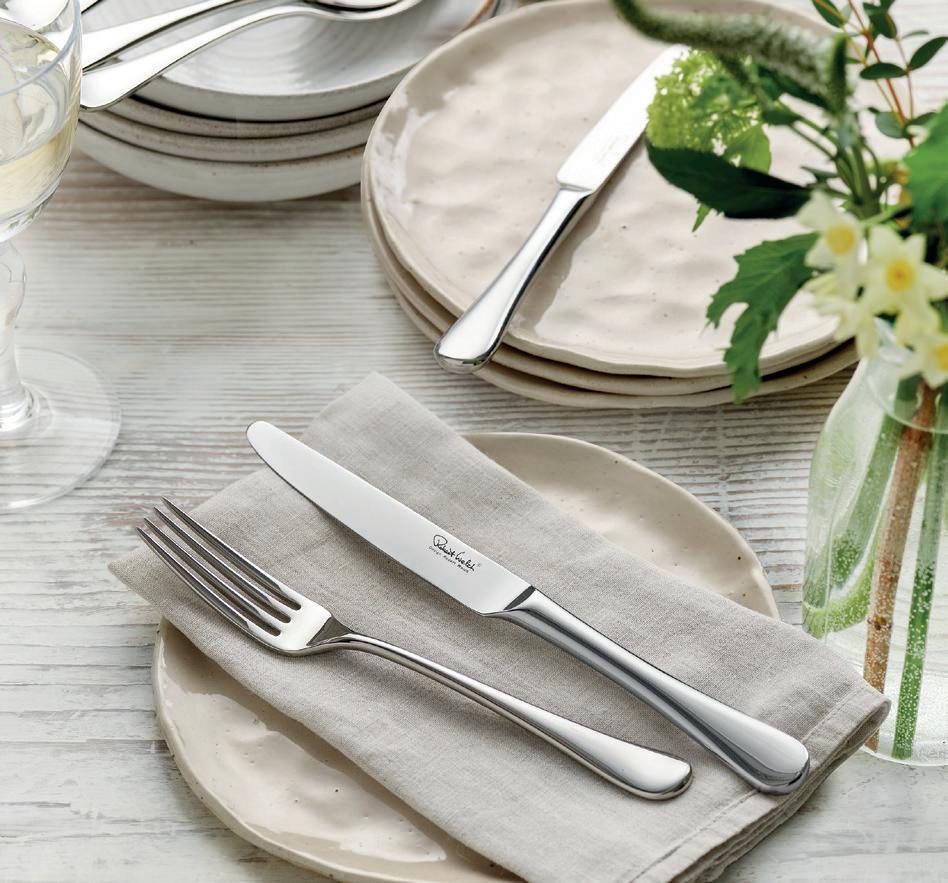


The FEA Light Equipment and Tableware Forum 2024 was held recently at Whittlebury Hall, Northamptonshire. This is the annual event where suppliers showcase their latest launches to an audience of customers, distributors and media. The Forum has been steadily growing over the years and the 2024 edition attracted a record number of delegates.
While many exhibitors and delegates acknowledged that the market had been challenging, there was also plenty of optimism about the future – despite fears that prices may have to rise towards the
end of the year due to increasing shipping costs. Although price is an increasingly influential factor for buyers, operators are looking for new ideas, and for many businesses supplying the LET sector the year has gone well so far. While some operators are holding back, there are encouraging areas of growth –the fast food sector for one.
A major change at the Forum was that Steve Goodliff has stepped down as chair and spokesperson for the LET Group. His successor, Paula Sherlock, opened proceedings alongside FEA chair Paul Anderson. They welcomed delegates and

introduced some of the new features for 2024 – including ‘plug and play’, with exhibitors being encouraged to demonstrate their latest gadgets and gizmos. That meant delegates were treated to a variety of sights, sounds and tastes as they met the suppliers… popular offerings included pea sorbet and a virgin mojito.
Paula Sherlock commented, “This was a great Forum and there was a really good buzz in the room. The variety of new products and the introduction of the plug and play demonstrations certainly stimulated lots of interest.

Feedback has been brilliant, from both exhibitors and delegates.”
16 exhibitors
81 delegates
21 distributor companies
£1,200 raised for St. John Ambulance at the Awards Dinner (another new record).
3 music channels at the AwardsDinner silent disco
sectors, attended the Forum on a factfinding mission for her members. She was impressed, too, saying, “It’s really well organised, well attended, lively, informative and everyone is very engaged.”
Lisa Munden of Lifetime Brands said, “It’s brilliant to have all these customers speaking to us – and they are very engaged. To see this many normally would take forever… we’ve attracted new distributors here – hopefully we’ll sign them up!”
The Foodservice Equipment Association (FEA) is the independent, authoritative voice of the foodservice equipment industry, representing nearly 200 companies who supply, service and maintain all types of commercial catering equipment - from utensils to full kitchen schemes. For more information on FEA visit www.fea.org.uk
One of the delegates was Rob Priest of Parsley In Time. He said, “The organisation is great, it’s a very successful format. It’s also a brilliant networking event, for both seeing colleagues and suppliers and meeting new people.”
Seema Grantham of BHETA, the trade association for manufacturers, importers, and distributors operating in the DIY, garden, housewares and small electrical
The LET Forum’s awards dinner saw Steve Goodliff win the Donald Bird Award, which recognises an individual who has gone the extra mile and had a significant impact on the light equipment and tableware industry. Steve had been chair of FEA’s LET Group for eighteen years and received his award to a standing ovation. Meanwhile, the Sales Professional of the Year award was won by Jeff Wood from United UK and the Distributor Cup went to Alliance –for the seventh year in a row!
A full review of the Forum is available at fea.org.uk

Timelessly elegant, simple and beautiful.


Designer Nick Holland recently hosted an al fresco lunch at his Porto home featuring new designs from Mesa Ceramics and Eternum.
Único, a tableware collection by Mesa Ceramics and Cento, a cutlery range for Eternum were both designed by Nick, and featured heavily in the meal which was created by talented young Portuguese chef Pedro Ribeiro. Also attending the intimate lunch was Nick’s wife Ana and Ines de Sousa from Mesa Ceramics.
Pedro prepared the five-course gastronomic feast in Nick’s kitchen. His speciality is international gastronomy with Portuguese roots, and he is a rising star in Portugal with experience in Michelin starred restaurants such as Vila Joya, Pure C and Casa da Calçada.
Nick took some photos of Pedro’s cuisine, served with Único vitreous stoneware pieces from Mesa Ceramics and Cento 18/10

cutlery from Eternum. Único was the German Design Awards Winner 2024 for Excellent Product Design – Tabletop and also the Iconic Awards – Interior Products - Winner 2024 in the category of Product Design – Kitchen and Household. And Cento cutlery from Eternum, which was the flagship range for their 100-year anniversary celebrations this year and was the Luxlife Hospitality Award inner for Cutlery in 2023.
“Único And Cento were perfect to present Pedro’s gastronomic creations and the two designs complement each other very well with pure simple lines, nice proportions and an unusual raised design detail on both collections,” Nick told us.
“It was a wonderful day to celebrate good design and gastronomy and a memorable experience with exceptional cuisine and great company.”

NIKKO COMPANY https://www.n ikko-company.co.jp
NIKKO CERAMICS, INC.( U.S.A ) https://www.nikkoceramics.com

English site QR code
From competition with own-brand high-street ranges to how 2024 has gone so far, we hear from key panellists in the business….

Are tableware suppliers fighting a losing battle in retail against ownbrand collections from supermarkets?
“It is so easy today to pick up housewares items whilst shopping for groceries. Although consumers are increasingly questioning ‘fast homewares’ just as they have done with ‘fast fashion’. With sustainability and the environment increasingly front of mind, we are more than ever giving consideration to the provenance of what we want in our homes and appreciate quality brands like Denby who have a strong sustainability credentials and a ‘buy well, buy once’ ethos. Denby was the first pottery to be zero to landfill on its process
waste, uses solar energy as a key element of its power usage and uses local Derbyshire clay amongst many other positive stories. Whilst the grocers successfully bring homewares occasions front of mind, we are finding that many consumers still appreciate good quality, beautiful pieces which last beyond a season.”
Hayley Baddiley, global marketing director, Denby
“It’s no secret that you can pick up tableware on your supermarket trip. But we’ve found this isn’t necessarily the experience that consumers are looking for when shopping tableware. Shopping tableware is like shopping homewares – it’s an experience to be indulged. Influenced by social media and the desire for stunning tablescapes, consumers want

Hayley Baddiley global marketing director, Denby

Claire Budgen commercial & marketing director, Lifetime Brands Europe

Anand Baldawa CEO, thinKitchen
more than just off the shelf product. They want the complete journey –inspiration, unique pieces and the whole story from cutlery to ceramics to textiles. This offers potential, not a problem, and this provided the platform for the complete relaunch of our Mikasa tableware brand. We have an in-house team of buyers and product designers with their fingers firmly on the pulse, and have created a brand that redefines tabletop.”
Claire Budgen, commercial & marketing director, Lifetime Brands Europe
“Competition in this product category is enormous and we are aware that many chains offer ceramic products and porcelain under their own brands. The Polish Porcelain Group is not able to compete with

Josh Rammell marketing manager, Utopia
products massively imported from the Far East. High production costs make price competition impossible. We see our chances in the high quality of our products, attractive design in line with current trends and attention to detail. As a manufacturer with more than two hundred years of experience, we honour and cultivate the traditions of manual production, including the hand-painting of porcelain, keep or recreate historical patterns in production, and cooperate with well-known designers and artists. In addition to porcelain tableware, our offer includes individual pieces of tableware, which can be completed and supplemented over the years.”
Joanna Niedziela, sales and marketing director, Polish Porcelain Grup (Ćmielów, Chodzież, Lubiana

Dean Barlow Operations Director Denby

Joanna Niedziela, sales and marketing director, Polish Porcelain Grup
THE LEADING HOME DECOR FA IR
CONNECTING THE INTERNAT IONAL INTERIOR DESIGN AND LIFEST YLE COMMUNIT Y










At the mid-point of the year, how is 2024 transpiring?
“Retail is more dynamic than ever. We continue to witness the flex and change in the way that consumers make purchasing decisions as they seek out retailers and brands that provide value in new and different ways. We feel this, and we know our partners do too, which is why we are focused on providing new innovation, mainstream brands, brand led marketing and curated merchandising inspiration to fulfil the next wave of demand. Kicking off with Ambiente, and most recently showcasing our Autumn Winter launches at Exclusively Housewares, trade shows have been a real highlight and we’ve enjoyed positive feedback and exciting conversations with customers old and new. As we cross the mid-year point we’re laser focused on supporting our customers for the golden quarter, and with mainstream brands like KitchenAid and S’well, we know we have a proposition like no other. Plus we’re looking forward to Maison & Objet in France and EK Live in September…there’s no standing still for us!
Claire Budgen
, commercial
& marketing director, Lifetime Brands Europe
“In May this year, the United Nations revised upward India’s growth projections for 2024 close to seven per cent this year, mainly driven by resilient private consumption
agency distribution front focused on the India market, we continue with our omni-channel approach, increasing our presence through offline and online. On the hospitality front, we participated in HCSA in April this year, where we networked with leadership and buyers from the hospitality trade. The hospitality segment is expected to continue growing based on sustained demand for domestic leisure travel, the resurgence of MICE, including weddings and business travel.
On the product front we are strengthening our offerings with new brand launches such as Victoria, Ravenhead and Viners in the coming month and building the pipeline for the remainder of the year. We have launched new corporate gifting offerings across barware, dining, tea coffee and décor. We are enthused about the rest of the year and continue working towards making it a record year.”
Anand
Baldawa, CEO, thinKitchen
“It seems there is more appetite for innovation in the HoReCa sector than ever, and we have seen great uptake of our new product launches

and strong public investment. The growth story is also reflective in India’s total exports which reached a record $776 billion in the financial year ended March 31 2024. This has been due to exploration of new markets, an expansion of the export basket and an increase in global capability. Merchandise exports are expected to grow in FY 25 as part of the total exports’ growth in this year.At thinKitchen we plan for short and long term for both the contract manufacturing and the agency distribution business. The contract manufacturing business continues to streamline manufacturing processes to increase speed to market and improve resource efficiency. Our teams also explore new customer bases and markets to tap into. On the

What are your thoughts on the recent news that BHS tabletop AG has fired porcelain using hydrogen for the first time?
“Denby is part of a UK ceramics industry consortium headed by Ceramics UK specifically looking at the industrialisation of hydrogen in large scale. As part of this project we have already fired Denby reactive stoneware in a hydrogen/ natural gas powered kiln, with good results. The transition to a low carbon economy obviously creates challenges for an energy intensive industry such as ceramics, and hydrogen use in one important aspect of a wide suite of initiatives that need to be investigated and embedded into our industry.
for 2024. In particular, we’re seeing really good sales for products that combine a contemporary trend with a something new and different – for example, our Forma and Core tableware collections give the on-trend matt finish a distinctive twist. In the case of Core, we’ve combined matt and gloss, while with Forma we’ve created a satin finish that is more robust than the standard matt. In both cases, the designs really stand out.
This demand for inventive tabletop presentation combined with a large number of new HoReCa openings has meant that 2024 has started very well for us – and gives us lots to build on for the second half of the year.”
Josh Rammell, marketing manager, Utopia Tableware
“The transition to a low carbon economy obviously creates challenges for an energy intensive industry such as ceramics”

A vital part of any work on hydrogen use is the supply infrastructure, and we are pleased that Denby is part of the East Midlands Hydrogen Consortium, of which hydrogen supply is an important strand. Of course, it is also possible that low / zero carbon initiatives we may be using in 2050 as an industry may not even have been invented yet!”
Dean Barlow, operations director, Denby


Undeniably tableware makes the perfect gift, so it is no surprise to see brands target gift retailers with readymade, pre-packaged items and quirky one-off pieces. We highlight just a few options for retailers who want to bolster their gift options…
over&back understands that finding the perfect gift can be challenging. That’s why all of their products come in gift-ready packaging, complete with a branded over&back box and a heartfelt thank you note from the brand. Whether you’re gifting for a special occasion or just because, they make it effortless. overback.com

“We recognise a significant growth opportunity within the wedding industry, a $70.6 billion market. Gifting plays a crucial role at $15 billion, with over two million weddings each year and many couples including tabletop items in their registries. This presents a substantial potential for expansion in the wedding and gifting sectors.”
Rachel Dietrich, senior director ecommerce, over&back

Denby has dialled up its ‘perfect for gifting’ messages on key gifting pieces such as vases, mugs, fragrance, pet bowls, coffee-drinking and serving pieces. By highlighting the many stories they know consumers are looking for in a gift such as handcrafted, sustainably-made to last, made in England, alongside targeted marketing and brand content, the brand has been able to position its ceramics as great gifting choices. www.denbypottery.com


Beatriz Ball has always viewed the gift market as an important avenue for sales in the tableware industry. In fact, they have an entire line of “Giftables” featuring smaller tableware items at special pricing and beautifully boxed that is very popular. Similarly, salad servers, flatware and glassware sales increase with the addition of gift boxes. Wholesale.beatrizball.com

The Carat 3-Piece Gift Set from Orrefors by Lena Bergström is based on a contemporary interpretation of the traditional cut glass for which Orrefors is world-renowned. The Carat 3 Piece Gift Set is an exclusive item only sold in the US. The set consists of a small Carat vase and two Carat champagne glasses, holding 8 oz, displayed in a beautiful gift box. It makes a perfect gift for weddings or anniversaries.
www.orrefors.com

with this simple but effective formula, the Statement collection from Villeroy & Boch provide lots of feel-good moments. The thoughtful and personal Statement items are a perfect gift for coffee fans, cat and dog lovers, loved ones and positive thinkers. Or for anyone looking for a little treat for themselves. The mugs are available in a gift box and there is also the option to create a set by adding a bowl, a dish and a breakfast plate. www.villeroy-boch.de
Is there merit in tableware brands targeting smaller gift retailers over larger accounts to bolster sales?
“We think so because we believe in small retailers who offer a more personalized and effective customer service. Of course, large retailers have their advantages but our products must be told and explained to help the customer make the best decision even when it comes to gifts.”

Caterina Bernabino, head of international sales retail – Sambonet Paderno Industrie, Arcturus Group
“It’s no secret that our independent customers have always been the beating heart of our business. We’re constantly in awe of their flex and change, and the experience they create instore for their customers. When it comes to tableware and gifting, the proposition an independent gift retailer can offer is unique – a treasure trove experience that provides consumers that must-have ‘found it’ feeling. We continue to support our independent partners with a stream of new launches and point of sale, for both in-store and online, that translates into compelling storytelling that captures the imagination of the consumer and ultimately converts into sales.”

Claire Budgen, commercial & marketing director, Lifetime Brands Europe


From the new Mini Vases+ to The Mug+, Rosenthal has an ideal selection of perfect gift choice for the discerning buyer.
Rosenthal's Mini Vases+ turn blossoms, buds and branches into real eye-catchers. Twelve designs, formed from coloured porcelain mass in the six new shades Mint, Coral, Mid Night, Fossil, Abyss and Lava, come in an elegant surface similar to biscuit porcelain and in extraordinary shapes. The small design objects were modelled exactly on their large predecessor vases. Meanwhile, Rosenthal has launched The Mug+: a must-have mug made of fine porcelain that’s not just for coffee lovers. Whether cold-brewed coffee, latte macchiato or hot herbal tea, Rosenthal has just debuted a new statement mug that celebrates relaxed moments and ensures perfectly tempered enjoyment. Thanks to its double-walled design, the mug is excellent at keeping cold drinks cool and warm drinks warm and of course, it comes in a stylish gift box.
www.rosenthal.de

Known for centuries, Salt&Pepper’s Muggies are a top gift for anyone. Each mug has a lovely design, ideal for all occasions. Each item is finished with a reactive glaze. This glaze generates an extraordinary variation of colour, giving each cup a unique rustic look.
www.saltandpeppershop.eu


The gift market is absolutely key for Sambonet which has a great tradition of giftware, especially with collections by designers such as Gio Ponti.
Sambonet’s new giftware and buffet line Radici, and new line of flatware Neutra, both make excellent gifting options. www.sambonet.com
Lifetime Brands Europe has collaborated with UK based artist Sarah Arnett, who was recently named artist of the year at the Brighton Artists Open House event, using her eclectic and bestselling designs across statement gifting, dinnerware and barware influenced by flora, fauna, film, poetry, architecture and travel. Lifetime Brands has also continued its partnership with the V&A museum, collaborating on a new Alice in Wonderland tableware collection which has just launched in perfect time for autumn winter gifting season. The new collection showcases the intricate illustrations inspired by Sir John Tenniel’s renowned Alice in Wonderland artwork, plus they’ve added a touch of modern flair with on-trend pastel colours and the V&A’s signature floral designs. The packaging in this collection forms an integral part of it’s gifting too, with cut out intricate details within the giftbox for a fantastic unboxing experience. Similarly, and due to its runaway success, Lifetime Brands has extended its gifting collaboration with UK based artists, Tipperleyhill, to include key tableware pieces such as side plates, cups and saucers, each of which feature Tipperlehill’s much loved quirky animal illustrations. www.lifetimebrandseurope.com


The ability to personalise products by adding initials of names or dates of important events, as well as the exceptional quality, make porcelain from Ćmielów an attractive choice for both individual and business customers looking for unique gifts. Personalised gifts can be ordered both in the company's shops and through the online shop, which carries out deliveries to indicated recipients. porcelana.com.pl

Ideal as a wedding gift, glasses from the Avant-Garde collection decorated with the inscription “Mr & Mrs” are a new proposition of the Krosno brand. Perfect for those looking for an exquisite set of wine glasses for their first toast as Mr and Mrs. Beautiful glasses for her and him will add sparkle to a special moment. They will also become a fantastic wedding souvenir, a souvenir of an important anniversary or jubilee, or your new favourite wine glasses to toast to future celebrations!
www.krosno.com


With the rise in popularity of home entertaining, desirable tableware has become key to stylish table settings. Traditional hand cut crystal is firmly back in fashion so wish lists and wedding lists now feature a diverse selection of glasses and decanters for speciality drinks.
Royal Scot Crystal supplies a comprehensive collection of glasses for gin, whisky, wine and champagne in a variety of shapes and sizes. There are barrel shaped tumblers or tall stemmed Copa glasses for gin, square or round decanters for whisky and numerous stemmed glasses for wine and champagne in a large choice of hand cut designs.
All of Royal Scot’s glassware is supplied in luxury silk lined presentation or high-quality card gift boxes, all blocked in gold. Glasses are available in pairs, fours and sixes which makes them the perfect gift for newlyweds, anniversary gifts or for anyone adding that perfect touch to their table setting.
www.royalscotcrystal.com
The Limelight Gift Set from Kosta Boda by Göran Wärff features a pitcher and the Double Old Fashioned glass from the Limelight collection. Characterised by a solid, decorated base which reflects light in the glass, this set and all the other pieces in the collection are perfect for a beautifully set table any day of the week, and they make life easy – everything is dishwasher safe.
www.kostaboda.com


Elevate your wedding table with sophistication and style by adorning it with elegant dinnerware and exquisite drinkware. Pieces such as the Woodland Place Card Holder Set, Domaine Champagne Flute Pair, Domaine Double-bottle Chiller will impress guests and make for gorgeous gifts too.
www.royalselangor.com
Is there merit in tableware brands targeting smaller gift retailers over larger accounts to bolster sales?
“There is a wide landscape of great quality retailers operating in the gifting market and the smaller, local independent gift retailer can offer something unique and convenient for gift purchasers. Larger multicategory retail however can offer variety to consumers and volumes for suppliers. At Denby we have found our presence at both ends of the market enables new consumers to discover our iconic design and unique, quality gifting pieces.”
Hayley Baddiley, global marketing director, Denby

“Smaller gift retailers are the basis of our business, and their personal and creative approach to merchandising and customer relations is very simpatico with our own. We value the interaction and feedback we receive from smaller retailers when we meet at markets. They are on the front line of sales and supply us with important info regarding consumer trends in gifting, purchasing and entertaining.”
Beatriz Ball, founder, Beatriz Ball

Timelessly elegant, in dyed-through exquisite matt porcelain, the La Medusa Mini vases by Rosenthal meets Versace are small eye catcher in every interior. The famous Versace emblem, an imposing Medusa, adorns each vase model. The graceful mini vases draw inspiration from a classic Versace “La Medusa” bag design and feature in pink, white and black porcelain the cylindrical and round forms of 10 cm hight. www.rosenthal.de

BRAND FOCUS Stölzle Lausitz
When did these collections launch?
■ Starlight, 2020
■ Fino, 2023
■ Cocoon, 2023
■ Kyoto, 2024


Cocoon

Stölzle Lausitz boasts high-quality, machine-made glasses that embody the spirit of handmade craftsmanship, despite being produced with cutting-edge technology. Starlight, Cocoon, Fino and Kyoto each bring something unique to the table – let’s learn more about the collections…
Cocoon, Fino, Kyoto, Starlight
All these collections were inspired by the ongoing trend of thin and lightweight glasses. Sleek, minimalistic design is in vogue and offers a sophisticated aesthetic for every occasion. Traditionally, such refinement was reserved for elegant mouth-blown glasses. Through cutting-edge product development and new manufacturing techniques at Stölzle Lausitz, the brand has brought this level of sophistication to machine production. For instance, you truly must hold the glasses in your hands to appreciate how light and delicate they are. Within Fino, Starlight and Cocoon you can find different wine glasses and tumblers, while the Kyoto collection offers a barware option for different drinks and beverages. Each piece is meticulously crafted to enhance the drinking experience, combining durability with an elegant touch.


Tell us about the collections’ décor / colourways / USPs?
The glasses enchant with their exceptional delicacy: featuring delicate rims, ultra thin walls, an elegantly drawn stem and flat foot disc. The leadfree crystal glasses are clear and brilliant as well as being dishwasher safe. The pulled stem is elegant and thin, making them a pleasure to hold. They are produced in Germany in an environmentally friendly way, and while they are machine-made they appear to be mouthblown.
Is the collection available in all global sales territories?
These collections are available worldwide.
What has reaction to the collections been like?
The market’s reactions to the lightweight and thin glasses were very positive. The sleek and elegant design is appreciated by end-consumers, as well as by HoReCa clients in the same way. Fino, Starlight, Cocoon and Kyoto are the lightest collections in Stölzle Lausitz’s whole assortment. They are suitable for everyday use and any occasion.
What should we know?
At Stölzle Lausitz we combine traditional glass art with modern techniques. Our trademark is stem glasses with a stem pulled to the highest perfection. We produce glasses that appeal like mouth-blown and have no seam lines or tangible transitions. With dedication to detail and a commitment to continuous innovation, we create glasses of the highest precision, quality and timeless elegance.
Visit stoelzle-lausitz.com for more.

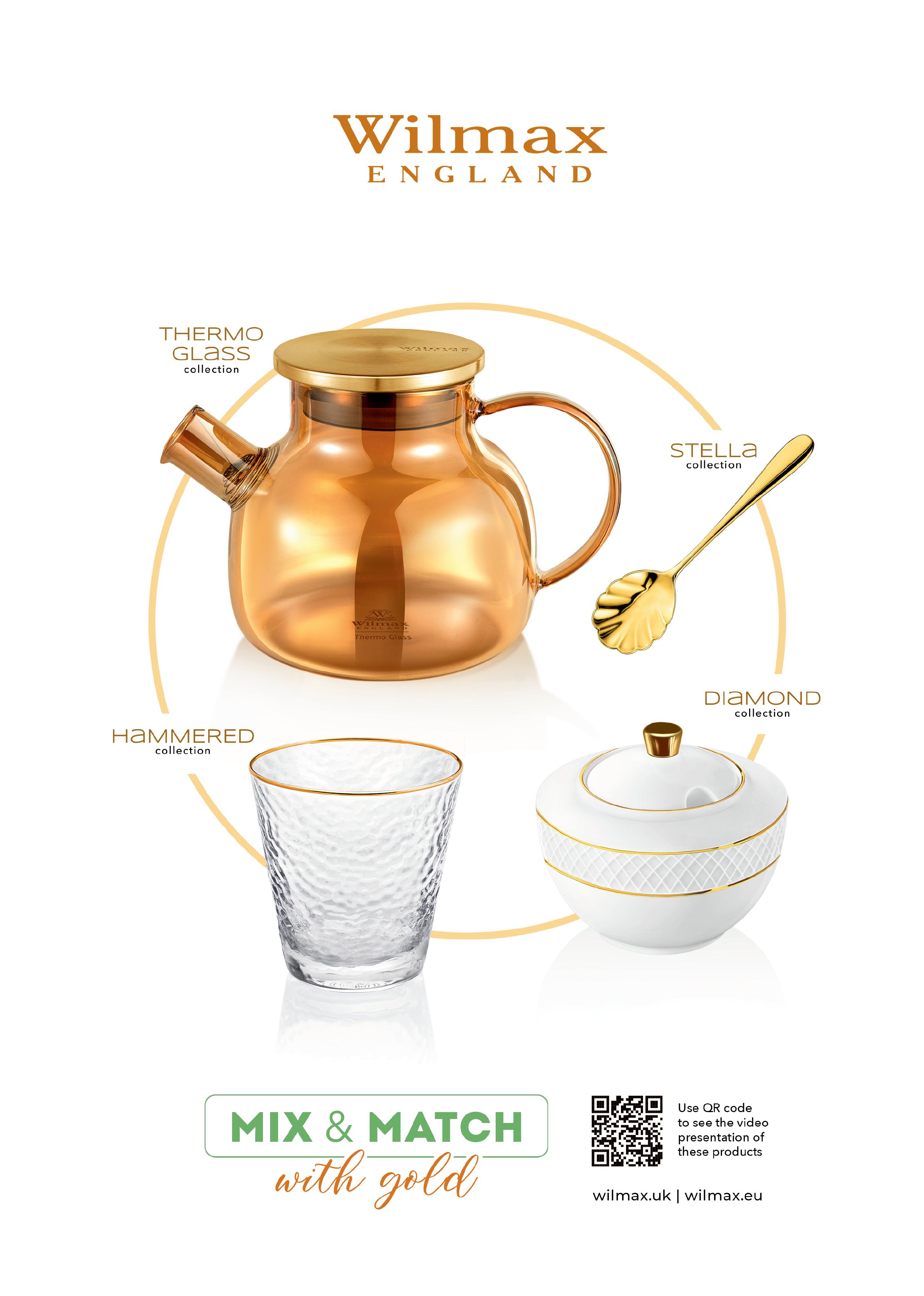


With an approach based on partnership, Kinn Collective collaborates closely with some of the world’s finest designers and makers to develop bespoke pieces for their standout client list – think chefs such as Simon Rogan and Jeremy Chan. Tableware International’s editor learns more from Mathew Froggatt
Mathew, tell us about The Kinn Collective – what is it you do?
At Kinn Collective, we proudly represent a select group of talented designers, craftspeople, and unique brands from around the world.
We’ve built a reputation for creating custom dining ranges within the hospitality sector. Our approach is all about partnership; we collaborate closely with some of the world’s finest designers and makers to develop bespoke pieces
that genuinely reflect our clients’ brands and elevate their customers’ dining experiences.
We’re more than just hospitality experts. We provide bespoke and creative solutions for the tabletop, and we specialise in supporting the opening of new restaurants, hotels, and private members clubs with all requirements both front of house and back of house.
Our extensive knowledge and deep passion for the hospitality industry, and the amazing people
■ Premium, luxury hotels and private members clubs.
■ Restaurants with an innovative approach.
■ Interior design houses.
■ Homes of private clients.
within it, enable us to source products that perfectly fit our clients’ needs. For new projects, we start with a creative brief, delivering solutions through thoughtful design and aesthetics that align with the client’s ethos and vision.

“One notable project was developing a range of cutlery for Simon Rogan at L’Enclume, which took two years to perfect”
You work specifically with HoReCa brands, give us some insight into some of them?
Absolutely. We have the pleasure of collaborating with some truly exceptional brands in the HoReCa sector.
Odd Standard from Norway is, in my opinion, at the forefront of ceramic design. Their creativity knows no bounds, and they
consistently push the envelope to produce unique and innovative ceramic pieces.
Alex Pole is a blacksmith with an impressive background in jewellery, axe, and knife making, as well as design. We’ve been fortunate to work with Alex on several projects, collaborating with amazing chefs to create truly unique hand-forged designs. One notable project was


“When Jeremy Chan was relocating Ikoyi we flew to Norway for two days to create a bespoke range with Odd Standard”
developing a range of cutlery for Simon Rogan at L’Enclume, which took two years to perfect. Alex and his team hand-forged over 1,100 pieces of cutlery that are now integral to the service at L’Enclume.
Bird & Branch is led by Adam, a true perfectionist and one of the best wood turners in the world. His woodturning designs are works of art that belong in a gallery. We absolutely love working with him, and his dedication to his craft is evident in every piece he creates.
How do you source the brands you work with?
Kinn believes in creating longlasting relationships and the bonds that we build with our makers stem from a genuine passion and
interest in their work. We seek out designers that intrigue us and are lucky enough to have some of those approach us.
Kinn was built on friendship, with an ethos centred around sharing the story of the talented designers and craftspeople we represent. The name Kinn was chosen to reflect the deep connections - similar to next of kin - as we see our designers as more than friends; we are a collective family. Some of our makers have been working with us for many years and we consider our collaborative strength to be what makes Kinn Collective so unique.
Do you work on bespoke projects?
We are lucky enough to be involved in some very exciting and


The Kinn Collective worked with blacksmith Alex Pole on a cutlery project for Michelin-starred chef Simon Rogan
Alex and his team hand-forged over 1,100 pieces of cutlery that are now integral to the service at L’Enclume.

creative projects - bespoke work is part of our day to day. We can source anything from ‘off the shelf’ to ‘made for you’
When Jeremy Chan was relocating Ikoyi we flew to Norway for two days to create a bespoke range with Odd Standard. This is what we are so passionate about, going above the norm and creating something that makes your heart sing!
Can you, or do you, pre-empt what chefs and venues might want next?
Being somewhat clairvoyant is essential when planning for projects, meetings and presentations, we at Kinn appreciate our clients are hard pressed for time and use our experience and knowledge of current trends to dictate our creative input.
On many occasions we will work from the aesthetic of the
new venue through visuals of the design, colours and fabrics. Bringing together various pieces that work in harmony with the design brief.
Finally, what next for The Kinn Collective?
The dream has always been to open a space where food, art and design engage all the senses. A collaborative studio space. A space with a private dining area, makers workshop, content creation area, food and development kitchen, art installations and showroom for all our designers’ pieces and the brands we work closely with. We have been so fortunate to connect and build friendships with many of our food heroes and to be involved in some of the UK’s most renowned restaurant, hotel and private members club openings. I guess we gotta keep pushing to make the dream a reality!
Visit kinncollective.co.uk for more.

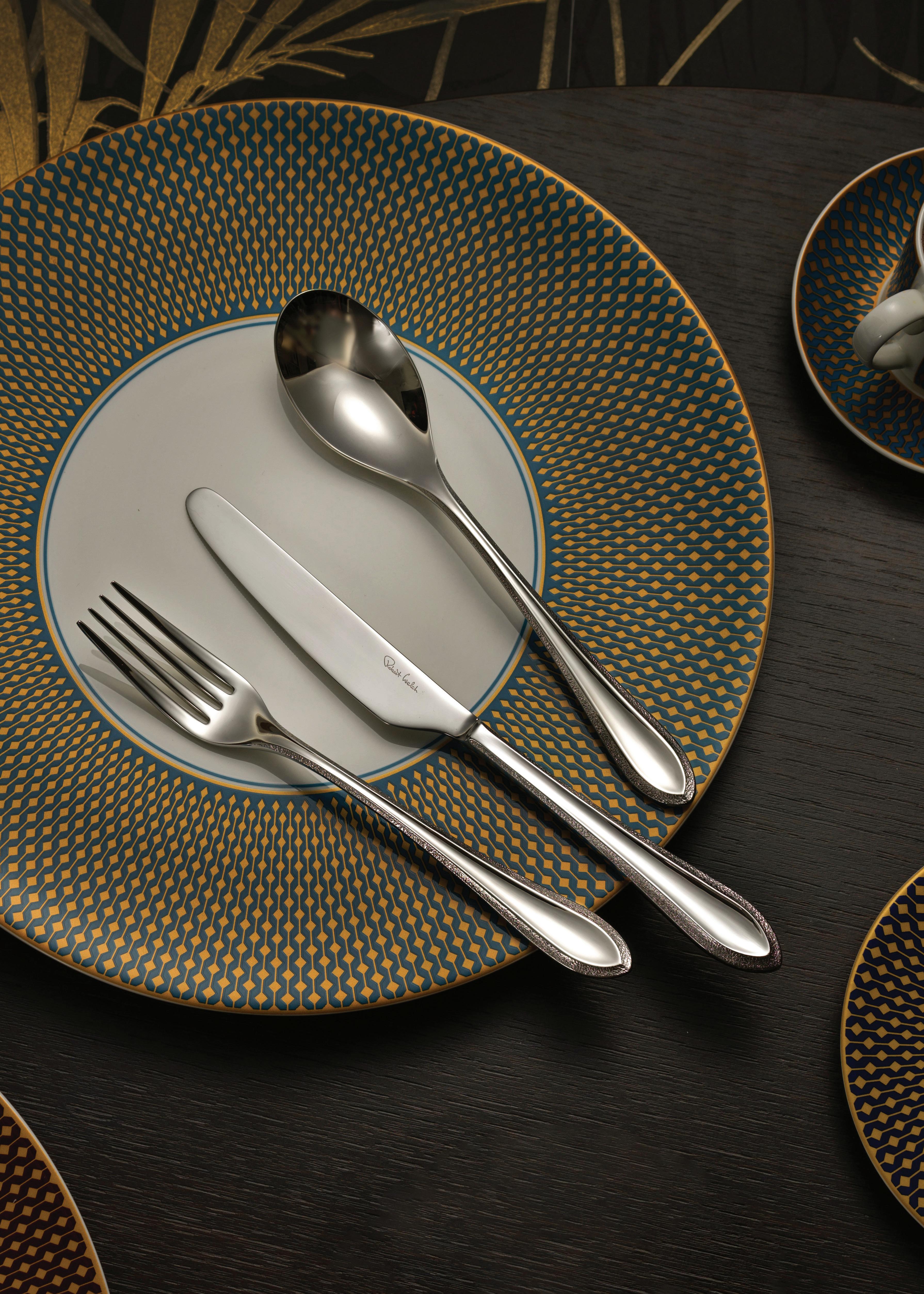


Cook&Share will now be featured exclusively at the September editions


Maison&Objet is homing in on hospitality, making its Cook&Share sector a dedicated feature during the September trade event.
Starting in 2024, this section dedicated to cooking, tableware, culinary accessories, and gourmet food, will become an annual event and will only be featured during the September editions. Shops and department stores, purchasing groups, decorators, hotels, and restaurants will find all the industry’s latest innovations each autumn, making it an essential occasion for discovery and networking.
This strategic decision aims to optimise the return on investment for exhibitors and visitors by focusing the offerings and new products on a major event. By concentrating on the September edition, Maison&Objet intends to further enhance the quality and diversity of the products presented while meeting the expectations of its professional audience.
Guillaume Prot, director of Maison&Objet, explains, “Our aim is to provide an increasingly relevant and impactful platform for our exhibitors and visitors. By consolidating the ‘Cook&Share’ sector into a single annual edition, we hope to create an unmissable event for professionals in the industry.”
He also noted that brands will still be able to exhibit at the January edition, strategically integrated into other show sectors. This will allow them to meet different and complementary clients in each season.
Claude Dozorme
Claude Dozorme will present new extensions to its iconic Berlingot collection at the upcoming Maison & Objet.
Visit them in Hall 4 – F58 from 5-9
September to see the new La Petite Cuisine Berlingot, comprised of a multipurpose knife, 10 cm paring knife, vegetable knife and peeling knife, all beautifully packaged. www.claudedozorme.com


Starting in September 2024, to support this dynamic, visitors will find a “POP’UP BAR RESTAURANT” at the heart of the Cook&Share hall, designed around the show’s theme, “Terra Cosmos” by Cédric Martineaud. This edition will also feature a new location in Hall 4, providing greater proximity to the Home Accessories sector, which offers decorative elements closely related to the world of tableware.
Lifetime Brands Europe will return to Maison once again, describing the show as a “vital touchpoint for us and our French partners”. They will be showcasing newness across their profile of brands including the season must-have from S’well – the Tumbler XL. Also look out for the new Mikasa x V&A Alice in Wonderland collection. They are in a new stand location this year – Hall 4 Stand E88-F87.
www.lifetimebrandseurope.com
Cutlery: Opinel, Jean Dubost, Claude Dozorme, Tarrerias Bonjean, Forge de Laguiole, Laguiole en Aubrac
Cooking: Cristel, Beka, Woll, De Buyer, Emile Henry, Tramontina
Other key players: Cookut, Koziol, Ichendorf Milano, Comptoir de Mathilde, Bordallo Pinheiro, Costa Nova





Exclusively 2024 was deemed a success by organisers who welcomed an increase in visitors for the most recent showcase
Exclusively 2024 – the UK’s leading housewares, gift and small domestic electricals show – was one of the most successful ever, according to organisers BHETA. Along with being a sell out, visitor numbers were also up –domestic and international.
“This was the most successful Exclusively for some time in terms of commercial and media engagement,” says Will Jones, Exclusively Show chair and chief operating officer, BHETA.
According to organisers, Exclusively 2024 saw a five per cent growth in visitor numbers on top of the 10 per cent jump in 2023. This year includes record numbers of international buyers. Media engagement was also up by a phenomenal 41 per cent with the new Wednesday Press Event proving a massive hit, and visits to Trend Showcase, Trend Talks and Trend Tours were also significantly up.
“This is an excellent achievement in today’s challenging retail environment, where numbers of
retailers have shrunk over the last decade.
“The team has put a lot of effort into ensuring that the traditionally quieter second day had multiple levels of new appeal to ensure it performed better for all parties. Over both days, there was more NPD, more brand interaction and more expert forecasting than ever – and the Show as a whole really saw the benefits. Bookings for 2025 are already very strong,” Will adds.
Buyers from the likes of Amazon, AO, Argos, Blue Diamond, Boots, B&Q, Currys, Dobbies, Dunelm, Fortnum & Mason, Harrods, Homebase, John Lewis, Lakeland, Lidl, M&S, Morrisons, Next, Ocado, Sainsbury’s, Selfridges, Tesco, Robert Dyas and Wickes mingled with a plethora of UK independents and specialist cookshops, hardware and electrical shops, department stores, and shopping channels, as well as retailers such as Freemans, Trago Mills and TJX. Overseas buyers from as far away as South Africa were joined by retailers from Germany, France, Spain, Ireland, Sweden and the Channel Islands.
Denby presented retailers with its new Kiln Blue at Exclusively 2024. Inspired by the colours and textures found in the natural world, Kiln Blue has been designed to sit comfortably with other inky blue ceramics or alone as capsule items.
Kiln Blue has all the inherent strengths of Denby and comprises of multi-functional pieces that are beautiful for eating, serving and displaying in any room in the home. www.denbypottery.com/trade

More than thirty suppliers from the housewares, small domestic electricals and gift sectors who were exhibiting at the Exclusively Show have collectively raised £20K for the industry charity, The Rainy Day Trust (RDT), by donating product from their exhibition stands. Rainy Day Trust CEO, Bryan Clover commented, “We have now had chance to value the donated product and it’s clear that Exclusively exhibitors have contributed £20k to the charity, just from their donations as the show. Everyone at RDT is immensely grateful to all the donors and to the Exclusively Show as a whole for supporting us.”